There are few electronic musicians as accomplished as A Guy Called Gerald From writing genre-expanding records as a member of 808 State and as a solo artist, to crafting what journalists call the greatest jungle album ever made under the moniker Black Secret Technology, AGCG has spent four decades redefining what electronic music can be. With collaborations, remixes, and tracks for the biggest names in house, techno, drum & bass, and jazz, one thread remains constant: in any decade or any genre, AGCG's music continues to be celebrated as genre-pushing excellence.
Juice Box is AGCG's label, named after his Manchester-based soundsystem. Originally established in 1992, the label went on an unofficial hiatus before the decade's end as AGCG's output demanded wider release. pairing two essential cuts from Gerald's vault that have long deserved proper vinyl treatment. On the A-side, the absolute classic "Voodoo Ray" finally returns to wax. On the flip, 1990's "I Won't Give In" resurfaces from the archive, a reminder that even Gerald's deep cuts carry the weight of lost classics. Juice Box is back, and the catalog has plenty of treasures to unearth, along with new material from one of the all-time greats.
Two stripped back downtempo jams from Bristol based producer Jamie Paton up next for SR008. Jamie’s distinctive dubbed out productions have been a firm favourite over the years since discovering his music on Emotional Especial, Hoga Nord, Multi Culti and Club Blanco. He’s a prolific remixer who’s worked with Goat, Plus Instruments, Minami Deutsch, Dâdalus & Bikarus, Blancmange, Johnny Aux, Khidja, Gatos Negros, Food Pyramind, and many more. This release is a perfect fit for Space Ritual and delves into
the darker side of his sound.
Off World is a slow & low spooked out dancefloor trip that meanders through layers of dark, eerie, rattling percussive echos and deep creeping bass. Contrasting atmospheres build throughout entering into a spacious call and response interplay. Fell Swoop's heavyweight bass and haunted sonics take you deep into uncanny space. The raw and swampy bass groove powers through sharp and ominous textures that circle around it.
Pressed to 10” with hand printed artwork on a black reverse board sleeve. Limited to 150 copies.
When the first JIM album Love Makes Magic was released in 2023, it was the end product of an experiment that had begun during the strange days of the pandemic. Cooped up in his studio, James Baron started fiddling about with an as-yet unnamed new album idea. It became Vicious Charm’s first LP release. Labelled variously as Balearic, folktronica, blue-eyed soul and Laurel Canyon, Love Makes Magic was perhaps all and none of those things: a record rooted less in Californian mythology than in Baron’s own musical world, somewhere between Sherwood, Nottingham, classic songwriting, electronic soul and the no-nonsense good times that have long run through his work under his other monikers (principally the anagrammatic Ron Basejam and, of course, Crazy P) One thing was indisputable, it connected with people... and still does.
The album was a minor hit, appearing in many a Best of 2023 chart and voted Album of the Year in Bill Brewster’s Furtive 50. A tour and a few memorable festival appearances – his 2024 We Out Here Festival being one of those wonderfully timed ‘moments’ - perfectly captured the horizontal vibes on the album, while injecting some live energy into its delivery. While there was a follow-up remix album for Love Makes Magic, JIM was already preparing a sophomore LP: “I wrote the majority of The Curious Case Of Existence in a couple of months at the beginning of 2024, then it was just a case of making the record over the next couple of years in between everything else.”
Berlin-based edit specialist Voodoocuts knows exactly how to tease out the best bits of any of the source tunes he works with. He's been doing it for years now on labels like Juice on Wax and Uluru, and now heads to Ritmo for his latest 7" bomb. 'Riddim Freak' gets this one going with a reggaeton rework of a Missy Elliott classic. It's an inspired pairing that has elastic bass and trampoline-like kicks with rave horns, fat-assed brass band energy and plenty of that original Missy attitude. 'Work This' takes another of the rap queens' most welcome jams and flips and reverses it into an early electro and hip-hop blend with old school drums and many magnificent samples all bringing it to life in full colour.
Mukatsuku's endless thirst for archival gold and knack for killer reissues burns strong with this latest third in the series hand-numbered 12" , which digs deep into classic ambient techno from Japan. The man behind the music is Virgo, a solo project by Yasutaka Sato that was active from 1996 to 2004 and then reappeared in 2024. This EP revisit some of his best moments from more than two decades ago, starting with the soothing, pulse-slowing beauty of 'Mellow In My Mind' before cosmic charm defines 'Genetic Force' and 'Ruined Tower' has a more melancholic, sombre feel. 'Cloud Sea' lifts the mood with a gently hopeful closer with soft new age chords and oh-so gentle rhythms that break like waves on a distant island paradise.
'You & Me', 'The Ballad of John Henry' and 'Live from the Royal Albert Hall'.
It is in a live setting where Joe Bonamassa the performer really thrives and in May
2009, he played the historic Royal Albert Hall in London. It was an incredible
memory for everyone present and one of his greatest live performances has been
remastered on high- quality 180g heavyweight triple vinyl for the first time. The
majestic evening saw him glide through his back catalogue of original hits as well
as inspired covers and featured guest performances from Eric Clapton and Paul
Jones – truly a special night to savour.
With 25 #1 albums, yearly sold-out tours worldwide and custom annual cruises,
he's a hard act to beat. These albums are a testament to his credentials and a
toast to his longtime fans who remember them originally and new fans who can
experience them for the first time. It's Joe Bonamassa at his finest, ready to rock.
Electronic music legends Soft Cell release ‘Out Come The Freaks’, the very first single from singer Marc Almond and multi-instrumentalist and producer Dave Ball’s final album ‘Danceteria’. Download and stream the track, featuring vocals from the late Dave Ball and special guest vocals from Nona Hendryx.
‘Out Come The Freaks’ is a cover of Was (Not Was)’s mutant disco classic and sends Soft Cell into prime disco territory, conjuring the hedonist spirit of early 80s Manhattan and a Danceteria floor filler spun by DJ Mark Kamins. There couldn’t be a more fitting alternative disco banger to pull back the curtain with and beckon you into the world of ‘Danceteria’. The final album is a homage to the legendary nightclub where young Marc and Dave would party until the small hours after the recording sessions for their seminal 1981 debut ‘Non-Stop Erotic Cabaret’. The final flourish of glitter to Soft Cell’s ‘Out Come The Freaks’ comes courtesy of guest vocals from Nona Hendryx, the iconic singer, one third of Labelle of ‘Lady Marmalade’ fame, and producer of Lisa Lisa and Bush Tetras.
This is the very first material to be released from ‘Danceteria’, Soft Cell’s forthcoming sixth and final album. It is also the first time new music has been released since the sad, untimely passing of Dave Ball in October 2025. Almond led the tributes, describing Ball as a “brilliant musical genius” and the world’s media hailing Dave as an electronic music pioneer. Dave finished ‘Danceteria’ very close to his passing and it is in full tribute to him that the album release goes ahead as planned. More details are to follow very soon about the release date.
2027 marks two decades since musician and producer Paul ‘Mudd’ Murphy struck out on his own and launched Claremont 56, a label initially dedicated to “music by Mudd and friends” and named after the house he grew up in. To celebrate its 20th anniversary, Murphy has assembled the label’s first ever decades-spanning vinyl retrospective: a six-LP re-mastered collection bringing together key cuts, cult classics, personal favourites, hard-to-find gems and inspired remixes from across the catalogue.
Unlike the label’s previous 10th anniversary box set, which focused on unreleased material and never-before-heard remixes, 20 Years of Claremont 56 traces the musical story of the imprint to date. Across six records, it showcases the distinctive Claremont 56 sound in all its many forms: acoustic, electric and electronic instrumentation, Balearic sunshine, krautrock grooves, folk-inflected psychedelia, slow-burning chuggers and deeply considered dancefloor music.
The set comes housed in a custom box featuring cover art by long-term label illustrator Mark Warrington. Inside are six slabs of vinyl across three gatefold sleeves, accompanied by liner notes from music journalist and author Matt Anniss, Murphy himself, and many of the artists whose music features in the collection.
The journey begins with a selection of formative late-noughties releases, including Mudd & Pollard’s chugging, picturesque ‘Villa Stavros’, the folksy beauty of Smith & Mudd’s ‘Shulme’ and Murphy’s exotic reworking of Ahmed Fakroun’s ‘Drago’. From there, the collection moves freely through deep cuts, overlooked gems, album highlights and some of the most inspired remixes in the label’s catalogue.
Among those remixes is Murphy’s own über-Balearic rework of Zee Erf’s cover of ‘Southern Freeez’, a mix dedicated to his partner Emma; an extraordinary 22-minute, Manuel Göttsching-meets-ambient-dub revision of Smith & Mudd’s ‘Vegetable Square’ by friends-of-the-family Idjut Boys; Larry Heard’s typically deep and immersive house treatment of Jack Cutter’s ‘Serpent Strut’; and Quiet Village’s ambient-house ‘deep space dub’ of Mudd’s ‘Spielplatz’. Also included are lesser-celebrated but no less rewarding reworks by Recloose, Jex Opolis, Felix Dickinson and Deep88.
The collection represents every corner of Claremont 56’s self-contained musical universe, from the Murphy-assembled in-house collectives Hillside, Paqua and Bison - whose members famously included the late Holger Czukay and his life partner Ursula, to long-serving label artists such as Almunia and Hear & Now, as well as later additions and artists who took some of their first steps on the label through its much-loved Claremont Editions compilations.
That means the deeply cosmic krautrock of Bambi Davidson, the folk-meets-Americana of Torn Sail and the samba-electrofunk of Jpye sit alongside baggy Balearic sing-alongs such as Bel’s ‘Ready To Die’ and Sillyboy’s Ghost Relatives’ ‘In a Small Place’, recent high-profile guest releases such as Chaz Jankel’s ‘Rhumba Jam’, and string-laden ambient pieces such as Four Hands’ wonderful ‘Hizou’.
Packed with classic cuts, formative gems and overlooked treats, 20 Years of Claremont 56 is not only a fabulous label retrospective, but also an essential collection of timeless music from a label whose output has remained distinctive and unique for two decades.
Hot Digits main guy Fingerman - a veritable of the UK nu-disco and disco re-edit scenes - is the man at the controls on the latest missive from the imprint's vinyl-focused Wax Digits offshoot. He's in prime form from the off, offering a deliciously chunky, effects-laden, dub disco style rework of a New York no-wave era 'downtown' disco classic. He doffs a cap to pal Chewy Rubs and their joint love of heavy, looped bass guitar lines on the stretched-out funk-goes-deep disco wonder that is 'Bestest Beat', before cunningly rearranging a more string-laden slab of disco-funk grandiosity on closing cut 'We Love It'. We certainly do, and there's a fair chance you will too.
While there have been countless performances, recordings and releases of Glass's works, this is the first time that an entire album is devoted to new studio recordings of his original film scores. Over the past decades Philip Glass has become a household name in contemporary music thanks to his prolific activity and output across many music genres, including operas, concertos, symphonies and music for theatre. He has also systematically sought out collaborations with musicians and artists from all over the world. Due to his highly idiosyncratic and distinctive style, the American composer has been considered one of the frontrunners of minimalism in music, even though he himself regards his work rather as music with repetitive structures, in a continual search to integrate harmony, melody and rhythm into a single musical expression. In 2025 he received the World Soundtrack Lifetime Achievement Award for his contribution to the art of film music.
Michael J. Blood makes his second appearance on a Clone subsidiary! The enigmatic producer, rumored to be from Manchester, UK, draws on the two cities that influenced so many before him: classic Detroit and Chicago vibes and deepness, with a fresh, timeless twist. A perfect fit for our Royal Oak imprint.
Following his acclaimed ARTIFACTUAL RHYTHM album, Alexander Flood returns to ARCo. with an outstanding remix package, assembling a cast of renowned producers whose names will be instantly familiar to discerning listeners. Each remixer brings their own unmistakable touch, resulting in a rich and diverse body of work that honours the original music while showcasing the individuality of every artist involved.
Contributing to this superb release are Alexander Flood himself, ARCo.'s very own Peacey, the unmistakable sounds of Close Counters, Atjazz, and Fred Everything. Also joining the remix roster are Oliver Knight, Crowd Control & Karl Swisher, and the ever-inventive jazz scientist Kaidi Tatham, each offering a distinctive interpretation that makes this an essential companion to the original album.
Forty years of cassette releases, pressed for the first time on vinyl
First of two instalments exploring the previously unreleased sonic archives of one of Poland’s most enigmatic
living artists - with its first volume focused on his deep listening practice and spiritual reverie (recorded 1990–2013)
The last time Andrzej Dudek-Dürer took a banknote bearing the face of the Polish anarchist Jarosław Dąbrowski from his pocket to trade it for a pair of shoes was in 1969. He bought them for 120zł - the equivalent of 100€ today - and never replaced them since then. Only rebuilt them, year after year, drawing a needle and thread through the leather each time it split, closing one wound before the next one opened. It became a ritual of precision, stitching a record of another year into their soles.
That same year, in Wrocław, he arrived at a conclusion that would recalibrate everything that followed. Convinced he was the reincarnation of Albrecht Dürer, he adopted the surname Dudek-Dürer, stopped cutting his hair and began wearing the same garments every day. It was the first ritual of many, though he wouldn't have called it that yet. Look closely enough, over the decades, and it is always the same gesture, returning in different material: hair growing in a single unbroken strand, a needle drawing thread through leather, sitar strings pulled taut across a neck he built with his own hands and magnetic tape spooling forward inside the cassette boxes stacked against his walls.
None of this began in a vacuum. Dudek-Dürer emerged from the Wrocław neo-avant-garde, in a Polish art world where an exhibition could be cancelled overnight by the stroke of a censor's pen. In 1973, his exhibition Auto-crucifixion was shut down by the state, and for a time he found himself blocked from exhibiting his own art at all - the one force in his life that ever came close to cutting the thread.
He seemed to experience it differently. In 1974, after long, patient research into sitar craftsmanship, he built his first prototype with his brother, a knowledgeable luthier. In 1978, in a smoked-out jazz club, he took his first steps into sound recording with the unreleased album Jazz From Underground with his first band. By 1979, recognition started to travel further than he could.
Turning toward Far-Eastern philosophy, meditation and the idea of reincarnation was another language of freedom for him. It was a way of claiming an inner territory the state could not reach, a border it could not close. Mail Art served a parallel function, reaching further out: in a country that restricted travel and expression, sending and receiving art through the postal system became an act of quiet rebellion.
The body, in his understanding, is only an envelope readied for constant transformation. From this came Metaphysical Telepathy: during the years he could not leave Poland, he treated that confinement as a rehearsal room, sending his mind out ahead on the same thread his body would later follow. Living Sculpture grew from the same root with performances of stillness beside static art objects, until the boundary between the object and the man beside it simply dissolved. Camera Meditation extended the same instinct into photography: a shutter click flattening three dimensions into two so that a single instant could be held forever. Inspired by the pioneers of self-portrait photography like Robert Cornelius, he used it to document time itself, and kept explaining to me: "You know. This is not about vanity. This is about observing time passing.”
The isolation did not end suddenly. It ended the way his own philosophy had already predicted it would, from the inside first. Mail Art quietly solved the problem politics couldn't. Correspondence built during years of confinement slowly worked its way through doors the state itself had kept locked. Contacts made through folded paper and stamps became invitations. Ultimately, invitations became passports.
In 1983 he made his first trip outside Poland, to Germany, in search of the audio technology he couldn’t get his hands on before. In 1985, he was invited by the Indian embassy in Poland to give a sitar concert on an instrument he had spent a decade patiently stringing together - half sitar, half tanpura, built from patience and determination. After the collapse of the People's Republic of Poland, the travels kept unspooling: South Korea, then Mexico, then Australia, Canada, New Zealand, Singapore, Japan and the United States - each stop leaving behind its own small knot of tape, tied off and carried home.
In the decades since, recognition arrived at the same unhurried pace: he conducted workshops at UC Berkeley, served as vice-president for artistic affairs of the Union of Polish Art Photographers and the Union of Polish Visual Artists between 2010 and 2014 and received the Bronze Medal for Merit to Culture - Gloria Artis. His visual work gradually entered collections including the National Museums of Warsaw, the Stedelijk Museum, Tate Modern, MoMA and the Venice Biennale. His musical practice, by contrast, never found that kind of room - left to circulate quietly, sharing his cassette tapes directly, waiting for someone willing to follow it further.
It took months before I could find a way to reach Andrzej Dudek-Dürer - his presence online is very close to nonexistent. Surprisingly, LinkedIn turned out to be the only door still open, a faintly absurd irony given everything else about him. I packed the strict minimum for a three-day trip and an empty notebook and made my way to Wrocław. His headquarters sits in the neighbourhood of Grabyszyn: a two-storey pre-war house that has belonged to his family for generations. The man who opened the door was long-haired, long-bearded, in his trademark leather shoes and patched jeans. We sat in his living room, in front of a computer where decades of recordings sat organised in cryptically named files, surrounded by books and objects that had arrived one layer at a time, leaving room for only two chairs in the middle. His shoes sat by the door, rebuilt so many times they had become their own quiet sculpture. Cassette tapes filled boxes against the walls, almost unlabelled, each one a spool of thread holding decades of sound that had never once been asked for, until now.
I listened for hours: meditating in front of strangers on the porch of a Seoul temple until the tourists stopped taking photos and simply waited with him; a stand-off with border guards at the US–Mexico crossing over an instrument they couldn't identify and didn't trust; a session with the Stockhausen family that he still, decades later, describes like it happened last week. All of it interrupted, occasionally, by the smell of soup boiling and fresh bread warming on the ceramic stove. After two days, it felt like being handed the end of a very long thread and asked, gently, to keep following it. I left with a USB drive holding his full discography, signed with his unmistakable signature.
Astral Meditations From A Living Statue is a length of that thread, drawn out from the boxes stacked against his walls - recordings gathered from different rooms, different countries, different decades. This first record breathes slowly: incense-thick, meditative, built for stillness. A cutting-edge séance in outer space where machines learn how to dream.
It begins with the neo-classical improvisations of Andrzej, space-delayed, recorded at Klub Muzyki i Literatury in Wrocław in 2002. 'When..So' opens the curtains with a deep-rooted meditation accompanied by slow-decaying piano figures illuminated by a candle-lit spirit gathering.
Los Angeles, 1990: a dormant villa, a grand piano, the voice of Bonnie Barnett. 'Exception' is captured in a single room, in a single afternoon - voice and keys circling each other, neither one leading, until the silence between the notes starts to feel like the instrument.
'The Meta...' and 'Tired Of...', recorded at Studio Morandi in Ponte Nossa, Italy, in 1992, settle into a sitar drone built entirely from patience - overtones stacking and beating against each other, strung by a man who never once set foot in India. 'Mastery Of...' follows, recorded the same year at Studio Suski in Łomianki, pushing that same hum further still, until pitch dissolves into a spectral reverie. 'Transcendental Sound', from 2000, closes the first record in a slow bath of celestial frequency - better heard beside the shores of the Odra river.
More than fifty years after deciding that a life could become an artwork, Andrzej Dudek-Dürer continues to inhabit that decision. His shoes keep wearing thin against the earth's crust. His hair keeps growing, one strand at a time. His cassette tapes keep spooling in the dark of their boxes.
Now the thread finds its last shape: a single unbroken groove, spiralling inward from the outer edge to the label at the centre. Never cut - the way nothing else in his life ever was. Drop the needle and it will find that groove and follow it, the same way a needle once followed leather, once followed a border it couldn't cross, once followed string into an instrument that didn't exist until he built it. This record is the other end of a thread that has been travelling for fifty years. For the length of both sides, it rests here, in your hands. This is a timeless proof that the Lord of the New Age was never lost."
A soaring new chapter unfolds from the forthcoming Elements Of Life album with the release of “Soar,” an uplifting and deeply moving collaboration featuring the incomparable Lisa Fischer. Written by Josh Milan and Louie Vega and produced by 2SoulFusion—Louie Vega and Josh Milan—the song is a powerful testament to resilience, transformation, and the limitless possibilities that emerge when spirit, soul, and music unite.
Built upon a rich tapestry of live musicianship, “Soar” embodies the signature sound that has made Elements Of Life a beloved musical movement around the world. At its core is Lisa Fischer’s breathtaking vocal performance, delivering a message of hope, elevation, and self-discovery with the emotional depth and conviction that have made her one of the most revered voices of her generation.
At the heart of “Soar” is a message of encouragement, resilience, and unconditional support. Through its uplifting lyrics and soaring melody, the song speaks to anyone navigating life's uncertainties while striving to become their fullest self. Lines such as “Clouds hang low, but the sky's still wide” acknowledge the challenges we all face, while the recurring refrain, “I just want you to soar,” serves as a powerful affirmation of faith in another person's journey. Equally moving is the song's central sentiment, “The more you do for you, the better I feel,” expressing a selfless form of love that celebrates growth, healing, and personal fulfillment. Universal in its message yet deeply personal in its spirit, “Soar” reminds us that one of the greatest gifts we can offer is the encouragement to rise, evolve, and embrace our own potential.
The production blends organic instrumentation with sophisticated arrangements, creating a timeless soundscape that feels both expansive and intimate. Multi Grammy Award-winning bassist Christian McBride anchors the composition with his masterful upright bass work, while Josh Milan's lush keyboards, piano, organ, clavinet, and atmospheric textures provide the song's harmonic foundation. Live drums from Tony Cintron and vibrant percussion from Luisito Quintero infuse the track with an irresistible pulse, while Ivan Renta's expressive soprano saxophone solo adds another layer of emotional richness, and a tasteful guitar groove by Sherrod Barnes.
The song's message is elevated further through a powerful vocal ensemble featuring background vocals from Lisa Fischer, Dawn Tallman, Ramona Dunlap, and Lea Lorien, creating moments of communion and uplift that echo the song's central theme of hope, growth, and believing in the possibilities that lie ahead. For Louie Vega and Josh Milan, “Soar” represents another defining moment in their longstanding creative partnership. Through Elements Of Life, they have continually blurred the boundaries between house music, soul, jazz, Latin rhythms, gospel, and global influences, creating music that resonates as deeply on the dance floor as it does in the heart. “Soar” continues that tradition, offering listeners a song that inspires movement, reflection, and renewal.
Recorded at Honeycomb Studios in Pennsylvania and Manhattan Center Studios in New York City, and mixed at Daddy's Workshop in New Jersey, the production benefits from the expertise of recording engineers Yas Inoue & Josh Milan, with final mastering by the Maestro of mastering Herb “Pump” Powers for PM Mastering.
As anticipation builds for the forthcoming Elements Of Life album slated for February 2027, “Soar” offers a powerful glimpse into the project's next evolution— a celebration of musical excellence, spiritual connection, and the enduring power of song to lift us higher.
File not found. Library on device may be corrupted.
Nearly six years since his last full EP on Claptrap, Vanity Project returns with a fresh release, featuring a killer remix from Manchester aficionado Ruf Dug.
File Management Blues was born in the malaise that followed an irretrievable loss of studio files dating back over ten years at Claptrap HQ. Made with love in the wake of that back-up drive meltdown, these jams drift between acid, proto house and dreamy balearic sounds, moving from uptempo club rollers with swirling pads and biting acid lines to downtempo dub chuggers. Running through all of it is a melancholic digital string melody, four original versions on a theme, plus that tasty Ruf Dug rework of the A1.
12 Inch Lovers - Celebrating 15 Years of Vinyl Culture!
Belgian vinyl-only event concept 12 Inch Lovers celebrates its 15th anniversary with two new additions to its established sampler series. Now entering its seventh year, the series reflects the music and atmosphere of the events, combining dancefloor favourites with carefully selected discoveries.
Samplers 13 & 14 bring together sought-after classics, hard-to-find gems and selected tracks and versions making their vinyl debut. Each volume features nine full-length tracks across two 12-inch records, making both releases essential additions for DJs and collectors alike.
Sampler 13 includes Sorry I Am Late by Kollektiv Turmstrasse, Marea (We've Lost Dancing) by Fred again.. & The Blessed Madonna, and Lifetimes by Slam feat. Tyrone Palmer. Further highlights include Tocadisco's Morumbi and the Martijn ten Velden Remix of Guitarra G.
Sampler 14 features Dreams by Deep Dish feat. Stevie Nicks, All That Matters by Kölsch feat. Troels Abrahamsen, and the NiCe7 Remix of It's Yours by Jon Cutler feat. E-Man. Belgian favourites Decoy & Roy with Inner Life and The Mackenzie with Higher In The Sky add to the selection.
Rooted in 15 years of vinyl-only events, these two compilations capture the distinctive sound of 12 Inch Lovers, offering lasting appeal for long-time fans, record collectors and DJs looking tobring proven classics back to the dancefloor.
Nothing But (Future) Classix, Straight From Vinyl!
Sampler 14 opens with Jon Cutler feat. E-Man - It's Yours (NiCe7 Remix). This remix pairs the recognisable vocal with a punchy house groove. A fresh take on a familiar classic that sets the tone straight away. Next comes Sterac Electronics - Destination Reached, with Steve Rachmad
showcasing his feel for electronic funk. Tight rhythms and an infectious groove make this a record with lasting appeal.
Side B features Swen Weber - Maya (Rerub), a powerful club track whose build and driving rhythm keep the dancefloor moving. Deep Dish feat. Stevie Nicks - Dreams then delivers a familiar moment. Stevie Nicks' distinctive voice and Deep Dish's warm, immersive house sound
give this well-known song a character all of its own.
Side C brings Kölsch feat. Troels Abrahamsen - All That Matters, a melodic track in which the vocaland gradual build complement each other beautifully. The kind of record that feels equally at home deep into a club night or under the first rays of sunshine at a festival. Next is Chew Fu feat. Steve Clisby - Purple Rain (Mousse T.'s Home A Lone Mix). Mousse T. gives this interpretation of the Prince classic a warm, soulful house groove, leaving plenty of room for Steve Clisby's voice to shine.
On side D, Jürgen Paape - We Love takes over. Playful, melodic and full of character, it adds a different flavour to the selection. Decoy & Roy - Inner Life follows with a generous dose of nostalgia and a sound that perfectly reflects a love for Belgian club classics. Closing the sampler is The Mackenzie - Higher In The Sky, whose dreamy melodies and uplifting energy provide a fitting finale.
Nine tracks across two 12-inch records, each in its full-length version. Much-loved classics, inspired remixes and lesser-known gems, brought together withthe same love for music that has driven 12 Inch Lovers' events for 15 years.
The wait is over, Return To The 37th Chamber is El Michels Affair's highly anticipated follow up to 2009's underground cult classic Enter the 37th Chamber. Churning out classic records since then for the likes of Lee Fields, The Arcs, The Shacks, and tons more, it is clear that EMA's signature sound is stronger & sharper than ever. This time, in addition to re-interpreting the Wu compositions for a live band, EMA pays homage to the production and sonic fog that makes a RZA beat so recognizable. Producer and bandleader Leon Michels recorded the album completely analog, sometimes hitting 6 generations of tape before it was ready for mixing, giving the Return to The 37th Chamber it's own hazy sound. Adding to the unique fidelity, the record is laced with psychedelic flourishes, John Carpenter' synths, heavy metal guitars, triumpha0nt horns, and traditional Chinese instruments that make up for the lack of the Wu's superlative vocals. From start to finish it's a dark trip that walks the line between RZA's timeless hip-hop aesthetic and the cinematic soul EMA has become known for. El Michels Affair tackles some classics like 4th Chamber and Wu Tang Aint Nuthin to Fuck Wit, as well as some deeper cuts like Ol Dirty Bastard's Snakes, Raekwon's Verbal Intercourse, and Shaolin Brew, Wu-Tang's contribution to the St. Ide's Hip Hop endorsement campaign from 1994. This time El Michels brings some of the Big Crown family along for the ride. Lee Fields handles vocal duties on Snakes and is joined by Shannon Wise of The Shacks for their version of Tearz, which pays as much homage to the Wendy Rene sample as it does to the Wu-Tang Clan. Lady Wray makes an appearance on the cover of Method Man's hit, All I Need, lending her vocal prowess to what gave the Wu one of their biggest hits of all time. Interspersed throughout the record are some original interludes that are like the rug that ties the room together,' giving Return To The 37th Chamber a cinematic narrative that makes it a proper El Michels Affair record and not just a collection of covers. From the music to the presentation, this album is a perfect example of what can only be achieved through diversity. The end result is as much a kaleidoscope of influences and multiculturalism as the city it was recorded in. El Michels Affair is once again, sounding out the city' that raised them, pulling elements of art and culture from across the country and around the globe to create an album truly unique in it's own right.
Following their self-proclaimed LP trilogy (2020-2024), Straw Man Army returns with a new songwriting experiment in the form of True North; a collection of 11 songs written for acoustic instruments over three 72 hour sessions at a cabin, isolated in the woods north of NYC. The result is a concept album in practice as opposed to subject alone. Attuned to both the spiritual and political dimensions of seeking refuge in our times, it asks what exactly we mean by “peace” in this era of increasing violence, incarceration, and skepticism towards a future worth living. Does it feel like relaxation, does it tend towards silence? Is it the cooling of our collective rage? Not here. On True North, peace is a spiritual contradiction; a chimera incorporating our innermost desires and the brutality of the world that surrounds us. The album’s central character is a “sleepwalker” trudging through the waking nightmares that have defined daily life since the release of 2024’s Earthworks. Because True North is music that dreams. Sonically, the band toys with the aesthetics of psychedelia, folk, and kosmiche music for contrast, creating a still pool into which their deepest anxieties ripple and flow and flower into ever darker shapes. And while the musical palette plays on tropes of peace—lush piano instrumentals, fingerpicking guitars, gong, vocal harmony—the subject remains steeped in environmental collapse, death, mental breakdown, and the rejection of our most closely held myths. The clash of these forces is the engine that turns the musical wheel. True North is the sound of music mourning a future that never took place and a bout of anticipatory grief for something that’s only just begun…
With the stunning Planes In Reverse, Sascha Funke, the Berlin-born producer and DJ, and long-time member of the Kompakt family, releases his first album in almost a decade, since 2017’s Lotos Land. It’s a welcome return for one of the most eloquent and elegant producers in electronic and dance music, someone who’s always been able to say more with less, and the ten tracks here, moving effortlessly between techno, house, minimalism, disco house, and home listening tunes, are all gorgeously sculpted miniatures. With guest appearances from partner Julienne Dessagne (Fantastic Twins), with whom Funke has also worked in Saschienne, there’s something homely and family about it, too; a family of sounds, a home of tone. There’s also something consummate about Planes In Reverse, as though Sascha Funke has perfected the album format. There’s no flab here, no excess – it plays out like a perfectly designed experience, ten tracks, coming in under fifty minutes, an album where every moment matters.
It’s full of variety, but everything has the unmistakable Funke thumbprint, one that was developed during the late ‘90s / early ‘00s minimal techno and microhouse moment, but which was always open to other ideas and other sounds, too. Planes In Reverse came together quickly for Funke: “Last winter, I had two or three new tracks, which gave me a core feeling: ‘Ah, this could be the direction of something like an album.’ Sometimes it can be very easy that you wrap it up and then it becomes something coherent and solid. This happened within two or three months; it was very fast and direct.” Everything fell into place – the ten tracks revealed themselves, the album sat together as a whole, and the final piece of the puzzle was returning home again to Kompakt, who have supported Sascha Funke from the very start, releasing his first single, “Campus”, back in 1999.
Planes In Reverse opens stealthily with “What You See”, where rhythms percolate and bass prowls while gaseous textures fill the sonic spectrum. It’s also the first appearance of Fantastic Twins on the album; here, she speaks a hypnotic mantra, a prelude to the title track, where Dessagne has a pure pop moment, her voice ecstatic and vibrant. Indeed, Planes In Reverse plays out like thesis and antithesis ending in synthesis, the tracks nestling next to each other even as they shuttle between sounds, genres, perspectives. There are some beautiful moments dropped throughout Planes In Reverse – the heavenly textures that make the title track feel so cloud-bound; the glassy and orbital tones that drop from the skies through the disco house inspired “Karat”; the clamour and clatter of hyper-edited voices shuffling through “Splitter”; or the field recordings of Sascha’s son football training session that drop “Zockers” into a different place and space, slowly giving way to a beautifully paced electro-pop mantra. “In Germany,when the kids play a computer game, or when they play football, we describe it as zocken. They’re the players, they’re the Zockers.“ Funke explains.
Planes In Reverse winds down with the beautiful “Kruso”, where ticklish, loving arpeggios careen around the room, and drift-work chords shimmer and shuttle between your ears. It’s a perfect comedown to an album that feels breathes in and out at an organic pace, nothing above 130 BPM, everything sitting together just so. Indeed, that’s the feeling you take away from Planes In Reverse; it sums up the spirit of Sascha Funke productions perfectly, while also existing beautifully as its own world dreamt unto itself. It’s Sascha Funke down to the very essence. Nothing unnecessary, nothing extraneous: Pure Funke.
Futurismo are proud to present DEVO’s NITROUS NIGHTMARE, Halloween Live ‘75. Never before released, or heard in it’s entirety, this legendary live performance is presented here in it’s full chaotic glory on limited edition 2xLP and 2xCD. The live release all hardcore Devo fans have been waiting for, Nitrous Nightmare demonstrates a band harnessing their artistic greatness in the purest of forms. This mythic performance captures Devo perfecting some of their most iconic concepts in the raw. Expertly restored, this live recording makes for a thrilling experience, it also captures Devo as a lightening rod for hostility. On Halloween 1975, Devo took the stage at the WHK Auditorium in Cleveland, in a supporting capacity for jazz legend Sun Ra, to perform for a raucous crowd dressed in the finest of Halloween cliché. Already riding high on Nitrous Oxide and booze supplied by the sponsoring radio station, this unaware horde was expecting to see a slick cover band churning out renditions of Bad Company hits, only to be subjected to an act of subversive performance art that would send the growingly aggravated crowd into eventual meltdown. Physical threats ensued, but Devo played on. Acting as a live companion release to Futurismo’s much lauded Art Devo, the tracklist featured here showcases the origins of de-evolution theory in a live setting. These songs would become some of their most famous material, with this recording believed to be the very first time ‘Jocko Homo’ was performed in front of a live audience; the full 12 minute version documented here is sure to please fans, even if it displeased the urban hippies and horror masked onlookers that evening. Whilst Devo may have felt they were trapped inside a negative energy vortex during that era, it is clear in retrospect that the band was using this energy to carve out the genesis of a sonic and visual art that has truly stood the test of time. The music performed that evening would mutate culture for decades to come, long after the denizens of the auditorium packed away their cheap vampire costumes and returned to their day jobs. Spanning 2xLP’s of unreleased live material, most of which has never been heard before, this wondrous performance draws purely from that integral early history. Mixed and mastered directly from recordings kept in the bands personal vaults, this live collection showcases why Devo was, and still is, one of the most important bands in American history. De-evolution is real. The art of DEVO is real. Here is the evidence. This 2xLP is housed in a gloss laminated wide spined sleeve. It has a tracklist that has been sourced directly from the archives, and contains colour inner sleeves and a fold-out containing archival imagery and liner notes by Gerald V Casale.
“These songs were written just before and while in my first stint in rehab at 20 years old. They were recorded about 4 days after I got out. Broke, walking on freshly sober baby giraffe legs, I sold my car and moved back in with my mom to make that recording happen. At a time where I had no direction, the mission of capturing sonically the love that unraveled my heart at that age became my North Star. These songs have sat in the vault for 8 years, and somehow never managed to collect dust. Anytime I’d revisit them, the glow they carried upon conception still shined bright. For years I’ve known there would be a time to let them loose, and that time has finally come. It took nearly a decade of gaining life experience and perspective to truly appreciate the beauty of young love, courage in the face of unknowning at such a formative time in a lifespan, and belief in magic that can break your heart as quickly as it can mend it. I hope these songs can serve as a reminder of the lessons we all learn from early heartbreak and that belief, and even more so, a looking glass at how our hearts are capable of forever expanding to find love that’s true.”
— Briston Maroney
“These songs were written just before and while in my first stint in rehab at 20 years old. They were recorded about 4 days after I got out. Broke, walking on freshly sober baby giraffe legs, I sold my car and moved back in with my mom to make that recording happen. At a time where I had no direction, the mission of capturing sonically the love that unraveled my heart at that age became my North Star. These songs have sat in the vault for 8 years, and somehow never managed to collect dust. Anytime I’d revisit them, the glow they carried upon conception still shined bright. For years I’ve known there would be a time to let them loose, and that time has finally come. It took nearly a decade of gaining life experience and perspective to truly appreciate the beauty of young love, courage in the face of unknowning at such a formative time in a lifespan, and belief in magic that can break your heart as quickly as it can mend it. I hope these songs can serve as a reminder of the lessons we all learn from early heartbreak and that belief, and even more so, a looking glass at how our hearts are capable of forever expanding to find love that’s true.”
— Briston Maroney
*Originally pressed in 2021 - this is a brand new master and cut.**
In partnership with Analogue Foundation, Oshu Records is proud to present the exclusive vinyl repress of "Laroyê" in a thick cardboard tip-on gatefold jacket on 2x 180g vinyl.
Acclaimed Hungarian, Berlin-based producer, composer and pianist Àbáse (AKA Szabolcs Bognár) returns, sharing a special, 5 anniversary remaster of his breakthrough project 'Laroyê'. Releasing on Friday 1 May via Bridge The Gap & Oshu Records, this sensitive exploration of Afro-Brazilian culture originally began as an audio diary, documenting Szabolcs’ travels and collaborations in Brazil through a collection of voice memos, fragmented beats, sketches and field recordings. As his journey progressed, and his collaborations and research deepened, the music project started to take on its own life:
"Laroyê evolved through weeks and months of research and collaborations into the album that it is now. That means that all the sessions were done in different apartments, small studios, often with borrowed equipment, which all adds to the character, but makes the creation of a coherent sound a challenge. Benjamin Tierney, Erik Breuer and Analogue Foundation did an incredible job with the mixes and with this new remaster. I truly believe that we are able to hear the tracks in a new light, with even more depth and clarity."
Coming from the West African Yoruban language, Àbáse stands for "collaboration" – a key element of the music perfectly encapsulated on 'Laroyê'. Recorded in Rio de Janeiro and Salvador, Àbáse spent five months working with diverse artists, from young talents to veterans of the Brazilian scene including Letieres Leite, Luciane Dom, Dofono d'Omolu, Afrojazz and more. The album explores the rich heritage of afro-brasilian culture through samba, MPB and Candomblé, mixing these with broken beat, hip hop and afrobeat, creating a contemporary homage to the classic Brazilian sound. Szabolcs shares:
"Despite already leading and managing musical projects that are close to my hearth, I always felt that one day I would like to start a solo project, where I could take full responsibility for the artistic direction and the music would reflect a truly personal vision. In 2017, I decided to take five months to fulfil a childhood dream and travel to Brazil to expand my creative horizon and expose myself to new influences."
An album standout is the bass-heavy, afro-brazilian ‘Agangatolú, which Àbáse describes as "best exemplifying the story and concept of Laroye as a collaborative effort - a research project exploring the rich heritage of Afro Brazilian culture through my own lens." The track features singers and percussion players Jadson Xabla and Gabriel Santana - two artists based out of one of the oldest terreiros (houses of worship) in Bahia, whilst drummer Jorge Dubman is an integral part of one of the most famous afrobeat bands from Salvador IFA. The contributions of one of Szabolcsoldest collaborators - Hungarian flautist Fanni Zahar - also made the track a full-circle moment.
On a quest for cosmic grooves of unity, Àbáses music pulls from an eclectic blend of global reference points, including modal jazz, Hungarian folk, West African, Brazilian, hiphop and underground electronic music. His work has drawn widespread critical acclaim from the likes of MOJO, Songlines, Soulection and The Guardian, and been supported by key tastemakers including Gilles Peterson, Jamz Supernova and BAMBII. As a keyboard player, Szabolcs has also collaborated with the likes of Wayne Snow, Dele Sosimi, Patti Smith, Emmanuel Wilkins, Gulty Simpson and Zeitgeist Freedom Energy Exchange.
'Laroyê' (2026 Remaster) will release on Friday 1st May via Bridge The Gap & Oshu Records.
12 Inch Lovers - Celebrating 15 Years of Vinyl Culture!
Belgian vinyl-only event concept 12 Inch Lovers celebrates its 15th anniversary with two new additions to its established sampler series. Now entering its seventh year, the series reflects the music and atmosphere of the events, combining dancefloor favourites with carefully selected discoveries.
Samplers 13 & 14 bring together sought-after classics, hard-to-find gems and selected tracks and versions making their vinyl debut. Each volume features nine full-length tracks across two 12-inch records, making both releases essential additions for DJs and collectors alike.
Sampler 13 includes Sorry I Am Late by Kollektiv Turmstrasse, Marea (We've Lost Dancing) by Fred again.. & The Blessed Madonna, and Lifetimes by Slam feat. Tyrone Palmer. Further highlights include Tocadisco's Morumbi and the Martijn ten Velden Remix of Guitarra G.
Sampler 14 features Dreams by Deep Dish feat. Stevie Nicks, All That Matters by Kölsch feat. Troels Abrahamsen, and the NiCe7 Remix of It's Yours by Jon Cutler feat. E-Man. Belgian favourites Decoy & Roy with Inner Life and The Mackenzie with Higher In The Sky add to the selection.
Rooted in 15 years of vinyl-only events, these two compilations capture the distinctive sound of 12 Inch Lovers, offering lasting appeal for long-time fans, record collectors and DJs looking to bring proven classics back to the dancefloor.
Nothing But (Future) Classix, Straight From Vinyl!
Sampler 13 opens with Kollektiv Turmstrasse - Sorry I Am Late, the club track many will recognise from Solomun's legendary Boiler Room set in Tulum. Its unmistakable bassline sets the mood straight away. Next comes Skape D'Jear - Everything In You (Dedicated Clubba Mix), a
lesser-known house gem making its first appearance on vinyl.
Side B features Karmon feat. Terry Shand - Take My Hand, a melodic house track with a strong vocal performance that remains hard to find on vinyl. Tocadisco - Morumbi then takes things up a notch. With its driving percussion, this is a record that has blasted through the speakers of countless Belgian clubs and beyond.
Side C brings Fred again.. x The Blessed Madonna - Marea (We've Lost Dancing). A track about missing the shared experience of dancing, it became closely linked to the return to the dancefloor for many. Next, we head to Berlin with Kotai - Sucker DJ (Marcin "Highfish" Kozlowski Remix), a distinctive club classic that still holds its own. Daddy's Groove & Little Nancy - It's Not Right, But It's Okay closes this side with a groovy reworking of Whitney Houston's well-known song, now available on vinyl for the first time.
Side D captures the spirit of Ibiza with G Club presents Banda Sonora - Guitarra G (Martijn ten Velden Remix). Its recognisable guitar lines and gradual build make this a track to lose yourself in. This remix makes its vinyl debut here. Closing the sampler is Slam feat. Tyrone Palmer -
Lifetimes. Palmer's distinctive voice and the Scottish duo's outstanding production make this a record that still hits home after all these years.
Nine tracks across two 12-inch records, each in its full-length version. Much-loved classics, lesser-known gems and tracks making their vinyl debut. Selected with the same love for music that has driven 12 Inch Lovers' events for 15 years.
Ramjac Corporation, aka Paul Chivers, emerged from the UK's late-'80s rave underground, performing live at parties like Sunrise, Energy, Back to the Future, Fun-da-Mental and Synergy. Building tracks with an Atari computer and an E-MU 12-bit sampler, turning severe technical limitations into raw, elastic club music, 88-92: It is What it Was gathers music born in bedrooms then tested in front of crowds at warehouse raves, while the culture was still inventing itself without boundaries, completelyfree.
Ramjac was the original artist on Irdial Discs, following label founder Akin Fernandez's Aqua Regia, and introduced Lee Purkis' In Sync and Neuropolitique to the label, shaping the singular catalogue of that extraordinary imprint alongside Luke Slater's Morganistic, Thee J Johanz and Anthony Manning.
That legacy is now revisited by Musique Pour La Danse, with the release of a limited edition vinyl and digital edition featuring extended liner notes by Nick Halkes of XL Recordings, Positiva and Kicks Like A Mule fame, who witnessed the early Ramjac period first-hand. The release is illustrated by Grant Fulton, who created the visual identity for The Shamen's Synergy events and Orbital albums.
This album presents music written exclusively between 1988-92 and forms the foundation of Ramjac Corporation's ongoing live performances. Restored from the original floppy discs, the recordings preserve the uniquerelationship between early digital technology, sampling culture and live improvisation that defines the Ramjac approach.
Mixed for release for the first time by Trevor Lancaster-Smith, whose 90s engineering work encompassed Leftfield, Faithless and Roni Size, the album brings these compositions into sharp focus while preserving the character of the original instruments and performances. Not just a historical document, 88-92: It is What it Was is a living body of work: music created then, realised now, and continuing to surprise and evolve.
Twenty-five years after its original release, Markus Guentner's debut album In Moll returns in a special anniversary reissue on Black Knoll Editions, reaffirming its place as one of the defining ambient recordings of the early 21st century.
Released in 2001 during the formative years of Kompakt's influential Pop Ambient series, In Moll emerged from a period of rapid transformation in electronic music. New technologies, expanding digital networks, and shifting creative possibilities allowed artists to imagine entirely new sonic worlds. Amid this fertile landscape, Guentner's music stood apart. Combining delicate melodic fragments, slow-moving harmonies, and a remarkable sense of spatial depth, In Moll introduced a distinct artistic voice whose impact can still be felt a quarter-century later.
The album arrived shortly after Guentner's contributions to the inaugural Pop Ambient compilation, including the now-beloved "Regensburg 1," named after his Bavarian hometown. Those early recordings immediately captured the attention of Kompakt founders Michael Mayer and Wolfgang Voigt. Recalling his first encounter with the music, Mayer describes listening to a demo CDR with Voigt while wandering through Cologne late into the night, replaying the tracks for hours. "We knew that we had found something outrageously beautiful and we wanted the whole world to listen."
Across its running time, In Moll unfolds like a series of dreamlike landscapes, inviting the listener into a world that feels both familiar and strangely other. Bells, hisses, distant textures, and slow-moving bass tones drift through vast expanses of atmosphere while luminous synthesizer washes seem to blur the horizon in a fine digital mist. The album's transportive qualities are matched by a remarkable sense of compositional discipline. Every gesture feels deliberate, every texture carefully placed. Balancing warmth and melancholy with restraint, Guentner created a body of work that rewards both close listening and complete surrender.
Reflecting on the album twenty-five years later, Wolfgang Voigt describes Guentner as "one of the first, but also one of the most important ambient artists" associated with Kompakt, calling his music "an integral, timeless part of the long history of pop ambient." Music critic and former Pitchfork Editor-in-Chief Mark Richardson, who reviewed In Moll upon its original release, similarly noted that the album "marked the arrival of an important new voice," and today regards it as "one of the finest ambient releases of the decade."
The album's influence continues to extend far beyond its original audience. For many listeners, In Moll served as an entry point into a new understanding of what ambient music could be. Black Knoll boss Rafael Anton Irisarri first encountered the album shortly after its release in 2001. "It immediately opened a door to a world of music I didn't know existed," he recalls. "At a time when I was still discovering my own creative voice, Markus showed me entirely new possibilities for what electronic music could communicate." Simply put, "The Sight Below would not have existed without In Moll paving the way."
Far from a historical curiosity, In Moll continues to feel strikingly contemporary. What once sounded futuristic now feels timeless, its patient pacing, attention to detail, and sense of wonder remaining entirely intact. The album's enduring power lies not only in its influence, but in the curiosity it continues to inspire, inviting listeners to step inside its world and lose themselves within it.
To mark its twenty-fifth anniversary, Black Knoll Editions presents the most complete edition of In Moll to date. Newly remastered in full analog by Rafael Anton Irisarri, this expanded release pairs the original album with a newly reworked interpretation by Markus Guentner himself, revisiting the material through the lens of twenty-five years of artistic development. The anniversary edition also features a new visual presentation designed by Guentner, offering a visual counterpart to the album's continued evolution. Together, these recordings and visuals celebrate both the enduring legacy of In Moll and its ability to reveal new dimensions twenty-five years later.
This 25th Anniversary Edition on Black Knoll Editions celebrates a recording whose quiet impact has only grown with time, preserving a work that remains as evocative, singular, and essential today as it was in 2001.
Twenty-five years after its original release, Markus Guentner's debut album In Moll returns in a special anniversary reissue on Black Knoll Editions, reaffirming its place as one of the defining ambient recordings of the early 21st century.
Released in 2001 during the formative years of Kompakt's influential Pop Ambient series, In Moll emerged from a period of rapid transformation in electronic music. New technologies, expanding digital networks, and shifting creative possibilities allowed artists to imagine entirely new sonic worlds. Amid this fertile landscape, Guentner's music stood apart. Combining delicate melodic fragments, slow-moving harmonies, and a remarkable sense of spatial depth, In Moll introduced a distinct artistic voice whose impact can still be felt a quarter-century later.
The album arrived shortly after Guentner's contributions to the inaugural Pop Ambient compilation, including the now-beloved "Regensburg 1," named after his Bavarian hometown. Those early recordings immediately captured the attention of Kompakt founders Michael Mayer and Wolfgang Voigt. Recalling his first encounter with the music, Mayer describes listening to a demo CDR with Voigt while wandering through Cologne late into the night, replaying the tracks for hours. "We knew that we had found something outrageously beautiful and we wanted the whole world to listen."
Across its running time, In Moll unfolds like a series of dreamlike landscapes, inviting the listener into a world that feels both familiar and strangely other. Bells, hisses, distant textures, and slow-moving bass tones drift through vast expanses of atmosphere while luminous synthesizer washes seem to blur the horizon in a fine digital mist. The album's transportive qualities are matched by a remarkable sense of compositional discipline. Every gesture feels deliberate, every texture carefully placed. Balancing warmth and melancholy with restraint, Guentner created a body of work that rewards both close listening and complete surrender.
Reflecting on the album twenty-five years later, Wolfgang Voigt describes Guentner as "one of the first, but also one of the most important ambient artists" associated with Kompakt, calling his music "an integral, timeless part of the long history of pop ambient." Music critic and former Pitchfork Editor-in-Chief Mark Richardson, who reviewed In Moll upon its original release, similarly noted that the album "marked the arrival of an important new voice," and today regards it as "one of the finest ambient releases of the decade."
The album's influence continues to extend far beyond its original audience. For many listeners, In Moll served as an entry point into a new understanding of what ambient music could be. Black Knoll boss Rafael Anton Irisarri first encountered the album shortly after its release in 2001. "It immediately opened a door to a world of music I didn't know existed," he recalls. "At a time when I was still discovering my own creative voice, Markus showed me entirely new possibilities for what electronic music could communicate." Simply put, "The Sight Below would not have existed without In Moll paving the way."
Far from a historical curiosity, In Moll continues to feel strikingly contemporary. What once sounded futuristic now feels timeless, its patient pacing, attention to detail, and sense of wonder remaining entirely intact. The album's enduring power lies not only in its influence, but in the curiosity it continues to inspire, inviting listeners to step inside its world and lose themselves within it.
To mark its twenty-fifth anniversary, Black Knoll Editions presents the most complete edition of In Moll to date. Newly remastered in full analog by Rafael Anton Irisarri, this expanded release pairs the original album with a newly reworked interpretation by Markus Guentner himself, revisiting the material through the lens of twenty-five years of artistic development. The anniversary edition also features a new visual presentation designed by Guentner, offering a visual counterpart to the album's continued evolution. Together, these recordings and visuals celebrate both the enduring legacy of In Moll and its ability to reveal new dimensions twenty-five years later.
This 25th Anniversary Edition on Black Knoll Editions celebrates a recording whose quiet impact has only grown with time, preserving a work that remains as evocative, singular, and essential today as it was in 2001.
Wewantsounds is proud to present the first official release of a legendary 1977 concert capturing Don Cherry, Collin Walcott, and Leon Thomas in their only documented performance together. Recorded live on March 5, 1977, at Pease Auditorium in Ypsilanti, Michigan, the performance featured the three musicians playing an immersive hypnotic set, joined for part of the evening by the rest of Oregon. Long circulating among a few Don Cherry fans, the full concert is now available as a deluxe, remastered 2-LP gatefold set featuring Moki Cherry artwork and new liner notes by Jason Weiss—licensed by the Don Cherry Estate and producer James Quinlan.
Don Cherry’s huge influence has steadily grown over the years, as fans and new generations of listeners continue to uncover the vast breadth of his global musical vision. Sunrise captures Cherry during a particularly fertile late-1970s period, when the American jazz trumpeter blended global and Eastern spiritual concepts into his "Organic Music" philosophy, drawing deeply from Eastern and African traditions. Moving fluidly between trumpet, the West African doussn'gouni (a traditional hunter's harp from Mali), bamboo flutes, percussion, and vocals, Cherry creates a deeply resonant world music soundscape.
Recorded live on March 5, 1977, at Pease Auditorium in Ypsilanti, Michigan, the show took place just a month after Don Cherry participated in the recording of Collin Walcott's ECM album Grazing Dreams. With Walcott playing alongside Cherry and vocalist Leon Thomas, bringing his unmistakable yodel-style vocal approach—and joined for part of the night by the rest of Oregon (Ralph Towner, Paul McCandless and Glen Moore)—the performance stands as a stunning, hypnotic forerunner to the formation of CODONA. The newly remastered audio is so vivid and intimate that it feels as though you are sitting directly in the room with the musicians.
The release also serves as a vibrant homage to Don and Moki Cherry’s creative partnership, featuring a reproduction of Moki’s striking 1975 Mandala tapestry on the front cover.
The concert was produced by James Quinlan, a central pillar of the U.S. Jazz and World Music scene who worked as a sound engineer for Carla Bley, booked Fela Kuti’s major U.S. tour in the 1980s, and went on to direct the Creative Music Studio and found Miami’s Rhythm Foundation. In the album's liner notes, Quinlan reflects in conversation with writer Jason Weiss on the surprise magic of that night:
"Don brought Leon Thomas with him... as a guest, unannounced. It was not part of the advertisement or contract... I don't know of any other time that they recorded or performed together. So, that was completely unique... The audience had no idea what was coming... It was a sound that was just mesmerizing, almost like a mantra."
Licensed by the Don Cherry Estate and James Quinlan, Sunrise is available as a deluxe 2-LP gatefold set featuring new liner notes by Jason Weiss—an essential document in the rich, ever-evolving Don Cherry musical journey.
In August 2022, Australia-based, French born fourth-world music legend Ariel Kalma was invited to participate in BBC Radio 3"s Late Junction series of special collaborations. The program pairs artists that have not previously collaborated to create new music together. Kalma was quick to suggest working together with two musicians whom he has never met - the International Anthem recording artists Jeremiah Chiu & Marta Sofia Honer, whose critically-acclaimed duo debut Recordings from the Âland Islands had been released just a few months earlier. Kalma sent an invitation to Chiu and Honer, which was received with great enthusiasm. Chiu had been a fan of Kalma"s work for a long time, even citing him as a major influence on his approach to electronic music composition. After meeting their goal of 20 minutes worth of music for the program (which was four pieces total), the three musicians were satisfied in what they would present, and sent along their work to the producers of Late Junction; but simultaneously they felt like there was much more to be said, more work to be done. There were several pieces that they had nearly completed that weren"t sent for inclusion in the radio program, and there were many ideas for refining those that had. The three musicians collectively agreed that they would continue work together and try to push the music further. The Closest Thing to Silence is the result of their efforts to take the collaboration further.
For the seventh edition of the Vega Records 5 Pack Unreleased series, Louie Vega once again opens the vault to reveal a special collection of unreleased recordings, alternate versions, remixes, demos, tribute reworks and deep cuts from the Vega Records musical family.
5 Pack Unreleased VII brings together 15 tracks across five 12-inch records, showcasing the wide musical spectrum that has always been part of the Vega Records story. From soulful house and deep grooves to jazz, soul, Brazilian influences, live instrumentation, Latin influences, powerful vocals, disco-rooted rhythms and the freedom to experiment in the studio, this collection moves through many different sides of the music.
Some of these recordings have been waiting patiently in the vault. Others represent alternate versions of songs that continue to evolve through different interpretations. Together, they create another musical journey through the sounds, collaborations and ideas that have shaped the Vega Records universe.
These final recordings speak to something that has always been important to Louie’s musical journey: respecting the music that came before while finding a way to reinterpret it through his own musical language.
From Loleatta Holloway and Duane Harden to Elements Of Life, 2SoulFusion, Domo Domo, Brutha Louie & Brutha Basil, and the tribute recordings, 5 Pack Unreleased VII brings together different generations, different voices and different musical influences under one roof.
The Elements Of Life sound continues throughout the collection, with “Sunshine (I Can Fly),” “Every Step” and “Dreamer” offering special previews into the musical direction of the forthcoming 2027 Elements Of Life album.
This is the seventh chapter of the series, but the philosophy remains the same:
Open the vault.
Share the music.
Let the DJs discover it.
Let the dancers feel it.
Five records.
Fifteen tracks.
A collection of unreleased music, special versions, studio discoveries, tributes and musical experiments from the world of Vega Records — with plenty more waiting inside the vault.
In a world that buckles and cracks under our calamitous weight, something at once old and beautiful, bitter and malign, stirs just a shade below what can be seen. It had dreamt of the end of things, and tasted there sweet emptiness, but now a new hominid stench has disturbed its slumber.
So keenly it ponders, un-lidding an eye, and within each potent coil desires fester, many and urgent. And so it untangles, and organises, and lurches upwards like a whale; bloated, rotten and desperate to breathe.
Emily and Joe have caught glimpses of that which lurks beneath. As each has struggled to make sense of what they have seen, they have been dragged inexorably into a frightening new reality; a shadow world of lurid horrors, where nothing is as it ought to be. Yet they have witnessed great beauty too, a joy stark and profound, and an addiction is growing.
iO Pan is about a love for that special era in the UK dance music scene that from the late 1980s onwards mixed funk, soul, hip-hop, electro, reggae, dub and Jamaican sound system culture together with the freshest dance music coming out of Chicago, Detroit, Belgium and Italy. A unique melting pot that would lead to some of the most original and groundbreaking musical movements the world has ever seen in Bleep, Breakbeat, Hardcore, Jungle and Dub Step.
iO Pan is an artist, musician and DJ who has presented live art at the Barbican Centre, the Open Data Institute, the Royal College of Art and Goldsmiths University.
As a musician, iO Pan has supported the Arctic Monkeys and worked with the Human League, and with the track ‘Forever’, reached number 5 in the Mixmag Ibiza chart.
As a DJ iO Pan was a resident for legendary Sheffield clubs Gatecrasher, The Leadmill and Plug throughout the 90s.
iO Pan now presents the full-length album When The Lid Opens on Sound Records whose roster includes KiF Productions, Benyayer, Yarni and Lara Jones.
built on the stripped-down, sinister production and uncompromising lyricism that have become signatures of both artists.
A longtime collaborator within the Real Bad Man universe, Mooch previously appeared alongside Rigz on Real Bad Boldy and the On High Alert series, steadily establishing himself as one of the sharpest voices to emerge from Rochester’s underground scene. Across Terminator Shit, Real Bad Man provides a dark, cinematic backdrop for Mooch’s precise, hard-edged writing, with “Mercy” setting the tone for the project’s grim and focused sound.
The album features guest appearances from Boldy James, Your Old Droog, Estee Nack and Deener, bringing together a tightly curated cast of some of contemporary underground hip-hop’s most distinctive voices.
The comic book-inspired artwork was created by underground comics legend Lawrence “Rawdog” Hubbard of REAL DEAL COMIX, extending the album’s dystopian aesthetic beyond the music itself.
The eye of the storm: welcome to Tornado Wallace's debut album! The accumulation of about four years of work, with tracks written in Berlin and Melbourne, 'Lonely Planet' is nothing like you may have expected from the Australian expat. No stranger to fans and followers of ESP Institute, Beats in Space and Music From Memory's sister Label Second Circle, Tornado Wallace's strain of releases so far merged functionality with a musical playfulness that led him to find himself as one of the producer's behind José Padilla's International Feel album. Here, he leaves the needs of the dance floor behind in order to create a magical mystery tour de trance into his and our inner jungle. How about some references New Age sounds meet new wave melodies, Grace Jones runs into the Dire Straits at Compass Point, while a Korg Mini Pops and a Roland CR78 make amends for Sly & Robbie's absence, Michael Mann pictures Joseph Conrad's 'Heart of Darkness', Robert Rauschenberg tries his luck at naturalism and an imagined Wally Badarou echoes through all of it. Sandwiched between the title track and the yearning beauty of the album's final point 'Healing Feeling', you get all of that as well as collaborations with and contributions of NO ZU, David Hischfelder and the voice of Sui Zhen on 'Today', who would easily make Anna Domino take her proverbial hat off. Tornado Wallace created an album that supersedes the requirements and expectations of a debut. Like a lost Island Records or a never released Made to Measure album, 'Lonely Planet' soundtracks notions and ideas that recall the nostalgic future in the past as much as it looks ahead.
NOW Music proudly presents the next release in the ‘ERA’ series with NOW That's What I Call An Era - Ballroom Blitz: 1967-1976 celebrating the colourful world of glam rock, pop and unforgettable chart hits that defined the early-to-mid 1970s, with a selection of pop gems from the late 1960s. Pressed across three stunning coloured vinyl LPs – red, white and gold – showcasing the era’s biggest stars, instantly recognisable anthems, novelty favourites and enduring singalongs from one of the most distinctive periods in UK pop history.
A quiet intensity permeates Chantal Michelle’s music, like a veiled flame. Even at its most spare and delicate, an undulating tension unsettles the ear through wavering microtonal interference and uncanny spatial juxtaposition. She takes seriously the mandate of the composer to foster new relationships between various types of sounds, bringing together disparate field recordings, instrumental stems, and the sounds of circuitry in unheard configurations. Resolution is elusive, in its place a sense of oblong cyclicality and prickly uncertainty. When the veil is pulled back, we find more depth, more complexity, and more mystery.
Unit of Heart, Michelle’s second album of 2026, presents two interrelated pieces that highlight diverging compositional modes. Here she brings in two key collaborators: Patrick Shiroishi, who contributes flutes and saxophones throughout, and poet Funto Omojola, whose words and voice bookend the title composition. Both compositions unfold gradually, but where the album’s a-side “Sudden Oceans” presents a minimal tonal palette focused entirely on the subtle grain of wind instruments, “Unit of Heart” proceeds linearly, moving through passages of synthesizer, environmental recordings, and full-cheeked wails of saxophone. Both encourage a state of focused listening as the scope of the music deepens and widens.
“Sudden Oceans” allows the listener to hover in rippling currents of air, breath overlapping breath in a shimmering patchwork. All flutes and saxophones on the piece are played by Shiroishi, which are molded by Michelle into a pattern that resembles the flow of tidal waters, surging and receding moment to moment as the tonal density increases. Expansive and recursive, it reflects both the restorative awe and eerie disquiet of encountering the sublime. The first and last sounds we hear are the gentle rush of unmediated breath as Shiroishi connects and disconnects from his flute.
Michelle’s skill at presenting the familiar as preternatural comes to the fore on “Unit of Heart, ” one of her most ambitious works. Omojola’s voice begins with a melody that could be a lullaby, but as it’s bounced around the stereo field it takes on a haunted quality. Their poem, reprinted on the LP’s inner sleeve, hints at a similar type of transformation: “I mean this is where our mouth turns saliva into spears only a throat can recognize. ” Pads of downy synthesizer billow and are subsumed by a discordant ringing. The climactic section features atonal electronics and field recordings, first of water and then the evening call of insects, processed in such a way to transform them into pulsating bursts of noise. What we think we know about the world, what is elemental, can change with even the slightest adjustment of the lens.
Do not adjust your tuning! Cowper emerges disc in hand from the liminal static, exposing us all to his peculiar brand of outsider club chaos. Boldly, slowly, Goa-ing into the fray, these three tracks chew your ear off in the sonic language of acid, trance and progressive house, churning and gurning their way deep into the darkness. In the time since the first dispatch of edit excellence, Cowper’s Between Stations has firmly established itself as an essential underground outpost, adding tape releases by Tolouse Low Trax, Zato and Miles J Paralysis to a growing catalogue of genre-fluid mayhem, consistently captured by his essential Noods Radio shows. Introducing itself with a gut punching kick and gurgling prog throb, the first track here is simultaneously upbeat and downcast, a glorious gloom-core ode to narcotic indulgence.
Extra-terrestrial pads and choral synth hark back to childhood days of Perfect Dark before a trance lead interrupts all remaining neural connections. When that snare lands in the second half we’re in fully fledged techno-pagan mode, red-faced and rushing right till the end. Assuming that even xenomorphs dance sometimes, this end of the world apocalypso is absolutely their jam. Track 2 tunnels further into the planetary core, 16bit woodblocks and bells sitting atop synthetic swells and hoover-ish vamps, before a hooning bassline drops like a sledgehammer on your unsuspecting ear drums. An unexpected, but very welcome left turn into mid track breakbeat provides a moment of airy reprise before we lock back into the cavern-shaking groove until the run out abates. For the encore, Cowper didgeri-doesus with the oscillating bass and molasses-apache break of a techno-tribal, prog-frog delicacy. Complete with the type of mantra vocal usually found on pound-bin trance or superspenny Dream House rarities, and a little acid-gwamph resonance abuse Josh Wink would be proud of, this chug-athon sounds a bit like Psychic TV tuning into Psy-trance, which is a very good thing indeed. Dark, dense and musky stuff that will drive a proper dance floor wild.
Minutiae is the first full-length release form Stockholm’s Ināra Quartet, made up of brothers Kasper (guitar, banjo, mandolin) and Mauritz Agnas (bass, cello), Johan Graden (piano, harmonium, synths) and Mischa Grind (percussion). Drawing on wide performance and composition experience in free improvisation, jazz, and composed new music, the quartet have carved out a unique niche where radical approaches to rhythmic organisation and group interaction are wedded to immediately accessible, folkish melodic and harmonic material. Unfolding briskly across eight pop-song length tracks, Minutiae places these folk fragments under a microscope, expanding them into intricate patterns of group interplay by turns austere and lushly psychedelic.
The quartet’s layering of independent rhythms, pulses, and tempi suggests a range of precedents, from Ligeti’s ticking clock textures to the pulse music of John McGuire, the repeating asynchronous cycles of The Necks, and the intricate irregular crosshatching of Banda music. Rhythm, harmony and melody shade into one another within each of the instrumental layers that overlap to form the music’s rippling surface. At points guitar, bass, percussion, and keyboards can seem each to occupy their own world, each player moving independently according to their own internal tactus, but attention to the details of group interplay reveals carefully planned collective movement. On ‘Klapparen’, strummed acoustic guitar chords and clinking percussion accelerate and decelerate in unison, washed over by floating synth lines. At other points, the quartet as a whole suddenly shift direction like a This Heat tape edit. Check the opener ‘Box Pieces’, where a brief percussion tag cues an unexpected cut from frenetic layering of percussive attacks undergirded by slow moving synth and bass foundations to a rumbling, locked-in dirge.
The eight pieces span a range of tones, from plaintive abstraction to surging minimalism. Touches of whimsy relieve any threat of over-seriousness: witness the wacky electric guitar glissandi that open ‘Tilting’ or the lovely, almost Pascal Comelade-esque fairground wobbles that begin the wayward journey of ‘Cadence: not even,’ before it stumbles into a totally different zone of spacious Paul Bley balladry sprinkled with banjo plucks. Recorded across two days at Stockholm’s Atlantis studios, Minutiae’s minutiae truly sparkle thanks to the careful mixing work of Ghosted drummer extraordinaire Andreas Werliin. A wonderfully approachable document of the richness of the next generation of contemporary creative musicians from Sweden, Ināra Quartet’s debut also looks back to 70s touchstones like Archimedes Badkar in its joyful embrace of musical collectivity.
Tiger Stripes continues the ‘A Tiger Never Loses Its Stripes’ EP series on Rekids, with part two arriving 30th October 2026. The EP follows part one, released earlier this month, and previews his upcoming sophomore album, his first in two decades, due out later this year.
First up, Tiger Stripes’ 'Strike' is a raw, heavy, swinging warehouse cut with stark lasers and a moody vocal refrain that will lock the floor into a steady march. 'ID' flips the script with funkier bass riffs and dub effects hanging above a lighter, funkier groove, but still locked into irresistible loops. There is a playful touch to 'Nothing To Do', too, where dusty drums, darker synths and prying bass motifs all shuffle and swing with confidence. The soulful 'Free As A Bird' closes with a delightfully dubby skip, lush chords, and expert sound design that brings immeasurable character alongside a well-worked vocal.
Founder of the Strange Idols label, Tiger Stripes has spent over two decades forging his own path with standout releases on Hot Creations, Kaoz Theory, Kwench Records, and more. After stepping back to focus on his indie-rock project Little Lies, he made a full return in 2024 and quickly recaptured the form that’s made him an international favourite.
Radio Slave’s Rekids was founded in 2006 and has since spawned successful offshoots with the Techno-focused Rekids Special Projects in 2017 and its newest sublabel, REK’D, in 2024. With Matt Edwards as the sole A&R, Rekids has been crucial in developing early artist careers and has become a haven for established acts in House and adjacent genres, recently featuring Harry Romero, Tal Fussman, DJ Minx, The Hacker, and many more.
Early DJ Support: Massimiliano Pagliara, Paranoid London, Logan Fisher, Terry Farley, James Holroyd, Rocky (X Press 2), Francois K, Marcel Vogel, Sean Johnston, Austin Ato, Ron Basejam, Richard Rogers, Oliver Dollar, Crazy P and many more
Creating an international name for itself over the past decade as a sample pack label, Samples From Mars made its inevitable venture into the music world originally as a home for founder Teddy Stuart’s work. Long before making samples, Stuart garnered credits working as a grammy-nominated recording engineer in the hip hop world, and DJing / producing with Justin Strauss as A/JUS/TED, for labels such as DFA, Domino Records and Southern Fried Records. Now the label is set to release a variety of genres - house, disco, techno, ambient, all with a vintage tinge and a focus on high quality, analog production.
Enter Salt Queen. Visual artist and musician Magali van Caloen together with Samples From Mars founder, Teddy Stuart. Based in New York, the duo combine hardware dance aesthetics with dry, salty takes on familiar club moments into music that sits somewhere between funny, raw and unpredictable.
Salt Queen’s debut ‘ARE U OK’ is an acid-laced, deadpan spoken word track with an opening line that snaps any room to attention. A disorienting club encounter unfolds over Italo-inflected 808s and a relentless 303 bassline. There are no chords and no melodies - just a skeletal groove and an intimate voice circling the dancefloor. Drifting between concern and provocation, the vocal runs through cliché club conversations before destabilizing completely into a siren-laden crash out. The ‘Freak Nasty Club Mix’ ditches the plot and lets the hardware breathe, with a thick SH-101 bassline anchoring the first half before a sudden switch into an unrelenting acid pattern that refuses to settle. Two versions of the same wild night out.
A torrent of brilliance released from the fingertips. The art of the piano trio by a giant of arrangement.
In 1968, Norio Maeda, the genius arranger once described as being able to “write different scores with his right and left hands at the same time,” welcomed his close musical allies Takeshi Inomata and Tatsuro Takimoto and took on the piano head-on in his first piano trio work as a pianist. This album brings together the refined melodies of the new mainstream style that led the jazz scene at the time, experimental elements using prepared piano, and even a strikingly inventive recording approach in which as many as seven microphones were placed inside the piano. With the outstanding structural power of a composer and arranger and the sharp instincts of a performer woven together at a high level, this is an important work that deserves to be engraved in the history of Japanese jazz.
Colorful, powerful and elegant. A watershed masterpiece that embraces before then and after that by Kiyoshi Sugimoto, the master of the era.
Since turning professional in 1960, Kiyoshi Sugimoto has been active in many sessions and recordings. From the latter half of the 1960s, he joined groups such as Hideo Shiraki, Akira Ishikawa, and Terumasa Hino, gaining attention and solidifying his position with leader works such as “Country Dream” and “Babylonia Wind.” This work was recorded with Akira Ishikawa, Hiromasa Suzuki, Takao Uematsu and others right after studying in America for about a year. Starting with the groovy and luscious “Our Time” and “Marmalade Sky”, the dubious keyboards of “Jones Street”, and the melancholic and beautiful “Quiet Pulse”, it can be said to be a gap between jazz rock and fusion. There are attractive songs. This work represents Sugimoto’s work in the mid-1970s.
Limen brings together two artists whose musical paths converge around a shared sensitivity to listening, resonance, and the evocative power of sound.
Recorded at Ritmo e Blu Studio during a five-day residency between spring and summer 2025, the album emerged from a series of spontaneous encounters free from predetermined structures. The pieces preserve their original form, retaining the immediacy and temporal flow of the dialogues as they first unfolded.
Subsequent interventions were conceived not as revisions, but as an exploration of the open spaces already present within the recordings—deepening what remained unspoken and extending resonances without altering the music's natural evolution.
The title, derived from the Latin word for “threshold,” reflects the nature of the project itself: a place of passage between improvisation and composition, silence and vibration, memory and imagination. Limen inhabits a suspended territory where listening becomes an experience of openness, presence, and transformation.
---
Lino Capra Vaccina
Lino Capra Vaccina is one of the most distinctive voices in Italian experimental music. A percussionist, composer, and pioneer of minimalist and meditative sound practices, he first emerged in the early 1970s as a founding member of the influential group Aktuala, whose visionary fusion of ancient traditions, improvisation, and contemporary research anticipated what would later become known as world music.
Over a career spanning more than five decades, Vaccina has cultivated a unique artistic language centred on vibration, resonance, and the transformative power of sound. His landmark 1978 album Antico Adagio remains a touchstone of European minimalism, while his collaborations have included figures such as Franco Battiato, Juri Camisasca, Markus Stockhausen, Keith Tippett, Paolo Tofani, and many others.
Whether working with percussion, piano, electronics, or voice, Vaccina's music seeks a state of suspension and contemplation. His compositions unfold as immersive sonic environments whereancient echoes and contemporary sensibilities meet, inviting listeners into an experience that is at once intimate, spiritual, and timeless.
---
Luca Formentini
Luca Formentini is an Italian composer, sound artist, and improviser whose work unfolds at the intersection of experimentation, atmosphere, and deep listening. Active since the late 1990s, he has developed a highly personal language in which guitar, voice, field recordings, and electroacoustic processes become tools for exploring memory, perception, and the expressive potential of sound itself.
His music resists easy categorization, moving freely between ambient, contemporary composition, improvisation, and sound art. Throughout his career he has released numerous solo works and collaborated with a wide range of internationally acclaimed musicians, including Holger Czukay, Robert Rich, Markus Stockhausen, Steve Jansen, Theo Travis and Steve Lawson.His recordings have appeared on labels across Europe, Asia, Australia, and the United States.
Rooted in a practice of attentive listening and sonic exploration, Formentini creates evocative musical landscapes that invite reflection rather than certainty, opening spaces where silence, texture, and resonance become as meaningful as melody itself.
“I am not sure which of us it is that's writing this page” - Jorge Luis Borges. There are places where a river runs through the story even when you cannot see it. Austin Cash grew up in the Arkansas Delta, and Nathan Smerage in the Chicago suburbs, their paths crossing years later in Fayetteville, Arkansas, where both became members of the Ozark Free Music Society, a loose congregation of musicians who made free and experimental music in non-traditional venues across the city. ‘River Season’ began as an impulsive text sent to Smerage in the summer of 2024, Cash suggesting they should make an album of guitar duets. Calling his bluff, Smerage returned a folder of recordings within a week. Cash had a handful of pieces of his own, originally written for an unreleased film about an Ozarks ceramicist. The songs began traveling back and forth between them by email, however, after opening for the Magic Tuber String Band and playing the compositions live for the first time together, realised the decision to record them live was the only true option. For four days, in the basement apartment where Cash lived, they recorded River Season live. The result is a meticulously composed collection of steel-string guitar music: part folk record, part road map.
Fahey and Ackerman are somewhere in the distance, alongside Bert Jansch, Nick Drake, Marisa Anderson, Nathan Salsburg, Loren Connors, and others. But River Season belongs to neither Arkansas nor Chicago entirely. Cash grew up in Arkansas before moving to Chicago, whereas Smerage grew up in Illinois before moving to Arkansas. River Season catches the two musicians at an intersection in their paths; it belongs to the stretches of road and rivers between them, real and imagined. "This new collaboration between Austin and Nathan is intimate and tonally diverse. Many of the tracks see Austin playing acoustic and Nathan on electric. The statements are succinct (all but two clock in under four minutes) and idiosyncratic. "Bell Harp" and "Painting Friend" are two stand out examples for me in which the textures of the electric/acoustic pairing play off each other in a way that I can't say I have encountered before." -Evan Morgan (Magic Tuber Stringband)
When Swingrowers released their debut in Sept 2012, electro swing was a bubbling cultural zeitgeist. This Italian band were among the earliest pioneers who helped shape the sound of the vintage-influenced genre. Their debut 12 track collection paved the way for the brilliant albums that followed and indeed for the ongoing popularity of the genre. A little rougher around the edges but with all the early promise on show, this album completes a 4 piece set for fans and collectors.
Swingrowers went on to release a further 3 studio albums, toured internationally, playing major festivals includingMontreux Jazz Festival, Glastonbury, Boomtown and Tokyo’s Blue Note Festival. Their music has to date amassedmore than 100 million streams worldwide on Spotify alonewith videos clocking up many millions more.
Pronounceditself is a revelation. It stood the test of time as one of the earliest complete and fully-realised Electro Swing albums that seamlessly blend 20’s and 30’s influences - violin, gypsy jazz guitar, saxophones and swing music - with polished contemporary production. Here, superb musicianship meets great songwriting meets a unique modern sound from Swing Hop to Drum n Bass with jazz-inflected vocals in English and Italian.
As we approach the 15 year anniversary, Pronounced is being released on wax for the first time.
This releasecompletes Swingrowers’ entire album discography on vinyl, joining existing editions of Remote, Outsidein and Hybrid.
For long-time fans, collectors and anyone who discovered electro swing through artists such as Caravan Palace and Parov Stelar, Pronounced is a chance to finally own the sound of a young band (and indeed an up-start young genre) at the very start of their career.
Hope & Sorrow turns 20: Wax Tailor announces a limited collector's edition in Orange & Black Marbled double vinyls.
Twenty years ago, Wax Tailor released Hope & Sorrow, his second album. Following the success of Tales of the Forgotten Melodies, this new record confirmed and amplified a trajectory already well underway. Gold record certification, a world tour, an Indie Music Award in the United States, and a nomination at the Victoires de la Musique in the "Best Electronic Artist" category: Hope & Sorrow would firmly establish his singular world, blending trip-hop, finely cut samples, and cinematic arrangements, far beyond French borders.
Two decades later, Hope & Sorrow has lost none of its power. To celebrate this anniversary, Wax Tailor unveils a limited collector's edition on double gatefold vinyl, crafted both for those who have followed the album since its release and for those discovering it today.
An opportunity to revisit a pivotal record in his discography, one that played a major role in establishing Wax Tailor on the international stage.
Active since 2007, Toronto's Raz Fresco has built one of the most respected catalogs in underground hip-hop as both a rapper and producer. From his acclaimed Magneto Was Right series to collaborations with legendary producers including DJ Muggs (Soul Assassins), Pete Rock, Cookin Soul, Nicholas Craven, Futurewave, and many others, Raz has consistently delivered uncompromising, self-contained bodies of work that have earned him a devoted global following.
Described by Raz himself as "the album that defines everything Raz Fresco has worked towards," WHY EQUALS SELF stands as his most personal and fully realized statement to date. Blending razor-sharp lyricism with rich, self-produced soundscapes, the album reflects nearly two decades of artistic growth while reaffirming his place as one of the underground's most prolific and enduring voices.
21 Bum Salute is the fifth album from Sydney experimental psych-noise-pop duo Party Dozen. The work of Kirsty Tickle (saxophone, vocals) and Jonathan Boulet (drums, loops, production), 21 Bum Salute finds the critically-acclaimed, semi-improvised duo feeling liberated - from their peers, their worries, and what the nell they're supposed to sound like now.
Emerging in 2017 from the warehouses of the Sydney experimental noise-rock scene, Party Dozen arrive at the release of their fifth album, 21 Bum Salute, in peak form. Over the course of four, increasingly perverse albums of psych-tinged rock peppered with pop noise and bursts of doom in equal measure, they've transformed from gleeful noise-makers producing DIY albums from a tiny room in Marrickville, NSW, to globe-hopping, critically-adored favourites - producing DIY albums from a tiny room in Marrickville.
As well as tours with Amyl and the Sniffers, King Gizzard and the Lizard Wizard, Tropical F*ckstorm, Algiers and more, Party Dozen had Nick Cave appear on 2022 single Macca The Mutt', collabed with New York rapper billy woods, performed an incendiary live set on KEXP, signed international deals, firstly with Temporary Residence LTD (Mogwai, Explosions in the Sky,
Along the way Party Dozen self-released their first two albums, The Living Man (2017) and Pray For Party Dozen (2020), struck a chord internationally with album The Real Work (2022), which sent them on tours of Europe, North America, Japan, China and New Zealand, while fourth LP, Crime in Australia (2024), an ode to Aussie noir that leaned beyond rock into moodier moments, repeated it.
Party Dozen recorded, mixed and mastered 21 Bum Salute completely themselves, over a three month span. Inspired by spooky "old recordings" as well as the primal impulses of acts like ESG and Bikini Kill, 21 Bum Salute - named after a peculiar, larrikin ritual in Australia's arid Northern Territory - condenses consecutive years of jam sessions, loops and improvisations into just over half an hour's worth of fizzing, strutting, striking sonics from the fringes.
21 Bum Salute is the fifth album from Sydney experimental psych-noise-pop duo Party Dozen. The work of Kirsty Tickle (saxophone, vocals) and Jonathan Boulet (drums, loops, production), 21 Bum Salute finds the critically-acclaimed, semi-improvised duo feeling liberated - from their peers, their worries, and what the nell they're supposed to sound like now.
Emerging in 2017 from the warehouses of the Sydney experimental noise-rock scene, Party Dozen arrive at the release of their fifth album, 21 Bum Salute, in peak form. Over the course of four, increasingly perverse albums of psych-tinged rock peppered with pop noise and bursts of doom in equal measure, they've transformed from gleeful noise-makers producing DIY albums from a tiny room in Marrickville, NSW, to globe-hopping, critically-adored favourites - producing DIY albums from a tiny room in Marrickville.
As well as tours with Amyl and the Sniffers, King Gizzard and the Lizard Wizard, Tropical F*ckstorm, Algiers and more, Party Dozen had Nick Cave appear on 2022 single Macca The Mutt', collabed with New York rapper billy woods, performed an incendiary live set on KEXP, signed international deals, firstly with Temporary Residence LTD (Mogwai, Explosions in the Sky,
Along the way Party Dozen self-released their first two albums, The Living Man (2017) and Pray For Party Dozen (2020), struck a chord internationally with album The Real Work (2022), which sent them on tours of Europe, North America, Japan, China and New Zealand, while fourth LP, Crime in Australia (2024), an ode to Aussie noir that leaned beyond rock into moodier moments, repeated it.
Party Dozen recorded, mixed and mastered 21 Bum Salute completely themselves, over a three month span. Inspired by spooky "old recordings" as well as the primal impulses of acts like ESG and Bikini Kill, 21 Bum Salute - named after a peculiar, larrikin ritual in Australia's arid Northern Territory - condenses consecutive years of jam sessions, loops and improvisations into just over half an hour's worth of fizzing, strutting, striking sonics from the fringes.
Lower the drawbridge, raise the gates. Texas-based composer Graham Reynolds (A Scanner Darkly, Before Midnight, Hit Man) returns to the world of The Portcullis with a brand-new LP of music. This deluxe edition brings together the original album and The Portcullis Expansion Pack across two LPs, housed in a die-cut slipcase.
Following the original album’s release in May 2026, the Expansion Pack ventures deeper into a medieval world of knights and merchants, almoners and thieves. Percussive medieval textures, fretted guitars, brass fanfares, atmospheric strings and piano reshape dungeon synth into something vividly Reynolds’ own: an imagined soundtrack steeped in folklore, fantasy and adventure.
What began as an investigation into Reynolds’ family lineage, tracing his name back to Launceston Castle, has grown into a world extending beyond the record.
Released via Fire Records as part of the Weird Walk Record Cult, the deluxe edition arrives alongside an expanded dice game and a special Portcullis porter created with Skipton Brewing Company.
“One of the most unique and addictive albums of 2026 so far” - Loud and Quiet
“Of all the RPG-infused dungeon synth, medieval ambient records released this year, Graham Reynolds’ will be the finest.” - Loud And Quiet
“Ominous, stark environment that rumbles with sounds evocative of the natural world, in both its beauty and despair” - The New York Times
“A work of great scope, subtlety, and powerful suggestion. (…) Prepare yourself for an immersive experience, full of color and personality.” - Time Out
Swiss saxophonist Gilles Torrent may have been initially smitten by the sounds of US jazz giants like Coltrane, Shepp and Sanders, but as he’s developed and matured he’s cast his creative net much wider. After teaching himself the sax at 21 he spent the next 11 years studying the concepts and innovations of Coltrane before moving on to take the next logical step - exploring and soaking up the many styles music from around the world, and incorporating them into his Coltranesque vision of jazz.
Atestament to that workis the opening theme,‘La Longue Traversée Du Désert’whereTorrent directs an impressive ensemble of musicians – known collectively as World Jazz Sound - on a global trip from the plains of Africa to the pastures of England and even the mountains of his homeland Switzerland. Tracks like ‘Osso Varourn Ta Sidhera’, which pairs Beuna Vista-style Cuban rhythms with Grappelli-esque violin, or the transcendental calm of ‘Fridhia Mou’, complete with dainty harp and sultry Indian female vocal part, see the ensemble immersing themselves in the traditions and atmospheres of a panorama of different cultures, joining the dots between them all and gathering them up into one cohesive whole.
From the ancient and traditional – their effortlessly swung take on ‘Scarborough Fair’ for example – to the inspired but unconventional use of yodelling on ‘Chant des Alpes’, eventually giving way to a sensational modalworkout, this is an album full of widescreen freshness, surprises and, above all, the joy of discovery and experimentation. Originally released onCD in 2010, the sheer overwhelming beauty of the music withinhas compelled us at Jazzman to deliver these sanctified sounds onaudiophile standard 180g vinyl, for all to enjoy.
2x180g LPs featuring 8 tracks in total, housed in a single sleeve + download code.
44 Page, A6 magazine.
UK Garage Volume 2 features the likes of Relentless, Hotpoint, Large Joints, Big Apple, Quench, EC2A and many more.
The Icon Catalogue is a series of small A6 zines profiling 40 record labels in various dance music genres such as Jungle, Techno, UK Hardcore and Dubstep. From the most important labels responsible for the scene’s foundations to rare, hard-to-find imprints that are now defunct, plus a few heavy-hitting newcomers.
Joe Davies back on Smallville, providing his skills to double the magic on the fly!
Soundscapes that will tickle your sweetspots. straight-but-quirky, far-out but still to the point – Joe is a master of his craft. His highly-acclaimed 2023 longplayer „Shields In Full Sunlight“ is still on the plates of oh-so-many heads out there, same for us. We are truly happy to present his latest vision of a cloudy night- all with Wonderful Tempo.
Comes with a stunning full cover artwork from Stefan Marx.
Machetes & Micheladas pairs Coyote’s sharp, street-rooted lyricism with Statik Selektah’s signature boom-bap polish, delivering a cohesive West Coast–meets–East Coast statement packed with heavyweight features. The album moves effortlessly between gritty anthems like “Can I Get A Hell Yeah” with Conway The Machine and the raw energy of “Fuck Everybody” with Daylyt, while keeping a strong Cali identity on cuts like “Cali Dreaming.”
Standout collaborations include Xzibit on the explosive intro, B-Real & Sick Jacken on the smoky “Whippin’ Cream,” and Curren$y on the reflective “Nothing Changes If Nothing Changes.” Tracks like “Letter To My Son” and “Whats Peace” add depth and introspection, balancing the harder-edged moments with personal storytelling.
With tight sequencing, cinematic interludes, and Statik’s soulful, hard-hitting production throughout, Machetes & Micheladas is a modern hip-hop record that bridges coasts, generations, and styles without losing its edge.
Futurismo are proud to present DEVO’s NITROUS NIGHTMARE, Halloween Live ‘75. Never before released, or heard in it’s entirety, this legendary live performance is presented here in it’s full chaotic glory on Super Limited edition Deluxe cassette format!
The live release all hardcore Devo fans have been waiting for, Nitrous Nightmare demonstrates a band harnessing their artistic greatness in the purest of forms. This mythic performance captures Devo perfecting some of their most iconic concepts in the raw. Expertly restored, this live recording makes for a thrilling experience, it also captures Devo as a lightening rod for hostility.
On Halloween 1975, Devo took the stage at the WHK Auditorium in Cleveland, in a supporting capacity for jazz legend Sun Ra, to perform for a raucous crowd dressed in the finest of Halloween cliché. Already riding high on Nitrous Oxide and booze supplied by the sponsoring radio station, this unaware horde was expecting to see a slick cover band churning out renditions of Bad Company hits, only to be subjected to an act of subversive performance art that would send the growingly aggravated crowd into eventual meltdown. Physical threats ensued, but Devo played on.
Manchmal beenden Nicole Mitchell und Joe Westerlund gegenseitig ihre Sätze. Genau diese telepathische Verbindung prägt ,Written in the Universe", ein Album, das aus jahrelangen gemeinsamen Auftritten in Durham, North Carolina, entstanden ist. Mitchell - eine international gefeierte Flötistin, Komponistin und ehemalige Vorsitzende der Association for the Advancement of Creative Musicians (AACM) in Chicago - und Westerlund, ein Schlagzeuger, dessen Werk von experimentellem Rock über Jazz bis hin zu elektroakustischer Improvisation reicht, schaffen Musik, die sich gleichzeitig geerdet und weitläufig anfühlt: echo-getränkte, elektronisch geprägte Improvisationen, die von Westerlunds tief verwurzelten Polyrhythmen getragen werden. Das Album wurde an zwei Tagen bei ,Betty's" aufgenommen, einem ländlichen Studio mitten im Wald außerhalb von Chapel Hill, und fängt die Spontaneität einer Live-Performance ein. Anstatt die Aufnahmen durch Overdubs oder umfangreiche Bearbeitung zu verfeinern, hat das Duo die intuitive Energie jedes Takes bewahrt. Die umgebende Landschaft - ihre Wälder, die freie Natur und das Gefühl von Weite - wurde zu einem stillen dritten Mitwirkenden, der den organischen Fluss der Musik subtil prägte. Das Ergebnis ist ein Album, bei dem es mehr um die Entdeckung als um das Ziel geht. Auf ,Written in the Universe" verweben sich Mitchells ausdrucksstarke Flöte und Live-Elektronik mit Westerlunds einfallsreicher Percussion zu einer Musik, die sich in Echtzeit entfaltet und die Zuhörer zu einem gemeinsamen Hörerlebnis einlädt, bei dem spontane Komposition und Intuition untrennbar miteinander verschmelzen.
The first new material from Krash Slaughta since last autumn finds our man dropping a tuff 45 featuring two dope ATCQ remixes. And what else to call that but ATCK a.k.a. ‘A Tribe Called Krash’! First up is Scenario which gets a gritty guitar-led new beat making it sound closer to something by Gravediggaz at their noisiest (or even DMX) than the Afro-centric jazz-hope vibes of Native Tongues. Over on the flip, a co-production with, and tribute to, the now sadly departed Del the Soul Condor, takes Low End Theory’s Buggin’ Out and sticks with the jazzy vibes but swaps Buggin’s minimal double-bass dominated shenanigans for something rather more Latinate and Bonita Applebum-esque. Naturally these are as cheeky as they come so it’s a strickly limited affair. Don’t sleep…
Yes, yes funky people, another super sexy, soul groove makes it onto the DYNAMITE CUTS 7” series. Took a long time get this one across the line. Two versions of the timeless classic “Take me with you”. A – Side is the one we all know, Lyn Christopher - Amazing deep bass groove and vibe. This has been released as a 7” before but on Styrene. Also bootlegged many times over the years, but here at Dynamite cuts we do it right. This official release includes the iconic sleeve, which is a beauty. To top that, our B-side we have the UK version which was released the same year. Tyrone & Carr, first released on Jam records, part of the UK label DJM, now sell for big bucks £350 +
Kraak & Smaak formed in Leiden in pursuit of a particular blend of funk, disco and electronic soul, and over two decades and seven albums, Oscar de Jong, Wim Plug and Mark Kneppers have sharpened a sound that's unmistakably their own: warm, analogue, and always twisting old soul into something new. That sound has carried them from small European clubs to Coachella and American late night TV.
Their 2025 album Velvet Seas was written between Leiden and Los Angeles, and it shows: Californian light and a touch of psychedelia sit easily alongside deep funk and a cinematic reach. The record leaned on a wide circle of guests, among them IVAR, Berenice van Leer, Izo FitzRoy, Butter Bath, The Undercover Dream Lovers, iogi, Kosta G and Kainalu.
Velvet Seas Remixed hands the album's best moments to a curated set of international producers. British disco heritage, classic French touch, Brazilian disco funk, Melbourne club music and homegrown Dutch groove all take a turn, with each producer bending a familiar song toward their own instincts while keeping the album's character intact. Longer, extended versions and alternate mixes round out the full release, letting several of these tracks land in more than one form.
We know there are copious amounts of PFAS in the water supply of Rotterdam, but there must be more! What else could explain the amount of talent this city provides? Foobar is yet another prime example of this phenomenon. coming of age in Burgundian Brabant and cultivated in the grimy streets of our beautiful harbour city, Foobar just has a way of looking beyond its imperfections and translating the warmer hidden sides of the city whilst still tapping into its more rugged edges in this 4 track EP, for his debut release "Shifting Phases" on WAXRDM. The title track Shifting Phases just eases you into the whole, getting you ready to face another day on the grind, that's Rotterdam baby! We work hard and we play hard, and when we play, these are the sounds we wanna play too. Proper House Music. Some serious anger management issues on Parallel Motion, hitting hard from the get go, starting off with some intimidating drums, in your face bass lines, enticing melodies & alluring vocals. All of a sudden you're 3 minutes in, and you can't even remember what got you so upset in the first place. Who said you needed to be loud to be powerful? Not us, that's for sure, and definitely not Foobar. Quiet Strength proves that point yet again, laced with the sultry vocals by ES-V, this jam just takes you even further into your own headspace, drums that keep you in motion, melodies that keep you grounded but bass lines that let you float off into the atmosphere. It's Monday again, another day at the office, cleaning apartments, trading cryptocurrencies or whatever the hell you do to make ends meet. Ahh damn, and now you remember what irritated you. Colleagues, employers, pay or the lack of it. It is a good thing you have Back on the grind to make it all sound relative, helping you forget and looking ahead at the weekend. The perfect come down track that moves forward.
Manoeuvres drags you in with stunning percussion that runs throughout the track, but takes you on a Spacey journey with its synthy chords and solos that land you on a far away planet. Now you have landed on Planet ‘Nonna’ the tribe welcome you with a tracky Deep House track that lifts.
Up in the second half with the addition of some shakers and high hats, keeping you locked in. Patience – Feat Margomool. This track is nothing but stunning! An amalgamation of Nonna Fabs Deep musical vibes, production, and Margomools haunting vocal that laces everything up together. Perfect combination in force. If things couldn’t get any deeper, Nonna Fab’s ‘Found The Keys’ sounds like something that’s come straight out of Detroit, you can definitely see Theo Parish getting down to this!
In 2001, Shin’ichi Ogawa of Sugar Plant was working for the SAL Disc record label and came up with the idea of doing an E2-E4 tribute album with his friends. This album would come off the back of a Neil Young tribute album which might have seemed odd but these two artists, Neil Young and Ashra (Manuel Göttsching), would be played regularly as equals at after-parties that Shini’ichi would throw at his house. Longtime friend and collaborator, Taro Yoda, noted that the eclecticism of these after-parties were influenced by the variety of parties they were attending at the time, from the legendary Japanese open-air rave party Life Force to Cream at Amnesia in Ibiza. Taro was obsessed with European trance and left-field downtempo while the two members of Sugar Plant were into ’70s soul—especially Marvin Gaye and William DeVaughn and at the same time, they were listening to Phish and the Grateful Dead too. All three of them were of course inspired by the DJ’ing and selections of Larry Levan.
A- Side – Sugar Plant – “Just Be There” – Production began in my home studio. Since I was frequently attending a house party called “Life Force” (with DJ Nick the Record as the resident DJ) at the time, I thought deep house would be the perfect style for a Sugar Plant cover.
I looped a two-chord electric piano track and applied filters using plugins and outboard gear to create a “sound I could listen to forever.” I recorded the bass on guitar and converted it to an analog synth (Doepfer MS-404).
From there, I layered synths improvisationally, listening to the track over and over again to make fine adjustments. I think I worked on it for days, mostly late at night.
I recorded the guitar at the very end of the track. After playing it a few times ad lib without any set plan, I suddenly had the idea to add vocals during the bridge, so I set up a mic in my hallway and recorded them.
I think this track is packed with the emotions I felt when listening to “E2-E4” back then, as well as the vibe I experienced at that party. – Shin’ichi Ogawa
"Collect Records 05 welcomes one of the most respected names in contemporary American deep house. On The Realest EP, DJ Aakmael delivers four beautifully crafted tracks that embody the timeless essence of the genre, blending deep, soulful grooves with rich jazz influences, warm analogue textures and unmistakable swing. Rooted in the traditions of Detroit and New York while carrying his own unmistakable signature, Aakmael effortlessly balances dancefloor functionality with musical depth. Pressed in Portugal by Grama Pressing, mastered by Mike Grinser at Manmade Mastering in Berlin, and distributed worldwide by Clone Distribution, COLL05 continues Collect Records' commitment to timeless underground music, bringing together artists whose work transcends trends and speaks directly to dedicated listeners and dancefloors alike."
NEXT WORLD SOUND SERIES vol. 5 continues the line of experimental compilations featuring one side of an artist exploring their individual take on the ambient genre. Pressed in clear green vinyl.
Knox Chandler is an American musician, producer, arranger, and visual artist whose career spans over four decades. He has worked with The Psychedelic Furs, Siouxsie and the Banshees, Cyndi Lauper, R.E.M., Depeche Mode, Grace Jones, and Dave Gahan, among others. After a decade in Berlin, where he developed his layered guitar technique called Soundribbons, he returned to the U.S. and settled on the Connecticut shoreline.
ANNA HOMLER, is a vocal, visual and performance artist based in Los Angeles. She has performed and exhibited her work in venues around the world. With a sensibility that is both ancient and postmodern, Homler sings in an improvised melodic language. Her work explores alternative means of communication and the poetics of ordinary things.
Anna is accompanied by: Jeff Schwartz, a very active Los Angeles-based improvised and experimental double bassist. He leads the Present Quartet, Intangible, and the Soapbox; performs with a variety of ensembles and orchestras; and has written books on music for SUNY Press and Routledge.
David Javelosa a composer, producer, recording artist and technologist based in Mar Vista California. Performing on modular, electronic instruments, he has created soundtracks for many of the major game platforms, and most recently has been performing with Microwave Buddha, a retrospective of his synth pop work in the 1980's.
The Comfort enters the double digits of its catalogue with the label’s most ambitious release to date by Saudi Arabian artist Noboot, titled “Call and Pulsate”.
Fluid in genre yet wholeheartedly electro in spirit, Noboot’s creative output shapeshifts across the record: from four-to-the-floor acid-tinged propulsion to time-freezing illuminations, with neon-coloured synths, body-twisting low ends and piercing drum hits mutating throughout the album, and often within the tracks themselves.
Noboot’s capacity for sonic manipulation is on full display here with the pieces moving with a captivating direction and command. Sometimes gentle, sometimes dramatic, but always carried with a particular elegance and poise. To listen to the record from start to finish is to step into Noboot’s own conceptual world, one in which the artist has the confidence to take floor-oriented dance music and elevate it both in spirit and form.
There is composure and ambition in this approach. Tracks move the listener from one emotional state to another in the span of six minutes: not merely teasing transformation, but by fully taking the listener there. To deliver on that ambition requires control and idiosyncratic intuition. If “Desolated Delay” and “Timer Set” are striking examples of Noboot’s capacity for propulsion, “Meter Tired” shows the other side of their talent: the ability to make time feel briefly suspended in a weightless flux of cybernetic psychedelia.
To achieve this once or twice would already be impressive. To sustain it across an album of this scale is rare in electronic dance music, and makes The Comfort’s tenth release a defining moment in the label’s catalogue.
Planet Trip Records presents Sydney underground heroes Hugh B & Setwun’s first album, 2020’s Yeah Definitely, and its long-awaited follow-up, 2026’s Nah Maybe, as a deluxe vinyl LP package. Underpinned by the low-end heft of dub and soundsystem culture, their albums draw deeply from an expansive array of sensibilities: tones, textures and patterns shaped by post-punk and ambient music dovetail with abstract, sampledelic hip-hop drum loops. Meanwhile, Setwun’s mysterious neo-soul/modern R&B vocals glide on the beat. Punctuated by dialogue snippets, these songs feel like exploring the multiverse with an interdimensional boombox.
Yeah Definitely began as a batch of instrumentals. Having previously worked with an MPC, drum machines, instruments and Logic Audio, Hugh used a borrowed PC and Renoise, a tracker DAW associated with 21st-century jungle/drum & bass production. Afterwards, he sent them over to Setwun, who sketched vocals on top with ease.
If Yeah Definitely came together quickly, Nah Maybe was a longer process. Still inspired, Hugh B knocked out a second folder of beats with neon-lit city-pop references, slow-jam grooves, and elegant guitar figures. This time, however, something wasn’t clicking for Setwun. The only cure here would be the passage of time.
Over the next six years, Hugh and Setwun continued to collaborate while pursuing solo projects. Hugh released jungle, ambient house, dub and post-punk records through Planet Trip Records, Not Not Fun, and his OTIS Records label, while performing live, DJ, and leading the Modern Pop Ensemble. Similarly, Setwun, also a multi-instrumentalist, producer, and DJ, released a series of records that explore jazz, soul, house, and broken-beat electronica, forming a loose constellation for Mandarin Dreams and Extra Soul Perception. Alongside these efforts, he played shows and began performing with his backing band, The Soulstranauts.
Early in 2026, something clicked, and Setwun drafted vocals for the second batch of beats over an evening. Not long after, he invited Hugh to mix Nah Maybe, every bit as special as Yeah Definitely. By waiting for the right moment and putting themselves outside of their comfort zone, Hugh B and Setwun have bottled lightning twice. We’re very pleased to be able to share Yeah Definitely and Nah Maybe with you.
With their sixth studio album, ASN reveal a project in full command of its identity. “Reverie Machine” moves confidently through the many shades of post-punk, grounding its sound in analogue textures while embracing the electronic foundations of dancefloor-oriented wave.
Founded by Libero Volpe in 2007, the project now features Lorenzo Ceccarelli on bass, Alessio Rossetti on guitars and Gianpaolo Cesarini on analogue synths. Together, they carry ASN’s original fascination with kosmische music, science fiction and distant futures into a fully realised interplay of synthesizers, guitars and bass.
Across the eight tracks that make up this outstanding album, dreamlike instrumental passages meet darker songs shaped by evocative vocals, allowing atmosphere and melody to guide the journey. Rooted in the ’80s yet driven by its own imagination, “Reverie Machine” brings these influences together with the assurance and depth of a band at its most mature.
Originally released in Japan in the early 1990s, "Make Me Know It" offers a glimpse into a moment when reggae and lovers rock were taking root in unexpected places. The record pairs Chieko Beauty's understated vocal style with Miyazaki Izumi aka Dub Master X's production, resulting in a sound that feels equally informed by Jamaican traditions and Tokyo's rapidly expanding musical landscape. Built around a subtle interpolation of Manuel Göttsching's E2-E4 – already immortalised by Sueño Latino – the record brings together musical traditions that, on paper at least, have little reason to meet. Chieko Beauty would go on to become one of the defining voices of Japanese reggae, collaborating with artists including Mad Professor, Yann Tomita and Emerson Kitamura. This 7" revisits an early chapter in that story
Atom Trance Force 20 is a special one for fans of 90s hard trance. EDM’s DJ Manga (Made In Hong Kong, Judgement Day, etc.) discovered two previously unreleased tracks, originally recorded in 1995 and 1996, and generously offered us the opportunity to release them on vinyl. Naturally, we accepted and are proud to present: DJ Manga – Motion (Original DAT Recordings 1995–1996) A1 and title track “Motion” (1995) is everything you’d hope for from an unreleased 90s trancer. It’s got the pianos, it’s got the melody that sticks in the back of your mind for days after hearing it, and it’s got the raw bassline and drums that drive in that special way they did back in the day. A2 features label head Micropulse on remix duties. Keeping the core elements of Marc’s original composition intact, the remix seeks to add some modern magic to the vintage charm and sprinkle some Atom energy onto the release. The flip side gives us “The Key” (1996), which occupies the entirety of side B and stretches out across 10 more minutes of 90s magic. It’s difficult to write track descriptions without sounding like AI, but the intro is long, the lead is sizzly, and the resonant bassline fits perfectly to round off this EP — the type of release that doesn’t come around often. The tools Marc used to produce the original 90s tracks included a Roland JD-800, Korg Poly-800, Roland TR-505, and some kind of Akai S-series sampler, all sequenced with an Atari 1040ST. For those interested, the 2026 remix uses a Novation Supernova II, Access Virus TI, Korg Wavestation AD, Waldorf Blofeld, E-MU E4XT Ultra, 208HP of Eurorack, and two Lexicon PCM70s.
The legendary Charlemagne Palestine returns to Black Truffle with KKKAAARRREEENNNIIINNNAAA, capturing a 2025 performance in London alongside two close collaborators of recent years, multi-instrumentalist Daniel O’Sullivan and guitarist Oren Ambarchi. While perhaps still best known for the ecstatic piano clouds of his ‘strumming music’ performances, Palestine’s life-long search for what he calls the ‘golden sound’ has taken in an enormous variety of methods of sound production. Now stretching back an incredible six decades, his exploration of continuous sound forms has led him to mega-instruments from the carillon bells of the Saint Thomas Episcopal Church to the synthesizer armada of the Moog Sound Lab, with stops along the way at many of Europe’s grandest church organs. Just as important, though, has been Palestine’s practice as a singer, beginning with his childhood experience of sacred Jewish music and growing through his studies of Indian and Javanese musical traditions in the 1970s.
KKKAAARRREEENNNIIINNNAAA reimagines a key work showcasing Palestine’s voice, the haunting ‘magic song’ Karenina for falsetto singing and harmonium, recorded in Paris in March 1997 to honour the spirit of Palestine’s recently departed black labrador. In this trio version, which Palestine describes as the ‘karaoke’ version, O’Sullivan controls three cassette machines playing the original recording, their slow drift out of phase creating complex patterns of delays and ricochets as the recorded voice chants the syllables of Karenina’s name and other trance words. Beginning with a held organ tone that gradually expands to fill out the frequency spectrum, the piece soon grows into a dense psychedelic mass, as Palestine’s electric organs and the echoing pre-recorded voices are joined by Ambarchi’s swirling Leslie guitar tones and O’Sullivan’s viola, synthesizer and additional vocals. Atop it all sits Palestine’s live voice, in an extraordinary performance of keening, shamanic intensity, sometimes delivered in melodic unison with his keyboard playing.
Though clearly a work of Palestine’s design that sits squarely within his oeuvre, Ambarchi and O’Sullivan are far from simple accompanists on KKKAAARRREEENNNIIINNNAAA. As the elements of the teeming, emotionally charged stew writhe and twist, different elements come momentarily to the surface, O’Sullivan’s spaced-out viola taking the lead in moments that recall Kosugi’s Catch Wave, Ambarchi’s gliding chords and signature stuttering tones enriching the details of many of the quieter episodes. Throughout all its transformations, the music is buoyed up by a sacred aura, as Palestine intones his hypnotic prayer for the soul of his departed pet. Arriving emblazoned with a striking labrador painting by O’Sullivan on the cover, KKKAAARRREEENNNIIINNNAAA is an essential slice of modern ritual music.
Following the success of the rework releases of Trip To Your Mind by Delfonic, LTJ Xperience, and DJ Friction, the time has finally come to reissue the original mixes of this essential and still highly sought-after Disco Funk classic.
Both the original Hithouse Mix and the re-mix by Chris Hill & Robbie Vincent were released in 1979. However, newly uncovered evidence has revealed that the track was actually recorded much earlier. After extensive research, including the rediscovery of Reginald Hudson's original flight ticket dated September 7, 1976, from Los Angeles to London, proof has emerged that the recording sessions took place in late 1976.
Due to unfortunate circumstances, the track remained shelved for several years and did not see release until 1979. By that time, the original backing band, Body Heat-a group of U.S. Army musicians stationed in Germany-had already disbanded. As a result, the record was released under the project name Hudson People.
Reg Hudson has since shared additional photographs and previously unknown information, which will be revealed in the coming months. To further celebrate the record's legacy, an official music video is currently in production and is scheduled for release this summer, marking the track's 50th anniversary.
As the original master tapes have unfortunately been lost, the audio has been transferred and restored using highest end equipment from the best available sources. In particular, the original Hithouse Mix now sounds better than ever before.
The 12-inch release will be presented in a faithful reproduction of its rare original "Disco 45" sleeve, believed to have been included only with the earliest pressings.
The Story Behind the Record
For decades, Trip To Your Mind was celebrated as a Brit Funk classic, although its true origins remained largely unknown. While the track was recorded at London's Advision Studios, Hudson People were neither a British group nor a London-based project-a fact first brought to light through the official 2022 reissue on Backatcha Records.
In interviews with label owner DJ Scientist, songwriter and producer Reg Hudson revealed that the musicians behind the recording were actually members of Body Heat, a GI band based in Germany. Like Hudson himself, most of the musicians originally came from the Chicago area.
"The band included Tony Palmer on guitar, Herva Middleton on drums and lead vocals, Charles Walker on saxophone, Harvey Perry on trumpet and trombone, and Rickey on bass-a five-man lineup," Hudson recalls.
Recorded in late 1976, the track remained unreleased for several years. By the time it finally appeared in 1979, Body Heat was already on the verge of breaking up, prompting the decision to release it under the Hudson People name.
Since the late 1990s, Trip To Your Mind has been heavily bootlegged, widely compiled, and continuously championed by DJs and collectors worldwide, cementing its reputation as one of the most enduring and in-demand Disco Funk records of its era.
50 year anniversary edition! Recorded in 1976, first released in 1979.
Bonobo alias Simon Green returns with "Distance In Static", his new album, which will be released on September 11, 2026, by Ninja Tune.
On "Distance In Static", Bonobo collaborates with a characteristically impressive lineup of artists, including Arooj Aftab, Joy Crookes, Nilüfer Yanya, Ichiko Aoba, Nicole Miglis (Hundred Waters), and Aanya Martin. The lyrics are written in English, Urdu, and Japanese, while historical Iranian samples and guzheng recordings stand alongside Bonobo's carefully crafted instrumental sounds. These were created during recording sessions in Los Angeles, Tokyo, London, and beyond: a significant part of the album was completed at Neil Young's legendary Broken Arrow Ranch in California, where he had retreated for several weeks earlier this year.
The album's title - "Distance In Static" - aptly describes Bonobo's current situation: it evokes images of distorted transmissions and fleeting frequencies, memory fragments and glimmers of meaning that echo through more than two decades at the forefront of electronic music. He sees the traces of his work reflected in a younger generation rediscovering trip-hop, downtempo, and experimental electronic music of the 1990s from a contemporary perspective. "I think the beginning of my work is relevant to younger people today," he says. "I liked the idea of listening for a distant signal - finding something in the noise," he continues. The entire album conveys the feeling of a search for transcendence: music that hovers between intimacy and vastness, the familiar and the unknown.
Within the universe of "Distance In Static", there is also a sense that this album marks something truly monumental. It is a moment of transition, a celebration of Bonobo's 25th anniversary, but perhaps also his last album in the traditional sense: with numerous guest contributions and a multi-year world tour with a full live band.
Whatever comes next, one thing is certain: "Distance In Static" is arguably Bonobo's best album to date; as ambitious and forward-thinking as ever and a reminder of why he has influenced so many people so strongly for so long.
For the 63rd release on Memoria Recordings, Thessaloniki-based producer and DJ G.rush delivers a deep and hypnotic four-track EP shaped by experience, restraint, and underground club sensibility. With roots tracing back to the early days of his DJ career and a production path that has steadily developed through stripped grooves, subtle atmospheres, and low-end movement, G.rush brings a mature and focused sound to the Memoria catalogue. Across the EP, he moves with patience and control. “Spectra” opens the record with a reduced but magnetic drive, built around rolling pressure and detailed rhythmic tension. “Just Friendz” leans into shuffled swing and understated funk, while “Seduction” takes the B-side into deeper, late-night territory. Closing track “Tus Manos feat. Lucie” adds a warmer vocal touch, balancing intimacy with dancefloor flow. MEM063 is a refined club record for selectors who understand the power of subtle movement. Just deep, functional, emotionally charged grooves built for intimate rooms, warm systems, and long after-hours moments.
Four more classics from the Black Vinyl archives to mark the label’s thirtieth anniversary. ‘Especiale’ by Fresh & Low is a timeless Latin-spiced bubbler that always moves a floor. ‘We Can’ by Kerri Chandler is a rare gem from the main man himself. ‘Spirit’ by Brent Laurence got smashed out of the park with this firing David Harness remix in 2022 and the set concludes with the brilliant Scott Wozniak remix of King DK’s vocal gem, ‘Can’t Read Your Mind’.
Unless you’ve been living under a rock you will have bound to have heard Prospa and Cloonee’s 2026 Summer anthem Free Your Mind which reimagines the iconic vocal from this legendary Fibre Foundation track. Featuring Sybil’s vocals originally heard on Oh, How I Love You, produced by Victor Simonelli, Prospa & Cloonee’s track introduces the beloved hook to a new generation of House music fans.
Now for the first time since it’s initial release in 1995 Free Your Mind by Fibre Foundation, one of the many aliases of New York house mainstay Victor Simonelli, is available again on the original label, Victor’s own Big Big Trax.
Driven by uplifting piano riffs, soulful vocal touches and groove-led rhythms, the track captures the essence of classic US garage house, delivering a feel-good energy that continues to resonate on modern dancefloors.
Featuring a selection of mixes including UK Mix, NJ Mix, Instrumental and Bonus Dub, the release offers strong versatility for DJs across house and garage sets, from peak-time moments to deeper transitions.
Rooted in the New York house tradition, Simonelli’s productions sit comfortably alongside artists such as Masters At Work, Todd Terry and Kenny Dope, making this a natural fit for stores supporting classic US house and garage.
Back on fresh 12" vinyl, this iconic release maintains strong appeal for both collectors and DJs looking for reliable, time-tested dancefloor material.
Born in West Palm Beach, Florida, to a mother of Indian and Congolese heritage and a father of Slovak and Belgian descent, Siân grew up between Belgium and New York before finally letting her travelling wings come to rest in Paris. What could have become a story of fragmentation instead became a source of creative strength. Singer, songwriter, composer and photographer, Siân has always turned borders into bridges.
She first honed her voice in the jazz clubs of Paris and New York, performing alongside renowned artists such as Richard Bona, Jon Batiste and Mike Stern. Yet her path has always extended far beyond the stage. For nearly a decade, she led cultural initiatives with women and children living through exile, violence and poverty across India and Southern Africa, weaving together music, photography and artistic transmission as tools for dialogue and empowerment.
The true turning point came when she discovered the kamele ngoni, the West African harp whose ethereal sound seemed to echo something long buried within her. The instrument became her musical alter ego—the invisible thread binding together her many inheritances. Guided by Malian master Abou Diarra, Siân embarked on an inward journey towards her African roots. Yet this return to her origins was never an act of retreat into identity. Instead, it gave rise to a body of work that remains profoundly open to the world, where Africa enters into conversation with jazz, folk, soul, alternative pop and the rhythms of Brazil.
Along the way, she has crossed paths with remarkable artists including Rogê, Chico César, Fatoumata Diawara, Lokua Kanza, Flavia Coelho, Thomas de Pourquery and Philippe Baden Powell. On stage and in the studio, Siân continues to shape a musical universe that refuses labels. Like artists such as Björk, Joni Mitchell and Laura Mvula, she moves forward as an explorer, guided not by genre but by intuition.
Today, Siân stands as one of the most distinctive voices of the new Francophone music scene an artist capable of uniting musical sophistication with emotional power, introspection with collective celebration, depth with an irresistible urge to dance.
Animal — The New Album
With Animal, produced by British musician Tom Excell (Nubiyan Twist, Africa Express...), Siân delivers her most intimate and assured work to date. Every song feels like a shedding of skin, a quiet metamorphosis, exploring self-acceptance, femininity, the freedom to be oneself, cultural heritage, and the reconciliation of one's own imperfections.
From Stereotype, a fearless manifesto against the expectations imposed on women, to the title track Animal, an anthem celebrating the beauty of imperfection ("I've turned my cracks into a crown"), the album gives a voice to everyone who refuses to fit into predefined boxes. In Terre, je danse sur toi, featuring Fatoumata Diawara, Siân pays tribute to Mother Earth and to the roots that unite us all. Oh! Congo, recorded with Lokua Kanza, reconciles her cultural heritage with an ancestral homeland that feels both distant and intimately familiar. En équilibre, with Flavia Coelho, embraces the exhilaration of risk and the courage to leap, while Put a Mask and I Could Kill confront hidden wounds and the invisible violences that quietly shape who we become.
In ADé, Siân addresses Adenomyosis as though speaking to an unwanted housemate. "My body is your battlefield," she sings, giving voice to an intimate shadow lodged deep within herself. This bittersweet lullaby transforms a pain so often left unspoken into an act of profound tenderness towards oneself.
The album also holds a rare treasure: Reste tel(le), an unpublished text by Pierre Barouh, the founder of the Saravah label. Never before set to music or performed, this elusive poem of free love finds new life through Siân's voice, becoming a dialogue across time between two artists united by the same devotion to freedom, métissage and openness to the world.
Driven by Tom Excell's vibrant Afro-pop pulse, the spiritual breath of the kamele ngoni, organic arrangements and deeply personal songwriting, Animal is an album of liberation. It invites us to lay down our masks, embrace our contradictions and reconnect with the free, instinctive and powerful animal that lies dormant within us all. More than a collection of songs, it is a radiant manifesto for the richness of identity, the passing on of memory, and reconciliation with oneself.
Animal is not simply the title of an album, it is a declaration of independence. An invitation to live fully, unapologetically, and without instructions.
A citizen of the world, travelling freely between continents, languages and memories, Siân Pottok delivers with Animal her most personal, and perhaps her most universal work to date: an album that reminds us that our fragilities, our roots and our differences are, beyond doubt, our greatest strength.
— Christophe Tison
This November, Brownswood Recordings will release Mek Do & Mend, the debut album from self-taught producer, multi-instrumentalist, composer and artist Wonky Logic. Although his name may not yet be familiar to everyone, Wonky Logic (AKA Dwayne Kilvington) has spent the past two decades quietly becoming one of the UK's most respected musical collaborators. His career has moved comfortably between London's jazz, electronic and contemporary music scenes, performing and recording with artists including Nala Sinephro, Yussef Dayes, Nightmares On Wax, Shabaka Hutchings and Emma-Jean Thackray. Alongside his work as a producer and composer, he's been musical director for projects with Eddie Chacon, John Carroll Kirby and I.G Culture's LCSM, scored the feature documentary Zandra With A Zed, contributed music to A24's The Smashing Machine, and continues to lead music workshops with young people, refugees and people experiencing incarceration.
Far more than a collection of compositions, Mek Do & Mend is a deeply personal reflection on the people, places and experiences that have shaped Kilvington throughout his life. It's the story of growing up on a Leeds council estate, where music became both a creative outlet and a way of understanding the world. Making music often meant working with whatever was available: a second-hand keyboard, a makeshift studio desk or ageing equipment that simply had to last a little longer. The title itself came from a conversation with his mother, capturing the resourcefulness that defined his upbringing and continued into the making of the album itself, which was written and produced to a tight deadline around touring, family life and Kilvington's work as a musician and educator.
Built from material spanning more than fifteen years, Mek Do & Mend brings together some of Wonky Logic's earliest compositions alongside brand new pieces written during the making of the record itself. Childhood ideas sit alongside music conceived only months before recording, creating an album that draws together a lifetime of writing rather than documenting a single moment. Running throughout are voice notes from family members, teachers, friends, mentors and collaborators—not simply as interludes, but as a reminder that no creative life is ever self-made. Rather than telling his own story outright, Kilvington invites listeners to discover him through the people who've shaped him: an aunt remembering him playing in church as a child, lifelong friends recalling early experiments making beats together, fellow musicians from different stages of his career and his mother describing him in her own words. Together they reveal the invisible network of relationships, philosophies, communities and experiences behind the music. "The album exists somewhere between being a biography and an autobiography," says Dwayne. "The biography is in the voice notes and how other people see me. The autobiography is in the music."
That same philosophy extends to the musicians who appear on the record. Every contributor has played a meaningful role in Wonky Logic's life beyond the studio. Long-time collaborator Luke Wynter, Steam Down drummer Benji Appiah, partner Vanessa Rani, Jonathan Enser, Joe Bristow, Brother Portrait and Nubiya Imani all feature not simply because of their musicianship, but because they form part of the album's story.
Across its fourteen tracks, Mek Do & Mend moves effortlessly between dynamic jazz arrangements, pulsating broken rhythms, delicate, twinkling piano passages, interstellar synth textures and elegant brass lines. Album opener and first single 'Strange Attractor' begins with a shimmering introduction before unfolding into an exhilarating surge of rhythm and momentum. Named after the mathematical concept of the same name, it serves as the conceptual point of origin for the album. Written when Kilvington was just seventeen, the composition reflects the idea that even the most unpredictable lives are guided by hidden patterns that often only become visible with time. Second single 'A Thousand Hands' features the unmistakable vocal tones of Brother Portrait, whose cerebral lyricism drifts over a low-slung, constantly shifting groove as woozy synth lines ebb and flow overhead. At its heart, the track celebrates the family, friends, mentors and collaborators whose often unseen influence shapes who we become, echoing the album's belief that every achievement is, in some way, a collective one. LP focus track 'BAME (Beyond All Marginalised Expectations)' is a lush, spiralling composition, brimming with both emotion and resolve. Reclaiming an acronym long imposed on racialised communities in the UK, the piece transforms it into a statement of possibility rather than limitation: a defiant rejection of stereotypes and a refusal to let identity be defined by other people's expectations.
The album itself only exists because other people believed in it. Isabel Gracefield made the RAK sessions possible, Rick David brought the record together with his characteristically thoughtful mix, and Gilles Peterson committed to releasing it on Brownswood before hearing any of the music. Away from the stage, Kilvington works with the charity Finding Rhythms, writing and producing original records with people experiencing incarceration, while also leading workshops with Arts Train and Dovetail Orchestra.
Recorded live in a single day in Studio One at RAK, Mek Do & Mend was mixed by Rick David through an analogue Cadac console before being mastered by Stuart Hawkes at Metropolis. The aim wasn't nostalgia or audiophile perfection, but to create a record people could return to throughout their lives, discovering something new with each listen.
As Dwayne puts it: "I don't want this body of work to be reduced to a jazz record. It's more like a novel about life told through music."
Step back to the mid-1960s with NOW Yearbook Presents – The 60s – Volume 3: 1965–1966, featuring 54 essential tracks across a 3LP set, pressed on beautiful blue vinyl.
LP1 opens with some of the decade’s most iconic vocal performances; Dusty Springfield leads with ‘You Don’t Have To Say You Love Me’, a UK No.1 hit that also reached the US Top 5, followed by The Righteous Brothers’ classic ‘You’ve Lost That Lovin’ Feelin’’, a chart-topper in both the UK and US. The Walker Brothers’ ‘The Sun Ain’t Gonna Shine Anymore’ was a UK Top 3 hit, while The Beach Boys follow with ‘God Only Knows’, widely regarded as one of their finest moments. Huge chart hits from The Moody Blues, Manfred Mann, Small Faces, The Kinks and The Animals with ‘We’ve Gotta Get Out Of This Place’ completes the first side…and flip the LP over for The Mamas & The Papas with ‘California Dreamin’, a major hit on both sides of the Atlantic and The Byrds and capturing the rise of folk-rock with ‘Mr. Tambourine Man’, another US No.1. Cher announced one of the most successful and enduring careers in music with ‘I Got You Babe’ – a #1 duet with Sonny, and is followed by the pop brilliance of Sandie Shaw with ‘Long Live Love’. Following The Mindbenders and The Fortunes, LP1 closes with a pair of soul standards: ‘My Girl’ from The Temptations was a US No.1(and eventually a UK #2 in 1992), and Percy Sledge’s ‘When a Man Loves a Woman’, another US chart-topper and a UK Top 5 hit in 1987 when it featured in a TV ad campaign.
LP2 opens with the explosive sound of 60s soul and crossover pop. Ike & Tina Turner kick us off with the timeless ‘River Deep – Mountain High’, a UK Top 3 hit. Frankie Valli & The Four Seasons had a huge hit with ‘Let’s Hang On’ and Motown is strongly represented with The Four Tops, whose ‘Reach Out I’ll Be There’ hit the US No.1 spot, alongside The Supremes, who scored another US chart-topper with ‘You Can’t Hurry Love’, plus Martha Reeves & The Vandellas, Stevie Wonder and a future Northern Soul Classic from Gloria Jones. Following James Brown, the side closes with the enduring soul classic ‘What Becomes Of The Broken Hearted’ from Jimmy Ruffin… while over on the other side Horst Jankowski’s instrumental smash ‘A Walk In The Black Forest’ leads in to pop classics from Tom Jones with ‘It’s Not Unusual’, a UK No.1, alongside Georgie Fame & The Blue Flames’ UK chart-topper ‘Yeh Yeh’ and Chris Montez with ‘The More I See You’. Sophisticated easy listening pop from Andy Williams and Frank Sinatra’s iconic ‘Strangers In The Night’ come ahead of Elvis Presley’s ‘Crying In The Chapel’, with LP2’s closer’s coming from Roy Orbison and Roger Miller, with the essential ‘King Of The Road’.
The Righteous Brothers’ undeniable ‘Unchained Melody’, a hit on release and a #1 in 1990 following it’s feature in the film ‘Ghost’ opens LP3 ahead of a wealth of huge pop hits from The Walker Brothers, Cilla Black and Cher – and rock oriented chart-toppers from The Troggs with ‘Wild Thing’ and The Spencer Davis Group with ‘Keep On Running’. The Everly Brothers’ ‘The Price Of Love’ leads into era-defining hits from Barry McGuire and Bob Dylan’s hugely influential ‘The Times They Are A-Changin’ reflecting the growing social awareness and changing approach to songwriting…and over to the final side opened by The Supremes with ‘Stop! In The Name Of Love’ ahead of The Toys with ‘A Lover’s Concerto’ and The Shangri-Las’ legendary ‘Leader Of The Pack’. Classic singles from Marianne Faithfull, Petula Clark and Sandie Shaw feature before the collection closes with a trio of timeless tracks: The trans-Atlantic top 5 ‘Sloop John B’ from the Beach Boys is alongside The Mamas & The Papas’ ‘Monday, Monday’ (a US No.1 and UK Top 5), whilst the aptly titled ‘Homeward Bound’ from Simon & Garfunkel – their first UK hit - signs off this superb collection.
NOW Yearbook Presents – The 60s – Volume 3: 1965–1966 – a snapshot of a rapidly evolving pop era where pure pop, soul, rock, beat, easy listening and songwriting sophistication converged.
Tectonic Recordings presents Tectonic Sound: Vol. 2, the second instalment of the various artists series curated by label founder Pinch. Following the first Tectonic Sound collection, released in 2025 to mark the twentieth anniversary of the label, the series continues Tectonic’s forward-facing approach; bringing together artists from their wider family and connecting dots across the underground.
Longstanding figures of the UK Bass scene such as J:Kenzo and Roska sit alongside a new gen of artists including Ehua, Manami, Cimm, Denham Audio, Henry Greenleaf and SHXCXCHCXSH. Beatrice M. also returns following the release of their acclaimed debut album Sinking earlier this year, while Jay Carder and Sir Hiss make their first outings as solo artists on the label, after both appearing as collaborators on Sinking.
Pinch says: ““As Tectonic enters its third decade, the spirit and passion behind the music hold true to its roots. I love every single track on this compilation and how it shows off the various corners of the label's sound. Each artist has delivered something truly special!”
Each artist arrives with a distinct sound and history of their own, but across these twelve original tracks there’s a shared understanding of what Tectonic represents. Different strains of the UK bass continuum come together, creating a space where sounds collide, and new forms take shape.
Pinch leads the charge with ‘Hold On!’, an upfront, high-definition 4x4 propulsion tool that pairs rolling momentum with seismic bass pulses. Manami enters with ‘Turning Point’, further solidifying her newer direction, leaning into deep, dubbed-out territory with a sound that feels both vast and exploratory, while remaining heads-down and locked in. Henry Greenleaf steps in with ‘Whist’, an ominous and otherworldly offering, reminiscent of early dubstep productions that fell somewhere between the lines of dark garage, 2-step and grime.
Elsewhere, SHXCXCHCXSH’s ‘NexxxD’ and Sir Hiss’s ‘2TUFF’ form a middle climatic point of pure chaos, with Sir Hiss serving up a raw slab of gnarled grime waveforms and cascading claps. Beatrice M. & Cimm bring things back down with ‘Pad City’, a cool, meandering cut of shuffling house, while Lorem closes the compilation with ‘Console Corners’, exploring the outer rims of sound manipulation and deconstruction before tying it all together.
Since its formation in 2005, Tectonic has been a trailblazing force in electronic music, helping to define and continually redraw the boundaries of dubstep and its surrounding sounds. The compilation arrives in the middle of a serious run for the label. Earlier this year, Tectonic released Beatrice M.’s debut album Sinking, a major moment for the label that was embraced across the electronic music community. Pinch has also continued his long-running creative relationship with legendary grime MC Trim this year, following their joint 2025 EP No Caller ID, with recent single Striker.
Across Tectonic Sound Vol. 2, those different strands of Tectonic’s history and present day meet head-on. The music moves between familiar forms and stranger territory, with rhythms and frequencies refracting across the collection. It’s a record that feels cohesive without being uniform, reflecting a label whose sound has always been defined by forward movement.
What does it mean to actually experience another City, one of such historical and cultural'd'asignificance as Detroit, A city that truly expands the capacity of Human love and resilience. Just to be there…?'d'aWhat sound do the birds make?…? What colour are the buses ? …?. What sounds do we hear in the streets'd'a?…? It's like one step beyond just experiencing a place but truly absorbing it as if it becomes a little piece of'd'aus. That's the only way you really get to understand the groove, the little everyday things that make the'd'apeople tick, their daily grievances and small moments of collective joy culminating over lifetimes. That is'd'awhere you get to the essence, the secret sauce and Lord knows this City is oozing with it.'d'aIn July 2025 Ziggy undertook a 6 week residency in the motor city with no concrete plan other than getting to'd'athe roots of a deeply layered and rich musical culture. One that has been a guiding light for many of us..'d'aWhether you are coming from the generation of Motown through the 1st generation of techno to hip hop'd'arevolutionaries, the city has left an undeniable mark on the history of American Music.'d'aAfter meeting at a weeknight vinyl session at a downtown bar, Ziggy and Malik realised they already knew'd'aeach other's work and immediately made plans to hook up in the studio. Malik being a Lifelong Detroiter with'd'aa background as a Gospel keyboardist and Singer turned House dancer, producer and DJ it was no wonder'd'ahe was a perfect addition to the Label Roster. To accommodate the sessions local turntablist and producer'd'aDJ Moppy kindly offered up his home studio and we shared many great records and vegan hot dogs in his'd'aleafy backyard.The music is primarily inspired by the enduring and charismatic folks we encountered in the city, their stories'd'aand personalities live on through the continued Musical Legacy of the city.'d'aSpecial thanks to Mike Banks, Cornelius, Crystal, John '?Jammin'? Collins (R.I.P) Rick Wilhite, Wajeed and all'd'aof the Underground Resistance family who hosted us. DJ Moppy, Meftah, Badriyyah, Raj Mahal all in the'd'abuilding!'d'aGospel and jazzy infused electro-funk and deep-house, a collaboration between one of Detroit'?s'd'aunderground dons Malik Alston and Ziggy Zeitgeist of EXREC. The result of a six week pilgrimage to Detroit'd'ain 2025, Zeitgeist set up shop in DJ Moppy'?s living room and the results are deep, dark and funky'd'a'd'a.
Dutch-born and Singapore-based, Mike Risk has spent more than three decades immersed in house music. As a DJ, producer, promoter and agent, he has experienced the culture from multiple angles, building relationships and sharing dancefloors across Amsterdam, London, Ibiza, New York, Chicago, Singapore and beyond.
Now Is Forever is a full-circle moment. A statement. A celebration of a lifelong relationship with house music.
Mike first made his mark in the Dutch underground through Club Risk and later RiskSoundSystem, two platforms that helped shape nightlife culture in the Netherlands throughout the 1990s and 2000s. After decades spent championing the music of others, Now Is Forever is Mike adding his own chapter to the culture that shaped his life.
Created with longtime collaborator Greg van Bueren (Hardsoul) between Amsterdam and Singapore, the album is a deeply personal tribute to the music, people and places that shaped him. From the clubs of Amsterdam and London to the sounds of Chicago, New York and Detroit, it distils decades of dancefloors, record stores, studios and late-night conversations into one body of work.
From deep and soulful grooves to raw house cuts and acid-tinged late-night moments, Now Is Forever explores house music in its full spectrum. It reflects the way Mike has always approached a dancefloor as a DJ: not as a collection of tracks, but as a journey through the many moods and moments that make a greatnight unforgettable.
Featuring Mike Dunn, Bluey Robinson, Marc Evans and John Agesilas, the album brings together years of experience, inspiration and dedication. Crafted not out of commercial pressure but out of creative necessity, it is the product of pure love-for the culture, for the craft, for the music.
Now Is Forever is a past-forward record: rooted in the music, dancefloors and relationships that shaped Mike, while carrying their spirit firmly into the present. At its heart, it is about honouring the kid who first fell in love with house music-and never let go.
Because when you are truly lost in music, there is no past and no future. There is only now.
With »The Future Is Futuristic«, the fifth album for Haleiwa (and third with Morr Music), Stockholm’s Mikko Singh draws from a deep well of nostalgic feeling, while making music that feels razor-sharp, on point, and full of hazy dream-pop pleasure. After 2019’s »Cloud Formations« and 2022’s »Hallway Waverider«, which imagined psychedelic post-shoegaze and mantric pop songs into being, »The Future Is Futuristic« feels like both consolidation and magnification; the noise-drenched songs feel thicker, heftier; the electronic interludes playful and kinetic; the rhythms boundless. It’s as though Singh has truly found his metier, his voice, a place from which he’s comfortable to indulge in the kind of home-recorded worldmaking that has always marked Haleiwa out as something special.
»The Future Is Futuristic« passes by in a rush of whiteout tones and scurrilous energy; the whole thing is over within half an hour, Singh ensuring his songs say exactly what they need to say – no more, no less – before bustling through into the next ecstatic pop moment, pushing the music further into the zone. While his music often has a similar, drenched quality to shoegaze, on »The Future Is Futuristic«, Singh seems to be settling in alongside other spirits – there are touches of the experimentation of both A.R. Kane and Flying Saucer Attack here; the more motoric tunes recall New Zealand’s Snapper; the glitchtronics have a City Centre Offices sensibility, while the sparkling folksiness of the melodies can recall Bristol bands like Light or AMP.
But it’s ultimately not about influence, beyond perhaps Haleiwa nestling alongside some like-minded souls in perceptive listeners’ minds. Instead, thrill to the rush of rhythms that float between jungle and punk on »Flourishing« and »96«, the latter a reference, from Singh, to moments of early revelation – »it’s about being thankful for having found punk rock and skateboarding at a young age, in 1996.« There’s also the hypnotic dream-rush of the opening »Smoke Will Rise«, the beautiful Cure-esque guitars swimming through »Sunset Street« and »Strange Notes«, the tumbling rhythms and heady, elated chord changes that grant lift-off to »Wave Chaos«… A real panoply of pleasures, in fact.
»The Future Is Futuristic« was recorded solely by Singh on four- and eight-track in his home studio, with a quick trip to Telefonstudion to record drums. Recording at home grants a certain intimacy to »The Future Is Futuristic«, even as the songs, at times, bliss their way off into the skies; there’s something both expansive and intimate about the music here, as though Singh is grappling immensities into intimacies. It also feels deeply personal for Singh, a summation of much of what he’s done over the years; as he says, simply and clearly, »The album is in my interpretation a mix between punk, electronic music, and dream pop.« The threads that connect these creative phenomena? Energy, texture, melody, tone, sensuality; pure pop pleasure.
There's Something Going On is the second studio album by Babybird, originally released in 1998.
The album is almost unrelentingly dark and mysterious, in much the same manner as his earlier lo-fi productions. Indeed, two of the tracks here, "You Will Always Love Me" and "There's Something Going On," were recorded straight to four-track. Jones' voice echoes out of lyrical valleys. "Take Me Back" is a horrific tale of an obsessive relationship, with lyrics about eyeballs scratched with rusty nails and a creepy chant of "dead, dead, dead" ad infinitum. It's a conceit that starts with the very first track, "Bad Old Man," where Jones sings of wife-beaters and a drowning in a duck pond. Musically, the album is more of a lean toward the baroque than Ugly Beautiful. One might describe it as stark, disturbed chamber pop. Beautiful melodies appear quite majestically out of Jones' psychological studies. "It's Not Funny Anymore" is bittersweet and touching, with Jones reaching for the album's emotional core over weeping, organic keyboards.
"There's Something Going On" is the tender conclusion, suggesting that Jones knows there's a better way of life than obsession and self-torture. There's Something Going On is definitely Baby Bird's most subtle album, and it's a fascinating listen from start to finish.
There's Something Going On is available as a limited numbered edition of 750 copies on turquoise vinyl and contains an insert.
Originally released in 2005 on Playhouse, isolée's second album we are monster received widespread critical acclaim and was featured in numerous year-end lists, including Pitchfork's Best Albums of 2005, where it is praised for breathing "so carefree, years from now crits might accuse it of sounding timeless-- maybe even of being so." (Nick Sylvester in his Pitchfork review in 2005)
While closely associated with the minimal and microhouse movement of the mid-2000s, the sound on we are monster resists categorization; its musical vocabulary is too expansive to be confined to a single genre. Tracks such as schrapnell, mädchen mit hase, my hi-matic and enrico avoid many of the production conventions that define its period, allowing the record to retain a freshness that continues to resonate with listeners and music producers alike.
We are monster proved to be significant in more ways than one. Alongside its musical legacy, the album introduced the first record sleeve by Stefan Marx, whose artwork would become a familiar presence across countless releases on influential labels like Smallville or Mule Musiq, but also fashion labels like Comme des Garçons and many art galleries in the years that followed.
This anniversary edition revisits an album whose influence extends well beyond its original context!
Originally released in 2005 on Playhouse, isolée's second album we are monster received widespread critical acclaim and was featured in numerous year-end lists, including Pitchfork's Best Albums of 2005, where it is praised for breathing "so carefree, years from now crits might accuse it of sounding timeless-- maybe even of being so." (Nick Sylvester in his Pitchfork review in 2005)
While closely associated with the minimal and microhouse movement of the mid-2000s, the sound on we are monster resists categorization; its musical vocabulary is too expansive to be confined to a single genre. Tracks such as schrapnell, mädchen mit hase, my hi-matic and enrico avoid many of the production conventions that define its period, allowing the record to retain a freshness that continues to resonate with listeners and music producers alike.
We are monster proved to be significant in more ways than one. Alongside its musical legacy, the album introduced the first record sleeve by Stefan Marx, whose artwork would become a familiar presence across countless releases on influential labels like Smallville or Mule Musiq, but also fashion labels like Comme des Garçons and many art galleries in the years that followed.
This anniversary edition revisits an album whose influence extends well beyond its original context!
Peach Discs sends their last record of 2026 to the pressing plant in the form of G-Zip's wigg(l)ed-out, tech'd-up, but very much tuned-in "The Mystic Dog" EP.
A new house-focused alias from Stephen Howe – who you may remember from his excellent "Mimesis" EP for Joe Delon's Welt Discos, or his abso-fucking-lutely everywhere remix of Oklou – the G-Zip sound sits in the centre of the Venn diagram between London's tech-house pump and the blissed/blessed relief of deep house.
Hats from early grime instrumentals, interviews in club smoking areas, compilation skit tracks, video essays and jazz interludes – "The Mystic Dog" EP is built from a library of samples that extend far beyond house, tracing a deeply personal line through Stephen's influences and inspirations both past and present. Meticulously sequenced synth lines sit atop tightly woven Digitakt grooves, all mangled together through FX boxes and the Mackie desk that sits at the heart of his Berlin studio.
The EP sets out its stall with "Juiced (Monomania Mix)." Written after Stephen's first visit to Open Ground and inspired by a standout set from Fumiya Tanaka, it pairs stomping, techy drums and phat bass with a restless collage of mono synth patches that donk, squiggle and gurgle throughout.
"Missing Track" leans into contrast as a staccato bassline rubs up against the tighter than tight percussion, before skyscraping synths enter the picture to respond to the rhythm section's call. Flipping the record puts us back into banger territory with "Talking About Drums", as the tuned percussion and heavier-than-heavy subs nail the track to the dancefloor. Until the halfway point that is, when post-dubstep-indebted synths briefly arc across the stereo field – a glistening glow-up amidst the locked-in groove.
Closer "Mystic Dog" showcases Stephen's knack for idiosyncratic melody, as a wonky modular sequence twists and turns across the track while smack-in-the-face drums offer a bashy counterpoint. A classic B2 track if ever there was one, and wicked way to round off the EP.
(Oh, and there's a cheeky alternative mix of "Juiced" as a digi bonus for the hip-house heads).
Following the critically acclaimed Fantômes… Futurs, praised by FIP, France Inter, Radio Nova, ARTE and International jazz press, double bassist and composer Kham Meslien returns with Vévés électriques, a deeply immersive second album where memory, landscape and improvisation merge into a singular sonic journey. Joined by Laurent Bardainne, Roger Raspail, Naïssam Jalal and David Neerman, Meslien expands the intimate language of his double bass with subtle loops and organic textures, weaving together echoes of Iceland, the Caribbean and imagined territories. Blending spiritual jazz, contemporary classical influences and ambient soundscapes, Vévés électriques is an invitation to drift beyond geography and into a profoundly personal exploration of emotion, identity and freedom.
Set upon an oil-smooth sea, an immense range of directions opens up before Kham Meslien for “Vévés Électriques”, his second album after “Fantômes… Futurs.”
With only his double bass and bow as vessel and sextant, a distant journey nevertheless begins to take shape. Vibrations and the striking of strings against wood quickly trace lines and winding paths across the surface of the water—so many routes to follow before leaving them behind, allowing the outward journey to become an inward voyage as well.
After an improvisation intended to shed light on the course ahead, isolated lands came into view: the shores of Iceland, the lands of the far north, places cut off from the rest of the world by vast expanses of water. Islands battered by a harsh climate that can only be endured by drawing warmth from deep within oneself.
Then the Caribbean arc appeared. The archipelago, a setting for joyful and unsettling experiences, takes Kham back to a childhood from which the passing years have carried him away. Rather than following the conventional channel of the music of these places, the West Indies emerge through memories whose colors are still vivid.
Through the morning mist, Roger Raspail’s percussion locks into the same frequencies of the groove. Double bass and struck skins then become companions on a road that intersects with Laurent Bardainne’s saxophone. Carrying a dreamlike message, David Neerman’s vibraphone also joins the narrative to write a few chapters of its own, while others are enchanted by the flute and voice of Naïssam Jalal, or struck by the metaphorical rhymes of rapper Rocé.
On the surface, through the themes along which the pieces navigate, landscapes slowly reveal themselves and change shape as the shore draws nearer or recedes. Straying from the marked course and allowing oneself to drift, breaking free from pure acoustic sound by adding loops first played live and then sampled, allows Kham to explore the depths. The depths of the ocean, as well as those of his soul. To enter a world of improvisation that reveals itself even as he explores it. Examined up close, feelings become shells to pick up and hold to one’s ear, so that they can be felt intensely until they take material form.
This sea, which had appeared peaceful, became the stage for a succession of stories and images, which then accumulated to give birth to a larger narrative.
Next year the iconic anthem Cafe Del Mar will celebrate its 30th anniversary, a landmark that will be celebrated with a series of brand new remixes alongside the finest existing remixes in specially remastered versions.
Launching the series of vinyl releases in September is a remastered vinyl-only release of the original mix, as well as the best-known version of this classic track, the iconic Three ‘N One Remix.
Nearly 30 years ago, Paul M aka DJ Kid Paul recording as Energy 52 unleashed a record onto an unsuspecting public that would go on to define club culture for an entire generation of dance music enthusiasts. Named as an homage to the legendary Ibiza sunset spot, Café Del Mar broke down boundaries between the underground and
the mainstream, charting in the UK singles charts on three separate occasions and named as the “best tune ever” by Mixmag at the start of the new millennium. In terms of cultural and emotional impact in dance music, it’s hard to find a record that comes close.
Café Del Mar has come to represent the most euphoric and hedonistic pleasures of dancefloors - in Ibiza and all around the world - and has been remixed by some of the biggest names in the industry. Now, 30 years after its original release, Superstition Records will be putting out a new series of releases, with brand new remixes as well as remastered versions of some of the many remixes from across the last three decades. The vinyl-only remastered version of the original and Three ‘N One mixes will launch the series, with further details about the rest of the series announced in the coming weeks.
In 2021 Paul Van Dyk’s Café Del Mar remixes launched a series of vinyl and digital re-issues on the Superstition Records imprint after an almost 20 years hiatus. From 1993 until 2003 Superstition Records was a groundbreaking Techno, Tech-House and Trance Label and released some of the biggest and most revered records of the early German electronic scene.
This album presents 22 live-in-the-studio BBC recordings from 1963–1965 that have never been released before. It includes all the hits and misses from that period, along with three tracks that were never recorded for EMI: Chuck Berry’s Johnny B. Goode, Jagger and Richards’ So Much In Love, and the band’s own composition Falling In Love Again—previously undocumented. For fans of The Swinging Blue Jeans, this long-awaited release is a must-have.
Sleeve notes by Peter Checksfield.
Land of Talk is still here. That wasn’t always a guarantee. Over the multi-faceted twenty year history of their project, Lizzie Powell has drifted from and back to music, always interrogating their role as an artist. In the time since 2023’s Performances, they found themselves utterly worn down by the vicissitudes of the music industry and wracked with worry around their aging parents. Yet the music didn’t stop: Powell heard songs in traffic and in birds chirping, in their downstairs neighbor’s daily prayers and in the babble of children on the street. Melodies slowly cohered over time. “Life can become so unbearable, and music is where I go to metabolize it,” they explain. “I know the music was the only thing that was going to help me.” Soon Powell reemerged with the sixth Land of Talk album, LASTS.
LASTS is full of double meanings — both resilience and finality, acting as a noun and a verb. Though LASTS is haunted by crises including climate collapse, political upheaval, and genocide, the mangitude of global turmoil led Powell towards smaller, humane depictions of suffering and grief. As both their parents became ill, Powell reflected on the last time a person might walk, might talk to a loved one. Yet watching their parents near the other side of life’s arc also made Powell consider all they had survived across their own decades on this earth, their new songs channeling both gratitude and rage. LASTS became a phrase, honoring Land of Talk’s circuitous route and all Powell’s reckoned with through the years. “I think of this record as a love letter to life,” they say.
The end result is an album both lean and winding, allowing Powell’s words and melodies to take centerstage, uncrowded in visceral, shot-no-chaser arrangements. LASTS jumps right in with “Broken Tongue,” a wiry track built on thrumming electric guitar and ghostly synths as Powell rails against the lack of justice for victims of abuse. The trio’s interplay is readily evident in “Saffron” and “4:44,” two earworm songs that also allow themselves to unspool into extended instrumental codas. Early in the record, there are seething tracks like “Dogs” — “Just your basic instinct / Even dogs know better,” Powell growls in the chorus, before the song quiets into a plaintive plea of “Leave us alone now” — and later there are more vulnerable, wandering moments. In “Projections” and “Cedars,” Powell ventures deep into their head, inviting their co-conspirators and listeners alike to follow the songs wherever they meander.
Stitched together from organic percussion, field recordings, and textures gathered from across the globe, Vikmatic’s most recent TSoNYC EP, co-produced with label head Danilo Braca, plays like a love letter to New York City, penned in the language of friends and family scattered across its boroughs. Rooted primarily in house, jazz, and Balearic sounds, but pulling just as freely from the sounds of Brazil, Africa, and India, Neighbors moves to the rhythm of a city swept up in the collective pulse of its most lively season.
Playful and minimalistic, “W4 Street” is a jazzy house track that adds a scintillatingly smooth, beachy flair to a nostalgic New York energy for a combination that leaves us unsure of what is improvised and what has been rehearsed to absolute mastery.
The EP’s second track, “Flushing”, represents a dramatic departure from the airiness of the previous one. Haunting and mysterious, with a leaden kick and a capricious synth, there is no question that we are finding ourselves in an entirely different neighborhood.
Early in the track, “Sunset Park” transforms from a deep rumbling into a catchy warm-weather groove with satiny synth layers, textured rhythm, and unhurried guitar and synth solos, evoking a sense of pure ease and beach season contentment.
Sultry and dream-like, “Harlem River Drive” is the ideal send-off for Neighbors, an album firmly situated in the living memory of an iconic urban summer. Warm and bittersweet, with woodwinds comprising the heart of its instrumentation, it’s not hard to picture a sunset in Upper Manhattan.
On March 1 2025, Kim Deal hosted a once-in-a-lifetime sold-out performance at London’s historic Barbican, playing special orchestrated renditions of songs from her acclaimed debut solo album Nobody Loves You More, followed by tracks from The Breeders’ back catalog and earlier solo work. The evening, culminating with a heartfelt standing ovation, was documented in full, to be released as a live record entitled Live at the Barbican on November 13 — arriving almost two years after Nobody Loves You More’s initial release (on November 22, 2024) and rounding out its celebrations.
Live at the Barbican finds Deal backed by a 25-piece ensemble, marking the first time in a decades-long career, that she has played with an orchestra. The idea for the performance came to Deal while mixing her solo album in Hackney: “I invited myself! That’s how I came to play ‘Nobody Loves You More’ at the Barbican. Years ago, I had worked with Chris Sharp at the 4AD label and I knew he was currently at The Barbican. So, I reached out to Chris and said I have orchestration on this record. I would love to be able to perform these songs with an actual orchestra. And Chris said yes, we’d love to have you.”
Alongside the orchestra and Shards choir, Deal was also joined by a band composed of Mando Lopez (The Breeders), Susan Voelz (Poi Dog Pondering), Lindsay Glover, Nick White (Phoebe Bridgers), and Rob Bochnik (The Frames), as well as special guest Raymond McGinley (Teenage Fanclub). The live record was mixed at Studio Black Box and mastered by Heba Kadry.
Sentimental Ultra marks DJ HEARTSTRING’s debut proper on Steel City Dance Discs, and their first album project, releasing November 13th 2026. Starting life as a mixtape before a happy accident or two took it down a different path, the 15-track album finds the pair chasing not just peak-time euphoria and what they can conjure in a club setting, but everything around it, too. The befores and the afters. The soft and the supercharged. What life felt like when they were young. Featuring collaborations with SWIM, Spriitzz, BAUGRUPPE90, Sam Gellaitry, Saidah, DMA’S, KennyHoopla, Monk, 3NDLES5, David Jackson and secret act, they fold formative years influences such as indie rock, rap, ambient and breakbeat into their sought-after sound, and balance them with contemporary-coded ideas.
This blend of worlds is at the crux of the album’s concept visually as well. Sentimental Ultra is an exploration blurring the lines of hard and soft, taking inspiration from subculture communities around football hooliganism and skateboarding. The cover is shot by iconic British photographer Ewen Spencer, renowned for his work around Skins, The Streets and more. The collaboration has seen DJ HEARTSTRING land features in Numero Berlin, Notion Mag and other cross-cultural editorial platforms ahead of the album announcement.
To date, the project has already received various milestones across international radio, including Arielle Free’s Big Whopper for third single ‘Another Year Alone’ and DJ HEARTSTRING landing a coveted BBC R1 Residency in November. Adding to this is the slew of digital looks and accolades for DJ HEARTSTRING’s set recordings including their closing set at Soenda Festival earlier this year which is on 115k views since being published in May 2026, their Melbourne Boiler Room published in 2025 with +1 million views and their Belfast Boiler Room published in 2023 with +1.1 million views.
Since DJ HEARTSTRING’s 2021 debut, when they rollicked through the club door with their Destiny of the Moment and Eternal Euphoria EPs, alongside a slew of self-released, pop-and-R&B-indebted edits, DJ HEARTSTRING have followed their hearts and won over legions more with an emotional dance music style that’s fast become synonymous with their name.
There’ve been big releases such as 2025’s You Are The Sun, I Am The Sky EP, and buzzy collaborations with fellow synapse-igniters like SWIM, Narciss, southstar and S.C.D.D.’s KETTAMA. The past few years have also seen remixes for Charli XCX and Sam Smith, Romy, Sugababes and Empire of the Sun, sets everywhere from Berghain to London’s 3000-capacity Roundhouse, their own Teenage Dream parties and a must-listen contribution to the BBC Radio 1’s Essential Mix series, which showcased just some of the sonic inspirations behind their signature, like Eurodance and trance, plus heaps of DJ HEARTSTRING material.
And now, Sentimental Ultra arrives off the back of DJ HEARTSTRING’s busiest summer to date with landmark festival plays at Awakenings in the Netherlands, Lost Village and Maiden Voyage in the UK, We Love Green in France, Lost Paradise in Belgium, Movement Festival in Detroit and Arc Festival in Chicago. Hot off the heels of their festival run, the Berlin duo show no signs of slowing down with a 3-date Australia tour at the end of September whereby they sold a cumulative 15,500 tickets across Melbourne, Sydney and Perth shows, all on presales. In addition to some pop-up in key markets around album release including Ireland, Scotland, Berlin and London, the Sentimental Ultra official tour also encompasses a European hard ticket run including Belfast’s Telegraph Building (2,000 cap), Brussels’ Braindance (2,000 cap), Paris Phantom (3,400) and DJ HEARTSTRING’s biggest London show to date - Brixton Academy (5,000) - an apt follow-up after selling out Magazine (4,000 cap) weeks in advance in February 2026.
There’s plenty still in store, and plenty of places to catch them throughout the rest of what’s set to be a landmark year. Shows from Miami to Manchester (for the sold-out KETTAMA presents Steel City Dance Discs WHP takeover) to Dublin’s District X, a hometown Teenage Dreams event and 2 colossal ADE headlines at Dockyard and Sugar Factory - with more plans bubbling behind the scenes. DJ HEARTSTRING season is well and truly upon us.
For over three decades, Berlin-based DJ, producer, and curator Marcel Dettmann has remained a central force in electronic music, continuously pushing the boundaries of the craft. Deeply rooted in early influences ranging from post-punk and industrial to synth-pop, his dynamic DJ sets and expansive discography, including seminal releases on Ostgut Ton and Dekmantel, effortlessly weave together raw techno, Chicago house, electro, and avant-garde soundscapes.
Far beyond club booths and releases on his own imprints, MDR and Bad Manners, Dettmann’s multidisciplinary ethos has led him into artistic territories spanning gallery soundscapes, ballet compositions, and cinematic film scores. This relentless creative curiosity defines a career built at the intersection of dancefloor functionality, collaborative experimentation, and perpetual sonic evolution.
Dettmann introduced My Own Shadow last year, a project where music, visual art, and photography converged in two EPs, Approaching (2025) and Faultline (2026) prior to the release of the full album this coming Autumn. More than just a name, this project lets sound, image, and vision blend organically, reflecting his intuitive process of deconstruction, resonance, and emotional discovery.
Speaking about the project Marcel says “My Own Shadow wasn’t born from a big concept. I simply liked the idea of working under another name and started following it. Different things I was doing - music, photography, visual work - slowly began to connect.
It happened quite naturally. My Own Shadow is me - just seen from another perspective.” Neither an alter ego nor a departure, My Own Shadow: Album is an intimate reflection of the artist; a transient, ever-shifting form that dances with the light and subtly reshapes its contours to reveal new depths.
My Own Shadow: Album is built with textural minimalism through rhythm, tension and release, embarking on a path through the recollections and experience of the dancefloor. This space remains the ultimate proving ground where history, instinct, and transcendence collide, guiding Dettmann through his musical interests.
My Own Shadow - Album is driven by rhythm, texture, space and tension. Across tracks such as ‘Gravitational Scar’ and ‘Resolution Vector’, these elements are constantly reshaped, connecting Dettmann’s past with a sound that remains firmly in motion.
Praised by Rolling Stone, NME and the New York Times on release — the1996 debut from the members who went on to form bright eyes & cursive. Back on vinyl for its 30th anniversary!
Blanket Warm is a genuine buried-treasure reissue: a record contemporary critics compared to the Rolling Stones, Guided by Voices, and Tindersticks, and one a new generation of listeners has rediscovered as a missing link to Neutral Milk Hotel and Sufjan Stevens’ chamber-folk.
Lullaby for the Working Class formed in Lincoln, Nebraska in the winter of 1994, when multi-instrumentalist Mike Mogis and singer-guitarist Ted Stevens began writing together. Working from two home-recorded demos — and without having played a single live show — the band signed to New Jersey’s Bar/None Records in 1995. Blanket Warm was recorded and mixed by the Mogis brothers between December 1994 and April 1996 at their own Whoopass Recording Studio in Lincoln. Bar/None issued the album on CD in September 1996, while the vinyl LP went out through Lumberjack/Saddle Creek imprint in a pressing of just 1,000 copies — long out of print, and the edition this reissue restores to the format.
The result splits the difference between rustic and ornate: acoustic guitar, banjo, mandolin, and upright bass sit alongside a chamber ensemble of violin, cello, clarinet, trumpet, and trombone. Critics at the time reached for an unusually wide range of comparisons — the Rolling Stones, Guided by Voices, Tindersticks, Van Morrison — united mainly by the sense that nothing else sounded quite like it. Ted Stevens’ plainspoken, image-driven lyrics and unhurried delivery anchor songs that unfold with more patience and more instrumental color than the alt-country and lo-fi indie rock the band got lumped in with on release.
Sol Novo is a tale of three parts, created by João Comazzi and Murrin of Púca Sounds & Jogada. In many ways a sequel—and a not-so-distant cousin—to 2022’s Cavalo, the pair return to blend their references into a new, ultra-visual language. Spinning through a sonic world mired as much in greenery as it is in the underground, Sol Novo invites you along for the ride.
The title track, "Sol Novo," whirls into a dubbed-out dawn break, collaging through samples and organic ear-catchers while sun-drenched choruses weave through the mix, reverberating as the light lingers.
On the second track, "Pindorama," Paszarinha’s call to the space-warp curls out from under dark blue bass. Fitting equal parts dreamland and dance floor, the track builds a world to get lost in through ever-orbiting breaks layered with Côco rhythms echoing in the deep.
The final track, "Brasia," arrives in full color: a story led by elements of Gagaku with Axêxê chants and a shimmer bathed in vintage synths. Landing like a call to movement that pulls you up and keeps you moving, it’s a kaleidoscopic sound caught between ancient ritual and electronic nostalgia.
Twenty years after forming in Tommy Brenneck’s Bushwick apartment, Menahan Street Band returns with Illusions, their fourth full-length album on Brenneck’s Diamond West Records. The band— Tommy Brenneck, Dave Guy, Nick Movshon, Leon Michels and Homer Steinweiss—have each pursued an array of projects in the years since. Brenneck has produced for Baby Rose, Rogê and Kirby, toured with The Budos Band and runs Diamond West Records and Studio. Guy plays trumpet with The Roots and The Tonight Show Starring Jimmy Fallon and has released his own solo album; Steinweiss has made his own solo record and, with Movshon, has worked across multiple platinum album projects; and Michels continues as El Michels Affair, runs Big Crown Records and has produced Grammy-winning and nominated albums for Clairo and Norah Jones.
Despite their many individual ventures, the group reunited with an energy Brenneck says felt like “the first time.” Recorded quickly and instinctively, Illusions blends Menahan’s signature guitar, horns and drums with arrangements by Brazilian legend Arthur Verocai, taking listeners on an instrumental travelogue that lets the mind wander. Artist Ariana Papademetropoulos contributes original artwork to the album’s otherworldly collection of music.
Soul Jazz Records’ new ‘Inner Space’ collection is a mixture of Cosmic electronic music and proto-New Age sounds. The album features a wide range of European, British and American auteur electronic artists, including Hans-Joachim Roedelius, Steven Halpern, Michael Garrison, Ose, Klaus Schønning, Bernard Xolotl and others.
Their cosmic, exploratory music sits somewhere between the worlds of personal, inner space and galactic outer space. All of the music featured here was recorded in the 1970s and 1980s, much of it released on small bespoke private-press record labels, often owned by the artists themselves.
The album also features rare tracks from a number of Library Music artists, all of whom used electronic music to explore a variety of common celestial or Gaian themes – cosmology, spirituality, science, mother earth, wellness, technology, consciousness, exploration, healing and harmony – in their work. These include pieces by Sauveur Mallia, Keith Mansfield and Sven Torstenson.
Here on this album you will find the Sun Ra’s of New Age, the Picassos of Library Music and the Burroughs of space-related electronic music. Away from contemporary music fashions, these unique and highly individual artists remained free in their music to explore new ideas of sound and technological experimentation – together with the larger concepts of time, space and matter – a freedom rarely granted, and one that we celebrate here.
“Interpretation”
The act of explaining, reframing, or otherwise showing your own understanding of something. This captured me. We can all look at the same thing but what we see, hear or experience may differ. This word ended up being the title of my new album. I want to share my interpretation of music with listeners and take them on a musical journey. Through my music, I hope to bring about many interpretations. Your interpretation.
With great joy and pride we announce that The Night Service Commute second album Interpretation is a fact. The release is set for November 13th. You can expect cinematic vibes driven by breakbeats, bass, rhodes, violin, poetry, trumpet and field recordings. This turned out fantastic, and gave the album the groove, feel and vibe I was looking for. During the making, It was so great to learn how to capture the sound and get it to sit well in the mix.
The cover was made by my dear friend Saša Ostoja. His illustrations resonate greatly with me and put a smile on my face. The setting of the cover artwork is urban with hints of forest. Behind the windows, you can see the characters playing music and doing studio stuff. It has loads of hidden jokes and details. I can look at it again and again and discover new things every time.
10th anniversary, limited Edition pressing of 1000 worldwide, expanded to 2xLP w/ nine demos & live tracks, sleeve jacket art updated with foil elements! Released in 2016, Trophy Eyes' sophomore album, Chemical Miracle, is celebrated as a modern masterpiece for its seamless blend of hardcore grit and pop-punk melody. The record marked a massive evolution for the Australian band, driven by frontman John Floreani's dynamic vocal shifts between raw, gravel -throated screams and soaring clean melodies. The instrumentation perfectly matches this energy, swinging effortlessly from manic, punk-rock aggression to softer, atmospheric alt-rock moments. The album's defining characteristic is its deeply confessional and gut-wrenching lyricism, which offered a mature contrast to a genre typically dominated by simpler themes of heartbreak. Floreani tackles the darkest corners of his life with unflinching honesty, exploring survivor's guilt, suicidal ideation, addiction, and profound loneliness. This emotional weight is best exemplified in the opening track, "Chlorine," which pairs bouncy, energetic instrumentation with the devastating true story of Floreani processing the suicide of the man who saved him from drowning as a child. Culturally, Chemical Miracle elevated the mid-2010s pop-punk scene by proving that catchy music could effectively tackle heavy, complex human experiences. By addressing severe mental health struggles frankly and without glorification, the album fostered a profound connection with fans and provided a vital, relatable outlet for listeners. Furthermore, its massive critical and commercial success helped propel the thriving Australian alternative music scene onto the global stage, cementing Trophy Eyes' legacy in the genre.
Few producers embody the soulful heart of House Music quite like Move D. Being a mentor of the label since day one, All That Jelly brings together two defining and desirable cuts from David Moufang’s recent history to one record.
'To The Disco ’77' 2013 original version for the A-side and the 2017 live rework finds its way to the B-side, both freshly remastered by the amazing and sought after Andreas Kauffelt. 'To The Disco ’77', opens with a clean, electro-styled beat that has a restrained power and a controlled tension that gradually blooms as the keys start to lift the mood into something lighter. When the iconic 'to the disco' vocal sample cuts through, it’s like a wink
from the past, threading disco’s golden exuberance through the disciplined swing of classic house. The track is a seamless blend of Funk, Disco, House and Electro with each element raw yet playful, woven into a groove that never stops urging you forward. It’s a masterclass in balance: sleek but deeply human, nostalgic but alive in the moment. It's like listening to the history of dance music in one special track.
'To The Disco ’77 (Move D Live Rework)' stretches the idea out into something even more fluid. The groove loosens, the funk rises to the surface and the extended runtime gives space for guitar and bass lines to share center stage, riffing around each other with organic warmth. The 'to the disco' mantra remains, grounding the track in its celebratory intent. It’s the kind of tune that closes a night perfectly and makes you not want to leave the dancefloor. Reissued together, these versions show Move D’s masterful ability to bridge eras and genres, reminding listeners that the dancefloor is as much about emotion as it is about motion.
Pianeti Sintetici ('synthetic planets' in Italian) is a new conceptual project by Davide Perrone (Primal Code) that draws inspiration from the factories of Magrathea, a planet in Douglas Adams' classic space opera The Hitchhiker's Guide to the Galaxy, where artificial planets are manufactured on commission.
'This concept has always fascinated me, and I chose the name to frame a hypothetical future of synthetic worlds, told with sound,' Davide says. 'I like to imagine the howls of creatures inhabiting solar systems outside our own. Rarefied atmospheres, alien sequences, and unfamiliar tonal scales. So, I see Pianeti Sintetici as an open-ended design research project where I can explore these inspirations.'
Esplora I ('explore') is the first record in a trilogy scheduled for release in 2023. It comes wrapped in a custom-cut embossed sleeve adorned with a captivating interpretation by Hypnus' visual artist Gabriella Holmstrom.
Early support from Brando Lupi, Iori, Takaaki Itoh, Unjin, Eric Cloutier, Forest on Stasys, Konduku, and Saphileaum.
Gluten People return with their third vinyl only release, continuing to refine their stripped back club sound. Four cuts built around hypnotic grooves, solid low end and subtle movement. Made for the dancefloor, for those who appreciate depth, groove and tracks that keep revealing new details over time.
Early support from: Adam Collins, Alec Falconer, Archie Hamilton, Baby Rollén, Bartolomeo, Belaria Enzo Siragusa, , Luke Alessi, Marlie, Maruwa, Massimiliano Pagliara, ODF, Okain, Ploy (Rinse FM), Robert Dietz, Roza Terenzi,, Timo Maas and many more
Following up the launch of his own Dustbin Digs label, Manchester local Rossiter piles four of his own atop the stack of goodtunes97 wax.
Side A lifts off into the clouds with Feels So Good. The rhythmic shuffle, hint of UKG, and a determined bassline get to the gate as spacey chords are cleared for takeoff. Go Straight carries the trajectory, pressurizing the cabin in breezy dubbed transit. Keys vaporize on the periphery as Rossiter mitigates turbulence with careful cadence, maneuvering high-altitude with grace.
With two stops still to go, the B-Side gets off and running upon arrival. Round & Round kicks up dust as the low end stomps out the homestretch, tenaciously hitching a ride to our final destination. P45 is the long awaited return to familiar territory – nostalgic chords carrying beats so blissed they stutter. Interview samples from legendary UK producer/DJ Grooverider give the track a cultural anchor, connecting its contemporary sound to the lineage of UK dance music and the culture that shaped it.
Each side balanced with equal parts heavy and light, Rossiter’s Round & Round EP firms up the fifth release for goodtunes97.
– Forrest Camire
"Once Turin-based producers Mattia and Massimo joined forces under the Voodoos & Taboos moniker, they quickly became a notable force in contemporary club music. A crafty take on house music, combining groove with sculpted production work and a bent for lush melodies, drawing from a wide range of influences - anything that borders on the electronic genres really, and beyond - fueled their own namesake imprint with 6 EP's and landed them spots on a variety of top-tier labels. We have been keen to work with these artists for a long time, and are thrilled this finally materializes with the release of ALT027. Title track "Sempre Sognar" immediately sets out the duo's floor-focused intentions. Breakbeat-laced drums gradually build momentum before a formant lead drops in. It trades phrases with an equally infectious organ that's eventually joined by a 303 pattern for the track's finale. Similar vibrating, buzzy leads thrust "Take Me" forward. Amid heavily delayed vocal samples, the proggy beat takes a more trippy turn however. Synthesized idiophone interludes create room for moments of repose, although not entirely unambiguous ones. A subtly detuned lead and more sleek acid lines are supported by the type of arp bass that characterizes Voodoos & Taboos' sound on the B-side's "Revolution". A collage of broadcast and war-movie lines alike not only adds color, but underlines the sense of indeterminate imminence that looms throughout the track. B2 "Afterhouse" sees the BPM drop a notch, yet the palette shows no signs of winding down; it is downright exuberant. As different arpeggiated melodies play call and response, tape-delayed chords, alarm-like risers, and sprinkles of guitar add extra flavor. This does not lead to excess, however. Everything is carefully measured and kept in check: after all, at the helm are two artists who understand that perfection lies in getting a great many small things exactly right."
Celebrating 30 years since ‘Buena Vista Social Club’ was released, this classic will be made available on limited edition pearl vinyl and features the remastered audio and bonus tracks released as part of the album’s 25th Anniversary in 2021.
Masterminded by the trio of Cuban bandleader Juan de Marcos González, American producer and guitarist Ry Cooder, and British producer and label owner Nick Gold, 'Buena Vista Social Club’ is both the name given to this extraordinary group of musicians and the album they recorded in just seven days in 1996 in Havana’s 1950s vintage EGREM studios. It was clear from the atmosphere of the recording sessions that something very special was taking place. However, no one could have predicted that Buena Vista Social Club would become a worldwide phenomenon – awarded a Grammy in 1997 and, at over 8 million copies, outselling any other record in the same genre.
The acclaim of the original album elevated the artists (including Ibrahim Ferrer, Rubén González, Eliades Ochoa, Compay Segundo and Omara Portuondo) to superstar status, inspired an award-winning film by Wim Wenders, a Tony Award-Winning Broadway Musical and contributed to popularising Cuba’s rich musical heritage. Produced by Ry Cooder and Executive Produced by Nick Gold for World Circuit, the timeless quality of the music and the sheer verve of the veteran performers have ensured that this album will go down as one of the landmark recordings of the 20th century.
Bassist, composer and arranger Bill Lee (who is the father of celebrated Director Spike Lee) helmed numerous Strata-East projects, but this is the one that most stands apart. The Descendants of Mike and Phoebe is a one-off 1974 album uniting Lee with his siblings Cliff Lee, Grace Lee Mims and Consuela Lee Moorhead under a name that pays honour to their enslaved ancestors. Elements of jazz, gospel, soul and blues are threaded into a work of complexity but spirituality, with nimble, dancing grooves next to more pensive explorations. It's a sought-after rarity from the label's catalogue that has been freshly remastered for this reissue. Essential Strata-East history.
In the seclusion of a house in the Bavarian Forest, something unfolded that felt less like a conventional album production and more like an internal process of condensation. This house wasn’t a studio - it was a retreat. Its 1960s-inspired interiors, creaking wooden stairs, and crackling fireplace shaped the sound of Carl Gari as much as the instruments themselves. Though the house no longer exists, its atmosphere remains present in the recordings.
The music of Carl Gari - Jonas Yamer, Till Funke, and Jonas Friedlich - resists easy categorization, a trait that continues on this monumental new album. From the friction between electronic music and guitar textures, the trio forges a distinctive, idiosyncratic sound. Distorted electric guitars and pulsating basslines intertwine with analog drum machines, tape delays, and intricate effect chains, creating music that is raw, organic, and psychedelic. A new element on the album is the trio’s first use of vocals: Jonas Yamer, usually on bass, raises his voice in a punk-tinged, invented language that hints rather than narrates, unsettling more than it explains.
The guest artists do not merely decorate the sound - they alter its very structure at critical points. Polygonia contributes layered vocals that mesh seamlessly with the album’s technoid architecture. Will Brooks of Dälek delivers a dark rap feature on ‘Poison Shyness (Anti-Social)’, his words carving the sonic space with precision. Coby Sey adds introspective vocals that hover between experimentation and restraint on ‘Inner Link’. New York rap pioneer Sensational introduces a deliberately rough, individual counterpoint on ‘Disco Lights’, while the German percussionist Simon Popp drives the album forward with an uncompromising drum performance that insists rather than accompanies on ‘Zeitesser’.
The cover photographs, taken by Jonas Yamer, project images of corridors onto paintings located in the now demolished house where the album was recorded. Visually, this reflects a key motif of the album: spaces exist only as overlays and echoes - not mystical ghosts, but traces of a place that has physically vanished.
Recorded between 2016-2024 in Neunburg vorm Wald and Munich. With kind support by Kulturreferat der Landeshauptstadt München.
Mixed by Johannes Wagner aka J.Manuel at Apollo Studio, Berlin (A1, D1 w/ Fadi Mohem). Mastered & cut by Stefan Betke at Scape Mastering.
Photography by Jonas Yamer. Packaging design by Sepehr Mokhtarzadeh.
The highly acclaimed U.K post- punk band Joy Division was originally called Warsaw . Formed in Manchester, England in the late 1970s, the group consisted of Ian Curtis on vocals, Bernard Albrecht (aka Sumner, aka Dicken) on guitar, Peter Hook on bass and Stephen Morris on drums. Hook, Albrecht and Curtis hooked up at a local concert and later formed the group Warsaw. The band's name was taken from a David Bowie- Brian Eno composition, "Warszawa". The 5 bonus tracks on this album are demos cut by the group at Pennine Studios in Manchester on July 18, 1977 with Steve Brotherdale on drums. The first eleven tracks presented here were the result of a recording session for that album that took place in early May of 1978. Rehearsals leading up to the session resulted in two new songs being added to the group's existing repertoire: "Interzone" and "Transmission." "Interzone" was based on the backing track of the song "Keep On Keepin' On," to which the band added their own lyrics. The result was a song distinctively their own. "Transmission" was written by the band during the final week of rehearsals. The first verse contains a quotation from Alistair Crowley's The Book Of Thoth. The two recordings are interesting renditions of songs which would later became famous.
In their countless years of deep digging, Dark Entries has uncovered many curiosities, oddball Italo and synth-wave creatures too rare to live, too funky to die. Dark Entries’s conservationist efforts began with 2020’s Endangered Species Vol 1. Six years later, we are finally treated Endangered Species Vol 2, an even more ambitious effort which features eleven specimens previously deemed extinct, now safely preserved on vinyl. Things kick off with an extended mix of Palazzo di Danza’s “Play That Song For Me,” a lavishly produced German-Italo number propelled by a slinky bassline. Russian Olga Vosconyan’s “Cars” delivers what might be the moodiest song ever produced for a car commercial.
Fuzz Dance maestro Alexander Robotnick appears with a previously unreleased male vocal demo version of “I Wanna Believe,” a legendary track that would later appear under the name Gina & the Flexix. Canadian industrial royalty Dwayne R. Goettel (Psyche) and cEvin Key (Skinny Puppy) team up on the horror-sampling hit-heavy blaster “Bastards.” Belgian EBM progenitors à;GRUMH... report for duty with a slab of machine funk on “The Army.” UK DIY stalwarts Khmer Rouge bring Krautrock-inflected minimalism with “Take Me (Across the Floor Tonight) In Dub.” Endangered Species Vol 2 comes housed in a sleeve designed by Eloise Shir-Juen Leigh, and includes a 16 page booklet featuring liner notes, lyrics, and photographs of each featured project. Please assist Dark Entries in their efforts to preserve the rarest of beasts (and beats).
Balaise was the original title of Vers le Nord’s debut album. In French slang, balaise means something in between badass and flamboyant. The word keeps popping up throughout the record, like a teenager’s graffiti scrawled on a bus shelter after a few drinks. Balaise robots. Balaise ghosts lurking in the shadows. Balaise is the barfly who fantasies about becoming a street vigilante. In many ways, Matthieu Pellerin's new solo project is entirely contained within that word: a gigantic piece one man against the world cobbled together, a monument shaped by hand using layers of synthesizers sounding like cathedral organs cast in concrete.
Stitching this type of freak together took time. Five years, or what sounds like forever in an age obsessed with career trajectories and content strategies. But for Matthieu Pellerin, it was never about career plans or taking the easy road. Or he would have dug up the rotting corpse of Oi Boys, his now-defunct band, whose brief existence and explosive popularity once united sullen skinheads, gothic street punks, and old school punks alike. Or he would have fully embraced the Metz scene, now that the Great International Triple Alliance of the East (Noir Boy George, The Dreams, The Feeling Of Love...) and rising solo acts like Tune Zitoune, Josy Bazar, Fantôme Josepha, and Tony Gerrano have somehow transformed this sprawling open-air heroin camp into an unlikely capital of cool. But Vers le Nord doesn't point East, and it is as a lone rider that Matthieu Pellerin can fully reveal his songwriting scope.
With Le Seul Élément, his first solo project, the Lorraine native had already shown a rare gift for crafting worlds. Picture vast sonic masses stretching like industrial zones, noise-filled fog pierced by pale neon lights and landscapes caught somewhere between the gnarliest dive bar and a doomsday bunker. And slipping through the soul-crushing slowness and fractured blackened atmospheres, one could perceive a throwback to his years plotting in black metal-tinged Loth and Bishop.
Vers le Nord populates those landscapes that once were rough sketches. Damaged characters reign supreme, with a plethora of exquisite mutts brought to life, rather than outcasts committed to the cause. Where Nuits Blanches —his new supergroup featuring members of Rixe, Lion's Law, Headbussa and La Femme— pulls no punches with raw confessions, Pellerin switches gear for tales of robot apocalypses, vagrants and fam-seeking school shooters, delivered with William Sheller-esque rhymes and striking images. Yet even within fiction, he manages to create something deeply intimate, almost defining, showing very little effort: he is a natural. All in all, à l’aise (at ease). Songs resonate deeply with the listener, perhaps because of Pellerin’s odd way or always addressing someone without ever really naming them, a floating, obsessive and inescapable “you” calling us out.
Despite all of the darkness, Vers le Nord stirs deep emotions. There is something of Type O Negative or Anna von Hausswolff in its constant collision of the ludicrous and the epic gothic, its bleak romanticism that never tells a sordid tale. While the vocals remain rooted in a distinctly French punk lineage—think No Class, La Souris Déglinguée and OG Bérurier Noir—the reactor core is hidden somewhere else. Oneohtrix Point Never feels like a closer relative with his ultra-emotional music made of cold synths and disembodied anthems, swallowing and regurgitating forty years of icy, contemplative new wave across ten songs. It comes as no surprise that Lila Ehjä and Aimable, two rising specialists in lowering the temperature below seasonal norms, appear on “Enterrez-moi bordel” (“Bury Me, for fuck's sake”), a grandiose, spectral and magnificently arrogant finale. And in the end, Vers le Nord starts where the original idea was hiding all along: somewhere amid the ruins, definitely balaise and yet somehow, completely à l'aise.
What's Left is the new album by Tom Henry, releasing November 20th, 2026 on Royal Oakie Records. Where his debut album Songs to Sing and Dance To leaned into big dreams, What's Left is a record about what remains once the dust settles, delivered with the wit and charm of a young rocker in his prime. The familiar influences are still there — Paul McCartney and Big Star loom large (though there's a little more Third/Sister Lovers this time around), but now the songs are lush and polished, with new sounds creeping in around Henry’s trademark power pop hooks. On a handful of tracks you can even hear strains of Syd Barrett influenced acid-folk alongside psychedelic rock that recalls The Brian Jonestown Massacre or The Beatles at their most lysergic.
Produced in collaboration with David Glasebrook (Patti Smith, Peter Case, Sugar Candy Mountain), and engineered by Glasebrook and Stephen Shirk, the album was tracked across two cities at Shirk Studios in Chicago, IL and The Garden Shed in Oakland, CA, where Glasebrook also handled mixing and mastering. The record's cross-continental origins reflect the movements of Tom’s own life over the past half decade, which found him departing his native Chicago for Los Angeles before returning home four years later, and lend the album its distinctive sound of Midwestern grit mixed with California sunshine across all twelve tracks.
Opener "Someone I Need" sets the tone: an old-fashioned, up-beat rocker built for a roadside diner jukebox somewhere out along the backroads of your mind — it's crunchy tape tones and horn arrangement lending warmth to the song as the narrator asks for a dance and beckons the listener along for the ride. By "It's Not Meant to Be," the record turns inward, wrestling with the exhaustion of trying to find love in the modern age — especially for someone who wears their heart on their sleeve and often comes to find their suitor's wardrobe doesn't have room. "Silverlake Song," reminiscent of early Donovan, kicks off with otherworldly sitar — a wry postcard from the west, tracing how the shimmering promise of L.A.'s Silver Lake enchants, bargains with, and ultimately tries to ruin the starry-eyed dreamer — and very nearly succeeds.
In addition to Tom–who sang and played guitar, bass, and keys–the album features musical contributions from co-producer David Glasebrook, Brian Daley, Joe Daley, Finn Swingley, Lewis Patzner, and labelmates Graham Patzner, Charles Lloyd, and Simon Beins. Liner notes come courtesy of Ian F. Svenonius, who — in the guise of one Johnny Sincere of Integrated Star Management Ltd. — recounts his company's failed attempt to sell Tom Henry a gimmick: a space suit, a coal miner's neckerchief, a lounge pianist's dead-eyed shades. Tom turned them all down. As Svenonius tells it, when reminded that every story's been told and every gimmick's been used, that all that's left is to admire the photographs of what's gone before, Tom simply shrugged: rock 'n' roll is an eternal spring, and if this is what's left, that's just fine with him — it's what he likes to do.
25th Anniversary Black Vinyl Repress.
Before he was Caribou, Dan Snaith was a 20-something student in a "crappy" Toronto bedroom, recording music on a beat-up computer that used to strain under the weight of digital recording.
Start Breaking My Heart was Snaith's 2001 debut, originally released under the name Manitoba. Twenty-five years on, it still sounds like an artist finding his voice in real time - rainbow melody, hopscotch percussion, and playground laughter stitched into warm, tactile electronic pop.
Reflecting on the record, Snaith said it was the first time something clicked - he'd been making music since his early teens, but this was when he first felt he understood what he wanted his tracks to be. That moment coincided with the chance encounter that changed everything: he met Kieran Hebden (Four Tet) at a UK festival, who helped Dan get this album released - the start of a career that has spanned a quarter century and many albums since.
Half a century after its original release, legendary Lebanese musician and singer Marcel Khalife—renowned oud player and global icon of both music and activism—returns with a new recording. On this album, he reinterprets four of the five tracks from his debut, Promises of the Storm. A bold defiance of time and history.
Why revisit the same album, 50 years later? The reasons are many, but one stands above the rest: history itself seems to be repeating. The narrative unfolds once more in the same dire circumstances as half a century ago, as if time has folded in on itself, returning everything to its starting point. The urgency, the necessity—it all remains, pressing and inescapable. We must begin again.
In 1976, a young Marcel Khalife found himself exiled in Paris, fleeing the Lebanese Civil War and his family’s Christian village, where his progressive, left-wing ideas had placed him under a kind of house arrest. He was one of the few to openly and unwaveringly champion the Palestinian cause. The situation quickly became untenable, especially since, just a month before the war began in March 1975, Khalife—fresh out of the conservatory—had given his first public concert to great acclaim. Then, everything collapsed. What does one do when trapped at home? Read books, play the oud, and turn those readings into songs. In his family’s de facto prison, Khalife began setting the poetry of the great Palestinian poet Mahmoud Darwish to music. These songs, born of confinement, he carried with him into exile, driving to Paris where a producer offered him the chance to record an album. Naturally, the tracks were the ones he had been improvising at home from Darwish’s poems. The album’s title, Promises of the Storm, echoed the war that was just beginning. Khalife recalls that the album became a hit after a concert at the Fête de l’Huma, where 500 copies were sold in a single day. “Everything started there, and it never stopped,” he remembers. He would meet Mahmoud Darwish shortly after, at a dinner organized by mutual friends. From that moment, a deep friendship blossomed between the two men.
With Darwish’s words and Khalife’s music, the songs of Promises of the Storm are imbued with a powerful evocative force—melancholy, tenderness, and poetic resistance in the face of violence. The album catapulted Khalife to international stardom, leading to endless tours and recordings, yet he never abandoned his commitments.
Now, 50 years later, Promises of the Storm returns in a fresh recording, because history is repeating itself. After the Israeli bombings in Lebanon at the end of 2024, Khalife, who was on tour, found himself stranded in Paris. He remembered a recurring request from his son, musician Bachar Mar-Khalife, who had often urged him to re-record his now-classic debut album. One morning, oud in hand, Marcel knocked on his son’s door and said, “Shall we? I’m ready to record.”
These new versions are stripped down, raw, and intimate—just the solitary strings of the oud. Khalife sings as never before, his voice no longer marked by the fragility of youth but imbued with something deeper, freer, unshackled. It soars high yet resonates low, always clear, as if to escape sadness, to evoke love and violence, desire and exile. In just four songs, Khalife encapsulates a lifetime, and a philosophy of life. Rita tells of a love of Darwish’s, with the haunting line (translated from Arabic): “Between Rita’s eyes and mine, a rifle.” Oummi invokes the figure of the mother as a metaphor for the lost land. Promises of the Storm is a meditation on revolution, the hope for change, the melancholy of defeat, and the power of thought. Passport captures, through poetry, the feeling of being stateless—a citizen of everywhere and nowhere.
Time has only strengthened these texts and this music. History never repeats itself without a valid, indispensable reason for the present. That reason is fully contained in Marcel Khalife’s new interpretations, which have never sounded so clear, so right, so essential.
As a longtime member of Hot Chip and LCD Soundsystem, Al Doyle has spent decades working alongside two of the most distinct vocalists in modern pop: Alexis Taylor and James Murphy. If he’s had a song or an idea, there’s always been someone else he’d rather have sing it.
But on November 20, 2026, the British multi-instrumentalist will release Hollywood Saviour, an album that drove him to finally embrace his own voice. “It’s me discovering a way to write and sing stuff that I could live with,” he says of his first-ever solo outing.
Recorded in his East London studio, Relax and Enjoy, Hollywood Saviour has the feeling—the rush and release—of a breakthrough, of an artist letting go. Doyle’s found freedom in simplicity here, leaning into the many pleasures of guitar-bass-drums, indulging wholeheartedly in the weird, spontaneous, raucous, and raw. He sounds free.
That sense of fun and rampant possibility can be felt in every groove, Doyle finding added inspiration in the loose and the louche, from Sexual Harassment’s 1983 electro-funk raunch-o-rama “I Need A Freak” to Throbbing Gristle’s locomotive 1980 paean to jerking off, “Something Came Over Me,” which is lovingly covered here.
At times, this album feels like a delirious response to the darkness of our current moment. On opener “Hard Times in America,” Doyle offers us a psychedelic window into his experiences traveling back and forth to the United States in recent years, feeling fascism’s hold tighten with each visit.
That sense of character comes through in Doyle’s vocal approach, a giddy combination of Iggy Pop, Pete Shelley, and PIL-era John Lydon. On “All I Want for Christmas”—a dark and devastating highlight—he takes on the shape of a drug addict come holiday season, “both dead and alive,” abandoned by his family, stumbling through a garden of drum machine and piano. It’s a pop song, lovely and lovingly rendered. It just wouldn’t be the same without his voice.
Yung Lean - That's It (feat. Future & Metro Boomin)
Travis Scott - RHYNO (prod. by Guy-Manuel de Homem-Christo)
CA7RIEL & Paco Amoroso, PinkPantheress,
Fred again.., & Etienne de Crécy - Sexy Magic
Morgan Wallen - Last Thing You Need
Rauw Alejandro - Macacoa 2000
Keith Richards - Bright Lights, Big City
Antonio Carlos Jobim was definitely one of the most important artists in the bossa nova movement of the 1960s. The pianist and guitarist wrote the iconic "Desafinado" and, probably the most famous song in the genre, "The Girl from Ipanema". His elegant style of playing the music became the blueprint for the genre and inspired many.
Stone Flower is the album where you hear Antonio Carlos Jobim evolve in response to the new trends of the 1970s. His gentle and signature melodies are still there, but there are new elements; you here for example an electric Fender Rhodes. These changes only add to the timeless sound of Stone Flower.
The album has an impressive line-up of artists that were at their creative peak such as Ron Carter, Airto Moreira, and Eumir Deodato. Producer Creed Taylor and engineer Rudy Van Gelder give it the warm, high-quality sound that's typical of many CTI releases.
Stone Flower is available as a limited edition of 2000 individually numbered copies on transparent/black marble vinyl.
One of the most influential dub albums ever made. The remixing techniques used – radically new for 1973 – helped transform the role of the producer and the engineer to that of creative artists in their own right.
First released in Jamaica in December 1972, Upsetters 14 Dub Black Board Jungle is widely regarded as one of the first full-length dub albums and a true landmark in reggae history. Produced by the visionary Jamaican innovator Lee “Scratch” Perry, it marks the decisive moment when dub evolved from incidental B-sides into a fully realized long-playing art form. At a time when Jamaican sound system culture was flourishing, producers were beginning to strip down popular reggae tracks into instrumental “versions,” emphasizing the bass and drums for sound system deejays to toast over while adding echo and reverb effects to make things more interesting and dynamic. While King Tubby, who was in charge of mixing the tracks, was pioneering the technical foundations of dub, Perry expanded the approach by adding the hypnotic and psychedelic sound effects that made this record so rich in ideas, rendering the album more conceptually bold.
The album reworked previously released rhythm tracks by the Upsetters, which were recorded between 1970 and 1972, shortly before Perry opened his own studio – the legendary Black Ark Studio in Kingston. Their tight, groove-driven playing provided a solid backbone for these radical studio manipulations. Using the mixing desk as an instrument, tracks were deconstructed in real time – dropping vocals in and out, isolating drumbeats, pushing bass lines to the front of the mix, and sending fragments of sound spiraling into space through the heavy use of a spring reverb and tape delay effect units. Silence became as important as sound, and the interplay of rhythm and echo created a hypnotic, immersive listening experience.
Upsetters 14 Dub Black Board Jungle established dub as a genre defined by creative studio intervention. It demonstrated that the remix itself could be the main attraction, influencing generations of reggae producers and resonating far beyond into the techniques and aesthetics of post-punk, electronic music, hip-hop, and ambient sound design. By transforming the studio into a creative laboratory and elevating the “version” to an art form, this foundational album reshaped not only Jamaican music, but the whole of modern music production culture.
Atlantic Records and Rockstar Games announce Grand Theft Auto VI: The Album, the upcoming official soundtrack album from the biggest, most immersive evolution of the groundbreaking Grand Theft Auto series yet; Grand Theft Auto VI.
Launching alongside the hotly anticipated game, Grand Theft Auto VI: The Album features 34 original tracks that capture the electric energy of GTA 6’s world of Vice City and Leonida, with a genre-defying roster of the most exciting and preeminent artists in the world.
With 34 original tracks that capture the electric energy of Grand Theft Auto VI’s world of Vice City and Leonida, Grand Theft Auto VI: The Album features a genre-defying roster of the most exciting artists in the world.
Follow-up to 2025's “i was put on this earth” (“a triumph of gentle reverie and quiet upheaval” - Pitchfork). DJ Python’s music has always occupied the interesting space in between - reggaeton's low pulse, ambient's patience, deep house's forward motion, the abstracted sounds of trip-hop, shoegaze, and pop - and this new EP finds him stretching that even further. A companion to “i was put on this earth”, the new EP shares that project's creative DNA while pulling in its own direction.
DJ Python (aka Brian Piñeyro) steps more fully into the role of singer and songwriter, sharing the mic across a set of collaborators including Ari, Tony Bontana, and Eden, while still carving out room for hypnotic solo songs.
Across five tracks, the project moves fluidly while retaining the captivating melodies, atmospheric textures, and rhythmic innovation that defined Python's earlier recordings - Mas Amable, Angel, and Club Sentimientos Vol 2 - expanding those sounds into something looser, warmer, and harder to categorise.
The Forbidden Planet is the new album by Tomorrow Comes The Harvest, featuring Rasheeda Ali. The album explores a wide range of electronic and acoustic improvisational conversations, creating expansive and constantly evolving sound landscapes.
The recording carries forward many of the qualities that have made Tomorrow Comes The Harvest so distinctive from its beginnings. The project originated through the percussive dialogue between Jeff Mills and the late Afrobeat pioneer Tony Allen. When thetwo creative forces first came together several years ago, what emerged was more than a collaboration or musical conversation. They opened a pathway-a way of creating through instinct, exchange, rhythm and freedom. That pathway continues to lead toward new horizons, and The Forbidden Planet is evidence of just how far it can travel.
The album is the result of an intricate creative process spanning nearly two years, connecting a series of recording sessions at notable studios including Criteria Studios in Miami, Soda Sound, and the legendary Studio Ferber in Paris, France.
The Forbidden Planet explores the more cerebral dimensions of the band's vast musical language. An idea is introduced, and almost immediately it begins to transform. Themes are questioned, reshaped and redirected as the musicians respond instinctively to one another.
As Tomorrow Comes The Harvest is known for, the performances were recorded largely through improvisation, often capturing the energy and spontaneity of an almost one-take process. These recordings were later carefully refined and shaped into the compositional structures heard throughout the album.
The creative seeds have been planted in fertile ground, allowing ideas to grow naturally and without restriction. In rhythm and in spirit, each musician contributes an essential voice to the conversation. Within that collective precision lies something even more important: a shared love of musical freedom and the possibility of creating without boundaries.
Prabhu Edouard - tabla and vocals
Jean-Phi Dary - keyboards
Jeff Mills - percussion and electronics
Featuring Rasheeda Ali on flute, with a special guest appearance by Laurent Vernerey on electric bass.
The Forbidden Planet will be released November 20th, 2026 on Axis Records on Double-Vinyl & CD + DVD. The DVD features selected live footage from Tomorrow Comes The Harvest, featuring Jeff Mills, Jean-Phi Dary, Prabhu Edouard and Rasheeda Ali.
Filmed & recorded live at London Jazz Café on September 27th, 2025, the footage captures highlights from the band's unique fusion of electronic music, jazz, percussion and improvisation.
Acid Pauli's new album "Mystic Meltdown" is hypnotic mystery, textural mastery, all hurtling through your system at peak velocity, unrelenting yet full of mischief and spirit.
The first full-length Acid Pauli album since 2020's MOD, here the artist, Martin Gretschmann, who you might also remember from Console and The Notwist, reaches out to collaborators, unearths new sounds through travel and then brings it all together with one long, sweeping breath - an album to take in as a whole, to ride its compulsive energy to the end and then back to the start, over and over again.
While the album's been brewing for some time, "It took months and months to find the coherency and the story that this album is telling," Gretschmann recalls, "Arranging the pacing, feeling how the tracks come together into one album", it reads as effortless. It draws from Gretschmann's various musical languages, from the techno, house and ambient of Acid Pauli, even reaching back to the electronica of Console, but it places them in new contexts, at new speeds and in rich, giddy contrasts. Mystic Meltdown feels like endless pleasure, unflagging energy.
It's also an album rich with multiplicity. There are many voices that visit us at the Mystic Meltdown, from Hani Mojtahedy's Kurdish vocal on "Goman (Remix)", through to Lhasa de Sela's "Con Toda Palabra" in Spanish. A sample of Kingdom Molongi's voices opens the title track and returns on "Mystic Feedback" - this feels like a particularly profound connection, given the inspiration that Gretschmann has gleaned from the musical community surrounding the Nyege Nyege Tapes label and organisation over the years. He's also appeared at one of their festivals, by all accounts a revelatory experience.
Sometimes Gretschmann reaches back yet further. "Yes, Caroline" hints at an abstract relationship with the Beach Boys' pop masterpiece, Pet Sounds. Yet the way he draws these various influences into his own music always displays more than a touch of transmutation. Releasing the album on his own label All Is Acid which has recently been undertaking a reissue program of some of Acid Pauli's earlier works, "Mystic Meltdown" feels like a complete expression for Gretschmann; from beginning to end, from creation to reflection. "Building up, going into different spheres and emotions," Gretschmann concludes. "Working through some darker shades, trying to find light. Pouring in to get through."
Limited Edition 2026 Black Vinyl Repress.
Up in Flames is Dan Snaith's second album, originally released under the Manitoba moniker on March 31, 2003 .
Made with the same modest home setup as its predecessor, it nonetheless sounds like a different artist entirely - a kaleidoscopic rush of sun-bright melodies, tumbling percussion, and psychedelic pop that traded the hushed intimacy of Start Breaking My Heart for something warmer, bigger, and more joyfully overstuffed, encompassing 1960s psychedelia, Madchaster swagger and shoegaze swoon.
Snaith was later forced to change his artist name after a well-documented lawsuit, and Up in Flames stands as the final album released under the Manitoba name - a high point to go out on. The record was met with widespread critical acclaim, and has since been recognized by Pitchfork as one of the standout albums of the 2000s. It remains, by most accounts, one of Snaith's finest and most beloved records.
Limited Edition 2026 Black Vinyl Repress.
The Milk of Human Kindness is Dan Snaith's third studio album, originally released in 2005. It marked the first record credited to the Caribou name, after Snaith dropped his previous Manitoba moniker following a threatened lawsuit from Handsome Dick Manitoba of The Dictators.
Rather than start from scratch, Snaith folded the two sides of himself together - the icy precision of Start Breaking My Heart and the sun-drenched sprawl of Up in Flames - into something both hypnotic - influenced by French progressive rock and German krautrock of the 1970s - and pastoral.
The record was met with strong critical acclaim, and its singles, "Yeti" and "Barnowl," remain fan favorites to this day. Against the backdrop of the legal name change it is simultaneously the end of a chapter while also quietly setting the stage for the run of albums that would follow.
Tracklist:
Vocalisations like ‘Hooo’ and ‘Huhuh’ form the wordplay on Use Knife’s upcoming release as these sounds are meant to summon strength, overcome fear and unleash unwavering sonic assault. Set for November 20, the EP ‘Hooo Huhuh’, on the band’s own Hooo Huhuh record label, is Use Knife’s first release since its acclaimed 2nd album ‘État Coupable’ on VIERNULVIER records in 2025.
The journey of Use Knife began in 2020 during a music residency in art centre VIERNULVIER (Gent, be) when Iraqi percussionist Saif Al-Qaissy, Stef Heeren and Kwinten Mordijck, as well as the multidisciplinary artist and scenographer Youniss Ahamad, came together to form Use Knife, later joined by Jerusalem In My Heart’s Radwan Ghazi Moumneh as mixer and guest musician. The project quickly gained the attention of prestigious platforms like The Wire, The Quietus, BBC6's New Music Fix, KEXP, NTS, Inverted Audio, METAL Magazine, Ma3azef, A Closer Listen, and others documenting the universal resonance of Use Knife's message.
Since releasing its debut album ‘The Shedding of Skin’ on VIERNULVIER, a remix EP ‘Peace Carnival’ on Morphine records, and follow-up album ‘État Coupable’, Use Knife has played its visceral audio-visual liveshows at many prestigious festivals like Le Guess Who?, Tremor, Colours of Ostrava, Les Trans Musicales, Rewire, Sonic City, Resonator, Roadburn, Donau, Fusion, Rage Sacrée, Micro, Clandestino, E-fest and many more.
Praised by The Quietus and The Wire for its vibrant and wholehearted performances, Use Knife has been described as an electrifying live act that fully engages its members and audience alike. Their sound, dubbed 'industrial Iraqi EBM', is celebrated for its ability to immerse the audience in a hypnotic state, erasing global borders through real-life connection and dazzling visuals on gigantic projection fabrics, resulting in exhilarating sensory experiences.
Further extending Use Knife's influence, Radio alHara in Palestine has hosted Use Knife's 'Feeding the Gentry' show since 2023, where the band aims to build a community by opening their platform to other guests like Saint Abdullah & Eomac, Monstera Occulta, Cinna Peyghami, Bader, Anthony Sahyoun, ... thus broadening the band's international reach and impact.
Earlier this year, Use Knife collaborated with Rabih Beaini from Morphine Records to re-remix the band’s track ‘To Feed the Gentry’ (feat. Radwan Ghazi Moumneh), blending in the beautiful track ‘Kunna’ by Rully Shabara. The resulting track was included in Beacon Sound’s compilation ‘Gaza is the Moral Compass’ to help support Palestinian-led mutual-aid groups on the ground in Gaza.
The forthcoming 'Hooo Huhuh' EP, releasing on November 20, advocates for the resilience and determination of the people, their collectives and communities, with energetic vocalizations, distorted percussion and throbbing saxophones. The title track, originally mixed by Radwan Ghazi Moumneh and mastered by Heba Kadry during the ‘État Coupable’ sessions, has been surgically reworked into the clubby rant that is ‘Ho Hahaa Huh’ and the drone-like mantra ‘Nobody Can Separate Us محد يكدر يفركنا’.
The limited vinyl edition comes with a 3-color risoprinted sleeve designed by Lebanese artist and graphic designer Farah Fayyad.
Stix Records, a sub-label of Favorite Recordings, is back with Disco Reggae Vol. 7, continuing a series that goes back more than 20 years, to the success of The Dynamics’ acclaimed album Version Excursions.
Born in Jamaica, reggae has always shared deep roots with Soul, Funk, R&B and Pop. Over the decades, Jamaican musicians have mastered the art of reinterpreting iconic songs through their own unique musical language. With the Disco Reggae series, Stix Records celebrates this rich tradition, bringing together fresh reggae interpretations of timeless classics from across the musical spectrum.
For this seventh volume, Charles Maurice has once again carefully curated a selection packed with gems, featuring reinterpretations of tracks by Hall & Oates, Gloria Estefan, Crystal Waters, Patrice Rushen, Cameo, Joe Smooth, and many more.
Behind the controls, the usual crew of friends is back: Taggy Matcher, Mystic Jungle, Soul Sugar aka Booker Gee, and Mato. This time, they are joined by Dub Shepherds and Slowly from Japan, who each bring their own flavour to the collection with two killer covers.
The result is another feel-good journey through Disco, Funk and Reggae, made for dancing under the stars, cruising with the windows down, or simply vibing with friends.
Disco Reggae Vol. 7 is another chapter in Stix Records’ ongoing celebration of the timeless connection between Jamaican music, classic songs and the dancefloor.
Am National Album Day (NAD), der nun schon zum sechsten Mal stattfindet, kommt die UK-Musikszene jedes Jahr zusammen, um die Albumkultur zu feiern und zu fördern. Das diesjährige Thema der 90er Jahre soll ein Licht auf ein äußerst reichhaltiges Musikjahrzehnt werfen, das sich zwischen Pop, Trip Hop und Hip Hop bewegte: NAD-Release: Nas "It Was Written" - gold & black marbled Vinyl. "It Was Written" war Nas' zweites Album, das 1996 veröffentlicht wurde. Es war ein sehr erfolgreiches, millionenfach verkauftes Album mit Beteiligung von Lauryn Hill, Dr. Dre, Foxy Brown und Mobb Deep. Seit seiner Veröffentlichung war es außerhalb der USA nicht auf Vinyl erhältlich.
We present the Kosmische Advice EP, the first collaborative release from Roman Flügel and Phil Kieran.
Recorded between Belfast and Berlin, the EP brings together two long-established figures in European electronic music whose paths have run in parallel for many years. The title track was written in a single evening session in Belfast during Flügel’s visit for Kieran’s Leatherette club night, capturing an immediate and largely unaltered performance that sets the tone for the release.
You asked for one more. Laibach duly oblige with MUSICK : ENCORE, a follow-up album to their 2026 record MUSICK, out on Mute.
They answer the crowd's demand with six brand new tracks and reworks of songs from the original album, reimagined by an eclectic line-up. Vinyl takers get the core 10-track experience, pairing new songs with four key reworks from the band, Richard X, PUNCHBAG, and Balžalorsky. The CD goes further, expanding to 13 tracks with additional remixes, including a rework of new track ‘#US’ from SILVERWINGKILLER, an Algorithm remix of fan-favourite ‘Allgorhythm’, and a bonus version of ‘Love Machine’ courtesy of The Lincolnshire Poacher.
Where MUSICK turned maximalist, hyper-driven pop into a reflection on our oversaturated, AI-warped media landscape, ENCORE pushes further into that fractured hall of mirrors – glitching, distorting, and rebuilding the original tracks into new shapes, from pulsing electropop to warped Eurodance detours and everything stranger in between.
Ihr habt nach einer Zugabe gefragt. Laibach liefern: Mit MUSICK : ENCORE erscheint auf Mute das Nachfolgealbum zu ihrem 2026 veröffentlichten Werk MUSICK.
Als Antwort auf die große Nachfrage präsentiert die Band sechs brandneue Tracks sowie Neuinterpretationen von Songs des Originalalbums, umgesetzt von einer vielseitigen Auswahl an Künstler. Die Vinyl-Version umfasst zehn Tracks und kombiniert neues Material mit vier ausgewählten Reworks von Laibach, Richard X, PUNCHBAG und Balžalorsky.
Die CD-Version erweitert das Programm auf insgesamt 13 Tracks und bietet zusätzliche Remixe. Darunter befinden sich eine Neuinterpretation des neuen Tracks „#US“ von SILVERWINGKILLER, ein Algorithm-Remix des Fan-Favoriten „Allgorhythm“ sowie eine Bonusversion von „Love Machine“ von The Lincolnshire Poacher.
Während MUSICK maximalistischen, hochenergetischen Pop als Spiegel unserer reizüberfluteten und durch KI zunehmend verzerrten Medienlandschaft inszenierte, führt ENCORE diesen Ansatz konsequent weiter. Die ursprünglichen Tracks werden zerlegt, verfremdet und neu zusammengesetzt – von pulsierendem Elektropop über verschobene Eurodance-Ausflüge bis hin zu allem, was dazwischen noch eigenwilliger und unerwarteter wird.
To celebrate the 50th anniversary of Jean-Michel Jarre's groundbreaking 1976 masterpiece Oxygène, a definitive new range of anniversary editions arrives in 2026, presenting the landmark album with its most advanced audio presentation to date.
Working from the original 1976 stereo mix, Miles Showell at Abbey Road Studios has overseen the mastering process, creating a new high-resolution digital transfer that both preserves this iconic recording for the future and provides the source for a new generation of release products of the highest possible quality. This new remaster retains the warmth and detail of the original recording while delivering enhanced clarity across all formats.
Fifty years after redefining electronic music, Oxygène remains one of the most influential electronic albums ever released. These anniversary editions celebrate its enduring legacy with state-of-the-art audio, collectible packaging and definitive new formats for both long-time fans and new listeners.
In statement to Its identity, Fergus Sweetland's Pain in the Brain EP initiates the linage of the unapologetically physical, vinyl-only Wobble Wax.
His release at its core is a computerised gallop, grounded in playful but mature musicality. Fergus' chord aware contemporary detailing emits a breezing alchemy of wiseful restraint from an artist who understands the assignment.
The ever-welcoming theme of Sweetland's signature percussion ensures each of the 4 excursions deliver a cohered reference, but not without unique imprint. Speaking to the subtle, non fixed states, that Wobble's manifesto arguments.
Notable entries include: B2's 'Pain in the Brain'- a sharply composed stab anchored in acidic static'ism. And A1's 'Lean into Fuzz'- An aura farming ode to synth-tropic minimalism.
Nailbomb's live album Proud To Commit Commercial Suicide, was recorded at the legendary 1995 Dynamo Festival in Eindhoven, The Netherlands.
With 110.000 attendees, this was the biggest Dynamo Festival that was ever put together. Featuring a line-up of bands like Machine Head, Life Of Agony, Biohazard, Downset, Dog Eat Dog, Fear Factory, and many more, this was truly an event people from around the world wouldn’t miss.
Nailbomb's legendary live show (featuring appearances from former Dead Kennedys drummer D.H. Peligro, Biohazard bassist Evan Seinfeld, Sepultura's Igor Cavalera and Front Line Assembly/Fear Factory keyboardist Rhys Fulber) is still being talked about to this day. The last two studio tracks were recorded at Chaton Studios, Scottsdale, Arizona, in July 1995.
Proud To Commit Commercial Suicide is now available on black vinyl and contains an insert.
Astro’, the new double LP by Donato Dozzy, is in many ways a culmination and intersection of life-long interests, and Tresor Records is delighted to announce that it will launch into the cosmos on November 20, 2026.
Donato Dozzy is beloved for his way of blending synthesised sounds into seamless, deep, hypnotic works, whether as a DJ or in the studio. So it might come as a surprise that at the root and source of Dozzy’s musical inspiration, we find Japanese children’s cartoons and toys.
In the late 70s into the 80s, Italian youngsters, including Dozzy, were captivated by a wave of Japanese cartoons featuring Jumbo Machinders, awe-inspiring robots on adventures beyond our solar system. Every episode came dubbed into Italian, and had its own specially written Italian theme song, each pressed onto a 7inch single. This was the launchpad for two lifelong obsessions: vinyl records and vinyl figurines, and still kept in his home today in immaculate, carefully tended collections.
In 2025, Dozzy took a sample from the first of the Japanese themes he ever owned, Astro Robot Contatto Ypsylon. Marking the first time he had directly sampled a song for his own work, later to become the track ‘Astro’, this created an impulse to begin a series of new music, sparked by the robots in his collection.
Dozzy’s meticulous respect for his collections is reflected in the precision of these tracks. Elements within each track are harmoniously organised together while ever retaining a sense of space that reflects the cosmic subject matter. Explorative tracks like ‘Raydeen’, and ‘Himika (M Song)’ exemplify this with powerful yet gentle arpeggios, while ‘Pegasu’ brings forth visions of robots assembling for a deep-space mission launch.
Much like the human characters in the cartoons who piloted the Jumbo Machinder robots, on ‘Astro’, Donato takes control of mighty machines such as the EMS Synthi AKS to create sonic journeys for us all to embark on. ‘Jumbo Crack’, written on the AKS, is a soaring beatless piece built of rising bass tones and white noise that combine to conjure taking off from earth or a long journey through space. The whole collection is rounded out with ‘Ryoma (Lò Song)’, a gigantic trance anthem that could easily be the closing credits of your favourite childhood cartoon.
With ‘Astro’, Donato Dozzy pulls together threads in his life: the warp of music and synthesisers intertwining with the weft of childhood memories. A tribute to that freedom to dream, and to the sounds that, from the turntable of his childhood, led him toward alien and technological musical territories.
Glasgow’s Hot Towel are a DJ & production duo, community dance party organiser and now record label reimagining the balearic spirit far from its original context and sunnier climes.
This debut EP contains 4 dance floor focused tracks tested and developed on the Hot Towel dance floor and beyond. Produced over the last 4 years in grey and rainy Glasgow these 4 tracks reinterpret the joy of warmth, connection and world building in dance music.
Warm in Your Office is a feet on the floor, head in the clouds, bouncing 90’s piano house inspired track with warm driving bass, punchy gated snare, percussion samples and a surprising nostalgic drop for fans of late 90’s and early 00’s Serie A.
The lo-fi beatbox rhythm of Low Pressure in Paradise features a melodic, rumbling bassline, vintage synth string stabs and a warm melancholic synth pad swell reminiscent of the day after the night before, or the thunderous ambience of an oncoming storm and the reflection that brings. Think warm orange and magenta sunset overcast with heavy mauve clouds and possibly a hangover from one too many negronis.
A sunbaked synth flute melody shimmers like heat haze in the latin / balearic inspired beach bar romp Last Minute Staycation. Cowbell and syncopated piano move the hips, while romantic synth strings pine for that magical other world away from the mundane. A shift in tone midway evokes the peril of a balearic dream turned nightmare, capped off with timbale and a shredding electric guitar solo serving Lambada meets Zappa.
Endless Cosmic Procession is a downtempo balearic builder that chugs along with minimal effort. Tuned percussion drives the groove, with bass and synth punctuations that reverberate into space and swirl with delay. A rising arpeggiator gently brings melody to complete the harmonic space of the track that rounds off the EP with a contemplative dance floor moment.
"La Duquesa", the most tender and most refined piece of the album Amygdala, perfectly casual and serious, deep and euphoric, all at the same time, is dedicated to the Spanish Duquesa de Alba, who, as holder of 46 titles of nobility, is even more highly decorated than Queen Elisabeth. Koze is fascinated by this lady: With her peculiarly creepy appearance she seems like a relic from the past era of the Spanish nobility. She is the most pictured woman in Spain and a pop phenomenon. When, in 2011, she married a man 24 years younger than herself, the entire country badmouthed her. Sometimes Koze would love to be that younger
man, who the Spaniards dismiss as a legacy hunter! Encore the needle is cookin'. Dj Koze did it again. His homage to Audrey Horne. "Burn with me" - a fucked up, deep and schizophrenic brainfoodbouncer with legato bass and hi hats way out of time. The beat burst like shagging, the dirty off hi-hat lashes remorseless in the twatherd - everyone just wants to get laid straight away.
DJ Koze's 2013 album opus Amygdala has continued to bewitch all who encounter it since its release. Tipped as his own personal Sgt. Pepper, the sublime long-player revealed a fully-realised and personal body of work, complete with a classic songwriting at its core, House in its heart, and veins coursing with psychedelic color. La Duquesa' was the album's dreamy single standout, a journey into deep, tropical ecstasy. XTC' begins in the same spirit, and captures the all the blissful allusions of its name, but its initial gentility belies the deep intensity to come. Floating pads glow with celestial ambience as a kick drum is gradually coaxed into solid form, and the introduction of spoken text begins the second act. Many people are experimenting with the drug Ecstasy,' it says, ...is the drug like the lie and meditation the truth Or am I missing something that could really help me". XTC' then transforms: sweetly imploring tones become demanding, gentle gradients between chords turn hard-edged, and sharp hi-hats cut through the haze. Complete with Koze's signature percussive quirks, it drives towards the track's final pay off: an undeniable, all-consuming, irresistible high. Knee On Belly' recalls Koze at his most tongue-in-cheek and overt, it is bright, bold and literally brassy, using cut-up horns of all shapes and sizes to patchwork together his own unique arrangement. With the highs and mid ranges accounted for, Koze adds in a swollen, thrumming bass line to mix to bring this floor-filler to life. Knee on Belly' recalls a raw, filtered and funky approach to groove, with a nod to disco house and the art of artful sampling, as it orbits between its own neon highs and simmering lows.
Do you know what time it is It's debut o'clock. Emitting his first material for Pampa, it's &ME - craftsman of all things deep and sturdy, at the same time connoisseur of emotive touch and virtuoso of sure instincts, one of the scene's central characters for a good amount of years now and one of the main figures of Berlin's Keinemusik-crew. The man has been hitting the bulls eye of public perception several times in the past, meeting everything it takes to get a crowd going with an intent on the detail when it comes to his arrangements and sound. These new two cuts seem nothing less than the essence of his abilities.
There is "In Your Eyes", the name lending A side to this EP, showcasing a rather pensive mood. It's just a few bars for the compound of kickdrum, tuned hi-hat tambourine and shimmering background noise until the first chords of an improvised piano-piece are tenderly laid upon the beat. Add a synth-motive coming back and forth and you'll have the main ingredients to this - in every sense of the word - floor-moving tune. Accordingly, the arrangement won't aim for an all too obvious sensationalism and rather opts for a flowing and intertwining call and response of its elements, ultimately resulting in a staggering impact anyway.
In comparison, "As Above So Below" on the flipside is adding a fair amount of emphasis. It unfolds in a dry and dense sounding beat-architecture that's suspense-packed with shaker sounds and subtextual field recordings. Most certainly, a slip-proof ground for this tune's centre-piece, a scale-riding synthbass sparking an almost anthemic trigger for floor-ecstasy. While details like subtle reverberating tapping and sparkling ambient textures sound like recorded deep down in a dripstone cave, the overall energetic layout pushes relentlessly to the heights of peaktime-grandeur. There you have it: "As Above So Below" - this tune works on every level.
Multi-faceted artist Calibre today shares his sixteenth studio album "Feeling Normal". The album is out now to pre-order on Vinyl, CD and on digital platforms via his own independent imprint Signature Recordings.
The record is his first bonafide 140bpm record and a staggering body of work that shows the genius levels of one of electronic music's most respected auteurs. Across the 13 tracks, he transcends through space and time, creating music that will take the listener on a weighty sonic journey. The album announcement is accompanied by two dub versions "Bad" and "Badder" deconstructed from the track "Badman" with DRS from Mark Ernestus available via his Hardwax store January 29th and Bandcamp February 12th. "Getting to work with Mark Ernestus is a real honour, I collected Basic Channel, Rhythm & Sound and his other work for many years and still do. It's hard to avoid the influence of this guy in electronic music across genres and so it is a real pleasure to have him do his thing with the Badman tune which I think sounds closely related."
All of the tracks on the record have been road-tested in Calibre's DJ sets over the last 2/3 years with many of them being sought-out by his hardcore fans. It was only a matter of time then that he put them out for all to consume. With a nod to the dancefloor, the clear idea for the album came about following the release of his most personal album to date "Planet Hearth". "It still works in the headspace but ultimately it's been written for the sweaty club experience we miss now, also after an album like Planet Hearth it felt very liberating to do," he remarks. When writing albums, he often just puts it down to the general chaos of life, not citing any one influence but generally just waits to see what comes. With one of the tracks on the album written 7 years ago on the island of Valentia, It became a project that he spent the intervening years collecting tracks for, not really knowing when he was going to put it together as an album. "The whole album is special to me, everything on there has import and meaning beyond for me, I have spent much time on all these and hope they are special for other people too."
Belfast-born, Berlin-based Calibre - AKA Dominick Martin - shows no sign of slowing down. As a producer, DJ, songwriter, multi-instrumentalist and painter, he is one of the most unique and inspiring living artists. With a career spanning two decades, his ability to remain underground whilst being one of the most-respected is testament to who this enigmatic artist is. To this day, he has never been remixed and has a seriously impressive amount of unreleased music under wraps. With everything on hold and gigs on the backburner, this record is exactly what the world needs right now.
The latest in our series of Limited Edition 7x7" Soul Box Sets celebrates the work of Dave Hamilton.
Dave's musical career in Detroit stretched from the 40s into the 80s. He was involved in all black music styles during that period - blues, jazz, and gospel as well as soul music.
A talented songwriter, he wrote or contributed to ten of the fourteen compositions here and produced them all in his studios.
Though his released output was modest, considering the amount of recording he did, the gems in his tape vaults have been surprising and entertaining black music lovers since they were accessed by Ace in 1990.
That purchase came about due to Richard “Gilly” Gilbert’s detective work in discovering that a big covered-up Northern Soul spin at Wigan Casino was actually Dave’s production on “Little Ann” Bridgeforth. The ensuing years have seen soul tracks in all genres, issued on Kent and BGP and we are still discovering great tracks 36 years on. Witness ‘You Got Me Where You Want Me’ by Chico & Buddy, a fabulous funky number from around 1970 that would have been a soul fan’s favourite whenever it was issued; this is its first public appearance.
Funk crosses over to all dance scenes these days and even jazzier tracks like Dave’s own ‘Soul Suite’, a close relation of his coveted ‘Pisces Piece’ will pick up plays now it is on vinyl. Northern Soul lovers have been demanding J T Rhythm’s ‘I Love The Way You Walk’ on a seven, as have Motown connoisseurs with Rita DuShay’s original of ‘All I Need (Steal Away Tonight)’ as covered by Barbara McNair on her 1966 Motown LP.
Original copies exist of the Ravins ‘Your Love Is What I Want’ but unless you have several grand to spare on this fast and furious dancer, our audio-enhanced release is a great substitute; especially with the Kent 45 deleted.
OC Tolbert delivers a tough and menacing Clarence Reid song ‘Along Came A Woman’ which has huge dancefloor potential, like Dave’s own bluesy vocal on his similarly gritty, R&B composition ‘Take Care Of Your Own Business’.
Dave’s accomplishments into the 70s and 80s are admired by modern soul lovers and his ‘Ride The Disco Train’ by the Moderations, hit a perfect groove for progressive clubs of the genre. Both the Felecia Johnson and New Experience tracks thrive on the laid-back atmosphere Dave was able to conjure up in his home studios and the talented singers present his thoughtful songs with panache.
With enhanced audio for both of Little Ann’s uptempo and ballad classics ‘What Should I Do’ / ‘Deep Shadows’ this box set is irresistible as well as being a tribute to the unsung heroes of Detroit Soul music.
When Khalab and Baba Sissoko first recorded together in 2015, they produced something definitive: a record where electronics and griot tradition achieved genuine synthesis rather than polite cohabitation.
Not layered genres maintaining separate identities, but two forms evolving into something singular. "Tata" took Track of the Year at the 2016 Gilles Peterson Worldwide Awards, found champions in Laurent Garnier, Ben UFO, Matthew Dear, Bonobo, and many others — but more significantly, it established a working method built to last.
Eleven years on, they return with Foli Bah on Hyperjazz Records. Theirs is a relationship built on trust. Khalab constructs structures that don't develop linearly but spiral inward — loops that reveal something new with each rotation, tightening until the listener stops resisting and surrenders. Sonic architectures that don't expand outward but deepen over time, layering toward saturation. Baba Sissoko inhabits these structures with instruments from Malian tradition, not as ornamentation but as load-bearing elements: the tradition becomes structure, not decoration. Electronics and griot practice stop negotiating terms and start speaking the same language.
Flowgeist emerges from a shared inquiry into sound and aesthetics. Genre remains peripheral; meaning stays tethered to sensation. The self-titled debut, released on Evighet Records (EVIGHET007), follows that logic across a full record, moving from matter to memory and giving passing states somewhere to stay. Trip Hop, Drum and Bass, post-punk, breakbeat, EBM, Techno and modular electronics all surface within it, summoned only where a feeling demands them, with acoustic instruments retaining their grain inside the electronic frame. The A side keeps its instruments close and its focus intimate, opening on "Molecules," where Zainab J Lascandri's voice and Arthur Boudet's guitar set the album's tone before it moves through cycles that won't break: a life stuck in place, a trust already gone bu14t still being tended, an attraction whose charm thins out under repetition. That inward attention eventually turns outward, closing the side on a colder note about how influence gets performed and mistaken for substance. The B side works through broken rhythm and cinematic scale. It examines political language for the seams in its polish, follows a relationship reduced to proximity without real contact, and rises to the record's most forceful club passage before settling into "Crystal Muse," where Massimo Capobianco's guitar moves alongside an extended modular passage, luminous and unhurried. The album closes by turning its attention to composition itself, treating the act of writing music as a way of holding onto experience before it disappears. Across both sides, the record travels from immediate, bodily feeling toward something more contemplative, carrying the same emotional attention from private entanglement into wider systems and finally into the quiet work of making the record itself.
Finnish-American producer Tin Man aka Johannes Auvinen has spent much of his career updating 80s Chicago acid house for a new era and on 2006's now reissued 'Love Sex Acid', the three 303-driven cuts recall the acid work of Laurent Garnier and Ludovic Navarre. 'Falling Acid' opens with a gloomy intro before building into clattering snares and a slowly intensifying 303 wig out. 'Let's Do It Acid' writhes hypnotically with a snake-like bassline and a haunting whispered sample, while 'Love And Sex Acid' leans into deep house, with tasty electric piano licks over acid textures. A still well-crafted new take on acid's roots that hasn't aged in the 20 years since the revered Finnish label Sahko first issued it.
Cold, Bold & Together (CBT) CBT was founded in Bellingham, Washington in 1971 by percussionist Tony Gable and musicians Solomon Harris, Keith Hooks and twin brothers TC & Jamar Jenkins. It soon became evident that Bellingham was not a particularly welcoming environment for R&B music, so they moved to Seattle to try their luck and plumb the rich supply of venues, which they successfully did until disbanding in 1978. They spent their early Seattle years playing a combination of covers and originals in clubs, later becoming the "go to" opening act for various nationally known artists, such as Ohio Players, Kool and the Gang and Earth, Wind & Fire. While they were paying their club circuit and opening act dues, they squeezed in recording sessions whenever they could and released their own material, which was well-received and got strong regional airplay. However, because of the feudal nature of the music business at the time, they just couldn't break out, and like a lot of Northwest bands with great potential, they inevitably broke up and went their separate ways. Upon disbanding, they left behind a collection of original recordings at Seattle's legendary Kaye-Smith studios.
Unfortunately for CBT, the studio passed through several owners and at some unknown point in time, one of them did the unforgivable and destroyed the storied studio inventory of two-inch tapes and quarter-inch masters. Unknown to the band, a copy of their masters was smuggled out by their producer who added them to his legacy collection of cloned quarter-inch masters. After several years and many moves, he became concerned about the tendency for magnetic tape to deteriorate over time.
He sent the tapes to a Seattle lab to be restored and digitized, with the hope that perhaps, some day, they might be made available for the listening pleasure of R&B fans. The hoped-for day has finally arrived. Russell Paine and Super Disco Edits has pressed two of the Kaye-Smith CBT tracks: "Go For It", a jazz-influenced instrumental, featuring Kenny G, and "Unity", sung by the group en masse with Tony Gable singing lead. The musicians on these tracks are: Tony Gable, leader, vocals and percussion Harry Alexander, drums Kenny Gorelick (now world-renowned "Kenny G"), sax, flute and horn arrangements Chris Ishi, trumpet Michael Young, Trombone Jamar Jenkins guitar, vocals TC Jenkins bass, vocals 1 Philip Woo, keyboards Footnotes: CBT gave legendary saxophonist Kenny G his start in the music business. Kenny was still in high school when he was recruited to play sax and write horn arrangements. Kenny co-wrote, arranged and played sax and flute on the instrumental "Go For It." He rips a smoking tenor sax solo in the middle, which showcases his already masterful technique and solidifies his R&B bona fides. He went on to have a spectacular career recording for Clive Davis and Arista Records. Before his untimely passing in 2016, Tony Gable went on to found contemporary Jazz group, "Tony Gable and 206" (206 being Seattle's then only area code). With songwriting, performance and production help from Kenny G.
Berlin-based Mor Elian is back as Alloy Sea with a new work exploring spacious dub and tape-processed soundscapes following an ambient outing, Xoomin, back in 2023. This is music for quiet moments and private contemplation with slowly unfolding arrangements and many layers made from synth, hiss, texture and the scantest of melodic motifs. The release also features the project's first vocals with Emkay of Trickpony on 'Air Index' adding a human soul to the widescreen designs. It's a hugely evocative and cinematic world and another doozy from Elian that culminates with the eerie and sparse 'The Receiver', which is full of scattered found sounds that slowly coalesce into a rhythm.
Cécille Summer 2026 Compilation
Summer and Cécille have always gone hand in hand.
For 2026, we’re back with another carefully selected collection of records that perfectly capture where house music feels today. Eleven tracks from artists we’ve admired for years, longtime friends of the label, exciting
newcomers, and fresh faces joining the Cécille family for the very first time.
Piem opens the journey with his long-awaited Cécille debut. A respected name in the scene for many years, his unmistakable groove has been on our radar for a long time, and we’re proud to finally welcome him to the label with Give Me The Rhythm.
Leon returns to where it all began. Since his very first Cécille release back in 2009, he’s been an important part of the label’s story. Let Bass Kick is classic Leon—timeless, understated and effortlessly effective.
UK duo Late Replies continue their incredible rise with Moment 4 U. Their fresh take on house music has been impossible to ignore, and we’re thrilled to have them on this year’s compilation.
Dutch mainstay Jesse Maas delivers Voices In My Head, another classy slice of groove from one of the most consistent names in the Netherlands’ house scene.
Buenos Aires’ Manu Desrets impressed us so much that one track simply wasn’t enough. His two contributions, Get GG and Voy No Kako, showcase two different shades of his sound and perfectly reflect why he’s become
one of the most exciting producers coming out of Argentina.
Andrew Azara has become a true part of the Cécille family over the years. This time he teams up with Traumer, who makes his label debut with a beautifully understated deep house record. Need You is one of those tracks
that quietly sticks with you.
We’re also excited to welcome Jay de Lys to the family. Together with Simon Kidzoo and Monölitio, the trio delivers Into The Light—a warm, feel-good house record that instantly became one of our favourites. Three
artists from Argentina, the Netherlands and Barcelona coming together exactly the way house music should.
After turning heads on last year’s Costa compilation, Brazil’s Classmatic returns alongside fellow Florianópolis producer Marian. Brazilian Madness is exactly what you’d expect: infectious groove, irresistible swing and that
unmistakable Brazilian sense of rhythm.
One of the hottest young names coming out of the Netherlands right now, Stefan Meser delivers Don’t Hesitate—one of those records that gets stuck in your head after the very first listen.
Closing the compilation is someone who’s been part of the Cécille story since the very beginning. Christian Burkhardt has been a longtime friend of the label and one of Frankfurt’s finest. Specialo lived in our vault for almost two years while we waited for the right moment to release it. This felt like the perfect place for it, and the perfect way to close another Cécille summer.
Eleven tunes. Eleven different stories. One soundtrack for Summer 2026. Welcome to the next chapter of Cécille.
DJ Support: Glenn Underground, Crazy P, Terry Farley, Aroop Roy, Chris Coco, Frank Tope, Greg Wilson, Dom Servini, Francois K, Max Essa, Oliver Dollar, Pete Herbert and many more
Danny Ward’s Balaphonic project, one of many the long-serving performer, producer, percussionist, drummer and DJ has utilised over a career spanning over three decades, has evolved considerably since his first release under the alias 11 years ago. Conceived as a platform to explore his love of Afro-Cuban and Brazilian musical culture, it gathered new impetus during lockdown and the recording of superb first album Resolution Revolutions, which fused these influences with nods to Balearica, dub, dancehall and deep house.
On the Organic Matters EP, Ward’s follow-up to that critically acclaimed set, the Balaphonic musical universe has expanded once more, with the Manchester native showcasing a wealth of eye-catching collaborations and an even more intricately layered and sonically detailed sound rich in live percussion and instrumentation. It’s an ambitious and widescreen musical vision wrapped in sun-soaked melodies, morning-fresh motifs and simmering, sunset-friendly soundscapes.
The dizzying new heights scaled by Ward on Organic Matters is evident from the opening bars of ‘Dew Drops’, a piece created in unison with internationally renowned composer and arranger Robin Dewhirst. Between them, the pair have conjured up a yearning, life-affirming samba shuffler where picturesque piano, xylophone and balafon melodies rise above Ward’s dense, layered Latin percussion and warming bass.
Next, Ward delivers a thrillingly different take on his 2005 composition ‘Switch’, featuring legendary Brazilian jazz vocalist Flora Purim and her equally talented daughter Diana Moreira Booker. Whereas that was a jazzy deep house workout, Ward’s Balaphonic re-make is a shuffling, gentle exploration in 7/4 time – a heartfelt tribute to the Brazilian records with which Purim first made her name in the 1960s and ‘70s.
‘Balaventurers’ sees Ward join forces with an old friend from the North-West scene, R.S.L founder Joe Botham AKA Baleardelica – a multi-instrumentalist and producer whose Flamenco-inspired acoustic guitar motifs provided the starting point for another vividly colourful exploration rich in layered vocalisations, twinkling keys and impeccably arranged percussion.
It’s followed by ‘Life of Strings’, a more up-tempo and dancefloor-leaning excursion written and recorded alongside Amsterdam-based violinist, and composer Katya Gabeli. While Ward’s percussion-rich groove provides propulsion and a rock-solid foundation, it’s Gabeli’s evocative string arrangement that provides the focal point and emotional resonance. It’s a genuinely brilliant collaboration.
To round off a second stunning Balaphonic release on NuNorthern Soul, Ward delivers two simmering, slow-motion delights: the Afro-Cuban rhythms, cascading melodies and melodic percussion motifs of ‘Boxfresh’, and stunning EP closer ‘Home’ – an almost overwhelmingly poignant and beautiful number that gently ebbs and flows on waves of tracked piano, dreamy chords and a comforting sense of closure. It’s a genuinely sublime conclusion to another wonderful Balaphonic release.
Swooped Records would like to introduce our limited series of vinyl only edits We love many of the edit labels with 1-2 tracks per release, and we’re going to help you value up with 4 top-shelf cuts on every record! We kick it off with Chainsnatcher “Jump Up In It” Vox that is straight up, dirty, bumping House music! It’s also featured on Derrick Carter’s for The 6 Mix w/ Mary Anne Hobbs on BBC’s flagship BBC Radio 6 Music. Next up Ric Viera of Guided Methods fame teams up with Elrose for “Only Ewe”. This funky House take on an afro-boogie jam will shake the dance floor and keep the discerning heads nodding. The flip side brings us Chainsnatcher “Jump Up On it” Dub. This is for those that want a stripped back version of the Vox with well placed, minimal vocal snippets and that dance floor boogie. Agent 818 rounds it off with “Don’t Let Nobody” and it’s time to get the summer time vibe started pronto! This jam will do the trick whether it’s day party-fun to after-hours strutting, just ask DJ Heather as she’s been playing it for a minute now.
Truths and secrets often reveal themselves at night, under the freedom of shadowy darkness, away from prying eyes. In creating Given to the Night, sisters Valentine and Clementine Nixon have crafted a world that drifts through the in-between: between dream and reality, between day and night and the undefined, and ultimately a world that embraces the discomfort of being untethered. A process that follows simplicity and intuition rather than pre-determined narratives. “We recorded songs as they appeared, which sometimes felt like catching light. Before we realised it we had a record”, the duo explain.
While making the record Valentine and Clementine gently pushed away from the world- deleted social media, retreated into the trees of their native New Zealand - and only invited a couple of people in during the recording process. From that space, the album came together in an eerily easeful way.
There is a dream-like drift and sonic timelessness to the the record, as reflected in its nocturnal title, which can be read in two ways:
“Being taken by, or being inclined towards nighttime, preferring its blurry cloak of shadows to the harsh light of day; or giving oneself up to night, in sacrifice, letting go of fear and melting into the darkness.”
Written during a time of personal transition there was “a sense of finding the light in the shadow” they add. Guitar lines float, synth lines entwine, tapes hiss and vocals stream creating a kaleidoscopic montage of transient memories and emotions. A spectrum of feelings arise - isolation and joy, insomnia and manic highs, confusion and fleeting clarity, grief and healings. In the record, these feelings all merge and fade into one another in a nonlinear manner, as life tends to do; creating something deeply human that simultaneously gestures towards the transcendental.
16 bongo bashin' tropic-trashin' mambo-shmambo monsteros!!
Everybody likes a bit of LATIN. It's steamy. It's tropical. It's hot. It gets the dames a-dancin' and the guys pay attention. Those wild rhythms are the sound of sweat. It's the heat that can't be beat.
Now let me tell you about LATIN. Real LATIN, bangin' LATIN. Not the sweet soft stuff your mama used to play. I'm talkin' hard bangin' LATIN that's the real deal. The stuff that makes you move. The motion of the ocean. Hot, wild, sexy rhythms. Skin slappin' coconut crackin' conga crushin' caliente copana. And horns to die for!!
You got your rhumba, your mambo, you got your cha cha cha. You got your Cuban heat, Brasilian beat, colourful Colombian cumbia and pure fire from all those little islands in the Caribbean. You cut 'em, you chop 'em, you cook 'em on up with a slug of jazz and some downhome RnB and you got yourself the devil's own firecracker. It's a sauce like liquid lava. It's LATIN that's off the scale.
Now you add your mezcal, your Carolina Reaper, you add yourself whatever you want, and that right there is a volcano in a bottle. Krakatoa ain't got nothin' on this baby! Put the needle on the record, watch your dancefloor EXPLODE!
A key name from the golden era of French Touch, The Buffalo Bunch return to the spotlight with a selection of some of their most essential cuts, including their highly sought-after remix of Phoenix’s “If I Ever Feel Better” — a track that has become increasingly elusive on vinyl over the years.
Also featured is We In Music’s “Grandlife”, a cult early-2000s gem born from the same creative circle. Built on addictive disco-funk loops and straight-to-the-floor energy, it sits perfectly alongside The Buffalo Bunch’s signature productions.
Filtered house, disco, funk and raw groove collide throughout the compilation, capturing the unmistakable sound of a duo whose records have become firm favourites among DJs and collectors.
More than twenty-five years after their first releases, TMS Records brings these tracks back into circulation with a vinyl edition made for the dancefloor, the record bag and a new generation digging deeper into the French Touch legacy.
7–Early Years–79 was The Fall's first comp ever. Originally released on Step-Forward in 1981, the LP compiles the group's first four singles recorded for the label between 1977 and 1979 – Bingo-Master's Break-Out, It's The New Thing, Rowche Rumble and Fiery Jack – none of which appeared on any of the band's studio albums. (Also included is "Dice Man" from 1979's Dragnet.) Taken together, these 7-inches are The Fall as they initially emerged from the primordial soup of '77 Manchester, pushing out from founder Mark E. Smith's poetry-collective origins into the early punk scene.
Right from the first track, "Repetition," Smith and crew's working-class art punk is in full effect. His obtuse lyrical brilliance and inimitable vocal delivery ride atop the band's ringing atonal guitar, looping basslines and propulsive drumming – complemented by wheezy combo organ tones. The tracks from each 7-inch are presented here in reverse chronological order. The Fall's fierce contrarianism defines the early UK punk sound and, at the same time, sounds nothing like any of their contemporaries.
The revolving cast of band members includes Martin Bramah, Una Baines and Karl Burns as well as Marc Riley, Craig Scanlon and Stephen Hanley who would remain in The Fall's classic '80s lineups. Many of their best-known songs are featured here – from "Psycho Mafia" and "Rowche Rumble" to the Mayo Thompson-produced "Fiery Jack."
Superior Viaduct's edition is the first time that 77–Early Years–79 has been reissued on vinyl. Includes liner notes by Stephen Malkmus.
In the history of hip-hop, certain collisions alter the orbit of the culture entirely. When Busta Rhymes first stepped into the otherworldly, swing-heavy universe of J Dilla, it was an alignment of two unstoppable titans—the most chaotic, kinetic vocalist in rap history meeting the quiet deity of raw soul and sub-bass perfection. Their original pairing set a gold standard for what happens when top-tier lyrical warfare meets sacred production. Now, the vault opens to unveil DILLAGENCE II: a resurrection of that mythic frequency, bridging the raw grit of the streets with a legendary, earth-shattering grandeur.
Authorized directly from the Yancey estate, DILLAGENCE II pairs Busta’s razor-sharp, rapid-fire flows with Dilla’s nastiest, most sought-after unreleased beats. Built upon rare MPC canvases unearthed from Dilla’s legendary vault, the album captures both masters in a state of absolute, unchained ascension. Every track hits like a heavyweight knockout—blending off-grid snares, filthy basslines, and soaring soul chops with Busta’s apocalyptic precision. He treats every lost Detroit tape like a battleground, unleashing a larger-than-life energy that turns unreleased boom-bap into a stadium-sized manifesto.
Forget the cheap nostalgia cash-ins and posthumous butcher jobs. DILLAGENCE II hits with the weight of two master craftsmen operating at the absolute peak of their powers. By locking Detroit’s deepest low-end grooves directly into New York’s loudest, most relentless vocal engine, this record doesn't just honor Dilla's legacy—it kicks the door off its hinges and demands you listen.
Originally released on Flying Nun in 1983, Fall In A Hole is a double LP of an especially incendiary Fall show at Mainstreet Cabaret in Auckland, NZ in August 1982. The second of a two-night stand, this would be the band's final concert of its successful first tour of Australia and New Zealand. Recorded by longtime Flying Nun associate Chris Knox – who also made the striking cover artwork – Fall In A Hole follows the release of earlier live albums Totale's Turns and A Part of America Therein, 1981.
Besides capturing The Fall onstage during one of its most feral and exhilarating periods, Fall In A Hole is historically significant for several reasons. It heralds the end of Marc Riley's tenure with the band, an era considered by many Fall fans to be the group's peak, and showcases the two-drummer lineup heard on 1982's Hex Enduction Hour, with both Paul Hanley and Karl Burns sharing drumkit duties onstage. With Riley and Craig Scanlon on dual guitars and Stephen Hanley on bass, The Fall was stepping out in its final iteration with a majority of personnel rooted in their late '70s lineup.
The setlist is peppered with a mix of singles and album tracks old and new – including several that had yet to be released. Rarities like "Fantastic Life," "Backdrop" and "Solicitor In Studio" are given epic, feedback-drenched airings, while fan favorites like "Hip Priest," "Prole Art Threat" and "The Classical" radiate with lively, raucous energy.
Superior Viaduct's edition is the first time that Fall In A Hole has been reissued on vinyl. Includes liner notes by Roy Montgomery. Digital transfers made from analogue master tapes in the Flying Nun Collection and Chris Knox Collection held at the Alexander Turnbull Library (National Library of New Zealand).
Consummate selector DJ Sundae returns to Efficient Space with Nothing Ever Was, an immaculate compendium of phantom independent melancholia spanning '60s/'70s village green folk, outsider shoegaze and new millennium domestic pop. Each recording an emotional exorcism, Sundae breathes oxygen into music that was barely there in its own time, made in quiet places and crawl spaces, shared only with a precious few via private presses, hobby labels and now-decaying CD-Rs.
Free of any prescribed epoch, continent, scene or rarity, Noughties homemade indie pop opens both sides with the 4-track wonders of The Motifs and Betelmire, unlinked contemporaries finding their place alongside Andrew Jay's Crazy Horse rust, the regional-garage adolescence of Pauline Scribner and the anaesthetised Mancunian guitar-poetry of the late Quigley.
The remaining coordinates zigzag between the UK and US. Folk wayfarers John Strang & Valentine Lewis Lloyd, Virgin Insanity, Kusudo & Worth and Penny Wager's spartan Garden of Eden acoustica find their mirror in Empress and Slumber's close-quarters indie pangs. Chicago power pop fixture Phil Angotti is caught at his most tender, while Teri Rini takes the final bow with her universe-stopping hotel lounge torch song.
A deeper, more personal exploration of Sky Girl's sentimental songwriting, Sundae found himself amassing a cache of tracks too undeniable to remain confined to his anonymous mixtapes for TTT, P.A.M. and Good Morning Tapes, or bi-monthly hour on NTS Radio. Again his emotional sorcery draws together an unlikely cast, their unwritten narrative assembled from fragmented memories of past lives left behind by future horse trainers, ketamine therapists and Fab Four cover band careerists.
With not a second squandered across 1LP, it took a village to bring this new companion into being, with David Bergot's forensic audio restoration, dreamlike imagery from Matthieu Crozier, Ivan Liechti's elegant design and a perceptive foreword by kindred spirit Jessica Pratt.
“Lazaar Vanderschrick? What in the hell kind of name is that?” After spending the better part of half a decade trying to wash every possible ounce of music industry dirt off of him, Victor De Roo returns to Stroom and Kontakt Group once again. But this time he comes bearing more than just music as the man has discovered yet another hidden talent and has now become Victor De Roo: Producer/DJ/Performer/Journalist/Teacher/Writer. For “Mauvaise foi (Feat. Iwza)” is the single accompanying his literary debut “Heil”, a tragi-comical novel set in the tristesse of Charleroi amongst desillusioned bar-punters, revolutionaries and self-proclaimed prophets.
FORT is launching a sub-label, NOCOWALNYA, and introducing its debut release.
The new label's guiding principles are authenticity, the personal taste of its founders, and a synergy of opposing sensibilities: melancholic romanticism and raw, uncompromising rhythm. The first release is the EP NOCOWALNYA 001, recorded by three key figures of the label: Nocow, Valentin Fufaev, and DJ Designer.
NOCOWALNYA deliberately steers away from the canons of classic techno, trance, or house. The label is built as a space for artists ready for unconventional forms and bold experiments, a place to express their individuality.
The sub-label's visual symbol, a logo of two young men standing on an anvil, sums up the idea perfectly. It's a manifesto of duality: fragile sensitivity set against a cold, industrial beat, romantic motifs joined with dense, hard-hitting sound.
It's fitting that the sub-label takes its first step with its three founders, who stood at the origins of FORT. NOCOWALNYA 001 distills their shared vision and shows how different creative approaches can come together as a single monolith.
The result is a techno-trance hybrid where driving energy meets sincere musical drama. This release doesn't just open the new label's catalogue, it sets the direction for every single and mini-album to follow. The release will come out in two formats: digital and vinyl.
There are two version of the LP - limited to 100 numbered copies with transparent wax and classic black wax edition. Both 180g with special OBI strip.
Maciej Envee Goliński is an artist who probably needs no introduction. He has been working with U Know Me practically since the label's inception. His last album ("Time & Light") made a huge impact worldwide, but we had to wait eight years for the next vinyl release. In the meantime, Maciej has certainly been busy – he has released numerous club singles under several aliases, and has helped record and mix numerous albums from the world of jazz, soul, and electronica. "Wyszymory" is a carefully crafted concept album, inspired by our roots. "Wyszymory" is an album on which every open-minded listener will find something that has been playing in their soul for a long time...
"Of all things visible and invisible, my life is most filled with music and a fascination with sound. It matters not whether they are natural or artificial, isolated or resonating through space. Sounds that evoke
memories, as well as those entirely new. Some of them have resonated unchanged for thousands of years. Certain resonances and rhythms have remained unaltered for generations so distant that they have left no other trace in human civilization.
This bond with our ancestors truly fascinates me. Ever since I realized it, I have become more attuned to inspiration. Listening to traditional and classical music, I kept finding new anchor points. I was constantly surprised by new invitations to ponder what connects – or divides – the pulse of our region’s traditional music with the rhythms of Africa, the tribes of the vast East, or the frozen North. My great authority, Tomasz Stańko, in interviews conducted by Tomek Michałowski, used beautiful parables of love and creativity to bring me closer to the Cro-Magnon cave artists. The Icelandic literary magician Andri Snær Magnason, in his book On Time and Water, captivated me with the fascinating observation that through emotional contact, words, ideas, or memory, we reach back and forward two or even three generations – spanning a period of about 270 years. Then there is Sam Kowalski, who with his wonderful obereks played on the gitalele, took me on a hypnotic journey, from which one returns with a deep admiration for the art of musical storytelling, passed down from generation to generation. Finally, my own children surprise me with talents, behaviors, and increasingly distinct features of those generations that now dwell only in my hazy memory and on old photographs.
I wanted the protagonists of this album to be the very phenomena that modern humans share with their ancestors, regardless of the level of civilization. Most vital among them is the relationship between humans, nature, and their own emotions. Wyszymory has nothing to do with an academic study, though I did delve into Slavic mythology, archaeology, and history in search of inspiration. Nor is it an album of traditional music, even if such music is present thanks to wonderful instrumentalists. I managed to invite artists who cross boundaries daily, working not only with Polish music but also with Hindu and African traditions, and even jazz, with its long history of blending influences. Naturally, the album became a kind of sonic comic book, where individual scenes and stories – the sounds, pulsations, and ideas on how to use them – came to me over time, often under unique circumstances and in inspiring contexts."
Envee
Turbo was a part of Joe Robinson and Sylvia Robinson’s All-Platinum Records set up in New Jersey which operated from 1967 to 1979. At one stage the fiercely independent and proudly black owned label threatened to become another Motown or Philadelphia International. That never happened, but the Robinson’s dream of worldwide success came later when Sylvia discovered Rap, recorded Rappers Delight by The Sugarhill Gang and Sugar Hill records was born.
Music historian Steve Guarnori describes All Platinum as "probably the most unusual record company there ever was. Dysfunctional, but at the same time wonderful."
The All-Platinum chaos extended to Turbo. But despite anarchy - some superb albums went straight from manufacture to be deleted and sold as cut-outs - sublime music was created. This 10" 6-track release collects together some of the most hallowed Turbo releases which between them have become cherished by collectors.
Brother to Brother "The Bottle" captures the label at its most astute. Gil Scott-Heron and Brian Jackson’s original version was an album only track on Strata-East so Turbo seized the opportunity to quickly make a worthy cover version and rush release it a single which enjoyed success.
"Ton Of Dynamite" by Frankie "Love Man" Crocker was Turbo’s debut release in 1968 (it actually sounds a later recording). At the time Frankie was a DJ on WWRL radio station in New York and the release was essentially a reward for his previous support of All-Platinum releases. The record (a b-side) is actually made Willie & The Mighty Magnificent who went on to re-record it as
"Funky 8 Corners". It took until 1975 for "Ton Of Dynamite" to get recognition when it became an anthem as the UK Northern Soul scene adopted it as part of the movement away from old skool 1960’s Soul. Whatever its’ provenance, "Ton Of Dynamite" is now revered by the Rare Soul and Funk communities.
The Optimistics "Man" from 1971 is another b side single. The group specialised in smooth harmony Soul but "Man" is a funkier affair which won support from Rare Soul aficionados and will cost you £600 plus if you are lucky enough to locate a copy of the hard to find 45.
Willie & West "Attica Massacre", also from 1971, is an even more elusive single. It is a powerful protest against the killing of 29 prisoners, many black, following a riot at a prison - Attica Correctional Facility in New York. The deaths and a subsequently discredited cover up caused outrage. John Lennon was amongst the first musicans to make a recording about the bloodbath, but the most emotional protest is this Willie & West track. Only 300 copies were manufactured of one of the most powerful civil rights recordings ever made. The vocal sounds like anti-War Edwin Starr at his most bristlingly aggressive.
Perhaps the strangeness of All-Platinum is best illustrated by the later success of Lonnie Youngblood "Sweet Sweet Tootie" which is essentially the backing track of "Attica Massacre" plus exquisite sax playing by Lonnie. Despite it selling 100,000 plus copies the label did not see this as a reason to reissue "Attica Massacre". Strange. Or as Marvin asked "What’s Going On"?
The New Sounds "Don’t Take Your Love From Me" was only issued by Turbo as an album track. Despite good music on it the LP was poorly (it at all)/ promoted and flopped. The superb "Don’t Take Your Love From Me" is a long time Northern Soul / X-Over favourite.
Larry Saunders mesmerising "On The Real Side" made no impact when released on Turbo in 1974 but was nevertheless issued in the UK by London Records. The Northern Soul discerning dancers instantly latched on to its combination of uplifting lyrics, heartfelt vocal and clomping beat and since then its’ appeal has extended across the whole of the Soul community. Without doubt an all time classic.
So six treasures from a label that despite frequently advocating cash out of chaos frequently conjured up awesome music.
ANORAX is grateful to have the opportunity to present this very special Soul selection.
Often credited as the father of multi-media theatre, Alwin Nikolais (1910-1993) took complete creative control over his productions - including cutting-edge approaches to lighting and costume that transformed human bodies into shifting sculptural shapes, while also composing wildly innovative electro-acoustic and synth-based audio as accompaniment.
After initially experimenting with musique concrète and tape manipulation (as demonstrated on the 1959 LP Choreosonic Music of the New Dance Theatre of Alwin Nikolais) Nikolais became the first owner of Robert Moog's synthesizer at the Audio Engineering Society convention in New York in late 1964. Relying heavily on the Moog and later the Synclavier synth/sampler, these 21 tracks document Nikolais' highly-prescient compositions across the mid 1960s through to the late 1980s - existing not only as extensions of his other-worldly choreographic productions, but standalone pieces of foundational mid-century American electronic and experimental music.
"Born in Southington, Connecticut in 1910, Nikolais’s early years and early career were in acting, music and puppetry. It was not until the late 1930s that he began his work as dancer/choreographer in Hartford, Connecticut, where he was commissioned by the Avery Memorial Theatre, a part of the Wadsworth Atheneum, to create an evening-length work to the music of Ernst Krenek. Previously his work and study as a pianist-organist found him accompanying silent films. This sort of accompaniment required from the musician not only a playing skill but also a versatility in improvisation, matching movement to sound, and evoking mood to situation.
Nik was drawn initially to dance by his involvement with the percussion scores used by the illustrious early twentieth century German dancer Mary Wigman. In trying to learn more about percussion, he was lured into dance class and thus his career began. His development of music and dance occurred simultaneously. His introduction to the twelve-tone technique opened his mind to the expanding areas of atonal music, and his dealing with music as sound per se. In 1948, after being appointed director of the Henry Street Playhouse in New York, Nikolais formed the Playhouse Dance Company, later known as the Nikolais Dance Theater, and began his aesthetic orientation toward dance as a study of motion. By the 1950s, he had ceased creating literal dances and began his explorations and eventual milieu as an abstractionist.
Sound became an important part of his abstract theatre. For his first dances, which involved his new thinking of dance as both a visual and kinetic art, he used live percussion scores in which he directed his dancers to play instruments of all nature. There was a combination of children’s toy instruments as well as harsh and resonant automobile brake drums, and other pitched auto parts which he also used to accompany classes. Once he installed his own tape recording machines, he quickly used the limited range these instruments provided in a new way, slowing and increasing speed and reversing sound. He also made the sounds adhere to the choreographic structure (not the other way around), thereby giving the dance its independence from the musical phrasing. But the real need remained: the search for new sound. Nik made a sound library, recording noises and percussion and vocal sounds, which the French aptly called musique concrète. Needless to say, he became a master at splicing bits and pieces.
From 1956 to 1962 Nikolais composed eleven major scores for his theatre pieces using such techniques. In 1963, James Seawright, who at the time was assisting Nik in his productions and also working at the Columbia-Princeton Center for Electronic Music, recorded a sound bank for the production Imago (1963). With this material, Nikolais created his first synthesizer score. Imago won the Paris Grand Prix in 1968 and launched the Nikolais Dance Theatre towards its national and primarily international acclaim.
During the same period, Seawright came to Nik and told him of a young man who had invented and constructed a simplified synthesizer and insisted that Nik visit the electronic fair currently being held in New York. Nik did so and met Robert Moog. He was completely taken by the new machine and after making some suggestions to Moog, (which Moog made), Nik bought the inventor’s first machine with the aid of a Guggenheim Fellowship. Moog himself was astonished by what his machine could produce for Nik. This machine was later acquired by the Museum of Musical Instruments at the University of Michigan at Ann Arbor as the first Moog synthesizer. The Synclavier was Nik’s next source of sound and since the mid-1970s remained the major instrument in the Nikolais soundroom.
Alwin Nikolais has been honored and awarded throughout the world. He has received the French Legion of Honor, the Kennedy Center Honors, National Medal of the Arts, two Guggenheim Fellowships, as well as Mellon, Ford, and Rockefeller grants. He has been a recipient of NEA grants since 1966, been awarded five honorary doctorates, all for his remarkable achievements in Dance Theater. His genius has influenced several generations of artists."
—Murray Louis
We’ve got a special AA-side vinyl release for all Toolroom and Cutting Recs fans with the original UK Edit of the seminal ‘This Brutal House’ from Nitro Deluxe followed, by the 2023 rework from Toolroom’s founder Mark Knight! A release you do not want to miss!
Sat in-between Electro and House genres, Nitro Deluxe’s pivotal record ‘Let’s Get Brutal’ on legendary imprint Cutting Records helped paved the way for the early beginnings of House music as we know it today. A record that has influenced so many of House music’s iconic artists, from being sampled by Kevin Saunderson (aka Good Life) in their huge hit ‘Big Fun’ and most recently, Mark Knight.
An unmistakable record and one that struck a chord in the early career days of label boss Mark Knight, who simultaneously sought to beef up his current sets in 2023 with the magic of those early House records, when the opportunity arose to update this classic Mark straight in. Keeping this new version sentimental to the original, with all those original synth elements included but laid over the top of an up-to-date Tech House groove with a renewed energy, so that today’s floors will appreciate that seminal riff, all over again.
*TIP* Previously released on Low Company in 2023, now back... a weirdo lo fi gem
Naturestrip, Naarm, Australia write:
"purely physical teeny tapes perform an invaluable public service in exhuming static cleaner lost reward’s ‘breathing under honey from the heady year o’ 2023’, a slack-jawed riddle within the all-consuming enigma that is thee world of tarquin manek™.
few records command a reissue so soon after their release, the soil heaped atop the (sainted) low company corpse still remaining more than a little damp, but this one’s discreet-to-the-point-of-fury initial release justifies the flogging of the proverbial carked horse, boiled back down into glue for a fresh round of rollicking mucky. arriving as the last release on that fine imprint, ‘breathing under honey’ represents (obliquely, natch) something of a convenient summary of that aforementioned elegantly sloshed world™, condensing as it does the artist’s proclivities exercised among the sweetest of contemporary depth-dwellers, articulated alongside/within y.l. hooi, bum creek, carla dal forno, f ingers, kallista kult, under endless solo monikers…the fun never ends.
let loose here in a suitably gonzo/spellunked mood, the second full-length under the static cleaner moniker (see debut $mile$ from 2013 thru altered states) is compiled of delirious half-thoughts & riddimic gestures accumulated between 2013 & 2020, everything wet & awash with a fine sprouting of lysergic mush between its digits. the implication thereof might suggest something schlonky or amateurish, but fear not, prospective listener, for your ears are in the sticky hands of one of the finest shit-savant prodigies these times have known, crud-caked technoid shapes & blissed pop-glob nous submerged in sublime dubbed-out grog, the resulting sonar-pong shards positively chemical in their ability to simultaneously slant + seduce.
think: martin denny face-deep in a paper bag at the black ark, graciously fucked tropicalia, liquid dub techno housed in vat of spiked quaff, the skaters infiltrating urban tribe, lopsided + caked to the nines in glitter for the gutter.
utterly tranced, sumptuous/sweet & patently ill. a classique of this modern horror epoch if there ever was one."

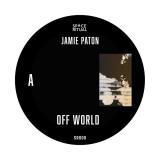


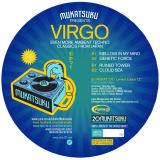





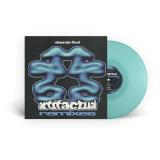







































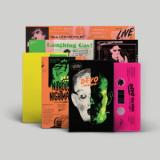



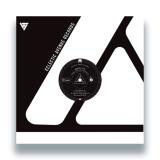















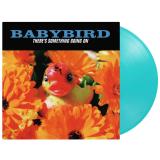
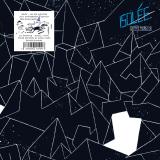
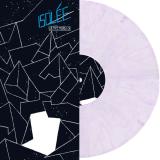



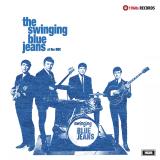


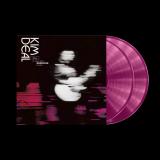



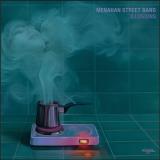
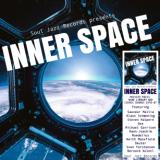














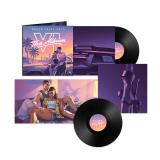
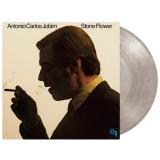








![FERGUS SWEETLAND - PAIN IN THE BRAIN [Printed Sleeve,Vinyl Only,180 grams]](https://www.deejay.de/images/l/7/1/1270171.jpg)













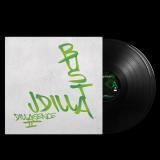



![Various - Ravers Kaki [Stickered Sleeve]](https://www.deejay.de/images/l/6/4/1270164.jpg)