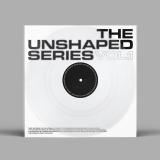
SIDE B presents the first installment of a new series aimed at eroding classic structures within club music from inside the playing field. 'The Unshaped Series' pushes depth into the label's mission statement, isolating tone and texture, and confronting its listeners by raising not only the experimental undertones of the music it has been showcasing. This new take provides an opportunity for these spaces to be described and for new emotions to glow between the same walls in turn.
For 'The Unshaped Series' first volume, SIDE B emphasizes its name by challenging ten techno producers to detach themselves from their habitual arrangements. If the rhythm that we hold so dear is taken out of the equation, what is left? This question is answered by the bleeding edge of the international scene and pressed on wax to offer a unique product in concept and quality. Techno has spearheaded sonic research and its artistic application since its beginnings, so to honor this tradition, SIDE B compiles these pieces to boil down the true essence of club music into what it truly is : sculpting time and space.
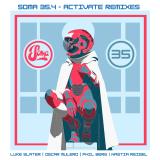
Soma's 35th anniversary remix series continues with SOMA35.4, turning its focus to one of the label's more recent defining tracks - Slam's 'Activate'.
Originally released as part of Slam's catalogue over the last decade, 'Activate' quickly established itself as one of the duo's most recognised and widely played tracks of the period. For SOMA35.4, the track is handed over to four artists who each bring a distinct perspective to its driving, functional foundations.
Luke Slater takes 'Activate' and applies his trademark precision and raw club-focused approach. Oscar Mulero delivers a tougher, more industrial interpretation, pushing the track deeper into his characteristic high-pressure sound. Phil Berg brings a hypnotic, groove-led edge to his version, while Nastia Reigel offers a more contemporary, atmospheric take that reshapes the track through a different sonic lens.
SOMA35.4 continues the ethos behind the 35-year project: bringing together established figures from Soma's history and artists operating within its wider sonic sphere.
Tracks 1, 3 & 4 Mastered By Conor Dalton @ Glowcast Mastering
Track 2 mastered by Carlos Koschitzky
In statement to Its identity, Fergus Sweetland's Pain in the Brain EP initiates the linage of the unapologetically physical, vinyl-only Wobble Wax.
His release at its core is a computerised gallop, grounded in playful but mature musicality. Fergus' chord aware contemporary detailing emits a breezing alchemy of wiseful restraint from an artist who understands the assignment.
The ever-welcoming theme of Sweetland's signature percussion ensures each of the 4 excursions deliver a cohered reference, but not without unique imprint. Speaking to the subtle, non fixed states, that Wobble's manifesto arguments.
Notable entries include: B2's 'Pain in the Brain'- a sharply composed stab anchored in acidic static'ism. And A1's 'Lean into Fuzz'- An aura farming ode to synth-tropic minimalism.
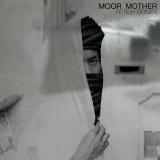
First released September 16, 2016, Fetish Bones was the debut album of Philadelphia based musician, artist, and activist Camae Ayewa, performing as Moor Mother. Recorded in her home studio using a collection of machines, field recordings, and analog noisemakers, the album's 13 tracks fused the visceral anger of punk with the expansive improvisatory spirit of Sun Ra, arriving not as a way to forget but as a demand to remember.
The record was named an Album of the Year by The Wire and Jazz Right Now, and landed on Pitchfork's Best Experimental LPs of 2016, Rolling Stone's Best Avant Albums of 2016, and Thump's 25 Best Experimental Albums of 2016. "Deadbeat Protest" made both Pitchfork's and Noisey's Best Songs of 2016 lists, and Bandcamp named Ayewa its 2016 Artist of the Year while including Fetish Bones among its 100 Best Records of 2016.
Ten years later, Don Giovanni Records celebrates that debut with a 10th anniversary edition, pressed with a foil album cover and featuring the previously unreleased bonus track "Marian Anderson," a collaboration with Wolf Weston and Wooden Elephant. In the years since Fetish Bones, Ayewa has become one of experimental music's most celebrated and prolific voices.
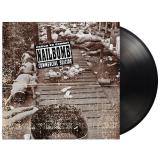
Nailbomb's live album Proud To Commit Commercial Suicide, was recorded at the legendary 1995 Dynamo Festival in Eindhoven, The Netherlands.
With 110.000 attendees, this was the biggest Dynamo Festival that was ever put together. Featuring a line-up of bands like Machine Head, Life Of Agony, Biohazard, Downset, Dog Eat Dog, Fear Factory, and many more, this was truly an event people from around the world wouldn’t miss.
Nailbomb's legendary live show (featuring appearances from former Dead Kennedys drummer D.H. Peligro, Biohazard bassist Evan Seinfeld, Sepultura's Igor Cavalera and Front Line Assembly/Fear Factory keyboardist Rhys Fulber) is still being talked about to this day. The last two studio tracks were recorded at Chaton Studios, Scottsdale, Arizona, in July 1995.
Proud To Commit Commercial Suicide is now available on black vinyl and contains an insert.
Amazing Part 2. all groove, all dancefloor, no filler. across all four sides the mood stays the same, beautiful, groove first, dancing first. Nothing forced, nothing loud for the sake of it. Four artists, four classics, one record that just wants people moving
xtal makes his debut on mule musiq with a four-track ep that explores the space between club functionality and left-field experimentation. opening with “off-axis,” warped electronic textures and elastic grooves subtly recall early-2000s dance music while retaining a distinctive sense of lightness. “ arches” develops a hypnotic atmosphere through intricate arpeggios and minimal rhythmic patterns, finding depth in repetition and subtle shifts. on “lilt,” warm dub textures and supple rhythms merge into a fluid, dreamy deep house excursion, balancing understated euphoria with an effortless sense of movement. closing with “morse signals,” fragmented synth phrases and playful rhythms evoke a kind of retro-futuristic communication, bringing together experimental instincts and dancefloor sensibility. moving freely between minimal repetition, dub-inflected atmospheres and off-kilter electronic rhythms, xtal makes a compelling first appearance on mule musiq, delivering a release full of unexpected details, musicality and understated eccentricity.
Following a series of releases that have shaped its identity, Orion Records presents its first album “Debut” by label bosses Orion.
While keeping a recognizable tone, the duo moves in a broader direction, exploring different shades of experimental electronic music.
The record shifts between ambient soundscapes, breakbeat rhythms, syncopated grooves and tracks more geared towards the club still maintaining a strong focus on sound experimentation.
To feel with your eyes closed.
TAR050 Sub Basics & Thanos Hana - Tar 50 TH Tar Hallow __ The bass and drums clears slightly out of frame. The synth lines are watching a sudden wide-open space from a blinding altitude. The voltage remains, refusing to settle for comfort. Sub Basics and Thanos Hana building a record that hammers one stubborn head cornerstone. Then you get four dubs and fifty undeniable grooves.
Paul Pèrrim returns with Arati – a raw, expeditionary palindromic companion to his 2025 debut, Itara.
Exploring a rawer, harsher, and more rugged landscape than its predecessor, Arati pushes deeper into the wilderness. The anthropologist- musician continues to guide listeners down paths trodden by akaleidoscope of cultures, offering a sound that is profoundly singular, primal, and timeless.
The album’s surreal compositions weave together an eclectic arsenal of textures: mutant maqams, Africanist sound collages, acid Eastern free-folk improvisations, weird droney guitar, cosmic exotic ambient, and re-wired finger-picking. It is music engineered to forge an immediate, visceral connection.
Arati evokes place and memory—conjuring the scent of Persian leopard dung and Kurdistan saffron, dusty Afghan rugs, or the phantom sound of a camel being milked in the desert while a lone musician plays nearby. It stands proudly as an homage to timeless field recordings and visionary crossover albums reminiscent of the Deben Bhattacharya school. Arati is an unrushed journey— and with both albums, Paul Pèrrim establishes himself as a cultural wanderer crafting unorthodox traditional-futuristic soundscapes for contemporary, open-minded listeners.
Fuglen flyr godt (“The bird flies well”) is the second solo album by Norwegian multidisciplinary artist Espen Friberg, following 2022’s Sun soon (Hubro). Recorded in the coastal town of Hvitsten, Norway, through the winter and spring of 2025–26, the album consists of eleven pieces made entirely on the Serge Modular synthesizer. Through improvisation and experimentation, Friberg treats the Serge as a shifting network of relationships, developing a vocabulary of idiosyncratic melodies and textures by turns warm, fluid, woody, and curiously animate.
This is music developed in close proximity to Friberg’s surroundings in Hvitsten—pine forests, smooth seaside rocks, and changing winter light. Rather than translating these things into anything explicitly programmatic, Fuglen flyr godt absorbs their scale and ephemerality. Friberg follows his instrument into unexpected places: patterns cohere and slip apart, rough textures give way to passages of peculiar delicacy, and the open-ended architecture of the Serge yields a broad range of gestures and environments.
Mixed and produced by Friberg’s longtime collaborator Jenny Berger Myhre (Flutter Ridder) and mastered by Eivind Opsvik, Fuglen flyr godt finds Friberg bringing his characteristic lightness of touch to the Serge ecosystem, coaxing organic, playful music from its unruly circuitry—music that feels of a piece with the landscape around him.
Faith Beat’s 16th signal comes from label head Ryan Elliott. The “Tribute" EP is his 1st release in 7 years. Four tracks that move with a clear sense of progression, from warm, chord-led nostalgia through stripped-back, headsy rollers before building into something more emotional and driving. Across all four, Ryan’s signature approach remains intact: understated, groove-led and never overworked; it doesn’t get much more Ryan Elliott than this. Words by Ogazón.
Gilles Peterson has partnered with Jean-Paul “Bluey” Maunick to reinvigorate the loose, protean energy of the early-80s Brit-funk scene. STR4TA sees them mine new musical possibilities outof that shared formative era. On “Aspects”, they revisit that
important period and the spirit that guided it: self-taught, DIY vitality, and a raucous energy built on live performance. Bringing a fresh slant to a sound first developed by groups like Atmosfear, Hi-Tension, Light of the World and Freeez – with Maunick, it should be noted, also a member of the latter two bands – it’s the first material that Maunick and Peterson have released together in over a decade.
It’s an idea that had been in the works for a while, but which was encouraged by a surprising catalyst: the award acceptance speech by Tyler, the Creator at the 2020 Brit Awards, where he shouted out the influence of “British funk from the 80s”. It was an acknowledgement of the particular sound that Maunick and his peers had honed, where their US influences were reoriented through their own circumstances. “Like everybody else who plays music, we tried to emulate our heroes,” Maunick says. “But we didn’t have the tools, we hadn’t studied music: were all playing by ear, and we were coming off bits and pieces that we liked off certain records.” This record is guided by the same ethos. An array of musical touchpoints have fed into the album’s direct, no-frills entries: each track’s parts are cut back to the bare bone. In writing and recording the album, the pair of them would work together to strike upon the point of departure – more naive, less considered – that had produced that killer Brit-funk sound. Peterson would dig out records that showed particular flashes or moods as jumping off points, and Maunick would then work with collaborators to build new directions out of those prompts or suggestions.
It’s the latest chapter in a story that started with Peterson interviewing Maunick in his parents’ garden shed, the first interview that the former had ever conducted. Later, they would reconnect to put out a string of celebrated Incognito albums on Peterson’s pioneering, now-defunct Talkin’ Loud imprint. Now, linking up once more, they unpick an under-appreciated flashpoint in a vital musical lineage, one which each of them has been instrumental in shaping.
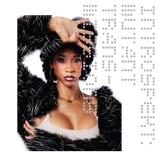
Building from the critical acclaim of last year's debut album "Moving the Center", Introspekt returns with an eight track EP. "After I'd done the first album, it felt like I opened up a few different portals. 'Mutant Transmissions' feels to me like the result of following one of the threads that I started weaving," she explains.
With portals opened, it turns out the first step towards going down one of them is the use of time machines or at least… timeless drum machines. In this case investing in music hardware that rewired classic 808/909s allowed her to explore. Where exactly she ended up, is a story of two parts.
Sonically, the EP is eight dark, bassy and stripped back trax sitting somewhere over the Black Atlantic between 2002 Croydon dubstep and East Coast Baltimore or Detroit electro. The east coast influences are a new front in the exploration of her sonic heritage and identity. "I wanted to do something that was a bit more synthetic and build every piece from scratch… in terms of the sound design, it's a bit more angular. I was writing a lot with spirals in mind."
Psychologically however, the EP's track titles are clues for individual galaxies accessible through the portal.
"Fierce Diva Protocol" is named after a personal self defence mechanism designed to protect from overwhelm caused by hypervisibility; the process of when to say "no". This brought the understanding of self that "sometimes change that's very positive feels challenging and scary in the body".
Similarly "Breath Work (Club mix)" speaks to the breathing exercises she returns to in the most turbulent periods of her life and is centred around samples of in- & exhalation. "I wanted the breath samples to feel almost referential to a sensual energy but in a sense of like a creative energy, a reference to something primordial even... There's something about the creative thrusts of life that is contained in breath."
"Left Eye" begins with something personal: her vision, after a few injuries, is less clear in that eye. But it is also a "reference to various cultural symbolic associations of the left eye and its relationship to various more universal principles, to the unseen, more intuitive parts of the brain…" She's learned to leverage her defocused lens to develop an "intuitive sense about things in response to stressful situations or intense change," whether that's in martial arts bouts or music industry antics. Left eye open: not simply seeing but perceiving.
Finally, two of the EPs tracks feature numbered titles: "108 Shapes" & Drum_Signal_ 027", the digits of which both sum to 9. Suddenly Introspekt's portal has taken us to a numerology galaxy, one not a million light years from Taoism or the Aṣẹ tradition of the Yoruba. "Nine is associated with completion, the resolution of cycles and the motion of transformation, change or metamorphosis," she explains.
"I made 'Drum_Signal_ 027' pretty close to my 28th birthday, so I was 27 years old, and I was thinking about the previous year. It's kind of about me reflecting on change and the things that sometimes you have to give up in order to embrace change. But also the limitless potential of embracing that."
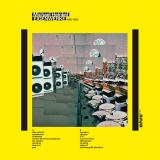
WOW! An early ’80s New Wave, Electro, Proto-Electronica, Industrial and Kraut-Pop album that has never been released before is now coming out on Elaste Records and it’s a perfect fit! History is being made.
In the early eighties, Michael Heinkel was one of those quiet electronic musicians hardly anyone knew — at least outside of Munich. While machine rhythms were being perfected in Düsseldorf, dilettantism was elevated into an art form in Hamburg and West Berlin was soundtracking its own feverish coldness, Munich seemed to be a place where, apparently, nothing was happening. Or almost nothing. Because beneath the radar, far removed from the grand narratives of those years, Michael Heinkel was already creating his own electronic cosmos — stripped-down, idiosyncratic and often ahead of its time. Electronic minimalist music, born somewhere between a home studio, nightlife and the longing for a future that could only just be imagined back then. But the recordings disappeared into drawers, onto cassettes and tape reels. For decades, they remained a secret shared only among friends, insiders and a handful of close companions. It was only 45 years later that Andreas Dorau and Ralf Hertwig (Palais Schaumburg) — two defining figures of that early avant-garde — insisted that the recordings finally be made accessible. Not as an exercise in nostalgia, but as the overdue release of a missing piece in the history of German electronic music. This music is not a nostalgic retrospective. It is a delayed signal from a future that had already begun back then. Format: Heavyweight black vinyl incl. printed inner sleeve + download card
Quotes: -"Michael Heinkel's long-lost LP is a treasure trove. I'm constantly amazed at the musical gems from the early '80s that are still waiting to be discovered." - Hans Nieswandt (Whirlpool Productions) - „Some München musical history that somehow got missed at the time finally gets released after 40 years. Great album.“ - Hell (Gigolo) - “Awesome album! Today, we can only imagine just how groundbreaking electronic music at this level was back then. When gems like these are heard for the first time in perfect sound quality, it’s like a trip back in time to the early days of electronic music. Back to the future!!!” - Patrick Pulsinger (Cheap / iO / Sluts’n‘ Strings & 909 / The Private Lightning Six) - “Terrific material!” - Roman Flügel (Acid Jesus / Alter Ego / Sensorama / Warp 69) - “ELASTE has unearthed an 80s electronic gem! A German minimal wave gem-freshly unearthed! Minimal, rare, brilliant - an 80s Krautpop highlight.” - Sankt Otten - „Pure and delicious 80s Electronics from Munich. We love it.“ - Gorilla Aktiv
The wait is over, Return To The 37th Chamber is El Michels Affair's highly anticipated follow up to 2009's underground cult classic Enter the 37th Chamber. Churning out classic records since then for the likes of Lee Fields, The Arcs, The Shacks, and tons more, it is clear that EMA's signature sound is stronger & sharper than ever. This time, in addition to re-interpreting the Wu compositions for a live band, EMA pays homage to the production and sonic fog that makes a RZA beat so recognizable. Producer and bandleader Leon Michels recorded the album completely analog, sometimes hitting 6 generations of tape before it was ready for mixing, giving the Return to The 37th Chamber it's own hazy sound. Adding to the unique fidelity, the record is laced with psychedelic flourishes, John Carpenter' synths, heavy metal guitars, triumpha0nt horns, and traditional Chinese instruments that make up for the lack of the Wu's superlative vocals. From start to finish it's a dark trip that walks the line between RZA's timeless hip-hop aesthetic and the cinematic soul EMA has become known for. El Michels Affair tackles some classics like 4th Chamber and Wu Tang Aint Nuthin to Fuck Wit, as well as some deeper cuts like Ol Dirty Bastard's Snakes, Raekwon's Verbal Intercourse, and Shaolin Brew, Wu-Tang's contribution to the St. Ide's Hip Hop endorsement campaign from 1994. This time El Michels brings some of the Big Crown family along for the ride. Lee Fields handles vocal duties on Snakes and is joined by Shannon Wise of The Shacks for their version of Tearz, which pays as much homage to the Wendy Rene sample as it does to the Wu-Tang Clan. Lady Wray makes an appearance on the cover of Method Man's hit, All I Need, lending her vocal prowess to what gave the Wu one of their biggest hits of all time. Interspersed throughout the record are some original interludes that are like the rug that ties the room together,' giving Return To The 37th Chamber a cinematic narrative that makes it a proper El Michels Affair record and not just a collection of covers. From the music to the presentation, this album is a perfect example of what can only be achieved through diversity. The end result is as much a kaleidoscope of influences and multiculturalism as the city it was recorded in. El Michels Affair is once again, sounding out the city' that raised them, pulling elements of art and culture from across the country and around the globe to create an album truly unique in it's own right.
Balaise was the original title of Vers le Nord’s debut album. In French slang, balaise means something in between badass and flamboyant. The word keeps popping up throughout the record, like a teenager’s graffiti scrawled on a bus shelter after a few drinks. Balaise robots. Balaise ghosts lurking in the shadows. Balaise is the barfly who fantasies about becoming a street vigilante. In many ways, Matthieu Pellerin's new solo project is entirely contained within that word: a gigantic piece one man against the world cobbled together, a monument shaped by hand using layers of synthesizers sounding like cathedral organs cast in concrete.
Stitching this type of freak together took time. Five years, or what sounds like forever in an age obsessed with career trajectories and content strategies. But for Matthieu Pellerin, it was never about career plans or taking the easy road. Or he would have dug up the rotting corpse of Oi Boys, his now-defunct band, whose brief existence and explosive popularity once united sullen skinheads, gothic street punks, and old school punks alike. Or he would have fully embraced the Metz scene, now that the Great International Triple Alliance of the East (Noir Boy George, The Dreams, The Feeling Of Love...) and rising solo acts like Tune Zitoune, Josy Bazar, Fantôme Josepha, and Tony Gerrano have somehow transformed this sprawling open-air heroin camp into an unlikely capital of cool. But Vers le Nord doesn't point East, and it is as a lone rider that Matthieu Pellerin can fully reveal his songwriting scope.
With Le Seul Élément, his first solo project, the Lorraine native had already shown a rare gift for crafting worlds. Picture vast sonic masses stretching like industrial zones, noise-filled fog pierced by pale neon lights and landscapes caught somewhere between the gnarliest dive bar and a doomsday bunker. And slipping through the soul-crushing slowness and fractured blackened atmospheres, one could perceive a throwback to his years plotting in black metal-tinged Loth and Bishop.
Vers le Nord populates those landscapes that once were rough sketches. Damaged characters reign supreme, with a plethora of exquisite mutts brought to life, rather than outcasts committed to the cause. Where Nuits Blanches —his new supergroup featuring members of Rixe, Lion's Law, Headbussa and La Femme— pulls no punches with raw confessions, Pellerin switches gear for tales of robot apocalypses, vagrants and fam-seeking school shooters, delivered with William Sheller-esque rhymes and striking images. Yet even within fiction, he manages to create something deeply intimate, almost defining, showing very little effort: he is a natural. All in all, à l’aise (at ease). Songs resonate deeply with the listener, perhaps because of Pellerin’s odd way or always addressing someone without ever really naming them, a floating, obsessive and inescapable “you” calling us out.
Despite all of the darkness, Vers le Nord stirs deep emotions. There is something of Type O Negative or Anna von Hausswolff in its constant collision of the ludicrous and the epic gothic, its bleak romanticism that never tells a sordid tale. While the vocals remain rooted in a distinctly French punk lineage—think No Class, La Souris Déglinguée and OG Bérurier Noir—the reactor core is hidden somewhere else. Oneohtrix Point Never feels like a closer relative with his ultra-emotional music made of cold synths and disembodied anthems, swallowing and regurgitating forty years of icy, contemplative new wave across ten songs. It comes as no surprise that Lila Ehjä and Aimable, two rising specialists in lowering the temperature below seasonal norms, appear on “Enterrez-moi bordel” (“Bury Me, for fuck's sake”), a grandiose, spectral and magnificently arrogant finale. And in the end, Vers le Nord starts where the original idea was hiding all along: somewhere amid the ruins, definitely balaise and yet somehow, completely à l'aise.
Berlin-based Dutch-Italian composer and musician Aimée Portioli aka Grand River presents the new album Temporary, returning to the renowned Editions Mego label with her most expansive and focused LP yet.
Rooted in existential ideas of impermanence and flux, Temporary is a deeply emotive work centred on the rich interplay between resonant guitar work and innovative electronics. Written in the wake of profound personal grief and loss, the album sees Portioli infuse her music with a raw, expressive intensity anchored in this experience. Across eight strikingly melodic and affecting soundscapes, Portioli powerfully embodies a dramatic encounter with mortality.
Temporary reprises Portioli’s exceptional streak of material across acclaimed labels including Donato Dozzy and Neel’s Spazio Disponibile, Caterina Barbieri's light-years, Ghostly International, Tresor and Umor Rex. The LP represents the latest tour de force in her distinctive electronic practice. Alongside a raft of lauded releases, Portioli has devised visionary multichannel installations which dissolve the boundary between the art gallery and the performance space.
Her new album signifies a culmination of her work, imbued with the depth of Portioli’s artistry. Shaped by a paradigm shift rising from loss, the record reflects a contemplation of the human condition and the ephemeral nature of existence. Ruminating on the thoughts and experiences that have fed into the record, Portioli reveals a consequential recognition underpinning the record:
"Sometimes, when travelling in places far from home that I know I will most likely never return to, or while accompanying someone I loved towards the end of their life, I become intensely aware of the singularity of the moment, and of how precious and sad this feels at the same time. It carries a particular weight because it will never happen again in quite the same way. Through experiences like these, I have gradually come to understand the temporary nature of all things. They taught me that to live is to experience the present while already feeling the trace of its disappearance, something both painful and blissful." - Aimée Portioli, Grand River
The album is invested with a potent mood and momentum from the outset. Establishing an evocative tone with the subtle, pulsating synthesis, rustling undertow, and oceanic low end of 18 circles to heaven, Portioli gradually ascends through the incandescent modular majesty of Come to stay, and the turbulent, brooding guitar figures of The crossing of the body, the crossing of the mind. The album progresses through the rapturous electronic phasing of The little we last into the coruscating synth grandeur of Let me know when you’re pure, before a thrilling endgame.
Closing with the wavering harp runs, heavy percussive thud, and cataclysmic guitar discordance of Maybe I am dead and this is paradise, and the evanescent atmospherics and beautiful acoustic refrains of Work of ending, Portioli takes the listener through vast landscapes of sound and mercurial emotional states. Intimate and immersive in equal measure, the record traces a compelling sensory journey.
Each part of the album is part of a larger poetic sentence, with track titles forming fragments that together articulate a meditation on transience. From 18 circles to heaven and Come to stay through From the other side and Work of ending, they read like quiet statements about being human, about loving, losing, remembering and eventually fading. The record moves through these states as a continuous passage, depicting a poignant soundworld guided by temporality.
The awareness that our time is limited sharpens the value of what remains. Each encounter, each gesture, each fleeting moment becomes more vivid. Temporary lingers in the space where presence and disappearance coexist, where everything is already passing away and therefore becomes infinitely precious. Things matter because they do not last. Mortality does not diminish life; it intensifies it. In confronting these ideas, Temporary feels irrepressibly alive.
Composed, produced and mixed by Aimée Portioli
Production and mixing assistance by Luca Sammartin
Acoustic piano on Maybe I am dead and this is paradise by Andert Tysma
Mastered by Rashad Becker
Cut by Marta De Pascalis at Schnittstelle, Berlin
Artwork by Nicola Tirabasso
Layout by Riccardo Piovesan
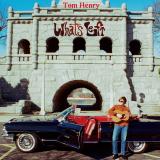
What's Left is the new album by Tom Henry, releasing November 20th, 2026 on Royal Oakie Records. Where his debut album Songs to Sing and Dance To leaned into big dreams, What's Left is a record about what remains once the dust settles, delivered with the wit and charm of a young rocker in his prime. The familiar influences are still there — Paul McCartney and Big Star loom large (though there's a little more Third/Sister Lovers this time around), but now the songs are lush and polished, with new sounds creeping in around Henry’s trademark power pop hooks. On a handful of tracks you can even hear strains of Syd Barrett influenced acid-folk alongside psychedelic rock that recalls The Brian Jonestown Massacre or The Beatles at their most lysergic.
Produced in collaboration with David Glasebrook (Patti Smith, Peter Case, Sugar Candy Mountain), and engineered by Glasebrook and Stephen Shirk, the album was tracked across two cities at Shirk Studios in Chicago, IL and The Garden Shed in Oakland, CA, where Glasebrook also handled mixing and mastering. The record's cross-continental origins reflect the movements of Tom’s own life over the past half decade, which found him departing his native Chicago for Los Angeles before returning home four years later, and lend the album its distinctive sound of Midwestern grit mixed with California sunshine across all twelve tracks.
Opener "Someone I Need" sets the tone: an old-fashioned, up-beat rocker built for a roadside diner jukebox somewhere out along the backroads of your mind — it's crunchy tape tones and horn arrangement lending warmth to the song as the narrator asks for a dance and beckons the listener along for the ride. By "It's Not Meant to Be," the record turns inward, wrestling with the exhaustion of trying to find love in the modern age — especially for someone who wears their heart on their sleeve and often comes to find their suitor's wardrobe doesn't have room. "Silverlake Song," reminiscent of early Donovan, kicks off with otherworldly sitar — a wry postcard from the west, tracing how the shimmering promise of L.A.'s Silver Lake enchants, bargains with, and ultimately tries to ruin the starry-eyed dreamer — and very nearly succeeds.
In addition to Tom–who sang and played guitar, bass, and keys–the album features musical contributions from co-producer David Glasebrook, Brian Daley, Joe Daley, Finn Swingley, Lewis Patzner, and labelmates Graham Patzner, Charles Lloyd, and Simon Beins. Liner notes come courtesy of Ian F. Svenonius, who — in the guise of one Johnny Sincere of Integrated Star Management Ltd. — recounts his company's failed attempt to sell Tom Henry a gimmick: a space suit, a coal miner's neckerchief, a lounge pianist's dead-eyed shades. Tom turned them all down. As Svenonius tells it, when reminded that every story's been told and every gimmick's been used, that all that's left is to admire the photographs of what's gone before, Tom simply shrugged: rock 'n' roll is an eternal spring, and if this is what's left, that's just fine with him — it's what he likes to do.
In August 2022, Australia-based, French born fourth-world music legend Ariel Kalma was invited to participate in BBC Radio 3"s Late Junction series of special collaborations. The program pairs artists that have not previously collaborated to create new music together. Kalma was quick to suggest working together with two musicians whom he has never met - the International Anthem recording artists Jeremiah Chiu & Marta Sofia Honer, whose critically-acclaimed duo debut Recordings from the Âland Islands had been released just a few months earlier. Kalma sent an invitation to Chiu and Honer, which was received with great enthusiasm. Chiu had been a fan of Kalma"s work for a long time, even citing him as a major influence on his approach to electronic music composition. After meeting their goal of 20 minutes worth of music for the program (which was four pieces total), the three musicians were satisfied in what they would present, and sent along their work to the producers of Late Junction; but simultaneously they felt like there was much more to be said, more work to be done. There were several pieces that they had nearly completed that weren"t sent for inclusion in the radio program, and there were many ideas for refining those that had. The three musicians collectively agreed that they would continue work together and try to push the music further. The Closest Thing to Silence is the result of their efforts to take the collaboration further.
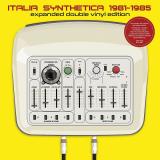
New 3-sided double vinyl edition with bonus tracks. The first album contains the original album, while the second features a collection of bonus tracks originally included on the first bonus cd edition.
This album represents the musical mutation that occurred after the post-punk hangover gave way to more frigid emotional shores, in-line with the synth-wave moment that was sweeping Europe and the white cliffs of Albion. This scene flourished in Italy between 1981-1985, and the musicians that came out of it are still revered today (particularly in the US). Robotic rhythms and intuitions that, besides sharing common ground with the electronic movements that had come before, also knew how to fill up the dancefloor! Featuring four previously unreleased tracks by Der Blaue Reiter, along with tracks by Modo, Actor’s Studio and La Maison, as well as the still fresh sounding contributions by true pioneers of the genre Neon and Naif Orchestra.
Macedonia's own Stojche is Fuse's next guest for the club's freshly made imprint. The long standing DJ and producer has been known to keep Detroit's playfully hybrid style as the focus of his work and 'Metaphor' is the case in point. His four tracks bounce through a nostalgic balance of techno, house, and more with a modern crisp. A refreshing take on club music, Stojche keeps techno's sometimes nonchalant attitude at arms length with a charismatic record that hits its mark with every measure.
The record's first track 'Counterpunch' features heavily lined percussion but still brews up a storm far and wide with resonant dub stabs and open hi hats. The drum machine boasts a full spectrum, rolling through a light show of melodic flashes, perfect for a room compressing soundsystem. The maximalist, vintage detail that Stojche brings to his compositions blurs the lines between classic genres in a time of hasty hybridization, which gives it a sort of authenticity that can't be taken for granted. 'Chordal Tribe', on the other hand, raises the general euphoria of the EP. Luring in the listener with bright pads and full-on drums, Stochje's work is reliable main slot material that adds color to any mix while providing a persuasive low end. Shimmering hi hats give it an ethereal quality making it an appropriate interlude for almost any context. Moving on to the B side, the producer sharpens up his rhythm and emphasizes the hardgroove influence in 'Signal Drive'. Softening the pace of his drums with free use of melodic chord stabs, Stojche opens up his dance floor for a crowd bonding record once again, complete with filter transitions and pummeling toms. As the final contribution, his title track 'Metaphor' begins with a more obscure opening to conclude his EP for Fuse. Leaning more to a techno cut, the record remains flamboyant as ever with open hats and rides shuffling through his arrangement. A muted main synth becomes apparent to focus the energy of the track while allowing for liveset-like drum flickering to take shape beneath, claiming the immortality of old club records with the technical precision of a seasoned modern producer.
25th Anniversary Black Vinyl Repress.
Before he was Caribou, Dan Snaith was a 20-something student in a "crappy" Toronto bedroom, recording music on a beat-up computer that used to strain under the weight of digital recording.
Start Breaking My Heart was Snaith's 2001 debut, originally released under the name Manitoba. Twenty-five years on, it still sounds like an artist finding his voice in real time - rainbow melody, hopscotch percussion, and playground laughter stitched into warm, tactile electronic pop.
Reflecting on the record, Snaith said it was the first time something clicked - he'd been making music since his early teens, but this was when he first felt he understood what he wanted his tracks to be. That moment coincided with the chance encounter that changed everything: he met Kieran Hebden (Four Tet) at a UK festival, who helped Dan get this album released - the start of a career that has spanned a quarter century and many albums since.
Smallville presents a very special album project – 'Tumbling Cycles' by Billus is here to stay! Ethereal deep-dubby house music from Australia, that feels like finding the hidden-treasure you were not even looking for.
„When I am most enjoying making music, I have this sense that I'm just watching cycles of sound happen and match up in front me on their own and I'm not really just doing anything and it's really nice. Most of these tracks stem from a small collection of
iteratively distorted percussive jazz and breaks that I kept coming back to and watching them cycle around each other.“
This is Billus' approach while he is out in the studio zone. As a result, we all get the chance to scuba-dive into his soundscapes like a warm blanket, interwoven rhythms and cosmic textures, that seem to have the ability to heal. The fresh feels was real,
every time the album went by.
Billus is praised for his impeccable mixtapes for a lot of very special occasions of doing not a lot- make sure to check these out. And Billus produces sprawling music- he released on Naarm labels Animalia, Vessel and Pollinate and he makes music to shyaway in the woods, picking up lil mushrooms if you feel like- or leave these untouched for the same effects.
So while listening to the Tumbling Cycles LP, make yourself comfy and try to work out your own personal scenario, in which Billus' music and his leftfield approach would flourish best. These tracks come with approval by the sweetest dancefloors
around the world and we can't wait to release these to the world. The 2x12“ comes with a stunning full-cover artwork from Stefan Marx.
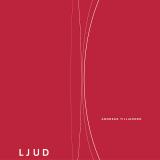
Andreas Tilliander released »Ljud« in 2001 as the first full-length album under his real name. The year before, the Swedish producer’s »Cliphop« album under his Mokira moniker had established him in the world of adventurous electronic music and the clicks’n’cuts scene. »Ljud« was just as minimalistic, warm, and playful as its predecessor while also notably inspired by house music. It is a timeless record based on happy accidents, playful loops, and lively spontaneity. For its 25th anniversary, Keplar presents a vinyl reissue with adjusted artwork by graphic designer Marc Hohmann and updated mastering by the artist himself.
Tilliander laid the foundation for his two first albums when he got rid of most of his music gear in 1998 after meeting Joel Brindefalk, who was already releasing music on the legendary Börft label. Brindefalk was using a computer as his main instrument and introduced Tilliander to the audio editing suite Sonic Foundry Sound Forge. »What he did with that software is what made me sell most of the hardware except my Nord Modular and a Korg MS-20.« The former synthesizer played an integral role while Tilliander made the tracks for »Ljud,« working primarily in the modular studio environment Jeskola Buzz.
»Ljud« came together in an intuitive process. »It’s still how I work 25 years later: I first make loops, create bits and pieces, and build up my own sound library as a foundation,« Tilliander explains. The Nord Modular and Buzz, which allowed him to swap samples and produce new sounds out of pre-existing ones, provided him with material for loops that formed the basis of the ten tracks. »I would start with a few elements, add more into the mix, then take them out again—arranging the pieces in real time while recording.« The casualness and vivacity of this improvisational approach becomes tangible throughout »Ljud.«
»Ljud« was released on Achim Szepanski’s Mille Plateaux, which had published the seminal »Clicks+Cuts« compilation in 2000. »I was part of that scene and I liked the digital aesthetic of the label,« says Tilliander »Coming from a very analogue setup, working with computer music and this kind of minimalism was very inspiring.« When preparing »Ljud« for the Keplar reissue, he ran the music through an analogue outboard and noticed he was still happy with the way it sounded. »It brought back fond memories. I hope the same is true for people who heard it back then, and that everyone who discovers it now will enjoy it, too!«
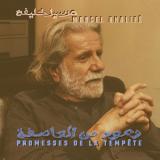
Half a century after its original release, legendary Lebanese musician and singer Marcel Khalife—renowned oud player and global icon of both music and activism—returns with a new recording. On this album, he reinterprets four of the five tracks from his debut, Promises of the Storm. A bold defiance of time and history.
Why revisit the same album, 50 years later? The reasons are many, but one stands above the rest: history itself seems to be repeating. The narrative unfolds once more in the same dire circumstances as half a century ago, as if time has folded in on itself, returning everything to its starting point. The urgency, the necessity—it all remains, pressing and inescapable. We must begin again.
In 1976, a young Marcel Khalife found himself exiled in Paris, fleeing the Lebanese Civil War and his family’s Christian village, where his progressive, left-wing ideas had placed him under a kind of house arrest. He was one of the few to openly and unwaveringly champion the Palestinian cause. The situation quickly became untenable, especially since, just a month before the war began in March 1975, Khalife—fresh out of the conservatory—had given his first public concert to great acclaim. Then, everything collapsed. What does one do when trapped at home? Read books, play the oud, and turn those readings into songs. In his family’s de facto prison, Khalife began setting the poetry of the great Palestinian poet Mahmoud Darwish to music. These songs, born of confinement, he carried with him into exile, driving to Paris where a producer offered him the chance to record an album. Naturally, the tracks were the ones he had been improvising at home from Darwish’s poems. The album’s title, Promises of the Storm, echoed the war that was just beginning. Khalife recalls that the album became a hit after a concert at the Fête de l’Huma, where 500 copies were sold in a single day. “Everything started there, and it never stopped,” he remembers. He would meet Mahmoud Darwish shortly after, at a dinner organized by mutual friends. From that moment, a deep friendship blossomed between the two men.
With Darwish’s words and Khalife’s music, the songs of Promises of the Storm are imbued with a powerful evocative force—melancholy, tenderness, and poetic resistance in the face of violence. The album catapulted Khalife to international stardom, leading to endless tours and recordings, yet he never abandoned his commitments.
Now, 50 years later, Promises of the Storm returns in a fresh recording, because history is repeating itself. After the Israeli bombings in Lebanon at the end of 2024, Khalife, who was on tour, found himself stranded in Paris. He remembered a recurring request from his son, musician Bachar Mar-Khalife, who had often urged him to re-record his now-classic debut album. One morning, oud in hand, Marcel knocked on his son’s door and said, “Shall we? I’m ready to record.”
These new versions are stripped down, raw, and intimate—just the solitary strings of the oud. Khalife sings as never before, his voice no longer marked by the fragility of youth but imbued with something deeper, freer, unshackled. It soars high yet resonates low, always clear, as if to escape sadness, to evoke love and violence, desire and exile. In just four songs, Khalife encapsulates a lifetime, and a philosophy of life. Rita tells of a love of Darwish’s, with the haunting line (translated from Arabic): “Between Rita’s eyes and mine, a rifle.” Oummi invokes the figure of the mother as a metaphor for the lost land. Promises of the Storm is a meditation on revolution, the hope for change, the melancholy of defeat, and the power of thought. Passport captures, through poetry, the feeling of being stateless—a citizen of everywhere and nowhere.
Time has only strengthened these texts and this music. History never repeats itself without a valid, indispensable reason for the present. That reason is fully contained in Marcel Khalife’s new interpretations, which have never sounded so clear, so right, so essential.
As a longtime member of Hot Chip and LCD Soundsystem, Al Doyle has spent decades working alongside two of the most distinct vocalists in modern pop: Alexis Taylor and James Murphy. If he’s had a song or an idea, there’s always been someone else he’d rather have sing it.
But on November 20, 2026, the British multi-instrumentalist will release Hollywood Saviour, an album that drove him to finally embrace his own voice. “It’s me discovering a way to write and sing stuff that I could live with,” he says of his first-ever solo outing.
Recorded in his East London studio, Relax and Enjoy, Hollywood Saviour has the feeling—the rush and release—of a breakthrough, of an artist letting go. Doyle’s found freedom in simplicity here, leaning into the many pleasures of guitar-bass-drums, indulging wholeheartedly in the weird, spontaneous, raucous, and raw. He sounds free.
That sense of fun and rampant possibility can be felt in every groove, Doyle finding added inspiration in the loose and the louche, from Sexual Harassment’s 1983 electro-funk raunch-o-rama “I Need A Freak” to Throbbing Gristle’s locomotive 1980 paean to jerking off, “Something Came Over Me,” which is lovingly covered here.
At times, this album feels like a delirious response to the darkness of our current moment. On opener “Hard Times in America,” Doyle offers us a psychedelic window into his experiences traveling back and forth to the United States in recent years, feeling fascism’s hold tighten with each visit.
That sense of character comes through in Doyle’s vocal approach, a giddy combination of Iggy Pop, Pete Shelley, and PIL-era John Lydon. On “All I Want for Christmas”—a dark and devastating highlight—he takes on the shape of a drug addict come holiday season, “both dead and alive,” abandoned by his family, stumbling through a garden of drum machine and piano. It’s a pop song, lovely and lovingly rendered. It just wouldn’t be the same without his voice.
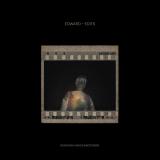
What is an edit? A correction, a confession, a DJ tool, a mild act of vandalism—or simply the result of listening to somebody else’s record and thinking: very good, but what if this bit went on a little longer?
For his contribution to the Running Back Mastermix series, Gilles Aiken aka Edward opens a folder that has apparently been filling up for quite some time.
The Giegling resident’s thirteen edits reach back through years of DJing, collecting and producing. Made for sets rather than release schedules, they form something like a musical autobiography told through other people’s records: Carl Craig, Roman Flügel, Motohiko Hamase, Kirk Degiorgio, Aubrey, Sven Väth, Michael Rother and more.
From Japanese ambient jazz and Detroit techno to dub techno, house, trance and kosmische music, these are not attempts to improve records that didn’t need improving. They are the small interventions that happen after living with music for a long time: a rhythm exposed, an entrance moved, a passage extended, the unnecessary made necessary.
“These records mean a lot to me,” says Edward. “They consist of edits I’ve gathered over the years, some of them going way back. In a way, they reflect my musical journey. All of these artists have been a huge influence on me as a producer and DJ.”
Usually, such edits remain on hard drives, USB sticks and in vaguely labelled folders. This time permissions were requested, publishers located and, somewhere, presumably, a spreadsheet became very important.
Miraculously, everybody said yes.
Thirteen thank-you notes to the music that helped make Edward Edward. Naturally, they require three records.
Mastermixed accordingly.
Also available on cassette,
Celebrating 30 years of ‘Filthy Lucre’ Live, the incendiary 1996 recording that captured the Sex Pistols’ explosive reunion tour of the same name, this landmark live album returns for the first time as a 2LP, set on red vinyl. The album documents Johnny Rotten, Steve Jones, Paul Cook and Glen Matlock reuniting nearly two decades after their original implosion, revisiting the songs that transformed punk and the world we live in today. Recorded at the band’s Finsbury Park performance, the release delivers a raw and uncompromising snapshot of the Sex Pistols at full volume, reaffirming their enduring influence and confrontational spirit.
Drawing heavily from ‘Never Mind The Bollocks, Here’s The Sex Pistols’, the setlist features defining tracks including “Bodies”, “No Feelings”, “New York”, “God Save The Queen” and “Pretty Vacant”. Performed with the same abrasive energy that established the band as one of the most influential acts in British music history. This special edition also includes the Japanese bonus tracks for the first time, making it the definitive version of this iconic live recording for fans and collectors alike.
Inhale. Exhale. Remember to breathe. In that rhythm lies the pulse of being - the ancient echo of stars from which we are made. Breathing is the bridge between the inner cosmos and the outer void. When you breathe, you testify to existence itself: "I am." The Moonrover - a child of reason - abandoned on the cold, dead Moon. It does not feel time, know fear, or comprehend solitude. But a human, in its place, would understand: Silence is not emptiness. It is a mirror. And in that mirror arises the question: "If I am alone, and silence is infinite - who hears my breath?" The answer lies in the breath. Each inhale is resistance against entropy. Each exhale is an act of remembrance. To breathe is to remember that you are not just part of the Universe - you are its awakened part. And just as the Moonrover crawls across grey lunar plains, driven by an unknown purpose, so do you move through life, led by an inner light, until you realize: breath is not just life. It is a prayer sent into silence. And if you can hear it - you are alive.
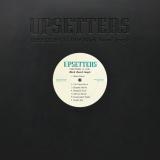
One of the most influential dub albums ever made. The remixing techniques used – radically new for 1973 – helped transform the role of the producer and the engineer to that of creative artists in their own right.
First released in Jamaica in December 1972, Upsetters 14 Dub Black Board Jungle is widely regarded as one of the first full-length dub albums and a true landmark in reggae history. Produced by the visionary Jamaican innovator Lee “Scratch” Perry, it marks the decisive moment when dub evolved from incidental B-sides into a fully realized long-playing art form. At a time when Jamaican sound system culture was flourishing, producers were beginning to strip down popular reggae tracks into instrumental “versions,” emphasizing the bass and drums for sound system deejays to toast over while adding echo and reverb effects to make things more interesting and dynamic. While King Tubby, who was in charge of mixing the tracks, was pioneering the technical foundations of dub, Perry expanded the approach by adding the hypnotic and psychedelic sound effects that made this record so rich in ideas, rendering the album more conceptually bold.
The album reworked previously released rhythm tracks by the Upsetters, which were recorded between 1970 and 1972, shortly before Perry opened his own studio – the legendary Black Ark Studio in Kingston. Their tight, groove-driven playing provided a solid backbone for these radical studio manipulations. Using the mixing desk as an instrument, tracks were deconstructed in real time – dropping vocals in and out, isolating drumbeats, pushing bass lines to the front of the mix, and sending fragments of sound spiraling into space through the heavy use of a spring reverb and tape delay effect units. Silence became as important as sound, and the interplay of rhythm and echo created a hypnotic, immersive listening experience.
Upsetters 14 Dub Black Board Jungle established dub as a genre defined by creative studio intervention. It demonstrated that the remix itself could be the main attraction, influencing generations of reggae producers and resonating far beyond into the techniques and aesthetics of post-punk, electronic music, hip-hop, and ambient sound design. By transforming the studio into a creative laboratory and elevating the “version” to an art form, this foundational album reshaped not only Jamaican music, but the whole of modern music production culture.
Over 10 years ago, Leon Michels released his first full length record, Sounding Out The City. It was Michels' first full length record under the moniker El Michels Affair. At the time, the budding retro soul scene consisted of mostly organ quartets a la The Meters and of course, Sharon Jones & The Dap Kings were in the early days of their ascent to world domination. Leon Michels, who was 18 when recording Sounding Out The City began, had just released Thunder Chicken, the first record by his high school band The Mighty Imperials. At the time of SOTC, Michels was just discovering early rocksteady, afrobeat, and 60's garage rock, which inevitably crept its way into the songwriting. He purchased a Tascam 388, an 80's 1/4" reel to reel 8 track intended for home recordings, and began recording music in a 10x10 box with no windows that also doubled as his childhood bedroom. Along with fellow Mighty Imperials Nick Movshon, Homer Steinweiss, and Sean Solomon, and Michael Leonhart, Thomas Brenneck, and some of the musicians from The Dap Kings, Michels recorded the LP over a two year period. Upon it's release, it received some rave reviews and the small deep funk community ate it up, but due to the lack luster promotion and distribution the rest of the world was slow to catch on to the instrumental gems featured on SOTC, which Michels appropriately labelled as "cinematic soul". However, in 2005 it found it's way into the hands of the people who were organizing a series of concerts for Scion that paired bands with MC's. El Michels Affair was contacted about playing one show with Raekwon The Chef of Wu Tang Clan fame. The show was such a success it led to a tour, and then to another set of concerts that featured multiple members of the Wu-Tang Clan. This eventually led to the release of El Michels Affair's second record, "Enter the 37th Chamber" which introduced them to a much larger audience and has been their most successful release to date. Michels has since gone on to produce and co-produce numerous records for powerhouse soul artists like Lee Fields. He shares songwriting credits with Adele, Jay-Z, Ghostface Killah, Aloe Blacc, and has played on records by Ray LaMontagne, Lana Del Rey, The Black Keys and Dr. John.
Atlantic Records and Rockstar Games announce Grand Theft Auto VI: The Album, the upcoming official soundtrack album from the biggest, most immersive evolution of the groundbreaking Grand Theft Auto series yet; Grand Theft Auto VI.
Launching alongside the hotly anticipated game, Grand Theft Auto VI: The Album features 34 original tracks that capture the electric energy of GTA 6’s world of Vice City and Leonida, with a genre-defying roster of the most exciting and preeminent artists in the world.
With 34 original tracks that capture the electric energy of Grand Theft Auto VI’s world of Vice City and Leonida, Grand Theft Auto VI: The Album features a genre-defying roster of the most exciting artists in the world.
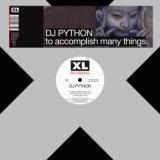
Follow-up to 2025's “i was put on this earth” (“a triumph of gentle reverie and quiet upheaval” - Pitchfork). DJ Python’s music has always occupied the interesting space in between - reggaeton's low pulse, ambient's patience, deep house's forward motion, the abstracted sounds of trip-hop, shoegaze, and pop - and this new EP finds him stretching that even further. A companion to “i was put on this earth”, the new EP shares that project's creative DNA while pulling in its own direction.
DJ Python (aka Brian Piñeyro) steps more fully into the role of singer and songwriter, sharing the mic across a set of collaborators including Ari, Tony Bontana, and Eden, while still carving out room for hypnotic solo songs.
Across five tracks, the project moves fluidly while retaining the captivating melodies, atmospheric textures, and rhythmic innovation that defined Python's earlier recordings - Mas Amable, Angel, and Club Sentimientos Vol 2 - expanding those sounds into something looser, warmer, and harder to categorise.
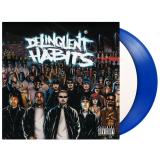
Delinquent Habits is the self-titled debut album of the Chicano hip-hop group that was formed in Los Angeles in 1991. As a group they got widespread attention with their, both melodic and hardcore, Latin-tinged rap. For the album they got help from Sen Dog, known from the very popular hip hop group Cypress Hill. He was the executive producer and also made a guest appearance on "Underground Connection".
The group was one of the biggest breakthrough acts of 1996. It started with the single "Tres Delinquentes" that attracted much attention and sold over one million copies. The album followed quickly and was equally successful by reaching the Billboard Top 200. The genre gained a new classic!
Delinquent Habits is available as a 30th anniversary edition of 2000 individually numbered copies on blue and white vinyl.
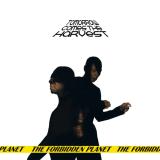
The Forbidden Planet is the new album by Tomorrow Comes The Harvest, featuring Rasheeda Ali. The album explores a wide range of electronic and acoustic improvisational conversations, creating expansive and constantly evolving sound landscapes.
The recording carries forward many of the qualities that have made Tomorrow Comes The Harvest so distinctive from its beginnings. The project originated through the percussive dialogue between Jeff Mills and the late Afrobeat pioneer Tony Allen. When thetwo creative forces first came together several years ago, what emerged was more than a collaboration or musical conversation. They opened a pathway-a way of creating through instinct, exchange, rhythm and freedom. That pathway continues to lead toward new horizons, and The Forbidden Planet is evidence of just how far it can travel.
The album is the result of an intricate creative process spanning nearly two years, connecting a series of recording sessions at notable studios including Criteria Studios in Miami, Soda Sound, and the legendary Studio Ferber in Paris, France.
The Forbidden Planet explores the more cerebral dimensions of the band's vast musical language. An idea is introduced, and almost immediately it begins to transform. Themes are questioned, reshaped and redirected as the musicians respond instinctively to one another.
As Tomorrow Comes The Harvest is known for, the performances were recorded largely through improvisation, often capturing the energy and spontaneity of an almost one-take process. These recordings were later carefully refined and shaped into the compositional structures heard throughout the album.
The creative seeds have been planted in fertile ground, allowing ideas to grow naturally and without restriction. In rhythm and in spirit, each musician contributes an essential voice to the conversation. Within that collective precision lies something even more important: a shared love of musical freedom and the possibility of creating without boundaries.
Prabhu Edouard - tabla and vocals
Jean-Phi Dary - keyboards
Jeff Mills - percussion and electronics
Featuring Rasheeda Ali on flute, with a special guest appearance by Laurent Vernerey on electric bass.
The Forbidden Planet will be released November 20th, 2026 on Axis Records on Double-Vinyl & CD + DVD. The DVD features selected live footage from Tomorrow Comes The Harvest, featuring Jeff Mills, Jean-Phi Dary, Prabhu Edouard and Rasheeda Ali.
Filmed & recorded live at London Jazz Café on September 27th, 2025, the footage captures highlights from the band's unique fusion of electronic music, jazz, percussion and improvisation.
Acid Pauli's new album "Mystic Meltdown" is hypnotic mystery, textural mastery, all hurtling through your system at peak velocity, unrelenting yet full of mischief and spirit.
The first full-length Acid Pauli album since 2020's MOD, here the artist, Martin Gretschmann, who you might also remember from Console and The Notwist, reaches out to collaborators, unearths new sounds through travel and then brings it all together with one long, sweeping breath - an album to take in as a whole, to ride its compulsive energy to the end and then back to the start, over and over again.
While the album's been brewing for some time, "It took months and months to find the coherency and the story that this album is telling," Gretschmann recalls, "Arranging the pacing, feeling how the tracks come together into one album", it reads as effortless. It draws from Gretschmann's various musical languages, from the techno, house and ambient of Acid Pauli, even reaching back to the electronica of Console, but it places them in new contexts, at new speeds and in rich, giddy contrasts. Mystic Meltdown feels like endless pleasure, unflagging energy.
It's also an album rich with multiplicity. There are many voices that visit us at the Mystic Meltdown, from Hani Mojtahedy's Kurdish vocal on "Goman (Remix)", through to Lhasa de Sela's "Con Toda Palabra" in Spanish. A sample of Kingdom Molongi's voices opens the title track and returns on "Mystic Feedback" - this feels like a particularly profound connection, given the inspiration that Gretschmann has gleaned from the musical community surrounding the Nyege Nyege Tapes label and organisation over the years. He's also appeared at one of their festivals, by all accounts a revelatory experience.
Sometimes Gretschmann reaches back yet further. "Yes, Caroline" hints at an abstract relationship with the Beach Boys' pop masterpiece, Pet Sounds. Yet the way he draws these various influences into his own music always displays more than a touch of transmutation. Releasing the album on his own label All Is Acid which has recently been undertaking a reissue program of some of Acid Pauli's earlier works, "Mystic Meltdown" feels like a complete expression for Gretschmann; from beginning to end, from creation to reflection. "Building up, going into different spheres and emotions," Gretschmann concludes. "Working through some darker shades, trying to find light. Pouring in to get through."
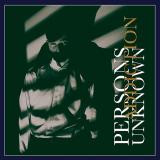
‘The late 70s, early 80s, that fierce period of time was all about wearing one mask after another, as we experimented, evolved. After the riot of Punk Rock back in ’76 /’77, which certainly taught us all a lesson, so many of us lurched back to Bowie, Roxy Music, Kraftwerk, at London’s one-nighters for the new breed of arbiters of taste, where the soundscape of early synth was such a contrast to what was on offer on the gay scene back then. Clubland was becoming a hive, substance with style. Dressed head to toe in PX, glittering like a score of Blackpool drag queens, accessorised with diamante, we danced like showroom dummies, future commuters in the metropolis.
The dance floor of Steve Strange’s Bowie Night at Billy’s on Meard Street, with DJ Rusty Egan at the decks, then Blitz, Hell, Club For Heroes, all held a weird sense of melancholy and narcissism. We were all monitoring with CCTV eyes, seeing our selves anew, reflected in slatted mirrors, as cameras went crazy for i-D, The Face, New Styles / New Sounds. FlashFlashFlash. White light. Seductive white light. The cameras of Graham Smith, Derek Ridgers, Nicola Tyson, Herbie Yamaguchi and Peter Paul Hartnett, pretty much strobing the assortment of fags and slags, high on poppers. Those photographers, armed with all manner of camera, shooting 35mm that would document every last detail for consumption. Over there, a teenaged Michael Clark from The Royal Ballet, surprising with moves rarely seen in a Soho dive. Over there, Gene October (John O’Hara) of the band Chelsea and film director Derek Jarman, lurking in the shadows.
Recording ‘Addiction’ (Music: Sam Dodson. Words: Christopher George, with improvisations from Peter Paul Hartnett in the final moments) at Gooseberry Studios in South London, remixed at Airport in Cambridge, catering to the needs of the emerging DIY electronic scene, with a splash of specific one-nighters in need, back in 1981. Another time, another world. The track was released as a two-mix 7″ of just maybe two fifty copies, as I recall. Yes, that scarce. Now, carefully remastered, reissued on delicious white vinyl as a 12″, with Steve Lippert working his design magic for the cover photograph by Andy The Furniture Maker back in the day, this is a gem of emotional and often improvised raw style, real style.’
– Peter Paul Hartnett, October 2026
Limited to approx. 200 copies, white vinyl, sleeve gloss lamination, polylined innersleeves, four double-sided hand-numbered postcards, download code.
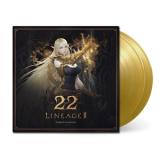
Double LP, pressed on gold vinyl. As part of Lineage II's 22nd anniversary celebration, NC America and Black Screen Records are proud to announce the first-ever Lineage II collector's edition vinyl album, which elegantly combines a track selection reflecting the game's iconic history and memorable musical identity. This vinyl album is now available for pre-order and will hit the stores in November. Arranged by composers Bill Brown (Tom Clancy's Rainbow Six), Jamie Christopherson (Metal Gear Rising: Revengeance), Inon Zur (Fallout 4), and NCSOUND, the track list is a collection of 40 of the most recognized pieces from the original soundtrack, carefully selected to create a cohesive listening experience rather than a complete collection. Published by NC, the album flows between calm, reflective village themes, atmospheric exploration pieces, and more intense, dramatic compositions tied to combat, progression and large-scale conflict. The track list draws from the original soundtrack's most recognized pieces and centers on two major regions: Giran and Aden. Early on their journey, players venture into the world's southern territory of Giran. As they explore the region's villages, tracks such as "Crossroad at Dawn," "Shepard's Flute" and "Caravans Crossing" help create a calm, grounded atmosphere that reflects the peaceful nature of travel through the area. In contrast, the world's northern territory of Aden reflects the game's grander, more conflict driven spirit. As players continue their journey, the Elven Village track "Unicorn's Rest" marks a turning point, gradually giving way to darker settlements and imposing castles through standout tracks such as "Knighting Ceremony" from the iconic Aden Castle and "Expedition March" from the Town of Oren, where tension, warfare and large scale conflict take center stage. Across both regions, the tracks are more than background music; they shape how players experience each location, from villages and hunting zones to moments of intense combat. This collection brings together the sounds that have defined Lineage II for the past 22 years, offering a reflective musical journey for both longtime players and new listeners alike.