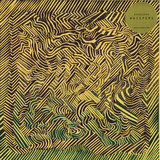
Cate Brooks is back with her seventh release for Clay Pipe Music. Never one to stand still, ‘Easel Studies’ finds her pushing the boundaries of sound synthesis and experimentation on the Buchla Music Easel while still sounding beautifully beguiling and hypnotically melodic.
"On this day in 2015, at exactly Midday, I took delivery of a wildly exotic musical instrument. To call it a synthesizer would be a misrepresentation; it’s really more of a tactile, living, breathing entity than anything else. It had originally supposed to have been delivered on the day before, but had somehow been mislaid in the labyrinths of the Royal Mail sorting office at Elephant and Castle.
I sat patiently and quietly all morning, waiting for its imminent arrival. I had already read through the ‘manual’, which is more of a concept / design for living, written by synthesis legend Allen Strange.
With Noon approaching, I became a little anxious- my local postie, Barrie, was usually here by about 10:30am and there was no sign of him.
At 11:58, Barrie walked past, completely ignoring my house. Obviously concerned, I stood at the door and waited for him to walk back toward his van. As he came back, he smiled and I called out, quizzically “Barrie?”. His reply was “Yes I have!” and walked back to his van, collecting a large box and bringing it to my door. I remember the weather was muggy and my neighbour was attending to her rose bushes, as the cheery and helpful postie deftly navigated around her busy secateurs.
I took the box inside, opened the top and just looked at the inner box for a while. I took a photo of it, which I still have. It felt like quite a momentous occasion, because I felt that this instrument would take me to different sonic spaces than I was used to. It wasn’t my first experience with Don Buchla’s instruments by any means, as I’d learned to use his 200e system. But this was quite a different beast.
My cat Brillo came to inspect the box and I set the Music Easel up on the floor and plugged it in. The result of that very first experiment became “Pendula”.
In the following days and weeks of that summer, I created many more experiments on the Easel, quite often with Brillo either sat on me as I played, or trying to climb up on the instrument itself, attempting to move the faders and switches himself.
By the end of August, I had amassed some thirty-something pieces, which I put aside for future reference. I had learned a lot about this instrument, its idiosyncrasies, subtleties and ways of working.
Sadly, Brillo died in September of 2015. I like to think that his last summer with me was a comforting experience, curling up and listening to the sonic experiments taking place, as he regularly did for the sixteen years he was with me. The first track on the album, “Con Brillo” is my little tribute to him.
Fast forward to 2021 and I rediscovered all of these experiments. Some were almost unlistenable, but some had a beguiling charm about them- perhaps the sound of someone not really knowing what they’re getting into. They needed mixing and balancing, so I set to work. I also wrote a new piece, with exactly the same recording chain, in the same way, in the same room. This became the suitably titled final track “Hindsight”.
The Music Easel has remained a constant source of sonic worlds for me to explore. It because the main instrument on the album Agri Montana, for example and has cropped up on many other records I’ve made since.
I would especially like to thank David at Postmodular for selling the Music Easel to me, after phoning him and disturbing his Sunday afternoon outing to Hyde Park (sorry about that David). I always promised I would send him a copy of something I had produced on it, so hopefully he will enjoy Easel Studies."
As I finish writing this, I notice that it is, once more, exactly Midday.
I hope you enjoy Easel Studies too.
Cate Brooks (21st of May, 2023).
Search:the future future sound
Getting into an album by Cyril Cyril is being invited to a party where you thought you didn't know anyone, only to realize that this chap's gal is your bro's cuz, and leave with everyone's cell. Their music seems familiar because it's not deaf to its neighbors, in the broadest sense : Geneva, their lair, Europe, their playground as a duo, and the world, their grocery store. There's plenty in those two heads, but just the two of them on stage. For their third Born Bad album, they have invited two lads from Orchestre Tout Puissant Marcel Duchamp, Ines Mouzoune, multi-instrumentalist from Amami, and Violeta Garcia's cello on Le Futur ca marche pas. On the ruins of Switzerland, people dance hard but consciously, and won't complain about them having a go at the homeland - notably in " Sweetzerland Bunker Love ", where they claim it's time to "free the money from the banks". There's something rotten in the state, wherever it may be, and they prefer to put its fall to music. And they're not shy about it, either: this album features heavy guitar/drums text-driven ballads (beautiful "Mensonge" opens the album with a certain gravitas), polyrhythmic noisy drum splatter with crafty vocal knitting ("Plus rien a? faire"), deconstructed and harmonically ambitious compositions ("Les Phoenix de l'amour"), and latino frogs croaks, because yes, why not. Since their previous efforts "Certaine Ruines" and "Yallah Mickey Mouse", it turns out that the future isn't working out so badly for the two Cyrils. (Not so) Quietly sitting on crates of records, they patiently build their sound. Never tired of sick networks and never-ending struggles, Cyril Cyril is a rousing mess, shouting out the common spleen while still managing to have a good laugh.
Stephen EvEns highly anticipated new album Here Come the Lights is set for release, March 29, the album is self-produced and mastered with Sean McGee (Abbey Road) will be released via Onomatopoeia (Hurtling, William D. Drake, Crayola Lectern). The album celebrates the recent success of his limited-edition vinyl only release, Smoking Is Cool (recorded with Steve Albini). Here Come The Lights takes a step into the future, as folk-art tales are interspersed with psych rock magic and post-punk sensibilities amidst swooping and motoric guitars, sound effects and metronomic happenings, in this rich tapestry of life. A Song For Europe teases, cracking, and fizzing onto our radar, this ‘love affair to Europe’ is a celebration of a continent and moments in time, complete with virtuoso guitar, full backing choir and grunge atmospherics. Firefly has a pure folk aesthetic, sound effects, symphonies, and percussion combine in a call to find one’s true strength. BBQ Head picks-up more of a groove, interspersed with rapping style lyrics fused with the fuzzy intermission of 7 Bells. Lazy Eyes takes on a more mournful and melancholic hue, depicting a couple’s evasive looks over dinner, as they avoid the elephant in the room, cracks into a soaring space-rock ending. A Tree takes us on a kaleidoscopic journey into the forest, as EvEns takes a moment out from modern life, where he and his dog Rudy escape into the autumnal wilderness. A Bee takes on a more high glam Roxy Music appeal meets 70s novelty pop, fun and exhilarating. The album is polished off with a song of hope called Happy New Year, metronomic beginnings, gentle Hammond orchestrations weigh-up the importance of friendship and the meaning of success. Multi-instrumentalist and talented musician Stephen EvEns tours with his own guitar and full band line-up. The album welcomes a whole host of Brixton Hill Studios collaborators, accompanied by former Echobelly/Curve bassist Debbie Smith, Cardiacs alumni Bob Leith and William D. Drake, and Hurtling guitarist and sometime My Bloody Valentine keyboard player Jenny Macro, Stephen EvEns plays live at The Lexington, alongside labelmates from Onomatopoeia
This is the debut vinyl release of Dave Wallace from 1992 (Aquasky/Mad Dog/Fugitive), though he had been producing a number of years prior to this, creating early rave demo tapes. A highly sought after record online, this originally came out on a handstamped white label, on Olly Underdogs Rave Doctor Recordings, run out of Brockenhurst in the heart of the New Forest.
You wouldn’t be able to find a better EP that showcases the anthemic piano/rave stab sound of early 90’s UK dance music. This is a peak time release that was played by a lot of DJ’s back in the day. Its also a part of rave history as it shows the starting block of Dave’s musical journey which is still active to this day, 30+ years later with Fugitive releases on Amen Brother/Sub System and a future release on Amentec with a MOY remix.
"A spiraling and winding descent into arcane black metal pandemonium! Sounding both modern and timeless at the same time, they unleash some serious throwback Celtic Frost/Darkthrone/early Mayhem vibes while projecting its hideous aura straight into the future with a shape-shifting approach to songwriting that can’t be called anything different but “prog”, while also throwing in the mix some unexpected ambient passages and improvisational liturgic abstractions ( that yield a result of constant motion and disorienting unpredictability, as if we were facing a European version of Negative Plane or a more experimental reinterpretation of the arcane mysticism of Mortuary Drape.
All in all if you are looking for black metal with a touch of timelessness and with classic heavy metal influences mixed with a keen sense of experimentalism then KVELGEYST definitely represents one of the strongest expressions of this school of thought in black metal that’s been seen in a long time." ~ CVLT NATION
- A1: Magic Momentum
- A2: Rockets To Mars
- A3: The News These Days
- A4: Life (Skit)
- A5: Love Vibration
- B1: Original Flow
- B2: Hold On
- B3: Surviver (Skit)
- B4: Tatamaka Pt.1
- B5: Tatamaka Pt.2
- C1: Time (Skit)
- C2: Time
- C3: Jinja (Skit)
- C4: Kochirakoso
- C5: Our Tactus
- C6: Nah Personal
- D1: No Chains
- D2: Push Comes To Shove
- D3: We No Let Y'all In
- D4: Mexico (Skit)
- D5: Future For Our Children
We Release JAZZ is very happy to announce an exciting new body of work by Joseph Deenmamode aka Mo Kolours. The singular musical spirit’s new 21-track album Original Flow is available as a double LP housed in a heavy 350gsm sleeve with original artwork by Mo Kolours himself and the classic WRJ obi strip, as well as in digipack CD and digital formats.
A catalog of critically acclaimed records, including his self-titled debut (2014), ‘Texture Like Like Sun’ (2015), 2018 album ‘Inner Symbols’ and three companion EPs, established Deenmamode as a prodigious musician and vocalist. Pitchfork extolled his “hypnotic, tribal-infused dance grooves”, DJ Mag appreciated the “colourful celebration of soundsystem culture”, and Resident Advisor advocated that “no one sounds quite like Mo Kolours”. Musical analogies were drawn by The Guardian as “The best album Curtis Mayfield never made with A Tribe Called Quest and Lee Perry” and Mojo as “like Marvin Gaye produced by J Dilla”.
Five years ago, Deenmamode moved to the Japanese countryside. Far away from familiarity, he contemplated his place and further questioned his identity. “I had none of my ‘own’ people around. I had time to really find what makes me tick musically. Japan has helped me go back to those subconscious leanings, really go deep, and reflect the aspects that make up my story”.
The tracks on ‘Original Flow’ have been constructed from sessions, improvisations and soundbites captured around the world during this time; collecting contributions from musicians including Deenamode’s brothers Reginald Omas Mamode and Jeen Bassa plus Andrew Ashong, Charles Bullen, Dwaye Kilvington, Eddie Hick, Stefan Asanovic, Myele Manzanza, Ross Hughes, and Tom Dreissler. Deenamode says “I’m proud of this album’s creative process. Coming from a tradition of scouring through hours of records, I wanted to create my own samples, to find that perfect loop that no other producer could put their hands on. I decided to invite a group of friends and acquaintances, who also happen to be incredible musicians, to a studio in Crystal Palace to improvise based on some loose ideas I had. We spent all day, and recorded everything”.
‘Original Flow’ is an album of UK street-soul nouveau, future indigenous jazz fusion, Rasta Segga, Nyahbinghi jazz, Malagasy Hebrew hip hop. While retaining a spirit of exploration and improvisation, it sees Deenmamode grow and flex beyond beat tape brevity, expanding composition and stretching his musical muscle to play live with other musicians. Themes of empowerment, overcoming adversity, and mental liberation coexist with notes from ancient history, futurism, and science, as well as musings on family and togetherness.
‘Magik Momentum’ springs from a discussion that features at the start of the song, an inspiring mentor answering a question from Deenmamode about improvisation and what role it plays in life when planning and manifesting the future. ‘Rockets to Mars’ questions the lack of care for the billions of people with nothing, while governments plan to explore space. “This sparked a comparison in my mind to a Sonny Okuson song that I would reference when performing. Okuson’s song talked of the lack of resources in many communities in the world, while governments go to the moon”.
He says the music behind ‘The News These Days’ is “possibly my favourite on the album”. Looped like he would a late sixty jazz-fusion sample, there was nothing added and the track was complete within a matter of minutes. “It was the first and best moment from the entire Crystal Palace session”, he adds. The album’s contrasting title track with minimal instrumentation played solo by Deenamode. While frustratingly searching for gems in past recordings, he thought in a burst of ego, “I don’t need no-one else to make a dope beat!” picked up his ravanne, (the traditional frame drum of his fathers home-land of Mauritius), pressed record, and started to play. He says, “In my thoughts were the rhythms of the Nubians in Upper-Egypt and Sudan, the swing of the huge drums played by Mauritanian women, of-course the Sega beat of Mauritius, and the ever inspiring beat of James Yancey”.
Driven by UK broken beat, Cuban congas, Nigerian and Mauritian inflections, ‘Love Vibration’ follows the concept that all emotions carry a vibratory frequency and pays homage to the frequency of creation and the power of love. The two part ‘Tatamaka’ tells of the history of Deenmamode’s ancestors, the maroons of Mauritius. “We are people who managed to run from our oppressors and find refuge in a corner of the island called ‘Le Morne’ where they could not reach us. One bloody day they came in numbers to re-capture, to revenge. Many of us chose to jump to our deaths, rather than be taken back into subjugation. The poem by Creole Richard Sedley Assonne says; “there were hundreds of them, but my people, the maroons chose the kiss of death over the chains of slavery”. Tatamaka was the name of a famed maroon leader who was murdered for claiming his, and our people’s freedom. The song is the imagined journey of escape and freedom by an ancestor of the maroons of Le Morne”.
Born in the west midlands and raised on the traditional sega music of his father’s Indian Ocean homeland of Mauritius alongside records by the likes of Jimi Hendrix, Santana and Michael Jackson; his influences expanded with late 90s jungle and drum and bass nights in Bristol, experiments at art college in Camberwell, and the rich culture of Peckham, “at the time we called it the Afro Quarters of London” says Deenmamode, adding hip hop, dub, soul and soundsystem styles to his individual sound.
He explains, “I love drum music, from hand-drums to 808s. I love music from the ancient past, heritage music, indigenous music, traditional music passed down from the beginning of time. Music from the body, hand claps, grunts and foot stomps. Music with audible depth, busy, bustling, highly charged. Music from the soul, the music from beyond. I love music from the islands and the mountains. The music of the streets, hustle music, alleyway beats. Club music”.
He describes the creative process as thinking in images. “The visual world and the world of sound seem to intermingle in my thought process. When I play the drum with my eyes closed, a world of imagery dances and moves with beat. Improvised drumming feels like I am listening to what I want to hear, rather than trying to play what I want to hear. Following the rhythm and finding new pathways to walk within the patterns is what I experience. In this way I often feel I am just a listener, instead of the player”.
Original Flow is pressed on biovinyl, a sustainable alternative to traditional vinyl. Biovinyl replaces petroleum in S-PVC by recycling used cooking oil or industrial waste gases, resulting in 100% CO2 savings in bio-based S-PVC production. Furthermore, it is 100% recyclable and reusable, embracing the circular economy ideology.
After 20 years of living on the road in different places, Six Organs of Admittance had returned home to Humboldt County - a far country, to some, but still part of the world through which creatures of all kinds are moving through and contributing to. And some of them are human. Alone together - forming connection and exchange out of thought and expression - no different from the people on the other side of the Redwood Curtain. It was there, where Six Organs had long ago emerged, in the name of everything cycling, of circles that spiral concentrically and remain unbroken, the new music was conceived. In moments, it was as if the future had somehow wrapped around 360 degrees; elsewhere, the systems and patterns inside the writing and recording only became evident later - like a recognition that cumulus and nimbus clouds which passed through the sky the day before contained familiar shapes. Informing the songs accordingly as he went, Ben picked up on modes both musical and lyrical, threading backward through the time of Six Organs of Admittance. Almost marinating in it as a way of life. Working on the music and the vocals, then spending some time with them while stepping away from them. Walking the dog and coming back to them Time is Glass is made of that kind of time. Alone time. Recorded in the visceral environs of home, Time is Glass is sharply focused, even as misty impressionist mountains float through the background. Sweet and spiny, "The Mission" sings its purpose, before turning abruptly to the orchestral rumble of "Hephaestus": rural industrial psychedelia, ecosystem goth, synths arcing to lift a helplessly earthbound community into the firmament above. Winding almost imperceptibly back into song with "Slip Away", the time of the record becomes clear, moves fluidly, relaxed but aware, from event to event. People and things coming around again. The intuit, passing through wormholes and time, sounding deep then dissolving into the universal. The acoustic sounds ringing, layered suddenly, then clear again. Explosions of a new kind of distortion. Ecstatic melodies. Communing. The space of a day. The space of a season. Time is Glass, and Six Organs of Admittance is here and will be here, again.
You get older, you have a family, and you start to slow down-that's how things are supposed to go, right? Not for Montreal band Corridor, who have returned on their fourth album, Mimi, with a sound and style that's more widescreen and expansive than anything that's preceded it. The follow-up to 2019's Junior is a huge step forward for the band, as the members themselves have undergone the type of personal changes that accompany the passage of time; even as these eight songs reflect a newfound and contemplative maturity, however, Corridor are branching out more than ever with richly detailed music, resulting in a record that feels like a fresh break for a band that's already established themselves as forward-thinkers. Mimi immediately recalls the best of the best when it comes to indie rock-Deerhunter's silvery atmospherics immediately come to mind, as well as the spiky effervescence of classic post-punk-but despite these easy comparisons, Corridor remain impossible to pin down from song to song, which makes Mimi all the more thrilling as a listen. "The goal was to work differently, which is the goal we have every time we work on a new album-to build something in a new way," Robert explains. "This time, we took our time." And so in the summer of 2020, Corridor's members-Robert, vocalist/bassist Dominic Berthiaume, drummer Julien Bakvis, and multi-instrumentalist Samuel Gougoux-holed away in a cottage to engage in the sort of creative experimentation that would lead to Mimi's ultimate creation. Corridor tinkered with the songs' raw parts digitally and remotely over the next few years, with co-producer Joojoo Ashworth (Dummy, Automatic) lending their own specific talents in the theoretical booth. The process was a byproduct of not having access to their rehearsal space due to the COVID-19 pandemic, but also a result of the four-piece leaning harder into incorporating electronic textures than on previous records. "For a long time, we identified as a guitar-oriented band, and the goal of making this whole record was trying to get away from that," Berthiaume states. Berthiaume also describes Mimi as a record about "getting older" and "figuring out new parts of life"-but despite any claims of transitional growing pains from the band, Mimi is a record bursting with new energy and life, a vibrance that's owed in no small part to Gougoux joining the band full-time after pitching in on live performances in the past. "I come more from a background of electronic music, so it was nice to involve that with the band more," he explains, and Mimi contains a distinct rhythmic pulse reminiscent of classic era-post-punk's own melding of dance and rock textures. Over bright, chiming guitars and ascending synths, Robert addresses his looming mortality on "Mourir Demain": "I wrote it when my girlfriend and I were shopping for life insurance," he laughs. With our little daughter growing up, we also considered making our will. I said to myself, 'Oh shit, from now on I'm slowly starting to plan my death." Don't mistake this as music about dead ends, though, as Mimi embraces and champions unfettered creativity while paving a way for Corridor's own bright future. "We just focused on making a record that sounded the way we wanted," Gougoux exclaims while discussing the band's aims. "There were no limitations when it came to what was possible."
CLEARxCUT is out there to spread the message of total liberation. (Former) Members of HEAVEN SHALL BURN, IMPLORE, and KING APATHY/THRÄNENKIND started this collective, because they are dedicated to the vegan straight edge (XVX) and want to confront listeners with inconvenient thruths and todays harsh reality. The German band addresses their songs and convictions to all people who are prepared to stand up for a better, fairer future - but especially to all anarchists, anti-fascists, feminists, primitivists and indigenous peoples of the world. Or to put it brief: to all defenders of our earth. The stylistic choice of means falls on metallic hardcore, which is rooted in a strong DIY ethic. Having released their first two albums "For The Wild At Heart Kept In Cages" (2019) and "Songs of Desire Armed" (2022) for Catalyst X Records (Gather, Nueva Ethica, Abnegation, Birthright, Maroon, Point Of No Return, Forward To Eden), "Age Of Grief" now marks CLEARxCUTs debut for LIFEFORCE RECORDS. Started in the mid-1990ies as label with mainly vegan and straight edge bands, the German Label has an impressive history with XVX bands such as ARKANGEL, DAY OF SUFFERING, RANCOR, UNCONQUERED, UNBORN, FAULT, or DEADLOCK. Being a collective that is outspoken in its message and keeps the vegan straight edge banner high, CLEARxCUT continue this tradition. Also besides having switched their label, "Age Of Grief" marks a fresh start for CLEARxCUT. After a big shift in their ranks, before the global pandemic hit, the band moved from two (female) vocalists to one (male) frontman. This is accompanyed by a change of sound. On their third full lenght album, the German band is diving into the realms of metallic hardcore, leaving behind their early hardcore punk influences. Noone should be surprised by this move, as CLEARxCUT was conceived as a collective where members, names, or styles wouldn’t matter, but one and only the final goal of spreading a positive message in defense of animal rights and sober living. "Age Of Grief", in this respect, is extremely consistent.
Mafia Musik is the fourth studio album from mercurial Los Angeles rapper, D. Savage. Initially breaking out in the SoundCloud rap scene in 2016 with the track, “30 Round Clip,” D. Savage has blossomed from underground icon to full-fledged star, with Mafia Musik serving as his magnum opus. At 13 tracks, D. Savage relentlessly keeps his foot on the gas for the entire duration of the album, with scorching hits such as “Kome On,” “Dirty Dan,” & “JOKER, Pt. 2.” One of the leading artists in the plugg sub-genre, his delivery and style is melodic and airy, yet far from soft. It’s clear the future is bright for D. Savage, and Mafia Musik serves as a great foundation for what is to come for him.
- A1: Requiem For O.m.m.2
- A2: I Was Never Young
- A3: Wraith Pinned To The Mist And Other Games
- A4: Forecast Fascist Future
- A5: So Begins Our Alabee
- A6: Our Spring Is Sweet Not Fleeting
- B1: The Party's Crashing Us
- B2: Knight Rider
- B3: I Was A Landscape In Your Dream
- B4: Death Of A Shade Of A Hue
- B5: Oslo In The Summertime
- B6: October Is Eternal
- B7: The Repudiated Immortals
- C1: Art Snob Solutions
- C2: The Actor's Opprobrium
- C3: Keep Sending Me Black Fireworks
- C4: Everyday Feels Like Sunday
- C5: Family Noveau
- D1: Psychotic Feeling
- D2: Kristiansand
- D3: Micro University
- D4: Subtext Read, Nothing New
- D5: Noir Blues To Tinnitus
Neuauflage des Jubiläumsformats anlässlich des 15-jährigen von Of Montreals bahnbrechendem Album "The Sunlandic Twins" (2005) mit seinem erratischen Indie-Disco-Sound, das 2020 als erweiterte 2LP-Auflage auf rotem und orange-farbigem Swirl-Doppelvinyl im neu gestalteten Gatefold mit 5 zusätzlichen Bonustracks auf Seite D (die vorher nur geedged war) erschien. Ein superlatives 23-Track-Format.
James Murphy calls LCD Soundsystem drummer Pat Mahoney the best lyricist in the group, though it's in Museum Of Love - Pat's band with Dennis McNany - where he actually steps out in front. This 7" is the MOLove's first material on DFA since their debut album in 2014. "After Us" is a simple, buyoant pop song heavily tempered by warnings of a bleak future. The old sugar with the medicine approach. "Look Of Disgust" is its perfect foil, a notty, almost industrial sounding wind up that ends just like a slap in the face.
The legendary Horsepower Productions return to Sneaker for a thematically charged trip into future zones, driven by dexterous breakbeat science and ruffneck soundboy wisdom.
The UK dubplate heavyweights are no stranger to a loaded sample, and they’ve got a message to impart on this double-edged record. They kick off with a rumination on the planet’s fragile ecosystem on ‘Tropic’, which looks to a possible future with an ominous fate for the foliage we hold dear. Production-wise, Horsepower set electric drum loops off against lurid daubs of synth without derailing the motion, but a huge amount of the track’s impact arrives in the sampling from a cult classic slice of sci-fi. The premise is that the last remaining trees and plants from earth are adrift in space in a bio-dome, and have been condemned for demolition - a depressingly feasible scenario with an aggravated soundtrack to boot.
On the flip, ‘Computer Rock’ rides a tough break slow and hard and injects dystopian electro synth licks into the mix for a darkside roller that celebrates the visionary talent of Jeff Brown, aka Kase 2. Brown pioneered graffiti in the 70s with futuristic styles that still hold sway today, leaning into his own sci-fi imaginings about computer worlds inhabited by extra-terrestrial beings, Brown passed away in 2011, and this track and the attendant B2 cut ‘Kase - Reprise’ pay tribute to a forefather of hip-hop culture by channeling the future shock styles of Bambaataa et al without ever sounding throwback.
The concept on this record gets taken out further with the additional digi-only tracks, which take in the low-slung, skunked up funk of ‘Blaque Gras’ and the amped up rave damage of ‘Kase 2-Part 2’. Throughout, on-point samples and a clear-eyed focus bring out the best in the Horsepower approach, offering up next level dance wreckers with something to say.
Keplar presents the first-ever vinyl edition of the 2003 album »From Tokyo to Naiagara« by Tujiko Noriko. This reissue with new artwork by Joji Koyama is an abridged version of the album as Tomlab label owner Tom Steinle and producer Aki Onda had originally intended to publish it alongside the original CD version. Written by the France-based Tujiko while she still lived in Japan, »From Tokyo to Naiagara« followed up on her two seminal Mego albums and marked a turning point in both the artist’s career and personal life: While she was preparing to leave Japan behind, she succinctly connected the dots between her experiments in pop music and her interest for more abstract sounds. Tujiko worked primarily with a Yamaha synthesizer and an MPC sampler while also incorporating contributions by other musicians such as Onda, Riow Arai and Sakana Hosomi into the pieces. Sometimes approaching an IDM and clicks’n’cuts-style production or working with trip-hop and hip-hop beats while using conventional song structures in the most unconventional of ways, the album showcases her multifaceted influences and skills as a singer and musician to full effect.
Tujiko fondly remembers the time when she made the album. »I had a lot of time for myself back then and I didn’t even feel like I was very busy,« she says today. She describes producing it in close collaboration with Onda, who would relocate to New York City shortly after, as »quite Tokyo and very local.« They explored parts of the city that they hadn’t yet been to for a photography project (finding, among other things, a coin laundry called Naiagara—a transliteration of Niagara). This left its mark on a record that mixes melancholia with joy. The driving opener »Narita Made,« named after one of Tokyo’s airports, already makes this clear: Tujiko’s wistful vocals and lyrics like »I miss you terribly« emphasises the sense of bittersweetness that forms the common thread for a sonically diverse and stylistically open-ended album—this music is looking back while moving forward. It is probably no surprise that its reissue too evokes tender memories of Onda and Steinle in Tujiko, while also reminding her of what lies ahead. »I have so much more to do and not enough time for that,« she muses, before quickly adding: »But I also feel less alone having that album again.«
Influenced in equal parts by the experience of strolling through previously unknown Tokyoite back alleys and thinking about the paths not (yet) taken, »From Tokyo to Naiagara« is precisely that: the perfect travel companion for a journey that leads its listeners from past to future.
- 01: What Seed Quests For A Coralline Mud Slump
- 02: Where The Body&Apos;S Distant Arrivals
- 03: Bake Airwaves Into Symbols?
- 04: Like Aurochs Who Fraternized With Syntax Of The Riverbed
- 05: We Stop Short, Frothy, Outdoing The Grass
- 06: Rake A Song-Gush From The Outcrop
- 07: Or The Noun Of Naïve Particles
- 08: Leeching Off The Glow-Work Of Organ Rooms
- 09: We Go Candied In The Marrow
- 10: Grow Dream-Bark, A Tree
Music is a form of world building. I love to develop sonic characters and set them into fictional ecosystems with unique textures, acoustics and atmospheres. Each song forms a different landscape, through which a vocal character guides us and tries to tell us its stories." — Ludwig Berger
Ludwig Berger's 'fictional' debut album "Garden Ediacara" unfolds as a musical eco-fiction, guiding listeners through a speculative ecosystem with synthesized vocals. Infused with storytelling techniques from sci-fi and fantasy, the album intertwines melodic songwriting with electroacoustic sound design. Inspired by hydrofeminism and eco-fiction novels, such as "A Door Into Ocean" by Joan Slonczewski, the album delves into the geological period of Ediacara around 600 million years ago — an era so remote it resonates as a glimpse into a possible future. The Ediacaran period was characterised by a peaceful and thriving ecosystem inhabited by soft-bodied creatures without eyes and bones, which were completely wiped out through the appearance of a new species. "Garden of Ediacara" alludes to this period, celebrating both the pleasures of biodiversity as well as mourning its inevitable loss. The narrative unfolds as an exploration of growth and interconnection in the shadow of a coming extinction. The track titles, written by Daisy Lafarge, reveal themselves as a cohesive poem and contribute to the album's narrative.
Informed by his practice of field recording that focusses on intimate encounters with plants, animals and geological phenomena, as well as his studies in electroacoustic composition, Berger expands his palette for his debut in 'fictional' music. The album prominently features a post-human, non-binary death metal voice synthesizer, physical modeling instruments, and microscopic field recordings of plants, insects, as well as aquatic and geological life. With impressionistic strokes, Ludwig Berger crafts vibrant worlds using glassy timbres and more-than-human voices, guiding listeners through emotionally ambiguous terrain, seamlessly oscillating between moments of intimacy and irritation, melancholy and playfulness.
Ludwig Berger is a landscape sound artist, educator and musician. In his compositions, installations and performances, he enables intimate and playful sonic encounters with plants, animals, buildings and geological entities. He is founder and curator of the label Vertical Music, which releases field recordings and experimental music. Berger holds degrees in electroacoustic composition, as well as musicology, art history and literature. As a sound researcher and teacher at the Institute for Landscape Architecture at ETH Zurich from 2015-2022, he studied the sonic dimension of Japanese gardens, alpine glaciers and urban landscapes, which among other things led to the release of the acclaimed album trilogy 'Melting Landscapes', 'Dammed Landscapes' and 'Buried Landscapes'.
Channeling a love affair with classic '90s hip-hop, an affinity for otherworldly themes and an ear for raw funk, Barclay Crenshaw uses his given birth name to bare his soul and deliver a slowed-down, emotive collection of collaborations and instrumentals. This self-titled debut album is a left-field departure from his better-known alias, Claude VonStroke, but the quality is undeniably the same. The themes of ancient alien abductions and exploration of time and space are discovered and brought to life over ten tracks that sound like a mixture of gold rope chains and new age enlightenment. Modern organic beats mixed with gorgeous melodic moments and underlying grittiness create an experience that is eclectic, expressive and expansive. Coded art furthers the sense of mystery and the unknown, harking back to the past while gazing into the future.
- A1: Dubby Loop
- A2: Itz Kewl
- A3: Firebomb
- A4: To The Jungle
- A5: Triplets
- A6: Alias
- A7: Fam In Our Lives
- A8: Brasilian Gangsta
- A9: Big Kik
- A10: Funky Ex
- A11: Swang
- A12: Weiss Wood
- A13: March Nrg
- B1: Brand New With The Blend
- B2: Afriq
- B3: Future Ideas
- B4: Skippy White
- B5: Salty
- B6: Jumping Jacks
- B7: Bulldog
- B8: Motown Sound
- B9: I Workin’ On It
- B10: The Only One
- B11: Tony Vibes
- B12: Tipster
- B13: Tape Speed Warp 2
The Madlib Invazion Music Library Series Entry #8: Karriem Riggins’ To The Jungle. Riggins is the type of drummer whose power and finesse shakes even Malcolm Catto. If you know what that means, this is the album for you. The Madlib Invazion Music Library Series was created by Madlib and Egon to give their creative friends a chance to stretch out and indulge in whatever type of music they wanted. This music was created for easy, one-stop clearance in film and television synchronization usage and for sampling. You can also enjoy these albums in the way that many do with the best of the best vintage library catalogs – listen, ponder, repeat.
For our 50th release on Delusions Of Grandeur we're pleased to bring you seven exclusive tracks from a mighty-fine collection of both existing DOG artists and veritable newcomers alike.
Part Two opens with Underground Quality key player Son Of Sound who brings a bucketful of attitude on Under The Son, laying down a rough-edged groove and getting on one with his vintage keys.
Up next we have Sebastien Vorhaus & Ponty Mython who bring us the beast that is I'm The Slime. Easing us into things with gentle rhodes samples and a skippy groove, Vorhaus (of Soul Of Hex fame) and Mython soon develop things with hints of acid before unleashing a jazz piano riff that can be best described as unhinged.
Flipping over the mysterious Zepp001 hunt and gatherer brings us Enemy. There's elements of disco with bouncing syndrum fills and a mysterious mood prevails as shakers rattle, bells chime and congas slap but when the bassline drops it's clear we're into some serious future s**t here.
Finally, we have our very own Norm De Plume who lays down a bad-boy groove with a rocking bassline, clattering cowbells and tension-building pads bringing an intense build and rounding off our 50th release in fine fashion, we hope you agree.
Bruno Berle, the young songwriter and poet originally hailing from Maceió, the capital of Brazil’s Alagoas state, crafts songs that are simple, direct, and full of tender nuance. With his first album No Reino Dos Afetos (which translates to "In the Realm of Affections” and was released in 2022), Berle firmly established himself as a unique and important voice in the burgeoning scene of new Brazilian artists making a global impact, including peers like Ana Frango Elétrico, Tim Bernardes, Bala Desejo, Sessa and more. Now back with his second album, No Reino Dos Afetos 2, he stretches that further.
Bruno Berle’s music lives between two worlds – a traditional Brazilian folk talent steeped in history, and a contemporary, dreamy electronic pop; the result is songwriting that’s genre-bending, intentional, iconoclastic and consuming, spacious and sinewy and singular, a striking reflection of its composer while leaving space for the listener to settle in. The album follows Bruno’s relocation to São Paulo, and the songs are a reflection of his past and present. A rebuke of former categorizations of his work in Brazilian music scenes, and an idea of where his music can move, unfettered.
Berle’s music is purposeful in being a true portrait of himself, and a reflection of the music, art, and fashion scenes he personally moves through. Berle aims to provide an entrypoint for Black queer joy in his music, in his storytelling, in his presence and vision as a creative. For him, it feels subversive to be playing MPB laced with dubstep and lo-fi, a sort of intentional sacrilege, capturing a dialogue of modernity in traditional music.
Berle wrote most of the arrangements and co-produced his new album, Reino Dos Afetos 2 with longtime friend and musical partner Batata Boy, who is also from Maceió; the album was recorded in Rio de Janeiro, Maceió, and São Paulo, his new home, and picks up the conversation begun in 2022 on Berle’s debut album No Reino dos Afetos. Both records are the result of a nonlinear but coherent seven-year music creation process culminating in these albums, holding hands across space and time.
“Tirolirole,” the first single from the record, was released at the end of 2023; sun-soaked rhythms and soft voice coat the song, the lilting refrain of “Tirolirole” throughout – hushed, gentle, but somehow almost tactile, a golden-hour moment unlocked in the mind. “Tirolirole” is a triumphant future classic about the temporality of a blossoming love, with Bruno’s stunning vocal soaring over melodies which ebb and flow like the waters on the Atlantic shore. Of the track, Berle explains: “Despite ‘Tirolirole’ being an expression that evokes my childhood, just like the light words about nature, the harmony, and the poetry are epic, carrying a great hope for love.”
In fact, the guiding theme of No Reino dos Afetos 2 is a relationship, unfolding in the arc of a weekend. It traverses the innocence of an early young love, how that can be formative, can stretch on to take new shapes, or shape you. The album happens at the genesis of meeting someone and falling for them, before the relationship is thrown into overdrive – set in a big city, against a backdrop of major life changes, rising energy, the sound of São Paulo.
Something transcendental emerges in “Dizer Adeus,” with an arrangement that echoes a gospel atmosphere (evangelical and Catholic environments were pivotal to Berle’s upbringing). On “É Só Você Chegar,” piano and flute gracefully intertwine, a dance, while “Quando Penso” skews sparser, the voice-and-guitar minimalism somehow cultivating an entirely different shape – somehow both cozy and melancholy, with the background sound of a rainy day. Coupled with the lo-fi aspects that shape much of the album’s personality in the vocals and the production, No Reino Dos Afetos 2 is meticulously elaborated by Berle’s sonic alchemy, like on the mid-album instrumental “Sonho,” which feels like floating. “It’s the apex. It’s when lovers are sleeping together,” Berle explains of the feeling he wanted to encapsulate in the song.
On “Love Comes Back” Berle interprets Arthur Russell, the late Iowa musician who only reached greater visibility after he died in 1992. “His way of making music is similar to mine,” Berle explains. “He sings in a more fragile way, has more of an experimental way of recording, letting ‘chance’ appear in the final work.”
Even so, Berle doesn’t want his music to be buried in sentimentality – and the purposefulness of his craft serves as a sort of north star. The production, the arrangements, his restraint and intentionality in crafting his songs feel just as vital as their emotional cores. His songwriting is amorphous, fluid, an encompassing genre-bending movement in-and-of-itself, quietly daring. The songs are often in conversation with other works – drinking in fountains as diverse as the filmmaking of Ingmar Bergman, the poetry of Walt Whitman, the rhythm of Djavan, and the painting of Maxwell Alexandre. Musically he weaves together a rich tapestry of Brazilian folk, UK 2-step garage/dub, trip hop and sun soaked west coast songwriters; something akin to the worlds of Milton Nascimento, Arthur Russell, James Blake, Feist, and Sade colliding into one. But even then No Reino Dos Afetos 2 floats separately, a romanticism driven by a simplicity and intimacy, an open-ended possibility, Berle’s singularity as an artist at the helm of the ship.
Superb 45 featuring two Hammond-led instrumentals! We caught up with Mr Guy Hamper for an insightful Q&A_ Q: What a cracking single this is! 'Instrument of Evil' in particular has a very eerie vibe. What was the inspiration for it? A: The track is the sequel to '7% Solution', which featured on the last Guy Hamper Trio LP with Thee Headcoats standing in as rhythm section. A 7% Solution being the amount of morphine Dr Watson administered to Sherlock Holmes. For 'Instrument of Evil' I took Sherlock Holmes' later designation of his syringe as "an Instrument of Evil". This is originally a quote from the bible: "Wicked men do at times reject God's purpose for the state, transforming the good of civil government into an instrument of evil." Point of interest: Morphine addiction happens to tie in with another aspect of the song. In the section that nods to Elmer Bernstein's main title theme to the film of the book The Man With the Golden Arm, in which the main character is also a morphine addict. Another ingredient - we added six-string bass to that section in tribute to Jet Harris - he formerly of top group The Shadows, who recorded a great version of Bernstein's classic. To top it all off the record sleeve references the fine graphics of the great Saul Bass. Phew! Q: The track features contributions from Tom Morley (trumpet) and Anna Jordanous (sax). What's it like working with them? A: They are great and easy to work with. I basically make a playground and let them loose in it with very little direction, apart from pointing out the swings and location of the roundabout. I told Tom "You're a Spanish trumpeter stood on a hill in Spain." For Anna, I think we said "go low and nasty." Q: On the flip side you have 'Incense Rising From a Censer'. A very evocative title for an evocative track. Do you have lyrics in mind for this for a possible later release? A: No lyrics have sprung to mind as yet - but it's always possible. The title is from The Elders observation in Dostoevsky's The Brothers Karamazov, a book I really recommend. Prayer rises to God on the smoke of the incense burning in the censer. I imagine this track being some kind of antidote to 'Instrument of Evil'. Q: This single marks your first time in the new premises of Jim Riley's Ranscombe Studio. What's the new place like? A: The studio is great - the sound - using my old Mighty Caesars drum kit, and Jim engineering, is pure, easy with a better sound than the old premises. Q: Any more Guy Hamper Trio releases in the pipeline? A third album perhaps? A: Again, anything is possible. Me and Jamie (James Taylor, Hammond organ) have talked of writing together in the future. Jamie is a truly great musician - the cherry on the cake if you will. We're just busted old eggs, sour milk, and some gunk. Q: A live Guy Hamper Trio show would be amazing. Any chance of that happening or will it remain a studio-based project? A: It could happen if someone came up with a very cunning plan.
Total Reality is the sound of a group in constant forward motion, finding new sounds and new ways to express their joy and catharsis in making music together. On album opener 'Slug' the band sing ‘I’m feeling like a slug so I gotta visit the doctor’, and though reliably tongue-in-cheek you get the feeling they mean it - the members using Dr Sure’s Unusual Practice as a vessel to lift each other up while unpacking the collective fatigue of life in late-capitalist society. “A mood like that, you're apt to stay in it, not dial your way out. Despair like that, about total reality, is self-perpetuating." - Philip K Dick On their third LP Total Reality - a title ripped from the classic sci-fi novel ‘Do Androids Dream of Electric Sheep?’ - Dr Sure's Unusual Practice tackle lofty issues through a hopeful lense, avoiding the often cynical pastiche of modern punk music. Total Reality touches on varied influences - proto-punk to post-punk, new wave to no wave, krautrock to trip-hop - to concieve something fresh and inspired. Beginning in 2018 as a solo project, here Dougal Shaw is joined by an ever-expanding collective. In addition to a core band (Jake Suriano, Miranda Holt, Tali Harding-Hone, Mathias Dowle) the new record features contributions from Jack McCullagh (Cracodile), Stu Patterson (The Empty Threats/Placement), Alannah Sawyer (Babyccino/Mouseatouille), as well as Shaw’s partner Alivia Lester, and baby Blue - who also adorns the album cover. An almost polar approach to the band’s acclaimed second LP ‘Remember The Future? Vol. 2 & 1’, which was tracked live in a recording studio, Shaw refers to Total Reality as a ‘collage album’. There are pieces of pandemic-era demo’s; drum machines coexisting with a live-tracked rhythm section; fresh collaborations; layers of guitars, synths, horns and percussion; collected field recordings and samples - all cut and glued in Shaw’s home studio to realise an expansive and colourful record.
Is this the future sound of black American jazz - an inclusive yet rhythmically complex groove based music that owes as a much to black urban culture - predominantly hip hop and trap music rhythms - as it does to jazz improv techniques and rhythms? It's certainly interesting that similar elements swim through the music of Robert Glasper and Kamasi Washington, who along with Scott are currently big box office, pulling-in substantial new audiences for their music. Ruler Rebel is the first album of a trilogy celebrating 100 years of recorded jazz, and will be followed by Diaspora and Emancipation Procrastination later. At the heart of this music are polyrhythmic grooves that might come from jazz, New Orleans black Indian music, trap, Malian rhythm Kassa Soro and the interplay between an SPD drum machine and live drumming. Largely featuring Scott's trumpet, the record introduces his articulate and frequently eloquent voice as the narrator of Ruler Rebel, much like the Persian Princess Scheherazade narrating her tales of the mysterious east to Sultan Shahriar over one thousand and one nights. A key track is `Encryption', a summation of Scott's direction of travel on the album. Here the running rhythm is derived from the New Orleansian Afro-Indian culture married with Malian Kassa Soro. This is in turn is layered with SPD-SX electronic drum machine and sampling machine played by Joe Dyson and Cory Fonsville that introduce rhythmic elements from trap and hip hop. Sounds complex? Well it is, but it works. Other highlights include `New Orleansian Love Song' and `New Orleansian Love Song II' and a celebration of Afro-Indian culture on `The Coronation of K. Atunde Adjuah'.
Black[24,79 €]
Is this the future sound of black American jazz - an inclusive yet rhythmically complex groove based music that owes as a much to black urban culture - predominantly hip hop and trap music rhythms - as it does to jazz improv techniques and rhythms? It's certainly interesting that similar elements swim through the music of Robert Glasper and Kamasi Washington, who along with Scott are currently big box office, pulling-in substantial new audiences for their music. Ruler Rebel is the first album of a trilogy celebrating 100 years of recorded jazz, and will be followed by Diaspora and Emancipation Procrastination later. At the heart of this music are polyrhythmic grooves that might come from jazz, New Orleans black Indian music, trap, Malian rhythm Kassa Soro and the interplay between an SPD drum machine and live drumming. Largely featuring Scott's trumpet, the record introduces his articulate and frequently eloquent voice as the narrator of Ruler Rebel, much like the Persian Princess Scheherazade narrating her tales of the mysterious east to Sultan Shahriar over one thousand and one nights. A key track is `Encryption', a summation of Scott's direction of travel on the album. Here the running rhythm is derived from the New Orleansian Afro-Indian culture married with Malian Kassa Soro. This is in turn is layered with SPD-SX electronic drum machine and sampling machine played by Joe Dyson and Cory Fonsville that introduce rhythmic elements from trap and hip hop. Sounds complex? Well it is, but it works. Other highlights include `New Orleansian Love Song' and `New Orleansian Love Song II' and a celebration of Afro-Indian culture on `The Coronation of K. Atunde Adjuah'.
toe is a Japanese music group long revered in post-rock circles, while their song structures and dynamics have taken on elements from all styles of music, ranging from math-rock, jazz, pop, and R&B. toe is composed of Kashikura Takashi on drums, Mino Takaaki on guitar, Yamane Satoshi on bass guitar, and Yamazaki Hirokazu on guitar. The band has formally played with this lineup since their inception in 1998. The vast majority of the music is instrumental and features the swift, agile drumming of Takashi. The band is also known for melodic, clean guitar, often employing the juxtaposition of electric and acoustic. While the compositions feature the repetition of typical rock motifs, the subtle changes in beat and rhythm form a unique rhythmic dialect. The band has consistently expanded their sound throughout their musical tenure by incorporating singing, rhodes piano, mallet percussion, and electronic production elements.
This release comes with a Poster & Insert & Sticker & Download Code.
The vinyl is pressed as a colour in colour, green & yellow disc.
Lucinee debuts on Brvtalist S.R. with a striking new 12″ EP of future forward techno. “Pacemaker” contains 3 original tracks of the artist’s razor sharp sound and one big collab track with Lifka and New Frames.
Artwork & Layout: Luca Hinrichs
Mastering: Conor Dalton at Glowcast Audio
All tracks written, produced and mixed by Lucinee
B2 written, produced and mixed by Lucinee, Lifka, New Frames
Dombrance is back with a colourful new EP on Discolypso featuring two new songs and remixes from a stellar cast, including Francois K, Lindstrom,
Dombrance has been described by The Sunday Times as a 'French Jarvis Cocker with a bushy moustache and flares'. He is a musical maverick who last year released his debut full-length album and performed relentlessly across the globe from Glastonbury Festival to Downtown Los Angeles, a set before Underworld at Tropico Festival in Mexico and many more.
‘Bayrou’ is a politician who had to leave the government barely after entering it after being indicted for embezzlement of public funds. It’s a timeless electronic disco sound with sugary chords and glistening arps that bring cosmic warmth to the retro-future beats. ‘Cope’ is a politician who disappeared suddenly from circulation after publicly mistaking the price of a ‘pain au chocolat’. The fantastic tune is a prickly seven-minute disco odyssey with pulsating synth sequences and crunchy percussion. It’s twitchy and edgy and perfect for peak time.
First to remix is the legendary Francois K, who flips ‘Cope’ into a psychedelic wonder that navigates in different directions and through several genres that will make dancers lose their minds. Scandi-disco king Lindstrom then comes through with an exotic remix of ‘Bayrou’ that makes you imagine a cocktail pool party filmed by David Lynch.
"Memorie d'Inverno" is the first collaboration album from Original Krash (Producer) & Casco aka Helmet (Performer) with the partecipation of various dope mc's and singers also the vynil exclusive include two remixes from leggendary prodcuers Dj Skizo (from Alien Army) and The Next One (from Zulu Nation and Rock Steady Crew).
"Memorie d'Inverno" is a concept album released for Outboard Music in June 22 and the title in italian stands for "Winter Memories".
The LP it's worked and founded on the classic style of Hip Hop where bassline, cuts and drums reign on the productions all made with the MPC5000 sampling original vynils. The songs are concived as a phootage of a memory, so made too survive forever in the ear of the listener. All the tracks has been mixed analogically by Matteo "Nost" Nolli at Nost Studio (excluded the two remixes made directly by the producers) with the supervision of Original Krash and the work on the sound it's an essential part of the LP and melted with the fact that most of the beats are sampled from Jazz and Soul defines the Hip Hop flavour of the album.
Thw philosophy and the work ethic behind "Memorie d'inverno" it could be perfectly resumed in the titles of the intro (True Knowledge Is The Future) and the outro (Today, Not Tomorrow) as a perfect closing circle. The message is don't waste your time around unuseful stuff and keep focused on what you like and really desire to reach, so you better tie the laces to your shoes, bust your back and study to obtain what you deserve beacuse no one is gonna do that for you.
Krash and Helmet thaks everyone who will support our business remebering to the one who hasn't already purchase the order that they really should beacuse... Italians Do It Better .
Genesis' album Nursery Cryme, released in November 1971, marked a significant moment in the band's evolution and showcased the burgeoning talents of their new drummer and vocalist, Phil Collins, plus guitarist Steve Hackett.
Nursery Cryme saw the band take a more aggressive direction of some songs, with substantially improved drumming. The opening piece, "The Musical Box" combined the band's trademark mix of twelve-string guitars with harsh electric guitars and keyboards. The song, a macabre fairy story set in Victorian Britain, became the inspiration for the album cover, and went on to be a live favorite.
This album played a pivotal role in establishing the band's progressive rock sound and laid the foundation for their future success.
Although Peter Gabriel remained the band's primary vocalist, Collins' distinctive voice began to shine through on tracks like "For Absent Friends" and "Harlequin." Collins' vocals added a new dimension to the band's sound, blending seamlessly with Gabriel's, and hinting at the vocal prowess that would later define his solo career. His emotive and versatile singing style contributed to the album's overall charm.
Nursery Cryme is regarded as a crucial stepping stone in Genesis' discography, and with time, became recognized as a progressive rock classic. The album received acclaim for its adventurous and intricate compositions, combining elements of folk, rock, and classical music. Genesis' signature storytelling lyrics, often filled with surreal and whimsical imagery, captivated listeners and added depth to the music.
Critics praised the band's musicianship, with particular attention to the intricate guitar work of Steve Hackett and the melodic basslines of Mike Rutherford.
All the hallmarks of a top-notch Analogue Productions reissue are here for you to savor: Mastered directly from the original master tape by Chris Bellman at Bernie Grundman Mastering and cut at 45 RPM. Pressed on 180-gram vinyl at Quality Record Pressings, and housed in tip-on old style gatefold double pocket jackets with film lamination by Stoughton Printing.
The Lunar Effect lift up cosmic spirits with "Sounds of Green & Blue" album, out in April via Svart Records The Lunar Effect, sonic architects known for their gravitational pull of fuzzy, snarling riffs and psychedelic visions, proudly announce the release of their latest album, "Sounds of Green & Blue," available to pre-order now through Svart Records. “Sounds of Green & Blue” is a galactic journey through sound that showcases The Lunar Effect’s evolution and marks a pivotal chapter in their musical odyssey. Formed in 2016, The Lunar Effect burst onto the scene with a distinct blend of grunge and retro hard rock. With a flair for hair and a penchant for barbed and growling riff work, the London-based quartet quickly garnered attention for their dynamic sound and Blues rock reverence. In 2019, they crash-landed onto the Stoner Rock scene with their debut album, "Calm Before the Calm,” firmly establishing themselves as a force to be reckoned with. "Sounds of Green & Blue" sees The Lunar Effect expanding their sonic scope and bending all the elements and eras of Classic Rock into their own unique mold. The album is a testament to their musical growth and willingness to explore new territories while maintaining the brooding vintage sound that defines them. Each track is propelled into orbit by the low-end buzz of distorted chords, powerful enough to blow the moon-dust off your amp. The first single from the album, "Pulling Daisies," is a bristling sojourn that encapsulates the band's celestial rock influences. The track combines classic Blues tones, fuzzy guitars, swirling ethereal vocals, and a dusty, hypnotic rhythm that transports listeners from the past into a screaming, paisley, future wonderland. "Pulling Daisies" sets the controls for the heart of the moon, showcasing The Lunar Effect's ability to craft immersive and soul side musical experiences. From the heyday of The Beatles, Floyd, Zeppelin and Sabbath to newer artists like Graveyard, Radio Moscow and Red Fang, The Lunar Effect have created a masterclass in Psychedelic Rock that takes you firmly by the collar. With a palette that also includes shades of the 90s Grunge scene like Nirvana and Soundgarden into their heady mix, The Lunar Effect paint their own trippy world, where genres blur into their unique brew of heart-felt space rock. "Sounds of Green & Blue" by The Lunar Effect is proudly released by Svart Records, a label known for its commitment to uncovering high-quality, diverse, and boundary-pushing music. Svart Records continues to be a platform for artists who defy conventions, push the boundaries of their respective genres, and break out of the underground.
Black Vinyl[24,79 €]
The Lunar Effect lift up cosmic spirits with "Sounds of Green & Blue" album, out in April via Svart Records The Lunar Effect, sonic architects known for their gravitational pull of fuzzy, snarling riffs and psychedelic visions, proudly announce the release of their latest album, "Sounds of Green & Blue," available to pre-order now through Svart Records. “Sounds of Green & Blue” is a galactic journey through sound that showcases The Lunar Effect’s evolution and marks a pivotal chapter in their musical odyssey. Formed in 2016, The Lunar Effect burst onto the scene with a distinct blend of grunge and retro hard rock. With a flair for hair and a penchant for barbed and growling riff work, the London-based quartet quickly garnered attention for their dynamic sound and Blues rock reverence. In 2019, they crash-landed onto the Stoner Rock scene with their debut album, "Calm Before the Calm,” firmly establishing themselves as a force to be reckoned with. "Sounds of Green & Blue" sees The Lunar Effect expanding their sonic scope and bending all the elements and eras of Classic Rock into their own unique mold. The album is a testament to their musical growth and willingness to explore new territories while maintaining the brooding vintage sound that defines them. Each track is propelled into orbit by the low-end buzz of distorted chords, powerful enough to blow the moon-dust off your amp. The first single from the album, "Pulling Daisies," is a bristling sojourn that encapsulates the band's celestial rock influences. The track combines classic Blues tones, fuzzy guitars, swirling ethereal vocals, and a dusty, hypnotic rhythm that transports listeners from the past into a screaming, paisley, future wonderland. "Pulling Daisies" sets the controls for the heart of the moon, showcasing The Lunar Effect's ability to craft immersive and soul side musical experiences. From the heyday of The Beatles, Floyd, Zeppelin and Sabbath to newer artists like Graveyard, Radio Moscow and Red Fang, The Lunar Effect have created a masterclass in Psychedelic Rock that takes you firmly by the collar. With a palette that also includes shades of the 90s Grunge scene like Nirvana and Soundgarden into their heady mix, The Lunar Effect paint their own trippy world, where genres blur into their unique brew of heart-felt space rock. "Sounds of Green & Blue" by The Lunar Effect is proudly released by Svart Records, a label known for its commitment to uncovering high-quality, diverse, and boundary-pushing music. Svart Records continues to be a platform for artists who defy conventions, push the boundaries of their respective genres, and break out of the underground.
REISSUED ON GLACIAL BLUE VINYL! Papercuts' You Can Have What You Want is the third phase in Jason Quever's ongoing pop investigations. The relatively earthbound happy/sad pop of Mockingbird and Can't Go Back has been launched into the vault of the skies. Here, Quever delves further into epic dream-pop using mostly vintage organs, pulsing bass, and Kraut-via-Ringo-inspired drum rhythms. Intact from those earlier efforts is Quever's sense of arrangement and drama, as well as his soaring vocals, draped in reverb gauze. The words reveal a fascination with mortality and things cosmic, while sonically the voice acts as another instrument. This obsessively all-analog effort (no computer processing here whatsoever!) cuts across several eras of dreamy sound: '80s/'90s Creation and 4AD Records, The Zombies, '60s French pop, even Can's Future Days--and then there's the inevitable connection to former tourmates Beach House and Grizzly Bear. Indeed, Beach House's Alex Scally helped with some of the arrangements, though You Can Have What You Want is its own strain of addictive pop. For many, it will be the blissful/melancholy jam of the spring and summer. Quever was raised on a commune in Humboldt County, orphaned, and moved up and down the West Coast before calling San Francisco home and starting Papercuts, initially as a four-track recording project. When not performing with his own band, he can often be found recording others in his studio and filling in when needed as a multi-instrumentalist in friends' groups. "It takes a few seconds of Papercuts' second album, Can't Go Back, to think that maybe you've stumbled upon something special, a delicate mood piece made to slice through the din and chaos of modern life." --Pitckfork (8.3 rating
Sometimes you have to move backwards to move forwards. Just ask punk cultural commentators BODEGA, whose new album sees them carve a new future from fuzz-soaked, consumerism-skewering shards of their past. "Our Brand Could Be YR Life" is BODEGA's first album release through Chrysalis Records. "It's something we've been wanting to do for years," guitarist and vocalist Ben Hozie explains of Our Brand Could Be YR Life - a collection of catchy indie-rock ruminations on the slow-creep of corporate-think into youth culture, first written eight years ago. The 15 tracks on "Our Brand Could Be YR Life" explore indie-rock subgenres, self-critique and everything in between. "I think it's our best- sounding record to date," says Hozie, "It's got dance-punk. There's some shoegaze on there. There's slacker rock on there. There's psychedelic rock on there. R.E.M, too. We wanted to be another band in a long stream of missionaries, proselytising a certain type of rock subculture."
RFXN kicks off life with a new single from David Agrella that comes with a bunch of great remixes. First off he offers up his own Acid Mix of 'Perro Balearico' and it's a supple, deep and dubby track with liquid synths and prog chords that sound both retro and future all at once. The orange is a more dreamy and spaced-out sound for 5 am sessions. On the flip is a more punch but still silky and warmly melodic remix from Mario Liberti before last of all, Gabriel Rai gets darker. His drums hit harder and the synths are moodier as he takes dancers down a late-night path of mystery and intrigue.
Causa Sui's three volumes of Summer Sessions are back in print! This time on the band's own label, on individual LPs for the first time since they were first released in 2008 and 2009. Re-packaged in El Paraiso's signature style. Originally the Summer Sessions were intended as a side project for the band - a chance to explore their love for other genres such as American free jazz, krautrock, 1970s soundtracks, as well as the psychedelia and detuned stoner-rock that characterized Causa Sui's first two albums. But these three albums came to define the band, and have become modern classics of psychedelia and progressive rock since their initial release ten years ago. In a scene often characterized by loyalty to a specific period, there's something refreshing about Causa Sui's eclectic approach. With several guest appearances by Coltrane-devotee Johan Riedenlow on sax and electronics wiz Rasmus Rasmussen, Causa Sui venture far beyond stoner-rock platitudes. Take the grandiose opening statement for example - the 24 minute "Visions of Summer" taking up the entire A-side: here new and old sounds dissolve in a mindbending excursion that recalls Future Days-era Can, breezy tropicalia or Herbie Hancocks Mwandishi group, as much as it sparks associations to Kyuss or Hendrix. Other tracks, such as the frenetic Rip Tide (vol. 2), heads into straight up free jazz territory with Riedenlow going absolutely bonkers on the sax. But this set also allows plenty of room for atmospheric pieces such as the sun-drenched "Venice by the Sea" (vol. 3) or the Morricone-esque "Cinecitta" (vol. 2).
Rich in ancestral flows, between Ghana and Europe, powered by deep, conga led rhythms and seductive warm horn riffs come Jembaa Groove, whose new album and newly rendered sound, reminds us that jazz, in its contemporary, soulful form is not just a London ‘ting’. Highlife is Ghana’s colourful national tradition and is at the heart of Berlin based Jembaa Groove’s groove. And this newly crafted follow up to their debut album. Susuma from 2022, goes even further in provoking new perceptions of jazz and soul music helped by young and senior blood from Ghana and its diaspora. Vocal masterclasses come via Sheffield (UK) based K.O.G and original veteran of the 70s and 80s highlife scene Gyedu Blay Ambolley with Ghanian multi-instrumentalist and producer Kwame Yeboah (Kwashibu Area Band) also providing inspiration.
Yet this is not a breakout moment. For the last 2 years Jembaa Groove have been entertaining discerning dancefloors worldwide. They continue to ratchet up a solid and loyal fanbase buoyed by breakout performances at SXSW (USA), ESNS and Supersonic Jazz Festival (Netherlands). And now looking through the keyhole of 2024, with live headline and album launching dates in April confirmed in London, Paris, Madrid and Berlin and an exciting touring schedule ahead, the future of contemporary, highlife inspired Afro-Jazz is in motion and spreading like gospel.
Emotional Rescue dives back into one of its specialties, the formative years of Post Punk and Dub influenced music, presenting the, to date, unheralded Skinbat Scramble. The rarity of the unknown, the discovery of rich, lost music, it is a delight to release a compilation of the band's previously unreleased recordings. A snapshot of time, a journey that covers several decades of friendship but is concentrated here on the fertile 80's scene.
Forged around the friendship of Mark Eason and Fergus Crockford, but with ever changing line-ups, flowing in and out during misspent youths, self-taught playing, falling in and out of bands, travelling that well-worn journey from Home Counties boredom to the excitement of a rough edged London, taking in as music as possible, from Motown on to the The Velvet Underground, The Rolling Stones, Bowie, Pink Floyd, Gong and Fripp & Eno, before Dr Feelgood, Eddie & The Hotrods and a dose of John Peel led to discovering Dub and Punk and witnessing that short-lived burst of creativity at the Roxy Club, Marquee or Vortex and exploring back to early Rock'n'Roll, Rockabilly and old Surf'n'Soul, alongside the likes of Wire and Suicide.
As the Post-Punk sounds mixed simultaneously with Two-Tone, local Art College gave way to university and the early struggles of finding a way in the late 70s / early 80s of Thatcher's Britain. Music was central, Skinbat Scramble finally appearing, morphing from numerous teen bands, early studio excursions of tape loops and effects leading to the first recording sessions in 1981.
The slower tempos, introspection, open structures, and shimmering experimentation of Post Punk were pivotal. John Foxx's early Ultravox, Siouxsies' "Lord's Prayer" period and The Electric Chairs seminal "So Many Ways", influenced to a freer future. PIL, ACR, Section 25 and Pink Military let imaginations briefly roam.
'Far out and weird', those first recordings made at Leeds Uni's Fine Arts Dept utilized Revoxes, Tandberg, MiniMoog and even a borrowed drummer. This was followed up with completed sessions at Elephant Studios in London, forming the basis of this compilation.
The tight scattergun rhythms on opener Submit, in both Vocal and short Dub mix, bely an unreleased band. Taught and crisp, it's like a song you've heard propelling open-minded, leftfield dancefloors for years.
The writing, musicianship and studio mastery displayed on North By Northwest and Skiddadle should not be music unreleased for almost 40 years. In North Dub and closer, Pixie Boot Dub their understanding of the opportunities of dub Reggae are clearly apparent, ethereal music wormholes for late night smokers.
However, it is in Basement Voltaire that the band step out time. Recorded in 1986 this is a 9-minute proto-techno wonder that mixes all their psychedelic meets punk youth in a crescendo of crashing claps and rolling toms that is of a time and so far ahead of its time.
And that was that, after 6 gigs, including a couple at the infamous St Martins, to an audience total you can fit on one hand, the band's first incantation closed and the master tapes were stored for several decades, waiting for "The Psychedelic Pirates" to finally surface.
Big Love guru Seamus Haji commits four of the label’s freshest funk, disco and groove-laden releases to wax for the fifth edition of ‘A Touch Of Love’. Who else to open up the compilation but the label boss himself with ‘Dance With Me’, his funky, feel-good collaboration with prolific dance vocalist and friend Kathy Brown.
Glaswegian production duo Illyus & Barrientos bring their genre-crossing disco and house vibes with ‘Wait’, featuring soulful Big Love returnee Phebe Edwards. Up next, a collaboration between two house masters, the multi-faceted Richard Earnshaw and Sole Channel founder Mr. V unite for funky release ‘This House Is Yours’. Closing out this tight and groovy vinyl collection is Rio De Janeiro’s premiere producer DJ Meme with ‘Century’, utilising a classical piece of music from Strauss synonymous with the sound of the future.
FYEAR is a Montréal-based ensemble led by composer Jason Sharp and poet/writer Kaie Kellough that fuses spoken word into genre-bending compositions for electronics, two voices, two drummers, and processed saxophone, pedal steel guitar, and violins. FYEAR incorporates drone, out-jazz, post-classical, ambient metal, avant-rock, and modular synthesis in a sonic and stylistic palette the opposite of collage or pastiche: the FYEAR ensemble integrates a unique and unified sound/aesthetic while traversing adventurous and variegated terrain. Kellough’s poetic materiality conveys acute political-existential themes, alternating between declarative, meditative, and cut-up/semiotic manifestations. This self-titled debut album is a supremely innovative 40-minute multi-movement work; an ardent mission statement that mines the interzone where Saul Williams, Moor Mother/Irreversible Entanglements, Shabazz Palaces, Zulu, Angel Bat Dawid, Damon Locks/Black Monument Ensemble, Shabaka Hutchings, and Matana Roberts are all iconoclastic neighbours. FYEAR melds improvisation and composition, traditional notation and graphic scoring, electronic and acoustic instrumentation, lucid recitation and abstract vocalization, balancing intensive structure with an expansive sense of exploration. Through several years of collaboration, development, workshops, commissions and performances conducted by Sharp and Kellough, their wordsound practice has culminated in this nine-piece group which also features poet/writer/activist Tawhida Tanya Evanson (present director of the Banff Centre Spoken Word program) violinists Josh Zubot and Jesse Zubot (Tanya Tagaq, Darius Jones, Joshua Hyslop), pedal steel player Joe Grass (Tim Hecker, Patrick Watson), drummers Stefan Schneider (Bell Orchestre) and Tommy Crane (The Mingus Big Band, Aaron Parks), with live visual typographics from Kevin Yuen-Kit Lo, who also designs the album art. Propelled by the vocal interactions of Kellough and Evanson, FYEAR interrogates our present and future post-capitalist polycrisis, invoking collective anxieties, emotions, and critiques. FYEAR re-poetizes our constructed, manipulated social/conceptual realities, re-inscribing questions about the future by setting them to a wildly dynamic and evocative temporal soundtrack: Who does it belong to? How will it be shared? How do we project a collective future into the contested challenges of climate change, global migration, wealth gaps, safety/precarity, identity/affinity, segmentation / segregation, all our seemingly irreconcilable histories and forward visions for the world we dream to inhabit
The space between every love is filled with vigilance in preparation for future threat. This threat is not so much pain as failure and, above all, fatigue. Even the beginnings, when love seems at its most accessible, are disturbing. In spite of this we advance into the turmoil because we are inebriated with love.
Dominik Suchy's third album admits all this as a quality of love. Disembodied and denied to be gloom or bliss, love is revealed to be a raw process at full length. This makes for emotionally hypercharged music that is more inevitable than tense. The record unfolds, for all its ruptures and weight, as familiar. It is a music of pathos, because it benefits from the emotional knowledge that already resides in you.
The universality of this angle allows for compositions that are less than opulent. A focus on the mass of sound // verticality leads to a bareness that sets "Every Love..." apart from Suchy's previous works. At times sonically overwhelming and rhythmically ambiguous, it should be approached as free jazz rather than post-club.
Every Love Is an Exercise in Depersonalisation on a Body Without Organs Yet to Be Formed does not submit to the weariness of love // Weltschmerzen does not submit to the weariness of the world.
“In places harrowing and emotionally charged, in other places quite inconspicuous, you feel that you are standing in front of something big, transcending everything, which you observe with sacred reverence. Maybe it's the eye of the storm or that love which is the origin of everything.”
Peter Dolnik, 34.sk —
“One of the most distinct electronic artists in our geographical area.'”
Roberta Tothova, Pravda.sk —
“Everything happens with deep apprehension, the atmosphere and its variations are executed on a masterly level””
Richard Kutej, Fullmoon Zine —
“An album full of incessant soundscapes, undulations and sound-design based portrayals of magnificence.”
Mikulas Hamerla, Alterecho.cz —
- Dodge The Rain|The Gentle Spring (Previously In The Field Mice)
- Just Who Are The Cockleshell Heroes?|Action Painting!
- Alone Tonight|The Catenary Wires (Previously In Heavenly)
- Apple Tree|The Hit Parade
- Look Alive!|Jetstream Pony (Previously In Aberdeen)
- Everything Is Real|Soundwire (Previously In The Sweetest Ache)
- The Branch Line|Leaf Mosaic (Previously In The Springfields)
- Captivate This Broken Love|Secret Shine
- Beauty, You Will Break Us All
- Double Ninth|Gnac (Previously In St Christopher)
- Chemistry|Tufthunter (Previously In Heavenly)
- In This, The...|Useless Users (Previously Action Painting/Secret Shine)
- A Final Love Song| The Orchids
- Wake The Silver Dancing Waves|Wandering Summer (Previously In Boyracer)
- Open Your Eyes|Mystic Village (Previously In The Sea Urchins)
- Unknown Frequencies|Boyracer
- Pamela|Robert Sekula (Previously In Fourteen Iced Bears)
- Laugh...|Vetchinsky Settings (Previously The Orchids/St Christopher)
- Burnout '23|St Christopher
- June In Her Eyes|Sepiasound (Previously In Blueboy)
Second Compilation Of New Music By Ex-Sarah Records Bands! Under The Bridge 2 is the sequel to the celebrated 2022 compilation album that reunited groups and songwriters who had once recorded for cult label Sarah Records. The new album showcases the continuing creativity of a special group of musicians who have never rested on their laurels. Bigger and more expansive than the first album, Under the Bridge 2 is a double LP, containing twenty brand new tracks. There is a huge range of material here, from intense, dark chamber pop to dense shoegaze to out-and-out indiepop. Exciting new groups are unveiled: The Gentle Spring (a new project by Michael Hiscock of The Field Mice); Vetchinsky Settings (a collaboration between Mark Tranmer and James Hackett of The Orchids); and Mystic Village (which features new songs by Robert Cooksey of The Sea Urchins). You will also see familiar starry names like Even As We Speak, The Orchids and Secret Shine - bands whose line-ups have remained mostly unchanged since the 1990s. And there are established bands who didn't appear on the first album but are now represented - bands like Action Painting! and The Hit Parade. Most of the tracks are exclusive and unreleased: there's the first new song from The Catenary Wires since 2021, a brand new fizzbomb from Jetstream Pony, a haunting instrumental from GNAC. The emphasis of Under The Bridge is on the new. The bands' shared history means they have a shared aesthetic, even a shared ethos - they all believe that the future is more important than the past. They are as independent and as uncompromising as ever, but they are still uncynical - and still excited about what Pop Music can be. Under The Bridge 2 is available as ltd vinyl double LP, CD and digital download. It will not be on streaming sites. CDs and LPs include a 12 respectively 24-page illustrated colour booklet.
We’re hugely excited to announce the brand new album from Dee C. Lee - ‘Just Something’, out 22 March on Acid Jazz. It follows the incredible response to the new single ‘Walk Away’ and last year’s double-sider ‘Don’t Forget About Love’ / ‘Be There In The Morning’, marking the return of one of the UK’s most revered soul singers. Dee is known for her work with The Style Council, Wham!, Slam Slam and Animal Nightlife, and an illustrious solo career (including the Top 3 hit ‘See The Day’). ‘Just Something’ is her first new record since 1998, and her debut for Acid Jazz. Available on LP and CD, all pre-orders from the Acid Jazz Store will be signed by Dee.
‘Just Something’ features 11 songs: nine originals co-written by Dee, a song penned by her daughter Leah Weller, a successful singer/songwriter in her own right, and two inspired covers. Produced by Sir Tristan Longworth, the album is a soulful collection that frames her instantly recognisable vocals in luxurious horns, percussion and keys, and heritage soul with a disco backdrop. While making the record has been a collaborative process, ‘Just Something’ is nevertheless the sound of a singer in charge of her own style and direction. Her vocal delivery and phrasing steal the show throughout, bright and lilting one moment, passionate and ringing the next. She cites Chaka Khan and Jean Carn as major influences, but Lee’s voice is resolutely her own, the product of a life lived.
Inspired by classic Motown, current single ‘Walk Away’ was written by Dee with one of her ‘brothers from another mother’, former fellow Style Council member Mick Talbot, and features Talbot’s distinctive piano and Wulitzer playing on the track. Talbot also plays on another of the album’s many standouts, the Leah Weller-penned ‘Everyday Summer’.
Three of the album’s songs, opener ‘Back In Time’, first single ‘Don’t Forget About Love’ and ‘How To Love’ were co-written with Michael McEvoy and Ernest McKone, whom Dee wrote with back in the 1980s. All three songs channel her musical past, from the thrill and excitement of those early Wham! days, going out and partying, to The Style Council’s trademark jazzy soul, and expressive balladry and killer choruses, which places Lee in the lineage of classic soul singers.
Elsewhere, on ‘Anything’, co-written with Paul Barry, Dee sings her heart out on a song full of optimism and hope for the future, while ‘For Once In My Life’, the oldest song here dates back to 1998, is effortlessly commercial and has hit written all over it, with Lee empowered and regal sounding over a warm blanket of bassy funk.
The album’s two covers, meanwhile, were both suggested to Lee by Acid Jazz’s Eddie Piller. In Lee’s hands, Renee Geyer’s ‘Be There In The Morning’ is pure celebration, taking its cue from the Norman Connors version from 1979. ‘I Love You’, written by Don Blackman and recorded by Weldon Irvine in 1976, could have been written with Lee in mind. A big club tune, Dee recalls hearing it everywhere she went and I wanted to keep as close to the original vibe as she could.
Dee’s relationship with Acid Jazz the goes back to The Style Council days, and it was the 2019 documentary ‘Long Hot Summers’ that renewed Dee’s friendship with label founder Ed Piller and director Dean Rudland. We’re honoured to release this record and be a part of Dee’s return to the forefront of UK soul music.
Monika Enterprise welcomes a new act to her roster with Berlin based experimental pop duo Post Neo releasing their new EP. Individually known as Nicole Luján and Pauline Weh, both musicians pursued their own solo projects before forming the duo Post Neo. On “Alles Immer Wieder” they combine as more than the sum of their parts to produce 5 songs of dark and powerful experimental avant- pop which is released as an exclusive 10” vinyl.
Pauline and Nicole met making music in Berlin during the summer of 2019 and kept collaborating online, until Nicole moved to Berlin in 2022. The musicians' different musical backgrounds result in diverse intuitions which complement each other perfectly when producing tracks together - Nicole was more into synthesis and electronic music production in Mexico City while Pauline received a classical piano education in Munich before she started doing electronic music.
In 2022 they released their first EP, «do you?», which consists of five tracks that were composed and produced as an inter-continental project between Berlin and Mexico City. In autumn of that year Post Neo received a residency at Sternhagen Gut from Musicboard Berlin where they caught the ear of monika head Gudrun Gut who was so taken with their compelling mix of techno beats and dreamy melancholic atmospheres she immediately signed them to her label.
The EP’s opening and title track “Alles Immer Wieder” (trans. Everything again and again) is a reflection on repetition and monotony as transcendence in the form of sleep, dreams, work and other daily cycles. The rhythmic juxtapositions and tempo shifts make for a captivating opening track. “Ganz Schön Was Los” (trans. A lot happening) has a proper synthwave electro pop vibe while the vocals lend a little light hearted humanity to the otherwise calculated computer music aesthetic. With its fusion of synthesizers and drum machines track B1 “Die Verwirrung” (trans. The confusion) brings a sense of melancholic doom. The flow of B2 “Wenn Wir Wüssten” (trans. If we knew what would happen) is a future-focused reflection on the unidirectional movement of time's arrow. Sampled harmonies and instrumental breakdowns make it possibly the most emotive track on the EP. And the record comes to a close with “Dreh dich” (trans. Turn around) which lures us in with delicate vocals before menacing synthesizer sounds blast us into oblivion. It is an invitation to turn the record over and start listening from the beginning again.
Post Neo’s music is steeped in minimalism: at once managing to be hugely expressive and evocative while still retaining a sense of privacy and mystery for the listener to decrypt. Like all great pop music their songs are musically captivating while also conveying a strong message. As their band name suggests, Post Neo are essentially futuristic and with live shows at some of Berlin’s hottest underground venues under their belt as well as in their hometowns of Munich and Mexico City, plus the release of „Alles Immer Wieder“ in 2024, great things are in store for the electronic pop duo.
For Thee Sacred Souls, the first time is often the charm. The band’s first club dates led to a record deal with the revered Daptone label; their first singles racked up more than ten million streams in a year and garnered attention from Billboard, Rolling Stone, and KCRW; and their first fans included the likes of Gary Clark Jr., The Black Pumas, Princess Nokia, and Timbaland. Now, the breakout San Diego trio is ready to deliver yet another landmark first with the release of their self-titled debut on Daptone Records.
“Every step of the way has just been so organic,” says drummer Alex Garcia. “Things just seem to happen naturally when the three of us get together.”
Indeed, there’s something inevitable about the sound of Thee Sacred Souls, as if Garcia and his bandmates—bassist Sal Samano and singer Josh Lane—have been playing together for a lifetime already. Produced by Bosco Mann (aka Daptone co-founder Gabriel Roth), Thee Sacred Souls is a warm and textured record, mixing the easygoing grace of sweet ’60s soul with the grit and groove of early ’70s R&B, and the performances are utterly intoxicating, with Lane’s weightless vocals anchored by the rhythm section’s deep pocket and infectious chemistry.
Hints of Chicano, Philly, Chicago, Memphis, and even Panama soul turn up here, and while it’s tempting to toss around labels like “retro” with a deliberately analog collection like this, there’s also something distinctly modern about the band that defies easy categorization, a rawness and a sincerity that transcends time and place.
Introducing BinarySound's 8th vinyl release, a sonic journey into the dimension of analog machines mastery.
On the A side, Future Buddha, the latest alter ego of the renowned Italian artist Riccardo, now weaving sonic tales from the mystical landscapes of India.
On the B side, hailing from the vibrant Canadian scene, Cosmic JD brings his soundscapes, steeped in the raw essence of analog synthesis, promising an interstellar voyage for the listener.
Utter presents 'The Ritual EP' by Frank Rodas.
Frank Rodas is the elusive creator of 2019's 'The Sellout EP' (Optimo Music) and one of the brains behind the excellent 'Out The Flat' label. While his previous release deftly dipped into Electro, Industrial and EBM sonics, 'The Ritual EP' sees the versatile producer travel in another direction, taking the listener on an ethereal, acid-tinged Tribal voyage.
The visuals also complement the EP's cohesive deeper sound. Decadence comics co-founder Lando's immersive artwork draws us further into this imagined far-future world, with a vast flooded landscape dominating the front cover, any remnant of civilisation succumbing to nature. A large 50x70cm panoramic poster is included with every copy of the record.
'The Ritual EP' is available on recycled vinyl and digital formats.
Mastered & cut by Anne Taegert at D&M.
HoneyLuv impresses on her Crosstown Rebels debut with ‘Right Spot’, accompanied by remixes from house heavyweights Dennis Ferrer and Byron The Aquarius Unveiling her first solo production of 2024, the DJ Mag North America ‘Best Breakthrough Producer’ 2023 winner showcases a deeper side to her growing sound, backed by a pair of unorthodox remixes from two of house music’s favourite names.
One of the most hotly-tipped artists within the current house landscape, it’s safe to say Cleveland-born, London-based DJ/producer HoneyLuv arrived in 2023 and hasn’t looked back since. Riding high following a whirlwind twelve months, featuring as one of Radio 1’s Future Stars, Tomorrowland’s ‘20 of 2023’, and as a DJ Mag North America cover star, plus being selected as one of Beatport’s ‘Beatport Next: Class of 2023’ and most recently as one of Spotify’s ‘Mint Artists To Watch’, her 2024 account opens with a big label debut as she heads to Damian Lazarus’ iconic Crosstown Rebel for the first time. Paying homage to the rich house history of Chicago, she unveils her latest single, ‘Right Spot’ - joined by a double-dose all-star remix cast in the form of house icons Dennis Ferrer and Byron The Aquarius, two individuals who need little introduction.
Groove-laden and rich, harnessed by the alluring vocal at the heart of the production, ‘Right Spot’ is an excellently crafted trip through varying shades of house music as slick percussion and vibrant leads accent hazy textures to offer up a future-focused cut with nods to the past.
Dennis Ferrer’s interpretation sees the NYC icon switch things up as he veers towards the after-hours with a bubbly, stripped-back take that leans on colourful stabs, sweeping melodies and off-kilter drum shots. To close, Alabama’s finest, Byron The Aquarius’ remix ups the tempo and launches right into the action as tunnelling grooves and skippy hats take hold for an energy-charged ride.
The 8-member strong brass band from the windy streets of Amsterdam are back with their fifth studio effort reflecting on their over a decade-long career of bringing the best that instrumental brass music has to offer. With their newest album, they claim their righteous throne as stalwarts of the new European wave of brass bands making waves on the continent.
Containing 9 tracks of top-notch quality brass music from a collective of musicians, friends, and renegades that pursue a quest of innovating of what we know instrumental brass music to be. Gallowstreet is considered a reference point for the (future) sound of European brass bands that mix a multitude of styles into a new sound, whilst simultaneously (re)anchoring the notion of brass bands in its counter-cultural and communal roots. Distinct from its American counterpart, whilst paying homage to the legacy
DRIFT. Is British-Italian producer Nathalia Bruno, releasing music under the guise since 2015. Her 'techno-pop' EPs 'Black Devotion' and 'Genderland' released with Avant! records were the first explorations in finding the sound of DRIFT. but as the name suggests, is in constant flux. In 2020 'Symbiosis' the debut record was released on Hamburg's Tapete Records, an assemblage of lo-fi futurism reflecting on the breakdown of communication and interaction Nathalia felt was increasing around her. Channelling classic industrial electronica, haunting melodies, using samples, field recordings and curated sound as a 'canvas to rewire the vision of the future as colourful and old, ceremonial and rust beaten. A shrine like ornament and clinical machine language plaited together.'. In 2022 DRIFT. Self released 'The nature of things', a 30 minute piece entitled 'CTRL/ Algorhythm of love' written and produced for designer Mona Cordes' 'Cellusion' show for London fashion week. "_a journey into the dark heart of the dancefloor. The glimmering bass-heavy trance of its opening section could be classic Underworld, while its ambient center is genuinely Eno-esque. And then it all kicks off again as a Berlin school style banger. It's terrific" says Electronic Sound Magazine. This year, 2023 will give birth to DRIFT.'s second album released with God Unknown records '11 points In Time' written for and based on disappeared artist Rosi Crucci, compiled of sounds/field recordings recorded onto cassettes found in the attic of the home she last lived at, interpreted into song using some of her poetry and journal entries of what was happening in the world around her, attempting to finally give Rosi a voice. PRESS Louder Than War album review 'Symbiosis' (2020) "...blends passion with precision to create a tapestry of machine-made sounds that are bursting with ideas and filled with emotion. "We live in times where nothing means nothing," she sings on Visualise The Invisible. "And nothing is true." Never more so than now...Over the course of its ten tracks, Symbiosis draws from pretty much every strand of electronic music throughout its 50-year history" Shindig Magazine review 'Symbiosis' 2020 "A brilliant, fascinating album" Post Punk Magazine review 'Symbiosis' 2020 "is an exercise in disjointed meditation, a trip through the doors of the spirit lodge and inner workings of the human psyche." Pop Matters Review 'Symbiosis' 2020 "...One track in particular, "In Orbit", speaks to this new disturbing unknown we are creating. A distorted, three-note death knell drives it as repeated knocking seems to come from a dank tunnel. If it sounds bleak, it's likely also to be therapeutic and finds common ground with the entrancing industrial thud of Throbbing Gristle or Third Eye Foundation..."
Halle Weissensee (or Weißensee if you wish) starts where Sascha Funke’s last Ep for Running Back stopped. Mesmerizing house and techno music that interweaves classic forms with modern means and looks through the lenses of nostalgia with an open mind.
The Halle was a former engine plant in Berlin that got converted into a rave areal for the now legendary Mayday raves and one of the birthplaces and leading spots of the nineties. Coincidentally and unknowingly, 1993’s winter edition was attended by Funke and Gerd Janson and a conversation about it spawned this record. Don’t be mislead: this is not a retro rave fest, but an ode to the esprit of the times, the possibilities if an envisioned future and maybe most of all an afterglow. While Reality (sounding like a Relief record if the label would have been a topic at Bauhaus university) and the warped bleepiness of Halle Weissensee itself come closest to the actual sound aesthetic of that very night, Fantasy invokes the language of contemplative deep house from vintage New York, while Puzzle evokes a notion of what the same thing could be with the prefix progressive instead. Reality often falls short behind fantasy, but once in a while both complement each other very well.
Feels as if we're stepping outside the known universe of Nigga Fox but simultaneously being invited in. It's not about being hermetic, shutting out followers of his trademark dance beats or making an experimental statement per se. All this music comes effortlessly during sessions such as any other, so don't throw away valuable time searching for a concept.
"Chá Preto" sounds revolutionary but not so much in his discography, accustomed as we are to game-changing compositional solutions in the afro musical continuum but - never forget - also in Dance Music taken as a broad genre. But is it Dance? Certainly a fair amount of suffering and introspection comes clear throughout the album, namely in the sequence made up of "Má Rotina" and "Mutadoree Leonor". "Mutadoree" is a free, alternative spelling of "much pain" and each listener can process the info as s(h)e pleases. The music is also strikingly beautiful, so there's really no final word on this.
Beats come sparse, a very personal phraseology, the dancefloor a memory. Or just something to keep in mind for a future night out. Presently there's no lack of adventure or excitement in these grooves, a uniquely themed one-person show of musical skills and bare emotion. It ends in a snap, not a trace of embellishment. Pragmatic and out of the loop. Rewind and feel it all over again. Any comparison in mind? Flip through History books and you won't find this chapter.
FRN Dancehall might have emerged in Jamaica, but over the last few decades the popular genre's tendrils have stretched out across the globe. In Kampala, Ratigan Era is adding a distinct Ugandan twist to dancehall, fusing it with East African humor and hyper-melodic afrobeats elements imported from Ghana and Nigeria. The versatile MC grew up listening to Jamaican music like Vybz Kartel, Busy Signal and Mavado - in his hometown of Kawempe there was almost no way to avoid it - and it blurred into the background, blending with local church music, US hip-hop and radio pop. He developed this diverse range of influences into a completely unique Afro-dancehall flow that simmers between Luganda, patois, Spanish and English, reflecting the melting pot of cultures and dialects that characterizes contemporary Africa. Ratigan broke out with a memorable feature on Pallaso's Ugandan hit 'Nsaba', a track that echoed throughout the country booming from nightclubs, motorcycle loudspeakers or from convenience stores. Now he's assembled his first album "Era", a furiously inventive interweaving of rubbery vocals and memorable chants backed by futuristic beats from Hakuna Kulala's most boundary-pushing producers. Congolese producer Chrisman takes the reins on 'Gorilla Attack', providing a downtempo groove that echoes recent Jamaican chop deployments from breakthrough artists like Skillibeng and Skeng. For his part, Ratigan ducks and dives between Chrisman's gqom-inspired low end womps and corrosive synths, commanding attention with his smart, dextrous flow and tongue-twisting lyrics.The Modern Institute and Golden Teacher's Richard McMaster handles 'Top Strike Force' leaving space in his wiry, minimal beats for Ratigan to flit between anthemic repetitions and ice-cold AutoTuned wails. On stand-out track 'Badman Style', Ratigan's guttural patois is measured against a dizzy trap-dancehall hybrid beat from HHY & The Kampala Unit's Jonathan Uliel Saldanha, aka Lithium Beats, while on the surreal 'Drop it Down', Japanese mad scientist Scotch Rolex brings out Ratigan's cheeky sense of humor with toytown bleeps and laser zaps. MC Yallah collaborator Debmaster appears on 'Gan Dem', meeting Ratigan's double-time raps with soundsystem destroying rolling subs, and veteran US noisemaker Kush Aurora sprinkles magic dust on 'Cool and Deadly', galvanizing the link between global bass mutations, Jamaica and East Africa.And despite the grab-bag of producers and inspirations, "Ratigan" is a strikingly coherent listening experience that accurately snapshots Kampala's colorful froth of sounds and phrases. Ratigan's outsized personality is welcoming and captivating, providing the sights, sounds and smells of the city with a frenetic rhythm that's as intimate and local as it is far-reaching. It might just be the future we so desperately need.
Causa Sui's three volumes of Summer Sessions are back in print! This time on the band's own label, on individual LPs for the first time since they were first released in 2008 and 2009. Re-packaged in El Paraiso's signature style. Originally the Summer Sessions were intended as a side project for the band - a chance to explore their love for other genres such as American free jazz, krautrock, 1970s soundtracks, as well as the psychedelia and detuned stoner-rock that characterized Causa Sui's first two albums. But these three albums came to define the band, and have become modern classics of psychedelia and progressive rock since their initial release ten years ago. In a scene often characterized by loyalty to a specific period, there's something refreshing about Causa Sui's eclectic approach. With several guest appearances by Coltrane-devotee Johan Riedenlow on sax and electronics wiz Rasmus Rasmussen, Causa Sui venture far beyond stoner-rock platitudes. Take the grandiose opening statement for example - the 24 minute "Visions of Summer" taking up the entire A-side: here new and old sounds dissolve in a mindbending excursion that recalls Future Days-era Can, breezy tropicalia or Herbie Hancocks Mwandishi group, as much as it sparks associations to Kyuss or Hendrix. Other tracks, such as the frenetic Rip Tide (vol. 2), heads into straight up free jazz territory with Riedenlow going absolutely bonkers on the sax. But this set also allows plenty of room for atmospheric pieces such as the sun-drenched "Venice by the Sea" (vol. 3) or the Morricone-esque "Cinecitta" (vol. 2).
Saint Louis based Piscean Group return with a 45 showcasing their future funk jazz sound
Led and produced as always by Osunlade (Yoruba Records), this ever evolving group provide two new tracks; the first “Finger It Out” a driving groove punctuated by explosive horns and an irresistible drop, backed with “Kushti”, a beautiful downtempo meditative jam with loping beat and spaced out guitar licks that transports you to a new time and space.
Ivy Falls, the alias of singer-songwriter Fien Deman, will release her first full album in the spring of 2024. 'Sense & Nonsense' sounds mature, with a clear vision and direction. Fien wrote the album after a breakup and leaving her home; she witnessed cracks appearing in her life and found herself in a whirlpool of insecurities. Writing turned out to be the way to reorient herself and discover what she could fill her empty 'house' with. Everything changed: a new life, a new place, new people, and a new view of herself as a musician and writer. Bram Vanparys, aka The Bony King of Nowhere, makes his debutas a producer on Ivy Falls' first release. This unreleased duo impresses with 'the best coda for the confusing time that your twenties can be.'
Sometimes hitting a wall is inevitable. This occurred, partly even literally, in 2020: a broken nose, a painful breakup, and a series of chaotic events shook Fien's foundations. Losing her job, ending her relationship, leaving her home, and returning to her parental home, she hit rock bottom and started her quest to rebuild everything from scratch. After the tumult, Fien decided to shed the oppressive norms and ideas learned as a child and wholeheartedly pursue her own choices and projects.
In the years that followed, each aspect of her life gradually fell into its right place. This extended to her musical identity, themes, and sound. Acquiring some guitars and an upright piano, she endeavored to master them as a self-taught artist. Devoting ample time to her self-made home studio, she returned to the essence, distancing herself from the polished pop sound of her initial work and reconnecting with her first musical love - the singer-songwriters who had colored her teenage years. This rediscovered inspiration marked the first time in her musical career that everything felt perfectly aligned.
The album's artistic approach aligns with a fresh, expansive outlook on life and the future. Fien aims to challenge rigid societal concepts, including the notion of 'golden years.' She questions what and when exactly should be considered the most significant, joyful, and vibrant moments of life. The album delves into topics like the perceived superiority of extroverts, narcotic materialism, and toxic positivity. It's not a lament but rather an ode to what truly matters-the essence, love, and beauty. Fien's perspective encourages finding your inner child and immersing yourself in timeless and profound feelings.
Musically, Fien discovered her perfect match in Bram Vanparys (The Bony King of Nowhere), her newfound love. She wrote the songs, and he took on the role of album producer and co-arranger. Together, they crafted a metaphorical space where every small musical idea has room to flourish, and each insight and effort carries significance. Influenced by indie folk luminaries such as Julia Jacklin, Amen Dunes, Feist, Sharon Van Etten, Sufjan Stevens, and Nick Drake, Ivy Falls has set a high standard for her sound.
The main constant? Fien's distinctive voice commands every song, now revealing greater depth and nuance than ever. In live performances, Ivy Falls is joined by a talented ensemble: Trui Amerlinck (Tsar B, Mayorga), Jasper Morel (Black Box Revelation), Simon Raman (Steiger), and Anton De Boes (Philemon).
In the past, Ivy Falls has launched two EPs, received airplay on Studio Brussels and Radio 1, and shared the stage as supportfor artists like Balthazar, Jessie Ware, Sigrid, and Mabel.
“My heart is loud,” Julia Holter sings on her sixth album Something in the Room She Moves, following an inner pulse. The Los Angeles songwriter’s past work has often explored memory and dreamlike future, but her latest album resides more in presence: “There’s a corporeal focus, inspired by the complexity and transformability of our bodies,” Holter says. Her production choices and arrangements form a continuum of fretless electric bass pitches in counterpoint with gliding vocal melodies, while glissing Yamaha CS-60 lines entwine warm winds and reeds. “I was trying to create a world that’s fluid-sounding, waterlike, evoking the body’s internal sound world,” Holter says of her flowing harmonic universe.
“What is delicious and what is omniscient?” she sings on “Spinning”, the album’s incantatory centerpiece. “What is the circular magic I’m visiting?” Or as Holter put it: “It’s about being in the passionate state of making something: being in that moment, and what is that moment?” She found it anew on Something in the Room She Moves, singing in somatic frequencies.
“My heart is loud,” Julia Holter sings on her sixth album Something in the Room She Moves, following an inner pulse. The Los Angeles songwriter’s past work has often explored memory and dreamlike future, but her latest album resides more in presence: “There’s a corporeal focus, inspired by the complexity and transformability of our bodies,” Holter says. Her production choices and arrangements form a continuum of fretless electric bass pitches in counterpoint with gliding vocal melodies, while glissing Yamaha CS-60 lines entwine warm winds and reeds. “I was trying to create a world that’s fluid-sounding, waterlike, evoking the body’s internal sound world,” Holter says of her flowing harmonic universe.
“What is delicious and what is omniscient?” she sings on “Spinning”, the album’s incantatory centerpiece. “What is the circular magic I’m visiting?” Or as Holter put it: “It’s about being in the passionate state of making something: being in that moment, and what is that moment?” She found it anew on Something in the Room She Moves, singing in somatic frequencies.
My Back Was A Bridge For You To Cross, ANOHNI"s sixth studio album, expresses a world view by shape-shifting through a broad range of subject matter. Through a personal lens, ANOHNI addresses loss of loved ones, inequality, alienation, acceptance, cruelty, ecocide, devastation wrought by Abrahamic theologies, Future Feminism, and the possibility that we might yet transform our ways of thinking, our spiritual ideas, our societal structures, and our relationships with the rest of nature. On her first full album since 2016"s HOPELESSNESS, she explains the creative process was painstaking, yet also inspired, joyful, and intimate, a renewal and a renaming of her response to the world as she sees it. "Some of these songs respond to global and environmental concerns first voiced in popular music over 50 years ago." ANOHNI"s approach since her last record has shifted from someone tasked with challenging global denial, to an artist seeking to support others on the front lines. "I learned with HOPELESSNESS that I can provide a soundtrack that might fortify people in their work, in their activism, in their dreaming and decision-making. I can sing of an awareness that makes others feel less alone, people for whom the frank articulation of these frightening times is not a source of discomfort but a cause for identification and relief. On "It Must Change," ANOHNI soulfully describes systems in collapse with a note of compassion for humanity: "The truth is I always thought you were beautiful in your own way // That"s why this is so sad." ANOHNI"s voice is sensual and smoothed, selectively reaching to the edges of what it can contain. "We"re not getting out of here // No one"s getting out of here // This is our world," she murmurs. A portrait of legendary human rights activist Marsha P. Johnson taken by Alvin Baltrop features on the cover, reflecting a 25-year relationship with the memory of Johnson that ANOHNI has held space for in the presentation of her own work. Elsewhere, the album artwork states "IT"S TIME TO FEEL WHAT"S REALLY HAPPENING". In some ways it feels as if she is reaching across her life"s expression, and has found a moment of unique composure, wearing her long exploration of disarming intensity, with the maturity of a painter carefully choosing her colors. "I want the work to be useful, to help others move through these conversations we are now facing, to move with dignity and resilience through this bitter dawning."
Repress
Obscure Shape & SHDW represent the new generation of German techno, they took over in a very small amount of time their own space, and they showed that their sound can fit in many different places. Now it's time for them to join the label with a stunning debut that represents all they did in this years, but even better what they want to aim for in the future. It's a refined release. Four full length tracks that are extremely helpful in any occasion from clubs to pure raves and warehouses, there is no real rule, it's all about energy and power. Welcome to Obscure Shape & SHDW.
Aural architect Skygaze follows his 2022 ‘Astral Trip EP’ for Flumo Recordings, offering an advanced fusion of house, broken boogie, and future jazz, with five brand new reinterpretations from the extended Flumo family.
Skygaze’s diverse sound, breaking down barriers between house and techno, broken beat, jazz, ambient, hip hop, jungle, and even esoteric IDM, has been showcased across a growing catalogue of releases across Guayaba records, Riverette, Flumo and Thirty Three Circular, and remixes for Ed is Dead and Contours & Yadava; earning the producer support from the likes of Mr. Scruff, Simbad, k15, Bandcamp’s Andrew Jervis, and Gilles Peterson.
Feted singer, musician and producer Alysha Joy, rising producer Divorce From New York, ones-to-watch, Footnote and Karmasound, and Skygaze himself under his Jailed Jamie guise, joined by Lorenzo Soria, put a new spin on ‘Astral Trip’, whilst staying true to the originals’ spirit.
The multi-talented Allysha Joy, of 30/70 Collective & LCSM fame, remixes ‘’Night Heat’’, enhancing the groove with broken beats and her undeniable first-rate vocals.
Jailed Jamie & Lorenzo Soria, reshape ‘’Gimme Five’’ with rough synths and jacking bassline driven “Think” beats.
Divorce From New York boosts the tempo and infuses ‘’Wagwan’’ with Latin rhythms, perfectly balanced by high-energy synth lines.
Italian producers, Footnote and SofaTalk, delve deeper into ‘’Minor Mood’’, adding softer, retro-infused sound structures in a broken boogie mould.
Barcelona’s Karmasound explores the ruminating nature of ‘’City Cathedratics’’ and its counterbalance between broken beat and house.
The diverse but complementary set of remixes is sure to move bodies on sophisticated dance-floors this year and shed further light not only Skygaze’s production but also his talent for melody and song-writing. A feather in his and Flumo’s bow.
DJ Support:
Ashley Beedle (Back To The World Records)
Bolam (Lobster Theremin)
Crazy P (Hot Toddy / 2020 Vision)
Dan Curtin (Mobilee)
Fouk (Heist / Toy Tonics)
Joshua James (XOYO, Glorias, Rinse)
Laurent Garnier (F Communications)
Severino / Horse Meat Disco (Strut / !K7 Records)
Speaking Minds (Circoloco, Italy)
- A1: Hiroshi Kamayatsu - Have You Smoked Gauloise
- A2: Happy End - Haruyo Koi Come Spring
- A3: Yoshiko Sai - Aoi Galasu Dama Blue Glass Ball
- A4: Tadashi Goino Group - Jikan Wo Koero Go Beyond Time
- B1: Jun Fukamachi - Omae You
- B2: Momotaro Pink With Original Pinks - Hachigatsu No Inshow Augusts Impression
- B3: Vol 1 Chap.100 - Heya No Naka In The Room
Nippon Psychedelic Soul 1970-1979 is Time Capsule’s continuation of the deep dive into Japan’s rich history of folk and psychedelic soul music.
Vinyl LP with 4 page insert, original artwork and photos
The kaleidoscopic psychedelia of 1970s Japan captured a fragile and fertile moment as the country sought its future in funk grooves, heavy reverb and lyrical hallucinations.
The follow-up compilation to Time Capsule’s Nippon Acid Folk, Nippon Psychedelic Soul takes myriad pathways into the tripped-out undergrowth of 1970s Japan. Finding their feet at home and looking for inspiration abroad, the musicians featured here were engaged in the communal soul-searching that followed the breakdown of the 1960s protest movements. Some made it big, others drifted into oblivion. The music they left behind shimmers with intensity.
At the core was Happy End, the first project of YMO’s Haroumi Hosono, whose distortion-heavy guitar and crisp back-beat laid the foundations for Japanese lyrics that flipped the paradigm of Japanese rock music on its head. With it came a new found sonic ambition, such as in the bold Philly-soul style arrangements of producer Yuji Ohno, whose work with occult wandered Yoshiko Sai shares some of the bittersweet grandeur of Rotary Connection or David Axelrod.
Then there was Jun Fukamachi, a pioneer of Japanese synthesis, whose debut album was a carnival of orchestral funk, euphoric horn lines and rich production, complete with soaring guitar solos, psychedelic organ and a truly cinematic finale. The first and only time Fukamachi would sing on record, ‘Omae’ rips like the ultimate end-of-nighter.
Influenced by giants of the US soul scene, maverick composer Hiroshi “Monsieur” Kamayatsu (otherwise known as ‘the Brian Wilson of Japan’) went one step further, enlisting Tower of Power to play on ‘Have You Smoked Gauloises?’ The B-side to Monsieur’s biggest-selling single, it coasts with sophisticated cool - a liquid bassline and suave keys comping under a roaring trademark ToP sax solo. No surprise it found favour once more on the Acid Jazz dance floors of ‘90s London.
Such was the spirit of experimentation that big studio productions and private press releases sat side-by-side, with the likes of Momotaro Pink and Kazushi Inamura, taking their hopes of success into their own hands with the resources available to them. More reflective but no less robust, theirs was a heavy, fat-backed drum sound, soaked in dramatic, soulful psychedelia.
If some were dreamers and others space cadets, none were further out than sci-fi writer, musician, activist and self-made scientist Tadashi Goino, who transformed his own fantasy novel Messenger from the Seventh Dimension into an operatic prog odyssey with few discernible musical reference points – a majestic and completely bonkers outlier even among company as strange and brilliant as that which is collected here.
Less a compilation of a scene, as a compilation of a sentiment, Nippon Psychedelic Soul is a wild ride from start to finish, shattering the narratives of the Japanese folk and rock tradition into a million tiny pieces.
- A1: Dj Marky, Dossa & Locuzzed - Sliding Gliding
- A2: Dj Marky - Come Back
- B1: Dj Marky, Pola & Bryson - Colours Of My Mind
- B2: Dj Marky, L-Side - Wrong Hands
- C1: Dj Marky, Solah - Poetry
- C2: Dj Marky, Gest - Buzzy Bunch
- D1: Dj Marky, Javeon - Dance Again
- D2: Dj Marky, Harry Shotta, Mc Gq, Melinki, D'cypher - Back & Forth
- E1: Dj Marky, Charli Brix, Alibi - Natural Feeling
- E2: Dj Marky, Makoto, Sally Green, Cam Perridge - The Beat Of Love
- F1: Dj Marky - Free Life
- F2: Dj Marky, Makoto - Trip To The Stars
2024 Repress
From an avid record collector in his home of Brazil to an artist now championing an undisputable position in the upper echelon of D&B's global hierarchy, DJ Marky's 'The Time Is Right' LP sees one of underground music's biggest success stories serve up an incredibly significant album that represents his unwavering passion for both drum and bass culture and his own growth as an artist.
19 years on from the release of his debut album ‘In Rotation’ with XRS, the internationally revered DJ, producer, and label head has found a home for this greatly-awaited album on Shogun Audio, traversing an extensive and beguiling selection of sonic soundscapes across fifteen of the most refined tracks that you'll hear this year.
Capturing both his signature sound and pristine personality in an energetic, bubbly, and vibrant amalgamation of soon-to-be drum and bass anthems, 'The Time Is Right' is an immaculate 175BPM fuelled offering that celebrates one of the scene's most passionate, charismatic, and loved mainstays of the past two decades.
Teaming up with a selection of hugely talented collaborators, including the likes of Pola & Bryson, MC GQ, Makoto, Charli Brix, SOLAH, and many more, 'The Time Is Right' sees DJ Marky serve up a heartfelt, vigorous, and personal sonic journey that undoubtedly presents his most meaningful and complete body of work to date.
As a love letter to his peers, fans, collaborators, and the D&B scene as a whole, this latest album from one of D&B's biggest icons captures the brilliance of his innate ability to intertwine different cultures and music in a mesmerisingly effortless manner.
Through the deeply-personal and emotive feels of 'Colours Of My Mind ft. Pola & Bryson', future anthems such as 'Natural Feeling ft. Charli Brix & Alibi' and 'Back & Forth ft. Melinki, D'Cypher, Harry Shotta & GQ', certified club hits like 'Wrong Hands ft. L-Side, and many other gems embedded throughout the album, DJ Marky further cements his reputation as one of the most unique, talented, and iconic artists to ever grace the drum and bass scene.
- A1: Flexford Forest Community Choir
- A2: Cadence Gardens
- A3: Sightings At Tangmere Close
- A4: Music For The 3Rd Floor Atrium
- A5: Rose Building Improv Group
- B1: Next Door's Granular Band Practice
- B2: Hocombe Astral Projection Society (Abridged) (Abridged)
- B3: New European Optimism
- B4: Derwenthorpe Rainwater Harvest
- B5: Municipal Harmonics
- B6: Near Future Residence
Near Future Residence is music for an imagined place based on real ideas; the soundtrack for an ecologically sustainable housing development somewhere in a not-too-distant future Britain. The eleven instrumental pieces here come from a place of optimism, imagining a future that is based on cooperation, community and ecological urbanism. It's music intended to sit in this imagined environment rather than impose upon it, similar in principle to the function of Kankyō Ongaku (Japanese environmental music). The ideas contained on Near Future Residence laid the groundwork for - and can be seen as a companion piece to - the album Your Wilderness Revisited, released to critical acclaim in 2019. Doyle explains how the pieces “were composed in entirely generative ways using samples of instruments, synthesisers and field recordings I've collected and developed throughout 2018. In generative composition, rules are set and parameters are chosen and then put into motion, the results constantly changing and surprising.”
Miles Davis created just one studio album with his original sextet: Milestones. And he made every moment count. Pairing with Cannonball Adderley, John Coltrane, Red Garland, Paul Chambers, and Philly Joe Jones, Davis not only laid the groundwork for the modalism that immediately followed but tailored a genuine modern-jazz masterwork laden with performances among the most explosive of his distinguished career. Sandwiched between the more famous 'Round About Midnight and the epochal Kind of Blue, Milestones remains a seminal work of art.
Sourced from the original master tapes and pressed on dead-quiet SuperVinyl, Mobile Fidelity's numbered-edition 180g LP grants each musician their own space amid broad soundstages. Afforded the benefits of a nearly non-existent noise floor and supreme groove definition, this vinyl reissue doubles as a time machine back to the February-March 1958 recording sessions.
Colors, shapes, and dimensions appear in the manner that resembles what you'd glean from behind a studio control room's window. Davis' burnished trumpet is rendered in three-dimensional perspective and seemingly coaxes the band to play with unburdened zest. Coltrane's trademark saxophone teems with lifelike tonality and images with specificity; his solos work in tandem with and against the driving rhythms. Garland's swaggering piano lines? Visualize the keys as he hits full stride, the chords and fills slithering around skeletal frameworks.
Inducted into the Grammy Hall of Fame and selected as a "Core Collection" record by the Penguin Guide to Jazz, Milestones is as famous for its title track – widely considered ground zero for modalism and bolstered by Jones' hallmark "Philly Lick" rim shot – as the players that produced it. The launching pad for many of Davis' improvisational flights, the album teases the explorations Coltrane would soon chase. Davis' own solo work broaches territories that far exceed what he had done in his bop-rooted past. Every song is a highlight.
Take the bravado "Dr. Jackle," featuring a hot-foot pace and bebop strains, or "Sid's Ahead," which continues the album's blues theme while juggling edgy harmonics and inside-out structures. On "Billy Boy," distinguished with an arco bass solo from Chambers, Garland gets a turn in the spotlight and channels the openness practised by one of his heroes, Ahmad Jamal. Even more instructive is the band's reading of Dizzy Gillespie's "Two Bass Hit." Three years removed from the version Davis and company recorded for the trumpeter's Columbia debut, this interpretation demonstrates the extent to which the group had jelled in a relatively short amount of time.
Then there's "Straight, No Chaser," the definitive rendition of Thelonious Monk's signature piece. Coltrane's marbled playing pulls at the tune's borders, Adderley takes liberty with solos, and Davis dances around his mates, at one point quoting "When the Saints Go Marching In" while demonstrating his knowledge of tradition and casting an eye towards the future.
About that future. Garland already had one foot out the door during the Milestones sessions to the extent Davis spells him on "Sid's Ahead." Jones would stick around for a bit longer but soon plot his exit. History proves Davis navigated the changes with visionary aplomb. Yet the chemistry, excitement, and beauty the sextet achieves on Milestones cannot be overstated. This reissue helps put the album in proper perspective – and presents the music the fidelity it deserves.
Miles Davis' A Tribute to Jack Johnson is the best jazz-rock record ever made. Equally inspired by the leader's desire to assemble the "greatest rock and roll band you have ever heard,” his adoration of Johnson, and Black Power politics, Davis created a hard-hitting set that surges with excitement, intensity, majesty, and power. Bridging the electric fusion he'd pursued on earlier efforts with a funkier, dirtier rhythmic approach, Davis zeroes in on concepts of spontaneity, freedom, and identity seldom achieved in the studio — and just as infrequently accepted by the mainstream.
Sourced from the original analog master tapes, pressed on MoFi SuperVinyl, and housed in a Stoughton jacket, Mobile Fidelity's 180g LP reissue brings it all to fore with startling realism. Benefitting from SuperVinyl’s nearly inaudible noise floor, superb groove definition, and clean, ultra-quiet surfaces, this 180g LP showcases everything — from the bold tonality of the headliner's white-hot trumpet solos to the decay of crashing cymbals, carry of wiry guitar notes, and echoes of the studio — in reference fashion.
Bristling with exuberance, Davis' high-register passages explode with authority and commanding presence. Around him, a barrage of urgent backbeats, knifing riffs, and supple bass lines emerge amidst black backgrounds. One of the most prominent differences long-time fans will notice is how much more aggressive, immediate, and vibrant the music sounds, with those aspects central to the composer's original desires.
Utilizing wah-wah and distortion, the go-to instrumentalist of the performances— guitarist John McLaughlin — attacks with a nasty edge, slashing style, and vicious streak that allows A Tribute to Jack Johnson< cross the until-then-impenetrable divide between rock and jazz. Davis puts both feet in the former camp and erases any gap. The stories of the record’s creation are nearly as legendary as the sounds within: Two sessions, multiple jams, different sets of musicians (several uncredited), and near-miraculous production perfectionism that made it all appear cohesive.
The least-well-known masterpiece of Davis' career, the 1971 record — seamlessly assembled and spliced together by producer Teo Macero — was a victim of limited record-label promotion. Audiences also didn’t immediately know what to make of its original cover art — faithfully replicated here. In addition, the powers that be at Columbia Records were directing the public’s attention to Miles at Fillmore, a completely different kind of album guided by two keyboardists. A Tribute to Jack Johnson practically lives in a different universe, one from the future. To many listeners who did manage to hear it — among them critic/musician Robert Quine, Stooges leader Iggy Pop, and renowned critic Robert Christgau — it surpassed everything that came before.
Indeed, Davis treated it as a personal manifesto: An opportunity to salute the Black championship boxer admired for his threatening image to the establishment and impeccable taste in clothes, cars, women and music. Davis explains in the liner notes his affinity for Johnson — a stance mirrored by the defiant music, which hits with a prize fighter's force and reflects the graceful elegance with which a pugilist navigates the ring — and closes the album with a Johnson quote read by Brock Peters.
Inspired not only by Johnson but by Jimi Hendrix and Sly Stone, Davis changed his approach and his band. He surrounds himself with a cadre of musicians in their 20s and, in the case of bassist Michael Henderson, a 19-year-old fresh from touring with Stevie Wonder. Henderson gives Davis what he requested: boogie-based grooves that don’t lose shape or direction. Soprano saxophonist Steve Grossman, drummer Billy Cobham, and organist Herbie Hancock adhere to a similar aesthetic that prizes brazenness, innovation, and energy.
In that vein, during a portion of “Yesternow,” Davis segues into a separate performance (which became known in its entirety as “Willie Nelson”) played by guitarists McLaughlin and Sonny Sharrock, bass clarinetist Bernie Maupin, keyboardist Chick Corea, bassist Dave Holland, and drummer Jack DeJohnette. Dig it!
Talking with jazz scholar Bill Milkowski — who himself noted how McLaughlin’s unrestrained style, decibel-forward volumes, and rapid-fire power chords engendered himself to the rock crowd at the same time that his harmonics and syncopation still definitely made him a jazz player — guitarist Henry Kaiser summed up part of the appeal of A Tribute to Jack Johnson as well as anyone, saying: “It’s a jazz record that way way more open than other jazz records at the time, but still not free jazz. McLaughlin’s rhythm guitar playing on ‘Right Off’ — the use of different chords in a rock shuffle than what anybody had used before — was revolutionary.”
And to think that’s just one aspect of a record that contains multitudes. “Never let them forget it.” Indeed.
In a mesmerizing fusion of two beatsmiths, the renowned Instrumental hip hop virtuosos Thelonious Coltrane and Miller Gold have joined forces to create an unparalleled vinyl release, set to captivate music a¦cionados worldwide. This groundbreaking collaboration seamlessly blends the innovative drumbreaks mastery of Thelonious Coltrane with the synth compositions of Miller Gold. With a collective legacy spanning decades, these two luminaries have rede¦ned the boundaries of instrumental hip hop, in§uencing generations with their distinctive styles. The forthcoming vinyl release promises an immersive journey through the rich tapestry of future sound of instrumental hip hop, offering listeners a transcendent experience that harkens back to the golden age of the genre while pushing the boundaries of contemporary musical expression. From exhilarating improvisations to hauntingly beautiful melodies, each track on the album showcases the unparalleled artistry of Thelonious Coltrane and Miller Gold. Speaking about the collaboration, Thelonious Coltrane expressed his enthusiasm, stating, "Working with Miller has been a true privilege. Our shared passion for music and our deep respect for each other's craft have fueled this collaboration, resulting in something truly special." Speaking about the collaboration, Thelonious Coltrane expressed his enthusiasm, stating, "Working with Miller has been a true joy. Our shared passion for music and our deep respect for each other's craft have fueled this collaboration, resulting in something trulyspecial." The vinyl release is poised to reignite interest in the timeless allure of instrumental hip hop, drawing both seasoned enthusiasts and newcomers alike into its spellbinding embrace. With its evocative melodies and virtuosic performances, this collaboration between Thelonious Coltrane and Miller Gold promises to leave an indelible mark on the landscape of contemporary instrumental hip hop. Stay tuned for anticipated vinyl album
High Roller Records, 180g black vinyl, ltd 500, insert, poster, original mix with all interludes between the Songs! Original 1986 sound !!! Specially mastered for vinyl by Patrick W. Engel at Temple of Disharmony!
HJirok is a mythical figure, conceived as a fictional character by Iranian-born Kurdish singer and artist Hani Mojahedy. Together with versatile music producer And Toma of Mouse On Mars, she combined a variety of sounds collected during their joint travels to Iraqi Kurdistan and elsewhere with heavily processed recordings of Sufi drum rhythms and setar melodies. The result is a driving, dubbed-out, and deeply intricate soundscape that perfectly sets the stage for Mojahedy's extended, unconventional vocal techniques and polyglot lyrics. Both informed by tradition and rigorously forward-looking, »Hjirok« (with a lowercase J) is at once a profoundly personal album and a universal utopian promise. As a ghost from the past, HJirok draws on Mojtahedy's memories to mould a new future out of them.
The foundation for »Hjirok« was laid in the city of Erbil in the Kurdish part of Iraq. During one of their stays in the region, Mojahedy and Toma recorded the three percussionists Hadi Alizadeh, Jawad Salkhordeh and Serdar Saydan as well as setar player Ali Choolaei from Motahedy's backing band while they were playingthe rhythms and notes that she had grown up with in the house of her grandfather in the Iranian city of Sanandaj. Her memories of that place revolve around hypnotic Sufi music, dervishes in deep trance, and ecstatic singing. Much like this music seemed to open a portal to other dimensions, the inhabitants of the house lived in a sort of alternative reality: It provided them with a hideaway from political circumstances. Following the Iranian revolution in 1979, a Kurdish rebellion ensued but was met with the utmost brutality by the new regime, which resulted in the death of thousands.
It is no coincidence that the music on »Hirok« would draw on rhythmic patterns that were passed on from one generation to the next for hundreds of years. »The project is rooted in the figures of the Sufi dervishes and thus a culture that precedes today's political, social, cultural, and religious systems,« explains Mohtahedy. »The Sufi sound travelled around the entire world. I like to think of it as a dialogue between peoples-one based on the rhythms of the drums and the sound of their voices.« Toma adds that by electronically transforming the recordings and enriching them with field recordings from both rural and urban spaces, they were able to use the stories told by the drums and the setar to create an entirely new narrative.
The story told by these eight pieces is hence a deeply personal, but also inherently political one. Moitahedy herself left Iran in 2004 and relocated to Berlin in 2010. Having continued to use her art as a platform to tirelessly advocate for the rights of the Kurdish people and women under oppressive regimes, she has not been allowed to return to her country of origin ever since. »Hani is singing for equality and there are people who are afraid of that-her femininity, her strength.« Toma says. Much like earlier Hirok sound installations addressed human-made climate change and other systemic ills, also »Hjirok« can hardly be disconnected from far-reaching struggles for liberation and equality.
This is also true on a thematic and even linguistic level. »The lyrics are about a promise,« Mojahedy says, citing Kurdish writer Ebdulla Pesêw as an inspiration. »At their core, these are about that day on which violence and fear become a thing of the past; what they tell you is ot not give up, to keep hoping,« she adds. The promise embedded in them is an emancipatory one. These contents are mirrored on a linguistic level: The lyrics were written in both Kurdish and Farsi, blurring the lines between the two languages and thus, Kurdish and Persian cultures.
Mojahedy, or rather HJirok, conveys these philosophical themes with elegance. Herversatile vocal performance is only loosely basedo n established styles. »Of course everything started with traditional rhythms, but we kept pushing things further and further, so Idid the same with my voice,« Mojahedy explains. »There were no boundaries.« The same can be said of the field recordings that she and Toma used. Whether it's conversations between members of the Pesmerge, the Kurdish armed forces, having a chat in meadow full of bunnies or the humming and buzzing of metropolises like Tehran: »Hirok« paints a sonic picture that is quite literally autopian one; that of a non-place in which different soundscapes, cultures and ways of life coexist peacefully.
What the album conjures up from Mojahedy's memory is not only a very specific place during a unique time in history as experienced by a single person. It is also ametaphorical home open to anyone who wishes to enter - promise of a better, more egalitarian future for everyone. Hence, HJirok will bring it on tour, presenting the material as an audio-visual live show that makes use of the photo and video material that Mojahedy and Toma have collected during their travels through Kurdistan.ja
- A1: Moon's Milk Or Under An Unquiet Skull (Part One)
- A2: Moon's Milk Or Under An Unquiet Skull (Part Two)
- B1: Bee Stings
- B2: Glowworms/Waveforms
- B3: Summer Substructures
- B4: A Warning From The Sun (For Fritz)
- C1: Regel
- C2: Rosa Decidua
- C3: Switches
- C4: The Auto-Asphyxiating Hierophant
- C5: Amethyst Deceivers
- D1: A White Rainbow
- D2: North
- D3: Magnetic North
- D4: Christmas Is Now Drawing Near * Featuring – Robert Lee, Rose Mcdowall
- E1: Copal
- E2: Bankside
- F1: The Coppice Meat
- F2: Ü Pel (Insense Offering)
Red in Clear Vinyl[57,35 €]
First compiled as a double CD in 2002, Moon's Milk (in Four Phases) is a suite of four EPs that Coil released seasonally via their in-house Eskaton imprint across 1998. The line-up for these sessions were John Balance, Peter "Sleazy" Christopherson, Drew McDowall, and William Breeze. Recorded primarily at their home studio in Chiswick, London on the eve of a permanent relocation to the small seaside town of Weston-Super-Mare, the collection has long loomed as a pivotal and pinnacle work in the group's discography, but has never been officially reissued, or repressed on vinyl. Time has only ripened its tapestry of regal strangeness. Arranged sequentially in tribute to the equinoxes and solstices, Moon's Milk captures Coil at a revelatory crossroads, leaning deeper into improvisation, spontaneity, and sound design. "Moon's Milk or Under an Unquiet Skull" initiates the proceedings on Spring Equinox, a two-part netherworld organ séance woven from vocal drones, cathedral keys, seasick strings, and opiated undertow. From there, Summer Solstice skews lighter but no less incantational, with Balance embracing his voice-as-instrument across lucid dream torch songs ("Bee Stings"), purgatorial spoken word ("Glowworms/Waveforms"), sultry chamber pieces ("Summer Substructures"), and falsetto ravings ("A Warning From The Sun (For Fritz)"). Autumn Equinox exudes more of a pensive and twilit mood, from the Rose McDowall-sung folk ballad "Rosa Decidua" ("I hear your voice sing near to me / I've put away the poisoned chalice (for now) / And lie down amongst the flowerbeds") to hall-of-lords hallucination "The Auto-Asphyxiating Hierophant" to the liminal string-plucked classic "Amethyst Deceivers," featuring excellent alien guitar by Breeze layered with Balance's oft-quoted couplet: "Pay your respects to the vultures / For they are your future." The album's final chapter, Winter Solstice, is its most swooning, remote, and ceremonial. Opener "A White Rainbow" stirs strings, layered choral vocals, and shivering rhythm into an imploding burial hymn. "North" oscillates bleakly, a ghost in the machine murmuring opaque prophecy ("This black dog has no owner / This black dog has no odour"), while "Magnetic North" is its inverse, a guided meditation of gently flickering software and surreal chakra poetics ("Red rose filling the skull / Yellow cube in the lower pelvis / Silver moon crescent below the navel"). The suite fades to grey with a traditional English carol ("Christmas Is Now Drawing Near"), rendered like an executioner's song by Rose McDowall's doomed, beautiful voice. The Dais box set includes the entirety of the rare Moon's Milk Bonus Disc CD-R / 2019 Threshold Archives Copal CD, which includes three collaborations with Thighpaulsandra. This material is as rich and intoxicating as the previous four phases, ranging from electro-acoustic singing bowl rituals ("Copal") to dissonant electronic recitations of visionary Angus MacLise poetry ("The Coppice Meat") to ominous classical melancholia ("Bankside"). Once again, Coil confirm the vastness of their confounding, infinite alchemy, explored and refined across decades of experimentation - both sonic and bodily. From postindustrial to post-everything, theirs is an art untethered, in the wilds of its own design.
It all started with a crashed computer and it certainly didn’t end there. »Cinnte le Dia« is the third collaborative album by Hanno Leichtmann and Valerio Tricoli, their first entry into Ni Vu Ni Connu’s duo series that focuses on Berlin’s Echtzeitmusik scene and beyond. Having already released two joint records on the now-defunct Entr'acte label, the two musicians wanted to document a 2018 concert in Berlin, but technology failed them. Undeterred, the sound artist and percussionist and the electroacoustic composer went to the former’s Static Music Studio to record six of the eight tracks on this record straight to tape, with two additional ones being recorded during a performance at Eupen’s Meakusma festival in 2019.
After 2016’s »The Future of Discipline« saw the duo enter the studio for a one-take session with added synth-bass overdubs and 2018’s »La Casa delle Chimere« documented a live gig in Kyiv, »Cinnte le Dia« presents a synthesis of the two approaches. Mixing the album together and adding overdubs—Leichtmann with his synth-bass again, Tricoli with his trusted Revox B77—the duo combined the special energy of their performance in front of a live audience with the intimate atmosphere of a studio session between two exceptional improvisers and composers. The pieces are accordingly marked by their sonic density, but also a rhythmic intricacy that makes the album as a whole negotiate its place in music history between bass-heavy, dubbed-out club music and electroacoustic as well as musique concrète techniques.
Leichtmann worked with a mix of acoustic percussion routed through a modified looper and a granular live sampler as well as electronic drums consisting of three modular sampleplayers, a Syncussion drum synth and a bass drum module. Depending on the current set-up, the two fed this input through Tricoli’s B77 either individually or collectively to further manipulate single elements or the entire sound. What might look complicated on a tech rider sounds intuitive on record: these are two versatile musicians engaging in a play of difference and repetition, acting and reacting to each other in real-time, but also creating additional layers by inserting new elements after the fact. In a very literal way, »Cinnte le Dia« is the duo’s most refined album, yet at the same time a testament to the uncanny energy they unleash during their improvisations. It’s solemn and moody, spontaneous and driving at once. Of course a computer couldn’t handle that.
- A1: Jiving Juniors Sweet As An Angel
- A2: Alton & Eddie My Heaven
- A3: Higgs & Wilson When You Tell Me Baby
- A4: Lloyd Adams I Wish Your Picture Was You
- A5: The Moonlighters Don't You Know
- A6: Ricketts & Rowe Dream Girl
- A7: Annette & Shenley The First Time We Met
- B1: Belltones I'll Always Call Your Name
- B2: Ruddy & Sketto Little Schoolgirl
- B3: Derrick & Patsy Crying In The Chapel
- B4: The Blues Busters I've Done You Wrong
- B5: Jiving Juniors My Sweet Angel
- B6: Higgs & Wilson Change Of Mind
- B7: Wilfred Jackie Edwards Never Go Away
Repress
A third and final volume of Jamaican doo wop & R&B records taken from the late 50s and early 60s.
These records represent a period in which sound-systems were beginning to dominate the island, with Duke Reid and Sir Coxsone Dodd stepping up their rivalry by beginning to make and release their own records rather than rely on US imports for use in their dances. Many of these records are definitely more-or-less imitations of the American records, as the uniquely Jamaican ska sound was yet to take hold - however many of the future stars of ska, rocksteady and reggae were beginning to cut their teeth in the industry on these records, incl. Alton Ellis, Derrick Morgan, Derrick Harriott and more, and provide a unique view into the fledgling independent record industry culture in Jamaica that would prove to be unbelievably prolific and unparalleled for an island of it's size.
DOODSESKADER (Dutch for “Death Squad”) is a merging of the minds of Tim De Gieter (Amenra, Much Luv Studio) and Sigfried Burroughs (Kapitan Korsakov, Paard).
Throughout their three years of existence, DOODSESKADER has been relentlessly pushing the envelope of what it means to be a “heavy” band. From the grunge-infused sludge on their EP “MMXX : Year Zero” to the punishing blend of hiphop and hardcore of their debut album “Year One” and the sonic onslaught of relentless rapping on standalone singles such as “FLF” and “Still Haven’t Killed Myself”, they’re breaking free of any form of categorization.
The duo has been compared to genre-defying trailblazers such as Ghostemane, Show Me The Body, and Ho99o9, however, they clearly bring their own sonic palette to the table.
The red thread in all of this has been their brutally honest and introspective lyrics. Far from your run-of-the mill type of band, DOODSESKADER uses their instrumentation as a sonic backdrop for the emotion and message they try to convey; their music serves as a mirror for life itself. Sometimes brutal, sometimes fragile, sometimes energizing, but always unexpected.
Now, on March 8th, with the arrival of their sophomore album “Year Two”, DOODSESKADER takes things up another couple of notches. From silky-soft “Pastel Prison” to the absolute carnage of “The Sheer Horror Of The Human Condition”, this record is a testament to both their creativity and their will to leave their mark on this world. It’s a trip in every sense of the word, tapping into even more genres such as R&B, techno, hardcore punk, and moody ballads reminiscent of the 90s, all blended seamlessly in their musical vocabulary and making for a sonic journey unlike anything you’ve heard before.
Where their last record “Year One” saw the duo struggling with their inner demons both past and present, “Year Two” is an undeniable display of progress; not only introspectively, but also musically. De Gieter and Burroughs sound outright bloodthirsty, ready to take on anyone in their way. Tracks like “Bone Pipe” or “I Ask With My Mouth, I’ll Take With My Fist” paint a vivid picture of the band’s will to plot their own their path through this world, while at the same time slowly coming to terms with their pasts on tracks like “Peine” or “People Have Poisoned My Mind To A Point Where I Can No Longer Function”. “Year Two” undeniably sees DOODSESKADER’s promise fulfilled: it’s both a complete teardown of genres and boundaries, a sonic wrecking ball wielded by two people trying to get better.
Live, DOODSESKADER proves to be an absolute must see, translating into their sold out AB-release and a sleuth shows over Europe playing with acts such as Brutus and Amenra and on the stages of festivals such as Hellfest (FR), Mystic Fest (PL), Lokerse Feesten (BE), Fluff Fest (CZ) and much more.
DJ Pooch returns to Amen Brother with his third EP for the label. A popular artist on the label who sells out every time that we release his music.
A legend of the scene going back to the early 90’s, who played at all the big raves back in the day and released plenty of quality music during this era, including the Skrufneck series (Part One released on Vinyl Fanatiks in 2022 on green vinyl).
Here he returns to his roots and produces 4 massive future rave anthems, including a remix of one of his previous Amen Brother tracks. And to keep things authentic to the sound of the 90’s, Pooch produces all his music using outboard hardware including the legendary Akai sampler, to get that crunch on those beats and samples.
Enjoy the journey from one of the scene's original kingpins.
Pressed on Black & Blue 180g marbled vinyl.
An intimate, vast, and mineral landscape, that's MaMaMa’s first album.
« Hier Sera Meilleur » (« Yesterday Will Be Better ») is the most personal project the musician has ever undertaken. It's an album of confessions and echoes. The echoes of the world within him, those of the past that haunt and drive the present, and also the echoes of the future that are already speaking to us.
Entirely composed, written, arranged, and mixed by Elliot, the tracks that make up this album blend organic recordings with synthetic productions. Euphonium, saxophone, clarinet, or a string quintet recorded in the studio coexist and intersect with various synthesizers and electronic plug-ins.
Ancient textures meet modern sounds. Black and white turns into color.
Everything changes and nothing is ever just what we perceive it to be, MaMaMa seems to tell us, however for the duration of a song, we are there. Yesterday will be better.
The Fifth record from the friends for the bag.
A slip into the sound of Future Motion for a new paradigm.
Following a successful release that started the UFO Series, Future Motion goes into sounds for different arenas and pushes tools to technique.
Four sounds to share Where We Come From...
- A1: Fred Und Luna - Intro (Future Sounds Of Kraut 2) (2 47) * Exclusive
- A2: Sankt Otten - Angekommen In Der Letzten Reihe (6 30)
- A3: Ghost Power - Vertical Section (2 14)
- A4: Fred Und Luna - Monotonikum (Edit) (4 46)
- A5: Formant B - Kater (Single Version) (4 24)
- B1: Thomas Fehlmann - Permanent Touch (3 23)
- B2: Roman Flügel - Rules (4 50)
- B3: Sordid Sound System - It's About Time (4 37)
- B4: I Cube - Basso (4:15) * Exclusive
- C1: Lucas Croon - Krautwickel (7 22) * Exclusive
- C2: Minami Deutsch - Your Pulse (5 22)
- C3: Gilgamesh Mata Hari Duo - Johan (4 46) * Exclusive
- D1: Kosmischer Läufer - Spargelspiegel (4 43) * Exclusive
- D2: Young Solo - Twin Shadow (3 51) * Exclusive
- D3: Schlammpeitziger - Runzreich (4 04) * Exclusive
- D4: Halwa - Schmetterling (5 45) * Exclusive
- D5: Fred Und Luna - Outro - Auf Wiederhören 2 (1 52) * Exclusive
Wir haben so großartiges Feedback zur Future Sounds Of Kraut Vol. 1 bekommen, also kommt hier Volume 2: 17 moderne Kraut-Elektronik-Tracks (9 davon exklusiv und vorher unveröffentlicht) inspiriert von Kraftwerk, Can, Neu!, Cluster, Harmonia, Klaus Schulze und vielen anderen. Kuratiert und zusammengestellt von Compost-Künstler Fred und Luna. Die Collage auf dem Cover wurde - wie schon auf Vol. 1 - exklusiv von der fantastischen Künstlerin Norika Nienstedt aus der Kraut-Metropole Düsseldorf gestaltet.
Gar nicht einfach oder im Grunde unmöglich, den Begriff "Kraut" stilistisch zu beschreiben. Dennoch begeben sich Compost Records und Fred und Luna auf eine Zeitreise, um die unterschiedlichen Elemente deutscher elektronischer Musik der 1970er- und 1980er-Jahre und ihre Auswirkungen auf die neuere deutsche und weltweite Musikszene zu entdecken.
Nach dem großen Erfolg von Volume 1 wurde umgehend ein Nachfolger gestartet, der stilistisch an seinen Vorgänger anknüpft und darüber hinaus - da dies eine der Grundideen der Reihe ist - das musikalische Spektrum Schritt für Schritt um neue krautige Elemente erweitert. Auf Volume 2 finden sich deshalb nun auch ein paar cluborientierte und experimentelle Tracks.
Compost und Fred und Luna wünschen viel Pläsier beim Krautifizieren!
Format: - Schwarze 2LP mit Content-Sticker inkl. 9 exklusiven/unveröffentlichten Tracks
DJ Quotes:
- "A great compilation with a unique approach!" - Hans Nieswandt
- "Amazing contributions from all the artist involved ! Love this album ! Thank you Fred & Luna !" - Peter Kruder
- "Very interesting compilation ... Great music" - Laurent Garnier
- "Superb in every way" - Nick Warren
Synthesizerklänge im modernen Dance-Gewand - das war das Rezept der seinerzeit ungeheuer beliebten Band „Koto“, die mit ihrem unvergessenen Hit „Jabdah“ Musikgeschichte schrieben. Die flächigen, spacigen Koto-Sounds sind auch auf dem hervorragenden Album „Koto - Plays Science Fiction Movie Themes“ zu hören. Nicht nur für Fans von Koto, sonde für alle Science-Fiction-Freunde! Jetzt endlich wieder als farbige Vinyl erhältlich
More Than Ten Years Since He First Emerged On Skull Disco, Appleblim Presents His Debut Album. The Label He Co-founded With Shackleton Was The First The World Heard Of His Productions, But Laurie Osborne's Innate Relationship With Electronic Music Culture Reaches Back Much Further Than Those Groundbreaking Early Days Of Dubstep. Early Days Spent Soaking Up Hardcore, Jungle, Techno And Plenty More Besides Were Fundamental Foundations From Which To Spring Into The Then-unknown Realms Of Sub-low Half-step Club Music. At That Time Fwd>> And Dmz Were The Church For This Ritualistic Sound, And Appleblim Was A Regular Fixture At Both.
As Dubstep Matured, Magnified, Mutated And Meandered, So Appleblim Moved Beyond Skull Disco To Explore Different Avenues Of Expression In The New Many- Layered Club Music Landscape. His Own Apple Pips Imprint Was A Natural Vessel On Which To Explore The Emergent Fusions Of Hardcore-derived Sounds And The Us-born House, Techno And Electro, While Labels Such As Aus Music Equally Provided A Home For His Work (often Alongside Komonazmuk). Meanwhile Long-standing Collaborations With Alec Storey (al Tourettes / Second Storey) Finally Manifested In The Hyper-modern Mind-twist Of Also, Captured As An Album On Legendary Rave Label R&s.
More Recently It's Been Possible To Hear Appleblim Delve Into Electro-acoustic And Ambient Production Alongside Bassweight Sounds On Tempa, One Of The Original Bastions Of Dubstep Culture. As The Existing Boundaries Between Genres, Cultures, Eras And Scenes Continue To Dissolve, On His Debut Album Appleblim Offers Up A Fresh Approach That Brings Some Of The Foundational Sound Ethics Of Rave Culture Into A Modern Framework.
Hardcore Breaks Are Still A Regular Sound Source In Contemporary Club Tracks, But On Life In A Laser It's Instantly Apparent That Appleblim Has Moved Beyond Choosing Popular Drum Samples To Truly Tap Into The Elusive Feeling Engendered By The Music Of The Era. It's A Tricky Feat To Manage, But In The Pie-eyed Chords Of ignite', The Subby 808 Tom Basslines On nci' Or The Mr. Fingers Synth Flex On manta Key' The Sonic Finish Sports The Same Understated Grit And Grime That Made Those Early Records So Timeless. There's Still Space For Modernism, Not Least On Snaking 2-step Killer i Think We'll Let The Gas Sort This One Out', But It's Offset By A Layer Of Dust, Not To Mention An Inherent Moodiness That Can't Be Faked.
This Fine Balance Of Rave Romanticism And Future-minded Approaches Binds Together In A Cohesive Conceptual Statement. First And Foremost It's Appleblim's Personal Reflection On The Music That Has Moved Him On Countless Dancefloors Since His First Flirtations With Soundsystem Culture. At The Same Time The Canny Influx Of Modern Ideas Into The Soundworld Of The 90s Genuinely Results In A New Proposition, Making For A Perfect Fit On The Modern-day 'ardcore Fetishists Label Of Choice, Sneaker Social Club. Many May Claim To Draw On Old-skool Influences In Their Modern Trax, But Take One Listen To flows From Within' And You'll Feel The Same Time-slipping Surge Of Future-shock As The Ravers At Lost, Dreamscape, The Dungeons, Clink Street, Blue Note And All Those Other Iconic Spots.
- A1: Prologue
- A2: Unexpected Error
- A3: Sprint In Danger
- A4: Reality
- A5: Joyful Trotting
- A6: Inorganic Creature
- A7: New World
- A8: Despair
- A9: Encounter
- B1: Dropping
- B2: Cruel Reality
- B3: Escape
- B4: Brave Determination
- B5: Another Planet
- B6: Dark Spacecraft
- B7: Growth Alone
- B8: Enigmatic Trouble
- B9: Dark Tunnel
- C1: Nightmare
- C2: Sudden Attack
- C3: Glorious Appearance
- C4: Philosophy Of Eden
- C5: Beginning
- C6: Nostalgia
- D1: Soul Of The Earth
- D2: Peaceful Air
- D3: Rescue
- D4: Lost Future
- D5: Greedy
- D6: Contrary
- D7: Battle
- D8: Beautiful Land
- C7: Destroying Future
- C8: Devastated Illusion
STUDIO4℃×Osamu Tezuka
A story of the love and adventure of a woman who lived for 1300 years.
``Phoenix'' Nostalgia Arc has been made into two animated works with different endings!
Theatrical release of the movie “Firebird Eden no Hana” / Disney Plus “Firebird Eden no Sora” world exclusive distribution
Master Osamu Tezuka is hailed as the "God of Manga" and is still revered all over the world. Of the 12 stories in the timeless masterpiece "The Phoenix," which became his masterpiece and life's work, the "Nostalgia Chapter," which depicts the future of the earth and the universe in which we live, will finally be made into an animated film for the first time. STUDIO4°C, which continues to create artistic video works, was the one who completed the spectacular spectacle, which took seven years to create. The voice actors include Rie Miyazawa, who plays the main characters Romi, Yosuke Kubozuka, Issey Ogata, Honoka Yoshida, Shintaro Asanuma, and Ryohei Kimura. A gorgeous voice actor team gathers to make a timeless masterpiece into a movie. The person in charge of the music is Takatsugu Muramatsu, who is active in a wide range of areas including film music and providing music for numerous artists. The music, which has both a grand scale and a poetic feel, gently envelops the story.
The Pheromoans are tenants of an unruly domain. Over the last 18 years the group have evolved from garage rock primitivists to auteurs of their own curious sound; a frothy brew of loose electronics, refractory rock and humdrum musing. Their songs are mutable, capricious, unreliable narrations, often withholding as much as they reveal. Russell Walker’s understated vocal has always been the band’s unifying focus, it is wry, unsparing and wilfully honest. Walker’s lyrics are an observational tour de force, sometimes droll, yet often tipping over into unlikely pathos. With previous releases on Upset The Rhythm, Convulsive and Alter, 2024 will witness The Pheromoans return with lucky album number 13, entitled ‘Wyrd Psearch’ (out March 1st on Upset The Rhythm).
‘Wyrd Psearch’ was recorded in Lewes throughout 2023. This was undertaken by founding member James Tranmer, his keen instinct for how the band should sound shaping many of the creative decisions. Joined by new guitarist Henry Holmes, the five piece doubled down on a decidedly breezy, melodic approach. Scott Reeve’s drumming is ever brisk, whilst Daniel Bolger explores AOR peripheries on keyboard and bass. “Wyrd Psearch finds us on relatively zestful form” affirms Walker “whether it be merrily recalling the Jason Williamson / Tim Lovejoy Covid summit, or mentally bathing in the pleasures of lunch hours spent strapped to a listening post in Borders.” With The Pheromoans there is always a familiarity at play, only broken and reassembled, like a bygone sitcom gone rogue in your memory. This contributes to the group’s peculiarly British outsider perspective, one that shouts from the sidelines, but never goes unnoticed.
Subjects covered lyrically on ‘Wyrd Psearch’ include “mid-life crises, male pattern baldness, and thwarted artistic and personal ambitions” according to Walker himself. “Nothing is off limits for scrutiny, even rural arts communities” he concludes. Lead single ‘Downtown’ swings with chiming guitars and finds Walker mid-breakdown trying to persuade a loved one to accompany him into the town centre to collect controlled medication and wind back the clock to happier times. “I want to keep you in cotton wool until pay day” he confides. ‘Cropped to Death’ and ‘Father Austin’ are ruminative and more relaxed in nature, whilst ‘Twibbon Wife’ is a more energetic effort, all jabbed synth chords, circuitous basslines and rampant drum fills. ‘Faith in the Future’ similarly bounds along with reverie.
Walker claims that the album’s title is an expression of his frustration at the ubiquity of people claiming things are eerie or weird / wyrd in the present cultural milieu. The artwork for the record is designed as an actual word search too, a knowing nod to how we all grapple for meaning amongst the absurdity of each day. Leaning into ‘weird’ as a coping mechanism is not on The Pheromoans’ agenda however. This album holds little sway with the supernatural, it’s not enough. The overriding impression given by ‘Wyrd Psearch’ is of a band renewed with ideas. There’s no trouble finding the right words, they’re hitting their mark, keeping up with the commentary. ‘Wyrd Psearch’ is a document of The Pheromoans mastering their unquiet moment.
Red Vinyl[20,97 €]
REKORDER is "a kind of retrospective of myself", says M.RUX about his second, long-awaited solo album. For over 10 years, Marten Rux aka M.RUX appears as a DJ, producer, editor, remixer and multi-instrumentalist all over the world and has developed an idiosyncratic sound that opens up subtle fields of tension: M.RUX mixes a sound between experimental sound design and hooklines that stay in your ears forever. Between wild percussion and contemplative harmonies, between ecstasy and meditative calm. In his DJ and live sets, M.RUX usually steps up to the controls with a smile, discreetly bobbing his head, while the audience goes wild. He circumnavigates clichés with trustworthy certainty and develops his very own guiding threads in his selection beyond BPM or genre straitjackets. One constant is his warm, often stoically slow kick drum, which holds all that playfulness together. REKORDER is a manifestation of this typical M.RUX sound. Similar to his concept album "Vermonische Melodien" from 2020 (on the Pingipung label), the artist's curiosity is directed towards the musical visions of the past. When new music technology projected great visions of the future and when new sounds had not yet solidi ed into clichés. REKORDER refers to the recording device, spelled in a German way, because most of the recordings were made in Germany (and in England as well). Phonography is a miracle that has only been around for 150 years: Technology gifts upon us prosthetics for remembering sound. Every recording is a process, and every playback a new performative act. Recordari (Latin) is a beautiful word. It literally means to take something to heart (cor) once again (re-). This doesn't just refer to remembering, but also to a ponderous, loving, sometimes doubtful contemplation. It is a perfect headline for M.RUX’ approach to processing sound. REKORDER draws deeply from its own archive, which has ourished quite splendidly during the pandemic. Multi-instrumentalist M.RUX mixes his own recordings of banjo, guitar, auto-harp, synths, percussion and jews harp with fragments from sessions with friends that have accumulated since 2020. They unfold in the process of re-listening in the mix and transform into a solid musical tapestry. A typical gesture for this album? M.RUX bows deeply to the history of pop music - especially the blues and its melancholy, coolness and shuf ing groove. The harmonic framework of the album is based on blues scales throughout. Instead of conveying blue emotions via lyrics or the tone of the voice, as the original genre does, the synthesizer takes on this role on REKORDER. With his sound design, M.RUX achieves an ecstatic sorrow in his melodies, this gurgling portamento that is reminiscent of R&B (or even the ingenious title melody of the series "Bojack Horseman”). If voices are heard on REKORDER, then as hypnotic fragments that guide us through the groove as conjunctions: "Because...", says the voice in the track of the same name. That's enough. There are no lyrics, no literal weariness, no love-songs or storytelling, REKORDER processes all of this into timbres and groove as vessels for the album’s individual, contemplative melancholy. Never forgetting, with a gentle smile, to swing a leg.
Black Vinyl[17,61 €]
LIMITED RED COLOURED VINYL!
REKORDER is "a kind of retrospective of myself", says M.RUX about his second, long-awaited solo album. For over 10 years, Marten Rux aka M.RUX appears as a DJ, producer, editor, remixer and multi-instrumentalist all over the world and has developed an idiosyncratic sound that opens up subtle fields of tension: M.RUX mixes a sound between experimental sound design and hooklines that stay in your ears forever. Between wild percussion and contemplative harmonies, between ecstasy and meditative calm. In his DJ and live sets, M.RUX usually steps up to the controls with a smile, discreetly bobbing his head, while the audience goes wild. He circumnavigates clichés with trustworthy certainty and develops his very own guiding threads in his selection beyond BPM or genre straitjackets. One constant is his warm, often stoically slow kick drum, which holds all that playfulness together. REKORDER is a manifestation of this typical M.RUX sound. Similar to his concept album "Vermonische Melodien" from 2020 (on the Pingipung label), the artist's curiosity is directed towards the musical visions of the past. When new music technology projected great visions of the future and when new sounds had not yet solidi ed into clichés. REKORDER refers to the recording device, spelled in a German way, because most of the recordings were made in Germany (and in England as well). Phonography is a miracle that has only been around for 150 years: Technology gifts upon us prosthetics for remembering sound. Every recording is a process, and every playback a new performative act. Recordari (Latin) is a beautiful word. It literally means to take something to heart (cor) once again (re-). This doesn't just refer to remembering, but also to a ponderous, loving, sometimes doubtful contemplation. It is a perfect headline for M.RUX’ approach to processing sound. REKORDER draws deeply from its own archive, which has ourished quite splendidly during the pandemic. Multi-instrumentalist M.RUX mixes his own recordings of banjo, guitar, auto-harp, synths, percussion and jews harp with fragments from sessions with friends that have accumulated since 2020. They unfold in the process of re-listening in the mix and transform into a solid musical tapestry. A typical gesture for this album? M.RUX bows deeply to the history of pop music - especially the blues and its melancholy, coolness and shuf ing groove. The harmonic framework of the album is based on blues scales throughout. Instead of conveying blue emotions via lyrics or the tone of the voice, as the original genre does, the synthesizer takes on this role on REKORDER. With his sound design, M.RUX achieves an ecstatic sorrow in his melodies, this gurgling portamento that is reminiscent of R&B (or even the ingenious title melody of the series "Bojack Horseman”). If voices are heard on REKORDER, then as hypnotic fragments that guide us through the groove as conjunctions: "Because...", says the voice in the track of the same name. That's enough. There are no lyrics, no literal weariness, no love-songs or storytelling, REKORDER processes all of this into timbres and groove as vessels for the album’s individual, contemplative melancholy. Never forgetting, with a gentle smile, to swing a leg.
What the listener might encounter on this album goes all the way down to the sound of a neuron transmitting pain, beatitude or any one of the countless senses and impressions we feel on any one day of life. N E U R O is the debut album by CURA MACHINES, a new project by Daniel Lea whose tracks are at once scientific in their capturing of the morphing of body cells as well as the larger expanses of a poetic filmscape of the contemporary metropolis.
The name CURA MACHINES comes from a sign Lea saw on a trip to Ancona, Italy at an abandoned hospital: Prima E Dopo La Cura (Before and after the cure). The sound in between, of what was lost or found, transmuted in the heavily manipulated and pulsating synthesisers, is the restoration here. With a physically visceral mix by Ben Frost and soaring re-amped bass textures from Yair Elazar Glotman, the album is lush with trans-morphing apeggia that shudder, quack and soar into ashen sparks.
Back in the turn of the 20th century the poet Rilke posited that the suture patterns of fused skull plates could potentially be played by the then-new technology of the gramophone, with each of us having our own personal tonal source code or anthem etched onto our skulls. And with a track like 'Suture' we have such an embodied sound: the close-up exhumation of the neural brain casing, stitched and sewn together in fleeting pulses of whisper and alarm.
The individual is exposed and isolated, but not without the promise of succour.
Or one also has the soundtrack to the loneliness of a morose private eye – a pulp novel set in a future time of neurosis or washed out euphoric beauty. It is here in tracks such as 'Terminal Zone' or 'Inversion Layers', music that is blinking in celluloid frames. The plot could easily be a sci-fi, paranoid tale of brain emulation, transhumanist crimes against humanity itself. After all this is Lea's soundtrack to Los Angeles, the city of angels that has been captured in countless movies: the racing tracking shot of the 2nd Street Tunnel at night, the freeways spreading out in a glorious sprawl of lit up veins and arteries. The last track 'Zosa' marks out the boundary line that delineates between day and night, when the lunar strains wane, the tides subside and the city comes to life.
DJ and producer Gratts returns to his own imprint with the third instalment of the "Balearic but bumpin'" trilogy. Here, the Belgian puts forward a captivating piece of organic, Body & Soul NY inspired deep house, assisted by Cata Mansikka-aho on vocals. As always, an instrumental is provided for maximum nightclub daydreaming. On the flipside, British duo Faze Action up the energy levels with an equally musical disco version that hits in all the right spots. Artwork once again by Mads Cooke.
Glenn Underground:
"Bad Ass'd Project, The whole thing"
Laurent Garnier:
"Really cool tracks :) Looking forward to hearing more stuff in the future."
Colleen Cosmo Murphy:
"Great release! I like the original best! I will be supporting on the show once I’m back in February."
Groove Armada:
"Sounds great and Faze remix is great too!"
Severino (Horse Meat Disco):
"Great stuff and amazing remix!"
Kevin Reynolds (Transmat):
"I remember this voice! Both tracks are incredible, has this classic Dinosaur L vibe that is super dope!"
Gareth Sommerville (Athens Of The North):
"Love Gratts’ productions - this is no exception. Spiritual for optimists."
Shane Johnson (Fish Go Deep):
"Really enjoying the original mixes here... such a relaxed, musical groove that perfectly suits that lovely, drifting vocal. Looking forward to playing."
Heels & Souls Recordings roll into reissue number eight with a double dose of early '90s UK street soul magic, splitting the sides between two sought-after cuts from Elaine Vassell and 3rd Zone.
Step back to 1993, house music has hit, UK Soul is in full flow and its rawer, DIY street soul sibling is making its mark across the UK’s underground. Fuelled by accessible, affordable production gear and ignited through enthusiasm and an influx of ideas and sounds, two acts drew inspiration from a melting pot of genres they were exposed to, providing their take on soul as they saw it.
Up first, Elaine Vassell - ‘Never Give Up’. A rough breakbeat-driven, mid-tempo groover from a North West London production triple threat, made up of Longsy D, Pinky and Murray. Utilising Pinky’s home studio with its DX7, Juno 106, LinnDrum and 808, they masterminded a track that sits at the intersection between soulful house, hip hop and R&B. Its crunching drum loop, chest-rattling low-end and serene synth lines, lay the foundation for Elaine’s powerful yet emotive voice to take centre stage. ‘Never Give Up’ should have been a future classic, but never quite found its feet.
On the flip side another 1993 gem, as Sansel Ali and twin brothers Mark and Stephen Anglin joined forces to form 3rd Zone. Conceived in Mark’s makeshift bedroom studio, the trio laid down their first foray into recorded music, ‘You Stole My Heart’. Originally promoed as a limited whitelabel in 1991, it officially landed on the group's one and only EP ‘No Real Reason' in '93.
Armed with a handful of synth modules, a drum machine and a Korg M1, Mark, Stephen and Sansel hit with a tough but tender, underground triumph. Part dance, part romance, layering synth strings, chunky breaks and M1 stabs underneath Sansel’s heartstrung vocals and Stephen’s hip house rap interlude, it provides another perfect example of house seen through the street soul prism.
Two timeless tracks that fly the flag for the fact that big studios and big budgets aren't necessary to create songs that really resonate. Each side also contains an alternate version, with the A housing a beatless reprise of ‘Never Give Up’ and the B a tougher, bassier remix of ‘You Stole My Heart’.
Licensed from Pinky Music and 3rd Zone respectively and remastered from the original DATs by Justin Drake.
Hi-NRG synth pioneer Patrick Cowley moved away from his usual robotic steeliness on 1982’s “Primitive World,” drawing instead on the groove rock of early 1970s gay discos. It’s a percussion track influenced by Baba- tunde Olatunji’s 1959 hit “Jin-Go-Lo-Ba,” made more famous by Santana’s 1969 cover. Cowley updated the sound for the 1980s with electronics and drum machines but kept the playful attitude of the original. Two choirs of voices chant back and forth to each other, giving Cowley a chance to include many of his friends from the San Francisco dance music community.
This has been DJ Hifi Sean’s year, with a best-selling album with David McAlmont , count- less live gigs and high-profile remixes to his name. His interpretation of Cowley’s “Primitive World” can be counted among his best, bringing an intense TB-303 acid house vibe that perfectly complements Cowley’s weird electronic blips and bleeps. The effect is a disorienting mix of psychedelic 70’s groove, 80s synth pop, and 90s tacky house vibes. “Primitive World,” is one of the brilliant standouts on Cowley’s final record, Mind Warp, the so-called “death album” written as his health was rapidly sinking. Hifi Sean’s new remixes pay tribute to Cowley’s genius while fusing the track even more strongly to dance music’s electronic future.
DUST BOLT melden sich mit ihrem neuen Modern-Metal-Album SOUND & FURY mit einer geballten Ladung Thrash Metal-Vibes, schweren Gitarren, rollenden Drums und True-Metal-Vocals zurück!
Die Band ist bekannt für ihre klaren Aussagen und ihr großes Engagement, z.B. unterstützen sie Fridays for Future. Dust Bolt ist dieses Jahr für große Festivals wie Wacken 2023 gebucht. Für Fans von Lost Society, Architects oder Crisix. Ihr neues Album wird am 23. Februar 2024 veröffentlicht!
- The Black Angels' classic sophomore album - Special color edition pressed on Metallic Silver Wax. - Triple LP housed in a Stoughton tri-fold gatefold jacket // "The Black Angels bring the aura of mid-1966 the drilling guitars of early Velvet Underground shows, the raga inflections of late-show Fillmore jams, the acid-prayer stomp of Austin avatars the 13th Floor Elevators everywhere they go, including the levitations on their second album, Directions to See a Ghost. Mid-Eighties echoes of Spacemen 3 and the Jesus and Mary Chain also roll through the scoured-guitar sustain and Alex Maas' rocker-monk incantations. But he knows what time it is. 'You say the Beatles stopped the war," Maas sings in `Never/Ever.' `They might've helped to find a cure/But it's still not over.' Even so, this medicine works wonders." - David Fricke, Rolling Stone Last time we met The Black Angels, they were staring into the desert sun somewhere outside of Austin, Texas. Two years later, night has fallen and the spirits have come out. It's time for The Black Angels to provide Directions On How To See A Ghost. If you're familiar with Passover, the band's 2006 debut, you'll know that The Black Angels's music alone is enough to invoke spirits. There's a name for the band's sound; they call it `hypno-drone 'n roll'. It's the sound of long nights on peyote, of dreams of a new world order, and of half-invented memories of the seamy side of '60s psychedelia. While the Iraq war is still a major influence on the band's lyrics, there are new forces at work here, including Eugene Zamyatin's dystopian novel We and in Christian Bland's words "psychic information from the past and future." See, The Black Angels really are in contact with ghosts. "Civil War battlefields are prime spots for seeing ghosts," says Bland. "One time at Kennesaw mountain in Georgia, I was climbing the mountain in the middle of June and it must have been close to 100 degrees, but in this one particular spot it was very cold. The hairs on my neck stood up and I knew something strange was happening. Then the wind whispered something like `retreat,' and I did. I later learned that the spot where I was on the battlefield was known as `the dead angle', the place where the fiercest fighting took place. The confederates ended up retreating from the mountain towards Peachtree Creek." The Black Angels formed in Austin, Texas, in 2004, comprising from six people (now five) from very different backgrounds. Singer/vocalist Christian Bland is the son of a Presbyterian Pastor and was raised in a devoutly religious household. Bassist / guitarist Nate Ryan was born on a cult compound and drummer Stephanie Bailey claims she's a descendent of Davy Crocket. She and Alex Maas (vocals/guitar) believe a little girl in a red linen dress haunts the group's home. The band released Passover in 2006 to critical acclaim for both the album and the song "The First Vietnamese War". Most of all, Passover established The Black Angels as a band with brains, balls and a strong message. And this time around, the message is there to read in a 16-page booklet that comes with the album. "Our central theme is that people need to open up their minds and let everything come through, and to learn from past mistakes," says Christian. "Only then will we understand the reality of this world and progress beyond where we are now as humans. We've built upon that theme with Directions to See a Ghost. We want people to study the booklet we are providing with the album in hopes that they will be able to relate each song to something in their life." _"War is Peace. Freedom is Slavery. Ignorance is Strength. Keep Music Evil."_
For more than 30 years, singer-songwriter and guitar hero Mary Timony has cut a distinctive path through the world of independent music, most recently as vocalist and guitarist of acclaimed garage-pop power trio Ex Hex (Merge) but also as a member of seminal postpunk band Autoclave (Dischord), celebrated leader of the deeply influential Helium (Matador), multifaceted solo artist (Matador, Lookout!, Kill Rock Stars), and a co-founder of supergroup Wild Flag (Merge). Described by Sleater-Kinney's Carrie Brownstein as "Mary Shelley with a guitar" and dubbed "a trailblazer and an innovator" by Lindsey Jordan a.k.a. Snail Mail, Timony has distinguished herself as one of her generation's most influential. Although she has remained a cult hero and critical favorite since the early '90s, Timony's many triumphs have long been counterbalanced by crippling doubt and self-nullification. Her fifth solo album, Untame the Tiger, approaches these emotions head on. Her first solo release in 15 years is a startling document of an artist fully coming into her own power during the fourth decade of her career. It is the product of lessons learned during life-altering struggle. The mystical, acoustic-driven Untame the Tiger emerged after the dissolution of a long-term relationship and was bookended by the deaths of Timony's father and mother. The album was recorded during a two-year period during which she was the primary caregiver for her ailing parents. The tectonic psychic shift Mary experienced due to this loss informs many of her lyrics. Standout track "No Thirds" "is a song about losing everything and having to keep on going," says Timony. "I wanted the verses to sound like a wide-open barren space, like driving across a desert, because that is what the song is about - losing people and the feeling that your future is a giant, wide-open blank space." The stripped-back acoustic instrumentation of "The Guest" conjures Sweetheart-era Byrds. Timony describes it as a song sung directly to loneliness: "I was imagining loneliness as a house guest who keeps knocking on your door. I thought it would be funny to say loneliness is the only one who always comes back." Untame the Tiger does not eschew Timony's guitar hero reputation; in fact, "Summer" relishes in it, a straight-up banger that you'd be half tempted to call "no frills" until its initial garage rock stomp breaks into the unexpected bliss of a twin guitar solo conclusion. "I wanted the recording to have the energy of the Kinks, early Dio and Elf, or Rory Gallagher," she explains. "I was also listening to a lot of Gerry Rafferty's first solo album and was inspired to have two simultaneous guitar solos." Untame the Tiger picks up the thread woven through Timony's freak-folk-anticipating solo albums of the early '00s. Basic tracks were recorded at Studio 606 in Los Angeles, with Timony backed by Dave Mattacks, drummer of legendary British folk-rock band Fairport Convention. "Mattacks is a hero of mine and one of my favorite musicians of all time. He is a true legend. I never in a million years thought he'd agree to play on my record," says Timony. "Before the session, I had a panic attack and had to go sit alone in the parking lot_ Once we started playing together, it felt so great that the fear subsided and turned into excitement. His playing felt instantly familiar, which makes sense because it's the foundation of many of my favorite records." Untame the Tiger was produced by Mary Timony, Joe Wong, and Dennis Kane. The album was recorded over the course of two years at Studio 606, Magpie Cage, 38North, and in Mary's basement Additional engineering by J. Robbins (Jawbox, Burning Airlines). Musicians include Chad Molter (Faraquet, Medications), David Christian (Karen O, Hospitality), and Brian Betancourt (Cass McCombs, Devendra Banhart, Hospitality). The album was mixed by Dave Fridmann (MGMT, The Flaming Lips, Mercury Rev), Dennis Kane, and John Agnello (Dinosaur Jr., Kurt Vile, Waxahatchee).
I am thrilled to share with you the upcoming release of Live Life and Tell Stories, the new album by Figub Brazlevic & John Robinson set to release in the spring of 2023. This album is a celebration of John Robinson's love for storytelling, which has been evident since he was a young child, and his passion for hearing epic storytelling from many of his favorite emcees of the golden era of hip hop.
The connection between Figub Brazlevic and John Robinson is far from a fly-by-night or simply another international internet collaboration. The two met in 2009 during Robinson’s first time touring in Germany, and shortly after, Figub remixed J.R.’s group Scienz Of Life’s Leviathan album for the love and respect of the music. The remixes, which have yet to be released, impressed J.R. and his SOL crew, and he knew he would work together in the future with Figub. That time has come, and the message is clear: Live Life and Tell Stories is a seamless blend of Robinson’s thought-provoking narratives and Brazlevic’s abstract jazzy boombap soundscapes.
This album promises to take listeners on a sonic journey of dope grooves and ill storytelling, where Robinson's unique storytelling abilities are masterfully interwoven with Brazlevic's jazzy, boombap beats. From start to finish, Live Life and Tell Stories is sure to captivate audiences and keep them grooving to its infectious beats.
In an era where the music industry is dominated by short-lived trends, it is refreshing to see two seasoned artists come together to create music that is both timeless and meaningful. This album is a perfect example of what can happen when artists come together to create something truly unique, and I can't wait for its release in the spring of 2023.
So mark your calendars, because Live Life and Tell Stories is set to release in the spring of 2023. This is an album you won't want to miss, so be sure to push play and let Figub Brazlevic & John Robinson take you on a sonic journey of dope grooves and ill storytelling. Let's go!
- A1: Nixxon - Breather
- A2: Brain Enterprise - Duvv
- A3: Deimos Defender - Schael
- B1: Kruzhem - Clearance
- B2: Deimos Defender - Orbiter Beacon
- B3: Nixxon - Venice
- C1: Brain Enterprise - Gonn
- C2: Kruzhem - Arriving
- C3: Nixxon - Freque Seque
- D1: Deimos Defender - Dead Macro
- D2: Brain Enterprise - Holc
- D3: Kruzhem - Sharp Turns
Danish imprint Inherent Futurism returns with its second release in 2024, entitled 'Merger' and made up of a selection of cuts from the Copenhagen Electro Alliance. Inherent Futurism is the new label launched by Morten Kamper, an intrinsic member of the Copenhagen electronic music scene and the man behind the city's 313vinyl_collective record store. He launched the label with a reissue of the Autobot-1000 '3 Dimensions Of Space', a hidden gem from 2001 and the golden era of Electro. Here though, he brings things closer to home and revisits an array of select compositions from the Copenhagen Electro Alliance, compiled together to make up the aptly titled 'Merger'. The package is made up of twelve tracks across two twelve-inch vinyl from artists in the alliance, Nixxon, Brain Enterprise, Deimos Defender and Kruzh'em. As the name of the Copenhagen Electro Alliance collective would suggest, the aesthetic leans heavily towards experimental sounds and draws influence from the soul of Detroit electro, which paved the way for the future of the genre. The twelve-track collection explores all of the classic Electro tropes from punchy and crunch 808s, intricately intertwined synthesizer melodies, murky bass lines and dynamically unfolding, heavily modulated constructions, some leaning towards dance floor friendly while others lay more in the realm of sonic exploration of futuristic music.
Causa Sui's three volumes of Summer Sessions are back in print! This time on the band's own label, on individual LPs for the first time since they were first released in 2008 and 2009. Re-packaged in El Paraiso's signature style. Originally the Summer Sessions were intended as a side project for the band - a chance to explore their love for other genres such as American free jazz, krautrock, 1970s soundtracks, as well as the psychedelia and detuned stoner-rock that characterized Causa Sui's first two albums. But these three albums came to define the band, and have become modern classics of psychedelia and progressive rock since their initial release ten years ago. In a scene often characterized by loyalty to a specific period, there's something refreshing about Causa Sui's eclectic approach. With several guest appearances by Coltrane-devotee Johan Riedenlow on sax and electronics wiz Rasmus Rasmussen, Causa Sui venture far beyond stoner-rock platitudes. Take the grandiose opening statement for example - the 24 minute "Visions of Summer" taking up the entire A-side: here new and old sounds dissolve in a mindbending excursion that recalls Future Days-era Can, breezy tropicalia or Herbie Hancocks Mwandishi group, as much as it sparks associations to Kyuss or Hendrix. Other tracks, such as the frenetic Rip Tide (vol. 2), heads into straight up free jazz territory with Riedenlow going absolutely bonkers on the sax. But this set also allows plenty of room for atmospheric pieces such as the sun-drenched "Venice by the Sea" (vol. 3) or the Morricone-esque "Cinecitta" (vol. 2).
Back in stock!
NULLPTR never fails. Since emerging in 2016 with the Optical LP, Eddie Symons' project has become a byword for top-draw contemporary electro productions. After triumphantly returning to Sheffield's Central Processing Unit with 2020's Future World full-length, NULLPTR follows that album up with a new quartet of machine-funk slammers. Striking a balance between highwire, twitchy rhythm programming and some deft textural work, the Terminus EP demonstrates exactly why the NULLPTR name is so respected in the world of electro.
The first half here almost showcases the two sides of the NULLPTR sound in microcosm. Opening track 'Connected' zips along like one of the racers from a Wip3out game. The 808s are all booming breakbeats and hissing-piston hats, with a jittery synth bassline nipping in and out of the spaces left vacant by the drums. Atop these swirl eerie keyboard pads, the reverb from them draping across the rest of the instruments like fog above a city. By contrast, following cut 'Mesospheric Cruise' is the yin to 'Connected's yang. Where its predecessor was tense and coiled, this lilting number is expansive and open like a primetime Virginia joint - though the point where the wistful house pads strip back to foreground the twinkle-toed electro beat still has a pleasing crunch to it.
The B-side of Terminus serves dystopian snap from the off. Genre masters Drexciya are invoked by 'Syndicate'. The needle-gun bassline here turns itself inside-out across these five minutes, and all the while the tune is laced with some evocative shadow-realm synth pads. A similar energy courses through the EP's closing title-track, a cut which also brings into play a booming four-to-the-flour that gives it an unstoppable sense of forward-motion. Like 'Connected' and 'Mesospheric Cruise' - indeed, like all of the NULLPTR material that Central Processing Unit has brought us down the years - these jams will sound positively devilish when deployed in a dark basement.
The Terminus EP sees electro don NULLPTR (Eddie Symons) deliver four slices of unadulterated machine-funk heat.
RIYL: Virginia, Cardopusher, Drexciya, Silicon Scally
- A1: Ale Hop - Head Transplant
- A2: Daniela Huerta - Tza Tun Tzat
- A3: Debashis Sinha - For The Waters Ever Taste The Heavens Up Parts I-V
- B1: Hexorcismos - ¿Acaso De Veras Se Vive Con Raíz En La Tierra?
- B2: Hexorcismos & El Irreal Veintiuno - Interferencias
- B3: Jessika Khazrik - Gebera
- C1: Khyam Allami - Mix V6
- C2: Kloxii Li - Anhaga
- C3: Kmru - Hidden Options
- C4: Maf - What's Heard Once Entered (Nommo)
- D1: Portrait Xo - Mutualism_151122
- D2: Simina Oprescu - Granularities
- D3: Visions Of Lizard - Barranca Del Muerto
For the last seven years, sound artist, technologist, and electronic musician Moisés Horta Valenzuela (aka Hexorcismos) has been studying artificial intelligence and generative art, wondering how these new technologies might be augmented into his musical process. Born in Tijuana and currently based in Berlin, Hexorcismos has long attempted to break down the permeable borders between musical styles and expressions, using the spaces in between to reinforce his politics and worldview. And on 'MUTALISMX - becoming sonic network', he expands his vision, inviting artists from across the globe to collaborate on work that questions the biases inherent in AI models, offering a collective alternative that could serve as a blueprint for further research.
The majority of AI art at this stage works with "big data", taking ideas from the cultural canon and muddying them with our contemporary reality. But if we accept that mass culture is always politically biased, always swaying towards historical prejudices, then there must be a counter-narrative. Hexorcismos began to develop a bottom-up approach, using "small data" to interrogate his idiosyncratic approach to art; he built a tool called SEMILLA.AI based on neural audio synthesis that could not only mimic his sonic fingerprint but transform it into another. So when he offered the synth to his network of collaborators, he gave them the option of either using only their data or sharing the signatures of each other artist involved in the project, blurring their identities into a mutual voice.
The result is a compilation that unspools with the coherence and fluidity of a single-artist album or adventurous DJ mix, genreless and boundless but unified by a singular message. Hunanese-American artist Kloxii Li for example takes rugged percussion and tense, industrial ambience, smudging her soundscape into a swirling gust of ghostly dissonance. Hexorcismos himself contributes two compositions: the lengthy, hypnotic 'Acaso de veras se vive con raíz en la Tierra', an AI-powered scramble of his pointed tribal guarachero experiments; and 'Interferencias', a collaboration with Mexican club veteran Bryan Dálvez, aka El Irreal Veintiuno that drives intense dancefloor rhythms into a dense haze of frozen drones and radio static. Elsewhere, Berlin-based Lebanese artist and writer Jessika Khazrik dissolves her voice into a mesh of obscured rhythms and dissociated whirrs, blending the organic with the artificial but retaining an overpowering sense of humanity.
Some artists were drawn to the nebulous aspects of the technology, searching for truth in a soup of different sounds, while others, such as KMRU, used Hexorcismos's synthesizer the examine their output. On 'hidden options', the Kenyan sound artist fed his immense catalog into the neural net, bringing out his mannerisms and tendencies in the process. Each track is singular but myriad, prompting both mutual respect and a sonic becoming, a feedback process between the artist and the tool, the individual and the collective. Data sets are made by people, and by engaging directly with musicians, Hexorcismos suggests a new way of utilizing a technology demonized and glorified without careful examination. Each artist owns their AI model, and alongside the album Hexorcismos will release SEMILLA.AI to the public (with custom-made models to start the process), allowing anyone to access this revolutionary technology.
Even the album's artwork reflects the political message, conceptualized by Chilean duo hypereikon, who used AI processes to develop a visual reflection of the technology and its possibilities. Operating outside of academia and capitalist enterprises, MUTUALISMX proposes an alternative future - one without borders that's not beholden to the Western canon, where independent labor can be prioritized and celebrated, and where creativity can truly flourish.
Pink Vinyl[24,16 €]
The theme of the Album, titled "Echoes from the Universe",is the attempt, as human and temporal beings, to escape the idea of an alleged destiny predetermination by managing to build one's own individual life path trough will power. The "Concept Album" is based on the of the Norse Norns myth, who weave the threads of universal destiny on a tapestry, in which all existence, in a continuous mix of past, present and future, intersect and influence each other, thereby generating a kaleidoscopic vortex of infinite and unpredictable possibilities. For this reason, we have used them as a symbol of freedom of choice, which never excludes but indeed implies, the element of chance. The Artwork, interpreted by the artist "Django Nokes", reflects the Concept perfectly. Echoes from the Universe is an evocative soundscapes trip and fresh breeze of groovy beats and psychedelia swaying between sweet moments and massive progressive deliriums.
Black Vinyl[21,22 €]
The theme of the Album, titled "Echoes from the Universe",is the attempt, as human and temporal beings, to escape the idea of an alleged destiny predetermination by managing to build one's own individual life path trough will power. The "Concept Album" is based on the of the Norse Norns myth, who weave the threads of universal destiny on a tapestry, in which all existence, in a continuous mix of past, present and future, intersect and influence each other, thereby generating a kaleidoscopic vortex of infinite and unpredictable possibilities. For this reason, we have used them as a symbol of freedom of choice, which never excludes but indeed implies, the element of chance. The Artwork, interpreted by the artist "Django Nokes", reflects the Concept perfectly. Echoes from the Universe is an evocative soundscapes trip and fresh breeze of groovy beats and psychedelia swaying between sweet moments and massive progressive deliriums.
This album is a prime example of misunderstood genius, not particularly liked by the fans because of its rather radical low-key atmosphere, quite distant from the previous "Heavy Prog" formula. In fact, it's so moody it can verge on soporific, like a soundtrack for an opium den. But these guys are full of surprises and they succeed in paving the road for future prog acts such as PTree, NoSound, White Willow, Paatos and the brilliant Sunscape by deliberately expanding on the veil on the sonics, less rock and more roll if you will. Landberk is unquestionably led by the scintillating guitar work of Reine Fiske, a unique somber style that winks reverently at a reserved Fripp or U2's The Edge on quaaludes combined with an abundant use of fluffy mellotron carpets at the hands of producer Simon Nordberg. Both bassist Stefan Dimle and drummer Jonas Lindholm excel at setting a mood and keeping it firmly anchored, just plain solid.
Musica Per Immagini is about to go beyond vinyl reissues of soundtracks and music libraries, with a brand new series of products.
From 2024 onwards, it will release a series of albums of contemporary and electronic music often "inspired by" different sources, both sonic, if not literary and cinematographic. A way to embrace the future without forgetting the past.
Heinrich Dressel's “Polarlys” is the first album of unreleased tracks published by Musica Per Immagini, or a soundtrack for a imaginary noir film set in the icy waters of northern Europe, inspired by the book “The Mystery of the Polarlys” by Georges Simenon. Drones and ethereal atmospheres are paired with a cinematic background in order to describe the frost of the northern seas and the restlessness of the journey: beyond the classic analog sounds, a specific use of additive and vector synthesis particularly in vogue during the Nineties and typical of vintage synthesizers.
Skyjack is what happens when a heavyweight South African jazz trio meets a pair of Swiss reed and brass hotshots. Over the course of a decade, this all-star quintet has forged a reputation as an innovative and adventurous force in contemporary African and European jazz. Combining deep grooves with thrilling rides and avant-garde experimentation, Skyjack is a powerhouse both on stage and in the studio.
Light Cycle is the band's third recorded outing and documents a seasoned outfit at its most ambitious and accomplished. Featuring compositions from all members of the group, the album is a multidimensional creature with a big heart and a powerful imagination. Part science fiction adventure, part sentimental journey, Light Cycle reconciles expansive cosmic soundscapes with a deep grounding in memory and folklore.
Issued as a double-LP on the As-Shams/The Sun label, Skyjack joins both a catalogue and tradition of groundbreaking South African jazz dating back to the 1970s. The album's cover features the work of esteemed Cape Town artist Igshaan Adams.
repressed !
Say what you wanna say, but you have to give Strahil Velchev this: the man's a powerhouse. Recording and playing live under the KiNK alias, he went on to become one of finest purveyor's of funk in techno and house. What it is, by definition, ain't exactly clear. And that is the beauty of it.
KiNK's music is unifying in the best possible way. Channeling the spirit and feeling of a time where it didn't really matter who the faces behind the music were, KiNK plays with the elements of genres and sub-genres as if the future of it all is still wide-open. At the same time it could be accused of retro-fetishism, as much as the Pope himself is infallible.
The pure need to recreate moments, feelings and experience - rather than carbon copies of existing designs - was what started KiNK's production work. Hailing from Bulgaria, it was nearly impossible to get your hands on all the records and music that fed into a system of raves, clubs and record shops that seemed far away from Sofia, and financially it might as well have meant another galaxy. Wanting to DJ without having access to the tracks that spun the carousel meant that you had to create them yourselves. So, here we go with a private bootlegger gone public mastermind and one of the loudest voices in house, techno and beyond.
From KiNK's early productions with Neville Watson to his smash-hit for Ovum, a cerebral album for Macro, tons of remixes & tracks and his mind-bending live act, Playground seems to take all that into a blender. Simultaneously a sound-summary, the harvest of a field of ideas, and the exhibition of an artist in his prime, it also works as a sort of KiNK dictionary: avant-garde soundscapes stand next to boisterous bangers, classic club tracks and peak time emotions find their idiosyncratic and contemplative counterparts - all of it coming down like a torrent in a drought.
repressed !
Dropping into chapters four and five of his Midnight Themes series, Marlon Hoffstadt responds to this summer's double set of 'Human Interpretations' - where Gramrcy, Eric Maltz, Johannes Albert, Bawrut and others remixed his previous work - with a two part EP of original material titled 'Law Of Attraction'. Marlon has steadily chiseled his way back into the scene with a series of acclaimed releases and is now in full swing with his Midnight Themes label and his Savour The Moment parties. For 'Part One', the Berlin native delivers four bold tracks, building bridges between classic sounds and a distinct knack for melodies. It's uplifting techno for a hopeful future and these killer cuts are ready and waiting to hit the dancefloors. Speaking of dancefloors, join Marlon to celebrate the release of both EPs on December 8th at Renate alongside DMX Krew, Kowton, Meggy, Gigsta and many more.
Rock juggernaut Futurebirds’ newest release – a 22-track live compilation titled …Thanks Y’all – is a benchmark that not only celebrates 14 years together, it’s also a testament to the sheer iron will of a group of musicians hungry for the fruits of its labor.
The Athens, Georgia-based group once again teamed up with storied My Morning Jacket guitarist/producer Carl Broemel for the latest chapter of a seamless, bountiful partnership that initially came to fruition with the 2021 EP, Bloomin’, and was followed up with the 2022 EP, Bloomin’ Too.
Recorded over 9 shows in February of 2023, the live compilation finds the “Carlbirds” firing on all cylinders, with the best highlights captured for posterity on …Thanks Y’all. The album delivers the sound and energy of the live concert experience, as though the listener were standing dead center in the raucous crowd.
Singer/guitarist Daniel Womack says, “We're long overdue for a live release and feel super lucky to have one of our mentors quarterbacking the project. Carl takes us to another level and I think the stoke translates well in these versions""
- A1: Lab Technicians - We Gave U Life
- A2: Aural Exciter - U = Euphoria
- A3: Original Clique - "F" (Whistle Mix)
- B1: Pierrepoint - Tonnerre
- B2: A.e.k. - Lick It
- B3: Zubbizerretta - Wake The Town (Somnabulist Mix)
- C1: Estudiantes - Let The Music Into Your Mind
- C2: Zeco - The Witch Trials
- C3: Big Showdown - They're Here
- D1: The Rhythm Squad - Animal House (Original Mix)
- D2: The Rhythm Squad - Manhunt (Instrumental)
- D3: Nine-L - Islands, Part 2
volume II[25,17 €]
Tony Boninsegna: Notes From The Underground 1986-1994 (Volumes 1 and 2) Cold Blow / Musique Pour La Danse
The story of dance music is littered with hidden heroes and underground activists whose immense contributions have been overlooked, ignored and under-documented. Tony Boninsegna, a producer who made and released countless classic cuts and forgotten gems during the acid house and rave era, is one such example.
Melding elements of all that was popular in underground clubs at the time to create his own dancefloor-friendly sound worlds, Boninsegna amassed a huge catalogue between 1986 and '94, while hiding his involvement via an array of oddball aliases and opaque pseudonyms. Boninsegna's story first came to light four years ago when he appeared in Join The Future: Bleep Techno and the Birth of British Bass Music, Matt Anniss's critically acclaimed alternative history of UK dance music in the rave era. Now Cold Blow has joined forces with Musique Pour La Danse to deliver a much-needed anthology of his greatest productions and
co-productions - many rare or hard-to-find - for the first time.
Featuring 24 restored and remastered tracks stretched across two volumes on vinyl and digital, including a handful of previously unreleased tracks and mixes, and accompanied by detailed sleeve notes by Anniss, Notes From The Underground 1986-1994 is a joyful celebration of one of British dance music's most under-appreciated artists. The full breadth and depth of Boninsegna's rave-ready catalogue, as well as an indication of
the sheer volume of aliases he utilised during the period, is explored in detail across the two-part compilation.
Fittingly, volume one features two previously unreleased recordings that mark his earliest explorations of the emerging house sound (both as The Rhythm Squad, with Richard Compton), alongside touchstone releases such as Zeco's 'The Witch Trials' (a 1989 production that marked his first outing on vinyl), celebrated workouts recorded with regular collaborator Mykey Tee (Lab Technicians' bleep-inspired 'We Gave U Life', Big Showdown's epic 'They're Here' and AEK's mind-mangling, bleep & breaks number 'Lick It'), and genuinely overlooked gems (the proto-tribal house of Pierrepoint's acid-smothered 'Tonnerre' and saucer-eyed rush of Estudiantes' 'Let The Music Into Your Mind').
It all adds up to the definitive musical retrospective of a genuine underground, rave-era hero whose time in the spotlight may finally have arrived.
COTONETE is back!
After releasing numerous and now collectable standalone singles, plus some now famous collaborations with Dimitri from Paris, 2019 saw Parisian based 8 piece, Cotonete release their first long player in 15 years! Under the guidance of Melik Bencheikh from Paris’ rare record emporium, Heart Beat Vinyl. The dark moody mover "Super-Vilains" came out to great success on Heavenly Sweetness.
After playing some packed live shows around France and the UK, including the acclaimed Sunday at Dingwalls in Camden, hosted by Gilles Peterson and Patrick Forge. Somewhere along this part of the journey, they came across the Brazilian music legend and vocal powerhouse, Di Melo. He softened their souls, and from this love affair came the album "Atemporal". Released on Favourite Recordings, this 8 track album would end up being sampled by Canadian superstar Drake, for his 2023 album ‘For All the Dogs Scary Hours
Edition’.
So now into 2024, and we have Cotonete full length number two. They’ve enlisted the producer Guts to guide them towards sunshine, groove, warmth and all the colours in his rainbow. With their tongues firmly in their cheeks, the album is titled ‘Victoire de la Musique’ - a dig at the annual French music award ceremony. Taking the band deep, producer Guts showed them new and exciting rhythms from all corners of the world. The record’s first example of this is ‘Venezuela’, a track directly inspired by the jazz funk from the great Caribbean nation.
Other key musical exploration on the record can be attributed to the late composer Francis Lai. On ‘Cinq Pour L'aventure’ - an almost 15 minute epic monster showcasing the band’s love for 70's French movies soundtracks. “L’aventure c’est l’aventure”, was a movie by one of the most famous French directors Claude Lelouch The single from the soundtrack was sung by French music superstar Johnny Halliday.
Guests are scattered very tastefully across the album, on the only cover version of the record, the Brazilian master Jorge Ben’s ‘Bebete Vãobora’, Sabrina Malheiros was invited to lend her lungs. The daughter of Azymuth’s Alex Malheiros helps join perfectly the dots from a band that are without a doubt Cotonete’s biggest influence. Brazilian jazz funk, now with an added French touch.
On ‘Day in Day Out’ a powerful performance is given from Leron Thomas on vocals and trumpet. Perhaps also known for his role as the musical director for Iggy Pop and touring member of his band. This track is an already tried and tested dance floor filler, emphasizing just how tight the band really can play - the track even found its way into BBC Music’s Craig Charles’ ‘Track Of The Year’ selection.
No record so soulful would be complete without a trip to the UK. Omar, London’s Godfather of New Soul pops in. Having recorded with artists like; Courtney Pine, Level 42 & Erykah Badu, in his distinctive smooth style, he blesses the track ‘What Did Run You For?’ The final vocal visitor is Gystere Peskine, a Parisian based musical hero, who shows off his retro future funk feels on ‘O Ceu es Preto’ - which literally translates as ‘the sky is black’ - although given the hugely uplifting and almost Gospel Soul of this Russian/Brazilian singer, he
has us seeing things far brighter.
Cotonete have endeavored to build a worldwide rainbow warrior team of merry boys and girls. Fighting the brave fight to shine light towards the fact that music will always win…. "Victoire de la Musique" - a symphony of spring, songs of the new world, a "Victory Of Music”
Mandalaband began life in the early 1970's, gaining cult status as one of the most forward-thinking prog outfits of the time. The brainchild of David Rohl, who formed a lineup featuring future Sad Cafe members Vic Emerson (keyboards), Ashley Mulford (guitars), John Stimpson (bass guitar and backing vocals), Tony Cresswell (drums) and vocalist Dave Durant.
Mandalaband received critical acclaim with legendary BBC radio presenter John Peel playing the entire album on his show before promptly re-broadcasting the whole thing immediately after. Unfortunately, at the time, this didn't translate to sales and Mandalaband fell into obscurity. However, with the advent of the internet, their legend grew, exciting a new generation of prog fans.
We are now pleased to make these recordings available again and offer a chance to dig into some of the most interesting progressive music of the '70s. As well as presenting the original album remastered, David gained access to the original 24-track analogue master tapes, having them restored and digitised at Abbey Road Studios before reinforcing the sound and instrumentation before remixing the entire album.
Nearly fifty years on, a veil of sonic mist has been lifted from these unique recordings.
Format: 2LP 180g gatefold edition featuring the original album and David Rohl 2024 remix of entire album, both remastered at AIR Mastering, with rare bonus track. Includes newly written liner notes.
Part two of the retrofuturistic 12’’ compilation series introduced by To Pikap Records. LEGACY inaugurates the release with an acid JeffMillsian ode to Detroit’s techno-electro sound, Future Draft takes us back to Europe with a euphoric broken house, while The Jaffa Kid concludes side A with a number of quirky melodies floating over Autechre’s (or Aphex Twin’s) memories of the genre previously known as idm. On side B, Odpein updates the Drexciyan electro palette slipping in elements of Chicago’s footwork combined with heavy acid bass, subsequently Dj Tsoug’s misty atmosphere crawls over some dry city bringing catharsis with its most anticipated drops of acid and finally happy99 enforces us to open up our eyes with a stripped and muffled techno-acid anthem of the future. It’s a must have till the next one!
- A1: Soul Syndicate - Mix Up Dub
- A2: Soul Syndicate - Breaking Dub
- A3: Aggrovators Band - She Gone Dub
- A4: High Times Players - Cheater Dub
- A5: Soul Syndicate - Fling Weh Your Guns Dub
- A6: Soul Syndicate - Reggae Music Dub
- B1: Soul Syndicate - Predator Dub
- B2: High Time Players - Emperor Dub
- B3: Aggrovators Band - Roaming Dub
- B4: High Time Players - Love Dub
- B5: Soul Syndicate - Olives Dub
- B6: Soul Syndicate - Short Man Dub
Record Producer/ DJ / Record Plugger and Record Shop Owner Herman Chin-Lay operated out of his Aquarius Record shop at Half Way Three ,Kingston ,Jamaica.
It is from this base that he started his recording studio where he not only put out the first ever Dub album 'Aquarius Dub' but was also responsible for naming future artist Horace Swaby.
By allowing him to use his exotic fictitious working name 'Augustus Pablo' for his own recording career.
Although called 'Aquarius Dub' the tacks that make up this album were cut at Dynamic Sounds, Harry J's and Randy's Studio 17.
It was not long after this release that Herman opened the first ever twenty four track studio Aquarius Studios.
We have compiled this set of Dub tracks that were worked on at Aquarius studio's itself.
Using the legendary studio for some of the recordings and/or it's mixing and voicing facilites.
Hope you enjoy the set...Dubbing at Aquarius Sounds...
The Sex featuring members of Mercenary God and No Suicide. A mixture of different elements with a rock substrate for an uncategorized result. Another Post-Punk gem from the 80's Italian North-Eastern scene.
My adventure buddies? The silent, enigmatic Patti, former singer of the mysterious No Suicide, and the young, faithful Chris, a passionate Police fan, we met on the battlefield and he immediately became my brother. For him, learning to play the bass was a way to get close to Sting, in other words, just one step below Paradise. Patti instead played keyboards as an extension of her mysterious and glacial presence, so still and distant that the audience sometimes wondered if she was real. And then there was my fixation for the drum machine, a futuristic device which could transform the drumming sweat into an invisible, yet physical, dreamlike pulsation. A particular combination of characters and a special astral conjunction, that’s what you need to get a nucleus source of sonic emotions, and in some ways this is what we were. You could clearly feel it during the concerts. When at the end of ‘81 My Mercenary God lost their drummer and had to disband, I felt clearly that the music had already changed.
Our old 70’s rock ‘n’ roll sound was no longer representative of the day. We were like some sort of yesterday’s newspaper. Thus I Sex was born (later The Sex). According to Freudian thought that sees sexual instinct as the driving force behind every (creative or destructive) human act. And in fact we immediately started creating, destroying, assembling and deconstructing our sound. Suddenly “tomorrow became now”. It was an outburst of creative independence in the form of homemade cassettes put together with makeshift tools, at least until the arrival of the legendary 4 track recorder. I was 19 years old, Chris was only 17. Nothing more than kids after all. Yet we were already veterans, veterans of a lost war. Wise, naive, disillusioned dreamers, everything and the opposite of everything. But, above all, we were totally devoted to our creative delirium up to the point of losing touch with reality, crossing limits, breaking down barriers and almost bordering on madness. Perhaps we were just too involved, especially if in relationship with what we could receive in return. We always spread our energies as if there was no future. We unconsciously felt that we had to live in the moment, now or never, and in retrospect it really was like that, and this is why these songs exist now. Songs created with the intent to tell an inner universe that is, now as then, far from any convention.
After nearly two decades releasing music on prominent Drum n Bass labels such as Creative Source, Soul:R and Paradox Music, Paris based producer Naibu is finally launching his own imprint, Minato Music. Starting things off with this new solo LP entitled ‘Sans Soleil’, Naibu draws inspiration from the very best of 90s Drum n Bass and Anime film scores of that period, to create a modern day soundtrack that is relevant both at home and on the dancefloor.
Featuring a 40-piece strings orchestra, a Japanese women’s choir and the vocal talent of legendary singer Robert Manos, this album masterfully blends the evocative beauty of the human soul with cold synthesized sounds, deep sub basses and original hand-crafted breakbeats. This massive project, which took nearly 5 years to complete, is an emotional journey through time and a future classic.
Like a complex optical illusion perceived as a banner over the sea horizon, where sight is significantly distorted and changes rapidly, unlike any other ordinary mirage, a true Fata Morgana comprises several inverted and steepled illusions, stacked on one another, showing alternating compressed and stretched sonic lands.
The term named after the Mistress of the Fairies of the Salt Sea, King Arthur's half-sister Morgan le Fay, encapsulates the hallucinatory prowess of the seduction myth, a symbol of incantation and sensorial catharsis among the pleasure and the pain meanders.
Musically the 5 track EP presents an uncharted lysergic soundscape unfolding with hallucinatory electro-glitter and gritty fat notes (Wickbush), evolving like the poisoning stages of a vividly cosmic intake- dub acid darkness (Acid Tears) conveying a magnetic grip, a true obsession which turns to be a spell (Una y Otra Vez), steadily building up a hypnotic subtle theme that takes you as high as an astral trip (Mirage) and slowly descends from the alternate consciousness state on the latter, March 3rd as a premise of the deepen future journey blazing ahead.
Mirage is a cosmic collaboration between the Silver Apples and Makoto Kawabata of Japan's Acid Mothers Temple. Packaged in a deluxe jacket printed with metallic silver ink. This album is dedicated to the memory of Simeone Coxe who died September 8, 2020 while this project was being assembled. Dragonfly's First Flight, taking up the full side A, features Simeon Coxe and Kawabata Makoto jamming over familiar Silver Apples hypnotic rhythms. Fans of both groups will delight in the interplay between Simeon's keyboard and Makoto's drone guitar feedback soloing. Side B ranges from free-form freakouts to ambient poetry readings by Simeon with Japanese translation spoken by Makoto. Future Reminiscence, which closes side B, sounds like a long-lost Silver Apples
Very limited vinyl pressing, 500 copies, housed in a full colour sleeve & printed inner sleeve & download. CD in a 4 panel digipack with a 4 page lyric booklet. New Heavy Sounds are always on the lookout for new bands that are looking to push the boundaries of what is considered as inhabiting the ‘heavy’ or ‘metal’ spectrum’. Stuff that pricks up the ears, a bold new voice within a maelstrom of genres and sub-genres. We believe we have found such a band. New York-based GUHTS (pronounced ‘guts’) declare themselves to be an ‘avant-garde post-metal project, delivering larger than life sounds through, deeply emotional music’. We are thrilled to be able to deliver that statement in the form of their debut album ‘Regeneration’. By their own admission, GUHTS' musical style is influenced not only by iconic metal bands like Gojira, Cult of Luna, YOB and Deftones, but more unconventional acts like Bjork, Subrosa, Isis, Julie Christmas, and even PJ Harvey. It’s undoubtedly heavy, with a strong feminist streak, it’s cathartic and weighty, a formidable debut for such a new band. Founded in 2020 as a passion project by Scott Prater (Witchkiss), and Amber Burns (Witchkiss) and then Dan Shaneyfelt (Black Mountain Hunger), GUHTS became its members’ main focus following the release of their first EP 'Blood Feather' which itself received rave reviews from the likes of Decibel Magazine, Invisible Oranges, The Obelisk, Cvlt Nation, and more. Brian Clemens Sleaping Dreaming) & Daniel Martinez (Nefariant) joined GUHTS in 2022 and the band swiftly started booking tours and making plans to record 'Regeneration'. Since then GUHTS have been steadily making a name for themselves with their powerful live performances., sharing stages with the likes of Yob, Cave in, Marissa Nadler, plus appearances at the Maryland Doom Fest, Crucial Fest and Ohio Doomed and Stoned Fest. ‘Regeneration’ is set to cement their status as one of the coolest and most interesting bands on the scene. Of the album, vocalist Amber says. "Regeneration" symbolizes the power of self-renewal, often overlooked. Embracing it means shedding old layers and welcoming new beginnings. Without this, life stagnates and is “sustaining”. Through regeneration, change becomes empowering, allowing new facets to emerge. It's a courageous, transformative process, inspiring others to overcome fear and embrace change. The album embodies the human spirit's resilience and capacity for growth. Musically ‘Regeneration’ is a powerful and intense series of songs, topped off by some seriously powerhouse and expressive vocal performances. It’s slow-moving chords, moving like sheets through sludge. High guitar lines above, ranging from piercing and shimmering to nasty. Drums pound but not without groove. There are strings, pianos and synths widening the palette. Atmospheric sludge, Metalgaze, maybe, but there’s also that link to the New York Noise lineage from The Velvets and Sonic Youth, becoming a type of post-hardcore in the process, while gaining a connection to metal partly due to the sheer heaviness. A raft of creative experimentation that pushes beyond the realm of post-metal. And then of course, the very first thing that hits you is Amber Gardner's unbelievable, hypnotising vocals - as scary as a banshee while also intimate and persuasive. Amber means it for sure and almost dominates the proceedings. Her lyrics are eclectic, thoughtful. Immersed in women's narratives frombooks like "Women Who Run With the Wolves" or works like "On Our Best Behavior" by Elise Loehnen. Amber advocates stepping beyond comfort zones, believing it's transformative for individuals and vital for Earth's future. Hokey occult rock it is not. In short ‘Regeneration’ is a bold and startling debut, that will reward and enthral listeners the deeper they delve into its many layers.
- A1: Gödel, Escher - Bachin The Circle Of Fifths
- A2: Cutie Bam-Boo Dance
- A3: Num
- A4: Wigwig
- A5: Indirect
- B1: Gya-Dynamo-Generator
- B2: Any Repeated Sound Becomes Music
- C1: Robotomy Mam
- C2: Grid Bug Invention
- C3: Kaze Wo Atsumete
- C4: Odoremi
- C5: 7 Up & Galapagos Pop
- D1: Longing For Gamelan
- D2: Ultimate Random Walker Comeback
- D3: Children Of The Distant Future
- D4: Dissipative Structure Of
- A1: Open Space
- A2: Green Valley
- A3: Caretera Pnamericana
- A4: Goodmorning Sun
- A5: To-Day's Sound
- A6: Free Dimension
- B1: Truck Driver
- B2: Blue Lagoon
- B3: Wanderer
- B4: Lady Magnolia
- B5: Pretty
- C1: Railroad
- C2: Country Town
- C3: Bus Stop
- C4: Cotton Road
- C5: Nocturne
- D1: Exploration
- D2: Tropical River
- D3: Coast To Coast
- D4-: Safari Club
- D5: Music On The Road
PRESSING OF 500 COPIES WORLDWIDE. INCLUDES POSTER.
The sound of today. A very strong statement. Yet, fifty years later, it remains undisputed. Today’s sound is Piero Umiliani's manifesto, his will to demonstrate to the world that he always has his finger on the pulsating vein of the world, ready to embrace the heartbeat of the future.
In the summer of 1973, Piero Umiliani, in his futuristic recording studio in Rome, much like Miles Davis for his 'Bitches Brew,' gathered an extraordinary collective of musicians, both old and new guard to measure themselves against some of his compositions.
Besides strongly emphasizing the backbeat, what stands out the most is the timbre provided by his 'electronic instruments,' as he liked to call them. Minimoog, Arp 2600, Fender Rhodes, EMS VCS3, Clavinet, Lowrey organ, Space Echo, self-built envelope filters—machines impossible to see all together in an Italian recording studio at the time and made available to the musicians.
The line-up is stellar; under the name 'Sound Workshoppers,' the 'Wrecking Crew all'Amatriciana' is hidden an impossible mix where Marc 4, Gres and Perigeo are blended, along with a brass section of veterans and pioneers of Italian jazz, all members of the RAI Symphonic Rhythm Orchestra.
Comparing the recordings from the original scores, one can also understand the space left by Piero Umiliani for his musicians. They are free to move, to contribute solutions, to enrich the maestro's music.
The perfectly preserved original masters, once transferred at the maximum possible sampling frequency, allowed for the recovery of many lost frequencies, restoring brilliance and the remarkable low end expertly captured in recording by engineer Claudio Budassi.
Today’s sound was extremely difficult to control and fully render with the mastering technology of that time.
Paradoxically, Today's sound could not sound as I have managed to make it sound today: urgent, majestic, more alive than ever.
The Ganjas Meets Nairobi. The Space Rock of the Chileans together with the Dub of the Argentines. First time on vinyl celebrating 10th anniversary. Sounding laid-back and incisive at once, crisp production and rock sensibilities. The Ganjas are one of the best exponents of Chilean Space Rock and a fundamental-must-listen to understand the new Chilean psychedelic scene of the last decade. They began 25 years ago with long jam -kind -of-playing, with steady drum beats and simple basslines, but adding innovative and colorful lyrics and synths, without never losing the song structure. On the other side of the Andes, the eclectic by nature Nairobi laid the groundwork for a new style in Dub. Since 2009 they had released 3 studio albums and worked with the best legendary Dub producers: Mad Professor, Lee “Scratch” Perry and Sly & Robbie. Touring the same year 2014 in Chile they coincided with The Ganjas at BYM Studios for an unforgettable session that brought this recording, that boasts an intricate rhythm, sumptuous keyboards, and soaring guitars offering elastic grooves, disembodied vocals, and deep bass lines. The album itself revisits the past while also looking to the future. The songs are particularly creative, with the Bob Marley & The Wailers cover ‘The Heathen’ totally revitalized and other passages like ‘Pastor’ and ‘Eagle & Snake’ that travel through an incredible mix of styles, brilliantly blending Trip-Hop, Dub FXs from soundboard, a Brian Jones-esque style slide guitar, and songs like ‘Soul Salvation’ that brings an steady reggae beat with genius saxophones lines from Ignacio Czornogas (King Krule). Mastered by Cem Oral at Jamming Masters (Berlin). AVAILABLE 300 BLACK VINYLS. For fans of: Primal Scream (Echo Dek), Sumo, Dub Syndicate-Murder Tone, Upsetters, Peaking Lights, Peter Tosh-Mama Africa.
What I can say about TORRES is I think the music comes from a convicted place. Not convicted meaning a person is narrowly and foolishly committed to an ideal, or unshakably convinced of themselves, or a zealot, or stubborn. I mean dedicated, I mean: If TORRES' music gets weird, gets brainy, gets funny, gets defiant, provokes, deliberately scandalizes, employs the crass to undermine the austere, courts lofty philosophical truth-it's all done with the conviction of an artist with the (essential) belief in the worth of their task. I think you can hear it in the songs, someone reaching, leaning over the boundary between known and not, probing the almighty. After a decade and six studio albums and however many one-offs and tours and articles read and conversations had, the parts of this pursuit I've been able to observe are all marked by a dedication to creation that treats the act-ongoing-with as much preciousness as the evidence of the act that is left in a record. The modes of being are different: heartbroken, broke, furious (right- and unrighteously), awestruck by love, compelled by desire. sometimes resigned to death, sometimes fascinated by and reverent of the future. Sometimes viscerally present, other times suspended in heady awareness, poised on a fulcrum of observation and participation in the phenomenon that aliveness is. The tools are the same: instruments that growl and shriek and moan, a lyrical voice shouting, swooning, chuckling, snarling as the moment commands. TORRES' music-making is conducted in a melodic vocabulary unique to itself-methods, equipment, circumstances shifting around the impulse to affirm the self within the world, to make art that bears all these little artifacts of the divine and of the real and show it to people and know it is valuable. I think that's what Mackenzie's music does. And I think it's just incredibly good music to listen to. -Julien Baker TORRES is the pseudonym of Mackenzie Scott. She was born January 23, 1991, and lives in Brooklyn, New York, with her wife Jenna, stepson Silas, and puppy Sylvia. She has been releasing albums and performing as TORRES since 2013. What an enormous room is TORRES' sixth studio album (her third with Merge). It was recorded in September and October 2022 at Stadium Heights Sound in Durham, North Carolina. It was engineered by Ryan Pickett, produced by Mackenzie Scott and Sarah Jaffe, mixed by TJ Allen in Bristol, UK, and mastered by Heba Kadry in NYC. The album contains 10 songs. Mackenzie wrote all of them. Sarah played bass guitar, synths, drums, organ, and piano. Mackenzie sang vocals, played guitar, bass, synths, organ, piano, and programmed drums. Additional synth bass, tambourine, and shakers were played by TJ Allen.
Bob Balch from FU MANCHU here. The idea for the SLOWER project started around four years ago. I was teaching a student how to play "South Of Heaven" by SLAYER but she was a beginner so we slowed it down. I thought that sounded cool so I tuned down to B standard and tried it. I added some drums and thought "someone in the doom community should do this and name it SLOWER." A few years later I befriended Steven "Thee Slayer Hippy" Hanford, best known for his work as the drummer in the influential Oregon punk band Poison Idea. He was backstage at a FU MANCHU show. Oddly enough I was wearing a POISON IDEA shirt and he told me that my shirt sucks. I asked who he was and why he was in our backstage. He told me and I felt stupid. We started drinking whiskey and talking about music. We stayed in touch over the next year or so and during Covid I told him about my SLOWER idea. He asked me to send him tracks. I waited too long because the day I sent the tracks he passed away. Totally tragic. I'm glad I got to know him even for a few years. He was a monster musician with a giant heart. He will be greatly missed. I shelved the project for a while after that. One day Esben from MONOLORD posted about musical collaborations. I love MONOLORD so I thought what the hell. I sent him some tracks and he killed it on drums. So I sent more. Then more. Shortly after that we started reaching out other musicians to get them involved. That's how we ended up with this lineup. Everyone that contributed completely knocked it out of the park and I can't thank them enough. This project has been a long time coming and I'm beyond stoked on how it turned out. Without all of the players involved, Steven Hanford and my baritone Reverend guitar it wouldn't have happened. Thanks to everyone involved and I hope you dig it! I'm a giant SLAYER fan so it's been a treat to dig into these classic songs. Hopefully we can do another record in the near future. Look out for shows because they will happen! Esben Willems - When Bob first approached me with the idea and I heard his scratch guitars, my first thought was "This is genius". Those iconic tracks we all know by heart suddenly unveiled an unexpected dimension. I'm really proud of how this turned out. Peder Bergstrand - "This might be blasphemous considering the circumstances, but when Bob reached out and asked if I'd want to play bass on sludged-out Slayer covers, I had to admit some of these tracks were brand new to me. That made the experience even more special though, hearing and playing on the Slower version first, and then comparing to the original. Bob has really transformed these songs into something totally their own, and on a personal level I feel the rest of the band's insane performances pushed me to my most inspired playing to date. So incredibly stoked for people to hear this album."
Neon Green Vinyl, limited to 500 copies. Bob Balch from FU MANCHU here. The idea for the SLOWER project started around four years ago. I was teaching a student how to play "South Of Heaven" by SLAYER but she was a beginner so we slowed it down. I thought that sounded cool so I tuned down to B standard and tried it. I added some drums and thought "someone in the doom community should do this and name it SLOWER." A few years later I befriended Steven "Thee Slayer Hippy" Hanford, best known for his work as the drummer in the influential Oregon punk band Poison Idea. He was backstage at a FU MANCHU show. Oddly enough I was wearing a POISON IDEA shirt and he told me that my shirt sucks. I asked who he was and why he was in our backstage. He told me and I felt stupid. We started drinking whiskey and talking about music. We stayed in touch over the next year or so and during Covid I told him about my SLOWER idea. He asked me to send him tracks. I waited too long because the day I sent the tracks he passed away. Totally tragic. I'm glad I got to know him even for a few years. He was a monster musician with a giant heart. He will be greatly missed. I shelved the project for a while after that. One day Esben from MONOLORD posted about musical collaborations. I love MONOLORD so I thought what the hell. I sent him some tracks and he killed it on drums. So I sent more. Then more. Shortly after that we started reaching out other musicians to get them involved. That's how we ended up with this lineup. Everyone that contributed completely knocked it out of the park and I can't thank them enough. This project has been a long time coming and I'm beyond stoked on how it turned out. Without all of the players involved, Steven Hanford and my baritone Reverend guitar it wouldn't have happened. Thanks to everyone involved and I hope you dig it! I'm a giant SLAYER fan so it's been a treat to dig into these classic songs. Hopefully we can do another record in the near future. Look out for shows because they will happen! Esben Willems - When Bob first approached me with the idea and I heard his scratch guitars, my first thought was "This is genius". Those iconic tracks we all know by heart suddenly unveiled an unexpected dimension. I'm really proud of how this turned out. Peder Bergstrand - "This might be blasphemous considering the circumstances, but when Bob reached out and asked if I'd want to play bass on sludged-out Slayer covers, I had to admit some of these tracks were brand new to me. That made the experience even more special though, hearing and playing on the Slower version first, and then comparing to the original. Bob has really transformed these songs into something totally their own, and on a personal level I feel the rest of the band's insane performances pushed me to my most inspired playing to date. So incredibly stoked for people to hear this album."
“Strange Universe” was birthed amongst the numerous blunted, Colt 45 malt liquor-fueled sessions Non Phixion had with DOOM at their Area 51 studio in Canarsie in '98.
Necro provided the beat, which everyone thought sounded like something DOOM would have made. It was one of the first songs recorded for “The Future Is Now".
"Stop the World" is another captivating song released in 1984 by Eyes Records, written by three names who certainly need no introduction. Ivana Spagna, Larry Pignagnoli and Ottavio Bacciocchi. However, their artistic depth and their fundamental contribution to Italo-Disco (and not only) in their respective roles should be remembered: Ivana, an excellent lyricist and singer (also for third parties) who became the great pop star still today considered the most graceful in circulation; Larry, who deserves a handful of Grammy Awards for his countless arrangements (but it is enough to mention "Easy Lady" and "Call Me") and finally the modest and precious Ottavio with his excellent Studio Master 33 from Cremona, among the first to find the right sound of Italo-Disco already in the early 80s.. Their contribution then married perfectly with the artistic direction curated by Salvy Lauria and Giacomo Danesi. It's worth highlighting the approximately 6 minute instrumental track of "Stop The World", it's a dance floor killer. Giuliano Saglia and Silvio Trisolino are right in wanting to re-propose only and exclusively the two original songs which after 40 years have been perfectly remastered by Dom Scuteri. Best Record is right to carry out all the work of this wonderful jewel, after having already reissued Blue Gas, Future State and Lily Ann, the other praiseworthy productions of the reborn Milanese label. Aficionados do well not to miss this other reissue of an Italo Disco classic from the 80s !!!
The rather naughty Pilot label is back and ready to take you on a trip to the heart of the dancefloor here as Wodda steps up with more fresh garage, minimal and tech fusions. 'T Total' is a perfectly infectious swinger with rasping bass notes and crisp percussion that will get faces screwed up and floors pumping. 'Aphrodite Curse' picks up with more damn sexy sound designs and super silky grooves that will take any crowd for a cruise. There is some bright and old school piano action to 'With Me' while 'Keep It' then offers a turbocharged future house excursion that is all about the good times.
Ethos Records is a new vinyl only record label based in Athens,GR.
It’s aim is to present music from carefully curated artists that are consistent & true to their sound regardless the current trends or hype. For their second release Jose Rico delivers a dubby, analog sounding 6 track EP.
The release will be a limited pressing with each record featuring a hand stamped number on the label.
Recorded in an abandoned water tank in rural northwest Colorado and inspired by Muriel Rukeyser’s circa-1935 poem of the same name, violinist Leslee Smucker explores the range and saturation of intense natural reverb on Breathing Landscape. The artist pushes her instrument to the limit –by turns percussive, sweeping, and scraping– and, on several tracks, utilizes her own voice as well, resulting in an album that combines breathtaking beauty and visceral texture. Leaning into the meditative quality being present in one moment can provide, this is music you can feel on your skin, calling out from our decomposing modernity into the indifferent sky above. Conjuring deep time but captured in one day, the album is simultaneously immediate and vaporous, primeval-sounding yet unapologetically modern. When you travel out of the mountains down into the rangelands of what we know today as western Colorado, the horizon opens up to reveal an ancient and scarred land. Cell phone coverage is spotty at best and towns are sparse. Time escapes our efforts to contain it and is instead etched into the hot, dry canyons. Approaching The Tank, outside the settlement of Rangely, oil pumps work ceaselessly on the other side of the gravel road, extracting a grim future. Inside The Tank it is 20 degrees warmer than outside, a zone of strange harmonics, exchanges of sound and stillness, and explorations of landscapes both exterior and interior. In what she describes as a "sauna of sound", Smucker "was transported by the reverberation to another realm. Birds and trucks passed outside, while the wind was an integral part to the sound making
With their profound take on electronic music, Animistic Beliefs have steadily solidified their spot in the global underground. Influenced by cultural concepts such as ancestry, animism and mythology, as well as the languages of political techno, punk, bubbling and IDM, Linh Luu and Marvin Lalihatu consistently translate their visions into sensitive productions as well as high-octane live performances. On MERDEKA, the artists explore and embrace their cultural heritage in all of its pride, pain and complexity. It symbolizes Animistic Beliefs' breaking free, coming to terms with their changing selves and letting go of external expectations. The record rethinks childhood memories, confronts the generational trauma left by (post-)colonialism, and re-connects Linh and Marvin â?? respectively of Vietnamese-Chinese and Dutch-Moluccan descent â?? with their formative cultures. MERDEKA marks their first step in an overall departure from western club music. For its layered sound, Animistic Beliefs once again draw from the past, present and future of global club music, creating a sonic space where fast techno, warped breakbeats and ambient soundscapes make way for the augmented influence of (Southeast Asian) tribal music. The record incorporates Indonesian scales and recordings of the Tahuri (a wind instrument made out of a conch shell), Totobuang (Gamelan-like gongs) and Tifa drums, known as â??the Moluccan heartbeatâ??. In true Animistic Beliefs fashion, MERDEKA will set fire to sweltering clubs and (sleepless) dreams. Yet, for the artists, it is essential to amplify the stories that spark that flame and keep it burning. The release of MERDEKA follows CACHE/SPIRIT, their ongoing collaboration with visual artist Jeisson Drenth, which extensively explores the artistsâ?? intersectional identities. As such, the latest album is the next step within a bigger, introspective investigation. More unapologetic than ever, MERDEKA embodies a turning point on Animistic Beliefsâ?? ongoing journey towards self-acceptance â?? fuelled by the sound of urgency.
Story Of Collapsed Dimention unfold in 4 tracks multi-genres musical accompaniment and 12 frame comics, as artwork. The EP symbolizes a journey of personal transformation, the courage to confront the unknown and fight against circumstances and suffering. In order to become something new, we need to give up what we are now.
The tracks span across various styles, including funky house with a live-band feel, featuring infectious rhythms and vibrant instrumentation. There is a breakbeat track infused with a groovy bassline seized from NBA Live 95 on Sega Genesis, accompanied by turntablism hard drops and scratchy sounds that add an edgy and gritty vibe.
B-side explores psychedelic frequency modulations of polyharmonic intertwined with jungle-oriented breaks, creating a mesmerizing fusion of intricate melodies and rhythmic complexity. Finally, the EP concludes with an electro banger that has been accidentally reinvented with its captivating energy and a profound message.
Overall, the EP showcases a diverse and dynamic musical journey through these genres, offering a rich and immersive listening experience or valuable universal DJ-tool.
The artwork features hand-drawn comics by the talented artist Larisa Shalyapina, script and production by CDA.
The unique texture, blurriness, and overall quality of the illustration are meticulously preserved through a process of manual assembly and duplication, resulting in a visually captivating and tactile experience.
Used gear: Roland MC-808, Roland MC-505, Moog Subphatty, Waldorf Wave XT, MAM33, Volca FM, Volca Bass, Tascam Midistudio 644, Jomox t-resonator II, Boss Digital Delay, Teletron SAQ-206B Amp, KME Sound GBA 80 Bassbox, Culture vulture distortion, Distress compressors. DAW Ableton.
conceptualization:
Tracks are written during frequent relocations, capturing experienced moments and raw emotions. As the physical changes in our living environment are comparable to the collisions and evolving paths within the domain of knowledge reflected in the trials of spiritual awakening.
In Berlin, a city of expats, it has a special relevance to people who came here to find themselves. It also resonates with those who have been brought here by circumstances.
Record id released with all Ukrainian brothers and sisters in heart.
While we find comfort in our safe spaces, it is inevitable that some stress will eventually provoke us to take action. We may long for that period of comfort and feel a sense of anger or sadness for what once was. Once the truth is revealed, much like the unveiling of light, there is no turning back — a path to enlightenment shall be accepted.
Within the EP, each track serves as a chapter for this path.
A1
First track encapsulates escapism by chasing a feel-good sense in the run from responsibilities into fantasy-land. In the moment of careless life in careless time, where the future is sacrificed in the name of immediate pleasure.
A2
Robotboy incorporates a superficial state of mind with a reactive personality rooted in a narcissistic ego, dishonestly denying the righteous path. Subconscious struggle from hedonistic lifestyle with no relief.
B1
A deeply intimate and personal, embodied introspective sentiment kept hidden from the world, revealing when we’re alone and usually stifled with distraction and entertainment. Nostalgic feeling of loss follows us during the abandonment of a beloved place. Overwhelming weight of regret in presents.
B2
Taking action of the first step makes us unstoppable and disclosure of knowledge leads to destruction of the illusory world. Finding out the truth, same as seeing the light, excludes the retreat into darkness. As comprehension is the way to enlightenment.
The second self-titled album from Will Miller"s Resavoir interweaves modern-day soul-jazz with bedroom beats, synth serenades and twilight sonatas - an endlessly listenable, subtly radiant symphony suitable for both the composition-minded musician"s musician and the hook-seeking playlist populist. This album follows Resavoir"s 2019 self-titled debut album, a breakout success that landed in "Best of 2019" lists by NPR Music and BBC"s Gilles Peterson. Through his movement further into an expanded palette of synths, pianos, live and programmed drums in addition to his MIDI-augmented trumpet, Miller has developed a signature cinematic soul-jazz sound rooted in hip-hop structures. No surprise, then, that his profile as a producer has raised significantly since the Resavoir debut, and that the years since have seen him operating the controls and guiding the ship on tracks for Eryn Allen Kane, Whitney, Knox Fortune, and SZA"s recently-released album SOS (which spent 10 weeks as the #1 spot on the Billboard 200 chart).
During the dreaded lockdown of 2020, many people found themselves working from home, or with much more time spare than they had previously. Vasts amounts of music was being offered during this period as a result. I’ll be honest, the name Riffz I had no experience of at the time, unlike Msymiakos, which was a name I was already familiar with. The most compelling aspect of my curiosity before listening was that I was intrigued by the geographic blend of Poland and Norway. How would these distant locales combine to decipher their thoughts into this great sound we all know and love. Once I had listened, the word ‘no’ was nowhere within the vicinity of my vocabulary. Hear for yourself.
The rather naughty Pilot label is back and ready to take you on a trip to the heart of the dancefloor here as Wodda steps up with more fresh garage, minimal and tech fusions. 'T Total' is a perfectly infectious swinger with rasping bass notes and crisp percussion that will get faces screwed up and floors pumping. 'Aphrodite Curse' picks up with more damn sexy sound designs and super silky grooves that will take any crowd for a cruise. There is some bright and old school piano action to 'With Me' while 'Keep It' then offers a turbocharged future house excursion that is all about the good times.
Part 1[14,50 €]
Shadow Child returns with his Connected collaborations album.
Album sampler 2 of 2 features his official rework of The Future Sound of London's seminal 'Papua New Guinea', 'Err' offering it's bouncing bassline and skippy 909 hats with Huxley and finally 'Gacid', which is possibly the friendliest Acid tune you'll hear with the elusive Supertanker.
“I wrote these six new pieces with simple French words that a student learning French can understand. It is always intended for fanciful dances and musical fantasies” - Bernard Fevre
Legendary Parisian disco pioneer and producer, Black Devil Disco Club is back and has announced the release of a new album via UK independent imprint Lo Recordings on the 1st December.
‘Etincelles’, which translates as ‘sparks’ in English, is the follow up to 2020’s ‘Lucifer Is A Flower’ and will be digitally available and released on limited edition coloured vinyl wrapped in screen printed sleeves with lazer cut triangles designed by the award winning Non Format team. A truly future perfect and infectious collection of electronic sounds and beats, the new album features six brand new tracks including the lead single ‘L Mer Sur L’enfer’ which was inspired by Salvador Dali and will be available from the 3rd of November.
With a story as deep and strange as the music itself, Black Devil is the alter ego of Bernard Fevre, a French composer of electronic library music with a highly sought after back catalogue that includes the magnificent ‘Strange World Of Bernard Fevre’.
Having grown up and worked in Paris, it was the African clubs and rhythms in the city that inspired him to make his celebrated debut album ‘Black Devil Disco Club’ with only a small arsenal of electronic keyboards, a vocoder and looped conga drums. One of the most enigmatic electronic masterpieces ever made, the record was so ahead of it’s time that no one could believe it was made in 1977 on it’s release in ‘78. When it was re- issued in 2004 on the Rephlex label many thought it was a hoax and that the music was made by Aphex Twin or Luke Vibert but when Lo Recordings put out the ‘28 After’ album in 2006, the truth was finally revealed.
This is the first stop on Sven Wunder’s musical journey. Wunder takes the listener somewhere around the easternmost part of the Mediterranean Sea, around the Levantine Sea, where he paints a colourful portrait and illustrates the regions flora through sound.
The fruitage is a vivid bouquet where Wunder fuses colours and pigments by using traditional and modern instruments merged with arrangements and melodies that stretches from popular to folk music by portraying tulips, red roses, hibiscus, hyacinths, chamomile, magnolia, daisies etcetera. With both fine and thick brushes are these flowers being pictured in a both modern and classic idiom.
The outcome is prismatic. It stands between Anatolian rock and European jazz-funk with ponderous drum patterns, groovy organs, far-out synthesizers, enchanting Saz and impetuous bass lines. Eastern Flowers sweeps through time and space and points towards the future. It could appeal both psych and prog listeners, folk or jazz aficionados and as well the gourmet hip hop connoisseurs.
Sun Ra is better known to most as a musician than a poet, but he identified equally as both. My Words Are Music provides direct access to the sentiments of a poet who never called Earth home. The spoken word album hosts an inspired array of artists who personally chose their favorite Sun Ra poems to recite. Freed from the page, his poetry acquires an unexpected simplicity and poignance it possessed all along.
This all-star and intergenerational lineup of artists conjure wisdom from his words: spoken word elder Abiodun Oweyole of The Last Poets; rapper, and singer-songwriter Saul Williams; jazz experimentalist Melanie Charles; British-Trinidadian poet, novelist and musician Anthony Joseph; poet Mahogany L. Browne; poet, playwright, and conceptual artist Carl Hancock Rux; musician/digital composer L’Rain; singer, actor, and director Tunde Adibempe of TV on the Radio singer; British DJ and BBC radio host Zakia Sewell; ballistic hip-hop poet Jive Poetic; and longtime members of the Sun Ra Arkestra, Marshall Allen, Knoel Scott, and Tara Middleton.
Punctuated by impish electronic interludes composed and played by Marshall Allen, these voices bless Sun Ra’s poetry with new life My Words Are Music offers the opportunity to follow Sun Ra into a
better future. “Prepare for the journey,” he writes in his poem “The Cosmic Age”, “You have a rendezvous / With the living wisdom.” My Words Are Music is a project developed in conjunction with Living Sky, the all-instrumental Sun Ra Arkestra album released on Omni Sound in 2022
Waxwork Records is proud to release NO ONE WILL SAVE YOU Original Motion Picture Soundtrack by Joseph Trapanese. From 20th Century Studios,
No One Will Save You is a captivating sci-fi psychological thriller introducing Brynn Adams (Kaitlyn Dever), a creative and talented young woman who’s been
alienated from her community. Lonely but ever hopeful, Brynn finds solace within the walls of the home where she grew up, until she’s awakened one night
by strange noises from decidedly unearthly intruders. What follows is an action-packed face-off between Brynn and a host of extraterrestrial beings
who threaten her future while forcing her to deal with her past.
Waxwork Records is proud to release NO ONE WILL SAVE YOU as a deluxe LP featuring 180 gram Blue & White swirl colored vinyl, heavyweight packaging, matte satin coating to finish.
Saint Abdullah & Eomac is a long distance, ongoing collaboration between New York based Iranian-Canadian brothers Mohammad and Mehdi Mehrabani (Saint Abdullah) and Ian McDonnell a.k.a. Eomac, based in Wicklow in Ireland. They tested the waters with their first album on Nicolas Jaar's Other People label last year, but 'Chasing Stateless' is their fullest expression so far.
The creative mindset behind the album starts with bravery and eschews escapism. Says Saint Abdullah's Mohammad, "As a collective, we exist to test the revolutionary possibilities within sound and sonic storytelling. As a means to finding a vision of the future and for building cultural dialogue today. Our belief is that the expressiveness of this vision should be pushed to its utmost limits to reveal anew. I always felt that the intensity of the middle eastern soul needs to be revealed more potently. Ian and the Irish have it too. I suspect most historically oppressed cultures do."
The music on 'Chasing Stateless' avoids easy middle eastern tropes — "I think what we're proposing here is that you don't need to water down our culture, you don't need to take only the bits that fit your idea of who we are, what we are. You ought to take it in its entirety."
Musically, the album approaches established genres and re-orientates them towards middle eastern rhythm and melody with an iron soul. Songs are rough and intense. Rusty polyrhythms, daf drums wrapped in a thick coating of distortion or punchy kicks with micro-edited samples of middle eastern life spiralling across them. Mournful melodies are squeezed out until the music teeters on the edge of rhythmic collapse. 'Chasing Stateless' is rough and energetic but also tender and reflective too. It's a human sound, utilising technology but not about technology. Sample heavy with expressions of anger, sadness and hope present and deeply felt.
The album's title speaks to a loss of collective societal imagination; of 'chasing status'. As Moh says "This generation, man, we're really good at putting up walls, despite all our openness. But where does this all lead to? What exactly are we chasing? This is where I especially love the name 'Chasing Stateless,' because if all this continues, we indeed will end up stateless, society-less, community-less, neighbor-less. Just a bunch of same-sies, living in an imaginary bubble, where we all look / think / say / CHASE the same things."
In 1994 the South London collective Archive was formed by Darius Keeler and Danny Griffiths together with female singer Roya Arab and young rapper Rosko John. Unfortunately, a few months later, they broke up, however Darius and Danny regrouped and continued releasing more Archive albums. Their 1996 debut album Londinium features a very strong mix of trip-hop, electronica, string arrangements, and female vocals from Roya Arab. Rosko John’s tough-spoken words are very similar to Tricky, Future Sound Of London and Massive Attack. The original 1996 issue only came out as a limited edition advance release, and has steadily built in reputation as a rare and expensive record to get a hold of. Fun fact: the song “Londinium” was featured on the Playstation
1 demo-disc and the music video was directed by Matt Cook.
This 25th Anniversary Edition of Londinium by Archive features the singles “So Few Words”, “Londinium” and more. It is packed in a gatefold sleeve, and includes a 4-page booklet with song lyrics and credits.
Trailblazing instrumental synth pop experiments created to soundtrack Japan’s booming 1980s cartoon and comic industries. The brightly futuristic instrumentals on this collection reflect the mindset of composers and musicians who believed in a technological future where everything was possible.
In the late 1980s Japan experienced a brief but heady period where societal changes combined with new-found wealth to open up a world of possibilities. A huge influx of cash - artificially created by slashed interest rates after an agreement with the US to weaken the dollar relative to the yen - resulted in the inflation of real estate and stock market at a rapid pace. While the economic bubble it created was unprecedented and impossible to sustain, for a while money was in plentiful supply.
The musical genre City Pop reflected the aspirations of the country’s booming leisure class. Video games flourished with Nintendo's 1983 launch of their Family Computer (or FamiCom). Studio Ghibli was founded 1985 to later became one of the most famous and respected animation studios in the world, and Anime and Manga were established as major forms of entertainment for all generations of the Japanese public.
Music was no mere footnote to the anime and manga boom: the two forms of media often went hand in hand, and not simply through the presence of background melodies. With generous budgets available, even two-dimensional static manga comics could be released with an accompanying soundtrack of original music known as an ‘Image Album’.
Composer and arranger Kazuhiko Izu was one such beneficiary of this open budget approach. Written to accompany artist Katsuhiro Otomo’s manga comic Domu, the composer and arranger took advantage of the world-leading (and wallet-busting) Japanese synthesiser technology available at King Records’ fully equipped studio. Featured on this compilation, A3: Act 2 Scene 26 reflected the story’s sci fi themes with a blazingly futuristic yet warmly funky slice of synth pop that presents a joyful celebration of synthesisers and their seemingly endless possibilities.
Kan Ogasawara was another composer who made early mastery of the litany of synthesisers, drum machines and sequencers that had become available. Two tracks written to accompany the 1985 period manga Yume No Ishibumi are featured here; Honowo’s experimental electronic textures add spice to a jaunty electro pop melody that recalls the Rah band’s 1983 hit Messages From Stars; the jazz-tinged Utage rounds out Ogasawara’s shimmering synth textures with beautifully crafted backing from legendary musicians Yuji Toriyama (guitar), Pecker (percussion) and Jun Fukamachi (piano).
Before becoming one of the pioneers of Japanese Kankyo Ongaku (Ambient Music), Takashi Kokubo worked on the proto techno track Kiki (Jungle At Night). It was put together for the 1984 anime film Shonen Keniya (Kenya Boy) using some of the most expensive music technologies available at the time. This Africa-Inspired dance track offers a contemporary parallel to the early techno music that young Detroit based producers were then creating using cheap Japanese Roland drum machines and synthesisers.
This is the first compilation of Japanese anime and manga soundtracks curated by Kay Suzuki and Rintaro Sekizuka from Vinyl Delivery Service (a Tokyo based online record shop which also operates in East London's renowned wine and hifi shop Idle Moments). With a cover by artist Kazuki Takakura and two pages of liner notes, this vinyl only compilation of music never before released outside of Japan, captures a vital aural snapshot of an era whose forward-thinking sounds went hand in hand with cutting edge technology.
Repress!
For those who know, Bambooman is one of the most sought-after, probing, and distinctive voices in UK electronic music right now.
The Yorkshire-born producer's catalogue builds into an aural mosaic, comprising everything from scrunched up hip-hop to techno deviance, all delivered with an impish sense of individuality.
'Whispers' certainly resonates. It's a lengthy, bucolic work, an album of great breadth but also one of sustained mood – think those hazy summer evenings when shadows stretch out across the road, and autumn lingers around the corner.
This new album has a dusty, organic, and decidedly personal feel, much more at home with Jon Hassel's 'fourth world' aesthetic than the club.
The results are also imbued with an incredible sense of mystery, with Bambooman's productions frequently being shot through with a hallucinatory sense of the uncanny. Entirely self-composed, 'Whispers' utilises "lots of field recordings that I've collected over the last few years, while within the tracks you can find lots of the instruments, percussion, bells and whistles that have been gathered throughout my life."
In certain ways 'Whispers' is entirely autobiographical: Bambooman reaches back to his varied alter egos, to the ambient releases, art commissions, and soundtrack projects that litter his discography. The cover art was even pieced together by Oliver Pitt – of Glasgow group Golden Teacher – who was an early ally in the producer's sonic quest.
Stylistically 'Whispers' veers from avant hip-hop of Flying Lotus to the theoried composition of Terry Riley, from the future-forward percussive energy of Battles to the ever-evolving electronics of Mark Pritchard. It's a record marks by a fiercely independent spirit, but also by a close-knit cast of collaborators.
King Kashmere takes a starring turn, following the pair's collision on the recent 'SUPERGOD' EP.
Each vocal is recorded, chopped up and then spliced across the album, with Elsa Hewitt also making a number of appearances and re-appearances.
credits
It would be difficult to find a band that is more self-aware than longtime touring band Lucero. Since forming in Memphis in the late 90's, Lucero’s base musical hallmarks have remained similar to the band’s initial sound established with their first record The Attic Tapes. In the history of their expansive discography, Lucero has evolved and embraced everything from southern rock to Stax-inspired Memphis soul, whilst simultaneously maintaining their distinctive sonic foundations. Years later, dedicated fans of the group still flock to hear the band's punchy driving rhythms, punk-rooted guitar licks, and Iyrics that evoke the whiskey drenched sentimentality of Americana singer-songwriters. For their twelfth record, Should've Learned by Now, Lucero drew on a lot of work from their past. Literally. By adapting songs and guitar parts that had been left over from the group’s previous two albums, Lucero was able to construct one of its most comprehensive works to date. “I had a particular sound | was looking for on each record and there was no room for any goofy tock & roll or cute witticisms or even simply upbeat songs.” Said primary lyricist and frontman, Ben Nichols. “But now finally, it was time to revisit all of that stuff and get it out in the world, That's how we got to the appropriately for-us titled album Should've Learned by Now. The album is basically about how we know we are fuckups and I guess we are ok with that.” Produced by Grammy Award-winning engineer, Matt Ross-Spang, the album is a punchy, rock and roll record that utilizes the more mature production stylings the group developed over time, and combines it with the first-person introspectiveness that the band is known and loved for. From its original Ben Nichols-designed cover art to its credits, the album is a reflection of a band that knows itself, Should've Learned by Now bridges the gap musically between “old Lucero” and “new Lucero” in a manner which affixes the band’s position as the perfect intersection of punk initiative with hard-earned artistry. It's an album that recognizes the past in its sound and content, but leaves the door wide open to the future and for the lessons still in store
Red Vinyl[35,25 €]
The long-anticipated debut album "Infernal Fractality", set for a late 2023 release, unleashes a relentless onslaught of sonic brutality that has consumed over half a decade of tireless devotion from the band's enigmatic founder, Ødemark (known for his work with 3rd Attempt, Ovate, and Necrocave). Ødemark, an artist driven by both the fiery passion of psychedelics and a relentless pursuit of extreme metal's uncharted territories, has woven these elements into an epic, violent, and boundary-defying soundscape that delves deep into the realms of the Luciferian ideals, non-duality pointers, and the mystic principles found in his own psychedelic experiences.
THE LAST EON was formed to push the boundaries of the established but dormant industrial black metal sound pioneered by bands such Thorns and Mysticum and to its maximum exponential, with the vision of "creating the most intense music in history", objective that took 6 years of obsession, a couple burnouts, and a whole galaxy of multi-colored uppers, downers, screamers and outers, to map the depths of the psychedelic experience that would be distilled into "Infernal Fractality". With the help of drummer Jarle Byberg, Ødemark created this whole beast by himself.
After years of pushing every conceivable boundary, and breaking every possible rule and standard in composition, production and sound design, the masterpiece was ready for the crucible of Zardonic's mastering process, who consolidated the behemoth of a more than 300 track project into a time-space shattering soundscape of cosmic proportions.
Mainman Ødemark states: “I wanted to push the limits of what extreme metal can be, and materialize a vision for the future of electronic black metal that required me to rebel against every single rule in my mind of what black metal is, to create what black metal can be. This included also the theme and lyrics, spreading awareness of the mind expanding psychedelic experiences and self exploration within the black metal culture.”
Black Vinyl[35,25 €]
The long-anticipated debut album "Infernal Fractality", set for a late 2023 release, unleashes a relentless onslaught of sonic brutality that has consumed over half a decade of tireless devotion from the band's enigmatic founder, Ødemark (known for his work with 3rd Attempt, Ovate, and Necrocave). Ødemark, an artist driven by both the fiery passion of psychedelics and a relentless pursuit of extreme metal's uncharted territories, has woven these elements into an epic, violent, and boundary-defying soundscape that delves deep into the realms of the Luciferian ideals, non-duality pointers, and the mystic principles found in his own psychedelic experiences.
THE LAST EON was formed to push the boundaries of the established but dormant industrial black metal sound pioneered by bands such Thorns and Mysticum and to its maximum exponential, with the vision of "creating the most intense music in history", objective that took 6 years of obsession, a couple burnouts, and a whole galaxy of multi-colored uppers, downers, screamers and outers, to map the depths of the psychedelic experience that would be distilled into "Infernal Fractality". With the help of drummer Jarle Byberg, Ødemark created this whole beast by himself.
After years of pushing every conceivable boundary, and breaking every possible rule and standard in composition, production and sound design, the masterpiece was ready for the crucible of Zardonic's mastering process, who consolidated the behemoth of a more than 300 track project into a time-space shattering soundscape of cosmic proportions.
Mainman Ødemark states: “I wanted to push the limits of what extreme metal can be, and materialize a vision for the future of electronic black metal that required me to rebel against every single rule in my mind of what black metal is, to create what black metal can be. This included also the theme and lyrics, spreading awareness of the mind expanding psychedelic experiences and self exploration within the black metal culture.”
High Vis were formed in 2016 from the ashes of some of the UK's best hardcore bands. Gild-toothed frontman Graham Sayle's anguished lyrics about life in working class Britain were familiar to fans of Tremors' full-throttle thrash, but alongside his former bandmate Edward `Ski' Harper and veterans of Dirty Money, DiE and The Smear, High Vis sought to transform that energy and intensity into something entirely new.Like scene-mates Chubby and the Gang did by pulling in unlikely source material from classic doo-wop or Micromoon have by combining everything from psychedelia and metal into their high potency mix, High Vis' 2019 debut album, No Sense No Feeling showed the band were never going to be constrained by any sense of genre rules or regulations. Its claustrophobic rattle bore traces of Joy Division, Bauhaus, Crisis, The Cure and Gang Of Four lurking in the shadows. 2020's synth-driven EP, Society Exists, was further evidence of the band's restless creative MO.High Vis' second album Blending sees them open their viewfinder wider than ever before. Alongside longstanding favourites such as Fugazi and Echo and The Bunnymen; Ride and even Flock Of Seagulls were shared reference points as the band worked on the album together.From the anthemic sweep of opener "Talk For Hours", through the title track's psychedelic swirl and "Fever Dream"'s baggy groove, it sees High Vis' sound blossoming into something with an unlimited richness. The hazy drift of "Shame" or the melodic jangle of "Trauma Bonds" may take them until uncharted waters, but they still have all the power and bite that made No Sense No Feeling so remarkable.Lyrically, the album represents another leap forward too. Talking frankly about poverty, class politics, and the challenges of everyday life, Sayle's lyrics have always addressed the downtrodden and discarded communities across Britain slipping below the waterline. This time around, Sayle's lost not of that social consciousness, but he's looked at himself and his own emotional landscape, and in the process created something that feels more universal, that reaches a hand-out to people and ultimately gives a message of hope."To me, the lyrics are less selfish," reflects Sayle. "In the past, I couldn't see past whatever was going on with me. It's about accepting things and being open to conversations and learning to talk to people rather than just thinking that we're all doomed."The song "Talk for Hours" is a prime example of that. Born out of an afternoon meeting up with an old group of mates "repeating the same thing and not actually learning anything about each other" it offers to actually break the cycle and to listen and speak frankly about shared feelings and experiences. "Trauma Bonds", meanwhile, traces the broken lines of those living in lost communities, but ultimately realises that despite our shared scars, there's still hope to move on to a better future."The message of the album is you're not who you're told you are," Sayle summarises. "You're not your class background. Whatever it is, you're not that. Don't resign yourself to thinking you can't be this and you can't be that."It's a vitally important message right now, and one that could be the motto for not only Blending, but for High Vis themselves.
Bring back my Bass Butches! They’re bossy & they mean business. Rag-tag rhythm riders Maara and Roza Terenzi come together for a freaky friday sound swap; trading auditory secrets only a mixologist would know to conjure up a 2 track tek-trailblazer. Not for the faint hearted deejay, the record flaunts their distinct signature sounds as they reincarnate the status quo of experimental club music one snare at a time.
Percussively penetrating the core ethics of composition, the A side flirts and squirts all over a rhythm so raucous, the bass battens down the hatches. Stir the pot, rock the boat, roll the dice and ride the bass, surrender to the unruly structure as the groove gets full custody.
The bareback B side breaks rules and regulations; leading you to high-tech temptation, fast and furious with an explosive temper that can’t be tamed.
Tickling the rim of electro and bass yet ditching the doctrine, Loose Lips Sink Ships is a take-no-prisoners secret source of dancefloor dopamine, the sleek modern rendition of a ritualistic beatdown destined to weave motifs together and breed atmosphere.
It takes 2 to techno, but these are the number 1 drum degenerates of the future wave party starters.
The fragility and balancing act of creativity is an immeasurable factor in the life of any artist, serving as a commanding force in the choices they make over their careers. If the connection and meaning in creativity becomes devoid, there's a transformation process that either channels an ascension or departure. An internal and external battle that can chase and haunt individuals in every part of their life if one falls into the latter position. In the case of Los Angeles based electronic producer Huxley Anne, ascension was achieved during one of these tests of creative endurance and preservation, entering a phase of her life where the process of feeling art on meaningful levels had subsided for a lengthy period and the eventual reprisal of these natural gifts returned. This led to the creation of her debut album and an expansion in creativity that marks an important beginning for her path as an artist. This work is known as Ilium, representing a moment in Huxley Anne's life that's been one of her most testing yet rewarding mountains to climb. Ilium is Huxley Anne's debut album with Los Angeles indie imprint and Alpha Pup Records affiliate, Dome of Doom. Sonically, Ilium is an orchestrated field of unique beauty, drawing together eight tracks of exotic electronic music that calls upon the darkest and most light-driven of emotions. Exploratory textures take on vortexes of shape through cinematic sound designs, fluidly traversing between amorphous undertones, intricate composition mapping and pulsing rhythms. From the submersion of euphoria to the illumination of power, Ilium draws upon as many influences in the realm of mystical antiquity as it does the landscape of experimental music leading us into the future. A sonic portrait of her ascension through creative turmoil, the struggle of sustained determination and a rebirth into timeless artistry. Huxley Anne has created a boldness in sound that was made with the most vulnerable and giving of sides and simply put, Ilium is the continuation of meaningful life
After his participation in a masterpiece such as Popol Vuh’s Hosianna Mantra, in the early 1980s Klaus Wiese produced a series of seminal works in the field of ambient-drone and healing music. The first of these, Baraka, was released on tape by Acquamarin in 1981, and already contained all the aspects of his future research into the mysticism of sound. Wiese shares the path with other German explorers such as Hamel, Fricke, Micus or Deuter, but he focuses his attention on the most essential nature of sounds, on their acoustic purity, which is always infinite spiral, vortex of frequencies and cosmic bath. It takes only a few means (zither, tampoura, cybals, singing bowls) to reach the absolute through vibration. Like the archaic mood of a great universal harmony, the sound suggests a complete state of otherworldly meditation, an enveloping cloud of peace in the eternity of the present. The musician is only the one who distributes and directs the thickenings of ethereal matter, microtonal agglomerates, cascades of celestial harmonics and emotional floods, petals and stems of devotion.
Baby Series is born as an approach to young artists who propose a new dialogue. Artists little known to the general public that have a lot to contribute.With the musical quality as key factor, Baby Series gives a platform to people with solid projects for the future and that deserve to be heard to express themselves.
Ram Godt is a very versatile Belgian artist when it comes to producing and has a very strong sound. In this EP Ram Godt proposes a first track, "Raised by Goddess", more emotional and uplifting and a second cut, "Godt's Touch", thought in essence to be danced on the dancefloor, quality techno.
It is impossible not to find parallels between the sound of "La Ruta Destroy" and Victor Muerte. The young Valencian presents two somewhat different tracks. The first of these, "Corazón Valiente", with a more raw touch with vocals sung by himself and the second, "El Encuentro", with a more ambiental melody and somehow reminiscent to the trance proposed in past times
High Vis were formed in 2016 from the ashes of some of the UK's best hardcore bands. Gild-toothed frontman Graham Sayle's anguished lyrics about life in working class Britain were familiar to fans of Tremors' full-throttle thrash, but alongside his former bandmate Edward `Ski' Harper and veterans of Dirty Money, DiE and The Smear, High Vis sought to transform that energy and intensity into something entirely new.Like scene-mates Chubby and the Gang did by pulling in unlikely source material from classic doo-wop or Micromoon have by combining everything from psychedelia and metal into their high potency mix, High Vis' 2019 debut album, No Sense No Feeling showed the band were never going to be constrained by any sense of genre rules or regulations. Its claustrophobic rattle bore traces of Joy Division, Bauhaus, Crisis, The Cure and Gang Of Four lurking in the shadows. 2020's synth-driven EP, Society Exists, was further evidence of the band's restless creative MO.High Vis' second album Blending sees them open their viewfinder wider than ever before. Alongside longstanding favourites such as Fugazi and Echo and The Bunnymen; Ride and even Flock Of Seagulls were shared reference points as the band worked on the album together.From the anthemic sweep of opener "Talk For Hours", through the title track's psychedelic swirl and "Fever Dream"'s baggy groove, it sees High Vis' sound blossoming into something with an unlimited richness. The hazy drift of "Shame" or the melodic jangle of "Trauma Bonds" may take them until uncharted waters, but they still have all the power and bite that made No Sense No Feeling so remarkable.Lyrically, the album represents another leap forward too. Talking frankly about poverty, class politics, and the challenges of everyday life, Sayle's lyrics have always addressed the downtrodden and discarded communities across Britain slipping below the waterline. This time around, Sayle's lost not of that social consciousness, but he's looked at himself and his own emotional landscape, and in the process created something that feels more universal, that reaches a hand-out to people and ultimately gives a message of hope."To me, the lyrics are less selfish," reflects Sayle. "In the past, I couldn't see past whatever was going on with me. It's about accepting things and being open to conversations and learning to talk to people rather than just thinking that we're all doomed."The song "Talk for Hours" is a prime example of that. Born out of an afternoon meeting up with an old group of mates "repeating the same thing and not actually learning anything about each other" it offers to actually break the cycle and to listen and speak frankly about shared feelings and experiences. "Trauma Bonds", meanwhile, traces the broken lines of those living in lost communities, but ultimately realises that despite our shared scars, there's still hope to move on to a better future."The message of the album is you're not who you're told you are," Sayle summarises. "You're not your class background. Whatever it is, you're not that. Don't resign yourself to thinking you can't be this and you can't be that."It's a vitally important message right now, and one that could be the motto for not only Blending, but for High Vis themselves.
Tired Girls is the third full-length studio album by Bay Area singer-songwriter and multi-instrumentalist Anna Hillburg. Co-produced and recorded with Jason Quever of the Papercuts, the pair created an album for lovers of finely crafted and supremely catchy chamber pop. As always, Hillburg’s voice takes center stage, but for Tired Girls she made a conscious choice to dig deeper into her trumpet skills and make more elaborate horn arrangements than her previous records. Lyrically, Hillburg dives into what it is to be a contemporary woman, and how one perseveres, finds inspiration, creates, loves, and lives. Recorded throughout 2022 at Quever’s studio, the two built dreamy soundscapes with long-time collaborators Logan Kroeber on drums (The Dodos), Josh Miller on bass (Chime School, Extra Classic), and Yea Ming Chen on keys. The entire record has a real “Ladies, trust your gut” feeling, unsurprisingly, as Hillburg says she tends to write songs about “the reality of womanhood and feminism but ya know, why not make that a little ‘dancey’?” As a collection, Tired Girls marks her arrival as an artist who has hit their stride. Each track shows her talent and progression as a songwriter and performer. As a multi-instrumentalist and classically trained trumpet player, Hillburg is a sought-after session and live musician in the vibrant Bay Area music scene, performing regularly with Shannon And The Clams, The Dodos, The Moore Brothers, The Once And Future Band, Will Sprott, Dream Date, Greg Ashley, Shannon Shaw and her All-Star Buddy Band, and more. After writing and recording with her first band, SF power-pop darlings Dream Date, Hillburg set off on her own to record and release her first album, the self-titled 2013 release, Anna Hillburg. Described as “a romantic mix of lounge-inspired rock and avant-folk melodies,” here were the foundations of Hillburg’s signature songwriting style, with elements of baroque pop, catchy hooks, trumpet lines, and whimsical humor that garnered the attention of critics and fans alike. Her second studio album, Really Real, came out in 2018, recorded with Greg Ashley (Gris Gris) and Alicia Vanden Heuvel (The Aislers Set), this pop gem gained even more praise, with writers saying “Hillburg’s writing brings heartfelt lyrics to elegant pop.”
Exploring a path darker than before and their most ambitious work yet, 'Tremor' combines beautifully crafted breakbeat to sounds of the past, present & future. From the serious tearout vibes of 'Reflector Dub' to fierce breaks explosion of the title track and 'Intercept' all the way to the calming end of 'Hold Water' TREMOR EP is a captivating collection of modern day jungle.
Boris Divider presents a new original release with this 3 tracker ep. New refreshing stu for the Drivecom’s catalogue after the more experimental electro works from the “Generative Operations” series, and after the limited 20th anniversary reissues of “Ultralink” and “Take My Beat”.
Now it’s time to hear and feel “Your Light”. A special work that brings back the puristic electro vibe from the early works on Drivecom but with a new sonic spectrum and powerful sound production. Repetitive and syncopated synthlines as Divider’s ID signature, powerful rhythm patterns and an exclusive and unique vocoder treatment that build-up the original track to open the A side. Meanwhile A2 track “Your Light” (The Variant Version) is a slowed and darker deep version that will remind us some kind of an aseptic and much more minimalistic sound design with some similar soundscapes and echoes of the earlier Arpanet’s stu. In the other side, “Your Light” (The Infrared Version) is a ready-for-the-‑oor soundtrack with more aggressive FM synth modulations and characteristic pitch-shifted voice, a track that keep the essence of the original title but balances the release into a more solid club-oriented tool.
About the message behind this track. The lyrics represent a desire from an entity who wants to know the deal about the deepest wishes and ever growing curiosity of mankind and their dierent proles, and with such statement the entity wants to feel what are we made of and shows to the audience if they really understand what scientic evolution means for their own, the human race, with all the pros and cons, an always double-sided sword taking the light as a pure and indomable source of energy. This message is also re‑ected in a special Video clip you’ll nd soon on Drivecom’s YouTube channel as a bonus promotional material.
A great balanced 12” Ep which serves as an introduction for what we’ll have in the near future: “Memories from the Dust”.
A long awaited new B. Divider’s album on Drivecom records.
A blistering advancement of the knife-sharp hooks and urgently efficient post-punk structures that they’ve spent over a decade refining since their formation in 2011, the band’s fourth album – and second on Specialist Subject - emerges from a period of flux for the band’s chief songwriting partnership of Emma Wigham (drums/vocals) and Mark Jasper (guitar/vocals). First came a move north to Yorkshire from their native London. “We had decorated a tiny, rented house in Mytholmroyd” Jasper explains. “We setup a practice room in the top of a mill nearby and tried to write music, which we did amid stress about money, and a fear of having made the wrong decision. We had left our jobs, friends and a nice but absolutely tiny flat in London behind, and moved to a small village in West Yorkshire.” Although they found the location to be beautiful, the transition from city life to rural turned out to be an odd fit – too much so, it turned out. From this relatively short stay in West Yorkshire, however, came a more permanent change as the couple welcomed their first child Ivy into the family. Although, they’re hesitant to put too much of Streams and Waterways influence on the shoulders of their young daughter – she arrived a year and a half into the album’s conception – there’s no denying that its themes of loss, birth, and being part of this eternal, momentary life were brought into sharp focus following their new arrival. “Streams and Waterways is about the struggle of looking at the clock, realising it’s actually going pretty damn fast and knowing that really you have no control over anything” Jasper confirms. Perhaps that explains the way that opener The Valley doesn’t even introduce itself before careering into a full-throttled, three-minute scuzzy rager that would approach the descriptor anthemic had it not been kicked and scuffed along the way; it’s maybe why the wiry, ferocious Choice You Make feels like a charge into a storm despite the uncertainty of what you might find. It’s perhaps why even when Witching Waves allow themselves respite on the pared down Open A Hole, there’s a churning anxiety that lies below the acoustic guitar and harmonising vocals: in many ways musically and thematically Witching Waves are relinquishing the control that’s always been a fixture of their music – with all the thrilling and nervous fallout that comes from that. Although the pair have since returned south (having relocated to Exeter), Streams and Waterways also serves as a document of their foray northwards. The surviving artefact from Jasper’s never-to-be-finished studio that he’d began to build in Yorkshire – following the ending of his London-based Sound Savers studio – the record is also the first to feature current bassist Will Fitzpatrick, who joined initially live on their support tour with Australian punks Camp Cope. Fitzpatrick – a key component of Liverpool’s DIY scene for two decades – quickly became a key part of the writing process. Recording sessions were done during periods of lockdown that allowed congregation, Jasper recalling a still unborn Ivy kicking hard during an early mix playback of It’s A Shame’s layered noise rock assault. “The song was about my past, a much harder time. But my future was egging me on” he says. It’s a neat summation of Streams and Waterways and its representation of the discomfort of life amidst the compulsion to ride on its journey regardless. It’s a record that finds Witching Waves looking into the future more than ever before, but still bristles with the rush of being in the moment – because ultimately, despite what may have happened or may yet come, the band’s strongest trait remains being able to keep you feeling in the present.
Tape
Vestigios, Aeondelit’s second full length record after recently releasing an EP of shifting club music influenced by postmodern philosopher Leotard on Tel Aviv’s Sadan records, tells a lucid, captivating story of heritage, transformation, vulnerability and healing. It will be released via Berlin-based art platform and record label Unguarded as a digital and tape release with an artwork created by Petra Hermanova, and will be accompanied by limited textile pieces by Diane Esnault. Aeondelit’s music is strongly influenced by the rocky surrounding of his hometown Manizales and fuses electronic sensibilities, ambient streams and avant-percussive rhythms that build his sound identity. Aeondelit's evocative music has previously been released via the Insurgentes imprint, Vienna-based Ashida Park and was recently featured on the 'Unguarded 2 – Entangled' compilation. Cortés describes the meaning of Vestigios as such: “The memories of past generations: the lives that burn within me, are the pillars of who I am. They constitute longings and traps, sin and strength, the temple that breaks down and rebuilds. The different dimensions of consciousness converge in the mind, which constantly tells us who we are, synthesizing and projecting our contradictions. The pain that comes with getting in touch with our vulnerabilities opens the doors to healing through confrontation. This lays the foundation for a more honest relationship with our past, present and future. 'Vestigios' is the bridge between the temporal and the eternal, the crystallized remnant of pain caused by transformation and recognition of the convulsive underworld of our psyche.” Aeondelit, birth name Sergio Cortés, is a Colombian music producer who explores themes related to technology and human condition in sound. He focuses on the creative use of sample manipulation techniques and digital sound synthesis to deepen the idea of a dialogue between computer and human, and how both influence each other. Deep in Colombia's Andes, surrounded by big mountains and the sacred Nevado del Ruiz, Aeondelit has been forging his own sound identity, exploring the intersection points between sparkly experimental club music and melodic ambient electronic. His first release Editing Destiny on the Colombian label Insurgentes was well received by the public and DJs, named one of the best albums of 2020 on Mixmag. His last release on Sadan Records, Anima Minima, was reviewed and premiered on platforms like DJ Mag, THE BRVTALIST and Orb Mag. He is also the co-founder of the independent record label Nvrclose, where his debut album as Æon Series: Dualidad, was released. About Unguarded: Unguarded is a Berlin based experimental electronic music label and art platform. In 2020 long-term collaborators Tim Roth aka Sin Maldita aka 1k Flowers and Phillipp Hülsenbeck founded Unguarded to foster forward thinking artists with a focus on exploring cross-disciplinary collaboration and embarking on sonic adventures. Unguarded was founded in a time of turmoil and uncertainty for artists and music, trying to keep personal connections alive through shared personal and collective experiences between doom and destruction and glistening hope. Amongst their own contributions, Hülsenbeck and Roth gather a collection of genre-defying works by longtime collaborators as well as artists they bonded with in recent years. Their releases constantly escape from definition but through entangling their unique artistic marks, this diversity remains absorbing and compelling throughout their sprawling sonic miasmas. Combining earth-shattering club cuts, equally elegant and bouncy, Unguarded contributes to and connects the experimental music scene in and outside of Berlin. We invite the curious to a deep, tense but rewarding experience.
'Ultrasound', the fifth release under the Banger Factory umbrella, is a further stride forward toward founder and trumpeter Mark Kavuma's vision of bringing together seemingly disparate elements from within the bubbling London jazz scene, uniting sounds, and players from across generations and creating a unique, exciting, and fresh sound all its own Marking the start of a new partnership with alto sax player Theo Erskine strengthening the imprints artistic reach and sparkling ever more creative ideas, Ultrasound is the product of hours and days spent practicing together during the pandemic - hours and days that turned into time spent plotting and planning future musical collaborations and projects when getting together in person became impossible. The recording itself captures the zeitgeist (spirit) of a unique moment in time when musicians starved of creative, collaborative music- making during the pandemic, were able to meet again and record, each track suffused with palpable joy, yet tinged with reflection. 'The Day After Tomorrow' promises respite from a hangover, 'The Return of Johnny Bravo' characterises a re-emergence in a whirlwind of excitement . 'June' describes the glinting skyline of a world- reopened and 'The Loneliest' explores how peace is drawn from inward sources in the loneliest of times. Personnel: Theo Erskin- tenor saxophone, Mark Kavuma - trumpet, Noah Stoneman - piano, Michael Shrimpling - double bass, Shane Forbes - drums
- A1: Brandnewtrumpets & Macc - We Are The Tightrope Walkers 06 30
- A2: Arkaik, Dexta & Fearful - Old Skool (Feat Mc Gq) 05 32
- A3: Lakeway - Even Though 07 40
- A4: Dexta & Hyroglifics - Boxgroove (A Fruit Remix) 04 16
- A5: Amir De Bois & Fearful - 73 05 18
- A6: Itti - Rumbling 05 25
- A7: Cuelock - Pages Of Snow 05 31
- A8: Illexxandra & Tgrbass - Swampy Swami 02 55
- B1: Crypticz - Could Have Been (Eusebeia Remix) 04 15
- B2: Dexta - Se4 (Silent Dust Remix) 05 50
- B3: No Nation, Sheba Q & Bk Balance - Too Late 05 37
- B4: Gaunt - Firefloor (Pepsi Slammer Remix) 04 09
- B5: Cuelock - Departed (Mauoq Remix) 05 19
- B6: Dexta - Giraffes On Acid 06 50
- B7: Chills - Everyone's Mad (Spaja S.e. Remix) 06 10
- B8: Sense Mc Vs Dexta - Please Hang Up 02 13
- B9: Beezy X Mntx - Aftaparty 03 25
Diffrent Music roars back into action after an extended hiatus to raise a couple of young giraffes with the electrifying new compilation, ‘Revolution Of The Giraffe’ LP.
Launched in 2010 with the aim of bringing something new to a drum & bass scene that had become overly formulaic, the label has continuously pushed in new directions, often incubated tomorrow’s stars, and evolved beyond even that original grand ideal. ‘Revolution Of The Giraffe’ unleashes 17 tracks of bleeding-edge electronic music, proving that after 13 years, Diffrent still sounds like nothing else.
Core artists from the label’s distinguished history bring their expertise, such as drum & bass mainstay Arkaik and sound architect Fearful, who team up with label boss Dexta for the MC GQ-sampling ‘Old Skool’ — a new track with a classic Diffrent sound. And there are numerous debuts: A.Fruit reworks an all-time Diffrent classic, ‘Boxgroove’ by Dexta & Hyroglifics, into a glitchy halftime stomper; none60 bosses Silent Dust turn Dexta’s ‘SE4’ into a rebellious dancefloor juggernaut; and the mysterious Gaunt’s ‘Firefloor’ becomes locked ‘n’ loaded rave artillery in the hands of Pepsi Slammer.
Label stalwart Mauoq puts his signature psychedelic future dub spin on ‘Departed’ by Cuelock, who in turn delivers the ice-cold, grime-indebted ‘Pages Of Snow’. Lakeway conjures the epic ‘Even Though’, nearly eight minutes of ecstatic, spell-binding, hyper-rave wonder. Dexta goes solo with squelchy techno jungle stormer ‘Giraffes On Acid’. Even Sense MC makes an… appearance.
New-gen Diffrent acts are in fine form too. The inimitable BrandNewTrumpets opens the album alongside Macc; ‘We Are The Tightrope Walkers’ is a powerful spoken word piece that erupts into a hail of punishing breaks. No Nation, Sheba Q and BK Balance, meanwhile, turn out explosive, hi-tek junglism on ‘Too Late’. From Diffrent’s industrial-toned sister label Are We Really Alone? (A.W.R.A.), Amir De Bois joins forces with Fearful for the paranoid, jittering ‘73’; Tokyo’s Itti summons thunderous bass on the ritualistic ‘Rumbling’; and Croatian artist Spaj.A.S.E.’s competition-winning, mind-mashing remix of the first ever Diffrent release, ‘Everyones Mad’ by Chills, finally sees the light of day.
Always looking to the future, Diffrent also welcomes modern jungle visionary Eusebeia, who puts his ethereal touch to Crypticz’s ‘Could Have Been’, and Stateside up-and-comers Illexandra & TGRbass, who deliver the supercharged, elastic bounce of ‘Swampy Swami’.
Closing out with one from deep within the vaults, ‘Aftaparty’ is Beezy and MNTX’s ode to seeing where the night takes you. It’s a fitting note to end on, as a new era of Diffrent Music begins. Where will it take you? Join us on the ride and find out.
"I've loved every moment of the label so far: the fast-paced release schedules, the slow years, the podcasts, albums, singles, EPs, parties, etc. This compilation album signposts where we are at — a bunch of classic Diffrent artists, a load of new faces, and a few remixes thrown in for good measure. Each tune stands alone, but stands tall next to each of its siblings. I hope you all enjoy it as much as we have! The revolution is here, join the revolution!"
- Dexta
If there's one specific component that grounds 'Sky Flesh', it's focus. Italian musician and sound designer Marta De Pascalis flexed her technical muscle on 2020's 'Sonus Ruinae', layering various sounds and processes in an attempt to touch the sublime. In contrast, 'Sky Flesh' is a single thought, composed using just one instrument: the Yamaha CS-60. A slimmed-down sibling to the gargantuan CS-80 - the analog synthesizer used by Vangelis to create his iconic 'Blade Runner' score - the CS-60 was released in 1977, a few years before the MIDI protocol was introduced to help standardize production methods. MIDI would change the electronic music landscape completely, offering a level of control that De Pascalis consciously relinquishes, preferring to highlight expressiveness and timbre, elements more readily associated with acoustic instruments. The album arrives as much of the wider experimental scene busies itself with algorithmic composition and AI-assisted modeling; De Pascalis chooses to work instead like an organologist, harnessing the CS-60's mercurial magic to suggest deeper truths about our evolving relationship with machines.
Currently based in Berlin, De Pascalis grew up in Rome, where she was surrounded by atrophied ruins that piqued her interest in decay and memory. Over her last three albums, she used tape loops and advanced synthesizer techniques to create a unique sound world that's guided by her musical philosophy, rather than a specific aesthetic. As she's developed her technique and confidence, her music has become even more idiosyncratic, and at this stage in her career she's stripped her sound down to its core elements, focusing on emotion, narrative and mystery. Using timbres that recall a time when electronic music still waved towards the future
Repress!
The Accidental label pushes on in it’s 21st anniversary year with ‘Thanet House EP’, a no nonsense, no pretention house 12” from renowned sound artist and designer Yuri Suzuki. Born in Tokyo in 1980, Suzuki studied in Tokyo and London, exploring the relationship between music and technology. His design and sound work is widely lauded, with examples of his practice being found in, among others, Tate Britain, MoMA and Mudan. In 2016 he was recognized by Design Miami, receiving their Designer of the Future award and in 2018 became a partner at the world’s largest independently owned design studio, Pentagram.
Eusebeia makes a welcome return to Rupture with his next release, the 'Restoration EP'.
The Wiltshire based producer has been super prolific since his Rupture debut ('You Reap What You Sow EP') in 2021, with quality releases coming on labels like Samurai, Western Lore, Livity Sound and Future Retro.
'Restoration EP' has a spiritual feel throughout, drawing you in as it progresses upwards, with Eusebeia setting dreamy pads and keys against deep subs and stripped back breaks.
Somatic Rituals co-founder Kombé embraces flux and uncertainty on his debut EP, ‘Foreign Exchange’. He tools up five tracks built for adventurous DJs, constructed from an assemblage of liquid polyrhythms - inspired by the constant movement of foreign exchange markets and the plurality of Kombe’s own cultural and sonic references that give rise to his distinct sound.