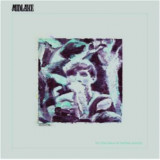
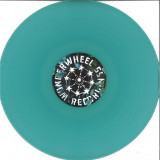
Ex RSD LP on transparent red vinyl, gatefold sleeve with lyric inner sleeve and DL card. Final copies now reduced to £7.99. The tracks on this album have never been officially released before now. The eight songs on this album were recorded in 1978 on a 2-track stereo Revox A77 tape recorder. The recordings are unashamedly analogue, using one microphone and guitars plugged directly into the tape recorder. Bouncing down tracks irreversibly as they went on, forced to make creative decisions that could not be undone. Some hard choices had to be made with the mix, but with no record company meant no record company agenda. TV Smith & Richard Strange could write and record whatever they wanted – and did! It has been an enormous pleasure to rediscover these recordings, the result of a friendship of two artists emerging from broken bands and each about to embark on a lifelong adventure in words and music. TV SMITH - I wasn’t having a lot of fun in 1978 when Richard asked me to collaborate on a song he was writing called “Summer Fun.” I was in the final stages of songwriting for the second Adverts album “Cast Of Thousands,” a project that already seemed doomed to failure given an unenthusiastic record company, a band in the throes of falling apart, and a dwindling audience - but my creative juices were in full flow and I was ready for something different. I already knew Richard, of course, from the Doctors Of Madness, who I’d followed in the years before punk when I was still living in Devon and they were one of the few bands to come and play in the area. I considered them a warped poetic glam band with gothic leanings, and was slightly surprised when the song I’d been invited to work on turned out to be a kind of California surf pastiche. But I was game to get involved, and after we’d finished it and ventured forward with regular writing and recording sessions over the following weeks it soon became clear that “Summer Fun” was just a gateway drug, and the songs that were emerging from our combined forces were going to quickly become much deeper and much darker // RICHARD STRANGE - Watching the remnants of a musical dream being swept away by the juggernaut of corporate punk rock in 1976, I felt a combination of jealousy and resentment towards many of the key players who had been responsible for our demise. The Sex Pistols had supported my band Doctors of Madness early in their career and nicked not only our future but £12.00 from a pair of trousers in our dressing room in Middlesbrough Town Hall! The Jam, who supported us over four shows at London’s fabled Marquee Club, were how I imagined The Who would be if they’d joined the Young Conservatives. Warsaw, our go-to support band in Manchester, had just changed their name to Joy Division, and Johnny and the Self-Abusers, our Scottish flag wavers, had become Simple Minds. All were being feted by the all-powerful music press, while we were being buried. But there was one punk band for whom I never had anything but the greatest affection…The Adverts.
Cerca:the result
Vinyl is limited to 500 copies on black vinyl, no download card. Sunzoom have been making a stir from their Liverpool base and this highly anticipated debut is not to be missed. Lo-fi and DIY in equal measure, the record was only conceived of 4 weeks into the first lockdown when songwriter Greg McVeigh decided that recording music was the only way to stay sane. Building a makeshift studio in the kitchen of his North Liverpool home (and deciding to name the new project SUNZOOM after a favourite Captain Beefheart track) Greg set about learning the processes of home recording from the ground up. The album theme draws upon the peculiar aspects of lockdown; isolation, spiritual introspection, longing to be somewhere else, weird dreams, drinking too much and takes the listener on a journey of escape. The songs move the record through fields, countries, time, space, memories and longings to finally end back at home in the reality of the four walls. Digging into some past unreleased recordings, poems, unfinished snippets of tunes and writing new songs (usually sung into his phone during months of daily beach walks with his dog) Greg began to build a record within the claustrophobic environment of summer 2020. Friends were able to collaborate (by the magic of old recordings and new parts sent via email) and in early 2021 Sunzoom entered ARK Recording Studios in Liverpool to add live drums and vocal parts subsequently spending a month mixing the record back home in the familiar surroundings of the kitchen where the concept first began. The result is a snapshot of the period that magically transforms personal and public strife into glorious pop-folk psychedelia.
Limited 300 180g white vinyl LPs with printed inner Discobag and digital download.
500 CDs in gatefold digifile sleeve.
Each drum controls a virtual musical instrument (synthesizers, samplers, arpeggiators, etc.) within Ableton Live music software that, in combination with a custom step sequencer developed with MaxforLive app, allows Davide to perform real melodies/electronic orchestration without the use of any backing track. 100% live. In addition to that, he also uses a microphone set up in the middle of the drumkit to capture the dynamics of the acoustic drums and translate them through an 'envelope follower' into electronic parts in several ways. About ‘Perceive Reality’: Opener Belief bursts the record into life, as skittering arpeggios spin across a vast open plain of pad synths, before the ground splits beneath it with thrashing drums. On Conceived, Davide creates a simultaneously dark and euphoric wall of crystallised sound, a cacophony of pounding drum hits and icy electronic stabs, with an intensity that continues into Collide. With its shuddering, cut-out reverbed synth pads split in two by crashing cymbals and snares, the song spins itself into a transformative cycling trance, before slowly fading and washing away into silence, only to be broken by Conjectures’ sudden cymbal slams and transfixed toms that roll like thunder into a frenzy, before their final lightning strike. On Subjective, arpeggios twist around beating kick drums and toms, quickly scaling to a furious yet tightly wound sequence that envelops the listener, before Relief, where the album finally takes the shape of a huge wave of calm, glimmering hope and reflection. About the concept behind this latest album, Davide says, “Perceive Reality is a vivid exhortation to deepen the relationship with reality, avoiding simple and often illusory visions. In a historical context that fosters the proliferation of dual information and visions, individuals are increasingly exposed to the danger of perceiving less the complexity of events, thus losing the training to express complex and articulated opinions, the result of a reflection, whether individual or collective. Without having the presumption of resolving epochal issues, the project alerts to the fact that univocal answers do not exist and that only by developing a path of knowledge and giving ourselves the opportunity to examine things in depth, can we enter into the relationship with the existing.” Press highlights so far: Video premiere on Rumore.IT (Italy).
Ltd to 100 copies
Presented in a double vinyl gatefold edition with two beautiful paintings by Tenerife painter Sema Castro.
For fans of Sun Ra, Alice Coltrane and every single mystic brother and sister carrying the free spiritual jazz torch! Dive DEEP!
Spectacular mystical jazz infused psychedelics from Canary Islands’ cult band GAF.
Using a series of different add-ons to their (already obscure) band acronym GAF (Grifa Ambient Factory) such as Love Supreme Arkestra or GAF & La Estrela de la Muerte amongst a few, the Tenerife based band illustrate clearly what mutation or influence they’re feeding through (their mind) by the judicious use of these referential add-ons. Rotating around the vision of local lynchpin, Mladen Kurajica aka Bonni, Keroxen label head, festival organizer, producer and musician with numerous projects including helming the GAF outfit. The Love Supreme Arkestra variation here being the more Coltrane leaning (Alice rather than John) and Sun Ra- esque influenced thematic of the 6 piece band. Over a series of 7 huge sounding themes, we can hear twirling saxophones, trumpets, marimbas, modulars and rhythmic sections intertwining like flying spiral snakes over a burning sea of lava.
Recorded live and freely over a completely improvised jam session on a sunny afternoon in the mountainous region of La Esperanza in Tenerife, the band lets rip free of any previous albums particular sound choosing instead to purge into a world of musical liberation by embracing the aforementioned pioneers of the genre whilst unconsciously absorbing in their surroundings - as an additional inspiration for musical freedom.
The result really shines through its 74 mins of mind blowing adventurous music. A journey to the peaks of the Teide Volcano and down the green valleys, into the blue and black volcanic coasts of liberation!
- A1: Pimpshit
- A2: Old School Jackin' (Feat Prime Minister)
- A3: Northside Posse (Feat Emcee Mechanism)
- A4: Fat Ones (Feat Ice Dog)
- B1: One Straight Binness (Feat Shujaa & Class)
- B2: Into The Dangerzone (Dahkter Remix)
- B3: Meltdown (Feat Emcee Mechanism)
- B4: Off Beat
- B5: Louisville (Feat Ice Dog)
- B6: Run It
- C1: Badlands (Feat Class)
- C2: Hit A Block (Feat E-Dawg)
- C3: Extortion (Feat Ice Dog)
- C4: Mind Over Matter (Feat Emcee Mechanism)
- D1: Mech Og (Feat Emcee Mechanism)
- D2: Mindblowing
- D3: Migraine
- D4: Zone (Feat Ice Dog)
- D5: Pimpshit (Remix)
RARE RECORDINGS BY SEMINAL HIP_HOP GROUP TUFF CREW - This record is a double album vinyl set w/ unreleased bonus material/tracks. - Tuff Crew is known throughout the world as Philly's first Rap super group. They've toured extensively with some of the biggest names in Rap music such as Public Enemy, Run-DMC, Biz Markie, Big Daddy Kane, Rob Base and LL Cool J. The response to Tuff Crew's music has been nothing short of stellar. On a national level, their single "My Parta Town" peaked at #23 on the Billboard Rap charts, while their album Back to Wreck Shop reached #74 on the Billboard R&B album charts. Estimates of Tuff Crew's global sales are in excess of three million units. Tuff Crew's body of work has resulted in a dedicated legion of fans across the world and their DJ Too Tuff has been the recipient of various accolades throughout his career. DJ Z-Trip advised that the technique of DJ Too Tuff inspired him to be a scratch DJ. Three time global DMC scratch champion DJ Q-Bert also notes Too Tuff as one of his inspirations. And A-Trak, Kanye West's DJ, has also voiced his adoration of the turntable techniques of DJ Too Tuff. Although Tuff Crew made an incredible mark on the musical landscape, they unfortunately fell victim to bad management and infighting. It was during this time period that DJ Too Tuff, the man behind legendary Tuff Crew sound, gathered the finest of Philly's underground MC's and began work on a solo project. The new Tuff Crew album, containing the finest of DJ Too Tuff's solo work, is entitled DJ Too Tuff's Lost Archives. DJ Too Tuff's Lost Archives will be highly sought after, and is destined to become an instant collector's item. For fans of of Eric B and Rakim, Public Enemy, Ultramagnetic MC's, Run DMC and Wu-Tang Clan, this record is not to be missed.
From mimicking drum sounds with their mouths and then processing the result to create a world of intricate, intimate sound; to recording a short EP’s worth of work at the snail’s pace of a minimum 12 months, the Sydney based duo Thomas Gray & Liam Ebbs approach their work with a fascinating blend of impulse and consideration. Sounds can be carefully sulptured, massaged, edited and reworked, only to be thrown out the window and replaced with a whole new set of material at a moment’s notice. The pair pay acute attention to mood, space and atmosphere; they are not afraid to take their time. Listening to their compositions is like travelling through the countryside on a train, downriver on a boat, or rising into clouds through the windows of a commercial airliner. Gray and Ebbs’ music, it feels, is an accompaniment to thought and feeling, a personal soundtrack to carry in one’s head. As Eno said when famously coining the term ‘ambient’ - “Ambient music must be able to accommodate many levels of listening attention without enforcing one in particular; it must be as ignorable as it is interesting.” In 2022, the pair will return with a new EP, ‘Blue’, their first for the Bedroom Suck Records label. The five tracks on Blue continue to explore the world that lies somewhere between organic and electronic, between natural sound and manufactured signal. Acoustic instruments make a notable appearance, as does a strong lead vocal in ‘It’s Alright’. The music is evocative, nostalgic and inspirational; It leaves one feeling hopeful.
- A1: David Nyman - Hopes & Dreams
- A2: David Nyman - A Neon Glow Lights The Way
- A3: Insaneintherain - Welcome To Va-11 Hall-A
- A4: Every Day Is Night
- A5: Neon District
- A6: Dusk
- A7: Strictly Business
- B1: Drive Me Wild
- B2: Commencing Simulation
- B3: Good For Health, Bad For Education
- B4: Who Was I?
- B5: Troubling News
- B6: Heart Of The City
- B7: A New Frontier
- B8: A Gaze That Invited Disaster
- C1: A Rene
- C2: Skyline
- C3: Better Luck Next Time
- C4: Jc Elton's
- C5: A City That Never Sleeps
- C6: Friendly Conversation
- C7: Follow The Trail
- C8: Snowfall (Senzafine Remix)
- D1: Digital Drive
- D2: A Star Pierces The Darkness
- D3: Glitch City
- D4: Safe Haven
- D5: Shine Spark (Feat Adriana Figueroa)
- D6: Shine Spark (Instrumental)
- D7: Every Day Is Night
- E1: Synthestitch
- E2: All Systems, Go!
- E3: Umemoto
- E4: Meet The Staff
- E5: Neo Avatar
- E6: Tense
- F1: Base Of The Titans
- F2: Dawn Approaches
- F3: Calicomp 1.1 Startup
- F4: Calicomp 1.1 Shutdown
- F5: Spirit Potion
- F6: March Of The White Knights
- F7: Out Of Orbit
- F8: Transition I
- F9: Transition Ii
- G1: Through The Storm, We Will Find A Way
- G2: An Alternate Reality
- G3: Showtime!
- G4: Another Satisfied Customer
- G5: Where Do I Go From Here?
- G6: Will You Remember Me?
- G7: Everything Will Be Okay
- G8: Your Love Is A Drug (Feat Adriana Figueroa)
- H1: Metropolis
- H2: Karmotrine Dream
- H3: Your Love Is A Drug
- H4: Underground Club
- H5: Go! Go! Streaming-Chan!
- H6: Base Of The Titans (Sage Remix)
- H7: Lifebeat Of Lilim (Feat Adriana Figueroa)
- H8: Lifebeat Of Lilim (Instrumental)
- H9: Truth
- I1: Nighttime Maneuvers
- I2: Those Who Dwell In Shadows
- I3: The Girl With The Iron Heart
- I4: With Renewed Hope, We Continue Forward
- I5: The Answer Lies Within
- I6: Last Call
- I7: Final Result
- J1: You've Got Me
- J2: Snowfall
- J3: Reminiscence
- J4: Believe In Me Who Believes In You
- J5: Until We Meet Again
- J6: Every Day Is Night
Other Joe is the pseudonym of producer, mastering engineer, and label-head Joe Buchan, an individual with a penchant for free-wheeling experimentation and genre-crossing musical tastes. Drawing upon a wide array of sounds that pay homage to his love of both the beautiful and the abrasive, Joe devours indiscriminately whatever sounds might cross his path, the result giving birth to the unique musical journey that is listening to an Other Joe record. After a few years spent playing in bands and releasing small bodies of work under different monikers, Joe released what many listeners know as his breakout record, Alien Haze, a beautiful collection of recordings that oscillate from collages of field recording and found sound, sublime balearic-era saxophone symphonies, and introspective neo-classical psychedelia. His latest work, blessing from th eheart (typo intentional), expands on Other Joe’s love for blending field recording and acoustic instruments with electronic processing. Beginning by reviewing the catalogue of creative notes he had archived since the release of Alien Haze in March 2019, Joe picked apart voice memos, Logic projects, iPhone videos and whatever else he could lay hands on. Says Joe, “looking over it all at once, the musical ideas I had been attracted to over the past eight or nine months started to make a bit more sense - I could see that there were instruments I was liking, or chord progressions that I kept coming back to, structures and forms that I had found engrossing. Sort of like putting together a jigsaw puzzle that I had made without realising.”
Berlin and London based avant-pop duo Private Agenda will release their second full-length album – A Mannequin – on Lo Recordings on 22 October via digital, limited-edition LP and music box formats.
A Mannequin: Twelve tracks corresponding to twelve character traits, imagined as personalities in musical form. What are the dichotomies that define us? Our seen and unseen selves, the façade and the fundamental, the real and the imaginary. The result is musical hyper-realism.
Stunning debut release from RAFRAM aka Irdial legend Ramjac Corporation and the Toronto legend (& honorary Glaswegian) Raf Reza.
300 copies only, full printed sleeves plus riso insert.
Orphic Apparition is a new label born out of a transatlantic meeting of minds. Facilitated by a long, hedonistic party in one of present-day London’s ‘meanwhile use’ venues Grow Tottenham, Canadian producer Raf Reza and British acid house luminary Paul Chivers spent a precious day in the studio to record a 3 hour straight to DAT session before Reza's return to Canada. The result of this spontaneous yet intuitive collaboration blurs the lines between Chiver’s long-standing Ramjac Corporation alias and Reza’s genre-spanning approach to dub, breaks and house styles. Part of the early 90s rave scene and an important member of the blueprint-setting Irdial label, Ramjac locks heads with the self-professed ‘lazy music guy from Toronto’ to adapt their studio session into five separate mixdowns.
‘In The Grow’ begins with a bouncy, cut-up sounding Errorsmith-esque rhythm, the recurring fright night melody that distinguishes the record coming in all quick and powerful. The A2 ‘Rotten Mix’ offers a more traditional house approach in its composition, with dub FX and a nice DJ friendly outro. On the final uptempo choice the pair opt for a head-scrambling electro take. Choose your fighter! The ‘Swampy Dub’ on the flip really dismantles everything we’ve heard prior, slo-mo drums allowing a much different DJ experience and altering the freaky synthetic propulsion into an almost modern classical sound. A little like Paul Dresher’s eternal ‘Channels Passing’ (tip). Combined with the other edits this version almost becomes a totally different track. The final ‘Rootless Dub’ gives its clues in the title, removing all the tough drum sounds and allowing for an ambient decompression.
Orphic Apparition will return soon.
Comprising Marco Simioni, Mattero Mazreku, and Francesco Pio Nitti, Qualia are a group of Italian producers who have never met in person. Due to the covid pandemic, they had to colaborate in the cloud, yet the results are impressively coherent.
Having previously released records on Detroit Underground and fellow Utrecht label 030303 between them, they arrive on U-Trax in April 2022 with their eponymous EP of four deep tracks taking influence from a range of genres, including acid-techno, ambient, noise, and beyond.
Leading the release, 'Perception' brings beautiful strings, funky 808 drums and acid tones for a deep and moving opener. The track clearly reveals the inspiration Qualia got for this release from the early Gescom releases. Stretched across the A2 is the ambient bliss of 'VV Cephei A', which brings Boards of Canada-esque drones and tones.
On the flip, the title track 'Qualia' brings a headsy dose of braindance to the mix, recalling the early experiments of Aphex Twin with merciless 303 squelches and distant reverberations. Closing track 'Until I Break Apart' leads with dark, moody strings before a pounding kick introduces a stark tempo shift before deep ambient atmospheres engulf the final minutes.
“Nice EP. Need a proper listen in a dark room with only the speakers and me ;)”
Minus Magnus — Mhost Likely
“Beautiful Ambient soundscapes!”
IDA — Ectotherm, Boiler Room Glasgow
“Excellent release from U-Trax. Perception and Until I break apart are my fav's.”
Drox — Nightimedrama, Crobot Muzik, Analog Cabin, Southern Outpost
“Interview & Premiere”
— Parkett Channel
“The best part is “VV Cephei A”, where a floral intro leads to colliding drone pulses.”
— Terminal 313
Magma has been one of France’s most influential bands since their founding in 1969. They released their fifth studio album Köhntarkösz in 1974, which set them off in a completely new musical direction. The band used a more restrained approach, which resulted in every hit seeming to weight twenty tons by contrast. The result is a mysterious atmosphere which holds the listener in awe. For this recording, and in particular the track “Coltrane Sundia”, the band used John Coltrane as the main inspiration, creating a vibrant tribute.
Köhntarkösz is housed in a gatefold sleeve and is available as a limited edition of 2000 individually numbered copies on yellow & red marbled vinyl.
Until recently, it was thought that we had heard all there was to hear from Saâda Bonaire. The German studio project's 1980s recordings had been compiled on the now cult-classic double LP Saâda Bonaire, released by Captured Tracks in 2013. Though the group had continued working until 1994, founder Ralph "von" Richtoven had firmly stated that all of their post-1986 work was lost. Released now for the first time ever, 1992 compiles the band's long-lost early nineties material. Produced between Bremen and New York City, the 12 songs presented here capture the group's attempts at steering their trademark fusion sound (reggae, afro-funk, Eastern music, and sultry German female vocals) into uncharted nu jazz, trip-hop, and house territories. It's no surprise, given both the time lapse and the fluid nature of the project, that these recordings differ sonically from the 1980s material. 1992 finds Saâda Bonaire folding new influences from the time (house, hip-hop, rap) into their eclectic sonic universe. Vocalist Andrea Ebert's soulful voice -the result of a church choir background and an early love of American soul and jazz music- offset Stephanie Lange's laid-back, more German-sounding vocals. This unique interplay bolstered the band's new direction - evident in their inspired takes on James Brown's "Woman" and Syreeta Wright and Stevie Wonder's "To Know You Is To Love You". The American influence was also made literal via contributions by renowned DJ Matthias Heillbronn and rapper Jimmy Lee Patterson, both of whom lent some stardust to the tracks at François Kevorkian's Axis Studios in NYC. Unfortunately, the demo recordings were considered too bizarre for 1990s record label standards, and as a result were never published. As with all things Saâda Bonaire, the discovery of these discarded recordings feels like a sort of magical impossibility. It's been nearly ten years since the release of the last compilation, and thirty since the recordings were originally captured. That they still manage to sound fresh and avant garde is a testament to Saâda Bonaire's flair for creating pop music for past, present, and future outsiders.
Tibor Szemző's new LP features two composition, »The Other Shore« & »CUBA«. As the album title implies, »Snap #2« can be considered a sequel to his cult album »Snapshot from the Island« (released in 1987). Back then the island was a metaphor for isolation, while »Snap #2« offers Szemző’s reflections of his visits to real islands, Cuba (1988-1990) and Japan (1992-1994). As usual, Tibor Szemző processed the themes both visually and musically and has presented them many times live as cinematographic performances.
A previous version of »The Other Shore« was released in 1999 on CD. On this album, the original recording from 1997 is used; it has been recomposed, remixed and remastered and some additional recordings have been included. The core of Szemző’s Gordian Knot ensemble of the mid-nineties (Tibor Szemző on bass flute, Péter Magyar on drums and Tamás Tóth on bass guitar) has been enlarged by a string section and additional percussionists. The Other Shore composition has a multilayered texture; it starts with strings and is followed by prerecorded voices reciting the Sutra of the Lotus Flower of the Wonderful Law (Myôhô-Renge-Kyô in Japanese), the most important sutra of Mahayana Buddhism. Then percussion introduces the basic beat of the piece and the voice of the 102 year-old Buddhist priest Ônishi Ryôkei giving a lecture on Kannon sutra is heard. The following uneven entries of drums and bass guitar are like paint brush strokes in Zen calligraphy. The long tones of Szemző’s bass flute enters the piece as the last element suggesting itself as a connecting thread through all previous layers.
When Tibor Szemző first visited Cuba in 1988, he had just started shooting film on 8mm, something of a personal diary. When he met Jonas Mekas in Budapest a few years later, he realized that this footage could be screened publicly and also be an integral part of live performances. »CUBA« is the recording from 2000 of one such performance and was remixed by the author in 2021. It is as similar to and yet different from »The Other Shore«. The Gordian Knot band seemingly structures the piece in the same way, but the resulting sound is much heavier especially thanks to drummer Péter Magyar. Nevertheless, the contributions of Szemző on bass flute, Mihály Huszár on electric bass and T. Bali on prepared electric guitar also inject the proper rock sting. Incorporated Havanna street sounds and local radio broadcasts recorded by the author provide even more steamy roughness to the sound of Szemző’s »CUBA«.
The cover design of the »Snap #2« with photo reproductions from Szemző’s films reflects the aesthetics of the Snapshot from the Island album. This vinyl LP runs at 45 RPM for better sound quality.
After John Squire left The Stone Roses, he formed The Seahorses in
1996 together with Stuart Fletcher, Chris Helme and Andy Watts. The year after they released their debut album Do It Yourself, which was produced by Tony Visconti. Visconti had his first hit with T. Rex’ “Ride A White Swan” and was involved in many David Bowie productions.
The album was well received and entered the UK Album Charts at
#2 and received a Platinum status. It featured three popular singles: “Love Is The Law”, “Blinded By The Sun” and “Love Me And Leave Me”. The latter was Liam Gallagher’s first song writing credit. Their success resulted in support slots with The Rolling Stones, U2 and Oasis. Unfortunately, The Seahorses aborded the recordings of their follow-up album to split up due to musical differences.
Do It Yourself is celebrating its 25th anniversary in 2022 and includes an insert.
In the past few years, Clarice Jensen has forged her own path. Recently, her focus has shifted to film scoring, successfully recording work for three feature films between 2020 and 2021. At the same time, Clarice continues to serve as artistic director of the American Contemporary Music Ensemble, while continually collaborating with an impressive array of musicians, such as Max Richter, Björk and Stars of the Lid, to name a few.
That being said, it was her 2019 tape release on Geographic North, »Drone Studies«, that initially caught the attention of a wider audience, with the work showcasing a compelling assembly of deeply immersive drones, and elegantly orchestrated compositions, in which neoclassical elements collide with electric density.
Three years later, the work has lost none of its innovative character and appeal. It also documents a turning point in Clarice's career, one where her classically trained background started to converged and overlap with her interests in improvisational electronics and drone music. As a result, the aptly titled »Drone Studies« shows Clarice at her most exploratory, introspective, and daring, channeling her areas of interest into a collage of richly textured timbers and cello movements of sublime tension.
Now for the first time, the original album can be experienced through an expanded vinyl reissue, mastered by Rafael Anton Irisarri, and carefully adjusted for vinyl by Ian Hawgood. The new reissue also features an additional track by Clarice called »Platonic Solids 2«, which was originally conceived around the same time as »Drone Studies«, and which has now been made available exclusively for the vinyl edition.
We hope that this new reissue will aid in introducing Clarice's groundbreaking »Drone Studies« to a new crowd of listeners through this expanded edition.
THE DEBUT STUDIO ALBUM OF EERIE DEATH/DOOM METAL DEPRAVITY
FROM GREG WILKINSON & CHRIS REIFERT OF US GORELORDS,
AUTOPSY
Static Abyss is the new mouthpiece for a rotten age consisting of the duo of Greg
Wilkinson (Guitars/ bass) & Chris Reifert (drums/ vocals), both members of
legendary American masters of sickness Autopsy, with Greg (also of cult act
Deathgrave) recently welcomed as new bass player for the long-running US act's
next studio opus & beyond.
Static Abyss' debut studio album, 'Labyrinth of Veins', presents an unnerving,
multi-layered eerie concoction of dirty doom & death, including themes exploring
the echoes of insanity manifested through human existence. The result, a sinister
onslaught of at times slow & bludgeoning brutal metal whilst at others whipped
into a storm of chaotic vile hysterics. The spirit of Autopsy is at times present in
the truly titanic riffs swathed in chilling atmospheric guitar leads, whilst Chris'
seemingly bottomless pit of morbid inspiration from the dark & twisted corners of
life permeate the release with his highly distinguishable delivery to further the
descent into madness.
'Labyrinth of Veins' was recorded at Earhammer Studios in Oakland, CA, & Great
American Music Hall, with engineering, mixing & mastering overseen by Greg
himself. Cover art appears courtesy of All Things Rotten.
Proprietary rhythm: Vector Rituals sees techno polymath Stefan Goldmann constructing polymetric rites of percussion. Synthesized from the ground up, timbral characteristics, metric properties, dynamic expression and microrhythmic phrasing are shaped by the interactions of layered control voltage functions. The result is an assembly of abstract dances ranging from the intricate to the powerful.
Near-humanoid behaviour emerges from liquid patterns, laid out and brought to life by the freewheeling encounter of modular waveforms and snappy envelopes. Sounds evoke metallic textures
– ringing, scraping – and group into virtual shapes from tiny spikes to vast surfaces.
Some of the parametric relationships employed are as loose as to imply chance drifts. Others lock in with strict regularity as found in the 13 vs. 17 polymeter pattern of opening track 'Nayba'. By contrast,
in the strictly repetitive yet highly asymmetrical sequence of 'Yukagir' each metric step has its own uniquely irregular duration. The center piece of this collection is 'Ayon' with multiple autonomous and
highly agile timelines. Its constituent layers break away in radial fashion and fall back together at widely spaced points of congregation.
All compositions herein present powerful proof of the unlimited capacity of electronic music to yield new principles of organisation and to solidify their expression into clear-cut gestalt.
T. Gowdy has kept up a productive albeit mostly virtual pace since the release of Therapy With Colour (his third full-length album and first for Constellation) which dropped just as things were locking down back in spring 2020: performances at numerous festivals including MUTEK Montréal, Node Festival and NEW NOW; audiovisual pieces exhibited at various European galleries and events; a track and video for Constellation's Corona Borealis Longplay Singles Series; sound design for the documentary Atalaya by filmmaker Emma Roufs. Gowdy now returns with Miracles, his second full-length for Constellation, which draws on source materials originally performed in 2018 for an unreleased audio/visual project based around surveillance footage_a precursor to videocapped, monitor-based horizons that soon took on new meanings. Re-immersing himself in those recordings, Gowdy disassembles and deploys them as raw source material for new experiments with vactrols, noise gates and analog-to-digital triggering and aliasing, the original recordings juxtaposed anew amidst their successive textural and rhythmic treatments. Gowdy keeps this re-composition process stripped down, elemental and purposive, guided by an ascetic Aufhebung: synthesis as sublation_subjecting a temporal material/theme to analysis and transformation, reintegrating to form a whole that overcomes what it preserves without erasure, reshaping and intrinsically carrying its origins forward. Where Therapy With Colour was strictly and rigorously a set of stereo live performances, Miracles fuses iterative_though still spartan_layers of performance. "Therapy With Colour was about healing through self-hypnosis; Miracles is about forging a future with memory through subjection to trigger mechanisms" notes Gowdy. The result is a captivating collection of minimal IDM and oscillated electronics from the Montréal/Berlin producer, working primarily in a 120-140 BPM zone of tonal percussion and corrugated pulse. Gowdy's sensibility and sound palette gets deeper and dirtier, summoning new pathways of alluvial flicker and abraded euphoria. As the album progresses, low-pass gate vactrols coalesce into a clear and vital theme, conveying immanence through woody timbres at times reminiscent of the Shinrin-yoku aesthetic (Japanese `forest bathing'), though always with a grainy transcendence rather than invoking any clean pure sheen. Gowdy consistently heats and heightens the presence of each component in the mix, balancing different elements in democratic compression/distortion, attaining an unornamental and earnest form of mantric-industrial majesty. Miracles is live, corporeal, activated electronic music of the highest caliber, deployed with monastic and meditative focus.
Life, Sex & Death are a hard rock band from L.A. who achieved their success in the early nineties. Their sound was in retrospect quite ahead of their time and their lyrics were more thought-provoking than most L.A. bands, which resulted in a huge cult following.
The band only released one album, The Silent Majority. Now, the album is available as a 2LP for the first time, which includes the complete recordings including the following three tracks: “Raise A Little Hell”, “Farm Song” and “Wet Your Lips”.
Less than a year after the well-received release of “Quicksand”, Stand High Records presents “Midnight Rock”. A new fundamentally Roots 7” single, the result of a second collaboration between Joe Yorke, Eeyun Purkins and Stand High Patrol.
This brand new single was mixed the old school way at the Kerwax studio. In a true traditional roots reggae manner, the A side offers Joe Yorke’s vocal version while Pupajim’s “Deejay Style” reply sits on the flip. These two tunes address social divisions in our modern society, which is in contrast with the unity felt and temporarily expressed within the dancehalls. Grooving all together to the rhythm, fuelled and constrained by our individual social condition, as soon as the music ends we remain alone.
On the two sides, the words “Midnight Rock” resonate on a riddim built for soundsystem sessions. “Midnight Rock”, an invitation for all skankers to enjoy the moment and make it last after the lights come on, a call to fight together against what divides us. “Midnight Rock”, time to join the dance. “Midnight Rock”, time to engage in combat.
»Tides« marked a radical change in direction for Arovane. After Uwe Zahn had made a name for himself with cutting-edge IDM rhythms and slick ambient textures on a slew of releases, his sophomore album saw the prolific producer opt for a sample-based approach that resulted in a more organic sound and laid-back downbeat grooves. Having reissued Arovane’s seminal »Atol-Scrap« as a double LP in 2021, the Berlin-based Keplar label now makes »Tides« available on vinyl for the first time since its original release in 2000 through the legendary City Centre Offices. The new version has been remastered by Kassian Troyer at Dubplates & Mastering and comes with a brand new cover artwork. It shines a new light on a release for which Zahn quite literally ventured into previously unknown territory — »Tides« is an album that emits a timeless, quiet calm and nonetheless stays constantly in motion.
»The idea for the album came to me after a vacation in France«, says Zahn. Inspired by the landscape, especially the coastline and the sea, he made field recordings throughout his trip that were also used on the record, giving it its sensual feel. The foundation of the album however, the loose yet gripping grooves at the heart of every track, result from Zahn working extensively with samples. »I wanted to make use of drum sounds and small excerpts from old jazz vinyl records«, he explains. He maintained the unique sound signatures and rhythmic flutter of the source material while building intricate beats with them. Most of the material was culled from the record collection of Christian Kleine, whose spontaneous guitar improvisations over the first musical sketches were recorded and edited by Zahn and can be heard on four tracks. Also employing the occasional cembalo or spinet sound, he worked with a hardware sequencer and a delay to integrate the different, discrete elements into nine tracks that feel both dense and light at once.
What’s astonishing still 22 years later is how spacious »Tides« sounds. This is due to the fact that Zahn not only paid close attention to the sonic idiosyncrasies of his source material, but also to what happened in between those sounds. »Mark Hollis’s solo album was a huge inspiration at that time«, says Zahn. »What I find fascinating about it until this day is how silence and the subtle hiss of the mixing boards were being used on that record.« Silence was also an important stylistic element on »Tides« and adds greatly to the overall atmosphere of an album that with the appropriately named »Theme« immediately sets the mood with intricate spinet melodies: Zahn opens a door for his listeners and invites them to follow him to see a specific part of the world through his very own lens.
As a whole, the album mirrors Zahn’s trip that took him along the steep cliffs on a foggy day (»Seaside«), to an abandoned house in which he found old maps (»A Secret«), along the coastline during a long car ride (»Deauville«), to a sleepy village and the slowly moving sea (»Tides«) and finally back home to his native Germany where he started reflecting upon his experiences, ultimately deciding to translate them into music (»Epilogue«). »Whenever I listen to this album now, the images and memories it evokes are incredibly vivid and vibrant«, he says. It’s not hard to see — or rather hear — why. »Tides« may have been a deeply personal project, but it effortlessly evokes universal feelings by (re-)building an entire world in the course of only a few pieces of music.
Milanese producer Nelson of the East sets out on a deeper exploration of percussive house/techno on Sub Erotic, the first release on Tartelet Record’s new dance floor-focused sub-label DANCEMPORIUM – out May 6th.
Following his 2021 album release of Kybele, Nelson of the East (Nicolas Meyer) is embarking on a new area of sonic exploration rooted in club music motifs. His forthcoming EP, Sub Erotic, builds on his accomplished artistic imprint, balancing the urgent pulse of dance music with the rhythmic sensibilities of non-Western cultures. “After the release of Kybele, it took me a while to figure out what would be a good sequel, and I found myself deconstructing tracks from the album,” says Nelson. “I came to the conclusion that the most important thing on the new EP would be the relationship between the different elements, while trying to use fewer layers.” While the lilt and sway of organic musicality remains at the heart of his sound, the Berlin-based producer applies these qualities in a variety of ways. On “Ellipsis”, for example, live percussive patterns were recorded and recreated using synthesis, which Nelson found to be more effective than the acoustic originals. The result is three tracks that pivot around danceable structures while moving well outside the established norms of house and techno. From the pinging textures and staggered beat impulses of “Ellipsis” to the Go Go-flavored funk of “Sub Erotic” and the trance-inducing acid incantation of “Memoria”; Nelson’s distinctive inspirations spill out of his music in intriguing formations.
Danish mainstay Kasper Marott rounds out the EP, applying a seductive pulse to push “Ellipsis” towards a psychoactive peak. The perfect brooding partner to the original, while reinforcing Nelson’s vision of an electronically minded album. Sub Erotic marks the first release on DANCEMPORIUM, Tartelet Records’ new home for dance floor-oriented music. Having grown to become a broad church of musical modes and expressions, the label is now breaking out into more focused sonic spheres. With his use of rich timbres and adventurous spirit, Nelson of the East is the perfect inaugural candidate.
Benoit B aka Terra Utopia breaks out into another auspicious alias for Step Ball Chain, Blu:sh - metamorphosed; coming in hot and heavy, sexy and sophisticated. Bass down, *ss up! The ambitious 6 tracker “Lovebite” fuses forms of dance; reworking elements from niche corners of the Step stratosphere that can result in freaky combustion. Breathing life and lust into every phrase, we are fortunate to be offered an intimate glimpse into a complex world of sound, filled with bold and brash inspired statements, rhythmically rolling the dice with snap lock precision. The cherry on top is served via a vocal collusion from fellow associate noff, the web expanding as the label delves deeper into futuristic tech territory, the prolific producer pushing their own boundaries and desires for new meticulous audio spectrum and ethereal realms.
The trio of flirtatious tracks laid bare on the A side read as a love letter to 4/4 naughty nocturnal testimonies. Opening auspiciously; Tighten Up dips into nasty grit, a sub centered excursion into the technological domain, sleazy and stripped back with modest tenacity. Candy Land sugarcoats the status quo of pumped up prog, playfully in the driver's seat and revving 100 miles per hour toward Hush highway; narrated by Greek cyber enigma noff.. An atmospheric deep trance kissed club chant. Opposites attract and find points of connection on the flip of Lovebite, the B side boasting a mutually slick sharpness permeating the record; blending sparse bass focused broken beat expeditions with liquid dnb; genially abstract mood boards of sampling mayhem; cut and spliced in addictive fashion. Flushes of gorgeous esoteric harmonic soundscapes fill out the rhythmical chaos, grounding and expanding the mind through a lush & plush tint woven in Recess and Heaven Spot alike.
A perfect prophecy destined for Step Ball Chain, Blu:sh’s first, yet expertly curated EP sets the bar high as hell. Divine dance music that can’t help but push boundaries; confronting and challenging our archival references and perceptions of genres and classifications, arguably the best kind of auditory statement.
Monsters are the result of the sleep of reason” said Goya, and today we live with its complete absence. Murder and grief, destitution and corruption surround us. War. Democide and the madness of the lies that adorn it - a casual dispersal of humanity and lives put to the fire.
Where is joy? Where is hope? Music and Art are all that remain to salve the spirit, yet they are done. A Twentieth-century devotion that now only exists as an outfit, a thin layer worn as social currency. What was previously a mountainous range for pilgrims to climb is now a warehouse stacked high, lit by LED, every last shadow removed. Served online as a superficial ghost, reanimated by computer in St.Vitus dance - those warm corners where we used to reside now stark and scratchy - no place left to hide, no orange glow to spark cognisance. Right against the wall, held by the throat, we are only free in dreams. Yet Music still lives here - in reverie amongst the world of spirits and memory, recharging and recuperating, awaiting rebirth. So let the psalms of decades past instead serve as armour - dress yourself with these plates and reside here while storms rage outside. Here are 12 dreams to serve as armour. Take hope with lord and dego, sit here with us in the warmth and dream again, for in the words of Hughes “if dreams die, life is a broken-winged bird that cannot fly.
It’s been more than a year since our last release on Suction Records, and we’re excited to be back with the introduction of a new artist to the label’s roster. In fact, this split 12” serves as an introduction to both Useless Idea, and Seven Nights Alone, two aliases from the same Italian artist and producer, Cesare Bignotti. The split also serves as a taster for two forthcoming Suction Records full-length LPs, coming soon from both aliases.
Useless Idea, with previous under-the-radar cassette album releases on WéMè Records (2018’s “Acid Hologram”) and EVES Music (2020’s “Xa Peh”), has been quietly recording his own brand of inventive, playful, and melodic IDM/braindance for more than 20 years. We’ve been slowly compiling Useless Idea’s debut vinyl full-length for several years now, and the resulting “Glitch In The Colors” will be released later this year on 2LP vinyl, covering the span of his 20+ years of recording. From “Glitch…” we’ve included standout cut “Mello Tron” alongside two tracks that are exclusive to this split 12”.
Seven Nights Alone is a more recent alias, and outside of 1 track released on a compilation, this marks the new alias’ debut release. There is an undeniable Boards Of Canada influence here, but this is a unique and sophisticated take on BOC’s woozy and melancholy electronica. Both “Soft Where” (a menacing, futuristic instrumental hip hop killer) and “Walkman” (like a BoC “Campfire Headphase” outtake but on an optimistic tip) are taken from Seven Nights Alone’s debut 2LP vinyl full-length “Another Place”, to be released on Suction Records in 2023, alongside a 3rd track that’s exclusive to this split 12”.
Vinyl is limited to 200 copies, and comes with a Bandcamp download card.
Toro y Moi’s seventh studio album, ‘MAHAL’, is the boldest and most fascinating journey yet
from musical mastermind Chaz Bear. The record spans genre and sound - encompassing the
shaggy psychedelic rock of the 1960s and ‘70s, and the airy sounds of 1990s mod-post-rock -
taking listeners on an auditory expedition, as if they’re riding in the back of Bear’s Filipino
jeepney that adorns the album’s cover. But ‘MAHAL’ is also an unmistakably Toro y Moi
experience, calling back to previous works while charting a new path forward in a way that only
Bear can do.
‘MAHAL’ is the latest in an accomplished career for Bear, who’s undoubtedly one of the
decade’s most influential musicians. Since the release of the electronic pop landmark ‘Causers
of This’ in 2009, subsequent records as Toro y Moi have repeatedly shifted the idea of what his
sound can be. But there’s little in Bear’s catalogue that will prepare you for the deep-groove
excursions on ‘MAHAL’, his most eclectic record to date.
The second the album begins we’re immediately transported into the passenger seat, jeep
sounds and all, ready for the ride Chaz and company have concocted for us. Seeds of some of
‘MAHAL’s 13 songs date back to the more explicitly rock-oriented ‘What For?’ from 2015.
‘MAHAL’ was mostly completed last year in Bear’s Oakland studio with the involvement of a
host of collaborators, Sofie Royer and Unknown Mortal Orchestra’s Ruban Neilson to Neon
Indian’s Alan Palomo and the Mattson 2.
“I wanted to make a record that featured more musicians on it than any other record of mine,”
he explains. “To have them live on that record feels grounded, bringing a communal
perspective to the table.” As a result, ‘MAHAL’ is lush and surprising at every turn, from the
cool-handed ‘The Loop’, which recalls Sly and the Family Stone, to the elastic psych rock of
‘Foreplay’ and the dizzying Mulatu Astatke-recalling of ‘Last Year’.
Lyrically, the album zooms in on generational concerns, picking up where the ‘Outer Peace’
standout ‘Freelance’ effectively left off. Bear seems to be surveying the ways in which we
connect with technology, media, each other, and what disappears as a result. Cuts like the
squishy ‘Postman’ and ‘Magazine’ take a deep dive into our relationship with media in a
changing digital world. “It’s interesting to see how we adapt to this new age. We’re so
connected, but we’re still missing out on things,” Bear ruminates while discussing the album’s
themes.
It’s not all introspection. Bear cools things down near the album’s end with the Mattson 2-
featuring ‘Millennium’, a laid-back jam with tricky guitar licks about ringing in new times even
when everything else seems upside down. “It’s about enjoying the new year, even when it’s
been shitty,” Bear explains. “There’s nothing else to do.”
Finding a sense of joy in the face of adversity is embedded in ‘MAHAL’s DNA, right down to the
jeepney that literally and figuratively brings the music out into the community. “We know that
touring is messed up for now, and large gatherings are a fluke,” he explains. “It’s about the
notion of us going out to the people and bringing the record to them.” And with the wide-open
atmosphere of ‘MAHAL’, Toro y Moi stands to connect with more listeners than ever before.
Caroline No’s 3rd album was built around a set of songs I was writing in the summer of 2019. I built the songs around real events, but looped these narratives into stories from song histories. The result is like an intersection of Brill building characters such as Carole King and Neil Sedaka with the bedroom fanaticism of historical music projects like Virgin Insanity.
After a year of playing the songs live in various formations, we aimed to record in the Australian summer. We knew Jim was going to be in Melbourne, and soon after he arrived in Australia, we met at Mick’s studio. Nick and Mick engineered, with Ian on bass, Jim on drums, Mick, Dee and me on guitars, and Dee and me singing. The sense of intuitive knowledge and performance was exhilarating as we played. We spent two days in the studio, and when we listened back later, it seemed a compelling representation of what had happened, captured live.
The band on this album are artists I grew up with. We were friends first, and engaging with the material, there was no formal structure to follow. Our interpretive approach meant the songs grew from simple structural frames and narrative poetics into full sonic landscapes, engaging across pop, folk, psychedelia and improvisation. Caroline No became - for this iteration - a shifting sonic space tied to intimacy, musical conversation and relationship, expressed in an open improvisatory way. The sound of the record is the result of trust, responsiveness and mutual knowledge.
The name Caroline No was an imaginary character through much of the work, arising from the Beach Boys’ melancholic paen to encountering a past lover who has cut her hair off. My idea was for Caroline No to become the locus for an ongoing composition project where I would write back into songs' history the perspective of patriarchal song’s subjects.
This is a recuperative project of easeful making; attempting reclamations of lost narratives, exploring love, loss and the psychedelic of the everyday.
Caroline Kennedy, January 2022, London
We've always done things our own way and without any outside pressure,” says Paul Isherwood of The Soundcarriers. “Making music like this keeps things fresh, you always lose something and gain something as you go along but I think of it as just another chapter.”
There have been many chapters in the life of the band to date and each one is defined by the singular approach and style of the group. Since forming in 2007 the band - comprised of Isherwood, Adam Cann, Dorian Conway and Leonore Wheatley - have released three albums that position them as a distinct and unique force in British music. Eschewing fads and trends that come and go, they have instead focused on honing their own sonic world that glides between woozy psychedelia, immersive grooves, subtle pop and rich, enveloping soundscapes. They’ve consistently moved at their own pace and on their own terms and on their fourth album, Wilds, they return after seven years since their last. “The sessions started in a cottage in the wilds so there's a literal meaning,” Isherwood says of the title. “But figuratively we've pretty much been in the wild for the last few years as far as a lot of people are concerned.”
The recording was staggered over a few different locations, from cottages to primary schools, before finishing in an art gallery. “The beauty of recording in non-studio studios is you have the time for the unexpected to happen,” says Isherwood. “Which is really what keeps you coming back for more.” As a result of the timeframe of the album, it’s one that has changed and grown a lot over the years. “The record has been through a lot of stages,” says Isherwood. “It's almost been circular. We started off wanting to do an album of more shorter, concise tracks and then sort of sidestepped into some more spacey ambient ideas so in a way the album is kind of a synthesis of the two phases, overall carrying on with many of the themes and influences of the first three but with a more focused approach.”
The opening ‘Waves’ leaps out the gate with an infectious hook kissed by a touch of French pop before leaping into a devilishly catchy chorus and into a mini prog-like flute breakdown. It sets the tone for an album that is rich in adventure and unpredictability that manages to balance experimentation with accessibility. ‘At The Time’ is almost unrelenting in its grinding charge, managing to create a groove that cracks and pulses at the same time, ‘Wilds’ is a gorgeously floating piece of music that skips along with strutting bass as Wheatley’s vocals merge melody with texture magically. The closing ‘Happens Too Soon gently stirs to life with an almost pastoral folk air to it, as it slowly builds into swirling psych pop rich in texture before reaching a rousing crescendo. “I feel this album sums up a lot of our influences,” says Isherwood. “There’s a strong folk influence in the sense of the actual songwriting but musically we wanted to create songs that were like those rare oddities you find on a bizarre charity shop record. A collection of "one offs" capturing a moment rather than trying to make a hit song.”
This sense of it being an album of unique songs is clearly apparent throughout but it also maintains a natural flow and cohesion. This is something that stems from the band’s approach to songwriting for the record. “A lot of the tracks started with a feel or groove,” says Isherwood. “Then building it into a more concise arranged piece. We were conscious that we didn't want the recording to sound too over-polished so although a lot of the tracks were quite painstaking in how they evolved we wanted the actual recording to be quite raw and not be reliant on cutting things up or overly editing things. We wanted it to sound natural rather than perfect.”
Bloc Party return with their forthcoming sixth studio album Alpha Games, due 29 April 2022 via Infectious / BMG. Alpha Games is the band’s first studio album since 2016’s Hymns, and the first Bloc Party album written and recorded as this four piece; adding the musicality of Justin Harris (bass) and the unbridled energy and power of Louise Bartle on the drums to capture the spark of their live shows and to deliver the most exciting Bloc Party album yet.
Alpha Games, produced by Nick Launay & Adam Greenspan (Nick Cave, Yeah Yeah Yeahs, IDLES), includes new single Traps, which sees the band returning to the raucous, high-octane sound of their earliest work in an outburst of propulsive post-punk. The album’s 12 tracks veer from the intense and confrontational (Traps, Day Drinker) to melodic and introspective (If We Get Caught, By Any Means Necessary), and marks a new and important chapter in one of music’s most important voices in Kele Okereke and important bands in Bloc Party.
“Alpha Games was conceived on the road, playing in front of amazing crowds on our last tour and then brought to life with the fire and the frustrations of 2020,” says Kele Okereke on Bloc Party’s first new album in seven years.
“We wanted to can what was happening at those massive gigs in 2019, to showcase what Louise can do, what Russell is capable of and most importantly the electricity coming off the audience. We knew that Nick & Adam were the right choice of producers to do that and the result feels like fire in a bottle.”
‘Emotional Eternal’, out on Domino, is a glorious consolidation
of the lessons learned along the way, seen through the eyes of
someone who has taken a step back, and who can see clearly
as a result.
As with her previous acclaimed 2018 album ‘Bon Voyage’, this
album was initially recorded in the outskirts of Stockholm, with
Reine Fiske, the multi-instrumentalist member of Swedish rockband Dungen, who has worked with the likes of Travis Scott and
Anna Järvinen, and Fredrik Swahn, the musician, producer and
engineer best known for his work with Swedish indie-rock band
The Amazing.
A deeply human collection of songs full of prolonged moments
of sonic transcendency, ‘Emotional Eternal’ is a record rooted in
adulthood, but one that still regards the world with a childlike
wonder. It includes ‘Alma_The Voyage’, a beautiful paean to
motherhood concluding with resounding violins and EBow;
‘Personal Message’ featuring a giddily assured vocal
performance from Melody, vertiginous and breathy and the
ornate and catchy, ‘Where The Water Clears the Illusion’.
Listening to the album feels like coming across an abundant
treasure chest; strap in and get ready to be transported to
another heavenly, mediative and groove-filled world.
CD in printed inner wallet with 18-page poster booklet.
LP with 2-page insert plus 12” circular ‘optical effect’ card platter
disc with digital download code.
Press - Reviews in Uncut, MOJO, Loud and Quiet, Record Collector,
Reader’s Digest, Shindig, Electronic Sound, The Skinny, NARC,
Aesthetica, Spin, All Music. Features in Clash, Shindig Magazine,
Pitchfork, The Eagle, The Line of Best Fit, Far Out Magazine.
Radio - 6 Music Lauren Laverne, Craig Charles, Amy Lame, Radcliffe
& Maconie, BBC Radio 1 Jack Saunders, Radio X John Kennedy.
Immortal Onion have already built a strong position as one of the most interesting, new jazz projects from Poland. After two well received albums ("Ocelot of Salvation" in 2017 and "XD ExperienceDesign" in 2020) we've had the pleasure of presenting the new re- lease called "Screens" recorded at the initiative of the saxophonist Michał Jan Ciesielski.
The songs composed by Michał confirm, that jazz electronic fusion can be still fresh and thrilling. The album, where beside Michał, Tomir, Wojtek and Ziemowit, you will find many guest instrumentalists. Thus resulting in a step forward made by the still young musician from TriCity.
It is worth mentioning, the song entitled "ZOZI" is enriched with the string parts recorded by Ola Szymańska on violin (Alfah Femmes, Ralph Kamiński, The Fruitcakes) and Weronika Kulpa on cello. Also, you can hear the brass section consisting of David Lipka on trumpet (Zgniłość, Bizzarre Penguin) and Paweł Niewiadomski on trombone (Power of the Horns). In the composition called "OK Boomer" you can hear characteristic guitar soundscape recorded by Marcin Gałązka (Tymon Tymański).
The whole album was recorded and mixed by Michał Jan Ciesielski. Mastering was done by Michał "Eprom" Baj. Graphic design was created by Marta "Martiszu" Ludwiszewska, who, like no one else senses the crazy spirit of immortal onion.
“I am most excited, that they got out of their formula and invited Michał Jan on saxophone who perfectly complements the ideas of guys from the Immortal Onion.”
Hania Rani —
Following 2019’s critically-acclaimed sophomore album, I Spent the Winter Writing Songs About Getting Better, Proper. is making their return with The Great American Novel. “The Great American Novel is a concept album about how Black genius, specifically my own, goes ignored, relentlessly contested, or just gets completely snuffed out before it can flourish,” vocalist Erik Garlington said. “This record is a concept album that’s meant to read like a book; every song is a chapter following the protagonist through their 20s. Imagine a queer, Black Holden Caufield-type coming up in the 2010s.” The result is an album that is both lyrically and musically heavy, the former something fans have come to expect from Garlington’s unflinchingly honest lyrical content, but the latter something that’ll be refreshingly new. Channeling the heavier music he listened to during his adolescence — from post-hardcore outfit At the Drive-In to progressive metal band System of a Down — Garlington and the rest of Proper. — bassist Natasha Johnson and drummer Elijah Watson — push themselves in ways they haven’t before, culminating in an ambitious project that showcases the new sonic territory the band is heading in. Recorded by Bartees Strange in early 2021 and mixed/mastered by Brian DiMeglio, TGAN is made up of 14 songs, with three of them to be singles dropped throughout the course of the album’s release
Founded in 2006 by Vincent Bertholet (Hyperculte), the Orchestre Tout Puissant Marcel Duchamp is a large-scale project. Designed as a real orchestra, the size of the ensemble has varied over time. Now with 12 members, 14 in the past or 6 at the beginning, the ensemble has scoured the stages of Europe todemonstrate that the formula "the more the merrier" has never been more true than on stage. Whether in prestigious festivals (Paléo Festival de Nyon, Fusion Festival, Incubate, Womad, Bad Bonn Kilbi, Jazz à la Vilette) or on the four albums released since its launch, the group shows an incredible fluidity. The Orchestre Tout Puissant Marcel Duchamp (a mischievous title in homage to traditional African groups -Orchestre Tout Puissant Konono nd1, Orchestre Tout Puissant Polyrytmo etc... -and to one of the greatest dynamizers of 20th century art) embraces the forms of its musicians while pushing them to their limits. The result is a powerful, experimental, unstable and terribly alive, organic sound.
Duke Ellington and Ella Fitzgerald's paths had surely crossed many times during the Thirties, Forties, and early Fifties. However, no recorded trace of the two legendary musicians collaborating existed until 1957, when they participated on a series of big band sessions for Norman Granz. The sessions were somewhat chaotic and intermittent though, primarily because of Ellington's busy schedule and lack of time to prepare arrangements. As a result, the big band sessions were
padded out it with various all-star sextettes, as represented on the LP.
Berlin and London based avant-pop duo Private Agenda will release their second full-length album – A Mannequin – on Lo Recordings on 22 October via digital, limited-edition LP and music box formats.
A Mannequin: Twelve tracks corresponding to twelve character traits, imagined as personalities in musical form. What are the dichotomies that define us? Our seen and unseen selves, the façade and the fundamental, the real and the imaginary. The result is musical hyper-realism.
Toro y Moi siebtes Studioalbum MAHAL ist die bisher wohl kühnste und faszinierendste Reise des musikalischen Masterminds Chaz Bear. Mit einer weiten Spannbreite zwischen Genres und Sounds - vom zotteligen Psychedelic Rock der 1960er & 1970er hin zum luftigen Sound des Mod-Post-Punks der 90er-Jahre - nimmt das Album die Hörer*innen mit auf eine musikalische Expedition, in der sie im Rücksitz von Bears philippinischen Jeepney, der auch das Albumcover ziert, Platz nehmen können. So ist MAHAL ein unverwechselbares Toro y Moi-Erlebnis, welches in Verbindung zu seinen vorigen Werken steht und dennoch einen ganz neuen Weg einschlägt, wie es nur Bear tun kann. Seit der Veröffentlichung des bahnbrechenden Electronic Pop-Albums Causers Of This 2009, hat Toro y Mois Alben stets die Idee, was sein Sound sein könnte, weiterentwickelt. Dennoch findet sich in Bears Backkatalog nur wenig, das einen auf die Deep Groove-Exkursion auf seinem bisher vielfältigsten Album MAHAL vorbereiten könnte. Mit den ersten Tönen des Albums werden wir direkt in den Beifahrersitz gesetzt, umgeben von den Motorengeräuschen des Jeeps und bereit für die Fahrt, die Chaz und seine Gefährten für uns geplant haben. Einige der 13 Tracks auf MAHAL - das Wort für Liebe in der auf den Philippinen gesprochenen Sprache Tagalog - finden ihre Anfänge in der Zeit um das deutlich rockigere What For? aus dem Jahr 2015. So liefert das neue Album eine ganz klare Antwort und spannt den Bogen: What For? - For Love. MAHAL wurde größtenteils letztes Jahr in Bears Studio in Oakland in Kollaboration mit Künstler*innen wie Sofie Royer, Unknown Mortal Orchestras Ruban Neilson, Alan Palomeo von Neon Indian sowie The Mattson 2 fertiggestellt. "I wanted to make a record that featured more musicians on it than any other record of mine," erklärt Bear. "To have them live on that record feels grounded, bringing a communal perspective to the table." Im Resultat ist MAHAL üppig und voller Überraschungen - sei es durch das locker lässige "The Loop", das an Sly and The Family Stones erinnern lässt oder dem elastischen Psych-Rock bei "Foreplay" sowie der schwindelerregenden Mulatu Astatke-Anlehnung bei "Last Year".
repressed !
Emotional Rescue reissue 'Into Dark Water', the second album from UK post-industrial ambient pioneers O Yuki Conjugate (OYC).
The willfully obscure OYC formed in Nottingham in 1982 and have had a sporadic career on the outskirts of musical culture ever since. Initially associated with the early 80s post-industrial scene - along with Soviet France and Muslimgauze - OYC quietly forged their own brand of ambient music at a time when it was distinctly unfashionable to do so.
Always reluctant to categorise their sounds, OYC have been variously described as post-industrial, ambient, darkwave, tribal ambient, chill out, electronica and Fourth World. Take your pick.
'Into Dark Water' was recorded in 1986 over four days in an eight-track garage studio in Nottingham. Produced and engineered by John Kaukis, the result was a blend of flutes, percussion, electronics and loops that focused their sound and became for many the definitive OYC album.
Originally released in 1987 on the Leeds-based Final Image label, 'Into Dark Water' quickly sold out and has been highly sought after ever since. The re-issue, featuring a lovingly recreated sleeve, makes a vinyl version of this classic available again for the first time in over 30 years.
Fresh Afro-Soul Music - Ghana’s Highlife going by the heartbeat of 70s Soul Music. Jembaa Groove is a multicultural band founded in late 2020 by bass player and composer Yannick Nolting, and singerpercussionist Eric Owusu.
Speaking the same musical language, they quickly realized the fruitful
outcome of their musical encounter and decided to spend a couple of
months composing their original music. Digging deep into both their
backgrounds and musical identities, they came up with an organic result both like to label as Afro-Soul.
After seeking for the right companions for the upcoming journey and
stumbling on a few of Berlin's finest musicians, they finally formed Jembaa Groove, a 7-piece band that combines fresh sounds from Berlin's underground music scene with traditional West-African sounds from Ghana and Mali, such as Highlife, Adowa and Wassoulou. Their aesthetic vision is inspired by soul music from the ‘60s and ‘70s and avoids overly-produced commercial arrangements while merging driving bass grooves and steady drum patterns with fresh horn lines and catchy melodies. Produced by Yannick Nolting. Composed and arranged by Yannick Nolting. Vocal
arrangements and lyrics by Eric Owusu.
Linda Fredriksson (they/them) shares their debut solo album "Juniper" on We Jazz Records, 29 Oct 2021. Linda (of Mopo and Superposition) has been working on the compositions heard on the album for several years, composing them mostly on guitar, keys and by singing. Only later have they been arranged for the band heard on the album, including Fredriksson on saxes and various instruments, Tuomo Prättälä (of ilmiliekki Quartet) on rhodes, moog and piano, Minna Koivisto on modular synth, moog and OP, Olavi Louhivuori (of Superposition) on drums, and Mikael Saastamoinen (of OK:KO and Superposition) on bass, plus featuring the Swedish artist Matti Bye on piano.
At heart, "Juniper" is a "singer-songwriter album", performed by an instrumental jazz band. The end result is unique, personal, and as Linda themself puts it "quiet and introspective". The first single from the album is "Neon Light and the sky was trans", "a song from the shining streets – the beginning of something new", featuring field recordings of rain falling down behind the window of Linda's Helsinki working space.
It's a fitting introduction to an album full on wonders and carefully crafted secrets ready to be discovered. "Juniper" is a world unto itself, and Fredriksson describes the process as one of isolation and of learning slowly to do new things. After the demo stage, the songs were taken to the full band, but what's on the record often stays true to the minimal nature of the early demos. Linda credits their co-producer Minna Koivisto as a key ally in the process of maintaining the demo sessions' fragile beauty on the actual finished record.
With regards to instrumentation, those who have heard Linda Fredriksson in Mopo and Superposition are likely to be surprised by their credit listing including not only alto and baritone saxophones, plus bass clarinet, but also guitar, Rhythmic8 synths, ambience recordings and drum programming. Linda describes the way of finding new sounds through their beloved old guitar as follows: "It's an old acoustic guitar that has been hit by a car and is literally full of holes, but that makes the sound just perfect for this album and you can hear the instrument on 'Pinetree song' and 'Lempilauluni' (Finnish for 'My Loved Song')."
In fact, Linda began their music-making with guitar and vocals, and the debut of the hole-filled vintage acoustic guitar makes perfect sense here, while also describing the album's immediate sound perhaps better than any other individual instrument used. The influence list for the album name checks the likes of Feist, Neil Young, Susanne Sundfør, Alice Coltrane, Pharoah Sanders, Eric Dolphy and Fever Ray, yet the number one inspiration for Fredriksson prior to making the album was "Carrie and Lowell", the 2017 album by Sufjan Stevens. Different as the albums are in terms of instrumentation and general scope, it's fascinating to draw parallels between them by listening to the quietness and immediacy of the music. "Nana – Tepalle" also relates to the world of "Carrie and Lowell" in being a dedication to a lost family member, Linda's grandmother (she is featured in the digital single artwork).
Throughout the album, Linda plays their saxophones in a way that is serving music first and foremost. The musician's ego, so often at the forefront in jazz, takes a backseat, and the songs themselves remain. Linda thinks as a composer, utilising their instrument where and how necessary, not presenting "chops". "It's sometimes hard to play simple," they say, "but I tried to follow my instinct about what the songs need. The mood rules here, any solos or improvisations happen around that at all times."
"Juniper" can still be heard as a jazz album, but perhaps one reminding that the word doesn't need to mean any one thing in particular. At its best, jazz music is highly personal and "of the moment", both true on "Juniper". The album has been made in two different studios, three homes, two summer cottages and four working spaces. It was recorded with professional studio equipment but also with an iPhone and on a basic built-in laptop speaker. With that, "Juniper" stands as a remarkable musical diary of a creative musician and composer during the early 2020's.
‘Oh, Inverted World’, the earth-shattering, indie rock-redefining 2001 debut album by The Shins, is presented here in its finest form, dressed up all nice for its 20th birthday. The classic tunes get new life by way of a full remastering job under band leader James Mercer’s watchful eye, the art is given a little extra zest via a die-cut jacket and a classy inner sleeve and the package is rounded off with a big old booklet with vintage photos, handwritten lyrics and more.
The music, of course, is obviously essential. Aside from a friendly reminder that this is the album with the smash hit ‘New Slang’, as heard in the hit movie ‘Garden State’, the remastering job truly makes this the album James Mercer always wanted it to be. Never quite satisfied with the sonics of the original, Mercer took the 20th Anniversary of the album as his opportunity to finally set the (literal) record straight. And the results sound stellar: great for new fans and well worth the attention of those already on board.
For old times’ sake, here’s what the label had to say about this record back when it came out: “Hailing from Albuquerque, NM, The Shins sprung from the ashes of Flake/Flake Music in 1997 (though those previous incarnations date back nearly a decade) - same members, different instruments, different approach. Counterpoint guitars have given way to a single guitar pitted against calculated keyboard passages; swarming indie rock machinations led to pop-based melodic endeavours (who knew?).”
Includes the hit single ‘New Slang’ which, along with ‘Caring is Creepy’, was featured on the Grammy-winning, platinum-selling ‘Garden State’ soundtrack.
Remastered by Bob Ludwig with personal supervision from band-leader James Mercer.
“A definitive indie rock album of the 2000s” - AllMusic
- A1: Silvestre Montez Y Sus Guantanameros - El Avispón
- A2: Los Orientales De Paramonga - Lobos Al Escape
- A3: Los Destellos - Pasión Oriental
- A4: Grupo Celeste - Viento
- A5: Los Mirlos - Cabalgando Con Ella
- A6: Manzanita Y Su Conjunto - Arre Caballito
- B1: Los Mirlos - El Escape
- B2: Los Wembler's De Iquitos - Un Silbido Amoroso
- B3: Los Destellos - La Ardillita
- B4: Los Beltons - Cumbia Pop
- B5: Los Beta 5 - Beteando
- B6: Los Galax - Lamento De Un Galax
- B7: Aniceto Y Sus Fabulosos - Mi Gran Noche
- C1: Juaneco Y Su Combo - Mujer Hilandera
- C2: Los Sander's De Ñaña - El Tramboyito
- C3: Los Beta 5 - La Danza De La Tortuga
- C4: Los Destellos - Guajira Sicodélica
- C5: Los Orientales De Paramonga - Captura De Lobos
- C6: Los Diablos Rojos - Malambo
- D1: Los Átomos De Paramonga - El Trencito
- D2: Los Beta 5 - La Jorobita
- D3: Los Ecos - Aquí En La Fiesta (I Don't Want To Spoil The Party)
- D4: Los Demonios De Corocochay - La Chichera
- D5: Los Demonios Del Mantaro - Liliana
- D6: Los Mirlos - Lamento En La Selva
Peruvian cumbia, also know as "chicha", brings together tropical music styles from Colombia and Cuba, Western influences such as 60s beat and psychedelic rock, and mixes them with indigenous melodies from the Amazonian jungle and traditional Andean songs. The result is a unique and vibrant style of music which reverberates with life. Vampisoul's compilation includes tracks by the most important bands of the genre. Peruvian cumbia is currently being rediscovered by new audiences and there exists a thriving club and live venue scene in cities like New York, London and Madrid.
36-page booklet with extensive liner notes in English and Spanish plus photos and memorabilia.
There is a tendency within modern electronica to pigeonhole and categorise, to package music into easily digestible formulae. In direct revolt comes Dutch artist Satori and his new album Dreamin’ Colours, released globally April 22nd, 2022, on renowned imprint Crosstown Rebels. Recorded at the esteemed Sonic Vista Studios in Ibiza, the nine-track LP has been greatly anticipated off the back of its proceeding’s singles: Yellow Blue Bus ft. Laska, Lalai ft. Ariana Vafadari and most recently Gin Song.
An ethereal, swirling body of work, Dreamin’ Colours is rich in texture, colour and imagination. Satori stretches himself out through languorous, mystical explorations of both the digital and the analogue elements of music, the result a beautifully conspired collection of world music, steeped in electronic and Balkan roots, and straddling a multitude of genres from blues and indie electronic to opera, folk and beyond.
Colourful Dream begins proceedings, taking the form of a gently-building opener. From the pluck of a guitar string to hypnotic flute-like elements, we soon arrive at the enchanting world of Lalai ft. Ariana Vafadari. Recorded in a four-hundred-year-old water well, it showcases the transcendent sound with which Satori has become best known, meandering through rustling hats and tribal-like drum patterns whilst the dulcet tones of Ariana shimmer softly throughout.
Tuti ft. Kalima takes on a harder edge, with gritty drum patterns opening into melancholic chords early on. Kalima’s vocals add an emotive touch to the piece, paving the way for Moj Dilbere: a euphoric cut that feels tribal and reflective in one.
We land at a similarly ethereal soundscape on The Gin Song ft. Mybaby, as star-like synths pulse alongside punchy percussion before Yellow Blue Bus ft. Laska takes its place. It begins with real-life ambience, made up of sounds recorded live in Ibiza as a bus passes and birds chirp merrily in the background. This swiftly gives way to a guitar-flecked bassline, opening neatly into the vocal offerings of both Satori and Laska.
Troublemaker ft. El Mundo retains an inherent melodic quality, progressing through poignant strings and whispering kick-hat combos. Powerful and poignant, the mesmeric sounds of Ora Dea and Moshe meander subtly into Lonely Boy (Redux) ft. Hugo Oak. The closing saga brings things to a wonderfully subdued finish, rounding off the album on a wholeheartedly calming note.
Although raised in the Netherlands, where commercial electronic music is of course king, on Dreamin’ Colours it is undeniably Satori’s Balkan heritage that layers his production with dreamy, ethereal, Eastern European influences. The album’s overriding voice lies in his exultant celebration of Eastern European music, weaving vibrant threads of its earthy, melodic, rhythmic sounds into his thick musical tapestry. Written during the pandemic and driven by the ache of separated love, the album is, Satori says, his most personal yet.
From holding down an eighteen-month residency at Heart, Ibiza to having nearly four-hundred-thousand listeners on Spotify each month, Satori is a truly worldwide artist in today’s electronic music scene. Having been championed by Damian Lazarus early on in his career, he has emerged as a must-see live act for fans from all corners of the globe. November 2021 marked the start of his USA tour, where his Maktub concept adorned some of the country’s most iconic clubbing institutions, whilst his discography speaks for itself, with a plethora of acclaimed releases on labels including Crosstown Rebels, Sol Selectas and DGTL Records to name a few. As Dreamin’ Colours introduces him to an ever-growing audience, Satori remains one of the most exhilarating, untamed and truly authentic forces in music.
- A1: K15 & Labdi - Utokapo
- A2: K15, Lex Amor & Karun - Hold On
- A3: Lynda | Dawn - Roses (Xl Middleton Version)
- B1: Maxwell Owin & Xenia Manasseh - Probably Never (Feat Joe Armon-Jones)
- B2: Sola & Labdi - Nanae
- B3: K15 & Lex Amor - Inevitable Winters
- C1: Azu Tiwaline & Labdi - Hewa
- C2: Lex Amor, Hibotep & Faizal Mostrixx - Ancestry
- C3: Faizal Mostrixx & K15 - Zone Maasai
- D1: Faizal Mostrixx & Karun - In My Soul
- D2: Hibotep & Itsmdnyt - Lunar Ritual
- D3: Faizal Mostrixx & Karun - In My Soul (Ethiopian Records Remix)
Extra Soul Perception is a collaboration and community music platform which started life between the UK, Kenya and Uganda, and continues to grow and connect independent musicians worldwide. In November 2019, eight artists from Kenya, Uganda and the UK spent a week in Nairobi together exploring new tangents in soul music, the result was their 2020 debut EP 'New Tangents In Kampala, London & Nairobi Vol. 1'.
The growing collective is made up of Faizal Mostrixx (UG), Hibotep (UG), K15 (UK), Karun (KE), Labdi (KE), Lex Amor (UK), Lynda Dawn (UK) and Maxwell Owen (UK). Now with the with the addition of Itsmdnyt (UG), XL Middleton (US), Xenia Menasseh (KE), Sola (UK) and Azu Tiwaline (TUN), the collective are preparing to release their album 'New Tangents in Kampala, London and Nairobi', released 25th March.
Three years in the making, work started on the album at a writing camp in Nairobi, and was completed remotely over the course of the worldwide lockdowns of 2020 and 2021. The album celebrates the potential of collaboration, both in a physical and digital sense.
Innovators in their own fields, each artist brings unique knowledge and musical culture to the project, collectively they represent a broad spectrum of sound. The album reflects this via an inspiring mixture of beautiful soul, glitchy beats, spoken word and bumping instrumentals. Embracing the same values of the writing camp but through virtual collaborations, seeing 'soul' as much in the spiritual sense as the musical one, expanding the sound into new territories.
Ode to the Mode is the new EP from Naarm/Melbourne DJ & producer Kayroy. His first for the Velodrome Recordings imprint, this record sees the producer blend his love for synth-laden italo-style house and rave-ready techno, resulting in a record that is equally suited for cloud gazing and peak club moments.
The record opens with ‘Behind the Clouds’, a dense and sprawling track that pairs vibrant synth leads with crystal clear percussive work - a modern flip on a warm italo-house sound. With the EP’s title track, Kayroy takes a more club-focused approach, delivering a high-energy groove packed with buzzing 303s and an ear-worm percussive hook.
The flipside sees the producer journey into hard-hitting electro territory on ‘Ping Pong Funk’, before closing out the record with the slow-burning breakbeat bomb ‘Better Late’.
Legendary privately pressed 1979 LP from Scotland. This illusive, super rare and sublimely wonderful percussion album is like no other. Hypnotic, celestial, even cosmic and ambient in parts and totally unique in all ways, it was played by a group of 11 girls with an average age of 14. The group included Evelyn Glennie, who was destined to become one of the world’s greatest percussionists. This is her first ever record.
The Cults Percussion Ensemble was a group formed by percussion teaching legend Ron Forbes in the mid 1970s. The ensemble must have one of the best group names of all time. To many it will immediately come across as something sinister, a touch spooky and possibly a bit dramatic too. They are certainly two of those but the use of the word “Cults” here is easily misinterpreted. Cults, in this case, is the suburb of Aberdeen.
The average age of the students was just 14. They came from a few of the schools in the area, including the Cults Academy, Ellon Academy, Aboyne Academy, Inverurie Academy and Powis.
My original copy of the album came from Spitalfields market in London. I loved the music the second it started, because it reminded me of Carl Orff and peculiar library. So I started to investigate it further, and eventually, thanks to the highly tuned world of percussion, was given the address of Ron Forbes. I got in touch with him and now we have this, a formal release of something quite lovely that was only previously available very briefly in 1979 at concerts when the young girls performed.
The music here is really quite unique, with a celestial swirling hypnotic quality. The blend of glockenspiels, xylophones, vibraphones, marimba and timpani drums is quite intoxicating and can recall the shimmering warmth of the desert sun one minute (“Baia”) or freezing glacial ice caps the next (“Circles”). The Ensemble perform with an effortless tightness and deftness of touch, building textured layers with recurring percussive motives which appear simultaneously dense and yet sparse, almost sounding like modern sampling. In fact, while struggling to find a musical comparison, during the pulsating introduction to "Percussion Suite" I found myself recalling "Gamma Player", a piece of soulful Detroit techno minimalism from Jeff Mills (Millsart - “Humana” EP 1995) with its rhythmic percussion layered with complex emotion. Weirdly enough, other tracks on that EP also prominently feature xylophone and tuned percussion, although obviously synthesised and programmed, a good 20 years after the CPE first recorded.
Sleevenotes also include a letter from Ron Forbes:
“I decided to form a percussion group to provide an outlet for my percussion pupils to play music specially written for them. The group soon became well known in the region and as a result of winning the outstanding award at the National Festival of Music for youth on three occasions, they were invited to play at other festivals within Europe, one being in Erlangen in Germany - hence the Erlangen Polka - and Autun in France - hence the Autun Carillon. During these visits we were often asked if we had any recordings and so it was decided to make an LP”.
Thanks to Ron Forbes and Trunk Records, more people can now enjoy the simple hypnotic musical charms of the Cults Percussion Ensemble
- 1: One
- 2: Music Music
- 3: Birth Of A Fish
- 4: Powdered Water Too (1)
- 5: Powdered Water Too (2)
- 6: Color My World Mine
- 7: Liquid Sovereignty
- 8: A Murder Of Memories
- 9: Blindly Firing
- 10: Big Shots
- 11: Void (Internal Theory)
- 12: The Dive (1)
- 13: The Dive (2)
- 14: Well Being
- 15: Eyes Of Today
- 16: Read Wiped In Blue
- 17: Void (External Theory)
- 18: On This I Stand
Micheal “Eyedea” Larsen and Gregory “DJ Abilities” Keltgen first met in the mid-90s and soon began a working relationship that would play a prominent role in the burgeoning Indie-Rap movement of the time. After numerous successes across nearly every notable MC or DJ battle of the late ‘90s and early ‘00s, including HBO’s Blaze Battle, the Rocksteady Anniversary, Scribble Jam, the DMC’s and more, they had already cemented their legacies both as individuals in the battle scene and as the dynamic duo, Eyedea & Abilities, for their live performances and showmanship. However, determined not to be dismissed as one-dimensional, they set out to prove they were to be taken just as seriously at writing and recording. Together, they developed a near symbiotic creative union that produced three albums—First Born; E&A; and By The Throat—before Eyedea tragically passed away in 2010, at the age of 28.
The release of their debut album, First Born, had revealed their talents to be much more versatile and expansive than previously expected. The boastful arrogance and punchlines that had become synonymous with battling were notably scarce on the album. Eyedea chose to tackle subjects that were more conceptual and philosophical in nature, focusing on matters of reality and altered states of perception while pushing his urgent, dense delivery into darker, more abstract terrain. Meanwhile, DJ Abilities was able to craft worlds of depth and emotion, pairing hauntingly suspenseful beats with meticulous turntablism. The resulting album was rich in ambition, ideas and humanity. First Born came at the forefront of an exciting new era of underground hip-hop, delivering messages that emphasized questions over answers, ambiguity over certainty, and self-expression over exploitation, to an audience that was eager to expand their horizons beyond the commercial programming and clichés of the time.
You might know Bert Dockx from the inimitable alternative jazz-rock-trio Dans Dans; or from his moody, psychedelic rock formation Flying Horseman; or from his more intimate but equally special solo records. In 2019, the ever productive guitarist released an album with Ottla, a jazzy sextet blending different genres, textures and moods in wholly original ways, resulting in long, evocative pieces, brooding with tension and atmosphere. Recently, the band has transformed into a quartet, a tighter unit with a sparser and slightly more electric sound. This new Ottla is playing a mixture of reimagined tracks from the aforementioned album, and several brand new pieces. Ottla's music - like all music for which Dockx is responsible - is imaginative, intense and deeply felt.
In the spring of 2021, actor and writer Josse De Pauw contacted Bert with a question. He wanted to perform work of the Uruguayan writer Eduardo Galeano on stage, texts about the madness of colonialism and slavery, and about the beauty and mystery of the jungle, and asked Dockx to come up with a live soundtrack. Dockx invited two friends from his jazz band Ottla (Thomas Jillings and Louis Evrard) and a fourth musician (bass player Axel Gilain). He composed new material, adapted some existing Ottla pieces and could count on the improvisational talent of his fellow musicians for the rest of the soundtrack. In a handful of rehearsals, an impressive concert was put together that captivated the audience during a short run in August. This live EP contains two pieces recorded on one of these blistering evenings. Side A opens with the authoritarian voice of De Pauw, who recites the Song of the Fire, before making way for a scorching, almost apocalyptic version of 'Stofwolk'. On side B we hear Thomas Jillings perform an impressionist clarinet improvisation while De Pauw conjures up images of the unlimited sea and the winds, ships and slaves, heaven and hell.
With her second album SODA, Belia Winnewisser continues on the path she has been following for quite some time. Few share the Swiss artist’s knack for combining a sensibility to the enthusiastic potential of pop with an interest in niche references of experimental sound design. In recent years, her feel for this fusion brought Winnewisser to the attention of the electronic club music scene. This world and the various genres related to it leave their mark on SODA: sing-along anthems like “So Real” and the densely layered drone of “They Cry of the Sirens” stand alongside the feverish dance track that gives the album its name and rave bombs like “Solen.” A year without club nights allowed Winnewisser to fully embrace her flair for pop and experimentalism, which resulted in more than a mere series of nods to different genres and acts. SODA—both as a resonant title and as a collection of music—is a direct call without hidden meanings or implicit references. It’s simply the path she’s on and the way she’s going.
Improvisation and experimentation are at the core of Robocobra
Quartet’s DNA, almost intentionally at odds with their roots as a
post punk band.
Including members with no musical training alongside European
music conservatoire innovators, the result is a groove-driven but
cerebral blast, invoking the likes of Fugazi, Talking Heads and
contemporaries such as Squid and Black Country, New Road.
The eclectic free nature of their live shows allows them to
channel hop from moments of joy and playfulness to periods of
intense fury, creating a unique sound that has earned them
invitations to Montreux Jazz Festival and Latitude.
Robocobra Quartet have a rule: No Guitars Allowed. Their
unique sound, concocted and self-produced in Belfast, Northern
Ireland, sees that ‘middle’ space filled by other instruments such
as saxophones, samplers, keyboards and sound effects,
swirling around the melodic basslines and powerful drum
rhythms which prop up the core of each of their songs.
On top of this music sits a single vocal from behind the drum kit
amid a fury of rhythm, sometimes marrying perfectly with the
pulse of the drums and occasionally at complete odds with it.
Live dates / tour to be announced.
“I genuinely don’t think there is another band like ‘em, anywhere
in these islands” - Tom Robinson
“Free-floating musical explorers” - Hannah Peel
“Fugazi meets Mingus.” - Drowned in Sound
“Exploratory pioneers.” - BBC Radio 3 Late Junction
“A cunning marriage of jazz, spoken word and punk” - The
Quietus
Philadelphia, PA's finest rock & roll up-and-comers, Big Nothing, have announced their sophomore full-length, Dog Hours, due out February 18th from Lame-O Records. Dog Hours finds the four-piece incorporating new dynamics and textures into their timeless songwriting to make ten songs of warm and welcoming guitar pop that's as comforting as it is catchy.
To mark the album's announcement Big Nothing have shared Dog Hours' lead single "A Lot of Finding Out" a slice of up tempo, alt-country tinged power-pop that's sure to please fans of Evan Dando and Tom Petty alike.
Big Nothing (guitarist/vocalist Matt Quinn, bassist/vocalist Liz Parsons, guitarist/vocalist Pat Graham, and drummer Chris Jordan) have a sound that's rooted in big guitars and big hooks, but unexpected circumstances forced them to try a different approach making Dog Hours. “With the pandemic, we were all writing separately and stuck playing quietly in our apartments,” Quinn explains. “And so it was pretty natural that we started making more stripped-back music.” The result is a more intimate version of Big Nothing that brings the acoustic guitar and layered harmonies to the forefront without sacrificing the palpable camaraderie that makes their music so endearing. It's an album that explores all of the uncertainties and existential dread of adulthood, but counters it with a Westerberg-esque sense of humanity and warmth.
On ‘As Long As The Light’, Michael Rother (NEU!,
Harmonia) collaborates with the Italian musician
Vittoria Maccabruni.
Vittoria Maccabruni creates predominantly dark
moods with her sound constructions, which then
create a reciprocal emotional play with Michael
Rother’s melodies and guitar harmonies.
The result of this collaboration manifests itself
under the title ‘As Long As The Light’, an unspent
joy of playing in eight songs that also breaks new
ground with regard to Rother’s broad oeuvre,
which now spans half a century.
Now available on vinyl.
In 2022, Soom T is back with her new studio album "Good" entirely self-produced through her own label Renegade Masters.
In this new reggae-dub album, the result of ten years of writing, composition and production, the Scottish MC blends the studio recordings of her musicians, The Stone Monks, with digital productions from various composers. From this multitude of musicians and producers, an original sound is born at the crossroads of reggae, dub and jazz, even sometimes pop.
The tracks "Big Bad World", "Yes My People", "Born Free", "My Struggle", "Your Time" and "My Shelter" composed by the French producer Kiko, bring a distinctive digital sound to an important part of the album. While "Don't Stand for Dis" and "Steps" are signed by London dub legend Gaudi and pay homage to the early hours of dub music with great echoes and reverberations in the purest tradition of the style . "One Real Friend" composed by Alex Dupuis of Flash Hit Records brings a welcome swing and jazz touch.
“World We Live In”, “Our Day”, “I Wanna Live”, “Get the Fruit” and “One More Tune” were composed and recorded in Paris over several years with The Stone Monks, under the supervision of Xavier Waks. He also mixed the entire album in his 31DB studio before passing it on to Simon Capony for mastering at Basalte Studio.
As usual, Soom T continues to denounce nowadays political and social issues, all with a spiritual approach, an inimitable style and an incisive flow of her own. If she deplores the dark sides of our time in songs like "Big Bad World", she also tries to find a ray of hope with tracks carrying positive messages, sometimes very melodic, such as "Don't Stand for Dis ”, or catchy, like“ Yes My People ”. "I Wanna Live" and its heady guitar riff, "Our Day" with its bright major chords or even "Amazing Graces" pour a flood of optimism amidst much heavier themes.
On the cover of "Good" we find a portrait of Soom T, a microphone in her hand, designed by the French street artist specialized in 3D, Nikita.
Get ready for a unique musical journey in search of all that is good in this world with "Good", the long awaited new album from Soom T aka the “The Raggamuffin Queen”!
Orson Bramley calls for the return of old friend Mesak to his label for his 3rd release.
This time Mesak teams up with Daniel Savio and the results are quite simply amazing!
This 4 track Ep delivers tough yet melodic Drexciyan sounding electro cuts that are set to cuase devistation on dancefloors around the globe.
Limited to 1000 copies.
Pressed on Blue Vinyl.
Includes postcard and poster.
The Bluebells have dug deep into their archive to give us the earliest recordings of these tracks, which have never been released before and are exclusive to this 7”
‘Everybody’s Somebody’s Fool’ is longer and more vibrant containing an extra verse and guitar solo which are not on previous versions. This is the closest recording to the one that was originally intended to be released on Postcard in 1981. The sleeve, designed by Bobby Bluebell features 2 of the earliest photos of the band.
THE BLUEBELLS were formed by songwriter / guitarist Robert Hodgens aka Bobby Bluebell in 1980. When deciding to form a group to start performing his songs, Hodgens remembered two punk musicians from Bothwell (brothers Ken and David McCluskey) he had interviewed for his fanzine, 10 Commandments. David (drums/ backing vocals) and Ken (vocals / harmonica) joined Robert and The Bluebells started performing live in and around Glasgow.
The Bluebells were soon involved in the burgeoning scene coalescing around Postcard Records in Glasgow (Orange Juice, Josef K, Go Betweens, Aztec Camera, Jazzateers), and it wasn’t long before The Bluebells were sharing stages throughout the UK with some of the Postcard groups. A single (Everybody’s Somebody’s Fool) was scheduled for release on Postcard, however after appearing on the
front page on Melody Maker and in NME / Sounds etc, major record companies started making serious offers to sign the group. The Bluebells appeared on BBC music program The Old Grey Whistle Test, the first unsigned group to do so, and it wasn’t long after this television appearance that the group signed a major record contract with London Records.
The Bluebells were soon in the studio working on songs for their debut album, with Elvis Costello producing. They were invited to open on UK tours for Haircut 100 and Elvis Costello & The Attractions, and started releasing singles to critical acclaim (Forevermore, Cath, Sugar Bridge). However it was their fourth single I’m Falling (co-written by Robert and Ken) that finally resulted in commercial success, chart success, and appearances on Top of the Pops.
The Bluebells released their debut album, Sisters, in 1984 to further commercial chart success, which was continued when their next single, Young At Heart, gave the group their second big hit single. However, when Young At Heart was reissued
in 1993, it reached number 1 in the chart for a month, making The Bluebells regular fixtures on Top Of The Pops
Kapriole is the debut album by Zurich- and Hamburg-based artist Leo Hofmann after working in music theatre, sound art, and performance contexts. Central to the album, which refers in its title to a joyous jump, is the ambition to translate an ephemeral practice into recorded matter. Fixed but never static, Kapriole is informed by intimate and detailed listening situations and sound practices like ASMR or the acoustically sheltered world of noise cancelling headphones. And while it is apparent that Hofmann has a deeply rooted understanding of technology and its abundant possibilities, Kapriole is a tender and almost analogue feeling affair. The human voice occupies a central role in the musical configuration of the album: quirky repetitions, hushed fragments and poetic statements, circling topics like communication, mobility, and immersion occupy the album’s eight tracks. The result is a sonorous sensation, which, in its scarcity, paves the way for meticulously crafted and delicate soundscapes. Kapriole as a joyous jump which is technological as much as it is emotional.
- A1: The Children Of Scorpio
- A2: The Road To The Hills
- A3: Path Through The Forest
- A4: Searching For June (Interlude)
- A5: June
- A6: Scorpio's Waltz
- A7: The Invitation (Interlude)
- B1: The Ritual '70
- B2: Scorpio's Garden
- B3: The Turning
- B4: Plan Your Escape
- B5: The Deserted Compound (Interlude)
- B6: Buried In The Woods
- B7: Closing Theme
Good things come to those who wait. The album 'The Children of Scorpio' by Project Gemini aka Paul Osborne is a result of his steeped 30-year musical journey that’s seen him dig deep, study his record collection and re-emerge to fine-tune his craft.
A cinematic musical journey that plays out like a long-lost soundtrack (think cult B-movies of the 60s and 70s); 'The Children of Scorpio’ was formed from Paul's love of a myriad of genres; from European library music, acid folk, psych-funk, vintage soundtracks and the contemporary breaks scene. The album draws on iconic classics such as the masterful cinematic funk of Lalo Schifrin's 'Dirty Harry', Ennio Morricone's 'Vergogna Schifosi’ and Luis Bacalov’s 'The Summertime Killer’, to name but a few. You can also hear the folk sounds of Mark Fry's iconic 'Dreaming With Alice', the Britsh folk-jazz of The Pentangle and the David Axelrod-produced 'Release Of An Oath' by The Electric Prunes, woven into the cultural tapestry of this gem. The influence of these vintage productions of the 60s and 70s is evident; however, it could be argued that there’s also echoes of the funkier psychedelic moments of bands such as The Stones Roses and The Charlatans, alongside contemporaries such as The Heliocentrics and Little Barrie, thus giving the album a broader crossover potential beyond the world of crate digging and vintage soundtracks.
A bass player and musician since the age of 16, the arrival of his first child in 2010 saw Paul move away from live performance and retreat to his home studio, recording a wealth of music that was destined to never be heard. One of the first tunes to be made was a demo entitled ‘The Children Of Scorpio’, inspired by his long-time obsession with Lalo Schifrin’s soundtrack to violent Clint Eastwood cop classic 'Dirty Harry'. Recorded for fun, the track was fated to sit in the archives untouched. However, like a phoenix rising from the ashes, connections to a wealth of inspirational musicians and labels would re-ignite Paul's musical fire and give him the impetus to develop his slept-on ideas into something more concrete. Firstly resulting in releasing two limited 7'' records on Delights Records and now the long-player for Mr Bongo.
Assisting in the recording of the record were several close friends that have helped spark Paul's musical creativity along the way, including well-renowned guitarist and Little Barrie frontman Barrie Cadogan (who contributes killer six-string guitar to four tracks), Delights Records head-honcho Markey Funk (who adds spooked out keyboards to ‘Path Through The Forest’), Kid Victrola, the chief songwriter and guitarist with French psych girl group Gloria who added wild 12-string to ‘Scorpio’s Garden’, Haifa-based multi-instrumentalist and producer Shuzin who brings the heat behind the drum kit, and Paul Isherwood, co-founder of Nottingham’s The Soundcarriers, who mixed the album on his wealth of vintage gear.
We are delighted to be releasing this slowly-brewed timeless classic that manages to achieve that rare feat of keeping one foot firmly in the past whilst still sounding totally contemporary.
Introducing Josh Caffe’s second single on Phantasy, ‘Do You Wanna Take Me Home?’ is a sensual yet gritty return, a keen document of just one of the many stories of desire always occurring in the shadows, just beyond the strobes. Produced in collaboration with Quinn Whalley, one half of Paranoid London, ‘Do You Wanna Take Me Home?’ also features a headsy interpretation from Steffi & Virginia, marking their first ever collaborative remix.
Inspired by the rawest shades of early Chicago house music, ‘Do You Wanna Take Me Home?’ finds Caffe in thirsty pursuit of pleasure and recognition, eyes locked on an unidentified but all-too enticing individual in the club. Whereas previous single ‘According To Jacqueline’ turned the heads of dancers with it’s outrageous sexuality, Caffe’s follow-up finds him switched by a different strain of lust, head down in a blend of analogue jack and vocal vulnerability.
Steffi & Virginia have long since established themselves as distinct individual forces in contemporary dance music. Here, reunited in the studio together in the first instance since 2019’s ‘Work A Change’ EP on Ostgut Ton, the duo transplant Caffe’s yearning invitation into a sensuous reverie that touches on the deeper, tripper ends of their house and techno heritage. Driven by creeping organ chords and a powerful shuffling bassline, the result is a sophisticated reimagining primed for the heat of the function.
The debut LP from duo Sunflower Aquarium offers a full spectrum bloom into the electronic ecosystem. Dylan Batelic (Paper-Cuts) and Thomas Martin (Furious Frank) fuse together for a 7 track collection of low-slung immersive deepness, embodying a cycle of life via the ebbs and flows of sonic seasonal evolution. A collaboration of cyber synthesis; written simultaneously Melbourne through Adelaide during late 2021, the result a refined yet spontaneous take on dubbed downtempo through to driving dance deviance.
Beginning with a birth, the stand alone Intro’s saturated glow cultivates a vivid timbre and sun kissed sub-stratosphere. Sprouting melodic constructions continue to blossom throughout the record and growing pains are welcomed with open arms, a mature moodiness brooding delicately through assured drums and fleeting Janet vocal fragments. Broken beat patterns group together and tessellate, the woven sunken bass leaves space for flickering hi hat fissure in SA-124, this groove based atmospheric momentum evolving cohesively track after track. Bright, refined concepts that linger and dissolve in your subconscious for weeks. The B Side preserves the introspective tip but dives deeper, faster; Birds Of Paradise melting organic field recordings into blissful synth voices and ricochet breaks. Bubble (Contagious Mix) feels like a midnight highway dub drive, shooting and gliding fluently; coloured lights iridescently blurred as if it was all a dream... then the closing track, which induces a sharp sense of hypnosis. Traditional techno expressions flirt with your ears, layers of repetition locked and loaded, dwindling into the abyss; conclusion of the cycle.
10 brand new recordings from the legendary Jamaican singer and longtime Massive Attack collaborator, Horace Andy, produced by Adrian Sherwood.
Midnight Rocker has been approached in a similar fashion to the late-career quality that Sherwood coaxed out of Lee "Scratch" Perry with the Rainford and Heavy Rain albums, assembling a crack team of players and spending many months perfecting performance, arrangements and mixing. The result is a remarkable suite of tracks that sparkle with superb musicianship, carefully crafted production and Horace’s beautiful vocals.
The material includes revisiting and updating a few classic Horace Andy songs such as “Mr. Bassie”, but the bulk of the tracks are brand new compositions with contemporary messages, such as “Watch Over Them” and “Materialist”. The pair have also versioned “Safe From Harm”, a much-loved early single by the group that Andy is most associated with – Massive Attack.
“On-U Sound are very proud to present a truly wonderful album with one of the all-time great singer-songwriters in the rich history of Jamaican music, Horace Andy. This is a true gold star performance, and I’m very proud of it.” Adrian Sherwood.
- A1: Sampuesana - Los Dinners
- A2: La Borrachita - Junior Y Su Equipo
- A3: Paga La Cuenta Sinverguenza - Manzanita
- A4: Infinito - Hugo Blanco Y Su Arpa Viajera
- B1: El Jardinero - Manzanita Y Su Conjunto
- B2: Feito Parrandero - Los Feos
- B3: Bien Bailadido - Junior Y Su Equipo
- B4: Saturno 2000 - Los Santos
- C1: La Danza Del Mono - Lucho Gavilanes
- C2: Capricho Egipcio - Conjunto Tiupico Contreras
- C3: El Chacarero - Los Gatos Blancos
- C4: Pa Oriente Me Voy - Los Atomos De Paramonga
- D1: Alegrate - Junior Y Su Equipo
- D2: Todo Lo Tengo De Ti Menos Tu Amor - Grupo Celeste
- D3: La Fuga Del Bandido - Los Ecos
Analog Africa delves deep into the scene of the Mexican's sonideros (sound-system operators) to present the "Rebajada" movement they've created using locally made pitch controls, speakers and sound effects.
"In 2010, I had asked Eamon Ore-Giron - aka DJ Lengua - if he would be interested in compiling a Latin project for Analog Africa, and if so, if he had a theme in mind. He replied, “Have you ever heard of rebajada?“ The question mark above my head, together with the wall of China, must have been the only other object visible from out of space because Eamon, probably noticing I got paralysed, continued, “Rebajada in Spanish means “to reduce, to lower”. It’s basically Mexican sonideros (soundsystem operators) slowing down the beat of a Cumbia to create a much more tangible music to dance to. I’ll send you a mix I made last year and let me know what you think.“ And so he did.
That mix was called Rebajada Mota Mix and I began listening to it on a loop. Although I was not immediately hooked it was intriguing from the get-go, and so I kept listening until magic began unfolding. Slowed down music allows you enough time to hear right through it, revealing itself in ways I had rarely experienced before. Everything became more transparent and I was noticing sounds normally only perceptible by bats. A near psychedelic experience. That mysterious mix included a few Ecuadorian songs by Junior y su Equipo - aka Polibio Mayorga (a cult figure in the sonidero scene), a couple of Mexican tunes, one Colombian, and various Peruvian songs, undoubtedly the driving force behind this project.
The sonidero who brought Peruvian and Ecuadorian music to Mexico was the legendary Pablo Perea from Sonido Arco-Iris, and although his fingerprints are all over the compilation Saturno 2000, this selection of songs in rebajada is exclusive to DJ Lengua. With the exception of a few classics from Polibio Mayorga and La Sampuesana – the queen of all rebajadas – most of these songs were probably never performed as such before, let alone released.
So how did rebajada come to be? In a nutshell; Rebajada started with two families of brothers – the Pereas and the Ortegas – who travelled all over Latin America and returned to Mexico with heavy loads of records which they would sell to the various sonideros always on the lookout for new tunes. Colombian beats especially seemed to fit almost perfectly with the Mexican dance steps – but they were just a bit too fast. As a result some sonideros began experimenting with equipment, and Marco Antonio Cedillo of Sonido Imperial created a revolutionary pitching system that could slow records down to an extent other players could only dream about. And so rebajada was born . . . or so we thought.
At the same time in north of the country, in Monterrey, sonidero Gabriel Dueñez almost got electrocuted by a short circuit that nearly set his record player on fire. As a result the platter started spinning in slow motion for the rest of the party, turning Cumbia into a different affair altogether. The youngsters went crazy for it and started harassing the sonidero with requests to record cassettes for them. Reluctant at first, Dueñez finally began recording a series of pirated cassettes called “Rebajada” which included mainly Colombian cumbia and porro in slow-mo exclusively. Those tapes took the city by storm and turned rebajada into a celebrated and defiant movement of the youth.
Of course it would not be a Mexican urban legend if it didn’t include dramaturgical elements, and so for nearly 30 years, until this day and probably for ever, both cities have been arguing and claiming ownership the creation of rebajada for themselves. But sonidera Joyce Musicolor, who never has time for such trivial arguments, got straight to the point: “Rebajada, and the equipment to perform it, is from here Mexico City but it was Monterrey that popularised it.“
This album doesn't blurt it out: There is no loud "Ta-Dah!", no exclamation mark. "The ghost that carried us away" flatters in a rather unobtrusive way. However, it has encircled you after the third song at the latest. Fragile hymns of nonchalant casualness, created by the 24-year-old Sindri Már Sigfússon. Guitars, piano, his almost bashful and yet so present voice. "Nature, mortality, love", these are the topics of his debut album. Even the one who listens only briefly, is able to make them out within the sounds. "Do you remember how the things look when you were young."
Reykjavik again. Iceland, the musical heartland. On top of that, there is a violinist with her voice in the clouds: Gudbjörg Hlin Gudmundsdóttir (violine, vocals, harmonica). There further are musicians Sindri shared his hometown and his passion: Orn (guitar, lapsteel) who forms together with Sindri and Gudbjörg the inner triangle of Seabear. Or Eiki, Orvar, Gudni and Dóri. One plays the flugelhorn, the slide-guitar or upright-bass. One belong to the live line-up of Sigur Rós (Eiki). Another is part of the sensational múm (Orvar). Some are stage members of Benni Hemm Hemm's Band - the other Icelandic artist on morr music. Sindri Már Sigfusson has invited them into his small studio, placed them in front of the only microphone, let them think about his musical thoughts. He likes the notion and the feeling of LoFi, Sindri says. Only for the recording of the drums three microphones were used. The result is reminiscent of the reduced stereo recordings of the 1960ies.
Libraries is the most direct promise that pop music is able to make. Tiny and gigantic, unobtrusive and exciting at the same time. A song like a blink into the most beautiful sunrise. A tumbling piano, swinging drums. Melodies, melancholy: "My little bird flew away from me". Or "hands remember", the singing being close to one's ear. "The voice of an old friend", a murmur, two violins. There is later "summer bird diamond", birds twitter to the accords of an old banjo, a glockenspiel. It is almost a radio play, chamber folk. And "seashell" at last, a pocket symphony, arranged around jumping drums. Sufjan Stevens would have done it in a very similar way.
Tape
Next up on VEYL is a new face on the label but no stranger to the music world. NEVER is the project of Stefano Santi, a multi-instrumentalist and electronic music producer who has been active since the early 2000’s. After several years of working as an audio engineer and touring the globe with bands, he has
always had a parallel life as a producer with a club affinity. NEVER began in his own SPVN studio during the pandemic amidst the isolation of lockdown. His inspiration reborn after abandoning all boundaries and giving little care to traditional songwriting structures.
The result is 'JXDY', the new album which showcases the project’s diverse voice and technical prowess. Not confined to a particular genre, the release masterfully touches on everything from post-punk and shoe gaze to hints of death rock and electronica. From the opening strings of 'RXBT', we’re taken to a
relentless world of shadows and bleeding emotion, which conjures nostalgia of days long gone while maintaining an ominous sense of future. From the euphoric, pulse pounding action of 'HVRXLD' to the utter heartbreak of 'CXLE', NEVER weaves in and out of agitation, rage and regret, fueling a fire that that
continues to burn from beginning to end.
Navigating to the crushing 'HXRNE' through the menacing tones of 'BLVCKBXRN'until finishing things up with the heartbreaking, cinematic feel of the title track, 'JXDY' is nine offerings of uncompromising passion and pain, leaving a lasting imprint on both the mind and body.
- A1: Ceremony
- A2: All Roads Lead To Los Angeles (Feat Jaleel Shaw)
- A3: Blaming Mercury
- A4: Window To A Shimmering World
- A5: Chemical X
- B1: A Ring On Each Finger
- B2: Kamishinjo (Feat Jacob Mann)
- B3: Inner Crooner
- B4: Wax Hands (Feat Brandee Younger)
- B5: You've Got To Pull It Up From The Ground (Feat Theo Croker)
"We're a bunch of outsiders who refused to be kept out," says High Pulp drummer Bobby Granfelt. "We've never had an academic approach to jazz-most of us grew up playing in DIY bands-so it was the rawness and the energy and the absolute freedom of the music that called to us in the first place." Indeed, there's something defiant, something utterly liberating about High Pulp's remarkable ANTI- Records debut, Pursuit of Ends. Drawing on punk rock, shoegaze, hip-hop, and electronic music, the band's brand of experimental jazz is both vintage and futuristic all at once, hinting at times to everything from Miles Davis and Duke Ellington to Aphex Twin and My Bloody Valentine. The songs here balance meticulous composition with visceral spontaneity, and the performances are nothing short of virtuosic, fueled by raw, ecstatic horn runs ducking and weaving their way around thick bass lines and dizzying percussion. While the Seattle-based collective is centered around a crew of six core members, they also make judicious use of a broad network of collaborators on the album, wrangling special guests like sax star Jaleel Shaw (Roy Haynes, Mingus Big Band), harpist Brandee Younger (Ravi Coltrane, The Roots), GRAMMY-nominated trumpet?er Theo Coker, and keyboardist Jacob Mann (Rufus Wainwright, Louis Cole) to help stretch the boundaries of their already-expansive sonic universe. The result is a lush, cinematic collection that's as unpredictable as it is engrossing, an urgent, exhilarating instrumental album that manages to speak to the moment without uttering a single word.
Friends Of Hell draws from the most seminal of doom sources, saluting the great works of Pentagram, Candlemass, Saint Vitus and Cathedral along the way. But something nastier and grubbier lurks within the Friends Of Hell sound: a viscous, blackened streak that owes its leathery scars to Venom, Bathory and Hellhammer. The resultant hybrid makes perfect, horrifying sense, as songs like rampaging opener Out With The Wolves and the harrowing crawl of Gateless Gate conjure devilry, disgust and riff-driven destruction in equal measure. Heavy as hell but defiantly gritty and underground in spirit, Friends Of Hell avows that the old school is the only school. Not just one of the finest and fiercest doom metal records in recent memory, but also a subtly subversive twist on that arcane formula, Friends Of Hell once again confirms the timeless nature and the unerring, infernal power of The Riff.
Night Palace is a shocking alchemy: achingly intense nostalgia meets
frothy anticipation of what's beyond the garden wall - It's hard to believe Night Palace's first album Diving Rings is not a soundtrack to a different world - You find yourself picturing it: a moonlit-gilded diorama of frontwoman Avery Draut's dreams and memories
The album was recorded by engineer-producer Drew Vandenberg (Faye Webster, of Montreal), with additional engineering from Andy LeMaster (Better Oblivion Community Center, Azure Ray). The result is a unique brand of atmospheric pop, evoking artists like Broadcast, Alvvays, Vashti Bunyan & Mort Garson.
- A1: Goin On A Plane Today
- A2: Flyin (Like A Fast Train) (Like A Fast Train)
- A3: Palace Of Okv In Reverse
- A4: Like Exploding Stones
- A5: Mount Airy Hill (Way Gone) (Way Gone)
- A6: Hey Like A Child
- A7: Jesus On A Wire
- A8: Fo Sho
- A9: Cool Water
- A10: Chazzy Don't Mind
- A11: (Shiny Things) (Shiny Things)
- A12: Say The Word
- A13: Wages Of Sin
- A14: Kurt Runner
- A15: Stuffed Leopard
"On his major label debut album, Kurt Vile pulls his talents as a singer, songwriter, multi-instrumentalist, and producer in unexpected directions — and the result is a vibrant, yet meditative record propelled by laid-back charm and curious spirit.
“Like Exploding Stones”
Kurt Vile’s signature brand of laid-back and meandering rock takes center stage on the lead single off his first major label album, (watch my moves). Produced by Kurt Vile & Rob Schnapf. A10
"
- A1: Alcohall (Remixed By John Mcentire)
- A2: Your New Rod (Remixed By Rick Brown
- A3: Cobwebbed (Remixed By Casey Rice)
- A4: The Match Incident (Remixed By Steve Albini)
- B1: Tin Cans (The Puerto Rican Mix) (Remixed By Brad Wood)
- B2: Not Quite East Of The Ryan (Remixed By Bundy K. Brown
- B3: Initial Gesture Protraction (Remixed By Jim O'rourke)
- B5: Cornpone Brunch (Remixed By Mike Watt)
Yellow Vinyl[27,10 €]
Tortoise has spent nearly 30 years making music that defies description. While the Chicago-based instrumental quintet has nodded to dub, rock, jazz, electronica and minimalism throughout its revered and influential discography, the resulting sounds have always been distinctly, even stubbornly, their own. One of the throughlines that create that distinctive sound is what might be called a pervasive element of group play, or ensemble-mindedness, as opposed to emphasis on a virtuoso soloist or frontman. Rhythms, Resolutions and Clusters follows in this line as Tortoise turned their iconic early songs over to their friends to play with. The remixes by other legends including Bundy K. Brown, Steve Albini, Jim O'Rourke, Brad Wood (Liz Phair), Casey Rice, Mike Watt (Minute Men), and Rick Brown (75 Dollar Bill) create a sense of community, and unlimited creativity. It's been out of print since 1995. Tortoise...have spent the past 25 years and seven albums fusing dub, jazz, prog, and indie into an instantly recognizable and much-loved trademark sound. - Pitchfork As with the best of Tortoise, these tracks can be enjoyed on many levels, but when listened to carefully, they reveal seemingly infinite sonic treasures. - Pitchfork
- A1: Alcohall (Remixed By John Mcentire)
- A2: Your New Rod (Remixed By Rick Brown
- A3: Cobwebbed (Remixed By Casey Rice)
- A4: The Match Incident (Remixed By Steve Albini)
- B1: Tin Cans (The Puerto Rican Mix) (Remixed By Brad Wood)
- B2: Not Quite East Of The Ryan (Remixed By Bundy K. Brown
- B3: Initial Gesture Protraction (Remixed By Jim O'rourke)
- B5: Cornpone Brunch (Remixed By Mike Watt)
Black Vinyl[25,84 €]
Tortoise has spent nearly 30 years making music that defies description. While the Chicago-based instrumental quintet has nodded to dub, rock, jazz, electronica and minimalism throughout its revered and influential discography, the resulting sounds have always been distinctly, even stubbornly, their own. One of the throughlines that create that distinctive sound is what might be called a pervasive element of group play, or ensemble-mindedness, as opposed to emphasis on a virtuoso soloist or frontman. Rhythms, Resolutions and Clusters follows in this line as Tortoise turned their iconic early songs over to their friends to play with. The remixes by other legends including Bundy K. Brown, Steve Albini, Jim O'Rourke, Brad Wood (Liz Phair), Casey Rice, Mike Watt (Minute Men), and Rick Brown (75 Dollar Bill) create a sense of community, and unlimited creativity. It's been out of print since 1995. Tortoise...have spent the past 25 years and seven albums fusing dub, jazz, prog, and indie into an instantly recognizable and much-loved trademark sound. - Pitchfork As with the best of Tortoise, these tracks can be enjoyed on many levels, but when listened to carefully, they reveal seemingly infinite sonic treasures. - Pitchfork
Favorite Recordings presents Dark Is The Color, the first LP by Alan Shearer reissued on vinyl for the first time. Despite being initially composed and produced for the French library label PSI, this rare
and obscure in-demand gem from 1985 sounds retrospectively like a proper album with great coherence and sophistication all along. Indeed, these 11 tracks will delight synthesizers addicts. Expect deeply emotive instrumental compositions, with ingenious analogue sequencing on stimulating chord progressions. The result is a highly retrofuturistic album, sometimes almost anticipating 90's videogames
scores. Just imagine Wally Badarou in a bunker with Talking Heads watching New York 1997 from John Carpenter.
Composed mostly step by step on a Sequential Pro-One synthesizer, Dark Is The Color is the product of the exciting state of mind from the 80's era with new sounds, new tools and new trends on the music spectrum. Influenced by bands like Talking Head or Japan, the sirens of the new wave scene strongly resonate here with Alan Shearer's familiarity and craftmanship with synthesizers.
Back in the days, Alan Shearer aka Frédéric Viger was working for his father’s music label, “Musique Pour L'image”, and their sublabel “PSI”. He started with Marathon Life under his real name before taking the Alan Shearer monitor. These records were produced for radio, TV and cinema industries but as well for companies’ internal communication. They represented a real investment from the label and these catalogues are usually full of amazing music from great artists such as Martial Solal, Vladimir Cosma, Joël Fajerman, Harlem Pop Trotters and even Manu Dibango.
About his musical illustration process, Alan Shearer tells: "Soundtracks are indeed my biggest influences and I'm a real fan of American composers as Jerry Goldsmith or Elmer Bernstein. I've always considered soundtracks as the new classical music or classical music of our century. There is a real state of mind producing music for illustration: you have to stick to the video. You should not tell what the image is saying but accompany what it is saying. You have to find a unique link, people always told me music should not be noticed for itself in a movie, that's what makes it good.”
- A1: Remo Seeland - Baldachin (With Laya Ensemble)
- A2: A Frei - Peri-Acoustic Feedbacks
- A3: Maria W Horn - Oinones Death (Part 1)
- A4: Amosphere - Withinside
- B1: Fujiiiiiiiiita - Kumo
- B2: Lawrence English - Outside The City Of God (Augustine Wept)
- B3: Samuel Savenberg - The Endless Present
- B4: Siavash Amini - Spuming Silver
- C1: Magda Drozd - Suspended Stream
- C2: Akira Sileas - Excerpt From Piano Study
- C3: Laurin Huber - Puolipilvista (Partly Cloudy)
- C4: Norman Westberg - For Alice
- D1: Miki Yui - Alternatio
- D2: Reinier Van Houdt - Dream Tract
- D3: Valentina Magaletti - The Narrower Frame
- D4: Martina Lussi - Losing Ground
White vinyl, gatefold cover, silver stamped, spotgloss-printed On Epiphanies, the first-ever "concept-compilation" to be released by Hallow Ground, artists such as Maria W Horn, FUJI||||||||||TA, Lawrence English, Siavash Amini and Norman Westberg, who all have previously released music on the Swiss label, were commissioned to pursue a non-rational creative process in approaching the phenomenon of epiphany through sound. In very different ways, all of the compositions on the compilation draw on the unique emotional powers of certain acoustic instruments, obfuscating the borders between physicality and abstraction. The results, whether long-form, short vignettes, profane and concrete sounds or spiritual and abstract pieces, perfectly encapsulate what Hallow Ground as a label has stood for since its inception in the year 2013: challenging not only conventional notions of what music is supposed to sound like but also the listeners' perception through the power of sound. On Epiphanies, Hallow Ground also welcomes artists including Magda Drozd, Akira Sileas and Valentina Magaletti to make their first ever contributions to the label. For those who greet this compilation with open ears and minds, these 81 minutes will deliver on its title.
Having been previously released digitally and on CD back in 2009. We decided RSD 2022 was a great opportunity to release this seminal album on Red Transparent vinyl for the first time.
‘Don’t You Remember The Future’ is the debut artist album from Jamie Jones, peering into the coming apocalypse with a body-shaking, teeth-grinding, tripped out fusion of sound on Crosstown Rebels.
There are some talents that remain inconspicuous and then there are some you can’t ignore. Jamie Jones is the latter, quickly rising to superstar status in underground dance circles over recent years. Releases on Crosstown Rebels Hot Creations, Defected, Cocoon, Get Physical and BPitch have catapulted him to become a cult figure and he is widely admired for his true originality. From his debut single ‘Amazon’, to his albums' anthem ‘Summertime’, his unique sound has won him worldwide audiences and this album has been widely anticipated as one to change the face of current house music.
With ‘Don’t You Remember The Future’ Jamie Jones delivers an album of “intergalactic techno house, where old school prince meets cybertron.” A seamlessly blended up-tempo mix filled with eerie and energetic moments. Featuring ten brand new tracks from Jamie Jones, alongside this years dance floor anthem ‘Summertime’ and the current ‘Galactic Space Bar’ - which features the vocals of Egyptian Lover - the album’s twelve tracks are stitched together in an entangled web of beats and bleeps, available digitally as separate edits.
Cosmic cuts such as ‘Mars’ and ‘Deep In The Ghetto’ create a new dimension through soaring synths and idiosyncratic samples while the sonic dance floor weapons ‘Half Human’ and ‘This Is How’ release the lethal disco master within Jamie Jones. The jacking, peak time moments of ‘Summertime’ and ‘Sand Dunes’ produce a current take on the early acid house sound and each step of this peculiar story solidifies the strange notion of being within an undiscovered time and place. ‘Don’t You Remember The Future’ features the guest vocals of a variety of musical souls, checking off some of Jones’ remote influences and revealing the greater versatility of this skillful artist. Norwegian oddball duo Ost & Kjex feature on the anthem, ‘Summertime’.
The seductively charged ‘Absolute Zero’ unmasks the talent of London based DJ, producer and vocalist Alison Mars (AKA Alison Marks), resulting in a beautifully epic and mysterious after hours track, and the toxic ‘Galactic Space Bar’ features live vocals from one of the creators of the electro scene, The Egyptian Lover, an old hero to Jamie Jones through early rap cuts like ‘Egypt, Egypt’ and ‘I Need a Freak .’ ‘Don’t You Remember The Future’ vinyl release is the album that brought the future into the present."
The Hill District were a group of working musicians assembled by bassist Walter “Sonny” Hughes who following one afternoon rehearsal session together the very same evening recorded their only ever 45 outing the somewhat elusive and now sort after amongst group harmony collectors “Your Scared Of Falling In Love”. The other group members were Sonny’s brother Richard Hughes (Lead Guitar), Anthony Law (Keyboards), William M. Standard Jr (Piano), Mark Smith (Drums) and Daniel S. Lee Jr (Lead Vocals). The groups name was taken from a grouping of African American neighbourhoods in the city of Pittsburgh P.A. locally referred to as ‘The Hill’. The recording session was held under the direction of record producer and song writer James Richard Calloway (A.K.A) Rich Calloway. Calloway would go on to release “Your Scared Of Falling In Love” on his own ‘C-Way Records’ label featuring a instrumental version on the flipside. Rich Calloway hailed from Uniontown P.A. with Uniontown being known affectionately by the local black community as ‘Oniontown’ the name which Calloway adopted for his publishing company. Unfortunately for the Hill District the final mastering of their song left something be desired (a scenario we’ve now rectified with our release) and as a result local Pittsburgh Disc jockeys refused to plug their song leaving their one and only 45 outing to fade into obscurity with the group members going their own separate ways to continue their careers as session musicians with other ensembles. Producer and lyricist Rich Calloway also continued with his own C-way Productions company later composing both sides of The Cleveland Ohio group ‘The Entertains’1975 outing for Steel Town records “Love Will Turn It Around/Why Couldn’t I Believe Them”. Calloway was no stranger to Cleveland having been earlier employed by Way Out Records owner Lester Johnson to compose the lyrics to Jesse Fisher’s “Your Not Loving A Beginner”, the songs arrangement’s being originally laid down by members of the Way Out group The Soul Notes, William Bell (A.K.A Bill Spoon), John Washington and Ricki Dannison under the working title of “I’ve Been Waiting For Your Love”. Prior to the Hill’s District release Rich Calloway had penned and released a 45 single on another local Pittsburgh artist Richie Merrett. The 1973 outing You’ll Always Have Yesterday Standing By” b/w “I Gave It Up” (C-Way 103). Merritt a professional singer who performed with several groups including The Electron’s on their 1968 outing “Turn On Your Lovelight (Shock 209) recorded his first solo outing on the Nashville Deltron label “Can I Get A Rebate/It’s Never Too Late” which he later released again on his own R.A.M label followed by two early 90’s outings, the modern soul favourite’s “Where Did I Go Wrong” and “You Got Problems”. Richie still performs today doing one off shows in between his solo performances aboard 7 Day Cruise ships travelling between Los Angeles and Sant Cabos, Mexico. “You’ll Always Have Yesterday Standing By” was later produced by Walt Maddox under the shortened title of “Yesterday’s Standing By” on his own group ‘These Gents’.
Therefore Soul Junction brings you two 70’s soul/Lowrider in demanders back to back for your delectation.
It's all about hooking up our music to the emotional world of electronic music at the beginning of the Nineties, however, without falling for nostalgic references. We don't want to do cowardly Zeitgeist Techno, we want to have the heart to dare big sounds and more melodies. Sunrise scenarios, energy, revolution and kaput-ness, all these are parts of the Extrawelt.' (Extrawelt, 2008) However, don't panic: even if the aesthetics of the debut album of the two Hamburg born artists Arne Schaffhausen und Wayan Raabe is affected by the attentive observation of electronic dance music over the last fifteen years, the 'Schöne Neue Extrawelt' is above all this: Premium Techno 2008! The Hamburg-based producer team has been unmistakably imprinting the last three years' club sound with widely noticed releases on Border Community ("Sooper Track"), Traum Schallplatten ("Doch Doch") and Cocoon Recordings ("Titelheld") as well as with remixes for Gregor Tresher, Minilogue or Alexander Kowalski - last but not least due to an excellent live presence, that resulted in the second rank in the Groove Live Act Charts, even still without the accompanying long player. The work on 'Schöne Neue Extrawelt' started more than two years ago for Schaffhausen and Raabe. 'The initial idea was to present an album covering all styles of electronic music between Ambient, Breakbeats and Techno. When we had 25 tracks for the album ready, we had to realize that this approach did not work for us. Insofar, we finally decided to use the 4/4 bass drum in all tracks except in the little intermezzo 'Kurt Curtain". We have tested all tracks live over the last three months and constantly re-interpreted them. So, the 'danceability' is clearly in our focus, but the sound spectrum and the dramaturgy of the titles should not be solely functioning in the club. Our intention was definitely not to deliver an album full of superficial peak time hits.' Those nine tracks on 'Schöne Neue Extrawelt", all unreleased, are
The Ricardo Villalobos / Samuel Rohrer partnership has yielded increasingly interesting results over the past few years, with the former’s remixes of the latter’s trio Ambiq being supplemented by further reinterpretations of Rohrer’s solo work and live meetings at select events like Berlin’s Funkhaus and Radialsystem V. As should be the case with any strong collaboration, this partnership has been based on mutual challenge rather than compromise,
seeing each participant shuttle key technical and emotive aspects of the other’s work to previously unexpected places.
Those who have been closely following this relationship will notice a definite sense of continuity between previous outings and the new collaborative release entitled MICROGESTURES. As with those earlier Villalobos / Rohrer pairings, these four new pieces are defined by a special quality of being many things that once: that is to say, depending on the listener’s own level of focus, these can feel very tightly constructed and disciplined, or playful and freely wandering. That the tracks are equally engaging regardless of one’s chosen listening “mode” is a testament to the level of thought put into them; you could almost imagining the creators poring over some elaborate sketched set of architectural blueprints rather than coolly monitoring the usual multi-track editing software.
Altogether the music here is firmly a-melodic and percussive, but within these deliberate limitations there is still a greater variety of individual sounds than most would bother with. Each track is its own observatory of microgestures clustering together into a dense communicative fog or a sort of robotic sound swarm. Yet while all
these tracks are variations on that theme, each one has its own character and, consequently, its own rewards in terms of the exact sectors of the imagination that it activates.
Take for example “Cochlea” and its twin “Helix,” on which the magnetizing, busy layers of percussion are tempered with mischievously disruptive blossomings of digital noise, as well as sampled radio communications (which again bring us back to the idea of listeners’ attentiveness changing the meaning of this music - these
curious transmissions can either be taken as a purely aesthetic element or as something to be actively decoded).
Club-oriented elements are also not absent from this suite, particularly on “Incus” with its traditional sequenced baseline, crisp synthetic trap and hats, and dizzily sliding set of bell-like tones laid on top.?
Yet this track, too, is powered as much by its restless desire to deviate as by its rhythmic consistency: throughout the eleven-minute running time, a mass of ambiguous and restless machine sounds build a parallel narrative, and will maybe prompt the occasional glance over the shoulder as they seem to be taking on their own life. “Lobule” rounds out the program with the most rhythmically eventful sound set off the five.
What this all adds up to is a confident music which builds that quality from its faith in possibilities rather than firm conclusions: it’s an inspiring addition to both the musical landscape and reality in general
7 years after debut album “Universes” on Ninja Tune, Seven Davis Jr. returns with the official follow up titled “I See The Future” on his own Secret Angels imprint.
The 11 song adventure provides a fun concentrated blend of deep house, soul, disco, funk, electronica and underground textures. The album brings together Sev’s different flavors into a finely aged familiar yet new atmosphere.
First two tracks “Records” featuring L3ni (member of Natasha Diggs Soul In The Horn collective in New York) and “U Already Know” featuring bassist Neil White (half of Canadian Rock duo The Carps), were originally produced in London early 2016 at a studio provided to Jr. by Domino Publishing located in the basement of a run down home rumored to formerly belong to The Rolling Stones.
Title track “I See The Future” was produced in Houston Texas early 2017 and features fellow Texan Oye Manny (Sure Shot, Secret Angels), who co-produced the track. “Figure It Out” featuring LA soulful house DJ Juliet Mendoza (Dusk Recordings), was recorded early 2021 post-lockdown. While “Escape The Matrix” was a demo produced around 2013 then reworked in 2020.
“Share Your Toys” featuring Toribio (front man of NYC live band Conclave), “Boys & Girls” and “N’Joy” were all produced in Los Angeles late 2019 pre-covid. “Mission Completed” was produced during 2020 in Seattle Washington, where Sev spent lockdown. “Let’s Travel...” the most recent of the recordings, was produced in Houston Texas over the summer of 2021 in a hotel room during a road trip.
Closing track “New Life, Who Dis” was produced in early 2019 and has a different origin. The moody instrumental was first made for a celebrity that Sev had been invited to ghost produce for. We cannot mention said celeb (because, NDA). After many sessions it became clear the celeb only wanted criminally watered down and copy cat ideas. So Sev respectfully declined the invitation and decided to save this track for something special.
All vocals were recorded between 2020 and 2021 after Sev recovered from Covid, gratefully with no long term damage. A situation that caused him to retrain his vocals and breathing skills. An experience that he considers to have had a rejuvenating effect on his life.
Cover art by Carlos Parra (a.k.a Kako, Sure Shot, Secret Angels)
“The album’s called *I See The Future* because it’s mostly a collection of songs I’d been keeping in my vault for whatever reason. Instrumentals I’d been really sitting on, letting cook longer than usual. Songs that needed more time, in this case years, to form. Usually it hasn’t taken too long to get ideas out but for this project I wanted different results. Plus so much happened in the world it’s made me become a different person/artist. So my process is different. All in all it’s fun uplifting vibes about enjoying life and moving on to better, hope people pick up on that. ” - Sev
Nico Stojan set up Ouie with his friend and longtime collaborator Acid Pauli as a conduit for the unique and wonderful music they and their friends have become synonymous with. This latest release reaffirms the magical quality the label has cultivated, this time in the form of a teamwork between Nico and David Mayer. 'Fling' kicks off powerfully - a shuffling, organic groove leads the way before synth pads, jazzy piano riffs and a big breakdown amp up the atmosphere. 'Safari' employs a similarly swung, live feel to the groove, before dropping in a breakbeat to take things to the next level. The track builds tension as synths are layered and layered, resulting in a mystical leftfield bomb.
In 1956 "I Put A Spell On You" was released on the Okeh label, this release was what really changed Hawkin's fortunes.
According to legend, Hawkins intended it as a refined ballad, but he and his band were all somewhat the worse for alcoho
when they finally entered the studio. The result was intense and mesmerizing.
Although never a chart hit, the record had a massive impact. Covered by Nina Simone, Marilyn Manson and literally
dozens of others, it became a modern standard. Enjoy it once again on glorious vinyl, along with "Yellow Coat", "Hong
Kong" and "Ol' Man River".
In March 2020, Tahiti 80 had a plan to start recording their new album in the studio. That plan, of course, along with everything else in the world, got derailed. But the five-piece group was resilient and resourceful. They quickly shifted to a socially distanced plan B that included file swapping and virtual sessions, all refereed by producer Julien Vignon. The result, due for release in March 2022, is the buoyant Here With You, a collection of eleven upbeat songs that unfold like a prescription for a post-pandemic panacea.
“When lockdown in France happened, we said, 'We're not going to stay at home not doing anything,'” says singer-guitarist Xavier Boyer. “And our new plan became a hopeful thing, waking up every morning and seeing what the other guys had worked on. It wasn't always easy, but this new method allowed a freer approach where we could really go all the way with an idea without being influenced by each other’s suggestions. It must've been overwhelming for Julien, who ended up selecting all our arrangements. But he stayed positive all the way through.”
To help stay inspired and focused during their time in isolation, the band created a mood board, with the centerpiece a photo of an early '90s rave in the UK.
Boyer says, “Whenever you see pictures from this era, people seem very innocent. There are no cell phones and everybody is in to what they are experiencing. We kept that picture in mind as a kind of mantra that would help everyone feel connected to this idea of people celebrating, gathering and just having fun. We were missing the connection with people, and thought it would be great if we could create music that would inspire that kind of emotion.”
Indeed, the songs on Here With You are brimming the feeling of communion that we've all been missing over the past two years. It's there in the catchy opener Lost in the Sound, which walks the walk with Chic guitar flicks, urban nightfall sparkles and an inviting chorus (“Your heart grooves like a thousand 808s on the right time”). It's there in the Jackson 5-style syncopated bounce of “Vintage Creem,” the lush, dreamy “Breakfast in L.A.” and the panoramic sweep of “UFO.” And it's there in the first single “Hot,” which matches an irresistible groove with a neon-lit, percolating arrangement that evokes the disco clubs of 1979.
What's remarkable is that though Tahiti 80 displays a clear affection for sounds of the past, from bubble gum to '70s soul, they never trade in mere pastiche. Their take is more a slightly warped and playful carnival mirror mash-up of classic pop styles, given depth through Boyer's hang-gliding, coolly emotive vocals and lyrics that often rub against the euphoric grain of the music.
“I like to think of songs as a three-minute drama,” says Boyer. “This concept of drama definitely adds different levels to our music. There's the melody, the lyrics, then the production that can maybe emphasize or counterbalance the interaction between the yin and yang in a song.
“There's a difference between the very upbeat, sunshine-y soft rock and the lyrics, even on our past albums,” he continues. “Not dark, but a little more melancholy, and also looking for some kind of motivation, talking to yourself. Like with a lot of Motown songs, you get that feeling where you body’s dancing while your mind’s reflecting, reminiscing.”
That alluring blend of happy-sad has been a signature part of the Tahiti 80 sound from the time Boyer and bassist Pedro Resende formed the group in 1993, as students at the University of Rouen. Taking their name from a souvenir t-shirt given to Boyer's father in 1980, the duo recruited guitarist Mederic Gontier in 1994, and with the addition of drummer Sylvain Marchand a year later, the lineup was complete. The foursome released a self-produced and self-financed EP, 20 Minutes, in 1996, which resulted a record deal with French label Atmospheriques in 1998. Their full-length debut Puzzle, produced with Ivy's Andy Chase and mixed by Tore Johansson, went gold and featured the international hit “Heartbeat” that established the band throughout Europe and Asia.
In the years since, Tahiti 80 – with the additions of Raphaël Léger on drums and Hadrien Grange on keys - has released eight acclaimed albums. The band has fused what MOJO called a “glorious entente of old and new technology” (including singles like “Yellow Butterfly,” “1000 Times,” “Sound Museum,” “Crush!” and “Big Day,” which was featured on a FIFA video game soundtrack), while collaborating with such producers and arrangers as Richard Swift, Tony Lash and Richard Anthony Hewson, who famously arranged The Beatles' “Long and Winding Road.” Boyer has also put out two solo albums, the first under the anagram Axe Riverboy and the second under his name. In 2019, the band released Fear of an Acoustic Planet, a stripped-down reimagining of some of their best-loved tracks from the previous twenty years. It served not only as a look back but a reminder of their formidable songwriting skills.
Boyer is definitely a student of the timeless three-minute pop song format pioneered by '60s artists like The Beatles and The Beach Boys. He says, “I see it as kind of a frame for a painting. Most of the songs on this album, I wrote a verse, pre-chorus and chorus. There aren't many middle eights. I wanted it to be very concise. I feel like people have less attention. There's so much music. It's too easy to switch off or skip to another track, so I want to hook the listener. The three-minute song is kind of an easy code to crack, but at the same time you have to figure out a new way to tell the stories that we've heard before.”
And the stories on Here With You are very much about the longing for connection. Of the album title, Boyer says, “In the world right now, that can mean a lot of different things. Like missing our fans, missing going to concerts. In a way, it can be a statement of what happened last year, and a wish of 'I want to be here with you again.' It's our ninth album. We've had some had some very open, conceptual titles like Puzzle, Activity Center. Sometimes they were more specific like Fosbury orWallpaper for the Soul. Here with You, seems more personal, more engaging in terms of relationships. When I suggested that title, everyone in the band said, 'Yeah, that's it.'”
Until Tahiti 80 can resume a full tour schedule, Boyer says he hopes the new record will make that personal connection. “If I see from the point of view as a music fan, sometimes I see albums I like as companions throughout my life. So if we can be a part of people's existence, even if it's a song that reminds them of the time they were driving with the windows open and it was sunny. Or a sad song that resonates with them after a breakup. That's what we're all looking for when we're making music. You do this very personal thing and you want it to touch as many people as possible.”
Loraine James' new ambient-minded alias, Whatever The Weather, follows her 2021 solo LP Reflection (Hyperdub). In contrast to her club music sensibilities, this mode embraces keyboard improvisations and vocal experimentation, foregoing percussive structure in favor of shaping atmosphere and tone. From this divergent headspace emerged new coordinates and climates, a new outlet: Whatever The Weather. A longtime fan of ambient-adjacent Ghostly International artists such as Telefon Tel Aviv (who she'd ask to master the album), HTRK (whose singer Jonnine Standish features on Nothing), and Lusine (whom she remixed at the start of 2021), James saw the label as the ideal home for this eponymous album of airy, transportive tracks as they began to formulate. The titling on Whatever The Weather works in degrees; simple parameters allowing James to focus on the nuances as a mood-builder. Her suspended universe fluctuates; freezing, thawing, swaying and blooming from track to track. James describes her jam-based approach for the sessions as "free-flowing, stopping when I felt like I was done," allowing her subconscious to lead. The improvisations have an intrinsic fluidity to them, akin to sudden weather events passing over a single environment - the location feels fixed while the conditions vary. The album opens at "25°C," a sunshower of soft hums and keys. As the longest piece, it serves to establish stability, the inflection point where any move above or below this temperate breeze breaks the bliss. Given James' proclivity for organized chaos in her production, this scene is fleeting, naturally. From that utopia, we plummet to the most melancholic read on the meter, "0°C," its isolated synth line traversing a hailstorm of steely beats and static. Next, the dial jumps for the propulsive standout "17°C." Like a timelapse of springtime in the city, the single accelerates across a frenzy of frames; car horns, screeching brakes, and crosswalk chatter fill the pauses between rapid jolts of multi-shaped percussion. For portions of the work, James leans neo-classical, rendering pensive vignettes of cascading piano keys and warm delay. "2°C (Intermittent Rain)" ends the A-Side on a short and stormy loop; a resulting sense of reset permeates the B-Side's opener, "10°C." The producer mingles intuitively on echoed organ, locking into and abandoning atypical rhythms that suggest her jazz-oriented interests. "4°C" and "30°C" display the range of James' vocal experiments. The former chops and pitches her voice to a rhythmic, otherworldly effect, the latter reveals James at her most straightforward (she cites Deftones' Chino Moreno and American Football's Mike Kinsella as inspirations), singing tenderly and unobstructed for nearly the duration before beats collide in the climax. Whatever The Weather closes at "36°C," while a sweltering heat by any standards the track eases along comfortably on a chorus of synth waves, acting as an apt bookend for this evocative, sky-tracing collection that started in a similar state. Cyclical, seasonal, and unpredictable, true to its namesake.
Kadi Yombo, published in 1989, is the most successful album in the quest for a fusion between tradition and modernity in Bwiti harp music of the Tsogho people of Gabon. Combining beating rattles with a layer of synthesizers, Papé Nziengui blends in a contrapuntal dialogue characteristic of harp playing: male song in appeal and female choir in response, male voice of the musical arc and rhythms of female worship. But above all it’s Tsogho ritual music and modern studio orchestration. The result is an initiatory itinerary of 10 musical pieces which are all milestones likely to be simultaneously listened to, danced, meditated on, and soon acclaimed. In the years since, Nziengui has traveled he world from Lagos to Paris, from Tokyo to Cordoba, from Brussels to Mexico City to become a true icon, the emblem of Gabonese music.
Like Bob Dylan, "electrifying" folk and Bob Marley mixing rock with reggae, some purists have criticized Nziengui for having distorted the music of harp by imposing a cross with modern instruments. They even went so far as to claim that Nziengui was just an average harpist covering his shortcomings with stunts that were only good for impressing neophytes; like playing a harp placed upside down behind his back or playing two or three harps simultaneously. Sincere convictions or venomous defamations, in any case, Nziengui never gave in to such attacks, imposing himself on the contrary to pay homage to the elders (Yves Mouenga, Jean Honoré Miabé, Vickoss Ekondo) while instructing the maximum of young people. He is thus the promoter of many young talents, the most prominent of which is certainly his nephew Jean Pierre Mingongué. In a conservative society where the sacred is confused with secrecy, exposing the mysteries of Bwiti in broad daylight can be punished by exclusion or even execution.
Papé Nziengui has always claimed that he faces such risks because he never felt enslaved to a community that governs his life, that regulates his conduct, that has a right of censorship over his activities. Like Ravi Shankar, the famous sitarist, Papé Nziengui is a man of rupture but also of openness, a transmitter of culture. As proof, he has established himself in Libreville, Gabo’s capital, as the main harpist for sessions and concerts, accompanying the greatest national artists (Akendengué, Rompavè, Annie-Flore Batchiellilys, Les Champs sur la Lowé, etc.) as well as foreign artists (Papa Wemba, Manu Dibango, Kassav', Toups Bebey, etc.). In 1988, he was the first harpist to release an album in the form of a cassette produced by the French Cultural Center (Papé Nziengui, Chants et Musiques Tsogho). At the same time, he created his own group (Bovenga), combining traditional music instruments (musical bow, drums, various percussion instruments, etc.) in the framework of a true national orchestra, which gave the first concert and the first tours of a traditional music that was both modern and dynamic, thus "democratizing" the harp, to the dismay of certain purists.
On the other hand, in modern music, dominated by the logic of profit or even commercialism, artistic creation must often be adjusted for a specific audience based on reason rather than heart. But instead of allowing himself to be distorted, Papé Nziengui has always tried to produce music that is not a caricature, worthy in its expression as in its content, of the sacredness and transcendence of the music of the Origins. This is what makes Nziengui not only the musician, but the man someone whose age hasn’t altered any of his freshness or authenticity
Kadi Yombo, published in 1989, is the most successful album in the quest for a fusion between tradition and modernity in Bwiti harp music of the Tsogho people of Gabon. Combining beating rattles with a layer of synthesizers, Papé Nziengui blends in a contrapuntal dialogue characteristic of harp playing: male song in appeal and female choir in response, male voice of the musical arc and rhythms of female worship. But above all it’s Tsogho ritual music and modern studio orchestration. The result is an initiatory itinerary of 10 musical pieces which are all milestones likely to be simultaneously listened to, danced, meditated on, and soon acclaimed. In the years since, Nziengui has traveled he world from Lagos to Paris, from Tokyo to Cordoba, from Brussels to Mexico City to become a true icon, the emblem of Gabonese music.
Like Bob Dylan, "electrifying" folk and Bob Marley mixing rock with reggae, some purists have criticized Nziengui for having distorted the music of harp by imposing a cross with modern instruments. They even went so far as to claim that Nziengui was just an average harpist covering his shortcomings with stunts that were only good for impressing neophytes; like playing a harp placed upside down behind his back or playing two or three harps simultaneously. Sincere convictions or venomous defamations, in any case, Nziengui never gave in to such attacks, imposing himself on the contrary to pay homage to the elders (Yves Mouenga, Jean Honoré Miabé, Vickoss Ekondo) while instructing the maximum of young people. He is thus the promoter of many young talents, the most prominent of which is certainly his nephew Jean Pierre Mingongué. In a conservative society where the sacred is confused with secrecy, exposing the mysteries of Bwiti in broad daylight can be punished by exclusion or even execution.
Papé Nziengui has always claimed that he faces such risks because he never felt enslaved to a community that governs his life, that regulates his conduct, that has a right of censorship over his activities. Like Ravi Shankar, the famous sitarist, Papé Nziengui is a man of rupture but also of openness, a transmitter of culture. As proof, he has established himself in Libreville, Gabo’s capital, as the main harpist for sessions and concerts, accompanying the greatest national artists (Akendengué, Rompavè, Annie-Flore Batchiellilys, Les Champs sur la Lowé, etc.) as well as foreign artists (Papa Wemba, Manu Dibango, Kassav', Toups Bebey, etc.). In 1988, he was the first harpist to release an album in the form of a cassette produced by the French Cultural Center (Papé Nziengui, Chants et Musiques Tsogho). At the same time, he created his own group (Bovenga), combining traditional music instruments (musical bow, drums, various percussion instruments, etc.) in the framework of a true national orchestra, which gave the first concert and the first tours of a traditional music that was both modern and dynamic, thus "democratizing" the harp, to the dismay of certain purists.
On the other hand, in modern music, dominated by the logic of profit or even commercialism, artistic creation must often be adjusted for a specific audience based on reason rather than heart. But instead of allowing himself to be distorted, Papé Nziengui has always tried to produce music that is not a caricature, worthy in its expression as in its content, of the sacredness and transcendence of the music of the Origins. This is what makes Nziengui not only the musician, but the man someone whose age hasn’t altered any of his freshness or authenticity
Kadi Yombo, published in 1989, is the most successful album in the quest for a fusion between tradition and modernity in Bwiti harp music of the Tsogho people of Gabon. Combining beating rattles with a layer of synthesizers, Papé Nziengui blends in a contrapuntal dialogue characteristic of harp playing: male song in appeal and female choir in response, male voice of the musical arc and rhythms of female worship. But above all it’s Tsogho ritual music and modern studio orchestration. The result is an initiatory itinerary of 10 musical pieces which are all milestones likely to be simultaneously listened to, danced, meditated on, and soon acclaimed. In the years since, Nziengui has traveled he world from Lagos to Paris, from Tokyo to Cordoba, from Brussels to Mexico City to become a true icon, the emblem of Gabonese music.
Like Bob Dylan, "electrifying" folk and Bob Marley mixing rock with reggae, some purists have criticized Nziengui for having distorted the music of harp by imposing a cross with modern instruments. They even went so far as to claim that Nziengui was just an average harpist covering his shortcomings with stunts that were only good for impressing neophytes; like playing a harp placed upside down behind his back or playing two or three harps simultaneously. Sincere convictions or venomous defamations, in any case, Nziengui never gave in to such attacks, imposing himself on the contrary to pay homage to the elders (Yves Mouenga, Jean Honoré Miabé, Vickoss Ekondo) while instructing the maximum of young people. He is thus the promoter of many young talents, the most prominent of which is certainly his nephew Jean Pierre Mingongué. In a conservative society where the sacred is confused with secrecy, exposing the mysteries of Bwiti in broad daylight can be punished by exclusion or even execution.
Papé Nziengui has always claimed that he faces such risks because he never felt enslaved to a community that governs his life, that regulates his conduct, that has a right of censorship over his activities. Like Ravi Shankar, the famous sitarist, Papé Nziengui is a man of rupture but also of openness, a transmitter of culture. As proof, he has established himself in Libreville, Gabo’s capital, as the main harpist for sessions and concerts, accompanying the greatest national artists (Akendengué, Rompavè, Annie-Flore Batchiellilys, Les Champs sur la Lowé, etc.) as well as foreign artists (Papa Wemba, Manu Dibango, Kassav', Toups Bebey, etc.). In 1988, he was the first harpist to release an album in the form of a cassette produced by the French Cultural Center (Papé Nziengui, Chants et Musiques Tsogho). At the same time, he created his own group (Bovenga), combining traditional music instruments (musical bow, drums, various percussion instruments, etc.) in the framework of a true national orchestra, which gave the first concert and the first tours of a traditional music that was both modern and dynamic, thus "democratizing" the harp, to the dismay of certain purists.
On the other hand, in modern music, dominated by the logic of profit or even commercialism, artistic creation must often be adjusted for a specific audience based on reason rather than heart. But instead of allowing himself to be distorted, Papé Nziengui has always tried to produce music that is not a caricature, worthy in its expression as in its content, of the sacredness and transcendence of the music of the Origins. This is what makes Nziengui not only the musician, but the man someone whose age hasn’t altered any of his freshness or authenticity
2023 Repress
"banging piece of sound art" - The Observer
"...a fascinating piece of Brutalist techno that pivots between crisp machine-like minimalism and granulated noise." - Clash
"A piece of immediately engaging techno it reveals more of itself with each listen." - CMU Daily
Nik Colk Void is well established with her work as one half of Factory Floor, one third of Carter Tutti Void (alongside Chris Carter and Cosey Fanni Tutti) and with the late Peter Rehberg as NPVR, but perhaps surprisingly, "Bucked up Space" is her first solo album release.
Void explains, "When Peter Rehberg initially asked me to produce a record for Editions Mego, I didn't feel quite ready and asked if we could make a record together instead. Collaboration is so ingrained into what I do, I only felt ready to make this album after working through ideas live, using the audience in place of the collaborator."
Bucked Up Space combines Void's love of improvisation with the driving force of beat-driven music absorbed from performing in galleries, residencies and clubs across the UK and Europe. She goes on to say, "You find out more about yourself when you explain your ideas to others, and that's how I felt the live performance worked for me."
The process steadily teased out a language and Void employed a variety of tactics in the recording process including a methodical approach of collecting data at her home studio in a manner not dissimilar to keeping a diary. Her microscopic focus on raw instrumental noise, layered and reformulated, resulted in a sound catalogue that Void divided into groups for their tone, density and texture.
These initial pieces were taken to a studio in Margate to put them into a more cohesive compositional context. Something that pragmatically started as cold and detached was given warmth, unity and emotion in the studio. Via improvised repetition co-existing alongside organised production, Void conjures new sonic muscle with tracks such as 'Interruption Is Good' and 'FlatTime'. Initial recordings are rendered into sequences initiating the organic rhythms, triggering awkward jerks of high hats and percussion, or used to activate the margins of post effects detectable in the tracks like 'Demna', 'Big Breather' and 'Oversized'.
Void explains: "It was important to me that the simplicity in the work disguised a lot of complexity, I want this work to be absorbed instinctively."
The sleeve image, a still from We Are City by Brazilian artist Maria de Lima, was chosen to illustrate Bucked Up Space, which Void describes as "a distorted reality, the space that lives at start of an idea, then floats in public view, before returning to inform my understanding of the idea. Once the idea is out in the world, it moves and morphs into something else entirely."
Written, performed and produced by Nik Colk Void, the album was engineered by James Greenwood, mastered by Rashad Becker and tracks 1, 4, 5, 7 and 9 were mixed by Marta Salogni.
Bucked up Space is the result of the ideas and resulting sounds of free exploration morphing into a personal structured album that fearlessly moulds patience, listening and restraint. It's a sharp focussed work embracing collective action through the lens of the self. All this, and also one of the best abstract dance records you will hear in some time!
Growing up in the Californian sprawl and the vast suburbs of Phoenix, Arizona, Caleb Dailey largely dismissed the country and western music that surrounded him. Instead, he was drawn to independent rock, experimental zones, and other genre-defying forms, which led him to create skewed rock music with Bear State and establish the “minimal art label” Moone Records with his brother Micah Dailey in 2013. But in the early half of the 2010s, Dailey began to hear things differently. Drawn into the left-of-center works of artists like Gram Parsons and Blaze Foley, a more idiosyncratic take on country, folk, and roots music began to swirl in his imagination.
Wandering into the form’s cowboy chords and lonesome scenes, Dailey found himself wondering what his own country album might sound like. The result is his debut solo album, a collection of covers called Warm Evenings, Pale Mornings; Beside You Then. Produced by John Dieterich of Deerhoof, Keiko Beers, and Dailey himself, it’s a melancholy charmer, rooted in traditional ideas but free roaming in its scope. Laced with synths, pedal steel, acoustic guitars, and commanded by Dailey’s full and woozy voice, it owes as much to the busted waltzes of Lambchop and the homespun lo-fi folk of Little Wings (whose Kyle Field appears on the album via a spoken intermission) as it does to the songwriters and performers who provide its source material, which include Parsons, Foley, Elvis Presley associate Chips Moman, steel guitarist Buddy Emmons, and others.
“The subversive nature of country music isn’t as much at the surface as some other genres,” Dailey says. “But the deeper down the ‘country hole’ I went, the more I wanted to be part of it. It is truly a strange world.”
The hands of Dailey and his collaborators, which includes a wide roster of DIY experimentalists like James Fella of art punks Soft Shoulder, Jay Hufman (Gene Tripp), Lonna Kelley of Giant Sand, Japanese DIY hero’s Koji Shibuya and Tori Kudo, Nicholas Krgovich, Markus Acher of The Notwist, and more, that strangeness is accentuated. Dailey doesn't aspire to retro Nashville fetishism or sanctioned notions of “realness” so much as a genuine outsider authenticity. Take his version of Gordon Lightfoot’s “If You Could Read My Mind” for example: a highlight of the record, it pairs familiar genre signifiers like pedal steel and guitar strums with warbled synths. Then there’s his read of “Dreaming My Dreams,” originally made famous by Waylon Jennings (who also did time in the Arizona desert), which morphs from a mournful ballad into a wash of far-off sonic noise.
The attention here is on the songcraft itself, with Dailey inhabiting these songs and turning them inside out to reveal unexpected tenderness and playfulness.
Recorded at home with an acoustic guitar and 4-track, Dailey began open correspondences with his collaborators, who fleshed out ideas and added touches, often working with skeletal frames before Dieterich and Dailey shaped it into a cohesive whole. “John is the reason this album exists,” Dailey says. “He sculpted all these parts together in such an otherworldly way. He is truly a magician.” Deeply allergic to insincerity, Dailey avoids any trace of irony. He’s created a cohesive gem out of disparate parts, uniting Americana songcraft with experimental disassemblage. From this bric-à-brac, he’s made something touching and beautifully strange.
"Marvin Gaye's Trouble Man adapted and conducted by Low Res"
Marvin Gaye was extremely proud of his pioneering film score for the “blaxploitation” film “Trouble Man”. In 1982, he commented:
“The "Trouble Man" film score was one of my loveliest projects and one of the great sleepers of all our time. I'll probably be dead and gone before I get the probable acclaim from the "Trouble Man" album, musical track, that I feel I should get. And put to a symphony, if someone took my album and did a symphony on it, I think it would be quite interesting.”
American musician Daniel Zelonky (AKA “Low Res”) had been captivated by this record for decades. Given the opportunity to recreate and conduct the entire film score live with a 36 piece orchestra at Voohuit, a beautiful classical venue in Gent, Belgium he set about meeting this daunting challenge: to be faithful to the feeling of the original and yet to create something "new", to expand upon certain elementts in a formal way, no "jamming" on the themes.
After a very successful performance, the resulting recordings were augmented in studio with additional instrumentation, and with the vocals of Blackwolf, singer of the late, lamented "Kings Go Forth" (Luaka Bop Records).
We think that the crate-digging denizens of the original soundtrack, and the curious Marvin Gaye fans alike will find much to enjoy in this 50th Anniversary tribute to Marvin's Blaxploitation masterpiece!
The idiosyncratic musical style and production practices by Sheldon, Sidney Thompson (aka Sid Le Rock) are shaped by the DIY electronic-music movement that has encouraged his creativity to develop and thrive since the late ’90s. This is a contributing factor to his impressive discography that currently stands at twelve albums under his various aliases, including Sid’s collaborations with artists from various fields and musical genres such as Depeche Mode, DJ Koze, Placebo, and persistent impressions of the journeys he has made throughout the world as a result of his live music performances.
These invaluable experiences are the supplements for his next important leap forward as follows: As a tribal member of the Algonquin First Nations, Sid seeks to explore his ancestral heritage to uncover the traditional, ceremonial soundscapes of the Native American indigenous peoples as an integral component for his new solo album project – Invisible Nation. It is his respectful endeavour to bind this seamlessly together through his knowledge of music theory and his own distinctive production sound. Sid Le Rock’s current album concept is a fusion of traditional music and organic elements utilised by the Aboriginal peoples of Canada, combined with the modernisation of electronic-based music. Mixing of both sound styles achieve balance with a shared importance to rhythm as a source of impulse and functionality. It is his equitable attempt to produce and deliver a complementary synthesis of sonic peculiarities, modern electronic methods and the repurposed use of ceremonial music, to showcase a profound pride and pay homage to his forebears.
The Algonquin First Nations otherwise referred to as Anishinaabe, are a group of indigenous peoples present in the Great Lakes region of Canada. They consider music and dance to be sacred and an integral part of their lives. It is a culture in which it heavily relies on rich oral traditions to pass on its stories, teachings, history, and cultivates their verbal language. Membranophone, idiophone, aerophone, and chanting are traditionally essential components to our sacred sound, "Drumming is the heartbeat of Mother Earth, chanting is the heart”. This musical connection produces a narrative depth that can transport an effective atmosphere to dance-floors, bridged by the unconventional virtues, to which electronic music permits limitless possibilities. Sid Le Rock’s latest release, marks his eighth studio album – Invisible Nation, is an exploration into his cultural roots, combining myth and musical expression to bring forth a prideful nation.
The disjointed space between personal happiness and global sorrow is
where Smrtdeath's new album it's fine makes its home
Written and recorded during the pandemic, one of the most dramatically isolating
experiences of our lives, the album finds Smrtdeath's Mike Skwark in a
surprisingly contented state, newly coupled up and living in bliss.'It's Fine' was
produced by Matt Malpass, who Skwark calls "fucking incredible." He's a Grammynominated producer who has worked extensively with Blink 182, along with other
artists surfing across similar genre borderlines as Smrtdeath, like Trippie Redd,
Machine Gun Kelly, and 311. His bombastic approach to sound blends perfectly
with Smrtdeath's near-spiritual use of harmony.
it's fine is loaded with amazing featured artists, a who's who in the pop punk
scene. The first song recorded for the album , "Adding Up," features Blink 182's
Mark Hoppus on vocals and guitar, and his presence brings an epicness to the
track. On "Sober," it's clear that falling in love has helped him grow up—but not too
much. Skwark calls the song, which features both Lil Lotus and Lil Aaron, the
result of "an internal conversation I've been having." It balances both the
seriousness of the subject with the fun he wants to leave behind perfectly.
"I like this album the most out of anything I've done, and I want everyone to like it
the most," Skwark says. He hopes to tour the record when the pandemic allows,
with a live band. "I want to do something less familiar to everyone, something
more like, Whoa. Something where I'm larger than myself," he says.
Limited to 100 copies!
For the second release on Subject To Restrictions Discs’ White Series, Los Pashminas from Fribourg deliver a four-track sound experience for dance floors.
The complexity of the human experience has led to many theories, which tried to explain the emotional activity of our everyday experiences. In the ’60s Paul MacLean formulated the ‘Triune Brain’ model. This theory proposes a very simplistic organisation of our brain, which would be too easy to accept since the very notion of ‘change’ is difficult to give credence to. The wiring between our primary and emotional behaviour is much more complex and subject to plasticity and transformations. What if the very essence of music could follow the same path? Maybe music could take conscience of its own environment and develop its own wave, independently from the human will.
This EP is an essay in which symbolic samples are organising themselves into the genesis of a new form of conscience, a result of a survival-mode experience that pushes the music itself to create its new form. This sound journey was created during the 2020 Pandemic.
Mitch Stahlmann's solo debut release Into The Wish is a kaleidoscopic adventure in sound. Resulting from the Oakland-based musician's personal practice of experimenting with ways to process and reintroduce the flute, the music on this record draws inspiration from the instrument's everlasting breath. Paying respect to its archaic history as well as leaving room for more strange, clownish impersonations, Into The Wish is a varied collection of flute-inspired pieces. The album traverses seamlessly between what sounds like ancient, sacred incantations and more playful, chaotic collage pieces where the flute is processed, reprocessed and performed using samplers.
Each piece offers a glimpse into a whole world that could be explored in depth, but Stahlmann's curiosity is ceaseless. The opening “Petrified Cloud” is a gentle piece, a velvety, digital introduction, whereas “Moon Arch” follows with more mystery and tropical drama. “Flat Earth” offers sonic depth and channels Hassell's fourth world music ideas into immersive, winding flute passages. “Paris 2107”, “Mega Mart” or “Real Life Drama”, on the other hand, move largely beyond the sound of the flute, burying it in layers of digital processing and (re)sampling. While extremely diverse, Stahlmann's Into The Wish is a fascinating, colourful exploration of his instrument.
- A1: Janai̚na Cesar Da Silva Reads Fernando Anto̚nio Nogueira Pessoa - Nuvens (Part One)
- A2: Sergio Fernandez Pan, Lebison, Aznar - Si Conociera Brasil
- A3: Faraualla - Masciare (Eraldo Bernocchi Mix)
- A4: Dj Pippi Ft. Antonio Jimenez Mun╠Âoz - Ibiza World Inspiration (Dub Version)
- B1: Infradisco Ft. Giovanni Santucci - Mother Earth
- B2: Djale - World Tour (O Mundo Inteiro)
- B3: Jose̚ Soberanes - Espo̚ra
Sounds move across the limits of space and time to leave imprinted in the mind an album of memories full of colors and emotions, a travel journal that from the farthest corners of the world burns every kind of distance and returns through warm and strongly evocative sounds the colors, scents, rhythms, the atmospheres of distant lands. The result is a rich and evocative soundscape, where images become sounds and sounds images, where the elements of nature echo voices of different places and cultures, distant in space but deeply similar and intimately connected.
Imaginária Records has commissioned the refined experience of Giovanni Santucci and LucaEffeSunset a journey through the sounds of the world, which from the enveloping wave motion of the warm Iberian beaches carry us to the crystalline dripping of waters and voices of the Mexican jungle, crossing Balearic rhythms and Brazilian brilliance, letting ourselves be captured by the persuasive voices and the chasing rhythm of the magical formulas of the masciare, ancient mysterious witches of southern Italy. In this journey, which represents the first stage of a wide-ranging project (a trilogy that will take the shape of new musical experiences gathered around the themes of the places first and then of the return), an exciting centrifugal movement that attracts towards a single center: the beating heart of a single Mother Earth; voices, suggestions, rhythms, emotions from the far/near, in order to confirm, together with Raymond Murray Schafer, that in the end "the whole world is sound".
Swarm Intelligence continues to push techno into unchartered territories with a bold new self-titled EP and label. The debut EP explores emergent technology and dystopian themes. Autonomous weaponry is hinted at in the title of the first two tracks before the resultant human resilience of ‘The Glory Is You,’ and finally AI’s awakening and gaining of sentience on ‘Edge of Chaos’. Opener ‘Lethality’ is an intense and arresting weapon. Slamming kicks and frosty synths create a wall of impenetrable techno sound that will strike fear into any dance floor. ‘Slaughterbot’ is just as punishing and dark. Mangled vocals are locked in a prison of caustic synths and tortured drums as a post-apocalyptic meltdown plays out all around. There is subtle drum funk to ‘The Glory Is You’ that lifts you above the drama. Lithe kicks bring a sense of energy as haunting sequences, bright stabs and fizzing synths weave their way in and out of the mix. The brain-frying ‘Edge of Chaos’ closes down with monstrous effects, laser-like synths firing across the track and seriously weighty and distorted drums powering things along. Swarm Intelligence is the sound of an unknown techno future made brilliantly real.
Repress
Label Boss Emmanuel opens 2020 with a full-length work that represents one more time the evolution of his own sound over the years. "Time is Relative" is a composition that has the ambition to reach many souls with different tastes all at once. All the four tracks are produced and selected in different time zones, after a long craft in the studio/dancefloor and produced to give the maximum result on any floor in the world.
Kalita are excited to announce the first ever reissue of student medical group the IgG Band's highly sought-after 1980 soul, funk and disco grail 'Ultra/Sound'. Originally privately released in a small run on band member Clifford Becker's Infusion Records imprint, the album has since become a treasured prize of but a handful of die hard collectors and DJs as a result of both ist scarcity and quality. Now, in partnership with the band, Kalita shine a light on the album for the first time in over forty years, accompanied by never-before-seen archival photos and extensive interview-based liner notes.
'Other Dimensions Lp', Terrence Dixon's latest work and the new adventure in 30D's ExoPlanets sublabel, comes for the very first time released in full length format, split in two sides, showing Terrence's two faces. As everyone knows, words can not describe the music of this Detroit visionary, but we'll try. Futuristic, avant-garde-esque, mesmerizing, trippy and minimalistic / reduced techno funk as expected in A side, but highly emotional and evocative, as only he can do. On the flip side, Terrence redefines and takes to another level the concept of dark, experimental, abstract, atmospheric, alienated and dystopian music, a true musical trip (perhaps a nightmare???) to dive into. An extremely personal and intimate album.
dutch sound artist albert van abbe now joins the raster family, with an unexpected collaboration with founder olaf bender aka byetone titled DUAL. having spent time working side by side in ’s-hertogenbosch at the willem twee studio, the result of their collaboration is both smooth and haptic, rounding out as an expressive camaraderie between the two veteran producers. jovial and innocent, DUAL alludes to the experimental research process of finding common ground. fully embracing the haphazard richness of live recordings, the result is a remarkable fusion of contrasting outputs; intricate collaborative efforts and byproducts woven together with an eager indifference towards expectation. the artists embrace a skewed navigation through pronounced highlights, intricate lulls and moments of temporal stasis, intermittently punctuated as a means of intentionally avoiding notions of rigid perfection. with ‘real-time’ approach directing DUAL’s creation, the pair effectively shies away from any meticulous planning, and the music runs free and negates any rigid parameters one might have expected. quirky titles exude the collaged form of the release, and underline its innocent charm. as a whole, DUAL focuses on the creative process and fully engages listeners with its own dialogue, though it is very outspoken, at times even abrasive.
7" Black Vinyl limited to 1000 copies.
Teenagehood, brotherhood and a genuine love for alternative music has united THE GOA EXPRESS from the off. Hailing from the industrial town of Burnley and adopted by the Manchester culture carriers, their teenage years can be viewed as something of a hedonistic pilgrimage into the underbelly of suburban rock and roll- their first gig having been 3 songs blasted out their mates garage, the next on top of a local vintage shop where the floor nearly caved in: “when there’s fuck all, you make do with what you got”. The intensity of this friendship has resulted in the occasional bust up along the way, yet it only adds to the burning chemistry that the band offer on record and on stage. Together, brothers James Douglas Clarke (Guitar + Vocals) and Joe Clarke (Keys), along with Joey Stein (Lead Guitar), Naham Muzaffar (Bass) and Sam Launder (Drums) all contribute to a fuzzy wall of diverse sound, becoming harder to pin down with their constantly evolving, psych-umbrella’d, rock and roll. What sets THE GOA EXPRESS apart from other musicians who sit comfortably within scenes is that their identity as a band has been growing organically long before the 5 of them decided to pick up instruments and teach themselves art of killing time. Their genuine joy in the everyday; their attitude and antics seem to hark back to the glory days of the NME- if they talk about a night out, you want to be there because these lads ooze charm and wreak havoc. This purist, old school approach to creating music through unified experiences and stimulated good times is married with the plain fact that they are very much young people of this generation, and while they see its flaws its hyperreality, its sheep-like tendencies, they still understand the importance in the immediacy of pop music: of a banging riff, or a glorious chorus and how effective this can truly be, and they want everyone along for the ride. With influences ranging from Spacemen 3 and The Brian Jonestown Massacre to French existentialism, from Beat Literature to long hours working at the Bookies to the journey into the sunrise on the night bus home, it is their ability to be all these things at once which makes THE GOA EXPRESS a guitar band for the 21st Century. Nothing is ever a compromise because they are so unapologetically themselves in everything they do- proud Northerners with a DIY foundation that aren’t afraid to look into the often dim future and see themselves shining brightly in it, unforgiving and unpretentious. So far, the band have released 3 singles with great success. The first: ‘Be My Friend’, produced by Ross Orton right next Sheffield’s famous ‘City Sauna’ brothel, presents itself to us as a cheeky, snarling pop song, holding undertones of raw cynicism laden with psychedelic sunshine. Ross Orton’s studio was also right next door to where the band recorded their last single ‘The Day’ with Nathan Saoudi of Fat White Family at ‘Champ Zone.’ Both these producers have been able to give these instant pop classics a grittier feel, capturing the essence of the unfettered lifestyle the band were living at the time that they were able to capture themselves in the music video for ‘Be My Friend’. After signing with Ra-Ra Rok, (WU-LU/Bingo Fury) the band released anthemic summer hit ‘Second Time’, that went straight to the 6 music B-List before quickly heading up to the A-List 2 for 2 weeks. This was followed by the release of its B-Side ‘Overpass’ that almost immediately caught the eyes and ears of BBC Radio 1’s Jack Saunders, who had the band on his ‘Next Wave’ Segment. Closing the year that saw them play to 1000 strong crowds at festivals like Latitude & End of the Road, the band headlined their biggest headline show to date at Manchester’s Gorilla. Its fair to say that this really is only the beginning.
Montparnasse Musique is a balance of two distinct sensibilities: Algerian-French producer Nadjib Ben Bella’s passion for raw organic beats, and South African DJ Aero Manyelo’s love of DIY synthesis in the digital realm. It’s a bold blend of fresh and processed flavours; the acoustic grit of traditional Africa combined with the pulse of modern Johannesburg — gqom, kwaito, techno, afrohouse. Together they produce an electro-acoustic sound, loaded with infectious hooks, uncompromising and authentic. For their self-titled debut EP, the cross-continental duo collaborates with Congolese bands Kasai Allstars, Konono Nº1, Mbongwana Star and Basokin on five audacious dance tracks forged from the tribal rhythms and mystic voices of the Kasai rainforests, amplified by the aggressive growl of hand-wrought instruments from Kinshasa’s urban wilderness, and augmented with the slick precision of an EDM toolkit. The end result is an inevitable evolution of Congotronics into a sharp-edged, club-ready sound. Nadjib Ben Bella is a DJ and producer who draws influences from the gnawa music of his North African roots and a diverse range of Sub-Saharan sounds from musicians he has worked with over the years. Most recently he has been touring Europe with West African band Les Amazones d’Afrique. Aero Manyelo, a name now synonymous with the burgeoning South African house scene, has honed a distinctive electronic sound that translates across the international club circuit and has attracted a broad range of collaborators — including Idris Elba and The Mahotella Queens on the opening track of an album inspired by the Nelson Mandela biopic Long Walk to Freedom. The EP was recorded and mixed by Kwezydoctor at Khaima Studio in Lille, France.
c 3 Bitumba (feat. Mbongwana Star) Extended
d 4 Sukuma (feat. Muambuyi) [Extended]
[Extended]
- A1: Nankyoku, Decky & Imocky - The Battle
- A10: Nankyoku, Decky & Imocky - Showdown
- A11: Nankyoku, Decky & Imocky - Conclusion
- A12: Nankyoku, Decky & Imocky - Sutakora, Sassa!
- A13: Nankyoku, Decky & Imocky - Game Over
- A2: Nankyoku, Decky & Imocky - Wilderness
- A3: Nankyoku, Decky & Imocky - Battlefield
- A4: Nankyoku, Decky & Imocky - Thief's Theme
- A5: Nankyoku, Decky & Imocky - Old Map
- A6: Nankyoku, Decky & Imocky - Turtle Village I
- A7: Nankyoku, Decky & Imocky - Fiend's Path
- A8: Nankyoku, Decky & Imocky - Turtle Village Ii
- A9: Nankyoku, Decky & Imocky - Death Adder
- B1: Naofumi Hataya - Chapter Select
- B10: Naofumi Hataya - The Castle Gate
- B11: Naofumi Hataya - Castle Of Dark Guld
- B12: Naofumi Hataya - Death Adder Ii
- B13: Naofumi Hataya - All Clear
- B14: Naofumi Hataya - Staff Roll
- B15: Naofumi Hataya - Result
- B16: Naofumi Hataya - Game Over
- B2: Naofumi Hataya - Ravaged Village
- B3: Naofumi Hataya - Boss
- B4: Naofumi Hataya - Magician Stage
- B5: Naofumi Hataya - Crystal
- B6: Naofumi Hataya - Ancient Ruins
- B7: Naofumi Hataya - Enemy’s Headquarters
- B8: Naofumi Hataya - Dragon's Throat
- B9: Naofumi Hataya - Boss
For their seventh release in partnership with SEGA of Japan, Data Discs is delighted to bring together the complete music from the classic Mega Drive games, Golden Axe (1989) and Golden Axe II (1991), in one special package. This release features the unforgettable artwork from both games, supplied on two thick lithographic prints, with the record itself pressed on heavyweight translucent gold vinyl. The outer sleeve features rare artwork from the 1989 Japanese edition, sourced from the SEGA archives and presented on 425gsm cardstock with gold flood printing. As always, the audio has been carefully restored and mastered using the original console as the source, ensuring these memorable soundtracks are preserved for many quests to come!
25 years of perpetual, subtle and occasionally lunatic compositional, recording- and production-wise workouts finally result in the first and withal last album „Asphalt“ from the realms of Rico Puestel's childhood pseudonymous getaway „Tetzlaff“.
„Asphalt“ tells genuine stories of mobility and industrialisation, freedom and boundaries, the reciprocity of humanity and technology within the tension of past, present and future. Beneath its overall nostalgic and somehow timeless electronic retro charme it has been inspired by different currents, questions and approaches from philosophy to diverging sciences that shaped this long-haul monument of creation.
Following numerous artistic and technical ordeals, the consistently analogue production went through an emotional roller coaster ride while growing up, defined by the diverging poles of magic momentums and withering setbacks and combined with a fear of never finishing what once has been initiated, wanting to become reality some day.
Years and years of striving and searching for the right gear and recording setups to make this miniature album sound the way it should, never left out the central aspect of one perceptible and pure storytelling. Each song, as intimate, neat and almost predictable it might appear, has been elaborately designed moment by moment, second by second, byte by byte, revised hundreds of times, scrapped and recreated, dismantled and reconstructed.
„Asphalt“ enters and exists stage as a conceptual and musical unicum of its own that claims its self-fulfilling destiny by an endless circularity of endings and new beginnings...
Platform 23 presents Ani-Roy, a project from friends Aniruddha Das and Gary "Roy" Stewart, who recorded two 12's of improvisational acid-house meets drone and samples in 1990.
They met over a love of principally reggae and post punk at Trent Polytechnic, Nottingham in 1982, and started combining equipment, to make tape loops and delays for exploring the basics of dub, all the while building their own Sound System.
This learning and experimenting converged their interests in early possibilities afforded for programming sounds and effects. They moved to London / Birmingham respectively and continued their collaboration until all things aligned in 1990. Coming together with Andrew Campbell, a community / social entrepreneur based in Nottingham - and with access to the Marcus Garvey Centre studios - they recorded two improvisational jams to 2 16 track; Ani arranging drum and bass lines, programming 'counter melodies' with a TB-303, and Roy looking after the ominous ambient loops, melodies, riot and Prince Far I samples.
The fact there were so many "versions" compelled Andrew to put the results out on two 12's instead of one. Fari 116 and Tilt were self-released on hand-stamped white labels.
Archival testaments, but set apart from the burgeoning acid house scene - here they are re-mastered and reissued some 30 years later by Platform 23.
Rudolf Abramov hit all Optimo Music's buttons at once. Drums, energy, songs, instrumentals, super production, Post Punk echoing, dance floor destroying, home listening friendly, and completely unique.
Who are they and what are they about? Read on...
Rudolf Abramov is a duo based in Berlin. They seem to open a door to unexpected musical encounters. It's an almost impossible task to sum up their sound in a comprehensible way, but in their own words their music is 'a response to a seemingly endless conflict about disgust, acceptance and love.' Since the duo likes to invite other musicians and fellow humans to add to their pieces, this often creates another layer to their unexpected musical encounters.
"Losing Perspective" is the result of a journey that began with a week-long recording session outside the city. Back in Berlin the skeletons of the track gradually grew in flesh, experience and emotion, describing this time in a vibrant and ever-changing city; a city where the faded colours sometimes seem more appealing than the unifying glow of the new.
In order to preserve for ourselves the conflicting colours in their fantastic disharmony, we have therefore watched the pieces change rather than moving them in a particular direction. The result is a number of tracks with different facets that derive from different moods and voices, indulging in diversity.
At the end of this process, we look back at this colourful collage and connect our own very personal history with it and both resolve in harmony. When asking the cat from our studio’s courtyard for example, she said that "Losing Perspective" was about stray tomcats who have lost their old home port to a newfangled establishment wandering randomly through the days in search of songbirds, distraction and rest. And we feel like she kinda has a point there.
Lost somewhere between the mysterious alleys of 70s Istanbul and the scorching sun and crystal blue sea of Jaffa, Tel Aviv, Şatellites self-titled debut album is set to be released on Batov Records on April 1st.
The Şatellites’ sound shimmers between traditional Turkish folk and instrumentation, ethereal psychedelic guitar leads and groovy dance floor baselines. The resulting concoction of songs draws on cross continental influence yet at its core is a desire to illuminate the vivid qualities of classic Turkish music, honouring the Anatolian folk and psych artists from this golden era of music. From the funky disco beat of Disko Arabesque to the celestial lead guitar in Yağmur Yağar Taş Üstüne, the band add fire and flair to time-honoured pieces of Turkish music giving them new meanings. Covering important tracks such as female singer Kamuran Akkor’s track Olurmu Dersin, and musician and guitarist Zafer Dilek’s Yekte, the album covers an array of original pieces of different musical styles and sounds, that once have and continue to flow out of Turkey. The band boasts six members; Ariel Harrosh (Bass) Lotan Yaish (Drums), Yuli Shafriri (Vocals), Tsuf Mishali (Keys and Synths), Tal Eyal (Percussion) and Itamar Kluger (Diwan saz, both electric and acoustic, electric baglama, Greek 4 double string bouzouki). They came together some years after band leader Itamar Kluger discovered the saz whilst travelling the Kaçkar mountains in Turkey’s eastern region. The saz being a long necked, plucked stringed instrument native to the rural areas of the country, which remains an integral part of Şatellites’ union, and plays predominance throughout the bands’ album and music.
In the same way the guitar was electrified in the 1930s, the electrification of the saz in the 1960s led to an explosion of rock music dredged in middle eastern influence, a musical genre fittingly called “Anatolian Rock” and based on the principles of Anglo-American and psychedelic rock music, yet incorporating the style, rhythm, and scales of traditional Anatolian folk music.
As such, throughout the creation of the album, the band conceived the idea of intertwining differing elements such as the groove of funk, the rhythm of disco, and reverb of psychedelic, with traditional middle-eastern rhythm and structure, opening up the wealth of Turkish music to the western world, so that anyone and everyone can relate to something from the album. With that said, Şatellites emphasise that their music is not fundamentally Turkish music, on the contrary, they merely try to sound as close to the genre as possible. Their sole aim is to honour this amazing culture and to present it to the world in a more accessible and attainable form.
Remastered vinyl reissues of the two essential albums by Turkish folk singer Tülay German, starting with the self-titled release (1980) and followed by "Hommage to Nazım Hikmet" (1982) in early 2022.
Referring heavily on turkish poets and the tradition of aşıks (singer-poets and wandering bards) these two albums represent unique and modern interpretations of turkish folk songs unmatched to this day. A matured artist with full conviction at the height of her powers!
Back in the 60s Tülay German (*1935 in Istanbul, Turkey) shook the turkish music landscape with several 7" records. Most notably her first 7" record "Burçak Tarlası" (1964) is now considered the cornerstone of what was to become the Anadolu Rock/ Pop movement and underlines her rebellious nature and sense of justice.
But due to the increasing repression Tülay German and her lifelong partner and intellectual impetus Erdem Buri decided to leave Turkey a few years later. In fact, an impending prison sentence for Erdem Buri for translating Hegel's "Dialectic and Science of Logic" and
Plekhanov's "Fundamental Problems of Marxism" led the couple to emigrate to France.
In France Tülay German signs a major contract with Philips resulting in many 7" releases sung in french under her french moniker Toulaϊ. In the long run Tülay German doesn't feel quite comfortable with this major deal. And thus, despite the success and recognition she had
gained, she decides to quit the contract with Philips!
Later on she signs to independent world-music label Arion to pursue her actual artistic goals more in line with her origin and temperament. Back to her mother tongue, Tülay German records above mentioned albums for Arion under full artistic freedom, the only full-lenghths
in her 20+ years career. Alongside with double-bass virtuoso and turkophil François Rabbath (*1931 in Aleppo, Syria) the albums consist of aşık traditionals and intonated poems mainly
by Nazım Hikmet. Her passionate voice and the restrained arrangements of François Rabbath turn these centuries old melodies and poems into glowing manifestos for love and
justice. The fruitful collaboration of these artists-in-exile adds significantly to the rich heritage of turkish folk music.
The self-titled debut, which was awarded with the prestigious "Grand Prix du Disque" of Académie Charles Cros in 1981, is now seeing a vinyl reissue after 40 years.
Tülay German ended her musical career in 1987 and after the death of Erdem Buri in 1993 she retired from public life completely, leading a quiet life in Paris where she still lives to this day. In 2021 Tülay German was awarded with the Lifetime Achievement Award by the Istanbul Foundation for Culture and Arts, Turkey.
- A1: King L Man - Dream House (Channel Alegria Edit)
- A2: Tupperwear - Aguataca
- A3: Usted - Arde, Loro Parque
- A4: Lagoss - La Gorvorana
- A5: Postman - Violet Flame
- B1: Lagoss - Las Galanas
- B2: King L Man - Voltage
- B3: Postman - End Of The Dark
- B4: Tupperwear - Montaña Blanca
- B5: Usted - Salió De La Nevera. (Featuring Okydoky)
Ltd to 100 copies
Yearly compilation album RADAR by KEROXEN, introducing the second volume in the series of themed based albums showcasing the talents and misfortunes of carefully selected musicians/bands based in the Canary Islands.
Where Radar Vol.1 (KXN012, 2020) focused its sights on rock oriented music, Vol.2 looks at the more experimental, free flowing side of electronic and sample based music, also Made in Tenerife this last year (2021).
The format stays the same as Vol.1: 4 different artists are invited to contribute 2 tracks, no rules other than do their own thing. The result being an extraordinary amalgamation of various genres and styles of the electronic music cannon including: smoky dub beats by King L. Man, tropical casiotone divagations by Usted, inverted & polyrhythmic workouts from the Tupperwear duo, ultra precise dub-tech-2step edits by Postman and organic psychedelics by freak trio Lagoss.
Yet another crucial document from a region you usually do not associate with forward thinking music, more than a simple compilation, RADAR 2 unveils the thin veil of new and uncompromising music being produced in and around the orbit of the Keroxen Collective.
It seems the Atlantic isolation works as a catalyser here, judging from the copious amount of different and challenging music we’ve been seeing from this corner of the world over the last few years. We invite you to dive with us, in the wild remote tropical waters of RADAR vol.2.
A masterful mix of timeless American soul with vintage 1970s African samples in a most rewarding way – musical traveler Eamon teams with production duo Likeminds for No Matter The Season, his second album for Now-Again. “I’ve been singing since I was a tike, promoters used to call me ‘the boy wonder’, but with this record it felt new, almost like I was singing every note as if my life depended on it,” says Eamon from his home in Southern California, a far cry from his native Staten Island, New York City. But you wouldn’t know his birthplace from the way he sings, especially on No Matter The Season, where Eamon put a new spin on vintage samples from the Now-Again catalog, crafting beats from various African rhythms such as Amanaz’s Zamrock, the Hygrades Nigerian funk, and Ayalew Mesfin’s Ethiopian tezetas. Shortly after the release of his last Now-Again project, Captive Thoughts, he began working with the production duo on two original compositions that appear on No Matter The Season. But as time went on, he came upon the idea of completing the album by sending the duo samples from the Now-Again catalog to work with. Which were expanded upon with a multitude of live instruments. “There was something special about combing through the African records at Now-Again,” Eamon reflects. “I had never heard the variety of funk and soul that existed in places like Lagos and Addis Ababa, it was like a history lesson in Rhythm & Blues. I was hearing the godfathers of the movement here in the US. I wanted to pay my respect to that lineage. Since singing in my father’s doo-wop group as a kid, I’ve always used music from the past to create and express something new in the present. But to be able to do that across continents and get back to the roots…that was really impactful for me.” Likeminds, helmed by Chris Soper and Jesse Singer, two East Coast transplants to LA who are as comfortable chopping up samples on an MPC as they are playing classic instruments, using vintage microphones, or recording to tape, offer up what could be described as a West Coast spin on the revivalist soul sound championed by Daptone Records. “For sure, the album is soaked in an old school feel, but to still tap into the depths of my soul today is always the end goal,” Eamon states. All but two tracks are based on Now-Again samples, using the classic rhythms as accompaniment to showcase Eamon’s emotional singing style that is still as honest and raw as when he was a 16, singing about heartbreak. The end result, No Matter the Season, is a celebration of the musical relationship between Africa and America and the thrilling soul music that relationship has spawned since the 60s and 70s. “My hope is people know that I’m not leaving anything on the table in this chapter of my career,” Eamon reflects. “Only thing I can do is pour my heart out on every single line. Even though I’m writing and screaming to the heavens about my joy, my pain, my love…these are songs for everyone, everywhere, anytime. You’re gonna walk away feeling something. This is why I titled the album No Matter The Season.”
In Spring 2021, Mike Paradinas (µ-Ziq and the owner of Planet Mu) spoke to long time friend and past label signing Hannah Davidson (Mrs Jynx) about the therapeutic power of writing music when times are tough. Both had recently been dealing with the loss of a parent due to cancer, and fresh from writing Scurlage, Paradinas suggested a collaboration. “I’ve always thought Hannah’s melodic sensibilities chime well with my own," says Paradinas, "and I've wanted to collaborate with her for a long time, since her 2010 album 'Shark Carousel' in fact, because she'd written some melodies that I wish I had.” In a matter of weeks the two collaborated online, sending stems back and forth, each encouraging the other and fitting perfectly together. “After about ten days we had ten tracks we were happy with." adds Davidson, "It was exciting to hear what Mike would do with the stems I sent, and equally exciting to see what he thought of my additions to his stems.” Overall the result is an opus of deeply personal moments of grief, depicted in a feeling of serene, misty tranquility that makes it easy to get lost in. Davidson and Paradinas settled on the title 'Secret Garden' due to the melodic vista which unexpectedly opened up before them on the final track. The album truly is a melodic exploration that is so often missed in this genre. There are twists and turns in mood, from the pastoral loveliness of 'Jynxiq' and 'Unheard Melodies' which fall away to the dubby beats of 'Hi Jynx'; the sadness of 'Loss' leading into the beatless forlorn 'The Ballad of Darth Vader. The album ups the pace with the muffled kicks and warm atmosphere of 'Afternoon Sunshine', which sets the tone for the happier mood of the second half. This all leads up to the album's denoeument in final track 'Secret Garden' whose naïve meandering synth melodies, orchestral accompaniment and glockenspiel end the album in happy resolution.
- A1: T Raumschmiere - Das Rauschen
- A2: Akkamiau_Ouroboros_Stratofyzika_Kummerang Sunk Drunk Rmx
- A3: Yaporigami-190507
- A4: André Uhl - Your Wish Is My Command
- A5: Hte Allegorist_Until Dawn
- B1: Lars Fenin - Mighty-Dragon
- B2: Peter Kirn - Peak Demonology
- B3: Jessica Kert - Sixteen Barrels
- B4: Brayan Valenzuela - Tricky Eyes
- B5: One Day_Nitta Aka Dinamite
Some sonic communities grow even in isolation, in the lonely obsessive moments in the studio as time melts away. Deep inside the Detroit Underground nests a Berlin underground, chasing those resonant shared sounds. DU Berlin draws together some of that love felt through music in the German capital. It’s not the wild city of reunification or *Berlin Calling* or tourist-style movies or the easyJet set. This is the side of the city that endlessly romances machines for the sheer joy of it, as The Allegorist titles her track, “until dawn.” And with some big names and emerging, ranging from mainstays to veteran agitators, the Berlin DU crew have telegraphed each other through productions and mutual inspiration. The results vibrate and rumble with sympathetic frequencies, but never limited to grayscale or dithered palettes.
DESIGN: Neubau Berlin.
Back in stock
Afro-Danish saxophonist John Tchicai spent his youth playing alongside the greats- recording and performing in NYC with Albert Ayler, John Coltrane, Archie Shepp and Don Cherry amongst many others.
Following a meeting at the Coimbra Jazz festival in 2004, he agreed to record with John Coxon and Ashley Wales. The beautiful resulting album sold out almost immediately on its release in 2005 and is available here for the first time on vinyl.
Eloquently balanced between Eric Dolphy and Lee Konitz, his wise and lyrical......' alto saxophone and bass clarinet playing make this .....one of his finest recordings....' (Richard Williams in The Guardian)
Essential.'
For Susanna, nothing happens in a vacuum. Every creative act responds to what's come before. And by exploring this dialogue, we can learn new things about ourselves and the world. This idea has inspired the Norwegian artist throughout her near two1decade career. It's behind her unforgettable covers of classic songs and her interpretations of the paintings of Hieronymous Bosch. And it found its purest expression on 2020's Baudelaire & Piano, a stripped back song cycle setting texts from the 19th century French poet's The Flowers of Evil. In Elevation, its followup, Susanna's engagement with Baudelaire's work blossoms into a collaborative enterprise, combining tape, spoken word and song. The result is a unique musical conversation spanning centuries and disciplines; a "time travelling" project, as Susanna puts it, that moves between creative dimensions. She brings collaborators back into the process, nurturing connections made over a series of Baudelaire & Piano live shows presented in 2020 and 2021. Composer1improviser Delphine Dora offers teasing renditions of the original French texts, layering spoken recitation and otherworldly singing in a set of atmospheric vignettes. And tape recorder soundscapes from Stina Stjern-familiar from Susanna's Hieronymous Bosch project Garden of Earthly Delights (2019)-frame the album with hiss, hum and soft fingers of melody, like mist settling on a landscape. These contributions deepen the album's mystery and its evocative power. The result is an engrossing interleaving of sounds and registers; and, as Susanna describes it, "an intuitive and collective ceremony of the ethereal and mystical in life." Elevation features work by American occultist artist Cameron (1922-1995), an adherent of Aleister Crowley's Thelema movement. Her illustrations "Witch Woman", "Pan" and "Danse" adorn the release, which will be available on cassette as well as in the usual digital, CD and vinyl formats.Oslo-based artist Susanna has released music as Susanna and the Magical Orchestra and 'just' Susanna since 2004, through labels like Rune Grammofon, ECM Records and her own outlet SusannaSonata. She has collaborated with artists like Jenny Hval, Bonnie 'Prince' Billy and John Paul Jones, highly active with different projects, songwriting/composing, and making personal interpretations of other people's songs.
First Fragment was founded in 2007 by Phil Tougas (Chthe'ilist, Atramentus, Funebrarum) & brothers Gabriel Brault-Pilon and David AB. From day one, the trio sought to create a brand of extreme technical death metal that combined counterpoint-based riffing, neoclassical lead guitar work, power metal-inspired passages as well as flamenco & swing sections in a desire to branch out and establish their own unique voice in the Quebec scene. Their critically-acclaimed 2016 debut album "Dasein", released through Unique Leader, built upon the foundation established with the band's notorious EP "The Afterthought Ecstasy", self-released in 2010, Dasein was the culmination of almost 10 years of hard work and dedication to their craft. First Fragment have since honed their craft and perfected their sound through expanding upon their extensive musical influences, further blurring the line between flamenco-inspired technical death metal and neoclassical power metal. The result is "Gloire Éternelle" - an ambitious conceptual album that is unmistakably First Fragment, yet at the same time, impossible to categorize and pigeonhole. Boasting baroque-influenced guitar counterpoint, flamenco sections, unique slap-bass-driven swing grooves (which the band trademarked by name as "swingdowns"), face-ripping lead guitar work and bombastic drumming. Add a highly aggressive dual vocal approach and a lyrical approach soaked in abstract poetry (sung all in french), sprinkle with a ton of fretless bass solos and the result is the ultimate shredfest. A word which may be perceived positively or negatively depending of the listener, but nevertheless, a shredfest with soul, memorability, identity, purpose and conviction. For fans of : Yngwie Malmsteen, Cacophony, Racer X, Spawn of Possession, Capharnaum, Theory In Practice & Necrophagist
Rare Nigerian Afrobeat-Funk from 1976.
First vinyl reissue since 1976.
First Ever Release Outside Of The African Continent.
Comes With Insert/Liner Notes.
180g BLACK vinyl limited to 500 copies (w/obi strip) - Non-Returnable.
THE FRIIMEN MUZIK COMPANY (also known as FRIIMEN) was formed after the Biafran war in 1973-1974 in the town of ABA in the eastern part of Nigeria. Aba was the Number 1 Music Hub in the entire Eastern Region of Nigeria. While bands and artists like ‘Ofege’ and ‘Fela Kuti’ ruled the LAGOS scene, bands like ‘Friimen’ and ‘The Apostles’ were ruling the ABA scene.
Before forming the band, most of its members were already working together as freelance session musicians backing up solo artists on several recordings and concerts (or were playing in military bands that gradually became civilian bands because the war had just ended). FRIIMEN members’ credits were numerous and they played, wrote or performed on recordings from well-known acts like The Funkees, The Jets, The Apostles…and countless others.
When they started concentrating on writing their own songs, the group instantly took off and became an overnight hit that resulted in them doing multiple successful nationwide tours. FRIIMEN would go on to record three albums: Free Man (1976), We Can Get It On (1978) and Merry Man (1979). All three albums were released on the Aba based label Anodisc Records (THE key label to be on if you wanted your music heard and out there), Anodisc also released hit records by ‘Sweet Unit’ and ‘Voice Of The Cross’ but The Friimen Muzik Company was the label’s signature band.
The Friimen Muzik Company was so solid that every new group or artist wanted the Friimen to back them up in the recording studio. As a result, Anodisc Records received tons of demo cassettes from aspiring artists…the label would then first consult the Friimen members to see if these new acts were worthy of giving a chance to record and release an album for Anodisc. Over the course of the years the band went through several line-up changes…but in 1980 the band finally broke up and their story came to an end.
The album we are presenting you today (Free Man from 1976) was recorded at the famous Decca Studios in Lagos and comes swinging right out of the gate with a set of no less than EIGHT monster tunes. Expect nothing less than crazy afrobeat and over the top melodic funk influenced by a wide array of artists (both local and international). Mesmerizing solos, captivating grooves, impeccable sequences that turned many heads…everything you need to get a dancehall into a complete uproar. The musicians’ skills are just plain incredible! FREE MAN is a quintessential record that every serious collector or fan needs to have in his/her collection.
This reissue also comes with an insert featuring pictures of the band and extensive liner notes from band-member Arthur Freds.
Tracklist:
Release Yourself , Free Man , My Dreams , Funky Workshop , Word of the Lord , We'll Get Our Share , You Can't Change Anything , Gimme Some Time
After turning heads with the densely orchestrated Riddles, produced by Dan Deacon, the Baltimore-based duo Ed Schrader’s Music Beat have given us another giant leap forward with their fourth record Nightclub Daydreaming. The whiplash-inducing stylistic shifts between aggressive noise rock and operatic gloom pop that have become the band’s trademark have given way to a single aesthetic that fuses both impulses. On Nightclub Daydreaming, menace teems just below the surface as propulsive, stark arrangements leave space that Schrader fills with strident, reverb-soaked narration.
LIMITED GOLD VINYL w/ Download Card
When Ed Schrader and Devlin Rice began writing the record in 2019, the idea was to make a fun, danceable album, but an underlying moodiness proved unshakeable. As Schrader puts it, “The cave followed us into the discotheque.”
The duo road-tested the songs “This Thirst,” “Echo Base” and “Black Pearl” with drummer Kevin O’Meara on tour with Dan Deacon in February 2020. COVID restrictions cut the tour short, squashed plans to go immediately into the studio and sent the touring party on a sprint from LA to Baltimore. “We broke down outside Roswell,” Schrader recalls. “And these cops laughed at our dumb asses as we used all our pent-up stress and fear to propel our half-submerged bus out of the muck, yelling epithets to the sky.”
It was one of the last experiences they had with O’Meara, whose death in October 2020 weighed heavily on Rice and Schrader’s minds as they worked on the record. It was also a cathartic moment that presaged the aesthetic that would permeate the songs on Nightclub Daydreaming: “mad euphoria in the face of doom,” as Schrader puts it.
“This Thirst” is an alienation-fueled barn burner barely restraining itself through musically sparse, lyrically dense verses to culminate in a howling, synth-saturated chorus that beats horror punk at its own game. “Came from the north with a twisted planetarium, rock salt, nervous tic and novocaine,” Schrader sings, assuming the guise of a vagrant whose irresistible urges lead him through a fever dream of chemicals, back-alley bartering and existential threats.
The hyperactive “Echo Base” exudes agitated-cool, with breakneck drum fills and a relentless bass line. The narrator is stranded in a frozen landscape and running out of options. “She is just a night train away,” we are assured, and yet we sense that may not be an altogether good thing.
The band recorded and mixed Nightclub Daydreaming over a two-week period with Craig Bowen at Tempo House in Baltimore with David Jacober on drums, turning demos with artificial sounds and placeholder melodies into fully realized songs playable by a live band. The end result is not the album of “sunny disco bangers” that Rice says the band set out for, but something deeper, darker and more rewarding.
Released in 1983 on a miniscule run of 300-self-financed LP’s, Dennis Taylor’s ‘Dayspring’ remains a lost masterwork of transcendental instrumental guitar. An important missing link between the 60’s folkloric experimentalism of John Fahey and Robbie Basho, and the new age atmospherics mined by William Ackerman and Michael Hedges in the early 80’s. Though Taylor’s guitar playing remains crisply unadorned on these 10 tracks, his technique and his compositions stretch beyond the folk roots of the genre. He crafts a soundworld that is both immersive and familiar. His pastoralism has a spaciousness - a pianistic drift - that feels truly timeless.
Taylor cut his musical teeth through the 60’s and 70’s playing with garage rock bands, and later finding his footing in the world of jazz/folk fusion. Sometime in the early 70’s, Taylor found his most profound inspiration to date when he witnessed a live performance from Takoma Records luminary, Leo Kottke. Enraptured by Kottke’s ability to fill the room so completely, with the sound of just one instrument, Taylor was determined to follow a similar path. Thus, he began composing music for solo guitar. He spent nearly a decade writing and honing his pieces, finally entering a studio in 1982 to commit them to tape. Taylor likened the recording experience to “a living room concert.” He recorded each song in a single take, in the order they appear on the album. Paying out of pocket for the recording sessions, studio time was at a premium, so Taylor had arrived prepared. And the results speak for themselves.
Dennis Taylor’s guitar playing is clean, precise, and masterfully proficient. And yet, ‘Dayspring’ is not merely a document of technical ability. His compositions are deeply
expressive. Taylor’s deft fingerpicking is married to achingly beautiful melodicism. His arpeggios chime and roll with painterly expression. Across the breadth of ‘Dayspring’, Dennis Taylor strikes a perfect balance between wistful nostalgia and bold expansion. Though Taylor initially hoped to release his album with new age progenitors Windham Hill, he ultimately decided to release the album on his own. He self-financed a pressing of 300 LP’s, which were largely distributed locally in his hometown of Lincoln, Nebraska. And now, Morning Trip is supremely proud to bring this album back to light. An important missing piece in the expansive tapestry of instrumental guitar music, finally restored.
Following two stunning singles, prodigiously talented producer and composer Frederic Robinson is set to drop his debut album,
'Mixed Signals', on Blu Mar Ten Music on 14th October. The album is the culmination of over a year's work and a lifetime of musical
obsession for Robinson, comprising of a series of intricately crafted and delicately emotive tracks exploring a forward-thinking
electronic vision, which he describes as "music for the listener with a broad horizon and a short attention span'.
Over its eleven tracks, 'Mixed Signals' gives Robinson the canvas to showcase the full breadth of his talents like never before.
Amalgamating the many influences that inform his productions, from drum & bass and electronica to contemporary classical
composers, 'Mixed Signals' is a brilliantly crafted and coherent artistic statement that draws upon his talents as a classically trained
multi-instrumentalist as well as an electronic producer. Filled with light and shade, impact and intricacy, 'Mixed Signals' is much more
than a drum & bass record or a collection of club tracks; this is an album in the truest sense of the word.
"So far, this album is my biggest musical project and my greatest achievement. I worked on it for about a year and went through many
different creative phases in that time, all of which are represented somewhere on the LP. It is a summary of my current talents, skills
and interests. It marks the end for some ideas and concepts and the beginning for many others." - Frederic Robinson.
Built from a collage of acoustic and electronic elements, Robinson's music is a dense patchwork of skittering rhythms, found sound
and lush instrumentation, which harnesses a compelling emotional draw as much as it does an undeniable dance floor energy. Both
immediate and nuanced, 'Mixed Signals' is a brilliant balance of contrasts.
The sweeping drama of previous single 'Theme Park' opens the album, remaining as fresh and brilliantly unique as ever, while 'Off
Topic' and 'Bloom' featuring Stray both also provide familiar touchstones, exploring esoteric manifestations of 170 bpm's outer
possibilities. Three vocal tracks are scattered throughout the tracklist, with the soft, otherworldly tones of Melanie Robinson providing
an entry point to Robinson's world of broken percussion and wandering melodies.
Elsewhere, 'Vamp Till Ready' balances rich string orchestration against a wave of skittering percussion and 'Shut' offers an expansive
beauty in its naïve, dreamlike melodies. 'Particles' showcases an innate understanding of drum & bass constructs, warping tight
breaks and deep bass against bold blasts of colour while the eponymous track explores a playfully off-kilter and delicately nuanced
downtempo vision, before the album is played out on wave of hazy melodies and light-footed rhythms with closer 'Static Float'.
'Mixed Signals' provides the broad canvas that Robinson thrives in painting with his sprawling musical influences and complex
arrangements, and the results are phenomenal. The album is a masterpiece in dance floor escapism from a talent whose career is
undoubtedly in the ascendant.
Abrakadabra The success and acclaim of You Can’t Kill My Rock N’ Roll inspired the band significantly and writing for the next record enthusiastically started whilst out on tour. Connecting with so many fans, old and new has helped to influence the shape and sound of the new record, with Adde commenting that the new album “feels like the record we should have released after the Black album”. Abracadabra will be released worldwide on March 25 - 2022, containing 10 hard hitting songs exploding with riffs, attitude, intensity and that magical feeling you get when work is over and the weekend is here. This is an album for the fans and best shared with great friends, cold beers and very loud speakers!! Recorded in 2020 and early 2021 at both Österlyckan and Bombastik in Musikens Hus - Gothenburg, the decision was made early on to once again work with Johan Reiven, who was responsible for production duties on the bands ‘Black Album’. Adde states “Working with Johan was like stepping back in time, there’s a shared intensity and commitment to excel that collectively drives us and ultimately brings out the best in us all… I am 100% happy with the result”. This shared intensity can be heard on every one of the tracks from the defiantly rebellious “Dream in Red” through to the bar soaked philosophy of “One For All” and the thundering powerhouse that is “Catch Me If You Can”. Abracadabra is uncomplicated, Rock N’ Roll escapism and entertainment at its best… sprinkled with a little bit of magick for good measure --
- A1: School Girl Crush (Feat Kendra Morris)
- A2: Groovin' (Feat Jamie Allensworth)
- A3: You Got To Be A Man (Feat Sy Smith)
- A4: Gimme Little Sign (Feat Chris Dowd)
- A5: Inner City Blues (Make Mewanna Holler) (Make Mewanna Holler)
- A6: Whatcha See Is Whatcha Get (Feat Alex De'sert, Jesse Wagner & Malik The Freq Moore)
- A7: Aht Uh Mi Hed (Feat John Arthur Bigham)
- A8: Gossip (Feat Malik The Freq Moore)
- A9: Me & Baby Brother (Feat Kevin Sandbloom)
- A10: There's A Break In The Road (Feat Afrodyete)
- A11: Put On Train
- A12: Let's Stay Together (Feat Destani Wolf)
- A13: This Christmas (Feat Durand Jones)
Since their debut 45 back in 2019, Night Owls have consistently taken the bar up a notch re-imagining classic funk & soul with a Jamaican twist. With eight sold out 45’s in a span of three years and regular airplay on BBC6, KCRW and more, we’re happy to announce this much anticipated LP “Versions” comprising all their groove filled singles to date. This all-star production team comprised of Dan Ubick (The Lions, Connie Price and the Keystones, De La Soul) on Guitar & Percussion, Blake Colie (Arise Roots,The Lions, Hollie Cook) on Drum Kit, Dave Wilder (The Lions, Ziggy Marley, Macy Gray) on Bass, and Roger Rivas (The Aggrolites, Jason Mraz, LBDA) on Organ & Piano, team up with many of today’s top soul singers to bring their signature take on beloved chart topping hits and deep cuts. Featuring vocalists Afrodyete (Breakestra),Terin Ector (Orgone), Durand Jones (The Indications), Malik “The Freq” Moore (The Lions),Alex Désert (Hepcat,The Lions), Jesse Wagner (The Aggro- lites), Jamie Allensworth (Jungle Fire), Sy Smith (Macy Gray, Sheila E.), Chris Dowd (Fishbone), John Arthur Bigham (Fishbone, Soul of John Black), Kevin Sandbloom, Kendra Morris and Destani Wolf (Matisyahu,The Pharcyde), each track was carefully selected by producer Dan Ubick to match the featured vocalists strength resulting in a heavy soul and dub infused LP that surely won’t want to leave your turntable!
RIYL: Japanese Breakfast, Clairo, Perfume Genius, Sufjan Stevens. Follow up to 2019’s breakout debut ‘Happy To Be Here’, which ranked #21 on Billboard Heatseekers Chart upon release. Early singles “Frankie” and “Dig” praised by Stereogum, The Line Of Best Fit, Billboard, Consequence, and Under The Radar. Radio support from SiriusXMU, KCRW, KEXP, BBC 1, BBC 6 & Triple J. Headline dates in NYC, London, Paris and Los Angeles. Tour dates supporting Sunflower Bean down to Texas, where Barrie will be showcasing as an official artist at SXSW 2022. Release week instore performances at record shops across the UK. On Barbara, the sophomore album from Brooklyn-based songwriter and producer Barrie, she battles the loss of a parent, the start of a new relationship, and the impulse to separate herself from her music. This result is a beautifully peculiar, and quietly ambitious collection of synth-pop, art-pop, indie rock and folk songs that reflect a new willing- ness to let listeners into her world. Two events redefined Barrie Lindsay’s life and shaped the direction of Barbara. In the summer of 2019, she met her now-wife, the musician Gabby Smith. Simultaneously, Lindsay’s father learned that his lung cancer had worsened. In January of 2020, she moved home to Ipswich to spend time with family and begin work on her album. Three months became nine, thanks to the pandemic. Lindsay wrote Barbara while quarantining with Smith in Maine, while her father was dying, and while she was falling in love. Lindsay finds catharsis from the ambivalent desperation of losing a parent on the album’s centerpiece, “Dig.” You can hear her newfound boldness as she wails the song’s central refrain, giving herself over to emotion: “I can’t get enough of you / Where did you come from?” Despite the grief, personal and collective on Lindsay’s mind while making Barbara, she often pauses to embrace joy. “Jenny,” is a simple, acoustic guitar ode to meeting Smith. Similarly, her fantasy of a roman- tic but bloodied afternoon, “Quarry,” sounds eerie and aque- ous, before erupting into a euphoric geyser of synth and drums. “Barbara isn’t an album specifically about grief or love. It’s just an album where I let myself actually feel my emotions,” Lind- say says. “That was something I’d never done before in music.” UK Dates – 24th March Portsmouth, UK @ Pie & Vinyl, 25th Brighton, UK @ Resident, 26th London, UK @ Banquet, 28th Nottingham, UK @ Rough Trade Nottingham, 29th Bristol, UK @ Rough Trade Bristol, 30th Leeds, UK @ Jumbo Records, 31st London, UK @ Rough Trade East. Track listing: A side 01. Jersey 02. Frankie 03. Jenny 04. Concrete 05. Dig 06. Bully B side 07. Harp 2 Interlude 08. Harp 2 09. Quarry 10. Basketball 11. Bloodline
Reissue of 2018 debut on 2 colour vinyl, black & milky clear. Note includes members of Pains Of Being Pure At Heart. More than anything else, Oh Boy is a celebration of teenage fandom and friendship. Each song is “about” something else, of course: a betrayal, a breakup, new love, parenthood. The usual stuff. And we’re hardly teenagers. Yet somehow Massage feels like the kind of band you were in back in high school. We were friends first. We all had other lives. We started playing music almost by accident. (Michael wanted to learn drums; Alex wanted to relearn guitar after playing bass in the Pains of Being Pure at Heart; Andrew and David invited themselves to their second practice.) We made a playlist of songs we loved hundreds of them long before we recorded anything: the Feelies, the Go-Betweens, East River Pipe, the Lemonheads, the Breeders, Flying Nun, Sarah Records. Alex and Andrew started writing songs the way kids do to sound like their heroes. No matter how we tried, though, the songs half Alex’s, half Andrew’s came out sounding like “Massage”: scrappy, catchy, minimalist, and sincere, with Gabi’s harmonies elevating each track. Every Monday after practice, we went to Jay’s Bar for beers and poutine. There was no point to any of this. We were just having fun. Then one day we realized we were a band. Oh Boy is our attempt to capture this easy alchemy on tape the strange magic of a bunch of amateurs coming together, finding their own wavelength, and making something out of nothing. We couldn’t have asked for a better partner in crime than our pal Jason Quever of Papercuts, who recorded us on random weekends over the course of two years. We hope the result sounds as loose, low-key, idiosyncratic, and ultimately indelible as the bands that inspired us — the ones you already know, and the ones that are still just teenagers goofing off in some suburban garage.
Before the very popular thrashy death metal band Legion Of The Damned was formed, with albums out on Massacre and Napalm Records, vocalist Maurice Swinkels and drummer Erik Fleuren played in the more brutal extreme blackened death metal band Occult.
Hailing from Geldrop, Noord-Brabant, The Netherlands, the already very extreme barking voice of Swinkels was supported by female vocalist Rachel with an even more brutal grunt. After two studio albums on the Dutch label Foundation 2000 they were on the search for an international record deal and they recorded two demos to achieve that goal.
The first four songs on this album come from a rehearsal room session in 1997, and the last five songs were recorded in the small Harrow Studios in 1998. It resulted in a deal with the German Massacre Records label, and Occult’s third studioalbum, ‘Of Flesh And Blood’, saw the light in 1999.
Now you can finally hear, for the first time, most of these songs in their original, raw and rough demoversions.
For fans of Desaster, Absu, Deicide, Usurper, Vader, Sinister, Skeletonwitch, Goatwhore, Destroyer 666.
Like only the most gifted storytellers, Matisyahu spins the rare kind of stories that simultaneously enlighten and enthral and expand the audience’s sense of possibility. On his eponymous new album, the Grammy Award-nominated singer/songwriter/rapper shares his most autobiographical work to date, merging that personal revelation with a shapeshifting collision of reggae and hip-hop and boldly inventive pop. Produced by Salt Cathedral (a Brooklyn-based duo comprised of Colombian musicians Juliana Ronderos and Nicolas Losada), the result is an undeniably transformative album, one that invites both intense introspection and unbridled celebration. About “Chameleon” On the album’s dancehall-infused lead single “Chameleon,” Matisyahu presents a potent piece of self-reflection spiked with equal parts idiosyncratic wordplay and warmly expressed wisdom (“Turn an evil eye inverted to let the light in/Illuminate the evil till dem heart get sizzlin’”). “Chameleon” Quote “Chameleon has two facets. On the one hand it is able to blend with its surroundings in order to survive without sticking out. On the other hand is the shedding of its coat in order to grow. The story line continues here as our protagonist must learn both the necessity to blend in it at times but also to continue to grow and change.”
The New Jersey songwriter might have started out banging on doors, gigging at New York City's blues clubs, and playing piano until her fingers bled. She is winning over the city one show at a time. But lately, the multi-instrumentalist has raced through career milestones at a rocket pace. There was her Blues Blast and
IBMA-nominated 2018 debut album, High and her international breakout on Ruf's 2022 Blues Caravan Revue. Resulting in the starburst of media acclaim, including Henry Yates of Classic Rock, NME and The Guardian, who saluted "a runaway talent you need to keep up with." Now with Ruf's release of the second album, On
My Way, Katie has found another gear. Whether slinging her trusty Gibson SG, hammering the keys, or hollering a storm, these ten original songs, co-written with bassist and slide- guitar maestro Antar Goodwin, announce her as an alchemist who creates gemstones from the base metals of American roots. Recorded at Brooklyn's Degraw Sound studio in May 2021, On My Way is the profoundly personal second album on which Katie gives you her beat-up heart. "A lot of these songs are about letting go," she considers. "And how scary, but ultimately liberating, it can be…."
Recorded in Brooklyn, NY and in Accra, Ghana.
Osei Korankye is a master musician and singer from Accra, Ghana. Known as one of the very last remaining seperewa musicians in Ghana.
These tracks are a throw back to the classic styles of Afro-Funk in 1970s Ghana.
Recorded to tape and produced by Super Yamba bandleader and drummer Daniel Yount and engineer/bassist Vince Chiarito (Ikebe Shakedown/Charles Bradley/Black Pumas).
Upon a trip to the United States in 2017 Korankye linked up with Yount for a few gigs in New York City. Yount learned Korankye’s music and played drums on the gigs. “After that I knew I wanted to collaborate with Osei on some of the songs Super Yamba had written in the style of Ghanaian funk.” The collaboration came together effortlessly and the result is two beautifully psychedelic funk tunes made for dancing time!
Was unsure if to do this Modern rarity on 45 due to there being no master tapes and the original pressing is really rough with loads of sibilance, but having had so many requests to put this out I thought fuck it, the end result came out better than the OG but nonetheless ill get crucified by the discogs police but ill take it :) and the rest of us can have this Modern banger in our box without having to sell your car.
What it lacks in audio quality, it makes up for in musicality ten times over, a genuine two-sided 7" of modern soul royalty, rare and good.
Emerging Liverpool based songwriter, producer and multi-instrum multi-instrumentalist Pixey burst onto the scene in September 2020 with her incredible single ‘Just Move’. The track was written, recorded and produced in Pixey’s bedroom in Liverpool - with additional production added by frequent Gorillaz and Jamie T collaborator James Dring in London.
Her debut EP 'Free To Live In Colour' followed to equal acclaim and resulting in Pixey amassing more that 150,000 150,000 monthly listeners and over 1.9Million streams on Spotify and saw her tipped in DORK HYPE LIST 2021, NME 100 and Sunday Times 'Breaking Act'.
Her latest single, the lead from EP 2, 'Sunshine State', has catapulted Pixey into being one of the most exciting emerging artists in the UK. It was Jack Saunders' Track Of The Wee Of The Week on Radio 1 and also featured on Radio 1's Best New Pop. Internationally Pixey has been picking up support support in Germany, Austria, Belgium and Switzerland. Pixey has also featured as the cover artist of
Spotify’s Indie Brandneu (GER), Indielandia (Mexico) and Peach (UK) editorial playlists of late.
First single in three years from Belfast’s Robocobra Quartet.
For fans of Black Country, New Road, Black Midi, Squid, Fugazi, Dry Cleaning.
“Fugazi meets Mingus.” - Drowned in Sound
“Exploratory pioneers.” - BBC Radio 3 Late Junction
“A cunning marriage of jazz, spoken word and punk” - The Quietus
Improvisation and experimentation is at the core of Robocobra Quartet's DNA, almost intentionally at odds with their roots as a post-punk band. Including members with no musical training alongside
European music conservatoire innovators, the result is a groove-driven but cerebral blast, invoking the likes of Fugazi, Talking Heads and contemporaries such as Squid and Black Country, New Road.
The eclectic free nature of their live shows allows them to channel-hop from moments of joy and playfulness to periods of intense fury, creating a unique sound that has earned them invitations to Montreux Jazz Festival, Latitude and as far out as the Inversia Festival in the polar north of Russia.
Extensive live UK and Europe dates and album launch tour to be announced.
Stripped down to the core duo of Robert Görl and
Gabi Delgado and with Conny Plank again behind
the boards with crisp, focused production, with
‘Alles ist Gut (Everything Is Fine)’ DAF turned into
an honest-to-goodness German hit machine.
Even more important and impressive was how
they did it - keeping the electronic brutality that
characterized them, but stripped down to nothing
but Görl’s massive drumming, electronic bass and
synth tones, and Delgado's deep, commanding
singing. The result was and remains massively
influential. A must have for all fans of electronic
music.
Legendary Italian musician Sergio Messina serves up his 13 track Sensual Musicology on Hell Yeah this March. It comes a couple of years after he first released on the label's Buena Onda compilation and takes in everything from demented waltz to grown-up jazz, groovy beach music to heart-aching melancholia with artwork by virtuoso Italian AD DeeMo.
Now based in Lombardy, Sergio was there at the birth of pirate radio in the mid-seventies and eventually produced Radio art for national broadcaster Rai. At the same time, his DJ career took off and he helped establish Hip hop in Rome before taking his own live show to the stage with a mix of PCs, samplers and tape recorders as early as 1989. Frank Zappa declared himself a fan and in the years since Sergio has done everything from radio art to producing Neapolitan reggae and hip hop band 99 Posse, producing his own solo albums and writing for monthly music magazine Rumore. On top of this, he has both written books about and delivered lectures on the digital porno revolution, as well as teaching History of Pop Culture at the Istituto Europeo di Design in Milan. All this makes him a truly original creative thinking who has long been immersed in many niche facets of popular culture.
Sensual Musicology took several years and four different locations to happen. Its release has been delayed by the pandemic, during which Sergio lost many friends and relatives close to him. As a result, the album is dedicated to all of them. It is a record that addresses many topics from economic migration to jazz piano, 60s blues motifs to corruption, pollution and racism via Michael Jackson covers, odes to West Coast guitar albums and spaced-out pieces of electronica.
Opening with the beautifully delicate Mingus melodies of 'Goodbye Porkpie Hat' the album roams through the bluesy Italo-American-Jamaican groove of 'Amara,' slow melancholy of 'Sometimes Remember' with classy vocals from chanteuse Valeria Rossi and 'The Way You Make Me Feel', an acoustic rebuild of Michael Jackson's hit song. Then comes the serenade that is 'Just Because You're Dead,' and ‘Sono Stufa di Tutto’ which is based around a protest speech recorded from the radio in the 1980s. Jon Hassell Beach Bar' is a musical hybridisation for dancing pleasure.
The second half of the album takes in 'Ouana Di lambo' which is the Four Twenties taking you to a cocktail bar in the tropics, 'Benjamino Placido' which is a melody for a man who inspired Sergio to start writing his columns, and 'Nowhere Special' which is a tribute to West Coast guitar albums. Closer ‘Switchblade Bolero' has a Zappaesque theme.
Sensual Musicology is a rich and diverse musical world that is as thought-provoking and deep as it is emotionally rewarding.
Early DJ Support:
Leo Mas, Phat Phil Cooper, Calm, Chris Coco, Andy (We are The Sunset), Severino (Horse Meat Disco)
- A1: Deux Ans Plus Tôt (02:24)
- A2: Trilogie I (Tâm) (04:04)
- A3: Trilogie Ii (Belles Larmes) (01:33)
- A4: Trilogie Iii (Phoenix Rouge) (02:24)
- A5: Les Rivières Vont À La Mère (04:32)
- A6: Pour Marthe (04:08)
- B1: Mon Âme Vers La Tienne (02:19)
- B2: Sur L’embarcadère / Ðêm Tàn Be^´n Ngu?? (04:14)
- B3: Maman (02:31)
- B4: Le Rêve Noir (02:11)
- B5: Je Revive (01:57)
- B6: Regarde Maintenant (03:43)
- B7: La Floraison Du Bambou (02:52)
We finally made it: BEWITH100LP! And what better way for a re-issue label to celebrate such a landmark catalogue number than to give it to a record of new music. We couldn’t resist when the artist is Official Be With Family Member Kenny Dickenson and when the music is his lovely, lovely score to French-Vietnamese artist Mai Hua's 2020 documentary film “Les Rivières”. If you enjoy the more minimal, intimate piano of the likes of Nils Frahm or John Carroll Kirby’s solo work, you’re certain to fall for this beautiful album.
Taking six years to make, Mai’s film explores what happened when she brought her dying grandmother to France, pulling together four generations of women from the same family. Kenny’s score accompanies all the pretty things, sad things, dirty, beautiful, happy, broken and reborn moments of these women’s experiences.
The whole score is built around delicate, sparkling piano motifs. At times they’re joined by cello and complemented with ambient chords and other flourishes. It’s a very particular palette that Kenny and Mai established early on, as Kenny explains: “We had agreed on a particular sonic aesthetic early on in the process - to use specific and relatively minimal instrumentation, reflecting the intimacy of the picture. So piano and cello were quite prominent in instructing a sense of space and immediacy. Until I had to get the junkyard percussion out… ”
When it comes to describing the end results, Kenny’s happy to wear his influences on his sleeve:
“When the director and I sat down for the creative meetings early in the process, we watched ‘Wolf Children’, a Japanese animation film by Mamoru Hosoda. The amazing soundtrack by Masakatsu Takagi was a launching point for me and thereafter I leaned into more modern classical composers - Reich, Sakamoto, Glass as well as Jon Hassell’s Fourth World output. Richard Reed Parry’s ‘Music for Heart and Breath’ was a good early touchstone for me and Mark Hollis’ sparse, considered and deliberate approach was a constant presence. Also labels like Ghostly, ASIP and the ubiquitous Erased Tapes should probably get a nod here too…”
We’d even suggest there’s the occasional Yann Tiersen moment in there too.
Out of sheer necessity the collaboration between Kenny and Mai continued beyond this initial creative direction. With Kenny speaking neither French nor Vietnamese, Mai acted as translator, a process that naturally lead to discussing the film beyond just what was being said in the footage. Mai herself explains just how successful this relationship felt to her: “Music plays a very important role in all my work, particularly in Les Rivières. I cried every time Kenny sent me a new composition. I felt understood in a way that words cannot describe. It was absolutely magical and I am so happy if this music can make your soul vibrate too.”
Kenny composed much of the music in London, at the same time that Mai was shooting and editing. As the film took shape and the music also evolved, another challenge presented itself when Kenny relocated to Los Angeles part way through, resulting in Arnulf Lindners beautiful cello taking on new shapes- multi sampled, played and manipulated by Kenny into new compositions.
What Kenny has put together for the film score release is definitely a “soundtrack LP”, with the music arranged to work as a proper album in its own right that should be listened to from start to finish. Indeed the album also includes a new piece “Pour Marthe” that Kenny composed in memory of Mai’s grandmother who died after the film was finished.
Kenny’s personal highlight is also ours: “When I listen back to the album as a whole now, I never want part II of the Trilogy (Belles Larmes) to end. I have fond memories of recording it and I love how the dynamic of the piece gradually evolves from falling on the ‘1 and the 3’ to the ‘1 and the 2’. It’s so short and sweet, I keep wanting it to last for longer. But it’s kind of perfect as it is.”
Pretty much our sentiment for the album as a whole.
Running a record label means we often get asked advice about pressing a record. In this case the music was too good not to offer to release it ourselves. To Kenny, having the Les Rivières score on vinyl also feels like the final part of the project.
“It’s a beautiful thing to have it on vinyl. It’s quite an intimate soundtrack so there’s something really perfect about being able to listen to it on that format. When I was a kid, my Uncle Pat who used to work at Woolworths would visit and bring random records from their record department over to us. I can remember listening to “Theme From Exodus” by Ernest Gold. I had no idea what it was about but the imagery it conjured up when listening to that record was just mind blowing to me at that age. Soundtracks can have their own life on vinyl I think, and removed from their original context is this unique format for reinvention. So I’m excited that people who haven’t (and have for that matter) seen the film can have that experience.”
This might not be a re-issue, but the Les Rivières film score album has still been given the full Be With treatment. The vinyl has been mastered by Simon Francis (under Kenny’s ever-watchful eye/ear, of course), cut by Pete Norman and pressed at Record Industry. The sleeve follows the film’s poster and other promotional material, including Lucile Gomez’s almost magical illustration.
We’re under no illusions that many people reading this will have seen “Les Rivières”, but that doesn’t really matter when it comes to listening to the score. Just on its own, Kenny’s music still captures the robustness and the delicacy of lives lived.
Loss and hope, isolation and communion, the cessation and renewal of purpose. Timeless and
salient, these themes echo throughout the fifth album from Midlake, their first since ‘Antiphon’
in 2013.
From the cover to the title and beyond, a longing to reconnect with that which seems lost and
seek purpose in its passing sits at the record’s core. The cover star is keyboardist/flautist Jesse
Chandler’s father, who, tragically, passed away in 2018. As singer Eric Pulido explains, “He
was a lovely human, and it was really heavy and sad, and he came to Jesse in a dream. I
reference it in a song. He said, ‘Hey, Jesse, you need to get the band back together.’ I didn’t
take that lightly.”
A desire to commune with the past and connect with present, lived experience asserts itself
from the opening of the album. ‘Bethel Woods’ sustains and develops that reconnection,
evoking the steadfast and contemplative urgency of ‘The Trials of Van Occupanther’ to back a
lyric steeped in yearning for a paradisal time and place of hope and optimism. Soaring guitars
and atmospheric noise effects extend a sonic scope further developed by ‘Glistening,’ where
arpeggios dance like light glancing off a lake. In just three songs, Midlake reintroduce
themselves and reach out into fresh territory with a richly intuitive dynamism, honouring their
past as a seedbed of possibility.
Elsewhere, the prog-enhanced funk-rock of ‘Gone’ seeks to find hope in relationships that
seem fragile. The ELO-esque ‘Meanwhile…’ draws inspiration from what happened when
Midlake paused after ‘Antiphon’, developing universal resonance as a song about the beautiful
growths that can emerge from the cracks and gaps between things. ‘Dawning’ draws on 1970s
soft-rock stylings for another song searching for hope, its keyboard line reaching out towards
an uncertain future while everything seems to collapse around it; ‘The End’ reflects on the
difficulties of partings.
On-hand was new collaborator John Congleton, who produced, engineered and mixed the
album, marking Midlake’s first record with an outside producer. “I can’t say enough just how
much his influence brought our music to another sonic place than we would have,” says Pulido.
“I don’t want to record without a producer again. Part of that is the health of the band, because
as you get older you get more opinionated and you kind of need that person who says, ‘No, it’s
going to be this way!’ It’s hard to do that with your friends.”
The result is a powerful, warming expression of resolve and renewal for Midlake, opening up
new futures for the band and honouring their storied history. Formed in the small town of
Denton, with roots in the University of North Texas College of Music, Midlake delivered an
auspicious debut with 2004’s ‘Bamnan and Slivercork’. For the follow-up, they looked further
afield and deeper within to deliver 2006’s wondrous ‘The Trials of Van Occupanther’, a modern
classic pitched between 1871, 1971 and somewhere out of time: between Henry David
Thoreau and Neil Young’s ‘After the Gold Rush’, between 1970s Laurel Canyon thinking and a
longing for something more mysterious.
Confidence bolstered by a growing fanbase and a developed sense of their own far-reaching
abilities, Midlake - a band acutely attuned to seasonal shifts - then embraced change. In 2010,
they visited darker psych-folk thickets for ‘The Courage of Others’ and backed John Grant on
his lustrously spiky breakthrough album, ‘Queen of Denmark’. When singer Tim Smith departed
Midlake in 2012, Pulido stepped up to the lead vocal role for 2013’s freshly exploratory
‘Antiphon’, teasing out singular routes through vintage electric-folk pastures.
In reuniting, the bandmates were adamant that Midlake needed their absolute focus. The result
is an album of tremendously engaged thematic and sonic reach with a warm, wise sense of
intimacy at its heart: an album to break bread and commune with, honour the past and travel
onwards with. In ‘Bethel Woods’, Pulido sings of gathering seeds. On ‘For the Sake of Bethel
Woods’, those seeds are lovingly nurtured, taking rich and spectacular bloom.
LP pressed on 180g vinyl in a gatefold sleeve printed on matt card and printed inner sleeve
with lyrics and digital download card.
Loss and hope, isolation and communion, the cessation and renewal of purpose. Timeless and
salient, these themes echo throughout the fifth album from Midlake, their first since ‘Antiphon’
in 2013.
From the cover to the title and beyond, a longing to reconnect with that which seems lost and
seek purpose in its passing sits at the record’s core. The cover star is keyboardist/flautist Jesse
Chandler’s father, who, tragically, passed away in 2018. As singer Eric Pulido explains, “He
was a lovely human, and it was really heavy and sad, and he came to Jesse in a dream. I
reference it in a song. He said, ‘Hey, Jesse, you need to get the band back together.’ I didn’t
take that lightly.”
A desire to commune with the past and connect with present, lived experience asserts itself
from the opening of the album. ‘Bethel Woods’ sustains and develops that reconnection,
evoking the steadfast and contemplative urgency of ‘The Trials of Van Occupanther’ to back a
lyric steeped in yearning for a paradisal time and place of hope and optimism. Soaring guitars
and atmospheric noise effects extend a sonic scope further developed by ‘Glistening,’ where
arpeggios dance like light glancing off a lake. In just three songs, Midlake reintroduce
themselves and reach out into fresh territory with a richly intuitive dynamism, honouring their
past as a seedbed of possibility.
Elsewhere, the prog-enhanced funk-rock of ‘Gone’ seeks to find hope in relationships that
seem fragile. The ELO-esque ‘Meanwhile…’ draws inspiration from what happened when
Midlake paused after ‘Antiphon’, developing universal resonance as a song about the beautiful
growths that can emerge from the cracks and gaps between things. ‘Dawning’ draws on 1970s
soft-rock stylings for another song searching for hope, its keyboard line reaching out towards
an uncertain future while everything seems to collapse around it; ‘The End’ reflects on the
difficulties of partings.
On-hand was new collaborator John Congleton, who produced, engineered and mixed the
album, marking Midlake’s first record with an outside producer. “I can’t say enough just how
much his influence brought our music to another sonic place than we would have,” says Pulido.
“I don’t want to record without a producer again. Part of that is the health of the band, because
as you get older you get more opinionated and you kind of need that person who says, ‘No, it’s
going to be this way!’ It’s hard to do that with your friends.”
The result is a powerful, warming expression of resolve and renewal for Midlake, opening up
new futures for the band and honouring their storied history. Formed in the small town of
Denton, with roots in the University of North Texas College of Music, Midlake delivered an
auspicious debut with 2004’s ‘Bamnan and Slivercork’. For the follow-up, they looked further
afield and deeper within to deliver 2006’s wondrous ‘The Trials of Van Occupanther’, a modern
classic pitched between 1871, 1971 and somewhere out of time: between Henry David
Thoreau and Neil Young’s ‘After the Gold Rush’, between 1970s Laurel Canyon thinking and a
longing for something more mysterious.
Confidence bolstered by a growing fanbase and a developed sense of their own far-reaching
abilities, Midlake - a band acutely attuned to seasonal shifts - then embraced change. In 2010,
they visited darker psych-folk thickets for ‘The Courage of Others’ and backed John Grant on
his lustrously spiky breakthrough album, ‘Queen of Denmark’. When singer Tim Smith departed
Midlake in 2012, Pulido stepped up to the lead vocal role for 2013’s freshly exploratory
‘Antiphon’, teasing out singular routes through vintage electric-folk pastures.
In reuniting, the bandmates were adamant that Midlake needed their absolute focus. The result
is an album of tremendously engaged thematic and sonic reach with a warm, wise sense of
intimacy at its heart: an album to break bread and commune with, honour the past and travel
onwards with. In ‘Bethel Woods’, Pulido sings of gathering seeds. On ‘For the Sake of Bethel
Woods’, those seeds are lovingly nurtured, taking rich and spectacular bloom.
LP pressed on 180g vinyl in a gatefold sleeve printed on matt card and printed inner sleeve
with lyrics and digital download card.
“Whether it is traditional or contemporary, we need to be authentic,” says Gözen Atila who performs as Anadol. “I don't claim that I am authentic, but this is what I want to achieve.”
A sense of authentic exploration, introspection and celebration coats every inch of Anadol’s latest album. After 2019’s Uzun Havalar, the Turkish artist returns with an album that continues to explore a variety of deeply embedded musical traditions while also hurtling into new terrain.
The music and influences - as well as the history, culture and geography behind them - that make up Atila as an artist all coalesce to create something entirely new. The result is something that is simultaneously exploring history and tradition, while harnessing innovative modern sounds and techniques. “If there is any tradition I am somehow connected to, or influenced by, then it’s multi- genres,” she says. “Such as Turkish Pop and Arabesk music from this country where I grew up. There is a connection to Folk and also French pop or Flamenco, Middle Eastern melodies and orchestration, Greek adaptations, Kenny G. solos, American guitars.”
This can be heard on Felicita, not in as much as you can link up the influences directly but in the way it glides across genres, eschewing convention and predictability along the way, to result in a kaleidoscopic experience. For the album, Atila found a talented roster of Jazz musicians in Istanbul who she recorded on top of her synth productions and field recordings. Soon enough saxophone, drums and strings began to stack up against preset drum loops from vintage organs. It’s a record where woozy psychedelic excursions bleed into dreamy synth lines, immersive ambience and the occasionally disconcerting yet incredibly tactile use of field recordings.
If it’s an album that feels like it travels through a variety of feelings, then it’s because the concept is loosely rooted in such a journey. Felicita translates as “happiness” and this album is something that explores the complexities of such an emotion. “I did not name the album like this because I just wanted to call it happiness,” Atila says. “A song like ‘Felicita Lale’ is a sad and confused song about a female character who can't get out of bed. It’s a funny rumination, in her thoughts, saying to get up and lie down repeatedly. At some point the lyrics say: "hep agla, felicita", meaning: "Cry all the time, Felicita". Like she is talking to happiness itself and telling it to cry. So it is not about happiness, it is more about the concept of happiness which can be very sad.”
On the tribute album Songs for Tres, Psychic Ills band members come together to commemorate the late Tres Warren who passed away just as the world turned upside down in March of 2020. Isolated, feeling helpless and lost by the death of her musical soul mate and collaborator of 18 years, bassist Elizabeth Hart found making music to be her only outlet in a time where people were unable to be physically together to mourn. So, she reached out to Adam Amram, Jon Catfish DeLorme and Brent Cordero, the main players in the Ills line up since the release of their last full length album Inner Journey Out (2016), to ask if they would embark on this cathartic journey with her. This was a different kind of production endeavor for Hart driven solely by “the aching need and urgency” to do something to honor her friend.
Hart, Amram, DeLorme and Cordero reunited for the first time five months after losing Warren at Amram’s loft – the same spot where they’d rehearsed countless times before – although this time with a different objective. In an effort to share, support and create, the old friends joined in the painful and healing experience of making this tribute album to cope with their loss. The band members wrote, arranged, and rehearsed for months and the result of their work culminated in a weekend of recording in the southern Catskill mountains at the end of 2020. This isolated and intimate environment was a perfectly serene and fitting location to finalize their story.
Throughout the album, Hart, Amram and DeLorme take turns as the vocal lead on each of the songs while Cordero showcases his finger-picking guitar skills in addition to his piano and organ playing, which he is known for. Along with the core band members, a number of other musicians played on the album, many of whom had collaborated on prior Psychic Ills releases and wanted to be a part of this last collaboration in memory of Warren. Keeping the project in the Ills family, Hart produced the album alongside Iván Diaz Mathé, the long-time Psychic Ills sound engineer.
The album consists of five original tracks and four cover songs. Initially, learning the covers was just a method for the musicians to “break the ice” and play together again for the first time without their band leader. However, those tracks became just as important to include as the originals because of their essential role in the process of coming together to make the album. The cover songs were chosen because of their unique connections to the band’s memories of Warren. Dennis Wilson’s "Rainbows" and Fleetwood Mac’s "Station Man" come from two of Warren’s favorite albums, Pacific Ocean Blue and Kiln House. The band also recorded Blaze Foley’s "Clay Pigeons" and Powell St. John’s "Right Track Now." The idea for the latter was suggested by Amram. Warren once sent him a clip of Roky Erikson singing a moving rendition of that song in the film Demon Angel and it had stuck with him ever since.
Hart wrote "I’ll Walk With You" on the day of Warrens’ passing, at the time not knowing what it meant. When she got the call with the heartbreaking news, it became clear to her what the song was about. Relying on a gently lilting string arrangement to set the tone, this duet features Mazzy Star vocalist Hope Sandoval alongside Hart. Sandoval previously collaborated with Psychic Ills accompanying Warren on "I Don’t Mind" (2016). The ideas for "Home" and "Walk Around," two other songs on the album by Hart, started simply with an acoustic guitar and lyrics, a hopeful exercise to connect with her lost friend. Brent Cordero’s instrumental "Whole Lotta Piece of Mind" is nothing short of a transcendental experience. By running his pedal steel through a Leslie speaker, Jon Catfish DeLorme crafts the unique tone showcased on Wonderful Feeling, a moving example of studio experimentation combined with old school techniques. DeLorme describes it as “an attempt to highlight the musical experience I shared with Tres both sonically and thematically. What resulted is the unguarded exaltation I feel lucky to have shared with my fellow bandmates.” Adam Amram’s “Into the Sea” was composed spontaneously the week Warren passed. The melodic tune has a hopeful lightness and Amram describes it simply as “a song to my brother”. Their connection shines through.
In fact, the entire album is one that radiates the layers of friendship, love and music that will forever exist between this family of musicians. As the band themselves state: “This album was made out of love and a commitment to honor our dear friend and bandmate.” A portion of the proceeds from the album will be donated to RAICES, a charity who aids children who have been displaced at the Texas/Mexico border.
- A1: Opening Titles
- A2: The Painting
- A3: High King And Queen Of Narnia
- A4: Reepicheep
- A5: Land Ahoy
- A6: The Lone Island
- A7: Lord Bern
- A8: The Green Mist
- A9: Market Forces
- A10: 1St Sword
- A11: Eustace On Deck
- B1: Duel
- B2: The Magician’s Island
- B3: Lucy And The Invisible
- B4: Coriakin And The Map
- B5: Temptation Of Lucy
- B6: Aslan Appears
- B7: The Golden Cavern
- C1: Temptation Of Edmund
- C2: Dragon’s Treasure
- C3: Dragon Attack
- C4: Under The Stars
- C5: Blue Star
- C6: Aslan’s Table
- D1: Into Battle
- D2: Sweet Water
- D3: Ship To Shore
- D4: Time To Go Home
- C7: Liliandil And Dark Island
- C8: The Calm Before The Storm
The Chronicles of Narnia: The Voyage of the Dawn Treader is a 2010 fantasy-adventure film based on The Voyage of the Dawn Treader (1952), the third novel in C. S. Lewis’ fantasy series The Chronicles of Narnia. It is also the third and final installment in the original Chronicles of Narnia film series. Set three years after the events of Prince Caspian, the film follows the two youngest Pevensie children, Edmund and Lucy, as they return to Narnia to join the new king Caspian in his quest to rescue seven lost lords and to save Narnia from a corrupting evil that resides on a dark island.
Composer David Arnold scored the film, with themes composed by Harry Gregson-Williams (who scored the first two films). It was Arnold’s fourth collaboration with director Michael Apted. He created specific themes for the characters The Dawn Treader and Reepicheep, and used themes from the previous films for the opening and closing scenes as well as recurring characters, to ensure that the film is consistent with the franchise. The score was performed by an 87-piece orchestra and a 40-piece choir, resulting in an epic soundtrack with just the right magical touch to compliment this film.
The Original Soundtrack to The Chronicles of Narnia: The Voyage Of The Dawn Treader is available on black vinyl and includes an insert.
“Out of Our Hands” brings together Alvin Lucier and Jordan Dykstra who, through the hands of Ordinary Affects, have created debut recordings of two new compositions.
These companion pieces have similar orbits as they were not only both composed in Middletown, CT (where Alvin and Jordan lived for a number of years), but are about Middletown, at least from a starting point. Alvin’s piece — a homage to the location of the house in which he recorded “I am sitting in a room” back in 1969 — continues his study into slow-moving glissandi and carefully crafted beating patters by interweaving three string players within a minor third (voiced by two vibraphonists). The result is entrancing, almost psychedelic, and opens space where one didn’t expect. Like much of his previous work, it is conceptual and process-based; once the wheels get turning they go on and on, giving the listener time to approach the piece, sit with it, and then move back inward.
On the other hand, Dykstra’s piece “32 Middle Tones” (a pun on his Middletown street address and the harmonic microtonality utilized in the composition) is a very textural work. His piece asks the cellist to sustain pitches for extended durations — at times quietly singing in close proximity to the stopped pitch coming from the cello — while the rest of the ensemble (violin, viola, and 2 percussion) voice a sequence of chords separated by notated silences. The cello voice is sometimes alone, but never for too long as it finds itself supported from both the top and bottom in a harmonic embrace. This supportive structure involves a percussion section which colors the seemingly simple chords (major 6th, inverted minor 7th, inverted minor 2nd, etc.) with a non-traditional toolkit of bowed singing bowls, stone sheets, harmonicas, and even leaves.
This is music that gently gives the listener a sense of predictability but always in an unexpected (and subtly indeterminate) shade. Speaking of shade, the album’s cover photo was taken in 2019 in Alvin’s backyard in Middletown. Alvin and Jordan sit with similar demeanors in front of his favorite tree — a crooked aspen which early on looked to be doomed — but which he would often saunter over to spend time with, giving it whispers of blessings and encouraging words.The world was blessed with Alvin’s presence and hopefully this album will whisper to you and yours.
Artist statement:
“With Alvin’s recent passing I was overwhelmed with messages and calls from friends, collaborators, and his former students. Everyone had a heavy heart, no doubt, but were grateful for the memories and their gift to be around Alvin during his lifetime of prolific dedication to the arts, his fascination with poetic storytelling through scientifically-inspired minimalism, and his calm and warmhearted spirit. In his last few years on earth, Alvin was busier than ever — brainstorming new ideas, creating new pieces, and planning big things. While he was here, he was alive, and may his music — and spirit — live on forever, spreading from his corner of Church and High (where he recorded his seminal piece I am sitting in a room) to every corner, concert hall, and loudspeaker in the world.”
Halloween has been and gone for another year, but darkwave-inflected hardcore punk never goes out of fashion, right? And frankly, who gives a solitary fuck if it does? Nag’s sinister second album is too busy being an ear-bleeding good time to care about shit like that. It’s too wrapped up asking questions like ‘is this real reality?’ - too caught up in pushing Bernard Sumner minimalism into furiously energetic bruisers and ever-darker corners. It’s the record you’ve been waiting for throughout 2021, whether you knew it or not. This RIPS. Formed in Atlanta, GA, Nag have already dropped an LP (last year’s ‘Dead Deer’, on Die Slaughterhaus) and a handful of 7”s - all must-haves - but they’ve never quite cut loose like this. Vocalist Brannon Greene pitches his delivery somewhere between a caustic holler and a dead-eyed sneer, taking the blank generation for a midnight drive and hurtling straight into a brick wall. Meanwhile, the band nab ideas from no-wave, the wilder ends of Goner Records’ almighty roster, and the best (and sometimes synthiest) aspects of gothed-out post-punk - the resulting concoction may be composed of familiar elements, but it feels like no one else other than Nag. A more hyperbolic and verbose hack than me might say this is the moment that signals the band have ‘arrived’, but not me. I’d just say this is a damn fine record - one of the very best things to have emerged from the wider punk rock mess in the last 12 months. Oh, and I’d add that if you don’t buy it, you may as well sever those things called ears, toss ‘em into the woods and let any of their redeeming qualities seep out into the soil, ‘cause that’s the only way you could continue to argue that they’re serving any useful purpose. But you know, that’s just me. You do you, friend. Actually, scratch that. Buy this record, you idiot.
The instrumental Bruges based trio VENTILATEUR released a promising self-titled EP in 2019. Slowly, plans were forged to record a first full album. The corona pandemic caused those plans to be pushed back, but it provided more time and focus for the music to grow. In April 2021, they finally "went into the studio" to record their debut album. The choice was made not to crawl into a classical studio, but to loft for a week in a country house in a small town in Zeeuws Vlaanderen: Hoofdplaat. It became the title of their first full album.
For this record the band went in search of the most unadulterated and pure form of themselves. The result is minimalistic and stylized compositions that radiate inner peace. Simple but catchy guitar lines, refined bass parts and purified drum grooves are the main ingredients of this cinematic and melancholic album.
Their infectious blend of jazz, post-rock and instrumental soul produces a unique and compelling sound reminiscent of groups like Khruangbin and closer to home Dans Dans.
The album is recorded and produced by Jeff Claeys, who has produced albums by Millionaire, The Van Jets, Isolde Lasoen and others, and who will also produce the new record by Zwangere Guy.
Born from ten-hour jam sessions in peeling Brighton bedsits, the
technical parameters of a bootstrap recording process and the osmotic, multi-genre influence of internet music archives, quintet Ebi Soda have been steady-cultivating a unique sound amidst the exploding UK jazz scene.
Despite their steep rise – the Brighton outfit have preserved as much as possible of their unique recording process, originating from their very first sessions. With just a two- track recorder around, the band would lay down whole takes, one instrument at a time, then immediately transform the overdub, digitally reshaping the sound with the same mischievous, adderall energy as the musical performance.‘Honk If You’re Sad’, their sophomore full-length album, stays true to these foundations, while bringing more ambitious experimentation, technical mastery and a stellar lineup of guest players to the studio including Yazz Ahmed, Deji Ijishakin and Dan Gray.In typical Ebi style, while recalling jazz pioneers in playing style, ‘Honk If You’re Sad’ draws from a vast neural network of influences:
the Ebi Brain has been marinating in a digital soup of trap, drill, dub, post-punk and no wave to name but a few. The result is a mercurial record that beams in psychedelia, dissonance, serene ambient passages, tough, neck-snapping beats and lush textures, all underscored by the intersection of jazz, hip hop and electronic music.
Jesper Lindell’s second album is a creative tour de force! During two
years of setbacks – weathering label issues, a pandemic, cancelled tours, and a kidney disease to boot – Jesper and his band had little else to do but write and record music.
The result is a remarkable new album; “Twilights”, recorded in their own studio in Brunnsvik, outside of Ludvika, Sweden. The record is produced by Jesper Lindell and Björn Pettersson, but is at its core a collaborative effort from the heart and soul of the whole band. This was fundamental to the recording sessions from the get-go – to encourage ideas and influences from all six members of the band. As
the cherry on top, the album has three luminous guest singers; Swedish Klara Söderberg, one half of sister- duo First Aid Kit; French rockstar Theo Lawrence; and American singer Amy Helm, daughter of The Band’s Levon Helm.
Tape
If Texturalis was a real word it might have something to do with the density or porosity of organic compounds.
In the case of Machinefabriek's Texturalis, the word fits the sounds on this album. Sounds indeed, not songs. Anyone familiar with Machinefabriek knows his interest in anything crackling, fizzling and buzzing. For Texturalis, Machinefabriek choose to work on just that; not to be bothered with creating elaborate compositions, but to focus on creating intriguing textures. This resulted in 18 two-minute vignettes. Each of these could be a glimpse of a continuous sound environment.
A core part of the Control Freak Recordings family, London based artist Keplrr has built a reputation as a deft & talented producer with unparalleled attention to detail. In the wake of the widespread support for his 2020 EP ‘Reconstructed Club’, we asked four producers we have long-admired to flip a track from the original release. The result is ‘Club Reconstructed’ - a collection of remixes which distill the spirit of Keplrr’s original record into new forms.
First up, Holding Hands boss Desert Sound Colony serves up one of his signature slammers, locking Convection into a thumping four to the floor groover. Berlin-based Konduku, who has carved some of the most kinetic, angular club tracks of recent years with releases on Nous’klaer Audio, Spazio Donsible and others, provides a second interpretation of Convection, time-stretching the original material into a slow-motion panic attack.
On the flip, Syz makes his return to the label after 2019’s highly acclaimed Bunzunkunzun EP, applying his organic touch to Esoteric Functions with a ‘refunction’, which blurs the line between techno and 140 - packing some serious low-end and a cheeky mid-way switch-up to send the dance wild. Rounding things off, Milan’s Piezo proves his reputation as one of the most inventive producers on the scene, repurposing Bod’s Realm into an aggy, warped & technoid ‘Doom Ragga Mix’.
Pressed by Deepgrooves - Europe’s leading ecologically-friendly plant for sustainable vinyl production, made using 100% green biomass energy
A holy grail of French classic new wave! Thierry Müller, who initiated the French RUTH project, is not at his first try when the album POLAROID/ROMAN/PHOTO including the eponymous title track is released in 1985, but already a known name in underground experimental/electronic music with ARCANE, ILITCH (albums "Periodmindtrouble", "10 Suicides") as well as the more punky RUTH M.ELLIYERI (cult track "Mescalito"). Together with Philippe Doray, quite a big name of French experimental music at the times, Müller started RUTH. As early as 1982, a first instrumental version of the track Polaroïd/Roman/Photo is out under the name of the project RUTH. "I wanted to write a piece to make the girls dance and make fun of the boys. I plugged a small handmade clock on my Farfisa organ as a sequencer. I had a small Roland synth-guitar, I put the organ in it and that's how it started." Next came Frédérique Lapierre, who contributed original vocals on the track in 1984 as well as wrote lyrics and sung two more album tracks. Thierry asks some friends to write texts for the album and then recording tracks with Phillipe as well as Frédérique. But when the sessions are over, both musicians are not too happy with the results of the Polaroïd/Roman/Photo version: according to them, it lacks "flamboyance". They decide then to record a new female voice with a professional singer (Frédérique Cambon), sound engineer Patrick Chevalot offers to mix the track "so that it blows out". The whole album was finally released in 1985 with Paris Album, a small independant label, barely selling 50 copies in 1985, despite its eponymous title as a potential success. A first limited CD version was issued in 2001 via Fractal, but In 2004, DJs Marc Colin and Ivan Smagghe discover the track Polaroïd/Roman/Photo and decide to exhume it from oblvion. They released it on a compilation called So Young but so cold (Tigersushi) and then with Born Bad records on the BIPPP compilation in 2008. Thanks to them, the track (remixed and released via Aufnahme & Wiedergabe) and the album (reissued in 2008 (CD) via Infrastition and 2010 (LP) via Angular) started a new life, now back in print via BORN BAD RECORDS! + 12 pages booklet (Iiner notes UK + french) + Download code RIYL: Cold, Minimal & New Wave, Dark Dance, Elektro
Inner Vision also features four cuts, these courtesy of DJ Compufunk, aka Nao from Osaka. He's the founder of Compufunk Records (the longest-running record shop for House and Techno in Japan) and, as the four solidly crafted tracks show, an experienced producer in his own right. The vertigo-inducing title track struts aggressively with a high-velocity swing peppered by tinkling synth accents and acidy squelches, after which “Abyss” cools the pace for a sexier House style (a swishing drum machine detail even gives the cut a rather Kraftwerk-like tinge). On the flip, “Midnight Sky” grooves as boldly, this time with a smattering of Garage worked into its swing and chiming synths brightening the mix, while “Mind Power” changes things up with a swirling bottom end that's so dizzying it's positively gyroscopic. Dj Compufunk sn't averse to packing his productions with layers of dizzying detail, and as a result the stimulation level remains high throughout. Strictly limited 250 copies.
High Focus Records linchpin Fliptrix announces his 8th solo album ‘Light Work’. The 16-track project is a complete representation of Fliptrix as both an artist as well as reflecting the person behind the artistry. The album tackles deep rooted issues within society, the current state of the world as well as portraying an overarching message of peace, openness and optimism.
“Light Work is the culmination of years of experience, emotion, research and love. Crafted to heal, fulfil my desire to create and further raise vibrations.”
The London born, Brighton based lyricist’ creative CV has become one of legends. His long-standing trade as a solo artist is paired with him being one-quarter of the acclaimed collective The Four Owls (Big Owl), adding in Founder and Director of High Focus Records and not to forget becoming a first-time dad earlier this year. Operating at this level has been achieved by years of self-development and his mission is to pay it all forward.
Both Fliptrix and High Focus Records have been irreplaceable cogs in the UK HipHop machine for well over a decade. He and the label have been there for the hard times and the glory days but have never sought out fame or verification. Albums such as ‘The Road To The Interdimensional Piff Highway’ and ‘Patterns Of Escapism’ were pioneering amongst peers and resulted in multiple global tours and a dedicated fanbase across the world.
Kicking off the album is the title track ‘Light Work’ which starts with faded, eerie laughter whilst Fliptrix unleashes a barrage of flows ending with “DMT be elevating my consciousness”. An introspective cut,
‘Light Work’ expresses his undeniable passion for his craft whilst tackling personal demons and overcoming them through altered states of consciousness. ‘Multicolour’ paints a raw psychedelic picture and encourages us to think outside the box and not take everything for face value. His vivid storytelling continues throughout with feelings of being burnt out expressed in ‘Broken Glass’ whilst ‘Powerizm’ switches up the tempo and he conveys his daily grind whilst paying homage to his fallen friend and legendary London graffiti artist ‘POW’ as well as his recently born first child. Tracks ‘Problem, Reaction, Solution & The Realisation Part 2, tackle the world's current situation head-on with a no holds barred viewpoint. Coming full circle, Fliptrix closes the project with ‘Vibes’ which is full of positivity and hope.
No stranger to talking openly about his mind-altering experiences, spirituality, quest for knowledge and dedication to the exploration of consciousness, Fliptrix’s raw flow and intricate lyricism perfectly portray the albums hard hitting narratives and set him apart from the rest of the scene. Self-reflection, personal improvement, determination and revolution are at the core of ‘Light Work’ and they come together harmoniously under one roof.
Faitiche presents Beispiel (German for "example", also suggests playing together), a joint project by Frank Bretschneider and Jan Jelinek. Muster is their first album.
Free electronic music, the result of spontaneous improvisations.
“Meaning” is a concept that is overused in connection with music. Muster does not call for the same kind of air quotes. With its title, German for patterns/exemplars, Beispiel’s album frees itself from the ballast of teleological semantics. There is no overarching theme, no preparation, no reading list, no reason for this music. Just two facts: Frank Bretschneider and Jan Jelinek have known each other a long time and appreciate each other’s work; and they share a love of modular synthesizers and of experimental set-ups designed to capture surprise.
Bretschneider and Jelinek got together for their first joint session in 2016 and the years that followed brought more such meetings at Jelinek’s studio for open-ended musical dialog – at irregular intervals and with no clear objective. The improvisations were recorded in two stereo tracks: one track for Bretschneider’s audio, one for Jelinek’s. After each session, the recordings were processed separately, the options essentially limited to cutting and altering the frequency range. The nine pieces for Muster were selected from the resulting material.
This approach reflects an ideal: music is when you play your first note without knowing what the third or fourth will sound like. When your 290th note still sees you leaving the beaten track, and when curiosity grows as the piece unfolds. Duping is part of Beispiel’s practice. Improvisation is about disagreement. It’s a matter of addressing the right issues. What’s happening here? What’s mine, what’s yours? Are “why” and “where next” legitimate questions?
Muster is an exemplary work. Nine suggestions for what can be. Nine ideas for possibilities of listening.
Arno Raffeiner
Screamin’ Jay Hawkins’ most famous “I Put A Spell On You” was supposed to be a blues ballad. But when he and his musicians got drunk in the studio, they churned out one of the most gut-wrenching, utterly visceral songs in the history of pop. He groaned, moaned, spluttered and spat his way through the recording, giving it a haunting feel and ensuring a ban on many radio stations.
But it became a hit, which gave him license to record more of his slightly oddball operatic music, resulting in his first album At Home With Screamin’ Jay Hawkins in 1958. Featuring dancefloor sure shots such as “Hong Kong”, the stomper “Yellow Coat”, “Take Me Back To My Boots And Saddle” and of course “I Put A Spell On You”, it goes without saying that this record is a killer.
Via tape loops and synth motifs sent from LA to NY, sound artist Christopher Royal King has teamed with violinist and composer Christopher Tignor toward richly timbral, emotionally gripping works of spontaneity that unfurl immense details with each replay while marrying west coast outboard-ambient to studied east coast modern classical. The resulting debut album, A Wave From A Shore, exhibits both artists' sonic identifiers falling in and out of cooperation before binding into a new entity distinct from either's solitary palettes. A visual artist whose work includes album covers for Thrice and Deftones in addition to video bumps for Adult Swim, Christopher Royal King spent his teenage years cutting his teeth on heavy metal and punk before gravitating, quickly and perhaps unexpectedly, toward experimental composers like Philip Glass and Terry Riley. This unlikely seesaw of influences led directly to King forming the post-rock pillar This Will Destroy You with fellow San Antonio native Jeremy Galindo. Similar to his former band's output, King's solo meanderings impart a mood of buoyancy and contemplation while hinting at darker, more shadowy hues beneath the glimmer, making his music stand apart from the glut of New Age droners and modular-synth influencers.
Bristol based band Cousin Kula announce their debut album Double Dinners. With co-signs from the likes of BADBADNOTGOOD and newly signed to Rhythm Section, Cousin Kula have created their own musical universe of otherworldly pop serenity with vastly distinct, but complementary elements: “the possibilities of jazz, the emphatic energy of club culture, and the sonic tapestries of psychedelia” CLASH Magazine remark.
Living and recording together, nestled in the sun-drenched hills on the outskirts of Bristol, Cousin Kula are masters of their craft, and also of restraint; widely regarded by their fans for their superior live show. Having performed live in various bands for the past 10 years since their early teens, not being able to hit the stage during lockdown took its toll on these musicians. Ever resourceful, however, Cousin Kula began a series of their own home-made live sessions, which lead in turn to a Boiler Room Session and further a request from XL signees BADBADNOTGOOD to record a live adaptation of their new single.
Now, Cousin Kula flutter into the collective consciousness with a timeless slice of psychedelic soul on debut album Double Dinners. The latest band to emerge out of the buoyant Bristol music scene,
they have stripped back all excess baggage for their most accomplished recordings to date. Existing on a similar plane to contemporaries such as Connan Mockasin, Mildlife, Toro Y Moi, Mac DeMarco and HOMESHAKE, the band caught the attention of renowned tastemaker Bradley Zero with their 'Casa Kula Cassette' EP at the end of 2020, with the Rhythm Section founder swiftly taking the 5 piece under his wing, with him commenting:
“The band balance an outsider approach with more hooks than you can shake a stick at... the result being a gently beguiling sound that effortlessly draws you in, revealing more character with each listen.”
"If I could watch any jazz band in the UK, any, I would choose Matthew Halsall's band, just love what he's been doing over the last few years... It's always high level, spiritual jazz music" Gilles Peterson BBC Radio 1.
Matthew Halsall (born September 11, 1983, in Manchester, England) is a Worldwide Award winning and MOBO nominated trumpeter, composer, producer and DJ.
Since 2008, Matthew has released seven critically acclaimed studio recordings and has been a key figure in the rise of a new jazz sound in the UK. In addition to his own releases Halsall has collaborated with many DJs and producers, most notably DJ Shadow and Mr. Scruff, and in 2013 Matthew's music was selected by Bonobo for his Late Night Tales compilation. Halsall is also the founder of Gondwana Records, a genre bending independent record label featuring a wealth defining albums by the likes of Portico Quartet, GoGo Penguin, Hania Rani and Mammal Hands.
His own rich music draws on the spiritual-jazz of Alice Coltrane and Phaorah Sanders, contemporary electronica and dance music alongside his travels in Japan, the traditional art and music of which, has left a lasting impression on his compositions.
Sending My Love (2008) and Colour Yes (2009) were his first releases and document Halsall's first great bands featuring the likes of flautist Chip Wickham, saxophonist Nat Birchall, harpist Rachael Gladwin, bassist Gavin Barras and drummer Gaz Hughes. Joyful, life-enhancing albums, drawing on UK jazz and spiritual jazz influences but with a decidedly modern bounce, they introduced Halsall's music to the world gathering support from the likes of Gilles Peterson and Jamie Cullum, Mojo, Straight No Chaser and beyond.
But Halsall was never completely happy with how the records were presented and as part of Gondwana Records 10th anniversary decided to revisit the recordings, meticulously remixing and remastering them for vinyl and commissioning new artwork from Ian Anderson, one of his favourite designers. These then are the definitive editions of the records.
Sending My Love comes complete with the beautiful bonus track This Time, while Colour Yes features the equally striking It's What We Do and Ai.
"I am very proud of these early recordings. They represent the starting point of my musical journey in Manchester and showcase some of the cities finest musicians such as: Nat Birchall, Chip Wickham, Rachael Gladwin, Adam Fairhall, Gavin Barras and Gaz Hughes. They are also the very first recordings my brother and I decided to release on our record label (Gondwana Records). Listening back they sound full of energy and joy and really reflect how I was feeling at that precise moment. But as much as I loved the music, I was never 100 percent happy with the sound of the mixes and mastering.
So I decided to go back to the original tapes to remix and remaster them and present them the way I'd always wanted, and along the way we unearthed a couple extra unreleased tracks, which we decided to include as bonus material. Myself and my brother also decided to bring in Ian Anderson of The Designers Republic to re-imagine the artwork and we are super blown away by the results!" Matthew Halsall, Oct 2019
Arriving 6 years after the release of his breakout EP, El Búho returns to Wonderwheel with a very special Deluxe Version of said Cenotes EP including 3 previously unreleased tracks: "Manana Tepotzlan (feat. Gotopo) Vocal Version," "Tecolotin (Chancha Via Circuito Remix)," and "Tecolotin (Dub Version)." The EP is also set to be pressed to vinyl for the first time with a special splatter 12" invoking the cover art.
"Cenotes" was originally released in 2015 to widespread fan acclaim, firmly planting El Búho in the upper echelons of the Latin Electronic pantheon. Recorded in Mexico City after relocating from Amsterdam, "Cenotes" marries his influence of Dub, IDM and Electronic vibes with the rhythms, traditions and melodies of Latin American & Andean folk and the organic sound of waterfalls, birdsongs and crackling leaves, resulting in a dreamy, deep, melodic journey that entrances as much through headphones as it does on the dancefloor. Having studied Latin American Studies in Glasgow, El Búho (aka Robin Perkins) spent time living, studying and working in Argentina and travelling throughout the continent. Alongside his music, El Búho is also an environmental activist, having worked for over eight years at Greenpeace, being a member of DJs For Climate Action and coordinating the non-profit project "A Guide to the Birdsong" a series of albums that raise funds and awareness for endangered bird species through electronic music.
"Cenotes (Deluxe Version)" hits all digital streaming services December 3rd, with the vinyl 12" to follow shortly after.
Today sees Belgian-Caribbean provocateur Charlotte Adigéry and her long-term musical partner, Bolis Pupul announce their debut album Topical Dancer, due for release on March 4 2022 via Soulwax’s iconic label DEEWEE.
Cultural appropriation. Misogyny and racism. Social media vanity. Post-colonialism and political correctness. These are not talking points that you’d ordinarily hear on the dancefloor but Charlotte Adigéry and Bolis Pupul are ripping up the rulebook with their debut album Topical Dancer. The Ghent-based duo, who broke out with their 2019 Zandoli EP, are rare storytellers in electronic music: they take the temperature of the time and funnel them into their playful synth concoctions – never didactic and always with a knowing wink.
Their debut studio record – which cements them as a duo under both their names for the first time and is co-written and co-produced by Soulwax – is both a triumph of kaleidoscopic electro-pop and “a snapshot of how we think about pop culture in the 2020s.” It captures Charlotte and Bolis’s essence as musical collaborators and the conversations they’ve had over the past two years on tour, as well as their perspectives as Belgians with an immigrant background, Charlotte with Guadeloupean and French-Martinique ancestry and Bolis being of Chinese descent.
Beyond the album’s thematic heft, Topical Dancer reflects Charlotte and Bolis’s idiosyncratic sound: it’s thoughtful but it bangs. Their take on familiar genres is always off-kilter; songs sound undone or a little wonky; but these are nocturnal heaters to make the club throb. “We like to fuck things up a bit,” laughs Bolis. “We cringe when we feel like we're making something that already exists, so we're always looking for things to combine to make it sound not like a pop song, not like an R&B song, not a techno song. We’re always putting different worlds together. Charlotte and I get bored when things get too predictable.”
Topical Dancer is fizzing with ideas – there’s certainly no filler among its 13 tracks. But above all, perhaps, it has a restlessness, a desire not to be boxed in and to escape others’ narrow perceptions of who they are. It’s summarised by the refrain of their new single, ‘Blenda’: “Don’t sound like what I look like / Don’t look like what I sound like.” “One thing that always comes up,” says Bolis, “is that people perceive me as the producer, and Charlotte as just a singer. Or that being a Black artist means you should be making ‘urban’ music. Those kinds of boxes don’t feel good to us.”
‘Blenda’ in particular references how “I am a product of colonialism,” says Charlotte, “and I feel guilty for taking up space in a white country.” The song was inspired in part by Reni Eddo-Lodge’s book Why I’m Not Longer Talking To White People About Race. “It talks about the colonial past and post-colonial present in the UK,” Charlotte continues, “but that isn’t merely a British or American problem, Belgium is part of that as well.” She says that her home country is likewise “oblivious to a big part of its history” which “results in general ignorance and a lack of understanding and empathy towards Belgian inhabitants of immigrant descent.”
On Topical Dancer, it’s less about finger pointing or being dogmatic about all the things they speak about. It’s about emancipation through humour. “I don’t want to feel this heaviness on me,” says Charlotte. “These aren’t my crosses to bear. Topical Dancer is my way of freeing myself of these issues. And of having fun.”
Ltd Black & White LP
Today sees Belgian-Caribbean provocateur Charlotte Adigéry and her long-term musical partner, Bolis Pupul announce their debut album Topical Dancer, due for release on March 4 2022 via Soulwax’s iconic label DEEWEE.
Cultural appropriation. Misogyny and racism. Social media vanity. Post-colonialism and political correctness. These are not talking points that you’d ordinarily hear on the dancefloor but Charlotte Adigéry and Bolis Pupul are ripping up the rulebook with their debut album Topical Dancer. The Ghent-based duo, who broke out with their 2019 Zandoli EP, are rare storytellers in electronic music: they take the temperature of the time and funnel them into their playful synth concoctions – never didactic and always with a knowing wink.
Their debut studio record – which cements them as a duo under both their names for the first time and is co-written and co-produced by Soulwax – is both a triumph of kaleidoscopic electro-pop and “a snapshot of how we think about pop culture in the 2020s.” It captures Charlotte and Bolis’s essence as musical collaborators and the conversations they’ve had over the past two years on tour, as well as their perspectives as Belgians with an immigrant background, Charlotte with Guadeloupean and French-Martinique ancestry and Bolis being of Chinese descent.
Beyond the album’s thematic heft, Topical Dancer reflects Charlotte and Bolis’s idiosyncratic sound: it’s thoughtful but it bangs. Their take on familiar genres is always off-kilter; songs sound undone or a little wonky; but these are nocturnal heaters to make the club throb. “We like to fuck things up a bit,” laughs Bolis. “We cringe when we feel like we're making something that already exists, so we're always looking for things to combine to make it sound not like a pop song, not like an R&B song, not a techno song. We’re always putting different worlds together. Charlotte and I get bored when things get too predictable.”
Topical Dancer is fizzing with ideas – there’s certainly no filler among its 13 tracks. But above all, perhaps, it has a restlessness, a desire not to be boxed in and to escape others’ narrow perceptions of who they are. It’s summarised by the refrain of their new single, ‘Blenda’: “Don’t sound like what I look like / Don’t look like what I sound like.” “One thing that always comes up,” says Bolis, “is that people perceive me as the producer, and Charlotte as just a singer. Or that being a Black artist means you should be making ‘urban’ music. Those kinds of boxes don’t feel good to us.”
‘Blenda’ in particular references how “I am a product of colonialism,” says Charlotte, “and I feel guilty for taking up space in a white country.” The song was inspired in part by Reni Eddo-Lodge’s book Why I’m Not Longer Talking To White People About Race. “It talks about the colonial past and post-colonial present in the UK,” Charlotte continues, “but that isn’t merely a British or American problem, Belgium is part of that as well.” She says that her home country is likewise “oblivious to a big part of its history” which “results in general ignorance and a lack of understanding and empathy towards Belgian inhabitants of immigrant descent.”
On Topical Dancer, it’s less about finger pointing or being dogmatic about all the things they speak about. It’s about emancipation through humour. “I don’t want to feel this heaviness on me,” says Charlotte. “These aren’t my crosses to bear. Topical Dancer is my way of freeing myself of these issues. And of having fun.”
- A1: Ricardo Bomba - Você Vai Se Lembrar
- A2: Vânia Bastos - Tabu (The Sweetest Taboo)
- A3: Rosana Mendes & Grupo Veneno - Reague
- A4: Grupo Controle Digital - A Festa É Nossa
- B1: Villa Box - Break De Rua (Versão Longa)
- B2: Batista Junior - Cheira
- B3: Dado Brazzawilly - Saramandaia
- B4: Anacy Arcanjo - Toque Tambor
- C1: Fogo Baiano - O Fogo Do Sol
- C2: Dodô Da Bahia & As Virgens De Porto Seguro - Africamerica
- C3: Via Negromonte - Love Is All
- C4: Electric Boogies - Electric Boogies
- D1: Os Abelhudos - Contos De Escola (Edit)
- D2: Nanda Rossi - Livre Pra Voar (Edit)
- D3: André Melo - Onda De Amor
- D4: Região Abissal - Feminina Mulher (Instrumental)
Some Crate-digging Compilations Are Often The Result Of Someone Hand-picking Their Choice Favourites From Another Country's Musical History, Perhaps Unaware Or Uninvolved With Its Cultural Lineage In The Process. On Soundway's Latest Release - A Treasure Trove Of Synth Jams, Pop, Samba Boogie, Balearic And Electro From 1980 & '90s Brazil - The Tracks Are Picked By Millos Kaiser, One Half Of The Brazilian Duo Selvagem, Who Are At The Helm Of Throwing Some Of The Country's Best Dance Parties. It's A Rare Compilation That Offers Brazilian Music Actually Picked By A Brazilian.
Whilst Names Such As Ricardo Bomba, Villa Box, Fogo Baiano, Electric Boogies And Batista Junior May Not Be Household Names, They Tell An Untold, Yet Rich And Important Part Of Musical History In Brazil. The Release Also Covers A Decade That Has Been Intentionally Forgotten And Brushed Aside By Many In The Country.
Onda De Amor Is A Release That Is Loaded With Smooth Grooves, Bubbling Bass, Glistening Synthesisers, Funk Strutting Guitar Lines And Sheen Of Production That Undeniably Marks It Of Its Time. For Kaiser This Compilation Is About Reintroducing Music During A Period Of Reappraisal, Catching A New Wave And Hoping Contemporary Listeners Will Ride It With Him. the Idea Is To Do Justice To These Songs. Songs That Combine All The Right Ingredients That Should Have Put Them On
Radio Playlists When I Was Growing Up Or At Least In The Cases Of More Adventurous Djs'.
Millos Kaiser Is A Dj, Digger, Vinyl Junkie/dealer Born In Rio De
Janeiro And Living In São Paulo For The Past 8 Years. He Launched The Dance Party/club Night Selvagem With Partner Trepanado In 2010, Bringing Thousands Of Dancers One Sunday A Month To A Public Square In The Heart Of São Paulo.
- 01: Los Gatos - Tiggy
- 02: Los Joviales - Libre De Ti
- 03: Los Geminis - Eres Algo Salvaje
- 04: Los Gatos Negros - Ring Dag Doo (Anillo De Voodoo)
- 05: Los Tiburones - Tacones Altos
- 06: Los Bohemios - QuÉ Chica Tan Formal
- 07: Els 4 Gats - El Miner
- 08: Los Pirombodas - EsperarÉ
- 09: Los Watts - Al Rojo Vivo
- 10: Los Flecos - Correr
- 11: Locomocion - Mentirosa
- 12: Es Amics - Un RomÁNtico Amor
- 13: Els Xocs - Mes ÉNllÀ
- 14: Los Pasos - NacÍ De Pie
- 15: Los Diana - Minifalda
- 16: Los Pajaros Locos - Silvia
- 17: Los Nivram - Un Amor Sin Igual
- 18: Los Brujos - Solo Quiero Amor
- 19: Los Shakers - Me ReirÉ
- 20: Los Yunios's - Miguel
- 21: Los Zooms - Algo MÁS
- 22: EscÚChame Atardecer
- 23: Los Protones - No Te DejarÉ
- 24: Los Yetis - MontaÑA Y Mar
- 25: Los No - La Llave
- 26: Bertas - Me Has Perdonado Por Fin
- 27: Los Faros - Golpes
- 28: Los Watusi - Bohemio
The long awaited third volume of our "Algo salvaje" series, featuring untamed 1960s beat and garage nuggets from Spain. "Algo salvaje" is an anthology devoted to a rich period when hundreds of bands appeared all over Spain and, after paying attention to what their US and British contemporaries were doing, found their own way to vent their teenage rebellion through loud guitars. With amazing results! Many of the 28 tracks are reissued for the first time, including very hard-to-find records. This double LP gatefold package includes extensive notes by Vicente Fabuel featuring all the original record sleeves and artist photos. "Algo salvaje" ("Something Wild"), now reaching its third volume, celebrates the darkest, neglected and rebellious side of Spanish beat. Internationally labelled as nuggets (after the original compilation of the same name concocted by Jac Holzman and Lenny Kaye in 1972 for the Elektra label), the more common garage rock label has been used to place and describe one of the most fertile chapters of rock & roll history during its most creative years. An underground story which has luckily become known, with participants from all around the globe which included anonymous musicians, independent record labels with impossible names and ridiculously limited pressings, often not more than a few hundred copies. The tracks chosen for the occasion, a selection filtered strictly by their musical value, adhere to the rules of the classic nugget genre while demonstrating the permeability of garage sound and its inevitable evolution at the turn of the decade (1967-1974) through mixes that embraced psychedelia, soul and even prog rock. Epic and pretty wild. Just the kind of material that this record label usually handles. Many of the 28 tracks are reissued for the first time, including extremely hard-to-find records. This double-LP package includes extensive notes by genre-expert Vicente Fabuel featuring all the original record sleeves and artist photos. So let the band play...
Back in stock! Ghanaian Afro-Rock From Producer/Composer JJ Whitefield, Inspired By His Karl Hector & The Malcouns And Whitefield Brothers Projects JJ Whitefield, who in the early ‘90s revived the gritty, analogue Funk sounds of the ‘60s and ‘70s with his Poets Of Rhythm, has been working with Now-Again Records for over decade, releasing a flock of acclaimed projects with Karl Hector & The Malcouns, Whitefield Brothers, Rodinia and the Original Raw Soul anthology. He first started exploring African rhythms with the Whitefield Brothers in the late ‘90s, continuing in the ‘00s with Karl Hector & The Malcouns. He’s been instrumental in launching Ghanaian Afro Beat/Funk legend Ebo Taylor´s international career, decades after the maestro recorded the landmark albums that have inspired thousands. Whitefield recorded two new studio albums with Taylor and toured in his band between 2009 and 2013, where he met Taylor’s son Henry and percussionist/Singer Eric Owusu. The trio now front the Johnny! band and find inspiration not only in Ghana’s hypnotic grooves, but also the full frontal fuzz guitar assault heard on the legion of 70s Zambian Zamrock albums reissued by Now-Again. Indeed, Whitefield credits his tours with Zamrock godfathers Rikki Ililonga and WITCH’s Jagari Chanda as instrumental in creating the Johnny’s sonic backdrop. The band is rounded out by Turkish drummer Bernd Oezsevim (Woima Collective, Rodinia) and Indonesian bassist/multi instrumentalist Tomi Simatupang (Whitefield Brothers). This is what was oft-called “Afro Rock” at the core, with the possibilities to stretch out into swinging highlife, sweet soul or psychedelia . The results, point at a new direction for the music inspired by the Great Continent. One that takes a direction once mocked as derivative and asserts its importance on the globe’s current musical stage.


![Useless Idea / Seven Nights Alone - [split]](https://www.deejay.de/images/l/1/2/993912.jpg)