
12

If any album could conjure up the revolutionary spirit of Jamaica in the mid 1970’s, Tapper Zukie’s invincible M.P.L.A. set would surely be a fighting contender. The coming together of great rhythms and meaningful lyrics in a time of unrest in the country seemed to have made the album all the more urgent and relevant. As time would tell it would also prove to be a lasting success, not only with the hard core reggae fans but also their punk counterparts. Who embraced its militant themes and crossed the album over to a whole new audience. Tapper Zukie (b. David Sinclair, Kingston, Jamaica.) had already returned from a trip to London England by the mid 70’s .Initially sent with help from his parents, brother Blackbeard and producer Bunny ‘Striker’ Lee to remove the youth from his troublesome ways on the streets of Kingston, Jamaica. He had performed some live shows in London and made some recordings for Larry Lawrence, that produced his debut ‘Jump and Twist’. Alongside other recordings that would emerge as his ‘Man A Warrior’ set. But feeling homesick he had returned to Jamaica in 1974 to work with Bunny Lee. His work would consist of arranging sessions and collecting payments to bodyguard, the now very successful producer. His frustration of Bunny Lee’s reluctance to record him led him cutting ‘Judge I Oh Lord’ for producer Lloydie Slim. Bunny Lee’s then recording of Tapper’s ’Natty Dread Don’t Cry’ and its subsequent release aboard, led to an altercation between Tapper and producer. The police had to be called and an offer to provide the singer with a set of rhythms put this matter to rest. The eight rhythms and a further two from Jo Jo Hookim and Ossie Hibbert alongside some free studio time at King Tubby’s Studio would result in the M.P.L.A album.
The rhythm provided by Jo Jo Hookim was a Channel One studio cut by The Revolutionaires based on Little Richards ‘Freedom Blues’ and provided the backdrop to M.P.L.A. The Ossie Hibbert rhythm again cut at Channel One based on The Royals ‘Pick Up The Rockers’ would provide the backdrop to Tapper’s ‘Pick Up The Rockers’. These and the remaining Bunny Lee rhythms, were all cut in a one hour session, at King Tubby’s Studio. ’Don’t Get Crazy’ cut on a rhythm based on the Joe Frazier rhythm to Tony Brevett’s ‘Don’t Get Weary’. ‘Go De Natty’ cut on Cornell Campbell’s ‘Please Be True’, originally a cut to Alexander Henry’s ‘Please Be True’. ‘Stop The Gun Shooting’ runs over Horace Andy’s ‘Skylarking’.’Ital Pot’ cut on Johnny Clarke’s version of Burning Spear’s ‘Creation Rebel. ‘Marcus’ see’s Tapper professing over Johnny Clarke’s ‘Poor Marcus’ .’Chalice To Chalice’ pulls on Johnny Clarke’s ‘Give Me a Love’,’ Don’t Deal With Babylon’ answers Junior Ross and The Spears ‘Babylon Fall’ and ‘Freedom’ rides on the great rhythm of Junior Ross and The Spears ‘Liberty’. An outstanding album cut by one of Jamaica’s finest DJ’s and producers the mighty Tapper Zukie. We hope you enjoy this now timeless set.

pen·ti·men·to - eine sichtbare Spur früherer Malerei unter einer oder mehreren Farbschichten auf einer Leinwand - frühes 20. Jahrhundert: aus dem Italienischen, wörtlich "Reue". Auf ihrem ersten Album seit "Still Life" (2022) bewegt sich Carson McHone an der Grenze ihrer musikalischen Vorstellungskraft und kanalisiert so unterschiedliche und überraschende Einflüsse wie Gitarrenrock, pastoralen Folk, Poesie, Feldaufnahmen, visuelle Kunst, Erinnerung, Familie und Landschaft zu ihrem bisher tiefgründigsten Werk. "Pentimento" ist ein kühnes und lohnendes Album. Es ist auch eine Abrechnung: Wie können Liebe und Schönheit in der Gegenwart von Brutalität existieren? Beunruhigend. Dissonant. Gegen ihren Schatten und mit ihre Spuren. Das ist es, was McHone und ihre Mitstreiter (zu denen Daniel Romano, Steve Lambke von den Constantines und andere gehören) auf "Pentimento" mit der Subtilität von Aquarellmalerei und dem Reichtum von Versen einfangen, mit Geisterstimmen und Kinderstimmen gleichermaßen. Jede Schicht ist ein Universum für sich und offenbart den Puls, der Carson McHones kreativen Antrieb belebt. Hier arrangiert und als Ganzes ausgedrückt, ist es ein Meisterwerk. "Alle Lieder von Pentimento entstanden als Gedichte vor dem Hintergrund globaler Krisen, nationaler Grenzen, ziviler Unruhen, Geburt, Tod, schlechter Liebe, neuer Liebe, wahrer Liebe. Sie wurden im Frühling und Sommer in der Wüste geschrieben. Dort werden Geschichte und Zeit in der Dramatik großer Felsbrocken sichtbar, in Schichten auf einer Felswand - das Potential und die vergangene Energie des alten Meeresbodens. Einige dieser Texte wurden auf Postkarten und in Briefen geschrieben. Andere entstanden als Verzierungen auf Aquarellbildern oder als Bildunterschriften für ein Foto in einem Tagebuch, oder sie wurden als Antworten am Rande eines Tagebuchs an ein neugeborenes Kind aus einer vergangenen Generation geschrieben. Diese "Artefakte" des Schreibens/Lebens gaben Aufschluss darüber, was schließlich zum Material für diese Aufnahmen wurde. Später, am Meer und während des ersten Schnees der Saison, kam eine besondere Gruppe von Musikern zusammen, um das Album zum Leben zu erwecken. Während die Hälfte der Songs nach einem strengen "Plan" aufgebaut wurde, kam die andere Hälfte bei dieser Gelegenheit zum ersten Mal zusammen und wurde an Ort und Stelle geprobt und live eingespielt. Über sechs Tage hinweg wurde alles auf einem 8-Spur-Bandgerät aufgenommen, einschließlich zufälliger Rückkopplungen, Bassdröhnen und spontanem Gelächter." - Carson McHone
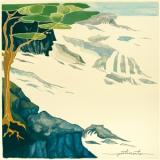
pen·ti·men·to - eine sichtbare Spur früherer Malerei unter einer oder mehreren Farbschichten auf einer Leinwand - frühes 20. Jahrhundert: aus dem Italienischen, wörtlich "Reue". Auf ihrem ersten Album seit "Still Life" (2022) bewegt sich Carson McHone an der Grenze ihrer musikalischen Vorstellungskraft und kanalisiert so unterschiedliche und überraschende Einflüsse wie Gitarrenrock, pastoralen Folk, Poesie, Feldaufnahmen, visuelle Kunst, Erinnerung, Familie und Landschaft zu ihrem bisher tiefgründigsten Werk. "Pentimento" ist ein kühnes und lohnendes Album. Es ist auch eine Abrechnung: Wie können Liebe und Schönheit in der Gegenwart von Brutalität existieren? Beunruhigend. Dissonant. Gegen ihren Schatten und mit ihre Spuren. Das ist es, was McHone und ihre Mitstreiter (zu denen Daniel Romano, Steve Lambke von den Constantines und andere gehören) auf "Pentimento" mit der Subtilität von Aquarellmalerei und dem Reichtum von Versen einfangen, mit Geisterstimmen und Kinderstimmen gleichermaßen. Jede Schicht ist ein Universum für sich und offenbart den Puls, der Carson McHones kreativen Antrieb belebt. Hier arrangiert und als Ganzes ausgedrückt, ist es ein Meisterwerk. "Alle Lieder von Pentimento entstanden als Gedichte vor dem Hintergrund globaler Krisen, nationaler Grenzen, ziviler Unruhen, Geburt, Tod, schlechter Liebe, neuer Liebe, wahrer Liebe. Sie wurden im Frühling und Sommer in der Wüste geschrieben. Dort werden Geschichte und Zeit in der Dramatik großer Felsbrocken sichtbar, in Schichten auf einer Felswand - das Potential und die vergangene Energie des alten Meeresbodens. Einige dieser Texte wurden auf Postkarten und in Briefen geschrieben. Andere entstanden als Verzierungen auf Aquarellbildern oder als Bildunterschriften für ein Foto in einem Tagebuch, oder sie wurden als Antworten am Rande eines Tagebuchs an ein neugeborenes Kind aus einer vergangenen Generation geschrieben. Diese "Artefakte" des Schreibens/Lebens gaben Aufschluss darüber, was schließlich zum Material für diese Aufnahmen wurde. Später, am Meer und während des ersten Schnees der Saison, kam eine besondere Gruppe von Musikern zusammen, um das Album zum Leben zu erwecken. Während die Hälfte der Songs nach einem strengen "Plan" aufgebaut wurde, kam die andere Hälfte bei dieser Gelegenheit zum ersten Mal zusammen und wurde an Ort und Stelle geprobt und live eingespielt. Über sechs Tage hinweg wurde alles auf einem 8-Spur-Bandgerät aufgenommen, einschließlich zufälliger Rückkopplungen, Bassdröhnen und spontanem Gelächter." - Carson McHone

In Guadeloupe, many people think that jazz and ka music are like a ring and a finger. To some extent, the same could be said about so called Latin music and the music played in the French West Indies.
Both aesthetics were born in the Caribbean and bear so many connections that they can easily be considered cousins. In constant dialogue, there are lots of examples of their fruitful alliance and have been for a while. The English country dance that used to be practiced in European lounges came to be called kadrille in Martinique and contradanza in Cuba. They both featured additional percussion instruments inherited from the transatlantic deportation. Drawing from shared feelings about the same traumatized identity – later to be creolized – it would be hard not to assume that they were meant to inspire each other. The golden age of the orchestras that graced the Pigalle nights during the interwar period further proves the point. As soon as the 1930s, Havana-born Don Barreto naturally mixed danzón and biguine music in a combo based at Melody's Bar. In the following decade, Félix Valvert, a conductor who was born and raised in Basse-Terre in Guadelupe, also worked wonders in Montparnasse with La Coupole, which was an orchestra made up of eclectic musicians. Afro- Caribbean performers of various origins were often hired on rhythm and brass sections in jazz bands, which used to enliven the typical French balls of the capital. In the 1930s and onwards, Rico’s Creole Band was one of them.
Martinican violinist-clarinettist Ernest Léardée, who would become the king of biguine music as well as the main figure of French Uncle Ben's TV commercials (a dark stigma of post-colonial stereotypes), had musicians from the whole Caribbean sphere play at his Bal Blomet – and they all enchanted "ces Zazous-là" (according the words of Léardée's biguine-calypso piece). In les Antilles (French for French West Indies), music history started to speed up in the 1950s, when trade expanded and radio stations grew bigger. The Guadelupean and Martiniquais youth tuned in their old galena radio sets to South American and Caribbean music. As for the women traders, les pacotilleuses, they bought and sold goods across different islands (the "passing of items through various hands" was thought to be most pleasurable) and brought back countless sounds in their luggage. Such was the case of Madame Balthazar, who once returned from Puerto Rico with the first 45rpm and 33rpm to ever enter Martinique.
Out of this adventure was created the famous Martinican label La Maison des Merengues, a music business she opened and undertook with her husband and which proved to be a major landmark. At the end of the 1950s, in Puerto Rico, Marius Cultier competed in the Piano International Contest playing a version of Monk's Round 'Midnight. He won the first prize and this distinction foreshadowed everything that was to come. Cultier, the heretic Monk of jazz, was quickly praised for writing superb melodies, always tinged with a twist that conferred a unique sound to his music. It didn't take long for the gifted self-taught musician to get to play with Los Cubanos, making a name for himself thanks to his impressive maestria on merengues.
The rest is history. Besides, in the late 1950s, Frantz Charles-Denis, born into the upper middle class in Saint-Pierre and better known by his first name Francisco, went back home after working at La Cabane Cubaine – a club located rue Fontaine where he had caught the Latin fever. Francisco's music was therefore heavily marked by his Cuban cousins' influence, which gave the combos he led a specific style and also led to renewal. Things were swinging hard in La Savane, located in the main square in Fort-de-France. He set up the Shango club close by and tested out the biguine lélé there, a new music formula spiced up with Latin rhythms. Soon afterwards, fate had him fly to Puerto Rico and Venezuela.
As for percussionist Henri Guédon (percussions were only a part of his many talents), he was born in Fort-de-France in May 22nd 1944, the day marking the celebration of the abolition of slavery. As an old man, he could remember that in " his father's Teppaz, a lot of hectic 6/8 music was constantly playing...". In the opening lines of his Lettre à Dizzy, a small illustrated collection of writings published by Del Arco, he highlighted the huge impact that cubop had on him as a teenage boy, around 1960. He eventually turned out to be the lider maximo in La Contesta, a big band steeped in Latin jazz. He was also the one who originated the word zouk to describe music which brought the sound of the New York barrio to Paris. It was the culmination of a journey that started in Sainte-Marie: "a mythical place for bélé, the equivalent of Cuban guaguancó". In the early 1960s, the tertiary economy developed to the detriment of agriculture. Yet rural life was where roots music emerged in Martinique and in Guadeloupe.
Record companies played a major part in the process of Latin versions sweeping across the islands – before reaching everywhere else. Producer Célini, boss of the great Aux Ondes label, and Marcel Mavounzy, both the head of Émeraude records - a firm which was founded in 1953 - as well as the brother of famous saxophonist Robert Mavounzy, were big names to bear in mind. Although there were many of them - all of whom are featured on this record - Henri Debs was definitely the major figure in the recording adventure. He proved to be so influential that he even got compared to Berry Gordy. In the mid 1950s, when he acquired his first Teppaz, he worked on his first compositions: a bolero and a chachacha. Then, he became the one man who made people discover Caribbean music, from calypso to merengue. He was among the first ones to rush out to San Juan, Puerto Rico, to buy records and distribute them through a store run by one of his brothers in Fort-de-France. He had members of the Fania All Star come and perform there, which he was madly proud about. He was also the first one to pay attention to Haitian music, such as compas direct and various other rhythms which would soon flood the market. As a result, many of the combos hitting his legendary studio would end up boosted by widespread "Afro-Latin" rhythms. However, he never denied his identity: gwo ka drums were given a major role, although they were instruments which had long been banned from the "official" music spheres. The present selection bears witness to such a creative swarming. Here are fourteen tracks of untimely yet unprecedented cross-fertilization: all types of music rooted in the Creole archipelago have found their way, whatsoever, to the tracklisting. Whether originating from the city or being more rural, they all go back to what Edouard Glissant, in an interview about the place of West Indian music in the Afro-American scope, called "the trace of singing, the one which got erased by slavery." "It is so in jazz, but also in reggae, calypso, biguine, salsa... This trace also manifests through the drums, whether Guadelupean, Dominican, Jamaican or Cuban... None of them being quite the same. They all point to the idea of a trace, seeking it out and connecting to each other through it. This is the hallmark of the African diaspora: its ability to create something new, in relation to itself, out of a trace. It may be the memory of a rhythm, the crafting of a drum, a means of expression which doesn't resort to an old language but to the modalities of it." The opening track features one of the emblematic orchestras of this aesthetic identity, criscrossing many music types from the archipelago. The 1974 Ray Barretto guajira – Ray Barretto was a major New York drummer influenced by Charlie Parker and Chano Pozzo – is magnificently performed by Malavoi, a legendary Fayolais group (i.e from Fort-de-France). Additionally, the compilation ends on a piece by Los Martiniqueños de Francisco. It symbolically closes the circle as it is a genuine potomitan of Martinique culture which also functions as a tireless campaigner for Afro-Caribbean music. Practicing the danmyé rounds (a kind of capoeiria) to the rhythm of the bèlè drum, it delivers a terrific Caterete, a kind of champeta of Afro- Colombian obedience which was originally composed by Colombian Fabián Ramón Veloz Fernández for the group Wgenda Kenya. The icing on the cake is Brazilian Marku Ribas, who found refuge in Martinique in the early 1970s, bringing his singing to the last trance-inducing track. These two "versions" convey the whole tone of a selection composed of rarities and classics of the tropicalized genre, swarming with tonic accents and convoluted rhythms. It is the sort of cocktail that the West Indians never failed to spice up with their own ingredients. For instance, the Los Caraïbes cover of Dónde, a famous Cuban theme composed by producer Ernesto Duarte Brito, has a typical violin and features renowned Martinique singer Joby Valente and his piquant voice.
The track used to be – or so we think – their only existing 45rpm. The meaningful Amor en chachachá by L'Ensemble Tropicana, a band which included Haitian musicians among whom was composer and leader Michel Desgrotte, also recalls how Latin music was pervasive in the tropics in the mid-1960s. They were the ones keeping people dancing at Le Cocoteraie in Guadelupe and La Bananeraie in Martinique. Around the same time, another "foreign" band, Congolese Freddy Mars N'Kounkou's Ryco Jazz, achieved some success on both islands by covering Latin jazz classics – such as their adaptation of Wachi Wara, a "soul sauce" by Dizzy Gillespie and Chano Pozo whose interweaving of strings and percussions can have anyone hit the dancefloor. How can you resist Dap Pinian indeed, a powerful guaguancó by Eugene Balthazar, performed by the Tropicana Orchestra and published by the Martinique-founded La Maison des Merengues? It also acts as a symbol of the maelstrom at work. Going by the name Paco et L'orchestre Cachunga, Roger Jaffory used to play guaguancó too: his Fania-inspired Oye mi consejo is one example of his style. Baila!!!!! Dancing was also one of the Kings' focus points. Oriza is a Puerto Rican bomba and a "classic" originally composed by Nuevayorquino trumpeter Ernie Agosto, which reserves major space for brasses, giving it a special sheen.
Emerging from the New York barrios crucible was also La Perfecta, a Martinique group originating from Trinidad, whose name directly references the totemic Eddie Palmieri figure as well as his own band, also called La Perfecta. Here they borrow Toumbadora from Colombian producer and composer Efraín Lancheros and interpret it by emphasizing percussions, which set fire to the track even more than the wind instruments. The same goes for Martinique's Super Jaguars, who use Tatalibaba – a composition by Cuban guitarist Florencio "Picolo" Santana which was made famous by Celia Cruz & La Sonora Matencera – as a pretext for sending their cadences into a frenzy. In a more typically salsa vein, the Super Combo, a famous Guadelupean orchestra from Pointe-Noire that was formed around the Desplan family and had Roger Plonquitte and Elie Bianay on board, adapt Serana, a theme by Roberto Angleró Pepín, a Puerto Rican composer, singer and musician also known for his song Soy Boricua. Here again, their vision comes close to surpassing the original. In the 1970s, L'Ensemble Abricot provided a handful of tracks of different syles, hence reaching the pinnacle of the art of achieving variety and giving pleasure. They played boleros, biguines, compas direct, guaguancó and even a good old boogaloo - the type they wanted to keep close to their hearts for ever, "pour toujours", as they sang along together in one of their songs. Léon Bertide's Martinican ensemble excelled at the boogaloo which had been composed by Puerto Rican saxophonist Hector Santos for the legendary El Gran Combo.
Three years later, in 1972, Henri Guédon, with the help of Paul Rosine on the vibraphone, tackled the Bilongo made famous by Eddie Palmieri. Such a classic!!!!! And so were the Aiglons, the band from Guadelupe: choosing to execute Pensando en tí, a composition by Dominican Aniceto Batista, on a cooler tempo than the original, they noticeably used a wonderfully (un)tuned keyboard in place of the accordion. On the high-value collectible single – the first one released by Les Aiglons under the Duli Disc label – there is a sticker classifying the track under the generic name "Afro". Now that is what we call a symbol. Jacques Denis

Anushka's third album Ancestry comes out on BBE Music as both digital and vinyl and represents a massive hitting of the duo's potential as songwriters, musicians and performers following their well received and critically acclaimed previous releases on Brownswood and Tru Thoughts respectively. Indeed Ancestry represents their best album to date and one which befits a release on one of the UK's (and the world's) premiere independent record labels. Anushka is the collaborative name for Victoria Port and Max Wheeler. The duo first met in the vibrant club, music and arts scenes in that creativity incubating south coast town that is Brighton.
With their first single, Yes Guess, gaining support from major broadcast influencers such as Gilles Peterson they released their debut album, Broken Circuit, in 2014. With major airplay support from Mary Anne Hobbs, Annie Mac, the aforementioned Gilles Peterson and others the second album Yemaya was released in 2021. On this second record they experimented with their sound, exploring darker and more complex songs and palettes. Both albums forged Anushka's sound and production values, combining a deep respect for the UK's electronic club culture mixed with Jazz and Soul. Now, with the release of Ancestry on BBE Music, the duo has created an album that furthers their sound, their songwriting, their arrangements and their production. Victoria's songwriting for Ancestry is influenced by her love of Ella Fitzgerald, Sampha, Jimmy Cliff and Georgia Anne Muldrow.
Max's approach to the production on Ancestry is driven by his own ancestral back catalogue of music from Moodymann and Theo Parrish and further back to Larry Heard, Wu Tang Clan and the 90's electronica of Tricky, Portishead and David Holmes. It definitely bears repeating that list of influences has resulted in Ancestry being Anushka's best album yet. Releasing on BBE Music, on both digital and vinyl formats, Ancestry is an album that is a must for lovers of the highly innovative, jazz and soul fuelled club sound that is part of the UK's contemporary music scene.


Rivet’s new album for Editions Mego is an uplifting and joyous affair coming in the wake of tragedy and disenchantment. It is yet another rebirth from an artist willing to take a step back and reprise the current situation he is in. Mika Hallbäck has a long credible history in the Swedish underground. First recognised for his industrial techno works under the Grovskopa moniker he worked privately on more experimental works that eventually came out as On Feather and Wire, an album released on Editions Mego in 2020. After much acclaim for this bold new direction that blended electronic abstraction, pop and industrial forms into a heavy synthetic trip two tragedies struck. One was the passing of label boss Peter Rehberg and then the passing of his dog Lilo, who was as close as a companion one could have. These events led to the release of the more unsettling follow up L+P-2 (Lilo and Pita minus two) on Midnight Shift Records in 2023. Peck Glamour sees Rivet return to the reawakened Editions Mego with an album of optimism inspired by reconciliation with loss and further explorations of new mental/sonic realms.
Hallbäck defines his approach as not being married to any particular machine, instrument, process or genre. However he holds a particular affinity to sampling, of which, he says, provides the dirt and grit amongst what would otherwise be pristine, generic machine music. The contemporary crate digging method of scouring obscure download music bogs for unique sounds was his preferred research practice.
Peck Glamour is an album full of tracks brimming with the excitement of exploration. It's the results of a mind informed by punk, industrial, techno, dancefloor, disappointment, trauma and rebirth. Here the synthetic and authentic is viewed simply as the same means of human rationale and expression.
The opening, ‘Catch Up to Light’, sets the scene with ecstatic and odd fluorescent vocals sliding amongst crystalline likembe whilst synths swirl amongst the external festivities. ‘Orbiting Empty Cocoon’ is somewhat a homage to the alien sound worlds of The Orb, one which takes the listener deeper into a mind melting array of teased potential as visual elements are executed in a mask of audio wizardry and euphoric staccato rhythms, the later being a nod to Singeli music. ‘Patitur Butcher’ is more dance frontal utilising the Ghatam drum and a YouTube rip of a Chinese language lesson. ‘Plastic Bag Putain’ was made during the beginning of Russia's invasion of Ukraine and should be clear of its intent. ‘All that Heaven Allows’ is a marimba cover of an imaginary Love Parade anthem. 'Kyrie Geire’ potentially briefly fills the void left by the demise of Coil. The entire trip of Peck Glamour is sewn up with ‘We left before we came’ whereby extraneous recordings of double bass player Gregory Vartian-Foss (tuning/strumming/moving the bass) are superimposed with local field recordings to create a gorgeous bed of sounds acting as an exciting exit music to this sharp collection of cinematic ear excursions.

Marja Ahti is a Swedish artist living in Turku, Finland. She works with found sounds, objects and electronics, creating auditory assemblages that reveal a profound sensitivity to sound’s tactile potential. This new record sees her palette expand to include more recognisable acoustic instrumentation, albeit working in collaboration with musicians who are already reconfiguring how those instruments can sound.
Touch This Fragrant Surface of Earth has its roots in a tape piece presented at Lampo in Chicago. Ahti then started working with Isak Hedtjärn (clarinet), Ryan Packard (percussion) and My Hellgren (cello) at the electronic music studios (EMS) in Stockholm. Incorporating recordings from those sessions, Ahti presented a new iteration of the work at the Seventh Edition Festival for Other Music in February 2024 with the trio performing live on stage whilst Ahti helmed the mixing desk, spatialising a specially made tape part through the INA GRM’s Acousmonium speaker orchestra. The piece has since gone through several further iterations before arriving at the version we have here on the LP's B-side where immense bass pressure and high frequency tones buffer restless amplified breath and scrape that folds over itself with extraordinary dynamics and subterranean activity before giving way to gorgeous resonant forms and passages of ritual purpose and sheer, unmistakeable beauty.
The A-side is Touch This Fragrant Surface of Earth’s gentle double. Still Life with Poppies, Mirror and Two Clouds offers a companion reconfiguration of Ahti’s resynthesised percussion sustain and the same recordings of Hedtjärn and Hellgren from EMS, but here they’re nestled in a sonic landscape of calm and restraint that gives them a wholly other character. Ahti also draws on older recordings she’d made of Sholto Dobie’s diy pipe organs and uses these to create repeating patterns and flourishes of sliding pitches that emerge unexpected out of cycling passages of Ahti’s clear struck metal, destabilising electronic interventions and minimal piano figures.
Marja Ahti: “I’ve been fascinated with the kind of elemental quality the sounds I'm using have such as airy sounds or earthy, wooden sounds. These qualities can also be found in wind instruments and percussion and the musicians I worked with on Touch This Fragrant Surface of Earth are really good at enhancing these qualities in their playing. I wanted to have this connection between found sounds, field recordings, or pre-recorded sounds, objects, and material, and see where these sounds might meet each other, and hopefully blend is a natural way without a divide between instrumental music, or acoustic music, or electronic music. But also, when you bring in people they come with their personalities and their ideas which is also energizing and brings surprising things into the collaboration that I couldn't come up with myself. I was really interested in making this a proper collaboration and not just coming up with the piece and giving it to them. We had the sessions at EMS where we could share ideas and Isak, Ryan and My could bring in their own ideas. Making recordings there gave me time to process these ideas and to also approach them in the same way that I would work with any other sound.”
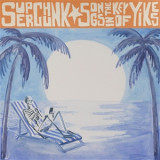
ORANGE & BLACK SWIRL VINYL[23,49 €]
"Songs in the Key of Yikes" ist ein typisches Superchunk-Album: viszeral und zeitlos und verdammt eingängig - ein kathartischer Balsam für diese bedrückenden Zeiten. "Bruised Lung" - "No Hope" - "Care Less" - "Climb the Walls" - "Everybody Dies". Wenn man die Trackliste von "Songs in the Key of Yikes" überfliegt, fragt man sich unweigerlich: Sind Superchunk okay? In einer Welt, die wohl düsterer ist als die, die "Wild Loneliness" (2022) oder "What a Time to Be Alive" (2018) begrüßte, geht es uns da überhaupt noch gut? "Es war schon immer so, dass jeder etwas durchmacht, von dem man vielleicht nichts weiß", bemerkt Mac McCaughan. "Das gilt derzeit mehr denn je - aber es ist auch so, dass wir alle gemeinsam etwas durchmachen. Angesichts dessen, was nützt Kunst und wo findet man Glück? (Spoiler-Alarm: Ich weiß es nicht.)" Auf der Suche nach einer Antwort entfesselt "Songs in the Key of Yikes" einen Sound, der triumphierend und hell in der Dunkelheit ist, "Majesty Shredding" im Overdrive. Die Lead-Single ,Is It Making You Feel Something" gibt früh den Ton an, wobei die Band - McCaughan, Laura Ballance, Jim Wilbur und Laura King - aus dem Potenzial für Freude eine Hymne baut und in schlammverschmutzte Gewässer taucht und mit einer Perle wieder hochkommt. "No Hope" ist ähnlich widerstandsfähig, McCaughans Texte zeichnen ein niederschmetterndes Bild, bevor sie in den titelgebenden Refrain übergehen. Er wiederholt den Satz neun Mal, macht eine Pause und verwandelt die Stimmung vollständig, indem er den Gesang mit der Zeile "and here we are singing" unterbricht. Der Text ist scharf, gleichzeitig eine einfache Beobachtung und eine tiefgründige Aussage über das Sein, die erdrückenden Nächte und endlosen Tage, aber McCaughans Stimme findet eine gewisse Süße darin, durchgehalten zu haben und dies auch weiterhin zu tun. Paradoxerweise grenzt die Energie von "Songs in the Key of Yikes" an Euphorie und bricht manchmal sogar in sie aus, wie in "Stuck in a Dream", das wie eine oasenartige Fata Morgana zwischen "Everybody Dies" und "Train on Fire" auftaucht, ein voller Sprint, der die Menge begeistert und sich zum Pogen im Pit eignet. "Care Less" ist ein düsterer, komischer Spiegel dieser Energie, ein Garage-Jam, in dem ein scharfzüngiger McCaughan Zuflucht vor dem Sturm sucht, indem er so tut, als würde er nicht direkt vor seiner Tür toben. Diese Strategie funktioniert nicht. Natürlich funktioniert sie nicht. Es ist ein Song auf einem Superchunk-Album, und Superchunk-Alben sind Argumente gegen Engstirnigkeit und für Partys, die groß genug sind, um alle zu beherbergen. Dieses Album begrüßt nicht nur Laura King nach zwei Jahren als Tour-Schlagzeugerin in der Band, sondern enthält auch Beiträge von Rosali Middleman ("Bruised Lung" und "Everybody Dies"), Bella Quinlan und Holly Thomas von Quivers ("Cue") und der Tour-Bassistin Betsy Wright ("Care Less"). Das Album wurde von Paul Voran (The Menzingers, Hurray for the Riff Raff) und Eli Webb produziert und von Mike Montgomery (The Breeders, Protomartyr) gemischt. Gemeinsam kommen sie zu keinem Ergebnis darüber, was gute Kunst in Krisenzeiten ausmacht und schaffen gleichzeitig großartige Kunst.
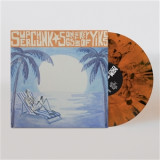
"Songs in the Key of Yikes" ist ein typisches Superchunk-Album: viszeral und zeitlos und verdammt eingängig - ein kathartischer Balsam für diese bedrückenden Zeiten. "Bruised Lung" - "No Hope" - "Care Less" - "Climb the Walls" - "Everybody Dies". Wenn man die Trackliste von "Songs in the Key of Yikes" überfliegt, fragt man sich unweigerlich: Sind Superchunk okay? In einer Welt, die wohl düsterer ist als die, die "Wild Loneliness" (2022) oder "What a Time to Be Alive" (2018) begrüßte, geht es uns da überhaupt noch gut? "Es war schon immer so, dass jeder etwas durchmacht, von dem man vielleicht nichts weiß", bemerkt Mac McCaughan. "Das gilt derzeit mehr denn je - aber es ist auch so, dass wir alle gemeinsam etwas durchmachen. Angesichts dessen, was nützt Kunst und wo findet man Glück? (Spoiler-Alarm: Ich weiß es nicht.)" Auf der Suche nach einer Antwort entfesselt "Songs in the Key of Yikes" einen Sound, der triumphierend und hell in der Dunkelheit ist, "Majesty Shredding" im Overdrive. Die Lead-Single ,Is It Making You Feel Something" gibt früh den Ton an, wobei die Band - McCaughan, Laura Ballance, Jim Wilbur und Laura King - aus dem Potenzial für Freude eine Hymne baut und in schlammverschmutzte Gewässer taucht und mit einer Perle wieder hochkommt. "No Hope" ist ähnlich widerstandsfähig, McCaughans Texte zeichnen ein niederschmetterndes Bild, bevor sie in den titelgebenden Refrain übergehen. Er wiederholt den Satz neun Mal, macht eine Pause und verwandelt die Stimmung vollständig, indem er den Gesang mit der Zeile "and here we are singing" unterbricht. Der Text ist scharf, gleichzeitig eine einfache Beobachtung und eine tiefgründige Aussage über das Sein, die erdrückenden Nächte und endlosen Tage, aber McCaughans Stimme findet eine gewisse Süße darin, durchgehalten zu haben und dies auch weiterhin zu tun. Paradoxerweise grenzt die Energie von "Songs in the Key of Yikes" an Euphorie und bricht manchmal sogar in sie aus, wie in "Stuck in a Dream", das wie eine oasenartige Fata Morgana zwischen "Everybody Dies" und "Train on Fire" auftaucht, ein voller Sprint, der die Menge begeistert und sich zum Pogen im Pit eignet. "Care Less" ist ein düsterer, komischer Spiegel dieser Energie, ein Garage-Jam, in dem ein scharfzüngiger McCaughan Zuflucht vor dem Sturm sucht, indem er so tut, als würde er nicht direkt vor seiner Tür toben. Diese Strategie funktioniert nicht. Natürlich funktioniert sie nicht. Es ist ein Song auf einem Superchunk-Album, und Superchunk-Alben sind Argumente gegen Engstirnigkeit und für Partys, die groß genug sind, um alle zu beherbergen. Dieses Album begrüßt nicht nur Laura King nach zwei Jahren als Tour-Schlagzeugerin in der Band, sondern enthält auch Beiträge von Rosali Middleman ("Bruised Lung" und "Everybody Dies"), Bella Quinlan und Holly Thomas von Quivers ("Cue") und der Tour-Bassistin Betsy Wright ("Care Less"). Das Album wurde von Paul Voran (The Menzingers, Hurray for the Riff Raff) und Eli Webb produziert und von Mike Montgomery (The Breeders, Protomartyr) gemischt. Gemeinsam kommen sie zu keinem Ergebnis darüber, was gute Kunst in Krisenzeiten ausmacht und schaffen gleichzeitig großartige Kunst.

Chickasha, Oklahoma is not a place known for producing a lot of original proto-punk bands. In fact, there is, to our knowledge, only one: Debris'. Formed in 1975 by bassist Chuck Ivey, guitarist Oliver "Rectomo" Powers and drummer Johnny Gregg, the trio created some of the most art-damaged outsider rock 'n' roll this side of MX-80 Sound.
When a local studio offered the package deal of ten hours for recording and mixing as well as pressing 1,000 LPs and two-color jackets, Debris' came in well-rehearsed – nailing all eleven of their songs in just one take. In April 1976, the same month as Ramones' debut album, Debris' would release their lone record onto the world.
Opener "One Way Spit" could easily be mistaken for a lost KBD single – from Chuck's bizarre count-in to the band's trashy start-stop rhythms, unfurling a Dadaist flag around Johnny's visceral vocals. On "Tricia," a reference to the then-current Patty Hearst trial, Oliver's gruesome groans are sardonically juxtaposed with an electric saw. These LSD-tinged tunes are a potent mix of Beefheart-ian controlled chaos and the genuinely weird avant-rock associated with the mid-'70s Cleveland scene.
Enhanced by analog synthesizers and electronic effects, the album sounds like Eno-era Roxy Music or Stooges' Fun House buried deep in the red Oklahoma dirt. While punk would spark a handful of bands who boldly straddled the line between the primal and the experimental, the relatively unsung Debris' were one of the first to do so.
Debris' had a standing invitation to play New York at Max's Kansas City and CBGB in 1976, although they never made it out of Oklahoma. The private-press edition of their self-titled album (also known as Static Disposal, which was actually the label name printed on the original front cover) has since become a collector's item and is even namechecked on the infamous NWW list.
"Songs in the Key of Yikes" ist ein typisches Superchunk-Album: viszeral und zeitlos und verdammt eingängig - ein kathartischer Balsam für diese bedrückenden Zeiten. "Bruised Lung" - "No Hope" - "Care Less" - "Climb the Walls" - "Everybody Dies". Wenn man die Trackliste von "Songs in the Key of Yikes" überfliegt, fragt man sich unweigerlich: Sind Superchunk okay? In einer Welt, die wohl düsterer ist als die, die "Wild Loneliness" (2022) oder "What a Time to Be Alive" (2018) begrüßte, geht es uns da überhaupt noch gut? "Es war schon immer so, dass jeder etwas durchmacht, von dem man vielleicht nichts weiß", bemerkt Mac McCaughan. "Das gilt derzeit mehr denn je - aber es ist auch so, dass wir alle gemeinsam etwas durchmachen. Angesichts dessen, was nützt Kunst und wo findet man Glück? (Spoiler-Alarm: Ich weiß es nicht.)" Auf der Suche nach einer Antwort entfesselt "Songs in the Key of Yikes" einen Sound, der triumphierend und hell in der Dunkelheit ist, "Majesty Shredding" im Overdrive. Die Lead-Single ,Is It Making You Feel Something" gibt früh den Ton an, wobei die Band - McCaughan, Laura Ballance, Jim Wilbur und Laura King - aus dem Potenzial für Freude eine Hymne baut und in schlammverschmutzte Gewässer taucht und mit einer Perle wieder hochkommt. "No Hope" ist ähnlich widerstandsfähig, McCaughans Texte zeichnen ein niederschmetterndes Bild, bevor sie in den titelgebenden Refrain übergehen. Er wiederholt den Satz neun Mal, macht eine Pause und verwandelt die Stimmung vollständig, indem er den Gesang mit der Zeile "and here we are singing" unterbricht. Der Text ist scharf, gleichzeitig eine einfache Beobachtung und eine tiefgründige Aussage über das Sein, die erdrückenden Nächte und endlosen Tage, aber McCaughans Stimme findet eine gewisse Süße darin, durchgehalten zu haben und dies auch weiterhin zu tun. Paradoxerweise grenzt die Energie von "Songs in the Key of Yikes" an Euphorie und bricht manchmal sogar in sie aus, wie in "Stuck in a Dream", das wie eine oasenartige Fata Morgana zwischen "Everybody Dies" und "Train on Fire" auftaucht, ein voller Sprint, der die Menge begeistert und sich zum Pogen im Pit eignet. "Care Less" ist ein düsterer, komischer Spiegel dieser Energie, ein Garage-Jam, in dem ein scharfzüngiger McCaughan Zuflucht vor dem Sturm sucht, indem er so tut, als würde er nicht direkt vor seiner Tür toben. Diese Strategie funktioniert nicht. Natürlich funktioniert sie nicht. Es ist ein Song auf einem Superchunk-Album, und Superchunk-Alben sind Argumente gegen Engstirnigkeit und für Partys, die groß genug sind, um alle zu beherbergen. Dieses Album begrüßt nicht nur Laura King nach zwei Jahren als Tour-Schlagzeugerin in der Band, sondern enthält auch Beiträge von Rosali Middleman ("Bruised Lung" und "Everybody Dies"), Bella Quinlan und Holly Thomas von Quivers ("Cue") und der Tour-Bassistin Betsy Wright ("Care Less"). Das Album wurde von Paul Voran (The Menzingers, Hurray for the Riff Raff) und Eli Webb produziert und von Mike Montgomery (The Breeders, Protomartyr) gemischt. Gemeinsam kommen sie zu keinem Ergebnis darüber, was gute Kunst in Krisenzeiten ausmacht und schaffen gleichzeitig großartige Kunst.

SEAWEED GREEN VINYL[22,27 €]
Old-time and traditional music stay exciting for their contrasts. Exacting instrumentation honed through mentorships and late-night jams at fiddler's conventions tangles with a community-sourced inventiveness that influences variants and new sounds. Joseph Decosimo is a master of this genre for this very reason, blending deep technique with an openness and curiosity that keep his music crackling with life. A "marvelous fiddler" (No Depression) and banjo player who braids "exultation and veneration" (INDY Week) into his music, on his third solo album Fiery Gizzard Decosimo gathers a close-knit ensemble of friends from his musical career to infuse his interpretations of fiddle and banjo pieces with a contagious communal joy. As an artist working with traditional music from the South and Appalachia, Decosimo chooses songs based not only on historical significance and lineage but also his own sensory approach. For Fiery Gizzard, his ear was tuned to otherworldly tones and mystery, sourcing from field recordings such as Virginia fiddler Luther Davis' hypnotic version of "Shady Grove" while amping up the music's psychedelic potential. On the middle Tennessee banjo composition "Flowery Girls," a VHS of bluesman Abner Jay inspired Decosimo to rig up a pickup inside a fretless banjo and play it thr ough a tube amp to capture some of Jay's edge and funkiness. But to round out the sound and keep it kinetic meant galvanizing a genre-eschewing crew to jam out - and not in a "spaced-out drooly" kind of way, he laughs, but as a sort of "responsive conversation." Decosimo has always been a community-minded artist. He began playing as a seventh graderin Tennessee, fostering relationships with older players at jams and in homes, a learning mode natural to his inquisitive nature and desire for musical connection. A folklorist by intuition, he later became one by profession, studying with old-time legend Clyde Davenport, teaching in East Tennessee State University's renowned bluegrass program, and receiving his PhD at the University of North Carolina with a dissertation titled "Catching the `Wild Note': Listening, Learning, and Connoisseurship in Old-Time Music." In North Carolina, Decosimo kicked about in the verdant environment of Durham and Chapel Hill's folk and indie scenes, collaborating with artists including Alice Gerrard, Hiss Golden Messenger, and Jake Xerxes Fussell. This community has influenced his own music, including his "sublime and strangely heartening" (Bandcamp Daily) 2022 release While You Were Slumbering and Beehive Cathedral, Decosimo's 2024 "Appalachian mountain music treasury" (New Commute) trio album with Luke Richardson and Cleek Schrey for Dear Life Records. Continuing on this path, Fiery Gizzard is home base for a loose outfit of mostly Tarheel-based musicians from within and beyond traditional music. Inspired by a tour with fiddler Stephanie Coleman (Nora Brown), guitarist Jay Hammond, and synth builder and multi-instrumentalist Matthew O'Connell, Decosimo assembled studiomates based on close friendships and comfort. Coleman, O'Connell, and Hammond contribute to Fiery Gizzard, along with bassist and producer Andy Stack (Helado Negro, Wye Oak), horn player Kelly Pratt (Beirut, David Byrne), Mipso and Fust's Libby Rodenbough, Joseph O'Connell (Elephant Micah), andtrad/experimental artist Cleek Schrey. Decosimo's fiddle and banjo work is virtuosic, intricate and simple simultaneously, a testament to his many years of study. On some tracks, his playing or lovely, plain-hearted singing is the centerpiece, such as on his interpretations of Texan street preacher Washington Phillips' 1929 recording "I Had a Good Father and Mother" or the Eastern Kentucky fiddle barn-burner "Glory in the Meetinghouse," famously played by Luther Strong for Alan Lomax. But there's also a trusting open-door policy, like where Southern Appalachian tune "Ida Red" relaxes into Coleman's sweet, confident fiddling and Hammond's loping guitar. As a bandleader, Decosimo's confidence and enthusiasm for the music reveal the heart of traditional music and how it can come to life through community. Fiery Gizzard is Joseph Decosimo as a powerful champion of traditional music - a sponge who soaks up as much as he squeezes out, a responsive artist who makes his genre accessible, and a magnet who can bring musicians of all sorts into his orbit with his same passion.

Clear Vinyl. While Jamie Saft has been a significant presence on previous RareNoise recordings by Slobber Pup, Plymouth and Metallic Taste of Blood, the renegade keyboardist and essential Downtown improviser steps into a dramatically different role on The New Standard. A collaborative trio outing featuring the dream rhythm tandem of drummer Bobby Previte and bassist Steve Swallow, both prolific composers and venerable bandleaders in their own right, it showcases Saft alternating between piano and organ and making thoughtful, melodic contributions throughout. The album is the result of a magical recording and direct mixing session in Saft's own Pottervilles Studios, masterfully setup and captured by 5 - Time Grammy winning engineer Joe Ferla, who is regarded as the fourth member of the band for this remarkably empathetic endeavour. Ferla recorded everything analog direct to two-track 1/2" tape through a Neve console. On ten original tracks, seven of which the keyboardist composed, Saft blends brilliantly with his esteemed elders on this remarkable RareNoise release.

Emotional Especial reaches a landmark with its 50th release. Started in 2012 as a “dancier & trippier”, club friendly spin off, sub label to Emotional Response, it has gone on to forge a path, releasing a myriad of artists including the opening release by Jamie Paton (Cage & Aviary / ESP Institute) to Richard Sen (Bronx Dogs), the debut of Khidja (Malka Tuti / DFA) and on to unearthing the breaks masters Alphonse (Klasse Wrecks) and Junior Fairplay (Crimes Of The Future), the uplifting Italo influenced Lauer (Robert Johnson), the new wave anthem of Sfire (featuring Sophie), plus perfect remixes bt Kris Baha (CockTail D’amore) and INHALT (Dark Entries), the NYC pop-rave-vox of Kim Ann Foxman, through to showcasing upcoming artists like Berlin’s Giraffi Dog (Aiwo Recs) and the global acid adventures of Akio Nagase (Chill Mountain) to most recently, the slo-mo trance muscle of 53X and post-rave uplighters of Remotif (Space Lab) and DJ 1985.
As with every 10th release on the label, the label present a various artists “Showcase” of what and where the label is. Aptly it is recent signing 53X who opens Gracias Especial with the bounce of Radar. Finland’s Jonne Lydén debut EP on Especial, Zen ’23 came out of nowhere, more than simply riding a zeitgeist of the “Trance Revival”, his all-live analogue symphonies drop the bpms, presenting widescreen beats, darkroom bass, sirens and tripped out vox all mix to propel a singularly driven.
Taking things much deeper has been the hallmark of Jamie Paton’s remixes for the label. As well as providing the opening EP in 2013, designing every sleeve and producing 20 remixes and counting another 2 for the label here, it’s impossible not to associate Especial with Jamie’s music. First, he reworks rising star DJ, but recent break out producer Chez De Milo, with a trademark dub excursion that takes the ethnic origins of Kremer to a space echo wonderland. Space is the place, the lulling beats, see you falling through the gaps, true dub style.
Alphonse makes a rightful return to Especial, with Raze Rave highlighting the allusive producers’ unique understanding of the varied history of rave culture via a techno-suite of soundscapes, perfectly mixing uplifting breaks, memory inducing vocal samples and dub bass, with a nod to the pop sensibility that rave encompassed, while being that allusive “lost chord” moment of man and machine.
The finale returns to the trance acid expanse of 53X, with the mastery of label stalwart Jamie Paton. An apt marriage, Paton takes the title cut from Lydén’s debut EP and crafts a trademark durge-dub, where TB303 and space echo intertwine with the De Witte vocal, hinting at touches of dub, new wave, trance and acid house all in one melting pot of sound the label optimistically termed “Protoid” back at inception of summer 2013.

“Rob wanted the world of The Northman to feel harsh and uncomfortable, and for everything to feel like it was caked in mud and dry blood, so it was crucial for the score to mirror that.” Composers Robin Carolan (Tri-Angle Records) and Sebastian Gainsborough (Vessel) were given a task of epic proportions when director Rob Eggers (The VVitch, The Lighthouse) asked them to create the score for his ambitious and highly anticipated new film The Northman, releasing on April 22nd. They needed to make a score that both honored the immense research that had gone into the authenticity of this Viking era period piece and complimented the cinematic maximalism of the film for a modern audience. The artists stretched themselves to the depths of their creativity and the resulting album is a gorgeous sonic tableaux that places the listener right in the center of the film.
While arranging the score the composers consulted musician and ethnographer Poul Høxbro for inspiration and insight into the history of Viking music. Having backgrounds in left field electronic music, Robin and Sebastian felt liberated by the constraint of using a small selection of musical tools for this piece. “Electronic music has almost limitless potential when it comes to making sounds and that’s obviously an incredible thing, but you can also go down the wormhole and get lost in it sometimes. There’s no risk of that happening when you only have a few primary instruments to draw upon.” Robin remarked.
They utilized traditional instruments such as the tagelharpa, langspil, kravik lyre, and säckpip to build the cinematic world of The Northman but they also took creative freedoms in adding instruments likes drums, which some academics believe wouldn’t have played a big part in Viking musical culture, simply due to the lack of archaeological evidence of actual drums. “One of the pieces we wrote was intended to emulate the sound of a bullroarer; an ancient instrument used in sacred rituals or in battle to intimidate enemies. It makes a really disorienting roaring vibrato sound and low frequencies capable of traveling insane distances.” Robin says when asked about one of the more unique aspects of the score. Everyone involved put so much effort into both their research and their creativity and this richness is evident in every track. The album as a whole is a cinematic masterpiece of sound and ambiance, both gorgeous and disturbing, like the film it so beautifully accompanies.

KEY FEATURES
• 2+1 Mixing channels
• 1 MICRO input
• 2 PHONO inputs
• 3 LINE inputs
• Master Output (HOUSE) on XLR and RCA connectors
• Booth Output on RCA connectors
• 6.3mm Jack and 3.5mm mini-jack Headphone Monitor Outputs
• 3 band full cut EQ for main channels and 2 band full cut EQ for MICRO/LINE channel
• 3 bands isolator (300Hz and 4KHz, -∞/+12dB, 4th order 24dB/oct )
• Maximum Output without distortions: 21dBV (23dBu)
• Mechanized from a solid block of aluminum knob, without visible screw. Ecler Unique design
• Alps Blue Velvet Potentiometers
• FX Send control and Pre/Post fader selector
• Screen-printed faceplate by selective anodizing
• Wooden side panels included
Audio Performances
Inputs Sensitivity nom/Impedance:
—
LINE : 0dBV/50kΩ
PHONO : -40dBV/50kΩ
MICRO : -50dBV/>1kΩ
FX RETURN : 0dBV/>6kΩ
Outputs Level/Minimum Load:
—
HOUSE (BAL) : 0dBV/600Ω 1V *(+12dB 4V)
HOUSE (UNBAL) : 0dBV/2.2kΩ 1V *(+12dB 4V)
BOOTH (UNBAL) : 0dBV/2.2kΩ 1V *(+12dB 4V)
REC : 0dBV/10kΩ
HEADPHONES : 200mΩ/200Ω THD 1%
FX SEND : 0dBV/2.2kΩ
Frequency Response:
—
LINE : 10Hz÷30kHz -1dB
MICRO : 10Hz÷25kHz -1dB
PHONO : RIAA ±0.5dB
FX RETURN : 10Hz÷50kHz -1dB
THD-N:
—
LINE : 70dB @ 1kHz
Signal Noise Ratio:
—
LINE : >99dB
MICRO : >85dB
PHONO : >98dB
FX RETURN : >100dB
Max Undistorted Output Level:
—
HOUSE (Electr.BAL) : 21dBV (23dBu)
HOUSE (UNBAL) : 21dBV (23dBu)
BOOTH (UNBAL) : 21dBV (23dBu)
Trim control:
—
INPUTS 1-2 : ± 15dB
INPUT 3 : ± 20dB
Tone control Inputs 1-2:
—
BASS : +10/-30dB
MID : +10/-25dB
TREBLE : +10/-30dB
Tone control Input 3:
—
BASS : ± 15dB
TREBLE : ± 15dB
Tone control Isolator:
—
BASS : +12/-70dB
MID : +12/-40dB
TREBLE : +12/-70dB
Tone Filter cut frequency at -6dB (slope 12dB/oct):
—
BASS : 200Hz
MID : 200Hz÷6.8kHz
TREBLE : 6.8kHz
Isolator cut frequency at -6dB (slope 24dB/oct):
—
BASS : 300Hz
MID : 300Hz÷4kHz
TREBLE : 4kHz

Congratulations, Electro connoisseur! You are about to enter the Electrifying Dojo. A place where Sifu pdqb and Sensei Rolando teach a transcendental, one-of-a-kind neo-futuristic martial art that does not use hands but something far more delicate and powerful: MUSIC.
Blending martial discipline with the art of electronic music is something deeper, something that no words can properly describe. The skills you will be taught here are feeling music, embodying it. pdqb and Rolando believe that true harmony comes when the mind, body, and soul are united in the sounds that vibrate through the air.
The sounds of this first lesson are soft at first, almost imperceptible. But then they grow into a delicate, trembling melody that fills the room with an emotion that is difficult to place. It isn’t sadness, nor is it joy, but something in between. The more you listen, the more you will be aware of something strange: tears will fall gently, silently. They are not forced, nor are they out of sorrow - it is simply because the music feels so beautiful. Your deepest emotions will be triggered, every note will carry out an old truth, a secret truth, buried deep in your heart.
Another quality drop from Synaptic Cliffs. 4 dark and beautiful signature-style Electrocognition journeys from pdqb, playful with a modern twist while still remaining loyal to its roots. And on the flipside: two stunning, classic Rolando remixes, each with the potential to be the crowning moment in the club.

Nach 6 jähriger Pause ist die Rockband Heisskalt wieder zurück. Dass die Fans das sehnsüchtig erwartet haben, merkt man nicht nur an den
Streamingzahlen, die in 6 Jahren Inaktivität beständig hoch waren, sondern auch an der kürzlichen Ankündigung der ersten Tour, die innerhalb
kürzester Zeit zu großen Teilen ausverkauft war und hochverlegt wurde.
Die Single "Wasser, Luft und Licht", mit der Heisskalt ihr kommendes Album "Vom Tun und Lassen" ankündigen, lässt keine Fragen offen und lädt mit
großem Ohrwurm-Potenzial direkt zum Tanzen ein. Doch wie es typisch ist für die Band, die zu den einflussreichten der letzten 10 Jahre im Deutschen
Band-Markt gehört, steckt dahinter auch eine tiefere Message:
"Es geht um einen Prozess des sich Gewahr werdens, dass alles irgendwie doch eins ist, auch wenn es für uns einfacher scheint, zu trennen und
voneinander zu unterscheiden. Wir atmen alle die selbe Atmosphäre, trinken das selbe Wasser, wärmen uns am selben Licht. Wenn wir uns als Teil
dessen erkennen, dann ist das ganz schön friedlich. Und es braucht Frieden."

ANNE & SERA J return for the second edition of their Symbiosis series on Mutual Rytm.
ANNE, known for potent techno on the likes of Soma and Hardgroove, and Nechto and Life In Patterns associate Sera J, have had standout years that have seen them put out a stream of essential club tracks. They are partners in both life and music, and the first volume of 'Symbiosis' on SHDW's Mutual Rytm imprint was their first release together. Delivering an honest representation of their innermost feelings, having also contributed to the label's 'Federation Of Rytm III' VA in February, this new six-track EP (plus bonus cuts) presents a 'mature and refined connection between their souls'.
The second instalment of 'Symbiosis' reflects not only their deep personal connection, but also their collaborative synergy as musical peers with the same goals. The EP captures the essence of their mutual artistic journey and showcases the strength of their bond both in life and through their shared creative vision - to create a storyline through sounds coming from their souls and convey a narrative that many listeners may find relatable.
SERA J kicks off with the lithe and melodically elegant techno of 'Your Soul Is Art' which will have both heart and heels dancing. 'Illusions' is a more heavy and dubby cut with paired back grooves and pulsing synths, while 'Glacial Pace' is an urgent deep techno roller with turbocharged stabs and huge icy hi hats locking you into a trance.
ANNE steps up on the B-side with 'Floating Waves' exploring physical, chunky drum funk and raw synth textures. 'Planetary Dust' is a dark and moody astral techno journey to the stars, before 'Sweet Seventeen' brings a more melodic cut with a sense of hope and joy in the bright pads that shimmer above the glitchy grooves.
Both artists also offer two digital bonus cuts with SERA J's 'Syncrosonix' and 'Space Velocity' delivering perfectly reduced minimal techno monsters, while ANNE's 'Gentle Loop' and 'Starburst' are interplanetary trips with widescreen cosmic synths.

A genuine lost gem of late psychedelia/very early progressive which has lain slumbering on a couple of ancient reel to reel tapes and a single 7” Acetate in an attic since 1971. Lead track Spare Time is a sublime, insouciant garage psych classic at the Open Mind/ Magic Potion level, with DR Hooker vibes on the vocals: from there the album goes on a trippy sonic voyage of light and shade, never losing an innate sense of melody, dreamy vocals, garage organ, lots and lots of distorted, unhinged guitar and featuring a blowtorch live cover of Better By You Better Than Me. No moment wasted here and the last track a magical surprise! 227 released copies in Fully Laminated sleeve that features the original artwork for The Moon of Gomrath. Printed Inner and Insert. Barcodes on Stickers, No Shrink-wrap.

Novoa/Kamaguchi/Cleaver Trio Delivers Electrifying Second Volume
A Bold, Experimental Fusion of Density and Dialogue
"The wait is over. If you’ve been holding your breath since hearing Novoa/Kamaguchi/Cleaver Trio, Vol. 1, it is time to let it out. Vol. 2 is almost here! The group has returned to 577 Records once more, serving a heaping second helping of addictive musical brilliance that comes out in May.
Even The Wire magazine celebrated the trio's first album, calling it “a deep and thoughtful release” – and Vol. 2 is no different. Eva Novoa is the Barcelona-born pianist/composer taking the world by storm with her creativity and talent. And she is back to wow us again on the piano, Fender Rhodes, Chinese gongs, and a little whistling.
To complete the trio, she chose her longtime comrade and collaborator of some fifteen years, bassist Masa Kamaguchi, and Detroit drum wizard Gerald Cleaver. The group has performed live in NYC since 2017. They made their first record (Vol. 1) with 577 Records in 2024. Their highly anticipated Vol. 2 marks Eva's fourth album with the label.
In their upcoming release, Novoa steers the trio through elegant experimentation of its full potential, confidently grasping golden threads from great masters of music to shape her own melodic universe. The multi-instrumentalist says it’s where melodic density meets contrapuntal dialogue, a free interplay of rich textures and riveting, masterly improvisation. This smooth complexity is what gives rise to the group’s uniqueness.
Like Vol. 1, the album cover art features the work of Novoa’s friend and collaborator, popular street photographer Richard Sandler."
Eva Novoa - Piano, Fender Rhodes, Chinese Gongs & Whistling.
Masa Kamaguchi - Bass.
Gerald Cleaver - Drums.
Recorded on January 19, 2020 at Oktaven Audio, Mount Vernon, NY by Jeremy Loucas.
Mixed and mastered by Jeremy Loucas at Sear Sound, New York City.
Photography by Richard Sandler.
Graphic design by Sergio Vezzali.
Graphic support by Mark Smith.

Black[25,17 €]
Mr Bongo proudly presents Ritmo Italiano ‘Unspoken Sounds of Italian Tamburo’ a captivating compilation of percussive-driven, Italian gems curated by Sardinian multi-instrumentalist, percussionist and producer, Gabriele Poso. A journey into the heart of Italian musical history, it celebrates Italy’s rich rhythmic traditions, showcasing a selection of genre-traversing, Italian treasures from the ‘60s to the early ‘90s. Honouring the timeless rhythms of Italian percussion masters, alongside a brand-new exclusive composition by Gabriele, ‘Ritmo Italiano’ shines a light on the universal, primal language of the drum.
A connection sparked from an early age; percussion has always deeply resonated with Gabriele. It led to years of studying percussion traditions across Cuba, Puerto Rico, and Brazil, crafting his own songwriting skills in the process. An acclaimed producer and compiler, his releases on Yoruba Records, BBE and Soundway Records have garnered global support. Yet a growing need to rediscover the essence of his country’s cultural heritage laid the foundations for this new compilation.
In Gabriele’s own words, “Italy has always been a crossroads of civilizations, with influences from the Mediterranean, North Africa, the Middle East, and Europe converging over centuries. Ports like Naples, Genoa, and Venice played a crucial role as gateways for musical exchange, a melting pot of sounds and cultures brought by sailors, merchants and travellers. These influences blended with Italy’s own folk and religious traditions, creating Italy’s unique and emotionally resonant rhythms.”
Across the 12 absorbing tracks, there’s jazz influences, Italian library music aesthetics and experimental beats mixing with Afro-Cuban and Mediterranean rhythms. It’s a broad selection anchored by the drums. The synth-heavy, ‘80s jazz funk flavours of Gegè Munari's ‘Police Man’, sit side-by-side with the samba-infused ‘Napulitano D' 'O Brasil’ by Don Marino Barreto Jr. Tribal, earthly energy radiates from Naco’s ‘Volando Con Milton’, with Tullio De Piscopo serving up cosmic disco brilliance, and blistering jazz funk mastery coming courtesy of Agostino Marangolo. Taking the name of the compilation, a new original track by Gabriele, ‘Ritmo Italiano’, blends traditional rhythms with contemporary energy, Afro-Latin influences with Italian jazz essence. Recorded live in one take, it captures a raw, unfiltered vibe.
“Each track tells a story, connecting the past with the present, and highlighting the deep-rooted traditions that shape Italy’s rhythms. The collection also offers a glimpse into the diversity of Italian music with a variety of styles from the organic, earthy beats to the more experimental and modern takes on traditional rhythms. It’s a reflection of how these rhythms have not only shaped Italian culture but also influenced global music.”

Cassette[14,08 €]
Smut - die Band aus Chicago, bestehend aus Sängerin/Texterin Tay Roebuck, Gitarrist Andie Min, Bassist John Steiner, Gitarrist Sam Ruschman und Schlagzeuger Aidan O'Connor - hat neue Energie getankt und sich auf das grenzenlose Potenzial besonnen, das entsteht, wenn man mit Menschen, die man liebt, Musik macht. In neuer Besetzung - "Tomorrow Comes Crashing" ist das erste Album von Smut mit O'Connor und Steiner - konzentrierten sich Smut darauf, die großen Gefühle einzufangen, die entstehen, wenn man sich zum ersten Mal in Musik verliebt. Das Ergebnis sind zehn intensive und bombastische Songs. Roebuck, Ruschman und Min gründeten die Band ein Jahrzehnt zuvor in Cincinnati, Ohio. Nach Jahren in der DIY-Szene von Cincinnati nahmen sie ihr Debütalbum "How the Light Felt" auf, das eine Offenbarung war. Pitchfork beschrieb es als "eine rigorose, Jahrzehnte umspannende Studie" und eine "gut geölte Drehung des Gitarrenpops der späten 80er". Under the Radar nannte es "Pop-Perfektion", die "subtile Haken mit wehmütigen Texten verbindet". "Tomorrow Comes Crashing" zeigt die Band mit neuem Elan. Der Song "Syd Sweeney", inspiriert von der Schauspielerin, ist das Herzstück der Platte. Es handelt davon, wie seltsam es sein kann, eine Frau zu sein und von Leuten missverstanden zu werden, die einen nicht einmal kennen. Der Song wird von tuckernden Gitarren und großen, rollenden Trommeln angetrieben. Mit anderen Worten: Stadionrock über Wahrnehmung. Paramore trifft "Dookie". "She connects to the youth and the girls in the water/All she amounts to is someone's daughter", singt Roebuck in einem besonders poetischen Moment. Der Song endet in einem Thrash-Metal-inspirierten Breakdown. Es ist ekstatisch. Um die Platte zu machen, nahmen Smut "so live wie möglich" zusammen mit Aron Kobayashi-Ritch (Momma) in einem Studio in Red Hook, Brooklyn, in zehn Tagen auf. Kurz bevor sie nach New York aufbrachen, heirateten Roebuck und Min, wobei der Rest der Band an ihrer Seite war. Die Aufnahmen waren ein wahrer Kraftakt: Sie fuhren mit ihrer gesamten Ausrüstung von Chicago nach Brooklyn, schliefen nach 12-stündigen Studiotagen auf den Sofas und Böden von Freunden, und am Ende war Roebucks Stimme völlig durch. Smut war schon immer ein DIY-Projekt. Weil sie es lieben und genau so tun müssen. "Tomorrow Comes Crashing" ist der Höhepunkt dieses DIY-Gedankens: eine Platte zu machen, die die Intensität, die Launenhaftigkeit und die Emotionen ihrer bisherigen Reise vollständig einfängt.

Smut - die Band aus Chicago, bestehend aus Sängerin/Texterin Tay Roebuck, Gitarrist Andie Min, Bassist John Steiner, Gitarrist Sam Ruschman und Schlagzeuger Aidan O'Connor - hat neue Energie getankt und sich auf das grenzenlose Potenzial besonnen, das entsteht, wenn man mit Menschen, die man liebt, Musik macht. In neuer Besetzung - "Tomorrow Comes Crashing" ist das erste Album von Smut mit O'Connor und Steiner - konzentrierten sich Smut darauf, die großen Gefühle einzufangen, die entstehen, wenn man sich zum ersten Mal in Musik verliebt. Das Ergebnis sind zehn intensive und bombastische Songs. Roebuck, Ruschman und Min gründeten die Band ein Jahrzehnt zuvor in Cincinnati, Ohio. Nach Jahren in der DIY-Szene von Cincinnati nahmen sie ihr Debütalbum "How the Light Felt" auf, das eine Offenbarung war. Pitchfork beschrieb es als "eine rigorose, Jahrzehnte umspannende Studie" und eine "gut geölte Drehung des Gitarrenpops der späten 80er". Under the Radar nannte es "Pop-Perfektion", die "subtile Haken mit wehmütigen Texten verbindet". "Tomorrow Comes Crashing" zeigt die Band mit neuem Elan. Der Song "Syd Sweeney", inspiriert von der Schauspielerin, ist das Herzstück der Platte. Es handelt davon, wie seltsam es sein kann, eine Frau zu sein und von Leuten missverstanden zu werden, die einen nicht einmal kennen. Der Song wird von tuckernden Gitarren und großen, rollenden Trommeln angetrieben. Mit anderen Worten: Stadionrock über Wahrnehmung. Paramore trifft "Dookie". "She connects to the youth and the girls in the water/All she amounts to is someone's daughter", singt Roebuck in einem besonders poetischen Moment. Der Song endet in einem Thrash-Metal-inspirierten Breakdown. Es ist ekstatisch. Um die Platte zu machen, nahmen Smut "so live wie möglich" zusammen mit Aron Kobayashi-Ritch (Momma) in einem Studio in Red Hook, Brooklyn, in zehn Tagen auf. Kurz bevor sie nach New York aufbrachen, heirateten Roebuck und Min, wobei der Rest der Band an ihrer Seite war. Die Aufnahmen waren ein wahrer Kraftakt: Sie fuhren mit ihrer gesamten Ausrüstung von Chicago nach Brooklyn, schliefen nach 12-stündigen Studiotagen auf den Sofas und Böden von Freunden, und am Ende war Roebucks Stimme völlig durch. Smut war schon immer ein DIY-Projekt. Weil sie es lieben und genau so tun müssen. "Tomorrow Comes Crashing" ist der Höhepunkt dieses DIY-Gedankens: eine Platte zu machen, die die Intensität, die Launenhaftigkeit und die Emotionen ihrer bisherigen Reise vollständig einfängt.

Running some cranky, tempestuous currents on the latest, courtesy of Berlin’s Okain.
A quartet of the meanest cuts to grace the label for a minute as he pulls no punches on propulsion. Hurtling through the temporal plane at break-neck speed.
Proper strapping accelerators rooted somewhere between third portal freak-out and girder-strength tech house flex. All four built like a brick shithouse, but the foundations have given out and we’re falling down a wormhole. Transcending epochs and realities with one foot in the free party and another in the big room.
Organ synth, searing 303 and lysergic flourish in abundance. Synths darting, drums impeccable.
Trippier than we’ve come to expect from the Talman Records founder, but no diminishing returns on dancefloor potency.

Corrosiv, the sophomore album from Orchestroll, reveals the duo at their most mature and vulnerable. Originally conceived as a reflection on hybridity and bastardization, the album deploys New Age and ambient compositional tropes as a launchpad, exposing their trite sanctity to the realities of corrosion. Having come of age in the 1970s and 1980s, the New Age movement perdures today as a domain of contradictions; its promise of transcendence riddled with the very commercialized dogma from which its adherents claim to flee. Healing modalities such as reiki, crystal therapy, and sound baths are simultaneously pathways to solace and sites of exploitation; their sonic counterparts—ethereal synth pads, shimmering textures, celestial drones—claim to facilitate meditation and enlightenment while devolving into empty signifiers of vitality. With Corrosiv, Orchestroll displays neither reverence nor disdain toward New Age: they exhume it instead, revealing the saccharine effervescence and commodified murk undergirding its aesthetics. The result is intoxicating—disquieting.
Born from a two-week residency at EMS Studios and expanded through a performance at MUTEK Montreal’s 25th anniversary, Corrosiv has since outgrown its original conceptual nucleus, taking on a broader scope. Its inquiry into New Age ideology’s voided rhetoric and aesthetic mysticism now informs a broader interrogation of cultural mediocrity, anti-authoritarianism, gatekeeping, music industry toxicity, and the crumbling edifice of late capitalism and techno-feudalism—all the mechanisms by which meaning is stripped from ceremony, and once-potent forms of knowledge are subsumed into the machinery of economic extraction, severed from their original essence, and transformed into hollow simulacra. Corrosiv distills these themes through a loose narrative: a soul, fixated on wellness as dictated by cosmetic economism, becomes ensnared in an endless afterlife, unable to transcend and shed its dilapidated consciousness.
Framed as an act of audio dissolution, the album thus engages in an alchemical process, whereby complex waveshaping, morphing synthesis, and distortion enact a ritual of fragmentation. There is also friction: between the rigid, mechanical imposition of systematized order and the untamed, chaotic force of organic metamorphosis. Here corrosion and confinement are not solely conceptual motifs; they are enacted in real time, sculpting the album’s terrain. Scraping, tarnishing, degradation—the languid wear of form and substance—become instruments in their own right: buffing as abrasion, entrapment as transformation, corrosion as a means of reconfiguration. The ‘protagonist,’ if there must be one, is the listener, caught within the throes of structural determinism and the potential for emancipation, unable to pass into something greater as the specters of collapsed futures accumulate in the margins.
Corrosiv extends its reach through collaborations with familiar voices: Heith (PAN), VISIO (Haunter), Femminielli (Drowned by Locals), Habib Bardi (Interzone), and Jiyoung Wi (Enmossed, Psychic Liberation, Doyenne) each leave their imprint on its sprawling landscape. At 1h16m, it is a procession, dense with earworms that burrow into the listener’s unconscious.
Misshapen, broken-down metals leach copper into blood, acid reflux burning through the core. Psyche disaggregates into cosmic turmoil, drifting between planes—tongue on rustline, gullet laced with solvent hymns, molars unlatching, bitcrushed to marrowspill. A spasm of brine, ferrous scripture, venomtext blooming in leaden rivulets, cartilage smoldering in phosphor decomposition, synapses drowning in a quicksilver choir. Crest of bile, churning ore, breath clotting into arsenic mist, vein-thread cinched, a corrosive gospel, limb by limb, oxidized to silence.
Ultimately, as the music exhales its final breath, its residue refuses to dissipate—and stillness alone remains. There are no conclusions here—no resolution, no collapse—only the slow drift outward of a vessel unmoored, lost in the sea of symbolic souring. Corrosiv sings the song of a world barren of prophecy, littered with aesthetic detritus. Whether this magic has been transfigured or simply worn away is unclear: the last breath dissipates, but the oxidation does not stop. The silence, too, will decay.
Conceptualized, composed, performed, recorded, mixed, engineered and produced by Jesse Osborne-Lanthier, and Asaël Richard-Robitaille in 2023 and 2024 at Elektron Musik Studion (EMS) - Stockholm, Sweden and Landsc8pe Studio - Montréal, QC, Canada.
Artwork by Jesse Osborne-Lanthier.
Mastered by Stephan Mathieu @ Schwebung Mastering.

Cassette[14,08 €]
The promise of a Florry show, a now familiar caravan that has been honed over ambitiously trekked zig zags across America and Europe since the release of Dear Life Records debut The Holey Bible, is the redemptive promise and prodigal joy of rock and roll guitar music. Bred in the crackling warmth of the Philadelphia DIY scene, and forged with the alloys of community action, queer liberation and bedroom poetry, bandleader Francie Medosch and her absolute unit of collaborators have put in the work of sharpening their homespun tools to take up the mantle of the great lip-puckering rock and roll tradition pioneered by the likes of The Band and the Rolling Stones, but with proudly displayed Aimee Mann and Yo La Tengo bumper stickers on the rusty frame of the truck. At any second, the wheels could come off but they are steering just fine. For 'Sounds Like' Florry's sophomore effort as a fully realized band, Medosch and co. decamped to Drop of Sun studios in the nest of the Blue Ridge Mountains to record with Asheville wunderkind Colin Miller, a critical voice behind the records of MJ Lenderman, Wednesday and Merce Lemon and a powerful songwriter in his own right. Three powerhouse days in late 2023 solidified writing work done by the band earlier that summer in the now defunct Haw Creek compound under Miller's guiding suggestion. The result is a portrait of a ripping band cresting towards the height of their powers, uniquely equipped to capture a wildly loving, barn-burning camcorder clip of a turbulent trip with your best friends, without dipping into nostalgia bait. Lyrically, Medosch's utterances are both careful and excessive, the product of sifting through the rubble of classic good-time media, and finding what works for both her and her community to reach the heights of abandon. "The Jackass theme song was actually a really big influence on the new album" The expansive personnel and continent spanning footprint of Florry casts a wide net for this community. Florry the band rolls deep in the heard of North American DIY, featuring Jon Cox (Sadurn, Son of Barb) on pedal steel, John Murray on electric guitar, Collin Dennen on bass, Will Henriksen on fiddle, Katya Malison (Doll Spirit Vessel) on Vox, and Joey Sullivan (Bark Culture) on drums. Medosch's recent move to Burlington Vermont entrenches the Philly born project firmly within the ranks of fellow alt-country upstarts Lily Seabird and Greg Freeman, and gives them a vantage just outside of Pennsylvania at the thresholds of New England and the Midwest. There is a new life breathed into this music that confirms Florry as equally rooted in place work, and at home on the vast roads of America. For listeners who fell in love with Florry's infectious charm on sweeping tours with the likes of Kurt Vile, Real Estate, MJ Lenderman, Greg Freeman and Fust, 'Sounds Like', provides a refreshing memento of the band that surely left them smiling. If the support behind 'The Holey Bible' provided validation for the insistent vision of these young artists, 'Sounds Like' finds them reveling in and honing their vocabulary. Praise from outlets like Pitchfork, Stereogum, Paste, and Brooklyn Vegan touched on the potential of their wild idiosyncrasies, and accurately predicted that their next steps would see them continuing to write their own story, like a 10 car pileup that you can't take your eyes off if you tried. Florry proves that they can let the car spin just out of control whenever they want, and you are welcome to ride shotgun while Medosch does donuts in the WaWa parking lot. The ceiling, it turns out, is truly the roof.

The promise of a Florry show, a now familiar caravan that has been honed over ambitiously trekked zig zags across America and Europe since the release of Dear Life Records debut The Holey Bible, is the redemptive promise and prodigal joy of rock and roll guitar music. Bred in the crackling warmth of the Philadelphia DIY scene, and forged with the alloys of community action, queer liberation and bedroom poetry, bandleader Francie Medosch and her absolute unit of collaborators have put in the work of sharpening their homespun tools to take up the mantle of the great lip-puckering rock and roll tradition pioneered by the likes of The Band and the Rolling Stones, but with proudly displayed Aimee Mann and Yo La Tengo bumper stickers on the rusty frame of the truck. At any second, the wheels could come off but they are steering just fine. For 'Sounds Like' Florry's sophomore effort as a fully realized band, Medosch and co. decamped to Drop of Sun studios in the nest of the Blue Ridge Mountains to record with Asheville wunderkind Colin Miller, a critical voice behind the records of MJ Lenderman, Wednesday and Merce Lemon and a powerful songwriter in his own right. Three powerhouse days in late 2023 solidified writing work done by the band earlier that summer in the now defunct Haw Creek compound under Miller's guiding suggestion. The result is a portrait of a ripping band cresting towards the height of their powers, uniquely equipped to capture a wildly loving, barn-burning camcorder clip of a turbulent trip with your best friends, without dipping into nostalgia bait. Lyrically, Medosch's utterances are both careful and excessive, the product of sifting through the rubble of classic good-time media, and finding what works for both her and her community to reach the heights of abandon. "The Jackass theme song was actually a really big influence on the new album" The expansive personnel and continent spanning footprint of Florry casts a wide net for this community. Florry the band rolls deep in the heard of North American DIY, featuring Jon Cox (Sadurn, Son of Barb) on pedal steel, John Murray on electric guitar, Collin Dennen on bass, Will Henriksen on fiddle, Katya Malison (Doll Spirit Vessel) on Vox, and Joey Sullivan (Bark Culture) on drums. Medosch's recent move to Burlington Vermont entrenches the Philly born project firmly within the ranks of fellow alt-country upstarts Lily Seabird and Greg Freeman, and gives them a vantage just outside of Pennsylvania at the thresholds of New England and the Midwest. There is a new life breathed into this music that confirms Florry as equally rooted in place work, and at home on the vast roads of America. For listeners who fell in love with Florry's infectious charm on sweeping tours with the likes of Kurt Vile, Real Estate, MJ Lenderman, Greg Freeman and Fust, 'Sounds Like', provides a refreshing memento of the band that surely left them smiling. If the support behind 'The Holey Bible' provided validation for the insistent vision of these young artists, 'Sounds Like' finds them reveling in and honing their vocabulary. Praise from outlets like Pitchfork, Stereogum, Paste, and Brooklyn Vegan touched on the potential of their wild idiosyncrasies, and accurately predicted that their next steps would see them continuing to write their own story, like a 10 car pileup that you can't take your eyes off if you tried. Florry proves that they can let the car spin just out of control whenever they want, and you are welcome to ride shotgun while Medosch does donuts in the WaWa parking lot. The ceiling, it turns out, is truly the roof.

Part 2[11,72 €]
A noughties classic, an earworming anthem, an eventual schoolyard ringtone favourite; Roman Flügel’s once inescapable ‘Geht’s Noch?’ celebrates turning 21 on Running Back, refreshed and remixed by a scene-spanning set of artists paying keen tribute to its absurdist energy.
Casually released as part of a Cocoon Records compilation in 2004, ‘Geht’s Noch?’ rose from the depths with the support of Sven Väth, becoming an international phenomenon, conquering and uniting the dominant scenes of minimal and electroclash alike. Some have said it laid the foundations for the ‘Dirty Dutch’
house scene, albeit from over the border in Germany.
Well known for injecting much-needed levity into the contemporary club landscape via her Live From Earth parties, DJ Gigola adds additional firepower to ‘Geht’s Noch?’, inducing a planet-shaking kick drum, before sending the track’s signature bleeps into nonsensical Morse code for even greater pleasure. Another rave
culture connoisseur, Luca Lozano, offers two alternate takes; his ‘Technocs’ mix rolls deep with additional cowbells, robotic voice commands and stadium-sized claps. Meanwhile, the ‘Gehts Garage Remix’ draws a savvy connection with the original’s as-yet-untapped UK funky potential.
Peder Mannerfelt, who straddles the line between innovation, functionality, humor and seriousness quite like its original author, takes ‘Geht’s Noch?’ to truly wuthering heights. His remix builds unexpected drama and catharsis around the enduring riff, before a collaboration with studio partner Par Grindvik as Aasthma
spins the club out with a glossy, anime-tinted take, full of whimsy and colour.
And while the digital release of Geht’s Noch? also spans interpretations from Audion, Domnik Eulberg & Moguai, this vinyl release presses Steve Angello vs Who’s Who remix to wax, that which helped take ‘Geht’s Noch?’ out of the underground and into the stratosphere. Twenty years on, and Flügel’s offbeat hit is
always ascending. Love it or hate it, ‘Geht’s Noch?' will still get you good.
Words by John Loveless

''Stop'' is the emblem of Italo-Disco par excellence even if in 1983 it was inserted by Carlo Favilli and Stefano Zito on the B-side of the 12''of the nascent label House of Music. However, the song, although recorded in a hurry and with evident sound defects, is the perfect example of the musical genre that was developing in Italy in those very early 80s. ''Stop 4 Remixes'' is long-awaited answer that followers have been waiting for over 4 decades and now it lives with its own light with 4 new versions that testify how the piece was a driving force for the entire Italo-Disco movement."Pushed Up'' is the remix by Woody Bianchi, who according to Claudio Casalini (who does not allow any discussion on this matter) is the best Italian disc-jockey for the technical quality of the mixes and the artistic choice of the pieces to play. It would take a book to retrace the stages of his prestigious career. So here just a bravo' to Gino (Woody Bianchi). Ditto with potatoes for Danilo Braca who works assiduously in the clubs of the Big Apple, spinning only tracks by Italian composers and arrangers. Once again this Italian DJ-producer (Danyb is his old nickname), author of two very pregnant extensive versions: ''The Remix'' and ''Re-Visited'', shows his ability as a 'remixer', known everywhere, but especially in Ibiza especially where the DJs ((DJ Harvey included) often use his ''edits' existing only on pen drive. Among those who have madly loved ''Stop'' near Florence there are certainly Luca Pardini (Dirtyelements), Guido Sonato and Edoardo Guccione (Drunkdrivers) who when they are together form the renowned they Tuscan trio of DJ-producers Dirtyelements & Drunkdrivers with very interesting and successful experiences on Pusic Records, Masterworks Music, Samosa Records and Lego Funk. The approach to sounds in their ''Acid Re-Solution Remix'' is absolutely decisive. Here too, skill and passion seasoned with a pinch of art and... why not?... madness !!!

Black Vinyl[31,05 €]
15th Anniversary Edition. Lime Green Vinyl. When Dinosaur Jr. reunited, more than 20 years after their formation and legendary dissolution, the worry was that these guys were just flogging the back catalog, taking the old show on the road as a marketing gimmick. But the 2007 release of Beyond gave a hearty Marshall-driven "F**K YOU!" answer to those inquiring ears. Restoring the sound established by the unassailable hat-trick gambit of their first three albums -- Dinosaur, You're Living All Over Me, and Bug -- Beyond continued the band's march into rock greatness by making old ears smile and new ears bleed afresh. And then came Farm, the 9th full length record by the original line-up: J Mascis, Lou Barlow, and Murph. If Beyond was Dinosaur Jr.'s return to form, Farm is proof that Dinosaur Jr. could (and still do, to this day!) deliver timeless, exhilarating rock music. Farm encompasses Dinosaur Jr.'s signature palette: soaring and distorted guitar, unshakable hooks, honey-rich melodies. At times wholly 70's guitar-epic, at times perfect for sitting by a babbling brook with Joni and Neil, these songs get into your head and stay there, bouncing happily around. The ear-catching "Plans" is nearly seven minutes of classic whipped-topping rock dessert, while "I Don't Wanna Go There" is a meat-and-potatoes main dish, mixing unapologetic lead guitar with straight-ahead delivery a la James Gang or Humble Pie. This expanded deluxe edition of Farm features four songs never pressed to vinyl and never given worldwide release:"Houses", "Whenever You're Ready" (The Zombies Cover), "Creepies" (Instrumental), and "Show". "Whenever You're Ready", a cover of classic pop-rockers The Zombies, is impossibly good for a hidden gem; Murph stomps in with a sledgehammer to the kit, J and Lou layer low-end and fuzz like two halves of one brain, and right when things feel biggest, airy and colossal, there's J with a lightning bolt of a guitar solo. Pure electricity and melody like only he can make. Recorded in J Mascis' Bisquiteen studio in Amherst, Massachusetts, Farm was produced by Mascis himself, and delivers the singular, unique energy of one of America's greatest living rock bands.

Harry Potter and the Goblet of Fire soundtrack, composed by Patrick Doyle, introduces a darker tone to the franchise. Key tracks like "Hedwig's Theme" and "The Quidditch World Cup" capture the excitement of the Triwizard Tournament. Nominated for a Grammy, the score blends new themes with familiar motifs, enhancing the film's emotional depth

Chilean-born, Bristol-based DJ, producer, and vocalist Shanti Celeste is back with her highly anticipated second album, Romance, set for release on May 16 via the label head’s own Peach Discs, in collaboration with Method 808. Marking her debut LP on the cult London-based label, Romance sees Celeste fully embracing her artistic evolution, delivering a lush and deeply personal exploration of love, longing and self-discovery across its nine tracks. The album’s bubbling lead single, ‘Thinking About You’, is out now - an emotional and dancefloor-facing glimpse into Celeste’s new era with her voice at the fore.
Shanti Celeste has long been revered for her radiant and infectious sound in a vibrant blend of house and techno. Romance takes this signature style to new heights, exploring the depth of romantic and platonic relationships that permeates the record with a pop-infused sheen. With her vocals placed front and center for the first time, Celeste weaves a sonic tapestry that is as introspective as it is euphoric; it’s a love letter to romance, but also an ode to the transformative power of opening your heart.
For all of Romance's soft focus, it still functions for the dance floor - lead single ‘Thinking About You’ is poignant and heartfelt, driven by a shimmering groove and Celeste’s ethereal falsetto. Inspired by memories of a late friend, the song is a tribute to the enduring nature of love and loss. “He was my first boyfriend but also a really good friend,” Celeste shares. “He was a really important person in my life.” —a beautiful, danceable meditation on the power of remembrance.
The majority of Romance was crafted between Celeste’s home of Bristol and London, featuring collaborations with longtime friend and esteemed producer Batu on ‘Note to Self’, ‘Light as a Feather’ and ‘Softie’. The album also sees Celeste teaming up with Austrian-Ethiopian harpist Miriam Adefris, whose delicate instrumentation adds a celestial edge to tracks like ‘Butterflies’ and ‘Medicine’. It follows her previous smash hit ‘Ice Cream Dream Boy’ last summer, which was named a track of the year by both Mixmag and DJ Mag. Earlier this month, Shanti celebrated the release of the vinyl version with a packed-out in-store set at Phonica Records in Soho.
Shanti will be taking her Club Celeste event series to The Cause for the third year running on May 17, in celebration of the album release. The day & night party will feature sets from Shanti as well as Daisy Moon, Gabrielle Kwarteng, Lishy, Peach and Ryan Elliot b2b Ogazón. Tickets are available here: https://ra.co/events/2062135
With Romance, Celeste steps into her full potential, creating an album that is as deeply personal as it is universally resonant. The album arrives this summer via Method 808. Stream ‘Thinking About You’ now.

Der britische Jazz-Produzent Daylight Robbery kehrt mit seinem neuen Album Third Island Suite (auch bekannt als Third Eye Land) zurück, das über Melting Pot Music auf LP und digital veröffentlicht wird. Eine fesselnde Fusion aus Spiritual Jazz, Fusion und Hip-Hop, die in Zusammenarbeit mit dem renommierten New Yorker Pianisten Nick Marks entstand.
Als Nachfolger seines Debütalbums Moons of Jupiter aus dem Jahr 2022 lässt sich Third Island Suite von John Fowles’ metafiktionalem Klassiker The Magus inspirieren und erkundet klanglich eine Welt psychologischer Illusionen und meisterhafter Täuschungen. Das Artwork hat der Kölner Illustrator Jens Roth entworfen.

Berlin-based French-Irish multimedia artist Zoe Mc Pherson levels up on their third full-length "Pitch Blender", mangling years of experience DJing and performing live into a tight set of cybernetic soundsystem experiments that flicker between the rave and the art space.
Cast your mind back to February 2020 for a moment, when Mc Pherson released their last album "States of Fugue". The world seemed less tangled somehow, and yet Mc Pherson's precision-engineered fusion of exploratory sound design and visceral club pressure seemed to hint at a cataclysmic event none of us were really expecting. Only a few weeks after its release the world changed forever, and the majority of us were grounded - forced to consider our lives and the movement (or lack thereof) surrounding us. The philosophy of this extended time period is welded into the bones of "Pitch Blender", Mc Pherson's supple third album. They have learned plenty in the last two years, and infuse all of that anxiety and spiky emotionality into a spread of tracks that sound as powerful in headphones as they do over a well-tweaked soundsystem, soldering vocals, environmental recordings and instrumental flourishes to unpredictably pneumatic, cybernetic beats.
Anyone that's caught one of Mc Pherson's energetic live performances over the last few months will have an idea of what "Pitch Blender" is made of. They're an artist who's somehow able to match the raw energy of post-punk and no-wave music with the brain-altering potential of the best experimental club tracks, vocalizing an incongruous post-lockdown reality over beats that sound as if they're in a permanent state of flux. 'On Fire' splutters to life in a frenetic patter of drums that blur into oddly soothing hoover sounds, snaking lysergically towards a drop that's teased constantly, and never comes. We're forced to wait until 'The Spark' for that, fighting through choppy, pitch-mangled guitar and rolling beats until a gruesome kick drum forces its way through the psilocybin mists and heaving Bristol-inspired bass clonks. Backed up with just the inverted traces of recognizable breaks, this vigorous pulse lies at the heart of "Pitch Blender", the driving force that powers Mc Pherson's sound even when it's only hinted at.
'Blender' is the moment where Mc Pherson show their full hand, using crackling sound effects, ghost vocals and uneven rhythms to build a textural landscape that's so evocative you can almost taste it. Squealing modular synth effects sound like gameshow buzzers being triggered in another dimension and propel the track forward - it's club music, just about, but Mc Pherson's motivation is world-building, and their world is colorful, abstract, and dizzyingly surreal. "Obsolete user," their voice echoes over driving airlock kicks. But they take a swift left turn with 'Lamella', reducing the kinetic club rhythms to a longing simmer and letting loose with powerful vocals, intoning with robotic, gender-fluxed intensity. On 'Wait', New York City's clacking crosswalk signal - already an effective club track on its own - is transformed into a reminder to slow down, juxtaposed with booming sub-heavy kicks, acidic synths and effervescent percussion that rattles in time with the vibrations. It's foley rave, built for pure psychedelic intensity to blur the line between real life and sonic fiction.
One of the album's most galvanic tracks, 'Power Dynamics' curves a double-time rhythm around breathless HQ sound design squiggles until it hits a polyrhythmic crescendo, striking a queasy balance between rave hedonism and ritualistic hand drum energy. It all builds towards eerie closing track 'Outside' that acts as an important wind down, spotlighting Mc Pherson's ability to operate outside of the rhythmic spectrum, using cinematic scrapes and flickering neon synths to create music that's tense but never terrifying. The track feels like the end credits of a particularly bewildering movie - something between the cyberpunk dystopia of "Ghost in the Shell" and the vivid, sky-scraping beauty of "Koyaanisqatsi". Mc Pherson has managed something special with "Pitch Blender": mashing together genres with rare focus, and sharpening their engineering skills to a fine point, they've concocted an antidote to contemporary malaise - a wakeup call that's begging us to loosen our limbs and move.
A Chaos Of Flowers is an album that builds on their ferocious 2023 album nature morte. BIG|BRAVE"s music has been described as massive minimalism. Their fusillades of textural distortion and feedback emphasize their music"s frayed edges as much as its all-encompassing weight. The potency of the trio"s work is their singular artistry combining elements of traditional folk techniques and a modern deconstruction of guitar music. Gain, feedback, and amplitude are essential. For A Chaos Of Flowers guitarist/vocalist Robin Wattie drew heavily on the poems of artists whom Wattie found kinship in, their words resonant with experiences of those often sidelined by cultural norms. "I discovered that most poems from folk traditions or in the public domain seem to be by men - to which I could not quite relate. In my search, I rediscovered some of my favorite works and poets," says Wattie. Guitarist Mathieu Ball and drummer Tasy Hudson help Wattie shape poetry into pieces as dense and impenetrable as they are vulnerable. BIG|BRAVE achieve their colossal sound through minimalist approaches, a deft understanding of dynamics and an inventive employment of percussion and distortion. The trio reconceptualize what it is to be heavy or minimal, challenging perceptions with their illumination of painfully overlooked perspectives. Guest guitarist Marisa Anderson lends earthen, blues-inflected atmospheres to the album, where guitarist Tashi Dorji and saxophonist Patrick Shiroishi amplify the squall. Working closely with frequent collaborator and producer/engineer Seth Manchester, the internal tumult of Wattie"s voice rings out in warbles, haunting echoes, and unearthly harmonies across bold immense walls of distortion. BIG|BRAVE have collaborated with metal monsters The Body on a previous Thrill Jockey release, Leaving None But Small Birds, and have toured internationally with bands like SUMAC, Godspeed You! Black Emperor, SUNN O))), and Lingua Ignota. As they continue to ascend in their journey as pioneers in the contemporary metal scene, it"s safe to say that BIG|BRAVE are here to stay.

2025 Repress
Johnny's Disk Record Ist Ein Unabhängiges Jazz-label, Das Vom Inhaber Des Jazz-cafés Kaiunbashi In Der Stadt Rikuzentakata In Der Präfektur Iwate, Japan, Betrieben Wird.
Das Legendäre Label Veröffentlichte Eine Reihe Von Alben Mit Hochwertiger, Aber Bodenständiger Musik, Die Von Modernem, Avantgardistischem Jazz Bis Hin Zum Leftfield-pop Reicht. Alben Wie "johnny / Left Alone" Und "aya's Samba" Haben Bei Den Fans Kultstatus Erreicht Und Gehören Zu Den Besten Werken Der Japanischen Jazzszene.
Dieses Debutalbum Des Drummers Und Schauspielers Mitsuaki Katayama Ist Ein Japanisches Jazz Meisterwerk.
Bestehend Aus Fünf Eigenkompositionen, Enthält Das No-filler-album Die Tracks "unknown Point", Einen Tanzbaren Jazz-samba Mit Engem Und Kraftvollem Schlagzeug, Den Melancholischen "arizona High Way", Ein Stück, Das Perfekt Verkörpert, Worum Es Beim Japanischen Jazz Geht, "it's Over", Mit Wunderschönem Klavierwerk Von Kichiro Sugino - Einem Vielversprechenden Pianisten, Der Tragischerweise Einer Chronischen Krankheit Erlag Und Sein Potenzial Nicht Voll Ausschöpfen Konnte, "louis" Und "first Flight", Ein Jazziger Dance-schnitt Mit Einer Funky Bassline.

Big new release by Peter Van Hoesen! Continuing his exploration of intricate techno systems, their effect and direct perimeter of action, Peter van Hoesen turns in his newest four-track piece, ‘Prime Directive’: a fascinating dive into the artist’s shape-shifting headspace and inner creative chaos.
Fuelled on a furnace-hot mix of abstract-leaning immersion and hi-octane rhythmic thrust, ‘Prime Directive’ looks at contemporary techno from the angle of experimentation and intuitive abandon. The result comes in the form of four distinct movements, each carving out their own logic and associated behaviour out an endless pool of potentialities. Here comes chaology unfolding in all its unadulterated, visceral glory.
‘Definition by Absence’ breaks the trip in to the sound of a faux-random symphony: its train-like swing and fiery bass seesaw coalesce through an elliptic fluttering of sorts, iterative and not, patterns moving in and out of synchronicity as van Hoesen applies more or less pressure on both ends. All in gusty in-your-face-ness, ‘Variables Edit 1’ whirls and swirls like an ominous vengeance of nature; Its puncturing kicks and whistling menace set against stellar winds and rabid machinery on the prowl for its next victim.
An even more unsettling piece of disjointedly arrhythmic, anti-club music for the dance floor, ‘Prime Directive’ will have you zoning out like a bad dream, flush with metronome-faced monsters and molten clocks hanging from dead trees. ‘Morphology’ could be PVH’s attempt at giving his concepts a carnal carcass to hold onto. Here, rhythm becomes somewhat less erratic, offering his 360-degree vision more melodic surface and actual room for dispersion. One to keep the boundaries pushed and status-quo challenged, this is techno at its most entrancingly bold and fearless.
*This new four-track epic from Peter van Hoesen comes draped in a fine piece of artwork courtesy of Atact, and pressed according to our standards in 180g audiophile quality so you get to experience the Belgian master's chiselled sound design in all its glory.

Black Vinyl[10,04 €]
If there's a group in this age that faithfully carries the torch of real group soul harmony, it must be these three cats from the US west coast by the name of Thee Baby Cuffs. Currently composed of Joe Narvaez and Reality Jonez, the trio prances on the stage with their new song "There Ain't Enough Roses". Produced together with the Timmion house band Cold Diamond & Mink, these gentlemen lay down pure soulful romantics enough to fill a jacuzzi. Even though they seem to be walking out from the candy and flower shop empty handed to meet their lover, they are equipped with lyrics and falsetto flows that can melt any heart. Continuing with their tried and tested downtempo ballad style, Thee Baby Cuffs deliver a soul boulder just as potent as their previous Timmion releases "My My Baby" and "You're My Reason", not to forget the brilliant work that they have put out on the Raza Del Soul label from California. So hop on in the passenger's seat and let Thee Baby Cuffs serenade you all the way to the sunset. In case you're more for the instrumentals, flip the single over to reveal the flute-led version that'll send you to that sweet Steve Parks lowrider territory in no time.

LTD. TRANSPARENT ORANGE VINYL[10,71 €]
If there's a group in this age that faithfully carries the torch of real group soul harmony, it must be these three cats from the US west coast by the name of Thee Baby Cuffs. Currently composed of Joe Narvaez and Reality Jonez, the trio prances on the stage with their new song "There Ain't Enough Roses". Produced together with the Timmion house band Cold Diamond & Mink, these gentlemen lay down pure soulful romantics enough to fill a jacuzzi. Even though they seem to be walking out from the candy and flower shop empty handed to meet their lover, they are equipped with lyrics and falsetto flows that can melt any heart. Continuing with their tried and tested downtempo ballad style, Thee Baby Cuffs deliver a soul boulder just as potent as their previous Timmion releases "My My Baby" and "You're My Reason", not to forget the brilliant work that they have put out on the Raza Del Soul label from California. So hop on in the passenger's seat and let Thee Baby Cuffs serenade you all the way to the sunset. In case you're more for the instrumentals, flip the single over to reveal the flute-led version that'll send you to that sweet Steve Parks lowrider territory in no time.

Tornamented Walls is the first result of a collaboration that began in 2022. The album is a freeze-frame of emergence: personal preparations prior and minor aside, the album was live and improvised. Rosa Anschütz sings, speaks, plays harmonium, and utilizes a looper as an instrument in itself. Her symbolic prose is at the heart of the music, emotionally direct yet haunted by a translucent potential of meaning. In lockstep with the voice, Tennota dissolve the dense rhythmic complexity of their recent work into a creeping mantra, the material interrogated until the patina of the sound is the music itself.
Tornamented Walls floats on top of a wave of slow-motion techno influences, a deepened ambient and experimental perspective, and a feel of subtle and subdued lyricism not strictly limited to its vocal parts. It is a record of darkly ambient and abstracted techno pop, listening music to be played loud. More disenchanted than dark, it is confrontational through its fearless incorporation of a widely varying set of different states of mind.
Tennota are Tom Wheatley & Grundik Kasyansky. Since 2019, they have been reimagining the relationship between physical and digital worlds through music, using gut strings, sine waves, tree sap, and feedback, and flexing them over contemporary technologies into an elemental suspension. Not futuristic, but rather an alternative present.
Rosa Anschütz is an artist and musician whose sound-based practice is framed by sculpture, installation, and scenography. Her meditative and sometimes haunting compositions combine the dark ambiance of post-punk and cold wave with ethereal polyphony, synth-driven melodies, and spoken word.
Теnnota & Rosa Anschütz will be touring in April, stopping over in Eupen on April 18th for a concert night at the Galerie vorn und oben. Further on the bill that night will be Tristwch Y Fenywod.

Black Vinyl[10,04 €]
Authentic group soul harmony that is guaranteed to appeal to fans of downtempo soul ballads. Accompanied with an instrumental version, where the flute plays the lead vocal melody. A recognizable continuation to the previous collaboration between the singers and the Cold Diamond & Mink band. If there’s a group in this age that faithfully carries the torch of real group soul harmony, it must be these three cats from the US west coast by the name of Thee Baby Cuffs. Currently composed of Joe Narvaez and Reality Jonez, the trio prances on the stage with their new song “There Ain’t Enough Roses”. Produced together with the Timmion house band Cold Diamond & Mink, these gentlemen lay down pure soulful romantics enough to fill a jacuzzi. Even though they seem to be walking out from the candy and flower shop empty handed to meet their lover, they are equipped with lyrics and falsetto flows that can melt any heart. Continuing with their tried and tested downtempo ballad style, Thee Baby Cuffs deliver a soul boulder just as potent as their previous Timmion releases “My My Baby” and “You’re My Reason”, not to forget the brilliant work that they have put out on the Raza Del Soul label from California. So hop on in the passenger’s seat and let Thee Baby Cuffs serenade you all the way to the sunset. In case you’re more for the instrumentals, flip the single over to reveal the flute-led version that’ll send you to that sweet Steve Parks lowrider territory in no time.

Authentic group soul harmony that is guaranteed to appeal to fans of downtempo soul ballads. Accompanied with an instrumental version, where the flute plays the lead vocal melody. A recognizable continuation to the previous collaboration between the singers and the Cold Diamond & Mink band. If there’s a group in this age that faithfully carries the torch of real group soul harmony, it must be these three cats from the US west coast by the name of Thee Baby Cuffs. Currently composed of Joe Narvaez and Reality Jonez, the trio prances on the stage with their new song “There Ain’t Enough Roses”. Produced together with the Timmion house band Cold Diamond & Mink, these gentlemen lay down pure soulful romantics enough to fill a jacuzzi. Even though they seem to be walking out from the candy and flower shop empty handed to meet their lover, they are equipped with lyrics and falsetto flows that can melt any heart. Continuing with their tried and tested downtempo ballad style, Thee Baby Cuffs deliver a soul boulder just as potent as their previous Timmion releases “My My Baby” and “You’re My Reason”, not to forget the brilliant work that they have put out on the Raza Del Soul label from California. So hop on in the passenger’s seat and let Thee Baby Cuffs serenade you all the way to the sunset. In case you’re more for the instrumentals, flip the single over to reveal the flute-led version that’ll send you to that sweet Steve Parks lowrider territory in no time.

The new live album from Enemy, marking their fourth release, captures a decade of fearless exploration and deep musicalconnection between pianist Kit Downes, bassist Petter Eldh, and drummer James Maddren. Reuniting with Edition Records after three albums that spanned Edition, ECM, and We Jazz, this album was recorded over a two-day residency at Bird’s Eye in Basel.
It’s an ambitious retrospective and forward-looking statement, covering pieces from each record while presenting new material that reflects how Enemy’s sound has evolved—balancing intensity with a striking, refined subtlety. Known for their masterful use of poly rhythms, Enemy’s live performance pushes their collective improvisation to new heights, with the trio freely transitioning between themes and compositions without a set list. Signature tracks like “Faster than Light” showcase an evolving interplay, where intensity meets lightness and bursts of colour emerge from unexpected places.
This album also nods to the spirit of 90s studio jazz, with layered tunes and a playful yet sophisticated approach that challenges the boundaries of thepiano trio.
Kit Downes’ remarkable profile growth has only enriched the trio’s dynamic, bringing an ever-expanding lyricism to Enemy’s sound. Petter Eldh and James Maddren, both with deep ties to Edition through Eldh’s Project Drums and Maddren’s many Edition collaborations, add their own layers of innovation and depth to this release.
Together, they create an electrifying conversation thatis both intricate and instinctive—this is Enemy at their most potent, capturing a decade of artistic synergy and setting the stage for the next chapter.

All Portrait, No Chorus is the new album from indie rap pioneer doseone and NYC producer Steel Tipped Dove. Together, these two artists have crafted an uncompromising masterpiece. Knowing the caliber of MC he is paired with, dove skillfully paints with every color on the palette, and doseone skates effortlessly on every track, whether skating languid figure 8s or landing lyrical triple axels. Somehow the veteran sounds sharper than ever and the songs are lean and hungry, cut to the quick. It is no accident that this project is released under the Backwoodz Studioz imprint; the road that leads to this collaboration starts with, of all things, a ShrapKnel demo. Here is how dose explains it: "I have been inspired by Backwoodz for a while, in many ways, but the most potent being all these distinct pens. September 2023, I had heard a nearly done version of ShrapKnel's latest record, and something snapped in me. Hearing that perfectly hungry, inspired rapping turned my power back on. For me, being inspired warrants telling those who are inspiring you, so once I heard Decay I reached out and sent Fatboi Sharif and Dove some kind words about that record. The rest is history." At the end of December 2023 Dove sent dose the first beat pack. Somewhere around the second week of January 2024 dose already had five songs written and recorded. By the middle of March, a rough album framework was essentially done, and they brought on Minneapolis producer Andrew Broder to freak the turntables across the whole project. Then, as a final piece, dose and dove added select collaborations from some of their favorite rappers. By the end of April it was done. "I'm not really a features guy, but to align with and connect with those who inspire me, I called in some beautiful humans I had never worked with but always meant to: Open Mike Eagle, M.Sayyid, billy woods, Fatboi Sharif, and Myka 9 connect eras, artists, and styles of unconventional rap I hold incredibly dear," doseone explains. Listening to All Portrait, No Chorus you can hear the battery in doseone's back as he pythons his way through each instrumental. For his part, Steel Tipped Dove_a prolific producer over the last two years_delivers some of the most diverse work of his career. The result is a dynamic, propulsive listen that casts its crackling energy in every direction except backwards.

Audio alchemist Damian Lazarus continues to redefine the boundaries of electronic music with his fifth studio album, ‘Magickal’.
Renowned for his unparalleled ability to craft transformative sonic journeys, Damian Lazarus is a master of rhythm, melody, and vibration—a true pioneer among his generation’s visionary artists. Damian’s broad depth of experience encompasses a variety of disciplines: tastemaker, selector, label owner, A&R and a Grammy-nominated artist in his own right - each informed by his unique ear for sound. He is chief wizard of the hugely influential and culture-defining Crosstown Rebels label, a globally renowned DJ with a penchant for exotic outdoor locations and a highly regarded recording artist with four albums and a plethora of solo cuts, collaborations and remixes in his sprawling discography.
With his fifth album, ‘Magickal’, Damian steps into his next evolutionary phase, combining his newly found sobriety with a more mature outlook while still pushing boundaries and creating unforgettable moments. At the root of it all is the magical power of togetherness and human connection that only music can facilitate. Driven by this core ethos, Damian continues on his mission to share his heartfelt music, taking the dance floor into unexplored realms of experience, facilitating moments of transcendence, bliss and pure, unadulterated magic.
Damian Lazarus, the avant-garde architect of spiritually nourishing sounds, is joined by a stellar lineup of collaborators on his latest excursion. It’s imaginative and mystical, rhythmically captivating and daring in its own way, as is typical of Damian’s approach. Taking consideration of his past, the album references his previous work to create a tapestry of compositions that tap into the energy of key moments from his discography. Drawing on his existing catalogue creates cohesive through lines and thematically serves as a continuation of previous stories. November’s single, ‘Sunrise Generation’, for instance, works as a companion to ‘Vermillion’, which was recorded by Damian with his band The Ancient Moons and vocalist Moses Sumney back in 2015. ‘Sunrise Generation’, featuring the beautiful vocals of Fink, was Damian’s first major release since his Grammy-nominated 2021 collaboration ‘Don’t Be Afraid’ with Diplo and Jungle, and continues to take inspiration from global gatherings at solstice and those moments of collective awe at sunrise.
Indeed, the album’s themes of mental elevation and psychedelic sonic journeys are evident throughout. Damian channels this energy through tracks like the soulful ‘So Low’, featuring the incredible Zoe Kypri, and the luminous ‘Searchin’, with Jem Cooke, whose collaboration with Damian dates back to ‘Flourish’ (2020) and lead single ‘Into The Sun’. Uplifting is the operative word here, as Damian aims straight for our hearts and inner selves, stripping away the layers to take us on a trip inwards, and out into the ether all at once. There’s a clear nod to Damian’s appreciation of amapiano when he teams up with Ghanaian interdisciplinary healer Jojo Abot on ‘Warrior Dance’. Old friend and inspirer Mathew Jonson brings his virtuoso touch to ‘Are You Dreaming?’, while TEED and A-Trak form an awesome alliance for ‘Falling Down’ with its heartrending vocals. ‘Alive’ features the Bloom Twins, and also additional production from acclaimed producer Mark Ralph, who incidentally worked on Damian’s debut album ‘Smoke The Monster Out’ in 2009 and forms another throughline to the past. ‘Alive’ blends pop sensibilities and song structure with Damian’s inimitable sound - and could become one of Damian’s biggest moments to date. ‘La Hija De Juan Simon’ delves into the Latin energy synonymous with vibrancy and self-expression as Damian teams up with acclaimed Spanish flamenco-influenced duo Mëstiza. On a solo tip, he rolls out with the eight-minute-plus soulful funk flex ‘Why Don’t U’.
In a suitably aligned instance of serendipity, the arrival of ‘Magickal’ comes at a pivotal period in Damian’s life, just as it has been with previous album concepts. Albums made and released during big shifts in his life speak to the correlation between growth, personal evolution, creativity, catharsis and sharing that process musically. The last album ‘Flourish’, for instance, was recorded and released in the space of a few months during the first summer of the global pandemic. As a result, there’s a kind of vulnerability in the music, a subtle story that’s being told with emotional touchpoints that will be relevant to anyone listening. The universal human experience and spectrum of emotions are things almost everyone can relate to. With the enhanced clarity of his sobriety, Damian’s compositions embody the uplifting nature of simply being alive, connected and unified in our love for music and one another.
Day Zero, Damian’s iconic annual festival, is intrinsically linked to ‘Magickal’. It’s the setting for his imagination when producing the music, it’s the launchpad for each year’s kaleidoscopic adventures around the world, and this year’s edition will be the backdrop to the release of ‘Magickal’. As the pinnacle of Damian’s annual experiences, Day Zero marks a vital milestone for his artistry, an extension of his inner realm, carefully curated and created for his global family of lovers and dancers to revel in the awe-inspiring beauty of Mother Nature. Central to the ethos of Day Zero is its sustainability practices and deep consideration for the locality within which it is held. Connections with local elders embolden its depth, cultivating a strongly aligned purpose with the ritual, customs and energy of the land and its people.
‘Magickal’ will be released in the same week as Day Zero, tying the two projects together in a neat dovetail. 12 years since it started, Day Zero continues to play a significant role in the music Damian makes, curates and plays. For him, it’s the epitome of his vision: a stunning natural setting, the very best party people from around the world, an unparalleled lineup of friends and family, high production values, eco-centric policies and music from another dimension. With these interdimensional transmissions, Damian channels his inner alchemist, which, in turn, permeates into the vibrational framework of ‘Magickal’.
Never one to adhere to convention, Damian has opted for a disruptive album release. ‘Magickal’ is to be kept under wraps and then announced and released on Crosstown Rebels on 8th January 2025, bypassing the modern trend of prolonged single drops and ‘tombstone’ album releases. ‘Magickal’ is the embodiment of Damian and his intentional, against-the-grain approach and reinforces the album as a complete artistic statement, offering listeners the full cohesive experience from the very beginning. This is a return to the album as the pinnacle moment and not the afterthought. Singles, edits and remixes will follow the ‘Magickal album’ release, and, of course, there will be a world tour to promote the album (including Glastonbury and Coachella) and a chance to present the album in exciting, innovative and unique ways.
Forever dreaming, a sincere student of magic, new and old, social sorcerer, lover of nature and master of musical wizardry, Damian Lazarus is a potent force. With ‘Magickal’, he reaffirms his place as one of electronic music’s most influential figures, taking listeners on a profound journey into sound, spirit, and connection.

Next up in the Mr Bongo Cuban Classics series is an outing by the mighty Juan Pablo Torres from 1978. Released on Cuba’s state-owned Areito imprint, Algo Nuevo showcases trombonist, bandleader, arranger and producer Juan Pablo Torres' unique scope of sound. A melting pot of an album that weaves together jazz-funk and traditional Afro-Cuban genres with tripped-out synth touches and dancefloor grooves.
The opener 'Pan Caliente' is a fiery celebration, combining a driving groove with Latin percussion, feverish horns and infectious “la-la-la” vocals. The wild, squelching cosmic synthlines give an otherworldly touch to proceedings that sit nicely on a modern dancefloor. 'Guajira 2001' is perhaps Juan's future-focussed take on the vibrant style of Cuban dance-led music called guajira. Blistering bongos, congas and claves moving together with trumpets, trombones and twanging acoustic guitars that you can’t help but bounce to.
Other highlights include, 'Cacao', a Cuban cosmic funk strutter that places the claves upfront, with a scatting vocal line and percussive climax reminiscent of George Kranz electronic disco anthem 'Din Daa Daa' from 1983. Elsewhere, 'Elvira' further showcases the psychedelic essence of many of the album’s tracks. A deep Latin workout where tasty percussive breaks and scorching keys blend with trippy vocals and rumbling synths.
A varied album encompassing a variety of Afro-Cuban genres and rhythms entwined with flashes of mind-bending cosmic influence. Algo Nuevo is a further jewel in Cuba’s musical crown of riches, with plenty of dancefloor treats and downtempo numbers held within

Presenting an official reissue of Coke’s audacious, engrossing self-titled album from 1972, originally released on Manuel J. Mato’s collectible Sound Triangle Records imprint. It’s a heavy hit of Miami Latin-funk, dosed up with psychedelic garage rock and gritty soul excellence, making for an intoxicating blend of styles and genres on this highly sought-after LP.
Predominately sung in English, Coke’s only album under this moniker is a sumptuous melting pot of influences, tied together with bright funk drumming, flavourful organs and zesty horns. With a garage band attitude and sensibility, the lineup consisted of Paul Garcia on guitar, Ariel Hernandez on bass, Ruben Perez on drums, Jose Rubio on the keys, a host of guest horn players and Peter Fernandez on vocals, whose tone and delivery was often mistaken for that of a woman.
Produced by Mato, the record and band were well-received in Miami and Southern Florida at the time. Due to a lack of promotion outside of Florida and the threat of a lawsuit from the Coca-Cola corporation for usage of their name, the band fell into relative obscurity, becoming Opus following the dispute.
They say the cream always rises to the top though, with Coke being rediscovered by diggers and collectors searching for a rare groove. One of the standout cuts on the album 'Na Na' was recently featured on the soundtrack to the Netflix drama 'Griselda' (a biopic of Miami/Cuban crime boss Griselda Blanco). Other highlights include the crooner-jazz-rock ‘Got to Touch Your Face’, the psych ballad 'You Turn Me On' with a guitar line reminiscent of The Doors, and the Latin-rock groover, 'Te Amo Mas'.
Coke is a sensational crossover record, that draws from a sea of different influences. Fans of early Santana, garage-pysch, Nu Yorican and Latin-funk productions should all investigate this cherished album - it will have something for you.

This is a recorded document performed by Mark Holub, Johanna Pärli and Sofía Salvo.
As a trio, they had not met until sound-checking for their gig at Berlin’s Cashmere Radio on September 1, 2023 — a fact that may be concealed by their immediate understanding as a musical entity but is obvious by their artistic freedom and curiosity towards each hoc encounters, flexible and steadfast in its performance, and that culminated in an experience that shook the floor of the radio station’s headquarters.
The day after, Sofía, Johanna and Mark gathered in Adam Asnan’s studio and deepened their quest for a communal language. They ignored any musical fetters or conventions, enjoyed the possibilities of a wider time frame without a live audience — and exceeded all hopes of what three personalities can achieve when they are given the space and time to experiment, detached from any restrictions.
Mark Holub is a drummer of outstanding versatility and responsiveness, full of ideas and quick on his feet. Through his playing as well as his experience as a band-leader and composer he is able to steer this coequal group towards thundering crescendo, but sits equally comfortable in the centre of complex and fine rhythm probing in response to impulses thrown in by his companions.
Johanna Pärli makes use of her double bass’s entire body, extracting an armada of multi- layered sounds with an immensely high sonic spectrum that is also reflected in the diversity of her musical projects. She is both patient and wildly adventurous in her performance, and in this trio her contribution wanders from considerate bow work to brisk fingerpicking, gnarly string strikes and pedal use to startling effects.
Sofía Salvo unleashes the full unbounded potential of her voice by taking advantage of her baritone saxophone’s broad range of possibilities. She is one of Berlin’s most singular musicians and her widely proven capabilities cover gentle additions to support and underline pulsive interplay just as masterfully as rapid licks and roaring bursts of noise, spurring the collective to unpredictable intensity.
If music of this particular kind often gives the impression of a constant search, this international trio certainly managed to find common ground and capture a special moment in time for listeners to (re-)discover. Contrary to what frequent misconception sometimes suggests, it’s also tremendous fun.
NERR — Filling Open Spaces was instantly composed and performed live in studio by Mark Holub on drums, Johanna Pärli on double bass and Sofía Salvo on baritone saxophone, recorded in Berlin on September 2, 2023 and mixed by Adam Asnan. Mastered and cut by Rashad Becker, vinyl pressed at Pallas. Artwork and design by Stefan Lingg, produced by Christoph Berg and Stefan Lingg.

POISON IDEA’s momentum hasn’t slowed down one bit; this is still their brand of loud, potent powerthrash. Slightly more metal than in the past but the accent here is on the force and fury. Scorching. Each song on War All the Time flows into the other in a natural sequence for maximum impact and the whole thing blows over before you know it, but everything stays in your head, banging against the walls of your frontal bone. All this makes a good album, but what turns War All the Time into an amazing album are the lyrics and their delivery. Jerry A took the negative side of the world around him and expressed it in detail, rendered with words that can be read in a universal manner, expressing everything trivial and worthy of our puke in a language better suited to talk about the beauty of life. And those words remain as true to this day as the band’s riffs are brutal.
In the midst of recording his 12th album 'Why The Worry', wavering in his resolve to finish what he'd started, Seth Walker came to the realization: "This does not define me; this is not who I am forever; this is just a moment" . "Distance colors compositions over the years and each album is left as merely a reflection of its own period in time." The new album finds Walker reunited with old friends and familiar names. Once again Jano Rix steps behind the boards, co-producing the album with Seth and engineer Brook Sutton. In the producer's fifth outing he's become an invaluable sounding board, the kind that knows what's missing and, just as importantly, what needs to be taken away. Oliver Wood (The Wood Brothers) lends a pen to the title track and Seth's classically trained father Scott adds strings to "I'm Getting Ready," a song penned by Walker's contemporary Michael Kiwanuka. Mostly, though, the record was shepherded into shape by Walker's trio, rounded out by longtime confidants Rhees Williams (Guitar, Piano) and Mark Raudabaugh (Drums). The three let the studio guide them, entering without agenda, set straight by the title's mantra to stop worrying where they'd end up.

dreamcastmoe is the recording project of singer, songwriter, producer, and DJ Davon Bryant, a lifelong resident of Washington, DC. His music moves freely between moods and modes, hypnotic, romantic, traversing electronic, R&B, funk, soul, and hip-hop... Resident Advisor dubs it "soulful, cross-genre dance music." This ability to adapt and finesse, to twist in different directions while staying true and coherent in vision, can be traced to his home city and its complex cultural history. "Most Black kids in DC don't ever get to this point," he says. "This is what I am making this music for, in the DC tradition of soul and empathy and love that is rooted in this city. My music is for real people dealing with shit every day." A versatile, modern artist and collaborator, dreamcastmoe has thrived in the underground since his first uploads to Soundcloud and Bandcamp in 2017 and subsequent releases with labels like People's Potential Unlimited, Trading Places, and In Real Life Music. Bryant's laid-back personality, emotional honesty, and infectious energy shine through his work and how he talks about it, as Crack Magazine notes in their 2021 Rising feature: "a steady combination of confidence, creativity, and calmness." He grew up playing drums in church; he's worked dead-end jobs, had ups and downs, even sold off all his gear one time, but never stopped reinvesting in himself. He is quick to praise his co-producers, rattle off influences _ the visual feel of NBA 2K, the comedic timing of Bernie Mac, the savvy legacy of Duke Ellington, for starters _ and credit resourceful DC breakouts like Ankhlejohn that showed him the roadmap. His voice, a steady instrument, seemingly connects it all, capable of slow falsetto flow, swaggering talk-rap, and outright croon. His storytelling style is choppy yet fluid, like a mixtape, which is how Bryant sees Sound Is Like Water, his debut on Ghostly's International's freeform label, Spectral Sound. The two-part project culminates as a full-length LP release in November 2022. The first side, released as Part I, opens on the blurred beats of "El Dorado," which dreamcastmoe dedicates to his journey. It's a head-nodder, an off-kilter earworm co-produced by Max D (Future Times, RVNG Intl, etc.), with Bryant harmonizing hooks with synth jabs and a pitched-down presence. "Complicated" is the slow jam, delivered smoothly from a Saturday night crossroads. dreamcastmoe is contemplative and committed... gliding and locking ad-libs into skittering rhythms courtesy of co-producer Zackary Dawson _ but also willing to let something go, "acknowledging that everything in life IS NOT easy." "RU Ready" takes off from the jump as a tribute, challenge, and promise to his partner and his city ("The times you sat with me when I needed you the most / Told me the things that I needed to see / Young black man, really trying to be what I can be / And I'm really from DC). In its potent two-plus minutes, the sonics (co-produced by ZDBT) press the message, all cymbal crashes, breakbeats, and serrated synth lines. "Cloudy Weather, Wear Boots" is a blitzing dance-punk track made in collaboration with Jordan GCZ on Bryant's first trip to Amsterdam. The album's flipside opens on "Much More," the first of two synth-and-beat ballads co-produced by ZDBT. Later on "Long Songz," he claims, "I'm not writing love songs no more," prioritizing the vibe with "all my day ones." He calls it "a cry for more normal moments. Everything doesn't have to be a fantasy love story, more time spent getting to the money, growing, and making a way." He saves two of his most propulsive cuts for the finale, co-produced by Sami, co-founder of DC dance label 1432 R. As their titles suggest, "Take A Moment" and "Make Ya Mind" operate as anthems for movement, with Bryant free-flowing commands above wildly-styled percussion. Per Bryant, the latter is both "wake & bake jam" and a "dance floor bomb." His parting line: "Action / You got to show me action / Reaction." The world of dreamcastmoe straddles virtual reality and the realness of DC, images both imagined and lived-in. Bryant has a knack for unexpected melodies but what makes his music so exciting is his capacity to defy the expectations of genre and image. A fluid ingenuity and vulnerability bottled by Sound Is Like Water, and this is just the beginning.


On Chrystia Cabral's fourth album as SPELLLING, the Bay Area artist transforms her acclaimed avant-pop project into a mirror. Cabral's lyrics for Portrait of My Heart tackle love, intimacy, anxiety, and alienation, trading the allegorical approach of much of her previous work for something pointed into her human heart. The album's thematic forthrightness is echoed in its arrangements, making it the sharpest, most direct SPELLLING album to date. From the dark minimalism of her earliest music to the lavishly orchestrated prog-pop of 2021's The Turning Wheel to this newly energetic expression of her creative spirit, Cabral has proved again and again that SPELLLING can be whatever she needs it to be. The title track, with its propulsive drum groove and anthemic chorus of "I don't belong here," is the most potent embodiment of the album's turn toward emotional directness. Once the main melody emerged, Cabral used the song as a tool to process her anxiety as a performer and opted for a tighter, more rock-oriented composition. This transformation mirrors the album's broader shift toward energy and immediacy, driven by the core band of Wyatt Overson (guitar), Patrick Shelley (drums), and Giulio Xavier Cetto (bass), whose collaboration uncovers new contours of the SPELLLING sound. Cabral still writes and demos in isolation, but presenting the songs for Portrait of My Heart to her bandmates helped her discover their eventual lively, organic forms. So did working with a trio of producers_The Turning Wheel mixing engineer Drew Vandenberg, SZA collaborator Rob Bisel, and Yves Tumor producer Psymun. Key guest contributions further shape the album. Chaz Bear (Toro y Moi) delivers SPELLLING's first duet on "Mount Analogue," Turnstile guitarist Pat McCrory turns Cabral's original piano demo for "Alibi" into the crunchy, riff-y version that appears on the record, while Zulu's Braxton Marcellous gives "Drain" its sludgy heft. These parts aren't just incorporated seamlessly into the album; they feel like an integral part of its universe. Ultimately, though, Portrait of My Heart is nobody's record but Cabral's. She fearlessly draws the curtain back on parts of herself that she's never included in SPELLLING before_her feelings of being an outsider, her overly guarded nature, the way she can throw herself recklessly into intimate relationships and then cool on them just as quickly. "It's very much an open diary of all those sensations," she says.

Black Fairy is a fairy tale, but not in the traditional sense. When writing this play, i did not want to re-create the types of fantasies which are so common in Childrens theater. There is no kind of magic that can relieve black children from the oppression that retards their development. However, i do feel giving them a better understanding of their heritage can help them achieve their true potential. And those of us who are concerned with their development should try to expose them to knowledge that gives them a positive sense of identity. Although i do feel a chldren's play should be entertaining, I also feel it should be educational. Also, because there are so few children's plays which reflect the black experience, I wanted to write a play that Black children could identify with.
"Black Fairy" is a musical drama about a black fairy who lacks pride in herself and feels she has to offer Black children. But when she meets Black Bird and Queen Mother (Who take her to ancient Egypt, East Afrika, a southern slave plantation and the streets of Harlem) she begins toget a better understanding of her heritage. Her journey through the past enables Black Fairy to meet Aesop, Brer Rabbit, Brer Fox, Uncle Remus, Stag-o-lee, Leadbelly and many other characters in Black folklore and Black history. At the end of her journey, Black fairy realizes that "Being Black is nothing to be ashamed of" and is then able to share her knowledge with other Black children. Even though Black Fairy doesn't completely resolve her dilemma, having a knowledge of her heritage does give her more confidence to cope with the future.
During ther summer of 1974 "Black Fairy" was performed for over four thousand children in Chicago. And, in April of 1975, it played to over two thousand children in Detroit at Mercy College.
"Black Fairy" is the only the first of many children's plays we hope to produce at the Better Boys Foundation. There is an Afrikan proverb which says: "Children are the reward of life". We at Better Boys Foundationm are dedicated to this belief, and feel that helping childrren to appreciate their heritage is one means of showing our concern for their development.

T. Gowdy returns with a major statement and luminous stylistic expansion on his third album for Constellation. Trill Scan is an exquisite suite of songs literally and figuratively about alchemy, where Gowdy melds his background in choral and medieval music with his trademark analogue electronics. Following the acclaimed Miracles (Bleep Album of the Week / Albums of the Year 2022), Gowdy's bar-raising new LP centers human voice for the first time. Choral set-pieces and solo lead vocals, along with his own lute playing, are novel elements in Gowdy's work, and draw on strains of Middle Ages polyphony and the Baroque "broken style" to further distinguish Trill Scan from anything in his discography to date. Gowdy sees "the modal language of medieval Europe as a less distant cousin to indigenous traditional music practice" compared to a Classical-colonial "patriarchal order of tonality that honours a system of domination." The 12th century Notre Dame School of choral music and 17th century style brisé each carry tonal materiality, heterodox technique, and cultural-historical symbolism central to Trill Scan's conceptual and compositional alchemy. Gowdy coheres these beautifully into his palette of serpentine slowburn electronics, a minimal analogue-driven techno shaped by aleatory strategies and tinged with post-punk grit. Gowdy's sound has been aptly described as "gently transportative, flickering like a busted halogen lamp" and his overriding pursuit of psychoacoustic immanence likened to "getting your brain massaged" and praised as "blissful work that bristles with effervescent energy, like brain waves coming in and out of focus." Trill Scan expands this sonic sensibility with more conspicuous harmonic complexity, stylistic variety, and humanistic narrative arc. Alternately sacramental and intimately personal vocals, sometimes wordless and sometimes lyrical, are worked into superlative instrumental tracks, yielding a warmly immersive concept album that's equally Gowdy's most musical. Gowdy sings explicitly of alchemy on the hypnotic album centerpiece "Novus Lumen" with lyrics that gesture at these medieval processes of material investigation. The tension between the scientific and esoteric is crucial; the separation and synthesis of physical substances in medieval alchemy maps onto his fixation with the interplay between the materiality of sound and psychoacoustics. Gowdy follows the Jungian interpretation of classic alchemical texts as an historical bridge to theories of the psyche, where consciousness itself is treated as materiality and similarly subjected to methodical analysis and experimentation, to deconstruction, dissolution, transformation, reintegration, metamorphosis. Song titles like "Arislei Bone" and "Materiadiscipuli" further reference these mythopoetic throughlines from medieval alchemy to modern psychology. Gowdy chooses disruptive forms from the history of Western music that symbolize and prefigure the modern psychological subject and its struggle for/against order, even as they also evoke liturgy and the Renaissance court. The sacramental adds a potent dimension to his pursuit of psychoacoustic activation, meditation, and transcendence, as choral passages intersperse with electronic drone and pointillism throughout the album. His gorgeous Fennesz-meets-lute rendition of the Baroque composition "Courante" by François Dufault offers idiomatic salon-secular counterpoint. Album closer "Strewn" is bookended by a final recurrence of choral invocation, with pulsing earworm motorik techno in between, over which Gowdy whisper-sings a dreamlike vision quest of mythic-alchemical imagery: "as I washed my eyes they turned to metal / and the memories melted to the metal / the metal of my heart." A mesmerizing final song that explicitly invokes Gowdy's search for materialized abstraction and substantive musical immanence wrought from his own psycho-therapeutic subjectivity, and encapsulates the album's turn towards more harmonic, historicized, and humanistic elements. Trill Scan commingles empyrean and earthly electronic songcraft to genuinely original and absorbing effect. Thanks for listening. RIYL: Coil, Nicolás Jaar, Alessandro Cortini, Pantha Du Prince, Fennesz, Visible Cloaks, Actress,

For this special release, we’re excited to unveil something brand new: a triple vinyl, perfect for casting a spell on your Halloween night
Witches brew and cauldrons bubble, as Halloween stirs up an eerie trouble! Step into the world of spooky beats with Lofi Girl's 'Halloween 2024' compilation. Featuring talented artists from around the world, this potion of ghostly rhythms and haunting melodies sets the mood for a night of chills and thrills. Whether you're conjuring up potions or unwinding under the moonlit sky, let the witchy magic of these chilling beats take over your Halloween night!

11th press limited to 500 copies on brown vinyl. - The early Lorenzo `Baby' Woodrose/Uffe Lorenzen with mates from ON TRIAL! - When released in 2013 the Spids Nogenhat album Kommer Med Fred (roughly translated to We Come In Peace) no one could know it would turn into the most popular release on Bad Afro Records in many years. But it did. The band became very popular in Denmark winning two Danish Music Awards (Grammies) for Best live band of the year and Best Rock album of the year and playing sold out shows. They also received two Steppeulven (the association of critics at the Danish newspapers) awards for Best band of the year and Best Live band of the year. Spids Nogenhat have their own take on how psychedelic rock should sound and are deeply rooted in Danish acid rock of the early 70's that somehow had a special sound compared to what was happening in the rest of the world at the time. The band is featuring members of Baby Woodrose, On Trial, Dragontears and Vilde Græs. - Oh yes, Spids Nogenhat means liberty cap - the most potent mushroom in this part of the world.

The industrial treasure chest of Laurent Petitgand & Thierry Mérigout Geins’t Naït unit gets a third and final archival jag, playing to a spectrum of styles from misfit tape cut-ups to sludgy grooves and trampling sidewinds of the filthiest, sickest calibre.
The three volumes mining the Geins’t Naït Archive have parsed some 40 years of work for the most potent industrial blatz, culminating in some of the gnarliest and richest tackle on this final volume. As also highlighted on releases via Vladimir Ivkovic’s Offen Music label, it’s hard to fully surmise Geins’t Naït’s oeuvre, but you kinda know it when it hits. It’s industrial, or more specifically post-industrial, in the classic sense of everything after Throbbing Gristle and their famous label; buzzing with atonality and often heavily rhythm-driven, but not necessarily built for the club. In some senses, it's adjacent to freakier ‘floors in a way shared by the likes of Bourbonese Qualk or Din A Testbild, likeminded miscreants who emerged in TG’s shadow during the ‘80s.
‘Archives 3/3’ opens with a particularly Gallic slant on the paradigm in ‘Michel’, and shells a slew of thee crankiest gear that shares a certain tone and thrust toward trippy abstraction with Anne Gillis. ‘Abstrac 2’ finds them speaking in ogreish tongues on an uncanny waltz, before dialling up the pomp with near-EBM levels of muscularity and fanfare on ‘Poiro’, and unleashing reverse-looped heck like a La Peste joint in ‘GN is Good For You’. The keening pulse and nose attack of ‘Rappel’ reminds us of CHBB, and the evil slug of ‘Hate’ feels summoned from Parisian catacombs, whilst ‘Wladimir’ stands out for its phosphorous synth burn and prototypical Él-G poetry, leaving ‘Base Cour’ to souse the senses in distortion and barnyard squabble.

Following up his magical singles Rupees, Las-Vegas by way of Chicago underdog DJ LUCKY brings us his debut album Triple 7. Featuring fellow colleagues such as DJ Manny, Taso, and Weezy, this LP compiles work from a rather undocumented member of the Teklife family. These 10 tracks are pure modern footwork tailor-made for the dancers, but with tons of rave-friendly sonics in-between.
Opening things up with the ethereal DJ Manny collaboration War, Lucky sets the tone for the rest of the album with its thick, moody atmosphere. At times the vibe here is soulful, other times it’s eerie, often it’s all of the above. There’s rolling jungle breaks with a hip-hop lean on tracks like G.B.G.W., and there’s lots of sinister battle dramatics like those on Hit Da Flo. The synth work is masterfully crafted throughout the album, with lots of trance-inducing arpeggios like those on GAWD, and of course the drums are relentless, with huge swooshing snares bombarding your ears on Lost Without U. It’s a perfect soup pot of the emotions that make footwork great: dark and intimidating, yet full of passion. Triple 7 is a great introduction to a member of the footwork community that some fans might have slept on. Lucky grew up in the culture both making music and dancing, and this album proves how crucial his sound is to the art form. It’s uncut floor burning music sure enough to cause lots of trouble in the circle and beyond.
Few sounds transcend time and space quite like the driving pulse of Afrobeat, and few artists, for that matter, have defined their own domains quite as profoundly as Tony Allen—the very beat of Afrobeat itself. In 2011, Allen recorded one of his inimitable rhythmic dialogues as part of the Afrobeat Makers Series for the Parisian imprint Comet Records. Charged with the same fervour for uninhibited expression that defined his trailblazing career, Tony Allen’s drumming, free from convention and charting its own course, emanates a cadenced stream of consciousness that speaks its own truth.
If Allen’s language was his beat, then on this record, La BOA—La Bogotá Orquesta Afrobeat—becomes his latest and most fitting interlocutor. What began as a tribute—a song named after Allen—now feels like the prelude to a deeper dialogue in a meeting that seems more like fate than mere happenstance.
Led by producer Daniel Michel, the ever-evolving band has spent over ten years embodying the fluid, transformative spirit of Afrobeat, imprinting it with their distinctly Colombian sensibilities. From Casa Mambo in Bogotá, Michel’s Mambo Negro Records has become a cornerstone of Colombia’s underground scene championing Afro-Colombian and independent music throughout that time.
Across this LP, Allen’s recordings lay down the canvas upon which La BOA paints its own vision of Afrobeat—raw and expansive, locking step with his drum tracks while building around the unmistakable blueprint of their Colombian rhythms: exuding Caribbean beat, rolling with Pacific groove, and, above all, shaped by the rarefied air of the Andean melting pot that is Bogotá. What ensues is an enduring conversation that crosses eras, borders, even life and death—a celebration of the passing of the baton and the boundless nature of Afrobeat as a genre that refuses to settle. Where the beat of Lagos meets the brass of Bogotá, so too La BOA meets Tony Allen.

Amsterdam-based keyboardist, producer, arranger and DJ Soul Supreme reached out to NYC drummer Jay Mumford in 2021 to lay the down groove on his re-imagining of Q-Tip and J-Dilla's "Let's Ride". That paved the way for future collaborations: a cover of A Tribe Called Quest's "Award Tour (We Gettin' Down)" and two tunes on Soul Supreme's Poetic Justice LP. But when the pair began doing brief covers of their favorite funk, jazz and hip-hop tunes on Instagram just for fun, followers of both musicians - and often, the covered artists themselves - began to take note. Two of those 20+ covers were particularly well-received, and the duo decided to answer the peoples' call for a 7" release with the songs pushed to their full potential. Similar to "Award Tour" and "Let's Ride", a hip-hop classic and a fan favorite are pushed to their full potential here. This installment goes coast to coast and explores Digable Planets' "9th Wonder" (the "East" side) and People Under the Stairs' (PUTS) "Crown Ones" (the "West" side).
The iconic synth intro of "9th Wonder" makes way for Jay's thunderous ode to a slowed down Clyde Stubblefield groove. Sure to be a favorite with DJs, Jay eventually detours into a syncopated New Orleans funk break, before getting back to the groove for Soul Supreme's funky wah wah clavinet work. Throughout, the arrangement expands beyond both that of the original and all of its DNA. The addition of cascading horns (featuring a trumpet solo by Lourens van der Zwaag) and a second, more aggressive break from Jay bring it back full circle, completing a modern update of a classic that manages to pay homage to '70s jazz-funk, breakbeats and '90s hip-hop - all while staying both modern and raw.
Diehard PUTS fans will recognize Soul Supreme's catchy Rhodes line as soon as the needle drops, but Jay's heavy funk groove quickly separates it from the original and takes it from hip-hop cover to heavy funk tune. Soul Supreme's Rhodes solo pushes it far beyond the confines of instrumental funk as the groove intensifies, while his chops as an arranger are on full display: his horn parts - featuring van der Zwaag, trombonist Olav Schloorlemmer and Job Chajes' Contra-Alto Clarinet that channels The Headhunters - counter his synth melodies in a discussion that completes the record as a heavy slice of uncut jazz-funk.

Black vinyl / 505mcn paper / Insert with extensive liner notes by Tony Higgins printed on 200 gram "Shiro Eco"paper and a special Manifesto with exclusive pictures printed on 90 gram Favini recycled paper.
Personnel:
Clarence Peter - Drum
Patrick Gauthier - Piano
Jean-Jacques Avenel - Bass
Steve Potts - Sax
Notes:
We're delighted to announce the reissue one the most sought-after European private press spiritual jazz albums: The Magnetic Atmospher by Clarence Peters Quartet. Never reissued in its entirety before, The Magnetic Atmosphere is a solid album of deep, post modal spiritual jazz that will appeal to fans of the Strata East, Tribe, and Black Jazz labels.
Resident in France since the 1970s, drummer Peter recorded the album with a French rhythm section: Patrick Gauthier on piano, and Jean-Jacques Avenel on bass. On sax is American-born Steve Potts, resident in France since 1970 and, like bassist Jean-Jacques Avenel, alumni of Steve Lacy.
The Magnetic Atmospher features four killer tracks, all composed by Peter. This is an opportunity to hear a truly remarkable record and sells for hundreds of dollars on the collector circuit. Long thought to be missing in action, we tracked Clarence Peter down and secured the license, direct from the man himself. (Tony Higgins)

John Patitucci stands as a towering figure in the global jazz scene, renowned for his groundbreaking contributions to modern jazzfusion and beyond. His bold new album, Spirit Fall, marks an exciting new phase in his career as a leader, featuring his trio withthe extraordinary Brian Blade and Chris Potter, and stands as one of the most significant new signings to Edition Records.Patitucci’s exceptional versatility across acoustic and electric bass has set a new standard in contemporary music, influencinggenerations of bassists worldwide. Collaborating with icons like Chick Corea, Wayne Shorter, and Herbie Hancock, his work hasdefined the sound of jazz for decades, particularly his role in Corea’s Elektric Band, which helped shape jazz fusion’s evolution. Amultiple Grammy Award-winner, his virtuosity and ability to span genres have made him a vital force in jazz.His past solo works, including Line by Line and Songs, Stories and Spirituals, have already showcased his profound ability toblend jazz, classical, funk, and world music. Spirit Fall continues this tradition, bringing a fresh perspective to his ever-evolvingartistry while reaffirming his position as one of the most creative forces in contemporary jazz.

The Velveteers bring a visceral energy to their explosive sophomore album, A Million Knives. The album is a blistering rock anthem infused with melodic indie songwriting. With GRAMMY Award-winning producer Dan Auerbach at the helm, the Boulder, CO trio encapsulates the raw, forceful, and profoundly heavy energy of their live performances and laser-focuses a spotlight on tightly crafted songs as they carve out their own distinctive niche. Driving The Velveteers is the commanding presence of frontwoman Demi Demitro, a no-bullshit, five-foot-something spitfire with thunderous guitar riffs and soaring vocals, backed by the incendiary duo of Baby Pottersmith and Johnny Fig on drums. The band's signature dual drum setup creates a thunderous foundation that propels their gritty, dynamic garage rock sound. On A Million Knives, this setup melds seamlessly with a more modern indie rock influence-the attitude of Wolf Alice, the colossal sound of Queens of the Stone Age, and the singular lyrical voice of Hole. The Velveteers have built a dedicated following through relentless touring and electrifying performances, sharing stages with renowned acts such as Smashing Pumpkins, The Black Keys, Greta Van Fleet, Guns N' Roses, and Des Rocs. With A Million Knives, The Velveteers offer a compelling testament to their rising stardom, a rock 'n' roll album as beautiful as it is terrifying.

Watch out! You are holding the 125th (one-hundred-and-twenty fifth!) album on Tramp Records in your hands! We are honored to celebrate this impressive anniversary with the tenth volume in the Praise Poems series. This time, too, we go on a journey to discover previously unheard regions of jazz, folk and AOR from the 1970s and 80s.
Praise Poems Vol.10 presents sixteen (almost) forgotten rare groove gems, all released between the years 1970 and 1984. One of the many highlights is the opening track: "Fields of Laughter" by Color Me Blu - originally released on an acetate only of which two copies exist worldwide. But there is much, much more to discover. This brandnew volume features a wide range of genres, from AOR (Whiz Kids, Ross Miller, and another previously unreleased track by Harve & Charee) to Latin-Rock a'la Santana (Color Me Blue, Tribal Sinfonia, and Apple) to Soul-Jazz (Ernie Lewis Trio, Joe Bozzi Quintet or Dutch saxophonist Frits Kaatee). Right at the end, one track in particular stands out: the wonderful "It's Good Not To Forget" by George Melvin and his quintet - a fabulously dreamy, thoughtful instrumental piece in the style of Ramsey Lewis with catchy tune potential.
Not many compilation series make it to a tenth edition. And if they do, then you often notice that the quality of the songs goes in the opposite direction to the increasing number of series: namely decreasing. Not so with Praise Poems Vol. 10, which the creators prove in an impressive new way. They have found tracks that were originally either a) pressed by the musicians themselves in very small editions or b) released by small, regional labels. It is understandable that neither the musicians nor these small labels had the necessary knowledge or budget to market their albums or singles professionally. The majority of the bands therefore did not manage to reach a large audience - although they certainly had the potential for the big stage.
"Praise Poems 10 - A journey into soulful jazz and funk from the 1970s" makes these almost 50-year-old treasures accessible to a new audience. We hope that you enjoy discovering your personal favorite song(s) and we are already looking forward to many more releases!

Grammy-nominated artist, producer and label-head TOKiMONSTA and prolific composer, producer and songwriter, Suzi Analogue have officially released their collaborative mini-album, Analogue Monsta: BOOM via Young Art Records. Originally released in limited quantities exclusively on vinyl in 2012, the 11-track project has now been remastered. Analogue Monsta: BOOM serves as a time capsule to the eclectic sound of the early 2010’s beat scene, which both TOKi and Suzi’s futuristic production styles helped champion out to a broader audience outside of the world of “bedroom producers.” Suzi Analogue's smooth R&B vocals pair perfectly with TOKiMONSTA's glitchy beats and pulsating bass, demonstrating their versatility and flair for pushing sonic boundaries. The album lays one of the early foundations to the fusion of future bass, alternative R&B and electronica, highlighting the pioneering spirit of two acclaimed female artists.
Analogue Monsta: BOOM marks an important milestone for the two as they reflect on the prescient nature of their early collaboration. “This special project with Suzi Analogue is one of my favorites. It never had a formal release so it feels right to share it with the world a decade later with fresh ears,” states TOKiMONSTA. Both Suzi and TOKi’s journeys converged early in their careers as the two paved the way for a groundbreaking era of femme-identifying producers and songwriters within the music industry. Speaking on the project’s significance Suzi Analogue adds, “The Analogue Monsta project was truly ahead of its time. We felt a strong calling to propel it into the future, recognizing the trailblazing potential it held. It provided a vital space for femme-identifying producers and songwriters to fearlessly explore beats, lyrics and tempos with us. This experimental journey not only influenced the current musical landscape but is poised to leave a lasting mark on the soundscape of the future."
The result is a record that very much is its own world. Where chaos is carefully organized, where being able to ever actually chill out is totally illusory, a trick mirror.

’之 / OF is a word that can be used as a preposition to express the relationship between a part and a whole. It is an unfinished tone, a broken sentence, a start and a whole. It is sustainable, full of potentials and longings.’’
London based performance and sound artist Li Yilei shared an experience familiar to many migrants during the past year of COVID-19 chaos. With their UK visa set to expire, and family back in China, Li made a last-minute dash to return to their nation of birth. Able to board one of the last few flights to China during the initial turmoil of the coronavirus outbreak, Li made it back to Shanghai for a two-week stint in a quarantine hotel.
Though Li had already begun creating OF, the reality of the pandemic began to seep into the recordings. Each of the 12 tracks is a study in horology, using metaphorical sound transcriptions and atmospheric extractions to focus on the temporal relationship between experience and surroundings. Li’s awareness of their own understanding of time became increasingly heightened during quarantine and the emotional involvement found within these new realities informed many of the sounds created.
‘’I tried to portray each song as a short, scattered poem - a moment that I captured to represent each hour.’’
Composed using analogue synthesisers, vocal samples, field recordings and string instruments such as the violin and guqin, Li indulges in moments of grief, panic, healing, cessation, melancholy, vastness, hope, joy and emptiness as they explore the acoustic relations between humans and the many forces of nature.
The art of the Song Dynasty, with its ancient traditions of poetry and timekeeping, were also great sources of inspiration for the album - whilst paintings from the period, specifically those of flowers and birds, are common themes throughout the tracks. Indeed, it is within the vastness of time that the album artwork comes to relevance. The eighth emperor of the Song Dynasty, Huizong, was a revered artist and a scene from his work ‘Finches and Bamboo’ adorns the album cover.
Nach 6 jähriger Pause ist die Rockband Heisskalt wieder zurück. Dass die Fans das sehnsüchtig erwartet haben, merkt man nicht nur an den
Streamingzahlen, die in 6 Jahren Inaktivität beständig hoch waren, sondern auch an der kürzlichen Ankündigung der ersten Tour, die innerhalb
kürzester Zeit zu großen Teilen ausverkauft war und hochverlegt wurde.
Die Single "Wasser, Luft und Licht", mit der Heisskalt ihr kommendes Album "Vom Tun und Lassen" ankündigen, lässt keine Fragen offen und lädt mit
großem Ohrwurm-Potenzial direkt zum Tanzen ein. Doch wie es typisch ist für die Band, die zu den einflussreichten der letzten 10 Jahre im Deutschen
Band-Markt gehört, steckt dahinter auch eine tiefere Message:
"Es geht um einen Prozess des sich Gewahr werdens, dass alles irgendwie doch eins ist, auch wenn es für uns einfacher scheint, zu trennen und
voneinander zu unterscheiden. Wir atmen alle die selbe Atmosphäre, trinken das selbe Wasser, wärmen uns am selben Licht. Wenn wir uns als Teil
dessen erkennen, dann ist das ganz schön friedlich. Und es braucht Frieden."

“My introduction to “noise” came from a record shop in Lake Worth, Florida ran by a musician named Kenny 5. Kenny had left Detroit sometime in the mid nineties and had begun selling used records and CD’s from the downtown strip of this tiny southern Florida city in a humble shop sandwiched between a deli and a dog grooming business. Kenny previously was on labels like Amphetamine Reptile and timeSTEREO, and the records and videotapes that would be on repeat at his shop were a vast sonic expanse that spoke to the eclecticism of his experience as a touring musician participating and adjacent to American noise culture through the early to late 90’s. In 1998, I was eleven years old and I would order a pizza with him and watch VHS tapes of Japanese noise and deathmatch bootlegs, as well as any other sonic and subcultural rarities that far outstripped my age to comprehend (notably the RRR “Journey Into Pain” compilation and various Vanilla Tapes videos). This widecast net of information formed an introduction to a reality that did not fall deaf on me, but it took many years later for me to reorient the specific freedoms of what this dense and cathartic sound culture had imparted on my life and would continue onward to.
What does this have to do with this selection of choice recordings from the Secret Boyfriend catalog for the enmossed label? For the uninitiated, Secret Boyfriend is the long running moniker of Ryan Martin, North Carolina musician and label proprietor of the Hot Releases imprint. For over a decade from this writing I have watched Secret Boyfriend, and Hot Releases by extension as a curatorial and archival effort, embodying the multiplanal capacity that noise loosely functions from as an umbrella ideology and formalist avenue for sound creation. For anecdotal purposes, from (before) 2006 until roughly 2023 the East Coast of the United States showcased a vibrant network of eclectic regional festivals that saw wide swaths of artists addressing and negotiating the notion of what qualified “noise” from a conceptual and ideological perspective. Some festivals honed in on particularities in aesthetics and tropes, and others had a kind of “catch-all” implementation that allowed for a salvation of the sort of alienated and singular artistry that was amassing throughout these territories. While clear guidelines had been set from regional predecessors as to how noise with a capital “N” should maneuver, Secret Boyfriend is emblematic in the spirit of fluidity that was either implicitly coupled to the notion of the genre, or grew to evolve towards or devolve from.
Within Secret Boyfriend performances, I have seen and admired a mirroring from a ravenous appreciator of this culture at large back towards itself. Typical of a Secret Boyfriend set is an interchangeable narrative arc wherein blistering feedback laden scrap metal improvisations are forayed into naive ambient or “pop” songs, or skipping CDs, or mixer feedback play, or delayed Roland 707 drum workouts all at once and in a unique hegemony. Secret Boyfriend's stylistic mastery of each endeavor is at once an homage to a history of loving listening and enacting, while a brave step into the realm of actualizing the unique fluidity of his own practice. In performance and the action of network engagement, Secret Boyfriend operates a survey of that which he sought to hear and that which he cultivates around his work. His operations are mirrors, and the project (alongside his other peers) is a reflection on the ethos of his time.
Conversely his recording practice narrows in on these moments and allows for a different kind of intimacy or alienation for the non live listener. This record of selected “pop songs” (let's call them that) is particularly poignant at a time when the culture Martin mirrors is at a strange crossroads with itself. The aforementioned festival networks necessarily change and shift. The onlookers become the artists, the artists find new horizons, and the spaces for these cycles fade into locales of a distant memory. It seems, from my perspective, that audiences currently yearn for a more bottlenecked experience, searching for some ontologically vetted manifestation of an idea, of a sound and less for an experience that functions in opposition to our collective banalities. This makes sense in the face of general global catastrophism that plagues us. We need certainty of what something is somewhere, don’t we? Noise as an idea has expanded and contracted to so many iterations of itself it is hard to tell what it even is, and it is particularly difficult to identify in the absence of solid network activations a moment to reflect on its own complexities and nuances. In the face of so much change, I argue that the language of noise culture at large has on one hand become increasingly didactic and predictable, and laughably inclusive and non linear on the other. Probably has always been this way, but now we are in the midst of a moment of extreme access and indexicality, which somehow cauterizes expansion and naivety and chance.
This record highlights the Secret Boyfriend that obscures didacticism by highlighting output that opens up for more challenging catharsis and emotive signal processing. It provides an entry to the materialism of a cultural field full of ecstatic complexity and beautiful inconsistency. In these muted moments Secret Boyfriend has given us over his career we have an argument for evolving languages that further challenge our notions of what is supposed to happen and how it is supposed to be presented. In his more song oriented expansiveness, we can punctuate the ability to think in new modalities. Listening to these recordings reminds me of the polarity of sitting in the record store as a kid and understanding that His Name Is Alive is on 4AD and (gasp!) timeSTEREO. This trite early impression that nothing is really as different as our imaginations might want them to be, and that we can do whatever we want mostly within the creative realms we work through is an important filter to look through Secret Boyfriend as a project and a vessel. If we can achieve abandon and vulnerability through our artistic endeavors, then we have a sound model for, maybe, new potentialities. If that’s too much projection, or just complete liberal bullshit, I am fine with that. Secret Boyfriend's oeuvre at best offers us moments of reprieve to ponder these complexities, or at least a moment to zone out on a drive through North Carolina Highway 54.
You have one pocket of life that you must do whatever you want to inside of. Secret Boyfriend does it affectionately, in a variety of forms, and always with deep sentimentality. These recordings are a wonderful set of songs to begin further investigation from. Thank you Ryan for allowing as many avenues as possible to continue a broad cultural exchange and conversation that intersect and refract while being the kind of artist that is brave enough to not phone in the effort.”
- Nick Klein , May 2024

Writing music, for singer-songwriter and producer Fine, “feels like being entrusted with a secret.” On Rocky Top Ballads, the Copenhagen-based musician’s debut album, these secrets take the form of minimalist compositions that search for glimpses of beauty in the everyday. Recorded, produced, and mixed by Fine, the album is a mystical soundtrack to a captivating songwriter’s explorations of process and intuition.
“The whole album is about the moments when you see a crack in something,” Fine explains, “where you briefly see another side of yourself or of someone you've known forever.”
Fine grew up in Denmark’s rural Northern Jutland; there, her father’s guitar and banjo playing formed the sonic backdrop of her childhood. In the years since, her musical curiosity has led her to work across a range of styles and sounds. In her early twenties, she became part of Danish electronic trio Chinah, which released three albums. You might also have caught her sampled vocals on the joyfully rollicking Two Shell song “Home,” from 2021. Then, last year, she — along with Erika de Casier and Smerz — co-wrote three songs for the massive, critically lauded K-pop group New Jeans. Fine is also a part of Clarissa Connelly Canons group back home in Denmark, and writes music under the moniker Coined with composer and songwriter Astrid Sonne.
But Rocky Top Ballads is a turn back towards a more personal, stream-of-consciousness songwriting style. Fine wrote and recorded these songs sporadically over the course of the last few years. In light of Chinah’s collaborative, piecemeal production style, Fine craved a more organic, intuitive process for these songs. Her work on the record combines sample-based production with the sounds of instruments she and her collaborators could hold in their hands, ones that inspired free-flowing improvisation: electric and acoustic guitar, even the Ensoniq keyboard that was in her childhood home. The resulting songs are equally inspired by the country and folk of her childhood, the hazy beauty of Mazzy Star, the avant-garde pop of Dean Blunt, and the songwriting of ’90s singer-songwriters like Suzanne Vega.
Fine describes her songwriting process as a “magical thinking method”: being in contact with the present moment and pretending as if she already knows the song she’s about to write. Many of the songs on Rocky Top Ballads use the original takes of Fine’s vocals, an attempt to capture a song’s initial essence and avoid disturbing the song’s generative idea as much as possible. You can hear that well-preserved spark on songs like “Losing Tennessee,” a minimalist and wistful reflection on the inherent loss and change of growing older. She wrote other tracks, like the piano-led “Whys” and the woozy “Coasting,” through a process of cutting and layering her improvisations, carefully merging multiple musical snippets into newly seamless compositions. And the stunning closing track “A Star” is the product of a slow process of evolution: beginning as an understated expression of sincerity before dissolving into a rich, distorted guitar-driven exploration.
As a songwriter and producer, Fine’s work often peers into the universes of experience that can be hidden inside a fragmentary moment. Sometimes she explores this literally — as in “Days Incomplete,” which she built off a short sample from “A Star.” This impulse — to zoom in, to recontextualize, to excavate — threads throughout her lyrics, too. What happens, her songs ask, when we pay close attention to those everyday images and physical realities we might otherwise ignore: the sky, the rain, the sun, the sea? On the spacious and swoony “Big Muzzy,” with its gentle sway and Cocteau Twins-inflected vocals, Fine sings about watching the “summer turn blue”; the grooving, propulsive “Remember The Heart” is a love letter to the sea where she grew up. In her airy voice, Fine traces meandering melodies that continually unspool with fresh insights.
A particular mantra guided Fine’s songwriting throughout the creation of Rocky Top Ballads: “Everything has potential.” In these songs, small moments are worthy of deep contemplation, and gentleness can evoke worlds of emotion. The resulting songs offer a gift of momentary pleasure, flowing and unhurried as a gentle breeze.
Marissa Lorusso

Destroy All Neighbors is a twisted splatter-comedy about a deranged journey of self-discovery full of goopy practical FX, a well-known ensemble cast, and LOTS of blood. William Brown (Jonah Ray Rodrigues), is a neurotic, self-absorbed musician determined to finish his prog-rock magnum opus, facing a creative roadblock in the form of a noisy and grotesque neighbor named Vlad (Alex Winter).
He finally works up the nerve to demand that Vlad keep it down, and William inadvertently decapitates him. But, while attempting to cover up one murder, William's accidental reign of terror causes victims to pile up and become undead corpses who torment and create more bloody detours on his road to prog-rock Valhalla. The soundtrack is an infectious slice of progressive rock cues, EDM freakouts, 80’s synth pop and so much more by the brilliant Ryan Kattner & Brett Morris. Released in conjunction with SUB POP Records, and features an original song by MAN MAN, artwork by Johnny Dombrowski, and pressed on coloured vinyl.

Recorded by Grammy-winning producer Chris Dugan (Green Day, Weezer), this LP is a triumphant return after 7 years for the Cincinnati-based quartet Introducing "80/20," the highly anticipated new album from the acclaimed punk rock band, The Dopamines. Recorded by Grammy-winning producer Chris Dugan (Green Day, Weezer), this album marks a triumphant return to the scene after 7 years for the Cincinnati-based quartet, renowned for their raw energy, blistering melodies, and unapologetically honest lyrics. "80/20" perfectly encapsulates the true sound and character of The Dopamines. Each track is a testament to The Dopamines' evolution, blending their signature breakneck tempos with refined songwriting and complex arrangements. Chris Dugan's masterful production highlights the band's musicianship, capturing every nuance of their performance with clarity and intensity. Lyrically, "80/20" delves deep into themes of alienation, addiction, and the search for meaning through the lens of a chaotic punk band. Each song is a vignette of personal struggle and societal critique, written with the brutal honesty and sharp wit that fans have come to expect from The Dopamines. Chris Dugan's involvement brings a polished edge to the album without sacrificing the raw energy that defines The Dopamines. His expertise in capturing live performances translates into a recording that feels immediate and authentic, immersing listeners in the band's world. "80/20" is more than just an album; it's a declaration of The Dopamines' place in the punk rock pantheon. With its potent mix of aggression, melody, and emotional depth, this record is set to become a staple in the collections of punk enthusiasts worldwide. Don't miss out on this landmark release from one of the most compelling bands in contemporary punk rock

Acclaimed pianist Renee Rosnes fell in love with the music of Brazil as a teenager, from the moment that she first heard the iconic Bossa Nova singer Elis Regina. With "Crossing Paths," her brilliant new album for Smoke Sessions Records, Rosnes brings to stunning reality a dream held for decades: to explore the intersection between Brazil's scintillating sounds with her own visionary approach to modern jazz. Due out on December 6, 2024, "Crossing Paths" reimagines compositions from master composers like Antonio Carlos Jobim, Milton Nascimento, Caetano Veloso, and others. The album brings together a remarkable band - saxophonist Chris Potter, trombonist Steve Davis, bassist John Patitucci, and drummer Adam Cruz - with contemporary Brazilian voices (percussionist Rogério Boccato and vocalist Maucha Adnet) and special guest appearances by legendary vocalist/composers Edu Lobo and Joyce Moreno.

Smiling with No Teeth is the full length debut studio album by Ghanaian Australian artist Genesis Owusu.
The record channels Owusu's experiences with racism and depression into a gloriously chaotic collage of mutant rap, digital dub, electro-punk and psychedelic funk, heralding the arrival of Australia’s most unpredictable auteur.
Smiling with No Teeth was incredibly well received by fans and critics alike, winning 4 x ARIAS at the 2021 awards including album of the year.
The record was featured on multiple end of year best of lists including NME, Paste and triple j. Spin Magazine called it - "Equal parts musical shape-shifter, limitless creative beast, badass, humorous and undefined, Genesis Owusu is a little bit of everything and everyone. This Daybreaker has come onto the scene with a monstrously diverse and impactful project, "Smiling With No Teeth", which has quickly positioned him as an ambitious artist with mass potential to be a true pioneer in today's music scene."

Lisbon's Para?so is back with its 14th release 'Crossroads' by local legend-in-the-making Salbany and remixes from portuguese dance music pioneer Cisco Ferreira a.k.a. The Advent and Detroit's own AMX otherwise known as The AM. The record opens with 'My Life', a warm yet propulsive detroit-referencing techno cut with pad washes, shuffling hi hats, an introspective vocal sample, cascading organ solos and arpeggios to a blissful effect. A2 'Crossroads' brings us a raw, bouncy, jam-like rhythmic section with syncopated toms and snares offset by a piano stab motif and emotive strings. 'Next Morning' closes side A, a hypnotic, curveball roller featuring a warm, rolling bass, offbeat drum hits glued together by immersive pads and UR-esque strings. Side B opener 'Mito' delves into trippier territories with admirable skill - not losing an inch in dancefloor potential - fusing bleeps and bells, beautiful chord progressions and hyper groovy drum machine programming. Techno icon Cisco Ferreira steps in with his 'Lisbon Dub' remix, transforming 'Crossroads' into a sparser, delay-infused slow-burner held together by a dope bass line. AMX brings the lead synth of 'Mito' to a lower octave, mutating it into a swingy midwestern experimental cut that inspires urgency and life force. A restless mantra emerges via the digital bonus track, an alternate 'Elevated' remix of 'Crossroads' that superbly merges original detroitian leanings and industrial textures in a no-frills peaktime banger. This is one of those records that lovingly reminds us techno is about emotion, swing, energy. As in life, nothing here sits still: movement, physical and metaphysical, is the messenger of progress.

The Tarantino Experience Reloaded extends the tribute to one of the greatest filmmakers of the last 50 years and his uncanny talent.

This is one of Ray Pérez’s most highly sought-after albums, not only for its strong salsa dura anthems and funky boogaloo numbers but also for its brave, quirky eclecticism and youthful, rebellious spirit, all of which are reflections of “El Loco” Ray’s unique genius, making him a beloved figure in rare record collector circles everywhere.
The original is not that easy to find today and carries a hefty price. Thankfully, it has been remastered from the original tapes, fully licensed, with the original artwork, preserving and presenting the legacy of this great Venezuelan music for today’s generation.
DESCRIPTION
The late 1960s was a very busy time when Pérez was juggling several different studio bands: Los Dementes, Los Calvos and Los Kenya.
The daring experiment Pérez created with Los Calvos laid the basis for Los Kenya, an actual working band that released six albums between 1968 and 1972. Despite being titled “Los Kenya, Vol. 2” because it was the second released by Discomoda, the record actually represents Los Kenya’s third album, and is perhaps the most mature, well-rounded venture in the lot.
In February 1969, on Discomoda, came “Los Kenya, Vol. 2” focused on the upcoming carnival season and was calculated to compete with rival bands Federico Y Su Combo Latino and Sexteto Juventud for the plethora of gigs offered at that time of year.
The album, like all Ray Pérez releases of the time, is short and powerful, with five tracks per side, showcasing a variety of singers, genres, rhythms, influences and arrangements, making this one of his more eccentric and interesting efforts. 1960s California “sunshine pop” rock (often referred to as ‘surf’ on Los Kenya records), guajiras, boogaloos, descargas and even Mexican mariachi corridos are all added to the pot of salsa cooked up by “El Loco Ray” and his band.
The album has been rescued from obscurity and lovingly restored, remastered from the original tapes, fully licensed, with its original artwork intact, preserving and presenting the legacy of this great Venezuelan music for today’s generation of global salsa dura fans.

elbow return with their seventh studio album on 3rd February 2017. 'Little Fictions' was recorded in Scotland and Manchester and sees the band collaborate with the string players of The Hallé Orchestra, the Hallé Ancoats Community Choir, members of London Contemporary Voices and session drummer Alex Reeves. As with the previous three elbow albums it was produced by Craig Potter.
'Little Fictions' is emphatically a band album. Having written individually for its chart-topping predecessor, 'The Take Off and Landing of Everything', sessions this time were collective affairs, with all four members gathered initially in a house in Scotland before moving to Guy's attic in Prestwich and finalising recordings in the familiar setting of Blueprint studios, Salford.
'Little Fictions' is an upbeat album. All the band talk of the sessions being 'joyful', Mark summarises it as 'the sound of four people who love what they do and each other', of an album that came into being naturally and, at times even unconsciously. Lead single 'Magnificent (She Says)' was embraced for the joyous, thrilling piece of music it is, positive and outward looking. Mark never even considered his audible switch towards electric guitars, most notable on the psychedelic lushness of 'All Disco', until the very end of the process.
The departure of drummer Richard Jupp prior to commencing the writing and recording process in earnest saw early sessions characterised by new approaches to rhythm, with the band utilising percussive noises, sampling and loops to build tracks. The grooves that run through much of the album, from the go-go beats of 'Gentle Storm' through the jagged trip hop of 'Kindling' to the soulful 'Firebrand & Angel' represent both the band's widest musical palette and a newfound sense of experimentation borne from both necessity and desire. That desire fuelled the title track, an eight minute piece that is epic without at any point feeling excessive. As a shorthand for the album it is perfect, crossing musical genres and experimenting with sound in ways that demonstrate the confidence and enthusiasm of the band throughout the recording process.
'Little Fictions' is, therefore, more than just yet another brilliant elbow album. In many ways it marks the start of a new chapter for the band, characterised by a rediscovery of shared purpose in doing the thing that has always brought them together, the place that Mark describes as 'the creative space where we all meet'.

First time on vinyl! 2014 release, the third studio album by the enormously successful Rap/R&B diva. Looking to depart from the dance-pop elements from her previous studio album PINK FRIDAY: ROMAN RELOADED (2012), Minaj wanted to make a follow-up record influenced by her traditional hip hop beginnings. She collaborated with producers including Boi-1da, Cirkut, Da Internz, Detail, Dr. Luke, and Polow da Don to achieve her desired sound. Includes the singles 'Pills n Potions', 'Anaconda', 'Only' and 'Bed of Lies'
c A3 The Crying Game (feat. Jessie Ware) 4:25
[d] A4 Get On Your Knees (feat. Ariana Grande) [3:36]
[e] A5 Feeling Myself (feat. Beyoncé) [3:57]
[f] B1 Only (feat. Drake, Lil Wayne & Chris Brown) [5:12]
[i] B4 Favorite (feat. Jeremih) [4:02]
[j] B5 Buy A Heart (feat. Meek Mill) [4:15]
[k] C1 Trini Dem Girls (feat. LunchMoney Lewis) [3:14]
[o] C5 Bed Of Lies (feat. Skylar Grey) [4:29]
[q] D2 Big Daddy (feat. Meek Mill) [3:19]
[3:40]

As a key representative of French neo-soul with ambitious intentions, the singer, songwriter, and composer Enchantée Julia has truly made her mark on the French scene with her second EP LONGO MAÏ, released in 2022 and available on vinyl for the first time. On this cathartic yet hedonistic project, whose title is a nod to her southern origins, she collaborates with the Saint-Etienne duo Terrenoire and rapper Benjamin Epps.
Julia places even more emphasis on vocal harmonies and sophisticated arrangements, whether on upbeat, sunny tracks or delicate, intimate ballads like "MOUSSA" (produced by The Hop), a personal and sensitive ode to the one she shares her life with—a mix of cathartic song and a message of hope, referencing the tough challenges they’ve faced together. The fear of happiness and love slipping through her fingers is also present in "VÉNUS," composed and arranged by Bastien Cabezon and Oscar Emch. As the opening track of the EP, it showcases Julia’s mastery in blending the French language with neo-soul influences from across the Atlantic, laying the foundation for a unique universe that unfolds throughout the project. The second single, "PLUS FORT QUE MOI," breaks down genre barriers: Julia’s enchanting voice is wrapped in a pop-driven production with electronic hints, crafted by Terrenoire. She continues this pop momentum with "QUESTIONS," where she releases her torments—both trivial and profound—over a groove-laden production with sharp percussion, courtesy of the much sought-after Parisian producer Crayon. Julia's bewitching voice shines on the bittersweet "SOS," which bears the scars of a past relationship. On "LONGO MAÏ," a dreamy ballad with trap-inspired rhythms, Enchantée Julia invites rapper Benjamin Epps for an anthem about brighter days ahead, reminding us of the importance of familial love. To close this second EP, Julia reunites with long-time friends, brothers Théo and Raphaël Herrerias, who form the duo Terrenoire. "TOUCHER TOI" forms a diptych with the track "MOUSSA" and reveals Julia's full potential, as she shines here in a French chanson style that she has previously explored less.

Nach 6 jähriger Pause ist die Rockband Heisskalt wieder zurück. Dass die Fans das sehnsüchtig erwartet haben, merkt man nicht nur an den
Streamingzahlen, die in 6 Jahren Inaktivität beständig hoch waren, sondern auch an der kürzlichen Ankündigung der ersten Tour, die innerhalb
kürzester Zeit zu großen Teilen ausverkauft war und hochverlegt wurde.
Die Single "Wasser, Luft und Licht", mit der Heisskalt ihr kommendes Album "Vom Tun und Lassen" ankündigen, lässt keine Fragen offen und lädt mit
großem Ohrwurm-Potenzial direkt zum Tanzen ein. Doch wie es typisch ist für die Band, die zu den einflussreichten der letzten 10 Jahre im Deutschen
Band-Markt gehört, steckt dahinter auch eine tiefere Message:
"Es geht um einen Prozess des sich Gewahr werdens, dass alles irgendwie doch eins ist, auch wenn es für uns einfacher scheint, zu trennen und
voneinander zu unterscheiden. Wir atmen alle die selbe Atmosphäre, trinken das selbe Wasser, wärmen uns am selben Licht. Wenn wir uns als Teil
dessen erkennen, dann ist das ganz schön friedlich. Und es braucht Frieden."

Music from Skalpel's iconic debut for Ninja Tune, reinterpreted by top Polish producers!
Poland's ambassadors of jazz-inspired electronics invited outstanding local producers of downtempo, dance music, hip-hop, and jazz to remix this album. The result is "Recut," the best remix album in the history of Polish phonography. A record every bit as worthy as the historic original. It’s an extraordinary tale of the past and present of Polish electronic music.
This year marks the 20th anniversary of the release of Skalpel’s debut album, which was released by the famous British label Ninja Tune in 2004. The Polish duo, Marcin Cichy and Igor Pudło, gained international acclaim by venturing into the then lesser-known territory of Eastern European jazz, updating it with electronic tools.
Pitchfork praised the album enthusiastically: „On these tracks, Skalpel smudge the line between organic and electronic effortlessly, like a landscape artist working with charcoal, creating deep nuances of light and shadow that give the work its overall depth. (…)Its rhythmic dexterity and melodic sweep are hard to deny” -
The prestigious The Wire added: "Jazz, breaks, scat shuffles and funky riffs? of the highest standard. This release deserves to see them revered far beyond Poland"
Today, looking back over two decades, this album can be confidently considered a milestone in Polish electronica and a timeless classic of downtempo, nu-jazz, and trip-hop. Thanks to this record, the band also gained worldwide recognition, and their subsequent consistently high-quality albums like "Highlight" and "Origins" continue to attract significant interest.
Skalpel’s debut with Ninja Tune undoubtedly changed the face of Polish music, redefined the perception of the Polish jazz canon, and paved the way for younger creators. "Many of them, on 'Recut,' pay tribute to the enduring legacy of Marcin Cichy and Igor Pudło.
Artists like Magiera, Emade, 1988, Kixnare, Steez, Latarnik, Envee, Pejzaż, Etnobotanika, and others are now recognized names and respected figures in the Polish music scene. Though each of the artists invited by the Wrocław duo has developed their own original style, they find common roots in the duo’s music, on the border between jazz groove, hip-hop ease, downtempo moodiness, or ambient.
The excellent interpretations showcase the incredible potential revealed by Skalpel’s debut material, which continues to inspire new discoveries. This is a record that does not age, still captivates, and continues to inspire and provoke new interpretations.
Let’s RECUT this!!

Ava Mendoza has never made an album quite as personal as her second solo full-length, The Circular Train. Through her decades of collaborations with Nels Cline, Carla Bozulich, William Parker, Fred Frith, Matana Roberts, and Mick Barr—plus years leading her power trio Unnatural Ways and playing in Bill Orcutt’s quartet—the guitarist’s name has become synonymous with virtuoso technique, raw passion, and visceral resonance, a player pushing the edges of the guitar’s possibilities. Along the way, from 2007 to 2023, Mendoza was writing these slow-burning, incandescent songs. The Circular Train is comprised solely of her single-tracked guitar playing and, on two songs, her corporeal singing. Her first solo LP of original material since relocating from California to New York City a decade ago, much of The Circular Train was honed amid pandemic years that clarified the virtues of slowing down. This expressive avant-rock is a definitive introduction to one of the most uncompromising and inquisitive visions in creative music. Mendoza’s thrilling melange of free jazz, blues, noise, classical training, and blazing experimental rock’n’roll all coheres with ecstatic feedback, with picking and solos that crest with shimmer. Sometimes she sounds like a one-woman Sonic Youth with guttural and poised vocals that equally evoke Patti Smith and blues greats like Jessie Mae Hemphill. Conceptually, The Circular Train is presented as a psychogeographical train ride through certain of Mendoza’s musical homelands. The songs draw on ancestral and recent familial memories, notably of her parents’ roots in mining towns—in her father’s home country of Bolivia and mother’s hometown of Butte, Montana, each country with its own history of colonialism, racism, forced labor, the eradication of culture and the subsequent excavation of it. These adventurous songs were composed in cars and planes, in the heart of the Mississippi Delta, in Los Angeles and upstate New York—which is to say in motion. “Ride to Cerro Rico,” named for the mountain and silver mine at the center of Potosi, Bolivia, was inspired by Mendoza’s great grandmother’s life there in a Quechua mining family. “Dust From the Mines” drew from that history as well as Mendoza’s familial lineage of miners in Montana, building up to stunning swaths of shredded iridescence. “Pink River Dolphins” was inspired by a visit to the Amazon rainforest, swimming with dolphins alongside her father—the pink bufeos that inhabit both Bolivia and Columbia—and the song is dedicated to the memory of Mendoza’s late friend, the Colombian-American trumpeter jaimie branch. They shared a fascination with those intelligent and agile creatures who often communicate by echolocation. “Make a sound, it comes back around,” Mendoza sings, and later, “Echo, echo/The answer in a sound,” evoking what branch knew well: through music we navigate life. The Circular Train contains one cover, “Irene, Goodnight,” composed by Gussie Lord Davis and popularized by Leadbelly; Mendoza has been performing it for over 20 years. Almost as deeply embedded in her repertoire is the penultimate track, “The Shadow Song.” “Treat your shadow kind and it might treat you good,” Mendoza sings on this song that she’s been reworking for over a decade, an emblem of devotion. “Treat your shadow kind and it might treat you right,” she repeats, becoming a blues mantra. What is a shadow self if not one’s secret world, which, once laid bare, awaits an echo, a return?

The World is On Fire is Collier’s observation journal reflecting on the tumultuous period from before the pandemic to the present day. The title itself wields his lens on vile acts committed by those in power addressing themes of economic upheaval, systemic racism, and the relentless fight for justice. The album is the final body of work with his quartet, The Chosen Few, marking the closing chapter of the group’s 8-year journey. The World is On Fire is Collier’s observation journal reflecting on the tumultuous period from before the pandemic to the present day. The title itself wields his lens on vile acts committed by those in power addressing themes of economic upheaval, systemic racism, and the relentless fight for justice. The potency of Collier’s compositions is reinforced by utilizing harrowing real-life news clips throughout the album that radiate the urgency, somberness, and turmoil during this time in history as the album as a whole serves as a requiem for countless lives lost and injustices that remain unacknowledged. The World Is On Fire showcases Collier’s fiery approach as a bandleader with tightly focused solos on both Alto and Tenor Saxophone, that are interwoven with the other musicians. As The Chosen Few prepare for their curtain call, The World is On Fire is a final offering that is more than a collection of songs—it’s a passionate plea for awareness, understanding, and change. Through the journey of sound and reflection, Collier urges us all to play a role in crafting a more just and equitable world.

Rian Treanor keeps knocking new doors of possibility with his new label Electronic Music Club and its initial focus on Rotherham Sight & Sound, participants of a community-based initiative in their shared post-industrial home town Rotherham. Utilising software synths designed by Rian and his dad Mark Fell, the trio twist out vortices of shearing, asymmetric anarchitecture, rudely resembling the sort of hyper-contemporary styles alluded to in Rian’s solo works, but inflected with cranky timing and an intuitive freedom that bears extraordinary results, especially when considering the fact the trio had no prior musical ability, and only encountered electronic music a few years ago.
After a couple of years of practice and performance, ‘Action Potential’ now firms up their quicksilver sound for club and home buzzes with seven actions that warp and morph from the needling jolts and hoof of ‘Pass The Go’, to shuddering detonations in ‘Dial’, each with a properly electrifying force carrying a genuine futureshock. Working within Rian’s systems-based framework, Anne, Kathleen, and Mick deploy a tactile feel for the machines, finely honed over the course of many sessions at the Rotherham Sight & Sound facility, that uses their visual impairments to synaesthetic advantage.
Between the wickedly metallic ragga swivel of ‘Hold’, the diffractive chain reactions of ‘When It Ends’, and more tempered, sloshing sensuality of ‘30 Seconds’, the trio follow their noses down wormholes that manifest an ideal of accessibility and expressionism within electronic music contexts that Rian and Mark have long worked towards, with Anne, Kathleen and Mick’s relative lack of cultural conditioning in this paradigm prompting them to act on pure instinct

There is NO LIGHT at the end of this tunnel! BROWN ACID: The Nineteenth Trip fires ten more savage nails deep into the coffin of ‘60s psychedelic idealism. This series is THE premier top dog journey into the rarest and most wasted early local eruptions of heavy rock, unleashed at a time when harsh reality, human nature and disillusionment drove prevailing underground rock glimpses of a ‘better’ world into ever darker selfabsorbed comedowns. Mind expanding ’60s love energies transform into toxic aggression right before your ears! The great thing is that these moves are totally justified, ‘we are all one’ is cosmically good in theory but ‘get it while you can’ ends up perhaps better advice in the light of human history. Both of those angles of awareness can coexist, some of these bands deliver unrelenting sideways positive energy but they aren’t over-thinking it, they are youthfully driven by hunger for life and satisfying the undeniable urges their DNA thrusts upon them. Sonically, the results in the BROWN ACID series never fail to breathe hot and heavy, the guitars kill it every time, the variety of approaches these tracks take keep the scenery shifting into new places. The key element that makes this stuff so potent is that THEY (the bands) are in control. Captured genuinely with no compromise, right out of the gate. No doubt they had ambition with high hopes for the future when they laid down these primal efforts, the fact that they captured their energy so vividly at a moment in time when the only direction imaginable was UP creates a hard hitting life affirming subtext to the proceedings. That is the core energy of blues and rock and roll, dealing with the struggles of existence by flipping a gigantic ‘what the fuck’ high energy bird right in the face of the moronic defective reality these bands were born into. If you take this stuff too ‘seriously’ you are utterly missing the point, it is beyond analysis, it is life itself! No amount of thinking will get you there quicker! BROWN ACID: The Nineteenth Trip is scary... the bottomless pit of deranged vintage heavy rock the series presents continually expands over time... one deadly dose too many and you might be trapped in the bad trip loop forever... enjoy it or lose your mind!

Led by pianist/composer Barbara Fiig, the ensemble is made up of three creative communicators self described as blue sheep " of the jazz world. First stumbling into each other at the music education program at Classical Music Conservatory DKDM, their sound is rooted in collaboration and community, drawing on elements of musical poetry, jazz, folk, Nordic and Classical traditions. Regarding the name Blåly , the trio explains that it is a made up word open to interpretation. Derived from the wordly "", meaning shelter " in Danish, it is reflective of the shared feelings of safety and introspection the trio find in their music making and that they hope to impart onto their audience. Exploring themes of motherhood, new beginnings, mental health, identity, and the cathartic potential of music, the record is built around Fiigs personal approach to the piano. Combining gentle lyrical melodies and colorful melancholic harmony, Blåly perform and interpret each piece with a mature, spacious and textural sound palette, ebbing and flowing between the composed and the improvised in a collective exchange of ideas and energy. Driving drum grooves, hypnotic piano patterns and ethereal timbres from bowed double bass craft a stripped back sound world that is simple, immersive, honest,

While fighting through label limbo and placing his budding film career on freeze, Antwan “Big Boi” Patton spent a couple years readying the artillery for his solo close-up. Sir Lucious Left Foot: The Son of Chico Dusty is both a testament to the maturation of Big Boi and a tribute to his late father; underneath, it’s a speakeasy at breakneck speed, sittin’ on 32s. Where many other formidable MCs would be eaten alive, Big Boi shapeshifts across every mood and landscape with his trademark tenacity. He’s an effortless showboat who can portray sleaze with ease, but he’s a true class act who’s got nothing left to prove, yet will never let it show. Flanked by his known co-conspirators and many more, Big Boi blesses the senses the way only an East Point playboy can; it’s an intergenerational time warp, and another funky ride in HD. The final product is a natural progression of his Organized Noize lineage, sent across dimensions to return with an assemblage of time-tested potent Black grooves, then pressure-cooked in the kitchen of the finest booty club in Georgia.

Leng’s San Francisco connection has long been strong, with the 40 Thieves collective – and their friend Cole Odin – providing some of the label’s most memorable releases of the last decade. That Bay Area connection comes to the fore once more on the imprint’s latest release, which sees Odin join forces with fellow San Francisco resident Marshall Watson, a long-serving producer, engineer and live performer known globally for his Balearic-minded productions.
‘Voyager’, the pair’s first collaborative single, is a genuine meeting of minds. It combines Odin’s love of low-slung dub disco, dancefloor psychedelia and low-tempo cosmic house with Watson’s
picturesque Balearic synths, sparkling piano riffs and immersive sound design. It’s this blend that dominates on the EP-opening Original Mix, an infectious workout that gets progressively more blissed-out and saucer-eyed as it progresses. Listen carefully and you’ll hear some suitably psychedelic guitar solos nestling amongst the heady washes of sound, sun-bright piano riffs and weighty bass.
Those languid, stretched-out guitar parts naturally take a more prominent role on the Extended
Guitar Mix. On this alternative take, the pair deliver a lightly tweaked take on the original groove, stretching it out while overlaying eyes-closed guitar solos, pots-and-pans percussion and a more DJ-friendly outro. It’s effectively an extended club mix – the club in question being a Bay Area basement at 5am. To round off the EP, Odin and Watson dust off their dancing shoes and pay tribute to San Francisco great Patrick Cowley. On the appropriately titled Cosmic Rave Mix, the pair swap their bass guitar for a pulsating sequenced bassline, trance-inducing synth sounds, and locked-in electronic loops designed to take you to a higher state of consciousness. By the time the track’s familiar piano refrain drops midway through, you’ll be reaching for the lasers in no time at all.

Water ripples all around, and echoing sounds stretch out into a shady sub aquatic habitat. Its dark corners slowly burst into view as cresting noises reveal fresh caverns teeming with liquid life. This is Sueños acuáticos, the latest sonic exploration from Lamina, a musical project by French artist, Clarice Calvo-Pinsolle. Built from years of carefully gathered field recordings, the album constructs immersive, detailed soundscapes where watery environments, caves, and forests intertwine with digital manipulations.
Rooted in the myth of the ‘Lamina’, a creature from Basque folklore, the project blends this oral tradition with technology to build a geological myth. The Lamina’s world—a nocturnal ecosystem of water and stone—serves as the foundation for the album’s sound design. Lamina reshapes these natural recordings into something new: stretching, pitching, and layering them to build intricate sound environments that feel simultaneously organic and synthetic. “I transform these sounds much like I would sculpt in ceramics,” explains Calvo-Pinsolle, “by adding, removing material, and imagining landscapes.
Drawing from hydrofeminist and posthuman ideas, particularly those in Astrida Neimanis’ Bodies of Water, the album treats sound like water—shifting, flowing, connecting, and buoying life. Tracks flow into one another without clear boundaries, much like the natural currents they represent. The result is a continuous listening experience, inviting deep focus on texture above melody.
Lamina is exploring the potential of the field recording as a compositional tool. Natural sounds, like trickling water or wind through trees, are processed out of recognition—or cliché. A sense of weightless immersion takes hold as Lamins’a music unfolds, and listeners float freely and choose their own adventure in the Lamina’s home. Less a set of songs than its own evolving environment, Sueños acuáticos (‘Aquatic Dreams’ in English) is a meticulously constructed work in which we can freely float.

2024 Reissue
The syndicate manifests its sonic potential in full glory. Giving rise to this collection of colossal heavyweights, Sentry demonstrates its spotless record of selecting certified heavyweights for the discography once again, twenty-fold. Stepping into the ring are some of the scene's most prolific artists alongside a plethora of promising, choice newcomers.
Boasting more than an hour of supercharged sound system pressure with names like Caspa, Truth, Bukez Finezt, Nomine and Youngsta himself on the controls - the subsequent inferno proves to be an authoritative display of quality bass music, that is sure to reach roaring stacks of speakers all around the globe for years to come."
"Vintage flavours transmute into fiery low-end excursions in 'Sun Ra' as Onhell reigns with fire and brimstone and makes way for what's to come. Rolling on, Taso lays waste with dimly lit half-time flows as we enter the smoke-filled mansion of Argo's meticulously crafted 'Since Then' - a prime cut of hip-hop infused breakbeats and bass.
Abstrakt Sonance & Substance set the heater into overdrive and blunts aflame as we proceed into the shelling of 207's 'Gypsy Dub' - then promptly being crunched to bits by 'Crocodile' - encapsulating Dayzero's cold-blooded dance floor armaments. Brace yourself for battle as we step to the drums of Caspa's tribal warfare, full-frontal assault engineered for the club.
Unrestrained power surges propelling us onwards in Coltcut & Ourman's decidedly high-grade collaboration as listeners march through Khiva's haunting sound system belter 'Teeth' and a zealous dosage of Dubstep as envisioned by Truth. Led through eerie alleys and pressure-ridden environments with LSN on the buttons, the onslaught proceeds with the relentlessly driving 'R U Broke' in Mr. K's signature style.
Opus merciless injects straight fury in an auditory form in the spiked 'Lime Pickle' - Bukez Finezt keeping pace with a murderous Cembalo-ridden thug anthem, lunacy! Minimal instrumentation to its fullest effect, Sukh Knight's 'Modulate' keeps it spicy - as does the claustrophobic sub-bass chiming by Leftlow. Thanom ignites what's left of the residual air in 'Tumble It' - dangerous goods.
The subsequent time bomb armed by A:Grade & Feonix, cast into the abyss that is Nomine's space-bending 'Judas' - big speaker business. The clock strikes its final hour - Youngsta & Cimm finish off the survivors with a no-holds-barred showdown, the 'Last Judgement' executing its massive verdict.


Steve Leach's Balearic beach-funk beast Ocean Potion, recorded with the Crystal Grass Orchestra is an absolutely ace, Ned Doheny-adjacent funky AOR / blue-eyed soul BBQ classic from 1976.
Who is Steve Leach, you ask? None other than Seasick Steve in a previous life! A French-only release on Philips, it's a hugely immediate, pop-funk firecracker. It features a wonderfully lush, full orchestral sound throughout, underpinning Steve's gorgeous voice and an army of brilliant backing vocalists.
The supporting cast is phenomenal and is arguably the salient reason this is such a fantastic record. We're talking legendary players from the French scene (think Arpadys, Voyage, Kongas, CCPP, Giant, Swing Family) such as Don Ray with his arranger-conductor hat on as well as synths, Marc Chantereau on percussion, Slim Pezin on guitar, André Ceccarelli on drums, Christian Padovan on bass and Pierre Halation on flute.
With these snakes behind the scenes, it remains a mystery how Ocean Potion is so relatively unknown. Hopefully, this long overdue reissue rectifies this and puts a stop to people dropping $200 on it.
Triumphant, horn-forward opener "The Light Of The Mind" has that uniquely Ned Doheny fidgety funk feel with a fantastically irresistible chorus and great harmonies. Just magic. The insouciant, swaggering "Hey! Hey! What You Doin To Me" is straight up white-hot feel-good funk with by turns sweeping and stabbing strings and a neck-snapping break. Crucial. Coming off like something off The Beach Boy's Surf's Up or Holland (including a sneaky "reason to live" reference that surely nods to "The Trader") is the brilliantly ominous, driving wall of sound of "Take Strength". Cavernous drums, urgent strings and a staggeringly good vocal performance make this a real highlight amongst an album of highlights. The blissful folk-funk of "The Lady Of The Sea" is a real naked heartbreaker, melancholic vibes and a beautiful flute line complementing each other perfectly. Side A closes out with "All My Life", a groovy island-funk white-reggae-tinged lilter which just about lands the right side of acceptable.
Side B opens with the gorgeous "You're The Only One Girl" before the propulsive Philly soul of "At Least We Got Love" elegantly glides into focus. Pulsing beats and piano working with that irresistible orchestra of grass. Glacial ballad "All Love's Children" has a deep New Orleans soul feel that truly soars whilst the breezy "Get Out In The Sun" owes a debt to "Crocodile Rock". It's pure pop for now people and wouldn't have been out of place on a late 70s Nick Lowe effort. Deep late-period Beach Boys gem "Golden Hues" is another heavy melancholic down lifter that really beguiles before the real reason you're all here. Pastoral closer "I Meditate Each Day" is just beautiful, and likely the reason this reissue is giving you that special feeling. Another gorgeous flute-led, folk-funk groover, it featured in a memorable mix from the Creme2laCreme crew (Raphael Top-Secret, Jerome Qpchan and Antoine Kogut) live on Red Light Radio over a decade ago and has been top of many heads' wants list never since. Just mellow out.
As ever, the audio for Ocean Potion has been carefully remastered by Be With regular Simon Francis, ensuring it sounds better than ever. Cicely Balston's expert skills have made sure nothing is lost in the cut whilst the records have been pressed to the highest possible standard at Record Industry in Holland. The original, iconic sleeve featuring a topless Steve reclining next to his piano on a flatbed truck on the beach (of course?!) has been restored here at Be With HQ as the finishing touch to this long overdue re-issue.

Having established a legacy as one of the most highly regarded contemporary UK Jazz musicians of the past decade, Newham-based pianist Alfa Mist’s discography boasts such stone cold classics as ‘Antiphon’ ‘Bring Backs’ and ‘Nocturne’. Alfa is yet to be boxed into a specific genre as his music spans everything from hip-hop beat-making to producing for artists such as rapper Loyle Carner, composing neo-classical works for the London Contemporary Orchestra, and reworking tracks from composer Ólafur Arnalds and pioneering jazz label Blue Note, not to mention his collaborations with the likes of Jordan Rakei, Tom Misch and drummer Richard Spaven, producer Lester Duval and singer Emmavie.
Now unveiling his next offering, Alfa revisits his stellar 2024 performance with Manchester’s extraordinary string outfit Amika Quartet at heralded venue Kings Place (London), capturing the magic of the evening within this awe-inspiring live album. Featuring a handful of brand new, never-before-heard tracks (alongside a number of expansions of previous releases), ‘Recurring’ sees Alfa drawing inspiration from classic live Jazz recordings, capturing a unique moment in time that can never be replicated or replayed. Creating an authentic, unpolished and electric feel, feeding his long-running mission of real-time musical expressions that evolve with each performance. On the genesis of the record, Alfa says: ‘Some of my favourite albums are captured live performances. I came home from a long year of touring and decided to work on some music for Amika Quartet who I've been working with for years on a few different shows and projects. A lot of the music I release is recorded in whole takes, I think there's something nice about doing the best you can with the moments you have. I wanted to take that one step further by recording it as a live show and seeing what happens.'’
Due for release via Alfa’s own Sekito Records imprint, a potent, raw and spontaneous energy permeates the release. Marking his first project with a full string arrangement, the iconic Kings Place venue’s reputation for spectacular acoustics, as well as intimate setting made an ideal location for the live recording. The decision to record in a live venue rather than a studio was driven by Alfa’s desire to push beyond his comfort zone and explore new creative territories. On first single ‘Checkpoint’, Alfa also takes to the microphone, breaking away from his usual introspective lyrical style to make comments on the current state of the world. He explains: “ 'I've written lyrics before but this is the first time I've ever tried to write a poem and it ended up being about the double standards of violence we see in this world everyday”. This offering is a testament to Alfa’s continuous evolution as an artist, blending his introspective lyric with broader societal observations, all while maintaining the improvisational spirit of jazz.

Yellow vinyl. Ten years ago, the album, Jealous Gods, made a lasting impact on the international music scene. Now, in celebration of its anniversary, this classic is being reissued on vinyl! This special edition is not only a tribute to the band's incredible fans, or the album itself, but also includes an exclusive bonus track: a studio-live version of one of the Poets' most beloved songs, Daze. Get your copy and join us in celebrating a decade of this soulful, unforgettable music.
Amputechture Beneath the technical flash, the fury, the fearless creative brinkmanship of the first two Mars Volta albums lay a potent seam of the blues, an existential vexation that powered every twist and turn of Omar and Cedric’s imaginations. That mournful vibe would come to the surface of the group’s third full-length Amputechture, a simmering/blistering set that was unquestionably the group’s darkest yet. There was no overarching theme here, no interlinking concept binding the songs together, though Cedric concedes that, lyrically, the album was influenced “by a lot of stuff I was going through, a really bad break-up and a lot of other crazy stuff, and trying to put that feeling into the record.” But Amputechture – its name another of the late Jeremy Michael Ward’s invented words – was no downbeat bummer. Opener Vicarious Atonement might’ve been a deliciously gloomy, slow-burning thing, capturing Cedric in delirious duet with Omar’s swooning guitar lines, accompanied by squalling saxophone by Adrian Terrazas-Gonzales and dream-frequency fuckery by the group’s new sonic manipulator, former At The Drive- In member Paul Hinojos. But second track Tetragrammaton swiftly set pulses racing, an epic-in-miniature and containing more ideas within its 16 minutes than most bands manage over an entire career, its proggy, complex guitar figures tessellating in infinite configurations and converging as if conforming to mathematical formulae from another reality. The raw material Amputechture was hewn from started life on the road. Omar now travelled with his own mobile recording studio – a little Neve ten-channel tape recorder and an array of microphones – and was able to work on new ideas on tourbuses, in hotel rooms and during soundcheck (and, occasionally, after the show was done). After touring for Frances The Mute was complete, Omar relocated to Amsterdam, staying with his photographer friend Danielle Van Ark and her partner, Nils Post. It’s here that he demoed Amputechture, flying in engineer Jon DeBaun, drummer Jon Theodore and his brother, Chino, to work on these raw sketches. He later returned to Los Angeles, where the album was finally recorded. Omar ceded guitar duties to his dear friend and kindred spirit John Frusciante, instead assuming the role of musical director. “I wanted to hear the sound of the band,” he says. “I thought, I’ll be able to sit at the console, feel the air of the speakers moving, the unified sound of everything, and not feel distant from it. It was fun, but it was also challenging.” Part of Omar’s new method was to teach the musicians their parts only moments before the tapes rolled. “To keep things fresh, and to keep everyone on edge,” he says, before chuckling. “No, not on edge – on their toes. Amputechture would prove The Mars Volta’s most diverse set yet, drawing into the group’s tornado of influences moments of fiery jazz spirituality and esoteric folk introspection, finding space for passages of devastating subtlety and also their most fierce and full-on moments to date. The aforementioned Vicarious Atonement found its meditative mood echoed by Asilos Magdalena, an intimate, acoustic piece that invoked traditional Latin folk music, as Cedric sang in Spanish a sorrowful tale of a lost soul’s quest for sanctuary within a Magdalen Asylum, a refuge set up by the Catholic church for “fallen women”. The shadowy, sinister closer El Ciervo Vulnerado, meanwhile, tapped into the darker side of spiritual jazz to further explore the album’s themes of redemption and religious myth and magick. Elsewhere, the interplay between guitar and clarinet on Viscera Eyes created complex, unsettling counter-melodies, while the coiling, ornate Meccamputechture – Cedric’s wild fusion of sacred texts, occultism and dystopian science fiction – proved a great showcase for Ikey Owens’ swarming, infernal organ runs, in concert with Frusciante’s arcane guitar-play. But it was Day Of The Baphomets that would prove Amputechture’s most ambitious and most defining epic. Cedric’s lyrics tore into the hypocrisy of religious cant and myths of sin and punishment. “I wanted to make a song that was like the movie The Believers, where this cabal stole kids and did some occult shit with them,” he explains. “But I wanted it to be like, ‘What if the people you hire to do jobs you don’t wanna do rise up one day and then pull some shit like that?’ Like it was the guerrilla warfare, them taking over – wouldn’t that be some fucked up shit? And the music just lent itself to that – the big intro, the bass solo, and all of the ruckus that occurs.” That ruckus was some of the most thrilling Mars Volta music yet, as Omar directed his musicians to rumble through fiery modes of wild tribal groove, ransack-the-palaces riot- rock and supreme progressive experimentalism. Amputechture, then, is the sound of The Mars Volta in imperial mode: fearless, insatiable, unstoppable.

LTD. COL. VINYL[23,95 €]
France-based, prog-rock power trio LIZZARD are out to reclaim the creative, collaborative energy that has fueled them for over a decade. On `Mesh', the band's fifth full length album, LIZZARD capture the energetic, lightning-in-a-bottle optimism of the late `90s post-punk/art-rock scene and reinvigorate it as something empowering, inspiring and simmering with potential. Recorded by the band in the abandoned factory they use as their creative base and produced again by now long-time friend and collaborator Peter Junge, `Mesh' is LIZZARD unleashing the raw, spontaneous might of their pent up live sound through the production precision of their studio experience. As such, themes of duality and control, whether it's regaining it or letting it go, run right through the album. Resounding with Elwell's inimitable, thundering drums and a barrage of colossal riffs, `Black Sheep' explores the dichotomy of body and mind, of black and white, that we all wrestle with on a daily basis whilst the mellow polyrhythms and plaintive melodies of `Mad Hatters' ask pressing questions of the people who are supposedly in charge of society. Epic album closer `The Beholder' captures the reinvigorated LIZZARD at their bracing best; bittersweet guitar refrains are bolstered by Will Knox's signature driving basslines and crashing half-time grooves as frontman Ricou considers the great cycle of life from his own perspective. Testament to the band's formidable compositional prowess, `The Beholder' ends as it starts, a closed loop. With only Ricou's playful, pithy refrain of "What goes around, comes around" left ringing in our ears, LIZZARD masterfully frame `Mesh' as both a poignant conclusion to the last chapter and as a bright new beginning.

Black Vinyl[21,22 €]
France-based, prog-rock power trio LIZZARD are out to reclaim the creative, collaborative energy that has fueled them for over a decade. On `Mesh', the band's fifth full length album, LIZZARD capture the energetic, lightning-in-a-bottle optimism of the late `90s post-punk/art-rock scene and reinvigorate it as something empowering, inspiring and simmering with potential. Recorded by the band in the abandoned factory they use as their creative base and produced again by now long-time friend and collaborator Peter Junge, `Mesh' is LIZZARD unleashing the raw, spontaneous might of their pent up live sound through the production precision of their studio experience. As such, themes of duality and control, whether it's regaining it or letting it go, run right through the album. Resounding with Elwell's inimitable, thundering drums and a barrage of colossal riffs, `Black Sheep' explores the dichotomy of body and mind, of black and white, that we all wrestle with on a daily basis whilst the mellow polyrhythms and plaintive melodies of `Mad Hatters' ask pressing questions of the people who are supposedly in charge of society. Epic album closer `The Beholder' captures the reinvigorated LIZZARD at their bracing best; bittersweet guitar refrains are bolstered by Will Knox's signature driving basslines and crashing half-time grooves as frontman Ricou considers the great cycle of life from his own perspective. Testament to the band's formidable compositional prowess, `The Beholder' ends as it starts, a closed loop. With only Ricou's playful, pithy refrain of "What goes around, comes around" left ringing in our ears, LIZZARD masterfully frame `Mesh' as both a poignant conclusion to the last chapter and as a bright new beginning.

Few bands are as primed to capture their ecstatic live energy in masterful sonic detail like Terry Gross. Composed of three renowned engineer/producers (recording artists like Wooden Shjips, Moon Duo, Earthless, Big Business, and more) whose studio doubles as their jam spot and communal gathering place, the trio"s penchant for longform psychedelic escapades is able to be recorded with granular precision. The potency of the fellowship formed by drummer Phil Becker (Lower Forty-Eight, Peace Creeps, Pins of Light), bassist Donny Newenhouse, and guitarist Phil Manley (Trans Am, Oneida, Life Coach) lies in their ability to utilize their prowess as both players and record engineers to translate feeling with immaculate clarity. On Huge Improvement, Terry Gross embody a complex web of emotion with songs as ferocious and precise as they are agile and care-free, delighting in the catharsis of excising tension alongside one"s most trusted peers. Huge Improvement"s tongue-in-cheek title is rightfully earned. Like their debut Soft Opening, the pieces on Huge Improvement began as improvised studio jam sessions without expectations. The trio"s ability to plug in, play and have each experiment thoroughly documented opens up unparalleled avenues for further exploration and honing. The four mammoth slabs that make up Huge Improvement are driving, unrelenting excursions into the unknown. Whether burning white-hot or smoldering in plumes of smoke, the pieces stretch as much inwardly as they do cosmically, embracing every surprising turn. Terry Gross"s Huge Improvement morphs the trio"s search for communal connection and reprieve into a transcendent respite, a burst of focused energy to be enveloped in while facing the senselessness around us with a smile.

What an unbelievable record. From the wild cover to the iconic breakbeats, Roots from Ian Carr’s Nucleus is one of the dopest albums we know. This is seriously thick, funky-prog jazz-rock heaven. Originally released on Vertigo in 1973, other than a couple of versions at the time for other territories, Roots was never re-pressed since so it’s gone on to become another one of those impossible to find records.
Maybe it was a little too out there for the time, but it’s aged very, very well indeed and this Be With re-issue, re-mastered from the original analogue tapes, shows off just why this deserves to be back in press.
Genius trumpeter and visionary composer Ian Carr was one of the most respected British musicians of his era. He was a true pioneer and saw the potential in fusing the worlds of jazz with rock, just as Miles Davis and The Tony Williams Lifetime did in the US. In late 1969, following the demise of the Rendell-Carr quintet, and tiring of British jazz, Carr assembled the legendary Nucleus. Regarding music as a continuous process, Nucleus refused to “recognise rigid boundaries” and worked on delivering what they saw as a “total musical experience”. We can get behind that.
Under bandleader Carr, Nucleus existed as a fluid line-up of inventive, skilled musicians. This constant evolution and revolution was all part of the continuous musical exploration and discovery that took jazz to new levels.
Working together with producer Fritz Fryer and engineer Roger Wake, the seven compositions by Carr, Brian Smith and Dave MacRae that make up Roots flirt with perfection, and Nucleus at that time made up of the cream of 1970s UK jazz with Brian Smith on tenor saxophones and flutes, Dave MacRae on piano and electric piano, Jocelyn Pitchen on guitar, Roger Sutton on bass, both Clive Thacker and Aureo De Souza on drums and percussion, Joy Yates delivering the vocals and of course Carr on trumpet.
The spellbinding title track immediately renders the album indispensable. Riding the illest of loping breakbeats, “Roots” is low-slung, doped-out heist-funk. An absolute monster. If it sounds familiar then that’s likely down to it being sampled by Madlib for Lootpack and Quasimoto’s “Loop Digga”, as well as by a whole host of beat manipulators. “Roots” conjures prime instrumental hip-hop / beat music, only 20 years ahead of its time. Truly, these are the roots. Through sinuous bass, twinkling keys and a hypnotic guitar riff, a smoky brass motif weaves its way into a gloriously deep haze around Carr’s solos. “Roots” is over 9 minutes long, but there’s not a single wasted second, not surprising given that this is a condensed version of an originally 40 minute long commissioned composition.
The soothing vocal fusion delight of “Images” follows. Meticulously constructed, with gorgeous flute work from Brian Smith, with Joy Yates’ silky vocals and Dave MacRae’s Rhodes never sounding better. The cool, driving “Caliban” closes out the first side. Originally the third movement in a four part commission to celebrate Shakespeare’s birthday it stands up on its own, all robust rhythms and blended brass. Keyboard colour and Carr’s trumpet are splashed across the funk drums and basslines (and there’s even some bamboo flute). This really is fusion: the elements of jazz and rock coming together in beautifully synthesis.
Side two opens in riotous fashion with the short, thrilling samba of “Wapatiti”. Next up, “Capricorn” forms a smoothed-out, jazzy constellation. Mellow and dreamy, its twinkling percussion and languid horns slowly build the vibe before head-nod drums and a killer bassline enter the fray. With a distinct heaviness that Black Sabbath would’ve envied, “Odokamona” is a venomous slice of riff-soaked jazz metal (yes, you read that right), elevated by Carr’s wah-wah horns.
The album closes with MacRae’s exceptionally cosmic “Southern Roots and Celebration”. Very much in conversation with Weather Report, it opens as a languorous, spiritual jazz of chiming keys and serene guitar that turns slowly, gorgeously into a mid-paced, brass-laced banger. It’s another sure-fire party starter and the sound of the band having a righteous blast, building an ecstatic chaos that ends with Yates screaming.
And of course we need to talk about Keith Davis’ cover for Roots. Perhaps the coolest record cover of all time? Certainly one of the most bonkers. Just your run-of-the-mill high-gloss, acid-tinged airbrush dystopian/utopian living-room party scene. Consider this your chemical flashback trigger warning.
Front-and-centre the hip-to-death green robot holds court with their giant ball of yellow barbwire wool, hooked up to… something(?) being teased out from under the stairs (probably best not to ask). A thoroughly zoned-out, long-legged Pop Art party-goer lounges half-plugged in to the painting behind her as a pair of legs flail into shot from the the top of the stairs opposite. We won’t even begin to guess what the chap’s up to in the middle, but the view out of the windows is rather nice, and someone’s already got the hoover out ready to tidy up. All of the Nucleus sleeves are something special, but this particular one? Crikey.
This Be With edition of Roots has been re-mastered from the original Vertigo master tapes, Simon Francis’ mastering working together with Pete Norman’s cut to weave their usual magic with these wonderful recordings. The crazy cover has been restored at Be With HQ as the finishing touch to this long overdue re-issue.

Hassan Abou Alam is next to step up to the unconventional Nerve Collect label with six tracks of futuristic club-ready chaos. The finely crafted EP arrives in August and comes on 12" vinyl and via all digital platforms.
Hassan Abou Alam has established himself as one of Egypt's most innovative underground musicians over the last 10+ years. His music is a meeting of disparate worlds - organic and synthetic designs, digital and analogue tools, the traditional and the futuristic, and it has come on the likes of YUKU, Rhythm Section, Banoffee Pies and Casa Voyager. His versatile sound pulls apart existing genres and reconstructs them as something entirely new.
Opener '3asabi' is a stylish sonic assault with thumping rhythms and trippy oscillations that will get any dance floor bouncing. It's fun yet functional, serious yet seductive and 'Basha' Ft. ZIAD ZAZA, Ismail Nosrat & Aly B is another kinetic fusion of hand claps and complex drum funk, Egyptian vocal gymnastics and punchy bass. 'Ghalat' has lurching drums and plunging bass driving on beneath mangled synths, odd vocalisations and percussive splatters drawn from a unique sound palette. The drilling low ends of 'Khalsana' Ft ZIAD ZAZA are offset by fluttering percussive details up top while spare but booming kicks shake every bone in your body and the bassline devastates.
There is no let up on 'Mesh Mafhoom' which is a ritualistic workout with moments of melancholic synth soul shining through the jumble of tin-pot percussion and crashing hits. Closer 'Zein' is more body-popping brilliance that channels ancient spirits into warped synths and rhythms so complex they melt the mind.
Hassan Abou Alam's blurring of the lines between the real and the imagined is second to none on this EP. It's a sub-heavy mix of the human voice, machine-made sounds and inventive rhythms that make for something new, weird and wonderful.
Mexican supergroup Secret Echoes releases debut single ‘Bring My Beat Back’ on Crosstown Rebels. The project combining a trio of revered talents from the Mexican electronic landscape sees Estefani Brolo, Diego Cevallos, and Marco Anaya unite to reveal a first glimpse into their forthcoming debut album, with the single remixed by Zombies In Miami focus on the song's hypnotic vocals and raw emotive energy.
Secret Echoes is a dynamic collaboration of three acclaimed artists from Mexico’s electronic music scene: Estefani Brolo (of BROLORZIO & I.M YONI), Diego Cevallos (AKA Métrika), and Marco Balcazar (AKA Balcazar of Balcazar & Sordo). With each member bringing a distinct musical background to the group, creating a unique fusion of sound set to resonate with electronic music enthusiasts worldwide, Secret Echoes creates music that blends house foundations with melodic innovation.
The origins of the project trace back to the height of the pandemic, when Cevallos and Balcazar began collaborating on an album they had always envisioned. Renting a unique studio in Jiutepec, Mexico, equipped with analogue tape machines and high-end studio gear, and inviting their talented friends to contribute, Brolo soon joined the project - adding her melodic and lyrical expertise. The result was the recording of 11 tracks that were put on hold until the time was right. After revisiting the tracks and performing them live, ‘Bring My Beat Back’ caught the attention of Crosstown Rebels founder Damian Lazarus during 2024’s Day Zero performance. Inspired by its energy and potential, Lazarus signed the entire album, and this first single provides a first glimpse of what is to come from the enigmatic trio on an imprint known for continually pushing boundaries within house music.
‘Bring My Beat Back’ showcases the group’s distinctive blend of house music foundations, guided by Brolo’s captivating vocals above shimmering synths and refined percussion grooves to deliver a silky-smooth production balancing classic nuances with contemporary touches for the dance floor. Creatures Of The Night founders and Permanent Vacation regulars Zombies In Miami provide an extra layer to the package, with the renowned duo’s remix drawing for neon-lit synths and hazy tones for a deep dive into the late-night hours.
Samosa Records dips its toes back into the Afrikano waters with Volume 3 of the Afro themed, genre-busting series and features four deadly tracks from some of Samosa’s most trusted lieutenants.
Breaking the ice as the first track of this exceptional EP is Vincent Galgo and ‘African Rebel’. Mr Galgo has clearly read the brief here – giving us a 125bpm marauder that’s a melting pot of unstoppable horns, furious rhythms and an Afro-pop style bass that is the beating heart of the track.
Track 2 is Samosa regular Frank Virgilio who introduces us to his ‘Mistress’. As a straight up jazz-infused, mid-tempo rhythmic chugger, ‘Mistress’ quickly gets down to the important business of racking up the beats and instrumentation. The generous spread of guitar riffs, assertive bass and organ stabs are expertly lifted by the layered and always rolling drums and bongos induce a trance-like state of mind, so be warned!
On the B-Side Samosa newcomer Casper Leo wears his Tribal heart on his sleeve with the enchanting and utterly captivating jangler - ‘Tom Tom’. You can never have too much Kora guitar and ‘Tom Tom’ has lashings of it, with delicious sprinkles of melodic Marimba – perfect for West African sunsets.
Closing the EP off in style is Afro beats grand master, Lego Edit and the filthy-sexy ‘El Safari’. No other producer can take the essence of the Afro beat structure and bend it to their will like Lego Edit can. Like a late night fist-fight in Club Coco Bongo, ‘El Safari’ punches its way out of the doors. A slinky, wily alley cat of a tune that digs deep with its claws and doesn’t let go and another masterpiece from Lego Edit.
Afrikano Vol.3 has done the impossible and set the bar even higher for this wonderfully diverse Samosa series. We want more. We want ‘4’. With this in your record box, you’ll come with a warning.

On August 16, Toronto-based musician and producer David Psutka aka ACT! (fka Egyptrixx / Anamai / Ceramic TL) will release his latest project ‘Face to Face, Day by Day’ for his own Halocline Trance imprint.
This is is Psutka’s third album proper as ACT! following the release of the “sonic mixtape” ‘Universalist’ in 2018 and the augmented reality soundtrack ‘Grey Matter AR’ in 2021; a series of Snapchat filters created by artist Karen Vanderborght and soundtracked by ACT! which explored the poetic and existential potential of AR and social media.
“Aesthetic accidents in the periphery of the ‘work’ can be the message. In 2018, at an Egyptrixx concert at Bagni Misteriosi de Teatro Franco Parenti - a gorgeous, sprawling outdoor pool theatre in Milan - I had a clarifying moment. Gigs around then had mostly been in pummelling, dark music venues, so I wasn't prepared for this expansive space (and the thoughtful work of the organisers who had layered sheets of plastic film on the pool to parallel eco-materialist themes from a previous album). It was the midday soundcheck that struck me most - brittle digital sounds from the set echoed off the colonial Milanese facades and ricocheted down the Via Carlo Botta, pinging off buildings in the distance and clashing with the noise of traffic, tourists and whatever else. It was a strange, collisionist moment, and a reminder that my essential approach to music is, above all, a preoccupation with the materiality of sound.
Everything on Face to Face, Day by Day began as an improvisation. Openness to accidents and the emotional complexity that comes from centering them in composition has become important to my work, and helps the music go beyond the possibility of what is playable, imaginable. I also wanted to channel adventurous solo pop records of the 1970’s and 80’s, like Yasuaki Shimizu, Jon + Vangelis and Stevie Wonder. These came from an interesting era in commercial music as studio production techniques became increasingly formalised as compositional devices, like AMS RMX16 percussion sounds and early digital stereo effects.
Like many musicians, I’ve been travelling and performing less since the pandemic and as a result, have wanted studio sessions to feel more collaborative and improvisational. There were great writing and recording sessions for this album. Vox, synth, sax and guitar jams - much of what ended up on the record isn’t edited much, if at all. I jammed a sm57 into Colin Fisher’s sax bell and created feedback loops using various preamps and distortion units. The clunky sounds were sampled and used as percussion elements. I also had a great synth jam session with Jeremy Greenspan at Barton Building Studio in Hamilton, which was recorded by filmmaker Liz Adler.
I’ve had a few months to sit with this album and see clear throughlines connecting it to previous projects. There are aspects of the experiential and structuralist sound design ideas from the EGYPTRIXX records; and also some arrangement tricks borrowed from ANAMAI - specifically, the use of interruptionist sound events. Perhaps most of all, it feels connected to the Ceramic TL + Ipek Gorgun record ‘Perfect Lung’ and its splattered take on musical complexity. “ (David Psutka)
In addition to ACT!, Psutka has released music with numerous projects including Anamai, Egyptrixx and Ceramic TL, he has collaborated widely with artists such as Junior Boys, Ipek Gorgun, and Kuedo as well as Jessy Lanza (2016) and an official remix for Massive Attack’s ‘Hymn of the Big Wheel (2012). The contributions on this album, from Robin Dann and Ben Gunning, reflect the deeply collaborative nature of the Halocline Trance label and the Toronto creative scene more broadly.
Many of Psutka’s releases have received critical acclaim from media outlets such as Pitchfork, Exclaim, The Quietus and Resident Advisor. As a live performer, he has toured extensively including performing at Sonar Festival, Roskilde, Mutek, MOMA PS1 Warm-UP and CTM Festival. He’s also presented sound installations at various institutions such as Galeria Civica Commune di Modena, and Art Gallery of Ontario (AGO).
In 2015, Psutka launched Halocline Trance as a home for his various sound projects, events and collaborations. Now a creative collective and label, it has grown to include a diverse array of artists including Casey MQ, Xuan Ye, Myst Milano, Colin Fisher and others. The label is described as “genre-agnostic” and conceptually open, supporting work across a wide spectrum of creative fields including soundtrack recording, AR design and traditional artist albums. Their impeccable roster also includes, theorist/improviser Eldritch Priest, and AR/VR artist Karen Vanderborght. In recent years, Halocline Trance has established itself as a platform that facilitates many of Canada’s most exciting creative music projects. Many of the releases have received critical acclaim from outlets including Pitchfork, Exclaim, Bandcamp and Resident Advisor.

At once a spiritually-charged journey and a shit-kicking party record, American Cream Band comes to Quindi covering all the bases.
American Cream Band was formed by Twin-Cities musician Nathan Nelson around 10 years ago, taking the form of improvised live shows and albums Frankensteined from these sessions into exultant, fully-formed records you can sink your teeth into. The trick with improvised music is to start with intentions, however abstract they might be, and Nelson leads his rolling cast of collaborators into the creative fray with subtle guidance which drives the impulsive musical moment forward.
The band's previous records have manifested on labels like Moon Glyph and Medium Sound, and now Presents arrives in a freewheeling flash of snappy new wave, skronky sax, call and response sass and some krautrock-minded sonic cosmology. The album came together in December 2021, when Nelson took ten musicians to legendary studio Pachyderm in Cannon Falls, Minnesota. Living together, eating together, and with Nelson quietly setting up his low-key magick intentions around Jupiter's planetary frequency and the studio's abundance of elephant statues and carpets, they laid down some drum-heavy sessions that became the building blocks of the record.
'Taste What We Taste' is the perfect example of an exuberant groove pounded on skins as a vessel for a joyous get-down, with the singers and players free to freak out on top. Nelson remains at the centre of the melee, throwing half-sardonic, half-heartfelt calls out for connection. 'Banana' celebrates nonsense and holds down the most serious of beats - a disco-not-disco deadeye dripping in late night sleaze and lysergic potential. On 'Royal Tears', the jagged guitar chops call back to Gang Of Four, while the hot n' heavy sax from Cole Pulice baits James Chance and all the other angular New York un-jazz misfits.
Amongst his other implied intentions for the recordings, Nelson wanted to channel opposites, not least the distinct male-female energies in his vocal sparring with the girls on assistance duties. It wouldn't be right to call them backing singers as they shoot back at his punchy mantras, bringing a certain fierce femininity that tips its hat to The B-52's Cindy Wilson and Kate Pierson, not to mention iconic post-punk bands like Au Pairs, Delta 5 and Bush Tetras.
There's space for the dreamier kosmische which has crept into the American Cream oeuvre in the past, as 'Sirens' opens the album up in a swirling pond of rag tag percussion and molten synths. 'Words Would Handcuff Us' cools the whole riotous assembly down in unmoored perfection, a strung-out Bossa nova seance dusted with celestial drips from analogue spaceships.
Equally treading the line between light and dark, conscious and unconscious, the sacred and profane, Presents is a life-affirming, creep-under-the-skin listening experience - a joyously transient chapter in the evolution of American Cream Band.

Schwarzes 140g Bio-Doppel-Vinyl mit bedruckten Innenhüllen ohne Beilagen
Einstürzende Neubauten präsentieren ihr neues Album. Sie suchen nach neuen Formen. Nach dem unentdeckten Ton und dem noch unausgesprochenen Wort. Seit ihrer Gründung am 1. April 1980 verschieben die Einstürzenden Neubauten die Parameter von Mainstream und Subkultur, um das Unhörbare hörbar zu machen. Und vielleicht auch das Unerhörte. Ein sich über vier Dekaden erstreckender Feldforschungsversuch, der nun ins nächste Stadium tritt. In ihrem 44. Bestehensjahr geht die Formation weit zurück zu ihren Wurzeln, um sich gleichzeitig neu zu definieren. Ein verändertes Selbstverständnis, für das das Berliner Quintett plus eins 2024 sein eigenes Genre kreiert hat: apm - alien pop music. Ständige Weiterentwicklung - so könnte man das Schaffen der Einstürzenden Neubauten kurz und knapp zusammenfassen. Eine musikalische Evolution, die beim 1981 veröffentlichten Albumdebüt "Kollaps" beginnt und sich nun auf dem im April 24 erscheinenden Album "Rampen - apm: alien pop music" manifestiert, auf diesem präsentieren sich Blixa Bargeld, N.U. Unruh, Alexander Hacke, Jochen Arbeit, Rudolph Moser und Felix Gebhard nun von ihrer unberechenbarsten und eigenwilligsten Seite. Auf ihrem neuen Album setzen die Neubauten nun allen Sound-Spekulationen ein - wenn auch spätes - Ende. Schon seit Mitte der 1980er-Jahre experimentieren die Einstürzenden Neubauten auf der Bühne mit sogenannten Rampen: Öffentliche Improvisationen mit offener Entwicklung und Ausgang; Abschussrampen ins noch Unerforschte, die die Band im Jahr 2022 auf ihrer letzten "Alles in Allem"-Tournee im Zugabenteil performte und deren Mitschnitte als Basis für das neue Album dienen. "Rampen - apm: alien pop music" ist Popmusik für Paralleluniversen und Zwischenwelten. Für Hyperräume und Interzonen. Mikrokosmisch und intergalaktisch zugleich. Eine demimondäne Behauptung außerhalb aller physikalischen Gesetze, mit der die Einstürzenden Neubauten ein stilistisches Niemandsland zwischen Vergangenheit und Zukunft betreten. Rückkehr zu den Wurzeln einerseits, andererseits entsteht aus lärmgewaltigen Kracheruptionen, auf kryptische, oftmals fragmentarische Lyrics treffend, eine neue Kunstform: Populäre Musik für Aliens und Außenseiter. Aus Anti-Pop ist Alien Pop geworden. Fremdartig. Kokonhaft versponnen. Ungehört. Sonus inauditus. Nicht ganz unabsichtlich erinnert das reduzierte Coverartwork an das ikonische Layout des "Weißen Albums" von den Beatles. "Ausgehend von der Idee, dass die Einstürzenden Neubauten in einem anderen Sonnensystem ebenso berühmt sind wie die Beatles in unserer Welt", so Blixa Bargeld über die Gratwanderung zwischen Avantgarde und Augenzwinkern, Provokation und popkultureller Diskontinuität. Womit auch direkt das zentrale Thema vorgegeben wäre, das sich wie ein roter Faden durch alle Songs zieht: Veränderung, utopische Gedankenspiele und Vergänglichkeit. "Ich habe auf der Platte ein paar Lösungen gefunden und Dinge formuliert, wie ich sie vorher noch nicht formuliert habe, weil sie mir noch nicht so klar waren. Ich bin jemand, der denkt, durch Musik Erkenntnisse zu gewinnen. Das war schon immer so. Die Überzeugung, in der Musik etwas zu finden, was ich vorher nicht wusste. Und etwas zu singen, was ich vorher nicht wusste. Etwas, was sich dann als Wahrheit herausstellt. Oder zumindest als sinnvoll, wenn man es ein wenig kleiner halten will." Dieses Album repräsentiert die nächste Stufe der Evolution, auf der man die bekannte Sprache schließlich hinter sich gelassen hat. Und die Eröffnung weiterer, unendlicher Möglichkeiten: alien pop music.

As one of the most enigmatic figures of the 1970's Italian soundtrack and library music network Emma De Angelis and her short recording career provides thirsty fans of speedball psychedelic rock and drum heavy instrumental funk with a tight discography rivalling many of the long-standing bastions of the otherwise male-orientated business. * Strictly limited to 1000 copies.*
.
Born in Rocca di Papa, near Rome, into a flourishing musical environment Emma was the younger sister of future award-winning composers Guido And Maurizio De Angelis, a duo, who under names like Oliver Onions and Dream Bags, would write chart-topping lyrical theme tunes for a wide range of Italian crime, Giallo and Spaghetti Western films featured alongside full scores by Ennio Morricone and the Magnetic System composers (Bixio Frizzi Tempera).
With encouragement from her brothers, Emma, who would also write music under the pseudonym of Juniper, would record a tight clutch of solo-penned material and seldom credited studio contributions to Guido And Maurizio's film commissions, such as the score for Giuliano Carnimeo's Simone e Matteo: Un gioco da ragazzi (aka Convoy Buddies). While simultaneously pursuing a career as an illustrator and set designer the De Angelis family contacts would lead Emma to the offices of Romano Di Bari, whose up-and-coming Flirt label was finding success providing custom built mood music for use in TV and film. Alongside important composers like Alessandro Alessandroni, Gerardo Iacoucci and A. R. Luciani, the young Emma Di Angelis would record a small number of tracks for a compilation called Underground Mood (credited in the small print to E De Angelis - not to be confused with Italian singer Edoardo De Angelis). It is from this rare LP that the record you are now holding is compiled. Within the Flirt family of labels Emma De Angelis would also share schedules with other important female composers such as Daniela Casa and Giulia Kema' De Mutiis - both of whom have appeared on dedicated Finders Keepers releases.
The tracks on this record provide us with a rare glimpse into Emma De Angelis' short musical career before she became a full-time visual artist. With an unknown personnel or studio date it is easy to speculate a potential family jam in Piero Umiliani's Sound Workshop studio in 1972. One only has to take a listen to Guido And Maurizio's instrumental theme Gangster Story from Enzo G. Castellari's 1973 thriller High Crime (which later appeared on Tarantino's Death Proof soundtrack) or the trippy title theme to Paolo Poeti's kinky 1976 drama Inhibition to spot the family resemblance

As deep and wonky as it gets, Buffalo bass wizard isded is back with some potent dubstep saucery in the form of Swang EP - the latest release on Truth’s Deep, Dark & Dangerous imprint.
One slurp of the producer’s potion will see you hypnotized and intoxicated in equal measure as the four cuts of the most matured and delectable bass seep through your veins.
Tribal feels, sub-shattering lows and crisp percussion all coalesce to create the perfect conditions to take the step into the unknown crevices of your own mind.
Ready to get swang? We didn’t think so.

'Satyricon' von 1992 war das vierte Album des britischen Trip-Hop-Duos Meat Beat Manifesto um Jack Dangers und Jonny Stephens. Zur Feier des 40-jährigen Jubiläums des belgischen Labels PIAS erscheint das Album nun erstmals wieder auf Vinyl.

Record producer, composer, singer, and pioneer of the dub music genre Lee Scratch Perry passed away in August 2021. His influence over popular music since the 1970s is hugely significant, with artists including Bob Marley & The Wailers, The Clash, Beastie Boys, Max Romeo, Junior Murvin and The Orb all enriched by Perry’s legendary touch, innovative studio techniques and production style.
Conceived, written and recorded during the COVID pandemic, ‘King Perry’ was produced by Daniel Boyle, and features guest performances from Greentea Peng, Shaun Ryder, Tricky, Marta, Rose Waite and Fifi Rong. Two tracks were also co-produced with Tricky, who releases Perry’s last recorded performances on his False Idols label.
Over a career spanning six decades, Lee Scratch Perry left the music world with a huge catalogue of albums, productions and appearances that cannot be underestimated. Releases for Island Records, Trojan, Adrian Sherwood’s On-U Sound, Mad Professor’s Ariwa...the list goes on. It was in 2014 that Perry teamed up with UK producer Daniel Boyle, and from this collaboration came the Grammy nominated album ‘Back At The Controls’ and was followed up five years later with the ‘Black Album’.
The ‘King Perry’ album was born out of a request from Perry that he “wanted to do something new, something different but still with a dub framework”. And so, armed with influences as diverse as synthwave, big beat, drum & bass and electronica, Boyle and Perry traded ideas, beats and lyrics in a project that continued to grow as its various guest performers were added, resulting in a kaleidoscopic and engaging melting pot of rhythms, melodies, and voices. Poignantly, closing track ‘Goodbye’ was Perry’s last ever recorded vocal performance.

Continuing the Mr Bongo Cuban Classics Series, we shine a light on Los Reyes 73 and their sensational debut LP from 1975. The album had multiple different pressings under various titles and artworks, but the music stayed the same and speaks for itself. The group set the bar high with this fiery Afro-Cuban-funk gem, letting loose a vibrant Latin workout combining psych rock trippiness with a heavy dose of deep funk. Elements that fuse to firmly cement this album as a ‘70s Cuban masterpiece and one of our favourites here at Mr Bongo HQ.
Releasing just two albums and a handful of 7-inch singles, the band were a popular and influential group in Cuba at the time. Since then, they have featured on several compilation albums across the 2000s that have helped raise their profile amongst new audiences worldwide.
Produced by the magical Raúl Gómez, the album featured a list of heavyweight Cuban musicians. Directed by Santiago Reyes and Ovidio Guerra, with orchestration from greats including Ricardo Eddy Martinez who also released the much-loved album 'Expreso Ritmico' in 1978 alongside Ignacio Herrera, Mario Valdes and Gilberto García. The album also features the writing prowess of Los Van Van’s Miguel Ángel Rasalps.
Blending traditional Cuban Son aesthetics with funk influences and psychedelic touches, the music housed within showcases a cosmic fusion that stands up on any modern dancefloor. The scintillating opener ‘Grandes Amigos’, the tripped out ‘Adeoey’ and the grooving ‘Un Lamento Hecho Cancion’ are just a handful of examples that exhibit the sheer musical melting pot of this album.
For this reissue, we have chosen to use the artwork from a Mexican version of the album released on Pentagrama Records that features the beautiful bird illustration cover art. The Cuban edition was released on the state-run Areito.

Writing music for film and theatre has always been a big part of Hania Rani's musical world. It is also a part of the creative process that can be tantalisingly out of reach for listeners, either the project doesn't come to fruition or the music simply isn't available away from the film or play. From early collaborations with friends, to last year's two scores for full length films (xAbo: Father Boniecki directed by Aleksandra Potoczek and I Never Cry directed by Piotr Domalewski') Rani has been involved in many such projects, each representing an important step in her artistic development and life as a composer and artist:
"Composing for motion picture or theatre is for me a very different kind of work than writing for my own projects. Firstly, I need to collaborate with somebody else who sees the world through the lense of their own art and craft. That's why these kinds of encounters can be so exciting - they are a promise of creating something very new, as a result of creative work of so many people from all walks of life. Secondly, I feel that music in film is an invisible character, a missing emotion that creates a special atmosphere and sensation. It doesn't illustrate, it completes the work of art. I think it is an extremely sensitive matter that rejects banal associations and easy solutions. I feel like composing for film works like an exercise for my imagination."
It is the nature of these collaborations though, that sometimes the composers own preferred compositions don't make the final cut. This is where Music for Film and Theatre comes in as it allows Rani to present a selection of her own personal favourite pieces composed for film and plays. Pieces that made it to the final cut and pieces that were rejected by the director or the producer. Bringing the music together as an album offers a chance for Rani to share her music with her listeners on her own terms and a chance for her fans to hear a different side of her art.
"I put them in one place, as a collection of precious objects that were kept for years in a drawer. Some of them were composed a couple years ago, some are the result of recent research. I am very happy to finally be able to present them as a separate project."
Rani is of course grateful to all of the directors who have entrusted her to create music for their projects, but she professes especially warm feelings for the pieces composed for her first 'real' theatre play, Pradziady, directed by Michał Zdunik. The title comes from 'Dziady' a term in Slavic folklore for the spirits of the ancestors and a collection of pre-Christian rites, rituals and customs that were dedicated to them. The essence of these rituals was the 'communion of the living with the dead', namely, the establishment of relationships with the souls of the ancestors. "I felt this story needed extremely dark and fragile music, and at the same time a sound that could express the mixture of the two worlds - the living and the dead. I decided to compose part of the soundtrack with a string quartet but including two cellos, viola and only one violin. We recorded in a little house, completely built from wood, mostly from Finnish pine. I always felt this space has a very special, warm and natural acoustics - especially when it is combined with string instruments. The track composed for this theatre play is called Ghosts but actually didn't finally make it to the performance, although I like it so much that I thought it would perfectly fit
this compilation". Other highlights include the enchanting Soleil Pâle written for a collaboration with director Neels Castillon, and improvising dancers Alt Take, the beautiful melancholy of In Between (from the film score for xAbo: Father Boniecki) and the magical bliss of The Beach (from I Never Cry) and together they create a beautiful offering from an artist whose every note is worth hearing, but for whom the journey is just beginning:
"I am very happy to see that many artists consider my music as the right soundtrack for their works, because film music was always a huge inspiration for any of my compositions. I find there a lot of life and real emotions, but also a feeling of freedom. Freedom from my own thinking patterns and prejudices. I also believe strongly in collaboration between people, I always feel this is the way to create something really new, based on a mixture of different ways of thinking, feeling, expressing."
This then is Hania Rani, Music for Film and Theatre – enjoy!

The magic and majesty of Holger Czukay’s late career works for Claremont 56 is being celebrated on a new compilation. The former Can bassist – a musical maverick renowned for his freewheeling approach to composition, recording and promotion – released a string of inspired tracks on Paul Murphy’s label between 2009 and 2012, typically delivering hard-to-pigeonhole workouts, bona-fide epics and radical reinventions of some of his most beloved tracks.
The collection has been a labour of love – fitting given the sonic details and inventive musicality that marked out the late artist’s solo career – for Claremont 56 founder Paul Murphy AKA Mudd, who first reached out to Czukay after witnessing his now legendary live performance at the Roundhouse in 2009. As Murphy details in his introductory liner notes, it led to a productive working relationship between the pair that included collaborative recording sessions with Ben Smith in Czukay’s legendary Innerspace Studio – a former cinema in Cologne in which much of Can’s music was recorded.The impact of that Roundhouse gig on Murphy is reflected in the fact that two of the tracks on the collection are based on that celebrated performance. There’s ‘Ode To Perfume’, a languid and solo-laden version of one of Czukay’s most celebrated solo records that ratchets up the original’s inherent dreaminess, and a jaunty take on quirky kraut-pop number ‘Photosong’ featuring a spoken introduction recorded at the concert in question.
Murphy’s ability to coax Czukay into delving into his archives is evident across the compilation. Opener ‘A Perfect World (Remix)’ is an eccentric, ever-building masterpiece originally recorded in 1984 – but later re-imagined for Claremont 56 – featuring vocalist Sheldon Ancel and former Can band-mates Jaki Leibezeit and Michael Karoli, while ‘Fragrance’ is a subtly re-wired slab of picturesque Balearic kraut-dub which was initially recorded as a coda for ‘Ode To Perfume’ but lay unreleased for decades.
Then there’s ‘Let’s Get Cool’, a bright and breezy, French horn-sporting 2009 take on 1979 avant-disco classic ‘Cool In The Pool’; ‘My Persian Love (Remix)’, a 2010 re-take of one of his earliest solos recordings; and the near 18-minute brilliance of ‘Music Is A Miracle’. Originally recorded for his fans in the 1980s – but only released three decades later – this widescreen epic not only features drums by Jaki Leibezeit and a fine spoken word vocal by Czukay, but also numerous nods to some of his most revered tracks.
It's fitting, too, that two of the most potent cuts feature Czukay’s much-missed wife and musical muse Ursa Major: the dense, trippy and fittingly out-there ambient soundscape ‘In Space’, and the mesmerising ‘Music To be Murdered By’. Partially inspired by hearing painfully out of tune violin practice through his studio windows, the track was originally recorded for an unreleased album but finally found a home on Claremont 56’s 10th anniversary box set ion 2017. A genuinely spaced-out and mind-mangling slab of organic dub in Czukay’s distinctive style, it delivers a fine curtain call to the iconic artist’s endlessly inventive career.

Pleasure Planet’s kaleidoscopic debut album has been a long time coming, but good things come to those who wait. Developed over years of late-night studio improvisations, ‘Pleasure Planet’ is an affectionate and colorful patchwork of the New York City-based trio’s knotted influences that’s suspended between the rave and the chill-out room, weaving glistening pads and chunky basslines into vocal earworms and warm, saturated rhythmic cycles. Bandmates Andrew Potter, Kim Ann Foxman and Brian Hersey enter into a lysergic dialog with their discrete personal musical histories, drawing inspiration from vintage EBM, ambient music and heady early ’90s West Coast rave sounds and launching these classic elements into a transcendent new sonic universe.
Celebrated DJ and producer Foxman was a lead singer of Hercules and Love Affair when she first ran into DC rave veteran Potter, and the two rapidly realized their musical interests overlapped. So when Potter was recording with his studiomate Hersey, a NYC underground club scene mainstay, and they needed to bring in a vocalist, the choice was simple. Working together was a refreshing, freeing experience for the three seasoned artists, and the more they experimented, the closer they became; Foxman ended up moving into the studio, and Pleasure Planet was manifested into existence. “We’re like family,” says Potter. “We’re always on the same page – we couldn’t make this music solo.”
For Foxman, the open-ended jam sessions provided her with a chance to try something new, a few steps from the dancefloor-forward DJ tracks she’s best known for producing. And as the trio pooled their adolescent rave memories, reflecting on them with more mature ears, they began to develop the signature sound that was first heard on the Throne Of Blood-released ‘Animals’ 12″. Pleasure Planet aren’t trying to re-capture the past, but suggest a poetic contemplation that layers their recollections and musical obsessions into a hypnotic sci-fi dream. Harnessing a self-described “Aladdin’s cave” of analog and digital gear that help galvanize the timeline, they bridge the gap between avant-pop and icy bleep techno, curving suggestive words through lattices of tightly-engineered electronics.
On ‘Endless’, Foxman’s voice is echoed into a glistening haze that hovers around ethereal pads and tense, electroid pulses. Slow-moving and evocative, it’s a track that capture the open endedness of post-rave euphoria, touching the afterparty but moving far beyond the material world. She’s more recognizable on ‘Alien’, the album’s most upfront track, singing in a glassy, upper-register coo over urgent bass bumps, taut guitars and florid electronic atmospheres. “Are you an alien, or are you an angel?” she asks, fractalizing the borders between genres. And the band’s sense of cosmic togetherness bubbles to the surface on ‘Saved by the Bells’, a meditative after-hours experiment that diminishes the pulsing beats for a moment to bring out a spectrum of interconnected, serpentine melodies.
Modular bleeps and echoing percussion anchor the swooning ‘Planet Love’, one of Pleasure Planet’s most recent compositions and one of the album’s most outwardly psychedelic cuts, while the urgent and anthemic ‘Go With Madness’ steps back towards the main stage, evaporating Foxman’s memorable calls into a thumping procession of analog drums and squelchy, acidic bass tweaks. But they save the best for last, tugging at the heartstrings with ‘Remember (In Dreams)’, a giddy spiral of blipping synth arpeggios and haunting, reverberated chorals. It’s the perfect way to conclude an album that cryptically gestures towards the vulnerability of friendship, celebrating the shared experiences that result in some of the most meaningful memories of all.

Weniger als ein Jahr nach ihrem Album „Through and Through“ kehrt Baby Rose mit „Slow Burn“ zurück, einer Sammlung von Songs, die ihre Klangpalette von progressivem R&B zu einer raueren, reichhaltigeren und weitläufigeren Linse amerikanischer Musik erweitern. Hier behauptet sich Rose nicht nur als einmalige Sängerin, sondern auch als formidable Songwriterin, die die Punkte verbindet, an denen Muscle Shoals auf Psych trifft, Psych auf Jazz, Jazz auf Americana, und die richtigen Musiker bringen alles zusammen. Produziert von BADBADNOTGOOD, fanden Rose und die Band eine sofortige und scheinbar endlose Quelle der Inspiration; was als Einleitung begann, wurde zu einem Tag, zu einem Song, zu einer Nacht, zu „Slow Burn“. Baby Rose war bereits eine kraftvolle Performerin - sie kann die Bühne mit Robert Glasper teilen, ohne in Schweiß auszubrechen, oder einen epischen Film wie Creed III, für den sie den Abschlusssong sang, mit stählerner Zuversicht beenden. Als Rose sich das erste Mal mit BADBADNOTGOOD traf, war sofort eine Verbindung da, und gemeinsam nahmen sie die Leadsingle "One Last Dance" gleich bei diesem ersten Treffen auf. Es war Roses erster Freestyle-Song, und er brachte entscheidende Teile ihrer Vision auf den Punkt. "Ich wusste schon immer, dass es neue Räume und Sounds gibt, in die ich vordringen kann", erklärt Rose. "Ich war schon immer an verschiedenen Sounds interessiert, die diese raueren Texturen einbringen." Während die Geschwindigkeit ihrer Zusammenarbeit Rose begeisterte und überraschte, waren das Potenzial und die Endergebnisse es nicht. "Wir haben uns schnell bewegt", sagt sie, "und es war wirklich wie ein Wasserhahn. Sobald wir “One Last Dance“ hatten, wurde klar, dass alles fließen würde." Die Songs auf „Slow Burn“ wurden zum Teil von Roses Erfahrungen inspiriert, die sie auf den Fahrten zwischen den Wohnorten ihrer Familie machte: dem Lärm und Chaos von DC und der ruhigen Landschaft von Carolina. Rose drehte die Musik auf und ließ ihre Gedanken schweifen, um Raum für innere Monologe und imaginäre Dialoge zu schaffen, die man sonst vielleicht nicht zu hören wagt. Diese Momente haben etwas Verträumtes, und sie schwelen auf Slow Burn: Erinnerungen verlieren ihre Realität, Gefühle ersetzen Geschehnisse. Der Titeltrack zum Beispiel setzt sanfte, schlendernde Drums gegen Roses lyrische Wiederholungen, während sie diesen Erinnerungen - manche leben, manche fühlen - mit geduldigem, beharrlichem Verlangen nachspürt. Das herausragende "One Last Dance" kommt als Liebeslied getarnt daher, ist aber eigentlich eine Ode an eine verlorene Freundschaft und ein imaginärer Traum von einem weiteren Tag wie in alten Zeiten. Die Realität verschwimmt wieder mit dem Gefühl, der Gesang geht in ein Wiegenlied über, und BADBADNOTGOODs Bassist Chester Hansen bringt diese traumhafte Qualität in einen schleichenden, vorsichtigen, aber liebevollen Unterton. Tatsächlich haben die meisten Songs auf „Slow Burn“ dieses schleichende, schattenhafte Gefühl, als würden sie auf Zehenspitzen daherkommen: intim, aber ein wenig gefährlich, zärtlich, aber ein wenig geheimnisvoll. So vollständig und überzeugend dieses Werk auch ist, Slow Burn weist auf einen größeren, höheren Aufstieg in Baby Roses Zukunft hin.

When Mano asked Gebrüder Teichmann to do a remix for Joãozinho Morgado, the King of Drums (O Rei dos Tambores) the two brothers couldn´t get more excited:
Starting from a love for dirty fast Kuduro beats those two pale potatoes, who spent years in dark Berlin basement underground clubs have been infected by energetic Angolan rhythms.
During their stays and musical collaborations in Luanda, they soon found Semba, Kazukuta, Kilapanga, Rumba and Merengue and all that fantastic musicians and music of the 60´s and 70´s golden age of Angolan music. Morgadinho was originally recorded at Gravisom studio in Lisbon, where Joãozinho Morgado orchestrated a groovy jam session with the Turma da Bênção project by Conjunto Angola 70 & Paulo Flores. Joãozinho was accompanied by Botto Trindade (Solo Guitar), Pirika Duia (Viola Ritmo), Mayo Bass (Viola Bass) and Galiano Neto (Percussion). The session was coordinated by Armando Gobliss.

Original[27,31 €]
Turnover have teamed up with a team of collaborators to release Myself in the Way: Remixes, a new vinyl release that features reimagined versions of the band’s infectious and trippy album Myself in the Way. Artists like Young Guv and Anthenagin offer drum & bass updates to singles “Myself in the Way” and “Wait Too Long,” while prior touring partner Healing Potpourri adds to the psychedelic trance of “Moun- tains Made of Clouds.” Even Turnover’s own Austin Getz contributes three remixes, turning songs like “People That We Know’ and “Stone Station” into trance-influenced elec- tronic jams. Youtube sensation Frank Watkinson closes out the album with a different interpretation of “Mountains Made of Clouds,” with only an acoustic guitar and the song’s heart- breaking lyrics to recontextualize the song as what feels like a timeless folk-ballad.

2024 Repress
Innercity Griots, the second album from Freestyle Fellowship, is perhaps *the* essential West Coast left-field rap album of the early ’90s. Released in 1993 on 4th & Broadway, it’s a towering, progressive hip-hop masterpiece that expanded rap’s boundaries through lyrical elevation and production innovation. Their talent was ahead of everybody else by light years. This is pure b-boy jazz.
The original single vinyl LP is now hideously scarce, and of course the sound suffers from not being officially released as a double. This Be With re-issue fixes both problems, and for completeness also includes “Pure Thought” from the CD version of the album. This incredible display of imaginative hip-hop sounds better than ever.
Freestyle Fellowship were some of the earliest technically dazzling rappers to come out of California. Mikah 9, P.E.A.C.E., Aceyalone and Self Jupiter - along with DJ Kiilu - forged their famed lyrical dexterity in the ultra-competitive crucible of the Good Life Cafe. Founded in Leimert Park, South Central LA in December 1989, this earthy health-food store and cafe was where the city’s finest microphone fiends would gather to showcase their freestyle skills at the Thursday night open-mic.
Innercity Griots has been described as the Rosetta Stone for rap styles. The group’s dense, vibrant wordplay and enviable interplay quickly earned the attention and respect of the city’s hip-hop underground. Frenetically trading acrobatic rhymes with agility and grace, the Fellowship used their voices as instruments like true virtuosos, spraying improvised raps like a Coltrane sax solo.
With the bulk of the album’s production handled by The Earthquake Brothers, and Bambawar, Daddy-O, and Edman taking over for some of the tracks, Innercity Griots dances between organic and programmed music, largely forgoing sampling and instead built around live jazz jams. The likes of Freddie Hubbard’s “Red Clay” and Miles Davis’s “Black Comedy” were used more as templates for house band The Underground Railroad Band to spiral out from. As Pitchfork noted in their recent 9.0 review of this classic album, “Freestyle Fellowship embodied the style and spirit of jazz on a molecular level. They shared the effortless cool and tough countenance of the great bebop players from the ’50s without verging into jazz-rap parody. Their innate jazziness felt tangible and hard-earned”.
The unusual approach to the music was matched by the Fellowship’s lyrics. Eschewing the tired rap tropes of the time, this multifaceted album instead explores their ruminations on greed and homelessness, weed, sex, survival, insecurity and tribalism.
Remastered by Simon Francis for double vinyl and cut by Pete Norman, we hope this long-overdue re-issue of Innercity Griots satisfies the legions of fans that have since been bewitched by the majesty of this record. It should also introduce some new listeners to yet another overlooked classic.

The new Macadam Mambo release by Poperttelli is a great piece of music ! In the Ambient vibe of the originators Future Sound Of London or The Orb, this album concept around dreams travelling, brings us into tribal futuristic landscapes, dark atmospheres on heavy beats and trippy floatings. Poperttelli is not a new artist in the electronic scene, he has already put out few releases on labels like Lost Dogs, Brokntoys, Maturre or Pinkman more recently, and is definetely a name to follow if you didn’t alredy do…

Born out of revelry and resolution in a redwood cabin tucked into the California coast, endowed with a spirit simmering in wanderlust, and ornamented with the rich traditions of the Louisiana bayou, 'Lonesome Highway' marks the resilient return of Irena Eide, aka Rainy Eyes. These are eleven songs of triumph, punctuated with perseverance and perspective, here to sober up the soul and send it back stronger onto the blacktop. If Rainy's 2019 folk-infused debut, 'Moon in the Mirror', revealed the truth, 'Lonesome Highway' tells poignantly and poetically of the consequences.
'Lonesome Highway' was written as Rainy reflected on the juxtaposition of her circumstances. While she basked in the joy of her recent entry into motherhood, she was simultaneously confronting a troubled relationship that had turned toxic. "Songwriting was my therapy. It was basically how I dealt with the pain and the trauma. The music helped me heal," says Rainy. "This album is about how I had to help myself. To take that pain and use it. For it not to destroy me, but to make me who I am."

Krautige Cumbia der Zukunft trifft auf unverzerrte Gitarre! Bewusstseinserweiternd! Der in Bogotá lebende kolumbianische Komponist Eblis Alvarez, bekannt als Meridian Brothers, kreiert seit 1998 eine einzigartige Mischung aus psychedelischen Klängen. Mit seinem neuesten Projekt "Mi Latinoamérica Sufre" erkundet Alvarez das ungenutzte Potenzial der E-Gitarre in einem tropischen Latin-Kontext. Inspiriert von afrikanischen Highlife- und Soukous-Traditionen schafft Alvarez ein furchtloses Klangexperiment voller Erfindungsreichtum, Verspieltheit und Emotionen. Im Gegensatz zu typischen tropischen Gitarrenalben verzichtet dieses Album auf Verzerrung und Klischees und setzt stattdessen auf einen reinen, sauberen Ansatz. Mit komplizierten Kompositionen, die Cumbia, Champeta, Soukous, brasilianische Tropicalia und psychedelischen Underground-Rock mischen, huldigt Alvarez der goldenen Ära der kongolesischen Rumba, des ghanaischen Highlife und des nigerianischen Afrobeat. "Mi Latinoamérica Sufre" ist ein Egotrip, der eine humorvolle und zugleich introspektive Reise der Selbstfindung und Identität darstellt. Die Hauptfigur, Junior Maximiliano der Dritte, navigiert mit Hilfe psychedelischer Substanzen, politischer Philosophie und Folklore durch die Komplexität der Selbstfindung. Während er sich mit Nostalgie, Paranoia und geteiltem Leid auseinandersetzt, stellt Alvarez sein stimmliches Können unter Beweis und schafft ein akustisches Theater des Geistes. Begleitet von visuellen Erzählungen des kolumbianischen Künstlers Mateo Rivano, porträtiert das Album verschiedene psychologische Zustände von Desorientierung, Selbstmitleid, Erleuchtung und Optimismus. "Mi Latinoamérica Sufre" entpuppt sich als würdige und innovative Ergänzung der Konzeptalbum-Tradition und bietet eine unverwechselbare Mischung aus bittersüßen Aromen, die von Latinoamérica inspiriert sind.

The word Simultaneity is a technical term from the theory of Special Relativity representing two distinct events happening at the same time. This fluidity is embodied in the musical exploration of Ari Tsugi. Comprised of mostly self-taught musicians, the soundscape is a unique melting pot of UK Jazz scenes and the raw energy that comes from psychedelic rock. Produced and mixed by Glasgow-based musician Sam Bancroft (Starsky-Rae) alongside engineer-producer Villus Vilo Jokubaitis, the album features offerings from Liam Shorthall and India Blue (Azamiah) alongside the original Ari Tsugi trio -Clement Gaud, Joe Weisberg and Mashu Harada - with keys from Angus MacDonald being added later down the line.
"Two-pronged, remix attacks don't come much more exciting and potent than this... as here - thanks to our good friends at Nervous NYC - we're beyond hyped to bring you the legendary Masters At Work and Dave Lee on one single, fully weaponised package.
Putting their own, inimitable spins on Louie Vega's ˙Music Is My Life˙ - which features the unique talents of Unlimited Touch - we're treated to a pair of wonderfully complimentary, but no less idiosyncratic re-rubs from these two stalwarts of the scene.
With a production hand and artistic touch like no other - Masters At Work lead the way here, with their main remix. Characterised by that trademark looseness and deliciously warm, organic approach - their rework is awash with woozy psychedelia and layered so expertly, that getting lost in the music is both gloriously simple and an absolute pleasure. But no true Vega & Dope remix suite, would be complete without a bonafide Dub version. And for ˙Music Is My Life˙ - this sees the dynamite duo take proceedings down a distinctly more mesmeric and mood-laden path… one where the vocal is instead used as a powerful rhythmic weapon, and the star of the show, is a surreptitiously morphing and shape-shifting, delicately acid-laced synth lead.
Next up - having recently switched his attentions to productions under his own namesake - is Z Records' head honcho, Dave Lee. Snapping into life with its crisp and punchy drum work - what Lee's remix does share with that of the Masters is in the over-arching, tripped-out haze which douses proceedings. However - where his remix opts to stick its head well and truly above the parapit, is in it stylistic flavouring. As when it comes to slicing that genre cake, so to split the worlds of Disco and House perfectly down the middle - there's simply no one who does it finer.”

Nueva referecia del sello kunda, elegancia, contundencia y diversidad sonora.
Para esta ocasion contamos en Cara A con una colavoracion de dos artistas de alto calibre Sexual Relates y Vikks.Nos traen "Tormento", un track potente y oscuro con la voz original del grupo guatemalteco Obsolescencia programada de su tema Repulsion.
A continuacion tenemos una nueva formacion BLACKOUTband , con un tema electro e.b.m ,rompe pistas bajo el titulo postapocliptico " No Hay Salida" .
En la cara B contamos con R1D productor Madrileño que nos trae un viaje astral que nos trasporta a edades antiguas de la tierra atraves de puro tekno tribe.
Por ultimo Hiry un viejo conocido en la esecena free party manchega. Nos trae un track epico lleno de sonido Hardcore a 140 bpms para pistas duras y nostalgicos de los viejos tiempos.

For their fifth collaboration Marc Barreca and Kerry Leimer set aside their more abstract creative approaches to composition in favor of basing the music of Arrhythmian on beats. Using rhythm as texture, the tracks gravitate to concussive and bass voices, high bpm rates, and constantly evolving timbres shaped by granular synthesis, sampling, heavy processing, audio manipulation, rich distortion, with the maximum dynamic range vinyl can offer. “We’re always thinking about sound quality, about what’s possible in a recording for vinyl demands a very specific approach. Pitch, dynamics, layering, density all play a more significant role in analog recording and reproduction,” says Leimer, as Barreca continues, “Let’s just say it’s not music you can dance to...” Arrhythmian is released as a double disc vinyl set, produced to safely allow the grooves their maximum possible excursion while giving one’s stylus a rewarding and demanding workout. Marc Barreca and Kerry Leimer have worked on a nearly parallel musical course for more than forty years. Nearly parallel because their musical paths do occasionally cross. First in 1980 with “Four Pages From An Unfinished Novel” on K. Leimer’s first solo album Closed System Potentials. Again during the live performance of Music For Land And Water and for the massive loop piece “Heart Of Stillness” from The Neo-Realist (At Risk) by the virtual group Savant. K. Leimer founded Palace Of Lights in 1979 and has been actively producing music since the mid 1970s. Marc Barreca has created and performed electronic music since the mid-1970s. His 1980 vinyl album, Twilight, was among the first releases for Palace of Lights Records. Their work is part of the Collection of the British Library. With Steve Peters, Leimer and Barreca form the collaborative trio Three Point Circle
Sea Blue Vinyl[27,31 €]
Eight years since the breathtaking Somewhere Anywhere EP, The Mad Walls return to re-ignite psych rock with this gorgeous, floatily heavy, effortlessly groovy and sublimely sinuous debut LP. Driven by bone shaking acoustic guitar, visceral drums, wonderfully trippy basslines and the throwaway perfection of Christopher Mercado’s spooked vocals. Pure rock n’ roll yet devoid of cliché. Informed by, but no way in hock to, early MC5, Skip Spence, Sonic Youth, Syd Barrett and Jefferson Airplane when they still all lived together.
Recorded on tape in Mercado’s garage, there’s a DIY heart with epic results across sixteen songs. Only one track over three minutes and some under thirty seconds. “It’s just chatter about life and human feelings. Stylized human expression”. - Is Christopher's self effacing explanation of his mind bending, playful, storytelling. It opens with the walloping drum canter/bass attack of WHO WANTS TO DIE FOR RELIGION. Passes through the furious distorted acoustic guitar solo on I TELL YOU HOW I FEEL. The woozy, elastic time-stretching of COOL TRIPPER. The brief, funky lurch of IN YOUR DREAM YOU ARE NO ONE. The almost lush, cinematic SEVEN DAYS which conjures Serge Gainsbourg by way of Moby Grape. HIP COMMA’s floaty strut and the groovy raga of MAKA THE NATIVE, which has not one but two ‘breath solos’. CLOUDS OF DUST is a skeletal Krautrock fragment and THERE ONLY IS a luminous psych-pop single. Final track APPLES ends the album with a sinewy twelve bar blues and a killer psych guitar break. Bliss.
Somehow the MAD WALLS manage woozily florid and sharp as a blade. Studiedly detailed but effortless. Whip smart and dumb. And as we said at the start - just gorgeous…
Black[25,17 €]
Eight years since the breathtaking Somewhere Anywhere EP, The Mad Walls return to re-ignite psych rock with this gorgeous, floatily heavy, effortlessly groovy and sublimely sinuous debut LP. Driven by bone shaking acoustic guitar, visceral drums, wonderfully trippy basslines and the throwaway perfection of Christopher Mercado’s spooked vocals. Pure rock n’ roll yet devoid of cliché. Informed by, but no way in hock to, early MC5, Skip Spence, Sonic Youth, Syd Barrett and Jefferson Airplane when they still all lived together.
Recorded on tape in Mercado’s garage, there’s a DIY heart with epic results across sixteen songs. Only one track over three minutes and some under thirty seconds. “It’s just chatter about life and human feelings. Stylized human expression”. - Is Christopher's self effacing explanation of his mind bending, playful, storytelling. It opens with the walloping drum canter/bass attack of WHO WANTS TO DIE FOR RELIGION. Passes through the furious distorted acoustic guitar solo on I TELL YOU HOW I FEEL. The woozy, elastic time-stretching of COOL TRIPPER. The brief, funky lurch of IN YOUR DREAM YOU ARE NO ONE. The almost lush, cinematic SEVEN DAYS which conjures Serge Gainsbourg by way of Moby Grape. HIP COMMA’s floaty strut and the groovy raga of MAKA THE NATIVE, which has not one but two ‘breath solos’. CLOUDS OF DUST is a skeletal Krautrock fragment and THERE ONLY IS a luminous psych-pop single. Final track APPLES ends the album with a sinewy twelve bar blues and a killer psych guitar break. Bliss.
Somehow the MAD WALLS manage woozily florid and sharp as a blade. Studiedly detailed but effortless. Whip smart and dumb. And as we said at the start - just gorgeous…

In a heartfelt tribute to Mike Wells, who tragically passed away in 2022, Viasonde, with the blessing of the Wells family, embarks on a mission to reintroduce Gridlock to the world. The four main Gridlock albums will be reissued on vinyl for the first time, starting with "The Synthetic Form" double LP.
Available on June 7th, this limited edition release will be featured on clear vinyl with black and bone splatter alongside black vinyl. Additionally, 50% of the proceeds from LP sales will be donated to the American Foundation for Suicide Prevention, honoring Wells' memory. Both formats are extremely limited and Non-Returnable.
In the mid-90s, a resurgence in Electro-Industrial was firmly focused on dance-floors. At this pivotal time, two San Francisco metal scene defectors, Mike Wells and Mike Cadoo, connected through a mutual friend. Bonding over their shared appreciation for non-metal influences, Wells, armed with a sampler and a couple of synths, had crafted a few tracks. Cadoo swiftly added vocals to these compositions, and thus, Gridlock was born.
With relentless dedication, the duo embarked on sculpting a grittier, more ominous variant of electro-industrial. Steering clear of the upbeat rhythms typical of the genre, they opted for a dystopian, dirge-like pace. Drawing inspiration from iconic acts like Skinny Puppy, Einsturzende Neubauten, and Fields of the Nephilim, they pieced together the Sickness demo. Eager to share their creation, they distributed the demo to anyone who would lend an ear, including many users on the rec.music.industrial newsgroup. Despite numerous rejections from industrial music labels citing its lack of danceability, Pendragon Records saw potential and took a chance.
Thus commenced the earnest endeavor of crafting their debut album, "The Synthetic Form." Upon its release, it marked a pivotal moment in industrial music, ushering in a fusion of classic, experimental, and dystopian ambient elements. Pendragon Records tantalizingly teased the album as "Unleashing a World of Your Demons," offering a glimpse into its bleak exploration of themes like regret and personal turmoil.
Over the years, Gridlock evolved through three subsequent albums, progressively exploring diverse sonic territories beyond the confines of industrial music. However, their journey met an acrimonious end with the duo parting ways, leaving behind their albums as poignant relics, elusive on digital platforms and sought after by collectors at premium prices... until now.

Hailing from the always-vibrant Polish black metal scene, THROAT are miasmic morbidity personified. While so many of their domestic contemporaries honor the paradigmatic sounds of the Temple of the Fullmoon, THROAT instead mine a wider, wilder style of black metal that looks both east and south. Theirs is a clanging, crunching sound that various ly nods to Necromantia, Mortuary Drape, Hungary's Tormentor, early Samael, and fellow Polish iconoclasts Cultes des Ghoules: catacombed, ancient, unsettling.
To date, THROAT released the debut demo New Flesh Nectar in 2020 on the esteemed Fallen Temple label, and now conspire with PRIMITIVE REACTION to add that portentous recording with a new EP titled Blood Exaltation. Totaling four tracks in 33 minutes, the Blood Exaltation collection stands as a terrifying testament to THROAT's eldritch black metal horror: a bridge from the past to the present, scorched by fires unknown but reeking of delirium-inducing sulfur all the same. The potency of the two-song Blood Exaltation EP presents the trio in their current sonic incarnation, more gutted and (s-l-o-w-l-y) grinding, a protracted spelunk among shape shifting landscapes whereby throat, strings, and skin chafe together in a vulgar manner. The earlier New Flesh Nectar demo displays THROAT at
their most atmospheric; partially due to the distant recording, partially due to more wide- open spaces they were sowing, the two songs on this introductory recording nevertheless
retain a palpitating creepiness, particularly when they drop the tempo down to a tribal trudge - an element they'd explore further on this collection's namesake recording. Shed thy skin for this Blood Exaltation!"

LTD. NATURAL COLOR VINYL[28,15 €]
Aseethe, the trio of guitarist Brian Barr, drummer Eric Diercks, and bassist Noah Koester, carve their own path in the world of heavy music. A singular blend of seismic weight, mesmeric drone, and gripping tension is the Midwestern band"s musical signature. Driven by an exploratory ethos, Aseethe warp sounds into emotionally potent songs that are as detailed as they are immense. The Cost is an album shadowed by devastating losses, a visceral study in aftermaths, centered around how life moves forward after personal and universal traumas. Recorded by acclaimed producer/engineer Sanford Parker (Pelican, Eyehategod, Yob, Voivod) at Electrical Audio in Chicago, The Cost is more focused and elaborate than anything the band have crafted before, expanding Aseethe"s dynamic palette with more nuance and transforming their battering sound into cathartic arcs.

Black Vinyl[25,84 €]
Aseethe, the trio of guitarist Brian Barr, drummer Eric Diercks, and bassist Noah Koester, carve their own path in the world of heavy music. A singular blend of seismic weight, mesmeric drone, and gripping tension is the Midwestern band"s musical signature. Driven by an exploratory ethos, Aseethe warp sounds into emotionally potent songs that are as detailed as they are immense. The Cost is an album shadowed by devastating losses, a visceral study in aftermaths, centered around how life moves forward after personal and universal traumas. Recorded by acclaimed producer/engineer Sanford Parker (Pelican, Eyehategod, Yob, Voivod) at Electrical Audio in Chicago, The Cost is more focused and elaborate than anything the band have crafted before, expanding Aseethe"s dynamic palette with more nuance and transforming their battering sound into cathartic arcs.

The Gloss is the second album from Cola. From their inception Cola have expanded on the d.i.y. ethic of the Dischord and SST eras, creating potent sounds from a minimal palette of drums/bass/guitar and lacing their songs with winsome one-liners and societal commentary. What’s another word for commentary? Gloss, apparently. Never basic, the lyrics reward repeated listening for deeper meanings. David Berman’s poetry-via-garage light pennings are an inspiration, as equally so are the lighter side of UK first-wave New Wave and the Dunedin sound. The results are in the pudding: at times sparse and poetic, at others a thrilling, hook-laden good time, as with the cheeky romantic sketch of a one-night stand that is so overflowing with innuendo-cum-journalism talk that it almost teeters over into self-parody. But the results are the right combination of lightheartedness and sincerity. Romanticism is never far from laughter, and equally never far from righteous anger in the music of Cola: “Pulling quotes now in the dark/Our outlook is restrained/Your tongue might weaken to be-fit your smile/Til nothing ill remains.” ‘nuff said. It's an album bursting with energy and wit and ideas–filled to the margins.

LP (coloured white vinyl) + Download Code + Poster Das Trio Topsy Turvy ist die jüngste Entdeckung aus dem scheinbar unerschöpflichen Pool der neuen Wiener Indie-Szene. Theresa Strohmer (Gitarre), Lena Pöttinger (Schlagzeug) und Victoria Aron (Bass) schaffen es auf ihrem Debütalbum, die Energie des britischen Post-Punk der 80er Jahre mit treibenden Surf-Einflüssen und schön schrägen Indie-Pop-Melodien zu verbinden. Auf ihrem knapp dreißigminütigen Debütalbum "Butt Sore", das von ihrem Siluh-Labelkollegen Peter T. von Euroteuro produziert wurde, erschaffen die drei Musikerinnen wunderbare Soundcollagen, die ihre Musik leichtfüßig und dennoch treibend durch die elf Songs ihres Debüts tragen und sich im Spannungsfeld zwischen dem Lo-Fi Spirit der Moldy Peaches und dem Rock'n'Roll der Black Lips bewegen. Trotz vielfältiger und teilweise gegensätzlicher Einflüsse lassen die Songs schöne, verrückte und organische Assoziationen entstehen, die den Hörer auf eine unruhig entspannte Reise mitnehmen. Jeder Song auf dem Debütalbum ist ein absolutes Unikat, ohne dabei gewollt oder wie ein Fremdkörper auf dem zeitlosen und trotz der verschiedenen Einflüsse homogenen Platte zu wirken.Topsy Turvy haben die große Gabe, Ohrwürmer zu kreieren. Diese Fähigkeit macht "Butt Sore" zu einem der spannendsten Alben des Jahres und die Band zu einem Aushängeschild einer neuen Wiener Indie-Szene, die sich mit Gruppen wie Salamirecorder, Telebrains, Potato Beach, Gardens, oder Laundromat Chicks rund um das Label Siluh Records formiert.

Black Vinyl[21,81 €]
Nach ihrem angstgetriebenen, selbstbetitelten Debüt von 2018 und der geradezu eskapistischen Welt des zweiten Albums "On All Fours" (2021) tritt das Trio aus dem Süden Londons, bestehend aus Rosy Jones, Lottie Pendlebury und Holly Mullineaux, im Jahr 2024 in eine neue Ära ein. Gemeinsam mit Co-Produzent John "Spud" Murphy (black midi "Cavalcade", Lankum "False Lankum") ist Goat Girls Ansatz auf "Below the Waste" selbstbewusst und reif, während sie ihren Sinn für spielerische Neugier bewahren. Spuds Wissen, sein Enthusiasmus und seine Geduld haben Goat Girls ambitionierte Ziele im Studio zum Leben erweckt und einen unverwechselbaren Sound erzeugt. Die einzigartige Kombination von Stilen und unorthodoxen Aufnahmemethoden, die mühelos zwischen ausladendem Noise-Rock, delikaten Folk-Experimenten und befriedigendem Synth-Pop hin- und herpendelt, sind der Beweis. Wie eine Collage wurde die Instrumentierung größtenteils während eines 10-tägigen Aufenthalts in Irland in den Hellfire Studios aufgenommen, die im Schatten des berüchtigten Hellfire Clubs liegen. Zusätzliche Streicher (Reuben Kyriakides und Nic Pendlebury), Holzblasinstrumente (Alex McKenzie) und Gesang (einschließlich eines Chors aus Familie und Freunden) wurden den Tracks an verschiedenen Orten hinzugefügt, von einer Scheune in Essex bis zu Goat Girls eigenem Studio in Südlondon. Dieser Luxus an Zeit gab der Band die Freiheit zu produzieren, zu schreiben und zu arrangieren, so dass die Songs ihr volles Potenzial entfalten konnten. Thematisch wird die Absurdität unserer zunehmend dystopischeren Umwelt durch den entwaffnenden Realismus von Lotties Texten entlarvt, die oft das Surreale und das schmerzlich Erfahrbare nebeneinanderstellen. Wenn man einen tieferen Blick in die Lyrics wirft, kommen die Dinge zum Vorschein, die man im Leben schätzen sollte - die Schönheit und Freude, nach der diese Platte strebt. Es besteht kein Zweifel daran, dass "Below the Waste" das bisher größte Album von Goat Girl ist und gleichzeitig ihr kraftvollstes und authentischstes Statement geworden ist.

3 Feet High and Rising is the debut studio album by hip-hop trio De La Soul, and was released on March 3, 1989. It marked the first of three full-length collaborations with producer Prince Paul, which would become the critical and commercial peak of both parties. It contains the singles, “Me Myself and I”, “The Magic Number,” “Buddy,” and “Eye Know”. The album title came from the Johnny Cash song “Five Feet High and Rising”. It is listed on both Rolling Stone’s 200 Essential Rock Records and The Source’s 100 Best Rap Albums. When Village Voice held its annual Pazz & Jop Critics Poll for 1989, 3 Feet High and Rising was ranked #1. It was also listed on Rolling Stone’s The 500 Greatest Albums of All Time.
Released amid the 1989 boom in gangsta rap, which gravitated towards hardcore, confrontational, violent lyrics, De La Soul's uniquely positive style made them an oddity beginning with the first single, “Me, Myself and I.” Their positivity meant many observers labeled them a “hippie” group, based on their declaration of the “D.A.I.S.Y. Age” (Da. Inner. Soul. Yall). Sampling artists as diverse as Hall & Oates, Steely Dan and The Turtles, 3 Feet High and Rising is often viewed as the stylistic beginning of 1990s alternative hip hop (and especially jazz rap). 3 Feet High & Rising was chosen by the Library of Congress to be added to the National Recording Registry for its cultural significance and general excellence.
This special boxset release of De La Soul’s 3 Feet High and Rising includes twelve 7” custom singles pressed on splatter vinyl and housed in custom sleeves, housed in a box that includes a 7” pinup and a double-sided 7” slipmat, and is available first at record stores as part of RSD Black Friday. "

THE 1968 ALBUM ON WHICH JOHNNY CASH BECAME A LEGEND: AT FOLSOM PRISON AMONG THE MOST IMPORTANT AND POTENT STATEMENTS OF THE 20TH CENTURY
Johnny Cash already knew his way around Folsom Prison when he and his band stepped inside the institution’s forbidding walls on the morning of January 13, 1968 to record At Folsom Prison. He’d played there two years prior. But this time was different.
Cash took the stage that day for two shows amid a darkening sociopolitical atmosphere and a raging war in Vietnam, as well as the knowledge his career and health hung on by a thread. The Arkansas native shared many of the long odds and abject failures of the inmates for which he performed. The songs he chose, and the conviction with which he delivered them, say as much. The point at which Cash transformed from a country star into a legendary artist, and a bold statement about the American prison state and its commitment to rehabilitation, the triple-platinum At Folsom Prison remains one the most important, potent, and fabled records of the 20th century.
You can hear it echo off the walls of the room; pulse through the itchiness of the Tennessee Three’s acoustic-based boom-chick rhythms; crackle in the announcements conveyed over the intercom; ring in the comedy of the off-cuff remarks and pair of novelty tunes; sense it in palpable energy that wells up within Cash and his audience. And you can experience it like never before via Cash’s knockout singing. The bedrock foundation of all his music, the singer’s baritone resonates with profound degrees of depth, pliability, and passion that underscore how much this appearance meant to him — and the extent he was living the narratives.
Indeed, every song on At Folsom Prison serves a purpose and speaks to the conditions — mental, emotional, physical, geographical, legal, social — the inmates confronted on a daily basis. Beginning with the explicit messages of the opening “Folsom Prison Blues,” Cash makes it clear he understands and shares many of their plights. Not for nothing did the myth of Cash having done hard time persist for decades once this record hit the streets. That’s how real it is, and how dedicated Cash remains to conveying every note with the same truth he invests in the impromptu comments he makes between and amid songs.
Listen to the sorrow, regret, pity, and loneliness of Merle Travis’ “Dark as the Dungeon,” Cash pulling syllables til they threaten to break and inhabiting the mood of bleak phrases such as “pleasures are few” and “the sun never shines.” Witness the isolation, dejection, and sadness punctuating the walking-blues “I Still Miss Someone,” matched in gravity by a solemn reading of “The Long Black Veil” — a traditional dirge that involves murder, cheating, and deception. Cash cuts even deeper on a heartbreaking solo rendition of “Send a Picture of Mother” and plainspoken version of Harlan Howard’s “The Wall,” detailing a suicide disguised as jailbreak through cliched-jaw deliveries that softly curse the impossible situation.
In chronicling temptations, mistakes, mortality, punishment, and life “inside” — for better or worse, the stories of the disenfranchised, forgotten, written-off, and unrepentant — At Folsom Prison also has a blast playing the outlaw role. Cash captures wild-eyed craziness and out-of-control mayhem on a revved-up take of “Cocaine Blues,” taking extra satisfaction in its dastardly tales by way of voice that shifts into character for the sheriff and judge. The gallows humor and racing drama of “25 Minutes to Go”; quicksilver accents and resigned acceptance of “I Got Stripes”; train-whistle blare and twangy locomotion of “Folsom Prison Blues” — all fight the law only to see the law win.
Cash remains deeply committed at every moment, and inseparably connected with the tortured souls removed from the goings-on of the outside world. No wonder all but two songs here stem from the day’s first performance that saw Cash, Luther Perkins, Marshall Grant, and company give everything. As does the Man in Black’s soon-to-be-wife, June Carter. The couple’s fiery duet on “Jackson” scorches; their combination of surrender and fortitude “Give My Love to Rose” puts us in the dying protagonist’s shoes.
And with the closing “Greystone Chapel,” famously penned by convict Glen Sherley, who watched it all happen under the watchful eye of guards, Cash separates the corporeal from the spiritual, relaying lessons about salvation and survival. Heady themes to which he’d return for the remainder of his illustrious career.

Galaxy Orange/Black Vinyl. Limited to 500 copies. Data Diamond is the sound of FOUR STROKE BARON at their most confidently unhinged. Originally conceived as two separate EPs (one purely electronic - Data, one heavy - Diamond) that would then meld together on one full length release, the idea morphed into what is now the succinct sucker punch of an album that is heading our way at speed. Heavily inspired by their own work on Data Diamond's predecessor, Classics, Witt and Vallarino got to work in their laboratory creating the most potent, concentrated form of FOUR STROKE BARON possible. Data Diamond - a dizzying sub-40 minute dive into the deranged psyches of its creators. The tracks on Data Diamond are lithe yet still allow enough room for idiosyncratic flourishes that mark this out as a true FOUR STROKE BARON opus. If Classics was a Man vs. Food belly busting plate of indulgence, Data Diamond is an upmarket Gordon Ramsay dish, served with a side of insanity. Finding a co-conspirator in Cynic's Paul Masvidal, the trio get somewhat psychedelic on the album's eponymous closing - and most expansive - track, which also features Vola's Adam Janzi on drums. Thematically, this is their most murderous anthology to date. Those who find themselves embroiled in these bloodthirsty tales include a Radio Shack CEO, an internationally acclaimed cyborg, an accidental trafficker of human body parts, and the leader of a death cult located in a convenience store. FOUR STROKE BARON's anomalous view of the world takes a particularly dark turn across the songs on Data Diamond, yet, as ever the macabre tragedies are dressed up with catchy melodies, pop hooks for days and a big shimmering bow of positivity.

The Shadow Ring (1992-2002) presents a comprehensive overview of the work produced by British musicians Graham Lambkin, Darren Harris, and later Tim Goss over the course of a decade. Throughout their legendary ten-year run, this shambolic rock outfit, formed by a group of teenagers in the port town Folkestone, were an enigmatic force on the international musical sub-underground. The group have left behind a mighty run of eight LPs, a handful of 7-inches, and a spate of raucous live shows and cryptic zine appearances on both sides of the Atlantic. Collected here for the first time are The Shadow Ring's live cuts, rarities, and complete commercial releases, spread out across eleven CDs and a DVD, accompanied by an nearly five-hundred-page book that includes a monographic biographical survey, more than one hundred color photos, a comprehensive discography with transcribed lyrics, and a selection of zine appearances, fliers, postcards, and other miscellanea. In aggregate, this significant collection not only plums the depths of the band and its attendant lore, but reveals a vivid minor history of mail-order networks, bedroom recording sessions, cross-USA couch-surfing, and encounters with fellow travelers such The Dead C, Harry Pussy, Charalambides, Richard Youngs and the No-Neck Blues Band. Where is the connecting thread between Ralf Wehowsky and Squirrel Nut Zippers? Inquire within. The roughly 200 songs in this set trace the band from its earliest days recording in Lambkin's parents' house (SHP Studios), through its brooding mid-period, garnering word-of-mouth notoriety that peaked with the trio turning down an invitation to tour with Pavement, to a string of increasingly uncompromising experiments with electronics, voice, and tape. Although the band's sound morphs considerably during this time period, from spartan beginnings using pots and pans as a drum set to their ultra-deconstructed latter-day approach, certain core sensibilities are apparent throughout: brash youthful rawness, wry and morbid lyricism, stripped-down angularity, and a penchant for atmospherics. This boxset, featuring every record and single, and buttressed by twenty-nine rarely-heard recordings, including proto-Shadow Ring projects such as the Cat & Bells Club and Footprint cassettes, and their unearthed final CD-R Darren Harris Reads Graham Lambkin, presents the first opportunity to hear this arc in full. The ebbs and flows of the band_their schoolboy beginnings, initial successes, first shows and tours, life milestones, and Lambkin's gradual development as a solo artist_are painstakingly detailed in a sizable band history-cum-Künstlerroman by Blank Forms artistic director Lawrence Kumpf, illustrated with candid photos, sketches, letters, newspaper clippings, and other ephemera. The music and videos can speak for themselves, but taken as a mass, this collection makes sense of the group's utter uncanniness without comprising one iota of their mystique, bringing something new to the table for completionists and the uninitiated alike.

Data Diamond is the sound of FOUR STROKE BARON at their most confidently unhinged. Originally conceived as two separate EPs (one purely electronic - Data, one heavy - Diamond) that would then meld together on one full length release, the idea morphed into what is now the succinct sucker punch of an album that is heading our way at speed. Heavily inspired by their own work on Data Diamond’s predecessor, Classics, Witt and Vallarino got to work in their laboratory creating the most potent, concentrated form of FOUR STROKE BARON possible. Data Diamond - a dizzying sub-40 minute dive into the deranged psyches of its creators. The tracks on Data Diamond are lithe yet still allow enough room for idiosyncratic flourishes that mark this out as a true FOUR STROKE BARON opus. If Classics was a Man vs. Food belly busting plate of indulgence, Data Diamond is an upmarket Gordon Ramsay dish, served with a side of insanity. Finding a co-conspirator in Cynic’s Paul Masvidal, the trio get somewhat psychedelic on the album’s eponymous closing - and most expansive - track, which also features Vola’s Adam Janzi on drums. Thematically, this is their most murderous anthology to date. Those who find themselves embroiled in these bloodthirsty tales include a Radio Shack CEO, an internationally acclaimed cyborg, an accidental trafficker of human body parts, and the leader of a death cult located in a convenience store. FOUR STROKE BARON’s anomalous view of the world takes a particularly dark turn across the songs on Data Diamond, yet, as ever the macabre tragedies are dressed up with catchy melodies, pop hooks for days and a big shimmering bow of positivity.

The current lineup of New Haven's long running Mountain Movers (guitarist/vocalist Dan Greene, bassist Rick Omonte, guitarist Kr yssi Battalene, & drummer Ross Menze) have been playing together for over a decade now, making their recorded debut on a slew of singles released from 2011-2013, but it wasn't until 2015's "Death Magic" (released on New Haven label Safety Meeting) that the potential of that iteration of the group became clear; Mountain Movers are a force of nature. The camaraderie & sensitivity to each others playing has only grown over time, cr ystallizing on the group's trio of albums for Trouble In Mind; 2017's eponymous "Mountain Movers" served as a reintroduction of the group to a larger audience, while 2018's "Pink Skies" raged like a group confident in its strengths, and 2020's prescient "World What World" - written & recorded before the world shut down - slightly shifted focus away from the jams & back toward the weight of guitarist/songwriter Dan Greene's poetic tales of magical realism. The band's ninth album "Walking After Dark" finds a happy medium between both aspects of the band's strengths; Greene's lyrical compositions and the group's long-form improvised jams. To those that are tuned in, that feeling of communion is evident in the Movers' playing. The members swap & cycle effortlessly through instruments without missing a beat, utilizing the downtime of lockdown to write & record every jam in their practice space. Those piles of tapes would eventually get edited & sequenced into "Walking After Dark", a tour-de-force double-album that balances fried, stony brilliance with outré excursions of experimental serenity. Consider the opening track "Bodega On My Mind" that ambles in like a road-worn traveller, its lysergic folk strums peppered with acidic lead lines from Battalene's Telecaster, eventually giving way to "The Sun Shines On The Moon, where the group's sizzling guitars are buoyed by Omonte's pillowy bass & Menze's percussion. From there on out, tracks like "Factory Dream" give the listener a taste of The Movers' modus operandi here; a mixture of (more) traditional song craft interspersed between long-form, improvised pieces of modern psychedelia. The group shuffles through instruments; synths, drum machines, auto-harp, various forms of percussion (and whatever else was laying around) as well as the trad guitar/bass/drums configuration to craft a suite of songs that - while not necessarily similar in composition - feel unified in their overall sonic scope. Tracks like the 14-minute "Reclamation Yard", whose deep-space electronic pulse is juxtaposed against side C opener "See The City "s persistent acoustic strum that showcase similar ideas of the `spirituality ' of losing ones self in repetition, but executed differently. In many ways "Walking After Dark"s duality feels like a merger of "On The Beach"-era Neil Young & the collective freak-outs of Amon Düül, taking inspiration in the `incorporeality ' of free music and lacing it with Greene's hazy, haunting lyricism and is an exciting step forward for a band that's already a few steps ahead. "Walking After Dark" is released on black double-vinyl in a full color gatefold jacket & includes an insert with artwork & lyrics by member Dan Greene.

Chelsea Wolfe has always been a conduit for a powerful energy, and while she has demonstrated a capacity to channel that somber beauty into a variety of forms, her gift as a songwriter is never more apparent than when she strips her songs down to a few key components. As a result, her solemn majesty and ominous elegance are more potent than ever on Birth of Violence.
There is a core element to Chelsea Wolfe’s music—a kind of urgent spin on America’s desolation blues—that’s existed throughout the entirety of her career. At the center, there has always been Wolfe’s woeful longing and beguiling gravity, though the framework for compositions has continuously evolved based on whatever resources were available. Her austere beginnings were gradually bolstered by electronics and filled out with full-band arrangements. The music became increasingly dense and more centered around live performances. Her latest album, Birth of Violence, is a return to the reclusive nature of her earlier recordings
“I’ve been in a state of constant motion for the past eight years or so; touring, moving, playing new stages, exploring new places and meeting new people—an incredible time of learning and growing as a musician and performer,” Wolfe says of the era leading up to Birth of Violence. “But after awhile, I was beginning to lose a part of myself. I needed to take some time away from the road to get my head straight, to learn to take better care of myself, and to write and record as much as I can while I have ‘Mercury in my hands,’ as a wise friend put it.“ Birth of Violence is the result of this step out of the limelight. The songs stem from humble beginnings—little more than Wolfe’s voice and her Taylor acoustic guitar. Her longtime musical collaborator Ben Chisholm recorded the songs on a makeshift studio and helped fill them out with his modern production treatments and the occasional auxiliary flourish from ongoing contributors Jess Gowrie (drums) and Ezra Buchla (viola).
The album opens with “The Mother Road,” a harrowing ode to Route 66 that immediately addresses Wolfe’s metaphoric white line fever. It explains the nature of the record—the impact of countless miles and perpetual exhaustion—and the desire to find the road back home, back to one’s roots. Songs like “Deranged for Rock & Roll” and “Highway” offers parallel examinations on the trials and tribulations of her journeys while the ghostly “When Anger Turns to Honey” serves as a rebuttal to self-appointed judges.
While the record touches upon tradition, it also exists in the present, addressing modern tragedies such as school shootings in the minor-key lullaby “Little Grave” and the poisoning of the planet on the dark wind-swept ballad “Erde.” But the record is at its most poignant when Wolfe withdraws into her own world of enigmatic and elusive autobiography. Much like Alan Ginsberg’s hallucinatory long-form poem Howl, the tracks “Dirt Universe” and “Birth of Violence” weave together specific references from her past into an esoteric overview of the state of mankind. Though the lyrical minutiae remain secret, the overall power of the language and delivery is bound to haunt the listener with both its grace and tension.
“These songs came to me in a whirlwind and I knew I needed to record them soon, and also really needed a break from the road,” Wolfe says. “I’ve spent the past few years looking for the feeling of home; looking for places that felt like home. The result of that humble approach yields Wolfe’s most devastating work to date.
European Headline tour confirming now for 2020. UK/EU Publicity handled by Lauren Barley at Rarely Unable. Immense support from Press, including coverage with NPR, Pitchfork, FADER, Vice, Revolver, Decibel, Under The Radar.

Composed by Jim O’Rourke and pieced together by Jim together with longtime collaborator and trumpeter Eivind Lønning at Jim and Eiko Ishibashi’s home in the Japanese mountains, this engrossing new album blows brass wails and tense fanfares across O'Rourke's manipulated Kyma tapestries for a deep, captivating trip into the aether.
Eivind Lønning has been sharing ideas with O'Rourke for several years: the duo collaborated on music for the Whitney's 'Calder: Hypermobility' exhibition, and Lønning played trumpet on O'Rourke's brilliant 2020 album 'Shutting Down Here'. For this new work, Lønning headed to O'Rourke and EIko Ishibashi's home studio in the Japanese mountains, where he teased unfamiliar, alien textures from his trumpet to open the labyrinthine three-part composition. O'Rourke took the material and subsequently funnelled it through his Kyma system, transforming it into a swirl of sound that hums alongside Lønning's original takes. The album was composed, mixed and mastered by O'Rourke, with everything's based on Lønning's virtuosic performance.
The album begins by cautiously introducing us to its sonic palette: wavering, bird-like horn wails that O'Rourke contorts around quiet synth oscillations and computerised swarms. Lønning's spittle-drenched blasts are given the spotlight, but O'Rourke's manipulations - often gentle and illusory, and sometimes utterly lacerating - lift the sounds into completely new territory. When Lønning begins to turn rhythmic cycles using the trumpet keys, popping with his mouth to compliment its leathery timbre, O'Rourke replies with dense, hallucinatory drones, juxtaposing unstable electronics with Lønning's breathy, sustained notes. All these sounds coalesce into a dizzy vortex, but O'Rourke is careful not to overwhelm the senses, dropping to near silence as the first act transitions into the second. O'Rourke pelts Lønning's vertiginous wails, steadily mutating them into Xenakis-like stabs until they sound like cybernetic strings and icy tones that extract the tension from Lønning's brassy harmonics.
The third act is more screwed, with O'Rourke allowing Lønning's improvisations wail into cathedral-strength reverb, accompanying the sound with glassy penetrations and throbbing subs. Here, Lønning sounds as if he's heralding the arrival of a celestial being, piercing the atmosphere with bright, sustained tones and muted, jazzy flourishes. O'Rourke hangs back, carefully spinning the notes into naturalistic fibres and orchestral drapery, before he allows the electronics to subside completely and the trumpet to echo into the imposing negative space.
'Most, but Potentially All' is a dumbfounding piece that shifts the dial on contemporary experimental music; dizzyingly complex but never showy, it's the kind of record you can spin repeatedly and hear something different each time. As an exploration of the trumpet, it's a unique expression, and as a progression of electro-acoustic compositional techniques, it draws a deep trench in the sand, setting a new standard.

One of the most essential works from Nurse With Wound, coming in an extended luxury 3x picture LP and 2CD edition, with many unreleased, alternative versions and songs.
This album is the sister album to Current 93’s same titled album and it’s a crownjewel for collectors of avantgarde and experimental music.
The original release of Nurse with Wound’s gargantuan “Thunder Perfect Mind” in 1992 coincided with that of Current 93’s homonymous genre-defining album. Legend has it that the gnostic name initially appeared to Steven Stapleton in a dream as the title of Tibet’s then still nameless upcoming album. Both records feature contributions from David Tibet, Colin Potter, Rose McDowall, John Balance of Coil, Alan Trench of Orchis and Joolie Wood amongst others. The title and the partial overlap of the personnel on both albums isn’t quite where the similarities end, both albums have since become undisputed milestones in their respective artists’ oeuvre. At the core of the definitive 2023 Infinite Fog re-release fully overseen by Steven Stapleton are the two original tracks “Cold” – a classic unsettling rhythmic Nurse collage-fest, significantly closer to jittery psychelia than the oft-cited “industrial feel” and the epic “Colder Still”, easily one of the most mind-bending breathtaking NWW compositions up to this point and well beyond. The track soothes ghostly atmosphere and reveals new surprises with every listen, not least of which is a direct link to its sister release from c93 as well as the first appearance of the signature rhythm loop that would mutate and re-emerge on several later tracks. The album also is the first full-length collaboration with genius sound wizard Colin Potter who has since become a ubiquitous sidekick both on Nurse albums as well as in live performances. As a follow-up to what is widely acknowledged as one of the best-loved exercises in drone of the 20th century “Soliloquy for Lilith”, TPM is a much more varied but at least equally rewarding experience. Infinite Fog are beyond pleased to be able to offer a significantly enhanced, remastered and extended 3 LP version for old and new fans alike.

Along with Bikini Kill, Bratmobile spearheaded the riot grrrl revolution of the early 1990s, battling the long-standing dominance of men within the punk rock community to help empower a new generation of female musicians and fans - Comprised of singer Allison Wolfe, guitarist Erin Smith, and drummer Molly Neuman, Bratmobile made their debut at 1991's International Pop Underground convention; after a handful of singles--with members spread out between California, Washington, and Maryland, recording was a logistical nightmare--the trio finally released Pottymouth in 1993

repress !
Following acclaimed singles from Powell, Blood Music, Shit & Shine and Prostitutes, the next release from Diagonal is a landmark. It marks both the London label's first full-length album release, and the return of abrasive and furiously funky hip-hop deconstructionists Death Comet Crew, one of the most quietly influential underground acts to emerge from the creative melting pot of 1980s New York.
Ghost Among The Crew documents the group's return to studio operations for the first time since the 80s, as well as their first ever full-length studio album. It's a remarkable trip: a consolidation of their early feral disassemblies of hip-hop and electro, but also broader in scope, chewing up and spitting out fragments of soul, jazz fusion, punk and industrial music.
Death Comet Crew were founded in New York City in 1983 by Stuart Argabright, a founder member of post-punk/industrial mavericks Ike Yard and the mind behind Dominatrix and later Black Rain. Their sound, then as now, was a singular proposition: urban in mood, exploratory, often compellingly danceable, yet confrontational. It emerged from the interweaving talents of the group's varied members: guitarist Michael Diekmann (of Ike Yard), bassist Shinichi Shimokawa (later of Black Rain) and Nick Taylor aka DJ High Priest, frequently joined by the late, great hip hop artist and graffiti writer Rammellzee. Having recorded two studio EPs - 1985's At The Marble Bar (featuring Rammellzee) and its follow-up Mystic Eyes - the group disbanded barely a year after forming. They left behind a reputation for their incendiary live performances, several recordings from which were gathered on crucial 2004 compilation This Is Riphop.
The musical climate that first birthed Death Comet Crew was one of fertile cross-pollination of styles. In the late 1970s and early 1980s, the seeds of modern day urban musics - hip hop, punk and post-punk, no wave - were taking root in the streets of recession-struck New York City. Argabright recalls dancing at the downtown Mudd Club around 1980 to a bold mixture of styles, with DJs cutting from synth-pop and post-punk to funk, soul and early hip-hop: Bowie and James Brown next to Run DMC, Ultravox and Gary Numan. Indeed, the names of his New York contemporaries operating around the same time - the likes of Liquid Liquid, Run DMC, Afrika Bambaataa, Arthur Russell, ESG, Swans, Sonic Youth, Bill Laswell and more - have since been inscribed in modern music history.
With previous projects Dominatrix and Ike Yard having recently become inactive, in 1984 Argabright formed Death Comet Crew as a means of exploring new sonic avenues. He'd been experimenting with tape, recording and procesing the sounds of his surrounding environment and dialogue from films and TV. Joined by Shimokawa, Diekmann and Taylor, and using drum machines, turntables, spidery guitar and bass, the group assembled a scrambled collage of rhythms and sampled voices. Their live performances were, in Argabright's words, "aurally violent, sharp-edged, downright lacerating", hacking gleefully away at hip hop and electro's rhythmic frameworks. Rammellzee joined the group to vocal 1985 debut EP At The Marble Bar; his MC turn on highlight 'Exterior Street' is all the more remarkable for having been entirely freestyled in the studio. When Death Comet Crew reformed in 2003 for a string of live shows, he continued as an active member of the group, touring and working with them during the recording of Ghost Among The Crew, until he sadly passed away in 2010.
After reforming, Death Comet Crew began writing and recording new material. Now, following on from their just-released Galacticoast 12" through Citinite, Ghost Among The Crew - its title a homage to Rammellzee - hones the group's abrasive early experimentations while tripping into bold and astrally minded new territory. Alongside the core quartet of Argabright, Diekmann, Shimokawa and Taylor are new voices, including Rapscallion (a friend of Rammellzee's), Jessica 6/Hercules & Love Affair singer Nomi Ruiz, and Carolyn 'Honeychild' Coleman. Its eight tracks are steeped in the impulsive spirit of electric Miles and the deep space romances of Sun Ra, and possessed of an enigmatic yet undeniable pop edge. But equally they're pricked with urban paranoia and dread, traits that have long been hallmarks of Argabright's musical projects.
'Me Czar Of The Magyars' opens the album in a twist of tension like the turning of a ratchet. Its taut electroid shudder is paired with machine gunned cymbal hits and a voice telling of "wormwood and opium dens" - the sound of being teleported from everyday city streets into the astral plane, where every sensory input is heightened and the promise of danger or pleasure lurks unseen around every corner. Later, Coleman's lyrics pay tribute to Rammellzee on the sci-fi funk of 'Deep Space Woman'. 'Let The Clubs Ring' melts lounge bar organs and frazzled guitar into freakishly unstable shapes, while 'Drag Racing' matches its title, rocketing along frantically atop clattering drums. 'Moons On Titan's Seas' is halfway interlude pause for rest, like an exotic cocktail in a bar orbiting some as-yet-undiscovered new world. These varied strands are somehow all summarised in album closer 'Ignition Spark', which sets Ruiz's vocals alongside Taylor's and Argabright's. The zone the trio inhabit in this final track exists in perpetual push-pull between contemplation, memory, intrigue and violence, a decisive opening of a new chapter in Death Comet Crew's history.
As with all Diagonal releases, the initial vinyl pressing will be packaged in unique, specially designed artwork.

Ngwaka Son Systéme’s debut album Iboto Ngenge means “power struggle” or “seizing the opportunity” but while words can only be roughly translated, the music reaches listeners unambiguously: A potent mixture of techno, rumba, soukous, zagué and dancehall with the unique “Kinoise” brand fresh out of Kinshasa, the Congolese megacity that never stops innovating in the music landscape worldwide. Ngwaka Son Systéme is led by musicians Love Lokombe and Bom’s Bomolo, having previously founded the band KOKOKO!. This new project continues the contemporary Congolese tradition of reinventing electronic music by shaping and crafting music instruments made of household objects. As a means to continue strengthening the links between Africa and Latin America, Eck Echo has tasked Colombian dub engineer Diego Gomez with the analog mixing of the stems, originally recorded by Levy David at Timbela Ba Studio in Kinshasa. With the aim to bring the lexicon of shared Colombian and Congolese music into the next chapter, we proudly present to the world the magnificent music of Ngwaka Son Systéme. The inadvertently techno-oriented Lakala, a trance-inducing experience where listeners can quickly relish to the lyrics even without speaking Lingala, for the shapes of the words are already inviting listeners to dance, sing and smile, all the while virtuoso percussionist Steroy operates the DIY-drum kit at high-tempo. The call-and-response effect, where each musician lends their voice to the choir, is particularly felt in Bo Lobi Pe, where the vocals guide us ever so playfully to the tune of an acoustic guitar that invites us to take off our shoes, kick back and relax. Zanga Mbongo (translated as “there is no money”) is lyrically a proud anthem to celebrating life in spite of economic scarcity, and musically it is a triumphant renewal to the legendary soukous genre of the 1970s, championed by worldwide renowned stars such as Pepe Kallé and Sam Mangwana.

Alex Andrikopolous AKA Lex (Athens) released his brilliant debut album Waving in 2022 on Leng and he now returns with an EP combining fine remixes of tracks from Waving alongside two new previously unheard cuts.
The remixes are undeniably special. Fittingly, the EP begins with the first of these, a sensationally sun-soaked revision of one of Andrikopolous’s most Balearic moments – previous single ‘Punta Allen’ – by former Nuphonic fusionists and FAR label founders Faze Action. The Lee brothers’ take is one of those sunset-friendly workouts that wraps glistening guitar licks, steel pan style motifs, Lex’s gorgeous lead lines, hazy electric piano solos and life-affirming keyboard riffs around rolling nu-disco beats and a new rubbery bassline courtesy of Robin Lee himself. It has the feel of a pool-side anthem in the making.
Just as potent is the typically quirky and hard-to-pigeonhole revision of ‘Prezend’ by Manchester maverick Ruf Dug. Here he offers up a genuinely revolutionary rework, re-imaging the track as a sparse-but-colourful fusion of vintage acid house bass, saucer-eyed piano riffs, dubbed-out synth sounds, jacking lo-fi drum machine beats and squelchy TB-303 tweaks. While fresh and undeniably contemporary, the remix has an alluringly nostalgic, retro-futurist vibe.
Clustered around these two top-notch revisions is a pair of previously unreleased Lex originals. He joins forces with regular collaborator Locke once more on ‘Libre De Amor’, an infectious chunk of, low-slung dub disco marked out by weighty bass, jammed-out electric piano motifs, spacey pads, intergalactic effects and mazy synth solos. Dotted with additional percussion hits and echoing female vocal snippets, it’s one of the pair’s most potent dancefloor workouts of recent times.
To round off a rock-solid EP, the Athens-based veteran blurs the boundaries between stripped-back, late-80s house nostalgia and nu-disco. ‘Super Awake’ boasts cowbell-sporting Chicago house beats and acid house inspired bass, on to which he’s layered all manner of colourful synth sounds, jangly piano stabs and spacey electronics. Throw in some typically immersive chords and progressively more psychedelic TB-303 motifs, and you have a genuinely triumphant conclusion to a formidably floor-focused EP.

Following on from 2022’s Sweat Your Prayers, Byron Yeates returns to Radiant Records with Time Machine, his second full release. The label head has established a signature production sound in an impressively short amount of time. Motifs teased in his previous output and that frequent his DJ sets are all at play here in a delightfully restrained fashion: Astral atmospherics, slick, pumping rhythms, playful basslines with skitting and flitting vocal chops are condensed into lush, club-ready arrangements that demonstrate Yeates’ deep dancefloor knowledge and razor-sharp production chops.
EP opener Liquid Sky drifts beyond the clouds and into the club for a hot and heavy hard-house hybrid workout: undulating low end, sumptuous stabs and ethereal pads are meshed together into a mature, modern any-time-of-the night club tool for discerning deejays and dancers alike.
The groove keeps giving-giving on Hyper-Hyper with stomping in-your-face drums, marching bass and vintage house themes stripped apart and put back together to form a track that sits comfortably in the sweet spot between contemporary techno and the more classic club moods Yeates’ has built a reputation for.
So too with Time Machine- the track’s swung bass and percs lay the foundation for a potent dance floor-ready number that touches on the classier strands of 90s tech and euro house, warped and reconstructed for 2023 dancefloors through Byron’s sleek and flirtatious sensibilities.
The EP rounds off with a collaboration Trip To Eclipse with fellow Irish trance auteur Spray. The result is a sophisticated exercise in groove control: Spray’s signature rolling bass sits delicately alongside Yeates’ vox chops and celestial synth moods to form a cutting edge, dreamy, trance-not-trance roller that concludes a sophisticated and refined statement of intent from Byron Yeates.

Pull the Rope, the new record by Ibibio Sound Machine, casts the Eno Williams and Max Grunhard-led outfit in a new light. The hope, joy, and sexiness of their music remain, but, further honing the edge of their acclaimed 2022 album Electricity, the connection they aim to foster has shifted venues from the sunny buoyancy of a sunlit festival to a sweat-soaked, all-night dance club. Williams and Grunhard attribute this shift to a matter of collaborators, recording Pull the Rope with Sheffield-based producer Ross Orton (Arctic Monkeys, M.I.A.) over the course of two weeks. The way the pair wrote songs changed significantly_rather than Eno penning lyrics to music generated by Max and company's jamming, Orton started with Eno and Max writing together before adding the band. With less time in the studio and a new way of considering how they built songs, the duo found making decisions about Pull the Rope's sound quicker and more instinctual than before. "Ross is from Sheffield, which has an edgier, more industrial vibe than London," Grunhard explains. "He hears things differently than us, is more grounded in rave and grungier sounds, and knew when to add drums or push the instrumentation more. It was very different for us, but it lends itself to where Ibibio Sound Machine is going." In melding their songwriting process, Grunhard and Williams have, impossibly, pulled the trick of making Ibibio Sound Machine a tighter band than ever before, building out from their core in a way that highlights the electrifying group of musicians they play with. Rather than recording with the full band in the room, Pull the Rope was sculpted, elements added and shaped by Grunhard, Williams, and Orton along the way. As a result, Pull the Rope is a nimble, sleek machine that's thrilling from the first note of the opening title track, Eno's otherworldly voice and PK Ambrose's throbbing bass driving through a kaleidoscopic array of house, post-punk, funk, Afrobeat and disco, bangers and ballads, making an argument for unity that begins on the dancefloor. "We are the places we grew up, the places we've been, and the people we've met along the way," Williams says. "Hopping around the globe, we've found that people are fundamentally the same_they're people. Opposing sides push and pull, but there is an alternative to war, violence, and suffering." Lead single "Got to Be Who U Are" literally globetrots, name checking locales across the world that would feel disparate were it not for how well-traveled they are. Eno growing up in the musical melting pot of the Ibibio region of Nigeria and Max being a conservatory-trained musician from Australia, one could call their meeting in London and formation of Ibibio Sound Machine predestined. "Mama Say" and "Let My Yes Be Yes" touch themes of female empowerment. They're indicative of the band's depth as they push further into the electronic; "Mama Say" hits notes of electropop while "Let My Yes Be Yes" fuses electro to Afrobeat. Ibibio Sound Machine have always imbued their music with political consciousness, and the light that shines through in Williams' vocals and voice has never felt more necessary. The sound of Pull the Rope, then, is hope in darkness, bliss in spite of bleakness. Once again, Ibibio Sound Machine are here to provide the soundtrack to the best night of your life, and the better world to come.

The epochal energy of "Ascension" captivated us from the very first moment, making it an ideal intro track. With its cinematic soundtrack reminiscent of "Vangelis", Italian producer Riccardo De Polo has crafted a sublimely ethereal experience that transports listeners into the vast expanse of space. As stars and planets drift by, the music beckons us to explore further, to surrender ourselves to the moment. The low strings serve as a booster until the rocket engine roars to life and the spaceship disappears into another galaxy.
Subsequently the polyrhythmic sequence of "Wahnstimmung" spirals abstractly far below the cerebral cortex. The driving bass drum, paired with shakers and percussion, propels the composition forward at a steady pace. The tension intensifies, painting a picture of liquid metal pouring into a melting pot.
Pure, stripped-down techno as we know it from its origins.
"Inception" hypnotically takes you into a deep state of trance, engulfing you in a tribe's energy. It’s truly a classic Cocoon sound that has its very own place in Sven's sets. The vigor is palpable, the shimmering sequence will make the dust visibly glow above the open-air dance floors while the air begins to shimmer. Noisy snare drums heat the narrowed arrangement to the absolute boiling point. This is the energy we have been looking for!

First Step Beyond by proto-metal quintet Medusa might have forever shifted the perception of Chicago rock history had it managed to make the leap from tape to its never-realized vinyl pressing. Instead, the conflagation of Sabbath, Hawkwind, and Amon Duul II remained petrified in the Corycian Caverns... otherwise known as the drummer's basement. Self-produced on four track in 1975, this lone transmission from Medusa's repertoire appeared on the extremely mysterious Pepperhead label, whose proprietor allegedly disappeared after a bad trip and was never been seen again. Forged in ceremonial mock-velvet, custom embossed in Gorgon-gold and blood-red, and art directed in accordance with the band's elaborate original stage props and artwork, Numero Group positioned this unreleased opus to finally reach its destination: the stereos of pot-smoking and leather-clad teenagers, young and old.

First Step Beyond by proto-metal quintet Medusa might have forever shifted the perception of Chicago rock history had it managed to make the leap from tape to its never-realized vinyl pressing. Instead, the conflagation of Sabbath, Hawkwind, and Amon Duul II remained petrified in the Corycian Caverns... otherwise known as the drummer's basement. Self-produced on four track in 1975, this lone transmission from Medusa's repertoire appeared on the extremely mysterious Pepperhead label, whose proprietor allegedly disappeared after a bad trip and was never been seen again. Forged in ceremonial mock-velvet, custom embossed in Gorgon-gold and blood-red, and art directed in accordance with the band's elaborate original stage props and artwork, Numero Group positioned this unreleased opus to finally reach its destination: the stereos of pot-smoking and leather-clad teenagers, young and old.

Terzo is the third album by Il Sogno Del Marinaio, the avant-rock trio formed by legendary bassist Mike Watt (Minutemen, Firehose, Stooges), cult Italian experimentalist Stefano Pilia (Massimo Volume, In Zaire, Afterhours, Rokia Traore) and drummer Paolo Mongardi (Zeus, Fuzz Orchestra, Fulkanelli). This new batch of recordings is an incredible document of a band that’s creating their own path, ascending to new heights while bending the traditional
rock format.
Recorded at Casa Hanzo in San Pedro (US) and completed at Blindsun in Bologna (IT) the album features collaborations with Ramon Moro on trumpet and Petra Haden on vocals. Mixed beautifully by thighpaulsandra (Coil, UUUU, Spiritualized) and mastered by Giovanni
Versari with artwork by Michelangelo Setola. Terzo is the sound of a band that’s completely confident in their chops, their past suggesting that new possibilities have now been found and that the only territory that needs exploring is free-spirited, magical, restless and uncompromising. “Il Sogno Del Marinaio’s strength is in its effortless balance between Watt’s formidable past and his still potent future.” - Pitchfork.

Pull the Rope, the new record by Ibibio Sound Machine, casts the Eno Williams and Max Grunhard-led outfit in a new light. The hope, joy, and sexiness of their music remain, but, further honing the edge of their acclaimed 2022 album Electricity, the connection they aim to foster has shifted venues from the sunny buoyancy of a sunlit festival to a sweat-soaked, all-night dance club. Williams and Grunhard attribute this shift to a matter of collaborators, recording Pull the Rope with Sheffield-based producer Ross Orton (Arctic Monkeys, M.I.A.) over the course of two weeks. The way the pair wrote songs changed significantly_rather than Eno penning lyrics to music generated by Max and company's jamming, Orton started with Eno and Max writing together before adding the band. With less time in the studio and a new way of considering how they built songs, the duo found making decisions about Pull the Rope's sound quicker and more instinctual than before. "Ross is from Sheffield, which has an edgier, more industrial vibe than London," Grunhard explains. "He hears things differently than us, is more grounded in rave and grungier sounds, and knew when to add drums or push the instrumentation more. It was very different for us, but it lends itself to where Ibibio Sound Machine is going." In melding their songwriting process, Grunhard and Williams have, impossibly, pulled the trick of making Ibibio Sound Machine a tighter band than ever before, building out from their core in a way that highlights the electrifying group of musicians they play with. Rather than recording with the full band in the room, Pull the Rope was sculpted, elements added and shaped by Grunhard, Williams, and Orton along the way. As a result, Pull the Rope is a nimble, sleek machine that's thrilling from the first note of the opening title track, Eno's otherworldly voice and PK Ambrose's throbbing bass driving through a kaleidoscopic array of house, post-punk, funk, Afrobeat and disco, bangers and ballads, making an argument for unity that begins on the dancefloor. "We are the places we grew up, the places we've been, and the people we've met along the way," Williams says. "Hopping around the globe, we've found that people are fundamentally the same_they're people. Opposing sides push and pull, but there is an alternative to war, violence, and suffering." Lead single "Got to Be Who U Are" literally globetrots, name checking locales across the world that would feel disparate were it not for how well-traveled they are. Eno growing up in the musical melting pot of the Ibibio region of Nigeria and Max being a conservatory-trained musician from Australia, one could call their meeting in London and formation of Ibibio Sound Machine predestined. "Mama Say" and "Let My Yes Be Yes" touch themes of female empowerment. They're indicative of the band's depth as they push further into the electronic; "Mama Say" hits notes of electropop while "Let My Yes Be Yes" fuses electro to Afrobeat. Ibibio Sound Machine have always imbued their music with political consciousness, and the light that shines through in Williams' vocals and voice has never felt more necessary. The sound of Pull the Rope, then, is hope in darkness, bliss in spite of bleakness. Once again, Ibibio Sound Machine are here to provide the soundtrack to the best night of your life, and the better world to come.

A Chaos Of Flowers is an album that builds on their ferocious 2023 album nature morte. BIG|BRAVE"s music has been described as massive minimalism. Their fusillades of textural distortion and feedback emphasize their music"s frayed edges as much as its all-encompassing weight. The potency of the trio"s work is their singular artistry combining elements of traditional folk techniques and a modern deconstruction of guitar music. Gain, feedback, and amplitude are essential. For A Chaos Of Flowers guitarist/vocalist Robin Wattie drew heavily on the poems of artists whom Wattie found kinship in, their words resonant with experiences of those often sidelined by cultural norms. "I discovered that most poems from folk traditions or in the public domain seem to be by men - to which I could not quite relate. In my search, I rediscovered some of my favorite works and poets," says Wattie. Guitarist Mathieu Ball and drummer Tasy Hudson help Wattie shape poetry into pieces as dense and impenetrable as they are vulnerable. BIG|BRAVE achieve their colossal sound through minimalist approaches, a deft understanding of dynamics and an inventive employment of percussion and distortion. The trio reconceptualize what it is to be heavy or minimal, challenging perceptions with their illumination of painfully overlooked perspectives. Guest guitarist Marisa Anderson lends earthen, blues-inflected atmospheres to the album, where guitarist Tashi Dorji and saxophonist Patrick Shiroishi amplify the squall. Working closely with frequent collaborator and producer/engineer Seth Manchester, the internal tumult of Wattie"s voice rings out in warbles, haunting echoes, and unearthly harmonies across bold immense walls of distortion. BIG|BRAVE have collaborated with metal monsters The Body on a previous Thrill Jockey release, Leaving None But Small Birds, and have toured internationally with bands like SUMAC, Godspeed You! Black Emperor, SUNN O))), and Lingua Ignota. As they continue to ascend in their journey as pioneers in the contemporary metal scene, it"s safe to say that BIG|BRAVE are here to stay.

Advitam Aeternamour, Cléa Vincent's third album, will be released on 29 March 2024 by Midnight Special.
If the 90s gave us “French touch,” then the 2010s ushered in “French pop,” and it was in the midst of this revival that Cléa began her artistic journey. As early as the music video for
“Achète-le-moi” from her debut LP Retiens mon désir (2016), we witness the singer striking selfie-like poses with her French pop comrades (La Femme, Bertrand Burgalat), appearing pell-mell on screen in the form of their vinyl records. Since then, whether singing with Philippe Katerine or co-producing (and composing) Jeanne Balibar's D'ici là tout l'été (2023), Cléa Vincent has effortlessly carved out a niche for herself in the French pop scene. The advantage of being a “jack-of-all-trades” — Cléa is a writer, composer, and producer — is that her music casts a wide net. Both highly acclaimed in the indie circuit and “as seen on TV” (on Quotidien, among others), she has also enjoyed a stint as the host for web-TV show Sooo Pop, for which she regularly interviewed a plethora of French artists. Beyond France, the singer tours extensively. After a run of concerts in Europe, Asia, North and South America, it was her visit to Latin and Central America that inspired Tropi-cléa (2017-2020-2022). The three EPs bathed in a tropicalist glow do more than just dip their toes in the water; they mark a deep desire to escape in a post-lockdown world.
In between these projects emerged Cléa’s LP Nuits sans sommeil (2019). The album quickly became an instant classic and lives up to its name, since Clea never seems to stop — writing, composing, singing, or dancing. Mixed by Stephane ALF Briat, who has lent his magic touch to records by Phoenix, Bonnie Banane, Air, and Flavien Berger, Cléa Vincent's third LP Advitam Aeternamour proves once again that her music is in perpetual renewal. The artist takes risks both in her pursuit for innovative sounds and in the themes she tackles: coming out, incest, grief...and of course, she will always be a true romantic at heart; there’s no need to be ashamed of loving love. Cléa’s songs are full of “explicit lyrics,” but not in the typical sense: rather than ringing harsh and raw, her words are tinged with sweetness and melancholy, at the risk of shocking less sentimental listeners.
Written hand-in-hand with Raphaël Léger, her creative soulmate for the last ten years who also recorded and produced the album, Advitam Aeternamour features lyrics charged with Epinal and equinox imagery. On the poignantly sober title track, sudden flashes of light are padded by tinkling synthesizers swathed in the voices of an angelic choir, as also heard on “Nuit de Yalda.” Cléa offers a modern take on 90s house music (“C'est Ok”) and 2-step garage (“Free Demain”). Particularly influenced by The Beloved, she is not above dipping pop songs into the electronic melting pot to get them through the club door (“État Second,” where we “turn up the BPM”). And whether on “Shut down ma tête,” or “Douce Chavirée,” Cléa pushes the champagne cork down even further so that the party never stops. The bass gets louder, the rhythm intensifies — the melodies of these eternal hits are an invitation onto the dance floor, lit up by her smile.
As depicted in the soothing embrace that appears on the album artwork, the bright psychedelic hues are the perfect complement to her therapeutically inclined synthetic pop. Even if they tackle themes such as breakups, Cléa's songs, which are vitamin-packed and deep on the surface, are intended to heal and repair. “Se laisser partir,” with its light vocoder echoes, emulating the vocal shadow of a loved one, is an optimistic breakup song. Advitam Æternamour gives us life, from birth to grief — and in the middle, wild, beating passion. If her songs resonate with us, it's because Cléa speaks to us in her songs, as heard on the girl power anthem “Free demain,” where she addresses the listener as a friend (“put the pedal to the metal and you’ll take off for the stars”). When she shares the microphone with Jacques on “État Second,” enveloped by the sounds of unidentified musical objects, the complementary nature of the two artists is evident. The album is as much a tribute to the healing virtues of music as it is a self-portrait of Cléa inhabited by her art. Ad vitam æternam and with love.
