DJ DIE SOON is the apocalyptic alter-ego Daisuke Imamura, whose performances of masked malice have been a fixture in the Berlin underground for the past decade. His latest record My Brothel The Wind takes inspiration from Sun Ra at his most grotesque, conjuring a distorted phantasmagoria with an eclectic crew of compatriots like Rully Shabara, Sara Persico, and longtime collaborator Kiki Hitomi. Film director Hiroo Tanaka’s visual contributions in the album art, poster, and music video complete the album’s narrative, telling a story not of villainy but of phantom caprice in a dying world.
My Brothel The Wind shows DJ DIE SOON as an alchemist of distortion, transmuting the club-forward beats of his 2020 debut Kappa Slap and the seething horrorscapes of DIEMAJIN, his 2022 collaboration with Tokyo vocalist MA. Imamura’s obsession with noise stems from his upbringing in Tokyo, where he grew up hearing the deafening roar of trains every day. “The buildings were really tall, so the sounds reflected so much and it was so loud that you couldn’t even have a conversation on the phone. Hearing this noise every minute when living in this flat, it became a normal thing,” he says. While most would content themselves with avoiding loudness, DJ DIE SOON seeks to unpack its visceral potential.
DJ DIE SOON’s subterranean productions form a monstrous gestalt with the eclectic contributions of his network of co-conspirators. “Unfinished” and “Directions” are pulsating chimeras that highlight animalistic vocalizations from Hitomi and Shabara; Italian MC Franco Franco’s verses snake underneath the noisy onslaught. The tectonic textures of “Dandelion Crackers” are courtesy of multi-instrumentalist Laure Boer’s handmade stone synth. Sara Persico’s mangled vocables hang as fleshy reminders of human fragility on “SAQ4IME”; in the Hiroo Tanaka-directed music video, the track’s sonic uncanniness is made cinematic, with an ambient dread that references Hiroshi Teshigahara’s 1964 psychological thriller Woman in the Dunes.
While Sun Ra’s intergalactic Moog reached for the stars, DJ DIE SOON plunges into the depths of hell. “Everybody, Shake Your Body, We Chill At Party” feels like the sonic equivalent of a wax museum burning to the ground, rigid smiles melting into the fire. Rather than a vision of the future, My Brothel The Wind is a laugh-cry of despair in the face of a Hadean present. DJ DIE SOON confronts the world with a new hand-made mask, reborn in the ashes.
Nearly 15 years have passed since the original version of this LP was released (the first iteration as a 4X12" LMTD set back in 2012), and it has truly aged like fine wine! This release features five timeless cuts from the mind and soul of cv313 and a truly mesmerizing otherwordly dub of the illusive radius project, mixed and recorded near the heart of Detroit! (with nearly all of the tracks making their debut on wax) This entire project has been beautifully remastered by dub innovator and pioneer, Stefan Betke POLE @ scape mastering in Berlin, DE. You can just drop the needle and close your eyes for a near 20 minutes of fathomless sonic depth, massaging your brain and mind, a deep dive into an immersive analogue world. A new addition to this newly minted vinyl iteration of the "Altering Illusions" series now includes cv313's blistering analogue assault on the darkest radius bit in the interpolation tapes series. Expect sub-harmonic deep space exploration in some seriously out-there electronic quadrants, some of the deepest techno reductions ever captured to tape!
Thoughts:
"Altering Illusions Chapter One cv313 is every bit as strong and essential as the debut cv313 album it supplements and acts as a nexus between cv313 material old and new.It is quite unlike anything cv313 has released before or since, a beautiful hybrid of cv313 textures, dense, whirring drones from Alva Noto’s Xerrox series of ambient albums and Thomas Koner’s panoramic soundscapes." -IGLOO MAGAZINE
a A1. cv313 “isis” original mix 10:47
c B1. radius “interpolation tapes” cv313 rewire 20:06
e C2. cv313 “irradiate dub” 5:58
reduced 20:24
a A1. cv313 “isis” original mix 10:47
c B1. radius “interpolation tapes” cv313 rewire 20:06
Almost 20 years on, Washington-based Drew Sullivan's 2007 debut as Slow Dancing Society hasn't dated the way you'd expect. The Sound Of Lights When Dim is a reserved work with reverberating guitar drifting through broad, unhurried tones. On opener 'Be There' reversed guitar and blurred vocal traces dissolve before they resolve on 'The Delicate Sound Of Silence.' It's deeply emotional ambient with endless oceanic scale and plenty of encouragement to reflect on your own. The glowing synths, patient guitar work and preoccupation with memory that would define Sullivan's next two decades are all present from the start and still have the same lasting impact.
We are heartbroken to announce this very special release — a tribute to the genius of Keith McIvor aka JD Twitch (Optimo), who sadly left us on September 19, 2025. Over 20 years ago, when Skylax had no money and was just starting out, Keith was among the very first to believe in us. He delivered four unforgettable remixes of Denise Motto – I M N X T C, sharp, uncompromising cuts that defined the true spirit of underground dance music. At the time, due to limited means, only one made it to vinyl. Now, for the first time, we are proud to present the complete set: four remixes — the unreleased acid mix, blackrabbit whorehouse mix, industrial mix, and alternative mix , all cut loud and mastered with love. This release is more than a record; it is a homage to Twitch, a true pioneer and tastemaker, our generation’s John Peel. His art of digging, his fearless intelligence in music choices, his no-compromise vision — all of it stands in stark contrast to the disposable culture of today’s Instagram DJs. What we celebrate here is the real thing: edgy, sharp, timeless. A piece of history, pressed in vinyl forever. Featuring a stunning artwork by H5 (Daft Punk, Air, Logorama), specially designed to pay homage to the legend. Ultra-limited, no repress.
Ashley Beedle’s remix of "Unmask Me" by MAMA is a masterpiece of deep, atmospheric house music. Characterized by shimmering chords and shuffling percussion, Beedle transforms the original into a sunlit, Balearic-tinged gem. It famously became a signature track for the late DJ Andrew Weatherall, he notoriously played and closed his set with it at his Convenanza Festival in September 2017. Where a now trended meme video of The Guvnor vibing to the gem, whist the crowd was in absolute euphoria to the magic being made.
Now released on purple vinyl, with all profits donated to our friend Mr Beedle and his ongoing care.
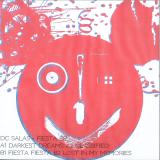
DC Salas doesn’t do things by halves. Fresh off a June release on Enrica Falqui’s Plexus4, the Brussels-based producer wastes no time returning to his own Higher Hopes imprint and he’s brought a party with him.
Fiesta EP is a four-tracker with a split personality and zero apologies for it. The A-side is all business: Darkest Dream, already doing damage in Roza Terenzi’s sets and Consciousness lock in deep, hypnotic, and faster paced. Then the B-side happens. Fiesta Fiesta and Lost In My Memories raid the wreckage of new beat, proto-whatever and early 2000s electrohouse like they own the place. Fiesta Fiesta also marks fifteen years of DC Salas making music, celebrated, naturally, by vocodering his own voice and singing in Spanish.
HIGH005 follows Pixelated Dream Theory, which pulled support from DJ Masda, Ivan Smagghe, Evan Baggs, Enrica Falqui, Binh and many more. Back on home turf, no features, no compromises. Just DC Salas, in full.
“The Long Transition From Death To Wisdom” marks a new chapter in Dmitry’s evolving sonic world – a contemplative, slow‑burning journey through grief, memory, and the quiet emergence of clarity. Rooted in a brooding fusion of shoegaze, goth, and darkwave, the album drifts through washed out guitars, spectral synths, and poignant vocals – its emotional landscape suspended between sadness and awakening. On vocal duties is Dmitry’s longtime collaborator Valeria Simonova, whose presence deepens the album’s atmosphere. Each track feels like a step forward in the ritual of becoming aware of one’s own existence, moving through silence and ancient memories toward a sense of spiritual renewal.
The album opens with the mysticism and layered metaphors of “Liar,” before descending into the ancient, biblical presence of “Serpent Queen.” Midway, “Zenith” rises with shimmering synths and steady, triumphant percussion, while “Echoes of Yesterday” lingers in celestial melancholy, dissolving the boundary between remembrance and insight. The Bside begins with “The Other Side of Life,” a threshold into a quieter, more reflective space, followed by the meditative, ritual like ambience of “Shrine of Ruins.” Closing track “Cold” offers a final exhale from the fading realm of the past – an acceptance shaped by distance, time, and the erosion of old wounds.
An array of musicians contributed to the recoding of the album: Mathys Dubois (No One Is Innocent, exBlack Strobe), Loïc Maurin (M83), Victor Sologub (Deadушки, Странные Игры), Alexander Titov (Кино, Аквариум), Ben Easton (Deary), and others. The album was mastered at Abbey Road Studios by Miles Showell.
The mission is complete.
With the landing behind him, the astronaut begins spreading the sound of Planet Tapes across the planet.
What was once a distant destination is now alive with sound, light and movement. The music starts to travel, bringing different identities, energies and visions together on the same frequency.
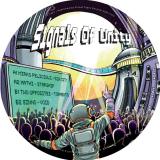
Signals of Unity captures this exact moment: four artists, four different messages, one shared destination.
A1 – Mirko Felicioli – Sin City
Mirko Felicioli opens the record with a strong and distinctive statement, built around tension, groove and a sharp sense of movement.
A2 – Mathi – Starship
Mathis continues the transmission with Starship, a cut suspended between movement, imagination and futuristic drive.
B1 – Two Opposites – Tormento
The label captains return with Tormento, combining energy and emotion in a track built for movement, while keeping their unmistakable approach to electronic music.
B2 – Ginno – Void
Gianko closes the record with Void, a deep and evocative final passage that lets the signal drift beyond the dancefloor.
Four artists. Four signals. One planet.
The music has spread.
The people have gathered.
The party has begun.
New York-based Japanese jazz and electronic music polymath Takuya Nakamura presents his debut album Shape The Future - almost 35 years into his storied musical journey.
An expansive double album, the album’s first LP documents a spellbinding live performance by Nakamura recorded at fabric. A hybrid set combining DJing, live electronics, vocals, and trumpet, the set also features studio versions of special collaborations with Shigeto, Currency Audio and Tim Reaper. The second LP complements the first by assembling studio recordings of select album tracks. Altogether the two volumes make for a definitive display of Nakamura’s exceptional musicianship across jazz, DnB, jungle, broken beat, deep techno and more.
Across his career, Nakamura has played Brazilian music, merengue, salsa and straight-ahead jazz. He’s opened for Sun Ra Arkestra, performed with David Byrne, Laurie Anderson, Lee “Scratch” Perry, Wu-Tang Clan, and Arto Lindsay, appeared on sessions with Terry Riley, ASAP Rocky, Goldie, and TV On The Radio, and remixed the likes of Quincy Jones, Sun Ra, Billie Holiday, and The Streets. He’s also played under director and playwright Robert Wilson.
Although the musical past and present of the Tokyo-born, New York-based DJ and trumpet player is undoubtedly eclectic, Nakamura is abidingly steeped in the sounds of jazz and jungle. This’ll be obvious to casual observers who may have seen any viral videos of him. But there’s more to this. The depth of Nakamura’s engagement with these kinds of music, the way they’ve made him into the person he is, the decades-long path they’ve taken him on; to now arrive at the summit of a solo album is all truly remarkable. Shape The Future resonates with every chapter in this story.
In high school, Nakamura’s friends started listening to jazz and jazz fusion, which piqued his interest, especially when they started going to clubs to see it live, where they managed to see US legends like Sonny Rollins play. Eventually he began to play jazz every day and his musical skill emerged early. He soon became obsessed with getting closer to the source of this music, which led to his studies at the New England Conservatory of Music in Boston with George Russell, an influential figure who had taught Miles Davis and John Coltrane. Nakamura drank it in: not only the technical aspects but the sense of a direct connection to “a music culture where Russell and his friends changed harmony forever. I wanted to know how that was possible!”.
This was a radical experience in itself, but then another revolution happened for Nakamura. He was playing in a venue called The Western Front, near Boston and discovered that the elderly owner had his own soundsystem and was playing what was then - in 1992 - only just becoming known as jungle. This was as freeing a musical revelation as his proximity to the giants of jazz was, and in that instant the two things fused. He understood that using technology to fill a dancehall with sound and a jazz musician’s reflexes are all working to the same ends: “You’re always making decisions,” he says, “but it doesn’t have to be really difficult. It’s the truth of the frequencies, and how they’re affecting people’s minds.”
From that moment on, his life path was set. Moving to New York City, he sought out jungle and its offshoot sounds wherever he could find them, gigging and collaborating relentlessly, and gradually developing his own live and hybrid live/DJ shows. Through regular appearances at New York fixtures Zebulon and CBGBs, and continual shows elsewhere in the city, Nakamura developed his live performance and DJing and it was in these environments that he gradually weaved together his twin loves without compromising either, building an international reputation in the process.
It’s only fitting then that his first album, almost 35 years after he first found his musical direction, should be a live one: a window into this never-ending process. Even here, he had to be persuaded that he should make a record. A member of the fabric team got turned on to his music after their daughter saw him play. Of course, as a jungle lover, Nakamura knew fabric – which has a special place in the history of jungle and drum’n’bass – and “had wanted to play there since I was very young.” You can hear the club in the record: this isn’t just a live show, in keeping with his jungle roots, it’s Nakamura duetting with the soundsystem, and you can feel how the emotions in the room would have ebbed and flowed.
This dynamic translates to a transfixing record. Setting the tone with lushly textured ambient and reverberant jazz, Nakamura segues into cinematic breakbeat and stellar fusion, infusing it all with intoxicating low end and hypnotic rhythms. The LP’s midway point locks into mesmeric percussion heightened by resonant echoes of piano and trumpet. There’s an endless pull to this music. Nakamura adjusts the levels for maximum impact throughout, and the overall effect begins to evoke some harmonious hybrid between a jazz ensemble, a classic Metalheadz 12” and a Theo Parrish DJ set. His electric form continues through surreal jazz, intricate electronics and rolling sub-bass velocity, right up to the subtly devastating final cover of Peter Gabriel and Kate Bush’s ‘Don’t Give Up’, with Nakamura’s fragile vocal sitting in the heart of a huge sound.
From Tokyo jazz nights to formative studies and encounters in Boston to his artistic development in New York, Nakamura reaches another milestone with his monumental debut album. It’s a release that happened just the way a Takuya Nakamura record should. In the same way his instincts led him to musical revelations, taking his own sweet time has led him to make one of the most extraordinary debut albums imaginable, all executed in his own singular style. In Nakamura’s world, the universe finds a way.
Originally released in 2000 on Smalltown Supersound, Kim Hiorthøy’s first record Hei captures an artist who had made very little music before – yet it seemingly was the starting point of a musical career that would stay away from easy categorisation. Now, Hei (2026 Remaster) returns on blickwinkel, released digitally and on vinyl on 30 October 2026, as part of an ongoing series revisiting and reissuing Hiorthøy’s work.
Made in Copenhagen with little equipment — an Akai MPC2000, a stereo microphone and a DAT machine — Hei was assembled from samples, sequences and rhythms, with no outboard mixing or processing. Without really knowing what he was doing, the music was created intuitively while drawing inspiration from instrumental hip-hop he was listening to, the techno and drum & bass he admired but did not yet know how to make, and a broader fascination with music that felt personal, homemade and slightly uncertain of its own identity. Hei sits somewhere between those impulses. It is beat-driven without belonging entirely to beat music, experimental without announcing itself as such, but unmistakably coming from a playful series of events and decisions.
In that regard, the title of the closing track might be a fitting description of the album itself and, in hindsight, also of how we can look at Hiorthøy’s subsequent work. Taken from a story by Tove Jansson, the title evokes a state of openness and curiosity, a state where thoughts and impressions are simply given the space to unfold:
“He didn't care to get up, all day he let new images and ideas come and go as they pleased, now and then slept a little and woke up again and had no idea who he was. It was a peaceful and very exciting day.”
There is something of Hei in that state of mind: a willingness to follow an idea without knowing exactly where it might lead, a willingness to follow guts and the heart rather than ratio. Perhaps that is also what makes Hei still feel relevant today. As Hiorthøy puts it when reflecting on the music he made then and the music he makes now: “If I compare the music on Hei to music I’m making now, the general sentiment or smell or air or tree or pull of what I’m looking for and listening after when I work is, I think, for better or worse, more or less the same.”
All music by Kim Hiortøy
Mastered by Stephan Mathieu
Portraits by Kim Hiorthøy
Design by Jelle Martens
“For Men Only” was released in America in June 1980. Jackson was shown on the front and back cover being fawned over by three attractive black male models. Musically and lyrically it was a concept album, like her previous LPs “Caught Up” (1974), Still Caught Up” (1975) and “Get It Out’cha System” (1978). The main theme was the battle of the sexes in and out of the bedroom with some tracks, especially on side one – ‘This Is Where I Came in’, ‘This Is It’, ‘If That Don’t Turn You On’ and ‘I Wish That I Could Hurt That Way Again’ – segueing into the next through Jackson’s spoken word segments. The album sounded like it could form the basis of stage play and was laced with wit and humour with Jackson, at one point, taking aim at out of work men “watching soap operas all day” and neglecting their chores around the house and in the bedroom. Every song was a gem, with Jackson in the finest vocal form of her career.
This album has not been available on vinyl for decades and Ace Records are delighted to rewax it, not only for Millie Jackson fans but a new generation, who are discovering that class never goes out of fashion.
For Luca, Cuylan’s new album of elegant modern classical, globally informed folk and gentle electronic music, is in part a tribute to his dearly departed dog. Luca came into Cuylan’s life like a key unlocking a door, leading to experiences and experiments simultaneously new and familiar. Back then the Turkish-born musician was living in LA with his wife, leading a busy creative life, writing and recording scores for films and Netflix series, and suddenly with the adoption of Luca here’s this bouncy, furry being demanding constant attention. Cuylan accepted the responsibility like a father welcoming a child. He grew closer to his wife. He started psychoanalysis. He returned to acoustic guitar, his original instrument, waylaid for 20 years in favor of synthesizers and electronics, pulsing post-rock and skittering jazz. Luca was there in the studio when Cuylan recorded his first solo album, 2021’s No Such Thing As Free Will, which The Guardian said “seems to invent new languages for the guitar.” Without a doubt, Luca the dog made Deniz the musician more expressive and more vulnerable. Better at his craft. Better at his humanity. Luca was just five years old when bone cancer struck. He exited far too quickly, a comet of joy passing into the dark, unfathomable universe. Cuylan found his absence very hard to process–he was just right here! It took a couple years, but inevitably Luca, the catalyst for Cuylan’s current chapter, inspired new artistry after his death–from Cuylan, and from a host of collaborators from around the world who contributed to For Luca. All of them share an abiding compassion for the more-than-human creatures with whom we share this planet–dogs, cats, whales, ants, trees. The entire menagerie, humankind’s kindred. The album is a collective meditation on–and celebration of–their immeasurable essence. It was born not from despair but from a transcendent love that burns all the brighter for its brevity.
In August 2025, we gathered in Tindafel, a village by the sea in the north of Morocco, with a bunch of instruments our friend Abdou had lent us, along with a few things we brought ourselves.
At the core, Pablo plays gimbri, Miguel plays drums, Juan plays guitar and keyboards, sings and handles the radio transmissions, and Javier sings, plays keyboard and works with digital effects. Loops were created interchangeably by Pablo, Miguel and Javier, while Pablo would often also pick up the guitar or keyboards, with everyone moving between instruments and roles throughout the recording.
Nothing was written beforehand. All tracks were improvised and recorded in a single take using a room microphone, so no mixing was possible. To this day, as we write this, none of the tracks have been played again — yet!
The album was edited by Pablo and mastered by Tobias.
The cover photograph was taken in the kitchen of the house, the same place where Magic Pony Productions first came together.
The poem on the sleeve was written by Oscar García Sierra.
Phillip George Allison was born and raised in Denham Town, West Kingston, the last of six children and the only boy. As a boy he sang hymns at his mother's side. Before long he was singing radio hits at school concerts, where he did Curtis Mayfield, Smokey Robinson and Eddie Kendricks in a falsetto so close to theirs that friends called him "George Smokey."
With Delroy Williams and Shirley Forbes he formed The Mad Lads. Leroy Sibbles auditioned them at Studio One and called Coxsone Dodd over to listen, and they recorded the same day, with Sylvan Morris as engineer and the Sound Dimensions backing them. Ten To One, Losing You and You Never Know were big with the sound systems. George then left music to study electrical engineering at CAST. Years later producer Carl Prince of Gibbous Records asked him to re-record Ten To One, and that brought him back into the studio for the 1984 album So Unusual, where both of these sides first appeared.
Gypsy Woman was one of the first songs he ever sang in class. "Gypsy Woman was originally done by Curtis Mayfield and the Impressions, one of my favourite groups. I chose to do it a little differently, in my falsetto style, like Ten To One that I recorded while singing lead with the Mad Lads."
War Is Ugly "I wrote War Is Ugly during the politically motivated tensions and killings between rival gangs and gunmen all over the island in that period. My message was to the gunmen: turn in their arms and come. War is ugly, love is lovely."
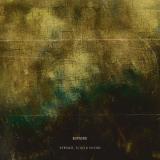
Nach „EBM“ aus dem Jahr 2022, einer Zusammenarbeit mit dem Elektronik-Produzenten Benjamin John Power alias Blanck Mass, haben Editors auf „Surface, Echo & Sound“ völlig neue Wege eingeschlagen. Als sich die Band im Sommer 2025 wieder zusammenfand, um an einem Nachfolger zu arbeiten – nachdem die drei vorangegangenen Alben weitgehend als Studio-Projekte geschrieben und aufgenommen worden waren –, hatten die Editors das Bedürfnis, zu einem natürlicheren Ansatz zurückzukehren, der an ihre Anfänge erinnerte: als sie in einem Proberaum in Stafford saßen und sich gegenseitig gegenüberstanden, während sie gemeinsam an den Songs arbeiteten.
Ähnlich wie bei seinem letztjährigen Soloalbum „There is Nothing In The Dark That Isn’t There In The Light“ verfolgte Frontmann Tom Smith auch bei dem neuen Material der Editors einen ähnlich reduzierten, akustikbasierten Ansatz: Er brachte eine Auswahl an Songs zur Band, damit sie diese gemeinsam spielen konnten, probierte verschiedene Dinge aus und schaute, wohin die Reise ging. Was die Entstehung des Albums angeht, „war es ein sehr produktiver Sommer“, sagt Smith. „Die Sonne schien die meiste Zeit, wir waren im grünen Gloucestershire, nicht weit von meinem Wohnort entfernt, in diesem unscheinbaren kleinen Gewerbegebiet – es war so ziemlich das Gegenteil von Berghain!“
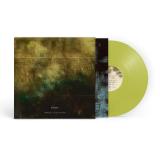
„Surface, Echo & Sound“ ist als LP, Ltd. Col.LP CD und digital über Play It Again Sam erhältlich.
Info Englisch:
Following on from 2022’s EBM, a collaboration with electronic producer Benjamin John Power, aka Blanck Mass, on Surface, Echo & Sound, Editors have found themselves somewhere new entirely. When the band regrouped in summer 2025 to work on a follow-up, after three albums written and recorded very much as in-the-studio projects, Editors felt they wanted to go back to a more natural approach, something that harked back to their earliest days, sat in a practice room in Stafford, facing each other as they worked through songs together.
Like on last year’s solo record There is Nothing In The Dark That Isn’t There In The Light, frontman Tom Smith took a similar stripped back, acoustic-based approach to the new Editors material, bringing a selection of songs to the band for them to play together, trying different things out, and seeing where they went. In terms of creating the record, “It was a very productive summer,” says Smith. “The sun was out for the most part, we were in greenest Gloucestershire, not far from where I live, on this innocuous little industrial estate – it was pretty much the opposite of being in Berghain!”
Surface, Echo & Sound is available on LP, Ltd. Col. LP and CD & Digital via Play It Again Sam.
Nach „EBM“ aus dem Jahr 2022, einer Zusammenarbeit mit dem Elektronik-Produzenten Benjamin John Power alias Blanck Mass, haben Editors auf „Surface, Echo & Sound“ völlig neue Wege eingeschlagen. Als sich die Band im Sommer 2025 wieder zusammenfand, um an einem Nachfolger zu arbeiten – nachdem die drei vorangegangenen Alben weitgehend als Studio-Projekte geschrieben und aufgenommen worden waren –, hatten die Editors das Bedürfnis, zu einem natürlicheren Ansatz zurückzukehren, der an ihre Anfänge erinnerte: als sie in einem Proberaum in Stafford saßen und sich gegenseitig gegenüberstanden, während sie gemeinsam an den Songs arbeiteten.
Ähnlich wie bei seinem letztjährigen Soloalbum „There is Nothing In The Dark That Isn’t There In The Light“ verfolgte Frontmann Tom Smith auch bei dem neuen Material der Editors einen ähnlich reduzierten, akustikbasierten Ansatz: Er brachte eine Auswahl an Songs zur Band, damit sie diese gemeinsam spielen konnten, probierte verschiedene Dinge aus und schaute, wohin die Reise ging. Was die Entstehung des Albums angeht, „war es ein sehr produktiver Sommer“, sagt Smith. „Die Sonne schien die meiste Zeit, wir waren im grünen Gloucestershire, nicht weit von meinem Wohnort entfernt, in diesem unscheinbaren kleinen Gewerbegebiet – es war so ziemlich das Gegenteil von Berghain!“
„Surface, Echo & Sound“ ist als LP, Ltd. Col.LP CD und digital über Play It Again Sam erhältlich.
Info Englisch:
Following on from 2022’s EBM, a collaboration with electronic producer Benjamin John Power, aka Blanck Mass, on Surface, Echo & Sound, Editors have found themselves somewhere new entirely. When the band regrouped in summer 2025 to work on a follow-up, after three albums written and recorded very much as in-the-studio projects, Editors felt they wanted to go back to a more natural approach, something that harked back to their earliest days, sat in a practice room in Stafford, facing each other as they worked through songs together.
Like on last year’s solo record There is Nothing In The Dark That Isn’t There In The Light, frontman Tom Smith took a similar stripped back, acoustic-based approach to the new Editors material, bringing a selection of songs to the band for them to play together, trying different things out, and seeing where they went. In terms of creating the record, “It was a very productive summer,” says Smith. “The sun was out for the most part, we were in greenest Gloucestershire, not far from where I live, on this innocuous little industrial estate – it was pretty much the opposite of being in Berghain!”
Surface, Echo & Sound is available on LP, Ltd. Col. LP and CD & Digital via Play It Again Sam.
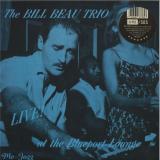
Bill Beau was born in Toronto, Ontario, Canada, but was raised in the western provinces, finishing high school in Edmonton, Alberta. It was while in high school that the "righteous rays" via radio struck Beau in the form of Meade Lux Lewis, Pete Johnson and Albert Ammons at the height of the Boogie Woogie rage. It was while in high school that Bill got his first gig. He played piano and worked with Wilf Harper, a guitarist of local renown. Beau played on weekends and during the week worked as a clothing salesman, stock clerk, refinery worker, service station attendant and freight checker. He travelled all across Canada, and finally landed in Los Angeles, California.
In 1958 his love of music compelled him to direct all of his energy toward the perfection of his musical talent, so he decided to settle permanently in Los Angeles. Beau first worked there as a vibraphonist, gigging with such stars as Ben Webster, Rex Stewart, Pete Fountain, and Stuff Smith. Once, when his regular organist failed to show up for a date, Beau ended up on the Hammond. Beau then formed his own group, and the trio got a standing date at the Blue Port Lounge. The other two members of the trio are Jo Stafford on guitar, Lorenzo Green on drums, plus the pretty and petite vocalist with the group, Chi Chi.
"Live at the Blueport Lounge" by the Bill Beau Trio is mod-soul-jazz at its very best! A stunning treasure rarely to be found - unless it's on Mo-Jazz!
With one foot in the Mexican underground rock scene and the other one in the global tape trading circuit, Las Ánimas del Cuarto Obscuro found themselves in the middle of a crossroad after their first LP. México wasn´t the same country as when the band first started. Even though access to non-commercial music still was a difficult task in the late eighties, the fringes of culture had way more resources thanks to the stubbornness of certain anonymous heroes: dwellers of El Tianguis Cultural del Chopo, niche record stores, illegal underground parties and hosts of late night Mexican public radio shows.
Ubiquitous social unrest expressed itself in every way possible. The aftermaths of the 1985 earthquake weren’t the only matters on the table. Protests erupted after a rigged presidential election and a student strike hit Mexico’s biggest public university. This was just the tip of the iceberg of issues PRI’s perfect dictatorship was or wasn’t addressing. The clash of the authoritarian regime against new and fresh ideas.
If the first record was about the loneliness of self-destructive youth and it’s urban phantasmagories, LACO’s second LP dealt with change as the axis of human existence. Las Ánimas is just the beginning of the sonic metamorphosis Toño Sánchez went through until this very moment.
The departure of former bandmembers set a different approach towards more experimental and atmospheric sounds. As the project’s only member, Toño Sanchez took an alchemical trip aiming for more mysterious horizons.
Despite the fact that we can still find conventional dark pop and catchy songwriting, the record rests on sound landscapes closer to Jorge Reyes or Tuxedomoon and This Heat than the orthodox ways of so called post-punk, seasoned of course with the lack of music gear and the economic reality prevalent in Mexico of those convulsed times.
Las Ánimas is a goodbye letter to underground but not because the next move is the mainstream. Far away from it, it’s a farewell to traditional rock and a the first steps down into the depths. From now on, Toño Sánchez will dedicate his musical efforts to weirder sounds and scarcer audiences in the search of the arcane, possessed by a mania of constant change that infects the soul after crossing the black door’s threshold.
It’s Italian time! Sam Ruffillo is back. Sicilian producer doing smooth Balearic disco with Italian vocals. The direction is clear: Sam Ruffillo's music brings us back into the Italian riviera and the hippy days of Ibiza in the late 1970ies. Even his way of production is similar to how the early days disco producers in Italia used to work: No samples needed. Instead a few guest musicians come to jam over Sam's beats in his Italian studio space. Guitar, bass, percussions. Sam later makes the production and added keyboard solos and put together the vibes into what is this new EP.
The girl voice comes from NINFA. It’s the classic studio story: Ninfa is a singer and DJ and friend of Sam. She was hanging at the studio while Sam was finishing these tracks. She stated to sing along... the words came up spontaneously… so they decided to record her and finally decided to keep them. The vibe was too good. Why talk English if u can do it better: in Italian! :)
This is second for Toy Tonics after his Sport House EP from last year. Sam also appeared on the solo record of Joel Holmes on Toy Tonics. Together with Kapote Modica he co-produced and made the beats on that record. Now Sam is back with this pure Italian EP. Inclusive remixes by new German artists Gome and Italian Musemeci - known to many from his fabulous Italo-trance releases on Diynamic records.
What happens when bassweight electronic beats meet the abstract world of one of the most uncompromising MCs on this planet?
Get ready for a special listening experience as Abu Ama and Sensational take you deep into a world of heavy bass, fractured rhythms, strange frequencies and completely unpredictable flows.
Abu Ama is known for his unique production style, combining Dub, Ambient and Industrial soundscapes with Middle Eastern sound structures. His productions create vast, atmospheric spaces where bass pressure and subtle details constantly collide. Over the years, he has developed his signature sound through releases on forward-thinking labels such as Bokeh Versions and Accidental Meetings. With Ringing In Your Ear, Abu Ama presents some of his most adventurous and forward-thinking productions to date.
On the microphone, we are proud to present a true underground legend straight outta NYC: Sensational.
Born Colin Julius Bobb in Guyana and raised in Brooklyn, Sensational became one of the most distinctive and unpredictable voices to emerge from New York’s experimental hip-hop underground. Originally performing under the name Torture, he was already connected to the Jungle Brothers in the early 1990s before developing the completely unique style that would become synonymous with Sensational.
In 1997, he released his debut album Loaded With Power on the influential Word Sound label. Built from dusty beats, unusual samples and lo-fi textures, the record established Sensational as an artist who seemed to operate completely outside the established rules of Hip Hop.
Over the following decades, he continued to explore the space between underground rap, experimental electronics, noise and abstract music. His long list of collaborators included artists such as Spectre, Kouhei Matsunaga, Kid 606, Cardopusher, Handsome Boy Modeling School and many others. His work with Kouhei Matsunaga was even remixed by Autechre.
Sensational was never interested in fitting into a particular scene. His rhymes were surreal, his flows unpredictable and his approach completely his own. For more than three decades, he remained a true outsider — a cult figure whose music connected underground Hip Hop with some of the strangest and most adventurous corners of experimental music.
After Abu Ama and Sensational’s heavy 2023 single International Rokkaz left us wanting more, the two decided to take things much further. What started as a single collaboration evolved into a full length soundclash.
We were already incredibly hyped about this collaboration from the moment we heard it. But while we were preparing for the release of the single MOZZ, the terrible news reached us: Sensational had passed away.
The news hit hard. It is still difficult to believe that we will never hear a new Sensational verse again.
What makes Ringing In Your Ear even more special is that it captures Sensational doing what he did best — completely free, completely unpredictable and completely himself.
We dedicate this record to Colin Julius Bobb aka Sensational, in loving memory of an extraordinary artist, MC and true underground original.
The much-admired southern soul singer Eddie Giles’ final single for his local Shreveport label Murco, was a self-penned bluesy plodder called ‘Ain’t Gonna Worry No More’. Hiding on the flip was ‘Tingling’ a catchy, atmospheric song written by Murco executive Dick Martin and Jimmy Johnson whose pop group the Peermonts were label-mates. His subsequent release by the same production team appeared on the Silver Fox label so his management may have felt his time at Murco was up - the few pressings of ‘Tingling’ are now in the rare soul big price league.
Around the same time Eddie cut a version of a 40s Country song written by Fred Rose which leant itself to being an excellent mid-tempo soul number; though not released at the time. Despite its sparse instrumentation, it is a very good performance, now on vinyl for the first time.
„Me and the Noise“ von Wasuremono ist das bislang ambitionierteste und klanglich vielschichtigste Album von William Southward, auf dem er schimmernden Indie-Pop, mitreißende Hooks und eine euphorische, groß angelegte Produktion mit intimeren und nachdenklichen Momenten verbindet. Nachdem Southward ein Jahrzehnt lang unabhängig in seinem Gartenschuppen in Bradford-on-Avon Musik geschaffen hatte, öffnete er den Produktionsprozess und holte Tony Draper für den Mix sowie Dick Beetham für das Mastering mit ins Boot – das Ergebnis ist ein kühner neuer Sound, der auf seinem melodieorientierten Songwriting aufbaut. Das Album knüpft an eine Reihe von Erfolgen an, darunter über 16 Millionen Streams für „Are You OK?“ sowie die Verwendung seiner Musik in „Heartstopper“ und im Trailer zu „Goodrich“, während Titel wie „No More Dancing“, „Is It Weird or Is It Me?“ und „Sleeping Out“ die Bandbreite seines Songwritings demonstrieren. Die Vinyl-Ausgabe erscheint auf schwarzem Heavyweight-Vinyl, wurde im Half-Speed-Verfahren gemastert und ist in einer Gatefold-Hülle untergebracht – damit ist sie eine hochwertige physische Ausgabe, die ein bedeutendes neues Kapitel für Wasuremono einläutet.
All tracks recorded at ROLL OVER STUDIOS, London. January 2004.
Features 10 Studio tracks including: It Mek, Israelites and Sing A Little Song.
Desmond Adolphus Dacres was born on 16th July 1941 in Saint Andrew Parish, Greater Kingston, Jamaica. As a youngster Desmond regularly attended his local church with his grandmother and aunt. Here would bring him his lifetime religious commitment and his enjoyment for singing.
Dekker moved to parish of St. Mary following his mother’s death as a result of illness. He later moved to St. Thomas, where he took up an apprenticeship as a tailor, before he moved back to Kingston and landed himself a job as a welder.
His co-workers encouraged him to pursue his singing career, he successfully auditioned for Leslie Kong's Beverley's record label and was awarded his first recording contract. As his career took off this was the time he decided to adopt the name Desmond Dekker instead of 'Dacres'.
Los Angeles-based producer, composer and multi-instrumentalist Dexter Story returns with his sixth album, T'som (pronounced sawm), a deeply personal work inspired by the spiritual practice of fasting. Meaning "fasting" in the Afro-Semitic languages Tigrinya and Amharic, as well as in Arabic, Tsom represents a time of prayer, reflection and discipline across northeast Africa. Guided by this tradition, Story draws on the musical heritage of the Horn of Africa and musical traditions of the Middle East to create a spiritual jazz album that reflects on devotion, transformation and the power of letting go. Working with frequent collaborators Carlos Nino, Sudan Archives, Kamasi Washington, Jimetta Rose and Kibrom Birhane, the album touches on themes of reflection, inner poise and a quest for deeper connections, bound by explorations of traditional rhythms from the Horn of Africa. Named after jazz saxophone legend Dexter Gordon, Los Angeles-based multi-instrumentalist, composer, arranger, music director and producer Dexter Story is one of the key figures in the city's vibrant creative music scene. Renowned for his genre-defying approach, he has collaborated with an extraordinary range of artists, including Carlos Nino, Madlib, Kamasi Washington, Build An Ark and Gaslamp Killer. His acclaimed solo albums Wondem and Bahir, released by Soundway, established him as a distinctive voice at the intersection of jazz, African music and contemporary production. Most recently, Story produced Mulatu Astatke's acclaimed studio album Mulatu Plays Mulatu, further cementing his reputation as one of today's most sought-after creative producers and musical collaborators.
Los Angeles-based producer, composer and multi-instrumentalist Dexter Story returns with his sixth album, T'som (pronounced sawm), a deeply personal work inspired by the spiritual practice of fasting. Meaning "fasting" in the Afro-Semitic languages Tigrinya and Amharic, as well as in Arabic, Tsom represents a time of prayer, reflection and discipline across northeast Africa. Guided by this tradition, Story draws on the musical heritage of the Horn of Africa and musical traditions of the Middle East to create a spiritual jazz album that reflects on devotion, transformation and the power of letting go.
Working with frequent collaborators Carlos Niño, Sudan Archives, Kamasi Washington, Jimetta Rose and Kibrom Birhane, the album touches on themes of reflection, inner poise and a quest for deeper connections, bound by explorations of traditional rhythms from the Horn of Africa.
Named after jazz saxophone legend Dexter Gordon, Los Angeles-based multi-instrumentalist, composer, arranger, music director and producer Dexter Story is one of the key figures in the city's vibrant creative music scene. Renowned for his genre-defying approach, he has collaborated with an extraordinary range of artists, including Carlos Niño, Madlib, Kamasi Washington, Build An Ark and Gaslamp Killer. His acclaimed solo albums Wondem and Bahir, released by Soundway, established him as a distinctive voice at the intersection of jazz, African music and contemporary production. Most recently, Story produced Mulatu Astatke's acclaimed studio album Mulatu Plays Mulatu, further cementing his reputation as one of today's most sought-after creative producers and musical collaborators
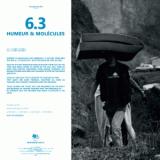
Humeur & Molécule was a tape from Ben DSP, a live set he used to play a lot in 1997/1998...
The DSP sound is minimal and groovy, very influenced by the Network23 plates.
The sleeve is from Livia Saavadra, it's a picture took from Teknival de Caen in may 1999. The photo is taken from the second spot (because the Teknival de Caen was too small and finally a second spot was opened in a carrier).
This live set is one hour long. And can be replayed as it should by Chaine Records in this order :
A-_C-_B-_D
so you don't need to buy two copies ^^
Music by Ben DSP
Photo by Livia Saavedra
Visual by VsteeFDB
Cut by Simon Davey
Mastering by StefanZMK
Press by Record Industry
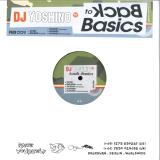
Impossibly rare slab: a capital-C-cult bit of millennial business from perhaps the most enigmatic member of the Gush Collective crew, who in the early 00s not so much redefined, but refined UKG… and then some. Alongside folks like Herb-LF and Lorenzo, Yoshino was a stalwart: releasing and remixing on the legendary but somewhat overlooked German labels Draft Recordings and Gush. It was here these cats smoothed out the UKG sound with a spliffed out vibe that fucked with the raw warm herby sounds of Tyree Cooper and QX-1; Yoshino, more than most though, flirted with sounds you wouldn’t expect to find in the UKG realm: think ethereally stuff man, I’m talking Placid Angels with the pseudo Japanese pop sensibilities of Faye Wong - but when when the cards fall down, his productions equally bang. So: splice in a bit of Serious Danger and Makesome Breaksome, light a phat one or zwei… & welcome to the wheelhouse.
‘Back to Basics' is a celebration of Yoshino as an artist: featuring a repress from our favourite Gush Collective stash (which is now so dear it makes me wish I’d better taken care of my records at after parties); three first time cuts of his on wax that we’ve curated from over the years that feature appearances from Peaky Beats and Miss Angel - and of course, there’s a killer remix from deep digging DJ and producer, Enchanted Rhythms (whose Youtube archive is packed to the veritable rafters with the most overlooked gems and updated with such frequency that it is hard to keep up). Apart from being a head’s head, Rich is also part of the Pace familia, so we're happy to welcome him to the catalogon a terrain he has endlessly kept fresh since day dot - he knows his shit here, and of course, he taps into that Yoshino flava big time.
Houston’s premier street griot is stepping into his most profound chapter yet with his highly anticipated upcoming album, O.Y.N. Throughout a decorated career that spans over 1.2 billion global streams and a fiercely loyal fanbase, Maxo Kream—born Emekwane Ogugua Biosah, Jr.—has established himself as one of rap’s most authentic, uncompromising storytellers. From the raw trenches of Alief to the critically acclaimed triumphs of Punken, Brandon Banks, Weight of the World, and his triumphant 2024 independent pivot Personification, Maxo has long been celebrated by Pitchfork, NPR, and Complex for his cinematic, hyper-detailed world-building. Now, O.Y.N. finds the Houston icon turning his gaze inward, pairing his signature Texas grit with an expansive, global perspective that redefines his artistic boundaries.
If his previous work was about Maxo taking full creative control as an independent force, O.Y.N. is about him uncovering who he is at his core. Following the passing of his father, Maxo found himself searching deeper for his family origins, leading to a pivotal moment of artistic and personal rebirth. For the first time in his life, Maxo traveled to Lagos, Nigeria, anchoring his new music in a profound celebration of his Nigerian heritage. The emotional centerpiece of this journey is the JPEGMAFIA-produced single “Time Out,” an introspective track that moves away from the frantic energy of his past releases to offer a stripped-back look at love, loss, and legacy. Featuring a heavy, resonant drum presence on the outro, the song’s accompanying music video was filmed on location in Lagos, capturing Maxo navigating his ancestral roots in real-time.
While O.Y.N. reaches new emotional depths, it doesn't sacrifice the hard-hitting, volatile street persona that made Maxo a star. The album expertly balances soul-baring vulnerability with cutting-edge hip-hop experimentation, showcasing elite chemistry with some of the genre's most forward-thinking visionaries. Look no further than “Fake Jeezy,” a collaborative explosion featuring Denzel Curry and masterminded by JPEGMAFIA. The track is a masterclass in industrial chaos, combining sharp lyricism and early-2000s trap imagery with cold, surreal visual aesthetics. This duality highlights Maxo's unique positioning in the culture as a trusted street general who can effortlessly trade bars with rap's avant-garde elite.
From his early days flipping Kendrick Lamar's “Rigamortis” to sharing marquee tracks with the likes of A$AP Rocky, Travis Scott, and Tyler, The Creator on hits like “Big Persona,” “Cracc Era,” and “Cracc At 15,” Maxo Kream has always been a rapper's rapper. O.Y.N. represents the ultimate synthesis of this incredible journey. It is an album born from the soil of Alief but elevated by the spirit of Lagos—a raw, beautiful, and heavy-hitting testament to an artist who has survived his past, honored his losses, and fully embraced his destiny.
Mit Punktraditionen - Alles, wirklich alles, was man über Punks wissen muss widmet sich Joachim Hiller den Eigenheiten, Ritualen und liebenswerten Absurditäten einer der langlebigsten Subkulturen der Musikgeschichte. Zum 50-jährigen Jubiläum des Punk erklärt der langjährige Herausgeber des Ox-Fanzine mit viel Humor und Insiderwissen, warum Punks trotz aller Revolte überraschend traditionsbewusst sind. In 50 kurzweiligen Kapiteln beleuchtet Hiller die kleinen und großen Phänomene der Szene - von Doc Martens und Dosenbier über Chaostage und Schnorren bis hin zu kuriosen Verhaltensregeln und Szene-Mythen. Dabei entsteht kein trockenes Sachbuch, sondern eine unterhaltsame Liebeserklärung an eine Kultur, die sich seit Jahrzehnten konsequent gegen Konventionen stellt und dabei ihre ganz eigenen Traditionen entwickelt hat.
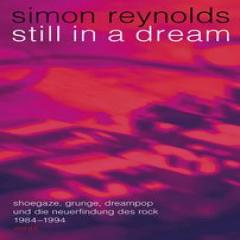
Simon Reynolds erzählt von der letzten großen Blütezeit der analogen Musikkultur und schließt damit direkt an sein Standardwerk zum Post-Punk, 'Rip It Up and Start Again', an. In einer Zeit, in der Musik noch greifbar war - als Schallplatte, als Zeitschrift, als Objekt -, war jeder neue Tonträger ein Ereignis, jede Ausgabe eines Magazins ein Ritual. Zwischen den späten Achtzigern und den frühen Neunzigern entfaltete sich ausgehend von diesen Objekten und Ereignissen eine musikalische Revolution, in der die Underground-Szene die Gitarrenmusik neu erfand und langsam in den Mainstream einsickerte, während sich politisch statt Utopien und Zukunftsentwürfen der Konservatismus festgesetzt hatte.
Reynolds erzählt von der Explosion des Noisepop, von Shoegaze, Slackern und Grunge - von My Bloody Valentine und Sonic Youth, die mit atemberaubenden Sounds eine zweite Psychedelic-Welle entfachten, den Cocteau Twins und Slowdive, die in Traumwelten entführten. Außerdem treten auf: Dinosaur Jr., Björk, Pixies, PJ Harvey, Nirvana, Felt, R. E.M., Hüsker Dü, Talulah Gosh, Big Black, Butthole Surfers, Spacemen 3, Spiritualized, Galaxie 500, Mercury Rev, Pavement, Stereolab, Stone Roses, Pussy Galore und viele mehr.
'Still in a Dream' ist der sehr persönliche Blick eines Journalisten, der damals als Autor diverser Musikmagazine dabei war, diese musikalischen Entwicklungen zu begleiten und ihnen Namen zu geben. Simon Reynolds beschwört die Magie der analogen Welt, bevor das Internet, Streaming und soziale Medien die Spielregeln der Musik für immer verändert haben. Ein Buch für alle, die sich fragen, was verloren ging - und was vielleicht nie ganz verschwunden ist.
Vier Jahre brodelte es im Berliner Untergrund: Nach zwei DIY-Tape-Releases durchbrechen SEK die Flanke und präsentieren mit Wallensteins Garage ihr erstes Album auf Vinyl ein Debüt, das gleichermaßen Geschichtserzählung, Konzeptalbum und ausufernde Jam-Session ist. SEK benannt nach den Anfangsbuchstaben der Nachnamen ihrer Mitglieder - Paul-Willy Stoyan (Gavial, Jacke Schwarz), Georg Edert (Elder, Gaffa Ghandi) und Lucas Kazzer (Gaffa Ghandi, Borders Down) - vereint drei Musiker, die seit Jahren in der Berliner Underground-Szene aktiv sind. Ihre gemeinsame Sprache findet sich zwischen Improvisation, historischer Erzählung und druckvollem Rock. Was die drei verbindet, ist weniger ein gemeinsamer Stil als die Lust am Ausprobieren: ausufernde Proben, lange Improvisationen und die Suche nach Klanglandschaften, die ebenso sperrig wie eingängig sein können. Was 2022 während des pandemiebedingten Lockdowns mit stundenlangen Jams begann, entwickelte sich in den vergangenen vier Jahren zu einer eigenwilligen Mischung aus Psychedelic Rock, Krautrock und einer Prise Prog. Die Band selbst nennt diesen Sound augenzwinkernd HOR Historian Oriented Rock: Musik, die historische Stoffe nicht illustriert, sondern in Klang übersetzt. Die Inspiration für die Songs stammt aus dem Dreißigjährigen Krieg (16181648), insbesondere aus dem Leben des böhmischen Feldherrn Albrecht Wenzel Eusebius von Wallenstein und den Ereignissen rund um die Schlacht bei Lützen (1632). Das musikalische Arsenal ist ebenso vielseitig wie die erzählte Geschichte: verfuzzte Gitarren mit wabernden Delays treffen auf einen galoppierenden Bass und treibende Drums, getragen von träumerischen Keyboards. Immer wieder öffnen sich freie, fast chaotische Passagen, in denen Harmonie und Rhythmus auseinanderbrechen wie Schlachtordnungen, die im brutalen Nahkampf ihre Form verlieren. An anderer Stelle schaffen sanfte Mandolinenklänge Momente der Ruhe, bevor sie sich in schwere, schmerzvolle Trauermusik verwandeln, inspiriert von Doom und Drone Metal. Zwischen hypnotischen Grooves, improvisatorischer Freiheit und cineastischer Dramaturgie erschaffen SEK einen Sound, der Vergangenheit nicht nachstellt, sondern neu erfahrbar macht. Die Platte erscheint auf Exile On Mainstream als schwarzes Vinyl mit beigelegter CD. Genre: Krautrock, Psychedelic, Alternative Für Fans von: Elder, Gentle Giant, Amon Düül, Zahn.
Continuing its mission to bring classic records to a modern audience, Tresor Records celebrates the 30th anniversary of The Infiniti Collection with a remastered & expanded edition of this classic compilation from Infiniti, an alias of Detroit originator Juan Atkins, available on vinyl for the very first time.
First gathered together in the mid-'90s, The Infiniti Collection draws together tracks Atkins cut under the Infiniti name across a number of labels into a single, cohesive listen. Where his Model 500 work pushed toward the electro-funk that built Detroit techno's foundation, Infiniti was always the deeper, more
playful persona concentrated on what was then a nascent yet burgeoning techno sound. The collection stands as a document of Atkins at his most exploratory: futurist, hypnotic, and unmistakably human despite its machine architecture.
This collection brings together some of Atkins’ most essential work with tracks like "Sunlight", "Flash Flood", fan favourite "Game One", and the deep dub of the Moritz von Oswald remix of "Think Quick". Alongside Infiniti's Skynet reissue, a significant part of the Infiniti catalogue now lives in Tresor
catalogue, forming the ultimate archive.
The Infiniti Collection will be available from 30th October on triple vinyl and digitally with a cassette version being available exclusively through Tresor.
Mighty Music is proud to announce the release of "What Are We Waiting For", the brand-new studio album from Danish rockers ELECTRIC GUITARS. The band's sixth studio album marks a bold new creative direction, with drummer Morten Hellborn taking over production duties and leading Electric Guitars into fresh sonic territory. Recorded at Medley Studios Copenhagen, "What Are We Waiting For" is the first Electric Guitars album produced without founding members Soren Andersen and Mika Vandborg behind the controls. The final mix was also handed over for the first time, with former Duné member Ole Bjorn shaping the album's modern and forward-looking sound. Despite its contemporary production, the album features more guitars than ever before, while deliberately moving away from traditional blues-based and classic rock formulas. Every song was carefully evaluated, resulting in what the band considers its strongest collection of material to date.
This is the sound of dream Texas, the cinematic Texas conjured in film and 20th century literary and art myth… big dark blueing horizons swallowing the infinite distance, a lonely poetry of sound, but also a stock taker of the iconoclastic, psychedelic, art rebel side of Texas… the cracked rock music side of Texas, the avant-garde in concrete cracks, the recklessly used, mind expanding drugs Texas, the dripping eastern swamps, the Houston house parties with the sounds of records blasting down the block and becoming musique concrète in the hot summer night.
Chrome Chasm’s debut album Interpreter is ambient, minimal in feel, maximal in texture, beautifully disorienting, vastly spacious— until it isn’t. It's a naturalistic shapeshifter, taking majestic form in the aforementioned elements and then dissolving back to raw genetic material to form anew. Spiritual jazz overtones, pedal steel moans and buzzing, noisy ambient visions are upended by grey-folded psychedelic unveilings. Interpreter’s three expansive tracks present a most detailed performance by its three deft musicians and the outcome often feels like a gorgeous collage in real-time.
Chrome Chasm was formed in 2024 by three of Houston’s brightest underground stars: Mlee Marie (Hearts Of Animals) on alto saxophone, flute and voice (whose long-form experimental sax performances helped inspire the formation of the band), Will Adams (Lower Dens/ Ka-Nives) on pedal steel, synth, percussion and voice, and Tom Carter on guitar. Carter has been casting a long shadow over Texas psychedelia and American underground music for over 3 decades, most notably with the Houston based Charalambides, a powerful creative force of the pre-new weird America era of experimental and avant psychedelic music, and most notably since with his solo guitar magnum opus Long Time Underground (which was deemed among the best experimental albums of 2015 by Pitchfork).
Interpreter’s opening track “The Star,” recorded almost completely live in one room and one take, is a 16-minute manifesto on ‘Dream Noir.’ An astute scholar of cross-genre connectivity and the through-lines of kosmische and spiritual-leaning sonic realms can hear echoes of Cluster, the skronk and beauty of Rahsaan Roland Kirk, and the architectural ambient flow of Harold Budd and Philip Glass in the tidal lapping of distorted guitar, mantra-like saxophone and pedal steel flow. From its deconstructed, pastoral opening moments to its proto-electronic center that crests into a bombastic polytonal climax, Chrome Chasm never neglect narrative arc for experimentation and avant technique. In fact, as a group, they effortlessly control, open, fill and contract space in abeyance to emotional vibration. “The Star,” and indeed the album as a whole, feels more like a communion or extended poem, in direct communication with the listener, than it does a ‘captured experience.’
Across the three longform tracks of Interpreter, Chrome Chasm conducts a masterclass in fusing real time performance energy with an abstract, cut-up master’s reimagining of the literal. They demand the listener meet their music with dream logic and then, like the best dream peddlers, they present a labyrinth to fall into and experience, a place where explanation and conclusion become obsolete, and engagement and immersion become sublime.
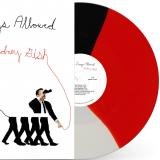
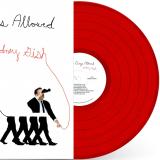
Sidney Gish is a songwriter and producer based in Brooklyn, NY. Her first album, Ed Buys Houses, was self-released on Bandcamp in 2016. Her second album, No Dogs Allowed, was released on New Year's Eve in 2017, receiving a 7.7 rating on Pitchfork and winning Album of the Year at the 2018 Boston Music Awards. Gish has toured with artists like Mitski, Cavetown, The Beths, and Jeff Rosenstock. She has a cult following and now a hugely viral song.
Sidney Gish is a songwriter and producer based in Brooklyn, NY. Her first album, Ed Buys Houses, was self-released on Bandcamp in 2016. Her second album, No Dogs Allowed, was released on New Year's Eve in 2017, receiving a 7.7 rating on Pitchfork and winning Album of the Year at the 2018 Boston Music Awards. Gish has toured with artists like Mitski, Cavetown, The Beths, and Jeff Rosenstock. She has a cult following and now a hugely viral song.
Sidney Gish is a songwriter and producer based in Brooklyn, NY. Her first album, Ed Buys Houses, was self-released on Bandcamp in 2016. Her second album, No Dogs Allowed, was released on New Year's Eve in 2017, receiving a 7.7 rating on Pitchfork and winning Album of the Year at the 2018 Boston Music Awards. Gish has toured with artists like Mitski, Cavetown, The Beths, and Jeff Rosenstock. She has a cult following and now a hugely viral song.
Tramp Records International proudly presents: The 1975 Baltimore Colts Glenn Doughty and his All-Pro Shake & Bake Band! In 1975 Glenn "Shake & Bake" Doughty Wide Receiver for the Baltimore Colts formed the Shake & Bake Band. Glenn Doughty and his Baltimore Colts Shake and Bake Band of the 70's is the first musical group consisting of former NFL All-Pro players that Tramp Records has partnered with in its history!
Doughty is a Detroit 'Motown' native and All-American from the University of Michigan, that was recently crowned national champion and the winningest college football program in NCAA History. Doughty and his four world-class athletic teammates formed the heart of the band. The Shake & Bake Band in the mid 70s played live at Baltimore's hottest Clubs with teammates in attendance on Monday nights after Shakin' & Bakin' their opponents on Sunday at Memorial Stadium. Doughty's sports hero was Muhammad Ali. He originated the popular Shake & Bake athletic movement scoring touchdowns. He recited Shake & Bake poetry like Ali to make predictions after games on local and national TV to celebrate Colts victories. His lyrics in his music were used to fire up thousands of his Colts fans and his teammates. Many fans felt the group sounded like WAR the popular funk group from California. Members of the Shake & Bake Band were: Glenn "Dr. Shake" Doughty #7, All-Time Colts leading Wide Receiver, producer, lead singer, congas and lyrics, Ray "RC Cola" Chester, All-Pro Tight End, Super Bowl Champion, Bass, Baltimore, Maryland, David "DT" White, Wide Receiver Lead Guitar, producer, sound technician. Buffalo N.Y., Lloyd "The Bullet" Mumford, Defensive Back Harmonica, Miami Florida, Freddie "Bones" Scott, All-Pro Wide Receiver on percussion, Grady Arkansas, and Bruce "Turn it Loose" Barnett, Drummer and shoe salesman. Randallstown, Maryland. This group of talented stars lead the Colts to its first ever three consecutive Eastern Division Championships.
Additionally to this 45 RPM single release, "Starflight Disco #1 Pt.1&2" has been featured on the "Can You Feel It Vol.5" compilation album.
You are Spring!" beginnt mit einer gewundenen Klangwand, A-cappella-Stimmen, die sich in üppiger Harmonie überlagern und den halb-titelsgebenden Frühling besingen. Sofort entführt uns Tasha aus dem tristen, grauen Winter in eine Welt voller Bilder und Empfindungen von neuem Leben. Stell dir vor: ein Feuerwerk aus glockenförmigen Blüten; Rosa, Citrin und Buttergelb; der Himmel klar, eine Lunge voll Blau; Wärme, überall, die die über den Winter geheilte Haut küsst und sich nach Berührung sehnt; Leichtigkeit nach dem Leiden; ein tiefer Atemzug nach dem Ersticken. "Don't die now / There's life to be found now,", beginnt sie. In Texten, die von Gwendolyn Brooks' Gedicht "To The Young Who Want To Die" inspiriert sind, formuliert Tasha die These dieses Albums mit exquisiter Präzision. Es gibt Jahreszeiten der Härte, Jahreszeiten der Schwierigkeit, ja. Aber hier, in diesem Album, meditieren wir über den Frühling über eine Zeit des Feierns, die umso süßer ist, weil wir wissen, was man ertragen muss, um dorthin zu gelangen. "Alive now / It's spring now / Alive now / You're spring now" schließt sie, getragen von den samtigen Stimmen von Jamila Woods und Taja Cheek von L'Rain, die auf diesem Track zu hören sind, und lädt uns in die paradiesische Schatzkiste ein, die sie hier geschaffen hat. Für Tasha ist der Frühling ein Ort, an dem wir ankommen, aber auch ein Zustand, in dem wir uns befinden, eine Art, wie wir geworden sind. Wenn sie darüber spricht, was das Album ihrer Hoffnung nach vermitteln soll, erläutert sie die Bedeutung von "You Are Spring!" weiter und sagt: Es ist eine Art zu sagen, dass du das bist, worauf sich andere Menschen freuen; du bist das, worauf wir warten; du bist das Schöne." Wenn es im vorherigen Album um Sehnsucht ging, darum, sich nach einer Fülle zu strecken, von der du weißt, dass sie kommt, dann ist "You are Spring!" eine Gelegenheit, innezuhalten und alles in dich aufzunehmen, sobald du in deine Fülle eingetreten bist. Das heißt, You Are Spring!" ist in seiner Aufmerksamkeit für die Glückseligkeit so eindringlich wie sein Ausrufezeichen, aber es hat auch einen klaren Blick auf die Welt um sich herum. Die zweite Hälfte des Albums bewegt sich auf diesem schmalen Grat zwischen Wonne und Untergang. Sieh dir zum Beispiel "Actor" an und seine Auseinandersetzung mit den Gesten, die wir in einer Liebe machen, die hohl geworden ist, gefolgt von Special" und seinem aufwendig arrangierten Klangteppich, komplett mit Tashas Klarinetten-Debüt. Im letzten Titel, Quick!", steigt Tashas Stimme in einer fast Stephen-Sondheim-artigen Tonfolge empor und drängt uns singend: "Quick! See how this beauty rushes by?" Es gibt Dissonanzen im Klimpern der Akkorde, das Keuchen ihrer Finger, die über den Gitarrenhals gleiten, eine raue, fast wie von einer Kassette klingende Qualität der Produktion, wieder von Gregory Uhlmann. Aber wir werden noch nicht aus dem Garten vertrieben; der Song klingt langsam aus, zurück in den Glockenblumenhain von Tashas sanftester Stimmlage. "You Are Spring!" fordert uns heraus, uns an unserer Gegenwart zu erfreuen, uns selbst als die lang ersehnte Jahreszeit des neuen Lebens und Wachstums zu sehen. Und wenn der Winter wiederkommt, wie er es immer tun muss, die Trauer sich einschleicht, Herzschmerz vor der Tür steht, gibt Tasha uns etwas, an dem wir uns festhalten können. Die Gewissheit, dass der Frühling wiederkommen wird, selbst dann. Dass die Schönheit und Fülle, die uns jetzt umgibt, uns wieder umgeben wird, noch einmal.
Following her foundational role in the early years of The Fall, and then the searing post punk of The Blue Orchids, as well as several tours serving as a backing group for Velvet Underground chanteuse Nico, Una Baines found herself starting 1985 without a band. Drafting together members of the all-female Beyond The Glass, and compatriots associated with her past projects, she entered the studio with a clutch of songs and a willingness to experiment. Separating the sides into “waxing”, for the more traditional songs, and “waning”, where the structures become looser and varied, the resulting album was the sole release on her Taboo Records and seemed quickly lost to time, but feels shockingly current in both feminist content, and freak folk execution.
It is a collection of influences that would emerge decades later in the wyrd folk movement, and Furia is not out of place at an intersection of Devendra Banhart and Meg Baird, but there was absolutely nothing like it in 1986. Upon release, Mark E. Smith famously likened it to Third Ear Band, having to dip back to 1970 for a touchstone. Songs like “Bridget of Ireland” could be traditional ballads from decades past, while “No Romance” is a lo-fi new wave hit waiting to happen. “Sheila/Beats My Heart” fashions The Velvet Underground as a feminist protest band, and “Ritual” plays out like all of the Motown girl groups banding together to tell the world that they don’t need a boyfriend to solve all of their problems. It all draws on sources that are so familiar, yet turns them upside down in a celebratory fashion. Is it freak folk? Pagan punk? Pastoral drone? It is all of that and so much more. It is the sound of a woman, and an artist, truly finding her voice, and it is both magical and compelling.
“Remarkably prescient and weirdly beautiful record. A creative, challenging and memorable companion, with a distinct voice and identity of its own: in turn playful, political and experimental. It's highly recommended.” – The Quietus
There's a tendency in metal to mistake aggression for honesty, volume for depth. To confuse the performance of darkness with its actual weight. Hidden Fires Burn Hottest, the new album from San Francisco-based post-black metal band Bosse-de-Nage, sidesteps this entirely. It’s the group’s most fully realized work yet, precisely because it refuses to be pinned down.
Bosse-de-Nage have been working with The Flenser for over fifteen years. They were one of the first bands the label ever partnered with and have the longest active relationship in the label's history. But unlike most bands who build momentum through constant touring and visibility, Bosse-de-Nage has largely existed apart from the music world's usual machinery. They've evolved on their own terms, in relative isolation, allowing the work to develop without outside pressure or influence. What began rooted in black metal anonymity has mutated into something that actively defies categorization. The aggression is still there, but it's no longer the point. Hidden Fires Burn Hottest finds the band treating emotions like physical objects, feelings with spatial properties. “No Such Place"" describes a space that can't exist but does anyway, somewhere between thought and location. ""Immortality Project"" examines infinite possibility not as promise but as problem, endless options collapsing under their own weight. These songs don't use metaphor to describe emotion. They make emotion into something you could theoretically touch.
Tracked by Jack Shirley (Deafheaven, Oathbreaker) at Atomic Garden East and mixed and mastered by Richard Chowenhill of Agriculture, Hidden Fires Burn Hottest was years in development, with some tracks beginning in 2018.
The long writing process offered time that most records don't get. Time to live with ideas, revise endlessly, to let structures settle. For the first time, lyricist Bryan Manning wrote everything in advance, creating a surplus to pull from rather than working under deadline pressure. The difference shows.
Coming off Further Still, an album built on constraint and economy, Bosse-de-Nage sought the opposite: sprawl, strangeness, fewer rules. Space for ideas to develop without rushing them. Dynamics that move through quiet as much as noise. Presence earned through atmosphere instead of volume. The record even includes ""Mementos,"" which might be considered the first love song the band has ever written.
Nothing here coheres into a theme. These are pieces pulled from low moments and private feelings made public through sound. The band has never been interested in positivity, in music that resolves cleanly or offers comfort. But bleakness doesn't mean humorlessness. There's something darkly funny running through much of it, even when it shouldn't be.
Hidden Fires Burn Hottest doesn't explain itself. It just insists: what you feel is as real as what you can see."
TRjj is made up of several people that meet regularly since 2016. It is practiced collectively with interchanging names and roles, so the full control about disguised authorship would be guaranteed. Everyone involved was set to meet half way. TRjj is a filter for the kinship of many. Its the freedom attained, once you have gotten rid of yourself. This heteronomic practice would be ideal to advocate against reasons which are claimed, biographies that are scripted, economies that are fueled and histories that are written to be recognized as something apparently truly valid and fully finnished.
Shape of the Unknown’ is kind of a double LP that fully embraces the idea of exploration. It is CHLOÉ’s most expansive and immersive work to date. ‘Shape of the Unknown’ is CHLOÉ’s fourth proper studio album. Its predecessor, ‘Endless Revisions’, was released in 2017. Nine years have passed. Nine years during which CHLOÉ has continued digging for music, DJing at internationally renowned clubs and festivals including Rex Club, Robert Johnson, Panorama Bar, Nuits Sonores, Glastonbury and many more, releasing EPs and remixes, while also allowing herself the time to explore entirely new creative paths.
The challenge is to capture the unknown, make it her own, endlessly reshape its textures, and ultimately preserve its mystery.
The first single ‘Drifter’, released back in June, already offered a striking glimpse of the sonic territories the album would venture into, driven by its hypnotically contoured basslines. The album's two other singles offer different windows into her world. 'Shapeshifter' captures CHLOÉ at her most hypnotic, balancing stripped-back techno and melodic house through deep rolling grooves, expansive bass chords and subtle rhythmic shifts that constantly reshape the listener's perception without ever disrupting the flow. Later, 'Repeating The Obvious' takes a more leftfield route, pairing staggered rhythms with retro-inspired harmonics and an understated indie dance pulse that feels simultaneously familiar and unpredictable.
CHLOÉ has ventured into live performance through new formats, notably alongside percussionist Vassilena Serafimova; immersed herself in film scoring with soundtracks for Paris la Blanche, Arthur Rambo, The Mountain, Blanquita, Guru and Unsubmissives; and developed compelling collaborations, from High Season, her project with Ben Shemie of Canadian band Suuns (which resulted in the album The Call), to her own organic, experimental audiovisual performances under the name Slo/Mo AV.
Throughout Shape of the Unknown, CHLOÉ blurs the boundaries between deep house, hypnotic techno, electronica and cinematic sound design with remarkable fluidity. The album unfolds as a continuous narrative rather than a sequence of tracks, moving effortlessly between beatless ambient passages, rolling analogue grooves and emotionally charged club music. Organic percussion, sweeping bass movements, melancholic harmonies and richly textured synthesisers create a body of work that constantly evolves, where no section feels static and every transition reveals another layer of depth. There is an unmistakable warmth running through the record, with grainy analogue textures and spacious production giving even its most driving moments an intimate, almost tactile quality.
The album’s title is no coincidence. It evokes a form that has yet to be named, something language itself struggles to grasp. CHLOÉ approaches it through an organic creative process. Each piece must first be performed in the studio, almost as if it were being played live. The album will be followed by a series of live performances and DJ sets, including a show at the Olympia on March 18, 2027.
She is joined by a handful of steadfast collaborators. Jazz trumpeter David Enhco appears on two tracks, ‘Undertow’ and ‘Inner Bass’. But above all, there are the voices: Ben Shemie lends his unmistakable presence to the radiant ‘More Than Just a Feeling’. Olivia Merilahti, singer, songwriter and one half of The Dø, appears on the otherworldly ‘TWYR’. Working with Olivia’s already hypnotic voice, CHLOÉ has approached it like a sculptor, enhancing its strangeness and dreamlike quality.
And finally, impossible to miss is the instantly recognizable voice of Kittin. A longtime accomplice, she lends her distinctive phrasing to CHLOÉ’s music here for the very first time. The strongest collaborations are often those that take their time, arriving only when the moment is right. Same kind, same bass, same vibe, same pride.
The result is an enigmatic, nocturnal record, drifting between introspective listening and dancefloor functionality, revealing an artist who remains far more interested in atmosphere, movement and emotional storytelling than conventional club structures. It is an album that invites us to dream more deeply and to dance again, both within ourselves and out in the open.
A new sub-division from Earth Dog Records, reissuing overlooked gems from the North American underground
The ‘90s to early 2000s saw US dance music experience a uniquely innovative gold rush. Records from that period narrate a burgeoning rave-obsessed sub culture, experimenting with the psychedelic sounds of tech house and progressive, with further flirtations with trance, breaks and beyond.
Many of those era’s artefacts have been increasingly difficult to find, and even rarer to hear out in the contexts they were constructed for. Relik exists as a means to preserve the legacy of this formative era, honouring the artists and labels that helped shape an ethos and sound unique to North America, and pivotal to the Earth Dog vision, while exposing this music to a new generation of listeners.
Each reissue will be released with permission and in collaboration with the original artists.
R001: The Vortex Archives
Volume one shines a light on Gainesville’s legendary Vortex Records.
Founded in 1996 by Boyd Westerman and Kyle Hogan, lifelong underground innovators (with Boyd remaining the undisputed king of the Discogs comment section). Vortex was home to a catalog of sounds that helped define a unique tech house and progressive flavoured corner of the North American underground.
Vortex Archives compiles four of our favourite cuts from the label’s discography, that for our money showcases their unmistakable sound best; a seamless fusion of progressive house, tech house, trance and breaks.
Nearly three decades on, these tracks (and the label from where they came) are as timeless and prescient than ever. We’re honored to certify their legacy by bringing them back into circulation.
A huge thank you to Boyd for trusting us with this release and helping to bring a sample of the Vortex catalog back into the world.
Endless respect to all the OGs who archived their catalogues, continued to make incredible music and subsequently paved the way for future generations. We wouldn’t be here without you.
Hanne Lippard and Renato Grieco's Today's Special is a suite of language works synthesising melody and diction that integrates the literary and the audible in a repertoire of songs that bask in the melody of voice and the punctuations of structured composition. Working with methods of reduction rather than opulence in both tonal composition and rhetoric, each piece pegs the poetic to the musical with compositional schematics and methods. It is important to state that there is little to none improvisation here, instead, the duo set up matrices, rules and structural links that facilitated meaningful locus of exchange between their two practices. Lippard's texts are a collection of new and previously completed works. In these, as is typical for her work, she enjoys the easy pleasure of wordplay, iterative language, and decontextualised anecdote, as in opener Portrait of a Betrayal, a piece about the loss of a phone and the way it haunted the owner who dropped it, based on a lived experience. Grieco's instrumentation works with Lippard's language art as a form of acoustic typography. "I studied graphic design and I think about how you can express typography through voice," she says. "Renato's use of the viola da gamba becomes like an underline, or a font's brushstrokes, in ways that feel typographical." In this, the classically-trained composer Grieco often finds and echoes the pitch movements of Lippard's voice, intonation mirrored and revealed, linguistic meaning doubled and shadowed by plucked, strummed or bowed strings. His main instrument is the viola da gamba, the instrument considered closest to the human voice for its tonal range and ability to mimic inflections and timbre, and here he brings it even closer to the voice, building systems by which it moves with and around Lippard. He also plays piano and Wurlitzer, and joins her in speaking on Receiver and in conversation for final track The Black Rose. "Hanne's voice is an artist's voice, embodied as the artwork itself," he says. "But where my approach is from the perspective of a composer, hers is around rhetoric and language. We worked towards each other in this sense, Hanne finding a space to welcome my voice, and me designing an acoustic space to enhance her vocal persona." In some tracks the structural connections are obvious - the matched tumbling delivery and stepped pitches of voice and piano in Aficionado sounding like two tipsy friends descending a staircase. In others, like the triptych of tracks Three Rungs Ladder, structured with rules derived from nursery rhymes, or cumulative song (akin to the 12 Days of Christmas). For the Colour 1 and Colour 2 pieces, the duo worked from palettes of colours connected to clusters of harmonies, which underlined the power of the word and its articulation. The absurd Labradorable personifies a people pleaser, A Story About Being Blue is an imagined playful monologue from the Deep Blue supercomputer - requesting in sing-song stop motion to be called Debbie, and Larry - as Grieco echoes in factual reportage. Hurtbeat unpacks and recomposes a tweeted non-apology by a Russian art collector about owning a piece of racist art, Grieco shadowing Lippard's generating a third `drop-shadow' performer from the resonances between the duo, typographic re-articulation of the source material. The Receiver includes lines from Robert Ashley's Improvement (Don Leaves Linda), Ashley existing as a spiritual parent of sorts to the practices contained on Today's Special, and here interpolated as if he is being quoted and written through within the audible world of the piece in a palimpsest of borrowed sentences. Closing track The Black Rose contains its own self-aware comedy, a lightly distorted conversation sourced from a Reddit thread about whether black roses exist, recorded as if it were an internet radio or a low budget podcast, the casual exchange stilted in the delivery of platitudes as scripted speech. Today's Special was developed in person over the course of a series of small residencies - at Deutsche Akademie Rom Villa Massimo, Rome; Fondazione Morra, Napoli; Callie's, Berlin. In these limited periods that rarely stretched beyond a week, Lippard and Grieco developed strategies for the works, keeping tightly locked to musical concepts. This, for Grieco, is about maintaining a solid, meaningful connection within the compositions, and committing to everything having a purpose for existing within the work. Each element pulls its weight; has something to say, literally and metaphorically speaking. In the same way that Lippard's work leaves nowhere for her to hide, he wants the music to exist with its own naked purpose: "It's is about exposing nudity via reduced materials," says Grieco. "This is a form of courage we want to embrace. Once we take off everything, it needs to be extremely precise to maintain a connection with the audience. We have a lot of tools to hide behind now, to protect ourselves and our identities as artists, performers, and in life more generally. It's something I don't want to do. I want extreme reduction: no hiding."
Für ihre zweite LP ,Iconoclast HaHa" greift das Vierer-Ensemble Aluminum aus San Francisco den Shoegaze, Big Beat und Alt-Pop ihres Debüts ,Fully Beat" (Felte, 2024) auf und heizt die Stimmung richtig ein. Im Gegensatz zu früheren, selbst aufgenommenen Alben besteht das Album aus einer Reihe mitreißender Studioaufnahmen der gesamten Band , die alle während einer inspirierten Woche mit Toningenieur Jack Shirley im Atomic Garden Studio in Oakland aufgenommen, abgemischt und gemastert wurden. Die Leadsänger und Songwriter Marc Leyda und Ryann Gonsalves schaffen weiterhin die Balance zwischen poppiger Eingängigkeit und experimenteller Unbekümmertheit, während sie diese Songs mit Spontaneität, Unmittelbarkeit und Post-Punk-Hartnäckigkeit erfüllen. ,Wir wollten, dass dieses Album gitarrenlastiger wird", bemerkt Leyda, ,deshalb haben wir über Marshall-Stacks aufgenommen, um ihm ein schwereres Feeling zu verleihen und einen schnelleren, punkigeren Sound zu erzielen, der bei Live-Auftritten gewaltig und mitreißend wirkt." Thematisch nennt Gonsalves als große Inspiration ,die Frustration, in einem gesellschaftlichen System zu leben, das dich zum Scheitern verurteilt, in dem du immer ,nicht genug` oder ,zu viel` bist, und all die Wut, Erschöpfung und den Druck, dich anzupassen." Im Rückblick auf das Zusammenspiel von Stimmung, Botschaft und Strudel auf ,Iconoclast HaHa" erläutert Leyda anhand seiner ultimativen künstlerischen Frage: ,Wenn es sich so anfühlt, als würde die Welt in Richtung Untergang kippen, machst du einfach weiter und versuchst, etwas Kraftvolles und Sinnvolles zu schaffen - denn was bleibt dir sonst übrig?"
We are honoured and excited to share the fourth Dream Space EP with the world: Domenic Cappello - Celestial Wave.
For more than three decades, Domenic Cappello has been at the helm of Subculture - the innovative and vastly influential Saturday night at Glasgow’s Sub Club. A true master DJ with deep rooted influences from Detroit & Chicago, Dom has consistently pushed things forward over the years and remains at the cutting edge of modern dance music.
Throughout the 90’s and early 2000’s, he put out high-quality records under various monikers on labels such as Soma, 20:20 Vision & Seventh Sign. Fast forward to recent years and Domenic has been on nothing short of a hot streak - releasing music under his own name on Craigie Knowes, Clone Royal Oak and his outstanding ‘Basement Philosophy’ LP on Alien Communications.
He brings the heat once more for this record; blurring the lines of house, techno and electro to deliver four awe-inspiring cuts of electronic music.
‘The Secret Moon Party’ sets things off, nodding to a certain Highland gathering by some of Scotland’s finest purveyors of quality tunes. A warm, gritty bassline carries the track, evolving into a symphony of precise sound design that is in equal parts playful and euphoric.
Dom’s knowledge of the dancefloor shines through on ‘Acid & Love’. This early night floor filler is the alchemy of just about everything you want to hear when things are getting going. Pure warmth and bliss throughout, also holding its place played deep into the late hours.
‘We Loved Your Ears (in memory of Keith)’ is a heartfelt tribute to the one and only Keith McIvor aka JD Twitch of Optimo. Dom wrote this track as something he thought Keith would have loved, and for this one, we’ll let the music do the talking.
Keith was, and continues to be, an enormous inspiration for us and so many others. In his memory, all proceeds from the digital sales of ‘We Loved Your Ears’ and 25% of all vinyl sales will be donated to Beatson Cancer Charity and The Scottish Brain Tumour Research Centre of Excellence.
Closing the EP is title track ‘Celestial Wave’, which does exactly what it says on the tin. A beautiful piece of music and fitting soundtrack for star gazing, moon dancing and dreaming.
MALEDICTUS is a Portuguese metal band formed in Lisbon. Bringing together experienced musicians with a shared vision, the band creates dark, powerful and atmospheric heavy music. With a foundation of aggressive riffs, haunting melodies and emotional vocals, the band blends modern heavy metal with darker, more melodic influences.
The group was formed by musicians seeking to explore a heavier and more expressive sound, combining technical musicianship with compelling songwriting and a cinematic atmosphere. Their music strikes a balance between intensity and melody, moving between crushing guitar passages, dynamic rhythms, and dramatic vocal performances. ""Our music reflects who we are and how we process life and our own emotions. Music is life manifested through an artist's soul. We all process life with a sense of dark melancholy”, comments guitarist Ben Stockwell. As history has taught us, Portuguese metal bands are known for their melancholic sound, which reflects their cultural identity.
Since their formation, MALEDICTUS has been focused on creating music that reflects the darker and more emotional aspects of the metal genre. Drawing inspiration from classic and contemporary metal acts, the band aims to create a sound that feels familiar yet distinct, appealing to fans of powerful, atmospheric metal.
Boasting a line-up of seasoned performers and a clear artistic vision, MALEDICTUS is developing new material and establishing its presence in the Portuguese metal scene and beyond. Their debut album, „Lazarvs“, is set to be released on Friday 13th of November. The album title draws heavily on the biblical story of Lazarus in the Gospel of John, in which Jesus performs the great miracle of raising his deceased friend Lazarus from the dead after he had been in the tomb for four days.
With Rez on vocals, the band has an exceptional singer with a distinctive, powerful voice. „He is undoubtedly one of the best out there having power, soul, range and timbre. Everything fits perfectly with our sound. We couldn't have asked for a better voice or frontman"", says the guitarist. Rez’s lyrics are another perfect addition to the band's dark, epic and partly progressive sound. The lyrical themes focus on life's darkest moments. „Death brings an opportunity for renewal, as do our most difficult struggles, which require part of us to die in order to be overcome.
Songs of Joy and Peace is a Christmas music album by cellist Yo-Yo Ma, originally released in 2008. The album features collaborations with many other artists, including vocalists Diana Krall & Alison Krauss, James Taylor, Dave Brubeck and Chris Botti.
This holiday disc doesn't exclusively stick to traditional Christmas songs, but covers a wide scope of material in a very ambitious manner. Ma opens with a lovely take of the traditional favorite “Dona Nobis Pacem (Give Us Peace)”, playing both the melody and counterpoint via overdubbing.
Jazz pianist/vocalist Diana Krall is superb in a swinging rendition of Jerome Kern's unjustly obscure "You Couldn't Be Cuter", adding bassist John Clayton. An arrangement of “Joy To The World” features pianist Dave Brubeck and cellist Matt Brubeck (his son). Chris Botti has never sounded better in the warm arrangement of “My Favorite Things”, playing both open and muted trumpet. James Taylor is featured on vocals on the Beatles cover “Here Comes The Sun”.
Belfast artist ffolliott draws on family archive and analogue sounds for debut album full of life and texture.
In a world awash with AI slop, here is the antidote. Written and recorded over five years in a Belfast home studio, ffolliott’s debut album Gree leaves the hiss, crackle and instability of life intact - pairing a deeply personal record with decades of artwork and sketches from his late father’s archive.
Released via Kitto Records, Gree is built from vinyl samples, analogue equipment, and intimate guitar with vocals laced with fragments of childhood memory. The album also features unexpected contributions from Grammy Award winning artist Kaidi Tatham. Gree is just the second release from the idiosyncratic artist ffoliott, following IDKWHY, which was released quietly as part of Rhythm Section's Shouts 2021 compilation, and went on to garner millions of streams and support from tastemakers across KCRW, NTS and BBC Radio.
“I generally found that the more I leaned into anything I didn’t like about my music, the more I would end up writing songs that meant a lot to me.” - ffolliott
The Oak Ridge Boys are paying tribute to their favorite songs without losing sight of their gospel roots in a stunning and inspiring new album, Buried Treasures. Produced by Anderson East and executive produced by Dave Cobb, Buried Treasures gathers together classic songs made popular by seminal voices such as Louis Armstrong and Nat King Cole, as well as essential songs written by Billy Joe Shaver, Paul Simon, and Bill Withers. The vocal group’s spiritual side shines through on recordings of “Deep River,” “How Great Thou Art,” and “Softly and Tenderly,” yet there’s also a hint of romance in the enduring ballad, “You Are So Beautiful.” The album’s only new song, “Buried Treasure,” was written specifically for the project by GRAMMY Award-winning songwriter Aaron Raitiere. “Every song on the album is about something that’s dear to us,” Oaks member Duane Allen says.
CPEN is the alias of Chris Penny and his 'Pirates Life' EP on Seasons Recordings back in the 2000s is one of our all-time favourites. It was used on Craig Richards's fabric mix and still sounds original more than a quarter of a century on as the man behind it has gone on to work with Luke Solomon and Honey Dijon on a Grammy-winning album. It's the title cut that does it for us with the way the groove is so languid and loose as it hangs just above the floor and deep space sounds colour the airwaves. 'Song Of The Muse' is a beautiful synth scape stripped of rhythm and 'Liquid Steps' has a little more bite but still roll on nice soft kicks with life-affirming keys up top. 'Third Quarter' is a majestic post-club comedown with all of CPEN's signature synth sounds and even some brassy smears, making it an utter downtempo delight.
Every now and then, there are tracks that stand the test of time. Tracks that are more than just another DJ-tool. Tracks to remember. When „Fom Within“ was released 13 years ago. the track found its way into almost every DJ-Case that summer, and to this day, people playit out at special moments. When Gregor Tresher started to mix Celeda´s „Music Is the Answer“ Acapella over it, inofficial remixes popped up everywhere. We decided to actually never release that version, as we believe some things should be in the DJ´s hands, as there´s nothing quite magic as if a DJ-Mix creates something new. We are happy to give to you an official repress of one of the strongest tracks from our label´s history. Play it out and let it work it´s magic.
Punk Rock in Großbritannien: In John Robbs ultimativer Oral History erzählen die prägenden Protagonisten der ersten Stunde, wie es wirklich war. Robb, Autor mehrerer Bestseller und selbst von Beginn an mit seiner Band The Membranes Teil der Szene, hat sie alle vors Mikrofon geholt: John Lydon, Lemmy, Ari Up, Mark E. Smith, Poly Styrene, Malcolm McLaren, Siouxsie Sioux ... you name it. Sie erzählen, was sie zum Punk brachte und welche Musik sie inspirierte, lassen legendäre Gigs Revue passieren, sprechen über bahnbrechende Platten und die obskursten Ereignisse hinter den Kulissen.
Das Buch ergründet die viel diskutierten Wurzeln des Punk, vermittelt die ganze Intensität der Anfangstage und widmet sich der Post-Punk-Periode ebenso wie dem anhaltenden Einfluss auf heutige Bands. 'Punk Rock - Die ganze Geschichte' ist ein pulsierendes Stück Zeitgeschichte, das die Bewegung in ihrer ganzen Breite beleuchtet: von Mode über Politik bis zur Musik!
Zum 50. Punk-Jubiläum erscheint Robbs lange vergriffener Klassiker der Punk-Geschichtsschreibung, übersetzt von Martin Büsser und Chris Wilpert, endlich in einer überarbeiteten Neuauflage mit einem Vorwort von Glen Matlock (Sex Pistols).
Since forming in 2020, Dinner Party has continued to erase the lines between jazz, soul, and hip-hop, building a discography celebrated for its warmth, musicianship, and effortless chemistry. Following their Grammy-nominated 2020 self-titled debut, the Dinner Party: Dessert reimagining, and 2023's Enigmatic Society, Whatchu Bringing? finds the group as locked-in as ever — trading the same easy, in-the-room feel that has made them one of the most beloved collectives in modern music.
Whatchu Bringing? arrives on the heels of a pair of 2026 Grammy nominations for Dinner Party co-founder Terrace Martin. Martin's collaborative album with Kenyon Dixon, Come As You Are, was nominated for Best Progressive R&B Album, while its single "WeMaj" (feat. Rapsody) earned a nod for Best Melodic Rap Performance at the 68th Annual Grammy Awards. The nominations arrived in the middle of an especially prolific run for Martin, who spent early 2026 rolling out his ambitious four-part album series — Passion, Peace, Purpose, and Perspective — building toward the full-length Love Is Louder Than Algorithms. Whatchu Bringing? marks his next chapter, bringing that same restless creative energy back to Dinner Party.
With Whatchu Bringing?, Dinner Party continues a run defined by joy, community, and genre-defying collaboration — an invitation, as always, to pull up a chair.
Written during and after a year touring the world, Sweet American Boy
expands the raw honesty that built honestav's audience while pushing his
sound into bigger, rock-driven territory - heard on Can't Let Go, Storm In
This House, and Crash First.
Across 16 tracks he wrestles with family history, addiction, grief, love, and
the complicated reality of chasing - and catching - the dreams he once
chased. It’s honestav at his most vulnerable, self-aware, and ambitious: an
evolution of his signature storyteling that feels larger, louder, and more
unfiltered than ever before.
• MGK co-sign Multiple dates on MGK's Lost Americana Tour; Crash
First (with mgk) on the LP
• Deeply engaged fanbase: 1.8M TikTok • 1.2M Spotify monthly
listeners
• A bigger, bolder chapter: Rock-driven evolution of his sound, with a
headline tour on the way
(limited red vinyl, including poster / lyric sheet) 'The Way You Talk Reminds Me Of Home' is the second album by Belgian indie band BLUAI. Two years after their warmly received debut 'Save It For Later' and an extensive run of shows across some of Europe's biggest festivals and venues, the three-piece return with their most ambitious and immediate record yet.
Across eleven songs, BLUAI explore what it means to live somewhere between past and present. Conversations with family, friends, partners and people who resurface after years away become starting points for songs about childhood, love, grief, responsibility and the uncertainty of approaching thirty. Rather than a traditional coming-of-age record, 'The Way You Talk Reminds Me Of Home' is about figuring things out while you are already in the middle of them.
Produced by Isabel Gracefield (Adele, Dua Lipa, PJ Harvey, Radiohead...) and recorded at London's legendary RAK Studios, the album was made with a deliberately instinctive approach.
BLUAI much as they sound on stage: raw, direct and closely connected.
“Everybody wants the map, but the correct one is not coming. This is understood, somewhere below language, by everyone who wants a map anyway. Meanwhile the map dealers, those slick druids and wizards, goddamn sell-outs, will try to seduce you with one. Don't buy from them. Their maps only show burned black fields.
What passes instead between the ones still walking is smaller and does not require a subscription. A sign. Nailed to a fencepost, or to an unexpected streetlight surrounded by darkness. Left by someone who was thirsty on this road back when you were only a rumor. It says one thing: water, this way.
So leave signs. Just mark the water you found and move along. It is one of the oldest customs - strangers keeping each other alive and hydrated on a long road.”
Bo Harwood (1946–2022) was one of those behind-the-scenes figures of American independent cinema: a self-taught musician, composer, sound editor, sound mixer and songwriter.
Harwood started out as the lead singer and guitarist of a Southern California rock band before a chance meeting with John Cassavetes changed the course of his career. He scored his first feature, The Bach Train, in 1969, and later joined Husbands as an inexperienced assistant in the editing room. He gradually became Cassavetes’s sound editor, music supervisor, composer and sound mixer, eventually working across six of his films, from Husbands and A Woman Under the Influence through The Killing of a Chinese Bookie, Opening Night and Love Streams.Harwood’s music is inseparable from the peculiar emotional universe of those films: strange, romantic, funny and often devastating.
Harwood and Cassavetes worked closely and instinctively together, developing music in the process of making the films. The surviving master tapes reveal something of this exchange: alongside finished pieces are improvisations, experiments and conversations, capturing the two of them working through ideas in real time. Harwood’s compositions were often recorded as rough “scratch tracks”, with Cassavetes preferring their immediacy and vulnerability to more polished arrangements.
This nine-track LP brings together some of that work. There is something wonderfully intimate about hearing these recordings outside the films: the songs stand on their own, while retaining the rawness and emotional charge that made Harwood’s collaboration with Cassavetes so distinctive.
A small document of a remarkable and largely overlooked body of work.
Toy Tonics Italomania Vol. 4 is a compilation dedicated to new ITALIAN DISCO. Not ITALO DISCO.
10 new tracks made by young producers from Italy, exclusively made for Toy Tonics. All songs with Italian vocals.
Made with a lot of love by
Cleeeo, Giorgio Lopez, Magnolia, Juan Soto & Sam Ruffillo, KOKO, Luca Averna, Ricardo Baez, Euro Nettuno, The Cube Guys and Paccone.
The Italomania compilation was initiated by Mathias ‚Kapote‘ Modica. Creative mind behind Toy Tonics and half italian producer himself.
The series is a manifesto to show the status of Italian disco of today.
Kapote invited the most relevant producers to show different new styles of modern Italian disco and house music.
With a wide range of influence: Live disco, indie dance, italo pop, and italo house.
Italian disco is not Italo disco. The last few years saw a big revival of the trashy pop music of the 1980s called Italo disco, mostly with English lyrics.
But this compilation is about something else. It is about this new Italian disco. Toy Tonics wants to show a new way to combine Italianity with dance culture.
The Italomania Vol. 4 Artists
Cleeeo - Come Tocchitu: A sexy and sophisticated disco house track by 22 year old newcomer DJ and producer Cleeeo. Driven by a warm, uplifting groove and strong dancefloor energy. The record is dedicated to Brazil. The vocals move between Italian and Portuguese. This creates a natural bridge between two cultures.
Giorgio Lopez - Italiani Brava Gente: Giorgio Lopez is an important player from the much talked about new music scene from Napoli.
For "Italiani Brava Gente," he teams up with Los Angeles artist Sueño. The track is a tongue-in-cheek take on the stereotypical Italian male. It pays homage to late Italodisco legend Pino D’Angiò. The story unfolds from the perspective of a foreign tourist navigating the contradictions of self-proclaimed Casanovas.
The Cube Guys - Saper Ringraziare: The legendary italo house duo shows their Italian vibes and musical taste with “Saper Ringraziare”. The track captures the warmth of summer and the infinity of urban nights. A combination of early Italo disco elements mixed with their typical groovy beats.
Magnolia - Vesuvio: Magnolia’s “Vesuvio” is a cover version of a song from the 1960s by artist E’ Zezi. While the original is more in a folk vibes, the new version is an irresistible piano house track with groovy, sun-soaked vibes. It is made for the dance floor. This track blends Mediterranean roots with the euphoric energy of modern house. Some might know the vocals already from another cover version by Nu Genea from the previous album.
Juan Soto & Sam Ruffillo - Italomexicano: What happens when a Toy Tonics artist hangs out in Mexico city and teams up with the local scene? The result is here. A blend a Toy Tonics sound and tons of vintage synthesizers and some additional production by Mexican producer talent Juan Soto.
You get "Italomexicano". A fuse of the mystique of Mexican mariachi with the magnetic pulse of Italo disco.
KOKO feat. Elena Moroder - I Can't Understand: This melancholic piano house track is a serious floorfiller! Goosebumps! Italian DJ and producer KOKO teams up with Elena Moroder on "I Can’t Understand". Elena delivers a captivating vocal performance. The track explores the misunderstandings of a relationship where emotions were never fully expressed. It blends an iconic piano melody with warm, uplifting grooves.
Luca Averna - Le Luci Della Pista: Luca Averna is a DJ, producer, and resident at the iconic Pikes Hotel in Ibiza. "Le Luci Della Pista" is an energetic track designed for peak-time Ibiza moments while keeping a strong groove and a playful spirit.
Ricardo Baez - È Venerdì: Ricardo Baez is an Italian-Venezuelan DJ and producer. He is known for his distinctive blend of house, dark electro, italo disco, and leftfield electronics. Well respected in Italy's contemporary electronic scene he has been releasing on labels such as Running Bag, Permanent Vacation, Bordello a Parigi, Correspondant, Mule music, Live at Robert Johnson.
Euro Nettuno - La Notte Chiama: These guys are hot! Part of the Polyamore Crew, one of the rising italian new disco collectives their sound mixes Italo house from the 1990ies, electro and Pop in a very cool new way.
Paccone - J'Adore Napoli: Vincenzo Paccone is a DJ, producer but also very renowned graphic designer. He is co-founder of NSS. A fashion agency that is by now one of the leading italian fashion crews. He has been also working as a designer for Circoloco Ibiza for many years and organizes some of the hottest parties in Napoli currently. He makes his official debut as a producer with “J’Adore Napoli”. It is a vibrant tribute to the house music culture born in Naples. The track draws inspiration from the late 1990s and early 2000s. And is part of a NSS campaign about the ’new coolness of the city of Napoli“.
PISS ist eine laute, genreübergreifende vierköpfige Band aus Vancouver, B.C. Durch die Kombination von Punk, Poesie, Soundcollagen, Performancekunst und bildender Kunst schafft die Band ein multidisziplinäres Gesamtwerk, das die Grenze zwischen Persönlichem und Politischem verschwimmen lässt. Angetrieben von durchdachter Musikalität, energiegeladenen Live-Auftritten und einer kristallklaren künstlerischen Mission schreibt PISS Punkmusik, die darauf abzielt, die Grenzen eines etablierten Genres zu überwinden. Ihre Arbeit schöpft Inspiration aus einer Reihe unerwarteter Einflüsse: literarische Größen, Philosophen, Filmemacher, Maler, Psychoanalytiker, Aktivisten, Kinder, Mitglieder einer deutschen anarcho-feministischen militanten Gruppe und Gespräche mit Zuschauern. Diese Stimmen repräsentieren unterschiedliche ideologische Überzeugungen zum Thema geschlechtsspezifische Gewalt und ermöglichen es PISS, Kunst zu schaffen, die herausfordernde und kontroverse Themen wie sexuelle Gewalt und verinnerlichte Geschlechternormen darstellt - ohne Vereinfachung, Romantisierung, Polemik oder Dogmatismus. you made me / skin on linen ist das Debütalbum der Band. Es schildert eine Kindheit, die von struktureller, systemischer und intimer Gewalt geprägt ist. Auf dem gesamten Album dienen Motive aus der Kunst als Metaphern für die unzähligen Arten, wie wir die Auswirkungen dieser Gewalt in uns tragen: Jede Erfahrung hinterlässt einen Eindruck und formt oder verzerrt nach und nach das Selbst - ganz wie ein Stück Ton, das durch jeden Abdruck, den es erhält, geformt wird.
PISS ist eine laute, genreübergreifende vierköpfige Band aus Vancouver, B.C. Durch die Kombination von Punk, Poesie, Soundcollagen, Performancekunst und bildender Kunst schafft die Band ein multidisziplinäres Gesamtwerk, das die Grenze zwischen Persönlichem und Politischem verschwimmen lässt. Angetrieben von durchdachter Musikalität, energiegeladenen Live-Auftritten und einer kristallklaren künstlerischen Mission schreibt PISS Punkmusik, die darauf abzielt, die Grenzen eines etablierten Genres zu überwinden. Ihre Arbeit schöpft Inspiration aus einer Reihe unerwarteter Einflüsse: literarische Größen, Philosophen, Filmemacher, Maler, Psychoanalytiker, Aktivisten, Kinder, Mitglieder einer deutschen anarcho-feministischen militanten Gruppe und Gespräche mit Zuschauern. Diese Stimmen repräsentieren unterschiedliche ideologische Überzeugungen zum Thema geschlechtsspezifische Gewalt und ermöglichen es PISS, Kunst zu schaffen, die herausfordernde und kontroverse Themen wie sexuelle Gewalt und verinnerlichte Geschlechternormen darstellt - ohne Vereinfachung, Romantisierung, Polemik oder Dogmatismus. you made me / skin on linen ist das Debütalbum der Band. Es schildert eine Kindheit, die von struktureller, systemischer und intimer Gewalt geprägt ist. Auf dem gesamten Album dienen Motive aus der Kunst als Metaphern für die unzähligen Arten, wie wir die Auswirkungen dieser Gewalt in uns tragen: Jede Erfahrung hinterlässt einen Eindruck und formt oder verzerrt nach und nach das Selbst - ganz wie ein Stück Ton, das durch jeden Abdruck, den es erhält, geformt wird.
A document of chill-out room dreamscapes transmitted from San Francisco circa 1993-1994.
Rooted in live improvisation and arriving at the sweet spot where nascent dance music collided with dub tradition, Selene Songs marked an early highpoint for Sunshine and Moonbeam Jones' enduring partnership as Dubtribe Sound System. This collection of dreamy, harmonious grooves and ambient excursions were recorded between November 1993 and January 1994, captured live in the chill-out room at the duo's legendary Come-Unity parties held at their home on Bryant Street in San Francisco.
Selene Songs was originally released on Chicago-based label Organico in 1995 as a CD and abridged 12" EP. Now it receives a full reissue that spreads the blissed-out majesty of the full seven-track album across a double vinyl pressing and CD digipak edition. Across all formats, Kristen Anderson's original artwork has been faithfully reproduced.
“… All the elements of classic ambient dub with the Tribe’s own sense of love wonderment. One from the heart." - Muzik Mag - 1995
“ We have faith that the universally accessible warmth oozing from these tracks will eventually entice a larger audience." - Billboard - 1995
Number 1 on the Eastern Bloc shop chart - Muzik Mag - 1995
A document of chill-out room dreamscapes transmitted from San Francisco circa 1993-1994.
Rooted in live improvisation and arriving at the sweet spot where nascent dance music collided with dub tradition, Selene Songs marked an early highpoint for Sunshine and Moonbeam Jones' enduring partnership as Dubtribe Sound System. This collection of dreamy, harmonious grooves and ambient excursions were recorded between November 1993 and January 1994, captured live in the chill-out room at the duo's legendary Come-Unity parties held at their home on Bryant Street in San Francisco.
Selene Songs was originally released on Chicago-based label Organico in 1995 as a CD and abridged 12" EP. Now it receives a full reissue that spreads the blissed-out majesty of the full seven-track album across a double vinyl pressing and CD digipak edition. Across all formats, Kristen Anderson's original artwork has been faithfully reproduced.
“… All the elements of classic ambient dub with the Tribe’s own sense of love wonderment. One from the heart." - Muzik Mag - 1995
“ We have faith that the universally accessible warmth oozing from these tracks will eventually entice a larger audience." - Billboard - 1995
Number 1 on the Eastern Bloc shop chart - Muzik Mag - 1995
Since forming in 2020, Dinner Party has continued to erase the lines between jazz, soul, and hip-hop, building a discography celebrated for its warmth, musicianship, and effortless chemistry. Following their Grammy-nominated 2020 self-titled debut, the Dinner Party: Dessert reimagining, and 2023's Enigmatic Society, Whatchu Bringing? finds the group as locked-in as ever — trading the same easy, in-the-room feel that has made them one of the most beloved collectives in modern music.
Whatchu Bringing? arrives on the heels of a pair of 2026 Grammy nominations for Dinner Party co-founder Terrace Martin. Martin's collaborative album with Kenyon Dixon, Come As You Are, was nominated for Best Progressive R&B Album, while its single "WeMaj" (feat. Rapsody) earned a nod for Best Melodic Rap Performance at the 68th Annual Grammy Awards. The nominations arrived in the middle of an especially prolific run for Martin, who spent early 2026 rolling out his ambitious four-part album series — Passion, Peace, Purpose, and Perspective — building toward the full-length Love Is Louder Than Algorithms. Whatchu Bringing? marks his next chapter, bringing that same restless creative energy back to Dinner Party.
With Whatchu Bringing?, Dinner Party continues a run defined by joy, community, and genre-defying collaboration — an invitation, as always, to pull up a chair.
It's fitting that Mike Jefford is both a photographer and a musician, his music career having slowly evolved like a developing photo coaxes Technicolor images out of the shadows. His sonic palette began taking shape in Medway, Kent with darker, grittier strains: teenage grunge and metal turned into drum & bass and IDM, following the Brighton club scene to Berlin as Positive Centre, until he made a nest in rural Portugal where Laguna Seca’s bright, expressive range would blossom.
A longstanding friendship with Chris Clark supported Jefford’s most pivotal artistic evolution yet, jumping from a decade of techno dusk to music practically overflowing with life as Laguna Seca debuted on Throttle Records.
“O tempo” can mean “the time” or “the weather” in Portuguese, two intensely changing powers whose many different connotations Jefford reflects in a highly varied tracklist. The breadth of climatic catharsis permeates through textural production and songwriting experiments, down into the very bedrock of the album’s engineering process where Jefford traces the long signal chain of time: the amps, desks, and tapes of Motown, the vinyl mastering studio’s intricacies, the Akai samplers that gave modern hip hop its “ghostly and impressionistic” sound, the software that drives electronic music today.
Much as 2026’s O Tempo was inspired by vintage tonality, retro aesthetic, and the likes of CAN, Kraftwerk, and Jimi Hendrix, it’s not an exercise in nostalgia; this is music that could have only been made with today’s technological advancements, revelling in anachronisms and collisions between hindsight and present tense.
It’s tempting to view Jefford’s projects as opposites, but they come from the same sonic values. Positive Centre’s “bleak” and “sinister” world is also incredibly detailed, constantly updating pile-driving grooves with microscopic flourishes and vast ambient swells. The flaring psychedelia of Laguna Seca is a continuation of those textural, material, and kinetic explorations, where plate reverb splashes, blistering and crunchy beats, vocal glimmers, and guitar swagger are all glued together by recurrent themes of memory and time. As each of his projects travel to the same destination, all of Jefford’s roads have eventually led to vibrant colour.
Aaron Dilloway kehrt mit ,No Skill Comedy Mind Reading" zu Dais Records zurück - seinem ersten echten Album in voller Länge seit 2017, einer Sammlung von typisch verstörendem, absurdem Material. Geprägt von seinen typischen Verzerrungen und Verformungen - von Feedback umhüllte Fundstücke, Feldaufnahmen und Gesangsimprovisationen - versammelt ,No Skill" fast ein Jahrzehnt ausgewählter Soloarbeiten und wirkt dennoch ganz und gar zeitgemäß: ein sprunghaftes Produkt der Unbeständigkeit, zugleich hart und humorvoll. Nur wenige zeitgenössische Experimental-Künstler des letzten Vierteljahrhunderts sind so produktiv und verehrt wie Dilloway, ein Pionier der amerikanischen Noise-Szene im Mittleren Westen, ehemaliges Mitglied von Wolf Eyes und Gründer des in Oberlin ansässigen Labels und Plattenladens Hanson Records. Doch trotz seines immensen Gesamtwerks hat er nur zwei richtige Solo-LPs veröffentlicht, neben einer regelmäßigeren Produktion von Kassettenveröffentlichungen und Kollaborationsprojekten. Mit ,No Skill" vollendet er nun eine vieldeutige Albumtrilogie, die mit seinem wegweisenden Werk ,Modern Jester" aus dem Jahr 2012 begann. ,Ich habe fast das Gefühl, dass sie irgendwie Teil eines Ganzen sind. Alle drei Alben versuchen, in den schlimmstmöglichen Situationen Humor zu finden. Je nachdem, wer zuhört und wie die jeweilige Einstellung ist, könnten sie als lustig oder einfach nur als grauenhafte, schreckliche Alben empfunden werden." Halb im Ernst fährt Dilloway fort: ,Für mich ist dieses hier das Ergebnis von, na ja, verkorksten Sachen: psychische Erkrankungen, Medikamente, Scheidung, komischer Scheiß. Das Eintauchen in seltsame Dinge fasziniert mich immer auf die eine oder andere Weise." Neben den bereits erwähnten Einflüssen aus der menschlichen Erfahrung greift ,No Skill" auf verschiedene technische und ästhetische Kuriositäten zurück: das methodische Sounddesign von Alvin Lucier, Andy Milligans Low-Budget-Kult-Horrorfilm ,The Weirdo" aus dem Jahr 1989 und die pop-exzentrische Art des Filmkomponisten Hugo Montenegro. Dilloway stieß bei einer Lagerraumversteigerung auf dessen skurrile Habseligkeiten, darunter Notizen zu den frühen elektronischen Experimenten des Komponisten. Einige der beunruhigendsten Momente des Albums, wie das Lachen, das ,Bring Me The Head Of The Unknown Comic" heimsucht - klanglich eine Anspielung auf die Avantgarde-Größen Nurse with Wound und thematisch auf den Komiker aus den 1970er Jahren mit der Papiertüte über dem Kopf -, lassen sich auf den Einfluss dieses wahrhaft ungewöhnlichen Fundes zurückführen. ,No Skill" knüpft zudem an Dilloways jüngste künstlerische Ausflüge an: seine Umsetzung von John Cages 88-Band-Loop ,Rozart Mix"; die Originalmusik für ,The Absence of Milk In The Mouths of the Lost"; Gemeinschaftsalben mit Lucrecia Dalt (Lucy & Aaron) sowie Kim Gordon & Bill Nace (Body/Dilloway/Head). Während er an diesen und anderen Projekten arbeitete, legte er in Gedanken einen Ordner für sein nächstes Dais-Album an und sammelte Aufnahmen, die zu einer ziemlich vagen Vision passten. ,Dieses Album hat mich irgendwie völlig in Beschlag genommen, seit ich ,The Gag File` 2017 fertiggestellt habe. Zuerst dachte ich, es würde eher ein Pop-Album werden, aber dann hat mir das Lucrecia-Projekt diese Idee irgendwie aus dem Kopf getrieben. Es begann, eher wie meine Live-Sets zu fließen." Er entschied sich für eine Abfolge, die den Hörer ein wenig im Ungewissen lässt - ob erschrocken, amüsiert oder verwirrt; der Effekt soll absichtlich den Eindruck erwecken, dass etwas kaputt ist. Das Album beginnt mit schrillen Kreischen, bevor es in Drone-Passagen eintaucht, die durch zwei aneinander geriebene nepalesische Sarangi-Bögen entstehen, begleitet vom ersten Auftauchen seiner ogerartigen stimmlichen Präsenz. Anschließend werden mehrere Minuten von weißem Rauschen verschluckt (,Forced Auctioneer"). Dilloway verweist auf The Weirdos seltsamen Einsatz ausgedehnter Übergänge mit schwarzem Raum und seine lebenslange Liebe zum Bandrauschen. Er bekam Kassetten von älteren Kindern und hörte diese Geräusche als Teil der Songs, nur um später zu erfahren, dass es sich um klangliche Artefakte handelte, die von Generationen des Kopierens auf Kassette übrig geblieben waren. ,Ich stehe total auf die Idee, all diese Schichten aufzubauen und sie in etwas anderes zu verwandeln. Wenn ich zum Beispiel live spiele, kann es rauer zugehen als bei meiner aufgenommenen Musik, und dafür wollte ich genau dieses Gefühl einfangen - dass diese Ausbrüche laut sind, aber ein bisschen gedämpfter. Dieser totale Rauschklang, fast so, als wärst du unter Wasser." Dilloway sammelt Tonpoesie-Platten, und obwohl er seine eigene Arbeit nicht gerne in dieses Genre einordnet, spricht die Absurdität dieses Handwerks - die Verwendung von phonetischen Lauten und nonverbalen Geräuschen als Ersatz für traditionelle semantische Bedeutung - durch sein Werk. Auf ,Possession Audition Tape" liest er verschiedene Passagen aus einem Buch vor, das von einer französischen religiösen Gruppe aus dem 18. Jahrhundert handelt, die zu öffentlichen Unruhen neigte, und schneidet diese digital auseinander, wodurch er im Mix seine eigenen, echoartigen Stotterausbrüche erzeugt. ,No Skill Comedy Mind Reading" endet mit einem Stück aus Synthesizer und Orgel-Rhythmusmaschine, das auf Musik basiert, die er für den Film ,Supporting Actor" von Pieter Schoolwerth und Phil Vanderhyden komponiert hat - in dem ein Avatar von Dilloway in ein Portal gezogen wird. Dort trifft er in einem fantastischen Club auf posthumane Wesen. Die Szene, die sich irgendwie auf Audio übertragen lässt, versetzt das Set in einen passend verwirrenden Traumzustand. Ein Star der Noise-Musik, ein moderner Hofnarr, der aus dem Unbekannten berichtet.
Black Mekon gelten als Kultfavoriten und verbringen seit mehr als 15 Jahren ihre Zeit damit, rund um den Globus zu touren und eine Reihe hochgelobter Geheimtipp-Alben zu veröffentlichen. Dabei haben sie ihren einzigartigen Mix aus Lo-Fi-Garage-Rock, Punk und Blues stetig perfektioniert und sich eine treue Fangemeinde aufgebaut.Nachdem sie bereits mit Künstlern wie Jon Spencer, Black Lips, Kid Congo und The Scientists die Bühne geteilt haben, wurden sie kürzlich persönlich von Jack White als Support-Act ausgewählt. Dies geschah kurz nach einer weiteren Japan-Tournee gemeinsam mit Guitar Wolf.13 Songs About Monsters hält genau das, was der Titel verspricht: eine Sammlung von Horror-inspirierten Garage-Rock-Hymnen, die pünktlich zu Halloween erscheint und als streng limitierte Glow-in-the-Dark-Vinyl-Edition veröffentlicht wird.
As Eerie Enterprise, upsammy and Piezo have funnelled their singular styles into a classic-feeling but ultra-modern album of elegant, angular electronica. With a strong melodic sensibility and a highly developed palette of playful sound design in their toolkit, the unexpected pairing grew spontaneous jams into a considered collaboration, and Places Remember Events is the end result.
Individually, Thessa Torsing and Luca Mucci have carved out strong identities within contemporary electronic music. As upsammy, Torsing has applied a delicate precision to ambient and uptempo approaches alike, building up a striking catalogue of releases including her 2020 LP for Dekmantel, Zoom. Meanwhile, Mucci has taken a wayward path through contemporary bass music and techno that matches edgy sound design with playful unpredictability. As Eerie Enterprise, both artists tap into their respective creative instincts while arriving at a unique sound with a nurturing quality they were both missing from modern dance music.
Having appreciated each other's work for some years, in July 2024 Torsing and Mucci seized an opportunity to carve out two days in the studio. There was no expectation of an end product, but the sketches conceived during those open-ended, hardware-oriented sessions felt worthy of a deeper exploration developed and finalised over the following year-and-a-half.
Places Remember Events has an unapologetically nostalgic streak, calling to mind the warm glow of melodically-charged, golden-era electronica. The twitchy rhythmic make-up of tracks like 'Decay + Collapse' and 'Folding Origin' speak to the duo's shared affinity for ravey energy, but even within faster frameworks they lean into half-time space to maintain a light-footed agility that allows the relatively busy arrangements to feel grounded and patient rather than frantic.
There's an appreciation for mystery in the emotional make-up of many of the tracks, not least in the slithering textural exploration and spatial tension of 'Capsule', but elsewhere fragile melancholia guides the melody direction of 'Superradiance' and 'Things Fall Upwards'. The final impression is crisp and modern while delivering an accessible experience that seeks to soothe rather than shock when so much contemporary club music tips towards uneasy intensity.
Finding malleable approaches to their chosen sonics and applying them to intentional song structures, Eerie Enterprise collectively land on a sound that promises a lasting reward for the repeat voyager — satisfying headphone gear in the grand tradition of introspective electronic music, but also with a physical immediacy that will manifest in the live set upsammy and Piezo have put together to perform later in the year.
London duo Kassian trade darkness for daylight on Gradients, their third EP for !K7 Records
The EP arrives as a bridge between last year's debut album and a new live show and sophomore LP, due in 2027
As Kassian, Warren Cummings and Joe Danvers continue to sit apart from any one scene. Their fruitful relationship with !K7 has spanned eclectic and global club cuts, including the spatial breaks and bass of 2024's best-selling Supercontinent EP. 2025's debut album, Channels, emerged from lockdown so leaned slow, downtempo and introspective, but this new EP points toward a clubbier, more physical direction that will carry through into album two.
Crucially, the record was written and played live on an array of studio gear rather than assembled piece by piece in the box. It's a way of building towards their first fully live show in 2027 - a hands-on, jam-first approach that leads to "happy accidents" and the unpredictable textures that hardware throws up and no amount of in-the-box planning can replicate.
Gradients is built for the floor without playing to trends and marks some of the duo's most melodic work to date. Rather than sitting purely in heads-down territory, the EP folds in hooks and vocal fragments that lift you out of the smoke and the shadows of the club. The low ends are still rooted in techno with potent drums and bass, but deft vocal hooks and subtle melodies bring a brightness that deliberately steers away from the darker, meaner aesthetic dominating much of dance music right now.
Vocal touches throughout nod to what's going on in the wider underground without tethering to tried and tested tropes. Opener 'Blush' rides warm, soft yet bold melodic riffs, looping in arcs over a hunched, speedy tech house groove. 'Ritmo' is a muscular bouncer with spring-loaded bass, 'Inner Dance' has lurching drums and a cavernous rhythm with vocals that make a playful nod to sound system culture. Last but not least, 'Sweat' is the brightest and most bubbly cut on the EP, with a tight techno low end infused with a velvety whispered vocal.
The Gradients EP is a bright, hardware-built prelude to Kassian's next chapter and a typically well-crafted four-tracker that pairs physical weight with classy emotional release.
First run of limited black and white vinyl versions of this huge cold war themed classic. Includes Devil's Dancers amongst other tracks. Huge!!
Minimal Wave proudly presents a newly remastered deluxe double album of archival material by pioneering 80s minimal electronic duo Oppenheimer Analysis. Oppenheimer Analysis formed in London, England in 1982 by Andy Oppenheimer and Martin Lloyd. Their first meeting though was at the 1979 World Science Fiction Convention in Brighton. They quickly became good friends, sharing an interest in the work of David Bowie, electronic music and early synthesizer bands such as the Human League and Soft Cell. They also shared a love of old science fiction movies, 1950s graphics and comic book imagery and a fascination with post-World War II propaganda, the politics and aesthetics of the Cold War, and the social impact of the atomic bomb. Over the next few years Andy and Martin frequented the growing club scene, including Studio 21 on Oxford Street, and became involved in the developing Futurist and New Romantic style sub-cultures. During this period Martin recorded as Analysis, both alone and with David Rome of Drinking Electricity. They released their first single, 'Surface Tension/Connections' on David's Survival label in 1981. In 1982, Oppenheimer Analysis began writing and recording together at Feedback Studio in Battersea, and performed several times at The Bell, Islington, the 1983 World David Bowie Convention in Hammersmith, the Starzone Birthday Party at Camden Palace, the 1984 European Science Fiction Convention in Brighton and other live venues. Their first demo tape and twelve song 'New Mexico' cassette were sold at gigs and by mail-order, and were reviewed in Melody Maker, Sounds and Soundmaker.
For the years to follow, Oppenheimer Analysis became recognized among electro-music aficionados as a pioneering duo who influenced countless other bands during the club and home-recording era of the early 1980s and beyond. Their cassettes became massively collectible. In 2005 they re-formed with the release of a self-titled four song 12' EP of selections from the New Mexico cassette, including 'Cold War' and 'The Devil's Dancers'. This marked the first release on Minimal Wave. Now in 2015, we're happy to present the entire New Mexico collection, newly remastered and cut to vinyl for the first time ever, to celebrate our 10 year anniversary. This first edition of 1000 copies is pressed on deluxe 'nuclear' style black and white 160 gram vinyl, housed in a glossy gatefold silver and black printed sleeve, featuring all the song lyrics on the inside of the sleeve. Release date: May 16th, 2015. This quintessential reissue has been produced in loving memory of Martin Lloyd.
Wildweeds Volume II is the followup to Wildweeds (2021), Loren Connors’ first art book, and continues a series of limited artist’s books from Recital devoted to his work outside of music. Following Night of Rain, the book returns to the fragile flower forms of the original Wildweeds, but in a more expansive and varied collection of paintings, drawings, and haiku. Across 108 pages of full-color, hardbound printing, thin stems wander through enormous fields of white, blooming in eruptions of radiant yellow, blue, green, red, and violet. Some pages are nearly empty. Others retain stains, folds, shadows, and the physical disturbances of the original works. The result is a rare survey of Connors’ art, gathering years of paintings and drawings that have largely existed in isolation into one continuous sequence.
The haiku appear throughout the white space as small interruptions, sometimes nearly swallowed by the page. “wandering / into the sky / April mist.” They do not caption the paintings so much as drift alongside them, creating another kind of line, pause, and disappearance. The effect is deeply consonant with Connors’ music: the brief guitar poems of Airs, the shadowed miniatures of Lullaby, and the many other recordings and editions that have established his singular language across decades. A note from Connors’ guitar can hover on the edge of audibility, its beauty emerging through restraint and duration; the paintings possess the same fragility. A line bends, a flower appears. Colors pool and then recede into the surrounding white.
For this volume, Connors mailed hundreds of paintings and drawings as they were being made, arriving in folders with little concern for preservation or presentation. New drawings arrived often, another envelope every few weeks for a year. From this accumulation, the book was photographed, edited, sequenced, and arranged into its present form. In the preface, Yuko Otomo places Connnors’ work within the tradition of Haiga, the Japanese practice of bringing haiku and visual art together. She writes of Mujo, or impermanence, and Ku, or emptiness: the open, shifting space in which things appear and disappear. A flower blooms, a leaf falls, a line fades into the page. Francis T. Patnaude, Jr. describes Connors’ artistic impulse as an attempt to “give form to the formless.” Wildweeds Volume II is an opportunity to spend time inside his quietly accumulated body of visual work: a monograph giving sustained form to years of paintings and drawings. Portrait photograph by Suzanne Langille; art photography and design by Sean McCann.
BATTISTINO, the artistic alias of Marco Battistini, is an Italian musician, songwriter, producer and DJ. His project is rooted in the meeting point between Italo Disco, French Electro, late-’70s Disco Music and Italian pop culture, reinterpreted through a contemporary vision that avoids nostalgia in favor of a distinctive sonic identity. His main influences include the aesthetic vision of Daft Punk, the musical freedom of Daniele Baldelli’s Cosmic Sound, the international disco movement of the late 1970s, and the golden era of Italian Italo Disco, with a special admiration for Righeira. His productions combine driving synth grooves, pulsating basslines and immediate melodies. Gritty electronic drums, saturated synthesizers and subtle harmonic distortion deliberately break away from the polished sound traditionally associated with classic Italo Disco. The result is a more physical and textured sonic palette that preserves the melodic elegance at the heart of the project. BATTISTINO’s visual identity follows the same philosophy. Elegant, reserved and almost bureaucratic, he prefers to remain behind the scenes rather than at the center of attention. More than a performer, he acts as the curator of a sonic archive, where every track represents a fragment of a larger story.
“Il Segreto” is the opening chapter of a conceptual trilogy inspired by an affair that was never revealed, set on the Italian Riviera in the early 1980s. Rather than telling the story itself, the project explores what remains: silence, forgotten details, invisible traces and memories suspended in time. Music, visual design and imagery all become chapters of the same narrative. Every release is a new file, every track a recovered document, every production another fragment of a story that will never be fully disclosed. BATTISTINO doesn’t tell stories. He preserves them. And, from time to time, he allows part of them to surface.
Y-3, the pioneering sports-fashion collaboration between adidas and Yohji Yamamoto, has for three decades dwelled calmly within the ''tensions of existence''. In conceiving the brand's long-awaited return to runway format at Paris Fashion Week, these codes laid the groundwork leading up to the Spring/Summer 2025 season. Whilst the focus for runway is traditionally placed on garments, models, styling, environment, and the pageantry in between, it was crucial that music play an integral role in the conversation. Three seasons later, sound has informed creative direction from the very earliest phases of ideation. Commissioning all-original compositions has become a natural part of this ideology. The return to runway has invited the opportunity to define a new sonic palette for the brand, and beyond that, to usher in a new era of sound for Y-3 that echoes across music & culture. Following this ethos, and with a mandate to support obscure talent, Montreal duo Solitary Dancer have emerged as the first collaborators in shaping the intimate brand architecture of noise & feeling. With a body of work now spanning over a trilogy of seasons, the genre-defying Y-3000 imprint provides an outlet to disseminate & recontexualize the original compositions beyond the traditional runway. The label embodies Y-3's enduring commitment to explore innovation within opposing cultural forces. The works, originally released on Y-3000 as a series of white labels, are now being featured as a 6x 12'' vinyl compilation. Designed by Trevor Jackson and limited to just 99 examples, the recordings will also be made available both digitally and on streaming services for the very first time.
Second Storey launches new record label High Canopy - with Ladakh EP, 20 years since the artist's first vinyl release. Storey's working template has always been to take on the observations of his inner and outer world experiences, folding them into his expertise as a highly skilled drummer, knack for dream-scape sound design and love of rave and soundsystem culture. High Canopy promises to be an environment that platforms full artistic freedom and homes the mechanised, cerebral dancefloor workouts of Second Storey's studio life alongside his deeper, more experimental terrain. The EP's first stop is 'Blue Eye' named after the spring source of the Bistrice river in Albania. Crystal-clear sound design that echoes the flow of this natural water and sits alongside softly distorted low end. Contrasting 'Urban Hermit' was written in Berlin, during a bout of cabin fever and is a heavy case of gnarled up, spat out, paranoid machine funk. 'Post Columbia' - recorded after an eye opening trip to Bogota- then shifts the tone for the B side into more heady melodic territory with luminous, floating synths evolving throughout the track. ' ABC Conjecture' builds an intense atmosphere as it crawls and morphs across growling, distorted bass with a creeping shuffle of layered elements building overhead. Title track 'Ladakh' completes the EP, inspired by the remote town in the Indian Himalayas on the border of Tibet, AKA snow leopard country. It takes on a special and expansive ambient quality of this deeply precious and spiritual mountain land.
Dylan Atlantis' Insta bio read 'amateur artist' at the start of the year.
Now she's on a billboard in Times Square.
With vocals and lyrics that extend well beyond her young years, Dylan Atlantis is the definition of meteoric rise.
Pitchfork describes her as ""the silky R&B singer, sliding in with the laid-back cool.""
THE PHILIPPINES-BORN, WEST SYDNEY BASED MUSICIAN WAS RAISED on a musical diet of RnB and Hip-Hop by her Mum. Now a self-professed lover of all genres of music (even country), she's out here sharing her innermost thoughts and lyrical experiments with the world. ""I kinda just treat music like a diary but also a science lab where I can experiment expressing myself in different ways until it's awesome enough that I feel compelled to share it.""
Impressed Recordings are proud to present Dylan Atlantis' release - It Starts Again, on limited edition vinyl.
Originally released in 1990, as a triple album in box set with probably the best work THE KLINIK ever did. A selection of their musical works all recorded between 1984 & 1988 and never released before, the box came as a limited edition in 1990 and was sold out in no time, and therefor very rare and hard to find.
Now Antler Records has revisited the box, remastered into a sound experience like you never had before; 6 sides packed in newly designed inner sleeves with band photo's (by Inge Bekkers) that have never been published before. 6 sides, three heavy weight vinyl albums in one extra broadened single album sleeve. Cold electronics, shivering spheres, minimal and highly atmospheric, a soundtrack for a still to be made film. A sound experience like you never had before!
The Klinik is Marc Verhaeghen-Music & Dirk Ivens-Lyrics
All Tracks recorded in the Lab between 1984 & 1988
Digitally Remastered in 2026 by Pieter De Wagter(Equus)
A native of the island nation of Cape Verde, Cesaria Evora was known as the country's foremost practitioner of the morna, a combination of West African percussion with Portuguese fados, Brazilian modinhas, and British sea shanties. After a short singing career in the 1970’s, she returned in the late ‘80s with a string of critically acclaimed and increasingly popular albums.
Her 1999 album Café Atlantico (a reference to her home where she frequently entertained guests) is a much-acclaimed masterpiece, finding Evora venturing into more Latin American musical landscapes, as opposed to Portuguese, which dominated her previous albums. Evora draws from traditional Cuban and Brazilian music to mesmerizing effect. The music is heart-breaking and nostalgic, warm and tragic all at once.
Café Atlantico is available on black vinyl and includes an insert with lyrics.
Dan had called Sad Piano House a cousin to his previous Daphni track 'Cloudy', the Kelbin remix of which had become a much beloved fan favourite. So it was only a matter of time before Kelbin, real name Favaretto, got to work on his version of Sad Piano House - a beautiful reworking marrying the heart tugging melody of the original with Kelbin's trademark razor sharp production.
Working with sister label OST Recordings, Acid Jazz has reissued 'Family Tree' by Family Tree twice in the last few years, each time with the record immediately selling out, and whilst it will return on the 7-inch format at sometime in the future, they’ve decided to go bigger this time and present the record in the 12-inch format.
‘Family Tree’ is an all-time club classic made by ‘I Specialize In Love’ hitmaker Sharon Brown and her group Family Tree. Original copies of this record regularly sell at over £300. A floor filler, it was Norman Cook’s favourite disco record.
Presented on a smart-looking label and in an even cooler sleeve, both of which are based on the original Ananda label single release, this single couples the original 12-inch disco mix on the A-side, with a B-side that has both the original 7-inch edit and the OST Bonus Beats edit, which makes its 12-inch debut.
Stockholm house mainstays Ari Bald & CJ Scott return to Studio Barnhus with Colombiance, their fourth EP for the label and another generous serving of homegrown dance music from two of our most dependable suppliers.
“Trippin’ Totems” opens in suggestive, hypnotic mode, rolling forward on layers of percussion and a groove that seems to tighten the longer it runs. “Coral Capers” brings the piano to the party, bright and buoyant on the surface with just enough melancholia underneath to keep things interesting.
“Mole Patrol” picks up the pace considerably, a chugging and increasingly intense workout built for peak-time deployment, before “Baobab Bonanza” closes proceedings in more spacious fashion, with great waves of sound washing in and out over a floaty, rolling house groove.
Another intriguing chapter in an increasingly distinctive Stockholm house story, out October 30 on 12'' vinyl and digital platforms, with lovely artwork by Eliot Axelsson.
Mehr als zwanzig Jahre nachdem Nouvelle Vague mit ihrem inzwischen kultigen Debütalbum den Post-Punk neu erfunden haben, schlagen sie mit A Date with Depeche Mode ein mutiges neues Kapitel auf – einer abendfüllenden Neuinterpretation eines der einflussreichsten und beliebtesten Songkataloge der modernen Musik.
Nur wenige Bands haben die Popkultur so geprägt wie Depeche Mode. Nur wenige Künstler beherrschen die Kunst der musikalischen Neuinterpretation so meisterhaft wie Nouvelle Vague. Diese beiden Welten zusammenzubringen wirkt zugleich völlig unerwartet und doch unvermeidlich.
Aufgenommen zwischen Rio de Janeiro und Paris, verwandelt das Album dreizehn Depeche-Mode-Klassiker in intime, filmische und tief emotionale Songs. Was einst von Maschinen und elektronischen Klängen geprägt war, wird hier warm, organisch und zeitlos – und legt das Songwriting offen, das den Kern dieser ikonischen Kompositionen bildet.
Gesungen von einer außergewöhnlichen internationalen Besetzung von Gastvokalistinnen und -vokalisten – darunter Skye Edwards (Morcheeba), Beth Hirsch, Flavia Coelho, Mélanie Pain, Phoebe Killdeer, Fredrika Stahl und weitere – bietet jeder Titel eine einzigartige Begegnung zwischen einer Stimme und einem Song und bleibt dabei dem charakteristischen Stil von Nouvelle Vague treu
After his Studio One days with The Mad Lads and a long break for his engineering career, George Allison went back into the studio for Carl Prince's Gibbous label. The sessions ran across Channel One, Aquarius, Tuff Gong and Music Mountain, and they produced two albums in 1984, So Unusual and Exclusive. Both were released in the UK and the US. This single puts one song from each album together.
Sad - George's version of "Who's Sad" by Smokey Robinson & The Miracles. Smokey was one of his first vocal models, and his school friends called him "George Smokey."
Every Hoe - "I composed Every Hoe from the Jamaican proverb 'Every hoe have him stick a bush', which means there's somebody out there for everyone. The gist of the song is that there are always problems too, because it's a curse on the human race."
Das zweite Album der "Colors"-Trilogie! Der aufstrebende Metal(core)- und Alternative-Künstler hält seine über 2 Millionen TikTok-Follower in Atem. Arankai stammt aus Wisconsin (USA) und trat erstmals 2022 mit einer Reihe von Independent-Veröffentlichungen in Erscheinung. Durch die Kombination von Elementen aus Metal, Alternative Rock und emotionalem Storytelling baute er sich dank seines rohen Sounds und seiner markanten Präsenz in den sozialen Medien schnell eine treue Fangemeinde auf. Nach der "The Portrait Tour" im Mai und Juni 2026 - seiner ersten Headliner-Tournee, die mehrere ausverkaufte Shows in den USA umfasste - wird Arankai ausgewählte Headliner-Konzerte in Europa spielen (darunter einen Auftritt beim Reeperbahn Festival). Anschließend nimmt er diesen Schwung mit ins Frühjahr 2027, wenn er gemeinsam mit Melrose Avenue als Support-Act durch Europa tourt. Arankai in his own words: ""The Shape of Blue", like its predecessor "A Portrait of Red," covers a range of human experiences: rebellion, pride, sacrifice, to name a few that stick out. I tend to draw from personal experiences, but with this particular record I found myself writing songs that reflected specific situations involving other people; sometimes I wasn't even a part of those situations, it was just a powerful moment I found inspiring. I really wanted this record to be something special. I did a lot of things I haven't done before, wrote songs in styles that were new to me; I really wanted to give people a new, exciting experience. I believe "The Shape of Blue", as an album, is a strong, emotive piece. And I hope people enjoy it as much as I loved making it."
SELN Recordings is proud to present Sillons, the debut release from French musician Pierre François.
Straight from Nantes with love and sadness; Sillons is the soundtrack to being shut inside and sheltered from all the dread beyond your bedroom door. What may at first appear as a collection of abstract loops unravels into something much greater throughout its entirety.
Underneath a thick atmosphere of tape hiss and crackle, minimal synth explorations emerge and float away while the occasional guitar-esq riff ebbs in and out of the foreground like waves at the shore. Percussive refrains come through with perfect timing, their occasional rudimentary timbre all in the spirit of ‘do it yourself magique’.
Picture the following: it’s been decades and you’ve forgotten how to communicate with the world outside, all you have left are message-songs which leave behind a story of what it was like to be separated from everything you’d ever known during an existential sabbatical. This is very near to the audio experience that Sillons gives and thus makes it so real. On this merit alone François deserves his flowers.
Even the shortest of songs manage to conjure up visceral imagery. For example ‘Abouile’, with an impressive runtime of 51 seconds, dives straight into the eeriest corners of a Cold-War era ‘Numbers Broadcast’ being sent out from malfunctioning military personnel venturing off into the depths of their consciousness.
All in all there is something distinctly ambitious and positive within Francois’ work. It takes you to a place where little else matters except the mood and feeling the music provides, a hopeful and emotive landscape.
Back in print on vinyl in Europe, Mia Gargaret is an ambient, (mostly) instrumental album by Chicago, IL singer, songwriter, multi-instrumentalist and producer Gia Margaret. Not the follow-up she intended to release after the critical success of her debut album but after having to cancel tours because of an illness that left unable to sing for nearly half of the year, she had to rethink her methods. The resulting album is an incredible achievement, finding beauty and possibility in uncertainty while allowing Gia the time to heal. This limited eco-mix pressing was first made available from her merch desk on her recent European tour and is now available from select record stores.
Gia Margaret’s acclaimed debut album, There’s Always Glimmer, is finally back in print on vinyl in Europe. Informed by the likes of Juliana Barwick, Stina Nordenstam and Linda Perhacs, this understated, self-produced record threads rich elements of folk, shoegaze and ambient electronics whilst retaining the exposed charm of her early bedroom recordings. This limited eco-mix pressing was first made available from her merch desk on her recent European tour and is now available from select record stores.
For two decades, The Oscillation has occupied its own space within the psychedelic underground, continually reshaping a sound built as much from texture, repetition and atmosphere as it is from conventional songcraft. On 'Interference', released October 30th 2026 via Fuzz Club, Demian Castellanos pushes that approach further than ever, creating what he describes as "a painting of sound rather than music”. It’s an album where noise and melody constantly collide, dissolve and reform into something strangely beautiful: “I wanted it to be accessible but also quite extreme, a sort of beautiful noise. I did my best to push out the parameters whilst trying not to allow it to disintegrate into something with no meaning or focus.” Chasing an elusive balance between accessibility and abstraction, the result is a record that feels simultaneously immediate and disorientating: dense layers of drones, feedback and motorik rhythms give way to unexpected moments of warmth, colour and even uplifting euphoria. Across its runtime, chaos never overwhelms; instead it becomes another instrument, carefully sculpted into hypnotic, immersive compositions. Much of the album emerged through instinct rather than intention. Fragments originally conceived as intros, outros or abandoned ideas gradually eclipsed the songs they belonged to, with tracks revealing themselves organically through a process Castellanos likens to "playing Chinese whispers with musical instruments." Elsewhere, two long-forgotten compositions – ‘Stasis’ and ‘When You Close Your Eyes’ – finally found their place after lying unfinished for almost twenty years. Recorded and mixed by Castellanos at his home studio in the Czech Republic, ‘Interference’ also benefits from a key collaboration with Lorena Quintanilla of Mexican band Lorelle Meets The Obsolete, who provides a transformative presence. Her haunting vocal on ‘La Alusion’ (which she also wrote the lyrics and melody for) became the breakthrough moment that crystallised the album, turning an instrumental sketch into a dreamlike centrepiece and helping shape the final sequence. She also lends her voice to ‘Isolation Freeway’, adding another layer of mystery to an album that continually blurs the line between structure and dissolution. Perhaps most remarkably, ‘Interference’ was created during a period in which Castellanos had largely stopped listening to music altogether: “My hi-fi broke a couple of years ago so I kind of wanted to see what would happen if I didn’t listen to too much music.” Instead of consciously absorbing outside influences, he trusted instinct, memory and experimentation to guide the process. The result is one of The Oscillation's most adventurous and emotionally resonant records to date: a vivid collision of hypnotic repetition, spectral beauty and controlled sonic disruption that confirms Castellanos remains one of modern psychedelia's most singular voices.
Rewind to early 2000s London. A home studio, a collection of borrowed gear from car boot sales, and a mind full of futurism. That was the birth of these tracks.
Transparent Sound (Orson Bramley) is a true cult architect of the UK electro scene. Since 1992, he's been bridging the gap between Detroit techno, acid, and rave futurism. With a legacy spanning Tresor, Electrix, and Soma, he now lands on No Static Automatic for a very special release.
No Static Automatic presents The Lost Tapes — a new EP of lost recordings from the early 2000s London era. Dug out of DAT tapes and CDRs, recorded in Orson's home studio with borrowed and loaned gear and car boot sale finds. Raw, unpolished, and proper electro history. 3 tracks plus a remix of Ara-u.
Mit Indian Camel gelang Peter Burschs Bröselmaschine 2017 ein bemerkenswertes Comeback. 32 Jahre nach dem Vorgängeralbum Graublau kehrte eine der traditionsreichsten Formationen des deutschen Krautrock mit neuem Material zurück und knüpfte dabei überzeugend an ihre eigene Geschichte an. Die Band verbindet auf dem Album psychedelische Rockelemente, progressive Arrangements und eingängige Melodien zu einem ebenso zeitlosen wie eigenständigen Werk. Zusätzliche Akzente setzen die Gastbeiträge von Helge Schneider am Saxophon sowie Nippy Noya an der Percussion. Nachdem die Vinyl-Ausgabe seit Jahren vergriffen war, erscheint Indian Camel nun erneut als limitierte Farbvinyl-Edition in zufälliger Farbgebung. Für den Handel bietet die Wiederveröffentlichung die Gelegenheit, einen wichtigen Titel einer weiterhin aktiven Krautrock-Institution neu zu platzieren.
"Baby put that cheecky dress on_get your feet on the ground, shake your hips to the sound! We're dancing to the music!"_of THE MODBIRDS! Ladies & Gentleman, die Tanzfläche ist freigegeben! Spotlights an, Boxen auf Anschlag aufgedreht bis die rotierende Discokugel in 1000 Scherben zersplittert - hier kommt "Shards", der erste Longplayer der Modbirds. Einen berauschenderen Cocktail mit allerfeinsten musikalischen Zutaten wirst Du an keiner Theke finden! Der abwechslungsreiche Mix aus Ska, Soul, Reggae, Rocksteady, einer kleinen Prise Punk bis hin zu Swing und klassischen Big Band Elementen macht süchtig und vereint alles was Birdies, Rudeboys und sonstige Nachtschwärmer lieben werden. Nach ihrer Mini-LP "Spin it to win it" hat die 7-köpfige Big Band mit u.a. ehemaligen Mitglieder von The Porters und Los Placebos im Music Area Studio bei ihrem ehemaligen Bandkollegen Beagle 12 neue Songs aufgenommen und all ihre musikalischen Einflüsse und Vorlieben darin einfließen lassen. Ob Jamaica-Roots, Ausflüge in verschiedenen Waves of Ska-Äras, den typischen UK-2 Tone Sound nach Art von Madness bis Buster Shuffle oder eine einfach nur Spaß machende Reminiszenz an all die deutschen Ska-Bands von El Bosso bis Frau Doktor (mit dem einzig deutschsprachigen Song "Jogger"): Mit jeder Note und Takt merkt man diesem Album an: Die Modbirds leben und lieben diese Subkultur seit Jahrzehnten und kreieren daraus ihren eigenen Sound! Die 180g Vinyl-Edition kommt im Gatefold in klassisch schwarz oder silber mit mehrfarbigem Splatter. Limitiert auf insgesamt nur 300 Exemplare!
"Baby put that cheecky dress on_get your feet on the ground, shake your hips to the sound! We're dancing to the music!"_of THE MODBIRDS! Ladies & Gentleman, die Tanzfläche ist freigegeben! Spotlights an, Boxen auf Anschlag aufgedreht bis die rotierende Discokugel in 1000 Scherben zersplittert - hier kommt "Shards", der erste Longplayer der Modbirds. Einen berauschenderen Cocktail mit allerfeinsten musikalischen Zutaten wirst Du an keiner Theke finden! Der abwechslungsreiche Mix aus Ska, Soul, Reggae, Rocksteady, einer kleinen Prise Punk bis hin zu Swing und klassischen Big Band Elementen macht süchtig und vereint alles was Birdies, Rudeboys und sonstige Nachtschwärmer lieben werden. Nach ihrer Mini-LP "Spin it to win it" hat die 7-köpfige Big Band mit u.a. ehemaligen Mitglieder von The Porters und Los Placebos im Music Area Studio bei ihrem ehemaligen Bandkollegen Beagle 12 neue Songs aufgenommen und all ihre musikalischen Einflüsse und Vorlieben darin einfließen lassen. Ob Jamaica-Roots, Ausflüge in verschiedenen Waves of Ska-Äras, den typischen UK-2 Tone Sound nach Art von Madness bis Buster Shuffle oder eine einfach nur Spaß machende Reminiszenz an all die deutschen Ska-Bands von El Bosso bis Frau Doktor (mit dem einzig deutschsprachigen Song "Jogger"): Mit jeder Note und Takt merkt man diesem Album an: Die Modbirds leben und lieben diese Subkultur seit Jahrzehnten und kreieren daraus ihren eigenen Sound! Die 180g Vinyl-Edition kommt im Gatefold in klassisch schwarz oder silber mit mehrfarbigem Splatter. Limitiert auf insgesamt nur 300 Exemplare!
Timeless – yet always fresh: Regardless of the whims of the pop business, Planet Yello has been making its rounds for almost fifty years, repeatedly whisking us away to a world where past and future greet each other and James Bond joins forces with the Man in the Moon, Dionysus and Philip K. Dick.
"To the future, through the past"—with their fifteenth studio album, "Time Lab," Dieter Meier and Boris Blank put this maxim into practice more vividly than ever. Blank meticulously crafts his imaginary soundtracks from fresh samples and found objects from his own archive, which has accumulated a vast collection of sonic fragments, riffs, and motifs over nearly fifty years of creative work. Meier immerses himself in these parallel soundscapes, discovering within them his romantic tales of robbers, mysterious night creatures, and Dadaist wordplay. Essentially, every Yello track is both ancient and brand new at the same time. This principle is perfectly illustrated by the first single, "Around the Sun." It's based on a dormant Meier recording that was cut at the last minute from the selection for "Claro Que Si" (1981). Blank gave Meier's sonorous voice a fresh sonic makeover – the result is an elegant and flexible, thoroughly Yello-esque combination of past and present, romantic wanderlust and driving percussion. "Break Out" also plays with stylistic elements that can be traced back to Yello's earliest days: a dangerously prowling bass riff, fiery percussion, and storyteller Meier in hypnotic top form.
Time begins where it ends, or vice versa. Or, as Boris Blank says: "Yello's music doesn't really know time."
Zum 100. Geburtstag von John Coltrane verneigt sich Miguel Atwood-Ferguson mit “ANANTA: Spirit
of Coltrane” vor einer seiner wichtigsten musikalischen und spirituellen Inspirationsquellen. Der in Los
Angeles beheimatete Komponist, Arrangeur und Multiinstrumentalist ist ein Grenzgänger zwischen Jazz,
Klassik, Hip-Hop und elektronischer Musik und arbeitete bereits mit Künstler wie Flying Lotus, Kamasi
Washington, Thundercat und Anderson .Paak.
Gemeinsam mit einem 21-köpfigen Ensemble und Gästen wie Brandee Younger, Shabaka, Immanuel Wilkins,
Jeff Parker, Flying Lotus und Aja Monet überführt er Coltranes Musik ins Hier und Jetzt. Klassiker wie
“Naima”, “My Favorite Things”, “A Love Supreme” und “Giant Steps” erscheinen in neuen Klangfarben.
Mehr als eine reine Hommage versteht Atwood-Ferguson “ANANTA” als spirituelle “Cosmic Music” – und
als zeitgenössische Weiterführung von Coltranes grenzenloser musikalischer Vision.
“Carl layers willowy guitar arpeggios, foggy keyboards, and chimes over Windy’s murmured intonations and rippling basswork. Everything sounds fresh and unaffected in the careful hands of these two gentle souls. Pick it up, lie back, and allow it to lull you into an undisturbed reverie.” Big Takeover
At the time of original release it was written that the album "will transport the listener to other plains of reality.” (Acid Test). Meanwhile, Alternative Press called it “alluring and addictive.” and CMJ called it "expansive, daydream enhancing music.”
The pair have also recently released their collaborative album with Optigan Conservatory, which can be revisited here. A beautiful and hermetic energy larger than the sum of its parts was captured in the collaborative process of making this album. There are echoes of the earliest releases from Windy & Carl as well as refractions of the same opacity that surfaced in the early kranky catalog.
A fine time to be shining a light on these label stalwarts as the dark Autumn evenings roll in
Gi Gi describes his process as “dubwise sampledelia.” It begins with fragments and ends somewhere else entirely, destabilizing its source material until it stops pointing backward. A borrowed sound, looped and bent, eventually forgets where it came from; it stops referencing anything but itself.
This liquid sensibility shaped his earlier work, music that hovered between drift and propulsion, suggesting the dance floor without fully stepping onto it. Presence was implied, edges stayed soft. The center was always there, but diffused like mist on a screen.
With In Lieu, that center comes into focus. Half written in Texas, half in Australia, the shift isn’t simply geographic, but internal. The record moves with a coiled, anticipatory energy; the drums arrive with more force and the bass organizes the room instead of melting into it. It's dense with the feeling of more bodies in the frame. Textures still smear and refract, but they move around a clearer axis.
Where past records circled their core, these inhabit it, pulling closer to the body. “Some Of” and “Arque” lean into low-end pressure without abandoning his instinct for drift. "Pink Dirt" circles around mechanical drums and dizzying vocal chops, head-down and visceral. Elsewhere, voices gain newfound contour, materializing in “Downswept” with intimate musings and nearly forming a lead vocal on the title track before dissolving again.
In Lieu moves with a newfound confidence, compressing inward, sounding closer to the source of its own pulse.
Originally released on cd in 2017 on Rope a dope and Sounds of Crenshaw, this landmark project now receives a strictly limited audiophile vinyl edition. This release marks the debut of Terrace Martin’s all-star collective, featuring Robert Glasper, Kamasi Washington, Chachi a.k.a. Problem and more, a defining statement of modern Los Angeles jazz, hip-hop and soul.
When the first JIM album Love Makes Magic was released in 2023, it was the end product of an experiment that had begun during the strange days of the pandemic. Cooped up in his studio, James Baron started fiddling about with an as-yet unnamed new album idea. It became Vicious Charm’s first LP release. Labelled variously as Balearic, folktronica, blue-eyed soul and Laurel Canyon, Love Makes Magic was perhaps all and none of those things: a record rooted less in Californian mythology than in Baron’s own musical world, somewhere between Sherwood, Nottingham, classic songwriting, electronic soul and the no-nonsense good times that have long run through his work under his other monikers (principally the anagrammatic Ron Basejam and, of course, Crazy P) One thing was indisputable, it connected with people... and still does.
The album was a minor hit, appearing in many a Best of 2023 chart and voted Album of the Year in Bill Brewster’s Furtive 50. A tour and a few memorable festival appearances – his 2024 We Out Here Festival being one of those wonderfully timed ‘moments’ - perfectly captured the horizontal vibes on the album, while injecting some live energy into its delivery. While there was a follow-up remix album for Love Makes Magic, JIM was already preparing a sophomore LP: “I wrote the majority of The Curious Case Of Existence in a couple of months at the beginning of 2024, then it was just a case of making the record over the next couple of years in between everything else.”
Mysticisms’ explores the previously unknown Dub House, Digidub and electronic Street Soul of Manchester émigré Andrew Fitzgerald aka Atone on a 6 track EP, shape shifting from dark basements to summer fields, the music is wide-screen dreams, mixing psychedelic temperaments with ecstatic memories.
Dub Dats is a compendium of a life around or making music, beats, dubs; menageries of sound that encompass a love of reggae mixed with the influences of youth. Growing up in Thatcher’s then declining Manchester housing estates, Fitzgerald found escape first as a young roadie, just aged 15, sorting ‘cigarettes and alcohol’ for visiting bands. Rubbing shoulders with the likes of The Buzzcocks, Ian Dury and The Slits, was a great way to learn the ropes, while avoiding becoming another juvenile delinquent.
A love of Bowie, Kraftwerk, Motown, film scores and the emerging electronic and industrial bands like Throbbing Gristle led to a first studio, featuring the unique and faithful DR-55 Dr. Rhythm, soon followed by Sequential Circuits Pro One, Juno 60, Roland 303 (x 2), Roland 808 and Space Echo.
Working on music solidly, a release finally appearing on Robs Records, before losing all the equipment in a robbery. Manchester was shifting, gangs and “Gunchester” meant it was time to move on and when ‘an out’ appeared, Fitzgerald was landing in Sydney and settling into a new life.
Hooking up with Ali Omar, who he’d met while doing a stint in Brixton, London; the two worked solidly on music, gigging continuously, hanging with the likes Severed Heads and living a good life of that post acid-house party era. The loss of Ali to cancer, still young, hit hard and period “quite liked the madness” ensued. Rehab and starting again, Atone has been gaining some interest.
With 2 EPs of early works recently released on Tonal Oceans, Dub Dats looks deeper, with the dubbed house grooves of title cut, Dats and, the intriguingly named, Somewhere In France With Eric Random. Complimented by the electronic dub of Keep On, the soulful, slow breaks torch song, I Be There, the sample heavy Sound Of Soul and closing, trippy Unlike You, this is a multi-genre producer of considerable capability and talents.
Finally getting his due, Dub Dats perfectly fits the Dubplate Series, broadening its soundscape, while also standing out as its own, sonic release.
Jonah Ellis came to the Drifters as a guitarist but was soon singing with the group and acting as their musical director.
This multitalented musician/ songwriter hailed from DC where he was born on 25 August 1947 and grew up to graduate from Springarn, Senior High in Washington.
He went on to study further at Morris Town Junior College in Morris Town, Tennessee.
Then he received a BA degree in Music from Knoxville College in Knoxville, Tennessee, and a Master of Arts in Music from Michigan State University in East Lansing, Michigan.
His first move into recording came with his group Jonah and the Whales and ‘Savannah Sun’ which sold well locally by didn’t chart nationally.
Jonah’s second single ‘I Get Hot/ Popcorn Cellar’ on Viking Records in 1970 had similar results but he was writing great songs and creating a lot of interest. In addition to penning Yarbrough and Peoples big hit ‘Don’t Stop The Music’ in 1980 which hit platinum.
Jonah was writer/ producer at Total Experience Records where he found time to cut a single under his own name ‘Christmas Won’t Be Christmas Without My Baby’ and also wrote hits for the Gap Band the biggest hit being ‘Desire’. Jonah only stayed a Drifter for about a year between 1986-87.
A short time later he joined the Temptations as their lead guitarist but didn’t stop writing songs for other artists (sometimes in his pen name Lonnie Simmons) like Alicia Keys ‘Gangsta Lovin’, Puff Daddy ‘Soul Food’, Evelyn ‘Champagne’ King ‘Shame’, Billy Paul ‘Fire In Her Love’and so many more including Aretha and sister Carolyn Franklin, Esther Phillips, Rose Royce and Burt Bacharach.
Jonah continued to write and perform internationally until his untimely death from a stroke on 22 February 2010.
Deluxe LP features 140g virgin vinyl; heavy-duty board jacket, artwork by Art Rosenbaum + DL. RIYL: Bob Dylan, John Prine, Townes Van Zandt, Ry Cooder, Michael Chapman, Michael Hurley, The Youngbloods & Bonnie “Prince” Billy. Jake Xerxes Fussell’s 4th album finds the acclaimed folksong interpreter, guitarist, and singer navigating fresh sonic and compositional landscapes on the most conceptually focused, breathtakingly rendered, and enigmatically poignant record of his wondrous catalog. Produced by James Elkington and featuring formidable players both familiar (Casey Toll, Libby Rodenbough) and new (Joe Westerlund, Bonnie “Prince” Billy), it includes Jake’s first original compositions; atmospheric arrangements with pedal steel, horns, and strings. One of the most striking and strangely moving moments on Jake Xerxes Fussell’s gorgeous Good and Green Again an album, his fourth and most recent, replete with such dazzling moments arrives at its very end, with the brief words to the final song “Washington.” “General Washington/Noblest of men/His house, his horse, his cherry tree, and him,” Fussell sings, after a hushed introductory passage in which his trademark percussively fingerpicked Telecaster converses lacily with James Elkington’s parlor piano. That’s the entire lyrical content of the song, which proceeds to float away on orchestral clouds of French horn, trumpet, and strings, until it simply stops, suddenly evaporating, vanishing with no fade or trace, no resolution to its sorrowful minor-key chord progression, just silence and stillness and stark presidential absence. It feels like the end of a film, or the cold departure of a ghost, and is unlike anything else Jake has recorded. In all his work Jake humanizes his material with his own profound curatorial and interpretive gifts, unmooring stories and melodies from their specific eras and origins and setting them adrift in our own waterways. The robust burr of his voice, which periodically melts and catches at a particularly tender turn of phrase, and the swung rhythmic undertow of exquisite, seemingly effortless guitar-playing here he plays more acoustic than ever before pull new valences of meaning from ostensibly antique songs and subjects. On Good and Green Again, Jake not only ventures beyond his established mastery of songcatching and songmaking into songwriting, but likewise navigates fresh sonic and compositional landscapes, going green with lusher, more atmospheric and ambitious arrangements. The result is the most conceptually focused, breathtakingly rendered, and enigmatically poignant record of his wondrous catalog. It’s also his most deliberately premeditated album, representing his fruitful return to a producer partnership after two self-produced projects, What in the Natural World (2017) and Out of Sight (2019) (William Tyler produced his friend’s self-titled 2015 debut.) This time James Elkington produced and played a panoply of instruments, bringing to Jake’s arcane song choices his own peerless sense of harmony and orchestration, balance and dramatic tension. The pair enlisted a group of formidable players including regular bandmembers Casey Toll (Mt. Moriah, Nathan Bowles) on upright bass, Libby Rodenbough (Mipso) on strings, and Nathan Golub on pedal steel. They were joined by welcome newcomers Joe Westerlund (Megafaun, Califone) on drums, Joseph Decosimo on fiddle, Anna Jacobson on brass, and veteran collaborator and avowed Fussell fan Bonnie “Prince” Billy, who contributes additional vocals. Album opener “Love Farewell” (featuring some beautiful singing by Bonnie “Prince” Billy), an elliptical tale of the folly of war, set to the world’s most heartbreaking goodbye march for a lover left behind. “Carriebelle” and “Breast of Glass” each similarly concerns, in its own way, romantic love and leavings. All three songs highlight Jacobson’s diaphanous, understated brass parts, tying them together in a true lover’s knot. “Rolling Mills Are Burning Down,” with its distant keening strings and capacious sense of space, observes and mourns the loss of work and community in the wake of elemental disaster. Nine-minute tour de force “The Golden Willow Tree,” the sole explicitly narrative song herein, is a hypnotic, minimalist rendering of a tragic maritime ballad about scuttling an enemy ship in exchange for wealth and glory and a captain’s inevitable betrayal. “Fussell is creating his own legacy within the long lineage of traditional folk musicians and storytellers that have come before him.” The New York Times // “So elegant … It’s relaxing in the way that pondering a Zen koan is relaxing, and sweet in the way that the wounded, honey-voiced blues of Mississippi John Hurt are sweet.” Pitchfork // “Music that resides at the seams of Appalachia and the cosmos.”
“When the flesh gets cut off the soul, it’s not the end.”
More than forty years after hardCORPS emerged from a Brixton basement, ‘Metal & Flesh’ returns in a new expanded edition on double vinyl and CD, newly remastered with the full involvement of surviving members Rob Doran and Clive Pierce. Born from the collision of punk, analogue synthesisers, sequencers, disco, reggae and experimental studio techniques, hardCORPS created electronic music that was as physical and emotional as it was mechanical. The arrival of French vocalist Regine Fetet gave the group its defining identity, placing her raw, uncompromising voice against the dense machinery of Hugh Ashton, Clive Pierce and Rob Doran. Working mainly with a Roland System 100, several Roland MC4 sequencers and later an additional MC500 and Atari ST 1040 computers, etc. pp., hardCORPS always transformed limitations, accidents, distortion and human imperfection into part of the music itself. Although rooted in the early 1980s, ‘Metal & Flesh’ refuses easy nostalgia, retaining the tension, space and character that made hardCORPS unlike their contemporaries. Yet, shall we eventually mention Kraftwerk, maybe let’s quote Ian Shirley from Record Collector magazine: „’Je Suis Passée‘ was not only a love letter to Kraftwerk but penned with such verve, passion and precision that Ralf and Florian probably would have accepted a blind date at a Düsseldorf cocktail bar (…).“ And as Martin Rushent famously said in 1990: “Hard Corps were ignored in their time. Perhaps it is the burden of the adventurous and the innovative to be ignored in their time, which is sad. Don’t ignore them now.”
This new edition has been carefully remastered to preserve that character and dynamics rather than simply making the recordings louder or more ‘modern’, while the artwork has likewise been developed to reflect the band’s original identity. Metal & Flesh’ is not merely an artefact of the 1980s, but a rare and fiercely individual document of four people discovering what happens when human instinct and machines collide.
Remastered by Martin Bowes. Graphic design by hard CORPS and Steve Lippert.
Gatefold sleeve gloss lamination, printed inner sleeves with lyrics, two double-sided hand-numbered.
When Network Records originally issued “Innovator” in 1991 we knew that the music contained within was timeless. At that time, of course, we had no grasp of how well Derrick’s epic soundscapes would time travel. We christened the collection - “Soundtrack For The Tenth Planet” - because it seemed like the music (and Derrick) had indeed arrived from another world.
The release has been acclaimed as iconic because Derrick, the madcap and maverick philosopher of Detroit Techno, introduced the concept of dance music with a musical and emotional agenda way beyond anything that had come before. Beats with beauty. Literally the strings of life. Where fellow musical geniuses Chic had previously urged everybody to simply "Dance, Dance, Dance" mood alchemist Mayday merged simple yet cerebral dreamscapes with strange and urgent complex dance rhythms and invited us all to Dance And Dream. And in a strange juxtaposed way helped birth the hedonistic Acid House scene with classics “Nude Photo” and “Strings Of Life”
The energy is frenetic, but merged with a new age ambience. The gems collected on this offering were iconic in 1991, now they cause mass hysteria when Derrick turns his one time musical experiments, created in a tiny room in Detroit, and turns them into epic concerts with orchestras and musicians across the globe. “Hand In Hand” existed in 1991 and we wanted to release it then, but it’s taken until now for the complete 13 minute recording to finally meet the world.
It will be revered, because like all of Derrick May’s music it is life affirming. Emotions Electric indeed.
The original “Innovator” release was housed on one single slab of wax. This time around we have expanded it to two discs to make space for “Hand Over Hand” and also so everything elsewhere - masterpieces remastered - can be presented in a complete and superior fashion. Whatever the tweaks, changes and updates etc all these years on, this music still sounds gloriously alien and groundbreaking. But there’s still no Tenth Planet.
"Innovator" remastered by Curvepusher, London 2019. Re-presented by Network Records in conjunction with Derrick May.
2024 breakout superstar Teddy Swims announces the second part of his debut album, I’ve Tried Everything But Therapy (Part 2), arriving January 24, 2025. It follows the massive success of Part 1, which includes his global smash hits “Lose Control” and “The Door.” The news arrives on the heels of his acclaimed new single, “Bad Dreams.”
Swims recently released his new single “Bad Dreams” - watch the video HERE. The new track debuted on the Billboard Hot 100 this week, giving him three songs on the chart, in addition to hitting #1 on the UK airplay charts.
It builds on the momentum of his global smash hit "Lose Control,” which he performed last month on the MTV VMAs, along with his recent charting single “The Door” and a rendition of Rihanna’s “Stay.” He was nominated for four awards at the show, including Best New Artist, Song of the Year, Best Alternative, and PUSH Performance of the Year.
2024 has been a whirlwind for Swims, who celebrated the success of his multi-Platinum chart-conquering hit “Lose Control” from I’ve Tried Everything But Therapy (Part 1). In addition to claiming the #1 spot on the Billboard Hot 100 chart, #2 on the UK official chart, the song has amassed over 2.3 billion global streams, reached #1 on five radio formats (Top 40, Hot AC, AC, R&B, and Rhythm), and was recently inducted into Spotify’s “Billions Club.”
Electronic music legends Soft Cell release ‘Out Come The Freaks’, the very first single from singer Marc Almond and multi-instrumentalist and producer Dave Ball’s final album ‘Danceteria’. Download and stream the track, featuring vocals from the late Dave Ball and special guest vocals from Nona Hendryx.
‘Out Come The Freaks’ is a cover of Was (Not Was)’s mutant disco classic and sends Soft Cell into prime disco territory, conjuring the hedonist spirit of early 80s Manhattan and a Danceteria floor filler spun by DJ Mark Kamins. There couldn’t be a more fitting alternative disco banger to pull back the curtain with and beckon you into the world of ‘Danceteria’. The final album is a homage to the legendary nightclub where young Marc and Dave would party until the small hours after the recording sessions for their seminal 1981 debut ‘Non-Stop Erotic Cabaret’. The final flourish of glitter to Soft Cell’s ‘Out Come The Freaks’ comes courtesy of guest vocals from Nona Hendryx, the iconic singer, one third of Labelle of ‘Lady Marmalade’ fame, and producer of Lisa Lisa and Bush Tetras.
This is the very first material to be released from ‘Danceteria’, Soft Cell’s forthcoming sixth and final album. It is also the first time new music has been released since the sad, untimely passing of Dave Ball in October 2025. Almond led the tributes, describing Ball as a “brilliant musical genius” and the world’s media hailing Dave as an electronic music pioneer. Dave finished ‘Danceteria’ very close to his passing and it is in full tribute to him that the album release goes ahead as planned. More details are to follow very soon about the release date.
Uyama Hiroto, one of the most important artists behind Nujabes works, released his debut album 'a son of the sun' on 2LP after 12 years.
Uyama Hiroto provided "Letter From Yokosuka" for Nujabes "metaphorical music" released in 2003 and was featured on the title track of "modal soul" released in 2005.
A son of the sun" was released in 2008 and continues to fascinate many listeners to this day.
Or Kantor returns with his sophomore album Snake Island, a vivid and cinematic journey through imagined landscapes and lost love, for fans of Eden Ahbez and other seekers of sound and spirit.
Following the critical success of his 2024 debut Sarda Sarda, praised by BBC Radio 6 Music, FIP Radio, RRR Australia, WYEP, KCRW, and Songlines Magazine, Kantor continues to refine his distinctive sonic identity, grounded in instrumental storytelling.
With Snake Island, Kantor ventures deeper into what he calls Subterranean Music, an atmospheric fusion of Mediterranean ballads, desert blues, spiritual jazz, and psychedelic textures. Drawing inspiration from artists such as Gábor Szabó, Omar Khorshid, The Budos Band, Dorothy Ashby, and Tommy Guerrero, he crafts instrumentals that feel both timeless and cinematic.
"Snake Island was written as a soundtrack to a fictional film that disappeared from the world, one that most likely no one has ever seen," says Kantor. "It began as a tragic love story, imagined during my time on a remote island in the Cyclades. Every landscape felt like a scene waiting for music. Eventually, the story gave way to sound."
A respected tattoo artist and founder of the Love Light Studio, Kantor's musical path began after a chance encounter with Johnny Sharoni (Garden City Movement, A&R at Anova Records). During a tattoo session, Sharoni heard Kantor's demos and was immediately struck by their raw beauty.
Kantor now steps confidently into the next chapter of his creative journey. Snake Island is more than an album. It is a mythic, imagined soundtrack to a film that only exists in memory, rendered in tones that shimmer like heat on stone.
The annual Bonkers Music compilation is back with another dose of high-energy bangers. For its seventh anniversary, the series takes a fresh step forward, exploring a slightly evolved musical direction while keeping the distinctive sound that defines it. “Year VII” lands on 12” vinyl.
A1 David Meyer & Ludviq – Mandanga 2.0 (Feat Nick Hanzo)
The collaboration between Ludviq and David Meyer strikes a compelling balance between tension and movement. Drawing from underground electronic influences, Mandanga 2.0 evolves through hypnotic layers, acid-driven momentum, and a powerful groove, resulting in a distinctive cut that feels both immersive and uncompromising. Mandanga 2.0 is a dark, hypnotic electronic track built around squelching acid sequences, deep rolling grooves, and haunting vocal elements from Nick Hanzo. Atmospheric textures and a relentless rhythmic drive create a tense, immersive journey through shadowy soundscapes, blending raw energy with a refined sense of space.
A2 Neskeh – Liquid Sky
A raw trip built entirely around samples from Liquid Sky, Neskeh’s one of all-time favorite films. Crunchy saturated highs, basement-shaking low end, heroin-soaked wonky vocals, and freaky alien leads drifting through the mix. A warped tribute to an iconic soundtrack. Welcome to the space trippy club
A3 Your Reference – Afterparty
Julia Konor aka “Your Reference” one of the hidden gems of Barcelona’s underground scene, lands for the first time on the label with “Afterparty”
”Afterparty” draws inspiration from abandoned industrial spaces, empty warehouses, and nights where the only thing that mattered was the music. No rules, no expectations. Just raw energy, dusty air, concrete, and people completely immersed in the moment. The track is a personal postcard from that world.
B1 Lebollet & Mar Bravo – Aleta
“Aleta” is one of those Colombian words that somehow made its way into our shared language. We use it for raw, intense, dark tracks. Hard to translate. Makes sense when you feel it.
B2 Funboys – Skin In The Game
“Against the persistent ebb and flow of a breaking heart’s pulse, echoes of half-faded memories tease your attention… On the edge of forgetting, you can almost remember. And then it hits you – the coalescence of feeling into colour and form, warm in its familiarity, powerful in its simplicity. Uncanny, because it was right there all along. Don’t hold your breath… Listen!”
B3 Milla Campollo – Brote Psicodélico
“Brote Psicodélico” emerges from a hypnotic intersection of acid rhythms, psychedelic textures and raw downtempo energy. The track slowly unfolds through repetition and movement, creating a constantly evolving state between tension and release. Dark, trippy and physical, it is built around a groove that pulls you deeper with every layer. Distorted elements and acidic patterns weave in and out of the rhythm, giving the track an organic yet alien character. A journey designed for listening, less about following a linear narrative and more about entering a state of mind, where the boundaries between rhythm, body and psychedelia begin to blur.
Based between Brussels and Berlin, Golden Hours is comprised of past and present members of Gang Of Four, The Brian Jonestown Massacre, Tricky, The Fuzztones and The Third Sound, to name just a few. A band with mileage and stories, they trade in rock’n’roll missives that are at times dark, tense and hypnotic, at others sweaty, relentless and danceable. Made up of Hákon Adalsteinsson (Guitar/Vocals), Rodrigo Fuentealba Palavacino (Guitar), Tobias Humble (Drums/Vocals) and Wim Janssens (Bass/Keys/Vocals), Golden Hours’ self-titled debut album is due for release March 31st 2023 on Fuzz Club Records. Wim says of the project and its incoming debut: “The musical backgrounds of each member are pretty broad but somehow when we come together there’s a pretty clear definition of what our music should sound like. There’s a beautiful friction between the noise we produce and the love for melody that seems to overtake at just the right moment. There never seems to be a lack of ideas when we come together. In silent agreement, every idea gets tried and will be further developed into a song or skipped in a heartbeat. No time is wasted. It all happens pretty automatically
One year after the release of his debut album Harap-Alb, Articulat returns with Harap-Alb: The Reworks – a companion record that continues the story rather than simply revisiting it.
Based on the original album Harap-Alb by Articulat. Reimagined by friends and fellow travelers.
Just as Harap-Alb leaves home, travels through unfamiliar lands, and meets companions who each shape his story, the music has now found new fellow travelers. Eight artists, each with their own signature, reinterpret one track from the original album, transforming it into something entirely their own while preserving the album’s essence.
The result is a richly varied collection that moves between dreamy synth landscapes, nostalgic strings, hypnotic excursions, broken rhythms, and straight-up dancefloor bangers. Every remix reflects the personality of its creator, turning the album into a conversation between artists connected by a shared appreciation for the original work.
If the first Harap-Alb was a personal retelling of a timeless story, The Reworks is proof that stories continue to evolve once they are shared.
Plus Plus Traxx is here and we open things up with the label’s main guy, Louie Fresco, and his bass-heavy track "###" (Pound-Pound-Pound).
A track that feels like it was made by a mad A.I. on shrooms inside a lab on a remote alien spaceship. Breaks weaving through glitchy sounds and creepy leads make this tune a certified secret weapon for those DJs who truly dare to break the mold and play outside the trendy shit.
Next up, we got a banger of a collab between CHKLTE and San Dee, who met inside the 16bit realm and cooked up a trippy minimal late night heater that feels like you're creeping through the Doom and Duke Nukem corridors, a tune that will definitely be making the after-hours rounds around the world.
Coming up on the B-side, we got none other than Harry Wills under his Brazen alias, doing what Harry does: dope basslines, intricate drum work, unique creativity, and overall trippy madness. 135 bpms of brazen dopeness.
And if you want more fuel in your engine, here comes Gojnea76, who turns the track "Passive Aggressive" on its head and literally kicks the “passive” out of the equation, delivering a bomb of a remix that will definitely be traveling in many great DJs’ record bags for years to come.
This is Freaky Friends Vol.1
'You & Me', 'The Ballad of John Henry' and 'Live from the Royal Albert Hall'.
It is in a live setting where Joe Bonamassa the performer really thrives and in May
2009, he played the historic Royal Albert Hall in London. It was an incredible
memory for everyone present and one of his greatest live performances has been
remastered on high- quality 180g heavyweight triple vinyl for the first time. The
majestic evening saw him glide through his back catalogue of original hits as well
as inspired covers and featured guest performances from Eric Clapton and Paul
Jones – truly a special night to savour.
With 25 #1 albums, yearly sold-out tours worldwide and custom annual cruises,
he's a hard act to beat. These albums are a testament to his credentials and a
toast to his longtime fans who remember them originally and new fans who can
experience them for the first time. It's Joe Bonamassa at his finest, ready to rock.
In celebration of the 40th anniversary of Talk Talk's iconic "It's My Life" album, it has been cut at Half-Speed by Matt Colton at Metropolis Studios, overseen by Talk Talk drummer Lee Harris and Charlie Hollis, son of Mark Hollis, giving the album a greater depth. Originally released in February 1984, "It's My Life" is the band' second album and followed the 1982 release of their debut "The Party's Over" which initially received moderate success in the UK reaching number 21 in the UK chart and finding some global success.
By the time they came to writin and recording "It's My Life" the band had gone from the four piece to a three with Simon Brenner leaving the band. The album initally found considerable international success. "Such A Shame", the album's first single was a top 10 hit across Europe and the album's title track entered global Top 40's including in the US.
Ezra Feinberg's third album Soft Power sees the composer-guitarist enlist an impressive array of fellow musicians including Mary Lattimore, David Moore (Bing & Ruth), Jefre Cantu-Ledesma, Robbie Lee and share the life affirming lead single 'Future Sand'.
Defined by its abundance of melodies, repeating figures and ecstatic improvisations, Soft Power exudes an enlightened and transformative spirit to empower the listener. Feinberg, a practising psychoanalyst and former founding member of the San Francisco psychedelic collective Citay (Dead Oceans / Important Records) resides in the artistic enclave of upstate New York's Hudson River valley. Initial recordings emerged in the late summer of 2020, before added synthesis with collaborator John Thayer (Arp, Sunwatchers) during early 2021. Soft Power follows previous albums 'Recumbent Speech' (2020) and 'Pentimento and Others' (2018).
Feinberg artfully transcends the listener to an enriched place, his compositions distinguished by the deep humanity that lies at their core, plugging the listener into a state of wide eyed being, open and alive. Soft Power then is Ezra's own mantra but also one of power giving - a colourful catharsis translated into music.
Feinberg's music always speaks to the listener, but Soft Power, in whispering, speaks loudest.
"Much like everyday life, I wanted to convey these very plain, simple, tranquil, nearly quotidian aspects, but each piece contains this arc in which that form expands, is broken out of, so what starts out like a painting of flowers in a seaside motel turns into a riot of color and sound, or you feel slipped into a dream that feels like it could go on forever"
Music from Tokyo / New York serves as the 2024 sequel to his previous release, Music for Joshua Tree. This conceptual album is divided into Side A (Tokyo) and Side B (New York), utilizing field recordings captured in each location. The ceramic images featured on LP jacket is the work of Namiko Ishikawa (NamipotNYC).
On this record, he incorporates Ambient, Downtempo, Trip-hop, and Dub—bringing to life the specific sounds currently resonating in his mind and his original roots.
Since the pandemic, he has been traveling and capturing "environmental sounds" through field recordings, which served as the primary inspiration for this record. Side A features tracks inspired by the atmosphere of Tokyo, including recordings from streets, parks near his home in Japan. Side B explores New York, incorporating the sounds of Brooklyn and Manhattan, as well as the chirping of insects recorded in the New York mountains.
While the album remains centered on analog synthesizers and vinyl samples, he has introduced analog drum machines and glitch noise to craft the groove. Unlike his previous work, this release brings prominent bass lines and added more Dub elements to the forefront. His primary focus for this project was expressing a sense of "space" and "air" through the meticulous use of reverb and delay.
Throughout the album, he invites the listener to imagine the unique "local atmosphere" he experienced during his travels.
It’s been 10 years since ‘Love Over Will’. In that time I have been experimenting with music outside of the purely electronic, working with musicians, other tuning systems and the role of sound in healthcare, amongst other things.
Is With Us is a return to what I love most about electronic music: the combination of sound design, rhythm and emotion. It doesn’t fall into any specific category but is rather a reflection on those elements I find interesting within the context of beats-led music.
Where ‘Love Over Will’ was slightly brooding, ‘Is With Us’ strikes a more positive note, something which wasn’t a conscious decision. It is just a moment in time.
Twelve years have passed since TWINS NATALIA’s debut album, “Destiny Room”, but Dave, Marc and Steve have never really stopped working on new ideas and projects, including the release of a mini-album from Marc’s solo project SHIBUYA STATION. This featured their first collaboration with Greek artist KRIISTAL ANN (also known from PARADOX OBSCUR), who provided the vocals for the track “Madness”. This led to Anna being invited by TWINS NATALIA to perform lead vocals on their cover version of KNOW’s “Knights of Pleasure”. The results were so pleasing that, from then on, Anna was persistently ’pestered’ to work on a TWINS NATALIA EP, which slowly morphed into a complete album entitled “I Died On Mars”. The album is a journey through electronic soundscapes and pure, dark ’80s minimal synth-pop, full of melancholia, haunting melodies, elaborate synth sound design and sequencing, ranging from neat to gnarly, and, of course, KRIISTAL ANN’s charismatic voice icing the cake.
“I Died On Mars” presents us with further surprises: TWINS NATALIA version of “The Dagger In Me” by ’80s Greek post-punk legends THE HANDS OF CAIN, as well as “A Different Hum” by PARADOX OBSCUR, a song that surely needs no further introduction. Anna has not shied away from specially re-recording the vocals for this version, while both versions have been given some distinctly Twins Natalia-specific additions and treatments. Furthermore, Anna has contributed her own composition “Find Me I A Fantasy”, so you’re in for a treat or two, for sure.
Mastering by Nikolas Haldoupis at SoundCave Studios Athens.
Graphic design by Steve Lippert with some original photography by Kriistal Ann.
After fifteen years of shaping dancefloors around the world, Mele is set to release his long-awaited debut album Alive On Arrival via Defected Records Far from an introduction, the album marks the arrival of an artist operating with complete creative clarity, bringing together the sounds, collaborators and influences that have defined his journey into one cohesive body of work.
"Alive On Arrival draws inspiration from what feels like my entire life as a producer, a DJ and a music fan, bringing together everything I love about house, hip- hop, UK music, soulful R&B and wider global sounds. The name comes from Wu-Tang Clan's C.R.E.A.M., which felt fitting to where I'm at in my musical journey. It's been 15 years as Mele, but I'm still alive and feel like I've got so much more to give. I've finally arrived at this point with my debut album. The album was made in, and heavily influenced by, London, Miami and Liverpool - three places that are close to my heart. Sonically, it's inspired by some of the best: Jungle, The Neptunes, Gorillaz and Masters At Work." - Mele aka Krissy Peers Set for release on 25 September, Alive On Arrival is Mele's most expansive project to date. Across fourteen tracks, he draws together house, hip-hop, soul and R&B into a record that reflects a lifetime spent moving between genres rather than being limited by them. Created between London, Miami and his hometown of Liverpool, the album captures the energy and musical history of three cities that have shaped both his sound and perspective. At the heart of Alive On Arrival is collaboration. Rather than simply assembling a list of featured artists, Mele has curated a cast of voices whose individual perspectives deepen the emotional and cultural narrative of the album. Long-time collaborators sit alongside new creative partnerships, each contributing to a record built on shared musical language and mutual respect.
Papooz & Friends ! is a collaborative album where French duo Papooz gather a constellation of kindred artists, including Molly Lewis, Erlend Øye (Kings of Convenience / Whitest Boy Alive), Arto Lindsay, Oracle Sisters, Sacha Got (La Femme), Zé Ibarra and Hugo Hamlet, to create original songs born from true artistic encounters.
Blending elegant indie pop, modern folk and sun-soaked experimentation, the project unfolds as a collective musical journey celebrating friendship and creative dialogue.
Sometimes things go quickly. After meeting Canadian artist Pascale Project early this year (twice in one month) on the same dancefloor of a crusty underground club in Neukolln, we sent this Berlin-based DJ and producer a short appreciation email to show curiosity and interest in her unreleased music. Our hope was to listen to it and maybe just maybe start a record-release project. Pascale sent back quickly, and she shared some fantastic club music with us. We had separate listens to the full playlist, and, funnily/coincidentally, we chose the same 4 tracks as highlights from the big playlist. One week later, Pascale emailed us back, mentioning the tracks she would feel/see/love to be released on the label, and they were the exact same ones we had naturally and unanimously chosen. Stars aligned for sure. Having long been active in the Montreal music scene, Pascale absorbed the essence of all her different experiences and years of training and creating, and then let it all start Sparkling into the 22nd Basic Moves release entitled "Watch EP". The record is based on the concept of losing and breaking things up, and eventually finding it all back. Reflecting hope in between the fog of life. It is clever modern underground club music rooted in the textures and energies of the golden days of progressive house, breakbeats and (real!) tech-house. These 4 tracks reflect an artist who expresses herself honestly, fully understands how to creatively arrange and produce club music, and never loses sight of the dancefloor, as she is often found on that dancefloor herself. Dive in and let us know what you think of it. We are stoked to play out and vibe on these tunes for real!
After the sell-out sensation of the album 'Soul Drums’, the Steve White Trio return with a special 7” single, as they take on Deep Purple’s ‘Mandrake Root’. A fitting tribute to Jon Lord, with a Hammond-heavy groove, White shows his range and power from behind the kit. It is backed by the original ‘Sunburn’, written by Joel White and Chris Hague, who complete the brilliant Trio.
’Soul Drums’ was the inaugural release in the new Acid Jazz Jazz Sessions series earlier this year and, remarkably, the first album bearing the name Steve White. After a storied session career and long association with Paul Weller, as a member of the Style Council and as the heartbeat of Weller’s solo band on ‘Wildwood', 'Stanley Road', 'Heavy Soul’ and ‘As Is Now’, the Trio sees Steve return to his jazz and filmic influences, with a true modernist touch.
The 7” release coincides with a special appearance at the 100 Club on 17 September.
‘Brand New Lover’ is the first single to have been released from Dead Or Alive’s 1986 CBS Records album, “Mad, Bad and Dangerous To Know”, which was also produced by the then globetrotting hit making production team, Stock Aitken Waterman.
This Limited Edition 6-Track 12” Light Blue colour vinyl single cut at 331/3 rpm, launches the parent album’s 40th anniversary celebrations.
Mukatsuku's endless thirst for archival gold and knack for killer reissues burns strong with this latest third in the series hand-numbered 12" , which digs deep into classic ambient techno from Japan. The man behind the music is Virgo, a solo project by Yasutaka Sato that was active from 1996 to 2004 and then reappeared in 2024. This EP revisit some of his best moments from more than two decades ago, starting with the soothing, pulse-slowing beauty of 'Mellow In My Mind' before cosmic charm defines 'Genetic Force' and 'Ruined Tower' has a more melancholic, sombre feel. 'Cloud Sea' lifts the mood with a gently hopeful closer with soft new age chords and oh-so gentle rhythms that break like waves on a distant island paradise.
Available in the following Territories: Wordwide minus Japan & Korea
NOTON is pleased to announce12 Conversations, a collaborative album by Ryuichi Sakamoto and Alva Noto to be released on 18 September 2026.
The partnership between the legendary musician and composer Ryuichi Sakamoto and the German artist Carsten Nicolai (aka Alva Noto) has produced some of the most distinctive and enduring works in contemporary electroacoustic music. Beginning with Vrioon in 2002, the artists spent more than two decades fusing and expanding their disciplines, with Sakamoto's evocative, sustain-drenched piano compositions finding their counterpart in Nicolai's skilful and sensitive electronic detailing.
Each successive project further deepened their artistic dialogue: from the five studio albums of the V.I.R.U.S. series (Vrioon, Insen, Revep, Utp_ with Ensemble Modern, and Summvs), to their score for Alejandro G. Iñárritu's The Revenant; Glass (2017), a wholly improvised performance inside Philip Johnson's iconic Connecticut landmark, in which the pair fixed contact microphones to the glass walls, playing the architecture itself as an instrument; and Two (2019), a document of their live performance at the Sydney Opera House.
Across these works, their distinct approaches achieved a rare synthesis, a brilliantly sustained dialogue between piano and electronics, Sakamoto's warmth and melodic finesse meeting Nicolai's abstract electronic formalism to invoke a mesmeric quietude as deeply satisfying in its melodic resolutions as in the merger of its filmic romanticism and meditative subtlety.
12 Conversations brings together musical exchanges recorded in November and December 2022. Rooted in the same creative period that gave rise to Sakamoto's final solo album 12, these recordings were not originally intended as a standalone release. It was only after the completion of 12 that Sakamoto and Nicolai decided to present these exchanges as a work in their own right.
The album reflects the vitality and curiosity that defined more than two decades of shared inspiration: fluid, exploratory, and forward-looking. Created with openness and trust, it captures a creative process in constant transformation - sounds expanding, altering, and evolving through attentive listening.
Conceived as the continuation of an artistic dialogue extending beyond the physical, 12 Conversations honours Sakamoto's wish that these encounters should exist beyond the archive, offering an enduring testament to one of contemporary music's most revered collaborations.
Carsten Nicolai writes:
"A heavy breath can be heard in the recordings. Yet this work is not about remembrance but continuation, vitality, curiosity, and the spirit of experimentation that shaped an artistic relationship over decades.
The twelve pieces we exchanged in November and December 2022 possess extraordinary density: sounds expanded, altered, recontextualized. Initially, every intervention felt almost inappropriate. Yet this was part of our openness and trust: adding, shifting and radically yet softly transforming.
Even in these final exchanges, plans for future projects continued to take shape, mindful of finite yet firmly believing in the power of new ideas. We chose the name Conversations, which has become a space of memory and vision, where past, present and future intertwine.
For a long time, releasing this music seemed impossible. The loss felt too sudden, and the emotional connection too profound. As time passed, it became clear that these twelve musical encounters should have life outside the archive. To honor Ryuichi's wish, these pieces are now being released as the continuation of a dialogue that extends beyond the physical."
The first single, Conversation 3, will be released on Tuesday, July 14, 2026. The second single, Conversation 6, will be be released on Wednesday, August 26, 2026.
12 Conversations will be available worldwide on vinyl, CD and digitally. A Japanese edition will be available on Ryuichi Sakamoto's commons.
Amazzonia is the new album by Alex Puddu and the second volume following the erotic series
I Desideri Di Sadie (Piaceri Tropicali), where the inspiration took us to an imaginary journey in Southeast Asia. With this new album “Amazonia,” Alex Puddu takes us on a trip to Central America, the Caribbean islands, and South America, exploring a new groove of Latin-funk, reggae, and seductive sleazy disco . Here, Sadie’s adventures unfold, from the jungle to the cities and onto the enchanting tropical beaches. Another journey through temptations, on the islands, discovering the beauty of Alex Puddu’s “Erotic World.”
"Amazzonia" was written, arranged, produced, and recorded by Alex Puddu, who plays all the instruments on the album himself. He was assisted by two of the best bassists on the Italian nu-disco and Balearic scene: Domenico Andria—who has played with Pellegrino/Zodyaco and worked closely with Alex Puddu on several releases—and Daniele Labbate, who has performed as a session bassist for artists including Nu Genea and Mystic Jungle.
Other featuring musicians on the album are:
Imelda : Lead and backing vocals
Adrian Wilding: Vocal on Gimme Dub
Hendrik Jørgensen: Trumpet
Jesper Løvdal: Saxophone
Marion Poncet delivers his heartbeats in full length format as 2x12“ on Smallville's Fuck Reality.
While Traumer might be the most prominent moniker of Romain Poncet- and the one he is currently touring the world as- there is countless other musical projects that the artist is operating as. And its the lesser-known side-projects, that complete the picture of a truly versatile musical mind. So next to Traumer, you'll meet Brako, Amine Laje, Jinger, Redspecs- Marion Poncet - and even more side-projects within the world of Romain. He has always seen his monikers as a form of expression and to showcase his musical broadness. Of course there is House music in all different shades & moods- but Romain also released techno, downbeat & trippy things for the heads as well as broken beat material.
„The Raging Swells Crushing The Cliff Of My Love” was written during a period of longing for his love – so here is a deeply personal album as a musical dedication. Expect thoughtful-but-crunchy house music with a chunk, that sounds as if it was made for Smallville's Fuck Reality imprint.
Fuck Reality LP 02 comes as a 2x12”, as always with a full cover artwork by Stefan Marx.
Love from Smallville - stay positive – Fuck Reality!
PANORAMA Records heads to South Africa for its next release, shining a light on one of the country's great unsung talents, Mpharanyana. Born Jacob Radebe, Mpharanyana was one of the defining voices of South African soul, disco and funk during the 1970s, recording with both The Cannibals and The Peddlers while helping shape a uniquely South African take on dance music. Working alongside future legends including Ray Phiri, his records fused soul, disco, mbaqanga and funk into something entirely his own.
On the A-side, "Get Down" by Mpharanyana And The Cannibals delivers exactly what the title promises. An irresistible blend of modern soul, boogie and disco, it's the kind of record that feels like sunshine from the first bar.
The flip features "Disco" by Mpharanyana And The Peddlers, a super-funky slice of South African Afro-disco that wont leave the record bad.
Despite Mpharanyana's cult status among collectors, "Get Down" has never previously been officially reissued, while the B side was introduced by Kalita Records, both sides remain incredibly rare.
Driven by tight musicianship, infectious hooks and a groove that refuses to quit, this is a genuine dancefloor record for the heads.
Together these two sides tell the story of an artist whose music deserves to be heard far beyond collector circles. As always, PANORAMA Records continues its mission of uncovering rare and essential music from around the world, bringing overlooked gems back into circulation for DJs, collectors and anyone who loves records with real soul.
Slippery Yard’s third ecosystem lands with “The future is behind”, a very specific immersion into Lugo-based Javier Marimon’s own dub take. We have been fans of Javier’s music for years, one of those who makes up his own palette through experimentation. Textural low end, immersive granular synthesis and groove development in a way nobody approaches, sketchy yet very personal.
Amsterdam based fellow producer Bas Dobbelaer provides us a very different clean perspective of the surface of Slippery Yard biome. Biggest mention to our beloved ecosystem designer Fredonné for such a high quality 3D artwork of the new discovered ecosystem.
»Memorial« grew out of Nate Wooley’s work alongside Annea Lockwood recording the Columbia River, and in particular from a visit to Kettle Falls in northern Washington, once one of the river’s great salmon fishing and meeting grounds and a place of enormous importance to the Sinixt and other Indigenous peoples of the Upper Columbia. The falls disappeared from view following the construction of the Grand Coulee Dam in 1940, submerged beneath what is now Lake Roosevelt, yet beneath the still surface of the reservoir, a fast current continues to move across the buried cliffs. That tension between what remains and what can only be recovered through memory runs throughout »Memorial«.
In the essay accompanying the record, Wooley returns repeatedly to the idea of translation: the attempt to carry an experience from one form into another, from river to recording, memory to sound, landscape to music. He moves between Lockwood’s sound maps, John Ashbery’s rain falling on canal machinery, Ravel’s attempts to make water move through a piano, Christian Wolff’s »Stones«, and the Sinixt First Salmon Ceremony, where rocks struck together recall the sound of salmon once moving through the river in their thousands. These translations cannot restore what has been lost; however, they allow us to revisit what remains beneath in another form.
»Memorial« exists as an uncertainty, concerned with the distance between a place and its recording, between an event and what survives of it, and with the way listening itself becomes entangled with memory. Kettle Falls remains submerged, the river constrained and radically altered, but the water continues to move over the old rock beneath the reservoir. »Memorial« tries to listen for that persisting memory.
fka boursin returns to Scissor & Thread with From Space Between, following his 2025 debut for the label, Listless Intertext. The Bristol producer continues to explore the more spacious edges of house music, drawing together dub, ambient detail and a loose rhythmic sensibility that has become increasingly characteristic of his work. From Space Between unfolds patiently with sounds appearing at the edges and gradually moving into focus. On the B-side Frank & Tony return with another Housebeat Dub, picking up the thread of their Listless Intertext rework. Francis Harris and Anthony Collins draw the original further into their own language of deep house, giving the rhythm more room and letting the dub elements stretch across the arrangement.
"A half-successful attempt at working with fewer elements in pursuit of a more minimalist approach," says Henry Murray aka fka boursin, "trying to find restraint and sit with gaps in the stereo image where previously I would have reflexively filled them with melodic content. Recorded whilst living alone in another country for a month, the track was borne out of meditations on living in and between unfamiliar places, seasons, languages, currencies, relationships, medications, economics, intentions, sanities, and spaces."
One of the biggest underground rave anthems of the early 90's produced by Gordon Matthewman (Dj Edge) and Doug Osbourne (Sourmash).
The track perfectly bridged the gap between early 90s UK rave, European hard trance, and sinister warehouse techno. It is instantly recognizable by its slow-building, intense tension, heavy pounding kick, and the stark, ominous, distorted synth stabs that cut through the eerie acid lines.
With its massive dancefloor appeal, it was quickly snapped up for major compilations, notably appearing on the highly influential Reactivate 8 compilation put out by React Records. Original vinyl pressings on the iconic XVX label remain highly sought after by old-school electronic music collectors worldwide. This is your chance to own this Rave Classic on an official Repress from the XVX Label.
Channeling his honed sample craft towards the ominous portent of modern times, Romare returns with his fifth album Oblivion, with the previous 3 out of 4 LP's appearing on Ninja Tune. Across a suite of downtempo, broken beat, bubbling grooves and brooding reveries Archie Fairhurst threads a narrative that wrestles with the big questions of the present moment — the tipping points of the planet and technology, the fight for social justice and the power structures that govern our existence. While his trademark source material continues to cast a long line back through recorded history, this is Romare at his most contextual.
Nothing is placed by accident. 'Machines' hums its throbbing 4/4 pulse along to a German language recital of Johann Wolfgang von Goethe's 'Blessed Longing' — an enduring reflection on the human condition that rings true from way back in the 19th Century when it was written. 'Computer Love' slinks into a sumptuous trip-hop lull laced with sci-fi flourishes sculpted from samples of old computer documentaries — a bittersweet romantic backdrop to our complicated situationship with the devices in our lives. 'Take Us' goes one step further on its hard-stepping boom-bap strut as a subtle tale of possession by screens unfolds around Romare's signature strain of technicolour mutant funk.
There is space for optimism in the message on Oblivion as well — the strength of the suffragettes as a benchmark for social justice and activism amidst the speakeasy slink of ‘Deeds, Not Words', and spring-loaded acid house joint 'Change' pointing to the need for positive action in the face of imminent calamity.
The artwork for the album follows Fairhurst's thought process, drawing on Edvard Munch's iconic 'The Scream' along with Philippe Halsman and Salvador Dali’s ‘Voluptuous Death’ to help render the ideas of the album visually.
The wild ride of Oblivion races towards a final beguiling opiate on 'The Last Lullaby' — the perfect sedative after the rush of information and emotion that comes with a full-length trip through Romare's vivid, uniquely creative world of sound.
A DJ, producer and significant figure in contemporary electronic music, Marcel Dettmann steps forward to contribute to Running Back’s ongoing Mastermix series. Whereas previous editions of Mastermix have taken an ear to the sound of lapsed, legendary clubs such as Wild Pitch and Front, Dettmann’s curation deftly captures the man himself in ongoing perpetual motion, raiding the vault for his own precision-tooled edits, long-employed on dancefloors to devastating effect. Alongside a continuous mix, this release arrives as a 3LP gatefold, and as a limited edition cassette.
Closely associated with Berlin’s techno landscape, Dettmann was born and raised in the former GDR, then later immersed in the bleary-eyed counter cultural landscape of post-unification Berlin. Initially oriented by post-punk, industrial and new-wave music, Dettmann has been DJing since 1993, always expanding and perfecting his repertoire. He later began working behind the counter at the city’s tastemaking rave boutique Hard Wax, and a decade after he first dropped a needle, became (and remains) resident at notable local nightspot Berghain/Panorama Bar, where his instincts have helped sculpt the signature sound of both main dancefloors.
Of course, you’re probably not asking, “Who is Marcel Dettmann?” More importantly, you might want to know; just what treats has he gifted us here? The trip begins with a simple pitch-shift skywards, transforming Identified Patient’s creeping ‘The Female Medical College of Pennsylvania’ into a peak-time freakout, before an alternate take on Toctronic’s ‘Bis uns das Licht vertreibt’ emerges from the vaults for the first time. Dating from 1995, and one of Dettmann’s all-time favourites, Cristian Vogel’s ‘Untitled’ clambers back into the box with respectable cuts, while John Bender’s ‘Victims of A Victimless Crime’ kicks off the flip sporting a new arrangement, transporting us back to the foundations of a confident, stripped-back sound.
A few subtle edits to Clark’s perilously funky ‘Dirty Pixie’ takes us to Dettmann’s remix of Junior Boys. Produced in 2010, it transposes the Canadian duo’s sophisticated pop with our curator in his minimal prime, and has since become an irresistible prize for high-minded diggers. The same can be said for Experimental Products’ explosive proto-electro anthem ‘Who Is Kip Jones?’, empowered from pricey Discogs purgatory with just the slightest of tweaks. It’s deservedly sandwiched between the guiding influences of Chicago and Detroit in the form of Mutant Beat Dance’s raw ‘The Human Factor’ and a shimmering new version of previous solo production ‘Water’, featuring close friend and Ostgut Ton ally, Ryan Elliot.
The second half of the Mastermix seamlessly connects the mechanical past and digital present of EBM and industrial in the dance, with Dettmann’s instincts as a guiding hand. Severed Heads’ iconic ‘We Have Come To Bless This House’ emerges with mere nips and tucks, while Nitzer Ebb’s ‘Shame’ is significantly reimagined as a highwire act of rhythm and tension, setting up a sensual second take on a 2017 remix of ‘Limbo’ from Swiss synth heroes, Yello.
Core musical memories are shaken and stirred with a context-shifting take on Frank Duval’s emotional classic ‘Ogon’, while Ian North’s ‘Sex Lust You’ and Ford Proco’s notable Coil collaboration ‘Expansion Naranja’ effectively throb with only minor adjustments, respectfully imagined as “shadow versions”. Meanwhile, a simple breakbeat lifts Albert Kuningas’s ‘Astraalprojektio’ in the direction of wide-eyed dancefloors, while a fresh take on K-Alexi Shelby’s ‘Season of The Real’ inexplicably emerges somehow even funkier than before.
The conclusion of the compilation leads back to Das Tier from the prolific experimentalist Conrad Schnitzler, whose swirling synths and hypnotic vocals are duly tightened by Dettmann, but only as he puts it, “in conversation with the original.” Concluding three discs and thirty years of commitment to the dancefloor, this Mastermix not only offers us the opportunity to eavesdrop on this endless exchange, but to gain some sought-after material for our own record collections.
For our second vinyl release, the idea was to bring together two artists from the same scene with strong and distinctive identities, and create a project where their individual worlds can coexist. Beyond featuring a solo track from each artist, we wanted them to collaborate and explore a shared territory that draws from their respective influences while pushing towards something new.
Forty years of cassette releases, pressed for the first time on vinyl
First of two instalments exploring the previously unreleased sonic archives of one of Poland’s most enigmatic
living artists - with its first volume focused on his deep listening practice and spiritual reverie (recorded 1990–2013)
The last time Andrzej Dudek-Dürer took a banknote bearing the face of the Polish anarchist Jarosław Dąbrowski from his pocket to trade it for a pair of shoes was in 1969. He bought them for 120zł - the equivalent of 100€ today - and never replaced them since then. Only rebuilt them, year after year, drawing a needle and thread through the leather each time it split, closing one wound before the next one opened. It became a ritual of precision, stitching a record of another year into their soles.
That same year, in Wrocław, he arrived at a conclusion that would recalibrate everything that followed. Convinced he was the reincarnation of Albrecht Dürer, he adopted the surname Dudek-Dürer, stopped cutting his hair and began wearing the same garments every day. It was the first ritual of many, though he wouldn't have called it that yet. Look closely enough, over the decades, and it is always the same gesture, returning in different material: hair growing in a single unbroken strand, a needle drawing thread through leather, sitar strings pulled taut across a neck he built with his own hands and magnetic tape spooling forward inside the cassette boxes stacked against his walls.
None of this began in a vacuum. Dudek-Dürer emerged from the Wrocław neo-avant-garde, in a Polish art world where an exhibition could be cancelled overnight by the stroke of a censor's pen. In 1973, his exhibition Auto-crucifixion was shut down by the state, and for a time he found himself blocked from exhibiting his own art at all - the one force in his life that ever came close to cutting the thread.
He seemed to experience it differently. In 1974, after long, patient research into sitar craftsmanship, he built his first prototype with his brother, a knowledgeable luthier. In 1978, in a smoked-out jazz club, he took his first steps into sound recording with the unreleased album Jazz From Underground with his first band. By 1979, recognition started to travel further than he could.
Turning toward Far-Eastern philosophy, meditation and the idea of reincarnation was another language of freedom for him. It was a way of claiming an inner territory the state could not reach, a border it could not close. Mail Art served a parallel function, reaching further out: in a country that restricted travel and expression, sending and receiving art through the postal system became an act of quiet rebellion.
The body, in his understanding, is only an envelope readied for constant transformation. From this came Metaphysical Telepathy: during the years he could not leave Poland, he treated that confinement as a rehearsal room, sending his mind out ahead on the same thread his body would later follow. Living Sculpture grew from the same root with performances of stillness beside static art objects, until the boundary between the object and the man beside it simply dissolved. Camera Meditation extended the same instinct into photography: a shutter click flattening three dimensions into two so that a single instant could be held forever. Inspired by the pioneers of self-portrait photography like Robert Cornelius, he used it to document time itself, and kept explaining to me: "You know. This is not about vanity. This is about observing time passing.”
The isolation did not end suddenly. It ended the way his own philosophy had already predicted it would, from the inside first. Mail Art quietly solved the problem politics couldn't. Correspondence built during years of confinement slowly worked its way through doors the state itself had kept locked. Contacts made through folded paper and stamps became invitations. Ultimately, invitations became passports.
In 1983 he made his first trip outside Poland, to Germany, in search of the audio technology he couldn’t get his hands on before. In 1985, he was invited by the Indian embassy in Poland to give a sitar concert on an instrument he had spent a decade patiently stringing together - half sitar, half tanpura, built from patience and determination. After the collapse of the People's Republic of Poland, the travels kept unspooling: South Korea, then Mexico, then Australia, Canada, New Zealand, Singapore, Japan and the United States - each stop leaving behind its own small knot of tape, tied off and carried home.
In the decades since, recognition arrived at the same unhurried pace: he conducted workshops at UC Berkeley, served as vice-president for artistic affairs of the Union of Polish Art Photographers and the Union of Polish Visual Artists between 2010 and 2014 and received the Bronze Medal for Merit to Culture - Gloria Artis. His visual work gradually entered collections including the National Museums of Warsaw, the Stedelijk Museum, Tate Modern, MoMA and the Venice Biennale. His musical practice, by contrast, never found that kind of room - left to circulate quietly, sharing his cassette tapes directly, waiting for someone willing to follow it further.
It took months before I could find a way to reach Andrzej Dudek-Dürer - his presence online is very close to nonexistent. Surprisingly, LinkedIn turned out to be the only door still open, a faintly absurd irony given everything else about him. I packed the strict minimum for a three-day trip and an empty notebook and made my way to Wrocław. His headquarters sits in the neighbourhood of Grabyszyn: a two-storey pre-war house that has belonged to his family for generations. The man who opened the door was long-haired, long-bearded, in his trademark leather shoes and patched jeans. We sat in his living room, in front of a computer where decades of recordings sat organised in cryptically named files, surrounded by books and objects that had arrived one layer at a time, leaving room for only two chairs in the middle. His shoes sat by the door, rebuilt so many times they had become their own quiet sculpture. Cassette tapes filled boxes against the walls, almost unlabelled, each one a spool of thread holding decades of sound that had never once been asked for, until now.
I listened for hours: meditating in front of strangers on the porch of a Seoul temple until the tourists stopped taking photos and simply waited with him; a stand-off with border guards at the US–Mexico crossing over an instrument they couldn't identify and didn't trust; a session with the Stockhausen family that he still, decades later, describes like it happened last week. All of it interrupted, occasionally, by the smell of soup boiling and fresh bread warming on the ceramic stove. After two days, it felt like being handed the end of a very long thread and asked, gently, to keep following it. I left with a USB drive holding his full discography, signed with his unmistakable signature.
Astral Meditations From A Living Statue is a length of that thread, drawn out from the boxes stacked against his walls - recordings gathered from different rooms, different countries, different decades. This first record breathes slowly: incense-thick, meditative, built for stillness. A cutting-edge séance in outer space where machines learn how to dream.
It begins with the neo-classical improvisations of Andrzej, space-delayed, recorded at Klub Muzyki i Literatury in Wrocław in 2002. 'When..So' opens the curtains with a deep-rooted meditation accompanied by slow-decaying piano figures illuminated by a candle-lit spirit gathering.
Los Angeles, 1990: a dormant villa, a grand piano, the voice of Bonnie Barnett. 'Exception' is captured in a single room, in a single afternoon - voice and keys circling each other, neither one leading, until the silence between the notes starts to feel like the instrument.
'The Meta...' and 'Tired Of...', recorded at Studio Morandi in Ponte Nossa, Italy, in 1992, settle into a sitar drone built entirely from patience - overtones stacking and beating against each other, strung by a man who never once set foot in India. 'Mastery Of...' follows, recorded the same year at Studio Suski in Łomianki, pushing that same hum further still, until pitch dissolves into a spectral reverie. 'Transcendental Sound', from 2000, closes the first record in a slow bath of celestial frequency - better heard beside the shores of the Odra river.
More than fifty years after deciding that a life could become an artwork, Andrzej Dudek-Dürer continues to inhabit that decision. His shoes keep wearing thin against the earth's crust. His hair keeps growing, one strand at a time. His cassette tapes keep spooling in the dark of their boxes.
Now the thread finds its last shape: a single unbroken groove, spiralling inward from the outer edge to the label at the centre. Never cut - the way nothing else in his life ever was. Drop the needle and it will find that groove and follow it, the same way a needle once followed leather, once followed a border it couldn't cross, once followed string into an instrument that didn't exist until he built it. This record is the other end of a thread that has been travelling for fifty years. For the length of both sides, it rests here, in your hands. This is a timeless proof that the Lord of the New Age was never lost."
The chart-topping, multi-Platinum and Ivor Novello-winning Passenger returns with a new album ‘Wild Love’. Passenger - real name Mike Rosenberg - was inspired by recently (and unexpectedly) becoming a husband and father. ‘Wild Love’ captures the whirlwind of emotions as their relationship developed - the excitement, the upheaval, the trepidation and the joy. Passenger says, “Going from a working relationship to a romantic one is scary. The older you get, the more of the spikier sides of love you’ve seen. Things go sour for all sorts of reasons and with someone so close, the stakes are so much higher. ‘Wild Love’ is the title track because it sums up the theme of the album. Do you give in to your doubts and do nothing, or do you face your fears and go for it? I wrote the song as I was realising that the choice was obvious.” While the ‘Wild Love’ album charts the couple’s personal experiences - taking the plunge, cherished early memories together, the realisation that this new love could be one that lasts - the single ‘It Was Gonna Be You’ is an outlier from a previous chapter in his life, a story of discovering that relationships can rapidly unravel. It is set to a classic Passenger sound of bright, buoyant melody coloured with flourishes of piano and Americana-tinged guitar twangs. The uplifting, energised atmosphere of the ‘Wild Love’ album opens with its most direct moment, the infectious ode-to-change of the live favourite ‘Boomerang’. The title track and centrepiece ‘Wild Love’ will also be familiar from shows, a delicate piano-based country song which taps into the elation and fear that came as the couple’s relationship took shape. There are sonic surprises too, such as the way in which the frisky ‘Caution To The Wind’ draws on both ‘70s Elton John and the insistent keys of Bruce Hornsby and the Range’s ‘The Way It Is’, or the ‘80s synth embellishments on ‘Lightning Strikes’. A rare cover is also included with his take on Taylor Swift’s ‘Willow’, the song that soundtracked the couple’s blossoming love.
The chart-topping, multi-Platinum and Ivor Novello-winning Passenger returns with a new album ‘Wild Love’. Passenger - real name Mike Rosenberg - was inspired by recently (and unexpectedly) becoming a husband and father. ‘Wild Love’ captures the whirlwind of emotions as their relationship developed - the excitement, the upheaval, the trepidation and the joy. Passenger says, “Going from a working relationship to a romantic one is scary. The older you get, the more of the spikier sides of love you’ve seen. Things go sour for all sorts of reasons and with someone so close, the stakes are so much higher. ‘Wild Love’ is the title track because it sums up the theme of the album. Do you give in to your doubts and do nothing, or do you face your fears and go for it? I wrote the song as I was realising that the choice was obvious.” While the ‘Wild Love’ album charts the couple’s personal experiences - taking the plunge, cherished early memories together, the realisation that this new love could be one that lasts - the single ‘It Was Gonna Be You’ is an outlier from a previous chapter in his life, a story of discovering that relationships can rapidly unravel. It is set to a classic Passenger sound of bright, buoyant melody coloured with flourishes of piano and Americana-tinged guitar twangs. The uplifting, energised atmosphere of the ‘Wild Love’ album opens with its most direct moment, the infectious ode-to-change of the live favourite ‘Boomerang’. The title track and centrepiece ‘Wild Love’ will also be familiar from shows, a delicate piano-based country song which taps into the elation and fear that came as the couple’s relationship took shape. There are sonic surprises too, such as the way in which the frisky ‘Caution To The Wind’ draws on both ‘70s Elton John and the insistent keys of Bruce Hornsby and the Range’s ‘The Way It Is’, or the ‘80s synth embellishments on ‘Lightning Strikes’. A rare cover is also included with his take on Taylor Swift’s ‘Willow’, the song that soundtracked the couple’s blossoming love.
Wewantsounds is proud to present the first official release of a legendary 1977 concert capturing Don Cherry, Collin Walcott, and Leon Thomas in their only documented performance together. Recorded live on March 5, 1977, at Pease Auditorium in Ypsilanti, Michigan, the performance featured the three musicians playing an immersive hypnotic set, joined for part of the evening by the rest of Oregon. Long circulating among a few Don Cherry fans, the full concert is now available as a deluxe, remastered 2-LP gatefold set featuring Moki Cherry artwork and new liner notes by Jason Weiss—licensed by the Don Cherry Estate and producer James Quinlan.
Don Cherry’s huge influence has steadily grown over the years, as fans and new generations of listeners continue to uncover the vast breadth of his global musical vision. Sunrise captures Cherry during a particularly fertile late-1970s period, when the American jazz trumpeter blended global and Eastern spiritual concepts into his "Organic Music" philosophy, drawing deeply from Eastern and African traditions. Moving fluidly between trumpet, the West African doussn'gouni (a traditional hunter's harp from Mali), bamboo flutes, percussion, and vocals, Cherry creates a deeply resonant world music soundscape.
Recorded live on March 5, 1977, at Pease Auditorium in Ypsilanti, Michigan, the show took place just a month after Don Cherry participated in the recording of Collin Walcott's ECM album Grazing Dreams. With Walcott playing alongside Cherry and vocalist Leon Thomas, bringing his unmistakable yodel-style vocal approach—and joined for part of the night by the rest of Oregon (Ralph Towner, Paul McCandless and Glen Moore)—the performance stands as a stunning, hypnotic forerunner to the formation of CODONA. The newly remastered audio is so vivid and intimate that it feels as though you are sitting directly in the room with the musicians.
The release also serves as a vibrant homage to Don and Moki Cherry’s creative partnership, featuring a reproduction of Moki’s striking 1975 Mandala tapestry on the front cover.
The concert was produced by James Quinlan, a central pillar of the U.S. Jazz and World Music scene who worked as a sound engineer for Carla Bley, booked Fela Kuti’s major U.S. tour in the 1980s, and went on to direct the Creative Music Studio and found Miami’s Rhythm Foundation. In the album's liner notes, Quinlan reflects in conversation with writer Jason Weiss on the surprise magic of that night:
"Don brought Leon Thomas with him... as a guest, unannounced. It was not part of the advertisement or contract... I don't know of any other time that they recorded or performed together. So, that was completely unique... The audience had no idea what was coming... It was a sound that was just mesmerizing, almost like a mantra."
Licensed by the Don Cherry Estate and James Quinlan, Sunrise is available as a deluxe 2-LP gatefold set featuring new liner notes by Jason Weiss—an essential document in the rich, ever-evolving Don Cherry musical journey.
Over 10 years ago, Leon Michels released his first full length record, Sounding Out The City. It was Michels' first full length record under the moniker El Michels Affair. At the time, the budding retro soul scene consisted of mostly organ quartets a la The Meters and of course, Sharon Jones & The Dap Kings were in the early days of their ascent to world domination. Leon Michels, who was 18 when recording Sounding Out The City began, had just released Thunder Chicken, the first record by his high school band The Mighty Imperials. At the time of SOTC, Michels was just discovering early rocksteady, afrobeat, and 60's garage rock, which inevitably crept its way into the songwriting. He purchased a Tascam 388, an 80's 1/4" reel to reel 8 track intended for home recordings, and began recording music in a 10x10 box with no windows that also doubled as his childhood bedroom. Along with fellow Mighty Imperials Nick Movshon, Homer Steinweiss, and Sean Solomon, and Michael Leonhart, Thomas Brenneck, and some of the musicians from The Dap Kings, Michels recorded the LP over a two year period. Upon it's release, it received some rave reviews and the small deep funk community ate it up, but due to the lack luster promotion and distribution the rest of the world was slow to catch on to the instrumental gems featured on SOTC, which Michels appropriately labelled as "cinematic soul". However, in 2005 it found it's way into the hands of the people who were organizing a series of concerts for Scion that paired bands with MC's. El Michels Affair was contacted about playing one show with Raekwon The Chef of Wu Tang Clan fame. The show was such a success it led to a tour, and then to another set of concerts that featured multiple members of the Wu-Tang Clan. This eventually led to the release of El Michels Affair's second record, "Enter the 37th Chamber" which introduced them to a much larger audience and has been their most successful release to date. Michels has since gone on to produce and co-produce numerous records for powerhouse soul artists like Lee Fields. He shares songwriting credits with Adele, Jay-Z, Ghostface Killah, Aloe Blacc, and has played on records by Ray LaMontagne, Lana Del Rey, The Black Keys and Dr. John.
Faitiche presents the debut solo album by cellist, sound artist, and composer Topu Lyo: “quiet scenes from tokyo” brings together sixteen miniatures for solo cello and tape echo that oscillate between abstracts drones and rhythmic pizzicato sketches – all recorded at Topu’s Tokyo apartment. The constant traffic noise from a nearby highway has become an accompanying soundtrack for his compositions and can be heard on the recordings. Topu’s playing is marked by a distinctive idiom oriented more towards abstract electronic studio effects than classical technique.
The artist spoke to Jan Jelinek about his work:
JJ: A solo cello album may seem like an odd fit for a label that has to date released only music that is electronic in the broadest sense. But I think “quiet scenes from tokyo” complements the Faitiche repertoire exceptionally well. Its sixteen miniatures showcase the cello in all its complexity: the bowed passages sometimes recall a tape feedback drone; the pizzicato playing conjures up the percussion recordings of Moondog; and the abstract textures might be mistaken for the product of a granular sampler rather than rapid finger work on the cello. I’m constantly surprised by just how rich and varied this album is – without ever losing the charm of its sketch-like quality. Could you say a few words about the making of your album – first of all, from a rather technical perspective: what production tools did you use, and why?
TL: My production tools were very sparse. Just a solo cello and my Roland 301 Space Echo, which I only used at the end, running everything through it during mixing, tape only. After years of working with electronics, pedals, and synthesizers, moving to Tokyo pushed me toward minimizing my setup. But my aesthetics shifted too, toward simplicity. I wanted to strip everything back to just the acoustic cello and see how far I could push it — replicating some of my favorite electronic effects through extended technique: slow portamento, LFOs, filters, detune, noise. I’d also been listening to a cassette of ocean sounds for years. When I moved to Tokyo I was horrified to find myself living directly across from a freeway. Eventually the freeway started sounding almost identical to the ocean — and that ended up playing a prominent part in the recording.
JJ: That’s super interesting: mimicking electronic production as a compositional idea for the cello! You say the sound of the freeway is crucial to the album: I, too, tend to interpret steady traffic noise as a positive soundscape – do we hear the freeway on the album? I can also hear other field recordings, for example on “a street car with announcements”. Can you say a bit about how these field recordings influence your playing?
TL: Yes, you can hear the freeway on the album! The freeway is most prominent in “old trees in lonely spring”, “yuyake koyake”, and “the moon” (you can clearly hear individual cars). When I first began recording I had my balcony door shut tightly, but after a while I began leaning into the highway sound and slowly opening the door little by little to control the amount of noise. “streetcar with announcements” was a moment I was recording and a car passed by making announcements in the background. I loved how it sounded! Same thing with “yuyake koyake”, and later I realized that every day at 5pm the same song plays to mark sunset, telling children it’s time to go home. Having this bedrock of sound puts less pressure on me to put music on top or to play more notes.
JJ: It’s astonishing how much this differs from what I’d imagined: I’d been picturing peaceful landscape recordings, but had never thought of a freeway. Which goes to show how open to interpretation traffic noises are. So the room by the freeway had a major influence on the album – how are you going to perform it live?
TL: The contrast between the freeway and the beautiful landscape in my head couldn’t have been starker. I too was imagining a beautiful landscape in which to create the album, but somehow it still worked out. I've been going back and forth a lot on live shows and I think the most honest way is to have it the most stripped down. I was thinking of using traffic samples etc., but I think the duet really comes from the background sounds from every unique venue/environment. So as it stands, I’ll just be doing acoustic solo cello.
In August 2022, Australia-based, French born fourth-world music legend Ariel Kalma was invited to participate in BBC Radio 3"s Late Junction series of special collaborations. The program pairs artists that have not previously collaborated to create new music together. Kalma was quick to suggest working together with two musicians whom he has never met - the International Anthem recording artists Jeremiah Chiu & Marta Sofia Honer, whose critically-acclaimed duo debut Recordings from the Âland Islands had been released just a few months earlier. Kalma sent an invitation to Chiu and Honer, which was received with great enthusiasm. Chiu had been a fan of Kalma"s work for a long time, even citing him as a major influence on his approach to electronic music composition. After meeting their goal of 20 minutes worth of music for the program (which was four pieces total), the three musicians were satisfied in what they would present, and sent along their work to the producers of Late Junction; but simultaneously they felt like there was much more to be said, more work to be done. There were several pieces that they had nearly completed that weren"t sent for inclusion in the radio program, and there were many ideas for refining those that had. The three musicians collectively agreed that they would continue work together and try to push the music further. The Closest Thing to Silence is the result of their efforts to take the collaboration further.
Ramjac Corporation, aka Paul Chivers, emerged from the UK's late-'80s rave underground, performing live at parties like Sunrise, Energy, Back to the Future, Fun-da-Mental and Synergy. Building tracks with an Atari computer and an E-MU 12-bit sampler, turning severe technical limitations into raw, elastic club music, 88-92: It is What it Was gathers music born in bedrooms then tested in front of crowds at warehouse raves, while the culture was still inventing itself without boundaries, completelyfree.
Ramjac was the original artist on Irdial Discs, following label founder Akin Fernandez's Aqua Regia, and introduced Lee Purkis' In Sync and Neuropolitique to the label, shaping the singular catalogue of that extraordinary imprint alongside Luke Slater's Morganistic, Thee J Johanz and Anthony Manning.
That legacy is now revisited by Musique Pour La Danse, with the release of a limited edition vinyl and digital edition featuring extended liner notes by Nick Halkes of XL Recordings, Positiva and Kicks Like A Mule fame, who witnessed the early Ramjac period first-hand. The release is illustrated by Grant Fulton, who created the visual identity for The Shamen's Synergy events and Orbital albums.
This album presents music written exclusively between 1988-92 and forms the foundation of Ramjac Corporation's ongoing live performances. Restored from the original floppy discs, the recordings preserve the uniquerelationship between early digital technology, sampling culture and live improvisation that defines the Ramjac approach.
Mixed for release for the first time by Trevor Lancaster-Smith, whose 90s engineering work encompassed Leftfield, Faithless and Roni Size, the album brings these compositions into sharp focus while preserving the character of the original instruments and performances. Not just a historical document, 88-92: It is What it Was is a living body of work: music created then, realised now, and continuing to surprise and evolve.
With the stunning Planes In Reverse, Sascha Funke, the Berlin-born producer and DJ, and long-time member of the Kompakt family, releases his first album in almost a decade, since 2017’s Lotos Land. It’s a welcome return for one of the most eloquent and elegant producers in electronic and dance music, someone who’s always been able to say more with less, and the ten tracks here, moving effortlessly between techno, house, minimalism, disco house, and home listening tunes, are all gorgeously sculpted miniatures. With guest appearances from partner Julienne Dessagne (Fantastic Twins), with whom Funke has also worked in Saschienne, there’s something homely and family about it, too; a family of sounds, a home of tone. There’s also something consummate about Planes In Reverse, as though Sascha Funke has perfected the album format. There’s no flab here, no excess – it plays out like a perfectly designed experience, ten tracks, coming in under fifty minutes, an album where every moment matters.
It’s full of variety, but everything has the unmistakable Funke thumbprint, one that was developed during the late ‘90s / early ‘00s minimal techno and microhouse moment, but which was always open to other ideas and other sounds, too. Planes In Reverse came together quickly for Funke: “Last winter, I had two or three new tracks, which gave me a core feeling: ‘Ah, this could be the direction of something like an album.’ Sometimes it can be very easy that you wrap it up and then it becomes something coherent and solid. This happened within two or three months; it was very fast and direct.” Everything fell into place – the ten tracks revealed themselves, the album sat together as a whole, and the final piece of the puzzle was returning home again to Kompakt, who have supported Sascha Funke from the very start, releasing his first single, “Campus”, back in 1999.
Planes In Reverse opens stealthily with “What You See”, where rhythms percolate and bass prowls while gaseous textures fill the sonic spectrum. It’s also the first appearance of Fantastic Twins on the album; here, she speaks a hypnotic mantra, a prelude to the title track, where Dessagne has a pure pop moment, her voice ecstatic and vibrant. Indeed, Planes In Reverse plays out like thesis and antithesis ending in synthesis, the tracks nestling next to each other even as they shuttle between sounds, genres, perspectives. There are some beautiful moments dropped throughout Planes In Reverse – the heavenly textures that make the title track feel so cloud-bound; the glassy and orbital tones that drop from the skies through the disco house inspired “Karat”; the clamour and clatter of hyper-edited voices shuffling through “Splitter”; or the field recordings of Sascha’s son football training session that drop “Zockers” into a different place and space, slowly giving way to a beautifully paced electro-pop mantra. “In Germany,when the kids play a computer game, or when they play football, we describe it as zocken. They’re the players, they’re the Zockers.“ Funke explains.
Planes In Reverse winds down with the beautiful “Kruso”, where ticklish, loving arpeggios careen around the room, and drift-work chords shimmer and shuttle between your ears. It’s a perfect comedown to an album that feels breathes in and out at an organic pace, nothing above 130 BPM, everything sitting together just so. Indeed, that’s the feeling you take away from Planes In Reverse; it sums up the spirit of Sascha Funke productions perfectly, while also existing beautifully as its own world dreamt unto itself. It’s Sascha Funke down to the very essence. Nothing unnecessary, nothing extraneous: Pure Funke.
Futurismo are proud to present DEVO’s NITROUS NIGHTMARE, Halloween Live ‘75. Never before released, or heard in it’s entirety, this legendary live performance is presented here in it’s full chaotic glory on limited edition 2xLP and 2xCD. The live release all hardcore Devo fans have been waiting for, Nitrous Nightmare demonstrates a band harnessing their artistic greatness in the purest of forms. This mythic performance captures Devo perfecting some of their most iconic concepts in the raw. Expertly restored, this live recording makes for a thrilling experience, it also captures Devo as a lightening rod for hostility. On Halloween 1975, Devo took the stage at the WHK Auditorium in Cleveland, in a supporting capacity for jazz legend Sun Ra, to perform for a raucous crowd dressed in the finest of Halloween cliché. Already riding high on Nitrous Oxide and booze supplied by the sponsoring radio station, this unaware horde was expecting to see a slick cover band churning out renditions of Bad Company hits, only to be subjected to an act of subversive performance art that would send the growingly aggravated crowd into eventual meltdown. Physical threats ensued, but Devo played on. Acting as a live companion release to Futurismo’s much lauded Art Devo, the tracklist featured here showcases the origins of de-evolution theory in a live setting. These songs would become some of their most famous material, with this recording believed to be the very first time ‘Jocko Homo’ was performed in front of a live audience; the full 12 minute version documented here is sure to please fans, even if it displeased the urban hippies and horror masked onlookers that evening. Whilst Devo may have felt they were trapped inside a negative energy vortex during that era, it is clear in retrospect that the band was using this energy to carve out the genesis of a sonic and visual art that has truly stood the test of time. The music performed that evening would mutate culture for decades to come, long after the denizens of the auditorium packed away their cheap vampire costumes and returned to their day jobs. Spanning 2xLP’s of unreleased live material, most of which has never been heard before, this wondrous performance draws purely from that integral early history. Mixed and mastered directly from recordings kept in the bands personal vaults, this live collection showcases why Devo was, and still is, one of the most important bands in American history. De-evolution is real. The art of DEVO is real. Here is the evidence. This 2xLP is housed in a gloss laminated wide spined sleeve. It has a tracklist that has been sourced directly from the archives, and contains colour inner sleeves and a fold-out containing archival imagery and liner notes by Gerald V Casale.
The music on ‘Remanens’ is the result of a commission by Art Cinema OFF off and B.A.A.D.M to score the short silent film ‘Positano’ made by french actor and filmmaker Pierre Clémenti in 1969. The film itself is an ever-shifting series of glimpses, without much context, of a family vacation to the island Positano. The short cuts are similar to a dream or obscured, residual memories where chronology has fallen apart.
The score was reworked into album format on ‘Remanens’, the title being the Swedish word for remanence. The word has several meanings, most commonly residual magnetism left behind in a material. It is consequently used when referring to residue on magnetic tape, as well as data remanence, which is the residual digital data that remains even after attempts have been made to erase a hard drive. The music was reworked with remnant traces of memory in mind, of the film, but also of how glimpses of memories from another life, when the future was undecided, can make a person feel – and how it can unveil one’s own traces of what the future felt like.
Linus Hillborg (b. 1989) is a Swedish composer, musician and multidisciplinary artist based in Stockholm. His diverse creative practice spans experimental music across both electronic and acoustic realms, as well as compositions for film, theatre, and interactive installations. In 2021 he released his acclaimed solo-debut 'Magelungsverket' through Moloton, derived from the installation 'Orphan Works' which he built with an obsolete computer game engine. In 2023 he released 'Four Works' through Kali Malone and Maria W Horn’s label XKatedral, which featured a series of instrumental works by himself and Theodor Kentros.
Zwei neue Songs von Thee Headcoats in einem passend an die Smiths angelehnten Cover! Die A-Seite ist aus ihrer kommenden LP "Children Of The Sect" und die B-Seite exklusiv auf dieser Veröffentlichung. Wir haben mit Billy Childish über die Single gesprochen_ Frage: "Hat dir irgendetwas an den Smiths gefallen?" Antwort: "Ja. Les Dawsons Version von ,Girlfriend in a Coma" (ich glaube, das ist der richtige Titel). Eigentlich habe ich sie gehasst, aber sie hatten ein paar ganz ordentliche Songtitel. Ihr Gitarrist kam mal auf mich zu und sprach mich an, als wir mit Modest Mouse in der Albert Hall mit unserer 100-Watt-PA spielten - er war sehr nett." Frage: "Auf dem Cover ist ein Bild von Dave Davies zu sehen. Was gefällt dir an den Kinks am besten? Hast du Ray oder Dave jemals getroffen?" Antwort: "Ich bin in den 1960er Jahren mit den Kinks aufgewachsen, zusammen mit den Stones, den Beatles, Bob Dylan und Jimi Hendrix. Als ich 1977 gefragt wurde, ob ich bei den Pop Rivets singen wolle, schlug ich vor, dass wir ,Hippy Hippy Shake", ,Wild Thing" und ,You Really Got Me" spielen sollten - Was mir an den Kinks am besten gefällt? Ich mag die R&B-Kinks? Daves Gitarrenspiel, und wir alle stehen total auf den tollen Schlagzeuger und Bassisten, und natürlich schreibt Ray gute Songs - also: Was gibt's da nicht zu lieben? Abgesehen von einer ganzen Menge. Ich habe noch nie einen echten Kink persönlich getroffen, aber wir kannten ein Mädchen, das sie im Rochester Odeon spielen sah. Sie und ihre Freunde baten Dave um ein Autogramm, und er jagte sie schreiend den Star Hill hinauf, wobei sein kleiner Stolz und seine Freude heraushingen."
Menace II Society is a 1993 American hood film and the directorial debut of the Hughes brothers. The movie was a huge box office success and featured an impressive cast, including Tyrin Turner, Jada Pinkett Smith, Larenz Tate and Samuel L. Jackson. Upon its release it received critical acclaim for its gritty portrayal of urban violence and its powerful underlying messages.
The soundtrack was equally impressive and perfectly captured the state of hip-hop in 1993 with essential artists like Pete Rock & C.L. Smooth, Boogie Down Productions, MC EIht and DJ Quik. It was an instant hip hop classic and peaked at number 1 on the Billboard Top R&B/Hip-Hop Albums and at number 11 on the Billboard 200.
The soundtrack of Menace II Society is available on black vinyl and includes an insert.
Twenty-five years after its original release, Markus Guentner's debut album In Moll returns in a special anniversary reissue on Black Knoll Editions, reaffirming its place as one of the defining ambient recordings of the early 21st century.
Released in 2001 during the formative years of Kompakt's influential Pop Ambient series, In Moll emerged from a period of rapid transformation in electronic music. New technologies, expanding digital networks, and shifting creative possibilities allowed artists to imagine entirely new sonic worlds. Amid this fertile landscape, Guentner's music stood apart. Combining delicate melodic fragments, slow-moving harmonies, and a remarkable sense of spatial depth, In Moll introduced a distinct artistic voice whose impact can still be felt a quarter-century later.
The album arrived shortly after Guentner's contributions to the inaugural Pop Ambient compilation, including the now-beloved "Regensburg 1," named after his Bavarian hometown. Those early recordings immediately captured the attention of Kompakt founders Michael Mayer and Wolfgang Voigt. Recalling his first encounter with the music, Mayer describes listening to a demo CDR with Voigt while wandering through Cologne late into the night, replaying the tracks for hours. "We knew that we had found something outrageously beautiful and we wanted the whole world to listen."
Across its running time, In Moll unfolds like a series of dreamlike landscapes, inviting the listener into a world that feels both familiar and strangely other. Bells, hisses, distant textures, and slow-moving bass tones drift through vast expanses of atmosphere while luminous synthesizer washes seem to blur the horizon in a fine digital mist. The album's transportive qualities are matched by a remarkable sense of compositional discipline. Every gesture feels deliberate, every texture carefully placed. Balancing warmth and melancholy with restraint, Guentner created a body of work that rewards both close listening and complete surrender.
Reflecting on the album twenty-five years later, Wolfgang Voigt describes Guentner as "one of the first, but also one of the most important ambient artists" associated with Kompakt, calling his music "an integral, timeless part of the long history of pop ambient." Music critic and former Pitchfork Editor-in-Chief Mark Richardson, who reviewed In Moll upon its original release, similarly noted that the album "marked the arrival of an important new voice," and today regards it as "one of the finest ambient releases of the decade."
The album's influence continues to extend far beyond its original audience. For many listeners, In Moll served as an entry point into a new understanding of what ambient music could be. Black Knoll boss Rafael Anton Irisarri first encountered the album shortly after its release in 2001. "It immediately opened a door to a world of music I didn't know existed," he recalls. "At a time when I was still discovering my own creative voice, Markus showed me entirely new possibilities for what electronic music could communicate." Simply put, "The Sight Below would not have existed without In Moll paving the way."
Far from a historical curiosity, In Moll continues to feel strikingly contemporary. What once sounded futuristic now feels timeless, its patient pacing, attention to detail, and sense of wonder remaining entirely intact. The album's enduring power lies not only in its influence, but in the curiosity it continues to inspire, inviting listeners to step inside its world and lose themselves within it.
To mark its twenty-fifth anniversary, Black Knoll Editions presents the most complete edition of In Moll to date. Newly remastered in full analog by Rafael Anton Irisarri, this expanded release pairs the original album with a newly reworked interpretation by Markus Guentner himself, revisiting the material through the lens of twenty-five years of artistic development. The anniversary edition also features a new visual presentation designed by Guentner, offering a visual counterpart to the album's continued evolution. Together, these recordings and visuals celebrate both the enduring legacy of In Moll and its ability to reveal new dimensions twenty-five years later.
This 25th Anniversary Edition on Black Knoll Editions celebrates a recording whose quiet impact has only grown with time, preserving a work that remains as evocative, singular, and essential today as it was in 2001.
Twenty-five years after its original release, Markus Guentner's debut album In Moll returns in a special anniversary reissue on Black Knoll Editions, reaffirming its place as one of the defining ambient recordings of the early 21st century.
Released in 2001 during the formative years of Kompakt's influential Pop Ambient series, In Moll emerged from a period of rapid transformation in electronic music. New technologies, expanding digital networks, and shifting creative possibilities allowed artists to imagine entirely new sonic worlds. Amid this fertile landscape, Guentner's music stood apart. Combining delicate melodic fragments, slow-moving harmonies, and a remarkable sense of spatial depth, In Moll introduced a distinct artistic voice whose impact can still be felt a quarter-century later.
The album arrived shortly after Guentner's contributions to the inaugural Pop Ambient compilation, including the now-beloved "Regensburg 1," named after his Bavarian hometown. Those early recordings immediately captured the attention of Kompakt founders Michael Mayer and Wolfgang Voigt. Recalling his first encounter with the music, Mayer describes listening to a demo CDR with Voigt while wandering through Cologne late into the night, replaying the tracks for hours. "We knew that we had found something outrageously beautiful and we wanted the whole world to listen."
Across its running time, In Moll unfolds like a series of dreamlike landscapes, inviting the listener into a world that feels both familiar and strangely other. Bells, hisses, distant textures, and slow-moving bass tones drift through vast expanses of atmosphere while luminous synthesizer washes seem to blur the horizon in a fine digital mist. The album's transportive qualities are matched by a remarkable sense of compositional discipline. Every gesture feels deliberate, every texture carefully placed. Balancing warmth and melancholy with restraint, Guentner created a body of work that rewards both close listening and complete surrender.
Reflecting on the album twenty-five years later, Wolfgang Voigt describes Guentner as "one of the first, but also one of the most important ambient artists" associated with Kompakt, calling his music "an integral, timeless part of the long history of pop ambient." Music critic and former Pitchfork Editor-in-Chief Mark Richardson, who reviewed In Moll upon its original release, similarly noted that the album "marked the arrival of an important new voice," and today regards it as "one of the finest ambient releases of the decade."
The album's influence continues to extend far beyond its original audience. For many listeners, In Moll served as an entry point into a new understanding of what ambient music could be. Black Knoll boss Rafael Anton Irisarri first encountered the album shortly after its release in 2001. "It immediately opened a door to a world of music I didn't know existed," he recalls. "At a time when I was still discovering my own creative voice, Markus showed me entirely new possibilities for what electronic music could communicate." Simply put, "The Sight Below would not have existed without In Moll paving the way."
Far from a historical curiosity, In Moll continues to feel strikingly contemporary. What once sounded futuristic now feels timeless, its patient pacing, attention to detail, and sense of wonder remaining entirely intact. The album's enduring power lies not only in its influence, but in the curiosity it continues to inspire, inviting listeners to step inside its world and lose themselves within it.
To mark its twenty-fifth anniversary, Black Knoll Editions presents the most complete edition of In Moll to date. Newly remastered in full analog by Rafael Anton Irisarri, this expanded release pairs the original album with a newly reworked interpretation by Markus Guentner himself, revisiting the material through the lens of twenty-five years of artistic development. The anniversary edition also features a new visual presentation designed by Guentner, offering a visual counterpart to the album's continued evolution. Together, these recordings and visuals celebrate both the enduring legacy of In Moll and its ability to reveal new dimensions twenty-five years later.
This 25th Anniversary Edition on Black Knoll Editions celebrates a recording whose quiet impact has only grown with time, preserving a work that remains as evocative, singular, and essential today as it was in 2001.
A love letter to Canada sees Adams explore new musical territory, drawing on country, folk and rock while telling stories inspired by the people, places and history of home. How's It Goin' could be the most Canadian album ever written! Inspired by the landscapes, characters, stories and current affairs that are all part of Canada's ongoing history, How's It Goin' sees Adams explore a different musical landscape of his own. Alongside the unmistakable songwriting and voice that have been at the heart of his music, the album introduces elements of country and folk, giving the record a warm, roots-y character. Among the songs are "Diesel and Dirt," "How's It Goin'," "Iron Ribbon" and "The Battle of Lundy's Lane". "The idea was simply to make a record about Canada," says Adams. "It started with writing the song for the documentary, 'Canada's Wild Eastern Edge' and after doing so much research, I was inspired to start writing more songs about Canada. Musically it took me somewhere a little different too, which made the whole thing exciting." One of the album's most poignant moments is "The Ballad of Terry Fox," Adams' tribute to one of Canada's most inspirational figures.The song will also be featured in the forthcoming new documentary film about Terry Fox, entitled "Run Terry Run". How's It Goin' acknowledges Adams' roots and delivers an album that is at times personal, cinematic and, occasionally, reflective but always unmistakably Adams.
A love letter to Canada sees Adams explore new musical territory, drawing on country, folk and rock while telling stories inspired by the people, places and history of home. How's It Goin' could be the most Canadian album ever written! Inspired by the landscapes, characters, stories and current affairs that are all part of Canada's ongoing history, How's It Goin' sees Adams explore a different musical landscape of his own. Alongside the unmistakable songwriting and voice that have been at the heart of his music, the album introduces elements of country and folk, giving the record a warm, roots-y character. Among the songs are "Diesel and Dirt," "How's It Goin'," "Iron Ribbon" and "The Battle of Lundy's Lane". "The idea was simply to make a record about Canada," says Adams. "It started with writing the song for the documentary, 'Canada's Wild Eastern Edge' and after doing so much research, I was inspired to start writing more songs about Canada. Musically it took me somewhere a little different too, which made the whole thing exciting." One of the album's most poignant moments is "The Ballad of Terry Fox," Adams' tribute to one of Canada's most inspirational figures.The song will also be featured in the forthcoming new documentary film about Terry Fox, entitled "Run Terry Run". How's It Goin' acknowledges Adams' roots and delivers an album that is at times personal, cinematic and, occasionally, reflective but always unmistakably Adams.
We are finally ready to unveil one of the most exciting projects we have worked on in our label's history: a new release by legendary disco project Hudson People, best remembered for their essential classic "Trip to Your Mind" - which just received its anniversary issue on our label!
Now it's time for "Hold On" - a brand-new single featuring several mixes based on an original recording from the late 1980s, with the completely unheard yet incredibly soulful voice of singer Rickey Owens, whom composer and producer Reginald Hudson worked with at the time.
When we first got in touch with Reg Hudson several years ago, we were originally interested in releasing his "Shake It - Make It Loose" album, which he recorded with John Davis (later known as one of the real voices behind Milli Vanilli). While talking about John Davis (RIP) and other great GI singers such as Karl Keaton, Reginald Hudson immediately mentioned Rickey Owens as one of the best singers he had ever worked with.
Of course, we had never heard of him, as none of his music had ever been released. But when Hudson showed us some old demos and sent us the original DAT recordings, we were immediately hooked.
"Hold On" was recorded in or around 1988 with a simple drum machine and keyboard accompaniment - essentially a demo intended to be recorded properly in a better studio. But the vocal performance was simply stunning, complete with beautifully recorded ad-libs. Owens had a truly remarkable, clear voice with an incredible amount of soul. Luckily, Hudson had his old DAT tapes digitized several years ago, so the acapella recordings survived in excellent shape.
We immediately reached out to several producers to create reworks of the track. The 12" EP compiles some of the most club-friendly of these new mixes - but there is more to come…
First up is Thomas Redfern, a senior producer, professional studio musician and keyboardist from London, UK. His version is a catchy, funky yet deep House track that could easily become a favourite on dancefloors around the globe. Redfern also blessed us with a dub mix that takes things even deeper.
But it gets even catchier on side B of the vinyl. Tom Quick sped up the tempo, added filters and delivered a rework that could make fans of Chromeo, Daft Punk, Stardust and any late-'90s French House afficionado go completely nuts. Yes, we mean it! With a fresh twist on the original, the track has a massive club appeal that we hope both DJs and dancers will dig.
The vinyl single is completed by a mix from German legend DJ Friction, whose version is based on synth layers from the Tom Quick mix. Friction added new drums and bass, giving the track the distinctive modern electro boogie funk vibe he is known for. His mix brings to mind classics such as Shannon's "Let the Music Play" and works of Freestyle's Tony Butler.
The vinyl 12" with 4 mixes is released on The Outer Edge's brand-new sublabel, 1st Floor Records, which focuses on more dancefloor-oriented material. More mixes are available digitally and should not be missed.
PR Feedback:
„Killer“ – Gilles Peterson
„Disco, deep house and boogie all in there! Superb!“ – Groove City Radio
„Dope!!“ – DJ Craze
„The boogie mixes are so good!“ – Selvagem
„Awesome and Huge Package“ - Leon El Ray
„Wow, Trip to Your Mind is so good and this is a real grower“ - Ibiza Sonica
„Really liking the Balearic & Redfern Mix, thanks!“ – Mystic Bill
„Both Thomas Redfern mixes are ace!“ – Deeper Shades of House
Intersecting sharpness and passion. An innovative work born from the collision of two rare and extraordinary talents.
On one side was Hiroshi Suzuki, a trombonist in such demand that people said, “If you want to record a good work, secure his schedule.” On the other hand was Masahiko Togashi, a drummer who rose to prominence at a young age and dominated the jazz world, from modern jazz to free jazz. The collision of these two personalities and talents created a new current in the Japanese jazz scene. From "Castle Cats," which moves between jazz rock and free jazz, to "Suzu No Uta," where Yuji Ohno’s piano spins a beautiful melody amid the sound of bells falling like rain, and "Passion," where each musician cuts in with sharp intensity, the entire work is filled with creativity and passion. Recorded in 1969, this is said to be the first work in Japan in which new jazz and free jazz were recorded and released as an album. From this turning point, Japanese jazz began to move in a major way.
Skilled guitar dances over the ultimate groove by Marcus Miller and Omar Hakim.
This important Japanese fusion album was recorded by guitarist Kiyoshi Sugimoto, who was extremely busy at the time as a first-call musician, together with Marcus Miller, Omar Hakim, and Warren Bernhardt, who were in Japan for Kazumi Watanabe’s "TO CHI KA" tour. The lively playing of Marcus Miller, then 21 years old and just before being discovered by Miles Davis, is a must-hear.
Hiromasa Suzuki, the hidden force behind Hiroshi Suzuki’s ""Romance"" and Jiro Inagaki’s ""Breeze,"" gathered a superb lineup of musicians and perfected the crossover sound on this masterpiece.
Hiromasa Suzuki was a composer, arranger, and keyboardist who played an active role not only in jazz, but also across the wider Japanese music world, including kayoukyoku, film, television, and commercials. From the late 1960s through the mid-1970s, he was deeply involved in works by Terumasa Hino, Akira Ishikawa, Jiro Inagaki, and others during their most cutting-edge periods, fully demonstrating his remarkable skill. His innovation, always one step ahead of the times, reached a kind of culmination in this work, recorded in 1976. Featuring young Shuichi “Ponta” Murakami, Akira Okazawa, and Masayoshi Takanaka, this is a masterpiece of pre-fusion and crossover.
This album is thirty years old; it was the first release in the Tricatel catalog. We expected to sell more copies back then (only 30,000 copies upon its release, which would be fantastic by today's standards), but we've never stopped reissuing it, and it has also found an audience in Japan as well as in the United States, where it was also pressed. We're celebrating this anniversary with an exclusive edition-and, for the first time on vinyl, the original cover art as well as Valérie's cover of a song by Mireille and Jean Nohain.
Although nearly two decades after its release the legendary album Eksel by D'Arcangelo has achieved cult status, it is worth remembering that it all started in the early 90s in Rome. The twin brothers Fabrizio and Marco D'Arcangelo sculpted this electronic IDM treasure with a minimalist arsenal of hardware and analog synthesizers, achieving a raw though sophisticated sound that immediately caught the attention of Aphex Twin & Grant Wilson Claridge, Rephlex record label heads themselves.
While in 1993 and 1994 a large part of the European scene was carried away by the faster, more commercial rhythms of hardcore or eurodance, the D'Arcangelo brothers preferred to look toward the mental landscapes and abstract textures coming out of Detroit and Warp Records. By fusing the machine-like coldness of electro with melancholic melodies and complex rhythm structures, the Italian duo became one of the undisputed pioneers of braindance music in Mediterranean Europe.
Looking back, Eksel—released on Rephlex in 2007—stood as a challenge to the listening habits of its time. Positioned between mental experimentation and dancefloor functionality, the album moves effortlessly between hypnotic club contexts and intimate, detail-rich home listening. Now twenty years later, its legacy continues to resonate among collectors and lovers of analog sound. Eksel stands as proof that electronic innovation extended far beyond the major hubs of London or Berlin, strengthening the dialogue between British IDM and the Italian school, and establishing D'Arcangelo as architects of a distinctive sound.
Marco D'Arcangelo looks back on the album's origins with characteristic wit: "Eksel was conceived to celebrate our 40th Birthday. At Rephlex, they thought we should include a Roman attribute, just to remind people of our so-called 'ancestry'—which isn't really anything, but being born in Rome did sound cool. The XL in Roman numerals is 40, spelled 'Eksel'. And funnily enough, this year we are turning 60 (oh my god!), and 60 in Roman numerals is LX, spelled 'Leks'."
For this release, the partnership brings together a range of elements into a cohesive and refined sonic language. D'Arcangelo seamlessly blend leftfield electronica, avant-garde techno, and glitch, shaping a forward-thinking sound. Vintage synthesizers intertwine with crisp programmed percussion, while melodic structures interact with classic 808 rhythms. This deluxe reissue also exclusively includes RFLX1902 and Electronic Lounge, two tracks from the same era never before pressed on vinyl. The result is a warm and reflective body of work, deeply rooted in electro's legacy, yet unmistakably oriented toward the future.
The wait is over, Return To The 37th Chamber is El Michels Affair's highly anticipated follow up to 2009's underground cult classic Enter the 37th Chamber. Churning out classic records since then for the likes of Lee Fields, The Arcs, The Shacks, and tons more, it is clear that EMA's signature sound is stronger & sharper than ever. This time, in addition to re-interpreting the Wu compositions for a live band, EMA pays homage to the production and sonic fog that makes a RZA beat so recognizable. Producer and bandleader Leon Michels recorded the album completely analog, sometimes hitting 6 generations of tape before it was ready for mixing, giving the Return to The 37th Chamber it's own hazy sound. Adding to the unique fidelity, the record is laced with psychedelic flourishes, John Carpenter' synths, heavy metal guitars, triumpha0nt horns, and traditional Chinese instruments that make up for the lack of the Wu's superlative vocals. From start to finish it's a dark trip that walks the line between RZA's timeless hip-hop aesthetic and the cinematic soul EMA has become known for. El Michels Affair tackles some classics like 4th Chamber and Wu Tang Aint Nuthin to Fuck Wit, as well as some deeper cuts like Ol Dirty Bastard's Snakes, Raekwon's Verbal Intercourse, and Shaolin Brew, Wu-Tang's contribution to the St. Ide's Hip Hop endorsement campaign from 1994. This time El Michels brings some of the Big Crown family along for the ride. Lee Fields handles vocal duties on Snakes and is joined by Shannon Wise of The Shacks for their version of Tearz, which pays as much homage to the Wendy Rene sample as it does to the Wu-Tang Clan. Lady Wray makes an appearance on the cover of Method Man's hit, All I Need, lending her vocal prowess to what gave the Wu one of their biggest hits of all time. Interspersed throughout the record are some original interludes that are like the rug that ties the room together,' giving Return To The 37th Chamber a cinematic narrative that makes it a proper El Michels Affair record and not just a collection of covers. From the music to the presentation, this album is a perfect example of what can only be achieved through diversity. The end result is as much a kaleidoscope of influences and multiculturalism as the city it was recorded in. El Michels Affair is once again, sounding out the city' that raised them, pulling elements of art and culture from across the country and around the globe to create an album truly unique in it's own right.

![cv313 - Echospace [Detroit] Presents: "Altering Illusions" [1/3] REMASTERED (2x12")](https://www.deejay.de/images/l/3/8/1242238.jpg)
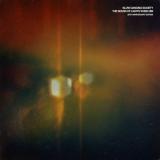
![Denise Motto - I M N X T C (Jack Your Body To The Beat) [JD Twitch Remixes]](https://www.deejay.de/images/l/4/8/1232548.jpg)