Hand the king of re-edits Late Nite Tuff Guy the keys to an unreleased Silk recording from the ‘70s hey days and you’ve got yourself a recipe for greatness. A’s and Bees line up their second heavyweight 12 inch pressing, with two exhilarating edits from LNTG alongside the first ever release of the original recording. As ever 50% of the profits from this release will be donated towards the British Beekeepers Association.
It's rare to crack the vaults on a recording that’s as good as this, that never saw the light of day. Courtesy of ‘70s Philly International wonders Silk, most famed for their soul sensation ‘I Can't Stop (Turning You On)’ that was sampled by LF System for their 8 week strong number 1 release, ‘Somethin' 'Bout The Way’ has all the elements of a smash hit. As catchy as they come, singalong sensibilities and musicianship of the highest order with vocal harmonies to match, it’s genuinely astonishing that this never got released. Who better to tweak this into an all-out disco stomper, than re-edit royalty Late Nite Tuff Guy. His Disco Dub teases in, loops up and adds extra punch to all the elements that make the original such a standout track, before letting loose those joyous vocals. Big room, full body, DJ friendly business this!
On the B side, the original mix gets it’s first ever release, with LNTG providing a shorter edit of his full throttle re-work to round off the package.
Cerca:we can do it
- A1: Drawing Future Life - 1969
- A2: Ruutu Poiss - Ihatsin
- A3: Digital Distortion - Mellow Bug
- B1: French Audacity - The Final One (Feat. Valerie)
- B2: Dj Spike - Gaps In Space
- B3: Interdance - Kurz
- C1: Bad Behaviour - Living On Smoke (Edgware Mx)
- C2: Frequency - Systematic Input
- C3: Diffusion - Lushes
- D1: M.f.a. - Blue To Be Happy
- D2: R.i.p. - E.o.pan
- D3: Mad Professor - Oh Hell
Orpheu the Wizard has a magic touch at finding records that fall between the gaps in music - oddities, curios, the weird, the wonderful. But that's just half the trick. It takes a sensitive and selective ear to construct a coherent, accessible narrative from them. So you get DJs who can play for the crowd and "selectors" adept at mining the black gold. In Orpheu, you've got yourself someone who can do both. On a festival main stage, he can keep it weird enough for the heads. In an audiophile setting, he'll keep the flow.
These skill sets come into play on the fifth The Sound of Love International compilation. Jumping between genres, decades, continents, the truly rare, and many B-side cuts that passed you by. But never eclecticism for its own sake; this collection makes sense. Orpheu never loses sight of the listener - he's a friendly and knowledgeable guide to the cosmic outer reaches.
He opens his account with the warm, psychedelic electronics of Drawing Future Life, with ‘1969’. Tucked away on the B-side of an LP of ambient/trance hailing from Fukuoka, this is a very pretty piece of music on a truly rare piece of wax. Then, leapfrogging a couple of decades and timezones, we have Rutuu Poiss' "IHATSIN." Off-kilter, experimental sounds with an endearing melodic hook, followed up by the with lethargic ambient breakbeat of Digital Distortion's "Mellow Bug".
On the B-side, things start to get lively. French Audacity featuring Valerie's "That Fine One" is Gallic garage that has simultaneously got it hugely wrong and massively right. Owing as much to new wave as New York house, this is propulsive and quirky dance music at its finest. Next, we're on a ferry over the channel for DJ Spike and "Gaps In Space." Up-tempo electro with a fondness for sampled vocal cut-ups, like its predecessor.
lnterdance's "Kurz" (another B-side) is the perfect segway - house from 1990 with that sweet, slightly goofy naivete. Things move toward the gnarly with Bad Behaviour and "Living on Smoke," a lesser-known cut on the legendary Atmosphere records. The tempo edges upward on "Systematic Input" by Frequency, hectic hardcore techno that still retains a lightness of touch.
"Lushes" by Diffusion spins us off into space, filigree techno with an emotive trance edge. The chiming intro of "Blue to Be Happy" by MFA lulls us into a sense of false security before massively putting the boot in with a pounding kick drum, bassline, and arpeggiation. From there, it's a sharp left turn into the urban psychedelic dub of R.I.P's "E.O Pan" on cult label Digi Dub.
Sticking with UK sound system music but taking it down a notch, Orpheu closes proceedings with a leftfield reggae excursion from the master of the mixing desk, Mad Professor’s"Oh Hell".
It's a compilation as varied as the many moods and grooves of Love International itself - from sun-dappled olive groves to moments deep in the strobes. This is serious music for party freaks or party music for serious freaks. Tisno is calling.
...And I Mean It is an amalgam of girl group, new wave, blues, pop, and folk-rock by Genya Ravan. To hear her exquisite voice on "Night Owl" soaring above her own backing vocals is intense, imagine Etta James backed by the Sex Pistols doing a rock version of "Earth Angel." Of all Ravan's work, ...And I Mean It is possibly the most concise and picture-perfect statement of what the woman is musically about. A girl group pioneer who worked with Richard Perry prior to his finding the Pointer Sisters groove, there is no doubt Ravan influenced that major producer, and his work did the same for her. "Pedal to the Medal" is high-end treble rock before it came into vogue. This is the other side of Siren, the album Genya produced for Ronnie Spector, with more emphasis on a good-time rocking party. "I'm Wired, Wired, Wired" is a rock & roll anthem for people who burn the candle at both ends, while "I Won't Sleep on the Wet Spot" embodies the unbridled sexuality of this album. The music crunches while Ravan uses her voice, her production skills, and her legacy to create something far removed from her days in Ten Wheel Drive. The horns are replaced by searing guitars and Charlie Giordano's magical piano work. The sound of the keyboard and its erratic splashes really are key to "I Won't Sleep on the Wet Spot," while the guitar and bass battle it out. "Steve...," on the other hand, is Goldie & the Gingerbreads ten years after. This Ravan/Conrad Taylor composition was the 45 from the album, and it has "hit" written all over it. 20th Century just didn't have the right mechanisms in place to get some of the great music they put out on radio, such a pity as Harriet Schock, Randy Edelman, and the fake soundtrack for All This and World War II (a Beatles tribute album) contained songs that should have been big hits. What did hit off this album, on FM radio as an album track, is the brilliant duet by Ian Hunter and Ravan, the subtle and folky "Junkman." Released on Hunter's excellent Once Bitten Twice Shy CD on Legacy in 2000, the song and the performance are timeless. Ravan once said: "I was asleep with the tv on, and was saying to myself...that's my voice...that's my song...that's me! I woke up to find "Junkman" on TV in a film." The song got placed in a cable movie without the producer's knowledge! "Junkman" was a sound not heard on FM radio prior to its release, much like MTV's "unplugged" versions of songs, but it is more unplugged than most of this material -- take the rocked-out version of Motown that is the cover of Marvin Gaye's "Stubborn Kinda Girl," or the Springsteen-style blast that is "It's Me," a tune Springsteen should cover.
The Search for God is a wake-up call for a troubled world that’s still worth saving, animated by a belief in the power of small connections to add up to big changes. At 10 songs delivered in a brief 15 minutes, Jimmy Whispers’ long-awaited sophomore album feels present in a way that feels brand new for the cult auteur. Like many of us, Jimmy has been affected by the pressure of the past few years. After embracing sobriety in 2019, and now as a filmmaker sharing the stories of lesser known Los Angeles community members, he’s brought his dreaming down to earth, while turning its direction even further out.
Recorded with his longtime friend Ziyad Asrar of the band Whitney (and re-recorded after a hard drive incident destroyed the original files), The Search for God was created in the wake of Jimmy’s COVID isolation, and returns to some teen influences that are out of step with the chill/lo-fi LA indie rock scene he’s found himself lumped in with. Created mostly with two vintage synths, a single Roland CR5000 drum machine, and a busted karaoke machine, it channels Midwestern emo, the Beach Boys’ Smile, subtle nods at hyper-pop production, and forgotten jewel-box era college radio of the early aughts into a pure pop sound that transcends easy categorization.
The album’s standout single—and its statement of purpose—is “Hellscape,” which packs more into a minute and 40 seconds than you’d think possible: multiple immediately-unforgettable hooks, kaleidoscopic keyboards, and a bracing reminder that even the most transcendent moments are rooted in a world full of suffering. “This is a fucking hellscape,” Jimmy sings. “This is real life / this is happening.”
That may sound like punk nihilism, but The Search for God is anything but. Every lyrical acknowledgment of how fucked things are right now comes with a promise that we can still make positive changes. Jimmy calls it “God”; you might call it Love or Peace or A Place In the Universe That Makes Some Kind of Sense.
Will The Search for God deliver whatever that is to you? Of course not. At its heart, it’s still just a really good pop album. But maybe that’s enough. For a minute or two at a time, Jimmy’s music cracks open a space where the divine can enter our lives. The utopia we’ve all been dreaming of is already here if we’re just willing to build it. Jimmy Whispers is there, ready to add his voice, whenever we want to reach out.
BABY BLUE VINYL
"Workin' all day, trying to forget about the old me." Like most of us, Martin Frawley is busy trying to work himself out. He lives alongside the long shadow of his late dad, musician and songwriter Maurice Frawley, a cultural icon of the Australian underground and collaborator of Paul Kelly, Tex Perkins and Mick Thomas. Most of Martin's 20s were spent writing and playing songs in locally beloved Melbourne band Twerps - a collection of pals who were on the forefront of the city's jangle pop renaissance. A few albums, US tours and band rotations under its belt, Twerps split up in 2018 and Martin turned his compass towards a solo project. His first album, Undone at 31 (2019), was a bit of a reckoning; a wild ride through the wreckage of both a band and longterm romantic break up. His new album The Wannabe is a personal, cheeky and, at times, self-depreiciating collection of songs unpacking the reality of finding his way as an adult without his dad around, and ultimately falling back in love with life, music and someone new. Martin and his band - friends Dan Luscombe (The Drones), Steph Hughes (Boomgates, Dick Diver), Nik Imfeld (Tyrannaman) and Dan Kelly - had heaps of fun recording The Wannabe in Melbourne. The title track is a particularly spicy take on an entertainment industry that seems to give more shits about marketing than music. The album is a bit of an emotional tour, from anger and derision, through to comedy, through to deep and honest love. It's positive with a lot of sadness. Not unlike Martin himself. As well as the guitar, Martin had some fun playing the piano on this record. The technical term is `multiinstrumentalist' but Martin's more of a musical explorer of sorts. No one is exactly sure how these things work - if Martin was born into music or if it was born into him, but it doesn't really matter. Music is what he loves. It's what he does. It's not about the industry or about success - not anymore. It's about the freedom of creating songs on his own terms, and trying to let go of the feeling he has something to prove: to his dad, to his critics, and to himself. And while he's not sure he'll ever fully shake that feeling, he's at least relaxing and having a bit of fun doing it. Like his dad, Martin has a reputation as a `musician's musician'. He hosts a pretty sporadic podcast Dive For Your Memory, where he has fast and loose chats with musicians while doing a deep dive into their musical inspirations and canon. He and his fiancé Lauren also make wine under the label El'More Wines, named after the farm and small town where his dad grew up. It's all come a bit full circle, really.
- 1: Home
- 2: Prana 10:9
- 3: Holy 0:58
- 4: Amok
- 5: Open
- 6: Game Over
When I first heard Natalie Rose LeBrecht's time-suspending, air-ionizing music, more than twenty years ago, I thought "this kid is on to something." She's been proving that thought right ever since. Her recordings, from the teenage 4-track tapes she made as Greenpot Bluepot to the recent albums under her own name, have been fascinating dispatches from her progressively deeper dives into her gorgeous, weird, wildly idiomatic aesthetic. Holy Prana Open Game is a jewel of intensely personal cosmic music, created through a remarkable process of openness, craftiness, addition and subtraction. It belongs to a tradition of albums that document a rich, meditative sound as it rises up to join the world outside its creators' minds: Alice Coltrane's Universal Consciousness, Harmonia's Musik von Harmonia, Philip Glass's North Star, Talk Talk's Laughing Stock.
"Meditative" is specifically the idea here: Holy Prana Open Game had its origins in the fourteen days LeBrecht spent silently meditating in her home's small music room in the summer of 2019. "I came out of that bursting with the will to create new music," she says, and she created it sound-first. LeBrecht taught herself to program an analog synthesizer's timbres from scratch, and built a new set of glacial, heady compositions out of them, eventually singing to accompany the keyboard parts she was playing.
Then she closed her eyes at her computer, "let my mind be clear and open, imagined light pouring down through me, and began auto-writing to my memory of the music playing through my mind. Most of the lyrics emerged this way, and then I used my conscious mind to refine them a bit at the end." One other song came along with LeBrecht's new pieces, a cover that seems wildly unlikely from the outside and makes total sense in its context: it's a version of Atoms for Peace's "Amok" (which had been created by improvisation and editing, too), mutated into her own idiolect.
In early March of 2020, LeBrecht recorded Holy Prana Open Game's analog synth parts with Martin Bisi at his studio in Brooklyn--and then the world shut down. As you may have gathered, LeBrecht is very much a spiritual, head-in-the-stars type. She is also extremely hardcore, and if making the art she wants to make means doing things the hard way, she cracks her knuckles and gets down to it. Within weeks, she had taught herself how to record, mix and edit with a digital audio workstation. She recorded her vocal parts (sometimes multi-tracked into a radiant choir) at home, assembled a rough mix of the album, and sent it off to her collaborators.
LeBrecht spent some years studying with and assisting La Monte Young and Marian Zazeela at their legendary sound-and-light installation, the Dream House. As with their work, her singular, precisely focused vision is shored up by its openness to artistic voices beyond her own. For Holy Prana Open Game, she worked with the Australian guitarist Mick Turner and drummer Jim White (both of Dirty Three, the Tren Brothers and innumerable other projects), as well as woodwind player David Lackner, a longtime presence on her recordings.
Turner and White have been playing together in one context or another since 1985; in the summer of 2020, they were only blocks from each other in Melbourne, Australia, whose strict lockdown meant they couldn't meet up to record together. So both of them, as well as Lackner, recorded their improvisational additions to LeBrecht's rough mixes individually, often without hearing each other's contributions. "I had asked them to play as much as they could on each track," she says, "and told them that I would edit it all down in post, so I had a lot of source material of theirs to work with."
LeBrecht arranged and edited the recordings from all four of their homes to flow together like breath across the duration of her suite. Prana, one of the album's central conceits, is in fact the Sanskrit word for breath, with the connotation of the breath of life. Like LeBrecht's music, prana flows at its own pace, and demands stillness to take in fully--but it's also subtly playful and surprising, a force that can be as light as air or as immersive as the atmosphere itself.
- Asking Is There Anything You Believe That You Would Be Willing To Die For, And The Difference Between The Way That Most Beliefs Have Been Accepted/Tolerated And
- A1: Broken And Beaten In 5/8 Time Part 1. Beaten 6:34
- 2: What's It All For?10:39
- 3: Broken And Beaten In 5/8 Time Part 2. Broken 7:6
- 4: Mass Exodus (A Hymn)
- Acceptance Is Not Respect Part One: The Revolution Of Defiance(23:19)
- 1: Anthem For A New Beginning
- 2: Slide Down To Power Off
- 3: What Failure Looks Like
- 4: And So We Rise Again Part Two: Three Martyrs: Pressing, Stoning And Saltire 1/St. Stephen 6:29
- 2: St. Andrew 7:7
- 3: St. Margaret 7:50
In August 2020, following some typical delays at the plant, Fourth Dimension Records released the limited edition 2LP (and now sold out) set of Kleistwahr's This World Is Not My Home and Over Your Heads Forever albums, originally released by the same label in 2014 and 2016 respectively. Packaged together in a single sleeve with printed inners reproducing all the artwork found on the original CDs, the 2LP was always designed to represent the first volume in a series of them. This next volume gathers everything on the next two albums, Down But Defiant Yet and Acceptance is Not Respect, both also initially released on CD in, respectively, 2017 and 2018, and presented in the exact same way. 2017's long sold out at source album, Down But Defiant Yet, collects four lengthy cuts which catch Gary Mundy (also known for Ramleh, Breathless and Broken Flag Records) furrowing his distinct and recognisable take on a kinda contemporary psychedelia with dystopian leanings. Each piece nods towards the fug generated by certain ‘krautrock’ groups whilst retaining threads of those uncompromising power-noise surges he built his reputation on, this is music guaranteed to take you to new spaces before forcing you to nervously look over your shoulder. 2018's Acceptance is Not Respect collects two lengthy pieces themselves broken down into seven parts often tempered to the point restraint assumes new, often disturbed (and disturbing) psychedelic or even filmic, properties, this music arrives like a spitting and foaming scream into the insanity of the void and the myriad challenges and questions it inexorably keeps hurling at us. Whereas Ramleh captures the sound of at least two people dealing as best they know how with the constantly rising rivers of shit around us, Kleistwahr is akin to one man having scaled a great height poking out of an infinite chasm and wondering why he bothered. This is uneasy listening sometimes renderedvirtually elegiac by dint of a prowess rarely found in such realms. Of this, Gary himself quite prophetically, in light of how events have shaped the world since said, “I was trying to make the music more spiritual sounding this time as the album is about belief. The first half is about personal and political belief and the second half about religious belief. I was wondering about whether in the 21st Century, you can seriously get anyone to completely change their beliefs and [am] asking is there anything you believe that you would be willing to die for, and the difference between the way that most beliefs have been accepted/tolerated and [are] supposedly respected in recent times in [the UK]. Now our society is starting to break down, it becomes clear that that acceptance tends not to actually be the same thing as respect at all.”
- 1: The Wild Horses Of The Revolution Have Arrived Without A Knight
- 2: Central Crisis Management Cell
- 3: Painful Memories From The Past Need To Be Acknowledged
- 4: Dancing On The Head Of An Eagle
- 5: He Worked With His Eyes Lowered
- 6: Starting Something You’re Not Able To Finish
- 7: Diplomatic Cocktail Circuit
Repress!
N0!zy blighter Russell Haswell returns to Diagonal 5 years after his label debut with a spontaneously combusting follow-up to ’37 Minute Workout’ generated again from a mix of analog/digital synths and modular systems edited on a computer. It was inspired by a visit to CERN, The European Organisation for Nuclear Research, in Geneva; and dinner with Ted Nelson, whose theories of interwingularity and transclusion chimed with the direction recordings took.There are few artists who can genuinely make music that sounds like your needle and/or record is melting, but Russell Haswell is one of them. His 2nd volume of extremely kinky calisthenics is a potent example of daring to be different in a world where exponentially increasing production options are leading producers of all stripes to the exact same conclusions. But, with thanks to Russell’s iconoclastic intent, restless nature and ascetic aesthetics, he still sounds quite like nobody else, and, even better yet, doesn’t give a shit if you like it or not. For the record (this one in particular), we’re all over it like a hot rash.
Since reincorporating his early love of freestyle electro and Industrial dance music into his patented n0!ze matrices circa the 1st volume of ’37 Minute Workout’, Russell has steered that rhythm-driven style into a string of fizzy bangers for Diagonal and even applied it to his production for Consumer Electronics with typically radical results. Russell’s 2nd volume of ’37 Minute Workout’ is cut from similarly (but never the same) ragged material as the first batch, and spits, kicks and claws with equal amounts of eething, pent energy and rambunctiousness ready to jab the ‘floor in the eye or dissolve a party where needed.
Crowbarring cues ranging from the Latin Rascals to Incapacitants and Jeff Mills into 7 wickedly awkward designs, Haswell keeps his avant aerobics radically irregular as he hops from the tendon-twitching angularity of ‘The Wild Horses of the Revolution have arrived Without Knight’ to steel-hoofed clatter in ‘Central Crisis Management Cell’ and the lacquer-eating dynamics of ‘Painful
Memories From The Past Need To Be Acknowledged’, before toning a proper nasty acid special in the UR inversion ‘Dancing on the Head of an Eagle’, and seemingly sucking your brain out thru a straw with ‘Starting Something You’re Not Able To Finish’, with the dry witted, skeletal jazz-funk squirm of ‘Diplomatic Cocktail Circuit’ closing the party down in style.
"Another Love Song - The Frames are an Irish indie rock band formed in Dublin in 1990. The band is known for their passionate and emotive sound, which blends elements of rock, folk, and traditional Irish music. Over the years, they have released several critically acclaimed albums, including ""Another Love Song,"" which is widely regarded as one of their most influential works.
""Another Love Song"" was released in 1991 and marked a turning point in the band's career. The album featured a raw, stripped-down sound that was a departure from their earlier, more polished work. The songs on the album were deeply personal and introspective, exploring themes of love, loss, and the complexities of human relationships. The album's title track, ""Another Love Song,"" became an instant classic, showcasing the band's signature sound with its driving rhythms and soaring vocals. The song's bittersweet lyrics and haunting melody struck a chord with listeners and quickly became a fan favourite.
In addition to ""Another Love Song,"" the album features several other standout tracks, including ""Say It to Me Now,"" ""The Dancer,"" and ""Downhill."" Each song on the album showcases the band's dynamic musicianship and poetic lyricism, earning the album a reputation as a seminal work in the Irish indie rock scene. Over the years, The Frames have continued to evolve and innovate, releasing several more critically acclaimed albums and earning a dedicated following of fans around the world. With their unique blend of raw emotion and musical artistry, The Frames continue to inspire and captivate audiences with their powerful, soulful music.
Fitzcarraldo - ""Fitzcarraldo"" is the sixth studio album by the Irish rock band The Frames, released in 1995. The album marked a significant departure from the band's earlier work, with a more experimental sound that blended rock, folk, and experimental elements.
The album takes its name from the Werner Herzog film of the same name, which tells the story of a man who attempts to build an opera house in the Amazon jungle. This theme of ambition and perseverance in the face of adversity runs throughout the album, as frontman Glen Hansard explores themes of love, loss, and the human experience. The album opens with the hauntingly beautiful track ""Revelate,"" which sets the tone for the rest of the album with its soaring vocals and intricate guitar work. From there, the album takes the listener on a journey through a diverse range of sounds and emotions, from the upbeat rock of ""What Happens When the Heart Just Stops"" to the melancholic balladry of ""Fitzcarraldo.""
One of the standout tracks on the album is ""Lay Me Down,"" a tender and heartfelt ballad that showcases Hansard's powerful vocals and poetic lyricism. The song has become a fan favourite and is often performed live by the band. Another highlight of the album is the epic nine-minute track ""Fitzcarraldo,"" which features lush instrumentation and intricate guitar work. The song is a tribute to the film of the same name and explores themes of ambition and determination in the face of seemingly insurmountable obstacles.
Overall, ""Fitzcarraldo"" is a powerful and deeply personal album that showcases The Frames at their most ambitious and experimental. With its diverse range of sounds and emotions, the album remains a fan favourite and a landmark in the Irish rock canon.
Dance the Devil
Dance the Devil is the fourth studio album by the Irish rock band, The Frames. Released in 1999, it marked a significant departure from the band's earlier sound and was a critical and commercial success.
The album features 10 tracks, including the hit single ""Pavement Tune,"" which received extensive radio play and helped to propel The Frames to greater prominence in the music industry. Dance the Devil showcases the band's versatility and musical prowess, blending elements of rock, folk, and pop to create a unique and compelling sound. The lyrics are introspective and poetic, exploring themes of love, loss, and self-discovery.
Produced by Steve Albini, the album was recorded in just five days, giving it a raw and unpolished feel that perfectly captures the energy and passion of The Frames' live performances.
Dance the Devil remains a beloved album among fans of Irish music and continues to inspire new generations of musicians. Its enduring popularity is a testament to the artistry and vision of The Frames and their commitment to pushing the boundaries of what is possible in rock music.
"
"Another Love Song - The Frames are an Irish indie rock band formed in Dublin in 1990. The band is known for their passionate and emotive sound, which blends elements of rock, folk, and traditional Irish music. Over the years, they have released several critically acclaimed albums, including ""Another Love Song,"" which is widely regarded as one of their most influential works.
""Another Love Song"" was released in 1991 and marked a turning point in the band's career. The album featured a raw, stripped-down sound that was a departure from their earlier, more polished work. The songs on the album were deeply personal and introspective, exploring themes of love, loss, and the complexities of human relationships. The album's title track, ""Another Love Song,"" became an instant classic, showcasing the band's signature sound with its driving rhythms and soaring vocals. The song's bittersweet lyrics and haunting melody struck a chord with listeners and quickly became a fan favourite.
In addition to ""Another Love Song,"" the album features several other standout tracks, including ""Say It to Me Now,"" ""The Dancer,"" and ""Downhill."" Each song on the album showcases the band's dynamic musicianship and poetic lyricism, earning the album a reputation as a seminal work in the Irish indie rock scene. Over the years, The Frames have continued to evolve and innovate, releasing several more critically acclaimed albums and earning a dedicated following of fans around the world. With their unique blend of raw emotion and musical artistry, The Frames continue to inspire and captivate audiences with their powerful, soulful music.
Fitzcarraldo - ""Fitzcarraldo"" is the sixth studio album by the Irish rock band The Frames, released in 1995. The album marked a significant departure from the band's earlier work, with a more experimental sound that blended rock, folk, and experimental elements.
The album takes its name from the Werner Herzog film of the same name, which tells the story of a man who attempts to build an opera house in the Amazon jungle. This theme of ambition and perseverance in the face of adversity runs throughout the album, as frontman Glen Hansard explores themes of love, loss, and the human experience. The album opens with the hauntingly beautiful track ""Revelate,"" which sets the tone for the rest of the album with its soaring vocals and intricate guitar work. From there, the album takes the listener on a journey through a diverse range of sounds and emotions, from the upbeat rock of ""What Happens When the Heart Just Stops"" to the melancholic balladry of ""Fitzcarraldo.""
One of the standout tracks on the album is ""Lay Me Down,"" a tender and heartfelt ballad that showcases Hansard's powerful vocals and poetic lyricism. The song has become a fan favourite and is often performed live by the band. Another highlight of the album is the epic nine-minute track ""Fitzcarraldo,"" which features lush instrumentation and intricate guitar work. The song is a tribute to the film of the same name and explores themes of ambition and determination in the face of seemingly insurmountable obstacles.
Overall, ""Fitzcarraldo"" is a powerful and deeply personal album that showcases The Frames at their most ambitious and experimental. With its diverse range of sounds and emotions, the album remains a fan favourite and a landmark in the Irish rock canon.
Dance the Devil
Dance the Devil is the fourth studio album by the Irish rock band, The Frames. Released in 1999, it marked a significant departure from the band's earlier sound and was a critical and commercial success.
The album features 10 tracks, including the hit single ""Pavement Tune,"" which received extensive radio play and helped to propel The Frames to greater prominence in the music industry. Dance the Devil showcases the band's versatility and musical prowess, blending elements of rock, folk, and pop to create a unique and compelling sound. The lyrics are introspective and poetic, exploring themes of love, loss, and self-discovery.
Produced by Steve Albini, the album was recorded in just five days, giving it a raw and unpolished feel that perfectly captures the energy and passion of The Frames' live performances.
Dance the Devil remains a beloved album among fans of Irish music and continues to inspire new generations of musicians. Its enduring popularity is a testament to the artistry and vision of The Frames and their commitment to pushing the boundaries of what is possible in rock music.
"
Bobby Harden & The Soulful Saints are proud to announce their debut album, "Bridge of Love." The album's ten original compositions are presented in sparklingly-clear stereo sound and run the soul gamut, from grits-n-bricks R&B ('Played a Fool by You') to throw-back psychedelia ('One Tribe'), svelte seventies pop ('One Night of the Week') and some seriously sophisticated ballads ('Wounded Hearts', 'Bridge of Love'). Together they document Bobby's life journey in song. Through youthful self-doubt in the opening track 'It's My Time', to confirmation on the exuberant finale 'Raise Your Mind', Bobby proves that faith and hard work can pay dividends. "Life is a joy when you free your soul."Throughout the album, Harden's voice is tailored to perfection by the almost impossibly dexterous Soulful Saints, and further dressed to the nines by an accoutrement of Latin percussion, full-on horns, high-flying backing singers and even a string quartet. This comes as no surprise as The Soulful Saints have performed live and recorded together with acts such as Sharon Jones & The Dap-Kings, Charles Bradley & His Extraordinaires, Lee Fields & The Expressions, The Budos Band, Mark Ronson, Antibalas, The Impressions, & The Wu-Tang Clan.The album is produced by Dala Records founder Billy Aukstik, and recorded at Hive Mind Recording in Brooklyn, New York. Kurtis Powers of BQE Records Co-Executive Produced the album along with Aukstik.
History has proven that when the world is in flames, it ignites the empathetic artists to siren their words, music, and rhythm, to blanket our society"s fury and nurse scorched souls. The seemingly endless years of pandemic lockdown and social distancing, coupled with the turbulent plague of civil unrest and racial injustice, called on Vintage Trouble to step into their battle wear. Like so often before, they have spun records to drop onto the fighting grounds, with the intent to freeze the frame long enough to momentarily halt the warring world. And while at ease, we can freely choose to think before we strike or decide to retreat, rather than thoughtlessly charge into repeating history. This collection of heavy hymns is from the heart, and it provides a necessary rise to our ever reckoning.
- A1: Where Drug Dealers Take Their Kids
- A2: Gone To The Dogs
- A3: The Wreckage
- A4: Dead Man's Underpants
- A5: Lil Deadshit
- A6: Laneway Dave
- A7: Instant Coffee
- A8: Dog Tranquiliser
- A9: I Think My Neighbour Is Planning To Kill Me
- A10: Horse Meat
- B1: How To Make Gravox
- B2: Deathbed Darren
- B3: Tontined
- B4: Fireworks
- B5: Hospitality & Violence
- B6: Those People
- B7: Old Mate Neck Tattoo
- B8: Finally I Can Get Arrested In This Town
- B9: Thought It Was Yoga But It Was Ketamine
Black Vinyl[23,32 €]
Sie haben die Bühne mit jedem geteilt, von NOFX bis Nickelback, und dabei die Leute gleichermaßen beleidigt und unterhalten, wurden in den Leben der Leute willkommen geheißen und aus den Radiosendern verbannt. Ihr 10. Studioalbum enthält 19 Tracks, die von guten Zeiten, geliebten Freunden und etwas weniger freundlichen Typen handeln und von heißen Riffs und Licks, brillanten Basslinien und verheerenden Drum-Bits in Szene gesetzt, die jeden Frenzal Rhomb-Fan zufriedenstellen werden.
- A1: Where Drug Dealers Take Their Kids
- A2: Gone To The Dogs
- A3: The Wreckage
- A4: Dead Man's Underpants
- A5: Lil Deadshit
- A6: Laneway Dave
- A7: Instant Coffee
- A8: Dog Tranquiliser
- A9: I Think My Neighbour Is Planning To Kill Me
- A10: Horse Meat
- B1: How To Make Gravox
- B2: Deathbed Darren
- B3: Tontined
- B4: Fireworks
- B5: Hospitality & Violence
- B6: Those People
- B7: Old Mate Neck Tattoo
- B8: Finally I Can Get Arrested In This Town
- B9: Thought It Was Yoga But It Was Ketamine
Green Vinyl[26,85 €]
Sie haben die Bühne mit jedem geteilt, von NOFX bis Nickelback, und dabei die Leute gleichermaßen beleidigt und unterhalten, wurden in den Leben der Leute willkommen geheißen und aus den Radiosendern verbannt. Ihr 10. Studioalbum enthält 19 Tracks, die von guten Zeiten, geliebten Freunden und etwas weniger freundlichen Typen handeln und von heißen Riffs und Licks, brillanten Basslinien und verheerenden Drum-Bits in Szene gesetzt, die jeden Frenzal Rhomb-Fan zufriedenstellen werden.
- A1: Breaking News - El Queeno, Deado
- A2: Made In M - Pronto
- A3: Tom Doolie - Yacht
- A4: Flofilz - La Première Fois
- B1: Ellosophy - Lost In Music
- B2: Digitalluc - Never Loose
- B3: Rick Flair - Freedom
- C1: Imaginary Friend - Joke
- C2: Flofilz - Meteora
- C3: Made In M - Balsa
- C4: Digitalluc - Morgentau
- D1: Tom Doolie - Pick Up
- D2: Klaus Layer - Type 2
- D3: Ellosophy - Katanga Nights
Introducing "Beats on Boat Vol. 2" - the highly anticipated compilation album featuring some of the most talented and respected names in the lofi hiphop scene With tracks from the likes of FloFilz, Made in M, digitalluc, and Klaus Layer, to name a few. This project promises to deliver a unique blend of chill beats and groovy rhythms that
will transport listeners to a world of laid-back vibes.
Released through ear-sight, tracks from "Beats on Boat Vol. 2" will be released every two weeks starting from
May 31st and will be accompanied by a live set, filmed on Berlins river Spree.
One of the standout features of this album is how each artist brings their own unique style to the table. From FloFilz's jazzy beats to Made in M's dreamy soundscapes, listeners can expect a diverse range of sounds and textures that will keep them hooked like fish on a rod.
Another thing that sets "Beats on Boat Vol. 2" apart from other compilations is the focus on both lofi hiphop and lofi house. While these two genres may seem vastly different at first glance, they actually share a lot of common ground - both are built on a foundation of warm textures, and infectious grooves.
A must-listen for anyone who loves lofi music, chill beats, or just wants to experience something truly unique. With this roster of top-tier artists, the focus on both lofi hiphop and lofi house, and its live beat sets on a boat in Berlin, this compilation is sure to make waves. Hop aboard and tune in!
Mastered by digitalluc
Cover design by Otto Stobbe
For the third time to the house of Sakskøbing we are witnessing return of a close friend to the label, Portland-based Aaron Carlson who goes by the moniker ac$. This legend of a human being has crafted a 5 audio pieces which has been made on his modular machines at his home studio and showcases a good range of what I believe we call house music. With the first release he has done for the label that went out in the year 2017 and marks a 6-year friendship between the artist and all of us fellas who hold his music dear to the hearts. The record turned out to be warm, personal and true to the artist’s vision you’ll agree if just like us you have been following the man’s sound output over the years. Very importantly it teaches that bean curd is not only good for your body but for the mind as well and let’s not even start to count how many things you can do with it. You know what they say…
- A1: Hawking And Fire
- A2: Super Erotica
- A3: The Bends
- A4: J P. Walk
- A5: The Build Up (Gentle In The Night)
- B1: Back Up To The Bumper Boogie
- B2: Can't Get Enough (Of That Buttered Stuff)
- B3: Night Driving Scene (From The Thrill Is On)
- B4: Greg's Groove Thing
- B5: Rollerblade Escapade (From Jailbait)
- B6: Gabi's Theme (From Dagmar Zeigt's Euch)
- C1: Four Weelin' Meat Movers
- C2: Nightclub Theme (From The Devil Made Me Do It)
- C3: Pimp Fight
- C4: Bang 'Em Hard
- C5: Hot Buttered Buns (From The Manimal)
- C6: Portobello Surprise (From Brighton Beach Bunnies)
- D1: Bedtime For Busty
- D2: Love Theme (From Sir Lancealot)
- D3: I Dig Your Vibe
- D4: Theme (From A Thousand And One Knights)
- D5: Motion Lotion
- D6: Exchanging Glances
Music follows strange paths, goes where it wants, always. This is how music created for use only as a background for adult films in the 70s today sounds so current, sophisticated, groovy and cool.
In this new chapter of Sexopolis "Beyond The Valley Of The Beats" ( Pornobeats ), we will in fact find songs "for adult listeners" who have made non-trivial musical research their final destination. 23 soul, funk, jazz, lounge and more songs that are not so easy to label with a musical genre, believe me.
18 of the songs in this selection have never been made on phonographic support before, a real "first time" that you can discover with all the taste, curiosity and kindness due, please.
The fourth chapter of the Sexopolis series is certainly the most alternative and ambitious, the result of an accurate and difficult musical research that will satisfy listeners at all times. The turquoise double vinyl is as always a limited edition. Then, all that remains is to add it to your collection and ... make your own mental private film.
Enjoy!
March 3rd 2023 sees the release of a collaboration between Massive Attack’s Robert ‘3D’ Del Naja and Ukrainian artist Slava Vakarchuk, the frontman of Ukraine’s most popular rock band Okean Elzy. Vakarchuck has performed 179 impromptu shows for civilians and soldiers across Ukraine since the invasion began 12 months ago. The track, “Obiymy (Legacy of War Mix)”, was re-worked by Del Naja and Euan Dickinson in March last year and is now released through his Battle Box label. In April we’ll see a vinyl release featuring a B-side “Field Recordings / 2022” in a gatefold sleeve press by Deepgrooves, the world’s most eco-friendly vinyl plant. You can pre-order this now.
All profits go to the Legacy of War Foundation; an international charity providing support to civilians affected by conflict, founded by Giles Duley - a photographer, writer, campaigner and UN Global Advocate. Duley shot all photography for the digital and vinyl release, which was then designed by Robert Del Naja. Legacy of War Foundation will be partnering with UNITED24, a global fundraising platform, (launched by president Volodymyr Zelenskyy in May 2022) to help restore destroyed homes in Kyiv Oblast, under the Rebuild Ukraine program.
About Legacy of War Foundation:
Legacy of War Foundation was set up to do things differently: operating localised, beneficiary-led projects to support civilians affected by conflict and raising awareness of the lasting impact of war without big offices, international teams or unnecessary overheads. Founded in 2017, the Foundation now runs projects around the world including its innovative land transfer and sustainable agriculture program Land for Women in Rwanda, refugee support in Lebanon, and an extensive Ukraine crisis response supporting marginalised groups with specialist evacuation support, shelters and humanitarian aid.
Part 1 of a retrospective of sorts, compiled from dozens of unreleased tracks from literally two decades of producing, these gems were collecting dust in the vaults of Ekman. Evocative and eerie electro from the Dutch master. We think we can let the music speak for itself in this case, as it's unique and instantly recognizable.
- A1: Madman (4 22)
- A2: Keep Right On (5 30)
- A3: Reconsider (3 51)
- B1: When Will I Ever Learn 2 (3 44)
- B2: Out Of My Head Is The Way I Feel (3 05)
- B3: Carried Away (3 32)
- C1: Stoned Part 2 (4 13)
- C2: Positively Beautiful 2 (4 09)
- C3: Throw Me A Line (3 42)
- D1: Shame 2 (3 34)
- D2: Won’t Fade Away (4 05)
- D3: Keep On Keeping On (4 47)
Part 1[30,21 €]
Stoned Part II is Lewis Taylor's pure, perfect dance-pop album. His second self-released album and fourth album proper, it initially appeared on his own label Slow Reality in 2004. It's been licensed to Be With for this long-awaited double LP release, its first ever vinyl edition. Gravely misunderstood at the time by hardcore fans and the music press alike, it has aged quite magnificently. An experiment in the sounds of contemporary pop and dance music, Lewis's wonky take on funky pop would annihilate anything kicking around the charts, then or now. If only it were given half a chance.
Stoned Part II is brimming with Lewis's trademark soul, his singing as beautiful as ever, but the rhythms throughout are more upbeat, the overall sound a more smooth and slicker dance-funk presentation. Roughly half the tracks are absolutely essential, fascinating re-workings of tracks from the eternal Stoned Part 1, as Lewis explains: "When we were doing Stoned we were trying different approaches with everything so we ended up with more than one version of nearly all the songs which left us with more than an album's worth of material. There was a lot of really cool house tunes around at the time which we were both really into and that shaped the sound and production, some songs more directly than others." Amen to that.
The swoonsome, string-drenched opener "Madman" is quite the departure, a bleepy, bumping soulful disco-house record with a bassline to die for. Is there anything he can't do? It's followed by another huge dancefloor stomper, "Keep Right On" again riding another killer bassline over funky drums and featuring Lewis's dazzling vocals. There's no let-up with the sparkling "Reconsider" which sounds an awful lot like Daft Punk meets Nile Rodgers (prescient as ever, our Lewis). The wide-eyed French filtered house vibe is to the fore here, and how this wasn't picked up by someone like Kylie and taken wholesale to the top of the charts is something we'll never understand.
Opening the B-Side, "When Will I Ever Learn 2" really slaps, presenting a breezier, more upbeat funk take on the brilliant original and incorporating "From The Day We Met" from Stoned Part I. "Out Of My Head Is The Way I Feel" is absolutely fantastic and one of Lewis's very best songs. The vocals, self-harmonising and virtuoso playing are next level. To close out the side, "Carried Away" is a real standout, Lewis's gorgeous falsetto riding a quasi D&B groove to begin with before adorning a more classically funky 2-step rhythm. The marriage of undulating synths and guitars is stunning, giving way to Lewis indulging his goosebump-inducing Brian Wilson harmonies.
The funky, Rhythm King drum machine soul of "Stoned Part 2" refashions the original in the style of an unearthed Sly Stone classic, circa There's A Riot Going On. Yes, it's that good. On we then glide to "Positively Beautiful 2" which, if it's even possible, manages to be better than the original. The epic, orchestral opening truly captivates before Lewis truly gets down with kaleidoscopic dancefloor-slaying Philly soul-funk. It's surely tracks like this which help explain why he was soon to be tapped up by Dangermouse and Cee-Lo for the musical director role with Gnarls Barkley. "Throw Me A Line" closes out the side
"Shame 2" is a blissful, restrained version of the massive original, without the crazy psych-soul wig-out. Definitely more radio-friendly, that's for sure. The gorgeous mellow vibe continues with "Won't Fade Away", featuring more Beach Boys harmonies over a barely-there pulse (a version of which later pops up in an altered state on The Lost Album). The album bows out with - you guessed it - a psych-soul wig-out! "Keep On Keeping On", a real highlight, opens with looped sampled drums a la Massive Attack and Lewis's multi-layered self-harmonising again very much high in the mix. It amps up gradually to feature vocals dripping with tune and bite before screaming guitars and crashing drums really blast this whole set into the stratosphere.
Simon Francis’s vinyl mastering, approved by Lewis himself, presents the twelve tracks over a double LP so it sounds exactly as it should. The records have been cut by Cicely Balston at Air Studios and pressed at Record Industry. Allow Lewis Taylor to get you Stoned, Part II.
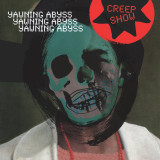
In the five years since Creep Show’s acclaimed Mr Dynamite album was released it’s fair to say that we’ve all been through a fair bit. Sitting here, in 2023, things don’t seem to be getting any better. There’s the cost of living crisis and political meltdowns; we're in deep water with global warming and to top it all there’s a war on our doorstep.
Back in 2018 everything seemed less complicated. Sure, there was stuff to get riled about, but we knew nothing about what was to come. Mr Dynamite was a fairground ride into the dark corners of a world that was on the brink of being blitzed in a blender. It was a record teetering on the edge. Five years down the line you’d expect the follow-up, Yawning Abyss, would double-down and bring the white-knuckled, teeth-gritted fury of the last five years to the boil. And yet….
A quick recap? No problem. Wrangler + John Grant = Creep Show. And Creep Show? “A band of musical misfits who have found a voice or two”, says Wrangler’s Ben “Benge” Edwards, whose Bond villain studio on the edge of a moorland is Creep Show Grand Central as well as home to an analogue synth arsenal that could sink ships.
Wrangler have known each other for a while. Tunng’s electronics wizard Phil Winter and Cabaret Voltaire’s trailblazing, pioneering frontman Stephen Mallinder go way back, while Phil and Benge crossed paths in the 21st century when they seemed to be increasingly in the same venues at the same times. Meanwhile, Mal had been living in Australia since the mid-90s and when, in 2007, he returned to the UK his old pal Phil suggested he meet Benge and the three of them immediately began working together.
Wrangler collectively bumped into Grant at their soundcheck for Sheffield’s Sensoria Festival in 2014 where they were playing with Carter Tutti. A friendship blossomed and when they were invited to perform together for Rough Trade’s 40th anniversary show at London’s Barbican in 2016, well, they jumped at the chance... and Creep Show was born.
Let’s talk about the new album... What is the ‘Yawning Abyss’? You might well ask. According to Mal, it’s “a cosmic event horizon that I can see from my attic window when stand on a chair”. Yeah. Thanks.
“On this album”, offers Benge, feet firmly on the floor, “Wrangler wrangled some vintage synths, mostly Roland, Moog, and the ‘Crystal Machine’ - then John Grant joined in the fun at Memetune Studios where lots of musical experiments were carried out. Then Mal and John ran off to Iceland with the master tapes and recorded a load of madcap vocals. Back at Memetune, me and Phil were left to try and make sense of it all. Which wasn’t hard because what they did in Iceland was totally magnificent.”
Which kind of brings us back to where we began. You’d imagine ‘Yawning Abyss’ would be blowing steam out of its furious ears. Mr Dynamite but kicking a wasps nest. Repeatedly. And yet…
Opener ‘The Bellows’ comes on like a modular ‘Radio Ga Ga’, the singalong ‘Moneyback’ (“You want your money back? / I didn’t think so”) sounds like Godley & Creme’s ‘Snack Attack’ meets Prince Charles And The City Beat Band (“Pennies, pounds, dollar bills, signed agreements, death wills”). ‘Yahtzee!’ is an unhinged electro breakdance party in four minutes and nine seconds.
Where Mr Dynamite was menace, a mélange of mangled voices, with Grant and Mallinder being heavily treated, pitched up or down, rendering their contributions largely indistinguishable, Yawning Abyss takes a more direct approach. You hesitate to say feelgood, but there’s a skip in the step here for sure.
The title track plays John Grant’s vocal straight. Completely. It’s good, so very good. Like ‘Axel F’ covered by Vangelis. The delicious shimmering synths of ‘Bungalow’ also plays those Grant pipes with a straight bat. ‘Matinee’ delves into darker, very funky territory. With Mal upfront it comes on like ‘The Crackdown’. Choice lyric: “You are starting to breakdown / And it’s so fun for me to see / You should have thought of that / You should have come prepared / You can see what’s happening and you look a little scared”.
So, you know, not all feelgood. But it does feel good. It’s probably best to draw your own conclusions... This is Creep Show after all.
Lost soul phenomenon Lewis Taylor's Numb finally arrives on double vinyl! One of UK soul’s most fascinating artists, most enigmatic figures and most under-appreciated talents, Andrew Lewis Taylor is a prodigious multi-instrumentalist and eclectic polymath. He enjoys a fiercely loyal following which, over the years, has included celebrity champions like Bowie, Elton and D'Angelo. Numb is Taylor's sixth album, initially released on his own label Slow Reality (an anagram of his name) and licensed to Be With for this long-awaited physical edition. It captures Taylor's wholly unique, intoxicating take on lush, late-night psychedelic soul music.
Lewis wrote and recorded these 10 brand new tracks after a 17 year break from making music, although the album came together over a two-year period. The years away have done nothing to dull Taylor's unique musical vision. He still astounds. The lyrical themes, however, have shifted. Understandably, more than a decade and a half of soul searching and unflinching self-examination cannot fail to influence this most honest of songwriters, and boy does it show. Numb marks a return to the darker, more mysterious side of his output: "Brian Wilson-channels-Smokey Robinson atmospheres", as Mojo put it recently.
After playing a rapturously received gig at the Bowery Ballroom in NYC in 2006, Lewis unceremoniously walked away from music and disappeared completely. An interview in 2016 shed light on some of the reasons for Taylor’s withdrawal from the business, but there was no hint of a return anytime soon. Then in June 2021, news emerged out of the blue that he was readying new music alongside Sabina Smyth with whom he had worked first time around.
On Numb, Lewis deftly balances stark, soul-bearing lyrics with moody mid-tempo pop-soul sheen. He deals candidly with depression, mental turmoil, even thoughts of suicide - clearly more personal than Taylor's earlier songs. The music is rich, warm and layered, with infectious melodies and hooks that stick with you. A true grower of an LP, it really does reward repeated listens. As Jim Irvin in Mojo reflected, "despite the depths these plumb, it's a curiously uplifting experience, unfurling like a concept album about life's challenges with an optimistic beauty at its heart."
Triumphant dubwise horns ring out yet, almost instantly, “Final Hour” takes on a dark, downbeat vibe. With lyrics that confront (and, seemingly, confound) death head-on, Lewis ensures the groove is still there, the beats still swing and your head still nods, strings glissade. Woven around delicate yet insistent piano and subtle strings over a killer bassline, the title track “Numb” is a good example of the lyrical themes throughout the album. As Taylor reflects, "So removed I feel no pain / And for all I know I could be having the time of my life" with a coda that feels very much in conversation with Brian Wilson's finest harmonies. "Feels So Good" is sophisticated 90s-sounding soul of the highest order. The music and vocals feel simultaneously optimistic and despondent. Downlifting. A neat trick, and one Lewis has been so adept at over the years. "Apathy" is a mini-epic, a symphonic-soul gem which builds and glides and, eventually, soars. “Worried Mind" is another slow-builder, creeping out the gate in a sketchy, discordant fashion before climbing to half-crescendo but never quite breaking free of its disorientating restraint.
The brighter "Please" presents a more hopeful mood, with the refrain "I still believe" ringing out as Lewis harmonises with himself. "Brave Heart" quietly struts from step one, as Lewis's falsetto swaggers over a downtempo backdrop with ace echoey drums, beautiful strings and serene electric guitar. Closing out Side C, "Is It Cool" answers its own (non-) question with a spellbinding five and a half minutes of swoonsome deep soul that oscillates between a restrained, barely-there backdrop and a lushly full musical accompaniment of acoustic and electric guitar and organ over bass and slick drums. The penultimate track "Nearer" is a magical, soul-stirring ballad in which Lewis sings of reaching a sweet salvation and achieving a peace of mind. If the hairs on the back of your neck aren't standing up by the midway point, you might need to check your pulse. Album closer and true tear-jerker "Being Broken" places Lewis's gorgeous voice high in the mix and the wordless falsetto and melodies invite you to ponder what Pet Sounds might sound like if it were refashioned as a dubby 21st Century electronic soul album. Astonishing.
Simon Francis’s vinyl mastering spreads out the ten tracks over a double LP so, as ever, nothing is compromised. And as usual, the records have been cut by Cicely Balston at Air Studios and pressed at Record Industry. Turn it up and let the Lewis Taylor sound envelop you.
Cinthie joins the Heist fam with an EP full of lush, epic house music with 3 originals and a St. David remix.
Cinthie is the kind of artist who seems to be everywhere all at once. In the past years, we’ve seen her compile a lush DJ Kicks compilation, release numerous EP’s on labels such as Aus music, run one of Berlin’s finest record stores (Elevate Records), tour the world fiercely, and create an all-new live show. Her EP for Heist has been in the works for a long, long time and it’s an absolute pleasure to finally present the ‘Music for Discotheques’ EP. Spoiler alert: It’s a no holds-back, ‘all killers, no fillers’ record. Just the way we like it.
In classic Cinthie fashion, this EP has the Berlin-based artist explore various sides of house music, starting with the vocal cut ‘Won’t u take me’. Lush pads, shuffling snares and a dreamy female vocal work together to bring a warm and classy house track with a clear nod to 90’s US house, but with its feet firmly rooted in the present.
Piano heaven takes you on an Italo-meets-deephouse excursion straight into…Drum roll…: Piano heaven. A driving 909 groove and a deceptively simple bass form the foundation of the track, but it’s the keys (and strings) that bring this track to its full peak-time potential. The energy in this track is of the ‘hands-in-the-air / screaming-out-loud’ type and it has already become one of the biggest tracks in Cinthie’s live-show.
On the flip, Cinthie explores the pacier electronic side of the dance spectrum, with the footwork inspired jam ‘Masterplan’. Think classic 808’s, loopy synths and a cheeky spoken word piece that lifts the song to a level where it’s extremely danceable and quite simply put; really fun.
The final track of the EP is the expertly crafted remix by Italian house maestro St. David; an artist Cinthie has always been a big fan of. He’s made a dazzling rework of ‘Piano Heaven’: A deep and driving deephouse version that’s layered in sweeps, fx and bleeps for an altogether mesmerizing effect.
We’re thrilled that we can share Cinthie’s music on the label and have her join the family after having played so many shows together and having spoken about doing something together for such a long time. As always, play it loud and dance, dance, dance!
Yours Sincerely,
Maarten & Lars
Percy Sledge’s 1966 worldwide smash “When A Man Loves A Woman” did more to internationally establish southern soul than any record up to that time. The man from Leighton, Alabama subsequently became one of Atlantic’s biggest artists, charting 11 R&B/Pop hits in three years.
Nevertheless, as the 60s drew to a close, Atlantic’s interest in Percy inexplicably dwindled. Very few masters that his producer Quin Ivy sent from Sheffield, Alabama to New York saw contemporaneous release, although some eventually appeared in countries like South Africa, where Percy was revered.
The tracks on this exceptional ‘maxi single’ waited till 2010 to debut digitally. Percy’s terrific take on Aretha’s “Baby, Baby, Baby” dates from August 1969, the others from his penultimate session for Atlantic. Great songs too from Swamp Dogg and the late Gordon Lightfoot; either of which could have given Percy a hit in 1972.
We’ll never know why they weren’t issued then – but let’s be grateful to Soul4Real for making them available on vinyl now…
epressed! Proto-punk and garage Zamrock: the celebrated guitarist Paul
Ngozi’s essential debut album. Featuring Chrissy Zebby Tembo
Guitarist/vocalist Paul Ngozi’s debut album – under the name Ngozi Family - is an important record: not just in the Zamrock genre,
but in the global rock canon. Day of Judgement is an introduction to the most intense, raw and inimitable golden era Zamrock
recorded, as it paved the way for a dozen Paul Ngozi and Ngozi Family releases (the most famous being drummer Chrissy Zebby
Tembo’s My Ancestors) that straddled the line between funk and punk, of driving hard rock and Zambian folk melodies and rhythms.
Day of Judgement was released in 1976, the same year as other, now famous, Zamrock albums, from WITCH’s Lazy Bones!! to Rikki
Ililonga’s Zambia. But it sounds like none of its counterparts. Part of that stems from its frenzied primitivism, the Ngozi Family’s
attempt to overcome a lack of musical acumen with sheer force of will.
That will allowed Paul Ngozi to overcome a humble upbringing to become the most unlikely combination: Zamrock’s most beloved
star in its brief but now-well chronicled arc; the only musician to maintain his fame and recording prowess in the dark ages of the
’80s; an inspiration to not only aging but young Zambians — and now others, beyond Zambia’s borders.
But one cannot imagine Paul Ngozi without this album, a full-on aural assault that sounds as wild nearly forty years after its release
as it must have sounded in the developing Zamrock landscape from which it emerged. We listen to this anachronistic yet prescient
album now as a wholly original, completely unpredictable album in line with those from mavericks from across the world – from the
Ramones to the Sex Pistols to Death. And, though it’s been over two decades since Paul Ngozi’s passing, his voice and vision still
seem exciting, powerful, unique, unvarnished, new.
More recently best regarded as soundtrack composer, Ben Frost here follows work with interdisciplinary sound artist Francesco Fabris on the »Dark« OST with a plunge into purest rock music, as in the actual sound of molten material rising to the surface and solidifying. With an impressionistic-artistic license also found in work by Chris Watson, Jana Winderen or Giuseppe Ielasi, the duo uncompromisingly revel in the sounds of nature’s biting point, using various production methods to make audible the sound of the earth beneath our feet in the process of creation, on location at Fagradalsfjall, Reykjanes Peninsula Iceland.
»As stable as we might choose to think it is, this planet is anything but that. A paper thin crust, the zone in which we find ourselves, and mostly concern ourselves with, exists as a modest veil cloaking a dynamic seismic turbulence that is as powerful as it is unknowable. There are moments though where ruptures occur. The pressure from within carves its way to, and through, the surface of the planet simultaneously delivering destruction and virgin landscapes, as primordial as any we might care to imagine. It is here, in these places, where we can literally see the living planet, that geologic time is condensed and world building is made visible, and audible to us, in an unrestrained and provocative detail.
These volcanic ruptures, such as those captured on Vakning by Francesco Fabris and Ben Frost, speak to the very living geology of Earth. These recordings, captured at close range, exist at a nexus where liquid rock becomes solid. They capture moments of transformation, of obliteration and of creation, often all at once. These are recordings of a living, material planet, dynamic and unrestrained«. (Lawrence English)
How about you forget for a moment all the things you thought you knew about Saroos, okay? First of all, let’s forget about all the other projects these guys are part of. Why? Because thinking of The Notwist, Driftmachine, Lali Puna, Tvii Son, to name “only” half a dozen things, might be misleading in this case. What’s more, please make sure to forget the fact that they’re mostly filed under “instrumental,” “post-rock dub,” or “kraut-flavored indie-tronica,” you know, all that. And most importantly, let’s forget that they’re a closed, three-minded system: a fixed and fully committed entity of three. No more!
Known to reinvent themselves in less drastic ways, Christoph Brandner, Max Punktezahl and Florian Zimmer, have opened the floodgates to COLLABORATION – making things open, porous, different, new, in many ways, on their quietly explosive latest album “Turtle Roll”.
Announced by 2021 singles “Tin & Glass” feat. Ronald Lippok and aptly titled “Frequency Change” feat. Leila Gharib aka Sequoyah Tiger, the sixth full-length sees the Berlin threesome add another handful of vocal guests along the way – thus turning into shape-shifting full bands and/or temp quartets, perfectly at home in about as many genres as there are tracks on the LP.
Kicked off by the motoric B-funk (Berlin represent) of the Lippok-assisted “Tin & Glass,” complete with retro-futuristic effects, spoken declarations, and non-terrestrial vibes, it might not be Daft Punk playing at their house, but a byobv (vibe) house party of musical minds isn’t too far off, actually! Once again as much a mixtape as an album, the mood, vibe, and color changes with every new collaborative tune: From ethereally soothing and dreamy (“The Mind Knows” feat. Solent from Canada) to clap-driven and wildly hypnotic (that pounding “Mutazione,” featuring vocals and rhymes courtesy of Eva Geist from Italy) and almost radio-ready (“current, bass-heavy alternative indie hits only!”), when that stadium-sized oomph of “Frequency Change” feat. Sequoyah Tiger arrives around halfway in.
Elsewhere, Japanese guest Kiki Hitomi (WaqWaq Kingdom) adds exotic ecstasy to the hypothermic beatscapes of “The Sign,” while Ukrainian vocalist Lucy Zoria pushes poetic layers over “Southern Blue”’s wonky foundation that hardens and finds more direction with each round the beat clock takes – until it’s impossible to escape that undertow. “My baby makes it better,” sings Caleb Dailey on the faithful and still-loving “Being with You,” a sepia, softly churning look back by the US songsmith, a sweetly shimmering ode to a relationship.
Speaking of foursomes, there’s four instrumental tracks scattered throughout the new LP – ranging from a painting in crystal clear colors of night (“Organ of Recall”) to the highly dramatic sonic tapestry of “Thicket” (actually feat. vocals as well). Before the perfect goodbye of slow-moving album closer “Here Before,” “Passed Out” sounds like Odd Nosdam finding his feet after blacking out on a German carnival.
Titled after a surf maneuver that allows you to break through the crests on the way out, Saroos have skipped the obvious waves with “Turtle Roll” – creating their own kind of sonic “Hang Ten” by adding 7 new voices to the mix.
Hailing from the south of Italy, Nico Lahs is a man of many tasks. Besides running the great „Cosmic Rhythm“ label, Nico has more than a decade of quality house music releases on labels like Moods & Grooves, Local Talk, Omena, Delusions of Grandeur or Josh Wink’s Ovum under his belt! „Easy loving you“ shows his diverse skills: proper club trax („Keep on groovin’“), freaky yet groovy stuff (well… “Freakin’“), emotional deep house („Come get me“) and raw and deep tunes („Easy loving you“), Nico Lahs can do it all!
The next chapter of the Natural Information Society is here. Since Time Is Gravity, credited to Natural Information Society Community Ensemble with Ari Brown, presents a newly expanded manifestation of acclaimed composer & multi-instrumentalist Joshua Abrams nearly 15 year, 7 albums &-counting flagship ensemble. Joining the core NIS of Abrams (guimbri & bass), Lisa Alvarado (harmonium) Mikel Patrick Avery (drums) & Jason Stein (bass clarinet) are Hamid Drake (percussion), Josh Berman & Ben Lamar Gay (cornets), Nick Mazzarella & Mai Sugimoto (alto saxophones & flute), Kara Bershad (harp) & Chicago living legend of the tenor saxophone Ari Brown. Recorded live to tape at Electrical Audio & The Graham Foundation, cover painting Vibratory Cartography: Nepantla, by Lisa Alvarado. 2xLP on Eremite USA, 2xLP & CD on Aguirre/Eremite Europe. Out 14-04.
Since first developing Natural Information Society in 2010, Joshua Abrams has been gradually expanding the group’s conceptual underpinnings, its musical references & the sheer number of the group’s members. Its music is, in a sense, an expansive form of minimalism, based in repeated & overlaid rhythmic patterns, ostinatos & modality. Its roots, its scale & its meaning become clearer in time. If time is gravity, it also allows us to carry more. Having begun as fundamentally a rhythm section with Abrams’ guimbri at its core, the version here can stretch to a tentet, including six horns.
Abrams has been expanding his minimalism gradually, but he has long understood a key to minimalism’s potential: the breadth of its roots in the late 1950s & early 1960s, ranging from the dissatisfaction of young European-stream composers with the limitations of serialism to the simultaneous dissatisfaction of jazz musicians with the dense harmonic vocabulary of bop & hard bop. The former began exploring rhythmic complexity & narrow tonal palates in place of harmonic abstraction (Steve Reich’s Drumming, Philip Glass’ Music with Changing Parts; perhaps above all Terry Riley’s In C & his late ‘60s all-night organ & loop concerts); the later reduced dense chord changes to scales (signally with Miles Davis' Kind of Blue, but rapidly expanding with John Coltrane’s vast project). In the 1950s the LP record opened the world with documentation of Asian & African musics, key influences on both minimalists & jazz musicians. If John Coltrane’s soprano saxophone suggested the keening shehnai of Bismillah Khan, the instrument was rapidly taken up by two key minimalists, LaMonte Young & Riley, similarly appreciative of its flexible intonation, the same thing that kept it out of big bands.
If the guimbri, the North African hide-covered lute that Abrams plays with NIS, involves a rich tradition of hypnotic healing music associated with the Gnawa people, Abrams’ music also touches on other musics as well — other depths, memories & healings, different drones, rhythms & modes. As the group expands on Since Time Is Gravity, he has made certain jazz traditions in the same stream more explicit as well. If there is a mystical & elastic quality involved in the experience of time, both in direction & duration, you will catch it here. The parts for the choir of winds expand on the roles of Abrams’ guimbri, Mikel Patrick Avery & Hamid Drake’s percussion & Lisa Alvarado’s harmonium: at times, the winds are almost looping in the tentet version, each hitting a repeating note in turn, at once drone & distinct inflection on temporal sequence. The brilliance of the work resides in Abrams’ compositions, the NIS’ intuitive execution & in Ari Brown’s singular embodiment of the great tenor saxophone tradition, including the oracular genius of Eddie “Lockjaw” Davis, & Yusef Lateef. The three pieces by the expanded NIS featuring Brown —the opening “Moontide Chorus” & “Is” & the ultimate “Gravity”— have an immediate impact, & togther might be considered a kind of concerto for tenor saxophone. Here Brown presses almost indistinguishably from composed melody to improvised speech, getting so close to language that he might have a text. Everything here is a sign. Note the tap of the Rhythm Ace that links “Moontide Chorus” to “Is”, the attentive heart always present, even when signed by a machine. There’s a link here to the methodologies & meanings of dub music & the linear & vertical collage of beats, textures & tongues: treated with reverence, a sample of a beat-box can be as soulful, as hypnotic, as a mbira or a tamboura. If those pieces with Brown are heard as a suspended concerto, the three embrace & enfold the other works, like the sepals of a flower. That placement will also touch on the mysteries of our perception of time.
Particularly in “Is”, but elsewhere as well, a phenomenon of transcendence arises in which time appears to be tripartite, at once moving backwards & forwards & standing still. This is an act of technical brilliance certainly, but also an illumination of music’s ability to represent temporal consciousness through polymetrics. This particular listener has only heard it before in a few places, including the horn shouts & bowed basses of Coltrane’s Africa, in moments of Charles Mingus’ The Black Saint & the Sinner Lady, in certain pieces where tapes were literally running backwards, & earlier still in Dizzy Gillespie’s Cubana Be, Cubana Bop, in which the composer George Russell & conguero Chano Pozo found a music that spoke at once in the voices of Stravinsky’s Rite of Spring & the vestigial rites, rhythms & songs of the Yoruba language & Santeria religion of inland Cuba.
In Joshua Abrams’ compositions & the realization of them by the NIS, in the time of one’s close listening & memory thereof, distinctions between the “natural” & the “social”, the “quotidian” & the “transcendent” are erased, suspended or perhaps irrelevant. Consider two of the ensemble pieces, one named for nature, the other social science. In “Murmuration” the repeated wind figures of flute & alto saxophone combine with the interlocking patterns of harp, guimbri & frame drum (tar) to create a perfect moving stillness, not an imitation but a witness to the miracle of the starlings’ astonishing collective art, a surfeit of beauty that might be the ultimate defense tactic.
“Stigmergy” takes its name & concept from the Occupy movement’s Heather Marsh, who proposes a social system based on a cooperative rather than competitive models, one in which ideas are freely contributed & developed as ideas rather than an individual’s property. In its form, Abrams’ “Stigmergy” is the closes thing to traditional jazz, a series of accompanied solos by each of the wind players. However, the composed accompaniment is a radically collectivist notion: a repeated rhythmic figure, call it ostinato or riff, in which the different winds each play only a note or two of the figure, a concept both more collectivist & individualistic in its conception than any typical unison figure. It suggests another of the underlying recognitions that propel the Natural Information Society, the group as social organism, the teleology of hypnotic anarchy, all parts in place, functioning systematically, evolving & expressing itself, its nature & society, as a transformative organism.
George Lewis has described music as “a space for reflection on the human condition”. This suggests that, rather than a “distraction”, at least some music might serve as a distraction from distraction. It’s a focus, a clarity, a awareness, an external invitation to interiority, as if music itself is a model for form & contemplation, an organism contemplating for us or as us. If that is a possibility, & I am sure I have heard such musics, than this music is among them. How many of our rhythms, melodies & harmonies (cultural, historical, biological, psychic) might such music carry, translate & transform in the particulate ecstasy of our own murmuration? (Stuart Broomer, April 2022)
- A1: West End Girls
- A2: Love Comes Quickly
- A3: Opportunities (Let's Make Lots Of Money) (Let's Make Lots Of Money)
- A4: Suburbia
- B1: It's A Sin
- B2: What Have I Dont To Deserve This? (With Dusty Springfield)
- B3: Rent
- B4: Always On My Mind
- B5: Heart
- C1: Domino Dancing
- C2: Left To My Own Devices
- C3: It's Alright
- C4: So Hard
- D1: Being Boring
- D2: Where The Streets Have No Name/I Can't Take My Eyes Off You
- D3: Jealousy
- D4: Dj Culture
- D5: Was It Worth It?
- E1: Can You Forgive Her?
- E2: Go West
- E3: I Wouldn't Normally Do This Kind Of Thing
- E4: Liberation
- F1: Yesterday, When I Was Mad
- F2: Paninaro 95
- G4: New York City Boy (Usa Radio Edit)
- H1: You Only Tell Me You Love Me When You're Drunk
- H2: Home & Dry
- H3: I Get Along
- H4: Miracles
- H5: Flamboyant
- I1: I'm With Stupid
- I2: Minimal
- I3: Numb
- I4: Love Etc
- I5: Did You See Me Coming?
- J1: It Doesn't Often Snow At Christmas
- J2: Together
- J3: Winner
- J4: Leaving
- J5: Memory Of The Future
- K1: Vocal
- K2: Love Is A Bourgeois Construct
- K3: Thursday (Feat Example)
- K4: The Pop Kids
- L1: Twenty-Something
- L2: Say It To Me
- F3: Before
- L3: Dreamland (Feat Years & Years)
- F5: Single-Bilingual
- L4: Monkey Business
- G2: Somewhere
- L5: I Don't Wanna
- F4: Se A Vida E (That's The Way Life Is) (That's The Way Life Is)
- G1: A Red Letter Day
- G3: I Don't Know What You Want But I Can't Give It Any More
Dear friends, music is more than just the sum of its individual parts. It also has a metaphysical character, which is particularly determined by its sociality. Kerrier Collective, a group of friends from Cornwall in England, lives this social aspect by making music together and ¦nding relaxation from their stressful everyday lives. With their worldbuilding
"dreams of the sea" Ep, the collective presents us with dance music not often heard like this. It is inspired by classic folk, pop, jazz, UK garage, latin, disco, house and techno. Imagine The whitest boy alive together with Giorgio Moroder interpreting Dylan songs with musical means of the hardcore continuum in a South American bar - Ok, take that with a wink, but you know what is meant. The title track is a sound journey into the depths of the ocean, where we encounter an
underwater party. A fat Reese bass forms the foundation of this piece, which is complemented by a rich arrangement of shimmering bells, guitar plucking, strings and female vocals.
This breathtaking mood leads into a driving beat accompanied by acid arpeggios. It's all so deep that you think you can hear the call of a whale from somewhere. "Paddington Express" is a slow march accompanied by heavy bass. All around you, a piano ghosts up and down and mysterious vocal snippets create a perfect symbiosis with an acid line. Should you be accompanied "On your last day" by this eponymous track, it will be a good day - a day that may begin with a gloomy, heavy foreboding, but will dissolve into a joyful, peaceful lightness. The guitar lick of this track issimply irresistible. On your last day, you will de¦nitely dance!
The record closes with "Friday afternoon". The name says it all. We all know how it feels. Let this euphoric disco tune carry you into the weekend! P.S.: Physical release comes with handcrafted, screen printed artwork by fabulous graphic artist Zatina Kessl.
Snuff Trax is back on wax! After a loooooong forced break full of exhausting twists and turns, we finally can go on with our little label.
We are so grateful and glad that most artists kept waiting with us, even if it took some years to come back. Now we are super excited to bring you Snuff Trax 20, the „Twilight E.P.“ by our dear friend and long-time supporter Moralez, including dope remixes by the great Etcher.
Those 5 house music and acid house gems will be released on vinyl only, limited to 100 copies, distributed by Melting Pot Records from Madrid. Better be quick!
Please take the five stars not as a statement that this is the best record of 2013, but as a delighted endorsement of a genre classic. With his fifth record (3 with Harpoons, and 2 solo) Ezra Furman has made an album of classicist rock'n'roll that never feels like an exercise, but a living, breathing piece of self-expression. The foundations are obvious, but the simple touches that adorn them are what elevates Day of the Dog. Been So Strange, for example, is the Velvet Underground's chugging R&B reincarnated, but with the delicious addition of a horn section. It leaves you wondering why Lou Reed never thought to do the same, so well does it work. Slacker/Adria is nervy, jittery powerpop until two minutes in, when the bottom drops out of the song and it turns into a doomy riff over which Furman appears to be telling us his nightmares: "I see white crosses burning across a dark landscape." He's seen his critics coming, too: the liner notes contain an index so you can check off the references. Clever, funny, sharp and tuneful – a great rock'n'roll record.” Michael Hann (The Guardian).
Stimela were a popular and successful South African Afro-fusion outfit led by guitarist, vocalist, songwriter, producer and arranger Ray Phiri. The band was formed under the name ‘The Cannibals’ during the 1970s when Phiri got together with drummer Isaac Mtshali, keyboard player Thabo Lloyd Lelosa and bass player Jabu Sibumbe. They initially started out as instrumentalists, but later evolved to Afro-fusion when they joined forces with vocalist Jacob “Mparanyana” Radebe in 1975. The story of ‘The Cannibals’ ends when Radebe died in 1978 but the ‘Stimela’ story was only just beginning.
In 1979, after a life-changing experience in Mozambique (where they were stranded for three months) the band members had to sell all their belongings to take a train home. This trip was a watershed moment as it was here where they conceived the new name for the band: The Zulu word for “locomotive-train” STIMELA.
Stimela would soon become little short of an institution in their home country of South Africa. With soulful tunes and gripping lyrics, the band has recorded platinum-winning albums such as Fire, Passion and Ecstasy, Shadows, Fear and Pain & Look Listen and Decide. In addition to recording their own material, the group supplied instrumental accompaniment on albums by a lengthy list of legendary artists. Stimela would go on to gain global fame after being featured on Paul Simon’s iconic 1986 ‘Graceland’ album and the mega tour that followed.
Ray Phiri would enter into many successful collaborations with major acts and artists such as Harari, Joan Baez, Willie Nelson and Manu Dibango. In 2017 he was diagnosed with lung cancer and died at the age of 70. Phiri has received many awards in recognition for his contribution in the music industry, one of these is the Order of Ikhamanga awarded to him by the South African president. This was to honor his sterling contribution to the South African music industry and the successful use of arts as an instrument of social transformation.
Stimela is the tale of a South African band who have battled their way through dark days to take their rightful place in the forefront of the South African apartheid-era music invasion. One of their most memorable tracks “Whispers in the Deep” was even restricted from being broadcasted by the old South African Broadcasting Corporation.
On the album we are presenting you today (Fire, Passion and Ecstasy from 1984) the unique sounds of Ray Phiri’s Stimela are fully showcased. Expect infectious hypnotic build-up grooves, cinematic lowdown jazz-funk, Afro-soul, delightful reggae, gospel influences and funky synth-boogie sounds…all with a touch of early eighties new wave and hints of Island disco mixed with sensual bubblegum pop. It comes as no surprise that the album has now become a sought-after item due to its addictive and original-sounding nature, a must-have for any self-respecting record digger!
These recordings completely encapsulate Stimela’s fusion style. They managed to craft a modern South African sound that continues to influence SA musicians to this day. Never in a rush, yet always with a sense of purpose and direction – like the steam train after which they took their name.
Tidal Waves Music now proudly presents the first reissue of this fantastic Afro-fusion classic since 1990 (originally released in 1984 on Gallo Records) & this is also the first time the album is getting a release outside of the African continent. This rare record (original copies tend to go for large amounts on the secondary market) is now finally back available as a limited 180g vinyl edition (limited to 500 copies) complete with the original artwork. Also included is a double-sided insert containing rare pictures of the band.
- A1: Hip Hop Delivery Intro
- A2: Global Chemistry (Feat Craig G)
- A3: Go Move (Feat Andy Cooper)
- A4: Wild Thing (Feat Birdapres)
- A5: Who`s Nice Kid (Feat Chrome)
- A6: King Of Rock
- B1: Chasing The Funk (Paul Sitter`s Version)
- B2: B-Boys Impressions
- B3: It`s On Like That (Feat Dr Syntax)
- B4: Bollywood Cannot Carry Double
- B5: Nothing Gonna Change (His Way)
- B6: Outro
Breakbeat Paradise Recordings has teamed up with hip-hop legend Paul Sitter who has gather some of dopest MCs on the planet to feature on the epic LP: Hip-Hip Delivery.
The LP is a celebration to the oldskool hiphop vibes that started it all by cutting and scratching up the classic funk record, twisted in a brand-new way with MCs from around the world dropping fire on the mic.
Starting out with the intoxicating Global Chremistry with Craig G and some big funky grooves. Moving on to the Go Move featuring the awesome Andy Cooper on a smooth boom bap joint. The classic Wild Thing gets a oldskool hiphop twist with some big rhymes by Birdapres and cuts by DJ Robert Smith. The breaks are about to get serious as Chromedrops some high paced rhymes on the Who's Nice Kid track. Finally the A-Side finishes up paying some respect to some of the classics beat and breaks from the early hip days on the King Of Rock jam.
The flip side kicks off with more groovy, soulful hip hop featuring Andy Cooper on the catchy Chasing the Funk. Paul Sitter breaks is down nice on another slick hip hop anthem B-Boy Impressions before letting Dr Syntax take it over on the mic on the It's On Like That jam.
The last 3 joints on the album lets Paul Sitter get busy on some funky hip-hop creations showcasing his classic breakbeats and heavy sample techniques.
Breakbeat Paradise Recordings' first full album release since 2019 to drop on 12" vinyl but with an instant classic release like this we felt there was no other way to do it.
In the KID BE KID superhero universe, the fact that she is not only a singer but also a virtuoso pianist goes without saying. So much talent in one person would hardly be bearable if KID BE KID wasn't, above all, such a lovable funky freak!
"Naked Times! No More Lies! Here I am strippin' straight in front of your eyes," she chants in a futuristic dress with a gigantic shoulder width, and in the video clip she skillfully oscillates between the authenticity of her live performance and the complete unreality of the production.
Musically, it sounds like a finely curated neo-soul record collection pushed through a 2030s cyber-sound AI. Except that with KID BE KID, the beats don't come from the hard drive, but from her body: Human Beat Boxing. So hip-hop community members are welcome to nod their heads here.
In the 10 songs contained on "Truly A Live Goal But No Ice Cream" KID BE KID reflects on our existence between Internet publicity and Home Sweet Home, in which the mere start of the day can become a regular challenge! KID BE KID arms herself against the personified time and gives it an ultimatum: "Don't you dare not be better than last year!". As a result, everything in her life as well as musically finally takes a turn for the better...
KID BE KID has been touring Europe almost non-stop since last summer, has been recording vocals for Netflix ("Rumsspringa") and, in her remaining free time, has been hanging out in the young Berlin jazz and abstract beats scene.
All these influences can now be heard on her fantastic new album, where KID BE KID seems extremely determined to make the world a little bit better with her art:
"We are here for a reason, Move! Be the better Move!", she challenges herself and us in her song "Move" and of course: KID BE KID is a movement we are only too happy to join in 2023.
She has been a celebrated sensation for years for her live performances anyway, so it's no wonder that she is only too happy to make fun of all the boring online productions, including bloated self-marketing in her lyrics: "You'll have to post 5 times a week, at least 5 videos and one pic, if not your audience won't grow".
But since we have all become little self-marketing monsters with the desire for constant virtual pats on the back, KID BE KID directs this criticism primarily at herself: "Of course: For love everybody seeks, But it makes me sick, to do so, too" it also says in the song ("News Feed").
Well, when this album comes out in June, the ice cream parlors should finally be open again in real life. Walking there, with KID BE KID on the AirPods, we make a few jumps of joy! Because, honestly? This is really so incredibly good.
Assured UK house producer Andy Ash takes care of the next EP on SAFTX while the equally esteemed Mark E steps up to remix.
For well over a decade now, Andy Ash has been turning out high-quality house music on a range of labels. Last year he served up a tasteful full-length on Quintessentials, the year before he dropped a double 12" on Still Music and he is also a regular at the likes of Delusions Of Grandeur. From deep and dusty to disco-tinged and dynamic, he has a stylish sound that is well-versed in the classics but always his own twist. He shows that again here with four fresh tunes which cannot fail to make you feel good.
Opener 'You:Me' features Faber and os brilliantly warm house groove. The drums and hi-hats are prefectly designed, the vamping chords bring a playful funk and swirling pads add diffuse late-night energy. It's timeless cut with nods to the US midwest and subtle vocal sounds.
Remixer and Merc label boss Mark E has a rich history of edits and originals on the likes of Running Back, Delusions Of Grandeur and Studio Barnhus. On this version, he lays down hazy, heavy kicks for a beatdown workout that comes alive with gorgeous synt work akin to all the best Detroit dons.
Ash's 'Momentary Days' is a slow and roomy, dubbed-out house swinger. Well-placed samples - vocal coos, guitar riffs, jazzy chords - all peel off the loose drums and can't fail to get you moving. 'Reach' is another humid house cut for cosy back rooms and basements. The Scruffy drums have frayed edges while dreamy melodies loop up top. It's a heartfelt sound that slowly turns you to deep inward reflection.
Last of all is 'Rico! Rico!', a downtempo jazz-funk jam with crisp broken beats, keys that take you to the Riviera and strings so lush you can almost feel the sun on your face.
This deep house music as it should be - raw, expressive and full of human soul.
- 1: I Live A Little Lie (Acoustic)
- 2: Good Lover (Acoustic)
- 3: Easy Street (Acoustic)
- 4: Another Way (Acoustic)
- 5: I Don't Belong To You (Acoustic)
- 6: Burn That Bridge (Acoustic)
- 7: Truck Full Of Money (Acoustic)
- 8: Read About Memory (Acoustic)
- 9: Our Friend Bobby (Acoustic)
- 10: Great Escape (Acoustic)
- 11: Next Year (Acoustic)
- 12: I Ain't Ever Loved No One Feat. Tenille Townes (Acoustic)
Donovan Woods was curious: What if he re-recorded Both Ways, his acclaimed 2018 record that won him a Juno Award for contemporary roots album, and distilled its 12 songs to their bare essence? An “acoustic reimagining,” if you will. “We started from scratch,” he says, from the instrumentation to his vocals to a fresh understanding of the heartache and regret that underpinned those songs. “There are no recording elements carried over from that album. It’s all brand-new.” Woods ended up with The Other Way, his album that brims with inspired interpretations of Both Ways that are intimate yet startling in their urgency. Released on May 3, 2019 on Meant Well, this release is a reminder of why the Canadian artist has become such a sought-after songwriter whose work has been recorded by Tim McGraw (“Portland, Maine”) and Lady Antebellum’s Charles Kelley (“Leaving Nashville”), with Spotify streams approaching nearly 90 million. You’ve always been able to hear and connect with Woods’ words. But an odd sensation washes over you when the varnish is wiped off of Woods’ songs. Somehow the lyrics burrow with even greater resonance and then linger like little smoke rings. For a producer, Woods enlisted ace guitarist Todd Lombardo, who produced Woods’ song “Portland, Maine” in 2015 and wrote and played most of the guitar parts on Kacey Musgraves’ Grammy-winning Golden Hour. Woods gave Lombardo artistic license not only to change the chords and song structures but to overhaul the arrangements with acoustic instruments and Lombardo’s luminous guitar work as the centerpiece. “I think this album draws out the pain and the darkness of these songs,” Lombardo says. “The record is about loss and failure and feeling like you fucked it up, and there’s no mistaking that. You hear every single word – and feel it, too.” Coming on the heels of “Go to Her,” Woods’ first song of 2019, The Other Way is so revelatory that it makes you wonder why he didn’t try this approach sooner. “It’s always been an interesting idea to me, especially when you’re an artist like me who inherently disappoints some people anytime your sound gets bigger,” Woods says. “But a really good song is a good song in any arrangement. It’s like a beautiful hardwood floor. You can put any furniture in there, and it’s going to look good.”
Band: VORNA Album: Sateet palata saavat Release Date: September 27th Clichés almost always have a true core. That artists from the (European) Far North tend to melancholy is one thing that has already been confirmed many times. VORNA is no different. The band from Tampere has been in existence since 2008, and still is today in its original line-up. The six-piece group is well-rehearsed and has continuously developed its sound over the years. With pride and self-confidence the musicians grasp their playing as "Finnish melancholic metal". This means songs with a dark mood and an emotional state-of-mind, which cause reactions from the developing atmosphere. The melancholy comes to bear on different levels, but without ever slipping into pessimistic gloom. VORNA's access to the heavy spectrum is broad and open-minded. The six musicians are guided by their emotions and transform them into dark tuned music. Starting from a base between Folk and Black Metal, the Finns have enriched their playing since 2008. The symphonic extension of the third album underlines the atmospheric and melodic composition of the songs. "Sateet palata saavat" means something like "Return to Rains". In other words: something is brewing before the sky opens its floodgates and the power of nature discharges. This picture fits very well to what VORNA musically have to offer. "Sateet palata saavat" develops to be tense and intense. VORNA's vocals, left in Finnish, don't compromise the access to VORNA's "Finnish melancholic metal". The underlying emotions can be empathized and create an interaction with the listener right from the beginning. The organic songwriting of VORNA underlines the down-to-earth approach, the Finns are following. Partially, however, "Sateet palata saavat" sounds uncanny and creepy.
Warmongers run the newspapers, the daily podcasts, the social media feeds. Capital creates and harvests our despair. Cultural heroes are as money-mad as bankers, standing on corpses, wearing diamonds. The songs of this age are hopeless. In this world of lies, Spider Bite celebrate truth: raw, ragged, and full of brave energy, bravely dreaming of possible futures in the immediate and active now, in this exact and ever active present: after the flood, in the ruins of love.
Spider Bite is the sound of Daniel Romano (The Outfit, Ancient Shapes, Attack In Black), Ian Romano (Daniel Romano’s Outfit, Career Suicide) and Steven Lambke (Constantines) returning to their roots in the thriving pit of DIY punk with a perspective, skill, and energy that can only be gained from long experience in music, art, and stubborn cultural creation. Spider Bite began in the depths of the first COVID-19 lockdown, a world poised between protests and rebellions, when a fearful silence held its breath, twitching the curtains, and strange imaginations ran unleashed through dark streets. Long-time collaborators Daniel Romano and Steven Lambke, who together established the artist run record label You’ve Changed Records in 2009, and monster drummer Ian Romano chose this moment to indulge their shared love of energetic street punk, releasing the self-titled debut as a Bandcamp-only release in May 2020. The album was enthusiastically embraced and even cracked the best of lists on some of the more adventurous independent music blogs.
But still. Time passes. More wars. More storms. More ruin caused by greed. Spider Bite reconvened in the spring of 2022, recording The Rainbow and The Dove, an album that assembles the wisdom teachings of punk elders into a passionate rejection of settler-colonialism, environmental racism, and the general exploitation of the world by monarchs and resource extraction companies. Every moment is historical. Spider Bite celebrate a continuity of protest and refusal, and the communal joy of loud energy. Animated by a surprising humor and immense instrumental power, Spider Bite create a vibrant portrait of living in violent times.
"If you’ve ever wondered what Catharsis covering The 13th Floor Elevators might sound like, wonder no longer—and that’s only the start!" - Decibel Magazine GELD make their Relapse Records debut with their third full length, Currency // Castration! The Australian band distills a despairingly hellish vision of the world into a thundering crack to the temple through an unsparing fusion of hardcore’s bleakest violence with metal’s ruthless strength-through-conviction. GELD's abrasive take on the genre is distorted through a lense of fuzzed out psych soundscapes; vocals truly sound like unhinged barks, while guitars, bass, and drums crash against one another frenetically, each track burning brighter and brighter. Every moment of Currency // Castration is urgent. Tracks such as “Chained to a Gate” edge and scratch at a relief that is ultimately denied, toying with the nightmarish promise of a breakdown that never comes. Elsewhere, "Cut You Down" pulses with frantically itching riffs that stream forth. "Fog of War" snaps and snarls; while "Secret Prison" evinces the honed physique of Japanese hardcore fed through the broken brain of someone on a years-long Rrröööaaarrr-era Voivod spin-out. Despite the band's innovative approach to the genre, GELD makes no pretensions at being “interesting” for interesting’s sake - As vocalist Al Smith puts it, “One of the most boring things people can do is try to dress up what someone else has already contributed to a genre and make it ‘clever’… We’re more interested in finding our own position.” With Currency // Castration, GELD offers no promise of a higher purpose or resolve. Rather, they lean into dissociation, finding truth and meaning in the transcendental joy of simply escaping, surviving, existing.
The horses are out of the barn…and it’s time to trot. Introducing Mortar & Pestle: a union between two of Canada’s dance bandits at large. D. Tiffany & Maara come together to bring you pure delicious magic. These tracks are fresh out the skillet and piping hot on your plates. Dip us in maple syrup and throw us to the lezzies!
What do you get when you stir the pot…or grind the pestle? Wet, bubbling, sticky, throbbing bangers that make you lose your mind. Two’s company, but three’s a party. Sweetheart Hannah Karpinski hops in with her provocative Polish vocals, ready to ignite the freak fire and desire in this world and beyond. Unhinged, raw, and chaotic, burning the whole barn down. Enjoy this 4-track offering of hypnotic indulgence. Mortar & Pestle: Pound or be Pounded? Whatever you fancy, you’re in for a treat.
Following on from the Bergisch-Brandenburgisches Quartett’s anarchic Live ’82 (BT095), Black Truffle continues its deep dive into the archives of legendary drummer/accordionist/photographer/composer/conceptual prankster Sven-Åke Johansson with Scheisse ’71. Recorded in November 1971 during the Berliner Jazztage at a heavy-hitting concert that also included the Spontaneous Music Ensemble and groups led by Peter Brötzmann, Manfred Schoof, and Masahiko Sato, Scheisse ’71 is the only document of a wild, otherwise unrecorded quintet featuring Johansson on drums, accordion and oboe d’amore, legendary free jazz vocalist Jeanne Lee, her husband Gunter Hampel on vibes, flute and bass clarinet, live electronics pioneer Michael Waisvisz on modified Putney (VCS 3) synthesizer, and the unknown Freddy Gosseye on electric bass. Part of a festival centred on giants of jazz like Duke Ellignton and Dizzy Gillespie, the radical performance shocked its audience, who can be heard heckling and yelling abuse at points, including the titular exclamation of ‘Scheiße!’ Clocking at just over half an hour and recorded in raw but detailed stereo by Johansson himself, the music burns with intensity while also making room for spacious passages and frequent dynamic movement. Beginning with Lee’s voice, Hampel on flute and Johansson on oboe d’amore in a bird-like game of call and response, the unexpected entry of Waisvisz’s tortured, squelching synth bursts prompts the first of many changes in energy and instrumentation, as Gosseye’s busy, roving bass enters and Johansson moves to the kit, his swinging cymbal work and juddering toms extending the approach of Sunny Murray or early Milford Graves. The presence of synthesizer, electric bass, and Lee’s highly amplified voice moves the quintet away from conventional free jazz textures, at times pushing into zones of abstract free sound reminiscent of what groups like MEV, AMM or Johansson’s MND were exploring in the same years. But the energy and joyful melodicism of the music keep it rooted in the tradition of American fire music and its European inheritors. Capable of changing gears in an instant from ferocious blow outs to fragile tapestries of chiming vibes and fizzing synth, the music finds space for Lee’s post-bop free scat (which integrates shrieks and howls just as a post-Ayler saxophonist might), Gosseye’s virtuosic bass runs (a rare attempt to apply the classic free jazz style of players like Alan Silva or Henry Grimes to the electric instrument), Johansson’s folkish accordion interjections, and even a sustained passage of unison bass clarinet and electric bass riffing in its second half. Special mention should be made of Waisvisz’s Putney performance, one of the earliest documents of this under-recorded instrument inventor and player, here playing a major role in giving the music its wildly exploratory, primordial air, his buzzing glissandi and bubbling filter sweeps at times howling like a distressed monkey. Arriving in an austerely stylish sleeve with beautiful black and white photographs by Johansson, Scheisse ’71 is an essential recording that adds yet another layer to our appreciation of this golden era of radical free music.
Donovan Woods’ album is a study in contrasts, as one would expect from its name: Both Ways. That push-and-pull, especially in relationships, has long been Woods’ stock in trade. As the lead track of Both Ways, “Good Lover” unfolds with acoustic instruments and Woods’ quietly compelling delivery -- not what a listener might expect from the title alone. That masterful perspective has led to nominations for the Polaris Prize and the Juno Awards. In addition, his single “What Kind of Love Is That?” climbed to No. 1 on the CBC Top 20 Chart, while his catalog has accrued over 45 million streams. Woods is also a notable songwriter in Nashville with credits by Billy Currington, Charles Kelley, Tim McGraw and Charlie Worsham. NPR Music stated, "There are very few writers who can make you laugh and break your heart in the same song.” No Depression noted that Woods’ style is “as fresh and captivating as any out there.” Asked if he writes differently for himself than he does for other artists, Woods replies, “I used to think that there was a difference. I know now there's no difference. You just try to write the best thing. Everything I wrote where I said, ‘This is mine and I’m going to put it out’ – every song like that gets recorded by somebody else. I know now that I just try and write a song that I would want to do.”
Eric Emm and Jesse Cohen of Tanlines are indie-rock lifers turned reasonable, happy middle-aged fathers of two, figuring out their place in a chaotic culture and industry that can no longer command their full attention. They are emblematic of a particular time and place that doesn't really exist anymore, yet here they are existing, and thriving, in 2023. The Big Mess came together when Emm and his family moved from Brooklyn to rural Connecticut, while Cohen launched a marketing career and a successful podcast and stayed in the city. Emm continued writing songs_hundreds of them _ through all the weirdness of the past few years, but he wasn't exactly sure who he was writing them for. "I spent years figuring out in my mind, `What is my musical life going to look like?'" he says. "I just kept writing." Cohen gave Emm his blessing to continue Tanlines, even if his own contributions would be limited due to his own non-musical obligations. "I'm like, `Whatever you can do to keep this thing going, do it,'" Cohen says. And with that, Tanlines was reborn. By January 2022 Emm felt he had a body of work that made sense as a Tanlines album. Cohen spent ten days with Emm at his Connecticut studio, along with unofficial third Tanline Patrick Ford (!!!). This was tied together with a sleek final mix from Peter Katis (The National, Interpol) at his famed Tarquin Studios, resulting in a clear vision of what Emm's musical life was going to look like: The Big Mess. The first sounds on The Big Mess are the title track's coiled guitars and thumping drums, building into the kind of outsize, choral rock anthem artists like Tanlines were almost a reaction to. It is warm and nostalgic, and Cohen likens a lot of the prevailing mood to "a sepia filter on a digital photo." He continues, "we were pretty intentional about making this the first song on the album, underlining the way that this is a new phase of the band." Cohen says. The moody, scintillating "Burns Effect" serves as one of the biggest pushes forward for the Tanlines sound, and for Emm as a lyricist. He says that the song is "deep and dark and dangerous, but in a fun way. It's one of the more personal tracks on the album where this ungrounded part of my personality surfaces, but with an over-the-top machismo, almost an ironic character." Other tracks like "New Reality" and closer "The Age of Innocence" are also demonstrably guitar-forward in ways that wouldn't seem obvious for Tanlines (despite Emm's pedigree in austere avant-garde math-rock outfits Storm & Stress and Don Caballero), but Emm is less sure The Big Mess is a total departure. "I'm trying to make these absolutely simple things," he says. "I think of these songs as Rothko paintings: They're big and they're bold and they're seemingly straightforward, but they have a lot of depth and they engage with you and make you feel something."
- A1: Centuras - Tokyo
- A2: Bandulu & Amaranth - Love Lies Beneath
- B1: Strontium 90 - Rave On The Congo
- B2: Orr-Some - We Can Make It
- C1: Biff'um Baff'um Boys - Bombing
- C2: Epoch 90 - Vlsi Heaven (Zone Mix)
- C3: Mind Over Rhythm - Kubital Footstorm (Global Beatmix)
- D1: Dream Frequency - Dream The Dream
- D2: As One - Isatai
- D3: Uvx - Elevator (Trancefloor Transporter) (Trancefloor Transporter)
From 1989 onwards, Richard was an obsessive collector of house and techno music, frequenting legendary London record shops such as Fat Cat, Silverfish, Trax and Red Records. He took record buying trips to NewYork to find second-hand disco, house and techno 12”s, which were lying around in bargain bins. The selection for this compilation are his own personal favourites from that era.
Back then, electronic dance music was young, innocent and fun; it hadn’t been analysed, theorised and fragmented into the multi-genre industry it is today.
What you hear on this compilation reflects what he was playing at that time; joining the dots between ambient, techno, tribal house, breakbeat and early trance productions from the UK.
Much house and techno from the US, Belgium, Germany and Holland has been well documented, but some of the more obscure British productions are lesser known and need to be showcased.
Hopefully, these tracks will inspire and educate a new generation of electronic music fans who weren’t born then and also trigger some acid flashbacks for the older,ravers as they take a trip down memory lane.
- 1: Orange And Blue
- 2: Lithium
- 3: Stone In The Water
- 4: As Long As I Can See You
- 5: Lost In Space
- 6: Busy Man
- 7: What Are We Gonna Do Now?
- 8: Do You Dream?
- 9: My Little Red Book
- 10: Allison Smith
- 11: The Face At The Window3:35
- 12: Our Love Is The Sea3:06
- 13: Orange And Blue (Early Instrumental Version)4:24
- 14: Lost In Space (Early Instrumental Version)3:56
- 15: Do You Dream? (Original Single Mix)3:17
- 16: The Face At The Window (Original Single Mix)
Welcome reissue/remaster of British Nirvana's surprise 1996 album, which revived songs written back in the Sixties but never released.
Taking its title from one of those songs, Orange And Blue has all the idiosyncrasies you'd expect from the minds of Patrick Lyons-Campbell and Alex Spyropoulos but done with a nineteen-nineties spin.
And its story of how it all came to be, as with all things Nirvana ? is not so straightforward and detailed inside the liner notes.
- A1: Intro
- A2: The Magic Number
- A3: Change In Speak
- A4: Cool Breeze On The Rocks (The Melted Version)
- A5: Can U Keep A Secret
- A6: Jenifa Taught Me (Derwin's Revenge) (Derwin's Revenge)
- A7: Ghetto Thang
- B1: Transmitting Live From Mars
- B2: Eye Know
- B3: Take It Off
- B4: A Little Bit Of Soap
- B5: Tread Water
- B6: Potholes In My Lawn
- C1: Say No Go
- C2: Do As De La Does
- C3: Plug Tunin' (Last Chance To Comprehend) (Last Chance To Comprehend)
- C4: De La Orgee
- C5: Buddy (With Jungle Brothers & Q-Tip From A Tribe Called Quest)
- D1: Description
- D2: Me Myself & I
- D3: This Is A Recording 4 Living In A Full Time Era (Life) (Life)
- D4: I Can Do Anything (Delacratic) (Delacratic)
- D5: Daisy Age
2X12 VINYL[35,25 €]
Blue Version[18,28 €]
Orange Version[18,28 €]
Magenta version[35,50 €]
3 Feet High and Rising is the debut studio album by hip hop trio De La Soul and was released on March 3, 1989
It marked the first of three full- length collaborations with producer Prince Paul, which would become the critical and commercial peak of both parties. Critically, as well as commercially, the album was a success. It contains the singles, "Me Myself and I", "The Magic Number", "Buddy", and "Eye Know".
The album title came from the Johnny Cash song "Five Feet High and Rising". It is listed on Rolling Stone's 200 Essential Rock Records and The Source's 100 Best Rap Albums. When Village Voice held its annual Pazz & Jop Critics Poll for 1989, 3 Feet High and Rising was ranked #1. It was also listed on the Rolling Stone's
The 500 Greatest Albums of All Time. Released amid the 1989 boom in gangsta rap, which gravitated towards hardcore, confrontational, violent lyrics, De La Soul's uniquely positive style made them an oddity beginning with the first single, "Me, Myself and I". Their positivity meant many observers labeled them a 'hippie' group, based on their declaration of the 'D.A.I.S.Y. Age' (Da. Inner. Soul. Yall).
Sampling artists as diverse as Hall & Oates, Steely Dan and The Turtles, 3 Feet High and Rising is often viewed as the stylistic beginning of 1990s alternative hip hop (and especially jazz rap).
- A1: Permeate
- A2: Unity Gain
- A3: Eyes Shut Feat Faye Houston
- A4: What Is The State Of Our State (Part 1) Feat Repeat Beat Poet
- A5: Your Invasion Is A Lie Feat Idris Rahman
- B1: Unforgotten, Unforgiven
- B2: What Is The State Of Our State (Part 2) Feat Repeat Beat Poet
- B3: Flames Feat Faye Houston & Tamar Osborn
- B4: Refuge (Interlude)
- B5: Refuge
Albert’s Favourites label founder Scrimshire is set to release bold new album 'Paroxysm'. In the last few weeks of October 2022, Scrimshire wrote a new collection of songs with the descriptive working title "Scream". A direct response to the absurdity of the breakdown in the UK government, the horror of the treatment of refugees arriving on our shores and the callous disregard for the trauma being caused to low-income people or anyone considered "other". While self-preserving Conservative MPs fought for their jobs, record profits were announced by energy companies as they were gouging crippling amounts of money from people's pockets. The anger, sadness, mourning, and frustration he felt was poured into these recordings.
Originally named “Scream 8”, ‘Unity Gain’ was one of the early outpourings from those sessions. Piano and drums bubble up until it fully boils over with huge stabbing synthesiser and string sounds in an outburst of frenetic energy. "Division seems to characterise our daily experience”, says Scrimshire. “How does a society stop the callousness and corruption from seeping into its bones?".
Singer Faye Houston features on both ‘Eyes Shut’ as well as, alongside saxophonist, composer, and multi-wind instrumentalist Tamar Osborn, on ‘Flames’. About the latter Scrimshire explains, “One person can breathe fire into your life and the world, leaving an indelible mark. The album was influenced hugely by a friend we sadly have lost. I think of it like the heat you still feel after a fire has gone out”.
London-based poet and emcee The Repeat Beat Poet captures moments of time, thought, and feeling on ‘What Is The State Of Our State’, a furious yet succinct stream-of-consciousness diatribe in two parts. From afrobeat and reggae-influenced London band Soothsayers, clarinetist and saxophonist Idris Rahman features on ‘Your Invasion Is A Lie’, an ever-progressing, cosmic-jazz track.
The elegiac ‘Unforgotten, Unforgiven’ features saxophonist Nat Birchall, on which Scrimshire says "This is dedicated to the politicians who have forced refugees into life-threatening decisions. Pushing people into the hands of traffickers, into small boats and too many beneath the waves of our seas. Who force the lives of men, women, and children into more danger, in the hope of escaping war, poverty and persecution only to meet more cruelty and persecution. It won't be forgotten, and it won't be forgiven".
Scrimshire’s last album, 2021’s 'Nothing Feels Like Everything', received an Album of the Year nomination at the Gilles Peterson Worldwide Awards and last March he was named by the Guardian as one of three producers behind the new wave of UK soul, alongside Inflo (Michael Kiwanuka, Sault, Lil Simz) and Swindle (Joel Culpepper, Greentea Peng, Kojey Radical). Albert’s Favourites was formed by Adam, Dave Koor, and Jonny Drop, who designed the logo and artwork, and has released records by The Expansions, Hector Plimmer, Huw Marc Bennett, Pie Eye Collective, Qwalia, Ronin Arkestra.
Early support from Huey Morgan, Amazing Radio specialist playlist, Gideon Coe. Previous support from Gilles Peterson, Mary Anne Hobbs, Jamz Supernova
A famous anthem once begged: “Don’t Make Me Wait.” Sometimes, though, it’s good to make ‘em wait—even just a little bit. Case in point: The production duo of Fabrizio Mammarella and Phillip Lauer, known to clubbers, DJs and music heads as Black Spuma.
Three years after their last EP—and nearly a decade into their production existence—the duo have finally given us a full-length manifesto. Sure, there have been a smattering of remixes and EPs over the years on labels like Futureboogie, International Feel and Live At Robert Johnson. But on their new LP “No No No,” the Spumas at last get to stretch out and give us their full-meal-deal.
The pair birthed the tracks at Lauer’s famed Pyramide III studio, with 10 tunes finalised and selected remotely, thanks to the wonders of high-speed Internet. While the Spumas are well-known (both together and as solo acts) for their melodic, 80s-tinged club workouts, the album format has allowed the guys to push their sound into parts unknown. The album drops at the end of May on Permanent Vacation, and it distils all the things we love about the duo: The melody, the playfulness and the musicianship of two veterans in full command of their powers.
Take the tune “Obereggen,” which expands a punchy, staccato bassline into that sweet spot where trance and italo can play next to each other. Or the cut “Fracture,” which is built on a Detroit-like chassis but makes room for gorgeous pads, subby bass and a nimble breakbeat.
For the established fans, there’ll be plenty to latch onto, including the title cut (and first single), which sounds like something Robocop may have produced if he’d taught a violence diversion program.
Meanwhile, cuts like “Dillingen” remind us of one of those lost Eurythmics B-sides that show up in the dark corners of MixesDB. The album was mixed and mastered by Lopazz, and boasts a colourful cover from Berlin-based artist Ilja Karilampi.
So, 17 years after initially meeting, we finally have a full album from these Spuma Men. And in the end, it was worth the wait.
Soundway presents a double-sider of raw, West Indian Funk from 1977. Led by King Wellington’s ‘Shango’, the stand-out cut harvested from his Sooner Or Later LP finally gets the 45 treatment
it deserves.
Inspired by the Shango ritual with its roots in Yoruba culture, traces of Calypso music are driven by hypnotic bass and Wellington’s signature vocal, making up a musical blend only found in the
Caribbean.
Hidden on the B-side, ‘Mystery Music’ fronted by Canadian musician Tony Springer, embarks on a dreamy, dynamic and even a touch psychedelic trip.
Steel pans coupled with floating horns, electronic keyboard effects, crisp drums and subtle guitar licks cook up a soundscape baked by the Trinidad sun. While original copies climb their way to impossible-to-find status, enthusiasts will be excited to hear this sought after piece of music is available on the 45 format again.
- A1: Cattaneo - Il Raggio (Feat Hamid Shahsavan)
- A2: Giovanni Battagliola – Askja
- A3: Alessandro ‘Petrol’ Pedretti – Paline
- A4: Kick - New Try
- A5: Luca Formentini – Fili
- B1: Eke - Draft Junk (Live Cut)
- B2: Maniscalco - Canicola
- B3: Materie – Landscapes
- B4: Chris Benoit – Brokenspiel
- B5: Corrado Saija & Giorgio Presti - Hypster Calling
A sonic love letter to Italy’s 2023 Capital of Culture, Brescia-Bergamo. Harnessing a creativity and energy without genre, boundaries or filters, Rebirth blends together independent musical paths, which were valid but otherwise fragmented, into a collective and identity project called 'Brixia Sonora' - a tribute to the Brescian music scene in its many facets and declinations.
An image of a city and its atmosphere. A photograph that may be imperfect, potentially blurry, yet alive and authentic. Pulsating. Incorporating multiple inspirations and influences: noise, minimalism, breaking the mold; weaves and beats, polyrhythm and polymetry, glitch music and organic music; and yet electronic fractals, jazz effusions, house beats, Balearic sunsets, post-metropolitan downtempo, other forms of rock. A cocktail of hybridizations that, under the direction of Rebirth, finds a balance on the edge of the unexpected, despite its diversity, infinite facets, and multiple identities.
Exploring the musical landscapes of the protagonists: Giovanni Battagliola, Paolo Cattaneo, Chris Benoit, Eke, Luca Formentini, Kick, Alessandro Pedretti, Corrado Saija e Giorgio Presti, Maniscalco, Materie, Matteo Gamba, Mattia Fontana. Solo projects, bands, collectives, DJs, and producers - a crossroads of generations and multitudes within which everyone has carved out their own space. 'Brixia Sonora' symbolizes a period of dialogue and exchange - from exchanging ideas to sharing passions, syncopated beats and new impulses, leading to the evolution of what is yet to come.
The Other Maria represents the character trait each of us has inside within ourselves. The silent part of us that we try to regulate, keep restrained from others and managed just beyond reach from the rest of the World. It represents the compartmentalized potential to do, say and respond with great chaotic harm, despite all unfortunate consequences. It is a full release feeling that we sometimes quietly envy as we witness with disgust and disapproval.
Widely considered a character flaw to many, yet, some would relish in the opportunity that could summon such an unpredictable internal animal. Every life has two parallel parts. The one for "them", the version of yourself that abides by all the acceptable and expected rules of engagement - often a side that is given credit on face value. The side that achieves progress through peaceful and less confrontational means. The one you use to survive.
And the other side, the one for you. An uncompromising, unthinkably ruthless version that knows no limit. That knows no fear. The side of yourself that tells you yes, when you know that "no" is the better answer.
The Other Maria isn't about comfort. It is about hard truth, but also recognizing raw emotions that stem from feeling undeniably free.
And what could one do with such a dark, yet wonderworking ability - when the absence of fear and consequence presides over the judicious process leading to an enviable fate - convinced that all actions are pure, justified, direct, but conniving. The feeling of relieved of all guilt and accountability?
But as diabolical as it can be and appear. Along with the negative static, there can be progress. As true imposes are exposed, so does the transparency of reality. A precious truth that's needed to fully understand the severity of the situation.
And with this, comes a valuable knowledge from a low level in which one once descended. Dreadfulness is softened to predictability.
- Jeff Mills, April, 2023
Fronted by former South London lovers rock vocal harmony group, Alpha (sisters Jackie & Jean Heron and Marlene Richardson), Take Three was the brain-child of writer/producer trio "S.H.E." - Steve Sinclair, Peter Hinds & Kevin Ellis.
Meeting each other at The Factory community centre in Paddington (now known as the Yaa Asantewa centre and in the last few years, The Yaa Centre) Steve & Kevin began a partnership writing and directing their own theatre productions as part of The Black Theatre Co-Op, which called the centre home at the time. When a song they had written together for one of their productions received praise and plaudits, the path toward writing and producing records began, bringing in more seasoned hand Peter Hinds - formerly a member of key brit funk groups Light of the World and Beggar & Co, and player with Incognito, Imagination & Loose Ends - to complete the circle.
Following on from Freestyle's reissue of the group's first single around this time last year, in the form of 1983's Tonight's the Night, we decided to drop another killer 12" from the Take Three vaults - this time it's their last single released as Take Three in 1985. Can't Get Enough (of Your Love) was originally licensed out to, and released by Andy Sojka's seminal Elite label. It features two super extended mixes - the A side's "Soul mix" showcases the girls's harmonies pinned down by a big & heavy synth bass groove before moving into boogie-dub territory, while the B side "Reggae mix" introduces an ofbeat skank heightening the vocal stylings' lovers-esque tendancies.
'Malombo music is an indigenous kind of music. If you listen to it, you can feel that it can heal you, if you’ve got something wrong. It’s healing music.'
Lucky Ranku
"Lucas ‘Lucky’ Madumetja Ranku (1941-2016) was one of the greatest African guitarists of his generation. He first made his name with the Malombo Jazz Makers – the successor group to the legendary Malombo Jazzmen, formed in Mamelodi township by guitarist Philip Tabane, drummer Julian Bahula and flautist Abbey Cindi. When Tabane left the Jazzmen in 1965, Bahula and Cindi called on Lucky to replace him, and the Malombo Jazz Makers were born. Building on the popularity and success of the original Malombo Jazzmen, the Malombo Jazz Makers become immensely popular, touring widely, winning numerous jazz competitions, and recording two successful albums for the Gallo label.
The deep and hypnotic Down Lucky’s Way was their third album. Recorded in 1969, it was the first Malombo Jazz Makers album to feature additional instruments, and the first to feature Abbey Cindi on soprano saxophone as well as flute. But more than anything else, Down Lucky’s Way is a transfixing showcase for Lucky Ranku’s sui generis guitar virtuosity. Quite different from their previous recordings, the album shifted the Jazz Makers’ sound toward hypnotic, extended compositions, layered by organ bass and guitar overdubs. Of all the Malombo Jazz Makers recordings, Down Lucky’s Way is the deepest of mood, and the richest of vision.
However, through one of the erasures that are ubiquitous in South African musical history under apartheid, it seems that the record may not ever have been properly issued. Original copies are outrageously rare – only a few are known among collectors. When we asked Lucky about the album, he was unaware it had ever been released, and had never seen a copy. Perhaps it was pulled; perhaps it was pulped; perhaps Gallo simply took their eye off the ball. Nobody knows, but it is not impossible that the apartheid authorities were involved, for by 1969, the Malombo Jazz Makers were well known to them.
Julian Bahula’s introduction of malopo drums to the music of the original Malombo Jazzmen was a moment of crucial political and cultural radicalism for South African jazz. Traditionally used by BaPedi people for healing, the malopo drums of Malombo music re-centered jazz
around indigenous sounds and culture, and over the next decade, the Malombo Jazz Makers became deeply involved in political opposition to apartheid. Their recovery of indigenous sounds made them the musical standard bearer for the Black Consciousness movement, and they toured South Africa clandestinely with the writer and anti-apartheid activist Steve Biko. They also broke apartheid laws by playing with the white rock group Freedom’s Children, sometimes appearing on stage in masks or made up with UV paint to avoid detection by the authorities; they appeared regularly at the rule-bending Free People’s Concerts organized by David Marks, where Marks’ clever exploitation of a loophole – mixed audiences were prohibited from attending ticketed concerts where anyone was being paid, but the law said nothing about private functions played by artists for free – meant people could come together in defiance of apartheid laws. The notorious Special Branch would raid their concerts; Lucky remembered police storming an auditorium, throwing smoke bombs.
Eventually the political situation became too dangerous, and the band were being actively sought by the police. Though Abbey Cindi remained in South Africa, both Julian Bahula and Lucky Ranku went into political exile in the UK, where Bahula founded the group Jabula with Lucky and former members of Cymande, Steve Scipio and Michael ‘Bami’ Rose. With Jabula, Julian and Lucky worked tirelessly for the anti-apartheid movement, raising funds and awareness all over Europe and in the US. They played with Dudu Pukwana’s Spear in the joint formation Jabula-Spear, and worked together in Bahula’s Jazz Afrika formation, and Bahula organized the first Concert for Mandela in 1984 (it was Jabula that supplied the chorus for The Special A.K.A.’s hit single ‘Nelson Mandela’). Lucky also played and recorded with Chris McGregor’s South African Exiles Thunderbolt group. After the fall of apartheid, they both remained living and working in the UK. In 2012 the South African government awarded Julian Bahula the Gold Order of Ikhamanga for his cultural work during the struggle against apartheid.
Until his death in 2016, Lucky continued to play with countless groups and musicians. putting together the band Township Express with Pinise Saul, and leading his own African Jazz Allstars. The influence of his playing on the international perception of South African township music was immense, and he was held in the highest regard by his peers – ‘Lucky was a guitarist who could bring any house down’, said Michael ‘Bami’ Rose.
But despite his continuous presence on the UK live circuit over four decades, Lucky Ranku never recorded an album as leader. And so as well as restoring an important lost piece of South African musical heritage, Down Lucky’s Way is a precious opportunity to hear one of Africa’s foremost guitarists stretching out, in focus and in his element."
First issue since 1969 of the Malombo Jazz Maker’s unknown third album.
Liner notes featuring interviews with Julian Bahula and Lucky Ranku.
Fully licensed from Julian Bahula.
Like the winged half-man/half-bull that dominates its outrageous cover, Cleveland Eaton's Half And Half is a mutant bass-heavy monster that absolutely slays. Incredible jazz-funk from 1973, it's been largely overlooked for decades, and unfairly so. This is just sensational music - a crate digger's delight. It's super funky throughout, with lots of layers, jazz breaks for days, dripping with style and gritty class. This is the first reissue of what has been a hard to find record for many years; it's long overdue. Joyous music for mind, soul and body.
Cleveland Eaton was a revered bassist who played an active role in the backing of Count Basie, the Donald Byrd Quintet, The Ramsey Lewis Trio, Terry Callier and Minnie Riperton; amongst many, many others. Half And Half was the first album released under his own name, initially released as a private press record on his - awkwardly named - Cle An Thair Records. It was then picked up by Gamble & Huff for Gamble Records. Varied, string-adorned and with stupid funky grooves, it's just exceptionally good.
Whilst Half And Half is treasured for its famously brilliant interpretations of gold funk-soul standards, Eaton proves an imaginative composer in his own right. Indeed, the album opens with a striking original; the earthy, laconic jazz-guitar-funk fusion of "Keep It Funky". Cleveland and co. do exactly that. Up next is a properly moving cover of Aretha Franklin's eternal "Day Dreaming". The flute and guitar combo truly achieve celestial greatness here. "Here Comes Funky Lou" rides a bassline from the Gods and a driving soul-jazz groove allows the track to go off in all sorts of directions. Serene guitar soul of the breezy variety one moment, crazy hectic violin-driven wig outs the next, courtesy of Ed Green who played with Dorothy Ashby and Alice Coltrane.
His blistering two track salvo of Stylistics covers to close out this A-Side of A-Sides will leave your jaw dropped, and they're likely the reason you're here for this. And why not? "Betcha By Golly Wow", which uses a bed of acidy synths and harmonica to create a unique atmosphere, is on some next level business. Melancholic, wistful, beautiful. "People Make the World Go Round" is so good, dripping in wonderful horns and ace percussive breaks, it could even be regarded as the definitive version. Seriously!
Opening Side B, War's gigantic "Slipping Into Darkness" is tightly tailored to Eaton's funky flute fusion arrangement whilst the insistent "Missing You" is a swaggering horn-heavy version of Luther Ingram's track from the Dilla/Ghostface-linked LP, I've Been Here All The Time. The creeping, screeching guitar-drenched original "John's Groove" features more fantastic horn lines and neck-snapping percussion whilst "The Love Gangster", written by Bill Wyman and Stephen Stills for his seminal Manassas LP, contains a heavy break with slick drums high in the mix and fuzzy guitars.
The album closes with two more Eaton originals. Written with Johnny Guitar Watson, "Lie" is one hell of a funky string and guitar-driven gem whilst the wild, celebratory "Ah Movin' On" cleverly quotes "Wade In The Water" (which he'd recorded with Ramsey Lewis in 1966) folding it into his new free-jazz composition. A message to his old boss, perhaps, as a sign-off?
We've worked on this reissue for 3.5 years, spending the whole time making it sound super sharp and looking as perfect as it possibly can. An absolute must-have for fans of soulful jazz-funk, Half And Half was mastered for vinyl by Simon Francis and cut by Pete Norman at Final Tweak. The bizarre artwork, mutant beast and all, was restored at Be With HQ over many painstaking months! Hopefully, this new edition, a real labour of love, should bring Cleveland Eaton into the homes and record boxes of many more people.
- 01: Teo Olter - How Am I Doing? Where Am I Going?
- 02: Wiktoria Jakubowska - Sold
- 03: Miłosz Pękala - Game #3
- 04: Wojtek Warmijak - Realness
- 05: Macio Moretti - I Run On Sugar And Internet
- 06: Tymoteusz Papior - Truffles Attack
- 07: Wojtek Sobura - Fudge
- 08: Zbigniew Robert &Quot;Inferno&Quot; Promiński - Opus I
Coloured Vinyl Vinyl[34,87 €]
Vinyl is available in two versions - classic black or various color limited "Indie Shop Edition".
Both versions have 180g record and printed inner sleeve.
The idea for "PORTRETY" was simple - to invite esteemed drummers to record a song that will be signed with their name. There was no musical framework - they could invite guests or record everything themselves - no need to necessarily use drums. This is how the first PORTRAITS in 2019 were created, and now we present their next installment.
" 'Part two' seems to suggest a series, so just as with the bad joke from four years ago, I'll lead with the short, age old adage: "10 musicians and a drummer". Admittedly, it is rudimentary and unfunny, however, it is significant: It's easy to forget an instrumentalist's other specialities, but here, the drummers don't let themselves to be forgotten.
This series - the brainchild of Marcin "Groh" Grośkiewicz - is composed of up-close portraits. A task which not only shifts accents, but also changes the lives of those normally considered the unsung heroes of the background. One of the tracks from "Portraits" was picked for an advertising campaign for a well known smartphone producer, others topped industry charts and inspired new bands where drums were in the spotlight.
Part two brings us eight drummers who are among the most multifaceted musicians on the Polish music scene. What are they doing here? Teo Olter tells a complex story, asking in the very title, where he is going? Wiktoria Jakubowska, known for backing big stars, shines through with her own composition. Miłosz Pękala - an interpreter of avant-garde composers and an academic lecturer - thoroughly entertains. Famous from Immortal Onion, Wojtek Warmijak energetically explores high tempos, while Wojtek Sobura - those slower, patiently sculpting a club beat with sonoristic* abstraction. Macio Moretti surprises, as expected, stylistically moving towards his hero: Zappa. Tymoteusz Papior impresses, effortlessly juggling accents and chopping time signatures. And Inferno, despite being associated with the group Behemoth, shows he can do it… drum-less. Some invite other musicians, but they always remain - as their studies or professional experience taught them to be - the musician with the widest set (be it drums or skills) on the team.
So, how does the second part of the series compliment the first? It further completes the gallery of collector's cards with Polish Percussion's superheroes and heroines. Each a different personality and an individual set of features. But does it satisfy? Strikingly.
Enough, I won't drum it into you."
Vinyl is available in two versions - classic black or various color limited "Indie Shop Edition".
Both versions have 180g record and printed inner sleeve.
The idea for "PORTRETY" was simple - to invite esteemed drummers to record a song that will be signed with their name. There was no musical framework - they could invite guests or record everything themselves - no need to necessarily use drums. This is how the first PORTRAITS in 2019 were created, and now we present their next installment.
" 'Part two' seems to suggest a series, so just as with the bad joke from four years ago, I'll lead with the short, age old adage: "10 musicians and a drummer". Admittedly, it is rudimentary and unfunny, however, it is significant: It's easy to forget an instrumentalist's other specialities, but here, the drummers don't let themselves to be forgotten.
This series - the brainchild of Marcin "Groh" Grośkiewicz - is composed of up-close portraits. A task which not only shifts accents, but also changes the lives of those normally considered the unsung heroes of the background. One of the tracks from "Portraits" was picked for an advertising campaign for a well known smartphone producer, others topped industry charts and inspired new bands where drums were in the spotlight.
Part two brings us eight drummers who are among the most multifaceted musicians on the Polish music scene. What are they doing here? Teo Olter tells a complex story, asking in the very title, where he is going? Wiktoria Jakubowska, known for backing big stars, shines through with her own composition. Miłosz Pękala - an interpreter of avant-garde composers and an academic lecturer - thoroughly entertains. Famous from Immortal Onion, Wojtek Warmijak energetically explores high tempos, while Wojtek Sobura - those slower, patiently sculpting a club beat with sonoristic* abstraction. Macio Moretti surprises, as expected, stylistically moving towards his hero: Zappa. Tymoteusz Papior impresses, effortlessly juggling accents and chopping time signatures. And Inferno, despite being associated with the group Behemoth, shows he can do it… drum-less. Some invite other musicians, but they always remain - as their studies or professional experience taught them to be - the musician with the widest set (be it drums or skills) on the team.
So, how does the second part of the series compliment the first? It further completes the gallery of collector's cards with Polish Percussion's superheroes and heroines. Each a different personality and an individual set of features. But does it satisfy? Strikingly.
Enough, I won't drum it into you."
A pivotal record for contemporary times; bright, free, adamant, optimistic. Brain Worms is RVG's fullest, most pristine album yet. All throughout Brain Worms, it's apparent that this is a band in very fine form. Album opener 'Common Ground' sets the tone for what's to come; a shiny, thrilling, punch of an album, with all the beloved RVG hallmarks. Vager's voice is unfiltered and commanding as ever when delivering her clever, not-quite-ironic lyrics. Here, though, those lyrics feel so much less resigned to yearning, and so much more defiant and joyous. 'Tambourine' is the only Covid song Vager wrote when "trying not to write Covid songs", and it's a painfully honest portrait of grieving mid-isolation. 'Brain Worms' tells the all-too-familiar story of a person falling down the internet rabbit hole and finding comfort in conspiracies. 'Nothing Really Changes' is a keys-heavy new wave-ish thing, while closer 'Tropic of Cancer' sparkles with Vager's self-assured new manifesto: I know what I'm like, and I know how I get. If you think I'm strange, you ain't seen nothin' yet. Bloxham, Nolte, and Wallace are flawlessly adept in bringing Vager's songwriting to life. Recorded in London at Snap Studios with James Trevascus (Nick Cave & Warren Ellis, PJ Harvey), all ten tracks surge with lush sounds and clear intentions and the magic of an acoustic guitar once owned by Kate Bush, given to her by Tears for Fears (who, legend has it, wrote 'Everybody Wants to Rule the World' on it). Between the four bandmates lead singer and guitarist Vager, guitarist Reuben Bloxham, drummer Marc Nolte and bassist Isabele Wallace this is the most confident they've ever felt in RVG. They've moved past their influences, pushed themselves, and tried new things. And they have made a record they can, by all accounts, call their best. "Brain Worms feels like the antithesis to what a post-pandemic record could easily be. For a band who were already writing music about being reclusive "we were depressed and not going outside on our first two albums" the enforced isolation and time to think gave Vager space to write about anything she wanted. And, it turned out, she was ready to write about acceptance. "If we could only make one more album, it would be this one," says Vager. "Easily one of the most vital bands on the Aussie scene today" Rolling Stone "A calling card for outsiders... dynamic and vital post-punk" The Guardian
Warehouse find!
Teenage Fanclub have announced news of their tenth studio album, Endless Arcade, released 5th March. Even if we weren’t living through extraordinarily troubling times, there is nothing quite like a Teenage Fanclub album to assuage the mind, body and soul, and to reaffirm that all is not lost in this world.
Endless Arcade follows the band’s ninth album “Here”, released in 2016 to universal acclaim and notably their first Top 10 album since 1997; a mark of how much they’re treasured. The new record is quintessential TFC: melodies are equal parts heart-warming and heart-aching; guitars chime and distort; keyboard lines mesh and spiral; harmony-coated choruses burst out like sun on a stormy day.
In the 1990s, the band crafted a magnetically heavy yet harmony-rich sound on classic albums such as “Bandwagonesque” and “Grand Prix”. This century, albums such as “Shadows” and “Here” have documented a more relaxed, less ‘teenage’ Fanclub, reflecting the band’s stage in life and state of mind, which Endless Arcade slots perfectly alongside. The album walks a beautifully poised line between melancholic and uplifting, infused with simple truths. The importance of home, community and hope is entwined with more bittersweet, sometimes darker thoughts - insecurity, anxiety, loss.
Such is life. But the title track suggests, “Don’t be afraid of this endless arcade that is life.”
A preview from the album came in February 2019 with Raymond’s ‘Everything Is Falling Apart’, an online single released at the outset of a six-month tour and a highlight of Endless Arcade.
Everything is falling apart? Well, yes, but the song was written long before COVID-19 arrived. Neither was Raymond’s inspiration political or social, but more, “the entropy in the universe, the knowledge that everything eventually decays,” he explains. But Raymond says relax. Or rather, “Relax, find love, hold on to the hand of a friend”.
Fortunately, Endless Arcade was virtually finished by the time lockdown was announced, bar the odd tinker under the engine hood. It seems timely, given how everyone had to initially stay home under lockdown, that the album starts with Norman’s ‘Home’, though it was chosen in part because of its opening line: “Every morning, I open my eyes...” The album’s longest track (at seven minutes) typifies TFC’s relaxed groove, culminating in Raymond’s peach of a guitar solo.
Norman’s search for ‘home’ could be literal: after all, he’s been living in Canada for the last 10 years. But it’s also figurative. Like Norman’s other Endless Arcade songs – The Sun Won’t Shine On Me’, ‘Warm Embrace’, ‘I’m More Inclined’, ‘Back In The Day’ and ‘Living With You’ – his words on ‘Home’ are etched by loss and yearning. “Without going into too much detail, the last eighteen months have been challenging for me on an emotional level,” he admits. “But it’s been cathartic channelling some of these feelings and emotions into song.”
In contrast, Raymond’s songs – he’s also responsible for ‘Come With Me’, ‘In Our Dreams’, ‘The Future’ and ‘Silent Song’ – are philosophical and questing. As he sings in ‘The Future’: “It’s hard to walk into the future when your shoes are made of lead”, but he’s still going to try, “and see sights we’ve never seen.”
In the band’s own near future, they’re already planning another new album given they can’t yet tour the one they’re releasing now. Welcome back, Teenage Fanclub, unafraid of this endless arcade that is life.
Warehouse find!
Teenage Fanclub have announced news of their tenth studio album, Endless Arcade, released 5th March. Even if we weren’t living through extraordinarily troubling times, there is nothing quite like a Teenage Fanclub album to assuage the mind, body and soul, and to reaffirm that all is not lost in this world.
Endless Arcade follows the band’s ninth album “Here”, released in 2016 to universal acclaim and notably their first Top 10 album since 1997; a mark of how much they’re treasured. The new record is quintessential TFC: melodies are equal parts heart-warming and heart-aching; guitars chime and distort; keyboard lines mesh and spiral; harmony-coated choruses burst out like sun on a stormy day.
In the 1990s, the band crafted a magnetically heavy yet harmony-rich sound on classic albums such as “Bandwagonesque” and “Grand Prix”. This century, albums such as “Shadows” and “Here” have documented a more relaxed, less ‘teenage’ Fanclub, reflecting the band’s stage in life and state of mind, which Endless Arcade slots perfectly alongside. The album walks a beautifully poised line between melancholic and uplifting, infused with simple truths. The importance of home, community and hope is entwined with more bittersweet, sometimes darker thoughts - insecurity, anxiety, loss.
Such is life. But the title track suggests, “Don’t be afraid of this endless arcade that is life.”
A preview from the album came in February 2019 with Raymond’s ‘Everything Is Falling Apart’, an online single released at the outset of a six-month tour and a highlight of Endless Arcade.
Everything is falling apart? Well, yes, but the song was written long before COVID-19 arrived. Neither was Raymond’s inspiration political or social, but more, “the entropy in the universe, the knowledge that everything eventually decays,” he explains. But Raymond says relax. Or rather, “Relax, find love, hold on to the hand of a friend”.
Fortunately, Endless Arcade was virtually finished by the time lockdown was announced, bar the odd tinker under the engine hood. It seems timely, given how everyone had to initially stay home under lockdown, that the album starts with Norman’s ‘Home’, though it was chosen in part because of its opening line: “Every morning, I open my eyes...” The album’s longest track (at seven minutes) typifies TFC’s relaxed groove, culminating in Raymond’s peach of a guitar solo.
Norman’s search for ‘home’ could be literal: after all, he’s been living in Canada for the last 10 years. But it’s also figurative. Like Norman’s other Endless Arcade songs – The Sun Won’t Shine On Me’, ‘Warm Embrace’, ‘I’m More Inclined’, ‘Back In The Day’ and ‘Living With You’ – his words on ‘Home’ are etched by loss and yearning. “Without going into too much detail, the last eighteen months have been challenging for me on an emotional level,” he admits. “But it’s been cathartic channelling some of these feelings and emotions into song.”
In contrast, Raymond’s songs – he’s also responsible for ‘Come With Me’, ‘In Our Dreams’, ‘The Future’ and ‘Silent Song’ – are philosophical and questing. As he sings in ‘The Future’: “It’s hard to walk into the future when your shoes are made of lead”, but he’s still going to try, “and see sights we’ve never seen.”
In the band’s own near future, they’re already planning another new album given they can’t yet tour the one they’re releasing now. Welcome back, Teenage Fanclub, unafraid of this endless arcade that is life.
Limited to 1000 copies on Sea Blue vinyl! There's freedom to be found in consistency. Until recently, Juan Wauters may not have agreed with this statement. As a touring musician and multinational citizen, transience had always come naturally to him. Circumstance, however, recently prompted him to reconsider the benefits of staying in one place. His most introspective work to date, Wauters' sixth solo album Wandering Rebel finds the artist taking stock of how he's changed, how the world sees him, and what he wants out of life. Written mostly during an extended break from touring, the songs on Wandering Rebel are candid reflections on subjects like career ("Wandering Rebel"), romantic commitment ("Amor Amor"), mental health ("Nube Negra") and the personal toll of touring ("Let Loose"). On "Modus Operandi," he voices his frustration with New York's fairweather residents, who fled the city at the onset of the COVID-19 lockdown. Vocal contributions from fellow New Yorker Greta Kline (Frankie Cosmos) add to the chorus of playful disapproval. On the singalong-worthy "Millionaire," he turns his eye to the west coast: "It's hard to get around Los Angeles / If you don't have a car / I'm staying in a privileged part of town / It's suspicious for me to be walking." The clarity with which Wauters approaches these subjects lyrically is reflected in the music as well. His trademark eclecticism is still present (fans of Real Life Situations' spirited hip-hop should look to track 6, "Bolero"), but it's more refined this time, anchored in his signature Latin-influenced indie folk. Wandering Rebel is peppered with delicate additions that add depth throughout: rain sounds and hand drums on "Nube Negra," a strings section on "Modus Operandi," a gentle vibraphone on "Amor, Amor." Some of these are classic Wauters touches, but others are owed to outside influences, like production from Brooklyn-based Carlos Hernandez (Ava Luna, Carlos Truly) and Brazilian indie artist Sessa, as well as vocal contributions from Kline, Luz Elena Mendoza (Y La Bamba), Zoe Gotusso, and Super Willy K. Throughout Wandering Rebel, Wauters attempts to reconcile the stability he's come to enjoy with the nomadic restlessness that's characterized his life thus far. In the end, though, it's the interplay of both of these elements that makes the album so strong.
Kelsea’s fourth album, SUBJECT TO CHANGE, arrived on September 23, 2022. The first single, “HEARTFIRST,” quickly took over airwaves, and was the “most added song at country radio” the week of its release. Most recently, Kelsea earned a GRAMMY® nomination for “Best Country Solo Performance” for “HEARTFIRST.” Kelsea Ballerini is ready to continue making history in 2023 and beyond. The two-time Grammy nominee previously teased Subject To Change in April, and said that the '90s-tinged "Heartfirst" set the tone for what's to come. "There is a lot of nostalgia to this record," she said. "It does sound really '90s-inspired, '90s country and '90s pop... I really just wanted to start this next chapter with something that feels good. It's breezy, it's happy, and I hope people hear that."
Richard Pryor contained multitudes, each fully inhabited character funnier and more
insightful than the last, so it’s no wonder when he took the stage at The Comedy Store in
Hollywood in 1973, it’d be a full 15 minutes before he spoke to the adoring audience as
himself. No, he needed to start where he started, on the streetcorner, with all the wit,
wisdom, and general jackassery of Wino & Junkie. Throughout a set full of hard jokes and
detailed character sketches (including the men of the Saturday night police lineup in his
hometown of Preoria, Illinois—the first and riskiest stage he knew), the audience has the
chance to get caught up in the silliness so inherent to Pryor while never losing sight of the
issues America had yet to face (and hasn’t still). There are sex jokes that hit so hard the
women in the audience take an audible refractory period, drug advice that has you weighing
the relative trip-laden merits of dope and acid, and a call-and-response on sandwiches that
proves the irresistibility of zealous Black midwestern preachers; there’s a litany of celebrities
whose names and projects have blurred in Pryor’s mind, but whose faces and friendship so
clearly light him up; there’s even fighting advice (don’t fight Italians, their mothers get
involved, and try to avoid a paternal cowboy whuppin’, because no one wants to get hit with
a chair). And then you get hit with the hardest punch: Pryor reaching out from 50 years past
to make the truth plain. You never hear about civilians accidentally killing cops, so why is it
that cops are always “accidentally” killing Black men? As it turns out, 1973 and 2023 aren’t so
far apart that the legendary Richard Pryor can’t bridge the gap.
What’s Mu about? Mu is about everything: Songs about heartbreak and parting share the album with songs marvelling at the scale of the universe. Mu is a concept from Zen and Chan Buddhism that means: “nothingness” and also, “pure awareness.” The awareness at the source of all things. In Hannah’s words: “There is so much life in every moment. Endless patterns, algorithms and instances repeating and changing and adapting. Spiralling outwards from the source. What source? The source.” In search of the source, Hannah has composed and arranged an undefinable, cinematic album that leads the listener on a winding path through her imagination. Sonically as well as thematically, Mu is an album of extremes and lofty ambitions. Fragile and delicate vocal and violin textures contrast with crunchy noisescapes and brooding synthesizers. Hannah’s commanding voice shares the spotlight with a string section and is backed by spacious production featuring many acoustic instruments. Sonically, producer Nick Herrera has brought a reassuring chunkiness to this unplugged palette, in particular the head nodding drums that anchor Hannah’s celestial musings. Like a film soundtrack or a symphony Mu is best listened to and understood as a whole - it circles back to themes and refrains and re-examines them. Sometimes a song is a song, sometimes it’s a soundscape dreaming of a song. “When making this album, I had a specific concept for how I wanted the music to sound. I don’t mean in terms of genre… it was more of a visceral, sensory concept which I knew I could only realise by allowing myself to experiment and create simultaneously, believing in my rough ideas enough to grow them, to weave them into stories. I began allowing myself to enter and remain in a very heightened state of awareness, which is a state I have continued to pursue and learnt to enjoy ever since. I let my mind dissolve into blackness each day. From there the most wonderful colours can appear. I have decided to call the album “Mu” to signify the empty chasm I allowed to hold within me whilst these songs were born.”
- 1: The Wasteland
- 2: Know Your Honor
- 3: Introduction: "Let's Experiment
- 4: Spiral Jetty
- 5: Rule By Being Just
- 6: Pure Radio Cosplay
- 7: Weight Of The Sun (Or The Post-Modern Prometheus)
- 8: The Ship Impossible
- 9: Summer Of All Dead Souls
- 10: Strange Epiphany
- 11: Pure Radio Cosplay (Reprise)
- 12: Cover The Days Like A Tidal Wave
- 13: Racing And Hunting
- 14: Fall Of The Empire
- 15: Ebb Away
- 16: The Fairlight Pendant
Gold Vinyl[27,31 €]
Reissue of the 2011 album Tao of the Dead by American alternative rock band ...And You Will Know Us By The Trail Of The Dead. First time available on vinyl since its release year. Features a replica of the original comic book insert. Tao of the Dead is their seventh album. The band stripped down to its core four-piece lineup for the record, deviating from the past two records that featured a filled-out six-piece band. This resulted in a stripped-down record with heavy emphasis on guitar. It’s a two-part record, each side with a specific musical tuning; Part One in D and Part Two in F. The album can be listened to as 16 different movements or two lengthy tracks. Part One: Tao Of The Dead is split into eleven tracks, whereas Part Two: Strange News From Another Planet is five songs combined into one. Lead singer Conrad Keely described the album's composition; "It's the way I listened to albums when I was a kid, seeing as some of my favorite records were Pink Floyd's Dark Side of the Moon, Yes' Relayer and Close to the Edge... I always liked listening to records that were just a continuous piece, like an orchestra or a symphony."
"When everyone left NYC, the sewer opened and we crawled out." Prolific Brooklyn institution The Men return with their ninth studio album, 'New York City'. Arriving following 2020's 'Mercy', the new LP is released February 3rd 2023 on the group's new label home Fuzz Club Records and marks a return to the more scuzzy and abrasive rock ploughed over their decade and a half spent coursing through the grimy sewers of NYC. Here, nocturnal proto-punk meets a timeless, all-guns-blazing rock'n'roll gusto. That the album leans into a more primitive, back-to-basics sound owes largely to the way in which was forged, an earlier version of the record scrapped in favour of four people playing in a room together. "The New York City album was revised, reorganized and shaped until it became clear that things fall into place like the hammer driving the nail or the scythe's swipe through the tall grass." The end result is a series of cuts played live and recorded to 2" tape in Travis Harrison's (Guided By Voices, Built To Spill) Brooklyn studio. 'New York City' is a record that doesn't stop moving for a second, packed full of the kind of energy you can only really capture in a live setting. "These songs became the blood of the band as the band could only exist for and of these songs. There was no place else to hang their hats. Without making this record, the group would not exist, so there really wasn't another option. NYC is fluid. It means a lot of different things to all kinds of people. We present the record in that spirit." Pressing Info: 180g white vinyl, printed inner-sleeve, download card included. CD Gatefold jacket, printed inner-sleeve.
- A1: Short Term Agreement
- A2: Slump (Feat Freddie Dredd)
- A3: Grub (Feat Jeshi)
- A4: No Witness (Feat Apoc Krysis)
- A5: 9873465923846637282385
- A6: Theroom
- A7: External Memories
- A8: Saint-Laurent (Feat 8Ruki)
- A9: Focus Point
- A10: Syntheticcigarette Interlude
- B1: Find The Bag (Feat Baby.com & Lord Pusswhip)
- B2: Hollowhunt
- B3: Panic!
- B4: Everyday Further From You Is A Better Day (Feat Arthrn)
- B5: Mosh O’clock (Feat Chlobocop)
- B6: Tell Me (Feat Pollari)
- B7: Alone (Feat Bitsu)
- B8: Head! Shot!
- B9: Short Terme Agreement Pt 2
The name NxxxxxS (pronounced "N-Five X-S”) sounds like it could be an equation, or a mystery. But to begin to unravel the identity of the French producer who just signed to Because Music and Mad Decent (the label founded by Diplo), you first have to look for clues on YouTube and Soundcloud, where so many underground artists have found a place to hone their craft. In the ten years preceding the release of his second album Short Term Agreement in 2023, NxxxxxS built up a solid reputation for himself in the international vaporwave, vaportrap & phonk scenes. This is no small feat considering he didn’t have any real knowledge of production or composition before deciding to take on these classic genres of “Internet music”.
The Paris native first gained exposure when he started making beats on YouTube, taking his inspiration from American rappers of the blog era - when artists, especially in hip hop, used digital technology to break away from traditional distribution models - like Mac Miller or Odd Future. Building on this initial success, NxxxxxS turned to Soundcloud, an essential platform for music enthusiasts, tastemakers or anyone on the lookout for the sounds of tomorrow.
Following in the footsteps of The Alchemist and other producers of the same ilk, NxxxxxS soon became one of the pioneers of vaporwave and vaportrap music. Featured prominently in modern productions, these styles originated on social media platforms such as Reddit or Tumbler in the 2010’s and are recognisable by their frequent use of commercial samples ranging from the 70’s to the 2000’s (taken from jingles, lounge, jazz or elevator music). Altered, chopped up and slowed down to around 60 to 70 BPM to match hip-hop standards, the music offered a critique or satire of capitalism, consumer society and any culture that grew out of it, most notably yuppies from the 80’s.
NxxxxxS put his own spin on the recipe by creating a new world filled with soaring melodies and countless references to movies and horror scenes, and eventually released his debut album Fujita Scale (a scale used to measure the damage inflicted by tornadoes) in 2014. The album reached a worldwide audience because of its composer’s story and of the secrecy around his French nationality, and even won over unexpected fanbases such as the highly closed off Chinese market. Fujita Scale landed on one of China's streaming platforms, making NxxxxxS an identifiable artist in Asia who went on to tour his album three times across the continent.
NxxxxxS kept the ball rolling, collaborating on a new series of more accessible projects, which aimed to be less niche in terms of the references or sub-genres they tapped into, so he could find a new audience. This led to his first hits, “Synthetic Corporation” - which would also become the name of his label - “Remember Last Summer” and “Formatted Excess”, as well as his most popular track to date, “Playa Shit”, with over 11M streams on Spotify. The upcoming album’s title, Short Term Agreement, is a playful reference to his unyielding desire for independence and productivity, and his eagerness to preserve the personal freedom he turned into strength.
Yet NxxxxxS is never one to refuse support, and he has now joined forces with Because Music & Mad Decent to further establish himself as a producer at the international level - alongside Diplo especially, who is a case in point - so that this understated and ever prolific artist can meet his ambitions of widening his audience and have his name known by all.
And so the tracks on Short Term Agreement serve as the foundation for NxxxxxS' new identity, featuring a rich and diverse array of sounds thanks to the numerous guests involved: London rapper Jeshi - a new British rap phenomenon also freshly signed to Because Music, French rappers 8ruki & Bitsu, Canadian Freddie Dredd and American underground talents Pollari . Avoiding the pitfalls of a compilation-like producer album, NxxxxxS has once again carved out his own style from the modern hip hop rule book.
In other words, NxxxxxS’ constant evolution has brought us this much closer to solving the mystery that is his name.
Colin McCann didn't pick up a guitar for nearly ten years. The Northern-California-based songwriter, previously performing under Long Dog Bird, had been creating music with longtime friend and collaborator Brian Gossman for much of their adult lives with early-00s Baltimore-based band Wilderness. So what would cause such a stagnant period? And how could McCann find his way back to the joy that music had once so easily conjured? The answer was to go back to the very beginning, where the kinetic forces that urged McCann to make music in the first place could emerge once again. But first, he had to make space in his internal world; a kind of silence where he could hear the exhale of his past, and the blossoming of a new song. That blossoming would soon become the first songs for McCann's latest project Vulture Feather. The band's debut album Liminal Fields exists on an intangible plane: a crack in the concrete, a gauze between worlds. For as long as McCann can recall, he's been using music as a vehicle to try and connect with an underlying, indescribable nature that only the sonic world seems to be able to reach. "There's a feeling of ecstasy that comes when one merges with music," he says. "It's what calls us all back again and again to listen, to sing, and to play." McCann had been striving to reach this outlying environment throughout his career, often stretching in ways that eventually came to negatively impact his life, and his health. The wake up call came when McCann suffered a near-death experience, eerily predicted by a friend through a dream she had had almost a year earlier. Newly awoken to the beauty of being alive, McCann strove to slow down, to listen to the inherent nature in all living things, and to rediscover our mutual connectivity. He stopped playing and listening to music, and instead soaked himself in the cacophony of silence. Then without any epiphany or grand catalyst, something urged McCann to pick up a guitar again. Ideas flowed more naturally than ever, and he soon realized that the liminal space he had been searching for was there all along--he only had to listen. McCann tentatively reached out to Gossman to collaborate and the friends found themselves once again jamming together, in an off-grid quonset hut where they now practice. "It was like no time had passed," McCann says. "That feeling of ecstatic joy, of forgetting your own name, came flooding back." They were soon joined by another old friend, Eric Fiscus, who completed Vulture Feather on drums.
Banff, Alberta… a picturesque Western Canadian mountain town, famous for natural beauty, kitschy tourist shops and incredible nightlife. It’s this last attraction that provides the inspiration for Dragon Fli Empire’s newest opus, “Banff Avenue”. The two-man team of DJ Cosm and Tarik Robinson (aka Teekay) return with their first album since 2013’s “Mission Statement” and it’s a purely in-house effort with that 100% DFE formula of thumping, melodic beats by Cosm and Teekay’s smooth and intelligent wordplay. The chilled-out vibes on this album are the perfect musical remedy for the chaotic year that is 2020. Download and stream this incredible project (complete with instrumentals) today!
Wait, what? A new Quince? Call the newspapers! It has been YEARS since the Dutch techno producer from Utrecht found the peace of mind to actually release something.
In fact, the Anthology of Interest EP on the illustrious NOWHERE series is his first proper record in eight years. His daytime job as a medic kept him rather occupied. You might remember those times when there was a pandemic around? We missed Quince, even though his sound is rather timeless.
Fluid Detroit infused techno with pulsating rhythms, alluring keyboard stabs and sultry basslines, like on Ghost In The Machine and the extremely funky The Butterjunk Effect.
Opening track Meanwhile has that hazy peak time feel you love so much while dancing with your eyes closed. But the winner of this very versatile EP may just be Space Pilot 3000. A futuristic and jumpy electro-track where the worlds of Drexciya and Juan Atkins collide in a blinding orange supernova. Can someone call a doctor!
Inspired by the rawness and honesty of artists like Elliott Smith, Julien Baker, Adrianne Lenker & Sufjan Stevens, Callum Pitt imbues his indie-folk with grand, orchestral, chamber pop sensibility plus an alt-rock edge. Despite using music often as a canvas to openly discuss depression & anxiety, as well as political unrest, Callum still manages to imprint feelings of optimism and unity, alongside genuine warmth and honesty, throughout his songs.
This debut album In The Balance pinpoints back to one night in 2019, where Pitt was handed an earth-shaking reminder of how much hangs in the balance with each passing second. Minutes after he waved goodbye to his brother and parents as they left his house, a fire engine hit the back edge of their car. They were all unharmed. But if the car was in the engine’s path a fraction of a second later — if Pitt had said one more word at the doorstep — it would have ploughed directly into the drivers’ side.
28-year-old Pitt has been working on his craft for a decade, beginning in the Newcastle pub scene and gradually refining his thoughtful, poetic songwriting voice. He won the Alan Hull Award for songwriters in 2019, and the Fender Player Plus competition in 2021. Meanwhile, he’s studying a masters in Occupational Therapy, and has worked with children, young people and adults with disabilities through various outlets, including therapeutic music work. These are experiences that shaped In The Balance, his first true body of work, giving him a new perspective on the cathartic and unifying power of music.
- 1: Secretly Bad 03:08
- 2: I Like To Pretend 0:53
- 3: Rude Body 02:57
- 4: If I Ask Her 02:18
- 5: Stripey Horsey 03
- 6: Lean 03:2
- 7: I Have A Lot To Say 03:09
- 8: Born To Care 03:00
- 9: Done With The Day 03:30
- 10: Lighter Better 03:12
- 11: Wakey Wakey 01:57
PURPLE VINYL[22,65 €]
In a world of endless, bottomless content, to find something that stands out from the crowd is a rare thing. But it’s something that 7ebra manage without breaking a sweat. Based in Malmö, twin sisters Inez and Ella Johansson deal in sparkling indie-rock that’s pretty without being soft, sweet without losing its edge and catchy without being cheap. With Inez on guitar and vocals and Ella on keys, organ and Mellotron, their minimal set-up makes a virtue of simplicity – with a sliver of guitar fuzz, and organ lines snaking around stark, striking vocals, augmented by shivering harmonies, they don’t need a lot to make music that’s colourful, kaleidoscopic, and effortlessly original.
7ebra debuted in 2022 with the double-single “I Have A Lot To Say”/ “If I Ask Her”, two helpings of psych-tinged, street-smart rock and roll, and the music scene around them wasn’t slow to notice. They opened for the Future Islands and the Dandy Warhols, were picked out by Apple Music’s Matt Wilkinson as a Hidden Gem of 2022 and were booked for prestigious showcases SXSW and Eurosonic. With a packed schedule of shows across Europe and the UK already planned for 2023, their world looks set to get a lot bigger – something that their debut album Bird Hour makes certain. The record is a warm, elegant introduction to the sound 7ebra have crafted. The songs are full of personality and character, but also retain a little bit of enigma, a sense of keeping something secret to themselves. To unwrap that elusiveness is a daunting task, but one the listener can’t resist leaping into.
Ella and Inez’s parents played in bands as they were growing up, so picking up music was a natural thing for them. The origins of 7ebra start with Inez whiling away the hours playing guitar in her bedroom. “I learned by playing covers by myself in my room”, she says. “Ella didn’t do that as much, but we sometimes played and sang together, country songs”. Eventually she would start writing her own. Ella wasn’t involved originally (“we did play together a few times”, she says, “and it just went to shit laughs. We fought a lot”), and Inez was originally reluctant: “I was a bit unsure whether I wanted to be in a band with my sister. Because you get clumped together all the time, when you’re twins”. But Ella was keen to join, and eventually persuaded Inez to let her join for a show. It went – so well that producer Tore Johansson (The Cardigans, Franz Ferdinand), saw it and asked if they’d like to record with him. That changed things, says Ella: “It made us think there might be something in this music”. As a duo, 7ebra were in flight. “In the end, it’s kind of a nice thing too being sisters in a band”, Inez says. “It doesn’t bother me anymore. It just made sense to play together”.
On the album that they eventually came up with, the talent that caught Johansson’s eye is immediately obvious. Opener “Secretly Bad” has a way of walking along your nerves, an eerie echo of a hymn in Inez’s vocal backed by a swirl of woozy blend of guitars and organ. That’s followed up by “I Like To Pretend”, an easily charming song that has a sleepy brightness about it, like morning sunlight breaking through a window. They take a couple of different genres for a whirl on Bird Hour – they’re tense and snappy on “If I Ask Her”, breezy and cocky on “Lighter Better”, and there’s even a couple of droplets of blues and folk in the mix, in the raw intensity of the emotions in the slower songs, the vulnerability and aching of songs like “Lean” and “Stripey Horsey”. The record has a way of sweeping you along in its mood and tones, fuelled in part by the band’s use of repetition, sometimes fast and fevered, sometimes crawling and hypnotic. The duo’s musical input blends perfectly, with Inez’s guitar and vocals forming the core, and Ella drawing in the detail with keys, organ, and harmonies, to really bring out the vivid nature of the songs. Indie rock that’s melodic and sweet, but with enough shadow mixed in to make it really compelling.
On Bird Hour, what strikes you first about 7ebra’s sound is how fully formed it is, how much they’ve carved out their own sonic territory, perfected by trial and error in the studio with Johansson. “Tore wanted us to try everything possible”, says Ella. “We had moments where things weren’t working. But that was necessary in order to find the good stuff”. 7ebra’s signature might be found in the deft way they deal with emotion – unafraid of being open, but a little too clever to make things too clear cut: “You can’t take yourself that seriously. It’s too emotional to take it seriously, to start hating yourself. But at the same time, it is quite serious”, says Ella. Another trademark is the simplicity – a 7ebra song has just enough to make it work, and nothing more. “I think it was important for me that our voices were at the centre of the songs”, says Inez, “that all the little melodies have their place, and don’t get overwhelmed. With lyrics, I sometimes come up with something, and just feel ‘there’s no need to add more to this’. Sometimes a line works by itself. You don’t have to add a bunch of lyrics”. Finally, the album’s themes are ones that will resonate with most people that have set foot on this planet. “I guess it’s about trying to understand yourself, in relation to others. Just life. ‘Why am I not good at this, why is this thing happening to me, why is this thing so hard, why am I so stupid?’”, laughs Ella.
7ebra haven’t been around for very long – but a handful of songs and their fizzing live shows have stirred up the biggest buzz in Scandinavian music in quite a while. Their debut album justifies it all. It showcases the magic they’re capable of conjuring up, and hints at even more to come in the future. But from where they are right now, they’ve made something very special. Bird Hour takes all that promise and turns it into something concrete, in the form of one of the year’s best rock debuts.
In a world of endless, bottomless content, to find something that stands out from the crowd is a rare thing. But it’s something that 7ebra manage without breaking a sweat. Based in Malmö, twin sisters Inez and Ella Johansson deal in sparkling indie-rock that’s pretty without being soft, sweet without losing its edge and catchy without being cheap. With Inez on guitar and vocals and Ella on keys, organ and Mellotron, their minimal set-up makes a virtue of simplicity – with a sliver of guitar fuzz, and organ lines snaking around stark, striking vocals, augmented by shivering harmonies, they don’t need a lot to make music that’s colourful, kaleidoscopic, and effortlessly original.
7ebra debuted in 2022 with the double-single “I Have A Lot To Say”/ “If I Ask Her”, two helpings of psych-tinged, street-smart rock and roll, and the music scene around them wasn’t slow to notice. They opened for the Future Islands and the Dandy Warhols, were picked out by Apple Music’s Matt Wilkinson as a Hidden Gem of 2022 and were booked for prestigious showcases SXSW and Eurosonic. With a packed schedule of shows across Europe and the UK already planned for 2023, their world looks set to get a lot bigger – something that their debut album Bird Hour makes certain. The record is a warm, elegant introduction to the sound 7ebra have crafted. The songs are full of personality and character, but also retain a little bit of enigma, a sense of keeping something secret to themselves. To unwrap that elusiveness is a daunting task, but one the listener can’t resist leaping into.
Ella and Inez’s parents played in bands as they were growing up, so picking up music was a natural thing for them. The origins of 7ebra start with Inez whiling away the hours playing guitar in her bedroom. “I learned by playing covers by myself in my room”, she says. “Ella didn’t do that as much, but we sometimes played and sang together, country songs”. Eventually she would start writing her own. Ella wasn’t involved originally (“we did play together a few times”, she says, “and it just went to shit laughs. We fought a lot”), and Inez was originally reluctant: “I was a bit unsure whether I wanted to be in a band with my sister. Because you get clumped together all the time, when you’re twins”. But Ella was keen to join, and eventually persuaded Inez to let her join for a show. It went – so well that producer Tore Johansson (The Cardigans, Franz Ferdinand), saw it and asked if they’d like to record with him. That changed things, says Ella: “It made us think there might be something in this music”. As a duo, 7ebra were in flight. “In the end, it’s kind of a nice thing too being sisters in a band”, Inez says. “It doesn’t bother me anymore. It just made sense to play together”.
On the album that they eventually came up with, the talent that caught Johansson’s eye is immediately obvious. Opener “Secretly Bad” has a way of walking along your nerves, an eerie echo of a hymn in Inez’s vocal backed by a swirl of woozy blend of guitars and organ. That’s followed up by “I Like To Pretend”, an easily charming song that has a sleepy brightness about it, like morning sunlight breaking through a window. They take a couple of different genres for a whirl on Bird Hour – they’re tense and snappy on “If I Ask Her”, breezy and cocky on “Lighter Better”, and there’s even a couple of droplets of blues and folk in the mix, in the raw intensity of the emotions in the slower songs, the vulnerability and aching of songs like “Lean” and “Stripey Horsey”. The record has a way of sweeping you along in its mood and tones, fuelled in part by the band’s use of repetition, sometimes fast and fevered, sometimes crawling and hypnotic. The duo’s musical input blends perfectly, with Inez’s guitar and vocals forming the core, and Ella drawing in the detail with keys, organ, and harmonies, to really bring out the vivid nature of the songs. Indie rock that’s melodic and sweet, but with enough shadow mixed in to make it really compelling.
On Bird Hour, what strikes you first about 7ebra’s sound is how fully formed it is, how much they’ve carved out their own sonic territory, perfected by trial and error in the studio with Johansson. “Tore wanted us to try everything possible”, says Ella. “We had moments where things weren’t working. But that was necessary in order to find the good stuff”. 7ebra’s signature might be found in the deft way they deal with emotion – unafraid of being open, but a little too clever to make things too clear cut: “You can’t take yourself that seriously. It’s too emotional to take it seriously, to start hating yourself. But at the same time, it is quite serious”, says Ella. Another trademark is the simplicity – a 7ebra song has just enough to make it work, and nothing more. “I think it was important for me that our voices were at the centre of the songs”, says Inez, “that all the little melodies have their place, and don’t get overwhelmed. With lyrics, I sometimes come up with something, and just feel ‘there’s no need to add more to this’. Sometimes a line works by itself. You don’t have to add a bunch of lyrics”. Finally, the album’s themes are ones that will resonate with most people that have set foot on this planet. “I guess it’s about trying to understand yourself, in relation to others. Just life. ‘Why am I not good at this, why is this thing happening to me, why is this thing so hard, why am I so stupid?’”, laughs Ella.
7ebra haven’t been around for very long – but a handful of songs and their fizzing live shows have stirred up the biggest buzz in Scandinavian music in quite a while. Their debut album justifies it all. It showcases the magic they’re capable of conjuring up, and hints at even more to come in the future. But from where they are right now, they’ve made something very special. Bird Hour takes all that promise and turns it into something concrete, in the form of one of the year’s best rock debuts.
First time reissue of mega rare 1972 psych-folk album from Venezuela.
180g LP.
One of the most obscure records ever released in Venezuela that was originally distributed in tiny quantities as a promo-only album.
A magic blend of protest songwriting, with a strong environmentalist statement, and folky pop with psych ingredients —such as the use of sitar sounds— recorded by the collective of artists “Una Luz”, and “El Zigui” who was once described as the local Bob Dylan.
The late ‘60s was a short period of time, long enough to turn the world upside down.
Music, paying attention to the ancient Greeks who said that changes in society are also reflected in it, also undergoes violent transformations in its structure. The turbulent joy of rock and roll and twist gives way to the meditative sounds of the waves of the sea contained in surf to finally welcome music of soft and delicate harmonies with songs full of references in their lyrics to the state of society and their relationships with the environment.
On the other hand, in Venezuela, although the expansive wave of May 68 had not reached it, a certain degree of dissatisfaction began to be perceived, especially through the music of a singer-songwriter from the countryside of Venezuela known as Ali Primera, El Cantor del Pueblo. Thanks to a scholarship from the German government, he studied for a few years in that country, and it was there that he recorded his first album, with songs whose lyrics reflect the essence of authors such as Bob Dylan and Atahualpa Yupanqui. And Ali Primera becomes one of the greatest influences of our artist: El Zigui.
Guillermo Sánchez Corao —known as El Zigui for some strange reason— was born in the Venezuelan city of Maracay, capital of the State of Aragua, on January 13, 1948. From a very young age he began to study guitar playing and, already in his teens, we can find him as part of the duo El Zigui & Franklin together with Franklin Laudelino Mejías, another young man with a great musical pedigree.
It is during his bohemian phase as a troubadour, in the surroundings of the Ateneo de Caracas, when his music caught the attention of producer Mario Tepedino, the most important youth music producer at the time. Mario takes him to his TV show “2001 Juvenil”. With the incorporation of other musicians such as Rubén "Micho" Correa —who would later become a great arranger and record producer— he created the group El Zigui y Una Luz, which would later be joined by musicians such as Carlos "Nene" Quintero and Alfredo Padilla, members of the amazing Grupo Pan. Later on, another outstanding singer would also join Una Luz: Guillermo Carrasco.
With this formation they made it into a recording studio in 1972 where they managed to record, in just 30 hours, a long-playing album of which only 60 copies were pressed and has therefore gained cult status among collectors. As expected, the strong content of the lyrics was not supported by the media, making the promotion of the album impossible to accomplish. However, it was with the help of Mario Tepedino that they made it to television, with appearances on “2001 Juvenil” and “Antesala Lunar”, a show that was especially produced for the broadcast of the arrival of man on the Moon.
That was probably one of the main reasons for El Zigui to move to Canada and then France until 1978 when he returns to Venezuela. He would then join bands like Xabañón, Fogón and De Vuelta al Futuro, a 12-member super group. The former members of Una Luz had become well known musicians in the country, especially Guillermo Carrasco who was one of the greatest ballad artists in the ‘80s and targeted by the biggest record companies at the time. El Zigui died in a traffic accident on June 22, 1999. If he had lived through these crazy times... where would he have gone?
- A1: A Foggy Day
- A2: Stars Fell On Alabama
- A3: Cheek To Cheek
- A4: The Nearness Of You
- A5: April In Paris
- B1: Can't We Be Friends
- B2: Isn't It A Lovely Day
- B3: Moonlight In Vermont
- B4: They Can't Take That Away From Me
- B5: Under A Blanket Of Blue
- B6: Tenderly
Bound To Rise is the quietly impressive debut album from Yorkshireman Chris Brain. His songs have a gentleness and ethereality, enhanced by his softly husky, smoky vocals coupled with delicate finger-picked guitar patterns based around his alternate tunings.
The self-composed songs draw on the pastoral and the traditional, heavily centred in natural imagery featuring both as itself and as allegory. A misty ambiguity, suggestions of layered meaning and hints of multiple interpretations permeate the lyrics. And darker moods throw long shadows across this landscape.
A pre-dawn longing for the sun in title track ‘Bound To Rise’ seems to obliquely evoke springtime, primitive beliefs and lifting mood. ‘Bird Count’ is another daybreak song hinting at other, more intimate, preoccupations, “calling out your name / never to be tame”.
‘Chance To See’ celebrates the emotional significance of a relationship, and it’s easy to interpret ‘Golden Eagle’ as its flipside partner, “but you can’t choose her, she chooses you” – or maybe it’s simply a song about birdwatching. ‘Flying On Time’ continues with rare sightings paired with impressions of human air travel and distance, “she’s due tonight / just for one night / to visit our skies”.
Non-specific doubt and uncertainty edgily patrol ‘If I Could’, whilst the cheerfully pattering guitar motif of ‘Peace And Quiet’ belies an inner melancholy, and ‘Rare Find’ charmingly bookends Mary Jane Walker’s plangent violin and Simeon Walker’s subtle piano.
‘Sunday Morn’ “lays the week to rest” amongst other things but, despite the laid-back vibe, all is not sunny and “melancholy calls to greet us once more”. Brain’s songs are intriguing shifts of light and shade, and the details improve with each listen.
Coming full circle thematically, the joyous simplicity of expression in ‘Sun Song’ makes it close kin to the mighty Bright Phoebus, “the sun was born and she’s beautiful / the sun was born from the ground”. It’s an optimistic ending to an emotionally ambiguous album.
Influenced by, among others, Nick Drake, John Martyn and Joni Mitchell, it’s not hard to see where Chris Brain is coming from. More interesting is where he’s going to. Bound To Rise makes a very promising start.
Ultramarine are an English electronic music duo, formed in 1989 by Ian Cooper and Paul Hammond.
Cooper and Hammond first worked together in the band A Primary Industry during the mid-1980s. Following the split of that band, they formed Ultramarine and released their debut album 'Folk' in April 1990 on seminal Belgian label Les Disques du Crépuscule. The duo found critical acclaim with their second long player, 'Every Man And Woman Is A Star', initially released in 1991. Over the next decade or so, they recorded two John Peel sessions, collaborated with Robert Wyatt, toured the States with Orbital, then Europe with Björk. After a hiatus, they began recording again in Ian's home studio, overlooking the Blackwater Estuary in Essex.
The moods and movements of this English estuary can be heard running through the duo's stunning and deeply intriguing new album 'Send and Return'.
Flowing and mutating as it transitions from an Essex river into the open sea, the Blackwater Estuary, north of London, inspired this beguiling collection of hypnotic jazz, itching electronica and softly dazzling ambient shapes.
For the 6-track album, Paul and Ian hired a Thames sailing barge moored on the estuary for one day and recorded below deck in the ship's downstairs wooden saloon; the idea was originally inspired by seeing Robin Williamson of The Incredible String Band perform on a similar barge.
The duo were joined by jazz musician Greg Heath and accomplished percussionist Ric Elsworth for the day, who added stunning saxophones, alto flute, percussion and vibraphone to the mix. It's a contemplative, ambient record with gentle jazz inflections and softly pulsing electronica.
Repress!
Blue Train is a studio album by John Coltrane, released in January 1958 on Blue Note Records.
Recorded at the Van Gelder Studio in Hackensack, New Jersey, it is the onlyBlue Note recording by Coltrane as session leader.
includes the complete “Blue Train” album plus the complete album “Lush Life”.
“Blue Train can easily be considered in and among the most important and influential entries not only of John Coltrane’s career, but of the entire genre of
jazz music as well.” - Lindsay Planer, AllMusic
Repress!
Blue Train is a studio album by John Coltrane, released in January 1958 on Blue Note Records.
Recorded at the Van Gelder Studio in Hackensack, New Jersey, it is the onlyBlue Note recording by Coltrane as session leader.
includes the complete “Blue Train” album plus the complete album “Lush Life”.
“Blue Train can easily be considered in and among the most important and influential entries not only of John Coltrane’s career, but of the entire genre of
jazz music as well.” - Lindsay Planer, AllMusic
Recorded entirely in 2021, "Perfect Worlds," the newest album by San
Francisco's mysterious lo-fi pop legend Tony Jay, delivers an intimate
record of thirteen dreamy, assured arrangements.Fresh off the heels of
"Hey There Flower," "Perfect Worlds" marks Tony Jay's first album with
Slumberland Records and further cements Tony Jay's status as dejected
crooner of the quotidian par excellence
Drawing inspiration from failed relationships, lack of sleep, a bicycle injury, and
depression, Tony Jay pairs catchy melodies and hushed vocals with ethereal
instrumental tracks. Headed by Michael Ramos, the former drummer of April
Magazine, and current member of Flowertown, Al Harper, and Sad Eyed Beatniks,
Tony Jay began recording in 2006 and added a live band in 2017. "Perfect
Worlds," recorded in Ramos's bedroom and mastered by Mikey Young, features
Kelsey Faber, Alexis Harper, and Cameron Baker, with guest vocals by Karina Gill
(Cindy, Flowertown, Sad Eyed Beatniks).
Studded with instant classics, Tony Jay's new album encapsulates the isolation
and loneliness of the past few years. "In a perfect world I'd find a place down in
the basement," begins the title track, and the refrain repeats, "You just can't
escape it." Interspersed with otherworldly instrumental tracks that call to mind a
machine struggling to work underwater and whale mating calls combined with
droning synth, horns, chimes, this album also provides space for listeners to
make new worlds of their own. Our times may be inescapable, but we're fortunate
to be able to wall ourselves in with fantasies of our own creation alongside
"Perfect Worlds.
Vladislav Delay presents the third EP in his "Hide Behind The Silence" series with five 10" releases coming throughout 2023. Intuitive and raw music, momentary and reflective, released on Ripatti's own label "Rajaton".
--
Stillness is a myth. Consider concepts such as ”still water”, or ”still air” for that matter. Go to a restaurant, ask them for a glass of still water, hold it against the light and see where we’re at. Even though the water itself has been captured and imprisoned in the glass, it never stops breathing. It’s filled with tiny particles, dancing. Everything can be explained on a molecular level, but since we’re not scientists – and even if you happen to be – it’s the natural world of perception that moves me.
Still air is very similar. A hot summer’s day with zero wind feels completely still. It’s the closest I have felt to complete stillness. Or for a more urban adaptation, imagine the same vibe inside a normal apartment. In those moments, revelations and mind- blowing experiences can be had with experiments in stillness.
Try this: Just sit down for a minute on a sunny day, making sure there’s enough natural light. Do absolutely nothing. Try not to breathe for a bit. (If you need a mental anchor, you can play Cage’s 4’33” in your head but nothing else.) Watch the tiny dots of dust dancing :..’ ̈.:; ́ ́*°.,’:,. ̈ ̈ ̈ ̈:,.’
The movement is crazy, but the feeling of stillness comes from witnessing how subtle it is. In (perceived) complete stillness, every act of microscopic mobility seems to speak volumes. Yet, it feels both reassuring and oddly threatening that the stillness is never complete. What if we would need absolute stillness? Or is it just enough that we can perceive something as such? Extremes attract, so for both water and air, extraordinary movement is equally fascinating. That is also a luxury item of sorts. For us to enjoy a very ”loud” body of water or air, we need to be safe, in enough control of the situation. So when you are, it’s worthwhile to pay attention and take it all in.
A rapid flowing free with extreme strength and just barely in control. Look at that water go! No still water on this one, only ”sparkling”. A windy day when birds seem surprised how hard it is to fly, but in the end they make it. Trees bend but don’t break. The wind shows you its movement but doesn’t hurt you. It feels friendly, like a big clumsy dog that doesn’t quite understand its size.
It’s beautiful to be a guest of the elements, but not at the mercy of them. A new kind of dialogue forms.
Sasu Ripatti presents the third volume in his "Dancefloor Classics" series with five 10" releases coming throughout 2023. Music for imaginary dancefloors, released on Ripatti's own label "Rajaton".
--
”Look up, into the light” she said, while the camera shutter clicked. ”Like this? Does it look holy?” His neck felt stiff. Her reply: ”Yes, just like that. What do you mean holy? Like religious? ”No, more like trying to look very far, somewhere beyond what we can see.” ”Okay, stand still, I’m going to come close to you now. The light hits your face great.” click, click, click.
He noticed her fingernails. They were not polished. Natural. Even somewhat rugged, as if something wore out the fingers slightly. What had these hands held besides the camera? What made the edges of her fingernails drift off?
He thought it’s weird to look straight into the camera. The photographer had closed her left eye, the one not looking into the lens. Then it opened, she looked up, perusing the surroundings, then she closed her eye again, then looked up, closed, looking up, very quickly. It all seemed very professional. Maybe she calculated the light, making sure it’s close to perfect. ”What will these photos look like?” – the thought popped into his head briefly. It was liberating to think it wouldn’t matter.
”What’s that song playing?” he asked. ”Wait a sec, Ol’ Dirty Bastard?” she replied. ”Oh yeah, right. But the sample?” ”Hey, could you look up again, like that. No, lower.”
New directions: ”Look out from the window, turn left.” ”My left or yours?” ”Yours, I always try to think from the direction of my model.” How professional! This is a good shoot, so natural. Should I worry about how the photos look like? No, I don’t want to. His thoughts bounced around. What would the story be like? It’s a big newspaper, everyone will read it. Maybe someone drinks coffee and eats a stroopwafel while they do it. Will they place the waffle on top of the mug for a brief while, so that it gets hot and the syrup melts a little? Then it feels wet, and you can bend the cookie.
She broke his train of thought off midway through: ”Now turn right, but look left, and slightly up, but don’t turn your face right.” ”Umm, like this? Sounds like a set of pilates instructions.” she laughed ”You do pilates?” ”Yeah, it’s hard sometimes. Have you tried?” ”No”, she said. ”I’m not good for sports that are done in groups.” ”Yeah, but in pilates you can just be inside your mind, drowning in your private thoughts.”
”What are you thinking in pilates?” she asked, taking more photos. ”Well, mostly just which way is right. And which left.” click, click.
--
Erik K Skodvin's alter persona “Svarte Greiner” re-appears with another chapter in his “zen music for disturbed souls” series, channeling both spiritual distress and meditation in a live recording from the bunkers of a bombed out brewery.
The first piece, entitled “Devolving Trust” is recorded live in the bunkers of Schneider Brewery in Berlin, 2018. Erik explains : “I was invited to use the vast old cellars located underneath the site for a performance / installation. Wet and hollow with a dark past and long reverb, it was a perfect location to channel a cello and electro-acoustic improvisation in the spirit of my two long-form, meditative albums Black Tie & Moss Garden. As a 30 minute piece, it was left looping in the room for hours after it ended as an echo of the performance, allowing people to walk around and soak up the sounds and empty hallways alone.
I am usually not into the idea of releasing a live recording, as there are so many factors that are lost in the translation from being present and listening to it in another space. The eyes, ears and body can often see beyond small mistakes once a live performance unfolds in front of you. The details are usually lost in translating it to a pure recording. I made an exception for this as I feel it translates the live feeling in a way I like. Very personal and full of small mistakes it creates its own life. Also, as an improvisation, I am very happy with it, and have been listening to it on and off since a few years. With this in mind I decided I want it to be another document in my ongoing series of longform, atmospheric pieces following the aforementioned two albums.
The second track simply called “Devolve” is mostly constructed out of fragments from the performance as a sort of minimal, reversed echo, further tunnelling into the unknown. These pieces has given me calmness, reflection and escape from the madness escalating outside of our doors. I hope it can do the same for you”.
Back in 2013 we took ourselves on a discographic adventure without really knowing what we were doing! Who would have thought that 10 years later, we'd be releasing our 50th 45 RPM record?
As luck would have it, we are happy to announce our new release, in collab with one of the flagship bands from today's funk scene, Germany's own "Mighty Mocambos", who have been delivering their instrumental groove and Caribbean vibes via their alter ego, "Bacao Rhythm & Steel Band" across Europe for more than fifteen years.
So, what better way to immortalize the raw and intense live sound that they're famous for than releasing a record on our favourite format?
Two sides recorded live on tape during the "Queen 16 B-Girl battle" in Berlin in 2022. Somewhat reminiscent of Can's "Vitamin C", the A side "International Cypher" has an oriental funk feel thanks to the use of the sharp sound of an electric Phin (Thai guitar), while thestraight up percussive funk instrumental "Queen 16 theme" pays tribute to the B-Girls onlyfestival, of which the soundtrackwas designed for the occasion.
Dire Straits' arresting self-titled debut arrived in the midst of punk's reign but couldn't have been further removed from the era's slash-and-burn style. Recorded in West London in February 1978, the band's tasteful, jazz-inflected set embraces folk, blues, and pub rock while also tracing a direct line back to the beat-oriented sound of early rock n' roll. Country and roots accents further distinguish the British quartet's stripped-down music from any 1970s peers, as does the transparent production, which has remained revered among audiophiles the world over – and which has never been better than on this meticulous pressing.
Mastered from the original master tapes and pressed at RTI, Mobile Fidelity's 180g 45RPM 2LP version of Dire Straits features natural tonalities, superb balances, you-are-there imaging, deep-black backgrounds, and pristine clarity. Even if you've heard this album hundreds of times before, you've never experienced it with such lifelike sonics and premium richness. This numbered-edition collector's set immerses you within the smoky, laidback atmospherics of every song. This is how all vinyl should sound.
Crucial to every arrangement, Mark Knopfler's winding guitar lines emerge with supreme transparency and multi-hued textural detail. His intricate playing comes across as if it's being transmitted via his 60s-era Fender Vibrolux amplifier placed right before you. The cleanliness, dimensions, and live feel are that good. His bandmates, too, benefit from the extra groove space afforded by this 45RPM edition. Rhythms skate and swirl; percussive effects resonate with crispness and attack; the leading edges of notes naturally decay.
Dire Straits' strong, well-edited batch of original material further enhances the overall enjoyment and makes the record one whose pleasures go far beyond the organic sonics. Just as Knopfler's narratives pour forth with poetic and surrealist texts, the musical settings – an intoxicating combination of easygoing shuffles, back-hall boogies, and pop-honed ballads – mirror the old-fashioned soulfulness inherent in the classic recordings of the late 50s and early 60s. The lyrics are equally captivating.
Drawing from his time as a youth in Newcastle, Leeds, and London, Knopfler invests tunes with an autobiographical slant and emotional connectivity that become obvious the moment he opens his mouth to sing. "Down to the Waterline," "Wild West End," and "Lions" all feature colloquial touches that add to their reach. By extension, "In the Gallery" functions as a tribute to Leeds sculptor Harry Phillips (father of future Knoplfer collaborator, Steve Phillips) while the record's breakout smash, "Sultans of Swing," pays homage to struggling bar bands.
Through it all, Dire Straits performs with a subtle cool and clever poise that no band ever matched. Just how good is the chemistry? Bob Dylan heard the quartet and invited Knopfler and drummer Pick Withers to play on Slow Train Coming. But even Dylan himself didn't hear Dire Straits sound this magnetic back in its original heyday. Now, everyone can.
Bart Skils comes in strong with a career highlight offering, ‘Roll the Dice’.
We can always rely upon the Dutchman to craft a breath taking dancefloor heater. ‘Roll the Dice’ sees him level up again. The title track is driven by his sharp reverb-heavy bottom end that’s coloured by a brain spangling vocal sample that counts down in Arabic to thrilling effect. From a raucous tour of South America to Space Miami, it’s highlighted every gig he’s played.
Its accompaniment is ‘Into the Clouds’, a dreamy Balearic-tinged slice of techno that featured in all of Adam Beyer’s Ibiza sets last summer.
Black vinyl pressing 2022! "Funny to think there was a time not so long ago when Stiff Richards was a name that required explanation - but not to you, of course, o punk connoisseur. This is your territory, after all. Music is your oxygen and the sound of the underground is your clarion call. You can explain the distinction between 'Know Your Product' and 'No, You're Product'. Hey, you're probably pretty good-looking too. You know your shit, either way. So no wonder you're drawn to this relative holy grail of modern garage rock - the 2017 self-titled debut album by the aforementioned Stiff Richards. Originally released on their own Stiff Records (and again by Legless in 2020), it lays down all the elements that made last year's mighty 'State of Mind' LP such an instant classic. OK, we've established you know the drill, but let's recap: scintillating Aus-punk that recalls the heroic high-speed riffs of their countrymen The Saints and Radio Birdman. It sounds like Royal Headache covering Motörhead, or maybe the other way around. It's a full-on riot in 30 minutes - the rawest of rock'n'roll bleeding into the grimiest of power chords with hooks for days. You already know you're gonna love it. Whether going full-throttle and aiming straight for the nerve receptors that get your head a-nodding and your toes a-tapping - like on sub-three-minute highlight 'Strung Out' - or sludgin' their way through groovier cuts like 'Bustin' Out', they're never less than a treat that's guaranteed to get your serotonin flowing and your speakers up to 11 (or beyond). As a certain similarly-named record label once said, if it ain't Stiff, it ain't worth a fuck. Frightfully rude, but that's rock music for you, I suppose. Get it in your ears." - Will Fitzpatrick.
Their masterpiece? With breaks for dayyyyyys and an almost ambient, heavy jazz atmosphere throughout, *this* is the apex of British jazz-rock fusion. We'll Talk About It Later was first released on Vertigo in 1971 and original copies are now very tricky to score. Like all the Nucleus records, it’s aged ridiculously well and this Be With re-issue, re-mastered from the original analogue tapes, shows off just why this deserves to be back in press.
Genius trumpeter and visionary composer Ian Carr was one of the most respected British musicians of his era. He was a true pioneer and saw the potential in fusing the worlds of jazz with rock, just as Miles Davis and The Tony Williams Lifetime did in the US. In late 1969, following the demise of the Rendell-Carr quintet, and tiring of British jazz, Carr assembled the legendary Nucleus. Regarding music as a continuous process, Nucleus refused to “recognise rigid boundaries” and worked on delivering what they saw as a “total musical experience”. We can get behind that.
Under bandleader Carr, Nucleus existed as a fluid line-up of inventive, skilled musicians. This constant evolution and revolution was all part of the continuous musical exploration and discovery that took jazz to new levels. And the music has kept relevant. To steal a line from a review of our re-issue of Roots, when it comes to anything Nucleus “it’s basically already hip-hop”.
We'll Talk About It Later is arguably Nucleus's best album. Not only that, it's in the top 5 of all fusion albums. By the time Nucleus entered Trident Studios in September 1970 to record Elastic Rock's successor, they had already won a best group award at the Montreux Jazz Festival. Once again presented in a Roger Dean designed die-cut gatefold sleeve it continued to demonstrate the chemistry and interplay that worked so brilliantly on Elastic Rock; Carr's sumptuous trumpet and flügelhorn lines, Karl Jenkins's funk-filled electric keyboards, Chris Spedding's wah-wah guitar, Brian Smith's sax and the rhythmic foundation of drummer John Marshall and bassist Jeff Clyne.
The group work and insane musicianship Nucleus were famed for is in evidence from the off. The intensely funky "Song for the Bearded Lady" is absolute FIRE, blasting out the speakers to leave listeners floored. Counterpoint riffing segues into a spacious groove and a Carr trumpet solo demonstrating the influence of electric Miles from the period. The stop-start funk of "Sun Child" would appeal to Soft Machine devotees whilst the genuinely touching "Lullaby for a Lonely Child" is a lovely downtempo ballad. Featuring an understated, reflective horn line from Carr and Smith and atmospheric, shimmering bouzouki from Spedding, there's an exotic flavour which contributes to the bliss. The ominous, sleazy title track retains a swaggering menace and is not the only track to lend a sort of heavy stoner rock atmosphere. The guitars and bass are deep and low throughout, conjuring heavy psych moments to go with the actual jazz and even funk. To say this album was in conversation with Bitches Brew would not be overstating the sheer brain-frying brilliance.
The Weather Report-adjacent "Oasis" opens Side B, a colossal track featuring nearly 10 minutes of steadily building melodic horns, keys and choppy guitar riffs. So ace, it could easily go on for another 10. Mesmeric. Spedding adds unique vocals to the undeniable groove of "Ballad of Joe Pimp" whilst saxophonist Smith's duet with drummer Marshall at the conclusion of "Easter 1916" - inspired by the Yeats poem about the Irish nationalist uprising in Dublin - adopts the wildness of the most incendiary free jazz.
This Be With edition of We'll Talk About It Later has been re-mastered from the original Vertigo master tapes, Simon Francis’ mastering working together with Cicely Balston's cut at AIR Studios to weave their usual magic with these wonderful recordings. The stunning die-cut sleeve has been restored with the original gatefold window pane depicting the Irish uprising in 1916. Incredible, timeless, guaranteed spine-chills.
What a record! The outstanding Solar Plexus, the much-loved third album from Ian Carr and Nucleus, was first released on Vertigo in 1971. Inevitably, original copies are now very tricky to score and, like all the Nucleus records, it’s aged ridiculously well. This Be With re-issue, re-mastered from the original analogue tapes, shows off just why this deserves to be back in press.
Genius trumpeter and visionary composer Ian Carr was one of the most respected British musicians of his era. He was a true pioneer and saw the potential in fusing the worlds of jazz with rock, just as Miles Davis and The Tony Williams Lifetime did in the US. In late 1969, following the demise of the Rendell-Carr quintet, and tiring of British jazz, Carr assembled the legendary Nucleus. Regarding music as a continuous process, Nucleus refused to “recognise rigid boundaries” and worked on delivering what they saw as a “total musical experience”. We can get behind that.
Under bandleader Carr, Nucleus existed as a fluid line-up of inventive, skilled musicians. This constant evolution and revolution was all part of the continuous musical exploration and discovery that took jazz to new levels. And the music has kept relevant. To steal a line from a review of our re-issue of Roots, when it comes to anything Nucleus “it’s basically already hip-hop”.
We'll let Ian describe this one: "I wrote Solar Plexus' last year with the help of an Arts Council grant. It is based on two short themes which are stated at the beginning (Elements I & I1). The first theme is angular and has a slow, crab-like movement: the second theme is direct, simple and diatonic. CHANGING TIME and SPIRIT LEVEL explore the first theme and BEDROCK DEADLOCK and TORSO explore the second one. SNAKEHIPS DREAM tries to fuse both themes. (The title is a reference to the famous dancer 'Snakehips' Johnson)."
Solar Plexus features the same lineup as Elastic Rock and We'll Talk About It Later, but they're augmented by six guests, three of which play brass. Carr himself had almost full control of the writing and it does feel very different to the previous albums. It's more of a jazz record loosely based on a rock foundation rather than jazz fusion jamming.
The haunting synth-and-bass soundscape "Elements I and II" opens the album in dramatic, experimental fashion. It gives way to the bright, funky feel-good jazz of "Changing Times". An elegant onslaught of horns, courtesy of guests Kenny Wheeler and Harry Beckett, ride a solid groove for the duration. How the brass refrains have eluded samplers is beyond us. The melancholic "Bedrock Deadlock" features the brooding majesty of Jenkins' oboe and Clyne's mournful, skittering double bass. Wah wah guitar, drums and funky percussion then take over before the horns ride us out over frenetic beats. The dark, angular "Spirit Level" is a real highlight, by turns harmonic and beautiful then dissonant and wayward. Wonky jazz with no apparent structure or melodic bones. Regardless, it represents a great showcase for each virtuoso performer.
The breezy soul of "Torso" feels like a breath of fresh air, skipping along in the uptempo style with guitar, horns, drums and bass. A track which truly sounds scintillating, featuring sax solos, fantastic propulsive interplay from all the group around the halfway stage before Marshall gets his chance to really shine in closing out with a polyrhythmic drum solo. Final track "Snakehips' Dream" stretches cooly out over 15 minutes to round out a spellbinding album. An epic, suave groove, it's a relaxing piece with warm electric keys, laconic guitar and languorous horns. Truly sophisticated soulful jazz. An absolute masterclass. We could easily listen to this all day long.
This Be With edition of Solar Plexus has been re-mastered from the original Vertigo master tapes, Simon Francis’ mastering working together with Cicely Balston's cut at AIR Studios to weave their usual magic with these wonderful recordings. The stunning gatefold sleeve has been restored to complete this sensational package.
The distinctive rolling grooves, growling basslines and blasting horns of Snakehips Etcetera combined to present Nucleus's most energetic record. First released on Vertigo in 1975, original copies of Snakehips Etcetera are now very tricky to score. Like all the Nucleus records, it’s aged ridiculously well and this Be With re-issue, re-mastered from the original analogue tapes, shows off just why this deserves to be back in press.
Genius trumpeter and visionary composer Ian Carr was one of the most respected British musicians of his era. He was a true pioneer and saw the potential in fusing the worlds of jazz with rock, just as Miles Davis and The Tony Williams Lifetime did in the US. In late 1969, following the demise of the Rendell-Carr quintet, and tiring of British jazz, Carr assembled the legendary Nucleus. Regarding music as a continuous process, Nucleus refused to “recognise rigid boundaries” and worked on delivering what they saw as a “total musical experience”. We can get behind that.
Under bandleader Carr, Nucleus existed as a fluid line-up of inventive, skilled musicians. This constant evolution and revolution was all part of the continuous musical exploration and discovery that took jazz to new levels. And the music has kept relevant. To steal a line from a review of our re-issue of Roots, when it comes to anything Nucleus “it’s basically already hip-hop”
With all restraint out the window, 1975's pimped-up Snakehips Etcetera is the outrageous - in both cover art and sound - follow-up to the brooding Under The Sun. It's perhaps not one for the jazz purists! It finds Nucleus pared down to a core group of six, with Carr, Bob Bertles (sax), Ken Shaw (guitar), Geoff Castle (keys), Roger Sutton (bass) and Roger Sellers (drums) comprising the collective. Snakehips Etcetera reflects a period where the compositions start to become a little more direct and less-cerebral in comparison to some of Nucleus' previous releases. And why would we begrudge them some fun? This one rocks, swings and funks with no little soul. And more than a little jazzy sleaze. Clearly, they were having a good time.
The album has a real live, jamming feel to it, no surprise given the extent to which they were touring at the time. The band is tight and grooving throughout, none more so than on Bob Bertles's effervescent opener, "Rat’s Bag". So darn funky it stings, it's an infectious gem full of punchy clean lines over a killer bassline from Sutton. The thick, driving jazz-rock of "Alive And Kicking" is exactly that. It has a very improvisational feel, but an inspired one at that and features a wailing guitar solo from Ken Shaw that simply slays. The funky "Rachel’s Tune" is amazing, bringing you back to Canterbury days with its fuzzed-out organ solos to close out Side A.
Opening up Side B, the cool psychedelic title track unfolds slowly and sensually over its ten-plus minutes. A stoned soul stew of sorts, each member of the crew gets their chance to shine over Sellers's steady drums. The melodic funk fusion of "Pussyfoot" pairs Carr with Bertles on ace solo flute for a bright, springy melody. This one really gleams over shuffling drums. Changing the pace to close out this memorable set, the particularly cool "Heyday" is a reflective, sober tune which reinforces the sumptuous Nucleus palette, the acoustic guitar and bass high in the mix to make the neck snap, the horns elegantly blasting to help you swoon.
This Be With edition of Snakehips Etcetera has been re-mastered from the original Vertigo master tapes, Simon Francis’ mastering working together with Cicely Balston's cut at AIR Studios to weave their usual magic with these wonderful recordings. The striking, lascivious sleeve has been restored in all its seductive/ridiculous beauty.
- A1: Bowery Electric - Things'll Never Be The Same
- A2: Asteroid #4 - Losing Touch With My Mind
- A3: Mogwai - Honey
- B1: Flowchart - Ode To Secret Hassle
- B2: Fuxa - Amen
- B3: Accelera Deck - I Believe It
- B4: Arab Strap - Revolution
- C1: Bardo Pond - Call The Doctor
- C2: Frontier - Hey Man
- C3: Low - Lord Can You Hear Me?
- D1: Amp - So Hot (Wash Away All Of My Tears) (Wash Away All Of My Tears)
- D2: Piano Magic - How Does It Feel?
- D3: Transient Waves - Billy Whizz
First repress since its original release in May 1998
Celebrating twenty-five years since its release as rgirl2 – the label’s first LP – Rocket Girl is reissuing its seminal compilation A Tribute to Spacemen 3 on double vinyl with spot varnish sleeve in May 2023.
Widely acclaimed at the time of its release (garnering rave reviews in the UK, US, Canadian and European music weeklies and monthlies), the collection sounds as fresh and inventive as it did three decades ago. Launched at a time when tribute albums were prevalent, A Tribute to Spacemen 3 stands apart from other covers albums in that it not only redecorates S3’s songs in a bold new palette of colours, but also acts as a time capsule documenting a very specific wave of 90s US and UK bands that shared many sensibilities – ‘post-rock’ might be the catch-all genre, but their music also encompassed psych, slowcore, analogue electronica, dream pop and space rock to varying degrees – and many of whom (Mogwai, Low, Arab Strap, Bardo Pond) have gone on to reap major critical and commercial success, and are still thriving today. In 1998 the LP was a gateway for fans of Spacemen 3 to discover these relatively unknown experimental artists operating on small independent labels either side of the Atlantic – today it is a celebration of the timeless innovation and longevity of that scene.
As author Richard Milward states in Rocket Girl 20, the 2019 book illuminating the history of the label: ‘In no way is the LP a collection of imitators simply regurgitating Spacemen 3’s songs sound-for-sound – rather, the compilation celebrates the purity and bravery of Pierce’s and Kember’s song writing (themselves never averse to a transformative cover version) while showcasing the originality and diversity of those bands they have inspired.’ It is the simultaneous simplicity and otherworldliness of S3’s songs that make them perfect fodder for reinterpretation, the band’s ‘three chords good, two chords better, one chord best’ mantra providing a solid, tantalising foundation for these bands to experiment with freely. Throbbing and humming with equal parts euphoria and melancholia, over the course of the album’s 69 minutes the tracks slide from slithering stoner psych (Asteroid #4’s ‘Losing Touch With My Mind’) to hymnal delicacy (Amp’s ‘So Hot (Wash Away All of My Tears)’ and Mogwai’s crisp, glockenspiel-chiming ‘Honey’) to zero-gravity lounge jazz (Transient Waves’ closer, ‘Billy Whizz’). There are radical reworkings: the oozing fuzztone lava of Bardo Pond’s ‘Call the Doctor’, and not least Arab Strap’s startling take on S3 live mainstay ‘Revolution’, replete with aggressive, crunching drum machine and the lyrics delivered down the telephone in Aidan Moffatt’s laconic Falkirk drawl – ‘a change, a solution, a wee… a wee revolution’ – before its explosive climax.
‘Where is Agartha? What is the specific region in which it lies? Along what road, through what civilizations, must one walk in order to reach it?.’ Saint-Yves d’Alveydre in 1886
Agartha, the debut full-length album by Japanese producer Wata Igarashi, is a mysterious, divine thing. Named for the mythical secret kingdom, understood as a complex maze of underground tunnels, perhaps designed by Martians who colonised the Earth tens of thousands of years ago, it’s a similarly mystical, perhaps even cosmic trip – but this time, exploring an inner, deeply personal cosmos. Beautifully detailed and bustling with rich incident, it takes Igarashi’s music to new places, which still retaining his unique sonic imprimatur; in this respect, it’s perfectly at home with Kompakt, a label that’s always encouraged artists to make the visionary music they need to create, to take risks and make sideways steps into uncharted territory.
An eloquent producer and DJ, Igarashi has been releasing techno for eleven years now, appearing on such imprints as The Bunker NY, Delsin, Midgar, and Time To Express; he has also self-released his productions via his WIP net label. Throughout, Igarashi has consistently explored his unique approach to techno and electronic music, one that’s eloquent and poised, even when it shifts into more psychedelic terrain; he’s a master at balancing the sensual and the functional, and he has an unerring ear for the right texture, the right tone, at the right time. He brings all of this into Agartha, his most thorough-going expression of self to date.
For Agartha, Igarashi had a strong concept he wanted to explore. Visualising specific scenes from an imaginary film based on the titular secret kingdom, he created soundtracks for those scenes, spending time during the pandemic in his studio, working away carefully at the ten tracks here. Given his background in creating music for television and advertisements, Igarashi is well-placed to explore the marriage of the sonic and the visual in such intimate ways, but freed from commercial concerns, he let his imagination run riot. He also drew on a rich palette of musical influences – techno is in there, of course, but you can also hear the smoky, improvised jazz of the likes of Miles Davis (to whom the album’s title is an indirect nod), and the minimalism and systems music of Steve Reich.
The latter is particularly pronounced on the gorgeous, beatless drift of “Floating Against Time”, where an arpeggiated sequence lingers, lovingly, around your ears for nine blissful minutes, coasting across swooning drones and waves of ambient noise. “Ceremony Of The Dead”, originally composed as part of a Sony 360 Reality Audio spatial sound concert, is a deep pass into systems composition, with various patterns overlaid and interlocking, before a wordless vocal rises from the depths, a gorgeous counterpoint to the swarming textures that gather across the track. On the other hand, tracks like “Burning” and “Subterranean Life” nudge toward Fourth World territory, painting deluxe dreamscapes of uncertain provenance; the title cut is an abstract drift-world, Igarashi painting an alien tableau dotted by shape-shifting creatures.
Agartha’s conceptual framework means that everything on the album sits perfectly together; listening to it in one sitting is a dizzying, lush experience. Its imaginings of inner landscapes recall, in some respects, the nautical, aqueous mythologies of the Drexciyan universe, though from different perspectives. But the result is Igarashi’s own creation, a deluxe, enchanting trip through the visionary Agartha of this unique producer’s cinematic mind’s-eye.
Wo liegt Agartha? In welcher spezifischen Region liegt es? Auf welchem Weg, durch welche Zivilisationen muss man gehen, um dorthin zu gelangen?'
Saint-Yves d'Alveydre im Jahr 1886
Agartha, das Debütalbum des japanischen Produzenten Wata Igarashi, ist ein geheimnisvolles, göttliches Ding. Benannt nach dem mythischen, geheimen Königreich, das als ein komplexes Labyrinth unterirdischer Tunnel verstanden wird, die vielleicht von Marsmenschen angelegt wurden, die vor Zehntausenden von Jahren die Erde kolonisierten, ist es eine ähnlich mystische, vielleicht sogar kosmische Reise - aber dieses Mal erforscht es einen inneren, zutiefst persönlichen Kosmos. Wunderschön detailliert und voller reichhaltiger Begebenheiten, führt es Igarashis Musik an neue Orte, die dennoch seine einzigartige klangliche Handschrift bewahren. In dieser Hinsicht hat es bei Kompakt ein perfektes Zuhause gefunden - einem Label, das Künstler immer ermutigt hat, jene visionäre Musik zu machen, Risiken einzugehen und seitwärts Schritte in unbekanntes Terrain zu tun.
Der eloquente Produzent und DJ Igarashi veröffentlicht seit elf Jahren Techno auf Labels wie The Bunker NY, Delsin, Figure und Time To Express; außerdem hat er einige Produktionen über sein Label WIP net selbst veröffentlicht. Dabei hat Igarashi stets seinen einzigartigen Ansatz für Techno und elektronische Musik verfolgt, der kontrolliert und ausgeglichen ist, selbst wenn er sich in psychedelisches Terrain begibt; er ist ein Meister der Balance zwischen dem Sinnlichen und dem Funktionalen und hat ein untrügliches Gespür für die richtige Textur, den richtigen Ton zur richtigen Zeit. All das bringt er in Agartha ein, dem bisher umfangreichsten Ausdruck seiner selbst.
Für Agartha hatte Igarashi ein starkes Konzept, das er erforschen wollte. Er stellte sich bestimmte Szenen eines imaginären Films vor, der auf dem titelgebenden geheimen Königreich basiert, und schuf Soundtracks für diese Szenen. Während der Pandemie verbrachte er Zeit in seinem Studio und arbeitete sorgfältig an den zehn Tracks. Mit seinem Hintergrund als Komponist von Fernseh- und Werbemusik ist Igarashi prädestiniert dafür, die Verbindung von Klang und Bild auf solch intime Weise zu erforschen, aber frei von kommerziellem Dünkel ließ er seiner Fantasie freien Lauf. Er schöpfte auch aus einer reichen Palette musikalischer Einflüsse - Techno ist natürlich dabei, aber man hört auch den rauchigen, improvisierten Jazz von Miles Davis (an den der Titel des Albums eine indirekte Anspielung ist) und den Minimalismus und die Systemmusik von Steve Reich.
Letzteres ist besonders ausgeprägt in dem wunderschönen, beatlosen "Floating Against Time", wo eine arpeggierte Sequenz neun Minuten lang liebevoll um die Ohren fliegt und über schwelende Drones und Wellen von Umgebungsgeräuschen gleitet. "Ceremony Of The Dead", ursprünglich als Teil eines Sony 360 Reality Audio-Raumklangkonzerts komponiert, ist ein tiefes Eintauchen in eine Systemkomposition, bei der sich verschiedene Muster überlagern und ineinander greifen, bevor sich ein wortloser Gesang aus der Tiefe erhebt, ein wunderschöner Kontrapunkt zu den wimmelnden Texturen, die sich über den Track legen. Andererseits bewegen sich Tracks wie "Burning" und "Subterranean Life" in Richtung der Vierten Welt und malen luxuriöse Traumlandschaften ungewisser Herkunft; der Titeltrack ist eine abstrakte Scheinwelt, in der Igarashi ein außerirdisches Tableau malt, das von formwandelnden Kreaturen übersät ist.
Der konzeptionelle Rahmen von Agartha ermöglicht, dass alles auf dem Album perfekt zusammenpasst; es in einem Zug durchzuhören ist eine schwindelerregende, opulente Erfahrung. Wata's Vorstellungen von inneren Landschaften erinnern in gewisser Hinsicht an die nautischen, wässrigen Mythologien des drexciyanischen Universums, wenn auch aus einer anderen Perspektiven betrachtet. Aber das Ergebnis ist Igarashis ureigene Schöpfung, ein luxuriöser, bezaubernder Trip durch das visionäre Agartha dieses einzigartigen Produzenten mit seinem cineastischen Blick.
Bristol multi-instrumentalist, producer and nature freak Will Yates offers a new record from his Memotone alias, an expansive, hypothetical revue titled How Was Your Life?
Launching from terrains recognizable to fans of Will’s extensive, restless discography, How Was Your Life? packs up his penchant for baroque druid folk, homespun electronics and weightless woodwinds and explodes them into glistening, fractal star dust.
Instigated by the purchase of an antiquated Y2K era guitar synthesizer, the record was produced over the first half of 2022, in a large part a result of in-studio improvisation and carved by equipment that offered both possibilities and parameters that Will relished and explored to the nth degree. The Roland GR33 not only provided sublime guitar sounds but also empowered the guitar to convincingly mimic fretless bass, tabla and a vast percussive array, also summoning an artillery of uniquely outre atmospheres over the course of the record. The resulting concoction sounds familiar yet subtly, unshakeably otherworldly, shaping up as perhaps the most honed, energized and beatific Memotone album to date.
Paradise Drips gently lifts off with wobbly guitar, randomized sequences and unidentifiable percussive elements situating us somewhere in an unearthly realm, before Open World zaps the serotonin receptors and gushes with ecstatic warmth, it’s quietly insistent soft disco shuffle and levitational fretless driving towards a totally blissed and very soft “drop”. Forest Zone sees Memotone deep in the green, with a loose, propulsive groove and dancing flutes stumbling into a medieval ritual in the clearing halfway through, and Glow In The Dark deftly bounces between spacey ambience and an undulating no wave vamp. Carved By The Moon is a delightfully melted classical cut, while Canteen Sandwich offers the record’s most explicitly nod to modernity in the form of a nimble drum workout with samurai synths and melodic percussion that heaves towards a genuine peak. Lonehead immediately backs right off, viscerally melancholic clarinet and bubbling fx making for the records most hefty introspective moment, before Walking Backwards simmers all the way down on an wistful arpeggio, rooting back in earthly reality with charmed rhythms and jazzy tunings. Catharsis complete, Memotone is onto the next incarnation.
Will Yates has been making music as Memotone since 2010, releasing music on labels like Black Acre, Disktopia and Accidental Meetings, also releasing music as O.G. Jigg and Half Nelson. He’s worked as a producer, session musician and live performer on a broad spectrum of projects, and recently provided source sounds that made up Batu’s “Opal” on Timedance.
How Was Your Life? was written, produced and mixed by Will Yates. It was mastered by Chris Wang. Art and design by Hugo Bernier.
In 1978 Iasos has returned with a new album consist of 2 long peaceful compositions “The Angels of Comfort “ and “Angel Play”. These pieces are extremely soothing, heavenly, loving, and peaceful, and it captures the energies of love – on a galactic scale. It functions as a universal healing comforting presence. This genre of music could be termed “classical New Age music”. The philosopher Alan Watts has said, “Iasos is doing the classical music of the New Age.” This album is a “vibrational environment” of soothing loving angelic feelings – very nurturing and comforting. The music can be used for creating a sacred space, for meditating, body-work, visualization, hospice work, emotional healing, and for tuning into angels. It is well suited for relaxing the mind, body and spirit. When Iasos first released this album, it immediately became an underground classic, due to its universal appeal. It was the one of first albums that created a new music genre now known as “New Age” music. In addition, it still is one of the most cherished pieces of music worldwide. The Psychology Department at Plymouth State College had this music receive the highest rating, by quite a margin, for being “most like the heavenly music” heard by people who had had a near-death experience. “Angelic Music” was released on vinyl only once in 1989 on Brazilian label Estúdio Eldorado. This is a first LP reissue and additional CD reissue. Comes with original artwork – Painting “Star Dancer” by Gilbert Williams.
mule musiq dives into the archives of humanoid ambient music history, bringing the vinyl premiere of a masterwork by german dj, producer, and musician david moufang, globally known as move d. released in 1995 on pete namlook’s fabled fax +49-69/450464 label, the album marks his only output as solitaire, featuring heroic, supple ambient music, that some folks call one of the best works by move d.
just three years before he dropped it, moufang launched with jonas grossmann the celebrated label source records, active from 1992 to 2005. it was the platform for his first move d album “kun-ststoff”, likewise released in 1995, highlighting diverse genres like techno, house, idm, ambient, electro, and downtempo.
“solitaire” works with pulsating rhythms, too. gentle ones, that cater sensations beyond the propel-ling dance sectors. a spiritual album. recorded at the resource studios/heidelberg in july/august 1994. it reaches out to higher ground, never leaving the sediment.
still state of the art. not a single melody, note, tone has aged. all sparkle, all innocence is still there, somewhere deep in the arpeggiated space, absorbing time. an exploratory early electronic work by an artist, who still had his most prolific years to come.
and yet, “solitaire” sounds like being shaped by a fully mature creative mind, that defined his sonic language already profoundly. six epic tunes between five and 16 minutes, listening to emblematic titles like “damaskus/dakar, “sergio leone’s wet dream”, or “indian mantra”, while opening ambient into investigative textural layer landscapes, that subtly incorporate acid, downbeat, idm, or early techno districts.
for those who have been around in the electronic music sphere for a while, “solitaire” is a classic. for those who are young at heart, it opens new horizons. each new passive or active listing loop fresh ones. hidden in the harmonies. hidden in the melodies. somewhere inside the sound. leading outside into a visual texture, where you can almost see the music!
Finally back on vinyl, this time a limited pressing of 500 copies on 180g white vinyl, 'More Wealth Than Money' by Normil Hawaiians quickly sold-out upon its initial release in 2017.
'More Wealth Than Money' proved a vastly ambitious debut album, sprawling across four sides of vinyl in a way that still feels truly expansive, brave, cinematic even. From the plaintive pastoralism of 'British Warm' to the transcendental vistas of 'Other Ways Of Knowing', the album constantly surprises with its ringing trails of guitar, motorik pulse and synth rambles. From the striving incursion of 'Sally IV' to the softly spoken disbelief of 'Yellow Rain' the album is nothing short of a waking dream. Guy Smith's vocal floats through the album in a haunting manner, at times heartfelt at others overcome. He's on a quest to his own celestial city and we can stay for the whole journey if we only listen.
Described by the press upon its release in 1982 as an "absolutely mesmerising double album travelling through progressive rock, via industrial folk to freaky art-punk whilst sounding delightfully coherent" and "a huge slab of mindblowing dark psychedelia" the album was critically acknowledged for its peculiarly British kosmische. However, for an album so indebted to the fertile soil from which it sprang, it's curious that 'More Wealth Than Money' never came out officially in the UK. The band's label Illuminated were temporarily blacklisted by their distributor because of unpaid debts and so the album was only available from the band at concerts within the UK. The bulk of the record's sales went to mainland Europe on export.
Upset The Rhythm are now very proud to finally give 'More Wealth Than Money' the release it's always deserved. On December 1st, 35 years since the album first appeared, Upset The Rhythm will be reissuing the newly re-mastered 'More Wealth Than Money' album, alongside a further full-length collection of demos and unreleased tracks from the album's overlooked corners. Both the 2xCD and DLP versions also come with a booklet contextualizing the release, full of anecdotes and photos from all band members.
Track listing:
Like a winding system of trails and paths cutting through a digital forest-scape, M. Sage's Paradise Crick is shaped by time. Full of wonder and charm, designed patiently and from a rich, curious mulch of synthesized and acoustic sound, the versatile American artist and magic realist's new suite of music is an imaginary destination and a pastoral fantasy that envisions the natural and fabricated worlds as one. Matthew Sage is a musician, intermedia artist, recording engineer and producer, publisher, teacher, partner, and parent. Assembling a sprawling and idiosyncratic catalog of experimental studio music between Colorado and Chicago since the early 2010s, recent highlights include The Wind of Things (Geographic North, 2021), an ensemble-recorded expression of bow-splashed nostalgia, and the four seasonal albums of Fuubutsushi, the improvisatory ambient jazz quartet he formed with friends from afar in 2020. Sage renders projects with nuanced velocity and a completist sensibility _ when it's finished, it's done _ which is what makes Paradise Crick, his debut for RVNG Intl., a compelling outlier. Sage first staked his tent in Crick's conceptual campground five years ago from his home studio in Chicago (he's since returned to Colorado, home to the mountains and prairies often personified in his work). He had just read Richard Brautigan's Trout Fishing in America, a kaleidoscopic reflection of pastoral America's shifting identity by way of magical fishing sojourns. Inspired by that feeling, of getting lost but finding oneself in through the outdoors, he amassed over seventy demos documenting a fictional soundtrack for camping. Pull up to this park, and the sign might read, "Welcome to Paradise Crick. Fire Danger Is Low." The sequence, pruned down to thirteen tracks, courses the dewy mornings, afternoon hikes, and firelit nights of a weekend expedition. While Sage is not a filmmaker, he views the method of making this album as a similar form of world-building via structure, narrative, formal elements, and editorial refinement. Contrasted with his collaborative craft, here he is a sole auteur reclined in total autonomy, able to improvise scenes and implement special effects at will. A parallel precedent for such unchecked imagination in the M. Sage canon is A Singular Continent, his 2014 album that tilted its compass to a faraway land. Where Continent built its world layering samples as composition, Paradise Crick deploys a balance of accessible song structures with experimental instrumentation and sound design. Speckled with harmonica, autoharp, chimes, penny whistle, voice, hand percussion, and other mysteries, Crick's texture is treated as a sensorial adventure; the swamps gurgle, the lakes glisten, and the valleys breathe in robust HD. The rhythms are loose and buoyant, bursting with a few `kick and snare' moments shaped by Sage's lifelong love for drumming and headphone prone electronic music. Crick bumps more than most anything he's done before; crackling static pulses and lush vibrations reveal an intrinsic groove, a hidden beat map. In the landscapes of Paradise Crick, science and magic co-exist, 5k boulders and midi frogs share the frame with real-life memories of Midwest camping trips and the desire to feel extra human in a digitized space. Sage strived for "nature in the holodeck" but couldn't help leaving fingerprints in the simulation, and it's these traces of spirit and character that give Paradise Crick its strange allure. The album's bubbling sense of play, melody, and timbre takes cues from left-field electronic lineage; synth pioneers like Tomita and Raymond Scott up through the more expressive pop tendencies of Woo, Stereolab and the Cocteau Twins, and into contemporary composers like Sam Prekop. The album's vocabulary is uncomplicated; the gestures are sweet and inviting, intended to lull the listener. As much as Sage continues to be an experimentalist by nature in his work, with Paradise Crick, he spins a narrative. Not necessarily a concept album, but rather an invitation to take off for a weekend. That's the modus operandi down here in the Crick, we stretch out. M. Sage's Paradise Crick will be released May 26, 2023 in LP, CD, and digital editions. A portion of the proceeds from this release will benefit Earthjustice, the premier nonprofit public interest environmental law organization.
Kundan Lal is a highly understated artist. Little is known about his background, though some refer to him as Kunsaf Halil, his personal life remains largely a mystery.
Gathering a cult following amongst people like Den Sorte Skole or DJ Marcelle with his previous releases, he is now set to sail new shores. There is a sense of wanderlust as he opens his box of field recordings, collected on his many travels. From the buzzing streets of Alexandria, early sunday markets in Tafraoute or a crackling bonfire down by the banks of the river Ganges. Each track takes you places.
Kundan's second album is a captivating blend of dubby beats, collages, and exotic instrumentation. Drawing from classic tools like the Roland 808, SC7 and the famous Space Echo, Kundan has created a unique and minimalistic sound that is sure to captivate listeners. At once nostalgic and experimental, "Power of Ra" is a must-listen for both electronic music purists and fans of adventurous soundscapes.
Compelled to work from home on his computer during lockdown, Kundan dusted his pawnshop e-piano, downloaded some orchestral soundkits and started to digitize almost forgotten field recordings. The "Power of Ra“ came to him.
“Illgrimage” is a good example of his approach. Combining atmospheric soundscapes with swirling strings, trombones and pianos. Echoes of birds and children playing in the streets. A small town filled with life and a theremin leading the way while you hear the faint yet powerful words of Greta Thunberg saying: "Imagine...“
“Raqaqa,” a powerful orchestral journey with a hip-hop edge. Tinkling chimes add a groovy vibe, while lush layers of wind instruments weave a masterful soundscape. It’s the slow-burning intensity of this track that pulls you in.
"Nasi Chip" is a signature song that exemplifies Kundan Lal’s musical prowess. An engaging beat coupled with chopped up vocals, 8-bit synth melodies and an arpeggiated piano provide an energetic atmosphere that is both cunning and unique.
”Cen" lures you into the egyptian realm. A Harmonium slithers serpent like around a pounding beat.Horns gently swaying to the rhythm of the desert.
It is hard to put your finger on his style or genre. You can feel Kundan Lal‘s DIY spirit in his production, carving his own ethnic genre. For enthusiasts of Roberto Musci or Muslimgauze, this avant-garde album is one for your collection. Keep your senses open and let the Power of Ra pass you to another world.
First release of this label featuring Gehlektek, Pozek and SPK
A1 "Gruntler" from Gehlektek with a long 9 minutes track at 45rpm, mega bomb at 150 bpm! Super HQ sound, stompy kick, melodic themes and delicious ear candy. Proper crowd control tool !
B1 "MR.Kubickeh" is a track from the super talented Pozek 33rpm this side with a very easy but super effective Acidcore tune at 150 bpm! Clean mix and driving atmosphere with a very important kick! The track was composed to support the victims of Redon party in 2021, parts of the revenues will go to the crews involved in that party. Massive support to Pozek for this pearl track!
B2 "We Are The Resistance" is a driving nu school Tribecore banger! It starts with a long monologue with a very well done crescendo bringing to a massive sentimental and impressing drop. Synths arrangements drive you dancing crazy with a very persistent, solid distorted kick. 165 bpm. Amazing production from the notoriously skilled SPK.
Bowling out of Offenbach with a swing in his step, Dogpatrol returns for round three on Sneaker Social packing another four-strong payload of mutant rave clout. If you caught the previous missives then you should have some idea of where he's coming from, getting freaky with rave signifiers and laying down ear-snagging swerves to juice up the dance good and proper.
On this latest release we dip-dive into the grime-licked garage-tech shuffle of 'Non PGR' only for the script to get flipped at the mid-section in favour of diced up Think breaks. The pressure doesn't ease once Nasty King Kurl comes on board for a rolling remix strapped to a disgustingly massive kick drum impulse.
'Sassafras' takes a leaner approach to bleepy breakbeat contortions on the B side, holding down the arrangement and letting the track rip when everyone's wound up and hungry. NKK returns again to partner up with our resident Dog for the collab joint 'Creepin', chopping out the RnB samples and whipping up square wave synth flurries shouting out that overlooked substrata of dubstep - the Purple sound. It's a cheeky hint at the deep-level affinity for all rave gear which powers this EP, another sure step on from your favourite canine soundsystem practitioner.
The Last Kingdom is a British historical fiction TV series based on novels called The Saxon Stories by author Bernard Cornwell (originally aired on BBC 2 & BBC America). John Lunn's music possesses a unique voice that spans a wide spectrum of musical styles. Classically trained, yet contemporary in attitude, he combines a highly intelligent and sensitive approach with a sound that always hits at the emotional heart of a piece. He is probably best known for scoring the hugely successfuldrama Downton Abbey, for which he has received two Primetime Emmy Awards, as well as a BAFTA nomination.
Eivør often envisions the dramatic landscape of her Nordic homeland, a remote archipelago known as the Faroe Islands. “It can be very harsh and very gentle at the same time, and when I sing, I see that wildness and softness blended together”. Now based in Copenhagen, Eivør brings that stark contrast to a darkly textured, yet brightly melodic sound centred on her captivating vocals. While her origins lie in Faroese folk singing, Eivør's most recent output reveals her fascination with the infinite possibilities of electronic music. Along with earning comparisons to Kate Bush in the pages of MOJO, Eivør's otherworldly ingenuity has led to her role in co-composing the soundtrack to the BBC/Netflix flagship series The Last Kingdom.
* 300 COPIES FOR UK/EU* With a friendship stretching back nearly 20 years, it strangely ended up being a couple of childhood photographs that finally brought Ben Chasny and Rick Tomlinson together as collaborators. Both have rich musical backgrounds: Chasny being a member of the psych-rock outfit Comets on Fire but probably best known for his solo project, Six Organs of Admittance, while Tomlinson has released numerous records as Voice of the Seven Woods/Thunders and under his own name. “A mutual acquaintance, Jamie Tugwell, took me to go see Rick play live around 2005,” remembers Chasny. “Jamie kept saying how Rick was sort of an ornery fellow and that I would like him a lot. He was right. I loved his guitar playing right away, which seemed so far from what a lot of players were doing. We had drinks and hit it off. We remained friends over the years.” Chasny became a regular visitor to Tomlinson when on tour in the UK and one particular stay unearthed something serendipitous that would kickstart the making of a joint album. “I was staying at Rick’s house after a show and I looked over and saw a photo of him in a Halloween costume as a box of matches,” Chasny recalls. “It cracked me up because I have a similar photo of me as a robot and I tried to explain to him how it matched his photo.” About 6 months later Chasny found it and sent it to Tomlinson to show him the uncanny likeness of their childhood outfits. “Pretty soon after that we realized we needed to do a duo record and have those photos be on the cover,” says Chasny. “The entire record comes from the photos on the cover.” Tomlinson adds: “It was a pretty odd coincidence. Even down to us both standing on flags with a conifer behind us. We obviously had no option but to use these for the sleeve.” Recorded at Tomlinson’s house in Todmorden over three days one June, initially the pair didn’t quite know where they wanted to go with their musical direction. Tomlinson kept pulling out super rare records from his vast collection for inspiration and they sat and listened to the solo piano recordings of Popol Vuh’s Florian Fricke but they knew they needed to land on something that was intrinsically them. “We knew we wanted to do a record together but we weren’t sure what direction to take,” says Chasny. “When we first sat down to work out some ideas it was pretty much just us getting down to finally having a guitar showdown where each of us tried to outdo each other with flashy moves and ridiculous riffs and playing. After we got that out of our system, we were able to settle down and concentrate on a mood for the record to focus on.” The result is 6 instrumental tracks that capture beautifully fluid and interlocking guitars played with deft grace and skill but also a subtle looseness. On the 9 minute-plus ‘Wait For Low Tide’, the sparse and spacious back and forth playing becomes utterly hypnotic, neatly capturing the kind of natural and intuitive playing that can only come from music made between friends who understand the crucialness of leaving space for one another. While acoustic guitars are the primary means of expression on the record - from the soothing and gentle ‘i’ to the intricate playing of ‘Waking of Insects’ - the pair delve into ambient drone tape loop territory on the humming 16 minute ‘Paths of Ocean Currents and Wind Belts’, which further adds to the deeply textural, spacious and immersive feel of the album. All the tracks were recorded in one take, with the titles all stemming from translations from the Chinese book, The Dream Pool Essays, and then mixed in London at Jimmy Robertson's SNAFU studio, with additional mixing and mastering from Andrew Liles. The laid back, breezy and spontaneous approach to making this record is one that was reflective of the pair’s friendship and camaraderie, with their relationship ultimately driving the tone and feel of the finished album. “We hiked around the countryside, climbed into church bell towers, drank delicious beer in the middle of sunny afternoons, and had fantastic dinners,” says Chasny of the three-day recording period. “I think all of that wound up in the music. I really had the best time in the world.
This is Parand Haghi’s debut project for Specimen, and here we indulge the concept of events based around Area 51. This has always created controversy and conspiracy as a covert space for experimenting on extraterrestrial aliens. We can only imagine the horrors of human endeavour to probe the inner bodies as a means of developing advanced interstellar technology. Albeit, driven by fear and paranoia as a means of conquering outer space the alien species remain a puzzle, but they are here among us have no doubt.
An alien organism reaches planet earth it is sent in the form of a superior female whose dark, passionate embrace allures us to the magical and mystical bewilderment of sonic worlds. Parand is the future of Specimen with PATIENT-X. This is a taste of things to come, after probing into the future with a dark remix of Arsonist Recorder’s "Vaxxer", she is proving to be a formidable force in the realms of electro.
PARAND is Berlin-based producer
At an early age, she developed her passion and taste for music. While her musical roots are grounded in classical piano training, her broad influences and obsession with electronic beats led her to experimenting with DJing and producing what could be considered a unique style of electro with experimental sound shapes, infused with dark bass-lines and beats.
Mysticisms continues its global search for amazing music, hitting gold again with an EP of four previously unreleased house meets IDM with a dreamy edges by Romania's HAN aka Dan Handrabur, culled from early studio recordings between 1991-95.
After getting into record store culture he began building a studio and eventually gave up studying in favour of production, relocated to Vancouver, Canada, where his debut release (as X Drone with Adham Shaikh in 1993) began to establish Handrabur's role as an integral part its electronic scene. Appearances with Harthouse, Exist Dance, Eye Q Records and many more followed, plus collaborations with the legendary Phil Western. The four tracks here haven't aged at all, with nimble beats, action-packed arrangements and dreamy atmospheres, 'Give In & Resist' coming on like Rising High-era Mixmaster Morris crossed with the playfulness of Air Liquide, and 'Phantasme' revelling in the same cross-rhythmic fun that informed The Black Dog's classics.
Aptly titled, ‘Welcome’ is the debut album from Don Glori. A kaleidoscopic free dive into his world, featuring 8 recordings of revolving jazz, Brazilian, soul and funk inspired compositions spinning together and blurring into a genre bending slew of new music.
There is an intangible element of joy and connection sitting just outside the grasp of description or definition that can be felt throughout this album. Each song on this album captures the spirit and irrepressible energy that underpins the core of the Don Glori project.
Imperfections are captured along with the moments of transcendence. Layers of vocal harmonies oscillate next to pulsating samba rhythms while spiritual overtones permeate throughout. Congas and percussion form a holy union with the drum kit, co-piloted by Don Glori’s own bass lines.
Saxophones, horns and flutes flutter in between the musical canyons carved out by the piano and vibraphone. When you press all of these forces together you can start to feel the intangible; the intrinsic human elements existing in the creases. The sweat, excitement and willingness of each musician to dedicate their spirit and take risks on every track of this album.
It’s clear from the outset that this is an expansive body of work, from the spiritual jazz opener ‘Maiden Waters’ to the bubbling street party that is ‘Dlareme’, and ending on the unashamedly seductive ‘Commodore’. This is the kind of record that will translate equally well to both the dance floor and the lounge room rug.
Hania Rani announces "On Giacometti" a tender meditation on the life and art of Alberto Giacometti and family. "On Giacometti" is a collection of beautiful recordings inspired by the renowned artist and family and features some of Rani's most profoundly delicate compositions to date. Invited by film director Susanna Fanzun, to score her forthcoming documentary on the legendary artist Alberto Giacometti, Hania Rani took herself to the Swiss mountains to compose in blissful isolation. As Rani explains eloquently below the compositions are based on improvised melodies, simple harmonies and structures and inspired by the silence of the mountains as Rani returns to her main instrument, the piano. The results are beguilingly reminiscent of her beloved debut album Esja, but with subtle extra layers of synthesiser, and on two tracks cello from friend and long-running collaborator Dobrawa Czocher.
'On Giacometti' is presented as a limited edition LP with bespoke packaging featuring Les Naturals - Chocolat (Gmund) sustainable recycled paperboard made from 100 % recovered paper with Foil Artwork by Łukasz Pałczyński. Plus Double sided printed insert and download code inside.
Hania Rani "On Giacometti":
‘When I was asked to compose a soundtrack for a movie about the family of Giacometti I didn't think twice.
Alberto Giacometti, a Swiss artist, who worked mainly as painter and sculptor has been one of my favourite artists for a long time. His individual style, aesthetics and the character of his creative process is still fascinating to me on many levels, so being able to dive even deeper into his universe, getting to know not only him but also his family was an opportunity that I couldn't miss. Little did I know how far this "yes" will take me - not only mentally and on a creative level but also physically. Thanks to the director of the documentary - Susanna Fanzun and by a stroke of luck and a couple of extra questions I decided to move for a couple of months to the Swiss mountains, not far away from the place where Giacometti was born and where the place he called home was, although he didn't live there. Susanna showed me a place close to her hometown where I could rent a studio and work on the soundtrack but also for my other projects. It was the middle of a winter, the area was full of ice and snow, just like only it can happen still in the mountains. The residency house was located in a valley surrounded by high mountains and the sun in the winter season was not coming up for too long during the day. I remember she told me about it and added "that not everyone is feeling well there, but I hope you will". I did.
Being almost separated from reality, the city and its entertainments, people rushing and everything that usually takes my attention I could fully concentrate on the music and soundtrack, spending most of the day with my own thoughts and having enough space to experiment and be free in a creative process. This soundtrack would probably be a very different thing if composed in a place that I am usually living in. I took this a chance to explore something new about myself as a composer and human being, taking the opposite direction that I would usually choose for myself.
The album "On Giacometti" includes the excerpts from the soundtrack, the most representative tracks and those which became a strong voice itself. Based a lot on improvised melodies, simple harmonies, structures and silence it reminds me of my debut album "Esja" which was partly composed and recorded in another chilly place - Iceland. All these components, both mental and physical, guided me back to my main instrument - piano, which I tried to redefine again with a language of the space that I was working in. The space is usually the key element that gives me the answer about the arrangement or character of the project. Space seems to be the first to appear and music is the invisible power which is changing its angels.’ Living surrounded by mountains makes you change the perspective and understanding of scale as Alberto Giacometti once famously wrote in a letter: It gives an impression that things that are actually far away, like mountains, are close and the other ones that are not so far away, like people, seem small, watched from a distance. You feel like touching the mountain top with your finger could be as easy as touching the tip of your nose. The snow additionally protects the whole area from the noise, each sound lands softly on the ground accompanied by echoes of immeasurable space. Each scratch or whisper is becoming an autonomic entity, opening the gate to the world of ghosts and lost spirits. It's easy to think that time stands still there, while nothing is moving and changing at the first sight. But the ubiquitous ice and snow reveal the passage of time, transforming frozen paysage into the wild stream of water - each day, hour and second. Melting and vanishing, clearing the space from white powder and noise consuming surface. Invisible process for a one night traveller, becomes painfully real for longer time settlers. Time flows with each new wave of sound coming through the river, reminding us that we are part of the cycle, which endlessly repeats itself.
Bedouin aka Tamer Malki and Rami Abousabe are to release their long awaited and adventurous debut album Temple of Dreams on their own label Human By Default this Spring.
Over the course of the pandemic, Malki and Abousabe spent a great amount of time finalizing songs created in the past 7 years, composing, song writing, singing, and working on numerous projects including collaborations and new originals. Temple of Dreams was shaped from these sessions and captures the enigmatic sound of the versatile, forward-thinking group.
Malki explains that the album looks to “experiment and push the boundaries.” It differs from their previous work, as the album is intended to be a deep listening experience for the fans, rather than a slew of club cuts. The multi-talented artists sought to create a timeless sound in Temple of Dreams. Malki outlines that the album lies between “what we play on stages around the world and what we’re capable of writing and producing as musicians and producers. We wanted to exceed expectations and present something that you might think or feel you’ve heard before, yet it's something completely new and not what might be expected from us.”
It starts with the enchanting sounds and candle lit grooves of Rise And Fall then journeys far and wide through the Eastern string sounds of Coldman featuring Nathan Daisy, darkly alluring vocals and mystic rhythms of Voices In My Head and the hypnotic melodic leads of Crazy feat. Iveta Mukuchyan. Elsewhere the richness of Bedouin's sound makes for spellbinding listening on tracks like Hokema Feat. Delaram and Flore Chico feat. Chico Castillo with its alluring Spanish vocals. Love And Hate is a more dynamic and punchier house cut while Fill The Space is an intriguing mix of melodic magic, authentic instrumentation and smooth rolling grooves.
The musicians, singer-songwriters, and producers in Bedouin have spent the better part of a decade fine-tuning their sound, which draws as much from their Middle Eastern heritage as it does their world travels as DJs playing iconic venues across the globe. They have pioneered a distinctive and timeless sound on some of the world’s most notable labels such as Crosstown Rebels, Get Physical, All Day I Dream, and recently their own imprint—Human By Default.
Select major label releases include remixes for Black Coffee and Virgil Abloh on Ultra and Sony/Universal and as well as calling Burning Man home they have their own iconic Ibiza party, Saga, at Pacha each week of summer, and play major events such as Coachella, Tomorrowland, and Art Basel and venues like Ushuaïa, Wynn Las Vegas as well as a ground-breaking Cercle set filmed in Petra, Jordan.
This much anticipated debut album shows yet another side and the artistic development for this influential pair.
- A1: N.y's Finest - Do You Feel Me (Club Mix)
- B1: Groove Committee - Dirty Games (Victor Simonelli Club Mix)
- B2: Street Players Vol. 1 - Make It Thru The Night
- C1: Sound Of One - I Know A Place (118 Bpm Mix)
- D1: Inner Faith - I've Been Changed (Club Mix)
- D2: International Connection - I Can't Help Myself (Previously Unreleased Instrumental Mix)
Vol.1[31,05 €]
In the words of Bill Brewster - DJ History
‘At the turn of the 1990s, there were few more successful New York house producers than Victor Simonelli. Under a dizzying array of aliases – Solution, NY’s Finest, Groove Committee, Critical Rhythm and Cloud 9 being amongst the better-known – the Brooklyn-born DJ/producer delivered a string of underground club hits during the city’s early ’90s house boom.’
BTG presents “Victor Simonelli: The Early Years Vol 1” a collectors edition double Vinyl release - 2 X 12’s in each Vol
Launching the first Behind The Groove collectors edition vinyl series is New York’s finest Victor Simonelli with ‘The Early Years Vol 1 & 2’ double Vinyl releases. Featuring seminal house tracks such as Cloud 9’s ‘Do You Want Me’, Solution’s ‘Feel So Right’, Instant Exposure’s ‘Wanna Be With You’ and rare mixes of Raiana Page and EZ-AL, this collection brings together classic and rare Victor Simonelli cuts that reflect the early raw energy and buzz of the New York House scene. With ‘Vol 2” scheduled to follow shortly after, this is the most comprehensive collection of rare Simonelli cuts that firmly establishes his esteemed role in 90s House Music as well as introducing new fans to his inimitable sound.
Victor Simonelli is one of the early kings of NYC sampling In house music. The real deal - Victor danced at the legendary David Mancuso’s Loft sessions and developed a serious appreciation for good music. He interned for Arthur Baker at his renown Shakedown Studios (where Arthur worked with the iconic Afrika Bambatta on the seminal dance floor ’Planet Rock’ track) and went on to release hugely influential releases on seminal NYC labels 4th Floor and Nu Groove. Victor’s music was championed by the hugely celebrated iconic House Music DJ pioneers, Larry Levan and Tony Humphries at Paradise Garage & Zanzibar/WBLS/Kiss FM respectively.
Revered as a New York house heavyweight and prolific producer since the turn of the 1990s, Victor Simonelli grew up in Brooklyn, NYC, nurtured by a music loving family, with an avid record collecting father who also worked as a local party DJ. He took music lessons in piano, drums, guitar and bass, before discovering his first love, tuning into NY’s Radio Mix Shows on WBLS, WKTU and WRKS,98.7 Kiss FM) where he discovered the art of mixing and in his own words, ’I just simply got lost in the music’.
Graduating from NYC’s Centre For Media Arts, Victor got an internship in the legendary producer, Arthur Baker’s Shakedown Studios. Soon graduating to editing, mixing and then producing he worked for artists David Bowie, Quincy Jones, Debbie Harry, Sinead O’Connor and Talking Heads. Teaming up with fellow NYC producer Lenny Dee to become the Brooklyn Funk Essentials, they released records ‘Critical Rhythm’ and ‘Subliminal Aurra’ on 4th Floor before Victor went solo as Groove Committee releasing the classic ‘I Want You To Know’ on the legendary Nu Groove Records. Paradise Garage legend, Larry Levan broke ‘I Want You To Know’ rocking 2 copies on his last tour of Japan whilst King of NY House Music,Tony Humphries broke Victor’s new ‘Feels So Right’ across New York on his WBLS/Kiss FM Mastermix show and at his legendary Zanzibar club sessions. It was only a matter of time before Victor’s name became synonymous with quality House music ensuring a worldwide platform for his productions.
In the early 90s alongside his own productions, Victor Simonelli worked on high profile projects, including James Brown’s album, “Love Overdue” BeBe and CeCe Winans single featuring Mavis Staples “I’ll Take You There” and Quincy Jones’ “I’ll Be Good To You” featuring Chaka Khan and the legendary Ray Charles. Never straying too far from his clubland roots, Victor worked with Danny Tenaglia on his classic “The Harmonica Track”.
DJ gigs across the world started flooding in and Victor found himself recording for a dizzying array of labels including Tribal America, Sub-Urban, Bassline, King Street Sounds and Vibe, under a wide range of aliases. He also produced, wrote and remixed for artists such Nile Rodgers (Chic), Afrika Baambata, Hall & Oates, Frankie Knuckles, Kerri Chandler, Madonna and Michael Jackson. Famed for his own productions “It’s So Good” by Creative Force, “I Know A Place” as Sound Of One - the first release on Roger Sanchez One Records -, “Dirty Games” as well as the “Street Players Vol 1 EP”, Victor went on to set up Suburban Records with Tommy Musto and Bassline Records with two other partners. Notable releases on this label include “Do You Feel Me”, Connie Harvey’s gospel inspired, “Thank You Lord”, Urban Blues Project’s “Deliver Me”, Colonel Abrams “Not Gonna Let”, and Mone’s “Better Way”. Never ceasing to produce, DJ, run his own label and host radio shows like Groove Lift, Victor has worked with virtually every NYC producer and has nurtured a next generation talents including Angel Moraes, Jazz ‘N’ Groove, Urban Blues Project, Harlem Hustlers, Jay Jay and Julius Papp. Victor’s releases have also been used on M&S’s “Salsoul Nuggett” hit and Eddie Amador’s underground smash ‘House Music’.
In the late 90’s Victor launched his new Westside Productions, notable for the “Latin Impressions 1 & 2” releases, opened up a studio in Italy as he found himself increasingly working in Europe and now divides his time between New York and Italy. Suffice to say his unique sound of uplifting and spiritual music has kept him at the forefront of House Music and he is credited as one of its leading exponents with his string of classic releases and remixes.
Behind the Groove, branches out from its digital platform to embark on a programme of releases from the iconic pioneer producers of House Music. Esteemed for their high quality features and mixes that continue to explore, celebrate and venerate the contributions of highly respected, scene-shaping Labels, Artists, DJs and Special Events, BTG seeks to bring these talents and tales to the attention of the wider community. Unlocking the stories surrounding the pivotal roles they played and continue to play today in shaping the underground music scene we have come to know and love.
BTG presents “Victor Simonelli: The Early Years Vol 1” a collectors edition double Vinyl release, released on May 12th 2023. ‘Vol 2” follows on May 26th 2023 . These releases are the most comprehensive collection of rare Victor Simonelli cuts that firmly establish his esteemed role in 90s House Music and introduces new fans to his carefree sound.
Drop a needle on Psyché's debut album and you'll see visions, or rather Mediterranean visions, be they of waves of heat shimmering above dunes of sand, or of women dancing around a bonfire on a rocky plain, or of bushy cliffs overlooking emerald-green and turquoise sea. The name Psyché is of course ancient Greek for 'soul' or 'mind', signifying the band's love of psychedelic funk, but also the wide range of Mediterranean influences – from Southern Europe to the Balkan Peninsula, and from Anatolia to the Maghreb – that provide an endless source of inspiration for their hypnotic sound and minimalist style.
Psyché members Marcello Giannini (Guru, Nu Genea, Slivovitz), Andrea De Fazio (Parbleu, Nu Genea, Funkin Machine) and Paolo Petrella (Nu Genea) have been active in the Naples music scene for almost two decades, most notably during the first wave of the new Neapolitan Power movement (Slivovitz, Revenaz Quartet). Over the years they have often crossed paths and collaborated on side projects in various genres (math-rock duo Arduo and, more recently, synth-pop duo Fratelli Malibu), before working together as the rhythm section of Nu Genea's live band. Following their first tour with Nu Genea in 2018, they started Psyché with the intent of exploring more minimalist styles and making music with just a few elements.
A unique combination of psychedelia, groove and improvisation, the music of Psyché goes back to the roots of our future; it evokes visions of a mythical past, blending centuries-old music traditions and mixing them with modern genres. Like a warm Mediterranean breeze, it travels across lands, seas and eras, distilling essential rhythms and cosmic pulsations.
The album's opener "Kuma" (titled after the first ancient Greek colony on the Italian mainland, now an archeological site near Naples) is like a vibrant, magical wave. With its deliberately simple harmony and sharp guitar riffs, it travels across the Mediterranean from Italy to North Africa, first lapping gently on Greek and Turkish shores – with some compositional elements reminiscent of Italian pop legend Lucio Battisti – and then speeding up and landing on the driving, syncopated rhythms of afrobeat. While listening to it your eyes fill with images of small white houses shining in the sun, of fig trees heavy with fruit, of spice bazaars and colourful medinas, and you can almost feel the desert wind blowing in your hair.
The journey continues with two examples of Psyché's bold and elegant approach to contemporary afrobeat and cumbia fusion: "Cumbia Mahàre" and "Amma". The former combines minimal synths and exhilarating rhythmic patterns of drums, percussion, guitar and bass, drawing us into the movements of an imaginary ritual dance (the term mahàre was used in Southern Italian dialects to indicate witches). Next is the cinematic and mysterious ambiance of "Angizia" (a snake goddess worshipped by the Marsi in ancient Italy), another fascinating mixture of different sonic traditions and cultures where hip-hop/funk drums are blended with Maghreb influences, Balkan echoes, and hypnotic, Theremin-like synths that have sort of a sci-fi movie quality to them.
The title track "Psyché", with its uptempo afro-rhythms, ethereal vocalizations and refined percussion, is almost a manifesto of the band's style and confirms the freshness of their minimalism, which is not afraid of taking in the sun of lands confined between the sea and the desert. The following "Manea" (named after the Roman-Etruscan goddess of the dead) is an afro-funk number with smooth and introspective dreamy jazz touches, and with an arrangement dominated by a guitar that, dripping notes like drops of water, creates a delicate, cinematic sound. Next, we come to "Hekate" (the Greek goddess of magic, witchcraft and crossroads), a track that fuses psychedelia, spacious Latin guitars and a fast, tight groove. The album comes to a close with the exquisite melodic ballad "Kelebek", which seamlessly combines hip-hop drums and dreamy guitars, and whose warm, flowing sonorities and evocative atmospheres conjure the image of a butterfly (which is what kelebek means, in Turkish) floating over the Mediterranean and, from there, the world.
Four Flies' new imprint Edizioni della Notte is back with a 12-inch maxi single of infectious remixes of Francesco Fisotti's boogie funk track "La Tartana" by eclectic Neapolitan DJ/producer Whodamanny.
The original track, which comes from the 2021 album Lido Sirena (named after a beach resort in the Salento area of Apulia, where Fisotti used to spend his summers as a child), blends funky disco, synths, drum-machine beats and improvisation into an exciting new sound that Fisotti calls "Adriatic funk".
Inspired by slow-tempo but irresistible Italo and cosmic disco tunes, in particular Tonino Balsamo's 1983 "Sta Guagliona Mo Ddà" (one of the rarest Neapolitan grooves ever, recently reissued by Periodica Records), Whodamanny's two remixes amplify the original's dancefloor potential by adding a nocturnal vibe and elements such as synths and electronic drums, as well as a short vocal line ("Don't stop till the music stops") to create a catchy call-and-response effect.
Whodamanny himself explains that he produced not one, but two remixes due to his love of extended dub versions. "It's sort of a professional quirk," - he says - "but you know, it's inevitable. You're sitting at the mixer, listening over and over to a track… Of course you'll find bits you can stretch out to create a fantastic flow! And my approach is always the approach of a DJ. I want whatever I produce to work well in my DJ sets, so these remixes too were bound to be club-oriented."
Old style, Tip-On Jacket, and 8pp heavy insert featuring a treasure trove of newly discovered photos, and a 6,000 word essay by Kris Needs.
In 1962, Karen summoned Richard Tucker to join her in Colorado, extolling the healthier lifestyle, and plentiful gigs at Boulder folk club The Attic. Upon his arrival, the pair solidified their personal and professional relationship, riding horses in the mountains, and performing as a duo at parties and venues throughout Denver and Boulder. Stories of the spell they conjured - and rumours of tapes! - have circulated among friends and musicians who witnessed them, but until now, no recorded evidence had turned up.
Shuckin' Sugar is the glorious result of three reel to reel tapes that miraculously found their way to us in November, 2018; which featured two complete shows from The Attic in January '63, and a benefit concert for The Congress of Racial Equality (CORE) recorded the following February. Their gigs would often include brief solo sets from Karen and Richard, in addition to the duets, and all seven solo songs of Karen's found on the three reels are included here, as well as five duets, sequenced as close to how it all went down as humanly possible. To describe the record would take a poet, but all I can say is that unveiling a missing chapter in the Karen Dalton story - with six songs we've never heard her sing before - is cause for celebration in Delmore's world.
"From her opening, jaw-dropping lift-off with early blues standard "Trouble In Mind," the unique
otherworld Karen conjured springs into vivid life. Playing to audiences inevitably bound to the era's formalities and traditions, Karen instinctively pushed the envelope, straying into uncharted territory beyond the established borders. She must have bewildered many who came to see her in those winsome Peter, Paul and Mary times." From the liner notes by Kris Needs
- A1: The Great Big No
- A2: Into Your Arms
- A3: It's About Time
- A4: Down About It
- A5: Paid To Smile
- A6: Big Gay Heart
- A7: Style
- A8: Rest Assured
- B1: Dawn Can't Decide
- B2: I'll Do It Anyway
- B3: Rick James Style
- B4: Being Around
- B5: Favorite T
- B6: You Can Take It With You
- B7: The Jello Fund ( + Lenny - Hidden Track)
- C1: Big Gay Heart (Demo)
- C2: Being Around (Alternative)
- C3: Into Your Arms (Acoustic)
- C4: Down About It (Acoustic)
- C5: Deep Bottom Cove
- C6: Acoustic Rick James Style
- C7: It's About Time (Acoustic)
- D1: Miss Otis Regrets
- D2: Learning The Game
- D3: Little Black Egg
- D4: Streets Of Baltimore (Acoustic)
- D5: Frying Pan
- D6: He's On The Beach
- D7: Favorite T (Live In Session)
Zum 30-jährigem Jubiläum erweiterte Neuauflage des nächsten Klassikers der Lemonheads aus dem Jahr 1993, inklusive neuem Cover-Artwork. Die bahnbrechende Platte, die auf It's A Shame About Ray und "Mrs. Robinson" folgte, den amerikanischen Alt-Rock weltweit bekannt machte und Evan Dando in die Herzen einer ganzen Generation katapultierte. Mit einer Fülle von unveröffentlichten Demos, alternativen Versionen und Raritäten - darunter Coverversionen von Victoria Williams, Buddy Holly und den Flying Burrito Brothers sowie The Lemonheads' Interpretation des Cole Porter-Standards "Miss Otis Regrets". In den 90er Jahren produzierten Evan's Lemonheads einen Alternative-Hit nach dem anderen, eine Reihe von wirklich guten Singles: 'Big Gay Heart', 'Into Your Arms', 'It's About Time' und 'The Great Big NO'. Pures Genie, das über's Radio ging und die Indie-Herzen eroberte. Heute ist Evan immer noch ein Meister des Songwritings und 'Come On Feel The Lemonheads' klingt nebenbei noch so frisch wie eh und je. Inmitten der Hits der Originalplatte findet sich aber für noch mehr magische Musik, und diese Deluxe-Edition fügt nun eine zweite Disc mit Demos und Akustikversionen hinzu, sowie eine Vielzahl von Tracks aus Sessions und von Compilations, die dem Mythos und seiner Entstehung weitere Farbe verleihen. So covert die Band liebevoll Victoria Williams' "Frying Pan" von ihrem "Sweet Relief"-Album. Dazu gesellen sich eine Reihe von Flipsides und Out-Takes, wie ihre Version des Garagen-Punk-Knüllers "Little Black Egg" von The Nightcrawlers, Evans Hommage an Gram Parsons "Streets Of Baltimore" und Buddy Hollys melancholisches "Learning The Game". Evan erkennt einen guten Song, wenn er ihn hört, und wie 'Come On Feel The Lemonheads' beweist, kann er auch selbst gar keine schlechten schreiben. Unabhängig davon, dass der Vorgänger ,It's A Shame About Ray" als der Klassiker der LEMONHEADS dargestellt wird, hat der Nachfolger ... seine ganz eigene Geschichte. Erneut gab Juliana Hatfield [mit] den Ton an, [...] auch wenn auf diesem Album Nic Dalton hauptsächlich den Bass einspielte. Es geht insgesamt ruhiger zur Sache, orientiert man sich nur an den Singleauskopplungen ,Into your arms", ,The great big no", ,It's about time" oder ,Big gay heart"." - OX 2015 "Dabei hat Evan Dando seine musikalische Palette wieder erweitert: Neben reinen Country-Songs mit Slide-Gitarre und den poppigen Parts, blitzen plötzlich doch wieder nach vorne treibende punkige Tracks auf. Und diese Mischung passt so gut, dass selbst Pop-Göttin Belinda Carlisle (!) mal singen und auch Punk-Ikone Rick James seinen Part beisteuern darf." - Visions 1993
- A1: The Great Big No
- A2: Into Your Arms
- A3: It's About Time
- A4: Down About It
- A5: Paid To Smile
- A6: Big Gay Heart
- A7: Style
- A8: Rest Assured
- B1: Dawn Can't Decide
- B2: I'll Do It Anyway
- B3: Rick James Style
- B4: Being Around
- B5: Favorite T
- B6: You Can Take It With You
- B7: The Jello Fund ( + Lenny - Hidden Track)
- C1: Big Gay Heart (Demo)
- C2: Being Around (Alternative)
- C3: Into Your Arms (Acoustic)
- C4: Down About It (Acoustic)
- C5: Deep Bottom Cove
- C6: Acoustic Rick James Style
- C7: It's About Time (Acoustic)
- D1: Miss Otis Regrets
- D2: Learning The Game
- D5: Frying Pan
- D6: He's On The Beach
- D7: Favorite T (Live In Session)
- D3: Little Black Egg
- D4: Streets Of Baltimore (Acoustic)
Zum 30-jährigem Jubiläum erweiterte Neuauflage des nächsten Klassikers der Lemonheads aus dem Jahr 1993, inklusive neuem Cover-Artwork. Die bahnbrechende Platte, die auf It's A Shame About Ray und "Mrs. Robinson" folgte, den amerikanischen Alt-Rock weltweit bekannt machte und Evan Dando in die Herzen einer ganzen Generation katapultierte. Mit einer Fülle von unveröffentlichten Demos, alternativen Versionen und Raritäten - darunter Coverversionen von Victoria Williams, Buddy Holly und den Flying Burrito Brothers sowie The Lemonheads' Interpretation des Cole Porter-Standards "Miss Otis Regrets". In den 90er Jahren produzierten Evan's Lemonheads einen Alternative-Hit nach dem anderen, eine Reihe von wirklich guten Singles: 'Big Gay Heart', 'Into Your Arms', 'It's About Time' und 'The Great Big NO'. Pures Genie, das über's Radio ging und die Indie-Herzen eroberte. Heute ist Evan immer noch ein Meister des Songwritings und 'Come On Feel The Lemonheads' klingt nebenbei noch so frisch wie eh und je. Inmitten der Hits der Originalplatte findet sich aber für noch mehr magische Musik, und diese Deluxe-Edition fügt nun eine zweite Disc mit Demos und Akustikversionen hinzu, sowie eine Vielzahl von Tracks aus Sessions und von Compilations, die dem Mythos und seiner Entstehung weitere Farbe verleihen. So covert die Band liebevoll Victoria Williams' "Frying Pan" von ihrem "Sweet Relief"-Album. Dazu gesellen sich eine Reihe von Flipsides und Out-Takes, wie ihre Version des Garagen-Punk-Knüllers "Little Black Egg" von The Nightcrawlers, Evans Hommage an Gram Parsons "Streets Of Baltimore" und Buddy Hollys melancholisches "Learning The Game". Evan erkennt einen guten Song, wenn er ihn hört, und wie 'Come On Feel The Lemonheads' beweist, kann er auch selbst gar keine schlechten schreiben. Unabhängig davon, dass der Vorgänger ,It's A Shame About Ray" als der Klassiker der LEMONHEADS dargestellt wird, hat der Nachfolger ... seine ganz eigene Geschichte. Erneut gab Juliana Hatfield mit den Ton an, ... auch wenn auf diesem Album Nic Dalton hauptsächlich den Bass einspielte. Es geht insgesamt ruhiger zur Sache, orientiert man sich nur an den Singleauskopplungen ,Into your arms", ,The great big no", ,It's about time" oder ,Big gay heart"." - OX 2015 "Dabei hat Evan Dando seine musikalische Palette wieder erweitert: Neben reinen Country-Songs mit Slide-Gitarre und den poppigen Parts, blitzen plötzlich doch wieder nach vorne treibende punkige Tracks auf. Und diese Mischung passt so gut, dass selbst Pop-Göttin Belinda Carlisle (!) mal singen und auch Punk-Ikone Rick James seinen Part beisteuern darf." - Visions 1993
It’s always a joy to release music from friends, and ZamZam 91 is our first collab with a dear one, Jim Coles AKA Om Unit. It’s impossible to frame the breadth and depth of such a storied career in bass music in just a couple lines- so suffice to say that releases over decades on a who’s-who of seminal labels including Exit, Fabric, Planet Mu and of course his own Cosmic Bridge have cemented his rep as an absolute force in production and DJing across any number of genres and sub genres.
Coles’ roots in Bristol and deep love of dub and reggae - made beautifully explicit on his recent Acid Dub Studies LPs - come through strong on both sides. “The Canopy (Armageddon Style)” opens with ravey, arpeggiated synths worthy of Vangelis, punctuated by a brooding piano chord, building steadily into a dark and utterly apocalyptic steppers guaranteed to storm & batter down Babylon walls inside and out.
“Mystic 808” is a deep meditation, a slow stepper that ices down the furious energy of the A side and drops the tempo to suit. Recalling the heady days of original late 90s/early 2000s UK Dub - as well as early dub techno - stabs and melody caress, restrained percussion swims and multiplies in reverb and echo, orbits locked to the gravitational force of the massive and truly timeless bassline. Proper sound system material that will satisfy the heart and soul long after the dance is done.
Eric Emm and Jesse Cohen of Tanlines are indie-rock lifers turned reasonable, happy middle-aged fathers of two, figuring out their place in a chaotic culture and industry that can no longer command their full attention. They are emblematic of a particular time and place that doesn't really exist anymore, yet here they are existing, and thriving, in 2023. The Big Mess came together when Emm and his family moved from Brooklyn to rural Connecticut, while Cohen launched a marketing career and a successful podcast and stayed in the city. Emm continued writing songs_hundreds of them _ through all the weirdness of the past few years, but he wasn't exactly sure who he was writing them for. "I spent years figuring out in my mind, `What is my musical life going to look like?'" he says. "I just kept writing." Cohen gave Emm his blessing to continue Tanlines, even if his own contributions would be limited due to his own non-musical obligations. "I'm like, `Whatever you can do to keep this thing going, do it,'" Cohen says. And with that, Tanlines was reborn. By January 2022 Emm felt he had a body of work that made sense as a Tanlines album. Cohen spent ten days with Emm at his Connecticut studio, along with unofficial third Tanline Patrick Ford (!!!). This was tied together with a sleek final mix from Peter Katis (The National, Interpol) at his famed Tarquin Studios, resulting in a clear vision of what Emm's musical life was going to look like: The Big Mess. The first sounds on The Big Mess are the title track's coiled guitars and thumping drums, building into the kind of outsize, choral rock anthem artists like Tanlines were almost a reaction to. It is warm and nostalgic, and Cohen likens a lot of the prevailing mood to "a sepia filter on a digital photo." He continues, "we were pretty intentional about making this the first song on the album, underlining the way that this is a new phase of the band." Cohen says. The moody, scintillating "Burns Effect" serves as one of the biggest pushes forward for the Tanlines sound, and for Emm as a lyricist. He says that the song is "deep and dark and dangerous, but in a fun way. It's one of the more personal tracks on the album where this ungrounded part of my personality surfaces, but with an over-the-top machismo, almost an ironic character." Other tracks like "New Reality" and closer "The Age of Innocence" are also demonstrably guitar-forward in ways that wouldn't seem obvious for Tanlines (despite Emm's pedigree in austere avant-garde math-rock outfits Storm & Stress and Don Caballero), but Emm is less sure The Big Mess is a total departure. "I'm trying to make these absolutely simple things," he says. "I think of these songs as Rothko paintings: They're big and they're bold and they're seemingly straightforward, but they have a lot of depth and they engage with you and make you feel something."
Vinyl release compiling both Nukuluk EPs on one LP. Curating their own unique sound and captivating crowds with their refreshing approach to hip-hop, electronica and indie, Nukuluk return with their new EP ‘SUPERGLUE’ on 21 April. The writing and recording process has never been executed in a conventional style for the group, a series of laptops and bedrooms manifesting the groups’ studio, aspiring to a fundamentally collaborative process as they piece their separate parts together in ever surprising ways. Respective members lead through a variety of formats, bringing a demo, a motif or concept in what can be a deeply stimulating process, ensuring the sound is ever-evolving. The EP acted as an educational vehicle that held the group together as they learned how to overcome certain challenges, and hold it together as one, hence the title SUPERGLUE. It presents a fractured journey and chaotic growth of five individuals trying to create the new together; honest vulnerable expression married with complex soundscapes, pulling from whatever genre feels natural and trying new combinations of internal collaborations in the group. The release spans genres from hip-hop to alternative rock, ambient to metal, dance music to r’n’b in what the band note as: “a kaleidoscope of sonics, songs, beats, noises and stories lurching between vulnerability and bravado, as a body of work growing in all directions at the same time.” Their latest single ‘I Just Wanna Luv U’, the follow up to the high octane ‘Covered In Gold’, marks a charged change of pace; an introspective, meditative trip-hop piece, with creeping synths, electronic drums and gruff vocals transitioning into acoustic guitars, live drums and rap verses. It tells the story of wrestling with childhood trauma, isolation and self-acceptance. Vocalist/producer Syd Nuku explores an eerie modern condition before conversing with an inner child’s trauma and memory - “be slow kid, go and take a place below the ceiling where it won’t fall”. The accompanying video was co-directed by Luke Kulukundis (Syd Nuku) and Iso Attrill, and takes reference from the likes of Michel Gondry, Charlie Kaufman and David Lynch. Nukuluk are Monika, Syd, Mateo, Louis and olivia. Entirely self made the collective successfully blend genres and styles to reach new spaces through a broad range of influences (including JPEGMAFIA, Jockstrap, SOPHIE, Wu-Lu and Yves Tumor as well as esteemed groups like Massive Attack, Portishead and Gorillaz). Formed in the midst of lockdown, the collective played their first show in July 2021 before releasing their debut EP DISASTER POP to critical acclaim in November, which subsequently led to multiple festival appearances and a 3-night sold out residency at Bermondsey Social Club in 2022. Their release campaign was littered with videos and creative visuals that were constructed by the collective and its extended family of artists - this multifaceted creative output of the group making them a unique prospect; directing and producing their own videos, exploring many avenues of creation and trying to exist in a unique contemporary DIY space. With nods across the spectrum of the music media – including The Quietus, CLASH, NME, Ransom Note, DIY, DORK, So Young and many more – Nukuluk are steadily carving out their own space in the British leftfield.
History has proven that when the world is in flames, it ignites the empathetic artists to siren their words, music, and rhythm, to blanket our society"s fury and nurse scorched souls. The seemingly endless years of pandemic lockdown and social distancing, coupled with the turbulent plague of civil unrest and racial injustice, called on Vintage Trouble to step into their battle wear. Like so often before, they have spun records to drop onto the fighting grounds, with the intent to freeze the frame long enough to momentarily halt the warring world. And while at ease, we can freely choose to think before we strike or decide to retreat, rather than thoughtlessly charge into repeating history. This collection of heavy hymns is from the heart, and it provides a necessary rise to our ever reckoning.
- A1: Feel Again (Feat. Wrabel)
- A2: Oumuamua
- A3: No Fun (With The Stickmen Project)
- A4: Human Touch (Feat. Sam Gray)
- B1: Come Around Again (With Billen Ted Feat. Jc Stewart)
- B2: Let You Down
- B3: Start Again (Feat. Jesse Fink)
- B4: Pas De Bourree (Feat. Lucky Lou)
- B5: Love We Lost (With R3Hab Feat. Simon Ward)
- B6: Offshore (With Avira Vs Chicane)
- C1: One More Time (Feat. Maia Wright)
- C2: Superman (With Blasterjaxx Feat. 24H)
- C3: Forever & Always (With & Gareth Emery Feat. Owl City)
- C4: Roll The Dice (Feat. Philip Strand)
- C5: I’m Sorry (Feat. Scott Abbot)
- D1: Computers Take Over The World
- D2: Clap
- D3: Hey (I Miss You) (Feat. Simon Ward)
- D4: Something Beautiful
- D5: Live On Love (With Diane Warren Feat. My Marianne)
- D6: Shot At Love
- E1: Tocando El Sol (With Azteck)
- E2: Typically Dutch (With Wildstylez Feat. Pollyanna)
- E3: Easy To Love (With Matoma Feat. Teddy Swims)
- E4: Dayglow (Feat. Stuart Crichton)
- E5: La Bomba (With Blasterjaxx)
- E6: Do Right (Feat. Zoi)
- E7: On & On (With Punctual Feat. Alika)
- F1: Vulnerable (Feat. Vanessa Campagna)
- F2: Letting Go (Feat. Matluck)
- F3: Reflexion (Asot 2023 Anthem) (With Cosmic Gate)
- F4: State Of Mind (Feat. Alba)
- F5: Rhythm Inside (With Ahmed Helmy)
- F6: Feel Again (Reprise) (Feat. Wrabel)
One day, you wake up with a cloud in your head. You feel out of place and uninspired, and juggle so many worries the balance is skewed. That was Armin van Buuren three years ago. He put so much love and passion into his work and found it hard to cope with the fact that not everyone can be pleased. Something needed to change. So, he reformed his life routines, took up meditation to calm the storm and did everything he could to negate the numbness. And what he ended up with was a newfound love for music and an incredible three-part album: Feel Again.
From "No Fun" and "Computers Take Over The World" to "One More Time", "Come Around Again" and "Roll The Dice", the Feel Again album sonically represents the journey of an artist extraordinaire radically looking for harmony within himself. Its 34 tracks may be different in terms of sound, but together, they reflect an equilibrium that could only come from a man in balance.
From reconnecting to friends, family, and fans to finding inner peace, Feel Again means acknowledging harsh truths, finding out what really matters and letting that power a new step forward. Because in the evergreen words of Armin van Buuren himself, “we're still learning and will never stop learning till the day we die”.
Feel Again is available as a deluxe limited edition box set, including 3 LP's, which are housed in printed innersleeves. The set also includes 5 exclusive Armin van Buuren lithos. This deluxe boxset is limited to 3000 individually numbered copies on turquoise marbled (LP1), white marbled (LP2), and orange marbled (LP3) vinyl.
The Ironsides have arrived. Changing Light is the first full-length effort from this masterful group of Bay Area musicians. It melds classic psych-soul sounds with sweeping orchestral arrangements - reminiscent of a cinematic soundtrack from a 60s European film. The Changing Light evokes strong imagery of an open road, a breathtaking view, and scenes of a vast landscape begging to be explored. Cruise up the coast, where sweeping orchestral arrangements rise and fall with the tide. As you head North, the countryside opens to an undeniable groove. Tremolo-soaked guitar tones grow on the vines, and timeless, soulful bass lines flow like wine. In higher altitudes, French horns and trumpets soar like eagles. A river below carries bellowing cello tones through a mountain pass into an expansive canyon. Down in the desert, fuzzed-out electric guitar cuts through the dry heat and leaves the listener thirsty for more. Plot a course, or just turn on the car and drive. Max recommends the latter. "The songs are inspired by landscapes - Each one could mean something to someone and create a completely different meaning for someone else." At the end of a long road, The Ironsides have found the perfect place to begin.
- A1: Vromm - Red Tuna
- A2: Hyphen - Winter Sky
- B1: Saytek - Iyndub01 (Live)
- B2: Pascal Nuzzo – Hold On
- B3: Nphonix & Matrika - Rumble Around
- C1: Acidulant - Make Love To A Machine
- C2: Insider - Something Flash
- D1: Dharma - Structured Chaos
- D2: Som.1 – Ultimatum
- E1: Dino Lenny – Did This
- E2: Adam Antine - Sortavala
- E3: Paul Roux – Bapteme
- F1: Underworld – Appleshine (Film Edit)
- F2: Subject 13, Conscious Route – Dripping Sauce
First released back in the fall of 1989, the In Order To Dance album was a compilation LP that pulled together tracks from a
select band of electronic producers, pushing the boundaries of the house and electronic music that was in its infancy stage.
Released on the R&S Records label, the IOTD series would become pivotal in the development of the electronic music scene
at large.
The world of music is a constant shape shifting, trend moving behemoth. Style may come and go (and come back around
again), stars are made, stars can fall. But the ethos behind In Order To Dance remains the same as it ever has, with a fierce
independent spirit, and a pledge to bring forward the next generation of young artists and their music. And so, here we arrive
at a new collection, fresh for 2023, and just in time for the labels 40th anniversary year, and with the ardent A&R’ing of label
founder Renaat Vandepapeliere, a selection of new tunes is assembled to reinforce the strength and power to be found within
music.
Across thirteen tracks, a squad of refreshingly contemporary producers from around the globe are brought together under the
In Order To Dance banner. Ushering the series into a new era, new variations on the electronic genre and fresh ideas are
fused into a delightfully engaging collection of tracks. There’s deep breakbeats courtesy of UK producer Dharma, smooth and
dubby live action from Saytek and complex bass heavy rhythms from Vromm. There’s esoteric electronics from Hyphen, epic
piano driven deep house from Dino Lenny and swinging jazzy breaks from Nphonix & Matrika. Paul Roux’s melancholic
‘Bapteme’ unfurls waves of deft pianos and guitar swirls over taunt beats, and a driving electro tone is set on Acidulant’s
contribution. Intoxicating rave tropes and hefty breaks come courtesy of Pascal Nuzzo and Adam Antine delivers a wall of
sound anchored by shuffling, funky beats on ‘Sortavala’.
And to accompany the new wave of In Order To Dance, a series of music videos have been produced. Acclaimed artists and
video directors, including Alessandro Amaducci, Ben Marlowe and Gala Mirissa, have all stamped their digital artistic
visions onto these stunning compositions, synching audio and visual for a multi-sensory experience!
‘In Order To Dance 4.0’ by Various Artists is available on R&S Records from 14th April 2023 on 3LP vinyl, download &
streaming services.
After an explosive performance at Wacken Festival, the mighty heavy metal newcomers ROADWOLF are back with pure power to unleash their highly anticipated sophomore record! The first single, “On The Run”, starts off the record with a bang, featuring electrifying guitar riffs, a pulsating bassline, and driving drums that set the tone for the entire album. The band wears their influences proudly on their sleeves as you can hear their inspiration from legends like Judas Priest, Saxon, and Dio. Single Blurb: Single 2 ROADWOLF is tearing up the heavy metal scene with their latest epic release! As one of the leading acts in the new wave of traditional heavy metal, they've shared the stage with some of the genre's most iconic names like Enforcer, Skull Fist, and Bullet. With "Supernatural," the band showcases their versatility, delivering a touching ballad-like verse before unleashing a full-blown metal extravaganza during the chorus. Get ready to rock out with ROADWOLF, the masters of heavy metal power! Single Blurb: Single 3 With the success of “On The Run”, ROADWOLF launch through your speakers once again with the release of their next single “Midnight Lightning”! The title track brings out ROADWOLF’s heavy metal prowess with soaring vocals and scorching guitar solos, reminiscent of Judas Priest. Join the band on this electrifying ride, bolting along lightning crashes as the clock strikes midnight. ROADWOLF is guaranteed to get the crowd head banging and moshing in frenzy with this new powerful single! Album Blurb: Brace yourself for an ear-shattering, face-melting experience as Austrian heavy metal sensations ROADWOLF unleash their highly-anticipated sophomore album, Midnight Lightning, out on May 5, 2023 via Napalm Records! With their debut album, Unchain the Wolf (2020), the band firmly established themselves as purveyors of classic heavy metal, drawing inspiration from legendary acts such as Judas Priest, Saxon, UFO, Dio and Ozzy Osbourne. Since its release, the band has turned heads on stage, performing at renowned metal festivals such as Wacken and sharing the stage with notable acts such as Enforcer, Skull Fist, Bullet, Lizzy Borden, Vicious Rumors, and Night Demon. Now, they bring the madness directly to you with their all killers no fillers album Midnight Lightning!
180 Gram Vinyl Following the success of the 2021 reissue of Ambient Warrior’s cult classic Dub Journey's (1995), Isle of Jura is pleased to present their unreleased second album, II. Born from the same oceanside fusion of instrumental dub, reggae, bossa nova and tango music that made Dub Journey's so distinctive and memorable, II is an equally sublime collection of eleven unheard tracks from the brilliant minds of Ronnie Lion and Andrea Terrano.
Evoking the delights of white sands, palm trees and sunsets, all set against clear waters and endless blue skies, Dub Journey’s and II document the golden moment when Ambient Warrior came together during the mid-90s to create some of the most Balearic Dub ever made. “Music is the greatest traveler, isn’t it?” says Ronnie. “It gets to places the actual artists can’t even get to really.”
The son of an orphaned Jamaican jazz trumpet player and professional boxer who enlisted in the military after stowing away on a boat to London, Ronnie grew up between Germany, Singapore and the UK before becoming a working musician in his mid-teens. A bass player by trade, he honed his skills playing in a series of soul, jazz-funk, blues, rock and reggae bands that performed throughout the UK.
By the time Ambient Warrior released Dub Journey’s, Ronnie and his business partner Ras Joseph were running the Lion Inc. recording studio and record label in Brixton, London. Having set up distribution arrangements with Roots Records (UK) and Semaphore (DEU/NL), they recorded and released a series of singles, compilations and solo albums from a who’s who of roots reggae artists, including Twinkle Brothers, Delroy Washington, Michael Prophet, Alton Ellis, Little Roy, and Ronnie’s own band The Amharic. “Lion was a regular port of call for visiting Jamaican artists,” reflects Ronnie. “When you were in London, it was on the route.”
An accomplished guitarist, producer and recording engineer from Trieste, Italy, Andrea grew up listening to Russian folk, Klezmer and the Italian harmony tradition in a Sicilian-Ukrainian family. After completing compulsory Italian military service, he moved to London to continue studying music. One night, he turned up at Lion Inc. and approached them about running audio engineering classes from the studio.
In Andrea, Ronnie found a collaborator who shared his desire to create borderless music that reflected the diversity of their backgrounds. “I wanted to do something that had no boundaries,” Ronnie explains. “If you’re working on a roots album, it has to sound a certain way, but with Ambient, especially in the nineties, it was just a license to let off. You could do whatever you wanted to do.” “It was a melting pot of influences like London itself,” adds Andrea.
Although they wrote most of II at the same time as they were recording Dub Journey’s, it took them several years to finish off the album. “Things never got done quickly,” Ronnie remembers. By the time it was complete, Roots Records had gone out of business, leaving Lion Inc. without UK distribution. Not long after, their Brixton studio flooded, bringing the label to a close.
These days, Andrea continues to work as a session guitarist, recording engineer and producer in London. Over the last two decades, he has collaborated regularly with Basement Jaxx and released several solo albums. Ronnie, on the other hand, lives on a boat equipped with an onboard studio, where he has recorded a series of oceanic dub albums off the British coast. Twenty-eight years after the release of Dub Journey’s, he recently started working on demos for a third Ambient Warrior album he hopes to record with Andrea in the not-so-distant future.
Artwork By Bradley Pinkerton.
Here comes something unapologetically goth.
Male Tears is the dark electro group consisting of vocalist, James Edward and synthesist, Frank Shark. Hailing from Los Angeles, what began as a solo project re-established itself as a duo in 2021, simultaneously moving from the breezy sounds of the first self-titled album to darker realms with their sophomore Trauma Club.
Krypt is their third full-length recording and it shows a fully grown ensemble capable of pushing everything over the top; blending elements of darkwave, goth rock, EBM and futurepop into a sound they call Dark Rave.
Naturally drawing inspiration from the Californian goth tradition (45 Grave, Christian Death) and the Canadian post-industrial brood (Skinny Puppy, FLA), as well as the best UK synthpop (Depeche Mode, The Human League), Male Tears emphasizes the most glamourous, and at once, gruesome aspects of the whole gothic subculture, bringing everything to the next level, resulting in a contemporary and cutting edge album.
Eight new cuts that alternate rarefied synthwave (Krypt), dark eurodance (Slay) with goth techno-pop (Sleep 4Ever) and pounding electro-industrial (I Expire) to create something we may call New Romantic Body Music. It’s no wonder we wanted the scene’s top studio, La Distilleria, run by Maurizio Baggio, to master this for the most bombastic outcome.
And yet Krypt is not just about the music, it’s about one up with the times attitude that can review aggressive EBM in the light of an extravagant pop sensibility and a theatrical grandeur worthy of the Blitz Kids from London circa 1979-80.
You may think it takes quite a bit of nonchalance to do so but the L.A. duo easily succeeds at this. Akin to their aesthetics, they may seem spooky from the outside but their approach is nothing stuffy. Quite the contrary, everything regarding Male Tears is a celebration of life’s most bizzare shades, driven by some of the best dark humor you’ll find around.
So Dance with me, my dear, on a dancefloor of bones and skulls / The music is our master The devil controls our souls.
First LP from Donna Candy, the bass-vocal-drums trio trawled from the sub genres of experimental rock and busy pushing to the front of heavy music. Nu metal bass riffs, switch-pitched fuzz vocals and big, splashy drums layer over unsettling narratives and extreme loops to bring a bit of the pit to the dancefloor.
Begun as an off the cuff party band with the idea of finding a live sound that would fit between 4am trance sets, the trio soon found themselves addicted to the euphoric sludge they created. Swapping their usual guitar for a bass, JS Donny drives Donna Candy with simple riffs, split half clean and half shredded with Boris / Sunn O))) like distortion. Head-banging the whole way, they’ll switch speed or stop suddenly, bending and drawing out notes to ratchet things up for release. Nadja's vocals tear through the top layer - heavily processed and warped with weird imagery. Together there’s a feeling of what it might be like to see Sightings slowed by codeine but with Elvin Brandi on the mic.
Always set up facing each other, off stage and surrounded by the audience, Donna Candy encourage catharsis - reciprocally transforming energy between themselves and the crowd. They build a queer euphoria that pulls apart metal’s narrow dichotomy of nihilistic machismo vs. hyperfemininity, and begins to make the visceral faux-hybridity of nineties nu metal feel possible this time around. ‘Blooming’ brings us six offerings from the band on a four way split release that speaks for itself - once on board with the DC energy you’ll want to be a part of it.
Murmer is the long-standing project for Estonian field recordist and composer Patrick McGinley, and in Tether, The Helen Scarsdale Agency welcomes Murmer back to our roster, over a decade since he graced us with his last production for the Agency. His field recordings often center upon the amplification and activation of resonance from a particular space, landscape, or object. Such sounds emerge from a condition as begin fleeting, inconsequential, or ephemeral and explode into that which alien, sublime, and profound. Here lies the tremendous prowess of the contact microphone, as wielded by an accomplished musician! The source material cited by McGinley includes cables, fences, wires, and vents.
There is a heft to many of these sounds as heard throughout all of "Taevast" with deep throbbing pulsations from arctic wind generating subharmonic patterns upon thick high-tension wires. Elsewhere the subtle dissonance from a rasping cooling fan blooms into a brooding ambience that is sublimely rich in its metallic timbres and complex reverberations. McGingley has long been an exemplary artist in the field of phonography even as he is less prolific than others. On Tether, he has produced a majestic if occasionally foreboding work on par with the mythic wire recordings of Alan Lamb, Jacob Kirkegaard's haunted resonance from Chernobyl, and much of the Touch catalogue for that matter!
Patrick McGingley on Tether:
In 2006, I made a collection of recordings at a mobile phone mast in Mooste, southeast Estonia. It is a guyed tower, 80 meters tall, affixed to 3 support points with heavy cables. I attached my self-made contact microphones to these cables with poster tack, and spent many hours over several weeks recording the various wind and weather variances (it was summer), and the birds that passed or settled on the tower or cables. This was one of my first visits to estonia, where i now live, and one of the things that marked me about that experience was the access: the tower had no fences or protections around it (I have not been back there recently to answer my own question of whether or not this is still the case); it stands in the middle of a field of tall grass along a dirt road in the countryside, just out of view of the few nearby houses, and during all the hours I spent there I was never disturbed or shooed away.
For more than 16 years, I have been thinking about this location and these recordings, and have made several attempts to work with them. I have used the sounds in installations a handful of times, and uploaded one short edit to the Aporee soundmaps, but have never managed to use them in any composed work. They always seemed too big for any structure I could provide them, whether I left them on their own, or partnered them with other sounds. Finally, in 2019, after putting them down and picking them up again repeatedly over so many years, they seemed to allow me in, although it took me another few years before they were happy with what I could offer. They stand now not quite alone - the majority of the layered sounds in the piece come from various edits of those cable recordings, but I added two other contrasting sounds, related to one another: one is snowflakes landing delicately on a plastic cakebox with microphones inside it, and the other is a frosted field of grass thawing on a lightly warming autumn morning (both these recordings can also be heard on their own on the Aporee maps).
Coming back to those cables brought to mind so many other wind-driven sounds that I had spent time with and recorded, but never returned to, that I began digging through my archives looking for them. I ended up with a pool of sounds from resonant wires, cables, fences, poles, fans, and vents, which became the basis for the 2nd work on this release. One of these sounds is among the first sounds I ever recorded, possibly within a month or so of buying my first microphone and minidisc recorder: the rhythmic fan of a beer cooler in a pub where I worked in North London in 1999. Other sounds in the piece include another phone tower, recorded on the northern coast of France in 2008, a telephone pole recorded in the Beaujolais region in 2010, the drone of ventilator fans at a factory in Tezno, Slovenia in 2012, an electric sheep fence in the Scottish borders in 2013, a hanging wire in a storage space in Rovaniemi, Finland in 2016, and, with no relation to cables or wind at all, calcium deposits being cleaned from the inside of an electric kettle here in Estonia in 2019.
I offer these two new pieces as my first solo publication since 2018, the first release on a physical medium since 2016. No one has ever accused me of working too fast, or being too prolific. I have a need, it seems, to leave a physical space of time around my work, before I can consider it 'finished'. Perhaps it is a simple need to forget how I did something, or that I did something; perhaps I have a need to be able to hear a work as a first-time listener would, before I can consider it ready for such an encounter. In some part of my mind I have to forget it before I can let it go. Well, I've just about forgotten that London beer cooler now, and that walk in the Beaujolais (with my father, who has since passed away), and that sheep fence next to our campsite in the borders, and that kettle that is now leaky. So I guess it's time.
Anarcho Punk was the one sub-genre of Punk that emerged in isolation from the rock & roll establishment. During its pioneering days of the early 1980s it thrived in opposition to the music industry, existing as a fiercely underground alternative to the bands, labels and venues of the commercialised mainstream Punk scene. It continues to do so. Anarcho Punk represented one of the last truly underground and autonomous music movements ever witnessed and remains a movement that has never sold out and has never gone away.
The major differentiation between the Anarcho Punk acts and the more traditional Punk outfits was that for the former, albeit often more due to musical limitation than intent, the message was more important than the music. Standard song structures were often dispersed with in favour of a relentless lyrical polemic accompanied by a similarly uncompromising aural assault. As the scene grew, so did the diversity of records that emerged under the Anarcho Punk umbrella: from D & V (drums & vocals) to the proto-EBM synth-pop of Belfast’s one-man Hit Parade and the Dadaist Beefheart hybrid of The Cravats. In later days the two biggest acts of the scene, Flux of Pink Indians and Crass themselves, both released LPs which had more in common with improv Jazz than hardcore punk.
The resounding victory of Anarcho Punk is that it is now a the unifying soundtrack to a culture of resistance that spans Scotland to Indonesia and remains without compromise. It is still as removed from mainstream music and oppositional to conventional culture as it was over forty years ago and shows no sign of changing. Quite the opposite: the more popular Anarcho Punk becomes the less it has to engage with the music establishment and the more control it can enjoy. In 2023, that message remains as uncompromising as ever.
This is a double vinyl retrospective compilation of some of the most radical music ever made, a musical force that changed lives. Covering the years 1979 - 86 and including classic tracks from Crass, Poison Girls, Flux Of Pink Indians, The Mob, Zounds, Annie Anxiety, The Ex, ATV plus 10 more, all newly remastered by iconic Punk mastering engineer Daniel Husayn. It has been lovingly compiled by JD Twitch and Anarcho legend Chris Low and was ten years in the making. There are also a couple of previously unreleased mixes included. It comes as a high quality double vinyl pressing, and has a full colour sleeve with back and front images designed by the legendary Gee Vaucher. It also comes with a 6 page fold out poster on one side with detailed sleeve notes, recollections and essays on the other side.
The compilation is a fundraiser for Faslane Peace Camp. Not so far from Glasgow Faslane Naval Base is home to Britain's abhorrent Trident nuclear missiles. The camp has been there, protesting since 1982 and is still active to this day. We hope in our lifetime we will see those missiles leave Scottish soil. We have so much respect for those who have dedicated their lives to protesting these weapons and it seemed an obvious choice that the proceeds from this release should go to help them, and the Scottish Campaign for Nuclear Disarmament.
Farron enters faster territories on this record, telling the story of the hunt after the mysterious jade antique that is hidden in the infamous 'House Of Traps'.
After entering the house, one already feels the oppressive atmosphere. The ubiquitous feeling of not being welcome here is obvious when the golden walls invert and you come to face countless swordsmen ready to attack. The vigorous atmosphere of 'Penny At The Chain' boosts up your confidence for what is about to come.
But what if the intruder is skilled in kung-fu? The mob retreats automatically and bars of iron come down to confine you. 'Wilshire 1015' and its driving bassline, warm pads and whirling breaks will calm you down a bit. But what's next?
In the twinkling of an eye, a field of razor-sharp nails come through the floor that you are standing on, and the escape route up the stairway becomes perilous as the stairs suddenly form into an array of sharp blades. 'Hiatus Phase' keeps you focused and light-footed, so you can manage the jump up to the next floor.
However the next stirring event quickly follows. The moment you feel safe, a giant golden net unexpectedly launches from every direction and traps you in the middle of the room, hung over the floor. As if this wasn't enough, the mob is rushing back again - armed with bows and arrows. But the varied atmosphere of 'All In CST', its floating pads and filtered breaks energize you, and so you are able to make a getaway from the most lethal attack.
After dodging the giant blades suddenly swinging in from each side, you are finally there. The golden cage and its arcane content. The warmth of 'Conback' and its sparkling pads slowly fill the room as you open up the cage. Another trap, or a bright future? Find out...
First-ever reissue of the 1988 album. Gatefold LP includes new and restored artwork and a chapbook, featuring forty-eight pages of lyrics, essays, photographs, and Gordon's extraordinary drawings for each song. The Choctaw, Assiniboine, and Texan poet, journalist, visual artist, American Indian Movement activist, and musician Roxy Gordon (First Coyote Boy) (1945-2000) was above all a storyteller, known primarily as a writer of inimitable style and unvarnished candor, whose wide-ranging work encompassed poetry, short fiction, essays, memoirs, journalism, and criticism. Over the course of his career he recorded six albums, wrote six books, and published hundreds of shorter texts in outlets ranging from Rolling Stone and The Village Voice to the Coleman Chronicle and Democrat-Voice, in addition to founding and operating, with his wife Judy Gordon, Wowapi Press and the underground country music journal Picking Up the Tempo. Along the way he cultivated close friendships with fellow Texan songwriters such as Lubbockites Terry Allen, Butch Hancock, and Tommy X. Hancock, as well as Ray Wylie Hubbard, Billy Joe Shaver, and, most famously, Townes Van Zandt, whom he called his brother. Although his work covered a vast array of topics exploring strata personal, local, global, and cosmic alike, Gordon's primary subject as a writer, musician, and visual artist was always American Indian culture, specifically the ways it collided and coexisted with European American culture in the South and West-and within the context of his own life and braided identity. The ten songs on Crazy Horse Never Died, his first officially released and distributed album, were recorded in Dallas in 1988. "Songs" is perhaps an imprecise taxonomy for what Roxy captured on this and his other albums, all of which remain out of print or were released in instantly obscure limited editions of homebrew cassettes and CD-R's. (Paradise of Bachelors plans to reissue remastered, expanded editions of his catalog; Crazy Horse is the first.) He only occasionally attempted to sing, and his musical recordings are primarily corollaries of, and vehicles for, his poems. His sharp West Texan drawl, tinged by formative years of reservation living in Montana and unmistakable once you hear it-high, lonesome, flat, and cold-blooded as a bare rusty blade-instead patiently unfurls in skewed sheets of anecdotal verse and discursive narrative rants. Although Gordon's music at times incorporated powwow style drumming, fiddling, or unaccompanied ballad singing, the majority of it hews to an idiosyncratic spoken word style, accompanied by atmospheric, sometimes synth-damaged country-rock that skirts ambient textures and postpunk deconstructions. His songs are essentially recitations over backing tracks of finger picked guitars, rubbery washtub bass, and buzzing, oscillating keyboards. On the stark yellow and red jacket of Crazy Horse, which he designed himself, Gordon describes these recordings as innately ambivalent in terms of form, content, and identity: These are poems and/or songs about the American West, white and Indian. My life has been Indian and/or white. Maybe there's not a lot of difference-maybe. I guess that's mostly according to which white person or which Indian you're talking about. That's probably what this album's about. Crazy Horse Never Died comprises songs that span the personal and political arcs of his writing practice and the poles of his native and white ancestries.
Jean-Luc Mocard met Jean Ronde in September of 2009, while working at the CASIO Palaiseau factory, near Paris. Before, they were both active musicians with a particular taste for synthesized music, touring extensively through European and Asian underground venues and clubs. Eventually, their furious passion for collecting 80’s keyboards brought them together to become the fabulous duo Vive Les Cônes.
Presently based in Porto, Portugal, by a matter of pure chance, Vive Les Cônes is a CASIO explosion, the fuel of a dancing machine that never stops and cherry picks moments from dance and pop music culture along the way. Their live concerts are non-stop hit parades featuring their very own local cult classics, such as “Bonaparty” or “Brocoli-Rave”, and medleys of pop-culture classics ranging from video-game soundtracks, to dance hits, to classical music.
“De France”, their debut album, is the product of years of playing live, training and mastering the perfect CASIO technique. Every track in this album is played live using only pure unmodded Casio PT-380 and Yamaha PSR-37 keyboards, thrift store fx pedals, bringing to the recorded form the meticulously crafted tracks that set dancefloors on fire all throughout the world.
The album is an eclectic journey through electronic and dance music on cheap keyboards, from traces of House Music in “Maillon” and the instant hit “Je Ne Sais Pas”, fumes of vaporwave in “Machine à Vapeur”, and, of course, baguettes of French electro in “Brocoli-Rave”, the track that usually andeuphorically ends Vive Les Cônes’ set.
The Quietus has referred to the duo as a “weird John Shuttleworth take on house music”, but them being French, a better comparison would be something like “Daft Punk lost all their gear on tour and had to play a gig using some old keyboards”. But could they even do it? Maybe a “Pascal Comelade on molly live set for Boiler Room” could make thembetter Justice. We’re not really sure what to compare them to though, and probably there’s no need to compare them to anything, as the best thing you can do is to give them a go and check them out for yourself.
Jean-Luc Mocard met Jean Ronde in September of 2009, while working at the CASIO Palaiseau factory, near Paris. Before, they were both active musicians with a particular taste for synthesized music, touring extensively through European and Asian underground venues and clubs. Eventually, their furious passion for collecting 80’s keyboards brought them together to become the fabulous duo Vive Les Cônes.
Presently based in Porto, Portugal, by a matter of pure chance, Vive Les Cônes is a CASIO explosion, the fuel of a dancing machine that never stops and cherry picks moments from dance and pop music culture along the way. Their live concerts are non-stop hit parades featuring their very own local cult classics, such as “Bonaparty” or “Brocoli-Rave”, and medleys of pop-culture classics ranging from video-game soundtracks, to dance hits, to classical music.
“De France”, their debut album, is the product of years of playing live, training and mastering the perfect CASIO technique. Every track in this album is played live using only pure unmodded Casio PT-380 and Yamaha PSR-37 keyboards, thrift store fx pedals, bringing to the recorded form the meticulously crafted tracks that set dancefloors on fire all throughout the world.
The album is an eclectic journey through electronic and dance music on cheap keyboards, from traces of House Music in “Maillon” and the instant hit “Je Ne Sais Pas”, fumes of vaporwave in “Machine à Vapeur”, and, of course, baguettes of French electro in “Brocoli-Rave”, the track that usually andeuphorically ends Vive Les Cônes’ set.
The Quietus has referred to the duo as a “weird John Shuttleworth take on house music”, but them being French, a better comparison would be something like “Daft Punk lost all their gear on tour and had to play a gig using some old keyboards”. But could they even do it? Maybe a “Pascal Comelade on molly live set for Boiler Room” could make thembetter Justice. We’re not really sure what to compare them to though, and probably there’s no need to compare them to anything, as the best thing you can do is to give them a go and check them out for yourself.
Gatefold Green Vinyl Double LP with design by Dian Vandermeulen, the popular Canadian visual artist
(limited edition cassette version will be released by Not Not Fun).
Between December 2018 and 2019, Stefana Fratila embarked on a series of research trips across North America (including to NASA Jet Propulsion Laboratory and NASA Goddard Space Centre), meeting with astronomers and scientists in order to address a complex question: “If each planet in our solar system were a different room, what would each room sound like?”
Her ongoing creative research culminated in Sononaut, eight open-source VST plug-ins created for digital audio workstations (DAWs) that emulate the atmospheric conditions of the planets in our solar system (made in collaboration with artist and coder Jen Kutler, using calculations by NASA astronomer and planetary scientist Dr. Conor Nixon).
Her forthcoming album I want to leave this Earth behind is the sonic extension of her creative research.
In her own words: “The album is conceptual, in that it centres on outer space exploration and my understanding of 'Crip futurity'. My vision is for the album to engage listeners in an exercise of imagining the sounds of interplanetary atmospheres– conditions which are inherently unlivable, unbreathable, converting all human body-minds into disabled-bodied-ness. Since I identify as Crip, or disabled, this idea deeply resonates with me. I am the first artist (a disabled producer/musician, no less) to have worked with NASA researchers on a sonic imagining of the solar system’s atmospheres that incorporates real scientific data. If we are all 'disabled' in (or by) outer space, my music is concerned with propelling all listeners into space, leaving Earth behind them, through my music.”
The solar system’s planetary bodies are inherently prohibitive even in regards to Earth’s most ‘able-bodied’ subjects. Her project seizes upon a form of radical agency and science-fictive ambition, placing all human subjects within new worlds, into the interplanetary bodies of our solar system, through her own sonic imaginings.
The album will be released by Toronto-based label Halocline Trance (Casey MQ, myst milano, ACT!).
During a 2019 residency at CMMAS (Centro Mexicano para la Música y las Artes Sonoras) in Morelia, Mexico, Fratila began writing the album on an octophonic sound system (8 planets = 8 speakers).
Afterwards, from her home studio in Toronto, she recorded additional synthesizer parts, finalized arrangements, and incorporated Sononaut (her 8 solar system VST plug-ins) into the album’s production. The album was recorded, written, and produced by Fratila. She worked with mixing engineer Jeremy Greenspan (Jessy Lanza, Caribou, Junior Boys), as well as mixing engineer Lisa Conway and mastering engineer Sage Kim.
Underlining each track is a five-minute soundscape representing the weather on that planet, based on Fratila’s research at NASA. The weather patterns are interwoven with layers of synths and time-stretched samples.
There are very few disabled femme electronic artists gaining exposure in Canada today.
- A1: Hasta La Cumbia
- A2: Carnaval Arco Iris (Feat Veronica Ferriani)
- A3: Vem Desacatar (Feat Lucas Santtana)
- A4: Cade Renan
- A5: Eu Te Conheco (Feat Suzana Salles)
- A6: Cheia De Manias
- B1: O Capitao Do Sax (Feat Jucara Marcal)
- B2: Cara Do Apetite (Feat Tulipa Ruiz)
- B3: Shabab'la
- B4: O Trombonista
- B5: Hino Da Charanguinha (Feat Veronica Ferriani)
- B6: Nao Para (Don't Stop'till You Get Enough) (Don't Stop'till You Get Enough)
- B7: Oba Ina
São Paulo-based carnival collective and brass band combine retro horns with cumbia, baile funk, jazz, Michael Jackson & more
A Espetacular Charanga do França started as a political act, part of a recent movement which has seen the people of São Paulo reclaim their streets, turning their city into a revelation of Brazilian carnival. The group takes equal inspiration from the powerful charanga horn and percussion bands that stir the crowds at Brazilian football matches, and the expertly-arranged sounds of 60s
samba, finding that sweet spot between musicianship and music that makes you lose your shit. And they do it with humour, clear as day in their covers of Michael Jackson and pagode pop hits, and the baile funk and Balkan rhythms that sneak their way in to the tunes.
Since forming in 2013 the group have become an iconic staple of São Paulo’s revived carnival, generating crowds 15,000 strong. Though COVID-19 put a stop to them hitting the streets this year, in 2020 they made their way to carnival with over 60 brass players and 30 percussionists, declaring their bloco an anti-fascist zone, their reply to a political climate in Brazil that is suffocating human rights, culture and any hope for equality.
“I like to think that Charanga is an oasis in the middle of all the shit that we live, where you don't have to be worried about who you are, what are your preferences, whether you can be comfortable. If you want to parade with us wearing a tea towel you can, you won't be harassed. And it's also about music, it's about listening to music. We do this thing the whole year, we rehearse all year, we do too much so that people can just get crazy and not care about the music.” Thiago França
The group is the brainchild of saxophonist Thiago França, best known as a founding member of Afro-punk explorers Metá-Metá, and one of São Paulo’s most in-demand horn men, with credits on influential albums by Criolo, Elza Soares, Céu and Lucas Santtana. A
Limited edition 180g vinyl reissue of ‘Workin’ With The Miles Davis
Quintet’ on blue vinyl. Classic Miles Davis Quintet studio session from
1956 (released Jan. 1960) produced by Bob Weinstock for Prestige Records.
“This is the sort of thing that is going to be owned and played and dug and redug for all time. Few bands in the history of jazz have had the quality of this group. The whole LP is a gas. I don’t see how anyone can do without it.” - Ralph J. Gleason, DownBeat
First release of this label featuring Gehlektek, Pozek and SPK
A1 "Gruntler" from Gehlektek with a long 9 minutes track at 45rpm, mega bomb at 150 bpm! Super HQ sound, stompy kick, melodic themes and delicious ear candy. Proper crowd control tool !
B1 "MR.Kubickeh" is a track from the super talented Pozek 33rpm this side with a very easy but super effective Acidcore tune at 150 bpm! Clean mix and driving atmosphere with a very important kick! The track was composed to support the victims of Redon party in 2021, parts of the revenues will go to the crews involved in that party. Massive support to Pozek for this pearl track!
B2 "We Are The Resistance" is a driving nu school Tribecore banger! It starts with a long monologue with a very well done crescendo bringing to a massive sentimental and impressing drop. Synths arrangements drive you dancing crazy with a very persistent, solid distorted kick. 165 bpm. Amazing production from the notoriously skilled SPK.
First release of this label featuring Gehlektek, Pozek and SPK
A1 "Gruntler" from Gehlektek with a long 9 minutes track at 45rpm, mega bomb at 150 bpm! Super HQ sound, stompy kick, melodic themes and delicious ear candy. Proper crowd control tool !
B1 "MR.Kubickeh" is a track from the super talented Pozek 33rpm this side with a very easy but super effective Acidcore tune at 150 bpm! Clean mix and driving atmosphere with a very important kick! The track was composed to support the victims of Redon party in 2021, parts of the revenues will go to the crews involved in that party. Massive support to Pozek for this pearl track!
B2 "We Are The Resistance" is a driving nu school Tribecore banger! It starts with a long monologue with a very well done crescendo bringing to a massive sentimental and impressing drop. Synths arrangements drive you dancing crazy with a very persistent, solid distorted kick. 165 bpm. Amazing production from the notoriously skilled SPK.
- A1: No Silence (With Vok)
- A2: Speed Of Light (With Dave Thomas Junior)
- A3: Take Me Home (With Mor & Grandfather Machine)
- B1: American Boy (With Asbjorn)
- B2: Chaos (With Run Rivers)
- B3: Matriarch (With Red Dragons)
- B4: Under Pressure (With Olan)
- C1: 4/15/10 11:15 Am - Volcano
- C2: Thank You For Being With Us
- C3: Equal (With Asbjorn)
- C4: Midnight (With Alison May)
- D1: Dna (With Run Rivers)
- D2: Greater Chances (With Olan)
- D3: On Tape
- E1: I Would (With Alison May & Grandfather Machine)
- E2: Break The Rules (With Kaleena Zanders)
- E3: Let Go
- F1: What Is Real (With Vok)
- F2: If You Loop It, They Will Come
- F3: Pulse (With Olan)
Introducing ‘Duality’, the new double album from Andrew Bayer. Two musical threads weave through the collected works of Andrew Bayer. One thread gave us the downtempo masterclass of 2013’s ‘If It Were You We’d Never Leave’ and the brilliant 'In My Last Life' LP. The other thread produced arena-sized anthems like 2014’s ‘Once Lydian’, his epic 'Super Human' with Asbjørn and the club remix project 'In My Next Life'. From the introspective to the explosive, these records are our community’s shared soundtrack: we’ve all got a favourite Andrew Bayer record. But they have come in so many forms and styles. It leaves us asking the question, who exactly is Andrew Bayer? It’s a question he’s asked himself. “Since day one, I have always struggled with how to present myself. I love making these experimental home listening albums of electronica and indie sounds, but I also love DJing and making trance bangers. On my last album I had to remix the album in full after it was released to make the worlds fit. This time around I wanted to capture all the breadth, depth and tension within that duality under one single project” - Andrew Bayer ‘Duality’ brings these two creative threads together under one album for the first time since his debut album 'It's Artificial'. Crafted over three years, Bayer is joined by an eclectic cast of collaborators old and new. ‘Duality’ pt. 1 explores Bayer’s passion for downtempo and indie-pop, while ‘Duality’ pt. 2 takes on his forward-thinking trance and progressive sond. Both are tied by Bayer's unique vision, a shared sensibility and same group of collaborators. Today, you can hear a sample from each side: ‘Equal’ (with Asbjørn), and ‘Midnight’ (with Alison May). ‘Duality’ is the true follow up to my first album ‘It’s Artificial’. It is by far my most raw and honest work, and I can’t wait to celebrate the album around the world with you all on tour” - Andrew Bayer
Originally released as a digital single only available through Jungle Fire's Bandcamp page in the summer of 2020, their version of the Ray Barretto Latin Funk classic "Together" was put out in support of Black Lives Matter and acknowledgment that African culture has been the backbone, soul and spirit of societal fabric since the dawn of humanity. A song whose message and spirit always united and ignited the audience, it was a much-needed offering to fans at a time of escalated urgency in the sociopolitical climate. Now in 2023, F-Spot Records is proud to announce its official vinyl release alongside a previously unreleased track, "Movin' On" (originally recorded by Ray Camacho), on the flip. Often performing "Together" during their live shows as an instrumental interlude, it was only right to do the song justice by inviting long-time collaborator and frequent F-Spot featured singer Jamie Allensworth to join on lead vocals. Performing as a guest with the band numerous times and being a part of So-Cal's funk and soul community ranging from Orgone, Night Owls, and Mestizo Beat, Allensworth delivers a high-energy performance that keeps up with Jungle Fire's signature sound of blazing percussion, heavy beats, and fuzzed out guitars. On side B Allensworth is featured again, stepping up the energy even more into the full-on Latin Funk party, "Movin' On." Cut at a faster tempo and more drive than the original, Jungle Fire is the only group we can think of that can deliver this kind of performance, matched with Allensworth's gritty yet soulful lead, to bring you two sides of serious heat that the band has consistently brought over the past decade.
The 1st Album is the gigantic debut studio album by German duo Modern Talking. The album peaked at number one in Germany, spending four weeks atop the chart and 18 weeks within the top 10. It sold more than eight million copies worldwide.
The album spawned two singles, with “You’re My Heart, You’re My Soul” topping the charts in Germany (where it spent four weeks at the top), Austria, Switzerland and Belgium, while charting inside the top five in France, Norway and Sweden. This song has about half a billion views on YouTube.
The 1st Album is available as a limited edition of 2500 individually numbered copies on silver marbled vinyl and includes an insert.
Fittingly, Control Freak's first full length LP comes from the artist who launched our imprint near-on 4 years ago. Keplrr’s ‘Petra’ is a remarkable entry into the canon of contemporary ‘non-functional’ techno.
After a string of acclaimed EPs and singles, the South London-based DJ/producer brings his unique ear for sound design to the forefront across his debut album, a continuous piece with many recurring musical themes and motifs. Drifting between dream states and the psychedelic, ‘Petra’ sees Keplrr set aside the rigid constraints of club music and delve deep into the wells of the subconscious.
The album moves deftly through styles: meandering ambient/downtempo pieces, including a collaboration with classically trained Jazz singer Livi Graham, to the deep & techno-influenced ‘Two Prophets Lay Here’, reaching its crescendo in the IDM-inflected ‘Celestial Body’.
For fans of: Call Super, Leif, Koreless, Perila, Lorraine James.
- A1: B.t. Express - Express
- A2: Silver Convention - Fly, Robin, Fly
- A3: Instant Funk - I Got My Mind Made Up (You Can Get It Girl)
- A4: The Soul Searchers - Ashley's Roachclip
- A5: All The People Feat. Robert Moore - Cramp Your Style
- B1: Taana Gardner - Heartbeat
- B2: Clarence Reid - Living Together Is Keeping Us Apart
- B3: The South Side Movement - I've Been Watching You
- B4: Detroit Emeralds - Baby Let Me Take You (In My Arms)
- B5: Johnny Guitar Watson - Superman Lover
Sampled Funk : all the pearls of the Groove, sampled by the greatest hip-hop and R&B DJs and producers. From the first block parties of the 1970s to the digital revolution, the organic rhythms of the funk, disco, and soul music craftsmen have provided the DNA for countless rap classics. The new volume of the Give Me The Funk series explores the groove treasures sampled by hip-hop and R&B"s greatest DJs, producers, and other " creative diggers ". Cramp your style, here come the hotsteppers! From Johnny Guitar Watson to Instant Funk to B.T. Express and Clarence Reid, Sampled Funk goes back to the source of must-have tracks from Eric B & Rakim, Kanye West, Beastie Boys, De La Soul, Cypress Hill, Dr. Dre, Snoop Dogg and many more.
Coherence is overrated. Especially if keeping things hazy, and not smoothing away all the rough edges, and allowing all the seeming contradictions to find their own unique harmony with each other in their own time can result in the heady magic of Lock Eyes & Collide, the second EP from South London-based quintet Moreish Idols. Across these four tracks, Moreish Idols deal in tangles of hyper-melodic guitar, sleepy-eyed murmurs glowing with unassuming poetry, blossoms of wise saxophone, rhythms that pulse and purr to their own inarguable logic. You could spend days trying to define what exactly it is they are doing over these fifteen or so minutes, but you’d be wiser to just lose yourself within Lock Eyes & Collide’s laser-guided twists and turns.
Pulling into focus. They passed tracks from initial collaborative song-writing sessions along to Dan Carey, who signed Moreish Idols to his Speedy Wunderground label and produced their first release on the label, the Float EP, in the summer of 2022 (they’d released a pair of self-released 7”s before lockdown). Restless, jerky, jagged and rhythmically centred, many of Float’s energetic pleasures bore the influence of their earlier flirtation of post-punk, but the ruminative When The River Runs Dry spelled deeper treasures lay within, while the erratic, wonderful Speedboat spoke to Moreish Idols’ essential gift for mystery. Lock Eyes & Collide is something else altogether, though – a looser constellation of ideas, a clearer hint of the group’s future.
The elements that compose the EP – swooning tremolo guitars, prickly melodic riddles, erudite saxophone improvs, loose and flexible rhythms – make perfect sense together, on vinyl if not on paper, sounding like Watery, Domestic-era Pavement one second and some bucolic Canterbury Scene prog the next, but always, always like Moreish Idols most of all.
The future that is undefined is limitless. If Lock Eyes & Collide captures Moreish Idols’ present, what do they see in their future? “If we’d just made Float II for our second EP, people would be, ‘Oh, they’re the band that does that,” says Tom. “I’m so glad we’ve made this weird alter-ego of our first EP; now we feel we can do whatever we want.”
COLORED VINYL
What were they up to? They couldn't explain it. But not explaining it was part of the point. The Danish duo Bremer/McCoy - with Jonathan Bremer on acoustic bass and Morten McCoy on keys and tape delay - recorded straight to tape so that they had as little time as possible to think about it. They just laid it down. The duo has been making music that defies categorization since 2012. They started as a dub group, bringing their own sound system to shows. Now their sound lilts between jazz, ambient, and neoclassical, with contemplative, propulsive melodies that capture the Nordic woods they walk in. Their last full-length release, 2019's clear-eyed Utopia, gained them a cult following in the U.S. and a roster of notable fans, including Nils Frahm and Gilles Peterson. The duo's latest release Natten, which means "The Night" in Danish, strives for even more transcendence, more freedom, more of everything in whatever sound they're making. It's still hard to explain. It's not meant to be explained. These 11 tracks are tinged with the sublime: watching the setting sun, feeling the planet tilt on its axis. If you listen closely, you can hear the constellations. Let Bremer/McCoy bring the night mood to you, whatever you're up to.
Voice Magnetic by Hainbach is the enigmatic Berlin based artist’s sonic diary of 2022. On his sixth release on Seil Records, Stefan Goetsch collages the sounds he made and the ones that surrounded him over the course of twelve months into a powerfully intimate ambient experience.
In his studio or on travels — Hainbach always is working on new material and allows the locations he records his tracks in to find their way into the music. Consequently, on many tracks you can can hear the outside bleeding in — seagulls and waves on "Izmir", the voices of his children while record the piano or the sirens of Neukölln’s police cars in background.
The connecting threads between these pieces are magnetic tape and the human voice — hiss and breath. The result are 15 immersive ambient pieces that make up Voice Magnetic. Often short like the moments that spark them. Fading and intricate, honest and pure.
Based out of Berlin, Germany, electro-acoustic music composer and performer Hainbach creates shifting audio landscapes, using esoteric synthesizers, nuclear test equipment, magnetic tape and a collection of idiophones. Hainbach has become known for his immersive live shows and an unique sound that is both abstract yet very much a corporal experience. Otherworldly and intimate, raw and heartfelt. On his wildly popular YouTube channel, Hainbach shares his love for experimental music techniques and his passion for forgotten machines with a wide audience. Inspiring over one hundred thousand each week to explore synthesis, electronics - and to leave beaten paths.
- A1: S O.n.s - & Go Dam - Force Of Will
- A2: Volodymyr Gnatenko - Subra
- B1: Rds - & Eversines - Plooooooink
- B2: Ray Castoldi - 1991
- B3: Maara - & Priori - C'mon
- C1: Big Zen - Really Bad Habit
- C2: Furious Frank - Red Herring
- D1: Sansibar - Between Two Circles
- D2: Roza Terenzi - Beat Pig
- E1: Adam Pits - Spreadable
- E2: Sound Mercenary - Float Downstream
- F1: Syzygy - Can I Dream?
- F2: Sohrab - Silk Road
- G1: D Tiffany - Ghost Filter
- G2: Maara - Floating In The Swamp
- H1: Oma Totem - Sardana Sardana
- H2: Sw - Bixsixstreetlicks
- H3: Eversines - Onigi (Ambient Version)
Six years, more than fifty releases, countless artists and multiple subsidiaries; the Oyster Cult’s reach extends far beyond what sceptics once thought possible. It’s only fitting, then, that we gather some of our finest under the Kalahari banner in celebration.
The anniversary release is upon us. Six whole years since Jacy helped inaugurate the label with a spin on Midwestern house, OYSTER40 signals a landmark occasion. 18 tracks, quadruple vinyl boxset action, and in true Oyster Cult tradition, it comes bearing pearls.
Dancefloor squarely in focus, the Cult assembles on a compilation spanning alumni and new inductees alike. It’s an assemblage of the fractal, explorative and ritual-ready; at once a focused distillation of the Kalahari sound and celebration of its many acolytes. Big on atmosphere, heavy on groove, we delve deeply into the musical DNA shared by all who grace the label.
Tough, direct cuts (Sansibar, Roza Terenzi, Big Zen, Maara & Priori) to the pristine and widescreen (S.O.N.S., Volodymyr Gnatenko, Adam Pits), this is all quintessentially Kalahari. Elsewhere though, the likes of D. Tiffany and SW. journey further into realms of abstraction: the former opting for hi-tech, dreamstate IDM, while the SUED co-founder dissolves a house template into dubby introspection.
Calling upon contemporary talents for the most part, there are also exceptions. Raymond Castoldi - the one-time house producer best known as Madison Square Garden’s music director - returns with an unreleased nugget from ’91, while an ‘Aliens’-sampling track from Detroit-indebted techno outfit Syzygy gets the reissue treatment.
X-Plode is a master of the 1992 rave sound. Listening to any one of his tracks, you could easily imagine them being part of a Top Buzz set back in the early 90’s. Hailing from Bolton, Lee aka X-Plode self-released his debut EP on white label in ’92, which would go on to be a highly collectable item and in turn would prompt Vinyl Fanatiks to track him down, which was not easy I can tell you, in order to repress it in 2020.
A friendship was born and in turn Lee was inspired by the interest in his old EP when reissued that he decided it was time to start making music again, 27 years after he downed tools. And we are very luck he has, because he is a rare talent, with an ability to capture an era in music so genuine and respectful that you would struggle to even tell it was made in the 21st century.
This is X-PLode’s second EP on Amen Brother and another EP has been made for a new label run out of the Vinyl Fanatiks stable called Acid Boom, where Lee showcases his unique ability to perfectly capture another era of British dance music… Adddiieeeeddd!
- A1: Okay
- A2: Eventide (Feat. Shepard Albertson)
- A3: Sterling
- A4: Dotted Lines
- A5: In My Head
- A6: Crop Circles
- A7: Portrait
- A8: It Happened Last Morning
- A9: Thanxiety
- A10: September Fools’ Day (Feat. Kim Manning)
- B1: Talk Talk (Feat. Bat Flower)
- B2: Watercolors
- B3: Holding My Breath
- B4: Still Life (Feat. Murkage Dave)
- B5: After Tears (Feat. Sa-Roc)
- B6: Positive Space
- B7: Bigger Pictures
- B8: Truth & Nail
- B9: Sculpting With Fire
- B10: Alright (Okay Reprise)
The new album from hip-hop duo Atmosphere, So Many Other Realities Exist Simultaneously, opens with veteran rapper Slug and seasoned producer Ant taking a gentler approach. A departure from the brute intros of earlier works, the lead-off track “Okay” sounds focused on comforting and reassuring the listener, as if informed by fatherhood and implicit duty. With Slug rapping over one of the most twinkling productions Ant has released, the song lays the groundwork for an album-length exercise in fumbling consciousness without setting a precedent for how they intend to navigate it. Yet, as gently as the album begins, there’s an unmistakable sense of unease from the onset that continues to evolve throughout the project, as Slug and Ant weave the listener through indistinct themes of insomnia and woe.
From the subtle panic at the heart of songs like “Dotted Lines,” to the overt anxiety of songs like “In My Head,” the tension seems to cede and swell, but just as the tears begin to well, they seem to find resolve again through songs like “Still Life,” whose hopeful outlook undercuts the tensity of the album. Meanwhile, the rhythms on So Many Other Realities are some of the most inventive of Ant’s career. The playful percussion on “In My Head” acts as a nice counterweight to the roiling writing, while the drum patterns on “Holding My Breath” and “Bigger Pictures” allow Slug to play with his
flow to emphasize the anxiety driving the record.
Where previous records in this most recent act of Atmosphere’s career have been focused on emphasizing the parts of life that carry the most meaning—family, brotherhood, purpose—So Many Other Realities is an almost unnerving excavation of paranoia that can be grafted onto the general malaise of a pandemic weary society full of civil unrest. The tension of these songs is palpable, but the album’s mere presence is a testament to the hope that has to underpin even the most stressed out songs. Regardless of when the curtains might close, the music goes on.
A precedent of sorts to, erm, Armand van Helden vs Fatboy Slim’s 1999 bout, ‘The Heavyweight Sound Fight’ takes pride of place among iDEAL’s hall of oddities with one of the zaniest recordings by three international leaders of the avant-garde. Double LP with an LP-sized 12-page booklet designed by Sean McCann of Recital.
Adapting all the pomp and ceremony of a boxing match to ludicrous ends - including a flier depicting each artist with their dukes up - they produced what sounds like a great night out for NYC’s experimental cognoscenti with Charlie Morrow (USA) vs Carles santos (Spain) each backed by a band - Soho Baroque Opera Company with the assistance of the New Wilderness Foundation - while Sweden’s Sten Hanson acts as referee, and Armand Schwerner takes the role of announcer in thick, nasal New York brogue. It’s brilliantly daft and subversive but accomplished in a witty way that maybe escapes too many solemnly po-faced avant-garde conceptualists nowadays, and remains a strange outlier in the history of NYC avant garde and beyond.
“Operating as an aural window into an happening that occurred more than 40 years ago, “The Heavyweight Sound Fight” unveils a different context of experimental music than is not often encountered today. Running across the album’s four sides, within all the seriousness of art and technique, is the unmistakable presence of humor, play, and the absurd. The audience can’t help but laugh and cheer as the announcer - effecting a deep New York accent and nodding toward notable attendees like Allison Knowles, Dick Higgins, and Jackson Mac Low - takes an active role in the fight, each artist delivering an array of vocalizations - from extended technique utterances to rants - against the next, with the bands weighing in and engaging in their own battles, ranging from big band dirges and marches, to outright experimental electronic madness. It’s a trully raucous affair that brings that radicalism carried by its sounds into entirely new zones.
According to Marrow, he was deemed “winner” in an “off-script” move by the judges, and Santos never spoke to him again, continuing the wild and wonderful mystery and humor of the performance into the present day. Who knows what Santos, who sadly passed away in 2017, would say.”
Pablo Arrangoiz, a man of many monikers, has quite a few experimental releases as well as some dance floor treasures under his belt. His work navigates unholy experimental sounds, spooky atmospheric endeavors, clownish takes on Bach’s canons and much more. The Gurner, released under his new alias Baüzer Vep, fits the bill perfectly: it induces you in a dream-like, slightly nightmarish state, but does so with irony and without neglecting grooves.
Unreleased but perfectly formed "hidden" album, recorded in 1989-90 by Nuno Rebelo on the wake of his "Sagração Do Mês De Maio" double LP (composed in 1988 as soundtrack to the third Manobras de Maio fashion event in Lisbon). The tracks convey a sense of investigative curiosity regarding computer composition and they sound wonderfully artificial. Titles as "Moon OK", "Tiny Space Ships" or "Dança Das Creaturas Elásticas" ("Elastic Creatures Dance") embody this idea of otherworldness, a kind of music actually coming from another place, composed and played by elastic creatures. It displays the functional qualities of Library Music, illustrating playful as much as moody and dense moments. In this way the album comes across as a soundtrack for moving images, sure, but with unusual framing and sharp angles. A unique object in the Portuguese avantgarde, keeping its distance from Academia but also from contemporary independent releases ("Plux Quba" by Nuno Canavarro comes to mind). António Duarte's 2019 mastering enhances this collection of music liberated from the archives of one of the most brilliant, active and challenging musicians of his generation.
Nuno Rebelo was born in 1960, graduated in Architecture, founded Street Kids and Mler Ife Dada, played in the "transitional" line up of GNR in 1982. His creativity expanded into improvised music. Performances and recordings with other musicians multiplied. He composed music for theatre, dance, jingles and, on an almost contradictory scale to his underground credentials, soundtracks for the Expo 98 and Porto 2001 mega events.
“Improvisações Cristalizadas” by Nuno Rebelo:
Short electronic pieces composed in 1989-90 using the Atari 1040ST computer with Steinberg Pro24 Software, Two Yamaha Sound Modules (TX81ZX and TG55) and Ensoniq Mirage Sampler with keyboard. The composition method for each piece evolved from a short improvisation on the Mirage keyboard, recorded in MIDI to the computer. Counterpoint permutations (inversion, reversion, inverted reversion, transpositions) were then applied through the software, distributing the variations of the initial improvisation by other timbres. No other musical material was used.
- A1: The Water Seems Changed To Mist And Vapor
- A2: Ropes Sing In The Air
- A3: Waiting And Watching (Version
- A4: Warm Murmur In The Room
- A5: It Moves Swiftly Forward, Throwing Up Great Waves
- B1: On The Quay Now, Waiting And Watching
- B2: Someone Squeezes A Concertina, Sailors Begin To Sing
- B3: Drawn Toward The Whirlpool's Center
- B4: It Moves Swiftly Forward (Version)
- B5: On The Quay (Version)
One of the most notorious hatemongers in movie history is Captain Ahab from John Huston’s 1956 classic Moby Dick. His manic monologues cast a spell on generations of viewers. Berlin based musician and sound artist Jan Jelinek has now turned the voice of Ahab into a musical instrument.
Faitiche presents Jan Jelinek's soundtrack for SEASCAPE – polyptych, an audio-visual software developed in collaboration with Canadian new media artist Clive Holden in 2022.
SEASCAPE – polyptych is based on image and acoustic source material from Moby Dick. While Holden works on manipulating film sequences, the voice of Ahab plays a central role in Jan Jelinek’s soundtrack. The dynamic volume and tone of the captain's speech control a synthesizer system that turns Ahabs voice into ten abstract soundscapes.
In this production the voice gives the impulse and controls things but is not the sound of spoken word itself that we hear. Only occasionally can snippets of speech be heard so that syllables or sounds are recognisable. Instead we hear compositions made of hissing, soundscapes and eruptive sounds. The atmosphere is dark and sinister. Still every piece has a clear sonic structure and follows an understandable dramatic composition. This music is abstract but not overwhelming. Quite the opposite, SEASCAPE – polyptych is an invitation to listeners to let themselves be carried by the stream of sonic events. Although part of a media art work, the soundtrack can be enjoyed without any of this connecting superstructure. It works with no previous knowledge. But what happens when one does know that it’s the sonic waves of a human voice that is controlling a network of synthesizers?
If you want to hear Ahab, you will hear a choir of Ahabs in every piece of sound. The subliminal threatening as well as the conjuring Ahab. Finally the Ahab who whips up his crew and tears them with him into their downfall. The majestic „on the quay now, waiting and watching“, the oppressive “drawn towards the whirlpools center” - they are all music as well as sonic discourse.
- A1: Musik 4 Da Soul (Feat Courtney Melody)
- A2: Garden Of Life (Tenor Fly Tribute)
- B1: Athos (Feat Lij Tafari)
- B2: Ancestorz (Jungle Fari)
- C1: Tottenham Story (Feat Akala)
- C2: Jungle Defender
- C3: Postcode Dance (Feat Martha Cecilia, Nãnci Corriea + Phoebs)
- D1: Senegal
- D2: Samurai Junglist (Feat Junglist Youths)
Mikail Tafari aka Congo Natty aka Conquering Lion aka X Project aka Rebel MC is back.
After releasing his acclaimed 31 track album last October on digital platforms, he comes with a 9 track double LP featuring the more uptempo tracks & Mixed Double CD Mixtape.
He created the tracks with his ‘Resistance Band’, featuring a rich talent of the established & new global artists from Brazil, Japan, Jamaica via Deptford & Tottenham. It crosses genres of Drum & Bass, Reggae, Jazz & shows the Rootz of Jungle. The Resistance Band include The cream of reggae: Courtney Melody, Reggie Stepper, Junior Delgado, Daddy Freddie & Carroll Thompson. The new school of uk vocal talent: Maverick Sabre, Eva Lazarus, Akala, Klashnekoff & Logic & the new jazz school : Shabaka Hutchins, Nubya Garcia on sax & Amrit Kaur on sarangi. Plus international artists: from Brazil – Monkey Jhayam, Japan : Junglists Youths, Fikir Amlak & Krar Collective from Ethiopia, but all have their rootz in Jungle.
Set to represent the global diaspora and giving a voice to the people on the upcoming album, Congo tells the most important story jungle music can tell whilst documenting the uprising and reflecting on where mankind, culture and the journey is at in 2023.
With a five decade deep discography spanning seminal and timeless releases like Street Tuff, Tribal Bass & Wickedest Sound (as Rebel MC), Junglist, Get Ready, Code Red, Under Mi Sensei, Get Wild, Kunta Kinte and more, Congo has played a founding and hugely influential role in one of the most phenomenal, boundary breaking music movements the UK has ever known.
Remaining on the front line of the musical rebellion to this day, Mikail understands jungle’s power to unite and break barriers. Weaving positive affirmations of his spiritual life as a Rastafarian into his song writing, he has been an consistent protagonist in the jungle uprising since the early 90s. Forever humble, he seeks to spread more positivity and encourage unity, whilst focusing on the new generation who will carry his torch into the next five decades.
Continuing to spread the Congo Natty message as a performer, musician, label owner, pioneer, revolutionary, humanitarian and father, Ancestorz (Rootz Of Jungle) is set to be his most personal, ambitious, timeless and expert album to date and his finest chapter yet.
I met Sérgio Alves when he was playing with the Groovelvets. I immediately felt I was dealing with a special musician. It wasn’t easy to find a keyboard player that could embody the different expressions of African- American music, and its characteristicgroove in Portugal among the musicians of my generation.
Even though I had been A&R for over twenty years, I just came across with the special João Gomes, and little else. Sharing the love for the African- American sounds, straightened our relationship, and I had the privilege of having all the keyboards on my mini-LP Bonfim, played by Sérgio. I was also able to see the development of the initial demos, the raw material that was in the origin of Azar Azar, the musical adventure in which, for the first time, he fully exposes his artistic personality.
He debuted the project with an E.P., on the brand new andadmirable Jazzego, in 2020.
Although only two of the five songs, that make up the EP, are original work (the remaining three are remixes by K15, Minus + MRDolly and Esa), the record was a beautiful calling card, but it hadn't prepared me for the piece of work that was about to come to my hands.
Like other musicians of his generation, Sérgio Alves grew up in the midst of the development of Hip Hop, House, Techno, Broken Beat and many other expressions of the most modern dance music. He even has 20 years of a consistent career as a Dj. And that seems to have contributed to the way he consolidates his musical personality, allowing him to control an immensity of musical impulses.
It is true that his compositions are settled in Jazz Funk, but, throughout the eight tracks of his debut LP, we can feel the inspiration of huge figures such as Roy Ayers, George Duke or Donald Byrd that are intersected by the presence of a kaleidoscopic variety of genres that have filled dance floors, from Detroit to New York or London, in such a way that allows the creation of piece of music that can be seen as autonomous, intense, stimulating, personalized and relevant in any place of the planet.
- A1: Büþra Kayýkçý - Genius Loci
- A2: Pavel Milyakov - Gtr Chords Movement 1
- B1: Felicia Atkinson - Le Poème De L’angle Droit
- B2: Carmen Villain - Luften Imellom
- C1: Kuniyuki Takahashi - Moere
- C2: Kmru - Stretch Mabati
- D1: Ana Quiroga - London Fields
- D2: Abul Mogard - Teatro Romano Di Tuscolo
- D3: Pedro Vian - Neue Nationalgalerie
it’s a pleasure to bring together, on this album, musicians with whom we feel a very special connection, namely Felicia Atkinson, Büþra Kayýkçý, Carmen Villain, Kuniyuki Takahashi, Pavel Milyakov,
KMRU, Ana Quiroga, Abul Mogard and Pedro Vian. All of them have been very generous in their willingness to participate in an artistic experiment: to build bridges between architecture and music.
Each of these artists chose a space and translated it into a piece of music, and the result is a sonic kaleidoscope through which specific territories can be gazed upon from unexplored points of view. The
compositions that make up this compilation are synaesthetic windows through which we can observe with our ears. To look through them, all we have to do is listen and we’ll be able to contemplate, in a unique
way, spaces located in such different places as Vilches (Chile), Istanbul (Turkey), Oslo (Norway), Sapporo (Japan), Nairobi (Kenya), London (England), Rome (Italy), Berlin (Germany), or even in imaginary universes.
Tom Zé and Faust collide in Domenico Lancellotti's "machine samba"
Domenico Lancellotti's SRAMBA reaches back to the roots of samba whilst completely revamping its blueprint, indoctrinating guitar and percussion-led rhythms with analogue synthesisers, courtesy of album producer Ricardo Dias Gomes.
The majority of SRAMBA was recorded over two months in The Cave - Domenico's home studio in Lisbon, the city both Brazilian ex-pats reside in, where the arrival of a couple of Russian-designed synths purchased by Ricardo influenced the direction of their initial experimentation: "Ricardo had these instruments, modular machines" remembers Domenico, "and I had my guitar, some percussion instruments. On the first day we started making sounds and recording them, and songs started to appear, sambas started to appear."
The son of a renowned samba songwriter, at home Domenico would watch his father play and compose. At parties, the adults would hand his father a tamborim (a small tambourine) and ask him to play along. "I grew up inside samba, it's my roots", he says. "For me, everything is samba, I bring it into whatever style of music I am making".
Domenico and Ricardo instantly saw how the synthesisers were not at odds with the sambas they were playing, instead they had a similar sound to its typical percussion instruments (ganza, repinique, surdo, tarol). What's more, they saw a connection with roots samba, the samba that existed before bossa nova and samba jazz came along. This was rhythmic samba, with grooves that could go on ad infinitum. "It's samba de clave, geometrically structured" says Domenico. "It's ostinato samba", adds Ricardo.
"Diga" is a great example of what their proposal is capable of, as what begins as a glitchy machine whirring into action soon turns into a glorious samba in which the gurgles and scratchy beats coming from the analogue equipment only add to the arrangement. Likewise, on "Tá Brabo" it's an aching melody from one of the synths that gives the guitar rhythm its needed counterpoint, and shows how the duo's greatest accomplishment is not in invention alone, but in creating a great samba album. It's an album that can go from the opening track "Ere" with its reverberant bass thud, mantra-like vocals and staccato rhythms to the string-accompanied "Nada Sera de Outra Maneira", a swooning samba that pays tribute to the Brazilian ensemble Tamba Trio, who along with Tom Zé's Estudando O Samba, Domenico names as the biggest influence on their treatment of samba.
Other important reference points are made clear on "Um Abraço No Faust". One of three instrumentals on the album its title riffs off a JoãoGilberto song, "Um Abraço no Bonfá", but whereas JoãoGilberto was giving a hug (um abraço) to bossa nova guitarist Luiz Bonfá, Domenico and Ricardo are giving theirs to the German avant-gardists Faust. "Quem Samba", with its horn section and dramatic melody give a whiff of Domenico's Italian ancestry, while "Descomunal" is devoid of rhythm whatsoever, guest vocalist Tori singing over a bed of electronic drums, cello and swirling synths, that highlights the duo's unwillingness to stick to a particular formula.
Both Domenico Lancellotti and Ricardo Dias Gomes are revered names within Brazilian music over the past 20 years. As a member of the +2's, with Moreno Veloso and Kassin, Domenico released a trio of albums on Luaka Bop in the early 00s that pioneered a new Rio samba sound with elements of funk and psychedelia. With Veloso and Kassin he would later form Orquestra Imperial, a big band intent on reviving ballroom (gafieira) samba, and that has worked with guest vocalists such as Seu Jorge, Elza Soares and Ed Motta. SRAMBA is his fourth solo album. Multi-instrumentalist Ricardo Dias Gomes first came to notice as a member of Caetano Veloso's band Cê which helped reinvigorate Caetano's career with a sound influenced by British new wave. As well as collaborations with Lucas Santtana, Negro Leo and Thiago Nassif, and work with his own group Do Amor, he has released a series of acclaimed solo albums that reveal a restless music-maker.
SRAMBA is a glorious showcase of the duo's style, uniting Domenico's playful lyrics and rhythmic, samba-rooted songs with with Ricardo's assured accompaniment of unorthodox textures and instrumentations. It may be a new language for samba, machine samba (samba de máquina), but as Domenico says, "samba da máquina is samba".
In a scene sometimes too polluted by clout and thirst for instant social media stardom, it's people like Mark Grusane that anchor our minds in truth, a north star that won't budge, operating outside and beyond the standards imposed by “the industry”, he is his own industry. The kind of truth and honesty minimal techno could barely dream of delivering, this is it, the culmination of so much understanding and knowledge in music. Not unlike what Mondrian did for the fine arts, so simple but so powerful.
Mark Grusane condenses in sound a feeling for the dancefloor that could never be described in words, and as simple as it may sound, the driving force behind it is the product of a rich scholarship in the underground. In a time where everything has been done and creating a uniqe style of one's own, Mark Grusane achieves it so effortlessly - every single track on this EP can unmistakably only have been produced by Mark Grusane during those off-hours at his Chicago record store, Mr. Peabody.
We hope you understand. For any further inquiries, please direct your calls to the party hotline.
Leith Ross is a songwriter, singer, and artist born and raised in a small town outside of Ottawa, Ontario, Canada. They've been a sensitive and overly artistic person since birth and when they started writing songs around the age of 12 it quickly became Leith’s favourite way to be sensitive and overly artistic. Still is. Since then, they've recorded and released two projects, and have a new one underway. "To learn" is a 12 track full album available on CD and LP