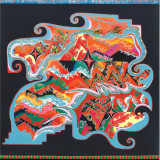
Remastered with extra tracks - extra disc also includes Sound Sun Pleasure LP. Features the original space nymph cover art, which only appeared in cropped and washedout reproductions on an early 60s version. Cosmic Myth Records is dedicated to issuing remastered and fully authorized out of print titles from Sun Ra's independent Saturn Records catalog. Sun Ra's Jazz in Silhouette was enshrined in the Penguin Jazz Guide's "Core Collection" as an album that "will someday be recognized as one of the most important post-war jazz records." Jazz in Silhouette is the quintessential record of Sun Ra's late 1950s Chicago period. Recorded and issued in 1959, it marks a coda for the bandleader's bebop/hard-bop stage, as his interstellar traveller persona began to transform the band (and the music). It also charts the future, showcasing the brilliant tenor sax stylings of John Gilmore, and introduces the iconic playing of Arkestra mainstays Marshall Allen, Pat Patrick, and Ronnie Boykins. Many of the early works on these recordings would remain staples in Arkestra set lists for the rest of Sun Ra's life. This expanded edition includes the complete, contemporaneous Sound Sun Pleasure, rare stereo mixes, and bonus tracks.
Cerca:works
- A1: Applause
- A2: Olympic Fanfare & Theme
- A3: Excerpts (From Close Encounters Of The Third Kind)
- A4: Suite (From Far & Away)
- A5: Flying Theme (From Et The Extra-Terrestrial)
- B1: Hedwig's Theme (From Harry Potter & The Philosopher's Stone)
- B2: Nimbus 2000 (From Harry Potter & The Philosopher's Stone)
- B3: Harry's Wondrous World (From Harry Potter & The Philosopher's Stone)
- B4: Theme (From Jurassic Park)
- B5: Superman March
- C1: Scherzo For Motorcycle & Orchestra (From Indiana Jones & The Last Crusade)
- C2: Marion's Theme (From Indiana Jones & The Raiders Of The Lost Ark)
- C3: Raiders March (From Indiana Jones & The Raiders Of The Lost Ark)
- C4: Elegy For Cello & Orchestra
- D1: The Adventures Of Han (From Solo: A Star Wars Story)
- D2: Yoda's Theme (From Star Wars: The Empire Strikes Back)
- D3: Throne Room & Finale (From Star Wars: A New Hope)
- D4: Princess Leia's Theme (From Star Wars: A New Hope)
- D5: The Imperial March (From Star Wars: The Empire Strikes Back)
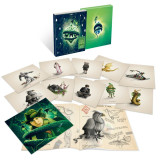
The history of film music would be different without John Williams. Cinema classics like Star Wars, Indiana Jones and Harry Potter are inextricably linked with his musical style. His soundtracks captivate listeners with thrilling, moving themes and a tremendous range of atmospheres and sounds. John Williams conducts the greatest orchestra in the world; a once in a lifetime recording celebration. The album includes beloved hits such as the “Superman March”, the Theme from Jurassic Park, excerpts from Close Encounters of the Third Kind and the Star Wars, Harry Potter and Indiana Jones films. There are also works such as the Suite from Far and Away and the moving Elegy for cello and orchestra, that may be less familiar but are no less brilliant.ng the legendary composer’s 90th birthday. Featuring completely new arrangements and repertoire all recorded in breath-taking Dolby Atmos sound.
Dutch multi-instrumentalist Felbm returns with the conceptual album "cycli infini" : a 38-minute composition of metamorphosing tape loops, musical patterns and instrumental sketches. Further exploring the concept is the vinyl release which features the track spread over both sides and cut to the end of each locked groove - creating an essentially never-ending piece that challenges the idea of the traditional listening process. The idea came to fruition by way of a lifelong interest and growing awareness of the cyclical nature of the world around him - be it through observing nature, or the mathematical and mind-bending works of Dutch artist MC Escher, or minimalist composers such as Erik Satie, Laraaji and Melaine Dalibert.
"The openness of Laraaji"s and Satie"s music have also been an influence to create a certain softness and feeling of comfort, as I like this piece to be a place you want to revisit", says Felbm, real name Eelco Topper. While Topper"s previous releases on Soundway Records comprised series of short, individual sketches, on cycli infini the tapestry is sewn seamlessly together using a step-like progression through the circle of fifths, which as the name suggests, brings the listener back to the musical key and soundscape at which they started. Should the full track be on repeat, it begins anew without being noticed. The piece began life with a layer of drone loops using tapes and delay pedals, over which acoustic instruments such as flute, saxophone and bass trumpet would playfully but gently interpret a melody - toying with jazz, ambient, fourth world and percussive sounds. As the music evolves through the key progression, organic elements such as birdsong and wind chimes ground the piece in nature. Says Topper: "the never-ending metamorphosis of matter has always fascinated me, the idea that nothing ever really disappears and everything has already been here... just in different shapes."
Factory Benelux presents a limited (500 copies only) orange vinyl edition of Retrofit, the seventh studio album from post-punk trailblazers Section 25, originally released in 2010. First time on vinyl.
Recorded before the untimely death of founder member Lawrence Cassidy in February 2010, Retrofit saw cult Factory Records group Section 25 revisit key tracks from their 1980s back catalogue, remade and remodelled for the 21 st century using an appropriate mix of new and old technology.
‘Gathered here is a selection of Section 25 faves, re-recorded and re-thought. The idea is born from their invigorating live set – compelling use of technology to lift them (almost) free from the familiar shards of 80s underground. Shockingly, this newattack works. All this tightening appears to have tugged the band into a sense of Now, gloriously at odds with the contemporary norm’ (The Quietus)
‘Audacious and innovative’ (Record Collector)
‘Section 25 might just be the best band in the world. Since 1980 they’ve been forging music that is as beautiful as it is challenging, from the monochrome psychedelia of their first album through Zen guitarscapes, electronic epiphanies, the arguable invention of Acid House, and on to an unexpected rebirth in 2006. Even within the narrative of such an unusual band, Retrofit is an odd confection: not a best-of or remix album, but a retrospective in which tracks are remodelled as gleaming technosculptures with the most human of hearts.’ (Glasgow Herald)
Now released on vinyl for the very first time, FBN 140 is limited to just 500 copies pressed on orange vinyl. The digital copy contains 5 bonus tracks, including a blistering re-boot of Looking From A Hilltop by Stephen Morris of Joy Division/New Order.
FOR FANS OF : Brian Eno, Robert Rich, Ashra
Dreamland is the third album from Italian ambient band PCM. This time out, the trio of Francesco Perra (P), Matteo Cantaluppi (C), Matteo Milea (M) veer away from the inter-cellular themes of their previous collections to shed aural light on what humans spend most of their life doing: sleeping.
Each track on Dreamland focuses on a phase of sleep from that ever-frustrating half-awake feeling to tranquil R.E.M. and from disaffect- ing nightmares to blissful dreaming.
As a result, each of the album's works float by, some with a cloudiness that mirrors confused sleepy feelings and others that display the vividness of the most memorable of dreams.
Ceremonie hail from France and have an '80s-inspired sound that hits differently. Their songwriting reaches new levels and draws on well-chosen, well-designed sounds with a wonderful sense of melancholy and just the right balance of drama and subtlety.
After an indie-pop leaning cassette a few years ago they now land on Enfant Terrible with a contemporary take on retro new wave and synth-pop. Three of the tunes are originals, one is a cover of French 1980s new wave band Message and there is a whole new album in the works, apparently. Great stuff.
Hyper-On Experience need no introduction. This is their latest "Family" EP, and it is three unbelievable tracks. As ever, these are timeless works, with an intricacy and skill that belies their simple sounding and powerful rhythms. Technically superior whilst sneakily killer, The Family Business EP is going to be loved long into the future, with tracks like "Playground Tactics" regarded as anthems to be.
- A1: Doctor Who Opening Title Theme
- A2: Death And Taxes
- A3: Mahogany
- A4: One Thousand Metres
- A5: Six Suns
- A6: The Others
- A7: Subway 13
- A8: Subway 13 (Continued)
- A9: A Heart As Big As Your Mouth
- A10: A Little Hop
- A11: Jelly Babies
- A12: Something In The Air
- A13: K9, Bite!
- A14: Humbug
- A15: The P45 Return Route
- B1: The P45 Return Route (Reprise)
- B2: Morton's Fork
- B3: I’ve Heard That One, Too
- B4: The Rebellion Begins
- B5: Static Loop
- B6: The Steaming
- B7: The Steaming Continued
- B8: Gentlemen, Good Luck
- B9: Nobody Works Today
- B10: The Gatherer Excised
- B11: Doctor Who Closing Title Theme (53" Version)
Green Vinyl[26,47 €]
The Sun Makers (written by Robert Holmes) aired in November and December of 1977 with Tom Baker as the Doctor and is set on a tax-crippled planet Pluto. Along with trusty assistant Leela and faithful K9, he exposes the corrupt Company, defeating the Collector and freeing the population from financial misery.
Composer Dudley Simpson (1922-2017) wrote prolifically for the BBC, producing hundreds of soundtracks for Doctor Who, The Tomorrow People, Blake’s Seven and many others. The Sun Makers was scored for just six musicians and recorded, for the main part, live in the studio. However, such is the musicianship of the players, several of whom where multi-instrumentalists, the resulting sound is much bigger. The sleeve includes full notes by Mark Ayres.
- A1: Doctor Who Opening Title Theme
- A2: Death And Taxes
- A3: Mahogany
- A4: One Thousand Metres
- A5: Six Suns
- A6: The Others
- A7: Subway 13
- A8: Subway 13 (Continued)
- A9: A Heart As Big As Your Mouth
- A10: A Little Hop
- A11: Jelly Babies
- A12: Something In The Air
- A13: K9, Bite!
- A14: Humbug
- A15: The P45 Return Route
- B1: The P45 Return Route (Reprise)
- B2: Morton's Fork
- B3: I’ve Heard That One, Too
- B4: The Rebellion Begins
- B5: Static Loop
- B6: The Steaming
- B7: The Steaming Continued
- B8: Gentlemen, Good Luck
- B9: Nobody Works Today
- B10: The Gatherer Excised
- B11: Doctor Who Closing Title Theme (53" Version)
Orange Vinyl[26,47 €]
The Sun Makers (written by Robert Holmes) aired in November and December of 1977 with Tom Baker as the Doctor and is set on a tax-crippled planet Pluto. Along with trusty assistant Leela and faithful K9, he exposes the corrupt Company, defeating the Collector and freeing the population from financial misery.
Composer Dudley Simpson (1922-2017) wrote prolifically for the BBC, producing hundreds of soundtracks for Doctor Who, The Tomorrow People, Blake’s Seven and many others. The Sun Makers was scored for just six musicians and recorded, for the main part, live in the studio. However, such is the musicianship of the players, several of whom where multi-instrumentalists, the resulting sound is much bigger. The sleeve includes full notes by Mark Ayres.
- A1: Don't Stop
- A2: Message From The Other Side
- A3: 3 A.m. At Moëf Gaga
- A4: When The Rain Is Falling ('85 Interlude)
- A5: Talk Too Much (Instrumental)
- B1: Jump In The Water (24-Track Mix)
- B2: Armer Teufel Am Morgen Nach Dem Maskenball
- B3: Close To You ('86 Interlude)
- B4: September Garden (Instrumental)
- B5: Message From The Other Side (Alternative Instrumental Mix)
"Don't Stop" is the third album retrospectively released by Ghia. As the subtitle "Early Works & Artefacts 1984-1987" implies, it features some of their earliest compositions as well as tracks that were recorded during the same period as their "Curaçao Blue" LP.
The album is a fusion of diverse music styles. Listeners will delight in a range of genres, including electro, funk, soul, jazz-funk, synth pop, and even rap/hip-hop, all woven together as a cohesive work that remains mostly instrumental. As a whole, "Don't Stop" represents Ghia's funkiest and most experimental release to date. Notably, the LP features a rap version of Hermann Hesse's controversial German poem "Armer Teufel am Morgen nach dem Maskenball" ("Poor Devil the Morning After the Costume Ball") from 1926, accompanied by a drum machine rhythm and funky guitar. This poem depicts a person who drank too much the night before, telling the story and describing his hangover. The title track "Don't Stop" and the thrilling minimal electro-funk tune "3 A.M. at Moëf Gaga" both evoke old-school electro influences. The latter references the Spanish discotheque Moëf Gaga, located on the Balearic coast, which the dynamic duo of Lutz Boberg and Frank Simon frequented during their 1980s holidays. While the exact music played at 3 A.M. is unknown, listening to Ghia's track will undoubtedly capture the mood of the place.
One of the key tracks of the album is "Message From The Other Side", which could easily be noted as one of the nicest European synth-funk instrumental pieces ever. The track is based on a sick synth bass line, sparkled with DX7 chord hits, funky guitar, and a delightful "marimba" solo in the last third. The solo was actually played on Boberg's keyboard, using a special sound cartridge. This particular track had to be edited and technically revised by Marian Tone and DJ Scientist as the existing demo version of the song could not be used as is. With its stunning groove, this track will surely be a DJ's favorite.
Listening to the complete album, there is more of Boberg's keyboard wizardry: could you believe that the trumpet solo on "Jump In The Water" as well as the short but stunning slap bass solo on "Talk Too Much" were both played by on the DX7? However, this new release, unlike the jazzy "Curaçao Blue", is not about solos or virtuous playing - it clearly shows the duo's direction towards more electronic composition and clear song structures. The versions of "September Garden", "When The Rain is Falling" as well as "Talk Too Much" are actually instrumental mixdowns of vocal songs. And again, we get a blissful take of "Close To You", here a version from 1986. This soulful jazz-funk ballad could already be heard on "Curaçao Blue" while the final vocal version with singer Lisa Ohm can be found on the recently released "This Is" LP. This shows that the Ghia composers, Boberg and Simon, were perfectionists - tracks were reworked again and again, making them better and better.
The album was mastered and restored with great care, and we are pleased to provide you with a perfect example of mid 1980s home-recording pleasures, tinged with a youthful spirit and providing a sound that cannot be recaptured anymore nowadays. Alongside "This Is" and "Curacao Blue" it should be another perfect addition to any 80s groove collection as well as a great pick for DJs that love and play disco, leftfield electro and funk. The LP is limited to 500 copies.
Tom James Scott holds a unique position in experimental music. With a soft brush approach Scott, who currently lives on the North-West coast of England, has explored delicacy in music with a variety of sublime releases on a variety of labels. Predominantly known for gentle investigations of guitar and piano, Scott has shifted to incorporating different technology and tactics over time. All of this, either in performance or recording, is embedded with a spirit that is quintessentially his own. Nightshade is the latest in his expanding catalogue, one which ignites an alarmingly new take on his approach to music. Echo on Water initiates proceedings with the unmistakable sound of tape.
Any instrumentation is buried amongst the woozy sway of the medium itself, with its rough dynamics soon morphing into an overwhelmingly swirling mass of emotionally decayed sound. The movement of matter takes on a haunted shape with sounds looping and falling apart as the physicality of the medium holds it all together. The second track Blue Mist furthers this approach with its smeared haze of gorgeous emotion. This is deep exploration of ideas meeting matter. Wasting Stars takes up the entire flip side with the sound of tape recoiling a bit to allow the delicate glow of instruments to come more to the fore, with gentle effects that weave the musical matter. As a skewered take on Scott’s earlier piano explorations the atmosphere here is a subdued soundscape evoking the spiritual sadness found in the piano works of Gurdjieff/De Hartmann, with a modern lo fi angle.
Nightshade is a deeply effective journey and one of the most exquisite examples of Scott’s delicate approach so far. Two sides of form which inhabit contrasting yet complimentary clouds of sound communicating in an stunning emotional flow. As music with only trace elements of melody, Nightshade is a beautiful take on tools being used to explore paths both highly idiosyncratic, deeply moving and discreetly personal.
Mary Jane Leach is a composer focussed on the physicality of sound, its acoustic properties and how they interact with space. She has played an instrumental role in NYC’s pioneering Downtown scene alongside Arthur Russell, Ellen Fullman, Peter Zummo, Philip Corner and Arnold Dreyblatt, as well as devoting years to the preservation and reappraisal of Julius Eastman’s work since his death in 1990, compiling the »Unjust Malaise« 3CD set in 2005 and editing the 2015 book »Gay Guerrilla: Julius Eastman and His Music«. »Woodwind Multiples« is her second album for Modern Love, following »(f)lute songs« (2018).
»Woodwind Multiples« features four pieces for multiples of the same instrument: four bass flutes, nine oboes, nine clarinets, and seven bassoons. Each piece works closely with the unique sound of each instrument, combining pitches that create other, sometimes unexpected, tones, primarily combination and interference tones, as well as rhythmic patterns. What you hear is what happens naturally - there is no processing or manipulation.
»8B4 (1985/2022)«, played by Manuel Zurria, is for four bass flutes. It is a revision of 8x4, which was written in 1985 for the DownTown Ensemble and was only performed once, due to its unusual instrumentation: alto flute, English horn (originally bass oboe), clarinet, and voice.
»Xantippe’s Rebuke« (1993) was written for Libby Van Cleve, for eight taped oboes and one live, solo oboe. The eight taped parts are equal and dependent, while the solo part is meant to be a solo with the tape as accompaniment. The piece works with the unique sound of the oboe, starting with unison pitches that create the richest sound, building the piece from there. Pitches and rhythmic patterns that occur naturally are notated and then played later, which in turn create other pitches and rhythmic patterns. So, in effect, the nature of the oboe and its natural sound determine the direction of the piece.
»Charybdis« (2020), played by Sam Dunscombe, is for solo clarinet and eight taped clarinets. It combines a somewhat obscured reference to Weep You No More, a John Dowland piece, which combines with the sound phenomena created from the melody and supporting chords of the Dowland.
»Feu de Joie« (1992) was written for bassoonist Shannon Peet and is an homage to the bassoon and its wonderful sound. It is for seven parts—six taped and one »live.« The taped bassoons combine to create a bed of sound that exploits the unique qualities of the bassoon, creating combination and interference tones, starting off with unison pitches, creating a rich sound that builds from there. Most of the subsequent pitches and phrases occur naturally, and are then notated later on in the piece, which in turn creates other notes and phrases.
Tomboy ist das vierte Soloalbum des amerikanischen Musikers Panda Bear (alias Noah Lennox), das am 4. April 2011 zunächst als Online-Stream und später auch physisch veröffentlicht wurde. Gemischt wurde es vom britischen Musiker Sonic Boom. Im Gegensatz zu den Sample-basierten Kompositionen des vorherigen Panda Bear-Albums Person Pitch (2007) wurde bei der Aufnahme von Tomboy ein reduzierter Sound verwendet, bei dem die Gitarre durch Korg M3-M Workstation-Module bearbeitet wurde.
- A1: Intro
- A2: Mary Jane (All Night Long)
- A3: You Bring Me Joy
- A4: Marvin (Interlude)
- A5: I'm The Only Woman
- B1: K. Murray (Interlude)
- B2: My Life
- B3: You Gotta Believe
- B4: I Never Wanna Live Without You
- C1: I'm Goin' Down
- C2: My Life (Interlude)
- C3: Be With You
- C4: Mary's Joint
- D1: Don't Go
- D2: I Love You
- D3: No One Else
- D4: Be Happy
Mary J. Blige, the legendary singer-songwriter, actress, philanthropist and honorary Queen of Hip-Hop Soul, will re-release her acclaimed 1994 sophomore album, My Life, on Nov 20 via UMC. The album, which celebrated its 25th anniversary November 29, 2019 will be released in two physical forms: a 2cd and a standard weight black double vinyl. From her No. 57 hit “You Bring Me Joy” to her No. 22 version of Rose Royce’s 1976 soul classic “I’m Going Down,” My Life was one of Blige’s most creatively vital works to date.
The Jolisa EP marks a significant shift in Luca dell’Orso’s sound. Although the electric hooks and rolling rhythms that characterise the dutchman’s signature style are still present, new avenues are explored. One notable change is the addition of vocals, care of the EP’s namesake: Jolisa. The opening, “Sixteen”, smoulders with a palpable intensity. Steady beats and textured pads support synth stabs as impassioned vocals recant a tale of past lessons. “Reach Out”, on the flip, is a different animal. Big and daring, chords chug next slicing snares while lyrics brim with hope. Two instrumental works balance the four tracker. “Nighttime” is perfectly sculpted with a soulful melody and clean percussion, vocoder lyrics giving a sorrowful slant to track. A true epic closes: “Tomorrow’s Already Here.” Bold keys and racing rhythms collide in this 80s steeped extravaganza, electro-disco and car chases in this incredible end. A defining EP from Luca dell’Orso.
The second EP of the Axis Expressionist series includes two new tracks: ?The Wise One" and "Don't Ask Me Why". "Wind Walkers" original version was released in digital as "Every Dog Has Its Day vol.12" (2020). Here in 2023er mix. All tracks are available on vinyl for the first time and on vinyl only.
Axis Expressionist Series
A collection of vinyl and limited digital releases, curated by Millsart, an alias of Jeff Mills, of his most eclectic and transcendent compositions that derive from his Every Dog Has Its Day project as well as new unreleased works. Vernacular creations that fall off from the "other side" of the Electronic Music tree, this project is designed for the experienced Techno music listener, and its goal is to reflect upon the pure artistry of the craft of storytelling. A realization between music and life. Whereas "dancing" is the goal of Dance Music, the goal of this music is about "reflecting on the complexity and simplification of life". Soundtracks for people in their evolutionary process.
"Don't Ask Me Why" by Millsart is conceived, composed and produced by Jeff Mills for Axis Records / Frontcover artwork: Andromède debout et Persée by Félix¦Vallotton (1907).
Spanish producer Vilchezz debuts on slash with one of KI/KI's longest awaited dancefloor hits to date. The title track Camelo's is doing rounds in her DJ sets for a couple of years and is easily the highlight of many gigs, finally the day is now there to present it on her own slash label.
It all started just with a Soundcloud demo a year ago when Fasta Danza crew member Vilchezz shared some of his new music with KI/KI. Now residing in Budapest, his new EP also marks a significant change in styles for Vilchezz, with his new works leaning more towards energetic, trance tinged hard grooves. And that's exactly the sweet spot where he meets KI/KI and her slash imprint. After playing the Camelo's demo inside-out around the world a full release is now finally formed. A full pack backed with another original Eskorbuto - which feels like a future classic uplifting trance drifter - and three remixes another chapter on slash is there.
For the remixes KI/KI and Vilchezz invited Oslo based trance producer and UTE.REC label co-owner Filip Storsveen aka Oprofessionell. He turns Camelo's into a magnificent introvert eyes closed club weapon. Where Glasgow's Animal Farm resident AISHA comes in fierce with a powerful early 00's twist combined with an impeccable psy drive. And to finalize the pack, fast rising star CAIVA reworked Eskorbuto by adding her own vocals to the original and by doing so she adds an impressive, emotive festival banger to a well rounded set of modern trance gems.
Next up in Veyl’s ever-evolving and diverse catalog comes of an experimental sonic experience from Llimbs.
The project of Hagen Ebejer, he began making music in the early 2000’s and started Llimbs in 2016, which allowed him to officially release music and perform live, making his debut at Berlin’s legendary Tresor. Now he arrives on Veyl with Midnight Amber, an 8-track album which fully realizes the Llimbs sound and vision. Inspired by dark and experimental sounds, Midnight Amber is a tour de force of genre-bending compositions, conjured using downtempo and dreamlike sounds which explore both the organic and digital.
The result is an undefinable affair which is both haunting and infectious at once. 'Unfold' commences the album with a soft yet powerful piece of melodic melancholy, inviting the listener through the gates and into the world of Llimbs. 'Divergent' picks things up with a ritual work of stirring chants which leads us to the evocative chords on 'Origin'. Finishing off side A is 'Absent', a slow burning rhythmic piece which encapsulates the listener, creating an almost nostalgic atmosphere for a time unknown.
'Phase' begins the B side with cinematic flair, creating a palpable tension which then evaporates into the ether. 'Eclipse' returns to a familiar dreamworld, traversing the skies which feel both familiar yet mysteriousbefore 'Fragment' dives deeper into a hidden universe of emotion, fusing ancient works with modern technology. Concluding the album is 'Midnight', a perfect end to a journey which exists at the intersection of the natural and mechanical, reality and surreality, marking a tremendous finale which can only lead to a new beginning.
GER Als Night Beats erschafft der in Texas geborene und in LA lebende Künstler Danny Lee Blackwell Musik, wie man ein Puzzle zusammensetzen könnte. Der psychedelische Autorenfilmer aus dem Westen baut sein Werk aus einem Moment, einer Initialzündung, auf, die bestimmte Kriterien erfüllen muss: Sie muss ihm Gänsehaut bereiten. Wenn dieses Gefühl eintritt, verfolgt Blackwell die Idee unermüdlich, bis er einen neuen Song hat; wenn nicht, geht er zum nächsten Moment über, immer auf der Suche nach dem perfekten Molekül eines Songs. Auf seinem sechsten Night Beats-Album "Rajan" zeigt sich der Songwriter von seiner besten Seite und erschafft Werke, die mit fesselnden Melodien und hypnotischen Rhythmen glänzen, aber auch durch subtile handwerkliche Entscheidungen unterstrichen werden, die nur nach unzähligen Stunden im Studio erreicht werden können. Blackwell erschafft ein Werk, das irgendwo zwischen Spaghetti-Western-Filmmusik und Psych-Pop-Opus angesiedelt ist, ein karrierebestimmendes Album, das viel über Danny Lee Blackwells künstlerische Philosophie verrät und gleichzeitig den so wichtigen Hauch des Geheimnisvollen bewahrt. Exklusiv für den Indie-Handel, todesrote LP, handnummeriert mit Poster und DLC.
ENG As Night Beats, Texas-born, LA-based artist Danny Lee Blackwell creates music like one might assemble a puzzle. The Western psychedelic auteur builds his work from one moment, an initial spark, that must fit a certain criteria: it must give him goosebumps. If that sensation arrives, Blackwell will pursue the idea relentlessly until he has a new song; if not, he moves onto the next moment, constantly looking for the perfect molecule of a song. On his sixth Night Beats album, 'Rajan', the songwriter is at his strongest, creating works that shine with captivating melodies and hypnotic rhythms, but are underscored by subtle choices of craftsmanship that can only be achieved after countless hours in the studio. Blackwell creates a work that lands somewhere between Spaghetti Western film score and psych-pop opus, a career-defining album that reveals much about Danny Lee Blackwell's artistic philosophy while keeping that ever crucial air of mystery intact. Indies only LP on 180g 'Dying Red Giant' coloured vinyl, limited to 350 hand-numbered copies, fold-out art poster, download card included.
Ricardo Baez draws on many influences. Electro, house, synth-pop and italo are pillars of the Italian artist’s unique style. The Florence based musician arrives at the Bordello with On and On. Featuring Curses, the opener is a floor-filler. Known for his EBM-stained wave works, this vocal mix is a late night Summer romp. Crisp percussion and warm bass lines usher in addictive hooks and throaty vocals from Luca Venezia.
The original version follows. Lyrics are stripped back allowing the upbeat synth play to take the limelight. Cascading notes announce the flip. “Sfida Notturna” is built on delicate drum patterns and arc of string before breaking to a heady dawn.
“Dietro L’orizzonte” brings the curtain down. Toms and cinematic synthlines introduce rasping rhythms and vocoder samples. The piece is perfectly measured, fragile keys ascend next cymbal crashes and computer voice. Sumptuous sounds from the north of Italy.
Imagine if Eric Carle had been signed to Ghost Box, or if the Look Around You team had ended up taking over the Radiophonic Workshop. If you can picture that kind of sound, we’re ready to welcome you to the Cosmic Neighbourhood.
Cosmic Neighbourhood’s Gatherings is an album made for wild imaginations and deep daydreams. Its fourteen tracks provide the kind of trip you can take if you close your eyes tight enough and let your mind wander. It’s the music of small things, groovy sounds from way underground that’s inspired as much by Martin Rev and Moondog as it is by walking trees, pine cones catching the bus, nocturnal farmyard symphonies and the movements of butterflies reimagined through restless drum machines. Sounds good? Come join the gathering. There’s room for everyone.
Cosmic Neighbourhood is the musical alias of York-based illustrator and musician Adam Higton. Adam’s work encompasses comic strips, collage and sound art and documents the daily goings-on of the forest folk within the realm of the Cosmic Neighbourhood. His two albums on Kit (|Collages I and II) see each song acting as a response to a series of paper-and-scissors compositions. Sonically, these records straddle new and old, taking modular electronics, flutes, bells and softly pattering drum machines, before colouring them all with the amber glow of some forgotten, psychedelic kids' TV programme. Higton's benign toots and echoing jingles bring to mind Daphne Oram's early delay experiments or the meandering playfulness of Tom Cameron. Radiophonic and time-worn, it still somehow sounds like the future.
Gatherings follows previous Cosmic Neighbourhood albums Library Vol 1 and Collages I and II. Previous Rivertones releases include spoken word and found sound collages by Robert Macfarlane & Chris Watson, poetry and elemental music by Will Burns & Hannah Peel and the soundtrack to Wolfgang Buttress’ Hive structure at Kew Gardens by Be.
In an era defined by futility, isolation, and precarity, it can be difficult to envision a utopia. But on Skeleten’s thrilling, immersive debut album, Under Utopia, the Sydney musician dares to imagine new ways of being that are not characterized by doom or despair. Across eleven tracks of free-flowing, transcendent, and often euphoric electronic music, Skeleten praises the power of comradery and community; while dreaming of a future that is joyously boundless.
Skeleten, real name Russell Fitzgibbon, has always been fascinated by the ideas of utopias. He’s thought a lot about how the concept has shifted and morphed throughout history, and how the goal post for a utopia is always moving further and further away. “We're more familiar with the idea of a dystopia in the modern world - that's more close to our consciousness. I think on this album I wanted to explore the importance of imaging and embodying a new world.”
Written before and during the pandemic, the album was born out of a desire to connect with others and to shake the mantle of introspection that had been placed on his previous works. From the opening notes of the otherworldly album opener “Generator”, it's clear that this record prioritises immediate pleasures without forgoing intimacy. The lyrics are also more explicit, reaching outward with inviting choruses and mantra-like melodies. “I think the album came out of the experience of feeling this great desire to reconnect and dreaming of the power of community,” says the musician.
This is especially present in lead single ‘Sharing The Fire’, a song that crackles with optimism. A sprawling dance track with pulsating synths and Fitzgibbon’s gentle, warm vocals, the song is about futures that are full of brightness and bliss. As the artist repeats in the song’s chorus: “for all that you know, summer could be around the corner.” The song is about an “almost frustrated desire to connect with more people and feel that sense of community through shared goals.” The accompanying video clip, shot on 35mm, is similarly invested in ideas of companionship and gathering. Shot in a clinical, drab office space, friends and revelers fill the space with warmth and energy.
Elsewhere, this invocation of paradise is infused in the stripped-back, singular title track “Under Utopia”. The song was significant to Fitzgibbon, as it allowed him to gather all his thoughts and ideas about his new music under one message. “It’s something I wrote when I had this collection of songs and wanted to give it a single voice, which was about seeing the world entirely new, full of hope and beauty, and all of us underneath pushing it upwards.”
An antidote for gloom presented in Under Utopia is the transformative power of love. There’s “Heart Full Of Tenderness”, a woozy, languorous love song, awash with cloudy vocals and glistening synths; the truncated beats and hypnotic pleading of “Territory Day” and “Right Here It’s Only Love” which explores the icier and ambient side of R’n’B.
Another hallmark that characterizes Under Utopia is Fitzgibbon’s airy and spacious mix, which gives his songs room to sprawl out and simmer; as well as allowing his calming baritone to come to the fore. This is notable in the contemplative, synth-laden “Colour Room”, the funk-tinged “Walking On Your Name,” the previously released “No Drones in the Afterlife,” and the beloved early single “Mirrored,” which speaks of finding yourself through a connection to those around you.
Fitzgibbon has been enmeshed in the Sydney music scene for years. Skeleten emerged out of a need to experiment and make music without worrying about the outcome. “It was just me making music that felt right, and very much focusing on this kind of meditative aspect of exploring without any goal,” says Fitzgibbon. But as the project has evolved, the artist has gained clarity on what he hopes his music will achieve: bringing people together, and creating an atmosphere of elation. Or as Fitzgibbon puts it on Under Utopia’s hallucinatory album closer “We’re gonna get everything we need in the world.”
The follow up to the band’s celebrated 2020 release Fish Pond Fish and Darlingside’s fourth LP marks a subtle but remarkable departure for the Boston-based quartet NPR once described as “exquisitely arranged, literary minded, baroque folk- pop.” While the album retains much of the lushness and sophistication of Extralife (2018) and Fish Pond Fish, the band’s latest work highlights the individuality of the four songwriters in a way that adds a fitting element of reinvention to an album that captures brilliantly the quality of the moment in which it was made. Grappling with change both personal and universal, with quandaries domestic and existential, Everything Is Alive is an album about loss and the struggle for a semblance of redemption; themes of grief, distance and hope permeate an album filled with vivid imagery and lyrical creativity. Comprised of Don Mitchell, Auyon Mukharji, Harris Paseltiner and David Senft, four likeminded multi-instrumentalists who first met at Williams College in 2009, Darlingside’s career has been defined by the elegance of their compositions and the remarkable unity of their four voices. Their talent for harmony and melodic world-building is part of what garnered praise from outlets like NPR, Rolling Stone and The New Yorker, and what has created demand worldwide for their extraordinary live performances. Becoming beautifully unindividualized has, in other words, worked very well for Darlingside in the past. With a vigor and discipline more common to graduate-level writing workshops than to indie rock, Darlingside have, over the years, experimented with all manners of idiosyncratic methods for elevating and upholding a truly democratic process of songwriting—processes that include multiple rounds of group writing and recording exercises—all with the aim of escaping the trap that bands with multiple songwriters often fall into: the ruse of ego-driven infighting and artistic incoherence. Everything Is Alive is Darlingside taking a risk. Nudged by the limitations created by pandemic isolation, as well as through other more voluntary catalysts, the album, which was produced and recorded by the band and mixed by Tucker Martine (My Morning Jacket, Sufjan Stevens, Iron and Wine), foregrounds in a sustained and heretofore untried way the individual voices of each member.
With »Discreet Music« (1975), »Music for Airports« (1978) and »Thursday Afternoon« (1985), Brian Eno invented a new music genre, Ambient Music, which he defined as »able to accommodate many levels of listening attention without enforcing one in particular; it must be as ignorable as it is interesting«. These versions performed and arranged by Dedalus Ensemble, according to the musicians and the critics who listened to it, goes beyond what we expect from it. A mental base that takes us far away. One of the only music without beginning or end in which we want to stay as long as possible.
The Dedalus Ensemble is a contemporary music ensemble based in Toulouse, founded in 1996 by Didier Aschour. Its repertoire includes works by classics of minimalism such as Christian Wolff, Phill Niblock, Frederic Rzewski, Tom Johnson, Moondog or Philip Glass.
Thomas Brinkmann creates a new moniker for his latest project to push technical limitations and challenge perceptions; classic Brinkmann agendas. Mele is Italian for Apples, and with Mele Boy, Thomas Brinkmann uses Apple Loops and Apple Logic Pro as the foundation of this music, invoking what he terms Apple Incest, apropos the controversy surrounding Serge Gainsbourg and the song Lemon Incest. What he has produced here for the Seduction ep is simply brilliant music regardless of the machines used or the sounds he works with, reinforcing the axiom that it's the artist not the tools that establishes the greatness of the work.. Those who are prejudiced against such ubiquitous tools may not be swayed. But Brinkmann is not attempting to change opinions, instead he is asking us to challenge our perceptions and the fact that we have prejudices at all... through some brilliant music for the body and the soul.
Micronica Records is bringing top quality music to vinyl lovers by dropping their second vinyl from Micronica Limited vinyl-only series. This time it is a collection of 4 tracks by Costin Rp and Yansima on side A and Venda and D I N & ckb on side B. Each track stands on its own but also works together to create a complete and dynamic package.
This vinyl is an outstanding journey through rich groove and basslines, deep atmosphere, dubby textures and atmospheric pads, taking this whole release to another level. Unforgettable dance floor sensations guaranteed.
Lavinia Meijer is one of the most versatile harpists of this era and representative for Dutch harpists worldwide. She experiments with different forms of music and art, like theatre, dance, electronica and jazz. Her last album contained adaptations of Phillip Glass, for which she received a Platinum award in The Netherlands for selling more than 20.000 copies.
In Passaggio, Lavinia adapts the works of Ludovico Einaudi, for which the maestro allowed his full cooperation. As Lavinia herself says: “The music of Einaudi speaks to me through my fingers and crosses all borders. The pieces that are presented on Passaggio fill me with joy and affection, which I want to share with my audience, hoping to solve some of the mystery of Einaudi. Or maybe even better; to enlarge the mystery altogether”.
Passaggio is available as a 10th anniversary edition of 500 individually numbered copies on translucent red coloured vinyl. The package contains a 4-page booklet with pictures and liner notes.
In 2023 Deutsche Grammophon celebrates a wonderful milestone: its 125th birthday. To mark the occasion the Yellow Label makes a selection of LPs available on vinyl for the first time ever. Including legendary recordings by Daniil Trifonov, Hélène Grimaud, Hilary Hahn, Jan Lisiecki and many others. Perahia's grandiose recording of Bach's French Suites is a true feast for music lovers and connoisseurs. Never has Bach sounded so natural and casual as in the hands of Perahia. The New York-born, multiple Grammy and Echo Klassik award winner has felt a close connection with Bach for decades. At the age of 15, a performance of the St. Matthew Passion made such an impression on him that it sparked a remarkable passion for the master of baroque music. Thanks to Perahia's intensive study of Bach's works, one can enjoy the enormous emotional range of the French suites from the very first minute: From bittersweet melancholy to exultant joy, Bach's masterpiece covers an incomparably rich spectrum of emotions. Due to Perahia's brilliant interpretation, this recording will certainly join the ranks of the most legendary contemporary piano recordings.
- A1: 조금만 기다려요 (Please Wait A Little Longer)
- A2: 못 잊어 (I Can't Forget You)
- A3: 이 노래가 끝나기 전에 (Before The Song Is Over)
- A4: 나 그대의 넓은 대지가 되고져 (Want To Be Your Extensive Grounds)
- A5: 한밤에 (At Midnight)
- A6: 백합 (Lily)
- B1: 어느 비 내리던 날 (One Rainy Day)
- B2: 창문 너머 어렴풋이 옛 생각이 나겠지요 (Long Lost Memories Will Come To My Mind Vaguely Through The Window)
- B3: 빨간 풍선 (Red Balloon)
- B4: 해바라기가 있는 정물 (A Still Life With Sunflowers)
- B5: 찻잔 (A Teacup)
- B6: 오후 (Afternoon)
Original release date: May 5, 1980
An album made by Kim Chang-wan in place of his two younger brothers who were serving in the military, together with the project ‘Broken Spaceship’ composed of session musicians such as Park Dong-ryul (bass), Yu Ji-yeon (acoustic guitar, harmonica), and Kim Yeong-guk (drums). It is the same work as the beginning of Kim Chang-wan's 'Sanullim Alone', and the energetic rock sound and lyrical folk coexist in harmony.
Including Red Balloon with an attractive psychedelic fuzz tone guitar and Please Wait A Little Longer funky, as well as Long Lost Memories Will Come To My Mind Vaguely Through The Window, Still Life with Sunflowers, and A Teacup, Sanullim's best works of the mid-year period It contains beautiful songs that are faint, cozy, and beautiful.
Eora (Sydney) based collective Headnoiz, presents the second installment of their developing imprint. Featuring original works from Naarm (Melbourne) residing producers Mick Gristle and Hasvat Informant, whose collaborative efforts synergised to form their “Chiral Centers” EP.
The EP's 4 original productions traverse a myriad of genres and themes whilst still maintaining an impressively cohesive atmosphere of ominous euphoria.
Chiral Centres also includes two extremely dancefloor friendly remixes. The first of which being an anthemic trance rework of the opening track "Swordbox" courtesy of Norway's "Omformer", followed by a driving psychedelic interpretation of "Last Apparition" from Copenhagen based duo "Atikka".
Indonesian City Sound: Panbers’ Psychedelic Rock and Funk 1971-1974
The Pandjaitan Brothers or Panbers came from the North Sumatra minority Christian group, the Bataks, whose ancestry traces back to an island at the center of Lake Toba. As a minority group within Indonesia's Muslim-dominated society, this ethnic minority has produced top military generals, celebrity lawyers, and a legion of pop and rock superstars.
Suffice to say, some of the biggest names in the country's pop history were Bataks. Panbers fit the bill perfectly.
The band's strong Christianity belief looms heavily in the music they produce. The prominent use of the Hammond organ in their early materials is evocative of church music the band members have been around in their whole life. Bandleader Benny Pandjaitan's fills his characteristic wail with existential dread, with many utterances of the word "mengapa" (why).
Guilt is another central theme Pandjaitan repeatedly comes back to in his lyrics. But they balance it with joy, on songs such as "Come on You Dance" "Let's Dance Together" or "Haai" (a play on the word high), where references to recreational substances are plentiful.
Although they modeled themselves after the era's rock bands Beatles and fellow countrymen Koes Plus, Panbers had a unique aversion to the electric guitar. In "Jakarta City Sound," a fiery three-note guitar solo is laid so far down in the mix that they are barely audible. In "Haai" they modify the guitar to sound like a jungle instrument playing traditional North Sumatran music. In "Rock and the Sea," arguably their most well-known song globally, they decided to ditch electric guitar altogether and replace it with a sitar.
In the absence of an electric guitar, Panbers had to rely on Doan's inventive bass playing and Asido's drum works to do the heavy lifting - and boy, do they deliver (Their 1971 debut "Volume 1" saw plenty of drum breaks). In this compilation, listeners will hear recordings from Panbers' fertile four-year period - a time that produced in some of the grooviest and hardest-sounding psychedelic music in Indonesia's rock history.
For those uninitiated on the glory Panbers, consider this compilation an introduction to some of earliest and heaviest rock sound to come out of Indonesia.
The Intergalactic Research Institute for Sounds is proud to present Requiem for Robots. For this latest transmission, Florina Speth aka Schloss Mirabell joined forces with a group of robots that were built by Kay Sievers (versioduo.c..). The musical question this record states is: “Who animates what?”
The physical body of these robots consists of a wooden cuboid, a single string around which a round, internally strung bow revolves, and a motorized finger which can press down the string. They produce sounds that are very similar to the cello. They display unusual characteristics such as motor noises, infinite sounds or sometimes scratchy and gruff qualities. In addition, there is the extraordinary level of kinetic expression created by the bow circling around the string. Taken together, precisely these peculiarities form a unique instrument profile, a character which is emphasized in the presented project.
Florina Speth, born 1983 in the mountains near Salzburg, started playing the cello and piano at the age of 6 and began studying music at the “University Mozarteum Salzburg'' at Clemens Hagen when she was 11. She won several prizes and was part of orchestras such as the Bayerisches Landesjugend Orchester and Salzburger Junge Philharmonie. Always keenly interested in contemporary music, she loves bridging experimental arts with science. She composes and works with cello and cello robots. She regularly collaborates with Dasha Rush, Hüma Utuku, Nicholas Bussmann, Lucile Desamory and Larissa Lackner.
Representing Seattle Funk. The Oscillators' debut album is deep, raw and energetic. Led by drummer oLLi kLoMp, the line up features members of the polyrhythmics, Rippin' Chicken, the Pulsations, Lucky Brown, the Trueloves, 45th Street Brass, The S.G.'s, and more...
REAL, DEEP FUNK WITH A PSYCHEDELIC NUDGE.
As of yet, as these words were written, the Oscillators is not a band. the Oscillators is an experimental recording collaboration that turned out swimmingly.
Our gauge was this: "Do we like it?" No agenda or goal. The main mode being simply; create what we like out of thin air. Yet the air was heavy therefore create what we like out of thick air. Magical, gravy-thick air. Molecules, olli'cules. Alchemically thick. Apparently, we needed to sample something out-of-the-ordinary… the process is called, "stackin- phat". Minimal gear, maximum vibe. In fact, this process and this gear would make most educated sound engineers cringe but the players know.
Pushing the tape…yes, tape! 4 track to be exact, pushing the tape to it's edge. First, stack two drum tracks. bounce them to one primal track. Sometimes one drummer, sometimes two; "a great drumbeat already contains melody." This is your first layer of phat. Generally, unless the muse says otherwise, you wanna bring in your bass player next, gently caress guidance and encouragement (maybe a beer or a hit a grass), then he or she can stack the next layer of phat. The next few layers are where things really take off. Maybe it's guitar then horns, maybe keys. Maybe just horns. Whatever the tune calls for. Whatever the muse "calls" for. Everyone stacking is simultaneously inspired, while hindered, by the previous layer; "constricted genius" works of magic from thin/thick air.
Most of the time the players weren't in the same room at the same time, and in some cases, haven't seen each other in years, but it sounds like a family and feels like a band. Create what we like.
The natural unfolding of this creation was affirming, in that the process of creation proved most relevant. An expression of faith and appreciation of the experiMENTAL process with no preparation for something else. Beyond fortunate for the allowance of time. "never underestimate the power of positive thought"
-Ned Blanski
This new album compiles several songs made in the years following Black To Comm's classic "Alphabet 1968" album. Originally released on the seminal Type label in 2009 (and to be reissued on Cellule 75 this year) "Alphabet 1968" combined the sound of vintage shellac and vinyl loops with broken electronics and field recordings, the press release mentioning disparate influences "ranging from Moondog to Basic Channel by way of Bernard Herrmann". In a beautiful one-page review in The Wire magazine (later reprinted in his book Ghosts Of My Life) Mark Fisher compared Richter's music to JF Sebastian’s miniature automata in Blade Runner ("with their bizarre mixture of the clockwork and the computerised, the antique and the ultramodern, the playful and the sinister"), ETA Hoffmann's inventor-magicians and Auguste Villiers de l'Isle-Adam's 1886 tale of Thomas Edison's (fictitious) construction of an artificial human.
Now titled "Coh Bâle" (inspired by a strange dream) these recordings were supposed to become a follow-up to said album but for reasons unknown it never materialized and the album seemed forever lost. At the time Richter started to dive deeper into several strains of (so-called) world music aka the folk music of Southeast Asia and Eastern Europe as well as liturgical and medieval music, the Kraut-Electronica of Harmonia and several certain Mediterranean experimentalists from the 1980's who started to merge their mostly electronic and field recording based compositions with traditional musics from all over the world by way of new sampling technology.
Many of the songs for the album were recorded while travelling and at various residencies around Europe: a detuned piano in a Thessaloniki basement (Richter played at a children's birthday party there), vintage synthesizers in the GRM studios in Paris, decaying acoustic instruments found in an old Black Forest mansion, childrens' voices at a workshop in Karlsruhe's ZKM Institute; then mixed on headphones in the ICE trains running between these places and his hometown Hamburg.
"Coh Bâle" is taking inspirations from old Nonesuch Explorer and Ocora LP's, Crammed Records, 80s Mediterranean Ambient (Nuno Canavarro, Roberto Musci) combined with the DIY spirit of Deux Filles and Flaming Tunes and the playfulness of Asa Chang & Junray. The songs are both mysterious and transparent, intricate and frugal, vibrant and patient. One of the album's unexpected climaxes is a gorgeous (artificial) berimbau version of the Welsh traditional "Iechyd o Gylch".
No two songs feature the same instrumentation and many acoustic sources (pianos, flutes, wood percussion, viola, tablas, autoharp) were disassembled and later coalesced into new configurations or used as virtual instruments; later combined with samples, field recordings, electronics and (on a few tracks) autotuned vocals reminding of recent works by the likes of Claire Rousay or More Eaze.
We had to wait for a worldwide pandemic for Richter to dig deep into the vaults and finally bring these recordings to light. This is the 2nd release from his archives after the "Diode, Triode" LP which presented Musique Concrète/Acousmatic recordings made at INA/GRM and ZKM. Another massive Double-CD (MM∞XX Vol. 1 & 2) was released last year featuring collaborations with 33 artists such as Andrew Pekler, Richard Youngs, Eric Chenaux, Maja Ratkje, Radwan Ghazi Moumneh of Jerusalem In my Heart, GRM boss François Bonnet (Kassel Jaeger), Felix Kubin, Timo van Luijk (In Camera, Af Ursin), Luke Fowler and many others, showing Richter's versatility and his willingness to reinvent himself for every new release.
Marc Richter is widely known under his Black To Comm moniker, having released (at least) 12 albums under this alias in the last 20 years. He is currently signed to the Thrill Jockey label. Richter composes soundtracks for film and has worked with visual artists such as Mike Kelley and Ho Tzu Nyen. He also records as Jemh Circs and Mouchoir Étanche for his own Cellule 75 label (named in tribute to the late Luc Ferrari).
Alaska Reid hails from a frontier city in Southwestern Montana whose population lingers around 8,000 residents, and while Reid now works in Los Angeles, she can’t give up her hometown. Her career began here, where she sang in basements, churches, and gyms before starting her first band, Alyeska. Soon talent, and her parents’ minivan, drove her to tour further west. Now, Reid splits her time between the coastlines and the mountainous West, splitting what time she can between the two and working in both cities. Due out summer 2023 via Luminelle, Disenchanter,is as much a collection ofstories as it is a collection of songs. Though Reid’s principle instrument is guitar, she worked on Disenchanter with A. G. Cook, whose synths and the duo’s combined array of pedals allowed Reid to explore her pop inclinations after she recorded each track live at home in both Montana and California. “I have my road dog arsenal from playing tons of live shows, so most of the songs have at least one guitar with my personal chain in homage to my live set up,” she says. “We’d then layer combinations of A. G.’s pedals onto the track, and the contrast between them mirrors our respective musical approaches.” THEMES: Friendship, Touring, Storytelling, Vulnerability GENRE: Indie / Indie Folk / Indie Rock
"Kurayami" is the result of the dialogue between Akira Uchida (music) and the acclaimed photographer Masao Yamamoto initiated by IIKKI, between September 2022 and May 2023.
After to have worked as a saxophonist for several years, Akira Uchida, in 2007 learned piano tuning under Mr. Satoshi Yoshida. Planning and holding "Sound workshop" which is to introduce how to interact with various sounds from the viewpoint of sound turning. In 2015 while he was learning from Mr. Masahiro Adachi, Akira Uchida started to create a Clavichord (keyboard instrument), invented in the 14th century.
In 1983 there came a sound from the depths of the Brazilian rainforest that was primal, ground-breaking, and completely ahead of its time. The roaring of amplifiers and the beating of drums was the sound of Max and Iggor Cavalera creating their debut cult-classics 'MORBID VISIONS' and 'BESTIAL DEVASTATION', and now it seems that after many years, the Cavalera brothers will be returning to their raw upstarts with a full re-recording of these beloved yet obscure albums.
When 'MORBID VISIONS' and 'BESTIAL DEVASTATION" were first spawned it was done in ramshackle conditions in Belo Horizonte, where the duo grew up. Max and Iggor were 14 and 13 years old during the original recording, and they had all the tenacity and energy of a pack of wild dogs. Only, their sound was not quite refined at that time, their adolescence bled through on those early records. It is well known that Max's guitars were completely out of tune on those sessions, and Iggor's drums often swung around tempos crazily. There's an air of youth and passion that could only be achieved by two teenagers that wanted to shock the world. Four decades later and it is plain to see that they certainly did gather the world's attention.
Despite the production being rough around the edges and the band still carving out their direction, there was a noticeable level of craftsmanship to the song structures and a clear indication that given their desire to thrash like maniacs, these kids from Brazil were going to tear the place up night after night. These albums still hold a dark, mystic and at times eerie quality to them that many have come to love over the years. For some, the music does not have to be delivered with perfect technical precision, the spastic live delivery is something to be cherished, and even with their guitars out of tune, they played like the gates of hell were opening. The crossroads of a shamanistic spiritual summoning at a back-alley metal show in downtown Belo Horizonte.
It is a task of heavy magnitude to try and cross the gap between the accomplished artists that they are today to the scrappy boys that they were when they first wrote these songs, but the duo have executed the performances flawlessly. The perfect bridge between the unbridled energy of the original sessions and the high-quality sound of a 21st century production. It is truly astounding to hear Max once again growl like a monster during "Troops Of Doom" and riff at insane speeds through "War" and "Crucifixion". Iggor's barbaric drumming on "Anti-Christ" is like the galloping hooves of a death-rider. Accompanied by bassist Igor Amadeus Cavalera (HEALING MAGIC, GO AHEAD AND DIE) and lead guitarist Daniel Gonzales (POSSESSED, GRUESOME) the quartet is a force to be reckoned with.
How this re-recording attained such a familiar tenacity is almost a mystery, like some spell that brought these albums back from the grave. Within the first few beats you can hear that the Cavalera’s have lost no momentum, attacking the songs at maximum speed and ferocity. In fact, it seems that the brothers have only empowered their connection through music over the decades. You can feel the spark that those two create, a dynamic sound rich with subtleties and ear-grabbing hooks. As Iggor counts in each song with his drumsticks, and Max's guitar feedbacks loudly as he approaches the microphone, there is palpable apprehension. It is apparent that when these two icons get together to play, they are going to electrify the room with their presence.
Few have had the incredible careers that Max and Iggor have achieved through their music. Even fewer had faith in the young boys that wrote 'MORBID VISIONS' and "BESTIAL DEVASTATION' all those years ago. Yet here they still stand ripping through their earliest works with decades of experience under their belts. For them, it is a breath of fresh air to finally give these songs the desired production that they deserve. They both feel that the fans also deserve a fresh look at these albums, a chance to appreciate them in a completely new light.
From start to finish 'MORBID VISIONS" and "BESTIAL DEVASTATION" are a torrential whirlwind of riffs, beats, and screams. A blast from the past that is sure to take every last listener back to the raucous live shows of the eighties.
Mysterious clouds form above an old cathedral, the summoning of dark magic is upon us, and the troops of doom march forth to announce the arrival of 'CAVALERA'!
Repress !
One half of iconic British duo Basement Jaxx Felix Buxton and vocalist Gia make their Defected debut with the soul-stirring 'So Hooked On Your Lovin', alongside two groove-loaded remixes by Mousse T.. The first ever release under their Selace pseudonym, the record comes laden with lingering organ chords and stunningly raw vocals, echoing the stripped back quality of Switch's 'I Still Love You' and with a similar deep-reaching feel to Massive Attack's early 90s classic 'Unfinished Sympathy'. Production maestro Mousse T. works his magic with his funk-drenched Disco Shizzle mix loaded with a pumping bassline and guitar riffs alongside a deeper Dubby Shizzle version laced with a spoken word hook. Less is more with Selace; this is a minimalist yet undeniably stunning record that lets its captivating song do all the work.
Preservation Act 1 is a concept album and the 12th studio LP by The Kinks, originally released on RCA on 16 November 1973.
Preservation is the bands most ambitious project - a rock opera that uses the charming, small-town nostalgia of Village Green as a template to draw the entirety of society and how it works.
Epic opener ‘Morning Song’ sets the scene and mood for the record, followed by a classic sounding Dave Davies’ riff, ‘Daylight’, which echoes themes and sounds tones of one their most recognisable and highly acclaimed albums, ‘The Village Green Preservation Society’.
Standout tracks are the endearingly lazy ‘Sitting in the Midday Sun’ and the beautiful ‘Sweet Lady Genevieve’ – both strong contenders for overlooked Ray Davies masterpieces.
A critically acclaimed album, reviewed by Rolling Stone at the time as "A highly listenable, enjoyable album".
This release is a faithful reproduction of the original 1973 album, on heavyweight 180g vinyl. A must-have for any Kinks fan and its first vinyl re-press, apart from a limited edition 2008 US edition, since the original 1973 LP release.
Salute to the Sun: Live at Halleì St Peter's documents a very special concert recorded at the iconic Manchester venue during lockdown.
Released in November 2020, Matthew's Halsall's Salute to the Sun was the trumpeter's first album since 2015's Into Forever, and marked the debut of his new band. A hand-picked ensemble featuring some of Manchester's finest young musicians. The album drew it's energy from the band's weekly sessions and was inspired by Halsall's love of nature. Lush and spiritual it received universal praise, but Halsall and his band were frustrated that they were unable to share their beautiful new sound live with an audience.
On November 25th 2020, Halsall took his band into the iconic Manchester venue, Hallé St Peter's, for a concert recording in aid of the charity Mind, that was streamed on January 21st 2021 to a global audience in the thousands. The concert was also recorded for posterity.
"When we recorded Salute to the Sun, I wanted to create something playful but also quite earthy and organic that connected to the sounds in nature. It seemed to strike a chord with people and I was blown away by the response to the album. Our concert film, recorded at the height of last winter's lockdown was a special moment for us all and I feel that the concert recording captured something beautiful that we wanted to share".
Salute to the Sun: Live at Halleì St Peter's features Matthew Halsall– trumpet, Matt Cliffe- flute & saxophone, Maddie Herbert– harp, Gavin Barras– bass, Liviu Gheorghe– piano, Alan Taylor– drums and Jack McCarthy- percussion
The recording has been mixed by Matthew Halsall and George Atkins at 80 Hertz and is mastered by Peter Beckmann at Technology Works. The vinyl was cut at Calyx in Berlin and the album is pressed at Optimal in Germany. It is presented in the form of a limited edition 2LP set with artwork by legendary designer Ian Anderson of The Designers Republic.
Spread over three sides of the vinyl LP for maximum fidelity the fourth side of the LP (side D) features an etching of Daniel Halsall's now iconic artwork for the album Salute to the Sun and copies are strictly limited with just 3000 available in total. The album will also be available for download and on streaming platforms.
Ruth Koleva hails from Sofia, Bulgaria, and has been a TV star and singing out concert halls for years. She has also long been singing on some superb broken beat and nu-jazz records while working with top-level production talent and having her tunes remixed by Zed Bias, Kaidi Tatham, Mark de Clive-Lowe and Eric Lau.
The neo-soul star's Ruth album gets a special anniversary edition release here with four heart-melting and textbook neo-soul tunes on the A-side then some super remixes on the flip. This is timeless stuff that works on the heart and the heel in equal measure.
Mathis Kolkoz (Blind Delon’s alma mater) joins forces with Pablo Bozzi (renowned for his previous works as Imperial Black Unit and Soft Crash) and with Abu Nein’s voice Erica Li Lundqvist to release one of the most amazing synth-pop works listened in recent time. In between low beat electro, soft ebm and even modern new beat, LOST HIGHWAY sounds harsh but romantic with great rhythm patterns that make it impossible to stop dancing.
This debut EP comes with three original tracks plus one blasting remix by our partner in crime CURSES, a plastic bomb ready to fire up any darky dance floor. Comes presented in a one-off truly limited edition of 300 copies lacquered pressed on 180gr. high quality solid black vinyl.
All tracks have been specially remastered for long cut vinyl by Daniel Hallhuber at Young and Cold Studios.
"Spirals" goes back to the roots of jazz, funk, and disco and brings elements of these music streams into house music. In the appearance of swing, jazz was originally a dance music genre, which later developed in many directions. Various other genres were born from it. Even electronic music streams like house belong to those genres.
Bearing this in mind, "Spirals" connects different points in the history of these genres. Bringing this fusion to life, the MIMIKOTO project works with electronic elements (analogue synths, drum computers, electronic modulations) as well as acoustic instruments (saxophones, keys, trumpet, bass, drums and percussions).
The MIMIKOTO project was founded in 2019 by Fabio Kumori as a collective of musicians related to jazz, funk, soul and electronic music, after a certain period of composing and playing as duo, trio and quartet. One of the central goals of the MIMIKOTO project is to include people from different backgrounds - to be inclusive regarding the music and the musicians themselves.
May the sound of "Spirals" be a social room in which everyone is invited to participate, and may this idea be spread everywhere where it will be played.
In addition to his day job transforming pop music with his own records, as well as those of Gastr del Sol, Loose Fur and Sonic Youth over the past few decades, Jim O"Rourke has been contracted for several dozen film scores over the years as well. It makes sense - his abilities as an improviser, composer and producer allow him to interpret cinematic moments with a unique understanding for their construction and how they work. It doesn"t hurt that Jim"s a well-versed cineaste, a complete and total fan of watching films, which has given him a preternatural understanding of the role of music in movies. What doesn"t make sense is how Hands That Bind is the first film soundtrack of Jim"s to ever receive worldwide release! He"s worked with filmmakers of international repute, like Olivier Assayas, Allison Anders, Werner Herzog and Kôji Wakamatsu! He served as music consultant on Richard Linklater"s 2003 laff-fest, School of Rock! He"s played in ensembles of award-winning documentaries and films alike! Throw the guy an internationally-promoted soundtrack LP every more often, why doncha? It was left to the "suits" of Drag City Records to innovate, once again, by taking a leap on an O"Rourke work. Made for an indie film that"s been seen by festival audiences and not enough others, the soundtrack for Hands That Bind is a moody, atmospheric delight. Jim"s roots in composition via tape-editing have evolved into a sophisticated assembly of found-and-processed sounds that achieve highly musical, near-orchestral majesty as they hang in the very air of the drama that unfolds in Kyle Armstrong"s Hands That Bind. Described as a "slow-burn prairie gothic drama" set in the farmland of Canada"s Alberta province, and starring Paul Sparks, Susan Kent, Landon Liboiron, Nicholas Campbell, Will Oldham, and Bruce Dern, Hands That Bind is a spellbinding trip to the existential bone of rural working life in North America. As conflict rises over the hard-worked patches of land that provide a mere and mean existence, a desperate air settles in, as a series of mysterious, often supernatural occurrences rock the small community. O"Rourke"s vaporous, serpentine musical backdrops and atmospheres reflect the obsessions and distractions of the film"s principles; moods of all sorts seen or otherwise implied. Additionally, the music highlights cinematographer Mike McLaughlin"s closely observed accounting of the farmers" environment, as well as the striking widescreen images of the big sky country with unnerving flair. For fans of Jim"s ongoing steamroom series as well as collectors of soundtracks, Hands That Bind will provide hours of engrossing listening. And if you get a chance, see the movie projected in a movie house, please - farmers aren"t the only ones struggling these days!
Hard to believe, but the last solo instrumental album of the Italo-Viennese Fid Mella was released 7 years ago. During this time, the beat maestro has been anything but lazy, releasing numerous projects with artists such as Crack Ignaz, Torky Tork, Kamp, Silk Mob, as well as top-notch fellow musicians from Italy. Anyone who has ever taken a closer look at Fid Mella's instrumentals knows that his music always works independently of current trends or hypes. Since the beginning of his career, he has remained unwaveringly true to his own sound aesthetic and yet never lost touch with current productions. Fid Mella's new album "Cioccolato" is also bursting with creativity and musical relentlessness but is always catchy and packed with tons of flavor.
The new album was created in the close circle of the family - a converted farmhouse functioned as a creative workshop, where all samples used on "Cioccolato" were recorded during extensive jam sessions with Mella's wife, his brother and his father. The result is 17 gourmet instrumental pieces whose musical spectrum ranges from Brazilian bossa nova lightness to syrup-soaked Texas vibes.
FEVR is a post-punk trio from L.A. that delivers what surely could be described as the best American post-punk album in years, the simplicity and quality of the arrangements and the very unexpected vocal works vocals transports immediately to the best of the best of the genre, not being at any time encapsulated in it, very surprising changes of style happens all the time making the listening a truly musical journey.
No doubts; this one will become a sure future jewel in the collectors market. Comes presented on deluxe DOUBLE GATED edition including lyrics in a one-off truly limited edition of 300 copies lacquered pressed on 180gr.
High quality solid black vinyl. All tracks have been specially remastered for long cut vinyl by Daniel Hallhuber at Young and Cold Studios.
Repress!
Showcasing his renowned nu-disco stylings and the evolution of his musical outputs from club delights to international hits, today Purple Disco Machine, the moniker of German disco house producer Tino Piontek, shares his stellar new single ‘Hypnotized’, marking the next era for the critically acclaimed project.
With an artist name that pays homage to 80’s funk hero Prince and the uplifting dance beat of Gloria Estefan’s ‘Miami Sound Machine’, Purple Disco Machine was destined to bring together the elements of synth pop, funk, Italo Disco. With over 250 million streams across his works to date, and a recent run of A list remixes for Dua Lipa, Mark Ronson, Robert Surace, Foals and Sir Elton John, Purple Disco Machine impresses once again, creating a modern and sophisticated take on the decade that has inspired him so greatly. Further announcing his sophomore LP for release in the next year, 2020 will see Purple Disco Machine deliver his most outstanding work to date.
Enlisting the help of indie British newcomers Sophie and the Giants on the single, Purple Disco Machine, adds their alluring vocals to the instantly engaging melody, and funk fuelled bassline, that has become synonymous with so many of his dance-fuelled hits.
- A1: Schaue Dir
- A2: Insbesondere, Wenn
- A3: Deines Standortes
- B1: Besonderen Blick Werfe Bitte
- B2: Dürfen Vermeiden
- B3: Jetzt Einwände Kommen
- B4: Immer Wieder Situationen Geben, Bei
- C1: Haben Doch Keine Sorge
- C2: Werden Wir Auch Noch Ausführlich
- C3: Oder Mit Dem Rücken Zur
- C4: Oft Außerhalb
- D1: Durch Den Unscharfen Vordergrund
- D2: Immer An Derselben Stelle Gestanden
- D3: (Genau Genommen Die Erddrehung)
- D4: Orientieren
"Bastian Epple makes an eagerly anticipated return to marionette under his elusive MinaeMinae guise that imagines rich sonic architectures for the journeying spirit to voyage to. Räumlichkeit is Epple’s debut album and third release to date following Gestrüpp from 2020, venturing further into melodic electronic nostalgia and percussive beat oriented soundscapes.
Growing up in a small village in southern Germany, Bastian Epple was never interested in kitschy folk sounds, rather he took solace in the time he would spend meditating to repetitive and hypnotic patterns. His guitar strumming and what sounded to his mother like a young Philip Glass on a cheap Casio keyboard encouraged little Epple to tread on this self-taught path of developing his own musical language. This led him to start experimenting with a tape recorder and layering sounds with non-musical samples to eventually working with a DAW.
Bastian went on to study Media Art at the Center for Art and Media (ZKM) in Karlsruhe and graduated with a diploma in film and documentary media - where he now works as a freelance filmmaker and lecturer at Stuttgart Media University. However, this never stopped him from creating and playing with wide-eyed sounds, eventually amassing a vast collection of tunes and finally emerging from this anonymity.
Utilizing modular synth, self made tape echos, synthetic sounds, recordings of ethnic percussion and guitar, MinaeMinae understands musical material similar to documentary footage which he would splice, repitch, and rearrange intuitively into captivating worlds."
Graham Lambkin (of Shadow Ring fame) returns with a long awaited epic double LP, Aphorisms, his first major solo outing since Community (Kye, 2016). Recorded mostly during the early winter months of 2022, in post-pandemic New York and post-Brexit London, Aphorisms assembles the sonic detritus of daily life into hauntingly intimate aural soundscapes. Made between Lambkin's residence in East London and Blank Forms in New York, Aphorisms superimposes the two spaces onto one another creating an imaginary stage where his musical dramas unfold. A transatlantic mediation on the rooms where Lambkin has lived and worked, Aphorisms summons up hallucinatory vistas by way of the composer’s collage technique, layering field recordings, piano, guitar, percussion, vocal fragments, and repurposed elements on top of one another in double, triple, and quadruple exposures. Like the Shadow Ring’s Lindus (Swill Radio, 2001) recorded between Folkestone and Miami Aphorisms ruminates on estrangement and displacement, catching Lambkin as he returns to London after two decades of living in the States, in his words, “leaving home to return home.” Aphorisms continues Lambkin’s synthetic-naturalist approach to sound-making, twisting disparate and unique elements together to create the sensation of a coherent sonic space. At the heart of his practice is the illusion of form, whereby Lambkin combines sonic elements, documenting the moment that they coalesce into music only to disintegrate back into incidental sound. The album is centered around two pianos, one in New York and one in London, sounding together as if through the ether, creating a spectral atmosphere that Lambkin fills with melodic snippets, fragments of songs, spoken-word musings, and guttural barks or “the animal purity of voice,” as he has it. The superimposition of the two spaces is maximized in the album's closing titular track, where, much like on earlier works such as Salmon Run (Kye, 2007) and Softly Softly Copy Copy (Kye, 2009) fragments of familiar melodies float through the mix as though being played from afar. Aphorisms is Lambkin at his best, extending methodologies only hinted at previously and taking his now-idiosyncratic mission statement to a new chapter.
Repress coming!
A year on from 'Good Evening', the critically acclaimed collaborative album with Verb T & his
stellar contribution to Ocean Wisdom's UK TOP 40 'Wizville' album, producer Pitch 92 is
ready to show off his new works to the world, as he enters a new stage in his career and begins
to spread his wings as a solo artist. Known for his soulful sound, inspired by the likes of
Madlib, Pete Rock & J Dilla, Pitch 92 has carved out his own unique style and pulled out all the
stops for his debut release on High Focus Records.
Entitled 'Lost In Space', this new EP is a perfectly balanced mix of vocal and instrumental
tracks showcasing the raw talent of the Manchester based producer. Pitch 92 has assembled a
healthy roster of artists to work alongside, ranging from UK Hip Hop royalty to up & coming US
artists as well as accomplished musicians.
Spanning from UK Hip Hop favourites such as Jehst & Verb T, to new faces such as K S R ,
Sparkz and Doctor Outer as well as hooking up with Sony Music's Ashely Henry, one of the
UK's most accomplished jazz pianists as heard on 'One Handed' - Pitch 92, armed with his
trusty MPC, expertly provides the perfect backdrop to accommodate each of his guests, as well
as putting forward instrumentals that stand out as masterpieces in their own right, Pitch 92
applies finesse and the ability of a veteran producer, despite only being 26 years old - One
listen of lead single 'Lost In Space' featuring Jehst and Confucius MC is all you need to
confirm that we are indeed listening to a master at work.
In short, 'Lost In Space' is a production masterclass and serves as the perfect introduction to
the Pitch 92 sound, of which you will be hearing more and more, guaranteed.
Niemand hätte im Jahr 2023 damit gerechnet, dass beim Keep It True Festival die ganze Halle den Refrain von „Somewhere Up In The Mountains“, die heute sehr rare Single aus dem Jahr 1981, mitsingt und dann auch noch ein neues, quasi erstes Album erscheint! Gute Zeiten für NWOBHM Fans!
MARQUIS DE SADE aus London wurden 1979 gegründet neben der heute unbezahlbaren 7“ Single „Somewhere Up In The Mountains/Black Angel“ gab es 1981 auch noch ein Tape mit vier Songs. Bassist Pete Gordelier ging in Folge zu Angel Witch und ist auf diversen Alben zu hören. Keyboarder San Remo startete 1982 mit Sanctus, deren gesammelte Werke (zwei Tapes) 2015 bei High Roller veröffentlicht wurden.
2005 wurden die Aufnahmen von MARQUIS DE SADE (Single und Tape) als Bootleg veröffentlicht. High Roller Records folgten schließlich 2012 mit einer offiziellen Version auf CD und LP. 2015 coverten Roxxcalibur den Song „Somewhere Up In The Mountains“ auf ihrem dritten, erfolgreichen Album „Gems Of The NWOBHM“ und verhalfen dem Titel zu zusätzlicher Popularität. Diese Umstände führten schließlich 2019 zur Reunion von MARQUIS DE SADE, nach einem Todesfall nun zu fünft mit drei Originalmitgliedern. Alte und
neue Ideen wurden ausgearbeitet und man nahm nach all den Jahren endlich das erste Album „Chapter II“ auf. Zeitgleich konnte man nach Corona die ersten erfolgreichen Clubshows spielen und schließlich, im April 2023, der Ritterschlag auf dem renommierten Szenefestival Keep It True bei Tauberbischofsheim.
„Chapter II“ ist nicht nur ein Fest für NWOBHM Fans und Liebhabern von britischem Heavyrock im Allgemeinen, sondern weist auch epische und pompöse Elemente der Marke Magnum auf. Die natürlich gehaltene Produktion, getrennt für CD und Vinyl gemastert, sorgt für ein authentisches und dennoch druckvolles Hörerlebnis.
Nobody would have expected in 2023 that at the „Keep It True Festival“ the whole hall sings along the chorus of „Somewhere Up In The Mountains“, the now very rare single from 1981, and then also a new, practically first album is released! Good times for NWOBHM fans!
MARQUIS DE SADE from London were founded in 1979 and besides the today priceless 7“ single „Somewhere Up In The Mountains/Black Angel“ there was also a tape with four songs in 1981. Bassist Pete Gordelier subsequently joined Angel Witch and can be heard on several albums. Keyboardist San Remo started Sanctus in 1982, whose collected works (two tapes) were released by High Roller in 2015.
In 2005, the recordings of MARQUIS DE SADE (single and tape) were released as a bootleg. High Roller Records finally followed up in 2012 with an official version on CD and LP. In 2015, Roxxcalibur covered the song „Somewhere Up In The Mountains“ on their third successful album „Gems Of The NWOBHM“ and helped the track gain additional popularity.
These circumstances finally led to the reunion of MARQUIS DE SADE in 2019, now with five original members after a death. Old and new ideas were worked out and they finally recorded the first album „Chapter II“ after all these years. At the same time they were able to play the first successful club shows after Corona and finally, in April 2023, the accolade at the renowned scene festival Keep It True near Tauberbischofsheim.
„Chapter II“ is not only a feast for NWOBHM fans and lovers of British heavy rock in general, but also features epic and pompous elements of the Magnum brand. The naturally kept production, mastered separately for CD and vinyl, makes for an authentic yet powerful listening experience.
Marc Richter aka Black To Comm released his debut record 20 years ago. In 2023 he is still busy releasing music under various disguises and is currently signed to the Thrill Jockey label. To celebrate this anniversary his own Cellule 75 label is re-releasing some classic out-of-print vinyl albums that originally came out on the defunct Type and De Stijl labels. The LP will feature a full-colour printed inner sleeve exclusive to this edition.
In 2009 the Type Recordings label run by John Twells had just released seminal records by Grouper, Jóhann Jóhannsson and Yellow Swans when they signed Richter and put out his breakthrough Alphabet 1968 album. The LP sold out within two weeks, receiving a glowing full-page review in The Wire Magazine by the late Mark Fisher (later reprinted in his book Ghosts Of My Life), was selected for Boomkat's Top 10 releases of the year (alongside debut albums by Leyland Kirby, Demdike Stare and Oneohtrix Point Never) and was greeted with universal praise in the underground blog network as well as established magazines such as The New Yorker and Pitchfork.
The music itself played with the notion of nostalgia without being nostalgic itself. It's the sound of half-remembered dreams, a surreal distorted vision of the past, an aural polaroid of long forgotten musics, a ghostly voice from a non-existent era.
From the original Type one-sheet:
"The mission statement for Alphabet 1968 was to write an album of "songs" for want of a better word. Short tracks which represented genre points, the milestones which stuck in Richter's mind when he thought back to his favorite records. What we arrive at is a breathtaking 10-track album which, over the course of 45 minutes, explores world music, techno, noise, avant-garde, ambient music and even exotica. Each track is linked with a loose thread of radio static or environmental sound, dragging you through the album, as if tuning in to a stray broadcast or a particularly adventurous mix. Richter has pieced the album together from hours of recordings made at his studio with home made gamelan, small instruments and loops gathered from a collection of ancient vinyl and 78 records. The scope of the album is admirable, but ignoring this, it is simply a shockingly arresting collection of experimental oddities, with references ranging from Moondog to Basic Channel by way of Bernard Herrmann. It's not hard to fall in love with Alphabet 1968, far harder would be to place exactly where the record should fit into your collection."
Mark Fisher in The Wire:
"But what if we were to take Richter's provocation seriously - what would a song without a singer be like? What would it be like, that is to say, if objects themselves could sing? It’s a question that connects fairy tales with cybernetics, and listening to Alphabet 1968, I’m reminded of a filmic space in which magic and mechanism meet: JF Sebastian’s apartment in Blade Runner. The tracks on the LP are crafted with the same minute attention to detail that the genetic designer and toymaker brought to his miniature automata, with their bizarre mixture of the clockwork and the computerised, the antique and the ultramodern, the playful and the sinister. Richter’s musical pieces have been built from similarly heterogeneous materials - record crackle, shortwave radio, glockenspiels, all manner of samples, mostly of acoustic instruments. ….. JF Sebastian's apartment was itself an update of older spaces in which science and sorcery co-existed: the workshops of ETA Hoffmann's inventor-magicians, or of Pinocchio's creator, Geppetto. I think, too, of Auguste Villiers de l'Isle-Adam's astonishing 1886 tale The Future Eve in which Edison, using the expertise he has recently acquired from inventing the phonograph, sets himself the task of constructing an artificial woman. But if there are songs here, they are sung by the gramophone and other recording and playback machines. Richter so successfully effaces himself as author that it is as if he has snuck into a room and recorded the objects as they played (to) themselves. Rather than simply automating his music, as in the case of Pierre Bastien and his mechanical machines, Richter makes us feel that he has merely recorded the unlife of objects. ….. Indeed, the impression of things winding down is persistent on Alphabet 1968. Entropy has not been excluded from Richter's enchanted soundworld. It feels as if the magic is always about to wear off, that the enchanted objects will slip back into the inanimate again at any moment."
Clear LP[22,65 €]
Blue Lake is the musical moniker of American born, Copenhagen based multidisciplinary artist and musician Jason Dungan, who signs to the Tonal Union imprint for the release of his new longform album ‘Sun Arcs’. It follows 2022’s release ‘Stikling’, earning a nomination for ‘Album of the Year’ at the Danish Music Awards plus warm praise from The Hum blog and musicians and DJs alike including Jack Rollo (Time is Away/NTS) and Carla dal Forno. A self taught player, Dungan began freely experimenting with self-built multi-string instruments, preferring to build his own hybrid 48-string zither and working in the realms of left-field ambient music, off kilter folk and improvised acoustic minimalism.
The starting point of ‘Sun Arcs’ saw Jason travel for a week alone to Andersabo, a cabin set in the idyllic Swedish woods just outside of Unnaryd, known also as the music project, festival and residency space which has been run by Dungan since 2016, hosting artists like Sofie Birch, Johan Carøe and Ellen Arkbro. Whilst writing 1-2 pieces per day, a conscious decision was made to leave behind everyday distractions and shut out the outside world to instead focus on the natural passage of time as Dungan recalls: “My only sense of time came from these daily walks out in the woods with my dog, and an awareness of the sun’s path as it moved across the sky each day.”
The album’s immersive world unfolds with the opener ‘Dallas’, an ode to his home state and a musical synthesis of these two disparate spaces (Texas and Denmark), the touchstones of Dungan’s life. A folk-esque single acoustic builds to a flowing arrangement of clarinets, organ and cello drones coupled with percussion. ‘Green-Yellow Field’ chimes in as the first of two solo oriented zither recordings twinned with the dreamlike title track ‘Sun Arcs’, both densely rich as cascading and overlapping harmonic tones resound. ‘Bloom’ emerges with a krautrock psyche before an eruption of cello drones, slide guitar and free-ranging zither playing, ushering in the anticipation of spring. With half of the recordings conceived in Andersabo, Jason returned to Copenhagen to form the album's centre piece ‘Rain Cycle’ which features a tempered Roland drum machine alongside shifting zither improvisations. ‘Writing’ explores the shimmering harp-like qualities of sweeping playing figurations with Dungan mapping out adjusted tuning “zones” on the zither for unconventional but creatively liberating effects. ‘Fur’ captures the feeling of openness and the momentum of time, seeing Dungan perform waves of solo clarinet, often in one takes and embellished with textural drones, a zither solo, and layers of guitar. ‘Wavelength’ the album's closer is fondly inspired by the film works of Michael Snow and Don Cherry’s seminal live album ‘Blue Lake’ (1974), as it builds out from a drone-generated zither chord and features an alto recorder solo. Dungan found a deep connection to Cherry’s stripped back performance ethos, focusing on the core beauty of minimal instrumentation creating a genre-less meeting between folk and jazz. A dialogue is formed between the solo and the bandlike performances, interlinked in a geographical duality with all finding a sense of commonplace as musical sketches of visited landscapes. The bountiful instrumentation ebbs and flows as further layers emerge with Dungan constructing his material much like an artist would, recording and reviewing, adding and subtracting.
Musically it portrays a form of double life led by an American-identifying person living in Scandinavia, and a new found presence in Denmark, seeking out underdeveloped marshlands and barren stretches of beach adrift from other rhythms and distractions. Highlighting their individual and potent importance Dungan concludes: “Both places feel like “me”, I think on some level the music is always some kind of self-portrait.” ‘Sun Arcs’ depicts the intricate balance of nature’s cycles and the paths outlined by the seasons, from a winter dormancy to a warm sun drenched scene. The album scales new glorying heights and further defines Dungan’s musical narrative, inhabiting a unique space in left-field, improvised and experimental music, borning his most accomplished compositions to date. A singular and visionary expression, drawing on an array of instruments and sound worlds with a renewed sense of joy and discovery.
The album's rich tapestry was mixed by Jeff Zeigler (Laraaji, Mary Lattimore, Kurt Vile /Steve Gunn) and mastered by Stephan Mathieu (Kali Malone, KMRU, Félicia Atkinson).
Originally released in October 1993, “The Crossing” was Paul
Young’s fifth and final album for Columbia Records. Produced
mainly by Don Was and featuring top musicians such as Billy
Preston, The Memphis Horns, Jeff Porcaro and Pino Palladino,
the album is regarded by fans and critics as one of Paul
Young’s very best solo works. When interviewed for this 30th
Anniversary release, Paul Young said: “If you were to ask me
the albums I most enjoyed making they would be the first
and the last for Columbia Records; No Parlez and The
Crossing. On The Crossing, it was the caliber of the musicians
that I worked with and I was working with my musical heroes,
some of which I’d admired since I was a teenager. The
sessions were so relaxed and all the people in the studio
were such lovely people to work with, I will remember it
forever.” 7A Records is reissuing The Crossing on 180g coloured vinyl and CD. The recordings have been remastered and
the packaging will include rare photos, extensive liner notes, an exclusive Paul Young interview and lyrics to all of the
songs. The vinyl version comes in a gatefold sleeve and pressed on 180g Turquoise Viny
Available for the first time since originally released in 2006 via Stones Throw, Dudley Perkins & Madlib are pleased for the reissue of their sophomore collaborative LP, Expressions (2012 A.U.), their acclaimed follow-up to their 2003 debut effort, A Lil’ Light. And albeit the former can be accused of being excessively avant-garde, it’s Expressions where both Perkins and the Beat Konducta find a more fluid symmetry.
In everything from his collaborations with MF Doom and the late Jay Dee to his more recent pairing with Freddie Gibbs, Madlib is easily one of hip-hop's golden revolutionaries. At times his production has been accused of being sparse, but that's not the case with Expressions. This time around, Madlib's production is hitting all the funky corners with layered grooves that evoke the attitudes and emotions of A Tribe Called Quest's The Low End Theory.
Perkins's objective to keep the grooves flowing on Expressions is laid down with first lines of opener "Funky Dudley": "A little bit of funk and a dash of soul/ A little bit of George borrowed from my Ol' gran' pappy's stack of old school/ One nation under a groove." From there on the funk samples dance famously with Dudley's vocal style, which cross-pollinates the worlds of D'Angelo and Ol' Dirty Bastard. From "Get on Up" to the James Brown vocal sample in "Dolla Bill," Expressions uses Perkins's voice as if it were a sample itself, incorporating it in the production and the rhythms.
Madlib's production works flawlessly, his semi-psychedelic influence on R&B, soul and hip-hop keeping Perkins's style fresh and original. All the parts seem to be in place on Expressions as producer and emcee work side-by-side to create a cohesive sound that not only represents the creativity of the underground but could also awaken the tired ears of the mainstream.
I Shall Die Here / Earth Triumphant is an expanded edition of the fourth full-length album by The Body, first released to widespread acclaim, and terror, in 2014. Sharing their moribund vision with Bobby Krlic, aka The Haxan Cloak, the tried and true sound of The Body is shred to pieces on I Shall Die Here, mutilated by process and re-animated in a spectral state by the collaboration.
This double album set is expanded with the previously unreleased Earth Triumphant, a full-length companion album that would become I Shall Die Here, showcasing The Body's brutality in its most primal form. With both albums revisited by The Body and Seth Manchester at Machines With Magnets and remastered by Matt Colton at Metropolis Studios, this is the definitive edition of a shocking classic of unbridled bleakness and innovation. Formed by drummer Lee Buford and guitarist Chip King in Little Rock, Arkansas in 1999, The Body soon relocated to Providence, Rhode Island. The duo remained in Providence for a decade before moving west to their current home of Portland, Oregon. Their debut self-titled album (Moganano, 2003) and on the widely-acclaimed, classification curtailing of All the Waters of the Earth Turn to Blood (At A Loss, 2011) readied the band for even more experimentations. The employment of the Assembly of Light Choir's classical chorales on All the Waters, alongside more industrial music techniques such as vocal sampling and drum programming, prompted RVNG to inquire with King and Buford which darker corners of the electronic universe they were presumably interested in exploring.
The undertaking of I Shall Die Here was aided by Seth Manchester and Keith Souza, The Body's long standing engineer and creative collaborator, and noted producer Bobby Krlic. Krlic's own work as The Haxan Cloak struck a similarly despairing chord to The Body with the celebrated Excavation (Tri Angle, 2013), itself a minimalist evocation of the afterlife. I Shall Die Here shares similar nether space with the morbidly deviating darkness of Excavation, but remains sculpturally frozen in a sort of earthen purgatory.
The Body's musical approach, engraved by Buford's colossal beats and King's mad howl and bass-bladed guitar dirge, became something even more terrifying with Krlic's post-mortem ambiences serving as both baseline and outer limit. I Shall Die Here sonically serrates the remains of metal's already unidentifiable corpse and splays it amid tormented voices in shadow. This expanded edition gives us a window into the creation of a classic with the inclusion of its in utero twin, Earth Triumphant. Recorded as a nearly finished album by Buford and King before The Haxan Cloak's transformation, it stands as a raw statement of intent, the original DNA for what would soon mutate into something wholly new.
Fans of I Shall Die Here will find familiar sonic fragments in a more primitive state - like seeing an out-of-context photograph of a family member taken well before you knew them - but the album stands on its own in its minimalist brutality, a natural bridge to what The Body was soon to become. The Body's I Shall Die Here / Earth Triumphant will be released in digital and vinyl formats on June 30, 2023. On behalf of The Body, The Haxan Cloak, and RVNG Intl., a portion of the proceeds from this release will benefit Intransitive, an organization that works to advance the cause of Trans liberation in Arkansas through art, education, advocacy, organizing and culture in order to create effective systemic change and on-the-ground impact.
I Shall Die Here / Earth Triumphant is an expanded edition of the fourth full-length album by The Body, first released to widespread acclaim, and terror, in 2014. Sharing their moribund vision with Bobby Krlic, aka The Haxan Cloak, the tried and true sound of The Body is shred to pieces on I Shall Die Here, mutilated by process and re-animated in a spectral state by the collaboration.
This double album set is expanded with the previously unreleased Earth Triumphant, a full-length companion album that would become I Shall Die Here, showcasing The Body's brutality in its most primal form. With both albums revisited by The Body and Seth Manchester at Machines With Magnets and remastered by Matt Colton at Metropolis Studios, this is the definitive edition of a shocking classic of unbridled bleakness and innovation. Formed by drummer Lee Buford and guitarist Chip King in Little Rock, Arkansas in 1999, The Body soon relocated to Providence, Rhode Island. The duo remained in Providence for a decade before moving west to their current home of Portland, Oregon. Their debut self-titled album (Moganano, 2003) and on the widely-acclaimed, classification curtailing of All the Waters of the Earth Turn to Blood (At A Loss, 2011) readied the band for even more experimentations. The employment of the Assembly of Light Choir's classical chorales on All the Waters, alongside more industrial music techniques such as vocal sampling and drum programming, prompted RVNG to inquire with King and Buford which darker corners of the electronic universe they were presumably interested in exploring.
The undertaking of I Shall Die Here was aided by Seth Manchester and Keith Souza, The Body's long standing engineer and creative collaborator, and noted producer Bobby Krlic. Krlic's own work as The Haxan Cloak struck a similarly despairing chord to The Body with the celebrated Excavation (Tri Angle, 2013), itself a minimalist evocation of the afterlife. I Shall Die Here shares similar nether space with the morbidly deviating darkness of Excavation, but remains sculpturally frozen in a sort of earthen purgatory.
The Body's musical approach, engraved by Buford's colossal beats and King's mad howl and bass-bladed guitar dirge, became something even more terrifying with Krlic's post-mortem ambiences serving as both baseline and outer limit. I Shall Die Here sonically serrates the remains of metal's already unidentifiable corpse and splays it amid tormented voices in shadow. This expanded edition gives us a window into the creation of a classic with the inclusion of its in utero twin, Earth Triumphant. Recorded as a nearly finished album by Buford and King before The Haxan Cloak's transformation, it stands as a raw statement of intent, the original DNA for what would soon mutate into something wholly new.
Fans of I Shall Die Here will find familiar sonic fragments in a more primitive state - like seeing an out-of-context photograph of a family member taken well before you knew them - but the album stands on its own in its minimalist brutality, a natural bridge to what The Body was soon to become. The Body's I Shall Die Here / Earth Triumphant will be released in digital and vinyl formats on June 30, 2023. On behalf of The Body, The Haxan Cloak, and RVNG Intl., a portion of the proceeds from this release will benefit Intransitive, an organization that works to advance the cause of Trans liberation in Arkansas through art, education, advocacy, organizing and culture in order to create effective systemic change and on-the-ground impact.
In the centre of deep space we tune in to the radio broadcasts from an old Class T interstellar spaceship. The emissions endlessly resonate the frequencies of the seventeenth release on the label HC Records by one of the titans of the Valencian scene, The Lost Boys, new pseudonym of the DJ and producer Raszia.
With releases on labels such as Bass Agenda, Subsist or Hxagrm Records, the artist mesmerises our senses with the Exiles of Mars Ep, available in both double vinyl and digital.
Syncopated rhythms are the protagonists across four original tracks together
with remixes by four electro legends: Boris Divider, Estrato Aurora, Dark Vektor, and Filmmaker.
The EP’s first cut is a remix of "Wall Of Bricks" by the legendary Boris Divider, which gives the track an air of crystalline, synthetic and cosmic sound, very much in line with his latest works on the Generative Operations series. Next, we find the original version, where the kick drums are heavier, the synths and basses more colourful and the acid sequences take centre stage in an odyssey of sidereal intensity.
On the record’s flip side, a feeling of overwhelming melancholy takes root in our soul. Valencian Estrato Aurora mentally transports us to the mysterious red sand of Mars in a precise exercise in symphonic minimalism with his remix of "Exiles of Mars", which mutates the original idea with velvety pads, synths and a slow and rapturous hypnotism that sinks us to unfathomable depths.
The Lost Boys' original concept on B2 is a combination of Miami Bass-style breaks and a demonic mantra-like main synth line, backed by what seems like an infinity of pearly effects and secondary melodies, pushing the track towards a crescendo punctuated by a dry and sharp snare.
The second disc’s opener "Bust My Moves" is a masterclass in deconstruction and reconstruction by Dark Vektor with his "Electro Escuadrón Remix”. The genius from Terrassa provides powerful lyrics loaded with a message about the modern rise of the 808 movement. We return to the original Lost Boys version on C2, a futuristic martial discourse takes shape with combating breaks combined with rave chords and brief episodes of respite, almost dreamlike, in the middle and end of the track’s exciting development.
On the D side, rough frequencies verging on distortion materialise through our ship's speakers as we pick up the Colombian Filmmaker’s remix of "Data Recovery For Brains". A psychotronic final appetiser that combines harshness and elegance in the use of the rolling kick drums and saturation of the sound, it is without a doubt the ideal soundtrack to narrate the collision of two galaxies. The closing of the EP features the original track, in which The Lost Boys show us his most mental and lysergic side as the track progresses along a slow and comforting broken rhythm, made dynamic by clever use of diverse acid sequences and clairvoyant stellar melodies.
The complete artistic experience is enhanced in all dimensions with accompanying artwork by
Daniel Requeni and videos elaborated by Frank-F.
Mastering as usual by Steve Voidloss at Black Monolith Studios in London (UK).
STEB delivers a brand new single featuring Dario Rossi and remixes from Marvin & Guy, Feel Fly and Van Der Kirche & THC. Italian STEB is no stranger to cooking up floor filling hits. For this latest offering he works with Dario Rossi, a renowned drummer with a signature style like no one else.
Their 'Kauris 1979' is a beautifully deep house track with shimmering chords and twinkling melodies. Echoing claps help drive this most classy of tunes forwards under subtle vocal sounds and the whole atmosphere is full of late-night magic.
The vibrant Marvin & Guy remix has a cosmic edge and that's the case here with this excellent remix. It layers in mysterious whistling leads and 80s synth sounds as well as a rasping bassline that brings a different perspective than the original.
Feel Fly remix brings all that alongside some feel-good piano chords that light up a punchy nineties house bassline.
Van Der Kirche & THC then join forces for an expansive broken beat remix with crisp hits and silky bass all making for a sublime trip.
This is is a package packed with disco-tinged grooves for late-night dance floors.
200 copies ~ Vinyl 180 grams ~ No Repress!
- 1: Find Yourself (Ft. K.o
- 2: Wake Up (Ft. Chuuweee & Bob Styles)
- 3: Everything (Ft. Derek Minor)
- 4: How Many More (Ft. Lando Chill)
- 5: Aquimibee (Ft. Michael Christmas)
- 6: Eastside With Love (Ft. Kadence / J Rolla / Td Badazz / Marvaluzz Thug / Grand National)
- 7: Moozie (Ft. Psyrotiual)
- 8: Lnb
- 9: Melody Lingers On (Ft. First Verse)
- 10: Duke Lucky (Ft. Krum)
- 11: Trouble (Ft. Runt & Ronni Wit Tha K)
- 12: Whatever Happens, Happens (Ft. Dewey Binns)
- 13: The Burden
- 14: Black Star (Ft. Scoopay)
- 15: Indulgence (Ft. Boldy James)
- 16: Wishing (Ft. Blu)
- 17: Savior
- 18: Key Of Life (Ft. Murs & Yah Ra)
- 19: Angels (Ft. Mistah F.a.b.)
- 20: All We Know (Ft. M1 Platoon)
- 21: Blessings (Ft. Che Noir & John Gives)
- 22: Enough
Jabee's Am I Good Enough is the prolific OKC hip-hop artist’s most ambitious project to date. Several years in the making, Am I Good Enough compiles four EPs of brand-new music (22 tracks total), each recorded entirely with a different producer. The resulting four EPs each could stand alone as powerful individual works, but combine to make one of the most remarkable and compelling artistic statements of Jabee’s career. Am: produced by Derek Minor I: produced by Blu Good: produced by Conductor Williams Enough: produced by Havoc (of Mobb Deep). Am I Good Enough is available on 2xLP, housed in a gatefold jacket with inner sleeves showcasing each of the four EP’s individual covers.
Debut Album Nottingham post-punks Do Nothing blend jerky, spidery rhythms with surreal, half-spoken vocals that recall the Fall 's Mark E. Smith . Do Nothing was formed in 2017 by four long-time school friends: frontman Chris Bailey, guitarist Kasper Sandstrøm, drummer Andy Harrison, and bassist Charlie Howarth. All had played in various acts around the city; the band got their start at the popular Maze Club. Bailey, whose father was a singer in an a cappella folk group, grew up listening to the sounds of Simon & Garfunkel , and his own biggest influence was Tom Waits . Initially attempting to copy big names like LCD Soundsystem (as heard on their first 7" single, "Gangs," released in 2019), they eventually became more confident about doing their own thing, and Bailey gave his stream-of-consciousness lyrics and outsider stage persona free rein. Associated with, but wary of, the then-popular post-punk revival, they made clear it was their intention to follow their own path. Their debut EP, Zero Dollar Bill, was released in 2020; another, Glueland, arrived the following year, with an album in the works.
Following hot in the footsteps of his debut HF release ‘Cocoa Butter’, ‘Off The Grid’ sees Renelle 893 team up with producer Bay29 on a body of work that offers an escape route from the monotonous every day; the duo taking us further and further off the beaten track, marrying moments of purest hedonism with stark reminders that the real world lies in wait, just after sunrise, with no pause button in sight.
Laying the foundations with summer anthem (and lead single) ’Spaghetti’, Renelle wrestles with the fleeting nature of youth, and his topsy turvy relationship with the finer things in life. The dynamic is both gritty and nostalgic as Renelle walks the fine line between Hollywood hedonism and slurry excess, his mood swinging between moments of invincibility and vulnerability, expertly scored by Bay29’s ethereal, bass dripping instrumentals.
Another SE London / Brighton hook up, one of many on the label in recent years, Renelle utilised his late night train rides to-and-from Bay29’s Brighton studio as an opportunity to refine the verses that make up the bones of the project.
Twelve-tracks; six vocal, six instrumental, ‘Off The Grid’ is the first in a series of new works from Renelle 893 & Bay29. A perfect scene-setter for what’s to come.
As Renelle 893 explains… “Off The Grid is about soul searching and figuring out what kind of adult I am looking to be, navigating a world filled with distractions that will do everything to numb the pain as life inevitably passes you by…”
Debut album recorded for launch of new record label by award-winning mastering engineer Kevin Gray!
Recorded all-analogue/all-tube at Gray's new studio, Cohearent Recording, for Cohearent Records!
Shapes and Sound from jazz saxophonist Kirsten Edkins is the debut LP release from Cohearent Records — the new record label companion to famed mastering engineer Kevin Gray's latest enterprise, an all-valve (vacuum tube) recording studio (Cohearent Recording) adjoining his home-based mastering facility in California.
"It's the 'essence of an era' we are trying to recapture with today's musicians, not the sound of specific spaces, engineers or recordings," Gray told music reviewer Michael Fremer.
This album was produced all-analogue/all-tube at Gray's Cohearent Recording on December 10 and 11, 2021. Dave Connor produced, while Gray and Ryan Wirthlin co-engineered. Edkins on sax was joined by Gerald Clayton (courtesy of Blue Note) on piano, Ahmet Turkmenoglu on bass, Lemar Guillary on trombone and Chris Wabich on drums.
Edkins, a composer and saxophonist from Los Angeles, graduated from Eastman School of Music on scholarship. She studied composition and arranging with Bill Dobbins, as well as Walt Weiskopf and the legendary Ray Ricker. Before her time at Eastman she studied with Bob Sheppard, a jazz recording artist and woodwind specialist. Edkins is a sought-after improviser who has performed with Arturo Sandoval (Al "Tootie" Heath), Tim Hagans, Clay Jenkins, John Beasley, and Geoffrey Keezer.
She has performed with the Clare Fischer Big Band, Bill Holman Big Band, Bernie Dresel Big Band (The BBB), Sara Gazarek and others. She's appeard on television shows such as American Idol, Duets, Knight Rider, Glee, and Bones, plus The Tonight Show. She's also a music educator whose associations include Cal State Fullerton, Stanford Jazz Workshop, Saddleback College and Golden West College. She also direct the American Jazz Institute's community outreach program and teaches saxophone at Occidental College in Eagle Rock.
The album is an excellent showcase for Gray's new recording studio. Cohearent Recording was born from Gray's relentless passion to create the best sound recordings. It was that passion that has inspired Gray's long career cutting lacquers for such noted labels as Blue Note, Music Matters and Analogue Productions.
He spent 15 years building gear for the project. "I had a novel idea: In order to get the vintage sound we all love, (I'd) design and build an all-valve (vacuum tube) recording system from microphones through to the disc cutting head, NO transistors or IC's anywhere in the signal path. That took much longer than anticipated but it is finally complete."
Gray was inspired to use his own living room as the studio space when he realized it was similar in size and shape to legendary jazz recording engineer Rudy Van Gelder's Hackensack N.J. parents' home. Many classic jazz albums were recorded there by Gelder.
Some of the same microphones used on those earlier Gelder recordings are in use in Gray's setup. The custom vaccum tube electronics are different and for Shapes and Sound Gray used a tube-based Studer C37 rather than an Ampex.
Gelder's Hackensack recordings for both Blue Note and Prestige, Gray says, are "some of my favourite jazz records, and they are also exceptionally good sonically."
- A1: 20
- A2: Little Love (Ft Roland Faunte)
- A3: I Looked Into Her Eyes (Ft Ural Thomas & The Pain)
- A4: Bonxair
- B1: Nomadics
- B2: See You Dancing In The Dark
- B3: Emotional
- B4: Don’t Smoke
- C1: Thinking Of
- C2: Memories (Ft Lord Apex)
- C3: Dreams
- C4: Mo1994By
- D1: Cuzratatat
- D2: Aye
- D3: When My Heart In Your Heart
- D4: Outro (End Of The Part 1)
Three years after his last album ‘I Need Space’, Mounika. is back on his favorite playground: electronic music, which arouses his curiosity since his beginnings. He is now ready to unveil ‘Don't Look At Me’, a new opus that takes us, by other paths, to his unique universe. Recorded during the confinement in the intimacy of his home studio, the French artist reveals little by little another facet of his artistic personality, more raw and affirmed, without totally abandoning the cottony sounds already proposed on titles like ‘Cut My Hair’ (diamond single) or ‘Tender Love’ (gold single). We discover sensitive compositions, still inspired by his love for trip-hop, piano and artists who made his musical culture during his youth: Moby, Ratatat, Air or Bonobo. After all, a Mounika. album without a tribute to these figures is not really an album...
But something new was needed to distinguish this opus from the previous ones. From the very first tracks, we can clearly feel this need for exploration that has always guided the French producer. ‘BonXair’ or ‘Nomadics’ take us, for example, in a more straight electronic, more heady than usual. In the same spirit, the rhythms close to the deep house of a track like ‘See You Dancing In The Dark’ offer to the album a new direction, and yet is quite representative of the work undertaken by Mounika. these last years.
In this new record that will also satisfy the fans of the first hour (a sample loop well felt, as on ‘Little Love’ or ‘I Looked Into Her Eyes’, always makes its effect), the French artist has also opened to collaborations of choice. Mounika. works on the heart, and thus wished to welcome those who have particularly marked him during his more or less recent discoveries. The American artist Roland Faunte lends his voice to the effective ‘Little Love’, while Ural Thomas & The Pain (discovered notably on the series ‘It's Bruno’) takes care of the chorus of ‘I Looked Into Her Eyes’. The British rapper Lord Apex delivers a spellbinding performance on ‘Memories’.
Finally, if you listen carefully, you can even hear Mounika. singing on some tracks... like ‘20’ or ‘Don't Smoke’. Put together, these appearances perfectly complement the energy transcribed by Mounika. throughout ‘Don't Look At Me’.
And what could be better than an amazing graphic universe to open the doors of this album like no other? Meet Carl & TJ, two cartoonish characters created in collaboration with Berlin-based artist Joe Taylor, who take care of guiding the listener through this new adventure. One is dreamy and contemplative, the other asks himself a lot of questions... and between them, they form a colorful duet illustrating with tenderness the universal emotions that punctuate this third opus, and that Mounika. will notably defend in the first part of Wax Tailor's French tour starting next April.
The successive pianos composing the productions of ‘When In My Heart In Your Heart’ then ‘Outro’ come, at the end of the record, to conclude the setting in orbit proposed by this ‘Don't Look At Me’. One more step in the sensory journey that Mounika. is committed, from the intimacy of her room to the international success, to build relentlessly.
Eaux proudly announces the second full length LP from Rrose, Please Touch, released on vinyl, CD, and digital download. The LP follows 2019's Hymn to Moisture in ways that are both subtle and striking: Please Touch further hones the artist's tensile sound while exploring new aesthetic vistas and basking in an undeniably erotic sense of play. Moving with undulating power, the album's nine tracks drift across tempos from a weightless 0 bpm to a crawling 100 to a lunging 140 and back, with a rich palette of sculpted noise and cross-talking microtones.
Rrose's compositional process, rooted in their studies with West Coast avant garde trailblazers at Mills College, centers on "seed" sounds being fed through elaborate webs of interrelated audio processing. The result is a world where changes in any one element have downstream implications for some or all the others. It's a rich interdependence that lets the tracks breathe, grow and mutate with uncanny organicism. Please Touch addresses in equal measure the perceptual and the corporeal: these are sounds that sink into the body, exhibiting a tactility that pushes, pulls, bends and yields with fearsome vibrancy.
The album splits its time between radical techno iterations and pieces which pare back the percussion, letting the synth textures uncurl in their own time and space. The quivering drone and rolling sub-bass of "Joy of the Worm'' set the tone for the record, while "Rib Cage," Spore" and "Spines " swing with stepping rhythmic underpinnings. Building with finely calibrated tension, they use their few elements to startling, snarling effect. "Pleasure Vessels" is a rare moment of becalmed introspection in Rrose's oeuvre, hinting at a melodic ambiance that is practically unseen in previous works. It glows with a soft, dawn-like light before dissolving into a tidal fizz. "The Illuminating Glass'' brings the tempo down to a languorous chug, nodding its way through a field of glistening chirps and leaden gasps. "Feeding Time," "Disappear" and album closer "Turning Blue'' meanwhile nod to the cerebral psychedelia of Rrose's forebears, with mesmeric, looping textures and long, magisterial tones not dissimilar to the spectral works of James Tenney (whose work Rrose regularly performs) and the deep listening pieces of Pauline Oliveros.
The title of the album refers playfully to the tactile quality of the music while hinting at a forbidden sensuality that is only permitted within the confines of this microcosm. The phrase is also another nod to Marcel Duchamp, who gave this title to a 1947 exhibition of Surrealist art. Across the nine tracks, Rrose follows the lead of the sound(s) rather than trying to impose on the flow of the sonic material. Each move changes the parameters of a track's evolution. Thus, a non-hierarchical, symbiotic relationship forms between the so-called "music-maker" and the music itself. Please Touch acts as a collection of limbs, organs, parasites, and growths which both devour each other and keep each other alive.
Beautiful release coming from Italy drawing inspiration from the intense colors of the works of the painter Tania Cantone on this work of love; "Sharade" by Pino Presti & Garden Planet. Mediterranean and Balearic lushness from the talented Pino Presti, and the eclectic keyboardist Claudio Calzolari, his son Andrea Calzolari, bass player Andrea Verardi and the organist Guido Mazzella. All together they created that magic, that long-forgotten, set aside, almost hidden atmosphere, which covers various genres such as lounge, future jazz, bossa-nova, ambient, which obviously includes chillout and downtempo vibes from the hot summer nights in the Mediterranean. So much vibes on this one release coming from the Italian friends of BEST Record! Recommened!
Greg Paulus joins forces with fellow Brooklynite Taylor Bense for a new Freerange EP showcasing their left field, raw house sounds across three original tracks plus a bonus Martinez Brothers edit.
With previous releases appearing on labels as diverse as Soul Clap, Let’s Play House, Ghostly International and Kompakt, the producer, DJ and trumpeter is perhaps best known for being one half of No Regular Play who have recorded LP’s and EP’s for Wolf & Lamb, Crew Love, and Let’s Play House. Never one to be confined to one genre, Greg takes influence from Jazz, Funk, Hip Hop and underground house to form a unique sound primed for discerning dance floors. Taylor Bense is an in-house composer and producer at the highly regarded Hyperballad Studios in Brooklyn, where he works and records a wide spectrum of music for everything from high end commercial work to EP’s for Wolf + Lamb and Soul Clap Records. The entire EP was recorded and produced at Hyperballad Studios over the past few years.
Title track Heat Make Sense wears its Prince inspiration on its sleeve with a hooky whistled tune, crunchy live bass fills and punchy, raw beats. Next up we have Switch which features Brooklyn MC’s Stimulus and Malik Work on vocal duties and Greg’s own trumpet adding top lines to the deep pads and rolling groove.
Marino takes us back to golden era jacking Chicago house of the 00’s but with Greg’s trumpet flourishes bringing a live, jazzy energy to the track. Fellow NYC mainstay Big $exy provides his trademark deep baritone vocal to give a little hip house flavour. Closing out the EP we have NYC’s Martinez Brothers providing an uptempo minimal edit of Do You Love Me, a track from Greg’s previous Freerange EP. The MB’s keep things rolling and stripped back for maximum club impact creating a useful DJ tool whilst allowing Greg’s musical and vocal parts to shine.
Construct Re-Form boss Zadig continues deep diving into his lost works and sent us a message :
Lost Tape 3 is on its way !
Through this Lost Tape 3, Zadig delivers 4 much serious, unpublished bangers, and gathering the powerful vibe, hard kicks and exciting analog sounds that perfectly define Zadig’s unique sound and
techno.
Black Truffle is pleased to announce Symphony No. 107 –The Bard, a previously unheard archival recording of the legendary improvising ensemble MEV (Musica Elettronica Viva), captured in concert at Bard College, New York in 2012. Formed by a group of American expat composers in Rome in 1966, the MEV ensemble played an important role in the development of free improvisation, bridging the live electronics tradition begun by Cage and Tudor and the high-energy squall of free jazz. Early recordings like Spacecraft or The Sound Pool unleash volleys of metal and glass amplified with contact microphones, howling winds, primitive synthesizer bleep and raucous audience participation, the intensity of which puts much later ‘noise’ to shame. In later decades, the ensemble would go through many iterations, often including legendary free players like Steve Lacy and George Lewis. In its final years, MEV settled into the core trio of founding members heard here: Alvin Curran, Frederic Rzewski, and Richard Teitelbaum, using piano, electronics, and small instruments.
Curran, Rzewski, and Teitelbaum were life-long friends blessed, as Curran says, with ‘incompatible personalities’: major figures in the post-Cagean experimental tradition, they explored countless divergent and even contradictory paths as composers and performers, from agitprop songs to brainwave-controlled synthesis. MEV is the sound of these three personalities coming together, their contributions radically individual yet attaining a state of ‘fundamental unity’ that Rzewski, in a text written in the collective’s earliest years, defined as the ‘final goal of improvisation’. Of course, listeners familiar with aspect of the trio’s individual works might hazard some guesses about who is doing what: the crisp piano figures are probably Rzewski’s, the cut-up hip-hop samples most likely Curran’s, the sliding, squelching synth possibly Teitelbaum’s. But often these identities are dissolved in a constantly shifting hall of mirrors, the listener unable to tell which of these pianos is live and which is a sample of a past virtuoso, or whether a horn blast derives from ethnographic documentation or Curran cutting loose on Shofar. The two side-long sets here occupy a similar terrain of constantly shifting texture and instrumentation, unexpected interruptions, and moments of sudden beauty. The first set is sparser, at times almost ominous, as a bell repeatedly sounds across wheezing harmonica, seasick orchestral textures, and creaking wood, making room for episodes of yodelling and delicate prepared piano before exploding into a storm of buzzing synth and piano fragments. The second set is more frenetic, moving rapidly across centuries and continents: cars crash into post-serial piano pointillism, wailing voices collide with chopped and screwed hip-hop samples, Hollywood strings are buried under layers of electronic gurgles. The performance slows in its final moments, making way for a sampled voice repeating the phrase ‘protest and the good of the world’, reminding us that MEV’s idea of freedom was always more than musical. Symphony No. 107 –The Bard is a beautifully recorded example of the endlessly multi-layered later MEV sound, accompanied by new liner notes by Alvin Curran (now the only surviving member of the group) and a selection of previously unseen photographs from across the many decades of the group’s activity. Arriving in an elegant sleeve bearing a beautiful photograph by Francis Zhou of the Olin Hall at Bard College where the concert was recorded, this is an essential document from a major group in the history of experimental music. As Rzewski wrote, this music is ‘like life, unpredictable, sometimes making sense, mostly not’.
BLUE/TURQUOISE VINYL.
Echocord welcomes the return of Mathimidori to the imprint with his ‘Anata’ EP, accompanied by a remix from New Yorker and Novel Sound boss Levon Vincent.
Mathimidori is the dub techno leaning guise of Germany’s Mathias Kaden, known for his works under his own name on imprints such as REKIDS, Ovum and Freude Am Tanzen, while Mathimidori material has found a home on the likes of Mule Musiq, Raum, Ornaments and of course Echocord where he returns here following 2020’s ‘Akebono’ LP.
Opening the release is ‘Anata’, a texturally dense six-and-a-half-minute composition fusing pulsating subs, billowing synth atmospherics, spiralling dub echoes and sporadic dubbed out spoken word running atop a crisp 4/4 rhythm. ‘Zanziba’ follows and dives deeper via ethereal pads, snaking low-end pulsations, choppy stab sequences and heavily echoing reggae chants.
Levon Vincent steps up to remix ‘Zanziba’ next, delivering a typically raw and dynamic rework, upping the energy levels as dub stabs dynamically unfold and retract amongst a thunderous low-end drive, intricate synth flutters and low-slung drums across its ten minute duration.
The third Mollono.Bass Album is dedicated to what we need most. We as inhabitants of the same planet, we as members of a free society, and we as a culture. We have to stick together more than ever, rather than drifting further and further apart. At the same time, Together brings together everything Mollono.Bass stands for since more than 20 years: Ritualist Afro-influences and acid loops, the sensual physicality of House, the laid-back boost of Dub Techno, analogue depth and digital highs, hope transcribed into groove and utopia set into rhythmic motion. It’s the dynamic novelty and pioneering spirit of the arrangements that reflect the unmistakable signature style of this producer. True to the traditional idea of an album, complete with previously unreleased tracks and special versions, Together is a highly immersive listening experience from start to end and works beautifully on the dancefloor and far beyond it.
"Another Love Song - The Frames are an Irish indie rock band formed in Dublin in 1990. The band is known for their passionate and emotive sound, which blends elements of rock, folk, and traditional Irish music. Over the years, they have released several critically acclaimed albums, including ""Another Love Song,"" which is widely regarded as one of their most influential works.
""Another Love Song"" was released in 1991 and marked a turning point in the band's career. The album featured a raw, stripped-down sound that was a departure from their earlier, more polished work. The songs on the album were deeply personal and introspective, exploring themes of love, loss, and the complexities of human relationships. The album's title track, ""Another Love Song,"" became an instant classic, showcasing the band's signature sound with its driving rhythms and soaring vocals. The song's bittersweet lyrics and haunting melody struck a chord with listeners and quickly became a fan favourite.
In addition to ""Another Love Song,"" the album features several other standout tracks, including ""Say It to Me Now,"" ""The Dancer,"" and ""Downhill."" Each song on the album showcases the band's dynamic musicianship and poetic lyricism, earning the album a reputation as a seminal work in the Irish indie rock scene. Over the years, The Frames have continued to evolve and innovate, releasing several more critically acclaimed albums and earning a dedicated following of fans around the world. With their unique blend of raw emotion and musical artistry, The Frames continue to inspire and captivate audiences with their powerful, soulful music.
Fitzcarraldo - ""Fitzcarraldo"" is the sixth studio album by the Irish rock band The Frames, released in 1995. The album marked a significant departure from the band's earlier work, with a more experimental sound that blended rock, folk, and experimental elements.
The album takes its name from the Werner Herzog film of the same name, which tells the story of a man who attempts to build an opera house in the Amazon jungle. This theme of ambition and perseverance in the face of adversity runs throughout the album, as frontman Glen Hansard explores themes of love, loss, and the human experience. The album opens with the hauntingly beautiful track ""Revelate,"" which sets the tone for the rest of the album with its soaring vocals and intricate guitar work. From there, the album takes the listener on a journey through a diverse range of sounds and emotions, from the upbeat rock of ""What Happens When the Heart Just Stops"" to the melancholic balladry of ""Fitzcarraldo.""
One of the standout tracks on the album is ""Lay Me Down,"" a tender and heartfelt ballad that showcases Hansard's powerful vocals and poetic lyricism. The song has become a fan favourite and is often performed live by the band. Another highlight of the album is the epic nine-minute track ""Fitzcarraldo,"" which features lush instrumentation and intricate guitar work. The song is a tribute to the film of the same name and explores themes of ambition and determination in the face of seemingly insurmountable obstacles.
Overall, ""Fitzcarraldo"" is a powerful and deeply personal album that showcases The Frames at their most ambitious and experimental. With its diverse range of sounds and emotions, the album remains a fan favourite and a landmark in the Irish rock canon.
Dance the Devil
Dance the Devil is the fourth studio album by the Irish rock band, The Frames. Released in 1999, it marked a significant departure from the band's earlier sound and was a critical and commercial success.
The album features 10 tracks, including the hit single ""Pavement Tune,"" which received extensive radio play and helped to propel The Frames to greater prominence in the music industry. Dance the Devil showcases the band's versatility and musical prowess, blending elements of rock, folk, and pop to create a unique and compelling sound. The lyrics are introspective and poetic, exploring themes of love, loss, and self-discovery.
Produced by Steve Albini, the album was recorded in just five days, giving it a raw and unpolished feel that perfectly captures the energy and passion of The Frames' live performances.
Dance the Devil remains a beloved album among fans of Irish music and continues to inspire new generations of musicians. Its enduring popularity is a testament to the artistry and vision of The Frames and their commitment to pushing the boundaries of what is possible in rock music.
"
"Another Love Song - The Frames are an Irish indie rock band formed in Dublin in 1990. The band is known for their passionate and emotive sound, which blends elements of rock, folk, and traditional Irish music. Over the years, they have released several critically acclaimed albums, including ""Another Love Song,"" which is widely regarded as one of their most influential works.
""Another Love Song"" was released in 1991 and marked a turning point in the band's career. The album featured a raw, stripped-down sound that was a departure from their earlier, more polished work. The songs on the album were deeply personal and introspective, exploring themes of love, loss, and the complexities of human relationships. The album's title track, ""Another Love Song,"" became an instant classic, showcasing the band's signature sound with its driving rhythms and soaring vocals. The song's bittersweet lyrics and haunting melody struck a chord with listeners and quickly became a fan favourite.
In addition to ""Another Love Song,"" the album features several other standout tracks, including ""Say It to Me Now,"" ""The Dancer,"" and ""Downhill."" Each song on the album showcases the band's dynamic musicianship and poetic lyricism, earning the album a reputation as a seminal work in the Irish indie rock scene. Over the years, The Frames have continued to evolve and innovate, releasing several more critically acclaimed albums and earning a dedicated following of fans around the world. With their unique blend of raw emotion and musical artistry, The Frames continue to inspire and captivate audiences with their powerful, soulful music.
Fitzcarraldo - ""Fitzcarraldo"" is the sixth studio album by the Irish rock band The Frames, released in 1995. The album marked a significant departure from the band's earlier work, with a more experimental sound that blended rock, folk, and experimental elements.
The album takes its name from the Werner Herzog film of the same name, which tells the story of a man who attempts to build an opera house in the Amazon jungle. This theme of ambition and perseverance in the face of adversity runs throughout the album, as frontman Glen Hansard explores themes of love, loss, and the human experience. The album opens with the hauntingly beautiful track ""Revelate,"" which sets the tone for the rest of the album with its soaring vocals and intricate guitar work. From there, the album takes the listener on a journey through a diverse range of sounds and emotions, from the upbeat rock of ""What Happens When the Heart Just Stops"" to the melancholic balladry of ""Fitzcarraldo.""
One of the standout tracks on the album is ""Lay Me Down,"" a tender and heartfelt ballad that showcases Hansard's powerful vocals and poetic lyricism. The song has become a fan favourite and is often performed live by the band. Another highlight of the album is the epic nine-minute track ""Fitzcarraldo,"" which features lush instrumentation and intricate guitar work. The song is a tribute to the film of the same name and explores themes of ambition and determination in the face of seemingly insurmountable obstacles.
Overall, ""Fitzcarraldo"" is a powerful and deeply personal album that showcases The Frames at their most ambitious and experimental. With its diverse range of sounds and emotions, the album remains a fan favourite and a landmark in the Irish rock canon.
Dance the Devil
Dance the Devil is the fourth studio album by the Irish rock band, The Frames. Released in 1999, it marked a significant departure from the band's earlier sound and was a critical and commercial success.
The album features 10 tracks, including the hit single ""Pavement Tune,"" which received extensive radio play and helped to propel The Frames to greater prominence in the music industry. Dance the Devil showcases the band's versatility and musical prowess, blending elements of rock, folk, and pop to create a unique and compelling sound. The lyrics are introspective and poetic, exploring themes of love, loss, and self-discovery.
Produced by Steve Albini, the album was recorded in just five days, giving it a raw and unpolished feel that perfectly captures the energy and passion of The Frames' live performances.
Dance the Devil remains a beloved album among fans of Irish music and continues to inspire new generations of musicians. Its enduring popularity is a testament to the artistry and vision of The Frames and their commitment to pushing the boundaries of what is possible in rock music.
"
- 1: Home
- 2: Prana 10:9
- 3: Holy 0:58
- 4: Amok
- 5: Open
- 6: Game Over
When I first heard Natalie Rose LeBrecht's time-suspending, air-ionizing music, more than twenty years ago, I thought "this kid is on to something." She's been proving that thought right ever since. Her recordings, from the teenage 4-track tapes she made as Greenpot Bluepot to the recent albums under her own name, have been fascinating dispatches from her progressively deeper dives into her gorgeous, weird, wildly idiomatic aesthetic. Holy Prana Open Game is a jewel of intensely personal cosmic music, created through a remarkable process of openness, craftiness, addition and subtraction. It belongs to a tradition of albums that document a rich, meditative sound as it rises up to join the world outside its creators' minds: Alice Coltrane's Universal Consciousness, Harmonia's Musik von Harmonia, Philip Glass's North Star, Talk Talk's Laughing Stock.
"Meditative" is specifically the idea here: Holy Prana Open Game had its origins in the fourteen days LeBrecht spent silently meditating in her home's small music room in the summer of 2019. "I came out of that bursting with the will to create new music," she says, and she created it sound-first. LeBrecht taught herself to program an analog synthesizer's timbres from scratch, and built a new set of glacial, heady compositions out of them, eventually singing to accompany the keyboard parts she was playing.
Then she closed her eyes at her computer, "let my mind be clear and open, imagined light pouring down through me, and began auto-writing to my memory of the music playing through my mind. Most of the lyrics emerged this way, and then I used my conscious mind to refine them a bit at the end." One other song came along with LeBrecht's new pieces, a cover that seems wildly unlikely from the outside and makes total sense in its context: it's a version of Atoms for Peace's "Amok" (which had been created by improvisation and editing, too), mutated into her own idiolect.
In early March of 2020, LeBrecht recorded Holy Prana Open Game's analog synth parts with Martin Bisi at his studio in Brooklyn--and then the world shut down. As you may have gathered, LeBrecht is very much a spiritual, head-in-the-stars type. She is also extremely hardcore, and if making the art she wants to make means doing things the hard way, she cracks her knuckles and gets down to it. Within weeks, she had taught herself how to record, mix and edit with a digital audio workstation. She recorded her vocal parts (sometimes multi-tracked into a radiant choir) at home, assembled a rough mix of the album, and sent it off to her collaborators.
LeBrecht spent some years studying with and assisting La Monte Young and Marian Zazeela at their legendary sound-and-light installation, the Dream House. As with their work, her singular, precisely focused vision is shored up by its openness to artistic voices beyond her own. For Holy Prana Open Game, she worked with the Australian guitarist Mick Turner and drummer Jim White (both of Dirty Three, the Tren Brothers and innumerable other projects), as well as woodwind player David Lackner, a longtime presence on her recordings.
Turner and White have been playing together in one context or another since 1985; in the summer of 2020, they were only blocks from each other in Melbourne, Australia, whose strict lockdown meant they couldn't meet up to record together. So both of them, as well as Lackner, recorded their improvisational additions to LeBrecht's rough mixes individually, often without hearing each other's contributions. "I had asked them to play as much as they could on each track," she says, "and told them that I would edit it all down in post, so I had a lot of source material of theirs to work with."
LeBrecht arranged and edited the recordings from all four of their homes to flow together like breath across the duration of her suite. Prana, one of the album's central conceits, is in fact the Sanskrit word for breath, with the connotation of the breath of life. Like LeBrecht's music, prana flows at its own pace, and demands stillness to take in fully--but it's also subtly playful and surprising, a force that can be as light as air or as immersive as the atmosphere itself.
Reptile Mob is a newly launched, vinyl-only sub-label of the well-regarded GLBDOM imprint. It kicks off with a five-track various artists release that pays homage to the garage sound. 'Don't Know It' by Highrise opens up with a distantly 90s vibe, then Sky Joose shows his class on 'On The Shores' with its hard-edged bassline and full-throttle drums. Johnny U-Tah works some re-pitched and time-stretched vocals to perfection on 'Voices In My Head', with further gems from The Thunderkats whose 'Melatron' is a piano-laced bumper and last of all Jay Ward's 'Everything That I Need' brims with vocal lushness. A top draw start for sure.
Introducing the 5th release from Tokyo's experimental dub label newdubhall.
Following the impressive works of Babe Roots and DeadBeat, this time they bring you Element, a producer hailing from Kyoto.
Building on Element's previous successes, such as 2021's 12inch "Freedom" (Riddim Chango) featuring captivating vocals of Nazamba, and 2022's "Andromeda EP" (Bokeh Versions / Riddim Chango) which showcased the collaboration with Duppy Gun, he continues to push boundaries.
On Side A, titled "Particular Angle," Element presents a mesmerizing blend of new roots, grime, and dub techno, intricately woven together to create a weighty dub soundscape. This side is a testament to Element's mastery, as they effortlessly navigate these diverse genres and deliver a powerful sonic experience.
Flip the record to Side B, aptly named "Blurring Off Into Its Opposite," and the listeners will be transported into an experimental ambient journey. Here, Element skillfully intersects noise and bass, drawing inspiration from Gil Melle's iconic 1971 soundtrack for "The Andromeda Strain." The result is an atmospheric soundscape that captivates the imagination and pushes the boundaries of ambient
music.
Both sides of this release truly embody Element's distinctive and original style, showcasing their unparalleled creativity and artistic vision. Prepare to be immersed in the enigmatic world of newdubhall as Element's unique soundscapes unfold.
Discover the profound and captivating universe of newdubhall with this exceptional release.
Abstrakce recover this lost gem recorded in 1999 and published by Keliehor himself in a very short-run CD named "Create Music", which had almost no diffusion.
An outstanding collection of exotic tracks with a wide range of influences from primitive cultures all over the world. An unexplored region where the Minimalism concepts developed by Steve Reich, La Monte Young, or Terry Riley and renewed by Midori Takada meet Jon Hassell's 4th world ideas.
You will find here repetitive patterns that evolve and transform the sound space, unlikely instruments gathered together in a perfectly harmonic way, making flow an unusual melodic sense when the uncommon combinations of these instruments interact with one another. Simple instruments, yet exotic, primitive sound makers with complex personalities, timeless sound treasures unchanging a hundred years. Crude or sophisticated, most of the instruments, compel us to listen to them. A more flexible and wider range of tonality is discovered by limiting the number of instruments that play together and choosing those whose tones and harmonics resonate together.
The record results from a didactic project for nursery and primary school environments while searching for ideas to guide children in following the details of music. The music architectures are often transparent, even repetitive, but the culminative effect soon becomes more than that. These pieces are aural landscapes for dreams and adventures, doorways to imaginative worlds.
The Artists:
Jon Keliehor and Signy Jakobsdottir performed together in Seattle, Venezuela, and Scotland. During their stay in Seattle, both had studied gamelan music with Gamelan Pacifica under the direction of Jarrad Powell. After returning to Scotland, they continued to study and perform with Gamelan Naga Mas, in Glasgow, in projects directed by dhalang Joko Susilo, dancer/director Nyoman Wenten, and Professor Matthew Issac Cohen.
In Scotland, they created adult and children's workshops under the banner of Luminous Music. Preceding the formation of Luminous Music, Keliehor had worked as percussionist and composer with contemporary dance companies, both in London and Seattle. Following on studies in percussion music at Dartington College of the Arts, Signy moved to Seattle to begin work with Jon. The partnership that ensued brought them to Caracas, Costa Rica, Brazil and Spain to create music for the dance company DanzaHoy. In 1996, they returned to Glasgow, and continued to work together at the newly created Luminous Music Studios. Signy's involvement with musicians/groups has continued beyond this to include genres in Scottish/Celtic traditions, in Jazz, as well as music innovations of her own design.
We are happy to announce that Ruf Dug, the Mancunian record producer, radio host, and self-professed video game freak is the latest artist to climb aboard the Pinchy train.
Well known for his kaleidoscopic approach both in the DJ booth and in the studio, Ruf Dug has touched on genres as diverse as street soul, vaporwave, and acid house over the years. He has released material on labels such as Rhythm Section, Klasse Wrecks, and his own Moodymann approved Ruf Kutz.
For his Pinchy & friends’ debut (there's a 6-song EP in the works as well) the NTS radio host distils some of these aforementioned influences and presents a two-track 12" that explores dub techno, Chicago acid, and atmospheric balearica.
Built around a solid, techy thud, "Thru The Night!" rides seismic bass waves and reverb-laden stabs to more tropical climes, thanks to gusts of echoed flutes and a catchy, 8-bit vocal hook.
On the flip, "I Love You" takes a minor-key synth riff and sends it off to music school for some late-night nasty dance floor bliss.
Remotely Together introduces new works by claire rousay & Morita Vargas, Maria Chavez & Valentina Magaletti, and KMRU, all commissioned through remote residencies for Rewire’s 2021 - online edition. In the midst of COVID-19 lockdowns, Rewire initiated these collaborations between disparate artists from all over the world, connecting them remotely to explore new creative practices both online and in isolation. The audiovisual results of these residencies were presented during the online edition of the 2021 festival. Newly edited versions of a selection of these performances have now been compiled for this release.
Featuring an enthralling mix of ambient, noise, field recording, and experimental sound art, the scene of Remotely Together is set by the crunching sounds of footsteps over a grassy environment on atmospheric opener Humo De Margatina Dulce, a collaborative song between North American percussionist and improviser claire rousay and Argentinian vocalist Morita Vargas. rousay’s textural mix of field recordings, everyday sounds, and deep electronics coalesce with Vargas’s ethereal vocals, paving the way for compelling music that gradually draws its listeners deeper into its mysterious soundworld.
Meanwhile, New York–based turntablist Maria Chavez and celebrated Italian percussionist Valentina Magaletti collaborate on Particle, featuring hypnotic textures and dreamlike percussion that seems to sonically propel itself forward, slowly expanding into a rich and layered work of stretched-out free jazz.
During his online residency, Kenyan sound artist KMRU teamed up with Dutch filmmaker Donna Verheijden. MicroVerse showcases his evocative mixing of field recordings, entrancing noise, and improvisation, resulting in a piece where the seemingly gentle sounds of the natural world begin to blend in with the artificial muck of droning noise.
Peruvian-born and Amsterdam-based graphic designer Jonathan Castro Alejos has designed the artwork of Remotely Together. It was thought of as a sculptural documentation of the unnoticed urban gestures between Amsterdam and Lima during the pandemic – further reinforcing the relationship between isolation and interconnectivity explored during the remote residencies of Rewire.
Bruce Falkian is a world famous contemporary artist who exhibits at the world's most prestigious art galleries and fairs. Bruce Falkian moonlights as an agent of espionage against the Terrorism Industrial Complex. Wait... what?
To understand Bruce Falkian we first must understand the link between image and war. In the late 1800s the precursor to the video camera was invented. It was directly inspired by guns, specifically, Samuel Colt's Revolver. It borrowed not only its barrel mechanics, swapping bullets for exposures, but its terminology too. Load, point, scope, aim, shoot, flash. The camera and the gun, united by cordite, would go on to prove the most efficacious tools in shaping the modern world.
The 20th century was a laboratory when it comes to killing and image making, glorified through Hollywood and the Western genre. Propaganda would prove highly effective in creating and sustaining support for militaries fighting for ideological global control. Devised first in the aptly title 'Propaganda' (1928) by Edward Bernays, a nephew of Sigmund Freud, Advertising and Public Relations became the leading media industries, learning how to control the population through images, usually just to buy random crap they didn't need, but other times to overthrow democratically elected politicians in foreign countries. Eventually Western Liberal Democracy assumed domination, built of course on the enslavement of all peoples and nations who didn't fall in line with its specific ideas of living. The Red Scare inspired countless anti-leftist, anti-communist works of art throughout the Cold War, notably and most bizarre, funding the abstract expressionist movement as a non-ideological alternative to socialist realism art. When the Soviet Union fell, Western Liberal Democracy was able to promulgate its unhindered views around the world through its various media empires and actor states. Is it a coincidence that a third of the almost $85 billion dollar global camera equipment market is represented by the greatest propaganda beast the world has ever seen, the USA?
Guns are dangerous because of the obvious. Images are dangerous because we are bad at perceiving what is real (as any jump scare, deepfake, newsreel will attest to.) Videos aren't technically real, they are only a collection of rapidly changing static images which give the illusion of movement. It's easy for us to collectively decide that a video is real, because that's the way our brains perceive reality. People who lead the world of media understand this, which is how they are able to control us, make us invade foreign countries, vote for specific politicians, feel ugly or fat etc. However, ubiquitous as they are, it seems that the image is in crisis. It seems that we've run out of them. Or perhaps our understanding of an image is changing, with the aid of near instantaneous text-to-image AI technology. So what does this mean for guns? What does this mean for war? How will images be used as an aid to war in the 21st century? It remains to be seen, but Bruce Falkian will be a useful agent.
"Nobody wants to live a life that is disposable," says Taylor. "Everybody wants their life and their time to mean something, and I think in our daily lives, there's a choice that can be made to do small things every day so that you really do feel like, 'hey, my life has value." The title and the record's lyrics are partly a reframing of the average human experience. Modern culture has convinced us that a 'normal' life is unremarkable, but this paves over the beauty inherent in routine relations. "Everyone looks at their experience as like, 'I want something more," explains Taylor. "But any conversation that you have with anybody, there are things that you can pull out, or walking somewhere and just looking around and being alive- There's a lot of meaning to me in that, even if you go for a two block walk." The songs on Disposable Life came from ideas Taylor workshopped with lead guitarist Kevin Maida.
When the band gathered again post-pandemic restrictions, the goal was simple: write songs and hinish them without any external end goal. Between December 2020 and February 2021, the band wrote and demoed four songs before recording in Crown Point,
Indiana at longtime collaborator and producer Seth Henderson's Always Be Genius Recording Studio. Vince Ratti (Circa Survive, The Wonder Years) mixed the EP and Kris Crummett (Dance Gavin Dance, Mayday Parade) mastered.
Cinthie joins the Heist fam with an EP full of lush, epic house music with 3 originals and a St. David remix.
Cinthie is the kind of artist who seems to be everywhere all at once. In the past years, we’ve seen her compile a lush DJ Kicks compilation, release numerous EP’s on labels such as Aus music, run one of Berlin’s finest record stores (Elevate Records), tour the world fiercely, and create an all-new live show. Her EP for Heist has been in the works for a long, long time and it’s an absolute pleasure to finally present the ‘Music for Discotheques’ EP. Spoiler alert: It’s a no holds-back, ‘all killers, no fillers’ record. Just the way we like it.
In classic Cinthie fashion, this EP has the Berlin-based artist explore various sides of house music, starting with the vocal cut ‘Won’t u take me’. Lush pads, shuffling snares and a dreamy female vocal work together to bring a warm and classy house track with a clear nod to 90’s US house, but with its feet firmly rooted in the present.
Piano heaven takes you on an Italo-meets-deephouse excursion straight into…Drum roll…: Piano heaven. A driving 909 groove and a deceptively simple bass form the foundation of the track, but it’s the keys (and strings) that bring this track to its full peak-time potential. The energy in this track is of the ‘hands-in-the-air / screaming-out-loud’ type and it has already become one of the biggest tracks in Cinthie’s live-show.
On the flip, Cinthie explores the pacier electronic side of the dance spectrum, with the footwork inspired jam ‘Masterplan’. Think classic 808’s, loopy synths and a cheeky spoken word piece that lifts the song to a level where it’s extremely danceable and quite simply put; really fun.
The final track of the EP is the expertly crafted remix by Italian house maestro St. David; an artist Cinthie has always been a big fan of. He’s made a dazzling rework of ‘Piano Heaven’: A deep and driving deephouse version that’s layered in sweeps, fx and bleeps for an altogether mesmerizing effect.
We’re thrilled that we can share Cinthie’s music on the label and have her join the family after having played so many shows together and having spoken about doing something together for such a long time. As always, play it loud and dance, dance, dance!
Yours Sincerely,
Maarten & Lars
Long out-of-print release available digitally for the first time. Extensive notes by a local writer in English and French. Previously unpublished family photos. Urbanized traditional music at a dance-floor-friendly tempo. The very definition of an "Awesome Tape From Africa". Roger Bekono made a deep mark in the contemporary history of Cameroonian music through the four-on-the-floor, ribald intensity of bikutsi. The Ewondo-language dance-pop style that forms an undulating tapestry of interlocking triplet rhythmic interplay came to international prominence in the European "world music" scene as the 90s began. But the relentless sound of bikutsi developed in Yaoundé at the hands of Bekono and many others, as it developed from a village-based singing style performed mostly by women into a cosmopolitan music force that rivaled the popularity of established musics like Congolese rhumba, merengue and makossa. With his unique—some say suave—voice, Bekono contributed much over a period of more than 10 years as part of the evolution of this traditional rhythm-turned-urban dance movement. Bekono worked with legendary producer Mystic Jim, who had built a prolific home studio along with a crack team of musicians. They joined as part of the production of his self-titled album, which became known locally as "Jolie Poupée," the name of the album's lead single and most popular song. For "Jolie Poupée" Mystic Jim programmed the kick or bass drum, adding effects to have a heavier bass. Overall the album represented a new level of finesse and professionalism for his second release. In the middle of 1989, Jolie Poupée was released by the label Inter Diffusion System and aggressively hit the radio, discos and national television. The music video for the title track was on loop on TV. It felt like everyone was talking about it, even artists in adjacent music scenes like makossa. The album came out on vinyl and cassette and remains Bekono's best-selling recording to this day. With Jolie Poupée Bekono finally made an impact outside Cameroon as the record captured listeners in some Central African countries like Equatorial Guinea, Gabon, Republic of Congo and Sao Tome & Principe. In these countries, we find the Fang or Mfan people (also known as Ekang), Bantu-speaking ethnic groups that are also found in Cameroon. This umbrella language group includes the language in which bikutsi is mainly sung. Most of Bekono's songs are in French, Ewondo (of which Beti is a dialect) and Pidgin. The four songs on Jolie Poupée are all considered bikutsi classics. On September 15, 2016, Bekono died of a long illness at the age of 62. In the wake of his passing the media published a wave of tributes, thanking him for what he did for Cameroonian music. He was an admired musician, songwriter and guitarist, and some of his old colleagues and some of the new generation of performers showered Bekono with vibrant tributes via social media, many of which noting something to the effect of: "The artist dies but his works remain."
Clear Vinyl
Cairo’s trip hop, illbient and club producer Hashem L Kelesh aka Dijit documents a decade of sprawling productions at his home studio, fuelled by the energies of his friends and collaborators.
Populated with the vocal presences of vocal spars Deedz, 7aleeb, and Lella, ‘The Room’ is a metaphoric synecdoche for Kelesh’s studio output between 2008-2019, featuring 9 tracks of lo-slung but levitating trip hop and illbient that overlaps his productions on the long sold-out ‘Hyperattention: Selected Digital Works Vol.1’ album, and augmented by a number of fiery percussive pieces and future folk works that give a wider frame of reference to his style.
While the album follows the smoke curl dynamic of his previous work, the glorious mesh of electro-chaabi breaks and Eno-esque ambient guitar licks on ‘Dreak’, and the heat-seeking street rave scenes of ‘Saga’ will no doubt disrupt your preconceptions, while his folk prayer-like ‘Loli’ reaffirms a knack for captivating downbeats. ‘Leban’ brings a chopped ’n screwed trip hop temporality, deploying laminar layers of male/female vocals that inevitably call to mind Tricky via Leila Arab, while ‘Hasheesh’ trades in red-seal levels of heads-down pressure shades away from Portishead or even Pessimist’s snapped productions.
Dijit smartly manages to keep it all just the right side of gloomy though, with the shatterproof tension between screwed vox and ascendant hyaline electronics on ‘Hamhama’, or likewise in the high-register piquancy and celestial chorales of ‘Dream of a bee’, while the upfront burst of drums in ‘Saga’ will bring heads to their feet.
The next chapter of the Natural Information Society is here. Since Time Is Gravity, credited to Natural Information Society Community Ensemble with Ari Brown, presents a newly expanded manifestation of acclaimed composer & multi-instrumentalist Joshua Abrams nearly 15 year, 7 albums &-counting flagship ensemble. Joining the core NIS of Abrams (guimbri & bass), Lisa Alvarado (harmonium) Mikel Patrick Avery (drums) & Jason Stein (bass clarinet) are Hamid Drake (percussion), Josh Berman & Ben Lamar Gay (cornets), Nick Mazzarella & Mai Sugimoto (alto saxophones & flute), Kara Bershad (harp) & Chicago living legend of the tenor saxophone Ari Brown. Recorded live to tape at Electrical Audio & The Graham Foundation, cover painting Vibratory Cartography: Nepantla, by Lisa Alvarado. 2xLP on Eremite USA, 2xLP & CD on Aguirre/Eremite Europe. Out 14-04.
Since first developing Natural Information Society in 2010, Joshua Abrams has been gradually expanding the group’s conceptual underpinnings, its musical references & the sheer number of the group’s members. Its music is, in a sense, an expansive form of minimalism, based in repeated & overlaid rhythmic patterns, ostinatos & modality. Its roots, its scale & its meaning become clearer in time. If time is gravity, it also allows us to carry more. Having begun as fundamentally a rhythm section with Abrams’ guimbri at its core, the version here can stretch to a tentet, including six horns.
Abrams has been expanding his minimalism gradually, but he has long understood a key to minimalism’s potential: the breadth of its roots in the late 1950s & early 1960s, ranging from the dissatisfaction of young European-stream composers with the limitations of serialism to the simultaneous dissatisfaction of jazz musicians with the dense harmonic vocabulary of bop & hard bop. The former began exploring rhythmic complexity & narrow tonal palates in place of harmonic abstraction (Steve Reich’s Drumming, Philip Glass’ Music with Changing Parts; perhaps above all Terry Riley’s In C & his late ‘60s all-night organ & loop concerts); the later reduced dense chord changes to scales (signally with Miles Davis' Kind of Blue, but rapidly expanding with John Coltrane’s vast project). In the 1950s the LP record opened the world with documentation of Asian & African musics, key influences on both minimalists & jazz musicians. If John Coltrane’s soprano saxophone suggested the keening shehnai of Bismillah Khan, the instrument was rapidly taken up by two key minimalists, LaMonte Young & Riley, similarly appreciative of its flexible intonation, the same thing that kept it out of big bands.
If the guimbri, the North African hide-covered lute that Abrams plays with NIS, involves a rich tradition of hypnotic healing music associated with the Gnawa people, Abrams’ music also touches on other musics as well — other depths, memories & healings, different drones, rhythms & modes. As the group expands on Since Time Is Gravity, he has made certain jazz traditions in the same stream more explicit as well. If there is a mystical & elastic quality involved in the experience of time, both in direction & duration, you will catch it here. The parts for the choir of winds expand on the roles of Abrams’ guimbri, Mikel Patrick Avery & Hamid Drake’s percussion & Lisa Alvarado’s harmonium: at times, the winds are almost looping in the tentet version, each hitting a repeating note in turn, at once drone & distinct inflection on temporal sequence. The brilliance of the work resides in Abrams’ compositions, the NIS’ intuitive execution & in Ari Brown’s singular embodiment of the great tenor saxophone tradition, including the oracular genius of Eddie “Lockjaw” Davis, & Yusef Lateef. The three pieces by the expanded NIS featuring Brown —the opening “Moontide Chorus” & “Is” & the ultimate “Gravity”— have an immediate impact, & togther might be considered a kind of concerto for tenor saxophone. Here Brown presses almost indistinguishably from composed melody to improvised speech, getting so close to language that he might have a text. Everything here is a sign. Note the tap of the Rhythm Ace that links “Moontide Chorus” to “Is”, the attentive heart always present, even when signed by a machine. There’s a link here to the methodologies & meanings of dub music & the linear & vertical collage of beats, textures & tongues: treated with reverence, a sample of a beat-box can be as soulful, as hypnotic, as a mbira or a tamboura. If those pieces with Brown are heard as a suspended concerto, the three embrace & enfold the other works, like the sepals of a flower. That placement will also touch on the mysteries of our perception of time.
Particularly in “Is”, but elsewhere as well, a phenomenon of transcendence arises in which time appears to be tripartite, at once moving backwards & forwards & standing still. This is an act of technical brilliance certainly, but also an illumination of music’s ability to represent temporal consciousness through polymetrics. This particular listener has only heard it before in a few places, including the horn shouts & bowed basses of Coltrane’s Africa, in moments of Charles Mingus’ The Black Saint & the Sinner Lady, in certain pieces where tapes were literally running backwards, & earlier still in Dizzy Gillespie’s Cubana Be, Cubana Bop, in which the composer George Russell & conguero Chano Pozo found a music that spoke at once in the voices of Stravinsky’s Rite of Spring & the vestigial rites, rhythms & songs of the Yoruba language & Santeria religion of inland Cuba.
In Joshua Abrams’ compositions & the realization of them by the NIS, in the time of one’s close listening & memory thereof, distinctions between the “natural” & the “social”, the “quotidian” & the “transcendent” are erased, suspended or perhaps irrelevant. Consider two of the ensemble pieces, one named for nature, the other social science. In “Murmuration” the repeated wind figures of flute & alto saxophone combine with the interlocking patterns of harp, guimbri & frame drum (tar) to create a perfect moving stillness, not an imitation but a witness to the miracle of the starlings’ astonishing collective art, a surfeit of beauty that might be the ultimate defense tactic.
“Stigmergy” takes its name & concept from the Occupy movement’s Heather Marsh, who proposes a social system based on a cooperative rather than competitive models, one in which ideas are freely contributed & developed as ideas rather than an individual’s property. In its form, Abrams’ “Stigmergy” is the closes thing to traditional jazz, a series of accompanied solos by each of the wind players. However, the composed accompaniment is a radically collectivist notion: a repeated rhythmic figure, call it ostinato or riff, in which the different winds each play only a note or two of the figure, a concept both more collectivist & individualistic in its conception than any typical unison figure. It suggests another of the underlying recognitions that propel the Natural Information Society, the group as social organism, the teleology of hypnotic anarchy, all parts in place, functioning systematically, evolving & expressing itself, its nature & society, as a transformative organism.
George Lewis has described music as “a space for reflection on the human condition”. This suggests that, rather than a “distraction”, at least some music might serve as a distraction from distraction. It’s a focus, a clarity, a awareness, an external invitation to interiority, as if music itself is a model for form & contemplation, an organism contemplating for us or as us. If that is a possibility, & I am sure I have heard such musics, than this music is among them. How many of our rhythms, melodies & harmonies (cultural, historical, biological, psychic) might such music carry, translate & transform in the particulate ecstasy of our own murmuration? (Stuart Broomer, April 2022)

What would have happened if Michael Dudikoff had gone missing in action, say – in Poland in 1987 – during the harshest freezing spell of the century? Would he have coped under these conditions like John Rambo has in the town of Hope? We shall never find out, but the soundtrack is already there. Latarnik and Cancer G (members of EABS and Błoto) would call this film Zima Stulecia: Minus 30°C.
When Twin Peaks debuted on Polish National Television with its oneiric music by Angelo Badalamenti, Poland could feel as eerie as the series. Seemingly nothing quite matched, but on the other hand, no one was surprised. Growing up in the 1990s inevitably brings back memories of stalls selling a variety of products. You could buy there cleaning products from Germany, some underwear, Haribo jellies and Jacobs coffee, and have access to the "latest" cultural releases, which would be arriving late in Poland. This is where one could obtain pirated copies of cassette tapes and VHS, the labels of which had typewritten film titles that transported kids' fantasies to another world. With such content distribution, many of these kids got their first glimpse of Predator, Terminator, Robocop, as well as Van Damme's stunts in Bloodsport and a plethora of other B action movies, which to this day - like American Ninja - are rerun on TV over and over again. The afterimages of these soundtracks nestled in the heads of Marcin Rak and Marek Pędziwiatr for years and found expression on their debut album.
The music of Zima Stulecia is difficult to label in terms of genre. It oscillates towards melancholic electronic music. For some it will be techno, others will hear elements of house, all accompanied by improvised synth and percussion music.
Zima Stulecia is a duo that was not supposed to have any chance of success. Many years ago, back in 2006, when they were still budding musicians they met for the first time at a jazz workshop. When they found out where they both came from and that they were separated by almost 800 kilometers, despite having great chemistry in playing, they
jokingly said goodbye with the sentence: "it was fun playing together!". They figured they would never meet again. At the time, none of them imagined that in a few years' time in Wrocław they will form one of the most interesting contemporary jazz bands in Poland: EABS and Błoto. On top of that, they were both born in January 1987. The last of the historic "winters of the century" (eng. for "zima stulecia") occurred at that time in Poland, which ultimately determined their name as a band. Minus 30°C album is a recording of the non-verbal workings of these soulmates, and a fruit of a musical collaboration that has lasted for 16 years.
- A1: Lynyrd Skynyrd – The Seasons (4.09)
- A2: Barefoot Jerry – Smokies (2.14)
- A3: Joe South – Hush (3.47)
- A4: Bobbie Gentry – Papa, Won’t You Let Me Go To Town With You (2.34)
- A5: Area Code 615 – Stone Fox Chase (3.17)
- A6: Cher – I Walk On Guilded Splinters (2.32)
- B1: Cowboy – Please Be With Me (3.48)
- B2: The Allman Brothers – Ain’t Wastin’ Time No More (3.40)
- B3: Link Wray – Be What You Want To (4.29)
- B4: Boz Scaggs – I’ll Be Long Gone (4.08)
- B5: Lynyrd Skynyrd – Comin’ Home (5.29)
- C1: Bobbie Gentry – Seasons Come, Seasons Go (2.52)
- C2: Leon Russell – Out In The Woods (3.37)
- C3: Tony Joe White – Polk Salad Annie (3.42)
- C4: Barefoot Jerry – Come To Me Tonight (4.43)
- C5: Dan Penn – If Love Was Money (3.29)
- C6: Linda Ronstadt – I Won’t Be Hangin’ ‘Round (2.59)
- D1: Waylon Jennings – Big D (2.30)
- D2: Big Star – Thirteen (2.37)
- D3: Bobbie Gentry – Mississippi Delta (3.06)
- D4: Travis Wammack – I Forgot To Remember To Forget (2.54)
- D5: Johnny Cash & June Carter – If I Were A Carpenter (3.01)
- D6: Billy Vera – I’m Leavin’ Here Tomorrow, Mama (4.13)
Black Vinyl[29,62 €]
Long out of print (10 years!), this new edition of Soul Jazz Records' classic Delta Swamp Rock, features a killer all-star line-up of seminal artists who all first blended rock, soul and country together to create a stunning new sound of southern American music in the 1970s.
Featuring the Allman Brothers, Dan Penn, Leon Russell, Tony Joe White, Johnny Cash, Bobbie Gentry, Big Star, Link Wray, Area Code 615 and loads more!
This album comes as a superb limited-edition gold vinyl double vinyl release complete with extensive original sleevenotes, interviews and exclusive photography, all spread over a 12-page full-size magazine and two bespoke inner sleeves. The works!
Delta Swamp Rock is an interstate southern road-trip through the United States of America where country, rock and soul met at the crossroads - an exploration of the musical and cultural links between the cities of Memphis, Muscle Shoals and Nashville in the 1960s and 70s.
At the start of the 1970s, a new type of music emerged out of the southern states of Alabama, Tennessee, Georgia, Mississippi and Florida. Southern rock, the creation of young blue-collar white Americans, blended rock, soul, country and blues music together to present a new vision of the south – a post-civil rights southern identity complete with a celebration of the regions natural landscape and its way of life.
The Allman Brothers and Lynyrd Skynyrd epitomised the definitive southern rock groups – a mixture of blues-rock and country with a southern rebelliousness and attitude. Unfortunately both The Allman Brothers and Lynyrd Skynyrd were to be struck by tragedy, which would affect the movement’s rise and fall.
The backstory to southern rock is the fact that a number of the people involved in its creation had been central to the production of southern soul music in the 1960s mainly in Memphis, Tennessee, and the small town of Muscle Shoals (population around 10,000) deep within the bible-belt, liquor-free, deeply segregated state of Alabama, creating 100s of R&B hits on an almost daily basis.
Here in Muscle Shoals, with its proximity to Memphis and Nashville, an all-white group of in-house musicians, (famously referred to by Lynyrd Skynyrd in the song ‘Sweet Home Alabama’ as the ‘Swampers’), created countless classic soul records for the likes of Aretha Franklin, Wilson Pickett, Etta James, Clarence Carter and more during the 1960s.
This album charts the rise and fall of southern rock from its funky swamp roots in southern soul to its phenomenal success in the first-half of the 1970s, including its influence on Nashville’s ‘outlaw’ country and tracing it right back to the arrival of rock and roll in the 1950s - the first meeting of black and white American music at the crossroads.
DMX Krew unearths the lost Cold War LP.
Created for 1983. Created in 2003. Released in 2023. In mistrust and blindness mankind wages a COLD WAR, East against West in a spiraling cycle of mindless escalation. For 40 years the madness continues until it reaches its inevitable climax, NUCLEAR WAR.
Armageddon is achieved at the push of a button, millions of lives are destroyed. Those who are spared struggle for survival in the bleak conditions of NUCLEAR WINTER.
Acid rain destroys the landscape, darkness falls across the face of the
earth and hope is lost as the population falls prey to radiation sickness and cancer. Deep underground, the last survivor works feverishly in his isolated laboratory. A lone scientist attempting desperately to save mankind, he uses occult technology and deep-frozen human tissue to create a group of 12 radiation-resistant HUMAN CLONES.
They set forth to rebuild and repopulate the planet, whilst the scientist continues his work to improve and strengthen mankind. He develops a technique to fuse his own living flesh with the transistorized mind of a supercomputer, transforming himself into FUTURE MAN. Synergy of man and machine. Having transcended his mortal condition, he is now deemed ready to meet THE ELOHIM, a race of super-evolved aliens who created mankind 40000 years ago and have been watching and waiting ever since for the day when man at last becomes enlightened.
They descend from the heavens in their storship telling Future Man to
rejoice, for the trials of mankind are over and they sing to him of their long wait and THE GOLDEN AGE which is about to begin. Future Mom and the Clones are taken on board the spacecraft whereupon the Elohim transport them through the STAR GATE to a planet paradise where they are able to live in peace and happiness and once again become prosperous and many.
`Oh Me Oh My' is both elegant and ferocious. It is stirring in one moment and a balm the next. It details histories both global and personal. Lonnie Holley's harrowing youth and young manhood in the Jim Crow South are well-told at this point _ his sale into a different home as a child for just a bottle of whiskey; his abuse at the infamous Mount Meigs correctional facility for boys; the destruction of his art environment by the Birmingham airport expansion. But Holley's music is less a performance of pain endured and more a display of perseverance, of relentless hope. Intricately and lovingly produced by LA's Jacknife Lee (The Cure, REM, Modest Mouse), there is both kinetic, shortwave funk that call to mind Brian Eno's `My Life in the Bush of Ghosts' and the deep space satellite sounds of Eno's ambient works. But it's a tremendous achievement in sonics all its own. It's also an achievement in the refinement of Holley's impressionistic, stream-of-consciousness lyrics. On the title track which deals with mutual human understanding", Holley is able to make a profound point as ever in far fewer phrases: "The deeper we go, the more chances there are, for us to understand the oh-me's and understand the oh-my's." Illustrious collaborators like Michael Stipe, Sharon Van Etten, Moor Mother and Justin Vernon of Bon Iver serve as not only as choirs of angels and co-pilots to give Lonnie's message flight but as proof of Lonnie Holley as a galvanizing, iconoclastic force across the music community.
The highly esteemed, A7 Edits lines up Volume 6 in their much sought after, official edits series. Four feel good dancefloor re-works of obscure Afro-disco gems, plucked from the extensive Africa Seven vaults.
Opening up the EP, John Talabot & Pional take on Cameroon’s Ekambi Brillant giving a deep electronic twist to ‘Afrika Afrika’ before Ghana’s Gyedu Blay Ambolley gets his disco funk heater ‘Highlife’ re-edited by Alan Dixon.
On the B, another double dose of Cameroonian cuts, as Jacques Renault breathes new life into the jazz funk joint from Michael Amara - New Bell and Pasteur Lappe’s standout hit ‘Na Real Sekele Fo Ya’ gets a housed up edit from Escapade.
Joaquín Cornejo is back on Earthly Measures with 'Vision Versions' his 2nd vinyl release - a unique reimagining of Markandeya's dub album 'Vision Dubs'. Journeying through the depths, the Ecuadorian producer reinterprets Markandeya’s works with his signature flavour, space echoes, dub sirens, digi delays, organic grooves and all to provide the perfect follow up to the hugely popular 'Las Frutas' EP.
DJ Feedback:
Valentina Montalvo – “Beautiful and uplifting, gracias!!”
Severino Panzetta (Horse Meat Disco) – “LOVELY”
Jaye Ward – “wow!! this is super lovely.. so so deep and well balanced.. brilliant want to love heart the whole thing because its a proper long player version excursion”
Balearic Clouds – “Mountain High my favorite but all sounds beautiful!!”
Paul Cottam – “Holy Father Feat. Cedric Myton (Joaquín Cornejo Version) is a BELTER”
Mark Sampson - “Favourite has to be 'Holy Father' because I love Cedric Myton's voice.”
Pete Herbert - “Superb!”
Roberto Rodriguez – “Lovely dubs”
Max Essa – “Deeply Satisfying!”
Chris Coco – “These are beautiful”
Legendary New York band M'lumbo distil experiences from their pre-pandemic shamanic travels into their stunning new album The Summer Of Endless Levitation. The eight-track vinyl LP is an avant-garde take on folk music informed by painter and sculptor Jean Hans Arp's 'Biomorphic' works and it serves as a sonic renewal of self.
The cult M'lumbo collective has been a legendary and groundbreaking act since first forming in the mid-80s. They cross genre boundaries as they draw on jazz, world, electronic, rock and experimental music that escapes the commercial world and take you into another realm entirely. There is no limit to their sound; each member brings their own cultural background to the mix, making the band all the more unique.
As the coronavirus pandemic struck, three members of the band Rob Ray Flatow, Paul-Alexandre Meurens and Brian O'Neill under-took a regimen of shamanic traveling in New York City. The experiences led them to spontaneously compose and perform a suite of pieces, informed and inspired by Jean Hans Arp's works but also by the feelings of isolation and indefinite exile yet to come in their urban environment.
Compared to the works they have done as part of the larger M'lumbo band, this album is a more modest and naive affair that is "a vehicle for the renewal of feeling using only a few instruments - acoustic and electric guitar, keyboard, flute, small percussion, kalimba and clarinet - and locating a sense of both the deep sadness and uplifting powers of reverie."
'There Are No Words' kicks off with heavenly chords and organic percussion that recalls the jungle jazz of Don Cherry, then 'Shoreline' is a five-minute dub with percolating rhythms and new age melodies before the soul-soothing acoustic guitar of 'The Afternoon Levitation' blisses you out on a sunny day. The perfectly entitled 'Swoon' is another gloriously uplifting piece of musical spirituality that fuses the electronic and synthetic with the ancient and ritualistic. There is more jungle jazz, big-band horn work and cosmic synth modulations of 'Open The Heavens' while 'Quanta' is a shuffling, jumbled mix of radiant chords, wigged-out electronic lines and celestial charm. 'Planetfall' goes from free-form jazz to double-time techno and back to cathartic ambient. The final trio of tracks conjures up everything from the transcendental jazz of Alice Coltrane to the cinematic downtempo of Calm.
World premiere recording of Richter’s electrifying ballet music EXILES. Originally commissioned for Singulière Odyssée (2016) by Sol León and Paul Lightfoot, premiered by Nederlands Dans Theater (NDT). First release of previously unreleased opening piece from Woolf Works – Flowers of Herself. Alongside its premier recordings the album also offers great opportunity for catalogue re-marketing . Featuring new orchestral-versions of best performing iconic Richter catalogue tracks.
"Ihr seid jetzt beide Gefangene des Robotov-Imperiums!"
Die dritte und letzte umfangreiche Box mit Audio-Abenteuern bei denen Tom Baker den Doktor gibt. Die zum ersten Mal auf Vinyl in limitierter Auflage veröffentlichte 10LP-Box enthält jeweils ein exklusives Porträt des vierten Doktors, welches von Tom Baker handsigniert ist. Limitiert auf nur 1.200 Exemplare weltweit und präsentiert auf 10 (!) abwechselnd schwarzen und grünen Vinyl-LPs. Das Audio-Abenteuer kommt mit Susan Jameson als Mrs Wibbsey und Richard Franklin als Mike Yates. Zu den Nebendarstellern gehören David Troughton, Michael Jayston, Simon Shepherd, Terrence Hardiman, Joanna David, Sophie Ward, Andrew Sachs und Nerys Hughes. Alle im Original-Sound begleitet vom bekannten Doctor Who-Thema aus dem BBC Radiophonic Workshop.
Die Box kommt mit 10 wunderschön individuell illustrierte LP-Hüllen mit Besetzung und Credits für jede der fünf Geschichten. Ein 16-seitiges, vollfarbiges Booklet enthält Liner Notes und Illustrationen des Doktors, die im Laufe dieser fünf Abenteuer entstanden sind.
The follow-up to Snapped Ankles' 2018 RSD release, 'Violations' (which included new recordings of songs by Can, The Fugs, Joey Beltram and Comateens), 'Blurtations' sees the woodwose focus their eye on the work of a single artist.
Ted Milton's post-punk Dada-jazz stalwarts Blurt blazed a trail for acts like Snapped Ankles, and 'Blurtations' assembles covers of some of their finest works, including 'The Fish Needs A Bike'.
Packaged in a die-cut sleeve and pressed on yellow vinyl, 'Blurtations' also includes a postcard which riffs on the artwork of Blurt's self-titled debut studio album.
All six songs will be available exclusively on vinyl for RSD 2023. The EP builds on the success of 2021’s 'Forest Of Your Problems' album, which has seen Snapped Ankles grow their reputation as a formidable live force. Non-Returnable
The fact that ATLASES from Finland sound different has its reasons. Besides the "normal instrumentation" of a metal band, the musicians from Pori also work with electronic drum pads and keyboards. Both are not just additional accessories, but an integral part of the musical self-image of this Nordic group. In addition, there is the creative demand to go further aesthetically and sonically than is usual in modern post-metal. In the cinematic soundscapes ATLASES are creating you can lose yourself completely. The third album "Between The Day & I" pushes this approach to the extreme. The dualism of beautiful, atmospheric euphony and abrupt brute force works fantastically and provides lasting impressions. The sextet from Pori sets tension arcs time and again, which lead deeper and deeper into a maelstrom of rapture, melancholy and emotional discharge. On the follow-up to their 2020 LIFEFORCE RECORDS debut, "Woe Portrait", ATLASES present themselves as resourceful songwriters who cultivate powerful contrasts beyond the usual conventions of post-metal and thus stand out. With "Between The Day & I", the Finns prove that modern post-metal can still be developed further, if the right attitude and the necessary daring meet forward-thinking creativity and an elevated level of ambition. The fact that the cover motif of the new ATLASES album evokes associations in the direction of the Mastodon classic "Remission" or "White Pony" of the mighty Deftones is a coincidence, but on closer reflection it fits pretty well.
OVERVIEW: Since the release of his highly acclaimed album "Local Valley" in 2021, Jose González has continuously released digital EP's with re-works and remixes by world-renowned electronic artists and producers. The Record Store Day exclusive 12" contains the highlights so far with remixes by DJ Koze, Sofia Kourtesis, Solomun, Roosevelt as well as surprises like the really crazy Dungen remix. The 12" comes as a strictly limited yellow vinyl with seven remixes. There are 1,500 units each for the North American and European Record Store Day.
"As long as you come to my garden", the sixth release in the cherished Die Schachtel’s series “Decay Music” as well as the debut of the duo Damāvand (Gianluca Ceccarini and Alessandro CIccarelli) on the prestigious Italian label, is a tribute to the Armenian troubadour Sayat Nova, through his lyrics and freely inspired by the cult movie about his life The Color of the Pomegranates (Nřan guynə, 1968, USSR) directed by Sergei Parajanov. The feature film tells the life of the poet, who lived in the 17th Century, from childhood in the royal court, to retirement until his death in the monastery of Haghpat, through a series of episodes, static like paintings that do not tell but show, evoke, they suggest through metaphors, analogies, surrealist flair, dreamlike landscapes, liturgical pauses.
The six tracks are inspired by the dreamlike imagery contained in the movie, weaving sound textures ranging from ambient to noise, to references to the musical tradition of the Middle East.
Gianluca Ceccarini and Alessandro Ciccarelli alternate, without fixed roles, with analog synths, drones, amplified common objects, generative music, audio samples from the film and acoustic instruments such as the tar - a stringed instrument of Persian origin, the trombone and the cornet. In addition, two of the songs on the album contain Sayat Nova’s poems recited in Persian by Nahid Rezashateri.
The sound materials are revealed gradually like episodes, evoking the visual suggestions staged by Parajanov in the movie. As long as you come to my garden is intended as an imaginative journey to distant spaces and indefinite archaic times.
DAMĀVAND is a musical project by Gianluca Ceccarini (electronics, electroacoustic objects, tar) and Alessandro Ciccarelli (electronics, electroacoustic objects, trombone, cornet)
Gianluca Ceccarini, guitarist, electroacoustic experimenter, luthier specialized in the restoration and construction of plucked musical instruments for early music. In 2021 his first album Starving Night was released for the netlabel Laverna and in 2022 the Sarab Label published a CD version. He also works in photographic research, video-art, graphics and independent publishing with the Sarab collective.
Alessandro Ciccarelli is an author who ranges between different languages: photography, video, sound. He is involved in several collective research projects in the musical and theatrical fields. His solo records are released under the nom de plume Elnath Project. The latest work, after six years of silence, from Italian berlin-based composer, performer and publisher (Black Letter Press) Claudio Rocchetti, and a welcomed return on the Die Schachtel imprint after the brilliant Another Piece of teenage wildlife (2008), Labirinto verticale (Vertical Maze) takes its origin from the four years long collaboration of Rocchetti with the Parma-based Fondazione Lenz, a contemporary theatre research collective/organization.
We are thrilled to announce the next release on Pleasant Systems from Nu-Cleo, who is widely known for his impressive musical works as Rhythm Of Paradise, Gourment De Funk or Rydm Sectors alongside Nico Lahs, to name a few. Hailing from Bari, Nu-Cleo has garnered much recognition for his releases, which are easily distinguishable by their rich warmth, profound depth, and unpretentiousness. "Never Satisfied" is another demonstration of his mastery, featuring four instant classics that span from the lighter, groovier side of house to a more introspective and contemplative one.
- 1: Secretly Bad 03:08
- 2: I Like To Pretend 0:53
- 3: Rude Body 02:57
- 4: If I Ask Her 02:18
- 5: Stripey Horsey 03
- 6: Lean 03:2
- 7: I Have A Lot To Say 03:09
- 8: Born To Care 03:00
- 9: Done With The Day 03:30
- 10: Lighter Better 03:12
- 11: Wakey Wakey 01:57
PURPLE VINYL[22,65 €]
In a world of endless, bottomless content, to find something that stands out from the crowd is a rare thing. But it’s something that 7ebra manage without breaking a sweat. Based in Malmö, twin sisters Inez and Ella Johansson deal in sparkling indie-rock that’s pretty without being soft, sweet without losing its edge and catchy without being cheap. With Inez on guitar and vocals and Ella on keys, organ and Mellotron, their minimal set-up makes a virtue of simplicity – with a sliver of guitar fuzz, and organ lines snaking around stark, striking vocals, augmented by shivering harmonies, they don’t need a lot to make music that’s colourful, kaleidoscopic, and effortlessly original.
7ebra debuted in 2022 with the double-single “I Have A Lot To Say”/ “If I Ask Her”, two helpings of psych-tinged, street-smart rock and roll, and the music scene around them wasn’t slow to notice. They opened for the Future Islands and the Dandy Warhols, were picked out by Apple Music’s Matt Wilkinson as a Hidden Gem of 2022 and were booked for prestigious showcases SXSW and Eurosonic. With a packed schedule of shows across Europe and the UK already planned for 2023, their world looks set to get a lot bigger – something that their debut album Bird Hour makes certain. The record is a warm, elegant introduction to the sound 7ebra have crafted. The songs are full of personality and character, but also retain a little bit of enigma, a sense of keeping something secret to themselves. To unwrap that elusiveness is a daunting task, but one the listener can’t resist leaping into.
Ella and Inez’s parents played in bands as they were growing up, so picking up music was a natural thing for them. The origins of 7ebra start with Inez whiling away the hours playing guitar in her bedroom. “I learned by playing covers by myself in my room”, she says. “Ella didn’t do that as much, but we sometimes played and sang together, country songs”. Eventually she would start writing her own. Ella wasn’t involved originally (“we did play together a few times”, she says, “and it just went to shit laughs. We fought a lot”), and Inez was originally reluctant: “I was a bit unsure whether I wanted to be in a band with my sister. Because you get clumped together all the time, when you’re twins”. But Ella was keen to join, and eventually persuaded Inez to let her join for a show. It went – so well that producer Tore Johansson (The Cardigans, Franz Ferdinand), saw it and asked if they’d like to record with him. That changed things, says Ella: “It made us think there might be something in this music”. As a duo, 7ebra were in flight. “In the end, it’s kind of a nice thing too being sisters in a band”, Inez says. “It doesn’t bother me anymore. It just made sense to play together”.
On the album that they eventually came up with, the talent that caught Johansson’s eye is immediately obvious. Opener “Secretly Bad” has a way of walking along your nerves, an eerie echo of a hymn in Inez’s vocal backed by a swirl of woozy blend of guitars and organ. That’s followed up by “I Like To Pretend”, an easily charming song that has a sleepy brightness about it, like morning sunlight breaking through a window. They take a couple of different genres for a whirl on Bird Hour – they’re tense and snappy on “If I Ask Her”, breezy and cocky on “Lighter Better”, and there’s even a couple of droplets of blues and folk in the mix, in the raw intensity of the emotions in the slower songs, the vulnerability and aching of songs like “Lean” and “Stripey Horsey”. The record has a way of sweeping you along in its mood and tones, fuelled in part by the band’s use of repetition, sometimes fast and fevered, sometimes crawling and hypnotic. The duo’s musical input blends perfectly, with Inez’s guitar and vocals forming the core, and Ella drawing in the detail with keys, organ, and harmonies, to really bring out the vivid nature of the songs. Indie rock that’s melodic and sweet, but with enough shadow mixed in to make it really compelling.
On Bird Hour, what strikes you first about 7ebra’s sound is how fully formed it is, how much they’ve carved out their own sonic territory, perfected by trial and error in the studio with Johansson. “Tore wanted us to try everything possible”, says Ella. “We had moments where things weren’t working. But that was necessary in order to find the good stuff”. 7ebra’s signature might be found in the deft way they deal with emotion – unafraid of being open, but a little too clever to make things too clear cut: “You can’t take yourself that seriously. It’s too emotional to take it seriously, to start hating yourself. But at the same time, it is quite serious”, says Ella. Another trademark is the simplicity – a 7ebra song has just enough to make it work, and nothing more. “I think it was important for me that our voices were at the centre of the songs”, says Inez, “that all the little melodies have their place, and don’t get overwhelmed. With lyrics, I sometimes come up with something, and just feel ‘there’s no need to add more to this’. Sometimes a line works by itself. You don’t have to add a bunch of lyrics”. Finally, the album’s themes are ones that will resonate with most people that have set foot on this planet. “I guess it’s about trying to understand yourself, in relation to others. Just life. ‘Why am I not good at this, why is this thing happening to me, why is this thing so hard, why am I so stupid?’”, laughs Ella.
7ebra haven’t been around for very long – but a handful of songs and their fizzing live shows have stirred up the biggest buzz in Scandinavian music in quite a while. Their debut album justifies it all. It showcases the magic they’re capable of conjuring up, and hints at even more to come in the future. But from where they are right now, they’ve made something very special. Bird Hour takes all that promise and turns it into something concrete, in the form of one of the year’s best rock debuts.
Jack Vegas is the sixth album by Swedish electro/post punk outfit Agent Side Grinder. It marks the band’s first exploration of American culture, drawing heavily on the beatnik-era works of Jack Kerouac and William S. Burroughs, as well as the proto-punk and avantgarde movements — while maintaining a contemporary storytelling perspective.
The American dream becomes a symbol for escape from a Europe ravaged by pandemics, war and financial instability. Lyrical themes revolve around boredom, resilience, government and corporate intrusion, and mental health — with the occasional glimmer of light. It’s a drum machine-driven road movie, plotting its course through the desperate heart of rural Sweden.
The name Jack Vegas’ is derived from a Swedish chain of low-stakes slot machines.
The album has been produced by former ASG member Henrik Sunbring, and recorded in Stockholm during 2022.
Genre-wise Agent Side Grinder has always existed in some kind of twilight zone. Deeply rooted in early electronic and industrial music as well as proto- and post punk, their sound is driven by iterative, suggestive beats and sudden bursts of untamed ferocity, built on equal parts dissonant samples and elegant melodies.
In a world of endless, bottomless content, to find something that stands out from the crowd is a rare thing. But it’s something that 7ebra manage without breaking a sweat. Based in Malmö, twin sisters Inez and Ella Johansson deal in sparkling indie-rock that’s pretty without being soft, sweet without losing its edge and catchy without being cheap. With Inez on guitar and vocals and Ella on keys, organ and Mellotron, their minimal set-up makes a virtue of simplicity – with a sliver of guitar fuzz, and organ lines snaking around stark, striking vocals, augmented by shivering harmonies, they don’t need a lot to make music that’s colourful, kaleidoscopic, and effortlessly original.
7ebra debuted in 2022 with the double-single “I Have A Lot To Say”/ “If I Ask Her”, two helpings of psych-tinged, street-smart rock and roll, and the music scene around them wasn’t slow to notice. They opened for the Future Islands and the Dandy Warhols, were picked out by Apple Music’s Matt Wilkinson as a Hidden Gem of 2022 and were booked for prestigious showcases SXSW and Eurosonic. With a packed schedule of shows across Europe and the UK already planned for 2023, their world looks set to get a lot bigger – something that their debut album Bird Hour makes certain. The record is a warm, elegant introduction to the sound 7ebra have crafted. The songs are full of personality and character, but also retain a little bit of enigma, a sense of keeping something secret to themselves. To unwrap that elusiveness is a daunting task, but one the listener can’t resist leaping into.
Ella and Inez’s parents played in bands as they were growing up, so picking up music was a natural thing for them. The origins of 7ebra start with Inez whiling away the hours playing guitar in her bedroom. “I learned by playing covers by myself in my room”, she says. “Ella didn’t do that as much, but we sometimes played and sang together, country songs”. Eventually she would start writing her own. Ella wasn’t involved originally (“we did play together a few times”, she says, “and it just went to shit laughs. We fought a lot”), and Inez was originally reluctant: “I was a bit unsure whether I wanted to be in a band with my sister. Because you get clumped together all the time, when you’re twins”. But Ella was keen to join, and eventually persuaded Inez to let her join for a show. It went – so well that producer Tore Johansson (The Cardigans, Franz Ferdinand), saw it and asked if they’d like to record with him. That changed things, says Ella: “It made us think there might be something in this music”. As a duo, 7ebra were in flight. “In the end, it’s kind of a nice thing too being sisters in a band”, Inez says. “It doesn’t bother me anymore. It just made sense to play together”.
On the album that they eventually came up with, the talent that caught Johansson’s eye is immediately obvious. Opener “Secretly Bad” has a way of walking along your nerves, an eerie echo of a hymn in Inez’s vocal backed by a swirl of woozy blend of guitars and organ. That’s followed up by “I Like To Pretend”, an easily charming song that has a sleepy brightness about it, like morning sunlight breaking through a window. They take a couple of different genres for a whirl on Bird Hour – they’re tense and snappy on “If I Ask Her”, breezy and cocky on “Lighter Better”, and there’s even a couple of droplets of blues and folk in the mix, in the raw intensity of the emotions in the slower songs, the vulnerability and aching of songs like “Lean” and “Stripey Horsey”. The record has a way of sweeping you along in its mood and tones, fuelled in part by the band’s use of repetition, sometimes fast and fevered, sometimes crawling and hypnotic. The duo’s musical input blends perfectly, with Inez’s guitar and vocals forming the core, and Ella drawing in the detail with keys, organ, and harmonies, to really bring out the vivid nature of the songs. Indie rock that’s melodic and sweet, but with enough shadow mixed in to make it really compelling.
On Bird Hour, what strikes you first about 7ebra’s sound is how fully formed it is, how much they’ve carved out their own sonic territory, perfected by trial and error in the studio with Johansson. “Tore wanted us to try everything possible”, says Ella. “We had moments where things weren’t working. But that was necessary in order to find the good stuff”. 7ebra’s signature might be found in the deft way they deal with emotion – unafraid of being open, but a little too clever to make things too clear cut: “You can’t take yourself that seriously. It’s too emotional to take it seriously, to start hating yourself. But at the same time, it is quite serious”, says Ella. Another trademark is the simplicity – a 7ebra song has just enough to make it work, and nothing more. “I think it was important for me that our voices were at the centre of the songs”, says Inez, “that all the little melodies have their place, and don’t get overwhelmed. With lyrics, I sometimes come up with something, and just feel ‘there’s no need to add more to this’. Sometimes a line works by itself. You don’t have to add a bunch of lyrics”. Finally, the album’s themes are ones that will resonate with most people that have set foot on this planet. “I guess it’s about trying to understand yourself, in relation to others. Just life. ‘Why am I not good at this, why is this thing happening to me, why is this thing so hard, why am I so stupid?’”, laughs Ella.
7ebra haven’t been around for very long – but a handful of songs and their fizzing live shows have stirred up the biggest buzz in Scandinavian music in quite a while. Their debut album justifies it all. It showcases the magic they’re capable of conjuring up, and hints at even more to come in the future. But from where they are right now, they’ve made something very special. Bird Hour takes all that promise and turns it into something concrete, in the form of one of the year’s best rock debuts.
Mattias Petersson debuts on the Swiss label Hallow Ground with »Triangular Progressions,« a suite in nine parts written entirely in the SuperCollider environment using additive synthesis. The starting point for the evocative piece is a magic number triangle that Petersson invented during his early composition studies and which has been an obsession of the artist for over twenty years, previously forming the foundation of many other of his works. By exploring the harmonic progressions found hiding within the triangle, »Triangular Progressions« at once emits a sense of introspective calm that fosters deep listening and evokes a whole spectrum of emotions, mediating between the abstract and the visceral.
The Stockholm-based Petersson, also known under the moniker Codespira1 and for his long-term collaboration with violinist George Kentros as There Are No More Four Seasons, has been active as a composer of computer music as well as an artist in the realms of live coding and modular synthesis for over two decades. Originally trained as a classical pianist, he also holds a diploma in electro-acoustic composition from the Royal College of Music in Stockholm, where he currently works as an associate professor. Besides his activities as a musician and teacher, Petersson is pursuing a PhD in composition at the Luleå University of Technology. Researching modular systems comprising both human and non-human modules, he is part of the GEMM))) Gesture Embodiment and Machines in Music cluster.
»Triangular Progressions« can be considered a perfect synthesis of Petersson’s academic interests and aesthetic ideas, combining a mathematical approach with artistic rigour. The magic number triangle highlights the beauty of symmetrical properties. By exploring its idiosyncrasies, the composer manages to translate them into engaging sounds. The lush melodies and harmonies of the music at times call to mind the intimate organ and drone works by label mates Kali Malone and Maria W Horn while also maintaining a unique signature sound. The addition of pure sinusoidal waves enables a deep listening exploration of the counterpoint between melodic and harmonic rhythms, chord structures and spectral harmonies that Petersson extrapolates from those magic numbers.
mule musiq dives into the archives of humanoid ambient music history, bringing the vinyl premiere of a masterwork by german dj, producer, and musician david moufang, globally known as move d. released in 1995 on pete namlook’s fabled fax +49-69/450464 label, the album marks his only output as solitaire, featuring heroic, supple ambient music, that some folks call one of the best works by move d.
just three years before he dropped it, moufang launched with jonas grossmann the celebrated label source records, active from 1992 to 2005. it was the platform for his first move d album “kun-ststoff”, likewise released in 1995, highlighting diverse genres like techno, house, idm, ambient, electro, and downtempo.
“solitaire” works with pulsating rhythms, too. gentle ones, that cater sensations beyond the propel-ling dance sectors. a spiritual album. recorded at the resource studios/heidelberg in july/august 1994. it reaches out to higher ground, never leaving the sediment.
still state of the art. not a single melody, note, tone has aged. all sparkle, all innocence is still there, somewhere deep in the arpeggiated space, absorbing time. an exploratory early electronic work by an artist, who still had his most prolific years to come.
and yet, “solitaire” sounds like being shaped by a fully mature creative mind, that defined his sonic language already profoundly. six epic tunes between five and 16 minutes, listening to emblematic titles like “damaskus/dakar, “sergio leone’s wet dream”, or “indian mantra”, while opening ambient into investigative textural layer landscapes, that subtly incorporate acid, downbeat, idm, or early techno districts.
for those who have been around in the electronic music sphere for a while, “solitaire” is a classic. for those who are young at heart, it opens new horizons. each new passive or active listing loop fresh ones. hidden in the harmonies. hidden in the melodies. somewhere inside the sound. leading outside into a visual texture, where you can almost see the music!
2023 Repress
The reissue of classic and seminal releases from the Tresor catalogue comes round to Waveform Transmission Vol. 2 by The Vision aka Robert Hood which celebrates its 30th anniversary this year.
Released in the same year he left UR and his hometown of Detroit, Waveform Transmission Vol. 2 represents a pivotal moment in Hood’s career as his move to New York with fellow UR co-founder Je Mills led to Hood experimenting with a new work ethos through which he settled on his trademark sound.
Fast, aurally assaulting, yet funky - the release is techno as eective as it can possibly be; in this version, remastered by Thomas P. Heckmann, we see the first results of his transmutation as Hood manipulates the raw sounds he would soon distil into seminal works like Internal Empire and Minimal Nation.
Ever philosophical and spiritual, in the sleeve notes for the release Hood dedicated the release “to the form of simplicity, the reasoning of vision, the understanding of where we came from and how we got here and to the perspective we use to construct over destiny” - words which from our early 2020s vantage point almost foresee the influence this intuitive work would have on artists working from Birmingham to Berlin and beyond over the next three decades.
* In Katta's music, ancient and modern worlds come together, the sacred meets the profane, and technological chasms are crossed: you might hear her play on some of the world's most treasured pipe organs in churches and cathedrals, or on her state-of-the-art, custom-built electric touring organ - and whether the ambience is provided by the dreamy acoustics of vaulted sacred spaces, or electronic soundscapes weaving in and out of her organ lines, the spirit of her music is unmistakable: ethereal, experimental, arresting.
* Katta first came to international prominence as a classical organist and harpsichordist, performing with orchestras such as Anima Eterna (with Jos van Immerseel), Zurich Chamber Orchestra (with Sir Roger Norrington), the Royal Flemish Philharmonic, and the Prague Symphony Orchestra - but it was when she started writing and performing her own music that her artistic identity truly asserted itself. 2016's 'Veni Sancte Spiritus' album was the first to showcase her compositions – other-worldly, spiritual works featuring distinctive vocals and tinkling, percussive bells: by turns lyrical and jarring, they seemed to come from a distant and mysterious past, and yet to belong entirely to the present. Katta’s original vocal/instrumental project Vox Organi won a prize at 2018 Classic Prague Awards.
* Katta also finds inspiration in collaborating with other artists, from British violinist Daniel Hope to American organ sensation Cameron Carpenter. This year she performed at Olavsfest in Norway, taking the stage right after a set from Björk. Her new album 'Vox Organi' will be released soon on Berlin label Emika Records, and Katta has been performing material from the album on her recent tour of the same name.
With this release TAL delves deep into the very beginnings of Düsseldorf's post punk scene of the early 1980s. STUMM was the duo of Detlef Funder and Bernd Sevens who both would become pivotal figures in the tape underground movement of West-Germany, when they launched the SDV label in 1986. Individually they went on to produce boundary defying works as Konrad Kraft and Seventh Day respectively.
The material on this album was recorded by Funder and Sevens quite casually in 1980 in a rehearsal studio in the centre of Düsseldorf. Right from the beginning the two young musicians incorporated the atmosphere of the space in order to document the process of their sound experiments on a 4-track tape machine. For those recording sessions, which are now released for the first time ever on vinyl and download, Funder and Sevens managed to get their hands on a very rudimentary set of equipment consisting of merely a Korg MS 20 synth, a Roland CR 78 drum machine, a few electronic effects and a drum kit. The urgent and rough sound of the recordings imbues their production with a characteristic and era-specific edge that's hard to imitate today. Spontaneity and understatement were key elements in the brief creative period of STUMM. The recordings still have a uniquely dizzying quality and are somewhat of a basic blueprint for a lot of industrial/techno and post punk which was about to loom in all corners of the world. These tracks are also a testament to the vivid spark of a period in time that would soon be radically changed through the rise of digital technology.
Bernd Sevens: “Around 1980 there was a great musical awakening. Punk, New Wave, Industrial and of course Dub Reggae -- the electronic music blew us away. Everything we heard influenced us. Back then, cassette tapes were cheap and easily available. We could record our ideas on the spot and then copy and distribute the tapes. That's how it started. Giving it a go, experimenting, trial and error. The music you hear on the record was spontaneous and had no concept. Our collaboration was also not intended to be a permanent project. You could say we were dilettantes setting out on our journey, making it up as we went along. It felt like a beginning.”
Brussels-based producer Sagat’s highly anticipated debut album ‘Silver Lining’ lands on Vlek Records. Sagat takes us on a deep dive into a dense sonic universe: It’s bass music viewed from multiple vantage points, an explorative zoom onto contemporary dance music’s broad ranging cadences, paradoxically viewed from a distance. Silver lining bathes in cluttering rhythms that hover over corroded thumping grooves. Poly chrome synths emerge dramatically, interlocking with oddly timed techno syncopations. Yet all tracks are held together by firm, dubbed out beat repetitions and slabs of sub bass, not without a melodic sense of drama. Sagat’s disintegrated sound-design stands in between musical dichotomies, at once spaced-out, disorienting and emotive, but also explorative, colourful and full of tension. Moving, yet statuesquely standing idle. Silver Lining is an album longing for the dancefloor, but also about disconnection from it: A highly personal presentation of this producers’ singular take on bass oriented club music. From our standing point we love to see how Sagat’s music keeps evolving, toying with contemporary club music’s specific tropes, unbound by its normativeness. Silver lining is an album rich in contrast that works for personal listening experience as well as for the adventurous DJ with one foot firmly on the dancefloor, the other somewhere way out there.
Berlin party series and label AWAY Music continues its limited vinyl series called "Reissued", dedicated to re-releasing iconic cuts from the vast collaborative catalog of Move D & Pete Namlook. The second installment "Reissued 2", which follows the series' inaugural EP from 2019, features again some exceptional pieces that were previously only available on CD.
Move D and Pete Namlook are electronic visionaries whose 26-album relationship explored and intertwined psychedelic synthscapes, deep house and techno, future jazz, and downtempo on Namlook's cult imprint Fax Records. Their innovative and influential works keep inspiring electronic music producers today, showcasing their willingness to collaborate and push the boundaries of electronic music.
"Silk Route Part 1", which comes from their 2008 album "Travelling The Silk Route", occupies the A-side with a 12-minute journey full of jazz-infused ambient soundscapes meeting oriental melodies with sophisticated percussion patterns. A truly immersive listening experience!
On the flip, "Sleeplearnin'" was described as psycho-active electronica when it first came out on the "Sons of Kraut" album 17 years ago. Translated, we're talking about minimal house that carries their warm trademark sound, enriched by pulsating echoes, space noises, and relapsing vocoder shreds. It conveys the pair's unique energy that embraces the improvisational moment to create a hypnotic flow that's nothing but timeless.
"Reissued 2" is a true testament to the innovative spirit and pioneering work of Move D and Pete Namlook. With these tracks now available on vinyl for the first time, AWAY's limited series is a must-have for old and new fans alike.
Berlin party series and label AWAY Music continues its limited vinyl series called "Reissued", dedicated to re-releasing iconic cuts from the vast collaborative catalog of Move D & Pete Namlook. The second installment "Reissued 2", which follows the series' inaugural EP from 2019, features again some exceptional pieces that were previously only available on CD.
Move D and Pete Namlook are electronic visionaries whose 26-album relationship explored and intertwined psychedelic synthscapes, deep house and techno, future jazz, and downtempo on Namlook's cult imprint Fax Records. Their innovative and influential works keep inspiring electronic music producers today, showcasing their willingness to collaborate and push the boundaries of electronic music.
"Silk Route Part 1", which comes from their 2008 album "Travelling The Silk Route", occupies the A-side with a 12-minute journey full of jazz-infused ambient soundscapes meeting oriental melodies with sophisticated percussion patterns. A truly immersive listening experience!
On the flip, "Sleeplearnin'" was described as psycho-active electronica when it first came out on the "Sons of Kraut" album 17 years ago. Translated, we're talking about minimal house that carries their warm trademark sound, enriched by pulsating echoes, space noises, and relapsing vocoder shreds. It conveys the pair's unique energy that embraces the improvisational moment to create a hypnotic flow that's nothing but timeless.
"Reissued 2" is a true testament to the innovative spirit and pioneering work of Move D and Pete Namlook. With these tracks now available on vinyl for the first time, AWAY's limited series is a must-have for old and new fans alike.
- A1: Darktide Main Theme
- A2: The Uprising On Hive Tertium
- A3: Prison Break
- A4: Onboard The Tancred Bastion
- A5: Escaping The Prison Ship
- A6: The Imperium Unites
- A7: Immortal Imperium
- A8: Dropship To Hive Tertium
- B1: Entering The Hive City
- B2: The Transit Horde
- B3: Imperium Of Man
- B4: The Mourningstar
- B5: Disposal Unit (Imperium Mix)
- B6: Late Night Entertainment
- B7: Nightsider
- B8: City Of Tertium
- B9: Broadcast Apparatus
- C1: Apparatus Receiving
- C2: Data Interference
- C3: Forge Manufactorum
- C4: Atoma Prime
- C5: Entering Throneside
- C6: Waiting To Strike
- C7: Path Of Trust
- D1: Unrest In Throneside
- D2: Transmission Commences
- D3: Offworld Auspex
- D4: Hive City Lowest Level
- D5: The Torrent Fights Back
- D6: Warp Traveller
- D7: Debriefing
- E1: Escape Initiated
- E2: Imperial Advance
- E3: Hab Block Bonanza
- E4: The Will Of The Imperium
- E5: Write Transmit
- E6: Sublevel Data Interrogation
- E7: Reality Slipping
- E8: Heart Of Heresy
- E9: Embrace Of The Chaos Cult
- F1: Forge Chaos Detected
- F2: Last Man Standing
- F3: The Emperor Of Mankind
- F4: Admonition
- F5: The Imperium Unites Part 2 (Bonus Track)
- F6: Disposal Unit (Original Mix)
- F7: Reality Slipping (Imperium Mix)
- F8: Transmission Commences (Late Night Mix)
A co-op coalition of Laced Records, Fatshark, and Games Workshop has summoned forth a deluxe triple vinyl for Jesper Kyd’s incredible new Warhammer 40,000: Darktide score.
48 tracks have been specially mastered for vinyl and will be pressed onto heavyweight galaxy-effect discs in yellow & black, blue & black, and red & black. The widespined outer sleeve features a spot gloss logo on the front cover; while the three spined inner sleeves sport artwork by the Fatshark team.
Darktide succeeds Fatshark’s much beloved Vermintide series with brutal co-op action set in the dystopian future of Warhammer 40,000. Composer Jesper Kyd’s many challenges included capturing the pomp and propaganda of the Imperium’s Inquisition; finding a way to represent ‘living machines’ the size of city blocks and thousands of years old in the lore of the game, but still tens of thousands of years more advanced than our own; and finding the sound of the dangerous lower levels of the Underhive.
He spectacularly achieves this with characterful choral and folk instrumental performances layered among all manner of vintage analog synths, giving the whole soundtrack a rusty, mechanical but not robotic feel — all dusty data and grinding grooves. It’s a unique score that sheds the orchestral and electric guitar palettes of other Warhammer titles.
- A1: Siamese
- A2: First Day On A New Planet
- A3: Pow R Ball
- A4: Kewpies Like Watermelon
- A5: Phasers On Stun/ Sola Kola
- A6: Black Hole Love
- B1: Velvy Blood
- B2: Plastic Ashtray
- B3: Death 2 Everyone
- B4: Pachinko
- B5: (-)
- B6: Kernel
- B7: Road Song
- C1: It Is
- C2: On Yr Mind
- C3: Teen Dream
- C4: Majesty
- C5: Burriko Girl
- C6: Got The Sun
- D1: Silver Krest
- D2: Sucker/ Kitty Litter
- D3: Lo-Fi Scary Balloons
- D4: The Power Of Negative Thinking/ The Love That Brings You Down
In the days before “landfill” indie, and in rebellion against a developing Britpop orthodoxy, there were some weird but melodic bands coming of age outside London that drew inspiration from the US underground and the sparkly retro-futurism of Japan. Primitive guitar noise with art rock leanings, post punk DIY and fanzine culture. The best known of these bands was maybe Urusei Yatsura; “noisy stars”, named in honour of Rumiko Takahashi, legendary manga creator.
Back in 1996, after several increasingly well-received 7’s, the band travelled to Leamington Spa to record their debut album with John Rivers, producer of Swell Maps and Glasgow scene godparents, The Pastels. The resulting album won the group legions of new fans and gained them their first Independent #1 chart placing, alongside peers Ash and Super Furry Animals.
“These were fertile years in Glasgow, a scene with no name, no single sound, where the magic thread tying everyone together was words and works so personal, they couldn’t be mistaken for anyone else’s. ‘We Are Urusei Yatsura’ is a cascade of ‘why not?’ thinking. The way ‘Phasers on Stun’ spirals into ‘Sola Kola’; the sunburned 23-second improv at the end of ‘Pachinko’; the slack-echoing strings of the outro to ‘Road Song’ sprayed with the shrapnel of toy electronics. Pure pop magic, Ren & Stimpy on upstairs, ray-guns, Ian’s homemade walkie-talkie speaker, a beatbox, all sealed with a “Talking Tina” doll’s emphatic endorsement: “I love it”” – Nick Soulsby
Degrees of Freedom is a Canadian musical group founded in 1984 in Montreal by Janet Cadman (vocals and percussion), Martin Chartrand (bass, guitar, rhythm programming and vocals) and David Curtis (keyboards, vocals, and percussion). Established as a 5-piece New Wave cover band, Degrees of Freedom evolved into its classic quartet configuration following the departure of the original guitarist and drummer, and the subsequent enlistment of Santino Mastrocola on drums. With this lineup change came a new musical mission: the writing, recording and live presentation of original material only. Since Santino's withdrawal from the band in 1988, Degrees of Freedom has carried on as a trio in the studio while augmenting concert performances with additional musicians. In February 1985, Degrees of Freedom performed at the newly formed S.O.S. (Save Our Songwriters) Club in Montreal. Like other participants in the S.O.S. project, Degrees of Freedom was rewarded with studio time to record some of its own songs. One of these, "August is an Angel" was selected to close out the locally produced 1985 band anthology album "Listen - A Faze Compilation of Montreal Music." The next year, a new track "In This Room," was included in the follow-up release "Listen 2." Both songs, with four newly recorded works, were issued in 1988 as Degrees of Freedom's eponymous sole vinyl release, informally known as the “China” album. In 2015, the music of Degrees of Freedom experienced a renaissance thanks to a new generation of club DJs, traditional and internet-based radio hosts, vinyl disc collectors, and other aficionados of synth-based music. Local and international recognition has come in the form of record sales to fans in Canada as well as in the USA, Germany, Scotland, England, Ireland, Belgium, The Netherlands, France, Spain, Lithuania, Sweden, Bulgaria, Australia, Vietnam, and Japan. Responding to the resurgence of interest, Degrees of Freedom has twice re-issued the disc (2017 and 2019). Today, with eyes on the future and the past, Janet, Martin and David continue to collaborate on new material including the songs, "Metal Flesh" and "Be This Way" both accessible on the band's YouTube channel.
*INSTOCK AND SHIPPING* The North-West’s legendary electro-prog-pop experimenalists a.P.A.t.T. are back with their first studio album in 6 years. a.P.A.t.T. are an English ensemble generally known for their avant-garde music and multimedia works. Redefining notions of failure and success with electronic art pop. Since their first release, (e.p.) in 2002 a.P.A.t.T. have released over 7 albums, numerous singles, 100’s of music films; received commissions from a Smörgåsbord of leading arts organisations, created a feature-length film and even starred in and composed for a BBC TV Sitcom. The last album Fun with Music (2016) saw the band more refined and focussed than ever… “Their most accessible work yet..in a freaky kinda way” said BBC’s Stuart Maconie. This album discusses the ‘I’ the ‘WE’ and the confusing notion of self. 6 years since the release of the last a.P.A.t.T. album and the world seems to have changed. “It’s different now” muses General MIDI when asked, “We were all doing something pretty similar in some respect. We changed. We struggled. We adapted. We grew. We felt more collective than ever…maybe?” ‘We’ is an adventurous collection of passing thoughts, barely laughable references, pop songs andsonic experiments. It’s a look at people. It’s a look within.
"The Fact of Being are happy to inform about the second step in a series of reissues of early works by Peter Davison. The long-awaited re-edition of a highly acclaimed and innovative album "Glide" 1981 to celebrate its 40th anniversary. "Glide" was the second artist's album. Released in 1981 on vinyl and urgently repressed in 1982 due to high demand it was sold-out fast again and has not been reissued since that. To date, this is one of the rarest and wanted ambient recordings that finally available again with original artwork and short liner notes from Peter Davison himself. A fascinating ambient album less new-age more minimal ambient. An absolute classic in the spirit of Iasos, Brian Eno, Jon Hassell, Michael Stearns... Peter Davison has composed music scores for Indie Features, the History Channel, A+E, Biography, PBS, Warner Bros., Disney, Universal, Discovery, Gaiam (Yoga/Relaxation music), and others. Over 25 CDs of his music are available on EMI/Higher Octave, Gaiam, Davisounds, and TSR/Baja. His instrumental "Sip of Wine" (from his CD "Future, Present, Past") received the Best Song of the Year Award, Hollywood Music in Media Awards, (New Age/Ambient), 2010. Both "Fern Valley" and "Mount Tahquitz" from his CD "Forest Home" and "Possibility" (from his CD "Possibility") have also received nominations. Peter's score for the PBS Series "The Endless Voyage" was nominated for the "Best Score of the Year, TV Show." Peter Davison has composed the memorable music for over 45 of GAIAM's award-winning DVDs featuring master instructors yoga and meditations Rodney Yee, Patricia Walden, Suzanne Deason, David-Dorian Ross, and others."
Waage is a firm favourite amongst dub techno fans. The Icelandic producer has long been turning out icy and atmospheric rollers for the heads and here he works alongside a fresh name, Quantal, who is sure to go on to big things. Here they land on Thule Records, a legendary label in its own right with roots going back to 1995. They kick off with the textured dub of 'WQ1' which has glitchy sounds paying over the rolling drums. 'WQ2' is much more smooth and streamlined, with an underwater current that sweeps you off your feet, then 'WQ3' leans into the wind with hypnotic techno drums and vamping chords that melt the mind. Last of all comes 'WQ4', a timeless dub with infinite horizons and the most frictionless drum loops.
"In 2023 Deutsche Grammophon celebrates a wonderful milestone: its 125th birthday. To mark the occasion the Yellow Label makes a selection of LPs available on vinyl for the first time ever.
12 LPs for 12 months of celebrations. Including legendary recordings by Daniil Trifonov, Hélène Grimaud, Hilary Hahn, Jan Lisiecki and many others.About this release:
""The Berlin Recital"" sees pianist Yuja Wang take on works by late Romantic and 20thcentury composers. Recorded live in Berlin during a critically-acclaimed recital tour, the album features works by Rachmaninov, Scriabin, Ligeti, and Prokofiev."
- A1: Constantinople
- A2: Sinister Exaggerator
- A3: The Booker Tease
- A4: Blue Rosebuds
- A5: Laughing Song
- A6: Bach Is Dead
- A7: Elvis And His Boss
- B1: Lizard Lady
- B2: Semolina
- B3: Birthday Boy
- B4: Weight-Lifting Lulu
- B5: Krafty Cheese
- B6: Hello Skinny
- B7: The Electrocutioner
- C1: Shitty Rock ‘N Roll Rdx Suite (The ‘Duck Stab’ Multitrack Tapes)
- D1: Santa Dog '78
- D2: Guylum Bardot '78
- D3: Soulful Sax
- D4: Ow Bout That (Instrumental)
- D5: When Johnny Comes Marching
- D6: Unlisted
- D7: Bach Is Dead (1982 Rehearsal)
- D8: Birthday Boy (1982 Rehearsal)
- D9: Constantinople (1982 Rehearsal)
Formed in the early 1970s, The Residents have now been charting a unique path through the musical landscape for 50 years. In celebration of that remarkable and unlikely anniversary, we present an expanded vinyl reissue of the classic 1978 album ‘Duck Stab/ Buster & Glen’.
Compiling the legendary ‘Duck Stab!’ EP with another side of similarly themed ditties, The Residents’ produced one of their best-loved works during the punk rock explosion of 1978 - the album has remained a cornerstone of their remarkable body of work ever since; and has recently been featured heavily on the band’s ‘Dog Stab!’ tour. This expanded edition includes the ‘Shitty Rock ‘N Roll’ RDX suite (a reworked and remixed suite produced by The Residents using the album’s original multitrack tapes) alongside related bonus tracks, all packaged within the album’s long out of print original sleeve artwork.
Produced with The Cryptic Corporation, remastered by Scott Colburn and complete with insightful new sleevenotes, this set builds upon The Residents’ ongoing pREServed reissue project, which will continue into 2023 and beyond.
The latest venture in the ToneShift imprint from UK-based label Comma Traxx welcomes emkay and Janthe to the Comma releases catalogue alongside label boss Hannd and frequent releaser Cosmic G. Each track stands out individually but works together seamlessly to create a complete compilation package. Hannd’s ‘Ratio Extract’ acts as the modernized progressive house representative on the VA, merging intricate sound design with developing goa’esque melodies forming a fine line between euphoric uplift and rolling peak time ammo. emkay’s ‘Rays Of The Sublime’ does as the title suggests, sending the listener into an uplifting state of bliss, combining raw break percussion with intricate synth developments - a strong representation of why the talented producer is a name to be reckoned with at the moment. Cosmic G draws on old-school goa trance influences for ‘Life Pride’ fusing tribalistic percussions tastefully immersed with deep and atmospheric sound design. Janthe’s ‘Conversations’ blends dubbed-out house flavours with prog-like rhythms to bring the fantastic finishing piece to the compilation puzzle.
"In 2023 Deutsche Grammophon celebrates a wonderful milestone: its 125th birthday. To mark the occasion the Yellow Label makes a selection of LPs available on vinyl for the first time ever.
12 LPs for 12 months of celebrations. Including legendary recordings by Daniil Trifonov, Hélène Grimaud, Hilary Hahn, Jan Lisiecki and many others. About this release:
The incredible Jan Lisiecki performs both cycles of Chopins virtuosic Etudes; among the most challenging and evocative pieces of all the works in the piano repertoire. This is the second Deutsche Grammophon release from the young Canadian pianist, and his first-ever studio recital album."
Throughout her career, Nina’s music has inspired audiences of all ages, races, and nationalities. In recent years, social media savvy youth have taken a particular interest in the works of Miss Simone. From the evergreen, feel good track aptly named "Feeling Good" to the mysteriously romantic remake of "I Put A Spell On You" and so many more, Nina’s music is being used in everything from major brand commercials to the everyday user on social networks to convey a feeling and a mood.
Created with the newest generation of Nina Simone fans in mind, Great Women of Song, features the best of the best. Miss Simone's most loved and notable hits assembled in one package. The album is the gift that will keep on giving.
- A1: Ghosts Of Decay (Album Mix)
- A2: Let's All Make Brutalism (Album Mix)
- A3: You've Heard This One Before (Album Mix)
- A4: (B) Owls In Tesco Bags (Album Mix)
- B1: Open Your Head (Album Mix)
- B2: Harder Times (Album Mix)
- B3: (B) We Never Wanted You (Album Mix)
- B4: 98 Russell Street (Album Mix)
- C1: (We Never Needed This) Fascist Groove Thang (Album Mix)
- C2: Thee Difference Ov Girls (Album Mix)
- C3: Empire Statement Humanoid (Album Mix)
- C4: Circus Ov Daath (Album Mix)
- C5: (B) Let Me Dada (Album Mix)
- D1: This Is Phil Talking (Album Mix)
- D2: Sound Ov Thee Crowd (Album Mix)
- D3: I Dare You (Album Mix)
- D4: Borstal Communications (Album Mix)
Sometimes, things "just happen". For months, we’d been working away on various projects and then, without really thinking about it, The Black EP just happened. It seemingly appeared from nowhere.
We’d been talking about the old days; making music with friends and dodgy kit, renting small practice rooms and using makeshift recording studios. It was such a common thing back then, you could pick a dusty space in a half-derelict building for as little as £25 a month. In those days, the Cabs and Human League had studios with posh-sounding names, but in reality, they were the same old workspaces long abandoned by the industries they were built for. Nevertheless, the grand names made them sound magical.
Sheffield had thousands of these spaces, and some still exist today, but their abundance and low-cost made Sheffield a very active place. Someone was always doing something. They’d exploded onto the scene in a flurry of excitement before disappearing just as quickly.
There’s something about these little mesters (workshops) that we believe lives in the very consciousness of Sheffield. It’s one of the reasons we never really had big scenes like Manchester or Leeds. The Hacienda would've never been built here.
We don’t really do big gangs or have that kind of mentality. We tend to exist in little pockets, often leaving each other alone. It would be 30 years before any member of The Black Dog talked to Cabaret Voltaire. Sure, we’d stood outside their practice room as kids, trying to listen in, but never felt any reason to approach. Sheffield is like that.
Once we had the first two tracks of the Black EP, we set off to see Jon at Do It Theesen, where he manually cut the tracks to an extremely limited set of 7" singles using a vinyl lathe. It just felt right to go back to the old ways; a small gang creating something special in workshops and sheds. There’s something very satisfying about it, a perfect circle, if you will.
We pushed further by adopting old practices, working with one synth per person and limiting the use of our computers. We only stopped short of putting everything on beer crates. It seems like madness these days, but there is raw creativity within these confines. Pretty much every band started this way. Depeche Mode travelled to the studio on the London Underground for their first appearance on Top Of The Pops, all lugging a synth each. That's how we approached the creation of this album; stripped back, raw and minimal - it just felt so right.
And then there’s the competitive element that was influenced when the original Human League split and became Human League MK II and Heaven 17. Both continued to use the same studio to write what became the albums "Dare" and "Penthouse and Pavement". There is something about that drive that is very Sheffield, just making stuff and hoping everything falls into place.
In Sheffield, we do things differently, because that’s how we are built. away on various projects and then, without really thinking about it, The Black EP just happened. It seemingly appeared from nowhere.
Gatefold Green Vinyl Double LP with design by Dian Vandermeulen, the popular Canadian visual artist
(limited edition cassette version will be released by Not Not Fun).
Between December 2018 and 2019, Stefana Fratila embarked on a series of research trips across North America (including to NASA Jet Propulsion Laboratory and NASA Goddard Space Centre), meeting with astronomers and scientists in order to address a complex question: “If each planet in our solar system were a different room, what would each room sound like?”
Her ongoing creative research culminated in Sononaut, eight open-source VST plug-ins created for digital audio workstations (DAWs) that emulate the atmospheric conditions of the planets in our solar system (made in collaboration with artist and coder Jen Kutler, using calculations by NASA astronomer and planetary scientist Dr. Conor Nixon).
Her forthcoming album I want to leave this Earth behind is the sonic extension of her creative research.
In her own words: “The album is conceptual, in that it centres on outer space exploration and my understanding of 'Crip futurity'. My vision is for the album to engage listeners in an exercise of imagining the sounds of interplanetary atmospheres– conditions which are inherently unlivable, unbreathable, converting all human body-minds into disabled-bodied-ness. Since I identify as Crip, or disabled, this idea deeply resonates with me. I am the first artist (a disabled producer/musician, no less) to have worked with NASA researchers on a sonic imagining of the solar system’s atmospheres that incorporates real scientific data. If we are all 'disabled' in (or by) outer space, my music is concerned with propelling all listeners into space, leaving Earth behind them, through my music.”
The solar system’s planetary bodies are inherently prohibitive even in regards to Earth’s most ‘able-bodied’ subjects. Her project seizes upon a form of radical agency and science-fictive ambition, placing all human subjects within new worlds, into the interplanetary bodies of our solar system, through her own sonic imaginings.
The album will be released by Toronto-based label Halocline Trance (Casey MQ, myst milano, ACT!).
During a 2019 residency at CMMAS (Centro Mexicano para la Música y las Artes Sonoras) in Morelia, Mexico, Fratila began writing the album on an octophonic sound system (8 planets = 8 speakers).
Afterwards, from her home studio in Toronto, she recorded additional synthesizer parts, finalized arrangements, and incorporated Sononaut (her 8 solar system VST plug-ins) into the album’s production. The album was recorded, written, and produced by Fratila. She worked with mixing engineer Jeremy Greenspan (Jessy Lanza, Caribou, Junior Boys), as well as mixing engineer Lisa Conway and mastering engineer Sage Kim.
Underlining each track is a five-minute soundscape representing the weather on that planet, based on Fratila’s research at NASA. The weather patterns are interwoven with layers of synths and time-stretched samples.
There are very few disabled femme electronic artists gaining exposure in Canada today.
Taavi Suisalu is an Estonian media artist particularly interested into complex and adventurous sounds, field recordings and harsh audio emergencies, organized under the form of symphony or as a result of performative interactions.
In 2014 Suisalu received the Young Estonian Artist Prize as curator of Project of In-existent Villages, an articulate exhibition full of installations and site-specific sound performances. The use of peripheral spaces and the crossovers, sometimes extremely creative, of human interactions, data, sounds and technologies, are recurring in the works of Suisalu, whose subjective perspective unconventionally investigates different social and cultural phenomena. He is always attracted by the different forms of technologies. It can be an old seismograph he reconstructs to record the underground vibrations of a volcano, or, it can be some 3D models he uses to analyze a grain of soil coming from the ancient Pompei. The results of the researches would lead to the installations. The whole set of data is often the premise of a narration, a datafiction, as in the case of the signals recorded from some abandoned satellites, who are later presented with a speed set by the position of other satellites gravitating above the gallery hosting the event.
“Noisephony of Lawn Mowers" was originally composed in 2013, but it was unreleased until now, when Staalplaat, a fundamental label for its unusual experimental connections and for the sound events performed in unconventional spaces, decided to publish it. It's a score for lawnmowers, whose making is given to a conductor and executed by a group of artists. Suisalu reminds us that historically, lawn has been a symbol of power and wealth as it required substantial upkeep and unused land. Today, it still indicates wealth, but is mainly maintained by the owners themselves. This puts us in a schizophrenic situation where we strive to be privileged by taking the role of the servants.
“Silver Meets Ted” is the other track included in the selection. It's a recording of over ten minutes, whose trend cryptically moves on and with some unsettling minimal tolls, always more metallic. Some deaf beats follow, and then we have a splash of water and some slightly hinted neighs, chirps, different spills of liquid, more intense and measured, clackings and vibrations, some hardly identifiable frequencies and again a series of punctuated metal bells. The work by Taavi Suisalu stands out as a calibrated combination of mathematical coherence and elements of surprise, automatized and causal processes, some small oblique utopias, that work well together by improving highly subjective resources and create some slightly unsettling final results.
"Inner Eye" and "That Voodoo You Do" originally released in digital as "Every Dog Has Its Day vol.12" (2020)
"Nocturnal Moves" originally released in digital as "Every Dog Has Its Day vol.9" (2020)
Axis Expressionist Series:
A collection of vinyl and limited digital releases, curated by Millsart, an alias of Jeff Mills, of his most eclectic and transcendent compositions that derive from his Every Dog Has Its Day project as well as new unreleased works.
Vernacular creations that fall off from the "other side" of the Electronic Music tree, this project is designed for the experienced Techno music listener, and its goal is to reflect upon the pure artistry of the craft of storytelling. A realization between music and life.
Whereas "dancing" is the goal of Dance Music, the goal of this music is about "reflecting on the complexity and simplification of life". Soundtracks for people in their evolutionary process.
About the album TEKHENU: Holistic, soundscape storyteller The Allegorist takes inspiration from the ancient world for her fifth studio album, set for release on her label Awaken Chronicles.
A sonic fable titled TEKHENU, it continues the trajectory that the Berlin-based electronic producer and sound-designer has been following since the beginning – conceptualising narrative-heavy LPs centered around mythical lands. Her new works depict a lost protagonist and her spiritual, inward search across ten enrapturing chapters.
The title of the LP is a nod to the towering monoliths by the ancient Egyptians. Known to most by their Greek-given name “obelisk”, they stand tall around the world and it’s their global dispersion that inspired The Allegorist for the title of the album, seeing it as an allegory of a common bond, a point of connection. The Tale of TEKHENU, for the seekers Written by The Allegorist TEKHENU For the seekers
Vol. 1[12,40 €]
Loftsoul Recordings' new life continues in this renewed "Re-works" series. This time we have the well known label owner Masahiko Uchikawa aka "Loftsoul" who releases this 7" for the occasion of his 40-year career.
Downtempo rhythms and Japan vibes come together with a really energy-giving and slamming B side. All supported by the team with Keyco, H. Ikeuchi (Guitar) and Mbanja Ritchy aka B-Bandj.
- A1: No Silence (With Vok)
- A2: Speed Of Light (With Dave Thomas Junior)
- A3: Take Me Home (With Mor & Grandfather Machine)
- B1: American Boy (With Asbjorn)
- B2: Chaos (With Run Rivers)
- B3: Matriarch (With Red Dragons)
- B4: Under Pressure (With Olan)
- C1: 4/15/10 11:15 Am - Volcano
- C2: Thank You For Being With Us
- C3: Equal (With Asbjorn)
- C4: Midnight (With Alison May)
- D1: Dna (With Run Rivers)
- D2: Greater Chances (With Olan)
- D3: On Tape
- E1: I Would (With Alison May & Grandfather Machine)
- E2: Break The Rules (With Kaleena Zanders)
- E3: Let Go
- F1: What Is Real (With Vok)
- F2: If You Loop It, They Will Come
- F3: Pulse (With Olan)
Introducing ‘Duality’, the new double album from Andrew Bayer. Two musical threads weave through the collected works of Andrew Bayer. One thread gave us the downtempo masterclass of 2013’s ‘If It Were You We’d Never Leave’ and the brilliant 'In My Last Life' LP. The other thread produced arena-sized anthems like 2014’s ‘Once Lydian’, his epic 'Super Human' with Asbjørn and the club remix project 'In My Next Life'. From the introspective to the explosive, these records are our community’s shared soundtrack: we’ve all got a favourite Andrew Bayer record. But they have come in so many forms and styles. It leaves us asking the question, who exactly is Andrew Bayer? It’s a question he’s asked himself. “Since day one, I have always struggled with how to present myself. I love making these experimental home listening albums of electronica and indie sounds, but I also love DJing and making trance bangers. On my last album I had to remix the album in full after it was released to make the worlds fit. This time around I wanted to capture all the breadth, depth and tension within that duality under one single project” - Andrew Bayer ‘Duality’ brings these two creative threads together under one album for the first time since his debut album 'It's Artificial'. Crafted over three years, Bayer is joined by an eclectic cast of collaborators old and new. ‘Duality’ pt. 1 explores Bayer’s passion for downtempo and indie-pop, while ‘Duality’ pt. 2 takes on his forward-thinking trance and progressive sond. Both are tied by Bayer's unique vision, a shared sensibility and same group of collaborators. Today, you can hear a sample from each side: ‘Equal’ (with Asbjørn), and ‘Midnight’ (with Alison May). ‘Duality’ is the true follow up to my first album ‘It’s Artificial’. It is by far my most raw and honest work, and I can’t wait to celebrate the album around the world with you all on tour” - Andrew Bayer
From the viscerally punishing and nerve wrecking, to the wistfully sublime, Kevin Drumm ‘s work often yield a ferocious intensity through the timbres of minute details. Now, throughout this series of archival works dating from 2000 to 2022, his mastery is once again on full display.
On »Battering Rams«, sinister forces interlope with sanguine glimmers of respite and contemplation, while recurring drones ceaselessly crescendo to near paralysing effect, only for the albums final moments to offer a lofty reprise of boundless oscillation, dispelling all the pent up tension into a sanguine state of bliss. Once again underpinning Drums’ genius of turning apparently trivial hums into elongated microtonal worlds that stay etched deeply in your conscious, often long after the works final resonances have already subsided.
Change is good. It’s inevitable. It’s the general nature of how the universe works all around us. Change comes in many forms, and this particular one is the debut EP from 2Phargon. While it might be the debut, the veteran producer behind the new alias isn’t a stranger to Dirtybird, Lee Mortimer aka Friend Within.
The EP features three brand new tracks under the new guise covering a wide landscape. “Feel A little Strange” is a monster attention grabber - the perfect piece to kick off the new venture. “Micro” is fast-paced filled with moments of drifting away before snapping back into stride. Rounding it out is “Dwelling”—a bubbling kaleidoscope of sound.
We welcome the change with open arms.
- A1: Okay
- A2: Eventide (Feat. Shepard Albertson)
- A3: Sterling
- A4: Dotted Lines
- A5: In My Head
- A6: Crop Circles
- A7: Portrait
- A8: It Happened Last Morning
- A9: Thanxiety
- A10: September Fools’ Day (Feat. Kim Manning)
- B1: Talk Talk (Feat. Bat Flower)
- B2: Watercolors
- B3: Holding My Breath
- B4: Still Life (Feat. Murkage Dave)
- B5: After Tears (Feat. Sa-Roc)
- B6: Positive Space
- B7: Bigger Pictures
- B8: Truth & Nail
- B9: Sculpting With Fire
- B10: Alright (Okay Reprise)
The new album from hip-hop duo Atmosphere, So Many Other Realities Exist Simultaneously, opens with veteran rapper Slug and seasoned producer Ant taking a gentler approach. A departure from the brute intros of earlier works, the lead-off track “Okay” sounds focused on comforting and reassuring the listener, as if informed by fatherhood and implicit duty. With Slug rapping over one of the most twinkling productions Ant has released, the song lays the groundwork for an album-length exercise in fumbling consciousness without setting a precedent for how they intend to navigate it. Yet, as gently as the album begins, there’s an unmistakable sense of unease from the onset that continues to evolve throughout the project, as Slug and Ant weave the listener through indistinct themes of insomnia and woe.
From the subtle panic at the heart of songs like “Dotted Lines,” to the overt anxiety of songs like “In My Head,” the tension seems to cede and swell, but just as the tears begin to well, they seem to find resolve again through songs like “Still Life,” whose hopeful outlook undercuts the tensity of the album. Meanwhile, the rhythms on So Many Other Realities are some of the most inventive of Ant’s career. The playful percussion on “In My Head” acts as a nice counterweight to the roiling writing, while the drum patterns on “Holding My Breath” and “Bigger Pictures” allow Slug to play with his
flow to emphasize the anxiety driving the record.
Where previous records in this most recent act of Atmosphere’s career have been focused on emphasizing the parts of life that carry the most meaning—family, brotherhood, purpose—So Many Other Realities is an almost unnerving excavation of paranoia that can be grafted onto the general malaise of a pandemic weary society full of civil unrest. The tension of these songs is palpable, but the album’s mere presence is a testament to the hope that has to underpin even the most stressed out songs. Regardless of when the curtains might close, the music goes on.
Recital presents »As Above, So Below, a new album from French multi-instrumentalist Delphine Dora. Over the past decade, from poetry reading, chansons, organ performances, tape compositions and so on, each album in Dora’s lush discography feels like a feather from a different bird. A keen ability to defy any singular “sound,” always diving to different depths.
»As Above, So Below« centers around mystic piano and voice recordings. In a distinct gothic landscape, each of the nine tracks float into one another. From verdant piano works that revolve like beautifully stretched out miniatures, expanding and bending like shadows across the floor, to foggy vocal arrangements hovering above beds of rural field recordings. Quiet synthesizers crawl in the backdrops, never disturbing the spirit of the piano motions.
On the track »Cantique spirituel,« Dora, from a cloud of her phantasmal caroling, recites a poem by German author Novalis (1772-1801). »Blindly we strayed in night’s confusion…« This poetic essence is found throughout the album… »gladness and grief alike consume.«
»As Above, So Below« was produced and mixed by the brilliant British musician Andrew Chalk, whose presence tints the air throughout Dora’s album. Chalk ornaments the pieces with additional instrumentation, along with Jean Noël Rebilly playing clarinet.
- A1: The Water Seems Changed To Mist And Vapor
- A2: Ropes Sing In The Air
- A3: Waiting And Watching (Version
- A4: Warm Murmur In The Room
- A5: It Moves Swiftly Forward, Throwing Up Great Waves
- B1: On The Quay Now, Waiting And Watching
- B2: Someone Squeezes A Concertina, Sailors Begin To Sing
- B3: Drawn Toward The Whirlpool's Center
- B4: It Moves Swiftly Forward (Version)
- B5: On The Quay (Version)
One of the most notorious hatemongers in movie history is Captain Ahab from John Huston’s 1956 classic Moby Dick. His manic monologues cast a spell on generations of viewers. Berlin based musician and sound artist Jan Jelinek has now turned the voice of Ahab into a musical instrument.
Faitiche presents Jan Jelinek's soundtrack for SEASCAPE – polyptych, an audio-visual software developed in collaboration with Canadian new media artist Clive Holden in 2022.
SEASCAPE – polyptych is based on image and acoustic source material from Moby Dick. While Holden works on manipulating film sequences, the voice of Ahab plays a central role in Jan Jelinek’s soundtrack. The dynamic volume and tone of the captain's speech control a synthesizer system that turns Ahabs voice into ten abstract soundscapes.
In this production the voice gives the impulse and controls things but is not the sound of spoken word itself that we hear. Only occasionally can snippets of speech be heard so that syllables or sounds are recognisable. Instead we hear compositions made of hissing, soundscapes and eruptive sounds. The atmosphere is dark and sinister. Still every piece has a clear sonic structure and follows an understandable dramatic composition. This music is abstract but not overwhelming. Quite the opposite, SEASCAPE – polyptych is an invitation to listeners to let themselves be carried by the stream of sonic events. Although part of a media art work, the soundtrack can be enjoyed without any of this connecting superstructure. It works with no previous knowledge. But what happens when one does know that it’s the sonic waves of a human voice that is controlling a network of synthesizers?
If you want to hear Ahab, you will hear a choir of Ahabs in every piece of sound. The subliminal threatening as well as the conjuring Ahab. Finally the Ahab who whips up his crew and tears them with him into their downfall. The majestic „on the quay now, waiting and watching“, the oppressive “drawn towards the whirlpools center” - they are all music as well as sonic discourse.
Multi-Award winning, hugely influential musician Feist returns with Multitudes, her sixth solo album and first since 2017’s Pleasure.
Multitudes was produced by Feist with longtime collaborators Robbie Lackritz (The Weather Station, Bahamas, Robbie Robertson) and Mocky (Jamie Lidell, Vulfpeck, Kelela). Blake Mills (Bob Dylan, Fiona Apple, Perfume Genius) and Joseph Lorge came in to mix, with Mills as a co-producer in the final stages.
Multitudes took shape soon after the birth of her daughter and sudden death of her father, a back-to-back convergence of life-altering events that left the Canadian singer/songwriter with “Nothing performative in me anymore.” As she cleansed her songwriting of any tendency to obscure unwanted truths, Feist slowly made her way toward a batch of songs rooted in a raw and potent realism which is touched with otherworldly beauty.
Largely written and workshopped during an intensely communal experimental show of the same name through 2021 and 2022, the songs on Multitudes developed in parallel with and were deeply influenced by the mutuality of the unconventional experience. The production, developed by Feist with legendary designer Rob Sinclair (David Byrne’s American Utopia, Peter Gabriel, Tame Impala) was formulated to bring people together as they re-emerged from lockdown while providing an outlet for connection between artist, art, and community.
Remix EP 1 (incl. Remixes by Acid Pauli, Coldcut, DMX Krew, Shahrokh Dini, Frivolous)
After the release of Felix Laband’s highly acclaimed 5th album “The Soft White Hand” in November 2022, it’s about time to give it some extra class remix treatment. So here comes a massive package with remixes by living legends Coldcut, Acid Pauli, DMX Krew, Frivolous and Shahrokh Dini.
Felix Laband’s The Soft White Hand is the masterwork of an artist who expresses himself through musical and artistic collage acting together to reinterpret his sources and to express significant elements of his own personal story.
Released by Munich-based Compost Records, the 14-track album is Laband’s first full-length offering since the critically acclaimed Deaf Safari in 2015. It is heralded by the single “Derek and Me”, and is being pressed on vinyl for distribution globally.
In The Soft White Hand Laband works with source materials that will be familiar to those who know his previous four records – Thin Shoes in June (2001), 4/4 Down the Stairs (2002), Dark Days Exit (2005) and especially Deaf Safari which reached deep into the South Africa scene and its political culture to inspire its vocal and music sampling. However, the disengagement he felt from his homeland during his latest album’s creation – an abiding sense of untethered-ness to place and space, exquisitely rendered in tracks like “Death of a Migrant” – is perceptible in Laband’s desire to illuminate instead aspects of his own life.
Multi Culti co-founder Dreems joins forces with Jacoby for kaleidoscopic sonic wizardry that flows seamlessly from symphonic dream pop to ambient esoterica.
If this album had been produced by ai the prompt would have been: create the perfect mix of daft punk - homework crossed with Brian Wilson - pet sounds containing shades of Moby - play but with the complexity and scope of the avalanches - since i left you, containing a few saucy licks of Nile rogers funk, dainty fragments of French psychedelic library-kitsch, mind-expanding flourishes from the BBC radiophonic workshop, all culminating with a bell-filled percussive piano ballad outro masterpiece produced by Brian Eno and four Tet on 180 mics of LSD after watching sesame street with lee perry.
It’s a record of fantastic imagination, full of surprises. Crack open your head, dive in and enjoy the trip!
Limited edition 7” containing ‘all your time’ and ‘in your mind’.
PF006 Late night visions of MTV in the late 90s are the main inspiration for the debut EP of Polifonic’s mainstay Simone de Kunovich.
“Stone Island”, born from the collab with Pascal Moscheni, is the sun soaked musical manifesto of the festival - energetic, uplifting, psychedelic.
On the flip side Australian veteran Fantastic Man is shaking things up with a modern Trance interpretation of the original for guaranteed dance floor pleasure.
“Lingua di Sole” closes the EP on a mellow note, laidback yet acid tinged, closer to the atmosphere’s of Simone’s precedent works on Mule Musiq.
Close your eyes and it feels like Puglia already.
Russell and Craig have collaborated on several site specific projects over the years (Cotton Goods & Wist), notably sharing a graphic score concept for the production of their Atlantic Cable release. The album Diagenesis represents a change in their working process through which the materiality of field recordings is somewhat privileged over musicality. This work was created through a process of exchange - passing tracks back and forth, each layer of sound buried a little deeper beneath the next.
Diagenesis: The watery interactions, microbial activities, alterations, compactions, and chemical transformations of sediments slowly converting to rock.
Russell Burden (Being) is a sound and visual artist living on the south coast of the UK. His practice develops work that explores qualities of ambient perception, most often through the lens of hydrological, geological or biological processes. He has delivered gallery exhibits in various mediums including live cymatic feed, and dark space installation. Russell was also a member of The Humble Bee & Players and last year as artist in residence for a site specific project produced a set of drone works on his own imprint, riverwork press.
Craig Tattersall (The Humble Bee) works across music and visual art with an interest in their intersection, and often works collaboratively producing art objects and sound works which have been released on numerous labels. His main focus is with environment(s) and his own interactions within. He has curated a number of micro-labels including cotton goods, mobeer:: | moteer::, our small ideas and now co-curates umbrella publishing.
After 3 individual pieces on the Hamburg label PUDEL PRODUKTE, the longplaying work of the man from the Pension Stammheim is finally released. It quickly becomes clear that this is a real capacity record: 6 (on vinyl) or 8 pieces (on electricity) from the cosmos of a man who means business. You can already tell by the fact that the record is only called ROTTE and not something else. Rotte makes ROTTE and nothing named, nothing labelled, nothing carefree commodes and prisoners certainly not.
It is relatively easy to approach ROTTE. Just listen and do nothing else. No, nothing. Nothing at all. Don't give away flowers, smoke cows, talk yourself or listen to the net. Don't try to get out of the Bermuda Triangle in the process! Concentrate as if you were reading a book by Suhrkamp. Be action-less in the here and jazz. Beat the six kinds of wood out of the coffin and leave only the steel screws!
Take Rotte and ROTTE seriously. Man and work. With him, though, black is absolutely a colour. My ketamine is my petrol. First Takes only. Drilling without Club of Gore. Undisputed truth. No Lounge. The lyrics on Rotte are not a party.
It might seem a bit TOO colourless, a bit TOO intense, a bit TOO hard and dark. Too much psycho-babble. But the songs bring it and you. They are designed in such a way that nothing else works during them. Nobody would think of peeling an egg at Russian roulette. That's how you have to see it.
The songs were musically supervised by Jörn Elling Wuttke and Oliver Bradford (Thee Church Ov Acid House), by DIE NERVEN producer Ralv Milberg, by Douglas Creed (BPitch Control + Freude am Tanzen), Boris Nielsen (Käptn Peng) and Peter Armster.
There is a congenial mutual autocorrection between lyrics and music. Individually, this cannot be heard and it is not offered. By the way, you don't hear anything else at the Federal Criminal Police Office at the moment. So please.
A1 Fliege gegen Scheibe
Written & produced by Oliver Bradford, Jörn Elling Wuttke, Christian Rottler
Lyrics: Christian Rottler
A2 Butterbrot und Peitsche
Written & produced by Peter Armster, Christian Rottler
Lyrics: Christian Rottler
A3 Gaffa, Farbe und Zustimmung
Written & produced Jörn Elling Wuttke, Christian Rottler
Lyrics: Christian Rottler
B1 Autosuggestion
Written by Boris Nielsen, Christian Rottler, produced by Boris Nielsen, Marc Eggert
Lyrics: Christian Rottler
B2 Deichtorhallen
Written & produced by Oliver Bradford, Jörn Elling Wuttke und Christian Rottler
Lyrics: Christian Rottler
B3 Dunkelwach
Written by Mario Willms, Christian Rottler, produced by Mario Willms
Lyrics: Christian Rottler
- A1: Captain Clark Welcomes You Aboard
- A2: The Saints Go Marching Through All The Popular Tunes
- A3: Summer Will
- A4: Outside The Pier Prowed Like Electric Turtles
- A5: The Total Taste Is Here - News Cut-Up
- A6: Choral Section, Backwards
- A7: We See The Future Through The Binoculars Of The People
- A8: Just Checking Your Summer Recordings
- B1: Creepy Letter - Cut-Up At The Beat Hotel In Paris
- B2: Inching - Is This Machine Recording
- B3: Handkerchief Masks - News Cut-Up
- B4: Word Falling - Photo Falling
- B5: Throat Microphone Experiment
- B6: It's About Time To Identify Oven Area
- B7: Last Words Of Hassan Sabbah
Clear Vinyl[24,79 €]
In 1980, Genesis P-Orridge and Peter 'Sleazy' Christopherson (then of Throbbing Gristle renown) travelled to New York City to meet up at the fortified apartment, known as The Bunker, of famed beat writer and cultural pioneer William S. Burroughs and his executor James Grauerholz to starting the daunting task to compile the experimental sounds works of Burroughs, which, up until that point, had never been heard. During those visits, Burroughs would play back his tape recorder experiments featuring his spoken word 'cut-ups', collaged field recordings from his travels and his flirtations with EVP recording techniques, pioneered by Latvian intellectual Konstantins Raudive. Throughout the next year, P-Orridge, Christopherson and Grauerholz would spent countless hours compiling various edits, each collection showcasing Burroughs sensitive ear and keen experimental prowess for audio anomaly within technical limitations. By the time 1981 came through, Burroughs had relocated to Lawrence, KS in which to escape the violence and mania of New York City life. It is in Lawrence that P-Orridge and Christopherson put the finishing touches on the record that would be known as 'Nothing Here Now but the Recordings'. The album would come out in the Spring of 1981 as the final release for the shuttering Industrial Records, brought about by the dissolution of Throbbing Gristle. The album remained out of print until 1998 when John Giorno and the Giorno Poetry Systems included the album on a multi-disc retrospective CD box set compiling the majority of Burroughs seminal recordings.
- A1: Erstes Kapitel (Verschliffen)
- A2: Zweites Kapitel (Ruckartig)
- A3: Drittes Kapitel (Ungesagt, Dann Vergessen)
- A4: Viertes Kapitel (Bewusstseinsfrei)
- B1: Fünftes Kapitel (Kreuzweis)
- B2: Sechstes Kapitel (Herausgewunden)
- B3: Siebentes Kapitel (Verflochten)
- B4: Letztes Kapitel (Halb Vermutet, Halb Gesehen)
11th album by the one-of-a-kind collective: psychedelia and free form jazz (not jazz) trigger a sophisticated excursion into weird textures with drastic turns. Dislocated dense music full of secret connections!
Kammerflimmer Kollektief – "Schemen"
Before reason prevails, invoked by those who want everything to remain as it is, Kammerflimmer Kollektief disrupts the established supply chains of sound. It seeks more interesting ways to assemble them. Trusting in this, because of the fact that every sound that still comes out of a guitar, a bass, a harmonium, drums and electronic devices has already been taken into the common mangle of meaning anyway. Enough of all that. Here, nothing is explained. Here we speak in schemes. Polished and jerky.
The images that Kammerflimmer Kollektief conjures up therefore happen not in the focus of consciousness, but rather in its outer realms. In those to which one does not give one's full attention at the moment, but which are nevertheless perceived. For example, when a leaf falls from the ground back up to the tree in the corner of your eye, and for an instant you think this is possible, before you realize it was a small bird flying into the tree; it is in just such irritating moments between perception and realization that the art of the Kollektief also unfolds. On "Schemen", familiar fragments float gently around their core – a Fender Rhodes tone, a bass figure, a guitar motif, a masterful drum shuffle, a moment of icy stasis borrowed from the harmonium playing of Christa 'Nico' Päffgen. Triggering brief associations, they slowly rush off in other directions through free jazz-informed editing work, whereupon such zones can also arise in which perception has a few tricks ready and earlier experience suddenly breaks into the now in a completely different way. Half suspected, half seen.
Half-music like Can from Cologne – also masters of improvised editing – sometimes produced a few decades ago in their in-between moments. The first minutes of "Future Days" for example, which fade in gently, sketch a barely graspable figure emerging from all directions of the room. Kammerflimmer Kollektief also engages in similarly open moments of development. Loosely, it eludes the first formative impressions, keeping itself ready for moments that do not follow any logic of appointment. This looseness in handling makes Kammerflimmer Kollektief so fluidly audible, even when dissonant peaks and free playing arise. What Karlheinz Stockhausen is to Can's understanding of composition, the recordings of The Cocoon are to Kammerflimmer Kollektief. The Cocoon, a meeting of garage psychedelics from the Hannover area with free jazzers from the Galaxie Dream Band, whose album "While The Recording Engineer Sleeps", recorded in 1985 in unguarded moments, operates in a very similar way with decentralized perceptual ambivalences and only appeared more or less secretly four years later on Wilhelm Reich Schallspeicher. Other traces of "Schemen" lead to the debut album of Quicksilver Messenger Service. The guitars of Gary Duncan and John Cipollina, which refer to themselves in an unforced manner, are instructions to let go. They don't want to be traced in every note as a solo, but they give their music a sense that the essential takes place off center, in the mutual and intuitive gift of loving attentions. Consciousness-free.
Loving turns like the little guitar phrase that, like a kind of leitmotif, is repeatedly ghosting more or less unchanged through all of the Kammerflimmer Kollektief albums. A Coricidin induced, very catchy slide idea filtered out of ancient Æther, which – who knows – maybe even centuries ago found its way from somewhere to America – the old, the eerie – and from there wafted on through the ages to southern Germany, to a smoky studio in the Upper Rhine lowlands. A memory of which even the memory no longer knows what it once reminded. Unsaid, then forgotten.
In Kammerflimmer Kollektief you will also find a friend of slowly building, unhurried music, which probably would have been appreciated by the old Franz Mesmer, who 200 years ago, after tranquilizing treatments, sometimes used to play for his patients ambient melodies on the enormous glass harmonica. However, in order not to surrender completely to the flow of one's own life energy, as Mesmer had in mind with his therapies, Kammerflimmer Kollektief occasionally adds hectic tensions, gently embraced by the droning of a sine wave generator, as if a trance could briefly refesh. This old analog sine wave generator is new in the Kammerflimmer assortment of sounds. So, the art of the Kollektief likes to dock occasionally in modern times, yet with the past in mind. Mental states begin to flicker between imagination and certainty, between culture-bound art expression and coincidences: A cawing and scraping can always just be a cawing and scraping with Kammerflimmer Kollektief, the way Andy Warhol's mushroom eater just eats a mushroom.
Heike Aumüller's cover works, which illustrate all the Kammerflimmer Kollektief albums, additionally act as amplifiers of unexplained refractions. Her style consists of eye-corner art that remains so, even when looked at directly. Her shots remain disquieting because they do not jolt themselves into a reassuring order, even in retrospect. Rather than evading the fear that arises when looking at them by trying to impose some irrational rhyme or reason, that fear must simply be endured. This strategy of endurance is equally applicable to the music. The trick is to let parts be parts without compulsively seeking delusional patterns that lull us into a false sense of security and in doing so, possibly delude ourselves. In this context, freedom means not having to anxiously attach a fantasized superior meaning to everything. "Schemen" has an conspiracy disintegrating effect.
b A2 Zweites Kapitel (ruckartig) [feat. Heike Aumüller]
- A1: Captain Clark Welcomes You Aboard
- A2: The Saints Go Marching Through All The Popular Tunes
- A3: Summer Will
- A4: Outside The Pier Prowed Like Electric Turtles
- A5: The Total Taste Is Here - News Cut-Up
- A6: Choral Section, Backwards
- A7: We See The Future Through The Binoculars Of The People
- A8: Just Checking Your Summer Recordings
- B1: Creepy Letter - Cut-Up At The Beat Hotel In Paris
- B2: Inching - Is This Machine Recording
- B3: Handkerchief Masks - News Cut-Up
- B4: Word Falling - Photo Falling
- B5: Throat Microphone Experiment
- B6: It's About Time To Identify Oven Area
- B7: Last Words Of Hassan Sabbah
Black Vinyl[26,01 €]
In 1980, Genesis P-Orridge and Peter 'Sleazy' Christopherson (then of Throbbing Gristle renown) travelled to New York City to meet up at the fortified apartment, known as The Bunker, of famed beat writer and cultural pioneer William S. Burroughs and his executor James Grauerholz to starting the daunting task to compile the experimental sounds works of Burroughs, which, up until that point, had never been heard. During those visits, Burroughs would play back his tape recorder experiments featuring his spoken word 'cut-ups', collaged field recordings from his travels and his flirtations with EVP recording techniques, pioneered by Latvian intellectual Konstantins Raudive. Throughout the next year, P-Orridge, Christopherson and Grauerholz would spent countless hours compiling various edits, each collection showcasing Burroughs sensitive ear and keen experimental prowess for audio anomaly within technical limitations. By the time 1981 came through, Burroughs had relocated to Lawrence, KS in which to escape the violence and mania of New York City life. It is in Lawrence that P-Orridge and Christopherson put the finishing touches on the record that would be known as 'Nothing Here Now but the Recordings'. The album would come out in the Spring of 1981 as the final release for the shuttering Industrial Records, brought about by the dissolution of Throbbing Gristle. The album remained out of print until 1998 when John Giorno and the Giorno Poetry Systems included the album on a multi-disc retrospective CD box set compiling the majority of Burroughs seminal recordings.
Since many years now the house music culture and more widely the electronic music scene have gone down the route of money making, focusing more on high cache bookings, paying little to none attention to local artists, records collectors and djs.
This EP works as I remainder to all, including myself, that cultures are created by the people that live them every day, from those who buy records, to those who play them, producers, PRs, club owners. We all play a role in the prolification of the electronic music culture.
So, wherever you live, go out and support your local artists, djs, local clubs, bars and PRs, buy records from your local shop, support upcoming artists and local heros alike. Only this will save the heart and soul of the club culture.
WE ARE THE COMMUNITY.
When David Drucker of Painted Faces begins to write and record, every dumb sign, bad horror movie, seemingly innocuous turn of phrase, petty embarrassment, transcendent joke, and musical
influence are drawn together like iron filings to a magnet.
What results is a document of a particular point in time for the artist. There are infectiously haunting hooks and raw atonal passages, cheap synths (and as time goes on less cheap ones), simple but effective chords, ramshackle percussion (a plastic toy maraca passed among audience members that refuses to die), and a host of other elements that all add up to something very special and deeply personal.
It’s a portrait of the artist as a freak.
On his latest album, Normal Street, the story continues. The title track opens with a nebulous cloud of beeps and squeals which slowly give way to more solid melodic form. Drucker, always searching for ever
freakier and liberated pastures, walks a particularly unique line between unpredictably risky experimentation and skillful songcraft. It’s this interplay hat makes Painted Faces truly original and exciting.
What “works” is totally relative, and through his long honed practice of trying things, he has created his own sonic vocabulary.
Normal Street is a fractured collection of songs, sounds, ideas, sometimes brief and other times delicately sustained; its stream of consciousness mischievousness bringing to mind Zappa and the
Mothers filtered through the angst of bedroom pop and tape label minimalism.
I was dancing when I was out, I was dancing when I was in. Is it strange to dance so late? Is it strange to dance so soon? Cosmic dancers always ball. Dancing with themselves, dancing space away. Right into the smallest hole a human brain can create: the inner cosmos, a psychedelic region, where time gets space and space turns to haze.
Berlin based producer TM Solver is such a kind of cosmic dancer. He has danced late. And so soon. Since 2008 he released yearly one, sometimes two albums via the German Berlin School dedicated label Syngate and its experimental subdivision Luna. Intensely meandering synthesizer journey music, that is pirouetting on inner universes, genuinely crafted in the tradition of Berlin School and Krautrock. You can catch the unearthly nuances of Can and the spaciously swinging psychedelic corners of Amon Dül, Embryo, Tangerine Dream, or Klaus Schulze. As TM Solver has been a lover of analog synthesizers for almost 30 years, all pulsates on analogue sound orbs under the zigzagging guidance of machines like Moog Prodegy, Korg MS20 and GRP A4, as well as state-of-the-art systems as ASM Hydrasynth and Korg Wavestate. When he got in touch with the Berlin club scene and all its propelling grooves in 2006, a new rhythmic universe joined his vast musical space of sound latitudes. “Tinkering around with sound structures is my thing. Leading the listener into a combination of music and sound spaces.“ he reveals on his emotive musical art. How affecting it works, is now displayed with four epic compositions for R.i.O., Berlin Wedding’s label of novel ways for caved rhythmic patterns. Grooving between 90 to 240 BPM, they offer a vast variety of emotional landscapes, slowing down, rolling up, drifting into genuinely layered tonality magic. Headspace music for vigilant wanderers. Utterly psychedelic and yet so clear. His R.i.O. debut “Subtraktiv Additiv“ comes with five additional remixes, fashioned by R.i.O. conspirator Benedikt Frey, Amsterdam based DJ and producer Mayo, “Die Orakel” magician O-Wells from Frankfurt, Siamese Twin Records co-runner Sunju Hargun, and the versatile club and beyond production duo Red Axes. They all respect TM Solver’s analogue zones and pitch them into the 115 to 130 BPM districts, while transcending his absorbing synth compositions into the world of nervous acid-laden ambient, slow-mo techno, industrial bass, post-trance, and all that hallucinogenic echo house. Nine subtle energy vibrations, epic and full of countless facets, shaped to turn on, tune in, and drop out.
Over the course of a 19-year career, Marshall Watson has released all manner of musical treats for a similarly wide array of labels, yet it’s the effortless beauty of his downtempo works – and particularly his ambient and Balearic excursions – that have often left a lasting impression.
It certainly caught the attention of NuNorthern Soul founder Phil Cooper, who brought the West Coast producer to the label in the summer of 2021. That EP, Sunsets on Larkin Parts 1 & 2, was undeniably special. The same can be said about his belated return to the label, Foothills, an EP packed to the rafters with slow-burn melodies, sustained chords, becalmed textures and gently unwinding grooves.
Watson’s distinctive take on Balearic naturally comes to the fore on EP opener ‘High Desert’, a soft-focus delight where languid electric guitars, starry electric piano lines, echoing chords and gently pulsing electronics stretch out across a shuffling groove. While tailor-made for watching the sun set off his beloved Pacific Coast – and over the Mediterranean Sea – ‘High Desert’ offers a dose of hazy sonic sunshine that can brighten up even the greyest of days.
Fittingly, the accompanying remix comes from long-time friends of the label Seahawks, whose textured, layered and atmospheric productions similarly blur boundaries between Balearic, ambient, pitched-down dancefloor grooves and glassy-eyed psychedelia. Employing opaque, shape-shifting pads, effects-laden guitars, subtle spoken word snippets and yearning, almost melancholic chords – all atop a crunchy, head-nodding beat and toasty bassline – the duo deliver a remix that’s as emotive and sonically stunning as Watson’s original mix.
The EP’s three other tracks amply demonstrate the subtle variety within Watson’s downtempo output. Vocalist Julie Childe makes her mark on ‘Sweet Sounds’, a brilliant blend of warming deep house and laidback Balearic nu-disco that sports subtle hints to his work as one half of synthwave duo Causeway, while ‘Open Sky’ brilliantly wraps undulating TB-303 acid lines and echoing Spanish guitars around a hypnotic, locked-in dancefloor groove.
Then there’s ‘The Landscape’, a deliciously saucer-eyed slab of breakbeat-powered, TB-303-sporting genius that evokes the immersive, early morning waviness of the ambient house era, the beach party psychedelia of San Francisco’s free party movement, and the bleeping wonder of turn-of-the-90s UK dance music. Like the rest of the EP, it’s an enveloping, head-soothing and mind-expanding treat.
e B2 High Desert Seahawks High Sky Remix
Limited Edition of 2,000 copies, First time ever on vinyl. RIYL: Brian Eno, Max Richter, Eluvium, Tim Hecker, John Cage. Originally released a year after the increasingly iconic The Disintegration Loops, a decade later Melancholia still stands as William Basinski's second most beloved album. To commemorate its 10-year anniversary, we are honored to present the first-ever vinyl edition of this otherworldly piece of music. Remastered from the original recordings and pressed onto audiophile-quality 100% pure virgin vinyl, this limited-edition vinyl reissue is packaged in a stunning gatefold jacket featuring all-new artwork. It is truly a sight and sound to behold. Like many of Basinski's most soul-stirring works, Melancholia began as a series of short tape loops captured in the early 1980s. Basinski then stored them away for decades, revisiting them at a different time in his life, at which point they took on a stunning new sound all their own - one that many consider to be among the finest of the past decade. "Melancholia is probably the best of Basinski's records until now, even if this is hard for me to say given my love for each one of his releases. This music is so beautifully delicate and sad in its auto-reflective moods, it stands right there with everything ranging from the usual suspects in the 'ambient' field, to a distorted damp ghost of Claude Debussy or Maurice Ravel put into a time machine.' - Touching Extremes //
Limited Vinyl
Polly Records, the new Hamburg based music imprint kicks of with a 2 Track 7'' record added by 3 digital jams called "Bumpers". On this release, producer Speckman captures a part of his 2020 outlet, which includes a heavy UK influence, driven sound-textures as well as fast and shaking beats. At some point it might feel like you would touch the power supply with wet fingers. The producer and Golden Pudel Club resident Speckman also happens to be a member and co-founder of the Polly Records Crew. Accompanied by his fellows and partners Natalie Andruszkiewicz and Malte von der Lancken, who both are heavily involved in the Hamburg club and art scene, they built the group behind the promissing new label. Andruszkiewicz, graphic-designer and artist, known for her exquisite and unique style in colors, forms and typography evolved in a surrounding of bands and musicians, her talent and high demand led into works such as Booklets, Party-Flyers and Album-Covers for bands like Aroma or Pool. Malte von der Lancken, does bookings for the highly reputed club Uebel & Gefährlich and is responsible for tons of great parties that clearly pushed the landscape of electronic dance music around the city of Hamburg since years.
With forced powers the trio is now setting up Polly Records, a label that is willing to push boundaries and provide a platform to artists that really try to outbreak specific genres or styles, visually and audio vise. Aware of a long-lasting tradition of great hamburg based institutions such as Smallville Records, Dial or the Golden Pudel Club, Polly will certainly continue that road but perhaps in another vehicle for example a sportscar with butterfly doors.
After Speckman's "Bumpers" EP which is going to be released in late summer, the label wants to introduce another hamburg based talent, that been kept hidden for too long. Stay tuned.
Dauw presents 'babel', the debut album from Belgian duo ZONDERWERK. The duo’s name means ‘’without work’’, but it also comes from “bijzonder werk”, where bijzonder is particular, special, unique. They like to work with images/paintings that are “bijzondere werken”, odd works.
babel is an ambitious exercise in translating images into sound. babel was initially created for the eponymous theatre piece by architect and artist Steve Salembier. Inspired by the biblical legend, Salembier envisions the legendary city as an abstract, sprawling modern metropolis in continuous flux. Its steel and glass skeleton is a representation of both an accumulation of overlapping contemporary cityscapes and a metaphor for the anonymous repetitiveness of our daily routines mirrored by the architecture. Subway lines, sky scrapers and whirling highways converge into a megalopolis of monstrous proportions. Despite the composition’s initial context as soundtrack for a theatre play, for the band this album is seen as a standalone work, whose complex sonic material can be appreciated without having seen the piece.
Their score focuses on fleshing out the imposing imaginary universe both in terms of scale and meaning. One of their biggest inspirations were Michael Woolf’s photographs, which served as the basis for the original theatre piece. His use of grey and repetition is translated into looped harmonies and fine-grained drones that progressively open up like blooming ice flowers.
With sounds of bells and metal as their primary materials, Carrijn and Sanders build soundscapes that are at once seductive and unsettling. The atmosphere on tracks like “DreamArp4Kort4” make for majestic, mysterious synths conjuring otherworldly visions, while the angelic glockenspiel set against subtle explosions in “VuurFeest” suggest a serene yet potentially dangerous place. Other tracks like “RoomCarousselTapeLoop5” create multi- layered textured drones through the process of tape decay, a commentary on the cannibalistic nature of the city.
Resulting from an arduous improvisational processusingold samplers with elements such as the Beam harp, a self-made metal instrument with piano strings, reel to reel tape recorders, field recordings and violin, babel perfectly captures the oxymoron of the man-made concrete jungle that is at once inhospitable yet endlessly awe-inducing.
ZONDERWERK is a duo consisting of Linde Carrijn and Dijf Sanders who started this project during the pandemic as a way of exploring their relationship as creative partners. Carrijn has a background in acting but recently came more to the fore as composer/performer with original scores for theatre and her other band Brik Tu-Tok founded with multi-disciplinary artist Maxim Storms. Sanders is a composer and gear enthusiast, more well-known for his eclectic works that draw from a wide-array of non-Western music. His milestone-album Moonlit Planetarium paved to way to a broader audience and recognition from major press in Belgium. In 2021, his work as a producer was recognized with a nomination at the Music Industry Awards.
"The Concert" is the first discographic collaboration between percussionist Alexandre Babel and visual artist Latifa Echakhch. The record is intimately linked to the eponymous exhibition presented at the Swiss Pavilion during the 59th Venice Art Bienniale.
For her exhibition in the Swiss Pavilion, Latifa Echakhch created an orchestrated and enveloping experience, a rhythmic and spatial proposal that allowed the visitor a complete perception of time and of his own body. What is the origin of rhythm? How does the body perceive time? How does the mind rearrange it? Can we substitute one perception for another, the visual for the sound? Can fragments of memory go back in time and recreate a different story?
Her proposal entered a dialogue with the building around it, designed by Bruno Giacometti. The artist revisited its architectural programme as well as the prototypical progression of these exhibition spaces, originally defined for the display of classical art. She appropriated the entirety of the spaces, simultaneously exploring continuity, movement and sequence. Their relationship to light, and the different sounds that emerge from them. Yet the exhibition was entirely silent and the musical composition "The Concert" functions as its sound rendering, by following a similar path.
This one-sided vinyl is a complementary and inseparable partner piece to the exhibition and its eponymous catalogue, the latter having been published in April 2022 by Sternberg Press. The music features field recordings made at the Swiss Pavilion itself as well as pre-recorded percussion sounds and significant contributions by the Berlin-based musicians Jon Heilbronn, Rebecca Lenton, Theo Nabicht, Nikolaus Schlierf.
The record, available only after the closing of Latifa Echakhch’s exhibition offers a concluding phase to the project. The resonance of its sensory score. It reactivates the experience of the physical journey of the installation, without imposing itself as a transcription or an illustration. Through texture, temporality and its totality, the record stands as a resonance of the rhythms that have structured the pavilion, the harmonies that have composed it and the sounds that have inhabited it.
Latifa Echakhch Lives and works in Vevey, Switzerland. She graduated from the École nationale supérieure d’arts in Cergy-Pontoise and the École nationale des beaux-arts in Lyon. Galleries representing her include kamel mennour (Paris and London), kaufmann repetto (Milan and New York), Dvir Gallery (Tel Aviv/Brussels) and Pace (New York). She took part in the main exhibition of the Venice Biennale Arte in 2011 and was awarded the prix Marcel-Duchamp in 2013 and the Zurich Art Prize in 2015. Through her interdisciplinary installations, Latifa Echakhch is recognized for the fine balance between forcefulness and fragility of her visual language, inserting surrealist and conceptual elements, and her use of symbols that–in her own words–are both "political and poetic".
Alexandre Babel Lives and works in Berlin. He is a drummer, composer, and curator. His projects redefine the boundaries of musical convention, confounding listener expectations in the conquest of new contexts. Babel has been the artistic director of the contemporary percussion group Eklekto 2013–2022. In 2020, the monographic Festival Les Amplitudes in La Chaux-de-Fonds focused on Babel’s compositional and curatorial work. He is a laureate of the Swiss Music Prize from the Federal Office of Culture 2021.
blue marbled vinyl
Tim Reaper returns to Lobster Theremin with a weighty masterclass of all things old school jungle, rave and D&B. 2020 has been a massive year for the rising London-based DJ/producer Tim Reaper, with an impressive output of twelves on labels such as 7th Storey Projects, Repertoire, Beyond Electronix & his own imprint Future Retro. On top of this, Reaper was also nominated in the ‘Best Producer’ category at this years DJ Mag awards, as well as the ‘Best Remix/Edit’ category. 2020 has paved the way for what is set to be a massive future from the versatile producer, his infectious brand of high energy jungle & D&B is making him the producer on everyones lips. His latest outing ‘Teletext’ EP for London based record label Lobster Theremin explores deep all things bass driven, head high rave breaks sit on top of euphoric vocals and synth patterns, creating a feel good masterpiece. Tim joins forces with long time friend & collaborator Devnull on two tracks, blending both of the producers individual sounds into a hybrid mash up, which works oh so good.
Abstract Sounds, in partnership with Bianchi, present the second instalment of their special collaborative series. This latest immersive minimal house/deep tech project has sought out the creative intellect of artists ChrisOdt, Máté Si, and Nerve Maze, alongside the label head himself, Staniz. Each producer has an instantly recognisable taste in sound, yet they still manage to harmoniously glide together, moulding into a grouping of tracks set to fly.
Staniz is the primary figure behind two of Italy’s most exciting musical projects to emerge over the past few years, Bianchi and Abstract Sounds. The brands support rising Italian talent, whilst stressing the importance of upholding the intrinsic value of art and music, through a preference for physical merchandising, resulting in the flourishing of musician and fan communities alike.
ASBV002 takes us on a comprehensive and fluid journey through aerial chords, scintillating keys, raw, tech-permeated beats, and enthralling, rough textures. This star line-up shows total control and confidence over each composition, letting all the individual sonic elements chosen to shine in their own right with their discerning individuality and signature tonalities. In combination, the works harness an aesthetic full of instrumental flavour, unlikely to be forgotten with time.
Loosely inspired by the book "The Road" by Cormac McCarthy, ILUITEQ's fourth album, "Reflections From The Road," expands the novel's theme, where human beings are overwhelmed by an ordeal that completely changes the course of their lives.
Events that suddenly interrupt the "ordinary movements" of life in a new, unpredictable, and often dangerous way. A strong sense of motion permeates Reflections From The Road's ten tracks in a new and unexpected way compared to previous works by the Italian ambient duo.
With "Reflections From The Road," ILUITEQ explores new music territories, strongly contrasting pristine textures and glitchy sounds.
The duo WILDES from the south of Germany, consisting of Jana Pantha and Jenny Tulipa, presents a musical mix of electro-synth-pop, post-punk and dark disco influences. After the release of their first EP “RAWWR” in 2021, their debut album entitled “KLISCHEE” will be released on 3 February 2023. Released via the Kommando 84 label, the album features 11 songs and a musical re-interpretation of German-language Neue Deutsche Welle sounds. The songs combine spoken word passages in which the singers combine a certain irony with word-playful rhymes. In addition to world-political, social issues, the songs revolve around the complexity of the new romance in love - between cosmos and stereo. The strong and experimentally avant-garde lyrics accompany the danceable pulse of the drum computer, melodic synth waves and the shimmering solos of the lead guitar.
The album “Klischee” begins with an electro-pop track that combines consistent grooves with atmo- spheric sound arrangements and a lead guitar that accompanies our journey to the moon. With the chorus’ high-pitched words, „Konsum - leg mich auf den Moon“ (“Consumption - put me on the Moon”), WILDES dryly yet humorously allude to a society that couldn’t fly “higher”.
The following cheeky song Leger in Schwarz combines impeccable post punk with influences from the NNDW scene. A short love story led by the electronic beat of the synthesizer makes the hearts of the night beat faster. With casual reduction, a guitar riff leads through the song. The guitar solo finally rounds off the plea about the longing for a good flirt.
Italo disco shimmers and pulsates on the driving song Capri. With lyrics like “Pack the boats - Vai a bordo”, Capri is a homage to the tried and tested Italo feeling with a cappucino on the terrazza, or indeed on the yacht with a view of the rocky walls of the island. An electric charge of sequencers and synth tracks acts here as a lightness of being in contrast to the porosity of the rock.
An electrifying electric guitar solo kicks off the fourth track with a mysterious invitation to Steig ein translated, get in. Hypnotised by the lights of the road, dazzled in the side mirror, a clearly repeating rhythm leads into the chorus and through the coming verses. English spoken-word lyrics add to the stoicism of the German language. The song’s great power ends with the line Lost in the dark, holding open the finale of the “Night Drive” encounter.
Digital and stereo on all channels, the distinctly tight and robust rhythm sounds in the song Apparat. A clear and simple synth melody is heard as a contrast and the electric bass gives the balance of the machine at points. Hiddenly, WILDES points here to the superior power that can control human action beyond all limits. A piece as a laudation to all the science fiction novels that play with the switching of the individual parts.
Side One of the vinyl is finalised by a song called La Grande Bellezza that motivates to dance and sing along. The punky pop craft lives through the recurring beat of the rhythm guitar. Here the focus is on the woman in all her facets. The great beauty, una donna, who can do everything as well as wanting everything and nothing...a strong woman who, however, also staggers and wants to jump off the cliff. Clearly and distinctly, the musical accompaniment of the drum machine and the accompanying synth melody reflect hidden parallel worlds and the ambiguity of character - of life? We get a desire for more and turn the round record.
The B side starts with a powerful guitar riff, complemented by a catchy and strong bassline that runs through the song. In this work, WILDES provocatively describes the West’s lust for the much-cov- eted Schwarzes Gold black gold. The song is reminiscent of the works of the band D.A.F. and thus ties in with the electronic punk sound spate.
The driving guitar riff joins in with the reduced synth bass sequence - the electro-pop song with the title Hitze (Heat) came onto the digital music market as the first single from the LP in the summer of 2022. Pulsatingly, the drum computer lets the beats vibrate to the rhythm of heated air. The duo po- etically describes heat with supercooled voices, a clarity in the sky that makes everything flow, that makes the breath dry. The work ends with a melodic synth solo.
Ich lad dich ein, I invite you - we have all said or heard this sentence before. A chance meeting of two people later leads to the altar in love. A far-reaching question that more or less arises in many love relationships at some point “Do you dare?” positions itself in lyrical contrast to the simple ques- tion in the refrain “Do you need sugar?”. WILDES plays with laconic poetry and, full of irony, makes the listeners think about living together. Krautrock contours are skilfully used in this piece. Reduced to the essentials, the chorus immediately sticks in the ear. A cheerful mix of steel drums and infec- tious solo.
Toccami - touch me! We sit on padded leather chairs - “you’re a rocket! Peng Puff Peng” - this song by the band WILDES joins experimental art-punk-pop, electronically with flowing synth waves we take off immediately. Melodically sung, lyrical layers of lyrics dance loosely light and gracefully in the ears of the viewer. The rhythmic beat visualises the feeling of floating in a spaceship. It’s love in the universe - “I love you, my darling” sounds tipsy in the beat-heavy disco refrain.
Hypnotically, WILDES launches into the final song of the entire LP. The title Zone takes us on a journey through time. Inspired by the film Stalker, we find ourselves in a science fiction setting that couldn’t be more present in today’s European events. The musicality of the electric guitar riffs ac- companied by simple new wave drums drives the listener into unknown realms.
Repetition and electronic synth sounds play a compositional role alongside rocking guitar riffs like their forerunners in the NDW scene. Lyrically, each song varies between pop-romantic and politically critical passages. Listeners start pondering about hedonistic life and its consequences. Sometimes it feels like listening to a Tarantino soundtrack in German, other times it feels like listening to an 80s track by a James Bond. Science fiction fantasies and reality add up in dadaistic theatricality to spir- ited synthpunk of the New German Wave from the South. Discoid beats and driving drums in digital are included.
Akhira Sano was born in 1992 in Niigata, Japan. Focusing on the imperfections and irregularities of form and sound, he creates, observes, records, and extends them secondarily through drawing, graphics, installation, videography, and music composition.
His major works include "Penetrating, For Filtration" (Important Records, 2019), "Particle Dialogue - Observation and Recording" (The Trilogy Tapes, Inc. 2022), and major solo exhibitions include "Perspectives of Possibility" (FAITH, 2021) and "mē on - Seeing the Absent" (TOH, 2022).