DAFNE VICENTE-SANDOVAL - MINOS CIRCUIT (2021)
Minos Circuit is the resonance of a double exploration, that of an instrument, the bassoon - an instrument dear to Dafne Vicente-Sandoval - and that of a listening, of a gaze, almost. The first exploration deconstructs the instrument, tearing it apart, reducing it to an archipelago of sound bodies stimulated by an electro-acoustic device that generates feedback and infiltrates each part of the bassoon, in order to carry out a methodical, systematic examination. The second exploration is the inner one of attention and listening, the one that measures, at each moment, the necessity or not of an intervention in the very act of the musical work, of this subtle balance that is established between composition and observation, between action and contemplation.
(fr) Minos Circuit est la mise en résonance d’une exploration double, celle d’un instrument, le basson — instrument cher à Dafne Vicente-Sandoval — et celle d’une écoute, d’un regard, presque. La première exploration déconstruit l’instrument, le met en pièce, le réduisant en un archipel de corps sonores stimulés par un dispositif électroacoustique générateurs de larsens qui vont s’infiltrer dans chacune des parties du basson, pour en faire l’examen méthodique, systématique. La seconde exploration, c’est celle, intérieure, de l’attention et de l’écoute, celle qui mesure, à chaque instant, la nécessité ou non d’une intervention dans l’agir même de l’œuvre, de cette bascule subtile qui s’établit entre composition et observation, entre action et contemplation.
LARS PETTER HAGEN - TRANSFIGURATION 4 (2018)
Both a “meditation on musical ruins” and “a study of the material of Richard Strauss’s Metamorphoses”, Transfiguration 4 works on the musical fragment as an expressive and poetic possibility that can be deployed below or beyond simple musical syntax, a syntax that is still too often equated with music itself. What Lars Petter Hagen highlights in this remarkable work is that the power of music lies at its fringes, that is, at the edge of its own disappearance. Transfiguration 4 floats in a particularly moving way in these troubled lands, where nothing is ever resolved, and where everything, however, is suspended, like a stream of blurred memories that memory would summon to form an intuition. A musical intuition.
(fr) A la fois « méditation sur les ruines musicales » et « étude du matériau de Metamorfosen de Richard Strauss », Transfiguration 4 travaille le fragment musical comme possibilité expressive, poétique, pouvant se déployer en-deçà ou au-delà de la simple syntaxe musicale, syntaxe encore trop souvent assimilée à la musique même. Ce que met en lumière Lars Petter Hagen dans cette œuvre remarquable, c’est que la puissance de la musique se situe à ses franges, c’est-à-dire aux lisières de sa propre disparition. Transfiguration 4 flotte de manière particulièrement émouvante dans ces contrées troubles, où rien jamais ne se résout, et où tout, pourtant, se suspend, comme un flux de souvenirs flous que la mémoire convoquerait pour former une intuition. Une intuition musicale.
Поиск:works
Все
I"ve been focused on who I am in my music, but now I"m exploring where I am," Alfa Mist says. "I"m asking: how did I get here?" This is the journeying question that underpins Alfa"s fifth album, Variables. Traversing luscious, big band swing, head-nodding boom-bap rhythms and yearning vocal melodies, the record is expansive, soulful and moving, in both body and spirit. On Variables, his second release for ANTI-, Alfa achieves his most fully-realised, expressive musical work to date, coupling his keen ear for looping, memorably emotive piano melodies with intuitive grooves and a free-flowing jazz improvisation. Since the release of his first full-length project Nocturne in 2015, Alfa has established himself as one of the UK"s most focused, indemand and distinct musical voices. He has worked with the likes of Jordan Rakei and Tom Misch. Artists look to him for his unique blend of intimate bedroom production and expansive jazz group orchestration, since Alfa is yet to be boxed into a specific genre. His music spans everything from hip-hop beat-making to producing for artists such as rapper Loyle Carner, composing neo-classical works for the London Contemporary Orchestra, and reworking tracks from composer Olafur Arnalds and pioneering jazz label Blue Note. The return to live shows has been a welcome one for Alfa and his fans, resulting in an extensive tour throughout UK and Europe. Including a sold-out headline show at the Barbican in London. Alfa Mist will be touring Europe, UK and North America in 2023 again. It is a balance between feeling and perfectionism that ultimately gives Alfa"s music its depth and capacity for repeated listening. It is also an ethos that has enabled his remarkable work-ethic to date. "I"ve never been a "one album every four years" artist - I want to put out new projects every year," he says. "Music is an extension of my life; it is the practice of creating."
Beautiful, soulful jazz record by Jimetta Rose and The Voices of Creation, a Los Angeles-based community choir, a mainstay of the local scene. Highly recommended!!
The Voices of Creation are a community-based choir led by vocalist, songwriter, arranger, producer and mainstay of the Los Angeles scene Jimetta Rose. Made up of a multigenerational group of mainly non-professional singers backed by some of the city’s finest musicians,their music marries hip strains of gospel with layers of jazz, soul and funk. While aspects of their music might recall Kamasi Washington, The Staple Singers or Sly Stone, Jimetta’s unique vision has resulted in new spiritually-charged forms of music whose whole-hearted embrace of love, joy and peace act as sonic healing balms for the soul.
For Jimetta - whose resume includes collaborations with Miguel Atwood Ferguson, Georgia Anne Muldrow, Sa-Ra Creative Partners, Angel Bat Dawid, Shafiq Husayn, MED and Blu - the very act of creation was part of a healing process: “I was very low at the time and I wrote most of the songs going through hardship. But I found comfort in the songs and a way to adjust my mindset to where things got better. So I thought ‘if this music works for me, maybe it will work for other people’ I believe that every person has their own voice and their own note and that we can use our voices to heal ourselves. That’s the intention behind creating the project.”
After putting out a call on social media for people interested in joining her choir she was met with a sea of replies. Members were chosen in less-than conventional fashion: “I recruited people based on their interest in healing themselves and others, not necessarily on their musical experience or being seasoned performers” she says. Among those accepted into the ever-evolving collective, which was begun initially as a community choir, were the likes of Sly Stone’s daughter Novena Carmel, better known as a radio DJ for KCRW’s flagship breakfast show. Jimetta’s upbringing in the Pentecostal church, where she was a youth choir director, fed into her otherwise intuitive teachings of her songs and arrangements to the inexperienced members with help from the group’s seasoned organ player/co-musical director Jack Maeby.
Produced by Mario Caldato Jr. (Beastie Boys, Seu Jorge) and his wife Samantha Caldato the results show the incredible sense of togetherness and communal spirit that the group had built up over time in the rehearsal sessions. The six tracks of their debut album, a mixture of originals and rearranged covers, are performed in a wide-eyed mix of styles that reflect Jimetta’s vision for borderless music: “It’s new black classical music,” she explains. “It’s all the hodgepodge of being an African American but also with creativity and vision for the future. It has a taste of what is to come and what we can do. What we have gone through and who we are now.”
The group’s propensity for warm and buoyant sonics finds representation on album opener Let The Sunshine In, a sparkling rework of the Sons and Daughters of Lite’s deep jazz classic. Their version finds the group’s dynamic group harmonies offset with Allakoi Peete’s nimble afro-percussive touches and plenty of soul- drenched keys courtesy of pianist Quran Shaheed and organ player Jack Maeby. A similarly uplifting take on Rahsaan Roland Kirk’s choral jazz classic Spirits Up Above follows, with Maeby’s groove-laden organ lines inspiring some gorgeous group harmonies as well as prime solo turns from the likes of Kellye Hawkins, Zavier Wise, Tamara Blue, and Khalila Gardner.
Another Sons and Daughters of Lite cover follows as Jimetta leads the choir in the groove-drenched ode to self-affirmation Operation Feed Yourself. Written as a series of mantras for everyday living, the Jimetta-penned composition How Good It Is harnesses the full transformative power of music to generate a stirring and joyful ode to positivity - it’s chanted declarations bringing out some of the group’s most deeply-felt and affecting vocal performances over some superlative piano and organ accompaniment with a surprise feature vocal from Novena Carmel.
Jimetta’s talent for re-imagining songs in her own light is highlighted in Answer The Call, her vivid re-telling of Funkadelic’s Cosmic Slop: “When I listened to the original song, the Mom in the story was really going through it. I thought of how I could turn this into a song that can encompass the glorification of all mothers and I thought of the Egyptian cosmic goddess Nut. To that mother we’re all the seeds planted in the garden. Answering the call in your life is literally that. Finding out exactly what you’re here for through your heart.”
The album finishes with the standout original gospel number Ain’t Life Grand. Over swaying organs and clapped percussion Jimetta’s lyrical mantras serve to emphasise the good feelings that come to those with a grateful heart. Good feeling is an apt descriptor for the mood of the album as a whole. Its shining positivity provides a welcome ray of light in an increasingly dark world. “It’s a shortcut if you will to the better feelings” Jimetta says. “The hope that we need to keep pressing forward. We are saturated and inundated with images of chaos and destruction, death and hatred. There’s so much we can witness. So, I want to make sure that there is a representation sonically of the other parts that are still there to witness so that we can continue to build those things. So that the systems we support actually reflect what we want to experience. So it’s like: “Don’t give up and Let The Sunshine Into You” and then find out what your purpose is and answer the call.”
Since the beginning, space and the sound of it has been one of the cornerstones of Tapani Rinne and Teho Majamäki's music. The two previous albums contain meditative music recorded in acoustically interesting and atmospheric locations - temples and caves in India, as well as deep underground in the railway tunnels of Helsinki's metropolitan area.
With the new album, the musicians wanted to keep outside factors to a minimum and record compositions in controlled studio conditions. In this way, different spaces can be created electronically afterwards into the works. Aleksi Myllykoski and Mika Kalmi are responsible for mixing and post-production. The tracks are based on Teho's metal percussion instruments and Tapani's woodwinds.
In the finished pieces, the duo went towards free musical dialogue, in which the boundaries between improvisation and composed music become blurred and insignificant. Instead of listening to the sound of the space itself, musicians tuned in to listen to the vibration of the metal and wooden instruments. ”We focused on sensing the mutual resonance of the instruments and the sensitivity of the improvisation. A presence on the border of familiar and unknown.” Says Tapani and Teho. The recordings took place in Kitee, Eastern Finland, near the Russian border. The location and way of working gave birth to the name of the record - On The Border.
I was lucky enough to release Godflesh 'Love is a dog from Hell' on my old label Pathological many moons ago. I was equally lucky to drop JK Flesh 'In Your Pit' on my new label PRESSURE three years ago, and then follow that up with the G36 vs JK Flesh sound clash 'Disintegration Dubs' last year. Justin has consistently handed me pure audio gold, and actually gifted me some of my favourite releases from him full stop, in an incredible career of riches which he has tirelessly. produced since Napalm Death til today. So again, I’m now totally psyched to drop 'Sewer Bait' on my label PRESSURE. The sixth album from JK Flesh, this album is a Slo-mo, Slo-fi, Sewer tech journey into utter gutter level filth. Overdriven, corroded, corrupted and absolutely blasted, it contains so many essential elements of clubland low life, but yet manages to remain beautifully original whilst pushing all levels deep into the red until it hurts in the best possible way. Anyone hooked on Andy Stott's dirtiest works, Porter Ricks deepest explorations or Techno Animal's speaker punishing grooves will find addictive nourishment within these relentlessly distorted heavyweight grooves.... Not so much hard as completely f-ckin brutal, the master stroke from Justin Broadrick however, is takin his raw materials and feeding them militantly into the dub chamber. This is like a wholesale destruction of Techno, 4/4 for people too wasted and strung out to give a f-ck about dancefloors, yet compelling enough and magnetic enough to completely insist upon fully body hypnotism in an undersized room with an oversized rig. The album's title track sounds like Drum & Bass don Digital or the peak of the Metalheadz label dragged down into hell for the ultimate bad rave trip, whilst 'Crawler' could be Killing Joke, jammin with Regis and his aggro allies from Birmingham Techno's underappreciated discography, deep in a warehouse warzone. You don’t have to dig techno to dig this dirt, you just have to enjoy having your head taken off and your body physically punished. If Jeff Mills output had been chopped, screwed and then painfully, slowly crushed, it may resemble the monolithic, psychedelic, crawl of 'Sewer Bait'.” – Kevin Martin
Omni AM presents the long-awaited reissue of “Can We Get / Keep Doing That.” This timeless record sent dance music in a new direction. Euphoria Record’s vaults are open and finally, for the first time since 1997, this seminal tech-house classic is available to everyone for the very first time in over 25 years. This 1997 indie record was Euphoria Records second release – and their first international record. Whether you agree with it or not, many people consider this one of the pioneering records of American Tech-House. Both sides and several mysterious alternate versions have graced the decks of DJs like Evil Eddie Richards, Terry Francis, Derrick Carter, Tyler Stadius, and Magda. The list goes on.
We were lucky. Curve Pusher lovingly remastered the original four tracks from the 1997 studio masters. Then, he went a step further, and remastered some previously unreleased versions – including a live version in Chicago that encapsulates what Omni AM was back then: ambient house. There’s a bit of Chicago, a bit of London, a bit of New York, and a bit of Tokyo in every second of these classic, genre-defining tracks.
A1.
“Can We Get” happily sits with the finest works of Ron Trent, Chez Damier, and Mood II Swing – and goes further, as Omni AM has never feared genre definitions. It opens with classic deep house chords, floating synth pads, and sparse vocals. The bassline is deep and warm. Marky Star and Adam Collins expertly work the percussive effects but always keep the theme simple and clear. Everyone knows this is a classic house track because it hypnotizes you.
A2.
“Keep Doing That” continues the theme with another classic late-night killer. However, this one is totally different – almost industrial, yet clearly housey and ambient. It drives deep into a tough groove that just builds and builds. The dub-influenced bass line gives way to a more angular synth riff that both offsets and adds to the track's forward thinking sound design. It’s dark and dirty, yet terribly sexxxy at the same time. It was and always will be mesmerizing. Once again, musical magic by Marky Star and Adam Collins.
B-Sides
The flip side features two remixes of “Keep Doing That” by UK tech-house legend Mark Ambrose. His bubbly, psychedelic take on the track pumps up the percussive Chi-town groove while going in a distinctly London afterhours direction. Trippy, for sure. Fun for all, for sure. These remixes are guaranteed to make your afterhours weird.
Multi-Award winning, hugely influential musician Feist returns with Multitudes, her sixth solo album and first since 2017’s Pleasure.
Multitudes was produced by Feist with longtime collaborators Robbie Lackritz (The Weather Station, Bahamas, Robbie Robertson) and Mocky (Jamie Lidell, Vulfpeck, Kelela). Blake Mills (Bob Dylan, Fiona Apple, Perfume Genius) and Joseph Lorge came in to mix, with Mills as a co-producer in the final stages.
Multitudes took shape soon after the birth of her daughter and sudden death of her father, a back-to-back convergence of life-altering events that left the Canadian singer/songwriter with “Nothing performative in me anymore.” As she cleansed her songwriting of any tendency to obscure unwanted truths, Feist slowly made her way toward a batch of songs rooted in a raw and potent realism which is touched with otherworldly beauty.
Largely written and workshopped during an intensely communal experimental show of the same name through 2021 and 2022, the songs on Multitudes developed in parallel with and were deeply influenced by the mutuality of the unconventional experience. The production, developed by Feist with legendary designer Rob Sinclair (David Byrne’s American Utopia, Peter Gabriel, Tame Impala) was formulated to bring people together as they re-emerged from lockdown while providing an outlet for connection between artist, art, and community.
Joel Vandroogenbroeck was an arranger, conductor, producer and, above all, a unique multi-instrumentalist in the world of music. The Belgian artist was also famous for being the only permanent member of the group Brainticket and the main promoter of its creativity, often renewed with the contribution of exotic instruments. At the dawn of the Seventies, this versatile musician began a parallel life as a composer of singular music libraries tailored to comment documentary images. “L'Immagine Del Suono” was one of them, originally released by Italy's Flirt Records and now repressed on vinyl
by Musica Per Immagini for the first time. This album circulated, however, unnoticed in a limited number of copies among insiders, only rediscovered later by fans, thus raising Joel Vandroogenbroeck as a real pioneer of ambient and new age music.
It is appropriate to consider the twelve short-lived pieces of L'Immagine Del Suono” as a sort of continuous and visionary experiment, with the addition of electronic gasps, a strong dose of inevitable psychedelia, fragments of synthesized jazz, all coming from experiences both internal and external, hallucinatory and hedonistic. All of this combined creates a mysterious and abstract hybrid. Sonic raw material is sculpted with artisanal care, at times twisted and cryptic, characterized by a transversal irony, to the point that the interference of rock elements in the course of the set divert the listener's attention and momentarily interrupt the flow of consciousness. “L'Immagine Del Suono” is a concentrated example of the avant-garde, free from categorisation of any kind, developed in a non-commercial key and, equally, is drawn from a direct line via what was previously expressed within the folds of the then contemporary works of Brainticket.
Merzbow (Masami Akita), the seminal Japanese noise project since 1979, remains one of the most influential and prolific figures in modern electronic composition.
Originally a limited CD-only release on Waystyx in 2005, ‘Scene’ is now available on vinyl for the first time with remastering by Masami Akita and an exclusive bonus track from the original recording session.
Scene is revered by fans as one of Merzbow’s best surrealist works from the mid-2000s ‘laptop era’. The intro track, Part 1, immediately grabs listeners with hysteric carnival music. The ascending parts then warp into hallucinatory passages with rhythmic drum patterns, metalworks, echoing bird calls, and eerie wind chimes tinkling atonally in the gossamer moon.
Ultimately, Scene is a vital part of Merzbow’s ever-evolving experimentations with analog and digital manipulations. Limited to 300 copies, the long unavailable Scene is officially back in our hands.
Second Editions is pleased to present two new complementing works by René Margraff and Malte Cornelius Jantzen, as a double a-side split album.
Margraff utilizes various beautiful ramblings from the one and only AL and weaves them together two floating pieces that are both a reflection and caricature on what punk (what about ambient?) actually is in the age of ever-bloodsucking tabloid consumerism and commercial image branding, and how to keep your head up as a protagonist/heroine.
Jantzen's side pays homage to a time when a kickflip down a flight of stairs mostly ended in bruised hands and knees. In what can barely be considered field recording, the sound of skateboard decks and wheels on cement and railing, the occasional shouts and murmurs form a "real-time listening piece" (aka a moment), most aptly titled after AL's acclaimed debut album.
Second Editions is coming full circle and is calling it a day. Limited to 100 copies. Half on "not punk pink" and other half on "complicated green" cassette shells. For good luck and good vibes!
Out of the many artists, both new and established, that Futurepast has welcomed to its family, Spanish producer and DJ Eduardo De La Calle is one that we can definitively call a legend. His vast discography includes many of dance music's most appreciated labels, so we're humbled to present a full EP from him.
His EP "Kardama" emerged as the winter of 2022 bled into 2023, a period where he'd actually been producing more downtempo works, so "Kardama" is his most recent take on techno; a genre he is certainly well-versed in with over 25 years experience.
As a reflective work, De La Calle processes emotions and thoughts with analog methods, reverse delays and pedals on "Kardama". The emotions that he holds close to himself show up in the detail that sits deeper within each track.
"I simply make music with the intention of feeling better" says De La Calle, "it is a therapy for my mind and for my spiritual state. Through a creative process, I feel calm and useful for the world and for myself."
- A1: Out Of The Silent Planet
- A2: Over My Head
- A3: Summerland
- B1: Everybody Knows A Little Bit Of Something
- B2: The Difference (In The Garden Of St. Anne’s-On-The-Hill)
- B3: I’ll Never Be The Same
- C1: Mission
- C2: Fall On Me
- C3: Pleiades
- C1: Don’t Believe It (It’s Easier Said Than Done)
- C2: Send A Message
- C3: The Burning Down
Gretchen Goes to Nebraska is the second studio album by American heavy metal/hard rock trio King’s X. It is a concept album based on a short story written by drummer Jerry Gaskill.
The album received virtually universal critical praise for its uniquely progressive musical approach and varied styles and is considered as one of their works, a seminal record within the progressive metal genre. It achieved high slots on various Album Of The Year-lists, including #4 in Kerrang!.
Gretchen Goes To Nebraska is available as a limited edition of
1500 individually numbered copies on gold coloured vinyl.
- A1: The Beat Goes On
- A2: Little Boat = O Barquinho
- A3: Lou-Ise
- A4: What Is This Thing Called Love?
- B1: Space
- B2: Stronger Than Us
- B3: Mizrab
- B4: Comin' Back
VERVE ACOUSTIC SOUNDS SERIE: Stereo, komplett analog von Ryan K. Smith bei Sterling Sound von den Originalbändern gemastert, QPR-Pressung (180 g), stabiles Tip-On-Gatefold (Stoughton Printing),
wattierte Innenhülle.
Den Hungaro-Amerikaner Gábor Szabó konnte man mit Fug und Recht als einen wahren “Scorcerer”, also Zauberer oder Hexenmeister bezeichnen. Nicht nur wegen seiner Virtuosität an der Gitarre und seiner fantasievollen Improvisationen, sondern auch, weil er es verstand, Popsongs in echte Jazzschmuckstücke zu verwandeln.
Das zeigte er besonders eindrucksvoll 1967 auf “The Sorcerer”, live im Bostoner Jazz Workshop eingespielt. Das Repertoire reflektierte, was damals hip war: eine Bossa Nova von Roberto Menescal, ein
Top-10-Hit von Sonny & Cher und ein Stück des französischen Filmkomponisten Francis Lai.
Gábor Szabós ”The Sorcerer” erscheint am 14. April zeitgleich mit der verschobenen LP: Ahmad Jamal - The Awakening (Verve By Request).
- A1: I. Allegro Ma Non Troppo
- A2: Ii. Larghetto
- A3: Iii. Rondo. Allegro
- A4: Adagio Woo 13/Ii
- 2: Nd Mvt. From Symphonie Concertante No. 1 For Violin, Harp And Orchestra In G Major
- A5: Berceuse Op. 20
- A6: Havanaise Op. 83
- B1: Légende Op. 17
- B2: Liebesleid
- Cadenzas For The 1St Mvt. Of
- Beethoven’s Violin Concerto By
- B3: Louis Spohr
- B4: Eugène Ysaÿe
- B5: Camille Saint-Saëns
- B6: Henryk Wieniawski
- B7: Fritz Kreisler
María Dueñas presents her highly anticipated Deutsche Grammophon debut album; Beethoven and Beyond captures a towering performance of the Beethoven Violin Concerto, recorded live at Vienna’s Musikverein and featuring the artist’s own cadenzas. The album also includes works by Kreisler, Saint-Saëns, Spohr, Wieniawski and Ysaÿe, with a companion disc of Beethoven cadenzas by the same composers.
(Note: Same tracklist on A & B Sides)
Across 8 concise vignettes, Chantal Michelle alchemizes acoustic instrumentation with a spectrum of layered feedback and field sounds, depicting fractured beauty amongst a precarious reality.
Chantal’s work is characterized by intoxicating juxtaposition and enriched with an array of source material to construct immersive narrative. Much of the work here was recorded during her time in New York City, perhaps a pre-requisite to the heightened tension at play.
Opening with lucid choral vocals, a mysteriously seductive anaesthesia disseminates before evaporating into surging feedback, vocals dissolving as quickly as they appeared.
It’s this oscillation between states that permeates throughout the work. Whether it’s the esoteric rumbling of acoustic drones, or the radiant fusion of distorted chords amongst the warming sounds of tropical atmospheres, moments of serenity are conjured up in a space so bliss that their endings incite an immediate nostalgia. Fleeting melodies are pierced by shattering cries of feedback; gossamer tones engulfed in saturated noise.
Amongst the instrumentation, buzzing field sounds tremor with hyperreal peculiarity and hallucinations shape noise into sounds of the familiar; the rumbling of an overheard aeroplane or the whirring of distant grasshoppers. Similarly, recurring motifs elicit a false sense of security in their subliminal familiarity, soon exposed as echoes, a reverberation of what was left behind.
At the approaching climax, the blissful onset anaesthesia has worn off, interrupted by a powerful chorus of deep, gothic synthesis that fuels post-apocalyptic fever dreams, an unnerving and mesmerising symphony. The unresolved tension leaves us in a state of delirium, questioning if the tranquillity we experienced was ever really there.
Chantal was immersed in Fleur Jaeggy’s The Water Statues whilst recording, and its imprint is woven into the sonic fabric of Broken to Echoes; a sublime liminal dream-state, pervaded by haunting visions. It’s a view of the world captured from inside the enclosure of a cell membrane. Through translucent mesh, we see the billowing tension of our surroundings, protected only by the most delicate walls.
Chantal Michelle is a sound artist, musician, and composer based between the United States and Europe. She works with acoustic instrumentation, synthesis, field recordings, and voice to form densely textured aural landscapes. Her work is characterized by tension, disparate sounds, and non-linear arrangements. It has been realized as multichannel installations, live performances, and recorded material.
She has released three albums to date: Pulse, Puls-ar, Procession (Dinzu Artefacts, 2022), Night Blindness (Quiet Time, 2021) and the collaborative Aunis (Injazero, 2019), all to critical acclaim. The Wire called Night Blindness “a dynamic and engrossing narrative,” and Aunis received praise in The Guardian as “a virtually unprecedented palette of synth sounds.”
Hell Yeah heads to Brazil and the cultured sounds of Pedro Bertho for a hot new 12" that features Mariana Gehring and remixes from Romain FX and My Friend Dario. The digital version includes two bonus cuts while the vinyl is the first to have all-new artwork by FJD.
Now based in France, inclusive party promoter Pedro Bertho’s music is a melting pot of sound that draws on his own personal heritage and a life spent digging for records. That means that afro rhythms, Italo melodies, rolling reggae, deep house, and plenty more all get mixed up into something new.
They have come on the likes of Cracki Records and always search out innovative ways to bring euphoria to the dance floor.
For the first tune, he works with Mariana Gehring, a Sao Paulo-based singer and composer influenced by new MPB and other signature Brazilian sounds like Forro, Maracatu and Samba.
Their excellent 'Tornei' is a mix of full-fat bass and sensuous vocals. Fizzing synths, percussion and FX bring the energy while Gehring arrives in the breakdowns to bring the spine-tingling soul. Romain FX is a scene mainstay, label head at fauve, boiler room veteran and has released on the likes of Kalahari oyster cult and many more.
His version is a retro workout with lush cosmic melodies and slinky grown-up grooves sure to get the floor full.
Next is 'Elephants au 5eme', a busy mix of analogue drums and hits, wild elephant trumpets and fleshy synths that bring unusual tropical heat to any party. The same track is remixed by label regular and new school Balearic boss my Friend Dario.
He plays with the vocals, layers in shimmering chords, and keeps things dubby to make for another of his signature grooves.
The latest on Warehouse Music comes courtesy of Joshua James: ‘Love To Do It’ which samples the iconic, pleasure-seeking vocals of American drag vocalist Roxy and The Ride Committee.
For the original mix, the London DJ gives Roxy’s ‘90s house lyrics an electro makeover, twisting around mangled samples, vibrant snares and bubbling slapback delays. Keeping true to the artist's wild vocal stylings and referencing the queer underground sound James has called home.
On the flip, label boss Mella Dee takes us back into four-four territory on the first of two remixes. The ‘Law & Disorder’ mix works James’ dialled-up modern sass into a hypnotic loop, rolling into the heart of the club via a deep house bassline.
Meanwhile, the 'Split Your Wig’ mix strips the track down to body-poppin’ 909s and swirling percussion, paying tribute to NYC club culture via drum machine.
Pressing Info: 180g translucent pink vinyl, limited to 250 copies, download card included. Five years on from their 2018 debut album 'Great Vowel Shift', Lviv, Ukraine-based krautrock outfit Sherpa The Tiger are now returning with their second album, 'Ithkuil, via Fuzz Club Records - with 100% of the profits from the release going to the band to help support them during the war. Where their previous work was centred around vintage synths, minimal ambient and neon-lit kraut-disco grooves, 'Ithkuil' sees Sherpa The Tiger explore more expansive and layered structures and compositions - incorporating intricate guitars, flute, arpeggiators and jazzy piano references, alongside an array of other elements that originate from a broad spectrum of past and present music genres. "This album bears the name of 'Ithkuil' for a reason", the band state: "Like the language we borrowed the title from, the sound of the record has a lot of levels, layers, and orchestral nuances. We consider this album and its pieces a single journey. Every track of the LP works as a mandatory stop for contemplation and reflection that happens on the route of the listener." Sherpa The Tiger began working on the new material in 2019 during their EU live shows in support of 'Great Vowel Shift' and chalk the more textured and cinematic results down to a more collaborative approach. "We wanted to rethink the Krautrock heritage explored on our last album and made a clear stylistic shift that was determined by a totally different approach to our music-making. The tunes on 'Great Vowel Shift' were cooked in a sort of live-looping mode with two musicians jamming. This time, with 'Ithkuil', the process of creation was shared among 4 musicians, and that approach had a great impact on the final result." Several years in the making and now released against a backdrop of war and invasion in their home country, 'Sherpa The Tiger' say that 'Ithkuil' acts as a snapshot of pre-war times: "Since the war caught us in the middle of planning the release as opposed to creating the music itself, the album can be perceived as a wistful reminder of the pre-war life that doesn't seem to be coming back. The life we actually experienced but lost any recollection of and which we are desperately trying to bring back through the music created by the other us now dwelling in an absolutely different reality."
Released in the UK in January 1967 by Decca Records and February by London Records in the US – Between The Buttons was the Stones’ fifth British and seventh US studio album. Released as the follow-up to Aftermath, this album marked a high point in the band’s career, continuing their ventures into psychedelia and baroque pop balladry, it is among the band’s most musically eclectic works. Brian Jones sidelined his guitar on much of the album, instead playing a wide variety of other instruments including organ, marimba, vibraphone, and kazoo. Piano contributions came from two session players: former Rolling Stones member Ian Stewart and frequent contributor and studio legend Jack Nitzsche. It was the last album produced by Andrew Loog Oldham, the band’s manager and producer of all of their albums to this point.
The album has one of the most striking sleeves of the period, featuring a classic Gered Mankowitz image on the cover. The photo shoot took place at 5:30 in the morning following an all-night recording session at Olympic Studios. Using a home-made camera filter constructed of black card, glass and Vaseline, Mankowitz created the effect of the Stones dissolving into their surroundings – according to Mankowitz… ""to capture the ethereal, druggy feel of the time; that feeling at the end of the night when dawn was breaking and they’d been up all night making music, stoned.”
The songs continued Aftermath’s lyrics of acute social observation and savage insight, their earlier raw, rootsy power enhanced by other influences of the period – notably The Beatles, The Kinks, and again Dylan. It is one of their strongest, most varied LPs, with many great songs that remain unknown to all but Stones devotees.
The inventive arrangements and innovative instrumentation on brooding near-classics like All Sold Out, My Obsession and Yesterday’s Papers brought a new dimension to the music. She Smiled Sweetly shows their hidden romantic side at its best, Connection is one of the record’s few pieces of more conventional driving rock and album closer Something Happened To Me Yesterday includes Keith’s first solo vocal.
The US version includes contemporaneous hits – the two songs that gave the group a double-sided number one in early 1967: the shameless and controversial Let’s Spend The Night Together and the beautiful, melancholy Ruby Tuesday.
Released in the UK in January 1967 by Decca Records and February by London Records in the US – Between The Buttons was the Stones’ fifth British and seventh US studio album. Released as the follow-up to Aftermath, this album marked a high point in the band’s career, continuing their ventures into psychedelia and baroque pop balladry, it is among the band’s most musically eclectic works. Brian Jones sidelined his guitar on much of the album, instead playing a wide variety of other instruments including organ, marimba, vibraphone, and kazoo. Piano contributions came from two session players: former Rolling Stones member Ian Stewart and frequent contributor and studio legend Jack Nitzsche. It was the last album produced by Andrew Loog Oldham, the band’s manager and producer of all of their albums to this point.
The album has one of the most striking sleeves of the period, featuring a classic Gered Mankowitz image on the cover. The photo shoot took place at 5:30 in the morning following an all-night recording session at Olympic Studios. Using a home-made camera filter constructed of black card, glass and Vaseline, Mankowitz created the effect of the Stones dissolving into their surroundings – according to Mankowitz… ""to capture the ethereal, druggy feel of the time; that feeling at the end of the night when dawn was breaking and they’d been up all night making music, stoned.”
The songs continued Aftermath’s lyrics of acute social observation and savage insight, their earlier raw, rootsy power enhanced by other influences of the period – notably The Beatles, The Kinks, and again Dylan. It is one of their strongest, most varied LPs, with many great songs that remain unknown to all but Stones devotees.
The inventive arrangements and innovative instrumentation on brooding near-classics like All Sold Out, My Obsession and Yesterday’s Papers brought a new dimension to the music. She Smiled Sweetly shows their hidden romantic side at its best, Connection is one of the record’s few pieces of more conventional driving rock and album closer Something Happened To Me Yesterday includes Keith’s first solo vocal.
The US version includes contemporaneous hits – the two songs that gave the group a double-sided number one in early 1967: the shameless and controversial Let’s Spend The Night Together and the beautiful, melancholy Ruby Tuesday.
Let's get it straight: "This is" is THE album by Ghia. It catches the band at its peak and features 10 songs, including not only their impeccable hit, "What's Your Voodoo?" but a full arsenal of yet unheard, timeless, and soulful music without equal. The songs on the album, which were recorded between 1988 and 1991, could be considered forerunners of the downtempo genre, with one foot in the late 1980s street soul direction but sparkling with touches of synth pop and contemporary jazz-funk. Genre limitations aside, all that Ghia ever wanted to do was create music-good music-and you will hear this in the depth of the compositions.
The album starts with "Keep Your House In Disorder," which has yet again become another classic song from the band's catalog since it was featured as the B-side of the "What's Your Voodoo?" reissue. The song is about a relationship in which the woman has trouble adapting to her boyfriend's turn in life. He tells her to "keep your house in disorder," meaning don't take things too seriously, don't stand still, and you will do better to take the sideroads in life.
"This Is" continues with the downtempo numbers "Crystal Silence" and "Close to You." Both are deep, one-of-a-kind, and previously unissued street soul ballads. On these two tracks, you can still hear the band's roots in jazz-funk. Hence, as a follower of the band's output may have yet recognized, instrumentals of these two tracks can be found on their first LP, "Curaçao Blue." In fact, "Close to You" was one of the band's first compositions. Earlier recordings of the song exist with different singers and different vocals, but it wasn't perfect until Lisa laid down the final version and a choir was added. It's difficult for us to recall any late-80s soul tune as beautiful and intriguing as this one. The final section, which begins with "so much baby we can say," sounds ahead of its time, reminiscent of mid-90s contemporary R&B.
Next up is "Eskimo," an equally brilliant and soulful downtempo composition, but with more focus on synth sounds than the previous tracks. Once more, it showcases the creative lyricism of the song writers, Boberg and Simon, imagining a train ride during a rainy and cold night: "feeling like an Eskimo in an igloo in New York."
Eskimo leads to the aforementioned classic, "What's Your Voodoo?" Originally released in 1991 on the small Mikado label, it was reissued on our label in 2019. We already called this "one of the most wonderful and mystic slow motion synth pop tunes ever recorded"-and we still mean it! Let's face it: this was done before British bands like Massive Attack, Tricky, and Portishead laid the foundation of trip-hop. Dare we call Ghia's music "proto trip-hop"? As a special bonus, the digital version of the LP features a previously unreleased mix of the song, which includes added samples; this should clarify how close Ghia actually was to the sound of the mid-'90s.
"Angel On Your Shoulder" and "L O M E" are two more completely unissued and great tracks from the band's shelved works. Being a bit more uptempo than the rest of the album, they fall between contemporary soul/R&B and synthesized pop music. And of course, another downtempo hit needed to be featured on the album: "You Won't Sleep on My Pillow." It was the original A-side of their single release in 1991, and since then it has been featured on various compilations.
The album concludes with a really strong ballad entitled "I Haven't Got The Power." Here we hear only pianist and keyboardist Lutz Boberg with Lisa Ohm, without further instrumentation. Basically recorded in a live session, this showcases once more the talent and ingenuity within the Ghia project.
Whether you agree or not, "This is" may easily be considered one of the best German late 80s/early 90s soul pop and downtempo albums ever recorded. Cautiously, it may even be submitted as the missing link between mid/late 80s soul by bands such as Sade, and later trip-hop groups like Massive Attack. Let us celebrate Ghia and their music, which had been shelved for more than 30 years but has now finally been released on The Outer Edge.
Frankfurt's celebrated producer, Philip Lauer returns to Especial, this time teaming up with Berlin based vocalist Dena for a special collaboration, covering Julie Stapleton's soulful House classic with a modern interpretation across a number of versions (vinyl and digital).
After the success of the Hotel Lauer EP on Especial way back in 2016, Lauer has continued his ascendency with albums for Permanent Vacation and Running Back, as well as releasing a string of sure-fire, dancefloor friendly EPs for the likes of Cin Cin, Futureboogie and Skatebard's Digitalo Enterprises.
Born and raised in Bulgaria, before making the move the music mecca of Berlin, Denitza Todorova has a carved a path with her electronic, dance pop stylings across releases for the likes of K7 and Kitsune Music. First appearing on Make It Stay from Lauer's last album, it jumped out as the perfect partnership to bring the raw, soulful and uplifting sounds of the cult V4 Visions label up to date. Founded by Alex Palmer, the label was part of the UK's early 90s club sound, releasing street soul, deep house and more, in Where's Your Love Gone, Palmer and 18-year-old writer/vocalist Julie Stapleton hit on the perfect marriage of Lovers Rock and Street Soul yearning with the haunting sounds of US House. Presented as a new take on the classic, but with utmost respect, the EP starts with the Club Mix, a Larry Heard bassline joins a marimba melody, lifting Dena's vocals of youth's lost love and pain. This is followed by the Demo Mix, a warm, beautiful string laden original take that Lauer and the label felt had to be included.
DJ Slyngshot is welcomed to provide a deep, tech remix. A name to watch via his releases on his YAPPIN label and recent EP for Workshop, his remix is an analogue twist of hypnotic, raw dub techno percussion and counter breaks builds as string and piano join. The EP ends in the Synthapella, as bongos, cowbell and whistle are added to create a drifting Balearic version for late summer nights and dawn that highlight Dena's vocals in a 'sunrise' light.
Rootz Lions Band share the love for conscious roots reggae music & are dreadicated to taking the music forward in these times.
Bassplayer Carlos Silva is the founding member of the band. In 2016 he gathered some of the Dutch reggae scene's most experienced musicians, each of them having previously played with top local and international artists - most recently the band have performed with Army, Prince Jamo, Donovan Kingjay, Black Omolo, Iyiapo Tafari, Chezidek and more.
MLK is a singer from Sierra Leone, based in the Netherlands. He performs regularly live with bands and in 2018 released the acclaimed LP 'The World Is In Trouble' with The Breadwinners on the Bionic Dread label.
King Cooper (AKA King Kooper in the Jazz world) from Amsterdam has a long & fascinating career, playing reggae, jazz, funk & soul with the likes of Doe Maar, Sister Sledge, Coopertest & many, many more... proving himself as one the world's top saxophonists.
Hornsman Coyote from Belgrade, Serbia is one of the leading Trombonists in the modern reggae scene and works regularly with top producers & labels internationally, such as, Lee Perry, House Of Riddim, Rolling Lion, Jah Works, Earth Works, Jerry Lions to name but a few. His career started as the front-man for Belgrade Hard-Rock-reggae crossover band, Eyesburn & is a singer songwriter in his own right with a huge catalogue from over 20 years of continued performance & recording.
Plunder was recorded and mixed at Earth Works Studio, Amsterdam
- A1: India
- A2: Child Of Nature
- A3: Anna Was Mine (Demo Version)
- A4: Nature Boy (Mantovani Orchestra)
- A5: Land Of Love (Come My Love And Live With Me)
- A6: Hey Jacque (Hey Jacque)
- A7: Palm Springs (The Ray Anthony Orchestra)
- A8: Umgowah
- B1: Wild Boy ( With Mort Wise & The Wisemen And Rocky Holman)
- B2: Surfer John (Nature Boy & Friends)
- B3: Eden’s Island (Arthur Lyman)
- B4: Monterey (With John Harris And Paul Horn)
- B5: Overcomers Of The World (With John Harris)
- B6: The Clam Man
- B7: Nature Boy (The Talbot Brothers)
Colour Vinyl[31,89 €]
“Wild Boy …” is a reissue of the well-known 2016 release curated by Brian Chidester, renowned researcher and biographer of Eden Ahbez. Especially for this album, Brian wrote an interesting text about Abi’s life, which definitely became the decoration of the release.
With the new 2020 re-release, we went a little further and kept what is commonly referred to as studio cuts. It’s a few more minutes in the studio with ahbez himself, full of emotion and life. In addition, to the delight of fans, the edition includes an additional composition Nature Boy (Mantovani Orchestra).
Especially, it is worth noting the outstanding mastering prepared from practically decomposed tapes by the Grammy-nominated Jessica Thompson, which guarantees the deepest and warmth possible sound. Jessica a huge ahbez fan and we’re highly appreciated for what she has done to save his music for the future.
Eden Ahbez is definitely at the origin of psychedelic music and this release can be taken as further proof. Over the past twenty years, the iconic figure of the world’s first hippie Eden ahbez has become famous primarily for his 1948 song “Nature Boy”, praising universal love, and his amazingly solo album from the 1960s called “Eden’s Island” – one from the first concept albums in the history of music and probably the first psychedelic music album. “Wild Boy: The Lost Songs Of Eden Ahbez” deepens understanding of the origins of the psychedelic movement in the 1950s.
The disc contains a musical selection of works by Eden ahbez himself, written by him in the period after Nature Boy. The inclusion of songs such as “Palm Springs” – Ray Anthony Orchestra and “Hey Jacques” by Erta Kitt gives the listener the chance to discover for the first time the little-known recordings of world-famous artists composed by Eden ahbez. Through “Wild Boy” and “Surfer John” you can hear the author’s handling of absurd rock and exotic experimentation, as well as sweet psychedelic pop like Monterey (with Paul Horn on flute). Overall, Wild Boy: The Lost Songs Of Eden Ahbez offers an overview of the lost works of 1949-1971 with seven unpublished recordings and eight rare singles.
If in 2020 you are missing the hallucinogenic content in Eden Ahbez, it amazingly makes up for that deficiency with simple chords, expansive arrangements, and lyrics about travel, relaxation, free love, and spirituality. Thus creating the standard of psychedelic music. Eden Ahbez’s songs weren’t only fantasy and his personal philosophy was the real thing that he lived.
reviews:
“This carefully and extensively researched compilation culls covers by top notch mainstream artists juxtaposed with unreleased Eden recordings. What might sound like a mixed bag is actually more like a chronological, musical non-fiction novel about Eden Ahbez. While Eden was writing hundreds of songs and performing live and making recordings in various styles, his songs were also being picked up by popular artists like Nat King Cole and Eartha Kitt who recorded with a more polished mainstream style. There are also some early rock n roll style recordings here. Eden’s professionally recordings often end up as Novelty Pop records such as “Child of Nature” and “The Clam Man” but if you read between the lines and listen to the lyrics it is pretty eye-opening that he is singing about Eastern-religion-style and pre-hippie philosophies about being at one with the planet Earth.
All of this is explained in the lengthy liner notes inside the lp along with a few choice photos that establish Eden as a founding father of Southern California mystic/psychedelic music.” – Tiki_News
“Eden Ahbez’s life philosophy was summed up in the lyrics of his most famous song, “Nature Boy,” a 1948 hit for Nat King Cole: the song describes a “strange enchanted boy” who wanders the world in search of truth. “The greatest thing you’ll ever learn,” he concludes, “is to love and be loved in return.” Ahbez was a pre-cursor of California’s beatniks and hippies, and an exalted icon of ex-otica via his rare 1960 album Eden’s Island. Beyond “Nature Boy” and Eden’s Island, though, there were nu-merous lesser-known Ahbez record-ings. Ahbez biographer Brian Chidester has been doing an exemplary job of archiving and documenting that catalog of work. The Exotic World of Eden Ahbez (reviewed in UT#38) appeared a few years ago, gathering together 14 Ahbez-related rarities” – Ugly Things
- A1: The Revolution Will Not Be Televised – Gil Scott-Heron
- A2: Just In Time To See The Sun - Leon Thomas
- A3: Head Start - Bob Thiele Emergency
- A4: See Saw Affair - Cesar
- A5: Peaceful Man - Esther Marrow
- B1: Expansions – Lonnie Liston Smith & The Cosmic Echoes
- B2: Bolivia - Gato Barbieri
- B3: Friends And Neighbors - Ornette Coleman
- C1: 125Th St & 7Th Ave - Oliver Nelson
- C2: Mama Soul - Harold Alexander
- C3: Heavy Soul Slinger - Pretty Purdie
- C4: Soulful Strut – Steve Allen
- D1: Whitey On The Moon - Gil Scott-Heron
- D2: Lament For John Coltrane (Take 1) – Bob Thiele Emergency
- D3: Peaceful Ones – Lonnie Liston Smith & The Cosmic Echoes
- D4: Echoes - Leon Thomas
• Bob Thiele is one of the great producers. For his work with John Coltrane alone, where he gave free reign to the saxophone great's wildest musical visions including “A Love Supreme”, ignoring the usual cost consciousness of a major label, he deserves to be lauded. In addition to this, his eight years at Impulse! saw him recording seminal works by scores of musicians including late-blooming masterpieces by Duke Ellington and Johnny Hodges, and a whole wave of 'new thing' jazzers such as Archie Shepp and Pharoah Sanders. He didn't stop there and when he launched his own label, Flying Dutchman in 1969, he continued to innovate and record music that reflected its times, but that also resonates down through the ages. It is to Flying Dutchman that we are paying tribute on this compilation.
• Gil Scott-Heron's recordings for the label ran to three records, which sold well but not spectacularly at the time. They have since taken on a resonance that makes the album "Pieces Of A Man" in particular one of the most important recordings of the last century, and its opening track 'The Revolution Will Not Be Televised' an anthem. Pianist Lonnie Liston Smith had been on Thiele's final important Impulse! Recording, Pharoah Sanders’ "Karma", and continued to appear on Flying Dutchman, first as a sideman and then as a leader. His 1975 album "Expansions" was the perfect encapsulation of his 'cosmic jazz' and the title track is a moment of near perfection which has become one of the foundation pieces of modern dance music.
• Flying Dutchman's other great discoveries are here. Vocalist Leon Thomas found a new route for jazz vocals in the early 70s, which made him a star and earned him a place in Santana. Gato Barbieri became one of the major saxophone stars of the era, after Thiele enabled him to meld his free jazz leanings to the rhythms of South America. The label also made important recordings with Tom Scott (featured on Thiele's own 'Head Start'), Ornette Coleman and Oliver Nelson, whilst interesting records appeared by Esther Marrow, Harold Alexander and many more.
• This is Flying Dutchman is a considered tribute to the label, and features in depth and fully illustrated sleeve notes. In the year when Bob Thiele's son is gearing up to release the first new music on the label since 1976, it is an apt and timely reminder of the power of the music.
Als "Mr. Isaacs" 1977 erstmals als LP-Vinyl erschien, war der Grundstein für die internationale Karriere zum Superstar des Reggae gelegt. Unter der Federführung von Produzent Ossie Hibbert und seinen Musikerkollegen von den Revolutionaries wurde der Interpret Gregory Isaacs zum Markenzeichen im Albumformat! - Mit einigen seiner größten Songs wie "Set The Captives Free", "Slave Master" (im Kultfilm "Rockers" prominent vertreten), "Storm" (der Riddim kommt in über 75 Versionen zum Einsatz), "Smile", "Get Ready" (Reggae-Cover des Rare Earth Hits), kommt der Longplayer dieser Tage als Kevin Metcalfe Remaster als 9-Track Originalalbum in einer Fan-Edition mit Sleeve Notes und bedruckter Innenhülle inklusive großformatiger Fotos.
Among the most important full-length album works from one of reggae’s greatest singers, "Mr. Isaacs" shows the great Gregory Isaacs in the prime of his career in 1976/1977. Better known for his love songs, Isaacs was equally adept at cultural themes. The tracks "Set The Captives Free" and "Slave Master" are among the most popular in his catalogue, the latter immortalized on film in the movie 'Rockers'. The track "Storm" became an early favourite in the dancehall, its rhythm track (aka the Storm riddim) is re-imagined no fewer than 75 times over the last 40 years. Gregory Isaacs love of Rocksteady shines in his cover of the Silvertones’ "Smile", and his soulful side comes through on a cover of The Temptations’ "Get Ready". The breadth of material on "Mr. Isaacs" is the hallmark of a reggae classic!
Further facts and collector's info:
- The album was one of the first titles ever distributed by VP Records, "Mr. Isaacs" reissue coincides with the label’s 40th anniversary celebrations.
- This pressing features the earliest known cover art and producer Ossie Hibbert’s original Earthquake labels, as found on the pre-release edition.
- "Mr. Isaacs (Remastered)" comes with a printed inner sleeve featuring extended liner notes by Harry Hawke plus a great artist photo on the other side
The sound of the classic period of Psychic TV - featuring Peter Christopherson and Geff Rushton (John Balance) of COIL, this full show is interspersed with recordings of the Pagan marriage between Genesis and Paula P-Orridge conducted by Sveinbjörn Beinteinsson Allsherjargodi. Psychic TV at their most esoteric, their most ritual, and often most extreme, a perfect accompaniment to the legendary 'Dreams Less Sweet' album of the same year. "Thee First Will To And Testament Ov Psychic TV. All our works remain interconnected, interfaced, and intentional. Thee Process is thee Product". These recordings of a live disconcert by Psychic TV in Reykjavik, Iceland that took place November 1983 organised by HÖH and GRAMM Records, to whom, eternal and infernal thanks all ways.
Magna Pia, a.k.a seasoned producer, DJ, and composer Hüseyin Evirgen, announces his second full-length album, ‘QUT’, arriving on Inland’s Counterchange label in March on double vinyl.
After 2 steamrolling EPs of club tracks on the label - now entering its tenth year of action - Magna Pia presents his most complete and advanced body of work to date, weaving a dense narrative of drone, figurative synthesis, bass-heavy electronica, and abstract techno.
Over eight tracks each referencing his rich cultural and musical background, we are treated to a unique overview of a producer at the crest of his art. The word ‘Qut’ is an ancient positive affirmation, in one short word encompassing all that is scared, pure and good. The Old Turkic term meaning not only ‘good fortune’ and ‘joy’, but in shamanic circles, the ‘wonder of the heavens’, permeates the roots of Evirgen’s multi-heritage history.
That Evirgen expresses his interpretation of this central theme through the marriage of bewitching melodies with atonal, experimental and rumbling electronics is a conscious comment on the distortions and mutations of our Modern Era. We now exist in the digital age of the Technosphere for better or worse, and must seek beauty where-ever possible.
The opening ‘Prologue’ invites the listener into a futuristic yet organic sound world, where lush stereo processing goes hand in hand with rumbling bass and subtly detuned drone languages. From the echoes of traditional Uyghur folk music, translated via synthesizers into a glistening slow-diving opus (‘Qizil’), to churning dub-techno adorned with a symphony of evolving sine-waves (‘Venus M’), Evirgen then deploys ‘X’ - a haunting experimental piece composed predominantly with his voice and electronic processing.
The interweaving synth lines of ‘Gudanna’ pierce the fog with a radiant and transcendent club-techno bounce before the ode to the ancient Bronze Age goddess ‘Astarte’ unfolds its snare-driven broken-beat formations. The title track ‘Qut’ embodies by far the heaviest club track of the album, in a deadly, stripped-back moment of future-techno hypnotism. Dancing flames of purple-tongued synthesis are held (just) in line by a wonderfully tough throb of drums.
With his ‘Epilogue’, Magna Pia allows the spectral ideas and concepts laid out across the LP to connect and travel full circle, confirming our suspicions that this could be one of the most coherent and exciting works to emerge in the brave new field of introspective, and sensitive techno-electronic language.
- 1: Stefan Thelen & Olek Gelba - Der Weg Nach Innen (Außen)
- 2: Burnt Friedman - Platin Tundra
- 3: Haindling - Weite Welt
- 4: Conny Frischauf - Lichterloh
- 5: Moebius & Renziehausen - Hydrator
- 6: Deutsche Wertarbeit - Deutscher Wald
- 7: Kreidler - Winter
- 8: Workshop - Eskapade
- 9: Love-Songs - Love-Songs Gegen Die Zeit
- 10: To Rococo Rot - Took
- 11: Härte
- 12: Schlammpeitziger - Schlafatemwagen
- 13: Rheingold - Strahlende Zukunft
1862, 13 years after the Great Famine. An English Nightingale Nurse Lib Wright (Florence Pugh) is called to the Irish Midlands by a devout community to conduct a 15-day examination over one of their own. Anna O’Donnell (Kíla Lord Cassidy) is an 11-year-old girl who claims not to have eaten for four months, surviving miraculously on “manna from heaven”. As Anna's health rapidly deteriorates, Lib is determined to unearth the truth, challenging the faith of a community that would prefer to stay believing. Matthew Herbert is an award-winning composer. His artistic works extend from celebrated albums (Bodily Functions, One Pig) to scores for Oscar winning films (A Fantastic Woman, The Cave), including music for theatre, TV, video games, books, Broadway shows and art installations. He has performed as a DJ, as a solo artist, in venues from the Sydney Opera House to the Hollywood Bowl. He has remixed iconic artists including Quincy Jones, Serge Gainsbourg and Ennio Morricone; and collaborated regularly with acts from Björk to Dizzee Rascal.
The axolotl is a species of salamander native to Mexico, living in a state of larva and having the capacity to regenerate damaged organs. This brief introduction doesn’t tell us if the axolotl sings. But, for the one that concerns us here: yes indeed.
In Paris, at the end of the 1970s, Etienne Brunet and Marc Dufourd would improvise regularly, inspired by some other saxophone-guitar duos: Claude Bernard-Raymond Boni firstly, then Evan Parker-Derek Bailey. When Jacques Oger (a saxophonist whom Brunet had met at a workshop given by Steve Lacy at the Châteauvallon festival in 1977) joined the duo Brunet-Dufourd, Axolotl was born.
Iconoclastic, the trio was bound to please Jac Berrocal, and he proposed to record their first album on the label ‘D’avantage’. In spring 1981 three days were just enough for Oger (tenor and barytone saxophones), Brunet (alto saxophone, bass clarinet and ‘things’) and Dufourd (electric guitar) to complete Axolotl, the first album by a group which would record ... two.
If there was a collective of iconoclasts, the trio would be there with some relatives: Alterations, Fred Frith, John Zorn, the ROVA Saxophone Quartet... and then because we mention a collective, Axolotl steps (considerably) beyond the domain of free improvisation to lean towards jazz (“Illusion”, “Paris, froissé”), No Wave (“Ombre pilée”, “Trottoirs défunts”), contemporary (“Oreiller”, “D’autres seuls”), and even what we could call ... acid fun (“Dehors”).
Above all, Axolotl wanted to really get to grips with sound via an expression as direct as it was liberating, as can be heard on “Ozone, flocon, torsion”, producing a noise that, even today pierces the brain. All we can hope is that now, thanks to this wonderful reissue, listeners will be able, like the axolotl, of regeneration.
The sound of the classic period of Psychic TV - featuring Peter Christopherson and Geff Rushton (John Balance) of COIL, this full show is interspersed with recordings of the Pagan marriage between Genesis and Paula P-Orridge conducted by Sveinbjörn Beinteinsson Allsherjargodi. Psychic TV at their most esoteric, their most ritual, and often most extreme, a perfect accompaniment to the legendary 'Dreams Less Sweet' album of the same year "Thee First Will To And Testament Ov Psychick TV. All our works remain interconnected, interfaced, and intentional. Thee Process is thee Product". These recordings ov a live disconcert by Psychic TV in Reykjavik, Iceland that took place November 1983 organised by HÖH and GRAMM Records, to whom, eternal and infernal thanks all ways. Out of print for 23 years, this is the ultimate edition for Psychick Youth - meticulously remastered, with the track order finally arranged into what was the original show. Available as ltd white vinyl 2LP w/ inserts, classic black 2LP w/ inserts and CD in glossy digipak with 12-page booklet.
Gargantuan volcanoes erupting with primal force, fountains of molten lava bursting sky high and massive boulders hurtling capriciously through the air. These potent and violently alluring images in the documentary series The Living Planet captivated Raoul Björkenheim's imagination in 1986. The search for a band name had come to an end. -”I was mesmerised. The name Krakatau sounded like a drum fill to me”. After studying at the Helsinki Conservatory for a year and the Berklee College of Music in Boston for three, Björkenheim relocated to Finland where he played in bands with Jone Takamäki, Antti Hytti and Tom Nekljudow, and later went on to work with composer and drummer Edward “Eetu” Vesala (1945-1999). His always original and highly demanding Sound & Fury workshops were a pivotal hotbed in the local improvised music scene, but after four years of Vesala's strict leadership Björkenheim felt a need to leave Sound & Fury behind and direct all of his attention towards Krakatau. The lineup on the first album “Ritual” consisted of reed virtuosos Jorma Tapio and Tapani Rinne, the bassist Sampo Lassila and two drummers, Michel Lambert and Heikki “Lefty” Lehto. “Krakatau’s debut album was very challenging to make, as I felt that it might be my one and only chance to record my own music, so I wanted it to be as intense and effective as possible”, says Björkenheim, “I was lucky enough to work with an incredibly talented cast of musicians. I can still listen to the album and feel satisfied that it really works. The first guitar solo illustrates what was to become my modus operandi: to try and play the electric guitar in unexpected ways.” Svart Records will release an expanded double LP version of Krakatau’s Ritual. Limited to 500 copies and due out on March 24th, the album contains an album’s worth of previously unheard material recorded in 1987 in Studio Helsinki and at the Finnish Broadcasting Corporation studio.
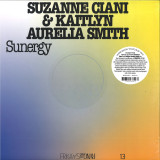
Sunergy brings together synthesists Kaitlyn Aurelia Smith and Suzanne Ciani for the thirteenth installment of FRKWYS, RVNG Intl.'s intergenerational collaboration series. For this edition, a panorama of the Pacific Coast provides the place and head space for a musical appreciation and consideration of a life-giving form vast and volatile with change. Fortuitously (as is the freaky way), Smith and Ciani were discovered to be neighbors in the small coastal community of Bolinas, California. The two had become close friends, bonding over their experience as woman musicians and, more unusually, their shared passion for the Buchla synthesizer. The music of Sunergy embraces this kinship, with Ciani and Smith respectively performing on the Buchla 200 E and the Buchla Music Easel, two modern configurations of the innovative instrument developed in the '60s by Don Buchla.
Sunergy was recorded in the Bolinas home where Ciani has lived for the last twenty-four years. Her living room overlooks the Pacific Ocean from a cliffside perch, creating an idyllic, inspired setting for music making. Setting up their synths side-by-side, Ciani and Smith took turns keeping time and freely improvising for the album sessions. As a complete piece, Sunergy is shaped by slow, pulsing forms and sinuous, melodic sequences that conjure both an oceanic world and the unlimited sound made possible by modular processing.For her part, Ciani has long been a Buchla voyager. Suzanne proselytized the potential of Don's synthesizer instruments in the '60s and '70s, performing her own compositions before introducing synthesized jingles and sound effects to household audiences. Ciani then achieved wide recognition for her debut album Seven Waves, a collection of colorful, classical song-like melodies fluidly working with harmonic textures and sounds of the ocean shore. Since its 1982 release, Seven Waves has become an important chapter of the ambient canon within which contemporary artists like Smith have developed their own synth syntax. Smith was born just a few years after the appearance of Seven Waves, growing up in Orcas Island, Washington. A place of profound natural beauty, the islands would inform Tides, her first instrumental collection from 2014. Smith composed Tides as an accompaniment for Yoga classes, ultimately freeing her from conventional songwriting into the exploratory, synth-based compositions demonstrated in ecstatic variety on 2016's Ears. Despite the serene setting where Sunergy was realized, the album does not romanticize a complete oneness with nature. Smith and Ciani use their collaborative ground to reflect on the unstable forces at play across the Bolinas horizon. Sunergy takes stock of Bolinas in the 21st century, a once-thriving artist's refuge now vulnerable to real estate pressure extending from affluent San Francisco, and more irreparably, the specter of climate change erasing its many waterfront habitats.
A diametric dynamic is present in Sunergy, a somber meditation amidst the intense cultural and solar forces transforming the landscape, and a hopeful assertion of the surviving creative culture of Bolinas. Far from rehashing the gentle grace of the artists' seminal works, Sunergy instead seeks to awaken and bear witness, employing the Buchla waveforms to mirror the infinite rhythms of the ocean and our essential relationship to it.
Kaitlyn Aurelia Smith and Suzanne Ciani's Sunergy will be released on September 16, 2016 on LP, CD, and digital formats. An accompanying documentary by Sean Hellfritsch will be offered in tandem.
Wil Bolton is a London-based artist whose work uses synthesizers, guitars, acoustic instruments and effects to create warm and emotive melodies, fragmented and submerged among beds of droning ambient textures and environmental sounds.
Wil has released albums on labels including Home Normal, Hidden Vibes, Krysalisound, Audiobulb, Hibernate, Eilean Rec., Dronarivm and Sound In Silence. He has also shown his sound and video works in exhibitions at ICA, Incheon Art Platform, Liverpool Biennial and others, and has performed at venues including Cafe Oto, Tate Liverpool and Iklectik.
‘Like Floating Leaves’ was recorded January - July 2022 in East London, using modular synthesizers, Mellotron, Yamaha PSR-6, Waldorf Micro Q, Modal Argon8, OP-1, iPhone, glockenspiel, chimes, effects and field recordings from Venice, Stockholm, New York and Tokyo.
Born Jephté Mbisi in Genève, Varnish La Pisicine is a 25 year Swiss Rap author,composer & producer . After his former works under the name Pink Flamingo who maDe him work with Sébastien Tellier & Philippe Zdar, Varnish La Piscine also became a movie director and realized his first film “ Les contes du Cockatoo” whose Ost enhanced with bonus Tracks was released by Color Records under the name “ Metronome Pole Dance Twist Amazone”. After they met, Pedro Winter signed him on Ed Banger Record for his next works. “This Lake Is Successful” is the brand new 7 song mini-album.
Blue Marbled Vinyl
A1 Fred Hush - Close Your Eyes
This track is cracking and is the unofficial follow up to open your eyes. Some sounds have been taken from OYE and mixed with new sounds and a new discreet vocal. For the people who like hypnotic long and deep climaxes.
A2 Fred Hush - I Say (Remix Noseda)
I SAY is a niche record released on Emmanuel Top's Fokalm label. This version is a remix by techno man Noseda known from Ragnarok Berlin and releases on Deborah De luca's Solamente label.
B1 Emmanuel Top Acid Phase (Fred Hush & Dimitri Andreas Rework)
Acid Phase, an unbelievable record that is hard to match, was repackaged by Fred Hush & Dimitri Andreas. A slightly dreamier and more melodic tone was indicated in a compelling beat. This version was released before but quickly sold out. Played by Sven Vath.
B2 Fred Hush - I Say (Remix Klaudia Gawlas)
International DJ Star Klaudia Gawlas also let her go for a while to make her own version. Very strong sound and an unmissable second break that certainly works on the dance floor.
A central iconic figure in the ever thickening Cairo underground electronic scene, Zuli has crossed borders years ago with a relentless international touring schedule and releases on Lee Gamble's UIQ as well as Haunter Records, now considered as flagship works.
His meticulously crafted sound, located at the crossroads of IDM, Hip-Hop, Jungle and more has never stopped developing. It is characterized by power, precision and very elaborate arrangements.
»Digla Dive - Live« is an additional step further in his extended quest where Studio compositions are constructed in a live setup spirit.
Produced, mixed and recorded live at home in 2022 by Zuli.
Vocals by Elvin Brandhi and Rhythms by Karim El Ghazoly on Alteration Jump.
Zuli logo by Kareem Lotfy.
b 2 All [The Drills]
The electronic music producer and DJ whose catalogue of collaborations namechecks acts as diverse as Agoria, Green Velvet, Roman Flugel to Nitzer Ebb, Depeche Mode and David Holmes is set to release his 6th studio album The Strand Cinema on the 24th March on his own label PKR.
The last five years have seen an evolutionary shift for the electronic musician, undertaking more soundtrack work, including for film (Nightride on Netflix, Rough), radio (The Northern Bank Job BBC R4) and theatre (East Belfast Boy).
The Strand Cinema album is a tribute to the art deco cinema building , The Strand, where Phil’s recording studio is. A stirring and beautiful record, it seamlessly traverses the worlds of contemporary classical to beautifully elevated dance music with a recognisably cinematic influence. Managing to sound both grand and expansive, as well as minimal and introspective – it’s a record that explores the macro and the micro.
The opening track “Strand Cinema”, begins with a steady, gentle, looping pulse, almost recalling the kosmische ripples of Cluster, before sweeping and enveloping strings enter, resulting in a track that manages to sound both grandiose and tender in one fell swoop.
Lead single “Atlantic” perhaps most perfectly encapsulates the various sonic worlds that Kieran is operating in, merging a bordering on euphoric dance beat layered with infectious melodies, while remaining anchored to organic sounds, as strings and percussion collide with the driving and hypnotic groove of the track.
“Strike the Match” showcases Kieran’s talents for detail, in a track that feels almost palpably textural and rich in complexity but without feeling overly busy or superfluous; while “Elephant in Castle” utilises intense, almost gargling electronics, that drone with a foreboding and ominous tone, but also produces fractured moments of light, beauty and poignancy.
Created during Covid Kieran’s method was “To literally be like a tuning fork and ask: What's in my chest? If I were to describe what's inside me, and what's going on in the outside world, If I had to score that in a film, what would it sound like right now? I guess I sort of soundtracked my own life”
“One positive side of lockdowns was that we spent more time in natural surroundings where I’d make field recordings. I’d also record acoustic sounds: cello, violin, percussion, guitar etc and then create my own sample bank from all these single one-note sounds. So, creating your own loops and drones. The album was created from organic sounds manipulated by machines; melted, mangled and hacked with computers but machines only sound as good as the human spirit put into them.
The idea of nature and humans versus technology is the concept behind the album’s A/V show which debuts in Belfast in March before touring. Featuring works by 11 artists from across the worlds of film, animation, advertising, architecture, computer science and dance such as Scottish BAFTA nominated Simone Smith, LA based director Frederico Marzio Vitetta who is famous for skateboarding films like ‘Wet Dream’ with Spike Jonze, to futuristic CGI from BAFTA nominated Kris Kelly and a video from contemporary dancer Oona Doherty. onscreen visualisations that explores The visuals explore nature and technology along a timeline from past, present to future with cinema as a loose reference point with varying degrees of utopian versus dystopian moods.
Elias Devoldere is the drummer in bands such as Nordmann, Hypochristmutreefuzz, Suwi, Robbing Millions, and John Ghost. Following an ep, Kaiku, released last summer, Bloomed > Exploded is his debut full length as a solo artist. Besides writing and singing, he composed, played, recorded, and produced the bulk of the ten songs himself. 'Everything blooms', he explains the title of his first album. 'Until it explodes, and something else is able to grow from it'. In this case, what came full cycle is an intimate coming-of-age album of intangible atmospherics, crisp melodies, and understated rhythmical patterns.
BLOOMED >
'As a kid, I just wanted to play football, you know?', says Elias. 'But when I was eight years old, my parents made me choose between drawing school and music school'. And thus began a dedication to rhythm for Elias. At 18, he enrolled at the Royal Academy of Fine Arts in his hometown of Ghent, opting for a jazz education. 'Not because I aspired to become a master 'jazz drummer', but to learn music, to become a good musician'. It was at the academy that, after an impromptu jam session, Nordmann first came together. The exhilarating instrumental quartet went on to win second place at the prestigious Humo's Rock Rally in 2014, and released three albums to critical acclaim, with a new one in the works.
Devoldere, in the meantime, had completed his degree with a craving - ironically - for music. 'I was in over my head with jazz for such a long time, and went on an epic discovering spree. Moses Sumney, James Blake, Kendrick Lamar, Connan Mockasin... Lots of stuff I had missed over the years. In a way, I reconnected with the kind of music I was into before jazz dominated my life. Pink Floyd was my first love, for instance, and later Radiohead proved to be a game changer. Diving back into those kind of sounds, I was feeling the urge to follow my old dreams, of being a solo artist - or something more than 'just' a drummer, anyway. So I bought a guitar, an interface for my laptop, and started writing'.
EXPLODED
When he released his 5 track ep Kaiku in the summer of 2021, it summarised a lot of firsts for Elias. First time writing lyrics, first time as a lead vocalist, first time recording his own songs all by himself. The songs had been around for a while, but taking those leaps took a long time. 'Making the ep helped me to find my voice, in every way possible'. Still, in the aftermath of the pandemic, the songs on Bloomed > Exploded sprouted in a time of upheaval. 'Musically the album is quite serene, gentle even. But the themes speak of internal unrest and uncertainty. There are a lot of questions on the album, as it turned out. Duality, as the title suggests, coming from the struggle between a wish to turn everything upside down and a search for peace. Honestly: the prospect of my 30th birthday was messing with my head too'.
Recording during a period of solitude in France, Elias initially relied heavily on synthesizers and drum machines. 'Explode / Boalis was one of the first songs I wrote for this album, and pivotal for its atmosphere, based mostly on electronic elements. Later, I did use 'real' drums on most of the other songs, though, and contributions from other musicians, but the overall mood is very cohesive'. 'Pure', that's how Bruno Ellingham, the UK engineer who mixed the album, described it. Much to the delight of Elias, who reached out to Ellingham because of his previous work with bands such as Massive Attack and Portishead. 'Hearing the end result, I thought he really captured the essence of the original demo's. For me, that adds to this album being a sincere reflection of my true self. 'Take a dive/ Into the place where it's more quiet', as I sing in the last song, that kind of sums it up for me'.
Sometimes, a change of view can transform a person’s world. On ‘Don’t Come Down’, the artist formerly known as Matt Pond PA can be found with his “shoulder on the concrete” of a pavement, scoping out the world anew. This granular realignment of perspective serves as an open door to the debut album from The Natural Lines. At once clearly Pond’s work yet a huge leap forward in its measured songcraft, melodic immediacy, collaborative detail and wryly questioning lyrics, the result is a gorgeous album of intimate reflections from a relocated, renamed, revivified talent.
Recorded with close collaborators and friends over a period that saw Pond make vital adjustments to his life, its stealth emergence reflects his desire to set a fresh pace for himself and come from somewhere new, somewhere more open.
Now based in Kingston, New York, with his partner and wild dog Willa, Matt explains the album’s gestation thus. “It was something different from the start. I wanted to write as purely as I could. Instead of getting stuck in the ‘tour, write an album, release an album, tour’ cycle, which is not a natural way of writing or living, I wanted to write an album and when it was done I wanted to make sure it was done. I didn’t want this feeling of, ‘Oh, we didn’t have time’, or, ‘I don’t know whether I believe in the songs but it’s coming out anyway.’ I used to be always racing to the finish line, but I’m not anymore.”
For Matt, the call to ring the changes came with the recognition of “a certain nihilism or narcissism” involved in making music. “In some ways, you have to get in your own head and I think I went too far with that, with drinking and shutting people out. In something that I believe is collaborative, it’s not helpful.”
“I quit lying,” he adds. “I checked my harsher tones. I cut my drinking down. I went to therapy and figured out how to stop shouting at cars.”
Car troubles inspire ‘No More Tragedies’, the album’s standout second track, where he wryly details his desire to dampen his twinned impulses to take pictures of license plates blocking his parking space or take bricks to said car windshields. Warming melodies and harmonies soothe his rage, a balance maintained elsewhere on the album.
A need for connection underpins the lilting ‘Alex Bell’, where Matt’s lyrics playfully reference the inventor of the telephone over a plaintive cello and bubbling keyboards – evidence of the album’s carefully nurtured arrangements. With nimble sequencing, ‘My Answer’ follows with a question: do artists really need to get messed-up to create? Matt may not have the answer, he admits, but he articulates the question beautifully, channelling the influence of Blue Öyster Cult’s ‘Don’t Fear The Reaper’ into a song of fleet, melodic electric-folk drive.
Featuring 17-year-old MJ Murphy on misty backing vocals, the softly insistent ‘Don’t Come Down’ is an album centrepiece, detailing a need to see things anew. Like The Flaming Lips writing a classicist piano ballad, the twinkling ‘Artificial Moonlight’ finds Matt writing late at night, illuminated by the lights from streetlamps. Finally, ‘Mahwah’ closes the album on a note of arrival. While Matt Pond PA’s albums emerged from the disconnection of touring and living in vans, Pond is now happily – cruel winters aside – ensconced in Kingston. “I have found a place I love. Mercury Rev lives near here. It is a cool place to be, an artistic, mountainous, wild place to live. So – maybe this is it.”
In the case of The Natural Lines, a sense of arrival suggests itself. For Matt, the album follows two decades’ worth of Matt Pond PA records and soundtrack works. In a career he once described as “a series of benign mistakes,” Matt travelled far, moving from his band’s starting point in Philadelphia to Florida, Oakland and beyond while releasing 14 well-received albums. In 2017, he declared his intent to retire the Matt Pond PA name, though it lived on briefly in the reissue of The State Of Gold and EPs such as Free Fall, a tribute to Philadelphia.
Now, the name change honours his collaborators. Among a revolving cast, one constant presence in his work has been Chris Hansen, who plays guitar, bass, keys, saxophone and vocals on The Natural Lines’ debut. Matt’s partner, Anya Marina, contributes vocals. Other band members number Hilary James (cello/vocals), Kyle Kelly-Yahner (drums), Louie Lino (keys), Sarah Hansen (horns), Sean Hansen (drums/bass), Kat Murphy (vocals) and, also on vocals, MJ Murphy, for whom Matt brims with praise: “She can do anything she wants to musically.”
A heartening rebirth for Pond and his friends, the result also pays warming, witty, reflective and infectious testimony to the value of reconfiguring one’s outlook. “Once I took control of my mind, I could see what I wanted to say more clearly,” says Matt. “Instead of random floods of mania and panic, I felt like I was composed and composing. It has become as simple as reading the words of a sentence in the right order. As small as the pause before I hit ‘send’.” A development, you might say, conducted along the most natural of lines.
The quiet Irish mastermind is releasing new material on Tape Hiss. When he is not busy with his Monoak alterego, he works alongside Keith Tenniswood (Radioactive Man) and Simon Lynch (London Modular Alliance) as L-R to compose hard-hitting electro tracks. This time there is a diverse selection on the table: breaks, bass music, electro and techno. All with a bass-heavy, repetitive twist. The EP comes with a digital bonus tune 'Hitchcock'.
- A1: I Want You To Want Me 3:44
- A2: Ain't That A Shame 5:05
- A3: Southern Girls 3:35
- A4: California Man 3:45
- B1: Surrender 4:14
- B2: Stop This Game 3:25
- B3: Voices 4:22
- B4: Dream Police 3:53
- B5: If You Want My Love 4:26
- C1: Tonight It's You 4:47
- C2: Everything Works If You Let It 3:56
- C3: Mandocello 4:47
- C4: I Can't Take It 3:28
- D1: She's Tight 2:58
- D2: That 70'S Song (Based On "In The Street") 2:50
- D3: Cheap Trick Feat. Chrissie Hynde Walk Away 3:41
- D4: Can't Stop Falling Into Love 3:49
- D5: The Flame 4:41
Named after their infamous Brixton club night, Basement Jaxx’s second album Rooty saw Basement Jaxx continue to push the boundaries of pop and club music. The album mixes classic house with generous lashings of punk, funk, R&B, jazz, hip hop, 2-step and pop song-craft in a mad genre crash that works like a charm. It features the massive tracks “Where’s Your Head At”, “Romeo” and “Do Your Thing”.
Voice Notes 002 – and this time , in time honoured memorial of our sister label London housing Trust (that we finished a few years ago after 10 releases ) . we present a 5 track Various Artist ep – featuring 5 artists – and introducing Dance , Rodney Bennet and Pyramids of Space to the label .
The A side begins with a track from label boss Toby / Alphonse – called Rujac – a deep bleepy( Roland Juno 60 for the nerds ) breakbeat trip that had a very early outing from Truly Madly in his Dimensions mix and picked up a few ID requests… followed by another Voice Notes behind the scenes facilitator… Rodney Bennet – with some straight up - old fashioned deep house goodness – rolling bass and just wait for that floating hook .
On the B side a track we ve been sitting on a long time finally sees the light of day – from Toby Tobias – Streets of Gold – with an Alphonse remix – a looping , hypnotic breakbeat acid builder with a huge bass line and a pleasant surprise at the end – this track features a hand from former LHT man Façade as well …
Next up is Pyramids of Space first outing on the label , watch out for much more of them on the next release , some early ambient techno pioneers from Cornwall – if you are one of the holders of the rare Green Tape then lucky you – also might know them from Mordant Music – anyway I digress – this track Quantis perfectly sums them up – deep and dark , soothing techno to transport you to another place .This unreleased gem comes from 1999, but a future version of 1999…
And finally friend of the label – head man of Blank Mind records and all round DON – Dance ( Sam Purcell ) –we managed to prise a favourite from his sick Blowing up the Workshop mix .. and gave it a slight extension – a wonderful way to finish off the ep , slow bassline orientated ambient house of the highest order .
Check your Voice Notes …
Official reissue of Civilistjävel!'s first, self-titled archival LP in sky-blue embossed sleeve, 500 copies.
A minor masterpiece of high-lonesome, ultra-spacey existential electronics, recorded in the ‘90s and early 2000s, the music on this album had never been heard outside the Swedish artist’s private tape/CD-R trading networks until 2018 - when London’s Low Company presented it in a hand-assembled vinyl edition of 250 with scant context or biographical info. Some people understandably thought the project might be a ruse - was it really plausible that material this accomplished and affecting had fallen under the radar for 20-odd years? Implausible, perhaps, but true nonetheless. Five years on we know that Civilistjävel is indeed the real deal: the alter ego of a discreet but by no means reclusive solo artist based in Uppsala who has for decades been quietly honing his craft without worrying about who's listening. Since 2019 he has become more visible: performing live several times in and around Europe, and last year releasing a brand new studio album, Järnnätter, on Felt Records. Meanwhile Low Company has put out four subsequent, vinyl-only volumes of archival material. These have increasingly tended towards the more rhythmic/techno-oriented impulse in Civilistjävel, so it’s interesting to return now to Volume 1: comprised of the most introspective and isolationist of his works, tapping into deep wells of northern European melancholy. It’s a music made with no audience in mind, but simply to suit itself: cold-world kosmische, intimate minimal synth etudes, bowled percussion clusters and impossibly yearning, 30-days-of-night ambient dronescapes. Created mostly using a Juno60 and Korg MS20, and home-recorded to DAT (crackles and surface-noise preserved intact), you can hear in these seven expansive instrumentals unconscious echoes of Serge Bulot and Anna SjalveTreje’s crepuscular dream-sequences, Scandinavian black metal's mist-cloaked forest-fantasies, the austere dub-techno of Thomas Köner and Basic Channel, and the gristly, consumptive concrète of Nurse With Wound and Asmus Tietchens.
Following 2 heavy reissues of “Silver Mirror Of Her Eyes” and “Heavy Water” from original works on D*Fusion Records in 1994-1997, Howard Dodd aka Anoesis returns to physical in 2023 for a new full feature-length album via Australian based imprint Paper-Cuts. Selected works between 2010-2022 “Memory On Memory” offers a modern take from the underground UK artist, spanning refined breaks, playful tech-house and modular experiments stretched across this 9-track LP.
- A1: The Star Of A Story Ft. Lisa Fischer
- B1: Deep Burnt Ft. Axel Tosca
- C1: Change Your Mind Ft. Bernard Fowler
- D1: Another Day In My Life
- E1: Seven Mile Ft. Moodymann
- F1: Come Away Ft. Kerri Chandler
- G1: Music Is My Life Ft. Unlimited Touch
- H1: You Got Me Dancing Ft. Audrey Wheeler & Cindy Mizelle
- I1: Chimi Ft. Elements Of Life
- J1: Love Has No Time Or Place Ft. Elements Of Life (Unreleased Instrumental Dub)
- K1: Atmosphere Strut Ft. Dj Spinna
- L1: Cosmic Witch Ft. Anané
- M1: How He Works Ft. Nico Vega
- N1: A Place Where We Can All Be Free Ft. Janine Lyons
- O1: Touch The Sky Ft. Tony Momrelle
- P1: Dreaming Ft. Cindy Mizelle
- Q1: All My Love Ft. Robyn
- R1: Feel So Right Ft. Honey Dijon
- S1: Free To Love (Louie Vega & Karen Harding)
- T1: It's All Good (Louie Vega Remix) (Bebe Winans Ft. Debbie Winans Lowe & Korean Soul)
There is a global musical movement happening right now, and an integral part of this rhythmic and cultural evolution is the legendary Grammy award-winning DJ / Producer / Artist Louie Vega.The movement is comprised of the Expansions In The NYC album and the Expansions NYC events, and it represents the very best in music, dance and club culture from New York City to London to Miami to Ibiza and every locale around the world where people appreciate the power of house music.
Up next in the continuing series of product releases and events in connection with the Expansions juggernaut, a limited edition Expansions In The NYC 7” boxset on Nervous Records.
“Releasing vinyl has always been part of my mantra, but this is a unique one,” said Louie Vega. “For the first time having our music released on a (10) piece 7” set along with new original art by Andrew Thiele (who also created the Expansions In the NYC Album cover), it’s a highlight in the history of all my vinyl releases. Not too many artists release 10 pieces of vinyl within a set. And what makes it even more special is the calibre of all the amazing artists who worked on the tracks and songs with me. This is a landmark and essential collector’s item. A veritable “Must Have!” Never before have all these artists graced one album together from Honey Dijon to Lisa Fischer, Moodymann to Bernard Fowler, Robyn to Unlimited Touch, and Karen Harding to Kerri Chandler. It’s a dancer’s and vinyl collector’s paradise.
Veils Of Transformation 1972 - 1980 is a collection of the earliest works of Gregory Kramer, one of the 20th century masters of textural electronic music. This collection is available on CD and cassette with liner notes from Gregory Kramer and Kaitlyn Aurelia Smith, who first brought this fascinating work to the attention of Important Records.
“Greg is one of the pioneers of electronic music and these pieces are unique opportunities to discover how intricate and dynamic early synthesizers are.” Kaitlyn Aurelia Smith
Kramer developed a musical language focused on continuous transformation of timbre, yielding a continuity of attention. This musical language, formed of timbral change, is a compelling aesthetic in its own right and a source of meditative experience. The four works on this album share a deep sense of order derived not from organizing pitches or rhythms, but from the evolution of timbre itself.
Gregory Kramer (b. 1952) is a pioneering electronic composer, inventor, researcher, teacher and author. In 1975 he co-founded Electronic Musicmobile, a synthesizer ensemble later renamed Electronic Musicmobile, a series of synthesizer concerts in New York from which he formed the Electronic Art Ensemble, a highly regarded all electronic quartet. His work extended to developing synthesizers and related equipment. Kramer also co-founded the not-for-profit arts organization Harvestworks in New York City. He is recognized as the founding figure of the intensely cross-disciplinary field of data sonification. Since 1980, Kramer teaches Buddhist meditation.
The four compositions collected here each represent Kramer’s unique approaches:
The structure of Meditations on 32 Parts of the Body (1978) is derived from the means of its production. Recording 5 people chanting an ancient meditation text, then layering to gradually achieve more than one million voices. The layering was all done using analogue tape recorders. The decomposition of the sound reflects the anomalies of tape machines out of sync, and the build up of artifacts from the audio tape itself, such as uneven response curves and tape hiss, are all engaged as musical materials.
Role (1972) was generated using one complex patch on a large hybrid Buchla 200/100 system. Emerging from a zeitgeist that valued pure synthesis as a combined artistic and technological research. At the time this piece was realized its as exceedingly difficult to produce electronic sounds that were internally complex.
Blue Wave (1980) is built on Kramer’s timbral development technique Veils Of Transformation which allows for disparate timbres to be woven into a continuously developing sound.
Monologue (1977) is a virtuosic performance of a massive patch on a Buchla/Electron Farm hybrid electronic instrument. Built into the patch is a pathway for continuous transformation of voice and voltage-controlled synthesizer. The blunt, raw and sometimes harsh sounds of this piece reflect an attitude prominent among composers that music can, or even should, be difficult, contrary to what’s already been done and, by all means, new.
Avid Habibi Funk listeners may be familiar with Libyan composer / producer Najib Alhoush, who’s track “Ya Aen Daly” - the Bee Gee’s “Stayin Alive” cover - was included in our second compilation. While the original track never excited us, Najib’s version managed to strip it from its pop approach that had taken over disco during the genre`s peak. At that time, disco tracks mostly were aiming to appeal to the widest audience possible. Najib had turned the original track into something different and very unique. Upon further research we found that Najib was actually the singer and founder of The Free Music band alongside Fakhreddin, Salim Jibreel, Abdulrazzak ‘Kit-Kat’, Mukhtar Wanis and Mohameed Al Rakibi.
Initially, we only licensed Najib Alhoush’s “Ya Aen Daly” from Yousef Alhoush, Najib’s son, who was pleased to hear that there was interest in his father’s music form someone abroad. In the process of exchanging and learning about Najib’s music and career, our understanding was that The Free Music only recorded the one album. This couldn’t be further from the truth, in fact, there were ten albums produced by the group, all impressively coherent with a clear influence from disco, soul, funk and reggae.
The Free Music album was probably the longest it ever took us to gather information, photos and musical source material in a good enough quality to be reissued. This is largely due to the complicated political situation in Libya, compounded by the fact that Libya is still largely cut off from international payment systems, so getting an advance payment to the right person can be a process that takes weeks. The same goes for getting master tapes to a studio abroad and afterwards back to Libya.
When we look for music that works under the umbrella of Habibi Funk, we often come across albums where bands experimented with influences from Soul, Jazz, Funk, Disco and more, usually on a single track or two but then they often go down to a different path for the rest of the album. This was not the case for The Free Music. All their albums are fully dedicated to their unique blend of Disco, Reggae and Funk and it feels that when we made the selection for this album, we could have chosen a completely different number of tracks and the album would be been equally strong.
The lead-off single is the stupendously groovy “Ana Qalbi Ehtar” out February 3rd along with LP pre-order to capitalize on Bandcamp Friday. From the outset, the rhythmic strumming of the funkified guitars give way to the galloping drums and bass, opening up to anthemic vocals and rounding out with a blistering guitar solo, a certified disco-funk classic through-andthrough.
Second single, out February 17th is the disco slammer “Hawelt Nensa Ghalaak.” Guitars, harmonized horns, synths and bouncing bass and drums collide w/ spaced out vox to make the track a dancefloor sureshot for any party.
Third single is “Mathasebnish,” out March 3rd, a pure disco-funk slammer if there ever was one – with stabbing horns, funky bass riffs, a riding rhythm guitar and anthemic vocals, rounded out with stunning flute and guitar solos – the track will surely be on repeat along with the arrival of warmer weather.
Album focus track “Men Awel Marra” is another standout disco-infused tune, showcasing the immense creativity out of Najib and The Free Music. This past summer we finally had the opportunity to get together with Yousef face-to-face at a coffee shop in Istanbul’s central Istiklal road together with our friend Anas El Horani. Yousef told us the whole story of how his father got into music, the start of the band and his father’s continued conflicts with the Gaddafi regime that probably kept his career from becoming even bigger. As always, both vinyl and CD come with an extensive booklet featuring background on The Free Music and Najib Alhoush, including words from Najib’s son, Yousef, as well as unseen photos, cassettes and more.
With OAM004 the label releases a new project called Hybrid, a project that will always present the original works of two artists.
The first hybrid is by Ostreaktor and Lydia Eisenblätter, in which, both artists present the raw elements of Detroit bangers reminiscent
of the early 90's. In this way, both artists, despite their differeces, make the first hybrid a complete work.
The Well & The Gentle, two of the major works of Pauline Oliveros, are presented here in a first time reissue on double vinyl in a gatefold sleeve with extensive liner notes.
If Oliveros had followed a more conventional path she may have, all social obstacles aside, been considered among the major composers of her time. However, Oliveros approached composition in a more egalitarian manner. She wrote music for musicians to interact with or, in the composers words, she wished to create "an inclusive and interdependent and unfolding world of relationships."
Oliveros' propensity towards inclusion is part of what makes this work so remarkably distinctive. The Well & The Gentle is carefully crafted, allowing performers to participate in the creation of the work. Players are asked to collaborate, focus, react and make imaginative choices. Only then can the performers "pass through stages of awakening to the possibilities inherent in making music, working together, leading to the essence of what can shape musical impulses and individual freedom simultaneously."
Unlike most major composers of the era, Oliveros' work focuses on collaboration and improvisation. For Oliveros, the processes involved in making music are as fundamental as the music itself. Oliveros creates, as Arthur Sabatini put it so eloquently in the liner notes, "A world in which sound and the practices entailed in making music merge; become, at once, source and atmosphere, energy and essence, presence and dynamic."
Pauline Oliveros was an electronic music pioneer, accordionist, composer and educator who resided in Kingston, New York. Her instrument was tuned in Just Intonation and she often included it in her meditative improvisational music. Her music is not meditative in the sense that it is intended for listening to while meditating, rather each piece is a form of meditation, such as her aptly titled Sonic Meditations.
A central figure in post-war electronic art music, Oliveros is one of the original members of the San Francisco Tape Music Center (along with Morton Subotnick, Ramon Sender, Terry Riley, Steve Reich and Anthony Martin), which was the resource on the U.S. West coast for electronic music during the 1960s. The Center later moved to Mills College, where she was its first director, and is now called the Center for Contemporary Music. Oliveros often improvised with the Expanded Instrument System, an electronic signal processing system she designed, in her performances and recordings.
- A1: Shahrokh Dini / Illinois Now We Can Dance (Lehar’s Italo Vanguardista Remix) (6 26)
- A2: Shahrokh Dini / Illinois Now We Can Dance (Original Vocal) (6 58)
- A3: Shahrokh Dini Ubuntu (Tooker Remix) (7 18)
- B1: Shahrokh Dini Ubuntu (David Mayer Remix) (7 38)
- B2: Shahrokh Dini / Illinois Now We Can Dance (Kovi Remix) (5 42)
- B3: Shahrokh Dini / Illinois Inner Core For Love (Omer Tayar Remix) (7 16))
Shahrokh Dini delivered two top notch EPs in 2022, “Now We Can Dance” w/ Illinois and “Ubuntu”. After gathering some decent remixes, a proper vinyl release became self-evident. Here we go now with splendid re-works by the likes of Lehar, David Mayer, Omer Tayar, Tooker, Kovi, Patrick Zigon and Apoena. A superb package!
Shahrokh Dini left Karlsruhe, while he is even more active than ever in his old and new basecamp Berlin. Not even that he played a lot of nice gigs during summer (Amsterdam, few times on Ibiza, lot of gigs in Berlin, Italy, Corfu, Sardinia), he is also busy in the studio with several releases and remixes (btw.: one for Compost artist Felix Laband). “Now We Can Dance” with the strong and lovely vocals by Illinois is a contemporary house smash with an 80ties indie dance twist. Shahrokh met Illinois at the Garden Of Babylon parties, where Shahrokh is virtually the resident DJ, too.
Further we have stunning remixes by Lehar (Diynamic Music, Connaisseur Recordings), David Mayer (formerly Keinemusik, Ouïe), Apoena (Freerange), Omer Tayar (The Gardens of Babylon/Tel Aviv), Patrick Zigon (Biotop, Traumraum), Tooker (Ouïe, Crosstown Rebels), Kovi (Compost, Frau Blau).
Shahrokh Dini has a long lasting release history, among them a lot on Compost, also under his moniker Shahrokh Sound Of K. Check both his discographies on Discogs.
- A1: Rashoumon (Feat The Blue Jeans)
- A2: Sado Okesa (Feat The Bunnys)
- A3: Tsugaru Goze (Feat The Blue Jeans)
- A4: Tsugaru Jongara Bushi (Feat The Blue Jeans)
- A5: Abashiri Bangaichi (Feat The Blue Jeans)
- B1: Dannoura (Feat The Blue Jeans)
- B2: Tsugaru Hanagasa (Feat The Blue Jeans)
- B3: Taiyou Ni Sakebou (Feat The Blue Jeans & Rui Takahashi)
- B4: Komoro Oiwake (Feat The Bunnys)
- B5: Amefuru Machikado (Feat The Blue Jeans)
Japan's guitar hero Takeshi Terauchi reworks traditional songs and lets everything go wild with his magnificent and frenzied guitar sound. Enter the electrifying world of Eleki!
Gatefold 180g heavy vinyl LP, reverse board print. Comes with extensive liner notes by Japanese pop culture writer Julien Seveon (Cinexploitation)
All tracks licensed by King Record Co., Ltd., Tokyo, Japan.
Mastering and lacquer cut by Jukka Sarapää at Timmion Cutting Lab, Helsinki, Finland.
Artwork by Nker
The aftermath of World War II gave rise to a global phenomenon that saw new generations of young people rise up determined to forge new paths from their elders – culturally, politically, and musically. Japan was no exception and the recent past made the local youth angrier, hungrier and even more determined to fully experience something different from their parents. The country caught on to the early rock & roll craze almost in tandem as it was happening in the States. Teenager Chiemi Eri singing "Rock Around The Clock" and Kazuya Kosaka with "Heartbreak Hotel" were among the first to make what would soon be called Rokabiri accessible to a large audience. Teacher and parent associations showed concern regarding this new music when teenagers started missing school to attend afternoon shows – one of which most notably being the Nichigeki Western Carnival where all the top names of Rokabiri played to sold out audiences. But by the end of the 1950s, the youth of Japan had moved on to something else entirely: Eleki.
The 50s and 60s were a time of rapid change that saw trends come and go. Japan, like all other industrial countries, saw its youth move from one musical sensation to the next. And in the early 60s, there was one band in particular that created a distinct new flavor: The Ventures. Leaving behind vocals and focusing strictly on the impact of the sound of the electric guitar, The Ventures drove kids crazy all over the world. Other bands followed, most notably The Shadows, but in Japan, no other instrumental rock band managed to leave such an impact. The sound of The Ventures helped boost guitar sales in Japan and soon hundreds of cover bands were popping up all over the country. The Eleki Bumu (electric boom) was now in full effect with Takeshi Terauchi emerging as its first and greatest guitar hero.
Terauchi was born January 1939 in the prefecture of Tochigi, north of Tokyo. His mother taught music and played the shamisen – a traditional Japanese stringed instrument – while his father ran, among other things, an electronics shop. Their respective professions were to be decisive in the path that Terauchi would later take. Serendipitously, at the age of five, Takeshi was given his first instrument – a guitar. His destiny sealed, he quickly began experimenting with different tools from his father's shop to give his instrument a stronger sound. The technological approach came from his father, the technique from his mother. Terauchi's signature playing style owes a lot to his mother's instrument of choice, as he attacks the notes on his guitar as one plucks the strings of a shamisen.
This exceptional compilation you are holding in your hands explores some of the best works by Takeshi Terauchi, recorded between 1966 and 1974, where the guitar hero looks inwards to Japan for inspiration. A meeting between traditional folk songs and the unique way Terauchi and his band play: the content is explosive, inspired, and highly addictive! The 60s and 70s were undoubtedly Terauchi's finest hours, and in the late 60s, one Japanese critic said that Terauchi was not only the best guitarist in Japan, but also in the world. You can now find out why.
After the success of the Pan Machine album that saw the Ebony Steel Band cover Kraftwerk, OM Swagger’s Ian Shirley was desperate to work again with the talented Delphina James who arranged the tracks on that fantastic LP.
Shirley had the idea of interpreting the works of famed contemporary composer and pianist Ludovicio Einaudi through the prism of the steel pan.
Delphina James wrote out arrangements for classic tracks like I Giorni, Passaggio and Samba as well as lesser-known works like Moto and Respiro. She then formed a trio comprising of Tara Baptise (three pan cello), Nadine McCleary (bass) with herself on Tenor and set to work rehearsing the material. Once the trio mastered the material, James took it upon herself to write and arrange the track Siempre Conmigo as a tribute to the Italian piano master.
Produced by Ian Shirley, Play Ludo was recorded at the internationally famous The Pool studio in Elephant and Castle.
Anyone who enjoyed Pan Machine will love this. Fans of Ludovicio Einaudi around the world will rejoice in hearing the master’s work interpreted in a totally different musical setting. Respiro, for example, takes Einaudi into ambient electronic territory even though the instrumentation used is acoustic.
Like Kraftwerk, Einaudi’s music sounds like it was written specifically for the steel pan.
- A1: Woolf Wordings Of Orlando
- A2: Orlando Et La Tempete Viral Symphony Redux
- A3: Orlando Shoegazer Strides Towards Fiasco
- B1: Rampage At The Capitol Orlando Viral Tempest
- B2: Slow Orlando Et La Tempete Viral Symphony Redux
- B3: Orlando Undone By Scornful Dog Star
- C1: Pour Finir Avec Le Jugement De Dieu Viral Symphony Plague (Groundless Storm) (Groundless Storm)
- C2: Pour Finir Avec Le Jugement De Dieu Viral Symphony Plague (Tempete De Merde) (Tempete De Merde)
- C3: Pour Finir Avec Le Jugement De Dieu Viral Symphony Plague (La Nausee) (La Nausee)
- C4: Pour Finir Avec Le Jugement De Dieu Viral Symphony Plague (World Whirlwind) (World Whirlwind)
- C5: Pour Finir Avec Le Jugement De Dieu Viral Symphony Plague (Cosmic Door) (Cosmic Door)
- C6: Pour Finir Avec Le Jugement De Dieu Viral Symphony Plague (Weep No More) (Weep No More)
- D1: Pour Finir Avec Le Jugement De Dieu Viral Symphony Plague (Heroic Cojones) (Heroic Cojones)
- D2: Pour Finir Avec Le Jugement De Dieu Viral Symphony Plague (Ars Longa Vita Brevis) (Ars Longa Vita Brevis)
Pentiments continues its work spotlighting post-conceptual artist and writer Joseph Nechvatal. They have already dropped a retrospective Selected Sound Works album that spans 1981-2002 and now comes a companion across two slabs of wax that focus on more recent audio works. This is in cahoots with Andrew Deutsch and it makes use of anonymous reading of Virginia Woolf's 'Orlando' as an anchor point around which the "virus-modelled artificial life audio material" from Nechvatal's 2006 piece viral symphOny: the enthrOning is reanimated. The second then uses a rather controversial record performance of Antonin Artaud's radio play To Have Done with the Judgement of God which the artist takes apart and reweaves into something radically new.
- A1: Midas Touch - Big Deal!
- A2: Toni Campo - Over And Out
- A3: Martin Kershaw - Riff Raff
- A4: Reginald Wale - Rhythm-Rhythm-Rhythm
- A5: Trevor Bastow - Integration
- A6: Toni Campo - Point Blank
- A7: Piet Van Meren - Soul Punch
- A8: Toni Campo - Tooty Flooty
- B1: Midas Touch - Make No Bones
- B2: Toni Campo - Centrefold
- B3: Sidney Dale - Knock On Wood
- B4: Reginald Wale - Gone-Gone-Gone
- B5: Toni Campo - Do The Stumble
- B6: Trevor Bastow - Hydrogene
- B7: Ishfahan Farid - Focus On The Middle East
- B8: Vick Flick - Santaren
Killer funk compilation full of highlights from the music archives of Josef Weinberger Ltd. in London, pulled from the most famous library albums on labels like JW (Josef Weinberger/ Theme Music), IA (Impress) or PM (Programme Music). First selection of 16 lost tracks by Toni Campo, Midas Touch, Trevor Bastow, Sidney Dale or Vick Flick, oscillating between jazz-funk, soul music, proto techno and eastern-tinged disco, with open drum breaks, fat bass lines and plenty of horns/ wah wah/ organs/ vibes/ flutes/ electronic effects. Recorded from the master tapes, restored and mastered 2016 for 6-Page-Digipack-CD and limited vinyl LP, comparable to the best works of KPM, De Wolfe or Bosworth.
CLEAR BLUE VINYL
`Oh Me Oh My' is both elegant and ferocious. It is stirring in one moment and a balm the next. It details histories both global and personal. Lonnie Holley's harrowing youth and young manhood in the Jim Crow South are well-told at this point _ his sale into a different home as a child for just a bottle of whiskey; his abuse at the infamous Mount Meigs correctional facility for boys; the destruction of his art environment by the Birmingham airport expansion. But Holley's music is less a performance of pain endured and more a display of perseverance, of relentless hope. Intricately and lovingly produced by LA's Jacknife Lee (The Cure, REM, Modest Mouse), there is both kinetic, shortwave funk that call to mind Brian Eno's `My Life in the Bush of Ghosts' and the deep space satellite sounds of Eno's ambient works. But it's a tremendous achievement in sonics all its own. It's also an achievement in the refinement of Holley's impressionistic, stream-of-consciousness lyrics. On the title track which deals with mutual human understanding", Holley is able to make a profound point as ever in far fewer phrases: "The deeper we go, the more chances there are, for us to understand the oh-me's and understand the oh-my's." Illustrious collaborators like Michael Stipe, Sharon Van Etten, Moor Mother and Justin Vernon of Bon Iver serve as not only as choirs of angels and co-pilots to give Lonnie's message flight but as proof of Lonnie Holley as a galvanizing, iconoclastic force across the music community.
Jeugdbrand is the voice (Dennis Tyfus) and the beat (Jeroen Stevens) of Antwerp. They perform a sparkling drama, a theatrical tragedy, marinated in our classic Antwerp anarchic sense of humor. Recorded at Joris Caluwaerts’ Finster Studios - a landmark in Belgian music.
Inside the multiverse that is Dennis Tyfus’ oeuvre there exists this body of detailed pencil drawings of various sizes. In these drawings the artist puts himself in many tragic situations. Like vomiting on his way home after a long night at the bar. Boiling right wing idiots. Telling sweet little lies on your Tinder profile. Or, you know, taking out the garbage on a Sunday evening. The horror. These seemingly hermetic pencil drawings show a deceivingly simple world. But you’re often stuck with a bitter aftertaste when you understand a bit more what is actually happening behind the colorful masque.
When it comes to his music - and in contrast to aforementioned drawings - Dennis pencils a more piecemeal picture. His recordings and performances often feel like spliced excerpts. Strange sentences and funny remarks waiver by and interconnect. Musical symbols are casually thrown on the table. Instead of a clear picture, we now have the feeling of looking at a bunch of different doodles. Like… sometimes I have the feeling compared to how focussed Dennis works on his drawings, how unfocussed and sketchy he treats his music. We are simply thrown from emotion to emotion. From laughter to tears. It’s a bumpy ride.
I’d like to imagine that Dennis constantly notates all the shards of conversation he picks up during his regular walks in the centre of Antwerp - a wormhole congested with characters, the one more tragic than the other. In a kind of R. Murray Schafer way, Dennis takes in every sentence very un-arbitrary… and that’s the soundscape. Dramatic, normal, boasted, silly, urgent…
Enter Jeroen Stevens. Antwerp’s number one percussionist. If I would have to list all the bands he performs in this text, well, we would be truly wasting data and printers. Jeroen is the grand gift of the wellschooled session musician. But thank the heavens of white improv, he is also sweet and creative. Jeugdbrand is his second entry in the Edições CN catalogue, after taking care of some of the percussive fragments on the “KAGIROI" LP with Sugai Ken (2021). Recently Jeroen has been performing very lengthy - thus correct - performances of Satie’s Vexations for midi instrumentation; Christmas music; and his famed De Stoeltjes project, where he covers Stooges songs on a camping chair. Apparently much to the confusion of Iggy himself. This might all feel like a big joke to you, but when you dare to listen, you will have to admit that Steven’s adventurous music is very rewarding. Special stuff.
The music of Jeugdbrand reminds me a bit of the music of the late Ghédalia Tazartès - especially when it comes to reinterpreting and combining musical idioms - but trying to put a direct reference on this album does it a bit short. Most important, this is music how it could be: incomprehensible, hilarious, serious, ludicrous, well crafted, sloppy, non-genre. With a strong sense of personality. You know, a fragmented beam for your own overstimulated temple. To shake things up a little … “They told us, they told her. I told everybody.”The albums comes with a drawing by German artist Albert Oehlen and with a text by Angela Sawyer of Weirdo Records, Boston.
- A1: La Strega (Her Journey To The Grand Ball)
- A2: The Grand Ball Of The
- A3: Duljas
- A4: Morning At Boma Park
- A5: The Five Curtains
- A6: Book Of Roses
- A7: In Doga
- A8: Gamée
- B1: Passage To Promise
- B2: In The Woods Of Kroandal
- B3: Jugglers In Obsidian
- B4: Chanson De L'heure Bleue
- B5: Czippa And The Ursanian Girl
- B6: The Birds Of Tilmun
- B7: Hirzel / Jours D'amour
- B8: Manto's Arrow And The Sphinx
- B9: Letters To A Young Rose
Book of Roses is yet another brilliant Vollenweider album, yet it's notably
different from the rest of his works to date
There is a wide range of styles and a tremendous range of different instruments
and sound effects used here. In addition to his electroacoustic harp, you hear
orchestral music, vocals, hammer dulcimer, bassoon, flutes, harmonica, horns/
brass instruments, piano, electric and acoustic guitars, accordion, bass, and
many different types of percussion, e.g. hand clapping, chalk/crayon scratching,
and various kinds of drums. In addition you hear many sound effects: pages
turning in a book, footsteps, clocks ticking, dogs barking, birds chirping, bow and
arrow, and many other special effects.Even though this album is perhaps more
"chopped up" into different songs (and four separate "chapters" like in the book) it
flows together nicely as do the rest of his albums and the songs are great to
listen to. There is a diverse range of styles. It starts off with orchestral
movements, then we have the cheery "Morning at Boma Park" and the smooth
crayon- scratching rhythm of the title track, to the optimistic sounding South
African "Passage to Promise" to the fast paced Spanish- guitar/ harp piece
"Jugglers in Obsidian." Track 13 "Hirzel" is probably the most mainstream
Vollenweider track on this CD. It is an upbeat song with a pop-rock feel and brings
back a similar style and intensity of many of the songs from "Dancing With the
Lion." The final track "Letters to a Young Rose" has a somewhat festive African
feel and beat with several different kinds of percussion and is a perfect way to
end the album.Bottom line: It may be different and more diverse from many of his
previous albums, with many different instruments and sound effects in addition
to his harp, but "Book of Roses" is another must-have Vollenweider album.
Brigid O'Neill's new album The Truth & Other Stories, recorded at Skinny Elephant Studios in Nashville with Neilson Hubbard in the producer's chair, cannot help but be influenced by the times which informed it, 'very few people escaped being affected by the pandemic, writers included.
Somehow the experiences of it seeped through onto our work and I feel The Truth and Other Stories is no exception in that regard.'
That said, this is not specifically an album about Covid or the pandemic, 'I was fascinated by the concept of 'truth' and intrigued by the concept of everyone having a different version of their truth....a personal viewpoint, their own narrative, their own story. The title plays a bit with shades of meaning - a 'counter positioning' if you like. The 'other stories' may challenge the truth, but 'the truth'
retains that sense of the absolute. In the songs I hope to present the realities of different characters through short stories. As I moved through the pandemic however, different stories came to light and sometimes the focus would shift.
Ultimately though, I have been living with these stories and these characters for some time now.'
Neilson Hubbard as producer was an obvious choice for O'Neill. A growing relationship with Nashville had seen her writing, playing and developing relationships with the many truly great musicians available across Music City.
"Being in Nashville with a producer like Neilson who has such an intuitive feel for that music, and with access to musicians who simply live and breathe it, seemed like a good idea. I'd met Neilson a few times through our mutual friend and musician Ben Glover, and it was quickly clear we would get along and had a similar attitude to the music production process. When choosing a music
producer, listening to their catalogue of works is crucial, but so too I think is that 'gut feeling' and knowledge that you can connect. When I sent Neilson my music, I knew he 'got it' and I knew I was in safe hands." Recent years have seen Brigid O'Neill gaining a deserved reputation as one of Ireland's finest songwriters. Reviews of her critically acclaimed latest releases
have reaffirmed that the gifted artist is one of the most versatile, unique and fearless storytellers on the island. Her genre-spanning music appeals to multiple generations, effortlessly weaving elements of folk, country and jazz into relatable tales of happiness, heartbreak and the human condition.
Mexico city based, Guatemalan cellist Mabe Fratti releases second album (translated Can We Understand Each Other Now) on new experimental label Unheard of Hope (Peter Zummo, Military Genius). Reconciling Mabe's steps throughout her musical past, the LP features pop and experimentation that reflects her time working amongst the improvisation scene in Mexico City. Mabe Fratti's sensibility is the triumph of experimentation over technical do-minion of an instrument. The experimentation of sound with feelings, with ex-istence itself, with an open heart, letting herself to be transformed by what she lives and hears. This is what has led Mabe Fratti from Guatemala to Mexico City. From the crea-tion of pop songs to free improvisation, from the academy to noise, from col-laborations in ensembles and duos to the profound personal journey that is reflected in her solo works. This album was created during May 2020 in an old juice factory in a place in Veracruz called La Orduna. We were quarantining with many musician friends who had moved into the place some months before everyone went into lock down. The general lyri-cal idea of the album was inspired by a conversation about how we are some kind of funnel and how we need to simplificate in order to communicate. Even when we want to communicate things to ourselves. The idea of understanding becomes complicated but based in this fact of omission and clumsiness.
- A1: Model | Minority (Live From Unlimited Nation Summer 2020)
- A2: Wake Up Thoughts
- B1: Lust In The Times Of Love
- C1: The Cliff Of Cancun (Live From Unlimited Nation Summer 2020)
- C2: Lando’s Revenge (Try Me)
- D1: End Of Times
- D2: Tandem Beat 2
- E1: Black Poetry
- E2: Sweet Children (Live From Unlimited Nation Summer 2020)
- E3: Southside Sue
- F1: Shake Ya Body *Cover*
- F2: The Savage Lurks
- G1: Lend Me An Ear
- G2: 1000 Truths
- H1: Little Kenny Broooke
- H2: The Things We Do For Affection
4x LP and Zine (ft. photos, historical text and track narrations by the artist) set. Nation bring it.
An essential delve in to the retrospective works of SSPS. Limited edition. No repress. HUGE TIP ON THIS!
" You can't fake the funk, as they say and SSPS is pure funk embodied in all he does, the man oozes the funk 24-7!
One of my earliest encounters with SSPS was at one of the infamous Rubulad parties out in Brooklyn....
the man was decked out extravagantly...a cross between Blowfly and some futuristic being zapped
down to earth directly from the P-Funk mothership. Who was this masked man?
The disco vampire, was beating fast disco tracks relentlessly while slamming in his 707 over the records in real time...
not an easy feat, the beauty of the imperfections making it that much more exciting hearing the gallop and wild energy
he was bringing to the crowd, we were eating it up. This is SSPS, fearless in his approach and execution,
a modernist looking to the future but rooted in the past, an artist committed to his art...
all presented with unhinged emotion. It's all or nothing...everything on the table....do or die...the true epitome of style!!!!
Declaring someone a "cult figure" or a "legend" is a huge weight to carry and is often a term that is carelessly thrown around,
but those of us who have dwelled in this "underground" over the last 30 years can say with confidence that SSPS is just that
to many of us, no questions asked, it's not up for debate.
Now, many years later we see the culmination of his electronic works from 2002-2021 committed to record in this 4xlp,
16 track boxed set (plus 45 page booklet) titled SSPS, "The Life and Times of GiGi Black" thus solidifying
Mr. Nicholson's place in the secret world of dance not dance music.
The only way to describe this offering is "full spectrum electronic musical madness" not to be categorized,
never to be pigeonholed, full of surprises and straight from the gut with a direct hit to the heart.
We could go on about the production processes, about his Furr City studio space or his cross country excursions
for work with a truck packed with paintings (but also his music equipment) plugging in and recording during his
pit stops in Motel 6's across the US. But again it doesn't do justice to simply have a small peek inside the man's mind...
the music is beyond the mind. The process is the process and nothing has or can stand in the way of what the SSPS
has done in his long musical life. Punk Rock, Hardcore, House, No-Wave, Industrial, Jakbeat/Slow-Beat and Noise.
it's all there for the taking, it's all intertwined. If you want it, you will find it within SSPS's works.
Nicholson's path is the embodiment of true culture within "dance music" cultivated from years of learning, experimenting,
and pushing the limits with total commitment and immersion. "The Life and Times of GiGi Black" is true life experience,
it is a reflection of someone delving deep into his craft and presenting it with care in opposition to the fast, disposable,
self gratifying click bait culture we see dominating the pages today. The proof is here, drop the needle, enter the world of SSPS.
n G2 1000 Truths Balearic Inaugural Mix
Gondwana Records announces 'Goodbyes' the debut album from Estonian pianist and composer, Hanakiv, a deeply beautiful, meditative piano album featuring special guest Alabaster dePlume
"This is an album about healing. It is about saying your goodbyes to everything that doesn't serve you anymore. Each of these songs has a little goodbye in it. So, these are very beautiful and necessary goodbyes".
Hanakiv is a young composer and musician from Estonia (now based in London) who creates meditative piano-based ambient music with elements from classical and electronic music. 'Goodbyes' is her debut recording and draws on influences as diverse as Tim Hecker, Björk "Vespertine", Kara-Lis Coverdale, Arvo Pärt, Erkki-Sven Tüür and Aphex Twin as well as her own cultural heritage. Music has an important part in Estonian culture, especially choir music and its traditions, but Hanakiv also draws on her love of nature – the beautiful Estonian seaside and forests - and on her time in Iceland. However, it was moving to London that gave her the freedom to make her own music: "London gave me the freedom and courage to really be who I am (as a person and musically)" and her heritage and her new home both offer inspiration to Goodbyes, as Hanakiv moves between these two opposite places, a bustling metropolis and a small country full of nature, drawing inspiration from both as she sculpts her own voice.
Hanakiv had an unconventional music education – she started studying music at a school for handbells when she was nine and was part of a handbell ensemble for eight years. Starting on piano at the same time she went on to study composition at high school, and later at the Estonian Academy of Music. Eventually switching to electroacoustic composition, she studied in Reykjavik, and did internships in Malmö, and again Reykjavik before moving to London. She grew up in a musical family and her grandmother was a piano teacher and choir conductor.
"I would always ask her to take me to her choir rehearsals. I remember sitting under the grand piano, listening to the choir and just being mesmerised by the sounds. She also teaches in a local music school in the south of Estonia with about ten pianos, and I'd spend a lot of time there as well. I believe this was the starting point for me to get to where I am now. The last two pieces on the album (Home II and Home I) are composed in this same music school, so it feels like a full circle.
An early influence was Regina Spektor "the first artist who made me really want to play piano" alongside dream pop and Sigur Rós' as well as Estonian contemporary composers such as Erkki-Sven Tüür and Arvo Pärt. Later her studies took her to Reykjavík: "There is this amazing record shop called 12 Tónar in Reykjavik where you can drink espressos and listen to all their vinyls. I spent quite a lot of time there. There is something about Icelandic music that really excited me (the mixture of contemporary electronic sounds with melancholy, emotionality). This is when I started getting more into electronic music, and experimenting outside of classical music". Following a year long break from studying and inspired by making an electroacoustic soundtrack for a friend's abstract video, she was inspired to complete a masters in electroacoustic composition, diving fully into the worlds of sound recording and mixing and focusing on surround sound and how to position and move sounds in space, eventually doing an internship with composer Kent Olofson in Malmö, who works with multi-speaker systems for theatre productions. "I learnt a lot from him and he introduced me to some of my favourite plugins I've used a lot on this album as well."
Hanakiv moved to London just as the pandemic hit and found herself trapped, in a big new city, without any network or family and so just concentrated on making music. "I stayed in my room with my basic equipment - keyboard, Korg minilogue, SM 58 and Rode nt1-a microphones, laptop and speakers. I was reading about mixing, and trying out different things and listening to a lot of music to get the sense of the mixes and production and finishing a commission piece for 5.1 multi speaker system at that time so I set up four speakers for quadrophonic surround sound in my room!". She also found her way back to piano - my instrument – and started practicing again, playing the pieces she used to play, but also just improvising, and this was the beginning of what would become her debut album, 'Goodbyes'.
"I started appreciating everything about music again (even melody!), and everything just came together naturally, and I arrived to a point where I finally found my voice, and I had something that I wanted to say and share. I composed "Meditation I" first and started with "Goodbye", and all the other pieces are derived from that. Without "Meditation I" there wouldn't be this album. If you listen closely, "Meditation I" starts where "Goodbye" ends; "Meditation II" is born from "Meditation I".
But it was meeting Fi Roberts, a sound engineer based at the legendary Strongrom Studios in Shoreditch, London in December 2020 that really brought the album into focus. The pair bonded over an interest in prepared piano and a similar approach to production ideas (a balance of not overdoing it, and letting the songs speak for themselves, but being open to explore) and Fi became a friend but also a confidant and eventually co-producer
"Fi has a big impact on this record but I don't know how to really explain that properly. Of course, this album is sonically stunning thanks to her amazing mixes and recording skills, but she also believed in this music so much and it created something very special - that's difficult to measure with words. She just works with heart, and I really appreciate that"
This then is 'Goodbyes', the first offering from a major new voice, who offers us a meditative work full of space and tranquillity but also life and friendship and meaning. And we are very proud to welcome her to the Gondwana family.
Planet Mu welcomes back Meemo Comma for her third album 'Loverboy'. 'Loverboy' is a shift in gear from Meemo Comma’s previous works, speeding up the tempos and rhythms, it's set in the nineties with trance, breakbeat hardcore and jungle as some of the influences. After playing a club gig in Spain as lockdown rules were loosening, Rix-Martin was reminded of the power music and people coming together creates. ‘Loverboy’ is peppered with influences from friends past and new as well as artists that have transformed the sound of Meemo Comma over the years, including Autechre, Guy Called Gerald, Orbital and Shitmat as well as others. On this journey we follow ‘Loverboy’ through the club as the night builds and different characters are met, from dropping the first pill to a euphoric ‘Cloudscape’ whilst waiting in the queue, to meeting some shady sorts in ‘Loneheath’. The album changes pace throughout with different rooms of the club being explored which add to the brevity of Rix-Martin’s production style on tracks such as 'Kyle' and 'AK47'. What started as a personal joke about Rix-Martin’s background formed a narrative for some darker, cheeky breaks that echo back on title track ‘Loverboy’, a track that Rix-Martin describes as “working class gender euphoria”.Maybe the mask has come off, and the shackles of pseudo-intellectualism have been put to rest for an honest, fun and ‘propa cheeky’ rave album instead.
Jonas Kopp pumps the drums hard on opener 'Shibu'. It is pure peak-time material, fit with siren-like synths, heavy kicks and hi-hats to get the shoulders moving. Kopp's tracks are always masterfully tailored for the dancefloor, and this is no exception; the six-and-a-half-minute ride is richly detailed with ups, downs and subtle changes. Dadub take the record deeper with 'Force Continuum Abuse'. For the first three minutes of stretched soundscape, the percussion warms up with sparse and off-kilter hits. The track's second half sees fierce breakbeats cut through the walls of reverb, and with that can Daniele Antezza and Giovanni Conti really show-off their unique talent at sound design. They blend a gift for rhythm and titanic production to engaging effect. Eomac begins the B-side with 'I Am Starting To Believe'. The track's echoing synths hang free in a spacious mid-range, intermittently making way for long chords and elusive vocal snippets. Eomac draws on the light/dark contrast and unsettling motifs that made his Monad release special, and delivers a techno epic so rich it requires repeated listens. Last but not least, Chevel; his sound is distinctive amongst the SA roster, mostly due to his acute focus on the percussive elements and intriguing take on minimalism. On 'Alicia', he works a groove out of tripping drums and metallic perc, all with a UK-influenced flair that lends itself to a wide range of DJs. Chevel's track ends what may be the most varied collection of 'Chapter V' material yet, leaving a lasting reminder of the depth and quality of artists SA have accrued.
Thaniil Alexandros can’t imagine a life without producing. Under the name of RBCHMBRS, Thaniil has been tinkering with sample based productions for 17 years. In one form or another, RBCHMBRS has mashed inspirations of hip hop instrumentals with the funky, snappy bounce of UKG.
Being half Greek and half Dominican means that Thaniil’s first memories of music were of classic Greek music and his mother’s love of dance and disco. Growing up on the Bronx meant that he was exposed to a mix of genres his entire life. From boomboxes on the street or from the windows of his neighbors home, gave Alexandros exposure to sounds he hadn't heard.
Toe the Line EP was intended to return to stripped down elements of older releases, but something “a little less outer space, a return to earth.” Armed with an SP-404, RBCHMBRS wants to be playful without being reminiscent, always trying to move forward. He believes that nostalgic pain can propel an artist to make their best work.
While noting history teachers as salient inspirations that opened his eyes to cultures unknown to him, as well as a father who is a history buff of his own, Thaniil has inherited some of their reverence for the classics and the importance of learning from the past. Alexandros’ fundamentals are influenced by Madlib, Timbaland (“the early stuff,” he interjects), Q Tip, Havoc, Alchemist, UKG, as well as the culture that surrounded the NBA in the 90s, during his most formative years.
Keeping it in the family, RBCHMBRS works closely with critically acclaimed emcee/producer THERAVADA, who co-produced Sick by Earl Sweatshirt with him, and who is his cousin. Currently, RBCHMBRS is working on a self-proclaimed “sprawling dance album” with Tesh Curry. His audience has a lot to look forward to.
With his Estrella EP, his intention was expressed through the imagined feeling of a time warp, a portal, and maybe coming out the other end of it. He wanted Toe The Line EP to feel more grounded, a down to earth project that he leaned towards as he searched for his life to settle. This EP reminds him that many things in his life have changed for the better, and a lot of that has to do with the structure hes begun to install.
“On this, their second LP, P16.D4 solicited tapes from several artists from Europe, England, the U.S., Canada, and Japan, and mixed that with their own material. Though in the current digital age collaborations from artists thousands of miles apart is quite normal, this was a quite radical approach back in 1982, when work on this LP began – an interesting concept that actually works quite well, since these artists, which include Bladder Flask, DDAA, the Haters, Merzbow, Nocturnal Emissions, Nurse With Wound, and several others – work in a similar free-ranging experimentalism as P16.D4, and their particular elements, usually just vocals or one instrument or noise implement, blend well without diluting P16.D4’s own peculiar brand of avant-garde post-industrialism, but merely give it another facet. One of the best tracks, “Aufmarsch, Heimlich,” consists of a choir submitted anonymously from Eastern Europe phasing in and out of static while a skronky alto sax bleats away. Most of the pieces exist somewhere just beyond the borders of free jazz, industrial, and even classical avant-garde, full of jarring noises and strange transitions and with a heavy overlay of electronics. What started out as an experiment yielded one of P16.D4’s best albums.” - Rolf Semprebon / AMG
“Distruct is organized around sounds provided by the cream of experimental musicians of the early ’80s, from Nurse With Wound to Nocturnal Emissions, via De Fabriek, Die Todliche Doris, The Haters, Merzbow, and others. Obviously, there is no question of remixing here, and at no time do P16.D4 seek to hide its sources, clearly identifying the contribution of each artist in the liner notes. It would be futile to try to find the paw of each artist, the trio operating vis-à-vis its collaborators the same methods as in their own work. Reworked, distorted by various effects, cut, edited, aggregated with other sounds, produced by P16.D4 themselves, reprocessed. Exchange, communication, two other data that will constantly recur in the work of P16.D4, rich in external contributions and encounters of all kinds. Musically, and despite the diversity of sources treated, Distruct escapes the heterogeneous character, which often marks this type of collaboration, to offer a coherent whole: fragments of opera, Soviet speeches, out-of-tune guitar, saxophone, tattered violins, overdriven and metallic noisy attacks, jackhammers, field recordings, battered choirs, and many other less identifiable sounds. In addition to the desired dialogue between the artists, Distruct also offers a real reflection on listening, and on the expectations of the listener.” - Dissolve
P16.D4 was a German electronic noise music collective, active primarily from 1980 to 1988. P16.D4 embraced tape cut-ups, musique concrète, endless recycling and transformation of previously published material, and many long-distance collaborations with like-minded artists such as DDAA, Vortex Campaign, Nurse With Wound, and Merzbow. Their active participation in the international industrial tape scene yielded collaborative output such as their release Distruct, where bands such as Nurse with Wound, Nocturnal Emissions, Die Tödliche Doris, and The Haters provided the source material. The longest-term collaboration was with the installation and conceptual artist Achim Wollscheid, who used P16.D4 sounds as the basis for LPs he recorded under the name SBOTHI. Ralf Wehowsky, the only constant member of the group, later released solo material under the alias RLW.
Members of P16.D4 were also involved with Selektion, a collective of people involved with sound as well as the visual arts. Selektion published LPs, CDs, books, visual art and design.
The collective worked in a strongly improvised, spontaneous and anti-professional way, using acoustic and electronic instruments, using existing sound fragments, duplicating and alienating them, using repetition, distortion, changes in speed and playing direction. For this they used not only sounds of other artists but also their own material from earlier productions. Late works of the collective are associated with musique concrete.
Lawrence Hayward knew that he wanted to be a pop star as a teen, and he devised a plan to release ten albums and ten singles over ten years to make that dream come true. A particular and determined individual, he would only be known as Lawrence from that day forward. His hopes for stardom would be pinned on his newly formed band, the succinctly named Felt. Soon signed to Cherry Red Records, Lawrence’s achingly cool vocals and the group’s way with walking melodies were evident on their debut for the label, “Something Sends Me To Sleep.” This compilation collects material from Felt’s Cherry Red period of 1981 to 1985, kicking off with that confident start, assembling numerous high points, and closing with their biggest hit, “Primitive Painters.”
This phase of the band is defined by the songwriting partnership and unique interplay of Lawrence and guitarist Maurice Deebank, with Deebank’s stylish and confident playing the envy of many of their counterparts. He delivers a constant string of shimmering hooks that wrap themselves around and over top of Lawrence’s more traditional beat combo song structures, as if trying to fit four songs worth of ideas into a pre-set radio friendly cutoff time. It works wonderfully as Lawrence always counters with a solid bedrock.
In one of many brushes with the brass ring, in 1984 Felt recorded versions of “Dismantled King Is Off The Throne” and “Sunlight Bathed The Golden Glow,” for the newly formed and Warners-backed label Blanco y Negro, in hopes that the band would follow their A+R man Mike Alway to the executive suite. Despite putting forward two of their finest songs, it was not to be. While major label dreams had to remain on the shelf, fans were delighted to be able to hear these beautifully stripped down and more direct versions when this compilation was released a few years later.
By 1985 the Felt roller coaster was something Maurice Deebank was constantly getting on and off of. As Gary Ainge always kept the beat, and Lawrence never lost focus, they were joined by local teen prodigy Martin Duffy on keyboards, filling out the arrangements, and following Deebank’s racing six-string cascades in “The Day The Rain Came Down” you can even hear a tiny hint of the next phase of the band in Duffy’s organ before Maurice swoops to the finish. The newly expanded Felt would then put everything they had into making one of the defining releases of the 80s: “Primitive Painters.”
Lawrence Hayward knew that he wanted to be a pop star as a teen, and he devised a plan to release ten albums and ten singles over ten years to make that dream come true. A particular and determined individual, he would only be known as Lawrence from that day forward. His hopes for stardom would be pinned on his newly formed band, the succinctly named Felt. Soon signed to Cherry Red Records, Lawrence’s achingly cool vocals and the group’s way with walking melodies were evident on their debut for the label, “Something Sends Me To Sleep.” This compilation collects material from Felt’s Cherry Red period of 1981 to 1985, kicking off with that confident start, assembling numerous high points, and closing with their biggest hit, “Primitive Painters.”
This phase of the band is defined by the songwriting partnership and unique interplay of Lawrence and guitarist Maurice Deebank, with Deebank’s stylish and confident playing the envy of many of their counterparts. He delivers a constant string of shimmering hooks that wrap themselves around and over top of Lawrence’s more traditional beat combo song structures, as if trying to fit four songs worth of ideas into a pre-set radio friendly cutoff time. It works wonderfully as Lawrence always counters with a solid bedrock.
In one of many brushes with the brass ring, in 1984 Felt recorded versions of “Dismantled King Is Off The Throne” and “Sunlight Bathed The Golden Glow,” for the newly formed and Warners-backed label Blanco y Negro, in hopes that the band would follow their A+R man Mike Alway to the executive suite. Despite putting forward two of their finest songs, it was not to be. While major label dreams had to remain on the shelf, fans were delighted to be able to hear these beautifully stripped down and more direct versions when this compilation was released a few years later.
By 1985 the Felt roller coaster was something Maurice Deebank was constantly getting on and off of. As Gary Ainge always kept the beat, and Lawrence never lost focus, they were joined by local teen prodigy Martin Duffy on keyboards, filling out the arrangements, and following Deebank’s racing six-string cascades in “The Day The Rain Came Down” you can even hear a tiny hint of the next phase of the band in Duffy’s organ before Maurice swoops to the finish. The newly expanded Felt would then put everything they had into making one of the defining releases of the 80s: “Primitive Painters.”
- A1: ) Siamese
- A2: ) First Day On A New Planet
- A3: ) Pow R Ball
- A4: ) Kewpies Like Watermelon
- A5: ) Phasers On Stun/ Sola Kola
- A6: ) Black Hole Love
- B1: ) Velvy Blood
- B2: ) Plastic Ashtray
- B3: ) Death 2 Everyone
- B4: ) Pachinko
- B5: ) (-)
- B6: ) Kernel
- B7: ) Road Song
- C1: ) It Is
- C2: ) On Yr Mind
- C3: ) Teen Dream
- C4: ) Majesty
- C5: ) Burriko Girl
- C6: ) Got The Sun
- D1: ) Silver Krest
- D2: ) Sucker/ Kitty Litter
- D3: ) Lo-Fi Scary Balloons
- D4: ) The Power Of Negative Thinking/ The Love That Brings You Down
Remastered reissue of “We Are Urusei Yatsura” (originally released in 1996), with bonus vinyl of unreleased demos and B-sides
Celebrating the 30th Anniversary of the founding of Glasgow “Geek Rock” band Urusei Yatsura
– Double Clear-Vinyl Reissue of 1996 Album
In the days before “landfill” indie, and in rebellion against a developing Britpop orthodoxy, there were some weird but melodic bands coming of age outside London that drew inspiration from the US underground and the sparkly retro-futurism of Japan. Primitive guitar noise with art rock leanings, post punk DIY and fanzine culture. The best known of these bands was maybe Urusei Yatsura; “noisy stars”, named in honour of Rumiko Takahashi, legendary manga creator.
Back in 1996, after several increasingly well-received 7’s, the band travelled to Leamington Spa to record their debut album with John Rivers, producer of Swell Maps and Glasgow scene godparents, The Pastels. The resulting album won the group legions of new fans and gained them their first Independent #1 chart placing, alongside peers Ash and Super Furry Animals.
“These were fertile years in Glasgow, a scene with no name, no single sound, where the magic thread tying everyone together was words and works so personal, they couldn’t be mistaken for anyone else’s. ‘We Are Urusei Yatsura’ is a cascade of ‘why not?’ thinking. The way ‘Phasers on Stun’ spirals into ‘Sola Kola’; the sunburned 23-second improv at the end of ‘Pachinko’; the slack-echoing strings of the outro to ‘Road Song’ sprayed with the shrapnel of toy electronics. Pure pop magic, Ren & Stimpy on upstairs, ray-guns, Ian’s homemade walkie-talkie speaker, a beatbox, all sealed with a “Talking Tina” doll’s emphatic endorsement: “I love it”” – Nick Soulsby
The vinyl-only double LP set comprises the original 1996 album recorded by John Rivers, accompanied with an extra disk of unreleased demos, rare singles and B-sides which have not been available since the 90’s. It documents the time leading up to the release of the LP and the singles that came from it, capturing the development, lost pop moments and essential experiments from the eccentric and joyful Glasgow band. The cover has been completely remixed using archive
photos and artwork from the time, with new interviews and extensive notes. The release marks 30 years since the official birthday of the band, 9/3/93.
“When I drove the transit van that took them down to Leamington Spa to record their first proper LP, there was a sense of quiet, assured anticipation. I couldn’t wait to hear it and when I came back a couple of weeks later to pick them back up, I remember so clearly when they played it from the van’s tape deck. Fergus and Graham were hunched over, focusing intently on what they wanted to change about the mix. The reverb wasn’t right or something. Maybe they didn’t like how high the vocals were in the mix. I said to them, you’re listening to the details, but missing what is most important–this is a fantastic record! It was. It is. It is a fantastic record. They were a brilliant live band and I am so lucky to have been able to have been there to see their formation.” – Alex Kapranos.
“This music is staggeringly original and innovative, and while it’s possible to locate it in a chain of circumstance that links it to ‘Industrial’ music, P16.D4 indulged in none of the empty cliches associated with the genre, worked incredibly hard, and seem to have been aiming at a form of sound art that was much more profound, varied, subversive, and potentially dangerous. Kuhe In 1/2 Trauer’s accompanying credits indicate their radical approach to making music: lots of improvisation, lots of live electronics, extensive use of tape-loops, some conventional instrumentation, and much that isn’t – like the milk churn on ‘Paris, Morgue’ or the use of baking tray and washing machine elsewhere. Even when guitars, drums or keyboards are used, they’re played very weirdly. It’s not even made clear who was doing what; the main credit is ‘Concept,’ which I assume means that one of the three devised the framework in which the noise would operate itself, and while RLW gets the lion’s share of these credits, a lot of the cuts are evenly divided among the team and I have no doubt that the group operated in a very democratic or libertarian manner. None of this prepares you for the insane and troubling sounds that reach your ears, composed with scant regard for conventional logic and following an exciting, absurdist path, especially in the matter of tape edits and juxtapositions of recordings.” - Ed Pinsent, The Sound Projector.
“Though this German group started out as a the new wave band P.D., by the time of Kuhe in 1/2 Trauer, their first LP under the P16.D4 name from 1984, they had developed far beyond into extremely experimental music similar to other post-industrial artists working with abstract avant-garde soundscapes. There’s a bleak industrial feel to the gritty, lo-fi electronics and tape loops, while the group throws in enough curve balls to keep it interesting. On some pieces, strange, looped choirs bubble out of throbbing pulses and drones of feedback, while others have clanging and clattering, and elements of musique concrète and improvisation blur the boundaries even further. The opening track, “Default Value,” is one of those disorienting pieces with noises flying everywhere, while “Paris Morgue” takes excerpts from one of their old P.D. tracks and messes it up with additional instruments, while the ungainly titled fourth track throws in a heavy texture of percussive noises to create an edgy ambience about to teeter off the edge, and the even darker and more ambient title track takes the tension even further. Arrhythmic and amorphous and capable at moments of becoming quite noisy and abrasive, while at others far more somber and quiet, Kuhe in 1/2 Trauer is quite a fascinating release.” - Rolf Semprebon / AMG
P16.D4 was a German electronic noise music collective, active primarily from 1980 to 1988. P16.D4 embraced tape cut-ups, musique concrète, endless recycling and transformation of previously published material, and many long-distance collaborations with like-minded artists such as DDAA, Vortex Campaign, Nurse With Wound, and Merzbow. Their active participation in the international industrial tape scene yielded collaborative output such as their release Distruct, where bands such as Nurse with Wound, Nocturnal Emissions, Die Tödliche Doris, and The Haters provided the source material. The longest-term collaboration was with the installation and conceptual artist Achim Wollscheid, who used P16.D4 sounds as the basis for LPs he recorded under the name SBOTHI. Ralf Wehowsky, the only constant member of the group, later released solo material under the alias RLW.
Members of P16.D4 were also involved with Selektion, a collective of people involved with sound as well as the visual arts. Selektion published LPs, CDs, books, visual art and design.
The collective worked in a strongly improvised, spontaneous and anti-professional way, using acoustic and electronic instruments, using existing sound fragments, duplicating and alienating them, using repetition, distortion, changes in speed and playing direction. For this they used not only sounds of other artists but also their own material from earlier productions. Late works of the collective are associated with musique concrete.
Bladder Flask’s debut (in fact only) LP, originally issued by Orgel Fesper Music in 1981, is one of the most eclectic albums of the post-Industrial era. It is both challenging and perplexing… So, put down your puny instruments of normality and breathe in the frenzied fungal spores of Bladder Flask.
The fact that Steven Stapleton of Nurse With Wound is a big fan of this album is testament to its greatness: »I love Bladder Flask’s »One Day I Was So Sad That The Corners Of My Mouth Met & Everybody Thought I Was Whistling« and what a great title, perhaps my favourite ever. I must have listened to the album so much in the ’80s. I listened to it again recently and it was like welcoming an old friend.«
Personnel: Richard Rupenus, Philip Rupenus + Sean Breadin, John Mylotte, Nigel Jacklin Recorded at Wrongrong Studio and Spectro Arts Workshop 1980-1981 Audio Restoration & Mastering: Colin Potter @ IC Studio
In the wake of their acclaimed comeback album Figures (2020), Aksak Maboul took a playful sideways step to create this total work, a 63-minute, continuous suite of fifteen pieces, which could be described as an experimental audio play. The thread running through Une aventure de VV (Songspiel) is Véronique Vincent"s text, an enigmatic philosophical-poetical tale unfolding through monologues and dialogues, spoken and sung by a series of characters. The music was written & arranged by Marc Hollander and features his characteristic genre-hopping tendencies: strands of electronica, pop, jazz, collage, techno, ambient, improv, krautrock, contemporary classical & systems music are merrily woven together, in the inimitable Aksak Maboul style. The album"s subtitle, Songspiel, highlights its theatrical/musical aspect: the work pays oblique homage to the those experimental radio plays that once emerged from the creative workshops of the BBC, the RTF and the RAI, and especially to those German Hörspiels which, at their best, might combine spoken word, instrumental or electronic music, songs and sonic research. The album features appearances by Alig Fodder, Audrey Ginestet & Benjamin Glibert (Aquaserge), Lætitia Sadier (Stereolab), Blaine L. Reininger (Tuxedomoon), Don The Tiger, and the members of AKsak Maboul"s current live line-up.
- A1: Kaddisch
- A2: Dance Of The Blessed Spirits
- A3: When I Am Laid In Earth Dido's Lamento
- A4: I Never Give Up
- A5: Ii Terror - Elegy
- A6: Iii Song Of Hope
- A7: Kol Nidrei Adagio For Cello & Orchestra, Op 47
- A8: V Traume
- A9: Iv Songs My Mother Taught Me
- A10: Theme From Schindler's List
- A11: Pourquoi Me Reveiller
- A12: Una Furtiva Lagrima
- A13: Casta Diva
As Deutsche Grammophon celebrates its 125th birthday this year 2023, the Yellow Label marks the occasion by releasing a selection of vinyl LPs for the first time ever.
“Beauty will save the world,” wrote Dostoyevsky, which is the claim that Camille Thomas makes throughout this record. Not beauty for the sake of hedonism, but a beauty that believes there is a burning line to be drawn between pain and hope. Camille Thomas' new album illustrates this, structured like an archipelago surrounding the Cello Concerto composed by Fazil Say. Camille Thomas gave its premiere in 2018, and her album spanning the work of ten composers, allows us to travel the path from pain to hope. On the threshold, we meet three pieces: the heart-rending melody of the Kaddisch by Ravel, a sublimation of the Jewish prayer for the dead; the lamentation from Purcell’s Dido, quasi a lullaby from the queen who awaits her death, in a nakedness without pathos; and between those two works, the tender Dance of the Blessed Spirits from Gluck’s Orfeo, in which we hear the first signals of hope. The album is available today for pre-order and is accompanied by the pre-release track of Gluck’s Dance of the Blessed Spirits from his opera Orfeo ed Euridice.
Metropolis Metropolis three vinyl set is an abbreviated version of the most recent Electronic Music soundtrack for Fritz Lang's Metropolis (1927) by the Techno music producer and cultural icon Jeff Mills. Unlike his first soundtrack where tracks addressed specific segments of the film in a track listing form, which was created and released in 2001, this version is more a symbiotic mix of compositions that proposes a nuanced representation of the plot and storyline.
As an electronic symphonic music creation, Mills proposes a few interesting points in the schematics of this album. 1- the positioning and role of the listener as the soundtrack is based on the environment of the scenes, rather than pure transcription, 2 - as a storyline that takes place in the year 2000, the choice of sound elements refer to some future commonality and foresight between the genres of Classical and Electronic music - between man and machine.
And 3, in many parts of the soundtrack where sounds are played in unison. This is symbolic of the hopefulness the storyline works towards.
"Creating music for Fritz Lang's masterpiece film "Metropolis" over the many years has been and continues to be a great experience. The film is a story about "man vs man" with the help of a machine. It's dramatic theme is as relevant now as it was when the filmed debuted in 1927. A film to enjoyed, but also noted and examined." - Jeff Mills
- A1: Signal
- A2: 2249
- A3: Inside
- A4: Intercept
- A5: The Box
- A6: Nephyr
- B1: Beacon
- B2: Hypersona
- B3: Juliet
- B4: Dream Window
- B5: Forever
- B6: Track 12
- C1: Point Of No Return
- C2: Movarian Fields
- C3: Two Doors
- C4: Vision
- D1: Point Of No Return
- D2: Sine Orphan
- D3: Fressa Fa (Slow Version)
- E1: Hollow
- E2: Find Me
- E3: Home
- F1: Tunnel
- F2: Geiga
- G4: Equassa
- H1: Freefall Peak
- H2: Arc
- H3: Lightout
- I1: Clear
- I2: Cocooni
- I3: Susurrus
- I4: Lithea
- J1: Deluge
- J2: Radio
- J3: Reunion
- J4: 1983
- J5: One
- K1: World After April
- K2: Seance
- K3: Dreamscape
- K4: Dayasan
- K5: Broken Toy
- K6: Leviatha
- L1: Levitate
- L2: Saphron
- L3: Another World
- F3: Ghostfields
- G1: Fiona's Room
- G2: Siren
- G3: Darkroom Distortion
Coloured[201,89 €]
UK producer Dennis Huddleston goes by the artist name of 36. He is a much-loved producer with a fine back catalogue which is investigated here with The Box, a new collection of his earliest and perhaps most admired works. They were all written between 2005 and 2012 and are drawn from albums such as 2009's Hypersona, 2010's Hollow and 2012's Lithea. The bumper six vinyl collection also features a bonus album, Orphans, of all new and previously unreleased tracks. There is a real depth of range and emotion to these tracks so it is no wonder the artist says they are some of the most personally cherished works he has written.
Since the late aughts, Helsinki-based multi-instrumentalist, linguist, and skateboarder Olli Aarni has released a steady stream of diverse and remarkably consistent recordings via labels such as Mappa, Longform Editions, Cotton Goods, Laaps and Superpang. “Koko maailma” constitutes a major new work in his discography, finding a fertile middle ground between what might be understood as his two primary compositional modes: organic/chaotic/aleatoric music and rule-based, longform works of minimalism. The source material for these compositions was recorded exclusively using the Serge system at EMS Stockholm, but the timbres that Aarni arrives at do not recall archetypal Serge music as most know it. Meticulous editing and processing of the material with an array of digital tools has resulted in music that preserves the erratic and cybernetic character of the Serge system but sounds totally unique unto itself. The first piece, “Ylhäällä,” has the sonic character of fireflies at dusk or ants in the dirt — mercurial, hypnotic, flittering, and scattering tones presented in the spirit of the best environmental music. “Alhaalla” functions almost like a zoomed out impression of what precedes it, with just intonation tuning applied to sine wave generators to create grid-like, harmonically rich, and surprisingly emotive drone music. Micro and macro — two pieces of music, two perspectives of a world.
Throughout her much-lauded career as a DJ and producer, Ciel has worked hard to build community through events and DJ workshops in her home city of Toronto and on a larger scale with podcasts and projects meant to elevate women artists. The title of her latest EP, “All We Have Is Each Other,” reflects her history of mutual support, and in these times when so many of our connections seem broken by the pandemic, it offers a reminder that music still has the power to unite us.
Ciel has never been an artist who lets genres define or constrain her, so it seems only fitting that this release lands on Mister Saturday Night Records, a New York City label with a similar ethos. It’s in this refusal to restrict her sound to narrow definitions that something magical happens.
This 5-track EP spanning dance floor fillers and home listening pieces builds on a frame of tough footwork-paced kick drums, the skip and swing of 2-step garage, broken house, and slow, meditative beats. Woven throughout are hopeful melodies, dappled with sunlight tones and layered with organic percussion. The connective tissue is a deep feeling of joy and hopefulness in the power of music and collective humanity.
When the world goes up in flames, all we have is each other. Music connects us with like-minded communities that both shelter and empower us. With this emotive collection of diverse songs, Ciel reaches out a hand and invites us to be a part of something beautiful and authentic.
Stunning document of a one-off performance by Powell and London Contemporary Orchestra at Barbican Centre, London.
Captured from a three-hour multi-channel recording of unheard music.
Unique acoustic rendering of a unique moment in time.
Performed in January 2022 alongside works by Jon Cage, Alvin Lucier, Micah Levi First music on Diagonal after a brief pause for growing up and babies.
Special edition PMS 910c art by Guy Featherstone. Mastered by Russell Haswell.
For the first time the work of Jacqueline Nova is available to the public in vinyl LP format. - Jacqueline Nova is one of the pioneers of Latin American electronic music and an essential figure of the Colombian avant-garde. - Jacqueline Nova (Ghent, Belgium, 1935 - Bogotá, Colombia, 1975), a representative figure of Colombian avant-garde music, developed important and radical work within the field of electronic and instrumental music, as well as in interdisciplinary forms. This album CREACION DE LA TIERRA - Ecos palpitantes de Jacqueline Nova: Música electroacústica e instrumental (1964-1974) CREATION OF THE EARTH - Throbbing Echoes of Jacqueline Nova: Electroacoustic and Instrumental Music (1964-1974), under the curatorship and research of the Colombian composer Ana María Romano G., recovers Nova's most important electroacoustic works: Creación de la tierra Creation of the Earth (1972), Oposición-Fusión [Opposition-Fusion] (1968) and Resonancias 1 [Resonances 1] (1968-69), as well as the music for the film Camilo el cura guerrillero [Camilo the Guerrilla Priest] (1974), composed during her stay at the Centro Latinoamericano de Altos Estudios Musicales (CLAEM) , of the Torcuato Di Tella Institute, in Buenos Aires, as well as in the Study of Phonology of the University of Buenos Aires. The compilation also includes the instrumental works Omaggio a Catullus (1972-1974), Transiciones [Transitions] (1964-1965), and Asuimetrías [Asymmetries] (1967), in which she explores randomness, timbre possibilities or the encounter between acoustic and electronic media. - The interest in experimenting with the human voice, and interdisciplinary work involving visual arts, were some of the aspects that have defined Jacqueline Nova's work. Ana María Romano has written: "Nova lived in an environment hostile to change, to debate and discussion, hostile to her being an autonomous and lesbian woman. She undertook feats that make her a pioneer, even though she did not set out to be taken as one, but only as a result of the commitment, dedication and passion of a creator with her society. Jacqueline Nova died in Bogotá of bone cancer. Her tragic and early death not only cut short a career in full creative force, but also directly affected the development of electroacoustic music in the country. After her death there was a great silence -close to 15 years- in musical creation with electronic means. Nova challenged a conservative milieu and survived alone, working in a field thought to be exclusively masculine. But it was a woman who strengthened the use of technology in Colombian music. A risky bet that sadly represented a high cost: Nova was relegated during her lifetime, but her noises managed to shake and question the comfort zones of the Colombian musical establishment". - CREACION DE LA TIERRA - Ecos palpitantes de Jacqueline Nova: Música electroacústica e instrumental (1964-1974) [CREATION OF THE EARTH - Throbbing Echoes of Jacqueline Nova: Electroacoustic and Instrumental Music (1964-1974)] is published through Buh Records, on all digital platforms and in a double vinyl edition, limited to 300 copies. The album includes a booklet with extensive information written by Ana María Romano G. This publication was possible thanks to the Ibermúsicas fund.
- A1: Tarrus Riley - Desperate Lover
- A2: Richie Spice - Sun Shines For Me
- A3: Luciano - Life Could Be A Symphony
- A4: Olaf Blackwood - You Don't Know
- A5: Beres Hammond - I've Got To Go Back Home
- B1: Bitty Mclean - Let Them Say
- B2: Mikey Spice - Going Home
- B3: Romain Virgo - Fire Burning
- B4: Nadine Sutherland - Feeling Soul
- B5: Sanchez - Too Experienced
• The Bob Andy catalogue is one of the most celebrated in the history of Jamaican music. His touchstone LP from
Studio One is a best-selling singles compilation simply entitled Song Book, a cornerstone of the Studio One
catalogue.
• Nine of 12 tracks recorded for this project appeared on Song Book.
• Bob Andy's works have been covered dozens of times, Tarrus Riley "Desperate Lover"; Bitty McLean "Let Them
Say"; Beres Hammond "I've Got To Go Back Home," Olaf Blackwood "You Don't Know"
• Focus tracks: Tarrus Riley "Desperate Lover”; Bitty McLean "Let Them Say"; Beres Hammond "I've Got To Go
Back Home," Olaf Blackwood "You Don't Know"
• Liner notes written by Herbie Miller
Yellow Vinyl + 7" Black Vinyl[28,53 €]
TRANSPARENT PURPLE VINYL Vinyl[22,06 €]
Tape[9,62 €]
If Songs of Praise was fuelled by pint-sloshing teenage vitriol, then Drunk Tank Pink delved into a different kind of intensity. Wading into uncharted musical waters, emboldened by their wit and earned cynicism, they created something with the abandon of a band who had nothing to lose. Having forced their way through their second album's identity crisis, they arrive, finally, at a place of hard-won maturity. Enter: Food for Worms, which Steen declares to be "the Lamborghini of shame records." It marks a sonic departure from anything they've done before, abandoning their post-punk beginnings for more eclectic influences, drawing from the tense atmospherics of
Merchandise, the sharp yet uncomplicated lyrics of Lou Reed and the more melodic works of 90s German band, Blumfeld For the first time, the band are not delving inwards, but seeking to capture the world around them. "I don't think you can be in your own head forever," says Steen. A conversation after one of their gigs with a friend prompted a stray thought that he held onto: "It's weird, isn't it? Popular music is always about love, heartbreak, or yourself. There isn't much about your mates." In many ways, the album is an ode to friendship, and a documentation of the dynamic that only five people who have grown up together - and grown so close, against all odds - can share
Exclusive Bundle LP+7"-
Exclusive lim.Yellow Vinyl + 7” Black Vinyl including exclusive Bonus Track “Slimbo”.
If Songs of Praise was fuelled by pint-sloshing teenage vitriol, then Drunk Tank Pink delved into a different kind of intensity. Wading into uncharted musical waters, emboldened by their wit and earned cynicism, they created something with the abandon of a band who had nothing to lose. Having forced their way through their second album's identity crisis, they arrive, finally, at a place of hard-won maturity. Enter: Food for Worms, which Steen declares to be "the Lamborghini of shame records." It marks a sonic departure from anything they've done before, abandoning their post-punk beginnings for more eclectic influences, drawing from the tense atmospherics of
Merchandise, the sharp yet uncomplicated lyrics of Lou Reed and the more melodic works of 90s German band, Blumfeld For the first time, the band are not delving inwards, but seeking to capture the world around them. "I don't think you can be in your own head forever," says Steen. A conversation after one of their gigs with a friend prompted a stray thought that he held onto: "It's weird, isn't it? Popular music is always about love, heartbreak, or yourself. There isn't much about your mates." In many ways, the album is an ode to friendship, and a documentation of the dynamic that only five people who have grown up together - and grown so close, against all odds - can share
TRANSPARENT PURPLE VINYL
If Songs of Praise was fuelled by pint-sloshing teenage vitriol, then Drunk Tank Pink delved into a different kind of intensity. Wading into uncharted musical waters, emboldened by their wit and earned cynicism, they created something with the abandon of a band who had nothing to lose. Having forced their way through their second album's identity crisis, they arrive, finally, at a place of hard-won maturity. Enter: Food for Worms, which Steen declares to be "the Lamborghini of shame records." It marks a sonic departure from anything they've done before, abandoning their post-punk beginnings for more eclectic influences, drawing from the tense atmospherics of
Merchandise, the sharp yet uncomplicated lyrics of Lou Reed and the more melodic works of 90s German band, Blumfeld For the first time, the band are not delving inwards, but seeking to capture the world around them. "I don't think you can be in your own head forever," says Steen. A conversation after one of their gigs with a friend prompted a stray thought that he held onto: "It's weird, isn't it? Popular music is always about love, heartbreak, or yourself. There isn't much about your mates." In many ways, the album is an ode to friendship, and a documentation of the dynamic that only five people who have grown up together - and grown so close, against all odds - can share
Black Vinyl[21,81 €]
Yellow Vinyl + 7" Black Vinyl[28,53 €]
TRANSPARENT PURPLE VINYL Vinyl[22,06 €]
Tape
If Songs of Praise was fuelled by pint-sloshing teenage vitriol, then Drunk Tank Pink delved into a different kind of intensity. Wading into uncharted musical waters, emboldened by their wit and earned cynicism, they created something with the abandon of a band who had nothing to lose. Having forced their way through their second album's identity crisis, they arrive, finally, at a place of hard-won maturity. Enter: Food for Worms, which Steen declares to be "the Lamborghini of shame records." It marks a sonic departure from anything they've done before, abandoning their post-punk beginnings for more eclectic influences, drawing from the tense atmospherics of
Merchandise, the sharp yet uncomplicated lyrics of Lou Reed and the more melodic works of 90s German band, Blumfeld For the first time, the band are not delving inwards, but seeking to capture the world around them. "I don't think you can be in your own head forever," says Steen. A conversation after one of their gigs with a friend prompted a stray thought that he held onto: "It's weird, isn't it? Popular music is always about love, heartbreak, or yourself. There isn't much about your mates." In many ways, the album is an ode to friendship, and a documentation of the dynamic that only five people who have grown up together - and grown so close, against all odds - can share
Jens Brands has created a large number of installations, musical performances and Interactive Media works. He uses the concepts of parallel activities rather then ideas of fusion. The pieces presented on this recording focus on sonic events related to electronic music (such as intense volumes and dynamics, white noise, square or sine waves) but stay entirely acoustic.
On a live performance of »Ratchets«, the sounds are generated with the idea of a physical, sculptural, yet invisible presence. It might happen that the body of a person moving around in the audience has more impact on the sound then the variations produced by instruments themselves.
"I was always interested in the idea of making acoustic music that has the quality of electronic music," muses Dortmund based musician and visual artist Jens Brand. "Electronic music is fantastic, but I don't like speakers very much."
Take his performance entitled »Motors And Styrofoam«. Pieces of glistening white styrofoam fitted with small motors hang from the ceiling above the audience's heads, squatting balefully in mid-air like lopsided clouds. Acting as a resonator, the styrofoam amplifies the whirr of the motors, which builds up into a loud, persistent drone overlaid with overtones.
Equally uncompromising is »Ratchets«, which deploys a number of football rattles, those small wooden devices originally used by hunters. The ratchets are set in motion by motors whose speed and direction are controlled by a computer: they click busily away, producing a dense, enveloping sound reminiscent of heavy rainfall. In performance, the sound of the ratchets is spellbinding in its rawness and intensity, attaining impressive volumes as it interacts with the features of the space.
After Patrick Campbell-Lyons and Alex Spyropoulos dissolved their partnership, they both went separate ways in the music scene. Campbell-Lyons began work on the Local Anaesthetic songs while going through a series of personal matters which ended up being reflected in the tone of the album. He did release it under the Nirvana name in 1971, but what we have here is a totally different thing. He decided to break with what had been doing up to that moment, and came up with an experimental progressive rock album that was perfectly suited for the Vertigo label through which it was released. Musically, it has been compared to "something Frank Zappa could have done". It was not inspired by Zappa, but it certainly explored similar boundaries as he may have done in his works, often moving away from that pop sensitivity that had characterized Nirvana's previous outings. A unique sounding piece in their catalogue.
And although being so far from what was the Nirvana sound, we have another excellent LP here that has become a most sought after piece among collectors. Pianist/keyboardist Patrick Joseph "Pete" Kelly helped Campbell-Lyons complete the LP, which also featured collaborations by Jon Field, with whom Campbell-Lyons had the pre-Nirvana band Second Thoughts and who would later go to form The Tomcats, July and Jade Warrior - Jade Warrior's Tony Duhig had also played in Second Thoughts. Some brass arrangements are thrown in, but the orchestra is gone in favour of a harder free form, prog-rock sound.
The Wah Wah reissue is housed in the original gatefold sleeve and features one bonus track with the 1971 single version of TheSaddest Day Of My Life. It's the first ever official vinyl reissue since 1971. 500 copies only!
- A1: Psalm 34:4
- A2: Metatron, Archangel Of Kether
- A3: Raziel, Archangel Of Chokmah
- A4: Tzadkiel, Archangel Of Chesed
- A5: Tzaphkiel, Archangel Of Binah
- A6: Kamael, Archangel Of Geburah
- A7: Gabriel, Archangel Of Yesod
- B1: Michael, Archangel Of Hod
- B2: Raphael, Archangel Of Tiphareth
- B3: Haniel, Archangel Of Netzach
- B4: The Sun
- B5: Sandalphon, Archangel Of Malkuth
- B6: Anu/Enlil/Enki (The Way Of Anu)
John Bence can be described as a Savant in the world of Avant-Garde classical composition, and puts his mastery on full display in his newest release with Thrill Jockey. Archangels is a deep dive into the world and soundscape that Bence carefully crafts to offer a glimpse of the divine. Raised in Bristol"s burgeoning underground electronic music scene and a graduate of the Royal Birmingham Conservatoire, John Bence manages to employ compositional complexity to manifest potent emotions. Bence"s acclaimed early works focused on the human experience, charting the composer"s own experiences with addiction and alcoholism in both stark minimalism and caustic noise eruptions. Having written Archangels two years into his recovery, Bence deftly threads together gauzy electronic atmospheres, brooding orchestral passages, and minimalist piano meditations. Throughout his work, he manages to finely sew together Gregorian chant, orchestral arrangements, rippling synthesizers, and field recordings to reveal new surprises at every turn. Archangels is a compelling addition to contemporary composition by an artist unbound by classical traditions.
Minimal Wave present Kintsugi, Martin Dupont’s first album in 35 years. The album features lush re-works of their old songs, originally released on their highly sought after 1980s albums. The French band is known for making beautiful, heady electronic, with striking, poetic vocals. A hard-to-classify group from Marseille with a cult following and some mainstream success, Martin Dupont has inspired some of the luminaries of the contemporary music scene crossing many genres from trip-hop to electro to techno. Kintsugi reassembles their old spirt that is colorful, enthusiastic, and delicate, yet also melancholy and mysterious. A mixture of hot and cold, light and dark. Martin Dupont’s music is considered electronic though they incorporate guitars and clarinets as well. They are described by many as New Wave, though their music truly transcends genres. Listen to Kintsugi, a collection of Martin Dupont’s emotive songs that have now been reinvigorated with a larger than life presence. Record manufactured in France and organized via Meidosem.
Released as part of the Acoustic Sounds Series celebrating 70 years of Contemporary Records, Saxophonist Art Pepper’s first album “Meets The Rhythm Section” features Pepper’s legendary sessions with the East Coast rhythm section for Miles Davis’s quintet. Originally released in 1957 and recorded by legendary engineer Roy DuNann this new edition features ALL-ANALOG mastering from the original analog tapes by Bernie Grundman. It is pressed on 180-gram vinyl at QRP and presented in a tip-on jacket.
- A1: The Manhattan Transfer - Chanson D'amour
- D2: Bread - Make It With You
- D3: Shirley Bassey - Something
- D4: Judy Collins - Send In The Clowns
- D5: Eric Carmen - All By Myself
- D6: Art Garfunkel - I Only Have Eyes For You
- D7: Johnny Mathis - I'm Stone In Love With You
- A2: Neil Diamond - Song Sung Blue
- A3: Helen Reddy - Angie Baby
- A4: Captain & Tennille - Love Will Keep Us Together
- A5: Carole Bayer Sager - You're Moving Out Today
- A6: Demis Roussos - Forever & Ever
- A7: Drupi - Vado Via
- A8: Kiki Dee - Amoureuse
- B1: Cliff Richard - Miss You Nights
- B2: David Soul - Don't Give Up On Us
- B3: Dean Friedman - Lucky Stars (With Denise Marsa)
- B4: 10Cc - The Things We Do For Love
- B5: Neil Sedaka - Laughter In The Rain
- B6: Alessi Brothers - Oh Lori
- B7: Rita Coolidge - We're All Alone
- B8: Elkie Brooks - Pearl's A Singer
- C1: Commodores - Easy
- C2: Diana Ross - Do You Know Where You're Going To (Theme From Mahogany)
- C3: Dionne Warwick - I'll Never Love This Way Again
- C4: Sammy Davis Jr - The Candy Man
- C5: Barry Manilow - Daybreak
- C6: Tom Jones - She's A Lady
- C7: Peters & Lee - Welcome Home
- C8: The New Seekers - I'd Like To Teach The World To Sing (In Perfect Harmony) (In Perfect Harmony)
- C9: John Denver - Annie's Song
- D1: Billy Joel - New York State Of Mind
Across 2LPs comes a unique collection of authentic 70s nostalgia.
Blissful and relaxing, compiled together onto vinyl is the warm sound of 32 of the decade’s finest works of easy listening pop.
Find classic lounge tracks from The Manhattan Transfer, Neil Diamond and Demis Roussos alongside Dionne Warwick, Commodores, Billy Joel and many more.
Electric Light Orchestra leader Jeff Lynne did more than figuratively reach for the sky on Eldorado. Daring to be bold, and creating imaginative worlds that invite the listener to escape the mundane, the visionary composer-musician achieved a multidisciplinary fantasia and, in the process, a prog-rock landmark. Nearly 50 years later, the concept album's brilliance can be experienced like never before in cinematic, IMAX-worthy fashion.
Sourced from the original analogue master tapes, pressed on MoFi SuperVinyl vinyl at RTI, housed in a keepsake box, and limited to 10,000 numbered copies, Mobile Fidelity's UltraDisc One-Step 180g 45RPM 2LP set of Eldorado allows the long-time audiophile staple to resonate with reference-setting dynamics, tones, and colours. Conjuring the feeling of journeying to different horizons, the record's songs teem with layer upon layer of details, which can now be heard as the producers intended. This very special release both pays tribute to the record's merit and enhances the spectacular program for generations to come.
Presenting the album with breathtaking clarity yet retaining the warmth, texture, and emotion that differentiate live music from reproduced sounds, the collectible reissue features beguiling levels of in-the-moment presence, grand-scale sound-staging, and instrumental balance. Bursting with a veritable cornucopia of stimuli, MoFi's Eldorado package also benefits from superb separation and immersive atmospherics that stem from the meticulous remastering process – as well as an ultra-low noise floor, industry-leading groove definition, and dead-quiet surfaces courtesy of the MoFi SuperVinyl properties.
The premium packaging and gorgeous presentation of the UD1S Eldorado pressing befit its extremely select status. Housed in a deluxe box, it features special foil-stamped jackets and faithful-to-the-original graphics that illuminate the splendour of the recording. No expense has been spared. Aurally and visually, the reissue exists as a curatorial artefact meant to be preserved, touched, and examined. It is made for discerning listeners that prize sound quality and production, and who desire to fully immerse themselves in everything involved with the album.
An artistic breakthrough that established Electric Light Orchestra as a pioneering band (and confirmed Lynne as the leading practising Beatles disciple), the 1974 effort remains notable for its involvement of a full orchestra and choral section, the range of which are captured with exquisite results on this LP. Eldorado distinguished itself from the band's first two works not only via Lynne's sharpened songwriting but due to the hiring of an orchestra that augmented the group's three string players. Co-arranged by Lynne and conductor Louis Clark, the symphonic movements bolster the contagious fare without ever drowning it. The accents also act as transports into the varied narrative universes.
Finished as a story before Lynne put notes down on paper, Eldorado ironically owes its inspiration to Lynne's father. In response to his dad's criticisms about the band, Lynne conceived a melodic tour de force that, like The Wizard of Oz, which informs the cover art, emphasizes the power of everyday dreams and everyman heroism. It's no coincidence that the sonic journey begins with an overture punctuated by the words of a cynic who condemns "the dreamer, the un-woken fool."
Beautiful yet fun, ambitious yet consistent, Eldorado proceeds to celebrate such romantics and escapists. A Technicolour escapade marked by lush melodies, fluid crescendos, and an intoxicating blend of energetic rock and sweeping orchestral elements, the album weds rich imagery and sweeping sounds in manners that make the two inseparable. In Lynne and company's hands, reality and fantasy collide, and dissolve any dividing lines. The proof is not just in the epic production, but in the timeless (and catchy) nature of songs such as the balladic "Boy Blue," power-pop packed "Illusions in G Major," and, of course, the aptly titled hit, "Can't Get It Out of My Head."
Decades later, Eldorado doubles as an invitation to break away from monotony whether you're listening to your Mobile Fidelity reissue on a large system or an excellent pair of headphones.
MoFi SuperVinyl
Developed by NEOTECH and RTI, MoFi SuperVinyl is the most exacting-to-specification vinyl compound ever devised. Analogue lovers have never seen (or heard) anything like it. Extraordinarily expensive and extremely painstaking to produce, the special proprietary compound addresses two specific areas of improvement: noise floor reduction and enhanced groove definition. The vinyl composition features a new carbonless dye (hold the disc up to the light and see) and produces the world's quietest surfaces. This high-definition formula also allows for the creation of cleaner grooves that are indistinguishable from the original lacquer. MoFi SuperVinyl provides the closest approximation of what the label's engineers hear in the mastering lab.
More About Mobile Fidelity UltraDisc One-Step and Why It Is Superior
Mobile Fidelity Sound Lab's UltraDisc One-Step (UD1S) technique bypasses generational losses inherent to the traditional three-step plating process by removing two steps: the production of father and mother plates, which are created to yield numerous stampers from each lacquer that is cut. For UD1S plating, stampers (also called "converts") are made directly from the lacquers. Since each lacquer yields only one stamper, multiple lacquers need to be cut. Mobile Fidelity's UD1S process produces a final LP with the lowest-possible noise floor. The removal of two steps of the plating process also reveals musical details and dynamics that would otherwise be lost due to the standard multi-step process. With UD1S, every aspect of vinyl production is optimized to produce the best-sounding vinyl album available today.
Derrick Morgan ia one of the greats of Jamaican music, he is the undisputed King of Ska.
But his recording career dod not stop in 1967 when the sound of Ska slowed down into Rocksteady.
Nor did it stop in 1968 when Rocksteady evolved into the early sound of Reggae.
The set you have here was first released in 1974 when Reggae was King,the album carried the name 'In the Mood'..but also had the working title 'This is Derrick Morgan'.
A title in the world of Reggae carrying the moniker would normally be used to introduce new singer and be his showcase album.
In this case in could be used to reintroduce the singer Derrick Morgan to the new Reggae sound.
But we feel someone of Derrick's calibre needs no introduction as his voice works on any rhythms put his way.
So sit back and enjoy one of the greats of Jamaican music showing the world with the help of producer Bunny Lee that he can roll with the Reggae sound....respect...
Truly intrigued as a kid by the weird sounds his DIY electronica building kit could make, Mich L. (aka Mich Leemans of Paper Hats and curator of AB Salon) never stopped his quest for more beauty in hidden frequencies and harmonics of modular synths and old tape recorders.
His search into the deep mysterious sound spectrum unexpectedly made a surprising u-turn after a seizure of increasing tinnitus and enduring nausea.
The concept of listening, as stated by Pauline Oliveiros as 'the involuntary nature of hearing and the voluntary, selective nature of listening' took focus in his being.
These new insights, together with a studio rearrangement and the purchase of the EMS Synthi A are the keystones which shaped the contours of his debut solo album 'air near silence'
A precious, fragile and ultra personal sonic exploration of the inner self translated in carefully constructed synth and tape compositions : a microscopic auditive dissection of time and soul.
Slow burning stripped down shifting patterns, patched and wired straight from the heart, crawling steadily under your skin, with no plans to leave.
Hushed analogue splendor for patient music lovers who dare to be surprised.
File under:
deep immersive and profound listening, (dark) ambient, electronica, analogue synths, tape compositions
Recommended if you like:
Eliane Radigue, Coil, Kali Malone, Lucy Railton, The Caretaker, Pauline Oliveiros, BBC Radiophonic Workshop, Throbbing Ghristle, early electronics, DEATHPROD...
NuNorthern Soul may be Ibiza-based, but the label’s connections with Nottingham run deep. Over the years, Phil Cooper’s imprint has offered up countless releases and remixes from some of the East Midlands’ city’s most Balearic-minded residents, including Crazy P’s Jim Baron, Is It Balearic? chiefs Coyote and, most recently, Constellations Workshop associates Brown Fang.
You can also add to that list Torn Sail, a collaboration between Brown Fang members Jon Thompson and Henry Scott, and another Notts-based NuNorthern Soul contributor, Huw Costin. The trio’s mesmerising ‘Disconnected’ recently featured on the label’s deluxe 10th anniversary vinyl box set and now they return with a single credited to both Brown Fang and Torn Sail – the first such occurrence of that happening.
Those who heard Brown Fang’s brilliant mini-album, Sherwood Pines, will immediately feel at home. Both ‘Exit’ and ‘Endless’, the two tracks showcased on this fine single release, feature the same gorgeous, slowly shifting fusion of sun-kissed electric guitar textures, ambient atmospherics and immersive, sunset-friendly sound design.
First up is ‘Exit’, an undulating, slow burning delight where rising and falling electronic melodies and yearning, gently jazzy electric guitar motifs rise above a sparse, shuffling, subtly Latin-tinged drum machine rhythm and warming bass. Endearing, enveloping and endlessly attractive, the track seemingly blossoms in slow motion throughout its’ three-and-a-half-minute duration, with additional musical elements presenting themselves as it progresses. Even by the trio’s high standards, it’s a magical composition.
On ‘Endless’, the long-time collaborators explore their love of mind-soothing ambient soundscapes. Doffing a cap to the 1970s new age ambience of Steve Hillage – whose distinctively languid, stretched out, effects-laden electric guitar solos were undoubtedly an inspiration –Thompson, Scott and Costin deliver a becalmed and brilliant dream-scape full of hazy aural textures, drifting chords and gentle, eyes-closed vocalisations. It feels like a loved-up, smile-inducing evocation of the most visually stunning dawn you’ve ever ushered in after a night dancing under the stars.
Dana Kelley, aka DKMA, is a much revered writer, producer, remixer, performer and creative force whose releases have become timeless classics and Holy Grails amongst DJs, music heads and collectors alike. A true artist and innovator, his productions possess the unique ability to engage, transport, challenge and enthral as only next level musicians can.
Grounded in the deep, soulful US House sound of the mid '90's, his earliest releases can be found on Strictly Rhythm, before moving on to produce under his DKMA alias as well as releasing music as Callisto on Guidance. Although Dana sadly passed away in 2013, he left us with a remarkable body of work that has remained both exciting and relevant throughout the last 2 decades and beyond.
Boston Boy Vol.2 is the 2nd in a series of compilations that focuses on Dana's visionary work as DKMA, during his most compelling and creative phase between 1997 and 2002. The compilations themselves are collated from an incredible & far reaching archive of over 20 of Dana's original DATs that have been generously shared with us by the Kelley Family. In the archive, some of Dana's most sought after & cherished works were uncovered, restored and meticulously assembled alongside previously unheard archival material.
The tracks themselves are bold, clever and inventive, characterised by a need for innovation. Passages of deep soulful house underpin more forward thinking electronics without ever losing dance floor appeal. Jazz solos sit imaginatively on top of gritty swinging rhythms, deep infectious b-lines, eerie textures and chord sequences are warm and effortlessly soulful yet with a sound design, sonic range, dynamism and a technical prowess that most could only dream of.
These compilations celebrate the life, vision and art of one of house music's most hallowed producers. Unique and essential, these collections pull together DKMA's most coveted works. Respectfully sourced, restored and compiled from all audio sources courtesy of the Kelley family and Above Board Projects.
Mastered by Frank Merritt at The Carvery, London, with special artwork by Atelier Surplus featuring a special unseen image of Dana from his family's photo albums.
- A1: Kmru - Temporal Frame
- A2: Aşa - Su
- A3: Delawhere - Ufo Perspective
- B1: Liila - (Co)Becom(Ing)
- B2: Dave Saved - Present Tense
- B3: Kareem Lotfy - Nano Voodoo
- C1: Sara Berts - Echoes From Planet New
- C2: Yu Su - Oltre
- C3: Hadj Sameer - Jeunegueule
- C4: Rehab Hazgui - Homeomorphy
- D1: Biophony - Waldhorn Choir
- D2: Madrā - Asarīri அசரீரி
- D3: Aria Rostami - Monochrome
chant#11 is the first VA compilation by David August's imprint featuring KMRU, Yu Su, Kareem Lotfy, Hadj Sameer, Sara Berts and more. Including also two new projects by August himself, Aşa (with jazz-noise vocalist Cansu Tanrikulu) and Madrā (with Carnatic vocalist Sushma Soma).
Observing how the world is continuously transforming, an idea of motion comes to mind. Inspired by Plato's concept of movement ("Nothing ever is, everything is becoming"), 99CHANTS has invited artists to create an "imaginary landscape." What does tomorrow sound like?
With creativity an increasing part of our daily lives, we must consider how we navigate the changes this contemporary environment brings. This means thinking through our responsibilities as a label, but also the role of music at this particular moment in time. We believe creativity and looking within our interior worlds can set hope and action in motion. We are curious to further explore music's ability to create gateways to such inspiration. With humility and gratitude, we hope this compilation can be a small contribution to a larger picture.
Since we started 99C in 2018, the safeguarding of the environment has been paramount to our existence. Considering the possibilities of tangible impact, we thoughtfully considered the act of compensation and decided that all proceeds will go directly to the non-profit organisation ONETREEPLANTED. Founded in 2014, OTP works with partners around the globe to plant trees in areas affected by deforestation. With 10 million trees planted as of 2020, biodiversity has been stimulated, jobs have been created, and while multinational conglomerates and energy companies produce the vast majority of global CO2 emissions, areas destroyed in the name of profit can once again flourish with life.
Budget Cuts is honored to present the debut EP from New York’s finest, Alien D. In a commanding vinyl debut, Alien D conjures new worlds on D’s World which boldly traverses the territories of breakbeat, techno, and Baltimore club. Deep subs, slowed breaks, and Hazy stabs. In the eternal words of Alien D: “Another World is Possible”
Daniel Creahan is an artist whose musical output takes many different forms. Creahan formed the noise group Mind Dynamics and went on to release solo material under the moniker Stress on Embalming lately and Bootleg Tapes. The Alien D moniker emerged in 2018 with a focus on amphibious textures. Most recently, Creahan co-created DeKalb Works with and releases a stunning album for Where to Now? In 2020. Creahan is a central figure in the New York underground scene as both an artist and co-founder of Sweat Equity records.
"D's World tones down hard-hitting dance floor cuts with dazed melodies, balancing older sounds with the new” - Padideh Aghanoury (Resident Advisor)
"Hard to pick a fave, between Berger's Breaks, Conga Dance and Magnet Dance, I love the melody of Magnet Dance and the overall mood and groove of the record" - Louise Chen (NTS, Rinse France)
"magnet dance for me" - Posthuman (Balkin Vinyl, I Love Acid)
"Dope EP!" - Santiago Salazar (UR, Dublab)
Following the unpublished works of the Ukrainian/Estonian musician Valentina Goncharova, Volume 2 of Shukai’s archival project sits in direct contrast to the solo works of Vol. 1. Recordings 1987-1991 Vol. 2 completes Shukai’s dive into the sound world of an important yet overlooked artist working within Soviet era electroacoustics.
After releasing their highly anticipated singles "This Is Going South" , "Dive Deep Down" , "The Problem"and "Bad" earlier this year,Stockholm based unit DULL.The Album contains everything the die-hard fans of early 00"s alt rock could ask for - the down strokes, theguitar melodies, the sing-along chorus and an intensity that only keeps on increasing throughout the relativelyshort track.Canan Rosén, guitar and vocals, on their new single:"This track deals with that feeling you get once you see someone for who they really are and realize what a loserthis person is and always has been. There"s too many people who claim to be something they"re not or claim todo something they can"t. Time to come down off your high horse and face reality!"The members of DULL are no strangers to the Swedish rock and punk community. Hailing from acts such as Dead Vibrations, Twin Pigs, Tiger Bell, Mary"s Kids and Boris and The Jeltsins DULL are certain not to be dull at all. DULL consists of: Canan Rosén - Guitar/vocals Max Lindén - Bass Louise Erdman - Guitar/vocals Elias Jonsson - Drums DULL manages to take an uneven combination of alternative combination of alternative rock, punk, and Indie and turn it into something that works. Works pretty damn well. Don"t be dull, enjoy music!
“A unique and refreshing release.” — Earmilk
“Stellar… an exciting and surprising release” — Popmatters
Cut Copy’s January Tape, an ambient project originally released in 2016 as a limited-edition run of 400 cassette tapes, comes to vinyl for the first time on January 2023 via Cutters Records and Diggers Factory.
Dan Whitford of Cut Copy said the project took shape after the band took a break from recording the follow-up to 2013’s Free Your Mind. “Having worked for much of the previous 12 months on a new Cut Copy album, we decided in January it was time to give ourselves a well earned break, “Whitford stated. “But instead of retreating to the wilderness or decompressing on a beach somewhere, we spent ten days in the studio making a collection of ambient instrumental works. We wanted to share outtakes from these sessions in all their unedited glory with you, and put them out as an extremely limited edition cassette, available mainly through our webstores.” Now with this limited vinyl release, more fans will be able to grab a hold of a physical copy of the music (the OG cassette’s are now a long-gone and highly coveted collector’s item).
Composed and recorded by Whitford and Cut Copy’s guitarist Tim Hoey, January Tape was accompanied by a short video, January Trip, by Glen Goetze and Brendan MacLeod. The video takes from several parts of the tape, evoking the lush, cinematic and occasionally disparate moods in the music via split screen themed imagery, both man-made and elemental in origin. More meditation than music video, more hypnosis than hype, January Trip works as a harmonious visual companion to the soundscapes in the tape.
Ross Gentry takes charge of the first Ceremony of Seasons release and the music on it has been specifically written to "be paired with Sink into Seclusion, a Mendocino grown, amphora aged, skin contact Sauvignon Blanc wine." Though it might go well with wine, it works just as well on its own as a pastoral, subtly shifting ambient album with delicate pianos unfolding over sustained chords. Moods fluctuate from cathartic and dreamy on the opener to a little more unsettled and tense on 'A Shadow Decade.' How so ever you enjoy this record it is one that makes a lasting impact.
160-gram heavyweight Vinyl LP with gatefold jacket displaying the painting series that inspired the music, and the story of Newtok. Newtok is a remote Alaska Native village situated on the Ningliq River, near the west coast of Alaska. Although a very remote and quiet place, Newtok has come face-to-face with climate change. Due to a combination of thawing permafrost, low levels of sea ice, and strong storms, the coastal land of Newtok is eroding dramatically. In 2016, Chicago visual artist Jennifer Cronin embarked on a trip to Newtok to document this changing environment. Upon returning, she spent the next several years developing a series of paintings and screen prints titled Seen and Unseen that captured this eroding landscape. In 2019, Cronin and musical Artist Patrick Mitchell (a/k/a Dusty Patches) began discussing the project after Cronin asked him to perform at the Gallery opening for the series. As a result, Mitchell created this album, Newtok - inspired by Cronin's Seen and Unseen series and the story of Newtok, Alaska. Mitchell is a multi-instrumentalist songwriter and producer from Chicago who has led numerous past projects in the Chicago DIY community including De Triomphe, New Color, and Whiskey Wise. He dove headfirst into synths in 2017 and adopted the electronic alias Dusty Patches. Dusty Patches released his debut project Filthy Four Track Machine: Volumes I & II (2018, Sooper Records), largely made with the Teenage Engineering Pocket Operators and OP-1. In 2020, he released Nocturnal Emissions from the Dablatory, his first project fully realized with modular synthesis. In approaching Newtok, Mitchell composed all of the constituent musical elements of the work and then recorded and live mixed the album during a single live performance on modular synthesizer. The album draws heavily on sprawling ambient synths, electric and acoustic post-punk guitar motifs, cryptic vocal sampling, vintage drum machines, and modular patches that often sound like birds or the sea. The subject matter of the album, the complexity of its arrangement, and its execution as a single live recorded performance makes Newtok a unique musical experience. About Newtok, Mitchell says: This record was an exploration of themes. When faced with the immense canvases Jen Cronin produced upon her return from the village of Newtok, one can't help but feel awe. With the sheer size of the works towering above you, you are compelled. There is overwhelming beauty, desolation, a sense of urgency, and a sense that it is, in fact, far too late. These visual themes, and the emotions they evoke, were connected to the sounds and compositions of this record. There is a coldness to the digital soundscape, but organic sounds of nature and humans tether and steer the album through a journey of musical storytelling. Newtok is a journey of musical storytelling about the tragedy of the Anthropocene in the age of climate change. FOR FANS OF: Mother Earth's Plantasia, Black Moth Super Rainbow, Boards of Canada, Bibio
During this period Hassell was inspired by the increasingly innovative production techniques being used in hip-hop, in particular the hyper-collaged sampledelic barrage of the Bomb Squad’s work with Public Enemy, hearing it as a kind of extension of the tape splicing that Teo Macero brought to his work with Miles Davis.
He began to incorporate more of this aesthetic into his own music, playing over loops of his own performances and riffing on angular juxtapositions of noise, rhythm and melody.
The resulting sonic stew is a kind of futuristic sci-fi funk with an appropriately melted production aesthetic - instruments and samples jumping to the forefront then disappearing in the manner of the best dub records.
‘Psychogeography’ is a situationist re-thinking of the 1990 ‘City: Works Of Fiction’ album, a carefully edited sequence of alternate takes, demos and studio jams put together by Jon Hassell in 2014 using Debordian philosophy as his guide.
Unreleased before music by Otto Sidharta, pioneer of Indonesian electronic music. Inspired by Indonesia's multifarious styles of traditional music, that he tries to preserve, the four pieces on Kajang express a contemplation of the self.
Otto Sidharta loves to travel, everywhere within Indonesia, in order to collect almost any environmental tones and harmonies he can gather, as an endless source of composition. He is also deeply inspired by Indonesia's multifarious styles of traditional music, that he tries to preserve, as in some remote places, they keep their own tradition very strongly.
What really interests Sidharta is musicians not interacting with other kinds of music, as in those deep villages, where one might find sounds that feel like very "natural". It results in works expressing Sidharta's personal impression from their music: "I just use my own feeling, with no calculation", not using the tribals motif or style.
Kajang is the name of a tribal people living in the south of Sulawesi, a giant island in eastern Indonesia, a closed community, that Sidharta visited twice: "They cut off their communication with the outside world. They live in a very traditional way and try to avoid any new development in culture that might impact their way of life."
Sidharta's previous album collected early pieces under the title Indonesian Electronic Music 1979-92, released on Sub Rosa in 2017. Kajang gathers a quartet of compositions from 2015 to 2020.
Otto Sidharta is born in Bandung, Indonesia November 6, 1955. In the late 1970' he studied first in Jakarta, under guidance of Slamet Abdul Sjukur, later at the Sweelinck Conservatorium in Holland. In 2015 he accomplished his doctoral study at Institute Seni Indonesia Surakarta and finished in 2016. For years he felt isolated as a composer, not only because of living in Indonesia, but because the nature of his music lay outside the mainstream of electronic composition. Until 2019 he taught for many years in the music departments of several Indonesian universities. He also managed an Indonesian symphony orchestra for five years, a job that included setting up a tour of Japan.
- A1: Main Menu (Cities & Songs)
- A2: Glider
- A3: Better The Mask
- A4: The Ewer (Day) (Day)
- A5: The Ewer (Night) (Night)
- A6: Eccria (Day) (Day)
- A7: Eccria (Night) (Night)
- A8: Campfires
- B1: Exploration (Ships) (Ships)
- B2: Exploration (Ruins) (Ruins)
- B3: Exploration (Nature) (Nature)
- B4: Beetle's Nest
- B5: Glow Worm Cave
- B6: Pyraustas Ruin
- C1: Badlands (Night) (Night)
- C2: Hakoa (Day) (Day)
- C3: Hakoa (Night) (Night)
- C4: Sansee (Day) (Day)
- C5: Sansee (Night) (Night)
- C6: Redsee (Day) (Day)
- C7: The Wash (Day) (Day)
- D1: Chum Lair (Themes & Cut Scenes)
- D2: Beetle Detour
- D3: Machinist's Theme
- D6: Mischievous Children
- D7: Ibexxi Camp (Day) (Day)
- D8: Ibexxi Camp (Night) (Night)
- D9: Burnt Oak Station (Day) (Day)
- D10: Burnt Oak Station (Night) (Night)
- D11: Abandoned Grounds
- D4: Cartographer's Theme
- D5: Mask Caster's Theme
Sony Music Masterworks announces the vinyl format release of 'Sable (Original Video Game Soundtrack)', featuring instrumental and vocal music written by Japanese Breakfast’s Michelle Zauner for the globally acclaimed open world video game. The critically celebrated soundtrack is now being released as a stunning double coloured vinyl (purple/pink). This wasn’t Zauner’s only video game contribution of 2021: for the trailer to the new Sims 4 expansion pack 'Cottage Living', the singer/musician/director/bestselling author recorded a new version of her song 'Be Sweet' in Simlish, the fictional language featured in the Sims games. Drawing from her years of songwriting experience, Sable finds Zauner making new explorations into ambient and experimental music, the resulting soundtrack as breathtaking and otherworldly as the game itself. Sable had been hotly anticipated after being teased at E3 2018. The game is a unique and unforgettable journey accompanying guide Sable through her Gliding; a rite of passage that will take her across vast deserts and mesmerizing landscapes, capped by the remains of spaceships and ancient wonders. Of the soundtrack, Zauner says, “It was important to me that each biome in this world felt unique. I used woodwinds and vocal layering to make monumental ruins feel ancient and unknown, industrial samples and soft synths to make atomic ships feel cold and metallic, classical guitar and bright piano to make encampments feel cozy and familiar. I wanted the main themes to recall iconic works of Joe Hisaishi and Alan Menken, to fill the listener with the childlike wonder of someone on the precipice of a grand discovery."
The highly anticipated new release of Guy Mantzur's label Moments contains an exceptional collaboration of the two legends Audio Junkies and Sahar Z. The Israeli dreamteam managesonce again to sail into uncharted soundscapes, displayingtheir skillsetwhile giving usa glimpse into their musical world. The works connect the dots between styles, fusing indie dance, breaks, psychedelic, and progressive elements into an integrated conceptual work of art. 'Variants' indicates what is to come in this musical endeavor, combining skillfully executed warm melodic stretches blended carefully with a driving beat. 'Come2gether' carries an uplifting melody providing a soul-stirringnostalgic moment, perfect for any dancefloor.
This vinyl version of the release brings the warmth of an audiophile-worthy audio quality and delivers an additional track. Come2gether (Delta Mix) is an exclusive version, bringing an edgier take on the exquisitely put-together material. Dig in!
Not much is really known about the production process behind the sprawling works of Japanese composer Yosuke Tokunaga, nor about the artist himself.
Whatever the process may be, its outcome yields unique soundscapes that lunge and retreat in near mechanical movement, while warm volleys of low flung claps and thumps disperse over a bed of textural hums and lingering chords.
At times, Yosuke’s work manages to somehow form an atmosphere that can both feel airy and yet dense simultaneously; it is this juxtaposed mélange of sonic fabric that is at the core of his unique creations, and once again it is beautifully displayed on Yosuke’s latest outing, »8 Quadrants«, where he continues his unique practice of figuratively interpreting language through a sequence of delicate sonic sculptures.
»8 Quadrants« follows 2021’s »9 Mezzotints« and will be available digitally, as well as on vinyl, via the Berlin based Vaagner label, and its offshoot Vaknar.
- A1: Al Norte 01 00
- A2: Into Love / Stars 05 44
- A3: Exit Strategy To Myself 03 08
- A4: Where You Find Me 02 31
- A5: Ship 04 04
- B1: Loose Ends 05 31
- B2: Into The Ice Age 06 21
- B3: Oh Sweet Fire 03 50
- B4: Ghost 01 23
- B5: Sans Soleil 03 16
- C1: Night‘s Too Dark 02 55
- C2: *Stars* 01 10
- C3: Al Sur 03 18
- C4: Into Love Again 05 08
Yellow Vinyl[37,52 €]
2023 Repress On Vertigo Days, the first album in seven years for The Notwist, one of Germany’s most iconic independent groups are alive to the possibilities of the moment. Their music has long been open-minded and exploratory, but from its engrossing structure, through its combination of melancholy pop, clangorous electronics, hypnotic Krautrock and driftwork ballads, to its international musical guests, Vertigo Days is both a new step for The Notwist, and a reminder of just how singular they’ve always been. Most importantly, the core trio of Markus and Micha Acher and Cico Beck are reaching out: as Markus reflects, “we wanted to question the concept of a band by adding other voices and ideas, other languages, and also question or blur the idea of national identity.”
It’s been seven years since The Notwist’s last album, Close To The Glass, and in that time the various members of the group have been busy with side projects (Spirit Fest, Hochzeitskapelle, Alien Ensemble, Joasihno), guest appearances, a record label (Alien Transistor), movie scoring, helping organise the Minna Miteru compilation of Japanese indie pop & running a festival (Alien Disko). Those divergent paths feed back into Vertigo Days in surprising ways, from its structure, built from group improvisations, with songs flowing and melting into one another in a collective haze, to its spirit, which feels refreshed and alive. There’s something cinematic about Vertigo Days too, reflective of the group’s time working on soundtracks, and reflected in the rich, moody photographic artwork by Lieko Shiga that adorns the cover.
The first sign of this newfound openness was the album’s lead single, “Ship”, where the group were joined by Saya of Japanese pop duo Tenniscoats, her disarmingly hymnal voice sighing over a propulsive, Krautrocking beat. Elsewhere, American multi-instrumentalist Ben LaMar Gay sings on “Oh Sweet Fire”, also contributing “a love lyric for these times, imagining two lovers in an uprising hand in hand.” American jazz clarinettist and composer Angel Bat Dawid adds clarinet to the spaced-out dream-pop of “Into The Ice Age”, while Argentinian electronica songwriter Juana Molina gifts some gorgeous singing and electronics to “Al Sur”. Saya also reappears as a member of Japanese brass band Zayaendo, who guest on the album. Throughout, The Notwist also capture the openness of their live performances, too, where they mix and link their songs in unexpected ways.
Indeed, what’s most impressive about Vertigo Days is the way it sits together as one long, flowing suite, the album conceptualised as a whole entity – it’s perfect for the long-distance, dedicated listening experience. This is also captured by the album’s lyrics, which Markus states, “feel more like one long poem.” The dimensions of that poem are multi-faceted, something intensified by the geopolitical weirdness of its times: “As the situation changed so dramatically, while we were working on the record, the theme of ‘the impossible can happen anytime,’ more about personal relationships in the beginning, became a global and political story.” But it also works at a level of poetic abstraction, such that each song gestures in multiple directions – the deeply private pans out to the global. The one certainty is that there is no certainty. “It’s maybe mostly about learning and how you never arrive anywhere,” Markus concurs. To sit within uncertainty is brave, but it’s also where we feel most alive, and Vertigo Days is an album that is brimming with life, with enthusiasm and love for music and for community, all wide-eyed and dreaming.
LTD PICTURE DISC
This 2016 vinyl edition comes in LP picture disc with Gatefold Jacket, limited to 400 copies. Reissue on picture disc of Character, the seventh album in one of the creators of the Gothemburg Sound, Dark Tranquility. A comeback to their origins as shown in the previous Damage Done from 2002. Including the hit "Lost To Apathy", Character is, without hesitation, one of the greatest works in DT's wide and career and Swedish Death Metal.
The definitive collection of Laraaji's earliest works, Segue To Infinity compiles his 1978 debut Celestial Vibration and six additional side-long studio sessions from previously unknown acetates from the same period. A lengthy essay by Living Colour's Vernon Reid chronicles the origins of Edward "Flash" Gordon, illustrated with dozens of previously unpublished photographs that capture this beautiful and elusive young artist. Full of discovery and wonderment, Segue To Infinity is a miraculous chronicle of new age's most fabled artist.
LTD. GALAXY VINYL
The definitive collection of Laraaji's earliest works, Segue To Infinity compiles his 1978 debut Celestial Vibration and six additional side-long studio sessions from previously unknown acetates from the same period. A lengthy essay by Living Colour's Vernon Reid chronicles the origins of Edward "Flash" Gordon, illustrated with dozens of previously unpublished photographs that capture this beautiful and elusive young artist. Full of discovery and wonderment, Segue To Infinity is a miraculous chronicle of new age's most fabled artist.
- A1: Forage The Courage (What Could Be)
- A2: Woks & Their Toasted Sesame
- A3: 3S Then A Flour
- B1: Bring It To A Simmer
- B2: Freshened With Seductive Acidity
- B3: It's A Bad Day When The Store Locks Away Detergent
- C1: Fennel & Dill Pollen
- C2: The Rest, In Peas
- C3: Flan De Qoi Choi
- D1: Tikka Luvr
- D2: The Puttanesca Caper
- D3: Every Child's Pots & Pans
- D4: This Game Hen's Game's On
Cosmic Simmering is a very personal new album of unreleased material from Chris Gray on saft. The 13 track album has been composed of previously lost archives, restored DAT tapes and old CDs and it plots the musical evolution of one of house mysic's most underrated artists.
Work on this album started in March 2020 when Chris started digging around in his archives. Some of what he found was sketched in the late 80s, while other tracks were written a few months after Chris moved to Chicago and was living in his uncle's south side attic in early 1993. There are also some cuts from 1995 onwards which have been salvaged from deteriorating DAT tapes after a friend of CHris fixed his player. There is also a selection of early 2000s deep4life material taken from 20-year-old backups on cheap CDs, all brought back to life for this record.
Cosmic Simmering is a beautifully widescreen album that works equally on mind, body and spirit.
- A1: Al Norte 01 00
- A2: Into Love / Stars 05 44
- A3: Exit Strategy To Myself 03 08
- A4: Where You Find Me 02 31
- A5: Ship 04 04
- B1: Loose Ends 05 31
- B2: Into The Ice Age 06 21
- B3: Oh Sweet Fire 03 50
- B4: Ghost 01 23
- B5: Sans Soleil 03 16
- C1: Night‘s Too Dark 02 55
- C2: *Stars* 01 10
- C3: Al Sur 03 18
- C4: Into Love Again 05 08
Black Vinyl[26,85 €]
2023 Repress on Yellow Vinyl
On Vertigo Days, the first album in seven years for The Notwist, one of Germany’s most iconic independent groups are alive to the possibilities of the moment. Their music has long been open-minded and exploratory, but from its engrossing structure, through its combination of melancholy pop, clangorous electronics, hypnotic Krautrock and driftwork ballads, to its international musical guests, Vertigo Days is both a new step for The Notwist, and a reminder of just how singular they’ve always been. Most importantly, the core trio of Markus and Micha Acher and Cico Beck are reaching out: as Markus reflects, “we wanted to question the concept of a band by adding other voices and ideas, other languages, and also question or blur the idea of national identity.”
It’s been seven years since The Notwist’s last album, Close To The Glass, and in that time the various members of the group have been busy with side projects (Spirit Fest, Hochzeitskapelle, Alien Ensemble, Joasihno), guest appearances, a record label (Alien Transistor), movie scoring, helping organise the Minna Miteru compilation of Japanese indie pop & running a festival (Alien Disko). Those divergent paths feed back into Vertigo Days in surprising ways, from its structure, built from group improvisations, with songs flowing and melting into one another in a collective haze, to its spirit, which feels refreshed and alive. There’s something cinematic about Vertigo Days too, reflective of the group’s time working on soundtracks, and reflected in the rich, moody photographic artwork by Lieko Shiga that adorns the cover.
The first sign of this newfound openness was the album’s lead single, “Ship”, where the group were joined by Saya of Japanese pop duo Tenniscoats, her disarmingly hymnal voice sighing over a propulsive, Krautrocking beat. Elsewhere, American multi-instrumentalist Ben LaMar Gay sings on “Oh Sweet Fire”, also contributing “a love lyric for these times, imagining two lovers in an uprising hand in hand.” American jazz clarinettist and composer Angel Bat Dawid adds clarinet to the spaced-out dream-pop of “Into The Ice Age”, while Argentinian electronica songwriter Juana Molina gifts some gorgeous singing and electronics to “Al Sur”. Saya also reappears as a member of Japanese brass band Zayaendo, who guest on the album. Throughout, The Notwist also capture the openness of their live performances, too, where they mix and link their songs in unexpected ways.
Indeed, what’s most impressive about Vertigo Days is the way it sits together as one long, flowing suite, the album conceptualised as a whole entity – it’s perfect for the long-distance, dedicated listening experience. This is also captured by the album’s lyrics, which Markus states, “feel more like one long poem.” The dimensions of that poem are multi-faceted, something intensified by the geopolitical weirdness of its times: “As the situation changed so dramatically, while we were working on the record, the theme of ‘the impossible can happen anytime,’ more about personal relationships in the beginning, became a global and political story.” But it also works at a level of poetic abstraction, such that each song gestures in multiple directions – the deeply private pans out to the global. The one certainty is that there is no certainty. “It’s maybe mostly about learning and how you never arrive anywhere,” Markus concurs. To sit within uncertainty is brave, but it’s also where we feel most alive, and Vertigo Days is an album that is brimming with life, with enthusiasm and love for music and for community, all wide-eyed and dreaming.
Gotts Street Park are a proud bunch of throwbacks. The Leeds-based trio - Josh Crocker (bass, production), Tom Henry (keys) and Joe Harris (guitar) - met through various music studies and friendship networks. Individually their tastes are diverse: from North Indian classical to experimental jazz, soul to alternative hip hop but their vision is united: “The idea of doing things live in one room has always been important,” remarks Josh. “That’s how they used to do it. Our identity evolved from that.”
The inception of the collective goes back to around 2012. There have been minor line up tweaks - they currently record with a rotating list of drummers - but the philosophy has stayed the same: an ongoing pursuit to capture the raw, unparalleled vibe that comes from recording music together, usually as one take, sometimes to analogue tape.
That approach is a deliberate call back to the methods made famous by legendary studios like Sun and Stax in Memphis, or FAME and Muscle Shoals in Alabama and their in-house bands. That’s why for years, GSP set up their own studio in a shared house in a tough (but, crucially, affordable) corner of west Leeds, Armley. Gotts Park (historically the home of industrialist Benjamin Gott) was close by - the group’s name was a nod to their local geography but also the fact it sounded like an area plucked straight out of some of their favourite East Coast hip hop releases.
Their work was quickly noticed, and it was from that base where they began working with an eye catching list of collaborators: Rejjie Snow, Kali Uchis, Cosima, Yellow Days, Chester Watson, Greentea Peng and Benny Mails. Tom also played keys in Mabel’s band. Early on, while performing as a band for hire for those artists, they were simultaneously honing their own sound; a deliberately retro “heavy, saturated” atmosphere that married the languid vibe of traditional soul with the pin sharp clarity of contemporary hip hop. Old leanings, sure, but upcycled with their own modern twist. “We’re constantly trying to build a catalogue,” says Tom. “Writing new stuff and sending it out to people.” That’s why after the release of their debut EP, ‘Volume One’, in 2017 the invitations kept coming; most notably from Brits Rising Star award winner Celeste, with whom they recorded two tracks on her debut EP ‘Lately’.
‘Volume Two’ once again features an impressive raft of vocalists - all female - from established names to fresh talent. This time, musically, the overall tone is lighter; less gritty, more optimistic. “It’s definitely not as gloomy,” says Josh. “Still though, there is this kind of dark, mysterious thing that we do a lot that works,” he continues. “Like the song we’ve done with Grand Pax, for example - it’s got that kind of witchy darkness to it. I think if you do a really straight male soul voice, it can be a bit cheesy and sound like you’ve heard it a million times before.”
Their collaborations might be some of the freshest of 2020 but make no mistake: Gotts Street Park are out there looking to create something timeless.
Scene Unseen return with their second release, following the debut release from Jinjé and this time we see a release from a pioneer in the Chilean electronic music and Hip-Hop scenes, DJ Raff.
Having released more recently on the label Big in Japan (the previous label from the Scene Unseen camp), with his beautiful Resistancia EP, the label were keen to welcome him back onboard for the new project.
Raff’s routes were originally in the Hip-Hop scene back in his native, Chile. His influence of this scene cannot be understated, as his name appeared in the credits of over 50 Hip-Hop releases coming out of the country. Most notably with Anna Tijoux and Makiza, as well as seeing his own track ‘Latino & Proud’ used in the EA Sports game, FIFA 2012 and then later as the theme music for the Comedy Central show, Broad City.
As time moved on, so did Raff’s sound and he started to move into more of an instrumental focus, moving away from any vocals and the Hip-Hop rhythms. Since then he has released on Mutante Discos, Nacional Records, Wonderwheel Recordings and his own Pirotecnia label, among others. As well as remixing for the mighty Dengue Dengue Dengue, Landikhan and more.
DJ Raff has played events like Sonar Barcelona, Mutek.ES, Lollapalooza (US, Argentina, Chile), RBMA Mexico and Red Bull also invited him to mentor at the 2015 RBMA Bass Camp academy in Chile. His last album 'Movimiento' was released in 2017 on Nacional records and earnt him a nomination for best electronic music artist at the Pulsar awards in Chile.
Raff’s new EP for Scene Unseen, Estado Líquido, is an EP of true beauty once again, showcasing four tracks that combine his signature Latin American vibes with his hip-hop influences.
The title track opens the EP with the calm samples and inspiration from the sound of the ocean, an emotive nod to the people attempting to travel from Africa to Europe over the years and the struggles they have faced.
“Basta” translates to “Enough” in Spanish, this track is inspired by the large-scale protests in Chile back in 2019 and lasting until March 2020. An electronic hip-hop beat alongside a constant synth arpeggio that was something more common to his early productions. Casualidad is a reference to a more personal stage of Raff’s life, with soft, bright, and uplifting melodies flowing between more fine percussive works.
Final track, Ceremonia, combines percussive African rhythms with melancholic Synth leads and pads, alongside a deep solid bass line and repetitive chants. The repetitive chants and percussions hold together the opposite worlds of happy festive rhythms and nostalgic melodies, taking the song to a place where both feelings combine in harmony.
Artwork is made by DMNC (Francisco Meneses) a designer, art director and VJ from Santiago de Chile. Previous work is linked to 3D animation and he actively collaborates with various electronic music projects across Latin America.
It is recognized today that these tutelary pieces for four pianos are among the most powerful in contemporary music,their impact is almost unparalleled. After the historical version recorded forty years ago, this one, featuring four of the greatest European performers, is now regaining its full power. High level recordings too.
There was some for John Cage, then came Christian Wolff, and finally Morton Feldman, from this school in New York. Only Julius Eastman remained outside the game, the last figure, the most solitary and enigmatic - undoubtedly also one of the most powerful, and it is this power that is revealed through these recordings. In the 1970s and 1980s, Eastman was one of the very few African-Americans to gain recognition in the New York avant-garde music scene. He was politically committed, a figure of queer culture and a solar and solitary poet whose melancholy influenced his genius as well as his tragic destiny : suffering from various addictions, declared missing, actually homeless. During Winter of 1981-82, he got deported from his apartment by the police, who destroyed most of what he owned - including scores and recordings. He was found dead in 1990, on the streets of Buffalo, after years of vagrancy.
The Performers Nicolas Horvath, pianist and electroacoustic composer Nicolas Horvath is known for his boundariesless musical explorations - he has collaborated with leading contemporary composers from around the world, including Alvin Lucier, Alvin Curran and Valentyn Silvestrov - the recordings of his complete works for piano by Phil Glass made a lasting impression. He has collaborated recently with Lustmord on the Deconstruction of November by Dennis Johnson (Sub Rosa SR502: The Fall).
Melaine Dalibert, a French composer and pianist, fascinated by natural phenomena which are both expected and unpredictable, Dalibert has developed his own algorithmic procedures of composition which contain the notion of stretched time evoking Morton Feldman, minimal and introspective, adopting a unique concept of fractal series.
Stephane Ginsburgh, a tireless surveyor of the repertoire but also explorer of new music, collaborated with composers such as Philippe Boesmans, Jean-Luc Fafchamps, Stefan Prins, Frederic Rzewski and Matthew Shlomowitz of whom he premiered works, as well as with choreographers such as Anne Teresa De Keersmaeker (Rosas) and recorded Feldman, Duchamp and Satie for Sub Rosa and the complete set of Prokofiev piano sonatas for Cypres. Wilhem Latchoumia, he embraces both new music and the classical repertoire with success and charisma. His two last recordings for La Dolce Volta (Prokofiev and de Falla) have been highly acclaimed by critics with a FFFF in Télérama. Winner of the Hewlett-Packard Foundation and the Montsalvatge International Piano Competition, he brilliantly won the First Prize in the 2006 Orléans International Piano Competition.
After a year and a half writing and recording rock music, I needed to clear my head. I listened to and made music where things generally happen gradually rather than suddenly. I would set up patches on a Monomachine or Analog Four and listen to them, hearing one sound morph into others, making changes to a patch only after having listened for quite a while, gradually adding elements, and finally manipulating the sounds on the fly. All tracks were recorded live to CD burner, with no overdubs, and executed on one or two machines.
While I was almost exclusively listening to artists such as Chris Watson, Peter Rehberg, Bernard Parmegiani, CM Von Hausswolff, Jana Winderen, Oren Ambarchi, Hazard, Bruce Gilbert, Klara Lewis, Ryoji Ikeda, and so on, I was also inspired by my mental image of John Lennon's tape and mellotron experiments he made at home during his time in the Beatles, as well as events like the first minute of Bowie's Station To Station, ...And The Gods Made Love by Jimi Hendrix, the synths in the song Mass Production by Iggy Pop, and the general idea of Eno's initial concept of Ambient music.
Music being a solitary sculpture in sonic space was the main motivating thought. I was looking at pictures of sculptures and trying to make music that simultaneously conveyed both movement and stillness. I refrained from sudden musical changes, especially avoiding sequences of notes and rhythms. In fact, this music was made from sequences which never exceed a single note, many of these pieces being made on a single pattern. The movement which a good sculptor conveys when the shape of his medium meets the eyes of the viewer who walks around the piece, or the sun changes its position, are the kinds of movement which it was the role of the synth patches to communicate.
I've been listening to music like this since I was 13 or so, but I felt that making it was out of my reach because of the amount of restraint I imagined it required. Once I found myself making this music, it did not feel like a matter of restraint at all. I wanted to build a certain type of building, and hear certain types of movement, and I knew when it was complete. There was no place for sequences of notes and rhythms in my plans.
I also cannot overstate the role that being in my band played. I had previously spent 12 years programming and engineering my own music, and then spent a year and a half making music where my role was basically to write songs and play guitar. When the band's recording phase was completed, I needed to go back to my adopted language. I had done enough with chords, rhythms, notes, defined sections, sharp transitions, etc.. What I needed was to create music from the ground up with nothing but sound, and have that music reflect "being" rather than "doing". It was a therapeutic way of re-balancing myself, before and during my band's mixing process.
This music seeks to just exist, and is not attempting to manipulate or grab the listener in any way. I believe it works well if one listens loud and focuses on it, but also works well at soft volumes and in the background. It can compete with silence on silence's own terms, and it can also happily wipe silence out.
There are two versions of this album. The CD version is pronounced "two" and called : I I . This is the longer version. The vinyl version is pronounced "one", and called . I : This version is shorter, but contains one vinyl-only track. The reason the vinyl is shorter is that some of the tracks have sounds that can not be pressed on vinyl.
John Frusciante
All songs written and produced by Kyle Julian Hall
Expression co-written by Joseph Fiddler
Expression - Rhodes solo by Amp Fiddler
A1 A2 B1 Engineered by Miloco Studios
B2 Engineered by Pirahnahead at The Rust Belt Studios
Mastering by Beau Thomas at Ten Eight Seven
Pressed by Archer Records
Published by KMFH Music Works BMI
Copyright Forget The Clock LLC 2021
Artwork Design by KH x Michiojames
- 1: Anthem
- 2: I Like That - Janelle Monáe
- 3: Outernet
- 4: Spider
- 5: Ballet Memory
- 6: I Got 5 On It (Feat. Michael Marshall) - Luniz
- 7: Beach Walk
- 8: First Man Standing
- 9: Back To The House
- 10: Keep You Safe
- 11: Don't Feel Like Myself
- 12: She Tried To Kill Me
- 13: Boogieman's Family
- 14: Home Invasion
- 15: Once Upon A Time
- 16: Run
- 17: Into The Water
- 18: Spark In The Closet
- 19: Escape To The Boat
- 20: Femme Fatale
- 21: Silent Scream
- 22: News Report
- 23: Zora Drives
- 24: Death Of Umbrae
- 25: Somber Ride
- 26: Immolation
- 27: Down The Rabbit Hole
- 28: Performance Art
- 29: Human
- 30: Battle Plan
- 31: Pas De Deux
- 32: They Can't Hurt You
- 33: Finale
- 34: Les Fleurs - Minnie Riperton
- 35: I Got 5 On It (Feat. Michael Marshall)
Waxwork Records is proud to present the Us Original Motion Picture Soundtrack featuring a score by composer Michael Abels. Us, released in March 2019, is an original nightmare written, directed and produced by Academy Awardr-winning visionary Jordan Peele (Get Out). Set in present day Santa Cruz on the iconic Northern California coastline, the film, starring Oscarr winner Lupita Nyong'o and Black Panther's Winston Duke, pits an ordinary American family against a terrifying and uncanny opponent: doppelgängers of themselves. A blockbuster that earned raves from critics and audiences alike, Us earned more than $250 million at the worldwide box office to become one the highest grossing R-rated horror films of all time, buoyed by an unexpected and innovative soundtrack and by a groundbreaking, terrifying original score by Abels. Us marks the second collaboration between composer Abels and Peele, who first worked together on Peele's 2017 Oscar-winning horror film, Get Out. For the Us score, Abels explored themes of duality and discord. "Sonically, what defines 'scary' is the unfamiliar," Abels says. "It is the things that we can't place, and that we don't expect, that take us to that place of fear. We wanted to really strike terror into the audience." Central to the score was the opening track, an anthem for the doppelgängers, known in the film as The Tethered. Abels hit on the idea of using choral elements. "Jordan really loves the sounds of voices, and the human voice is an incredibly expressive instrument that anyone can relate to," Abels says. "The anthem sounds a little like a march of people preparing for battle, like an uprising maybe, but the sounds are not in a recognizable language. In other parts of the film there are vocal effects, just these strange sounds. They're designed to really freak people out." Abels featured a 30 person choir, a third of them children, in the "Anthem," and implemented Eastern European instruments, violins, percussion and a virtual instrument called a Propanium drum. "It makes this trashy metal sound, but you can also play melodies on it," Abels said. "The Propanium drum has a sound that's both otherworldly but not electronic or like science fiction. It's a sound you can't quite put your finger on, which is why it works well in this film." Also included on the soundtrack is the 1995 hip-hop hit "I Got 5 On It" by Luniz and the stand-out track "I Like That" by Janelle Monáe. Abels also helped with a new arrangement of the Luniz hit, which is featured on the soundtrack as the 'Tethered Mix from Us'.
[xi] 35 I GOT 5 ON IT (FEAT. MICHAEL MARSHALL) [TETHERED MIX FROM US] - LUNIZ
WRWTFWW Records is proud to announce a brand new album by Irish producer Gareth Quinn Redmond, following his amazing Satoshi Ashikawa-Inspired Laistigh Den Ghleo released in 2019. Umcheol, his ambient-meets-Irish-traditional-music soundscape is available as a limited edition LP (500 copies worldwide) housed in a 350gsm gatefold sleeve with a superb triptych of paintings by Irish artist Conor Campbell. The album comes in digital format as well.
A splendid pairing of Irish folk instruments (harp, tin whistle, fiddle, harmonium) with synthesizers, Umcheol tells the tragic yet beautiful tale of two legendary figures of Irish mythology, Cú Chulainn and
Ferdiad. The 40+ minute ambient narrative is a subtle and touching alliance of past and present, tradition re-contextualized and retold with a modern approach.
Gareth Quinn Redmond explains: "For the longest time, I have desired to blend elements of both ambient and Irish traditional music. Umcheol - Cú Chulainn agus Ferdiad, is the first in a series of works that seeks to coalesce these two palettes of sound. The primary focus of this album was to begin using traditional instruments such as the harp, tin whistle, fiddle and even the harmonium, which in recent times has become commonly used in Irish folk music. By pairing these instruments with synthesizers, I hope to create a soundscape that gives new agency for the stories of my culture to be realized and retold."
Very personal and delicately visceral, Umcheol is a contemplative journey that will resonate with fans of Japanese environmental music, minimalism, folk experimentations, and mythological soundtracks.
Gareth Quinn Redmond’s previous album, Laistigh Den Ghleo, an ode to the work of Satoshi Ashikawa is still available on WRWTFWW Records - perfect time to re-visit!
On June 30, 1986, the same day that Diamanda Galás"s The Divine Punishment was released, the Supreme Court upheld the constitutionality of Georgia"s so-called sodomy law in Bowers v. Hardwick, criminalizing consensual sex between men. At the time, about 15,000 people were known to have died of AIDS in the U.S. alone, with little government acknowledgement besides suggestions to quarantine homosexuals on island colonies. By the end of 2021, the number of AIDS deaths globally would exceed 36 million. The first album in her Masque of the Red Death trilogy, The Divine Punishment is one of the most jarring works of art produced in response to the AIDS epidemic, and a milestone in Diamanda Galás"s artistry and activism. Galás uses her famous voice both as an orational instrument and as well as a physical representation of AIDS and those it afflicts.
In 2002, Dong Hyek Lim arrived on the scene at just 18 years old ‘in a blaze of pianistic glory’ (Gramophone) with a debut album championed by his mentor Martha Argerich, which was awarded the prestigious Diapason d’Or in France. The South Korean virtuoso went on to take third prize in the 15th International Chopin Piano Competition, and recorded a remarkable Chopin album in 2004 including the 3rd Piano Sonata and some Mazurkas. In 2008 followed an album of Bach’s Goldberg Variations coupled with the Bach-Busoni Chaconne. The French magazine Le Monde de la Musique awarded it a ‘Choc’, while Gramophone wrote that: “There’s no question that he’s a very impressive pianist … who gives the sense of profound pleasure in the music … And he’s not afraid to experiment with what he can do in this music … An artist to watch.”
Seven years later, in 2015, following studies with Emmanuel Ax at the Juilliard School in New York, Lim’s artistry had matured and deepened for a long-awaited recital of the 24 Preludes and other works by Chopin – a composer who remains especially close to his heart. This album is now made available on vinyl for the first time.
In 2019, Dong Hyek released a Rachmaninov album with the 2nd Piano Concerto, and the Symphonic Dances in the arrangement for 2 pianos version with Martha Argerich. He also recently recorded 2 piano sonatas by Schubert.
MEMORIAM needs no introduction ‐ they are living legends of Old School Death Metal. Not only because the former fields of activity of the Brits belonged and still belong to the pioneers of UK Death Metal, but because they managed to follow their master plan more than precisely. MEMORIAM has built up their own loyal fan base over the past
seven years and developed its own musical identity. It would certainly have been easy for them to just follow the old paths, but the true art of the band is that they never deny their origins, but gradually incorporate something new ‐ with every album a few new nuances and facets are added.
The sheer speed of their creative output shows how consistently MEMORIAM follow this path: Following the initial success of the HELLFIRE DEMOS trilogy, MEMORIAM signed with Nuclear Blast in 2016. The band went on to release FOR THE FALLEN (2017), THE SILENT VIGIL (2018) and REQUIEM FOR MANKIND (2019) ensuring within a very short time that MEMORIAM were firmly established among loyal Death Metal fans. This wassupported by dozens of concerts, which have taken the band from selected club shows to major festival appearances (e.g. Hellfest, Wacken, Summer Breeze, Graspop). Following the success of this initial trilogy, MEMORIAM switched to the young label Reaper Entertainment. The album TO THE END, the first of a new trilogy, was released in 2021. The second album of the trilogy, RISE TO POWER, will be released in early 2023.
RISE TO POWER will not only once again offer an atmospherically dense Dan Seagrave cover, the war theme stylized on it also runs through Karl Willetts’ lyrics: With 'Never Forget, Never Again (6 Million Dead)' about the Holocaust and the, unfortunately, more than current 'Total War' about the war in Ukraine, Karl is more political than ever. "I am
writing 'our burden and shame' instead of 'their' as I believe it is our collective responsibility to ensure that something like the Holocaust never happens again. I feel that it is my responsibility as a frontman and lyricist to write about the things that I feel are important," explains Karl. MEMORIAM transforms aggression and grief into
uncompromising Death Metal energy. Also musically the mentioned above development process continues.
While the opener still serves the essential Death Metal groove, MEMORIAM becomes more variable with each additional song and keeps adding new dynamics into their Old School Death Metal sound ‐ from brutal grooves ('Annihilation's Dawn') via doomy‐melodic parts like in 'I Am The Enemy' up to aggressive Nordic riffing like in 'Total War'. RISE TO POWER is an extremely varied album, as Karl confirms: "That's Scott's style, he comes from a different generation than Frank, Spike and me. He brings in influences from bands I haven't even heard of. It gives us the balance between old and new, and it works pretty well for us.” (Thomas Strater)
Yair Elazar Glotman is a Berlin based composer and experimental sound artist. Having trained in classical double bass and electroacoustic composition, he uses these traditions in combination with improvisation, with particular focus on analogue processes, to create textural and spatial works. In recent years, Glotman has been known for his notable pieces in film and media composition, working closely with influentential late composer Jóhann Jóhannsonn on acclaimed titles such Mandy (2018) and Last and First Men (2019), which he co-composed and produced the score. . Apart from his work in film and media, Glotman is a celebrated recording artist in his own right, venturing into dark corners of ambient drone and post-classical with acclaimed albums such as his 2020 album Emanate via Fat Cat’s imprint 13070, 2017 album Negative Chambers with close collaborator Mats Erlandsson released via Miasmah Recordings, and his solo album Études released in 2015 via Subtext, receiving him high acclaim from the likes of Pitchfork, Guardian, BBC 6 Music, The Quietus, Uncut, Electronic Sound and more.
Brainwave research center is a new project from NYC-based house/techno producer, Chase Smith (W.T. Records, Apartment, is/Was), & documentary filmmaker, Christa Majoras (School of Visual Arts).
Conceived together over two years as musical thought experiments, brainwave research center’s debut album, figure 1, contains a genre-bending distillation of influences from experimental music (Steve Reich, Laurie Spiegel, Black Dice), 1990s ambient techno (The Orb, Pete Namlook/Fax Records), and Motorik/Kosmiche/Krautrock (Kraftwerk, Suicide, Manual Gottsching).
The songs embrace a raw, naive approach to sound design, instrumentation, and technical production to capture the feeling of experimentation of the works they are inspired by. Described by listeners as a mixture of Electronic, ambient, and kosmische/krautrock.
Recorded and produced in Greenpoint, Brooklyn in the back of Smith’s synthesizer/electronic repair shop, Specs Sales & Repair, Figure 1 is the first in a sequence of 4 works to be released.
Made primarily with TR-606, OB8, SH-101, MS-20, Fizmo, H3000, SDE-3000
New family members Loris S. Sarid & Innis Chonnel summon a long-overdue return to the 12th Isle with an album built around percussive sounds taken from various mic-ed up objects found in a wood workshop on the East Coast of Scotland. With the pair occasionally leaving said workshop to enjoy some respite in Innis Chonnel’s horse box / studio, the artists hatched a plan to process and program their field recordings, later combining them with improvised synthesiser rhythms and overdubs. The tracks began to materialise over the course of a few follow-up sessions by which time saws sang and flutes flowed through watering cans. Shortly afterwards they found their way to us via carrier pigeon on a CD-ROM that smelt vaguely of soiled hay and we knew we had to act.
- A1: Perez Prado - Arrivederci Roma (Chunga)
- A2: Helen Merril - Nessuno Al Mondo (Feat Armando Trovajoli E La Sua Orchestra)
- A3: Paul Anka - Ogni Giorno (Love Me Warm And Tender)
- A4: Chet Baker - Il Mio Domani (Feat Ennio Morricone E La Sua Orchestra)
- A5: Neil Sedaka - Esagerata (Little Devil)
- A6: Antonio Prieto - Papà
- B1: Paul Anka - Voglio Sapere (I&Apos;D Like To Know)
- B2: Antonio Prieto - Baciami
- B3: Neil Sedaka - Un Giorno Inutile (I Must Be Dreaming)
- B4: Helen Merrill - Estate (Feat Armando Trovajoli E La Sua Orchestra)
- B5: Chet Baker - So Che Ti Perderò (Feat Ennio Morricone E La Sua Orchestra)
- B6: Perez Prado - Guaglione
First time officially reissue, sourced from the original master tapes in a new edition, the Milan based imprint Dialogo, returns with this compilation published in Italy by RCA Victor in 1962 - a precious historical document of some important international jazz and pop artists who came to Italy and left their marks, influencing the generations of those golden years.
It contains
***Chet Baker with Ennio Morricone's Orchestra, with "Il Mio Domani" (My Tomorrow) and "So Che Ti Perderò" (I Know That I'll Loose You) two recordings of works composed and sung for the first time in Italian by one of the most important worldwide trumpet "Golden Trumpet" and singer "Voice Of Angel" jazz artist. ***Helen Merrill with "Estate" (Summer) and "Nessuno Al Mondo" (Noboby In The World), two recordings sung for the first time in Italian. She agreed to record two 'light' songs because the Orchestra that performed them was conducted by Armando Trovajoli, a qualified exponent of Italian jazz and an extreme modernist. ***Paul Anka with Ray Ellis Orchestra, Perez Prado and His Orchestra, Neil Sedaka and Stan Applebaum Orchestra
c 03: Paul Anka - Ogni Giorno (Love Me Warm And Tender) feat. Ray Ellis Orchestra
e 05: Neil Sedaka - Esagerata (Little Devil) feat. Stan Applebaum E La Sua Orchestra
g 07: Paul Anka - Voglio Sapere (I'd Like To Know) feat. Ray Ellis Orchestra
i 09: Neil Sedaka - Un Giorno Inutile (I Must Be Dreaming) [feat. Stan Applebaum E La Sua Orchestra]
Observatories is the collaborative music project by Ian Hawgood and Craig Tattersall. This is their second opus together after their first release "Flowers Bloom, Butterflies Come" on IIKKI in March 2021.
Born in the United Kingdom, Ian Hawgood spent most of his adult life living in Japan, Italy and Poland. Currently he calls Peacehaven (on the south coast, near Brighton) his home. Since 2009, he’s well-known with his work as the curator of the Home Normal label. He makes music using an array of reel-to-reel and tape machines in his studio by the sea, where he also master works for many labels and artists alike. You could often catch him on the coast with his faithful Nagra recorder, hydrophone and field microphones. These days his focus of music is on decayed ambient works using old synths and reels mostly, alongside his childhood piano.
Craig Tattersall is a former member of The Remote Viewer and Famous Boyfriend bandmate Andrew Johnson. Tattersall's music can be found these days more often under his alias The Humble Bee; as a founder member of The Boats; and in his collaborative works with the likes of Bill Seaman in The Seaman And The Tattered Sail. He has run the wonderful label Cotton Goods from 2008 to 2015 and since 2009 he has recorded 15 solo albums on his moniker The Humble Bee and almost the same under his name on some collaborations.
- A1: Procession
- A2: Love In The Void
- B1: Untruth
- B2: It's Ok To Be Afraid Of The Universe
- B3: Release
- B4: Gods Becoming Memories
- C1: It's In This Lie
- C2: I Would Stare Into The Sun With You Forever
- C3: Undoing
- C4: Absorbed In Light
- D1: Will We Ever Be Ourselves Again?
- D2: Denial Of Endings
- D3: The End Is The Beginning
Red Vinyl
Breaking from the strange monotony and abnormal norms that took hold during two years of pandemic life, Hammock returns with Love in the Void , an album that looks to the future, seizes the present, and unabashedly relishes the experiences and bonds that bring meaning to our days. Known for crafting orchestral works of stirring cinematic ambience, on Love in the Void the Nashville-based duo of Marc Byrd and Andrew Thompson bring guitar-forward, heart-pounding urgency to songs that shout through and shatter the static of complacency. Since forming as Hammock in 2003, Byrd and Thompson have released 14 critically-acclaimed albums, and are renowned for their unique talent for bringing inexpressible emotion to life. The Covid-19 pandemic followed closely after one of Hammock's career-defining works, the Mysterium, Universalis, and Silencia trilogy that chronicled the incomprehensible loss of Byrd's 20-year- old nephew. At their homes and apart, Byrd and Thompson then recorded Elsewhere, an album of shimmering ambience that channeled alienated longing and displacement into avenues that gave way to worlds and possibilities yet realized. Shaken awake and needing to break free of frustrations and longings, Love in the Void pulses with an unbridled spirit for action and experience and a burning desire for connection Across songs that hammer home the keenly felt emotions of life's highs and lows, Byrd and Thompson crest soaring crescendos awash in reverb and delve to keenly felt moments of quiet introspection, with unflinching lyrics on tracks like "Undoing" and "Denial of Endings'' that weigh choices made and circumstances that can't be changed. Lush and dramatic string orchestration from Matt Kidd (Slow Meadow) and emphatic drumming from Jake Finch heighten the stakes in play, and Christine Byrd's (Lumenette) ethereal vocals leave mysteries lingering in the haze. Love in the Void is Hammock's loudest album to date, embracing daring and vulnerability with palpable vitality at its core, and moving into an unknown future without fear.
- A1: Illusion (Part 2)
- A2: Two-Person Love
- A3: I Don't Know How It Works
- A4: Dead Meat
- A5: Sniveller
- B1: Duped
- B2: That's Fine
- B3: Round The Bend
- B4: Wretched Lie
Silver Vinyl[23,06 €]
London band’s debut album (after one 7” on Prefect, and a 7-inch EP on TiM/Prefect Records (UK)). Feat. current/former mbrs of Joanna Gruesome, Ex-Void, GN, Sniffany & The Nits. London group The Tubs return to Trouble In Mind with their hotly anticipated full-length album entitled “Dead Meat”. The band were formed in 2018 from the ashes of beloved UK post-punk band Joanna Gruesome by former members Owen 'O' Williams and George 'GN' Nicholls. By incorporating elements of post-punk, traditional British folk, and guitar jangle seasoned by nonchalant Cleaners From Venus-influenced pop hooks and contemporary antipodean indie bands (Twerps/Goon Sax, et al). “Dead Meat” is resplendent in hi-fidelity strum & thrum, incorporating fleeting elements of post-punk and indie jangle, but the group’s penchant for trad British folk & Canterbury folk-rock takes a noticeable, caffeinated step forward. Echoes of Fairport Convention’s decidedly English chime cross swords with singer Owen Williams’ lyrics directing Bryan Ferry’s “thinking man’s libertine” persona into a more dolorous outlook. Many songs (like “Round The Bend” and “Duped”) soar with an urgent strum under Williams’ acerbic lyrics, recalling a younger fiery Richard Thompson. They languish in an aching, bitter resignation (of both the situations described & the protagonist’s place in it), particularly near the album’s second half. Others like the previously released “I Don’t Know How It Works”, “Two Person Love” and “Illusion” (re-presented here as “Illusion Pt. II” and all rerecorded from their original 7-inch versions) up the urgency, implying that the journey for the person described in each tune is not over & may be even more desperate than before. The band has never been tighter & more dynamic, often imperceptibly ratcheting up the tension, an extra guitar strum overdubbed, a barely audible organ/synth cranking under a chorus or bridge, or unexpected backups from current Ex-Vöid (and ex-Joanna Gruesome) vocalist Lan McArdle. The Tubs are poised to take over your stereo - there’s no point in resisting
- A1: Marie-Jeanne Astique Le Pont Croisiere Pour Couples En Chaleur (5.41)
- A2: Post Scriptum Post Coïtum Croisiere Pour Couples En Chaleur (8.29)
- A3: Annie A Le Vent En Croupe Croisiere Pour Couples En Chaleur (3.27)
- B1: Kikumi, Paravent Et Par Derrière Infirmieres A Tout Faire (3.54)
- B2: Partenaires Particulières Pour Parties Fines. Infirmieres A Tout Faire (2.07)
- B3: Go Go Go Reggae Croisiere Pour Couples En Chaleur (4.49)
- B4: Birgit Et Le Mâle Du Pays La Petite Etrangere (3.23)
- B5: Juliette, Décoincée Dans L'ascenseur Le Droit De Cuissage (2.19)S
2022 Repress
A brand new selection of unreleased musics composed by the great Alain Goraguer (working with Serge Gainsbourg & Boris Vian, as well as having released on the great "Cosmic Machine" Compilation and known for his Cult Soundtrack "The Fantastic Planet. ".
Today we present his works
for movies from the golden age of french pornography, brought together on a collector vinyl, object of all desires.
To stress the Cult Status of this, MCX was previously released only through a crowfuding campaign in july 2018 - which reached 700% of ist initial goal
Eight never released before tracks composed by Alain Goraguer, orchestrator and composer of an impressive number of monumental french pop songs, from Boris Vian to Serge Gainsbourg, and well known by hip-hop fans and sampling lovers for his cult soundtrack for The Fantastic Planet.
Tracks saved from oblivion and fully restored, from the soundtracks of these evocative titles : Swinging Couple Cruise, Private Nurses, Right of the First Night and A Foreign Girl in Paris
Comes with a 12 pages color X-Rated Excercise book, with the classics : coloring, points to link and carvings, with a gallery of characters to carve and to layout of the included locations, to elaborate your own orgy, with any outside help ! Designed by famous french illustrateor Erwann Terrier.
- A1: Exp 05 26
- A2: Slip Inside You 05 32
- A3: Onto The Body 04 31
- B1: Fourthinter 06 31
- B2: Imageforum 05 54
- C1: Angel Gate 05 31
- C2: P F.l.p. 06 40
- D1: Experience 06 48
- D2: Experience (Surgeon Remix) 06 02
- E1: Angel Exit 06 33
- E2: Flowers Of Cantarella 04 53
- E3: Innervisions 05 23
- F1: Innervisions (Pilot) 05 43
- F2: Opaqueness 06 39
- F3: Dawn Purple 03 01
Dropping in January 2023 is the reissue of DJ Shu�lemaster's album EXP, which Tresor Records first released in 2001. This expanded reissue comes as a 3xLP with new artwork by Japanese designer Sk8thing and combines the original CD release tracks with three tracks from the Angel Gate 12" from the same year, including a remix by Surgeon of Experience. Also present is a previously unreleased version of Innervisions, which replaces the assonant synths of the original with a looped vocal sample upfront. Climb and Guiding Light will feature as digital-only tracks.
Tatsuya Kanamori remains a critical component of the Tokyo techno underground scene, initially coming to the fore through the Subvoice label before releases with Tresor, Theory Recordings, and Japanese record labels such as Disq and Reel Musiq. At the moment of the original release, DJ Shu�lemaster considered the record to draw in disparate and latent ideas into a fully encompassing mesh - "I would like to show my thoughts and everything that I am through the album. If it doesn't reflect my ideas and the reasons that I live for, there is no meaning for me to create an album. Therefore, EXP doesn't contain just one theme or concept."
EXP represents an uncompromising and psychedelic slant on techno, with a purist's focus on the dancefloor. It bridges many avenues within the techno genre, from the minimalist, dubby terrains of tracks like P.F.L.P. and Opaqueness, to more fierce percussive works that share a kinship with the sonic movements in Berlin, Detroit and
the UK. Beyond the technical, pared-down techno found in tracks such as EXP and Onto The Body, the album leaps into unpredictable territories frequently. Angel Exit carries mystical UK steppers moods as if it were a long-lost dubplate of The Rootsman. Kanamori delves deep into looping digital grunge in Flowers of Cantarella and Dawn
Purple, these synthetic worlds enveloping and deforming at will. Bold and as fresh as ever, EXP is an unearthed jewel from Tresor's past for new ears.
If naming is a form of claiming, of being claimed, how is one tethered to both the physical landscape that surrounds us, as well as our own internal emotional landscape_at times calm, at times turbulent, and ever changing? H.C. McEntire's new album Every Acre grapples with those themes_themes that encompass grief, loss, and links to land and loved ones. And naming_claiming land, claiming self, being claimed by ancestry and heritage_permeates the hauntingly beautiful landscape that is this poignant collection of songs. The songs straddle the line between music and poetry. In "New View," McEntire cites poets "Day, Ada, and Laux, Berry, and Olds"_fixtures in the world of writing, whose works are beacons of light over bleak horizons. The beginning of the song is backed by soft guitar plucks that fall on the downbeat and spangle like stars, and, throughout, guitar, bass, and drums swell together gently, mimicking ebbing and flowing tides under the moon. McEntire's voice (at once tender and fierce) intones the truth of both giving and taking, releasing and claiming: "Bend me, break me, split me right in two. Mend me, make me_I'll take more of you." Permeated by heartbeat-like drums, "Shadows" develops quiet ruminations on surrender and loss_reminiscing, moving on. This ponderous, dreamlike song asks the question of how "to make room." How does one make room, for self and for renewal and surrender, when it is so difficult to leave what you know behind? Playing with slivers of descending chromatics, along with the occasional downward-stepping bass, here McEntire yearns for home, and for nesting. Perhaps one of the more grief-stricken songs, "Rows of Clover" is a lamentation, one that touches on the loss of a "steadfast hound." The lone piano in the beginning of the song is rhythmically hymn-like. The stark verse arrangement gradually leads to a chorus that reads like a moody exhale, swollen with lush guitar strums and a Bill Withers-esque understated soul groove. But what stands out the most is an image of being "down on your knees, clawing at the garden"_the only explicit mention of a person in the song. "It ain't the easy kind of healing," sings McEntire, seemingly from further and further away as her voice echoes; and healing ta;kes time, time takes time_truths that linger painfully. "Dovetail" is a song that tells of various women. The song moves back and forth between solo piano and the addition of bass and drums under vocals. McEntire's gentle, trembling vibrato_harmonized in thirds in a celebratory manner_calls to mind a rejoicing psalm and shines through these images, leaving the listener cuttingly fraught with emotions_such as wonder, sadness, nostalgia_that can only arise with these juxtapositions. Gracious (and graceful) with its lilting melodies and lush harmonies, Every Acre ex - plores the acres of our physical and emotional homes. These songs are reaching for the kind of home that we all seek: one where we can rest and lay down (or tuck away) our burdens of loss. And maybe, moving through every acre of a world that often tries to tear our sense of identity and heritage down, McEntire sheds light on what it is to be human in this life_both stingy and gracious, both hurtful and kind.
Orange Viny
If naming is a form of claiming, of being claimed, how is one tethered to both the physical landscape that surrounds us, as well as our own internal emotional landscape_at times calm, at times turbulent, and ever changing? H.C. McEntire's new album Every Acre grapples with those themes_themes that encompass grief, loss, and links to land and loved ones. And naming_claiming land, claiming self, being claimed by ancestry and heritage_permeates the hauntingly beautiful landscape that is this poignant collection of songs. The songs straddle the line between music and poetry. In "New View," McEntire cites poets "Day, Ada, and Laux, Berry, and Olds"_fixtures in the world of writing, whose works are beacons of light over bleak horizons. The beginning of the song is backed by soft guitar plucks that fall on the downbeat and spangle like stars, and, throughout, guitar, bass, and drums swell together gently, mimicking ebbing and flowing tides under the moon. McEntire's voice (at once tender and fierce) intones the truth of both giving and taking, releasing and claiming: "Bend me, break me, split me right in two. Mend me, make me_I'll take more of you." Permeated by heartbeat-like drums, "Shadows" develops quiet ruminations on surrender and loss_reminiscing, moving on. This ponderous, dreamlike song asks the question of how "to make room." How does one make room, for self and for renewal and surrender, when it is so difficult to leave what you know behind? Playing with slivers of descending chromatics, along with the occasional downward-stepping bass, here McEntire yearns for home, and for nesting. Perhaps one of the more grief-stricken songs, "Rows of Clover" is a lamentation, one that touches on the loss of a "steadfast hound." The lone piano in the beginning of the song is rhythmically hymn-like. The stark verse arrangement gradually leads to a chorus that reads like a moody exhale, swollen with lush guitar strums and a Bill Withers-esque understated soul groove. But what stands out the most is an image of being "down on your knees, clawing at the garden"_the only explicit mention of a person in the song. "It ain't the easy kind of healing," sings McEntire, seemingly from further and further away as her voice echoes; and healing ta;kes time, time takes time_truths that linger painfully. "Dovetail" is a song that tells of various women. The song moves back and forth between solo piano and the addition of bass and drums under vocals. McEntire's gentle, trembling vibrato_harmonized in thirds in a celebratory manner_calls to mind a rejoicing psalm and shines through these images, leaving the listener cuttingly fraught with emotions_such as wonder, sadness, nostalgia_that can only arise with these juxtapositions. Gracious (and graceful) with its lilting melodies and lush harmonies, Every Acre ex - plores the acres of our physical and emotional homes. These songs are reaching for the kind of home that we all seek: one where we can rest and lay down (or tuck away) our burdens of loss. And maybe, moving through every acre of a world that often tries to tear our sense of identity and heritage down, McEntire sheds light on what it is to be human in this life_both stingy and gracious, both hurtful and kind.
Justice League is a 2017 superhero film based on the DC Comics superhero team of the same name. The film was directed by Zack Snyder and written by Chris Terrio and Joss Whedon. It is the fifth installment in the DC Extended Universe and is a sequel to the events of Batman v Superman: Dawn Of Justice.
The film was scored by Danny Elfman, who previously worked together with Tim Burton on many of his films. Elfman has won numeruous awards and was nominated for four Oscars. Some of his well-known works include the soundtrack for the films The Nightmare Before Christmas, Men In Black, Batman and Edward Scissorhands.
The soundtrack to Justice League includes Sigrid “Everybody Knows”, The White Stripes “Icky Thumb” and “Come Together” by Gary Clark Jr. and Junkie XL.
Justice League is available as a limited edition of 1000 individually numbered copies on flaming coloured vinyl. This 2LP includes a sticker sheet of the different Justice League characters and is housed in a deluxe gatefold sleeve.
French pianist Melaine Dalibert, known for his releases on contemporary music labels such as Another Timbre and Elsewhere, his work with David Sylvian, Ensemble 0, Sylvain Chauveau, and world premieres from Gérard Pesson, Giuliano D'Angiolini, Michael-Vincent Waller, Tom Johnson, has signed with FLAU in Japan to release a new album Magic Square.
Across the album's eight tracks, the French pianist and composer takes listeners on a "fantasy journey". Travel is at the heart of Magic Square, but not of the physical kind. Instead, his emotive and intriguing piano pieces inspire inward travel and daydreaming, reflecting the past two years of pandemic and introspection.
Having received his training in Rennes and the conservatories of Paris, Dalibert has a musical background that is naturally entrenched in the technical aesthetic of classical music. However, experimenting with algorithmic ways of writing and other mathematical concepts such as fractals, Dalibert's music combines emotion and logic for captivating results. His music has been played on BBC Radio, Radio France and NTS Radio, among others.
“Melaine Dalibert, himself a composer whose works similarly deal in patience and space, is an ideal interpreter « As with his other releases, Dalibert breaks boundaries difficult to define but easy to hear, rendering and dissolving their polarities with a new iteration of his already luminous language. » (Mark Medwin, Dusted Magazine, juillet 2021) of such beguilingly modest music, and this sensitive recording lets every detail resound.”
Steve Smith — The New-Yorker
“compositions by French pianist Melaine Dalibert, is a warm stream of harmonious ripples that echoes the graceful postclassical music of Max Richter, Ólafur Arnalds, Jóhann Jóhannsson, etc, but the economy and precision, combined with Dalibert’s calm hands on the keys, put it on a whole other level of beauty.”
Derek Walmsley — the WIRE
“As with his other releases, Dalibert breaks boundaries difficult to define but easy to hear, rendering and dissolving their polarities with a new iteration of his already luminous language.”
Mark Medwin — Dusted Magazine
“Dalibert is one of the most effortlessly talented and subtlety creative pianists at work today”
Roger Batty — Musique Machine
“Au-delà des genres et au dessus de ce monde, le pianiste français Melaine Dalibert continue d’échafauder une œuvre d’un autre temps, d’un futur à construire avec une musique qui doit autant à Federico Mompou qu’à l’Acousmatique. Night Blossoms, son dernier disque en date (avec la participation de David Sylvian sur deux titres) est une pure merveille !”
Greg Bod — Benzine Mag
“La musique de Melaine Dalibert, héritière de cinquante ans d’expériences minimalistes, correspond à l’impérieux besoin du public d’aujourd’hui de cultiver un hors-temps et de se plonger au cœur du son. Elle y répond parfaitement”
Guillaume Kosmicki — Res Musica
“Comment des pièces reposant sur des constructions aussi abstraites et rigoureuses peuvent-elles susciter autant d’émotion à l’écoute ? La musique de Melaine Dalibert projette l’auditeur dans un univers où l’assommant temps quotidien n’a plus cours. Plus de mesure, plus de début ni de fin : pour qui accepte de se laisser prendre, Night Blossoms fait perdre tous les repères du commensurable”
Guillaume Kosmicki — Hémisphère Son
If naming is a form of claiming, of being claimed, how is one tethered to both the physical landscape that surrounds us, as well as our own internal emotional landscape at times calm, at times turbulent, and ever changing? H.C. McEntire’s new album Every Acre grapples with those themes that encompass grief, loss, and links to land and loved ones. And naming claiming land, claiming self, being claimed by ancestry and heritage permeates the hauntingly beautiful landscape that is this poignant collection of songs. The songs straddle the line between music and poetry. In “New View,” McEntire cites poets “Day, Ada, and Laux, Berry, and Olds” fixtures in the world of writing, whose works are beacons of light over bleak horizons. The beginning of the song is backed by soft guitar plucks that fall on the downbeat and spangle like stars, and, throughout, guitar, bass, and drums swell together gently, mimicking ebbing and flowing tides under the moon. McEntire’s voice (at once tender and fierce) intones the truth of both giving and taking, releasing and claiming: “Bend me, break me, split me right in two. Mend me, make me I’ll take more of you.” Permeated by heartbeat-like drums, “Shadows” develops quiet ruminations on surrender and loss reminiscing, moving on. This ponderous, dreamlike song asks the question of how “to make room.” How does one make room, for self and for renewal and surrender, when it is so difficult to leave what you know behind? Playing with slivers of descending chromatics, along with the occasional downward-stepping bass, here McEntire yearns for home, and for nesting. Perhaps one of the more grief-stricken songs, “Rows of Clover” is a lamentation, one that touches on the loss of a “steadfast hound.” The lone piano in the beginning of the song is rhythmically hymn-like. The stark verse arrangement gradually leads to a chorus that reads like a moody exhale, swollen with lush guitar strums and a Bill Withers–esque understated soul groove. But what stands out the most is an image of being “down on your knees, clawing at the garden” the only explicit mention of a person in the song. “It ain’t the easy kind of healing,” sings McEntire, seemingly from further and further away as her voice echoes; and healing takes time, time takes time truths that linger painfully. “Dovetail” is a song that tells of various women. The song moves back and forth between solo piano and the addition of bass and drums under vocals. McEntire’s gentle, trembling vibrato harmonized in thirds in a celebratory manner calls to mind a rejoicing psalm and shines through these images, leaving the listener cuttingly fraught with emotions such as wonder, sadness, nostalgia that can only arise with these juxtapositions. Gracious (and graceful) with its lilting melodies and lush harmonies, Every Acre explores the acres of our physical and emotional homes. These songs are reaching for the kind of home that we all seek: one where we can rest and lay down (or tuck away) our burdens of loss. And maybe, moving through every acre of a world that often tries to tear our sense of identity and heritage down, McEntire sheds light on what it is to be human in this life both stingy and gracious, both hurtful and kind.
- A1: Break The Spell (Feat Zander Miller)
- A2: Every Cloud Has A Silver Lining
- A3: Elephant In The Room (Feat Khrono K)
- A4: The Boundary Between You & The Outside World
- A5: Scratch Beneath The Surface
- A6: Cast Pearls Before Swine
- B1: Heart Breaker
- B2: Heart Breaker (Hood Joplin Dream Girl Edit)
- B3: Idiom (Feat Driftnote)
- B4: Digital Dotex
- B5: Trippy Staircase To Portal Wonderland
- B6: Mirage
Korea Town Acid (Jessica Cho) is wildly creative. She is an electronic artist at her core, but that barely scratches the surface of what her sound encompasses. Citing influences as UK future bass, glitch, jungle, and alternative hip hop, KTA fuses these sounds with concepts of movement and texture, to create multi-faceted works that go beyond the club. Born in Seoul, Korea, Toronto based DJ/Producer Korea Town Acid maintained a fierce but mindful schedule amidst pandemic induced lockdowns. With the ease of restrictions and the gradual return to a version of normalcy, KTA continues to thrive, without hitting pause. In 2021 she released her full length LP Metamorphosis, a self produced ten-track record, featuring collaborations from Toronto based artist DESIIRE, U.K based Korean pianist and rapper Pianwooo, Seoul rapper PNSB, L.A beatmaker Dreamdave, and New Jersey MC, L.J The Alien. She swiftly followed that up six months later with the release of Cosmos, another self produced full length LP that boasts the 2022 Juno Award nominated track, ‘Sobriety’. She also contributed to Cadence Weapon’s 2021 Polaris Prize winning record Parallel World, producing the track ‘Play No Games’. Despite touring restrictions in 2021, KTA delivered a notable hardware set as part of Hinter Live, showcased at POP Montreal, and continued her monthly online residency at The Lot Radio in New York. Korea Town Acid released her latest LP, Elephant in The Room, via URBNET. The twelve track self produced and mixed album, was mastered by East End Mastering in Toronto, ON, and features a lineup of Canadian guest collaborators, including Zander Miller, Khrono K, and Hood Joplin. In anticipation of the release, KTA has been actively securing live performance sets to showcase new tracks, with recent appearances at Vancouver’s Wonderment Festival, Montreal’s MUTEK Festival Toronto’s Summer of Seoul festival at the TIFF Atrium, Peprally, and Promise Cherry Beach series
- A1: I Love, Love, Love, Love It 03 22
- A2: Postcard Dimension 03 52
- A3: The Science (Behind Shoes) 04 18
- A4: It's Not Just Country Birds That Are Attracted (To This Blue Glass Bird Bath) 04 02
- A5: Incredibly Comfortable Slippers 04 13
- B6: Not Your Ordinary Blanket 07 44
- B7: Music For A Plank Press 04 38
- B8: Something Is Going To Happen (Bolt, Bonk, Bound, Bowl) 03 02
- B9: Memory Foam 03 57
Faitiche presents Groupshow’s Greatest Hits: The ten tracks on this first vinyl album by Groupshow (Hanno Leichtmann, Andrew Pekler, Jan Jelinek), recorded between 2005 and 2018, document concert recordings and studio improvisations by the trio.
In improvisation there are no mistakes, only missed opportunities. Groupshow found their first opportunity in the routines of live performance and they used this opportunity to break with these routines. The trio consisting of Jan Jelinek, Hanno Leichtmann and Andrew Pekler came together in the context of Kosmischer Pitch, playing live versions of the music from Jelinek’s 2005 studio album of that name. During this project, the musical interaction between the three participants quickly emancipated itself from the original programme, departing from fixed roles and finding a distinct form in constant change.
Groupshow sessions – rehearsal, concert or recording – are always improvised. The interplay of the various sound sources, converging from the directions of “electronics”, “percussion” and “guitar”, does not follow the Krautrock wave logic of crescendo and morendo. Jelinek, Leichtmann and Pekler have established a method of transparent density in which links and breaks are not concealed but remain audible. The music works through attraction and repulsion, with a loosely organized structure that always leaves enough room for the next intervention.
The principle here, repeated even in the smallest units, is that of duration. Groupshow think of their music in terms of an installation: no starting point, no dramaturgy, and ideally no end. Concerts take place not raised up on a podium, but in the middle of the room on a level with the audience, who only enter the space with the musicians and instruments once their interaction is already underway. In 2008, Groupshow used this approach to create a live soundtrack for Andy Warhol’s film Empire, over the full length of eight hours and five minutes.
Recordings in general and the “Greatest Hits” format in particular are another key aspect of this ongoing work on a collectively modulated continuum. The ten tracks on this first vinyl album by Groupshow, recorded between 2005 and 2018, document the ephemeral capturing of opportunities that were not missed. Extracts and essences of an endless movement of searching. The sprawling form of the whole, suspended in succinct, separate units.
To paraphrase Lao Tzu and Roland Barthes, one might say: Once their work is done, they are no longer attached to it. And because they’re not attached to it, it will remain.
Arno Raffeiner, 2022
Vol.2[11,56 €]
Captain Gloats is the understudy of Alloy Cuts’ mainstay Booty Haul, presumably for some hilarious “Haul & Gloats” puns in the not so distant future . Not much is known about Captain Gloats, other than he is a bit of dab hand at mashing up tracks and has an ear for what works on the dancefloor.
Ring My Cheque up mashes up Anita Ward’s “Ring My Bell” with The Beastie Boys classic “Ch-Check it Out” resulting in 4 minutes and 30 seconds of floor filling fun, with tongue firmly in cheek.
Mogwai return with their 9th studio album which was recorded with renowned producer Dave Fridmann (Mercury Rev, The Flaming Lip's, Mogwai's Come On Die Young and ROCK ACTION) at his Tarbox Road Studios in New York State.
Every Country's Sun named after a friends lack of knowledge in how the universe works, takes two decades of Mogwai's signature, contrasting sounds and distills it, beautifully, into 56 concise minutes of gracious elegance, hymnal trance-rock, and transcendental euphoria. It will definitely appeal to fans of the band and will gain many new ones along the way.
It's an all electronic affair, harmonically maximalist, predominantly symphonic-synthetic, requiring active listening. Some pieces function as challengers of musical structural habits, provoking the short attention span culture, others present a problem-solution scenario, collectively via a neoteric noise aesthetic and detailed melodic weaving. Ultimately, the objective was to engineer an assortment of works full of sound, euphonic and vivid in nature.
The making of this album was intentionally a very personal process, going into self therapy territory at times interpreting the composer's contemplating mind dealing with tolerance, destruction, compassion, misery, grace and tyranny in an auditory manner. Some pieces function as challengers of musical structural habits, provoking the short attention span culture, others present a problem-solution scenario, collectively via a neoteric noise aesthetic and detailed melodic weaving. Ultimately, the objective was to engineer an assortment of works, awash with euphonic sound vivid in its essence, with a deep focus on various synthesis techniques within a compositional framework.
Dedicated to Peter Rehberg aka Pita
Ata 'Sote' Ebtekar composes music with a deeply-held conviction that rules and formulas should be deconstructed and rethought. He alters musical modal codes from their original tonality and rhythmic tradition to achieve vivid, synthetic soundscapes. Over the last three decades, his work has been published by labels such as Warp, Sub Rosa, Opal Tapes, Diagonal, Mute and Morphine, among others. In 2018, he founded a new label called 'Zabte Sote', which focuses on releases by Iranian experimental electronic composers from around the globe.
Known for creating compositions that range from the delicate to the abrasive, using sounds both of acoustical and electronic origins, Ebtekar sees music as the expression of cultural habits in sound and anti-sound (silence). Seeking to expand such traditions he creates music that, while rooted in many cultures at once, belongs to none in particular. Sote's work deals with various blueprints, in particular his solo all synthetic music, his electroacoustic audio/visual group project, and his multi-channel sound installations. Sote is on the jury panel of The DAAD Artists-in-Berlin Program, and has created commissioned work for and performed at a.o. Berghain and CTM Festival (Berlin), Unsound Festival (Krakow), Cafe Oto (London), Jazzhouse (Copenhagen), TodaysArt Festival (The Hague), Bozar (Brussels), Ultima Festival (Oslo), Donaufestival (Krems), Donaueschinger Musiktage, Mira (Barcelona), Terraforma (Milan), and many more.
- A1: Mercy (Feat Laurel Halo)
- A2: Marilyn Monroe's Leg (Beauty Elsewhere) (Beauty Elsewhere)
- A3: Noise Of You
- B1: Story Of Blood (Feat Weyes Blood)
- B2: Time Stands Still (Feat Sylvan Esso)
- B3: Moonstruck (Nico's Song)
- C1: Everlasting Days (Feat Animal Collective)
- C2: Night Crawling
- C3: Not The End Of The World
- D1: I Know You're Happy (Feat Tei Shi)
- D2: The Legal Status Of Ice (Feat Fat White Family)
- D3: Out Your Window
Violet Vinyl[25,84 €]
For nearly 60 years, John Cale has been reimagining how his music is made, sounds, and even works. MERCY, Cale’s first full album in a decade, moves through true dark-night-of-the-soul electronic torment toward vulnerable love songs and hopeful considerations for the future with the help of some of music’s most curious young minds. Cale has always searched for new ways to explore old ideas of alienation, hurt, and joy; MERCY is the latest transfixing find of this unsatisfied mind.
John Cale announces MERCY, his first new album of original songs in a decade, out January 20th via Double Six / Domino. For nearly 60 years, or at least since he was a young Welshman who moved to New York and formed The Velvet Underground, Cale has been reinventing his music with dazzling and inspiring regularity. There was the bewitching chamber folk of Paris 1919 followed instantly by the gnarled rock of Fear, the provocative and spare song cycle Music for a New Society followed more than 30 years later by mighty and unabashed electronic updates. Once again, here is Cale, reimagining how his music is made, sounds, and even works. His engrossing 12-track MERCY moves through true dark-night-of-the-soul electronics toward vulnerable love songs and hopeful considerations for the future.
On MERCY, Cale enlists some of music’s most curious young minds: Animal Collective, Sylvan Esso, Laurel Halo, Tei Shi, Actress. They’re only some of the astounding cast here, brilliant musicians who climb inside Cale’s consummate vision of the world and help him redecorate there. Cale turned 80 in March, and he’s watched as many peers have passed away, particularly during the last decade. MERCY is the continuation of a long career’s work with wonder. Cale has always searched for new ways to explore old ideas of alienation, hurt, and joy; MERCY is the latest transfixing find of this unsatisfied mind.
The writings and recordings that shaped MERCY piled up for years, as Cale watched society totter at the brink of dystopia. Trump and Brexit, Covid and climate change, civil rights and right-wing extremism—Cale let the bad news of the day filter into his lines, whether that meant contemplating the sovereignty and legal status of sea ice melting near the poles or the unhinged arming of Americans. Lessons from a life (still being) richly lived floated to the fore, too, nodded to on the previously released “NIGHT CRAWLING.” If we’re always regretting our past, aren’t we conscripting ourselves to permanent disappointment?
During “STORY OF BLOOD,” after the piano prelude gives way to a frame-rattling beat and synthesizers that feel like sunshine splashed across a snowfield, the voices of Cale and Weyes Blood’s Natalie Mering slide past one another, two phantoms trying to find a partner amid the modern din. “Swing your soul,” they both sing in aspiration. In the final verse, Cale remembers this existence is not just about himself. “I’m going back to get them, my friends in the morning. Bring them with me into the light.” The accompanying video by Emmy-winning director Jethro Waters is a mix of disturbing and serene featuring both Cale and Weyes Blood. Its deep tones and religious images emphasize the track’s dark, spiritual mood.
Cale elaborates: “I’d been listening to Weyes Blood’s latest record and remembered Natalie’s puritanical vocals. I thought if I could get her to come and sing with me on the ‘Swing your soul’ section, and a few other harmonies, it would be beautiful. What I got from her was something else! Once I understood the versatility in her voice, it was as if I’d written the song with her in mind all along. Her range and fearless approach to tonality was an unexpected surprise. There’s even a little passage in there where she’s a dead-ringer for Nico.”
- A1: X-Pert Profat
- A2: Break For Ma
- A3: Drums
- A4: Ducklings
- A5: #Ew_Horseplay
- A6: Jo Barker
- A7: Ar Day
- B1: New Family
- B2: Repepepater (Feat Joli B)
- B3: Clean Father
- B4: Ambient Jams 3
- C1: July 11 Creepy (Feat Ted Pilsner)
- C2: Brain Bed
- C3: Roxy Dancer
- C4: Summer Storm
- C5: They Work For Mr O
- C6: Tricky Dees Dumm Dumm
- C7: Ufos Over Egypt (Feat Cristobal)
- D1: Weak Stranger
- D2: Xmods In The Living Room
- D3: Being A Total Warm Up
One of our all-time favourite artists and extended Circus Company member The Mole returns to the label for a proper presentation of his album The River Widens. Originally a limited, cassette-only release via fellow Canadian Eddie C’s Red Motorbike, we are proud to offer this album in its full glory for the first time on all formats.
Never one to shy away from synth deep dives, or raw sample flip collaging, this collection of 21 works checks all the boxes. Ambient trippers to straight up neck-snapping instrumental beats. Not forgetting tastes of the more uptempo, highly-assured and hypnotic dance floor feels the world has come to love The Mole for. Moments of casual chillin are interspersed with effortless, emotive angles, some evoking the charm of his Little Sunshine release for us in 2017.
X-pert Profat opens the set with sly statements that give way to relaxed and subtle keys over gentle, midtempo rhythms. Things switch up nicely into easy, Northwest Coast boogie-meets-beatdown feels inBreak For Ma, followed by a solid array of almost Jaylib-schooled boom bap twists, like the aptly-titled Drums 2002 and Jo Barker. Ambient cuts like AR Dayand New Family offer a refreshing tap of the brakes, setting the scene for the gorgeous, Jarre-esque Weak Stranger. We also get treated to Repepepater’s nod to Detroit house, urban-mode Balearic feels on They Work For Mr. O, and sneak
attack lo-fi future funk in the form of UFOs Over Egypt, with Montreal co-pilot Cristobal on a wild shisha-lit vox narrative, earlier versions of which have blessed many of our label comrades’ DJ sets, from Dave Aju to Vincent Lemieux.
The River Widens expands beautifully on the breadth of unique musical directions The Mole is capable of taking us in, now spread across fresh 2x12” vinyl and available digitally for the first time, along with another limited edition cassette run - we hope you enjoy the ride as much as we do!
Mitka is a sound engineer and musician from Ekaterinburg, who mainly works in the film industry. We’ve contacted him after listening couple of his tracks on the web, his music amazed us, but we didn’t knew anything about Mitka himself. He doesn’t play live shows, doesn’t post on social media and in general it feels like he has an ascetic lifestyle.
For “Sound2” album Mitka has been recording drums in the forest, because “acoustic there is better than at home” and he didn’t had money for a studio. He made a guitar by himself because regular fret position is not for him, many of his compositions are played in quarter tone. The titles of the songs on the album are just Mitka’s notes, for understanding harmonies and tunings.
“Sound2” gives you the mystical and cinematic feeling, but at the same time sounds warm and familiar. While listenin this album you can imagine your walk through the green forest covered with fog. You might not know the way out, or how did you get there, but your mind can stay quiet and calm, because Mitka will be your guide.
A pure journey inward into the headspace of an artist, that reveals his gaze at the earth-ly zones he walks in: “Song for Joni”, the new album by Japanese musician Shunji Mori, brings pure natural music full of artificial nuances who create in conversation with ana-logue tones a new kind of musical nature, loaded with vibrant seasons, unknown to us, the unwise humans. moreover, the album is a fine continuation of Japan’s rich ambient leaning music traditions, carrying them into Lorren Connor’s like pending guitar galaxies.
In the 1990s Tokyo based Mori was part of the trip hop, nu-jazz, deep house, and down-tempo duo natural calamity, releasing a string of albums and EP’s on labels like legend-ary London based imprint Nuphonic, Japanese Idyllic Records or Down 2 Earth Record-ings.
In 2003 he launched the instrumental guitar duo Gabby & Lopez with his buddy Masayuki Ishii. Together they created three albums and performed live. Additionally, Mori plays improvisational concerts with Japanese musician, multi-instrumentalist, and stage direc-tor Daiho Soga and finds time to invent his very own, charismatic guitar music.
His solo work now finally gets introduced with a full-length album for Studio Mule, con-sisting of recent and a decade ago compositions, all merely recorded with the electric guitar, pedals, and field recordings.
In the center of “Song for Joni” is the guitar, spreading longing, drifting melodies. Free floating, yet deeply felt compositions, performed in an accurate journey music style. around the string notes, ambient landscapes soar and vanish.
In some moments, the guitar works like a slow-mo yacht rock lead, flying speed less over and under imaginative sonic clouds. Then, Mori’s music distributes psychedelic ef-fects in the tradition of krautrock legends like Günter Schickert, just without the echo fuzz.
Additionally, in warm vibrating seconds, his creations remind on the calm flashes in the musical work of English photographer, musician, and artist designer Steve Hiett, while Mori’s ambient spheres come close to the magic vibe of records like “Pier & Loft” by his fellow countryman Hiroshi Yoshimura.
A mixture, that transports considerate listeners into the meditative world of Shunji Mori, a calm island of bliss, made for all those that follow the heedful path of life.
The legend of Twilight Force began to form in the year 2007 of the Human Era. It was the result of a yearning to bring back the golden age of Epic Symphonic Power Metal. But Twilight Force soon became an entity of its own, evolving and elevating the genre to new heights and sounds. By fusing triumphant melodies with rich orchestral arrangements and swift performances, Twilight Force creates an intense and immersive experience. Transporting the listener to a magic realm filled with wonder, heroic tales and mesmerising tales from the mythical world known as The Twilight Kingdoms.
Using their vast experience from previous musical endeavours, their classical training, and technical proficiency, Twilight Force spawned the first ever Adventure Metal album in 2014 H.E. - Tales of Ancient Prophecies. Two more critically acclaimed albums followed in its wake, Heroes of Mighty Magic (2016), and Dawn of the Dragonstar (2019), with the fourth opus At the Heart of Wintervale set for release on January 20th, 2023 on Nuclear Blast Records.
Once again, the cover artwork has been created by the brilliantly skilled Kerem Beyit, and is directly connected to the album’s title track as the band explains: “It depicts the tale told in ‘At the Heart of Wintervale’ where an evil curse is broken, and the ancient dragon may finally roam the realms again, free and unfettered!"
At the Heart of Wintervale will be released on CD, Digibook, and Vinyl. The limited Digibook edition will also include three bonus tracks. The first one is a song, many of the band's loyal knights may somewhat recognize; it is an acoustic blend of some of the older works, featuring an entrancing vocal performance and guitar work by Twilight Force's very own wood elf Aerendir. The second and third bonus tracks are orchestral versions of two songs from the album, where fans will have the opportunity to experience a different soundscape, and perhaps discover new exciting elements and intricacies never discerned before.
With the band embarking on a headlining tour through Europe and UK on time with the album’s release, Twilight Force look immensely forward to continue their epic tale.
“So, sharpen your swords, dust off your magic tomes, and brew your strongest potions. It is time to join Twilight Force on their quest for the eternal glory of the Twilight Kingdoms, once again.
May the Power of the Dragon guide you!”
THE FRIIMEN MUZIK COMPANY (also known as FRIIMEN) was formed after the Biafran war in 1973-1974 in the town of ABA in the eastern part of Nigeria. Aba was the Number 1 Music Hub in the entire Eastern Region of Nigeria. While bands and artists like ‘Ofege’ and ‘Fela Kuti’ ruled the LAGOS scene, bands like ‘Friimen’ and ‘The Apostles’ were ruling the ABA scene. Before forming the band, most of its members were already working together as freelance session musicians backing up solo artists on several recordings and concerts (or were playing in military bands that gradually became civilian bands because the war had just ended). FRIIMEN members’ credits were numerous and they played, wrote or performed on recordings from well-known acts like The Funkees, The Jets, The Apostles…and countless others. When they started concentrating on writing their own songs, the group instantly took off and became an overnight hit that resulted in them doing multiple successful nationwide tours. FRIIMEN would go on to record three albums: Free Man (1976), We Can Get It On (1978) and Merry Man (1979). All three albums were released on the Aba based label Anodisc Records (THE key label to be on if you wanted your music heard and out there), Anodisc also released hit records by ‘Sweet Unit’ and ‘Voice Of The Cross’ but The Friimen Muzik Company was the label’s signature band. The album we are presenting you today (Free Man from 1976) was recorded at the famous Decca Studios in Lagos and comes swinging right out of the gate with a set of no less than EIGHT monster tunes. Expect nothing less than crazy afrobeat and over the top melodic funk influenced by a wide array of artists (both local and international). Mesmerizing solos, captivating grooves, impeccable sequences that turned many heads…everything you need to get a dancehall into a complete uproar. The musicians’ skills are just plain incredible! FREE MAN is a quintessential record that every serious collector or fan needs to have in his/her collection.
“For the last decade, Calum Lee AKA Paleman has steadily built a powerful catalogue of releases showcasing his unique percussive and textural take on electronic music. In 2020 he launched a new alias ‘Fresnel Lens’ that showcases his film scoring work and more experimental, explorative personal works running alongside his continuing work as Paleman. After 2021’s self-released PLMN005, 2 Fresnel Lens albums and a short film OST, Paleman turns to Florence based Sublunar Records in 2022 for his next release and longest work to date – ‘Veiled’. The release encapsulates a considered and focused writing process informed by rhythm, momentum, abstract moods and a desire for tangible visceral sound design orbiting techno, UK experimental electronic music, and early electronics. ‘Veiled’ begins with a statement of precision, opener Bite gallops into action with polyrhythmic vactrol loops and grainy incisive modular sound design. The LP moves through moods, spaces and tempos arriving at the distilled and appropriately named ‘Mandible’ that chews into the previous tracks’ themes with a stumbling urgency and an insectoid textural palette. Veiled feels like the culmination of a decade of Paleman works, a collection of tracks and merged sonics that represents his experiments, his club focused minimal works and his more recent explorations on PLMN and as ‘Fresnel Lens’ with drone, experimental and cinematic work. ‘Veiled’ paves the way for a new decade for Paleman, condensed and focused, whilst simultaneously expressive, experimental and free.
Dalyat is a project created by an enigmatic figure that has been in the works, in the shadows for a time now. After setting meaningful groundwork, he has produced his first solo album: Trája. A staggering debut from an artist who distances himself from trends. Dalyat takes listeners on a timeless and inspirational journey in this undertaking consisting of 6 gripping tracks that transport music lovers to hope-inspiring, subtle and eclectic worlds.
Hamburg’s Polycarp Records delivers the ‘Never Ever’ EP by Bonn this January, backed with remixes from Johannes Albert and The Cruiser.
The Polycarp Records imprint was launched in 2016 by Simon Ferdinand and across its past ten releases has unveiled an array of material from the likes of Pleasant Systems boss Tilman, Frank Music founder Johannes Albert and Simon Ferdinand and Basch both under their own artist names and of course their collaborative project, Bonn. In 2019 Ferdinand and Basch inaugurated their Bonn guise with a debut album entitled ‘Forget Forgot Forgotten’, 2021 saw the release of a follow up EP entitled ‘Ravenous’ and here the story continues with the pair’s latest collaborative works.
The original mix of title-track ‘Never Ever’ opens the EP and lays down
crunchy, off-kilter drums alongside mystical atmospherics, an unfurling acid bass lead and loopy, fluttering stab sequences. Johannes Albert’s twist on ‘Never Ever’ follows next, the fellow German producer takes things down his signature cosmic, nu- disco path via bubbling arpeggio lines and 80’s tinged resonant leads melded together with fragments from the original composition.
‘Phero’ then opens the flip side and sees Bonn deliver a twitchy house
workout fuelled by fidgety synth bleeps, dubbed out chords and bumpy,
saturated drums. Last up to round things out, The Cruiser turns in a
high- octane interpretation of ‘Phero’, upping the tempo and reshaping the original’s raw elements into a murky, dynamically unfolding thumper.
Conceived as a manifesto for eponymous all-female label Permanent Draft, this limited flexi comes with a booklet of poetry and pictures based on the prime number 13. Permanent Draft aims to highlight works showing a certain taste for fragmentary, irrepressible creative eruption and lo-fi experiments. Leaving the grandiose apart to pay and bring attention to the sounds, details and anecdotes of everyday life, picking up raw material from the ordinary. Bitter truths, migrainous fulfilments, dead clowns, broken gods, taffeta fairies, fruit foxes and non-binary empty frames outline these very aesthetics.
Vol. 2[28,95 €]
In the Beginning (Vol. 2) continues the treasure trove of the early works of Declaime & Madlib, the longtime collaborators who helped usher in a new sound and style from the city of Oxnard, Calif. This collection is brimming with previously unheard tracks from this beyond-creative duo that blends hip-hop with funk, jazz, soul, and psychedelia to lay the groundwork for so many other emcees and producers.
For Declaime (a/k/a Dudley Perkins), this series serves as a way to honor his friends and the city that raised them. He shouts out names like The Almighty Metaphor (aka MED), Oh No the Disrupt, DJ Romes, Kazi, and more, who he says “created a lane for the city of Oxnard to get the recognition it deserves.” Some of them make an appearance in one form or another on this collection, too—Romes, for example, mastered the project—that compiles 10 previously lost tracks that were recorded from 1993 to ‘96.
In The Beginning (Vol. 2) is entirely produced by Madlib, who provided all the cuts as well. His instrumentals are on that raw and dusty vibe as they move freely through genres and sounds, like on standout cuts “Bandwagon,”WLIX,” and “Signs (feat. Wildchild).” Those are all highlights for Declaime, too, and they demonstrate his ability to blend his observations of the world with bravado and third-eye insights. Even as young kids just getting their feet wet in the studio, these two were firmly on their path.
That path started, in a way, when the two became friends as young kids. “I first met Madlib when he moved across the street from me; I was around nine years old at the time,” Declaime says, adding that their fathers were friendly with one another. Despite the two losing touch after Madlib’s family moved, they reconnected just a few years later and the rest is musical history.
In The Beginning (Vol. 3) is set to drop via SomeOthaShip Connect in partnership with Fat Beats. This alliance will include several new albums and previously unreleased projects from the Cali veteran that have yet to appear on vinyl, in addition to new releases from the SOS artist roster.
Featuring what may be his only recordings on the Prophet keyboard,
these once lost performances expand the omniverse of Ra across a
stellar set of lengthy cuts! All recorded in a single day and finally making
their terrestrial debut, pressed on colored vinyl and packaged with a
Prophet keyboard brochure plus notes from Ranthropologist Brother
Cleve!What happens when a Prophet meets a Prophet? The answer lies
within these grooves
Amongst the hundreds of recordings issued by Sun Ra and his Arkestra, under
their various guises, the majority were recorded in concert or in makeshift studios
such as their early 1960s set- up at NYC's Choreographer's Workshop. Beyond
those, roughly 22 albums were recorded at Variety Recording Studio in New
York's Times Square. However, on August 25, 1986, Sun Ra and cohorts entered
Mission Control, a state- of- the- art 24- track studio north of Boston, which was
teeming with electronic keyboards and otherworldly sound generators. Nestled
within that arsenal was a brand- new digital ultra keyboard — the Prophet VS
("Vector Synthesizer").Of all the keyboards Ra played throughout his half-century
career, the Prophet was one of the most sophisticated. There's no evidence that
he had played either of the instrument's earlier incarnations, the Sequential
Circuits Prophet-5 and Prophet-10. Created using microprocessors, a then- new
technological advance, under the auspices of engineer Dave Smith in 1978, the
Prophet-5 revolutionized electronic music as the first polyphonic and, most
importantly, programmable synthesizer.Ra was intrigued by the Prophet (surely by
the instrument as well as by the name). Recorded during a single day, it's about
time that these once lost performances have now been found.It was a joy and a
thrill to be sitting at the console hearing this music for the first time, especially
with my fingers on the faders and knobs of the mixing desk. We watched the
oxide fly off the 2" tapes during playback, making this our one chance to digitize
before they metamorphosed into dust. Welcome to the new Sun Ra album….35+
years after it was recorded. The Omniverse has expanded once again.— Brother
Cleve (1955 - 2022)
French pianist Vanessa Wagner collects solo piano studies of graceful minimalism and rare finesse for new album Mirrored.
Quickly following March 2022’s Study of the Invisible album, Vanessa Wagner returns with a new collection of work that paints in many colours. The application of shadow in Mirrored evokes haunting poignancy; the care and delicateness of its negative space leaves room for undulating melodic motifs to ebb and flow; its bold splashes of luminescence are striking and rich. And while the album collates re-interpretations of works by composers as varied as Philip Glass, Nico Muhly, Moondog, Leo Ferré and Camille Pepin, the potency and effect of the collection as a whole reflects only Vanessa Wagner and the extraordinary breadth of her abilities.
Performing solo, exposed to timbre, tempo and clarity, many of the pieces here - such as “Sea Horses” by (Vanessa’s one-time mentor) Moondog or Philip Glass’ “Etude 4” - demand virtuosic abilities as a performer and interpreter. But in Vanessa Wagner’s hands, they are not only made her own, but made mesmeric and magical by the sensitivity of her touch.
repress!
Ampoule present Pub - Single
Dense and beautiful electronic music that falls somewhere between T++ / Various Artists, early Boards of Canada, Basic Channel and Carl Craigs most epic works.
This record contains rare & long out of print classic tracks from the three Pub EP's that were released on Ampoule in 1999, 2001and 2003 respectively.
There are also two 2 exclusive cuts which have been never released on vinyl before.
Remastered by Dubplates & Mastering and new artwork by Pub.
Mallorcan mastermind Joan Bibiloni gets two key works from his esteemed catalogue officially licensed via Gouranga Music and edited by the remix maestro Ray Mang.
On the A side the boogie brilliance of the aptly named ‘The Boogie’, extended and echoed in all the right places to form a true dancefloor winner. On the flip, Mang turns this classic Balearic Bibiloni gem ‘Val, I Vuw Ya’ that has an acoustic guitar and chromonica spinning around each other from the three and a half minute original into a hypnotic six minute wonder.
More from