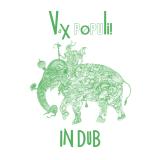
A limited edition clear vinyl pressing for Vol. 1 of DINTE's critically acclaimed collection of pirate radio adverts & idents, taken from recordings of London stations between 1984 & 1993.
Turn back the clock to an unforgettable era, with 32 huge hits from 1980–1984 brought together across 2LPs.
LP1 launches with Wham!’s feel-good ‘Wake Me Up Before You Go-Go’, before Duran Duran’s ‘Is There Something I Should Know?’ and Eurythmics’ ‘Sweet Dreams (Are Made of This)’ capture the contemporary sound of the new decade. The Human League’s ‘Don’t You Want Me’, Soft Cell’s ‘Tainted Love’ and Heaven 17’s ‘Temptation’ continue an outstanding run of synth-pop classics, with Blondie and Frankie Goes To Hollywood completing Side One. Culture Club open Side Two with ‘Do You Really Want To Hurt Me’, followed by colourful 80s favourites from Adam & The Ants, Altered Images and Kajagoogoo. Haircut 100’s ‘Love Plus One’ and ABC’s ‘The Look Of Love’ lead into Dollar and Bucks Fizz, rounding out a side packed with pure pop nostalgia.
LP2 starts in suitably anthemic style with Spandau Ballet’s ‘Gold’, alongside Elton John’s uplifting ‘I’m Still Standing’ and Billy Joel’s ‘It’s Still Rock and Roll to Me’. The Cars’ ‘Drive’ and Bonnie Tyler’s epic ‘Total Eclipse of the Heart’ bring some of the decade’s biggest power-pop moments, while Laura Branigan’s ‘Self Control’ and Matthew Wilder’s ‘Break My Stride’ pave the way for Dexys Midnight Runners’ ‘Come On Eileen’. Side Two brings another burst of ’80s energy with Ray Parker Jr.’s ‘Ghostbusters’, Chaka Khan’s ‘I Feel for You’ and Billy Ocean’s ‘Caribbean Queen’. Diana Ross’ ‘Upside Down’ is followed by favourites from The Police, Pretenders and The Jam, before Roxy Music’s ‘Jealous Guy’ provides an elegant finale to this celebration of 1980–1984.
Volume 2: Unreleased Jack opens the vault for the first time, presenting previously unheard material from the formative mid-’80s period. These recordings reveal the experimental edge of a young innovator pushing the limits of emerging technology and redefining what club music could be.
Still Music & Jerome Derradji Present - Chip E – The Architect Of House: Chicago 1984–88 (Volume 1)
Still Music, under the guidance of Jerome Derradji, proudly announces a landmark archival release celebrating one of house music’s true originators: Chip E.
Titled The Architect Of House – Chicago 1984–88, this definitive series spans three double LP volumes, documenting the raw foundations and forward-thinking vision that helped shape an entire genre.
Now, following great acclaim for Volume 1, CTR is proud to unveil another equally eclectic Post-Punk Era Selection Compiled by Jason Boardman ( Before I Die Records) Celebrated Manchester club-night curator & record Label Owner , DJ & digger - supreme.
A second compilation of late 1970s / early 1980s Post-Punk era bedroom & small studio innovations & DIY Inspirations - Featuring more rarely & never heard cuts from that period. Including tracks from the enigmatic Prana, Blank Students, Janet Armstrong & The Native Hipsters ..A rich vein .
Jason Writes Of Volume 2 :
"It was a delightful shock that No Ones Listening Anyway Volume One was so well received - thanks to everyone one who bought & enjoyed it. This led to John asking me to collate Volume Two, so here it is.
This time all the material was recorded & released in the UK between 1978 & 1984.
I was conscious that there was minimal female energy on Volume One so have tried to rectify that here on Volume Two. I have also tried to make it as varied as possible with none hit wonders, oddities, collectables, under the radar B-sides & a couple of previously unreleased on vinyl selections."
DJ Support: Antal, I Cube, Noel Watson, Colleen Cosmo Murphy, Sean Johnston, San Soda, Takaya Nagase, Tina Edwards, Pete Herbert, Kenneth Bager, Severino, Aaron Paar, Felix Joy, Harri Harrigan, Laroye, Telford, Darker Than Wax, Rocky (X Press 2), Shane Johnson, Dan Tyler, Felix Dickinson and many more
Having previously released selected retrospectives focused on the musical output of Ryo Kawasaki and Joan Bibiloni, NuNorthern Soul has now turned its attention to the vast back catalogue of Jasper Van’t Hof’s pioneering electro-acoustic, Afro-fusion collective, Pili Pili.
The band was established in 1984 by Van’t Hof, a Dutch pianist who began his career in Europe’s jazz scene of the late 1960s, as a way of combining his love of jazz-fusion and the music of North-West Africa. Van’t Hof already had a reputation for combining roles in traditional jazz combos with more experimental and abstract projects. These included a spell in violinist Jean-Luc Ponty’s first band, years spent masterminding jazz-rock outfit Jasper Van’t Hof’s Porkpie, the recording of an all- electronic album (1982’s Visitors), and a celebrated collaborative live album with the great Archie Shepp, Mama Rose.
Pili Pili, though, was another step forward for Van’t Hof. Working with percussionists and vocalists from Benin and Mali (including the now legendary Angelique Kidou) and a string of adventurous jazz soloists (saxophonist Tony Lakoto and trumpeter Annie Whitehead included), Van’t Hof’s collective frequently combined live and programmed percussion, electronic and acoustic instrumentation, and the talented improvisor’s own memorable melodies and impactful solos.
NuNorthern Soul’s retrospective focuses on the most productive and celebrated period of Pili Pili’s near three-decade history, showcasing tracks originally recorded and released on studio albums released between 1984 and 2002. The six tracks on show offer an essential glimpse into the musical gold to be found across the Pili Pili catalogue.
In keeping with NuNorthern Soul’s previous retrospectives, the vinyl version of Selected Works 1984-95 comes with extended liner notes telling the remarkable story of this most unusual of cross-cultural collaborations. These feature extensive quotes, reflections and memories from Jasper Van’t Hof and were written by music historian Matt Anniss.
Death Is Not The End's mixtape-style selection of clips from tapes recorded live at soundsystems playing during London's Notting Hill Carnival between 1984 and 1988, originally broadcast on NTS Radio in August 2018, is the latest to be committed to cassette as part of their 10th anniversary series. Featuring sounds from the likes of Jamdown Rockers, Saxon, Java Nuclear Power, Killerwatt Turbotronic, Stereograph, Sir Coxsone, Volcano Express and more.
Audio sourced with the indefatigable efforts of the Who Cork The Dance crew - big thanks going out to Jayman, Ruff House, Keimo, Omar, Gee Wizz and the one Jah Humble.
The first volume in a two-part collection of pirate radio adverts & idents, taken from recordings of London stations between 1984 & 1993.
Many thanks to Wayne Anthony, Simon Reynolds, Stephen Hebditch & The Pirate Radio Archive.
The second volume in a two-part collection of pirate radio adverts & idents, taken from recordings of London stations between 1984 & 1993.
Many thanks to Wayne Anthony, Simon Reynolds, Stephen Hebditch & The Pirate Radio Archive.
System Error proudly welcomes Alejo to FLOW. Co-founder and resident of the beloved Emile Club, Alejo has been a tireless advocate for Uruguay’s underground for decades. His 1984 EP arrives steeped in instinct and a deep connection to the floor.
Four tracks that follow a development in his sound, converging to tell a singular story. From snarling basslines to electro-leaning shuffles with razor-edged drive. Deep moods pierced by jacking, dancefloor-ready grooves – just how we like them.
LP vinyl only release + 4 page liner notes (comes with hype sticker)
The percussive new age soundtracks of '80s and early '90s Japanese TV, anime and manga built alternative worlds and pushed boundaries in the process.
When Japanese composer Yas-Kaz left Tokyo for Bali in the mid 1970s he had little idea of how influential his trip would become. In studying the storied art of gamelan, the jazz and avant-garde percussionist opened a door to a world of sound and rhythm left behind by the West. The music he and his contemporaries made would become known as new age. It also happened to soundtrack the golden era of anime.
Awash with money and with the prerogative to entertain the burgeoning middle classes, anime in the 1980s experienced a creative and commercial boom. Not constricted by generic expectations, production houses such as the now renowned Studio Ghibli were able to experiment liberally with both form and content. And with it came the space for composers to be similarly adventurous.
TV, Anime & Manga New Age Soundtracks 1984-1993 charts this moment across eight tracks spanning classics of the genre and previously unknown rarities. The collection brings together music that found kinship in electronic and acoustic instrumentation, often combining spiritual or environmental themes with percussive, varied and highly refined syncopations of non-Western musical traditions.
Among them is ‘Kaneda’ by Geinoh Yamashirogumi, the shape-shifting group of self-styled musicians, anthropologists and computer scientists that masterminded the soundtrack to game-changing dystopian anime Akira - and with whom the sound, tuning and breakneck speed of Balinese gamelan has become indelibly entwined.
Reflecting the desires of the era to reach beyond Japan’s borders, many of the soundtracks featured were commissioned for narratives set in distant lands or alternative worlds. There’s violinist and composer Norihiro Tsuru’s ‘Farsighted Person’, written for The Heroic Legend of Arslān, set in ancient Persia; Yas-Kaz’s own ‘Hei (Theme of Shikioni)’, for period sci-fi manga & anime series Peacock King - Spirit Warrior; and two tracks - Tassili N’Ajjer and Fiesta Del Fuego - from Yoichiro Yoshikawa’s soundtrack to NHK’s proto-Planet Earth series The Miracle Planet.
Such was the variety and quality of the music produced, if there is a guiding principle to the tracks collected here it is a sense of escapism and adventure that came with the confluence of modern electronic instruments and a fascination with percussive traditions.
Elsewhere, pioneering children’s TV composer Chumei Watanabe’s ‘Fushigi Song’ (performed by a vocal group Korogi ‘72) offers a trippy and infectious groove with sonic similarities to Don Cherry’s ‘Brown Rice’; little-known jazz-funk library group Columbia Orchestra showcase the best of Tokyo’s session musicians on ‘Hearts Beats - Theme for Andrew Glasgow’; before lawyer-turned-composer Kan Ogasawara closes out the compilation with a dramatic flourish on ‘Gishin Anki’.
Following on from Time Capsule’s acclaimed deep-dive into the world of manga & anime synth-pop in 2022, this vinyl only collection is set to broaden and diversify an understanding of how soundtracks shaped the sound of new age music in Japan for a generation.
Curators: Kay Suzuki, Rintaro Sekizuka (Vinyl Delivery Service)
Artwork: Tu-yang
A holy grail for fans of French boogie, early hip hop, Arabic funk and Balearic bops,"Ettika" has been seriously sought after since Vidal Benjamin found it in the 1€ bin back in 2006. Teasing the ears of the underground via Vidal's 'Balearic Nightmare' mix for Noncollective, copies of the original were soon snapped up completely, and the later adopters were sated by a Blackdisco edit from Alexis Le-Tan (himself gifted Vidal's second copy), which is now also rare as hen's teeth. The fervour for the track is easy to understand.
Underpinned by an endlessly buoyant bass groove, chanted female vocals dart out the speakers like a post- modern mantra while synth vamps flare in stuttering stereo.
Middle-Eastern motifs add an air of mystery, but this truly belongs in a dance floor utopia. That the track was the product of a 'back-to-work' scheme aimed at unemployed immigrant youth in Rouen only adds to the appeal. Led by teacher Bernard Guégan, a quartet of students delivered lyrics in French and Arabic inspired by their rejection letters, serving a little social commentary and a lot of funk. If you're mad on Ahmed Fakroun and Shams Dinn, or even those folks in the Bush of Ghosts, then this is a must have for you.
Glasgow based Seated Records return with more 1980s Scottish Post-Punk / New Wave material. In this 8-track mini compilation the label introduces the work of Stirling band 22 Beaches, offering a deep dive into music recorded between 1980-1984 - the majority of which has never seen the light of day!
22 Beaches formed in Stirling in the late 1970s as an evolution of the short lived group ‘Alone at Last’ - drummer Fred Parson’s and guitarist Stephen Hunter being the two who spanned the divide. Out of the six members of 22 Beaches, many were school friends, and the rest naturally fell together. The band toured extensively and played at a truly diverse set of venues across the UK: from a local swimming pool boiler room, to small nightclubs and university parties, to several fundraisers for the miners strike. Maybe most notably of all, drummer Fred Parsons described playing at what he calls “the Grangemouth International”, organised by local promoter Brian Guthrie and which featured an all-star lineup of 22 Beaches, The Exploited and the first incarnation of The Cocteau Twins. A coach was hired to ship the audience to Grangemouth from Stirling, the cost of which was included in the ticket. The gig then paused halfway through for a 'help yourself' buffet. Young promoters take heed. This is how it's done!
Over the course of the 80s the band released music on three different, and now sought after, various artists compilation cassettes. “What Day Is It?” and “Sadie When She Died” were released on a compilation of local Stirling artists 'The A.N.K.L.E File'. The track from which the current record takes its namesake - “Dust” - was initially released on a compilation-tape for the fanzine 'Another Spark'. And ‘‘Zoo” (also featured on this record) was first released on Glasgow label Pleasantly Surprised via compilation, 'An Hour Of Eloquent Sounds', where 22 Beaches rubbed shoulders with early music from Scottish names Primal Scream, Cocteau Twins, The Wake and Sunset Gun. Unfortunately, 22 Beaches never met the same level of commercial success as these others and decided to retire the project in 1984 - leaving their recordings and demos to gather dust (hehe)…until now!
This compilation, “Dust: recordings 1980-1984” follows the band's journey and the changes in their sound over the years. It moves from the raw, punk energy of early DIY recordings through to the A Certain Ratio style Balearica of their later pieces. The record's opener and title track “Dust” is perhaps the most shining example of the latter. Characterised by the plenitude of sonic space in the mix, “Dust” has an almost dub sensibility that is communicated through centrality of Parsons’ drums, McChord’s percussion, and Fildes’ Bass while the harmonising vocals of Sharkey and McGregor chant over the top to give the track its distinctive psychedelic edge. This is an atmosphere only exacerbated by the lofi quality of the recording which sits the vocals in the same aural realm as much 1960s psych-folk. On “Cartoon Boy”, the band strips things down further. A droning bass line persists through the tape fuzz and is accompanied by the sounds of a sole looping guitar chord sequence and McGregor and Sharkey’s vocals - respectively and carefully dancing around one another before harmonising in the most beautiful way. The result is a haunting and abstract Marine Girls style heartbreaker. ‘That Girl’ again delivers a dub adjacent rhythm section similar to that of “Dust”. However, on this instance crisp guitar chords, a distant, phased organ and blue-eyed soul vocal delivery, produce a track that could easily have been a lost Orange Juice recording from their sessions with Dennis Bovel. On “Somebody Got It Wrong” and “One Of Us” the band employ a more macro approach where a jangling guitar with an almost highlife-influenced tone, vocal ad-libs and syncopated percussion give the music a Talking Heads-esque swagger.
Taken together these tracks illustrate a clear trajectory in the band's sound, moving from from the high energy no-wave quality of early recordings towards a more dub influenced, and stripped-back sound - a sonic trajectory followed by so many bands of the time, not least those emerging from the diaspora of Manchester’s Factory Records.
On “Breathing’’ we hear the beginning of this transition, with the strong influence of the oddball NYC disco styles of Was (Not Was) and ZE records. All of this is meshed together with the residual punk rock energy of 1980s UK. This combination is employed to excellent effect with the addition of the distinctly Scottish (and what the band confirmed to me to be spontaneous) vocal delivery of: “Do you love me? Do you want me?” “Aye!” “Do you love me? Do you need me?” “Naw!”.
On the record’s closing tracks, “Zoo” and “Talent Show”, we hear early examples of the band’s work, playing with their rawest all-in-one-take live energy where Hunter’s spiralling guitar riffs and McGregor's distorted vocal exclamations lead the charge. The band recalls that these initial-forays did not always translate so well into multitrack recording and overdubbing: “the deconstruction took away some of the band's natural feel”. On “Talent Show” the record ends with Sharkey delivering an almost unintelligible spoken word section over the top of the track, making for one final, disorientating, almost manic slice of post-punk.
These tracks from 1980-1984 chart the progress of a unique contribution to the world of Scottish Post-Punk and New Wave, encapsulating not only the musical trajectory of 22 Beaches but also echoing the broader sonic landscape of 1980s UK, a testament to the adaptability and creativity of the UK’s underground music of the time.
The track blends the popular disco and funk sounds of the late '70s while incorporating the growing popularity of rap and hip-hop and remains a quirky addition to Pickett's spooky legacy. The b- side features Edgar Winter's "Frankenstein," which blends elements of progressive rock, blues, and jazz fusion, creating a dramatic and otherworldly sound. This 7" single come on a Frankenstein-shaped vinyl.
a A1 Monster Rap (feat. Bobby Paine) [Radio Edit]
[a] A1 Monster Rap (feat. Bobby Paine) [Radio Edit]
out of Stock
Last delivered 5 days ago available to reorder, subject to availability
A document of singular rarity. Issued by United Dairies in 2026 in a hand-made, heavy-gauge black vinyl edition limited to 300 copies, 1984 - A Happening recovers the second ever public performance of Nurse With Wound, captured on tape in 1984 and held in Steven Stapleton's archive across the four decades since.The history is nearly mythological. Across the years 1984 to 1986, NWW operated briefly and reluctantly as a live band, performing on stage exactly eight times, of which five were public. Stapleton has called these events "shambolic, chaotic and uneven affairs, sometimes as boring for the performers as the non-plussed audiences but at other times reaching an amazing intensity". The first of them, an Amsterdam show on the 8th of December 1984 at the NL Centrum, has surfaced over the decades in fragmentary form; the second has remained, until now, almost entirely unheard. It belongs to a moment when Stapleton, working alongside collaborators including David Tibet, Andrew McKenzie of The Hafler Trio, and a rotating cast of percussionists and string players, was carrying NWW briefly out of the studio and into a series of confrontations with audiences who often had no idea what they were watching.The recording itself is described, accurately, as raw but beautifully captured. The performance moves through the territory NWW had been mapping across Homotopy to Marie and Nature Unveiled: long passages of pre-recorded tape collage assembled by Stapleton and McKenzie, ridden over by live electronics, voice, percussion, and the surreal theatrical instinct that has run through every gesture the project has ever made. There is a sense of a collective groping its way through unstable material in real time, an ear turned simultaneously to dada and to musique concrète, to the British post-punk underground and to the krautrock heritage that has always shadowed Stapleton's work. The chaotic edges are intact. So is the intensity Stapleton has spoken of.
After Maghreb K7 Club – Synth Raï, Chaoui & Staïfi (1985-1997) and Maghreb K7 Club Disco Singles Volume 1, 2, and 3, Sofa Records and Les Disques Bongo Joe team up again for a new project exploring funky, synth-driven tape music from the Maghreb.
This compilation brings together eight songs —delivering a Saharan pop sound melted with reggae, dub, new-wave and funk — by Yassine (Ahl) Nana, the iconic figure of Mauritanian pop music in the 1980s and 1990s. Yassine and his band recorded songs between Nouakchott, Paris, and Rabat, resulting in only a pair of rare cassette tapes. This music was definitively part of the vibrant wave of African sounds sweeping across the continent at the time, from Abidjan to Oran and Kinshasa.
This compilation features previously unreleased recordings, along with liner notes, interviews, and exclusive iconography.
out of Stock
Last delivered 8 days ago available to reorder, subject to availability
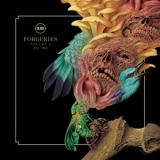
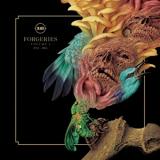
There comes a point in every bands life when originality stops being a virtue and honesty takes the wheel. On their 11th long-playing record: Forgeries (72-84)-(16)- return to the impulse that first dragged them into loud rooms and bad ideas: the urge to steal what we love and make it semi-unrecognizable through devotion. We have partnered with Heavy Psych Sounds Records to release a collection of covers that function less as homage and more as a possession to be given away. The artworkrendered by the ever-amazing Maraldcompletes the ritualiconicunsettlingand unafraid. Weve always believed that a great cover is not mimicry but revelation. Its finding a song that's already lived inside you since youth and letting it crawl outbruised and changed. From the early 90s onward-(16)- have treated covers as translations rather than as replicasacts of tribute and emulationfiltered through distortionfatigueand lived experience. These are songs that taught us how to standhow to falland how to keep going. In our collective headthis album exists because these songs demanded it. Because they screamed copy meand we listened. In the endForgeries (72-84) stands as both a thank you note and a thefta reminder that all music worth a damn is borrowedbrokenand passed on between friends. The selections on Forgeries 72-84 span eras and attitudesunified not by genre but by necessity. Each track is a document of obsessionof influence absorbed and re-expressed without permission.
There comes a point in every bands life when originality stops being a virtue and honesty takes the wheel. On their 11th long-playing record: Forgeries (72-84)-(16)- return to the impulse that first dragged them into loud rooms and bad ideas: the urge to steal what we love and make it semi-unrecognizable through devotion. We have partnered with Heavy Psych Sounds Records to release a collection of covers that function less as homage and more as a possession to be given away. The artworkrendered by the ever-amazing Maraldcompletes the ritualiconicunsettlingand unafraid. Weve always believed that a great cover is not mimicry but revelation. Its finding a song that's already lived inside you since youth and letting it crawl outbruised and changed. From the early 90s onward-(16)- have treated covers as translations rather than as replicasacts of tribute and emulationfiltered through distortionfatigueand lived experience. These are songs that taught us how to standhow to falland how to keep going. In our collective headthis album exists because these songs demanded it. Because they screamed copy meand we listened. In the endForgeries (72-84) stands as both a thank you note and a thefta reminder that all music worth a damn is borrowedbrokenand passed on between friends. The selections on Forgeries 72-84 span eras and attitudesunified not by genre but by necessity. Each track is a document of obsessionof influence absorbed and re-expressed without permission.
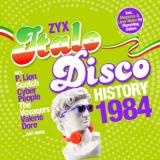
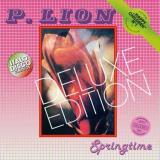
Erleben Sie das pulsierende Lebensgefühl der 80er Jahre mit der farbigen 2LP-Compilation „ZYX Italo Disco History 1984“. Diese exklusive Vinyl-Ausgabe entführt Sie direkt in das goldene Zeitalter der Italo Disco und vereint die größten Dancefloor-Hits eines unvergesslichen Jahres.
Freuen Sie sich auf ikonische Tracks von Künstlern wie P. Lion, Scotch und Valerie Dore – Namen, die für eingängige Melodien, treibende Beats und den unverwechselbaren Sound der Italo Disco stehen. Jeder Song dieser Sammlung spiegelt die Energie und den Glamour der internationalen Clubszene von 1984 wider. Ein besonderes Highlight ist der enthaltene 15-minütige Megamix der Italo-Disco-Legende Flemming Dalum. Mit seinem einzigartigen Gespür für Rhythmus und Atmosphäre verbindet er die größten Hits zu einem mitreißenden Mix, der nahtlos durch die Klangwelt der 80er führt. Die farbige Doppel-LP macht diese Compilation nicht nur musikalisch, sondern auch optisch zu einem echten Sammlerstück – perfekt für Vinyl-Liebhaber und Fans elektronischer Klassiker
DINTE's partnership with Philadelphia store/distro World Gone Mad yields three more essential cassette-only mixtapes exploring the global proliferation of the punk spirit - this time exploring 1980s French language post-punk and new wave in France, Belgium and Switzerland across the decade. This is part 2 of 3, focusing on 1984 to 1987.
out of Stock
Last delivered 4 months ago available to reorder, subject to availability
A new release from Fox & His Friends Records, Chapters (Screen & Stage Dancefloor Jazz from Yugoslavia 1971-1984) by Ozren Depolo brings to light a trove of previously unreleased music spanning more than a decade of his work in film, theater and television. This gatefold audiophile 180g LP, including a 12-page booklet with archival photos and detailed liner notes, offers for the first time a full album composed exclusively of Depolo's own authorship, drawn from master tapes held in private and institutional archives. Mastering and cutting was done by Frank Merritt from The Carvery Ozren Depolo rarely pursued opportunities to record original material, in part due to a general lack of interest among local publishers in jazz discography. Yet he was more than a gifted composer: he was also an accomplished saxophonist, clarinettist, flutist, pianist, arranger and occasionally, a jazz journalist who contributed articles to specialized programs on Radio Zagreb. Depolo also played in international big bands alongside jazz greats such as Clark Terry, Oliver Nelson and Gerry Mulligan, as well as in formations led by Bosko Petrovic, including the Nonconvertible All Stars and the B.P. Convention Big Band. He was a member of ensembles including The Alfi Kabiljo Orchestra, The Dragutin Diklic Ensemble, Jugoslovenska Pop Selekcija, The Stipica Kalogjera Octet, Vaclav Zahradnik & His East All Stars Band and the Zagreb Jazz Quintet. As both composer and arranger, he produced a significant body of work for large jazz orchestras and small ensembles. He was deeply engaged in jazz improvisation and avant-garde classical music, recording numerous chamber pieces for saxophone. A long-standing member of Acezantez, Zagreb's renowned contemporary music ensemble, he also collaborated with international figures such as Ted Curson, John Lewis, Johnny Griffin, Art Farmer, Leo Wright, Art Taylor, Slide Hampton and Lucky Thompson. This selection also includes his collaboration with Igor Savin and jazz vocalist Zdenka Kovacicek who were played on Karl Lagerfeld's fashion shows. The release demonstrates how Depolo was able to shift fluidly between idioms: from driving big-band passages to intimate chamber-like arrangements, from funk-tinged motifs to lyrical, impressionistic soundscapes. This stylistic breadth, always anchored in his deep jazz and funk sensibility, gave his music an adaptability perfectly suited to the hybrid world of stage and screen. The LP highlights that versatility while also presenting the coherence of his artistic voice, one that had gone unrecognized precisely because it was dispersed across so many contexts.
his ultimate 6LP Boxset presents the works of Pascal Comelade from 1984 to 2024 and his 40 years producing instrumental music. Each vinyl has been thought as an album in itself , with its own identity, that could be listened as it is. According to the artist, "Improperies- compositions et enregistrements magnétiques (1984-2024)" is a music puzzle which doesn't obey to any rule with the exception of Pascal Comelade's creation and art thoughts that kept moving over the years.
Limited numbered to 500 copies - 6 x Black Vinyl in spineless sleeve, heawyweight cardboard slipcase/custod numbered at the back, includes an insert-photo signed by the artist. The boxset artwork is an original creation by Miquel Barceló.
A compilation of tracks that rearrange Okinawan folk songs into Jazz Funk, crossover, and large ensemble jazz, featuring works by Kiyoshi Yamaya, who was also highlighted in "Diggers Dozen" (BBE) by the Japanese DJ MURO, known as the "King of Diggin," and "Wamono Groove: Shakuhachi & Koto Jazz Funk 1976" (180g). This collection debuts as the latest installment in the "Ryukyu Rare Groove" series, which was originally released in Japan in 2003 to great acclaim.
out of Stock
Last delivered 12 months ago available to reorder, subject to availability
"Unsent Letters" - ungeschriebene Briefe: liegengeblieben im Schreibtischwirrwarr oder der "Wenn, dann da-"Schublade bezeugen sie vergangene Lebensphasen, regnerische Nachmittage, Zweifel, Experiment und unfertige Gedankengänge. An den Rändern gekräuselt und angeraut, lange vergessen, kommt irgendwann der Zeitpunkt, an dem wir sie doch wieder wie einen Schatz heben und entdecken: hier gibt es Geschichten zu erzählen. So oder so ähnlich erging es Pete Astor. Der ist Musiker, Autor und Dozent. Er war Frontmann der Bands The Loft und The Weather Prophets auf dem Label Creation Records und schrieb Songs, die den Sound des Labels und das aufkommende Indie-Genre maßgeblich prägten. Seitdem hat er eine langjährige Solokarriere verfolgt und Musik auf verschiedenen Labels wie Matador, Heavenly, Warp, EMI und Fortuna Pop veröffentlicht. Er ist Senior Lecturer in Music an der University of Westminster. Neben umfangreichen Tourneen produziert er auch gemeinsam mit David Sheppard als Ellis Island Sound Platten und veröffentlicht sein Spoken-Word-Elektro-Pop-Projekt The Attendant zusammen mit Ian Button (Go Kart Mozart, Death in Vegas) auf dessen Label Faux Lux. Seit 2017 ist Astor beim angesehenen Label Tapete Records unter Vertrag, das auch Künstler wie Robert Forster, Lloyd Cole und Comet Gain beherbergt - neben vielen anderen großartigen Acts. 2025 ist ein Jahr, in dem Pete Astor seine erste Band The Loft wieder aufleben ließ. Die Band hatte sich 1985 getrennt und nun gerade ihr Debütalbum "Everything Changes Everything Stays the Same" fertiggestellt. Wie der Titel andeutet, ist die Band einerseits in der Vergangenheit verwurzelt, blickt aber unbestreitbar nach vorn in die Zukunft. "Unsent Letters" stammt aus einem ähnlichen Kontext: Es enthält Songs, die Astor bereits während seiner Zeit bei The Loft schrieb, die die Band aber nie spielte - zusammen mit Liedern aus seiner vierzigjährigen Karriere, die nun endlich das Licht der Welt erblicken.
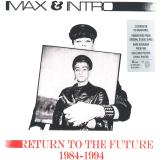
On the occasion of the celebration of the tenth anniversary of our work, in cooperation with PGP-RTS, we prepared a quite special edition: Max And Intro-Return To The Future 1984-1994 LP collects 12 tracks of this legendary Belgrade synth-pop group on high-quality 180-gram vinyl, remastered from the original master tapes with a handful of extras: the record comes with a rare interview from 1985, a lyrics sheet, and phenomenal unreleased photos by Goran Basarić and Max’s Poster.
out of Stock
Last delivered 5 months ago available to reorder, subject to availability
Fit for Consequences: Original Recordings, 1984–1987 is the first ever archival release from Repetition Repetition, the “two-man electric minimalist band” consisting of Ruben Garcia and Steve Caton hailing from Los Angeles in the mid 1980’s. Repetition Repetition’s unique blend of cosmic art-rock minimalism / maximalism was self-released across a series of cassettes produced in micro editions, and while garnering the attention and participation of luminaries such as Harold Budd, remained under the radar during the band’s existence. Fit for Consequences: Original Recordings, 1984–1987 collects select material from across the duo’s catalog.
It was over a plate of Mexican breakfast food when Ruben Garcia and Steve Caton first told Harold Budd of Repetition Repetition and the worlds they intended to explore by respective way of synthesizers and guitars --- a rendezvous instigated by the former’s fan mail to the legendary composer. If the upstarts entered this restaurant from a one-way street of admiration, they would leave with not only Budd’s interest but, sometime later, a blessing in the wake of many hours shared by the three in Garcia’s Los Angeles home recording studio: “This is going to be difficult, but God help them, I think they’re great,” noted Budd in a USC lecture in 1985. Now several degrees removed from prior rock music aspirations, the real game was afoot.
Between 1984 and 1988, Repetition Repetition operated within something akin to the underground of the experimental underground, although even that designation perhaps overstates the case. The duo’s sparse output consisted of three cassettes self-released on Garcia’s Third Stone Music label: Repetition Repetition (1985), Lakeland (1987), and The Machinist (1987). Their songs would also be included during this period on Trance Port Tapes’ vital scene-scanning compilations assembled by A Produce. Live performances occurred with similar infrequency, but Garcia and Caton counted converts in quality over quantity, numbering among them the aforementioned Budd, a Chambers Brother, and, judging by a memorably drop-jawed reaction following a rare Repetition Repetition gig, Jackson Browne.
Likewise, critical support materialized in the form of KCRW deejays Brent Wilcox and Dean Suzuki, whose steady airplay positioned Repetition Repetition’s music amidst fearless company like Jon Hassell, Hiroshi Yoshimura, and Richard Horowitz. Yet, to hear fellow Trance Port featured players like Tom Recchion and Bruce Licher of Savage Republic tell it, Garcia and Caton moved as ghosts --- a notion more vexingly endorsed by the silence of record companies that failed to come knocking --- and therein lies an overarching truth to the work itself.
Journey to the heart of Repetition Repetition and one discovers a collective ear impossibly attuned to the hypnotic possibilities of stylistic convergence, the resulting music possessed of seamless multimodalities which beckon to a glimmering plane of the disembodied. Where Caton sought his artistic fixes at an intersection of popular genres, Garcia zoned in on the sonically spare, drawing from the same wellspring as the Enos and Rileys of his personal avant-garde pantheon, and in their coming together the two tapped into a deeper cosmic source. Synthetic walls of keyboard sound in forever states of reprise met waves of shimmering --- and at times even punishing --- guitar in reply, their soundscapes hovering convincingly between, as suggested in fittingly dualistic fashion in a press kit assembled by Garcia, such disparate sensations as bird flight in one song and oil drilling in the next.
But don’t call it a push-pull dynamic, as this was a creative partnership founded upon fluidity and organicism by way of, naturally, repetition. In contrast to, say, the Bressonian ideal of repetitive motion as a great stripping away, the concept in the hands of Garcia and Caton equated to ascendancy via continuous unfolding, a maximal route to minimalism. To be sure, their recording philosophy morphed over the course of the act’s short history, and what started as a process defined by consistent in-person interplay developed into a more isolated method formulated by Garcia, who eventually took to his own one-man bedroom-studio sessions in order to fully chart any and all potential ostinato-loaded paths which he could travel down, the Tascam-captured resonances subsequently provided to Caton as blueprints from which to take flight himself, adding layer upon layer of steel to the proceedings.
If the practice and execution changed, however, the evidence certainly didn’t rest in the results: The seamlessness remained, and, despite the brevity of their time together, so has Repetition Repetition. With this finely calibrated collection of songs in Fit for Consequences: Original Recordings, 1984–1987, Freedom To Spend sees to it that the private worlds of Garcia and Caton can now be visited by all rather than just the count-‘em-on-both-hands lucky few whose musical endeavors or collector vocations carried them into this once-distant dimension.
Repetition Repetition’s Fit for Consequences: Original Recordings, 1984–1987 will be released on Freedom To Spend in vinyl and digital editions on May 30, 2025. The collection includes extensive liner notes from Bill Perrine, and wil be offered alongside Over & Over, a supplemental collection of music available exclusively as a mail order cassette from Freedom To Spend and RVNG Intl.
NOW Music is very proud to present the second of our ‘Now That’s What I Call An Era’ releases. ‘The Albums 1980 > 1984’ celebrates iconic albums that were released between 1980 and 1984, featuring a magnificent track from each - and none of them UK hit singles! The 4 CD sets have 72 fantastic tracks – A sampler of the iconic albums that represent an incredible period of creativity and originality: the 3LP set has 40 tracks from the era. Available as a stunning 3-LP vinyl collection, pressed in a different colour for each disc; blue, white and red, and housed in a tri-fold sleeve that features a track-by-track guide. A 72-track Limited edition 4-CD set that comes with a ‘hardback book’ that includes a 28-page booklet featuring a track-by-track guide, and a standard 4CD set
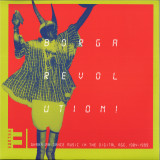
Kalita is excited to present the third volume in their groundbreaking ‘Borga Revolution!’ compilation series, exploring the revolutionary phenomenon of ‘Burger Highlife.’ This unique style fused West African melodies with synthesizers, disco, and boogie, a sound that took Ghanaian airwaves by storm in the 1980s and beyond. With previous volumes receiving strong support by tastemakers such as Gilles Peterson, Antal, Tom Ravenscroft, and Hunee, Volume 3 takes a deeper dive than ever before into the world of Ghanaian digital dance music. This volume features rare, sought-after tracks from artists including Obibini Takyi, Osei Banahene, and Okyerema Asante, as well as Burger Highlife trailblazers George Darko and Lee Dodou. Borga Revolution! Volume 3 offers a curated mix of standout anthems and rediscovered gems, many of which are otherwise nearly impossible to find, making this collection a must-have for fans and collectors alike.
The 1970s and 80s saw Ghanaian musicians begin to incorporate Western sounds like funk and disco into their music, reflecting the changing global musical landscape. However, the country's political instability and economic hardships, marked by military regimes and curfews, forced many artists to leave Ghana in search of better opportunities abroad. In Europe and the U.S., these musicians fused their traditional highlife roots with emerging digital sounds, using cutting-edge technology like the DX7 synthesizer and drum machines to create the genre now known as Burger Highlife. With ‘Borga Revolution!’ Kalita offers a vivid exposition of this musical transformation, using rare interviews, archival photos, and detailed liner notes to bring to life the pioneering spirit of both well-known icons and unsung innovators of Burger Highlife, one of West Africa’s most exciting musical movements.
out of Stock
Last delivered 16 months ago available to reorder, subject to availability
ArteFAKT proudly presents the first-ever official release of B-Semi Live 24/5/1984, a rare and explosive document capturing a crucial moment in Japan’s underground noise and industrial scene. Recorded at the legendary B-Semi venue in Tokyo, this performance brings together three pioneers—Merzbow, Null (K.K. Null), and Nord—delivering a raw, unfiltered onslaught of early Japanese noise in its most visceral form.
This historic recording showcases the primitive power and experimental spirit that defined the scene, sitting alongside the abrasive intensity of Whitehouse, the industrial ritualism of SPK, and the mechanical destruction of Throbbing Gristle. A sonic time capsule of Japan’s most groundbreaking sound revolutionaries, B-Semi Live 24/5/1984 is an essential piece of noise history.
Now available for the first time ever as an official release on limited edition vinyl and digital formats.
"1984 was a truly incredible year in pop music, and we have included a fabulous selection of tracks on the 1984 Yearbook and the 80-84 Final Chapter as part of our appreciation of the year.
Those tracks were generally the bigger hits of the year, with their chart achievement a factor in their inclusion. However, that’s not the whole singles story of the year, and our celebration of 1984 wouldn’t be complete without shining a light on some of the years’ singles that have been compiled much less frequently over the past 40 years…Welcome to THE VAULT for 1984… Some of the tracks included were Top 40 hits, some missed the chart completely. Some were representative of massive selling albums, and some were big hits in the U.S. and not in the U.K…. but all are part of the wonderful pop story of 1984. Released on a LTD edition pressing of a stunning 3LP transparent blue vinyl with 45 tracks.
In late 2022 we released ‘NOW - Yearbook 1980 - 1984: Vinyl Extra’ - a 5LP boxset featuring an album per year for the period 1980-1984, each including an incredible line-up of tracks taken from either the ‘Yearbook’ or ‘Extra’ that hadn’t been included on a ‘Yearbook’ vinyl edition before. Now for the vinyl collectors, we proudly present the second, and final volume ‘NOW - Yearbook 1980 - 1984: Vinyl Extra: Vol.2’, featuring 78 more moments of Pop magic in a numbered limited-edition boxset – with each vinyl pressed in the colour of the years’ original ‘Yearbook’. As with the previous edition, none of the tracks appeared on a ’Yearbook’ vinyl edition before..
Metaphon is thrilled to present this collection of 14 phenomenal electronic and electro-acoustic works by French composer Fernand Vandenbogaerde, realized between 1967 and 1984.
After his science studies Fernand Vandenbogaerde (1946) studied at the Conservatoire de Roubaix and did various classes and courses with a.o. Jean-Etienne Marie, Olivier Messiaen, Pierre Schaeffer, György Ligeti, Karlheinz Stockhausen and Bruno Maderna. He wrote analytical essays on mathematic music, in particular the work of Iannis Xenakis. Vandenbogaerde taught electro-acoustic music at various institutions and was director at the National School of Music and Dance in Blanc-Mesnil, near Paris. As a composer he wrote works for orchestra, instrumental and chamber ensembles, sometimes in hybrid form including tape and electro-acoustic configurations. He also recorded numerous tape compositions in Bourges, Paris, Ghent and at his home studio. His works have been presented worldwide on various leading festivals and events.
The compositions included in this edition are primarily tape works, meticulously recorded and produced, radical and most of all timbre oriented which makes his compositions focus mainly on sound while other parameters hardly change. In Vandenbogaerde’s own words: “What determines my pieces, at least all the ones in this collection, is that it’s the material that dictates me, that will predetermine the form”. This particular approach distinguishes him quite a bit from many of his contemporaries within the field of electro-acoustic music.
Another interesting aspect in Vandenbogaerde’s work is the integration of micro tonal scales (conceived by Mexican composer Julian Carrillo), on the compositions 'Modifications III' and the intriguing trilogy 'Drei Nachdenken über Hymnen an die Nacht'. All tracks are previously unreleased except the proto power electronics piece 'Anschlag' which was self-released in 1971 on his own Point Radiant label, as a compilation LP which also included a track by Tristan Murail.
WRWTFWW Records is delighted to announce the first official worldwide reissue of Satsuki Shibano’s Wave Notation 3: Erik Satie 1984, the final album from the sound-defining Wave Notation environmental music series curated by Satoshi Ashikawa. Originally released in 1984 on the Sound Process label, Wave Notation 3 followed Ashikawa’s own Still Way (1982) and Hiroshi Yoshimura's Music For Nine Postcards (1982).
The highly sought-after album, sourced from the original master tape, is available as a double LP (housed in a luxurious heavyweight sleeve) for the first time ever. Digipack CD and digital formats are also available. This exclusive reissue, including English and Japanese liner notes by the artist, was supervised by Japanese ambient legend Yoshio Ojima.
Wave Notation 3 is a splendid tribute to seminal French composer and pianist Erik Satie, himself one of the main influences behind kankyo ongaku / environmental music (alongside Brian Eno, John Cage to name a few). The alphabetically-sequenced album features 26 pieces showcasing Shibano's unique piano interpretation of Satie’s works.
The artist explains: « For this album, I sequenced the compositions in alphabetical order of each title, irrespective of the period of each composition or style. By doing this, I attempted to effectively create ‘Music as an environment’ and at the same time, allow the listener to genuinely experience Satie’s music. »
Satsuko Shibano’s minimalistic approach to ambient classical is simply perfect and offers a beautiful and tranquil listening experience, furniture music with extra comfort and soothing simplicity, relaxing to the mind and to the soul. This Wave Notation deserves a spot among the pillars of Japanese environmental music, next to Midori Takada’s Through The Looking Glass, Hiroshi Yoshimura’s Green, and Satoshi Ashikawa’s Still Way.
out of Stock
Last delivered 21 months ago available to reorder, subject to availability
DERO GOI kehrt mit einem Paukenschlag zurück! Der ehemalige OOMPH!-Frontmann liefert mit "1984" ein bis zum Rand mit Synthie-Hits vollgepacktes Doppelalbum ab. Das Debüt seiner Solo-Karriere ist zugleich sowohl in musikalischer als auch lyrischer Hinsicht ein starkes Statement zu seiner künftigen Ausrichtung als Künstler. "1984" bietet eine faszinierende Verschmelzung von feinen Retro-Synth-Sounds, EBM und Synth-Wave mit zeitgenössischen elektronischen Elementen, die sogar mit einer Prise seines früheren Lebens als Rock- und Metal-Musiker gewürzt ist. DERO GOI, der schon immer als herausragender Songwriter gefeiert wurde, hat sein musikalisches Handwerk noch weiter verfeinert. Die Songs dieses umfangreichen Werks werden ihre Hörer zum Tanzen und Mitsingen bringen und sich als Ohrwürmer in den Köpfen festsetzen, wo sie noch jahrelang feiern. DERO GOI bleibt dabei seinem unbeugsamen Willen treu, als nonkonformistischer Künstler zu arbeiten. Sein Coming-out als wiedergeborener Christ, der jeder organisierten Religion nach wie vor kritisch gegenübersteht, und seine libertäre politische Einstellung haben ein breites Spektrum von Reaktionen hervorgerufen. Dazu gehören leider auch massive Hindernisse bei der Suche nach einem Label und einem Booking-Agenten. Zudem musste der Künstler erleben, dass bereits bestätigte Konzerte nur aufgrund seiner Meinung wieder abgesagt wurden. Das wirft die unbequeme Frage auf: Wie tolerant ist eigentlich eine Szene, die sich rühmt, für jede Gesellschaftsschicht und jeden Lebensstil offen zu sein, wenn diese Werte einer kritischen Probe unterzogen werden? Natürlich haben auch Worte Konsequenzen und jede Freiheit hat ihre Grenzen, aber was ist mit einem Künstler, der fest auf dem Boden der Verfassung seines Landes steht und keine Gesetze bricht? Beinhaltet Freiheit nicht auch das Recht auf Widerspruch gegen den Zeitgeist? Dass DERO GOI bei Themen eine andere Meinung vertritt, ist kein Verbrechen. Bevor der Musiker, der am 16. April 1970 als Stephan Musiol in Wolfsburg geboren wurde, im Jahr 1989 OOMPH! gründete, spielte er bereits im Alter von 15 Jahren in einer Band mit seinem Freund Thomas Döppner (alias OOMH!-Gitarrist und Mitbegründer Crap), als beide noch Gymnasiasten waren. Seine musikalischen Einflüsse zeigen einen offenen Geist für stilistische Vielfalt. DERO GOI zählt unter anderem D.A.F., NITZER EBB, FRONT 242, THE CURE, FAITH NO MORE, KILLING JOKE, EINSTÜRZENDE NEUBAUTEN, AC/DC, DEPECHE MODE, EXTRABREIT, KRAFTWERK, THE BEATLES, ELVIS PRESLEY und ABBA zu seinen musikalischen Vorbildern. DERO GOI hat mit seinem neuen Werk einen Weg eingeschlagen, der elektronischer ist als die meisten seiner bisherigen Songs. "1984" ist das Zeugnis eines Künstlers, der sich einer breiten Palette diverser Einflüsse bedient, der aber zugleich auch seine weithin respektierte Fähigkeit, äußerst eingängige Melodien zu schreiben, noch weiterentwickelt hat. Was auch immer die Hörer von diesem massiven Beitrag zur elektronischen Szene halten werden, DERO GOI wird sich als Sänger und Künstler nie den Mund verbieten lassen. Liebt oder hasst "1984" - aber was auf diesem Album zu hören ist, wird immer zu 100% DERO GOI bleiben!
Die Goldenen Zitronen sind seit mehr als drei Dekaden eine der prägenden Bands in der deutschen Independent-Szene. Seit ihrer Gründung 1984 in Hamburg haben sie 13 reguläre Alben veröffentlicht. Anfangs als Teil der Funpunk-Szene, erweiterten sie ihr musikalisches Spektrum von einfachen, schnellen Punk- und Rockabilly Songs zu komplexeren und experimentellen Songstrukturen. In ihrer Musik finden sich sowohl Verbindungen zu New Wave Bands der 80er und zum Krautrock der 70er-Jahre, als auch zu zeitgenössischen Formen elektronischer Musik. In ihren Texten wurden die Goldenen Zitronen seit den 90er-Jahren immer mehr zu scharfsinnigen Beobachtern gesellschaftlicher Zustände und entwickelten einen ganz eigenen Stil, mit der deutschen Sprache umzugehen. 2024 feiern sie ihr 40. Jubiläum mit einer Best Of Zusammenstellung auf 3 Vinylen inkl. 24 Tourplakaten aus allen Dekaden.
Am 19. November 1984 wurde „Unter falscher Flagge“, das zweite Album der Toten Hosen, veröffentlicht. Um diesen 40. Geburtstag gebührend zu feiern, erscheint am 15.11.2024 „Unter falscher Flagge 1984 – 2024: Die 40 Jahre-Jubiläumsedition“ in opulenter Ausstattung mit 16 Bonustracks, drei davon bislang unveröffentlicht!
Nachdem die Band mit ihrer gerade mal ein Jahr zuvor rausgekommenen Debüt-LP 1983 in erster Linie in der Punkszenen für Aufsehen sorgte, wurde die zweite Scheibe auch erstmals von der sich seriös gebenden Musikpresse wahrgenommen. Für viele, die gehofft hatten, dass sich der Spuk mit der Düsseldorfer Radautruppe schnell wieder von selbst erledigen würde, gab es ein bitteres Erwachen. Die Hosen hatten hörbar die immer noch rudimentären Kenntnisse ihrer Instrumente erweitert, kaschierten das mit aggressiver Spielfreude und deutlich mehr durchgetretenem Gaspedal als noch auf dem Erstlingswerk.
Dadurch und unzählige wilde Konzerte in immer voller werdenden Clubs zementierten sie allmählich ihren Ruf als chaotische aber ernstzunehmende Band.
„Unter falscher Flagge 1984 – 2024: Die 40 Jahre-Jubiläumsedition“ erscheint in einer aufwendigen, auf 7.000 Exemplare limitierten und nummerierten Auflage. Das Hardcover-Gatefold-Deluxe-Book enthält das Album als 180g-Vinylschallplatte und CD sowie eine Bonus-CD mit 16 Bonustracks, die rund um die Original-Veröffentlichung auf Singles, Maxis und diversen Demos erschienen. Die Demoversionen von „Shake Hands“, „Betrunken im Dienst“ und „Der Mord an Vicky Morgan“ wurden erstmals aus den Untiefen des DTH-Archives exklusiv für diese Jubiläums-Edition ausgegraben!
Das aufwendig gestaltete Booklet im LP-Format enthält auf satten 32 Seiten eine Vielzahl bislang unveröffentlichter Fotos, historisch wertvoller Presseartikel und weitere Schmuckstücke aus der Sammlung der beteiligten Musiker. Darüber hinaus steht die Band Kolja Podkowik, einem der weltweit renommiertesten Tote Hosen-Sachverständigen, in einem langen, intensiven und ungeschminkten Interview Rede und Antwort über die Geschehnisse rund um den langsamen Aufstieg der fünf Düsseldorfer Glücksritter.
CD1
1. Spiel mir das Lied vom Tod
2. Liebesspieler
3. Letzte Wache
4. Der Abt von Andex
5. Der Mord an Vicky Morgan
6. Im Hafen ist Endstation
7. Unter falscher Flagge
8. Sekt oder Selters
9. Der Schandfleck
10. Betrunken im Dienst
11. Shake Hands
12. Warten auf Dich
13. Im Hafen ist Endstation 2
CD2
1. Spiel mir das Lied vom Tod
2. Es ist vorbei
3. Till To The Bitter End
4. Seafever
5. Hofgarten
6. Hip Hop Bommi Bop
7. Faust in der Tasche
8. Head Over Heels
9. La Historia Del Pescador Pepe
10. Schöne Bescherung
11. Vom Surfen und vom Saufen
12. Der Schandfleck - Demo
13. Unter falscher Flagge - Demo
14. Shake Hands - Demo
15. Betrunken im Dienst - Demo
16. Der Mord an Vicky Morgan - Demo
Unreleased themes from Kornelije Kovac for commissioned documentary short 'Raport iz Sarajeva', directed by Miodrag Zdravkovic in 1982. This music themes precede the official songs, idents and audio logos for the XIV Winter Olympic Games Sarajevo 1984 opening ceremony made by Kornelije Kovac in his Belgrade based studio from 1982 to 1984. Sourced from the original master tapes with full color artwork by Eric Adrian Lee. Includes insert with photographs from Kornelije Kovac private collection and liner notes by Zeljko Luketic. XIV Winter Olympic Games in Sarajevo 1984 had immeasurable status in the history of Yugoslavia and is widely recognized by organizing committee to be the best in recent history of the Games. However, they were also the pop-culture melting pot of the times, with posters by Andy Warhol and famed local designers and the music by Kornelije Kovac, leading the selected best-of-the-best composers of the times. The recordings on this release share the same musical approach to melody and structure Kornelije Kovac (1942 - 2022) was using at the beginning and the mid of 1980s: while exploring the possibilities of synthesizer, fresh from his collaborations in London with famed composer Hans Zimmer, and almost a decade since he shared Eurovision Song Contest stage with ABBA in Brighton with his Korni Grupa, He also collaborated with Bernie Marsden (Whitesnake), Paul Jones (Manfred Mann) and Andy Pask (Landscape) among others. Kornelije Kovac always insisted on the freshness of the harmony layers combined with DJ friendly rhythm backing track. With the warm analogue feel that resonates in today's digital world this was chosen for a purpose to be an old-school 12'' maxi-single, as it was intended to be, cut loudly for the sakes of all lost and existing discotheques in Sarajevo and all over the world.
out of Stock
Last delivered 12 months ago available to reorder, subject to availability
To celebrate the 40th anniversary of their formation, Hugo Largo will release Huge, Large and Electric, a three LP set featuring all of the band’s studio output (1988’s Drum and 1989’s Mettle) including a full album of previously unreleased and live recordings (Hugo Largo Unreleased and Live 1984-1991). These albums are long out of print, and will be released on streaming services for the very first time. The set includes essays from Michael Stipe, who produced the band’s debut release Drum, along with Brian Eno and Hugo Largo member Tim Sommer.
Strut present the first definitive retrospective of an icon of 1970s and ‘80s soul, jazz and disco, Patrice Rushen, covering her peerless 6-year career with Elektra / Asylum from 1978 to 1984. Joining Elektra after three albums with jazz label Prestige, Patrice had shown prodigious talent at an early age and had first broken through after winning a competition to perform at the Monterrey Jazz Festival of 1972. By the time of the recordings on this collection, she had become a prolific and in-demand session musician and arranger on the West coast, appearing on over 80 recordings for other artists. She joined the Elektra / Asylum roster in 1978 as they launched a pop / jazz division alongside visionaries like Donald Byrd and Grover Washington, Jr. “The idea was to create music that was good for commercial radio / R&B,” Patrice explains. “We were all making sophisticated dance music, essentially.”
Drawing on some of the leading musicians in L.A. like saxophonist Gerald Albright, drummer “Ndugu” Chancler and bassman Freddie Washington and keeping an open minded approach from her training in classical, jazz and soundtrack scores, Patrice’s music was a different, more intricate proposition to many of the soul artists of the time. “L.A. musicians were not so locked into tradition,” she continues. “None of us were accustomed to limitation and the record label left us to take our own direction.”
Early classics like ‘Music Of The Earth’ and ‘Let’s Sing A Song Of Love’ were among Patrice’s first as a lead vocalist before her ‘Pizzazz’ album landed in 1979, featuring the unique disco of ‘Haven’t You Heard’ and one of her greatest ballads, ‘Settle For My Love’. “Although ballads make you feel more vulnerable as an artist because they are often personal, I think listeners relate to that sincerity,” she reflects. By now, Patrice’s records were supremely arranged and produced as her confidence as an all-round writer, producer, arranger and performer grew. Slick dancefloor anthem ‘Never Gonna Give You Up’ and the ‘Posh’ album in 1980 led to her landmark album ‘Straight From The Heart’ two years later. Receiving little support from her label, Patrice and her production team personally funded a promo campaign for the first single from it, ‘Forget Me Nots’. It went on to peak at no. 23 on the Billboard Hot 100 and the album was later Grammy-nominated, while the track became a timeless anthem and popular sample, inspiring Will Smith’s theme for the film ‘Men In Black’ and George Michael’s ‘Fastlove’.
Patrice’s final album for Elektra, ‘Now’ kept the bar high with sparse, synth-led songs including ‘Feel So Real’ and ‘To Each His Own’. It concluded a golden era creatively for Patrice which remains revered by soul and disco aficionados the world over.
‘Remind Me’ features all of Patrice Rushen’s chart singles, 12” versions and popular sample sources on one album for the first time. Formats included a 3LP set and 1CD fully remastered by The Carvery from the original tapes. Both formats include an exclusive new interview with Patrice Rushen and rare photos.
• First definitive Patrice Rushen compilation released on vinyl since the ‘80s
• Includes all of her chart hits, DJ favourites and sample sources
• Official release featuring full interview with Patrice Rushen about her career and music • Features rare photos from her personal collection + some of the photographers she has worked with during her career
• Fully remastered by The Carvery from the original ¼” tapes
• Start of full Patrice Rushen reissue programme from her Elektra era
out of Stock
Last delivered 5 months ago available to reorder, subject to availability
Strut present the first definitive retrospective of an icon of 1970s and ‘80s soul, jazz and disco, Patrice Rushen, covering her peerless 6-year career with Elektra / Asylum from 1978 to 1984. Joining Elektra after three albums with jazz label Prestige, Patrice had shown prodigious talent at an early age and had first broken through after winning a competition to perform at the Monterrey Jazz Festival of 1972. By the time of the recordings on this collection, she had become a prolific and in-demand session musician and arranger on the West coast, appearing on over 80 recordings for other artists. She joined the Elektra / Asylum roster in 1978 as they launched a pop / jazz division alongside visionaries like Donald Byrd and Grover Washington, Jr. “The idea was to create music that was good for commercial radio / R&B,” Patrice explains. “We were all making sophisticated dance music, essentially.”
Drawing on some of the leading musicians in L.A. like saxophonist Gerald Albright, drummer “Ndugu” Chancler and bassman Freddie Washington and keeping an open minded approach from her training in classical, jazz and soundtrack scores, Patrice’s music was a different, more intricate proposition to many of the soul artists of the time. “L.A. musicians were not so locked into tradition,” she continues. “None of us were accustomed to limitation and the record label left us to take our own direction.”
Early classics like ‘Music Of The Earth’ and ‘Let’s Sing A Song Of Love’ were among Patrice’s first as a lead vocalist before her ‘Pizzazz’ album landed in 1979, featuring the unique disco of ‘Haven’t You Heard’ and one of her greatest ballads, ‘Settle For My Love’. “Although ballads make you feel more vulnerable as an artist because they are often personal, I think listeners relate to that sincerity,” she reflects. By now, Patrice’s records were supremely arranged and produced as her confidence as an all-round writer, producer, arranger and performer grew. Slick dancefloor anthem ‘Never Gonna Give You Up’ and the ‘Posh’ album in 1980 led to her landmark album ‘Straight From The Heart’ two years later. Receiving little support from her label, Patrice and her production team personally funded a promo campaign for the first single from it, ‘Forget Me Nots’. It went on to peak at no. 23 on the Billboard Hot 100 and the album was later Grammy-nominated, while the track became a timeless anthem and popular sample, inspiring Will Smith’s theme for the film ‘Men In Black’ and George Michael’s ‘Fastlove’.
Patrice’s final album for Elektra, ‘Now’ kept the bar high with sparse, synth-led songs including ‘Feel So Real’ and ‘To Each His Own’. It concluded a golden era creatively for Patrice which remains revered by soul and disco aficionados the world over.
‘Remind Me’ features all of Patrice Rushen’s chart singles, 12” versions and popular sample sources on one album for the first time. Formats included a 3LP set and 1CD fully remastered by The Carvery from the original tapes. Both formats include an exclusive new interview with Patrice Rushen and rare photos.
• First definitive Patrice Rushen compilation released on vinyl since the ‘80s
• Includes all of her chart hits, DJ favourites and sample sources
• Official release featuring full interview with Patrice Rushen about her career and music • Features rare photos from her personal collection + some of the photographers she has worked with during her career
• Fully remastered by The Carvery from the original ¼” tapes
• Start of full Patrice Rushen reissue programme from her Elektra era
out of Stock
Last delivered 6 years ago available to reorder, subject to availability
" The solo venture is expansive and easy on the ears. It's so serene yet expressive of big terrain and huge vistas of emotional landscapes of sound. He works off his own scale. Everything flows outwards. Effortlessly." - Irish Times Experimentation in early electronic music in the Sahara from the singular Mamman Sani. Dreamy organs and droning melodies reinterpret ancient folk tradition into a sublime fantastical soundscape. Never before released recordings from the very beginning - unreleased tracks from his first album, recordings of a short-lived trio, and a cover of an American folk ballad.
The new album addresses issues that have felt all too close to home in recent years; fragility of existence, what family means to him and striking out on his own to make his mark under his own steam.
"Back Home - Complete Leiden 1984 Concert is the live album by Golden Earring which features the live recordings of their legendary sold-out show at the Groenoordhallen in Leiden. The recordings are available on vinyl in its entirety. Dick Maas (famous Dutch filmmaker, Amsterdamned o.a.) and his crew were present to film the concert that became known as 'Live from the Twilight Zone'. It was broadcast in the USA by MTV, then still in its early days. Back Home - The Complete Leiden 1984 Concert contains remastered audio and is available on black vinyl, housed in a gatefold sleeve with liner notes.
Die größte dänische Rockband feiert Geburtstag! D-A-D wird vierzig Jahre alt. Natürlich wird das gefeiert. Und wie! Eine Best Of-Veröffentlichung die sich gewaschen hat! Alle Hits der Band aus vier Dekaden Musikgeschichte, zusammengefasst auf einem Werk. Die absolut wahrhaftigen Greatest Hits.
Und das I-Tüpfelchen? Ganz klar, die streng limitierte Auflage der Vinylversion mit vier alternativen Covern. Nur solange der Vorrat reicht!
Herzlichen Glückwunsch an die Band und euch viel Spaß bei diesem wilden Ritt durch Nostalgie und Gegenwart! Von Songs wie "Sleeping My Day Away", oder "Bad Craziness", bis hin zu neuen Songs wie "A Prayer for the Loud" oder "Burning Star". Es ist für jeden Fan jeder Dekade etwas dabei.
Die größte dänische Rockband feiert Geburtstag! D-A-D wird vierzig Jahre alt. Natürlich wird das gefeiert. Und wie! Eine Best Of-Veröffentlichung die sich gewaschen hat! Alle Hits der Band aus vier Dekaden Musikgeschichte, zusammengefasst auf einem Werk. Die absolut wahrhaftigen Greatest Hits.
Und das I-Tüpfelchen? Ganz klar, die streng limitierte Auflage der Vinylversion mit vier alternativen Covern. Nur solange der Vorrat reicht!
Herzlichen Glückwunsch an die Band und euch viel Spaß bei diesem wilden Ritt durch Nostalgie und Gegenwart! Von Songs wie "Sleeping My Day Away", oder "Bad Craziness", bis hin zu neuen Songs wie "A Prayer for the Loud" oder "Burning Star". Es ist für jeden Fan jeder Dekade etwas dabei.
1981, the leaden years are over, the socialist left is in power in France and the first wave of punk seems a long way off. However, the youth of the day had not said its last word, and bands were springing up all over the place, free radio stations were opening up, fanzines were being published, concerts were being staged on the fly and little by little a scene was forming, a motley crew of kids in revolt, radical activists and just plain old folk passing through.
After having cut their teeth in a variety of more or less confidential bands, in which you'd come across a good number of players from this up-and-coming alternative scene, the members of Guernica moved up a gear, determined to blow on the still-glowing embers of rebel rock. With the shortage of venues the rule at the time, they began by scouring the suburban MJCs, putting on wild concerts and eventually meeting up with the squatters of the Couronnes commune and the members of V.I.S.A., with whom they played an active part in organising concerts in squatted buildings in these relegated areas of the capital.
In February 1983, the V.I.S.A. association and the Abattoir art collective (which included some members of Guernica) organised a concert at the Usine Pali-Kao. That evening, two groups took to the stage in succession: Guernica and a fledgling duo, Bérurier Noir. The evening will go down in the history of alternative rock as one of the key turning points of the period. After the departure of Loran, who played guitar with both bands, Fabrice Benoît joined Guernica on guitar, and the gang continued for a few more months, ending on a high note with a chaotic concert at the Eldorado in Paris.
Until now, it's been impossible to get your hands on any of the band's recordings unless you're lucky enough to own the Paris Mix compilation, the Guernica/Bérurier Noir split or the V.I.S.A. Usine Cascades 1982 cassette. This vinyl, a perfect record of the era, brings together the six tracks recorded by the band at the time.
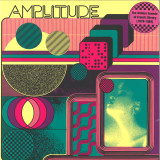
Farfalla Records presents its new compilation Amplitude - The Hidden Sounds of French Library. 12 tracks exclusively recorded for professional use between 1978 and 1984 in France.
Dive into the universe of the early 1980s with colorful sounds and catchy rhythms from talented musicians from the French scene, composing and arranging both for library music and variety, and accompanying big names in French music.
out of Stock
Last delivered 10 months ago available to reorder, subject to availability
One of his best albums from the mid-Sixties, Yusef Lateef's 1984 is a truly experimental work. With bassist Reggie Workman, pianist Mike Nock, and drummer James Black, it goes from the eight-minute title track that opens the album to the two-minute, angular modal ballad "Try Love." Reviewer Thom Jurek gave it four out of five stars in AllMusic, stating that "1984 certainly seems to be shaping up into one weird record.
The title is an experimental, noodling improv with Lateef moaning as if in mourning. But then with 'Soul Sister,' featuring Lateef's deep, bluesy, tenor blowing around a gorgeous lyric figure, and Mike Nock's stunningly beautiful soloing on 'Love Waltz,' the entire album moves in another direction, even if it isn't terribly focused. In all, a complex yet emotionally and musically rewarding effort by a master.”
Trailblazing instrumental synth pop experiments created to soundtrack Japan’s booming 1980s cartoon and comic industries. The brightly futuristic instrumentals on this collection reflect the mindset of composers and musicians who believed in a technological future where everything was possible.
In the late 1980s Japan experienced a brief but heady period where societal changes combined with new-found wealth to open up a world of possibilities. A huge influx of cash - artificially created by slashed interest rates after an agreement with the US to weaken the dollar relative to the yen - resulted in the inflation of real estate and stock market at a rapid pace. While the economic bubble it created was unprecedented and impossible to sustain, for a while money was in plentiful supply.
The musical genre City Pop reflected the aspirations of the country’s booming leisure class. Video games flourished with Nintendo's 1983 launch of their Family Computer (or FamiCom). Studio Ghibli was founded 1985 to later became one of the most famous and respected animation studios in the world, and Anime and Manga were established as major forms of entertainment for all generations of the Japanese public.
Music was no mere footnote to the anime and manga boom: the two forms of media often went hand in hand, and not simply through the presence of background melodies. With generous budgets available, even two-dimensional static manga comics could be released with an accompanying soundtrack of original music known as an ‘Image Album’.
Composer and arranger Kazuhiko Izu was one such beneficiary of this open budget approach. Written to accompany artist Katsuhiro Otomo’s manga comic Domu, the composer and arranger took advantage of the world-leading (and wallet-busting) Japanese synthesiser technology available at King Records’ fully equipped studio. Featured on this compilation, A3: Act 2 Scene 26 reflected the story’s sci fi themes with a blazingly futuristic yet warmly funky slice of synth pop that presents a joyful celebration of synthesisers and their seemingly endless possibilities.
Kan Ogasawara was another composer who made early mastery of the litany of synthesisers, drum machines and sequencers that had become available. Two tracks written to accompany the 1985 period manga Yume No Ishibumi are featured here; Honowo’s experimental electronic textures add spice to a jaunty electro pop melody that recalls the Rah band’s 1983 hit Messages From Stars; the jazz-tinged Utage rounds out Ogasawara’s shimmering synth textures with beautifully crafted backing from legendary musicians Yuji Toriyama (guitar), Pecker (percussion) and Jun Fukamachi (piano).
Before becoming one of the pioneers of Japanese Kankyo Ongaku (Ambient Music), Takashi Kokubo worked on the proto techno track Kiki (Jungle At Night). It was put together for the 1984 anime film Shonen Keniya (Kenya Boy) using some of the most expensive music technologies available at the time. This Africa-Inspired dance track offers a contemporary parallel to the early techno music that young Detroit based producers were then creating using cheap Japanese Roland drum machines and synthesisers.
This is the first compilation of Japanese anime and manga soundtracks curated by Kay Suzuki and Rintaro Sekizuka from Vinyl Delivery Service (a Tokyo based online record shop which also operates in East London's renowned wine and hifi shop Idle Moments). With a cover by artist Kazuki Takakura and two pages of liner notes, this vinyl only compilation of music never before released outside of Japan, captures a vital aural snapshot of an era whose forward-thinking sounds went hand in hand with cutting edge technology.
DELUXE 8LP BOXSET FROM THEIR ‘CAPITOL YEARS’, WITH STUDIO ALBUM HALF-SPEED MASTERING, LP OF BONUS TRACKS, 60 PAGE BOOK, POSTERS & NUMBERED CERTIFICATE
Currently on the 40 Years Live World Tour and sounding better than ever, W.A.S.P. is one of the most consistent and reliable forces in rock music - unstoppable and unassailable, like a heavy metal juggernaut sent back in time from a long, distant galaxy. Frontman Blackie Lawless is undoubtedly one of rock’s everlasting figures – someone’s whose attitude and vision changed the musical landscape around him, in the process bearing fruit to some of the biggest anthems of their time.
Their first five studio albums (W.A.S.P., The Last Command, Inside the Electric Circus, The Headless Children & The Crimson Idol) contributed enough on their own for W.A.S.P. to be considered one of the greatest rock bands of all-time. Those LPs are all presented in this set, mastered half-speed at Air Studios, London, for a superior, sharper, more direct and engaging sound.
Packaged within a deluxe red leatherette effect double slipcase, The 7 Savage: 1984-1992 is completed on vinyl with two more LPs: 1987’s Live… in the Raw and new compilation Bonus Tracks & B-Sides featuring the controversial breakthrough anthem ‘Animal (F**k Like a Beast)’.
Compiled with the full cooperation of Blackie Lawless, the box set also includes a 60-page book with exclusive and rare pictures from legendary metal photographers (including Ross Halfin, Tony Mottram, David Plastik and Paul Natkin), along with extensive liner notes from Amit Sharma (Kerrang!, Planet Rock). Also included is an exclusive Blackie Lawless poster, plus an individually numbered circular saw shaped certificate.
The 7 Savage: 1984-1992 will be released Friday 27th October 2023 on Madfish and is strictly limited to 2000 copies worldwide.
[yb] L.2. Phantoms In The Mirror [04:36] D.3. The Eulogy
The "Produkt" compilation takes us back to the time between 1979 and 1984, when post-punk was the main expression of the underground movement. Bands in the wake of PIL and Joy Division came out like mushrooms after the punk crush. In this compilation you will find mostly unknown yet interesting productions. This is a 10 track album, all originally released on 7" from all over the world: from Poland to Sweden, from Yugoslavia to Denmark. A perfect item for both enthusiasts and completists but also for those curious, passionate of those extraordinary years and lovers of a genre that still continues to evolve and that indeed continues to storm clubs around the world
Die Apart Demos wurden zwischen 1980 und 1984 in verschiedenen Kellern und professionellen Studios in Chicago aufgenommen und dokumentieren 12 intime und reduzierte Skizzen, Demos und unveröffentlichte Tracks von Andre Gibson und der Universal Togetherness Band, als sie sich auf ihre Solokarrieren zubewegten. Von tief empfundenen Huldigungen an die Liebenden, die von einem seidigen Fender Rhodes verziert werden, bis hin zu Disco-Party-Startern über spirituelle Dankbarkeit - Andre Gibson lässt uns in sein Herz blicken und bringt am Ende alles zusammen. Die Universal Togetherness Band aus Chicago, verband in ihrem eklektischen Sound Funk-, Soul-, Disco-, Jazz-, Rock- und New-Wave-Einflüsse mit intelligenten und fantasievollen Texten. 1978 gegründet und geleitet von Andre Gibson, mit seinem Bruder Arnold Gibson (Schlagzeug, Bass), dem ehemaligen Colorvision-Mitglied Fred Misher (Bass, Hintergrundgesang) und Freds Bruder Leslie Misher (Leadgitarre), während Andre die Keyboards, das Vibraphon und den Leadgesang übernahm. Obwohl die Gruppe mehrere Jahre lang in den Clubs von Chicago auftrat und gelegentlich größere Auftritte absolvierte (vor allem als Vorgruppe von Peter Gabriel), hatte sie Mühe, ein größeres Publikum für ihre anspruchsvolle R&B-Melange zu finden. Zwischen 1979 und 1982 nahm die Band Dutzende von Sessions auf, die Gibsons weitreichende Vision als Komponist und Bandleader dokumentierten. Während Gibsons Zeit am Columbia College kamen Paul Hanover (Mundharmonika und Klavier) und Louis Sanford (Schlagzeug) zu den ursprünglichen vier Multiinstrumentalisten hinzu. Nachdem sich die ursprüngliche Besetzung der Universal Togetherness Band schließlich Mitte der 1980er auflöste, nahm Andre Gibson weiterhin mit einer Besetzung mit Frank Alexander (Schlagzeug), Allen Burroughs (Gitarre), Art Love (Bass) und Michael Young (Saxophon) auf. 2015 veröffentlichte Numero Group eine erste Zusammenstellung mit unveröffentlichten Aufnahmen mit dem schlichten Titel Universal Togetherness Band.
out of Stock
Last delivered 3 years ago available to reorder, subject to availability
Die Apart Demos wurden zwischen 1980 und 1984 in verschiedenen Kellern und professionellen Studios in Chicago aufgenommen und dokumentieren 12 intime und reduzierte Skizzen, Demos und unveröffentlichte Tracks von Andre Gibson und der Universal Togetherness Band, als sie sich auf ihre Solokarrieren zubewegten. Von tief empfundenen Huldigungen an die Liebenden, die von einem seidigen Fender Rhodes verziert werden, bis hin zu Disco-Party-Startern über spirituelle Dankbarkeit - Andre Gibson lässt uns in sein Herz blicken und bringt am Ende alles zusammen. Die Universal Togetherness Band aus Chicago, verband in ihrem eklektischen Sound Funk-, Soul-, Disco-, Jazz-, Rock- und New-Wave-Einflüsse mit intelligenten und fantasievollen Texten. 1978 gegründet und geleitet von Andre Gibson, mit seinem Bruder Arnold Gibson (Schlagzeug, Bass), dem ehemaligen Colorvision-Mitglied Fred Misher (Bass, Hintergrundgesang) und Freds Bruder Leslie Misher (Leadgitarre), während Andre die Keyboards, das Vibraphon und den Leadgesang übernahm. Obwohl die Gruppe mehrere Jahre lang in den Clubs von Chicago auftrat und gelegentlich größere Auftritte absolvierte (vor allem als Vorgruppe von Peter Gabriel), hatte sie Mühe, ein größeres Publikum für ihre anspruchsvolle R&B-Melange zu finden. Zwischen 1979 und 1982 nahm die Band Dutzende von Sessions auf, die Gibsons weitreichende Vision als Komponist und Bandleader dokumentierten. Während Gibsons Zeit am Columbia College kamen Paul Hanover (Mundharmonika und Klavier) und Louis Sanford (Schlagzeug) zu den ursprünglichen vier Multiinstrumentalisten hinzu. Nachdem sich die ursprüngliche Besetzung der Universal Togetherness Band schließlich Mitte der 1980er auflöste, nahm Andre Gibson weiterhin mit einer Besetzung mit Frank Alexander (Schlagzeug), Allen Burroughs (Gitarre), Art Love (Bass) und Michael Young (Saxophon) auf. 2015 veröffentlichte Numero Group eine erste Zusammenstellung mit unveröffentlichten Aufnahmen mit dem schlichten Titel Universal Togetherness Band.
Valentine Lover Red Vinyl. Die Apart Demos wurden zwischen 1980 und 1984 in verschiedenen Kellern und professionellen Studios in Chicago aufgenommen und dokumentieren 12 intime und reduzierte Skizzen, Demos und unveröffentlichte Tracks von Andre Gibson und der Universal Togetherness Band, als sie sich auf ihre Solokarrieren zubewegten. Von tief empfundenen Huldigungen an die Liebenden, die von einem seidigen Fender Rhodes verziert werden, bis hin zu Disco-Party-Startern über spirituelle Dankbarkeit - Andre Gibson lässt uns in sein Herz blicken und bringt am Ende alles zusammen. Die Universal Togetherness Band aus Chicago, verband in ihrem eklektischen Sound Funk-, Soul-, Disco-, Jazz-, Rock- und New-Wave-Einflüsse mit intelligenten und fantasievollen Texten. 1978 gegründet und geleitet von Andre Gibson, mit seinem Bruder Arnold Gibson (Schlagzeug, Bass), dem ehemaligen Colorvision-Mitglied Fred Misher (Bass, Hintergrundgesang) und Freds Bruder Leslie Misher (Leadgitarre), während Andre die Keyboards, das Vibraphon und den Leadgesang übernahm. Obwohl die Gruppe mehrere Jahre lang in den Clubs von Chicago auftrat und gelegentlich größere Auftritte absolvierte (vor allem als Vorgruppe von Peter Gabriel), hatte sie Mühe, ein größeres Publikum für ihre anspruchsvolle R&B-Melange zu finden. Zwischen 1979 und 1982 nahm die Band Dutzende von Sessions auf, die Gibsons weitreichende Vision als Komponist und Bandleader dokumentierten. Während Gibsons Zeit am Columbia College kamen Paul Hanover (Mundharmonika und Klavier) und Louis Sanford (Schlagzeug) zu den ursprünglichen vier Multiinstrumentalisten hinzu. Nachdem sich die ursprüngliche Besetzung der Universal Togetherness Band schließlich Mitte der 1980er auflöste, nahm Andre Gibson weiterhin mit einer Besetzung mit Frank Alexander (Schlagzeug), Allen Burroughs (Gitarre), Art Love (Bass) und Michael Young (Saxophon) auf. 2015 veröffentlichte Numero Group eine erste Zusammenstellung mit unveröffentlichten Aufnahmen mit dem schlichten Titel Universal Togetherness Band.
Das Album ”Off the Soundboard: Poughkeepsie, NY, 1984” von KISS wird neu veröffentlicht und stammt von der Animalize-Tour-Show am 28. November 1984 in der Mid-Hudson Civic Arena in Poughkeepsie,
NY. Es enthält die einzige bekannte Soundboard-Aufnahme mit Mark St. John. ”Young And Wasted” und ”Rock And Roll All Nite” sind leider unvollständige Aufnahmen, aber aufgrund der historischen Bedeutung dieser Show mit Mark ist zu hoffen, dass jeder genauso abrocken wird wie sie es getan haben.
Das Album ist jetzt als 2LP und als 1CD erhältlich. Das 2LP- Format beinhaltet eine Covercard mit dem deutschen KISS-Logo
out of Stock
Last delivered 3 years ago available to reorder, subject to availability
Mannequin presents an expanded double-LP of 'Exploded View' from Dutch minimal synth pioneers The Actor. Originally released in 1982 by Trumpett Tapes, the album was repressed for the first time by Mannequin Records in 2014, and is now coming back to life again in 2022, enriched by an extra full-length of demos from a 1981-1984 period.
Singing both in English and German, The Actor songs are often related to modernism, fashion and dancing, like a sort of early incarnation of Depeche Mode but totally devoted to home taping and diy recordings, where Trumpett was definitely the perfect home for it, having releasing such amazing cassettes from Doxa Sinistra, Ende Shneafliet, Dr C.Stein, and many more. A must have for the dusty/rusty analog synthesizers lovers.
out of Stock
Last delivered 3 years ago available to reorder, subject to availability
Triple coloured vinyl version (Each disc is a different colour) of the double CD that came out on Cherry Red in 2021 Presented in Tri-fold gatefold sleeve with 16 page 12x12 colour booklet, poster & photograph.
ONLY 350 COPIES WORLDWIDE
Among the first crop of Creation Records bands in the mid-1980s, THE LOFT seemed the most likely to break through. Following the success of The Smiths, guitar-based independent pop was in vogue, Alan McGee’s Creation label was turning heads – its bands blending 60s psychedelia, the melodic end of punk and a new sound which would soon be immortalised on NME’s C86 cassette. And in this London quartet, Creation had their answer to bands like Television, The Only Ones or early Modern Lovers, offering taut, off-kilter songs with an irresistibly deadpan cool.
Sadly, after just two singles, 1984’s downbeat debut ‘Why Does The Rain’ and the punchier sequel, ‘Up The Hill And Down The Slope’ – an indie hit which the band performed live on TV show The Oxford Road Show, The Loft dissolved, with various members founding new bands The Weather Prophets, The Caretaker Race and The Wishing Stones. They left behind seven studio tracks, a BBC Radio 1 session for Janice Long and one track from a Creation LP documenting the scene’s roots in small club The Living Room.
However, The Loft’s legend endured, eventually prompting a reunion in the early 2000s with all four original members – singer/songwriter/guitarist Pete Astor, guitarist Andy Strickland, bassist Bill Prince and drummer Dave Morgan. Alongside various well-received live shows, that led to a new single, ‘Model Village’ (2006) and more recently a session for Gideon Coe on BBC 6 Music (2015). The Loft’s reputation as founding fathers of a new breed of mid-80s indie pop continues to grow to this day, with the band often cited as an influence.
Compiled and coordinated by the band, Ghost Trains & Country Lanes expands on previous retrospectives of The Loft, adding those reunion recordings (including three previously unissued tracks), the Gideon Coe session and several live recordings from that historic performance at The Living Room back in 1984. (including many exclusive songs which were never recorded in the studio).
With new sleeve-notes by Danny Kelly, this is the definite tribute to The Loft
Collection of 1980's music for aerobics and fitness craze in Yugoslavia inspired by Jane Fonda. Composed by famed film music maestro Alfi Kabiljo, the winner of The Camille Lifetime Achievement Award 2022 by European Composer and Songwriter Alliance (ECSA). His trip to disco, funk and jazz, exclusively made for gym and aerobics classes by Sylvie Vartan's dance pupil Vesna Mimica is presented here for the first time in the form of unreleased instrumental versions and dubs from the original studio...
out of Stock
Last delivered 10 months ago available to reorder, subject to availability
Born Bangalter in 1947, Daniel Vangarde is a French songwriter and producer. In 1967, he met Jean Kluger who became his publisher. In the 1970s, their tandem stood out in those fields, for a plethora of popular French artists such as Petula Clark, Claude François, Joe Dassin, Dalida, Régine, Sheila and Ringo. 1975 saw the birth of Vangarde’s label, Zagora, and his first and only solo LP. Later on, Vangarde and Kluger were responsible for a number of hit songs by The Gibson Brothers, Ottawan and La Compagnie Créole. With or without Kluger, Vangarde also wrote and produced songs that remained underground, under several monikers (Starbow, Who’s Who, Soul Iberica Band, Yamasuki, Rocky & Vandella…) and for various artists. Let’s open these incredible cosmic disco funk vaults! Available on Double Vinyl (featuring 2 exclusive tracks) & CD .
This Boxset focuses on Waziri"s Illustrious Mid-Career Output - The Music he created during the years leading up to and after he performed his first Hajj (You Might Recognize some of the Hits from The Muslim Highlife) - And includes a copy of The Journey so far, a Limited-Edition Book written and designed by his children, To celebrate Waziri"s remarkable life And career.
Mondo, in conjunction with WaterTower Music, is proud to present the premiere vinyl pressing of Hans Zimmer’s incredible score to WONDER WOMAN 1984.
Featuring incredible artwork by La Boca and housed in a tri-fold jacket with holo-foil elements, with liner notes by writer and director Patty Jenkins, the vinyl pressing is available on 3x 180 Gram Swirl colored vinyl.
Hans Zimmer’s score to WONDER WOMAN 1984 is quite possibly our favorite piece of superhero film scoring since John Williams’ SUPERMAN: THE MOVIE (1978), and Danny Elfman’s BATMAN (1989). We know that sounds hyperbolic, but even before our test pressings arrived, it was one of our most listened to albums on Spotify of the last 6 months. It’s that good. We can’t wait for you to hear how good it sounds on vinyl, out of big speakers.
Composed by Hans Zimmer
Artwork by La Boca
Manufactured in the Czech Republic
out of Stock
Last delivered 4 years ago available to reorder, subject to availability
Freestyle Records drop an unmissable LP of foundational UK dance music made between 1982 to 1984, in the form of the collected output of Contact-U - aka Rick de Jongh and Andy Sojka's stripped-back electro boogie project.
At the turn of the 1980s Challenge Records was founded on North London's Holloway Road - formed by Andy Sojka & Rick de Jongh to act as a sister-label to Sojka's seminal soul & boogie-focused Elite imprint. Initially releasing a smattering of lovers rock singles, Challenge would quickly begin to focus-in on the emerging sounds of Hi-NRG & electro - with Contact-U, an alias for Rick & Andy's own stripped-back productions, becoming Challenge's first act in this vein.
Recording the sublimely wonky spaceage funk of 'Inside You' in November of 1982, de Jongh & Sojka followed this up over the next 2 years with three 12" releases for Challenge before hanging up the moniker. Providing infectious synth-based melodies & basslines with killer drum-machines & minimal but effective live percussion - and in a couple of instances (see "Inca Sacrifice" and "Breaking Point') crucial dub re-versions on their B-sides - these tracks are some of the strongest electro-funk records to come out of the UK during this period. Dig in!
out of Stock
Last delivered 19 months ago available to reorder, subject to availability
Repressed on Neon Pink and Black Vinyl ! This single LP edition of Piñata has been lacquered at half speed master by Metropolis Mastering in London for the highest fidelity and is housed in an 80s themed cover variant exclusively for Record Store Day 2021. Piñata, the acclaimed effort from Freddie Gibbs and Madlib is a perennial best seller. For RSD 2021 Gibbs and Madlib replace Crockett and Tubbs for a follow up to the blaxploitation inspired “Pinata: The 1974 Version”, with the 80s fueled “Pinata: The 1984 Version.” Though we promise, no mullets or ugly Ferraris.
Released in 2014. Continues to be a best seller. Never issued with this varriant cover.
It finally took five years and two lineup changes for Handful of Snowdrops to release their debut album, the iconic Land of the Damned. While too many of the songs written during that period never made it to tape, some fortunately did.
This is what we believed is first home recording from the second generation of the band with Jean-Pierre as the lead singer. All tracks were recorded in a single day in a dark and humid basement using a beaten-up TEAC 4-track tape cassette recorder borrowed from a friend. Since the original mix downs are long gone, we had to salvage the music from two old worn out cassette copies.
It would be fair to say that the recordings are very representative of the overwhelming naivety of the early compositions. It’s a unique chance to have another look inside an old photo album you thought you had lost forever.
Wicked compilation with works by Ghanaian producer Dick Essilfie-Bondzie, soaring synths.., wicked grooves, smacking drums, hypnotising organs and bumpin' basslines. This one is fire!
INCL 12-PAGE BOOKLET
out of Stock
Last delivered 4 years ago available to reorder, subject to availability
Some Crate-digging Compilations Are Often The Result Of Someone Hand-picking Their Choice Favourites From Another Country's Musical History, Perhaps Unaware Or Uninvolved With Its Cultural Lineage In The Process. On Soundway's Latest Release - A Treasure Trove Of Synth Jams, Pop, Samba Boogie, Balearic And Electro From 1980 & '90s Brazil - The Tracks Are Picked By Millos Kaiser, One Half Of The Brazilian Duo Selvagem, Who Are At The Helm Of Throwing Some Of The Country's Best Dance Parties. It's A Rare Compilation That Offers Brazilian Music Actually Picked By A Brazilian.
Whilst Names Such As Ricardo Bomba, Villa Box, Fogo Baiano, Electric Boogies And Batista Junior May Not Be Household Names, They Tell An Untold, Yet Rich And Important Part Of Musical History In Brazil. The Release Also Covers A Decade That Has Been Intentionally Forgotten And Brushed Aside By Many In The Country.
Onda De Amor Is A Release That Is Loaded With Smooth Grooves, Bubbling Bass, Glistening Synthesisers, Funk Strutting Guitar Lines And Sheen Of Production That Undeniably Marks It Of Its Time. For Kaiser This Compilation Is About Reintroducing Music During A Period Of Reappraisal, Catching A New Wave And Hoping Contemporary Listeners Will Ride It With Him. the Idea Is To Do Justice To These Songs. Songs That Combine All The Right Ingredients That Should Have Put Them On
Radio Playlists When I Was Growing Up Or At Least In The Cases Of More Adventurous Djs'.
Millos Kaiser Is A Dj, Digger, Vinyl Junkie/dealer Born In Rio De
Janeiro And Living In São Paulo For The Past 8 Years. He Launched The Dance Party/club Night Selvagem With Partner Trepanado In 2010, Bringing Thousands Of Dancers One Sunday A Month To A Public Square In The Heart Of São Paulo.
Repress of the RSD LP, this time on Black vinyl. Soundtrack to David Lynch’s 1984 cult film. Composed by TOTO and Brian Eno. Sourced from the original mastertapes. Audiophile Pressing at RTI.
La Maison's story is essentially an oral one, like for many bands in those years. Casual encounters, records found and exchanged, demos recorded at home, live club shows in a country that in those years was changing socially and culturally at the speed of light, and was molding itself at the rate of a fluid modernity. The tracks of this album, Collected Tape Experiments 1980-1984 tell the story of a world where synthesizers and drum machines coexist and replace traditional rock instruments. Where homemade overdubs broaden the spectrum of sonic possibilities and the "cut and paste" of tapes is done, literally, by hand. A world in which the first infatuations for wave and industrial are contaminated with no prejudice by the rhythms and sounds of funk and disco. A milestone for those who want to understand the vibrant landscape of Italian music of the eighties, many times too hectic and elusive to be captured in real time. Twenty one tracks on CD and twelve on vinyl, most of them never published before, see the light of day more than thirty years after their creation. - Livia Satriano
Five years after the release of volume 1 of the collection “Collected Tape Experiments 1980-1984”, further sound experiments by this incredible Milanese duo re-emerge, never sufficiently valued and who in a few years managed to create hundreds of tracks, synthesizing different influences such as Throbbing Gristle, Residents, Kraftwerk and the arty extremisms of the “No New York” scene.
Neon Christ, the Atlanta hardcore luminaries founded by Alice in Chains singer William DuVall have announced the official release of 1984 for 17th September. This collaboration between Southern Lord Recordings/DVL Recordings was originally released on Record Store Day U.S.only, now to be made available more widely.
The package includes a full-colour gatefold sleeve and a 12-page oral history booklet featuring dozens of never-before-seen photographs. Heavyweight vinyl at 45 RPM for maximum fidelity.
Neon Christ formed in the fall of 1983 with William DuVall on guitar, Jimmy Demer on drums, Danny Lankford on bass, and Randy DuTeau on vocals. They made their debut in the early morning hours of New Year’s Day 1984. That March, they recorded their eponymous debut 10-song EP. Released in June ’84, the EP's songs exemplify the band's signature musical diversity, from DRI-style thrashers like "Parental Suppression" to the atmospheric improv of "After." A short east coast tour followed. On Labor Day 1984, the band recorded four tracks in the home studio of Nick Jameson, of Foghat fame. A few months later, "Ashes to Ashes" was included on the International Peace/War compilation released by MDC's R Radical Records, bringing the band worldwide exposure.
Neon Christ shared the stage with the luminaries of 80s hardcore including the Dead Kennedys, Circle Jerks, and Corrosion of Conformity. In 1985, the band added Shawn Devine on second guitar, as their sound and songs became slower, heavier, and more melodic. DuVall wrote an album's worth of songs in 1985, but only "Savior (Drawn In)" was ever recorded in what would be the band’s final studio session on December 26, 1985 (the master tapes were lost). Returning to the four-piece original lineup, the band played a handful of Atlanta shows and then took a break in March of 1986. A few months later, William moved to Santa Cruz, CA, to join BL’AST!, and Jimmy, Danny, and Randy formed Gardens of…William later founded jazz/punk/world improvisers No Walls. In 1999, he would form Comes With The Fall and move the band to Los Angeles, where he struck up a friendship and musical collaboration with Jerry Cantrell. William joined Alice in Chains as vocalist and guitarist in 2006. On February 2, 2008, Neon Christ reunited to headline the Ratlanta Punkfest 2.
To this day, the band members maintain a close friendship, as well as a desire to honour the legacy of the group. So when longtime fan Greg Anderson of Southern Lord contacted them about reissuing a deluxe edition of Neon Christ's 1984 sessions, "1984" quickly came to life. To remaster the original tapes using an all-analog process, William DuVall made multiple trips to Nashville to one of the few remaining studios maintaining the vintage technology to play and process the audio. Side one of "1984" features the original Neon Christ 7" EP, and side two contains the four songs of the Labor Day session
out of Stock
Last delivered 4 years ago available to reorder, subject to availability
Born Bad continue their mind-expanding and totally essential series of library music ‘Space Oddities’ compilations with this set focusing on French musician and composer Sauveur Mallia.
In the ever-expanding universe of 70s and 80s French library music, Mallia holds a special place; his career, multifaceted work and the uniqueness of his talent have made him an exemplary figure in the unsung world of library musicians.
In those years a few of them, often for economical reasons, would set off on a
space conquest, taking along just a few synthesisers.
Their ambition well surpassed the modesty of their means; it was in turn the
condition to their experimentations with sound which were to create a new
sonic space: that of a nation tumbling into modernity. From French soil to the
farthest reaches of the cosmos, there were just a few steps to take. It’s with the
label Tele Music, boarding the spaceship Arpadys, along with the Voyage crew,
that Sauveur Mallia took the big leap.
Die meisten der für dieses Album ausgewählten Tracks sind Aufnahmen, die mit einem einfachen Stereo- (2-Track) Kassettenrecorder aufgenommen wurden. Die Situation im Studio sah dann ungefähr so aus: Drumcomputer (ohne Midi) und Sequenzer waren miteinander verbunden, liefen somit rhythmisch synchron. Die darin eingestellten Tonfolgen und Rhythmen wurden dann meist manuell mit Hilfe der Tastaturen auf die jeweilige gewünschte Tonhöhe transponiert. Oft wurden während dieses Ablaufs noch weitere Instrumente dazu live gespielt. Dabei wurden mit Hilfe eines Mischpults die Summe aller Tonquellen für die Aufnahme in einer Art "Live Recording" zusammengemischt. Da man bei einem Fehler immer wieder von vorne anfangen musste, und viele der Klänge nach dem Verstellen der Regler nur mit viel Akribie wieder hergestellt werden konnten, kamen mit der Zeit viele Kassetten zusammen, oft mit endlos langen und verschiedenen Versionen des gleichen Titels. Demo Tapes 1984-86 umfasst eine Auswahl aus den Anfängen der elektronischen Musik und merkwürdigen Klangwelten von Heiko Maile
out of Stock
Last delivered 26 days ago available to reorder, subject to availability
Hawkwind have always been associated with music festivals, most notably the free festivals, where Dave Brock has said that, at
those events, the band is not shackled to appease an audience by giving them what they expect and have paid to see. With that obligation removed, the band can relax and experiment more than usual and gigs become even more fun. Their sessions, where they played for free, sometimes with the Pink Fairies, at Canvas City, outside the official site of the Isle Of White Festival in 1970, are a matter of legend and Nik Turner gained much attention when he painted his face silver and was much photographed as a result. During his set, Jimi Hendrix referred to him as 'the cat with the silver face'. However, when we think of Hawkwind and festivals, the word Stonehenge leaps to the fore.
The band always loved being there, enjoying the whole event as well as the freedom of how and when they played. This was not a time of business, but a time of fun. The most important one of these was Stonehenge 1984, which proved to be the last festival before the authorities moved in the following year to block the festival from being set up and Hawkwind ended up playing a few miles away instead. It was the sad end to an era. It had taken place twelve times and, had it been allowed one more time, it would have become a public event and the powers that be were determined to prevent that from happening. Happily, the 1984 festival was recorded and filmed and the Hawkwind Solstice Eve and Solstice Morning were both preserved...and we should be grateful for that.
The fact that Hawkwind were playing for free didn't mean it was a basic show. As well as the line-up of Dave Brock, Harvey Bainbridge, Huw Lloyd Langton (who played the evening session, but not the following morning), Nik Turner, Alan Davey and Danny Thompson, there were half a dozen dancers, a mime artist and fire spitting. A free event, it was the ideal time to introduce the new rhythm section to the band in the form of Danny Thompson on drums and Alan Davey on bass, with Harvey moved to keyboards. A move which was to have a long term affect in the way he made music, leading to his solo career, as well as years playing synths for Hawklords, in years to come, after his stint as the Hawkwind keyboards player came to an end.. Danny fitted the bill comfortably and drummed for the band until he left in 1988, to be replaced by Richard Chadwick. Danny went on to play for other bands including Bedouin and Pre Med. He also recorded a cassette album called Skinwalker. Alan made a good team alongside Dave Brock and it can be seen on the video just how pleased he was to be playing alongside Dave Brock, a man whom he had only met for the first time in November 1982, backstage at the Ipswich Gaumont. He went on to be the longest serving Hawkwind bass player, before moving on to pursue solo projects and form a nmber of bands. So in terms of the line-up, Stonehenge 1984 had a notable impact on the formation of the band for a number of years and, indeed, the destinies of Harvey, Danny and Alan. As if that were not enough to make the event special in the annals of Hawkwind, they played an interesting and varied main set in the evening, featuring a blend of old and new Hawkwind songs, along with numbers from Inner City Unit and
Bob Calvert's Lucky Leif And The Starfighters album. In keeping with the relaxed atmosphere, there was a considerably extended
version of Ghost Dance, lasting around ten minutes. The sunrise set was special too, with a long, laid-back, jam at dawn, in fitting with the occasion.
A lovely and relaxing start to the day and the kind of jam they couldn't really play to a paying audience. It's good to have the
memories of this significant festival gathered together in three formats.
Enjoy this special set, which commemorates a special event, not only in the history of Hawkwind, but of the saga of Stonehenge festivals.
Just when you think that the well of obscure music from around the world has run dry, Analog Africa returns to put the record straight. Pop-Makossa shines a light on a glorious but largely overlooked period in the story of Cameroonian makossa, when local musicians began to replace funk and highlife influences with the rubbery bass of classic disco and the sparkling synth flourishes and drum machines of electrofunk. The resultant compilation, which apparently took eight years to produce, is packed full of brilliant cuts, from the heavily-electronic jauntiness of Pasteur Lappe's "Sanaga Calypso" and horn-totin' Highlife-disco of Emmaniel Kahe and Jeanette Kemogne's "Ye Medjuie", to the dense, organ-laden wig out that is Clement Djimogne's "Africa".
out of Stock
Last delivered 6 years ago available to reorder, subject to availability
INXS live on the Coffee Break Concert series at the Cleveland Agora on 27th June 1984.
Following the April 1984 release of their fourth album, The Swing, INXS began to make commercial headway outside Australia. They toured relentlessly to promote the album, and had an international hit with Original Sin.
The performance captured here, on 27th June 1984, was part of the WMMS Coffee Break Concert series, a live radio simulcast on 100.7 WMMS in Cleveland. It captures them at the peak of their early game, and is presented here with background notes and images
out of Stock
Last delivered 7 years ago available to reorder, subject to availability
Bordello A Parigi presents a compilation of demo tracks from the legendary Italo Disco icon: Federico di Bonaventura, better known as Fred Ventura. These demo tracks were supposed to remain secret until Fred started to digitalize them from tape a few years ago. Most of these tracks were part of the transitional period between the exit from his early 80's band State Of Art and start of his first solo project Actor's Studio and career as Fred Ventura. A versatile treasure of lost music recorded from 1982 until 1984 in Milan, Italy.
Comes with double front sleeve and printed inner sleeve.
The pièce de résistance of the 'Collected 1984 - 1989' project, all the music on this LP has never been heard before, except for a single tune released on a rare 7" in 1988. The track selection and sequence is the result of Ducret & Isar closely listening to the many hours of unreleased material Desaever shared with them. Saved from oblivion and irremediable decay, the music on this LP is now just waiting to be played and listened as well as to inspire.
You may know of 'Rude Movements', an early dance music classic produced by SunPalace (Mike Collins and Keith O'Connell) back in 1983 that brought together protohouse, balearic beats and funky vibes. In 1984, the tune quickly became an anthem that could regularly be heard at David Mancuso's 'The Loft' or at Larry Levan's 'Paradise Garage' for example.
Thanks to Mike Collins, the studio veteran still in the business after more than 35 years and currently busy perpetuating the legacy of SunPalace, more material from the archives
has been 'surfacing' over the past few years on UK-based record labels. After a very productive meeting earlier this year, Parisian label Chuwanaga is really proud to present four unreleased songs produced between 1982 and 1984! Co-written by Mike Collins from SunPalace and Breeze McKrieth, a founder member of Britfunk bands Light Of The World and Beggar & Co, these Lost Songs are the almost forgotten result of this seminal collaboration, an exclusive musical rendez-vous between experienced studio music makers and funksters at the top of their game, including some of the finest Britfunk musicians. Bringing together eighties influences and futuristic sounds, the result covers a wide range of genres, from jazz-funk to new wave: it captured a unique
moment in British musical history, a smooth transition to a more electronic sound. Definitely not one to be missed!
Acid Jazz are pleased to announce details of the definitive Leroy Hutson compilation - Anthology : 1972-1984 on 20th October. Erstwhile Impression, Leroy Hutson's catalogue has become increasingly coveted over the years and this compilation collects his Curtom recordings together with two newly discovered tracks including Positive Forces which is available as an instant grat track when pre-ordering the album.
Native of Newark New Jersey, Leroy Hutson grew up In a part of the world that spawned many of Soul's all-time groups, amongst them, The Parliaments and the Manhattens. Smitten by the music he was to join a local quartet, The Nu-Tones and despite never recording the youthful Hutson experienced the thrill of being a singer. On splitting up, Hutson found himself studying in Washington DC and once more in the company of supremely talented artists including Carla Thomas and future collaborator Don Hathaway. Various recordings came and went with little chart success before, along with Hathaway he became central to a group of singer, songwriters and players under the tutelage of Curtis Mayfield at his Curtom label a relationship that initiated Hathaway's chart topping career when the pair co wrote the all-time classic and million seller The Ghetto.
Early 1971 saw Hutson replace Mayfield in the Impressions as he left to concentrate on his solo career, the transition was seamless and although relatively brief saw the band in the pop and R&B charts. His debut on the Billboard chart as a solo artist arrived with Love Oh Love, the first of a dozen Curtom singles he recorded during an exciting and turbulent decade for black American music.
The seven albums Hutson released on Curtom between 1973 and 1979 are a legacy that remain highly respected, almost revered amongst soul cognoscenti, an untold influence on an entire generation of musicians throughout the eighties. The demise of Curtom in the early eighties saw Hutson relocate to Elektra, where in 1982 he released Paradise - highly acclaimed and much loved for a time it looked like that release may spell the end but some twenty-seven years later, the newly monikered 'Lee' Huston unveiled Soothe You Groove You.
Da'saa - The Haunting Sound of Yemenite Israeli Funk 1974-1982
Fortuna Records deliver a stellar compilation of real-life magic created by immigrants from Yemen, in Tel Aviv, from the mid seventies to the early eighties. Ranging from extremely rare to previously unreleased, these tracks are a result of a unique scene which blended funk, soul, jazz & disco with traditional Yemenite rhythms & sounds.
It cannot get more obscure than this! Fortuna heads: Look out for an unreleased Tsvia Abarbanel from 1969!!! Glorious gatefold LP with a 14 page booklet telling the fascinating story of this movement, for the very first time!
Following the latest Avian release as Sigha, James Shaw now unveils his Faugust project with a 10" title on the Avian sub-label - Mira. Emotive and highly personal, Devotions (1984 - 2006) shows a side of Shaw's sound that has been largely buried since 2004, combining his experience as a guitarist with many of the sonic approaches that characterise his best known music today. Over the course of four tracks it layers pulsating bass and synth lines with melodic flourishes and a pop sensibility not seen in his other work. As per previous Mira releases, the artwork is done by Juan Mendez aka Silent Servant.
Erstmals Auf Vinyl: Das Debütalbum Des Synth-pop-trios Gunship Aus 2015. Exzellenter 1980er Retro-sound Aus Analogen Synths, Cineastischen Vocals Und Cyperpunk-attitüde, Mit Einem Feature Von Horror-meister John Carpenter Höchstpersönlich. Exklusiver Bonustrack Ist Der Gunship-remix Für Lionface "no Hope State" (2017), Der Hier Seine Erstveröffentlichung Auf Tonträger Erfährt. Für Fans Von Empire Of The Sun, Mgmt Oder Röyksopp.
out of Stock
Last delivered 7 years ago available to reorder, subject to availability
Limited Edition Of 500 Copies On Black 2lp Vinyl. Comes In Gatefold Sleeve With A Funky Artwork By Boggie Cramb! Skipping Through Endlessly Boring 70s Flics From Eastern Germany And Digging In The Crates For 1€ Records Crammed With Scheisse Volksmusik Is Something Torky Does All The Time. Don`t Ask Yourself Why. Listen!
This project is conceptually based around George Orwell's classic novel, 1984, backed with a remix from Perlon trio Wareika.
.
The original mix of 'Thought Crime' opens the package with murky atmospheric textures, skippy hat patterns and shuffled organic drums grooves driving the composition before the focal stages see the introduction of eerie piano chords, spoken word vocal samples and acid tinged bass which ebbs and flows within the depths. 'No Fear' follows next, laying focus on a bumpy drum groove, modulating synth swells, ethereal tension building pads and a snaking sub bass groove to create a dynamically unfolding, hypnotic cut.
Perlon's Wareika step up to rework 'Thought Crime' opens the flip-side, as always from this trio shining light on chuggy bass grooves and jazz tinged ever-unfolding drums whilst stirring in the original's eerie voices and choppy pianos to create a frenzied, dynamic feel throughout. 'Since 1984' next to round out the release, an interlude of sorts featuring a bubbling arpeggio, dreamy piano melodies and an amalgamation of swirling, dubbed out echoes spiralling amongst muted kicks.
'Shlom Hatzibur' - 'Yanshuf al Anaf Gavoha' a repress of a long lost new wave single along with edits by 'The Models' and 'Mule Driver'.
'Shlom Hatzibur', a band formed by Yuval Banay and Oren Elazary, was active between 1984-1985. This was the year in which the band 'Mashina' paused their activity. ('Mashina' was established in 1983 - and is considered by many ones of the most influential rock bands in Israel). In 1984, they independently published two singles, one of which was 'Yanshuf al Anaf Gavoha'.'Yanshuf al Anaf Gavoha' (Owl on a High Branch) represents a rare moment in Israeli musical history and culture: a moment of disillusionment and expression of personal voice, contemporary sound, and rhythm which stood out during a turbulent political period.
During the First Lebanon War, in the 80s, a generation of young people traveled on the weekends from the battlefields of southern Lebanon and flocked to the rising nightclubs in Tel Aviv. From army discipline to individual freedom, from the threat of death to the city's vibrancy. It is a song of adolescence in a divided and alienated society, and its reissue is more relevant than ever.
The song mixes industrial rhythm with Post-Punk, Rock and Ska. The unusual musical production and the use of a drum machine were influenced prominently by the musical soundtrack played in Tel Aviv's record shops and alternative nightclubs (eg, 'Fuzz', 'Penguin').
Jujuka is a multidisciplinary art project and record label that involves rhythm composer and DJ Julia Govor and London-based Illustration duo Le.BLUE. The project is about music, short narratives, true stories, comics and illustration, where the artists behind the project want to go beyond what the conventional
record label offers.
Every piece will be unique, told through music and stories composed and written by Julia, accompanied by artwork and comics illustrated by Le.BLUE
Musically and emotionally, Superpitcher's third full-length studio album, The Golden Ravedays is a one sound autobiography that exhibits the skill, feeling and depth of style that the artist has honed over a period of twenty years, musically, and forty-plus-years, emotionally.
And full-length it is:
The Golden Ravedays is an epic album of 24 tracks that was released in January 2017 and is stretching over 12 respective chapter albums during a one-year period by record label, HippieDance.
We are thrilled to bring you the third chapter of The Golden Ravedays saga, released in March 2017.
Number 3 of the series introduces two further tracks of the haunting sound adventure that Superpitcher is taking his fans on during 2017.
Side A features 1984.
It has nothing to do with George Orwell's magnificent book but it could remind some of how the apocalypse might sound one day.
1984 is as sweet as the very first track, Little Raver, of The Golden Ravedays album but it stresses the fact that even though Superpitcher produces music mainly intended for the dance floor, he creates sound that is bordering on the shamanic.
1984 might as well be the meeting of a group of supersonic bottlenose whales that are overly excited to see each other after being separated by many an ocean and moon.
Side B of this edition brings us Pocket Love.
Or shall we rather say, Side B gifts us Pocket Love
Because we believe this is nothing other than a gift to us all.
Imagine looking into a kaleidoscope and turning the dial and experiencing all those colors as pockets of love rushing your way and exploding in satin wonderment the moment they past your eyes and ears. Imagine how it must sound like if all the e mails, tweets, facebook posts, instagrams, pinterests, grandma's postcards, text messages, letters on rice paper, hearts scratched into trees, declarations of eternal loyalty written in sand, phone calls and videos of the whole universe were all messages of love stuffed into pockets and sent to you.
Imagine the treasure you will receive!
Imagine being one big ear drum and listening to the very energy that this love exists of - imagine it and you will find yourself inside Pocket Love.
The premise of this compilation is simple: music we’d like to hear at the airport.
The idea came after learning that Honolulu’s international airport has been playing AI-generated music over its speakers since November 2025. First reported by Civil Beat, the news has caused frustration and disappointment among residents and visitors, as well as within the local music community.
Everyone knows Hawaii is one of the most musically rich regions in the world — why then is the airport using AI music? 'Music For The Airport' is our response.
Located in the middle of the Pacific at the outskirts of one the most remote cities on the planet, Honolulu’s Daniel K. Inouye International Airport (HNL) is for most people the first place they encounter when they arrive in Hawaii. Warm sun, tropical tradewinds, playful palm trees and majestic mountains welcome every traveler, as do the sounds of birds, familiar music from Hawaiian artists like Aunty Genoa Keawe and Israel Kamakawiwo’ole, and—at least for now—seventeen “island-themed” AI-generated songs.
In late 1977, while sitting in Germany’s Cologne Bonn Airport on a Sunday morning, Brian Eno noticed how terribly uncomfortable he felt hearing the airport’s “muzak” overhead. For a harried, hurried place like the airport where travelers scramble to their gates, stand in long border control lines, and wait impatiently for their luggage at the carousels, music can create more anxiety than calm. Asking himself, "What should we be hearing here?", Eno soon created ‘Ambient 1: Music For Airports’, a sonic remedy aimed at reducing nervousness in public spaces.
When we heard the news that HNL airport is playing AI-generated “muzak”, we were immediately reminded of Eno’s genre-defying 1978 album. And we were similarly inspired to react. But how? Recreating an ambient masterpiece wasn’t in our wheelhouse. We started digging through our catalog of licensed music which we haven’t yet re-released. We quickly realized this was our chance to highlight some of favorite songs from the so-called CD era: the 1990s and 2000s (with a few exceptions). In less than 20 minutes, we pulled 17 original songs recorded by local artists between 1984 and 2017.
The speed at which this project came together surprised us; reactionary gut instinct often produces swift and lasting results. Ironically, our new compilation likely took less time than it did for the state Department of Transportation to commission its AI songs in question. But even though ‘Music for the Airport’ came together in less than one week, the truth is that this collection of 17 songs is the result of years of hard work, trust, sacrifice, patience, and understanding. Building relationships with and licensing music from artists doesn’t happen overnight, but more importantly: these songs are the result of people pouring their hearts and souls into something they believe in. This music wouldn’t exist today without the artists and their loved ones who supported them along the way.
As of this writing, the DOT states its intention in creating AI-generated songs is to “highlight different aspects of the islands, aviation and the airport” and that “no state funds were used to produce them”. Okay, but at what cost? Technology disrupting the music industry isn’t news to anyone. AI music in public spaces are cost-saving measures, since its users (airports, for example) don’t have to pay the licensing fees typically required, which can be a worthwhile source of revenue for artists. But what happens when a place like HNL airport, which hosts more than 21 million passengers annually, uses music created by machines instead of people to represent Hawaii? The identity of a place beings to erode, diluted by a language learning model’s conceptual summary of what a people and its culture sounds like. To echo Brian Eno: what should we be hearing here? In other words: what should the music of Hawaii sound like?
We believe in the power of music, especially when it comes from the soul. We believe in supporting artists, especially as AI disrupts our lives. We believe that Hawaii must be represented authentically, especially when it comes to song. And of course we believe in vinyl, especially since it was a record from 1978 (Mackey Feary Band’s debut LP) that inspired Aloha Got Soul’s origins in 2010.
We hope you find as much joy in this compilation as we have. Perhaps it’ll soundtrack your next journey to Hawaii. At the very least, we hope some people take a moment to hear these sounds: in your headphones for now‚ maybe someday overhead at the airport in Honolulu.
Proto-Jackin'-Hip-House/Punk-Funk von der ,Third Coast". Ursprünglich erschienen im Jahr 1984 auf dem für die Chicagoer Szene prägenden Mitchball-Label: Das ,Dance Party Album" von Z-Factor ist das Werk, mit dem die Kindheitsfreunde Jesse Saunders und Vince Lawrence die 909 für das Warehouse, WB MX und darüber hinaus neu erfanden. Kommen Sie wegen der spacigen, Lo-Fi-Italo-Synths, bleiben Sie wegen der mit minimalem Budget produzierten, vier-auf-den-Boden-Drum-Machine-Klänge.
Proto jackin’ hip-house/punk-funk from the third coast. Originally is- sued in 1984 on Chicago’s scene- defining Mitchbal label, Z-Factor’s Dance Party Album is where boy- hood friends Jesse Saunders and Vince Lawrence reinvented the 909 for the Warehouse, WBMX, and be- yond. Come for the spaced-out, lo-fi Italo synths, stay for the micro-bud- get four-on-the-floor drum machine rattles.
Over the last decade and a half, Rotation Sound System’s annual gathering in the Staffordshire countryside has become one of underground dance music culture’s true success stories – an intimate gathering of like-minded friends and partygoers, powered by a custom-built six-way sound system, with music provided by a carefully curated line-up of dusty-fingered diggers, selectors and hand-picked live performers.
At the heart of the collective’s unique and much-loved approach lies a dedication to finding and sharing lesser-known gems and audio obscurities – fantastic records whose charm and quality has long been overlooked.
Last year, the core members of the crew – founders Dean Meredith and Ben Shenton (renowned for their productions as Mind Fair), and Wrekin’ Havoc trio Rob J, Stuart Robinson and Rich Hall – offered a snapshot of their unique musical approach via debut compilation Everything You Are About To Hear Is True, Volume 1, in the process introducing a global audience to some of the countless unknown mid-tempo classics nestled in their collections.
Fresh from another sold out edition of their acclaimed micro-festival, they’re back with volume two, another must-have collection of slept-on classics, loved-up shufflers and wide-eyed Balearic beats, all of which have played a part in Rotation’s story over the last 13 years.
Appearing on gatefold double vinyl with extensive liner notes telling the stories behind the tracks, Everything You’re About To Hear Is True, Volume 2 is full to bursting with music that sounds mind-blowing on the crew’s high-end sound system.
For proof, check the analogue-rich intergalactic shuffle of Paul Atreides’ 2015 jam ‘Arrakis Walk’, the relaxed boogie-soul of Rocky Winters’ Chaz Jankel produced ‘Vicious Circle’, the easy-listening-jazz-rock bliss of Vincent Maclin’s ‘Should’ve Took a Chance’, the 80s soul squelch of ‘Ecstasy (Centurion Mix)’ by Endgames and the immersive British dub drift of Sigma’s ‘Remember (Dub Style)’.
Everywhere you look, you’ll find eye-opening and ear-pleasing delights. There’s Pinky’s lightly acid-flecked, breakbeat-fuelled, acid house-era street soul classic ‘I Wanna Be The One (Instrumental Groove)’, the 1992 new age downtempo seduction of Linda Myers (‘Shine On Me’), the Clavinet-and-synth sporting jazz-rock/space-rock fusion of Wolfhound (1984 gem ‘Another Moon Song’), the Gallic colour of Buzy’s ‘Keep Cool (Version Maxi)’ and the guitar solo-laden electrofunk explorations of mid-80s UK act Lifesighs (‘Get Serious’, here presented in its extended instrumental form).
Often credited as the father of multi-media theatre, Alwin Nikolais (1910-1993) took complete creative control over his productions - including cutting-edge approaches to lighting and costume that transformed human bodies into shifting sculptural shapes, while also composing wildly innovative electro-acoustic and synth-based audio as accompaniment.
After initially experimenting with musique concrète and tape manipulation (as demonstrated on the 1959 LP Choreosonic Music of the New Dance Theatre of Alwin Nikolais) Nikolais became the first owner of Robert Moog's synthesizer at the Audio Engineering Society convention in New York in late 1964. Relying heavily on the Moog and later the Synclavier synth/sampler, these 21 tracks document Nikolais' highly-prescient compositions across the mid 1960s through to the late 1980s - existing not only as extensions of his other-worldly choreographic productions, but standalone pieces of foundational mid-century American electronic and experimental music.
"Born in Southington, Connecticut in 1910, Nikolais’s early years and early career were in acting, music and puppetry. It was not until the late 1930s that he began his work as dancer/choreographer in Hartford, Connecticut, where he was commissioned by the Avery Memorial Theatre, a part of the Wadsworth Atheneum, to create an evening-length work to the music of Ernst Krenek. Previously his work and study as a pianist-organist found him accompanying silent films. This sort of accompaniment required from the musician not only a playing skill but also a versatility in improvisation, matching movement to sound, and evoking mood to situation.
Nik was drawn initially to dance by his involvement with the percussion scores used by the illustrious early twentieth century German dancer Mary Wigman. In trying to learn more about percussion, he was lured into dance class and thus his career began. His development of music and dance occurred simultaneously. His introduction to the twelve-tone technique opened his mind to the expanding areas of atonal music, and his dealing with music as sound per se. In 1948, after being appointed director of the Henry Street Playhouse in New York, Nikolais formed the Playhouse Dance Company, later known as the Nikolais Dance Theater, and began his aesthetic orientation toward dance as a study of motion. By the 1950s, he had ceased creating literal dances and began his explorations and eventual milieu as an abstractionist.
Sound became an important part of his abstract theatre. For his first dances, which involved his new thinking of dance as both a visual and kinetic art, he used live percussion scores in which he directed his dancers to play instruments of all nature. There was a combination of children’s toy instruments as well as harsh and resonant automobile brake drums, and other pitched auto parts which he also used to accompany classes. Once he installed his own tape recording machines, he quickly used the limited range these instruments provided in a new way, slowing and increasing speed and reversing sound. He also made the sounds adhere to the choreographic structure (not the other way around), thereby giving the dance its independence from the musical phrasing. But the real need remained: the search for new sound. Nik made a sound library, recording noises and percussion and vocal sounds, which the French aptly called musique concrète. Needless to say, he became a master at splicing bits and pieces.
From 1956 to 1962 Nikolais composed eleven major scores for his theatre pieces using such techniques. In 1963, James Seawright, who at the time was assisting Nik in his productions and also working at the Columbia-Princeton Center for Electronic Music, recorded a sound bank for the production Imago (1963). With this material, Nikolais created his first synthesizer score. Imago won the Paris Grand Prix in 1968 and launched the Nikolais Dance Theatre towards its national and primarily international acclaim.
During the same period, Seawright came to Nik and told him of a young man who had invented and constructed a simplified synthesizer and insisted that Nik visit the electronic fair currently being held in New York. Nik did so and met Robert Moog. He was completely taken by the new machine and after making some suggestions to Moog, (which Moog made), Nik bought the inventor’s first machine with the aid of a Guggenheim Fellowship. Moog himself was astonished by what his machine could produce for Nik. This machine was later acquired by the Museum of Musical Instruments at the University of Michigan at Ann Arbor as the first Moog synthesizer. The Synclavier was Nik’s next source of sound and since the mid-1970s remained the major instrument in the Nikolais soundroom.
Alwin Nikolais has been honored and awarded throughout the world. He has received the French Legion of Honor, the Kennedy Center Honors, National Medal of the Arts, two Guggenheim Fellowships, as well as Mellon, Ford, and Rockefeller grants. He has been a recipient of NEA grants since 1966, been awarded five honorary doctorates, all for his remarkable achievements in Dance Theater. His genius has influenced several generations of artists."
—Murray Louis
Discover the world of Swiss artist Dominique Savioz. An anthology of self-released rarities, made between 1984 and 1997, that blend funk, synth-pop, and balearic vibes.
Limited pressing, comes with insert - carefully remastered, fully licensed, and including previously unreleased tracks.
A1, A3 Originally released on Jambo and Evasion Disques « Jambo » (EB 100 129)
A2 - Originally released on Dominique Savioz’s record «Intime»
A4 - Originally released on Dominique Savioz’s record «Nous sommes du soleil»
B1, B2, B3 - Previously unreleased
The single was released in Italy in 1984 as a 12-inch vinyl. What immediately stands out about the pressing is the complete absence of a record label; it was released as “Not On Label” with the catalog number HAS 1958. We are reissuing the original and also including a few unique interpretations/remixes by A.P. Mono and O.C. Lee. Once again, a true collector’s item! Limited edition pressing of 200 copies.
"4 more additions (under various guises around 1984) to the beautiful world of Jan Van den Broeke in response to the almost 10 year anniversary of `11000 Dreams` "
Zwölftes und finales Studioalbum der US-Rocklegenden erstmals wieder auf Vinyl. - Erstes Album seit 1984 mit Original-Sänger David Lee Roth. - Sieben unveröffentlichte Demos aus den 70er/80er-Jahren neu eingespielt. - Top-Chart-Erfolg: Platz 2 der Billboard 200 und Gold-Status. - Audiophiles Schwergewicht: Hochwertige 180g Doppel-Vinyl für Sammler.
Nu Vision is the latest project of Duke Cooper, band leader and label boss of Nation, Kode and DirtyBlends. There are three humans who make up Nu Vision, and they all have their own stories and discographies, records released on labels you might know, gigs played in Chicago or Berlin or someone’s loft, lives lived, friends made, sleep lost - fighting for theirart, standing by truths, defending voices, honoring progenitors, whilst pushing a new paradigm. Time is both fleeting and heavy for us all, but it is not without receipts.
Nu Vision is a band in the classic do-you-believe-in-alchemy sense - equal parts rhythm, damage, and deep feeling. Drenched in nostalgia and futurism, The Seed is a singularity of sound + vision; as if heavily rotated by VJ Dave Kendall on MTV’s 120 Minutes but materialized via today’s technology.
The Seed 10 inch provides additional music inspired significant icons Section 25, Liaisons Dangeruses and Adrian Sherwood having paved the way with their prior successes..- this package of The Seed is no freshman effort; but rather, a masterclass in continuing sonic education, delivering a unified experience from beginning to end. A NU VISION.
The Seed 10 inch provides additional music inspired significant icon band: Section 25 from the period of 1981-1984 with a more electronic-dance direction, process which culminated in the album ' From the Hip ' and remix single "Looking From A Hilltop", both released in 1984 as "Insecure Man is about being true to manhood with Robert Lane leading the charge with his vocabulary message of the current state of society.
Insecure Dub focuses on the period of 1981-1984 with an alternative electronic-dance direction process as an inspired blueprint from Nu Vision inspired from Adrian Sherwood having paved the way with his individual success.
Inspired from electrifying songs produced by Chrislo Haas (DAF) and Beate Bartel (Mania D. / Matador) reinforced by Krishna Goineau’s French and Spanish Speech-Attack-Lyrics Liaisons Dangereuses created a unique style anything other than a Berlin or Düsseldorf ‘thing’ – that was propelled to an international underground phenomenon of fame.
Nu VIsion was inspired to create a blueprint from the period of their productions of 1981-1982 with an electronic-dance direction paying homage with passionate craftsmanship utilizing what equipment was possible in the studio at the time of this recording featuring new members; Zoe Murphy & Fletch The Stranger on vocals and James Chazz on Saxaphone with a Ring Modulator.
Originally released in 1990, as a triple album in box set with probably the best work THE KLINIK ever did. A selection of their musical works all recorded between 1984 & 1988 and never released before, the box came as a limited edition in 1990 and was sold out in no time, and therefor very rare and hard to find.
Now Antler Records has revisited the box, remastered into a sound experience like you never had before; 6 sides packed in newly designed inner sleeves with band photo's (by Inge Bekkers) that have never been published before. 6 sides, three heavy weight vinyl albums in one extra broadened single album sleeve. Cold electronics, shivering spheres, minimal and highly atmospheric, a soundtrack for a still to be made film. A sound experience like you never had before!
The Klinik is Marc Verhaeghen-Music & Dirk Ivens-Lyrics
All Tracks recorded in the Lab between 1984 & 1988
Digitally Remastered in 2026 by Pieter De Wagter(Equus)
PISS ist eine laute, genreübergreifende vierköpfige Band aus Vancouver, B.C. Durch die Kombination von Punk, Poesie, Soundcollagen, Performancekunst und bildender Kunst schafft die Band ein multidisziplinäres Gesamtwerk, das die Grenze zwischen Persönlichem und Politischem verschwimmen lässt. Angetrieben von durchdachter Musikalität, energiegeladenen Live-Auftritten und einer kristallklaren künstlerischen Mission schreibt PISS Punkmusik, die darauf abzielt, die Grenzen eines etablierten Genres zu überwinden. Ihre Arbeit schöpft Inspiration aus einer Reihe unerwarteter Einflüsse: literarische Größen, Philosophen, Filmemacher, Maler, Psychoanalytiker, Aktivisten, Kinder, Mitglieder einer deutschen anarcho-feministischen militanten Gruppe und Gespräche mit Zuschauern. Diese Stimmen repräsentieren unterschiedliche ideologische Überzeugungen zum Thema geschlechtsspezifische Gewalt und ermöglichen es PISS, Kunst zu schaffen, die herausfordernde und kontroverse Themen wie sexuelle Gewalt und verinnerlichte Geschlechternormen darstellt - ohne Vereinfachung, Romantisierung, Polemik oder Dogmatismus. you made me / skin on linen ist das Debütalbum der Band. Es schildert eine Kindheit, die von struktureller, systemischer und intimer Gewalt geprägt ist. Auf dem gesamten Album dienen Motive aus der Kunst als Metaphern für die unzähligen Arten, wie wir die Auswirkungen dieser Gewalt in uns tragen: Jede Erfahrung hinterlässt einen Eindruck und formt oder verzerrt nach und nach das Selbst - ganz wie ein Stück Ton, das durch jeden Abdruck, den es erhält, geformt wird.
PISS ist eine laute, genreübergreifende vierköpfige Band aus Vancouver, B.C. Durch die Kombination von Punk, Poesie, Soundcollagen, Performancekunst und bildender Kunst schafft die Band ein multidisziplinäres Gesamtwerk, das die Grenze zwischen Persönlichem und Politischem verschwimmen lässt. Angetrieben von durchdachter Musikalität, energiegeladenen Live-Auftritten und einer kristallklaren künstlerischen Mission schreibt PISS Punkmusik, die darauf abzielt, die Grenzen eines etablierten Genres zu überwinden. Ihre Arbeit schöpft Inspiration aus einer Reihe unerwarteter Einflüsse: literarische Größen, Philosophen, Filmemacher, Maler, Psychoanalytiker, Aktivisten, Kinder, Mitglieder einer deutschen anarcho-feministischen militanten Gruppe und Gespräche mit Zuschauern. Diese Stimmen repräsentieren unterschiedliche ideologische Überzeugungen zum Thema geschlechtsspezifische Gewalt und ermöglichen es PISS, Kunst zu schaffen, die herausfordernde und kontroverse Themen wie sexuelle Gewalt und verinnerlichte Geschlechternormen darstellt - ohne Vereinfachung, Romantisierung, Polemik oder Dogmatismus. you made me / skin on linen ist das Debütalbum der Band. Es schildert eine Kindheit, die von struktureller, systemischer und intimer Gewalt geprägt ist. Auf dem gesamten Album dienen Motive aus der Kunst als Metaphern für die unzähligen Arten, wie wir die Auswirkungen dieser Gewalt in uns tragen: Jede Erfahrung hinterlässt einen Eindruck und formt oder verzerrt nach und nach das Selbst - ganz wie ein Stück Ton, das durch jeden Abdruck, den es erhält, geformt wird.
The long-awaited 7-inch release of the live recording of "Unknown Happiness," the signature song by Maher Shalal Hash Baz led by Tori Kudo!
Coupling two live takes of their signature song with distinct arrangements, an essential release that offers a fresh perspective on the unique world of Maher Shalal Hash Baz!
"Unknown Happiness", the signature song of Maher Shalal Hash Baz, the Japanese experimental music project formed in 1984 and led by Tori Kudo. A piece that perfectly embodies the group's one-of-a-kind musical world?freely traversing folk, jazz, brass, classical music, and improvisation?its simple yet heartwarming melody continues to be cherished by indie and experimental music fans around the world.
Now, the live version that captures the song's charm in its freshest form is finally available on a 7-inch record. Side A features the distinctive ensemble of Maher Shalal Hash Baz, beautifully imperfect and filled with the unique atmosphere that only a live performance can convey. Side B presents a special live version with a piano-centered arrangement, revealing a new dimension of the song.
First run of limited black and white vinyl versions of this huge cold war themed classic. Includes Devil's Dancers amongst other tracks. Huge!!
Minimal Wave proudly presents a newly remastered deluxe double album of archival material by pioneering 80s minimal electronic duo Oppenheimer Analysis. Oppenheimer Analysis formed in London, England in 1982 by Andy Oppenheimer and Martin Lloyd. Their first meeting though was at the 1979 World Science Fiction Convention in Brighton. They quickly became good friends, sharing an interest in the work of David Bowie, electronic music and early synthesizer bands such as the Human League and Soft Cell. They also shared a love of old science fiction movies, 1950s graphics and comic book imagery and a fascination with post-World War II propaganda, the politics and aesthetics of the Cold War, and the social impact of the atomic bomb. Over the next few years Andy and Martin frequented the growing club scene, including Studio 21 on Oxford Street, and became involved in the developing Futurist and New Romantic style sub-cultures. During this period Martin recorded as Analysis, both alone and with David Rome of Drinking Electricity. They released their first single, 'Surface Tension/Connections' on David's Survival label in 1981. In 1982, Oppenheimer Analysis began writing and recording together at Feedback Studio in Battersea, and performed several times at The Bell, Islington, the 1983 World David Bowie Convention in Hammersmith, the Starzone Birthday Party at Camden Palace, the 1984 European Science Fiction Convention in Brighton and other live venues. Their first demo tape and twelve song 'New Mexico' cassette were sold at gigs and by mail-order, and were reviewed in Melody Maker, Sounds and Soundmaker.
For the years to follow, Oppenheimer Analysis became recognized among electro-music aficionados as a pioneering duo who influenced countless other bands during the club and home-recording era of the early 1980s and beyond. Their cassettes became massively collectible. In 2005 they re-formed with the release of a self-titled four song 12' EP of selections from the New Mexico cassette, including 'Cold War' and 'The Devil's Dancers'. This marked the first release on Minimal Wave. Now in 2015, we're happy to present the entire New Mexico collection, newly remastered and cut to vinyl for the first time ever, to celebrate our 10 year anniversary. This first edition of 1000 copies is pressed on deluxe 'nuclear' style black and white 160 gram vinyl, housed in a glossy gatefold silver and black printed sleeve, featuring all the song lyrics on the inside of the sleeve. Release date: May 16th, 2015. This quintessential reissue has been produced in loving memory of Martin Lloyd.
Phillip George Allison was born and raised in Denham Town, West Kingston, the last of six children and the only boy. As a boy he sang hymns at his mother's side. Before long he was singing radio hits at school concerts, where he did Curtis Mayfield, Smokey Robinson and Eddie Kendricks in a falsetto so close to theirs that friends called him "George Smokey."
With Delroy Williams and Shirley Forbes he formed The Mad Lads. Leroy Sibbles auditioned them at Studio One and called Coxsone Dodd over to listen, and they recorded the same day, with Sylvan Morris as engineer and the Sound Dimensions backing them. Ten To One, Losing You and You Never Know were big with the sound systems. George then left music to study electrical engineering at CAST. Years later producer Carl Prince of Gibbous Records asked him to re-record Ten To One, and that brought him back into the studio for the 1984 album So Unusual, where both of these sides first appeared.
Gypsy Woman was one of the first songs he ever sang in class. "Gypsy Woman was originally done by Curtis Mayfield and the Impressions, one of my favourite groups. I chose to do it a little differently, in my falsetto style, like Ten To One that I recorded while singing lead with the Mad Lads."
War Is Ugly "I wrote War Is Ugly during the politically motivated tensions and killings between rival gangs and gunmen all over the island in that period. My message was to the gunmen: turn in their arms and come. War is ugly, love is lovely."
After his Studio One days with The Mad Lads and a long break for his engineering career, George Allison went back into the studio for Carl Prince's Gibbous label. The sessions ran across Channel One, Aquarius, Tuff Gong and Music Mountain, and they produced two albums in 1984, So Unusual and Exclusive. Both were released in the UK and the US. This single puts one song from each album together.
Sad - George's version of "Who's Sad" by Smokey Robinson & The Miracles. Smokey was one of his first vocal models, and his school friends called him "George Smokey."
Every Hoe - "I composed Every Hoe from the Jamaican proverb 'Every hoe have him stick a bush', which means there's somebody out there for everyone. The gist of the song is that there are always problems too, because it's a curse on the human race."
In celebration of the 40th anniversary of Talk Talk's iconic "It's My Life" album, it has been cut at Half-Speed by Matt Colton at Metropolis Studios, overseen by Talk Talk drummer Lee Harris and Charlie Hollis, son of Mark Hollis, giving the album a greater depth. Originally released in February 1984, "It's My Life" is the band' second album and followed the 1982 release of their debut "The Party's Over" which initially received moderate success in the UK reaching number 21 in the UK chart and finding some global success.
By the time they came to writin and recording "It's My Life" the band had gone from the four piece to a three with Simon Brenner leaving the band. The album initally found considerable international success. "Such A Shame", the album's first single was a top 10 hit across Europe and the album's title track entered global Top 40's including in the US.
On 24th May, 2024, the exact day of its Golden Jubilee, Diamond Dogs will be issued as a limited edition 50th anniversary half-speed mastered LP. The first single from the album, ‘Rebel Rebel’, reached number 5 in the UK and the album would also reach similar heights on both sides of the Atlantic reaching number 1 in the UK and number 5 in the USA.
This new pressing of Diamond Dogs was cut on a customised late Neumann VMS80 lathe with fully recapped electronics from 192kHz restored masters of the original master tapes, with no additional processing on transfer. The half-speed was cut by John Webber at AIR Studios
The writing of the album was influenced by Bowie not being able to secure the rights for a theatrical production of George Orwell’s 1984 and the work of William S. Burroughs, whom Bowie had interviewed for Rolling Stone in November 1973. The songs on the album created an urban apocalyptic scenario with Bowie appearing on the cover as a controversial half-man, half-dog hybrid painted by the Belgian artist Guy Peellaert from photos by the world-renowned photographer Terry O’Neill. Since its release, tracks from Diamond Dogs have been covered by artists such as Beck, Tina Turner, Duran Duran, Def Leppard, Joan As Police Woman, Dead Or Alive and The Struts.
Often credited as the father of multi-media theatre, Alwin Nikolais (1910-1993) took complete creative control over his productions - including cutting-edge approaches to lighting and costume that transformed human bodies into shifting sculptural shapes, while also composing wildly innovative electro-acoustic and synth-based audio as accompaniment.
After initially experimenting with musique concrète and tape manipulation (as demonstrated on the 1959 LP Choreosonic Music of the New Dance Theatre of Alwin Nikolais) Nikolais became the first owner of Robert Moog's synthesizer at the Audio Engineering Society convention in New York in late 1964. Relying heavily on the Moog and later the Synclavier synth/sampler, these 21 tracks document Nikolais' highly-prescient compositions across the mid 1960s through to the late 1980s - existing not only as extensions of his other-worldly choreographic productions, but standalone pieces of foundational mid-century American electronic and experimental music.
"Born in Southington, Connecticut in 1910, Nikolais’s early years and early career were in acting, music and puppetry. It was not until the late 1930s that he began his work as dancer/choreographer in Hartford, Connecticut, where he was commissioned by the Avery Memorial Theatre, a part of the Wadsworth Atheneum, to create an evening-length work to the music of Ernst Krenek. Previously his work and study as a pianist-organist found him accompanying silent films. This sort of accompaniment required from the musician not only a playing skill but also a versatility in improvisation, matching movement to sound, and evoking mood to situation.
Nik was drawn initially to dance by his involvement with the percussion scores used by the illustrious early twentieth century German dancer Mary Wigman. In trying to learn more about percussion, he was lured into dance class and thus his career began. His development of music and dance occurred simultaneously. His introduction to the twelve-tone technique opened his mind to the expanding areas of atonal music, and his dealing with music as sound per se. In 1948, after being appointed director of the Henry Street Playhouse in New York, Nikolais formed the Playhouse Dance Company, later known as the Nikolais Dance Theater, and began his aesthetic orientation toward dance as a study of motion. By the 1950s, he had ceased creating literal dances and began his explorations and eventual milieu as an abstractionist.
Sound became an important part of his abstract theatre. For his first dances, which involved his new thinking of dance as both a visual and kinetic art, he used live percussion scores in which he directed his dancers to play instruments of all nature. There was a combination of children’s toy instruments as well as harsh and resonant automobile brake drums, and other pitched auto parts which he also used to accompany classes. Once he installed his own tape recording machines, he quickly used the limited range these instruments provided in a new way, slowing and increasing speed and reversing sound. He also made the sounds adhere to the choreographic structure (not the other way around), thereby giving the dance its independence from the musical phrasing. But the real need remained: the search for new sound. Nik made a sound library, recording noises and percussion and vocal sounds, which the French aptly called musique concrète. Needless to say, he became a master at splicing bits and pieces.
From 1956 to 1962 Nikolais composed eleven major scores for his theatre pieces using such techniques. In 1963, James Seawright, who at the time was assisting Nik in his productions and also working at the Columbia-Princeton Center for Electronic Music, recorded a sound bank for the production Imago (1963). With this material, Nikolais created his first synthesizer score. Imago won the Paris Grand Prix in 1968 and launched the Nikolais Dance Theatre towards its national and primarily international acclaim.
During the same period, Seawright came to Nik and told him of a young man who had invented and constructed a simplified synthesizer and insisted that Nik visit the electronic fair currently being held in New York. Nik did so and met Robert Moog. He was completely taken by the new machine and after making some suggestions to Moog, (which Moog made), Nik bought the inventor’s first machine with the aid of a Guggenheim Fellowship. Moog himself was astonished by what his machine could produce for Nik. This machine was later acquired by the Museum of Musical Instruments at the University of Michigan at Ann Arbor as the first Moog synthesizer. The Synclavier was Nik’s next source of sound and since the mid-1970s remained the major instrument in the Nikolais soundroom.
Alwin Nikolais has been honored and awarded throughout the world. He has received the French Legion of Honor, the Kennedy Center Honors, National Medal of the Arts, two Guggenheim Fellowships, as well as Mellon, Ford, and Rockefeller grants. He has been a recipient of NEA grants since 1966, been awarded five honorary doctorates, all for his remarkable achievements in Dance Theater. His genius has influenced several generations of artists."
—Murray Louis
On the occasion of the 40th anniversary of the release of Remek Depo, the very first electronic record from the former Yugoslavia, the group Beograd has decided to unveil eight previously unreleased tracks in the context originally intended. The band initially planned to title their first album as Mrak ( eng. Dark). Recorded with Du Du A and other collaborators, this album serves as a manifesto of resistance—not only in Belgrade and Yugoslavia but everywhere else.
The A-side opens with the track 1984, named after George Orwell’s seminal novel. This piece was recorded in a single night in the same year, featuring Zoran Zagorcic (Du Du A) and one of the first Yamaha DX7 synthesizers. It encapsulates the dark and tense atmosphere of Belgrade during a period marked by economic crisis, characterized by shortages of essential products like coffee and oil, as well as electricity restrictions. This oppressive environment also impacted personal relationships, leading to unconventional expressions of passion and desire, as exemplified by the subsequent track from 1985, Mracni Predjet Zelja (eng: That Obscure Object of Desire). However, the primary source of frustration was political, stemming from the abuse of nationalism and the incitement of inter-ethnic conflicts within the complex Yugoslav society. This sentiment is vividly illustrated in the songs Hare Krishna and Belgrade Beat, recorded just before the country’s collapse in 1991. Remarkably, despite their protest, these songs convey messages of strong optimism and hope. In “Belgrade Beat Dejan Kostic (Du Du A) raps and Dejan Stanisavljevic sings. ”Od Studija B do Amerike, Beograd širi svoje talase, mi nismo sami u nama je svet, dolazi veliki preokret” (eng. “From Studio B to the USA, Belgrade spreads its waves, we are not alone, the whole world is with us, a great change comes!”). It is no surprise that this song was frequently broadcast on student Radio Index during the student and anti-war protests in 1992.
The B-side features contemporary songs produced by Beograd, which reflect protests against the current societal conditions in post-war Belgrade. Crafted with musical clarity and irony, these tracks satirize figures of repression, hitting their mark with an almost childlike purity, reminiscent of Hans Christian Andersen’s fairy tale, “The Emperor’s New Clothes.” The collaboration between Dejan Stanisavljevic, the leader of the Beograd and the Du Du A group not only influenced his musical expression but also laid the groundwork for the group’s socially engaged music in their later career.
As we remember the two late leaders of the Du Du A group, Dejan Kostic and Zoran Zagorcic, alongside the recently departed member of the Beograd, Milan Bubalo, this gramophone record stands as an important testament to the contributions of previous generations of artists in the fight for a fairer society. We hope it will inspire the younger generation in their current struggles, especially at a time when such inspiration is needed more than ever.
Classic Barrington Levy Album from 1984 restored and remastered for best ever sound. Features the hit singles 'Money Move; and the Jah Shaka sound system anthem 'Praise His Name'. Unavailable for 40 years and first time ever released outside Jamaica. Sleeve artwork design by the great Jamaican illustrator Limonius - highly collectable. Solid all-star roots backing from Sly & Robbie, Lloyd Parks. Recorded and mixed at Dynamic Sounds and Channel One.
Highscore is one of the newest-and quite sensational-discoveries in funk of the 1980s out of Germany. Two tracks Breakin' Out and Girls So Fine, both recorded about 40 years ago and shelved ever since, are finally receiving a long-overdue 12" release.
Label founder DJ Scientist tells the story of how the tracks were uncovered:
"Several years ago, while researching the Crea label-after we had already licensed 'You're Not The One For Me' by Peter Patzer-I also wanted to find out more about another band on the label: Nuages, who had released the stunning jazz-funk/fusion album Cumulus.
Interestingly, a Discogs user had uploaded a hand written promo letter from one of the band members along with the LP. In it, drummer Mike Bach mentioned plans for a second album, as well as a single featuring a 'coloured singer'-which caught my attention. (A note on language: the original letter from 1985 uses the term 'coloured.' We've chosen to quote it directly as a historical document, but want to be clear that this reflects the terminology of the era and not language we would use today.)
Digging deeper, more information was found on Bach's own website, where a project called 'High Score' was mentioned. I immediately got in touch and asked if the recordings from that project still existed. Unfortunately, Bach couldn't locate any of the material at the time.
Years passed before we reconnected, when we featured 'Strange Weekend' by Nuages on our recent yacht rock compilation. I still had the Highscore project in mind and asked again. Once more, Mike had to deny-but he made another effort and reached out to former collaborators. A few weeks later, guitarist and composer Hermann Behrens discovered cassette tapes containing tracks from the Highscore project. I couldn't wait to hear them…"
To go back a bit: Nuages were a jazz-rock band from Bremerhaven, originally formed by guitarist Joachim "Fussy" Fuß in 1982. The lineup included Mike Bach (drums and percussion), Klaus Hinners (bass), and Frank Fischer (keyboards). In 1984, John Dillard, a U.S. GI stationed in Germany, joined Nuages for several live performances as a soul singer.
Around 1985/1986, Dillard and Bach then teamed up with Hermann Behrens with a new focus on electro funk and disco: Highscore was born.
When the three demo recordings were finally sent to us, they immediately blew us away. Breakin' Out stood out as an incredible electro-funk boogie gem-exactly what we had been looking for. What's more, it didn't sound like a rough demo at all, Breakin Out was a well-arranged and almost perfectly recorded track, driven by fresh, vibrant synths, drum machines and guitar. The cassette mix wasn't entirely final, but the remaining details could be refined during mastering.
The B-side, Girl So Fine, impressed just as much-equally strong and just as captivating as the A-side. Our reaction was immediate: this had to be released without delay!
Most importantly, there are a few more recordings from Highscore. However, these only exist as multi-track studio reels, which currently cannot be transferred. In the best case, more material from the band may surface soon-hopefully without another long wait.
The 12" release Breakin' Out / Girl So Fine" comes with a newly designed picture sleeve, featuring an original photo of the band members, including background singer Ruben Hopkins who does not appear on these two recordings.
Emotional Rescue returns after a much-needed year hiatus, refreshed and ready, as it moves into its 15th year, to further explore the environs of oft-forgotten musical secrets and present them to new heads and minds.
To celebrate, the label looks back to one of its favourite collaborations, the music of French ‘Ethno-Industrialists’ Vox Populi! in presenting a truly unique EP of “In Dub”, inspired remixes by 4 fellow Paris based artists of today in Full Circle, Froid Dub, Krikor and Shelter.
“In Dub” takes a selection of songs from the series of albums reissued or compiled on Emotional Rescue and sister label, Platform 23, and gives the Master tapes to this talented ensemble to offer their own, unique dub reworks. The project explores the on-going advances in technology offered, mixed with pure talent and a respectful homage.
Formed by Axel Kyrou and including wife Mitra, as well as long-term music and art partners Pierre Jolivet aka Pacific 231 and Francis Lafont aka FR6 Man, they forged a path from obscure, drum and drum-based cassette releases on to fully realized albums and compilations on their now cult Vox Man Records.
Alexis Le Tan and Joakim’s Full Circle project starts, with their electronic dub remake of Soleyman Dub from the ‘Alternatif Réalisme’ compilation (ERC079). With releases on Good Morning Tapes, Offen and their own “Released” label, their plaudits as master diggers and producers of dubby tripped-out inspired electronics – releasing slowed Trance some 10 years before anyone else – is inspired. Tuning in and turning on the original dub into a mantra style slow-breaks (Digi)dub is the perfect experimental flavour.
Jube Man is next, a twisted, psychedelic dub out by rising stars Froid Dub. The stand-out from the ‘Magiques Creations’ release (ERC052), an album that explored Vox Populi’s furtive post-industrial period of 1984 to 1988, Jube Man was the perfect selection by the duo of François Marché and Stéphane Bodin.
Froid Dub have steadily developed their “cold” Digidub style to acclaim –
releasing a steady flow of dub inspired electronics on their own label Delodio, as well as recently appearing on sister label Emotional Response’s 10th year anniversary collection, ‘All Trades’. Their haunting, shuffling and murky acid / piano dub, with the drifting “Space Echoing” of Mitra’s vocals from the live desk mix, creates a ghostly version to effect.
Next, master mixer, producer and engineer Krikor serves a steppers remake with his “OverDub” of Zen-Dub. With a career that spans releases on Tigersushi, LIES and Soul Jazz, his sound has developed from Electro, House and Techno, to Acid, Bleep, Dancehall, Dub and touches of Gabba.
Taken from Vox Populi!’s master-opus Aither (ERC030), the first of our reissues dating back to 2016, Zen-Dub’s pacey, lo-fi dub experience is transformed and overdubbed into an incessant sound system throb, a true bass quaking “steppa”.
To close, Micro Climax is put through Shelter’s increasing avant dub exposition. Appearing on the likes of Growing Bin, Emotional Response and his own Protopost, as well for – and being in-house designer – on the much-missed Séance Centre, Alan Briand aka Shelter productions have developed from Balearic, Edits and House to explore Avant, Raga and live Dub productions.
Appearing on the recent ‘Ethniques Pyschedeliques’ compilation on Platform 23 (PLA032), in original form Micro Climax is a sprawling 10-minute ethno-dub of whispered vocals, drone and sub bass. Shelter strips it back, keeping background effects, adding live bass and percussion to create a wonky, slow, shuffling ska-lite excursion to complete a true “In Dub”.
Originally composed by Collage in 1985, Herzschlag returns in a newly recorded cover version by Berlin-based synth-wave duo Bionda e Lupo. Describing themselves as a “boy/girl band like no other,” Lupo recreated the NDW-electro tune from the ground up using an impressive array of vintage instruments and studio equipment, including classic synths such as a Pro-One, a Roland Juno-60, and a Farfisa Syntorchestra. Bionda’s distinctive voice adds a new emotional depth to Katrin A. Kunze’s lyrics while still remaining true to the original spirit of the song.
Lupo of Bionda e Lupo has long been a devoted fan of Mit den Puppen tanzen, Collage's only release at the time, originally issued as a 12" single in 1984. Despite never managing to acquire an original copy, he considers the record unique within the German NDW landscape thanks to its unmistakable "Bravo-breakdance-meets-synth-pop" character. Indeed, Markus Kammann, Jürgen Grah, and Katrin A. Kunze drew significant inspiration from the electro-funk pioneers of the era, particularly Afrika Bambaataa's iconic Planet Rock. When we approached Bionda e Lupo about re-editing a track from the Collage's Motel d'amour release, they instead proposed recording an entirely new cover version.
Work on the project began in spring 2025 in coordination with Markus Kammann, who, together with Jürgen Grah, originally composed the music. Sadly, Kammann, born in 1958, passed away unexpectedly on October 17, 2025. This release is dedicated to his memory.
The liner notes reveal additional details about Kammann's remarkable life and achievements. He was the founder of the legendary Beatbox club in Wuppertal, which was once recognized as the "Best Club in Europe," and a co-founder of the Groove Attack record store. Groove Attack would later grow into one of the world's most influential music distributors, especially for Hip-Hop.
The 12" release is limited to 200 copies. Pressed on transparent red vinyl with black "smoke" effects, it comes housed in a picture-disc sleeve with an accompanying sticker. As an additional highlight, the record includes a previously unreleased NDW bonus track recorded around 1983 by Collage. It features Katrin A. Kunze as well as Thomas Kohl, the vocalist of Schwarze Bewegung.
- Red transparend vinyl with black smoke
- Housed in a picture-disc sleeve with large sticker
- Released in memory of Markus Kammann (1958-2025)
- Contains A4-sheet with liner notes
- 5 tracks, including the vinyl only bonus track "Hallo E.T.",
- Quality lacquer cut by Manmade Mastering
Echoes (1984) is the debut solo album by Wally Badarou, a keyboardist and producer closely associated with the Compass Point Studios scene.
This re-issue faithfully replicates the original Island Records UK release and is pressed on 180g vinyl.
Echoes has since gained cult status for its forward-thinking production and genre-defying style. Built around early digital synthesizer technology and fluid composition, the album remains a notable example of 1980s electronic music that continues to resonate with modern audiences.
Two rare recordings from the archives of legendary producer Richard Hewson.
Rising Star (Cosmix) began life in 1984 as a vocal single performed by Debbie Sharp. Hewson reworked the original track into a percussive cosmic disco interpretation, aptly titled the “Cosmix”, experimenting with his newly acquired Bel Delay effects unit, which became central to his studio explorations at the time.
Deep Song dates back even further, to the late-70s Richard Hewson Orchestra period - the creative blueprint that would later evolve into Hewson’s cult studio project, The RAH Band. Written, produced and assembled by Hewson in his home studio before additional strings and vocals were layered in, the track was inspired by his deep admiration for Miles Davis, particularly the landmark album Kind of Blue. Deep Song was originally released as a B-side under a mysterious alias in 1979.
The incredible story that began with The Most Mysterious Song on the Internet (TMMS) now enters an exciting new chapter: Skyscraper, the debut album by FEX.
Skyscraper features ten original tracks recorded in the early to mid-1980s-carefully re-transferred, remastered, and brought back to life. The album cover, designed by Darius S., brings the story full circle. Darius is the very person who preserved the now-iconic track Subways of Your Mind by recording it from NDR radio in the mid-80s. Without him, FEX may never have been discovered.
FEX's debut opens with its namesake, Skyscraper-a brooding, previously unreleased track the band once described as part of their "psychedelic phase." With haunting synth-helicopter textures and deep guitar riffs, it immediately sets the tone and raises tension.
The release flows naturally into the energetic and fully remastered studio version of Subways of Your Mind. This version of the TMMS - re-discovered on the "yellow label tape" by Reddit user Marijn-was long believed to be from a smaller home studio, but was actually recorded in November 1984 at Hawkeye Studios in Ganderkesee, near Hamburg.
Goldrush, first teased in raw form on FEX's YouTube channel, bends toward mechanical rhythm and shimmering synths, a snapshot of the band's experiments with programmed drum machine sound. Rückwardt's lyrics point to greed and criticizes materialism, and while the music leans toward pop sensibilities, it carries a raw, fractured edge.
Heart in Danger and I've Got My Eyes On You offer contrasting experiences-one rooted in classic post-punk tension, the other floating in melodic synth layers. The latter in particular feels like a fragment from a parallel radio history: a precise and one of a kind synth pop love song with a progressive touch.
From a rehearsal tape comes Dirty Slapstick, its urgency intact. Missing keyboard parts were later reconstructed by Michael Hädrich using his original DX7 synthesizer-recovering lost elements without rewriting the past. The lyrics take a wry look at forced optimism. Also included are the songs Talking Hands, Jenny and Strange Feeling, the latter being a slower blues-tinged cut, revealing yet another facet of the band's reach and Rückwardt's songwriting diversity.
The album closes where the legend began-with the original radio recording of Subways of Your Mind from Darius' cassette. This version of The Most Mysterious Song features alternate vocal effects, contributing to the track's enigmatic aura. Digitally transferred using a high-end Revox machine and carefully remastered, it now has its long-deserved official release.
The cover features a photo of the Eichenberg Bunker in Kiel-one of FEX's original rehearsal spaces and a symbolic monument to their sonic legacy.
WRWTFWW Records presents the first ever vinyl release for the Startled Insects’ 1984-1985 abstract/synth-pop/post-punk/electronic run compiled into one album : The Antenna Years. The Bristol music must-have comes as a limited edition LP with astonishing artwork, liner notes and a heavyweight sleeve.
The Antenna Years compiles the independent EPs/mini-LPs the Startled Insects released in 1984 (self-titled) and 1985 (Underworld/Black Spring), with two bonus unreleased tracks that were only ever played in their live shows (W.W.W and What A Waste, both amazing).
Astonishingly futuristic when they landed in 1984, the Startled Insects sounded like they came from another planet while staying rooted in Bristol’s underground. Abstract electronic, leftfield synth-pop, dub science, gamelan heat, post-punk edge, cinematic atmosphere : The Antenna Years delivers one beautifully odd voyage into the sonic unknown.
In the 90s, the band released two albums, including the classic Curse Of The Pheromones via Antilles New Directions (Island Records), then evolved into The Insects: film composers for BBC/National Geographic, Emmy winners, and key architects of the 90s Bristol orbit, working with Massive Attack, Goldfrapp, Tricky, and members of Portishead.
Four decades on, The Antenna Years still hits like a transmission from the future. Dive in with no fear.
LBD Issues continue with their quest of reissuing music from Eastern European region previously unavailable on Western markets. The third release is a compilation that showcases the collaboration work of duo Eva Hurychová and Jan Neckář. The two met in 1982 and Eva started performing with Jan's band Bacily. Jan was already established and hugely successful musician and producer, mainly for his brother Václav, who was a real pop superstar in former Czechoslovakia and still remains very popular to this day. Eva was a composer and lyrics writer for other successful artists too. However, the duo soon started recording stuff on their own, experimenting with electronic productions and the sound not at all common for its day in Czechoslovakia. This compilation cherry-picks the tracks from various different singles released between 1984 and 1986.
LOS ANGELES—To celebrate the 40th anniversary of the celebrated Talking Heads and Jonathan Demme’s concert film Stop Making Sense, the set will be re-released as a 2LP and 2CD/Blu-ray set this summer.
Released last year, the sold-out Deluxe Edition of the soundtrack will return as a 2-LP black vinyl on Rhino and 2-LP crystal clear vinyl at retail. Both variants feature a 12-page booklet with liner notes from all four band members –Tina Weymouth, David Byrne, Chris Frantz, and Jerry Harrison—and band photos. The 2CD/Blu-ray version includes the entire 28-page booklet from last year’s Deluxe Edition and a Dolby Atmos mix of the complete concert, mixed by Jerry Harrison and E.T. Thorngren, who also mixed the original release. Both will be available on July 26. Pre-order now.
The band appeared together for a sold-out screening and Q&A last night at the Pantages Theater, the same theater at which Stop Making Sense was recorded. They were joined by Blondshell, who performed “Thank You For Sending Me an Angel.” Another special screening with the band will occur in Brooklyn at the King’s Theater on June 13, with the Q&A hosted by Questlove and The Linda Linda’s performing “Found a Job.” The two events cap off a banner year of celebrations for what many consider to be the best concert film of all time.
The inspiration for Stop Making Sense came when director Jonathan Demme saw Talking Heads perform during the band’s 1983 tour for Speaking in Tongues. Afterward, he approached them with the idea of making the show into a concert film. They agreed and worked together over the next few months to finalize the details. Ultimately, Demme filmed three shows at Hollywood’s Pantages Theater in December 1983 to create Stop Making Sense.
The concert film presents a retrospective of the band up to that point, with a performance that weaves together songs from all six of its studio albums. The show progresses methodically, opening with Byrne onstage performing “Psycho Killer” alone with a drum machine. After each song, he’s joined by a new band member until Weymouth, Frantz, and Harrison are all on stage with him. The group continues to grow throughout the concert as members of the stellar touring band are added: keyboardist Bernie Worrell, percussionist Steve Scales, guitarist Alex Weir, and backup singers Lynn Mabry and Ednah Holt.
The band performs 18 songs in Stop Making Sense, including its recent single at the time, “Burning Down The House.” That summer, the song was in heavy rotation on radio and MTV, helping the song become the band’s first top 10 hit in America. It was, however, a different song from Speaking in Tongues that was destined to deliver one of the film’s signature moments. Talking Heads would perform “Girlfriend Is Better” wearing the now iconic, oversized suit inspired by costumes worn in traditional Japanese theater. For good measure, a picture of David Byrne in the suit also graces the album cover.
Stop Making Sense focuses mainly on music by Talking Heads but does include a few songs recorded outside the band: “Genius Of Love” by Tom Tom Club, “What A Day That Was” and “Big Business” from Byrne’s 1981 album, The Catherine Wheel. Limited edition vinyl versions of both of these albums, along with Harrison’s The Red And The Black, were released for this year’s Record Store Day.
When it arrived in September 1984, Stop Making Sense was an artistic and commercial triumph. The film had people dancing in theatre aisles, and the soundtrack sold over two million copies. Just last year, the Library of Congress added Stop Making Sense to the National Film Registry in recognition of its cultural, historical, and aesthetic significance.
Weymouth praises Demme as a collaborator: “…Jonathan was a very enthusiastic, highly adaptive, and imaginative guy who was just as good a listener as he was a talker and collaborator. From the get-go you just got the impression he was as flexible as he was disciplined. Being team players, that boded well for a great relationship and a great film!”
Harrison says the film still holds up today: “To me, Stop Making Sense has remained relevant because the staging and lighting techniques could have been created in a much earlier time period. For example, Vari-Lights, lights with motors to re-aim them, had just come into vogue. Had we used them, there would have been a timestamp on the film, and it eventually would have felt dated...The absence of interviews, combined with the elegant and timeless lighting, created a film that can be watched over and over.”
Byrne says it’s interesting that this album was – for many people – an introduction to Talking Heads. “We had done a live album before this, but coupled with the film, and with the improved mixes and sound quality, this record reached a whole new audience. As often happens, the songs got an added energy when we performed them live and were inspired by having an audience. In many ways, these versions are more exciting than the studio recordings, so maybe that’s why a lot of folks discovered us via this record.”
Frantz recalls the sheer joy surrounding the entire Stop Making Sense experience. “I’m talking about real, conscious, transcendent joy… I’m talking about what the Southern gospel people call ‘getting happy,’ which means ‘to be filled with the Spirit.’ That is what happened to us onstage every night, and from my seat behind the drums, I recognized that this was happening to the audience too. Joy was visible in front of me and all around me every night.”
1984 veröffentlichte P. Lion sein Erfolgsalbum “Springtime“. Jetzt endlich wieder als limitierte farbige Doppel-Vinyl. Sein Song “Happy Children“ ist bis heute einer der größten Hits der Italo Disco Szene. Die Deluxe Edition beinhaltet zusätzlich zum kompletten Album die Radio Versionen der beiden großen Hits “Happy Children“ und “Dream“.
Dazu gibt es zwei Mixe von “Happy Children“ und die Instrumental Version von “Dream“.
Reissued for the first time on vinyl, the debut album by English post-punk heroes Snake Corps, originally released in 1984 on Midnight Music. The band raised from the ashes of Sad Lovers & Giants, after their official split in 1983. Led by Tristan Garel-Funk and Nigel Pollard (who immediately left the band replaced by Jon Greville of Rudimentary Peni). Often championed by legendary John Peel, The Snake Corps deserve a major recognition for their epic sound often reminiscent of early U2 and Ultravox.
Die Original Vinyl-LP von 1984 wurde in einer kleinen Auflage neu aufgelegt. Die Songs wurden von Barrington Levy im Channel One Studio eingesungen, mit den Roots Radics als Backing Band, um dann von Soldgie Hamiltion, Scientist und Sylvan Morris im Harry J und Channel One Studio abgemischt zu werden, als Produzent zeichnete Henry "Junjo" Lawes verantwortlich. Das Titelstück "Prison Oval Rock" war als Single bereits 1982 erfolgreich in Jamaika erschienen und ist hier neben dem Original auch in der Dubversion zu hören, und wurde später von Collie Buddz in "Hustle" (2001) und von Mr. Vegas' "Mus Come A Road" (2008) gesampled. Als weitere klassische Reggae Riddims wurden identifiziert "Skylarking" ( Song"Good Loving"), Pressure And Slide (Song "Please Jah Jah") und "Boops" (Song "Rip & Run Off").
Seminal New Jersey producers, Blaze are recognised as one of the greatest production outfits in House Music. Formed in 1984 and with over 100 releases to their name, undoubtedly one of the highlights of their rich and expansive discography is their 1997 LP, Basic Blaze. Containing some of their best work to date across eight tracks, it’s an essential listen for any house music fan. With the only copies available selling on the second market for £60+, now for the first time since the initial release, Defected & Slip N Slide present an exclusive reissue for RSD. Pressed on transparent yellow vinyl, housed in a replica artwork sleeve this is a much-needed reissue for all House Music fans!
SONO kehren nächstes mit ihrem mit Spannung erwarteten neuen Album "Lost Lovers Motel" zurück, einer nostalgischen Reise durch Synthwave und von den 80ern inspirierte Klanglandschaften. Pulsierende Synthesizer, atmosphärische Melodien und catchy Vocals vereinen sich zu einem eindringlichen, retro-futuristischen Erlebnis. Die erste Single "Like Glass" zeigt, wohin die Sono-Reise geht: fl irrende Synthesizer, gefühlvolle Lyrics und ein eindringlicher, ansteckenden Beat, vereinen sich zu einem Song, der versucht, eine verlorene Liebe einzufangen. Mit "Lost Lovers
Motel" erforschen SONO Themen wie Herzschmerz, Sehnsucht und Eskapismus und huldigen dabei dem pulsierenden Sound der 80er Jahre.
The craft of making music and the exploration of new methods for creating sounds were at the very heart of producing markmechanik’s LP “Invest in Rest”. The months-long production process led to one key insight: music is a tool. And this tool opens up possibilities for slowing down, sets a counterpoint to the fast-paced digital age, and leaves intellectual overthinking behind.
In his second solo release, markmechanik fully dedicates himself to blending sampling with digital and analog sounds. Between the sounds, you can hear the celebrated time spent in the studio—the playful tinkering with sounds and devices has been distilled into the LP’s eight tracks.
"AVEX REGGAE SYSTEM" is a series of gems of reggae covers of classic AOR and pop songs that were in heavy rotation on dance floors and FM radio from the late 70s to the early 90s. This is the fifth 7-inch single cut project from the series!
"Upside Down" is an 80's dance classic by Diana Ross, produced by Nile Rodgers and Bernard Edwards, who were flying by the seat of their pants at the time, and features Mareen's cute vocals and electric sitar tones, just like the original. The cover features Mareen's cute vocals, electric sitar and a bouncy shuffle beat." Smooth Operater" was released in 1984 and was one of Sade's early hits that made her a worldwide sensation, and it was a longtime seller in Japan at the time, playing in cafes and bars.
"AVEX REGGAE SYSTEM" is a series of gems of reggae covers of classic AOR and pop songs that were in heavy rotation on dance floors and FM radio from the late 70s to the early 90s. This is the sixth 7-inch single cut from the series!
"Break Out" is a cover of Swing Out Sister's early hit number released in 1986, with its lively melody and positive vocals, and the steel drum sounds are arranged like a cool summer breeze running through the track. "Missing You" was written by Lionel Richie and sung by Diana Ross and released in 1984. The song is covered with a shuffle beat.
Doubting all the time. Fearing all the time. Our Darkness descends upon Dark Entries with a reissue of Anne Clark’s epochal proto-house masterpiece from 1984. As a young poet, Clark found herself drawn to London’s emerging punk scene. She became acquainted with Psychic TV affiliate David Harrow, with whom she would collaborate on 1983’s Changing Places and 1984’s Joined Up Writing. “Our Darkness,” off the latter album, was released as a single on Ink Records that same year, and became an underground club hit. It’s a singular piece of music: Clark’s lyrics, delivered with equal parts muscular confidence and unease, speak of urban alienation and heartbreak, while Harrow’s production pummels the listener with hydraulic beats and gloom-laced arpeggios. The song’s spirit would prove influential on both the early Chicago house and Detroit techno scenes, where mechanistic funk and existential despair could catalyse dancefloor mayhem. This reissue offers three versions of “Our Darkness”: the original 12” remix, the Razormaid mix, and a previously unreleased dub version uncovered by David Harrow. Also included is the extended mix of “Sleeper in Metropolis,” another dancefloor hit of Clark’s, as well as the elegiac “Poem for a Nuclear Romance.” The record includes an insert with liner notes and lyrics. “Our Darkness” channels timeless longing and contemporary dismay, a classic overdue for a little light shed upon it.
Reissued for the first time and fully remastered. Originally released in 1984 on the Baltimore soul label Be More Records.
George Hill was a funk/disco genius. This rare and sought-after record features the acclaimed remix of the title track (from '84) and the classic 'There’s Nobody Like You' jam on the B-side.
Vintage Pleasure Boutique once again dives deep into the vast catalogue of super-productions by Roberto Zanetti, better known as Robyx and Savage. This time, the journey takes us back to 1984, unearthing a true gem created at the suggestion of Marco Bresciani, Italian DJ and producer, and the same creative force involved with Radiorama. Zanetti delivered flawlessly. He transformed the elegant, high-grade British synth-pop original by OMD into a first-class Italo disco weapon, infused with that unmistakable sweet, melodic touch and fat kick that blended perfectly in clubs alongside genre-defining tracks of the era. “Souvenir” by Saxophone quickly became a classic, a staple of the sound and a cornerstone in countless old-school DJ record bags.
Today, original copies are scarce, highly sought after, and often prohibitively expensive on the secondary market. This reissue is both a tribute to long-time fans of the record and a nod to devotees of Robyx’s unmistakable sound. The vinyl also features a special remix of “Souvenir”, sonically aligned with Savage classics such as “Radio,” “Fugitive,” “Only You,” and “Don’t Cry Tonight.”
A true feast for lovers of this timeless Italo disco aesthetic, equal parts nostalgia, elegance and dancefloor power.
The short, mysterious career of the female French duo Deux Filles is bookended by tragedy. Gemini Forque and Claudine Coule met as teenagers at a holiday pilgrimage to Lourdes, during which Coule's mother died of an incurable lung disease and Forque's mother was killed and her father paralyzed in an auto accident. The two teens bonded over their shared grief and worked through their bereavement with music. However, after recording two critically acclaimed albums and playing throughout Europe and North America, Forque and Coule disappeared without a trace in North Africa in 1984 during a trip to visit Algiers. The short and terribly unhappy lives of Forque and Coule are at the root of the small but fervent cult following the mysterious duo have gained since their disappearance, not least because the placid, largely instrumental music on the duo's albums betrays no hint of the sorrow that framed their personal lives.
This would be a terribly sad story if a word of it were true. In reality, Deux Filles were Simon Fisher Turner, former child star/teen idol and future soundtrack composer, and his mate Colin Lloyd Tucker. Turner and Tucker left an early incarnation of The The in 1981 to pursue another musical direction. Turner claims that the idea of Deux Filles came to him in a dream, and he and Tucker strictly maintained the fiction throughout the duo's career. Not only did they pose in drag for the album covers, the duo once even played live without the audience realizing that the tragic French girls on-stage were actually a pair of blokes from south London. Deux Filles released two albums through Turner and Tucker's Papier Mache label, 1982's Silence & Wisdom' and 1983's Double Happiness'. Both albums are included here and blend watery piano, occasionally ghostly vocals, sheets of synthesizers, heavily processed guitars and the barest minimum of percussion. Drifting and wistful, they're a pair of lost ambient gems from a time when the genre had yet to mature, an excellent example of post-Eno, pre-Orb ambient music.
All songs have been remastered for vinyl by George Horn at Fantasy Studios in Berkeley. The vinyl comes housed in gatefold sleeve with original front covers of both albums, and a centerfold of archive images and the original liner notes. Each LP includes a sticker of the Lino cuts by Adrian Gill that was included with the original pressing.
"Like an early French film soundtrack with melodramatic overtones, the sound is jagged and disjointed but never harsh. Lilting guitars and ample use of echo smack of Vini Reilly, relying on the hypnotic qualities of the sound rather than abrasive noise" (Sounds, 03/1983)
On October 2 1958, after over 60 years of colonial rule, Guineans voted overwhelmingly for their independence, and Guinea was declared a Republic with Sékou Touré as President. Guinea was the first of West Africa’s Francophone colonies to gain independence. To free Guinea from its colonial legacy, president Touré sought to restore dignity to his nation and give cause for Guineans to take pride in their culture, history and newfound freedom. To achieve this, he instructed his government to implement new cultural policies that were intended to revitalise and celebrate indigenous culture. The focus of these new policies was on music.
In 1961, President Touré launched authenticité, the name of his new cultural policy for Guinea. One of its first acts was to assemble the best Guinean musicians into a new state-sponsored orchestras that were tasked with presenting traditional Guinean music in a new and modern style. All musicians in Guinea’s orchestras were officially designated as members of the public service. During the years of Sékou Touré’s presidency (1958 – 1984), the government’s cultural policy of authenticité was applied strictly to the creative arts. Guinea’s sole political party, the Parti Démocratique de Guinée exercised complete authority over artistic production. The scale of the Guinean government’s commitment and efforts to invigorate its indigenous musical cultures was unmatched in Africa, and it presented a clear contrast to the minimal endeavours undertaken by Guinea’s former colonial rulers.
From 1967 to 1983, Guinea’s government presented selections of songs from the Voix de la Révolution catalogue on its own recording label, Syliphone. These recordings were described as ‘the fruit of the revolution’. Syliphone was revolutionary in many aspects: it was the first recording label to feature traditional African musical instruments such as the kora and balafon within an orchestre setting; it was the first to present the traditional songs of the griots within an orchestre setting; and it was the first government-sponsored recording label of post-colonial Africa. Syliphone represented authenticité in action, and over 750 songs were released by the recording label on 12-inch and 7-inch vinyl discs. All are highly sought after by collectors worldwide.
This is the second of a two-volume release which presents a selection of the best songs from Guinea's Syliphone recording label. This volume focuses on recordings from the 1970s, when Guinea’s authenticité policy had transformed the nation's music through a network of over 30 orchestras, each representing their local region, and each presenting Guinean musical traditions alongside the influences of Cuban music, jazz and funk.
Were FEX the Wildest & Weirdest German New Wave Band in 1984?
Few cult mysteries in modern music have captured the internet's imagination quite like "The Most Mysterious Song on the Internet." Eventually identified as "Subways of Your Mind" by the elusive German band FEX, the track became a viral sensation decades after its creation-and even made its way into a recent Hollywood blockbuster (Black Phone 2).
Now, two more lost FEX recordings have emerged from an old demo cassette: "Dead End" and "Sarah." And they're every bit as electrifying as the legend suggests.
On both songs, guitarist and main songwriter Ture Rückwardt joins forces on lead vocals with his former wife and musical partner Ilona Rückwardt, forming a vocal pairing that channels raw energy and eerie chemistry. What they deliver are two of the most urgent, adrenaline-fueled post-punk artifacts you're likely to hear this year-even if they were recorded more than forty years ago.
Opening with a sharp, melodic guitar solo, "Dead End" bursts forward with uptempo drive-catchy, fierce, and full of momentum. Apparently inspired by Orwell's 1984, its lyrics depict urban desolation-loneliness, homelessness, hopelessness-yet still shimmer with defiance in lines like, "Truth is amazing - hoping is like waiting."
The second track, "Sarah," dives even deeper into darkness. Mixing post-punk intensity with psychedelic textures, Rückwardt tells an imaginary story of a couple lost in drugs and spiraling through a bad trip, only to wake and realize that sobriety offers little comfort-the real world itself can be just as brutal and offers no easy escape.
Neither song makes the slightest concession to commercial trends. Instead, they feel utterly uncompromising-wild, strange, and defiantly timeless. In a world obsessed with polish and playlists, "Dead End" and "Sarah" sound like transmissions from a different planet.
Both tracks were originally recorded as demos in 1984 in the band's rehearsal room, with Hase engineering. The newly restored versions preserve the raw spirit of the original tapes while adding subtle layers to enhance their atmosphere without losing the authentic 1980s sound. FEX hint that the untouched demo versions might surface later, possibly on a second volume of their archival
The Cosmic LP is an album that is fully part of the history of Italian dance music.
First released in 1984, it is a produc*on signed by SANGY, one of the founders of Italo-dance, who was
responsible for the composi*on, arrangement, and performance as a guitarist and mul*-instrumentalist on
most of the tracks.
Crucial to this project was the collabora*on with DJ Daniele Baldelli, who at the *me was the resident DJ of
the legendary Cosmic club in Lazise (Verona) and is s*ll considered one of the most important Italian DJs.
Collaborators also include the names of Sandy Dian, one of the most sought-a2er sound engineers of the*me, and a debutant M&G, who would later co-sign one of the most iconic Italian disco tracks, "When I Let
You Down," also in collabora*on with Sangy.
The sounds of this album were absolutely revolu*onary for the era because they blended funky, jungle,
Brazilian, disco, and fusion influences in a completely unprecedented way.
For these reasons, the Cosmic LP has remained an iconic piece of interna*onal discography, maintaining its
originality and sonic power intact more than 40 years a2er its first release.
The catalog of Discomagic’s sublabel Sensation Records is a true treasure chest of surprises. Rare gems sought after by collectors, whose prices on the secondary market often exceed €100, €200, and sometimes even €500. Once again, Vintage Pleasure Boutique reaches into this vault of highly coveted obscurities. This time, the focus is on SNS 8017.
It is one of the cult productions by Raffaele Fiume, revered, cherished and long admired mainly thanks to the distinctive vocal presence of Giusy Ravizza. Upon its original release in 1984, the record did not achieve major commercial success. However, with the resurgence of Italo disco, the rise of the internet, discussion forums, collector communities, online marketplaces and web radio stations, places where fans and collectors gathered to rediscover forgotten tracks, “Light” gradually emerged as a highly desirable, much-loved and increasingly hard-to-find title.
Once again, Vintage Pleasure Boutique steps in to meet the expectations of all those who wish to own a vinyl copy of Giusy Ravizza – “Light.” This is not the original Italian pressing with the SIAE stamp on the label, but it sounds absolutely excellent.
Everyone knows the story of American disco. But few are aware that, between the late 1960s and the late 1980s, Italy wrote a parallel one — spontaneous, surprising, and incredibly creative.
It is a story that spans two distinct seasons: the Italian disco of the 1970s — melodic, handmade, sometimes naïve yet always original — and the emerging Italo Disco of the 1980s, electronic, futuristic, and lightheartedly projected toward the future. Two different languages, yet both driven by the same desire for freedom and modernity. Discoteca Sound — Italian Discoteca Underground 1975–1986 brings together 18 rare tracks — including two previously unreleased — that tell this story of transition: from the orchestral and sentimental disco of Italian dance halls to the synthetic and visionary sound of the first drum machines. A journey through private archives, local labels, regional studios, and forgotten voices — the sonic map of a country that has always danced, but to its own rhythm. From Mediterranean disco to the first Italo Disco, from the dim lights of provincial dance halls to the early home synthesizers, each track opens a window onto an Italy that dreamed of the dance floor as a universal language of connection during the brief season of revolutionary utopias.
This compilation celebrates ten years of work by Disco Segreta — a decade dedicated to the research, recovery, and appreciation of Italian disco and electronic culture. An act of justice owed to all those artists who had their moment yet were never remembered by history — bringing back to light an essential, still too little known part of our musical heritage. Because dancing today remains, more than ever, a living act of memory.
Limited edition 2LP, features 2 previously unreleased tracks and a new 2025 version of Coscarella & Polimeno – Station to Station.
f Grazia Vitale – Poi (1975) Previously Unreleased
q Daniel Sentacruz Ensemble – Vivo Solo Con Te (1982) Previously Unreleased
f Grazia Vitale – Poi (1975) Previously Unreleased
q Daniel Sentacruz Ensemble – Vivo Solo Con Te (1982) Previously Unreleased
f B2. Grazia Vitale – Poi (1975) Previously Unreleased
q D4. Daniel Sentacruz Ensemble – Vivo Solo Con Te (1982) [Previously Unreleased]
[f] B2. Grazia Vitale – Poi (1975) [Previously Unreleased]
[q] D4. Daniel Sentacruz Ensemble – Vivo Solo Con Te (1982) [Previously Unreleased]
[f] B2. Grazia Vitale – Poi (1975) [Previously Unreleased]
[q] D4. Daniel Sentacruz Ensemble – Vivo Solo Con Te (1982) [Previously Unreleased]
*IMPORT EXCLUSIVE* Veego Records proudly presents the first-ever vinyl reissue of Jazzburger, the cult 1984 electronic album by Lucas Thanos. The title track “Jazzburger,” rediscovered through Dekmantel’s Profondo Nero compilation, blends cold minimal synths, slow-motion disco, and eerie cinematic tension, featuring the ghostly vocals of Idyli Tsaliki. Includes 2 previously unreleased tracks, an early demo version of Jazzburger as well as a demo of Μόνο ένα Λεπτό. The reissue also includes “Break,” probably the first rap song ever recorded in Greece, echoing the electro-funk style of Egyptian Lover, and “Set on Fire,” a pure slice of French disco elegance. A rare collection that bridges Italo Disco, New Wave, minimal wave, and early European electronic experimentation, Jazzburger is a long-lost time capsule brought back to life for a new generation of listeners.
Welcome to the first release on Acid Lamour
A sub label for Lamour Records started in 2018 with a focus on techno and acid dedicated DJs. Releases are limited to 303 vinyls, no re-press.
Anders Ilar and John H are no newcomers to the electronic music scene.
Born in 1973, Anders Ilar began his explorations of electronic music in the mid 80s. Growing up in the small town of Ludvika in Sweden, Ilar spent all of his spare time playing with synthesizers, drum machines, keyboards and sequencers, learning the ins and outs of analogue and digital sound and music creation. Inspired by the early industrial and EBM wave he formed several bands with friends, started playing live shows
at smaller local parties, and released several demo tapes in very limited quantities. In the 90's he gradually shifted his creative influences towards ambient techno and acid and also started to DJ. He started using computer software to produce his music around 1999 and his first vinyl EP was released in 2001 on the german label Plong!, soon to be followed by
many more releases on labels such as Shitkatapult, Audio.nl and Echocord.
Developing his own flavor of deep minimal dub techno and ambient he gained critical acclaim with his album Nightwidth (2006) for Narita Records in the USA. Followed by highly appraised album Sworn on the german label Level Records in 2008. Ilar has also made remixes for celebrated artists such as Apparat, Mikkel Metal and Ripperton and has
appeared on numerous compilations and DJ-mixes. He's performed live on stage through-out most European countries and Japan, as well as doing a small tour with Notch Festival in China in 2008.
Up to 2018 Anders Ilar has produced 13 albums and 25 vinyl EP's and performed in over 15 countries.
Born in 1984 and based in Gothenburg. John H has been DJing, as well as producing tracks, since the late 90s, with Anders as his mentor and teacher, giving John early musical influences spanning across a wide range of genres, from Swedish techno to IDM, Cologne acid craziness and
the sound of Chicago house tracks. The musical output of his DJ-sets usually varies between techno, house, acid, electro and everything in between, depending on the time and location. John has performed on several locations all around Sweden, but also done appreciated gigs in other European countries at clubs like Tresor and Culture Box, and his music has been featured in sets by DJs such as Sven Väth, Adam Beyer,
Joris Voorn, Dense & Pika, Cari Lekebusch, Alan Fitzpatrick, Karotte,
Gregor Tresher, The Hacker and many more.
Coming For Your Tongue EP is Anders and John's 4th collab release, after
acclaimed releases on Flight Recorder and New York Haunted, recorded
during a jam session at John's studio in Bergsjön outside of Gothenburg,
Sweden, using a small setup of analogue synths and drum machines such as
the Roland TR-606, TR-808, a Devil Fish modified TB-303, Minimoog Voyager
and the Arturia Microbrute. After recording Anders spiced things up by
cutting and puzzling loops as well as adding extra effects and drums.
Limited edition of 303, no repress. Vinyl exklusive for 3 months
Daniele Baldelli
Considered one of the first DJs in Italy, Daniele Baldelli began his career in 1969 mixing vinyl at the Tana Club in Cattolica (his hometown),
predating the birth of the modern DJ by several years. In the following years, he solidified his talent and technique at histor such as the Tabù Club, Baia degli Angeli, and Cosmic. From 1979 to 1984, Baldelli created his unique and eclectic style, blendi ic clubs ng seemingly distant sounds and musical styles, complementing them with tempo adjustments (bpm) and deliberately extreme equalization,
creating a truly distinctive sound, known as "Afro Disco." Soundscapes and tribal percussion blend with early electronic music experiments, and Baldelli's sets become truly mystical experiences, where, for the first time, the temples are replaced by the dance floor.
The documentary film "A Cosmic Life" has just been released, starring Daniele Baldelli alongside other illustrious guests from the nightclub scene, recounting the history and formation of this movement from the 1970s to the present.
Gaudi
A producer/musician among the most highly regarded on the international dub/electronic scene, over the past 30 years Gaudi, from his
London studio, has contributed significantly to expanding the boundaries of musical genres with high-profile releases and innovative
music production techniques. Recently nominated for a Grammy Award with 'Mass Manipulation', the album he produced for the reggae
band Steel Pulse, and also nominated for a World Music Award with his album 'Dub Qawwali' with Pakistani singer Nusrat Fateh Ali
Khan, Gaudi has collected a series of number 1s on the international charts: Billboard - with the album 'Heavy Rain' by Lee "Scratch"
Perry, 'Vessel of Love' by singer Hollie Cook and with 'Mass Manipulation' by Steel Pulse -, UK Chart n.1 with the album 'Prism' by the
band The Orb (with whom he has collaborated as a producer and keyboardist since 2008), with 'Blue Monday' - by Gaudi himself with
the band Dub Pistols -, UK Dance Chart n.1 with 'Jus Come rmx' produced with DJ Angelino for Cool Jack. He also reached no. 41 the UK charts with the album ‘Midnight Rocker’ by reggae singer Horace Andy (known to the general public for his hits with Massive in
Attack), no. 13 with the album ‘Dubwise 2’ by the band Dreadzone and no. 5 in the Italian charts with the song ‘Lasciala Andare’, written
by him for Irene Grandi. With 19 solo albums and 350 remixes and productions under his belt, Gaudi, with his artistic versatility, has
worked with Groove Armada, UB40, Simple Minds, Brian Ferry, Devo, Big Audio Dynamite, Damian Marley, Seun Kuti, Mad Professor,
Trentemøller, Grandmaster Flash ft KRS-One, Lamb, Don Letts, The Beat, Deep Forest, African Head Charge (in which Gaudi is a keyboardist and dubmaster), Elisa, Scientist, Dub FX, Roedelius, Caparezza, Caravan Palace, EMF, Sizzla, Jovanotti, Sly & Robbie, Piero Pelù, Youth of Killing Joke, and Maxi Priest, to name just a few. Capleton,
Daniele Baldelli & Gaudi
DJ Daniele Baldelli and producer Gaudi first met three years ago at the Jazz Cafe in London. Mutual respect and an innate need to
create new stylistic fusions were the catalysts for Baldelli and Gaudi, leading to a series of subsequent meetings that inevitably culminated in the need to create music together. The project began at Gaudi's Metatron Studio in London using analog equipment and later
moved to Baldelli's studio in Cattolica, where the two organically defined their sound, also inspired by Baldelli's precious record collection. The duo consolidated a powerful compositional symbiosis, and the project, born from a simple initial groove, later transformed
into an entire EP consisting of four original tracks and a highly innovative sound, featuring fusions of psychedelic-funk, tribal-dub,
electronic-disco, and, of course, "Afro-Cosmic"! Daniele Baldelli and Gaudi began their sonic collaboration without setting any stylistic
direction and with the intention of not creating pre-established goals to achieve; it is a project of pure artistic freedom guided by their
compositional instinct and their experience. Constantly active with their evenings and live concerts, Baldelli and Gaudi have performed
individually in many of the best international clubs and festivals.
Evelyne/Masao bring TESTPATTERN to Dark Entries for the label’s first foray into vintage Japanese electronics. Masao Hiruma and Fumio Ichimura’s project Testpattern is known for their release Apres-Midi, a cult slab of synthpop perfection released by Yukihiro Takahashi and Haruomi Hosono’s legendary Yen Records in 1982. While Hiruma and Ichimura parted ways following Apres-Midi, Hiruma’s musical endeavors would continue after meeting French/American model and vocalist Evelyne Bennu in 1984 at a café bar where she would sit and write poetry. Their collaborative efforts as Evelyne/Masao were fruitful, and the duo first performed together in June 1984 on a television program called TOKYO ROCK TV. The album TESTPATTERN comprises seventeen songs recorded in Hiruma’s home studio, which have never been released previously. The Evelyne/Masao duo continues building on the soundworld of Apres-Midi: lush, sophisticated electronics with intricate yet minimalist production. Tracks like “Sakuramochi” and “Bird Island” bear influence from Hosono most clearly, their soaring melodies revealing a subtly ironic redeployment of East Asian musical tropes. But TESTPATTERN is more than homage to Yellow Magic Orchestra. “Tabac” and “Le Soleil Se Leve” display oddball sensibilities closer to Sky Records icons Asmus Tietchens or Cluster. Elsewhere, the project shows affinity for the punkier ethos of continental DIY electronics, like on the quirky “Alien Go Home” and a positively skewed cover of “Singin’ in the Rain.” Bennu’s vocals provide a common thread through these explorations, as she alternates deftly between New Wave deadpan and unhinged chanson singer—check her waxing maximally Francophone on “Au Clair de Lune,” based on an 18th century French song. TESTPATTERN will be available on both double LP as well as CD, and includes a fold-out poster with liner notes with lyrics. This album is dedicated to Masao Hiruma, who passed away in 2011.
2025 Repress
New LP from Dax J - War is Peace, Freedom is Slavery, Ignorance is strength
Referencing the political slogans in Orwell's dystopian novel 1984, where language is manipulated to control and oppress, we find a stark reflection in modern society, where truth is frequently distorted, and freedoms are increasingly compromised-echoing the very tactics Orwell warned against
Demon Music group in conjunction with the Hughes family are proud to present the first official compilation of music
from the movies of legendary filmmaker John Hughes, covering the classic eighties period 1983 – 1989.
For anyone growing up in the 1980s, the films of John Hughes are some of the most iconic of the decade and have
created a lasting cultural impact still felt and referenced across TV, film and music. As well as the characters and
stories created in these iconic movies, what made John Hughes’ movies different from the rest was the symbiotic
relationship between scene and music. Whether Cameron Frye staring at the painting in Ferris Bueller’s Day Off set to
The Dream Academy’s “Please, Please, Please Let Me Get What I Want (Instrumental)”, Duckie and Andie from Pretty
In Pink at prom set to Orchestral Manoeuvres In The Dark’s “If You Leave”, or even Neal and Del’s classic “Those aren’t
pillows” scene from Planes, Trains and Automobiles set to Emmylou Harris’ “Back In Baby’s Arms”.
“Music was a huge part of filmmaking for him, it was a thing he seemed to like the most.” Matthew Broderick
Curated by John Hughes’ music supervisor Tarquin Gotch, this 6LP vinyl boxset includes 73 tracks from the movies
National Lampoon’s Vacation, Sixteen Candles, The Breakfast Club, Weird Science, Pretty In Pink, Ferris Bueller’s Day
Off, Some Kind Of Wonderful, Planes, Trains And Automobiles, She’s Having A Baby, The Great Outdoors and Uncle
Buck.
“Back when we were working on these movie soundtracks, the best way to send music around the world was the
cassette, by Fedex. We sent John cassettes of newly released music, of demos, of just finished mixes (and in return he
would send VHS videos of the scenes that needed music).” Tarquin Gotch
The films of John Hughes spawned many classic tracks, some licensed for the films, some commission specifically, and
many going on to become huge international hits from acts such as Simple Minds, Kate Bush, Furniture, Yello, and
The Psychedelic Furs.
“It serves as a reminder not just to the musicians he championed in the 1980s, but to how intensely his search for
music expanded beyond this era. Until his final days, he was still collecting outrageous amounts of music from around
the world, galaxies removed from the New Romantic and new wave sounds that, to many, still define him.” James
Hughes
Also includes an extensive 24-page booklet including memories from Matthew Broderick, James Hughes, Tarquin
Gotch, Ron Payne, plus track-by-track sleeve notes.
“John said he only made movies so he could choose what music to put in them, so as his success at the Box Office
grew, and thus his power with the studios, the number of tracks in his films, by up and coming UK bands, steadily
grew.” Tarquin Gotch
Billy Idol - "Catch My Fall" (From The 1987 Movie 'Some Kind Of Wonderful')
The Association - "Cherish" (From The 1986 Movie 'Pretty In Pink')
Penguin Cafe Orchestra - "Music For A Found Harmonium" (From The 1988 Movie 'She's Having A Baby')
Zapp - "Radio People" (From The 1986 Movie 'Ferris Bueller's Day Off')
Blue Room - "Cry Like This" (From The 1987 Movie 'Some Kind Of Wonderful')
Ray Charles - "Mess Around" (From The 1987 Movie 'Planes, Trains & Automobiles')
Joe Turner - "Lipstick, Powder & Paint" (From The 1989 Movie 'Uncle Buck')
Darlene Love - " (Today I Met) The Boy I'm Gonna Marry" (From The 1984 Movie 'Sixteen Candles')
Marvin Gaye - "How Sweet It Is (To Be Loved By You)" (From The 1988 Movie 'She's Having A Baby')
Perry Como/Mitchell Ayres & His Orchestra/The Ray Charles Singers - "Juke Box Baby" (From The 1989 Movie 'Uncle Buck')
The Chordettes - "Mr Sandman" (From The 1989 Movie 'Uncle Buck')
Ray Anthony & His Orchestra - "The Peter Gunn Theme" (From The 1984 Movie 'Sixteen Candles')
Lindsey Buckingham - "Holiday Road" (From The 1983 Movie 'National Lampoon's Vacation')
Emmylou Harris - "Back In Baby's Arms" (From The 1987 Movie 'Planes, Trains & Automobiles')
Hugh Harris - "Rhythm Of Life" (From The 1989 Movie 'Uncle Buck')
Spandau Ballet - "True" (From The 1984 Movie 'Sixteen Candles')
Propaganda - "Abuse" (From The 1987 Movie 'Some Kind Of Wonderful')
The Dream Academy - "The Edge Of Forever" (From The 1986 Movie 'Ferris Bueller's Day Off')
Yello - "Lost Again" (From The 1987 Movie 'Planes, Trains & Automobiles')
Bryan Ferry - "Crazy Love" (From The 1988 Movie 'She's Having A Baby')
The Rave-Ups - "Positively Lost Me" (From The 1986 Movie 'Pretty In Pink')
Los Lobos - "Don't Worry Baby" (From The 1985 Movie 'Weird Science')
Steve Earle - "Continental Trailways Blues" (From The 1987 Movie 'Planes, Trains & Automobiles')
The Revillos - "Rev Up" (From The 1984 Movie 'Sixteen Candles')
Boston - "More Than A Feeling" (From The 1988 Movie 'She's Having A Baby')
Balaam & The Angel - "I'll Show You Something Special" (From The 1987 Movie 'Planes, Trains & Automobiles')
The Rave-Ups - "Rave Up/Shut Up" (From The 1986 Movie 'Pretty In Pink')
Pop Will Eat Itself - "Beaver Patrol" (From The 1988 Movie 'The Great Outdoors')
The Vapors - "Turning Japanese" (From The 1984 Movie 'Sixteen Candles')
Silicon Teens - "Red River Rock" (From The 1987 Movie 'Planes, Trains & Automobiles')
out
Bogotá duo Rush City — aka Jonahlo and Joint4Nine, and heads of the Ritmo Terco label dig deep into their crates for this second vinyl outing, delivering four razor-sharp reworks that balance nostalgia with dancefloor punch. Spanning boogie, Italo disco, electro, and deep house, each track is reimagined with a tasteful blend of analog grit, acid textures, and precise drum programming.
Opener “When Your Ex Wants You Back” breathes new life into Surface’s 1984 boogie anthem, fusing its soulful acapella with 808 rhythms, acid basslines, and shimmering synths for a raw electro-funk twist. Following “Brown Sugar”, lifted from a rare 80s adult film soundtrack, becomes a dubbed-out, indie-leaning acid disco tool — weird, seductive, and undeniably effective.
On the B-side, Dream 2 Science’s deep house classic “My Love Turns To Liquid” is transformed into a hypnotic acid roller, stripping things back while keeping the soul intact. Closer “Don Quichotte” rebuilds Magazine 60’s Italo gem from the ground up — with re-recorded vocals and fresh synth work, it’s a full-throttle electro bomb.
A versatile and expertly crafted four-tracker, this is crate-digger gold with serious club utility.
In 1983, Chateau, a San Francisco based boogie funk band, won the KRE Radio Hot Fun In The Sun Battle of the Bands in Mosswood Park, Oakland. As a prize, they received $5000 (approximately 8 hours) of studio time and a pressing run of 200 45s.Chateau included Alan Ross on lead vocals and percussion, singer Damara 'Candy' Stepney, and Kevin Dailey who sang and played saxophone, bass, and guitar.
Melvin Jones was on horn and keys, Dennis Knepper played keyboard, Frank Lemon played drums, Lemon's cousin Michael Clark played rhythm guitar, Doug Hearne played guitar and Bill Ortiz (from Santana) contributed trumpet parts.Chateau only released one 7-inch single in 1984, but to this day 'Feelings' is, arguably so, one of the most sought-after West Coast slices of funk.Jerome Derradji and Past Due Records are proud to officially reissue this incredible slice of boogie. Originally released in 1984 on Quiet Storm Records, San Francisco.
Imagine having a song go viral for 17 years - without even knowing it. That's exactly what happened to the German 1980s band FEX. And this isn't just any song - it's The Most Mysterious Song on the Internet, a track that puzzled music detectives for decades before finally being identified in November 2024. Now, it has been officially released - twice.
The Story in Brief:
Sometime around 1984, a song was broadcasted on NDR Radio. The name of the song was Subways Of Your Mind - only found out 40 years later in November 2024. Back then, a listener recorded the NDR show on cassette, a common practice at the time. Decades later, the tape resurfaced, but while most songs from the recording were identified, one remained an enigma. On March 18, 2007, the track was uploaded to the internet in an attempt to uncover its origins. Due to its now-iconic opening lyric, it was tentatively titled Like The Wind. Over time, the mystery deepened, and the song was given a nickname: The Most Mysterious Song - or simply TMMS.
Starting in 2019, a dedicated Reddit group, TheMysteriousSong, now boasting over 63,000 members, took up the search. They meticulously documented every lead, hoping to solve the riddle of the song's origins. Then, in 2024, the breakthrough: Reddit user marjin1412 reached out to musician Michael Hädrich after discovering a reference to his band FEX in an old newspaper article. Hädrich, FEX's keyboardist, provided a recording from an old demo cassette which included an alternative version of the song. On November 4, 2024, the mystery was officially solved: FEX was the band, Subways Of Your Mind was the title.
What Happened Next:
Since then, FEX has released two singles - both featuring Subways Of Your Mind - through the Berlin-based independent label The Outer Edge. First, the demo cassette version was pressed onto vinyl, as the original NDR radio recording remained lost (see EDGE-028). The Remastered Demo Mix single instantly topped Bandcamp's global charts, holding the #1 spot for several days. By then, it was clear: this was more than just an internet curiosity. A real fanbase had formed. Enthusiastic comments on the sales page ranged from "best post-punk song to ever exist" to "FEX themselves (are) perhaps the most underrated musicians of all time."
But the story didn't end there. A higher-quality version of the NDR radio recording was rediscovered in late december, remastered, and now sent for a second vinyl pressing: the TMMS Version. This new vinyl 7" is backed with Talking Hands another great and unissued song that was found on the demo cassette.
Fame Comes with a Price
Suddenly, time isn't standing still for FEX. The band had to come to terms with the fact that they had become Lostwave super stars. A FEX fan club quickly formed on Reddit, fan-hosted FEX parties are popping up, and the internet is demanding more - an album, merchandise, live performances. But how does a band prepare for a comeback after a 40-year hiatus?
For now, FEX is carefully considering their next steps. Their demo cassette contains six songs - and a few other recordings have resurfaced which probably could be restored and compiled. But foremost, a brand new re-recording of Subways Of Your Mind is in progress.
One thing is certain: The Most Mysterious Song will continue its unstoppable journey around the world. Don't miss this (second) chance to own a piece of music history!
Borghesia is an electronic music group, founded in 1982 in Ljubljana, Slovenia. The band was formed by four members of alternative theatrical group Theatre FV-112/15: Dario Seraval, Aldo Ivancic, Neven Korda and Zemira Alajbegovic. They established FV Video to self-publish their video projects and FV Založba – the first independent record label in ex-Yugoslavia. Aldo and Dario took care of songwriting, production and recording while Zemira and Neven handled the visuals. In the late 80s the band signed to PIAS and went on to release a string of successful albums and played world-wide tours.
Clones was Borghesia's second album, self-released on cassette only in 1984. The band borrowed synthesizers (Roland SH-101, Casio VL-1, Korg Polysix) and a Roland 808 drum machine from friends. Every song was played live - no overdubs - and recorded to a cassette deck over a few nights at their club Disco FV during 1983-1984. The music on "Clones" is meant to accompany various video installations and performances. All of the songs are instrumental and feature various cutting edge techniques for 1983. Hypnotic, proto-techno and acid rhythms and synth lines. Music on the A Side of the LP is faster and club oriented while the B Side offers a drugged out soundtrack to get lost in.
All songs have been remastered for vinyl by George Horn at Fantasy Studios in Berkeley directly from the original master tape. Each LP is housed in a silver jacket with original gelatin print by photographer Jane Štravs. A fold-out poster is included with unreleased photos, original artwork and liner notes by Željko Luketić. After 28 years, Borghesia's "music for video" is finally appearing on vinyl for the first time.