People believe that the magic of Muslimgauze works best with looong tracks. Think the same? Then “Al-Zulfiquar Shaheed” is exactly for you! 75 minutes of mellow eastern-style hypnotism. Consisting of only five parts, the album shows Bryn’s ability to create lengthy and detailed compositions filled with Arabic percussion, droning keyboards, vocal samples and ethereal atmospheres.
A strong rhythmic, yet melodic album, that should be in the collection of every Muslimgauze fan. Definitely one of Bryn’s best ever albums!
Buscar:71 style
- 1
Follow-up album to cult-classic debut, Mantra Moderne.
‘Melodi’ is the second album from captivating duo Kit Sebastian (aka Kit Martin and Merve Erdem). Those familiar with the band's cult classic 2019 debut record 'Mantra Moderne' will instantly recognise their unique sound that blurs boundaries of world music, jazz and psychedelia. Not to be content replicating the same album, sonically the feel of ‘Melodi’ is a maturation. It is more diverse and provides glimpses into many different worlds from the Italian Riviera to the mountains of the Caucasus, the beaches of Bahia to the city streets of Istanbul and Paris. This joyous merging of soundscapes evokes a borderless planet with music as an international language, belonging everywhere and nowhere.
‘Melodi’ is imbued with Kit Sebastian's love of vintage records and world cinema, but it is not a retro homage. It celebrates its influences but is very much a modern record, being simultaneously brand new and retro. This is a credit to the duo's craft as musicians and songwriters, presenting their influences as a circular interaction between the present and the past rather than a linear one.
The music was written during the first UK lockdown and recorded that summer, a time of opening up that only briefly existed. In a world with a slower pace than before the Covid crisis, the band were able to spend more time experimenting in the studio. The album’s range of instrumentation has expanded from the previous record to include zithers, harpsichords, congas, bongos, bulbul tarang, and a mock-up choir on top of the synthesizers, balalaikas, organs, and saxophones. Session musicians and friends were also booked to introduce trumpet and string sections giving the album an added depth and orchestral texture. Despite the added complexity, the album was recorded using the same techniques employed for the previous album with various tape machines, bouncing back between cassette and ¼” tape for practicality and sonic abstraction. To pierce through this abstraction, the vocals are intentionally more expressive. Merve took cues from the Turkish singers of her youth, adding a slightly more melancholic, darker and more reflective style than 'Mantra Moderne’. Rooted in observations from everyday life, they speak often about the worlds and thoughts that arise from the end of the night.
Like with many of the best albums, the record seems over all too soon and has you instantly wanting to play it again. On each listen you decide on a track that you think is your favourite from the album only for it to be replaced with a different one on the next listen. The songs and production have hidden depths that seem to evolve and morph the more you devour them. Moments of pure pop, moments to fall in love, moments to contemplate. This journey is rich in musical vitamins and nourishment, but like all the best things still leaves you wanting more.
Here at Mr Bongo we have been inundated with people asking us to reissue this release. Ana Frango Elétrico's petit cult classic masterpiece 'Little Electric Chicken Heart' from 2019, which was only ever released on vinyl and CD in Brazil and Japan, has fast become a collector's item.
Well received by fans, DJs, and reviewers on release, The Needle Drop expressed "Ana Frango Elétrico's authentically vintage fusion of chamber pop, rock, samba and jazz is a real blast!" listing it as one of its Top 50 Albums of 2019. The album's reputation has been slowly building ever since, gaining a Latin Grammy nomination in 2020, and now solidly cementing itself as a gem of contemporary Brazilian music.
Across the albums nine tracks, Ana blends elements and influences from MPB, Tropicália, indie rock, punk and pop, forging them together with a sumptuous dose of her signature style. The finesse of 'Saudade' kicks off the LP, one of Ana's most known tracks to a non-Brazilian audience. A sublime opener, beginning with a spellbinding piano solo before transcending into a beautiful dream-laden slice of warmth, complete with luscious jazzy horns and deft vocal delivery. ‘Promessa e previsões’ follows, the only track on the album not to be written by Ana, instead being penned by Chico França. It’s a swelling and sweeping twilight groover, building and breaking across absorbing peaks.
Other highlights on the album include the anthemic 'Chocolate', which was a firm favourite with a packed sing-along crowd when we heard Ana perform it live. Elsewhere, 'Se No Cinema' hits with its quirky allure, charm and catchy melodies before transforming into a carnival spirit.
Tapping into the richness of Brazil’s new wave of musical energy, the album also includes a heavyweight lineup of collaborations with artists such as Dora Morelenbaum (Bala Desejo), Tim Bernardes, Antonio Neves and Guilherme Lirio to name but a few.
A short, sweet and refreshing record, that leaves nothing to waste, marrying playful ideas with poignant themes. 'Little Electric Chicken Heart' is a future classic and will beguile fans of ‘70s Brazilian recordings, Gal Costa, Mac DeMarco, Stereolab, Superorganism, Caetano Veloso and more.
Double A-sided lost & found Maffi 7" from 2013, with vocal cuts by Junior Roy and Lord Sassafrass.
Built from the DNA of Sleng Teng, the Heidi Riddim flips the scripts on this most classic of classics by taking it to the black keys, in a minor key style and fashion. With its thick deadly bass line at the fore, Heidi has been specifically engineered to kill tin pan sounds and discombobulate Babylonians.
On the A side, with Run Di Session, the then 16 year-old Parisian phenomenon Junior Roy demonstrates his distinctive vocal style, bearing uncanny similarities to the likes of Little Kirk and Yami Bolo at their prime. On the flip, the veteran thoroughbred Lord Sassafrass gallops across the riddim with the same panache that saw him rule dancehalls across Jamaica in the 1980s.
This is the second of the two Heidi Riddim 7"s, following up the now hard to find Speng Bond cut and the raw Dub version.
Nat Birchall returns with a new studio album with an expanded Unity Ensemble. Six original compositions played by a seven-piece group featuring the legendary UK tenor saxophonist, Alan Skidmore and guest percussionist Mark Wastell.
Both musicians joined the group onstage at a John Coltrane tribute concert at London’s Café Oto last year, the resulting performance showing just how compatible all the musicians were, so Nat thought it would be propitious to record the group in the studio with their special guests.
Both Nat and Alan are Coltrane devotees of the highest order, but they each have their own individual style, and at the sessions their playing complimented each other’s beautifully. With no trace of anyone attempting to “outdo” the other one the recording dates were a testament to the whole group’s selfless approach to music making.
- A1: India
- A2: Child Of Nature
- A3: Anna Was Mine (Demo Version)
- A4: Nature Boy (Mantovani Orchestra)
- A5: Land Of Love (Come My Love And Live With Me)
- A6: Hey Jacque (Hey Jacque)
- A7: Palm Springs (The Ray Anthony Orchestra)
- A8: Umgowah
- B1: Wild Boy ( With Mort Wise & The Wisemen And Rocky Holman)
- B2: Surfer John (Nature Boy & Friends)
- B3: Eden’s Island (Arthur Lyman)
- B4: Monterey (With John Harris And Paul Horn)
- B5: Overcomers Of The World (With John Harris)
- B6: The Clam Man
Black Vinyl[26,85 €]
“Wild Boy …” is a reissue of the well-known 2016 release curated by Brian Chidester, renowned researcher and biographer of Eden Ahbez. Especially for this album, Brian wrote an interesting text about Abi’s life, which definitely became the decoration of the release.
With the new 2020 re-release, we went a little further and kept what is commonly referred to as studio cuts. It’s a few more minutes in the studio with ahbez himself, full of emotion and life. In addition, to the delight of fans, the edition includes an additional composition Nature Boy (Mantovani Orchestra).
Especially, it is worth noting the outstanding mastering prepared from practically decomposed tapes by the Grammy-nominated Jessica Thompson, which guarantees the deepest and warmth possible sound. Jessica a huge ahbez fan and we’re highly appreciated for what she has done to save his music for the future.
Eden Ahbez is definitely at the origin of psychedelic music and this release can be taken as further proof. Over the past twenty years, the iconic figure of the world’s first hippie Eden ahbez has become famous primarily for his 1948 song “Nature Boy”, praising universal love, and his amazingly solo album from the 1960s called “Eden’s Island” – one from the first concept albums in the history of music and probably the first psychedelic music album. “Wild Boy: The Lost Songs Of Eden Ahbez” deepens understanding of the origins of the psychedelic movement in the 1950s.
The disc contains a musical selection of works by Eden ahbez himself, written by him in the period after Nature Boy. The inclusion of songs such as “Palm Springs” – Ray Anthony Orchestra and “Hey Jacques” by Erta Kitt gives the listener the chance to discover for the first time the little-known recordings of world-famous artists composed by Eden ahbez. Through “Wild Boy” and “Surfer John” you can hear the author’s handling of absurd rock and exotic experimentation, as well as sweet psychedelic pop like Monterey (with Paul Horn on flute). Overall, Wild Boy: The Lost Songs Of Eden Ahbez offers an overview of the lost works of 1949-1971 with seven unpublished recordings and eight rare singles.
If in 2020 you are missing the hallucinogenic content in Eden Ahbez, it amazingly makes up for that deficiency with simple chords, expansive arrangements, and lyrics about travel, relaxation, free love, and spirituality. Thus creating the standard of psychedelic music. Eden Ahbez’s songs weren’t only fantasy and his personal philosophy was the real thing that he lived.
reviews:
“This carefully and extensively researched compilation culls covers by top notch mainstream artists juxtaposed with unreleased Eden recordings. What might sound like a mixed bag is actually more like a chronological, musical non-fiction novel about Eden Ahbez. While Eden was writing hundreds of songs and performing live and making recordings in various styles, his songs were also being picked up by popular artists like Nat King Cole and Eartha Kitt who recorded with a more polished mainstream style. There are also some early rock n roll style recordings here. Eden’s professionally recordings often end up as Novelty Pop records such as “Child of Nature” and “The Clam Man” but if you read between the lines and listen to the lyrics it is pretty eye-opening that he is singing about Eastern-religion-style and pre-hippie philosophies about being at one with the planet Earth.
All of this is explained in the lengthy liner notes inside the lp along with a few choice photos that establish Eden as a founding father of Southern California mystic/psychedelic music.” – Tiki_News
“Eden Ahbez’s life philosophy was summed up in the lyrics of his most famous song, “Nature Boy,” a 1948 hit for Nat King Cole: the song describes a “strange enchanted boy” who wanders the world in search of truth. “The greatest thing you’ll ever learn,” he concludes, “is to love and be loved in return.” Ahbez was a pre-cursor of California’s beatniks and hippies, and an exalted icon of ex-otica via his rare 1960 album Eden’s Island. Beyond “Nature Boy” and Eden’s Island, though, there were nu-merous lesser-known Ahbez record-ings. Ahbez biographer Brian Chidester has been doing an exemplary job of archiving and documenting that catalog of work. The Exotic World of Eden Ahbez (reviewed in UT#38) appeared a few years ago, gathering together 14 Ahbez-related rarities” – Ugly Things
2024 Repress
Mariah was a Japanese outfit in the field of art pop, way back in the very late 70s and early 80s with 5 albums up their score from 1980 to 1983. The album from 1979 entitled as “Mariah” was actually made before the band Mariah was formed, and was released as a solo album by Yasuaki Shimizu. The album at hand is the fifth and for the time being last album in this row, released as a double vinyl back in 1983. Original copies, that are at least in very good condition, are hard to find. The brand new reissue on Everland, unlike the original and the first vinyl reissue from 2015, comes housed in a thick and artfully designed gatefold sleeve with OBI, which finally does justice to the progressive spirit of the music you will find here.
The musical basement of Utakata No Hibi is a fusion of dreamy synthesizer pop and haunting new wave music, that could be found all around the globe back in 1983. In the vein of TEARS FOR FEARS or more adventurous DAVID BOWIE stuff, with a touch of KRAFTWERK or even BRIAN ENO here and there, but all this gets spiced up with an atmosphere of Japanese traditionalism, with a few bits and pieces from the old music from this Far East island, which sounds so magic to us Westeners. The progressive, wacky art pop of this project was led by the popular Japanese composer and musician Yasuaki Shimizu, a relentlessly exploratory saxophonist who even dared to rework Johann Sebastian Bach’s cello suites for saxophone.
As brilliant as this man is, the music on „Utakata No Hibi“ turns out to be. And the master himself approved and much appreciated the brandnew remastering of this album by assisting a highly professional team of sound engineers who dusted off the ancient tape reels. For certain the record sounds and feels 80s through and through, electronic to the very rhythmical bone of each song sugar coated with catchy melodies that resemble Japanese classic and Enka music, which is a kind of folksy pop music. The listener gets directly drawn into a feverish dream of steaming Far Eastern cities and their darkest and most depraved corners where you find everything cheap in sleazy bars and unlighted backyards and alleys. The next moment he strolls through a beautiful Japanese park surrounded by a sea of blossoms. This change in mood and style you will experience in the sparsely instrumented tune „Shisen“, which indeed comes closest to classic Japanese folk tunes without any too catchy and pop oriented melodies. But we certainly find these harmonies allover the album. Some tunes even feel like ancient BEACH BOYS compositions and Brian Wilson creations played by a then contemporary electronic pop act and sung in Japanese.
An amazingly colorful album with songs that are based on solid substance rather than cheap pop structures. This is music for the bold listeners and music lovers and this awesome reissue should quickly find it’s way into the record collections of 80s synth and art pop aficionadoes.
Yasuaki Shimizu did what he wanted with MARIAH, pushed the borders of popular music further than anybody would have thought. Listen to a track like „Shonen“ with a repetitive rhythm pattern that hypnotizes you and somehow silky melodylines by saxophone and synth piano upon which a female voice sings in a very spiritual way. Praising pop or whatever this can be called, it is sheer magic put in music. I wonder if this would have made it into the charts back then, but you never know. It is a piece of musical art that shall be listened to.
"Deep Dancefloor Jams of African Disco, Funk, Boogie, Reggae & Proto Electro Music 1977-1986reggWhen a passionate DJ and crate digger intuitively selects music for a DJ compilation, without artistic compromise and without the burden of trends, AfroMagic vol.1 emerges from the depths of his soul. Herewith we present the new favorite phonomancer’s tool for all the DJs who experience the dance floor as a sanctuary and a source of freedom and love.
The most fundamental thing that defines African music is that it was created for dancing. In African dance, there is often no clear distinction between ritual celebration and social recreational entertainment – one can seemlessly merge with the other. Because dance and rhythm have more power than gesture and more richness than words, and because they express the deepest experiences of human beings, dance is in itself a complete and self-sufficient language. It is truly an expression of life with all of its emotions – joy, love, sadness and hope – without which there is no African music and dance. For the African people, dance and music are integral parts of the body and soul, thus depicting the expression of life, current emotional states, visions or dreams. Through hypnotic repetitive music and dance, people communicate with each other and with the souls of the dead, the animals, the plants, the stars, the Gods… They free the body and the spirit through ecstatic states, reaching a healing sense of freedom, happiness, and satisfaction.
Throughout history, this transcendental perception of rhythm and dance originating from Africa, influenced popular music worldwide, thus creating new living and breathing forms of musical genres – freeing them from their industrial mold. Funk, disco, soul, boogie, reggae, dancefloor jazz etc., developed in parallel all over the world. It is foolish to perpetually discuss where they originated from and who were the creators of all these fiery dance floor genres – being obvious that they directly or indirectly originate from the African continent and its people who were as well, over the centuries, influenced by disturbing socio-cultural factors of colonialism. However, no one can enslave the soul. The seeds of free and uninhibited dance and rhythm, true to their original form, initially first sprouted onto the USA’s fertile fields of clubbing and popular music while later evolving in other parts of the world.
The disco funk club culture manifested itself as a phenomenal explosion of artists and grooves in the second half of the 70s in the USA. Shortly it spread around the world continually reigning over charts in its various forms – to this day. Clubs emerged where the DJ is an almighty shaman and the dancers are a tribe united under one roof. This urban ritual had and still has a single goal: togetherness, freedom, and love. Clubs have evolved into temples where we free ourselves from the burden of a consumerist lifestyle and suppressed emotions – a place where we receive love and give love – to be who we really are.
Disco funk clubbing was such an influential global phenomenon that its influence can be observed in various other genres from the disco funk era i.e. progressive rock, which mutated by layering complex rock arrangements with a disco funk groove resulting in hybrids, highly sought by today’s diggers, producers and collectors. The profit-hungry music industry of the 80s very quickly commercialized the original disco funk sound by amputating of its original Afro groove to be able to easily ‘sell’ it globally. So, the original disco funk groove became underground again, and it has remained so until this day. Today, for a DJ to unearth that ravishing groove that will lead the dancers to the stars, he must dig passionately like a true musical archaeologist in search of that groove that picks you up after just a few initial beats. That groove which forces the atoms in your body to vibrate, that groove which unites the body and releases the burden.
The AfroMagic compilation series is created as a tool for real DJs who stick to the aesthetics and essence of clubbing.
This continuation of the Afromagic compilation by DJ Borovich was created in a private jam session which served as an escape route from intense and complex love problems.
Unconsciously driven by intuition and emotion and following a live mix tape framework where many tunes are arranged instantaneously, Borovich narrates his story with a strong rhythm that cuts loose even the most blocked off energy nodes and restores happiness to the spirit and the body.
The musical experience of the groove is completed by the lyrics of the songs, which symbolically give DJ Borovich universal answers to his questions arising from questioning the boundaries, nuances and other forms of love.
When considering that Borovich’s selection was created to facilitate an escape from the burdens of reality through rhythm and dance, we can be sure that Afromagic Vol. 2 will have a 100% uplifting, energized and spaced-out effect on the listeners.
The intro to A1, “Feeling Happy” by the Apostles, introduces us to an experienced and slow, cool and irregularly tight groove containing a confidently sung chorus that instantly gives a sense of freedom and hints at the remainder of Afromagic Vol. 2: “I’m gonna feel happy, ´cause I know I’m gonna be myself.” After the anthemic song mantra of the Apostles, Aigbe Lebarty uncompromisingly continues with a dirty disco rhythm. Acidified by accented synths that elevate it to shamanic levels and held together by a female tribal choir, we embark on an uncompromising ritual disco journey. Without a moment to take a breather the prog funk band Mighty Flames and their Road Man launch a highly vicious and raw, thick funk groove spiced with acid synths and dirty RnR breaks, raising the bar for the A side. Jimi Hendrix himself would surely praise it given the ultimate freedom and virtuosity in the solo sections. With the last tune on A side DJ Borovich decides to burn the floor with Geraldo Pino’s psychedelic, acid furious groove and lyrics which describe this HEAVY part of love problems: “The way she walk, the way she talk, the way she does a funky dances, she is really really heavy – that woman”.
While the A side represents a compact intoxicating afro groove machine that separates us from reality and lifts us up to the stars in over 23 minutes, the B side is a treasure trove of proto sub-genres gems. This selection represents the mission of the Afromagic: to find singular events in African recorded discography of popular music from the 70s and 80s that give evidence to the birth of new modern genres on the Dark Continent even before they emerged in the U.S.A. or Europe. The beginnings of electronic music influenced genres are represented back to back with 80s synth jazzy pop, all painted in African colours.
The B side opens big with Jake Sollo and a huge reggae blues number singing about the humiliation of a man – goosebumps guaranteed! “You think I’m nobody that’s why, you don’t know the way for me, I’m somebody I know, I found myself at last”. Adolf Ahanotu then enters the scene with a hard sliding tackle at B2 and an exotic rare disco funk dancefloor napalm. A ‘Sensation’ that would ignite even the coldest of introverts. While we approach the end of the compilation the narrative revolves again and takes a different turn. No less and no more than to the proto-electro that Baad John Cross serves us in “Give Me Some Lovin´”. The fat and repetitive broken electro synth groove, championing many early 90s electro tracks, is presented here without hesitation and with constant tension accompanied by a mantric chorus “Gimme some, gimme some, gimme some looooovin’, EVERBODY!!!”. Finally, we’re guided to the end of Afromagic Vol. 2 by Eji Oyevole’s 80s synth pop style presented in an authentic afro manner, giving us a glimpse at yet another released Afromagic edition, as well as giving an answer to DJ Borovich’s love problems. A smoothly broken electronic rhythm resembling electrified highlife sounds, carried on the wings of a virtuoso dreamy saxophone on top of which Eji presents the most intimate parts of himself. Finalizing the track with a symbolic chorus, on the surface referring to the dancefloor and simply having fun, but in actuality referring to the skill and happiness of living: “I´m a dancer, I can dance”. So, get up and dance among the stars with DJ Borovich and Afromagic.
Appalachian style old-time banjo and guitar player Nora Brown joins with award winning fiddler Stephanie Coleman (of Uncle Earl) to present their new EP, Lady of the Lake, featuring two tight-harmony songs and two instrumental duets.
Brought together by Brooklyn’s tight-knit old-time music community, Nora Brown and Stephanie Coleman share a rich musical partnership. Nora is a singer/banjo player, and has released 3 albums on Brooklyn based Jalopy Records. Stephanie is an award winning old-time fiddler, and has recorded with and toured with celebrated artists such as all-women string band Uncle Earl, Watchhouse’s Andrew Marlin, and more.
Lady of the Lake is the first time Nora and Stephanie have recorded together since Nora’s 2019 debut album Cinnamon Tree, and portends more exciting developments to come.
The EP will be released on vinyl and via streaming and digital download.
The special edition vinyl is available as a 10” 45rpm record, in a beautiful custom printed chipboard jacket and sleeve with liner notes by the artists.
For Fans Of: Laibach, Trepaneringsritualen, Ulver, Skinny Puppy, industrialized Dead Can Dance, Celtic Frost. FORGOTTEN SUNRISE is a band both legendary and current; inventors in one era, and innovators in the present day. Celebrating their 30th anniversary this year, the group has evolved and morphed over time into its current formation of Anders Melts, Kadri Sammel, and Jaan Pullerits. A huge part of the Estonian cultural landscape that comprises dark music, Forgotten Sunrise began life as a death metal band in the early 90s, part of the movement that spawned groups such as Amorphis, Beherit, Anathema, My Dying Bride, and Katatonia. As styles converged, and electronics entered the picture, the group incorporated newer techniques and a more industrial approach over time, consolidating their methods into a unique strain they call “OUTDUSTRIAL” – outsider industrial. elu is the first album in the “HALL-ELU-JAH” trilogy. Starting in the middle, the band has an expansive story arc set across 3 albums. In this first presentation of the trilogy, elu synchronizes the classic Death Metal style vocal with ethereal female voice, horror atmosphere, and pounding EBM rhythyms to create 8 memorable and visceral tracks. From high-energy dancefloor-fillers like “Orthotoxic Waste” and “Deep Emoceans” to heavy industrial grinders like “Near Bye” and “iSaid” to the emotional close of “Meating 8:08” into “Elukas”, the album provides a serene metamorphosis, guiding the listener through the many-worlds-as-one experience of Forgotten Sunrise. – Forgotten Sunrise are: Anders Melts – Vocals, bass, guitars, cymbals, djembe, thunder tube, knife and fork. Kadri Sammel – Vocals, bass, keyboards, shaman drum Jaan “Suva” Pullerits – Controlling the arrangements of chaos Ants “Ank” Lill – B(l)ack vocals on “Elukas” Recorded, mixed, and mastered at In Dreams 2020-2022 Artwork by Rene 13 Cover Picture by hellish.cav Executive Producer for Ohm Resistance – Alexandra Portaluppi
Fresh from beginning his stint on Eastenders, the ridiculously multi-faceted Omar Lyefook MBE drops a new refix of 2013's The Man.
Originally forming the title track of his standout album of the same name - his first album for the Freestyle label - the infectious melodies and low-slung beats of The Man represented some of the UK icon's best work to date, not to mention some of the funkiest use of a bass clarinet ever. This fresh and contemporary take uses the final few bars of the original track as its starting point in a "part 2" style - and though retaining its gloriously sun-soaked & laid-back groove, Omar somehow manages to simultaneously pull off a speaker rattling banger to boot. It should come as no surprise that Omar continues to surprise us, and this is no exception.
Sisko Electrofanatik's Gain Records recently had a chart-topping hit with the label boss’ track “Only One”, and is back with a new collaborative EP by Roberto Pagliaccia and Dubskull.
Along with the three original tracks, the EP also features a remix from T78 who in addition to releasing on his own label Autektone Records has also featured on Filth on Acid, Intec, and Suara.
Roberto Pagliaccia and Dubskull are both Italian artists. Dubskull whose dark and atmospheric style has been a feature of labels like Reload and Riot, and this is their third time featuring on Gain. Roberto Pagliaccia is an exciting new talent, and this is only his 3rd release after a recent debut on Lapsus Music, Blackboard with AudioJack remix.
T78 has had a recent hit track made in collaboration with Space92, and in addition to his many hard-hitting solo releases, he has also worked with A*S*Y*S, Raito, and Maxie Devine.
With brooding tension and twisted euphoria, this release has a peak time energy with acid tones.
“Skil” opens the release with a slow-building tension before the uplifting energy of the lead synth, then T78 lifts the tempo of Skil with his explosive remix. “Loris” has a dystopian atmosphere filled with dark suspense, and “Acid Jungle“ closes out the release with its rubbery lead synth and modulating tones.
The record is largely sung in Scots language, one of Scotland’s three official languages along with Gaelic and English. “Scots gives me a way of expressing myself which is connected directly with the landscapes I love. It brings the songs alive and it is a fascinating language. The name of the record is in Scots - Forefowk means the people who came before, or ancestors. When we say ‘mind me,’ we can mean a few things- remind, remember, watch over or care for me. The record explores how tradition needs to be constantly reconnected with, built upon, looked after, and shared.”
Quinie sings with a style inspired by Scottish Traveller singers. “I began singing unaccompanied Scots Song in 2015 after hearing Scots Traveller singer Sheila Stewart on the radio. Initially I felt like I shouldn't sing these songs because I'm not a Traveller, and I saw people around me doing that in a way that made me uncomfortable. But on the other hand this music made sense to me and I felt driven to learn. Over the years I have met Traveller friends who taught me that settled people sharing these songs could contribute to raising awareness. Scottish Travellers are marginalised and discriminated against in modern Scotland, despite being custodians of so many of our important traditions. So I started to perform them and tell this story. From there I built on my repertoire and started writing my own songs”.
To develop this record, Quinie travelled across Argyll with her horse. They went on a pilgrimage of sorts through the ancient landscapes of the West of Scotland to explore the interconnected relationships between people, ancestors, animals, and place. The album’s vinyl release is accompanied by a book and film, documenting this unusual research process.
Forefowk, Mind Me was recorded in August 2024 at The Big Shed in Highland Perthshire with support from Creative Scotland. Quinie is accompanied by an ensemble of musicians: Ailbhe Nic Oireachtaigh (viola), Oliver Pitt (duduk, bouzouki, percussion), Harry Górski-Brown (small pipes, violin), and Stevie Jones (double bass, recording, and mixing). Each of these artists brings their own distinctive voice, bridging contemporary experimental practice with worlds of traditional and early music.
The record is largely sung in Scots language, one of Scotland’s three official languages along with Gaelic and English. “Scots gives me a way of expressing myself which is connected directly with the landscapes I love. It brings the songs alive and it is a fascinating language. The name of the record is in Scots - Forefowk means the people who came before, or ancestors. When we say ‘mind me,’ we can mean a few things- remind, remember, watch over or care for me. The record explores how tradition needs to be constantly reconnected with, built upon, looked after, and shared.”
Quinie sings with a style inspired by Scottish Traveller singers. “I began singing unaccompanied Scots Song in 2015 after hearing Scots Traveller singer Sheila Stewart on the radio. Initially I felt like I shouldn't sing these songs because I'm not a Traveller, and I saw people around me doing that in a way that made me uncomfortable. But on the other hand this music made sense to me and I felt driven to learn. Over the years I have met Traveller friends who taught me that settled people sharing these songs could contribute to raising awareness. Scottish Travellers are marginalised and discriminated against in modern Scotland, despite being custodians of so many of our important traditions. So I started to perform them and tell this story. From there I built on my repertoire and started writing my own songs”.
To develop this record, Quinie travelled across Argyll with her horse. They went on a pilgrimage of sorts through the ancient landscapes of the West of Scotland to explore the interconnected relationships between people, ancestors, animals, and place. The album’s vinyl release is accompanied by a book and film, documenting this unusual research process.
Forefowk, Mind Me was recorded in August 2024 at The Big Shed in Highland Perthshire with support from Creative Scotland. Quinie is accompanied by an ensemble of musicians: Ailbhe Nic Oireachtaigh (viola), Oliver Pitt (duduk, bouzouki, percussion), Harry Górski-Brown (small pipes, violin), and Stevie Jones (double bass, recording, and mixing). Each of these artists brings their own distinctive voice, bridging contemporary experimental practice with worlds of traditional and early music.
- A1: Ohayo! Voice Cast:minami Takayama, Yoko Kawanami, Miki Narahashi
- A2: Renaissance Jounetsu Vocalist:wataru Kuniyasu
- A3: Idainaru Ajio<Bgm>
- A4: Okazu Yunta Vocalist:minami Takayama, Yoko Kawanami, Miki Narahashi
- A5: Konishi No Kokuhaku Voice Cast:hirotaka Suzuoki
- A6: Hisshyoku Ryourinin Vocalist:hirotaka Suzuoki Chorus Singers:minami Takayama, Yoko Kawanami, Miki Narahashi
- A7: Hinode Syokudo<Bgm>
- A8: Syokuseikatsu Vocalist:tomohiro Nishimura
- B1: Eye Catch Voice Cast:minami Takayama, Yoko Kawanami, Miki Narahashi
- B2: Onabe Wo Mitetene Vocalist:mari Yokote
- 3: Aji Syobu<Bgm>
- B4: Ajiou Ryourikai Kaika Vocalist:yuzuru Fujimoto & Ajio Ryouri Kanto Shibu
- 5: Shimonaka No Kokuhaku
- B6: Surume No Iji Vocalist:tomohiro Nishimura
- B7: Yokokuhen Voice Cast:kenyu Horiuchi Narrator:minami Takayama
- B8: Kokoro No Photograph Vocalist:wataru Kuniyasu
The analog LP reissue of the original soundtrack album from the anime Mr. Ajikko, which aired in 1987. The original LP catalog number is K28G-7379, and the original
CD catalog number is K32X-7125, released on June 21, 1988 (the tracklist differs from the CD released in 2004, which included eight newly added tracks).
The original manga, created by Daisuke Terasawa, was serialized in Weekly Shonen Magazine from autumn 1986 to the end of 1989, and was adapted into an anime
series that aired on TV Tokyo from October 1987 to September 1989.
This is the only soundtrack album for the anime series. It features the opening theme “Renaissance Jounetsu” and the ending theme “Kokoro no Photograph”, both
composed and sung by singer songwriter Wataru Kuniyasu, who is also known for composing Akina Nakamori’s “Gypsy Queen”. Lyrics were written by Ikki Matsumoto,
and arrangements were done by Tatsumi Yano.
The album includes image songs, eyecatch music, and preview tracks, with contributions from renowned comedy song artists Masayuki Yamamoto (Side A tracks 4 and 6)
and Tatsuo Kamon (Side B tracks 1 and 7). The album was structured, scripted, and directed by the anime’s director Yasuhiro Imagawa, making it a variety style album.
The main background music (BGM) was composed and arranged by Daito Fujita (Side A tracks 1, 3, 5, 7; Side B tracks 3, 5). The original manga author Daisuke
Terasawa also contributed lyrics for two songs (Side B tracks 3 and 5). Voice actor Tomohiro Nishimura participated both as a singer (Side A track 8; Side B track 7)
and as an arranger (Side B track 7).
Voice actors Minami Takayama, Yoko Kawanami, Miki Narahashi, Hirotaka Suzuoki, and Kenyu Horiuchi also participated in min dramas and chorus segments.
This album, which comically and dramatically portrays cooking battles, is a “Bravo!” anime soundtrack that closes out the Showa era in style. After 37 years, it is finally
being reissued as an analog LP a long-awaited release for anime connoisseurs!
We Jazz Records continues their 7" series with a new release by Oaagaada, a fresh quartet from the rural parts of Southern Finland. "Oag-ada / A Swimming Trip" appears on 30 October and presents the band's ability to create fiery and flowing jazz music with strong avantgarde leanings. Think Art Ensemble Of Chicago on their groovy mode and add a strong DIY mentality, four people in a room creating music in the now. The lows are low and the highs are high, with the trumpet firmly on the red, adding just the right amount of blurriness into the picture. Perhaps it's not "lo-fi jazz" per se, but rather music which is more concerned with other things than the cleanest of hi-fi imagery. This is "real jazz for real people".
The quartet includes Tuure Tammi (trumpet), Sami Pekkola (sax), Tero Kemppainen (bass) and Simo Laihonen (drums). Laihonen has recently appeared on We Jazz Records with Stanley J. Zappa and previously with Black Motor, and more Oaagaada can be heard on the recent "We Jazz Live Plates" album "Lonna 2019".
True to We Jazz style, the 7" single comes with old school heat-pressed labels and a plain brown paper sleeve.
- A1: Arsen Dedić - Onaj Dan
- A2: Zdenka Vučković - Bosonoga
- A3: Bogdan Dimitrijević - O Barquinho
- A4: Nino Robić - Jedna Nota (Samba De Uma Nota Só)
- A5: Milan Bačić - Hō-Bá-Lá-Lá
- B1: Beti Jurković - Ljuljačka
- B2: Elda Viler - Senca Tvojega Nasmeha (The Shadow Of Your Smile)
- B3: Arsen Dedić - Često Te Sretnem
- B4: Bogdan Dimitrijević - Hershey Bar
- B5: Zdenka Vučković - Izgubljeno (Desafinado)
- C1: Drago Diklić - Moja Draga
- C2: Krunoslav Kićo Slabinac - Tko Si Ti
- C3: Plesni Orkestar Rtz - Plava Krizantema
- C4: Gabi Novak I Radojka Šverko - Za Mene Je Sreća (Samba Da Rosa)
- C5: Dubrovački Trubaduri - Ljuven Zov
- D1: Vikica Brešer - Sunčano Ljeto
- D2: Drago Diklić - Nitko Na Svijetu
- D3: Višnja Korbar - Subotnje Veče
- D4: Arsen Dedić - Večeras
- D5: Jimmy Stanić & Glenn Rich Orchestra - The Girl From Ipanema
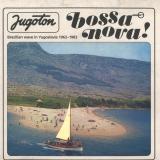
Rich musical history of Yugoslavia reveals a long-lasting love for the music of Latin America.
Entwined in Afro-Cuban rhythms, ballrooms were shakin', swayin' and swingin', gathering musicians who were heavily into jazz bands and orchestras, most notably in Ljubljana, Zagreb, and Belgrade. Jazz could be heard on the streets of Split way back in 1919 when dancing became a symbol of freedom. Radio was the most loved household item, newest sheet music was in demand and collecting records was hip like today. In the aftermath of Second World War, jazz went underground but little by little, things changed and Ella, Satchmo, Dizzy and Miles came to visit, among others. Music festivals shaped the music for entertainment and variety of popular styles showed influences from all over the world. In the early sixties, one particular rhythm crashed on the coast of the Adriatic Sea: the rhythm of bossa nova!
In the whirlwind of various musical styles, Latin American music still played important part of the scene in the early sixties Yugoslavia. Beguine, tango, rhumba, samba, calypso, mambo and cha-cha-cha all found their place on the festivals inspired by famous Sanremo, festival of Italian popular song that largely shaped the musical taste of Europe. It was the era of instrumental rock, R & B and rock'n'roll - sounds of "imperialist America" now played freely on imported and hand-made electric guitars. While dancing halls had been turning into concert venues, bossa nova has come! Eydie Gorme with Blame It on the Bossa Nova and Paul Anka with Eso Besso (That Kiss!) tried to make us learn some new dance moves but it was Joao Gilberto's gentle singing and his new way of playing samba songs, along with Tom Jobim's modern dissonant harmonies and poetry of Vinicius de Moraes that created the magic. When American alto saxophonist and flautist Bud Shank visited Zagreb and Ljubljana in 1963 (with Boško Petrović in his quintet) "it was the first time we heard bossa nova!" remembers Stjepan Braco Fučkar. Jugoton, the biggest record company in Yugoslavia, released 4-track EP Bossa Nova by Bogdan Dimitrijević and his ensemble that same year! While not being fully accepted or understood completely, the archives of Jugoton reveal to us various interpretations of this new trend from their vast catalogue.
American ambient powerhouse zake is back with a meditation on stillness, memory and the quiet power of seasonal change. Rooted in the Midwestern winter that inspires much of his work, his latest album Cantus for Winter in Six Parts unfolds in slow-moving analogue drones, soft hiss and faint environmental textures that are both intimate and expansive and true to his signature style. Each piece drifts gently into the next, evoking cracked wood, falling snow, distant strings and the eerie calm of frozen landscapes. By the time the 19-minute finale arrives, you are lost in a world of solitude and reflecting deeply on many things that will ultimately leave you feeling restored.
- Mobali Nakobala (Nico – Ngoma J 5127, © Sukisa) Rumba Lingala
- Nalingi Yo Na Motema (Nico, Chantal – Ngoma J 5130 © Sukisa) Kiri-Kiri
- Mokili Makambo (Nico – Sukisa 93) Kiri-Kiri
- Ata Osali (Chantal – Ngoma Dnj 5214, © Sukisa) Rumba Lingala
- 1: Er Boeing (Kwamy – Air Congo) Merengue
- Hommage A Lumumba Patrice (Sukisa 44) Mabanga
- Bougie Ya Motema (Nico – Sukisa 47) Rumba Lingala
- Okosambuisa Ngai (Mizele – Sukisa 66) Rumba Lingala
- Sule (Nico – Sukisa 50) Rumba Lingala
- Okosuka Wapi ? (Josky – Sukisa 110) Danse Kono
- Kamungaziko (Lessa Lassan – Sukisa 114) Danse Kono
- Mokili Matata (Nico – Tcheza 10.001; © Sukisa) Rumba-Kono Lingala
- Baoulé (Lassan – Sukisa 99) Kiri-Kiri
- Beauté (Nico – Sukisa 101) Rumba Lingala
- Mansanga (Nico – Sukisa 131) Rumba Lingala
- Souzi (Sangana – Sukisa 117) Rumba Lingala
- Naboyi Koswana (Sangana – Sukisa 120) Rumba Cha Cha
- July (Julie – Sukisa 120) Madre Rumba
- Runeme Mama (Nico – Sukisa 47) Cha Cha Cha
- A Morow (Arr. Nico – Sukisa 66) Cha Cha Cha
- Apôtre Del Si Boney (Apôtre – Sukisa 73) Charanga
- A La Savana (Arr. Nico – Sukisa 62) Pachanga
- Alto Songo (Arr. Nico – Ngoma J5126, © Sukisa) Rumba Espagnol
- Para Bailar (Nico – Sukisa 50) Pachanga
- Meta Fua Mudia (Kaba – Sukisa 118) Rumba Lingala
- Exhibition Show (Nico – Sukisa 135) Instrumental
- Exhibition Dechaud (Dechaud – Sukisa 71) Instrumental
- Bolala - Ayando (Nico – Sukisa 132) Extrait Show Kasanda
- Excitation - Makwandungu - Ngombele (Nico – Sukisa 132) Extrait Show Kasanda
- Kamulangu
'In collaboration with the children of Nico Kasanda, better known as Docteur Nico, Planet Ilunga proudly presents an anthology dedicated to African Fiesta Sukisa, available as a 3LP set and a digital release with bonus songs. This release is the result of many years of preparations and was realized in close partnership with Liliane Kasanda, Nico’s eldest daughter. Marking forty years since his passing, we felt that the year 2025 was the right time to honor Docteur Nico’s legacy with this original collection.
'Almost all of the African Fiesta Sukisa songs were released on Nico’s Sukisa label which translates in Lingala for “the final accomplishment”. The music on Sukisa, crafted by Nico and legendary vocalists such as Chantal, Sangana, Apôtre, Mizele, Lessa Lassan and Josky, embodies the essence of that powerful phrase with genius, class and depth. The label ran between 1966 and 1975 and released approximately 280 songs. Ngoma also issued the group between 1967 and 1971 and, in addition, reissued material from the Sukisa label. Many of these songs have become part of the collective memory of Congolese society and are still heard, discussed, and analyzed daily across digital platforms worldwide, as well as on numerous Congolese radio and TV stations.
'The album we put together features some of Nico’s signature songs alongside never before reissued tracks from the Sukisa catalog. It furthermore contains a large booklet with song commentary, testimonial interviews from well-known musicians, journalists, fans and Nico’s entourage, besides never before published photography about his personal and musical life.
'Alastair Johnston, author of the book ‘A Discography of Docteur Nico’ and longstanding Planet Ilunga collaborator, designed a stylish booklet and cover using all our collected material. Audifax Bemba, longtime admirer, compiler and connoisseur of Nico’s music, and the author of most of the song commentary in our accompanying booklet, offers his portrait of Docteur Nico:
“After displaying technical virtuosity with African Jazz, expert and accomplished guitar with African Fiesta, which musicologist Sylvain Bemba described as a dream guitar, Nico Kasanda was consecrated ‘dieu de la guitare’ by the public in the late sixties. With his band African Fiesta Sukisa, Docteur Nico displays his wide palette of unusual sounds. While exploring the Hawaiian guitar with its clear, airy, plangent, psychedelic effluvia, he continues to replicate the piano comping technique, and adds two missing strings to his bow: a simulation of the sanza (likembé or thumb piano), whose sounds he reproduces right down to the noisemakers of the tiny tin rings, on the one hand, and the sounds of the Luba balafon on the other. The right note, in the right place, at the right time, is the triptych on which Nico Kasanda’s playing is based, a note dressed in the perfect sound. A guitar of pure emotion. With African Fiesta Sukisa, his playing takes a ‘Chopin-esque’ turn, sending out more notes in a sublime adagio. The true artist is the one who simplifies everything. Docteur Nico is a genius of our time, whose style makes him the supreme exponent of the most important guitar school in Congolese music. He is recognized by his peers as the greatest African solo guitarist of all time. Sculpting sound in a tireless quest for beauty, Nico Kasanda has sublimated the guitar throughout his career.”
[xd] Kamulangu [Outro] (Dr. Kasanda – Sukisa 135) Folklore Baluba
- 1: Avó I
- 2: Avó Ii
- 3: Avó Iii
- 4: Avó Iv
- 5: Avô I
- 6: Avô Ii
- 7: Avô Iii
- 8: Avô Iv
Guilherme Granado & Bruno Abdala reunite for a second volume of beats, jazz ghosts and synth-funk dust.
Following their first outing earlier this year (Vol. 1 on Sucata Tapes / SUC66), the duo returns with a bigger, deeper, and smoother bang on Vol. 2 – Filhos.
The grooves remain intact, expanding on the raw funk blueprint of Vol. 1 — now infused with Tropicália-rooted freedom, Sun Ra-style celestial chaos, and a tighter, more confident feel. The sonic palette is rich and eclectic: samplers, bells, analog synths, drums, marimba, vibraphone, bass, violas, and more are layered into a warm, rhythmic tapestry that honours the past while forging new sonic terrain.
At its core, Filhos (Portuguese for "Sons") is a tribute to lineage and tradition. It reflects the idea that we are all shaped by what came before — and through music, Guilherme & Bruno honor that legacy while pushing it into the future.
- A1: Jimmy Reed Highway Feat Lou Ann Barton
- A2: Baby What You Want Me To Do
- A3: Bright Lights Big City Feat Kim Wilson
- A4: Big Boss Man Feat Kim Wilson
- A5: Good Lover Feat Lou Ann Barton
- A6: Caress Me Baby Feat Lou Ann Barton & James Cotton
- B1: Aw Shucks, Hush Your Mouth
- B2: You Upset My Mind Feat Lou Ann Barton & Kim Wilson
- B3: I'll Change My Style
- B4: Bad Boy
- B5: Baby, What's Wrong Feat Gary Clark Jr
- B6: Hush Hush Feat Delbert Mcclinton
- B7: You Made Me Laugh
It runs through the minds of men and women of a certain age, complexion, and place who grew up during the era of segregation and who defied their parents, the law, and all genteel propriety and custom by answering one bluesman's invitation to cross the color line and join him getting lowdown and dirty as he serenaded a generation from the bandstand, on jukeboxes, and through the radio.
To them, the slurred guttural sound of a wise man singing "Hush, Hush," putting down the "Big Boss Man" or advising the listener to "Take Out Some Insurance" before they behold the "Bright Lights, Big City" was a siren's call they had no choice but to answer. Even if they tried, they couldn't resist the steady, dirty rhythm punctuated by the twanging sting of an electric guitar note and the sweet wail of a harmonica. And when they leaned in close, they could even hear the barely perceptible sound of a woman's voice whispering forgotten lyrics into an ear.
Ain't nobody can do Jimmy Reed like Jimmy Reed could. But this drive down Jimmy Reed Highway with fellow Mississippian Kent "Omar" Dykes at the wheel with Jimmie Vaughan (older brother of the legendary Stevie Ray Vaughan) riding shotgun and folks like, Kim Wilson, Miss Lou Ann Barton, James Cotton, Delbert McClinton, and Gary Clark, Jr., joining the duo, comes mighty close. As Omar guns the engine and peels rubber on the two- lane blacktop lined with no- good women, empty whiskey bottles, too many cigarette butts and bad intentions, he leaves John Law trailing behind eating his dust. Hop in for a ride and turn up the volume. The electric bluesman who shaped the minds and moves of a musical generation is alive and well. (by Joe Nick Patoski)
Big one from Milanese maestro Inner Lakes. Hell-bent on making 2025 his year, the Kalahari debutant maintains form and momentum with the latest in a flurry of vital releases.
A meticulously-crafted 4-tracker imbued with menace and urgent, late nite throb, it’s precisely the spiralling, nocturnal kinda style that has become his hallmark. Streetwise, upfront and packing a sizeable amount of f*ck-off NRG.
Expect noirish, night-stalking rave suspense and hardware-fuelled, high-velocity torque. Best heard in the company of shadow-dwelling spectres, or perhaps, at the event horizon of a black hole.
DJ tools reveal greater depth and nuance upon closer inspection, and disembodied vocals lure inquisitive ears deep into the dream state. Finely measured throughout, it’s a masterful balance between functionality and full-blown dancefloor immersion, all courtesy of a fella at the top of his game.
Written and Produced by Inner Lakes.
Mastered and cut by Kassian Troyer at Dubplates & Mastering.
Distributed by One Eye Witness.
Artwork by S.O.N.S
- 1: I Will Forgive You
- 2: Root Of All Evil
- 3: Holy Mount Zion
- 4: Sexy Jean
- 5: Let The Teardrops Fall
- 6: I Don’t Want To Be Outside
- 7: Eighty Percent Badness
- 8: Get Wise
- 9: Youth Of Today
- 10: Feel Good
With his honeyed falsetto, Horace Andy has long been considered one of roots reggae's most inimitable voices. His signature tune, "Skylarking," is one of a handful of songs that can be instantly recognized by even the most casual of reggae fans. Making his debut with producer and mentor Phil Pratt at the age of sixteen, Andy's expressive vocal style is immediately distinctive, bearing the soulful influence of American artists Otis Redding and Smokey Robinson as well as fellow countryman Alton Ellis.
1975's Get Wise collects a series of singles produced by Pratt including versions of hits "Money, Money" ("Root Of All Evil") and "Zion Gate" ("I Don't Want To Be Outside"). Recorded between 1972 and 1974, these sides were captured at legendary studios Channel One, Black Ark, Dynamic Sound and Randy's Studio 17 with house engineers Ernest Hoo Kim, Lee Perry, Carlton Lee and Errol Thompson at the helm.
Originally released on Pratt's Sunshot label, the album doubles as a showcase for The Soul Syndicate Band, a typically ad-hoc session group which featured Sly & Robbie, Aston "Family Man" Barrett and Earl "Chinna" Smith, among others.
Get Wise delivers ten tracks of Andy's finest material and should be in the collection of any aficionado of the classic '70s Kingston sound. Liner notes by JR Gonne.
- A1: Cool Down The Heat
- A2: World Inflation
- A3: Come From Far
- A4: Ism Schism
- A5: No Bed Of Rose
- B1: Police And Thieves
- B2: Cool Out Son
- B3: Dancehall Girls
- B4: Zoops
- B5: Lion Mouth
Solid gold previously unreleased Junior Murvin Album produced by King Jammy finally sees the light of day. Rare non-album singles plus a trailer load of previously unreleased make ‘Cool Down The Heat’ a must have companion to Junior Murvin’s iconic Lee ‘Scratch’ Perry recordings. Among the newly discovered gems Junior Murvin revisits his two signature songs ‘Police and Thieves’ & ‘Cool Out Son’ and locks them down in true Waterhouse style.
- 1: Wherever I Go
- 2: Bad Guy
- 3: Sweet Child O Mine
- 4: Halo
- 5: Shallow
- 6: Demons
- 7: I Don T Care
- 8: Cryin
- 9: Livin On A Prayer
- 10: The Sound Of Silence
Croatian cellists Luka Šulić and HAUSER, together known as 2CELLOS, celebrated their 10th anniversary in 2021 with a brand new album, titled Dedicated. The album was led by the first single, a cover of Bon Jovi’s anthem “Livin’ On A Prayer”. Dedicated showcases their unique playing style on ten new arrangements that reinvent both recent hits such as One Republic's “Wherever I Go”, Ed Sheeran/Justin Bieber's “I Don’t Care” and Billie Eilish's “Bad Guy”, and iconic classics such as Guns ‘N Roses' “Sweet Child O’ Mine” and Aerosmith's “Cryin’”. In 2011, 2CELLOS went viral with their self-uploaded version of Michael Jackon’s “Smooth Criminal”. Since then, they’ve released five chart-topping studio albums, amassed over 2.5 billion streams and surpassed 20 million followers on their socials. They shared the stages with Elton John, Steven Tyler, Andrea Bocelli, George Michael and Queens Of The Stone Age amongst others. Dedicated is available as a limited edition of 1000 numbered copies on white coloured vinyl and includes an insert.
Black Vinyl[14,71 €]
Black+ Limited Art Print + Limited 150 Page H[41,13 €]
YELLOW VINYL[16,77 €]
The record is largely sung in Scots language, one of Scotland’s three official languages along with Gaelic and English. “Scots gives me a way of expressing myself which is connected directly with the landscapes I love. It brings the songs alive and it is a fascinating language. The name of the record is in Scots - Forefowk means the people who came before, or ancestors. When we say ‘mind me,’ we can mean a few things- remind, remember, watch over or care for me. The record explores how tradition needs to be constantly reconnected with, built upon, looked after, and shared.”
Quinie sings with a style inspired by Scottish Traveller singers. “I began singing unaccompanied Scots Song in 2015 after hearing Scots Traveller singer Sheila Stewart on the radio. Initially I felt like I shouldn't sing these songs because I'm not a Traveller, and I saw people around me doing that in a way that made me uncomfortable. But on the other hand this music made sense to me and I felt driven to learn. Over the years I have met Traveller friends who taught me that settled people sharing these songs could contribute to raising awareness. Scottish Travellers are marginalised and discriminated against in modern Scotland, despite being custodians of so many of our important traditions. So I started to perform them and tell this story. From there I built on my repertoire and started writing my own songs”.
To develop this record, Quinie travelled across Argyll with her horse. They went on a pilgrimage of sorts through the ancient landscapes of the West of Scotland to explore the interconnected relationships between people, ancestors, animals, and place. The album’s vinyl release is accompanied by a book and film, documenting this unusual research process.
Forefowk, Mind Me was recorded in August 2024 at The Big Shed in Highland Perthshire with support from Creative Scotland. Quinie is accompanied by an ensemble of musicians: Ailbhe Nic Oireachtaigh (viola), Oliver Pitt (duduk, bouzouki, percussion), Harry Górski-Brown (small pipes, violin), and Stevie Jones (double bass, recording, and mixing). Each of these artists brings their own distinctive voice, bridging contemporary experimental practice with worlds of traditional and early music.
- 1: Jimmy Reed Highway
- 2: Baby What You Want Me To Do
- 3: Bright Lights Big City
- 4: Big Boss Man
- 5: Good Lover
- 6: Caress Me Baby
- 7: A W Shucks, Hush Your Mouth
- 8: You Up S Et My Mind
- 9: I'll Change My Style
- 10: Bad Boy
- 11: Baby, What's Wrong
- 12: Hush Hush
- 13: You Made Me Laugh
180g schwarzes Vinyl
Das 2007er Album der beiden Gitarristen und Sänger erscheint hiermit erstmalig auf Vinyl
Mit Gary Clark Jr, James Cotton, Delbert McClinton, Kim Wilson und Lou Ann Barton
12 Tracks von Jimmy Reed, oder von ihm inspiriert
Jimmie Vaughan ist der ältere Bruder von Stevie Ray Vaughan
- 1: Ana Turn The Lights On
- 2: Flashbulb Memory (Ft Violeta Vicci)
- 3: He'll Become A Buddha
- 4: Separate Ways
- 5: In Absentia
- 6: The 4Th Eye
- 7: The Librarian
- 8: The Shiver (Ft. Alex Paterson)
- 9: Fourteen Pilgrims Over The Sava
- 10: Twin Towers (Ft. Violeta Vicci)
- 11: Sally Satellite (Ft. Alex Paterson)
- 12: The Turning Dime
"Los Angeles-born music producer, artist, and DJ DF Tram is thrilled to announce the release of his highly anticipated new album, Bittersweet Afternoon on Orbscure Records. Orbscure Records, founded by Alex Paterson of the legendary electronic act The Orb, continues its tradition of championing innovative and boundary-pushing artists with this remarkable release. About DF Tram DF Tram is a leading figure in the global downtempo electronic scene, celebrated for his meticulously crafted audio-visual performances and immersive storytelling through sound. His work seamlessly blends ambient, sampling, spoken word, vocals, and psychedelia into genre-defying sonic journeys, offering listeners a unique and transformative experience. Bittersweet Afternoon Written and recorded between DF Tram’s Zagreb and Vienna studios during the pandemic and finished last year. Bittersweet Afternoon represents the next chapter in his storied career. The album surprises listeners with his vocals, bittersweet lullabies, and signature collage and spoken word style. Featuring atmospheric soundscapes and cinematic influences, the project reflects the spirit and playfulness of Alex Paterson and Orbscure’s commitment to fostering experimental, forward-thinking music. Adding to the album’s rich tapestry are collaborations with Alex Paterson himself on two tracks, as well as contributions from multi-talented contemporary classical violinist Violeta Vicci on another pair of songs. The first single and video, "The Librarian," offers an immersive glimpse into the world of DF Tram and “Bittersweet Afternoon”. Available on a limited edition transparent blue vinyl, card gatefold CD.
A new vinyl album from Nat Birchall, this is the Dub version of his Dimension of the Drums LP, a roots reggae instrumental set that was very enthusiastically received last year, ending up on many best Of The Year lists.
For this album Nat has remixed the tracks in classic early to mid - 1970s style. Inspired by the classic Dub LPs like Keith Hudson’s ‘Pick A Dub’ and Winston Edwards’ ‘King Tubby Meets The Upsetter at the Grass Roots of Dub’ the tracks have been reimagined in Roots Dub fashion, some with new horn lines and all with hand drums, giving the album a very authentic Rootsy sound. Additionally there are two different mixes of a new rhythm track that wasn’t on the previous album.
Once again Nat plays all the instruments and did all the recording, mixing and mastering.
Drums in Dub features eight tracks of instrumental Dub delight, specially designed for the 1970s Dub connoisseur.
- A1: Pluto
- A2: Lucky
- A3: Rise
- A4: Every Color
- B1: Baby Mama
- B2: Junebug (Feat. Jpegmafia)
- B3: Lose My Focus
- B4: We Should Move Somewhere Beautiful (Feat. Arima Ederra)
- B5: Kid
- C1: 16 Candles (Feat. Ganavya)
- C2: Smile For Me
- C3: Afternoon Tea With The Auroras (Interlude)
- C4: Little Bird
- C5: Water
- D1: Sun Don't Leave Me
- D2: Lose My Focus (Feat. Umi)
- D3: You're So Good To Me
Where the Butterflies Go in the Rain is the third studio album from the enchanting songstress, Raveena. Blending powerful storytelling with early 2000s pop, Where the Butterflies Go in the Rain sees music continuing to play the central role as both a catalyst and medium in her personal and creative growth. With newfound clarity, Raveena delves into themes of new love, maturity, comfort, and domesticity that reflect the peace of mind she currently inhabits. Speaking on this evolution and how it informed the album’s creative, she shares, “Butterflies are so delicate that they have to hide in leaves and flowers until the rain passes so that their wings don’t get crushed in the rain. I felt like that was kind of a metaphor for where I was in my life. I needed to go back to comfort—to deep rest—and stop weathering storms.” On the most instinctual level it’s an album that should conjure simple pleasures like the joy of a summer road trip with loved ones.
Embracing the sounds of classic artists like Fleetwood Mac, Brandy, Bob Marley, Joni Mitchell, and Marvin Gaye, to name a few, Where the Butterflies Go in the Rain draws inspiration from people who, “are really good at capturing the beauty and loss of life in the same breath,” she describes. In her signature style, Raveena seamlessly unites that expansive songwriting with traditional Indian instruments and feel-good early 2000s pop hits —putting forth a work that’s more unabashedly herself than any that’s come before.
Raveena reflects on her forthcoming album, “I don't think I've ever understood a record so well before—It wasn’t like the process I used to have with past albums where I was more anxious about being at my best. This time, it was all intuition, and I knew the album was right when I finally had the feeling of rest.”
The deluxe release sees the addition of 3 tracks. Sun Don't Leave Me - contemplating the feeling of wanting to hold onto one more beautiful sunset, one more passionate embrace, before things change again and hard times strike again - and a reimagined version of Lose My Focus with UMI, bringing fresh energy to an album that’s more unapologetically Raveena than ever.
Black Vinyl + Art Print[17,61 €]
Black+ Limited Art Print + Limited 150 Page H[41,13 €]
YELLOW VINYL[16,77 €]
The record is largely sung in Scots language, one of Scotland’s three official languages along with Gaelic and English. “Scots gives me a way of expressing myself which is connected directly with the landscapes I love. It brings the songs alive and it is a fascinating language. The name of the record is in Scots - Forefowk means the people who came before, or ancestors. When we say ‘mind me,’ we can mean a few things- remind, remember, watch over or care for me. The record explores how tradition needs to be constantly reconnected with, built upon, looked after, and shared.”
Quinie sings with a style inspired by Scottish Traveller singers. “I began singing unaccompanied Scots Song in 2015 after hearing Scots Traveller singer Sheila Stewart on the radio. Initially I felt like I shouldn't sing these songs because I'm not a Traveller, and I saw people around me doing that in a way that made me uncomfortable. But on the other hand this music made sense to me and I felt driven to learn. Over the years I have met Traveller friends who taught me that settled people sharing these songs could contribute to raising awareness. Scottish Travellers are marginalised and discriminated against in modern Scotland, despite being custodians of so many of our important traditions. So I started to perform them and tell this story. From there I built on my repertoire and started writing my own songs”.
To develop this record, Quinie travelled across Argyll with her horse. They went on a pilgrimage of sorts through the ancient landscapes of the West of Scotland to explore the interconnected relationships between people, ancestors, animals, and place. The album’s vinyl release is accompanied by a book and film, documenting this unusual research process.
Forefowk, Mind Me was recorded in August 2024 at The Big Shed in Highland Perthshire with support from Creative Scotland. Quinie is accompanied by an ensemble of musicians: Ailbhe Nic Oireachtaigh (viola), Oliver Pitt (duduk, bouzouki, percussion), Harry Górski-Brown (small pipes, violin), and Stevie Jones (double bass, recording, and mixing). Each of these artists brings their own distinctive voice, bridging contemporary experimental practice with worlds of traditional and early music.
- 1: Long Long Time
- 2: I Should Have Known
- 3: Under The Covers
- 4: Slow Wifi Weekend
- 5: Is This The Last Time
- 6: In The Doghouse
- 7: Red Letter Blues
- 8: Satin Row
- 9: Hold On
- 10: Today’s The Day
- 11: Cold Coffee Blues
- 12: What Has Happened To My Dog
- 13: Big Blue Sky
Doris Brendel & Lee Dunham take an unexpected yet electrifying turn into the world of Blues with their latest album, Big Blue Sky. Known for her powerhouse vocals and genre-defying style, Brendel—who recently won the HRH Prog Angel Award 2024—delivers 13 beautifully crafted Blues tracks that blend raw emotion, soulful melodies, and top-tier musicianship. Featuring a stellar lineup, including Sam Brown (Hammond), Sam Blue (vocals), and Sam White (drums), Big Blue Sky is a masterclass in Blues with a contemporary twist. From classic blues ballads (‘Under the Covers’, ‘Red Letter Blues’) to the humour-infused ‘Slow Wi-Fi Weekend’ and soul-stirring duets (‘Is This the Last Time’), the album is a fresh and dynamic take on the genre. Produced by Lee Dunham, Big Blue Sky is available digitally, on CD, and on vinyl (featuring a special 9-track selection). Doris Brendel has performed with some of rock’s greats, including Fish (Marillion), Wishbone Ash, and Nils Lofgren, and was even invited to tour with Pink Floyd. With Big Blue Sky, she proves once again that she refuses to be boxed into a single genre, bringing her signature husky, bluesy vocals to a project that is both timeless and innovative.
- A1: Salinas - "Tenha Fe, Pois Amanha Um Lindo Dia Vai Nascer" (2 52)
- A2: Elza Soares - "Pulo, Pulo" (2 08)
- A3: Sonia Santos - "Speed" (4 15)
- A4: Osmar Milito - "Rita Jeep" (2 20)
- A5: Wilson Simonal - "Zazueira" (3 10)
- A6: Osmar Milito - "Quem Mandou" (2 27)
- B1: Doris Monteiro - "Se Voce Quiser Mas Sem Bronquear" (3 00)
- B2: Wilson Simonal - "Que Pena" (2 54)
- B3: Osmar Milito - "Morre O Burro, Fica O Homem" (2 31)
- B4: Os Originais Do Samba - "La Vem Salgueiro" (3 23)
- B5: Os Brazoes - "Carolina, Carol Bela" (2 06)
- B6: Wilson Simonal - "Crioula" (3 18)
- C1: Claudette Soares - "Eles Querem E Amar" (2 43)
- C2: Os Incriveis - "Vendedor De Bananas" (3 46)
- C3: Wilson Simonal - "Brasil, Eu Fico" (2 15)
- C4: Cyro Aguiar - "Rei Do Maracatu" (2 02)
- C5: Wilson Simonal - "Resposta" (3 09)
- C6: Elza Soares - "Mas Que Nada" (2 25)
- C7: Wilson Simonal - "Pais Tropical" (3 30)
- D1: Os Originais Do Samba - "Cade Tereza" (4 34)
- D2: Marijo - "Fio Maravilha" (3 53)
- D3: Os Originais Do Samba - "Tenha Fe, Pois Amanha Um Lindo Dia Vai Nascer
- D4: Os Brazoes - "Que Maravilha" (2 26)
- D5: Os Mutreteiros Grilados - "Cosa Nostra" (4 31)
- D6: Os Originais Do Samba - "Falador Passa Mal" (3 13)
Jorge Ben is surely one of the world’s greatest all-round musical artists. He is internationally renowned and vastly influential as a vocalist, musician, performer and phenomenal songwriter. Famed for penning ‘Taj Mahal’, which was the source for Rod Stewart’s ‘Do You Think I’m Sexy?’, and also ‘Mas Que Nada’, one of Brazil’s most iconic anthems, Jorge Ben is a powerful musical force. A simple glance at his impressive back catalogue reveals a master of his craft, with a depth and quality that is seldom paralleled.
For 'Tudo Ben' we take a side-step, focusing on Jorge Ben’s songs that have been performed by other artists. Complied by Mr Bongo, Greg Caz and Sean Marquand, this collection features the Brazilian legends Elza Soares, Claudette Soares, and Wilson Simonal, alongside prodigious artists such as Marijô, Os Brazoes, and Doris Monteiro to name but a few. The selection covers a wide range of genres including samba, bossa nova, MPB and batacuda workouts. Many of the songs featured have become staples in Mr Bongo DJ sets over the years and are some of our most loved classics. As with many of history’s great songwriters, Jorge Ben’s songs transcend genres and styles, they can be covered and reinterpreted, yet the quality of the writing holds up to the standard of the original.
In the dark days of the mid to late 2000s when the end of vinyl seemed inevitable, Mr Bongo released 'Tudo Ben' on CD only. Years later, we finally get to put this right and present it for the first time on vinyl with alternative artwork by Mr Krum.
Back in 2018, Argentinian producer Fernando Pulichino released ‘Search of Indigo’ on Leng, a shuffling slab of colourful, Balearic-adjacent dub disco featuring his own distinctive lead vocals and backing vocals from Luca Gasparini. Six years on, the track returns renewed and refreshed thanks to a string of new floor-friendly reworks by LTJ Xperience and Pulichino himself. Fernando kicks off the EP with his ‘AM Mix’, an inspired re-invention that re-frames the song as a hard-wired, acid-fired chugger – all restless, razor-sharp TB-303 lines, low-slung bass guitar and sparkling piano riffs. On the digital version of the EP Pulichino has also offered up his ‘PM Mix’, a deliciously Balearic disco dub rich in colourful synth sounds, elastic bass, flanged guitars and sun-bright piano licks. It's LTJ Xperience’s trio of remixes that lie at the heart of the EP though. The Italian producer, real name Luca Trevisi, initially made his name as a downtempo and nu-jazz producer before perfecting a trademark style of chugging, slow-motion hedonism that draws influence from both deep house and nu-disco. His main Remix foregrounds many of these trademark elements, in the process delivering a bongo-rich chugger laden with delayheavy bass guitar sounds, head-nodding drums, heady guitar loops and echoing vocal snippets. On the Dirty Mix, Trevisi reaches for tight, short TB-303 ‘acid’ loops, a more sparse and heavy rhythm track offering a more heads-down, dubbed-out affair that should delight those who love late night and early morning hypnotism with flashes of wide-eyed sonic bliss. Then, to round things off, Trevisi delivers a heady, atmospheric and spaced-out Dub full of jazz guitar licks, bubbling electronics, vocal snippets and effects-laden bass. It’s a winning combination.
"This is the time that we, who have benefitted from the Last Poets shouldbe able to say, 'it's the Last Poets. It's them we should be honouring, because we did not honour them for so many years_"
KRS One wasn't just addressing the hip hop fraternity when he uttered
those words by way of introducing the video for Invocation - a poem
written thirty years ago, around the time of the Last Poets' last significant comeback. He was speaking to everyone who's been affected by the word, sound and power issuing from the most revolutionary poetry ever witnessed, and that the Last Poets had introduced to the world outside of Harlem at the dawn of the seventies.
In 2018 the two remaining Last Poets, Abiodun Oyewole and Umar Bin
Hassan, embarked on another memorable return with an album -
Understand What Black Is - that earned favourable comparison with theirseminal works of the past, whilst showcasing their undimmed passion andlyrical brilliance in an entirely new setting - that of reggae music. Trackslike Rain Of Terror ("America is a terrorist") and How Many Bullets demonstrated that they'd lost none of their fire or anger, and their essential raison d'etre remained the same.
"The Last Poets' mission was to pull the people out of the rubble o f their lives," wrote their biographer Kim Green. "They knew, deep down that poetry could save the people - that if black people could see and hear themselves and their struggles through the spoken word, they would be moved to change."
Several years later and the follow-up is now with us. The project started when Tony Allen, the Nigerian master drummer whose unique polyrhythms had driven much of Fela Kuti's best work, dropped by Prince Fatty's Brighton studio and laid down a selection of drum patterns to die for. That was back in 2019, but then the pandemic struck. Once it had passed, the label booked a studio in Brooklyn, where the two Poets voiced four tracks apiece and breathed fresh energy, fire and outrage into some of the most enduring landmarks of their career. Abiodun, who was one of the original Last Poets who'd gathered in East Harlem's Mount Morris Park to celebrate Malcolm X's birthday in May 1968, chose four poems that first appeared on the group's 1970 debut album, called simply The Last Poets. He'd written When The Revolution Comes aged twenty, whilst living in Jamaica, Queens. "We were getting ready for a revolution," he told Green. "There wasn't any question about whether there was going to be one or not. The truth was many of us still saw ourselves as "niggers" and slaves. This was a mindset that had to change if there was ever to be Black Power." He and writer Amiri Baraka were deep in conversation one day when Baraka became distracted by a pretty girl walking by. "You're a gash man," Abiodun told him. The poem inspired by that incident, Gash Man, is revisited on the new album, and exposes the heartless nature of sexual acts shorn of intimacy or affection. "Instead of the vagina being the entrance to heaven," he says, "it too often becomes a gash, an injury, a wound_" Two Little Boys meanwhile, was inspired after seeing two young boys aged around 11 or 12 "stuffing chicken and cornbread down their tasteless mouths, trying to revive shrinking lungs and a wasted mind." They'd walked into Sylvia's soul food restaurant in Harlem, ordered big meals, then bolted them down and run out the door. No one chased after them, knowing that they probably hadn't eaten in days. Fifty years later and children are still going hungry in major cities across America and elsewhere. Abiodun's poem hasn't lost any relevance at all, and neither has New York, New York, The Big Apple. "Although this was written in 1968, New York hasn't changed a bit," he admits, except "today, people just mistake her sickness for fashion." Umar is originally from Akron, Ohio, but had arrived in Harlem in early 1969 after seeing Abiodun and the other Last Poets at a Black Arts Festival in Cleveland. That's where he first witnessed what Amiri Baraka once called "the rhythmic animation of word, poem, image as word- music" - a creative force that redefined the concept of performance poetry and stripped it bare until it became a howl of rage, hurt and anger, saved from destruction by mockery and love for humanity. When Umar's father, who was a musician, was jailed for armed robbery he took to the streets from an early age where he shined shoes and raised whatever money he could to help feed his eight brothers and sisters. By the time he saw the Last Poets he'd joined the Black United Front and was ready to join the struggle. Once in Harlem, Abiodun asked him what he'd learnt in the few weeks since he'd got there. "Niggers are scared of revolution," Umar replied. "Write it down" urged Abiodun. That poem still gives off searing heat more than fifty years later. In Umar's own words, "it became a prayer, a call to arms, a spiritual pond to bathe and cleanse in because niggers are not just vile and disgusting and shiftless. Niggers are human beings lost in someone else's system of values and morals." And there you have it. It's not just race or religion that hold us back, but an economic system that keeps millions in poverty and living in fear - a system born from political choice and that's now become so entrenched, so bloated on its own success that it's put mankind in mortal danger. It was many black people's acceptance of the status quo that inspired Just Because, which like Niggers Are Scared Of Revolution, was included on that seminal first album. Along with their revolutionary rhetoric, it was the Last Poets' use of the "n word" that proved so shocking, but it would be wrong to suggest that they reclaimed it, since it never belonged to black people in the first place. There's never any hiding place when it comes to the Last Poets. They use words like weapons, and that force all who listen to decide who they are and where they stand. Umar's two remaining tracks find him revisiting poems first unleashed on the Poets' second album This Is Madness! Abiodun had left for North Carolina by then where he became more deeply enmeshed in revolutionary activities and spent almost four years in jail for armed robbery after attempting to seize funds related to the Klu Klux Klan. Meanwhile, the 21 year old Umar was squatting in Brooklyn and had developed close ties with the Dar-ul Islam Movement. A longing for purity and time-honoured spiritual values underpins Related to What, whilst This Is Madness is a call for freedom "by any means necessary," and that paints a feverish landscape peopled by prominent black leaders but that quickly descends into chaos. "All my dreams have been turned into psychedelic nightmares," he wails, over a groove now powered by Tony Allen's ferocious drumming. Those sessions lasted just two days, and we can only imagine the atmosphere in that room as the hip hop godfathers exchanged the conga drums of Harlem for the explosive sounds of authentic Afrobeat. Once they'd finished, the recordings and momentum returned to Prince Fatty's studio, since relocated from Brighton to SE London. This was stage three of the project, and who better to fill out the rhythm tracks than two key musicians from Seun Anikulapo Kuti's band Egypt 80? Enter guitarist Akinola Adio Oyebola and bassist Kunle Justice, who upon hearing Allen's trademark grooves exclaimed, "oh, the Father_ we are home!" Such joy and enthusiasm resulted in the perfect fusion of Nigerian Afrobeat and revolutionary poetry, but the vision for the album wasn't yet complete. He wanted to create a new kind of soundscape - one that reunited the Poets with the progressive jazz movement they'd once shared with musicians like Sun Ra and Pharoah Sanders. It was at that point they recruited exciting jazz talents based in the UK like Joe Armon Jones from Mercury Prize winners Ezra Collective, also widely acclaimed producer/remixer and keyboard player Kaidi Tatham, who's been likened to Herbie Hancock, and British jazz legend Courtney Pine, whose genius on the saxophone and influence on the UK's now vibrant jazz scene is beyond question. The instrumental tracks on Africanism are in many ways as revelatory and exciting as the Last Poets' own. It's important to remember that the kaleidoscope of styles and influences we're presented with here aren't the result of sampling but were played "live" by musicians responding to sounds made by other musicians. That's where the magic comes from, aided by Prince Fatty's peerless mixing which allows us to hear everything with such clarity. Music fans today have grown accustomed to listening to all kinds of different genres. Their tastes have never been so broad or all- encompassing, and so the music on this new Last Poets' album is as groundbreaking as their lyrics, and perfectly suited to the era that we're now living in. John Masouri
- Chubbby (48)
- B.w.n (09)
- Ummm (70)
- Avoidance (56)
- This One (03)
- Air Up (27)
- For Someone (23)
- Swifty (63)
- So It's Gone? (25)
- Yip (17)
- Slide (05)
- Longdays (11)
- Messing (71)
- Home (103)
- Bloc (29)
- Run! (62)
- No Faith (50)
- Burst (43)
- Vaquita (51)
- Rollin' (19)
- Tuesday (66)
- Tribe (38)
- Tryna (55)
- Storm Isha (68)
- Miyo (18)
- July '16 (06)
- Dixon (24)
- Nova (49)
- Dust (72)
- 4: 16Am (5)
During the ‘Bad With Names’ promo campaign, Liam Shortall produced 108 new demo ideas for corto.alto, a process not focused on perfection, but rather with the aim to produce as many ideas as possible and deepen his individual writing and production style. Early 2024, he had 108 ideas in a folder - not fully composed tracks that would be placed well on a standard 12 track album, but not throw away ideas either. He decided to dedicate the following 4 months to finish 30 of these tracks; recording some of his favourite musicians in his home studio and remotely. The goal wasn’t to make a perfectly clean and polished album, but to get these ideas out into the world and explore new grooves, sound design worlds and composition ideas Each track has its own single artwork created from photos that Liam took on tour over the last year. The process of making these artworks was very similar to the music: create something from the material you have without doubting yourself - focusing on the creative process rather than the perfect end results.
Lennon & McCartney. Simon & Garfunkel. Ralf & Florian. Enema & GeJonte. The inventors of modern pop music as we know it. Joining forces in 1988, Orebro duo Kai Parviainen and Jonas Ohlsson put out four cassettes and a split album with Frak under the Enema & GeJonte guise, all teeming with clever and funny electronic pop songs. The sound? Imagine Duet Emmo jamming out with the Residents on a wheat field on Narkeslatten. Or picture early Severed Heads covering lost Philemon Arthur & The Dung tapes. Kai pushes his Sequential Circuits Pro-One synthesizer to its limits while Jonas makes discerning observations on everyday life in a Swedish small town. Mostly sung in Swedish, sometimes in English, but always with a touch of sweet naivety and innocence on par with lo-fi punk/pop geniuses Dan Treacy and Daniel Johnston. Typical song subjects: A friendly game of five-a-side football. The joy of rising at the crack of dawn to get on with the tasks of the day. A bus journey to Odensbacken to savour a semla at a local cafe and some small talk with the gas station manager. All delivered with a playfulness and ecstasy more commonly found on the records with Swedish Christian music Kai so devotedly collects than in contemporary industrial or electronic music. When Jonas moved to Amsterdam in 1996 the boys ceased making music together, leaving behind a treasure trove of unreleased material, some of which appeared on a couple of cassettes in the 00's. But the best stuff has remained buried until now. How dada pop gems like ''Joxa med trasan'' and ''Underground'' could dwell in obscurity for thirty-ish years beggars belief. Other standout tracks on this compilation: ''Plan 714 till NYC'', a wonderful waltz time instrumental performed in the vein of a drunken Bob Hund, and the En Halvkokt I Folie style cut up experiments of ''Gasten Harry''. So get ready for a glorious blast from the past, as the Swedish pioneers of the hypnotic groove cordially invite you to a sonic journey as adventurous and memorable as a trip on the lansbuss to Odensbacken. Get on board, grab a seat and enjoy the ride. Liverpool. New York City. Dusseldorf. Orebro. // Ulf Osterstrom
The 24 songs on this double album are in some ways a completion. Together with Young Man Songs here are nearly all the songs Kerry Lee Crabbe and Daryl Runswick wrote (and Daryl sang) which are good enough to be issued. The subject matter here is wider ranging than on Young Man Songs:love songs, but also family, heroes and antiheroes, zen, celebration, nostalgia, philosophy, life and death.
Daryl Runswick writes: "I first set Kerry Lee Crabbe's words to music in 1967; for the last time in 2010. Our most prolific period was 1970-1980 during which time we had considerable success as a songwriting team, though we didn't have big hits. The pinnacle for us was when Cleo Laine recorded a whole album of our songs (One More Day: well worth looking out for on vinyl or CD). There are a number of reasons for our lack of hits: songwriting was for neither of us our main job - not 'the principal source of his revenue' as Paul Simon put it (One Trick Pony) - we did it in our spare time. Also, neither of us had any interest in being an entrepreneur, nor did we employ a manager to push the songs; also, perhaps we were snobs who disdained moneygrubbing; but perhaps the main reason was that these are art songs: art songs in the style of pop music, yes, but not aimed (other than tangentially) at the commercial market.
We'd have loved to have hits but that's not why we did it and we didn't bother overmuch flogging our wares around. Kerry and I were introduced to one another as undergraduates at Cambridge University. Kerry had written the book and lyrics for a musical (Someone is Squeaking) and I was instructed by Clive James, then President of the Footlights Club where I was Musical Director, to compose the songs. It was put on at the Edinburgh Festival Fringe in 1967 with Julie Covington in the lead role. Kerry directed and I was musical director, playing piano in the accompanying trio. After that summer I went down to London to be a jazz bass player while Kerry had a further year at Trinity College, Cambridge. After he came down, we got together again and continued making songs."
Smart Alex, the brainchild of Laurant Webb and Dave Coker from the iconic Housey Doingz, has unveiled a standout reissue single on Sushitech. Specially Hot is a massive house sound system track that has been a secret weapon for Fabric residents for many years. The A side also includes a groove-laden chugger, never before released remix. Blow Your mind on the flip side is an original massive dub tracks. This heavyweight release seamlessly blending the original London house sound with Sushitech's distinctive dub-based style.
Both tracks were written and produced by Lee Perry. This is the first time these two complementary tracks have been released together.
The A side is the first ever reissue of the gorgeous SINNER MAN by ANNETTE CLARKE. This rare track was initially released as the B side of JUST ONE LOOK, also performed by ANNETTE CLARKE on the Technics label in the UK in 1973. It seems it was never released in Jamaica.
The B side SINNER MAN DUB is a very rare Lee Perry Dub version of the A side. It was released only as a single for a Lee Perry box of 8 very rare singles by Trojan in 2005. This box is now also rare.
ABOUT LEE SCRATCH PERRY:
Lee "Scratch" Perry was born Rainford Hugh Perry on the 20 March 1936 in Kendal Jamaica. An eccentric Reggae artist and a genius producer, Lee has written, sung and/or produced unique tracks for himself and everybody else worldwide from Bob Marley and Junior Murvin to the Clash and many more… Under his own name, he recorded over 80 albums, countless singles and covered every musical style from Ska, Rocksteady and early Reggae to Dub, Roots Reggae and their electronic variations... His influence on Jamaican music and Reggae is just immense.
Perry died on 29 August 2021 in Lucea, Jamaica, during the Covid outbreak, aged 85.
ABOUT ANNETTE CLARKE:
Unfortunately, very little is known about Annette Clarke besides the fact there was a Jamaican singer that recorded Rhythm’ n Blues and Ska duets with Shenley Dufus in 1961 and with Charley Organaire in 1964. She also recorded this gorgeous duet with Roy Pantone “My Baby” in 1963.
Then nothing until this session with Lee Perry in 1973 where she aparently recorded just two songs, the lovely cover of the 1963 Doris Troy’s “Just One Look” and “Sinner Man”, a gorgeous song penned by Lee Perry and unrelated to the Nina Simone’s hit. Then there is no trace of further recordings after these. A real shame considering the outstanding talent she showcased with these two superb songs…
Repress!
DJ Sneak returns to Hudd Traxx in style for the first time in 16 years. Sneak's new EP features 4 future classics, which are reminiscent of his legendary Polyester and Sneak Essentials series'. With this in mind, label head Eddie Leader asked Sneak to deliver a series entitled 'For The Soul EP' to emanate some of his finest work.
Bringing together the undisputed talents of Nigerian percussionist Aleke Kanonu and soul legend from Alabama, O.C. Tolbert, this 12' created quite the buzz when it was released in New York in 1982. Shops and leading DJs were clamouring for it, but short supply saw it disappear into obscurity. The A-side, 'Happiness' is an uptown style Gospel ballad where Tolbert's gravelly, soulful voice channels years of hurt an pain. The B-side, 'Nwanne, Nwanne, Nwanne', is an Afrobeat disco monster that rattles along on the back of Kananu's awesome percussion skills. Both tracks were written and produced by Jack Taylor, a producer, songwriter and purported gangster from Harlem and released on his own label. This reissue comes courtesy of the good folk of PMG, purportedly cool guys, based in Austria. - Peter Moore,
Leeds' finest reggae rhythm constructors are back with an industrial strength combination enlisting two of Jamaica's top lyricists.
Following the success of their last 12 inch release,
Up Deh with Mark Iration, the duo have laid down two heavy duty slabs of pure sound system mayhem.
Mercy features the unmistakable voice and flammable lyrics of ferocious rockstone deejay Capleton. Thunderclap gives a similarly hard stepping backdrop to the younger brother of Supercat, Junior Cat, who carries the hypnotic family style. The Capleton vocal comes with a pair of spiky, heavily filtered dubs, making mass movement a must.
This release was originally due to come out in 2020, but got locked down in the lockdown and is now back due to popular demand.
A band with many chapters and an everchanging sound, Shudder To Think’s story began in 1986 in Glover Park, Washington DC. Bass player Stuart Hill and drummer Mike Russell had just recruited Chris Matthews to play guitar in their fledgling hardcore band Stüge (1984-86) when they suddenly found themselves in need of a new singer as well. Matthews suggested his friend Craig Wedren for the role. At the audition, Wedren’s style clashed with the style of the band’s previous singer, but the group all sensed that they might have stumbled into a “chocolate-inmy-peanut-butter” situation with intriguing potential. The group changed their name and headed into new territory. Side A of this LP is comprised of five songs from one of their first recording sessions together. The tracks chosen are songs that were only released on demo tapes, never to be re-recorded for future proper releases (this version of “Too Little, Too Late” did appear on the local punk compilation FR-5 in 1987). Side B consists of four tracks that were originally released as their first 7-inch release, the It Was Arson EP, a split release by Sammich/Dischord Records. Included at the end of side B is a version of “Take The Child” from this session (later re-recorded for their first album in 1988).
- 1: Forró Violento (Instrumental)
- 2: Grão De Areia
- 3: Não Vou Reclamar De Deus
- 4: Toda Beleza
- 5: Put@Ria!
- 6: Rubelía
- 7: Posso Dizer
- 8: Vinheta As Palavras I
- 9: As Palavras
- 10: Forró Violento
- 11: Torto Arado
- 12: Lua De Garrafa
- 13: Na Mão Do Palhaço
- 14: Doutor Albieri
- 15: Samba De Amanda E Té
- 16: Amor De Mãe
- 17: Vinheta As Palavras Ii
- 18: Assum Preto
- 19: Forró No Escuro
- 20: Toda Beleza (Pelos Loirinhos)
Black Vinyl[26,68 €]
Some albums are game-changers in a genre. Take OutKast's Speakerboxxx / The Love Below or Primal Scream's Screamadelica, they observe, study, and then flip what an album can mean to a genre or moment in time.
From the very first listen of Rubel’s Latin Grammy-nominated third album As Palavras, Vol. 1 & 2, you can feel its transformative force for the MPB genre. Here we see one of Rio’s brightest stars, fusing the contemporary with the classic, soaking up the richness of Brazil’s musical heritage. The result is a marauding 20-track epic, incorporating traditional styles such as forró, MPB, pagode and samba with modern baile funk, rasteirinha and hip-hop.
The album exudes a sense of freedom and creativity, playfully and provocatively juggling the familiar with the forward-thinking. The tracks are divided across two records, navigating feelings of love, heartbreak and discovery, whilst balancing themes of violence, passion, irony and affection. Collaborating with some of the country’s most esteemed artists such as Gabriel do Borel, Liniker, Luedji Luna, Tim Bernardes and Ana Caetano, Rubel takes this fusion of styles, subjects and flavours to the global stage.
The grand, forró-blending, choral opener, ‘Forró Violento (Instrumental)’ sets the tone for the album, with references and links between tradition and modernity everywhere to be seen. From the Ana Frango Elétrico produced, funk flexing, samba-soul brilliance of ‘Não Vou Reclamar de Deus’, to the album’s title cut ‘As Palavras’, in collaboration with Tim Bernardes, that melds MPB influences with electronic elements and hip-hop touches.
Across both sides of the album, Rubel’s story-telling gift is given space to shine. ‘Torto Arado’ featuring Liniker and Luedji Luna, beautifully references the racial injustice, tragedy, hope and ambition found in one the most celebrated Brazilian novels of recent times by Itamar Vieira Júnior. Elsewhere, ‘Na Mão do Palhaço’ manifests a satirical march about a suicidal conservative middle-aged man, who is rescued by the miracle of the carnival.
At times the album is gentle and intimate with tracks like ‘Toda Beleza’ featuring Bala Desejo, or the ode to friendship ‘Lua de Garrafa’, composed with the legendary Milton Nascimento. At others, the grooves hit harder, with sounds from the favelas laced within. ‘Put@ria!’, explores the universe of baile funk, with BK’ and MC Carol trading off on the mic, as ‘Rubelía’ moves between reggaeton, funk, and hip hop. The latter is a tribute to a key influence of the album, Spanish star Rosalía and her parallel mix of current with classic.
Ultimately though the beauty of this album lies in its concept. In the midst of a country divided, ‘As Palavras Vol. 1 & 2’ sets out to bring together genres and generations, grounded in rhythms and words that have helped define Brazil through the ages.
- A1: Forro Violento (Instrumental)
- A2: Grao De Areia
- A3: Nao Vou Reclamar De Deus
- A4: Toda Beleza
- A5: Put@Ria!
- B1: Rubelia
- B2: Posso Dizer
- B3: Vinheta As Palavras
- B4: As Palavras
- B5: Forro Violento
- C1: Torto Arado
- C2: Lua De Garrafa
- C3: Na Mao Do Palhaco
- C4: Doutor Albieri
- C5: Samba De Amanda E Te
- D1: Amor De Mae
- D2: Vinheta As Palavras Ii
- D3: Assum Preto
- D4: Forro No Escuro
- D5: Toda Beleza (Pelos Loirinhos)
Pink Vinyl[29,96 €]
Some albums are game-changers in a genre. Take OutKast's Speakerboxxx / The Love Below or Primal Scream's Screamadelica, they observe, study, and then flip what an album can mean to a genre or moment in time.
From the very first listen of Rubel’s Latin Grammy-nominated third album As Palavras, Vol. 1 & 2, you can feel its transformative force for the MPB genre. Here we see one of Rio’s brightest stars, fusing the contemporary with the classic, soaking up the richness of Brazil’s musical heritage. The result is a marauding 20-track epic, incorporating traditional styles such as forró, MPB, pagode and samba with modern baile funk, rasteirinha and hip-hop.
The album exudes a sense of freedom and creativity, playfully and provocatively juggling the familiar with the forward-thinking. The tracks are divided across two records, navigating feelings of love, heartbreak and discovery, whilst balancing themes of violence, passion, irony and affection. Collaborating with some of the country’s most esteemed artists such as Gabriel do Borel, Liniker, Luedji Luna, Tim Bernardes and Ana Caetano, Rubel takes this fusion of styles, subjects and flavours to the global stage.
The grand, forró-blending, choral opener, ‘Forró Violento (Instrumental)’ sets the tone for the album, with references and links between tradition and modernity everywhere to be seen. From the Ana Frango Elétrico produced, funk flexing, samba-soul brilliance of ‘Não Vou Reclamar de Deus’, to the album’s title cut ‘As Palavras’, in collaboration with Tim Bernardes, that melds MPB influences with electronic elements and hip-hop touches.
Across both sides of the album, Rubel’s story-telling gift is given space to shine. ‘Torto Arado’ featuring Liniker and Luedji Luna, beautifully references the racial injustice, tragedy, hope and ambition found in one the most celebrated Brazilian novels of recent times by Itamar Vieira Júnior. Elsewhere, ‘Na Mão do Palhaço’ manifests a satirical march about a suicidal conservative middle-aged man, who is rescued by the miracle of the carnival.
At times the album is gentle and intimate with tracks like ‘Toda Beleza’ featuring Bala Desejo, or the ode to friendship ‘Lua de Garrafa’, composed with the legendary Milton Nascimento. At others, the grooves hit harder, with sounds from the favelas laced within. ‘Put@ria!’, explores the universe of baile funk, with BK’ and MC Carol trading off on the mic, as ‘Rubelía’ moves between reggaeton, funk, and hip hop. The latter is a tribute to a key influence of the album, Spanish star Rosalía and her parallel mix of current with classic.
Ultimately though the beauty of this album lies in its concept. In the midst of a country divided, ‘As Palavras Vol. 1 & 2’ sets out to bring together genres and generations, grounded in rhythms and words that have helped define Brazil through the ages.
Great vocals from Capleton and Jr Cat on driving UK steppers riddims. Leeds' finest reggae rhythm constructors are back with an industrial strength combination enlisting two of Jamaica's top lyricists. Following the success of their last 12 inch release, Up Deh with Mark Iration, the duo have laid down two heavy duty slabs of pure sound system mayhem. Mercy features the unmistakable voice and flammable lyrics of ferocious rockstone deejay Capleton. Thunderclap gives a similarly hard stepping backdrop to the younger brother of Supercat, Junior Cat, who carries the hypnotic family style. The Capleton vocal comes with a pair of spiky, heavily filtered dubs, making mass movement a must. This release was originally due to come out in 2020, but got locked down in the lockdown and is now back due to popular demand.
Featuring GEORGE JJ FLORES on vocals, this follow-up to "DO'S AND DON'TS" is a hard, yet tender, West Coast style funk slapper. Another major boogie groove likely to set floors ablaze from LA to Paris, Tokyo to Chicago, and Berlin to Brazil. Vocal and instrumental mixes.
Record label boss, producer / DJ, and revered collector Marc Davis returns to his Chi-Talo series with the much-anticipated second volume. A concept of a split EP, taking one ultra-rare Chicago gem and the other a scarce Italian disco record and re-interpreting them for the modern dancefloor aesthetic.
With the first volume, released on Marc’s own Black Pegasus label, now trading hands for considerable amounts of money, round two sees him impart another double dose of digging sorcery for this Mr Bongo 12”.
Marc began his illustrious career in the Windy City in the ‘80s and was one of the first out of Chicago to be recognised for his eclectic approach to DJing. Presenting a global sound palette that took in choice cuts from Brazil, Africa, jazz fusion, house, soul and disco, whilst mixing it together Chicago style. Decades of knowledge and experience that is now distilled down into the Chi-Talo series.
The Italo selection came via a tip from Marc's Swedish friend, Julian Wareing. Hearing the track led Marc down the rabbit hole to secure a copy of this Italo-Disco, album cut oddity by the New Sound Quartet from 1979. The original of 'Bass Construction', measures in at four and a half minutes and is already a feverish funk groover. But Marc saw an opportunity to extend and re-edit the track, keeping in the vein of the original but giving it space to breathe. Tweaking out every last ounce of goodness, Marc locks you into a hypnotic groove for maximum dancefloor deliverance.
The Chicago side is as rare, as the rarest of hens-teeth, only ever existing as a one-off acetate by the band The Saucer Planes. One of the members of the group was the sadly passed-away older brother of Marc’s DJ mentor, Jahmal Anderson. From the very first listen, Marc knew he’d been hooked up with an undiscovered boogie gem. A long-lost track that the world needed to hear. But the project has remained dormant until now, not least due to the fact that the original recording of this low-fi vocal boogie groove is housed on an ever-deteriorating solo acetate. Rescued, restored and given a brand-new lease of life, Marc has turned the track into a low-slung, psychedelic instrumental boogie bounce. Raw, rough and mesmerising, it’s a refreshed relic that is a testament to Chicago’s club sound and swagger.
Whichever side you draw for, this is guaranteed to move bodies as much as it wins over hearts.
For the second instalment in our Cuban Classics series, we proudly present this sought-after slice of sublime Afro-Cuban jazz from 1976. It comes courtesy of one of Cuba’s most influential acts, Grupo Irakere. Founded in 1973 by Chucho Valdés (son of the Cuban pianist and bandleader Bebo Valdés) the group was home to many of Cuba’s finest musicians over the years. With an electrifying style and sound, they mixed traditional Cuban music with jazz, funk, and rock.
This self-titled album includes the much-loved, dancefloor heavy-hitter 'Chequeré-Son’, a Latin-jazz funk masterpiece with Cubanized bebop-flavoured horn lines, lush keys, and ‘70s hip swagger. Though 'Chequeré-Son’ is the keystone of the record, the album is laced with brilliance at every turn, from the Carlos Santana-esque channelling ‘Iya’ with its percussive Latin power, to the sultry, slick and passionate '38 1/2’. Elsewhere, the absorbing, ever-building energy of 'Juana 1600’ and steamy vocal dancer ‘Xiomara’ are also highlights of this incredible album.
Pressed on Cuba’s state led Areito Records, the album was well received internationally, garnering distribution in Finland on Love Records, in Italy on Phase 6 Super Stereo, and also in the Dominican Republic, Mexico and Venezuela.
A cherished Afro-Cuban triumph, this album has been crying out for a reissue and we’re delighted to make that happen.
1000 miles away from the beating musical hearts of Rio and São Paulo in the late ‘70s, the Brazilian city of Belém gave rise to a little-known record label called Erla - Estudio Rauland. Though not prolific in its output, the label made up for it in quality and experimental offerings, with several records on the label now becoming sought-after pieces among collectors. One such release is the sublime four-track psych, MPB, rock EP by singer-songwriter Jarbas Mariz.
They say never judge a book by its cover, though on this occasion you pretty much can. The wonderful tripped-out ‘70s artwork by Baby is a sure-fire indication of the music lying within. Though the EP was recorded in ‘77, it clearly gained inspiration from the psychedelic hippy idols of the previous decade and could easily have been a soundtrack to an acid trip scene in an obscure Brazilian movie.
Low-fi and quirky, there are moments of beauty and splendour but also hints of darkness; with a sublime balance of music and styles throughout. At points Jarbas will have you drifting through a folk flute daydream, the next moment a growling, psych-distorted guitar breaks and parts the calm. An ability to make those elements blend cohesively is where Jarbas’ true brilliance shines through.
Jarbas played, and still plays, with some of the key figures in Brazil's musical underground. Guilherme Coutinho (whose Guilherme Coutinho - E O Grupo Stalo album from ‘78 was also re-issued on Mr Bongo) features on electric piano for this release, with fans of his work being able to pick out his tones and playing style. Elsewhere, Jarbas also collaborated with the late great Lula Côrtes on the 'Bom Shankar Bolenath' album from 1988 and 'Rosa De Sange' from 1980. He was a member of the wonderful Cátia de França band and is a regular in the legendary Tom Zé group.
'Transas Do Futuro' is a special record and one we are honoured to be reissuing.
Repress!
Following his first ep for Accidental Jnr in the summer Bambooman is now back with something entirely different. The downtempo experimental designs of the 'Feel EP' give way to his latest offering 'Shudder'. Available on 12' and digital the 4 tracks of Shudder weave through a club music tapestry like a chainsaw through custard. The opening and title track is hard to describe, a mix of off kilter synth stabs and hammering snare that routes you to the floor - it's one of those tracks to whip out of your bag to remind the crowd they have no idea what is coming next. Track 2 'Grasp' with a blissful Detroit groove under deep rich melting chords is a perfect blend of early funk house style and super crisp new production.Side B opens with 'M1' a lazy floor track with washes of bells, static and detuned synth above a bed of solid kick and shuffling bass. Finally 'Kyrian' closes proceedings, another club friendly slice (despite being in a 7/8 time signature), the track could have led the EP in its own right but feels like the perfect bookend with its shifting almost garage like 2-step feel and glancing vocal hook.Bambooman wields refined live recordings, warm exquisite melodies and a silvery vocal into the track's rich musical fabric. It's hard to suppress the emotions with this one' - Boiler Room on 'Feel EP'
The karaoke connoisseur, Luigi impersonator and all round good guy, Manuel Darquart has stepped up before and he’s stepping up again, this time with The Del Sol EP. Three down to business tracks with the perfect blend of Italo, Boogie and Deep House that will have you dreaming of a sunny coastline, Guayabera flapping in the breeze and an ice cold beer in your hand.
Rounding off the package is Oakland CA native, Space Ghost who stamps his distinct style on the EP with a beautiful slice of Dream House.
A welcome return to the label as WOLF hit their 71st release and enter fifteen years in the game.
Electro is fundamentally modern. The coldness of the machine laid bare, a human attempt to express through circuits and wiring. Despite adhering to specific codes and norms, it is a sound that refuses to be pigeonholed. It is with this in mind that Shipwrec has collected a wealth of international talent to showcase their own vision of this bracing style. Serge Geyzel incises from the needle drop, the acid blistered "Still There" is sliced and quartered by scissoring snares. Endfest changes the trajectory with the modular warmth of "La Chouffe" before the lines change and Manasyt delivers the darkened angles and punishing percussion of "Row Hammer." Andrew Red Hand maintains the shadowy synthlines of his predecessor, industrial undertones bubbling to the surface in distortion-soaked aggression. The mood shifts with Alpha Visitor. Crystalline chords are punctured by crisp drum patterns, stabbing keys and broad arcs unveil a world of sci-fi inspirations. The finale comes from Jauzas the Shining. Broad sweeps introduce "Shemale" before dripping drums are countered by samples and icy blasts. Modern machine music from six masters.
Wewantsounds is delighted to announce the release of Ryuichi Sakamoto's classic LP "Ongaku Zukan", originally issued in Japan on his own School label in 1984.
The reissue will replicate the original Japanese release which offered two versions: a normal edition featuring the LP with a bonus 2-track 7" EP (WWSLP71), and a limited edition which includes a 3-track 12" EP in place of the 7" (WWSLP72)
Remastered by Saidera Mastering in Tokyo the reissue boasts the original gatefold artwork plus an extra 2-page insert with new liner notes by Andy Beta
The early '80s were a turning point for Japanese musician Ryuichi Sakamoto. As a solo artist, the smash hit soundtrack he had composed for 1983's "Merry Christmas Mr. Lawrence" (a film in which he had also acted), had put him on the verge of becoming a global superstar. Meanwhile he had called a halt to his work with Yellow Magic Orchestra; the influential, globally successful pop trio calling it quits after the release of their 1983 album "Naughty Boys".
Against this backdrop, Sakamoto descended on Tokyo's Onkyo Haus Studio to record his fourth solo album, "Ongaku Zukan" ("Musical Encyclopedia") accompanied by a handful of musicians including his ex-YMO partners Haruomi Hosono and Yukihiro Takahashi, and the prolifically talented Yasuaki Shimizu, Tatsuro Yamashita and Toshinori Kondo. Sakamoto began with no particular plan in mind, recording 30 basic tracks over the best part of 1983. It was on his return to the studio the following year that the album truly began to take shape. Accompanied by a newly acquired Fairlight CMI sampler, the musician made extensive use of the revolutionary equipment to create a wide palette of sound textures which he added to the tracks, a creatively fertile process that was captured on film for the French documentary "Tokyo Melody, A Film about Ryuichi Sakamoto".)
Released in August 1984 the album "Ongaku Zukan" proved a huge success, providing Sakamoto with his first top 5 hit in Japan. Filled with inspired melodies that showcase his unique gift as a composer, it offers up a fascinating mix of styles. Asiatic electro pop nuggets ("Tibetan Dance") share space with futuristic ambient pieces ("Hane no Hayashi de"), and brilliantly creative fusions of jazz, funk, techno and reggae ("Etude" and "Tabi no Kyokuhoki.")
Two simultaneous editions of the album were released in Japan: the regular one featuring a bonus 7" EP with two extra tracks: "Replica" and "Ma Mère l'Oye" while a limited edition added a 12" EP (in lieu of the 7") which included a third track, "Tibetan Dance (Version)." An international version was released two years later in 1986 by 10 Records/Virgin under the title "Illustrated Musical Encyclopedia," but with a very different track list. Five tracks from "Ongaku Zukan" were dropped, namely "Self Portrait," "Tabi no kyokuhoku," "Mori no Hito," "A Tribute to N.J.P" and "Tibetan Dance (Version)", to be replaced by two non-album singles from 1985, "Stepping Into Asia" and "Field Work."
This is the very first time that the two 1984 Japanese editions of Ryuichi Sakamoto's classic album have been released internationally in collaboration with the artist's management and Midi Inc., with remastered audio and the original artwork faithfully reproduced, paying tribute to one of contemporary music's undisputed geniuses.
Stimela were a popular and successful South African Afro-fusion outfit led by guitarist, vocalist, songwriter, producer and arranger Ray Phiri. The band was formed under the name ‘The Cannibals’ during the 1970s when Phiri got together with drummer Isaac Mtshali, keyboard player Thabo Lloyd Lelosa and bass player Jabu Sibumbe. They initially started out as instrumentalists, but later evolved to Afro-fusion when they joined forces with vocalist Jacob “Mparanyana” Radebe in 1975. The story of ‘The Cannibals’ ends when Radebe died in 1978 but the ‘Stimela’ story was only just beginning.
In 1979, after a life-changing experience in Mozambique (where they were stranded for three months) the band members had to sell all their belongings to take a train home. This trip was a watershed moment as it was here where they conceived the new name for the band: The Zulu word for “locomotive-train” STIMELA.
Stimela would soon become little short of an institution in their home country of South Africa. With soulful tunes and gripping lyrics, the band has recorded platinum-winning albums such as Fire, Passion and Ecstasy, Shadows, Fear and Pain & Look Listen and Decide. In addition to recording their own material, the group supplied instrumental accompaniment on albums by a lengthy list of legendary artists. Stimela would go on to gain global fame after being featured on Paul Simon’s iconic 1986 ‘Graceland’ album and the mega tour that followed.
Ray Phiri would enter into many successful collaborations with major acts and artists such as Harari, Joan Baez, Willie Nelson and Manu Dibango. In 2017 he was diagnosed with lung cancer and died at the age of 70. Phiri has received many awards in recognition for his contribution in the music industry, one of these is the Order of Ikhamanga awarded to him by the South African president. This was to honor his sterling contribution to the South African music industry and the successful use of arts as an instrument of social transformation.
Stimela is the tale of a South African band who have battled their way through dark days to take their rightful place in the forefront of the South African apartheid-era music invasion. One of their most memorable tracks “Whispers in the Deep” was even restricted from being broadcasted by the old South African Broadcasting Corporation.
On the album we are presenting you today (Fire, Passion and Ecstasy from 1984) the unique sounds of Ray Phiri’s Stimela are fully showcased. Expect infectious hypnotic build-up grooves, cinematic lowdown jazz-funk, Afro-soul, delightful reggae, gospel influences and funky synth-boogie sounds…all with a touch of early eighties new wave and hints of Island disco mixed with sensual bubblegum pop. It comes as no surprise that the album has now become a sought-after item due to its addictive and original-sounding nature, a must-have for any self-respecting record digger!
These recordings completely encapsulate Stimela’s fusion style. They managed to craft a modern South African sound that continues to influence SA musicians to this day. Never in a rush, yet always with a sense of purpose and direction – like the steam train after which they took their name.
Tidal Waves Music now proudly presents the first reissue of this fantastic Afro-fusion classic since 1990 (originally released in 1984 on Gallo Records) & this is also the first time the album is getting a release outside of the African continent. This rare record (original copies tend to go for large amounts on the secondary market) is now finally back available as a limited 180g vinyl edition (limited to 500 copies) complete with the original artwork. Also included is a double-sided insert containing rare pictures of the band.
Following on from the Bergisch-Brandenburgisches Quartett’s anarchic Live ’82 (BT095), Black Truffle continues its deep dive into the archives of legendary drummer/accordionist/photographer/composer/conceptual prankster Sven-Åke Johansson with Scheisse ’71. Recorded in November 1971 during the Berliner Jazztage at a heavy-hitting concert that also included the Spontaneous Music Ensemble and groups led by Peter Brötzmann, Manfred Schoof, and Masahiko Sato, Scheisse ’71 is the only document of a wild, otherwise unrecorded quintet featuring Johansson on drums, accordion and oboe d’amore, legendary free jazz vocalist Jeanne Lee, her husband Gunter Hampel on vibes, flute and bass clarinet, live electronics pioneer Michael Waisvisz on modified Putney (VCS 3) synthesizer, and the unknown Freddy Gosseye on electric bass. Part of a festival centred on giants of jazz like Duke Ellignton and Dizzy Gillespie, the radical performance shocked its audience, who can be heard heckling and yelling abuse at points, including the titular exclamation of ‘Scheiße!’ Clocking at just over half an hour and recorded in raw but detailed stereo by Johansson himself, the music burns with intensity while also making room for spacious passages and frequent dynamic movement. Beginning with Lee’s voice, Hampel on flute and Johansson on oboe d’amore in a bird-like game of call and response, the unexpected entry of Waisvisz’s tortured, squelching synth bursts prompts the first of many changes in energy and instrumentation, as Gosseye’s busy, roving bass enters and Johansson moves to the kit, his swinging cymbal work and juddering toms extending the approach of Sunny Murray or early Milford Graves. The presence of synthesizer, electric bass, and Lee’s highly amplified voice moves the quintet away from conventional free jazz textures, at times pushing into zones of abstract free sound reminiscent of what groups like MEV, AMM or Johansson’s MND were exploring in the same years. But the energy and joyful melodicism of the music keep it rooted in the tradition of American fire music and its European inheritors. Capable of changing gears in an instant from ferocious blow outs to fragile tapestries of chiming vibes and fizzing synth, the music finds space for Lee’s post-bop free scat (which integrates shrieks and howls just as a post-Ayler saxophonist might), Gosseye’s virtuosic bass runs (a rare attempt to apply the classic free jazz style of players like Alan Silva or Henry Grimes to the electric instrument), Johansson’s folkish accordion interjections, and even a sustained passage of unison bass clarinet and electric bass riffing in its second half. Special mention should be made of Waisvisz’s Putney performance, one of the earliest documents of this under-recorded instrument inventor and player, here playing a major role in giving the music its wildly exploratory, primordial air, his buzzing glissandi and bubbling filter sweeps at times howling like a distressed monkey. Arriving in an austerely stylish sleeve with beautiful black and white photographs by Johansson, Scheisse ’71 is an essential recording that adds yet another layer to our appreciation of this golden era of radical free music.
In the late 1980s, the renowned American jazz pianist, composer, and arranger John Hicks formed one of the most influential ensembles consisting of musicians that had played music at the highest level all their lives and gained their status as both stand-alone artists and important sidemen. Each of them had participated in many of jazz’s great moments and all shared the ability, documented on many albums, to inspire their fellow musicians to even greater heights. The ‘John Hicks Trio’ had several line-up changes over the years that included greats such as Clifford Barbaro (Strata East, Blue Note, Sun Ra Arkestra, Charles Tolliver), Clint Houston (Prestige, Nina Simone, Roy Ayers, Azar Lawrence), Ray Drummond (Freddie Hubbard, Art Blakey, Lalo Schifrin), Marcus McLaurine (Muse, Verve, Weldon Irvine, Kool & The Gang) and Victor Lewis (Steve Grossman, Stan Getz, Charles Mingus, Cedar Walton, Chet Baker).
On the album we are presenting you today (I’ll Give You Something To Remember Me By from 1988) the trio consists out of some of the biggest and best players in the jazz, funk and soul scenes:
On piano we have the Atlanta based trio’s bandleader JOHN HICKS (1941-2006). He served as a leader on more than 30 albums and played as a sideman on more than 300 other recordings. After being taught piano by his mother, Hicks went on to study at Lincoln University of Missouri, Berklee College of Music, and the Juilliard School. After playing with a number of different artists during the early ’60s (including Oliver Nelson and being part of Pharoah Sanders’s first band) he joined Art Blakey & The Jazz Messengers in 1964. In the early ’70s he taught jazz history and improvisation at Southern Illinois University before resuming his career as a recording artist. Next to his many solo recordings for labels such as Strata East and Concord, Hicks would collaborate with all the big names in the scene, including Archie Shepp, Mingus and Alvin Queen. In 2014 & 2015, J Dilla paid homage to John Hicks by sampling two of his songs.
On drums we have the legendary IDRIS MUHAMMAD (1939-2014) who to this day is still considered as one of the most influential drummers covering a multitude of genre-transcending styles. Born in New Orleans, he showed early talent as a percussionist and began his professional career while still a teenager, playing on Fats Domino’s ‘Blueberry Hill’. He then toured with Sam Cooke and would later go on to work with Curtis Mayfield. Next to his landmark solo recordings for Prestige Records, Idris would collaborate with iconic musicians and acts from the likes of Manu Dibango, Ahmad Jamal, Melvin Sparks, Charles Earland, Walter Bishop, Ceasar Frazier, Roberta Flack, Gato Barbieri, Nathan Davis, Sonny Rollins, Lou Donaldson, Galt MacDermot, Lonnie Smith…and countless others. Idris Muhammad’s work was sampled by renowned performers such as Drake, Beastie Boys and Fatboy Slim.
On bass we have CURTIS LUNDY (born 1955) who originates from Florida. Lundy is a well-respected bass player (and a master of his instrument), choir director, arranger, composer and producer who was part of performances and recordings of renowned acts and artists such as Pharoah Sanders, Frank Morgan, Cole Porter, Chico Freeman, Khan Jamal… and many others!
On I’ll Give You Something To Remember Me By (recorded at the legendary Dutch Studio 44 in March 1987 and released on Limetree Records in 1988) the listener is treated to eight majestic tracks of the highest caliber (including an excellent Thelonious Monk cover-tune) and features a remarkable outing of advanced musicianship by three jazz-giants in their prime, delivering an inspirational gem of an album.
These recordings sound as successful, young and vibrant as ever! Expect supercharged ragtime Post Bop with striking notes, no-holds-barred musicianship, high swinging solos, screaming choruses and plenty of solid virtuosity to spare. The up tempo none stop Latin beat is complimented by the terrific drum solos of Idris Muhammad and the rhythmic bass strokes of Curtis Lundy. This electrifying set of tracks makes this release a bonafide hit and a must have for any self-respecting jazz fan or collector.
Renaldo Domino
Chicago Soul Legend
Born March 27th 1950) from “The Valley” around 49th & Forestville.
He was nicknamed Domino because his voice was sweet as sugar, Domino being an American sugar brand name.
Renaldo Domino blasted onto the fertile Chicago soul scene of the late 60's with a voice as sweet as sugar and deep grooves that sound just as fresh five decades later. Releasing singles on Mercury subsidiaries Smash and Blue Rock, and later Twinight records, Renaldo’s all-too-brief career has still managed to leave an impact to all those lucky enough to hear it.
He had a relatively short recording career releasing only 7 singles between 1967-1971. His first 45 was recorded whilst he was still attending high school on a tiny label Arnell on a low budget.
The Arnell 45 did well enough for him to get signed to Smash (a Mercury subsidiary) where he released two 45s, re-recording 'I'm Hip To Your Game' for his second Smash single, as it's a different version to the one released on Arnell. His third 45 was released on another Mercury subsidiary, the now revived Blue Rock which had been 'suspended' since 1966 and reacivated in 1968. The records sold reasonably well locally but Dominio left to join Twinight, feeling that his material wasn't being promoted by Mercury, where he released a further three singles between 1969-71. Twinight released him in 1971 and despite trying to get another recording contract he was unsuccessful and left the music business to pursue another career.
He was managed by William Sandy Johnson who also managed LaShawn Collins and Wendy Woods who recorded on Johnson's Sincere label, the only 2 releases on the label. He also wrote Renaldo Domino's first 4 A sides: 'I'm Getting Nearer To Your Love', 'Just Say The Word', 'Not Too Cool To Cry', 'Let Me Come Within'. In addition he wrote 'Do It Now' for Wendy Woods and the flip to LaShawn Collin's classic 'What You Gonna Do Now', 'Girl Chooses The Boy'.
Renaldo returned to the spotlight in 2007 when the Chicago reissue powerhouse Numero Group put him on the cover of their deluxe box set Eccentric Soul: Twinight's Lunar Rotation (which included other greats Syl Johnson, The Notations, and many more). Renaldo’s performing career began to flourish once again with shows around country.
In early 2019 Renaldo teamed up with producer Jeremy Kay and arranger JB Flatt and set out to record new tracks that would live up to Renaldo’s great early records. Assembling a crack team of Brooklyn’s best they pulled out all the stops, creating a mix between the lush arrangements of Chicago’s early soul style and the hard-hitting beat of current Brooklyn soul. The new single “No Laggin’ & Draggin’” / “Give Up The Love”, released Feb 2020, is now available on Colemine Records.
Backed by The Heavy Sounds, Renaldo’s live performances continue to deliver with passion and precision, making new fans young and old.
Electronic pop quartet Ladytron announce their highly anticipated seventh studio album "Time"s Arrow". Crystalline melodies enveloped in icy textures and rippling arpeggios, shoegaze, disco, and industrial sounds that combine in their signature electro pop style. Forming in Liverpool in the late 90s, Ladytron"s debut album "604" was released a year ahead of 2002"s "Light & Magic in 2005 - "a quantum leap record" said Pitchfork. The group were lauded as leaders of the new electro pop and electroclash scenes then flourishing, and "Light & Magic" went on to be influential, for both independent and mainstream electronic pop music which followed.
Repress incoming...
Number 94 in the Brazil45 series is one for the Brazilian boogie lovers out there.
The vocal and instrumental group Os Carbonos from São Paulo had a long career that straddled the 60s, 70s and 80s. 'Pássaro Selvagem' is taken from the latter years of their career. Its a bass driven, boogie-funk groove (with a bassline not too dissimilar to Queen 'Another One Bites The Dust') that is Brazilian boogie at its finest. Taken from the B-side to a 7" campacto released in 1981 on Copacabana records, its proven to be a favourite of Luke Una and we foresee it becoming a staple in your DJ box for years to come too.
The B-side comes from one of our all-time favourite artists, the mighty Sandra Sa. Sandra is a wonderful vocalist, her intense and recognisable style is one of THE voices of the Brazilian boogie golden era. Check out her classic album 'Vale Tudo' (MRBLP230) on Mr Bongo for further proof of her credentials here. 'Palco Azul' is also taken off a 7" single from 1981 and is a feel-good dancefloor groover with punchy brass stabs, warm keys and uplifting chord changes. It contains all the right elements that we have come to associate with that knockout late 70s / early 80s Brazilian sound.
Storyville Records is proud to present Michel Petrucciani – Solo in
Denmark
This album features French piano prodigy Michel Petrucciani in a solo recording
from Silkeborg Church, 1990. MP was one of the most popular pianists in the
1990’s due to his extraordinary technique, his astounding musical outlook and
extremely dynamic playing style. His music is simply timeless and magical,
seemingly coming straight from his soul. As he is often quoted: “I’m not playing
to your head, but to your soul. When I play, I’m like a bird flying over the landscape,
and I can land anywhere.” Recorded on June 23, 1990 at the Riverboat Jazz
Festival in Silkeborg, Denmark, this album is a tour de force that leads the listener
through a series of the most iconic motifs in jazz, all of which are deconstructed
and transformed by an outstanding craftsman and embellished along the way by
a true master. And he also allows himself to insert unexpected twists and turns
that are guaranteed to make the listener smile. Pay special attention to his small
rhythmic and melodic tags, little hints for the well- trained ear. They reveal a
musician who never grows complacent or takes himself too seriously. Here, the
totality of MP’s talents are exhibited in an intimate setting, where he stuns the
crowd with his inventive and blindingly rapid playing. The music emanating from
the man simply grabs everybody’s attention. Arrangements by jazz legends like
Duke Ellington, Thelonious Monk and Miles Davis gets the cheeky Petrucciani
treatment with his rather audacious approach to ‘established’ jazz standards. MP
had the ability to effortlessly travel through the history of jazz on his piano,
fascinating his audience in the process. This church concert clearly displays why
MP quickly developed into a truly exceptional member of the international jazz
scene. For MP, joyful playing with the music was a necessity of life. He lived and
breathed for the opportunity to show it his love and respect. And all we have to do
is open our ears, mind and soul and accept the gems from a musical individualist,
who has made an indelible impression on millions of jazz listeners around the
world. Solo in Denmark is simply another chapter in the remarkable story of a
man, who perceived himself as a servant of the music. BIOGRAPHY Michel
Petrucciani was a highly charismatic and high- spirited character, despite being
hindered by a genetic disease called osteogenesis imperfecta or brittle bone
disease. He was extremely short, standing at three feet. Luckily, his hands were
perfectly normal, but he had special modifications to reach the piano’s pedals. He
started playing in the family band with his guitarist father and bassist brother. At
the age of 15, he had the opportunity to play with Kenny Clarke and Clark Terry,
and at 17 he made his first recording. MP moved to the US in 1982, where he
convinced Charles Lloyd to get out on the road again, and tour with his quartet.
Behind the grand piano, MP was a giant with h
The legendary Brownsville duo of Lil Fame and Billy Danze followed up their first group single "How About Some Hardcore" with their first full-length studio album, To The Death, in the Spring of 1994, and they haven’t let up the pressure since. While some solo offerings came earlier - most notably Fame’s appearance on The Hill That’s Real compilation- the classic aggressive energy the two emcees exhibit while trading rhymes back and forth is what street-rap fans have come to know and love from the group. If you are not into the that smash-ya-face-in style, then simply put, the Mash Out Posse is not for you. The album was produced entirely by DR Period, except for track "Guns N' Roses" (produced by Silver D), and it solidified what has become a successful 30 year career for M.O.P. Fame and Danze haven’t waivered from their grimy, crimey, high-energy boom bap style to this day, and the songs on this album established that fact early on. Tracks like "Rugged Neva Smoove", “Blue Steel”, “Guns N’ Roses”, and the robbery-story driven "Heistmasters" are early indicators of the ruckus they would later bring on anthems like “Stick To Ya Gunz” and “Ante Up”.
Somewhere between Simon & Garfunkel and the Kings of Convenience, Meaning of Tales bring benevolent and empathetic music in their own style.
Music that will evoke memories of youth for some, without any nostalgia but with infinite tenderness, and will teleport others to nature at sunset. Music that proves Aristotle right: so much will it soften our morals and delight our hearts.
Available on limited edition translucent gold vinyl and very limited vinyl-style cd. "The Young Ones' Flaming Lips meet Jacques Brel in a pean to lost youth, 'Comme dans un Reve' Dream bossa chanson a la Gainsbourg/ Birkin. ‘Dreams’ is the second of the final trilogy of albums by critical darlings The Real Tuesday Weld following last year's acclaimed noir-themed ‘Blood'. This collection references late sixties songwriting a la Lee Hazlewood, Jimmy Webb and Burt Bacharach with nods to Flaming Lips and Tin Pan Alley, all mixed up with hazy lo-fi electronica, ghostly atmospherics and cinematic instrumentals. Guest vocalists A Girl Called Eddy, Sephine Llo and Oriana Curls provide a counterpoint to main man Stephen Coates' Gainsbourg-like crooning. Continuing the band's long preoccupation with dreams, the songs were written in the early morning or late evening on 'either side' of sleep: ‘I’d rise super early and go straight to it with the emotion of the night’s imaginings still heavy on me or work in that strange space-time just before sleep claims us”. The album is sequenced in an approximation of a life, from youth to age, with the band’s perennial focus on London, love, the English landscape and time passing. ‘Bone Dreams Blood’ in particular is a sonic memorial to friends loved and lost in the life of London. "beautiful...giddily recalls Gainsbourg, Pulp, Cole Porter, early Disney soundtracks and seedy postwar revue bars" SUNDAY TIMES // "Utterly unique, utterly delightful" THE TELEGRAPH // "These heart-pricking songs speak to us all" WORD // 'Utterly decadent and darkly humorous' TIME OUT LONDON // 'Superbly atmospheric' UNCUT // Track listing: 1 The Young Ones 2 Kinky Love 3 Bone Dreams Blood 4 I Awoke to Find I was Dreaming 5 Ever After 6 Lost Endeavour 7 Curtain Call 8 Comme Dans un Reve 9 Bodhisattva of the Gulag 10 Everything 11 Last Light
Folk Songs Of Black British Experience
PLEASE NOTE - LP RELEASE DATE IS 10th MARCH 2023
The Sorrow Songs: Folk Songs of Black British Experience is the
upcoming album by Cornwall-based folk singer, songwriter and multiinstrumentalist Angeline Morrison, her first record for the historic Topic
Records label
Produced by Eliza Carthy and featuring some of her beautiful, soaring
string arrangements, The Sorrow Songs was recorded in Cornwall at
Cube Studio and is a work of what she calls 're-storying'
"The traditional songs of the UK are rich with storytelling, and you can find songs
with examples of almost any kind of situation or person you can think of. But
whilst people of the African diaspora have been present in these islands since at
least Roman Times, their histories are little known - and they don't tend to appear
in the folk songs of these islands." Angeline Morrison began to wonder if she
could discover more about the lives of these ordinary and extraordinary Black
ancestors and create an album of songs in the sonic style of UK folk and
traditional music, in the hope that this silent space could then begin to be filled
with stories. With the help of Arts Council National Lottery funding, Angeline
began what became a year of research into this neglected area of Black British
history. The Sorrow Songs: Folk Songs of Black British Experience is the result.
Released to commemorate Black History Month in October, this powerful record
is intended to honour these Black ancestors who lived in these islands and to act
as a gift to the folk community.
The musicians on the album are: Cohen Braithwaite-Kilcoyne (anglo concertina,
melodeon, vocals), Clarke Camilleri (guitar, banjo, vocals), Hamilton Gross (violin,
vocals), Rosie Crow (piano, vocals), Alex Neilson (drums, vocals), Eliza Carthy
(violin, fiddlesticks, vocals), Martin Carthy (guitar) and Angeline Morrison (vocals,
autoharp, double bass).
In July 2022, Angeline Morrison became the fourth recipient of the prestigious
Christian Raphael Prize, which generously supports the development of emerging
talent in the folk genre.
Red Vinyl[24,58 €]
Sounding simultaneously from the past, the present, and the future, the debut album 'MLDE' by Marxist Love Disco Ensemble seeks to eradicate both the trite from disco and the sobriety from political music. Half poetic, half tongue-in-cheek, this stunning compact eight-track album is influenced by Eastern European and Mediterranean 70s disco records. In the words of band member Paolo, ''it was written in response to hearing 'I love America' by Patrick Juvet. The song prompted the question: why does disco, a genre originally created by oppressed minorities, eventually become synonymous with American capitalist excess?" MLDE seeks to break this connection.
Merging disco, post-disco 80s pop, and boogie into the fold, 'MLDE' was recorded using only analogue instruments, giving it warmth and space. Recorded on cassette, ¼ and ½ inch tape, this gives moments of lo-fi abstraction between the beats of an aggressive, tight drum kit. Instruments used for this recording range from saxophone, trumpet, harpsichord, guitar, and rare analogue synthesisers. The bass sound is shaped by early 80s boogie records, whilst the influence of artists such as Hamlet Minassian can be heard in some of MLDE's more driving-disco outings, such as 'Hues of Red'. In the tradition of Soviet vocal group records, which the band has studied, some songs are sung by a vocal quartet in homage to this tradition.
Tracks such as '1905' and 'Brumaire' have a greater pop aesthetic, with Paolo's vocal style on these more pop-driven songs evoking early 80s bands such as Orange Juice and Chas Jankel.
The format and message of pop and disco are commonly viewed just to entertain and move bodies around a dancefloor; however, lyrically, the subjects range from dialectical and historical materialism, class struggle, Marxist theory and praxis, as well as the concept of Marxist disco music.
Adding the icing to the cake, mastering don Joker aka Liam McLean dusted the album with his magic, giving the songs space where the room is needed, as well as the kick and punch demanded by the modern dancefloor.
Yes, this is a press release, and they are always full of hype, but we were blown away when we heard this album, and we hope it enriches you too.
Black Vinyl[25,42 €]
Sounding simultaneously from the past, the present, and the future, the debut album 'MLDE' by Marxist Love Disco Ensemble seeks to eradicate both the trite from disco and the sobriety from political music. Half poetic, half tongue-in-cheek, this stunning compact eight-track album is influenced by Eastern European and Mediterranean 70s disco records. In the words of band member Paolo, ''it was written in response to hearing 'I love America' by Patrick Juvet. The song prompted the question: why does disco, a genre originally created by oppressed minorities, eventually become synonymous with American capitalist excess?" MLDE seeks to break this connection.
Merging disco, post-disco 80s pop, and boogie into the fold, 'MLDE' was recorded using only analogue instruments, giving it warmth and space. Recorded on cassette, ¼ and ½ inch tape, this gives moments of lo-fi abstraction between the beats of an aggressive, tight drum kit. Instruments used for this recording range from saxophone, trumpet, harpsichord, guitar, and rare analogue synthesisers. The bass sound is shaped by early 80s boogie records, whilst the influence of artists such as Hamlet Minassian can be heard in some of MLDE's more driving-disco outings, such as 'Hues of Red'. In the tradition of Soviet vocal group records, which the band has studied, some songs are sung by a vocal quartet in homage to this tradition.
Tracks such as '1905' and 'Brumaire' have a greater pop aesthetic, with Paolo's vocal style on these more pop-driven songs evoking early 80s bands such as Orange Juice and Chas Jankel.
The format and message of pop and disco are commonly viewed just to entertain and move bodies around a dancefloor; however, lyrically, the subjects range from dialectical and historical materialism, class struggle, Marxist theory and praxis, as well as the concept of Marxist disco music.
Adding the icing to the cake, mastering don Joker aka Liam McLean dusted the album with his magic, giving the songs space where the room is needed, as well as the kick and punch demanded by the modern dancefloor.
Yes, this is a press release, and they are always full of hype, but we were blown away when we heard this album, and we hope it enriches you too.
180g audiophile vinyl reissue of Mary Lou Williams' highly sought after
1976 LP 'Free Spirits', featuring bassist Buster Williams and drummer
Mickey Roker
The First Lady of jazz, Mary Lou Williams (1910 - 1981) was the evolution of jazz
itself. Starting her professional career as pianist/composer/arranger in the 20s,
her style was swing but in the '40s she adopted the bop and later on she even
ventured into the realm of avant-garde jazz. Yet she never lost her blues feeling
which is evident in this long-awaited LP.
She contributed compositions and arrangements for many famous big bands
such as Andy Kirk, Benny Goodman, Earl Hines, Duke Ellington and Dizzy
Gillespie. In the late '60s and the '70s she was more focused on composing
sacred music. And one of her jazz masses was choreographed by Alvin Ailey.
Around the time of this recording Mary Lou in her mid-60s was still active in the
New York jazz scene performing regularly at the Cookery with the group recorded
here. SteepleChase was proud to have the opportunity of recording one of the
most significant artists of jazz of this century.
- A1: Grand Master Caz & Chris Stein - Wild Style Theme
- A2: The Chief Rocker Busy Bee Vs Lil Rodney Cee & Dj Grand Wizard Theodore - Mc Battle
- A3: The Cold Crush Bros Vs The Fantastic Freaks - Basketball Throwdown
- A4: Kevie Kev, Master Rob, Prince Whipper Whip, Mc, Rubie Dee, Dota Rock & Dj Grand Wizard Theodore - Fantastic Freaks At The Dixie
- A5: Grand Wizard Theodore & Dj Kevie Kev Rockwell - Military Cut (Scratch Mix)
- A6: Grand Master Caz, Jdl, Easy Ad, Kg, Dj Charlie Chase & Dj Toney Tone - Cold Crush Bros At The Dixie
- B1: Double Trouble, Rodney Cee & K K Rockwell - Stoop Rap
- B2: Rodney Cee, K K Rockwell & Dj Stevie Steve - Double Trouble At The Amphitheatre
- B3: Grand Master Caz & Chris Stein - Wild Style Subway Rap
- B4: The Chief Rocker Busy Bee & Dj Aj - The Chief Rocker Busy Bee, Dj Aj At The Amphitheatre
- B5: Dj Grand Wizard Theodore & Kevie Kev Rockwell - Gangbusters (Scratch Mix)
- B6: Rammellzee & Shock Dell & The Grand Mixer Dst - Rammellzee & Shock Dell At The Amphitheatre
Animal Records – founded by Chris Stein of Blondie fame – only ever released one album in its brief early-80s history, but what an album that was. Wild Style remains the most seminal soundtrack in hip-hop history, a snapshot of the scene as it evolved from the streets to the recording studio. But it’s not just a vital document, it’s also a damn good listen.
The line-up is a who’s who of those who stood out from hip-hop’s nascent block party days. The Double Trouble pairing of Rodney Cee and KK Rockwell, The Chief Rocker himself, Busy Bee, the mighty line-ups of both The Cold Crush Brothers and The Fantastic Freaks. The music captures the free-form, roaming nature of the film – it’s rough at the edges, it’s occasionally amateurish, but it’s completely, utterly glorious.
The original Animal tracklisting, of which this is a reissue, is full of recurring sounds and motifs, all of them co-produced by Chris Stein and Fab Five Freddy, stepping away from breakbeats to produce a sound that reminds you of them, while being totally unique. The epic drums are courtesy of Lenny ‘Ferrari’ Ferraro, a Vietnam vet and punk drummer whose career spanned stints backing Aretha Franklin and Lou Reed.
Over time, those sounds – the Charlie Chase and Grand Wizard Theodore scratches, the indelible lyrics - have become hip-hop touchstones, endlessly sampled and referenced, the bedrock of so much music to follow. That’s because the soundtrack perfectly encapsulated the essence of the film, the scene and hip-hop’s emergence from The Bronx to the attention of the wider world. Presented in this reissue with the original artwork, it remains the blueprint.
A new 6-track mini album from a musician with a long list of credits including South African trumpet legend Hugh Masekela, afrobeat co-creator Tony Allen and Ethiopian jazz originator Mulatu Astatke as well as many Brit-jazz and international roots artists. "It's Time" blends spiritual Afro-jazz groove with free improv, spoken poetry and other-worldly atmosphere, with lyrics and titles hinting at unorthodox takes on reality and the times we live in.
Phil Dawson is a top London guitarist who has worked and schooled himself extensively in many different African, Latin and Brazilian music traditions together with styles that more typically cross the radar of someone with a similar British background: roots reggae, punk rock, blues, soul, R'n'B, jazz and funk. As a sideman, he's played with a host of living legends of Afro-fusion music including South African jazz trumpet giant Hugh Masekela, Nigerian afrobeat co-creator Tony Allen, Ethiojazz pioneer Mulatu Astatke, the Algerian "king of rai" Khaled, and London based Ghanaian afro-rock dons Osibisa. Heavy company for sure.
Now he's releasing a new mini 6 track album of original compositions under his own name and band - Phil Dawson ٤-tet - and he's joined by a stellar cast of London's finest players who include Rowland Sutherland (flutes - Airto Moreira, David Murray, Carla Bley), Khadijatou Doyneh (spoken word - The Heliocentrics, Danny Keane), Gaspar Sena (drums - Alfa Mist, Maria Chiara Argiro), Marius Rodrigues (drums - Oriole, Hermeto Hermeto Hermeto), Lekan Babalola (percussion - Cassandra Wilson, Ali Farka Toure) and Matheus Nova (bass - Antonio Forcione, Ed Motta, Jazzinho). Phil himself features on guitars, Fender Rhodes and piano.
'This is great' - Gilles Peterson, BBC Radio 6 (on 'It's Time)
'Beautiful' - Kassin (producer Caetano Veloso, Sonzeira etc) (on 'It's
Time')
'Rapid-fire guitar work with variety and energy' – The Guardian, UK
'A great guitarist' – Tony Allen
'An absolute killer - irresistible' - Snowboy (on 'Gnostic Hilife')
'Phil Dawson and his (quintet) are really smoking at the mo. No wonder the London jazz young guns are ripping it up with bands
like this leading the way. Miss them at your peril' – Russ Jones (Future World Funk)
Jazzwise Review
The British guitarist Phil Dawson is a fixture of a plethora of Brit-jazz bands and international roots outfits; his nuanced stylings have graced the work of A-listers from Ethio-jazz guru Mulatu Astatke to such late African greats as Tony Allen and Hugh Masekela. Like any an in-demand session player worth his chops Dawson also fronts his own trio/quartet/quintet, all of which allow him to stretch out and do his own thing, which – with his quintet - he does to pleasing effect here.
Buoyed by flute, bass and percussion, It's Time is a six-track brew combining free improv and spoken word with Afro-spiritual groove and a far-out esotericism befitting these strangest of times. Opener 'It's Time (Radio Edit)' is a psychedelic romp through a beneficent cosmos where ringing chords and woodwind trills underpin Khaditjatou Doyneh's pathos-laden musings on love and the universe and one of three variations on a theme. Over three minutes longer at 9:34, 'It's Time (aka Ougama)' is a freewheeling instrumental made dazzling by Dawson's silver-fingered guitar work; Doyneh resumes her pronouncing on the more dissonant but equally mind expanding 'It's Time (Fully Spoken)'. Then there's 'Gnostic Hilife', whose three interpretations each juxtapose the structures of this West African lingua franca in ways tight, spacious and inventive
The first release from Edinburgh-based rave Headset, showcasing unsung Scottish artists making alternative house, techno, garage & breaks in dubby styles.
Creep Woland provides the first EP with floating breaks, UKG & broken beat, finishing with a creepy slow jam.
Pressed on heavyweight 180g vinyl
Mastered & cut by Optimum Mastering in Bristol (Livity Sound, Tectonic, Pressure Dome)
Pressed by MPO
DJ approved by Hodge, Danielle, Daisy Moon, Chris Farrell (Idle Hands) & many mor
Repressed on red vinyl!
Belgium, not the first place you'd think of when it comes to Latin or Afro funk. Yet one of the greatest records to blend both styles came from the small northern European country, masterminded by Nico Gomez and his Afro Percussion Inc.
Ritual was originally released in 1971 on the Dutch label Omega International (Gomez was born in Holland before moving to Belgium in the late 40s) and is being reissued by Mr Bongo in 2013, bringing its blazing funk grooves to both new ears and those already tuned in to this masterpiece's legacy.
Across its 11 tracks Ritual delivers the kind of production, arrangement and musicianship that rightfully belong in a dictionary next to the definition of professional. Gomez' band was tight and they knew it, showing it off on their covers of Perez Prado's 'Caballo Negro' and 'Lupita' by injecting the originals with a deep funk that blends both Afro and Latin influences. On 'Samba De Una Nota So' and 'El Condor Pasa', another pair of covers, they switch to soulful downtempo with mesmerising ease. The title cut remains one of the album's highlights, a devastating dancefloor groove with horns to match that has aged beautifully and was heavily sampled by Liquid People for 'The Dragon'. 'Pa! Pa! Pa! Pa!' adds touches of rock with fuzzy guitars for one of the album's headier experiences.
- A1: Three King Fishers
- A2: Love Is Blue
- A3: Theme From Valley Of The Dolls
- A4: Bacchanal
- A5: Sunshine Superman
- B1: Some Velvet Morning
- B2: The Look Of Love
- B3: Divided City
- B4: Theme From Valley Of The Dolls (Single Version)
- B5: Sunshine Superman (Single Version)
- B6: The Look Of Love (Single Version)
- B7: Bacchanal (Single Version)
The long-awaited reissue of this rare Eastern and psychedelic Jazz LP by the famous Hungarian guitarist, originally
released in 1968. For the first time and as extended Edition with four bonus tracks: radio version from 1968/69 7”
singles 7”. Deluxe 6-sided Digipak CD with 20 page booklet and Gatefold Vinyl comes with long, exclusively written
inner notes by the famous researcher and biographer Douglas Payne.
“The performances on this LP have a restrained, introspective quality. Szabo’s work is lyrical, rather economical, and
somewhat angular, and his tone is warm and glowing.” – Harvey Pekar, DownBeat
“Gabor Szabo is at the musical zenith of his career. This album could rank as his best to date.” - Billboard
“But for sheer lyrical beauty, few players are in Szabo’s class. His startling use of dissonance is a delight, too, and
time and again he will alter a final phrase just slightly, totally reorienting a familiar tune.” – Alan Heineman, DownBeat
“This is definitely one of my ‘go to’ Gabor albums.” Mike Stax, Ugly Things
"Gabor Szabo’s Bacchanal documents one of the earliest and finest examples of what was then known as “jazz rock.”
Years before this new jazz style evolved – or devolved, according to some – into “fusion,” jazz rock was mostly
fashioned by younger jazz players whose ears were open to the emerging sounds coming out of rock and roll,
especially those of the Beatles and, later, Jimi Hendrix. " - Douglas Payne
After recording four albums for Impulse in 1967, the distinctive guitarist Gabor Szabo cut three strongest records for
the Skye label in 1968-1969: "1969", "Dreams" and "Bacchanal" all of them became a legendary classic. This time
EBALUNGA!!! are rediscovers "Bacchanal". Szabo's regular group of the era is heard on record for the last time:
guitarist Jimmy Stewart, bassist Louis Kabok, drummer Jim Keltner and percussionist Hal Gordon. With the exception
of two Szabo originals, the material is comprised of current pop tunes including two songs by Donovan, "Love Is Blue,"
"The Look of Love" and "Theme from the Valley of the Dolls."
Gabor Szabo was one of the most original guitarists to emerge in the 1960s, mixing his Hungarian folk music heritage
with a deep love of jazz and creating a distinctive, largely self-taught sound.
Born in Budapest, on March 8, 1936, Szabo was inspired by a Roy Rogers cowboy movie to begin playing guitar when
he was 14 and often played in dinner clubs and covert jam sessions while still living in his hometown. He escaped
from his country at age 20 on the eve of the Communist uprising and eventually made his way to America, settling
with his family in California.
He attended Berklee College (1958-1960) and in 1961 joined Chico Hamilton's innovative quintet featuring Charles
Lloyd. Urged by Hamilton, Szabo crafted a most distinctive sound; as agile on intricate, nearly-free runs as he was
able to sound inspired during melodic passages. Szabo left the Hamilton group in 1965 to leave his mark on the popjazz of the Gary McFarland quintet and the energy music of Charles Lloyd's fiery and underrated quartet featuring Ron
Carter and Tony Williams.Szabo initiated a solo career in 1966, recording the exceptional album, Spellbinder, which yielded many inspired
moments and "Gypsy Queen," the song Santana turned into a huge hit in 1970. Szabo formed an innovative quintet
(1967-1969) featuring the brilliant, classically trained guitarist Jimmy Stewart and recorded many notable albums
during the late '60s. The emergence of rock music (especially George Harrison, Eric Clapton, and Jimi Hendrix) found
Szabo experimenting with feedback and more commercially oriented forms of jazz.
During the '70s, Szabo regularly performed along the West Coast, hypnotizing audiences with his enchanting,
spellbinding style. From 1970, he locked into a commercial groove, even though records like Mizrab occasionally
revealed his seamless jazz, pop, Gypsy, Indian, and Asian fusions. Szabo had revisited his homeland several times
during the '70s, finding opportunities to perform brilliantly with native talents. He was hospitalized during his final visit
and died in 1982, just short of his 46th birthday.
- A1: Assimilation (Feat Dylema)
- A2: His Mother's Eyes (Feat Jermain Jackman)
- A3: The Investigator (Feat Brother Andrew Muhammad)
- A4: Break The Chains
- A5: A Police Service, Not A Police Force (Feat Lee Jasper)
- A6: Hackney Ain't Innocent (Feat Yolanda Lear)
- B1: On The Daily (Feat Ugochi Nwaogwugwu)
- B2: Say Black (Feat Dylema)
- B3: The Babylon Encounter (Feat Janette Collins & Leroy Logan)
- B4: Witness The Whiteness (Feat Adam Elliot Cooper)
- B5: Lifeline (Feat Zara Mcfarlane)
Red vinyl[27,35 €]
The Brkn Record is a new project led and produced by Jake Ferguson, the co-founder and bass player for the UK's foundational deep jazz outfit the Heliocentrics. With fellow Heliocentrics co-founder and legendary drummer Malcolm Catto, Ferguson has been a regular collaborator with globally recognised artists including Archie Shepp, Mulatu Astatke, Melvin Van Peebles, Orlando Julius and many others. The Architecture of Oppression Part 1 represents Ferguson's debut as a bandleader and orchestrator, and manifests as a committed and soulful response to ongoing and systemic anti-black racism, social oppression and state violence both at home in London and across the globe. Combining poetry, testimony and song with rich and cinematic backdrops, Ferguson has produced a sui generis sound that conjures flavours of Arthur Verocai, Ennio Morricone, classic library productions, Madlib-style deep-jazz beat science, and psychedelic soul. With bandmate Malcolm Catto on drums, Ferguson draws on their long years of collaborative experience in the Heliocentrics to build an album of striking texture and depth.
- A1: Assimilation (Feat Dylema)
- A2: His Mother's Eyes (Feat Jermain Jackman)
- A3: The Investigator (Feat Brother Andrew Muhammad)
- A4: Break The Chains
- A5: A Police Service, Not A Police Force (Feat Lee Jasper)
- A6: Hackney Ain't Innocent (Feat Yolanda Lear)
- B1: On The Daily (Feat Ugochi Nwaogwugwu)
- B2: Say Black (Feat Dylema)
- B3: The Babylon Encounter (Feat Janette Collins & Leroy Logan)
- B4: Witness The Whiteness (Feat Adam Elliot Cooper)
- B5: Lifeline (Feat Zara Mcfarlane)
Black vinyl[25,42 €]
The Brkn Record is a new project led and produced by Jake Ferguson, the co-founder and bass player for the UK's foundational deep jazz outfit the Heliocentrics. With fellow Heliocentrics co-founder and legendary drummer Malcolm Catto, Ferguson has been a regular collaborator with globally recognised artists including Archie Shepp, Mulatu Astatke, Melvin Van Peebles, Orlando Julius and many others. The Architecture of Oppression Part 1 represents Ferguson's debut as a bandleader and orchestrator, and manifests as a committed and soulful response to ongoing and systemic anti-black racism, social oppression and state violence both at home in London and across the globe. Combining poetry, testimony and song with rich and cinematic backdrops, Ferguson has produced a sui generis sound that conjures flavours of Arthur Verocai, Ennio Morricone, classic library productions, Madlib-style deep-jazz beat science, and psychedelic soul. With bandmate Malcolm Catto on drums, Ferguson draws on their long years of collaborative experience in the Heliocentrics to build an album of striking texture and depth.
As pieces of musical curation go, Kenny Dope’s reimagining and reediting of the Wild Style breakbeats is outstanding. While the music from the ‘Wild Style’ OST is truly seminal, the story behind it is even more fascinating.
Underneath the voices of important rappers from hip-hop’s first wave – Cold Crush Brothers, Double Trouble, Rammellzee, Busy Bee and more – were a selection of backing beats that have underpinned and influenced a whole lot of hip-hop ever since.
It would be easy to mistake them for genuine breakbeats dug out of crates, but they’re not. Overseen by hip-hop impresario Freddie Braithwaite – better known as Fab 5 Freddy – in collaboration with Blondie’s Chris Stein – the songs from the Wild Style soundtrack are all unique creations intended as a homage to the early breakbeats.
Drummer Lenny Ferrari – who had played for Aretha Franklin before emerging on the punk scene – and bassist David Harper played many of the iconic grooves, two somewhat forgotten participants in shaping a legendary sound. They – and Chris Stein – weren’t even in the same studio at the same time.
Kenny Dope, a long-time fan of the music, later acquired the original reel-to-reel tapes from Charlie Ahearn, the film’s director. Using the Wild Style breakbeats – many just a minute or so long – he transformed them into longer edits that give them more room to breathe. ‘Down by Law’ and ‘Subway Beat’ are two of the most famous, breakdance classics that summon up visions of graffiti’d trains speeding through the South Bronx.
The original Wild Style soundtrack is such a landmark that it has spread its DNA throughout hip-hop ever since. So many artists found inspiration in it, so many producers fished for samples among its choppy waves. If you haven’t played it for a while, it still has the power to surprise – hook after hook that fed into hip-hop history. That countdown from Public Enemy’s ‘Louder than a Bomb’? The chorus from Cypress Hill’s ‘A to the K’, vocal samples that underpin MF Doom classics and A Tribe Called Quest gems? All here.
Phat Kev – aka Kev Luckhurst – teases out some of those notable moments in his superb cut-up from the 2007 reissue. The Brighton-born DJ subjects the Wild Style OST to a classic ‘Lesson-style’ cut and paste, teasing out some of the most classic moments, taking you on a whirlwind tour of the finest beats and most indelible rhymes. Here you’ll find ‘Stoop Rap’ interwoven with ‘Basketball Throwdown’ and ‘Fantastic Freaks at the Dixie’.
The temptation to overcomplicate matters is wisely resisted – Phat Kev lets the guitar of Chris Stein, the drums of Lenny Ferrari and the lyrics of legends such as Grand Master Caz, Busy Bee and Rammellzee shine in their own right.
Available for the first time on 7”, this is an outstanding tribute to one of the key records in hip-hop history.
New school techno pioneer Avision will release his debut album ‘In My Mind’ on Ellum Audio this winter.
Avision grew up around the rich club culture of New York City and is now part of a new wave of artists defining the contemporary techno landscape. In just a couple of years, the American has become an absolute mainstay on labels like Drumcode, Machine, and We Are The Brave. His hard-hitting productions have found their way into the record bags of tastemakers like Adam Beyer, Maceo Plex and Chris Liebing. At the same time, he has been featured everywhere, from The Brooklyn Mirage and Time Warp in New York to festivals like Elrow, The BPM Festival, Electric Daisy Carnival and Dockyards. Now he offers up ‘In My Mind’, a widescreen artistic statement across 13 immersive tracks.
Says the artist, “I’m truly proud to share ‘In My Mind’ with the world, as I feel like this is another side of music that people haven’t heard from me. This album touches on a little bit of everything, and I wanted it to represent where I’m from. 90% of the album was written during the time we couldn’t be ourselves and do what we love, but I turned that frustration and disbelief into an album with emotion and meaning. I couldn’t be happier with the final outcome, and I hope everyone enjoys it.”
The LP kicks off with ‘Real Talk’, wasting no time getting going on a lush wave of Detroit-style techno full of hi-tek soul. 'Cut The Rope' features Robert Owens, the legendary house vocalist who lights up the deep, driving house drums with a typically impassioned vocal. The energy levels stay high on 'No Disco' with its oversized hi-hats, nimble bassline and chattery claps, while 'Baby' traps you in metallic techno loops with a playful vocal sample. After the bright lights of lead single 'Contrast,' and grinding peak time weapon 'In My Mind' is ‘Ground Rule’, an atmospheric spoken word interlude about NYC.
The album’s second half kicks off with the far-sighted cosmic pads of 'I'll Take You' with Xander and has you lost in another world. There is angst in the tense synth loops of interplanetary techno cut 'Your Soul' and hands-in-the-air trance energy on 'Where I Want To Be.' The monstrous 'All Night' is another wall of rich synth sound over big drums, and 'Lost Symmetry' then releases the pressure with a more dreamy melodic vibe built on tumbling breakbeats. 'In Your World' closes in an uplifting fashion across eight minutes of cantering techno and epic synth work.
‘In My Mind’ is an accomplished and adventurous album that takes melodic techno in bold new directions.
Since '66, when the British singer- songwriter emerged as the voice of his
generation with the seminal Family band, through every twist of his four-decade
solo career, Chappo's output has defied music industry protocol, challenged
genre, and held up a mirror to the times. "I've never stopped writing," he reflects,
"and with Life In The Pond, I felt the need to hear what I'd put down in music."
Released in 2021 on Ruf Records and Chappo Music, Life In The Pond draws a
line under a period in which the 79-year-old had been absent from the studio but
privately prolific. Twelve years since 2009's acclaimed rarities collection Hide Go
Seek, "A true lionheart still roars," raved The Mirror, Life In The Pond reconnects
the veteran with faces from his past – including ex-Family multi-instrumentalist
John 'Poli' Palmer as co-writer and producer while taking the pulse of modern life.
"Mostly it's anger at politicians that's kept me fired up," says Chapman of the
lyrics.
As for the music, Life In The Pond connects the dots between Chapman's
founding influences. "It's about nostalgia for the different musical styles that
influenced my life. American rock from the '50s to now. British R'n'B from the '60s,
like Georgie Fame, the Stones, Zoot Money. Folk, Blues, Motown, Stax, Blue Note
jazz, Classical, Americana, and Country. A whole mess of influences…" More than
four decades later, Life In The Pond ties all those threads together, finding
Chapman's voice in vintage form and his musical radar more receptive than ever,
on a tracklisting that roams from hypnotic seven-minute epic "Nightmare #5" to
"Rabbit Got The Gun's" dystopian soul-funk.
The world has turned a few times since '66, but Roger Chapman still has
something to say – and with Life In The Pond, his voice as an artist is more vital
than ever. "I'm very pleased and grateful that Poli gave me the opportunity," he
says, "because I think we came up with the goods on this album."
Following on from the continued success of NEXT LIFE, IZIPHO SOUL are proud to announce CORNELL CC CARTER’S second 7” single from the album: I’M HERE / THE MOMENT.
Hand picked for your delectation - I’M HERE which is a mesmerizing stepper and THE MOMENT a modern day Curtis Mayfield style vibe. The team are thrilled with having the foresight to have selected these two scorchers to go together on one record!
- A1: Yegele Tezeta
- B1: Yekatit
Mulatu is an Ethiopian born instrumentalist, composer and arranger extraordinaire. Schooled in the UK and then the USA, Mulatu fuses jazz, latin and traditional Ethiopian styles to create a unique sound, most commonly referred to as Ethio-jazz.Over the past decade years he has gained much exposure via the Ethiopiques series, a collaboration project with the Heliocentrics, and through the inclusion of 'Yegelle Tezeta' - featured here - in the soundtrack of Jim Jarmusch's film, 'Broken Flowers', starring Bill Murray.
Following the 70s Peruvian cumbia compilation by Ranil last year, Analog Africa returns to Latin America to highlight the work of one of Perú’s undisputed masters of the electric guitar: Manzanita. This 13th release in the Limited Dance Edition Series includes 14 mostly instrumental compositions of electrifying Peruvian cumbia and guaracha. Manzanita's unique guitar lines rest on confident foundations that shifts gears effortlessly. Limited Edition LP in Gatefold Cover pressed on 180g high quality virgin vinyl
"I was in Lima, hanging out with collector-extraordinaire Victor Zela, who had spent the previous few years pouring his passion for Peruvian Cumbia into the blog „la cumbia de mis viejos“, a trove of incredible music. But after the birth of his first child, his priorities shifted and he decided to part with some of his rarest LPs. I was one of the lucky few given an early chance to examine his treasures, and when I picked up the album Manzaneando com Manzanita, Victor said: “Take it! its one of the best LPs ever recorded in Perú … easily in the top five”. That was all the encouragement I needed … two years later many of the songs from that masterpiece have made it onto Manzanita y su Conjunto, a compilation of electrifying Cumbia sides from Manzanita’s golden era.
Berardo Hernández – better known as Manzanita – first surfaced during the psychedelic Cumbia craze. At the head of the scene were the magnificent Los Destellos, whose leader, Enrique Delgado, was such a six-string wizard that other guitarists found it impossible to escape his shadow. But when Manzanita arrived, his electric criollo style sent shockwaves through Lima’s music scene and posed a serious threat to Delgado’s dominance as king of the Peruvian guitar.
Manzanita had come to Lima from the coastal city of Trujillo, five hundred miles up the coast – a place where Spanish, African and indigenous populations had been living and making music together for centuries – and came of age at a time when the first wave of psychedelic rock from the US and UK was starting to sweep the airwaves. But the sounds of Cream and Hendrix disappeared from the radio just as quickly in 1968 when Juan Velasco seized control of the country in a military coup. The new regime, which favoured local traditions over cultural ‘imports’ from the north, was a blessing in disguise for the Peruvian music scene.
Record labels flourished as new bands, raised on a hybrid diet of electric guitars and Cuban rhythms, rushed in to fill the vacuum created by the lack of imported rock. A new genre, known as Peruvian cumbia, was born and Manzanita quickly became one of its most original voices.
Starting in 1969, Manzanita y su Conjunto released a steady stream of singles that used Cuban guaracha rhythms as the foundation for dazzling electric guitar lines. After countless 45s and several years on the touring circuit, the band signed to Virrey, an important Peruvian label, and recorded two LPs acknowledged as masterpieces among aficionados of tropical music. Most of the songs on Analog Africa’s new compilation Manzanita y su Conjunto are drawn from those legendary sessions of 1973 and 74.
Although he scored a few more hits in the later 70s, his dissatisfaction with the music industry caused him to withdraw from the scene for several years; and when he finally retired for good, the golden age of Peruvian cumbia was a distant memory. But when Manzanita was at the top of his game he had few equals. Victor Zela was right: this is some of the best music ever recorded in Perú."
For BRZ45087 we present a split release comprised of two tried-and-tested favourites from the Mr Bongo record bag.
Rio-born pianist and organist Lafayette’s career started in the mid-60s and saw him become a prominent member of the Brazilian musical movement entitled 'Jovem Guarda’. For his inclusion on this selection in the Brazil45 series we move things along a few years to 1982 and the Brazilian boogie gem 'Sol De Verão'. Taken from his album 'Edição Especial’ and originally released on Copacabana Records, 'Sol De Verão' was written by Jorginho Gomes from one of Brazil's greatest bands Os Novos Baianos. It's a superb slice of 80s boogie/funk brilliance with a super catchy ear-worm of a vocal - definitely one for the dancers!
For the flip, we include an absolute monster from the fantastic Marisa Rossi, who we featured previously on number 38 in the Brazil45 series. 'Quem Vem Lá’ is a heavy driving Samba Rock / MPB groove track with female and male call and response vocals. Originally released on a very rare and exclusive 7" also on Copacabana Records, but this time in 1971. Marisa would go on to work with the legendary Arthur Verocai in the 1980s.
Two very different slices and styles of Brazilian music, but both absolute gems.
As a band, The Cobbs are virtually unknown but its members were in fact the Revolutionaries i.e. the 1970s CHANEL ONE studio band!
Check this line-up: Sly Dunbar: Drums, Rad Bryan: Guitar, Ranchie McLean: Bass, Ansel Collins: Keyboards!
Initially released separately on Trojan‘s Amalgamated label in 1969 and never repressed since, these two organ driven wild instrumentals were produced by Joe Gibbs.
These two rare tracks exemplify the Skinhead reggae style and are a prime example of the very best Boss Reggae instrumentals of the time.
It is with extreme pleasure that we, Basement Boys Records proudly announce our 100th single release and 30th year in the music business as an active recording label!
Holding down our 100th release is the legendary multi-faceted singer/songwriter/producer Byron Stingily. As one third of the Chicago-bred, world renown trio, Ten City and as its primary lead vocalist, Byron’s velvety falsetto graced such House Music staples as “Devotion”, “That’s the Way Love Is”, “My Piece of Heaven” along with scores of other classic House music favourites. As a solo artist, Byron went on to create such memorable House jewels as “Get Up” & “It’s Over” a classic collaboration with the Basement Boys for his project on Nervous Records.
“We Belong Together” contains four mixes. The Monday Night Vocal Dub and Instrumental are up first, with percolating congas and swinging violins that accentuate the well-paced drums and percussion of this delectable mix. The brassy horns sing in tandem with Byron as he tugs on the heartstrings with his romantic, chromatic vocal adlibs and signature riffs. The sugar-laden strings and sparkling pianos brings to mind the 90's Ten City production of Marshall Jefferson.
DJ/songwriter/musician/producer, Maurice Fulton is one of House music’s true originals, back where he started. Maurice had the first release on Basement Boys Records with Sticky People "Kong". A man with a mind-blowing complexity behind all that is deep, dark and funky.
Fulton’s mix takes a more soulful tech approach employing a host of electro sounds. A fervent polyrhythmic vortex of percussive wind chime effects, married with classic snares, tom toms & hi-hats, deep sub bass and a meaty kick all define this masterful alignment of electro and acoustic elements. At the midway point, Maurice turns the suspense-filled symphonic intro from the previous mixes into this electro breakdown groove fest sure to drive dancers into a frenzy complete with Byron’s heartfelt lyric.
Closing it out the Main Mix in all its glory, hi-powered, dense bottoms and percussive elements, sweet R&B “boogie” style chords, neatly placed horn accents with Byron slaying the lyric as he always does in his exquisite, soulful pleading falsetto telling the object of his affection, “We Belong Together”.
Released in 1983, Sandra Sá's 'Vale Tudo' is one of the essential Brazilian-boogie-funk records of the era. Pure class throughout, with a dream team of incredible musicians and producers behind the scenes. For some, this album is regarded as Sandra's magnum opus.
It is drenched in the essence of the Brazilian 80s boogie and funk sound. A driving force behind this is the writing, arrangement, and musicianship of Lincoln Olivetti, who was instrumental in forging this unique sound within Brazilian production at the time. It is heightened even further by the astonishing team that feature on the record. Brazilian icon and heavyweight Tim Maia, Robson Jorge, Serginho Trombone, Oberdan Magalhães, Claudio Stevenson and Jamil Joanes (of Banda Black Rio fame), Junior Mendes, the list goes on. This crew of musicians synergised perfectly with Sandra's vocal style, all complementing each other to create a classic.
One of our favourites from the album is the opening track 'Trem Da Central', an infectious groove that when paired with Sandra's cool and relaxed swaggering vocal resulted in an essential dancefloor jam! Equally delightful and dancefloor summoners are the catchy boogie funk of ‘Candura’, and the Earth, Wind & Fire sounding 'Pela Cidade'. Tim Maia features on the fast-paced duet 'Vale Tudo', which was written especially for Sandra to sing with Tim, who at the time was one of the biggest stars in Brazilian music. These boogie and funk compositions are balanced by fine slow jams giving the album a satisfyingly well-rounded feel.
Sandra had been working in music since the 70s and continues to do so to this day, but this period of the early 80s was a rich and prolific time for her. If you are a fan of Robson Jorge & Lincoln Olivetti's self-titled album from 1982 or Marcos Valle's 1983 album featuring the song 'Estrelar', then this one is definitely for you. 'Vale Tudo' is a must-have record from a talented artist at the top of her game and Sandra makes it all sound so effortless.
Favorite Recordings and Charles Maurice proudly present the 5th edition of the AOR Global Sounds compilations series: 8 rare and hidden tracks, produced between 1977 and 1984 in various parts of the world. Started in 2015, the AOR Global Sounds series was born from the will of Charles Maurice (aka Pascal Rioux) to share his longtime love for the AOR and WestCoast movement and highlight its influence for many artists in the late 70s and early 80s. In this 5th volume, he selected again highly forgotten productions, deeply infused with Disco and Soul flavors.
Half of the compilation’s tracklist is naturally coming from the US, homeland of this music style, while the other half is made of productions from all over the globe, from France or United Kingdom to Venezuela. And for most of these beautiful songs, it came from artists and bands rather unknown and often released as private press.
Often, these records will have a special story, sometimes they’re just part of the universal quest of finding true love. Nonetheless, they all carry a wide range of emotions magnified by the music.
For example, “Don’t Take It Away” by Westside is as a love song about a new relationship, recorded in Minnesota and mastered on Sunset Bld. (Hollywood) by Bernie Grundman, who worked on Thriller – funny thing, the original LP is a picture-disc, which was still quite rare back in the days because the singer saw one from Mickael Jackson when visiting the studio. “Til’ Mornin’ Comes”, the only release by The Ferry Brothers, is also a love song, recorded in NYC with notably Gwen Guthrie, Vivian Cherry & Patti Austin singing as backup vocalists. On “What Its Meant To Me”, Jonathon Hansen remembers with emotion the good times spent with the members of his band including the vocalist he was in love with. On “J’Irai Squatter Ton Cœur”, Didier Makaga better-known as a French Boogie & Pop singer, arranger & composer, sings a charming declaration of love on a heavy and groovy eighties production. “You Never Know” by Rhapsody, recorded in Connecticut, sounds more like an East coast fusion of Soul and Jazz-Funk à la James Mason. “What You Do To Me” by Sugar Cane was highlighted on a Pittsburgh Rock Radio compilation: listening to this smooth ballad with its amazing Moog synth break will lift your soul. “Kailua” by Venezuelan Jazz-Funk band Esperanto, is a song about Hawaii which evocates bucolic dreamy nights facing the ocean, a typical AOR vibe. Finally, “I Need You” from Mark Williamson is a blue-eyed soul UK groover ending on a four-on-the-floor climax!
And we could detail stories but our guessing is the best way to learn more about all these gems is to listen to the compilation, fully remastered from originals, and whether your preference is for vinyl or CD formats.
LP with download code!!!
SUPERSAN is the brainchild of Panama Cardoon and Mister Kentro. The dedicated party starters of the greek nightlife came up with this genre bending project and ever since they performed in festivals and venues in Europe, Africa and Asia, had their music featured in documentaries and their tracks supported by BBC Radio among other stations worldwide. A fusion of dancefloor oriented – future electronic beats and earthly exotic rhythms from across the globe directly from Athens, Greece.
The duo started working together with the idea of uniting the Tropical spirit with the Caribbean and Jamaican styles, all blended with electronic contemporary beats.
Forthcoming on Galletas Calientes Records, “Enter The SAN” is a powerful opus, a deep and electronic journey to the high frontiers of North Africa, Southern Europe and Middle East; Undoubtedly the Greek duo’s best achievment so far.
Crafted with an ear towards contemporary appeal, “Enter The SAN” consists of 10 instrumental tracks with straightforward structures and sophisticated melodies. It typically uses heavy percussion to accent modern and diverse four-beat drum patterns, prominent and often melodic electric bass-lines and distinctive chord progressions. Pop and electronic production and mixing techniques are clearly audible throughout the whole album, harmonically uniting the traditional instruments with the modern string sections and vocal samples chops.
Trumpeter Bill Hardman (1933-1990) was a long-time front-line Jazz Messenger.
This New York session from the summer of 1989 became Hardman’s last recording and saw him joined by tenor saxophonist Junior Cook and trombonist Robin Eubanks.
Plus the rhythm section of Mickey Tucker (piano), Paul Brown (bass) and Leroy Williams (drums). Bill Hardman was one of the leading trumpeters in the hard bop era of 50s playing with Art Blakey, Horace Silver, Charles Mingus among others. Hardman lived in Paris in the last years of his life. “(Hardman) has cultivated a strikingly personal style, which emerges on this album.”
(Birger J rgensen - Arhus Stiftstidende on What’s Up)
“In 1989 he made an excellent sextet album, What’s Up (SteepleChase), reuniting with Cook and adding Robin Eubanks’ trombone. At about the same time he moved to Paris, where he died Dec. 5th, 1990 of a cerebral stroke at 57.” (from the article Lest We Forget by George Kanzler - New York City Jazz Record, Dec. 2020)
Early summer 2019, João Lobo started recording his compositions at les Ateliers Claus in Brussels, with guitarist Norberto Lobo, bassist Soet Kempeneer and recording engineer Christophe Albertijn. The recording sessions were planned over the course of one week, however the job was mostly done in just a few takes. With the addition of some overdubs, the whole process was finalised in a spontaneous wave. It is too simplistic to define Joao Lobo’s compositions with one term, and the association of the album “Simorgh” with this ingenious partnership’s new creations, is inevitable.
While the mix of genres and styles may be easy to distinguish, the focus centres on the result of the mixing: a highly grooving and an occasionally paused and introspective music that seems out of time and out of space. It is difficult to grasp or define a specific period in time or a geographic origin in this fusion of references, as what you listen to is a bold creation of original and surprising elements. Drummers – such as João Lobo – employ a multi-layered concept in their music, weaving the different tracks into a linear wash of sound. He plays the song with the drum set while the other members fly in and out of the compositions, always gathering around their phoenix in order to attain enlightenment.
What João Lobo and many of his contemporaries are up to, can be explained through simple terms as a future exploration of the emotionally expressive possibilities of sound. It breaks away from the conventional order providing space for the discovery of a new order. Simultaneously it allows a more profound and broader expression of what the current reality of music is and represents. It was instantly clear for me that we had to share his music with our audience and create this medium for happiness.
This release is the trio’s debut record, which is the impetus for their personal development in the realisation that features João as a mentor in the creation process. The featured compositions highlight the musicians’ unique physical aspect to control their instruments and their hidden techniques that underlying these tracks. The result is an ongoing aural interplay. It was love at first sound.
This album is a co-release between Les Albums Claus and Shhpuma.
- A1: The Modern Tropical Quintet - Midnight In Moscow
- A2: James Reese & The Progressions - Throwing Stones (Kenny Dope Mix)
- A3: Cindy & The Playmates - Don't Stop This Train
- A4: Carnival - Eyes Growing Wider
- B1: Azwon - Paradise Island
- B2: Carlos Puebla, Santiago Martinez & Pedro Sosa - Sun Sun Damba E
- B3: Pepe Sanchez Y Su Rock-Band - Sentimiento
- B4: Dj Format & The Simonsound - The Peruvian
- C1: Hamlet Minassian - Al Elnim
- C2: Idrissa Soumaoro & L'eclipse De L' Ija - Nissodia (Mike D Remix)
- C3: Teaspoon Ndelu - Sputla
- C4: The Mombasa Vikings - Mama Matotoya
- D1: Lincoln - Amanha O Tempo Muda
- D2: Don Ricardo - Sonho Lindo
- D3: Ze Roberto - Lotus 72 D (Fast)
- D4: Wax Machine - Extralude (Wyndham Earl More-Than-An Interlude Remix)
- D5: Matty - Selfportrait
The latest release in the much loved Mr Bongo Record Club Series, Available on CD, 2LP Standard Vinyl & Special Edition 2LP Pink Translucent Vinyl.
Curating the tracks for a Mr Bongo Record Club compilation is always such a pleasure. At a time when the expression "Music is My Sanctuary" has an even greater cathartic impact for many people, we set out to make this volume an extra special one - like an old favourite mixtape or playlist.
For Volume 4 in this series we continue in the same mould as with previous editions, selecting current favorites and rare lost gems from the Brazilian, African, soul, funk, and disco genres. We present tracks from artists such as Azwon, Cindy & The Playmates, and Zé Roberto to name just a few. However, one main departure and progression to this edition is the first time inclusion of recordings by contemporary artists. These come from Matthew Tavares (of BADBADNOTGOOD fame), Wax Machine, and DJ Format & The Simonsound, which were originally featured on either limited private press vinyl releases or were previously only available digitally. We felt their inclusion was important and wanted to share these wonderful discoveries with a wider audience. They also complement, enrich, and fit perfectly with the flow and journey of the compilation.
Here at Mr Bongo we hope you will enjoy this selection of seventeen eclectic songs (in tempo and style) as much as we do, whether they make you move your feet, take you on a trip somewhere, or trigger a happy memory.
Released on 20/11/20 on double vinyl and CD with artwork illustration by Nicolas Burrows.
- 1: The Modern Tropical Quintet – Midnight In Moscow
- 2: James Reese & The Progressions - Throwing Stones (Kenny Dope Mix)
- 3: Cindy & The Playmates - Don’t Stop This Train
- 4: Carnival - Eyes Growing Wider
- 5: Azwon - Paradise Island
- 6: Carlos Puebla And Santiago Martinez And Pedro Sosa - Sun Sun Damba E
- 7: Pepe Sanchez – Sentimiento
- 8: Dj Format & The Simon Sound – The Peruvian
- 9: Hamlet Minassian - Al Elnim
- 10: Idrissa Soumaoro, L´eclipse De L´ I.j.a. - Nissodia (Mike D Remix)
- 11: Teaspoon Ndelu - Sputla
- 12: The Mombassa Vikings –Mama Matotoya
- 13: Lincoln - Amanhã O Tempo Muda
- 14: Don Ricardo - Sonho Lindo 15. Zé Roberto - Lotus 72 D (Fast)
- 16: Wax Machine - Extralude (Wyndham Earl's More Than-An-Interlude Remix)
- 17: Matty – Selfportrait
The latest release in the much loved Mr Bongo Record Club Series, Available on CD, 2LP Standard Vinyl & Special Edition 2LP Pink Translucent Vinyl.
Curating the tracks for a Mr Bongo Record Club compilation is always such a pleasure. At a time when the expression "Music is My Sanctuary" has an even greater cathartic impact for many people, we set out to make this volume an extra special one - like an old favourite mixtape or playlist.
For Volume 4 in this series we continue in the same mould as with previous editions, selecting current favorites and rare lost gems from the Brazilian, African, soul, funk, and disco genres. We present tracks from artists such as Azwon, Cindy & The Playmates, and Zé Roberto to name just a few. However, one main departure and progression to this edition is the first time inclusion of recordings by contemporary artists. These come from Matthew Tavares (of BADBADNOTGOOD fame), Wax Machine, and DJ Format & The Simonsound, which were originally featured on either limited private press vinyl releases or were previously only available digitally. We felt their inclusion was important and wanted to share these wonderful discoveries with a wider audience. They also complement, enrich, and fit perfectly with the flow and journey of the compilation.
Here at Mr Bongo we hope you will enjoy this selection of seventeen eclectic songs (in tempo and style) as much as we do, whether they make you move your feet, take you on a trip somewhere, or trigger a happy memory.
Released on 20/11/20 on double vinyl and CD with artwork illustration by Nicolas Burrows.
Jori Hulkkonen was born and raised in a small town named Kemi with a population of 20,000, in the north of Finland. Since the early 80s, his musical influences have been on the side of electronic music, quite eclectic style for a 10-year-old boy who grew up in this period still marked by the seal of the Cold War. At the end of the 1980s, Jori's passion for electronic music was reinforced when he discovered its most abstract and minimal part: techno from Detroit and House Music from Chicago. Excellent DJ, he played in the best clubs and festivals in Europe. Jori Hulkkonen is an artist well known and extremely respected in the Nordic countries for his pioneering status, with his love of music and his involvement in making it known.
Let’s be honest – the first time many of us heard the otherworldly talents of the Ultramagnetic MC’s was on a compilation. A smattering of singles in 1986 had barely registered beyond a small circle in New York, but the inclusion of the 1987 single ‘Travelling at the Speed of Thought’ on Street Sounds’ ‘Hip Hop Electro 16’ set, sandwiched between classics from MC Shy D and Just-Ice, was a watershed moment.
In a way, it’s their most atypical release. The deceptively simple combination of drums ‘borrowed’ from The Rolling Stones and a scratched hook from The Kingsmen’s definitive version of Richard Berry’s ‘Louie Louie’ is one thing. The simple by their standards vocals, however, render it into a loveable pastiche of rock-rap, a more esoteric equivalent of Run DMC’s ‘Walk This Way’.
The flip is more in keeping with their style both on their earlier ‘Ego Tripping’ single and the soon-to-arrive landmark classic album ‘Critical Beatdown’. Over some heavily chopped drums from erstwhile breakbeat classic ‘Apache’ by the Incredible Bongo Band, Ced Gee and Kool Keith showcase flows that were different from anything out there at the time.
‘M.C.’s Ultra (Part II Edit)’ is part brag-rap, part baffling science lecture. Leaning heavily on the thesaurus, it’s a slang heavy manifesto that elevated the boast rap to the next level. While Kool Keith would go on to be the group’s breakout star, this is a showcase for the whole collective, right down to DJ Moe Love’s slithery scratching sliding from one channel to the next.
Only previously released in the UK as a 7” that’s now very hard to source, this is a chance to re-embrace this breakthrough from a legendary group.
Mameen 3 are soFa and Cheb Runner from Brussels. Both versatile players in the rather niche scene of oriental electronic music in the European capital, they only ran into each other at the Nyege Nyege Festival in Uganda two years ago. They clicked and after a first jam session they immediately launched Mameen 3.
Cheb Runner is the young Moroccan producer previously known as Gan Gah, now focussing on giving a modern outfit to various MENA music traditions. soFa is a true digger between all crates (his Pingipung Podcast is a gem!), as well as the curator behind the highly recommended Elsewhere vinyl compilations, released on labels such as Emotional Response or Music For Dreams. Following the Mameen 3 debut singles on Bongo Joe with excellent spaced out reggae- disco hybrids, Pingipung proudly unearths the Collapse EP featuring two collabs with legendary musicians.
A side: "Impostrazione" is a collaboration with Claudia Radulescu and Walter Hus. Radulescu is a Romanian visual artist who has written the lyrics for the song, boldly interpreted by the legendary Walter Hus on the occasion of her exhibition 'Hit' in Kanal - Centre Pompidou Brussels in 2019. Hus gained international reputation as a pianist in the 1980s and works as an avantgarde composer today, among many projects he created an opera for the graphic novel “Lint” by Chris Ware. Walter Hus performs an effusive vocal style accompanied by his modified Decap organ which became his trademark sound in the past decade. This jam delivered the material which Mameen 3 subsequently transformed into a hypnotic oriental slow-mo banger.
B side: "Wireless C" features another music veteran, Rodion GA, who describes himself as „Romania’s first one man band". He produced a remarkable electro-prog output in the 1970s and 80s. “Rodion GA sounds like he learned about music from hearing someone describe it in their second language, drunk. It sounds like nothing else: wrong in all the right ways,“ says The Guardian about his music. His collab with Mameen 3 turns out as a balearic, space reggae trip, with dreamy vocals by Rodion and solid bass, definitely a hymn in this year’s festival season, if only there was one...
Control is the incredible debut album from Sydney based vocalist Natalie Slade, produced by Hiatus Kaiyote's Simon Mavin and featuring contributions from other members of the Grammy Nominated group.
Combining Soul, Jazz, Folk and RnB, Natalie's timeless vocals dazzle across 10 stunning tracks, perfectly complimented by rich, live instrumentation and Mavin's vibrant production. The album is classic to its core, whilst taking a fresh and energetic approach to a long tradition of Soul/RnB long players. Familiar broken rhythms and jazz heavy motifs, notorious with Hiatus Kaiyote's writing and arrangement style are present, reminding us throughout that we are in the hands of true masters. The result is a kaleidoscopic reimagining of sounds and styles from an exciting new vocal talent.
Recording began after a chance encounter between Natalie and the Hiatus keys player Simon Mavin, resulting in a writing session that quickly escalated into a full blown album project. The chemistry was clear and the creativity flowed. Spontaneous recording sessions ensued, with visitors to the studio jumping in to play on tracks, the levels of musicianship on the album never fall short of stunning and Natalie's poetic and enchanting song writing shines throughout.
The album kicks off with an energetic flash on 'Cloud Cover', an arpeggiating bass line bubbles over skipping drums and aquatic synths. The title track 'Control' puts it's foot on the gas with a driving synth bass, broken beats and soaring vocals. 'Colour' see's Natalie pouring out her heart to the universe over a fluttering mellotron whilst the beautiful 'There Is Light In Everything' gives her a chance to show off her vocal prowess. Control is a truly unique and dynamic debut album from two masters of their craft, we hope you enjoy it just as much as we do
Recommend for fans of Hiatus Kaiyote, Rosin Murphy, Fatima, Yasmin Lacey, Khadja Bonet.
Palette 71 kicks off with legendary Warp artist Plaid on remix duties. Transforming the title track, re-synthesized 909 samp-les and lua scripted sequencing, Plaid builds melodies and ar-rangement to epic proportions in classic Plaid fashion.
Tejada’s new EP is an homage of sorts to the sample heavy production style of the late '90s. "Limiting the options and just creating and manipulating a batch of samples is my happy place,” says Tejada. The title track hints back to a personal favorite, Optical’s "Moving 808s." While the sound is quite different, the approach is similar: samples, editing, some fil-ters and not a whole lot more opens up a lot of creative possi-bilities without too much getting in the way. Of course, the bass plays an important role. Combing through some older influences of varying styles, the production became more in line with Tejada classics like “Timebomb” and “Western Star-land,” both sample collage pieces focused on groove.
The final track, "Infinity Room" also follows this production process while resulting in a slightly moodier sound.
Two giants of Brazilian music back-to-back!
Jorge Ben can do it all - vocalist,songwriter, musician, producer and to many their ‘all-round’ favourite Brazilian artist. Jorge has had an amazing career, involved in music from the early 60's through to the current day, writing countless classic songs for him and other artists.
This awesome samba-disco-funk joint 'Waimea 55.000’’ is a lesser-known production, taken off a 7” B-side released on Som Livre in 1978. This is a gem which needed to be dusted off and given the
wider audience it deserves.
Baby Consuelo with her distinctive voice is one of Mr Bongo’s favourite Brazilian singers. The only female founding member of the mythical group Os Novos Baianos, Baby is a real innovator andpioneer, changing her persona and musical styles over the years, but still staying unique.
Here we have Baby at the start in raw psychedelic hippy mode,
giving a powerful vocal delivery where she manages to sound simultaneously badass and lovable. This early song was released in 1970 on RGE records on a compacto 7” credited to Baby Consuelo and additionally featured on OsNovos Bahianos’s debut album 'É Ferro Na Boneca!’ in the same year (re-issued on Mr Bongo in 2019).
kill the misery profiteers kill them now
Double slice of UK style Bass. Mick Harris’ Fret lands with a tweaked out dub cut, while KSP lands with a mega slow loping dark hop killer.
- Track 1 Murderous Horn Dub – Rocking Jamboree Rhythms
- Track 2 Wreaking Horns Dub – Wreak Up My Life Rhythm
- Track 3 Natty Congo Dub – Roots Natty Congo Rhythm
- Track 4 Tribulation Horn Dub - Tribulation Rhythm
- Track 5 Everybody Needs Dub – Everybody Needs Love Rhythm
- Track 6 Ambitious Dub – Breaking Up Rhythm
- Track 7 Finding Dub – You’ll Never Find Another Love Like Mine Rhythm
- Track 8 Catching Horns Dub – You Have Caught Me Baby Rhythm
- Track 9 Springtime In Dub – In The Springtime Rhythm
Tommy McCook was not only a founding member of the legendary Jamaican Ska group The Skatalites, but also a brilliant musical arranger. His informed understanding of Jazz, R&B and in fact most music styles would always add another layer to any song put his way. This made him the go to guy for most of the Jamaican producers, who would use his arrangement skills to pepper up their latest tunes.
Tommy McCook, (b1927, Havana, Cuba) came to Jamaica with his mother from Cuba aged 11 and entered renowned Alpha Boys School for underprivileged children, a school that placed great emphasis on musical tuition. At the tender of 14, such was his talent he has left to join Eric Deans Orchestra and took on stints with other bands led by Don Hinchman and Roy Coburn. All the bands played in the Swing and Jazz style of the times. He relocated to the Bahamas in 1954 where he further developed his Jazz technique and upon his return to Jamaica in 1962 began working Coxsone Dodd’s Studio One and became involved in the development of Ska. His knowledge of Jazz, R& B and Jamaican musical forms helped set the tone for the group of musicians he was working with and would name the Skatalites. The group, consisting of Don Drummond (Trombone), Roland Alphonso (Tenor Saxophone), Jackie Mitoo (Piano), Lloyd Brevett (Bass), Lloyd Knibbs (Drums), alongside Tommy himself on Tenor Saxophone. The group would back all the major Ska vocalists pf the day and would also go on to cut a catalogue of instrumental music. The Skatalites split up in 1965 and Tommy McCook moved over to work with Duke Reid’s Treasure Isle Studios where he formed The Supersonics. A set of musicians under his guidance that consisted of Lynn Tait and Ernest Ranglin (Guitar), Neville Hinds and Winston Wright (Organ), Gladstone “Gladdy” Anderson (Piano), Hugh Malcolm and Arkland “Drumbago” Parks (Drums), Clifton “Jackie” Jackson (Bass), and Tommy and Hernon Marquis (Saxophone). The more laid back sounds from 1966-1968 would be given the name Rocksteady of which again McCook was at the forefront. The top producers like Bunny Lee would use the musicianship of Tommy McCook and his arrangement skills to enhance this new sound.
We have compiled a great selection of rhythms that featured McCook blowing over tracks stripped of their vocals and replaced with some fantastic lead lines played by Tommy and some of his fellow horns men.
We hope you agree like we do that they do this in fine style.
Samuel Rohrer CONTINUAL DECENTERING With his Arjunamusic label and a growing catalog of categorydefying releases, Samuel Rohrer continues to quietly, yet confidently, make a name for himself as a genuinely unique Gigure within the European electronic music realm. In the current era, talk of blurring boundaries between musical genres and attitudes is more the rule than the exception, but not always something done with any degree of success. Rohrer is one of those rare alchemical explorers to have truly created a hybrid which is all his own, one that does not just exist to melt distinctions for its own sake, but is a natural result of years of experimentation with both the determination of electronic music and the ludic spirit of ‘free improvisation.’ On his newest offering, Continual Decentering, this vision is applied to a set of mostly in real time (live) performed explorations. In keeping with his many years’ worth of fruitful collaborations, the tonal palette on this new record is one that is expectedly rich for those familiar with his work, yet still surprising in terms of how exactly the differing tonal colors come together. Representative tracks like Spondee and The Fringe are brimming with dub pulses, noir shivers and blooming timbral variations that are in many places carefully isolated / focused and in other places blended together in vivid fusions. In terms of the emotional atmosphere created here, the pensive and questioning tone hearkens back to the ‘wide open’ state of electronic music in the mid-late 1990s, yet with a greater clarity and maturity of vision that makes this music feel like a possible answer to aesthetic questions being raised at that time. As with Rohrer’s most recent solo work, like the Range of Regularity LP, Continual Decentering showcases the artist’s skill in turning the drum kit into a lead instrument. While the term “lead instrument” denotes a kind of exuberant “Glash,” or a clear separation from the rest of the voices in an ensemble, we can take the term to mean something different throughout this listening program of 13 short vignettes: that is to say, everything else within the audible environment exists to complement the character of the percussive playing rather than to stand apart from it. It helps that Rohrer has, in fact, developed a unique and complex hybrid system in which drum hits trigger modular synthesizer processes, the use of which makes for an incredibly fluid response time between distinct sonic events. In contrast to the previous Range... LP, this new offering is propelled less by interlacing threads of intensity and more by a shared sense of deep listening. As displayed on pieces like All Too Human, there is a profound sense of attention to silences or thoughtful pauses that maybe hints at another crucial aspect of Rohrer’s style: over the course of this program, we tend to hear the player not only playing but listening, an activity which makes perfect sense given the sense of instrumental dialogue already mentioned. All of the above come together to give Continual Decentering a “live”-ness that will easily translate from recorded document to dynamic performance.
I remember the first time I read W.E.B. DuBois eclectic masterpiece The Souls of Black Folk. The way in which this Weberian scholar flowed from personal account to prose to sociological analysis to music and even political intervention has had a lasting impact on my own work as a cultural anthropologist. It made me understand that as scholars we must use different means in order to give expression to the totality of the lived experience: There is only so much in an academic text.
The experience of alienation has always been at the heart of my scholarly and artistic practice. I have used academic writing, lecturing, theatre performance and electronic improvisation to understand and represent it as a theoretical concept, postcolonial condition and lived experience. I believe, some issues need to be told like a story, some analyzed in most abstract terms and others need to be sung like a gospel. The medium changes the message.
In this sense, I guess, I’m a singing cultural anthropologist.
For some time now I have been engaged in the use of dystopian themes and sounds to paint a sonic picture of structural racism and whiteness of our present. But recently I have grown weary of this Ballardian idea of Future Now and the resulting phantasmagorian aesthetics myself and others have been invested in. The widespread availability of Digital Audio Workstations, sequencers, loopers and delay pedals has lead us into a futuristic cul de sac best described by Mark Fisher as the very absence of future.
Likewise, I am most skeptical of the “naturalist” countermovement, the return of folk. Especially in Germany, I am convinced there is no such thing as an innocent or progressive folk musical expression as it is always connected to the idea of the homeland (“Heimat”) which in turn produces the colony. It seems to me, the current zeitgeist is stuck between a “museum of a dystopian future” and a “museum of an idealized past”, but I wanted to sing about the present.
So, I involuntarily returned to pop music in its two-folded meaning of something popular and addressing not an essentialist notion of “Volk” or its woke cousin “communities”, but society as a whole.
I entered the studio just with a few lo-fi sounding melodies and rhythms from my circuit bent CASIO synthesizer. I had no clue what the finished product would sound like. But as soon as Markus started drumming, in a way strangely reminding me of CAN’s Ethnographic Forgery Series, my uptight sounds were suddenly embedded within a warmer global sound spectrum. The alien at home and abroad and the strange overlapped: We were seeing one and the same sound differently but were gently held together by Tobias’ producing.
Making music is about building coalitions. It’s about suggesting an articulation of styles, sounds and people, that hasn’t materialized, yet, but may help us in the current crisis: I wanted Amon Düül II to send their drug induced archangel thunderbird to rescue the refugees, that had tried to escape the police by climbing up a tree in Munich in 2016. I wanted Sun Ra to taunt far-right protesters in Chemnitz in 2018. And I wanted to mourn the loss of a former kebab shop cum discotheque that served as proof that there is such a thing as a minoritarian universalism.
SCHLAND IS THE PLACE FOR ME is a pop album featuring songs of alienation, not only as a tragic experience, but as a pop-cultural promise. Maybe Bill Callahan sung it best, “I am Star Wars today, I am no longer English grey”. I want those who suffer from alienation to stand in alliance with those who seek alienation, and vice-versa. A coalition, that tolerates the possibility that we are moved by the same groove for contrary reasons.
Fehler Kuti
Munich, Autumn 2019
Music by Julian Warner, Markus Acher & Tobias Siegert
Saxophone on RINDERMARKT by Franz Brunner
Trombone on RINDERMARKT and IL by Matthias Götz
Recorded and mixed by Tobias Siegert in Munich.
SONTAGSFAVORIT mixed by Dario Albiez in Dusseldorf.
Mastered by Duphonic in Augsburg.
Artwork by Atelier Grande, Munich.
Omo Lewa is a delicious slice of Afrobeat blended with funk, jazz and Highlife in a style that has become synonymous with its creator Peter King, one of Nigeriaʼs most talented multi-instrumentalist.
Originally released on Sonny Robertsʼ Orbitone label in 1976, the album was one of Kingʼs two ʻAfrojazz' releases for the label.
It still sounds captivating more than 30 years later.
Omo Lewa is part of a series of Peter King reissues on Mr. Bongoʼs Classic African Recordings series.
The LP features fully reproduced original artwork. Produced on heavyweight, oldstyle packaging, the same as the original LP.
Original label art. Licensed from Clinton Roberts.
"A work of searching, and in many moments, finding"
Maggie Thornton as Sky Civilian is set to release her second EP this November on Atomnation: At the Seams. It's a stepping stone, from the lyrical, gentle, genre-agnostic electronica of Open Door, to Maggie’s own rounded and angelic take on acid-house.
Maggie’s cinematic, synth-heavy style emerged after a decade of orchestral French horn playing and classical studies. She combines this brass-inspired, synth-forward approach with her weightless, almost-whispered vocals, and dance-floor ready beats. The melding of influences present in her work make Maggie a fresh and promising new artist in the electronic music scene, an artist we hope to hear more from for many years to come.
'Mantra Moderne' is a stunning, contemporary masterpiece that fuses Anatolian Psychedelia, Brazilian Tropicalia, 60’s European pop and American jazz. A must for fans of Khruangbin, Portishead, Arthur Verocai, Goat, Caetano Veloso, Tom Zé, Os Mutantes, Cortex and co.
The duo is formed of Kit Martin, who lives between London and France and plays all instruments on the album, and Merve Erdem, vocalist and multi-disciplinary artist from Istanbul, now based in London. This is their debut album.
The album explores universal themes such as love, loss, decay, language and ideology, mixing three different languages: English, Turkish and French. Written and recorded by the duo - Kit composed all the songs and Merve wrote the lyrics - in rural France during 2018, each song was completed within a 12-hour window, pawning contemplation for spontaneity.
Dubbed by Kit and Merve as ‘lo-fi-hi-fi’ in reference to the high-end tube equipment that helped it find its way to 8-track cassette tape. The style owes its sound to narrow tape width, valve distortion, spring reverb, the mixture of high end gear with lo-fi equipment as well as a disregard to the norms of hi-fi studio techniques. All instruments were analogue and no samples were used. The instruments that are used range from tablas to darbukas, balalaikas to ouds, MS20 synths to Farfisa organs and a lot of cuica. The mixing techniques were done on-the-fly, tracking immediately to tape: compression, EQ, delay and reverb; meaning mixing could not be revisited!
Moon Boots a.k.a Pete Dougherty returns with his second studio album ‘Bimini Road’ on September 6 via Anjunadeep. An ambitious and evocative follow-up to his acclaimed debut First Landing, Bimini Road combines delectable club-ready grooves with soulful songcraft into a seamlessly organic whole. Inspired by notions of mysterious lost civilizations, ancient magic utopias and the sci-fi landscapes of the mind, ‘Bimini Road’ is a joyously celebratory listen that builds off the ‘deep textures and funky melodies’ (Mixmag) of his album 'First Landing', a disco house masterpiece supported by KCRW, Annie Mac and others. Featuring familiar faces KONA, Black Gatsby and Nic Hanson among the featured vocal talent, ‘Bimini Road’ also includes new collaborators like rising US talent Niia, Kaleena Zanders and notable British sing-songwriter Little Boots. OutJuly 9, ‘Tied Up’ is the first single off the album, a sexy slice of deep house pop sure to ignite dancefloors and bedrooms alike. Moon Bootsembarks on his Live Bimini Road Tour this Fall, with dates across North America and Europe. Born in Brooklyn, Moon Boots’ musical obsession started not long after he could walk. His early love of piano lead to a passion for keyboards and synthesizers. Teenage nights lost in the work of Daft Punk, ATribe Called Quest and Herbie Hancock followed. Inspired by legends like Frankie Knuckles and Derrick Carter, he moved to the house music epicenter of Chicago, where he tirelessly passed out demos to local DJs and scoured the web for like-minded people with whom he could share and expand on his sound. Heplayed in a synth-pop trio whose demo caught the attention of Lupe Fiasco, and after a stint touring alongside the hip-hop icon, Dougherty went back to DJing with a renewed focus. The stars aligned when he had a chance encounter withPerseus, founder of an adventurous label, French Express. A fellow junkie and fan of French House and R&B-infused dance music, Perseus became a friend and mentor, the Splinter to Boots' Donatello. The label eventually disbanded but Boots has stayed true to his mission of making dance tracks that can’t be confined to one style. Pete blends the music he loves --jazz, house, funk and soul -- into songs that last longer than their runtime. Songs not just for DJs, but for everyone.
The new album by Juno Award and Polaris Music Prize-nominated Canadian soul star Tanika Charles.
Produced by a stable of some of Canada's finest musical minds including among the others Chin Injeti (DJ Khalil, Eminem, Drake, Aloe Blacc..), Record Kicks proudly presents "The Gumption" the awaited new album by Canadian soul star Tanika Charles that will hit the streets worldwide on May 10.
"What gave you the gumption?" Tanika Charles rhetorically asks during the introductory notes of her sophomore album appropriately titled The Gumption. While the apprehensive lover at the receiving end of that inquisition should feel slighted by the remark, it also alludes to the assuredness Tanika has gained since the release of her Juno Award and Polaris Music Prize-nominated debut Soul Run. The Gumption picks up where Soul Run left off, continuing her tradition of marrying classic soul with modern production styles. Across a dozen songs spanning 38 minutes, Tanika addresses moments of vulnerability, vindication, uncertain love, forbidden fruit and the state of the world today. "It's a little more mature. It's not feeling guilty about being up front, not being afraid to address situations that aren't comfortable for me. I'm comfortable in my skin now in a way I never was before. The overall theme is growth. I feel the music reflects that, and my words reflects that. Even the album cover tries to convey the feeling too. I'm not putting up with unnecessary nonsense anymore."
Predominately guitar-driven mid-tempo soul, with a handful of dance floor friendly tunes and some psychedelic leanings, The Gumption was indirectly influenced by the likes of Alabama Shakes, The Supremes, Khruangbin, D'Angelo, and Moses Sumney. It is sonically moody at times, but with consistent silver-lining arcs. "I've grown up and learned to deal with situations significantly better. We have a tendency to hold back our innermost feelings for fear of hurting others. Even when we're happy we worry about over-sharing, as if joy is a competition you don't want to gloat about."
The success of Soul Run propelled Tanika in front of new audiences far and wide, with extensive touring in North America and Europe. "I've been touring, experiencing new places and meeting new people. And in that time also worked on completing this album". While criss-crossing Canada with festival appearances on both the east and west coasts, Tanika also embarked upon four overseas tours for a combined 45 European shows within a one year period. This included performances at the prestigious Trans Musicales Festival in France, the Lärz, Germany Fusion Festival, Mostly Funk & Soul and Jazz Festival in UK, the Holy Groove Festival in Switzerland, and the Canarias Jazz Festival in Spain.
RE-pressed and available again on 9th november 2018! The Gunesh Ensemble was founded in 1970 in Ashkhabad, Turkmen Soviet Socialist Republic, then part of the Soviet Union. They started out as a vocal group with supporting musicians from Turkmenistan State Radio and TV. Later several young musicians came to play with them and the band's music became much more modern. The group began to play jazz-rock tightly intertwined with traditional Oriental music. With that new musical style the band participated in some popular festivals around the Soviet Union. They received various awards and became very popular. Gunesh has always been in the process of developing and was one of the first and best local jazz-groups to organically combine the principles of jazz and melodic improvisation. The remarkably beautiful arrangements and polyrhythmic compositions were always further developed thematically. This process was highly praised at the Moscow competition With A Song On Life in 1977 where the ensemble became a prize-winner. The Organizing Committee of the Festival Spring Rhythms in Tbilisi (1980) called out members Rishad Shafi as best drummer and Stanislav Morozov as best saxophonist. This, their very fine first LP was originally released in 1980 on the Soviet state label Melodyja and contains traditional Central Asian music in jazz-rock arrangements plus a Vietnamese singer. The line-up has changed many times. Around 65 musicians have been a member of the group at some point in time.
- 1: Sweet Hitch Hiker
- 2: Take Her Out Dancing
- 3: Sexy Lady
- 4: Ja More Mon Amore (I Love My Love)
- 5: Phantom Lover
- 6: Each Song
The second album from SpaceArk. More brilliant self-released, private-press jazz/soul from 1976 Los Angeles.
'SpaceArk Is' came out on Color World records in 1976, on a limited run of about 5,000 copies. It followed their self-titled debut (also available now on Mr Bongo) on the same original label, the year before.
For a handful of years in the Seventies, SpaceArk was one of the most promising and electrifying bands in Southern California. Although their music was far greater than the sum of its parts, those parts made for a very original style. R&b, soul, rock, pop, jazz, classical ... it all came together in blissful stream of intricate compositions that swept up crowds from US military bases to Northern Soul clubs around the UK.
SpaceArk wrote and performed more than 100 songs during their time together. Most of them were not recorded and are now either lost or forgotten.
Official Mr Bongo reissue with liner notes by Amar Patel. Licensed direct from Peter Silberg.
Recorded already in 1983/84, these soulful songs still show a relation to 1970s soul pop with lush
arrangements that work with real instruments and have a vibrant atmosphere. An all in all memorable songwriting
and the incredible vocals of Mavis Staples from The Staple Singers make the album stand the test of time, even 35
years after the initial recording sessions and 25 years past its first CD/MC release. Licensed by legendary BRIAN
HOLLAND and for the first time on vinyl now by EVERLAND!
Mavis Staples has come to fame and fortune as member of the family vocal group THE STAPLES
SINGERS from the late 50s onward to the mid 80s and she has released a fair amount of solo albums as well,
many of them in recent years. - Love gone bad' is a solo effort from 1993, originally titled - Mavis Staples' and only
released on CD and cassette back in the days. So EVERLAND have now done the right thing and put out the first
ever vinyl of this gem. And a real gem can be found here. Soul music in a down tempo with a slick production and
lush arrangements that still have this vivid expression making it real music by real musicians. The songs contained
on this album all date back to the early 80s, from a session not released until 1993. The melodies and the way the
compositions flow go back to a mid to late 70s soul pop style that incorporates elements of funk and dance music
but in a moderate pace. You can easily float upon the dancefloor and drift away in silky dreams. Some tunes have
a synthesized beat with a typical 80s sound, but these are compositions that stand the test of time and 25 years
after their initial release and 35 years after these recording sessions they shine on as diamonds of black soul pop
and R'n'B music (not to be confused with Rhythm & Blues). Mavis sings like a grand lady of soul with a timeless
quality that makes her stand out from the crowd of similar crooners. Even in the most gentle moments here the
tunes have an irresistible groove that moves the listener. But you can also sit and listen and explore piece by piece
digging deeper into the arrangements to unearth great bass and guitar lines. You will sing these vocal melodies
over and over again in the days to come until you throw this onto your turntable once again. I wonder why this did
not see a regular release back in the 80s as it would have led Mavis Staples to the top positions of the charts, Pop,
Black Music and Billboard. She was meant to make an impact and although she was already in her mid 40s when
she recorded this collection of soul nuggets, she brought a lightfooted youthful spirit in, which gives so much life to
her songs. A must have for all aficionados of female fronted soul pop.
Fantastic 80s pop music with a soul and funk touch and an outstanding singer. A must have for fans
of Billy Ocean, Barry White and similar artists. Perfect playing, perfect production, perfect songwriting.
On the edge of the lightfooted disco movement there was sophisticated funk music and one of the often
overlooked protagonists oft he scene was Mr. Sterling Harrison, born in 1941, passed in 2005. His legacy contains
two solo albums from the early 80s and this, dear friends of funk music, is his second from 1981. Copies in good
shape fetch prices up to 800 Dollars so we should give this current reissue on EVERLAND warm welcomes. Is it all
worth the enthusiasm Oh, you can bet it is. Sterling Harrison had left behind the 70s and was ready for the 80s.
The sound is up to date, clear, clean and powerful. The music still shows the fire of the earlier funk records but the
synthesizer passages, the whole production proves that we are now entering a new age. 80s Synthie Pop is part of
the mix, despite the main ingredients are soul, funk and a bit of disco here and there. The vocals are overwhelming,
sung with great emotions and a feeling for the freaky edge of soul. The tunes here come as diverse as they can be,
each one with his very own face, but they all have the same spirit courtesy of Sterling Harrison. Each one should
have had a spot on the top ten pop charts in 1981 but in this case this album would probably be legendary in
another way. This music will drive every 80s black pop enthusiast wild. When after all these powerfully driving pop
and dance tunes, with a more relaxed reggae groover in between, your feet ask for a break, just go for a sweet soul
ballad in the best Barry White style. Smooth and slick, yet still performed with depth and spirit, such a song might
calm you down until the next dancefloor sweeper will hit your ears. The overall atmosphere of this record is truly
happy and enlightened. Good vibrations pour from every note, played here by a team of highest order musicians. A
perfect record for 80s black pop aficionados who admire Billy Ocean's 80s albums for example. This record is a
typical example of the contemporary pop music of its era, but this is what makes it even more charming. And the
songs will definitely stick to your mind after just a few spins without losing their fascination. A true gem for true
music lovers.
Iraqi band Babylon Trio from Brussels plays an electrified ravey mix of contemporary Iraqi and Arabic music styles, such as choubi choubi, dabke, maqam and electronic hybrids that put the dancefloor on fire. Their debut album 'Habibi' features songs about their old life in Iraq and new life in Brussels, Belgium, with topics such as separation from loved ones, love, beauty, honour and pure Arabic party bangers. This year will mark the power of the contemporary Iraqi street sound of Babylon Trio throughout Belgium, Europe and beyond.
"Luz da Joaca" is a track taken from S-Tone Inc. latest full-length "Onda", here retreated by the magic touch of Maestro Gerardo Frisina with his unique taste. A musical journey in two different movements, both in a Batucada style: the A-side exalts the original melody sung by Toco, while the B-side is a dub rhythm-focused version especially made for a DJ use. Once again Mr. Frisina gives us a sample of his skills as an affirmed producer and longtime collaborator of Schema Records!
The group Shake was the brainchild of the elusive soul and funk singer/producer Lenis Guess from Norfolk, Virginia. It is now considered one of the great overlooked funk bands of the late 70s Virginia scene - a tight little combo with a warm style that's just right for the dancefloor! The VA groove of the time was a different take on the styles being used up north in Philly and New York - as the groups were often more traditionally funk-based, especially in their instrumentation - but played in a mode that was upbeat and soaring, perfectly suited for the disco-era dancefloor, yet handled with the sincerity of an indie soul group. Shake communicate a heck of a lot in their music - moving through some great original tunes written by producer Lenis Guess, done with some nicely personal touches that maintain the indie spirit of the set, even though the group's overall sound is tightly professional. Originally released on Guess records, it includes the Kon & Amir favourite 'Lost In Space', but the whole album is just great.
This is the only album from The Tutt Band known to ever be recorded. The ultra rare and sought after boogie-funk LP on Spoonful Records out of Phoenix, Arizona was released in 1988, but style-wise it sounds much more like being recorded in 1983 or 1984. It contains ten very solid and good tracks - both club tunes and slow jams - that all hit the required spot. There's also some treats for all Roger Troutman and vocoder lovers. Head straight to the ultra dope tracks 'Get It On' and 'She's Got It Going'. In retrospect The Tutt Band has been one of the little known but essential groups whom created the funky and beat heavy new jack swing sound that dominated American r&b from the mid eighties and early nineties.
* Luna-C says this was one of the most challenging EPs he has ever made, because he made a record almost exactly as he would have if it was 1992 again, only with considerably more knowledge. This EP was made almost entirely with hardware, using a real mix desk and all the original synths and modules that the Kniteforce studio used back in the day, along with some new bits picked up over the years. This EP was a deliberate attempt to go back to the roots of the sound, to start again musically.
All four tracks are proper underground in style, deliberately avoiding the common break beats and standard sounds of current 'new' old skool music, to achieve something more authentic. It features all new samples, and no reliance on old tricks or techniques. This one is for the real underground, the real old skool, and the sound of it demonstrates that!
Club / DJ Support
Billy Bunter, the Fat Controller, Glowkid, Slipmatt, Dj Jedi, Dj Luna-C, Dj Brisk, Clayfighter, Jimni Cricket, Bustin, Sc@r, Doughboy, Saiyan, Dave Skywalker, Ponder and many others
"I Can't Love You Anymore" is the first single by hard working soul performer Carlton Jumel Smith recorded with Cold Diamond & Mink, and the man has revealed his middle name just for the occasion. Otherwise known simply as Carlton J. Smith, there's no doubt he has swallowed a large pill of soul since seeing James Brown live at the Apollo Theatre as an 8-year old.
Smith's Timmion debut single sinks him into drum heavy southern flavored deep soul, a style that comes out of him naturally as water from a mountain spring. Backing him up on the falsetto parts is Pratt, who recently turned some heads with his Pratt & Moody release "Lost Lost Lost" on Stylart Records, and together the two basically NAIL IT.
When looking for artists, who just seem to move through time effortlessly with a steady air of confidence, passion and precision, one might pick up the phone and give CJS a call. Even though his discography of couple of late 2000's albums and some guest spots in early 90's soulful house 12"s is a bit mysterious, there seems to be not one bit of difficulty to his craft or personality. As a recording artist, "I Can't Love You Anymore" is a new opening into raw soul territory, and it is just what the world needs today. He laid down an album worth of tracks on his last Helsinki visit, and this might be something to look forward to.
It's no exaggeration to say that Geraldo Pino and his band the Heartbeats kickstarted the whole soul/funk/afrobeat scene in West Africa. Mixing highlife, funk and jazz, and using the latest equipment, they laid waste to all before them. In 1966 Fela Kuti was a jobbing musician, eeking out a living with highlife bands. When Gerlado Pino came to town, it changed his life. Pino tore up the scene,' he recalls in an interview with Carlos Moore. I knew I had to get my shit together. And fast!'. Produced by Odion Iruoje and engineered by Emmanual Odenusi, Let's Have A Party is Geraldo Pino's masterpiece. It's slick and heavy, tough and uncompromising, with musicianship that will blow your mind. It's all killer, no filler, with 'Heavy Heavy Heavy' and 'Let Them Talk' bonafide, nailed on funk classics. The Heartbeats are exactly that, a tight and efficient engine that keeps the groove moving. This is US-style funk, with an emphasis on extended percussion workouts and organ wigouts. You can't listen to 'Power To The People' without being impressed - or compelled to dance. The extended call out to each Heartbeat in 'Let's Have a Party' is well deserved. If my house caught on fire, this is the one album I'd rescue. After one listen, I reckon you'd do the same. - Peter Moore
Gilles Peterson says: "If a Cuban record had come out on Sleeping Bag Records in 1982, I think it would've sounded a bit like this. It's an eccentric middle ground between Latin-styled pop and disco".
Reissued from the Spanish version of this awesome Cuban records with a unique picture cover. Probably one of the best 70's Areito releases, for sure ahead of his times. The entire record minus two tracks of 10 total are all upbeat with afro-latin breaks, dope choral vocal arrangements and chunky bass and conga lines, but don t sleep, the lower bpm songs are great mellow gems. Gilles Peterson says: "If a Cuban record had come out on Sleeping Bag Records in 1982, I think it would ve sounded a bit like this. It s an eccentric middle ground between Latin-styled pop and disco".
Hell Yeah is back with more beach ready and boat party styled summer tunes, this time from Riccio. This Italian producer has long been making essential edits, off kilter grooves and soul kissed house sounds that demand to be played loud and these new ones are no different.
Described by the label boss as Balearic Big Beat, this EP kicks off with Afro Chemy, a scorching seven minute tune that builds on a bed of fat drums. The scattered percussion is loose and organic and when the funky bass and colourful xylophone sounds comes in you can't help but cut loose. Add in a sexy trumpet line and you have the sound of summer distilled into seven sensational minutes.
Funky Cave will get any party started with its old school drum breaks and cymbal splashes sounding like the ocean when you plunge in on a hot day. Busted bass lines add a certain fatness and cosmic keys and steamy guitar licks make this another perfect outdoor anthem.
Last of all is the blissed out Heather, one to drop at sundown after a long day's dancing. The beats are warm and lumpy, the synths smear out to the horizon like gently breaking waves and soulful leads really get your heart swelling. Proper.
Hell Yeah is proud to present a new EP from an artist that has been on their radar for a while. That artist is Napoli's Quiroga aka Walter Del Vecchio, the Italian DJ and producer who also runs his own Really Swing label and has been given props by the in the know Test Pressing blog, as well as having all his tunes dropped by
Balearic Gabba Sound System at every opportunity.
One of the finest talents to come from Italy in recent times, Quiroga cooks up hypnotic and trance including sounds from a myriad of diverse influences from opiate jazz to shuffling funk beats, from shifty landscapes to library music.
First up is Viaggio a Tulum, a perfectly loose and jumbled mix of sunny vibes, feel good chords and clipped vocals full of soul. The sort of thing that has you day dreaming of lazy afternoons and drunken BBQs, it's perfect example of Quiroga's efforts style.
Non Dire Notte—featuring Acido and ReallySwing act 291Out members Luca "Presence" Carini on electric bass and Vincenzo "Warren" Ciorra on electric guitar—is even more lazy and elongated, horizontal and blissed out. Twanging guitars off set pixelated synths, squelchy chords and Afro signifiers bring the heat and overall you cannot fail to get lost in the groove.
Prati Bagnati is a serene ambient interlude that feels like laying on your back and looking into a deep blue sky and second ambient cut Bava is more textured and intense, with shifting drones and muffled voices bringing a sense of filmic unease to the table. Overall, this is a perfect window into Quiroga's most intoxicating musical world.
Support by Alexis Le Tan, Aficionado Djs, Coyote, Ibiza Sonica, Reza Athar, Gonno, Noema, Fabrizio Mammarella, Riccio, Bill Brewster, Private Agenda, Soft rocks, Tim Love Lee...
Official reissue of the ultimate Brazilian classic: Arthur Verocai - Arthur Verocai. Comes in a gatefold sleeve, 180 gram vinyl, remastered audio and a printed innersleeve. BIG TIP
Originally released in 1972, the self-titled album by Arthur Verocai became one of the most sought after releases from Brazil to date. The last copy on ebay went over 5000 USD. The entire album is a true masterpiece, containing funk flavorings, a touch of folk, jazz style soloing, 20 piece string arrangements, the blending of electronics and keyboards with organic sounds, and superb soundtrack style music. !
Amazones de Guinee - SambaPure vibes to start our series. Live and direct, high energy African funk with a powerful vocal, recorded live in Paris in 1983.Hailing from Guinea they were the countries first all female group, formed by members of Guinean army nonetheless. Their lead percussionist Kade Diallo was killed in a car crash just days after returning from a tour of France in the early 80's. The group did not record again until 2008, but they continue to tour now, with a new generation of fans.Taken from the sought after 1983 album 'Au Coeur De Paris', previously unreleased on 7'.Moussa Doumbia - SambaMalia born Moussa Doumbia and was a prolific saxophonist, composer and arranger, who lived in Abidjan, Ivory Coast.He fused African and Funk rhythms in his own unique style, comparable to the likes of Fela Kuti, Orchestre Poly Rythmo de Cotonou and Ebo Taylor. Moussa's voice is strongly reminiscent of the almighty James Brown. Similarly to Fela and The Shrine, Moussa played at 'Boule Noire', a club in the cosmopolitan area of his town, Treichville. Every night they would play their own styles for hours to rich businessmen and locals.'Samba' is taken from his 1980 LP 'Lassissi Presente Moussa Doumbia' released on Sacodis. Extremely hard to find.
Belgium, not the first place you'd think of when it comes to Latin or Afro funk. Yet one of the greatest records to blend both styles came from the small northern European country, masterminded by Nico Gomez and his Afro Percussion Inc.
Ritual was originally released in 1971 on the Dutch label Omega International (Gomez was born in Holland before moving to Belgium in the late 40s) and is being reissued by Mr Bongo in 2013, bringing its blazing funk grooves to both new ears and those already tuned in to this masterpiece's legacy.
Across its 11 tracks Ritual delivers the kind of production, arrangement and musicianship that rightfully belong in a dictionary next to the definition of professional. Gomez' band was tight and they knew it, showing it off on their covers of Perez Prado's 'Caballo Negro' and 'Lupita' by injecting the originals with a deep funk that blends both Afro and Latin influences. On 'Samba De Una Nota So' and 'El Condor Pasa', another pair of covers, they switch to soulful downtempo with mesmerising ease. The title cut remains one of the album's highlights, a devastating dancefloor groove with horns to match that has aged beautifully and was heavily sampled by Liquid People for 'The Dragon'. 'Pa! Pa! Pa! Pa!' adds touches of rock with fuzzy guitars for one of the album's headier experiences.
- A1: Medley
- A2: Asafo Beesuon
- A3: Obaa Yaa Aye Me Bone
- A4: Kolomashie
- A5: Dofo Bi Akyerew
- A6: Ankwasema
- A7: Aboa Akonkoran
- B1: Highlife Medley
- B2: Beebi A Odo Wo
- B3: Tsie M'afotusem
- B4: Ebusua Ape Adze Aye Me
- B5: Yebeyi Wo Aye
- B6: Do Me Ma Mondo Wo Bi
* Vinyl LP includes MP3 download for all tracks on the CD version *
C.K. Mann made his name as a virtuous guitar player in Ghana when he played with Moses Kweku Oppong in the Kakaikus Guitar Band in the early 60s. He then became the leader of the band Ocean's Strings until 1966. In 1968, he enjoyed a hit with the single 'Edina Benya'.
Mann was known for blending authentic African music with European influences. He was inspired by Latin American music and created a style all of his own. He became known as the 'King of Highlife' in Ghana in the 70's, when he released the record 'Nimpa Rebre' featuring vocals from Pat Thomas and Kofi Yankwon.
Funky Highlife came out of the Essiebons label run by Dick Essilfe Bondzie. According to Dick, this album could have been a massive hit in Ghana but the vinyl factories ran out of stock because of Ghana's economic downturn, so the demand for the record could not be met. The album is a fusion of highlife and soul. The best-known track 'Asafo beesuon' is a multi-layered, drum heavy, funk medley and is over 13 minutes long.
Peter Presto is not only the founder of Pingipung, he's also the chap who did the first release on the label in 2002. Since then all of his dub sound has been available on 7inches, cause its simply the best format for these little gems. For Summer Of Seven he has reworked a theme from a classic computergame adventure in his very own vivid, happy-go-lucky dub style. Peter loves the melodies!
Some DJ's should be given medals of honour for their impeccable services rendered on the decks and prolific careers.
GASome DJ's should be given medals of honour for their impeccable services rendered on the decks and prolific careers.
GANEZ Aka THE TERRIBLE is definitely one of those DJs. The Box is a Super Banging techno EP !
The melt of the pure boostable Hardtechno style and a classic ravy sound... Enjoy !
- 1