
vorbestellen10.10.2025
erscheint voraussichtlich am 10.10.2025
30,88 €
erscheint voraussichtlich am 10.10.2025

2027 marks two decades since musician and producer Paul ‘Mudd’ Murphy struck out on his own and launched Claremont 56, a label initially dedicated to “music by Mudd and friends” and named after the house he grew up in. To celebrate its 20th anniversary, Murphy has assembled the label’s first ever decades-spanning vinyl retrospective: a six-LP re-mastered collection bringing together key cuts, cult classics, personal favourites, hard-to-find gems and inspired remixes from across the catalogue.
Unlike the label’s previous 10th anniversary box set, which focused on unreleased material and never-before-heard remixes, 20 Years of Claremont 56 traces the musical story of the imprint to date. Across six records, it showcases the distinctive Claremont 56 sound in all its many forms: acoustic, electric and electronic instrumentation, Balearic sunshine, krautrock grooves, folk-inflected psychedelia, slow-burning chuggers and deeply considered dancefloor music.
The set comes housed in a custom box featuring cover art by long-term label illustrator Mark Warrington. Inside are six slabs of vinyl across three gatefold sleeves, accompanied by liner notes from music journalist and author Matt Anniss, Murphy himself, and many of the artists whose music features in the collection.
The journey begins with a selection of formative late-noughties releases, including Mudd & Pollard’s chugging, picturesque ‘Villa Stavros’, the folksy beauty of Smith & Mudd’s ‘Shulme’ and Murphy’s exotic reworking of Ahmed Fakroun’s ‘Drago’. From there, the collection moves freely through deep cuts, overlooked gems, album highlights and some of the most inspired remixes in the label’s catalogue.
Among those remixes is Murphy’s own über-Balearic rework of Zee Erf’s cover of ‘Southern Freeez’, a mix dedicated to his partner Emma; an extraordinary 22-minute, Manuel Göttsching-meets-ambient-dub revision of Smith & Mudd’s ‘Vegetable Square’ by friends-of-the-family Idjut Boys; Larry Heard’s typically deep and immersive house treatment of Jack Cutter’s ‘Serpent Strut’; and Quiet Village’s ambient-house ‘deep space dub’ of Mudd’s ‘Spielplatz’. Also included are lesser-celebrated but no less rewarding reworks by Recloose, Jex Opolis, Felix Dickinson and Deep88.
The collection represents every corner of Claremont 56’s self-contained musical universe, from the Murphy-assembled in-house collectives Hillside, Paqua and Bison - whose members famously included the late Holger Czukay and his life partner Ursula, to long-serving label artists such as Almunia and Hear & Now, as well as later additions and artists who took some of their first steps on the label through its much-loved Claremont Editions compilations.
That means the deeply cosmic krautrock of Bambi Davidson, the folk-meets-Americana of Torn Sail and the samba-electrofunk of Jpye sit alongside baggy Balearic sing-alongs such as Bel’s ‘Ready To Die’ and Sillyboy’s Ghost Relatives’ ‘In a Small Place’, recent high-profile guest releases such as Chaz Jankel’s ‘Rhumba Jam’, and string-laden ambient pieces such as Four Hands’ wonderful ‘Hizou’.
Packed with classic cuts, formative gems and overlooked treats, 20 Years of Claremont 56 is not only a fabulous label retrospective, but also an essential collection of timeless music from a label whose output has remained distinctive and unique for two decades.
erscheint voraussichtlich am 09.10.2026

In the seclusion of a house in the Bavarian Forest, something unfolded that felt less like a conventional album production and more like an internal process of condensation. This house wasn’t a studio - it was a retreat. Its 1960s-inspired interiors, creaking wooden stairs, and crackling fireplace shaped the sound of Carl Gari as much as the instruments themselves. Though the house no longer exists, its atmosphere remains present in the recordings.
The music of Carl Gari - Jonas Yamer, Till Funke, and Jonas Friedlich - resists easy categorization, a trait that continues on this monumental new album. From the friction between electronic music and guitar textures, the trio forges a distinctive, idiosyncratic sound. Distorted electric guitars and pulsating basslines intertwine with analog drum machines, tape delays, and intricate effect chains, creating music that is raw, organic, and psychedelic. A new element on the album is the trio’s first use of vocals: Jonas Yamer, usually on bass, raises his voice in a punk-tinged, invented language that hints rather than narrates, unsettling more than it explains.
The guest artists do not merely decorate the sound - they alter its very structure at critical points. Polygonia contributes layered vocals that mesh seamlessly with the album’s technoid architecture. Will Brooks of Dälek delivers a dark rap feature on ‘Poison Shyness (Anti-Social)’, his words carving the sonic space with precision. Coby Sey adds introspective vocals that hover between experimentation and restraint on ‘Inner Link’. New York rap pioneer Sensational introduces a deliberately rough, individual counterpoint on ‘Disco Lights’, while the German percussionist Simon Popp drives the album forward with an uncompromising drum performance that insists rather than accompanies on ‘Zeitesser’.
The cover photographs, taken by Jonas Yamer, project images of corridors onto paintings located in the now demolished house where the album was recorded. Visually, this reflects a key motif of the album: spaces exist only as overlays and echoes - not mystical ghosts, but traces of a place that has physically vanished.
Recorded between 2016-2024 in Neunburg vorm Wald and Munich. With kind support by Kulturreferat der Landeshauptstadt München.
Mixed by Johannes Wagner aka J.Manuel at Apollo Studio, Berlin (A1, D1 w/ Fadi Mohem). Mastered & cut by Stefan Betke at Scape Mastering.
Photography by Jonas Yamer. Packaging design by Sepehr Mokhtarzadeh.
Bei uns am Lager und sofort versandfertig
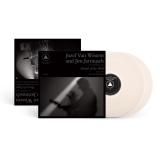
Jozef Van Wissem and Jim Jarmusch’s Bocca di Lupo and Mouth of the Wolf were recorded in July 2025 in Bologna, Italy. The recording sessions took place just after several live dates in New York and Chicago, and a week before they began a short European tour which included Paris, London, Ghent, Porto, and a first date in Bologna.
Below are notes from Jozef and Jim directly.
“With thanks to Gian Luca Farinelli and Rosanna Mordini from the extraordinary Cineteca di Bologna, we were able to secure recording days in the very cool Fonoprint Studios — located on Via Bocca di Lupo in Bologna, hence the titles of these two LPs. (“In bocca al lupo” — in the mouth of the wolf — is the Italian idiom for wishing one good luck; equivalent to “break a leg” in English.)
Bocca di Lupo starts with a new version of our own “Only Lovers Left Alive,” and “Apology” is a new version of a pre-existing piece by Jozef. All other tracks are new originals. We were honored to have guest duet vocals from the iconic Courtney Barnett on “Never Like You Said.” The lyrics of the song arrived spontaneously in a single take in the studio. It’s not directed at a specific person, but more an emotional response to several disingenuous, deceitful people — a closing of the door on their toxic behavior. And a casually recorded conversation (concerning the haunted auras of particular pieces of vintage women’s clothing) between Adriana Coppi and Veronica Mayrr (from Deux Femmes) is woven as a background into the track titled “Pour Deux Femmes.” “Black Roses” is an original poem written in Bologna, and recited from within its own musical setting. All other tracks are instrumentals.
Mouth of the Wolf, the second LP, consists of two longer, darkly ecstatic instrumental studio tracks — “In A” and “Massa Damnata.” Both were created with two electric guitars, and derived from our live performances. We consider it to be a musically separate album, and is therefore presented in its own sleeve and with its own artwork.
Our music has many inspirations — everything from our friends in Sunn O))) and Swans to Terry Riley and Morton Feldman; from Hildegard Von Bingen and WIlliam Lawes to Psychic Ills and Spacemen 3; from Les Rallizes Dénudés and NEU! to Nadja and Glenn Branca; from Ian Svenonius and Dead Skeletons to Son House and Gwenifer Raymond…from sunset to sunrise…full moon to new moon…”
a 01. Only Lovers Left Alive 4:36
b 02. Never Like You Said 5:23
[c] 03. Apology [5:11]
[d] 04. Black Roses [2:44]
[e] 05. On Twofold Nature [9:37]
[f] 06. Pour Deux Femmes [8:09]
[g] 07. In Bocca Al Lupo [5:58]
[h] 01. In A [12:56]
[i] 02. Massa Damnata [17:51]
[a] 01. Only Lovers Left Alive [4:36]
[b] 02. Never Like You Said [5:23]
[c] 03. Apology [5:11]
[d] 04. Black Roses [2:44]
[e] 05. On Twofold Nature [9:37]
[f] 06. Pour Deux Femmes [8:09]
[g] 07. In Bocca Al Lupo [5:58]
[h] 01. In A [12:56]
[i] 02. Massa Damnata [17:51]
[a] 01. Only Lovers Left Alive [4:36]
[b] 02. Never Like You Said [5:23]
[c] 03. Apology [5:11]
[d] 04. Black Roses [2:44]
[e] 05. On Twofold Nature [9:37]
[f] 06. Pour Deux Femmes [8:09]
[g] 07. In Bocca Al Lupo [5:58]
[h] 01. In A [12:56]
[i] 02. Massa Damnata [17:51]
[a] 01. Only Lovers Left Alive [4:36]
[b] 02. Never Like You Said [5:23]
[c] 03. Apology [5:11]
[d] 04. Black Roses [2:44]
[e] 05. On Twofold Nature [9:37]
[f] 06. Pour Deux Femmes [8:09]
[g] 07. In Bocca Al Lupo [5:58]
[h] 01. In A [12:56]
[i] 02. Massa Damnata [17:51]
[a] 01. Only Lovers Left Alive [4:36]
[b] 02. Never Like You Said [5:23]
[c] 03. Apology [5:11]
[d] 04. Black Roses [2:44]
[e] 05. On Twofold Nature [9:37]
[f] 06. Pour Deux Femmes [8:09]
[g] 07. In Bocca Al Lupo [5:58]
[h] 01. In A [12:56]
[i] 02. Massa Damnata [17:51]
erscheint voraussichtlich am 06.11.2026

Bella Boo lands on Aus Music with a mix of party-starting and heart-racing house jams
Swedish artist KURT. brings her characterful style to the title cut
Bella Boo has lit up the house world since breaking through in 2018. She has become a Studio Barnhus mainstay with a sound that is both emotional and energetic in the way it contrasts light and dark. It's built on solid grooves with fresh sound designs and has taken her to dj everywhere from Panorama Bar to Printworks. Her debut LP, as well as follow-up EPs, have seen her nominated for several Swedish Grammys and seen her profile grow around the world. KURT. is a rising star from Stockholm with an electric sound that blends club, r&b, pop and soul. It's high on attitude and laced with her own provocative vocals. She guests on opener 'Shake Down', which is a chunky, bass-first rhythm packed with character: hints of jungle breaks, heat-damaged synths and blasts of gloopy bass all bring the fun before KURT.'s vocal motifs - which are variously sultry, whispered and visceral - inject even more heat. The Regrette Rien Mix takes on a late-night feel with sustained chords and a silky smooth vocal from KURT. that turns you inwards. Bella Boo then goes solo for the super vibey 'Atlas', a deep, cruising house cut with catchy percussion and lush, layered bells. The golden chords and shimmering pads are immersive and expansive as the bass powered on. Lastly, '8Ball' quickens your step with bumpy kicks and increasingly detuned, wonky synths that bring a future feel to a punchy yet cuddly and feel-good groove.
Bei uns am Lager und sofort versandfertig

Guests is the home recording project of Jessica Higgins and Matthew Walkerdine. Vaguely named as such to avoid any problems with the poster if they pull out of a gig (which has only happened once, about a year and half before any songs were actually written to be fair) but also to capture a sense of reverse hospitality. That is, arriving at your door with a bottle of good wine (can’t turn up empty handed) or a fist full of savoury or sweet snacks (time of day dependant); oversharing at the afters (and then passing out on your couch); reading to your toddler while you make their lunch or put everything back where it was meant to go (only to get torn apart again). So, something about what happens when private worlds meet each other, making or having been made a space for. But at times, it’s a different kind of intimacy, a temporal or material one, like the feeling of crisp fresh sheets, and abundant and soft, body-part appropriate towels in a hotel in a city you’ve been to before and love to go back to.
Their debut record, “I wish I was special”, was variously described as “a collage of concrète experiments and outerzone pop gestures, music that sounds as if it’s been written from the depths of a dream”; “music for people who love music but also hate it too”; “something like chasing ghosts or befriending a wild animal”; “pulling apart nervous sensations with haphazard ease and requisite humour”; and “a melody of refusal, of being all-in (…) finding the exact right WRONG sound to express the discontent”. Common Domestic Bird continues in this vein, layering synthesiser, keyboards and samples over rudimentary drum rhythms and field recordings, which are in turn sung or spoken with to create nine new songs.
Written and recorded between autumn 2024 and summer 2025 in Reading, Berkshire, the music has matured since its last outing, in a way, leaning less into collage and more toward structured composition and melodic depth, yet retains a healthy dose of indeterminacy and off-kilter rhythms for the forever-amateur. The songs on Common Domestic Bird hint at some “about”-ness through a series of discrete vignettes which sound a bit like architecture or end of year lists, gossip or over-thinking subjectivity, like disappearances and impressions, the support structure of the spine, letters and signs offs, things you could really do without and where they should go, hoping you’ll see something that isn’t there, pretences and performance. At times they feel kind of funny, others kind of sad or a bit angry and annoyed, a bit like you really.
Bei uns am Lager und sofort versandfertig

At the heart of this double album, and amid the intense internal struggle between creative instinct an artistic reasoning, Ziggy has identified two key themes: Inspire and Radicalise. It is within this duality that the 15 tracks of this new work, recorded between Berlin and London throughout January 2024, take shape. Throughout its creation, the crew enlisted a familiar pallet of materials, seeking those obscure and vintage music-making machines, meeting a myriad of percussion and drums with the new addition of electric guitar as the band ventures into disco / highlife inspired territories. bring this ambitious project to life, Ziggy enlisted a team of forward thinking musicians across Europe and the UK alongside old friends and collaborators from the grassroots in Melbourne, Australia: Lewis Moody (Energy Exchange Records), Szabolcs Bognar (Abase), Eric Owusu (Jemba Groove), and Tom Varrall (Jamie Cullum) form the core rhythm section alongside a hefty list of guest appearances (from the likes of Oscar Jerome & Tom Driessler) making this truly the most ambitious and diverse incarnation of ZFEX to date.
Bei uns am Lager und sofort versandfertig

Souffle Continu records presents Byard Lancaster – The Complete Palm Recordings 1973-1974, the definitive package of Philadelphia-born jazz wizard Byard Lancaster including his 4 legendary albums released on Jef Gilson’s Palm Records in the 1970s, Us, Mother Africa, Exactement and Funny Funky Rib Crib, along with the first ever standalone edition of Love Always, a fifteen minute modal jazz beauty plus a 20 page booklet with rare photos and in-depth article about Byard Lancaster’s Parisian years by Pierre Crépon.
At the beginning of the 1960s, at the Berklee College of Music, Byard Lancaster met some feisty friends: Sonny Sharrock, Dave Burrell and Ted Daniel. It is easy to see why he rapidly became involved in free jazz. Once he was settled in New York, he appeared on Sunny Murray Quintet, recorded under the leadership of the drum crazy colleague of Albert Ayler.
In 1968, the saxophonist and flutist recorded his first album under his own name: It’s Not Up To Us. The following year he came to Paris in the wake of... Sunny Murray. He would come back to France in 1971 (again with Murray) and in 1973 (without Murray for a change). This is when he met Jef Gilson, the pianist and producer who encouraged him to record under his own name again. On Palm Records (Gilson’s label), he would release four albums: Us, Mother Africa, Exactement and Funny Funky Rib Crib.
“Us”, the first of the four records was recorded on November 24th, 1973 with Sylvin Marc on electric bass (a Fender... Lancaster?) and the evergreen Steve McCall on drums.
On the album, the trio works from the John Coltrane model; free jazz shook up by the timely contributions of the bassist, followed by a mesmerizing atmospheric music. Then, Lancaster delivers a sinuous solo path, which is a reminder of his unique tone. On the album’s companion single, the trio launches into great black music of a different genre which would lead the clairvoyant François Tusques to claim that Byard Lancaster is an “authentic representative of soul/free jazz”, to sum up this is Great Black Music! A few months after recording “Us”, Lancaster recorded “Mother Africa” along with Clint Jackson III, a trumpeter, partner of Khan Jamal or Noah Howard on other recordings.
On march 8th, 1974, Lancaster and Jackson headed up a group composed of Jean-François Catoire (electric and double bass), Keno Speller (percussion) and Jonathan Dickinson (drums). Together, they create an immediate impression. From the first seconds of “We The Blessed”, they develop a free jazz which rapidly abandons any virulence under the effect of blues and soul based interventions. When Gilson’s composition “Mother Africa” begins, listeners are transported into the studio, listening to the musicians setting up: chatting and joking... Then comes the melody: a dozen or so notes of a repeated theme which is accelerated and deformed according to their whims... The jazz played by the association Byard Lancaster / Clint Jackson III is rare: creative AND recreational. “We the blessed”, is apt listening to this again today!
The recording of “Exactement” required two sessions in the studio: February 1st and May 18th 1974 – in between the two dates, Lancaster recorded, alongside Clint Jackson, the excellent Mother Africa.
Two names appear on the cover of “Exactement”: Lancaster (Byard) and Speller (Keno). Byard Lancaster wanted to be precise, moving regularly from one instrument to another: first on piano, which was the first instrument he learned. On “Sweet Evil Miss Kisianga”, his inspiration is first and foremost Coltrane (even if leaning more towards Alice than John), this announces the storm to follow.
It is Lancaster’s horn-playing which really stands out: on alto (the sound of which is transformed by an octavoice on one track, "Dr. Oliver W. Lancaster") or soprano saxophones, as well as on flute or bass clarinet, the musician walks a tightrope making the most of all the risks he takes. Using the full register of his instruments, he has fun with the possibilities.
Then, Lancaster invokes or evokes Ornette Coleman, Eric Dolphy and even Prokofiev, before going into a danse alongside Keno Speller on percussion. Above all, he has a unique sound. Byard Lancaster, on whatever instrument he plays and by continually seeking, always ends up hitting the right note... ends up by playing exactement the note he had to play.
“Funny Funky Rib Crib” is an unforgettable recording (made up of several sessions dating from the middle of 1974) of creative jazz overwhelmed by funk and soul. If Lancaster had already made successful albums in the same genre – notably New Horizons, under the name Sounds Of Liberation which he co-led with Khan Jamal –, this one is an homage to James Brown and Sammy Davis enjoying the company of a host of guests including François Tusques (electric piano), Clint Jackson III (trumpet), François Nyombo (guitar), Joseph Traindl (trombone)...
Funny Funky Rib Crib’s cover is a three-quarter profile portrait of the saxophonist (who can also be heard on flute, piano and even vocals), however, on the record, it is the whole group, inspired and frenetic, that tests the melodies of “Just Test”, “Dogtown” or “Rib Crib” – the two versions of which display leader Lancaster’s art of nuance. On both sides of the album, the group also moves into a calmer groove, infused by blues and soul, “Work And Pray” and “Loving Kindness” are meditative tracks where listeners can lay back and relax before asking for more: Funny Funky Rib Crib!
The magnificent “Love Always” was originally released on the fourth (and last) volume of the Jef Gilson Anthology series released in 1975.
Recorded on 8th March 1974, it is a beautiful 15-minute-long modal jazz piece. Four notes from the bass (the relentless Jean-François Catoire, who makes up the rhythm section alongside drummer Jonathan Dickinson and percussionist Keno Speller), and the group is up and running!
On piano, Gilson shows the subtle tact of a sideman, leaving the lions’ share of the place to the horns. This allows us to hear the trumpet of Clint Jackson III and the alto (which sometimes sounds almost flute-like) of Byard Lancaster each staking their claim in a long hallucinatory march which moves from moments of direct exaltation to profoundly sensitive collective playing. And if further proof was required of the confidence that Byard Lancaster and Jef Gilson inspire, “Love Always” provides it on this one sided release exclusive to the box set.
Bei uns am Lager und sofort versandfertig

Diogo Silva, Nuno Fulgêncio and Rui Martins collectively go by the name Bardino. With their sound consisting of an inventive mix of
electronica, rock, jazz, the Porto-based trio are pushing their sound into unchartered waters. A feeling that will be reinforced after
experiencing their new album, ‘Memória da Pedra Mãe’.
Their enthralling music draws upon the imagery of the beautiful and rugged scenery of their home country. ‘Centelha’ , their previous
album (released by Saliva Diva in 2020) was recorded in Chaves,
in the very remote region of Trás-os-Montes. Their 207 EP of the same name was created in the rustic heart of Serra das Meadas. In this
latest offering, the mention of "Pedra Mãe" (Mother Stone), refers to a rare geological phenomenon popularly known as "breeder stones"
found in isolated, deserted, and inhospitable places. On the inspiration of the new album, they explain that they want to refer to "the
importance of collective memory in the cohesion and identity of communities and the process of creating new memories, a process that
is both natural and conflicting, since it mirrors a tension between past, present and future".
The album was recorded in the summer of 2023 at Arda Recorders in Porto and produced by João Brandão and Rui Martins. In this
new material, Bardino's resources expand: Nuno Fulgêncio's drums, Diogo Silva's bass and Rui Martins' veritable arsenal of keyboards
(acoustic and electric piano, various synthesisers) are augmented by the alto and tenor saxophones of Brian Blaker (who stands out in
"Memória" and "Black Mica"), the guitar of Leonardo Outeiro (who features on "Punctum No 2") and, already indicating their affiliation
with the Porto label Jazzego, Hugo Oliveira, who records as Minus & MRDolly (and is a guest on "Pedra Mãe") and Sérgio Alves, aka
AZAR AZAR (who plays piano and Moog on "Tília"). Bardino's entry into the increasingly unavoidable Jazzego catalogue also reinforces
their obvious links to a new wave of projects that have been experimenting with different tangents to the notion of "jazz", taking this
music as part of a wider set of coordinates.
Over the course of eight tracks, and clearly benefiting from the distinct imprint of the recognised quality work of João Brandão, one of
Portugal's current best producers, Bardino presents dense, deeply cinematic music of the highest definition, in which the different
instruments translate a broad emotional and visual landscape, with solos of enormous elegance arranged over grooves that induce the
idea of movement. All the musical coordinates mentioned earlier are present, but perhaps in this new material you can feel a greater
fluidity, certainly the result of honing the vision of the central trio through a vast experience collected on stages all over the country. And
there are even echoes of a decidedly Portuguese songbook, as is so clearly felt in "O Semeador", something new in the range of aesthetic
references embraced by Bardino. This is, in fact, music that thrives on a benign tension between past, present and future, in the sense
that it embraces traditions and history, seeks a new framework in this diverse now and dares to project itself forward. Because the future
is the best of all locations.
Bei uns am Lager und sofort versandfertig

Revered DJ and radio veteran Lefto Early bird has announced his album Motherless Father which will be released on 8th March.
Your favourite DJ’s favourite DJ presents his 10-track album; "This record feels like the starting point of a new era, which I’m sure a lot of people can relate to what I mean; the tracks I recorded, the ones I’m singing over and the guests i invited have been my way to deal with the pandemic, the motherless child that I am and the father that I am. I call this record a deep pre-club record, one that will give you the energy to go out there and party but with a feeling of letting go of everything."
Bei uns am Lager und sofort versandfertig

Bright Magus is an instrumental quintet born under the influence of Miles Davis' metaphysical electric period, a visceral and magical passion always shared by Giovanni Calella and Leziero Rescigno. Davis' most eclectic and psychedelic period, that of recordings for Columbia from 1969 throughout the 70s. Albums like “In a Silent Way”, “Bitches Brew”, “A tribute to Jack Johnson”, “On The Corner”, “Big Fun” made them immerse themselves in one of the most fascinating experiments that Miles has generated in his long and prolific career. We are talking about music that is difficult to fit into one genre, in these masterpieces you can feel the contemporaneity of that historical period. Electric Jazz, Funk, Psychedelia, Rock, Afrobeat, Ambient, drag you into something absolutely new, mysterious and sometimes furious. Just a year ago Giovanni and Leziero took courage and started recruiting musicians who had to have the right attitude and knowledge. Guitarist Alberto Turra was the first to be interested in the project, then came Mauro Tre, pianist and keyboard player and Gianni Sansone on trumpet. All seduced by Miles and in love with that magical period.
Before making the first album "Jungle Corner", the band did some live shows to amalgamate all the ideas that came out during the improvs recorded by Tullio Treffiletti in the trumpeter's home studio (later baptized Selim Studio). At the Isola Studio in Manuel Agnelli's space and with the help of the very talented Guido Andreani, Bright Magus then recorded in three days live all the material which in the meantime had been enriched with more structured melodic themes and less casual drafts . Mauro's contribution was very important in this. The finalization of the album was then managed by them in the small "Diabolicus Studio" taking care of editing, post production and mixing.
Guest on the album in two songs, Enrico Gabrielle of Calibro 35 on flute and clarinet.
The cover design is a work by Barba Ughi alias BAX.
Bei uns am Lager und sofort versandfertig

Global pointing Brazilian jazz trio releases their new album Agôra, that sparkles with electric funk and Herbie-esque eclecticism. It features a myriad of guest vocalists and musicians including Brazilians Xênia França and Zé Leônidas, Jembaa Groove's Ghanaian singer Eric Owusu and South African artists Bongani Givethanks & Mpho Nkuzo
Re-wiring the concept of 'fusion' for 2023, Agôra is Brazilian trio Caixa Cubo's resurgent new record with the title referring to 'now', based upon the intuitive and fluid nature of the trio's method, and this inspired recording. With shoots to black music culture, from Brazil to Brooklyn, Ghana and South Africa, Agôra is the group's ninth album yet is their first where they've invited guests, mainly singers, onto each track and follows their last, Angela from 2020, released on Heavenly Records, which won a BBC 6 Music Album of the Year (Huey Morgan's selection) granting them much deserved international recognition.
The core musical elements of Caixa Cubo are Henrique Gomide (keys), João Fideles (drums) and Noa Stroeter (bass), all from São Paulo, Brazil and where they met as teenagers and would continue their friendship and musical bond at the Royal Conservatory in The Hague, Netherlands. Now all in their mid thirties, João and Noa live back in the city where it all started but Henrique has settled in Cologne, Germany where the recording of Agôra took place, over the course of 3 days, at the home cum studio of Chris 'Dusty' Doepke, their friend and owner of the label they signed to, Jazz & Milk.
In line with all their creations where flow and energy provide the magic, allowing what the moment provides, the album shines not only for its virtuosity but for its minimalism, the depth of space, and for the first time, the ability to figure in and outside of the jazz fold, as the trio decided, for the first time, to bring in singers and add a new aesthetic to their sound.
"Agôra is a wake-up call to reality, a reminder that the infinite possibilities of technological progress should not disconnect us from the earth, from eye-to-eye relationships, and from moments lived in person" the band are keen to point out. "And that we must not be consumed by greed, for all we truly possess.... is the NOW."
Turning hope and metaphor into music, the debut single Sábado, an electrified future- jazz-fizz reflects perfectly the spontaneity that permeated the entire recording of the album. "When we got to the studio, we had no idea what we were going to record. We started playing a groove, kind of inspired by Gilberto Gil's 80s albums, and our drummer João started singing this funny song 'Sábado Barrigudão' (Big Belly Saturday) alongside the bass groove and that was that". Inspired by their city of birth, São Paulo, it features long time collaborator and vocalist Zé Leônidas, with cuicas, tamborim, agogo and shakers providing the most obvious Brazilian affect from the album.
Dreams is the band's first foray into R'n'B melding the group's simple and sporadic instrumentation of drums, keys and bass into a Jill Scott inspired song that could have been born in Brooklyn yet sung by Brazilian singer and Grammy nominated Xênia França and Zé Leônidas in both English and Portuguese. Xênia recently performed online for hip-to-it website Colors and it's her latest collaboration with Caixa Cubo, having first met in 2009 for a series of live performances.
South African artists Bongani Givethanks & Mpho Nkuzo come to the record with a wholly different approach on Ndiyakhangela, providing spoken word and vocal refrains on top of an Afro-Brazilian percussion jam with a delivery and verse in Xhosa, Zula and Ndebele. Asase is the album opener and features vocals of Eric Owusu who is part of highlife pioneer Pat Thomas's live band and most recently, co-leader of Jembaa Groove, an Afro-soul band from Berlin. It's a synth wig out with djembe grooves and offers a brand new take on Afro-soul-jazz.
Other contributions come from Cologne based jazz singer Rebekka Ziegler (Oblique Sunshine), São Paulo based guitarist Eduardo Camargo (Caio & Eric) and trumpet player Matthias Schriefl on Kismeti, a gorgeous and rolling number that ebbs and flows, exemplifying the group's effortless ability to craft a sound energised by a belief in one-self and the idea of having faith without the need to look at each other for verification.
As drummer and percussionist João Fideles perfectly surmised upon arriving for the recording session, "What drums do you have? Whatever you have, I'll use it". Agôra is testament to nearly 20 years of camaraderie, friendship and most importantly, trust.
Bei uns am Lager und sofort versandfertig

repressed !
From samba and bossa nova through to baile funk, with carioca expressions of jazz, rock and hip hop in between, the sound of Rio de Janeiro, while continually evolving, has always held an unnameable quality which reflects the magic and mystique of the city itself. Multi-instrumentalist and arranger Antonio Neves is the city’s newest trailblazer: the enfant-terrible of Rio’s music scene, leading a vital and diverse constellation of both emerging and well-known artists advancing the city’s musical legacy.
“It all started one sleepless night, after watching a Quincy Jones documentary”. Inspired by the legendary music magnate, Neves began writing a list of artists residing in Rio de Janeiro “people that I admire, that I consider geniuses of their instruments, who share with me affinities, anxieties and projects.” The list included some of Brazil’s most revered living musicians who Neves has worked with in recent years: Hamilton de Holanda, Leo Gandelman and Dorival Caymmi. Neves also called on some of Brazil's most exciting emerging talents including Alice Cayymii and Ana Frango Eletrico.
A Pegada Agora É Essa (The Sway Now) is Neves’ second album: a vibrant portrait of the current Brazilian music scene. From the regional to universal, popular to erudite, samba to rap, Latin rhythms to jazz, MPB and pop to good old rock'n'roll, Neves walks with fluency and mastery amongst all the musical genres that Brazil has to offer.
“My offer to the musicians was complete freedom to express themselves through the songs I proposed – classics like “Summertime”, “Luz Negra” and “Noite de Temporal”, and compositions of my own – creating a space of authorship for the band and the guests. A space for inventions, purges, delusions, laughter. The idea was to bring the freedom of jazz crossed by Brazilian rhythms, such as the traditionals Partido Alto (A Pegada Agora É Essa) and Jongo (Jongo no Feudo and Luz Negra); rhythms of African-Brazilian religions like Candomblé (Noite de Temporal) and Umbanda (Forte Apache); and a tribute to newest Rio de Janeiro’s contribution to Brazilian music, the Funk Carioca (Simba)”.
Coming from a musical family, Antonio’s father, Eduardo Neves, was a renowned conductor and a professor at Juilliard School of Music and the California Jazz Conservatory. In the bohemian neighbourhood of Lapa, aged 14, Antonio began his career as a drummer, before experimenting with brass. He would soon become a skilled trombonist and arranger achieving the recognition of his teachers and peers. It wasn’t long before he would be playing with some of the biggest names in Brazilian music, such as Hamilton de Holanda, Leo Gandelman, Moreno Veloso, Kassin and Elza Soares.
His debut album as a trombonist was PA7 (2017, Rock It), released at the same time he was travelling the world playing with artists like Moreno Veloso, Kassin and Leo Gandelman, and recording the albums Jobim, Orquestra e Convidados (2017, Biscoito Fino), with Mário Adnet and Paulo Jobim; and Elza Soares Canta e Chora Lupi (2017, Coqueiro Verde Records). More recently, Neves was the arranger for the acclaimed Little Electric Chicken Heart album, by Ana Frango Elétrico, which has been nominated for a Latin Grammy and voted 2019’s ‘Brazilian Music Revelation’ by The Art Critics Association of São Paulo.
Bei uns am Lager und sofort versandfertig

In 1975, under the oppressive air of military dictatorship in Brazil, brothers Lelo and Zé Eduardo Nazario invited bassist Zeca Assumpção to join their musical experiments in a basement under Sao Paulo’s Teodoro Sampaio Street. As teenagers, the trio had already been playing together in Hermeto Pascoal’s Grupo, alongside guitarist Toninho Horta and saxophonist Nivaldo Ornelas, and it was while working together under Hermeto’s direction that the Paulista rhythm section (as they were then known) began to realise their own potential.
With many nightclubs and venues closed in the mid-70s and government censors dictating the output of radio, TV and art galleries, many Brazilian artists fled during the years of dictatorship. But underground, Grupo Um were fusing avant garde ideals with contemporary jazz and Afro Brazilian rhythm; making phenomenally free and expressive music - in stark contrast to the sterile, conservative conditions being imposed above ground.
Just like Hermeto Pascoal’s Viajando Com O Som from the following year, Starting Point was recorded over two days at Vice-Versa Studios, by revered engineer Renato Viola. The studio was one of the best in Sao Paulo and musicians communicated with engineers through cameras and a monitor, allowing the group complete immersion in the process. They also made use of the studio’s hemispherical tiled room, which served as an acoustic reverberation chamber.
The album begins with Zé Eduardo Nazario’s thunderous drum solo on “Porão da Teodoro”, before clearing the clouds with the lone Berimbau which opens “Onze Por Oito”. Built around a hypnotic electric bass line, heady Fender Rhodes improvisations, and more rip-roaring drums, it’s a rapturous, electrifying freak-jam in 11/8.
Like some invertebrate deep-sea curiosity, the free-form “Organica” is made up of Lelo Nazario’s playfully eerie prepared piano, with Zé Eduardo’s percussion flurries darting around Assumpçao’s double bass. The equally non-conformist, percussion-only piece “Jardim Candida” features many of Zé Eduardo’s home-made instruments, including a long saw blade played with vibraphone sticks and violin bow. While working with Hermeto, Zé Eduardo famously built his own all-in-one percussion set-up known as the “Barraca de Percussão” (Percussion Tent) - the first of its kind in Brazil, which he would also use on Hermeto Pascoal’s Viajando Com O Som and throughout his career.
“Suite Orquidea Negra'' (Black Orchid Suite) was written by Lelo Nazario as the score for an imaginary movie - the story of a rare, black orchid which produced a substance meant to cure all diseases, but which had mysteriously disappeared from the laboratory… “As a screenplay it’s not very good” reflects Lelo in jest, “but the music ended up being very interesting, the way its parts are chained to one another carries a little of the mystery I imagined for the movie.”
The album closes with the triumphant “Cortejo dos Reis Negros” (Procession of Black Kings) - a groovy variation on the Maracatu rhythm, with a two-note bassline underpinning piano improvisations, exultant wordless vocals, cuicas, slide-whistles and a very special guest appearance from Zé’s dog Bolinha.
Starting Point was to mark the inception of one of Brazil’s most daring instrumental groups. Their debut now sits in the lofty echelon of otherworldly 70s Brazilian music, alongside the likes of Marcos Resende & Index’s self-titled debut, Cesar Mariano & Cia’s Sao Paulo Brasil, Azymuth’s debut and indeed Hermeto Pascoal’s Viajando Com O Som. But just like all of those titles, which were either shelved or largely ignored at the time, Grupo Um - so radically ahead of their time - struggled to find a label to release their debut album. So Lelo kept the tapes safe in his archives, which is where they sat for almost half a century. Finally, almost fifty years later, this mesmerising piece of history is here, and it was only the beginning...
Grupo Um’s Starting Point will be released by Far Out Recordings, on vinyl LP, with an insert featuring unseen photos and liner notes by the Nazario brothers, as well as a CD on 17th February 2023.
Bei uns am Lager und sofort versandfertig

Process Blue was formed in the fall of 1981, at Antioch College near Dayton, Ohio. The group essentially consists of Chel White (tapes, keyboards, percussion) and Dan Gediman (keyboards, vocals, bass). Additional members contributed at various points to both recorded works and live performance. Process Blue's original interest was in electronic music and the interfacing of electronic sounds with acoustic instruments, non-musical instruments, and tape-manipulated sounds. The group's primary objective has been to strive for creative experimentation within the format of contemporary pop music.
We are proud to release a 12-song LP featuring music recorded between 1981 and 1982. 7 of the tracks were originally self released on a cassette album in 1982. The only song in this batch to ever appear on vinyl is 'Control Panel' released on a French LP compilation called 'Folie Distinguee Alternative Funk.' The songs range from experimental dance music to quieter, more melodically-oriented pieces. They used an array of synthesizers used were Moog Sonic-Six, Casiotone MT-30, Korg MS10, Roland SH 101, Casio VL Tone. Analog instruments included electric guitar and bass, and drums. Guest musicians included Gil Belton (melodic rototoms percussion and synthesizer bird sounds) on Industrial Park, Eric Zimmerman (Korg synthesizer) on Up to $100 and Subterrania, Patricia Yarborough (vocals) on Pink Razor and Air, Mike Pummel (engineer) on Control Panel, and John Flansburgh (of They Might Be Giants) engineer on Up to $100. All songs have been remastered by George Horn at Fantasy Studios. Each LP is housed in a jacket designed by Maycec featuring original drawings by Chel White and include a double-sided insert with photos and lyrics.
Bei uns am Lager und sofort versandfertig
![MAJOR FORCE PRODUCTIONS - LOVE THEME, Pt. 2 (7inch Edit) [feat. DJ Krush] (7")](https://www.deejay.de/images/l/5/9/1266359.jpg)
A powerful new track arrives on 7-inch, marking a collaboration between MAJOR FORCE PRODUCTIONS and DJ KRUSH, featuring the gentle, soothing vocals of guest singer Kyoko Koizumi.
This joint production by MAJOR FORCE PRODUCTIONS-comprised of K.U.D.O and Kan Takagi, two key figures who have helped shape Japan’s music scene-and the internationally acclaimed DJ KRUSH results in a single that vividly captures everyday scenes and the deeper layers of human emotion through diverse beats and floating electronic textures.
Conceived as a sequel to Kan Takagi’s 1997 release “LOVE THEME,” the track unfolds with a memorable melody expressing a sincere longing for love and freedom. Refined yet warm, it stands as a timeless piece of electric folk blues.
For this 7-inch edition, the track has been given a single edit, making it a special and essential release.
erscheint voraussichtlich am 25.09.2026

Morikawa Seiichirou, vocals, bass
Yamagiwa Hideki, electric & classical guitar
Takahashi Ikuro, drums & percussion
je prie pour que la goutte ne tombe pas
(I pray that the drop does not fall) is the first international release by Japanese trio Chi To Shizuku. While they have released five albums and a 7” in Japan, their spectral, haunted rock songs haven’t yet reached a much wider audience overseas. With this album, then, a live recording taken at Koenji HIGH, Suginami, Tokyo on 23rd November 2021, the unique, quartz-like character of Chi To Shizuku’s music is writ large, the bleak bliss of their songs carved onto twelve-inch vinyl.
Perhaps the best-known member of Chi To Shizuku, at least for audiences with an ear turned to Japanese psychedelia, is drummer Takahashi Ikuro, known for his membership of almost every group worth a damn from that scene – Fushitsusha, Nagisa Ni Te, Ché-SHIZU, Kousokuya, High Rise, Maher Shalal Hash Baz, LSD March, the list goes on. But the core of Chi To Shizuku’s music is the collaboration between vocalist, bassist and lyricist Morikawa Seiichirou, and guitarist and arranger Yamagiwa Hideki. Morikawa is a member of long-running punk/goth group Z.O.A., and has also played with YBO , Zzzoo, and as collaborator with Takeshi and Atsuo of Boris in A/N; he’s also recently been performing with Mitsuru Tabata. Yamagiwa’s history takes in stints with Katsurei and Cock C’ Nell, and he also recently guested with la scene 裸身.
All this contextual information does relatively little, though, to prepare you for the unique vibration of Chi To Shizuku’s lustrous songs. They shimmer in the same half-light, perhaps, as Shizuka and the quieter moments of LSD March, sharing a similar poise and classicism, and there’s a tenderness and wracked poetry to Morikawa’s voice that reminds of the emotional intensities both of traditional Japanese folk, and of British folk music: on “Musuu No Nemuri No Naka De Kumo Wo Tukamu”, the combination of his singing, backed with gorgeously plangent guitar, reminds of no-one so much as it does The Pentangle or Spriguns Of Tolgus. Chi To Shizuku’s love for the ballad as form gifts their music an archaic, sometimes arcane resonance, and from what you can hear on this album, it’s clear they’re in love with graceful melancholy.
But this is not a folk album, by any means; it just shivers with the same eternal spirit. There are also hints of prog rock, and you can catch some passages of scratchy, distended free rock, on the extended spirit invocation of “Nanhito Hanhito”. je prie pour que la goutte ne tombe pas is an extraordinary album, a melancholy surprise, that reminds dedicated listeners of the seemingly bottomless well of great music to be found via the Japanese underground in its many forms. Perhaps Michel Henritzi says it best, though, in his liner notes, when he writes, “Chi To Shizuku’s music reminds us that our life is a dream that lasts only a season, and that oblivion will follow.”
Recorded at Koenji High Suginami, Tokyo, 23 November 2021
Mix & Mastering: Taku Unami, photography : Noriko Akiyama
Liner notes by Jon Dale Printed by Alan Sherry
erscheint voraussichtlich am 21.09.2026

The Go’s Free Electricity, the group’s storied, long-lost album, finally gets a proper release! The Go appeared in Detroit in 1996, led by Bobby Harlow and featuring Dave Buick on bass and Jack White on guitar. Following the release of their 1999 debut, Whatcha Doin’, and a few lineup changes, the band hit the studio with Dion Fischer on lead guitar, John Olson (of Wolf Eyes) on saxophone, and Cary Loren (of Destroy All Monsters) to record their sophomore effort. The session found the band and their producer, Matthew Smith (Outrageous Cherry), exploring the outer edges of rock and roll, with blaring lead guitars, copious amounts of reverb, and a heavy jazz influence thanks to a heavy diet of ‘60s free jazz. The results erupt from the speakers with a cavernous sound, like some haunted frequency beamed across the time barrier from the Grande Ballroom circa 1968, often sounding more like records by Pharoah Sanders and Sun Ra than the records being made by The Go’s peers in the ‘00s rock and roll scene.
Free Electricity was written, composed, and arranged by Bobby Harlow (except track one, which was written by Harlow and Dion Fischer; and track five, written by Harlow and Cary Loren). Free Electricity was mixed and produced by Matthew Smith, engineered by Jim Diamond at Ghetto Recorders, and mastered by Jim Kissling at Jim Kissling Mastering in Detroit, Michigan. Guest appearances by folks from Destroy All Monsters and Wolf Eyes only reinforced the album's musical direction. Weird or not, this was an inspired recording made by an inspired group of musicians. There was a feeling of excitement and adventure happening at these sessions, it shines through mightily on this album.
erscheint voraussichtlich am 04.09.2026

The late Matt Watts was an American songwriter/storyteller and performer from Montana residing in Antwerp and Brussels, Belgium. He ws the son of a catholic priest and mother with Cherokee roots in the Carolinas.
He first began using the electric organ to write songs and also recording them on cassettes when he was 11 years old. When he was 13 his mother bought him an electric guitar from a pawn shop in South Carolina. Using a karaoke machine as an amplifier, he began writing and performing and recorded his first album at age 15 in a small studio in Great Falls, Montana.In addition to writing and performing his own music, he began performing and touring with various local Punk & Noise bands.
In 2007 when he was 19, he moved to Antwerp, Belgium. Since his arrival he has worked and performed with Zita Swoon Group, become a member of Rudy Trouvé's I H8 Camera, translated Simon Allemeersch and Rudy Trouvé’s critically acclaimed piece SCREEN into English, formed The Calicos (now Humo’s Rock Rally winners under Quinten Vermaelen) as a one time backing band, worked with many artists and songwriters (including Emillina Torini & The Colorist, The Love Substitutes, ..) and toured and released various widely acclaimed solo albums and a duo album with Nicolas Rombouts on Starman Records.
Highlights for sure were “How Different It Was When You Were There” (2017 - **** De Standaard), produced by Nicolas Rombouts (ex-Dez Mona) and featured guest performances by Nathalie Delcroix and Bjorn Eriksson (Eriksson Delcroix) and Stef Kamil Carlens. Its excellent successor “Queens” (produced by Stef Kamil Carlens and Nicolas Rombouts) featured a.o. the late Sandy Dillon and Jim White.
Sadly Matt Watts passed away too soon in June 2024. “Restless Kind” is the final album readied shortly before his death in a production by Bai Kamara Jr. Another astonishing collection of intimate Americana songs with lyrics as fascinating miniature novels.
erscheint voraussichtlich am 04.09.2026
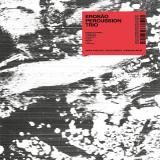
Mariá Portugal has been active in the music scenes of Brazil and Europe as a drummer, composer, singer, and music producer. After graduating in composition, she has focused her research on free improvisation and its possible intersections with popular song. This exploration resulted in her acclaimed album EROSÃO (2021) and in the formation of two groups: the EROSÃO Septet and the EROSÃO Percussion Trio, both based in Germany.
She is also a member of the group Quartabê and has toured and recorded around the world with various artists, moving between pop, free jazz, free improvisation, and Brazilian popular music. She has performed and recorded with artists such as Elza Soares, Anthony Braxton, Joe McPhee, Fred Frith, and Tomeka Reid. She is a member of Fire! Orchestra, Fire! Trio, Endless Breakfast and MONSTER.
In 2020, Portugal was the 13th Improviser in Residence at the Moers Festival. As a curator, she has participated in the Soundtrips-NRW in Duisburg and currently coordinates the concert series “TOMA CHOCOLATE!” in Berlin, besides being the guest curator for this year's unlimited Wels festival. She also composes music for dance, theater, and film, including the award-winning soundtrack for the film “1976”, which earned her the Chilean Film Academy Award in 2025. She was nominated for the 2025 and 2026 German Jazz Prize in the drums and percussion category.
Emilio Gordoa is a Mexican sound artist, percussionist, and composer whose work focuses on sound and performance as primary means of expresion. Based in Berlin since 2012, he has been an active contributor to the city’s Echtzeitmusik scene and is involved in the international avant-garde music community.
His projects include solo and ensemble performances, sound installations, and compositions for film, theater and dance. He has collaborated with a wide range of artists, including Jérôme Noetinger, Ingrid Schomliner, Yuko Kaseki, Burkhard Beins, Don Malfon, John Butcher and Sabiene Vogel. Gordoa’s approach combines experimental percussive techniques with electronic elements, leading to invitations to perform at events such as the Moers Festival, Meakusma Festival in Belgium, A’larme!, and Maerzmusik in Berlin.
He founded WildSonico, a platform for experimental music, and has been part of artist residencies at institutions like the Akademie der Künste and Kunststiftung NRW. He also worked as the Improviser in Residence for the Moers Festival. His discography includes albums such as Substantial Myths (2022), Balderi Variations (2019), and GRIFF (2021), which reflect his ongoing engagement with music. His work has been supported by organizations such as the Goethe-Institut, Musikfonds e.V., and INM - initiative neue musik berlin, and he has received recognition, including an Honorary Mention at the Prix Ars Electronica.
Burkhard Beins was born in 1964 in Lower Saxony and has been living in Berlin since 1995. He is considered a stylistically influential percussionist as a composer/performer, due to his individually developed playing techniques. Additionally, he works with analog synthesizers and live electronics, plays electric bass, and has created various sound installations.
He collaborates as a soloist, as well as with artists such as Chris Abrahams, Keith Rowe, Sven-Åke Johansson, Axel Dörner, Andrea Neumann, and many others. He is also a member of several ensembles including Sawt Out, Activity Center, Polwechsel, The Sealed Knot, Zone Null, Perlonex, Trio Sowari, Vertigo Transport, the NoWave/Krautrock band Slurge, and the Berlin Splitter Orchestra.
Since the late 1980s, he has performed concerts and participated in international festivals for experimental and contemporary music across Europe, America, Asia, and Australia. He has released more than 70 CDs and LPs in collaboration with various artists.
Burkhard Beins has been an Artist-In-Residence at the Künstlerhäuser Worpswede (2009), EMS Stockholm (2014), Muong Studios, Hoa Binh/Vietnam (2015), the Robert Rauschenberg Foundation, Captiva/Florida (2017), as well as at DAR, Drsukininkai/Lithuania (2018), and the Agosto Foundation, Prague (2019).
erscheint voraussichtlich am 28.08.2026
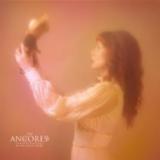
As We Once Were is the third studio album from twice Welsh Music Prize nominated artist and producer The Anchoress (aka Catherine Anne Davies) - This new record is the long-awaited follow-up to the UK Top 40 album The Art Of Losing and features an all-star cast of guest vocalist, including Mercury Music Prize nominees Hannah Peel and Welsh-Cornish musician Gwenno, long-time collaborator James Dean Bradfield from Manic Street Preachers also contributes vocals and electric guitar on 'Throw Over Your Man' - a song inspired by the love letters between literary legends Virginia Woolf and Vita Sackville West - and newcomer Eaves Wilder (Secretly Canadian) duets on 'Damsels' The Art Of Losing received wall-to-wall critical plaudits upon its release in 2021 and scooped up a raft of Album of The Year nods from The Sunday Times, to Prog, to the Mail on Sunday. With Sir Elton John naming it "one of my favourite records of the year" and Caitlin Moran calling it "the inadvertent, beautiful and truthful soundtrack to this moment", it went on to sell over 10,000 physical copies via the power of word of mouth.
erscheint voraussichtlich am 07.08.2026
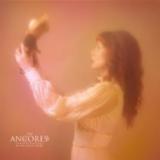
As We Once Were is the third studio album from twice Welsh Music Prize nominated artist and producer The Anchoress (aka Catherine Anne Davies) - This new record is the long-awaited follow-up to the UK Top 40 album The Art Of Losing and features an all-star cast of guest vocalist, including Mercury Music Prize nominees Hannah Peel and Welsh-Cornish musician Gwenno, long-time collaborator James Dean Bradfield from Manic Street Preachers also contributes vocals and electric guitar on 'Throw Over Your Man' - a song inspired by the love letters between literary legends Virginia Woolf and Vita Sackville West - and newcomer Eaves Wilder (Secretly Canadian) duets on 'Damsels' The Art Of Losing received wall-to-wall critical plaudits upon its release in 2021 and scooped up a raft of Album of The Year nods from The Sunday Times, to Prog, to the Mail on Sunday. With Sir Elton John naming it "one of my favourite records of the year" and Caitlin Moran calling it "the inadvertent, beautiful and truthful soundtrack to this moment", it went on to sell over 10,000 physical copies via the power of word of mouth.
erscheint voraussichtlich am 07.08.2026

As We Once Were is the third studio album from twice Welsh Music Prize nominated artist and producer The Anchoress (aka Catherine Anne Davies) - This new record is the long-awaited follow-up to the UK Top 40 album The Art Of Losing and features an all-star cast of guest vocalist, including Mercury Music Prize nominees Hannah Peel and Welsh-Cornish musician Gwenno, long-time collaborator James Dean Bradfield from Manic Street Preachers also contributes vocals and electric guitar on 'Throw Over Your Man' - a song inspired by the love letters between literary legends Virginia Woolf and Vita Sackville West - and newcomer Eaves Wilder (Secretly Canadian) duets on 'Damsels' The Art Of Losing received wall-to-wall critical plaudits upon its release in 2021 and scooped up a raft of Album of The Year nods from The Sunday Times, to Prog, to the Mail on Sunday. With Sir Elton John naming it "one of my favourite records of the year" and Caitlin Moran calling it "the inadvertent, beautiful and truthful soundtrack to this moment", it went on to sell over 10,000 physical copies via the power of word of mouth.
erscheint voraussichtlich am 07.08.2026

At the beginning of the 1960s, at the Berklee College of Music, Byard Lancaster met some feisty friends: Sonny Sharrock, Dave Burrell and Ted Daniel. It is easy to see why he rapidly became involved in free jazz. Once he was settled in New York, he appeared on Sunny Murray Quintet, recorded under the leadership of the drum crazy colleague of Albert Ayler.
In 1968, the saxophonist and flutist recorded his first album under his own name: It’s Not Up To Us. The following year he came to Paris in the wake of... Sunny Murray. He would come back to France in 1971 (again with Murray) and in 1973 (without Murray for a change). This is when he met Jef Gilson, the pianist and producer who encouraged him to record under his own name again.
On Palm Records (Gilson’s label), he would release four albums: Us, Mother Africa, Exactement and Funny Funky Rib Crib.
“Funny Funky Rib Crib” is an unforgettable recording (made up of several sessions dating from the middle of 1974) of creative jazz overwhelmed by funk and soul.
If Lancaster had already made successful albums in the same genre – notably New Horizons, under the name Sounds Of Liberation which he co-led with Khan Jamal –, this one is an homage to James Brown and Sammy Davis enjoying the company of a host of guests including François Tusques (electric piano), Clint Jackson III (trumpet), François Nyombo (guitar), Joseph Traindl (trombone)...
Funny Funky Rib Crib’s cover is a three-quarter profile portrait of the saxophonist (who can also be heard on flute, piano and even vocals), however, on the record, it is the whole group, inspired and frenetic, that tests the melodies of “Just Test”, “Dogtown” or “Rib Crib” – the two versions of which display leader Lancaster’s art of nuance. On both sides of the album, the group also moves into a calmer groove, infused by blues and soul, “Work And Pray” and “Loving Kindness” are meditative tracks where listeners can lay back and relax before asking for more: Funny Funky Rib Crib
Bestelle jetzt und wir bestellen den Artikel für dich beim Lieferanten.

FOR THE FIRST TIME EVER: THE LONG-LOST RECORDINGS OF BIRMINGHAM ROOTS REGGAE PIONEERS NATRUS Mastered from the original tapes by Guy Davie at Electric Needle Mythology, the label founded by music writer, author and broadcaster Pete Paphides, is thrilled to announce the archival release of newly-discovered recordings by Birmingham reggae band Natrus. Comprising members of the same family – seven in total – Natrus were a ubiquitous presence of the live circuit within and beyond the West Midlands in the late 1970s. Used as an ad hoc “Wrecking Crew” by local producer and promoter Toney Owens, NATRUS frequently provided live accompaniment to visiting Jamaican artists such as Sugar Minott, Johnny Osbourne and Freddie McKay. With an age span ranging from 9 to 25, NATRUS’S live work had to be structured around the educational obligations of their younger members. But when they weren’t playing live, they would frequently hone their own compositions at Owens’ studio in Saltley, Birmingham.
During their collective lifetime, NATRUS released one very limited edition single Mash It, with a stellar guest vocal from deejay Ranking Glad(Stone). Featured alongside Mash It on this release are a selection of recordings previously thought lost by the group who laid them down. They were only discovered after Toney Owens’ alerted Needle Mythology’s Pete Paphides to the existence of some 60 quarter-inch reels featuring all the music recorded by Owens over a period of ten years or so. When Paphides finally tracked down NATRUS rhythm guitarist Owen Taylor, he was stunned to hear of their existence. After a meeting with Taylor and his siblings, Needle Mythology collaborated with NATRUS on the restoration and remastering of the tracks featured on this, their very belated debut album. As well as Mash It and its original flipside Come From Africa, highlights on ‘NATRUS’ include a superb version of Slim Smith’s The Time Has Come and the deep roots entreaties of Freedom Inna Babylon, both showcasing the soulful vocal of lead singer Fitzdonald “Fitz” English and the almost psychic sense of musical attunement that percolates right down the the formidable rhythm section of Beverley Stewart (bass) and Clinton Gordon (drums).
erscheint voraussichtlich am 24.04.2026
As collaborative projects often do, 33 has in time found a more fixed form, a kind of structure that turned it from a loose collection of collaborators gravitating around founders Bill John Bultheel and Alexander Iezzi into something resembling more of a traditional band. Not that there is anything conventional in their creative process tho, nor in the music itself… Nontheless Tripolar - their second album and first for Haunter - seems to take them closer to song territory than ever before.
The (progressive) graduation of multi-instrumentalist Cem Dukkha and vocalist/clarinet player Ivan Cheng from collaborators to full-time members has brought 33 to a more refined awareness of their possibilities as a creative unit, although their compositional process has retained a high level of spontaneity and musical madness. Tripolar was in fact assembled by editing hours of improvisation that Bultheel, Iezzi and Dukkah recorded with no specific endgame in mind. The sessions saw them exchange a variety of acoustic, electronic and electric musical instruments: percussions, guitars, strings, piano, hurdy gurdy, synthesizers and even CDJs as a tool of live sampling manipulation.
By molding the pieces into what they are now, the band managed to concoct some beautiful vignettes of contradictory mental and emotional states, as sonically playful as a renaissance fair happening within a broken timestream. Cheng’s lyrical and vocal contributions helped them coalesce even further into proper songs, adding a melodic presence that’s at once seductive and uncanny. But vocal duties are often ceded to guests, namely Danish pop-neoclassicist Astrid Sonne, Kenyan metal guru Lord Spikeheart, Irish goth raconteur Olan Monk and Japanese body-poet Golin.The amount of different sounds arranged into each of the tracks produces a unique sense of awe and bewilderment, a testament to the incredible talent and craft the musicians have employed into putting together such a broad range of influences and approaches into a coherent and extremely effective musical journey.
An equally erratic thematic thread seems to run through all the tracks, one ultimately preoccupied with mental health and its ramifications. Without turning the project into a concept album, 33 and their collaborators have sprinkled it with references to personality disorders and mental conditions that are all too relevant to the contemporary age, reflecting on the lineage of human inner life. A wide display of lyrical and musical tools is employed to explore these themes, ranging from Sonne’s expressionist depiction of ADHD in the opener, to Cheng’s queer-themed reinvention of an Irish murder ballad in closing track ‘Babymusicc’. Tracing lateral trajectories for introspection, Tripolar is not only highly captivating, but it ultimately sounds esoteric in the best possible way: progressively revealing layer after layer of incredible aural magic, its true meaning living in the form and in its manic scope of energies.
erscheint voraussichtlich am 27.03.2026

Dutch symphonic metal band Delain released their third studio album We Are the Others in 2012 to positive reviews from music critics. The album title was inspired by the murder of 20-year-old Sophie Lancaster, whose death was likely a hate crime due to her being part of the goth subculture.
Two singles were released: “Get The Devil Out of Me” and the title track "We Are The Others", for which the band shot a music video that included many well-known people from the metal scene, including George Oosthoek, Sharon den Adel, Robert Westerholt and Rob van der Loo. The album features guest contributions by the likes of Burton C. Bell (ex-Fear Factory) and Marko Hietala (ex-Nightwish) and was produced by Jacob Hellner (aka Tripod), who is best known for producing most of Rammstein’s albums.
This release of We Are the Others contains an insert and is limited to only 750 individually numbered copies on orange & black marble vinyl.
erscheint voraussichtlich am 06.03.2026

World Of Echo announces the reissue of two remastered albums by Japanese guitarist and songwriter Naoki Zushi, 1988’s Paradise, and 2005’s III. Two classics of Japanese psychedelia, both Paradise and III were originally released on Org Records, the imprint of Shinji Shibayama of acid-folk group Nagisa Ni Te, with whom Zushi has guested on second guitar for decades. Both intimate and expansive, rich with revelatory songwriting and blasted, sky-scouring guitar, these reissues return these albums to print for the first time since the 2000s. It’s the first time III has been officially released on vinyl, with an extra, previously unreleased track, “Under The June Moonlight.”
Recorded in Kyoto’s Townhouse Studios in mid 1987 and released in limited-to-500 vinyl pressing in 1988, Paradise emerged from a scene in Kansai, Japan that was embracing the idiosyncracies of 1970s singer-songwriters, the soaring solos of early seventies psychedelia, and the DIY impulse of 1980s post-punk. While Zushi’s musical history stretched back to the early eighties – he was a founding member of Jojo Hiroshige’s noise outfit Hijokaidan – he found his feet with groups like Hallelujahs, whose dream-pop collection Niku O Kuraite Chikai Wo Tateyo was recently reissued by Black Editions, and Idiot O’Clock.
Paradise appeared two years after that Hallelujahs album and share much the same membership – Zushi’s backing band on several of the songs includes Shibayama on drums and Ken-Ichi Takayama (aka Idiot) on electric guitar, though just as often, Zushi plays all the instruments himself. The coordinates here are wide-reaching – you can hear the volume and intensity of Neil Young & Crazy Horse (on “Hallelujah: Left Side” and “Paradise: Midday”), the slow-motion magic of Galaxie 500, the idiosyncratic spirit of The Only Ones, all mixed up with tender guitar miniatures and stumbling garage-psych-pop moves.
Seven years later, after the transitional album Phenomenal Luciferin, Zushi released III. Perhaps his masterpiece, it’s already been bootlegged on vinyl, but this reissue is the real deal. The album was recorded at Studio Nemu over seven years, and sees Zushi backed by Shibayama (bass) and Masako Takeda (drums), his erstwhile bandmates in Nagisa Ni Te. By this stage, Zushi had started to really stretch out, and many of the songs on III swoon languorously, taking their sweet time to say what they need to say. It’s rich with lovely, melancholy songs, in a similar realm to bandmates Nagisa Ni Te, of course, but you can also hear traces of everything from Syd Barrett’s The Madcap Laughs, through seventies private press loner folk, to the slow-burn meanderings of the likes of early Low or Damon & Naomi.
When interviewed by Shibayama in the mid-nineties, Zushi said of Paradise, “it was a sort of collection of songs that had meant something to me up to that point… it was my paradise. I wanted to create paradise.” That’s something Zushi achieves on both of these albums – visionary Japanese psychedelia, en route to paradise. - Jon Dale
erscheint voraussichtlich am 27.02.2026

Hotel Fiction is an indie rock band from Athens, Georgia comprised of Jade Long (vocals, keys, guitar), Jessica Thompson (vocals, lead guitar), Aaron Daugherty (lead guitar, synth), Aidan Hill (bass), and Gideon Johnston (drums). Their sound has often been described as genre-fluid, with indie, pop, folk, and rock influences. They have become known for their honest lyricism, haunting harmonies, and electric live shows.
Deluxe edition of Hotel Fiction's 2023 release Staring At The Sun. Features two new songs as well as alternate versions of album tracks, including a guest appearance from Hey, Nothing. LP pressed on limited edition coke bottle clear vinyl.
Single Coke Bottle Clear Color LP w/ printed inner sleeve + insert and updated artwork
erscheint voraussichtlich am 27.02.2026

With `The devil's door' And Also The Trees, one true original Post-Punk/New Wave band, presents a quiet storm of an album. At times filmic, poetic and intense with an undercurrent of dark psychedelia. It completes a trilogy of works `The Bone Carver', `Mother-of-pearl Moon' and now `The devil's door' created by the current line-up. Here there are signature `And also the trees' poetic lyrics, orchestral guitar and soundtrack influenced songs inspired by newsreel, oil paintings and folklore. But with this work we have the addition of some surprising instruments that skew the album towards a world where John Barry meets Bela Bartok. And also the trees (AATT) formed during the original post-punk era in rural Worcestershire, an environment that has provided a constant inspiration to a group whose music has often explored the dark underbelly as well as the beauty of the British countryside. They are renowned for their captivating live performances, a unique style of mandolin-like electric guitar, evocative lyrics and dark jazz rhythms - not to mention a creative independence fiercely preserved for over four decades. Back then AATT immediately caught the attention of Robert Smith of The Cure, who invited them to tour with his group on several occasions. Smith was also involved with their early recordings alongside his bandmate Lol Tolhurst, who produced their first records. This longterm friendship and mutual respect was further solidified when AATT were invited to perform at the Robert Smith curated 2018 Meltdown festival in London. This July AATT appear as The Cure's special guests at the Nimes festival. Founded by singer Simon Jones and his guitarist brother Justin, AATT have maintained a continuous presence on the post-punk, and alternative rock scenes worldwide, with a solid fanbase e.g. in Germany.
erscheint voraussichtlich am 27.02.2026

We’ve purged the Acid Mothers Temple archives once again, resurrecting another classic album ‘Electric Heavyland’.
Originally released in 2002 on CD only (via Alien 8 Recordings), ‘Electric Heavyland’ is presented here for the first time on vinyl, remastered and with a whole bonus live side!
Housed in a beautiful gatefold sleeve with heavy use of the original black and metallic silver ink artwork
“Suddenly, my world explodes as the band pounces on the joint with some hell-blues, laced with sci-fi laser transmissions. Jesus H. Fuck, this is loud. There comes a point when heavy jamming and pure noise meet, and that point is tearing shit up at this very moment.” Pitchfork
Of key note for AMT diehards/collectors. Side D was recorded live at at the 2nd Acid Mothers Temple Festival December 13th 2003 with Yamazaki Maso (Masonna) as a guest.
Makoto says "we have played this song, Atomic Rotary Grinding God live only once, this is that recording"
Produced, engineered and mixed by Kawabata Makoto live recorded by Takayama Manabu (original source is VHS video tape)
erscheint voraussichtlich am 06.02.2026

Grupo um celebrate 50 years with release of lost dictatorship-era album nineteen seventy seven!
First time release - vinyl comes with printed innersleeves
Brazilian avant-jazz vanguardists Grupo Um celebrate their 50th anniversary, sharing a second previously lost 1970s album from the vaults. Nineteen Seventy Seven (titled after the year it was recorded) is another rip-roaring instrumental fusion treasure from the band which spawned from within Hermeto Pascoal’s famed mid-1970s São Paulo collective.
Like their debut album Starting Point, Grupo Um’s Nineteen Seventy Seven was recorded when Brazil's military dictatorship was at its most repressive. “There were no open doors to those who dreamt to be protagonists in creative instrumental music”, remembers drummer Zé Eduardo Nazario, “even popular composers and singers had to submit their songs to censors and many records were banned and confiscated from the stores.”
Just like Hermeto Pascoal's Viajando Com O Som (1977) and Grupo Um's previous album Starting Point (1975), both of which remained unreleased until the 21st century, Zé Eduardo asserts that the 1977 album was flatly 'without any chance to be released at that time."
Recorded at Rogério Duprat’s Vice-Versa Studios in São Paulo, the group were under both time and space restraints, “we chose the small Studio B,” Lelo Nazario recalls, “which had a Tascam (TE AC) 12x8 console and a 4-channel AMPEX AG 440 machine. Therefore, we had to record without overdubs, everything straight to tape.”
Expanding from a trio to a quintet, original Grupo Um members Lelo Nazario (keys), Zé Eduardo Nazario (drums), and Zeca Assumpção (bass) were joined by saxophonist Roberto Sion and percussionist Carlinhos Gonçalves. Carlinhos, Zé and Zeca had already played together in the group Mandala, while brothers Lelo and Zé had just finished a stint backing Hermeto Pascoal during his years in São Paulo.
Lelo was deeply immersed in modular synthesizer experimentation during this period, working extensively with the ARP2600 and EMS Synthi AKS. These electroacoustic explorations formed the sonic foundation for "Mobile/Stabile," one of his first compositions to merge modular synthesis with Brazilian music, a fusion that would ripple throughout the Brazilian jazz scene. The piece premiered at the first São Paulo International Jazz Festival in 1978, performed by Grupo Um with guest trumpeter Márcio Montarroyos. In a shocking moment, festival organizers interrupted the show mid-performance, sparking fierce backlash from both audience members and journalists who denounced the incident as artistic censorship during Brazil's era of political and cultural repression. The version on Nineteen Seventy Seven is the first recording of the composition.
Nineteen Seventy Seven combines Afro-Brazilian rhythm, modular synthesis and a plethora of whistles, percussion and effects pedals. Album opener “Absurdo Mudo” - so titled for the absurd difficulty it poses to the musicians performing it - starts out in a cloud of mysterious dissonance, before the haze breaks for a glorious keyboard and saxophone interplay atop an uptempo samba groove. “Cortejo dos Reis Negros (Version 2)” (Procession of the Black Kings), based on the maracatu rhythm, inverts the traditional jazz song structure by beginning with improvisations, which are followed by the theme and a final coda. “The studio also had two Parasound electronic reverb units,” Lelo notes, “and the timbre is very audible on the soprano sax and percussion.”
Grupo Um’s daring music represents a manifesto of resistance during the dictatorship years, but it’s one which remains just as relevant today. As Lelo puts it: “For me, the aesthetic issue has always been about combining contemporary avant-garde languages with Brazilian music, independent of categories and commercial interests. The result of this fusion takes music to a new level.”
Recording credits (1977)
Recorded at Vice-Versa B Studio, São Paulo, November 9, 1977
Produced by Lelo Nazario and Zé Eduardo Nazario
Engineered by Ricardo “Franja” Carvalheira
Lelo Nazario – Wurlitzer electric piano, acoustic piano, signal generator, percussion
Zé Eduardo Nazario – drums, percussion
Zeca Assumpção – electric bass
Carlinhos Gonçalves – percussion
Roberto Sion – soprano sax, clarinet
Release credits (2025)
Produced by UTOPIA Studio, São Paulo
Project Coordination in Brazil by Irati Antonio (Utopia Studio)
Tape Restoration and Digital Mastering by Lelo Nazario at Utopia Studio, July 2025
Liner Notes by Lelo Nazario and Zé Eduardo Nazario
Photography by Jorge Las Heras, Lelo Nazario, and artists' personal archives
Photo Restoration by Lelo Nazario
Artwork and Design by Alessandro Renaldin
erscheint voraussichtlich am 30.01.2026

Announcing Perseverance Flow, the latest album from acclaimed Chicago-based ensemble Natural Information Society (NIS), release date 2024-10-24. After a trilogy of double LPs by expanded manifestations of the band that began in 2018 with Mandatory Reality & continued through Since Time Is Gravity (a Pitchfork Best Jazz & Experimental Album of the Year selection & Mojo’s #1 Underground Album of 2023), NIS returns to its core formation of Lisa Alvarado on harmonium, Mikel Patrick Avery on drums, Jason Stein on bass clarinet, & composer/multi-instrumentalist Joshua Abrams on guimbri for one continuous 37 minute composition across a single LP. As the rocket boosters on spaceship earth sputter closer to burnout, lower your stylus into a soundfield that grows stronger the deeper you travel into it; a dose of the medicine many of us look to music to deliver awaits you inside.
One of the deep contemplations of this natural information (thanks Bill Callahan) is the wide range of source materials Abrams draws from over the band’s more than 15 year history: Ideas from minimalism, modal jazz & traditional musics are regularly reimagined in these compositions. The 2021 double LP descension (Out of Our Constrictions), with guest soloist Evan Parker, reflected aspects of Abrams’ love of party music, Chicago house, & John Coltrane. *But even veteran travelers with the NIS best brace themselves for the Perseverance Flow.
Speaking to the history & the inspirations behind the album, Abrams offers: “We played the piece for a year in concert before the recording. At Electrical (Audio Studios, Chicago) we went in at 11 & were done in time to pick our kids up from school.” Abrams continues: "In a reference world, I imagine Perseverance Flow like a live extended realization of a Jaylib lost instrumental as remixed by Kevin Shields. Or vice versa. I also think it has sympathies to some of the more rhythmically intricate dance musics out of Chicago & Lisbon.”
The core NIS ensemble heard on Perseverance Flow always address Abrams’ writing with the discipline of orchestra musicians & the creativity of improvisers. But this time around, instead of inviting living legend status musicians Evan or William Parker or Ari Brown as honored guests to solo freely over the composed materials, Abrams’ invited guest collaborator was the medium of the recording studio itself. Situated at the board with engineer Greg Norman, Abrams pushed post production techniques found only sporadically on earlier NIS records deep into the heart of the music, distorting & reshaping instruments to subtly &, at times, aggressively mutate timbre & texture, color & time.
Refracting the band’s signature mesmerizing chains of overlapping rhythmic patterns through the sonic funhouse of dub makes Perseverance Flow the most formally experimental NIS album to date. Now a soundworld fully unique to itself is listening to itself, consoling & humoring itself, & consoling & humoring you. A destruction myth & a creation myth of a soundworld together at once —”energetically nutritious” (October 2025 Issue 500 The Wire) supernatural information society.
“Perseverance Flow is skipping rope in slo-mo. A dance of co-operation to rally guts & humors & keep marching through pouring tears” (Abrams).
Bestelle jetzt und wir bestellen den Artikel für dich beim Lieferanten.

From out of the dark, sparks of feedback birdsong signal a return to the singular sonic environments of Rafael Toral"s sound-world. A year after Spectral Evolution, his acclaimed album of electric guitar conceptions, comes the companion work Traveling Light. Sharpening his focus around a set of jazz standards, his move from abstract form to solid song elicits glints from beyond time and space, crafting a unique listening lens for deep listeners. In the early years of his practice, Toral used the guitar as a generator to create discreet texture and droning tones. Later, he abandoned the guitar entirely, focusing on self-made electronics to render his music with a post-free jazz perspective. For the music of Spectral Evolution and Traveling Light, Toral has combined his methodologies: radically expanding the space within their harmonies with his self-made machines, while engaging directly with his instrument and the chords of the material. In addition to Toral"s proxy orchestra of guitars, sine wave, feedback and bass guitar, Traveling Light features the sounds of clarinetist José Bruno Parrinha, tenor saxophonist Rodrigo Amado, flügelhorn player Yaw Tembe, flautist Clara Saleiro, who each guest on one song. In every contour of Traveling Light"s path - arrangement, improvisation and production - the spring of the old pours through the new in an unstoppable flow. The result is a listening experience of these standards that remains "in the tradition", even as the elongated harmonies seem to alter time such that, as Toral notes, "the chords become events on their own."
Bestelle jetzt und wir bestellen den Artikel für dich beim Lieferanten.

DA-Dee-MiX, the hip-hop band that's a fixture on the MC battle scene, offers a bold cover of "Today," the source material for a shining classic in the history
of sampling! The B-side features "INCENSE," a collaboration with rapper Jun Ku, which has garnered much buzz, released for the first time on 7-inch,
making this an incredibly powerful double-sided album!
DA-Dee-MiX, the instrumental hip-hop band that continues to support the MC battle and live music scenes, releases their long-awaited new 7-inch, their first
in seven years. This two-track 7-inch single blends hip-hop's roots with a hands-on spirit.
Side A features guest appearances from 45trio SWING-O, who delivers a bold cover of Tom Scott's "Today" the source material for a shining classic in the
history of hip-hop. DA-Dee-MiX's signature groove, which intertwines jazz, soul, and hip-hop, reconstructs the track, offering more than just a cover; it
offers a new interpretation for today's listeners. SWING-O's electric piano and the ensemble of live performances beautifully elevate the warmth and power
of the original.
Side-B features the long-awaited vinyl release of "INCENSE," a collaboration with Yokohama-based rapper Kujun!
Released in 2020, this track captivated many listeners with its melodic flow and unique musical sense, leading to endless calls for it to be released on vinyl.
DA-Dee-MiX's soft yet powerful track is complemented by Kujun's fragrant words, creating a track that truly lives up to the title: a track that permeates the ears!
This double-sided album is a must-listen for DA-Dee-MiX's "performative hip hop"!
erscheint voraussichtlich am 28.11.2025
Long-time NuNorthern Soul contributor, B.J. Smith is a man in demand, dividing his time between solo work, playing guitar in Crazy P man James Baron’s popular JIM outfit, collaborating in a variety of well-regarded projects (Smith & Mudd, Bison and White Elephant amongst them) and composing for TV. Due to this impressive list of musical commitments, solo releases have been few and far between of late, with Smith’s most recent NuNorthern Soul release, a stripped back version of his Big Sur single, dropping late 2023.
It's been ever longer since he delivered a volume in his popular and ongoing Dedications To The Greats series, where the singer-songwriter and composer successfully turns his hand to other people’s songs. Since debuting the series on NuNorthern Soul in 2013 via revelatory and inspired covers of tracks by Mos Def and the Pharcyde, Smith has covered cuts by Outkast, Prefab Sprout and Soul II Soul.
On volume four, Smith’s first volume in the series for five years, he delivers a “cover of a cover” – a revolutionary and imaginative interpretation of Billy Swan’s ‘Don’t Be Cruel’, itself a version of a song first made famous by Elvis Presley. It was their mutual love of Swan’s version that brought Smith together with the release’s most prominent guest artist, Joe Harvey-Whyte, whose lilting, bittersweet and deeply emotive pedal steel performances can be heard across the EP.
Smith provides three contrasting takes. The EP is led by the ‘Mother Earth’ version, a slowly unfurling epic in which waves of effects-laden pedal steel and sun-splashed picking acoustic guitars usher in Smith’s eyes-closed vocalisations, settling into a groove reminiscent of his collaborative work with long-time friend and collaborator Paul ‘Mudd’ Murphy that showcases Harvey-Whyte centre stage to joyful effect. As the 14-minute epic progresses, we’re treated to long, languid electric guitar solos, percussion-laden slow-motion builds and hazy, stretched-out organ solos. It’s a breathlessly brilliant concoction that’s a million miles away from either Swan or Presley’s versions.
In contrast, the similarly epic ‘Earth Heart’ version – available in full vocal and instrumental takes – pushes the song front and centre. Following an extended build up, where Tamar Osborn’s gorgeous and fluid flute motifs rub shoulders with languid guitar solos and Harvey-Whyte’s pedal steel, Smith takes to the mic, delivering an emotive performance of the song’s heartfelt lyrics over a hushed, slow-motion groove. The track builds in waves as it progresses, with Smith layering up instrumentation as it rolls towards a fine conclusion.
Completing a superb package is the ‘Root Heart Version’, a Balearic-meets-Americana take built around shuffling drums, toasty bass guitar, extended pedal steel instrumentation, flashes of flute and Smith’s sun-bright acoustic guitar. Loved-up and more than a little saucer-eyed, it’s a bona-fide sunset delight.
Bestelle jetzt und wir bestellen den Artikel für dich beim Lieferanten.

World Of Echo announces the reissue of two remastered albums by Japanese guitarist and songwriter Naoki Zushi, 1988’s Paradise, and 2005’s III. Two classics of Japanese psychedelia, both Paradise and III were originally released on Org Records, the imprint of Shinji Shibayama of acid-folk group Nagisa Ni Te, with whom Zushi has guested on second guitar for decades. Both intimate and expansive, rich with revelatory songwriting and blasted, sky-scouring guitar, these reissues return these albums to print for the first time since the 2000s. It’s the first time III has been officially released on vinyl, with an extra, previously unreleased track, “Under The June Moonlight.”
Recorded in Kyoto’s Townhouse Studios in mid 1987 and released in limited-to-500 vinyl pressing in 1988, Paradise emerged from a scene in Kansai, Japan that was embracing the idiosyncracies of 1970s singer-songwriters, the soaring solos of early seventies psychedelia, and the DIY impulse of 1980s post-punk. While Zushi’s musical history stretched back to the early eighties – he was a founding member of Jojo Hiroshige’s noise outfit Hijokaidan – he found his feet with groups like Hallelujahs, whose dream-pop collection Niku O Kuraite Chikai Wo Tateyo was recently reissued by Black Editions, and Idiot O’Clock.
Paradise appeared two years after that Hallelujahs album and share much the same membership – Zushi’s backing band on several of the songs includes Shibayama on drums and Ken-Ichi Takayama (aka Idiot) on electric guitar, though just as often, Zushi plays all the instruments himself. The coordinates here are wide-reaching – you can hear the volume and intensity of Neil Young & Crazy Horse (on “Hallelujah: Left Side” and “Paradise: Midday”), the slow-motion magic of Galaxie 500, the idiosyncratic spirit of The Only Ones, all mixed up with tender guitar miniatures and stumbling garage-psych-pop moves.
Seven years later, after the transitional album Phenomenal Luciferin, Zushi released III. Perhaps his masterpiece, it’s already been bootlegged on vinyl, but this reissue is the real deal. The album was recorded at Studio Nemu over seven years, and sees Zushi backed by Shibayama (bass) and Masako Takeda (drums), his erstwhile bandmates in Nagisa Ni Te. By this stage, Zushi had started to really stretch out, and many of the songs on III swoon languorously, taking their sweet time to say what they need to say. It’s rich with lovely, melancholy songs, in a similar realm to bandmates Nagisa Ni Te, of course, but you can also hear traces of everything from Syd Barrett’s The Madcap Laughs, through seventies private press loner folk, to the slow-burn meanderings of the likes of early Low or Damon & Naomi.
When interviewed by Shibayama in the mid-nineties, Zushi said of Paradise, “it was a sort of collection of songs that had meant something to me up to that point… it was my paradise. I wanted to create paradise.” That’s something Zushi achieves on both of these albums – visionary Japanese psychedelia, en route to paradise. - Jon Dale
g Under The June Moonlight vinyl only bonus track
erscheint voraussichtlich am 05.09.2025

Germany's iconic deep funk collective digs into a new soundscape: "A Higher Frequency" was recorded with a nine-piece live to tape at legendary MPS studio in the Black Forest, adding an airy, jazzy flavour to their trademark raw and breaks-heavy funk. Ten tracks full of spiritual grooves, soulful themes, loose funkiness and organic interplay, captured with state-of-the-art 1960s gear in a super-vibey room - but the title A Higher Frequency is not just about the pristine analogue sound quality of the recording, it is also a reference to a trancendant wavelength where minds meet and music connects.
Together with long-time friends and collaborators Daniel Kimaz on flute and Guillame Métenier, who worked his magic on the studio's historic Bösendörfer grand piano and Hammond organ, the group spent a week in the Black Forest, with full focus on the mission to capture the live energy and togetherness of the ensemble.
The result is an album bursting with positive energy and power, rooted in a universal funk groove with excursions into many colourful branches like outernational, cinematic, soulful jazz, psychedelic & disco.
The common thread is a propulsive, driving-forward feel: "Open The Gate" welcomes us with hard-hitting breakbeats and dramatic crime brass, followed by the cool groovin' piano-led soul jazz of "Get Loose", while "Spinning" takes us on a ride through cinematic horn choruses and folky-psych flute and guitars. "Back And Better" is Nichola Richards' time to shine, laying her sweet vocals over the sparse hiphop-infused soul beat to tell a comeback story. "Sweet Company" is a lighthearted uptempo tune inspired by TV and library themes of the 1960s. The swampy groove of "Sparks Of Joy" best reflects the fun of the band playing together and "Phantom Power" combines a trademark Mocambo breakin' theme with an unusual instrument, an electric phin from Thailand – a nod to the many so-called "world music jazz" recordings that the MPS studio gave birth to. On "Can't Stop This Fire", soul singer Carlton Jumel Smith from New York City takes over the mic as a special guest and brings the house down with a heavy funk delivery. "When We Roll" builds another highlight where bouncy drums play off disco-jazz horn themes and finally, the gospel-flavoured cine-soul epic "Homebound" drives it all home.
The vinyl record comes in a limited first edition in hand-made tip-on sleeve.
erscheint voraussichtlich am 06.06.2025

Combines Northern Soul, Psychedelia, 90s Indie Rock and an orchestral soundtrack feel into a homogenous, convincing work that looks promising and feels damn good in a not so rosy time.
The fourth album by the Frank Popp Ensemble, will be released on Unique Records. Written. recorded and produced in Spain in 2024. As with the predecessor ,Shifting", various guest singers can be heard on the lI brand new tracks.
Gerry Love, once the lead singer of the legendary Teenage Fanclub, who, according to Popp, wrote and sang almost al of the Glasgow cult band's favorite songs. lends his captivating voice to an orchestral, soulful version of "Save", a rather unknown but brilliant piece that Love wrote for the Scots in 2004. Gerard Love already contributed a cover of Frank Popp's "The World Is Waiting" to the "Under Covers" compilation and has now done another wonderful job on Waves.
Another hero from Popp's record collection is Nicke Andersson. Formerly a drummer with the death &rollers Entombed. then singer of the incomparable Hellacopters and mastermind behind other top bands such as The Solution, Imperial State Electric, Lucifer, etc., can be heard on "Caught In AWeb". A Northern Soul stomper in classic "Magic Touch" mania.
Emma Noble, an up-and-coming soul singer from London sings on the girl-groupish soul anthem "Unstoppable". The second single from the album has what it takes to be the next UK floor filler and was already played and praised on Craig Charles' Soul Show on BBC a t the end of 2024.
An absolutely exceptional artist is J Mahon, who can be heard on 5 tracks on the album and contributed significantly to the album. His sweet voice works on his songs as well as on "Going Going Gone", which is the first single release and is reminiscent of certain young Motown artists in the early 70s with its catchy brass hooks and j's androgynous soul vocals.
Audrey Ollesen from Cologne, an old buddy from the Rhineland mod scene, joined by chance after Popp became aware of her singing skills through private recordings. On "Common Stranger" Audrey can be heard on a recording for the first time.
On "Waves" Frank Popp combines Northern Soul, Psychedelia, 90s Indie Rock and an orchestral soundtrack feel into a homogenous, convincing work that looks promising and feels damn good in a not so rosy time. We are all excited...
f Heartbreak (In A Really Good Way) [feat. J Mahon]
[f] Heartbreak (In A Really Good Way) [feat. J Mahon]
erscheint voraussichtlich am 02.05.2025

Looking behind the obvious, forming an orchestra out of everyday surroundings.
Finding the essence in the trivial, clarity in the complex, poetry in simplicity. All of this is part of the goal, meaning and character of Oh No Noh, the project of Leipzig-based guitarist, robot programmer, magnetic tape crumpler and composer Markus Rom. All of this floats and shines through "As Late As Possible", the third Oh No Noh album, which will be released on April 4th, 2025.
The focus of this album, as the title "As Late As Possible" suggests, was patience. A creative lingering, the selfimposed principle of letting ideas mature, consciously leaving them lying and looking at them again in order to discover and refine new things. Always looking for new ways of producing musical sounds, Markus Rom has been blurring the boundaries between LoFi, Indietronica, Postrock, Kraut and Pop with his solo project for several years. His main instruments for this are electric guitar, MIDI robots, tapes and samples. For “As Late As Possible”, Rom expands his setup with a new sound sources (acoustic guitar, banjo, organ) and musical guests: Damian Dalla Torre (Squama) on bass clarinet and Andi Haberl (the Notwist, Sun) on drums.
“As Late As Possible” continues the signature of past releases and adds new facets. Rom's distinctive looping in and over each other is particularly evident in the tracks “Missing the Point”, “Orb” and “Almost Everywhere”. With "Loot", a straightforward and folk-pop piece finds its way onto the album and coexists with math-trained tracks like "Dog Years" or "Dot", which conjure up associations with Weilheim bands like COUCH. The tracks "Bliss of Disconnect" and "Fawn" were created in collaboration with the featured guests Liz Kosack and KMRU. The confidently unplanned is one of the principles around which Oh No Noh itself is also continuously evolving. Part of this development: the radio series "Oh No Noh Radioh", which has so far consisted of over 40 parts, for which Rom invites a guest in each episode to research music together along roughly defined concepts, ideas and inspirations. Together with technology composer Hainbach, free jazz artist Limpe Fuchs and sound artist Elsa M’Bala, for example, encounters were created whose patient search and find and whose controlled coincidences also characterize “As Late As Possible” – but here concentrated, concise, and with all the love of sound and experimentation always committed to the song. With this will to create a song-like narrative, to move, to develop, “As Late As Possible” remains suspended and searching. Its concentration seems light-footed, its happy accidents well-placed, the melancholic beauty of outdated technologies, forgotten musical toys and broken noise sources always forward-looking. Music like the one that comes about when someone programs an entire robot band, which then becomes just a friendly part of the whole.
The artwork for “As Late As Possible” was created by Leipzig comic artist Anna Haifisch. The album was mixed by Adam Lenox and mastered by Frida Claeson Johannsson.
Bestelle jetzt und wir bestellen den Artikel für dich beim Lieferanten.
