Search:his famous orchestra

Styles
All
Duke Ellington & His Famous Orchestra - Tchaikovsky: Nutcracker Suite/Grieg:Peer Gynt Suite

Featuring jazz interpretations of Tchaikovsky's ‘The Nutcracker’, the album has come to be recognized as one of Duke Ellington's most important albums of the 1960s. Award winning New York based conductor Steven Richman has done a great job with the winning combination of Tchaikovsky and Duke Ellington & Billy Strayhorn (the hippest cats of jazz-a-tooty) on the one album. Bonus tracks on this album are selections from ‘Peer Gynt’ suites No. 1 and 2 written by Edward Grieg adapted by Duke Ellington including five movements: "Morning Mood," "Hall of the Mountain King," "Solvejg’s Dance," "Ase’s Death," and "Anitra’s Dance."

pre-order now22.03.2024

expected to be published on 22.03.2024

19,96

Last In: 2026 years ago
Various - Tchic Tchic: French Bossa Nova 1963-1974  Colored Edition LP 2x12"
  • A1: Les Masques - Il Faut Tenir (1969)
  • A2: Isabelle Aubret - Casa Forte (1971)
  • A3: Christianne Legrand - Hlm Et Ciné Roman (1972)
  • A4: Jean Constantin - Pas Tant D'chichi Ponpon (1972)
  • A5: Billy Nencioli & Baden Powell - Si Rien Ne Va (1969)
  • B1-: Marpessa Dawn - Le Petit Cuica (1963)
  • B2: Jean-Pierre Sabar - Vai Vai (1974)
  • B3: Sophia Loren - De Jour En Jour (1963)
  • B4: Isabelle - Jusqu’à La Tombée Du Jour (1969)
  • B5: Sylvia Fels - Corto Maltesse (1974)
  • C1: Frank Gérard - Comme Une Samba (1972)
  • C2: Ann Sorel - La Poupée Des Favellas (1971)
  • C3: Charles Level - Un Enfant Café Au Lait (1971)
  • C4: Andrea Parisy - Les Mains Qui Font Du Bien (1970)
  • C5: Audrey Arno - Quand Jean-Paul Rentrera (1969)
  • C6: Aldo Frank - T’as Vu Ce Printemps (1970)
  • D1: Christianne Legrand - Cent Mille Poissons Dans Ton Filet (1972)
  • D2: Clarinha - Lemenja (1970)
  • D3: Hit Parade Des Enfants - Aquarela (1976)
  • D4: Jean-Pierre Lang - Tendresse (1965)
  • D5: Magalie Noël - Une Énorme Samba (1970)
  • D6: Françoise Legrand - La Lune

Ever since the late 1950s bossa-nova revolution, Brazil’s influence on French music has been undeniable. Pierre Barouh, Georges Moustaki and a vast array of lesser known artists, all made the Musica Popular Brasileira (MPB) an axis of promotion at the service of a cool and metaphysical, modern and mixed Brazilian lifestyle. Some were seduced by the poetic languors of the bossa, some were looking for fun, and others just loved the American hybridization of jazz-bossa, jazz-samba.


What is bossa nova? One of its creators, Joao Gilberto said: "Its style, cadence, everything is samba. At the very start, we didn't call it bossa nova, we sang a little samba made up of a single note - Samba de uma nota so .... The discussion around the origins of bossa nova is therefore useless”. It is nevertheless useful to remember that these magnificent Brazilian songs, which the guitarist describes as samba, were shifted and balanced around improbable chords. "I like things that lean, the in-betweens that limp with grace," said Pierre Barrouh, quoting Jean Cocteau.


With emotion, arrangements for violin and supple guitar licks, bossa nova rapidly changed. A transformation that can be heard in the Tchic, tchic, French Bossa Nova 1963-1974 compilation, the result of a cultural reappropriation, which traveled through the United States and supplemented itself in France.

A musical revolution that has remained significant, bossa nova was born in Rio. From 1956 to 1961, Brazil lived through its golden years. In five years, the country had invented its modernist style. Elected president in 1956, Juscelino Kubitschek de Oliveira, an elegant man with a broad forehead, brandished a promising slogan: "Fifty years of progress in five years". He quickly got to work. Not worried about increasing debt, he launched the project for a new federal capital, Brasilia, designed by the communist architect Oscar Niemeyer. Volkswagen opened state-of-the-art factories and created the “fusquinha”, the Beetle. In Rio, the Vespa made its first appearance. The Arpoador Surf Club crew run into the “girl” from Ipanema, Helô Pinheiro - the tanned garota ("chick"), between a flower and mermaid, who at 17 walked by the Veloso bar, where the fiery author and composer, Tom Jobim and Vinicius de Moraes, were getting drunk on whiskey. From then on, bossa symbolized cool.

In 1958, Joao Gilberto recorded Chega de Saudade, which the directors of Philips denied, calling it "music for fagots". The marketing director, who believed in it, secretly pressed 3000 78-inch vinyls and distributed them at schools around Rio, creating a tidal wave.

American jazzmen then took over. In particular, trumpeter Dizzy Gillespie and guitarist Charlie Byrd. In November 1962, the Brazilian Ministry of Foreign Affairs funded a "Bossa-Nova" concert at Carnegie Hall in New York, inviting the genre’s pioneers. Unprepared, the show soon turned to disaster. But the troupe was invited to the White House by Jackie Kennedy. The first lady loved "the new beat" and in particular Maria Ninguem, a song by Carlos Lyra, later covered by Brigitte Bardot.

In Brazil, the 1964 military coup quickly ended this euphoria. The destructive atmosphere that ensued pushed many Brazilian musicians to leave, if not to exile. Thus, Tom Jobim, Sergio Mendes and Joao Gilberto arrived to the United States. In New York, Joao Gilberto met saxophonist Stan Getz. At the time, he was married to the Bahianese Astrud Weinert Gilberto, who had a German father. She had never sung before, but she knew how to speak English. Getz therefore asked her to replace her husband on The Girl From Ipanema. The Getz/Gilberto record with Tom Jobim on piano, was released in March 1964. Phil Ramone, the "pope of pop" was in charge of sound.

Bossa nova arrived in Paris through the classic “guitar-voice” channel (Pierre Barouh, Baden Powell, Moustaki…) But France loved jazz and Paris had already welcomed its American contributors. All these good people were to pass through Saint-Germain-des-Prés. The cabaret l'Escale became the Mecca of Latin American sound where one could find Pierre Barrouh and his friends, such as the Camara Trio, samba-jazz aces, whose only record was published by the Saravah label. With a band strangely called Les Masques (a band that included Nicole Croisille and Pierre Vassiliu, among others), the Camara Trio recorded an interesting Brazilian Sound, including the track Il faut tenir which is present on this tasty compilation of rarities.

Other enlightened musicians can also be found on the compilation, such as Jean-Pierre Sabar (songwriter for Hardy, Auffray, Leforestier ...) and the French pop rock organist Balthazar. In 1975, Sabar recorded Aurinkoinen Musiikkimatka on a Finnish label, which featured the crazy Vai, Vai, included on this record. We are now following the footsteps of Brazilian electronic musicians such as Sergio Mendes, Eumir Deodato or Marcos Valle who created funk and disco sounds on their keyboards and synthesizers. A style that influenced Véronique Sanson when she wrote Jusqu’à la Tombée de la nuit in 1969 for Isabelle de Funès, the niece of Louis and a great friend of Michel Berger - Sanson did end up singing this track on her 1992 Sans Regret record.


The pinnacle of exoticism and travel, Sylvia Fels’ Corto Maltese includes bongos, sea mist and ocean sounds. The title was taken from Jacky Chalard’s concept album written in 1974, Je suis vivant, mais j’ai peur (I am alive, but I am scared), based on Gilbert Deflez’s science fiction novel.


However, bossa nova extended the scope of popularity. "In the 1970s, I was a fan of Sergio Mendes, Getz / Gilberto. I fell in love with this music that I knew because I had been an orchestral singer, " explained Isabelle Aubret, who in 1971 delivered a composite record of covers by the very funky Jorge Ben, Orfeu Negro, Tom Jobim, Vinicius de Morais and Jean Ferrat. "I recorded this album for Meys Records in Paris, far from Brazil, with wonderful musicians, François Raubert, Roland Vincent, Alain Goraguer...". The latter wrote the arrangements for Casa Forte, a very percussive title borrowed from Edu Lobo, one of the initiators of the bossa who spent time in California. "Jazz and bossa came together and produced very rhythmic music. I love singing, it allows me to dream, to have fun, to feel a high on stage, and these songs brought me joy, made me swing, my singing felt like a dance.”


The world tours of French singers and their desire for the tropics, often brought them to Rio with its hills, forests, caipirinhas and tanned bodies. There are surprises though, like this Iemenja (Iemenja is the goddess of the sea in the Afro-Brazilian candomblé religion). Not unlike the composer and musician Jean-Pierre Lang, based in Sao Paulo, Claire Chevalier taught Brazil to Brazil. In 1970, the singer and painter published a 45-inch vinyl, Mon mari et mes amants (My husband and my lovers), under the improbable pseudonym of Clarinha (little Claire). She was then living in Rio, with her husband, Joël Leibovitz, who founded a band called Azimuth, and who owned a record label specialized in "sambas enredos" songs for samba school parades.


For its B side, she asked Pierre Perret to come up with lyrics for a song composed by Carlos Imperial: "Oh goddess of the sea, o goddess Iemenja, I bring a white rose to adorn your long hair ..." . "Perret came to see us, and we had fun, remembers Joël Leibovitz. We wrote Lemenja for fun, we recorded it at the Havaí studio, behind the Central do Brasil the central station. Erlon Chaves, the arranger who worked with Elis Regina, joined us" adding his share of Afro-Brazilian percussions and funky brass to the mix.

There is a common misunderstanding in Franco-Brazilian history: that bossa, admittedly hedonistic, is perceived as funny, even though the poets who wrote the texts are often philosophizing on the human condition. Its French interpreters pull it towards a carnival inspired universe, far removed from its fundamental essence. Thus, Jean Constantin covered the famous Samba da minha terra, an ode to the art of samba written by the classic Bahian composer Dorival Caymmi, renaming it with the enticing title of Pas tant de tchi tchi pompon: "On your pier there is no tchi tchi / when you arch your back, you know everything is alright ”(lyrics by Gérard Calvi). This expedited bossa aims for the absurd, but retains a certain elegance.

Indeed, Jean Constantin was not an idiot, the rather large man had a huge mustache and liked fantasy, (Les pantoufles à papa, Le pacha, inspired by cha-cha-cha-cha, salsa and jazz) but he was also the lyricist of Mon manège à moi interpreted by Edith Piaf, the composer of Mon Truc en plume by Zizi Jeanmaire and the soundtrack of François Truffaut’s 400 Blows. Le Poulpe, published in 1970, from which this bossa is extract, was arranged by Jean-Claude Vannier, an accomplice of Serge Gainsbourg’s Melody Nelson. In short: "There is enough of samba / By looking at the parasol / Because my poor cabeza / Is going to die in the sun".

Even the American actress Marpessa Down, who was at the heart of the bossa nova revolution with her role as Euridyce in Marcel Camus’ film Orfeu Negro, winner of the 1959 Cannes Palme d'or, fed the clichée with Je voudrais parler au petit cuica - "Tell me how you manage to always make people want to dance / It's true, I must admit that I cannot resist your magic" - in consequence, once can hear the cuica, a little drum inherited from the Bantu.


But bossa nova had many angles. Societal, of course, pushing actresses who were symbols of women's liberation like Brigitte Bardot, Jeanne Moreau, or Sophia Loren to engage in the exercise of accelerated bossa. In February of 1963, Sophia Loren made a record in French in Rome, Je ne t'aime plus, featuring the song De jour en jour, a bossa written by two Italians, Armando Trovajoli and Tino Fornai, which was released a little later by Barclay. Bossa accompanied the 1960s, a decade of moral liberation. Ann Sorel, who interpreted La Poupée des favellas, caused a sensation with L’amour à plusieurs, a provocative song written by Frédéric Bottom and Jean-Claude Vannier. As for the actress Andrea Parisy, she displayed her bourgeois cheekiness in Marcel Carné's Les Tricheurs before interpreting Les mains qui font du bien. And Magalie Noël, the friend of Boris Vian, who sung Johnny fais-moi mal, was hired to sing Une énorme Samba, composed by Alain Goraguer (arranger to Gainsbourg, Bobby Lapointe and Jean Ferrat) with lyrics by Frédéric Botton.

But in the end, of what wood is bossa nova made of? The answer is given by Christianne Legrand, daughter of Raymond the conductor, and sister to Michel the composer: "With me, with jà" - jà means "immediately" in Portuguese. In 1972, the singer, an expert in vocal jazz and a member of the Double Six, published Le Brésil de Christianne Legrand. Two songs included on the Tchic Tchic compilation that demonstrate how bossa, jazz, funk, rock, etc. work like a swiss army knife: the music is used to denounce broken systems, or miracles, HLM et ciné roman, Cent mille poissons dans ton filet, two songs from the O Cafona soundtrack, a successful telenovela broadcast, at the time in black and white, on TV Globo. The first was adapted in French by the fighter and friend of the Legrand tribe, Agnès Varda. The second is content with a play on words, jostling them into a summer fun.


Véronique Mortaigne

pre-order now17.04.2026

expected to be published on 17.04.2026

27,31

Last In: 2026 years ago
Simon Haseley / Peter Reno - Great Day (LP)

Great Day is one of the very best albums on the Music De Wolfe label and certainly one of the most sought after library records, full stop. It's been sampled by such heavyweights as Madlib, LTJ Bukem, El-P and The Alchemist (among many others). You likely already know all this. If you don't, get to know. One listen through and the £350 asking price for a VG copy starts to all make sense...

Originally released in 1972, it's credited to Music De Wolfe legends Simon Haseley (real name Simon Park) and "Peter Reno" (a collaborative alias used by composers Clifford "Cliff" Twemlow and Peter Taylor) Confused? No matter. It's one of the most consistent libraries you'll ever hear, packed with heavy blaxploitation-esque drama-funk break themes.

It opens with the feel-good, breezy piano beat number "Little Big John" before switching up to modern sweeping orchestral with heavy drums on the warm, deeply emotive "Summer Friend". Total highlight "Hammerhead" is as heavy as you'd want, from a track so-titled. It's a driving, imposing, orchestral funk-rock monster, famously used by The High & Mighty for their classic "Dirty Decibels" and, also, it was used as the backing for Beyonce's ace "Woman Like Me".

Up next, "Crimson" is melodic, plaintive and moodily introspective; a soft, oboe-enhanced instrumental of delicate beauty. Again, ace beats and breaks abound. The expansive title track, "Great Day" is melodic and bold; a horn-fuelled, mid-tempo rhythmic workout which builds to rather big end. Rounding out this first side, "Hard Crust" ups the ante with thrilling wah-wah funk-rock, a dramatic, pounding and aggressive thriller. Killer!

Side B opens with the steady, stealthy crime-funk of "Highball" before segueing brilliantly into the Hammond-laced relentless flute-funk of the driving "Bora". The powerful wah-wah wonderful "Hold Back" is haunting orchestral funk-rock, sampled by Madlib, El-P, Rakim, Sean Price and The Alchemist. It's easy to see why. Swaggering and staggering.

The cop show funk of "Silver Thrust" is fast, purposeful and persistent. Is it a cover version of the godlike "Stepping Stones" from Johnny Harris's Movements album? Either way, with up-tempo drums, bongos and flute you're going to be thrusting all night. The dynamic "Convoy" is a brassy, organ-fuelled sports-soundtrack b-boy breaks monster. Super Bowl Soul! Essential. To close out this quite extraordinary set, the insistent "Barracuda" presents dramatic rock feels over a persistent funky flute beat. It was sampled by LTJ Bukem for his classic "Sunrain" from 2000.

The audio for Great Day has been meticulously remastered by Be With regular Simon Francis, ensuring this release sounds better than ever. Cicely Balston's expert skills have made sure nothing is lost in the cut whilst the records have been pressed to the highest possible standard at Record Industry in Holland. The original, iconic sleeve has been restored here at Be With HQ as the finishing touch to this long overdue re-issue.

In Stock

On Stock and ready to ship

26,01
ANiML - Unioness (Incl. DJ Sneak / Stoned Autopilot Remixes)

ANiML comprises accomplished and storied electronic artists. Their Stratasonic label has become a respected home for their freeform musical explorations, with no genre restrictions. They often call on friends and influential pioneers to collaborate on releases, and the originals they produce are defined by improvisation, creative songwriting, and intentional collisions of different moods and grooves.

'Unioness' is a tender but crisp late-night sound. Soft, jazzy melodies drift over orchestral swells with drum breaks cascading below. Abstracted vocals and serene strings further enrich this sophisticated sound, which draws on soundtracks and instrumental soul groups.

Stoned Autopilot is an alias of long-time studio magician Martin Buttrich, who is also part of Better Lost Than Stupid and has a fulsome catalogue on many of the scene's most recognisable labels. His dub rides smooth waves with aching vocals melting into the mix, and the melodies looped, smudged, and smeared in hypnotic fashion.

The second rework comes from DJ Sneak, the hugely prolific and consistent Chicago house innovator whose famously raw, tracky sound keeps him in a class of one. His fantastic Big Bawse Re-Rub brings a rolling four-four groove, a delicate sprinkling of percussion, and a loopy rhythm that locks you in and zones you out as curious melodies unfurl up top.

In Stock

On Stock and ready to ship

16,18
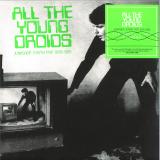
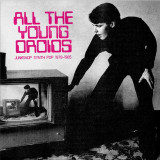
VARIOUS - ALL THE YOUNG DROIDS: JUNKSHOP SYNTH POP 1978-1985 (LP 2x12")
 
24
also available

Black Vinyl[27,69 €]

MB Crystal Vinyl[32,73 €]

LTD Trans Pink Vinyl[32,82 €]


2025 REPRESS ON TRANSPARENT GREEN VINYL


Compiled by Philip King “And then came the rise of synth pop : blokes with dodgy haircuts hunched over keyboard-operated machines stuffed with wires and do-it-yourself tone oscillators making sounds like a brood of geese passing gas in a wind tunnel. Whoopee! This is the way the ‘70s ended : not with a blood-curdling bang bang but with a cheap, synthesized, emasculating whimper.” NICK KENT, NME. All The Young Droids: Junkshop Synth Pop 1978-1985 is a new compilation that charts the underbelly of the epoch-defining sound of the synthesiser in 80s popular music. Compiled by Philip King (previously seen compiling All The Young Droogs, Glitterbest and Boobs - The Junkshop Glam Discotheque), the music here connects the dots between DIY synth enthusiasts grappling with new, cheap synthesisers at the tail-end of punk and wannabe, jobbing songwriters enthral to the new music pioneered by Gary Numan, Depeche Mode and Daniel Miller’s Mute Records. Featuring rare tracks of auto-didactic progressive pop music, proto-techno punk, shoot-for-the-stars-land-in-the-gutter chart flops and heralded, underground synth classics, School Daze paints a picture of beautiful failure. Complete with extensive sleeve notes written by King and never before seen imagery, all 24 tracks were remastered by RPM in-house engineer Simon Murphy, many from vinyl copies due to lost master tapes. The story told on All The Young Droids is one of the dawning opportunity presented by both the emergence to the market of cheaper analog synthesisers and the distribution networks plus indie labels that exploded with the advent of punk music in 1976. While the music that sprouted out all over the globe in the wake of these factors was decried as fake, plastic, a refutation of punk’s guitar-led revolution, it’s telling that much of the music on All The Young Droids.. was created in bedrooms, ramshackle studios and home-made set ups with often borrowed equipment. In the era of record labels jumping to capitalise on the success of The Sex Pistols, The Clash (both on major labels, of course) these artists struggled to stand out from a new gold-rush with next to no budget or PR team. With radio and labels desperate for the new Yazoo, what resulted was a testament to necessity being the mother of invention. At the time, the synthesiser was the music of the future, a shiny new machine that could paint like an orchestra with a single finger and a 4-track. In the hands of Manchester avant-pranksters Gerry & The Holograms it’s a pulsing, sardonic weapon.. the only instrument on the Messthetics classic lampooning of New Wave fashion. In Hamburg, a 16 year old Andreas Dorau used it to write and record (with his female classmates on vocals) a global smash in Fred Vom Jupiter (later licensed to Mute Records). The hard-to-find English version (Fred From Jupiter, natch) is included here. Many artists with alreadystoried careers caught the bug and recorded synthesiser-fuelled peons to space, computers, the future and, of course, love-interests. Harry Kakoulli, late of Squeeze, recorded a solo album in 1979 that included the incredible power-synth-pop smash-that-never-smashed I’m On A Rocket. Similarly, Ian North of Neo and American Power Pop stalwarts Milk ’n’ Cookies bought a Korg MS20 and used a tape machine to record We’re Not Lonely, an absolute lost-classic of minimal synth pop. We’re Not Lonely also features on the Junkshop Synth Pop sampler 7” twinned with John Howard unreleased track You Will See, released April 12th 2025. There are plenty of compilation debuts in evidence. Sole Sister were a mysterious trio who were featured on the Scaling Triangles compilation of female-fronted, queer-adjacent post-punk / underground music that also featured The Petticoats. Selwin Image were from San Francisco and featured members of the recently defunct power pop/punk group The Pushups. Their stupidly catchy The Unknown fizzes with New Wave energy - think XTC to Sparks but remains unreleased until now. Dream Unit’s A Drop In The Ocean is an early synth wave cut, positively teaming with Joy Division instrumentation, previously only released on a long-forgotten and super rare, self-released EP. Incandescent Luminaire’s Famous Names belies an archetypal struggle of a small-town trying to make it in a cruel industry but is a thrilling New Romantic-Synth Wave cross over with a OMD gloominess that’s a joy to hear. Feminist Minimal Wave track I Am A Time Bomb by performance artist Peta Lilly and Michael Chance is a revelation destined for new found cult status. It was released on 7” and lost until now. The flipside to the subterranean, never-made-it synth pop mentioned above are the ambitious, even fruity attempts at success that have a perennial elegance to their confidence. New Jersey-ite Billy London (real name Ed Barth) tried to cash in on the synth boom with Woman, released by a major label, a lurching new wave track built on the Louie Louie rhythm and a wonderfully camp Lou Reedstyle sleazy vocal before exploding in the synthesised chorus. The song bombed but with a chorus like this, you have to wonder why? Ex-Glitter Band member John Springate’s My Life is truly epic, with doomed chord progressions and massive sounding drums turning into at least 3 different songs in the course of the track. Before you wonder what’s going on the song resolves with a glorious return to the main refrain. The dry-ice-dressed dance floor is well catered for too. Design’s Premonition and Vision’s Lucifer’s Friend are stone-cold minimal synth bangers, well loved but given a new lease of life here. The Warlord’s The Ultimate Warlord was released in 1978, a homespun proto Hi NRG banger that was later re-recorded by The Immortals in Canada who had a club hit with it. One-man- band Disco Volante’s No Motion was re-issued by Synth wave label Medical in 2012 but makes its first vinyl compilation appearance here. Close your eyes and you can imagine what Lawrence of Felt would have sounded like with some cheap Korgs a little earlier in his career. Gibraltar-based trio The Microbes imagined a computer programming people to dance - how prescient - and ended up with a propulsive, robo-funk track with splendid rubbery bass playing over a tectonic drum machine. Previously picked up by Belgian label Stroom TV, Dee Jay Bert & Eagle’s heavily Euro-accented I Am Your Master demands the listener to “come to paradise!” In a frankly terrifying manner. All The Young Droids is the first compilation to peel away from the narrative that dour, Minimal Synth and Cold Wave were the only musical children of the first rush of synth pop. Philip King and School Daze Records describe a much more complicated world: along with the austere, Brutalist children of Daniel Miller (who produced Alan Burnham’s Bowie-Low-influenced Science Fiction here) was a plethora of desperate cash-ins, accidental mainstream hits, ambitious pop dramas and major label punts that went nowhere. Crucially, the compilation blurs the line between junk and treasure. What if the two things are interchangeable. What if it’s all science fiction?

In Stock

On Stock and ready to ship

27,69
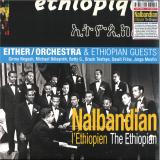
NALBANDIAN THE ETHIOPIAN & EITHER/ORCHESTRA - NALBANDIAN THE ETHIOPIAN (ETHIOPIQUES)

The Éthiopiques series returns! Essential archive recordings from an extremely fruitful period in Ethiopian music.

Before “Swinging Addis” took over the world, there was Moussié Nerses Nalbandian — the Armenian-born composer who shaped modern Ethiopian music. Mentor, arranger, and pioneer, he laid the foundations of Ethio-jazz.

This Éthiopiques volume revives his forgotten legacy, recorded live by Either/ Orchestra First issue ever with new exclusive photos and in depth liner 8-page insert.

“Ethiopian jazzmen are the best musicians that we have seen so far in Africa.
They really are promising handlers of jazz instruments.”

Wilbur De Paris
(1959, after a concert in Addis Ababa)

አዲስ፡ዘመን። *Addis zèmèn* **A new era.**
The time is the mid-1950s and early 1960s, just before "Swinging Addis" bloomed – or rather boomed – onto the scene. Brass instruments are still dominant, but the advent of the electric guitar, and the very first electronic organs, are just around the corner. Rock’n'Roll, R’n’B, Soul and the Twist have not yet barged their way in. Addis Ababa is steeped in the big band atmosphere of the post-war era, with Glenn Miller's *In the* *Mood* as its world-wide theme song, neck and neck with the Latin craze that was in vogue at the same period. Life has become enjoyable once again, with the return of peace after the terrible Italian Fascist invasion of Ethiopia (1935-1941). The redeployment of modern music is part and parcel of the postwar reconstruction. *Addis zèmèn* – a new era – is the watchword of the postwar period, just as it was all across war-torn Europe.
The generation who were the young parents of baby boomers** were the first to enjoy this musical renaissance, before the baby boomers themselves took over and forever super-charged the soundtrack of the final days of imperial reign. Music is Ethiopia's most popular art form, and very often serves as the best barometer for the upsurge of energy that is critical for reconstruction. Whether it be jazz in Saint-Germain-des-Prés or the *zazous* who revolutionised both jazz and French *chanson* after the *Libération*, be it Madrid's post-Franco Movida, or Dada, the Surrealists and *les années folles* that followed World War I, the periods just after mourning and hardship always give rise to brighter and more tuneful tomorrows. Addis Ababa, as the country's capital, and the epicentre of change, was no exception to this vital rule.

**Two generations of Nalbandian musicians**
Nersès Nalbandian belonged to a family of Armenian exiles, who had moved to Ethiopia in the mid-1920s. The uncle Kevork arrived along with the fabled "*Arba Lidjotch*", the** "*40 Kids*", young Armenian orphans and musicians that the Ras Tafari had recruited when he visited Jerusalem in 1924, intending to turn their brass band into the official imperial band. If Kevork Nalbandian was the one who first opened the way of modernism, pushing innovation so far as to invent musical theatre, it was his nephew Nersès who would go on to become, from the 1940s and until his death in 1977, a pivotal figure of modern Ethiopian music and of the heights it. Going all the way back to the 1950s. Nothing less. And it is Nersès who is largely to thank for the brassy colours that so greatly contributed to the international renown of Ethiopian groove. While the younger generations today venture timidly into the genealogy of their country's modern music, often losing their way amidst a distinctly xenophobic historiographical complacency, many survivors of the imperial period are still around to bear witness and pay tribute to the essential role that "Moussié Nersès" played in the rise of Abyssinia's musical modernity.
Given the year of his birth (15 March 1915), no one knows for sure if Nersès Nalbandian was born in Aintab, today Gaziantep (Turkiye/former Ottoman Empire) or on the other side of the border in Alep, Syria... What is certain is that his family, like the entire Armenian community, was amongst the victims of the genocide perpetrated by the Turks. Alep, the place of safety – today in ruins.
Before Nersès then, there was uncle Kevork (1887-1963). For a quarter of a century, he was a whirlwind of activity in music teaching and theatrical innovation. *Guèbrè Mariam le Gondaré* (የጎንደሬ ገብረ ማርያም አጥቶ ማግኘት, 1926 EC=1934) is his most famous creation. This play included "ten Ethiopian songs" — a totally innovative approach. According to his autobiographical notes, preserved by the Nalbandian family, Kevork indicates that he composed some 50 such pieces over the course of his career. This shows just how much he understood, very early on, the critical importance of song as Ethiopia's crowning artistic form. Indeed, for Ethiopian listeners, the most important thing is the lyrics, with all their multifarious mischief, far more than a strong melody, sophisticated arrangements or even an exceptional voice. (This is also why Ethiopians by and large, and beginning with the artists and producers themselves, believed for a long time — and wrongly — that their music could not possibly be exported, and could never win over audiences abroad, who did not speak the country's languages).

Last but not least, one of Kevork's major contributions remains composing Ethiopia's first national anthem – with lyrics by Yoftahé Negussié.
Nersès Nalbandian moved to Ethiopia at the end of the 1930s, at the behest of his ground-breaking uncle. Proficient in many instruments (pretty much everything but the drums), conductor, choir director, composer, arranger, adapter, creator, piano tuner, purveyor of rented pianos,... he was above all an energetic and influential teacher. From 1946 onwards, thanks to Kevork's connexion, Nersès was appointed musical director of the Addis Ababa Municipality Band. In just a few years, Nersès transformed it into the first truly modern ensemble, thanks to the quality of his teaching, his choice of repertoire, and the sophistication of his arrangements. It was this group that would go on to become the orchestra of the Haile Selassie Theatre shortly after its inauguration in 1955, which was a major celebration of the Emperor's jubilee, marking the 25th anniversary of his on-again-off-again reign.

At some point or other in his long career, Nersès Nalbandian had a hand in the creation of just about every institutional band (Municipality Band, Police Orchestra, Imperial Bodyguard Band, Army Band, Yared Music School…), but it was with the Haile Selassie Theatre – today the National Theatre – that his abilities were most on display, up until his death in 1977. To this must be added the development of choral singing in Ethiopia, hitherto unknown, and a sort of secret garden dedicated to the memory of Armenian sacred music, and brought together in two thick, unpublished volumes. Shortly before his death (November 13, 1977), he was appointed to lead the impressive Ethiopian delegation at Festac in Lagos, Nigeria (January-February 1977).

His status as a stateless foreigner regularly excluded him from the most senior positions, in spite of the respect he commanded (and commands to this day) from the musicians of his era. Naturally gifted and largely self-taught, Nerses was tirelessly curious about new musical developments, drawing inspiration from the very first imported records, and especially from listening intensely to the musical programmes broadcast over short-wave radio – BBC *First*. A prolific composer and arranger, he was constantly mindful of formalising and integrating Ethiopian parameters (specific “musical modes”, pentatonic scale, and the dominance of ternary rhythms) into his “modernisation” of the musical culture, rather than trying to over-westernise it. It even seems very probable that *Moussié* Nerses made a decisive contribution to the development of tighter music-teaching methods, in order to revitalise musical education during this period of prodigious cultural ferment. Flying in the face of all the historiographical and musicological evidence, it is taken as sacrosanct dogma that the four musical modes or chords officially recognised today, the *qǝñǝt* or *qiñit* (ቅኝት), are every bit as millennial as Ethiopia itself. It would appear however that some streamlining of these chords actually took place in around 1960. It was only from this time onward that music teaching was structured around these four fundamental musical modes and chords: *Ambassel*, *Bati*, *Tezeta* and *Antchi Hoyé*. A historical and musical “details” that is, apparently, difficult to swallow, especially if that should honour a *foreigner*. Modern Ethiopian music has Nersès to thank for many of its standards and, to this day, it is not unusual for the National Radio to broadcast thunderous oldies that bear unmistakable traces of his outrageously groovy touch.

In Stock

On Stock and ready to ship

22,06
Ezéchiel Pailhès - SOL (LP)
  • A1: C’est Loin
  • A2: Là Où Tu Veux (Deixa A Gira Girá)
  • A3: Pas Tant De D'chichi Ponpon
  • A4: Assez
  • A5: Le Soleil En Haut
  • A6: Tout L’or
  • B1: Désillusion
  • B2: Attends-Moi
  • B3: O Sapo
  • B4: Horssaison
  • B5: Presque Rien
  • B6: Vou Festejar
 
1

For his sixth solo album, Ezéchiel Pailhès returns with a new collection of songs infused by a sunny wandering spirit.
Within each of the twelve songs on SOL is a thread of melancholic happiness that has permeated much of Pailhès’ music and songwriting. He addresses love, the passing of time, hope, lost illusions, fleeting moments of grace, the temptation of forgetting, a need to escape, and desire. All this is
insulated by understated orchestrations that blend acoustic and electronic instrumentation with deft confidence.
The Portuguese and Brazilian concept of saudade—a form of melancholic longing and nostalgia— pervades, thanks in part to Pailhès decision to record the album in Rio de Janiero and to reinterpret some of the finest works of Música Popular Brasileira (MPB). In particular, he revisits a handful of
lesser known classics from the mid-century samba and bossa nova era—originally written or performed by talents including Vinícius de Moraes, João Gilberto, Tom Zé, Dorival Caymmi, João Donato, Os Tincoãs, and Ataulfo Alves.
The shift from Brazilian Portuguese to French and the decision to adapt rather than perform a straightforward cover versions, allows Pailhès to invent a form of prosody and euphony (the musicality and harmonious combination of words) that feels vibrant and unlike anything else in today’s French
chanson landscape.
“Some lyrics are simple translations from Portuguese, in what I’d call an expanded version. For others, I started from a single word or a single phrase and embroidered an entirely new text that carried me elsewhere,” explains Pailhès. “I allowed myself great interpretive freedom, while preserving the humanist dimension of the original songs. I’ve always been deeply moved by the way Brazilians transfigure reality through heightened emotion. I love this visceral and spontaneous country, which always seems to live through emotion. And above all, I love its music both popular and unifying,
bringing together all social classes. In that sense, it’s very political music, but even more so utopian, made by the people and for the people.”
On this new album, however, the French artist was keen to avoid cliché. Each song is therefore built around a carefully balanced interplay between Pailhès’ piano and synthesizers, alongside restrained arrangements of percussion, brass, bass, and cavaquinho (a small four-string plucked guitar). These parts were recorded in Rio de Janeiro with two musicians who regularly perform alongside the legendary Caetano Veloso—Kainã Do Jêje and Alberto Continentino—joined by Thomas Harres, Antônio Neves, Eduardo Neves, and Gabriel Loddo.
Since the 1960s, France and Brazil have shared a long-standing cultural and musical relationship. Some Brazilian artists, most famously Gilberto Gil, took refuge in France during the dictatorship years (1964–1985). But above all, French chanson quickly fell in love with the richness and ingenuity of
bossa nova and samba, translating and reinventing them in the language of Molière. Throughout the 1960s and 1970s, albums and hits by Henri Salvador, Georges Moustaki, Pierre Barouh, Pierre Vassiliu, and Claude Nougaro all drew from the MPB repertoire.
Fifty years later, with SOL, Ezéchiel Pailhès reinvents this rich Franco-Brazilian musical legacy, bringing to it a personality and modernity that stand confidently alongside those of his forbears.

pre-order now12.06.2026

expected to be published on 12.06.2026

21,81

Last In: 2026 years ago
Ulrich Gumpert Quartett - So Einfach Ist Das LP

This album is probably one of the most outstanding jazz discoveries of this year and highlights the significance of earlyJjazz-Rock recordings from East Germany in the late 60s to the early 1970s.
The highly talented organist Ulrich Gumpert, along with top musicians like drummer Günter "Baby" Sommer, bassist Gert Lübke, and guitarist Günter Dobrowolsky, formed a powerful independent quartet as well the rhythm section within the Klaus Lenz Orchestra and later of the group SOK. Their modern, soulful, and funky Jazz-Rock compositions gained popularity and were even promoted by the
East Berlin youth radio. Guest artists like the famous Günther Fischer contributed to their first recordings. This retrospective LP celebrates a groundbreaking yet underappreciated era in East German Jazz and Rock history.

In Stock

On Stock and ready to ship

27,69
VARIOUS - ALL THE YOUNG DROIDS: JUNKSHOP SYNTH POP 1978-1985 (LP 2x12")
 
24
also available

MB Crystal Vinyl[32,73 €]

LTD Trans Pink Vinyl[32,82 €]

LTD Trans Pink Vinyl[27,69 €]


Compiled by Philip King
“And then came the rise of synth pop : blokes with dodgy haircuts hunched over keyboard-operated
machines stuffed with wires and do-it-yourself tone oscillators making sounds like a brood of geese
passing gas in a wind tunnel. Whoopee! This is the way the ‘70s ended : not with a blood-curdling bang
bang but with a cheap, synthesized, emasculating whimper.”
NICK KENT, NME.

All The Young Droids: Junkshop Synth Pop 1978-1985 is a new compilation that charts the
underbelly of the epoch-defining sound of the synthesiser in 80s popular music. Compiled by Philip
King (previously seen compiling All The Young Droogs, Glitterbest and Boobs - The Junkshop
Glam Discotheque), the music here connects the dots between DIY synth enthusiasts grappling with
new, cheap synthesisers at the tail-end of punk and wannabe, jobbing songwriters enthral to the new
music pioneered by Gary Numan, Depeche Mode and Daniel Miller’s Mute Records. Featuring rare
tracks of auto-didactic progressive pop music, proto-techno punk, shoot-for-the-stars-land-in-the-gutter
chart flops and heralded, underground synth classics, School Daze paints a picture of beautiful failure.
Complete with extensive sleeve notes written by King and never before seen imagery, all 24 tracks
were remastered by RPM in-house engineer Simon Murphy, many from vinyl copies due to lost master
tapes. The story told on All The Young Droids is one of the dawning opportunity presented by both the
emergence to the market of cheaper analog synthesisers and the distribution networks plus indie labels
that exploded with the advent of punk music in 1976. While the music that sprouted out all over the
globe in the wake of these factors was decried as fake, plastic, a refutation of punk’s guitar-led
revolution, it’s telling that much of the music on All The Young Droids.. was created in bedrooms,
ramshackle studios and home-made set ups with often borrowed equipment. In the era of record labels
jumping to capitalise on the success of The Sex Pistols, The Clash (both on major labels, of course)
these artists struggled to stand out from a new gold-rush with next to no budget or PR team. With radio
and labels desperate for the new Yazoo, what resulted was a testament to necessity being the mother
of invention.

At the time, the synthesiser was the music of the future, a shiny new machine that could paint like an
orchestra with a single finger and a 4-track. In the hands of Manchester avant-pranksters Gerry & The
Holograms it’s a pulsing, sardonic weapon.. the only instrument on the Messthetics classic lampooning
of New Wave fashion. In Hamburg, a 16 year old Andreas Dorau used it to write and record (with his
female classmates on vocals) a global smash in Fred Vom Jupiter (later licensed to Mute Records).
The hard-to-find English version (Fred From Jupiter, natch) is included here. Many artists with alreadystoried careers caught the bug and recorded synthesiser-fuelled peons to space, computers, the future
and, of course, love-interests. Harry Kakoulli, late of Squeeze, recorded a solo album in 1979 that
included the incredible power-synth-pop smash-that-never-smashed I’m On A Rocket. Similarly, Ian
North of Neo and American Power Pop stalwarts Milk ’n’ Cookies bought a Korg MS20 and used a
tape machine to record We’re Not Lonely, an absolute lost-classic of minimal synth pop. We’re Not
Lonely also features on the Junkshop Synth Pop sampler 7” twinned with John Howard unreleased
track You Will See, released April 12th 2025.

There are plenty of compilation debuts in evidence. Sole Sister were a mysterious trio who were
featured on the Scaling Triangles compilation of female-fronted, queer-adjacent post-punk /
underground music that also featured The Petticoats. Selwin Image were from San Francisco and
featured members of the recently defunct power pop/punk group The Pushups. Their stupidly catchy
The Unknown fizzes with New Wave energy - think XTC to Sparks but remains unreleased until now.
Dream Unit’s A Drop In The Ocean is an early synth wave cut, positively teaming with Joy Division
instrumentation, previously only released on a long-forgotten and super rare, self-released EP.
Incandescent Luminaire’s Famous Names belies an archetypal struggle of a small-town trying to
make it in a cruel industry but is a thrilling New Romantic-Synth Wave cross over with a OMD
gloominess that’s a joy to hear. Feminist Minimal Wave track I Am A Time Bomb by performance artist
Peta Lilly and Michael Chance is a revelation destined for new found cult status. It was released on 7”
and lost until now.

The flipside to the subterranean, never-made-it synth pop mentioned above are the ambitious, even
fruity attempts at success that have a perennial elegance to their confidence. New Jersey-ite Billy
London (real name Ed Barth) tried to cash in on the synth boom with Woman, released by a major
label, a lurching new wave track built on the Louie Louie rhythm and a wonderfully camp Lou Reedstyle sleazy vocal before exploding in the synthesised chorus. The song bombed but with a chorus like
this, you have to wonder why? Ex-Glitter Band member John Springate’s My Life is truly epic, with
doomed chord progressions and massive sounding drums turning into at least 3 different songs in the
course of the track. Before you wonder what’s going on the song resolves with a glorious return to the
main refrain.

The dry-ice-dressed dance floor is well catered for too. Design’s Premonition and Vision’s Lucifer’s
Friend are stone-cold minimal synth bangers, well loved but given a new lease of life here. The
Warlord’s The Ultimate Warlord was released in 1978, a homespun proto Hi NRG banger that was
later re-recorded by The Immortals in Canada who had a club hit with it. One-man- band Disco
Volante’s No Motion was re-issued by Synth wave label Medical in 2012 but makes its first vinyl
compilation appearance here. Close your eyes and you can imagine what Lawrence of Felt would have
sounded like with some cheap Korgs a little earlier in his career. Gibraltar-based trio The Microbes
imagined a computer programming people to dance - how prescient - and ended up with a propulsive,
robo-funk track with splendid rubbery bass playing over a tectonic drum machine. Previously picked up
by Belgian label Stroom TV, Dee Jay Bert & Eagle’s heavily Euro-accented I Am Your Master
demands the listener to “come to paradise!” In a frankly terrifying manner.
All The Young Droids is the first compilation to peel away from the narrative that dour, Minimal Synth
and Cold Wave were the only musical children of the first rush of synth pop. Philip King and School
Daze Records describe a much more complicated world: along with the austere, Brutalist children of
Daniel Miller (who produced Alan Burnham’s Bowie-Low-influenced Science Fiction here) was a
plethora of desperate cash-ins, accidental mainstream hits, ambitious pop dramas and major label
punts that went nowhere. Crucially, the compilation blurs the line between junk and treasure. What if the
two things are interchangeable. What if it’s all science fiction?

In Stock

On Stock and ready to ship

27,69
Harry Chapin - Verities & Balderdash LP
  • 1: Cat’s In The Cradle
  • 2: I Wanna Learn A Love Song
  • 3: Shooting Star
  • 4: 30,000 Pounds Of Bananas
  • 5: She Sings Songs Without Words
  • 6: What Made America Famous?
  • 7: Vacancy
  • 8: Halfway To Heaven
  • 9: Six String Orchestra

How enduring is the signature song from Harry Chapin’s Verities & Balderdash? So timeless that it became the subject of a 2025 documentary in which artists from multiple generations weigh in on its impact on their lives and craft. “Cat’s in the Cradle” doubtlessly remains the main event on the singer-songwriter’s 1974 album. The legendary opening track also serves as a guidepost for the bold personal and social material that follows — as well as the gorgeous folk-rock arrangements that underpin the New York native’s most commercially successful work.

Sourced from the original master tapes, pressed at Fidelity Record Pressing, housed in a Stoughton jacket complete with a four-page insert, and strictly limited to 3,000 numbered copies, Mobile Fidelity’s 180g 33RPM LP of Verities & Balderdash presents Chapin’s fourth full-length in audiophile quality for the first time on vinyl. Captured during a golden era for sonics and production, the Top 5 effort features remarkable tonal balance, instrumental separation, and organic naturalism. Those valued aspects come into supreme focus on this reissue, which plays with dead-quiet surfaces and a low noise floor.

The newfound clarity, openness, and imaging underscore the lasting appeal of Chapin’s tender deliveries, soulful timbre, and careful phrasing. Every word comes across with incredible realism, while his underrated guitar playing occupies its own distinctive space. Also notable: The extension of the tasteful string accents; airiness of the backing vocals; depth and shape of the spare bass lines; and width and depth of the soundstaging. When on “Six String Orchestra” Chapin calls out names of instruments, they appear like magic, the band performing feet from you. Chapin has never sounded so lifelike on record.

Certified double platinum, Verities & Balderdash resonated with the times and public. “Cat’s in the Cradle” reached No. 1 on the chart on its way to being inducted into the Grammy Hall of Fame. The romantic ballad “I Wanna Learn a Love Song” flirted with the Top 40 and wrapped listeners in the equivalent of a cozy blanket. The record’s other single, the mini-epic “What Made America Famous?,” helped establish Chapin as one of the country’s most incisive and insightful commentators.

Verities & Balderdash teems with situational devices and topical matters. Chapin observes everything from the polarization of the nation to changes in moral standards and cultural priorities. He investigates pressing themes without ever turning preachy or elevating himself above the matters at hand. On “Halfway to Heaven,” whose coda races to the finish and ranks as the most urgent moment on the record, Chapin inhabits the mind of his frustrated protagonist akin to an eagle-eyed novelist.

Conveying emotions that range from melancholic to carefree, Chapin is as much of a singer as a storyteller. He assumes the voice of multiple characters within a single narrative. During the quirky “30,000 Pounds of Bananas,” a tale based on a delivery-truck accident in 1965, Chapin alters his delivery, pronunciation, and diction to become an old man reflecting on the mishap and mess. The tempo, too, adjusts to match the speed of the vehicle Chapin describes.

Adorned with timely laugh tracks to reinforce the bittersweet humor, the stripped-down “Six String Orchestra” takes everything up another notch, with Chapin intentionally missing guitar notes or playing a broken passage to illustrate the failures of the hopeful protagonist who doesn’t have what’s required to make it as an artist.

Chapin, of course, did not have any such problem. The lynchpin of a career cut short by a tragic traffic incident, Verities & Balderdash is Exhibit A of the savvy craft, feeling, and perspective he lent to American music.

pre-order now

This item has not yet been released. You can pre-order the product now.

46,64

Last In: 2026 years ago
Eden Ahbez - Wild Boy: The Lost Songs Of Eden Ahbez LP

“Wild Boy …” is a reissue of the well-known 2016 release curated by Brian Chidester, renowned researcher and biographer of Eden Ahbez. Especially for this album, Brian wrote an interesting text about Abi’s life, which definitely became the decoration of the release.
With the new 2020 re-release, we went a little further and kept what is commonly referred to as studio cuts. It’s a few more minutes in the studio with ahbez himself, full of emotion and life. In addition, to the delight of fans, the edition includes an additional composition Nature Boy (Mantovani Orchestra).
Especially, it is worth noting the outstanding mastering prepared from practically decomposed tapes by the Grammy-nominated Jessica Thompson, which guarantees the deepest and warmth possible sound. Jessica a huge ahbez fan and we’re highly appreciated for what she has done to save his music for the future.
Eden Ahbez is definitely at the origin of psychedelic music and this release can be taken as further proof. Over the past twenty years, the iconic figure of the world’s first hippie Eden ahbez has become famous primarily for his 1948 song “Nature Boy”, praising universal love, and his amazingly solo album from the 1960s called “Eden’s Island” – one from the first concept albums in the history of music and probably the first psychedelic music album. “Wild Boy: The Lost Songs Of Eden Ahbez” deepens understanding of the origins of the psychedelic movement in the 1950s.
The disc contains a musical selection of works by Eden ahbez himself, written by him in the period after Nature Boy. The inclusion of songs such as “Palm Springs” – Ray Anthony Orchestra and “Hey Jacques” by Erta Kitt gives the listener the chance to discover for the first time the little-known recordings of world-famous artists composed by Eden ahbez. Through “Wild Boy” and “Surfer John” you can hear the author’s handling of absurd rock and exotic experimentation, as well as sweet psychedelic pop like Monterey (with Paul Horn on flute). Overall, Wild Boy: The Lost Songs Of Eden Ahbez offers an overview of the lost works of 1949-1971 with seven unpublished recordings and eight rare singles.
If in 2020 you are missing the hallucinogenic content in Eden Ahbez, it amazingly makes up for that deficiency with simple chords, expansive arrangements, and lyrics about travel, relaxation, free love, and spirituality. Thus creating the standard of psychedelic music. Eden Ahbez’s songs weren’t only fantasy and his personal philosophy was the real thing that he lived.

reviews:

“This carefully and extensively researched compilation culls covers by top notch mainstream artists juxtaposed with unreleased Eden recordings. What might sound like a mixed bag is actually more like a chronological, musical non-fiction novel about Eden Ahbez. While Eden was writing hundreds of songs and performing live and making recordings in various styles, his songs were also being picked up by popular artists like Nat King Cole and Eartha Kitt who recorded with a more polished mainstream style. There are also some early rock n roll style recordings here. Eden’s professionally recordings often end up as Novelty Pop records such as “Child of Nature” and “The Clam Man” but if you read between the lines and listen to the lyrics it is pretty eye-opening that he is singing about Eastern-religion-style and pre-hippie philosophies about being at one with the planet Earth.
All of this is explained in the lengthy liner notes inside the lp along with a few choice photos that establish Eden as a founding father of Southern California mystic/psychedelic music.” – Tiki_News
“Eden Ahbez’s life philosophy was summed up in the lyrics of his most famous song, “Nature Boy,” a 1948 hit for Nat King Cole: the song describes a “strange enchanted boy” who wanders the world in search of truth. “The greatest thing you’ll ever learn,” he concludes, “is to love and be loved in return.” Ahbez was a pre-cursor of California’s beatniks and hippies, and an exalted icon of ex-otica via his rare 1960 album Eden’s Island. Beyond “Nature Boy” and Eden’s Island, though, there were nu-merous lesser-known Ahbez record-ings. Ahbez biographer Brian Chidester has been doing an exemplary job of archiving and documenting that catalog of work. The Exotic World of Eden Ahbez (reviewed in UT#38) appeared a few years ago, gathering together 14 Ahbez-related rarities” – Ugly Things

In Stock

On Stock and ready to ship

31,89
Mama Sissoko - Live

Mama Sissoko

Live

12inchMRBML01020
Mieruba Record Label
31.05.2024

A veteran of the great Malian orchestra, the Super Biton de Ségou, Mama Sissoko is an accomplished musician. His music traverses Mandingo, Bambara, Sarakolé, Songhai, Bobo, Peul, Malinke and Bozo traditions, all while flirting with jazz. On stage, Mama Sissoko is a purist who engages with the audience bringing his energy, urgent vocals and truly inspired guitar solos throughout the concert. ‘Live' brings together recordings from a concert given in Paris at La Villette in 1998 and takes us back to a high point in Mama Sissoko's career.

In ‘Live’, we find tracks from Mama Sissoko's second solo album 'Soleil de Minuit', which was released in 1999 by Buda Music. As on the album, the different guitars overlap without compromising the unity of the music, rendering an earthy atmosphere despite being very complex. The recording of this concert was superb. We can hear every note, every nuance, every instrument and voice in the many-layered compositions.

As on the album ‘Soleil de Minuit’, this live recording opens the session with ‘Diarabi’, followed by ‘Safiatou’. Both are up-tempo love songs in which Mama Sissoko's powerful voice sings with all of the passion that such love songs deserve over a clean rhythm driven by the percussion of several guitars. The heavy bassline of ‘Safiatou’ adds to the urgency of the song. After these two beautiful renditions, the energy continues with the guitar-driven ’Fisiriwale’ and then a surprisingly original version of Super Biton’s famous song, ‘Iri’. We are then treated to a lively version of his ‘Soleil de Minuit’, called out by the artist as a ‘salsa Africana’ with a shout out given to Cuban salsa mid-way through when he calls the song ‘El Sol de Medianoche’ in perfect Spanish.
Throughout this concert, Mama Sissoko’s deep and melodic voice seems to emanate effortlessly from his body and soul. Multiple guitars back up his signature solos adding depth to the music that harkens back to the traditional music of Mali. Perfect examples of this are given in the songs ‘Douga’, ‘Manssane’ and ‘Hommage a K’. The last song, before a rousing second version of ‘Soleil de Minuit’, is ‘Boma Ma’, a truly modern rendition of a traditional Malian hunters’ song with multiple guitars, shakers, lively djembe and an outstanding vocal duet with Toussaint Sainé, Mama Sissoko’s long time musical collaborator.

Accompanied by incredible musicians, including Toussaint Sainé, his partner in the Super Biton orchestra, "Live" plays in the timeless way of Malian music. What's more, it gives us the gift of its most direct and powerful dimension, that of live music, as if 20 years hadn't passed.

In Stock

On Stock and ready to ship

22,06
Tomislav Simovic - The Zagreb School Of Animated Film (Original Soundtracks 1961-1982) (OST)

A collection of unreleased themes and scores from 18 short animated films from the world famous Zagreb School Of Animated Film. Includes Oscar winning short cartoon Ersatz / Surogat by Dusan Vukotic (1961) and many other jazz, electronica and experimental scores by composer Tomislav Simovic. Coined by the famed film theorist Georges Sadoul at the 1959 Cannes Festival, The Zagreb School of Animated Film(s) or The Zagreb School of Animation, was defined as an artistic and philosophical world-view that set its mark on the history of animation in the 60's and 70's. The key feature of the Zagreb School (not educational facility in any kind), was commitment to stylization in contrast with the Disney-style canon of realistic animation. Among many composers that worked in Zagreb Film productions, the name of Tomislav Simovic (1931 - 2014) stands out. In his oeuvre of 300+ film scores (not counting compositions and arrangements for pop singers and jazz orchestras), many were made exclusively for Zagreb film documentaries, fiction shorts, features and animation. Simovic was particularly adept at writing music for cartoons. He skillfully synchronized movement and sound and mixed different musical genres, although, like his peers at the time, he leaned towards jazz. 'The Zagreb School of Animated Film (Original Soundtracks 1961-1982)' is compiled by Leri Ahel (Mutant Disco Radio Show) and Zeljko Luketic (Electronic Jugoton, Ex-Yu Electronica III). Master tapes were considered lost, now found and restored for this epic 2 x LP release celebrating Yugoslavia's animated art shorts. Double vinyl gatefold with extensive liner notes, photographs from the films and exclusive cover artwork by Dejan Krsic (NEP / Nova Evropa).

In Stock

On Stock and ready to ship

27,69
Dr Packer & Sonic Soul Orchestra - You're The One For Me EP

Originally recorded by D-Train, some might say this is one of the most important post disco records from the 1980’s, which appeared on the legendary Prelude records originally. What makes this version particularly special, is the fact it features another important artist from the post disco era Colonel Abrams, who is most famous for his cult classics ‘Trapped’ and ‘I’m Not Gonna Lie’ which both topped the charts in the mid 80’s. Aussie disco lord Dr Packer, who is currently on tour across Europe teams up with newcomer Sonic Soul Orchestra, who flip this into a fresh disco house cut that includes all new instrumentation whilst respecting the smooth vocal stylings of the Colonel. Plus remixes from Ross Couch, & Ricky Morrison (M&S).

Early DJ Support:
Jamie Jones, Mark Knight, Michael Gray, Roger Sanchez.

In Stock

On Stock and ready to ship

14,08
TORBJÖRN LANGBORN & THE FEEL LIFE ORCHESTRA - FEEL LIFE (DIMITRI FROM PARIS REMIX)

Since 2019 the collective of Parisian partygoers, Pardonnez-Nous, have decided to launch their own label. Just like their parties, their goal is to shine a light on dancing music.

Constantly looking for new tracks to enlighten the dancefloors, their outings are in line with the vision of deejaying defended by its founders. Finding forgotten pieces that are the geneses of dance music and mixing them with more contemporary sounds. Re-editions, edits, remixes or original productions the label doesn’t just stick to one style but aspires to represent all the music of partying!

Mexico, Peru, Surinam, and of course Sweden: in 1986, musicians from around the world responded to the Swedish composer, arranger and multi-instrumentalist Torbjörn Langborn’s invitation. His idea was to bring together the two groups he played with: a jazz quintet, and his salsa ensemble.

The cocktail was explosive: after several days recording at the Humlan studio in Stockholm, Torbjörn Langborn & the Feel Life Orchestra produced an eponymous album, combining, in Langborn’s words, “disco and funk with congas and Batá percussions.” The B side was a three-part gem nearly seven minutes long titled “Feel Life”, where he gives free rein to his talent as a jazz pianist. Thirty years later, we asked the famous remixer Dimitri from Paris to express is talent to produce a new version of this classic music track. "Pardonnez-nous", here it is.

In Stock

On Stock and ready to ship

10,46
LEE MASON - MUSIC BY LEE MASON (REISSUE)
  • Top Gear
  • Yorkville
  • The Hunter
  • Summer Girl
  • Free And Easy
  • Blue Bird
  • Big Game
  • Heat Haze
  • Hot Pants
  • Shady Blues
  • Bootsie

Wewantsounds is delighted to announce the reissue of Music By Lee Mason, the cult classic from the Chappell Recorded Music Library, originally released in the UK in 1971. Credited to Lee Mason & His Orchestra, the album is in fact the work of renowned British composer and arranger Pete Moore - best known for producing the iconic "Asteroid" theme in 1968 for the Pearl & Dean cinema advertising company. One of the funkiest library albums of its era, blending cinematic tension, funky grooves, and jazzy undertones, Music By Lee Mason features the track "Shady Blues," famously sampled by Madlib. Newly remastered and featuring liner notes by Kevin Le Gendre, this long-overdue reissue brings a lost classic back to vinyl for the first time since 1971.

pre-order now13.02.2026

expected to be published on 13.02.2026

28,53

Last In: 2026 years ago
Esa Pethman - In Belgium 1967

Esa Pethman

In Belgium 1967

7"-VinylWJ075001
WE JAZZ
06.02.2026

We Jazz Records kicks off their new series of archival 7" releases with Esa Pethman "In Belgium 1967" released 23 September 2022. The two-tracker is licensed from the Belgian VRT radio archives and both of the pieces are previously unreleased. Finnish jazz legend Pethman, heard here on alto flute and tenor sax, joins forces with European jazz greats such as Heinz Bigler, Uffe Karskov and Jean Fanis. This is a small but valuable piece of unheard European jazz history from the early heyday of modern jazz. The physical release is a quality "inside-out"-styled EP with 3mm spine and small center hole on the 45rpm vinyl.

An excerpt from the liner notes by Mikko Mattlar:

"Esa Pethman (b. 1938) was one of the key figures of modern Finnish jazz in the 1960s. His album The Modern Sound Of Finland was the first Finnish modern jazz album and his composition "The Flame" a true modern Fenno-jazz evergreen.

Pethman was born in Kuusankoski, 135 kilometres from Helsinki in the Kymenlaakso area. The jazz scene was active even though it was an area of rural landscapes and paper mills. Pethman discovered jazz when he heard a Charlie Parker record being played at a local music shop in the late 1940s. Following Parker, bebop became his favourite style of jazz.

Young Pethman played flute and saxophone in local bands who accompanied schlager singers. They played tangos and waltzes for dancers, but usually started a typical dance event with an hour of jazz. In 1959 Pethman moved to Helsinki to study music at the Sibelius Academy. Back then it was a strictly classical music academy, but Pethman later described the studies as crucial for his development and career. He quickly made his way to studio sessions and into the best orchestras in Helsinki.

As a student of composition, Pethman also began writing his own music. "The Flame" was a melody he just got on his mind one night, and he decided to write it down. The catchy composition was released as a 7" single in 1964, a year before Pethman's debut album. Both records stand as benchmarks for modern Finnish jazz. The album consisted entirely of Pethman's compositions, not versions of jazz standards like a lot of the Finnish jazz released until then.

In the mid 1960s, Finnish jazz was also taking its first international steps. Pethman's quintet took part in the first Montreux Jazz Festival in Switzerland in June 1967. At the Montreux jazz band competition, the quintet came in fourth of the twelve contestants. Despite not winning the competition, the band got an honourable mention, and Pethman was now recognized outside Finland.

In December 1967 Pethman travelled to Brussels. His visit was organised by the national Finnish broadcasting company Yleisradio and their jazz program producer Matti Konttinen. Konttinen was supposed to go to Brussels with Pethman, but the musician ended up traveling alone.

In the Decca recording studios Pethman played two songs. He recorded a version of his most famous composition "The Flame", where he played the alto flute and was accompanied by Belgian musicians. On Swiss saxophonist Heinz Bigler's composition "Like Steel", Pethman played the tenor saxophone. The band was now more international, consisting of Bigler, the Italian Francesco Santucci, the Dane Uffe Karskov, a Belgian rhythm section and Pethman. After 55 years, Pethman still remembers Bigler's remarkable skills as a saxophonist.

The two-day visit included the recording session, a dinner and a concert. Pethman and the other non-Belgian musicians came to Brussels mainly to play at a jazz concert organised by the European Broadcasting Union EBU. They played at the studio first, and the concert was held the following day. Pethman and all the other soloists played as members of an international big band. The studio and live session were produced by the Belgian Radio and Television jazz section leader Elias Gistelinck."

out of Stock

Order now and we will order the item for you at our supplier.

16,39

Last In: 3 years ago
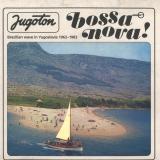
Various - Jugoton Bossa Nova  2x12"

Various

Jugoton Bossa Nova 2x12"

2x12inchEVERLAND-YU009LP
Everland
20.01.2026
 
20

Rich musical history of Yugoslavia reveals a long-lasting love for the music of Latin America.
Entwined in Afro-Cuban rhythms, ballrooms were shakin', swayin' and swingin', gathering musicians who were heavily into jazz bands and orchestras, most notably in Ljubljana, Zagreb, and Belgrade. Jazz could be heard on the streets of Split way back in 1919 when dancing became a symbol of freedom. Radio was the most loved household item, newest sheet music was in demand and collecting records was hip like today. In the aftermath of Second World War, jazz went underground but little by little, things changed and Ella, Satchmo, Dizzy and Miles came to visit, among others. Music festivals shaped the music for entertainment and variety of popular styles showed influences from all over the world. In the early sixties, one particular rhythm crashed on the coast of the Adriatic Sea: the rhythm of bossa nova!

In the whirlwind of various musical styles, Latin American music still played important part of the scene in the early sixties Yugoslavia. Beguine, tango, rhumba, samba, calypso, mambo and cha-cha-cha all found their place on the festivals inspired by famous Sanremo, festival of Italian popular song that largely shaped the musical taste of Europe. It was the era of instrumental rock, R & B and rock'n'roll - sounds of "imperialist America" now played freely on imported and hand-made electric guitars. While dancing halls had been turning into concert venues, bossa nova has come! Eydie Gorme with Blame It on the Bossa Nova and Paul Anka with Eso Besso (That Kiss!) tried to make us learn some new dance moves but it was Joao Gilberto's gentle singing and his new way of playing samba songs, along with Tom Jobim's modern dissonant harmonies and poetry of Vinicius de Moraes that created the magic. When American alto saxophonist and flautist Bud Shank visited Zagreb and Ljubljana in 1963 (with Boško Petrović in his quintet) "it was the first time we heard bossa nova!" remembers Stjepan Braco Fučkar. Jugoton, the biggest record company in Yugoslavia, released 4-track EP Bossa Nova by Bogdan Dimitrijević and his ensemble that same year! While not being fully accepted or understood completely, the archives of Jugoton reveal to us various interpretations of this new trend from their vast catalogue.

out of Stock

Order now and we will order the item for you at our supplier.

38,61

Last In: 64 days ago
Rufus Wainwright - I'm A Stranger Here Myself: Wainwright Does Weill LP 2x12"
  • 1: September Song
  • 2: I'm A Stranger Here Myself
  • 3: Die Muschel Von Margate
  • 4: Matrosen Song
  • 5: It Never Was You
  • 6: Youkali
  • 7: Fürchte Dich Nicht
  • 8: The Saga Of Jenny
  • 9: Je Ne T’aime Pas
  • 10: Will You Remember Me?
  • 11: Zuhälterballade (Feat. Viola Odette Harlow)
  • 12: Surabaya Johnny
  • 13: Mack The Knife
  • 14: Lost In The Stars (Feat. Metropole Orkest)
  • 15: Surabaya Johnny (Live At Café Carlyle)

Rufus Wainwright's I'm a Stranger Here Myself - Wainwright Does Weill is a compelling tribute album that delves into the rich and complex songbook of German-American composer Kurt Weill. Known for his theatrical flair and vocal prowess, Wainwright brings a unique interpretation to Weill's compositions, which are celebrated for their fusion of classical, cabaret, and jazz elements. Premiering in May 2023 at New York City's Café Carlyle, "Wainwright Does Weill" marked Wainwright's first extensive exploration of Weill's repertoire. Rufus Wainwright’s fascination with Kurt Weill’s music goes back for decades — in his early twenties he wore out the vinyl grooves of Teresa Stratas’ famous Weill album. While Weill‘s musical influence can be heard in Wainwright‘s own songs, he had never dedicated an entire evening to singing the German musician’s songs, until now. With the Pacific Jazz Orchestra under the baton of Chris Walden, he has expanded the orchestral palette for his approach to Kurt Weill.

pre-order now21.11.2025

expected to be published on 21.11.2025

36,35

Last In: 2026 years ago
various - safe in my garden (2x12")
  • A1: Always You - The Sundowners
  • A2: Move With The Dawn - Mark Eric
  • A3: She - Tommy James & The Shondells
  • A4: A Famous Myth - The Groop
  • A5: Dreamin' In The Shade (Down In L.a.) - Brewer & Shipley
  • A6: I Don't Think I Know Her - Tee & Cara
  • B1: Knock On Wood - Harpers Bizarre
  • B2: The Visit (She Was Here) - The Cyrkle
  • B3: I See It Now - Fargo
  • B4: Summer Sound - Best Of Friends
  • B5: A Moment Of Being With You - The Critters
  • B6: Blight - The Millennium
  • C1: Jill - Gary Lewis & The Playboys
  • C2: I Can See Only You – Roger Nichols & The Small Circle Of Friends
  • C3: Little Dreams - The New Wave
  • C4: My Brother Woody - The Free Design
  • C5: Christina's World - Nancy Priddy
  • C6: The Ark - Chad & Jeremy
  • D1: Creators Of Rain - Smokey & His Sister
  • D2: How Can I Stop Loving You - The Eighth Day
  • D3: Love Is A Rainy Sunday - Love Generation
  • D4: Springtime Meadows - The Sunshine Company
  • D5: The Word Is Love - Thomas & Richard Frost
  • D6: Prairie Grey - New Colony Six

Peace and love in late 60s America did not come without parallel feelings of fear and confusion about the social situation – specifically about Vietnam. “Safe In My Garden” is the latest Ace compilation in an acclaimed series compiled by Bob Stanley – it’s a companion piece to the much-praised “State Of The Union (The American Dream In Crisis 1967 – 1973)” Ace CDCHD 1533/XXQLP2 057 2018).

The music on “Safe In My Garden” is harmony-laden, beautifully produced soft rock. Sunshine pop, even - a melodic, innovative style of American music that grew in the mid-60s out of the folk and surf scenes, exemplified by the Beach Boys and the Mamas and Papas. You will hear orchestral arrangements, and soft boy-girl vocals. But it wasn’t made in isolation from what was going on in the outside world. There are clouds and minor chords, plenty of melancholy in those harmonies.

“Safe In My Garden” includes songs of escape (Mark Eric’s ‘Move With The Dawn’, the Groop’s ‘A Famous Myth’), loss (the Eighth Day’s ‘How Can I Stop Loving You’, the New Colony Six’s ‘Prairie Grey’), dreamscapes (Tommy James and the Shondells’ ‘She’, Nancy Priddy’s ‘Christina’s World’), rebirth (Smokey and his Sister’s ‘Creators Of Rain’), a simpler world (the Free Design’s ‘My Brother Woody’) and a philosophically sounder future (Chad & Jeremy’s ‘The Ark’, Best of Friends’ ‘Summer Sound’).

It contains some surprisingly dark messages paired with beautiful melodies, as well as songs of hope. Thousands of young musicians in cities, suburbs and small towns across the States from the mid to late 60s spent their mornings hiding from the mailman, dreading the draft. This is the Sound of Young America in the late 60s, keeping its fingers crossed.

pre-order now31.10.2025

expected to be published on 31.10.2025

31,89

Last In: 2026 years ago
Various - Dolores: Salsa & Guaracha From 70's French West Indies

In Guadeloupe, many people think that jazz and ka music are like a ring and a finger. To some extent, the same could be said about so called Latin music and the music played in the French West Indies.

Both aesthetics were born in the Caribbean and bear so many connections that they can easily be considered cousins. In constant dialogue, there are lots of examples of their fruitful alliance and have been for a while. The English country dance that used to be practiced in European lounges came to be called kadrille in Martinique and contradanza in Cuba. They both featured additional percussion instruments inherited from the transatlantic deportation. Drawing from shared feelings about the same traumatized identity – later to be creolized – it would be hard not to assume that they were meant to inspire each other. The golden age of the orchestras that graced the Pigalle nights during the interwar period further proves the point. As soon as the 1930s, Havana-born Don Barreto naturally mixed danzón and biguine music in a combo based at Melody's Bar. In the following decade, Félix Valvert, a conductor who was born and raised in Basse-Terre in Guadelupe, also worked wonders in Montparnasse with La Coupole, which was an orchestra made up of eclectic musicians. Afro- Caribbean performers of various origins were often hired on rhythm and brass sections in jazz bands, which used to enliven the typical French balls of the capital. In the 1930s and onwards, Rico’s Creole Band was one of them.


Martinican violinist-clarinettist Ernest Léardée, who would become the king of biguine music as well as the main figure of French Uncle Ben's TV commercials (a dark stigma of post-colonial stereotypes), had musicians from the whole Caribbean sphere play at his Bal Blomet – and they all enchanted "ces Zazous-là" (according the words of Léardée's biguine-calypso piece). In les Antilles (French for French West Indies), music history started to speed up in the 1950s, when trade expanded and radio stations grew bigger. The Guadelupean and Martiniquais youth tuned in their old galena radio sets to South American and Caribbean music. As for the women traders, les pacotilleuses, they bought and sold goods across different islands (the "passing of items through various hands" was thought to be most pleasurable) and brought back countless sounds in their luggage. Such was the case of Madame Balthazar, who once returned from Puerto Rico with the first 45rpm and 33rpm to ever enter Martinique.

Out of this adventure was created the famous Martinican label La Maison des Merengues, a music business she opened and undertook with her husband and which proved to be a major landmark. At the end of the 1950s, in Puerto Rico, Marius Cultier competed in the Piano International Contest playing a version of Monk's Round 'Midnight. He won the first prize and this distinction foreshadowed everything that was to come. Cultier, the heretic Monk of jazz, was quickly praised for writing superb melodies, always tinged with a twist that conferred a unique sound to his music. It didn't take long for the gifted self-taught musician to get to play with Los Cubanos, making a name for himself thanks to his impressive maestria on merengues.

The rest is history. Besides, in the late 1950s, Frantz Charles-Denis, born into the upper middle class in Saint-Pierre and better known by his first name Francisco, went back home after working at La Cabane Cubaine – a club located rue Fontaine where he had caught the Latin fever. Francisco's music was therefore heavily marked by his Cuban cousins' influence, which gave the combos he led a specific style and also led to renewal. Things were swinging hard in La Savane, located in the main square in Fort-de-France. He set up the Shango club close by and tested out the biguine lélé there, a new music formula spiced up with Latin rhythms. Soon afterwards, fate had him fly to Puerto Rico and Venezuela.

As for percussionist Henri Guédon (percussions were only a part of his many talents), he was born in Fort-de-France in May 22nd 1944, the day marking the celebration of the abolition of slavery. As an old man, he could remember that in " his father's Teppaz, a lot of hectic 6/8 music was constantly playing...". In the opening lines of his Lettre à Dizzy, a small illustrated collection of writings published by Del Arco, he highlighted the huge impact that cubop had on him as a teenage boy, around 1960. He eventually turned out to be the lider maximo in La Contesta, a big band steeped in Latin jazz. He was also the one who originated the word zouk to describe music which brought the sound of the New York barrio to Paris. It was the culmination of a journey that started in Sainte-Marie: "a mythical place for bélé, the equivalent of Cuban guaguancó". In the early 1960s, the tertiary economy developed to the detriment of agriculture. Yet rural life was where roots music emerged in Martinique and in Guadeloupe.

Record companies played a major part in the process of Latin versions sweeping across the islands – before reaching everywhere else. Producer Célini, boss of the great Aux Ondes label, and Marcel Mavounzy, both the head of Émeraude records - a firm which was founded in 1953 - as well as the brother of famous saxophonist Robert Mavounzy, were big names to bear in mind. Although there were many of them - all of whom are featured on this record - Henri Debs was definitely the major figure in the recording adventure. He proved to be so influential that he even got compared to Berry Gordy. In the mid 1950s, when he acquired his first Teppaz, he worked on his first compositions: a bolero and a chachacha. Then, he became the one man who made people discover Caribbean music, from calypso to merengue. He was among the first ones to rush out to San Juan, Puerto Rico, to buy records and distribute them through a store run by one of his brothers in Fort-de-France. He had members of the Fania All Star come and perform there, which he was madly proud about. He was also the first one to pay attention to Haitian music, such as compas direct and various other rhythms which would soon flood the market. As a result, many of the combos hitting his legendary studio would end up boosted by widespread "Afro-Latin" rhythms. However, he never denied his identity: gwo ka drums were given a major role, although they were instruments which had long been banned from the "official" music spheres. The present selection bears witness to such a creative swarming. Here are fourteen tracks of untimely yet unprecedented cross-fertilization: all types of music rooted in the Creole archipelago have found their way, whatsoever, to the tracklisting. Whether originating from the city or being more rural, they all go back to what Edouard Glissant, in an interview about the place of West Indian music in the Afro-American scope, called "the trace of singing, the one which got erased by slavery." "It is so in jazz, but also in reggae, calypso, biguine, salsa... This trace also manifests through the drums, whether Guadelupean, Dominican, Jamaican or Cuban... None of them being quite the same. They all point to the idea of a trace, seeking it out and connecting to each other through it. This is the hallmark of the African diaspora: its ability to create something new, in relation to itself, out of a trace. It may be the memory of a rhythm, the crafting of a drum, a means of expression which doesn't resort to an old language but to the modalities of it." The opening track features one of the emblematic orchestras of this aesthetic identity, criscrossing many music types from the archipelago. The 1974 Ray Barretto guajira – Ray Barretto was a major New York drummer influenced by Charlie Parker and Chano Pozzo – is magnificently performed by Malavoi, a legendary Fayolais group (i.e from Fort-de-France). Additionally, the compilation ends on a piece by Los Martiniqueños de Francisco. It symbolically closes the circle as it is a genuine potomitan of Martinique culture which also functions as a tireless campaigner for Afro-Caribbean music. Practicing the danmyé rounds (a kind of capoeiria) to the rhythm of the bèlè drum, it delivers a terrific Caterete, a kind of champeta of Afro- Colombian obedience which was originally composed by Colombian Fabián Ramón Veloz Fernández for the group Wgenda Kenya. The icing on the cake is Brazilian Marku Ribas, who found refuge in Martinique in the early 1970s, bringing his singing to the last trance-inducing track. These two "versions" convey the whole tone of a selection composed of rarities and classics of the tropicalized genre, swarming with tonic accents and convoluted rhythms. It is the sort of cocktail that the West Indians never failed to spice up with their own ingredients. For instance, the Los Caraïbes cover of Dónde, a famous Cuban theme composed by producer Ernesto Duarte Brito, has a typical violin and features renowned Martinique singer Joby Valente and his piquant voice.


The track used to be – or so we think – their only existing 45rpm. The meaningful Amor en chachachá by L'Ensemble Tropicana, a band which included Haitian musicians among whom was composer and leader Michel Desgrotte, also recalls how Latin music was pervasive in the tropics in the mid-1960s. They were the ones keeping people dancing at Le Cocoteraie in Guadelupe and La Bananeraie in Martinique. Around the same time, another "foreign" band, Congolese Freddy Mars N'Kounkou's Ryco Jazz, achieved some success on both islands by covering Latin jazz classics – such as their adaptation of Wachi Wara, a "soul sauce" by Dizzy Gillespie and Chano Pozo whose interweaving of strings and percussions can have anyone hit the dancefloor. How can you resist Dap Pinian indeed, a powerful guaguancó by Eugene Balthazar, performed by the Tropicana Orchestra and published by the Martinique-founded La Maison des Merengues? It also acts as a symbol of the maelstrom at work. Going by the name Paco et L'orchestre Cachunga, Roger Jaffory used to play guaguancó too: his Fania-inspired Oye mi consejo is one example of his style. Baila!!!!! Dancing was also one of the Kings' focus points. Oriza is a Puerto Rican bomba and a "classic" originally composed by Nuevayorquino trumpeter Ernie Agosto, which reserves major space for brasses, giving it a special sheen.

Emerging from the New York barrios crucible was also La Perfecta, a Martinique group originating from Trinidad, whose name directly references the totemic Eddie Palmieri figure as well as his own band, also called La Perfecta. Here they borrow Toumbadora from Colombian producer and composer Efraín Lancheros and interpret it by emphasizing percussions, which set fire to the track even more than the wind instruments. The same goes for Martinique's Super Jaguars, who use Tatalibaba – a composition by Cuban guitarist Florencio "Picolo" Santana which was made famous by Celia Cruz & La Sonora Matencera – as a pretext for sending their cadences into a frenzy. In a more typically salsa vein, the Super Combo, a famous Guadelupean orchestra from Pointe-Noire that was formed around the Desplan family and had Roger Plonquitte and Elie Bianay on board, adapt Serana, a theme by Roberto Angleró Pepín, a Puerto Rican composer, singer and musician also known for his song Soy Boricua. Here again, their vision comes close to surpassing the original. In the 1970s, L'Ensemble Abricot provided a handful of tracks of different syles, hence reaching the pinnacle of the art of achieving variety and giving pleasure. They played boleros, biguines, compas direct, guaguancó and even a good old boogaloo - the type they wanted to keep close to their hearts for ever, "pour toujours", as they sang along together in one of their songs. Léon Bertide's Martinican ensemble excelled at the boogaloo which had been composed by Puerto Rican saxophonist Hector Santos for the legendary El Gran Combo.


Three years later, in 1972, Henri Guédon, with the help of Paul Rosine on the vibraphone, tackled the Bilongo made famous by Eddie Palmieri. Such a classic!!!!! And so were the Aiglons, the band from Guadelupe: choosing to execute Pensando en tí, a composition by Dominican Aniceto Batista, on a cooler tempo than the original, they noticeably used a wonderfully (un)tuned keyboard in place of the accordion. On the high-value collectible single – the first one released by Les Aiglons under the Duli Disc label – there is a sticker classifying the track under the generic name "Afro". Now that is what we call a symbol. Jacques Denis

out of Stock

Order now and we will order the item for you at our supplier.

21,43

Last In: 7 days ago
S.T - Oslan Husein LP

S.T

Oslan Husein LP

12inchLMR023
Lamunai Records
05.09.2025

In truth, singing is not all that different from acting. Performing a song is very similar to playing a role in a theatrical production. A singer's delivery — the way they interpret and emphasize certain parts of a song — is much like what an actor does with their character.

That's why we often find singers who go on to gain popularity as performers — some on stage, but more often on the silver screen (film).

These are called 'singing stars' — vocalists who are also featured actors, usually given roles specially created to suit their primary strength: singing.

Among them, a few have become even more famous for their acting talents, which sometimes surpass their singing ability. However, the number who manage to do this successfully is very small. Oslan Husein is lucky enough to be counted among that small number. As his fame as a singer began to rise sharply, he also began his film career as an actor. It's true that he had previously appeared in a film, but only as an extra, alongside the orchestra he performed with.

Following that, he appeared in several other films, including Detik-detik Berbahaya, 1000 Langkah, Kasih Tak Sampai, Hadiah 2.000.000,-, Maut Menjelang Magrib, and Antara Timur dan Barat. Six films over a span of just about 2.5 years — quite an impressive achievement.

Over time, a number of songs that Oslan had performed in his films began to accumulate. Together with a few additional songs — also from films — there were eventually enough to compile into one long-playing (LP) record.

And so, accompanied by Jack Lemmers — who, for this project, created special arrangements and musical treatments unlike the usual (for example, the use of four guitars at once) — Oslan carried out the recordings at Irama studios.

By releasing this LP of songs from the silver screen, Irama took an exciting step forward and opened many new possibilities in its history. Because the world of recorded music and the world of film, wherever they are in the world, are like siblings — and they work best when they collaborate, shoulder to shoulder, in harmony.

pre-order now05.09.2025

expected to be published on 05.09.2025

26,85

Last In: 2026 years ago
Miles Davis - Sketches Of Spain LP
  • A1: Concierto De Aranjuez
  • A2: Will O’ The Wisp
  • B1: The Pan Piper
  • B2: Saeta
  • B3: Solea

Miles Davis' Final Collaboration with Arranger Gil Evans Yields Watershed Innovations: Flamenco-Themed Sketches of Spain Spins Graceful Webs of Sound and Emotion Mobile Fidelity's UltraDisc One-Step 180g 33RPM LP Set Brings Out the Record's Full Spectrum of Color: 65th Anniversary Edition Pressed at Fidelity Record Pressing and Strictly Limited to 5,000 Numbered Copies 1/4" / 15 IPS analogue master to DSD 64 to analogue console to lathe Miles Davis and Gil Evans bridged styles and collaborated on high-concept projects three different times during their celebrated careers. For their final act, they created Sketches of Spain, a peak moment in each luminary's legacy.

The transformative album weds Spanish themes, lush orchestrations, romantic timbres, and Davis' lyrical methods in a tender ceremony that resonates more than six decades after its original release. Part of Mobile Fidelity's Miles Davis restoration series, this 1960 landmark has been afforded the ultimate white-gloves treatment for its 65th anniversary. Sourced from the original master tapes, strictly limited to 5,000 numbered copies, and pressed at Fidelity Record Pressing, this UltraDisc One-Step 33RPM 180g LP set dramatically expands the soundstages and eradicates a dryness that many critics found inhibitive to the record's enjoyment. You can now hear the full-range responsiveness of the woodwinds, strings, and percussion, all of which come alive with superior definition and detail.

The beautiful presentation of this UD1S set befits the record's historical importance. Housed in a deluxe slipcase, it features a special foil-stamped jacket and faithful-to-the-original graphics that illuminate the splendor of the 1960 LP. This reissue is made for discerning listeners who desire to fully immerse themselves with the album. And who wouldn't want to go deep with Sketches of Spain? Whether it is the somber mood piece "Concierto de Aranjuez," renowned for Davis' flugelhorn performance, or the folktale-based "Solea," Sketches of Spain transfixes with playing, ideas, and innovations exclusive to this incomparable effort. It's one reason why Mobile Fidelity's engineers took all available measures to insert listeners into the space originally occupied by Davis, bassist Paul Chambers, drummer Jimmy Cobb, percussionist Elvin Jones, and an 18-piece orchestra. The results are as breathtaking as the music.

Multi-note motifs, brief improvisational solos, fanfare sweeps, and contrapuntal exchanges inform flamenco-spiced pieces. Davis' famous Harmon-muted trumpet is complemented by an assortment of bassoons and French horns. Heard together, they create pleasing contrasts and sounds (pp, mf, ppp) that get to what resides at the heart of Sketches of Spain: color. Seldom, if ever, did Davis ever so expressively and liberally paint with color. And in Evans, he has a likewise-minded partner to help draw out tones, shades, layers, and textures. What they achieved continues to draw praise from the global music community in the 21st century. Ranked #358 on Rolling Stone's 500 Greatest Albums of All Time, deemed "a work of unparalleled grace and lyricism" by noted scribe J.D. Considine, bestowed a five-star review from DownBeat, and noted by Q to have taken "jazz in a new direction," the Grammy Award-winning effort has never been better.Miles Davis' Final Collaboration with Arranger Gil Evans Yields Watershed Innovations: Flamenco-Themed Sketches of Spain Spins Graceful Webs of Sound and Emotion Mobile Fidelity's UltraDisc One-Step 180g 33RPM LP Set Brings Out the Record's Full Spectrum of Color: 65th Anniversary Edition Pressed at Fidelity Record Pressing and Strictly Limited to 5,000 Numbered Copies 1/4" / 15 IPS analogue master to DSD 64 to analogue console to lathe Miles Davis and Gil Evans bridged styles and collaborated on high-concept projects three different times during their celebrated careers.

For their final act, they created Sketches of Spain, a peak moment in each luminary's legacy. The transformative album weds Spanish themes, lush orchestrations, romantic timbres, and Davis' lyrical methods in a tender ceremony that resonates more than six decades after its original release. Part of Mobile Fidelity's Miles Davis restoration series, this 1960 landmark has been afforded the ultimate white-gloves treatment for its 65th anniversary. Sourced from the original master tapes, strictly limited to 5,000 numbered copies, and pressed at Fidelity Record Pressing, this UltraDisc One-Step 33RPM 180g LP set dramatically expands the soundstages and eradicates a dryness that many critics found inhibitive to the record's enjoyment. You can now hear the full-range responsiveness of the woodwinds, strings, and percussion, all of which come alive with superior definition and detail. The beautiful presentation of this UD1S set befits the record's historical importance. Housed in a deluxe slipcase, it features a special foil-stamped jacket and faithful-to-the-original graphics that illuminate the splendor of the 1960 LP.

This reissue is made for discerning listeners who desire to fully immerse themselves with the album. And who wouldn't want to go deep with Sketches of Spain? Whether it is the somber mood piece "Concierto de Aranjuez," renowned for Davis' flugelhorn performance, or the folktale-based "Solea," Sketches of Spain transfixes with playing, ideas, and innovations exclusive to this incomparable effort. It's one reason why Mobile Fidelity's engineers took all available measures to insert listeners into the space originally occupied by Davis, bassist Paul Chambers, drummer Jimmy Cobb, percussionist Elvin Jones, and an 18-piece orchestra. The results are as breathtaking as the music. Multi-note motifs, brief improvisational solos, fanfare sweeps, and contrapuntal exchanges inform flamenco-spiced pieces. Davis' famous Harmon-muted trumpet is complemented by an assortment of bassoons and French horns. Heard together, they create pleasing contrasts and sounds (pp, mf, ppp) that get to what resides at the heart of Sketches of Spain: color. Seldom, if ever, did Davis ever so expressively and liberally paint with color. And in Evans, he has a likewise-minded partner to help draw out tones, shades, layers, and textures. What they achieved continues to draw praise from the global music community in the 21st century. Ranked #358 on Rolling Stone's 500 Greatest Albums of All Time, deemed "a work of unparalleled grace and lyricism" by noted scribe J.D. Considine, bestowed a five-star review from DownBeat, and noted by Q to have taken "jazz in a new direction," the Grammy Award-winning effort has never been better.

pre-order now30.08.2025

expected to be published on 30.08.2025

159,62

Last In: 2026 years ago
VARIOUS - ALL THE YOUNG DROIDS: JUNKSHOP SYNTH POP 1978-1985 (LP 2x12")
 
24
also available

Black Vinyl[27,69 €]

MB Crystal Vinyl[32,73 €]

LTD Trans Pink Vinyl[27,69 €]


Compiled by Philip King
“And then came the rise of synth pop : blokes with dodgy haircuts hunched over keyboard-operated
machines stuffed with wires and do-it-yourself tone oscillators making sounds like a brood of geese
passing gas in a wind tunnel. Whoopee! This is the way the ‘70s ended : not with a blood-curdling bang
bang but with a cheap, synthesized, emasculating whimper.”
NICK KENT, NME.

All The Young Droids: Junkshop Synth Pop 1978-1985 is a new compilation that charts the
underbelly of the epoch-defining sound of the synthesiser in 80s popular music. Compiled by Philip
King (previously seen compiling All The Young Droogs, Glitterbest and Boobs - The Junkshop
Glam Discotheque), the music here connects the dots between DIY synth enthusiasts grappling with
new, cheap synthesisers at the tail-end of punk and wannabe, jobbing songwriters enthral to the new
music pioneered by Gary Numan, Depeche Mode and Daniel Miller’s Mute Records. Featuring rare
tracks of auto-didactic progressive pop music, proto-techno punk, shoot-for-the-stars-land-in-the-gutter
chart flops and heralded, underground synth classics, School Daze paints a picture of beautiful failure.
Complete with extensive sleeve notes written by King and never before seen imagery, all 24 tracks
were remastered by RPM in-house engineer Simon Murphy, many from vinyl copies due to lost master
tapes. The story told on All The Young Droids is one of the dawning opportunity presented by both the
emergence to the market of cheaper analog synthesisers and the distribution networks plus indie labels
that exploded with the advent of punk music in 1976. While the music that sprouted out all over the
globe in the wake of these factors was decried as fake, plastic, a refutation of punk’s guitar-led
revolution, it’s telling that much of the music on All The Young Droids.. was created in bedrooms,
ramshackle studios and home-made set ups with often borrowed equipment. In the era of record labels
jumping to capitalise on the success of The Sex Pistols, The Clash (both on major labels, of course)
these artists struggled to stand out from a new gold-rush with next to no budget or PR team. With radio
and labels desperate for the new Yazoo, what resulted was a testament to necessity being the mother
of invention.

At the time, the synthesiser was the music of the future, a shiny new machine that could paint like an
orchestra with a single finger and a 4-track. In the hands of Manchester avant-pranksters Gerry & The
Holograms it’s a pulsing, sardonic weapon.. the only instrument on the Messthetics classic lampooning
of New Wave fashion. In Hamburg, a 16 year old Andreas Dorau used it to write and record (with his
female classmates on vocals) a global smash in Fred Vom Jupiter (later licensed to Mute Records).
The hard-to-find English version (Fred From Jupiter, natch) is included here. Many artists with alreadystoried careers caught the bug and recorded synthesiser-fuelled peons to space, computers, the future
and, of course, love-interests. Harry Kakoulli, late of Squeeze, recorded a solo album in 1979 that
included the incredible power-synth-pop smash-that-never-smashed I’m On A Rocket. Similarly, Ian
North of Neo and American Power Pop stalwarts Milk ’n’ Cookies bought a Korg MS20 and used a
tape machine to record We’re Not Lonely, an absolute lost-classic of minimal synth pop. We’re Not
Lonely also features on the Junkshop Synth Pop sampler 7” twinned with John Howard unreleased
track You Will See, released April 12th 2025.

There are plenty of compilation debuts in evidence. Sole Sister were a mysterious trio who were
featured on the Scaling Triangles compilation of female-fronted, queer-adjacent post-punk /
underground music that also featured The Petticoats. Selwin Image were from San Francisco and
featured members of the recently defunct power pop/punk group The Pushups. Their stupidly catchy
The Unknown fizzes with New Wave energy - think XTC to Sparks but remains unreleased until now.
Dream Unit’s A Drop In The Ocean is an early synth wave cut, positively teaming with Joy Division
instrumentation, previously only released on a long-forgotten and super rare, self-released EP.
Incandescent Luminaire’s Famous Names belies an archetypal struggle of a small-town trying to
make it in a cruel industry but is a thrilling New Romantic-Synth Wave cross over with a OMD
gloominess that’s a joy to hear. Feminist Minimal Wave track I Am A Time Bomb by performance artist
Peta Lilly and Michael Chance is a revelation destined for new found cult status. It was released on 7”
and lost until now.

The flipside to the subterranean, never-made-it synth pop mentioned above are the ambitious, even
fruity attempts at success that have a perennial elegance to their confidence. New Jersey-ite Billy
London (real name Ed Barth) tried to cash in on the synth boom with Woman, released by a major
label, a lurching new wave track built on the Louie Louie rhythm and a wonderfully camp Lou Reedstyle sleazy vocal before exploding in the synthesised chorus. The song bombed but with a chorus like
this, you have to wonder why? Ex-Glitter Band member John Springate’s My Life is truly epic, with
doomed chord progressions and massive sounding drums turning into at least 3 different songs in the
course of the track. Before you wonder what’s going on the song resolves with a glorious return to the
main refrain.

The dry-ice-dressed dance floor is well catered for too. Design’s Premonition and Vision’s Lucifer’s
Friend are stone-cold minimal synth bangers, well loved but given a new lease of life here. The
Warlord’s The Ultimate Warlord was released in 1978, a homespun proto Hi NRG banger that was
later re-recorded by The Immortals in Canada who had a club hit with it. One-man- band Disco
Volante’s No Motion was re-issued by Synth wave label Medical in 2012 but makes its first vinyl
compilation appearance here. Close your eyes and you can imagine what Lawrence of Felt would have
sounded like with some cheap Korgs a little earlier in his career. Gibraltar-based trio The Microbes
imagined a computer programming people to dance - how prescient - and ended up with a propulsive,
robo-funk track with splendid rubbery bass playing over a tectonic drum machine. Previously picked up
by Belgian label Stroom TV, Dee Jay Bert & Eagle’s heavily Euro-accented I Am Your Master
demands the listener to “come to paradise!” In a frankly terrifying manner.
All The Young Droids is the first compilation to peel away from the narrative that dour, Minimal Synth
and Cold Wave were the only musical children of the first rush of synth pop. Philip King and School
Daze Records describe a much more complicated world: along with the austere, Brutalist children of
Daniel Miller (who produced Alan Burnham’s Bowie-Low-influenced Science Fiction here) was a
plethora of desperate cash-ins, accidental mainstream hits, ambitious pop dramas and major label
punts that went nowhere. Crucially, the compilation blurs the line between junk and treasure. What if the
two things are interchangeable. What if it’s all science fiction?

out of Stock

Order now and we will order the item for you at our supplier.

32,82

Last In: 7 months ago
VARIOUS - ALL THE YOUNG DROIDS: JUNKSHOP SYNTH POP 1978-1985 (LP 2x12")
 
24
also available

Black Vinyl[27,69 €]

LTD Trans Pink Vinyl[32,82 €]

LTD Trans Pink Vinyl[27,69 €]


Compiled by Philip King
“And then came the rise of synth pop : blokes with dodgy haircuts hunched over keyboard-operated
machines stuffed with wires and do-it-yourself tone oscillators making sounds like a brood of geese
passing gas in a wind tunnel. Whoopee! This is the way the ‘70s ended : not with a blood-curdling bang
bang but with a cheap, synthesized, emasculating whimper.”
NICK KENT, NME.

All The Young Droids: Junkshop Synth Pop 1978-1985 is a new compilation that charts the
underbelly of the epoch-defining sound of the synthesiser in 80s popular music. Compiled by Philip
King (previously seen compiling All The Young Droogs, Glitterbest and Boobs - The Junkshop
Glam Discotheque), the music here connects the dots between DIY synth enthusiasts grappling with
new, cheap synthesisers at the tail-end of punk and wannabe, jobbing songwriters enthral to the new
music pioneered by Gary Numan, Depeche Mode and Daniel Miller’s Mute Records. Featuring rare
tracks of auto-didactic progressive pop music, proto-techno punk, shoot-for-the-stars-land-in-the-gutter
chart flops and heralded, underground synth classics, School Daze paints a picture of beautiful failure.
Complete with extensive sleeve notes written by King and never before seen imagery, all 24 tracks
were remastered by RPM in-house engineer Simon Murphy, many from vinyl copies due to lost master
tapes. The story told on All The Young Droids is one of the dawning opportunity presented by both the
emergence to the market of cheaper analog synthesisers and the distribution networks plus indie labels
that exploded with the advent of punk music in 1976. While the music that sprouted out all over the
globe in the wake of these factors was decried as fake, plastic, a refutation of punk’s guitar-led
revolution, it’s telling that much of the music on All The Young Droids.. was created in bedrooms,
ramshackle studios and home-made set ups with often borrowed equipment. In the era of record labels
jumping to capitalise on the success of The Sex Pistols, The Clash (both on major labels, of course)
these artists struggled to stand out from a new gold-rush with next to no budget or PR team. With radio
and labels desperate for the new Yazoo, what resulted was a testament to necessity being the mother
of invention.

At the time, the synthesiser was the music of the future, a shiny new machine that could paint like an
orchestra with a single finger and a 4-track. In the hands of Manchester avant-pranksters Gerry & The
Holograms it’s a pulsing, sardonic weapon.. the only instrument on the Messthetics classic lampooning
of New Wave fashion. In Hamburg, a 16 year old Andreas Dorau used it to write and record (with his
female classmates on vocals) a global smash in Fred Vom Jupiter (later licensed to Mute Records).
The hard-to-find English version (Fred From Jupiter, natch) is included here. Many artists with alreadystoried careers caught the bug and recorded synthesiser-fuelled peons to space, computers, the future
and, of course, love-interests. Harry Kakoulli, late of Squeeze, recorded a solo album in 1979 that
included the incredible power-synth-pop smash-that-never-smashed I’m On A Rocket. Similarly, Ian
North of Neo and American Power Pop stalwarts Milk ’n’ Cookies bought a Korg MS20 and used a
tape machine to record We’re Not Lonely, an absolute lost-classic of minimal synth pop. We’re Not
Lonely also features on the Junkshop Synth Pop sampler 7” twinned with John Howard unreleased
track You Will See, released April 12th 2025.

There are plenty of compilation debuts in evidence. Sole Sister were a mysterious trio who were
featured on the Scaling Triangles compilation of female-fronted, queer-adjacent post-punk /
underground music that also featured The Petticoats. Selwin Image were from San Francisco and
featured members of the recently defunct power pop/punk group The Pushups. Their stupidly catchy
The Unknown fizzes with New Wave energy - think XTC to Sparks but remains unreleased until now.
Dream Unit’s A Drop In The Ocean is an early synth wave cut, positively teaming with Joy Division
instrumentation, previously only released on a long-forgotten and super rare, self-released EP.
Incandescent Luminaire’s Famous Names belies an archetypal struggle of a small-town trying to
make it in a cruel industry but is a thrilling New Romantic-Synth Wave cross over with a OMD
gloominess that’s a joy to hear. Feminist Minimal Wave track I Am A Time Bomb by performance artist
Peta Lilly and Michael Chance is a revelation destined for new found cult status. It was released on 7”
and lost until now.

The flipside to the subterranean, never-made-it synth pop mentioned above are the ambitious, even
fruity attempts at success that have a perennial elegance to their confidence. New Jersey-ite Billy
London (real name Ed Barth) tried to cash in on the synth boom with Woman, released by a major
label, a lurching new wave track built on the Louie Louie rhythm and a wonderfully camp Lou Reedstyle sleazy vocal before exploding in the synthesised chorus. The song bombed but with a chorus like
this, you have to wonder why? Ex-Glitter Band member John Springate’s My Life is truly epic, with
doomed chord progressions and massive sounding drums turning into at least 3 different songs in the
course of the track. Before you wonder what’s going on the song resolves with a glorious return to the
main refrain.

The dry-ice-dressed dance floor is well catered for too. Design’s Premonition and Vision’s Lucifer’s
Friend are stone-cold minimal synth bangers, well loved but given a new lease of life here. The
Warlord’s The Ultimate Warlord was released in 1978, a homespun proto Hi NRG banger that was
later re-recorded by The Immortals in Canada who had a club hit with it. One-man- band Disco
Volante’s No Motion was re-issued by Synth wave label Medical in 2012 but makes its first vinyl
compilation appearance here. Close your eyes and you can imagine what Lawrence of Felt would have
sounded like with some cheap Korgs a little earlier in his career. Gibraltar-based trio The Microbes
imagined a computer programming people to dance - how prescient - and ended up with a propulsive,
robo-funk track with splendid rubbery bass playing over a tectonic drum machine. Previously picked up
by Belgian label Stroom TV, Dee Jay Bert & Eagle’s heavily Euro-accented I Am Your Master
demands the listener to “come to paradise!” In a frankly terrifying manner.
All The Young Droids is the first compilation to peel away from the narrative that dour, Minimal Synth
and Cold Wave were the only musical children of the first rush of synth pop. Philip King and School
Daze Records describe a much more complicated world: along with the austere, Brutalist children of
Daniel Miller (who produced Alan Burnham’s Bowie-Low-influenced Science Fiction here) was a
plethora of desperate cash-ins, accidental mainstream hits, ambitious pop dramas and major label
punts that went nowhere. Crucially, the compilation blurs the line between junk and treasure. What if the
two things are interchangeable. What if it’s all science fiction?

out of Stock

Order now and we will order the item for you at our supplier.

32,73

Last In: 7 months ago
PETE TONG - Ibiza Classics - 10th Anniversary Collection LP 2x12"

2025 marks the 10th anniversary of world-famous DJ Pete Tong, conductor Jules Buckley, and The Heritage and The Essential Orchestra coming together to create orchestral versions of some of the greatest electronic dance songs as you’ve never heard them before. Alongside his Royal Albert Hall shows in May Pete has curated a special 2LP neon coloured vinyl, featuring hits from all four albums such as ‘Pjanoo’, ‘Lola’s Theme’ ‘Killer’, ‘Insomnia’, ‘9PM (Till I Come)’, ‘Your Love’ & many more. The releases also feature new Mark Ralph 2025 edits of fan favourites ‘Finally’, ‘Man With A Red Face’, ‘Yeke Yeke’ & ‘Cafe Del Mar’ which all previously featured on medleys and a new 2025 single. This limited edition release features brand new artwork and notes from Pete.

out of Stock

Order now and we will order the item for you at our supplier.

35,71
Arat Kilo - Danama

Arat Kilo

Danama

12inchAC197LP
Accords Croisés
21.04.2025

“Trustworthy”. is the meaning of “danama”, this Bambara word from Mali. Believing in oneself, in others, in the word given, in desirable futures. Advocating optimism, momentum towards the future, collective strength and the wise magic of cultural blending… especially during these troubled times of endless wars, of nationalist withdrawals or the abundance of naturals disasters, all encouraged by a carnivorous capitalism?

So confidence, we need tons of it. Maintained by the flame, the phlegm and the stratagem of these afro-groove scientists, without ignoring their sorrows nor the scandals of History. This is the athletic art of Arat Kilo, who remain without question the best ethio-jazz orchestra in France, on the trail of this fifth album recorded in the Spring of 2024. Confidence was also needed to change the way things worked. For all the previous albums, the band came together in the studio to play each track together, all in the same room, in the romantic idea of a warm, lively, organic gesture, in the manner of the great Ethiopian masters of the 60s and 70s.

For Danama, the music was initially collected in tandem: guitar/bass, drums/percussion, saxophone/trumpet, and the two voices. A few new instruments were added along the way : dark synthesizers, a bass clarinet, a tiny guitalélé (similar to the ukulele) and a Malian n'goni (sometimes described as ‘the griot's lute’). Then, and above all, there was the question of experimenting with real sound production, using sound design, multi-track exploration and effects applied to the textures collected over eight days at the Gong studios in Montreuil and OneTwoPassIt in Bagnolet just outside Paris.

In this way the band, all growing up influenced by the hip French Radio Nova's ‘Grand Mix’, were completely free to express their natural taste for fusion between genres. Borrowing from the frantic rhythms of Newark's jersey club, English 2-step or New Orleans brass bands, grafted onto Arat Kilo's musical base: tezeta, the famous minor pentatonic scale typical of Ethiopian jazz, melancholic to perfection. The result is layers of sound, collages of emotions, like the album cover, created by artist Clément Laurentin from multicoloured fragments of posters torn up in the street.

So Arat Kilo are back: The same band, the same collective strength, the same fight for values, their new album “Danama” carries the demand for a better world even further, with words of hope from singer Mamani Keita and the social critique of American MC and poet Mike Ladd ! The result is this luminous voyage down the Danama canal. In all, eleven songs and an instrumental, mixed by Mathieu ‘Gib’ Gibert - one of French band La Fine Équipe's beatmakers - set to drive the crowds wild and remind us how to stick together again.

pre-order now21.04.2025

expected to be published on 21.04.2025

21,56

Last In: 2026 years ago
Leonhart Brass Band - Jabbar/The Iceman

The latest from prolific producer and trumpeter Michael Leonhart (Steely Dan, Mark Ronson, El Michels Affair, Elvis Costello). The Leonhart Brass Band features members of Antibalas, the Dap-Kings & Red Baraat. The Leonhart Brass Band was conceived during the 2020 COVID-19 quarantine when trumpeter/composer/producer Michael Leonhart was unable to perform with his 18-piece orchestra at NYC's famous Jazz Standard. Leonhart began composing music for a small brass band that would be capable of playing outdoors without amplification. Building on the foundation of the classic brass bands (Dirty Dozen Brass and Rebirth Brass Band), Leonhart has infused elements of hip-hop and funk to create his own sound. The Leonhart Brass Band features members of Antibalas, the Dap-Kings & Red Baraat. "Jabbar" – Dedicated to and inspired by hooping legend Kareem Abdul Jabbar (aka Lew Alcindor), whose father was a transit police officer/jazz musician and whose mother worked as a department store price checker. In addition to Jabbar's storied career on the hardcourt, Jabbar grew up surrounded by jazz and has been a die-hard music fan his entire life, tragically losing his vast record collection in a 1983 fire that destroyed his LA home. Leonhart's tribute centers around an infectious bass riff in C minor, punctuated by brass stabs and solos by Leonhart on trumpet and Jason Marshall on the seldom-heard bass saxophone. "The Iceman" – The title is taken from basketball great George Gervin's famous nickname given to him during his years playing in both the ABA (American Basketball Association) and the NBA (National Basketball Association) for teams such as the Virginia Squires, San Antonio Spurs and Chicago Bulls. Legend has it the name came from Gervin's cool temperament on the court and his rare ability to play incredibly hard without breaking a sweat. "The Iceman" sees the Leonhart Brass Band horn section dividing into two groups as they play counterpoint melodies against one another. The tape echo effected bari sax solo is performed by Stuart Bogie

out of Stock

Order now and we will order the item for you at our supplier.

17,86

Last In: 14 months ago
Papik & THE SOULTREND ORCHESTRA - NOW IMAGINE LP

The Soultrend Orchestra is a side project of the producer and musician Nerio ‘Papik’ Poggi.
Owner of the main project, Papik, Nerio Poggi has been one of the most internationally renowned Italian producers for the Nu Jazz
Lounge sound for over ten years, with around forty albums under his own name and those produced by him with solo artists or
with monothematic collections such as the ‘Cocktail’ series.
With the project The Soultrend Orchestra, Nerio Poggi has dedicated himself in particular to the Soul Jazz and Disco sound, with
a particular eye on the 70s/80s sound that starts from artists such as Roy Ayers, George Benson and Donald Byrd to arrive at the
Acid Jazz sound of Incognito and The Brand New Heavies.
The first album '84 King Street', released in 2017, was the one most dedicated to the Disco sound, also for the title that reports the
address of the legendary New York club Paradise Garage from where Disco music in the late 70s was definitively launched all over
the world by the deejays David Mancuso and Larry Levan in primis.
With the second album of 2022 'Live For Funk' the sound ranges more towards Soul and Jazz thanks to some songs that have driven it such as About Love openly inspired by the sound of Roy Ayers.
This third album, produced like the second Live For Funk together with Peter De Girolamo (aka P.A. Jeron) is due out at the beginning of 2025 and is titled Non Imagine where he continues in the search for these same sounds.
With some of his closest collaborators such as Alfredo Bochicchio, Massimo Guerra, Simone ‘Federicuccio’ Talone and vocalists
Laura Lanzillo, Erika Scherlin and Anna Fondi, the album as always also has other illustrious guests such as Wendy D. Lewis, Ely
Bruna, Nadyne Rush, Filippo Perbellini, Stevie Biondi and Nicole Magolie on lead vocals.
In the tracking list we also find some covers in this album: Lost In Music, a symbolic song of Disco by Neil Rodgers and Bernad
Edwards (Chic) made famous in the 70s by Sister Sledge, and Summer Madness, a very particular song by Kool And The Gang,
famous for its magical atmosphere here perfectly rendered by Peter De Girolamo's keyboards and Anna Fondi's voice.

out of Stock

Order now and we will order the item for you at our supplier.

21,64

Last In: 11 months ago
Coward Brothers - Coward Brothers LP 2x12"

The exact relationship between Henry (T-Bone Burnett) and Howard Coward (Elvis Costello) remains ambiguous. They often referred to themselves as “One and a Half Brothers,” which might hint at their height difference or imply they were not actually siblings but were involved in an elaborate ruse. Their musical partnership, known as The Coward Brothers, was initiated by Smiley “Doc” Snipson, who discovered Henry Coward in 1956 and signed him for a UK tour. The brothers' hit single, “My Baby Just Squeals (You Heel),” was followed by less successful records and a controversial Cold War-themed song. To preserve their fading fame, Snipson orchestrated their supposed death in a plane crash, but they were actually in hiding on a Caribbean island, secretly recording music and sending it back to Snipson. When their funds ran out, they returned to Miami and made sensational claims about writing famous songs, leading to a brief stint as songwriters for Bill Bogguss. They later resumed recording, but their partnership eventually fractured, leading to years of estrangement. Their music, from early rock and roll hits to later, more introspective songs, is compiled in the album, The Coward Brothers. After years of silence, their story was explored in a radio program, revealing the complexity of their relationship and their enduring bond. Despite their tumultuous history, their music remains a testament to their unyielding spirit. The Coward Brothers are Elvis Costello and T-Bone Burnett. The Audible Original radio play, The True Story Of The Coward Brothers, is directed by Christopher Guest, and stars Howard Coward, Henry Coward, Harry Shearer, Edward Hibbert, Rhea Seehorn, Stephen Root, and Kathreen Khavari.

pre-order now15.11.2024

expected to be published on 15.11.2024

41,81

Last In: 2026 years ago
Frank Chickens - Get Chickenized!

What if Japanese city pop met no wave? Neither in your wildest dream such occurrence could be real, but let’s make things clear. Frank Chickens could have been possibly forerunners for several famous alternative bands, Cibo Matto on top of all, but sure had a development on their own. Our history began in London, early eighties, art duo Frank Chickens is the original creation of Japanese performers Kazuko Hohki and Kazumi Taguchi. All of a sudden the band debuts with a pair of singles and a full length on Kaz Records, it’s 1984, but could have been easily 1994. Backed by the likes of Steve Beresford (Alterations, The Slits, General Strike, London Improvisers Orchestra), Annie Whitehead (Penguin Cafe Orchestra, Robert Wyatt), Lol Coxhill, Tony Coe and Clive Bell (the top of the cream of the English avantgarde) the band soon became a case in history. Now we have the pleasure – 37 years after its original release – to reissue their second album: Get Chickenized!

The record came out in 1987 on the british label Flying Lecords and showed a different side of the project, with a major focus on the so-called synth wave counterculture, still maintaining a certain avant feel. With original conspirator Steve Beresford still on board, the band was propelled in the studio by another key figure of the London underground: journalist, composer and producer David Toop. Being John Peel’s favorite for a while, the band built a cult following retaining some absurd live performances, well known for their idiosyncratic choreography. Later revamped in the year 2000 - thanks to cult label Ninja Tune – the band enjoyed a second wave of success, with a remix album featuring the likes of Pizzicato 5, Fink and Neotropic. With a cover embellished by the labor of Pere Ubu David Thomas, this second influential album is finally available for your listening pleasure. Here’s your chance to dive deep into this exotic pop extravaganza.

pre-order now01.11.2024

expected to be published on 01.11.2024

25,42

Last In: 2026 years ago
Intercommunal Free Dance Music Orchestra - Le Musichien

The Intercommunal Free Dance Music Orchestra was created in 1971 by French free jazz pianist legend, François Tusques. Free Jazz, was also the name of the 1965 recording Tusques made along with and other Michel Portal, François Jeanneau, Bernard Vitet, Beb Guérin and Charles Saudrais. Six years later, in 1971 Tusques would go ahead of free jazz.

Wondering if free jazz wasn’t a bit of a dead end together with Barney Wilen (Le Nouveau Jazz) or even solo (Piano Dazibao and Dazibao N°2), Tusques formed the Inter Communal Free Dance Music Orchestra, an association under the banner of which the different communities of the country would come together and compose, quite simply. If at first the structure was made up of professional musicians from the jazz scene it would rapidly seek out talent in the lively world of the MPF (Musique Populaire Française).French Popular Music, ndlt

As with L’Inter Communal a few years earlier, Le Musichien follows on from the group of varying musicians that Tusques had conceived as a “people’s jazz workshop”. In 1981, at the famous Paris address, 28 rue Dunois, the pianist sang with his partner Carlos Andreu “Le Musichien”, an Afro-Catalan tale over an exceptional bass line from Jean-Jacques Avenel backed by percussion from Kilikus, saxophones from Sylvain Kassap and Yebga Likoba and trombone from Ramadolf which presented a myriad of constellations. The sky has no limits, let’s make the most of it.

“Les Amis d’Afrique” is recorded the following year, at the ‘Tombées de la Nuit’ festival in Rennes, bassist Tanguy Le Doré would weave with Tusques the fabric on which would evolve an explosive “brotherhood of breath”: Bernard Vitet on trumpet, Danièle Dumas and Sylvain Kassap on saxophones, Jean-Louis Le Vallegant and Philippe Le Strat on... bombards. With hints of modal jazz inspired by Coltrane or Pharoah Sanders, the Intercommunal Free Dance Music Orchestra is an ecumenical project which speaks to the whole world.

out of Stock

Order now and we will order the item for you at our supplier.

23,74

Last In: 17 months ago
Juan Almeida - Fantasia

Juan Almeida

Fantasia

12inchMRBLP295
Mr Bongo
06.09.2024

The next album in our Cuban Classics series is a hard one to pigeonhole. It’s a real oddity, unique and not in keeping with the majority of Cuban albums we know, but it's all the better for this. Coming courtesy of Juan Almeida, the Fantasia LP is an eclectic and epic, instrumental ride through Latin jazz-funk, trippy electronics and orchestrated classical music. Sounding at points like a full-blown orchestrated score to a dusty animated film extravaganza, with phrases and passages repeating like the appearance of ghostly spectres throughout the recording. At others, it busts into exotic funk, psychedelic-trippiness and Afro-Cuban percussion.

As rich and varied as the record, so too was Juan Almeida's (Juan Almeida Bosque) life. A descendant of African slaves born in a poor neighbourhood in Havana in 1927, Almeida went from bricklayer to university law student, through which he would meet Fidel Castro. He played a key role in the Cuban revolution, becoming the only black commander and famously voicing “Aqui no se rinde nadie!” (“Nobody here surrenders!”) when outnumbered at the start of the offensive. Castro would later make him one of his vice presidents, but Almeida’s legacy does not stop there. He also became the composer of over 300 popular Cuban songs, many of them recounting his days as a guerrilla.

Produced, orchestrated and conducted by Rafael Somavilla, who worked on a vast array of Cuban recordings including Raúl Gómez's 'Instrumental' which we also reissued on Mr Bongo, the feel of Fantasia is big, luscious, grand and pop-classical. It has become a highly sought-after, cult Cuban rarity amongst collectors and like many great albums, every repeat listen brings with it new elements previously unnoticed. Such is its richness and depth. A truly mesmerising, off-the-beaten-track instrumental record.

pre-order now06.09.2024

expected to be published on 06.09.2024

25,17

Last In: 2026 years ago
Gregory T.S. Walker - Minstrels & Minimoogs LP

Gregory T.S. Walker’s Minstrels & Minimoogs was self-published by a young, nomadic composer and virtuoso in 1988 to accompany an immersive multimedia performance at the University of Colorado Boulder’s Fiske Planetarium. Created with this outer, and other, world setting in mind, the four tracks find Walker stretching toward an ancient-to-future vision where Egyptian myths and Hieronymus Bosch-ian tableaus are rendered in a screaming three dimensional circuitry of electronic drums, synth guitars, and, of course, Minimoog. Given the musical terrains and outmoded topics traversed, and that this entirely DIY effort was originally released as a micro one-sided 12” edition, Minstrels & Minimoogs is as perplexing and euphoric a document lost-to-time as it is now found.

Born in 1961 into an intensely musical family spanning four generations, Gregory’s mother Helen Walker-Hill was a noted musicologist specializing in the rediscovery and work of historical Black female composers, while his father, George Walker, was the first African American composer to win the Pulitzer Prize for music. Both parents studied with the famed (and famously strict) Nadia Boulanger in Paris in the 1950s, and held to lofty aesthetic standards in their home life. Walker began studying the violin as a child, but when a burgeoning interest in the electric guitar and rock music as a teen manifested, it was largely verboten in the household. The rule was that the music played in the home was to be acoustic and classical. Although the elder Walkers eventually relented and allowed Gregory’s guitar to be plugged in for a brief interval on the weekends, the remaining days he settled for strumming it sans amplification.

Gregory, conditioned and eager for a life in music but looking to get out from under the influence and yoke of his famous composer father, ultimately chose to study computer music at the University of California at San Diego, where he earned a Master of Arts. This was followed by another MA in electronic music composition at that hotbed of West Coast experimental music, Mills College. Intermedia and multimedia in the arts was the rage in the 1980s, and Mills was one of the centers for it; audacious spectacle meeting visionary performance, such as one of the realizations for Anthony Braxton’s music for multiple orchestras a young Gregory performed in with his violin.

After a series of solo synthesizer concerts around California, Gregory followed a girlfriend on a mid-country move to Boulder, Colorado. After picking up yet another composition degree at University of Colorado Boulder, his life as a composer really started, writing a piece for extended technique for guitar, a passacaglia for vocoder and orchestra, as well as Minstrels & Minimoogs.

Envisioned as a multimedia performance such as the kind he’d experienced at Mills (which was all but unknown in Boulder at the time), Gregory roped in a number of college going or aged friends of varying skill levels and musical sympathies to accompany him with distorted sax or oblique spoken interludes. Confronted with a lack of finances, but driven to get his ideas captured in a complete musical package, the album was recorded in his brother’s apartment. If not every player assembled was on Gregory’s virtuosic level, so be it; it was more about capturing the spirit of his intentions and embracing the serendipity of mistakes.

An inspired attempt at world building, Minstrels & Minimoogs draws on the deep well of musical knowledge Gregory gathered from his parents and teachers, but all the while subverting that historical basis by incorporating mutant strains of prog and pop music. The work accumulated is not unlike the playful 1980s work of Gregorio Paniagua, where medieval estampies and rondeaus are wrenched into an anachronistic present where Hildegard Von Bingen and Kate Bush are contemporaries. Ars nova, new art, a 20th century minimalist jester and troubadour.

A one sided LP was the cheapest option Gregory found to have Minstrels & Minimoogs memorialized on vinyl, so somewhere between 50 to 100 copies were pressed. There was no distribution, outside of copies that were handed out to friends or sold at the performances at the planetarium. Gregory T.S. Walker’s cosmic-futuristic forays into oblique pop and baroque subversion could forever reside perfectly in both the domed simulacrum of our universe for which it was composed, in the formats it is being reintoduced now, and our own biblical firmament. For in the words of Gregory, straight from the original liner notes: “God Is A Minimoog”

Gregory T.S. Walker’s Minstrels & Minimoogs arrives again August 23, 2024 on vinyl and digitally as part of uncommon¢ (“uncommon sense”), an open-ended, serialized endeavor from Freedom to Spend that provides new meaning for rarefied recordings from music's outermost fringe.

pre-order now23.08.2024

expected to be published on 23.08.2024

26,68

Last In: 2026 years ago
Terumasa Hino Quintet - HI-NOLOGY

Terumasa Hino is undoubtedly one of the most famous Japanese jazzmen. Learning the trumpet at the age of 9, he began his career as a professional musician by playing in the orchestra of an US Army base, before joining Hideo Shiraki's Quintet and then forming his own band in 1964. On Hi-Nology we find his brother Motohiko Hino on drums, Hiroma Suzuki on electric piano, Kumitsu Inaba on electric bass and Takeru Muraoka on tenor sax. The inspiration from the "electric period" of Miles Davis (notably Miles In The Sky released in 1968) is felt and is even accepted, since the opening piece is entitled "Like Miles". Coincidentally, Hi-Nology was recorded on July 31, 1969, the day after the release of In a Silent Way and has nothing to envy of this great record by Miles Davis.

out of Stock

Order now and we will order the item for you at our supplier.

27,52

Last In: 20 months ago
DAWDA JOBARTEH & STEFAN PASBORG - LIVE IN TURKU

Gambian kora virtuoso Dawda Jobarteh and Danish master drummer Stefan Pasborg join forces to release their exhilarating live album, "Live In Turku"Turku". A captivating fusion of traditional West African sounds and contemporary improvisation. Jobarteh was born and raised in Brikama, Gambia into a musical legacy - his uncle and grandfather before him are recognized as great masters of the kora. Initially learning calabash and all other kinds of percussion at the feet of his uncle, it wasn t until Dawda s travels to Denmark that he picked up the 2121-stringed kora. He s since gone on to tour worldwide with the famous Pierre Dorge & New Jungle Orchestra and release five albums under his own name to rave reviews from leading magazines such as Songlines. Stefan Pasborg, godson and protege of famous Danish drummer Alex Riel, is a world class drummer with a deep understanding of African music few western musicians possess, evidenced by his many collaborations with the likes of Morocco s Majid Bekkas and their joint project Magic Spirit Quartet, as well as Danish trio Ibrahim Electric. Drawing on their rich musical backgrounds and extensive experience, Jobarteh and Pasborg deliver an electrifying performance that transcends borders and genres. Recorded during a mesmerizing live set at a festival in Turku, Finland in April of 2023, the album captures the essence of their collaborative spirit and explorative energy. A followup to their landmark 2016 release "DUO"", at the heart of "Live In lies a deep connection between two extraordinary musicians. Jobarteh brings his soul soul-stirring melodies and innovative approach to the traditional instrument - going electric and drawing from the explosive energy of Jimi Hendrix in jangling improvisations soaked in psychedelic futurism. Meanwhile, Pasborg, renowned for his dynamic drumming style and eclectic musical palette sits somewhere between Art Blakey, Mitch Mitchell and John Bonham, providing a rhythmic foundation that propels the music to new heights. The album"s repertoire spans a diverse range of influences, from traditional West African rhythms to contemporary jazz and beyond. Tracks such as " first recorded in 1979 by a band of Ornette Coleman alumni, pay homage to the Jazz s origins in African music, while originals like "Communication of a Kind" showcase the duo"s improvisational prowess and boundless creativity.

pre-order now28.06.2024

expected to be published on 28.06.2024

22,90

Last In: 2026 years ago
Andrea Laszlo De Simone - Uomo Donna LP

Andrea has his roots in the independent musical scene in the first decade of the 2000s. In addition to his compositional and live experience as the first Nadàr Solo drummer, he is one half of the Turin duo Anthony Laszlo with Anthony Sasso, ex guitarist and singer of Milena Lovesick. Andrea Laszlo De Simone made his debut in 2012 when he released his first homemade album, Ecce Homo. Recorded at home by makeshift means and accompanied by the following videos: Solo un uomo, 11:43, I nostri piccoli occhi, Perdutamente.

At the beginning of 2014, he met some experienced musicians from Turin’s underground scene that later, after a few months in a rehearsal room, became his band: Damir Nefat (guitar/backing vocals), Dani C (bass guitar/backing vocals), Filippo Cornaglia (drums/backing vocals), Zevi Bordovach (keyboards/backing vocals) and Anthony Sasso (keyboards/backing vocals/percussions).

Anticipated by the individual tracks Uomo Donna, Vieni a salvarmi and La guerra dei baci on June 9, 2017 - for 42Records - Uomo Donna came out. It’s Andrea Laszlo De Simone’s first real album, a well received work by both audience and critics. It also was pointed as one of the best albums of 2017 by several national music magazines.

Uomo Donna is a complex, articulate and vital album that lives in its own time - where past, present and future coexist. It’s a time in which a sonic world takes shape blending classic and modern, Italian songs with psychedelia, Battisti and Radiohead, Modugno and Verdena, the Beatles and Tame Impala, the magical flight of Claudio Rocchi and the earthly flight of IOSONOUNCANE.

The album was self-produced and then post-produced by Andrea in collaboration with Giuseppe Lo Bue, a sound engineer from Bologna. The recordings were made between October 2014 and the end of 2016 with experimental techniques straddling digital and analogic.

After playing in some important Italian festivals as Siren Festival and TOdays -- that earned him a special mention in the live scores by Rolling Stones -- on October 28, 2017 the first Uomo Donna album tour started in the clubs of the major Italian cities.

On November 30th 2017, Andrea Laszlo De Simone presented his video, Sogno l'amore, during the Torino Film Festival as a short film, shot in Sicily and directed by Francesca Noto and Andrea Laszlo De Simone.

On March 15th 2018 the music video of Gli uomini hanno fame was released, the most political song of the album, an overlook through ferocious human emotions, an eleven and fifty minutes trip within human nature portrayed even in its most ferocious instincts. The music video was directed by Andrea Laszlo De Simone and the mysterious duo Sans. The official cycle of Uomo Donna ends on 31 December 2018 with the music video of Sparite Tutti created by the creative collective Irene&Irene.

2019 was a year of new goals for Andrea, in fact, the album Uomo Donna leaves national borders and got a special mention on social media by the famous American band The Lumineers which included Andrea Laszlo De Simone and Uomo Donna among the most interesting discoveries of the international musical underground and inserts Solo un Uomo in the Spotify playlist “Inspirations”. A few days later, Solo un Uomo was broadcasted by KEXP Radio. On November 4th Andrea and his band were chosen to open for The Lumineers’ only Italian show at Alcatraz, in Milan.

On November 8th Andrea released a brand new work, digitally and on vinyl for 42Records, Immensità, a ‘suite’ of four singles: Immensità, Conchiglie, Mistero and La Nostra Fine. Turned into a medium-length film using Immensità as the soundtrack.

Immensità was presented with four special sold out concerts in Rome, Turin, Padua and Milan. For these shows Andrea Laszlo De Simone was accompanied on stage by a mixed orchestra composed of synths, electronics, choirs, strings and woodwinds. Classic and modern instruments that are intertwined in a nine elements formation: an immersive concert, a contemporary version of chamber music.

In March 2020 Immensità was released also in France, UK, Canada, Belgium and the United States with Ekleroshock/ Hamburger Records (Roster: Benjamin Clementine, Polo & Pan, Limousine and many others). The response of the transalpine press and media, sector and not, was unexpected: major French newspapers and magazines - from Le Monde to Liberation, Vanity Fair and Les Inrockuptibles - dedicated entire pages and rave reviews to Immensità and Andrea Laszlo De Simone. The track Immensità entered, after a few days, at the fourteenth rank of Spotify’s Top viral 50 playlist and broadcasted on France Inter and Radio Nova.

“Immensità” is a complex cross media work of music and images. A project divided into four chapters (the songs) for nine tracks (each chapter has a prologue or a conclusion). A true suite, using the classic term that best describes an instrumental composition in several stages, that can be enjoyed in its entirety only by listening to vinyl or digitally in the innovative single track format, without pauses: a single symphony of 25 minutes and 6 seconds.

In September 2020, Dal giorno in cui sei nato tu was released on all italian platforms, a song dedicated to Andrea’s children, a real love letter in the form of a small speech, where he tries to give them the three keys to approaching life: fantasy, music and irony. Martino, 8 years old, replies to his father’s love letter by making the video accompanying the song, created in Super 8. It's the story of the world through the eyes of the child. It is also an homage to the new little girl in family, Lucia.

pre-order now31.05.2024

expected to be published on 31.05.2024

24,58

Last In: 2026 years ago
The Alan Parsons Project - I Robot LP 2x12"

Most audiophiles know Alan Parsons Project's I Robot by heart. Engineered by Parsons after he performed the same duties on Pink Floyd's Dark Side of the Moon, the 1977 record reigns as a disc whose taut bass, crisp highs, clean production, and seemingly limitless dynamic range are matched only by the sensational prog-rock fare helmed by the keyboardist and his creative partner, Eric Woolfson. Not surprisingly, it's been issued myriad times. Can it be improved? Relish Mobile Fidelity's stupendous UltraDisc One-Step 180g 33RPM box set and the question becomes moot.


Mastered from the original master tapes and pressed at RTI on MoFi SuperVinyl, I Robot comes to life with reference-setting realism on this numbered, limited-edition reissue. Boasting immaculate highs and lows, generous spaciousness, and see-through transparency that takes you into the studio with Parsons and Woolfson at Abbey Road, this definitive edition is designed to demonstrate the full-range capabilities of the world's best stereo systems while offering listeners the convenience of having all the music on one LP.

Featuring a nearly inaudible noise floor, this transcendent UD1S edition functions as a repeat invitation to savor reference-grade soundstages, immersive smoothness, sought-after instrumental separation, three-dimensional imaging, and consummate tonal balances. Able to be played back at high volumes without compromise or fatigue, it is a demonstration record for the ages – the likes of which are no longer being made. This is the very reason you own and invest in high-end audio gear.

The special characteristics of this UD1S version extend to the premium packaging. Housed in an elegant slipcase, the reissue features special foil-stamped jackets and faithful-to-the-original graphics. Aurally and visually, it is made for discerning listeners who prize sound quality and production, and who desire to fully immerse themselves in everything about this conceptual landmark. The Alan Parsons Project's most famous record deserves nothing less.

Inspired by and loosely based around the Isaac Asimov stories of the same name, I Robot delves into themes of artificial intelligence and technological dominance that make the record extremely relevant in the 21st century. Indeed, Parsons and Woolfson's pinnacle creation dovetailed with the ascendency of Star Wars, which itself is experiencing a rebirth in an age of self-driving cars, smart devices, and mindless automation. Lyrically, songs such as "The Voice" call into question human behavior – and their relationship to increasing robotic supremacy – in everyday life. Parsons and Woolfson reflect the associated paranoia, dichotomy, and transformation via shifting sci-fi arrangements steeped in drama and moodiness.

The absorbing tunes on I Robot also continue to fascinate due to their perfectionism and innovation. Borrowing from Pink Floyd's strategies, Parsons and Woolfson utilize a looped sequence on the title track to create new downbeats. "Some Other Time" employs two different lead vocalists and yet gives the illusion that only one is involved. Captivating strings, a piccolo trumpet, and bona fide pipe organ grace "Don't Let It Show." The origins of "Nucleus" stem from a unique analog keyboard concoction dubbed "the Projectron," devised by Parsons and electronic engineer Keith Johnson. Andrew Powell's orchestral and choral arrangements top it all off, with "Total Eclipse" arriving as a frightening track that presages the climactic "Genesis Ch. 1 V. 32."

Does man or machine win in the end? Decide as you get lost in Mobile Fidelity's UltraDisc 180g 33RPM LP pressing. Secure your numbered copy today!

More About Mobile Fidelity UltraDisc One-Step and Why It Is Superior
Mobile Fidelity Sound Lab's UltraDisc One-Step (UD1S) technique bypasses generational losses inherent to the traditional three-step plating process by removing two steps: the production of father and mother plates, which are created to yield numerous stampers from each lacquer that is cut. For UD1S plating, stampers (also called "converts") are made directly from the lacquers. Since each lacquer yields only one stamper, multiple lacquers need to be cut. Mobile Fidelity's UD1S process produces a final LP with the lowest-possible noise floor. The removal of two steps of the plating process also reveals musical details and dynamics that would otherwise be lost due to the standard multi-step process. With UD1S, every aspect of vinyl production is optimized to produce the best-sounding vinyl album available today.

MoFi SuperVinyl

Developed by NEOTECH and RTI, MoFi SuperVinyl is the most exacting-to-specification vinyl compound ever devised. Analogue lovers have never seen (or heard) anything like it. Extraordinarily expensive and extremely painstaking to produce, the special proprietary compound addresses two specific areas of improvement: noise floor reduction and enhanced groove definition. The vinyl composition features a new carbonless dye (hold the disc up to the light and see) and produces the world's quietest surfaces. This high-definition formula also allows for the creation of cleaner grooves that are indistinguishable from the original lacquer. MoFi SuperVinyl provides the closest approximation of what the label's engineers hear in the mastering lab.

pre-order now15.03.2024

expected to be published on 15.03.2024

99,96

Last In: 2026 years ago
Kid Francescoli - Sunset Blue lp

KID FRANCESCOLI, leader of the French Riviera Touch is back with the stellar album SUNSET BLUE out Sept 22nd 2023.

After a first sold-out world tour (over 200 concerts in Europe, USA, Asia...), and successful hits such as Nopalitos, Blow Up or Moon (now certified diamond, with more than 200 millions streams), the Marseille-based producer, crooner and multi-instrumentalist, Mathieu Hocine, is eager to share his most accomplished LP ever. This fine collection of soulful songs honor his Mediterranean roots, with elegant and pop melodies. His most recent success and the creation of his first original soundtrack with AZURO, installed him as one of the best French songwriters of his generation, with a unique signature sound.

"I live in Marseille, I spent my childhood in Corsica, I have Algerian origins, my first vacations with friends were in Barcelona, vacations with my first girlfriend in Roma,... Then, I had the chance to perform in Morocco, Greece, Turkey and Egypt: each time I spent time in the Mediterranean region, the people I met there made me feel like I was part of the same country. This shared multiculturalism is really comforting, it has its own poetry and strength, bringing uniqueness and empathy to the people. It is essential for me. I love my city: it’s the perfect place to feel good with sun, sea, family, friendships, love... It gets me emotional, bringing tears with a smile".

With his new musical gem, Mathieu Hocine unveils 11 elegant tunes of his finest craft: sunbathed French Touch (Run Run, 1986), romantic chillwave (Corsica), uplifting synthpop (You Are Everywhere, Like Magic), electronic-soul (Casino Soul), cinematic disco (Solaris), cosmic R&B (Sweet and Sour, Take Time), … Everything is in this record.

For the first time ever, Kid Francescoli paid tribute to his mixed origins with his collaboration with world-renowned lute and mandolin player Hakim Hamadouche (Rachid Taha, Patti Smith, Brian Eno, Tricky...), whom added Algerian patterns to the introspectives songs Drift in Blue and The Morning After.

"My ambition is to create pictures in people's heads with music, to transport them instantly into a movie"

SUNSET BLUE is an instant-crush album: crystal-clear, strong, personal but universal at the same time.

It's an ecstatic soundtrack for this moment when time is suspended, the golden hour when everything seems possible. It feels like Love is in the air, you're living your best life and you're at the right place at the right time. This album embodies this magic moment where we would like to last forever… Like an epiphany, Kid Francescoli's new album is a moment of pure pleasure, a soothing way to escape reality.

"I see myself as a melodist.I would like my music to feel like velvet. There's something cinematic, classy about it, and yet comforting. It's very simple, popular and synonym of love and passion"

His friend French 79 co-produced the album, while the american rapper Bamby H2O brought his NYC swag (on Sweet & Sour), Stan Neff (Polo & Pan, Kungs, Christine and the Queens...) took care of the mix and Alex Gopher (Daft Punk, The Blaze, Bon Entendeur...) added a final touch of magic when mastering. Nicolas Despis (known for his work with Etienne Daho, Hoshi, Juliette Armanet... and many famous French rappers) later joined this dream-team to craft custom-made artworks. SUNSET BLUE is a deeply personal quest, a human adventure for Mathieu Hocine (whom explores his maghrebian origins, his feminine side, his subconscious space, ...). It's a male's work, but don't get it wrong, this LP would be nothing without women’s touch : Julietta (on Run Run and Take Time), Sarah Gaugler from Turbo Goth (on You Are Everywhere and Like Magic), and iOni (on Drift in Blue).

“Music has this magical power to broaden your vision of the world. It's fascinating because, like dreams, it's the kind of irrational things science can't explain and that makes life exciting."

Planets aligned perfectly on this project and thanks to this five-star cast of collaborators, Kid Francescoli achieved his personal holy grail : he orchestrated a great 21st century pop-music album.SUNSET BLUE is a new turning point between organic and electronic, both a mediterranean travel and a Californian dream, a bridge between Ennio Morriconne and modern electronic music.

Also, while it might be called SUNSET BLUE in honor of the sea and the Portuguese / Brazilian concept called “saudade”, but it is a really optimistic album, whose true colors would rather be "yellow-orange-red" in nod to the sun.

Created in the midst of the world tour, SUNSET BLUE is a direct result of the lives’ energy and fans’ joyful vibes: going back in the studio after smiling, singing and dancing with people all around the world inevitably gave Kid Francescoli the desire to retranscribe this ecstatic feeling in music. This album is a sensitive experience, from sunrise to sunset, from first track to last one. It’s an exploration of an everlasting summer, reaching its climax in the very final seconds of the track Corsica, making us want to press play and dive into this jewel all over again.

A beautiful cosmic trip, whether you like to stay in bed cocooning, to travel far, far away or to dance ‘till dawn, to catch the first rays of light.

Make sure to catch Kid Francescoli on his next world tour to have a good time.

out of Stock

Order now and we will order the item for you at our supplier.

26,85

Last In: 2 years ago
BEN WEBSTER & HIS QUARTETT - WAYFARING WEBSTER LP 2x12"

Tenor saxophonist Ben Webster (born Kansas City, 1909) needs little introduction, Webster is regarded as one of the three foremost swing era tenor saxophonists - the two others being Coleman Hawkins and Lester Young. His ballad playing and sound inspired such later fellow saxophonists as Archie Shepp, Sonny Rollins and John Coltrane. Webster became famous for his unique sound, quick tempos, his solos that contained great virile rhythmic momentum, a rasping timbre and an almost brutal aggressiveness filled with growl, while his ballad playing was breathy, tender and sensual. The list of his collaborations is long, Ben Webster worked, recorded and played with legends from the likes of Art Tatum, Count Basie, Cab Calloway, Roy Eldridge and Dexter Gordon_but a dream came true when he was offered a permanent job in Duke Ellington's orchestra where his personal style matured. Webster stayed with Ellington until 1943, after which he formed his own groups and played with other small ensembles. From 1952 on he spent his time between Los Angeles and New York playing, freelancing and recording with a variety of soloists, among them high-profile singers like Billie Holiday, Ella Fitzgerald, Carmen McRae and Frank Sinatra. Despite excellent reviews of his albums, it was difficult for Webster to find steady work in the US during the early 1960's, and when in 1964 he got offered to play for a month in London he accepted and sailed to England. Webster never returned to the United States. In Europe he found plenty of work, playing residences in Scandinavia, settled in Amsterdam (1966-69) and then in Copenhagen (where he even has a street named after him). He toured frequently, playing in clubs and at big festivals with local bands or with visiting American musicians. Ben Webster suffered a stroke in Amsterdam in September 1973 following a performance in Leiden and died on September 20. Even when his health started to decline during his last years, his playing never did. To the last day Webster played with passion and intensity, delivering weight on every note. Webster is the subject of two renowned documentaries and two extensive biographies have been published about his legacy. Responsible for a plethora of excellent recordings he remains THE best-selling tenor saxophonist in jazz. Ben Webster was one of those unique jazz musicians whose presence came through on every recording (He recorded for prestigious labels including Verve, Impulse!, Prestige, Reprise, Blue Note_and countless others. On the album we are proudly presenting you today (Wayfaring Stranger recorded in 1970 by the NPS Radio network in The Netherlands) you will find mind-blowing high-quality Dutch sessions that were left dormant on a shelf and weren't commercially released for over 30 years! On 'Wayfaring Stranger' the listener is treated to no less than nine sublime tracks that document Webster's trademark relaxed-swinging but imaginative playing style that never gets boring. The album features an all-star line-up from the likes of Rob Langereis (Toots Thielemans), John Engels (Chet Baker, Dizzy Gillespie) and Cees Slinger (Dexter Gordon, Slide Hampton). Expect a 61-year-old Ben Webster in excellent form giving a warm, dusky, gritty yet funky performance where he delivers everything from up-tempo material, 12-bar blues jams to soulful expressive ballads. Webster's quartet is in constant musical dialog with each other, creating a unique back and forth between musicians at the top of their game. Tidal Waves Music now proudly presents the FIRST EVER vinyl release of this fantastic album (originally released as a limited Compact Disc edition back in 2000). This unique record comes as a deluxe 180g DOUBLE vinyl edition (strictly limited to 1000 copies) with obi strip.

pre-order now24.11.2023

expected to be published on 24.11.2023

48,11

Last In: 2026 years ago
Items per Page:
N/ABPM
Vinyl