‘Miracle’ is the new album from Manchester singer songwriter Francis Lung,
released on Memphis Industries.
“For me, ‘Miracle’ is about the struggle between my self-destructive side and my
problem-solving, constructive side,” says Francis. “I suppose through a lot of
these songs I’m dealing with these emotional problems, acknowledging the
negative aspects of my behaviour instead of burying them, and providing an
alternative point of view for myself.”
Despite its serious subject matter, ‘Miracle’ is far from austere in sound, marrying
the cinematic, dreamlike quality of Francis’s earlier music with the pared-back
charm of great singer-songwriters like Judee Sill, Jeff Tweedy and Elliott Smith.
The album opens with ‘Bad Hair Day’, a relentlessly catchy - and deceptively
upbeat - ode to hangovers and missed connections. “I’ve been calling on you all
night / But I never get through, I just get in the way” Francis laments; “I am a
cloud in the sun’s light / Whatever I do, whatever I say.”
Elsewhere, the title track finds him pondering the fickle nature of the music
industry: “I think of [‘Miracle’] as acknowledging and even encouraging the
feelings we’re not supposed to succumb to - giving up, giving in - just because it
can be comforting to hear it from someone else. ‘Why am I climbing these social
ladders and jumping through the hoops of this creative industry? Does this make
me happy?’”
These themes of longing and lacking, missing and being missed, reoccur
throughout ‘Miracle. “When I die / Will I be missed / Or am I missing the point?”
asks ‘Say So’; while ‘Lonesome No More’, inspired by the Kurt Vonnegut book of
the same name, begs the question: if loneliness was eradicated, would we miss
it?
By confronting these feelings, Francis is able to move forward, as triumphant
album closer ‘The Let Down’ proves. Its lyrics serve as a call to action, as
Francis wills himself (and the listener) to “Get up / Get something going / Do
something, do it / Do it now.”
‘Miracle’ was produced by Francis in collaboration with Brendan Williams (Dutch
Uncles, Matthew Halsall, Kiran Leonard) and Robin Koob (who co-arranged and
performed strings). The opportunity to take creative control was one Francis
relished. “I’m quite bad at delegating,” he admits, noting that he played every
instrument except strings on ‘Miracle’. The result is a cohesive, deeply personal
record, which is as vital as it is vulnerable. “I don’t want to be defined by my
anxiety, my depression or any history of substance abuse,” Francis says, “but I
do want to reach out to other people who have had similar experiences,
especially if it’s in a way that helps them feel a little better. To me, this music is
celebrating healing as much as it focuses on the darker sides of the human
psyche.”
quête:ad man
This was the ardent wish of thousands of fans calling out to Andi Deris, Michael Kiske, Michael Weikath, Kai Hansen, Markus Grosskopf, Sascha Gerstner and Dani Löble during the PUMPKINS UNITED WORLD TOUR - and their dream has come true! With the upcoming album, simply titled HELLOWEEN, the band opens a new chapter after 35 years of a glorious career. The future of one of the most influential German metal bands from now on will feature three singers. Originally planned for the live performances only, it was the birth of a unique seven piece metal alliance.
Dani Löble: ”This record is the coronation of the PUMPKINS UNITED journey! Still today I am fascinated by the different character traits and facets of the HELLOWEEN history. As an example I’d like to point out the legendary voices of Michi, Andi and Kai. To enjoy them now together on one record, under one flag is the ultimate HELLOWEEN experience”. It is therefore not surprising that the pre-release single SKYFALL, a 12 minute epos written by Kai Hansen, has the long yearned “Keeper-vibe” - even if the long player can by no means be limited to it. SKYFALL implies the musical arch which will be loved by fans of every era. This first album of a new age is taking the fans from unforgettable memories of the fifteen studio records and four live CD’s to new adventures. SKYFALL begins with a bang. The epic track describes an alien landing on earth and a dramatic chase while Kiske, Deris and Hansen duel with each other in a breathtaking manner and create a vocal broadband adventure. Produced by Martin Häusler, it is the most elaborate video clip in the history of the band; shown with 3-D animation and having a cinematic look, this video is a real high-end experience.
”FEAR OF THE FALLEN” – the second single is a fast paced, melodic track done the way only Deris can do it. ”I had so much fun not only writing a song for my voice but also for one of the greatest singers out there. I always have an extremely broad smile on my face when I hear Michi singing my melodies“, says Deris and Kiske adds: ”The whole process, including the spirit, was just ideal. If I had the feeling that one of the parts would not be really fitting, I asked Andi if he would sing it and vice versa. There was no competition whatsoever – what counted was what is best for the respective song. I am thankful to be (again) a part of this crazy family. I love them all”. Along with massive album tracks such as HELLOWEEN classic and album opener “OUT FOR THE GLORY“, the epic “DOWN IN THE DUMPS”, both written by Weikath, the power metal shouter “MASS POLLUTION“ by Deris and Grosskopf’s scuff proof rocker “INDESTRUCTIBLE“ (which could be an analogy towards the unbreakable career of the band), the album release is flanked by the ‘party-track‘ of the record, “BEST TIME“. Lyrically the song by Sascha Gerstner reminds of the good old days, musically it´s convincing with confident HELLOWEEN style guitar harmonies and a chorus that stays in your long-term memory after hearing it for the first time.
“HELLOWEEN“ offers a complete metal universe within 12 songs. The base of this milestone album was already erected in the studio: using the original drum kit of Ingo Schwichtenberg, the recording was done with the same modulators at the Hamburg HOME studios where back then ”Master Of The Rings“, ”The Time Of The Oath“ and ”Better Than Raw“ were recorded. Completely analog and under the eyes of long term producer Charlie Bauerfeind and co-producer Dennis Ward, the UNITED impact travelled to New York and got the final mix in the Valhalla Studios of Ronald Prent (Iron Maiden, Def Leppard, Rammstein).
Returnee Kai Hansen reflects: ”Being in the studio with my old companions after 30 years was very emotional for me. But at the same time it was a completely different experience with the ‘new‘ boys. The collaboration of different songwriters and strong characters made the album very special: a unique mix with reminiscences from all chapters of the band’s history. HELLOWEEN is a big part of my life and I am looking forward to celebrating the songs live for and with our fans“! From another perspective Markus Grosskopf agrees: ”For me, being one of the last “survivors” who played every note from the beginning, it was a fantastic experience and a very emotional process. I think everyone can hear it on this album. I love it“. When it came to capturing the larger-than-life emotions in the artwork, it quickly became clear that it was only possible as a handmade painting on which the important topics of the band's history are processed. The work of Berlin based artist Eliran Kantor has achieved this and visually underscores the fact that the band cherishes all parts of their history. With all this brand new material an album has been created, an album that is set apart from the digital mainstream and showing the essence of the band was never more solid. This is the beginning of something big – here comes HELLOWEEN!
This was the ardent wish of thousands of fans calling out to Andi Deris, Michael Kiske, Michael Weikath, Kai Hansen, Markus Grosskopf, Sascha Gerstner and Dani Löble during the PUMPKINS UNITED WORLD TOUR - and their dream has come true! With the upcoming album, simply titled HELLOWEEN, the band opens a new chapter after 35 years of a glorious career. The future of one of the most influential German metal bands from now on will feature three singers. Originally planned for the live performances only, it was the birth of a unique seven piece metal alliance.
Dani Löble: ”This record is the coronation of the PUMPKINS UNITED journey! Still today I am fascinated by the different character traits and facets of the HELLOWEEN history. As an example I’d like to point out the legendary voices of Michi, Andi and Kai. To enjoy them now together on one record, under one flag is the ultimate HELLOWEEN experience”. It is therefore not surprising that the pre-release single SKYFALL, a 12 minute epos written by Kai Hansen, has the long yearned “Keeper-vibe” - even if the long player can by no means be limited to it. SKYFALL implies the musical arch which will be loved by fans of every era. This first album of a new age is taking the fans from unforgettable memories of the fifteen studio records and four live CD’s to new adventures. SKYFALL begins with a bang. The epic track describes an alien landing on earth and a dramatic chase while Kiske, Deris and Hansen duel with each other in a breathtaking manner and create a vocal broadband adventure. Produced by Martin Häusler, it is the most elaborate video clip in the history of the band; shown with 3-D animation and having a cinematic look, this video is a real high-end experience.
”FEAR OF THE FALLEN” – the second single is a fast paced, melodic track done the way only Deris can do it. ”I had so much fun not only writing a song for my voice but also for one of the greatest singers out there. I always have an extremely broad smile on my face when I hear Michi singing my melodies“, says Deris and Kiske adds: ”The whole process, including the spirit, was just ideal. If I had the feeling that one of the parts would not be really fitting, I asked Andi if he would sing it and vice versa. There was no competition whatsoever – what counted was what is best for the respective song. I am thankful to be (again) a part of this crazy family. I love them all”. Along with massive album tracks such as HELLOWEEN classic and album opener “OUT FOR THE GLORY“, the epic “DOWN IN THE DUMPS”, both written by Weikath, the power metal shouter “MASS POLLUTION“ by Deris and Grosskopf’s scuff proof rocker “INDESTRUCTIBLE“ (which could be an analogy towards the unbreakable career of the band), the album release is flanked by the ‘party-track‘ of the record, “BEST TIME“. Lyrically the song by Sascha Gerstner reminds of the good old days, musically it´s convincing with confident HELLOWEEN style guitar harmonies and a chorus that stays in your long-term memory after hearing it for the first time.
“HELLOWEEN“ offers a complete metal universe within 12 songs. The base of this milestone album was already erected in the studio: using the original drum kit of Ingo Schwichtenberg, the recording was done with the same modulators at the Hamburg HOME studios where back then ”Master Of The Rings“, ”The Time Of The Oath“ and ”Better Than Raw“ were recorded. Completely analog and under the eyes of long term producer Charlie Bauerfeind and co-producer Dennis Ward, the UNITED impact travelled to New York and got the final mix in the Valhalla Studios of Ronald Prent (Iron Maiden, Def Leppard, Rammstein).
Returnee Kai Hansen reflects: ”Being in the studio with my old companions after 30 years was very emotional for me. But at the same time it was a completely different experience with the ‘new‘ boys. The collaboration of different songwriters and strong characters made the album very special: a unique mix with reminiscences from all chapters of the band’s history. HELLOWEEN is a big part of my life and I am looking forward to celebrating the songs live for and with our fans“! From another perspective Markus Grosskopf agrees: ”For me, being one of the last “survivors” who played every note from the beginning, it was a fantastic experience and a very emotional process. I think everyone can hear it on this album. I love it“. When it came to capturing the larger-than-life emotions in the artwork, it quickly became clear that it was only possible as a handmade painting on which the important topics of the band's history are processed. The work of Berlin based artist Eliran Kantor has achieved this and visually underscores the fact that the band cherishes all parts of their history. With all this brand new material an album has been created, an album that is set apart from the digital mainstream and showing the essence of the band was never more solid. This is the beginning of something big – here comes HELLOWEEN!
Svart Records reissue of Morbus Chron’s game-changing atmospheric Death Metal album “Sweven”, together with the remastered ltd ed. EP “Saunter Through The Shroud”. Gatefold sleeve with original Sweven booklet included. Pressed on black vinyl and limited dark green vinyl (400 copies). On “Sweven”, Morbus Chron carved out their very own territory of unorthodox death metal, far beyond their raw and simple initial style, adding many uncanny acoustic parts to create a nightmare world of utter horror. Together with producer Fred Estby (ex- Dismember), the band found a warm, yet haunting sound to go with their vision. The resulting soundscapes spread out like a wasteland of death and terror, sending chills down the hardest of spines. Guitar and drum patterns flow in various directions, building cathedrals of darkness in which tormented vocals echo in agony. The EP ‘A Saunter through the Shroud’, was a revelation upon its release in July 2012, displaying tremendous progression from previous efforts. Instead of playing it safe, sticking to traditional death metal patterns, Morbus Chron had started to transcend the genre to incorporate elements of progressive rock as well as black metal. With patterns oozing of Voivod, Atheist and Darkthrone, as well as Death and Autopsy, Morbus Chron was on their way to something majestic. Possessing unrelenting integrity, the band shunned all trends to go further into the unknown with “Sweven”. Smell the coffin with these two pioneering recordings, available in one lush package for the first time! Morbus Chron’s idiosyncratic legacy has never sounded or looked finer.
London-based musician Harriet Zoe Pittard aka Zoee has been described as an artist who writes 'personal pop for people who don't fit in' (Huck Magazine). Previously, Zoee has released singles through Ryan Hemworth's 'Secret Songs' imprint and Vegyn's label Plz Make It Ruins, as well as guesting as a vocalist on tracks with Hot Chip's Joe Goddard and with hyper-pop collective PC Music.Over the past two years Zoee has taken some time to nurture her voice and her sound. Her debut album 'Flaw Flower' is due on June 25th. 'Flaw Flower' is an honest and vulnerable glimpse into Zoee's interior world, a world she creates through marrying her real-life phone notes with imagery taken from modern works of literature such as "The Flowering Corpse" by Djuna Barnes, Sylvia Plath's "A Winter Ship" and Maggie Nelson's "Bluets". Through these 11 new songs, Zoee delves deep into her own emotional life, combining aspects of the everyday with the surreal in order to uncover the beauty found in being flawed. The record nods to the avant pop of the 80s, an era that Zoee has always been drawn to thanks to the expressive and trailblazing music of women including Anne Clark, Joan Armatrading, Cyndi Lauper, Rose McDowall and Anna Domino. The album is characterised by a mix of hi-fi and lo-fi instrumentation. 'The Loft' features a free jazz solo from acclaimed experimental saxophonist Ben Vince alongside stock GarageBand synths. 'Host' combines home demo backing vocals with an elaborate baby grand piano solo. Zoee sources foley sounds from YouTube and pulls from her own domestic field recordings, such as a microwave buzzing in 'Microwave' and a shower running in 'Evening Primrose', often using these sounds as the starting point for the songs. Maintaining intimate bedroom elements whilst developing a more expansive band sound, felt integral to the project, since that's where Zoee's writing process often starts, sat on her bed with her laptop and midi keyboard. Writing for the album began in October 2018 when Zoee started working closely again with friend and long-term musical collaborator Rowan Martin. As the material for the record began to take shape the writing and recording process also evolved with the addition of bassist Kyrone Oak and keys player Laura Norman, as well as contributions from Ben Vince and London pop artist Saint Torrente. "I feel like the songs on this album took me deeper into myself, the sad song that I thought was about a boy is still about that but it's also about loss, about self-determination, about not losing hope, about memory, about domesticity, about detachment, about my dad, about my mum, about change, about feeling incredibly alone, about growing up."
Music for animation cyber-noir film “Battlefield” (based on same-titled book by Stephen King)
Animated films soundtrack is one of the most substantial aspects of Bystryakov's career. He masterfully balances between being a composer and a sound designer. A cartoon thriller for Stephen King's original story was created at the Kyivnaukfilm studio in 1986. The work itself reached the Soviet reader in 1981 for the first time and was King's first publication in the USSR, as well as "Battleground" was the first and only film adaptation.
"Battlefield" is a work that belongs entirely to its time. This soundtrack is a semi-conscious journey through the night TV network: from Italian horror movies and detectives to the movie Blade Runner on the last working channel well past midnight.
Actually, in such a sequence, the fabric of the work is revealed. The atmosphere in the style of Goblin (Untitled I), thus echoing the work of Enno Morricone (Title theme, Theme of the boss). In addition to melodic fragments, he boldly creates minimalist pieces that undoubtedly sound like an early acid house (Untitled II), because the sounds of Roland TB-303 and TR-606 are instantly recognisable.
Bystryakov's approach did not involve the use of many tools or effects. He worked with one Roland Juno-106 synthesiser, using the full palette of its sound. His new tool is a counterpoint. This is how the final theme (End Theme) is constructed, where a piercing solo on a saxophone changes the atmosphere to nostalgia.
The Journey is the autobiographical account of Folamour's last two years, spent between airports and stages, London, France and the rest of the world, between crowds and solitudes, between highs and lows. The album, due out in June, is composed of metropolises and no-man's-land, inspired by moments that surprised and touched the artist. To express all these emotions, Folamour puts aside samples and computers to concentrate on writing lyrics, recording strings and brass, drums and vocals in order to be as close as possible to the moment. No limits of format, nor of genre, the total freedom to choose the tool adapted to the picture. This album is the sum of chance and encounters, an initiatory rite, as much in form as in content, the tale of a life with all that it can contain of joys and trials, as much in its writing and production as in its message, "The Journey" mixes contemporary sadness, isolation of artists, but also wonder at the simple pleasures of life and the discoveries it brings with it, it is neither a joyful nor a sad and disillusioned tale, it is the sum of all that and the rest too. Cover album adapted from a painting by Tomás Sánchez "Meditador en la laguna" from 1995. Edited by Koria
As a New Era beckons globally, Manchester’s primo Manctalo merchants – Red Laser Records – quietly unveil their latest clutch of specialist space-age kinetics. A fifth-kind encounter enabling users to bridge the continuum of dance & interaction between our Earth-dwelling selves and the inter-dimensional overlords.
Containing three brand new movements in machine music from our treasured production stable of Kid Machine, Bob SwanS and Il Bosco; it also houses an honorary appearance from revered Danish spearhead Flemming Dalum, who serves up a particle-splitting redux of a lesser-known proto-techno nugget from Belgium. Dalum’s been traversing the star-clusters on his own intrepid missions for a while, so we’re mega buzzed to have him back on the RL mothership.
Stretford based synthesizer technician, Bob SwanS has been drafted in specifically by RL head Il Bosco for his advanced skills on the patch bays. “Aphelion Run Theme”, the point of which an object’s orbit is furthest from the Sun, vividly detailing in sound the journey our collective consciousness must undergo in order to reach the Highest Elders. We highly recommend utilising this track alongside Dr. Greer’s outstanding work with extra terrestrials.
KID Machine’s celebratory, vocoder-led Manctalo message: “It’s The K.I.D” is a sonic motif to our interplanetary relatives; this cybernetic b-boy’s way of spray painting the Red Laser logo over Proxima Centauri B’s subway network in neon-blue, pyroxene paint.
Bosco lets loose with one of his most impassioned creations to date too. “We Almost Lost Oddbins” previously titled: “Save Our Scene”, a universe-wide cry for help recorded when worldwide limitations on dancing and human co-exchange were at their most aggressive; its nonetheless positive outlook inviting us all to look both inward and outward for solutions in the New Normal.
Encased within a striking monolith art print, depicting the mystic energies of ancient galaxies it heralds the now widely-accepted belief that we are in no way alone in this universe and that channels of communication between more advanced civilisations than ours have already begun…
- A1: Flash
- A2: Retrouvailles
- A3: Parallèles
- A4: Du Haut Du 33E Étage
- A5: Spectacle Du Monde
- B1: L'attente
- B2: Sans Accolades
- B3: L'homme Idéal
- B4: La Chanson Européenne
- C1: E Pericoloso Sporgersi
- C2: Vous Êtes Ici
- C3: Correspondance
- C4: J'ai Adoré Cette Journée
- C5: Rêve Capital
- D1: L'homme Idéal (Yuksek Radio Edit)
- D2: L'attente (Version Instrumentale)
- D3: Du Haut Du 33E Étage (Charles Dollé Cover)
- D4: L'homme Idéal (Yuksek Extended)
Bertrand Burgalat's new album, RÊVE CAPITAL, will be released on Friday June 11, 2021 by Tricatel.
How many of Burgalat's songs have accompanied difficult afternoons, happy evenings and lonely mornings? The list is long. And it gets longer with this album, each track of which widens the rift between the plates of space and time.
Jean-Pierre Montal
Burgalat makes crackle what we like most in his universe: the reality of things and their discrepancy, the intimate and the universal.
Stéphane Lerouge
- A1: The Black Regent
- A2: Planet Munich
- A3: Nevermind
- B1: We Are Add N To X
- B2: Murmur One
- B3: Sound Of Accelerating Concrete
- B4: Gentle Germans
- C1: King Wasp
- C2: Orgy Of Bubastus
- C3: Grey Body, Green Gun
- D1: On The Wires Of Our Nerves
- D2: Hit Me
- D3: Sir Ape
In the space of five short years (and as many albums) at the end of the 20th century, Add N To X caused havoc with their unique retro-futurist electronic music. Add N To X’s musical intensity proved too much for the group who split up in 2002. Their album On The Wires of Our Nerves, complete with its classic cover image, recorded on Soul Jazz
Records’ then new offshoot label Satellite Records, launched them into the spotlight and included two NME Singles of the Week ‘Black Regent’ and ‘King Wasp’. Over twenty years since it was first released and long out of print the album 'On The Wires of Our Nerves’ stands up one of the most forward-looking electronic albums of then
and now. This classic album is released in a very limited one-off pressing silver coloured vinyl edition as a Record Store Day exclusive title.
- Hole In The Sky
- Don’t Start (Too Late)
- Symptom Of The Universe
- Megalomania
- Thrill Of It All
- Supertzar
- Am I Going Insane (Radio)
- The Writ
- Supertzar (Intro) / Killing Yourself To Live
- Hole In The Sky
- Snowblind
- Symptom Of The Universe
- War Pigs
- Megalomania
- Sabbra Cadabra
- Jam 1 (Including Guitar Solo)
- Jam 2 (Including Drum Solo)
- Supernaut
- Iron Man
- Guitar Solo (Including Excerpts Of Orchid & Rock ‘N’ Roll Doctor)
- Black Sabbath
- Spiral Architect
- Embryo / Children Of The Grave
- Paranoid
- Am I Going Insane (Radio) (Single Edit)
- Hole In The Sky
Returning to a heavier, more aggressive sound, in 1975 Black Sabbath delivered their sixth classic album in a row. Taking almost a year to complete, Sabotage is Black Sabbath at their best and possibly their most musically experimental. Brought up to date for 2021 is the original album newly remastered as well as a full concert recorded on the 1975 Sabotage Tour of North America. In addition to a selection of tracks from Sabotage, this live album includes the Black Sabbath classics War Pigs, Iron Man and Paranoid. Also included in this super deluxe edition is a replica of the rare Japanese single ‘Am I Going Insane (Radio)’, which completes the audio package for this fan-friendly deep dive into the classic Black Sabbath album, Sabotage.
Lee 'Scratch' Perry's Black Ark Studio opened its doors in 1974. Situated in his backyard at 5 Washington Gardens, Kingston, Jamaica. Using only basic
equipment, a Teac Four-Track Recorder, a Sound craft mixing desk, an Echoplex delay unit and later adding a Phaser effects unit that he used in conjunction with his Roland RE201 Space Echo. He managed mixing down the tracks from Four track to Two track to make his distinctive whirling sound that sets apart the Black Ark Sound from the other Jamaican Studios.
Born Rainford Hugh Perry, 28 March 1936, Hanover, Jamaica. He began his career at the grand age of 16, working for Clement ‘Coxsone’ Dodd’s sound
system, rising quickly to the position of record scout and organising recording sessions during his 3-year period 1963-1966. Restlessness and unsatisfied with credit he felt due to him he moved on to work with Producers J.J. Johnson and Clancy Eccles, the latter of which would help him set up his ‘Upsetter’ label in 1968, which would see his first of many recordings telling the injustices done to him by previous employers. ‘The Upsetter’ track itself pointed at Mr Dodd but reflected to Perry when he inherited it as a nick name alongside many others during the course of his career, including ‘Scratch’, again taken from one of his recordings ‘Chicken Scratch’ recorded in 1965/1966. Perrys work in 1968 with producer Joe Gibbs was fruitful and resulted in many successful releases, but again feeling a lack of credit and itchy feet, it was time to move on. Still not having a studio of his own, Perry recorded at the various Kingston establishments at the time, Randy’s Studio 17 on North Parade, Dynamics on Bell Road and Harry J’s on Roosevelt Avenue where the bulk of the aforementioned recordings with The Wailers were carried out. His dream was always to build his own studio and not to have to work to the constraints of the other studios and producers.
On opening the Black Ark studios, the hits seemed to come immediately. Firstly with Junior Byles' 'Curly Locks' and in 1975 the massive crossover hit Susan Cadogans' 'Hurt So Good' that reached No 4 in the UK charts.1976 saw Island Records releasing Perrys vast output, timeless material like the Heptones 'Party Time', Max Romeo's 'War Inna Babylon' Bob Marley and the Wailers 'Jah Live', 'Punky Reggae Party' and Junior Murvins 'Police and Thieves' to name but a few.But sometimes missing out on a few classics like Perrys own 'Roast Fish, Collie Weed & Corn Bread' and possibly one of the best reggae albums of all time The Congos 'Heart of the Congos'. Dub releases like 'Revolution Dub' (1975) showed a way forward for his production skills in this formidable arena. Having his own studio allowed him to build up a vast catalogue of tracks to work on. We have culled together some lost productions that Lee Perry carried out with singer Mike Brookes, a fine singer, arranger from that special time in the Black Arks history. Sounding like Junior Marvin in parts and Max Romeo in others but still carrying a distinctive Falsetto voice. Some classic tracks as you can see recorded with the cream of musicians at Lee Perrys disposal. Mr Perry works his magic that gives these songs that distinctive feel that his output.
carried around the mid 1970's.
So we hope you enjoy some more lost treasures from the Black Ark that we feel should be added to that mighty cannon of material that still sound so fresh and strong today.
Repress
Punctual like a Swiss watch, Driftmachine presents a new album that once again astounds and delights. We know their trademark: solid mechanical percussions, forceful bass and melodies systematically built around circular patterns. "Spume & Recollection" is the sixth Umor Rex album by the Berlin duo, and what better way to celebrate the label's 15th anniversary than with a new record from the masters of labyrinthine cables and patches. Regarding "Nocturnes" (UR 2014), their debut album, we described their sound as precise and symmetrical, identical concrete blocks mounted and articulated in a random order. Their already obsessive style continued to evolve with their third record, "Colliding Contours" (UR 2016), now pushing further into abstract dub, ultra-tense grooves, and even more kinetic loops, moving further away from conventional musical structures. Between these two albums they released the remarkable "Eis Heauton" (UR 2015), a kind of hypnotic experiment informed by shadowy atmospheres, chance, and an intuitive dialogue with their musical machines, a unique situation in which they acted as bemused observers in hunt for epiphanies, resulting in an exquisite amalgamation of lucid dream-logic and mechanical precision. A one-of-a-kind soundtrack for minute and wordless scenes unfolding in pitch-black back alleys and hidden, alchemical basements. A similar map was explored with "Shunter" (UR 2018), a superb secret meeting between avant-garde phantasmagoria and concrete experimentation. "Radiations" (UR 2017) offered B-sides and bonus tracks, in addition to collaborations with Shackleton and The Sight Below, a kind of preamble that united Driftmachine’s different expressions and leanings.
When Andreas Gerth and Florian Zimmer come up with new material, one listens with high expectation. Looking back on their discography, one could safely anticipate a high quality album densely layered with their familiar leitmotifs. And yet, "Spume & Recollection" takes us by surprise and finds a new way to transfix. Fresh methods and ideas are introduced to their dynamics and formula. Yes, of course, you can still expect a healthy dose of kosmische, which is one of the dominant features in Driftmachine’s DNA; but this is now entwined with novel materials, semi-material patterns of alien code stretching over exhilaratingly tense and detailed grooves, clouds of gas shifting on top of deep dub architecture and blocking out the sun for prismatic effect. Even more of a surprise is the immediate, streamlined nature of these tracks, making "Spume & Recollection" their most accessible record and, perhaps, the most addictive (and this without sacrificing the essential mystery and strangeness at the core of Driftmachine’s sound).
We have previously described their work as post-industrial-dub; right now, we might just call it hypno-music for man and machine to dance and dream together. "Spume & Recollection" takes this concept as far as it can go without breaking, and finds some strange new feelings, and weirdly danceable grooves, to shed some light on this dark and dazzling ride.
All songs written & produced by Andreas Gerth & Florian Zimmer in Berlin Mastered by John Tejada Artwork & Photos by Daniel Castrejón
- A1: Experience
- A2: Golden Butterflies - Day 1
- A3: Berlin Song
- A4: Love Is A Mystery
- A5: Main Theme From The Third Murder
- B1: My Journey
- B2: The Water Diviner
- B3: Petricor
- B4: Fly
- C1: Time Lapse
- C2: Walk
- C3: Cold Wind Var 1 - Day 1
- C4: Ascolta
- C5: Fuori Dal Mondo
- D1: Due Tramonti
- D2: Run
- D3: Le Onde
- D4: L'origine Nascosta
- D5: White Night
A HANDPICKED COLLECTION OF HIS GREATEST MUSICAL WORKS FROM FILM & TELEVISION, FEATURING MUSIC FROM NOMADLAND, THE FATHER, INSIDIOUS, THIS IS ENGLAND & MANY MORE
"The most syncable modern composer" Synchtank
The new collection Cinema features 28 breath-taking pieces that take the listener through Ludovico's incredible musical journey working in film & television, and includes two previously unreleased tracks** (see tracklist below)
Includes music from films and series such as the Golden Globe & BAFTA Award-winning and Oscar favourite Nomadland, another BAFTA Award-winning and Oscar favourite The Father, This Is England, I'm Still Here, Insidious, Dr Foster, Sense8 & many more
"I felt like he Ludovico and the character of Fern were walking in parallel; their shared love of nature connects them, and I knew then his music would fit perfectly with our movie" Chloé Zhao on Nomadland
Award-winning scores such as Fuori Dal Mondo (Oscar nominated, Echo Klassik award) and Sotto falso nome (Avignon Film Festival) are also included
Einaudi has become the biggest streamed classical artist of all time. His beautifully evocative music lends itself so perfectly to use in films, tv & advertising and has the incredible ability to provoke and enhance emotion.
This is why for many years directors have been using it to complement their images and continue to do so.
Famous fans & collaborators include Shane Meadows (This Is England, Dead Man's Shoes), Russell Crowe (The Water Diviner, Gladiator, Les Miserables), Chloé Zhao (Nomadland), Ricky Gervais (Derek), Eric Toldedano (The Intouchables), Clint Eastwood (J Edgar), Casey Affleck (I'm Still Here) & Darren Aronofsky (Black Swan).
- A1: You Didn't Know Any Better
- A2: When I Was Old
- A3: Where's The Show?
- A4: Throw Him In Jail
- A5: Fashion Fantasy
- A6: If I'm Makin
- A7: She's My Woman
- A8: Evil You (Part 1)
- B1: Don't Be A Dummy
- B2: Don't Talk
- B3: Your Application Failed
- BB4: Only One Night
- B5: Street Strutter
- B6: Evil You (Part 2)
- B7: Hesitation
- B8: Who Cares? *Bonus Track
This album was recorded in 1977 and produced by Status Quo’s FRANCIS ROSSI. Shockingly, this album has never been released on vinyl until now. It originally came out on CD in 1992 and is now long out of print and even that goes for good coin.
Du Cann’s stellar career included freakbeat heroes THE ATTACK (“Magic In The Air”), psych/prog legends ANDROMEDA, and the group he’s best known for, ATOMIC ROOSTER. Du Cann wrote their their #4 hit single “Devil’s Answer”. A couple of years later he was in DAEMON, later renamed BULLET, then HARD STUFF. In 1974 he was even a temporary guitarist for a THIN LIZZY German tour.
In 1977, he was signed to the same management company as STATUS QUO, who paired him with Quo leader, Francis Rossi. The resulting album, “The World’s Not Big Enough” included Rossi on guitar, Andy Bown (The Herd, Judas Jump, Status Quo) on keyboards, Pete Kircher (Honeybus, Status Quo, Liverpool Express) on drums, and John McCoy (Ian Gillian, Tyla Gang, U.K. Subs) on bass. Basically, this is Du Cann backed by Status Quo at their Belt Buckle Boogie peak.
A few songs from this album appeared on killer late 70s Punxploitation singles “Throw Him Jail”, “Don’t Be A Dummy” (a UK Top 40 hit!), and “Where’s The Show”. This album has been described as “Quo mixed with the Sex Pistols”, and we can’t disagree with that assessment.
- A1: When We Pray
- A2: Let You Down
- A3: Messenger
- A4: August
- A5: Your Chosen Misery
- A6: Obey
- A7: The Day The Rats Went To War
- A8: Lucretia My Reflection
- B1: Obey (Unplugged & Live Version)
- 2: Brother
- B3: Patterns
- B4: Brother (Unplugged & Live Version)
- B5: This Old Man
- B6: Let You Down (Unplugged & Live Version)
- B7: Equilibrium
- B8: A Very Good Year (Unplugged & Live Version)
- B9: Everything Is Fading
In 2018 one of metal’s most defining and revolutionary vocalists, WARREL DANE, celebrated his highly anticipated inaugural solo effort, “Praises To The War Machine”, which saw him further honing his craft to perfection. Dane, who first shattered the boundaries of conventionality with the legendary Sanctuary and Nevermore, proved that he is one of metal’s most diverse frontmen with this solo effort as he unleashes a barrage of introspective and personal lyrics that are heartfelt and extremely powerful. All of this emotion backed with his soaring angelic and dynamic vocals provides all of the necessary elements for a savagely captivating, melodic assault that quickly hooks you in. Before beginning this new venture Dane went out and surrounded himself with some of the best musicians that he could find. This search ultimately resulted in landing the renowned Peter Wichers (ex-Soilwork) on guitars and bass, Dirk Verbeuren (Soilwork) on drums and Matt Wicklund (ex-Himsa) on guitars. The effort was also recorded and mixed by Wichers (coproducer Soilwork) and features guest musicians Jeff Loomis (Nevermore) and James Murphy (Obituary, Testament, etc.). Additionally this 2021 extended version reissues contains four live tracks from the album on side C featuring singer/songwriter Jonny Smokes which also will be available on all digital platforms. “Praises To The War Machine” is an absolute must for all Nevermore fans. Prepare yourself for the sheer beauty and elegance that awaits.
I tend to exist in the darker parts of the psyche, Jim Ward admits. “That’s where I’ve always been.” And yet what makes the musician so unique and downright compelling is how exactly at the moment when the world joins him in the darkness — take, for example, the ultra-challenging year that was 2020— it’s then Ward is able to claw his way back into the light. “All I was doing was basically meditating with a guitar,” Ward says of how every night during the pandemic,armed with a guitar as well as a bit of time and purpose, this prolific musician was able to churn out several riotous riffs that ultimately transformed into one of his most personal and profound albums to date. “I’ve always used music as an outlet for anxiety and frustration,” notes Ward, who has played in a slew of monumental bands, from the iconic post-hardcore band At The Drive-In to Sparta, aswell his alt-country project, Sleepercar. In fact, it’s this healing power of music, Ward offers, that led him to Daggers, the lauded musician’s new solo record set for release in 2021 via Dine Alone. “When my world has upheaval, it becomes about doing the work in front of me,” he adds. “And this record was pure joy: talking to my friends on the phone, swapping ideas with them, going into my head for a while, coming out with something.” So while Daggers is officially credited as a solo work, and Ward never entered the room with any of his collaborators due to the COVID-19 pandemic, he’s effusive in his praise for them: notably the twin team of Incubus bassist Ben Kenney and Thursday drummer Tucker Rule, both of whom took Ward’s guitar riffs and helped propel them into fully fleshed-out songs. For Fans of: Sparta, At The Drive-In, The Mars Volta, Thursday, Incubus, Frank Eiro, Bear vs Shark, Glassjaw, ...Trail of Dead, Deftones, Jimmy Eat World, Taking Back Sunday, Queens of the Stone Age, Thrice, The Smashing Pumpkins Key marketing highlights: - Jim Ward is the lead singer and guitarist of Sparta and co-founder of post-hardcore band At The Drive-In. - Ward has toured with the likes of My Chemical Romance, Deftones, mewithoutyou and many more - Ward has received acclaim from Pitchfork, Consequence of Sound, Brooklyn Vegan, Alternative Press, Guitar World, Billboard and more. - Ward has performed on the late night TV programs of Conan and David Letterman. - Ben Kinney From Incubus playing bass on record and Tucker Rule from Thursday playing drums on record
Once upon a time, a girl from a magical fortress isle off the coast of Finland envisioned a world of her own… That girl—Lxandra—eventually brought this world to life with soft piano, ethereal vocals, and unfiltered lyrics wrapped in swaths of technicolor production, vibrant textures, and a wondrous vintage presentation. With acclaim from OnesToWatch, EARMILK, and Refinery29 the singer, songwriter, and multi-instrumentalist stretched fantasy into reality on her forthcoming full-length debut, Careful what I dream of, Might not wanna wake up, for Vertigo Berlin. r her 2019 EP, Another Lesson Learned. The six-track project spawned a series of fan favorites, including “Dig Deep” and “Swimming Pools”. Meanwhile, it attracted widespread acclaim from Atwood Magazine, CLASH Magazine, Baeble Music, and Wonderland Magazine. Additionally, she covered the U2 classic “Pride (In The Name of Love)” for Amazon’s Man in the High Castle. Along the way, she supported Dua Lipa on tour and performed at international festivals, including Lollapalooza Berlin, Flow Festival Helsinki, and Reeperbahn Festival. She also distinguished herself through adherence to unshakable values. Not only is Lxandra a longtime vegan, but she also remains a strong voice for gender equality
Music on Hold deliver an LP with strictly "only the hits" in updated graphics and soundbite studio wizardry. It's the shinning neon-colour video game classic you never played in your youth in the arcades. You only dreamed about it after too many bong hits. You think you've heard these songs before? Ha! You've never heard them better brother. Gary Wilson called, and sung you a melody and the Human League stole the synth lines.. then The Spits put lead guitar in slow-motion. This is a record for all four seasons in all TV Colours and black and white nouvelle vague romance. This LP is the first baseball bat you take you A Ferrari parked outside a strip club. This is the flock of seagulls that exploded in the sky The project once a solo affair is now a power-trio featuring funky starship troopers Guillaume Mobstaire and beloved cult-hero Mathis (Police Control, Skategang) in the shuttle. And as they blast off into cyberspace, tThey toss this their first greatest hits out of the cockpit and into your hands.
Premieres from Data Transmission and Bolting Bits. Early support from Hospital, Huey Morgan, Rupture, Fanu, Rob Luis, Anthony Kasper (Fokuz), Red Rack'em, Bandcamp Weekly, etc.
150 copies pressed on 180 gram vinyl. Picture shows the HF021VFELT edition which comes with 'Nuthin' But a Jungle Thang' die-cut felt sleeve insert (in assorted colours), with Heard and Felt embroidered fabric tag. HF021V edition is the same 180g vinyl without the felt sleeve insert.
With music from Jonny Faith's recent Night Lights EP appearing in Grand Theft Auto and best of 2020 lists including Gilles Peterson's, you might think Jonny would continue to mine his take on hip hop and broken beat. Well, all in good time. He's been ready to enter the jungle for 20 years, and he's not waiting any longer.
Now based in Melbourne, Jonny first got involved in music in Edinburgh as a DJ and turntablist in the 90s, getting hooked on jungle, drum & bass, hip hop and the hybrids of these championed by the Mo'Wax label. Formative experiences included hearing DJ Hype spinning in Newcastle, seeing the Roni Size/Reprazent live show with two drummers and hanging out at cult Edinburgh club night Manga, where residents G-Mac and DJ Kid hosted the likes of Marky, Grooverider and J Majik.
Jonny was keen to start making his own sounds, signing up for an electronic music production course. But it wasn't quite what he was after.
'The course turned out to be more house-oriented,' Jonny recalls. 'Sampling wasn't on the curriculum, and the students weren't allowed to touch the Akai S900, the sampler used in lots of the early jungle classics.'
When Jonny did start releasing his own productions a few years later, he was starting to explore the experimental beat scene around the time Flying Lotus and Hudson Mohawke (another Scottish turntablist) were starting to make their mark.
Jonny continued to widen his sonic palette, adding elements of dub, jazz, funk, electronica and broken beat, and picking up fans like Radio Nova Paris, KCRW, Vice and Clash Magazine along the way. But he's never been more than one degree of separation from his jungle/D&B roots. He continued to buy and play the music, did the odd D&B remix and snuck sonic elements and techniques into his tracks at various tempos. Over the years his releases have shared labels with the likes of Peshay, Om Unit, Drumagick, Reso, Kid Drama and Danny Scrilla.
Now, more than 20 years after those early experiences in Edinburgh, Jonny unveils his first jungle/D&B EP, On Lock. And it sounds like he's been making this music the whole time. In a way, he has.
The single 'Open My Eyes' bursts out the gate, chopping not only the breaks and the soul for a tune that sounds like Amerie's '1 Thing', or some Just Blaze chipmunk soul, reimagined for the 174 BPM crew. Jonny started this one as a hip hop beat for a live routine on his MPC, but it only really came together when he reframed the groove around a D&B rhythm. Next up, Jonny tries a similar trick on his own boom bap tune 'Stay in Your Lane' from the 'Night Lights' EP. His new Step Off Mix totally recontextualises US MC Lady K's slinky soulful rap and hooks with a tough and funky junglist groove. One for fans of the old Roni Size/Bahamadia collab. 'Create' then spaces things out just a touch, with atmospheric but propulsive drumfunk. Vinyl bonus track 'Nuthin' But a Jungle Thang' layers cascading amen breaks, timestretched vocals and a massive double bass-line over the wah guitars and synth whistling of a G-funk era classic.
With early support for Jonny Faith's take on jungle/D&B coming from Hospital Records, Rupture (Rinse FM) and Fanu (Metalheadz), Jonny is ready to be welcomed (back) into the scene.
b A2: Stay in Your Lane (Jonny Faith Step Off Mix) feat. Lady K
First Word Records is extremely proud to welcome back Children of Zeus with their sophomore album, 'Balance'.
Following the release of their debut album 'Travel Light' in 2018 (which featured in numerous 'Album of the Year' lists), Tyler Daley and Konny Kon spent the next two years extensively touring the UK, Europe, Australia and South Africa.
With shows on ice over the last 12 months, Children of Zeus took the time to mature their sound; 'Balance' is 50 minutes of future-classic British soul music encompassing hip hop, neo-soul, gospel and r&b. Konny's laidback flow once again merges with Tyler's unmistakable buttery vocals across a set of bass-heavy backdrops and smoothed-out keys, taking the blueprint from their debut and evolving it into a deeper, more-refined sound.
As with previous material, the album is largely produced by the duo themselves, though we also see the return of Grammy-winner Beat Butcha, whose previous production credits include Jay Z, Beyonce, Nipsey Hussle, & Griselda (one of Butcha's productions graces first single 'No Love Song'). Title track 'Balance' comes from upcoming producer & Soulection regular, cay caleb and also features the only vocal feature on the album, from rising UK soul talents Akemi Fox and Georgie Sweet.
The Children of Zeus journey began with a mutual love of 90s Manchester pirate radio; consuming hip hop and beats, r&b and street soul, lovers rock and dancehall, garage and bass music. Then followed decades of performing, creating and collaborating in different guises. Over the past few years, the hip hop soul duo have garnered props far and wide; from Jazzie B to Jazzy Jeff. They've done performances for the likes of Soulection and BBC, in addition to hosting their monthly NTS Radio show and collaborating with artists like Black Milk and Goldie.
From travelling light, to travelling nowhere, it's been a time where we've all had to reflect on the lives we lead. This album is about equilibrium; walking the thin line of life and striving to keep your footing firm at all times, ever pushing forward. Balancing the rough with the smooth and the work with the play.
The Children of Zeus sound is now fully grown. It's time to bring 'Balance' into the universe. This is unashamedly big people music to be played out of big speakers. The definitive sound of UK street soul in 2021. The story continues..
Following a limited 7” vinyl release of SunPalace edits in 2020, BBE Music finally delivers the full-length versions of Moodymann and Kenny Dope’s ‘Rude Movements’ remixes, alongside brand new interpretations by François K, Frankie Feliciano and OPOLOPO, plus a special edit by Phil Asher.
François Kevorkian needs no introduction to fans of House and electronic music. Featuring keys by Eric Kupper, his ‘SATS Dub’ and ‘TradMix’ versions of ‘Rude Movements’ are simply classic works, summoning House music’s golden era forward in time, to the here and now.
Bonus spaced-out ‘Flerken Space Bubbles’ and beat-less ‘Atmosphere’ revisions are also included in the digital version: both invaluable tools for DJs. Ricanstruction label founder and
long-time champion of the good groove, Frankie Feliciano delivers a slick and faithful update of ‘Rude Movements’, with a slight Latin soul twist. Swedish mix-king OPOLOPO turns in a typically live-sounding, funky and dancefloor-ready jam (ready whenever the dancefloor is,
anyway) The full, extended version of Moodymann’s remix retains the original ‘jammed’ feel of Rude Movements, adding stellar flute, sax and piano solos to that hypnotic vibe. Kenny Dope’s Afro-Latin inspired ‘Dancefloor Powder’ version is joined this time by a rough’n’ready, street tough ‘O'Gutta’ mix; calling all b-boys and b-girls! For the expanded digital package, we are also including a special edit by our sorely missed brother Phil Asher, created for his
own DJ sets and now available to all.
Made famous by David Mancuso at his New York Loft Parties, ‘Rude Movements’ was an obscure Brit-funk b-side recorded in the home studio of Mike Collins. The track’s unique sound, coupled with pristine sonics and production values caught the audiophile ears of
Mancuso, and the rest is history. Soon the track found its way into the hands of Loft Party denizens Larry Levan, Nicky Siano, Frankie Knuckles and Danny Krivit and continues to influence House and electronic producers through to this day.
The second album from Brighton based Balearic duo Andres y Xavi. This time with a little help from Rolo McGinty of Peel faves and Balearic Beat legends The Woodentops. This is a love letter to the forgotten side of Ibiza: dusty lanes, olive groves and clearings with sea views that go on for miles.
10 original compositions plus a cover of Talk Talk’s Renee.
The self released and distributed first album found favour with Balearic DJs across the world. Lead track ‘My alibi’ was picked out by the likes of Kenneth Bager, Danny Psychmagik and ‘Never seen Ibiza’ was a firm favourite of Phat Phil Cooper and Balearic Ultras.
Rolo adds guitar and vocals and a Woodentops vibe to two tracks on the album ‘What do you see in me?’ and ‘Walking in the sun’, his personal tribute to Jose Padilla.
First album received support from Kenneth Bager (Music for Dreams), Phat Phil Cooper (NuNorthernSoul), Chris Coco, Mike Salta, Leo Mas, Balearic Ultras, David Pickering (OneMillionSunsets) and many more!
And was described by Dr Rob (Ban Ban Ton Ton) as "Smokey Muscle Shoals organ plays, strings swoon, and Kosmische synths blink like distant stars... an overall “vibe” somewhere between Mo`Wax and the Sunday Best of Bent and Dan Mass... adorned by cascading Indie “neo-acoustic” guitar jangle. Like The Stone Roses by way of Horsebeach."
On their self-titled debut album, the German-Indian project Hotel Kali present the results of what started as a brief residency for Theresa Stroetges a.k.a. Golden Diskó Ship in Kolkata and ended in her joining forces with double bass player Debjit Mahalanobis, synth enthusiast Varun Desai and the versatile songwriter Suyasha Sengupta. "Hotel Kali" is a living, breathing entity that theoretically picks up on many different musical traditions but in practice challenges them all. Four different individuals find a common ground somewhere between and far beyond cosmic rock, experimental dance music, and adventurous post-rock.
Jack’s Mannequin is the side project of Andrew McMahon from pop punk band Something Corporate. They recorded three albums during their existence. McMahon crafted some incredible pop songs for the band. Their final album, People and Things, was released in 2011. For People and Things, the band worked with some notable guest musicians, including Jamie Muhoberac, Chris Chaney of Jane’s Addiction, and Patrick Warren. Rob Cavallo (Green Day, Linkin Park, My Chemical Romance, Eric Clapton a.o.) and Jim Scott (The Rolling Stones, Red Hot Chili Peppers, Sting, Wilco a.o.) served as coproducers. Two singles were released: “My Racing Thoughts” and “Release Me”. People and Things received favourable reviews, with critics particularly praising McMahon’s songwriting.
The album is released as a limited edition of 3000 individually numbered copies on orange coloured vinyl, and includes an insert.
Based in Berlin via rural Israel, RAS are comprised of of multi-instrumentalists and producers Dekel Adin, Eden Leshem, and Guy Gefen. They came together as RAS in 2018; a deep appreciation of international sounds that cross common ley lines has resulted in a melting pot of influences. Armed with vintage drum machines, guitars, synths, bongos and a Tascam Portastudio 424 tape machine, they quietly released this eponymous debut album in early 2019.
RAS’ creative palette is relatively minimal, opting to work with a toolkit of analogue instruments and improvisational recording styles. Mixing surrealism, in-jokes and nonsensical word patterns, their lyrics are sung in Hebrew. The vocals are there to support the music, acting as another instrument in the overall sound.
Dekel, Eden and Guy managed to create an intricate balance between lofi soul and brighter mediterranean leaning club-jams, ending up with a record we might mistake as a lost treasure of the early 90’s.??A record that perhaps has an unconscious connection to the past, but more importantly to an onward looking story of friendship and a musical journey which has spanned many continents throughout the last ten years.
A unique new album of poetry and music featuring Marianne Faithfull set to the music of Warren Ellis, and featuring Nick Cave, Brian Eno and Vincent Ségal
With She Walks in Beauty, Marianne Faithfull with composer and multi-instrumentalist Warren Ellis releases one of the most distinctive and singular albums of her long, extraordinary life and career. It was recorded just before and during the first Covid-19 lockdown – during which the singer herself became infected and almost died of the disease – with musical friends and family including not only composer Warren Ellis but Nick Cave, Brian Eno, cellist Vincent Ségal and producer-engineer Head. She Walks in Beauty fulfils Faithfull’s long-held ambition to record an album of poetry with music.
It’s a record that draws on her passion for the English Romantic poets, a passion she fostered in her A Level studies with one Mrs Simpson at St Joseph's Convent School in Reading. From there she entered the world of As Tears Go By, of Mick Jagger and the Rolling Stones, Top of the Pops and the left-hand path of pop and stage stardom. Sixties iconography and outrage followed, as did her subsequent battles with addiction before her 1979 return to powerful female and artistic autonomy with Broken English, an album which featured her setting to music Heathcote Williams’ poem of eviscerating rage, Why D’Ya Do It?
Drawing deep on the poetry of Shelley, Keats, Byron, Wordsworth, Tennyson and Thomas Hood, Faithfull’s vocal performances set to Ellis’s subtle collages of sound draw out the heart, the quick, the vibrant living matter in all these great poems, making them fresh, renewing them with the complex, lived-in timbres of her voice, and set to a subtle palette of ambient musical settings. It’s both a radical departure and a return to her original inspirations as an artist and performer.
The greatest poetry is best heard, and Faithfull’s accounts of some of the greatest lyric poetry in our language – Keats’ Ode To A Nightingale and Ode To Autumn – are spine-tingling in their deep understanding of the poetry’s powerful currents of meaning and identification. On Nightingale, her voice opens up like an epic landscape, while in Shelley’s miniature masterpiece, To The Moon, she sounds otherworldly, as if calling down from another medium, and the atonal, otherworldly sound textures provided by Eno on Bridge of Sighs and La Belle Dame Sans Merci become a compelling foil for Faithfull’s haunting interpretations of these rich, dark poems.
“They’ve have been with her her whole life,” says Ellis. “She believes in these texts. That world, she inhabits it, embodies it, and that really comes through. There’s just something about the way she can deliver that is incredibly affecting.”
“Eventually I always end up where I was meant to be,” says Faithfull. “I’ve noticed that. It may take a long time, but I get there. I never forget these things. After all these years, I’ve drawn the strands back and they still mean something and they resonate more, actually, because I now have life experience. Life and near-death experience. Many times! Not just once.” She Walks in Beauty is scheduled for release April 30th, with artwork created for the album by British artist and lifelong friend, Colin Self, and with the full texts of the poems, and commentary, included in the liner notes. While Faithfull continues to recover from the after-effects of Covid-19, and the world around us continues to struggle with the impact of the worldwide pandemic, these are poems and performances to steady and lift the spirit.
For fans of AMON DÜÜL, CAN, FAUST, NEUBAUTEN, BRIAN ENO, CLUSTER, CULT OF LUNA, NINE INCH NAILS, MASSIVE ATTACK OR - Norwegian for "dizzy, confusing" - is the third album from Italian avant-rock trio OSLO TAPES, and the album keeps what the word promises: a dizzying ride through a feverish dreamscape of imaginary Norwegian highlands painted in cubistic shapes. Hypnotic basslines, repetitive drum patterns, new wave synths and psychedelic guitar textures covering the full width of the stereo room, all seamlessly woven into a gloomy Kraut - tapestry which sounds refreshingly_ modern, while paying tribute to the aged genre. Marco Campitelli, born and raised in Lanciano on the Southern Adriatic coast of Italy, founded OSLO TAPES in the early 2010s after a trip to the Norwegian Capital left him deeply impressed. Under the influence of this infatuation, he composed and produced OSLO TAPES' first record "OT (un cuore in pasto a pesci con teste di cane)" within a week in 2013. Supervised and supported by friend Amaury Cambuzat (faUSt / Ulan Bator), Campitelli's first attempt to capture the mystical vibe of Norway was released on DeAmbula Records (Ulan Bator, The Marigold, 7C). In 2015 he was joined by Mauro Spada and Federico Sergente (Zippo) and together they recorded OSLO TAPES' sophomore album "Tango Kalashnikov", also released on DeAmbula Records. "OR" is a much more collaborative effort for OSLO TAPES than the first two records. Next to Campitelli, the album was co-produced by Amaury Cambuzat (Ulan Bator) and James Aparicio (house engineer for Mute Records and mixing and mastering engineer for Depeche Mode, Mogwai, Nick Cave). During production, Campitelli became friends with Emil Nikolaisen of Serena Maneesh w h o guided him "through the Norwegian imagination". As a result, the record's title is also courtesy of Nikolaisen. During this journey spanning over eight songs, OSLO TAPES, completed by Mauro Spada (bass) and Davide Di Virgilio (drums and percussions) construct a dense and ever so dark atmosphere that is captivating, brooding and imaginative. After a spiraling takeoff with "Space is the place", we find ourselves floating weightlessly above the nocturnal Norwegian highlands through "Zenith" and "Kosmik Feels", an airy circulation of jazzy drums, pulsating bass lines and shimmering guitar clouds. We saddle up, gallop across the sky on "Bodo Dakar" and drift back into the night on "Cosmonaut". The trifecta of "Norwegian Dream", "Exotic Dreams" and "Obession Is The Mother of All" conclude this agitated fever dream journey. There is a sense of solitude in OSLO TAPES' compositions which makes it easy to imagine them as interstellar jam sessions between cosmonauts, each in their own isolated space capsule. Every spin of "OR" brings new discoveries: sometimes it is a noise that we did not notice before, sometimes a slight change in the drum groove, sometimes just a piece of the lyrics, meandering through our mental space. "OR" is a vertiginious journey to be remembered - and repeated. "The focus of Oslo Tapes is to harmonize the noise" says Marco Campitelli.
The award-winning storytellers at DONTNOD invite you on another twisting adventure with Twin Mirror.
In this psychological thriller, Sam Higgs is coming back to Basswood, his childhood town, to attend his best friend’s funeral. It quickly becomes obvious that this little West Virginian city holds numerous dark secrets. The former investigative journalist will employ his deductive skills to uncover the mysteries surrounding the city and its inhabitants. Confronted with his past, Sam will be torn between his quest for truth and his desire to reconnect with loved ones. Who can he really trust?
Twin Mirror™ is available on PlayStation®4 (PlayStation®Store), Xbox One™ (Microsoft®Store), PC (on Epic Games Store) and compatible with PlayStation®5, Xbox Series X, and Xbox Series S.
David Wingo got his start composing music for films on David Gordon Green's debut 2000 feature GEORGE WASHINGTON and since that time he has worked with Green on a majority of his films, including collaborations with the band Explosions In The Sky on PRINCE AVALANCHE and MANGLEHORN. In 2010 he scored Jeff Nichols' TAKE SHELTER and has since scored all of Nichols' films, including MUD, MIDNIGHT SPECIAL, and the Academy Award-nominated LOVING. 2018 saw Wingo moving into television, providing the score for both Showtime's KIDDING and HBO's Emmy Award-winning BARRY, for which he received an Emmy Nomination in 2019 for Outstanding Music Composition for a Series.
Kolonel Djafaar’s ‘Cold Heat’ packs a mighty punch, combining the irresistible charm of Ethio jazz and psych rock with the power of a big band brass section, that has made them a formidable live force across Belgium. As they come into their own cinematic sound, now is the time for them to be enjoyed more widely, thanks to masters of exotic groove, Batov Records.
Kolonel Djafaar’s debut release for Batov is an all-killer-no-filler EP. On "Bactrian Camel’’ the four-man brass section picks up a thundering groove, only for the organ-led rhythm section to answer with their own snaking retort. Joris Wendelen’s electric guitar riffing adds a further Middle Eastern flavour to the stew. Written by trombonist Willem De Mol, who delivered the song after two months alone in Russia, "Lamentation" continues the Ethio vibe with a little
Latin panache. The brass-led tone here is mysterious, the melody lingers. An almost surf-esque guitar solo transports the listener before the main groove on organ and brass recalibrates us to the solid rhythm.
Comparable to, but distinct from, The Budos Band and The Comet is Coming, the low-slung sounds of "Recording 68" in particular reveal Kolonel Djafaar coming into their own. The tempo drops, emphasizing the depth of the groove. The EP is appropriately closed in cinematic style on "The Heist". The pace picks up. Drums of death, in the mode of DJ Shadow or Unkle, hold up the distorted synths and that sharpest of horn sections. A song ready for the dirtiest of chase scenes. "Cold Heat" is suitably titled. Fast or slow, killer grooves that will take no prisoners. A taste of Kolonel Djafaar’s power on stage and the clearest picture yet of their direction in sound.
Originally released on CD in 2012, Chapter's landmark compilation of 70s gay musical pioneers gets a vinyl release for the first time ever - and on limited baby pink vinyl to boot! Strong Love explores the first wave of openly gay songwriting, emerging after New York's Stonewall Riots kickstarted the modern gay rights movement in 1969. It took just a few years for the defiant chanting and interlocked arms of early 70s pride marches to reverberate onto record, and Strong Love begins with the earliest known example, 1972's A Gay Song by London hippie collective Everyone Involved. Across 15 tracks, the compilation takes in disarmingly personal folk, uplifting soul, outsider country and dark synth-rock. But tellingly, none of its songs could be considered well-known. New York's Steven Grossman released the first major label album by an openly gay artist in 1974, and Tom Robinson hit the UK Top 20 with the fiery Glad To Be Gay in 1978, but these are the exceptions. The coy ambivalence of Lou Reed and David Bowie was about as sexually adventurous as the 1970s music industry got, and most Strong Love artists released their own self-funded recordings in very limited numbers. Unlike their lesbian counterparts, who joined forces to create long-lasting record labels, strong distribution networks and considerable sales figures, gay male musicians in the 1970s existed largely in solitary bubbles. Which doesn't mean they didn't carve out niches of their own. Chris Robison played with the New York Dolls and Elephant's Memory, while LA glam seducer Smokey saw members of the Stooges and Quiet Riot pass through his backing band. Steven Grossman was covered by Twiggy and Scrumbly & Martin are infamous for their work with San Francisco drag hippies the Cockettes. Strong Love illustrate the vision, talent and raw courage that drove 1970s songwriters to sacrifice popular careers for the sake of honesty and selfexpression. Compiled by Chapter Music's Guy Blackman, with an evocative introduction from drummer RIchard Dworkin (who played with Blackberri and Buena Vista), the album is a powerful tribute to pioneering artists whose music has been neglected for too long.
- A1: Dialogue - Open Wide The Gates
- A2: The Curse Of Margaret Morgan
- A3: Blinded By The Light
- A4: Dialogue - A Person In Number Five
- A5: A Special Child
- A6: Dialogue - Our Philosophy
- A7: Crushing The Ritual
- A8: Give It To Me Baby
- A9: Dialogue - Ladies Choice
- A10: The Spirit Of Radio
- A11: Dialogue - Smash Or Trash
- A12: The Lords Theme
- A13: Dialogue - Salem Rocks
- A14: Venus In Furs
- A15: Three Sisters
- A16: Dialogue - You Know What I Think
- A17: I'll Always Know
- A18: Apartment Five
- A19: Dialogue - Lord Hear Us
- A20: All Tomorrow's Parties
- A21: Dialogue - Wiqz News
- B1: Corpse Eater: Satanic Misery Live For The Dead
- The complete film music available for the first time on vinyl - 180 Gram "Satanic Rite" Colored Vinyl - Exclusive liner notes by Rob Zombie - 16 Page Booklet featuring unreleased photography - Bonus Black Metal live album by Count Corgan pressed to 180 gram black vinyl with B-Side etching // Waxwork Records is proud to present Rob Zombie's THE LORDS OF SALEM Original Motion Picture Soundtrack. Available for the very first time on vinyl and pressed to 180 gram "Satanic Rite" colored vinyl, the music of THE LORDS OF SALEM features The Velvet Underground, Rick James, Rush, Leviathan the Fleeing Serpent, John 5, and more. THE LORDS OF SALEM is a 2012 American supernatural horror film written, produced, and directed by Rob Zombie. The film stars Sheri Moon Zombie (The Firefly Trilogy), Meg Foster (They Live), Bruce Davison (X-Men), Dee Wallace (E.T., The Hills Have Eyes), and Patricia Quinn (The Rocky Horror Picture Show). The plot focuses on a troubled female disc jockey, Heidi (Sheri Moon Zombie), who is a recovering drug addict living in Salem, Massachusetts. Her life becomes entangled with a coven of ancient Satan-worshipping women after receiving a strange wooden box and listening to the album inside it by a band named "The Lords". The soundtrack features classic songs by The Velvet Underground, Lou Reed, Manfred Mann's Earth Band, and several more. The score features original cues by John 5 and Griffin Boice. In line with other Zombie soundtracks, the album features intermittent dialogue tracks from the movie. Waxwork is thrilled to present the debut vinyl release of THE LORDS OF SALEM as a deluxe album package featuring 180 gram "Satan Rite" colored vinyl (Blood Red and Blue Butterfly effect with White Splatter), exclusive liner notes by Rob Zombie, new and original art by Robert Sammelin, a 12"x12" 16-page booklet including unreleased set photography from Zombie's personal archive, a heavyweight art print, printed inner sleeves, and old-style tip-on gatefold jackets with satin coating. Also included is a bonus black metal album by Count Gorgann entitled Corpse Eater: Satanic Misery Live for the Dead. This bonus album features a 2015 live recording at Black Forest Discothek and is pressed to 180-gram black vinyl with an etched B-Side.
Green yellow red splatter vinyl
Into the Future’ is the ninth studio album by the American hardcore punk band Bad Brains, which was originally released on November 20, 2012 on Megaforce Records.
t is a tribute dedication to Adam Yauch of the Beastie Boys, a longtime friend of he band who died of cancer six months before its release, and produced their previous album ‘Build a Nation’
This “Into The Future’ vinyl reissue is on green, yellow and red splatter vinyl in gatefold packaging featuring cover art by Shepard Fairey, a street artist who became widely known with his Barrack Obama “Hope” poster used in his 2008 campaign. His work has been included in many contemporary art museums luding the Victoria and Albert Museum in London.
The second solo album on Jazzland (and fourth in total) by Tortusa, a NorwegianAmerican electronic musician and producer from Stavanger, Norway. The album has
taken three years to create, and features
contributions from some of Norway’s finest musicians, including three of his idols:
Arve Henriksen, Eivind Aarset and Erland Dahlen.
‘Bre’ is composed of ambient experimental music heavily inspired by nature, and takes
the listener on an emotional journey. Tortusa paints with sounds, and the music inspires
inner visualisation of the story he tells through his weaving and blending of abstract sonic
material.
The sampling of acoustic instruments forms the foundation of the album. Tortusa takes
essentially familiar instrumental sounds, and warps, mangles, distorts and modulates
them, defamiliarising them, repositioning them both in the context of themselves and
other sounds, creating a new sonic vocabulary that is neither exclusively organic nor synthetic, but is an aesthetically balanced combination of both.
This process is the source of the album’s originality and distinction from more conventional approaches to sampling and synthesis. Tortusa composes his music with an array
of hardware and software samplers, that are then fed into various effects or effects chains
for further manipulations. His draws inspiration from producers like Biosphere, Flying Lotus, Teebs, and Nils Frahm. Field recordings are an important part of the production and
lend additional dimensions to the music and extend the textures and moods.
HIGHLIGHTS An emblematic figure of the Brazilian avant-garde and a key part of the cultural climate that made the rise of tropicália possible, Walter Smetak was a Swiss musician and inventor of instruments who developed his career in Brazil. "Smetak" (1974), his debut album, was produced by Caetano Veloso and Roberto Santana, and had the support of Gilberto Gil. It sums up a personal universe that combines Afro-Brazilian ritual traditions, theosophy, microtonal studies, collective improvisation and the use of unconventional musical instruments. Liner notes by Caetano Veloso. DESCRIPTION Walter Smetak was a Swiss cellist, composer, inventor of musical instruments, sculptor and writer who developed his career in Salvador, Brazil, and became an emblematic figure of the Bahian avant-garde and a key part of the cultural climate that made the rise of tropicália possible. Since 1969, he has carried out various workshops of experimental music at University of Bahia. His music was materialized in two albums: "Smetak" (1974) and "Interregno" (1980). "Smetak" was produced by Caetano Veloso and Roberto Santana, with the support of Gilberto Gil. There he unfolded a radical sound universe, based on the investigation of Afro-Brazilian ritualistic traditions, microtonality studies and collective improvisational open processes, always under the influence of theosophy, which he discovered in Brazil, and which allowed him to generate a symbolism represented in the construction of his own unconventional instruments, many of them of a sculptural nature, made with unusual materials such as PVC pipes, pumpkins and polystyrene foam, which he called plásticas sonoras. Around 150 instruments were created by Smetak, many of them in a surrealist style. They have been exhibited on various occasions in museums and galleries. His music was often based on graphic scores, many of them of great beauty. In addition to Smetak, Caetano Veloso and Roberto Santana, musicians such as Gereba, Tuzé Abreu, Djalma Correa, Capenga, among others, participated in the recording of this album. The author of one of the most important studies on Smetak, Marco Scarassatti, has written on the work of the Swiss-Brazilian artist: "His original and metaphysical work goes beyond any mysticism created around his figure. He investigated the relationship between sound and light, space and form, microtonality, collective improvisation, as a sound alchemist, a multimedia and unplugged prophet-visionary. While transforming matter, Smetak transformed himself and many of those around him." This reissue reproduces the much sought after original 1974 edition, published by Phillips. It includes the catalog of instruments used, adds a brochure with new photos and presents the remastered audio. The liner notes were written by Caetano Veloso. This project is part of Incidencias Sonoras: COINCIDENCIA experimental music & sound art platform, by the Swiss Arts Council Pro Helvetia.
The rich sounds of Maloya and Séga music, originating from the Réunion island (as well as Mauritius and Seychelles for Séga), have recently been brought to the ears of the Northern hemisphere's music lovers. Hailing from the French Alps, where Réunion-natives and young "metropolitan" French youngsters have been sharing parties, food and music for years, Les Pythons De La Fournaise are a flavoursome electric "Séga" band and they have already put out a couple of albums over the last decade.
This time, they are interpreting Séga and Maloya songs under the form of a - nearly – all-acoustic orchestra : "L'Orchestre Du Piton" !
This Long-Player has got a particular sound and character, starting with a powerful four-woman choir (often sung in unison, in accordance with the Maloya tradition). The "lead" is a different singer on almost every song, which brings a variety of tone and vocal texture to the album.
Instead of keys, organ or synth, Les Pythons went for accordion ; they also brought into the studio an array of percussion, ranging from classic bongos and bells to typical instruments of the Indian Ocean : theKayamb, the Pikeur, the Sati and most notably the Roulèr– the king of them all, majestic barrel-shelled bass drum.
On songs like "Anon Manz Demiel" (Let's go and eat honey), two crazy electric guitars with intertwined riffs add a fresh element to the sound – somewhat echoeing with Esquivel's exotica and Congolese rumba at the same time !
And the most unusual fact on this record : there is no bass guitar. Perhaps the band had a statement to make; in our modern music culture where bass plays a central role, they prove that one can move to other sounds – and appreciate the more organic deepness of percussion.
Whether or not you look into the meaning of the songs (mostly from the Réunion repertoire with a couple of Mauritian exceptions and one original "Pythons" composition), you will feel the mood of the Creole lyrics – a deep love story in "Maloya Tantine", an hymn to slowness and indolence in "Tou Dou", a clumsy chat-up scene in "Malbaraise"...
And overall, a joyful, fresh and sparkly energy emanates from this "Orchestre" sound, from this exceptionally talented crew. Oté !
Bedouin’s Human By Default recruits Upercent for the four-track ‘Inconformisme EP’ this May.
Previously recording for Watergate, Kompakt and Adana Twins’ TAU, the Valencia-based DJ/producer arrives on Bedouin’s imprint for his debut appearance on the label, delivering some of his most accomplished productions to date on vinyl.
Across the record, Upercent displays combines his wide range of musical influences into a set of engaging downtempo dancefloor cuts with impeccable attention to detail. Opener ‘Elefants’ twists various acoustic instruments and vocal samples around soft shakers and warm low end, leading into theloose percussion of ‘Fluir’, grounded by a softly thudding kick amongst fluttering and glitched out FX.
On the flip, ‘Caduco’ combines the natural and the synthetic as hand percussion meets sharp synth stabs and glowing pads. ‘Hipocresia’ twists mangled horns over a low slung backbeat.
Recorded in 1973 in Rome - at Piero Umiliani’s "Sound WorkShop" – this one of the stand-out italian libraries to say the least. The whole record oozes a dreamy, mysterious, surrealist atmosphere enhanced by the vivid instrumentation that open a series of mesmerizing pieces which range from the gentle to the hypnotic. Eastern sounds, ritual horns and assorted metal banging and scrapping add to the whole mix for a landmark sound that will eventually evolve in delirious lysergic passages, hypnotic bass riffing, stoned funk beats, dubbed-out passages and Rino De Filippi trade-mark collage and sound manipulation.
Following on from Vince Watson’s sell-out 2020 release, that saw tracks lifted from his 9th studio album ‘Via’ taken to a whole new level with remixes by the mighty Joe Clausell, Steve Bug & Langenberg, Osunlade and Manoo, he unleashes two fresh, new, feel-good cuts on Everysoul Audio!
Defining them as House or Techno would be a mistake, as Vince effortlessly bridges the gap between both worlds in a way that he does so very well. ‘Make A Wish’ was born out of the same studio session as his ‘Teardrops’ track for Sacred Rhythm, taking the initial sketch into a different direction with powerful drums, big basslines and silky synth stabs, adding to the orchestral strings that build. ‘Forever’ was originally a studio jam that made it into his live shows pre-covid, but this gave him the chance to finish it the way he always wanted. It’s an upbeat, jazzy cut with funky 909 drums and acid bassline.
It’s a given that timing is everything in music – most obviously in terms of composition and production but often just as much in regard to conception and release – the latter two doubly poignantly so in the case of this massive DOOM vs The Sugarcubes mash-up LP from turntablist and producer Krash Slaughta.
Which is why the tale of this project’s gestation is perhaps what should be told about it before anything else.
Begun last August and finished on 25 October, the album started life as an idea born from a casual listen to final Sugarcubes album Stick Around For Joy that Krash had bought a copy of years before in a charity shop. Contemplating the cover art while listening to the LP and the track Hit in particular, it came to him that here might be the musical basis for a concept LP in the grand tradition of the hip-hop mash-up album. Thus the project was born, becoming something of an obsession as lockdown restrictions recommenced through a sanity-testing autumn. As it developed, the provisional title of Stick Around For DOOM morphed into Sugar Coated DOOM and Brighton artists Leigh Pearce and Rob Crespo were roped in to create the artwork. So pleased was Krash with the results that he decided to self-finance the pressing of the LP to vinyl which in turn would allow him to send a copy to DOOM in the most fitting format. On that basis, along with his dad’s advice that if you want something done properly; do it yourself’, he initiated the process for a limited press run as soon as the project wrapped and telephoned his dad (who’d been shielding and who he hadn’t seen for months) to say he’d done precisely that. In a tragic twist, this turned out to be their last ever conversation, for Krash’s dad died suddenly the next day. Two months later of course, while waiting for the Covid-slowed vinyl pressing process to complete, came a further tragic twist as the world received the delayed news that DOOM himself had also passed away back in October – in the event, only five days after Krash’s father. So it’s no understatement to say that Sugar Coated DOOM carries significant emotional resonance for its maker, forever linked as it will be to the deaths of two of his personal heroes.
Which brings us to the content. The album contains seven vocal tracks, with an alternate version of one and instrumental versions of five of the seven across two sides of an album with the music, track names, LP title and cover art mashing up musical, lyrical/ textual and visual elements of The Sugar Cubes’ Stick Around For Joy with DOOM acapellas, track names and references. Listeners won’t need long to appreciate that Krash Slaughta was right to be proud of his creation, almost certainly correct in thinking DOOM would dig it and no doubt The Sugarcubes too. Also, who would have thought The Sugarcubes had so much potential for beat-mining? But then seeing potential in the unexpected was always a vital skill from the golden era of sampling in hip-hop and those who follow in the tradition. The first track proper, for example, swipes Madlib’s lo-fi beat from underneath the vocals for Figaro and replaces it with the looped and beefed-up opening bars of the Cubes’ I’m Hungry. The result is a natural fit. But then the blending of elements in every track on this release provides evidence of the effort and love put into its creation, reinvigorating DOOM’s classic vocals while re-purposing The Sugarcubes in a manner that will delight. Indeed, if you’d didn’t know the work of Bjork’s former band, you’d be unlikely to pin an early 90s alt-rock LP as the sample source. I imagine listeners will have a hard time picking a favourite too. Perhaps Hit It (based on the track which triggered the project idea in the first) which splices the Bond-theme-ish Hit with My Favourite Ladies might prove the most popular, or the monkey’s favourite, Nurse Chong, which blends Happy Nurse with Raedawn (named for Tommy Chong’s daughter) from Viktor Vaughn LP Vaudeville Villain. Whichever one punters pick though, anyone who hears anything off this will know it’s one to rank alongside your other favourite hip-hop mash-up albums. And who knows – perhaps even Mr Daniel Dumile himself might have considered it a not unfitting epitaph.
Batov's Middle Eastern Grooves series has a new, funky, double-sided 7" addition titled ‘Big Baglama’ by Satellites: a fun release that gives vintage Turkish beats a new spin.
‘Big Baglama’ is a beautiful instrumental piece that captures the sound of an acoustic diwan saz - known as a baglama - integrating it in a series of riffs connected by a funky groove. The baglama gives off a fresh and lively feeling, despite the vintage flavour provided via the spacey synth and rippling drums. This track channels the energy and style of old school fuzzy vibe of Arif Sag’s saz recording of the ’70s but makes it new and entertaining to the ear, pulling the listener in for a fun ride.
The B-side ‘Deli Deli’ opens with a groovy bass riff and ululating synth, followed by a nifty melodic lead on the baglama and then Yuli’s enchanting vocals. The song is a new interpretation of an old piece by beloved 70’s Turkish folk singer Sakir Öner. This new version differs from the original in the more bright and poppy feel, conveyed by the 6/8 rhythm, and the addition of a whole new section by the band.
Satellites are another exciting act from the celebrated Tel Aviv music scene, and here at Batov Records we love them! Formed earlier this year, the group comprises talented vocalist Yuli Shafriri on the synth; Itamar Klüger on the baglama & bouzouki; Ariel Harrosh on the bass and Azriel ‘Raz’ Man on the drums. The band plays anything from Anatolian rock to vintage psych and spacey grooves. Satellites describe their sound as retro-fresh psych à la Turk, a musical "laboratory" lost somewhere between the mysterious alleys of 70’s Istanbul and the scorching sun and crystal blue sea of Jaffa-Tel Aviv, 2020.
Repress on purple vinyl!
Batov's Middle Eastern Grooves series has a new, funky, double-sided 7" addition titled ‘Big Baglama’ by Satellites: a fun release that gives vintage Turkish beats a new spin.
‘Big Baglama’ is a beautiful instrumental piece that captures the sound of an acoustic diwan saz - known as a baglama - integrating it in a series of riffs connected by a funky groove. The baglama gives off a fresh and lively feeling, despite the vintage flavour provided via the spacey synth and rippling drums. This track channels the energy and style of old school fuzzy vibe of Arif Sag’s saz recording of the ’70s but makes it new and entertaining to the ear, pulling the listener in for a fun ride.
The B-side ‘Deli Deli’ opens with a groovy bass riff and ululating synth, followed by a nifty melodic lead on the baglama and then Yuli’s enchanting vocals. The song is a new interpretation of an old piece by beloved 70’s Turkish folk singer Sakir Öner. This new version differs from the original in the more bright and poppy feel, conveyed by the 6/8 rhythm, and the addition of a whole new section by the band.
Satellites are another exciting act from the celebrated Tel Aviv music scene, and here at Batov Records we love them! Formed earlier this year, the group comprises talented vocalist Yuli Shafriri on the synth; Itamar Klüger on the baglama & bouzouki; Ariel Harrosh on the bass and Azriel ‘Raz’ Man on the drums. The band plays anything from Anatolian rock to vintage psych and spacey grooves. Satellites describe their sound as retro-fresh psych à la Turk, a musical "laboratory" lost somewhere between the mysterious alleys of 70’s Istanbul and the scorching sun and crystal blue sea of Jaffa-Tel Aviv, 2020.
Folk-minimalists announce vinyl issue for breakthrough album, Animalia.
"The semi-classical drums/sax/piano trio Mammal Hands mutate into a high-volume rave act" The Guardian
Captivating, ethereal and majestic, Mammal Hands (saxophonist Jordan Smart, pianist Nick Smart and drummer and percussionist Jesse Barrett) has carved out a refreshingly original sound from adisparatearray of influences: drawing on spiritual jazz, north Indian, folk and classical music to create something inimitably their own.
Hailing from Norwich, one of Britain's most isolated and most easterly cities, they have forged their own path away from the musical mainstream and their unique sound grew out of long improvised rehearsals. All three members contribute equally to the writing process: one that favours the creation of a powerful group dynamic over individual solos. Their recordsare entrancing and beautiful affairs,while their hypnotic live shows have seen them hailed as one of the most exciting bands in Europe as they push their unique line-up to the outer limits of its possibilities.
Over the course of three albums, Animalia, Floa and Shadow Work they have built a committed following and established themselves as one of the finest live bands in Europe. But while Floa and Shadow Work were both issued on vinyl this is the first time that Animalia has been committed to wax.
Produced by Matthew Halsall and recorded at 80 Hertz Studio, in Manchester, and engineered by George Atkins, Animalia features the band breakthrough hits Mansions of Million Years, a slow building tune that takes it's name from Egyptian mythology and draws the listener into the band's distinctive sound world. And the gorgeous hooky Kandaiki which makes stunning use of looped melodies in different time signatures, creating a wonderful interplay between the parts.
Other highlights include Snow Bough a short, melancholic, but moving, ambient composition, the Irish folk music inspired Spinning the Wheel, which also features drum beats inspired by chopped up electronic drum patterns and hip hop instrumentals. The jaunty Bustle and delightful Inuit Party and Street Sweeper. Finally the album closes with Tiny Crumb, which explores melodic ideas inspired by Alice Coltrane and Joe Henderson and builds in intensity from a quiet start to a powerful collective improvisation and heavily features Jesse's Tabla.
Billy Harper is one of the great tenor saxophonists in the post-Coltrane mold. Originally from Houston, TX and with a degree from the venerable University of North Texas College of Music, Harper emerged on the New York City jazz scene in the late 1960s performing with Art Blakey, Max Roach, Lee Morgan and others. Known for his soulful and propulsive tone, Harper was already a highly regarded and prolific session man before the release of his debut album as a leader on the cult favorite Strata-East label in 1973.
Recorded in 1975, Black Saint was the second album for Billy Harper as bandleader and is the most acclaimed and fully realized of his long career. The inaugural release of the Italian label Black Saint – to which the album lent its name – is comprised entirely of Harper compositions; the peaceful and subdued opener “Dance, Eternal Spirits, Dance!,” the swinging and fiery “Croquet Ballet” and the side-long epic “Call Of The Wild And Peaceful Heart.” Harper’s group features trumpeter Virgil Jones - a graduate of Roland Kirk’s mid-60s groups and session player for McCoy Tyner, Charles Tolliver and others - along with Joe Bonner on piano, David Friesen on bass and Malcom Pinson on drums.
Black Saint is too melodic and swinging to be free jazz but too forward-thinking to be described as modal post-bop; Harper’s advanced compositional sense and galvanic tenor work make this an album of pure fire music. This is a beautiful album back into print on its original format for the first time in over 40 years.
“Vax!” – Reminiscent of all the slippery vinyl that glitched under so many sweaty wet fingers in a steamy basement before time – a picture that seems highly illegal in our current antiseptic climate of hopefully germ free adolescents. Vax-inate! Give them the needle! It’s time.
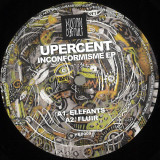
Deti Vechnosti – Pered Rassvetom opens the gates to plug into the socket of our collective deranged consciousness, generating frisky and flamboyant specks to brightening darkness that confines our lives. Offering glimpses of the great unknown we also carry within. The Track introduces Chikiss & Mustelide’s new group “Deti Vechnosti”.
Alexander Arpeggio & OhLandy’s “Der Anruf”, wich originally appeared as a French language version on a previous Sameheads / Diapason tape release tells those tales of hot and hotter heat. Karmic payback for the sweaty and long nights enveloped in the halo of resonating frequencies of silly and high-spirited mischief.
Rouge Mécanique – Down the Line – follows suite in the odyssey that is a demented night out, sitting in front of a club, realising that the leatherjacket you picked up a few streets ago from the ground doesn’t smell like adventure but like spew.
The B-Side opens with Automatenfall – a hardware electronic 3 piece, previously appearing live at Sameheads during a “My Friend calls it K-Jazz” event. A yearning that eventually gets us on a spiritual path and headed toward enlightenment through the meandering melange of chimes, that little sounds that usually overcome us in the weirdest of times.
Das Kinn – the new project from Toben Piel, who’s part of Frankfurt’s MMODEM family, and one half of Les Trucs evokes memories of better days, black leatherpants – think Falco meets DAF – Überpop for the Untergrund.
Stopping for a final coup d’œil is Alessandro Adriani’s – Preserved Data Space. A persuasive case of brutally but lovingly worked machines serenading sawtooth waves of an infinite Weiter, a dissolving timeframe – the longest after hour I’ve been to, it lasts more than a year now already and counting.
Written by Michael Aniser.
Celebrating a determined and ambitious 15 year tenure as Yorkshire’s chief bastion of deep house music, Hudd Traxx enlist a who’s who from their gilded halls to contribute tunes for a special anniversary release. Split across two vinyl parts and an expansive digital release, it’s a pretty prestigious occasion featuring dance music legends Nightmares On Wax & Jovonn, long term label stalwarts Iron Curtis & JT Donaldson, a guest appearance from Mark Hawkins (FKA Marquis Hawkes) and a track from label head Eddie Leader. Adding to the already weighty credentials are Agnès (releasing his first material since 2013), Berlin-via-Italy producer Black Loops.
On Part Two longstanding Hudd Traxx veteran JT Donaldson drops “What I Got” - twisting and contorting throughout its duration, a serpentine roller rich with block party flavour and the very essence of deep house coursing through its veins.
Dixon Avenue Basement Jams’ Mark Hawkins does some moonlighting under his newly deed-polled alias with the epically beautifully “Chasing Paper”. No royalty credits heading north of the border here, just swathes of satisfied revellers and euphoric dancefloors guaranteed upon delivery.
Meanwhile, another Hudd Traxx regular, Iron Curtis, pays tribute to one of the scene’s greatest on “Kerri On (Chandelier Dub)”. A red-lit nocturnal jam that Mr. Chandler himself has rubber stamped, its ever-growing bassline, soaring strings and delicately placed keys taking us towards a seriously blissful conclusion.
Concluding part 2 is a track by Agnès - founder of Sthlmaudio Recordings. The stylish Swiss keeps true to his remit – deep, dubby, transcendent grooves that sway lushly with the midnight air. “Embryonic Connections” taking us right back to the roots of that tribal beat and a fitting end to this mammoth release and a perfect lead up to his forthcoming Hudd EP.
4 tracks which perfectly instil why Hudd started this label of love 15 years ago; to showcase fierce, uncompromising dancefloor workouts in as sincere and stylish manner as possible. The artists and tracks chosen show the adventurous routes and development the label keep as their main point of focus – to unearth the tantalizing new and exciting sounds of house music’s continuous evolution.
This release is dedicated to Richi Larkin & Yuriano x
Louisahhh releases her debut LP The Practice of Freedom, via HE.SHE.THEY. The Practice of Freedom heralds the evolution of Louisahhh as she delivers her most exposing work yet, conceived as an exploration of the unorthodox archetype of “feminist submissive,” based on the mantra “sin is not being true to yourself.” Like her uncompromising musical heroes Karen O, Siouxsie Sioux and Shirley Manson before her, Louisahhh’s bold, raw, anti-establishment message on The Practice of Freedom will mark her as punk’s essential new heroine at the forefront of the new dawn of musical feminism.
The Practice of Freedom was born from experiences of loss and love, told through a journey of brutally beautiful electronics, electro and techno colliding with industrial, rock and alternative sounds. On the polysexual polymath label HE.SHE.THEY.’s inaugural album release, Louisahhh captures a record of our times, covering themes ranging from eroticism and empowerment to addiction and apocalypse, and influences ranging from Nine Inch Nails to Patti Smith to Judith Butler. The album, produced by American musician, music video director and photographer Vice Cooler, hears ideas and lyrics by Louisahhh re-contextualised into revolutionary experimental sounds, formed through the pair’s shared love of American alternative rock. Louisahhh’s music fights for and provides a voice for others, rooted equally in the intensity of the dancefloor and the mosh pit.
HIDE are an electronic duo based in Chicago. The pair create dark and heavy sample - based compositions using a combination of self - sourced field recordings and various pop culture and media references. Their music is textured, minimal, and powerful, giving raw vulnerability an opportunity to unfurl. Their work is honest, confrontational, powerful and thought - provoking.
HIDE's third album, Interior Terror further abandons traditional concepts of song structure in favor of splintered rhythms and fevered, immediate release. Expanding on previous themes of autonomy and empowerment, Interior Terror addresses and questions the corporeal and immaterial body in a physical and metaphysical sense. Turning to the dread inside, reflecting on the world around us,
HIDE gives voice to the power of destruction as a c atalyst for hope, and to the collective experiences of those who've come before us as a wellspring of our own power. Raw vocal delivery of mantra - like prose issued forth yields a raging, plaintive wail that lulls, mocks, questions, proclaims and decries. A dearth of collected field recordings give way to more fluid arrangements while retaining a scathing urgency. The result is minimal, spacious, and jarring; a distant knocking grown into the pulse of a hypnotic dirge, drones emerge from shards of decomposed sound, bending, seething their way through your body.
"Do Not Bow down" is a self - directed spell for fire and regeneration. “Nightmare” explodes, unrelenting; conflating time and space to the beat of repeated blows to the head. A reflection on perpetual suffering, generational traumas and the transformative action of release. Title track “Interior Terror” belies a new brand of body horror informed by the systemic enforcement of a contemporary Western gender binary, touching on experiences of dysphoria and disassociation . “Fear” answers the question 'Where do cops come from
HIDE are an electronic duo based in Chicago. The pair create dark and heavy sample - based compositions using a combination of self - sourced field recordings and various pop culture and media references. Their music is textured, minimal, and powerful, giving raw vulnerability an opportunity to unfurl. Their work is honest, confrontational, powerful and thought - provoking.
HIDE's third album, Interior Terror further abandons traditional concepts of song structure in favor of splintered rhythms and fevered, immediate release. Expanding on previous themes of autonomy and empowerment, Interior Terror addresses and questions the corporeal and immaterial body in a physical and metaphysical sense. Turning to the dread inside, reflecting on the world around us,
HIDE gives voice to the power of destruction as a c atalyst for hope, and to the collective experiences of those who've come before us as a wellspring of our own power. Raw vocal delivery of mantra - like prose issued forth yields a raging, plaintive wail that lulls, mocks, questions, proclaims and decries. A dearth of collected field recordings give way to more fluid arrangements while retaining a scathing urgency. The result is minimal, spacious, and jarring; a distant knocking grown into the pulse of a hypnotic dirge, drones emerge from shards of decomposed sound, bending, seething their way through your body.
"Do Not Bow down" is a self - directed spell for fire and regeneration. “Nightmare” explodes, unrelenting; conflating time and space to the beat of repeated blows to the head. A reflection on perpetual suffering, generational traumas and the transformative action of release. Title track “Interior Terror” belies a new brand of body horror informed by the systemic enforcement of a contemporary Western gender binary, touching on experiences of dysphoria and disassociation . “Fear” answers the question 'Where do cops come from
Chicago soul girl group the Opals released three exquisite singles on the Okeh label between January 1964 and February 1965, all of them produced by Carl Davis, in addition to which they also recorded background vocals for other artists. When Tony Rounce compiled Kent’s CD of Billy Butler’s Okeh recordings in 2007, unexpectedly found on the master tape transfer of Billy’s ‘Right Track’ were two unidentified female tracks we eventually ascertained were by the Opals.
The uptempo ‘Can’t Give It Up’ is taken at a perfect dance beat for Northern Soul discos. It was written by Billy Butler and Gerald Sims, and likely recorded around the time of the ‘Right Track’ session in 1966. On the flip is the beautiful, mid-tempo ‘End My Suffering’, which bears a resemblance to Marvin Smith’s ‘Time Stopped’, also from 1966 and produced by Carl Davis. This is the first release for both tracks and will appeal to fans of many genres of vintage soul music.
Silent Room, the duo formed by Enzo Carniel and Filippo Vignato is a conversation.
Between the piano of the first and the trombone of the second, two living forces of the
European jazz scene; between France and Italy; between acoustics and electronics. A
patient dialogue initiated on the benches of the conservatory in Paris, which was nourished
by the music of German trombonist Albert Mangelsdorff (to whom the duo paid homage for a
concert at the Cité des Arts in 2014), musical moments shared as a group (Enzo Carniel's
sextet at the Jazz à la Villette festival in particular) and in pairs - for numerous concerts
given on both sides of the Alps - before perfecting their common grammar, giving birth to
their own repertoire, creating their own space.
This first album, Aria, released on the Franco-Japanese label MENACE, was recorded in the
setting of the Villa Cicaletto in Tuscany, whose Silent Room the duo made their own in
September 2019. Carniel had just released Wallsdown, the third elegiac disc of his House of
Echo project (Jazz & People, 2020) and Vignato of an intense live duo recorded with
American cellist Hank Roberts (Ghost Dance, on CamJazz in 2019).
The album is carried by simple melodies, tenuous threads on which the two improvisers who
have slowly got to know each other crisscross and let their voices express themselves. Aria
can refer to the opening of Bach's Goldberg variations, to sung opera arias, but above all to
any expressive melody that develops the imagination. Aria is also the air in Italian: the air
that comes from the breath, the air that fills the room, the air that vibrates and is transformed
into sound. The repertoire is therefore this collection of Arias composed by Enzo Carniel and
Filippo Vignato.
If the duo advocates with this album its jazz heritage - that of improvisation and
conversation, of freedom and virtuosity - and claims to be Carla and Paul Bley, Keith Jarrett,
Gary Valente, Albert Mangelsdorff, Ornette Coleman or John Surman; it also explores the
contemporary colors of electronic music, ambient and Japanese minimalism. The use of the
prepared piano, Fender Rhodes and synthesizers colors the sound space of the acoustic
piano and trombone. The eponymous composition that opens the album in acoustic, closes
it in an electronic version, illuminating the path of the duo between the two universes.
In the almost plant-like composition "In All Nilautpaula", Enzo Carniel evokes the water lily
(in Sanskrit) coming to purify the water around him. On "Babele", Filippo Vignato invokes the
great question of language: thanks to Arias, and therefore melodies, language becomes
universal through music, and only the sensory experience counts.
Born from Carniel and Vignato's desire to create a sound space that would be filled with as
many melodies as silence, a place for listening, dialogue and meditation, Aria is one of those
rare records that contain entire worlds.
Dry Cleanings fiebriger Post-Punk klingt wie kein anderer Sound zurzeit. Bassist Lewis Maynard, Drummer Nick Buxton und Gitarrist Tom Dowse kennen sich schon eine kleine Ewigkeit und hatten schon diverse gemeinsame Bandprojekte zusammen. Die neue Band der Londoner entstand 2017 nach einem Karoke-Abend, bei dem sie Florence Shaw kennenlernten. Shaw, die vorher nie gesungen hatte, wurde zur Stimme der Band. Binnen weniger Monate entstanden die ersten Songs; die Texte handeln von Neurosen, seltsamen YouTube-Kommentaren und den normalen Dingen des Lebens. Shaw ist eine gute Beobachterin und eine Archäologin des Alltags. Der ungeschminkte Sound von Dry Cleaning bietet Shaws Geschichten dabei eine berauschende Klangkulisse. 2020 waren nach zwei EP-Veröffentlichungen und Touren durch englische Clubs Konzerte in den USA und Europa geplant, aber wegen der Pandemie saß die Band stattdessen im britischen Lockdown. Die Zeit nutzte man, um weitere Songs zu schreiben und das Debütalbum mit John Parish als Produzent in dessen Rockfield Studios aufzunehmen. "New Long Leg" wird die Musikwelt im Sturm erobern.
Chronos is the new album by Rostock´s composer Johann Pätzold aka Secret of Elements - a heartfelt, richly visual journey through which the German composer channels personal struggles alongside the social upheavals to which he has dedicated himself as a 'music activist'.
Textextext - (add your write up)
Chronos charts an eventful period during which Pätzold learned to deal with mental illness, travelled to the Mediterranean to save lives during the refugee crisis, fell in love and lost love - ten years is a long time. The album tells of people, moments or phases from the musician's life. It opens with the ominous melodies and immersive choral ambience of 'Grace', which reflects on a friend's suicide attempt, before riding the euphoria of Pätzold's wedding and the birth of his children in 'A Last Waltz.'
Third track 'Memento' narrates the epic journey of a refugee Syrian mother whom Pätzold accompanied from Greece to Germany, its emotive swells and subtle crescendo evoking simultaneously the dawning of a new world and the melancholy of what has been left behind. 'Vinculum', built around an Indian mantra, also dates from the same period and was written as a last tribute to a small child who drowned in the Mediterranean. The piece combines church organ - renown as part of Christian music, and indeed recorded in the Marienkirche in Gnoien on an original 18th century Lütkemüller organ - with a mantra, seeking to unite various religious symbols in an attempt at reconciliation in the face of unimaginable tragedy.
Propelled by mechanical percussion, 'Rage' uses the Shepard scale, a musical phenomenon in which two cyclically rising octaves are played on top of each other in a staggered fashion to create the illusion of an infinitely swelling scale, perfectly mirroring the image of blind spiralling, hysterical anger. When we arrive at 'Aurora, we feel Pätzold musing about the end of the world, but also the end of the self. What remains when humanity is wiped out by a pandemic or something similar? In Johann Pätzold's case, what remains is, among other things, a monumental album, a musical chronicle of his life: Chronos.
Dan Penn has southern soul running through his veins. Penn started out in the early sixties as band leader of various soul combos in Alabama, but he remained out of the limelight for most of his career, instead choosing to write hit songs for other artists. He has been responsible for songs including “Is A Bluebird Blue” by Conway Twitty, “Do Right Woman Do Right Man” by Aretha Franklin, “The Letter” by The Box Tops, “I’m Your Puppet” by Bobby & James Purify, “You Left The Water Running” by Wilson Picket and Otis Redding and many more.
In 1994 Dan finally picked up the guitar and recorded these songs himself for the first time and to great effect: his renditions of “I’m Your Puppet” and “You Left The Water Running” add fragile and beautiful magic to these already great songs.
This incredible collection of songs is available as a limited edition of
1000 individually numbered copies on gold coloured vinyl
The Savonian occult rock behemoth Jess and The Ancient Ones have emerged with a new album! Their brand of heavy guitar and organ-led swagger has progressed from the twin guitar metal blast of yesteryear to Jess and The Ancient Ones’ very own take on soulful late sixties garage psychedelia. Titled Vertigo, the new record is set for release on Svart Records on May 21st this year with a foreboding sound of lysergic doom. What began on the previous record, ‘The Horse & Other Weird Tales’ is taken further and deeper, towards a conclusion on Vertigo. Songwriter and guitarist Thomas Corpse comments, “To me this album sounds like a dark horse – a brother to the previous album. There’s a strange ominous feeling that hovers upon the entire album, maybe it’s the feeling of nostalgia that’s arising from the lyrics.” Wrapped in a crude tornado-adorned old school sleeve, the album’s eight tracks bubble in a boiling cauldron of vintage pop culture influence and occult-tinged paranoia. Ranging from the softly fiery opening track ‘Burning of The Velvet Fires’ to the almost heavy metal -ish nihilistic banger ‘Born To Kill’, Vertigo is a spiraling journey of heavy Finnish psych rock at its finest. The first single cut “Summer Tripping Man” is a heavy hitting prophecy of doom condensed into the classic three minute garage format, and it has already become a steady part of the band’s live set long before it was captured on tape. The single comes accompanied by an animated music video, created by Giuliano Di Girolamo.
Australian artist Indigo Sparke Brings her deeply personal lived experiences to her music, highlighting the spaces between the polarity of softness and grit. Pulling from her experiences of addiction, of healing, of queerness, of heartbreak, of joy, of connection, of the softness and of the grit alchemizing it all into tenderness through her music, she conjures up a myriad of feelings that is undeniably potent. It was in 2019 that Indigo lived and travelled across America, in places like NYC, Minneapolis, Topanga, Taos, in many hotel rooms and amidst the vast stretching landscapes on the never ending highways, channelling her creative energy into the completion of her debut album, echo. echo was recorded between LA, Italy and New York, co-produced by Sparke, Adrianne Lenker (of Big Thief), and Andrew Sarlo (producer of Big Thief, Nick Hakim, Bon Iver, Hand Habits, etc). The record was completed at Figure 8 Studio in New York City, studio of musician Shahzad Ismaily. Phil Weinrobe (producer/engineer for Leonard Cohen, Damien Rice, Adrianne Lenker, Buck Meek, etc) engineered and mixed the album. "Indigo's writing and voice are ethereal and angelic and guide me through internal canyons and plains. I'm deeply grateful to have been part of this and to have gotten to play and sing along side Indigo, and to have been able to eternalize a very special space and time with her, which I will always cherish." -Adrianne Lenker "With these songs and her filament voice, Indigo brings us in to a private place and lights a fire there." -Feist
- 1: Victory Lap
- 2: Rap Niggas
- 3: Last Time That I Checked Feat. Yg
- 4: Young Nigga Feat. Sean Combs
- 5: Dedication Feat. Kendrick Lamar
- 6: Blue Lace 2
- 7: Hussle & Motivate
- 8: Statue Symbol 3 Feat. Buddy
- 9: Succa Proof Feat. Konshens, J-Black
- 10: Keyz 2 The City 2 Feat. Teeflii
- 11: Grinding All My Life
- 12: Million While You Young Feat. The-Dream
- 13: Loaded Bases Feat. Ceelo Green
- 14: Real Big Feat. Marsha Ambrosius
- 15: Double Up Feat. Dom Kennedy, Belly
- 16: Right Hand 2 God
Founded in 2010, Hussle’s All Money In made an epochal debut with its very first release, “THE MARATHON,” marking Hussle’s fifth official mixtape and follow-up to his introductory “BULLETS AIN’T GOT NO NAME” trilogy. Named among XXL’s “100 Best Mixtapes of 2010,” the collection was quickly followed by 2011’s “THE MARATHON CONTINUES” and then 2013’s “CRENSHAW.” Along with his work as a lead artist, Hussle has previously collaborated with a veritable who’s who of contemporary hip hop, including Kendrick Lamar, Drake, Rick Ross, YG, Ty Dolla Sign, Meek Mill, DJ Mustard, Young Thug and many more. As if his musical career and role as label boss weren’t enough, Hussle is also successful entrepreneur. In addition to The Marathon Clothing line and store, Hussle also owns a number of successful businesses including The Marathon Agency, SC Commercial Ventures, Proud 2 Pay, and of course, All Money In No Money
Out Records.
[b] 2 Rap Niggas [Explicit]
No one album could ever capture the claustrophobia-to-catharsis of an Eyehategod show, but this compilation of live tracks and demos comes as close as it gets. Giving you an idea of Eyehategod’s uncompromising, single minded purity of expression and exertion of raw nerve, “10 Year Of Abuse” is a monumental document all the way from the demo era to their later, legendary relentless live tour set. Many other bands have tried unsuccessfully to emulate Eyehategod and have never quite captured their dynamic. Formed in 1988 in New Orleans they have become one of the most well known bands to emerge from the NOLA metal scene. Eyehategod note bands like Melvins, The Obsessed, Discharge, Black Flag, Black Sabbath and Saint Vitus as major influences, but are often mentioned in the same breath as any of these legendary bands. Drawing comparisons to Grindcore, Crust Punk and Sludge Metal, their heavy bluesy, detuned rock and roll has been a lynchpin for the misanthropic and disenfranchised. Eyehategod has released five studio albums to date with a sixth in the works and have toured all over the world in a career spanning over thirty years. Though the band has never released a live album, we are left with “10 Years” as the only official witnessing document to decades of decimating live sonic abuse. Released on May 29, 2001, “10 Years” spans seven live tracks from their European tour in 2000, a live radio show from August 1994 and four songs from an early 1990 demo. The result is a feedback-laced window into that wonderful, brutal Eyehategod “sound”, that addictive, lower-than-low note that nestles somewhere in the pit of your burning, alcohol-soaked, nauseated stomach. The booklet alone is a delight for anyone who worships at the altar of Eyehategod’s oppressively heavy, crushing riffs.
Kurt Wagner's signature brittle baritone is back, but that doesn't mean we're going to get a nostalgic Alt Country album. Showtunes is a continuation of Lambchop's explorations of new sound worlds and opens up another chapter. Each track is an exciting journey with an uncertain destination.
With Showtunes, as he has done so many times throughout his varied and fascinating career, Kurt in late 2019 was experimenting with something new. He took simple guitar tracks and converted them into midi piano tracks. It was a revelation that from those
conversions he was able to manipulate each note and add, subtract, arrange the chords and melody into a form that didn't have any of the limitations he had with his previous methods of writing with a guitar.
Removing these limitations led to a surprising new sound, something akin to showtunes but with edges sanded down and viewed through Kurt's own specific lens. it's a genre he was none too fond of with the exceptions of a few Great American Songbook type of stuff or some of the works of artists like Tom Waits, early Randy Newman or even Gershwin or Carmichael. “I’d always wanted to make songs with a similar feel but my skills were limited until now” says Wagner.
Since her crowning in 2009 at the Blues sur Seine Festival, the young guitar prodigy Nina Attal, with a powerful soul voice, has imposed herself to the public, recording 2 EPs, 3 albums and performing more
than 600 concerts.
‘Pieces of Soul’, is Attal’s fourth album and shows her return to the blues, rhythm ‘n’ blues and rock. Written and composed in the wake of a road trip on the West Coast of the United States, ‘Pieces of Soul’ is eagerly awaited.
These 12 tracks, to which is added a cover of “You’re No Good” popularized by Linda Ronstadt, put the guitar back at the heart of her creative process, through a range of sunny sounds, discreetly and respectfully tinted by various Californian influences (Ben Harper, Lenny Kravitz, John Mayer...).
The riffs with rock distortions are next to great blues-soul ballads, folk, or rhythm ‘n’ blues. Her lyrics, very personal, translate as many doubts as to her desire for emancipation. Inspired by her incompressible love for the music she has in her skin, just like her tattoos, ‘Pieces of Soul’ undoubtedly offers Nina Attal a new dimension.
Deep spiritual jazz recorded in Germany, performed by Jamaican born saxophone player Fitz Gore and his international group The Talismen, featuring a.o. bassist Gérard Ebbo from Morocco and drummer Philippe Zobda-Quitman from Martinique. This is the first reissue of their second album, released in 1976 by the small private label GorBra from Bonn, including "Delilah" and "Requiem For Julian Cannonball Adderley". The rare LP comes in a newly mastered version with original cover design and sleeve notes. Fitz Gore's music is full of tremendous tension and movement between deep seriousness, inwardness and humility; it affects your life, it liberates and heals.
Original sleeve notes from 1976:
"Soundmagnificat" is the successor to "Soundnitia" (GorBra Records F 665 532), the first release from the Talismen, an international group with Jamaican Tenor saxophonist Fitz Gore (born1935) as founder, spiritual and musical leader, main soloist. "Soundnitia" contained concert performances of June, 1975, including compositions by John Coltrane, Horace Silver and one by Gérard "Prof. Dr. Splüm" Ebbo, bassist of the Talismen.
This second offering from the Talismen is more varied. It has four tracks recorded at four different occasions. It presents Fitz Gore as a singer, a composer, as well as, a tenor saxophonist. The opener, Requiem for Julian "Cannonball" Adderley, is a moving tribute to a great American artist, the late alto saxophonist "Cannonball" Adderley. On this track, Hungarian drummer Janos Sudy is heard with the Talismen, for the first time. The playing by the quartet on this slow lament very adequately illustrates the mood of the composition
For the next piece, a concert performance, Gore selected a gem from the American Negro Song Tradition and he displays a mighty, masculine and soulful voice in Steal Away. An example of a modern artist using an old traditional to express his own inner feelings. Delilah is taken from another concert performance, the same concert as the music on "Soundnitia". It has extensive playing by Gore, a bass solo by Gérard Ebbo, leading into some exciting conga playing by Lamont Hampton.
The final track, A Sinner Kissed An Angel, was recorded by another tenor player, Wardell Gray, in 1950, but this version is all Gore's. After the piano introduction, Gore delivers the melody with authority and with an expressive use especially of the high register of his instrument. In his improvisation, Gore's playing becomes more dissonant. Some of his playing here causes me to think of the way the late Albert Ayler sounded on his first recordings done in Sweden, in the beginning of the 60s. No drums here, but nice accompaniment and solo work of Jochen Paul on vibes.
I met Fitz Gore in Copenhagen in the fall of 1975. We were both listening to the trumpet playing of Harry "Sweets" Edison at the now defunct Café Montmartre. Prior to that time, I did not know Gore and his music, but listening to his playing on this album and the earlier one, has once more widened my musical horizon. His music has struck some chords within me. "Music is communication", John Coltrane once said. I feel sure that as you listen to the music of Fitz Gore and his Talismen, you will get the message.
In these notes, I have mentioned a couple of jazz artists and another one ought to be named primarily, because he has meant a lot to Gore: Sonny Rollins. The two met in Paris in 1966. Gore says of Rollins: "He openend my eyes ...big man … phenomenon … my man". As Sonny Rollins's artistry, the music of Fitz Gore holds many aspects, some being aggressive and even hysterical, others being those of beauty and peace. As life itself … (Roland Baggenaes, June 1976)
The music of Fitz Gore, rooted in the blues, is full of tremendous tension and movement between deep seriousness, inwardness, humility and humor, hardness and tenderness; it affects your life, it liberates and heals - a hopeful, a truly groundbreaking, a timeless, a new music - Newsic!
(Gisela Braasch, 1976)
In memory of Fitz Gore.
Mastered 2020 by Roskow Kretschmann at Audiomoto,
kindly supported by Tom Sky. Vinyl cut at SST.
Producer for reissue: Ekkehart Fleischhammer,
reproduction of original cover design by Gisela Gore:
Patrick Haase aka rab.bit.
Originally released as a 12” single in 1982, ‘Every Brother Ain’t A Brother’ was the final record from Brooklyn multi-instrumentalist and producer Freddie Thompson’s Panaché band. Built around a fully cleared sampled bassline from ‘The Message’ by Grandmaster Flash & The Furious Five, ‘Every Brother Ain’t A Brother’ plays out like a summertime stroll through New York in the early 80s. The streets are full of excitement, but as the lyrics, written by vocalist Denise Williams (not to be confused with Deniece Williams of ‘Let’s Hear It For The Boy’ fame) make it clear, they’re dangerous as well.
Thirty-nine years later, Isle of Jura is proud to present the first official 12” reissue of ‘Every Brother Ain’t A Brother’. A cult classic from the disco-rap era, the reissue includes the original vocal and instrumental versions of ‘Every Brother Ain’t A Brother’ plus a Jura Soundsystem special version with additional live percussion.
Originally made up of Freddie, his wife, the singer Debra Thompson and keyboardist Douglas Glover, Panaché formed at the behest of a local disco DJ, Carl Nelson. In the wake of Chic’s early singles, Carl felt a French name would give Freddie a competitive edge. “He explained it to us that it was a French word for style and elegance. Panaché, a step above chic,” Freddie reflects.
Business minded, Freddie formed his own label, Roché Records and joined SIRMA - The Small Independent Music Manufacturers Association. “It was very hard for the independent manufacturers to get airplay and distribution at the time, so we all came together,” he remembers. Through SIRMA, Freddie met Joe and Sylvia Robinson from Sugar Hill Records, who several years later, let him sample ‘The Message’ for ‘Every Brother Ain’t A Brother’.
In 1979, Panaché scored some radioplay when they covered ‘Not On The Outside’ by ‘60s D.C R&B group The Moments. Emboldened, they brought onboard backing vocalists and recorded their only album. This Is Panache saw the band blurring the boundaries between soul, jazz-funk and disco and become a sought after collectible.
By 1982, Debra had stepped back, and one of Panaché’s backing singers was center stage, Denise Williams. “Denise was good with writing poetry,” says Freddie. "She had one called ‘Every Brother Ain’t A Brother’. It was about the unrest that was going on in the city at the time. I thought I could do something with that.”
After releasing ‘Every Brother Ain’t A Brother’ in 1982, Panaché quietly moved from center stage to behind the scenes. Over the last thirty-nine years, Freddie has continued to work in the music industry as a session musician and producer. “As soon as we stopped trying to become stars as Panaché, we became busy working in the industry,” Freddie laughs.
- Livin' In The U.s.a
- Let It Shine
- So Fine
- Few & Far Between
- No Worries
- If I Were You
- 1: 2 Introduction To Second Side By Kim Fowley
- Shop Around
- Sugar Man
- Can I Set A Witness
- Five Days On The Trail
- Captain Terrific
- Get Straight With Your Brother
Canadian bassist/vocalist Neil Merryweather relocated to Los Angeles in the late 1960s and hooked up with the singer, actress and future Penthouse pet, Lynn Carey. They would find greater fame upon forming the band Mama Lion in 1972, but Vacuum Cleaner captures th prototype of the group on this collaboration cut the year before, after RCA signed them as a duo. Merryweather’s bass is a solid anchor and his harmony and musical arrangements help keep everything in place; Canadian keyboardist JJ Velker adds atmosphere, but it is Carey’ powerful voice that really drives this hard rockin’ beast, gleaning comparisons with Janis Joplin. Merryweather & Carey notably appeared in Russ Meyer’s The Seven Minutes too.
Advanced Nature is the second offering from Chicago’s indy electronic label Tres Dias. Completed during a global pandemic this project for Michael Fabiano and Juanne had been a long time coming. The two artists had spoken about wanting to release a record together after years of working side by side in Chicago’s underground music scene. So with the time available during the wildest year in modern history they succeeded in creating a life during wartime record. With hints of industrial, ebm, acid and techno fueling the record. The two aimed to thrust back a bold tapestry of sounds. From sonic visions of a dystopian future to shamenistic prayer infused house. The two managed to flush out a record that has a raw juxtaposition that's grounded in a solid foundation. Chicago based producer Michael Fabiano debuts with the slinking, somber industrial sounds of Aesthetic Existence. Plastic Process wades into warehouse territory with its swirling, hypnotic synth lines and brooding bassline. Juanne continues with Before Midnight, a static charged minimal acid track that stabs and reaches out for more. Finally Juanne ends with Design Your Drugs, a strictly dark room magic piece that unleashes ritualistic vocals and a raging bassline that doesn't hold back.
2012 von den Balfour Brüdern in Belfast Nord Irland gegründet, konnte sich MAVERICK schnell in der Szene etablieren. Mit ihrem ersten Album„Quid Pro Quo“ waren sie bereits mit den schwedischen Hardrock Stars THE POODLES auf Tour. Das von Presse und Fans überschwänglich gefeierte zweite Album „Big Red“ brachte sie wieder zurück auf die Bühnen, diese Mal mit den schwedischen Superstars TREAT. Außerdem waren sie Gast auf vielen Festivals wie z.B. das H.E.A.T FESTIVAL (D), ICEROCK und ROCKNACHT TENNWIL (CH), WILDFEST (BE) und dem ROCKINGHAM in England, was ihnen half ihre schon große Fanbase noch weiter zu vergrößern. Ihr nächstes Album »Cold Star Dancer« aus dem Jahr 2018 bekam beste Kritiken in der internationalen Presse und die Band spielte ihre erste Headliner Tour in Europa gefolgt von einer Tour mit den schwedischen Glam Rockern CRASHDIET. Außerdem spielten sie das das schweizer ROCK
THE RING Festival zusammen mit WHITESNAKE, TESLA und DEF LEPPARD. Die Tour wurde wieder mit Gitarrist Ric gespielt, der die Band wegen persönlicher Gründe verlassen hatte. Sein Ersatz Steve Moore kehrte zu seiner Band STORMZONE zurück. Ihr H.E.A.T FESTIVAL Auftritt im Dezember 2019 war die letzte Show für ihren Drummer Jonny Millar. Für ihn konnte mit Jason-Steve Mageney,
einem guten Freund der Band aus Wuppertal, ein mehr als adäquater Ersatz am Schlagzeug gefunden werden. Die Aufnahmen für das Album begannen Ende 2019 aber Covid-19 geschuldet, dauerte alles länger als erwartet. Durch den Lockdown in der UK war es lange Zeit unmöglich Jason für die Schlagzeugaufnahmen einzufliegen. Dies gelang dann endlich im Sommer 2020. Mit »Ethereality« ist der Band ein Album gelungen, welches alle MAVERICK Trademarks enthält. So findet man catchy, Hookline-orientiertes Songwriting von »Big Red« kombiniert mit etwas härteren Einflüssen von »Cold Star Dancer«. Man muss nur die Songs «Switchblade Sister”, «Bells Of Stygian”, «Falling” oder die Fast-Ballade »The Last One« anhören, um zu wissen, dass »Ethereality« ihr bisher bestes Album ist. Denn
so muss Heavy Rock klingen!
Pioneers of the British music scene, ‘Blackest Blue’ will be the band's 10th studio album in a discography that spans three decades. 2020 saw Morcheeba unable to tour or perform live, which gave Skye Edwards & Ross Godfrey “time to write songs and really get to hone them,” as Godfrey puts it. “There weren’t so many pressures so we could really take our time getting the songs right,” adds Edwards.
The result of this time is a refined 10 track album that fuses previous incarnations and sound of the band - such as downbeat, chill, electro-pop & soul - into one cohesive record that dives deep into the soul of the band’s genre-mashing musical heritage. As usual, the band didn’t approach the album with any pre-conceptions, and instead created an organic journey that represents everything great about Morcheeba.
Edwards’ lyrics are primarily focused on positivity and overcoming personal adversity that lies within. ‘Sounds Of Blue’, is a stunning cut that puts Skye Edward's sultry vocals to the forefront, floating high above an ethereal backdrop.
The album includes features with Duke Garwood (known for his work with Mark Lanegan, amongst others) and Brad Barr (The Slip, The Barr Brothers). “
Morcheeba’s global reach is impressive, taking them to every corner of the world . Their signature chilled electronic/organic sound has been border-hopping ever since the London-based band emerged as a household name. The past year has been one of introspection for the duo, as they take stock of their renewed global fan base and look forward to being able to play the new album live in the not too distant future. “This was the first time since I was a teenager that I’d spent a year off the road and I enjoyed the tranquility, although I missed playing my guitar in far off lands,” says Godfrey.
- 1: The Gambler
- 2: Through The Years
- 3: Lady
- 4: Lucille
- 5: Coward Of The County
- 6: I Don't Need You
- 7: We've Got Tonight (With Sheena Easton)
- 8: Crazy
- 9: Islands In The Stream (With Dolly Parton)
- 10: She Believes In Me
- 11: Every Time Two Fools Collide (With Dottie West)
- 12: You Decorated My Life
- 13: Make No Mistake, She's Mine (With Ronnie Milsap)
- 14: Share Your Love With Me
- 15: All I Ever Need Is You (With Dottie West)
- 16: Buy Me A Rose (Featuring Alison Krauss & Billy Dean)
- 17: Daytime Friends
- 18: Love Or Something Like It
- 19: Love Will Turn You Around
- 20: Morning Desire
- 21: What Are We Doing In Love (With Dottie West)
21 Number Ones is celebrating it’s 15th Anniversary in 2021 and it will be available on vinyl for the first time! The album features 21 of GRAMMY Award-winning superstar Kenny Rogers’ number one hits including “The Gambler”, “Through The Years”, “Lady” and many more! Rogers sold over 120 million albums worldwide, making him one of the best-selling male artists of all-time according to the RIAA, with one Diamond album, 20 Platinum albums and 11 Gold. He recorded 24 No. 1 hits, 12 No. 1 albums and 25 Top 10 country albums. Miraculously, he charted a song within each of the last seven decades. His music has always crossed boundaries, with singles and albums finding frequent success on the Country, Top 40, and Adult Contemporary charts, and in a few instances, on the R&B and Christian charts.
Throughout his vast career, the New York based Australian composer JG Thirlwell has adopted many masks as a means of infiltrating and subsequently subverting a wide range of pop cultural forms. His work under the Foetus moniker has taken on everything from big band to opera to noise-rock. Steroid Maximus embraced exotica and the world of soundtracks, while his Manorexia project continued his quest to the outer limits of contemporary composition and musique concrete. Thirlwell has also carved out a significant output in the field of the soundtrack via the large body of work created for the animated television shows Archer and The Venture Bros. In addition he has been commissioned to create compositions by such notables as Kronos Quartet, Bang On A Can, Alarm Will Sound, String Orchestra of Brooklyn and many others.
Now we have ‘Omniverse’, the second release under the moniker Xordox. Xordox is a synthesizer-based project, and on this evocative album we see the project branch into many new avenues. The science fiction element brushes up against crime noir, even veering into areas that could well fit in the video game soundtrack genre. With an audacious attitude and an arsenal of machines Thirlwell serves up a selection of thrilling retro-future mind capsules. This is music made from a life saturated in culture, both underground and mainstream, high and low. Tense sequencing and noir tinged keyboard lines invoke a powerful visual image of films and memory, of screens and speakers, of sound and space, all entering the cosmos and the subsequent galactic race. Thirlwell’s decades long exploration of sampling and sequencing, composing and ingesting a daunting amount of audio and visual artworks speaks volumes for the bold assimilations exposed here. ‘Between Dimensions’ lays out a tense theme which starts off like a score to a a crime thriller before morphing into a simulacra of Kraftwerk scoring a video game. The living ghosts of Giorgio Moroder and John Carpenter haunt ‘Oil Slick’ as it permeates wormholes, updating lifeforms with its stealth sequencing and tense momentum.
‘Omniverse' is a synthesised soundtrack journey, one which embraces past forms whilst reshaping them for the new unknown. ‘Omniverse' is a thrilling liquid ride through fear and hope, and like all the best of Thirlwell’s output, is simply one hell of an enjoyable journey to take.
The Black Keys release their tenth studio album, Delta Kream, via Nonesuch Records. The record celebrates the band’s roots, featuring eleven Mississippi hill country blues standards that they have loved since they were teenagers, before they were a band, including songs by R. L. Burnside and Junior Kimbrough, among others. Dan Auerbach and Patrick Carney recorded Delta Kream at Auerbach’s Easy Eye Sound studio in Nashville; they were joined by musicians Kenny Brown and Eric Deaton, long-time members of the bands of blues legends including R. L. Burnside and Junior Kimbrough. The album takes its name from William Eggleston’s iconic Mississippi photograph that is on its cover.
Auerbach says of the album, “We made this record to honor the Mississippi hill country blues tradition that influenced us starting out. These songs are still as important to us today as they were the first day Pat and I started playing together and picked up our instruments. It was a very inspiring session with Pat and me along with Kenny Brown and Eric Deaton in a circle, playing these songs. It felt so natural.”
Carney concurs, “The session was planned only days in advance and nothing was rehearsed. We recorded the entire album in about ten hours, over two afternoons, at the end of the “Let’s Rock” tour.”
Auerbach says of Delta Kream’s first single ‘Crawling Kingsnake’: “I first heard John Lee Hooker’s version in high school. My uncle Tim would have given me that record. But our version is definitely Junior Kimbrough’s take on it. It’s almost a disco riff!” Carney adds, "We fell into this drum intro; it's kind of accidental. The ultimate goal was to highlight the interplay between the guitars. My role with Eric was to create a deeper groove."
The music from northern Mississippi, which came to life in juke joints, has long left an imprint on the band’s music, from their cover of R.L. Burnide’s ‘Busted’ and Junior Kimbrough’s ‘Do The Romp’ on their debut album, The Big Come Up; to their subsequent signing to Fat Possum Records, home to many of their musical heroes; and to their EP of Junior Kimbrough covers, Chulahoma.
Formed in Akron, Ohio in 2001, The Black Keys, who have been called ‘rock royalty’ by the Associated Press and ‘one of the best rock ‘n’ roll bands on the planet’ by Uncut, are guitarist/singer Dan Auerbach and drummer Patrick Carney. Cutting their teeth playing small clubs, the band have gone on to sell out arena tours and have released nine previous studio albums: their debut The Big Come Up (2002), followed by Thickfreakness (2003) and Rubber Factory (2004), along with their releases on Nonesuch Records, Magic Potion (2006), Attack & Release (2008), Brothers (2010), El Camino (2011), Turn Blue (2014) and, most recently, “Let’s Rock” (2019), plus and a tenth anniversary edition of Brothers (2020). The band has won six Grammy Awards and a BRIT and headlined festivals in North America, South America, Mexico, Australia, and Europe.
Jess Cornelius first began writing the songs that would comprise Distance after moving from Melbourne, Australia to Los Angeles. At the time, she was excited to start fresh after several years as the primary songwriter in the band Teeth and Tonuge. But the distance she addresses over the album is hardly a geographical one. Instrad, Distance finds a deft songwriter analyzing the space between society’s expectations for her and her own dreams, the illusion of the love and reality of disappointment, and a past she is ready to let go of and a future she could have hardly imagined.
Distance documents a songwriter in the pursuit of living life on her own terms. As Cornelius puts it, “A lot of the rEcord was about me deciding to continue this nomadic lifestyle of being a musician. People would ask ne if I was going to have a family and lot of the songs are about me being ok with no pursuing that path. It was about coming to terms with the choice I had made.. And then two years later, I’m knocked up and married! I couldn’t have imagined that”
Cornelius gave a first taste of Distance with “No Difference,” released last year, which was featured by NPR’s All Songs Considered as well as Paste Magazine, Brooklyn Vegan, Hype Machine and Uproxx, who called it “a striking stateside introduction.”
On new single “Kitchen Floor,” Cornelius maps the space between the bedroom and the front door over a Roy Orbison tinged rave-up, lamenting the coming pain: “This is gonna be a hard one.” Its accompanying video, the first in a series in which she plays a familiar female character trope, was filmed by Cornelius and her partner on an iPhone at 5am in Los Angeles so they wouldn’t encounter any people. “I have a weird fascination with Hollywood Blvd — it’s such a grotesque place most of the time,” says Cornelius. “But I knew we’d have the chance to experience it deserted and empty, and it was like a different place. I’d been watching a lot of ‘last human on earth’ apocalypse-type films. Mostly, the concept behind the clip was to have this character just owning it. There are so many things pregnant women are not ‘supposed' be doing, like having casual sex with strangers. There’s a loneliness, too, that I wanted to get across in the clip, but ultimately she’s in a state of friendliness with herself and the world.”
After a year of sadness comes an album fit to resist it. Detritus, the third solo LP by violinist/composer Sarah Neufeld, confronts anguish with beauty, turmoil with grace, gliding through the present like a dancer mid-motion, reaching through space 'til she's caught. Detritus originated with a collaboration: in 2015, Neufeld was invited to appear on stage with the legendary dancer/choreographer Peggy Baker. Baker had prepared a solo piece based on work from Neufeld's second album, The Ridge, to which Neufeld added an original lyrical prelude. The live result was an incendiary duet, almost a sort of face-off, which left each artist unsated. They agreed to reunite for a more extended collaboration - a full-length show with Baker's company, where Neufeld would write to (and perform music alongside) Baker's choreography. It was a fertile partnership, uniting the two women's intense, curious, ferocious sensibilities across an age difference of 29 years. Baker had conceived the show around the title of Neufeld's prelude, "Who We Are In The Dark," exploring themes of loss, betrayal and the emptiness of space; Neufeld was herself in crisis mode, reacting to a specific, earthbound kind of grief (including the end of a relationship). Making work together, they drew on these raw feelings - insistent, urgent darkness but also something that was, for Neufeld at least, much more unexpected: a romantic, tender-hearted love, inspired by the movements of the dancers before her. The work premiered in February 2019. Even before Neufeld and Peggy Baker Dance Projects set off on tour, she had the intuition that this music might take another form: as a distilled set of songs, refined and developed beyond the versions performed on stage. Starting that summer, she began arranging this lush and soloistic material - work that eventually became Detritus - and performed some of these experiments at her own solo gigs. Neufeld worked throughout the process with her Arcade Fire bandmate Jeremy Gara, whose drums, synths and ambient electronics co-anchored the Peggy Baker shows and helped shape the reimagined album versions. She would go on to add foot-pedal bass synth, wordless vocals and swells of French horn courtesy of Bell Orchestre compatriot Pietro, bringing in woodwind wizard Stuart Bogie as a one-man flute ensemble, layering clusters of chords atop Neufeld's luminous compositions.
- A1: For Pauline
- A2: Tomorrow
- A3: Dance Ii
- A4: For Hilary
- A5: Street Fight
- B1: Royal Infirmary
- B2: Black Horses
- B3: Dance I
- C1: Blind Elevator Girl – Osaka
- C2: The Aftermath
- C3: Our Lady Of The Angels (Stu ‘Jammer’ James Mix)
- D1: Florence Sunset
- D2: All That Love And Maths Can Do
- D3: San Giovanni Dawn
- D4: For Friends In Italy
Clear / Orange Vinyl
Factory Benelux presents a remastered 2xLP coloured vinyl edition of Circuses and Bread, the seventh studio album by Manchester ensemble The Durutti Column. Originally released by Factory Benelux and Factory in 1986, the original 9 tracks have now been expanded with 6 bonus pieces.
The cover art retains the original design by 8vo. The remastered limited edition CLEAR+ORANGE vinyl set is housed in gatefold sleeve, with liner notes and rare band images. A CD version is also available (FBN 154 CD).
Self-produced by Vini Reilly at Strawberry and Revolution studios, the album saw Durutti playing as a quartet, with Reilly on guitar, vocals and keyboards, Bruce Mitchell in drums and percussion, John Metcalfe (viola) and Tim Kellett (trumpet).
‘The music ends up being very simple,’ Vini told NME. ‘People can dismiss it as being very simplistic, easy listening or whatever. It’s very honest, it’s very personal. People say it’s ambient, and it’s like Eno. I don’t like that, because the music’s made to be listened to, it’s not wallpaper.’
Of extended piece Blind Elevator Girl – Osaka, Vini adds: ‘The music really writes itself. For example, we’re in Osaka, in Japan, getting in this elevator. It’s very crowded with all these Japanese businessmen talking about distribution deals, and going on and on. On this lift was a beautiful Japanese girl, in an immaculate uniform. Each floor we arrived at, she’s starting talking Japanese, obviously saying what was on each floor. We went higher and higher, and finally we get to the top. And then, sort of walking out of the elevator, I suddenly realised she was blind... It got to me, this girl. It was incredible. So maybe a day later, I was thinking about that, and the whole tune came out. And every single piece of music is like that.’
Bonus tracks include Italian-only EP Greetings Three, scarce compilation track The Aftermath, and a previously unreleased working version of 1987 single Our Lady of the Angels produced by the late Stuart ‘Jammer’ James.
Olafur Arnalds' highly anticipated second full-length album '...and they have escaped the weight of darkness', continues his mission to lure an indie-generation of pop and rock fans into an emotive world of beguiling electronic chamber music and delicate classical arrangements. The sense of an organic crossover recording is reinforced by the involvement of co-producer Bar?i J?hannsson of eccentric pop/rock/electronica-formation Bang Gang. Bar?i has successfully coloured the brittle minimalism of previous releases through the addition of an array of new instruments.
Those expecting a mere continuation of the minimal melancholia of his previous albums are therefore in for a surprise, as the record may be the most uplifting and richly orchestrated work of his career: "The album has a very clear theme", Arnalds relates, "which is that there is always light after darkness. To me, it has a more positive note than my previous works." When ?lafur saw how the opening scene of a Hungarian indie film metaphorically described a solar eclipse, he instantly connected it to the concept, naming the album after a key line of the film's introductory monologue. Staying true to this positive note, '...and they have escaped the weight of darkness' will herald another intense year for ?lafur Arnalds, with the album being accompanied by a world tour, starting in China in March 2010.
Born in the suburban Icelandic town of Mosfellsb?r, a few kilometres outside of Reykjav?k, the 23-year old composer has always enjoyed pushing boundaries with both his studio work and his live-shows. His new opus is set to again challenge his fan base, which is still growing rapidly. Over the past eighteen months Arnalds has advanced from a former support-act for Sigur R?s to an internationally respected artists in his own right. He was privileged to be invited to write the 'Dyad 1909' score for award-winning choreographer Wayne McGregor, aired on BBC Four and on ITV1's South Bank Show. 'Found Songs', a collection of pieces each written, recorded and released in a single day via the Erased Tapes label website, as well as the video for 'Lj?si?' have since managed to generate half a million downloads and video views.
In many ways, the new record is clearly inspired and informed by these events. Several of the pieces were, in fact, written on and off throughout his tour and benefit directly from the intensity of the live situation and the emotional roller-coaster-ride of life on the road: "The first half of 'Gleypa okkur' was written in a sound check in Munich, for example", Arnalds relates, "while the second part was scored in Braunschweig, Germany." On the other hand it is the result of meticulous studio work, of refining compositions in close co operation with compatriot Bar?i Johannsson, known for his eccentric personality and unique electro-acoustic sound: "I definitely wanted to do something a bit different this time, something more. Working with a producer was a part of that." The enthusiasm translates to arrangements displaying a new sense of sonic diversity.
?lafur Arnalds has created an even more open and spacious sound and taken his distinct style to a new level. Compared to his previous works, '...and they have escaped the weight of darkness' makes use of diverse instrumentation ? drums, guitars, voice, Rhodes, a selection of subtle synthesisers, alongside Arnalds' trademark piano as well as Tony Levin on bass. Traditional terminologies become void on his latest offering, which blends contrasting elements into an original, entirely organic new language and a sensitive ballet of the mind.
Arnalds fusion of 21st century electronics and classical vocabulary thereby continues to decisively unwrap the sealed-off world of classical music.
For a good number of Spanish musicians, attracting attention from somewhere outside of Madrid was a mission impossible for several decades. While the Movida Madrileña, commonly referred to as the “Madrid scene” in English, stirred things up and made front page news on the basis of new wave music, musicians that were on the fringe or directly beyond it had few platforms from which to be heard.
Although Javier Segura has been recording music in his studio almost continuously since the 70's, his relevance and recognition as a musician has been limited to underground music circles. The fact
that he worked outside of the country's spotlight of power kept his name relatively unknown for years, something which even the arrival of the internet could not illuminate. Only the appreciation of a few collectors and disc jockeys kept the light on.
Passat Continu delivers here the first ever compilation by the spanish musician Javier Segura (born 1955), who worked as an isolated cell from his home studio in San Cristóbal de La Laguna, in the Canary Islands. Working for decades from the underground, Segura build up some brilliant ideas producing dozens of richly textured songs, stretching borders on ambient, experimental rock, dreamy folk or concrete music. Using guitars, rhythm boxes, trumpets synths or simply pedals, Segura managed his own career and produced while published a handful of albums by himself: El ser y el tiempo (1976), No mires atrás (1983), Nostalgia de lo humano (1986), Lamento bereber (1989), El ángel caído vol I, la lluvia azul (2004), Levántate (2005) and El orden y el caos (2006).
He also teamed up with Juan Belda on only impro project Arte Moderno (1981-1982), using the Roland TR-808 rhythm box as a main actor for the first time in the post-Franco’s Spain era.
'El sol desde oriente' uses three of that songs and add six more previously unreleased productions from 1980 to 1990, probably his most active period of time. Available on vinyl and digital through
Bandcamp. Digital version includes two extra tracks. Vinyl comes with insert with unseen photos and liner notes by Javier Segura and Passat Continu’s curator David G. Balasch.
All music written by Javier Segura except Jardín marroquí, written by Javier Segura and Juan Belda
under the name of Arte Moderno.
Soul/Disco/Funk single here for the first time ever on vinyl!
The independent label Six Nine Records Ltd. UK, based in Newcastle upon Nekita's diverse musical journey has taken her through chorus groups, musical theater, Hartt School of Music, Gospel in church, and mentoring and performing with many independent artists.
“Won’t Stop Loving You” is a beautiful mid-tempo track and “Best Shot” a brilliant mover, both with lyrics which matter, both blessed with the divine voice of Nekita Waller and both on vinyl for the first time!
Tyne, proudly presents Nekita Waller and her first release on the label!
There was never a question that music would be a part of Nekita Waller's life. From her stage debut as a child at the famous Apollo Theater in Harlem, to singing the American national anthem to thousands of spectators at professional sporting events as an adult, music defines Nekita's life.
Definitely not to be missed as it is a limited UK press with small hole
and full colour printed picture cover!
YELLOW VINYL
A taste from his upcoming debut album, Biesmans’ ‘Cold Void’ EP is brilliantly wistful and nostalgic, traversing indie dance, rock, electro and pop-tinged cuts.
Released in February, the artist’s ‘Planes, Trains & Automobiles’ EP laid the retro groundwork, taking inspiration from ‘80s video games. ‘Cold Void’ takes the baton and runs with it. The title track sees
Biesmans team up with guitarist Boi Wonder and Tom The Bomb, front man of Belgian rock outfit The Guru Guru. The resulting track is driven by steel blue synths, a massive guitar riff and memorable vocal
hook. A certified gem.
Disco Halal label founder Moscoman links up with emerging Ukrainian producer Komilev to beef up ‘Cold Void’s’ bottom end, adding ascendent pads and lush melodies, shifting the vibe into punchier dancefloor territory. ‘When Will It Stop’ is a woozy indie dream, propelled by robotic vocals and ‘80s piano chords. A handy radio edit of Moscoman & Komilev’s remix rounds out the package, promising broad appeal.
‘Spoiled Love’ is the debut album from Buzzy Lee (aka Sasha Spielberg). Spoiled Love is unapologetically confessional, The album is about the cycle of an unhealthy relationship, the understanding that one might play a part in that themselves, coming to terms with it and then returning to a state of childhood adolescence following it. These songs started breathing on the coast of Northern California, sat through the traffic of Los Angeles and then found their way to Northern Italy where she crafted and recorded them with longtime friend and collaborator Nicholas Jaar over three trips.
- A1: Logo Bakersfield (Full Length Version)
- A2: Fight/Escape
- A3: Game Show Promo
- A4: Laughlin's Collar/Richards' Collar
- A5: Network
- A6: Richards' Apt Sneak
- A7: Captain Freedom's Workout
- A8: Airport Chase
- A9: Medical Checkup
- B1: Richards' Intro
- B2: Hawaii/Amber Sneaks/Richards' Betrayal/Blast Off
- B3: Richards Lands/Come On Down
- B4: Subzero Intro
- B5: Subzero
- B6: Count's Aria Marriage Of Figaro (Instrumental Version Of Dynamo's Theme)
- B7: Uplink/Amber Launch/Richards Grabs Amber
- B8: Buzzsaw Dynamo
- B9: Buzzsaw Attack
- C1: Weiss Finds Uplink
- C2: Buzzsaw Richards Fight
- C3: Valkyrie Intro/Valkyrie
- C4: Spare Dynamo/Laughlin Dies
- C5: Fireball Intro
- C6: Fireball Chase
- D2: Broadcast Attack
- D3: Killan Is Launched
- D4: Revolution/End Credits (Alternate Version Of Intro Bakersfield)
- C7: Fireball Amber
- C8: Death March
- C9: Fake Death
- D1: Mick/Richards Amber
The Running Man’, was composed by Harold Faltermeyer (Beverly Hills Cop, Top Gun, Cop Out, and the upcoming film Top Gun, Maverick).
The original (1987) 17 track album has been expanded to 35 tracks for this deluxe edition, which includes additional music and unreleased and alternate cues. The album was remastered by Chas Ferry from the original Paramount Pictures sources. The 2 LP gatefold package features original artwork created by Florian Mihr and includes images from the film and extensive liner notes by Daniel Schweiger on the inner sleeves.
In the year 2019, America is a totalitarian state where the favorite television program is The Running Man - a game show in which prisoners must run to freedom to avoid a brutal death. Having been made a scapegoat by the government, an imprisoned Ben Richards (Arnold Schwarzenegger) has the opportunity to make it back to the outside again by being a contestant on the deadly show, although the twisted host, Damon Killian (Richard Dawson) has no intention of letting him escape.
- 01: Transcievers
- 02: A Mould Beyond Perception
- 03: False Fusion
- 04: The Bird Of Paradise
- 05: Everything Is Bleeding
- 06: Self-Mutilation
- 07: Phantasies From The Schema
- 08: Scope
- 09: Hallucinatory Violence
- 10: Grotesque. Empty. Spaces
- 11: Open As A Glade Unfolding
- 12: Emersion
- 13: Intramuscular Administration
- 14: Locked Within Herself
Dalhous end the 5-year silence with the long awaited follow up to 2016's House Number 44, presenting the second volume of The Composite Moods Collection. "Point Blank Range" reinterprets the established narrative with an inverse look at the proceedings. Taking the “point of view of the disease", the perspective is now turned inside out, revealing an alternate account from the eyes of the photographed subject of House Number 44. If Vol.1 was a documented presentation of another person's condition, Vol.2 takes the listener behind the facade.
From the outset, the album offers a narratively uncooperative stance, weaving together layers of anxiety and painful specificity that often overtly manifests the psychotic protagonist's stormy interior state. A clearly subjective assault, which is made evident right from opening track 'Transceivers' through to the imploding nature of 'Intramuscular Administration’, to the vulnerable, psychedelic mania of 'Open As A Glade Unfolding'. Continuing to work within the framework of a soundtrack-like structure, Dalhous ramps things up to provide the aural equivalent of sound and picture, manifesting an almost quasi-visual experience.
The entire record can be listened to as a continuous piece, each track seamlessly linked together as though part of an interconnecting nervous system. Where House Number 44 offered airy, widescreen soundscapes of detached detail, Point Blank Range presents an altogether different form. Creating airtight vacuums of agitated twitching feeling, tracks are pulled to the forefront of the stereo field, continually mutating their densely painted neurochemical hallucinations with a breadth of sound previously unheard on previous releases.
Listeners will be able to decipher nods to long standing soundtrack influences from composers such as Fabio Frizzi, with his use of strikingly bold and haunting melodies, to Tangerine Dream’s distinctively foggy atmospheres of The Keep. There are moments that evoke the nihilistic drones of Brian Gascoigne’s soundtrack to Phase IV, and the more horrific passages of metal clanging ambience from the likes of Chu Ishikawa with his scores for Shinya Tsukamoto.
After their former record label Blackest Ever Black disbanded, Dalhous found themselves out on a limb. It took 5 years to find a new home with Denovali. Given the unusually extended period between records, Dalhous had the time to dive deeper into the material, rendering a level of experimentation previously unavailable to them. Over 4 hours of material was created, a total of 1TB of data. Countless revisions to the track listing ensued with some of the unused material being reutilised in the making of the final chapter in the trilogy to form a direct companion piece.
- A1: Double Trouble (Tiësto’s Euro 90S Tribute Remix) - Will Ferrell, My Marianne, Tiësto
- A2: Lion Of Love - Erik Mjönes
- A3: Coolin’ With Da Homies - Savan Kotecha
- A4: Volcano Man - Will Ferrell, My Marianne
- A5: Jaja Ding Dong - Will Ferrell, My Marianne
- A6: In The Mirror - Demi Lovato
- A7: Happy - Will Ferrell, My Marianne
- A8: Song-A-Long: “Believe”, “Ray Of Light”, “Waterloo” , “Ne Partez Pas Sans Moi”, And “I Gotta Feeling” - John Lundvik, Anna Odobescu, Bilal Hassani, Loreen, Jessy Matador, Petra Nielsen, Will Ferrell, Jamala, Erik Mjönes, Rachel Mcadams, Molly Sandén, Elina Nechayeva, Conchita Wurst, Netta, Alana Da Fonseca
- A9: Running With The Wolves - Courtney Jenaé, Adam Grahn
- A10: Fool Moon - Anteros
- B1: Hit My Itch - Antonio Sol, David Loucks, Taylor Lindersmith, Nicole Leonti
- B2: Come And Play (Masquerade) - Petra Nielsen
- B3: Amar Pelos Dois - Salvador Sobral
- B4: Husavik (My Hometown) - Will Ferrell, My Marianne
- B5: Double Trouble (Film Version) - Will Ferrell, My Marianne
- B6: Eurovision Suite - Atli Örvarsson
Eurovision Song Contest: The Story of Fire Saga is a 2020 American musical comedy film directed by David Dobkin and written by Will Ferrell and Andrew Steele. The film follows Icelandic singers Lars Erickssong and Sigrit Ericksdóttir (Ferrell and Rachel McAdams) as they are given the chance to represent their country at the Eurovision Song Contest. Pierce Brosnan, Dan Stevens, and Demi Lovato also star.
“Volcano Man” was the first song released from the album and features vocals from Will Ferrell and Swedish singer Molly Sandén (credited as My Marianne). Towards the middle of the film, as the characters of Lars and Sigrit get fully immersed in the Eurovision magic, the audience is treated to a “Song-A-Long”: producers mash-up iconic pop classics into a celebratory party anthem. Cher transitions into Madonna, which transitions into homages to the aforementioned ABBA and Celine Dion, capped off with a little bit of The Black Eyed Peas. The cherries on top are vocal cameos from former Eurovision champions: Conchita Wurst, Netta, Jamala, Loreen, and Alexander Rybak. The album also features the cult hit “Jaja Ding Dong”, also performed by Ferrell and Sandén.
Next up for Shall Not Fade's new Killer Cuts series is London-based DJ and label boss Tom Frankel. The up-and-coming producer has gained attention and respect for his slick techy house cuts that take from a range of classic house and UKG sound palettes. He makes his debut on Shall Not Fade with Milestones EP, six tracks of skippy house that reminisces early 90s raves.
The record meshes modern sounds with nostalgia; "Better Perspective" is a pulsing laid back house track but with a swerving bassline that gives it edge. Frankel experiments with the sounds of a warehouse rave in a nod to dancefloor romance, "Mandy Cuddles" - melding the classic M1 house piano with searing jungle vocals that cut through the melody like a laser.
Showing the cheekier side of his production, "Slippery Nipple" pays homage to filter house, a skippy garage bassline bringing it up to date. The funkiness of this one is unavoidable, making even the most static hips move; onto "Peak District", a throbbing 90s style roller to keep the pace going.
The two final tracks dabble in the darker end of Frankel's sound palette; "Tapas" adds heavy bass and percussive organ stabs to a clean house sound while "Cuckoo Land" is a deep, sweeping club track that formed a spaced out end to an otherwise high-intensity EP.
LIMITED 180GM OPAQUE ORANGE VINYL.
BUFFET LUNCH are a Scottish group who make it their mission to craft satisfyingly imperfect pop songs filled with imagery and humour.The group’s elementary parts are Perry O’Bray (Vocals/Keys/Guitar), Neil Robinson (Bass), John Muir (Lead Guitar) & Luke Moran (Drums), united by a shared love of music on the ABBA-to-Beefheart axis.
These four ricochet between Glasgow and Edinburgh, creating music that bristles with DIY spirit and upbeat wonkiness. Their tracks are vigorous excursions, meandering into clattersome terrain as often as hiking up into the breezy, melodious foothills.The desire to lead the listener along a curious tale helps tie things together, showcasing a lyrical playfulness that pins down their puzzle of sound.
Having been an active band for a few years, playing regularly north of the border with like-minds such as Irma Vep, Robert Sotelo and Kaputt, Buffet Lunch spent early 2020 working on the follow-up to their two EPs on Permanent Slump.The fruits from such labour bore out as the band’s debut album ‘ThePower of Rocks’, out may 7th on UpsetTheRhythm.
‘ThePower of Rocks’ was recorded in a Crofters cottage/studio on the banks of Upper Loch Fyne in Argyll, over four nights and five days at the beginning of March 2020, before Covid-19 made itself such an ongoing concern. Back then four people could occupy the same space and make music, lunch and dinner together. Days fell into a pattern of long sessions and long meals.The album came together as a luminous mix of Buffet Lunch’s live chestnuts, some sparky recent songs and some new material entirely written and recorded in situ. All tracks were recorded by Neil Robinson acting as the in-house engineer.
As the seriousness of the virus and talk of national lockdowns developed - there was a feeling of anticipation more than fear in the air, but being holed up in cottage in a wild corner of Scotland surrounded by snowy mountains still took on an apocalyptic feel, albeit an apocalypse where the band were safe and overdubbing vocals. After leaving the cottage, reality (as it must) set in and finishing the album became a more remote task.
Over the following months, an extended period of listening awarded the recordings a deeper realisation, as they bounced between band members computers. Perry also started writing on his Casio keyboard and collaborated on a couple of songs (‘Ten Times’ & ‘Ashley’s New Haircut’) with Jayne Dent (of electronic music project Me Lost Me), drawing on her ethereal singing voice as a counterpoint to his own more ‘spoken’ vocals on the album. These gauzy, dreamlike tracks were then sent to other members of Buffet Lunch to add their respective parts, creating evocative new dimensions to close each half ofthealbum with.
The Power of Rocks’ rattles along like a short-story collection, exploring a variety of narratives. When it comes to the music itself, Perry describes their approach as “see what happens” but admits to a preference for simple synth melodies, plenty of percussion, and prickly guitar-parts. ‘Red Apple’ opens the album with a dizzy swagger, guitars and keyboard notes swirling in forays whilst its lyric tackles notions of social bravado. ‘Orange Peel’ follows equally serpentine with its blattering tune and jagged, yet jolly melodic twists.The themes across the album are wide-ranging and personal, from irritation with out of touch politicians (‘Pebbledash’), to love letters to seaside living (‘Bladderwrack’), to even the frailty and confusion of old age (‘Said Bernie’, ‘It Helps to Know’). Title track ‘ThePower of Rocks’ is an ode to the power of nature sunk within a rolling wave of cheery jangle. “Do you believe in the power of rocks when the sun is too hot on your face?” sings Perry as the song zigzags with consequence. ‘He Wore Two Hats’ sports similarly bop-worthy riffs and addictive nods as it deals with its story of savvy man who’d bitten off more than he could chew.
Buffet Lunch’s debut album accomplishes a lot in its brief 38 minutes. It stuns and startles, intrigues and entwines, drawing the listener further into its characterful world. When asked about any intent posed with this debut record Perry confides that “we hope people can hear the joy the band had making the album and the curiosity and frustration that went into the writing. There was no process or design, but there is detail, and deliberateness in our wish to explore and create.” It’s this attentive focus alongside a keen sense of humour that really sets Buffet Lunch apart, with ideas darting wilfully to and from the poignant truths at hand.
- Lark
- All Mirrors
- Too Easy
- New Love Cassette
- Spring
- What It Is
- Impasse
- Tonight
- Summer
- Endgame
- Chance
- Whole New Mess
- Too Easy (Bigger Than Us)
- (New Love) Cassette
- (We Are All Mirrors)
- (Summer Song)
- Waving, Smiling
- Tonight (Without You)
- Lark Song
- Impasse (Workin’ For The Name)
- Chance (Forever Love)
- What It Is (What It Is)
- All Mirrors (Johnny Jewel Remix)
- New Love Cassette (Mark Ronson Remix)
- Smaller
- It’s Every Season (Whole New Mess)
- Alive And Dying (Waving, Smiling)
- More Than This
4LP box set including Angel Olsen’s latest two albums, ‘All
Mirrors’ and ‘Whole New Mess’, as well as an LP of bonus
audio. Also includes 40-page book including photo shoot
outtakes, pictures from the recording of these albums,
handwritten lyrics and items of meaning to Angel.
Originally conceived as a double album, ‘All Mirrors’ and
‘Whole New Mess’ were distinct parts of a larger whole, twin
stars that each expressed something bigger and bolder than
Angel Olsen had ever made. Released in 2019, ‘All Mirrors’
is massive in scope and sound, tracing Olsen’s ascent into
the unknown, to a place of true self-acceptance, no matter
how dark, or difficult, or seemingly lonely. ‘All Mirrors’ is
colossal, moving, dramatic in an Old Hollywood manner.
Recorded before ‘All Mirrors’ but released after, ‘Whole New
Mess’ is the bones and beginnings of the songs that would
rewrite Olsen’s story. This is Angel Olsen in her classic style:
stark solo performances, echoes and open spaces, her voice
both whispered and enormous. ‘All Mirrors’ and ‘Whole New
Mess’ presented the two glorious extremes of an artist who,
in these songs, became new by embracing herself entirely.
Now, with ‘Song of the Lark… And Other Far Memories’,
these twin stars become a constellation with the full extent of
the songs’ iterations: all the alternate takes, B-sides, remixes
and re-imaginings are here, together. Alongside, a 40-page
book collection tells a similar story, not just through outtakes
and unseen photos but through the smaller, evocative
details: handwritten lyrics, a favourite necklace, a beaded
chandelier. As if it could be more plainly stated (there’s
nothing more), Angel adds one cover here: a loving,
assertive rendition of Roxy Music’s ‘More Than This’.
It is a definitive collection, not just of these songs but of their
revelations and their writer, from their simplest origins to their
mightiest realizations.
- 1: Summer Rain - 202 Remaster
- 2: Romeos - 01 Remaster
- 3: She Fades Away - 2021 Remaster
- 4: The Mysteries Of Love - 2021 Remaster
- 5: Ariana - 2021 Remaster
- 6: Heaven Or Hell - 2021 Remaster
- 7: For A Million - 2021 Remaster
- 8: Middle Of The Riddle - 2021 Remaster
- 9: Patricia’s Park - 2021 Remaster
- 10: Anyway - 2021 Remaster
Alphaville’s third studio album “The Breathtaking Blue” (1989) introduced new musical elements and a musical concept, added electronic pioneer Klaus Schulze to the production team and embraced emerging technology (including one of the first CD-Graphic releases ever). In addition to the well-produced songs such as the single “Romeos,” the album included the visually stunning and innovative film “Songlines” where nine directors did short movies inspired by one of the album tracks. Later renamed as “Balance,” the short film for the song “Middle of the Riddle” won an Academy Award for “Best Animated Short Film” the following year.
Personally supervised by ALPHAVILLE founding members Marian Gold and Bernhard Lloyd, “The Breathtaking Blue” has been remastered for the first time. “The Breathtaking Blue (Deluxe Edition)” will be released as Deluxe 1LP/DVD-format featuring the remastered original album on vinyl (180g) including a 24-page booklet with many and rare photos in a gatefold sleeve, plus the DVD film “The Breathtaking Blue – Songlines.”
- 1: Man In The Photograph 202 Remaster
- 2: Wallflower 01 Remaster
- 3: Map Of The Past 2021 Remaster
- 4: Clocks 2021 Remaster
- 5: Flag 2021 Remaster
- 6: The Big Machine 2021 Remaster
- 7: Cartoon Graveyard 2021 Remaster
- 8: Send No Flowers 2021 Remaster
- 9: Meadow And The Stream 2021 Remaster
- 10: The Last Escape 2021 Remaster
- 11: Exit Song 2021 Remaster
- 12: Lighthouse (Bonus Track) 2021 Remaster
- 13: Come On (Bonus Track) 2021 Remaster
It Bites fifth studio album ‘Map Of The Past’, originally released in 2012, will be getting a remastered reissue, with the album available on new CD & Vinyl formats. Featuring a new remaster from John Mitchell, the CD edition also includes 2 bonus tracks as well as an additional booklet of liner notes written by the band. The vinyl will arrive as a Gatefold 180g 2LP+CD set including an LP-booklet and the bonus tracks on the CD. Map of the Past was the first concept album of It Bites twenty-five year career. It explores the theme of the past, as seen through old family photographs. There is a constant sense of nostalgia running through all of the songs and the listener gets to visit The Titanic along the musical journey.
On “Skeleton Elevator”, a hair-tingling, spine-popping, ribcage-rattling slab of twisted tundra boogie, Finland’s Cosmo Jones Beat Machine have their bony fingers on the global pulse of underground rock’n’roll, invoking the spirits of Beefheart, the Fall and Funkadelic. Cosmo Jones Beat Machine have a history that spans over two decades and starts in the woods and the wild in eastern Finland. Over the years the band have lived through five album releases, countless lineup changes and furious live appearances around Scandinavia and Europe that have brought the band a minor cult following. Skeleton Elevator is their sixth album altogether and the first in six years. The six years spent in cultivating the album now at hand have further tempered the band’s trademark sound, which is comprised of primitive but captivating rhythms and a terrifying racket. The vocalist Pharaoh Pirttikangas’ trademark raspy delivery, which has deepened over the years, weaves stories dug up from the Mississippi Delta in the pale moonlight and distilled through an eastern Finnish swamp. The new album’s Beefheartian clatter is at times spiced with influences from unexpected directions such as disco (Minimal Brain Dysfunction Generation) and Funkadelic-style space funk (Transformed). The band recorded the bulk of the album during a 24-hour session without sleep, which only adds to the record’s pleasantly unpolished, frantic edge.
Clear Vinyl
Post-minimalist American composer Rafael Anton Irisarri makes his Umor Rex debut with his new album, The Shameless Years. Inspired by a troubled socio-political climate, buried melodies punch their way through a bleak cover of noisy drones, periodically veering into some of Irisarri's most eerily pertinent music to date.
One of Rafael Anton Irisarri's most thematically and sonically cohesive records to date The Shameless Years came together in a relatively short burst of creativity starting at the end of 2016. Rediscovering some relatively older tools - namely Native Instruments' Reaktor, Absynth, and Kontakt software - Irisarri combined them with his collection of guitars, pedals, amps, and analogue processing gear, turning his Black Knoll Studio north of NYC into a powerful writing tool. Completed quickly by Irisarri's standards, let alone during a period of social upheaval in American society, the record faces down several key personal themes. The title, suggests Irisarri, could in fact be seen as a reflection of the era of shamelessness we're currently living in, a time of fake news and alternative facts.
Two tracks were completely remotely between Irisarri in New York and Umor Rex veteran Siavash Amini from his home in Tehran, Iran. This music came together at the peak of all the anti-Muslim and anti-immigrant rhetoric happening in the USA, not to mention the banning of Iranians from entering the country, explains Irisarri. The diptych with Amini, 'Karma Krama' and 'The Faithless', seems bathed in additional waves of sorrow and dread. The wash of symphonic stormclouds of synth drones and processed notes on the latter gradually appears and disappears over the course of thirteen mournful minutes.
'Rh Negative' marches gigantic guitars through towering valleys of scarred ambient noise dealing with Irisarri's own heritage, many of his ancestors having come to America to escape poverty and oppression. The refusal of modern America to extend similar sanctuary to refugees escaping turmoil weighs heavily on the composer. Elsewhere an emotional onslaught of notes buried in mounds of greyscale noise on 'Sky Burial' aims to deal with Irisarri's very own mortality - something he was recently confronted with following health scares, an accident, and a near-death experience in 2016. Pushing 40 as this album was being made, the composer is constantly aware that he's already outlived his own father, who died at the age of 32. Facing down both intolerance and the void, the epic soundscapes of The Shameless Years are a vast cry of emotion from Irisarri. The clock is ticking - gotta make the most out of it while you still can.
All songs written and performed by Rafael Anton Irisarri, except #5 & #6 written and performed with Siavash Amini. Design by Daniel Castrejón, photos by Camilo Christen. Mastered by James Plotkin.
Divine Invasions is the sophomore release from Welsh electro post-rock duo Ritual Cloak. The album builds on the cinematic soundscape themes of their debut, with the addition of vocals scattered throughout the record.
Work on Divine Invasions began as soon as the first album had been finished back in September 2019. The first album saw sparing use of guitar, instead mainly writing around piano. When it came to writing the second, Sanders and Barnett didn’t want to fall into the same routine, choosing to embrace exploring new sounds, experiment with new effects, making guitars sound like synths and using vocals for the first time.
The title Divine Invasions is inspired by the Philip K Dick biography. Dick was plagued by nervous breakdowns and driven to near insanity by visions of God.
For Fans Of:Mogwai, Radiohead, Sigur Ros, Kiasmos
The Slovakian-Norwegian orchestra Angrusori releases its debut-album “Live at Tou” on Hudson Records in May 2021.
This album combines, and at times fuses two distinctive spheres of musical culture: on the one hand, an ancient migratory song tradition, and on the other, contemporary, experimental improvisation. Since 2016, a group of musicians from the Norway based Kitchen Orchestra and the Slovak Roma community have collaborated on the project Phuterdo re (open ear), now renamed as the band Angrusori (ring).
New connections have been developed between contemporary improvised
music from Norway and traditional Slovak Roma music, beautifully re-composed and hybridized by Nils Henrik Asheim and Iva Bittov - helped along by
contributing musicians and hours of collaborative work.
For a number of years, researcher Jana Beli ov has worked with the Roma
population in Slovakia, collecting and documenting songs rarely heard outside
the Slovakian countryside. This album offers a collection of these songs in a
remoulded and repackaged format, inviting both old and new listeners of Roma
music, and appealing to diverse audiences within and outside the Slovakian
vernacular.
These are songs from an otherwise secluded society, songs usually shared in
people’s homes and kitchens. They are songs telling stories of a different European reality, encompassing experiences of social segregation, abject poverty
and ill health, or love, jealousy and loss - stories of specific and universal human
tragedies, which nevertheless bear within them enduring qualities of resilience
and togetherness.
It is music that seeks to give renewed hope for our shared and interdependent
humanity, through its ability to cross borders.
Gordon Koang, South Sudan’s enigmatic superstar and ceaseless fountain of infectious, upbeat pop music, kick starts 2021 by revealing a series of remixes from his recent Unity album, this time partnering with two of the undisputed leaders of electronic music in his adopted home city of Melbourne, Australia - Sleep D and Andras.
Stranded overseas after civil war tore apart their country over six years ago, Gordon and his cousin Paul Biel Kueth, who were on tour performing to expatriate communities in Australia, were forced to apply for humanitarian protection and made the heartbreaking decision to leave their families stranded at home, on the chance that citizenship would be granted and reunification made possible.
After languishing on the outskirts of Melbourne’s suburbs for many years, Gordon met the Music in Exile label, a not-for-profit run by members of Melbourne’s flourishing music scene in order to create more opportunity for the city's numerous refugee and migrant musicians. He immediately assembled a band and tracked his eleventh full-length album, Unity (his first recorded album featuring performances in English and made widely available).
In the midst of a successful run of singles and festival performances around Australia, the Covid-19 pandemic hit, derailing Gordon’s newfound success and growing status as the darling of Melbourne’s vibrant music scene. Forced to find alternatives, Gordon reached out to some of his newfound friends in that city’s community. The result - this set of startling remixes by some of the finest voices in electronic music today.
Gordon, who was born blind in a small village in South Sudan’s Upper Nile Valley, began composing on the thom, a five-stringed instrument sometimes referred to as a Sudanese banjo, He started busking on the streets of Juba, accompanied by his cousin Paul Biel, who would sell homemade cassettes and CD’s. His anthems of peace, love and unity struck a chord, and before long Gordon found himself as something of a folk hero and a voice for peace in a country torn by ongoing conflict.
Now resettled in Australia, Gordon records and releases music in order to support his family back home in East Africa. He still awaits Australian citizenship, and forges on in the hope that this may one day be granted, allowing him to reunite with his wife and family in his newfound home.
Unity is Gordon’s eleventh full-length album and first to be recorded in Australia. It was produced by Stefan Blair and Liam Parsons of Melbourne lo-fi legends Good Morning, and features an ensemble cast of Australian performers. South Sudan and Y Dah are taken from the album, reimagined here by Andras and Sleep D. The remixes were a gift to Gordon and his family, with no fees paid or royalties due - all proceeds go directly to Gordon to help him reunite with his family.
black vinyl in mirrorboard gatefold jacket with die-cut! Much like the New Orleans-born artist who created it, Second Line is an unapologetic genre bender that pushes boundaries, expands possibilities, and shatters expectations. It's more than just an album: Second Line is a cohesive sensory experience that questions traditional ideas of sound, production, and visual aesthetics as they relate to music. Its interlocking parts tell an epic story about the quest for artistic expression, with Dawn describing her project as "a movement to bring pioneering Black women in electronic music to the forefront." She elaborates: "You never see women appreciated as producers and artists alike _ especially Black women in the electronic space. The time is now for us to start recognizing their talent, not only in electronic music but in all genres. I wanna be the reason why a young Black girl from the South can be whoever she wants to be musically, visually, and artistically." Second Line cuts to the chase with its opening suite of dancefloor bangers, immediately displaying Dawn's mastery of layered production and melodic hooks. Second Line treats Louisiana Creole culture, New Orleans bounce, and Southern Swag as elemental, allowing Dawn to weave in and out of house, footwork, R&B, and more. As she says, "I am the genre." The story of Second Line centers on Dawn's persona King Creole, assassin of stereotypes, a Black girl from the South at a crossroads in her artistic career. To move forward, she decides to look back, but where previous album New Breed took influence from her father, Second Line is illuminated by Dawn's mother. Her proud repeated proclamation of "I'm a Creole Girl" introduces the ecstatic dancehall pop of "Jacuzzi," and later, on the cinematic album centerpiece "Mornin | Streetlights," she answers Dawn's question of how many times she has been in love. Intimate conversations like this between the two are interlaced throughout Second Line, giving credence to how the protagonist came to be, and direction to build a lane forward. It's no surprise that King Creole's story parallels Dawn Richard's. As a founding member of Danity Kane, and later with Diddy's Dirty Money, Dawn was able to explore the ins and outs of commercial pop music. As a solo artist, she opted to selfrelease her music. Over the span of five critically acclaimed full-length albums, Dawn has made the message clear that she will not bow down or bend to industry norms. All the while, she's built her resume with enough extracurriculars to make your head spin: Cheerleader for the New Orleans Hornets? Check. Animator for Adult Swim? Check. Owner-operator of a vegan pop-up food truck? Check. Martial arts expert? Check! Second Line embodies the heritage of soul music and the roots of New Orleans, all surrounded by the influences of electronic futurism. "The definition of a Second Line in New Orleans is a celebration of someone's homecoming," says Dawn. "In death and in life, we celebrate the impact of a person's legacy through dance and music. I'm celebrating the death of old views in the industry. The death of boxes and limits. I'm celebrating the homecoming of the Future. The homecoming to the new wave of artists. The emergence of all the King Creoles to come." Dawn Richard is bold, confident, purposeful, and a King throughout Second Line. Are you ready to dance?
Satomimagae is a songwriter, singer, producer and composer residing in the environs of Tokyo, Japan. Hanazano is Satomimagae's fourth album and first for RVNG Intl. Her last albums Kemri (2017), and Koko (2014), were released on Chihei Hatakeyama's White Paddy Mountain. A tribute to everyday mysticism, Hanazono (translated as "flower garden") is an ecology of simple, cyclical refrains and elegiac entreaties cross-pollinating with ludic and layered folk vibrations. Each song on Hanazono is dedicated to a simple theme, object or image, out of which grows uncomplicated melodies wrapped in layers of textural warmth, like a flower subtly moving in sway with its environment. Accompaniments of avian calls and electric guitar strata, added by Hideki Urawa, who also mixed Hanazono, suggest a spacious firmament above this burgeoning bed of earth. An ecology of simple, cyclical refrains are bathed in humming ethers, elegiac entreaties cross-pollinating with ludic and layered folk vibrations. These are songs, lyrically light footed and tunefully mellow. Every element has its place, blooming in synchronicity with its sphere. Hanazono realizes a shift in the artist's habitually intimate and introspective tendencies. Though there are perceptible shades to this space_suggestions of isolation and vulnerability_there is a balance of light which resonates outwards. There is a sense of seeing the world around with wide-eyes, and belonging to it. This way of looking and being is reflected in the folktale relief print illustration which covers the album, setting a scene of sanctuary and insight for this green, growing patch of sound.
It is with extreme pleasure that we, Basement Boys Records proudly announce our 100th single release and 30th year in the music business as an active recording label!
Holding down our 100th release is the legendary multi-faceted singer/songwriter/producer Byron Stingily. As one third of the Chicago-bred, world renown trio, Ten City and as its primary lead vocalist, Byron’s velvety falsetto graced such House Music staples as “Devotion”, “That’s the Way Love Is”, “My Piece of Heaven” along with scores of other classic House music favourites. As a solo artist, Byron went on to create such memorable House jewels as “Get Up” & “It’s Over” a classic collaboration with the Basement Boys for his project on Nervous Records.
“We Belong Together” contains four mixes. The Monday Night Vocal Dub and Instrumental are up first, with percolating congas and swinging violins that accentuate the well-paced drums and percussion of this delectable mix. The brassy horns sing in tandem with Byron as he tugs on the heartstrings with his romantic, chromatic vocal adlibs and signature riffs. The sugar-laden strings and sparkling pianos brings to mind the 90's Ten City production of Marshall Jefferson.
DJ/songwriter/musician/producer, Maurice Fulton is one of House music’s true originals, back where he started. Maurice had the first release on Basement Boys Records with Sticky People "Kong". A man with a mind-blowing complexity behind all that is deep, dark and funky.
Fulton’s mix takes a more soulful tech approach employing a host of electro sounds. A fervent polyrhythmic vortex of percussive wind chime effects, married with classic snares, tom toms & hi-hats, deep sub bass and a meaty kick all define this masterful alignment of electro and acoustic elements. At the midway point, Maurice turns the suspense-filled symphonic intro from the previous mixes into this electro breakdown groove fest sure to drive dancers into a frenzy complete with Byron’s heartfelt lyric.
Closing it out the Main Mix in all its glory, hi-powered, dense bottoms and percussive elements, sweet R&B “boogie” style chords, neatly placed horn accents with Byron slaying the lyric as he always does in his exquisite, soulful pleading falsetto telling the object of his affection, “We Belong Together”.
Pixey grew up in the sleepy but picturesque village Parbold, Lancashire before moving to Liverpool for school and remaining there to this day. Now signed to Chess Club - a label famed for breaking new talent, where recent exciting signings include AlfieTempleman and Phoebe Green, and past successes include Jungle, Wolf Alice and Easy Life - Pixey is making more waves than ever before. ‘Just Move’ drew attention from BBC Radio 1 DJs Jack Saunders (who made Pixey one of his Next Wave artists) and Huw Stephens amongst many other admirers like Radio X’s John Kennedy who added the band to the X-Posure playlist at the station in October. Pixey has also featured as the cover artist of Spotify’s Indie Brandneu (GER) and Peach editorial playlists, and wasamongst the artists named in major annual tips lists, the Dork HYPE List and the NME 100.
New single ‘Electric Dream’ - with its accompanying video by Thomas Davies - combines cavernous drum machines and dreamy pop melodies with a signature dance stomp. Speaking about new single, Pixey explains: “‘Electric Dream’ was originally written as a piano ballad but after finishing the lyrics I felt the song worked as a dance track. I wrote it to make sense ofbeing locked in with nothing to rely on but technology. The verses are all of my anxieties that come with that - like trying to simulate humanity digitally and what kind of a future that would be - but the choruses are about the imperfections of real life that technology and AI can’t give us.”
Debut EP Free To Live In Colour was written, recorded and produced in Pixey’s bedroom in Liverpool - with additional production added by frequent Gorillaz and Jamie T collaborator James Dring - and draws inspiration from genres like hardcore breakbeat and
dream pop. Pixey says: “I wanted a collection of tracks which gave a quick snapshot into me and my brain - where I’m from, where I want to be and what I’m thinking about. I hope people can take something meaningful from it or simply have a dance.”
Pixey first discovered music as a toddler - she remembers not even being able to walk yet but desperate to sing and dance to Queen - before discovering the likes of Kate Bush, Björk, and George Harrison, whose classic songwriting struck a chord with her in her youth. The catalyst for Pixey’s musical coming of age however, was a near fatal viral illness suffered in early 2016 which hospitalised her, she says: “When I thought I was going to die I thought of all the things I wish I’d done and music was the first thing I thought of. As soon as I started recovering I started learning to record and produce.” She taught herself Ableton production software before mastering guitar and eventually drums and bass after her previous (and current) boyfriend(s) left their instruments lying around to prove she could learn it quicker and play it better.
Once able to carve out her own sound, Pixey turned to The Verve, The Prodigy and De La Soul for sonic inspiration, adding: “I particularly like the idea of using samples/making my own riffs sound like samples which was heavily inspired by the De La Soul album 3 Feet High and Rising. Starting out initially though Grimes was a huge catalyst when I realized she wrote, recorded &produced herself.” Her prolific and unusual songwriting style stems from an original riff or beat, with further layers added as she records and produces, and lyrics being added last - the process taking only a day or two.
With Free To Live In Colour and a whole arsenal of further material being readied on her new label home, Chess Club, Pixey is primed for big things in 2021 and beyond.
- 1: Made Man
- 2: The Disconnected Citizen
- 3: The Batman Sees The Ball
- 4: Dirty Kid School
- 5: Trust Them Now
- 6: Lights Out In Memphis (Egypt)
- 7: Free Agents
- 8: Sunshine Girl Hello
- 9: Wave Starter
- 10: Any Repellent
- 11: Margaret Middle School
- 12: I Bet Hippy
- 13: Test Pilot
- 14: How Can A Plumb Be Perfected?
- 15: Child?S Play
Is it really a musical?! The 33rd Guided By Voices album, Earth
Man Blues, is a magical cinematic rock album, full of dramatic
and surreal twists and turns. Lyrics and liner notes trace the
growth of young Harold Admore Harold through a coming of age
and a reckoning with darkness. Vivid scenes appear: snapshots
of youth, fantastical nightmares, unknown worlds.
The music hasn’t softened a bit. One will hear the impossibly
perfect melodies and word play that you expect from Robert
Pollard, with the band playing at peak-heavy. “Trust Them Now”
rocks like an instant classic, “The Batman Sees The Ball” is lean,
mean rock muscle. Opener “Made Man” tears and slashes at the
ears and heart. Sweeping, colossal tracks like “Lights Out (In
Memphis, Egypt)” and “Dirty Kid School” stretch far beyond
the ordinary vocabulary of rock.
Doug Gillard’s brilliant guitar playing explodes out of
the speakers. The rhythm section of Kevin March and Mark
Shue, always strong and reliable, has grown into a breathing
composite organism. Along with Bobby Bare, Jr on rhythm
guitar, they drive the songs and make one’s head shake. Producer
Travis Harrison ties the talents of the band together, once again
recorded remotely and individually, pandemic-style. This group
brings to life the sounds in Pollard’s technicolor imagination.
Womack updates his material for the 80s, creating grown-up sensual soul.
The passion for earthy R&B seemed to have dimmed as the 80s began.
Synthesised confections abounded and veteran Bobby Womack, the Midnight Mover, was at a crossroads. His peers were either in the wilderness (Marvin Gaye, James Brown and Isaac Hayes) or otherwise indisposed (Sam Cooke, Jackie Wilson, Sly Stone), so it was left to Womack to fly the flag for down-to-earth, quality soul.
Womack had been a recording artist for best part of two decades when he made The Poet. After making his name with The Valentinos in the 60s, he cut a string of heartfelt, emotional albums for Minit, United Artists and Columbia throughout the 70s. The Poet was written with great optimism; Womack was out of contract and was approached by agent Otis Smith to set up on his new label, Beverly Glen.
Working with Patrick Moten, Womack crafted eight songs that sounded breathlessly contemporary. If this material had been put in the hands of a soul crooner, it could have sounded perfunctory. The Poet works because of the juxtaposition of Womack’s feral growl with the album’s sweet, smooth, urbane soundtrack. This is grown-up, sensual music; from So Many Sides of You to its epic closer Where Do We Go From Here, this is a luscious collision of Womack’s soul mastery and slick musicianship. It rises and falls, with Womack sidestepping cliché thanks to his preaching, heartfelt delivery. For example, when he cries “I wanna dedicate this song to all the lovers tonight / And I expect that might be the whole world,” on If You Think You’re Lonely, it sounds honest, simple and sincere.
The Poet put Womack back on the map, and gave him his first US R&B chart-topper and first mainstream top 30 album. It was adored in the UK, and sent many back to investigate his grittier 70s heyday as an albums artist. The album became the best-selling record of Womack’s career
Womack cut the equally sublime follow-up The Poet II, released in 1984.
Daryl Easlea – BBC
180 gram Vinyl LP Producer - Jah Thomas Toyan aka Ranking Toyan (born Byron Letts, died 1991) was a Jamaican reggae deejay active since the mid-1970s and best known for his early 1980s recordings.
Toyan began his career in 1974, deejaying on Kingston’s sound systems, such as Socialist Roots and Romantic HiFi. He recorded his debut single, “Disco Pants” in the late 1970s for producer Don Mais. He went on to work extensively with Joseph Hoo Kim and Jah Thomas, resulting in a string of hits including “Girls
Nowadays”, “Kill No Man”, “John Tom”, and “Talk of the Town”, as well as combination hits with The Mighty Diamonds (“Pretty Woman”), Badoo (“Rocking the 5000”), and Freddie McGregor (“Roots Man Skanking”).
In 1981 he joined Henry “Junjo” Lawes’ Volcano Sound system, and toured Canada. With Lawes, he recorded the album How the West Was Won, and went on to produce his own work and that of others such as Billy Boyo and Anthony Johnson. He toured the United Kingdom with the Jah Prophecy band and performed in Jamaica alongside Dennis Brown. He was murdered in Jamaica in 1991.
Mailout to relevant music press and radio. Promotion across social media platforms Advertising in Riddim, Black Echoes and Record Collector Magazine
Wah Wah 45s make a welcome return to the world of re-issues. Having started out over two decades ago releasing dance floor funk from Benny Poole, Cheyenne Fowler and The Googie Rene Combo, and later re-releasing obscure Kompa-funk from Haitian pianist Henri Pierre Noel, they now turn their attention to an overlooked early 90s acoustic soul gem.
About thirty years ago, music teacher and budding producer Alex Boyesen found himself working as part of the Haringey Music Workshop - a community programme and outreach project funded by the local council in Haringey, North London (coincidentally the area in which the Wah Wah head office is now based!).
"Anyone could come and get lessons for free - ranging from piano, sax, guitar, drums, bass, singing and workshops including choral, jazz band and more." Alex Boyesen
It was during that time that Alex came across a young Sam Edwards.
"One day I went into one of the rehearsal rooms and there, by herself, was this girl playing a piano and singing. It was the most incredible voice I had ever heard."
Before long, the pair were playing all over London as a duo with Alex on guitar and Sam on vocals.
"Sam had never had professional training, she was simply an utter natural."
The Haringey Music workshop was connected with other projects in the borough, in particular a community project called the Selby Centre. Here they ran training programs for young people and one of these was a music business course. The idea was that they found an artist, recorded them and then promoted them. One way or the other they ended up picking Alex and Sam to be on their roster.
"My good friend Nixon Rosembert was brought in to oversee the recordings and they hired the Islington Music Workshop to do the recording. We got musicians from the Haringey Music Workshop to play on the sessions and spent a day recording two songs -American CarsandLife. The training workshop had created a label called Progression Music and out the record went."
Three decades later and out of the blue Alex started to get interest again in the record he'd almost forgotten about all those years ago. It had become something of a sought after gem on Discogs, and there seemed to be an interest in that 'acoustic soul' sound once again.
"I got three people asking if they could re-release it and finally here we are with Wah Wah 45s doing the business after all these years."
It was Hospital Records and Wah Wah 45s founder, Chris Goss, who first brought the idea of releasing this record to the table.
"This is a really special record for me, picked up 30 years ago, from a young James Lavelle at Honest Jon's in Ladbroke Grove. Sam Edwards would go on to perform and write songs with North London's Izit, the acid jazz collective fronted by Tony Colman - with whom I have built a music company, these past 25 years. Alex Boyeson worked with Tony at the Haringey Arts Project, who produced a one-off vinyl release of Alex's two compositions back in 1991. Thanks to Alex and Tony, we have been able to clean-up the original audio, uncover photos and lyric sheets to present, with real love and affection, these two lost gems from a bygone era." Chris Goss, Feb 2021.
The project was then expanded by Dom Servini, who got heavy disco legend Ashley Beedle and co-label owner and erstwhile producer Adam Scrimshire in to take on remix duties.
"When approached by Dom Servini to reworkAmerican CarsI had no idea about the history of the original song. After a good listen myself and studio partner Darren Morris set to work and all I can say that it was a lovely experience keeping the vibe of the original but giving it a spaced out feel in true Afrikanz On Marz fashion." Ashley Beedle, Feb 2021.
"Remixing without multi-tracks always brings a bunch of challenges, getting the balance between the bass and drums in the original and what you want to do with your own version. The song really dictates certain things to you.
But it was such a pleasure to explore that with this beautiful song and vocal performance. So many ways to approach it. I just wanted to draw out more of the melancholy in the original and make it an absorbing experience." Adam Scrimshire, Feb 2021.
Perhaps the last word should be given to Alex himself, who's very much enjoying the new lease of life that his music with Sam is getting.
"As I write this we are trying to locate her, she's somewhere singing something, that's all she ever did. Thanks for being part of my life Sam and I am so glad that this small bit of that time is being remembered." Alex Boyesen, Feb 2021.
- 1: Love Has Finally Come At Last
- 2: It Takes A Lot Of Strength To Say Goodbye
- 3: Through The Eyes Of A Child
- 4: Surprise, Surprise
- 5: Tryin’ To Get Over You
- 6: Tell Me Why
- 7: Who’s Foolin’ Who
- 8: I Wish I Had Someone To Go Home To
- 9: American Dream
Womack updates his material for the 80s, creating grown-up sensual soul.
The passion for earthy R&B seemed to have dimmed as the 80s began.
Synthesised confections abounded and veteran Bobby Womack, the Midnight Mover, was at a crossroads. His peers were either in the wilderness (Marvin Gaye, James Brown and Isaac Hayes) or otherwise indisposed (Sam Cooke, Jackie Wilson, Sly Stone), so it was left to Womack to fly the flag for down-to-earth, quality soul.
Womack had been a recording artist for best part of two decades when he made The Poet. After making his name with The Valentinos in the 60s, he cut a string of heartfelt, emotional albums for Minit, United Artists and Columbia throughout the 70s. The Poet was written with great optimism; Womack was out of contract and was approached by agent Otis Smith to set up on his new label, Beverly Glen.
Working with Patrick Moten, Womack crafted eight songs that sounded breathlessly contemporary. If this material had been put in the hands of a soul crooner, it could have sounded perfunctory. The Poet works because of the juxtaposition of Womack’s feral growl with the album’s sweet, smooth, urbane soundtrack. This is grown-up, sensual music; from So Many Sides of You to its epic closer Where Do We Go From Here, this is a luscious collision of Womack’s soul mastery and slick musicianship. It rises and falls, with Womack sidestepping cliché thanks to his preaching, heartfelt delivery. For example, when he cries “I wanna dedicate this song to all the lovers tonight / And I expect that might be the whole world,” on If You Think You’re Lonely, it sounds honest, simple and sincere.
The Poet put Womack back on the map, and gave him his first US R&B chart-topper and first mainstream top 30 album. It was adored in the UK, and sent many back to investigate his grittier 70s heyday as an albums artist. The album became the best-selling record of Womack’s career
Womack cut the equally sublime follow-up The Poet II, released in 1984.
Daryl Easlea – BBC
300: Rise of an Empire is a 2014 American epic action film written and produced by Zack Snyder and directed by Noam Murro. It is a sequel to the 2007 film 300, taking place before, during, and after the main events of that film, and is loosely based on the Battle of Artemisium and the Battle of Salamis.
Its score was created by Dutch DJ and composer Junkie XL. This was made possible because in 2013, Hans Zimmer became responsible for the creation of the score to Snyder’s Man of Steel, for which he asked Junkie XL to collaborate with him and Snyder loved the end result. The score to 300: Rise of an Empire was performed by the Hollywood Studio Symphony, led by Nick-Glennie Smith. The vocals were provided by Hilda Örvarsdóttir and MC Rai. Junkie XL himself added the guitar, bass, drums, piano and synthesizer parts and mixed the full soundtrack at the Computer Hell Cabin studio.
Live At Robert Johnson introduces SIRS to its artist roster, with a two-track laid-back Balearic disco EP, reducing the tempi to bring on a nicely crafted and floating cosmic groove. Arrived EP kicks off with Keep Forgetting, a laid-back and slowly evolving cosmic vibe, which lets you forget the daily routines and hardships for a while. On the flip-side, Junee widens the Balearic panorama with added pads, uptempo beats, and a heart-warming synth line. Available digital-only, Call Me turns a notion of long-distance longing into a punchy downbeat, with floating chords and melodies building into a labour-of-love tune. Daniel Klein aka SIRS (read: Sounds In Real Stereo) has come a long way since getting acquainted with electronic sounds in the 1980s and into DJing just a decade later, inspired by the early Hamburg gay scene. His mid-Nineties relocation to Ibiza and Mallorca has clearly informed SIRS’ productions and overall style, which features on many remixes and co-productions, as well as his own tracks and label SIRSOUNDS.
Ryley Walker currently resides in New York City. But his latest LP is a Chicago record in spirit. The masterful Course In Fable, the songwriter’s fi@h solo effort,
draws from the deep well of that city’s ferCle 1990s scene, when bands like Tortoise, The Sea and Cake and Gastr del Sol were reshaping the underground,
mixing and matching indie rock, jazz, prog and beyond.
Walker spent his formaCve years in Chicago, absorbing those heady sounds and finding ways to make them his own. Even though he emerged at first in folkrock
troubadour mode, it makes sense that he’s arrived at this point; each LP has grown more intricate and assured, his influences disClling into something
original and unusual. To put it simply: Course In Fable is Walker’s best record yet, full of acCve imaginaCon and endless possibiliCes.
Last October, Ryley went straight to one of the primary architects of the Chicago sound to make the LP. John McEn:re, Course In Fable’s producer/engineer/
mixer, can rightly be called a legend for his work with Tortoise, Stereolab, The Red Krayola, Jim O’Rourke and countless others over a prolific career that now
spans more than three decades. Seeing his name in an album’s liners is preVy much a trademark of quality.
Another Windy City exile, McEnCre is based on the west coast these days, working out of the Portland, OR studio he’s dubbed Soma West. On the seven songs
here, he delivers the signature shimmering and prisCne sonics he’s become known for over the years. But McEnCre was also inCmately involved with Course
In Fable’s overall creaCve process. “I told him to take the mixes and have at it,” Walker says.
The result is a rich, immersive affair — a headphones record if ever there was one. Course In Fable’s songs are twisty, labyrinthine things, stuffed full of ideas
(Walker half-jokingly calls it his “prog record”). But no maVer how complex it gets, the album is never overwhelmingly busy. Wiry guitars melt into gorgeous
string secCons (arranged by Douglas Jenkins of the Portland Cello Project). Tricky Cme signatures abound but feel as natural as can be. Melodies o@en dri@ in
unexpected direcCons but remain downright hummable. Like Walker’s beloved Genesis, the pop element is never too far from the surface even when shit
gets weird. (And speaking of weird, Ryley says that in addiCon to Genesis, much of the album’s inspiraCon comes from “Australian extreme scooter riders on
YouTube and balding gear heads on Craigslist.” Go figure.)
To help put together these various puzzle pieces, Ryley assembled a band made up of several longCme collaborators. Bill MacKay (another Chicago mainstay)
and Walker have made two excellent instrumental duo records of interlocking guitars and warm give-and-take — a rapport very much in evidence
throughout Course In Fable. The freakishly talented drummer Ryan Jewell has performed with Walker for years now in a variety of seangs, from
straighborward song-centric sets to blown-out improv extravaganzas. Bassist Andrew ScoJ Young (Tiger Hatchery, Health&Beauty) has logged many miles on
tour with Walker; he and Jewell are frequently astonishing, a buoyant-but-always-locked-in rhythm secCon, able to navigate someCmes dizzying turnarounds
with apparent ease. Listening to the interplay between Walker and these musicians and you might be fooled into thinking they’d spent a year roadtesCng
Course In Fable’s songs. But it all came together relaCvely fast, thanks to demos, rehearsals and the kind of musical empathy that comes from years of
playing together.
Beneath the wondrous interplay, you’ll find some of Walker’s most personal – if sCll typically crypCc — lyrics, hinCng at some of the trials the songwriter has
been dealing with in recent years. Balanced with necessary doses of dark humor and oddball poetry, Course In Fable feels most of all like a life-affirming
record, fresh air in the lungs, sun on your skin. “Fuck me, I’m alive,” Ryley sings at one point, a moment of both disbelief and pure joy.
Walker has released his albums on a who’s-who of independent labels over the past decade — Tompkins Square, Dead Oceans, Thrill Jockey and Drag City
among them. This Cme around, he’s doing it DIY-style, puang Course In Fable out on his own Husky Pants imprint. You’re in good hands. This is an album that
sounds great (mastered by Greg Calbi), looks great (artwork by Jenny Nelson and design by Michael Vallera). It probably even smells great. Whether you’ve
been onboard since the beginning or are new to the Ryley Walker universe, you’re in for a treat.
Formerly of the legendary band Liquid Liquid, Dennis Young is proud to announce his new vinyl recording titled ‘Open Roads.’
The new record is a proud testament of Young’s talent and ability to expand the boundaries of his music, excelling in all facets. The vocal acoustic recording consists of 14 new and original tracks, accompanied by cello/viola and bass guitar.
The exciting new recording shows that Dennis Young isn’t able to be locked into any boundary, and is continuing to surprise new listeners whilst satisfying his current audience with the sounds they have grown to adore, and embrace.
Best known as the marimba player and percussionist for Liquid Liquid, Dennis Young is a self-taught musician who started his music journey at a young age, picking up drums first – which led him to other instruments, later on.
Liquid Liquid was an American no wave and dance-punk group that only lasted 3 years, but released many legendary hits like ‘Cavern’ and ‘Optimo’ which have granted the band a cult-like status within music history. Originated in New York in 1980, the quartet consisted of members Sal Principato, Scott Hartley, Dennis Young, and Richard McGuire.
Dennis Young believes ‘Open Roads’ will become one of your favourite albums as it easy to consume in one sitting, whilst being intoxicating enough to draw you back in for continuous listens.
Zwischen alternativem, modernem Metal und spürbarem Zeitgeist haben sich die US-amerikanischen Durchstarter TETRARCH in den letzten Jahren mehr als nur einen Namen in der Szene gemacht und sind längst über den Status eines Insider Tipps hinausgewachsen. Bereits das 2017 erschienene Debüt Freak wurde von der internationalen Presse und der Musikindustrie, als auch von Künstlern der Szene hoch gelobt und sicherte der Band eine einzigartige Position innerhalb des Genres.
Das 2021 erscheinende 10-Tracks starke Album Unstable manifestiert den Kometen-Status der Band und beweist deren musikalische Wandelbarkeit auf höchstem Niveau.
Der kommende Longplayer verliert keine Zeit, um die unkonventionelle, enorme Schlagkraft der Band unter
Beweis zu stellen und statuiert bereits mit dem Intro-Track „I’m not right“ ein explosives Exempel für neuartige Spielarten des modernen Metal. Die Zahlen sprechen für sich - die erste Single erreichte inzwischen über eine Millionen Streams auf YouTube - Tendenz steigend. Getragen von der beeindruckenden stimmlichen Varianz von Front-Shouter Josh Fore und den rasenden Riffs der Ausnahme-Gitarristin Diamond Rowe, bricht der Track zwischen puren Emotionen und einer beeindruckenden, neu-gedachten Hommage
an Genre-Größe der frühen 2000er.
Insgesamt liefern TETRARCH mit ihrer 2021er Veröffentlichung Unstable auf 10 Tracks und 37 Minuten
Spielzeit ein Paradebeispiel für starke Attitüde, pures Talent und triumphalen Modern Metal!
- Knives (Feat. Portugal. The
- Man)
- Light The Torch
- Born Into Rain (Feat. Rum.gold & Tunia)
- At Tugáni
- Get Yourself Together
- Close The Distance
- We Just Sit And Smile Here In Silence
- A Feeling Undefined (Feat. Nick Hakim & Iska Dhaaf)
- Synthetic Gods (Feat.shabazz Palaces & Stas Thee Boss)
- Gently To The Sun (Feat. Tay Sean)
- Back In That Time (Feat. Qacung)
Sub Pop release ‘Indian Yard’, the debut record
from Sitka, Alaska project Ya Tseen.
Band founder, Nicholas Galanin is one of the most
vital voices in contemporary art. His work spans
sculpture, video, installation, photography,
jewellery and music; advocating for Indigenous
sovereignty, racial, social and environmental
justice, for present and future generations.
‘Indian Yard’ is a compelling document of humanity
centred in an Indigenous perspective. Created by
one of the world’s foremost Indigenous artists, the
irrepressible album is an intense illumination of
feeling and interconnectedness.
On the track ‘Close the Distance’ Galanin reflects
on the universal need for connection and the
expression of desire across distances. The official
video, directed by Stephan Gray (Shabazz
Palaces ‘Dawn In Luxor’, ‘Deesse Du Sang’),
extends beyond human experience to consider
physical expressions of desire in biological,
mechanical, and celestial forms.
A reliable traditionalist with a penchant for bittersweet songs of heartbreak and loss, Ashley Monroe pulled a complete 180 for her spectacular new album, Rosegold, riding the joyful emotional wave that followed the birth of her son to create her most ecstatic, blissed-out collection yet. Written and recorded over the past two years, the record finds the GRAMMY-nominated Nashville star pushing her sound in bold new directions, drawing on everything from Kanye West and Kid Cudi to Beck and The Beach Boys as she layers lush vocal harmonies atop dreamy, synthesized soundscapes and sensual, intoxicating beats. Monroe worked with a variety of producers on the album, letting the tracks dictate her direction rather than any arbitrary adherence to genre or tradition, and the result is a record as daring as it is rewarding, an ecstatic, revelatory meditation on happiness and gratitude that tosses expectation to the wind as it celebrates our endless capacity to love, and to be loved, even in the midst of chaos and tragedy.Born in Knoxville, TN, Monroe first began turning heads in Nashville as a teenager, when she arrived in town with a notebook full of mature, emotionally sophisticated songs that belied her young age. A jack-of-all-trades, she picked up work behind the scenes at first, singing on sessions at Jack White’s Third Man Studios and penning tunes that would appear on albums by the likes of Guy Clark, Carrie Underwood, Jason Aldean, and Miranda Lambert. Monroe and Lambert forged a close personal bond through their collaborations, and in 2011, they teamed up with fellow Nashville journey woman Angaleena Presley to launch the critically acclaimed trio Pistol Annies, which would go on to top the Country Album charts, crack the Top 5 on the Billboard 200, and earn a GRAMMY nomination for Best Country Album. Monroe’s solo output was equally lauded, with NPRhailing her work as “subtle and breathtaking” and Rolling Stone praising her writing as “riveting and sharp-witted.” Over the course of three studio albums, Monroe would land her own GRAMMY nomination for Best Country Album, share bills with the likes of Vince Gill and John Prine, and perform everywhere from The Tonight Show and Conan to Late Night and The View.
Re-press of the 2018 LP on green vinyl
In many ways Insecure Men - the band led by the fiercely talented songwriter and musician Saul Adamczewski and his schoolmate and stabilising influence, Ben Romans-Hopcraft - are the polar opposite of the Fat White Family. Whereas sleaze-mired, country-influenced, drug-crazed garage punks the Fat Whites are a “celebration of everything that is wrong in life”, Insecure Men, who blend together exotica, easy listening, lounge and timeless pop music, are, by comparison at least, the last word in wholesomeness. The band originally formed in 2015 in the cramped confines of The Queens Head pub, Stockwell, in the Fat White Family’s notorious South London ‘practice space’. Saul recorded all of the songs he wrote at The Queens Head onto tape at Sean Lennon’s studio in upstate New York. This tape, recorded on his own in a corridor onto an ancient Tascam while in a foul mood with his mates, essentially became Insecure Men’s self-titled debut album as more layers were dubbed over the top until nothing of the original demos remained. Saul lists some of the influences on their sound, mentioning the exotica of Arthur Lyman, the early electronic pop of Perrey and Kingsley, the supreme smoothness of The Carpenters, the songwriting chops of Harry Nilsson and the hypnagogic uncanniness conjured up by David Lynch, describing what they do as “pretty music with a dark underbelly to it”.
A. Smyth debut album, Last Animals, will be released early next year on 19th February. The album was produced by Darragh Nolan (Asta Kalapa) and mastered by JJ Golden. “…we made Last Animals in January of this year, moments before the world was to change forever. Throughout the record I reflect on the effect we as humans are having on our home, little did I know what was to come.... Last Animals is made up of 10 songs, some big, some small, but all with something to say”.
The forthcoming album’s first taster ’Hero’ (Oct 2019) racked up 338k streams with inclusion on Easy, Your Coffee Break and Breath of Fresh Eire Spotify playlists. It followed a series of equally well-received early singles released by A. Smyth over the last two years, including ‘Second Moon’, another add to Your Coffee Break playlist (alongside many other discovery playlists) with 642k Spotify streams to date, ‘Coming Back To You’ and ‘Fever’, both of which featured in ‘Made In Chelsea.’ With the singles gaining early support by major Irish radio stations RTE Radio 1 and Today FM.
A. Smyth has sold out Whelans in his hometown Dublin, and performed at Ireland Music Week and Other Voices festivals - with an appearance also on Other Voices TV show which aired this Spring. As well as performing UK/international showcases at Primavera Pro, Eastbound Festival and All Together Now (among others).
Recorded sporadically over five years from 2015 to 2019, Sixty Summers was shaped profoundly by Stone’s key collaborators on the album: Thomas Bartlett, aka Doveman, and Annie Clark, the Grammy-winning singer, songwriter and producer known as St. Vincent. Bartlett and Clark were the symbiotic pair Stone needed to realise her first pop vision. A wizard of production and songwriting, Bartlett helped coax Sixty Summers’ independent, elemental spirit from Stone, writing and recording over 50 demos with her at his studio in New York. Itself a thoroughfare for indie rock luminaries, some of whom, such as The National’s Matt Berninger and Bryce Dessner, ended up on the album, Bartlett’s studio was perfect fertile ground for Stone’s growth.
Clark was the incisive yang to Bartlett’s yin, a sharp musical polymath who, when presented with the work Bartlett and Stone had made together, quickly helped fashion Sixty Summers into the album it was destined to be. Contributing vocals and guitar in addition to production, Clark’s revered acidic touch ignited the sparks of Stone’s creations.
The scope of Sixty Summers is dizzyingly vast; miles away from Stone’s past work, it is a world unto itself, a surreal and breathtaking new landscape. Where Stone’s previous solo records, 2010’s The Memory Machine and 2014’s By The Horns, found her grappling with the natural darkness that comes with loving too much, Sixty Summers finds Stone claiming every part of herself: fire, fury, love, lust, longing. Touching on reference points as disparate as the avant-funk of Talking Heads (on ‘Break’) the romantic 2am musings of Serge Gainsbourg (‘Free’, ‘Dance’) and the sleek, ecstatic synth work of Lorde’s Melodrama (‘Substance’), Sixty Summers is an album you can dance to and one you can lose yourself in completely.
After two UK #1 albums, 2 million album sales and an array of international acclaim, you might’ve thought you knew what to expect from Royal Blood. Those preconceptions were shattered when they released ‘Trouble’s Coming’ last summer. Hitting a melting pot of fiery rock riffs and danceable beats, they delivered something fresh, unexpected and yet entirely in tune with what they’d forged their reputation with.
The reaction was phenomenal, with highlights including 20 million streams, a premiere as Annie Mac’s Hottest Record and a run on Radio 1’s A-list and earned alternative radio support and media attention across the globe. In short, Royal Blood are primed to be bigger than ever before. That feat is set to be realised when they release their eagerly anticipated third album ‘Typhoons’ on April 30th via Warner Records.
When Mike Kerr and Ben Thatcher sat down to talk about making a new album, they knew what they wanted to achieve. It involved a conscious return to their roots, back when they had made music that was influenced by Daft Punk, Justice, and Philippe Zdar of Cassius. It also called for a similar back-to-basics approach to what had made their self-titled debut album so thrilling, visceral and original.
“We sort of stumbled on this sound, and it was immediately fun to play,” recalls Kerr. “That’s what sparked the creativity on the new album, the chasing of that feeling. It’s weird, though - if you think back to ‘Figure it Out’, it kind of contains the embryo of this album. We realised that we didn’t have to completely destroy what we’d created so far; we just had to shift it, change it. On paper, it’s a small reinvention. But when you hear it, it sounds so fresh.”
Those traits pulsate throughout the new single and title track. Kerr’s spiralling bass riff casts an hypnotic allure as it grows in intensity, while his vocals switch at will between a raw rock roar and a soulful falsetto. It’s underpinned by Thatcher’s thundering beats, his taut rhythms infused with groove-laden hi-hats.
After setting the tone with ‘Trouble’s Coming’, the album opens in breathless, take-no-prisoners style with the fierce metallic grooves of ‘Who Needs Friends’ hitting an early visceral peak. Royal Blood further reference their fresh array of influences by deploying vocodered vocals on ‘Million & One’ before dynamically switching between the biggest contrasts of their sound with ‘Limbo’. Already a fan favourite having been a regular during the duo’s 2019 shows, ‘Boilermaker’ lives up to its reputation and is more than matched by ‘Mad Visions’, which evokes a hyper-aggressive Prince. It ends with a final surprise in the shape of the stark piano ballad ‘All We Have Is Now’, a vulnerable and revealing reminder to live in the moment.
That song’s unguarded sentiments gives the album a redemptive finale. Whether directly or allusively, the album focuses on exploring the flipside of success that they’ve experienced. It comes from the realisation that success is much more complicated than it seems and that having the time to regain perspective is a precious commodity which becomes ever more elusive. The situation called for reflection and change, which Kerr addressed in Las Vegas. He downed an espresso martini and declared it to be his last drink, and soon discovered that his new-found sobriety would have a positive impact upon his creativity and life as a whole.
That new approach manifested itself in the duo’s decision to produce the majority of ‘Typhoons’ themselves. ‘Boilermaker’ was produced by Queens of the Stone Age frontman Josh Homme, the two bands having first connected when Royal Blood supported them on a huge North American tour. Meanwhile, the multiple Grammy Award winner Paul Epworth produced ‘Who Needs Friends’ and contributed additional production to ‘Trouble’s Coming’.
After two UK #1 albums, 2 million album sales and an array of international acclaim, you might’ve thought you knew what to expect from Royal Blood. Those preconceptions were shattered when they released ‘Trouble’s Coming’ last summer. Hitting a melting pot of fiery rock riffs and danceable beats, they delivered something fresh, unexpected and yet entirely in tune with what they’d forged their reputation with.
The reaction was phenomenal, with highlights including 20 million streams, a premiere as Annie Mac’s Hottest Record and a run on Radio 1’s A-list and earned alternative radio support and media attention across the globe. In short, Royal Blood are primed to be bigger than ever before. That feat is set to be realised when they release their eagerly anticipated third album ‘Typhoons’ on April 30th via Warner Records.
When Mike Kerr and Ben Thatcher sat down to talk about making a new album, they knew what they wanted to achieve. It involved a conscious return to their roots, back when they had made music that was influenced by Daft Punk, Justice, and Philippe Zdar of Cassius. It also called for a similar back-to-basics approach to what had made their self-titled debut album so thrilling, visceral and original.
“We sort of stumbled on this sound, and it was immediately fun to play,” recalls Kerr. “That’s what sparked the creativity on the new album, the chasing of that feeling. It’s weird, though - if you think back to ‘Figure it Out’, it kind of contains the embryo of this album. We realised that we didn’t have to completely destroy what we’d created so far; we just had to shift it, change it. On paper, it’s a small reinvention. But when you hear it, it sounds so fresh.”
Those traits pulsate throughout the new single and title track. Kerr’s spiralling bass riff casts an hypnotic allure as it grows in intensity, while his vocals switch at will between a raw rock roar and a soulful falsetto. It’s underpinned by Thatcher’s thundering beats, his taut rhythms infused with groove-laden hi-hats.
After setting the tone with ‘Trouble’s Coming’, the album opens in breathless, take-no-prisoners style with the fierce metallic grooves of ‘Who Needs Friends’ hitting an early visceral peak. Royal Blood further reference their fresh array of influences by deploying vocodered vocals on ‘Million & One’ before dynamically switching between the biggest contrasts of their sound with ‘Limbo’. Already a fan favourite having been a regular during the duo’s 2019 shows, ‘Boilermaker’ lives up to its reputation and is more than matched by ‘Mad Visions’, which evokes a hyper-aggressive Prince. It ends with a final surprise in the shape of the stark piano ballad ‘All We Have Is Now’, a vulnerable and revealing reminder to live in the moment.
That song’s unguarded sentiments gives the album a redemptive finale. Whether directly or allusively, the album focuses on exploring the flipside of success that they’ve experienced. It comes from the realisation that success is much more complicated than it seems and that having the time to regain perspective is a precious commodity which becomes ever more elusive. The situation called for reflection and change, which Kerr addressed in Las Vegas. He downed an espresso martini and declared it to be his last drink, and soon discovered that his new-found sobriety would have a positive impact upon his creativity and life as a whole.
That new approach manifested itself in the duo’s decision to produce the majority of ‘Typhoons’ themselves. ‘Boilermaker’ was produced by Queens of the Stone Age frontman Josh Homme, the two bands having first connected when Royal Blood supported them on a huge North American tour. Meanwhile, the multiple Grammy Award winner Paul Epworth produced ‘Who Needs Friends’ and contributed additional production to ‘Trouble’s Coming’.
Optimo Music presents “Janara” the new album from Italy’s José Manuel. We always have our ears open for music that is unique, powerful and that can conjure up a ritualistic atmosphere, and this meistrerwerk did all that, and then some. We knew we had to release it after the first listen.
We’ll let José tell you about it….
This album is a result of the necessity of exploring and opening my mind to new musical horizons, by testing the main traditional instrument of the Italian region Campania, whose name is “Tammorra”. It is a big drum, which must not be confused with the typical tambourine, made from a wrap of wood shaped in a circle and covered with dried skin (almost always goatskin or sheepskin). This instrument was used during playful events, especially during rituals and ceremonies, such as the frequent devotional pilgrimages in honour of the Virgin Mary. By using this instrument, the sound, the rite and the magic could take possession of the mind and the body creating a perfect union. Also, the dancers, as if they were bitten by a tarantula and possessed by a strange evil, launched themselves to an uncontrolled dance by moving every part of their body.
In addition to the Tammorra, I also inserted some texts, which have been written by some Neapolitan friends and interpreted with Neapolitans voices, in honour of the “JANARA”. The Janara represents a popular belief of the Southern Italian regions, particularly of the Benevento area. The Janara is one of the many types of witches represented by folktales belonging to the rural tradition.
The Janara was expert in medical herbs, which were also be used for her magical practices, such as the manufacturing of ointment. The ointment gave her the power to become incorporeal with the same nature as the wind. According to the tradition, in order to snatch the Janara it was necessary to grab her by the hair. It was also said that if anyone was able to capture the Janara during her incorporeal moment then Janara herself would offer protection to them and their family for seven generations, in exchange for her freedom.
With this work I hope that the listener might get carried away by the spirit of this pagan and popular legend that can be still be considered as current. As a matter of fact, the folk tales speak of a probable comeback of the Janara, who after being burned at the stake seems to be thirsting for revenge for the evil suffered.
Minimal Wave presents ‘Recordings 1980-1982’ (MW077), a triple 7” box set by pioneering south Florida synth-punk band Futurisk, in honor of their 40th anniversary. Founded by Jeremy Kolosine in 1978, Futurisk recorded many songs and performed live throughout the early 1980s. Though they had released two 7”s that sold out, had a legendary live show, and even some videos, by 1984 Futurisk was history. Eventually, the main core of Futurisk would be the Jeremy Kolosine, Richard Hess, and Jack Howard line-up though much happened leading up to this point.
In 1979, the teenage Jeremy Kolosine won studio time and money in a competition with his drum-machine-triggered guitar-synth act called ‘Clark Humphrey & Futurisk’. He decided to form a band around the name to record a more punk release titled The Sound of Futurism 1980 / Army Now. It was an ambivalent anti-war anthem with Jack Howard on drums, Frank Lardino on synth, and Kolosine on vocals and guitar synth. Many live shows ensued with the line-up which included Jeff Marcus on bass and Vinnie Scrimenti on drums but in 1981 a rift between the band caused them to part ways. They continued for a bit as ‘Radio Berlin’ (no relation to the Vancouver act) and Kolosine, who had gotten absorbed in a new analog synthesizer with sequencer continued as Futurisk.
He recruited synthesist and recording engineer Richard Hess who had a myriad collection of Moogs, Oberhieims, and CATs. Jack Howard returned on drums and syn-drums and the lineup for the Player Piano EP was cast. The EP, like the live show, was a strange blend of punk, minimalist, and disco-influenced electro-pop, with drum machine triggered synths and often frantic real drums all led by Kolosine’s schizophrenic Bowie / Ferry / Foxx adulations. It was recorded by Richard Hess and the band in the rooms of a friend’s house. The drum sound, recorded in a bathroom, rocks, even today. Reportedly, Futurisk may have been the first synth-punk band in the American South, and their 1981 track ‘Push Me Pull You (Pt. 2)’ was an early pre- ‘Rockit’ excursion into electro-funk.
The ‘Recordings 1980-1982’ box set includes three 7”s, an Army Now (1982) Flexi 5” x 7” postcard, and a 16-page full-color booklet featuring unpublished photographs of the band, the history of the band, and an interview with founder Jeremy Kolosine. The three 7”s are The Sound of Futurism 1980 / Army Now which includes an unreleased track from the same session, the Player Piano five-song 7” EP from 1982, and the Ocean Sound 7”, which has not been released in this format until now. All three 7”s are remastered, pressed on heavyweight 70-gram vinyl, and housed in heavy color printed matte sleeves featuring the band’s original artwork. The box is case wrapped and depicts an early illustration of the band printed in black on white with a spot gloss. Limited edition of 600 copies.
The imaginative talents of writer Neil Gaiman come to vinyl with this collection of three full-cast radio dramas based on his bestselling works. This highly collectible box set presents 5 x 140g gold
vinyl, in three individual sleeves (two gatefolds plus one single LP). Each one features an exclusive sleeve note by Neil Gaiman plus full cast, credits and broadcast details.
A frameable, full-colour print of Neil Gaiman, signed by the author himself, is also included. These are strictly limited to 750 copies.
Stardust, adapted by Dirk Maggs (Sandman, Good Omens) tells the story of Tristran who goes in search of a fallen star and enters the world of Faerie.
Norse Mythology is Gaiman’s retelling of myths populated by gods and monsters, all featuring tricks and trust, fiery endings and new beginnings. Chivalry tells the tale of Mrs Whitaker, who discovers the Holy Grail in a charity shop… The cast for these three productions features the crème de la crème of acting talent: Eleanor
Bron, Diana Rigg, Glenda Jackson, Matthew Beard, Sophie Rundle, Frances Barber, Maggie Steed, Derek Jacobi, Natalie Dormer, Colin Morgan, Nathaniel Martello-White, Kit Harington and many more, plus cameo appearances by Tori Amos and Neil Gaiman. A superb soundscape of music and effects accompanies each one.
Following recent super-deluxe editions and multi-format releases of classic Who albums – ‘My Generation’, ‘Tommy’ and ‘Quadrophenia’, and the success of ‘Live at Fillmore’, we follow with The Who Sell Out – this set shaping up to be the most superlative of all…!!
Released in December 1967 – the album reflected a remarkable year in popular culture. As well as being forever immortalised as the moment when the counterculture and the ‘Love Generation’ went global, 1967 produced tremendous musical upheavals as “pop” metamorphosed to “rock”.
Originally planned by Pete Townshend and the band’s managers, as a loose concept album including jingles and commercials linking the songs styled as a Radio London broadcast – born out of necessity as the band’s managers wanted a new album and there weren’t enough songs.
The original plan was to sell advertising space on the album – Jaguar cars, Coca-Cola etc. The jingles pay tribute to the pirate radio stations and expose the myths of ‘pop-culture’ and mock consumer society – way ahead of their time…
The homage to pop-art is evident in both the advertising jingles and the iconic sleeve design – created by David King (art director at the Sunday Times) and Roger Law (who invented Spitting Image) producing four giant images for each band member – Odorono deodorant, Medac spot cream, Charles Atlas and Heinz baked beans (Roger apparently caught pneumonia from sitting in the cold beans for too long).
Photography by renowned portrait photographer David Montgomery (rare out-takes included)
The album is a bold depiction of the period in which it was made – the tail-end of the ‘swinging-60s’ meets pop-art mixed with psychedelia and straight-ahead pop craft. It’s glorious blend of classic powerful Who instrumentation, melodic harmonies, satirical lyrical imagery crystallised for what was only the group’s third album – the ambition and scope is unrivalled by the Who, or any others from that period.
Within the bold concept, were a batch of fabulous and diverse songs – I Can See for Miles (a Top Ten hit) is a Who classic, Rael, a Townshend ‘mini-opera’ with musical motifs that reappeared in Tommy and the psychedelic blast of Armenia City in the Sky and Relax are among the very best material of the 1960s.
One of the most extraordinary albums of any era – it’s The Who’s last ‘pop’ album. Two years later came Tommy – a double concept album about a deaf, dumb and blind kid…
“We were hoping to get free Jaguars. We got fifty tins of free Baked Beans”
Pete Townshend
"Flowers Bloom, Butterflies Come" is the result of a dialog between the stunning Japanese photographer and artist Miho Kajioka and the wonderful UK musicians and composers Ian Hawgood and Craig Tattersall (The Humble Bee), initiated by IIKKI, between August 2019 and January 2021.
Born in the United Kingdom, Ian Hawgood spent most of his adult life living in Japan, Italy and Poland. Currently he calls Peacehaven (on the south coast, near Brighton) his home. Since 2009, he’s well-known with his work as the curator of the Home Normal label. He makes music using an array of reel-to-reel and tape machines in his studio by the sea, where he also master works for many labels and artists alike. You could often catch him on the coast with his faithful Nagra recorder, hydrophone and field microphones. These days his focus of music is on decayed ambient works using old synths and reels mostly, alongside his childhood piano. (site)
Craig Tattersall is a former member of The Remote Viewer and Famous Boyfriend bandmate Andrew Johnson. Tattersall's music can be found these days more often under his alias The Humble Bee; as a founder member of The Boats; and in his collaborative works with the likes of Bill Seaman in The Seaman And The Tattered Sail. He has run the wonderful label Cotton Goods from 2008 to 2015 and since 2009 he has recorded 12 albums on his moniker The Humble Bee.
Miho Kajioka (b. 1973, Japan, lives in Kyoto) is an artist and a photographer since 2011. Kajioka’s work has been exhibited in Spain, Italy, France, the Netherlands, the USA, Germany, Belgium, Portugal and the United Kingdom. Kajioka’s latest book ‘so it goes’ won Prix Nadar in October 2019. "Kajioka's artistic practice is in principal snapshot based; she carries her camera everywhere and intuitively takes photos of whatever she finds interesting. These collected images serve as the basic material for her work in the darkroom where she creates her poetic and suggestive image-objects through elaborate, alternative printing methods. Kajioka regards herself more as a painter/drawer than as a photographer. She feels that photographic techniques help her to create works that fully express her artistic vision. Her images evoke a sense of mystery in her constant search for beauty. The focused, creative and respectful way in which she uses the medium of photography to creating her works seems to fit in the tradition of Japanese art that is characterized by the specifically Japanese sense of beauty, wabi sabi. (…) According to her, photography captures moments and freezes them; printing impressions is like playing with the sense of time and getting lost in its timeline." (Ibasho Gallery)
Rich in musical associations yet utterly singular in its voice, joyous with an inner tranquility, the music of Natural Information Society is unlike any other being made today. Their sixth album in eleven years for eremite records, descension (Out of Our Constrictions) is the first to be recorded live, featuring a set from London’s Cafe OTO with veteran English free-improv great Evan Parker, & the first to feature just one extended composition. The 75-minute performance, inspired by the galvanizing presence of Parker, is a sustained bacchanalia of collective ecstasy. You could call it their party album.
This was the second time Parker played with NIS. Joshua Abrams: “Both times we played compositions with Evan in mind. I don’t tell Evan anything. He’s a free agent.”
The music is focused & malleable, energized & even-keeled, drawing on concepts of ensemble playing common to musics from many locations & eras without any one specific aesthetic realization completely defining it.
“The rhythms that Mikel plays are not an exact reference to Chicago house, but that’s in there,” Abrams says. “I like to take a cyclic view of music history, can we take that four-on-the-floor, & consider how it connects to swing-era music? Can we articulate a through line? I dee-jayed for years in Chicago & lessons I learned from playing records for dancing inform how I think about the group’s music. The listener can make connections to aspects of soul music, electronic music, minimalism, traditional folk musics, & other musics of the diaspora as well. It’s about these aspects coming together. I don’t need to mimic something, I need to embody it to get to the spirit, to get to the living thing.”
For jazz fans, the sound of Parker’s soprano & Jason Stein’s bass clarinet might evoke Coltrane & Dolphy, even though they didn’t necessarily set out to do that & they play with complete individuality. Abrams sees a bridge to the historical precedent, too. “Since we first met in the 1990s, one of the things that Evan and I connected on was Coltrane’s music,” he says. “I hoped that we would tap into that sound world intuitively. In this case, I think that level of evocation adds another layer of depth, versus a layer of reference.”
Indeed, this is a performance in which the connections among the ensemble & the creative tension between improvisation and composition build into a complex mesh of associations & interactions. While the band confines itself to the territory mapped out by Abrams’ composition, they are remarkably attentive & responsive, making adjustments to Parker’s improvisations. When Parker’s intricate patterns of notes interweave with the band, the parts reinforce one another & the music rockets upward. Sometimes, Parker’s lines are cradled by the group’s gentle pulse & an unearthly lyrical balance is struck.
Drummer Mikel Patrick Avery is locked-in, playing with hellacious long-form discipline, feel & responsiveness. Jason Stein’s animated, vocalized bass clarinet weaves in & out with Lisa Alvarado’s harmonium to state the piece’s thematic material; the pulsing tremolo on the harmonium brings a Spacemen 3 vibe to the party. Abrams ties together melody & rhythm on guimbri, a presence that leads without seeming to. Like his bandmates, he shifts modes of playing frequently, improvising & then returning to the composed structure.
“As specific as the composition is, the goal is to internalize it & mix it up,” Abrams says. “The idea is to get so comfortable that we can make spontaneous changes, find new routes of activity, stasis & byways every gig. It’s like a web we’re spinning. If someone makes a move, we all aim to be aware of it, make room for it. Experiencing & listening is what it’s about, & Evan supercharges that.”
& “supercharged” is the word for this album. With Parker further opening up their music, descension (Out of Our Constrictions) is the sound of Natural Information Society growing both more disciplined and freer, one of the great bands of its time on a deep run.
Aguirre edition: Mastered by Helge Sten, Audio Virus, Oslo. Lacquers by Dubplates & Mastering. Liner Notes by Theaster Gates. LPs pressed on premium audiophile-quality vinyl at Pallas Records. US 2xLP edition available thru Eremite records.
‘Any Other City’ by Life Without Buildings, the only
album recorded in their brief existence, is
repressed and available again. Originally released
on Tugboat Records (a Rough Trade affiliated
label) in February 2001, ‘Any Other City’ has slowly
become a widely admired cult album.
Life Without Buildings formed in Glasgow in 1999,
they existed for three years and then split in 2002,
having released just one album and three double A
side singles, yet they’ve continued to build a
strong underground following in the years since,
which has culminated in copies of the original
album on vinyl changing hands for exorbitant
figures and numerous musicians citing it as a
major influence and inspiration.
Frontwoman Sue Tomkins’ unique vocal delivery
which is somewhere between talking and singing,
a kind of narrative, combined with the often spiky,
course backing that the rest of the band provide,
tends to prove magnetic after a few listens.
Life Without Buildings managed to be utterly
unique in the sound they made and ultimately
that’s what has made this album’s reputation grow
over time to be deemed absorbing, timeless and
utterly essential listening.
A ground-breaking new collaboration for fans of African music (Ali Farka Touré, Oumou Sangaré) as well as contemporary orchestral music (Max Richter, Olafur Arnalds, the London Symphony Orchestra)
Kôrôlén is a very special collaboration between two titans in music: Toumani Diabaté, the Grammy-winning Malian kora virtuoso, and the London Symphony Orchestra, renowned worldwide for their performances of orchestral music on record, film and stage.
Diabaté, a griot whose musical lineage stretches back generations, is well known as one of the most creative musicians on the African continent, and is almost single-handedly responsible for bringing the iconic sound of the kora to worldwide audiences. No stranger to a genre-defying collaboration, he has recorded two Grammy-winning albums alongside desert blues pioneer Ali Farka Touré, as well as projects with Taj Mahal, Björk, Béla Fleck, Damon Albarn and Afrocubism.
Commissioned as a special project by the Barbican Centre in London and produced by World Circuit, these recordings feature Diabaté and his group of eminent Malian musicians (including Kasse Mady Diabaté and Lassana Diabaté), accompanied by the soaring presence of the LSO, in dedicated arrangements by Nico Muhly and Ian Gardiner and conducted by Clark Rundell.
The title bestowed by Diabaté on this unique and groundbreaking release, ‘Kôrôlén’, translates from the Mandinka language as ‘ancestral’ - a fitting theme for an album that brings together ancient griot melodies and Western orchestral arrangements, resulting in an achingly beautiful and fresh Afro-neo-classical sound that will appeal to admirers of African, traditional and new classical, and ambient music.
Tenor saxophonist Barney Wilen was not quite 21 years old at the time of this meeting with Milt Jackson, Percy Heath, and Kenny Clarke, three veterans of the Modern Jazz Quartet. But the young man is surprising mature and confident throughout the session, interpreting several of Django Reinhardt's compositions, along with a few by his French contemporaries and a pair of his own works. What's surprising about this session is the rare opportunity to hear Jackson exclusively as a pianist, as his playing is a bit more reserved than on vibes. The leader digs into his rhythm section's element with his original "B.B.B. (Bag's Barney Blues)", giving them a full chorus before making a convincing statement himself. The quartet's fluid arrangement of Thelonious Monk's "Epistrophy" swings. Percussionist Gana M'Bow is added for both "Swing 39" and "Minor Swing" to add an exotic touch. Barney Wilen easily holds his own on his first major meeting on a record date with major American jazz stars.
Miles Davis recruited Wilen for his European tour dates at this time (1957), a measure of Davis’s estimation of the young Barney.
On the Corner have taken a deep dive into the murky waters whereancient percussion are jolted through history with a high voltageshock of experimental electronics. Across the territory of 'When theWaters Refused Our History', Sunken Cages channels his ownjourney and that of the world of his ancestors and adroitly breachesthe porous frontiers being pushed by the cosmic adventures-led OntheCorner. Sunken Cages is the moniker for Ravish Momin, an Indian-borndrummer, electronic music producer and educator. For the pastdecade, Momin has been experimenting with enhancing his acousticdrum sounds with electronic ones, and has crafted a unique electro-acoustic approach. He triggers sounds and textures, layers live-loops and manipulates them 'on the fly', to blur the lines betweencomposition and improvisation. While rooted in Indian folk and BlackMusic traditions, Sunken Cages is also influenced by the streetsounds of South African G'com, Angolan Kuduro and Egyptian Mahraganat. He currently leads the electronic music focussed duo 'TurningJewels Into Water' with Haitian percussion virtuoso Val Jeanty.Ravish's unique approach quickly led him to work as a sideman witha diverse cast of musicians ranging from pop-star Shakira tolegendary avant-saxophonist Kalaparusha Maurice McIntyre (of theAACM).
- A1: Feelin (Rashad Ft Spinn & Taso)
- A2: Show U How (Spinn & Rashad)
- A3: Pass That Shit (Rashad Ft Spinn & Taso)
- A4: She A Go (Rashad Ft Spinn & Taso)
- B1: Only One (Rashad Ft Spinn & Taso)
- B2: Everyday Of My Life (Rashad & Dj Phil)
- B3: I Don't Give A Fuck (Rashad)
- B4: Double Cup (Rashad Ft Spinn)
- C1: Drank, Kush, Barz (Rashad Ft Spinn)
- C2: Reggie (Rashad)
- C3: Acid Bit (Rashad & Addison Groove)
- D1: Leavin (Rashad & Manny)
- D2: Let U No (Rashad Ft Spinn)
- D3: I'm Too Hi (Rashad Ft Earl)
Die Footwork Legende aus Chicago, DJ RASHAD, beschließt ein erfolgreiches Jahr auf Hyperdub mit seinem ersten Album für das Label und baut damit auf zwei EPs auf, die deutlich demonstriert haben, wie sich der Sound von ihm und seinen mannigfaltigen Teklife Kollaborateuren im Jahr 2013 entwickelt hatte. Benannt nach dem Freizeitcocktail aus Sprite und Kodein treffen auf ,Double Cup" traditionelle 808 Footwork Ausbrüche auf die neuesten Mutationen des Sounds und zeigen so die Vielseitigkeit und Kraft der Chicago Szene im Jahr 2013. Das Album wirft Hip Hop, R&B, Acid, House, Techno und Jungle in seinen Footwork Shredder und spuckt diese auf der anderen Seite als zusammengeklebte Fragmente wieder aus, zusammengehalten durch schnurrende 808 Subtriplets und kantige Polyrhythmen. Das Album wärmt sich langsam mit einem G-Funk Swing auf, der typisch ist für RASHAD und SPINNs Kollaborationen mit TASO aus San Francisco. Diven mit Schluckauf räkeln sich auf den Rhythmen von ,Show U How", ,Only One" und ,Everyday Of My Life" mit Raps von der Crew auf ,Pass That Shit", ,She A Go" und ,Kush, Drank, Barz". Das bereits veröffentlichte "I Don't Give A Fuck" markiert den düsteren Dreh- und Angelpunkt des Albums; das Tempo zieht in der zweiten Hälfte an mit dem treibenden Viervierteltakt des Titeltracks ,Double Cup", dem donnernd gepressten ,Acid Bit" und dem Chicago House von ,Reggie" und ,Leavin. Den Höhepunkt markiert die Breakbeat Wissenschaft von ,Let U No" und ,I'm Too Hi". ,Double Cup" ist vorausschauende Musik für die Tanzfläche und unterstreicht, dass Footwork an der Macht ist.
- 180 GRAM AUDIOPHILE VINYL
- FIRST PRESSING OF 750 NUMBERED COPIES ON
ORANGE VINYL
Fronted by ace drummer Sly Dunbar and his venerable sideman, bassist Robbie Shakespeare, The Revolutionaries were a conglomeration of many of reggae's finest studio musicians. At the time of recording Black Ash Dub, the group were in their prime, boasting a stellar line-up that included the fanes Riddim Twins
alongside such luminaries as Ansel Collins on organ, Bingy Bunny on guitar, Gladstone Anderson on piano.
The LP provides ample evidence of their talents, harnessed by leading producer Jah Thomas, with revered dub masters, Prince Jammy and Scientist, mixing the
killer selection.
Originally released in 1980 and featuring 2 major club hits in Marijuana' and Cocaine', Black Ash Dub is today widely heralded as one of the finest dub collections of the era and considered an essential addition to the collections of all serious fans of the genre.
Available in a limited first pressing on 'Trojan' orange vinyl!
LEGENDARY SESSION ! FIRST TIME EVER ON VINYL AND CUT DIRECTLY FROM THE ORIGINAL MASTER TAPES WITH NO DIGITAL PROCESS WHATSOEVER!!!
TIP ON SLEEVE PRINTED JUST LIKE THE OLD NIMBUS LP’s FROM THE 70’s and 80’s… BRAND NEW ARTWORK FROM ORIGINAL SESSION PHOTOS AND LINER NOTES BY Mark Weber
At long last…On Vinyl…From original tapes. 3/5ths of the Quintet that recorded "‘the Giant is Awakened’ LP in 1969…this album sat unreleased for 20+ years before it saw a small run on cd (with poor mastering the early 2000’s), now, 40 years after it was recorded, finally released in the original format it was intended for….This LP sounds fresh and amazing…if you’ve only heard the cd, you’ve not truly heard this lost gem in its full glory. edition of 500
Born in Mississippi in 1937 and beginning to play the saxophone at 14, Billie Harris relocated to Los Angeles in 1965 after a 4 year stint in the Air Force, becoming one of the great, unsung forces of underground jazz in the city for many years (he later relocated to the Mojave Desert, where, at last record, he still plays in a church band). A Venice Beach street musician and longtime member of the Pan Afrikan Peoples Arkestra - you can hear him playing on Live at I.U.C.C. and Flight 17, as well as Jesse Sharps Quintet & P.A.P.A.’s Sharps and Flats (reissued in 2018) - he was also director of the AZZ IZZ jazz club in Venice Beach during the 70s.
On April 29 and May 3, 1980, Harris entered the studio, backed by Horace Tapscott on piano, David Bryant on bass, Daa’oud Woods on percussion, and Everett Brown Jr on drums, recording, over those two days what was to be his only outing as a leader. Once heard, the tragic lack of further material can’t be ignored. It is a truly stunning piece of work, even more surprising for the fact that it sat unreleased for over 20 years, only to be released as a small, poorly mastered edition on CD during the early 2000’s. Now, finally appearing very first time on the format and label for which it was intended, 40 years after it was recorded, we can hear this lost gem in all its glory.
Harris was 43 years old at the time of the Nimbus West sessions that resulted in I Want Some Water, and the power and experience of his playing, honed over three decades, shows in full force. The band is equally imbued with power, sensitivity, and experience. Tapscott, Bryant, and Brown’s working partnership goes back to 1969, when they recorded Tapscott’s debut as a leader, The Giant Is Awakened. In quintet’s hands, channeling the heavy modal relationships pioneered by Coltrane, heavy spiritual groove lock and unfurl, threaded by the release via incredibly forward-thinking improvisation.
Like so much of the work that came out of the Pan Afrikan Peoples Arkestra scene, I Want Some Water has a giant sound, each track long in length, building slowly over time toward towering heights that leave the listener immersed in one of the greatest treasures of spiritual jazz that almost nobody ever heard. Rhythmic, rollicking, and tonally inspired, the joyous interplay of the band goes deep, locked in, and challenging the predictable path, while making nods to numerous, discreet traditions of music.
As far as reissues go, Nimbus’ first ever vinyl pressing of Harris’ I Want Some Water is about as good as it gets. Not only does it deliver some of the best music we’ve heard all year, but it takes huge steps toward allowing a crucial artist to be celebrated in a way that he’s always deserved.
Cut directly from the original master tapes, featuring brand new artwork from the original sessions and liner notes from Mark Weber, and issued in a limited edition of 500 copies, it’s an absolute must that can’t be missed.
- I Can Be Your Man - Linval Thompson
- Good Thing Goin’ On - Luciano
- Hey Sexy Lady - Courtney Melody
- I Love To Smoke - Gryphan
- Sounds A Go Dead Tonight - Jah Thomas & Junior Vibes
- All A The Gal Them - Pinchers & Jose Wale
- Me Glad She Gone - Super Cat
- Drunk And Stage - Jah Thomas
- Since I Laid Eyes On You - Daville
- Love Songs Are Back Again (Adopted Song) - Tony Curtis, Ghost & Mitch
When Nkrumah Jah Thomas hit Number 1 on the
Jamaican Charts in 1976 with his debut single
‘Midnight Rock’ on Alvin Ranglin’s GG label it gave the
new DJ a theme song and an entry into the world of
music. Within three years he had launched his
Midnight Rock label and, alongside more music under
his own name, he produced a series of classics by the
likes of Tristan Palmer, Anthony Johnson, Early B and
many more.
In 1997 he signed a deal with Acid Jazz’s Roots label
and since then his career as a producer has been
developed and anthologised; the release of a series of
archive King Tubby and Scientist mixes, the use of his
masters to be sampled by Nas (on ‘The Don’), Protoje
and others, plus reissues of his classic albums.
To celebrate 40 years of Midnight Rock, Thomas went
back into his tape archive to unearth another 10
tracks, either with original vocals or guest names
brought in.
Behind original rhythms recorded at Channel 1, Tuff
Gong and others, featuring the Roots Radics and The
Midnight Rock Band and mixed in places like King
Jammy’s and Tubby’s we are presented with a line-up
of stellar talent - Linval Thompson with the plaintive ‘I
Can Be Your Man’, the forthright Super Cat on ‘Me
Glad She Gone’ and Luciano on the rare ‘Good Thing
Goin’ On’. They are joined by Courtney Melody,
Pinchers and Joesy Wales, Daville and more. Keeping
the circle complete, Thomas appears on two tracks,
including the future classic ‘Sounds A Go Dead
Tonight’ with Junior Vibes.
- Rumble, Young Man, Rumble! - Terence Blanchard
- Sam Cooke Comes To Stage / Copacabana Introduction - One Night In Miami Band
- Tammy - Leslie Odom Jr
- Howl For Me Daddy - Terence Blanchard, Keb’ Mo’ And Tarriona ‘Tank’ Ball
- Do Us All Proud - Terence Blanchard
- I Believe To My Soul - One Night In Miami Band
- Salah Time - Terence Blanchard
- I'm King Of The World! - Terence Blanchard
- Put Me Down Easy - Hampton House - Leslie Odom Jr
- Put Me Down Easy - L.c. Cooke
- Greazee - Billy Preston
- Ain't Yo Stuff Safe Here - Terence Blanchard
- Malcolm Looks Out The Window - Terence Blanchard
- You Send Me - Leslie Odom Jr
- (I Love You) For Sentimental Reasons - Leslie Odom Jr
- Brother, What Is Going On? - Terence Blanchard
- I Wanna Damn Party - Terence Blanchard
- Lonely Teardrops - Jeremy Pope
- Chain Gang - Leslie Odom Jr
- Good Times - Leslie Odom Jr
- A Change Is Gonna Come - Leslie Odom Jr
- Speak Now - Leslie Odom Jr
One Night in Miami is a 2020 American drama film directed by Regina King (in her feature directorial debut), from a screenplay by Kemp Powers, based on his stage play of the same name.
It had its world premiere at the Venice Film Festival on September 7, 2020 and was the first film directed by an African-American woman to be selected in the festival’s history. It received overwhelmingly positive reviews, with critics praising King’s direction, the performances and the writing.
It is scheduled to be released in a limited release on December 25, 2020, followed by digital streaming on Prime Video on January 15, 2021
On one incredible night in 1964, four icons of sports, music, and pop culture gather to celebrate one of the biggest upsets in boxing history. When underdog Cassius Clay, soon to be called Muhammed Ali, (Eli Goree), defeats heavy weight champion Sonny Liston at the Miami Convention Hall, Clay memorialized the event with three of his friends: Malcolm X (Kingsley Ben-Adir), Sam Cooke (Leslie Odom Jr.) and Jim Brown (Aldis Hodge).
Based on the award winning play of the same name, One Night In Miami is a fictional account of the actual night that these formidable figures spent together in the hotel. It looks at the struggles these men faced and the vital role they each played in the civil rights movement and cultural upheaval of the 1960s.
More than 40 years later, their conversations on racial injustice, religion, and personal responsibility still resonate.
Far Out Recordings is delighted to present Mora!, and for the first time ever on vinyl Mora! II. Mexican-American percussionist and former member of the Sun Ra Arkestra, Francisco Mora Catlett originally recorded and released his debut solo LP as a private press in 1987, but the sequel he recorded over the course of the next few years with an expanded Detroit jazz brass section was shelved for decades to follow. A pan-American melting pot of hypnotic afro-cuban rhythms, frenetic batucadas and fiery sambas, Mora I & II are holy grails of latin jazz, masterminded by an unsung hero of the genre.
Born in Washington DC, 1947, Francisco Mora Jr is the eldest child of two highly prominent Mexican artists, Francisco Mora Sr and Elizabeth Catlett, to whom this project was dedicated. Being born into a mixed heritage bohemian family provided Mora Jr with what he called a “creative, progressive, and healthy arts environment”, building the foundations for a fascinating career journey ahead. Mora grew up in Mexico City where he began working as a session musician for Capitol Records in 1968, before moving to study at Berklee Music College in Boston, MA in 1970. Once he’d completed his studies in 1973, he very briefly returned to Mexico City with the best intentions of cultivating an avant-garde movement in the city, but when the Sun Ra Arkestra came to perform, Mora ended up leaving with the band to tour the world for the next seven years, a decent innings within a group famous for its constantly evolving line up.
Settling in Detroit after his years with the Arkestra, Francisco set to work on his self-titled debut, gathering an ensemble of musicians that included keyboardist Kenny Cox, founder of the legendary Strata Records, esteemed bassist Rodney Whitaker of the Roy Hargrove Quintet and percussionists Jerome Le Duff, Alberto Nacif, and Emile Borde. The album openly embraces and unites the broad spectrum of improvisation, rhythm, and jazz that has thrived throughout the American continents for centuries. In Mora’s own words the album intended to “manifest the African heritage presence in the American continent.” Epitomising this outlook, album opener ‘Afra Jum’ deploys a melody based on Haitian, African and Native American motifs, which is expanded upon by the soulful excellence of the Detroit veterans Cox and Whitaker, amidst a backdrop of afro-cuban inspired percussion.
The sequel Mora II was recorded shortly after with an expanded line up that included trumpet legend Marcus Belgrave, famed for his work with Ray Charles, Charles Mingus, Hank Crawford, Eddie Russ and Wendell Harrison. Continuing the concept of the first album, the follow up moves deeper into South America with the samba jazz dance belter ‘Amazona’, led by the rich vocals of Francisco’s wife Teresa Mora. The ‘Afra Jum’ concept is further explored, with the original motifs beefed up by the additional horns, and interspersions of Sun Ra inspired rumbling free improvisations. This follow up album remained shelved until 2005, when Mora put it out as a now obscure CD titled River Drum, but only now has it been given the high quality vinyl treatment it so deserves, presented as the sequel to Mora! as originally intended.
Through the 90s and into the the 21st century Mora would continue his Pan-American explorations, moving toward a more electronic afro-futurist direction as part of Detroit techno pioneer Carl Craig’s Innerzone Orchestra. Mora also worked with Carl Craig, moog synth wizard Craig Taborn, and his former Arkestra colleague, the legendary Marshall Allen, to form the Innerzone Orchestra spin-off Outerzone, released in 2007 on Premier Cru Records. Mora I & II will be out as two vinyl LPs, CD and digitally 16th April 2021.
Isasa’s fourth LP is a guitar excursion from a skillful, humble guide. Minimal, contemplative songs, rich in atmosphere and warm in spirit.
Some musicians give their name to their first album, signifying introduction. Some hold it in reserve — it took Wire 39 years to get around to calling an LP Wire. But whenever they do so, they are making a statement. For Conrado Isasa, an acoustic guitarist from Madrid, Spain, the decision to call his fourth album Isasa reflects the fact that his music’s relationship to his own identity has evolved. Isasa presents an artist whose work reflects that he knows and accepts where he comes from.
Between 1993 and 2003, he played electric guitar in the hardcore metal band Down For The Count and the post rock combo, A Room With A View. These were collective statements, communications between small groups and a select underground community. After the latter group’s demise, Isasa stepped back from recording, and for a while from guitar playing as well. He spent some time learning to play the trumpet, but was inspired to return to the guitar in 2007 after he heard Geoff Farina play a Mississippi John Hurt song for the encore of a Glorytellers gig. Then came another period of learning, during which he studied the playing of Hurt, John Fahey, Jack Rose, and Glenn Jones.
Performing as Isasa, he made three records, each of which can be heard as confrontation with an artistic challenge. Las Cosas (2015) is between the man and his acoustic guitar; what could he do with his fingers, a slide, six steel strings, and a box of wood? Los Días (2016) faces the broader issue of how to deal with the requirements of the American Primitive guitar style. Like Fahey, Rose, and Jones, Isasa sought to make an album that used a cohesive sequence of guitar and banjo instrumentals to express personal experiences. With its references to the sights, sounds, and tastes one might encounter in Madrid, it is like a poetic diary written with the distance that comes from having mastered a second language. After making that record, Isasa toured parts of the United States, and played at The Thousand Incarnations Of The Rose, a festival that gathered representatives of American Primitive guitar’s past, present, and future in Takoma Park, the town where the style’s original synthesist, John Fahey, was born. Insilio (2019) began to look beyond that style, dealing with Hindustani raga forms and adding other instrumental textures.
And now comes Isasa. The name suggests something very personal, and it’s true that it draws upon Isasa’s closest relationships. Two compositions are either named for or feature the voices of his children, but their presence helps this music to transcend the purely personal. For what could be more universally shared than the joy and love one feels for children? Others invoke concepts — absence, liberty, love, reunion. They may mean one thing to Isasa, and another thing to you, but by sharing his reactions to them, he invites you to recognize yours. Isasa isn’t just using his experiences to tell you about his life; he is using what he knows about life to help us know a little more about ours.
Having become one of the premier German death metal bands - and rapidly rising the ranks of the genre as a whole - Endseeker storm back into the fray with Mount Carcass. Building on the groundwork laid down on 2017’s Flesh Hammer Prophecy and having the difficult task of besting 2019’s stunning The Harvest they have returned with a streamlined, powerful collection that further raises the bar. To keep the genre sounding fresh in 2021 Endseeker focused on the production, having just a touch of the old school vibe to remain rooted, and they did not limit themselves too hard to the Swedish death metal style of songwriting they previously embraced, but also let other influences into their songs. “You can hear all kinds of stuff that is inspired by bands like Morbid Angel, Bolt Thrower, Slayer, Dissection, Gorefest, etc. We listen to so many different bands and somehow a bit from all of this keeps adding to our music.”
Violence Unimagined. The title tells you everything you need to know about Cannibal Corpse's fifteenth hellish opus. Comprised of eleven tracks, it is state of the art death metal played with passion and breathless precision, making for another flawless addition to what is inarguably one of the premier catalogues the genre has thrown up. Ever improving on the genre they helped define, 2017's Red Before Black stands as one of the highlights of their career. Following it up wasn't exactly easy, but Cannibal Corpse have somehow managed to raise the bar yet again. Already well known for the level of extreme technicality they bring to every record, on Violence Unimagined, Cannibal Corpse have further upped their game.
- 1: Invocation Summoning
- 2: Heart Of The Mind World
- 3: Scarlet Cassocks
- 4: The Death Knell Tolls
- 5: A Cabalist Under The Gallows
- 6: I Am The Ritual
- 7: Radiant Transcendent
- 8: Wayward Confessor 9. Diamonds
- 10: A Stranger's Grave
- 11: Conversations With Rosa
- 12: The Tunnel At The End Of The Light
- 13: Solomon's Song
- 14: Wychwood Shrine
- 15: Oracle Of The Starlit Dawn
Hexvessel and Svart Records celebrate the 10 year anniversary of Hexvessel’s debut album Dawnbearer with a set of reissues, including CD, double vinyl. “Dawnbearer is a very important album for us, being our first album but also the first original album release for Svart Records. It’s also a very special record for our fans, and one that’s particularly close to my heart, in a world of its own when compared to the other records we have made. Considering that it’s been out of print now for some time, I’m delighted to be able to oversee a reissue of this album, together with original demos and out-takes, and liner notes showing the making of this album which carries the initial DNA of Hexvessel’s musical and spiritual journey”, says band leader Mat McNerney, “We haven’t touched a thing on the original layout, but added some bonus material for the limited edition, should you wish to own a luxury edition of this, our now classic debut.” Hexvessel band was founded by English singer/songwriter Mat McNerney (Beastmilk, Grave Pleasures, Carpenter Brut etc) after he moved to Finland in 2009. Their style of music has been referred to as “forest folk” or as Noisey/Vice puts it: “Weaving English folk, lilting Americana, and mushroom-induced psychedelia”. Their debut album 'Dawnbearer' was released worldwide in 2011 on Svart Records and is considered to be an influential classic record of the modern Occult Rock revival. Highly popular with Hexvessel fans and unique in their catalogue, featuring guitars by Andrew McIvor (Code), violin work of Daniel Pioro (who works on Paul Thomas Anderson’s soundtracks with Jonny Greenwood from Radiohead), the early production work of Jaime Gomez Arellano (Ghost, Paradise Lost), and guest vocals from Carl Michael Eide (Virus, Ved Buens Ende, Aura Noir). “Think Woven Hand, haunted ’60s/’70s pastoral folk, or a darker riff on Midlake. McNerney covers Clive Palmer’s post-Incredible String Band crew C.O.B. and successfully transforms and darkens Paul Simon’s “Diamonds On The Soles Of Her Shoes.” He quotes Crowley, Truman Capote, Isaac Babel, etc. Unlike black metal-ready folk, this is folk by a talented, ambitious black metal musician. But the energy’s there. As is the atmosphere.” - Stereogum “(Part of) a new wave of bands who share many of the original occult bands' musical and philosophical characteristics, spearheaded by Ghost, from Sweden, and the Devil's Blood, from Holland – have begun to lure in a new generation of fans, predominantly from the metal scene, their names alone – Ancient VVisdom, Hexvessel, Blood Ceremony– point to a focused step back to the age of Wheatley and Hammer. ” - The Guardian (2011)
Master craftsman James Welburn’s new LP, Sleeper in the Void, marks the 50th Miasmah release.The six years after his monumental debut have bred six tracks Welburn brings to fruition with the help of past co-conspirators from the Norwegian underground scene - Tomas Järmyr (Motorpsycho, Zu, Barchan), Hilde Marie Holsen (Hubro Records), and vocal artist Juliana Venter (W/V, Phil Winter).
On Sleeper in the Void, Welburn expands the domain of his sound, unveiling surprises until the very end of the album’s 36 minute playtime. While the character of the record is unmistakably his own, the tracks veer into many different territories, including a banging foray to the dancefloor.
The LP begins slowly with Raze, where Järmyr’s ritualistic cymbals introduce layers of Welburn’s signature sculpted bass drones and noise, building into a heart-wrenching epic of a track. This is perhaps the closest we ever get to Hold - Welburn’s previous LP. Falling from Time immediately surprises with it’s subdued mechanical techno beat, stark and cold as a glacier. Welburn’s texture-work is the star of the show, creating curious nooks and crannies of drone adorned with eerie melodies straight out of oblivion. This sense of wonder shines through to the album’s title track as well, where Welburn and Järmyr build another patient, echoing, and deeply cinematic piece, the drum patterns slowly shifting around a metallic hum that evokes the vision of church bells, ringing out under tonnes of seawater.
Sleeper in the Void feels like a story in two parts, rising lethargically, but with gargantuan power. The second begins with the momentous In and out of Blue, where Juliana Venter’s disembodied, spectral dirge takes center stage among the furious drums and bassy riffs, reaching a full crescendo with seconds to go. Parallel marks a release - Hilde Marie Holsen’s nostalgic soundscapes, pristine as glass, meeting the distant thunder of Welburn’s strings on the horizon. And finally, Fast Moon ends the record in a most surprising way - a tribal industrialized banger, complete with vile distorted beats and every other spice in demand on a blackened dancefloor.
Welburn’s Sleeper in the Void is a generous shapeshifter. Every inch of its soundwave breathes emotion and imagery - an invitation to take a dive and linger.
Shapes of Rhythm welcomes Emanative to the label for his first vinyl project following contributions to its Isolation Compilation and an Awkward Corners EP both earlier in 2020. Known for his love of collaboration, Emanative connected remotely with Bex Burch during the global lockdown. Disrupt #4 is the result of a meeting of two percussive minds in the midst of a pandemic, and like all good things it started with a groove. Nick initially provided Bex with a hazy, electrified afrobeat sketch. What followed was a musical dialogue which quickly gained momentum. A punk-esque vocal mantra was added, reflecting the here and now of 2020 to drive the track forward. Bex's trademark Ghanaian Gyil xylophone is the conversation with the groove throughout the track. Hector Plimmer also joins the collaboration, seasoning the mix with synthesizers and fx.
Following his stunning Dislocation Songs LP, the label drafted in Awkward Corners AKA Paradise Bangkok's Chris Menist for a remix on the flip that heads towards the club (remember clubs?). Adding 808s, his own conga recordings, synth lines, a sprinkle of acid and a warped vocal treatment, this is classic Awkward Corners: pumped with feeling and rhythm. If Andrew Weatherall was still with us today he'd be digging this take on the a-side.
“This is the time. And this is the record of the time.”
Laurie Anderson’s 1982 debut album, Big Science, will return to vinyl for the first time in 30 years with a new red vinyl edition on Nonesuch Records. The release includes the re-mastered original album first released on CD for the 25thanniversary in 2007.
In the early 1980s, Laurie Anderson was already respected as a conceptual artist and composer, adept at employing gear both high-tech and homemade in her often violin-based pieces, and she was a familiar figure in the cross-pollinating, Lower Manhattan music-visual art-performance circles from which Philip Glass and David Byrne also emerged. While working on her now-legendary seven-hour performance art/theater piece United States, Part I–IV, she cut the spare ‘O Superman (For Massenet)’, an electronic-age update of 19th century French operatic composer Jules Massenet’s aria ‘O Souverain’, for the tiny New York City indie label 110 Records. In the UK, DJ John Peel picked up a copy of this very limited-edition 33⅓ RPM 7” and spun the eight-minute-plus track on BBC Radio 1. The exposure resulted in an unlikely #2 hit, lots of attention in the press, and a worldwide deal with Warner Bros. Records.
’Cause when love is gone, there's always justice.
And when justice is gone, there's always force.
And when force is gone, there's always Mom. Hi Mom!
At the time of its original release, the NME wrote of Big Science, ‘There’s a dream-like, subconscious quality about her songs which helps them work at deeper, secret levels of the psyche.’ With instrumentation ranging from tape loops to found sounds to bag pipes, Big Science anticipated the tech-savvy beats, anything-goes instrumentation and sample-based nature of much contemporary electronic and dance music. On the album’s 25th anniversary, Uncut noted, ‘The broader themes of alienation and disconnection still resonate, while Anderson’s use of loops and traditional/synthesized instrumentation is prescient.’
“In the ’70s I travelled a lot,” Anderson recounts. “I worked on a tobacco farm in Kentucky, hitchhiked to the North Pole, lived in a yurt in Chiapas, and worked on a media commune. I had my own romantic vision of the road. My plan was to make a portrait of the country. Big Science, the first part of the puzzle, eventually became part two of United States I–IV (Transportation, Politics, Money, Love). My goal was to be not just the narrator but also the outsider, the stranger. Although I wasfascinated by the United States, this portrait was also about how the country looked from a distance. I was performing a lot in Europe, where American culture was simultaneously booed and cheered. But the portrait was also a picture of a culture inventing a digital world and learning to live in it. Big Science was about technology, size, industrialization,shifting attitudes toward authority, and individuality. It was sometimes alarmist, picturing the country as a burning building, a plane crash. Alongside the techno was the apocalyptic. The absurd. The everyday. It was also a series of short stories about odd characters – hatcheck clerks and pilots, preachers, drifters and strangers. There was something about Massenet’s aria ‘O Souverain’ – which inspired ‘O Superman’ – that almost stopped my heart. The pauses, the melody. “O souverain, ô juge, ô père” (O Lord, o judge, o father). A prayer about empire, ambition, and loss.”
Laurie Anderson is one of America's most renowned – and daring – creative pioneers. Her work, which encompasses music, visual art, poetry, film, and photography, has challenged and delighted audiences around the world for over 40 years. Anderson released her first album with Nonesuch Records in 2001, the critically lauded Life on a String. Her subsequent releases on the label include Live in New York (2002), Homeland (2010), the soundtrack to Anderson’s acclaimed film Heart of a Dog (2015), and her Grammy-winning collaboration with Kronos Quartet, Landfall (2018). Additionally, Anderson’s virtual-reality film La Camera Insabbiata, with Hsin-Chien Huang, won the 2017 Venice Film Festival Award for Best VR Experience, and, in 2018, Skira Rizzoli published her book All the Things I Lost in the Flood: Essays on Pictures, Language and Code, the most comprehensive collection of her artwork to date.
December 4th, 2020 -- THE LICKERISH QUARTET — Band members of Noel Gallagher's High Flying Birds, Slash’s Snake Pit, Finn Brothers, Alice Cooper, Air Beck – and all formerly of Jellyfish – reunite for 2 nd EP with their first official UK release. Roger Joseph Manning Jr., Tim Smith and Eric Dover are excited to announce their highly anticipated THREESOME VOL.2 EP, to be released 8 th January 2021, will be their first on British indie label Lojinx. The first single, “Snollygoster Goon,” is out now. Of “Snollygoster Goon” Eric Dover says “The music is Adderall-based, in theory, to reflect the absolute breakneck speed at which the corruption flourishes. A frenetic forensic foray into classic old-as-civilization themes involving greed, graft and corruption as applied to any political sphere. The snake oil salesman kissing babies, the saccharine unimaginative public image.” The new release is, naturally, the follow-up to their debut EP, THREESOME VOL.1 - lauded by critics as “a masterpiece” - which was released in May 2020 in the US. With song titles “Snollygoster Goon,” “The Dream That Took Me Over,” “Sovereignty Blues,” and “Do You Feel Better?” Manning, Smith, and Dover’s undeniable chemistry can once again be found throughout THREESOME VOL.2. The songs formed from the same sessions that begun in 2017 offer a slinky and feisty landscape of temptation, freedom of thought, hope and dreams, and a shout out to all who game the systems. An edgy second round of soaring vocals, angular guitars, and pulsing drums, enveloped by timeless keyboard arrangements requires multiple listens to appreciate fully. Manning, Dover and Smith ruminate on the other 3 new songs: “Do You Feel Better?” as told by Tim Smith: A romp along the primrose path of temptations, internal and external, real or imagined, the tiny demons we dance with throughout our lives. A pulsing bass and hypnotic guitar rhythm plays like the backing band to a striptease you’ve sneaked into, and don’t know where to sit, but all are welcome! Some things are more dangerous than others, of course, but this song is sort of a combination of letting your guard down, because of preconceived notions of what’s right or wrong, and justification of actions you think you understand to have under control. Who knows? Experiences do give us perspective, and this song tries to play between the id and superego - a Screwtape letter demon, and an Angel of Mercy. “Sovereignty Blues” as told by Roger Joseph Manning Jr.: “Fears fire’s all they’re fanning, but I won’t light up their fuse.” A tale as old as humanity. Group control over another through the tried and true tactic of fear. And always partnered with a fatal dose of “divide and conquer.” But who’s actually pulling the levers and pushing the buttons of the propaganda machine behind the Wizard of Oz’ curtain of crowd control, so to speak? “THREESOME VOL.2 finds our threesome in fine form, with four new songs to get you through COVID times and beyond!”
Available again on vinyl for the first time in seven years, ‘The Fact Facer’ is
now pressed on jaundice vinyl (clear with hi-melt green and yellow).
Holy Sons is Emil Amos, a musician whose chameleonic tendencies and
technical versatility has lead to him becoming an in demand multiinstrumentalist as a founding member of Grails and Lilacs & Champagne, as
well as a member of Om and a hired gun for Jandek, to name a few.
Holy Sons is at the centre of his many musical personalities and is his
longest standing project, acting as an outlet for some of his most personal
and direct songs. In Holy Sons, Amos puts his restless imagination to work
using a variety of inventive home recording methods to turn melodic slowburners into multi-layered, atmospheric missives.
While his methods and prolificacy provide a kinship with Sebadoh, Ariel Pink
and other musicians who have offered countless transmissions from their
bedroom floor, Holy Sons comes from the mind of someone who has
internalized the minutia of 70s rock music and eschews the stereotypical lofi sound for a much deeper and more varied palate.
‘The Fact Facer’, his Thrill Jockey debut, bathes Amos’ thoughtful and even
at times philosophical, songs in Technicolor darkness and reinforces Holy
Sons as his musical centrepiece. The album is a collection of home recorded
atmospheric slow-burners steeped in 70s rock with an experimentalist edge.
The songs on ‘The Fact Facer’ creep up on the listener, their fiercely
addictive melodies unravelling slowly and purposefully. Jumping smoothly
between many facets of Amos’ songwriting, the album does much to
establish him as a talented multi-instrumentalist.
From the lysergic leads of ‘Selfish Thoughts’ to the Danny Kirwan
referencing solos of ‘Transparent Powers’ and the skilful acoustic flourishes
of ‘The Fact Facer’, Amos proves himself as adept and creative a guitarist as
he is a drummer.
It is telling that Amos has built up two Holy Sons bands simultaneously: one
based in Portland and one based in New York. Wherever the wind takes
him, there are musicians willing to pick up their instruments and follow his
lead.
“The most admirable thing about Amos’s songwriting is his willingness to
leave empty space in his songs, even though multiple tracks of vocals and
instruments go into each composition” - Pop Matters
“‘The Fact Facer’ is easily Amos’ most focused offering yet, and a perfect
entry point into a back catalogue that’s sure to have listeners drinking the
Kool-Aid again and again.” - Exclaim
For Böser Herbst, Thomas Fehlmann returns to the sediment of ages, drawing from a similar lexicon of sounds to that used on 2018’s ‘1929 – Das Jahr Babylon’. Like that album, Böser Herbst was produced as the soundtrack to a documentary made by Volker Heise, ‘Herbst 1929, Schatten Über Babylon’, which offers historical insight to the third season of the television series Babylon Berlin. It adds yet another string to the bow of this most forward-thinking and creative artist, whose history takes in NDW (Palais Schaumburg), techno (3MB) and psychedelic ambience (The Orb), plus a clutch of gorgeous solo albums that explore wide terrain, from the dancefloor through supine home listening to compelling soundtrack work. Fehlmann’s approach here was to ‘capture’ samples of contemporaneous music, “picking up the dirt and dust of original 1920s archive sound and music excerpts and shaping the essence into this selection of tunes,” he recalls. After delivering the material to the editing room, Fehlmann “threw all the pieces up in the air, deliberately lost the overview in consequence, researched the atmospheric thread and assembled it for this album.” That explains the singular nature of the material here, and its ability to sit together so neatly and discretely, as its own entity. For Böser Herbst is a music box of possibilities, shadowed by its historical provenance, but never crudely beholden to it, rather “keeping the references only as a distant nod, a scent.”
It’s certainly an evocative listen, a cornucopia of textural pleasure and sensual, tactile assemblage. The spiralling, psychedelic cycle of “Karnickel” winds its way between the ears like thread to the needle; “Mit Ausblick” immerses the listener in deep, gaseous tones, only to be lifted into the air by the glassy drones of “Umarmt”. “Wunschwechsler” crackles with the unpredictability of weather systems while a guitar-like loop unspools across the horizon. Throughout, you can catch tiny tastes of the source material, but they’re pressed into greater service, Fehlmann using these sources for their evocative capacity and then saturating them with grain and rumble, abstracting outwards. It’s a music of temporal disjuncture and clairvoyant resonance, “speaking with the past – alert, distant and quixotic.”
Für “Böser Herbst“ schürft Thomas Fehlmann tief in den Sedimenten der Zeit und schöpft dabei aus ganz ähnlichen Klangquellen wie auf dem 2018 erschienenen Album “1929 - Das Jahr Babylon“. Auch “Böser Herbst“ wurde als Soundtrack zu der von Volker Heise gedrehten Dokumentation “Herbst 1929, Schatten über Babylon“ produziert, die den historischen Background der dritte Staffel der deutschen Fernsehserie “Babylon Berlin“ beleuchtet und dabei Archivmaterial mit Stimmen unterschiedlichster Zeitzeugen verknüpft. Das neue Album fügt eine weitere Saite zum Bogen dieses überaus voraus denkenden und kreativen Künstlers hinzu, dessen Geschichte NDW (Palais Schaumburg), Techno (3MB) und psychedelischen Ambient (The Orb) umfasst, plus eine Reihe von großartigen Soloalben, die ein weites Terrain erkunden, von der Tanzfläche über entspanntes Hören bis hin zu Soundtracks.
Fehlmanns Herangehensweise auf diesem Album war es, Samples aus jener Zeit "einzufangen", "den Schmutz und Staub der originalen 1920er Archiv-, Sound- und Musikaufnahmen zu sammeln und als Essenz in die einzelnen Tracks einfließen zu lassen", erinnert er sich. Nachdem Fehlmann das Material im Schnittraum abgegeben hatte, "warf er alle Teile in die Luft, verlor dabei absichtlich den Überblick, suchte sich dann einen atmosphärischen roten Faden und setzte alles wieder zusammen." Das erklärt die Einzigartigkeit des vorliegenden Materials und dessen Eigenschaft, sich fein säuberlich und gänzlich unangestrengt zu einer Einheit zusammenzufügen. “Böser Herbst“ ist eine Spieldose voll unbegrenzter musikalischer Möglichkeiten, umspielt von düsteren historischen Quellen ohne darin zu ertrinken – Fehlmann ging es stattdessen darum, "die Referenzen nur wie eine flüchtige Geste, wie eine Ahnung von etwas zu behandeln."
“Böser Herbst“ löst eine Vielzahl an unterschiedlichen Vorstellungen beim Hörer aus, es ist ein wahres Füllhorn an lustvollen Texturen und sinnlicher, taktiler Assemblage. Der spiralförmige, psychedelische Kreisel von "Karnickel" dreht sich in die Ohren wie ein Faden ins Nadelöhr; "Mit Ausblick" lässt den Hörer in tiefe, gasförmige Töne eintauchen, um anschließend von den transparenten Drones von "Umarmt" in die Luft gehoben zu werden. "Wunschwechsler" knistert mit der Unberechenbarkeit eines aufziehenden Unwetters, während sich ein gitarrenartiger Loop am Horizont abzeichnet. Überall kann man winzige Spurenelemente des Ausgangsmaterials erhaschen, aber sie werden in einen größeren Kontext gesetzt; Fehlmann benutzt seine Quellen nur als Mittel zum Zweck, um eine bestimmte Wirkung hervorzurufen, die einzelnen Teilchen werden angereichert mit Struktur und Körper und schließlich abstrahiert wieder ins Außen gesendet. Es ist Musik, an der die Zeit sich bricht und in die Zukunft schaut wie in einen Resonanzraum: Musik, "die mit der Vergangenheit spricht - hellwach, mit aller gebotenen Distanz und voller Rätsel".
“A weird trip of a band…the second this was playing I was
immediately hooked. I initially dove in because their name
was attached to Mikey Young for mastering (I have a rule
with Mikey…if he had his hands on it, it’s probably worth
a listen). This band exceeds in all my trials.
“Esoteric nature, but oddly poppy and ready to prick up
any ears out there. Deconstructed, but full of hooks. If I
were a lazy man, and I am, I would say its for fans of PiL,
but they transcend that pigeon-hole.
“Wonderful production lends its self to this unique LP.
It seems as if the room expands and contracts throughout
songs. Pulling away, then blocking your field of vision entirely.
Wasteland funk. Dub from the depths. Punk from
the pit.
“Even the instrumentation is worth mentioning:
saxophone, drums (and cut-up drums), guitar, synthesizer,
vocals (poetry) and general fuckery all combine to make
this a very interesting and worthwhile escape from the
average. And thank the Gods for that right now. Inspired
and desired by the active mind. A job well done by EXEK,
and there’s new stuff brewing too...
“For fans of BEAK>, Phantom Band, PIL and general
Jah Wobbleness, Magazine, short-wave radio, ESG and
underground Kraut”. —John Dwyer
Jeremy Earl (Woods) and Glenn Donaldson (Skygreen
Leopards, The Reds, Pinks & Purples) met sometime in
the mid-oughts and bonded over a love of tambourines and
DIY sounds. They shared many stages since, and their first
serious collaboration was on the 2011 Woods album Sun &
Shade. Around 2018, Earl was restless in upstate NY and
accepted an invite to record in Donaldson’s studio in an
undisclosed rural coastal town in Northern California. In a
week they emerged with nearly an album’s worth of hazy
folk-rock and psych-pop with touches of more outré lofi
noise. Jeff Moller (The Papercuts) added bass, and they
put the finishing touches on during quarantine. Heaven And
Holy ebbs and flows like coastal fog between songs and
dreamy instrumentals, splitting the difference between The
Clean’s Unknown Country and The Byrds Fifth Dimension.
- 01: Love And Maladies (Feat Joonas Leppänen, Tomi Nikku, Jarno Tikka &Amp; Nathan Francis)
- 02: Impermanence (Feat Jarno Tikka &Amp; Tomi Nikku)
- 03: La Nuit (Feat Joonas Leppänen, Tomi Nikku, Jarno Tikka &Amp; Nathan Francis)
- 04: I Saw It In A Dream (Feat Joonas Leppänen, Tomi Nikku, Jarno Tikka &Amp; Nathan Francis)
- 05: November Ghost (Feat Joonas Leppänen, Tomi Nikku, Jarno Tikka &Amp; Nathan Francis)
- 06: The Gordian Knot (Feat Joonas Leppänen, Tomi Nikku, Jarno Tikka &Amp; Nathan Francis)
- 07: Nathan&Apos;S World (Feat Nathan Francis)
- 08: Ephemeral (Feat Joonas Leppänen, Tomi Nikku, Jarno Tikka, Nathan Francis &Amp; Natalia Castrillon)
Helsinki quartet Alder Ego, led by drummer/composer Joonas Leppänen, returns with their new album "III" on 9 April on We Jazz Records. A follow up to their successful 2018 We Jazz album, "III" finds Leppänen and his bandmates extracting more depth and punch out of their tenor sax + trumpet + double bass + drums setup, which echoes the greats in the game, such as Ornette Coleman, yet adds a readily identifiable edge to it all. Leppänen's writing is evolving, becoming more and more of a signature of the band and sounding delightfully angular yet easily flowing. On "III", Alder Ego features Leppänen on drums, Jarno Tikka (of OK:KO) on tenor sax, Tomi Nikku (of Bowman Trio) on trumpet and the new addition Nathan Francis on bass.
Kicking off with a key track introducing the band's deep sound, "Love And Maladies", "III" moves through a sonic landscape which is constantly surprising yet identifiable as Alder Ego guided by Leppänen's musical vision at all times. This is true even during moments when the composer himself steps aside, namely in the Tikka–Nikku duo cut "Impermanence" and Nathan Davis's highly memorable solo outing "Nathan's World".
The album's many highlights include singles "November Ghost" and "I Saw It In a Dream", plus the stunning closing track "Ephemeral", featuring Natalia Castrillon on harp.
Alder Ego "III" is available on We Jazz Records on as orange and black vinyl editions, digitally, plus as a bundle bringing together "III" and the band's 2018 album "II".
Bill MacKay and Nathan Bowles’ debut is well titled: keys are what they play
and keys unlock things too. Their trad bonafides are balanced with
inquisitive playing that adds surprise as a formal songwriting and arranging
tool. Spirited 21st Century folk music made of equal parts bluegrass,
classical, country, gospel and improv.
‘Keys’ is, on first blush, a collection of guitar and banjo duets - but from the
opening moment, it is clear that Bill and Nathan’s agreed-upon duo is a
living organism, growing as it goes. Behind the stately figures of ‘Idumea’, a
19th Century southern hymnal played out on their stringed instruments, a
low organ drone hums persistently, signalling that this music, while coming
from traditional places, is asking more of itself, seeking sparks of inspiration
to light the path forward.
Bill and Nathan met a few years back, if time has any meaning. It didn’t
seem to at the time - after the first night they hung out, it seemed as if
they’d known each other for a while already. A year later, in 2018, they
were booked as a duo at Cropped Out. Preparing for the show involved a
correspondence exchanging lots of provisional ideas, thoughts and music
back and forth from Chicago to Durham NC, then dashing through the ideas
again on the festival grounds an hour before the show. From this seemingly
hectic preparation, their playing that night was remarkably serene, a
spiritual treatise clothed in the casual and natural manner of the proverbial
porch, or in this case, riverside-jam, as the stage literally straddled the edge
of the Ohio River. It was a stellar, simpatico first moment that asked for
more moments like it.
After several more sets the following year, they felt ready to roll tape (as the
saying goes) and chose to do so in Chicago, with Nick Broste at The Shape
Shoppe. Again, an easy rapport prevailed, allowing them to work through
their collected ideas quickly and freely, with the moments of spontaneous
decision that can come only with comfort and trust in each other’s presence.
Throughout ‘Keys’, Bill and Nathan propel their power-folk engine with intent
and feeling, joy and solemnity, as images of wariness, wonder, anger,
deliberation, forgiveness, trust and devotion rise up from the music and roll
it forward into the unknown, a place we can sense both players are happy
to go.
Eight of the ten songs featured are originals, with the other two coming
from different centuries to this one. The diversity of song is matched by the
instrumentation: in addition to Bill’s guitar and Nathan’s banjo, they add
voice, piano, percussion, pump organ, requinto and electric organ to the
richness and rusticity, the traditionalism and open space of the
compositions.
Self titled debut album from NOLA based indie psych rock band. Silver Synthetic is comprised of indie rock all-stars with members formerly from The Bottomfeeders and Jeff The Brotherhood. The mega talented musicians formed at a record store in New Orleans because of course they did. Summer 2020 EP from Silver Synthetic garnered playlist placements on Spotify's Indielandia and Fresh Finds Rock. Debut album Chiming, driving, relaxed rock & roll minimalism For fans of Television, T. Rex, The Velvet Underground, chooglin' 02/17 - Announce/Pre-Order w/ IG: In The Beginning + music video 03/17 - 2nd IG: Chasm Killer 04/07 - 3rd IG: Around the Bend 04/09 - STREET DATE w/ focus track: Around the Bend INDIE RETAIL PROGRAMS: Retailer Time Program Details Rough Trade US March 31 Transmission livestream Rough Trade US April 2021 US Edit Rough Trade UK April 2021 UK Edit Euclid NOLA March/April 2021 Mural PREX April 2021 banner Record Grouch Brooklyn April 2021 socials program Resident Records April 2021 web package, mail order flyers Piccadilly Records April 2021 web banner Drift Records April 2021 web package AIMS May 2021 Tier 1 Broadtime April 2021 Level 1 ads, listening stations, preorders Indie retail April 2021 Promo posters (x400)
The popular mixture of extreme metal mixed with timeless melodies, driving riffs and epic parts as well as the aggressive screams and the choral vocals was retained and expanded with a lot of flair by several nuances. WOLFCHANT was founded in 2003 in Sankt Oswald, Lower Bavaria by Lokhi, Skaahl, Gaahnt and Norgahd. After the two demo self-productions "The Fangs Of The Southern Death" and "The Herjan Trilogy" WOLFCHANT signed their first record deal in 2005. With the albums "Bloody Tales Of Disgraced Lands" (2005) and the groundbreaking "A Pagan Storm" (2007) WOLFCHANT was able to gain a large fan base. This was shortly thereafter expanded internationally with the albums "Determined Damnation" (2009) and "Call Of The Black Winds" (2011) and the band played more tours, concerts and festivals in other European countries. The typical melodic pagan metal of Wolfchant was strengthened from this point on by the clear vocals of Michael Seifert (Rebellion) and the epic factor of the songs was expanded. After the release of "Embraced By Fire" (2013) and "Bloodwinter" (2017) WOLFCHANT managed to take another big step forward and further develop their fanbase worldwide. In addition to festivals such as Wacken, Summer Breeze, the 70000 Tons Of Metal (USA), WOLFCHANT played numerous national and international festivals, concerts and tours and earned a place at the forefront of German Epic Pagan Metal. In 2020 the band signed a new contract with REAPER ENTERTAINMENT and for 2021 the new disc "OMEGA : BESTIA" is now in the starting blocks waiting to be released. Blurb IG#1: With their first single "Komet" epic metal heroes WOLFCHANT strike back with everything they have! Blasting straight into the listeners ears "Komet" might become a new WOLFCHANT classic. Blurb IG#2: Der Geist und die Dunkelheit: A powerful hymn with a groovy and driving riff, combined with superb guitar playing and a epic chorus and lyrics in german!
- 1: Cat Scratch
- 2: Psychic Horizon
- 3: Saturn's Child
- 4: Aguirre
- 5: More Alive
- 6: Mystery Of Mars
- 7: Love In A Way
- 8: Journeys
KingUnderground releases Other Mirror’s debut record. The album is mixed by legendary engineer ‘No Sleep’ Nigel, who has worked with a plethora of the UK Hip-Hop scene since the late ‘80s.
Other Mirror are James Tilley, Amelie Chevalier and Jonny Cuba. The 3 formed the band in 2018. They had talked for many years about starting a project together and after several years of pursuing their own creative endeavors, the school friends found themselves reunited and finally creating music with one another. Although the Self Titled LP is Other Mirror’s band debut, they’re far from newcomers. Jonny Cuba has been an active musician since the late 90s, with other collaborative highlights including The Herbaliser, Mike James Kirkland, and production for legendary British Library labels KPM, Bruton, and Cavendish. Tilley has had multiple releases with his first band, Fabric, from the early, to late 90s, and has collaborations with DJ Food, and recording sessions with John Peel. Chevalier is an accomplished vocal coach, dancer, and choreographer with various session work, including live shows at Glastonbury Festival, and Bestival. Rounding out the trio with her mystical vocal delivery and groovy bass lines.
The results of the band’s initial collaborations feel reminiscent of a Quintin Taratino movie, cinematic and groovy in nature. Other Mirror are particularly drawn to the power of music within film and TV. It’s ability to support and affect the narrative is similar to how the band taps into direct emotions.
“The music can be partially improvised with unexpected sections. Like films are made in the edit, we follow a similar approach when we are composing.” - Amelie Chevalier
The Other Mirror debut reflects the bands long standing rapport together. It often feels like there is a conversation happening within the music between the old friends. Their unconventional approach to composing adds a familiar flavor in each track on their self-titled LP.
Tony Joe White scored big with 1969’s “Polk Salad Annie” from the album Black & White MOVLP989 and he was having success as a songwriter too: “Rainy Night In Georgia” was a huge hit for Brook Benton in 1970.
His self-titled third album (1971) finds the “Swamp Fox” tempering his bluesy rockers with a handful of introspective, soul-dripping ballads and introducing horn and string arrangements for the first time. The addition of the Memphis Horns and other Muscle Shoals session men really worked well for the album. Many of the songs will remind the listener just how turbulent the cultural climate of the late 60’s and early 70’s was in the U.S. Songs like “The Change”, “Black Panther Swamps” and “I Just Walked Away” (the album’s first single) are testament to the era.
Compilation of all the recordings by this legendary punk band prior to their LPs: the sessions for their single 'Mucha Policía', taken for the first time in 27 years from the original tapes, which has unearthed two studio recordings unissued until now; plus rehearsals, demos and live recordings. Completely remastered. A furious, noholds-barred sonic account of a period of immense changes for Spain and the Basque Country. The origins of the most important Spanish punk group, regarded as one of the essential bands of the genre all over the Spanish speaking world.It was a time when the walls were teeming with socio-political proclamations, where the hammer and sickle - alongside the illegal Ikurriña (the flag of the Basque Country) - were the most widely used symbols. A time of general strikes and protests on the streets that often ended in an ugly manner. A time also of smoky joints, where huge speakers played loud rock and there were dreams of strawberry fields. In Santurtzi, on the left bank of the Nervión estuary, a unique band was born: ESKORBUTO. Iosu Expósito and Jualma Suarez lived in working class neighbourhoods that had grown fast. Both Kabiezes and Mamariga were, in the 50s, mainly rural areas of Santurtzi. In the 60s, industrialization and rampant development transformed them into urban areas without any investment in urbanism. Some elements for the alchemy led to the explosion: intelligent young guys who were nevertheless incapable of adhering to school discipline, a country in full swing towards freedom after 40 years of dictatorship. It was a context very familiar with the turbulence of the "Basque conflict", with neighbours seduced by the "armed fight" and the "liberation of Euskal Herria", with the question of "identity" constantly present, traumatic episodes of killings, tortures and imprisonments .One day at the end of the 70s they decided to start a band. The first period of Eskorbuto's life, before the damage done by the needle became noticeable, was incredibly fruitful. They soon found a rehearsal space, thanks to their first drummer ("Gu"), and there the first songs were born: 'Enterrado vivo', 'Busco en la basura', 'Éste es el porvenir', 'Mucha policía, poca diversión'. It was a period of line-up changes. Iñaki Laiseka played bass for them, and that role was also taken by "Seni" and "Garlopa", two precursors of "left bank" punk. Later on they found Paco Galán, who also came from a similar neighbourhood to theirs (Repélega, in Portugalete). Paco always was the necessary engine, the piece around which the rest revolved, which guaranteed continuity. His drumming also added an apparently chaotic element to the already unbridled guitar melodies and visionary texts, halfway between dirty realism and Edgar Allan Poe's nightmares. These recordings are taken from those early times of excitement and vertigo, of journeys to Madrid under a train's seat and endless trips up and down the left bank looking for "someone that I've heard is selling an amp". Now the Reina Sofía Museum exhibits their "Impuesto Revolucionario" LP and there's no Spanish speaking country without legions of fans.
The Black Bones story is born out of a shared obsession for crate digging, collecting, and the playing of weird and wonderful music. Their releases so far have manifested in a highly-sought series of seven psychedelic disco 12"s - picking up numerous Record of the Week plaudits on the way. This considered curation and skill for pulling together far-flung sounds fully informs their first original material. These four bold and adventurous club cuts are a thrilling mix of straight-up house sounds, new beat, industrial, dub, sleaze and all the other good shit that comes with low-lighting and a heavy sound system. Kicking off with the full throttle 120 bpm of 'ABTS' - the duo take you straight to the 'floor with one of the wildest rides we've heard in some time. 'Denied' pulls us in to darker territory - chest pummelling bass, ominous high-pitched warnings and a chuggy acid throw-down finding us once again lost in that 5am dance floor fog. Over on the flip and 'Punghi' combines a hypnotic groove, dubbed out FX, percussion and a tripped-out Eastern breakdown. One for the more adventurous DJs and dance floor! The EP is closed by 'Gabi' which sounds like minimal gone maximal with an insane industrial switch-up. Enough words! As always, Black Bones let the music do the talking and this ambitious debut can quickly find itself shelved alongside the records that have fuelled their lifelong obsession.
There’s something new under the sun. If you look at it closely,
something new is only (and always) created at crossroads –
when different and signi¦cant traditions are connected and
combined. On their own, these traditions have often existed
for a while. However, in this new form they have never
appeared together. The latest manifestation of something
new can now be found on the album “No Future Dubs”, the
interpretations of “No Future Days” – the most recent album
by German band Messer – by Finnish producer and old
friend of the group Kimmo Saastamoinen aka Toto Belmont.
The intentional traditions that merge on this grand and
digni¦ed album are post-punk, dub and techno. A new
chapter in the culturally constant narrative of dub is written
here. Through their past and parallel activities in hardcore
and post-punk bands, Messer drummer Philipp Wulf met and
befriended Kimmo, originally a drummer too. In their
continuous dialogue discussing their musical journey, Philipp
and Kimmo over the years more and more immersed
themselves in the aesthetic possibilities of dub and reggae.
Indeed, lots of musicians do not listen to the type of music at
home that they write and play in their respective projects
(Take me as an example: House is the music that I produce
and put on as a DJ. On my own, I listen to various stuff,
music by Monk and Messer for example). The same applies
to the protagonists involved here. By discussing dub und
through Toto Belmont’s steadily increasing producingexpertise, the idea of creating dub versions of selected
Messer tracks was born. The Messer album “No Future
Days”, released in 2020, proved to contain the perfect raw
material as the songs on this album are already produced in
a much more transparent way than on previous LPs – and
are hence more suitable for dub. Still, it’s a giant leap from
the originals to the dubs. These add a third dimension to the
described character of the post-punk/dub amalgam: techno.
The result is a sound that hasn’t existed before, especially
not with German lyrics (which scarcely, however, carry
meaning or messages here. Hendrik Otremba’s voice is used
more like an instrument, as if he was the ghostly ¦gure which
he often sings about and which now §oats and screams
through the sound space). The history of mutual contact and
in§uence of (post-)punk and dub (reggae), which Messer
have kept on writing, is glorious and reaches back far in
musical history. Still, it has always been a rather marginal
chapter not only in punk but also in dub history. But already
in the beginnings of punk (the British version, less the
American one), the presence and in§uence of reggae was
obvious in many places as both are united in their resolute
attitude as rebel music. This is how the two genres
recognized each other – especially the punks regarded
reggae as rebellious. As is known, already Johnny Rotten
mainly listened to dub in private. By using the name John
Lydon, he then – together with bass player Jah Wobble –
established the group PiL as one of the most exemplary
bands at the crossroads of dub and punk. The Slits, Pop
Group, Killing Joke, The Ruts and last but not least The Clash
along with the Mick Jones offshoot Big Audio Dynamite –
the thriving British music scene in the early 80s was full of
dub-in§uenced acts. The echoes meandered everywhere. In
the USA, it took longer until the in§uence of dub became
noticeable and it has never been as distinctive as in the UK.
The history of US hardcore, however, cannot be told without
bands like Bad Brains from Washington D.C. who on their
albums occasionally inserted conscious reggae and dub
tracks between breakneck hardcore tracks. Another
important group is Blind Idiot God who similarly included
dub tracks on their LPs – the contrast between densely
droning rock tunes and widely breathing dub versions can be
experienced very vividly here. In the 90s, dub’s in§uence on
post-punk decreased while turning up even more distinctively
somewhere else: Techno was in many respects susceptible
to dub, to say nothing of the music from the so-called British
hardcore continuum (jungle, drum & bass etc.), which directlydeveloped from dub and reggae. But also “pure” techno –
meaning techno without breakbeats – discovered its a¨nity
for the possibilities of dub at an early stage, in England for
instance in projects like Left¦eld or The Orb. In addition, the
project Rhythm & Sound was established in Berlin with close
ties to the Hardwax record store. With regard to this project,
you can’t really say where dub ends and where techno begins
(or vice versa) because of the interconnection of the two
genres here – everything is based on the steppers pulse
which links the two styles like a common DNA. With dub
techno a new genre was created. Until the present day, there
are producers who don’t produce anything else and DJs who
don’t put on any other music. The Messer dubs are
characterized by a grand majestic manner and force that
presumably someone like Mad Professor is able to produce
and that is also inherent in many Scandinavian productions
of the last 15 years; a crystal-clear aesthetic which locates
itself far away from Kingston or Brixton, but features a pulse
referring clearly to Berlin and Helsinki. The songs appear in a
completely new and deconstructed form, the instruments are
exclusively used as particles and raw material, not as riffs;
merely glaring guitar textures ¦ll the wide dub space. There
are many new elements that were added by Toto Belmont,
especially synthesizer sounds and drums. The ¦nal result
creates an enormous aesthetic power and dignity, and an
atmosphere you don’t want to leave anymore. “No Future” is
a well-chosen title as a reference to the protagonists’ punk
association; as a main thrust of the album, however, a
comma between these two words is imaginable as well.
Composed by Auvinen
Mastered by Denis Blackham at Skye Mastering, June 2020
Cut by Andreas Kauffelt at Schnitstelle, Berlin, June 2020
Johannes Auvinen has been a one man acid king for over a decade producing a wealth of acid and acid house under the moniker Tin Man. For this new release on Editions Mego he navigates an entirely different zone. Drawing on the history of electronic musik Akkosaari is a transcendental journey far from the sensual frenzy of sweaty acid drenched dancefloors we are accustomed to with his work. Akkosaari lies in the middle of the kosmic komische of Ash Ra Temple's Jenseits, the weightless transcendentalism of Eliane Radigue's Trilogie De Morts and the more glacial output of the Sähkö catalogue. The pace is gentle as the listener is drawn further into a world unlike the one we inhabit, these machines are more second life than one's emulating real life. The fantastic potential for audio induced visions are at play in this adventure in music as mind travel. On Kyläläiset Tanssii a measured pulse acts as a means of navigation before Susi spirals out clouds of sound. By the time we get to Kelluminen we are deeply within an unfamiliar state prior to landing in the heavenly plateau of Akkosaari. Throughout Akkosaari we are bathed in enrapturing and enveloping mists of psychedelic haze which take the listener on a vivid mental journey. This is intoxicating head music unfolding like an astral ascension and like any trip warrants repeat visitation.
First-ever official re-issue of the Ecuadorian composer's stunning electroacoustic composition "Oeldorf 8" on vinyl and CD. Remastered by KASSIAN TROYER at D&M, Berlin.
MESÍAS MAIGUASHCA (b. December 24th, 1938 in Quito / Ecuador) is a composer of Neue Musik, especially electroacoustic music, who studied at the Conservatorio Nacional de Quito, at the Eastman School of Music in Rochester, NY (1958–65), with ALBERTO GINASTERA at the Instituto di Tella in Buenos Aires, at the Hochschule für Musik in Cologne and, after a short return to Ecuador, attended the Internationale Ferienkurse für Neue Musik in Darmstadt and the Fourth Cologne Courses for New Music in 1966–67 where he studied with KARLHEINZ STOCKHAUSEN. From 1968 to 1972, MAIGUASHCA worked closely with STOCKHAUSEN in the Electronic Music Studio of the Westdeutscher Rundfunk in Cologne and joined STOCKHAUSEN's ensemble for performances at the German Pavilion at the Expo '70 in Osaka. In 1971 he became a founding member of the OELDORF GROUP of composers and performers, and began work at the Centre Européen pour la Recherche Musicale in Metz, at IRCAM in Paris, and at the ZKM in Karlsruhe. From 1990 – 2004 MAIGUASHCA was Professor of Electronic Music at the Musikhochschule of Freiburg im Breisgau where he still lives today.
The OELDORF GROUP, named after the small village 40 km away from Cologne where they lived and worked in a rented farmhouse where they set up their own studio for electronic music and studio productions, was a musicians' collective active during the 1970s. In the adjacent barn, the group held concerts for audiences up to 300 people with an emphasis on live-electronic music and other kinds of new and avant-garde music. Thanks to a long-standing contact with the Westdeutscher Rundfund, the core members of the OELDORF GROUP (PETER EÖTVÖS - electronics and keyboards, the violinist/violist and composer JOACHIM KRIST, electronics specialist and composer MESÍAS MAIGUASHCA, who also played keyboards, and his wife GABY SCHUMACHER – cello) received commissions for compositions, invitations to perform in the Musik der Zeit concert series, as well as having many of their summer concerts recorded for the late-night broadcasts of WDR3.
One of these commissioned compositions is "Oeldorf 8": a retrospective portrait of the OELDORF GROUP consisting of a series of ten short pieces for four instrumentalists (clarinet, violin, cello, electric organ/synthesizer) and tape which may be played either simultaneously or continuously without a break. It premiered in 1974 at the Darmstädter Ferienkurse and was released on LP two years later and turned into a sought-after, but not very well-known rarity achieving collector's prices., and was later unofficially reissued on KEITH FULLERTON-WHITMAN's Creep Pone CDr label.
Conceived as a sonic diary with an edge to encompass radical electronic synthesis, the 48 minute composition proves " … a thing of wonder; from the outset, MAIGUASHCA's spoken introduction of the players & concept gets slowly eroded by errant, pointillist electronic sound … which then lets loose for a good 10 minutes before a swarm of slowly rising held tones c/o the players acoustic arsenal slowly comes to the fore. On the second side, the acoustic sounds - patiently, elegantly state their cases across a good half of the segment until a rising pulse-wave drone essentially annihilates the more nuanced phrasing & slowly builds to an almost ROLAND KAYN-esque climax of raw oscillator gristle" (Soundohm).
44 years after its original release, MAIGUASHCA's stunning album finally sees its deserved and overdue re-release on CD and LP, carefully remastered by KASSIAN TROYER at D&M, Berlin.
"Maiguashca … is part of the first generation of South American maverick sound explorers that in the 1960s paved the way for a tradition of innovation that persists in the present noise and psychedelic scenes of the continent. Along with Edgar Valcárcel, César Bolaños, Beatriz Ferreyra, Mauricio Kagel or José Vicente Asuar, he contributed to expand the possibilities of musical language beyond the dominant Western canon …"
David Jarrin / Kraak Festival
cello player and electronic artist martina bertoni's new album "music for empty flats" delivers masterfully crafted experimental ambient / drone for fans of hildur guðnadóttir, giulio aldinucci or lawrence english.
martina bertoni is a berlin based cellist and composer. she started playing the cello at a very young age. classically trained, bertoni's career soon developed around experimental and film music where her cello has been featured in numerous records, soundtracks for awarded movies and tv series and collaborations, among others with blixa bargeld and teho teardo with whom she recorded several albums and performed at many prestigious festivals all around the globe.
the core of her solo work is based on deconstructing the relationship with her own instrument by combining acoustic sound, repetition, analog and digital synthesis. after the eps "in a paradise you would be happy" (2018) and "the green ep" (2019) she released her critically acclaimed full length album "all the ghosts are gone" with the reykjavík based label falk in january 2020.
on her new album she continues to explore the sonic possibilities of her instrument which she uses as sound source - sounds which are then processed, adding reverb, feedback and sub-bass frequencies and thus crafting sonic sculptures, rich of atmospheres and frictions.
"the inspiration for the title "music for empty flats" comes from a fraction of time during last winter, while i was visiting iceland. i had the strange opportunity to spend lots of time listening to music, alone in a brand new but unoccupied - therefore completely naked - empty flat in the suburbs of reykjavík. it was christmas, it was constantly dark, outside there was snow, inside there was this strange dystopian empty space in which i could listen to my favourite pieces of music in complete solitude. this is when i started sketching the new record." says bertoni.
the resulting seven new tracks deliver masterfully crafted experimental ambient / drone, dense and intense but fragile and sensitive at the same time. A more than impressive new artistic statement by martina bertoni, recommended not only for fans of hildur guðnadóttir, giulio aldinucci or lawrence english!
Fortunately for us, Dmytro Nikolaienko agreed to open up the jewellery boxes of his tape-loop archive for his debut album on Faitiche. What came to light was a collection of dreamy glittering gems, masterfully presented using the compositional possibilities of analogue tape machines. Some may consider a tape machine to be limited as a musical instrument, but Rings makes a convincing case with its sure-handed use of the available parameters – moving tape over the tape head mechanically and manually, cutting loops, manipulating timbre and creating noise by means of saturation. The results are eleven blurred, repetitive, rhythmic patterns that can be understood as an intervention against digital precision, as mechanical irregularities and background noise become musical events.
For those familiar with Nikolaienko’s work, his nostalgic approach here will come as no surprise: born in Ukraine and now based in Estonia, he has chosen a historical medium (that has been enjoying a renaissance for some years now) to record historical-sounding sequences. The way he manages his own back catalogue is similarly archival, documenting the chronology of his tape loops in such a way as to leave no doubt as to their advanced age. And then there are his two wonderful labels Muscut and Shukai, the latter being an archival project releasing electroacoustic obscurities from the Soviet past. Which brings us back full circle …
Captivating, ethereal and majestic, Mammal Hands (saxophonist Jordan Smart, pianist Nick Smart and drummer and percussionist Jesse Barrett) has carved out a refreshingly original sound from a disparate array of influences: drawing on spiritual jazz, north Indian, folk and classical music to create something inimitably their own. Hailing from Norwich, one of Britain's most isolated and most easterly cities, they have forged their own path away from the musical mainstream and their unique sound grew out of long improvised rehearsals. All three members contibute equally to the writing process: one that favours the creation of a powerful group dynamic over individual solos. Their records are entrancing and beautiful affairs, while their hypnotic live shows have seen them hailed as one of the most exciting bands in Europe as they push their unique line-up to the outer limits of its possibilities.
Shadow Work is their third album and the first they have self-produced. Recorded at 80 Hertz Studios, Gondwana Records home from home in Manchester, it is the result of 18 months of intensive touring and mammoth writing sessions. The energy from their exhilarating live performances has fed into the writing process and yet there is a quiet reflective side to this album, giving it an expanded emotional range that draws the listener deep into Mammal Hand's sound world. One that builds on the sound of their previous recordings, Animalia and the beautiful Floa, but is wider than ever, with the use of prepared piano strings, more prominent effects and field recordings all adding to the band's most ambitious and accomplished album to date. The striking artwork is by Daniel Halsall and reflects the organic, natural influences underpinning the band's music alongside a darker, modern minimalism.
Zwerm is a Belgian-Dutch electric guitar quartet (with a backyard rehearsal shed located in Antwerp) that operates along the borders between styles and traverses traditions that are typically not convergent. Zwerm rhymes Larry Polansky with Nadah El Shazly and are galvanized by the likes of guitars pioneers like The Velvet Underground and Sonic Youth, the microtonal DYI-er Harry Partch, Middle Eastern sonorities and the prog-madness of Kind Gizzard & the Lizard Wizard. ‘Musical adventure’ is not just a hollow cliché for this quartet, but a genuine commitment. Zwerm calls itself a ‘guitar quartet’, but that can be interpreted broadly as well as with a pinch of salt: “If we want to do something on instruments we don’t really master, we’ll just figure out a way to make it work.”
Toon Callier, Johannes Westendorp, Kobe van Cauwenberghe and Bruno Nelissen all met in 2007 while working on a project with Glenn Branca. A new guitar quartet was born and it became clear rather quickly that staying in the strictly contemporary compositions lane was not for this quartet-with-five-to-six-members (an organizational chart is available upon request).
An appetite for new and lasting collaborations has been a constant theme throughout their artistic parcours. The group has shared stages with theatrical producers like Walpurgis and Post uit Hessdalen, dancers such as Ecce and with the musicians Fred Frith, Stephen O’Malley, Shiva Feshareki, Rudy Trouvé, Mauro Pawlowski, Larry Polansky, Eric Thielemans, Yannis Kyriakides, François Sarhan, Serge Verstockt and Stefan Prins. These projects have not always translated into records, but they have been decisive in creating a unique musical approach. In 2015, when Zwerm was asked by De Handelsbeurs to collaborate with Fred Frith, they proceeded to pen a few new musical sketches over which Firth sublimely improvised. In 2018 ‘Badminton in Tehran’ was released, their first record that was made up completely of only the group’s compositions.
“a basket full of buttons here
and if you push the wrong one: fear
and if you push the right one: love
or maybe none of the above”
The route that Zwerm has taken is often defined by the question “What if... ?” - like a dart thrown at a musical map, not quite blindly, but naive enough to lead to unexpected endings.
“What if we play Renaissance pieces written by John Dowland, but instead of playing lutes we play these tunes with a Telecaster – and then jam it through effect pedals and an amplifier?”
“What if we connect one hundred guitar pedals and just leave our guitars at home?”
“What if we record a record with ten different one-page-pieces that we found on the Internet?”
In 2020 our metaphorical dart landed on “What if we tried microtonality?”.
‘Microtonality’ sounds a bit creepy, but actually there is nothing to be afraid of: there are no out-of- tune notes, just alternate notes. On the continents where Western musical theory is less stringently applied, microtonality is the rule, and has become the subject of many deep and thoughtfully written theories. However for Zwerm, this phenomenon occurs in many, often surprisingly lighthearted forms. A dilapidated piano that has settled into a beautiful microtonal tuning of its own accord, enthusiastic choral singing, a guitar whose three strings are tuned a quarter-tone higher, a saz (Turkishquarter-tone lute), a maddening guitar pedal, ...
"the dreams they were convicted for telling only lies reality came after for claiming to be wise what you don’t see is what you get just never light a spark I’m a crow in the dark”
“And… what if we work with a drummer?” Enter Karen Willems - dummer, extraordinaire, and ardent player in groups, projects and collaborations galore. One chance meeting and the deal was done. It was obvious before the start that Willems was the versatile and creative percussionist-in-a-toy-store necessary for this project. And in the studio, to our delight, she demonstrated an easy dexterity when switching quickly from one idea to the next.
At the reins behind the scenes was producer Rudy Trouvé, who – during previous sessions for ‘Badminton in Terhran’, when the classically trained guitarists went completely off the rails, staring deeply and forlornly into their scores, looking for answers – was able to pinpoint the problem and get the wagons rolling in the right direction again. Completing the team were Mark Dedecker (recording)and Joris Calluwaerts (mixing).
The results are in and it’s called ‘ Great Expectations’ – a title that, in several ways, fits perfectly with these strange times.‘Great Expectations’ goes wide! Zwerm is at its best when it can run along the borders between style and across traditions that otherwise would not necessarily intersect. The most straightforward rockers have a proggy tinge while the dreamy psychedelic songs lean more toward Richard Youngs. And if a nice melody dared come to close to becoming a ‘Kit-Katjingle’, then barbs-a-la-Pere-Ubu were trailed, tracked, found and promptly embedded. ‘Heavy Machinery’ sits neatly somewhere between Captain Beefheart and Richard Wagner, and ‘On My Way To Aguno’, set to an Iranian folk song chord progression, grew into a hyper-personal lullaby. Zwerm used the saz (Turkish lute) and the sinter (Moroccan gnawa bass instrument) without falling into pastiche psychedelia, but you can still sense the orient.
Real Real World is the first collaborative effort from Nantes-based Australian drummer/percussionist Will Guthrie and Australian keyboardist/composer James Rushford. Primarily recorded in a fluid, spontaneous studio session in Nantes, with overdubs added later in Melbourne and Nantes, Real Real World presents five spacious, unhurried pieces that inhabit a unique sound world characterised by wheezing, half-voiced organ chords, chiming metal percussion, and eruptions of small sounds. Beginning with the eerily beautiful, shakuhachi-esque sound of Rushford performing on detuned portative organ, the opening title track is abruptly transformed by the entry of Guthrie’s sizzling cymbals, deep gong strikes, and rustling hand percussion. On the epic ‘Lumbering’, which occupies the majority of the record’s first side, organ chords define a space in which a kaleidoscopic succession of amplified thuds, chiming bells, rustled and dragged objects, and abruptly silenced clusters advance and recede in an oneiric blur, eventually making way for a passage of Guthrie’s virtuosic polyrhythms, itself unexpectedly overtaken by waves of melting fairground organ. The record reaches an energetic climax mid-way through the second side with the stunning ‘Slakes’, where lugubrious chords in the organ’s lowest register are joined by Guthrie’s skittering rhythms, which somehow manage to call to mind both the most chaotic moments of Balinese Gamelan and the stochastic breakbeats of late-90s Autechre. On this piece, Guthrie and Rushford are joined by Melbourne saxophone maverick Scott McConnachie, who contributes an alto sax solo of burning precision, working with a single-minded palette of piercing long tones and wild intervallic leaps. Though it makes extensive use of overdubbing, Real Real World retains a strong sense of having been performed, rather than constructed: while at times the fleeting succession of events can recall electroacoustic music, its primarily acoustic nature and unhurried pace is also reminiscent of the music of AACM affiliates or Marion Brown’s classic Afternoon of a Georgia Faun. Immediately engaging while also hiding countless details in the folds of its polychrome fabric, Real Real World is a relaxed and joyous document of collaborative musical invention.
Artwork by Patrizia Bach. Layout by Lasse Marhaug. Mixed and mastered by Joe Talia at Good Mixture, Berlin.
The three players in Chicago’s Moontype orbited each other for years before they came in phase. Bodies of Water, their debut album for local label Born Yesterday, documents travel, insecurity, friendship, and the titular element—all of which are representative of the band members’ strong connection to place and to one another. “Being rooted in the landscape became important to me while studying geology, which completely changed how I think about the world,” offers songwriter, vocalist and bassist Margaret McCarthy of the album’s central themes. The arrangements themselves feel like open-hearted negotiations; sparse fingerpicking gives way to saturated tube-screaming as naturally as the changing of tides. Over twelve tracks, Moontype revels in the woozy concoction of its many influences, but always lands on punchy hooks, shifting between arrangements both spacious and mystifying without abandoning their conversational warmth.
Conservatory students at Oberlin College’s prestigious music program, each member focused on exploring different sounds. Guitarist Ben Cruz, who came up on classic rock shredding and migrated into jazz performance, admired the indie pop of Fountains of Wayne, the groundbreaking composition work of pianist Vijay Iyer, and the genre-morphing folk of heavy hitters like Neil Young and Joni Mitchell. He played in several projects alongside Emerson Hunton, who’d drummed from age six and entrenched himself in the Twin Cities improvised music scene before even heading to college. Margaret—who grew up outside of Boston playing piano, singing in choirs and writing on guitar—spent her time creating knotty, riot grrrl-and-hyperpop inspired songs for bass and voice, as well as noise soundtracks for art installations. Inspired by artists like Adrianne Lenker and Gillian Welch, she recorded the EP bass tunes at home in an apartment over the town’s optician, releasing it upon graduation. A week later she migrated even farther west to Chicago, where Ben and Emerson had already enmeshed themselves in several projects, from avant garde ensembles to a country group.
Ben was instantly impressed by Margaret’s songs, at once “challenging and unlike anything I had played before.” The duo decided to try performing together, but knew this special music would be even better fortified with drums. Emerson was the obvious choice—as Ben puts it, “He’s our great friend and also the best drummer we know. Who else do you call?” Moontype-as-trio gigged around town, eventually embarking on a first fall tour in Emerson’s Prius. On that trip, they felt the music morph into something living, and the care and trust between them intensified. They decided to put together songs for a record, recorded at the end of 2019 with Jamdek Recording Studio’s Doug Malone, a dependable collaborator whose patient process perfectly captured the magic of their newfound familiarity. While Margaret’s skeletal demos still informed the bulk of Moontype’s full-band debut (some of which are re-recordings of bass tunes cuts), the resulting arrangements are songs reborn and strengthened by the three musicians’ absorption of one another’s ideas.
On Bodies of Water, Margaret’s soothing, unadorned alto is often peppered by the gliding, eerie harmonies of her bandmates. “We love the act of singing together,” explains Ben, who describes it as “connecting and grounding and wholesome.” The push-pull search for common ground characterizes the instrumentals as well. Round basslines occupy higher octaves, trading space with guitars chugging in lower registers, and all the while drums break apart and glue back together in idiosyncratic grooves that never lose the pocket. Of the complicated rhythms that sometimes result: “Any mathy moments are based on how the lyrics fall naturally, which feels like it frees us up from having to stay in one time signature,” says Emerson. “Rhythmic elements never feel like they’re being added in, more like they’re already there and we just float on through.”
Touring’s restlessness informed these songs, but so did the DIY scene that welcomed Moontype to Chicago—including, according to Margaret, the “wild harmonies” of Ohmme, the “deadpan explanatory rock” of Ratboys, and the “luxe math rock pattern music” of The Knees. Working at beloved venue Sleeping Village inspired Margaret’s observational vignettes; “We are sitting at the desk and you are mixing all the bands,” she reports in the middle of the dextrous folk hammer-ons of “3 Weeks,” gently admitting, “I am trying to have fun and I am trying to get paid” in a world of bikes, trucks, and velvet. “About You,” a robust power-popper written about a post-gig romp around Richmond with artist Bebé Machete, opens with a Phair-ian quip: “Looking at you with my fuck me eyes / Do you wanna get inside of mine?” Meanwhile, the spectre of lost camaraderie looms over “Ferry,” an atmospheric and anthemic standout that questions, “If I’m not your best friend / then who am I to anyone?” Alongside water, this preoccupation with friendship is a focal concern lyrically, but the palpable love between Moontype’s players is essential in communicating that desire for connection, and all three members are dedicated to exploring sound and meaning organically and together. Care and generosity are at the core of Moontype, and Bodies of Water is a clever album full of insightful music, as cosily enveloping as it is incisively honest.