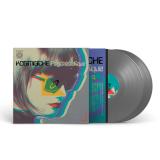
Praised by Rolling Stone, NME and the New York Times on release — the1996 debut from the members who went on to form bright eyes & cursive. Back on vinyl for its 30th anniversary!
Blanket Warm is a genuine buried-treasure reissue: a record contemporary critics compared to the Rolling Stones, Guided by Voices, and Tindersticks, and one a new generation of listeners has rediscovered as a missing link to Neutral Milk Hotel and Sufjan Stevens’ chamber-folk.
Lullaby for the Working Class formed in Lincoln, Nebraska in the winter of 1994, when multi-instrumentalist Mike Mogis and singer-guitarist Ted Stevens began writing together. Working from two home-recorded demos — and without having played a single live show — the band signed to New Jersey’s Bar/None Records in 1995. Blanket Warm was recorded and mixed by the Mogis brothers between December 1994 and April 1996 at their own Whoopass Recording Studio in Lincoln. Bar/None issued the album on CD in September 1996, while the vinyl LP went out through Lumberjack/Saddle Creek imprint in a pressing of just 1,000 copies — long out of print, and the edition this reissue restores to the format.
The result splits the difference between rustic and ornate: acoustic guitar, banjo, mandolin, and upright bass sit alongside a chamber ensemble of violin, cello, clarinet, trumpet, and trombone. Critics at the time reached for an unusually wide range of comparisons — the Rolling Stones, Guided by Voices, Tindersticks, Van Morrison — united mainly by the sense that nothing else sounded quite like it. Ted Stevens’ plainspoken, image-driven lyrics and unhurried delivery anchor songs that unfold with more patience and more instrumental color than the alt-country and lo-fi indie rock the band got lumped in with on release.
A digital dancehall scorcher cooked up by Tapes and veteran singjay chef Sammy Gold, praising the benefits of steamed carrots and sweet potatoes while keeping it at a vicious bubble on the dance floor.
As a second course Tapes serves up a spiced up Dub cut on B – “They Call Me Nothing” – massaging in that bass line even deeper.
This is the first release in a new Jahtari 7” series, coming with silver pantone print on the labels.
Don’t forget to check out number two: Speng Bond x disrupt – Dead Dem A Go Dead.
The legendary Charlemagne Palestine returns to Black Truffle with KKKAAARRREEENNNIIINNNAAA, capturing a 2025 performance in London alongside two close collaborators of recent years, multi-instrumentalist Daniel O’Sullivan and guitarist Oren Ambarchi. While perhaps still best known for the ecstatic piano clouds of his ‘strumming music’ performances, Palestine’s life-long search for what he calls the ‘golden sound’ has taken in an enormous variety of methods of sound production. Now stretching back an incredible six decades, his exploration of continuous sound forms has led him to mega-instruments from the carillon bells of the Saint Thomas Episcopal Church to the synthesizer armada of the Moog Sound Lab, with stops along the way at many of Europe’s grandest church organs. Just as important, though, has been Palestine’s practice as a singer, beginning with his childhood experience of sacred Jewish music and growing through his studies of Indian and Javanese musical traditions in the 1970s.
KKKAAARRREEENNNIIINNNAAA reimagines a key work showcasing Palestine’s voice, the haunting ‘magic song’ Karenina for falsetto singing and harmonium, recorded in Paris in March 1997 to honour the spirit of Palestine’s recently departed black labrador. In this trio version, which Palestine describes as the ‘karaoke’ version, O’Sullivan controls three cassette machines playing the original recording, their slow drift out of phase creating complex patterns of delays and ricochets as the recorded voice chants the syllables of Karenina’s name and other trance words. Beginning with a held organ tone that gradually expands to fill out the frequency spectrum, the piece soon grows into a dense psychedelic mass, as Palestine’s electric organs and the echoing pre-recorded voices are joined by Ambarchi’s swirling Leslie guitar tones and O’Sullivan’s viola, synthesizer and additional vocals. Atop it all sits Palestine’s live voice, in an extraordinary performance of keening, shamanic intensity, sometimes delivered in melodic unison with his keyboard playing.
Though clearly a work of Palestine’s design that sits squarely within his oeuvre, Ambarchi and O’Sullivan are far from simple accompanists on KKKAAARRREEENNNIIINNNAAA. As the elements of the teeming, emotionally charged stew writhe and twist, different elements come momentarily to the surface, O’Sullivan’s spaced-out viola taking the lead in moments that recall Kosugi’s Catch Wave, Ambarchi’s gliding chords and signature stuttering tones enriching the details of many of the quieter episodes. Throughout all its transformations, the music is buoyed up by a sacred aura, as Palestine intones his hypnotic prayer for the soul of his departed pet. Arriving emblazoned with a striking labrador painting by O’Sullivan on the cover, KKKAAARRREEENNNIIINNNAAA is an essential slice of modern ritual music.
DJ Linus came up with the basic idea for You Are House Music while DJing. He provided the vocals himself and refined them through numerous tests during his DJ residency at Munich's Pacha club. The track is a tribute to the party people and became the secret anthem of Pacha during its six-month production period. The vocals seem to work...
A.O.D.S. - DJ Linus' self-created genre: Adults Oriented Disco Soul. He organizes parties and plays vinyl records from 1975-1985, covering everything from AOR to soul and disco.
Senium refers to DJ Linus's newfound love for the chillwave/retrowave genre, for which he has acquired a small new record collection.
DJ Linus spent a whole year working on the EP, including relentless testing and sound adjustments. DJ Linus: “I am very happy with the result—thank you!”
By the way: DJ Linus released his first records on Compose, Compost's 90s house label.
About DJ Linus
DJ Linus is one of the very first House DJs in Munich and in Germany. He started way back end of the 80s, early 90s.
Linus is said to be a great influence to many a famous Tech House DJ today.
His solo album “Fantasmagorique“ was the first german House Music long player of its kind.
Linus was owner of two record shops and the famous “exun records“ label.
Nowadays he is resident at the incredible Pacha Munich – since 18 years now – and is running his current label “Sujet Musique” with great success since 2013.
Linus is also resident at the legendary “Palais Club” and the asian, high class restaurant “Izakaya“.
He works as a mastering engineer and as a lecturer for DJing and Producing @ Musicversity. DJ Linus won twice the Munich Night Life Award for best DJ “House/ Techno“ in 2013 and 2019.
DJ Quotes:
“Loving the sound of You Are...! Just the kind of percussive, bassline-led house I love to play out!” – Jimpster
“Very nice!” - Fred Everything
“Tune(s)! Big up Linus.” - Bill Brewster
“Nice funky stuff.” – youANDme
“YOU are house music ! :-):-)” - Acid Pauli
“Enjoying the original You Are House Music track. ” - Josh Wink
“Beautiful!” – Reznik
“Mega EP” – Sandrino
“Really like all the tracks on this EP, Linus has been always special about his production work. Will play the tracks out for sure” - Kiko Navarro
“What a beauty!“ - Phuncadelica
Links:
eloelo recordings returns with its most assured release to date: ‘FREAK’, an original cut from label head ELODIE, backed by a club-ready remix from Parisian heavyweight DJ W!LD, and rounded off with the vinyl-only bonus ‘Carla’.
Championed on BBC Radio 1, ‘FREAK’ arrives with momentum firmly behind it. This is a hypnotic, slow-burning seducer rather than a blunt-force club tool - restless, wriggling textures crawl through the mix, weird and tactile, shifting constantly around the listener, while ELODIE’s own hand-built percussion keeps everything taut and unmistakably her own. Equally immersive through headphones as it is over a club sound system, the track reveals new details with every listen without ever losing its dancefloor drive. Sultry vocal hooks thread through the groove, and in the breakdown a trippy, melodic rhythm coils and builds before the track snaps back open. Classy, controlled and seriously sexy.
On remix duty is DJ W!LD, a bona fide legend of the underground. The Paris-based artist, longtime Circoloco resident at DC-10 and founder of W Label and Spit&Die, has long been one of underground house music's most respected figures. Long a torchbearer for deep, dark, sexy house, he flips ‘FREAK’ into a pumping, peak-time cut. Built for the floor and armed with a gloriously warped breakdown, his rework has already been tearing up the dancefloor, causing serious damage wherever it's played.
A long-standing digital favourite finally committed to wax, ‘Carla’ closes the vinyl release: a cult cut long adored by those closest to the label and to ELODIE’s music. Timeless, seductive and deceptively powerful, it has always deserved its place on vinyl — and here it finally gets it.
Refined, seductive and unmistakably her own, ‘FREAK’ is another forward-thinking, groove-driven statement that pushes eloelo records' distinctive, timeless sound further still.
Following the success of the rework releases of Trip To Your Mind by Delfonic, LTJ Xperience, and DJ Friction, the time has finally come to reissue the original mixes of this essential and still highly sought-after Disco Funk classic.
Both the original Hithouse Mix and the re-mix by Chris Hill & Robbie Vincent were released in 1979. However, newly uncovered evidence has revealed that the track was actually recorded much earlier. After extensive research, including the rediscovery of Reginald Hudson's original flight ticket dated September 7, 1976, from Los Angeles to London, proof has emerged that the recording sessions took place in late 1976.
Due to unfortunate circumstances, the track remained shelved for several years and did not see release until 1979. By that time, the original backing band, Body Heat-a group of U.S. Army musicians stationed in Germany-had already disbanded. As a result, the record was released under the project name Hudson People.
Reg Hudson has since shared additional photographs and previously unknown information, which will be revealed in the coming months. To further celebrate the record's legacy, an official music video is currently in production and is scheduled for release this summer, marking the track's 50th anniversary.
As the original master tapes have unfortunately been lost, the audio has been transferred and restored using highest end equipment from the best available sources. In particular, the original Hithouse Mix now sounds better than ever before.
The 12-inch release will be presented in a faithful reproduction of its rare original "Disco 45" sleeve, believed to have been included only with the earliest pressings.
The Story Behind the Record
For decades, Trip To Your Mind was celebrated as a Brit Funk classic, although its true origins remained largely unknown. While the track was recorded at London's Advision Studios, Hudson People were neither a British group nor a London-based project-a fact first brought to light through the official 2022 reissue on Backatcha Records.
In interviews with label owner DJ Scientist, songwriter and producer Reg Hudson revealed that the musicians behind the recording were actually members of Body Heat, a GI band based in Germany. Like Hudson himself, most of the musicians originally came from the Chicago area.
"The band included Tony Palmer on guitar, Herva Middleton on drums and lead vocals, Charles Walker on saxophone, Harvey Perry on trumpet and trombone, and Rickey on bass-a five-man lineup," Hudson recalls.
Recorded in late 1976, the track remained unreleased for several years. By the time it finally appeared in 1979, Body Heat was already on the verge of breaking up, prompting the decision to release it under the Hudson People name.
Since the late 1990s, Trip To Your Mind has been heavily bootlegged, widely compiled, and continuously championed by DJs and collectors worldwide, cementing its reputation as one of the most enduring and in-demand Disco Funk records of its era.
50 year anniversary edition! Recorded in 1976, first released in 1979.
Bonobo alias Simon Green returns with "Distance In Static", his new album, which will be released on September 11, 2026, by Ninja Tune.
On "Distance In Static", Bonobo collaborates with a characteristically impressive lineup of artists, including Arooj Aftab, Joy Crookes, Nilüfer Yanya, Ichiko Aoba, Nicole Miglis (Hundred Waters), and Aanya Martin. The lyrics are written in English, Urdu, and Japanese, while historical Iranian samples and guzheng recordings stand alongside Bonobo's carefully crafted instrumental sounds. These were created during recording sessions in Los Angeles, Tokyo, London, and beyond: a significant part of the album was completed at Neil Young's legendary Broken Arrow Ranch in California, where he had retreated for several weeks earlier this year.
The album's title - "Distance In Static" - aptly describes Bonobo's current situation: it evokes images of distorted transmissions and fleeting frequencies, memory fragments and glimmers of meaning that echo through more than two decades at the forefront of electronic music. He sees the traces of his work reflected in a younger generation rediscovering trip-hop, downtempo, and experimental electronic music of the 1990s from a contemporary perspective. "I think the beginning of my work is relevant to younger people today," he says. "I liked the idea of listening for a distant signal - finding something in the noise," he continues. The entire album conveys the feeling of a search for transcendence: music that hovers between intimacy and vastness, the familiar and the unknown.
Within the universe of "Distance In Static", there is also a sense that this album marks something truly monumental. It is a moment of transition, a celebration of Bonobo's 25th anniversary, but perhaps also his last album in the traditional sense: with numerous guest contributions and a multi-year world tour with a full live band.
Whatever comes next, one thing is certain: "Distance In Static" is arguably Bonobo's best album to date; as ambitious and forward-thinking as ever and a reminder of why he has influenced so many people so strongly for so long.
Celestial Echo Records heads to the Cayman Islands for CER014, produced in association with Whale Rider Records and longtime friend of the label Medlar.
This release shines a light on two incredible sides from the legendary Memory Of Justice Band, one of the Caribbean's best-kept musical secrets. Formed in Grand Cayman during the 1970s, the group blended soul, reggae, funk and island influences into a sound entirely their own, becoming one of the region's most beloved bands in the process.
On the A-side is a gorgeous piece of sweet modern soul — warm, uplifting and packed with the kind of effortless musicianship that makes you wonder how it stayed under the radar for so long. It's exactly the sort of record Celestial Echo was built for: soulful, timeless and impossible not to fall for.
Flip it over and things move firmly onto the dancefloor with a reggae-boogie burner produced by the legendary duo Sly and Robbie. Built around a heavyweight groove, tight rhythm section and infectious hooks, it's the perfect counterpart to the sweetness of the A-side and a reminder of just how interconnected Caribbean music was during this period.
As always, Celestial Echo is here to put proper soul records back into circulation — respectfully cut, properly pressed, and ready to play.
Following up the launch of his own Dustbin Digs label, Manchester local Rossiter piles four of his own atop the stack of goodtunes97 wax.
Side A lifts off into the clouds with Feels So Good. The rhythmic shuffle, hint of UKG, and a determined bassline get to the gate as spacey chords are cleared for takeoff. Go Straight carries the trajectory, pressurizing the cabin in breezy dubbed transit. Keys vaporize on the periphery as Rossiter mitigates turbulence with careful cadence, maneuvering high-altitude with grace.
With two stops still to go, the B-Side gets off and running upon arrival. Round & Round kicks up dust as the low end stomps out the homestretch, tenaciously hitching a ride to our final destination. P45 is the long awaited return to familiar territory – nostalgic chords carrying beats so blissed they stutter. Interview samples from legendary UK producer/DJ Grooverider give the track a cultural anchor, connecting its contemporary sound to the lineage of UK dance music and the culture that shaped it.
Each side balanced with equal parts heavy and light, Rossiter’s Round & Round EP firms up the fifth release for goodtunes97.
– Forrest Camire
Bondage-Music proudly welcomes back Markus Homm with his latest vinyl EP, "It's Safe To Say." Continuing his long-standing relationship with the label, Homm once again delivers the warm grooves, crisp rhythms, and unmistakable dancefloor sensibility that have become his trademark.
Across four carefully crafted tracks, Markus Homm combines rolling basslines, soulful vocal touches, and refined house grooves with subtle techno influences. From the infectious swing of "My Alibi" and the driving title track "It's Safe To Say" to the soulful energy of "I Got All This Love For You" and the hypnotic flow of "Rush," the EP is built for both peak-time club moments and extended listening sessions.
As a special treat for vinyl collectors and DJs, two exclusive tracks are available on vinyl only, continuing Bondage-Music's tradition of offering unique content for the format.
After a brief hiatus and creative refresh, Radiant Records returns with a bang, courtesy of Belfast house aficionado Cromby. A producer who needs little introduction, Cromby delivers the label’s ninth release, showcasing exactly what he does best: colourful, groove-heavy house music built for the dancefloor.
Ignition kicks things off with winks and nods to post-Y2K UK breaks and electro house. The title track’s boshy bassline and driving drums provide the backbone for an irresistibly stomping peak-time cut with summer written all over it.
Pumping the tempo up, A2 Psy Op is a rapturous floor-filler that draws from dance music’s most playful corners without ever sounding pastiche or revisionist. Undulating basslines, infectious vocals and flirtatious synth hooks combine to create something that feels both nostalgic and strikingly fresh.
Taking things in a slightly toolier direction, B1 Money is classic Cromby. A nifty little dinger packed with razor-sharp percussion, “house” vocals, tightly wound subs, timeless stabs and an impeccable arrangement, it’s a hot tip for DJs and dancers alike.
On remix duties, Adonis resident and legendary legend Hannah Holland zeroes in on Ignition’s electro parts and dials the mood up to 11. The result is a Detroit-leaning electro banger that highlights her versatility as a producer and rounds off a highly playable return to the fore from Radiant Records.
Ezra Collective's Here Because Of Hope is the most ambitious and personal record of their career - conceived as a body of work split into three spiritual and geographical movements, the album traces the movement of Black people across continents and decades, from the music of Africa to the rhythms of the Caribbean, and home to the streets of London. Formed in the youth clubs of London, Mercury Prize and BRIT Award-winners Femi Koleoso, TJ Koleoso, Joe Armon-Jones, James Mollison and Ife Ogunjobi have now spent over a decade making jazz joyful, urgent and undeniable. On Here Because Of Hope, they push that vision further than ever, asking a simple but profound question: why does so much Black music born out of pain sound so joyful? Their answer is hope: the belief, carried across generations and oceans, that something better is possible. Anchored by collaborations with Pa Salieu, Lila Iké, Leona Lewis, and reaching across the full breadth of the global African diaspora (including America, where those same African and Caribbean roots gave birth to jazz itself) Here Because Of Hope is a record of remarkable warmth, ambition and humanity, and the sound of Britain's most vital band at the peak of their powers.
At the heart of ‘Diese Fragile Praesenz’ lies a melancholic yet propulsive drone, constructed from a field recording and drenched in white noise. Around this softly glowing orb Kelovolt constructs a vast, shifting, sombre soundscape. Lush, magisterial pads, starry-eyed synth work, cold washes of tape hiss and static melt in and out of the mise-en-scène. Crumbling walls of bass and distortion collapse in slow motion even as rich, brasslike harmonies elevate the listening mind. Long keening synth notes emerge from the fog, intertwining with falling tubular figures, a journey through a wormhole of sound both monumental and fragile.
The accompanying reinterpretations approach this deeply rich source material with discerning reverence. Voltmar's version deepens the grain of the original, with sharper percussion and washes of static that blow through the mix like little gales of dust. Anthony Linell's PM and AM remixes delve into a darker emotional core, placing at the centre a low, shadowy synth pulse around which mists of tape hiss and distortion swirl. Black Merlin steers the track down the path of eerie psychedelia, echoing clicks and dubwise space around a groove often found in the deeper chasms of contemporary techno.
Elsewhere, Die Wilde Jagd stretches the original into a mesmeric landscape of drones, occasional distant percussion and heavy fog, punctuated by fleeting moments of melodic clarity and beautifully resonant bell tones. CV313's pair of reworks complete the collection by exploring two complementary dimensions of the original through his signature dub approach. The Gravitational Pull mix feels the most true to the title track, amplifying its starry-eyed, celestial qualities, with a softer, hazier version built around a deep bass groove, while the Dimensional Dub descends into vast caverns of echo, resonance and alien texture - strong dub-techno sensibilities loom large in this mix.
Endlessly contemplative, endlessly exploratory, minimood027 is a trip to its own sonic galaxy that spirals inexorably outward, carrying the mind to ever wider astral planes. But at the core is that ever-pulsing drone, the black abyss that draws consciousness powerlessly back into the great nothingness.
Cécille Records revisits a standout cut from long-time label associate Christian Burkhardt, inviting Ben Sterling and Shokë to put their own stamp on “Content Creator”.
Long-time friend of the label Christian Burkhardt, hailing from Frankfurt, has been pushing his distinctive take on house and techno for more than two decades, combining complex, moving rhythms with the warmth of analogue gear. With releases across labels including Cocoon, Cuttin’ Headz, Oslo and Eastenderz, alongside his own imprint CB Sessions and Cécille, his sound has always felt naturally connected to the label.
The strength of the original opened the door for two contrasting interpretations. First up is London’s Ben Sterling, whose UK-rooted house and tech house influences and forward-thinking production style made him a natural choice to rework the track. His remix pushes “Content Creator” into a different space while retaining the character and groove at the heart of Burkhardt’s original.
Completing the package are Naples-based duo Shokë, returning to the label following their “Chiamami EP”. With the release still making its mark in the charts, the duo continue their close connection with Cécille, reshaping “Content Creator” through their own warm, groove-led house sound and unmistakable dancefloor energy.
Christian Burkhardt’s original sits firmly at the heart of the release, joined by two individual interpretations from Ben Sterling and Shokë – three cuts that each bring their own character while sharing the groove and timeless house aesthetic at the core of Cécille.
Daybreakers reaches a milestone with DBR010, and it felt right to mark the occasion with something truly special.
Fred Everything is one of those producers whose influence runs deep. From his early releases on 20:20 Vision through to decades of essential records on Lazy Days and beyond, the Montreal based producer has quietly become one of the most respected names in deep house. A producer's producer, a DJ's DJ, and someone whose records seem to reveal a little more with every listen.
The story behind this release starts in Hackney. A few beers at the BBE Store, a conversation about old DAT tapes and eventually enough persuasion to get Fred digging through his archives. What came back was pure gold: three previously unheard tracks recorded between 1998 and 2004, sitting untouched for over twenty years.
There's something special about hearing these recordings now. Made during a period that saw Fred establish himself as one of deep house's leading voices, they capture that unmistakable blend of musicality, groove and craftsmanship that made his records stand out in the first place. This isn't nostalgia or a history lesson. These tracks still sound fresh, still sound relevant, and most importantly, still sound like they belong on a dancefloor.
Gyros Heroes is the latest release from Adlibitum Tum Tunes, showcasing the unmistakable synergy between label curator Kirill Matveev and trusted maestro Nicolas Barnes, a resident artist renowned for his consistently refined and emotive sound.
The EP unfolds as a sophisticated blend of deep- and tech-house aesthetics, designed to uplift, move, and connect. It balances percussive bounce with emotional subtlety, offering a graceful flow that is both club-ready and sonically rich.
A1. Kirill Matveev – Am I Happy With That and A2. Kirill Matveev – Once At Dawn deliver the opening momentum, channeling sleek grooves and playful introspection with polished restraint. These tracks glide effortlessly between warmth and drive—embracing the listener without overwhelming.
On the flip side, B1. Nicolas Barnes & Kirill Matveev – Naar Shada blends the duo’s sonic sensibilities into a mood-driven piece with elegant progression and percussive intricacy. Closing with B2. Nicolas Barnes – Qeezy, the record reaches its emotional high point: a dancefloor-oriented yet soul-touched cut that radiates both sensuality and controlled energy.
Gyros Heroes is a finely tuned experience—bright yet deep, emotive yet precise—crafted for selectors who value atmosphere as much as movement. This is an EP that invites you into its positive orbit, reminding us how expressive and graceful club music can be when shaped by masters of tone and detail.
Adlibitum Tum Tunes is a division of MixCult Records
Step back to the mid-1960s with NOW Yearbook Presents – The 60s – Volume 3: 1965–1966, featuring 54 essential tracks across a 3LP set, pressed on beautiful blue vinyl.
LP1 opens with some of the decade’s most iconic vocal performances; Dusty Springfield leads with ‘You Don’t Have To Say You Love Me’, a UK No.1 hit that also reached the US Top 5, followed by The Righteous Brothers’ classic ‘You’ve Lost That Lovin’ Feelin’’, a chart-topper in both the UK and US. The Walker Brothers’ ‘The Sun Ain’t Gonna Shine Anymore’ was a UK Top 3 hit, while The Beach Boys follow with ‘God Only Knows’, widely regarded as one of their finest moments. Huge chart hits from The Moody Blues, Manfred Mann, Small Faces, The Kinks and The Animals with ‘We’ve Gotta Get Out Of This Place’ completes the first side…and flip the LP over for The Mamas & The Papas with ‘California Dreamin’, a major hit on both sides of the Atlantic and The Byrds and capturing the rise of folk-rock with ‘Mr. Tambourine Man’, another US No.1. Cher announced one of the most successful and enduring careers in music with ‘I Got You Babe’ – a #1 duet with Sonny, and is followed by the pop brilliance of Sandie Shaw with ‘Long Live Love’. Following The Mindbenders and The Fortunes, LP1 closes with a pair of soul standards: ‘My Girl’ from The Temptations was a US No.1(and eventually a UK #2 in 1992), and Percy Sledge’s ‘When a Man Loves a Woman’, another US chart-topper and a UK Top 5 hit in 1987 when it featured in a TV ad campaign.
LP2 opens with the explosive sound of 60s soul and crossover pop. Ike & Tina Turner kick us off with the timeless ‘River Deep – Mountain High’, a UK Top 3 hit. Frankie Valli & The Four Seasons had a huge hit with ‘Let’s Hang On’ and Motown is strongly represented with The Four Tops, whose ‘Reach Out I’ll Be There’ hit the US No.1 spot, alongside The Supremes, who scored another US chart-topper with ‘You Can’t Hurry Love’, plus Martha Reeves & The Vandellas, Stevie Wonder and a future Northern Soul Classic from Gloria Jones. Following James Brown, the side closes with the enduring soul classic ‘What Becomes Of The Broken Hearted’ from Jimmy Ruffin… while over on the other side Horst Jankowski’s instrumental smash ‘A Walk In The Black Forest’ leads in to pop classics from Tom Jones with ‘It’s Not Unusual’, a UK No.1, alongside Georgie Fame & The Blue Flames’ UK chart-topper ‘Yeh Yeh’ and Chris Montez with ‘The More I See You’. Sophisticated easy listening pop from Andy Williams and Frank Sinatra’s iconic ‘Strangers In The Night’ come ahead of Elvis Presley’s ‘Crying In The Chapel’, with LP2’s closer’s coming from Roy Orbison and Roger Miller, with the essential ‘King Of The Road’.
The Righteous Brothers’ undeniable ‘Unchained Melody’, a hit on release and a #1 in 1990 following it’s feature in the film ‘Ghost’ opens LP3 ahead of a wealth of huge pop hits from The Walker Brothers, Cilla Black and Cher – and rock oriented chart-toppers from The Troggs with ‘Wild Thing’ and The Spencer Davis Group with ‘Keep On Running’. The Everly Brothers’ ‘The Price Of Love’ leads into era-defining hits from Barry McGuire and Bob Dylan’s hugely influential ‘The Times They Are A-Changin’ reflecting the growing social awareness and changing approach to songwriting…and over to the final side opened by The Supremes with ‘Stop! In The Name Of Love’ ahead of The Toys with ‘A Lover’s Concerto’ and The Shangri-Las’ legendary ‘Leader Of The Pack’. Classic singles from Marianne Faithfull, Petula Clark and Sandie Shaw feature before the collection closes with a trio of timeless tracks: The trans-Atlantic top 5 ‘Sloop John B’ from the Beach Boys is alongside The Mamas & The Papas’ ‘Monday, Monday’ (a US No.1 and UK Top 5), whilst the aptly titled ‘Homeward Bound’ from Simon & Garfunkel – their first UK hit - signs off this superb collection.
NOW Yearbook Presents – The 60s – Volume 3: 1965–1966 – a snapshot of a rapidly evolving pop era where pure pop, soul, rock, beat, easy listening and songwriting sophistication converged.
Helene Rikhard had remained a hidden gem in the Norwegian electronic music underground for years, before she fully emerged on the international scene with these two critically acclaimed albums. Her sound is an ingenious mix of psychedelic disco, 80’s wave music, techno, krautrock, ambient and it truly operates in a world of its own. Drawing inspiration from the cosmic disco of Daniele Baldelli, the jazzy depths of Detroit techno and the esoteric dreamscapes of Laraaji, it’s astral music for astral people! Psychedelic to the core, but also warm, adventurous and highly original.
Her debut album Unpredictable Express is a dark, brooding masterpiece combining elements of cosmic disco, electro and techno Everlasting High serves as a beautiful, atmospheric counterpoint to its moody and mysterious predecessor, Feeling like a blissed out, hazy summer day, echoing childhood memories from Helenes youth, in the beautiful southern part of Norway. Everlasting High also sees Helene’s vocals coming more to the front. Mad Girl and Lions Eye are both beautiful, dubbed out synth pop with traces of 80’s synth, shoegaze, and reveals a fine-tuned pop sensibility, with a vocal style that’s sits somewhere between Kate Bush, Enya and Fever Ray.
Both as a producer and DJ, Helene’s style is easily recognized for her bold, genre-blending approach to electronic music. Mixing elements of ambient, techno, and experimental sounds, creating immersive, intricate and psychedelic tracks. Her DJ sets work the same way, blending Italo, High Energy and synth nuggets, effortlessly with strange, modern club sounds.
Few producers embody the soulful heart of House Music quite like Move D. Being a mentor of the label since day one, All That Jelly brings together two defining and desirable cuts from David Moufang’s recent history to one record.
'To The Disco ’77' 2013 original version for the A-side and the 2017 live rework finds its way to the B-side, both freshly remastered by the amazing and sought after Andreas Kauffelt. 'To The Disco ’77', opens with a clean, electro-styled beat that has a restrained power and a controlled tension that gradually blooms as the keys start to lift the mood into something lighter. When the iconic 'to the disco' vocal sample cuts through, it’s like a wink
from the past, threading disco’s golden exuberance through the disciplined swing of classic house. The track is a seamless blend of Funk, Disco, House and Electro with each element raw yet playful, woven into a groove that never stops urging you forward. It’s a masterclass in balance: sleek but deeply human, nostalgic but alive in the moment. It's like listening to the history of dance music in one special track.
'To The Disco ’77 (Move D Live Rework)' stretches the idea out into something even more fluid. The groove loosens, the funk rises to the surface and the extended runtime gives space for guitar and bass lines to share center stage, riffing around each other with organic warmth. The 'to the disco' mantra remains, grounding the track in its celebratory intent. It’s the kind of tune that closes a night perfectly and makes you not want to leave the dancefloor. Reissued together, these versions show Move D’s masterful ability to bridge eras and genres, reminding listeners that the dancefloor is as much about emotion as it is about motion.
Rebolledo is back. And this time, he's bringing his own label: Rated R. What began as a party series — with chapters like Rated R and Wax Upon A Time — now mutates into a record label. Long overdue, if you ask us. Surrounded by talented friends from all corners of the globe, this is the new home for bringing everything back into focus. And yes, on wax too.
Naturally. For the first release, we're kicking things off with something equally overdue: Rub N Tug are back. The track? A certified underground wanderer. Loved, played, and passed around dance floors worldwide for well over a decade, yet somehow never properly released. Or maybe it was. Sort of. It's complicated. Now it returns with a remix of a remix, giving the whole thing a fresh coat of cosmic polish. As if that wasn't enough, Paulor takes things one step further with a particularly special jam of his own. Which means we're now dealing with a remix of a remix of a remix.
Confusing? Maybe.
Necessary? Absolutely.
Makes perfect sense to us.
Vancouver r&b lover and multi-instrumentalist Kutcorners turns his attention to two classic cuts on his The Freshest Recordings label. He kicks off with a rework of Control-era favourite 'When I Think Of You ', which he reworks as a lithe and slippery bass-first bounce that is seductive and steamy. On the flip, it's 'Got Til It's Gone' that gets pulled apart and rebuilt as a gentle bumping but decidedly late-night slow jam with silky soft chords and the original vocals slightly smudged and pitched up amid some old-school scratching and hip-hop bars. It's persuasive and tasteful and sure to get r&b heads hot under the collar.
DiG Records’ latest release is a reissue of one of the most remarkable Russian electronic albums of the 90s. Available on vinyl for the first time, 100 Photography Lessons is the 1993 debut album by the duo Block Four, with a rich sound spanning a wide range of genres, from downtempo and experimental electronics to trance and techno.
Block Four was formed by Oleg Salkhov and Konstantin Smirnov in the early 1990s at Moscow’s SNC Studio. Salkhov was the studio’s first recording engineer, working with bands including Moralny Kodeks and Megapolis, while Smirnov came from Nikolai Kopernik, where he had already been experimenting extensively with electronic instruments.
The album is built around sampling, experimentation, and a broad range of influences. Block Four drew sounds from jazz, classical music, rock, hip-hop, folk and electronic music, as well as films, VHS tapes, and radio broadcasts, gradually assembling their own extensive library of samples and loops. Combined with synthesizers, samplers, drum machines, unconventional rhythms, and harmonic ideas, the duo brought all these elements together to create their own distinctive sound.
100 Photography Lessons captures a brief but important period when Russian electronic music was still developing its own language. Freely blending sampling, electronic instruments, and influences from a wide range of musical traditions, Block Four created an album that still sounds compelling more than three decades later.
American Joe Babylon has been steering his Roundabout Sounds label through calming deep house waters for a decade or so. He has recently focussed on assembling this ongoing All Hands series (the name may be a nod to the analogue gear the tunes are made on? Sound-wise, it checks out) and volume three features another fine quartet. First up is DJ Honesty with a fine label debut in the form of the synth-laced swirler 'Walking Down Gratiot,' then label friend Mr. Hazeltinee aka John Tejada layers comic pads into an upright house rhythm on 'Zanzmatic'. San Francisco and more specifically Bay Area man Federsen offers super lo-fi and reserved deep house cuddle 'Sequential' while Babylon himself drops the slow burn shuffle of 'Play It By Ear'.
"Once Turin-based producers Mattia and Massimo joined forces under the Voodoos & Taboos moniker, they quickly became a notable force in contemporary club music. A crafty take on house music, combining groove with sculpted production work and a bent for lush melodies, drawing from a wide range of influences - anything that borders on the electronic genres really, and beyond - fueled their own namesake imprint with 6 EP's and landed them spots on a variety of top-tier labels. We have been keen to work with these artists for a long time, and are thrilled this finally materializes with the release of ALT027. Title track "Sempre Sognar" immediately sets out the duo's floor-focused intentions. Breakbeat-laced drums gradually build momentum before a formant lead drops in. It trades phrases with an equally infectious organ that's eventually joined by a 303 pattern for the track's finale. Similar vibrating, buzzy leads thrust "Take Me" forward. Amid heavily delayed vocal samples, the proggy beat takes a more trippy turn however. Synthesized idiophone interludes create room for moments of repose, although not entirely unambiguous ones. A subtly detuned lead and more sleek acid lines are supported by the type of arp bass that characterizes Voodoos & Taboos' sound on the B-side's "Revolution". A collage of broadcast and war-movie lines alike not only adds color, but underlines the sense of indeterminate imminence that looms throughout the track. B2 "Afterhouse" sees the BPM drop a notch, yet the palette shows no signs of winding down; it is downright exuberant. As different arpeggiated melodies play call and response, tape-delayed chords, alarm-like risers, and sprinkles of guitar add extra flavor. This does not lead to excess, however. Everything is carefully measured and kept in check: after all, at the helm are two artists who understand that perfection lies in getting a great many small things exactly right."
A two-way Italian/Mexican stand-off here, as Saint Wax founder Gledd (real name Eduardo Barbi) and Kaninchenbau label chief The Funk District (Fernando Mendoza) deliver their first joint EP since 2022. The latter steps up first with two solo workouts- the Clavinet-splashed nu-disco-goes-bluesy deep house shuffle of 'The River Bends Back' and the Rhodes rich deep house disco of 'Got To Be Alright' - before the duo combine on two collaborative cuts. 'I Said' is a gospel-powered slab of ever-building disco-house hedonism, while 'Down The Middle' is deeper, more bass-heavy and topped off with classic soul vocal samples. Gledd then takes over, following the infectious piano house bounce of 'I Said' with the colourful, acid-flecked excellence of 'Blessin'.
Tehran-born Sohrab brings a unique mix of influences to the new outing on Iran-based label Shahr Farang. Vocals in Persian and melodies associated with Middle Eastern styles all colour his take on deep techno. 'Santouri (Sange Sabour)' kicks off with a throbbing rhythm and exotic strings that intertwine up top with wirey electronics. It's an intoxicating collision of cultures that also comes as a more direct instrumental. On the flip, 'Rise' is a jacked analogue workout with punchy kick and spangled bass locked in a wrestle as swung percussion and rattling chords all beef things up further.
The roots of Nightlong can be traced back to Havana in early 2008, where a series of recordings captured some of the most compelling contemporary Cuban singers and musicians. These sessions yielded a striking collection of voices, woodwinds, and brass, all imbued with a distinctive warmth and vitality—material that called for a careful and inspired reinterpretation.
That reinterpretation came from Maayan Nidam. With remarkable intuition and precision, she distilled the essence of these performances and reshaped them into a work that feels both organic and forward-looking. Moving beyond her signature dance floor framework, Nidam explores a wider range of rhythms, textures, and tonal depth, crafting an album that unfolds with subtle complexity and emotional resonance.
The result is a fluid and immersive record—one that transforms its source into something entirely new, while preserving its expressive core.
Pianeti Sintetici ('synthetic planets' in Italian) is a new conceptual project by Davide Perrone (Primal Code) that draws inspiration from the factories of Magrathea, a planet in Douglas Adams' classic space opera The Hitchhiker's Guide to the Galaxy, where artificial planets are manufactured on commission.
'This concept has always fascinated me, and I chose the name to frame a hypothetical future of synthetic worlds, told with sound,' Davide says. 'I like to imagine the howls of creatures inhabiting solar systems outside our own. Rarefied atmospheres, alien sequences, and unfamiliar tonal scales. So, I see Pianeti Sintetici as an open-ended design research project where I can explore these inspirations.'
Esplora I ('explore') is the first record in a trilogy scheduled for release in 2023. It comes wrapped in a custom-cut embossed sleeve adorned with a captivating interpretation by Hypnus' visual artist Gabriella Holmstrom.
Early support from Brando Lupi, Iori, Takaaki Itoh, Unjin, Eric Cloutier, Forest on Stasys, Konduku, and Saphileaum.
No apologies needed once again from the Sorry We Play Vinyl crew as they roll out a seventh slab of wax that's packed to the edge with club heaters, but all of them quite different. 'EDIT19' kick off with a tribal steaminess and yelping vocals, oversized organic drums and scraping hits. It's controlled chaos that will demand wildness on the floor. 'EDIT20' flips the vibe with jazzy fingers dancing over an old-school disco groove that slides and slinks its way into your affections and 'EDIT21' then does another about-turn and heads into mean minimal territory with a militant rhythm, synths that roam like prison searchlights and a darkness that is all-consuming.
On 24th May, 2024, the exact day of its Golden Jubilee, Diamond Dogs will be issued as a limited edition 50th anniversary half-speed mastered LP. The first single from the album, ‘Rebel Rebel’, reached number 5 in the UK and the album would also reach similar heights on both sides of the Atlantic reaching number 1 in the UK and number 5 in the USA.
This new pressing of Diamond Dogs was cut on a customised late Neumann VMS80 lathe with fully recapped electronics from 192kHz restored masters of the original master tapes, with no additional processing on transfer. The half-speed was cut by John Webber at AIR Studios
The writing of the album was influenced by Bowie not being able to secure the rights for a theatrical production of George Orwell’s 1984 and the work of William S. Burroughs, whom Bowie had interviewed for Rolling Stone in November 1973. The songs on the album created an urban apocalyptic scenario with Bowie appearing on the cover as a controversial half-man, half-dog hybrid painted by the Belgian artist Guy Peellaert from photos by the world-renowned photographer Terry O’Neill. Since its release, tracks from Diamond Dogs have been covered by artists such as Beck, Tina Turner, Duran Duran, Def Leppard, Joan As Police Woman, Dead Or Alive and The Struts.
Mensch & Maschine. A concept. 13 tracks. One system. No coincidence. No compromise. Everything follows a logic. We live in a time where progress is no longer a goal, but a reflex. We accelerate without knowing the destination. We develop without questioning. We trust without understanding. We are driven by the idea that technology produces solutions. Without calculating the risks. Meanwhile, something new is emerging. A form of intelligence. Not human. Not emotional. Unstoppable. Consistent. Precise. Superior. Maybe not today. But eventually. Mensch & Maschine exists exactly there. Between what we create and what replaces us. This work does not provide answers. But it may ask the right questions. What happens when we are no longer the most intelligent entity? What remains of the human when systems begin to replace them? And who makes the decisions when we no longer decide for ourselves?
Un Canto por México, Vol. 2 is Natalia Lafourcade's second album dedicated to the reconstruction of the Centro de Docementación del Son Jarocho, a cultural building that was damaged after the 2017 Puebla earthquake. The album features unique new interpretations of her earlier songs, as well as collaborations with artists such as Caetano Veloso and Silvana Estrada. This album really showcases the enduring strength of her songs, which remain powerful in any form.
The album was very positively received by fans and critics. It even got nominated for multiple Latin Grammy Awards (Album of the Year, Best Engineered Album) and Grammy Awards (Best Regional Mexican Music Album).
Un Canto por México, Vol. 2 is available as a limited edition of 2000 individually numbered copies on smokey marble vinyl, packaged in a gatefold sleeve, with printed inner sleeves.
CYBERPHUNK CLAUSURA (2LP) is the closing chapter of the CYBERPHUNK saga, following CYBERPHUNK and CYBERPHUNK EXPANSION.
What began as an exploration through Electro, Breakbeat and Acid now reaches its final form: a convergence of SubBass pressure, fractured rhythms and dystopian energy condensed into a complete double LP experience.
Across 12 tracks, Calagad 13 expands the sonic language of the series — combining high-impact breaks, hypnotic sequences, acid mutations and darker atmospheric structures into a body of work designed to be experienced as a continuous journey.
Pressed as a limited edition of 150 copies, CLAUSURA stands as both a collector’s piece and a defining release within the COSMIC TRIBE catalogue.
While this release concludes the main CYBERPHUNK narrative, the universe will continue evolving through forthcoming reinterpretations and remix transmissions.
Grammy- and Academy Award-winning rapper and actor Common is widely regarded as one of the most influential Chicago rappers of all time. He is best known for his sophisticated lyrics and jazz-rap, which introduced the world to hip-hop classics such as "I Used to Love H.E.R.", "The Light" and "GO!".
He started his career with Can I Borrow a Dollar? This album immediately drew attention thanks to its top-notch production and clever, playful lyrics. Common worked with contemporary household producers like No I.D., The Twilite Tone and The Beatnuts to create this album, which put Chicago hip hop on the map.
Can I Borrow a Dollar? is available on black vinyl.
Disco Collected celebrates the dance music which originally developed from R&B, soul, and funk from the late 60s and 70s and turned into a mighty subculture in discotheques, with Studio 54, Manhattan, New York as one of the most famous and extravagant discos all over the world. Disco used a steady four to the floor beat, string sections, horns which created a perfect setting for DJs who mixed their special 12 inches to an eager dance crowd.
Movies like Saturday Night Fever and Thank God It’s Friday contributed to disco’s mainstream popularity. Compiled on Disco Collected are some of the best, well-known and great disco hits by Rose Royce, Chic, Kool & The Gang, The Trammps, Thelma Houston, KC & The Sunshine Band and 16 more guaranteed floor fillers.
The 2LP Disco Collected is available as a limited edition on disco ball silver vinyl and includes an insert.
Celebrating 30 years since ‘Buena Vista Social Club’ was released, this classic will be made available on limited edition pearl vinyl and features the remastered audio and bonus tracks released as part of the album’s 25th Anniversary in 2021.
Masterminded by the trio of Cuban bandleader Juan de Marcos González, American producer and guitarist Ry Cooder, and British producer and label owner Nick Gold, 'Buena Vista Social Club’ is both the name given to this extraordinary group of musicians and the album they recorded in just seven days in 1996 in Havana’s 1950s vintage EGREM studios. It was clear from the atmosphere of the recording sessions that something very special was taking place. However, no one could have predicted that Buena Vista Social Club would become a worldwide phenomenon – awarded a Grammy in 1997 and, at over 8 million copies, outselling any other record in the same genre.
The acclaim of the original album elevated the artists (including Ibrahim Ferrer, Rubén González, Eliades Ochoa, Compay Segundo and Omara Portuondo) to superstar status, inspired an award-winning film by Wim Wenders, a Tony Award-Winning Broadway Musical and contributed to popularising Cuba’s rich musical heritage. Produced by Ry Cooder and Executive Produced by Nick Gold for World Circuit, the timeless quality of the music and the sheer verve of the veteran performers have ensured that this album will go down as one of the landmark recordings of the 20th century.
Continuing with the next installment Len Faki's Hardspace series, he breathes new life into four distinct tracks, re-imagining them through the signature Hardspace lens: heavy, thumping, and relentlessly propulsive. Spanning decades of sound, these reworks bridge the gap between nostalgic grit and future-facing intensity, proving once again that a strong is often the most effective tool in the bag.
DJ Sneak's 2009 cut Acido sits perfectly between acid-house and techno-leaning aesthetics-a natural fit for a Hardspace edit that amplifies its jacking, loopy groove. Staying closer to techno's roots is Like A Tim's warehouse classic Rashness; here, Faki channels the raw, frantic energy of the original, proving how nuanced changes can generate a completely different, captivating energy as he reshapes the track's dynamic impact and tightens the low-end.
The B-side takes two contemporary cuts further into the red: the Snuff Crew edit ramps up the intensity, stripping back Where's The Bad? to a singular, hypnotic loop for peak-time impact. Finally, Umfang's Complete Your Collection undergoes quite the transformation, adding layered, rhythmic complexity and shifting bass weight to create a trippy but floor-focused drive.
This is a bit of a rare release on the ADR label - it even had its own special catalogue number - XYZ instead of the usual ADR (I need to ask the guys why that was actually!) This EP only came out as a 4 track white label in 1993 and was nicknamed the Untitled EP back then, finally having a proper title in 2026. Two of the tracks were written by Les aka The Pharmacist and the other two were collabs with Dave Charlesworth - so you know the quality will be high... but you I expect most of you know this already from owning or listening to the original pressing. A cracking EP of good vibed hardcore.
Andreas Tilliander released »Ljud« in 2001 as the first full-length album under his real name. The year before, the Swedish producer’s »Cliphop« album under his Mokira moniker had established him in the world of adventurous electronic music and the clicks’n’cuts scene. »Ljud« was just as minimalistic, warm, and playful as its predecessor while also notably inspired by house music. It is a timeless record based on happy accidents, playful loops, and lively spontaneity. For its 25th anniversary, Keplar presents a vinyl reissue with adjusted artwork by graphic designer Marc Hohmann and updated mastering by the artist himself.
Tilliander laid the foundation for his two first albums when he got rid of most of his music gear in 1998 after meeting Joel Brindefalk, who was already releasing music on the legendary Börft label. Brindefalk was using a computer as his main instrument and introduced Tilliander to the audio editing suite Sonic Foundry Sound Forge. »What he did with that software is what made me sell most of the hardware except my Nord Modular and a Korg MS-20.« The former synthesizer played an integral role while Tilliander made the tracks for »Ljud,« working primarily in the modular studio environment Jeskola Buzz.
»Ljud« came together in an intuitive process. »It’s still how I work 25 years later: I first make loops, create bits and pieces, and build up my own sound library as a foundation,« Tilliander explains. The Nord Modular and Buzz, which allowed him to swap samples and produce new sounds out of pre-existing ones, provided him with material for loops that formed the basis of the ten tracks. »I would start with a few elements, add more into the mix, then take them out again—arranging the pieces in real time while recording.« The casualness and vivacity of this improvisational approach becomes tangible throughout »Ljud.«
»Ljud« was released on Achim Szepanski’s Mille Plateaux, which had published the seminal »Clicks+Cuts« compilation in 2000. »I was part of that scene and I liked the digital aesthetic of the label,« says Tilliander »Coming from a very analogue setup, working with computer music and this kind of minimalism was very inspiring.« When preparing »Ljud« for the Keplar reissue, he ran the music through an analogue outboard and noticed he was still happy with the way it sounded. »It brought back fond memories. I hope the same is true for people who heard it back then, and that everyone who discovers it now will enjoy it, too!«
Vocalisations like ‘Hooo’ and ‘Huhuh’ form the wordplay on Use Knife’s upcoming release as these sounds are meant to summon strength, overcome fear and unleash unwavering sonic assault. Set for November 20, the EP ‘Hooo Huhuh’, on the band’s own Hooo Huhuh record label, is Use Knife’s first release since its acclaimed 2nd album ‘État Coupable’ on VIERNULVIER records in 2025.
The journey of Use Knife began in 2020 during a music residency in art centre VIERNULVIER (Gent, be) when Iraqi percussionist Saif Al-Qaissy, Stef Heeren and Kwinten Mordijck, as well as the multidisciplinary artist and scenographer Youniss Ahamad, came together to form Use Knife, later joined by Jerusalem In My Heart’s Radwan Ghazi Moumneh as mixer and guest musician. The project quickly gained the attention of prestigious platforms like The Wire, The Quietus, BBC6's New Music Fix, KEXP, NTS, Inverted Audio, METAL Magazine, Ma3azef, A Closer Listen, and others documenting the universal resonance of Use Knife's message.
Since releasing its debut album ‘The Shedding of Skin’ on VIERNULVIER, a remix EP ‘Peace Carnival’ on Morphine records, and follow-up album ‘État Coupable’, Use Knife has played its visceral audio-visual liveshows at many prestigious festivals like Le Guess Who?, Tremor, Colours of Ostrava, Les Trans Musicales, Rewire, Sonic City, Resonator, Roadburn, Donau, Fusion, Rage Sacrée, Micro, Clandestino, E-fest and many more.
Praised by The Quietus and The Wire for its vibrant and wholehearted performances, Use Knife has been described as an electrifying live act that fully engages its members and audience alike. Their sound, dubbed 'industrial Iraqi EBM', is celebrated for its ability to immerse the audience in a hypnotic state, erasing global borders through real-life connection and dazzling visuals on gigantic projection fabrics, resulting in exhilarating sensory experiences.
Further extending Use Knife's influence, Radio alHara in Palestine has hosted Use Knife's 'Feeding the Gentry' show since 2023, where the band aims to build a community by opening their platform to other guests like Saint Abdullah & Eomac, Monstera Occulta, Cinna Peyghami, Bader, Anthony Sahyoun, ... thus broadening the band's international reach and impact.
Earlier this year, Use Knife collaborated with Rabih Beaini from Morphine Records to re-remix the band’s track ‘To Feed the Gentry’ (feat. Radwan Ghazi Moumneh), blending in the beautiful track ‘Kunna’ by Rully Shabara. The resulting track was included in Beacon Sound’s compilation ‘Gaza is the Moral Compass’ to help support Palestinian-led mutual-aid groups on the ground in Gaza.
The forthcoming 'Hooo Huhuh' EP, releasing on November 20, advocates for the resilience and determination of the people, their collectives and communities, with energetic vocalizations, distorted percussion and throbbing saxophones. The title track, originally mixed by Radwan Ghazi Moumneh and mastered by Heba Kadry during the ‘État Coupable’ sessions, has been surgically reworked into the clubby rant that is ‘Ho Hahaa Huh’ and the drone-like mantra ‘Nobody Can Separate Us محد يكدر يفركنا’.
The limited vinyl edition comes with a 3-color risoprinted sleeve designed by Lebanese artist and graphic designer Farah Fayyad.
Coming in hot on Berlin's Toy Tonics label: a new EP by the talented duo ALMA NEGRA!
Founded in 2013, Alma Negra is a Swiss collective centered around the brother duo Dersu and Diego Figueira, whose diverse roots in Switzerland and Cape Verde inform their sound. The project was launched with the ambitious vision to explore the world's diverse rhythms and drive musical innovation by mixing different styles. Their work is anchored in a process of digging and sampling, skillfully blending traditional sounds-from Fela Kuti-influenced Nigerian afrobeat and Angolan Lamento to Caribbean Zouk and the Maloya sound of Réunion-into a contemporary dance music context.
The Figueira brothers' eclectic DJ sets embody this ethos, peppering disco and house with salsa, samba, jazz, and Afro-Caribbean carnival rhythms, all under their guiding motto: "As long as it's Funky."
Since 2014, Alma Negra has made an important contribution to intercultural exchange in their hometown of Basel. Their international presence began in 2015 with their first shows abroad in countries like France, the Netherlands, and Portugal. From 2016 to 2019, their reach expanded significantly, with performances in major hubs like London, Paris, and Berlin, as well as Istanbul, Tel Aviv, and Tunisia. Highlights from this period include sets at the Montreux Jazz Festival, Dimensions Croatia, and Fuse Club in Brussels. Their standing is further cemented by releases on respected labels like Heist Recordings, Sofrito, and Basic Fingers, alongside remixes from an elite group of peers, including Soulphiction, Kuniyuki, and Yuksek.
Parallel to their studio and DJ work, the project expanded into the Alma Negra Live Band, formed with jazz musicians from Basel. While the band is currently on hiatus, this collaboration made live instrumentation increasingly central to their productions, creating a dynamic they feel is essential for any dancefloor. The live band has performed in cities like London and Hamburg and has led to collaborations with artists such as French singer Pat Kalla and jazz trumpeter Bodo Maier.
Berlin-based Dutch-Italian composer and musician Aimée Portioli aka Grand River presents the new album Temporary, returning to the renowned Editions Mego label with her most expansive and focused LP yet.
Rooted in existential ideas of impermanence and flux, Temporary is a deeply emotive work centred on the rich interplay between resonant guitar work and innovative electronics. Written in the wake of profound personal grief and loss, the album sees Portioli infuse her music with a raw, expressive intensity anchored in this experience. Across eight strikingly melodic and affecting soundscapes, Portioli powerfully embodies a dramatic encounter with mortality.
Temporary reprises Portioli’s exceptional streak of material across acclaimed labels including Donato Dozzy and Neel’s Spazio Disponibile, Caterina Barbieri's light-years, Ghostly International, Tresor and Umor Rex. The LP represents the latest tour de force in her distinctive electronic practice. Alongside a raft of lauded releases, Portioli has devised visionary multichannel installations which dissolve the boundary between the art gallery and the performance space.
Her new album signifies a culmination of her work, imbued with the depth of Portioli’s artistry. Shaped by a paradigm shift rising from loss, the record reflects a contemplation of the human condition and the ephemeral nature of existence. Ruminating on the thoughts and experiences that have fed into the record, Portioli reveals a consequential recognition underpinning the record:
"Sometimes, when travelling in places far from home that I know I will most likely never return to, or while accompanying someone I loved towards the end of their life, I become intensely aware of the singularity of the moment, and of how precious and sad this feels at the same time. It carries a particular weight because it will never happen again in quite the same way. Through experiences like these, I have gradually come to understand the temporary nature of all things. They taught me that to live is to experience the present while already feeling the trace of its disappearance, something both painful and blissful." - Aimée Portioli, Grand River
The album is invested with a potent mood and momentum from the outset. Establishing an evocative tone with the subtle, pulsating synthesis, rustling undertow, and oceanic low end of 18 circles to heaven, Portioli gradually ascends through the incandescent modular majesty of Come to stay, and the turbulent, brooding guitar figures of The crossing of the body, the crossing of the mind. The album progresses through the rapturous electronic phasing of The little we last into the coruscating synth grandeur of Let me know when you’re pure, before a thrilling endgame.
Closing with the wavering harp runs, heavy percussive thud, and cataclysmic guitar discordance of Maybe I am dead and this is paradise, and the evanescent atmospherics and beautiful acoustic refrains of Work of ending, Portioli takes the listener through vast landscapes of sound and mercurial emotional states. Intimate and immersive in equal measure, the record traces a compelling sensory journey.
Each part of the album is part of a larger poetic sentence, with track titles forming fragments that together articulate a meditation on transience. From 18 circles to heaven and Come to stay through From the other side and Work of ending, they read like quiet statements about being human, about loving, losing, remembering and eventually fading. The record moves through these states as a continuous passage, depicting a poignant soundworld guided by temporality.
The awareness that our time is limited sharpens the value of what remains. Each encounter, each gesture, each fleeting moment becomes more vivid. Temporary lingers in the space where presence and disappearance coexist, where everything is already passing away and therefore becomes infinitely precious. Things matter because they do not last. Mortality does not diminish life; it intensifies it. In confronting these ideas, Temporary feels irrepressibly alive.
Composed, produced and mixed by Aimée Portioli
Production and mixing assistance by Luca Sammartin
Acoustic piano on Maybe I am dead and this is paradise by Andert Tysma
Mastered by Rashad Becker
Cut by Marta De Pascalis at Schnittstelle, Berlin
Artwork by Nicola Tirabasso
Layout by Riccardo Piovesan
Half a century after its original release, legendary Lebanese musician and singer Marcel Khalife—renowned oud player and global icon of both music and activism—returns with a new recording. On this album, he reinterprets four of the five tracks from his debut, Promises of the Storm. A bold defiance of time and history.
Why revisit the same album, 50 years later? The reasons are many, but one stands above the rest: history itself seems to be repeating. The narrative unfolds once more in the same dire circumstances as half a century ago, as if time has folded in on itself, returning everything to its starting point. The urgency, the necessity—it all remains, pressing and inescapable. We must begin again.
In 1976, a young Marcel Khalife found himself exiled in Paris, fleeing the Lebanese Civil War and his family’s Christian village, where his progressive, left-wing ideas had placed him under a kind of house arrest. He was one of the few to openly and unwaveringly champion the Palestinian cause. The situation quickly became untenable, especially since, just a month before the war began in March 1975, Khalife—fresh out of the conservatory—had given his first public concert to great acclaim. Then, everything collapsed. What does one do when trapped at home? Read books, play the oud, and turn those readings into songs. In his family’s de facto prison, Khalife began setting the poetry of the great Palestinian poet Mahmoud Darwish to music. These songs, born of confinement, he carried with him into exile, driving to Paris where a producer offered him the chance to record an album. Naturally, the tracks were the ones he had been improvising at home from Darwish’s poems. The album’s title, Promises of the Storm, echoed the war that was just beginning. Khalife recalls that the album became a hit after a concert at the Fête de l’Huma, where 500 copies were sold in a single day. “Everything started there, and it never stopped,” he remembers. He would meet Mahmoud Darwish shortly after, at a dinner organized by mutual friends. From that moment, a deep friendship blossomed between the two men.
With Darwish’s words and Khalife’s music, the songs of Promises of the Storm are imbued with a powerful evocative force—melancholy, tenderness, and poetic resistance in the face of violence. The album catapulted Khalife to international stardom, leading to endless tours and recordings, yet he never abandoned his commitments.
Now, 50 years later, Promises of the Storm returns in a fresh recording, because history is repeating itself. After the Israeli bombings in Lebanon at the end of 2024, Khalife, who was on tour, found himself stranded in Paris. He remembered a recurring request from his son, musician Bachar Mar-Khalife, who had often urged him to re-record his now-classic debut album. One morning, oud in hand, Marcel knocked on his son’s door and said, “Shall we? I’m ready to record.”
These new versions are stripped down, raw, and intimate—just the solitary strings of the oud. Khalife sings as never before, his voice no longer marked by the fragility of youth but imbued with something deeper, freer, unshackled. It soars high yet resonates low, always clear, as if to escape sadness, to evoke love and violence, desire and exile. In just four songs, Khalife encapsulates a lifetime, and a philosophy of life. Rita tells of a love of Darwish’s, with the haunting line (translated from Arabic): “Between Rita’s eyes and mine, a rifle.” Oummi invokes the figure of the mother as a metaphor for the lost land. Promises of the Storm is a meditation on revolution, the hope for change, the melancholy of defeat, and the power of thought. Passport captures, through poetry, the feeling of being stateless—a citizen of everywhere and nowhere.
Time has only strengthened these texts and this music. History never repeats itself without a valid, indispensable reason for the present. That reason is fully contained in Marcel Khalife’s new interpretations, which have never sounded so clear, so right, so essential.
Volume 1 - Growth
Resurrection is a long-term musical work that has accompanied Christine Benz for almost twenty years. The first track was created in 2007 (track id - Born after Code), with another piece added nearly every year thereafter.
Throughout this time, she continued to produce other music while steadily developing her artistic language.
Musically, the album moves between minimal techno, ambient and experimental electronic music. Across different phases of her life, Resurrection gradually grew into an archive of her personal and musical evolution.
The complete work unfolds as a trilogy across Volumes 1-3.
At its core lies her fascination with sound as material. Rather than thinking in terms of conventional melodies, she works with textures, vibrations, and spatial relationships. A small number of elements give rise to complex sonic spaces, where minimal changes can have a profound effect. Mistakes, chance occurrences, and unexpected responses from the systems she uses also become part of the music. Even from chaos, remarkable structures
emerge. Whenever unplanned beauty reveals itself, she preserves it as a small “miracle” in which control and chance intertwine.
The complete work unfolds across three chapters: Growth, Structure and Resonance, exploring repetition, frequency, perception, consciousness and technological development in the relationship between humans and
machines. It moves from origin through the formation of an internal order towards connection and interaction.
Volume 1: Growth, draws upon the Fibonacci sequence and the spiral as symbols of natural development, with the music growing through repetition and minimal change into increasingly complex forms. Throughout the
project, technology appears as a tool, a partner and a mirror of our perception, raising the question of whether consciousness, responsibility and empathy can evolve alongside technological progress.
During the project’s long evolution, Donato Dozzy developed an interest in Christine’s distinctive sound design.
In 2021, this led him to propose his own interpretation of Our Determination for Volume 1, subtly reworking the track through his own musical perspective.
The artwork developed by Christine also went through a creative process of its own. The original photographs were taken in a basement around 2019, with a wet curtain draped over her. In 2026, she decided to transform
this visual world into a moving-image artwork. For the production, a film crew reconstructed the entire setting.
The video shoot demanded a great deal from Christine: after several hours beneath the wet curtain, the cold was no longer merely part of the staging. This elaborate creative process gives the artwork its distinctive character
and makes it an essential part of Resurrection.
The first chapter will be released in November 2026 as a double-vinyl edition housed in a distinctive gatefold sleeve with an inside-out finish, matte varnish, and partial raised spot UV varnish. Two further double-vinyl
releases, Structure and Resonance, will complete the trilogy. All three volumes will be released on Pirat Records.Records.
Acid Pauli's new album "Mystic Meltdown" is hypnotic mystery, textural mastery, all hurtling through your system at peak velocity, unrelenting yet full of mischief and spirit.
The first full-length Acid Pauli album since 2020's MOD, here the artist, Martin Gretschmann, who you might also remember from Console and The Notwist, reaches out to collaborators, unearths new sounds through travel and then brings it all together with one long, sweeping breath - an album to take in as a whole, to ride its compulsive energy to the end and then back to the start, over and over again.
While the album's been brewing for some time, "It took months and months to find the coherency and the story that this album is telling," Gretschmann recalls, "Arranging the pacing, feeling how the tracks come together into one album", it reads as effortless. It draws from Gretschmann's various musical languages, from the techno, house and ambient of Acid Pauli, even reaching back to the electronica of Console, but it places them in new contexts, at new speeds and in rich, giddy contrasts. Mystic Meltdown feels like endless pleasure, unflagging energy.
It's also an album rich with multiplicity. There are many voices that visit us at the Mystic Meltdown, from Hani Mojtahedy's Kurdish vocal on "Goman (Remix)", through to Lhasa de Sela's "Con Toda Palabra" in Spanish. A sample of Kingdom Molongi's voices opens the title track and returns on "Mystic Feedback" - this feels like a particularly profound connection, given the inspiration that Gretschmann has gleaned from the musical community surrounding the Nyege Nyege Tapes label and organisation over the years. He's also appeared at one of their festivals, by all accounts a revelatory experience.
Sometimes Gretschmann reaches back yet further. "Yes, Caroline" hints at an abstract relationship with the Beach Boys' pop masterpiece, Pet Sounds. Yet the way he draws these various influences into his own music always displays more than a touch of transmutation. Releasing the album on his own label All Is Acid which has recently been undertaking a reissue program of some of Acid Pauli's earlier works, "Mystic Meltdown" feels like a complete expression for Gretschmann; from beginning to end, from creation to reflection. "Building up, going into different spheres and emotions," Gretschmann concludes. "Working through some darker shades, trying to find light. Pouring in to get through."
WOW! An early ’80s New Wave, Electro, Proto-Electronica, Industrial and Kraut-Pop album that has never been released before is now coming out on Elaste Records and it’s a perfect fit! History is being made.
In the early eighties, Michael Heinkel was one of those quiet electronic musicians hardly anyone knew — at least outside of Munich. While machine rhythms were being perfected in Düsseldorf, dilettantism was elevated into an art form in Hamburg and West Berlin was soundtracking its own feverish coldness, Munich seemed to be a place where, apparently, nothing was happening. Or almost nothing. Because beneath the radar, far removed from the grand narratives of those years, Michael Heinkel was already creating his own electronic cosmos — stripped-down, idiosyncratic and often ahead of its time. Electronic minimalist music, born somewhere between a home studio, nightlife and the longing for a future that could only just be imagined back then. But the recordings disappeared into drawers, onto cassettes and tape reels. For decades, they remained a secret shared only among friends, insiders and a handful of close companions. It was only 45 years later that Andreas Dorau and Ralf Hertwig (Palais Schaumburg) — two defining figures of that early avant-garde — insisted that the recordings finally be made accessible. Not as an exercise in nostalgia, but as the overdue release of a missing piece in the history of German electronic music. This music is not a nostalgic retrospective. It is a delayed signal from a future that had already begun back then. Format: Heavyweight black vinyl incl. printed inner sleeve + download card
Quotes: -"Michael Heinkel's long-lost LP is a treasure trove. I'm constantly amazed at the musical gems from the early '80s that are still waiting to be discovered." - Hans Nieswandt (Whirlpool Productions) - „Some München musical history that somehow got missed at the time finally gets released after 40 years. Great album.“ - Hell (Gigolo) - “Awesome album! Today, we can only imagine just how groundbreaking electronic music at this level was back then. When gems like these are heard for the first time in perfect sound quality, it’s like a trip back in time to the early days of electronic music. Back to the future!!!” - Patrick Pulsinger (Cheap / iO / Sluts’n‘ Strings & 909 / The Private Lightning Six) - “Terrific material!” - Roman Flügel (Acid Jesus / Alter Ego / Sensorama / Warp 69) - “ELASTE has unearthed an 80s electronic gem! A German minimal wave gem-freshly unearthed! Minimal, rare, brilliant - an 80s Krautpop highlight.” - Sankt Otten - „Pure and delicious 80s Electronics from Munich. We love it.“ - Gorilla Aktiv
What's Left is the new album by Tom Henry, releasing November 20th, 2026 on Royal Oakie Records. Where his debut album Songs to Sing and Dance To leaned into big dreams, What's Left is a record about what remains once the dust settles, delivered with the wit and charm of a young rocker in his prime. The familiar influences are still there — Paul McCartney and Big Star loom large (though there's a little more Third/Sister Lovers this time around), but now the songs are lush and polished, with new sounds creeping in around Henry’s trademark power pop hooks. On a handful of tracks you can even hear strains of Syd Barrett influenced acid-folk alongside psychedelic rock that recalls The Brian Jonestown Massacre or The Beatles at their most lysergic.
Produced in collaboration with David Glasebrook (Patti Smith, Peter Case, Sugar Candy Mountain), and engineered by Glasebrook and Stephen Shirk, the album was tracked across two cities at Shirk Studios in Chicago, IL and The Garden Shed in Oakland, CA, where Glasebrook also handled mixing and mastering. The record's cross-continental origins reflect the movements of Tom’s own life over the past half decade, which found him departing his native Chicago for Los Angeles before returning home four years later, and lend the album its distinctive sound of Midwestern grit mixed with California sunshine across all twelve tracks.
Opener "Someone I Need" sets the tone: an old-fashioned, up-beat rocker built for a roadside diner jukebox somewhere out along the backroads of your mind — it's crunchy tape tones and horn arrangement lending warmth to the song as the narrator asks for a dance and beckons the listener along for the ride. By "It's Not Meant to Be," the record turns inward, wrestling with the exhaustion of trying to find love in the modern age — especially for someone who wears their heart on their sleeve and often comes to find their suitor's wardrobe doesn't have room. "Silverlake Song," reminiscent of early Donovan, kicks off with otherworldly sitar — a wry postcard from the west, tracing how the shimmering promise of L.A.'s Silver Lake enchants, bargains with, and ultimately tries to ruin the starry-eyed dreamer — and very nearly succeeds.
In addition to Tom–who sang and played guitar, bass, and keys–the album features musical contributions from co-producer David Glasebrook, Brian Daley, Joe Daley, Finn Swingley, Lewis Patzner, and labelmates Graham Patzner, Charles Lloyd, and Simon Beins. Liner notes come courtesy of Ian F. Svenonius, who — in the guise of one Johnny Sincere of Integrated Star Management Ltd. — recounts his company's failed attempt to sell Tom Henry a gimmick: a space suit, a coal miner's neckerchief, a lounge pianist's dead-eyed shades. Tom turned them all down. As Svenonius tells it, when reminded that every story's been told and every gimmick's been used, that all that's left is to admire the photographs of what's gone before, Tom simply shrugged: rock 'n' roll is an eternal spring, and if this is what's left, that's just fine with him — it's what he likes to do.
Balaise was the original title of Vers le Nord’s debut album. In French slang, balaise means something in between badass and flamboyant. The word keeps popping up throughout the record, like a teenager’s graffiti scrawled on a bus shelter after a few drinks. Balaise robots. Balaise ghosts lurking in the shadows. Balaise is the barfly who fantasies about becoming a street vigilante. In many ways, Matthieu Pellerin's new solo project is entirely contained within that word: a gigantic piece one man against the world cobbled together, a monument shaped by hand using layers of synthesizers sounding like cathedral organs cast in concrete.
Stitching this type of freak together took time. Five years, or what sounds like forever in an age obsessed with career trajectories and content strategies. But for Matthieu Pellerin, it was never about career plans or taking the easy road. Or he would have dug up the rotting corpse of Oi Boys, his now-defunct band, whose brief existence and explosive popularity once united sullen skinheads, gothic street punks, and old school punks alike. Or he would have fully embraced the Metz scene, now that the Great International Triple Alliance of the East (Noir Boy George, The Dreams, The Feeling Of Love...) and rising solo acts like Tune Zitoune, Josy Bazar, Fantôme Josepha, and Tony Gerrano have somehow transformed this sprawling open-air heroin camp into an unlikely capital of cool. But Vers le Nord doesn't point East, and it is as a lone rider that Matthieu Pellerin can fully reveal his songwriting scope.
With Le Seul Élément, his first solo project, the Lorraine native had already shown a rare gift for crafting worlds. Picture vast sonic masses stretching like industrial zones, noise-filled fog pierced by pale neon lights and landscapes caught somewhere between the gnarliest dive bar and a doomsday bunker. And slipping through the soul-crushing slowness and fractured blackened atmospheres, one could perceive a throwback to his years plotting in black metal-tinged Loth and Bishop.
Vers le Nord populates those landscapes that once were rough sketches. Damaged characters reign supreme, with a plethora of exquisite mutts brought to life, rather than outcasts committed to the cause. Where Nuits Blanches —his new supergroup featuring members of Rixe, Lion's Law, Headbussa and La Femme— pulls no punches with raw confessions, Pellerin switches gear for tales of robot apocalypses, vagrants and fam-seeking school shooters, delivered with William Sheller-esque rhymes and striking images. Yet even within fiction, he manages to create something deeply intimate, almost defining, showing very little effort: he is a natural. All in all, à l’aise (at ease). Songs resonate deeply with the listener, perhaps because of Pellerin’s odd way or always addressing someone without ever really naming them, a floating, obsessive and inescapable “you” calling us out.
Despite all of the darkness, Vers le Nord stirs deep emotions. There is something of Type O Negative or Anna von Hausswolff in its constant collision of the ludicrous and the epic gothic, its bleak romanticism that never tells a sordid tale. While the vocals remain rooted in a distinctly French punk lineage—think No Class, La Souris Déglinguée and OG Bérurier Noir—the reactor core is hidden somewhere else. Oneohtrix Point Never feels like a closer relative with his ultra-emotional music made of cold synths and disembodied anthems, swallowing and regurgitating forty years of icy, contemplative new wave across ten songs. It comes as no surprise that Lila Ehjä and Aimable, two rising specialists in lowering the temperature below seasonal norms, appear on “Enterrez-moi bordel” (“Bury Me, for fuck's sake”), a grandiose, spectral and magnificently arrogant finale. And in the end, Vers le Nord starts where the original idea was hiding all along: somewhere amid the ruins, definitely balaise and yet somehow, completely à l'aise.
One of the most influential dub albums ever made. The remixing techniques used – radically new for 1973 – helped transform the role of the producer and the engineer to that of creative artists in their own right.
First released in Jamaica in December 1972, Upsetters 14 Dub Black Board Jungle is widely regarded as one of the first full-length dub albums and a true landmark in reggae history. Produced by the visionary Jamaican innovator Lee “Scratch” Perry, it marks the decisive moment when dub evolved from incidental B-sides into a fully realized long-playing art form. At a time when Jamaican sound system culture was flourishing, producers were beginning to strip down popular reggae tracks into instrumental “versions,” emphasizing the bass and drums for sound system deejays to toast over while adding echo and reverb effects to make things more interesting and dynamic. While King Tubby, who was in charge of mixing the tracks, was pioneering the technical foundations of dub, Perry expanded the approach by adding the hypnotic and psychedelic sound effects that made this record so rich in ideas, rendering the album more conceptually bold.
The album reworked previously released rhythm tracks by the Upsetters, which were recorded between 1970 and 1972, shortly before Perry opened his own studio – the legendary Black Ark Studio in Kingston. Their tight, groove-driven playing provided a solid backbone for these radical studio manipulations. Using the mixing desk as an instrument, tracks were deconstructed in real time – dropping vocals in and out, isolating drumbeats, pushing bass lines to the front of the mix, and sending fragments of sound spiraling into space through the heavy use of a spring reverb and tape delay effect units. Silence became as important as sound, and the interplay of rhythm and echo created a hypnotic, immersive listening experience.
Upsetters 14 Dub Black Board Jungle established dub as a genre defined by creative studio intervention. It demonstrated that the remix itself could be the main attraction, influencing generations of reggae producers and resonating far beyond into the techniques and aesthetics of post-punk, electronic music, hip-hop, and ambient sound design. By transforming the studio into a creative laboratory and elevating the “version” to an art form, this foundational album reshaped not only Jamaican music, but the whole of modern music production culture.
Harmacy (30th Anniversary Expanded Edition) finally makes Sebadoh’s seminal 1996 indie-rock album available again, and adds 16 bonus tracks, including alternate versions, rare B-sides, BBC sessions, and live material from the Harmacy era.
Sebadoh was formed in 1986 in Northampton, Massachusetts, by Eric Gaffney and Lou Barlow (Dinosaur Jr., The Folk Implosion), with multi-instrumentalist Jason Loewenstein completing the line-up in 1989, and Bob Fay taking Gaffney’s spot in 1994. By 1994, the band had released five albums and more or less changed the pockmarked face of indie rock. Their albums were mostly home recordings, decried for their lack of sharp production, but embraced by fans of Barlow's intimate songwriting style, which owed as much to Joni Mitchell as Bob Mould. In 1996 Harmacy, their breakout sixth album, arrived, finding Sebadoh as conflicted as ever: torn between screaming punk and gentle crooning, replete with highly personal songs guaranteed to bring down even the most super-charged midnight ravers.
Released in the wake of The Folk Implosion’s Top 40 hit "Natural One," Harmacy became Sebadoh's first charting album in the U.S., and yielded the hit "Ocean." Interview said, “Harmacy is nothing short of a masterpiece.” The New Yorker called it a collection of “perfectly crafted, honest (read: ambiguous and emotionally twisted), impassioned songs about love and hate.” Harmacy was hailed as one of the best albums of 1996 by Rolling Stone, The Village Voice, and NME.
Music From Memory presents ‘Sleep Machines’, a new collaborative album from UK ambient pioneers O Yuki Conjugate and German producer and DJ Philipp Otterbach.
Formed in Nottingham in 1982, O Yuki Conjugate have spent more than four decades developing a singular approach to what they now describe as ‘dirty ambient’. Emerging from the post-punk DIY scene and drawing early inspiration from artists including Cabaret Voltaire, The Durutti Column and Jon Hassell, the group gradually carved out a space between post-industrial electronics, ambient music and Fourth World experimentation. Centred today around founding members Roger Horberry and Andrew Hulme, their work has retained an outsider sensibility throughout its many periods of activity and hibernation.
Philipp Otterbach approaches music from an equally open-ended perspective. As a producer, collector and DJ, his work moves freely between drone, dub, techno, house and electronics. His sets and productions share a fascination with unexpected connections, allowing disparate sounds to drift into one another through intuition rather than fixed genre boundaries.
‘Sleep Machines’ began with a chance meeting at The Gun on Well St. in London. Otterbach asked, “Would you be interested in doing a collaboration?”
“A collaboration? Sorry, we don't do collaborations,” came the reply.
“But wouldn’t it be fun?”
“We don't do fun either.”
Despite themselves, O Yuki Conjugate tentatively sent over an initial track. An avalanche of ideas quickly came back, and what began as an unlikely proposal developed into 18 months of recording, file-swapping, mixing and repeated reworking between the UK and Germany.
Produced by Otterbach, the resulting ten tracks bring together recognisable elements of both sides while gradually dissolving the lines between them. O Yuki Conjugate’s hazy atmospheres, dubwise spaces and tactile rhythms meet Otterbach’s instinct for strange detail, low-slung electronics and shifting forms. Rather than functioning as a collection of separate pieces, the album moves without gaps, unfolding as a single continuous work in which one environment slowly slips into the next.
‘Sleep Machines’ is both O Yuki Conjugate’s first collaborative album and an unlikely meeting point between two generations of musicians whose work has consistently existed at the edges of established forms.
Naughty Boys, originally released in 1983, was Yellow Magic Orchestra’s seventh and final album to top the Japanese Oricon Pop charts.
A remix album, Naughty Boys Instrumental was released in July 1983. It contained nearly the entire Naughty Boys album as instrumental tracks in an entirely different running order, as well as the b-side to "Kimi Ni Mune Kyun", "Chaos Panic"; and the full instrumental version of "You've Got to Help Yourself", of which the vocal track was included on Service.
Naughty Boys Instrumental featured additional synthesizers imitating the vocal lines, as well as new embellishments and mixes. Several tracks featured sonically updated percussion tracks, while "Ongaku" featured an acoustic piano soloing over the piece.
This release combines both the original and instrumental albums. Naughty Boys & Instrumental is available on black vinyl and includes a 4-page booklet.
The Forbidden Planet is the new album by Tomorrow Comes The Harvest, featuring Rasheeda Ali. The album explores a wide range of electronic and acoustic improvisational conversations, creating expansive and constantly evolving sound landscapes.
The recording carries forward many of the qualities that have made Tomorrow Comes The Harvest so distinctive from its beginnings. The project originated through the percussive dialogue between Jeff Mills and the late Afrobeat pioneer Tony Allen. When thetwo creative forces first came together several years ago, what emerged was more than a collaboration or musical conversation. They opened a pathway-a way of creating through instinct, exchange, rhythm and freedom. That pathway continues to lead toward new horizons, and The Forbidden Planet is evidence of just how far it can travel.
The album is the result of an intricate creative process spanning nearly two years, connecting a series of recording sessions at notable studios including Criteria Studios in Miami, Soda Sound, and the legendary Studio Ferber in Paris, France.
The Forbidden Planet explores the more cerebral dimensions of the band's vast musical language. An idea is introduced, and almost immediately it begins to transform. Themes are questioned, reshaped and redirected as the musicians respond instinctively to one another.
As Tomorrow Comes The Harvest is known for, the performances were recorded largely through improvisation, often capturing the energy and spontaneity of an almost one-take process. These recordings were later carefully refined and shaped into the compositional structures heard throughout the album.
The creative seeds have been planted in fertile ground, allowing ideas to grow naturally and without restriction. In rhythm and in spirit, each musician contributes an essential voice to the conversation. Within that collective precision lies something even more important: a shared love of musical freedom and the possibility of creating without boundaries.
Prabhu Edouard - tabla and vocals
Jean-Phi Dary - keyboards
Jeff Mills - percussion and electronics
Featuring Rasheeda Ali on flute, with a special guest appearance by Laurent Vernerey on electric bass.
The Forbidden Planet will be released November 20th, 2026 on Axis Records on Double-Vinyl & CD + DVD. The DVD features selected live footage from Tomorrow Comes The Harvest, featuring Jeff Mills, Jean-Phi Dary, Prabhu Edouard and Rasheeda Ali.
Filmed & recorded live at London Jazz Café on September 27th, 2025, the footage captures highlights from the band's unique fusion of electronic music, jazz, percussion and improvisation.
Following the release of Electric Rescue's new album, "Different Horizons", Laurent Garnier's COD3 QR returns to its signature various artists format for a new vinyl-only release featuring six new tracks, by WheelUP, Rapson & Kathy Brown, Mirko Loko, Costello, Jules Wells, Rod20 and James Warburton.
WheelUP is West London producer and DJ Danny Wheeler who's released music on CoOperation Records, Jamz Supernova’s Future Bounce and his long-time home Tru Thoughts. After appearing on COD3 QR in July with a track alongside Blu James, he now teams up with regular collaborator, music producer, DJ and keys player, Rapson, alongside acclaimed US vocalist Kathy Brown for the intensely soulful "Music".
Mirko Loko is a prominent Swiss talent, known for his work as resident DJ at Couleur 3 and Loft Electroclub, artistic director of Polaris festival and releases on Planet E, Border Community, Cocoon and Visionquest returns once again to COD3 QR with the Detroit-influenced "Silent Failure".
French electronic DJ and music producer, Costello returns for his sixth track on COD3 QR, having also released on Solomun's Diynamic, Chloé's Lumière Noire and most recently Maceo Plex's Ellum Audio. His bright Techno groover, "Cocotte" closes the A-side.
Another COD3 QR regular, Jules Wells opens the B-side. Influenced by the Motor City, Jules has released on labels like Electrofunk, Submerge, Twilight 76, KMS, Planet E, Brique Rouge and Logos. Here, he takes the EP into atmospheric territory with "The Rooster".
Benny Rodrigues has previously delivered tracks for COD3 QR as The Lost Souldancer. But now he reprises his Rod20 alias with "Stars Of Bethlehem". Rod20 is the dedicated hardware-only techno project he began in 2020, which prior to its standalone vinyl imprint, launched with a self-released compilation, followed by a dual-part album on Jeff Mills' legendary Axis Records.
To close the EP is the experimental ambient work of "You Are Carried On Waves Of Endless Love" by James Warburton. James is a composer and multi-instrumentalist whose work has appeared on TV and film including Netflix’s "Squid Games", HBO’s "Succession", the title music for Channel 4’s "Manhunt" and the original score for Endemolshine/Banijay’s hit TV series "Murdertown" and NBC Universal’s "Faceless" podcast.
Fourteen years have passed since Woollen Kits released two albums in a single year (Woollen Kits and Four Girls, both 2012), but Melbourne/Naarm’s beloved Kits are back to remind us what we’ve been missing all this time.
Weather the Storm still draws from the same deck of cards, but opens the door to some more classically renowned influences like The Velvet Underground, Television Personalities, Beat Happening ,Marine Girls, Bob Dylan, Van Morrison, et al.
Across ten tracks it’s clear just how well they can write a hook, a verse, a chorus, a song; bringing together themes of everyday life, love and sincerity with aphorisms, stories and the classic sound we know and love.
Woollen Kits’ approach is almost as minimal and primitive as it was back in 2007, when singer/guitarist Tom Hardisty first sent a few channels into the red on an old Tascam tape machine. Simple chords, strong melodies, witty lyrics and a clear message. It’s a hell of a combination when it’s done well, and one they would only refine from there.
Tom (Hardisty) recruited a second Tom (Ridgewell, drums) and a Leon (Applebee, guitar) to help guide his new Cramps/Half Japanese- worship bedroom project into a real-life band, playing their first gig on NYE ’08 before launching into 2009 to record their first canon release, the Teenage Love 7”.
Yes, much time has passed since the band’s last record, Four Girls, came out in late 2012, but in the interim members have released plenty of other music across numerous projects, including Constant Mongrel, Nun, Canine Apathy, The UV Race, TB Ridge as The Director, Calamari Girls & more.
Limited Edition 2026 Black Vinyl Repress.
Up in Flames is Dan Snaith's second album, originally released under the Manitoba moniker on March 31, 2003 .
Made with the same modest home setup as its predecessor, it nonetheless sounds like a different artist entirely - a kaleidoscopic rush of sun-bright melodies, tumbling percussion, and psychedelic pop that traded the hushed intimacy of Start Breaking My Heart for something warmer, bigger, and more joyfully overstuffed, encompassing 1960s psychedelia, Madchaster swagger and shoegaze swoon.
Snaith was later forced to change his artist name after a well-documented lawsuit, and Up in Flames stands as the final album released under the Manitoba name - a high point to go out on. The record was met with widespread critical acclaim, and has since been recognized by Pitchfork as one of the standout albums of the 2000s. It remains, by most accounts, one of Snaith's finest and most beloved records.
Robbie Williams and Miss Monique release their anticipated collaboration, 'Beauty In Us' via Cr2 Records.
One of the most talked-about unreleased IDs of the summer festival and clubbing season, ‘Beauty In Us’ is a soaring collaboration that blends Robbie’s vocals with Miss Monique’s immersive synths and progressive house production to euphoric, hypnotic effect. The collaboration has already built huge anticipation across the global electronic community, with Miss Monique giving the track its world premiere as the closing record of her Tomorrowland 2026 Main Stage set, before delivering a second standout performance during Carl Cox's weekly residency at Ibiza's UNVRS, where Robbie Williams made a surprise appearance to perform the track on stage for the duo's first-ever live performance together.
The moment became one of the defining highlights of the Ibiza season, generating widespread buzz across socials, cementing its status as one of the year's most anticipated crossover dance releases.
Speaking about the collaboration, Robbie Williams and Miss Monique said: "Our very special musical collaboration inspired by our different but equally defining experiences of electronic music and clubbing in Stoke-on-Trent and Kyiv... from the 90s to the 2010s. It feels right for now. It was a dream to perform it in Ibiza for the first time!" One of the world's most celebrated music artists, Robbie Wiliams continues an extraordinary run following the release of his UK No.1 album ‘BRITPOP’, while Miss Monique has firmly established herself as one of melodic techno's defining global stars through headline performances at Tomorrowland, Coachella, Ultra Miami, EDC Las Vegas and her Hi Ibiza residency, alongside a rapidly growing catalogue of acclaimed productions and remixes.
With ‘Beauty In Us’, two artists from different musical worlds come together to create an emotional, peak-time anthem that bridges generations of dance music culture, from the euphoric club scenes of the 90s and 2010s to today's global progressive/melodic movement.
· Vinyl-Exclusive Extended Mix.
· One of the most talked-about unreleased IDs of the summer festival and clubbing season.
· World premiere at Miss Monique's Tomorrowland 2026 main stage closing set Robbie Williams surprise appearance at Miss Monique's UNVRS set was one of the defining moments of the 2026 Ibiza season.
This autumn sees the release of ‘En de stilstaande tijd voor (elektro-)akoestisch ensemble’ (And Stationary Time for (electro-)acoustic ensemble), the new album by composer and musician Sietse van Erve. With this release, Van Erve marks a definitive turning point in his artistic career: bidding farewell to his long-standing pseudonym Orphax to continue under his own name.
From Rewire to the Studio
The foundations for this album were laid during a memorable live performance at the Rewire Festival 2025 in Den Haag (The Hague). There, Van Erve presented the composition for the first time with an ensemble featuring Anne La Berge (flute), Gareth Davis (bass clarinet), and Dario Calderone (double bass). The leading Dutch newspaper De Volkskrant praised the performance as "incomprehensibly still", drifting on a single, drone-like tone through which the instruments softly float.
Van Erve recalls the intensity of that debut: “I don’t think I’ve ever been as nervous for a performance as I was for Rewire. A packed hall in Amare, during such a major festival”. Following a second successful performance at Festival Musica in Strasbourg, the decision was made to capture the work permanently in the studio.
A New Vision of Nostalgia
The composition originates from Van Erve’s fascination with time and nostalgia, inspired by a 1960s postcard of a Spanish village where time seemed to freeze. While based on a solo piece from 2020, the (electro-)acoustic instrumentation provides a completely new interpretation. The transition from solo electronics to an ensemble brought unique challenges. Van Erve explains: “Certain effects can be triggered with a single knob on a synthesizer, but they result in almost unplayable parts for other instruments. In those situations, I presented the challenge to the group and we searched for a solution together.’’
Identity and Evolution
The album also marks a personal transition for the artist. Regarding the departure from his moniker, he states: “I was looking for the right moment, and now it feels right. With this project, I have finally been able to do what I’ve had in my head for a long time... I feel I have achieved something, and that is why I think it is a good time to initiate the name change."
Realisation through Crowdfunding
Recorded in the spring of 2026 at Studio 150—located in a former church in Amsterdam-Noord known for its exceptional acoustics—the album was captured by Joeri Saal. The production of the deluxe vinyl LP and CD was made possible through a successful crowdfunding campaign via Dutch platform Voordekunst, where supporters contributed to the studio and production costs.
The Deviants (formerly The Social Deviants) were a British psychedelic rock band originally active from late 1966 to 1969. The bandname was later used as a vehicle for the musical work of writer Mick Farren until his death in 2013.
Musically, the Deviants were something like the British equivalent to the Fugs, with touches of the Mothers of Invention and the British R&B-based rock of the Yardbirds and the Pretty Things.
Their roots were not so much in the British Invasion as the psychedelic underground that began to take shape in London in 1966-1967. Mick Farren said that they were influenced by The Who, Charles Mingus, The Velvet Underground and Frank Zappa.
The Deviants is their 3rd album and is now available as a numbered limited edition of 1000 copies on yellow vinyl and it contains a replica of the original mini booklet.
Reportage is the duo of Peter Olof Fransson and Svante Sjöstedt from Gothenburg, Sweden. They met in the late 1980s while working as postal workers in the district of Majorna. Since then, they have repeatedly worked together on music in various projects.
The recordings for "Reportage 1" began in late 2022 and were a natural development in the aftermath of a project called The Owl Report. But while The Owl Report mainly focused on English lyrics, the lyrics in Reportage are instead written and sung in Swedish.
Most of the Reportage material has been recorded in Svante’s family country house near Ulricehamn, and further edited and mixed in Gothenburg by Peter. The pieces mainly emerge from long evening improvisations, which then developed the melodic content and structures. Initially created on either guitar, mandolin, or ukulele, alongside bass guitar and simpler electronic rhythms as a base, the compositions were then further shaped with additional acoustic and electric string instruments, vocals, organs, field recordings, and electronically shaped fragments.
The music remains open, reduced, and without any visible intention to assert itself.
Peter Olof Fransson also releases music under the name Retep Folo, including on the UK labels Clay Pipe Music and Buried Treasure Records. His album "The Afterlife", on which Svante also participated, was created in collaboration with Dorothy Moskowitz, former singer of the American experimental and psychedelic band The United States of America, which was active in the late 1960s.
On "Reportage 1", images of a present out of balance emerge: overstimulated communication, social patterns of inclusion and exclusion, and repeating political and media loops. Figures move between withdrawal and overwhelm, between observation and participation. Again and again, it also touches on perception itself, and on how reality is filtered and shifted.
As a longtime member of Hot Chip and LCD Soundsystem, Al Doyle has spent decades working alongside two of the most distinct vocalists in modern pop: Alexis Taylor and James Murphy. If he’s had a song or an idea, there’s always been someone else he’d rather have sing it.
But on November 20, 2026, the British multi-instrumentalist will release Hollywood Saviour, an album that drove him to finally embrace his own voice. “It’s me discovering a way to write and sing stuff that I could live with,” he says of his first-ever solo outing.
Recorded in his East London studio, Relax and Enjoy, Hollywood Saviour has the feeling—the rush and release—of a breakthrough, of an artist letting go. Doyle’s found freedom in simplicity here, leaning into the many pleasures of guitar-bass-drums, indulging wholeheartedly in the weird, spontaneous, raucous, and raw. He sounds free.
That sense of fun and rampant possibility can be felt in every groove, Doyle finding added inspiration in the loose and the louche, from Sexual Harassment’s 1983 electro-funk raunch-o-rama “I Need A Freak” to Throbbing Gristle’s locomotive 1980 paean to jerking off, “Something Came Over Me,” which is lovingly covered here.
At times, this album feels like a delirious response to the darkness of our current moment. On opener “Hard Times in America,” Doyle offers us a psychedelic window into his experiences traveling back and forth to the United States in recent years, feeling fascism’s hold tighten with each visit.
That sense of character comes through in Doyle’s vocal approach, a giddy combination of Iggy Pop, Pete Shelley, and PIL-era John Lydon. On “All I Want for Christmas”—a dark and devastating highlight—he takes on the shape of a drug addict come holiday season, “both dead and alive,” abandoned by his family, stumbling through a garden of drum machine and piano. It’s a pop song, lovely and lovingly rendered. It just wouldn’t be the same without his voice.
Smallville presents a very special album project – 'Tumbling Cycles' by Billus is here to stay! Ethereal deep-dubby house music from Australia, that feels like finding the hidden-treasure you were not even looking for.
„When I am most enjoying making music, I have this sense that I'm just watching cycles of sound happen and match up in front me on their own and I'm not really just doing anything and it's really nice. Most of these tracks stem from a small collection of
iteratively distorted percussive jazz and breaks that I kept coming back to and watching them cycle around each other.“
This is Billus' approach while he is out in the studio zone. As a result, we all get the chance to scuba-dive into his soundscapes like a warm blanket, interwoven rhythms and cosmic textures, that seem to have the ability to heal. The fresh feels was real,
every time the album went by.
Billus is praised for his impeccable mixtapes for a lot of very special occasions of doing not a lot- make sure to check these out. And Billus produces sprawling music- he released on Naarm labels Animalia, Vessel and Pollinate and he makes music to shyaway in the woods, picking up lil mushrooms if you feel like- or leave these untouched for the same effects.
So while listening to the Tumbling Cycles LP, make yourself comfy and try to work out your own personal scenario, in which Billus' music and his leftfield approach would flourish best. These tracks come with approval by the sweetest dancefloors
around the world and we can't wait to release these to the world. The 2x12“ comes with a stunning full-cover artwork from Stefan Marx.
Soma's 35th anniversary remix series continues with SOMA35.4, turning its focus to one of the label's more recent defining tracks - Slam's 'Activate'.
Originally released as part of Slam's catalogue over the last decade, 'Activate' quickly established itself as one of the duo's most recognised and widely played tracks of the period. For SOMA35.4, the track is handed over to four artists who each bring a distinct perspective to its driving, functional foundations.
Luke Slater takes 'Activate' and applies his trademark precision and raw club-focused approach. Oscar Mulero delivers a tougher, more industrial interpretation, pushing the track deeper into his characteristic high-pressure sound. Phil Berg brings a hypnotic, groove-led edge to his version, while Nastia Reigel offers a more contemporary, atmospheric take that reshapes the track through a different sonic lens.
SOMA35.4 continues the ethos behind the 35-year project: bringing together established figures from Soma's history and artists operating within its wider sonic sphere.
Tracks 1, 3 & 4 Mastered By Conor Dalton @ Glowcast Mastering
Track 2 mastered by Carlos Koschitzky
Delinquent Habits is the self-titled debut album of the Chicano hip-hop group that was formed in Los Angeles in 1991. As a group they got widespread attention with their, both melodic and hardcore, Latin-tinged rap. For the album they got help from Sen Dog, known from the very popular hip hop group Cypress Hill. He was the executive producer and also made a guest appearance on "Underground Connection".
The group was one of the biggest breakthrough acts of 1996. It started with the single "Tres Delinquentes" that attracted much attention and sold over one million copies. The album followed quickly and was equally successful by reaching the Billboard Top 200. The genre gained a new classic!
Delinquent Habits is available as a 30th anniversary edition of 2000 individually numbered copies on blue and white vinyl.
DJ Stingray 313's INDUSTRY 4.0 EP is a sonic exploration into modern manufacturing concepts and the impact on humanity.
Moods and titles across the EP cover artificial intelligence (LARGE LANGUGE MODEL), the internet, and robotics (MULTI FUNCTIONAL ROBOTICS and SENSOR DATA) – all set to his signature high-energy, industrial, cyborg-style productions.
Together, the tracks on INDUSTRY 4.0 work as a striking and current introspective of humanity’s uncertain evolution, moving as fast as the technology it creates.
Lex Walton (née Alex) is an American songwriter, actress, prose poet, and filmmaker whose work is unflinchingly confessional, and whose live performances are filled with ecstatic masochism and flailing. In addition to her catalog of a dozen or so mostly home-recorded albums, EPs, and singles, she has recorded collaborations with Devi McCallion (Black Dresses, Girls Rituals), Geese, and Ezra Furman, written the pop music manifesto The Sound Rocker's Prayer, and starred in Louise Weard's five-hour epic film Castration Movie Anthology II: The Best Of Both Worlds.
ULTIMATE LOVE FOREVER is Lex’s unwavering, iconoclastic Sub Pop debut. Some of the tracks already have fans and the music press heated up, so we’ll let the critics do the talking! PASTE: “Walton’s wiggly, anxious power pop wades through pages of dead links and forum threads to get to its incendiary hooks... anachronistic collage of Edwardian portrait artists, country greats, and noise rock heroes… a roadside altar… with its lo-fi hissing and tongue-twisting one-liners.” The Quietus: "For fans of early Jonathan Richman, NYC gutter punks Dollhouse, or staring at the fluorescent lights of the Walgreens ceiling on your third day withdrawing from psych meds, barely able to parse the words ‘Medicaid coverage has lapsed’ as a pharmacist misgenders you. And also, later Jonathan Richman."
ULTIMATE LOVE FOREVER was written by Lex Walton, produced by Lex and Dan Boeckner, recorded, mixed, and mastered by Ben Greenberg at Thump and Circular Ruin in Williamsburg, with assistant engineer Alice Cohen. ULTIMATE LOVE FOREVER features appearances from Boeckner (Wolf Parade, Handsome Furs), Emerson Borakove, Alice Cohen, Brendan Dunphy, Emily Green (Geese), Greenberg (Uniform, The Men), Scotty Malcolm, Sarah Neufeld (Arcade Fire), and Sam Revaz (Geese).
Standard edition - 180g black vinyl in poly sleeve with no art-print insert The Technokunst label journey continues with the third iteration of the Split Series, bringing together two long-standing figures from the deeper reaches of Techno. This time, Japan’s Takaaki Itoh and Scotland’s Deepbass are proving that in Techno, nothing is lost in translation. The EP opens with Takaaki‘s signature, timeless mental synth workout, “Fusioner”. Deepbass strips the original back to its core elements and takes the track in a much more minimal, yet functional direction that we’re sure is going to work wonders on any floor. On the flip, Deepbass continues to venture into more emotive territory with his original “Monolite”. Unafraid to use vocal pads, the track is brimming with emotion, giving it a distinctly cinematic feel, like a story unfolding. Takaaki closes the record with a pounding iteration of “Monolite”, with tones like those straight out of an astromech robotics division. Mastered by Gio at Artefacts Mastering and lacquer cut by Simon at The Exchange. The artwork is based on a digitally scanned painting on canvas by Dorka Berkes.
Limited Edition - 180g red-black marbled vinyl in poly sleeve w/ art print insert - 200 copies with no repress The Technokunst label journey continues with the third iteration of the Split Series, bringing together two long-standing figures from the deeper reaches of Techno. This time, Japan’s Takaaki Itoh and Scotland’s Deepbass are proving that in Techno, nothing is lost in translation. The EP opens with Takaaki‘s signature, timeless mental synth workout, “Fusioner”. Deepbass strips the original back to its core elements and takes the track in a much more minimal, yet functional direction that we’re sure is going to work wonders on any floor. On the flip, Deepbass continues to venture into more emotive territory with his original “Monolite”. Unafraid to use vocal pads, the track is brimming with emotion, giving it a distinctly cinematic feel, like a story unfolding. Takaaki closes the record with a pounding iteration of “Monolite”, with tones like those straight out of an astromech robotics division. Mastered by Gio at Artefacts Mastering and lacquer cut by Simon at The Exchange. The artwork is based on a digitally scanned painting on canvas by Dorka Berkes.
Antonio Carlos Jobim was definitely one of the most important artists in the bossa nova movement of the 1960s. The pianist and guitarist wrote the iconic "Desafinado" and, probably the most famous song in the genre, "The Girl from Ipanema". His elegant style of playing the music became the blueprint for the genre and inspired many.
Stone Flower is the album where you hear Antonio Carlos Jobim evolve in response to the new trends of the 1970s. His gentle and signature melodies are still there, but there are new elements; you here for example an electric Fender Rhodes. These changes only add to the timeless sound of Stone Flower.
The album has an impressive line-up of artists that were at their creative peak such as Ron Carter, Airto Moreira, and Eumir Deodato. Producer Creed Taylor and engineer Rudy Van Gelder give it the warm, high-quality sound that's typical of many CTI releases.
Stone Flower is available as a limited edition of 2000 individually numbered copies on transparent/black marble vinyl.
22, A Million is a record of dualities. First released in 2016, Bon Iver's third album found Justin Vernon reckoning with pain and love, suffering and redemption, omens and happenstance. Such ambiguity is the core of how Justin composes words: there are always two ways to see something. Inside a fragmented language of symbols and numbers is a sonic distillation of past years of turbulence and how to recover. Across ten songs, 22, A Million shattered expectations of what a Bon Iver record could be. Through different groups of friends—close, passing, new, old—he began to assemble proto-melodies, vague textures and specific moods from hundreds of hours of recorded improvisations. Songs like “22 (OVER S--N),” “33 ‘GOD’,” “715 - CRΣΣKS” and “8 (circle)” traded familiar structures for fractured electronics, pitch-shifted vocals and dense layers of sound. What initially felt like a radical departure has since become one of the most influential and enduring works in Bon Iver’s catalog. 2026 marks the ten-year anniversary of 22, A Million. To celebrate,
Bon Iver and Jagjaguwar will release a deluxe anniversary edition pressed on Frosted Silver vinyl, featuring new alternative artwork with soft-touch finish and spot UV gloss detailing. The package will include the original 28-page lyric booklet, represented here in 3x silver inks, with an additional 12-page full-color inlay booklet documenting the album’s creative process through previously unseen artwork and an essay penned by Eric Timothy Carlson. The Brooklyn-based artist’s visual work has shaped the Bon Iver world since 22, A Million and his visual language has become inseparable from the album itself. A custom 12-panel ‘inverted cross’ CD edition will also be available.
The long-awaited vinyl re-issue of ‘Sunday At Devil Dirt’ from Isobel Campbell and Mark Lanegan.
Sunday At Devil Dirt is the second full-length collaboration between the former Belle & Sebastian member (Campbell) and Lanegan, the Screaming Trees frontman and part-time QOTSA vocalist.
Recorded between studios in the Catskills and Isobel's native Glasgow, Sunday At Devil Dirt is an album of dust bitten ballads and troubled wanderings, easily the equal of its predecessor. Again, Campbell and Lanegan complement each other beautifully, like silk on cracked leather. While continuing to mine the same rich seam of Alt-Country, Folk and Blues of their debut, the new record also embraces a dusty southern gothic, while a sultry, jazzy feel is evident on a number of tracks. As with their debut, the album has been written, produced and arranged by Isobel Campbell, with Lanegan providing lead vocal duties.
Your head can’t help nodding along, and there’s a good chance that soon your feet will do something very similar: Meandering between dopeness and danceability, hovering between serpentine synthesizers and a wonderfully soulful vocal, the vibe of Lost In this Moment is really all in it’s title. The creative past of Zcelli Forever resonates subtly with the streamlined drive of Chase The Sun, as the producer used to travel around the world to send dancefloors on journeys as part of a certain duo. Pushing the variety of this release even further, Dennis Reich provides a club-ready remix that playfully juggles the intense song structure and the warm melodies of the original in time with a compelling groove.
St. Panther is the recording project of Dani Bojorges-Giraldo (they/them), a Mexican/Colombian artist, producer, singer, rapper, and multi-instrumentalist living in East Los Angeles. On their full-length debut, East Side Love Story, they dedicate an effervescent, soulful set of love songs to the place they call home.
The project has developed over the past six years within the walls of their East Los Angeles apartment. Friends, lovers, sounds, and songs, the essence of the East Side pours through the windows as an endless stream of distinctly Latino taste. Chicano soul, Motown classics, G-funk anthems, and other feel-good oldies fill the air with warmth and romance. Everything imbues the timeless East Side Love Story, arriving in 2026 on the art-forward label drink sum wtr.
In statement to Its identity, Fergus Sweetland's Pain in the Brain EP initiates the linage of the unapologetically physical, vinyl-only Wobble Wax.
His release at its core is a computerised gallop, grounded in playful but mature musicality. Fergus' chord aware contemporary detailing emits a breezing alchemy of wiseful restraint from an artist who understands the assignment.
The ever-welcoming theme of Sweetland's signature percussion ensures each of the 4 excursions deliver a cohered reference, but not without unique imprint. Speaking to the subtle, non fixed states, that Wobble's manifesto arguments.
Notable entries include: B2's 'Pain in the Brain'- a sharply composed stab anchored in acidic static'ism. And A1's 'Lean into Fuzz'- An aura farming ode to synth-tropic minimalism.
DJ Tails & Noizer is a legendary Dutch hardcore and rave duo consisting of Marc (Tails) Oudijn and Michel (Noizer) van der Padt. Rising to prominence in the mid-1990s, they became essential figures in the Early Rave and Happy Hardcore scenes.
"Drum & Basz" is their signature anthem, widely regarded as a genre-defining track.
They have performed at the world's most iconic hardcore events, including Thunderdome, Mysteryland, and the Love Parade.
Available in the Hardcore Legends series on black vinyl!
In 1990, John Williams created the compilation album John Williams Conducts John Williams – The Star Wars Trilogy, which features 13 of his most memorable tracks from the original Star Wars Trilogy. All performed by the Skywalker Symphony Orchestra, it features the iconic “Main Theme” and “Throne Room / Finale” from Episode IV – A New Hope, “The Imperial March” from Episode V – The Empire Strikes Back, and “Luke And Leia”. The album brings together some of the best-known themes from the original trilogy in one collection. The result is a varied selection of music from across the three films.
John Williams Conducts John Williams – The Star Wars Trilogy is available on black vinyl. This 2LP package includes an insert with liner notes by the creator of the Star Wars franchise, George Lucas.
Eve 6 is the debut studio album by American alternative rock band Eve 6, originally released in 1998. The lead single and popular song "Inside Out" became a hit and reached #1 on the Modern Rock charts. Other singles include "Leech", "Superhero Girl", "Open Road Song" and "Tongue Tied", all contributing to the album's wide recognition.
The album was produced by Don Gilmore, known for his work with Linkin Park and Good Charlotte. Eve 6 became certified Platinum, selling over one million copies in the United States and achieved high positions on the Billboard charts, making it a hugely successful rock debut.
Eve 6 is available as a limited edition of 1500 numbered copies on yellow & white marble vinyl. The record comes in a deluxe sleeve finished with leather laminate and includes an insert with lyrics and liner notes.
Chris Liebing's collaboration with Daniel Miller, Pascal 'Stubbleman' Gabriel and Terence Fixmer, aka The Alte Stuben Modular Ensemble, 'Entangled Circuits', has been remixed by Hayden Payne, better known as Phase Fatale. Originally released on Chris Liebing's 'Evolver' LP earlier this year, the remix will be released via CLR 20th November 2026. The original track is a collaboration between Liebing and The Alte Stuben Modular Ensemble made up of Mute founder Daniel Miller, Pascal 'Stubbleman' Gabriel and Terence Fixmer. New York-born, Berlin-based Phase Fatale has held residencies at Berghain, Brooklyn's Merge and Tbilisi's KHIDI, and has built a catalogue across Ostgut Ton, Dekmantel, Jealous God and his own BITE imprint, carrying a lineage that runs from New York's cold-wave underground through to the sharper industrial edges of Berlin's club circuit.
Phase Fatale rebuilds 'Entangled Circuits' around a hypnotic bassline, pitching the original's synth stabs up a notch.
Weighted kick drums, relentless repetition, and industrial texture anchor the rework in techno mastery, delivering a peak-time weapon without loosening its grip on the source material.
The original version of 'Entangled Circuits' appears on 'Evolver', Liebing's first solo techno LP, released 27th March 2026 on CLR. 'Entangled Circuits' was composed on a skiing trip to Oberlech, Austria with The Alte Stuben Modular Ensemble, Mute founder Daniel Miller, Pascal 'Stubbleman' Gabriel and Terence Fixmer, blending dark, modular synth textures with driving rhythmic sequencing. Marking a distillation of over three decades at Techno's core, the album pairs introspective depth with immediate, floor-driven impact, bringing together contributions from the likes of Luke Slater, Charlotte de Witte, Speedy J and The Advent, while ultimately remaining rooted in Liebing's singular vision.
** Vinyl-exklusive Tracks
Kosmische Psychédélique (Motorik, Astral and Avant-Garde Musik from Deutschland and Beyond 1970–2025)
Der neue Two-Piers-Sampler "Kosmische Psychédélique" entführt den Hörer auf eine Reise durch die hypnotische Welt der Kosmischen Musik – von den wegweisenden Motorik-Beats, elektronischen Experimenten, psychedelischen Klangwelten und avantgardistische Ambient-Sounds des Deutschlands der frühen 1970er Jahre (La Düsseldorf, NEU!, Harmonia, Cluster, Brainticket, Klaus Schulze, Popol Vuh, Faust, Guru Guru, Tangerine Dream) bis zu zeitgenössischen Künstlern, die deren astrale, ambiente und avantgardistische Möglichkeiten von Wiederholung, Textur und Raum auch heute noch ausloten.
So schlagen Acts wie Boards Of Canada, Turzi, Tortoise, Beak>, Pale Blue Eyes oder The Early Years Brücken zu Post-Rock, Shoegaze und Electronica, und veranschaulichen damit, wie das vor über fünf Jahrzehnten in Deutschland etablierte musikalische Vokabular bei einer neuen Generation psychedelischer und experimenteller Künstler Anklang fand und findet – und bis heute noch nachwirkt.
Wie alle Ausgaben der "Psychédélique"-Serie ist auch diese Ausgabe keine Crave-Digger-Sammlung obskurer, schwer zu findender Raritäten, sondern eine Hommage an die Kosmische Musik, die die Gelegenheit bietet, in ihre eigenwillig-wunderbaren Klänge einzutauchen und ihre Genialität zu genießen.
'Life As A Duck' marks the return of Fergus Sweetland's imprint Pressure Systems and the label's first vinyl release. The title originates from a joke between two friends - friends that are ducks. These ducks found one another whilst discovering themselves, trying to navigate a world built for humans. Being a duck is another way of saying neurodivergent; existing adjacent to everything whilst trying to make sense of a strange planet, determined to remain as true to themselves at the same time as trying to be accepted in society. The tracks were made in direct response to a challenge presented to Fergus from a close friend: strip it back. The test was to apply brain-licking sound design to as few elements as possible and work them into functional club tracks. 'Tickle My Tism' meets the challenge. Fergus' signature low end captures the hips as the tension builds, expanding into an unexpected soundscape with precise smoothness. 'Trouble In The Bubble' is a dark yet dubby rolling club track full of texture and soundscapes. Nørbak's remix of 'Trouble In The Bubble' strips things down further with the Portuguese Garage (PTG) version, providing a more club-focused slant to the tune. 'Mind Easer' closes out the EP. The concluding track was written to ease the mind of a fellow duck when their feathers were ruffled by life. Its soothing focus allows one to melt into the sound and calm their mind. It tells you that everything is going to be okay. Expect the unexpected as Fergus' distinct sound design carries you through a four-track journey that emphasises that less is more - from a duck just trying to do his best.







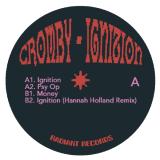








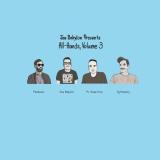

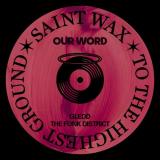

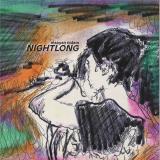


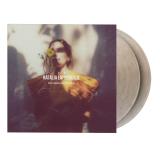



















![Various - [QR]V.324.SDD.26](https://www.deejay.de/images/l/1/1/1270011.jpg)




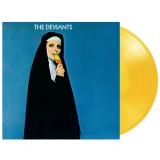



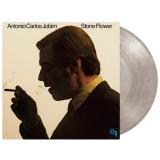

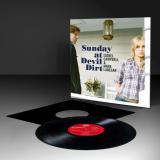


![FERGUS SWEETLAND - PAIN IN THE BRAIN [Printed Sleeve,Vinyl Only,180 grams]](https://www.deejay.de/images/l/7/1/1270171.jpg)