Several years ago, the born under pitches DJ Crew members got their hands on a couple of original 70s obscurities, while these standout records shone brightly in their own right, the team finally decided to put them out as those obscure old records fetch eye-wateringly high prices on the second-hand market. Due to popular request & lovingly mastered to the highest possible standards, they are now available to play and share in very special moments at parties around the world. This will surely be one of the most keenly anticipated disco release of the year. For our first release, we are extremely proud to bring you at last, two hard to find disco anthems on side A & B in their glorious full extended versions
out of Stock
Last delivered 5 years ago available to reorder, subject to availability
Legend has it that Brian Eno’s concept of ambient music came to him while laid up in a hospital bed after an automobile ac-cident in the 70's. A friend brought him some records, playing them too low to be properly heard, and Eno couldn’t get out of bed to adjust the volume. While the record spun softly, Eno’s idea for music you could ignore as easily as you could give it your full attention, like a sort of sonic wallpaper, was born. It’s in that spirit of quiet isolation that Ghostly International, in associ-ation with Adult Swim, shares Ghostly Swim 2, our way of giving listeners a space to get away from the manic holiday bustle.
For those keeping track at home, Ghostly is wrapping up its 15th anniversary as an Ann Arbor/Brooklyn-based indie. 2014 has seen the company soundtracking video games (Playstation’s Hohokum), collaborating with awesome companies like Warby Parker and VOID watches, and clearing 300 releases of for-ward-thinking music with records from Tycho, Com Truise, and HTRK. What better way to end this banner year than to revisit one of our favorite partnerships from the past decade and a half?
Released in 2008, Ghostly Swim was praised for its adventurous survey of exploratory dance and pop music. Our curatorial focus has shifted this time around, moving further inward (spiritually) and outward (as far as our roster goes) to reflect the electron-ic underground in all of its hazy and vibrant experimentalism. Ghostly Swim 2 is a document of textured ambient zone-outs and woozy, granular house and techno that will help you find some downtime away from The Most Wonderful Time of the Year. So sit back, lower the volume, and enjoy our selections.
out of Stock
Last delivered 6 years ago available to reorder, subject to availability
"Space Echo - The mystery behind the "Cosmic Sound" of Cabo Verde finally revealed!" is the 20th release by the fabulous Analog Africa Label.
In the spring of 1968 a cargo ship was preparing to leave the port of Baltimore with an important shipment of musical instruments. Its final destination was Rio De Janeiro, where the EMSE Exhibition (Exposição Mundial Do Son Eletrônico) was going to be held.
It was the first expo of its kind to take place in the Southern Hemisphere and many of the leading companies in were all eager to present their newest synthesisers and other gadgets to a growing and promising South American market, spearheaded by Brazil and Colombia.
The ship with the goods set sail on the 20th of March on a calm morning and mysteriously disappeared from the radar on the very same day.
One can only imagine the surprise of the villagers of Cachaço, on the Sao Nicolau island of Cabo Verde, when a few months later they woke up and found a ship stranded in their fields, in the middle of nowhere, 8 km from any coastline.
After consulting with the village elders, the locals had decided to open the containers to see what was inside - however gossip as scintillating as this travels fast and colonial police had already arrived and secured the area.
Portuguese scientists and physicians were ordered to the scene and after weeks of thorough studies and research, it was concluded that the ship had fallen from the sky. One of the less plausible theories was that it might have fallen from a Russian military air carrier. The locals joked that again the government had wasted their tax money on a useless exercise, as a simple look at the crater generated by the impact could explain the phenomena. "No need for Portuguese rocket scientists to explain this!" they laughed.
What the villagers didn't know, was that traces of cosmic particles were discovered on the boat. The bow of the ship showed traces of extreme heat, very similar to traces found on meteors, suggesting that the ship had penetrated the hemisphere at high speed. That theory also didn't make sense as such an impact would have reduced the ship to dust. Mystery permeated the event.
Finally, a team of welders arrived to open the containers and the whole village waited impatiently.
The atmosphere, which had been filled with joy and excitement, quickly gave way to astonishment. Hundreds of boxes conjured, all containing keyboards and other instruments which they had never seen before: and all useless in an area devoid of electricity. Disappointment was palpable. The goods were temporarily stored in the local church and the women of the village had insisted a solution be found before Sunday mass.
It is said that charismatic anti-colonial leader Amílcar Cabral had ordered for the instruments to be distributed equally in places that had access to electricity, which placed them mainly in schools.
This distribution was best thing that could have happened - keyboards found fertile grounds in the hands of curious children, born with an innate sense of rhythm who picked up the ready-to-use instruments. This in turn facilitated the modernisation of local rhythms such as Mornas, Coladeras and the highly danceable music style called Funaná, which had been banned by the Portuguese colonial rulers until 1975 due to its sensuality!
The observation was made that the children who came into contact with the instruments found on the ship inherited prodigious capabilities to understand music and learn instruments. One of them was the musical genius Paulino Vieira, who by the end of the 70s would become the country´s most important music arranger. 8 out of the 15 songs presented in this compilation had been recorded with the backing of the band Voz de Cabo Verde, lead by Paulino Vieira, the mastermind behind the creation and promulgation of what is known today as "The Cosmic Sound of Cabo Verde".
The field of electronic music were involved. Rhodes, Moog, Farfisa, Hammond and Korg, just to name a few.
out of Stock
Last delivered 4 months ago available to reorder, subject to availability
A chance meeting in a New York club led to the conception of Mowgan’s debut album, in collaboration with renowned African Benin-born Nigeria raised singer and multi-instrumentalist, Kaleta (Leon Ligan-Majek) an ex Fela Kuti, Sunny Ade, Lauryn Hill cohort who also fronted Akoya Afrobeat Ensemble and presently heads up a 70s style afro funk band called Super Yamba based in NYC.
The Frenchman was working at Lina Frey when he overheard a Beninese salsa singer called Laurent Hounsavi channeling Afro-centric vibes through his performance. He approached the singer and was put in touch with Kaleta, who lives in the Big Apple, too. What happened next was pure magic, as the two men got to work in the studio to bring their two worlds together.
It’s the kind of mystical alchemy that only happens once in a blue moon; Kaleta was given carte blanche over Mowgan’s extensive collection of Africa-inspired electronic instrumentals.
He selected his favourites and performed on each one, delivering an original vocal, and his own guitar licks, over the top. To stir up even more electrifying vibes, Kaleta also invited several of his talented friends to join the recordings sessions - they included vocalists Shade Myers Emmanuel, Justin Masters and Gbenga Wise, Freddie Deboe on sax, Mic Dada assisting Mowgan on synth pads and Takuya Kuroda, the infamous Japanese trumpet player from Kobe who specialises in neo-soul, hip hop and electronica.
The result is ‘Karoussel’, a vibrant, dynamic, soul-enriching hybrid between electronica and deep African musicality that sets the standard for contemporary collaborations between western and African artists, and the first in a series of album projects from Mowgan on his fledgling label Mow Records...
out of Stock
Last delivered 6 years ago available to reorder, subject to availability
Michael Edgehill aka Mikey Melody was born in the parish of Portland, Jamaica. As a youth he constantly raised his voice in song and performing with sound system in the neighborhood community. Known by his sweet voice, his friends gave him the nickname «Mikey Melody».
Mikey Melody was influenced by 60’s and 70’s US R&B icons and Jamaican singers like Bob Marley, Sugar Minott, Burning Spear, Dennis Brown, Bob Andy and Half Pint. In the 1980’s he went to Kingston and was identified early by Lord Sassafrass, who gave him his first recording single “Under Mi Fat Thing” that was covered by many reggae artists. He was then signed by Black Scorpio Corporation which he was a singer on the sound system and recording label. He did songs like “World Is A Disaster”, “Jumbo Mi Jumbo”, “Romance For The Moment”, “Ragga Muffin”, “Unemployment”.
He then moved on to Dennis Star Label which he did songs like “Mona Lisa”, “Maranda” and the hit song “Soldier In Town”. Released in 1988 on Dennis Star International records, ‘’Soldier In Town’’ by Mikey Melody is a pure late 80’s dancehall vocal over heavy digital rhythm by Firehouse Crew.
out of Stock
Last delivered 6 years ago available to reorder, subject to availability
One of the original catalysts of Latinx music in New York City, MAKU Soundsystem has been the connective tissue for several creative projects, bands and community roots for over a decade. As a group with a rotating membership, they've recorded multiple albums both DIY and for worldwide labels. Throughout their various iterations, the heart and mission of the ensemble has consistently built bridges, rather than tearing them down, remaining a remarkable beacon of positivity in a consistently competitive environment. The inspiring atmosphere has nurtured several notable musicians and acts over the years, including members of Combo Chimbita, Dilemastronauta, Bulla en el Barrio, Leon Brothers and Prince of Queens. Now down to a core group of three musicians, alongside percussionist Moris Cañate, MAKU and Names You Can Trust have finally teamed up for a vinyl edition after many years of collaborative shows and connections.
Perhaps their rawest and darkest recordings to date, this stripped down quartet is an ode to the creative source of their core members, lead singer & bassist Juan Ospina, drummer Andres Jimenez and guitarist Camilo Rodriguez. The A-side, "Culebra Coral" is a snakebitten taste ofla cumbia, played with an experience and restraint that only enhances the end result. It's a free driven approach born from familiar experimentation, rather than modern day trends — a singular jam, refined from years of playing together. Part psych, part cumbia, total MAKU. The B-side, "Contra Tambor," is emblematic of the group's roots in the traditional sounds of thetambora, a drum-forward percussive arrangement that follows Jimenez and Cañate on a free-driven approach to the ritualistic movements of the drums, this time drowned with an antidote of analog FX, synthesized glitches and atmospheric coros.
out of Stock
Last delivered 6 years ago available to reorder, subject to availability
Two luscious soul/folk/psychedelic funk crossover jams from LA born Shuggie Otis on Epic, reissued and remastered 45 years after their first release.
Shuggie's trademark soul-laden tones marry with dusty organs and strutting funk guitars to give two blissful slices of '70s gold. A collectable 7 Inch, remastered, reissued and finally available at a respectful price.
Large / dinked centre hole.
out of Stock
Last delivered 4 years ago available to reorder, subject to availability
Mecanica Popular is back 9 years after their LP “Neguentropia” and 4 years after Dead Cert reissued their first LP “”Que Sucede Con El Tiempo”
Mecánica Popular is ’s an experimental and industrial band formed in the late 70s by Luis Delgado (Finis Africae, Ishinohana...) and Eugenio Muñoz (Randomize), who rapidly gained cult status between the genre fans. The band experienced a renovated international success after their record "Que Sucede Con El Tiempo" (1984) was repressed in 2015 in Andy Votel and Demdike Stare's Dead Cert imprint.
Arriving 9 years after “Neguentropia”, “Estridentismo” is the group’s fourth record and the product of new material that was developed over the last 3 years.
“Estridentismo” is based on the avant-garde movement of the same name that was born in Mexico during the early 1920s (known as Stridentism in English). Each track uses this lens to explore a different thematic concept, from “Jouer Avec Schaeffer,” based on musical pioneer Pierre Schaefer, to “Mikado,” which draws inspiration from the sounds of Mikado steam locomotives.
Following the sound of their previous releases while also introducing elements that reflect their continued evolution, “Estridentismo” is a record that owes as much to the Industrial movement as it does to the work of early electronic pioneers.
Mecánica’s inventive style, and their blending of older techniques like tape manipulation with newer digital technology, allows the record to incorporate Industrial and experimental aesthetics to create a sound that plays with categories and ultimately creates its own.
The record has received praise from the press and artist alike, and it has been played by the likes of JASSS, Demdike Stare, Cera Khin and Ossia.
“Estridentismo” comes in a luxury vinyl edition with a printed inner sleeve full of text and pictures.
out of Stock
Last delivered 6 years ago available to reorder, subject to availability
orwegian techno institution Ploink launches annual series entitled Affinity with its debut release featuring names like Skatebård, HndS, Roeglin, Fraunhofer, and Priq. Based in Bergen, Ploink has been flying the flag for Norwegian techno for well over two decades, organising some of the country’s best events and festivals. Co-founded by Thomas Urv and Miss Mostly, the label was born five years ago and has since released music from an array of home-grown talent including Mental Overdrive, KSMISK, Prins Thomas, +plattform, Joaquin Ruiz, Christian Tilt, and more.
Launching the label’s new Affinity series, Berlina Für Techno’s Roeglin is first with “Norm” which opens with glitched stabs, vocals and a tight drum pattern. Picking up the pace, Fraunhofer- formerly known as Dortmund -returns to the label bringing a shuffling rhythm, crunchy cymbals and spacy synths in “Saturn”. Bergen dance music royalty Skatebård remixes “Wake Up” by London-based Scandinavian duo HndS, maintaining the energy with thumping bass and bouncing chords. Tying it all together, Norwegian producer and drummer Priq’s “Area” sweeps in with decayed keys, pulsing percussion and a gripping atmosphere.
out of Stock
Last delivered 2 years ago available to reorder, subject to availability
The next installment in Cold Diamond & Mink's soul investigations introduces a three part harmony group from California. "My My My Baby" is a smoking hot group harmony groover that should drop a few jaws at your next dj set.
Thee Baby Cuffs was born out of love for soul music and chicano culture. Their first 45 "Where Did Our Pride Go", came out in 2017 on the Raza del Soul label, covering an unsung early 70's Larry Saunders production. "My My My Baby" continues on the same lane of midtempo soul over funky drums and soulful horn lines. The lyric is your middle of the road love song material, but the group harmony lifts it right off the ground like it's meant to happen in this kind of music.
Get a few copies and rock the instrumental on the B-side before dropping the vocal, if you feel like it. Soul music that's this potent is better enjoyed in excess.
Produced by Cold Diamond & Mink
out of Stock
Last delivered 7 years ago available to reorder, subject to availability
Transversales Disques is very glad to announce the release of Nuits Blanches au
Studio 116, unreleased rarities from Ariel Kalma’s personal archives recorded in the
legendary GRM’s Studio 116 during the 70’s.
Born and raised in Paris, Ariel Kalma started playing the recorder and saxophone as a
youth. After successive studies of Computer Science, Music and Art in Paris he performed
in various concerts from middle-age music to free jazz duo. Ariel performed and recorded
with several bands (J. Higelin, R. Pinhas, NYL, G. Scornic, Baden Powell…).
After learning circular breathing on soprano sax, Ariel could include those endless notes
into his own long-delay-effect system, dual Revox set-up and two tape machines “chained”
together to form a long delay system.
In France during the mid-1970s, Kalma was staffed as a recording assistant at legendary
Groupe de Recherches Musicales (INA GRM) studios, where Ariel recorded some of his
compositions in the Studio 116; the same music “concrete” laboratory that spawned
masterpieces by members Luc Ferrari, Bernard Parmegiani…
out of Stock
Last delivered 6 years ago available to reorder, subject to availability
Following their hotly tipped 2018 debut album 'On' - Altin Gün returns with an exhilarating second album. 'Gece' firmly establishes the band as essential interpreters of the Anatolian rock and folk legacy and as a leading voice in the emergent global psych-rock scene. Explosive, funky and transcendent.
Some words from the label:
The world is rarely what it seems. A quick glance doesn't always reveal the full truth. To find that, you need to burrow deeper. Listen to Altin Gün, for example: they sound utterly Turkish, but only one of the Netherlands based band's six members was actually born there. And while their new album, Gece, is absolutely electric, filled with funk-like grooves and explosive psychedelic textures, what they play - by their own estimation - is folk music.
'It really is,' insists band founder and bass player Jasper Verhulst. 'The songs come out of a long tradition. This is music that tries to be a voice for a lot of other people.'
While most of the material here has been a familiar part of Turkish life for many years - some of it associated with the late national icon Neset Ertas - it's definitely never been heard like this before. This music is electric Turkish history, shot through with a heady buzz of 21st century intensity.
Pumping, flowing, a new and leading voice in the emergent global psych scene.
'We do have a weak spot for the music of the late '60s and '70s,' Verhulst admits. 'With all the instruments and effects that arrived then, it was an exciting time. Everything was new, and it still feels fresh. We're not trying to copy it, but these are the sounds we like and we're trying to make them our own.'
And what they create really is theirs. Altin Gün radically reimagine an entire tradition. The electric saz (a three-string Turkish lute) and voice of Erdinç Ecevit (who has Turkish roots) is urgent and immediately distinctive, while keyboards, guitar, bass, drums, and percussion power the surging rhythms and Merve Dasdemir (born and raised in Istanbul) sings with the mesmerizing power of a young Grace Slick. This isn't music that seduces the listener: it demands attention.
Altin Gün - the name translates as 'golden day' - are focused, relentless and absolutely assured in what they do. What is remarkable is the band has only existed for two years and didn't play in public until November 2017; now they have almost 200 shows under their belt. It all grew from Verhulst's obsession with Turkish music. He'd been aware of it for some time but a trip to Istanbul while playing in another band gave him the chance to discover so much more. But Verhulst wasn't content to just listen, he had a vision for what the music could be. And Altin Gün was born.
'For me, finding out about this music is crate digging,' he admits. 'None of it is widely available in the Netherlands. Of course, since our singers are Turkish, they know many of these pieces. All this is part of the country's musical past, their heritage, like 'House of The Rising Sun' is in America.'
As Verhulst delves deeper and deeper into old Turkish music, he's constantly seeking out things that grab his ear.
'I'm listening for something we can change and make into our own. You have to understand that most of these songs have had hundreds of different interpretations over the years. We need something that will make people stop and listen, as if it's the first time they've heard it.'
It's a testament to Altin Gün's work and vision that everything on Gece sounds so cohesive. They bring together music from many different Anatolian sources (the only original is the improvised piece 'Soför Bey') so that it bristles with the power and tightness of a rock band; echoing new textures and radiating a spectrum of vibrant color (ironic, as gece means 'night' in Turkish). It's the sound of a band both committed to its sources and excitedly transforming them. It's the sound of Altin Gün. Incandescent and sweltering.
Creating the band's sound is very much a collaborative process, Verhulst explains.
'Sometimes me or the singer will come in with a demo of our ideas. Sometimes an idea will just come up and we'll work on it together at rehearsals. However we start, it's always finished by the whole band. We can feel very quickly if it's going to work, if this is really our song.'
Just how Altin Gün can collectively spark and burn is evident in the YouTube concert video they made for the legendary Seattle radio station KEXP. In just under 20 minutes they set out their irresistible manifesto for an electrified, contemporary Turkish folk rock. It's utterly compelling. And with around 800,000 views, it has helped make them known around the world.
'It certainly got us a lot of attention,' Verhulst agrees. 'I think a lot of that interest originally came from Turkey, plenty of people there shared it.'
That might be how it began, but it's not the whole tale. The waves have spread far beyond the Bosphorus. What started out as a deep passion for Turkish folk and psychedelia has taken on a resonance that now travels widely. The band has played all over Europe, has ventured to Turkey and Australia and will soon bring their music to North America for the first time.
'Not a lot of other bands are doing what we do,' he says, 'playing songs in that style and seeing folk music in the same way.'
out of Stock
Last delivered 2 years ago available to reorder, subject to availability
Laid back and chilled out, Andrew never lets anything or anyone bother him. He has an air of mystique about him which others often envy.
(Andrea Solitario) ANDREW SOUL Andrew from his real name, Soul as the part where his inspiration come from, is a native italian producer born in 1986.
Music has been the first and everlasting love for this guy who soon came into his city's underground scene: he was 15 years old when he walked into a club for the first time. Then everything came by itself: a fusion of house and techno, the passion for the acidized sounds filled his mind and his heart.
But listening wasn't enough: the love for the music was to much for not to create something.
So Andrew started a path made by wicked grooves, dropping acid synths and emotional vibes, huge baseline, soulfoul vocals, roland tr-707 on the drums: these featuring characterize at best Andrew's sound.
The love for the analog sound push him over the years to purchase some vintage drum machine and keyboards, to make his sound as better as he can, and to add to his sound some cool old flavour.
Having DJd for years in his native Italy, Andrew turned his hand to production a few years back and promptly set about making some of the most emotive and engaging analogue house and techno around.
Vinyl collector, record lover, for him there's nothing better than watching a wax riding a turntable and listen the music that come from it.
As an eclectic artist, in his sets, Andrew likes to mix from deep to techno, through the house, but people never know what to expect from his large underground music knowledge; old, classic, brand new tunes and own productions makes his set really sophisticated and different each time.
After working on music collaborations for several years, with some friends , early 2011 was time to start sharing solo productions with his first release on Paulatine Records, wellknowed Uner's label. 4 tracks that take attention of many wellknowed djs, like X-Press2 that played the tracks at MOS and on their radioshow, Adam Port who said "Finally something different..." and many others..
Then two vinyl release: first one on the great Barcelona based Kiara Records "Too Much Love Will Kill You", Julien Chaptal on remix, and second one on the New York based imprint Stranjjur Inc, on remix Kris Wadsworth and Baldo; "Close To You" placed 29th on RA Chart.
A great tune with the close friend Frank Naht alongside a remix for Fabio Monesi on friend's label Blackrose Records, and an EP on Espai Music to follow.
End of 2012 was good: EP come out on the Defected's sub label "Tenth Circle"
November 2012 was also time for releasing on Safari Numerique with David Labeji on remix, and the track "No Way" played by Richie Hawtin.
2013 full of work and innovation, with 2 remixes on italian Moan Rec for Meeph, and U.S. based Undulate Recordings for Frank Nath, a really deep EP on his new family Popcorn Records, and jacking mode on for the new release on Safari Numerique.
2014 starts with a vinyl only release on Popcorn Records Ltd, special collaboration with Peter JD and remixes from Amir Alexander and Franco Cinelli.
The path is long and Andrew's research is still long way to end...
out of Stock
Last delivered 6 years ago available to reorder, subject to availability
With a celestial voice that's been streamed over 3 million times thanks to acclaimed features with The Kite String Tangle, Golden Vessel and label mate Sampology, Brisbane-based artist Tiana Khasi (Kah-see) shares her debut EP, 'MEGHALAYA', out 29 March via Soul Has No Tempo.
The Sampology-produced debut is a rich tapestry of styles and influence, with inspiration drawing from themes of self-empowerment, family and heritage, collaborating with contemporary musicians while studying jazz. ''Meghalaya' is both geographic and spiritual. It's a place I creatively resort to seeking affirmation of my identity and for true holistic inspiration. I wanted to create a body of work that honestly showed where I was at musically and personally. I felt the growing pains of being a young woman, mixed race/Australian born and studying jazz. I was neither here nor there.'
'Nuketown', the first single from the forthcoming release, is out now following global premieres with Complex UK & London's Worldwide FM. Upon hearing early mixes, Gilles Peterson handpicked the track to feature on his most recent compilation, Brownswood Bubblers Thirteen, via Brownswood Recordings. Touted by local tastemakers and HypeMachine blog Purple Sneakers as "the debut single we didn't know we needed", 'Nuketown' has found airplay with national stations triple j & Double J, placement in Spotify's Just Chill playlist, rotation with Sydney's FBi Radio, and enthusiastic support from community radio and online media around the country and beyond.
"A flawless example of the kind of music we can expect from Tiana going forward. [Nuketown] creates something completely original, drawing elements from jazz but never chasing a particular sound or vibe. Everything comes naturally, taking you on a journey with the instrumentation matching the ebbs and flows of Tiana Khasi's sweet vocals. It serves as an exemplary debut for the young artist, and can only mean better things are on the horizon." - Complex UK
A keystone artist in her hometown whose live reputation precedes her via her work fronting local jazz/hip-hop collective Astro Travellers, Tiana Khasi's voice has been praised as "elegant" (Life Without Andy), "most dope" (Audiosteez) and "as venomous as it is honey-sweet" (Happy). A trained jazz vocalist, Tiana's unique sound is heavily influenced by her Samoan and Indian heritage, and has seen her support Jamaican-American "TrapHouseJazz" sensation Masego, Swedish soul artist Fatima and acclaimed Australian collective 30/70.
Born in Cagliari (Sardinia, Italy) in 1975, Irene Nonis started playing the guitar at the age of 13 and wrote her first songs at 17. Her influences come from the American soul, with variations towards jazz and bossa (Sade, Paul Weller, Astrud Gilberto, Johnny Marr). Her voice shines in the two new tracks included in this 7'': "This Love" is a blue-eyed soul track that moves between Northern Soul and Motown, while "Night Stuff" has more of a 70's London nocturnal atmosphere, with a great bass line.
" I used to live in rue de Clignancourt, and remember as a kid going to the 14th of July West Indian ball organized by my father rue André Del Sartre in Montmartre every year. There I would meet, among others, saxophonist Robert Mavounzy. Sticking to the area, my older brother had a band and often played at the famous venue La Cigale, where even Henri Salvador joined him for a jam from time to time."Since childhood Serge Fabriano bathed in music, to-ing and fro-ing between his native Guadeloupe and Paris where he grew up. He attended the music conservatory, learnt how to play bass, met and played with many musicians and was ultimately angling for a career as a music teacher. But Serge had wanderlust; he lived to meet new people and was passionate about travel.Thus, it was in a squat located rue de Flandres in the 19th district of Paris that Serge Fabriano met by chance zarb player Djamchid Chemirami, one of Iran's greatest percussionists, who invited him to the Arts Festival of Shiraz-Persepolis. After a month-long motorcycle journey, he and his guitar teacher, Roger Bénichou, arrived in Tehran. Sadly their guitars didn't survive the journey. It was there that he met, among others, Woody Shaw, Max Roach and his wife Abbey Lincoln. Serge also formed a friendship with saxophonist Gary Bartz and stayed on a month playing with the cream of the musicians who'd attended to the Festival.During the mid-70's, he alternated between teaching classes and live gigs, and performed in Germany with a funk band comprised of ex-GIs from the US Army. He also met the members of Chick Corea's group, Return to Forever, and especially Stanley Clarke who became a great source of inspiration to him.From 1978 onwards, Serge Fabriano put aside teaching and devoted more time to music. He became a musician's musician, doing studio recordings with rock bands. He also played with members of the Caribbean diaspora, which included the great drummer Marcel Lollia (known as Velo), Patrick Jean-Marie, Guy Conquette, Winston Berkley, Mino CineluDuring the "Ayatollah Comédie" musical comedy tour organized by the Journal Liberation, Serge met actor Pierre Clémenti (Il Gattopardo, Belle De Jour, The Conformist). This was a game-changer : "I was trying to record my first record. Clémenti suggested the Studio Beaubourg in Paris. "The group Fabriano Fuzion - Fabriano Unit Zion - was born.The band brought together some of the Caribbean's most inspired musicians: Martinican-born Mario Canonge on the piano (his first appearance on an album), Alain-Jean Marie on the synthesizer, Edouard and Pierre Labor on saxophones, Claude Vamur (Kassav ') on the drums, singer/percussionists Marie-Reine Lamoureux and Marie-Céline Lafontaine, percussionists Roger Raspail, Sully Cally and Hector Ficadière (Tumblack, Vent Levé) on Ka percussions.It is precisely the Gwo Ka - this ancestral 'root' music deeply embedded in the heart of the Guadeloupe musician - which constitutes the rhythmic backbone of this first opus. The Gwo Ka, the jazz, the poetry and the spiritual vibe are gathered here to form a splendid album; one of the true masterpieces to emerge from the French West Indies.Rarely will a band have borne its name so well than Fabriano Fuzion - its music is a multiple and collective work in which each element brings its identity and its richness, conferring to this major work a truly fusional dimension.
Two sun shine soaked, Latin infused Eddie Palmieri joints from the 1978 album Lucumi, Macumba, Voodoo get the official, remastered reissue treatment - with original copies of the 7' trading hands for upwards of £60.
Born in New York to Puerto Rican parents, multi Grammy award winner Palmieri is a stratospheric salsa master. And for the Lucumi, Macumba, Voodoo LP he assembled a powerhouse, 30 strong jazz orchestra, featuring the likes of Dom um Romao, Steve Khan, Lew Soloff, Jon Faddis, Hiram Bullock and Palmieri's brother Charlie.
In an era dominated by disco, 'Spirit Of Love' took to the dancefloor, drawing on the glamour and magnetism of the late '70s. Palmieri's distinctive style still weaves its way through though, melding Afro-Caribbean rhythms with modern jazz. 'Spirit Of Love' is full to the brim with striking vocals, cow bells and big horn sections, blended with psychedelic guitars that riff off against clavinet touches and expressive Montunos melodies. Spirit of the salsa, for the disco dancer!
On the flip 'Lucumi, Macumba, Voodoo' is a masterpiece of Latin fusion, with Palmieri's unique arrangements squeezing that Puerto Rican flavour out of every added instrument. Trumpet blasts and sax solos marry with woops and whistles and Latin chants. Couple that with sensuous piano melodies and irresistible percussive elements and it's a recipe of Caribbean spice that'll liven up any record collection.
Debut album from the multi-instrumentalist Solomon Citron
300 copies pressed
For fans of Adrian Younge, Tommy Guerro, soundtracks, library music, funk
Solomon Citron's debut, a non-existing cinematic movie soundtrack called; "Kampu-China".
On the 4th January,KingUnderground Records are releasing "Kampu-China" on a 6 track vinyl EP, streaming and download.
Solomon Citron was born in Rostov-on-Don in the south of Russia. He's a professional musician and talented multi-instrumentalist.
Paying homage to his childhood memories of 70s action movies, he decided to create a soundtrack for "Kampu-China" - a fabricated, fictional movie. Behind the closed door of his home studio in Russia, Solomon composed the soundtrack in just two weeks, using only his imagination and the make-believe storyline as his inspiration.
The film is set on an imaginary world, where the mythical country Kampu-China lies. Shootout scenes, kung-fu fighting, crime pursuits, betrayal and revenge make this movie a classical action movie of the 1970s.
The soundtrack was composed using 3 instruments; guitar, bass and drums which has captured the sound and atmosphere of that era of movies.
Solomon grew up listening to hard-core metal and punk rock, as he got older he delved into all sorts of indie music and these days is a big fan of "old school" hip hop which all helped influence "Kampu-China".
"In 1978, Nova performed for Obama. Well, kind of: Nova was the band for the Punahou School prom in Honolulu, Hawaii, and a young student named Barack (known then as 'Barry') was in attendance.
Backtrack to 1976, and Nova was the opening band for Donald Byrd at the nearby Blaisdell Arena. The day was Sunday, June 27. The following day, Isaac Hayes would perform on island for the admission price of $1.
Nova, led by singer Checo Tohomaso, was one of several go-to party bands during the golden era of Hawaii funk and soul music in the mid-1970s through early 1980s.
The band's infectious gospel-funk-disco can be heard on their sole release, a self-titled 1980 LP that feels like one big party recorded live in the studio. (Check out the Marvin Gaye-inspired 'I Feel Like Getting Down' on the 2016 'Aloha Got Soul' compilation on Strut Records).
The story is all too familiar, however: funk band releases LP, the music goes dormant in years to follow, and today original copies sell for hundreds online.
Not long after the album's 1980 release, Checo met Marvin Gaye, who was living on Maui (where George Benson also resided). Shortly after, Marvin invited Checo and his counterparts to join his multi-city tour across Europe. Videos of Checo rocking keyboards, percussion and singing background vocals for Marvin Gaye's last European tour can be found online.
Checo, born in Florida yet raised in lush Manoa Valley as well as Okinawa, Japan, now resides in Vancouver, Canada, where he leads the VOC Sweet Soul Gospel Choir and continues to deliver his signature sound: high energy, positive, 'sweet soul' music.
AGS-7010 features two non-stop groovers with a 7' edit by Roger Bong on the A-side. LP reissue in the works!"
With MEL013, Melodies International are extremely proud to bring you at last, a disco anthem from Detroit that was originally recorded in 1980 and dedicated to the 'King Of The Champion Fighters': Le Stim - A Tribute to Muhammad Ali (We Crown The King).
Le Stim was a band formed by lead vocalist Donald Jennings in the late 70s. Now an ordained deacon back in Detroit, Jennings was brought up in a gospel environment and was said to be born to sing. Growing up picking up songs from the likes of Nat King Cole, Ella Fitzgerald or Sam Cooke, Jennings frequently performed for family and friends and went on to sing for audiences in New York, St. Louis and all around Detroit.
We Crown The King is a song written in the mid 70s by the late Herbert Andrei Duncan, also from Detroit. Duncan approached Jennings with the song who was initially reluctant to sing it because it took him out of his usual vocal range. However, Duncan finally (thankfully!) managed to persuade Jennings after five years to record a tune that would prove to become a party anthem decades later.
Remembering Duncan, Jennings says: 'Andrei was positive..inquisitive.... and determined. I was only 18 or 19 years old at the time and remember Andrei coming over to my house.... He had a cellphone in his car!.. I remember going to Andrei's house, and he said he wanted to do the track. Andrei did not take no for an answer! The answer had to be yes! However Andrei didn't have any money to record the song with. So we made a deal. In exchange for the use of his P.A., Loc (the drummer) provided the seventeen musicians for Le Stim to record 'We Crown The King'. The session itself was recorded at a studio in Southfield, Michigan.
According to Jennings, Muhammad Ali did hear the track back then and liked it! Le Stim were in touch with Ali's management and were about to meet him on a number of occasions which unfortunately didn't work out.
Licensing this record has proven to be Melodies' biggest research effort as of yet and has involved visiting it's author, Duncan's former house in Detroit only to discover it had burned down and that his family had moved years ago. It wouldn't have been possible without the invaluable help of Jeremy from Rain&Shine records (NZ) who then managed to track down the family back in Texas!
Officially licensed, remastered and cut to half-speed lacquers at 45rpm (instead of it's original 33rpm format) to bring the shine out of the top end - MEL013 comes forth in it's original 12' vinyl format with exclusive Melodies stickers and digitally too.
Deep late 80's percussion LP created to accompany contemporary jazz-dance classes. African instrumentation meets Western Jazz arrangements and computer technology. TIP!
.
Percussions Pour La Danse was a collaboration between North American born jazz & contemporary-dance instructor Tony Kennybrew and French musician Jean-Pierre Boistel. Tony, a Washington native who had studied, taught and danced professionally since the age of 12, found himself in France in the late 80's. It's here that he linked up with like-minded musician Jean-Pierre; who had recently returned from a 6-month trip to West Africa. A trip that helped refine his craft that begun in the early 70's.
The music was created for Tony to use when teaching contemporary jazz-dance classes and to accompany live performance, allowing students to 'dance slowly, rapidly and change speeds without changing the tempo!'. This work of rhythmic research was based on the 'Balance of The Walk'; in 4 times, in 6 times, in 7 times & in 3 times. In order to reach the spatial possibilities he was striving for, Jean-Pierre would also use computer assisted programming to sample and re-play his own instrumentation. This allowed him to lay down the tempo of the track and then play live over the top, which in turn gave him the freedom to add the desired instruments and effects to each song.
Jean-Pierre's use of instruments such as the Kalimba, Talking Drum & Sanza gives the album a distinctly African feel, while contemporary Jazz-dance time signatures adds a unique perspective to these traditional instrumentations creating an ethereal balance between the old and new.
'Cohesion' is the third full album from Anchorsong - AKA Tokyo-born, London-based electronic artist Masaaki Yoshida. Taking inspiration from Classical Indian Percussion, and '70s and /80s Bollywood film soundtracks
Anchorsong creates a journey of psychedelic, danceable and free-spirited compositions that blur the boundary between rhythm and melody. It was whilst extensively touring his previous album, 'Ceremonial', that Masaaki
became deeply fascinated with percussion, and shifted his attention away from the African drums present on his last record to the music of the Middle East, South East Asia, and then more specifically to the sounds of India. 'The Indian
percussion was the one I was most fascinated with, so I began to dig into that genre deeper, I started with classics like Ravi Shankar, and the more classical Indian musicians. But then I began to explore the world of Bollywood and movie
soundtracks which is another world and the more I listened to composers like Sapan Jagmohan, Rajesh Roshan and Kalyanji Anandji, the more the concept of the new record began to form.
Choosing to work with traditional Indian instruments like the tabla and dholak, Yoshida wanted to use instruments that possessed melodic qualities, and could be tuned to work in the context of electronic music. He found that when Indian
percussions mixed with other instruments they began to sound like a melody that blurred the border between rhythm and melody. The concept of bringing together contrasting elements and cultures is evident from the album's title,
'Cohesion'. Here Anchorsong has brought together musical traditions and sounds from across borders, forging a truly unique body of work. Having reached new heights with 'Ceremonial' through accolades such as BBC 6Music's #5 Album
Of The Year, 'Cohesion' looks to build on such successes through the coupling of a comprehensive European tour kicking off around the release of the album.
Fantastic 80s pop music with a soul and funk touch and an outstanding singer. A must have for fans
of Billy Ocean, Barry White and similar artists. Perfect playing, perfect production, perfect songwriting.
On the edge of the lightfooted disco movement there was sophisticated funk music and one of the often
overlooked protagonists oft he scene was Mr. Sterling Harrison, born in 1941, passed in 2005. His legacy contains
two solo albums from the early 80s and this, dear friends of funk music, is his second from 1981. Copies in good
shape fetch prices up to 800 Dollars so we should give this current reissue on EVERLAND warm welcomes. Is it all
worth the enthusiasm Oh, you can bet it is. Sterling Harrison had left behind the 70s and was ready for the 80s.
The sound is up to date, clear, clean and powerful. The music still shows the fire of the earlier funk records but the
synthesizer passages, the whole production proves that we are now entering a new age. 80s Synthie Pop is part of
the mix, despite the main ingredients are soul, funk and a bit of disco here and there. The vocals are overwhelming,
sung with great emotions and a feeling for the freaky edge of soul. The tunes here come as diverse as they can be,
each one with his very own face, but they all have the same spirit courtesy of Sterling Harrison. Each one should
have had a spot on the top ten pop charts in 1981 but in this case this album would probably be legendary in
another way. This music will drive every 80s black pop enthusiast wild. When after all these powerfully driving pop
and dance tunes, with a more relaxed reggae groover in between, your feet ask for a break, just go for a sweet soul
ballad in the best Barry White style. Smooth and slick, yet still performed with depth and spirit, such a song might
calm you down until the next dancefloor sweeper will hit your ears. The overall atmosphere of this record is truly
happy and enlightened. Good vibrations pour from every note, played here by a team of highest order musicians. A
perfect record for 80s black pop aficionados who admire Billy Ocean's 80s albums for example. This record is a
typical example of the contemporary pop music of its era, but this is what makes it even more charming. And the
songs will definitely stick to your mind after just a few spins without losing their fascination. A true gem for true
music lovers.
out of Stock
Last delivered 7 years ago available to reorder, subject to availability
The Next Installment In Cold Diamond & Mink's Soul Investigations Introduces A Three Part Harmony Group From California. "my My My Baby" Is A Smoking Hot Group Harmony Groover That Should Drop A Few Jaws At Your Next Dj Set.
Thee Baby Cuffs Was Born Out Of Love For Soul Music And Chicano Culture. Their First 45 "where Did Our Pride Go", Came Out In 2017 On The Raza Del Soul Label, Covering An Unsung Early 70's Larry Saunders Production. "my My My Baby" Continues On The Same Lane Of Midtempo Soul Over Funky Drums And Soulful Horn Lines. The Lyric Is Your Middle Of The Road Love Song Material, But The Group Harmony Lifts It Right Off The Ground Like It's Meant To Happen In This Kind Of Music.
Get A Few Copies And Rock The Instrumental On The B-side Before Dropping The Vocal, If You Feel Like It. Soul Music That's This Potent Is Better Enjoyed In Excess.
Taking a turn to some of its roots, Emotional Rescue offers a reissue of Ramjac Corporation's UK house/breaks anthem Cameroon Massif!. First released on the increasingly cult-status Irdial Discs in 1990, this was very much the sound of the big bang explosion of Acid House morphing and splintering, as subsequent multi-genres developed, formed, imploded and reformed in new ways that still subsists today.
Within the melting pot of anything goes, chemically-enhanced optimism that spread across the UK during that return to the summers of love from 1987 onwards, the nascent sounds coming from Chicago and Detroit were mixed with a hybrid of 80s British influences, taking in European synth pop, US electro, new beat, hip hop and reggae. Out of this appeared a new sound, mixing that love of techno and house with dub bass and break beats into a proto-jungle swirl.
Like many growing up through the ever-evolving 60, 70s & 80s British music scene, Paul Chivers' early years of learning piano and guitar, moved from Beatles era pop to take in punk, jazz and anything an eager musical mind could explore. Developing a long-term interest and study of Cuban and Afro-drumming, his acquisition of an Atari and sampler soon moved to programming of both drum machines and TB303 and with that, Ramjac Corporation was born.
Playing live at some of the earliest raves in 1988, as often through luck and "right time, right place", including the infamous Back To The Future and Energy parties, Ramjac went from playing from 50 to 10,000 ravers in a matter of months, as the nation was gripped, depending on your cultural standing, by either a mixture of drug apocalypse paranoia or ecstatic celebration.
It was a meeting with Akin Fernandez, founder of Irdial Discs, that led some of the first studio experiments and creation of Cameroon Massif!. Utlising Akin's in-house studio and production skills, alongside Chivers' jazz influenced outlook of improvisation over arrangement, the track took shape, mixing the live programmed percussion, heavy doses of phase, delay and reverb and Sun Ra inspired keys that resulted in a number of mixes of Massif!.
Collected here are the original 12" "Massive" and "Massing" mixes, plus a special live version taken from the "Live At The Brain" reunion gig of 2009. The sought after 1990 versions and original Live mix are taken a step further with this 13 mins + mix, in essence a resampling and remixing reversion with didgeridoo and live on mic MCing, that gives a real glimpse of those early live sets. With more Ramjac Corporation material upcoming and a live reel-to-reel show appearing soon, the return of Cameroon Massif! is now.
n5MD is proud to bring you All That Was Lost, The 3rd album from cinematic ambient composer Stray Theories. A treat for for fans of Hammock, Eluvium & the more soothing works of Sigur Ros...
Australian born and current New Zealand resident Micah Templeton-Wolfe is the sole force behind Stray Theories, and this album finds him following-up 2014s We Never Left EP with his first new long-form Stray Theories material, not to mention, his first album to be pressed to vinyl.
Templeton-Wolfe's time away has not been for naught. Composing for films, collaborations with like-minded artists and a plethora of remix projects, all while creating a sample pack for the Noiiz sample app under new project Ocean Lost. So it's been a busy time for Templeton-Wolfe.
While he has seemingly been focusing his efforts else- where, Templeton-Wolfe has been quietly composing for All That Was Lost, an album which is imbued in spades with Stray Theories' signature mood-altering sound- scapes.
Muted electronics have always played a part in the Stray Theories pallet, and some of Templeton-Wolfe's extracurricular work might have something to do with those textures now being brought a bit more to the fore. In Templeton-Wolfe's hand, these fit in perfectly within the personally subjective nature his music has always suggested. All That Was Lost is a cinematic ambient gem brought into the world at a time when we need it most.
Following his R&S debut, Afriqua (aka Adam Longman Parker) presents Vice/Principle, his second release for the renowned Belgian label.
Recorded in the summer of 2017, Vice/Principle began as one of Afriqua's seasonal music packs, a quarterly offering of original tracks shared privately with a small cohort of friends and collaborators. R&S quickly picked up the collection, which expands on the melodicism and textural depth explored on his previous release for the label, Aleph.
The extended EP sees Parker veering into psychedelic territory, inspired by the cosmic departures of '70s krautrock and jazz. The title, Vice/Principle, more a coy bit of humor than a philosophical statement, reflects a wittiness that Parker often embeds into even the brawniest of his productions. This offbeatness is active in the music as well, which makes use of his voice, and edges past familiar four-on-the-floor patterns with interwoven polyrhythms and modality. Vice/Principle is confident in its curiosity, harnessing a wealth of artistic threads into a tightly knit, futuristic vision.
Parker currently resides in Berlin, Germany, where he works from his home studio in the city's quiet Charlottenburg neighborhood. Born and raised in Hampton, Virginia, Parker developed his craft as a producer while studying classical piano and practicing hip-hop turntablism from a young age.
After several years developing a hefty catalog of releases, Parker has embraced his R&S signing as an opportunity to dive deeper into his signature, yet versatile sound. His successful winter 2017 tour through the U.S. was a career first, and preceded international events at Comunité in Mexico, Concrete in Paris, and The Block in Tel Aviv.
A great compilation can open the gate to another world. Who knew that some of the most exciting Afro-funk records of all time were actually made in the small West African country of Benin Once Analog Africa released the first African Scream Contest in 2008, the proof was there for all to hear, gut-busting yelps, lethally well- drilled horn sections and irresistibly insistent rhythms added up to a record that took you into its own space with the same electrifying sureness as any favourite blues or soul or funk or punk sampler you might care to mention.
Ten years on, intrepid crate-digger Samy Ben Redjeb unveils a new treasure- trove of Vodoun-inspired Afrobeat heavy funk crossover greatness. Right from the laceratingly raw guitar fanfare which kicks o Les Sympathics' pile-driving opener, it's clear that African Scream Contest II is going to be every bit as joyous a voyage of discovery as its predecessor. And just as you're trying to get o the canvas after this one-punch knock out, an irresistible Afro-ska romp with a more than subliminal echo of the Batman theme puts you right back there. Ignace De Souza and the Melody Aces' Asaw Fofor" would've been a killer instrumental but once you've factored in the improbably-rich-to-the-point-of-being-Nat-King-Cole-influenced lead vocal, it's a total revelation.
The screaming does not stop there, in fact it's only just beginning. But the
strange thing about African Scream Contest II's celebration of unfettered Beninese creativity is that it would not have been possible without the assistance of a musician who had been trained by the Russian secret services to "search and destroy" enemies of the country's (then) Marxist-Leninist president Mathieu Kerekou.
Already familiar to fans of the first African Scream Contest as a mainstay of ruthlessly disciplined military band Les Volcans de la Capitale, Lokonon André vanished in a cloud of dust at Ben Redjeb's behest with a list of names and some petrol money, only to return a few days later having miraculously tracked down every single name he'd been given. The source of this Afrobeat bounty-hunter's impressive people-finding skills - his training with the KGB - highlights the tension between encroaching authoritarian politics and fearless expressions of personal creative freedom which is the back-story of so much great African music of the 60s and 70s. Happily, in this instance, Lokonon was tracking the artists down to oer them licensing deals, rather than to arrest them.
Where some purveyors of vintage African sounds seem to be strip-mining the
continent's musical heritage with no less rapacious intent than the mining companies and colonial authorities who previously extracted its mineral wealth, Samy Ben Redjeb's determination to track this amazing music to its human sources pays huge karmic dividends.
Like every other Analog Africa release, African Scream Contest II is illuminated by meticulously researched text and eortlessly fashion-forward photography supplied by the artists themselves. Looming large - alongside Lokonon André - in the cast of biopic-worthy characters to emerge from this seductive tropical miasma is visionary space-nerd Bernard Dohounso, who laid the foundations for Benin's vinyl predominance by importing and assembling the turntables that would play the products of his Bond villain-acronymed pressing plant SATEL, a factory that would revolutionise the music industry in the whole region.
The scene documented here couldn't have been born anywhere else but in the Benin Republic , and the prime reason for that is Vodoun. It's one of the world's most complex religions, involving the worship of some 250 divinities, where each divinity has its own specific set of rhythms, and the bands introduced on the African Scream Contest series and other compilations from that country were no less diverse than that army of dierent Gods. At once restless pioneers and masters of the art of modernising their own folklore, the mystic sound of Vodoun was their prime source of inspiration.
One especially irascible Vodoun-adept was Antoine Dougbe, who styled himself The devil's prime minister' while turning ancestral rhythms into satanically alluring modern beats. As Orchestre Poly-Rythmo songwriter Pynasco has observed sagely, Evil is not elsewhere, evil extends into the house'. And African Scream Contest II is a gloriously cinematic road-trip through an undiscovered realm of music lore whose familiarity is every bit as thrilling as its otherness.
Truly nuts and really kind of essential... the Starship Commander had his whole approach to the Synthesiser Voice technique. B-Boys/Girls delight. Check the instrumental cut, Mastership - a head nod synth voyage of the highest order. Limited copies. TIP!
.
'How are you doing, Earthling' That's how Omer Coleman, Jr. addressed his public in the 80s, driving around Kansas City, Missouri in the electric space-car built especially for his alter ego Starship Commander Wooooo Wooooo.
Left Ear Records went back to Coleman's original master tapes for their vinyl reissue of the Commander's 1981 private press album Mastership, a lost electronic funk classic. Coleman performs in an alien voice that comes not from electronic filtering but from his own natural vocal distortions. This visitor from Mars wants people to be happy and, like his song goes, 'Laugh and Dance.' It's an endearing and very personal space-age funk that blends George Clinton and Kraftwerk in a vision of a better and happier world.
Born and raised in Kansas City, Coleman was musically inclined from an early age. His parents couldn't afford to buy him a real drum for orchestra, so he took up electrical wiring and wood shop instead, which fed his muse in a different direction. Omer built enormous speaker cabinets. In the late '70s he was a DJ, and ran a Mobile Disco business that took him across the country, hosting parties. After a trip to California, he came back to Kansas City inspired to dress up as Commander Wooooo Wooooo.
The future commander began working at the Armco Steel Mill in Kansas City when he was 18. He was inspired by older machinists who demanded perfection in their work and in their character. It was while he was working at the steel mill that Coleman came up with Starship Commander Wooooo Wooooo. One day coworker John Manley came up to Coleman with a vision of an electric car, and built it. His coworkers built all of his equipment, from lighting and fog machines to big steel eyeglasses. Coleman's sister, a seamstress, created his outfits.
Coleman started his own label in 1985 but took some time off from music to raise his children, and when they came of age his son recorded with Coleman as a gospel vocalist. When his son was killed in an auto accident in 2004, it took something out of him, and he stopped making music. But he's starting to get the feeling again.
Now 62, he's currently enjoying his retirement from a long stint with the IRS. The former Commander is in the middle of a house project where he's using metal ceiling tiles to line his walls. It's starting to look like a spaceship. Coleman promises, 'There is a real good possibility that we have not seen the last of Starship Commander Wooooo Wooooo!
Pat Padua'
Do you like Love songs After spending a lifetime spent avoiding this subject in song, Joel Sarakula finally admits that he does. On his new album "Love Club" Sarakula relives the golden age of Soulful and Romantic Pop music and connects it with a modern aesthetic. While a deeper message of love and peace flows through the record, Joel Sarakula is no old fashioned hippie: ",Love Club' is about connecting to reality and re-framing the idea of romantic love and loss in the present, loveless age ". Featuring eleven songs touching all genres from disco to blues, from soul to soft-rock, Joel Sarakula's "Love Club" is a profound pop statement.
Joel Sarakula has travelled the world in search of his muse, experiencing everything from being a victim of Caribbean carjackings to performing in the remote fishing villages of Norway, via the dive bars of Europe and the US. It was the hodge-podge musical tapestry of England's capital that finally drew him to a settling point, in the wake of seemingly never ending run of shows. With personal tastes that span from the more avant-garde to soul and pop greats like Sly Stone, Todd Rundgren and Hall & Oates, there are clear nods to contemporaries like Unkown Mortal Orchestra, Erlend Oye and Toro Y Moi in terms of ambition and style.
With his last two albums "The Golden Age" and "The Imposter" collecting strong radio plays at BBC Radio 2, BBC 6, BBC London, XFM Joel Sarakula has been play-listed nationally in Europe including Flux FM, WDR 5, Radioeins, Bayern 2, Deutschlandfunk and Deutschland Kultur Radio in Germany as well as in Benelux and Italy and Spain. He is a regular fixture on the live festival and club circuit in the UK, Europe and internationally including appearances at SXSW, Primavera Sound, Glastonbury, The Great Escape, Liverpool Sound City, Scala London, Tallinn Music Week, V-ROX (Vladivostok) and Reeperbahnfestival Hamburg.
"Love Club" is Sarakula's bold and unashamedly emotional next step. In essence the album is a homage to the soulful singer & songwriter artistry of the Seventies filtered through a darker contemporary lens - fitting for these uncertain times. "I always shied away from generic love songs," the Sydney, Australia born songwriter admits, "but on this record I embraced the subject wholeheartedly... and intellectually, looking at themes of love, lust, loneliness and everything in-between." Take the first single "In Trouble", co-written with Michele Stodart of The Magic Numbers, as the best example for Joel Sarakula's unique, and honest approach to making music. "We Used To Connect" questions the changing nature of relationships in our social-media addicted world: 'We used to connect in the real world too, now the touch of your hand is a digital cue'.
"Coldharbour Man", on the other hand, examines the identity of the song's narrator and the artist vs. fan dynamic all wrapped up in a disco love song: "There's a lot going on in this particular track. I feel my writing has grown emotionally...", explains Joel Sarakula. "Just best to listen yourself and make up your own interpretation!: 'We met in a song come to life like some fantasy cliché, though I'm known for my moves in the dark you flooded sunshine on my day'. Then there's "Baltic Jam", capturing romantic love and loss in authentic 70s confessional singer & songwriter style and of course "Dead Heat", a song about how there is struggle in the most perfect relationship pairings as the match is so even: "I recall an ex-girlfriend of mine... when we first met, we thought we hated each other but we eventually flipped that emotion and realised we had a deep passion and love for each other, there just was a lot of underlying sexual tension!" : 'It's a battle we could only win, if we lose. We'd be stronger if these lonely ones became two'.
More than a year in the making, Joel Sarakula recorded "Love Club" in various studios around London and Berlin capturing soulful performances from his many musical comrades on vintage analogue equipment. "This record has truly been a labour of love. Recording and privately sharing these performances amongst my collaborators started to feel like a bit like a club - I guess that lead to the album title! I was surprised how much I actually enjoyed the 'love-making process' and I look so much forward to playing these new songs on stage with my band." We can't wait, Joel Sarakula.
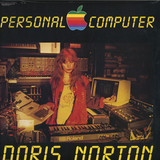
Mannequin Records presents a trilogy of reissues from the avantgarde Italian-born producer Doris Norton, "Nortoncomputerforpeace" (1983), "Personal Computer" (1984, originally released by Durium Records), "Artificial Intellingence" (1985).Apple's first music "endorsement" and Roland affiliate, Doris Norton is one of the most important women pioneer in the use of synths and in the early electro / computer music. Norton is the wife of Antonio Bartoccetti, progressive rock guitarist, and mother of the musician and techno producer Rexanthony. As a teenager, she was drawn to medieval, Renaissance and Baroque music, not to mention quantum physics, differential equations, organic chemistry, the experimentalism of John Cage and animated movie soundtracks. Her love for modules and circuits found expression through the waves of an old harmonium, the frequencies of a Minimoog, a Roland System 100M, a Roland System 700 and the ARP 2500/2600.
In 1980, Norton began her solo career by recording at Fontana Studio 7, the Milan studio of the composer and musician Tito Fontana, resulting in the electronic opera "Under Ground". Norton became more prolific, continuing her adventures in experimental electronics and computer music with Parapsycho (1981), Raptus (1981), Nortoncomputerforpeace (1983), PC (1984) - whose album cover prominently features Apple's colored logo - and Artificial Intelligence (1985).
While the beat-oriented style of Norton's music aligns her with such global fellow-travelers as Yellow Magic Orchestra and Kraftwerk, her championing of the personal computer as a tool for self-sufficient musical creativity also connects her to more artsy musicians such as Pietro Grossi, Laurie Spiegel, and the League of Automatic Music Composers. Norton's predilection for the bright, glossy timbres of early digital instruments also recalls Hubert Bognermayr and Harald Zuschrader's bizarre 1982 one-off Erdenklang.
Later, her talent and expertise attracted the attention of IBM, who in 1986 named her as an official consultant. Already the reigning queen of the Italian electronic scene, she recorded two CDs for IBM: Automatic Feeling and The Double Side Of The Science. Influenced by her son, the musician and producer Rexanthony, Norton brought her fascination with the early days of techno into the 1990s, when she released three volumes of Techno Shock on Italian trance/hardcore label Sound Of The Bomb.
While her music remains largely out of print and inaccessible, Norton's early records have recently begun to receive the inevitable rediscovery treatment.
"In the late sixties I had already conceived computers as personal.' I have always trusted in the benefits of solitude, (being) alone means freedom... What's better than a personal' computer for materializing ideas, by oneself" (Doris Norton)
As the lead singer of George Darko's legendary Burger-Highlife hit-band, Lee Dodou became the number one voice of 80's Highlife. Born in Kumasi, the epicenter of Ghanaian Highlife, he came to Berlin in the late 70's - by then the uprising epicenter of Burger-Highlife - to work as a back-up-singer for Pat Thomas. After joining and leaving Georg Darko and running his own band "Kantata", he stopped releasing music in the early 90's. Now, Philophon is proud to present new recordings of his soulful genius to the world of 2018.
Basa Basa is a song in the classic "concert party" style, as it was played in the glorious 60's. After a firey horn introduction Lee takes over in that funny and entertaining manner typical for "concert party" music. Buzz Duncker joins Lee's phrases with some gentle clarinet. Highlife at its best!
Sahara Akwantuo is anything but a classic: it's the start of a kind of philophonic Highlife, labeled as Kraut-Life. Ghanaian love of life meets German romantic melancholy. Happy rhythms meet mysterious synth landscapes. Eternal summertime and mangos are meeting a wet winter world and roast apples. Kraut-Life at its best!
It is Melodies International's greatest pleasure to bring forth its latest reissue comprising two stripped-back, reflective pieces of US folk soul.
Largely forgotten for the past forty-odd years, Bobby Wright (now Abu Talib)'s "Blood Of An American" and "Everyone Should Have His Day" resurface as politically-infused works that shine bright and still hold meaning to this day.
The 60s and 70s constituted an exceptional era for its unique blend of popular culture and political radicalism. Household names such as Sly Stone, Marvin Gaye and Gil Scott-Heron used art to express their discontent with the current state of affairs, namely the US government's involvement in warfare and their inability to deal with critical social issues of the time. Though not a musician, Muhammad Ali (born Cassius Clay Jr) was advocating a similar anti-government stance in the boxing ring, and his objection to serving in the Vietnam War sealed his status as an icon for the wider counterculture generation.
Meanwhile in Queens, New York City, Abu used to work several jobs as a construction worker and cab driver - but still found time to play with his band in clubs for $100 a night to support his family. Against the backdrop of international conflict and violence, most of his surroundings failed to listen to how he felt. However, he considered music to be the greatest form of communication with the world and it was his belief that a positive message should be spread to future generations.
After one band member was killed in Vietnam and another went into the service, Abu resolved to pick up his guitar and record these songs as a duet in 1974 with his bassist - the only other remaining band member. Combining guitar, bass and a voice that quavers with emotion he self-released the record in 1974, one which holds its own alongside the all-time greats.
These songs of introspection remind us of the beauty there is in simplicity and how moving art can be when the feelings expressed come from the heart. MEL009 will be released in its original 7" format alongside a 16-page Melozine, featuring words from Abu Talib, social studies professor Paul Rekret and much more.
- 180 GRAM AUDIOPHILE VINYL
- FEATURING SUN GODDESS', JUNGLE STRUT', LIVING FOR THE CITY' AND MORE
Ramsey Lewis is an American jazz pianist, keyboardist and composer born 1935, Chicago. He has recorded over 80 albums and played with artists like Max Roach, jazz-singer Nancy Wilson and performs with his own trio.
The album Sun Goddess was a soul jazz-funk album, recorded in 1974 and was produced by Maurice White, Teo Macero (who had produced albums by Miles Davis) and Ramsey Lewis himself. The opening track Sun Goddess' was composed, by Earth, Wind & Fire member Maurice White and featured Philip Bailey on vocals. Living For The City' was composed by Stevie Wonder, arranged by Ramsey Lewis and Jungle Strut' is a jazz track melting funk and R&B.
Sun Goddess was Ramsey Lewis' biggest success of the decade reaching #1 on the Billboard Black Albums chart, #12 in the Pop chart and has been certified gold, it also featured most of the key players of Earth, Wind & Fire.
Well before Shuggie Otis (Born Johnny Alexander Veliotes, Jr.) cut his debut album, musicianship and performance had long been a part of his life. The son of rhythm and blues legend Johnny Otis, Shuggie learned to play guitar as early as the age of two, and performed professionally with his father's band at eleven. Throughout his long and illustrious career he'd performed on records for the
likes of Frank Zappa, Al Kooper, Etta James, and George Duke, to name a few. In spite of all this, widespread mainstream success eluded Shuggie for much of his career. His most famous release to date is his 1974 album Inspiration/Information, which would experience new resurgent life in 2001. Those willing to dig a little deeper however, would discover hidden gold in his earlier releases, especially in the album directly before Inspiration/Information, his sophomore 1971 release Freedom Flight. As with his debut, Freedom Flight was produced by Shuggie's father Johnny Otis, and built upon the distinct sounds of his debut album: lush, baroque, string section arrangements, paired with hard funk rhythms, and funky blues melodies, with the majority of the instruments once again performed by Shuggie himself. The album also featured backing from premium session greats like George Duke and Aynsley Dunbar, and the track "Strawberry Letter 23". which became a Billboard hit for The Brothers Johnson 3 years later. An unearthed treasure of deft, technical skill, and virtuosic composition.
Most of the musicians who gathered to record this fantastic spiritual jazz record for the Strata-East label on May 24th, 1974 had crossed each other's paths in various musical pairings over the preceding few years. Husband and wife team Dee Dee Bridgewater (vocals) and Cecil Bridgewater (trumpet) had been working together on albums like Frank Foster's "Loud Minority", and Roy Ayers' "Coffy" and "Virgo Red". Ten weeks before the "Freedom Of Speech" session, the couple had been joined in Tokyo by Cecil's brother Ronald Bridgewater (tenor saxaphone) to record Dee Dee's debut album, the beautiful "Afro Blue". Also in the studio on May 24th, 1974 was Donald Smith, (piano, vocals), fresh from recording on his older brother Lonnie Liston Smith's "Cosmic Funk" - on which Ronald Bridgewater had also played percussion. Cecil McBee (bass) was also there - just two weeks before, he'd completed his own Strata East date "Mutima", and in February he'd played on Mtume's "Rebirth Cycle" - with both albums also featuring Dee Dee Bridgewater on vocals. He'd also played on Lonnie Liston Smith's "Astral Travelling".
So 1974 was a huge year for all five of these people. Donald Smith and Cecil McBee were six months away from recording on Lonnie Liston Smith's massive "Expansions", with McBee fitting in a few Pharoah Sanders albums in between.
AND THEN, THE MYSTERY ... So with all this fervent activity, the question has to be asked ...Who was Billy Earl Parker Jr (drums), the leader of this session
Billy Parker remains unlisted as a musician on all major jazz sites. His only other recording appears to be as a percussionist on Charles Tolliver's "Impact" in 1975. Then there's nothing.
Finally, by backtracking one of those Zoom info pages, I found a summary of a "SUNY Rockland Community College" 2002 press release that no longer exists :
"Billy Parker's Fourth World Legacy Concert ...The concert, Billy Parker's Fourth World Legacy, is the eighth annual tribute honouring the late percussionist and RCC educator, Billy Parker. A long-time Rockland County resident, Parker began his affiliation with RCC in 1987, building its jazz program and maintaining his life-long tradition of teaching and inspiring others. A lifelong student himself, Parker was near completion of his doctorate in music education at New York University when he died in 1996.
But then people began to read this blog post, and in the comments, Aaron Fuller said :
"Billy Parker was my uncle. He was an incredibly talented, smart, and kind man. I'm very happy to see that folks are still enjoying his masterpiece. Just to give you a bit more information about him... He was born and raised in Buffalo, NY and then attended college at Michigan State University. He met my aunt in Lansing. They lived in NY and toured in Europe for quite a while. Sometime later they relocated to Nyack, NY and he ended up on the faculty of the community college while he pursued advanced degrees from NYU. He was an Ellington scholar. Although his name isn't well-known even among the most avid jazz fans, I think that if you were to talk to some of the great NY musicians that were around in the late 60s and 70s you would find that most knew him. He also had a huge impact as a music educator and I have no doubt that his former students are all over the place, continuing to put his love of the art into practice."
Debuting under his given name for Maddjazz Recordings' second offering, is DJ, producer and synth enthusiast Henry Keen.
Henry's music was discovered after a long night of online digging, and after several exchanges, it was apparent that Henry was making music that defined exactly what Maddjazz is striving to achieve; honest music that's free of form and not constrained by any genre or tempo.
Henry has been making music as Soundspecies alongside brother Olly since 1998 and the duo are also members of London-based experimental Gnawa band, Electric Jalaba. He also produces solo under the alias, The Room Below, initially reworking close friend Paul White's 'Rapping With' album but more recently exploring dance floor territories with releases on UK imprint 'Don't Be Afraid'.
70's Baby is a raw and honest record. A collection of uptempo grooves written in various locations around hectic inner London. It's spirit is born out of the freedom of the CDR sessions at the now defunct club Plastic People, where many of Henry's productions were first shared, and where tempo and genre were irrelevant. It references Henry's love for the instrumentation, recording techniques and sounds of the 1970s, the decade of his birth. Featuring a tasteful blend of worldly and otherworldly sounds, It owes itself to modern and ancient dance themes alike.
We are so pleased and honored to be presenting this mini LP to the world!
Pittsburgh-born Phillip Ballou's earliest years were spent in the gospel field, after he moved to New York City in the '70s, he teamed up with Bennie Diggs and Arthur Freeman, founding members of The New York Community Choir and singer Arnold McCuller to form the group Revelation. The quartet recorded for RSO Records, scoring some R&B success in the US with tracks like Get Ready For This' and You To Me Are Everything,' touring the Bee Gees among others. Phillip also sang on albums by NYCC recorded for RCA Records and continued with Revelation until 1982.Frequently hired for sessions in and around New York, Phillip teamed up with UK soul music journalist David Nathan (who he'd met in 1974 during Nathan's first US visit) and John Simmons, formerly a member of The Reflections, another New York vocal group to write a series of songs for his own proposed solo record deal. Although a contract did not materialize, one of the songs - Ain't Nothing Like The Love' - got some interest from famed Philadelphia producer Thom Bell who presented it to The O'Jays. Ultimately, the tune was turned down by Kenny Gamble and John Simmons, by then musical director for Stephanie Mills, recorded his own version for a small independent label in 1981.Phillip continued his own musical journey, touring and recording with James Taylor and Todd Rundgren. In addition, Phillip's name graced recordings by George Benson, Billy Ocean, Kashif, Nona Hendryx, Jonathan Butler, Teddy Pendergrass and Melba Moore, in 1981, he began recording with Luther Vandross and became a part of Luther's touring band for many years, as well as singing on productions by Luther on Aretha Franklin, Dionne Warwick and others, continuing his association with him until Luther's 2003 stroke. Phillip returned to his gospel roots in 2004 as Minister of Music at a Brooklyn church and passed away in March 2005, aged 55. Thanks to renewed interest in the John Simmons' 1981 recording on YouTube, David Nathan has uncovered several tracks from the 1978 and 1979 he did with Phillip and John including Phillip Ballou's original version of Ain't Nothing Like The Love,' gaining its first ever worldwide release as a 7' single on Nefer Records in association with Super Disco Edits
Rich La Bonte is a musician, writer and editor from upstate New York born in 1946. At age 11 he figured out how to record a piano backwards with his first tape deck and discovered Monk, Mingus and Art Blakey. In 1965 Rich moved to Ithaca, bought an electric guitar and started singing in garage rock band the huns. After the band dissolved, he moved to NYC and played bass and sang in the original cast production of the musical Godspell. In the late 70s La Bonte moved to Hollywood with Shari Famous, released a a few 7' singles as Dada2, and started fLAtDiSk Records, a vinyl subsidiary of Dave Gibson's Moxie Record Company.
Rich released his debut solo album 'Mayan Canals' in 1981. The seven songs were recorded between 1973 and 1980 while living in New York, Pennsylvania and Hollywood. Influenced by everything from Apple Records to Zappa, the album veers from oozy psychedelia to synthesized breezy folk. Vocally Rich sounds like a cross between Tom Verlaine and Lou Reed. Some tracks feature an EMS Synthi A synthesizer, known to generate the sci-fi sounds from Dr. Who. Other songs utilize feedback from a Maestro Fuzztone box into a TEAC 4-track SimulSync tape recorder. Lyrically La Bonte tackles themes of dying celestial bodies, the birth of his daughter, and a critique of Bowie's character in The Man Who Fell To Earth. Included on this reissue are two bonus tracks originally released on the double A side 7' single Chance Circumstance/Drums Along The Maple Wood, a tribute to Irwin Chusid, the eminent WFMU DJ, with vocals by Shari Famous.
All songs have been remastered from original tapes by George Horn at Fantasy Studios in Berkeley. The jacket features a replica of the original jacket with a Mayan figure screen printed using the original rubber stamps from Rich's archives. Each copy includes a 6-page xeroxed booklet with lyrics, never before seen photos, and liner notes by Rich La Bonte.
Fabio Borgazzi - aka Fabio Fabor - played literally every known style of music, from baroque to 'satanic' electronic, in his library music albums released during his career which lasted almost seven decades. Born in Milan in 1920, Fabor was one of the great artisans of post-war Italian popular music. Author, arranger and conductor with a classical background, he started writing songs (in the 1950's and 1960's) for popstars such as Nilla Pizzi, Johnny Dorelli and Milva; he then turned to music for theatre, cinema and tv, to which he dedicated the rest of his career. In 1981, when he released 'Galassia M81, Fabor was a veteran in the scene of library music, both as an author and an editor. It was the so-called golden age for the genre, just a moment before the advent of MIDI - which made everything easier, but flatter too, putting an end to the 'Italian Touch". The tracks featured here (credited to the fictional combo The Astral Dimension: Fabor together with his friend Antonio Arena) still have a definite Seventies taste, reminding the wave of German kosmische musik (especially the Darmstad school), but they also reflect the Moog-mania raging in pop music after the big success of Walter/Wendy Carlos with the 'Switched On' series. Avant-garde and kitsch hand in hand, ambient for documentaries and background music for horoscopes... all in sequence, with the only purpose of being used and generating royalties.