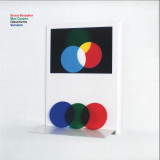
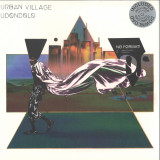
Tony Joe White scored big with 1969’s “Polk Salad Annie” from the album Black & White MOVLP989 and he was having success as a songwriter too: “Rainy Night In Georgia” was a huge hit for Brook Benton in 1970.
His self-titled third album (1971) finds the “Swamp Fox” tempering his bluesy rockers with a handful of introspective, soul-dripping ballads and introducing horn and string arrangements for the first time. The addition of the Memphis Horns and other Muscle Shoals session men really worked well for the album. Many of the songs will remind the listener just how turbulent the cultural climate of the late 60’s and early 70’s was in the U.S. Songs like “The Change”, “Black Panther Swamps” and “I Just Walked Away” (the album’s first single) are testament to the era.
Search:bro sa
- A1: Forgive Us Feat. The Waapa Gospel Choir
- A2: Problems Feat. Atom & Ezra James
- A3: Pull Up Feat. Ezra James
- A4: Breakbanks
- B5: Stay In Bed Feat. Atom & James Chatburn
- B6: Handlebars Feat. Atom
- B7: Be Real Feat. Atom & Danny Martin (Bonus Vinyl Track)
- B8: H.e.r. Feat. Atom & Danny Martin (Bonus Vinyl Track)
An array of lauded artists has collaborated across Coin Banks new Outside Looking In EP, from the WAAPA Gospel Choir on ‘Forgive Us’ and Brisbane based Ezra James providing vocals for ‘Pull Up’ and ‘Problems’ rounding out the songs with a smooth, R&B sound, to three-time World DMC Champion 20Syl who produced the latter. Atom lends his touch to ‘BreakBanks’, throwing it back to the late 80’s/early 90’s break-dance and Hip Hop scene, while James Chatburn’s silky, soulful chorus amplifies the tenderness on ‘Stay In Bed’, which along with the ‘Handlebars’ was produced by Cam O’bi who has collaborated with Chance The Rapper and Kendrick Lamar.
The vinyl version of the EP includes 2 bonus tracks ‘Be Real’ and ‘H.E.R.’ both featuring Atom and Danny Martin which were produced by Nottz and 20Syl respectively.
COIN BANKS
Perth rapper Coin Banks has quickly established his position as one of Australia’s most exciting voices in Hip Hop, since the release of his singles ‘Think of You’ and ‘Hatches’ in 2014, fusing classic and contemporary styling in his inventive storytelling.
His unparalleled run has charted local and international tours including supporting the likes of Cypress Hill, Macklemore & Ryan Lewis, Action Bronson and Illy, saw him round out 2015 as the Most Played Artist on triple j Unearthed and nominated as their Artist of the Year, plus a string of accolades including WAM Urban Artist of the Year in 2015 and WAM Song of the Year in 2015 and 2016.
Autumns Meets Post-Punkers Uptown. A couple of years after the Dyslexia Tracks EP, and following a volley of killer releases on labels such as iDEAL, Death & Leisure and Opal Tapes, Autumns returns to Touch Sensitive with perhaps his most complete set to date. Pitching down the BPM but maintaining the intensity of his recent recorded output and incendiary live shows, Dyslexia Sound System sees Christian Donaghey turn the edit on himself with a grip of eight dub-wave zingers. Pulling from his love of On-U Sound, The Pop Group, and Public Image Limited, Dyslexia Sound System perfectly fuses dubbed-out dynamics with the tough and unrelenting electronics that has become Autumns' signature sound. Guitars squall, clarinets skronk, vocals echo, roto-toms repeat and - as always with Autumns - rhythm is king. Dyslexia Sound System is the sickest handbrake turn in Autumns' relentless and wired journey to date. Ltd. 250 vinyl. Mastered by The Bastard. Cut by Kitaro at Schnittstelle. Artwork by Rinky. Forthcoming Press: Ransom Note Premiere The Thin Air Premiere The Quietus Review Previous Highlights Radio/Mix/DJ play: Trevor Jackson, Ruf Dug, Regis, Broken English Club Gig / Tour Highlights: Playing with Wire, Beak>, Silent Servant, Veronica Vasicka 2016 performance at Paris Fashion Week for Downwards Records w/ Samuel Kerridge Recent online performance as part of Ireland's Celtronic Festival w/ Gerd Janson, Move D, David Holmes, Space Dimension Controller Previous Releases: Downwards Records, iDeal, Opal Tapes, Death & Leisure (Broken English Club)
Following 2012's acclaimed Red Nail album, machine manipulator, DJ, collector and music auteur, Cherrystones has been consistently working - composing, producing, editing, educating, programming, soundtracking and performing.
Biding time, considering and now ready to present the latest instalment of his journey. After completing the Critical Mass compilation - with part 2 due late 2020 - he left London for Scotland for two years to isolate. An experiment to truly find himself, with no social circle or need to engage, the objective to alchemise and create.
Building an intensive, all analogue studio running to 1/4 & 2 tape, the majority of these recordings are the emotions and moods drawn from this detoxification. The widescream Rave Digger, horror-haus Lavid Grinch show a more expansive Cherrystones. The occult beats of Uhuru Glue lead to the anthem Amaziac, with it's organic AFX rising, before again down to future beats of Silver Soarde and closer, Sethodone Recess Plant.
A musical blacksmith, a magician, conjurer a part of me i knew existed but have never fully spoken to or back to, i saw the sun rise and the clouds swarm, i saw dark settle and as the process speaks for itself they were aged in Bronze, dawn of man-man of dawn.
Limited first pressing on yellow vinyl. 'Lichen' is a selection of rarities from Dijf Sanders' hard drive. Dijf reworked and compiled six songs that didn't make it to the previous albums, but now form a new collection in their own right.Lichen mostly comprises reworked creations he did for dance and performance, nostalgic compositions that fuse organic electronics with classical music.
- A1: Grupo Irakere - Chequere Son
- A2: Conjunto Rumbavana - El Son Del Campeon
- A3: Juan Formell & Los Van Van - Mi Ritmo Caliente
- B1: Grupo Monumental - Mi Son Caridad
- B2: Grupo De Experimentacion Sonora Del Icaic - Sondeando
- B3: Las D'aida - Con Cadencia Y Con Dulzura
- B4: Juan Formell & Los Van Van - Y No Le Conviene
- C1: Pablo Milanes - Te Quiero Porque Te Quiero
- C2: Emiliano Salvado - Luna Wanestain
- C3: Los Reyes 73 - Un Lamento Hecho Cancion
- D1: Eduardo Ramos - Vocacion Revolucion
- D2: Grupo Monumental - Hasta Las Cuantas
- D3: Los 5 U 4 - Solo Esta Musica
- D4: Grupo De Experimentacion Sonora Del Icaic - Cancion Con Todos
- D5: Orquesta Los Van Van - Yo Se Que Van Van
- E1: Grupo Monumental - Nadie Se Siente Cansado
- E2: Orquesta Ritmo Oriental - Maria, Baila El Son
- E3: Juan Pablo Torres Y Algo Nuevo - Rompe Cocorioco
- E4: Los Reyes 73 - Grandes Amigos
- F1: Paquito D'rivera - La Patica
- F2: Grupo De Experimentacion Sonora Del Icaic - Grifo
- F3: Raul Gomez - Dacapo
- F4: Grupo Irakere - Juana 1600
‘Cuba: Music and Revolution’ is a new album compiled by Gilles Peterson and Stuart Baker (Soul Jazz Records) that explores the many new styles that emerged in Cuba in the 1970s as Jazz, Funk, Brazilian Tropicalia and even Disco mixed together with Latin and Salsa on the island as Cuban artists experimented with new musical forms created in the unique socialist state of Cuba.
The album comes as a deluxe double CD and heavyweight triple vinyl, complete with extensive sleeve notes, jam-packed with heavy basslines, synth and WahWah guitar funk combined with the heavyweight percussion, powerful brass lines and the all-encompassing Latin rhythms of Cuban music known throughout the world.
The album is released to coincide with the massive new deluxe large format book ‘Cuba: Music and Revolution: Original Cover Art of Cuban Music: Record Sleeve Designs of Revolutionary Cuba 1959-90’, which is also compiled by Gilles Peterson and Stuart Baker (Soul Jazz Records) and which features the music and record designs of Cuba, made in the 30-year period following the Cuban Revolution.
The music on this album features legendary Cuban groups such as Irakere, Los Van Van and Pablo Milanés, as well as a host of lesser known artists such as the radical Grupo De Experimentación, Juan Pablo Torres and Algo Nuevo, Grupo Monumental and Orquesta Ritmo Oriental, groups whose names remain largely unknown outside of Cuba owing to the now 60-year old US trade embargo which remains in place today and which prevents trade with Cuba - and thus most Cuban records were only ever available in Cuba or in ex-Soviet Union states.
The music on this album reflects the most cutting-edge of Cuban groups that were recording in Cuba in the 1970s and 1980s - who were all searching for a new Cuban identity and new musical forms that reflected both the Afro-Cuban cultural heritage of a nation that gave birth to Latin music - and its new position as a socialist state. Most of the music featured on this album has never been heard outside of Cuba.
Both Gilles Peterson and Stuart Baker have been involved in Cuban music for more than two decades - Gilles Peterson with his many Havana Cultura projects for his Brownswood label and Stuart Baker with a number of Soul Jazz Records albums recorded in Cuba. This Soul Jazz Records album is released in conjunction with Egrem, the Cuban state record company, and has been put together after the many crate-digging trips that both compilers have made on the streets of Havana and beyond in Cuba stretching over a 20-year period, searching out rare and elusive original Cuban vinyl records.
Press - Reviews & features in Mojo, The Wire, The Guardian, The Times, The Telegraph, Pitchfork, Irish Times, The Observer, Clash, Vice, Metro, Record Collector, Uncut, Independent, Q.
Superb unreleased soundtrack from British 1972 sex comedy starring Gabrielle Drake (Nick Drake’s sister) and Rchard O’Sullivan (Gilbert O’Sullivan’s brother!). Brilliant music on many levels, 17 sexy tracks of swinging jet-set jazz, groovy scatty vocals, hell it must be good because it’s on Trunk Records.
Take yourself back to the fleapit cinemas of the early 1970s. My home town of Aldershot had two - the ABC/123 (with three screens) and The Palace (just one screen, and anything but palatial). Au Pair Girls, released in 1972, was exactly the kind of soft porn “comedy” flick with a vague plot that would, without doubt, have been playing as part of a double bill to the regular “dirty mac brigade”. Such films and such establishments guaranteed the small crowd regular titillating wide screen visions of nude women in preposterous situations and fulfilling preposterous fantasies.
The title of Au Pair Girls suggests it all of course; yes, four young women fly into London from Europe and Asia, are sent to their new employers and find themselves in unexpected and unusual situations pretty fast. There is of course full nudity, crudity and a large slab of cheese on the menu.There is also no real comedy, a sprinkling of infamous character actors (Richard O’Sullivan, John Le Mesurier), and “UFO” actress Gabrielle Drake (sister of Nick Drake) wearing nothing at all. If anything, the film has maintained a vague middle aged male following because of Gabrielle.
But there’s little to save this film from contemporary criticism - its outdated view of life, rights, sex and taste sit uncomfortably today. But the jet set soundtrack by Roger Webb was worth saving.
By 1972 Roger Webb’s career in film and TV music was taking off. He was an established songwriter and live pianist with a jazz trio. He’d already penned a few British scores and was just starting on a formidable future with library companies including Chappell, de Wolfe and Capitol. His route to Au Pair Girls was accidentally through Norman Newell, one of the giants of the post war music industry.Actress and performer Dee / Deanne Shenderry had asked Newell to recommend an artist to arrange her up and coming album. New;ee recommended Roger Webb.The two worked together and some music was produced, but to my knowledge only got to acetate stage (possibly for Apple Records). Dee husband was Kenneth Shipman, a co-owner ofTwickenham film studios.And so when Kenneth Shipman started pre
production of Au Pair Girls, Roger Webb was an easy go-to for film music composition.
Many years ago there was an original reel / master for Au Pair Girls. It was transferred to CD, DAT and cassette circa 1990 and the rapidly degrading tape was subsequently misplaced, lost or just binned. So all we had to work with was a rather shaky transfer from nearly 30 years ago, one which included numerous wobbles as well as speeding up and slowing down moments.The job of rescuing all this was left to Jon Brooks, my hero for all such musical problems. The end result is what you hear on this album. It is by no means sonically perfect but it is all we will ever have.
It’s certainly not Roger Webb’s best ever score (I have more of his ace work coming) but it has a certain charm and relentlessness.The lyrics were written by Norman Newell, and I can imagine the pair having a huge amount of fun putting the score together and recording it, with - as you’d expect - a pretty tight band and lively vocal group.The main theme does, as one reviewer state, “go on a bit”, but there’s enough musically here for me to get excited about and really want to “stick it out”. So I have.
12" Vinyl with Download Code. Expanding their rich sound palette Forbidden Dance moves on to the next plateau with their third release. After releasing two legends Alton Miller and Vick Lavender, new EP is signed by a young and sound broad producer from Naples - The Mechanical Man. Drawing influences from the sound of Chicago, Philadelphia and Motor City he achieved to catch the multi essence of the house sound into a four-track journey marked with slow and fast-paced soulful corners dominated by toned vocals and stripped-down beats all the way to the underexposed lounge sections and playful intermissions.
Drum programming is a strong point for The Mechanical Man and it can be clearly heard in "A1 - The Streets Of Revelation". Infused with most probably vintage Linn Drum hits, the track intertwines numerous elements in a hoppy and gentle swirl riding on double vocals. Everything takes a full sonic conclusion in the third quarter when the main synth starts to breathe fully.
Residing on almost the same rhythm hits, "A2 - I Keep Thinking" is more of a deep dive into love dreams. Emotional and subtle pads and chords progression are really felt here as the track rubs under soft vocals in need of a response.
The light essence is captured on "B1 - What Your Eyes Don't See". While the delayed vocals are cutting the motion and the rhythm is rougher, it still manages to keep the terrace vibe movement. Rhode-like section carries the track all the way with occasionally reduced percussion hits spicing up the background.
On the other note, "B2 - Take Her In Your Arms" is a gentle dance of maracas and rhodes. The acoustic bass is quite seductive and inviting whilst flutes and other elements riddle the track with a toned-down lounge feel and sway into hypnotic slow-motion.
Diverse, rich and enchanting tunes by The Mechanical Man!
“Maestro melodist Christophe Petchanatz (aka Klimperei) and all around music fanatic David Fenech engage remotely in a repetitive exchange of recordings and overdubs on their debut album titled ‘Rainbow de Nuit’, sporadically spanning over the last decade. Evocations of experimental and improvised jazz, chansonesque songs, bluesy folk, and outsider music undulate harmoniously across the record. From music boxes and walkie-talkies down to plastic straws, plucking various stringed instruments such as the charrango and banjo, kazoos and snake-charmer ocarina and flutes, all the way through the sweet accordion and melodica, found and traditional tuned percussion - there is far from a shortage of sound sources on this freakishly inviting record. What germinates as an imaginative and emotional chord progression played by Klimperei, evolves with Fenech layering additional recordings, which would then find their way back home to Klimperei yet again, and so on, and so forth. This recursive compositional and improvisational loop, combined with Fenech’s musique-concrete-like mixing and editing techniques, transforms the acoustic recordings by way of compression, saturation, and reverberation or simple pitch changes - resulting in the duo’s recordings seemingly sound like they may very well be an octet in real time. While the majority of the recordings have been ping-ponged remotely, David and Christophe unite under one roof to record the closing track of the album.
The pieces presented on ‘Rainbow de Nuit’ treat the ears to a carousel ride waltzing through a multiverse made up of surrealist puppet theaters, dramatic film noir act changes, and a mosaic of polyphonic instruments and toys alike. In other words, a score to a fable brought to life with haunting yet charming melodies and occasional hallucinatory voices reminiscent of laughter and infantile epiphanies which we hear on Tarzan en Tasmanie and Madrigal for Lola. This is taken a step further by Fenech, to a brief libretto of incomprehensible tongues on Pocarina. Amid the mysterious and dark (Septième Ciel and Rugit Le Coeur) also lies tender and simple compositions (Rainbow de Nuit and Chevalier Gambette), murky suspenseful melancholy (Levy Attend and Eno Ennio), and casually slipping into pensive psychedelic backdrops (Un Cercueil à Deux Places) - forming a colorful blend of sounds. A world of echoes. A tale of tales. One persistent earworm that you’ll likely be whistling and humming along to on a first listen.”
Inkswel is firing into 2020 with his debut release The People EP on Boogie Angst.
Having previously released on such top notch labels as BBE, Rush Hour, Sonar Kollektiv and Yoruba Soul (as one half of Planetself), quality is assured from the producer with two original tracks and high quality remixes.
Too Late featuring Atlanta rapper and broken beat master Daz-I-Kue collaborator Stan Smith is built around an 80's synth line and electro percussion throwing things back to the early days of hip hop and breakdancing.
Having previously worked with vocalists such as Georgia Ann Muldrow, Amp Fiddler and Steve Spacek – Inkswel first delivers The People - a perfectly crafted lo-fi club rocker with San Fran luminary Dave Aju on vocals.
Boogie Angst is run by Dutch electronic dons Kraak & Smaak and as well as their own output is also home to the likes of Moods, Secret Rendezvous, Vhyce and Saux.
The Copenhagen-based, Scottish-born composer Clarissa Connelly’s music is evocative of the whimsical and almost child-like, tainted by an undercurrent of dark sensuality, disquietude and existential dread. Characterized by complex arrangements, big compounded chords, as well as a broad array of instruments, effects and sounds, her songs orient the listener towards utopian beauty that lie somewhere between the baroque and the primordial. With an experimental approach to vocal techniques, her voice can manifest benevolent fay-like creatures as easily as banshees and maleficent spirits singing melodies that retain the accessibility typically associated with pop-music. The compositions are lyrically and aesthetically grounded in Celtic folklore and Scandinavian vitalism. The threshold between the mundane and the fantastical are accentuated in her work, in such a way that the pursuit for – and the ability to recognize – real beauty in the world become anchored in the realm of work, everyday anxiety, motivation, human brilliance and failure.
With forthcoming album The Voyager, Connelly sets out to not only to study the relationship between nature and music, but also its relationship with time. She says: “I’ve always been especially excited about times in the north before Christianity came, and how the Pagan culture and Christianity became intertwined in people through rituals and formations in the landscape - burial mounds, passage graves, dolmens, etc.” She continues: “In some way, it’s very difficult to translate nature into an understandable movement of change. Looking at a mountain I often view a still picture of time – a moment right now – but sometimes, I can look at the mountain and see millions of years of change and movement. I believe that this point of view can be assisted by art and music. In a landscape ornamented with ruined Viking fortresses or ancient burial mounds, I find that I, for whatever reason, seem to be able to perceive time and comprehend history (the history of nature and culture) as a series of changes in a more salient way.”It is here that The Voyager derives so much of its power. It roots itself in history, mythology, capable of intertwining and unravelling both past and present. Songs such as Holler and The Hills Are Crying – opening and closing tracks on the album, respectively – conjure images of these ancient Danish sites, offering something more than just a fluid, long-forgotten way, and instead a tangible reverie that can educate, engage and thrill in equal measure. Connelly explains: “I have the idea, that the mystical and fantastical nature of these olden barrows and ruins can kindle a more dynamic and historically informed perspective. I think that an understanding of time as a movement is articulated when looking at the landscape in this way and can maybe bring us out of our little bell jar, and into a greater experience of life as a whole.”
The Voyager is released in conjunction with an app Vandringen (released 27 september 2020), conceived and created by Clarissa Connelly - along with the contributions of 21 other Danish musicians, painters, sculptures, performers - which highlights special ancient Danish locations, not viewable on Google Maps. These locations are presented with local knowledge and a number of them are interpreted for the modern day by the creatives involved. Connelly concludes: “I am very eager to write music that sounds like something that is happening now but has also happened a very long time ago. I have always found it fascinating to view history through changes in the landscapes around us, and therefore I started created this app and wrote this album.”
Debut album, duo from Detroit which includes Chris Samuels of Ritual Howls 350 Units of limited cloudy clear/Bronze splatter colored vinyl Electronic, Industrial, Experimental music for Fans of Ritual Howls, Throbbing Gristle, Coil, The Legendary Pink Dots, Drew McDowall, Suicide, Cabaret Voltaire // Mission to the Sun synthesizes ambient, post-industrial landscapes with expansive arrangements and haunting vocals. Comprised of Christopher Samuels (synths, samples, programming) of Ritual Howls and Kirill Slavin (vocals), the Detroit-based duo creates an atmosphere of lamentation for a world left behind. Fragments of industrial noise and hypnotic synths fill Samuels' foreboding, alien terrain, and it's in this vastness that Slavin's voice mourns the drudgery of everyday life and the loss of universal consciousness. The duo's debut album, Cleansed by Fire, takes the listener on a journey home to the inferno of the sun, navigating memories of a life lived, dissolved into time. A wind of desolation opens "Take Me Back," with Slavin mourning for a return home to a distant reality. The song uses repetition to build a somber ambience while maintaining a spaciousness sparsely accented by noise with care and precision. Slavin's lyrics examine the conflict and paradoxes that riddle the human condition with Samuel's instrumentation providing a fitting backdrop. "The Unbroken Sea" illustrates this symbiotic reflection with a propulsive bass line contradicted by ethereal synths that swell and contract, only to be finally engulfed by a pulsating crescendo of rhythmic noise at the end. The dystopian title track "Cleansed by Fire" marches steadily along to a creeping darkwave rhythm. The basic elements of dance music are there, yet the song remains devoid of danceability. Punctuated by lyrics inspired by J.G. Ballard and technological isolation, a glimmer of pop sensibility can be found beneath the haze of the track's potent mood. Mission to the Sun beautifully captures an alien feeling: one ripe with despair and longing, one that doesn't quite belong to this world or time. A slow, satisfying burn, Cleansed by Fire traverses the dystopian past and present, while moving toward the future.
Real Real World is the first collaborative effort from Nantes-based Australian drummer/percussionist Will Guthrie and Australian keyboardist/composer James Rushford. Primarily recorded in a fluid, spontaneous studio session in Nantes, with overdubs added later in Melbourne and Nantes, Real Real World presents five spacious, unhurried pieces that inhabit a unique sound world characterised by wheezing, half-voiced organ chords, chiming metal percussion, and eruptions of small sounds. Beginning with the eerily beautiful, shakuhachi-esque sound of Rushford performing on detuned portative organ, the opening title track is abruptly transformed by the entry of Guthrie’s sizzling cymbals, deep gong strikes, and rustling hand percussion. On the epic ‘Lumbering’, which occupies the majority of the record’s first side, organ chords define a space in which a kaleidoscopic succession of amplified thuds, chiming bells, rustled and dragged objects, and abruptly silenced clusters advance and recede in an oneiric blur, eventually making way for a passage of Guthrie’s virtuosic polyrhythms, itself unexpectedly overtaken by waves of melting fairground organ. The record reaches an energetic climax mid-way through the second side with the stunning ‘Slakes’, where lugubrious chords in the organ’s lowest register are joined by Guthrie’s skittering rhythms, which somehow manage to call to mind both the most chaotic moments of Balinese Gamelan and the stochastic breakbeats of late-90s Autechre. On this piece, Guthrie and Rushford are joined by Melbourne saxophone maverick Scott McConnachie, who contributes an alto sax solo of burning precision, working with a single-minded palette of piercing long tones and wild intervallic leaps. Though it makes extensive use of overdubbing, Real Real World retains a strong sense of having been performed, rather than constructed: while at times the fleeting succession of events can recall electroacoustic music, its primarily acoustic nature and unhurried pace is also reminiscent of the music of AACM affiliates or Marion Brown’s classic Afternoon of a Georgia Faun. Immediately engaging while also hiding countless details in the folds of its polychrome fabric, Real Real World is a relaxed and joyous document of collaborative musical invention.
Artwork by Patrizia Bach. Layout by Lasse Marhaug. Mixed and mastered by Joe Talia at Good Mixture, Berlin.
Zwerm is a Belgian-Dutch electric guitar quartet (with a backyard rehearsal shed located in Antwerp) that operates along the borders between styles and traverses traditions that are typically not convergent. Zwerm rhymes Larry Polansky with Nadah El Shazly and are galvanized by the likes of guitars pioneers like The Velvet Underground and Sonic Youth, the microtonal DYI-er Harry Partch, Middle Eastern sonorities and the prog-madness of Kind Gizzard & the Lizard Wizard. ‘Musical adventure’ is not just a hollow cliché for this quartet, but a genuine commitment. Zwerm calls itself a ‘guitar quartet’, but that can be interpreted broadly as well as with a pinch of salt: “If we want to do something on instruments we don’t really master, we’ll just figure out a way to make it work.”
Toon Callier, Johannes Westendorp, Kobe van Cauwenberghe and Bruno Nelissen all met in 2007 while working on a project with Glenn Branca. A new guitar quartet was born and it became clear rather quickly that staying in the strictly contemporary compositions lane was not for this quartet-with-five-to-six-members (an organizational chart is available upon request).
An appetite for new and lasting collaborations has been a constant theme throughout their artistic parcours. The group has shared stages with theatrical producers like Walpurgis and Post uit Hessdalen, dancers such as Ecce and with the musicians Fred Frith, Stephen O’Malley, Shiva Feshareki, Rudy Trouvé, Mauro Pawlowski, Larry Polansky, Eric Thielemans, Yannis Kyriakides, François Sarhan, Serge Verstockt and Stefan Prins. These projects have not always translated into records, but they have been decisive in creating a unique musical approach. In 2015, when Zwerm was asked by De Handelsbeurs to collaborate with Fred Frith, they proceeded to pen a few new musical sketches over which Firth sublimely improvised. In 2018 ‘Badminton in Tehran’ was released, their first record that was made up completely of only the group’s compositions.
“a basket full of buttons here
and if you push the wrong one: fear
and if you push the right one: love
or maybe none of the above”
The route that Zwerm has taken is often defined by the question “What if... ?” - like a dart thrown at a musical map, not quite blindly, but naive enough to lead to unexpected endings.
“What if we play Renaissance pieces written by John Dowland, but instead of playing lutes we play these tunes with a Telecaster – and then jam it through effect pedals and an amplifier?”
“What if we connect one hundred guitar pedals and just leave our guitars at home?”
“What if we record a record with ten different one-page-pieces that we found on the Internet?”
In 2020 our metaphorical dart landed on “What if we tried microtonality?”.
‘Microtonality’ sounds a bit creepy, but actually there is nothing to be afraid of: there are no out-of- tune notes, just alternate notes. On the continents where Western musical theory is less stringently applied, microtonality is the rule, and has become the subject of many deep and thoughtfully written theories. However for Zwerm, this phenomenon occurs in many, often surprisingly lighthearted forms. A dilapidated piano that has settled into a beautiful microtonal tuning of its own accord, enthusiastic choral singing, a guitar whose three strings are tuned a quarter-tone higher, a saz (Turkishquarter-tone lute), a maddening guitar pedal, ...
"the dreams they were convicted for telling only lies reality came after for claiming to be wise what you don’t see is what you get just never light a spark I’m a crow in the dark”
“And… what if we work with a drummer?” Enter Karen Willems - dummer, extraordinaire, and ardent player in groups, projects and collaborations galore. One chance meeting and the deal was done. It was obvious before the start that Willems was the versatile and creative percussionist-in-a-toy-store necessary for this project. And in the studio, to our delight, she demonstrated an easy dexterity when switching quickly from one idea to the next.
At the reins behind the scenes was producer Rudy Trouvé, who – during previous sessions for ‘Badminton in Terhran’, when the classically trained guitarists went completely off the rails, staring deeply and forlornly into their scores, looking for answers – was able to pinpoint the problem and get the wagons rolling in the right direction again. Completing the team were Mark Dedecker (recording)and Joris Calluwaerts (mixing).
The results are in and it’s called ‘ Great Expectations’ – a title that, in several ways, fits perfectly with these strange times.‘Great Expectations’ goes wide! Zwerm is at its best when it can run along the borders between style and across traditions that otherwise would not necessarily intersect. The most straightforward rockers have a proggy tinge while the dreamy psychedelic songs lean more toward Richard Youngs. And if a nice melody dared come to close to becoming a ‘Kit-Katjingle’, then barbs-a-la-Pere-Ubu were trailed, tracked, found and promptly embedded. ‘Heavy Machinery’ sits neatly somewhere between Captain Beefheart and Richard Wagner, and ‘On My Way To Aguno’, set to an Iranian folk song chord progression, grew into a hyper-personal lullaby. Zwerm used the saz (Turkish lute) and the sinter (Moroccan gnawa bass instrument) without falling into pastiche psychedelia, but you can still sense the orient.
With 'BREAKOUT', Echoes of Zoo push their adrenaline fueled jazz sounds to thrilling new levels. Rarely did one single word capture an entire musical atmosphere this accurately: the gates of the cages fell open and won't ever be shut again. 'BREAKOUT' celebrates breaking loose and is constantly
seeking for unexpected and exciting encounters - both culturally and musically. Infused with an eclectic range of western, oriental and African influences, Echoes of Zoo let their psychedelic and energetic jazz roam the streets in all freedom - much like an animal that has just stepped out of his cage and looks you straight in the eye. Meeting is direct, barriers are gone, the adrenaline and energy are rushing high. The band takes a deep dive into the musical melting pots which the world's biggest cities are today:
Balkan ornaments meet Brazilian rhythms
Gipsy scales meet fuzz guitars
Beninese grooves meet Turkish makam
Bass guitars meet Sufi rhythms
Rage riffs meet Kurdish trance
Indian raga meets western guitars
Romanian drums meet swing riffs
Tallava meets drum 'n bass
...
Echoes of Zoo are profoundly inspired by the endless variety of animals and musical genres. Join them on their trip through the city in all diversity, victory and freedom. BREAKOUT.
Echoes of Zoo is a band with a unique sound, under the high tension of Middle Eastern rock music with the striking complexity of West African percussion and a few Dub flavors, all in the service of psychedelic jazz played with a punk attitude. For this project, Nathan Daems (sax) is accompanied by Bart Vervaeck (electric guitar), Lieven Van Pee (electric bass) & Falk Schrauwen (drums), musicians you probably know from other projects they are part of such as Black Flower, De Beren Gieren, Sylvie Kreusch or Compro Oro.
After releasing a first self-produced EP - 'First Provocations' - in January 2019, the group was well received by both the audience and professionals in the sector. Supported and followed by some pioneering organisations and festivals, Echoes of Zoo has already been invited to Brussels Jazz Festival, BRDCST Festival (AB), Brosella Festival (carte blanche guesting Pantelis Stoikos), Leuven Jazz Festival, Amok Festival (KAAP), Recyclart, ...
The sensation was perfect – Helloween, who have sold more than 10 million records worldwide, being one of the most respected German metal bands since 1984, announced their PUMPKINS UNITED WORLD TOUR in 2016. The media was raving about the TOUR OF THE YEAR, playing 69 shows in 32 countries all over the world. More than one million fans on three continents were ecstatic because it was not only a reunion of the original band, it was the summit of seven ultimate HELLOWEEN heroes: Andi Deris, Michael Kiske, Michael Weikath, Kai Hansen, Markus Grosskopf, Sascha Gerstner & Dani Löble. Or to put it simple: it was a dream come true for fans around the world, the band received five times more spectators and all of them had only one wish: »Please stay together!«
Following the excitement, one of the biggest magazines in this genre ‘BURRN!’ (Japan) honored the band with four unbelievable cover stories, this was followed by the thunderstorm of the century within the social media universe, a celebrated PUMPKINS UNITED single and the quenchless hunger for more – much more! And yes, the musicians tasted blood and it was clear: there is no way back – the future of HELLOWEEN will be written in unity. It marked the beginning of a new era and the re-birth of a metal legend with exceptional artists.
Their first new album will be released in summer 2021. Flatten the runway with a loud drumbeat: in April 2021 the spectacular single SKYFALL will be released. The 12 minute epic, written by Kai Hansen has the long yearned ‘Keeper-Vibe’ but it isn’t telling the story of the whole album. SKYFALL has a musical arch which will be loved by fans of every era: from unforgettable times to glorious adventures all the way to the upcoming first album of the HELLOWEEN new age. The epic track tells about an alien landing on earth and a dramatic chase while Hansen, Kiske and Deris duel with each other in a breathtaking manner and create a broadband adventure - with a lyric sheet with colored blocks identifying the singers as well as a video that is formidable. Produced by Martin Häusler, it will be the most elaborate clip in the history of the band, the story to be shown with 3-D animation and looking cinematic – in these times almost a dinosaur in implementation.
The base of the upcoming milestone album was already erected in the studio: using the original Ingo Schwichtenberg drum kit, the recording was done with the same modulators at the Hamburg HOME studios where back then ‘Master of The Rings’, ‘Time of the Oath’ and ‘Better than Raw’ was recorded. Back to the roots and completely analog is the UNITED impact - another great work by well-known producer Charlie Bauerfeind and Co-producer Dennis Ward before the album traveled to New York and got the final mastering polish in the Valhalla Studios of Ronald Prent (Iron Maiden, Depeche Mode, Rammstein).
With all this brand new material an album has been created, an album that is set apart from the digital mainstream and showing that the essence of the band was never more solid.
The artwork of Eliran Kantor (Berlin) is clear: SKYFALL is the beginning of something big – here comes HELLOWEEN.
After an almost 6 year hiatus, and the break up of the audio-visual trio it had evolved into, Origamibiro returns with Miscellany, a body of work amassed during the years since the release of 2014’s Odham’s Standard.
Though the group never officially disbanded, a number of life-changing events meant it simply became impossible to continue together. As such, the project organically reverted back to the solo pursuits of composer Tom Hill. Fellow multi-instrumentalist Andy Tytherleigh, however, remains a strong collaborator.
Miscellany comprises a varied mixture of work, ranging from electroacoustic to orchestral chamber music. Drawing upon much of the found-sound style for which Origamibiro became known, the DIY approach to sampling and composing continues to play a central role in the process.
Exploration into the tangible nature of everyday objects and textures - both in and outside of the home - is a theme relished in much of Origamibiro’s work. Forest brambles and plastic toy Easter eggs are examined in surgical detail alongside the debris of demolished piano parts, to be repurposed into whatever sonic potential they offer up.
However, new additions to the instrumental palette - viola da gamba, piano, zither, singing bowl, glockenspiel, drum machines and gongs - contribute to an even broader timbre.
Previously unreleased live recording of the great tenor saxophonist Dexter Gordon, alongside a star-studded line-up - bassist Niels-Henning Ørsted Pedersen, pianist Tete Montoliu and drummer Alex Riel performing at the classic Copenhagen venue Jazzhus Montmartre, which has now closed. Four tracks from this recording are now available on vinyl for the first time.
Dexter Gordon (1923 - 1990) was an American jazz tenor saxophonist and an Academy
Award-nominated actor (Round Midnight, Warner Bros, 1986). He is regarded as one
of the first and most important musicians to adapt the bebop musical language of
people like Charlie Parker, Dizzy Gillespie, and Bud Powell to the tenor saxophone. His
studio and live performance career were both extensive and multifaceted, spanning
over 50 years in recorded jazz history.
“Gordon was in great form, and his supple, mercurial style, with a tendency to phrase
just behind the beat, would have been pretty demanding, but Riel, Montoliu and
Ørsted Pedersen rise splendidly to the occasion. You can tell that Gordon feels at home
from the number of outrageous quotations he inserts into his solos, but the warm, dry
breadth of his tone, clarity of improvised line and sheer command of the instrument
are uplifting.” - The Observer
The shadow that Gary Bartz casts over the last six decades of progressive Black music, and his continued dedication to same, makes him a logical and very welcome contributor to the Jazz Is Dead label. An alto saxophonist steeped in the history and tradition of his instrument who is also restlessly experimental and not prone to purism of any kind, he enjoys both the respect and admiration of his peers and the hero worship of several generations after him - including Adrian Younge and Ali Shaheed Muhammad, which inevitably led to Gary Bartz JID 006. A look at his body of work reveals dalliances with bebop, hard bop, free jazz, spiritual jazz, soul jazz, jazz-funk, fusion and acid jazz, all while resolutely remaining unmistakably Gary Bartz. There's early work with Eric Dolphy and McCoy Tyner in Charles Mingus' Jazz Workshop, work with Max Roach and Abbey Lincoln, a stint in Art Blakey's Jazz Messengers, and also one with Miles. There's his groundbreaking and highly influential Ntu Troop albums of the early '70s and his jazz-funk work including two classic albums with the Mizell Brothers, one of which supplied A Tribe Called Quest with a sample that was smooth like butter. And while on the subject of samples, the Bartz catalog has provided hip-hop and other genres with a rich source of them, and artists who have gone to his well when producing beats also include Black Sheep, Jurassic 5, Casual, RPM, Warren G, Photek, Statik Selektah, Chi-Ali, 3rd Bass, Showbiz, ZTrip, Young Disciples, and many others.
• Stunning Counting Crows broadcast recording from 2000!
• Recorded in Switzerland’s largest city, Zurich, at the prestigious Volkshaus Concert hall.
• Playing a remarkable 80-minute set featuring cuts from the new record "This Desert Life" alongside songs from their previous two releases.
• Providing fans everywhere a chance to sample one of the group’s finest ever live events.
• FANTASTIC 140 GRAM VINYL.
• LIMITED EDITION
• Full servicing to all relevant media
• Extensive print & internet advertising
Autumns Meets Post-Punkers Uptown. A couple of years after the Dyslexia Tracks EP, and following a volley of killer releases on labels such as iDEAL, Death & Leisure and Opal Tapes, Autumns returns to Touch Sensitive with perhaps his most complete set to date. Pitching down the BPM but maintaining the intensity of his recent recorded output and incendiary live shows, Dyslexia Sound System sees Christian Donaghey turn the edit on himself with a grip of eight dub-wave zingers. Pulling from his love of On-U Sound, The Pop Group, and Public Image Limited, Dyslexia Sound System perfectly fuses dubbed-out dynamics with the tough and unrelenting electronics that has become Autumns' signature sound. Guitars squall, clarinets skronk, vocals echo, roto-toms repeat and - as always with Autumns - rhythm is king. Dyslexia Sound System is the sickest handbrake turn in Autumns' relentless and wired journey to date. Ltd. 250 vinyl. Mastered by The Bastard. Cut by Kitaro at Schnittstelle. Artwork by Rinky. Forthcoming Press: Ransom Note Premiere The Thin Air Premiere The Quietus Review Previous Highlights Radio/Mix/DJ play: Trevor Jackson, Ruf Dug, Regis, Broken English Club Gig / Tour Highlights: Playing with Wire, Beak>, Silent Servant, Veronica Vasicka 2016 performance at Paris Fashion Week for Downwards Records w/ Samuel Kerridge Recent online performance as part of Ireland's Celtronic Festival w/ Gerd Janson, Move D, David Holmes, Space Dimension Controller Previous Releases: Downwards Records, iDeal, Opal Tapes, Death & Leisure (Broken English Club)
Bad Colours is the moniker of London-born, Maryland-raised, Brooklyn-based DJ and producer Ibe Soliman. With influences of garage from both sides of the Atlantic as well as funk, post-disco, proto-house and rap samples; his debut album 'PINK' is set for release by Bastard Jazz on 26th February 2021.
The drive to record an album came about while isolating at home in Flatbush during the COVID-19 pandemic. Inspired by some rough ideas and samples that friends sent him, Ibe focussed his attention on making music. From time well spent soaking up and storing sounds from clubs around the world, Ibe found, now with the time to dedicate towards it, the tracks flooding out. Taking cues from early Trax records and Larry Heard, the UKG musicality of MJ Cole, Todd Edwards' vocal sampling techniques, the brashness of Bmore, and an encyclopedia of disco, funk and soul knowledge; Ibe got to work and quickly compiled more than enough tracks for a full-length release.
Flowing from the album intro 'PINK!', first single 'Cookin' vibes over a Chris Faust sample and saxophone from south California virtuoso Carras Paton. 'Feelin' Like' was originally built around a short vocal sample by Jarv Dee, but grew to include additional lyrics on black power from the Seattle rapper after he heard it: "Dancey stuff with a message" says Ibe.
Slow jam 'Heyyy', with its preemptive lyrical synths, bridges to the album's next single 'Get You Off'. Ibe had been listening to a lot of Marvin Gaye - particularly 'I Want You' - during lockdown, getting into the production and vocals. After writing the "I just wanna get you off" hooks, he handed the track over to talented singer, actor and playwright Marcus Harmon who wrote the verses and provided the stunning vocal performance.
Keeping the sensual vibe, 'Skin To Skin' samples vocals from 'Private Play' by Wash 'N' Set, also produced by Ibe, with the Chris Isaak-esque guitar lines by Lex from Foreign Tapes. Made late at night, CMYK reminded Ibe of driving at night in the rain in NYC, where the colors bleed together on the wet road while 'Boss', the first track made for the album, is based around a Sunny Jones sample. The closing track 'Feel' was made at the peak of Black Lives Matter protests. "I just wanted something hard sounding," says Ibe.
Known for his residencies at some of New York's top venues, Ibe has been rocking crowds as a DJ for over a decade, and has shared the decks with the likes of James Murphy, Mark Ronson, and Q-Tip. He's performed alongside Wiz Khalifa, Snoop Dogg, Pusha T, and Young Thug, to name a few. In high demand as a private party curator, he's helped set the tone for Jeff Koons, FKA Twigs, Justin Timberlake, Travis Scott, and Usher. When Ibe's not behind the decks, he's in the lab, where he's produced for Kendrick Lamar, Faith Evans, Keyshia Cole, and Rick Ross, among others.
- 1: C'est Si Bon
- 2: You Won't Be Satisfied
- 3: You Can't Lose A Broken Heart
- 4: Blues For Yesterday
- 5: Perdido Street Blues
- 6: Back O' Town Blues
- 7: Jack Armstrong Blues
- 8: La Vie En Rose
- 9: Dream A Little Dream Of Me
- 10: You Rascal You
- 11: Rockin' Chair
- 12: Where The Blues Were Born In New Orleans
- 13: New Orleans Function
Armstrong at his zenith. In full control of his talent and his public From the big studio band to the combo with its New Orleans instrumentation. The technical quality emphasises the extraordinary fullness; the unparalleled warmth of his sound, the timbre of his voice and the stupendous swing which enlivens each instrumental or sung phrase.
- A1: Future Jazz Ensemble _ Xl Regular - Astral Sorcery
- A2: Quiroga _ 291Out - Fantasia Mélange
- A3: Slowaxx - Le Tapis Bleu
- B1: Domenico Sanna & Gia Iacovella (Feat. Shalka Manì) - "Evidente” (Sofatalk Rework)
- B2: Veezo _ F2F Project - Anthropocene
- C1: Aura Safari_Velvet Horizon
- C2: Karmasound _ Footnote Feat. Mabreezee - Peace Of Mind
- C3: Footshooter - Hibiscus (Ft. Allysha Joy)
- D1: Contours X Werkha - Sweat
- D2: Roy Vision (Feat. Yughz) - 4411
Cognitiva and ANMA Records present ‘Outlines’, a snapshot of a new generation of exciting producers from across Europe, collaborating and mixing jazz, broken beat & house in exciting new ways. 10 tracks split into two parts on vinyl, featuring ones-to-watch artists Contours, Werkha, Footshooter, Allysha Joy, Karmasound, Domenico Sanna and more. ANMA and Cognitiva have not only curated the featured artists but also some of the collaborations featured.
This highly collectible LP from 1974 is a nonstop salsa dura party album from start to finish, comparable with any of New York's finest like Ray Barretto and Willie Colón from the same era, but with its own unique sound and joyful vibe. Includes the anthems 'Mi Nuevo Ritmo' and 'Alma y Sentimiento/ Soul and Feeling' recorded at different sessions in Colombia and Peru. Presented in its original artwork and pressed on 180g vinyl. The highly collectible LP Alfredo Linares Y Su Salsa Star "Mi Nuevo Ritmo" (1974) is a nonstop salsa dura party album from start to finish, comparable with any of New York's finest like Ray Barretto and Willie Colón from the same era, but with its own unique swinging sound and bright, crisp, joyful vibe. There are plenty of straight up Cuban-roots based salsa tunes, plus some Latin jazz and Latin soul and a bolero. Trumpets, hand claps, loud cowbell, and vigorous vocals all make for a great listen and an even better dance experience. As the track 'La Música Brava' proclaims, "Yo no quiero que pare la música brava!" (I don't want the badass music to stop!). The record is actually a patchwork of different recording sessions made in Peru and Colombia, featuring differing studio sound and musician lineups. Linares had just returned to his adopted home of Medellín from a period spent in Peru and was looking for a record deal. He had brought master tapes with four songs recorded in Lima and was shopping them around in the hopes of securing an album contract. Linares also cut some Colombian sessions which feature Roy "Tayrona" Betancourt as well as Henry Castro and Enrique Fabián. Unfortunately, neither Discos Fuentes nor Sonolux or Codiscos were interested. At that time, vinyl for making records was scarce and over-priced due to the petroleum crisis and hence the labels were reluctant to try out a new artist. "There was nothing to be done. The only company that had vinyl stock was INS. So I did the business with them even though they didn't have a known name in Colombia. The strength of that album made them rather famous." The song 'Mambo Rock' (with 'Estricto Guaguancó' on the B side) came out on a 45rpm record in 1974, and, as Linares recounts it, "two months later the sale was at a very high level. So, partly out of gratitude, I started producing for them. It is from there that my other records and the AfroINS albums came." Unfortunately the master tapes to the LP were lost or destroyed, as with all INS releases, so the best possible vinyl sources and audio restoration has been used for this deluxe reissue.
With Uma Elmo, his fifth album as a leader for ECM, Danish guitarist Jakob
Bro presents a new trio featuring Norwegian trumpeter Arve Henriksen
and Spanish drummer Jorge Rossy.
Astonishingly, given the trio’s musical synergy, the first time these three musicians ever performed together was for the album’s sessions at the Swiss Radio
studio in Lugano, with ECM founder Manfred Eicher producing.
Uma Elmo reaffirms the observation about Bro’s work by London Jazz News
that “there is no hurry to this music, but there is great depth.” Among the
album’s highlights is opener “Reconstructing a Dream,” a darkly lyrical reverie.
“To Stanko” is Bro’s hushed tribute to the late, great Polish trumpeter Tomasz
Stanko, who featured the guitarist in his quintet for the ECM album Dark Eyes.
Another homage to a late elder is “Music for Black Pigeons,” which was given
its evocative title by saxophone sage Lee Konitz.
Listeners will recognize Henriksen’s whispering, poetic sound from his 2008
ECM album Cartography, as well as his collaborations for the label with Trio Mediaeval and Tigran Hamasyan. Rossy is well known to jazz fans on both sides of
the Atlantic, particularly for his decade-plus tenure in Brad Mehldau’s careermaking first trio.
As for the leader, DownBeat aptly noted in its review of his previous ECM album, Bay of Rainbows, that “Bro’s guitar is luminous... his music both hypnotic
and dramatic.”
Jakob Bro: guitar
Arve Henriksen: trumpet, piccolo trumpet
Jorge Rossy: drums
- A1: Bring It On
- A2: Guitar In The Corner
- A3: The Wall
- A4: Whenever You Come Around
- A5: Wives And Girlfriends
- A6: I Thought I Left You
- A7: Send Me A Picture
- B1: Used To Her
- B2: The Git Go (With Jamey Johnson)
- B3: Band Of Brothers
- B4: Hard To Be An Outlaw
- B5: Crazy Like Me
- B6: The Songwriters
- B7: I’ve Got A Lo T Of Traveling To Do
Band Of Brothers is the 63rd studio album by country music singer songwriter Willie Nelson. Produced by Buddy Cannon, the album was recorded by Nelson in October 2013 and March 2014. The sessions took place at Nashville’s Sound Emporium Studios with additional recordings at Pedernales Studio in Austin, Texas and The Hit Factory Criteria in Miami, Florida.
Nine of the fourteen tracks of the album consist of newly written compositions by Nelson, the most included in one of his album releases since 1996’s Spirit. The album includes covers of Vince Gill’s “Whenever You Come Around”, Gordie Sampson’s “Songwriter” and a duet with Jamey Johnson of Billy Joe Shaver’s “The Git Go”.
The video for the first single, “The Wall” premiered on May 6, 2014 by Rolling
Stone. The single “Bring It On” was later premiered on June 3 by ESPN Music.
Now available as a limited edition of 1000 numbered copies on transparent blue vinyl.
- 1: Bad, Bad Leroy Brown – From Life And Times
- 2: Operator (That's Not The Way It Feels) – From You Don't Mess Around With Jim
- 3: Photographs And Memories – From You Don't Mess Around With Jim
- 4: Rapid Roy (The Stock Car Boy) – From You Don't Mess Around With Jim
- 5: Time In A Bottle – From You Don't Mess Around With Jim
- 6: New York's Not My Home – From You Don't Mess Around With Jim
- 7: Workin' At The Car Wash Blues – From I Got A Name
- 8: I Got A Name – From I Got A Name
- 9: I'll Have To Say I Love You In A Song – From I Got A Name
- 10: You Don't Mess Around With Jim – From You Don't Mess Around With Jim
- 11: Lover's Cross – From I Got A Name
- 12: One Less Set Of Footsteps – From Life And Times
- 13: These Dreams – From Life And Times
- 14: Roller Derby Queen – From Life And Times
Photographs & Memories is part of a series of 1972 – 1974 Catalogue Reissues of the Legendary Jim Croce, which are now back in print on CD & 180g Black Vinyl. The set of reissues includes 3 Top 10 Gold Certified Studio Albums & Top 5 Platinum Certified Greatest Hits Release, featuring 10 Billboard Hot 100 singles, including 8 Top 40, 5 Top 10, and 2 Number 1 Classics. Released in 1974, just 1 year after his untimely death, Photographs & Memories: His Greatest Hits, reached #2 in the charts and is certified PLATINUM. It features the #1 Hits “Bad, Bad Leroy Brown” and “Time In A Bottle” plus Top 10 Hits “I’ll Have To Say I Love You In A Song” and “You Don’t Mess Around With Jim” and more.
- 01: Mosaïque Bleu (Leonhard Kuhn / Patricia Römer) Feat. Nesrine, Vocals / Nils Landgren, Trombone
- 02: Ai 101 (Leonhard Kuhn) Feat. Jelena Kuljić, Vocals / David Helbock’s Random/Control (David Helbock, Piano, Keys, Synthesizer & Fx / Andreas Broger, Tenor & Soprano Saxophone, Flute / Johannes Bär, Tuba, Trumpet, Beatbox & Didgeridoo) / Wolfgang Haffner, Drums
- 03: Make Craft Perform (Leonhard Kuhn) Feat. Viktoria Tolstoy, Vocals / Nils Landgren, Trombone
- 04: Green Sun (Theresa Zaremba) Feat. David Helbock, Piano, Keys, Synthesizer, Fx & Toys / Jakob Manz, Alto Saxophone
- 05: Der Literat (Leonhard Kuhn) Feat. Jelena Kuljić, Vocals / Jakob Manz, Recorder
- 06: Hurricane Ride (Andreas Unterreiner / Antonia Dering) Feat. Viktoria Tolstoy, Vocals / Kalle Kalima, Guitar / Wolfgang Haffner, Drums
- 07: What It Is (Leonhard Kuhn)
- 08: Decadence (Andreas Unterreiner / Antonia Dering)
- 09: Shuffling Steps (Leonhard Kuhn)
- 10: Green Sun Return (Theresa Zaremba) Feat. David Helbock, Piano, Keys, Synthesizer, Fx & Toys / Jakob Manz, Alto Saxophone
“Jazzrausch Bigband is making jazz sexy again” -
Bayerischer Rundfunk
The ensemble’s ingenious mix of techno and big
band jazz has proved to be just as accessible to
people listening to the band from the comfort of
their seats in a concert hall as it has to those
sweating it out on the dancefloor.
Since 2015 Jazzrausch Bigband have been in
residence at Harry Klein in Munich, a club
renowned for its house and techno acts as well as
for its stunning live visuals; this cooperation
between a techno club and a big band is a truly
unique one.
DownBeat magazine singled out not just the
band’s “high-voltage performances” and “party
atmosphere” but also the amount of
experimentation going on.
LP pressed on 180g vinyl.
- We Are Sex Bob-Omb – Sex Bob-Omb
- Scott Pilgrim – Plumtree
- I Heard Ramona Sing – Frank Black
- By Your Side – Beachwood Sparks
- O Katrina! – The Black Lips
- I’m So Sad, So Very, Very Sad – Crash And The Boys
- We Hate You Please Die – Crash And The Boys
- Garbage Truck – Sex Bob-Omb
- Teenage Dream – T. Rex
- Sleazy Bed Track – The Bluetones
- It’s Getting Boring By The Sea – Blood Red Shoes
- Black Sheep – Metric
- Anthems For A Seventeen Year Old Girl – Broken Social Scene
- Under My Thumb – The Rolling Stones
- Ramona (Acoustic Version) – Beck
- Ramona – Beck
- Summbertime – Sex Bob-Omb
- Threshold (8 Bit) – Brian Lebarton
- Soundtrack: Disc Two: Side 4 (Bonus Tracks)
- Black Sheep (Brie Larson Vocal Version) – Metric
- No Fun – Sex Bob-Omb
- Garbage Truck – Beck
- Threshold – Beck
- Indefatigable – Sex Bob-Omb
- Ramona (Acoustic Demo Idea 2) – Beck
- Ramona (Acoustic Demo Idea 3) – Beck
- Ramona (Mellotron Version) – Beck
- Summertime – Beck
- Enter Goddess – Nigel Godrich
- Universal Theme
- Hillcrest Park
- Fight!
- Slick (Patel’s Song) – Dan The Automator
- Love Me Some Walking
- Talk To The Fist
- Rumble
- Feel The Wrath
- The Grind
- Hello Envy
- Mystery Attacker
- Second Cup
- The Vegan
- Bass Battle – Nigel Godrich/Jason Falkner/Justin Meldal-Johnsen
- Sorry I Guess
- Roxy
- The Ninth Circle
- Katanayagi Twins Vs Sex Bob-Omb – Beck & Cornelius
- This Fight Is Over
- Giedon Calling
- Level 7
- Go! – Plumtree
- Welcome To Chaos Theatre
- We Are Sex Bob-Omb (Fast) – Beck/Nigel Godrich
- Fast Entrance Into Hell
- Chau Down
- Game Over
- So Alone
- Round 2
- Death To All Hipsters – Nigel Godrich & Beck
- A Different Guy
- Boss Battle
- Blowing Up Right Now
- Aftermath
- Bye And Stuff
- Love – Osymyso
- Ramona – Osymyso
- Prepare – Osymyso
- Ninja Ninja Revolution – Dan The Automator
- Ramona (Acoustic Demo Idea 1) – Beck
This year marks the tenth anniversary of the theatrical release of Universal Pictures’ Scott Pilgrim vs. the World. The film adaptation by director Edgar Wright (Hot Fuzz, Baby Driver) of Bryan Lee O’Malley’s graphic novel series stars Michael Cera, Mary Elizabeth Winstead and Kieran Culkin and has since become a cult classic due in no small part to the use of music in its storytelling. The soundtrack album and score were originally released in 2010 by ABKCO Records.
Each side of each LP is graced with an image of one of the “Seven Evil Exes” characters from the film, with an image of Scott Pilgrim with Ramona Flowers on the eighth side. This marks the first time ever that Godrich’s score will get a vinyl release, which will also be available separately on a blue vinyl 2-LP set, also on March 26. On the same day, the original single LP version of the soundtrack will be reissued as the Ramona Flowers Edition on blue, green and magenta vinyl, representing the colors of the character’s hair throughout the film.
Now ABKCO, with Edgar Wright and Nigel Godrich’s oversight, has curated an expanded, four LP picture disc Seven Evil Exes Edition offering of the soundtrack/score, including more performances by Sex Bob-Omb and demos from Beck, as well as fan favourite “Black Sheep” by Metric and sung by actress Brie Larson.
Since its release, Scott Pilgrim vs. the World (Original Motion Picture Soundtrack) has received many accolades. UK’s The Independent ranked it at number 4 out of “the 40 greatest film soundtracks of all time,” declaring that Wright “found a way to seamlessly integrate his soundtrack into Scott Pilgrim vs. the World’s narrative.” It was also included on Alternative Press’ list of “16 Fantastic Movie Soundtracks You Need To Hear.” “We Are Sex Bob-Omb” won the 2010 Houston Film Critics Society Award for Best Original Song.
Scott Pilgrim Vs. The World (Seven Evil Exes Limited Edition)
• 4x LP picture discs
• Limited Edition Set
• Exclusive bonus tracks not included on original soundtrack by Sex Bob-omb, Beck, plus highly sought- after Brie Larson w/ Metric
• Social support from Edgar Wright + Beck
Bonus ephemera:
• Full colour film poster
• Exclusive Colouring Page by Bryan O’Malley
• Printed note from Edgar Wright, Director
Limited first pressing on yellow vinyl. 'Lichen' is a selection of rarities from Dijf Sanders' hard drive. Dijf reworked and compiled six songs that didn't make it to the previous albums, but now form a new collection in their own right.Lichen mostly comprises reworked creations he did for dance and performance, nostalgic compositions that fuse organic electronics with classical music.
LTD. OPAQUE BROWN VINYL
serpentwithfeet is not only imagining, but exploring a world wherein Black love is paramount. His new album, DEACON, is "a study rather than a story," delving into Black, gay love and the tenderness present in the best companionships, romantic or otherwise. Fully self-actualized and more devoted than ever to personal fulfilment, DEACON highlights his growth as a songwriter, which he credits to taking a more straightforward approach to expression. Spending time with pop songwriters and observing how they traverse language encouraged serpent to take more risks lyrically, resulting in more purity. Raised by religious parents in Baltimore, serpent's flair for theatrical themes and gospel sensibilities can be traced to the Black church, a place where the artist had his earliest experiences with glamour and the ornate. Well-executed vocal flourishes and the implementation of a quickening vibrato are just a few of the skills he picked up during his time in a Pentecostal choir. He proudly follows in the tradition of R&B artists whose gifts were helmed in the church, and he approached DEACON with an undeniable passion and reverence for the genre. In his love for love, serpentwithfeet is offering a look into the soul of a man who articulates his passion in a warmer, gentler way. He's become wholly confident in his gift and messaging on DEACON, which is to be expected when one gives vent to maturity. Through his music, he allows compassion to be the backbone of his art, as he communes with his most loving self.
Remastered from the original tapes in 2004 for release on World Circuit, 2021 sees this classic album back on vinyl for the first time since its original 1984 release.
In 1982, the great Malian singer songwriter and guitarist Ali Farka Touré, then still in the early years of his recording career, teamed up with the brilliant percussionist Hama Sankare. Together, from a base in Ali’s home village of Niafunké they travelled through Northern Mali, refining a collection of new songs. When they were ready to record they followed the River Niger as it wound down through the desert, to the capital city of Bamako.
In one afternoon, the great Radio Mali house engineer Boubacar Traore captured these eight superb performances on two microphones: two voices so close it was thought they were double tracked, one guitar (the distinctive Bulgarian acoustic model that Ali treasured) and Hama’s calabash percussion making its first appearance on record. The album, which includes some of Touré’s best loved songs, was released self-titled with no sleeve notes, just an enigmatic group photo on the cover. It became known as the ‘Red’ album due to the colour of its original sleeve.
Vinyl and cassette copies of ‘Red’ began to circulate in West Africa, as well as making their way to Ry Cooder in the US and to specialist journalists and DJs in the UK and France. It was popular in Mali and the Tuareg refugee camps in Libya, where it became an influence on the musicians who came together as Tinariwen.
On a tip from Toumani Diabaté and with a copy of ‘Red’ in hand, World Circuit’s Anne Hunt travelled to Mali in the mid 80s to find Ali to invite him to record and tour. An appeal was broadcast over Radio Mali, and Ali, who by chance was visiting the capital Bamako, heard it. Thus began Ali’s incredibly successful international career which took him around the world and resulted in the release of eight acclaimed albums including three GRAMMY winning collaborations, with Ry Cooder (Talking Timbuktu) and Toumani Diabaté (Ali & Toumani; In The Heart of the Moon).
Armellodie Records is proud to present 'whence, the', the new album from Thirty Pounds of Bone aka, Johny Lamb. 'whence, the' is the sixth full-length album by Thirty Pounds of Bone and the third in a series of records that play deliberately with the affordances and problems of studio recording. 2015's 'The Taxidermist' was awash with huge, constructed ensemble pieces, 2019's critically-acclaimed, 'Still Every Year They Went' was recorded live, at sea, on a commercial fishing boat, and this last takes Johny Lamb's fascination with analogue synths further than before using Eurorack modular synths as the bedrock for each song. The result of working in this way is of course, that many of the parts on the record are all but impossible to recreate; the nature of the patches being built in the moment, captured, and undocumented. This time around Johny has focused on the tiny details of sadness, largely inspired by the events of 'A Story of Long' where the central moment of the song is observing a close friend pouring his husband a glass of water in a hospice, just some few hours before his death. This was an intimacy and time that Johny did not expect to be a part of (the album is dedicated to the couple in question). But this stirred a way of thinking about how huge events are often typified or defined by very small gestures or happenings, and each of the tracks here comes from that place. Be it the existential crisis brought on by stripping wallpaper in 'Woodchip', how a single day might signify the end of a long relationship ('A Note to Myself'), or the miniature resignations to compromise we make in professional life which eventually overwhelm our very identity ('The Cynical Start to a Jaded Career #1'). Johny's lyricism and composition remain oblique but touching, and these songs of little moments of sadness, regret and grief are built to remain small. They are paradoxically content in their sorrow and should perhaps be kept as companions to similar feelings. "Organic and immediate. Music you can touch with your fingertips" The Irish Times // "Talent to appeal far more than only folk fans alone" Record Collector // "Exquisite index of gin-soaked desolation.... Lamb sings like a man unable to see beyond keeping a stiff upper lip to the end of the song. Even if he manages it, you might not." Mojo
The Peacers are back with their third album. The time has
been kind. Three years since they went about their
sophomore release, ‘Introducing the Crimsmen’. That
second Peacers record was made by the second Peacers
line up, after two thirds of the first gang made for the door
after the first album. In came Bo Moore, Shayde Sartin
and Mike Shoun but, after they’d finished making
‘Introducing the Crimsmen’, singer Mike Donovan moved
out of his old San Francisco digs to the east coast and
made two solo albums.
The Peacers were consistently great no matter who they
were, delivering Mike D’s irrepressible subterranean pop in
a full colour spectrum of moods from purple to blue-black
to sometimes white. ‘Blexxed Rec’ is a different time in the
band’s life - a second album from the same line up, plus
with a country in between them. Also Bo, who had one
song on the last one, brought three in for this one and
Shayde’s got the closing number. Suddenly, three singersongwriters under The Peacers’ flag.
The Peacers send out a mad variety of the thrills and chills
of modern rock, whether glam-tinged (‘The Thunder Is an
Electrical Love God’), psyched-out (‘Colors for You’,
‘Dandelion’), folky (‘Irish Suit’), riding the knife blade of
post-garage fusion (‘Blackberry Est’, ‘Ms. Ela Stanyon’s
School of Acting’) or pumping the winning strains of their
own pure pop sound (‘Ghost of a Motherfucker,’ ‘Bic Sitar,’
‘Make It Right’) and melting it all together.
Recorded in SF and Hudson NY with The Peacers’
production ear for small and curious detail in full spectrum,
‘Blexxed Rec’ is a blessed event for all you rock and roll
people.
For two decades Sara Watkins has been one of the
most visible artists in roots music, with her
catalogue ranging from solo albums and Watkins
Family Hour, a duo with her brother Sean Watkins,
to her Grammy-winning bands Nickel Creek and
I’m With Her.
With the nostalgic and gentle new album ‘Under
the Pepper Tree’, Sara Watkins offers a comforting
record for those moments as daily rhythms fade
into nightly rituals and when a child’s imagination
comes to life.
Made with families in mind, the personal project
encompasses songs she embraced as a child
herself, as well as the musical friendships she’s
made along the way. Recorded in Los Angeles with
producer Tyler Chester, ‘Under the Pepper Tree’
brings storytelling, solace and encouragement to
the listener, no matter the age.
LP in gatefold sleeve.
Nach einer fast sechsjährigen Pause und dem Auseinanderbrechen des audio-visuellen Trios, zu dem sich das Projekt über die Jahre entwickelt hatte, kehrt Origamibiro nun zurück. "Miscellany" bündelt eine Reihe an Arbeiten, die sich seit dem Release von Odham's Standard (2014) angesammelt haben. "Miscellany" umfasst eine abwechslungsreiche Mischung an Tracks, von elektro-akustischer bis hin zu orchestraler Kammermusik. Aufbauend auf dem einmaligen Style, für den Origamibiro bekannt wurde, verfolgt Hill weiterhin seinen DIY-Anspruch des Sampling und Komponieren, das auch heute noch eine zentrale Rolle in seinem kreativen Schaffen einnimmt. Die Erkundung der greifbaren Natur alltäglicher Objekte und Texturen - sowohl innerhalb als auch außerhalb der eigenen Wohnung - markiert ein Thema, das einen hohen Stellenwert in den Arbeiten von Origamibiro genießt. Brombeersträucher aus dem Wald als auch Spielzeug-Eier aus Plastik werden mit chirurgischem Detail untersucht und mit dem Schmutz demolierter Klavierteile vereint, mit dem Ziel, neue und unerwartbare Klang-Potentiale zu entdecken. Obwohl sich Hill auf seine Anfänge konzentriert, hat er seine Palette an Instrumenten erweitert: Viola da gamba, Klavier, Zither, Klangschale, Glockenspiel, Drum-Machines und Gongs ermöglichen es Hill, eine weitaus breitere Klanglandschaft zu kreieren.
- Crimson Sin (1985 Demo)
- My Bone (Live At Full Moon Saloon)
- Veil Of Death (1985 Demo)
- You Do Not Scare Me (1985 Demo)
- Division (1986 Live At Full Moon Saloon)
- Right To The Point (1986 Live At Full Moon Saloon)
- She's Fun (1985 Rehearsal, The Sleepers Cover)
- Slow Death (1985 Rehearsal)
- Vampires (1986 Rehearsal)
- Which Guy (1985 Rehearsal)
- My Bone_Veil Of Death (1985 Live At Club Vis A Vis)
Altar De Fey originated in San Francisco in the early 1980’s as part of the emerging musical form that would come to be
known as Deathrock. Out of the Zeitgeist flash of 70’s Punk Rock the new sound took the darkest elements of the counter
culture into ever deeper, gloomier and more mature territory.
Performing at legendary San Francisco venues Mabuhay Gardens, Graffiti, The Nightbreak and the rest billed with
Christian Death, 45 Grave, and all the fellow architects of West Coast Post Punk.
The original incarnation passed through a rotating cast of characters centered strongly by the vision and experimental
guitar of founding member Kent Cates. Eschewing the conventional chord progression/solo form entirely Cates’s guitar spins
strands of melody and rhythm, tone and texture in a style that to this day is all his own. The mood was perfected with the
innovative tribal drumming of Aleph Kali and Butch Mason’s haunted confrontational vocals.
Though the band had a strong base of support, no original recordings were ever released and the young members
carried on into new musical endeavors. By 1988 ADF disbanded.
Years upon years passed yet the name was never completely forgotten. As Goth Punk culture persisted, grew and
developed over time the band began to take on a kind of legendary hue among fans in the know; The lost mysterious
phenomenon of Altar De Fey. -There was a kind of poetry to it. Finally in 2011, when asked if they would play a reunion for a
festival in San Francisco Kent and Aleph surprised everyone by answering yes.
Reforming originally as a 2 piece with a drum machine Kent on guitar and Aleph on vocals to an enthusiastic reception,
the duo enjoyed it so much they decided to continue the momentum and quickly added Skot Brown on bass, Aleph switched
over to live drums, and Jake Hout was added on vocals. The new line up debuted in April of 2012 and has continued
regularly performing songs from the original 80’s catalogue and steadily adding new material ever since.
A new generation of underground Deathrock music is growing across the world, in closer, more direct communication
than ever before, and interest in the band has quickly escalated.
This unique compilation brings you 11 original ADF songs recorded between 1984-1986 (demos, rehearsal records, live
records). If you are into classic Christian Death, 45 Grave, Kommunity FK, Burning Image etc. grab this gem now before it’s
too late!
- A1: Have A Nice Weekend Baby
- A2: The Love We Share Is The Greatest Of Them All
- A3: There’s Nothing In This World That Can Stop Me From Loving You
- A4: I Love You More & More
- B1: Naked As The Day I Was Born
- B2: That’s The Reason Why (I'll Love You Until The Day I Die) (I'll Love You Until The Day I Die)
- B3: Shame Me, Wake Me
- B4: If We Don’t Make It Nobody Can
Re-issue of a soul masterpiece from 1974, 'I Love You More and More' by Tom Brock was Tom's only solo album release, but what a beautiful classic it is. For some, it is up there in the pantheon alongside their all-time treasured soul favourites such as Marvin Gaye's 'What's Going On'.
Produced by the legend Barry White and released on 20th Century Records in 1974, it features the lush hallmark orchestration, heartfelt songs, and funky yet slick playing you’d expect from a White production. Like a dusting of sugar onto the top of the cake, the record also features the stunning arrangements of the great pianist, arranger, composer, and producer Gene Page, whose musical career left an impressive and prolific legacy.
'I Love You More and More' received another lease of life when it was resurrected for a new audience after having been sampled by Jay-Z, Mos Def, C.L. Smooth, and others. The record is solid throughout, but the song 'There's Nothing in This World That Can Stop Me From Loving You’ proved to be an extra-bright star in the sky and it formed the base to Jay-Z's 2001 hit 'Girls, Girls, Girls'. The sampling of Tom’s work triggered the collectors, diggers and DJs to explore his record and to transfer their passion for it onto their followers too.
Tom Brock passed away in 2002, but left behind his sensational soulful voice on a handful of amazing dusty 7" singles, several assorted productions recorded by other artists, and this absolute winner of an album, which will be cherished for years to come.
• Half-speed vinyl cut at Abbey Road Studios
• Sampled by Jay-Z, Mos Def, C.L. Smooth…
• Produced by Barry White, arranged by Gene Page.
This is the super limited edition with the "Matizando la Salsa" 7'', one of the rarest Guaguancó 45s from Central America. This extra single was only made available through the purchase of the combo of both 7'', and it was limited to 100 bundles. Discodelic presents its third release in its exclusive limited-edition seven-inch series, the last piece in the Costa Rican Afro-Latin music trilogy. From Alajuela, the Vargas brothers aka Combo Guarajeo, one of the most incredible and talented groups from Central America. Their highly nuanced Latin Funk Jazz, mixed with psychedelic and fuzz scents, will blow your mind. Learn about the incredible history of these four brothers in the exclusive and extensive liner notes that accompany this edition.
Producer extraordinaire John Morales returns to BBE Music, celebrating the life and work of R&B / soul legend Teena Marie with a double album full of brand new remixes, lovingly crafted from the original studio tapes, entitled ‘Love Songs & Funky Beats’. “Teena is somewhat underrated, and people don't really know much about her.” Says Morales. “I set out to immerse people in her music and represent what she really did. That meant for me a dive into more than her R&B hits, to dig into her ballads and dance cuts. People know she was talented. I don't really think they really knew the depth of her abilities, her complete confidence to take it upon herself to do everything – singing, producing, arranging, songwriting. Teena Marie was the total package.” John Morales had the pleasure of mixing many of Teena Marie’s original records over the years, so it felt natural to dig into the archives and select his favourite cuts to rework, extend and subtly update in his own distinctive style. While by no means a definitive collection of Lady Tee’s expansive musical catalogue, ‘Love Songs & Funky Beats’ represents a fitting tribute to a multifaceted and important voice in popular music, by one of the most storied mix engineers and remixers of our age. Jumping into the music industry deep end in 1979 with a three-year mentorship from Berry Gordy & Rick James at Motown, Teena Marie then spent seven fertile years with Epic, which yielded her greatest commercial successes (including the classic album 'Starchild'). After founding an independent label ‘Sarai’, Marie took a ten-year hiatus which ended in 2004 in a deal with hip hop label Cash Money Records; a less unlikely partnership than some might assume, given that Teena was one of the first ‘mainstream’ artists to perform a rap verse, on 1981’s ‘Square Biz’. Teena Marie Brockert forged a unique path through the industry, an artist in-charge of her own destiny, influencing (and heavily sampled by) both the hip hop and R&B sounds of the 90’s and early 2000’s. Her 1982 lawsuit against Motown records resulted in "The Brockert Initiative", which has benefitted literally thousands of other artists by making it illegal for record companies to ‘shelve’ artists by keeping them under contract without releasing their material. She continued to tour regularly and deliver commercially successful, expertly sculpted music, right up until her untimely passing in 2010.
Rarely does an artist pay homage to the classics quite like Dimitri From Paris, whose illustrious repertoire of original productions and remixes effortlessly capture the essence of the disco greats. After releasing his acclaimed collection of CHIC remixes on Glitterbox Recordings in 2019, Dimitri now partners with NYC singer-songwriter Fiorious, an artist who represents the dawning of a new era in dance music talent, to release ‘Music Saved My Life’ on the label.
With Fiorious’ previous Glitterbox releases including powerful call-to-resistance anthem ‘I’m Not Defeated’ and re-work of Aly-Us’ 90s classic ‘Follow Me’, his impassioned vocal paired with Dimitri’s meticulous production make for a perfect match. A celebration of music’s ability to provide sanctuary and liberate, ‘Music Saved My Life’ encapsulates the ethos of the disco golden era and its modern-day equivalent, Glitterbox. Beautifully brought to life by an international ensemble of over twenty world-class musicians, this is a truly exceptional release from a pioneer of dance, and a future star of the scene, that stands up alongside the disco greats.
Amor Satyr makes his debut on Promesses with “Na Viela / Virar DJ”, a double single featuring Brazilian rappers MC Buzzz (Spain-based) and T9 RJ (France-based). For this release the French producer brings what he does the best : hybrid baile funk. “Na Viela” is a cartoonish club banger where Buzzz’ broken voice and T9’ deep breathy hooks melt with Amor Satyr’ epic strings and bassline. Followed by grimy glacial bullet “Virar DJ” where T9’ voices from beyond the grave match with sharp snare and hypnotic synth. The release contains instrumental versions of each song. "Na Viela / Virar DJ" is available on limited edition vinyl (handmade silkscreened cover illustrated by Acacio Ortas).
Following a journey of releases via Morocco, Uganda and Kenya, Banana Hill look close to home for their fifth release and present an accomplished debut from Manchester-based producer Clay. Sounds of the city run through this record, from the ethereal synths, scattered percussion and driving low end of 'Up There' to the broken beat swing of 'People Floating' and the title track 'Shapes' that sounds like it was crafted for a specific moment at 5am in a Salford club.
The Rongetz Foundation is back with a new album named Velvet Bullet. The forceful music of the adapting sextet is generating a wide range of sensations. From the punchy « Sun Strike » to the hypnotizing « Optophobia », auditors will be able to bounce and dance to « Velvet bullet », « Whirling Dervish » and « Baroque Buffoon ».
Rongetz acts as caster in chief and brings in some of the most promising talents of the New York jazz scene. Simon Moullier on Vibes is already recognized by Herbie Hancock and Quincy jones as one of the best musician of his generation, same goes for Jonathan Barber (Drums) Tivon Pennicott (Tenor Sax) and Alexander Claffy on Acoustic Bass. Also featuring on the album is a Nuyorican gem that Rongetz discovered in Manhattan few years ago, Carlos Jimenez (Flute). Keita Oggawa (Percussion) from Snarky Puppy has also joined the team on two tracks.
Elegant and powerful, as demonstrated by the breath taking opening piece « Sun Strike », the Velvet Bullet will be out February 19th 2021 and is surely not to be dodged.
Intruder is the first new music from the iconic and influential Gary Numan since 2017’s album Savage: Songs From a Broken World, which charted at #2 in the UK.
The forthcoming album, also titled Intruder, will be released in May 2021 - his 21st solo album. Intruder sees Gary reunite with producer Ade Fenton, who previously produced four critically acclaimed albums for Numan: Jagged, Dead Son Rising, Splinter and Savage.
With a career that has spanned nearly four decades, his approach to electronic music remains an inspiration to artists across genres and eras, from stadium goliaths such as Depeche Mode, Prince and Nine Inch Nails to alternative heroes such as Beck, Damon Albarn and Marilyn Manson. Even Kanye West owes him a debt, and David Bowie once credited him with “writing two of the finest songs” in British music.
Gary has had 23 top 40 singles and 15 top 40 albums in the UK. The British electro pioneer was also awarded the Inspiration Award for songwriting and composition at the Ivor Novellos in 2017.
2020 saw Gary release his critically acclaimed rollercoaster of an autobiography, (R)evolution.
Melbourne born-and-raised musician, Jordan Brando, lands on Shall Not Fade's Killer Cuts imprint for his debut on the label, seven tracks that show impressive variety in his
production and include two vocalist features. "Moment in Time" is a versatile release with fully-fledged radio playable songs and a host of dancefloor heaters.
After hitting big with "Rockin'" in 2019 and touring Australia supporting the likes of Fisher, Brando now demonstrates the depth and breadth of his musical style in this full-length EP, opening out with the title track - a unique song featuring fellow Melbourne local Vincent Sole. From the glitchy intro the song hits a house beat to get you tapping along but then contrasts this with Sole's silky smooth vocals and disco guitar trills. Following on from this are two more classic dance tracks - "Elsewhere" chops up rnb vocals across a swirling bassline - day party gear - while "Broken Dub" shows Brando's abilities to draw from a range of genres, a pacey breaksy number that tempts a reload.
The record's B-side also contrasts club tracks with vocal features; "Conflict" is the most headsy track on the record, a harder beat and snarling bass for sweaty clubs. Brando returns to his house roots with "Let Me Be The Reason", centering on an earworm diva vocal sample. Sandwiching the record with two vocal features, "You Might Be Surprised" ft. China takes her enticing wordless vocalisations and lays them over a driving electro bassline, an adventurous pairing that fits perfectly. Digital bonus track "Breaking You" is a pure adrenaline floorfiller of deep techy inflections.
Calgary songwriter Chad VanGaalen’s new album, ‘World’s Most Stressed Out
Gardener’, is a psychedelic bumper crop. A collection of tunes that does away with
obsessiveness, the anxiety of perfectionism, in favour of freshness and immediacy -
capturing the world as it was met while recording alone at home over a period of
years. “Don’t overthink it,” VanGaalen told himself again and again, despite the
push/pull love/hate of his relationship with songwriting. “I’m always trying to get
outside of the song - but then I realize I love the song.”
This is a record that gleams with VanGaalen’s musical signatures: found sound,
reverb, polychromatic folk music that is by turns cartoonish and hyperphysical - like
ultra-magnified footage of a virus or a leaf. Apparently, the album began life as a
“pretty minimal” flute record. (There’s only a vestige now, on ‘Flute Peace’, one of
three instrumentals.) Later it became an electronic record “for a while” and finally,
“right at the last second,” it “turned into a pile of garbage.” The good kind of
garbage: glinting, useful, free. Music as compost - leaves and branches ready to be
re-ingested by the earth, turned into a flower.
Throughout these 40 minutes, VanGaalen floats from mania to solace to oblivion,
searching for zen in all the wrong places. “Turn up the radio / I think we’re dead,”
he sings on ‘Nothing Is Strange’; or, on the inside-out rocker ‘Nightmare Scenario’:
“You’re stressed out when you should be feeling very well.” The singer’s mental
landscape is rotting and redemptive, beautiful in spite of itself - and his soundscapes
reflect this fertile decay.
He has been influenced by his instrumental work on TV scores (Dream Corp’s third
season began this fall) but still “nothing can really replace the human voice,” he
admits. Like Arthur Russell or Syd Barrett, it’s VanGaalen’s vocals that shine a path
through the swampland - from the cello-lashed ‘Water Brother’ to ‘Starlight’’s
krautrock pipe-dream.
These days, VanGaalen cherishes the privacy of the studio, the capacity to wander
around, get distracted, and “move at the speed of life.” Whereas once he would
obsess over mic techniques, now he puts the microphone in the same place every
time - trying to capture a song quickly, the idea at its heart. He’ll act on his
infatuations - for the flute, a squeaky clarinet, his basement’s copper plumbing
(remade into xylophones for ‘Samurai Sword’) - and then he’ll try to get out, “veering
away from responsibility,” before he overdoes his stay.
In the end, it’s like gardening. You have to live with your horrible decision-making;
the weather’s going to mess with you if it wants to; and if you plant a hundred
heads of broccoli, “now you gotta eat a hundred heads of broccoli - or watch them
go to seed.” But mostly VanGaalen just tries to be a deer: “I remember seeing some
deer come out in the Okanagan Valley once,” he says, “watching them wait for a
sunbeam to hit a perfect bunch of grapes - and then eating them right out of the
sunbeam. I’d recommend that.”
Initial LP copies pressed on clear with gold, red and blue high melt coloured vinyl.
- 1: The Ballad Of Crowfoot
- 1: 2 Peruvian Dream (Part )
- 1: 3 Charlie
- 1: 4 Broker
- 1: 5I Pity The Country
- 1: 6C Razy Horse
- 1: 7L Ouis Riel
- 1: 8 S Hool Days
- 1: 9 Te Carver
- 1: 0O Canada!
- 1: Down By The Stream (Starlight Maiden)
- 1: 2 Rattling Along The Freight Train (To The Spirit Land)
- 1: 3 Pontiac
- 1: 4 The Pacific
- 1: 5 Nova Scotia
- 1: 6 The Dreamer
- 1: 7 Sonnet 33 And 55 / Friendship Dance
- 1: 8 Wounded Lake
- 1: 9 Métis Red River Song
- 1: 20 Son Of The Sun
- 1: 2 The Lovenant Chain
- 1: 22 Bear And Fish
- The definitive overview of one of Canada's unsung musical heroes - Rare/previously unreleased recordings, photos, and interviews - Lyrics, discography, and filmography - Audio re-mastered by John Baldwin Mastering - Artwork by Christi Belcourt and Alanna Edwards - Liner notes by Kevin Howes (Voluntary In Nature) - Contributions from the Dunn family, Bob Robb, and Alanis Obomsawin (OC) // How did you first experience the poetry, music, and film of Willie Dunn? In a Montreal coffeehouse during the mid-1960s? On a CBC Indian Magazine broadcast with host Johnny Yesno? At a Toronto record store or Native Friendship Centre at the turn of the 1970s? Waiting outside of the Mohawk Nation Longhouse? Maybe in your parent's record collection on the Rez? A White Roots of Peace gathering? Pow wow? The Mariposa Folk Festival? Or was it that Save James Bay Benefit back in '73? On a good friend's stereo? Sitting around a crackling campfire? How about an old NFB film reel or VHS tape in high school? Or while attending Manitou College? A German concert hall in the 1980s? Maybe a direct action protest on the colonial streets of Canada? Busking in Ottawa during the 1990s? College radio? At Willie's celebration of life service in 2013 alongside Alanis Obomsawin and Willy Mitchell? LITA's Grammy-nominated Native North America (Vol. 1) compilation or the very anthology you hold in your hands? There should be no judgment for coming to things when you do. All that's important is remaining open to life-changing messages such as these_ Willie Dunn shared truth through song and celluloid. His original composition, "I Pity the Country," is an unparalleled statement on the greed and hate created by humankind, recorded in 1971 and still unfortunately needed today. "It's like the reason you're supposed to make music," said Kurt Vile about the song to MOJO Magazine in 2015. With "Charlie," Willie was the first to deliver the devastating story of Chanie Wenjack and the Canadian residential school system to the music community, nearly 50 years before the much-celebrated Secret Path, yet ignored outside of Indian Country and the folk festival circuit. Dunn's film technique, featured in 1968's The Ballad of Crowfoot (NFB), predates the "Ken Burns effect" to great effect. Are you catching the drift? Willie Dunn was not only a trailblazing leader in his time, but well ahead of the curve, simply without the PR push and big money backing of major label players. "He was our Leonard Cohen," said singer-songwriter Eric Landry about his musical hero. The only difference is that Willie refused to play the Hollywood showbiz game. In talent, he is Cohen, Dylan, and Cash rolled into one and along with Buffy Sainte-Marie, Floyd Red Crow Westerman, and A. Paul Ortega, brought a new set of perspectives and realities to the folk music tradition. Willie spoke directly to his people and Mother Earth through his creations, not only from experience but by examining his roots and connecting with the world in which he lived. We are humbled to help honor Willie Dunn. May he never be forgotten_ PEACE
Still only 29 years old when composing and recording this album, Kjetil Mulelid is one of the brightest talents in Norwegian jazz, and these days that really says something. In Kjetil's childhood home they had a subscription for a "Classical Masterpieces" CD collection. One that especially caught his attention, and would be played repeatedly, included the most melodic piano music of Beethoven, Chopin and Debussy. At the same time his elder brother introduced him to "old" rock like Led Zeppelin and Queen, winning him over and getting him interested in the guitar rather than the piano. When he later applied to music education in high school with electric guitar as his main instrument, the teachers asked if he played other instruments. He duly played a song on the piano, and heard nothing more of it. Months later, thinking he was enrolled as a guitarist, he was (to his horror) introduced to the class as a pianist. While he loved listening to classical piano music, playing it he felt tied up in the "rules" and the sheet music. It was simply more fun to play rock music on electric guitar_ surely a familiar story! Later a classically trained piano teacher played him some gospel and boogie woogie and introduced him to some simple pentatonic hooks on a C major blues. He hadn't really touched the piano in a very long time, but the same night he started experimenting and improvising around what she had shown him, and from that moment he was all into the piano and would dig further into improvisation and jazz. And the rest is history, as they say. Kjetil was sceptical when we first suggested a solo piano record back in early 2018, but the idéa slowly grew on him and when the pandemic exploded and other plans had to be scrapped, he suddenly had the time as well as the means to do it. So the bulk of the album was written in a hectic lockdown period and recorded on a steaming hot June day in the legendary Athletic Sound studio on their unique and characteristic Bösendorfer grand piano from 1919. Of the piano Kjetil says the sound is one of a kind, very clear and not typically "perfect" like most new ones. We can only wholeheartedly agree, it sounds great and is also very well recorded and mixed, giving the impression that you sit next to him, and not in a concert hall. In turn joyful, playful and elegant, the album fully shows Kjetil's harmonic and melodic mastery and the influence from those early introductions to the classical masters. Whether staying with the tune or taking off on improvised flights, there is an ease and assurance in his playing that betrays his young age.Kjetil has a bachelor degree in jazz performance from NTNU in Trondheim, has played in most European countries, Japan and USA, released two acclaimed albums with his trio on Rune Grammofon, and is also a member of Wako.
British Heavy Metal legends Saxon will deliver a full-roar-fun-down set of covers on March 19th 2021 (Silver Lining Music), with their latest album Inspirations, which drops a brand new 11 track release featuring some of the superb classic rock songs that influenced Biff Byford & the band.
From the crunching take on The Rolling Stones’ ‘Paint It Black’ and the super-charged melodic romp of The Beatles’ ‘Paperback Writer’ to their freeway mad take on Jimi Hendrix’s ‘Stone Free’, Saxon show their love and appreciation with a series of faithful, raw and ready tributes. Recorded at Brockfield Hall near York, UK, with a firm eye on the old school way using Marshall cabs, Marshall amps and real drums, Saxon approach the likes of Motörhead’s ‘Bomber’ (with added whistle!), AC/DC’s ‘Problem Child’, Black Sabbath’s ‘Evil Woman’ and a raucous Deep Purple’s ‘Speed King’ with refreshingly warm, unfiltered, “vintage” sounding renditions.
Byford takes on some new vocal challenges, which he duly smashes on the likes of Thin Lizzy’s ‘The Rocker’. Saxon do a supreme job of entertaining both themselves and their audience throughout Inspirations. For even more proof of the validity behind that statement, wrap your ears around their sparkling take on Toto’s ‘Hold The Line’ and consider Saxon’s Inspirations a mission accomplished.
- A1: Sweet Chariot - Laurel Aitken
- A2: Brown Skin Girl - Ben Bowers With The Babba Motta Orchestra
- A3: Not Me (Man Smart, Woman Smarter) - Hubert Porter
- A4: Mango Time - Count Lasher’s Seven
- A5: Doctor - Count Lasher
- A6: It All Began With Adam And Eve - Lord Flea
- A7: Healin’ In The Balmyard - Harold Richardson & The Ticklers
- B1: Country Gal - Harold Richardson
- B2: Linstead - Market & Day O Wrigglers
- B3: Blu-Lu-Lup - Lord Fly
- B4: Samfi Man - Count Lasher & His Quintet
- B5: Glamour Gal - Harold Richardson & The Ticklers
- B6: Solas Market - Boysie Grant
- B7: The Naughty Little Flea - Boysie Grant & Reynold’s Calypso Clippers
If you are in search of the origins of Jamaican music this is a great album to start with. Mento was the original Jamaican folk music that predates Ska and Reggae. Played Exclusively on acoustic instruments Mento was based on both African and European elements. The 1950s was Mento’s golden age, as many artists recorded songs using a variety of rhythms and styles. It was the peak of Mento’s creativity and popularity and the birth of Jamaica’s recording industry.
The year 2021 is a special year full of people looking into the future and anticipating the closer and further changes that are coming for many of us. Sincerely believing in positive changes and a return to
normalcy, we are leaving this difficult year 2020 which many of us will never forget.
Our message as the Unknown Timeline is an approximation and insight into a possible timeline that may occur somewhere in a parallel version of our own world. We believe that our home-world and this parallel universe can be linked through the music we present to you on a transparent vinyl record. An "interconnecting disk” between two timelines. As the title of the disk refers to a thing of the unpleasant past, we hope our brothers and sisters from parallel universe are safe and did not stuck in a dark 2020- loop, as the past would be the point at which time was eternity.
Everyhing is a concept until it become a real thing. Raroh - an Unknown Timeline member - created two sonic time breakers, that are able to break the boundaries between timelines of universes and go back and forth with the message. He sequentially joined with special forces of the Polish underground duo called OTHK who translated Raroh's vision into their own language pervading the wall of time. For the final contact with the parallel world, Nternal Bserver receive an answer and presented it a stable but sad and difficult situation from the other side of the time curtain.
It took Sibille Attar five years and a lot of soul searching to produce Paloma’s Hand, the 2018 EP that served as the long-awaited follow-up to her debut album, Sleepyhead. Both that record and her first EP, 2012’s The Flower’s Bed, seemingly left her with the world at her feet, with widespread critical acclaim, television appearances and a Swedish Grammy nomination for Best Newcomer. The years that followed, though, involved both creative and personal turmoil, and left her feeling increasingly adrift musically as the uglier side of the industry reared its head.
“For a long time in my life, I tried to sit in certain constellations to please other people,” she says. “And it didn’t work, because I could only do it for a little while before I’d get frustrated and want to do things my own way. There was a time when I felt like I couldn’t trust the business, and it was draining me of my love for the music. Eventually, I realised you can’t live your life trying to fit into somebody else’s mould all the time.”
Paloma’s Hand, a six-track pop odyssey that slalomed through genres, brought years of struggle to a long-overdue end. Just as importantly, though, it served as a much-needed palate cleanser for Attar, breaking through the barrier of writer’s block. Just two years later, she’s back with her second full-length, the aptly-titled A History of Silence, a reference to that long period of searching for her voice. “I thought about calling it A History of Violence, because in many ways, the album is like a violent attempt to tell my own story when I’ve been silenced,” she explains.
Key to the pace at which she was able to work this time around was a realisation that she functions best on her own - “I just felt like, “fuck it - I can’t be bothered dealing with other people and their opinions.” Accordingly, A History of Silence was written, recorded and mixed entirely by Attar herself, and where she needed a little bit of outside help - sweeping strings on the epic "Dream State", for instance - she penned the arrangements herself and had friends record them exactly as directed. “It seems like that’s the way I have to work to get things done, and it helped things come together really quickly - the first song was done at the start of 2019, and the last one was finished around the time the pandemic was taking hold. It was frantically fast, but I work one song at a time, so it was never too chaotic."
The album never sounds too chaotic, either; like Paloma's Hand, it takes a broad approach to pop, but one that’s anchored by the key through-lines of sharp melodies and atmospheric soundscapes. Largely recorded in Attar’s Stockholm apartment, A History of Silence finds room for everything from sparse alt-rock ("Go Hard or Go Home") to spacey, electropop (the Madonna cover "Oh Father"), via the more up-tempo likes of "Somebody’s Watching". “On some tracks, I had really specific influences in mind,” says Attar. “There’s a lot of eighties stuff going on, and I was deliberately tracking down those kinds of synthesizers to try to capture that sound.”
Attar shies away from talking in too much detail about the themes that run through A History of Silence - she wants the record to be received as universally as possible - but it’s clear that the album marks the beginning of a hugely exciting new chapter after the rebirth that Paloma’s Hand represented. “If anything, it’s like a preacher’s album,” she says. “I’m preaching to myself, teaching myself, telling myself off in the lyrics. It’s about accepting loss of power, changing expectations, and getting rid of some heavy baggage. That’s the way I made the album, and it meant I had no limits - every single idea I had, I tried. When I said I was falling out of love with music, that feels like a very long time ago now.”
Back in 2015, to celebrate the 50th anniversary of the BBC broadcast of Delia Derbyshire & Barry Bermange’s “Inventions For Radio: The Dreams”, The Eccentronic Research Council released their own super-limited edition cassette soundtracking the recalled dreams (and nightmares) of friends, artists, actors, musicians, scientists, poets and filmmakers. The release was called “The Dreamcatcher Tapes Volume 1”. Five years on, and with a large part of the planet under lockdown and with nowhere to go but within their imagination, the ERC put a call out once again to music collaborators, nurses, teachers, truck drivers, writers, journalists and shop workers to upon waking, record their dreams straight into their phones and to then send them to the ERC to soundtrack. And thus, Volume 2 of The Dreamcatcher Tapes was born!
How did you make the album during lockdown?
“We got around 26 dreams sent to us via email over the space of a couple of weeks then Dean Honer my partner in The ERC and I revved up the old analogue equipment and would record music and collage sounds to the dreams (remotely) from our home recording studios and bounce them back and forth to each other till they were done. It was a really good way to work actually, sometimes I didn’t even have to put on any trousers!” says ERC/ Moonlandingz founder Adrian Flanagan. Why a second volume of The Dreamcatcher Tapes? “I was really interested to see how the enforced lockdown and the removal of people’s basic needs such as human contact and hanging out in close proximity to friends was affecting the dreams of my friends, peers and those at the very front line of this horrible pandemic”, Adrian continues. “The Important shared experiences for people’s mental health such as going out to gigs, the pub, the cinema etc. ”It was an interesting experiment. Nurses dreaming of inadequate PPE and having to use blow up Elvis costumes to protect themselves. Teachers dreaming of zombies and lots of people dreaming about sex - where the hair of Greek sorceress’s Circe meets bouncy castle breasts and where other dreamers dream of serial killers or seeing dead family members, or taking baby elephants for a walk, or having discos for one in the middle of the ocean and so much more. I’m really proud of this record. It’s psychedelic in its truest most cerebral form”
Who’s on “The Dreamcatcher Tapes Volumes 1 & 2”? Who are the dreamers?
“Although our long time collaborator Maxine Peake wasn’t on the very first tape (her dream ended up on LTD edition split 7” ERC single we did with Pye Corner Audio) - she was the first dream that we soundtracked when I came up with the idea of doing the concept record. However, on the new vinyl and tape box set - she opens volume 1. Across the 2 volumes there’s film maker Carol Morley, Andy Votel from Finders Keepers records, John Doran from The Quietus (who also wrote the albums brilliant sleeve notes), acclaimed writers Benjamin Myers & Adelle Stripe, musicians such as Evangeline Ling from the group Audiobooks, Lias Saoudi from my ‘semi fictional band’, The Moonlandingz and fat white family, Sidonie from The Orielles, journalists /writers Wyndham Wallace (he wrote lee Hazelwood’s brilliant biography) and Daniel Dylan Wray amongst a whole array of musician friends, eccentrics and people with actual proper jobs!”
Why did you chose Castles in Space for this release?
“Jim Jupp at Ghost Box records suggested them to me so I looked into them and saw they were doing loads of really great strange little bespoke electronic record releases. I think that because this is a very niche limited run release, it required a label that was willing to treat it like a piece of art and not a throwaway mass produced commodity. So making sure the packaging was special, the artwork was bang on point and the sleeve notes were written by a writer we like all were very important to us. “It was also important that we could turn it around from the finished recording to being in people’s hands really quickly as Dean and I have another ten projects between us on the boil - and so far, Castles in Space have been true to their word. It’s an artists label done with love and there’s not many of them about anymore - believe it or not.“
“The Dreamcatcher Tapes Volumes 1 & 2” is an immense collaborative achievement which makes for a thoroughly compelling, and gloriously disorientating listening experience.
It is released as a double coloured vinyl LP in deluxe gatefold sleeve w/insert and a highly limited deluxe double cassette box set. The album is released on March 19th, 2021.
- A1: Barbara Moore - Steam Heat
- A2: Inflo - No Fear
- A3: Merle - Fannie Likes 2 Dance
- A4: Manuel Darquart - Birds Of Paradiso
- B1: Drumtalk - Red Haze
- B2: Admin - Space Cadet
- B3: Mocky - How It Goes
- B4: The Marías – Cariño
- C1: Sly5Thave - Super Rich Kids
- C2: Kamaal Williams - High Roller
- C3: Sam Evian - Next To You
- C4: Badbadnotgood Featuring Kaytranada - Lavender
- C5: Jungle - Come Back A Different Day
- D1: Mansur Brown - Shiroi
- D2: The Flying Stars Of Brooklyn Ny - Live On
- D3: Sault - Masterpiece
- D4: Paul Cherry - Like Yesterday
- D5: Hnny - Sunday
The iconic album series Back to Mine returns once again in 2019 with the first DJ imx compilation from world dominating indie-dance band Jungle, showcasing their personal tastes for the after-hours. The series was renowned for its eclectic selection and selectors which includes some of the biggest names in electronic and pop music, from the likes of Faithless to Pet Shop Boys, Groove Armada to New Order.
Building on Back to Mine’s heritage for quality this edition comes with limited edition heavyweight vinyl and extra thick cardboard sleeves with full coloured bespoke artwork, commissioned from illustrator Rich Fairhead, depicting the artist’s influences alongside personal sleeve notes from Jungle.
The collection includes an exclusive track from Jungle themselves and takes the listener on an eclectic musical journey. From 90s disco by Merle to more recent house tracks by Manuel Darquart and Drumtalk. Bristol DJ Admin provides the percussion heavy ‘Space Cadet’ and the irrepressible Mocky supplies good vibes on ‘How It Goes’. There’s sophisticated pop from The Marias and Sam Evian and there’s some spotlight for modern jazz with tracks by Kamaal Williams, Mansur Brown and BadBadNotGood featuring Kaytranada. There’s also room for some gospel influenced soul by The Flying Stars of Brooklyn NY, lo-fi dream pop from Paul Cherry before ending with the always impressive HNNY.
To coincide with the series release, Jungle will embark on an extensive Back to Mine global DJ tour.
- 1: Greyhound / Amos Milburn
- 2: Let's Have A Ball / The Wheels
- 3: Slow Down Baby / Bob Gaddy And His Keys
- 4: (I'm Gonna) Love You, Love You, Love You/ Walter Sprigg
- 5: Well, Well, Well, Baby- La / Nappy Brown
- 6: I Gotta New Car / Big Boy Groves And Band
- 7: I Want To Do It / Mattie Jackson And The Blues Nighthaw
- 8: I'll Be Oh So Good / Velma Cross And Her High Steppers
- 9: 16 Tons / B B. "Blue Boy" King & His Orchestra
- 10: I Pawned Everything / Walter Spriggs With Jesse Stone O
- 11: Green Town Girl / The Travelers Bumps Blackwell Orch
- 12: Just Say The Word / Frankie Marshall
- 13: Cool Kind Lover / Jesse Thomas
- 14: Baby, Baby, What's Wrong / Earl Gaines Louis Brooks And
The mighty Channel One Studios,Kingston, Jamaica, has its place set in Reggae's Musical History.Its distinctive sound the studio created on opening its doors in 1972 to its closure in the early 1980's made it the Producers, Singers and Musicians studio of choice during this furtive period. Achieving that vibe and clarity, separated it from the other Kingston establishments.
Run by the Hookim Family's four sons, Jo Jo the eldest followed by Paulie, Ernest and Kenneth. Their father originally came from China and married a Chinese Jamaican lady and settled in the St Andrews district before moving to Kingston Town itself. The family business was built on jukeboxes and one armed bandit machines in and around Kingston. A lucrative venture until the gaming laws changed in 1970, outlawing the gaming machines. So the music side of the business would have to be expanded. So it was decided to open a studio to make the music to supply their already established Jukebox enterprise. The four brothers opened Channel One Recording Studios in 1972 at 29 Maxfield Avenue, Kingston 13. Initially as we stated the purpose of the studio was for the brothers use only, but this would soon change when the various Producers all looking for that Channel One sound came asking for studio time.
The brothers had used the services of Bill Garnet a renowned and well respected technical engineer on setting up the studio. They spent a lot of time laying out the space to get the right acoustics and picking the right quipment. They went with a four track API desk and the best quality microphones such as Neuman, Sony and AKG, vital in obtaining the quality sound and track separation that would prove so worthwhile after the music was recorded to give the best flexibility on the final mix downs. Jo Jo would take over the production duties after the initial hiring of Syd Bucknor a producer who had worked closely with Coxonne Dodds Studio 1 stable. The first release on the Channel One label would be 'Don't Give Up The Fight' by Stranger Cole and Gladstone 'Gladdy' Anderson.The initial two thousand run being swallowed up by their Jukebox interests and so the steady flow of hits would run up to the brake through hit of 1975 'Right Time' by the Mighty Diamonds.
1977 saw Jo Jo extending his stays in New York to a semipermanent status, returning mainly to oversee recording sessions and then taking the results back to America for worldwide distribution. His brother Paulies senseless killing in that year also added to Jo Jo's decision to spend more time with his Hit Bound Manufacturing set up in New York. The Channel One studio would be upgraded in 1979 to sixteen tracks and although Jo Jo and Ernest still covered the mixing and engineering duties Kenneth would now supervise sessions. An often untold part of Channel Ones history is the involvement of Producer Niney The Observer. The mid to late 1970's were heavy times both musically and politically and Maxfield Avenue was in the heart of this crossfire. Some artists and musicians were weary of using the establishment especially when sessions ended late at night and exiting the studio at these times could be somewhat dangerous. But Niney’s fearlessness seen him over running and in many cases running the all night sessions with his trusted set of musicians loosely called The Soul Syndicate. Having the run of the mighty Channel One studio's allowed Niney to build up and work on a stockpile of rhythms that he still has yet to unleash on the world. We have been lucky to select a bunch of material from Niney's vaults for this release. Some great unreleased rhythms and some different cuts to some tracks you might already know. Niney's work with Dennis Brown and his own distinctive heavy roots style productions have been documented and indeed his work on Channel Ones Yellowman releases stand tall also. We hope this fine set of Niney Productions set inside the hollowed walls of Channel One will sit beside them as they so richly deserve.
- A1: Adeus Maria Fulo
- A2: Tunnel
- A3: Amor Verdadeiro (True Love) (True Love)
- A4: Ponteio
- A5: Arrasta Pe (Partytime, Northeast Brazil) (Partytime, Northeast Brazil)
- B1: Voce Abusou (I'm Free As A Bird) (I'm Free As A Bird)
- B2: Inquietacao (Foolishness Of Young Love) (Foolishness Of Young Love)
- B3: Ain't No Sunshine
- B4: Lament Of Berimbau
- B5: Rosa Na Favela (A Rose Born In The Ghetto) (A Rose Born In The Ghetto)
Two of our favorite records that we here at Real Gone Music have reissued in the last few years were the debut pair of records (both originally released in the early ‘70s) by legendary Brazilian percussionist Airto; each album serves up a savory, bubbling stew of Brazilian folk, fusion jazz and bossa nova spiced with a hint of tropicalia. While Airto’s contributions on each record were, of course, front and center, there was another player on those records that almost stole the show: one Severino Dias de Oliveira a.k.a. Sivuca, a small, wizened man (often somewhat uncharitably described as “gnomish”) whose dazzling virtuosity on accordion, guitar, and keyboards—coupled with a powerful singing voice that belied his small stature—made one instantly sit up and take notice. Further investigation revealed that stealing the show was nothing new to Sivuca; championed by Oscar Brown, Jr., he was the instant star of tours by both Harry Belafonte and Miriam Makeba among others. Sivuca started making records back in the mid ‘50s, and recorded for a number of labels in the States, including Reprise and RCA, but it is this record, made in 1973 for the Vanguard label, that is the one that collectors worldwide have zeroed in upon. And with good reason; it offers the same beautiful blend of styles found on those Airto records, but with an emotional shading all its own, a joyfulness paradoxically infused with melancholy, best expressed on Sivuca’s mesmerizing take on Bill Withers’ oft-covered “Ain’t No Sunshine,” which is likely to become your favorite version.
Swedish producer and electronic enthusiast Rivet (Mika Hallbäck Vuorenpää, Malmö) joins the Editions Mego fold with a dynamic and diverse album that pivots between the punctuated pop of Ivan Pavlov's COH project, the chromatic slink of Chris and Cosey whilst also bearing a degree of fruit birthed from Hallbäck's home country Sweden in skewered pop such as The Knife.
This is electronic music born from the worship of machines and the spirit of punk, mood music brooding with sophistication and subversive twists all underscored with a deep industrial pulse. Are these songs? Are these lyrics? Words melt as beat perpetually takes us deeper into flight.
Interpretation is flung open as the audience are invited to gauge what on earth is going on here. Are Sooty Wing Flecks a minuscule species of half keyboard half vocoder chatter? Is Gleitende Liebe to be trusted or simply laying out a guide for disorientation? Pearling Woes is a queasy ballad sung by a robot on a very special comedown. Keloid knows exactly where the party can be now whereas Sodden Healer is an uber ride sans mask to destinations dark and unknown. Throughout this trip sharp snares punctuate ghost melodies as vocals rise and vaporise. Shadows hover the walls leaving holographic traces of the duality between fun and fear, the unexpected drifts diagonally across the audio plane teasing and taunting the listener in a unique blend of industrial, techno, pop and experimental forms.
On Feather and Wire album is a deep absorbing trip through multiple moods, genres and guises, as mysterious as it is engaging and one to ingest in a single sitting, lying back, sitting up, standing up and yes, even dancing. Let the angels and angles, the voices and distorted faces take shape before your mind. Who is Ordine Kadmia? What are they saying to me, here we go, on and on...
With it's haunted vocals, coded linguistics and dark sensual propulsive atmosphere On Feather and Wire is a sublime contemporary techno pop trip both psychedelic and subversive.
Written and produced by Mika Hallbäck Vuorenpää
Post-production by Mika Hallbäck Vuorenpää and Benny Liberg at Inkonst Studio Malmö
Mixed by Oscar Mulero at Dead Souls Studio Gijón
Mastered by Stephan Mathieu
Images by Dimitrios Bizios
Artwork by Nik Void
PHILLIP BALLOU Pittsburgh-born Phillip Ballou’s earliest years were spent in the gospel field; after he moved to New York City in the ‘70s, he teamed up with Bennie Diggs and Arthur Freeman, founding members of The New York Community Choir and singer Arnold McCuller to form the group Revelation. The quartet recorded for RSO Records, scoring some R&B success in the US with tracks like “Get Ready For This” and “You To Me Are Everything,” touring the Bee Gees among others. Phillip also sang on albums by NYCC recorded for RCA Records and continued with Revelation until 1982. Frequently hired for sessions in and around New York, Phillip teamed up with UK soul music journalist David Nathan (who he’d met in 1974 during Nathan’s first US visit) and John Simmons, formerly a member of The Reflections, another New York vocal group to write a series of songs for his own proposed solo record deal. Although a contract did not materialize, one of the songs – “Ain’t Nothing Like The Love” – got some interest from famed Philadelphia producer Thom Bell who presented it to The O’Jays. Ultimately, the tune was turned down by Kenny Gamble and John Simmons, by then musical director for Stephanie Mills, recorded his own version for a small independent label in 1981. Phillip continued his own musical journey, touring and recording with James Taylor and Todd Rundgren. In addition, Phillip’s name graced recordings by George Benson, Billy Ocean, Kashif, Nona Hendryx, Jonathan Butler, Teddy Pendergrass and Melba Moore; in 1981, he began recording with Luther Vandross and became a part of Luther’s touring band for many years, as well as singing on productions by Luther on Aretha Franklin, Dionne Warwick and others, continuing his association with him until Luther’s 2003 stroke. Phillip returned to his gospel roots in 2004 as Minister of Music at a Brooklyn church and passed away in March 2005, aged 55 .We are proud to bring you Phillips second single on Super Disco Edits, and perhaps his best! "We'll be together" is an uplifting song with an almost gospel tinged melody. But the songs lyrics portray a love thats just about to blossom.
British funk/disco band The Chequers began in reggae, formed by bassist John Matthias and
his guitarist brother Richard in 1973, with drummer George Young, keyboardist Paul War
and vocalist Jackie Robins. Despite the success of early single “Rudi’s In Love,” the group
soon aimed for a broader sound informed by lush disco and Philly soul; thus, debut LP Check
It Out had Mike Spear on congas, Andy Dummit on sax and flute and Ken Freeman on string
synth. Tracks like “Theme One” and “Rock On Brother” are heavily orchestrated, and there’s
an unusual funk/disco reading of The Wailers’ “Get Up Stand Up” too.
Cool Ghouls - a band fledged in San Francisco on house shows, minimum wage jobs, BBQ's in Golden Gate Park and the romance of a city’s psychedelic history turns 10 this year. What better a decennial celebration than the release of their fourth album, At George's Zoo!
How did San Francisco's fab four arrive at George's Zoo? The teenage friendship of complimentary spirits Pat McDonald (Guitar/Vox) and Pat Thomas (Bass/Vox) serves as square one. The Patricks were munching on Eggo-waffle-sandwiches and downing warm vokda in suburban Benicia (San Francisco bay) years before McDonald would hear George Clinton address his fans as "Cool Ghouls". The boys played their debut gig as Cool Ghouls at San Francisco's legendary The Stud in 2011, but there's no doubt the musical moment cementing the band's trajectory was much earlier at the 18th birthday party for boy-wonder Ryan Wong (Guitar/Vox) - at the Wong household.
You might remember the Ghouls' earliest days... McDonald’s hair hung luxuriously past his waist, Thomas dreamt of no longer having to crash on friends' couches to call SF home and Wong looked forward to turning 21. Cool Ghouls' Pete Best, Cody Voorhees, thrashed wildly – but briefly - on the drums and Alex Fleshman (Drums), who still claims he's not really "a drummer", turned out to be a really good drummer. Thomas would sleep pee on tour. Those were golden days!
Flash forward to today and everything is up in flames. No shows, parties or bars. Cool people are streaming out of SF. It's been 2 years since the last time Cool Ghouls have even played. The STUD is gone, The Eagle Tavern is for sale and The Hemlock has been demolished for condos. Your boss is an app. Fascism is no-knocking down the door. There's a pandemic.
Fortunately for us, the Ghouls got an album in before it all went to shit, and they made it count. At George's Zoo includes 15 of the 27 tunes they managed to eke out while simultaneously working through major life moves. It was a 5-month, all out, final sprint down the homestretch (to Ryan's moving day) with affable engineer Robby Joseph, at his makeshift garage studio in the Outer Sunset (pictured on the cover). Instead of recording the entire album over a few consecutive days - like they'd done with Tim Cohen, Sonny Smith and Kelley Stoltz for the first three LPs - the band took it slow by working through a few songs each weekend after rehearsing them the week before. Robby would cue up the tape, McDonald would throw some steaks on the grill and they'd get to work - much to the neighbor, George's, chagrin.
These guys have a real commitment to elevating as songwriters, musicians and ensemble players. It's always been for the music with Cool Ghouls and this long-awaited self-produced outing is a track by track display of the ground they've covered and heights they can achieve. Their vocals and trademark harmonies are front and center and out-of-control-good. Ryan's guitar solos are incredible. The horns by Danny Brown (sax) and Andrew Stephens (trumpet) hit in all the right places. Maestro, Henry Baker (Pat Thomas Band / Tino Drima), plays keys throughout. There's even a mesmerizing string section ("Land Song") by sonic polyglot, Dylan Edrich.
None of this growth is to the detriment of the fun, natural, feeling that fans have come to expect from the band. This is a fully realized Cool Ghouls album. It paints a remarkable portrait of SF's homegrown heroes and the many corners they've explored over the last decade. The songwriting, harmony and playing are nothing if not solid. The lyrics are keen. Robby's recording and mixing sound great start to finish and even better after mastering by Mikey Young. It's a triumphant addition to their catalogue. Recommended for Stooges and Beach Boys fans alike. Listen and see!
Yes, many things have changed since 2011. Who knows what the 20's will have in store for life on Earth, let alone the Cool Ghouls? We at least know that 2021 has At George's Zoo for us, a beautiful keepsake from the Before Times when we used to stand in living rooms together while bands played.
When Molly Nilsson began recording her second album Europa in 2009 the world seemed to be at a turning point and
she along with it. In the aftermath of a global financial crash, at the dawn of a new decade, the Stockholm-born, Berlinbased
singer was busy moulding her songwriting into an idiocyncratic, personal mythology that would take her to every
continent, speaking directly to hearts in every corner of the globe. The first album on her own Dark Skies Association
imprint, the first recorded in her home studio The Lighthouse, Europa broke new ground for Molly Nilsson at the time. But
also it spoke earnestly to the world about an idealism, an openness and hope that has not dimmed in the 11 years since
its release. Europa contains the songs of a young, idealistic songwriter coming to terms with her genius for cutting to the
chase, saying it as it is and, most importantly, as it should be. Over 10 years on the artists’ vim and urge for... more
credits
Obviously is the new album from beloved band Lake Street Dive. It includes the new single ‘Nobody’s Stopping You Now’, a letter of encouragement from lead vocalist Rachael Price to her teenaged self, co-written with bassist Bridget Kearney. Lake Street Dive has figured out how to write tunes that reflect this particularly turbulent chapter in our shared history. The album track ‘Making Do’, which was released at the end of last year, speaks to the world that future generations are inheriting while exploring the lasting impacts of climate change and our responsibility to address it (featuring a cameo from Senator Ed Markey who co-sponsored the Green New Deal).
As Price puts it, “You’re trying to express your anxieties, your feelings, your sadness, your happiness, all of these things – your authentic state of being in a song. But you’re also trying to create something people will listen to over and over again. That’s the unique fun thing about music, putting these messages into three and a half minute snippets, dropping whatever truth we can and hoping it’s the type of thing that people want to ruminate on.”
Obviously was produced by Grammy Award-winning producer, songwriter, and multi-instrumentalist Mike Elizondo who is best known as a songwriting collaborator for Dr. Dre, Eminem, and 50 Cent and has also served as a record producer for Fiona Apple, Mary J. Blige, Carrie Underwood, and 21 Pilots, among many others. Utilizing Elizondo’s hip-hop record-making expertise coupled with the permanent addition of keyboardist Akie Bermiss, Lake Street Dive’s wide-ranging taste in pop, rock, R&B, and jazz have blended together to make an impressively cohesive sound, combining retro influences with a contemporary attitude. “We’ve been a band for so long that we didn’t want to just become a feedback loop of our own ideas,” recounts Kearney. “It felt like a really good time to bring another person like Mike Elizondo, and he really opened us up. He encouraged us to make bolder arrangement choices, take those chances and try those things. The record really is a success in what we set out to do: continue to challenge ourselves, continue to grow, and do things we’ve never done before.”
The members of Lake Street Dive founded the group in 2004 while attending the New England Conservatory of Music in Boston. The band features Rachael Price (lead vocals), Mike “McDuck” Olson (trumpet, guitar), Bridget Kearney (bass) and Mike Calabrese (drums) as well as their newest member Akie Bermiss (keyboards), who has been a touring member of the group since 2017. Since the band’s inception, they have released six studio albums. Their 2018 self-produced record, Free Yourself Up, debuted at #4 on the US’s Top Album Chart and charted #8 on the Billboard 200. In addition, the album’s hit single ‘Good Kisser’ peaked at #5 at Americana radio and appeared in the Top 20 at AAA radio, both career peaks for the band. The group has toured worldwide performing at major music festivals including Bonnaroo, New Orleans Jazz Festival and Newport Folk Festival while preforming alongside artists such as T Bone Burnett, The Avett Brothers, Robert Finley, Jack Johnson and Trombone Shorty.
Ethel Beatty is an artist from New York who primarily worked as an actress in theatre, appearing in Broadway musicals. She appeared in “Dreamgirls”, “Sugar Hills”, “Bubbling Brown Sugar” and (with Gregory Hines) in “Eubie”. Her most significant recording is this double header with writer/producer and master of the vibes Roy Ayers on Uno Melodic Records. While both songs have been reenissued on 7” and compilations over the years, it is still the 12” people that people want. Rare original copies have sold for £500. “It’s Your Love” is co-written by another soul jazz icon, Dee Dee Bridgewater, both tracks having that Roy Ayers vibe that makes this record extremely sought after by rare groove fans. Both tracks continue to be endlessly sampled on the hip hop and r&b scenes
Despite having been one of the most devastating years in the history of electronic music culture, 2020 has also brought about some creative momentum for music producers worldwide. In the case of Space Echo, it presented an opportunity to complete their third EP for Luv Shack Records.
The energy fuelled “Cha-Cha” is a title track that boasts with all the elements we’ve come to expect from a Space Echo joint; uplifting live drums blended with a classic 4-to-the-floor beat, a funky syncopated bassline, motivational vocal chops and lots of grainy delay. This time however, the main theme is played by a live saxophone that seamlessly fits the formula by switching between rhythmic and melodic phrases throughout the track.
The B-Side takes us to the laid back funk that is “Another Dream”. This sombre slice of sunrise music is jam packed with lush rhodes, live bass and sax and quirky mellotron melodies to boot.
Polish sound wizard Das Komplex gives “Another Dream” the remix treatment, churning out an uptempo disco rendition that is meant to be played on balearic beaches and sweaty afterhours alike.
Hawkwind have always been associated with music festivals, most notably the free festivals, where Dave Brock has said that, at
those events, the band is not shackled to appease an audience by giving them what they expect and have paid to see. With that obligation removed, the band can relax and experiment more than usual and gigs become even more fun. Their sessions, where they played for free, sometimes with the Pink Fairies, at Canvas City, outside the official site of the Isle Of White Festival in 1970, are a matter of legend and Nik Turner gained much attention when he painted his face silver and was much photographed as a result. During his set, Jimi Hendrix referred to him as 'the cat with the silver face'. However, when we think of Hawkwind and festivals, the word Stonehenge leaps to the fore.
The band always loved being there, enjoying the whole event as well as the freedom of how and when they played. This was not a time of business, but a time of fun. The most important one of these was Stonehenge 1984, which proved to be the last festival before the authorities moved in the following year to block the festival from being set up and Hawkwind ended up playing a few miles away instead. It was the sad end to an era. It had taken place twelve times and, had it been allowed one more time, it would have become a public event and the powers that be were determined to prevent that from happening. Happily, the 1984 festival was recorded and filmed and the Hawkwind Solstice Eve and Solstice Morning were both preserved...and we should be grateful for that.
The fact that Hawkwind were playing for free didn't mean it was a basic show. As well as the line-up of Dave Brock, Harvey Bainbridge, Huw Lloyd Langton (who played the evening session, but not the following morning), Nik Turner, Alan Davey and Danny Thompson, there were half a dozen dancers, a mime artist and fire spitting. A free event, it was the ideal time to introduce the new rhythm section to the band in the form of Danny Thompson on drums and Alan Davey on bass, with Harvey moved to keyboards. A move which was to have a long term affect in the way he made music, leading to his solo career, as well as years playing synths for Hawklords, in years to come, after his stint as the Hawkwind keyboards player came to an end.. Danny fitted the bill comfortably and drummed for the band until he left in 1988, to be replaced by Richard Chadwick. Danny went on to play for other bands including Bedouin and Pre Med. He also recorded a cassette album called Skinwalker. Alan made a good team alongside Dave Brock and it can be seen on the video just how pleased he was to be playing alongside Dave Brock, a man whom he had only met for the first time in November 1982, backstage at the Ipswich Gaumont. He went on to be the longest serving Hawkwind bass player, before moving on to pursue solo projects and form a nmber of bands. So in terms of the line-up, Stonehenge 1984 had a notable impact on the formation of the band for a number of years and, indeed, the destinies of Harvey, Danny and Alan. As if that were not enough to make the event special in the annals of Hawkwind, they played an interesting and varied main set in the evening, featuring a blend of old and new Hawkwind songs, along with numbers from Inner City Unit and
Bob Calvert's Lucky Leif And The Starfighters album. In keeping with the relaxed atmosphere, there was a considerably extended
version of Ghost Dance, lasting around ten minutes. The sunrise set was special too, with a long, laid-back, jam at dawn, in fitting with the occasion.
A lovely and relaxing start to the day and the kind of jam they couldn't really play to a paying audience. It's good to have the
memories of this significant festival gathered together in three formats.
Enjoy this special set, which commemorates a special event, not only in the history of Hawkwind, but of the saga of Stonehenge festivals.
*** UNRELEASED AOR / YACHT ROCK FROM 1979 AS FEATURED ON PRAISE POEMS 7***
It is a rare occurrence, especially when you consider that we are writing this in the year 2020, that an unreleased AOR/Yacht Rock album surfaces after 40 years. The Tramp crew first heard about it while discussing Penn Central's inclusion of their song "Sometimes" on "Praise Poems Vol.7".
The band Penn Central was formed about 1978 by Gary Phelps and his younger brother Shawn Phelps. They had been playing together in a few different groups in the Erie, Pennsylvania area since Gary returned there from Penn State in 1974. In 1978 Shawn was going to college at Edinboro State University, just south of Erie, where he met Curt Salvador, a student from the Pittsburgh area. They began playing together in a local Edinboro group when Shawn introduced Curt to Gary. Gary, Shawn, and Curt began to collaborate and soon Gary brought in friend and former high school bandmate Allen Bennett who was an accomplished musician on trumpet and percussion. Shawn then found Dave Lindgren who was playing drums in various bands locally and Penn Central was formed.
The group began rehearsing and playing small venues together. Soon, they began to work on original songs that Gary and the band were writing. They decided in 1979 to record some of the original music at a small independent studio in Erie that was owned and operated in by Keith Veshecco and John Mazza. Soon after recording 7 songs there, a large FM radio station, WDVE, in Pittsburgh sponsored a contest for local bands for a compilation album of local groups. Because of Curt's roots in Pittsburgh, he entered the Penn Central song "Sometimes" in the contest and it earned a spot on the 10 track album that was released in 1980. The band subsequently played in the area for the next few years before drifting apart as the members left college, began new careers, and started raising families. Gary, his brother Shawn, and Curt continued playing together and with other group configurations and as solo artists off and on since that time. They remain friends and share musical ideas to this day.
Key selling points:
- previously unreleased album from 1979
- all songs taken from the original reel-to-reel master tapes
- including full album download code
LP Ltd edition GOLD vinyl, DL card (First pressing 500 copies only). New album from brothers John and Michael Gibbons, the guitarists from psychedelic drone legends, Bardo Pond. A "heavy ambient" instrumental masterpiece that explores the symbiotic relationship of the duo as they build and dismantle sounds on a unique ethereal trip. A full-length follow up to 'Joint Chiefs' from 2006, 'Celestial Scuzz' is a monumental sound piece created from hours of jam sessions and crafted into a cohesive mind-blowing trip. The result has a heavy ambience, like Eno locked in a dark room with Sunn-O))))) rehearsing next door. While Bardo Pond's trajectory takes them deep into rock music's ever-imploding sound, the brothers Gibbons surf a more ethereal and eclectic plain; from a heady and consuming space, a "sanctuary; balm for the soul." Describing the writing process, Michael Gibbons explains it as "a kind of spiritual experience. Most of the time it leaves us stunned; the more stunned we are the better the jam." // Bardo Pond: "One of underground rock's most extraordinary enigmas." The Quietus // "An exquisite and enjoyable side trip into harmonious interstellar regions with stripped down instrumentation, they drift into shimmering passages of temporal displacement." Brainwashed
In early 2018, Nathan Jenkins returned from the coast of Arrábida to his new home studio in a cottage tucked behind the grand hotel setting of Wim Wenders’ Lisbon Story. Breaking for lunches under a Datura tree in the garden and a far cry from the Finsbury Park basement flat he rented the previous year, a set of recordings followed that galvanised into an EP - ‘We Had A Good Time’. Music informed by out-of-town trips in a 1987 Renault 9 Super, Pitchfork attributed “remarkable healing powers” to lead song ‘Hula’.
After leaving London for a spell in Portugal, Nathan lost his taste for the night life and drew a line under a long-running NTS radio show. Much of the time spent abroad was dedicated to a longstanding collaboration with Westerman, whose album they recorded in a remote part of the Algarve countryside in 2019. Nathan’s own discography opened in 2007 with ‘Pet Sounds: In The Key Of Dee’, before pivoting in a more electronic direction via ‘Get Familiar’ and ‘Young Heartache’. From the sampledelia of 2011’s ‘Too Right’, the new wave and rave of ‘Say Arr Ee’ to the Robert Wyatt-influenced ‘Love Me Oh Please Love Me’, he’s mapped a deliberately peculiar path. 2015’s ‘Rooster’ was Eno & Byrne’s ‘Bush Of Ghosts’ given a shangaan-electro lick and clip. While Nathan’s partnership with fellow out-there pop auteur Jesse Hackett, as Blludd Relations, staggered like a half-cut Prince.
Collaged, rhythmic alternatives. Syncopated avant-garde sambas. Off kilter Sci-Fi jazz. Think Asha Putli in the spot at the Star Wars cantina. Arty, angular. Rich, but uncluttered. Frenetic, electric, blurring the boundaries between what is sampled, what is played. Nathan’s is a wilfully weird Pop, showcased in 2016 on his album ‘Loop The Loop’. Wayward but woven with hooks that come out of nowhere. Lyrical, often beautiful, solos on violin, oboe and desiccated guitars. Songs that demonstrate a nose-thumbing playfulness, a refusal to sit still. Where there’s always the urge to interrupt a carnival beat with a burst of galloping horse hooves. Or juxtapose ambient chords with a kazoo.
A roll call of Nathan’s broader musical adventures encompasses work with Paul Epworth, Sampha, Westerman and Nilüfer Yanya. Commissioned remixes reach from Dita Von Teese to Model 500, Tricky, Todd Terje and Lee “Scratch” Perry. Solo efforts gracing labels Honest Jon’s, R&S, Young Turks, Whities and The Trilogy Tapes. ‘Blue Pedro’, on the latter, making it into Crack Mag’s Top 100 Tracks Of The Decade.
In 2012 Nathan started his own label, DEEK Recordings, assuming the role of inhouse producer to collaborators. The imprint’s tagline and aesthetic - Pop, not slop! - is illustrated by an ongoing playlist of the same name and further explored in a series of compilations where Nathan and friends cover and reinterpret unsung ‘unclassics’ from alt. country to obscure 80s European arthouse scores, bouncing between Captain Beefheart, The Pixies, Sade and Mazzy Starr. DEEK’s roster is equally eccentric, non-linear and pop-literate. Laura Groves and Nautic - the realization and crystallization of a shared love for the Cocteau Twins.
12” pressed on crystal clear vinyl.
Nino Lepore hails from South Italy, and is best known for his self-titled LP from 1986, as well as for his uncredited work on Dancer Record. The 'Chok Musik' 12" from Best Record Italy focuses on two productions from his sole LP, and in the titular track, sexualized funk basslines join a disco drum strut, as guitar riffs shimmer and brass and string orchestrations swirl deliriously between filmic romance and symphonic madness. And after a breakdown into percussive chaos, smooth piano solos alternate with passages of sizzling sax. As for "Bad Time," an introduction of decaying gongs leads to a broken beat groove, with strings evoking atmospheres of exotic noir and horns soloing softly over subdued funk bass motions and distant flashes of guitar. There are jazz rock breakdowns into liquid riffing and flamboyant brass, and during handclap climaxes, horns swell towards the sky.
Legendary pedal steel player Susan Alcorn presents her music as curated and arranged by cellist and composer Janel Leppin. This recording is from a live performance from her residency at Issue Project Room in July 2012. Leppin’s arrangements and curation emotes the brilliance, transparency and resonance of the pedal steel guitar. Through this ensemble, the mastery of Susan Alcorn's compositions shine.
Susan Alcorn has taken the pedal steel guitar far beyond its traditional role in country music. Having first paid her dues in Texas country & western bands, she began to expand the vocabulary of her instrument through her study of 20th century classical music, visionary jazz, and world musics. Struck by the music of Messiaen she began transcribing classical music from recordings and scores on her instrument. Soon, she began to combine the techniques of country-western pedal steel with her own extended techniques to form a personal style influenced by free jazz, avant-garde classical music, Indian ragas, Indigenous traditions, and various folk musics of the world. By the early 1990s her music began to show an influence of the holistic and feminist “deep listening” philosophies of Pauline Oliveros. As her records gained a cult following she moved to Baltimore, MD. She performs internationally and is a key figure in the free improv scene in the US.
Janel Leppin is a core member of the Washington, D.C. experimental, jazz, punk and improvisational scenes and is a celebrated visual artist as a weaver. DownBeat Magazine describes her as “An absolute virtuoso”, NPR Music says “instrumental intimacy swept up in arrangements that cluster around her voice, as delicate and as imposing as a sheet of falling ice.”. Janel leads and writes for her free jazz sextet, Ensemble Volcanic Ash “a rarity..ahhh-vant garde at it’s finest." -Capital Bop. Leppin and Alcorn also recorded the composition “Thick Tarragon” by Eyvind Kang from the album Visible Breath on Ideologic Organ. Leppin appears as a string arranger on many recordings on labels from Dischord Records to Sacred Bones.
Jesse James rides again! Rejoining the Soul Junction label to bring you his previously unreleased original version of the song “(The Girl In) Clinton Park”
The song is more widely known through the version recorded by the group Masterplan in 1974 as part of their trilogy of 45 releases on the West Coast Fos-Glo label, with this particular release being later picked up and released on The East Coast Delite label.
The story behind Jess’s solo version began 3 years earlier when following his first spell with the 20th Century label Jesse found himself without a label feeling a little disillusioned with major labels but undeterred in his own ability he decided to finance and record his own masters. Hence on 29th of April 1971, Jesse entered the Searra Sound Studio in Berkley C.A under the direction of producer and friend Willie Hoskins (Wilhos Productions, and the man who gave the world the Natural Four on Boola, Boola and ABC, prior to them joining Curtis Mayfield at Curtom). Jesse recorded a five song session, with one particular song being the Stanley Lippett composition “(The Girl In) Clinton Park”. Lippett who prior to becoming part of the Wilhos Productions team sang with the early 60’s group The Five Brooks before recording two very sought after Northern Soul 45’s “The Stran” and “Outta Sight Loving” for Dick Vance’s Out Of Site Label. Stanley later joined Marvin Holmes & The Uptights Band. It had been Marvin Holmes (he of Brown Door Records fame) who introduced Stanley to Willie Hoskins with Stanley subsequently joining Boola Boola Records and Wilhos Productions. Stanley repaid Marvin for this introduction by composing a song based on Marvin’s 3 year daughter, she being the actual girl from Clinton Park!
Returning to Jesse James, two other songs from this session, a cover version of Etta James “At Last” and “I Know I’ll Never Find Another” did gain a release at the time on the Zay label.
We’ve known about Jesse’s version of this song for many years now but the tape was nowhere to be found and even without hearing it, just knowing the song and that Jesse was a great singer I always promised him that one day I’d put it out. But if there is some good to come out of this pandemic then it was during Jesse’s lock down in Richmond and while browsing through his possessions he luckily found the missing tape, bingo we’re in business!
For this release we have coupled “(The Girl In) Clinton Park” with Jesse’s oh so soulful cover version of the Terry Callier/Larry Wade composition “ Just As Long As We’re In Love” (also recorded by Callier himself and The Mighty Dells), previously issued by Soul Junction on Jesse’s 2012 album “Let Me Show You” (SJLP 5005), enjoy.
Standard Light Rose LP! 'Flock' is the record that Jane Weaver always wanted to make, the most genuine version of herself, complete with unpretentious Day-Glo pop sensibilities, wit, kindness, humour and glamour. A consciously positive vision for negative times, a brooding and ethereal creation. The album features an untested new fusion of seemingly unrelated compounds fused into an eco-friendly hum; pop music for post-new-normal times. Created from elements that should never date, its pop music reinvented. Still prevalent are the cosmic sounds, but 'Flock' is a natural rebellion to the recent releases which sees her decidedly move away from conceptual roots in favour of writing pop music. Produced on a complicated diet of bygone Lebanese torch songs, 1980's Russian Aerobics records and Australian Punk. Amongst this broadcast of glistening sounds is 'The Revolution Of Super Visions', an untelevised Mothership connection, with Prince floating by as he plays scratchy guitar; it also features a funky whack-a-mole bass line and synth worms. It underlines the discordant pop vibe that permeates 'Flock' and concludes on 'Solarised', a super-catchy, totally infectious apocalypse, a radio-friendly groove for last dance lovers clinging together in an effort to save themselves before the end of the night. The musician's exposure to an abundance of lost records served as a reminder that you still feel like an outsider in this world and that by overcoming fears you can achieve artistic freedom. Jane Weaver continues to metamorphise_ "A mind-expanding delight, devoid of retro posturing." The Guardian "Ominous and luminous, expansively spacious and sonically imploding, scientific, ephemeral and eternal" The Quietus
Overcoming all manner of obstacles and finally raising £16,000 via their committed fanbase through Kickstarter, in November 2019 fast rising rockers Mason Hill recorded 11 songs at Riverside Studios in Glasgow, with Scott Taylor later travelling to New York to track his vocals at the legendary Electric Ladyland Studios. Titled in acknowledgement of struggles overcome, the result is Against The Wall, the most hard-hitting and engaging debut album to emerge from the British rock scene in 2020.
From its seductive, inviting opening notes, Against The Wall is an enthralling, spellbinding distillation of everything Mason Hill have learned in their 7 year history. It opens, in dramatic fashion, with the self-explanatory Reborn, climaxing with the lyric, “No more pain, I feel reborn”, a declaration of intent and purpose which sets the tone for what is to follow.
Another lyric encapsulating the defiant resolve of Against The Wall, is the opening line of the stirring, impassioned Hold On. “Wake up, wake up,” Scott Taylor sings. “Did you really think I'd disappear?” That same swagger runs through the album’s gritty title track, an anthemic modern rock masterclass to file alongside the likes of Shinedown and Alter Bridge. Their influence can also be detected in the beautifully bruised climactic epic Where I Belong, where Taylor sings, “I know who I am, and I know where I’ve been” before Bird launches into a stunning solo that recalls Guns N’ Roses legend Slash at his most lyrical.
Overcoming all manner of obstacles and finally raising £16,000 via their committed fanbase through Kickstarter, in November 2019 fast rising rockers Mason Hill recorded 11 songs at Riverside Studios in Glasgow, with Scott Taylor later travelling to New York to track his vocals at the legendary Electric Ladyland Studios. Titled in acknowledgement of struggles overcome, the result is Against The Wall, the most hard-hitting and engaging debut album to emerge from the British rock scene in 2020.
From its seductive, inviting opening notes, Against The Wall is an enthralling, spellbinding distillation of everything Mason Hill have learned in their 7 year history. It opens, in dramatic fashion, with the self-explanatory Reborn, climaxing with the lyric, “No more pain, I feel reborn”, a declaration of intent and purpose which sets the tone for what is to follow.
Another lyric encapsulating the defiant resolve of Against The Wall, is the opening line of the stirring, impassioned Hold On. “Wake up, wake up,” Scott Taylor sings. “Did you really think I'd disappear?” That same swagger runs through the album’s gritty title track, an anthemic modern rock masterclass to file alongside the likes of Shinedown and Alter Bridge. Their influence can also be detected in the beautifully bruised climactic epic Where I Belong, where Taylor sings, “I know who I am, and I know where I’ve been” before Bird launches into a stunning solo that recalls Guns N’ Roses legend Slash at his most lyrical.
William The Conqueror have paid their damn dues.
Like the sportsman cutting chipped teeth in the
lower leagues before shooting to the very top, this
band have lugged all the amps, placated the inhouse sound guy for an easier life, their nails dirty,
their hair unkempt. Enough.
Except it’s never enough, because despite their
slinky, swampy, razor-sharp, blues-drenched, guitar
thrashed alt. rock songs that form new album
‘Maverick Thinker’ and suggest that the door is
opening for bigger rooms and broader audiences,
it’s those sticky basement bar stages where the
songs have always shed a skin and come alive.
The record put the three piece behind the glass at
Sound City Studios in LA, treading the same carpet
as the likes of Nirvana, Johnny Cash, Neil Young,
and Fleetwood Mac and they might well have
inhaled the spirit of them all.
William The Conqueror’s protagonist is Ruarri
Joseph who knows his way around a melody and a
verse. Joseph’s wryness suggests life just ain’t
plain sailin’ and he fizzes that sigh and lament into
something that breathes heavy with heart and with
soul.
Vinyl format comes in a gatefold sleeve with
printed inner sleeve and digital download card.
Nearly three years on from that release (for Bernice a rapid turnaround by comparison to the seven-year gap between their 2011 debut and Puff), the band return with their third full-length, Eau de Bonjourno, out March 5th from Telephone Explosion and figureeight records. It marks their first collaboration with producer Shahzad Ismaily, the acclaimed multi-instrumentalist who has worked with artists as varied as Laurie Anderson, Lou Reed, Elvis Costello, Iggy Pop, John Zorn, and Bonnie ‘Prince’ Billy. While their genre reconstruction remains distinctly Bernice, Dann’s lyrics bring a newfound focus to storytelling in the present moment, compassionately meeting ourselves where we are, and finding joy in spaces that are familiar but ever changing.
Eau de Bonjourno, according to Dann, “openly plays with the shape of a pop song,” drawing on the band members’ backgrounds in jazz, subverting rhythmic formulas, and resting in grooves that sit just outside of predictable. Instead of letting instruments take
extended solos, the tone is set on opener “Groove Elation” with brief blurts of synthesized sax, patient passages of space, or clusters of beats, tenderly held together by Dann and Williams’ intimate vocals. The album’s sound is experimental in its truest definition, chopped up like musique concrète and then delicately placed back together with the loving touch of a scrapbook collagist.
This project is funded in part by FACTOR, the Government of Canada and Canada’s private radio broadcasters.
This album was created with the generous support of the Ontario Creates.
In 1971 Henry and Stanley were approached by guitarist Adolphus ‘Bunny’ Luthuli to get a band together to compete in the Alco Best Band Competition at Jabulani Stadium in April 1971.
Bunny had played with Henry in Almon’s Jazz 8. This approach was the genesis of South Africa’s greatest soul jazz band The Drive comprising the Sithole brothers Henry, Danny and Stanley, Bunny Luthuli, Mike Makhalemele, Lucky Mbatha, Nelson Magwaza and Anthony Saoli.
The music on Dance Nos. 1-5 was originally conceived as a three-way collaboration between composer Philip Glass, choreographer Lucinda Childs and artist Sol LeWitt. Dance received its world premiere in Amsterdam on October 19, 1979 and its New York premiere at the Brooklyn Academy of Music on November 29, 1979.
Post-dating Einstein on the Beach - Glass’s 1975-76 collaboration with director Robert Wilson - Dance was another Glass collaboration, this time with choreographer Lucinda Childs, known for her austere, athematically exact dances, and artist Sol LeWitt, who provided a ghostly, gigantic black- and-white film for several of the piece’s five sections.
RELEASE: 5-3-2021
• 180 GRAM AUDIOPHILE VINYL
• DELUXE HEAVYWEIGHT SLEEVE WITH GLOSS LAMINATE
• PVC JACKET
• THE COMPLETE ALBUM, AVAILABLE ON VINYL FOR THE FIRST TIME IN ITS ENTIRETY ON A 3LP-SET
WITH FIVE SIDES OF MUSIC
• INCLUDES PHILIP GLASS CATALOGUE WITH INFO ON THE PHILIP GLASS SERIES ON MOV
SIDE A
Dance has an abstract purity that easily earned it the label “minimalist,” a term that Glass himself disavows but that seems appropriate, at least in this case. After Dance, Glass’s music took several turns, not so much in style as in the various new contexts in which it was presented: major opera commissions and film scores led him to write for forces other than those of the Philip Glass Ensemble. At the same time, an attempt to reach a wide audience resulted in some shorter, perhaps more accessible, narrative pieces. Dance marked the blossoming of the composer’s experimental work. Here, though, the music - particularly Dance Nos. “1”, “3” and “5”, all written for the Ensemble— has an unforgettable exuberance that somehow speaks all at once of joyful innocence, intense erotic desire, tenderness, regret and, finally, acceptance. On the other hand, Dance Nos. “2” and “4” see Glass composing several large-scale works for solo organ; for instance, Dance No. 2 originated as a 1978 work entitled Fourth Series Part Two. This piece, later incorporated into Dance, and Dance No. “4” as well, have a more subdued, more darkly romantic quality than the work’s other sections and are quite unlike anything Glass had previously written. Still, they too, with their mysterious tilts of time and key signatures, continue the exploration of polyrhythms and harmonic complexities within the context of Glass’s repetitive, “minimalist” style.
The complete Dance Nos. 1-5 album is now available on vinyl for the first time in its entirety on a 3LP-set with five sides of music. The 3 LP’s are housed in a heavyweight sleeve.
- A1: In The Mood
- A2: Moonlight Serenade
- A3: Chatanooga Choo Choo (Vocals: Tex Beneke)
- A4: (I’ve Got A Gal In) Kalamazoo (Vocals: Tex Beneke & Marion Hutton)
- A5: Moonlight Cocktail (Vocals: Ray Eberle)
- A6: That Old Black Magic (Vocals: Skip Nelson)
- A7: Pennsylvania 6-5000
- B1: A String Of Pearls
- B2: Tuxedo Junction
- B3: Little Brown Jug
- B4: The Woodpecker Song (Vocals: Marion Hutton)
- B5: Don’t Sit Under The Apple Tree (With Anyone Else But Me) (Vocals: Marion Hutton & Tex Beneke)
- B6: Juke Box Saturday Night (Vocals: Marion Hutton & Tex Beneke)
- B7: A Nightingale Sang In Berkeley Square (Vocals: Ray Eberle)
Glenn Miller, leader of the best-loved dance band of all time
enlisted in 1942 in a personal crusade to entertain Allied
troops with his own distinctive brand of music. Whether
delivering ballads or setting the dancefloor moving with
‘Pennsylvania 6-5000’ and ‘The Woodpecker Song’, Miller
and his merry men set the mood of not only his fellow troops
but whole nations. He, and they, will never be forgotten.
"Sassy" Sarah Vaughan was a singer whose respect from fellow
artistes was as great as her popularity with fans. No less a
personage than Frank Sinatra once said, with tongue firmly in
famous cheek, that "Sassy is so good that when I listen to her I
want to cut my wrists with a dull razor." Vaughan certainly had
the smoothest voice of her generation. She could swoop from
the highest of notes down to the depths. The material
showcased here ranges from 1945 to 1959 and majors on
excerpts from the Great American Songbook like Nice Work If
You Can Get It, tackled here in 1950 with George Treadwell
and his All-Stars.
The Pet Parade,” the title track to Fruit Bats’ newest album, might be a surprising opening track for longtime fans of Eric D. Johnson’s beloved indie folk-rock project. The six-and-a-half-minute tone poem smolders and drones over just two chords, inspired by the strange and silly community events that he saw growing up outside of Chicago, in La Grange, Illinois, in which people dressed up and showed off their pets. Decades later, The Pet Parade emerges in troubled times, living within what Johnson refers to as the beauty and absurdity of existence. While many of the songs on The Pet Parade were actually written before the pandemic, it’s impossible to disassociate the record from the times. As an example, producer Josh Kaufman (Bob Weir, The National, and Bonny Light Horseman, in which he plays with Johnson and Anaïs Mitchell) was brought in for his deep emotional touch and bandleading abilities. However, Johnson, Kaufman, and the other musicians on The Pet Parade drummers Joe Russo and Matt Barrick (The Walkmen, Fleet Foxes), singer-songwriter Johanna Samuels, pianist Thomas Bartlett (Nico Muhly, Sufjan Stevens), and fiddler Jim Becker (Califone, Iron & Wine) were forced to self-record their parts in bedrooms and home studios across America. Still, says Johnson, “The songs have enough intimacy that it doesn’t sound like it was made a million miles away.” Such tension and turmoil also impacted the lyrics of The Pet Parade. While “Cub Pilot” and “Here For Now, For You” began as more traditional love songs from a personal “I” to a specific “you” Johnson quickly realized that these songs needed to comfort broader audiences, changing the words to a more inclusive “we” and “us.” So too in “The Balcony,” a song ostensibly about a particular space in his grandmother’s apartment, but one that evolved into a metaphor on patience. At times upbeat and reassuring (“Eagles Below Us”) and at times quietly contemplative (“On the Avalon Stairs”), The Pet Parade marks a milestone for Johnson, who celebrates 20 years of Fruit Bats in 2021. In some ways still a cult band, in other ways a time-tested act, Fruit Bats has consistently earned enough small victories to carve out a career in a notoriously fickle scene. And Johnson himself who has played in The Shins, composed film scores, gone solo and returned back to the moniker that started it all, and most recently, earned two GRAMMY® nominations with Bonny Light Horseman doesn’t take this long route of life’s pet parade for granted. “I’m still really excited to make records,” he says. “Lucky and happy and maybe happier that things went slower for me. I’m savoring it a lot more.
Corvair is what happens when you trap two Scorpio songwriters in a house together. Comprised of a Portland-based husband / wife duo of two seasoned musicians (Brian Naubert and Heather Larimer), Corvair’s debut album charts a starcrossed love story over three decades, five cities, and six continents. Spanning from atmospheric pop to jangly confessional, 70s AM to 90s FM, this work is laden with stunning turns of phrase and prodigious melodies, two voices leaping to meet in the ether. Corvair’s debut album was largely created during the COVID pandemic shut-down of Spring 2020. It includes work with drummer Eric Eagle (Jesse Sykes, Wayne Horvitz) and Engineer Martin Feveyear (Brandi Carlile, Mark Lanegan, Mudhoney), who also mixed the record. Larimer explains, “Being stuck in a house together with very little outside influence made us more emotionally raw, definitely weirder, and also more patient and intricate in developing the songs. And because we were in a bubble, cooking dinners from paranoidly-disinfected groceries and listening to old records, really disparate references from some of our favorite music ended up colliding in odd ways--an emotional Judas Priest bridge, an anthemic Pixies outro, a spacey keyboard sound from Steve Miller, Jeff Lynne's acoustic guitar tone, a Carpenters-style lush harmony. I think it's a wonderfully weird record, but also very in-your-face pop because what else are you going to do when the world feels like it's ending?" Separately, Naubert and Larimer have created or appeared on more than 20 records. Heather’s musical mainstay was the garage pop band Eux Autres, broadly hailed as a “veritable cult classic” band, radio-debuted by the legendary John Peel, and featured in many shows, movies and commercials. Brian is a longtime fixture of the Northwest rock community, having played in vital bands such as Tube Top, Pop Sickle, and the critically-lauded Ruston Mire, since 1993. More recently, Brian released his first solo record, Hoffabus and a record with the NW Supergroup, The Service Providers. Naubert and Larimer’s decades of separate music making have finally combined, culminating in this tour de force from two formidable songwriters. Corvair sounds like nothing you’ve ever heard and everything you’ve always loved.
Press quotes: “Smart, infectious, jangly pop.” Everett True // “An irresistible set of bouncy indie-pop tinged with surf music and ‘60s girl groups, contrasted with the band’s often-biting lyrics.” KEXP.org // “One of the more exciting independent releases of the year...a veritable cult classic.” Under The Radar // “Three chord garage pop that hangs on a raunchy guitar line and crisp production from Janet Weiss (Sleater-Kinney, Quasi).” MAGNET Magazine // Brian Naubert - vocals, guitars, bass, keyboards, percussion. Heather Larimer - vocals, keyboards, percussion.
Mike Lundy, Lemuria, Aura. This trifecta of inimitable Hawaiian acts descended upon Honolulu’s state-of-the-art Broad Recording Studio in late 1979 to create what have now become the most coveted Hawaiian funk/soul/jazz albums of the era.
But whereas Lemuria functioned as a short-lived studio band and Mike Lundy saw little success from his album’s release, Aura — comprised of eight siblings from the Mendoza family — remained a key figure in the nightlife scene of Hawaii of the 1970s and early 1980s.
Each tune on their 1979 LP showcases the band’s unmatched musical talent that continues to astonish listeners in the 21st century, including Juno Records: “Raw funk… honey-coated soul… grooves and big smiles… lavish Hayes-level horns… dynamic and luxurious full-spectrum harmonies. Stunning.” Available on vinyl and digital for the first time since its initial release, Aura is a rare example of an album that in today’s crowded reissue landscape really does live up to its mystique.
Mike Lundy, Lemuria, Aura. This trifecta of inimitable Hawaiian acts descended upon Honolulu’s state-of-the-art Broad Recording Studio in late 1979 to create what have now become the most coveted Hawaiian funk/soul/jazz albums of the era.
But whereas Lemuria functioned as a short-lived studio band and Mike Lundy saw little success from his album’s release, Aura — comprised of eight siblings from the Mendoza family — remained a key figure in the nightlife scene of Hawaii of the 1970s and early 1980s.
Each tune on their 1979 LP showcases the band’s unmatched musical talent that continues to astonish listeners in the 21st century, including Juno Records: “Raw funk… honey-coated soul… grooves and big smiles… lavish Hayes-level horns… dynamic and luxurious full-spectrum harmonies. Stunning.” Available on vinyl and digital for the first time since its initial release, Aura is a rare example of an album that in today’s crowded reissue landscape really does live up to its mystique.
Lost Souls Of Saturn (Seth Troxler and Phil Moffa) launch their new label ‘Holoverse Research Labs’ as the hub for both LSOS’s audio transmissions and their adventures in media and technology.
The first release HRL 001 presents special interpretations of Lost Souls Of Saturn’s eponymous debut album by the legendary Pépé Bradock. ’Cycloned by Pépe Bradock’ finds Lost Souls of Saturn, in the words of Bradock, “Dreamed, Weighted and Micro-Waved”. This is the album shattered into pieces and brought back together into new forms as the parts and files fall. Deconstruction or reconstruction? It’s unclear. What’s tangible is that the new tracks are very special, with Pépé bringing his unique talents to the control room / operating table.
“Bouillabaisse From Space Remix” is the sound of Pepe singlehandedly launching the French space program to find lost dance floors deep in our own cerebral cortex. “Pacific Limbo Bonus Beat” channels more of the same. This is head music for the dance floor. No amateurs.
Further remixes of tracks from the ‘Lost Souls of Saturn’ album are to follow in March from Mathew Jonson, Freedom Engine and Carl Craig.
Clarinetist, composer, singer & spiritual jazz soothsayer Angel Bat Dawid presents this powerful live document alongside her band, Tha Brothahood. LIVE was mostly recorded on November 1st, 2019, at Haus der Berliner Festspiele in Berlin, Germany, during the 2019 edition of JazzFest Berlin. For Angel and Tha Brothahood - which includes Deacon Otis Cooke (vocals, synth), Viktor Le Givens (vocals, auxiliary instruments), Xristian Espinoza (tenor sax, percussion), Norman W. Long (electronics, synths), Dr. Adam Zanolini (double bass, bass guitar, soprano sax, flute, percussion), Isaiah Collier (drums), and Asher Gamedze (drums) - it was the first stop of their first European tour. Angel and her band experienced a number of difficult, racially charged interactions during their two days in Berlin. But despite, or perhaps in light of the difficulties they faced, they performed a set at Berliner Festspiele that Angel considers to be one of their best ever. "The show was very deep, and really helped me to process all the rage, and uncomfortable things I was feeling... It made me think of all the artists of the past who endured way more than I ever will with this music industry. It was a very freeing and beautiful show... we played our ass off!!"
Clive Phillips, Dominic Goodman, Peter Blundell are Mosquitoes, a somewhat inscrutable London-based outfit in operation for something close to seven years now, and have released music across a host of celebrated and broad-minded underground labels. Give or take the occasional interview in the less-straight parts of the music press, this is as much formal biography as their music has thus far allowed, for there's something essentially unknowable at the centre of what makes Mosquitoes what they are. So murky is their early history in fact, the first two self-released Mosquitoes records seemed to disappear from sight before really becoming visible. As more records have emerged, those first communications accumulate new meanings, acting as vital documents in tracking the evolution of a band who stand at the vanguard of contemporary British music.
The second of these records, recorded to tape in summer 2016 and first released as a single-sided 12" under the name MOS-002, is arguably the first true iteration of Mosquitoes. Now fittingly renamed Mosquitoes for its reissue as a dubplate-style 10" on World of Echo on 5th March, these five cryptically titled, shape-shifting tracks, see the trio embrace a near-genre-less fluidity, and in doing so express a unique combination of both freedom and intent. By design or instinct, Mosquitoes stand at their own inverted rock nexus, presenting a music that's turned inside out, and in doing so, music that twists the listener the same way.
In that sense, Mosquitoes plug into a long lineage of DIY savant iconoclasts, those outliers who would deny orthodoxy in order to excavate new languages and ideas - The Dead C, This Heat, the anti-formalism of No Wave, David Toop's General Strike. As such, Mosquitoes rely on a musical pluralism in order to take it apart - you must know how something is made before you reassemble it anew. Labelling this an EP may possibly underplay the breadth and ambition of what's on show. Later records would arguably be more cohesive, but what stands as particularly startling with this early work is their fearless and all-encompassing dive into the avant garde. Consider the anti-rockism of the scorched earth 90s re-imagined through a distinctly avant filter of free jazz and dub aesthetics. And it's the latter which perhaps shapes Mosquitoes most, dub the perfect vehicle for the articulation of such wilful anti-formalism. Make no mistake, this is music that's unafraid to be tough, to demand something of the listener and to not ask permission. And to bear witness to a rejection of formalism so aggressively pursued is to be reconciled.
As Dense & Pika, Alex Jones and Chris Spero have garnered an enviable reputation for making devastating club ordnance that finds the sweet spot between dark, mysterious house and roaring, brawny techno. With over a decade of material under their belt, Jones and Spero are set to release their first studio length debut album, ‘Colour Burn’ via London major imprint BMG on 4th December, home to the likes of Leftfield, The Prodigy, Holy Ghost and Faithless.
‘Colour Burn’ is a 13-track composition crossing through downtempo house and electronica, built as a conceptual sonic representation of the pair’s live audio and visual set up. The album is a step away from harder and faster material and a move towards a more leftfield sonic trajectory, featuring a handful of impressive heavyweight features of Jones & Spero’s musical heroes who have informed the Dense & Pika output.
Released today, album moment ‘Honey’ features the master of sensual, slow-burn techno, Matthew Dear whose contribution to ‘Honey’ arrives in vocal form – a breathy, brooding ensemble of spoken word that glues perfectly with the duo’s trademark rough and textured sound palette. It helps turn what Alex calls “a headsy, dusty piece of housey tech” into something sensual and otherworldly.
Dark and smouldering, it seems to the suck the air out of the room like a tightly packed subterranean dancefloor deep in the throes of night. Glitched out percussion and fizzling hi-hats feel caustic against the track’s low-end frequencies. The thumping bassline and kick drum combination delivers punch and pressure to the mix in a true Dense & Pika format. Matthew’s sauntering vocal contribution guides the track into a deep and hypnotic groove well equipped for any late-night excursion. “The boys sent over a lengthy jam, but there was that simple loop that stood out and had me hooked. I put it on repeat and let the mind and pen wander. It’s a bit of cosmic abandonment, brazenly sung by a professional of the night.” Matthew Dear
Elsewhere on the LP, standout track ‘Hidden’ features the drums of Sepultura’s legendary metal icon Igor Cavalera resulting in a fabulous frenzy of percussion and driving rhythm. The equally momentous and unforgettable ‘Control’ features the heavily robotic vocoder of Leftfield’s Neil Barnes aiding and abetting in its quest to be a high-octane, twisted rave jam.
The impressive features on ‘Colour Burn’ are an insight into the hugely artistic and visionary A&R skills of Alex and Chris and the start of a new chapter for Dense & Pika kicking off with the long-awaited release of their first studio length album.
* The Menahan Street Band includes members of The Roots, Budos Band, Lee Fields and The Expressions and The Dap-Kings...an all star Brooklyn line up!
* First album in 9 years.
*LPs are In gatefold sleeve and contain download code.
* MSB tracks have been the foundation for some of modern hip-hop's most successful beats; their music has been sampled by the likes of Eminem, Jay-Z, Kendrick Lamar, Travis Scott, 50 Cent, Curren$y, to name a few.
Menahan Street Band, a veritable supergroup of some of today's most prolific songwriters, arrangers, and producers return with this beat-forward, cinematic masterpiece.
Their unique brand of instrumental soul has not only been the foundation for some of modern hip-hop's most successful beats, it has also become the perennial soundtrack and veritable vibe-generator for countless parties, art shows, and restaurants throughout NYC and abroad.
While this album carries the aesthetic torch that MSB has skillfully woven into the tapestry of their DNA, it also delves deeper into the experimental, exotic sounds that fill many of the coveted Sound Library and Soundtrack LPs of the late sixties and early seventies - an amalgamation of moog synths, electric pianos, drum machines, and a bevy of analog instrumentation, that ebb and flow in lush swells of Morriconian grandeur.
Stimulator Jones breaks new ground on his sophomore LP, La Mano. The Stones Throw affiliate heads over to Mutual Intentions for a novel instrumental record that expands a musical dialect built on his singular fusion of sounds. The artist explores the musical possibilities contained in his hands as he moves between keys, guitars, drums and wind instruments in arrangements that break down the intellectual barriers of genre for the corporeal intimacy of the soul.
Vital Sales Points:
The title track is already picked up and compiled by Gilles Peterson on Brownswood Recordings.
La Mano is Stimulator Jones first instrumental LP between two Stones Throw albums as a singer.¨
Scroll to next page for audio and artwork links + resources…
Kënnlisch, one of the rarest haunting psychedelic acid folk LPs from France, was the work of brothers Philippe and Jean-François Macherey.
Originally released in 1976 on the mega collectable label Le Kiosque d'Orphée, it contains some of the most beautiful sounds to come out of the 1970s alternative music scene.
An instrumental album, it opens with a burst of sunshine vibes and takes them into the experimental scene of French alternative folk avantgarde with a strong Cosmische influence. Beauty is the word, grown over acoustic guitar parts harmonised with the most elegant Moog Satellite lines you'll ever hear to create atmospheres of sound that make this is the perfect record for your mind to float away on a peaceful Sunday morning under a clear blue sky - it does have that therapeutic quality that we miss so much in modern music.
Wah Wah presents the very first official reissue of this mega rare LP, housed in it's original minimalist hand made artwork with the little upgrade twist of silk-screen printing and including a 4-page colour booklet with photos and text provided by the Macherey brothers themselves.
500 copies only!
Definite reissue of this No Wave classic, originally issued in 1979. Previous reissues of the Contortions and James White albums on Infinite Zero have been deleted for the better part of a decade. These are all officially sanctioned by the originating label, Ze Records; packaged in fold out digipaks, with deluxe 20 page booklets. The 21st century has produced a new generation of young contenders of all kinds, who have, within months, spread a new string of names across the planet such as The Rapture, Playgroup, LCD Sound system, Liars, Yeah Yeah Yeahs, Radio 4 and the likes, just to name a few. Once again the heat was initiated in NYC, even though its Lower East Side epicenter 'cleaned up' by Giuliani and Bloomberg, has moved a few blocks east and across the river to Brooklyn and Williamsburg. It might be wise to remind the younger ones among us that the origins of this new musical cycle is for the most part rooted in the No Wave movement of which James Siegfried aka James White, aka James Chance is undoubtedly one of its most prominent figures. New York City was hands down the artistic telluric center of the second half of the 20th century, especially from the 70's, on. Rising from the ashes of the Velvet Underground, a slew of local bands redefined the aesthetics of rock'n'roll which the merchants of the temple hastened to rename under various designations, such as punk, new wave, no wave, jazz-funk or even disco and disco-punk without forgetting to mention the original Electro designation pioneered by the band Suicide. One of the indispensable and emblematic figures of the mid-'70s is of course James Chance.
LIMITED TRANSPARENT RED WITH BLACK SWIRLS DOUBLE VINYL
Nine years after it’s initial release, 'The Ripper At The Heaven's Gates Of Dark' is back. The original black vinyl and CD editions sold out pretty quick, and have been a constant source of repress requests ever since. So, at Makoto’s personal request here it is. And I agree with him that it’s definitely the best AMT studio album from that short lived four piece line up.
With the exception of the album's opener 'Chinese Flying Saucer' and it's unashamedly obvious musical references to Led Zeppelin II (hello 1969!) the rest of the album locks into a much more laid-back groove than on recent AMT releases. This dynamic shift is best displayed on the 22 minute jam, 'Shine On You Crazy Dynamite' and also the album's closer 'Electric Death Mantra'. The band opt for less frantic explosions of electric guitar overload and fuzz, replacing those elements with a more epic, blissed-out and at times brooding Japanese psychedelia, with more emphasis on acoustic guitars, sitar, organ, synthesiser and at times, really trippy vocals (most prevalent on 'Back Door Man Of Ghost Rails Inn'), recalling the twisted psychedelics of early Pink Floyd. Yet still, their sound remains so expansive that it is easy to become totally immersed in this album.
Epic in proportions, cloaked in a cosmic haze and shimmering in a synth utopia. 'The Ripper At Heaven's Gates Of Dark' maintains AMT's status as masters of out-of-this-world music and reveals their darker side of the moon.
Acid Mothers Temple & The Melting Paraiso U.F.O. at the time of this recording were :Tsuyama Atsushi : monster bass, voice, soprano sax, cimpo flute, soprano recorder, acoustic guitar, cosmic joker Higashi Hiroshi : synthesizer, dancin'king Shimura Koji : drums, latino cool Kawabata Makoto : electric guitar, electric bouzouki, sitar, organ, percussion, electronics, speed guru
Recorded at Acid Mothers Temple, Japan Produced & engineered by Kawabata Makoto
Digital mastered by Yoshida Tatsuya.
LIMITED TRANSPARENT BLUE WITH BLACK SWIRLS DOUBLE VINYL HOUSED IN A NEWLY REDESIGNED FULL COLOUR GATEFOLD SLEEVE/JACKET.
Nine years after it’s initial release, 'The Ripper At The Heaven's Gates Of Dark' is back. The original black vinyl and CD editions sold out pretty quick, and have been a constant source of repress requests ever since. So, at Makoto’s personal request here it is. And I agree with him that it’s definitely the best AMT studio album from that short lived four piece line up.
With the exception of the album's opener 'Chinese Flying Saucer' and it's unashamedly obvious musical references to Led Zeppelin II (hello 1969!) the rest of the album locks into a much more laid-back groove than on recent AMT releases. This dynamic shift is best displayed on the 22 minute jam, 'Shine On You Crazy Dynamite' and also the album's closer 'Electric Death Mantra'. The band opt for less frantic explosions of electric guitar overload and fuzz, replacing those elements with a more epic, blissed-out and at times brooding Japanese psychedelia, with more emphasis on acoustic guitars, sitar, organ, synthesiser and at times, really trippy vocals (most prevalent on 'Back Door Man Of Ghost Rails Inn'), recalling the twisted psychedelics of early Pink Floyd. Yet still, their sound remains so expansive that it is easy to become totally immersed in this album.
Epic in proportions, cloaked in a cosmic haze and shimmering in a synth utopia. 'The Ripper At Heaven's Gates Of Dark' maintains AMT's status as masters of out-of-this-world music and reveals their darker side of the moon.
Acid Mothers Temple & The Melting Paraiso U.F.O. at the time of this recording were :Tsuyama Atsushi : monster bass, voice, soprano sax, cimpo flute, soprano recorder, acoustic guitar, cosmic joker Higashi Hiroshi : synthesizer, dancin'king Shimura Koji : drums, latino cool Kawabata Makoto : electric guitar, electric bouzouki, sitar, organ, percussion, electronics, speed guru
Recorded at Acid Mothers Temple, Japan Produced & engineered by Kawabata Makoto
Digital mastered by Yoshida Tatsuya.
All the leaves might be brown and the sky gray, but fortunately Willie West is still a man. This relentless underdog of the New Orleans soul history known for his work with The Meters and Allen Toussaint has been laying low in the northern parts of the US for a while now. Lately he has emerged with new raw sound, which fuses very distinctly personal lyricism with heavy minor key grooves provided by the guys at Timmion Records.
While arriving to Finland for the first time in 2014 to perform on account of his latest album "Lost Soul", Willie couldn't help laying down a few lyrics at Timmion studios in Helsinki's Kaapelitehdas. The session produced a fresh new track "I'm Still A Man", which continues on the same slow, dark and melodic path, which he paved with The High Society Brothers in 2009 with "The Devil Gives Me Everything".
From the first desolate guitar licks on Willie starts to lure the listener into his damp and heavy-aired space, like only the few masters brewed in the southern climate can. There's not many of Willie's breed still around and who knows how long his dark wail will bless us with gems like this. Let this true artistry sink its nails in you.
For a band that resists repeating itself, picking up lessons from a decade prior is the strange route Cloud Nothings took to create their most fully-realized album. Their new record, The Shadow I Remember, marks eleven years of touring, a return to early songwriting practices, and revisiting the studio where they first recorded together.
In a way not previously captured, this album expertly combines the group’s pummeling, aggressive approach with singer-songwriter Dylan Baldi’s extraordinary talent for perfect pop. To document this newly realized maturity, the group returned to producer Steve Albini and his Electrical Audio studios in Chicago, where the band famously destroyed its initial reputation as a bedroom solo project with the release of 2012 album Attack on Memory.
Another throwback was Baldi’s return to constant songwriting à la the early solo days, which led to the nearly 30 demos that became the 11 songs on The Shadow I Remember. Instead of sticking to a tried-but-true formula, his songwriting stretched out while digging deeper into his melodic talents. “I felt like I was locked in a character,” Baldi says of becoming a reliable supplier of heavy, hook-filled rock songs. “I felt like I was playing a role and not myself. I really didn’t like that role.” More frequent writing led to the freedom in form heard on The Shadow I Remember. What he can’t do alone is get loud and play noisily, which is exactly what happened when the entire band— bassist TJ Duke, guitarist Chris Brown, and drummer Jayson Gerycz—convened.
The band had more fun in the studio than they’ve had in years, playing in their signature, pulverizing way, while also trying new things. The absurdly catchy “Nothing Without You” includes a first for the band: Macie Stewart of Ohmme contributes guest vocals. Elsewhere, celebrated electronic composer Brett Naucke adds subtle synthesizer parts.
The songs are kept trim, mostly around the three-minute mark, while being gleefully overstuffed. Almost every musical part turns into at least two parts, with guitar and drums opening up and the bass switching gears. “That’s the goal—I want the three-minute song to be an epic,” Baldi says. “That’s the short version of the long-ass jam.”
Lyrically, Baldi delivers an aching exploration of tortured existence, punishing self-doubt, and the familiar pangs of oppressive mystery. “Am I something?” Baldi screams on the song of the same name. “Does anybody living out there really need me?” It’s a heartbreaking admission of existential confusion, delivered hoarsely, with an instantly relatable melody.
“Is this the end/ of the life I've known?” he asks on lead single and album opener “Oslo.” “Am I older now/ or am I just another age?” Despite the questioning lyrics, the band plays with more assurance and joy than ever before. The Shadow I Remember announces Cloud Nothings’ second decade and it sounds like a new beginning.
For a band that resists repeating itself, picking up lessons from a decade prior is the strange route Cloud Nothings took to create their most fully-realized album. Their new record, The Shadow I Remember, marks eleven years of touring, a return to early songwriting practices, and revisiting the studio where they first recorded together.
In a way not previously captured, this album expertly combines the group’s pummeling, aggressive approach with singer-songwriter Dylan Baldi’s extraordinary talent for perfect pop. To document this newly realized maturity, the group returned to producer Steve Albini and his Electrical Audio studios in Chicago, where the band famously destroyed its initial reputation as a bedroom solo project with the release of 2012 album Attack on Memory.
Another throwback was Baldi’s return to constant songwriting à la the early solo days, which led to the nearly 30 demos that became the 11 songs on The Shadow I Remember. Instead of sticking to a tried-but-true formula, his songwriting stretched out while digging deeper into his melodic talents. “I felt like I was locked in a character,” Baldi says of becoming a reliable supplier of heavy, hook-filled rock songs. “I felt like I was playing a role and not myself. I really didn’t like that role.” More frequent writing led to the freedom in form heard on The Shadow I Remember. What he can’t do alone is get loud and play noisily, which is exactly what happened when the entire band— bassist TJ Duke, guitarist Chris Brown, and drummer Jayson Gerycz—convened.
The band had more fun in the studio than they’ve had in years, playing in their signature, pulverizing way, while also trying new things. The absurdly catchy “Nothing Without You” includes a first for the band: Macie Stewart of Ohmme contributes guest vocals. Elsewhere, celebrated electronic composer Brett Naucke adds subtle synthesizer parts.
The songs are kept trim, mostly around the three-minute mark, while being gleefully overstuffed. Almost every musical part turns into at least two parts, with guitar and drums opening up and the bass switching gears. “That’s the goal—I want the three-minute song to be an epic,” Baldi says. “That’s the short version of the long-ass jam.”
Lyrically, Baldi delivers an aching exploration of tortured existence, punishing self-doubt, and the familiar pangs of oppressive mystery. “Am I something?” Baldi screams on the song of the same name. “Does anybody living out there really need me?” It’s a heartbreaking admission of existential confusion, delivered hoarsely, with an instantly relatable melody.
“Is this the end/ of the life I've known?” he asks on lead single and album opener “Oslo.” “Am I older now/ or am I just another age?” Despite the questioning lyrics, the band plays with more assurance and joy than ever before. The Shadow I Remember announces Cloud Nothings’ second decade and it sounds like a new beginning.
Lancaster had initially cut his musical teeth with the avant-garde on New York’s Lower East Side in the 1960s (famously on sessions with pianist Dave Burrell and drummer Sunny Murray) and in Paris during the ‘70s after an appearance at the Actuel festival but, throughout his career, his path was built around community engagement, positivity and “the Philly jazz sound, Germantown style.” He became an ambassador for the music of the City Of Brotherly Love, starting his own Dogtown label, helping launch the Philly Jazz imprint and campaigning tirelessly to improve the circumstances of the city’s street musicians. Lancaster’s sessions for Black Fire were planned following a gig at Caverns Jazz Club in Washington DC. “Jimmy Gray of Black Fire and I originally met during the ‘riotous blisters’ of the late Sixties there,” explained Lancaster. “We became the best of friends.” Backed by a band of Philly musicians including percussionist Keno Speller and Baba Robert Crowder (drummer for Olatunji and Art Blakey), the album also featured the Drummers From Ibadan led by Tunde Kuboye, another influential figure dedicated to community jazz with whom Lancaster had bonded while teaching in Lagos. The result was a free-flowing set of spirituality and positivity, built around full band groove workouts, solo pieces and heavy African roots. “We had big fun documenting this music,” remembered Lancaster. The message of the album remains as relevant today as ever, “I dedicate this album to all African Americans in the USA. To the youth, I ask ‘What does it profit a man to gain the whole world and lose his soul?’”
- A01: Country Home
- A02: Surfer Joe And Moe The Sleaze
- B01: Love To Burn
- B02: Days That Used To Be
- B03: Bite The Bullet
- C01: Cinnamon Girl
- C02: Farmer John
- C03: Over And Over
- D01: Danger Bird
- D02: Don’t Cry No Tears
- D03: Sedan Delivery
- E01: Roll Another Number For The Road
- E02: Fuckin’ Up
- E03: T-Bone
- F01: Homegrown
- F02: Mansion On The Hill
- G01: Like A Hurricane
- G02: Love And Only Love
- H01: Cortez The Killer
Recorded on November 13th 1990 in Santa Cruz, CA, where the band were rehearsing for their upcoming Weld tour, Neil Young and Crazy Horse played a club show at The Catalyst which is now released here for the first time.
The show comprised three different sets along with a 12 minute encore of Cortez The Killer and all 3 sets including that encore are brought together here in over 2 hours of music.
Said to be one of the great live shows that Neil Young and Crazy Horse performed, the album includes live versions of songs from their Ragged Glory album, released just prior, along with classics from across their catalogue.
- A01: Country Home
- A02: Surfer Joe And Moe The Sleaze
- B01: Love To Burn
- B02: Days That Used To Be
- B03: Bite The Bullet
- C01: Cinnamon Girl
- C02: Farmer John
- C03: Over And Over
- D01: Danger Bird
- D02: Don’t Cry No Tears
- D03: Sedan Delivery
- E01: Roll Another Number For The Road
- E02: Fuckin’ Up
- E03: T-Bone
- F01: Homegrown
- F02: Mansion On The Hill
- G01: Like A Hurricane
- G02: Love And Only Love
- H01: Cortez The Killer
Recorded on November 13th 1990 in Santa Cruz, CA, where the band were rehearsing for their upcoming Weld tour, Neil Young and Crazy Horse played a club show at The Catalyst which is now released here for the first time.
The show comprised three different sets along with a 12 minute encore of Cortez The Killer and all 3 sets including that encore are brought together here in over 2 hours of music.
Said to be one of the great live shows that Neil Young and Crazy Horse performed, the album includes live versions of songs from their Ragged Glory album, released just prior, along with classics from across their catalogue.
The music of porn movies of the 70s became the fad of diggers and Brigitte Lahaie an absolute icon of these years marked by sexual liberation. In 2020, feminist filmmaker Olympe de G. is embarking on the production of an inclusive and ethical
post-porn feature. Brigitte Lahaie, 64, activist for the right to die with dignity, plays the main role, driven by her deep desire to free the bodies and sexualities of women of her age. This film is certainly one of the most beautiful porn movies of the icon Brigitte Lahaie.
The soundtrack of the film is entrusted to Jb Hanak. A figure in the musical underground, this hyperactive has been multiplying projects for more than 20 years. With the group dDamage he formed with his brother Fred, he explored the frontiers of Hip Hop, IDM and electro. With Cobra, a punk rock group to be taken to the 14th degree, they crossed the lands of the absurd. At the end of 2020, he will release an album with actor Pierre Richard. At the same time, he exhibits his plastic works in art galleries ... hyperactive we have said.
The self-titled, full-length debut from Bones Owens is a selection of songs both gloriously gritty and undeniably euphoric. In a bold departure from the moody Americana of his acclaimed EPs Hurt No One and Make Me No King, the Missouri-bred musician’s first release with Thirty Tigers delivers a powerful sound deeply inspired by ’60s garage-rock, Hill Country blues, and the swampy roots-rock of bands like Creedence Clearwater Revival (“the first record I remember stealing from my dad when I was ten and just starting to play guitar,” according to Owens). A potent showcase for his formidable guitar work—a talent he’s displayed in performing with artists as eclectic as Yelawolf and Mikky Ekko— Bones Owens arrives as a full-tilt expression of Owens’ wildest impulses, all swinging rhythms, and swaggering riffs. Featuring heavily playlisted hits like “White Lines” and “Keep It Close,” Bones Owens came to life at The Smoakstack in Owens’ adopted hometown of Nashville. With production from studio owner Paul Moak—a five-time Grammy Award nominee who’s also worked with Joy Williams, Marc Broussard, and The Blind Boys of Alabama. “This album really came from opening for some good people over the last few years, from feeding off that energy from the crowd and wanting to write more songs that would feel exciting to play live,” says Owens, who’s recently toured with Reignwolf and Whiskey Myers. “It felt like the right approach to keep the production simple and record everything to tape - I think it creates a good type of nervousness that brings out the best in everyone. Nobody wants to be the one to mess up the take. Besides, all my favorite records were made that way. You can’t fake that sound.”
- Rock 'N' Roll
- Go Man Go (Album Version)
- Our Love Will Change The World
- Social Debris
- $1000 High Heel Shoes
- Hail Mary
- Detroit City 2021 (Album Version)
- Drunk And In Love
- Independence Dave
- I Hate You
- Wonderful World
- Sister Anne (Album Version)
- Hanging On By A Thread (Don't Give Up
- Shut Up And Rock
- East Side Story (Album Version)
“I was born here” said Alice Cooper, “and so was the sound and spirit of Alice Cooper.” Named for the city that launched the original Alice Cooper group, “Detroit Stories” followslast year’s “Breadcrumbs” EP as a modern-day homage to the toughest and craziest Rock n Roll scene there ever was. Alice Cooper and Bob Ezrin gathered some legendary Detroit musicians (Wayne Kramer, Johnny “Bee” Badanjek, Paul Randolph and many more) in a Detroit studio to record “Detroit Stories”, Alice Cooper’s new album that celebrates that spirit for a new era. Finally, it would not be a proper collection of Detroit tales if it didn’t include a few songs featuring the Original Band members, Mike Bruce, Dennis Dunaway and Neal. Joe Bonamassa also makes an appearance on the intro track “Rock ‘n’ Roll”. If 2019’s “Breadcrumbs” EP laid down the trail to the city, “Detroit Stories” drives like a muscle car right down Woodward Ave. Discover Detroit Stories as they were meant to be told. Available across 5 formats: CD / CD+DVD / 2LP Black, Boxset. Boxset inclues CD, T-shirt, Face Mask, Torch Light, 3 Stickers. Expected reviews across the broadsheets and tabloids. Daily Mail already picked this album as one of their 2021 albums to look out for! Current single playlisted at BCR2.
- 01: Stained Glass Body (2020 Remaster)
- 02: Star Garden (20 Remaster)
- 03: Loving Love (2020 Remaster)
- 04: Where I End _ You Begin (2020 Remaster)
- 05: Body Within Body (2020 Remaster)
- 06: Where You End _ I Begin (2020 Remaster)
- 07: Orbiting Love _ White Dwarf Butterfly (2020 Remaster)
- 08: Womb Night (2020 Remaster)
- 09: River Like Spine (2020 Remaster)
- 10: Wild Moon And Sea (2020 Remaster)
- 11: Mirrors Death (2020 Remaster)
Limited
LOVE IS A STREAM :: 10 year anniversary edition. Remastered by Stephan Mathieu. Design by Farbod Kokabi.
Jefre Cantu on Guitar & Electronics. With Lisa McGee, John Twells, and Maxwell August Croy on vocals. Orginally released October, 2010 on TYPE records, UK.
From the original press release: As a member of San Francisco legends Tarentel and Type’s premier astral travellers The Alps, Jefre Cantu-Ledesma is hardly a new addition to the label, so it’s hard to believe that ‘Love Is A Stream’ is his first Type solo album. Previously releasing on Arbor, Spekk and his own Root Strata imprint, this latest album marks his journey into the beautifully cacophonous world of dream pop. Shoegaze music has been much maligned in recent years, probably due to its rebirth and subsequent explosion of popularity (which gave rise to hundreds of young bands aping the over twenty-year-old sound). However it was only a fragment of the genre that these bands attempted to re-create, and on ‘Love Is A Stream’ Cantu, instead of focusing on tired weeping melancholy ballads, focuses solely on expansive, almost noise-ridden hopefulness. This is the kind of noise we fell in love with when My Bloody Valentine blew our ear drums performing ‘Loveless’, or the kind of harmonic excess we heard on hundredth listen to Catherine Wheel’s ‘Ferment’, but taken into deeper, more abstract realms. ‘Love Is A Stream’ is dedicated to love itself, and the dreamy, shimmering blown-out textures might at first sound like white noise before they ultimately give way to blissful harmony and hidden melody. Underneath the grit and growl are hidden guitar parts, synthesizer drones and even vocals (provided by Lisa McGee, John Twells and Maxwell August Croy) that succeed in swelling the dense, tape-saturated songs to heady new heights and belie any influences they might have. On each listen the mind strips away another layer of dust and bones to reveal haunting and deeply moving beauty. The world might be spiralling into despair, but Jefre Cantu-Ledesma has brought us a record that isn’t afraid to share the love. All that’s left to do is drown in it.
- A1: Rodolfo Y Su Tipica Ra7 - La Colegiala
- A2: Gabriel Romero - La Subienda
- A3: Armando Hernandez Y Su Conjunto - La Zenaida
- A4: Adolfo Echeverria Y Su Conjunto - Amanciendo
- A5: Pedro Laza Y Sus Pelayeros - Navidad Negra
- A6: Conjunto Tipico Vallenato - Cumbia Cienaguera
- B1: Rodolfo Y Su Tipica - Tabaco Y Ron
- B2: Gabriel Romero - La Piragua
- B3: Los Immortales - La Pollera Colora
- B4: La Sonora Dinamita - Se Me Perdio La Cadenita
- B5: Los Warahuaco - El Pescador De Baru
- B6: Conjunto Tipico Vallenato - Cumbia Sampuesana
- C1: Pedro Laza Y Sus Pelayeros - Cumbia Del Monte
- C2: Combo Los Galleros - Soledad
- C3: Los Guacheracos - Baila Rosita
- C4: Los Corraleros De Majagual - Llora Acordeon
- C5: La Sonora Del Caribe - Noche De Estrellas
- C6: Los Cumbiamberos De Pacheco - Santo Domingo
- C7: Sonora Dinamita - Ritmo De Tambo
- C8: Lito Barrientos - Cumbia En Do Menor
- D1: Andres Landero - Cumbia India
- D2: Combo Los Galleros - Tabaco Mascao
- D3: Los Corraleros De Majagual - Cumbia Campesina
- D4: Climaco Sarmiento Y Su Orquesta - Cumbia Sabrosa
- D5: Monteria Swing - La Samaria
- D6: Los Guacharacos - Esperma Y Ron
Cumbia, the music and the dance synonymous with Colombia, has been around almost since the 17th century. Today, it’s a badge of identity for Colombians everywhere, but is now also enjoying a global renaissance; filling dance floors and captivating a new generation of music fans.
Originally released by World Circuit as two separate albums – ‘Cumbia Cumbia’ in 1989 and ‘Cumbia Cumbia 2’ in 1993 - this collection brings together some of the greatest recordings made by Colombia’s legendary record label, Discos Fuentes, between 1954 and 1988.
Discos Fuentes was founded in Cartagena in 1934 by the visionary musician, arranger and producer, Antonio Lopez Fuentes. It was the first important record label in the country and grew into a company of immense significance for Colombian music, responsible for thousands of hits and scores of legendary singers and musicians over six decades. Fuentes hand-picked his musicians and singers then meticulously arranged, produced and recorded their music in-house.
This collection presents thirty of these three-minute-masterpieces, showcasing the gamut of styles that make up the distinctive and irresistible cumbia sound; a sound typified by a loping 2/4 gait and a pulsing rocksteady bassline, overlaid with heavy rural percussion, brass, accordion, clarinet, electric guitar and vocals. Disc 1 features a broad range of cumbia styles with recordings from 1960 through to 1988, whilst disc 2 digs further into the classics of the past focusing almost exclusively on the 1950s and 1960s.
Featuring cumbia’s biggest hits from Rudolfo y su Tipica, Gabriel Romero, Sonoro Dinamita and Armando Hernandez, ‘Cumbia Cumbia 1 & 2’ is a flawless collection from the Golden Age of Cumbia.
"Do you feel what I feel too?" Brijean Murphy floats the question at the start of Feelings, the full-length Ghostly International debut from Brijean, her collaborative project with Doug Stuart. Guided by a lush mix of charismatic keyboard chords, grooving bass lines, and radiant bongo-driven rhythms, the "Day Dreaming" lyric doubles as an invitation and a statement of intention. Brijean want you to move, physically, mentally, dimensionally; this is dance music for the mind, body, and soul. With Feelings, they've manifested a gentle collective space for respite, for self-reflection, for self-care, for uninhibited imagination and new possibilities. The album cultivates a specific vibe, a softness Murphy has come to call "romancing the psyche." Growing up in a family immersed in jazz, Latin and soul music, Murphy would become an accomplished DJ, session and live player in Oakland's diverse music scene and one of indie's most in-demand percussionists (Poolside, Toro Y Moi, U.S. Girls). In 2018, she began recording songs with multi-instrumentalist and producer Doug Stuart, who shares a background in jazz and pop in bands such as Bells Atlas, Meernaa, and Luke Temple. Following their first sessions, which resulted in the mini-album Walkie Talkie (released in 2019 on Native Cat Recordings), the duo continued freeform hangs in Oakland, inviting friends Chaz Bear, Tony Peppers, and Hamir Atwal. "We improvised on different feels for hours," says Murphy. "Nothing quite developed at first but we had seeds. We re-opened the sessions a couple months later, after returning from tours, and spent a month developing the songs in a little 400 square foot cottage." Aforementioned album opener "Day Dreaming" is a dynamic celebration of newness: the excitement in finding deeper understandings of yourself as you get to know someone, something, or somewhere new. "Wifi Beach" drops a pin in pure psych-pop exotica. With Atwal on drums, Stuart on bass, Peppers on keys, and Bear engineering, the group improvised the track's intro sequence based on the vision of a lavish 1970s pool party. Establishing the scene is a mid-frequency drum kit disco shuffle augmented by tight congas and timbale effect, as Murphy sings in spurts: "I want to be / Deep in love / I want to be / Say you love me too / I want to be / Honey." The stanzas cut between "reflective moments of wants and being overwhelmed by feelings of the present," she explains. "A lot of the `love songs' I write are to my psyche, self-reflections on how to encourage tender perspectives and make more time for the sweet stuff." Though there is a loose, dance-oriented motif throughout, the material gives way to somnolent turns. On "Ocean," Brijean's anodyne lyrics, reminiscent of Astrud Gilberto's airy croon, float atop a brushed drum pattern, sparkling rhodes lines, and pittering and softly funky woodblock bops. The opening line sets up the rest, "In this gentle space we lay" _ among the album's propensity for movement, tracks like "Ocean" stand out by leaning back for momentary sways of blissful introspection. Murphy calls the charming "Hey Boy" a "psychedelic guide _ the exploration of finding what feels good _ through sorrow, anxiety, apathy." This mentality applies to Feelings on the whole: in these nebulous and verdant worlds of hazy melodies, feathery hooks, and percussive details, the songs simply want us to feel alive. They radiate in wonderful abandon and with a sense of devotion to the self. RIYL: Stereolab, Astrud Gilberto, Air, Little Dragon, Broadcast, Khruangbin, Poolside.
LTD. BLUE & PINK SWIRL VINYL
"Do you feel what I feel too?" Brijean Murphy floats the question at the start of Feelings, the full-length Ghostly International debut from Brijean, her collaborative project with Doug Stuart. Guided by a lush mix of charismatic keyboard chords, grooving bass lines, and radiant bongo-driven rhythms, the "Day Dreaming" lyric doubles as an invitation and a statement of intention. Brijean want you to move, physically, mentally, dimensionally; this is dance music for the mind, body, and soul. With Feelings, they've manifested a gentle collective space for respite, for self-reflection, for self-care, for uninhibited imagination and new possibilities. The album cultivates a specific vibe, a softness Murphy has come to call "romancing the psyche." Growing up in a family immersed in jazz, Latin and soul music, Murphy would become an accomplished DJ, session and live player in Oakland's diverse music scene and one of indie's most in-demand percussionists (Poolside, Toro Y Moi, U.S. Girls). In 2018, she began recording songs with multi-instrumentalist and producer Doug Stuart, who shares a background in jazz and pop in bands such as Bells Atlas, Meernaa, and Luke Temple. Following their first sessions, which resulted in the mini-album Walkie Talkie (released in 2019 on Native Cat Recordings), the duo continued freeform hangs in Oakland, inviting friends Chaz Bear, Tony Peppers, and Hamir Atwal. "We improvised on different feels for hours," says Murphy. "Nothing quite developed at first but we had seeds. We re-opened the sessions a couple months later, after returning from tours, and spent a month developing the songs in a little 400 square foot cottage." Aforementioned album opener "Day Dreaming" is a dynamic celebration of newness: the excitement in finding deeper understandings of yourself as you get to know someone, something, or somewhere new. "Wifi Beach" drops a pin in pure psych-pop exotica. With Atwal on drums, Stuart on bass, Peppers on keys, and Bear engineering, the group improvised the track's intro sequence based on the vision of a lavish 1970s pool party. Establishing the scene is a mid-frequency drum kit disco shuffle augmented by tight congas and timbale effect, as Murphy sings in spurts: "I want to be / Deep in love / I want to be / Say you love me too / I want to be / Honey." The stanzas cut between "reflective moments of wants and being overwhelmed by feelings of the present," she explains. "A lot of the `love songs' I write are to my psyche, self-reflections on how to encourage tender perspectives and make more time for the sweet stuff." Though there is a loose, dance-oriented motif throughout, the material gives way to somnolent turns. On "Ocean," Brijean's anodyne lyrics, reminiscent of Astrud Gilberto's airy croon, float atop a brushed drum pattern, sparkling rhodes lines, and pittering and softly funky woodblock bops. The opening line sets up the rest, "In this gentle space we lay" _ among the album's propensity for movement, tracks like "Ocean" stand out by leaning back for momentary sways of blissful introspection. Murphy calls the charming "Hey Boy" a "psychedelic guide _ the exploration of finding what feels good _ through sorrow, anxiety, apathy." This mentality applies to Feelings on the whole: in these nebulous and verdant worlds of hazy melodies, feathery hooks, and percussive details, the songs simply want us to feel alive. They radiate in wonderful abandon and with a sense of devotion to the self. RIYL: Stereolab, Astrud Gilberto, Air, Little Dragon, Broadcast, Khruangbin, Poolside.
Three years in the making only to be held up nearly another whole year due to COVID, this dark brooding monster of an EP by Brussels based Strapontin, aka multi-disciplinary artist Patrick Belmont, is finally seeing the light of day.
Clocking in at over 35-minutes the record is almost album length and spans a multitude of depths and moods with elements of techno, new wave, rock 'n' roll, house and tribal…...all glued together with a sleazy atmosphere reminiscent of the electronic body music pioneered by Strapontin’s Belgian forefathers Front 242 and their German peers DAF.
Add to this a heads-down-no-nonsense darkroom beast of a remix by techno maestro Sascha Funke and the package is complete.
Strapontin provides us with some insight:
“It started with a desire to move away a bit from my 'dancefloor' side and go into more undefined fields, I wanted to work with blurry sensations that I can't understand. I like mixed feelings. Dramatex 300 is made of that ambivalent mood. The voice is saying 'I'm feeling empty' and 'I'm feeling healthy' at the same time. I like that paradox. Eunuque is a song but is also a character I will develop in a short movie (which will act as the 'music video' of the song). The Eunuque is a character full of anger yet he doesn't want to fight nor has he a target to aim at. A restrained aggressivity is boiling inside him/it that has no opportunity to escape from the body and gain release. The song is the fever he feels from these inner battles. I think Le Bain d'Huile and Anti-sceptical have the same slow and angry feeling. I'm proud of these tracks because they are a bit mysterious to me and it feels like they controlled me more than I controlled them.”
Getting plays from Monika Seta & Alexis Le-Tan
In collaboration with Brooklyn-based artist RDO/ATK, Sophia Saze makes her long-awaited return to her Dusk & Haze imprint with four slamming cuts on a release entitled ‘Stalker’.
Born in Tbilisi and now residing in Philadelphia after years living a nomadic lifestyle, Sophia Saze began her creative journey in her formative years with classical music and dance training. With a solid and natural musical foundation, Sophia became engulfed by electronic music leading to the launch of her Dusk & Haze imprint in 2017, before dropping a remix of Heathered Pearls on Ghostly International and the release of her much lauded debut album on Kingdoms. ‘Stalker’ sees her team up with old friend RDO/ATK who has been soaking up the dancefloor since the early 90s. With much of his influence stemming from the early east coast rave and club scene, his sound maintains a homage to the past without getting stuck in it. A sucker for a dirty 303, a breakneck amen, or a crushed 909, RDO/ATK’s style spans across genres from jungle to acid to broken beat and everything in-between.
The EP kicks off with a dynamic, jungle roller entitled ‘Stalker’ featuring old-school, amen breaks, stirring yet intriguing synths and hefty bass shatters balancing styles of glitch and funk together with pure class whilst ‘Fucking Crazy B’ lays focus on cold, syncopated grooves, chopped up shrieks and screams from a video of a traumatic personal incident and shimmering pads moving into ominous territories.
On the flip, ‘Talk To You In Your Brain’ delivers relentless kicks and spiralling acid squelches peppered with chilling vocal samples and frazzled fx that pulsates strikingly throughout until ‘Acid B’ rounds off proceedings with an effervescent, warehouse techno cut as the electrifying modulations bounce gracefully off the menacing percussion and slashing, 303 tones.
Altın Gün return with a masterful album that widens their critically acclaimed exploration of Anatolian rock and Turkish psychedelic stylings to include dreamy 80’s synth-pop and dancefloor excursions. Yol (Road) brings together all vectors of the AltınGün experience and delivers their most compelling and individual album to date.
Amsterdam’s Altın Gün have built a strong reputation for melding past and present to make brilliantly catchy, psychedelic pop music, as seen with their Grammy-nominated second album, Gece. They are also a renowned live band with strings of sold-out shows on three continents, who have consistently brought a muscular groove to their recordings. Yol, their third album in as many years, excitedly continues these trends; while also digging in deep to unveil a new palette of sonic surprises.
Though it draws from the rich and incredibly diverse traditions of Anatolian and Turkish folk music, Yol is not just a record that reframes traditional sounds for a contemporary audience. The album often presents a textured, avant-pop sound as evidenced by the debut single "Ordunun Dereleri.” Mysterious and atmospheric, the track is a thrilling evolution for the band. It patiently coaxes the listener into a resonant soundworld of down-tempo electro beats, majestic synths and Erdinç Ecevit's yearning vocal of unrequited love.
The album also signals a very different approach in making and recording for the band. Singer Merve Dasdemir takes up the story: “We were basically stuck at home for three months making home demos, with everybody adding their parts. The transnational feeling maybe comes from that process of swapping demos over the internet, some of the music we did in the studio, but lockdown meant we had to follow a different approach.”
Yol displays a noticeable dreaminess, maybe born from this enforced time to reflect. And select elements of late 1970s or early 1980s “Euro” synth pop also shines through. This new musical landscape was nurtured by certain instrument choices; namely the Omnichord, heard on ‘Arda Boylari’, ‘Kara Toprak’ and ‘Sevda Olmasaydi’, and the drum-machine, an instrument that is key to the gorgeous closing number, ‘Esmerim Güzelim’. Dasdemir once more: “bass player Jasper Verhulst loved the song. He said, ‘it doesn’t sound like Altın Gün, this sounds like a Turkish kindergarten music teacher from the 1980s using an 808!”
As ever, the tracks are the result of a true group effort, with ideas on Omnichord, 808 and other elements - such as field recordings and new age-esque ideas - continually kicked about between the six band members. At a safe distance of course. The record also owes something special to its production team, the band working this time with Asa Moto (the Ghent-based producer-crew, Oliver Geerts and Gilles Noë) who mixed the record. Before this Altın Gün always recorded on tape with their own sound engineer.
It would be wrong to say that what made Altın Gün such a loved and successful band has been left to one side. The pressure-cookers ‘Sevda Olmasaydı’ and ‘Maçka Yolları’ are classic cuts from the band. And their signature employment of a dizzying array of ideas and approaches can be heard with the marked Brazilian feel of ‘Kara Toprak’ and ‘Yekte’. Cosmic reggae filters through the grooves of ‘Yüce Dağ Başında’, and there is a steaming version of ‘Hey Nari’ which gives the traditional composition by Ali Ekber Çiçek a kick onto the dancefloor.
But with Yol, Altın Gün have maybe patented their own magical process of reimagining and sonic path-finding, one probably not heard since the late 1960s and early 1970s British folkrock boom. Less of a reworking than a seduction, their recordings transport the listener to a world where the original songs never previously inhabited. Merve Dasdemir again: “After we worked on them, they got a whole new life of their own. Maybe we went a little bit too far (laughs).”
Vinyl Only
Hanagasumi - hazy curtain of flowers, cherry blossoms appearing from afar like a white mist - this phenomenon can be seen during the sakura blossom in Japan.
Introducing the second Hanagasumi release from Shine Grooves. This time the release has a slightly different sound character. The first side is minimalist and abstract rhythms filled with twisty synth sequences, seasoned with house sauce and stringy keyboards.
The second side has an ambient mood. The first 2 tracks contain soft synth parts and melodies, which are supported by broken rhythms and magical percussion. The final track in the release is reminiscent of the minimal and glitch house of the early 2000s, which will allow you to immerse yourself in an atmosphere of serenity.
- 01: Ole Two Times
- 02: Not For Sale
- 03: So (Interlude)
- 04: Summer Of George
- 05: Brothers (Feat. Mark Mushiva)
- 06: I Think (Interlude)
- 07: Athens
- 08: He Is (Interlude)
- 09: Schengen Visa
- 10: The Reason (Interlude)
- 11: Vent (Feat. Dj Chali)
- 12: Enough For You
- 13: Alain Villet (Interlude)
- 14: Dusty Grooves
- 15: 88 Keys
- 16: Mahershala Ali (Feat. Dj Chali)
- 17: Conflict (Feat. Dj Chali)
- 18: Why (Interlude)
- 19: Timeless
- 20: We Made It
‘Stay Sane’ is the hotly-anticipated new album from London based artist Ocean Wisdom out now on his own label Beyond Measure Records.
Widely considered to be one the most technical rappers alive, his first release from the album campaign ‘Drilly Rucksack’ is a stellar offering, showcasing Ocean’s rapid-fire flow as he takes on political themes relevant in Britain today. Speaking on the track Ocean said “‘Drilly Rucksack’ is a fictional tale of a magical rucksack that protects its owner from evil Tories whilst also offering consolation and reassurance to the daughters whose lives they have presumably made miserable.”
Given the name Ocean Wisdom at birth, Ocean grew up immersed in hop-hop and reggae and began beatboxing aged seven. His homelife was what he describes as ‘hectic’, as his mum worked as an emergency foster carer. Years of writing lyrics and practicing followed and his uncompromising work ethic drove him to leave home at 17 and start working on his craft daily, never missing a single day. He used his passion for music as a way of channeling his anger and controlling his mental health, in addition to avoiding the fate of some of his friends. His meticulous attention to detail and hardwork paid off and over the past 5 years has seen Ocean’s meteoric rise lead to a quarter billion streams across all platforms and collaborations with legendary artists including Method Man, Dizzee Rascal, Fatboy Slim, Akala, Roots Manuva, Ghetts and Foreign Beggars.
Famed for his technical abilities, Ocean broke numerous records at a young age, including beating the standing Guinness World Record for most words per minute in a hit song, dethroning Eminem’s "Rap God". He remains one of the few UK rappers that can tour worldwide, headlining arenas across Europe, New Zealand, Australia, Russia and the Middle East. Since then he has gone on to set up his own label to release his music as well as building his own studio and creating a platform for future artist to thrive.
Red Marbled Viny
Multi-genre industrial bass that's equally at home in the underground of Berlin and the low-end-leaning dancefloors of the US and UK. With 'Warp Crawler' on the exciting YUKU imprint, Chrizpy Chriz finds a mature groove in the bass spectrum that deviates between restrained and tearing at its own seams. A must for open-minded purveyors of exploratory electronica with teeth.
- A1: Spaghetti
- A2: Diamond Ring
- A3: Miss Mary
- A4: Blue Trash
- A5: Broken Cowboy
- A6: Black Lung
- A7: The Recap
- A8: That Bastard Son
- A9: Boots
- B1: Snake Man Pt. 1 & 2
- B2: Honey You
- B3: Travellin' Man
- B4: Time For Crawlin
- B5: Fat Little Killer Boy
- B6: Banjo Odyssey
- B7: Heaven In A Wheelbarrow
- B8: In Hell I'll Be In Good Company
Gold-certified bluegrass band The Dead South announce Served Live, their first double live album, available for pre-order now. Recorded during the Served Cold World Tour, which traveled the USA, UK and Ireland before the live music industry was shut down by the pandemic, Served Live is a full concert set list taped at iconic and beloved venues, from London’s Brixton Academy and Denver’s Mission Ballroom to The Belasco Theatre in LA. Featuring new material from the JUNO Award winning album Sugar & Joy, alongside the band’s top charting, global viral hits from previous records, Served Live puts you in the front row in your own home, where we hope you’ll stay safe. "We've often thought of ourselves primarily as live, performing artists as opposed to recording artists. Our studio albums exist as a reflection of and advertisement for what we really do, which is put on high-energy shows. While a "live recording" is a bit of a paradox, we're very excited to give our fans a glimpse of what we do best. If you've seen us before, we hope this record will in some small way bring you back to the sweaty, loud live experience we've all been missing. If you have yet to see us, we hope this record excites you to come see us in the (hopefully) near future.” Served Live will be released January 29, 2021 via Six Shooter Records.
More than 40 years after its original release, this limited and numbered facsimile edition of Keith Jarrett’s legendary 10-LP box set “Sun Bear
Concerts” is recreated from original analog sources.
Sun Bear Concerts - documenting five complete solo performances by Keith Jarrett in Japan - counts as a milestone achievement in the history of jazz recording. As Down Beat wrote, on the occasion of the original release, Jarrett’s improvisations are “the inventions of a giant, overpoweringly intimate in the way they can draw a listener in and hold him captive. Jarrett has once more stepped into the cave of his creative consciousness and brought to light music of startling power, majesty and warmth.”
Rich in incident and detail, the music in this beautifully produced, illustrated and presented ten-LP set, first issued in 1978 revealed Jarrett as a player of limitless creativity, unique in his ability to find new forms in the moment, night after night. “These marathons showed Jarrett to be one of the greatest improvisers in jazz,” Ian Carr wrote in his biography of the pianist, “with an apparently inexhaustible flow of rhythmic and melodic ideas, one of the most brilliant pianistic techniques of all, and the ability to project complex and profound feeling.” The present edition is a facsimile of the original LP set, described by the late Haus der Kunst curator Okwui Enwezor as “part of ECM’s declaration of independence from standard packaging of jazz records. Setting itself apart in this way, ECM treated its recordings as works of art by musicians of the highest artistic and conceptual order.”
A work of art by any standards, Sun Bear Concerts brings together solo concerts in November 1976 in Kyoto, Osaka, Nagoya, Tokyo and Sapporo, in recordings made by Japanese engineer Okihiro Sugano and producer Manfred Eicher, who travelled through Japan with Keith Jarrett. The set’s book-form packaging, with design by Barbara Wojirsch, includes photographs by Klaus Knaup, Tadayuki Naitoh and Akira Aimi.
Trumpeter Bill Hardman (1933-1990) was a long-time front-line Jazz Messenger.
This New York session from the summer of 1989 became Hardman’s last recording and saw him joined by tenor saxophonist Junior Cook and trombonist Robin Eubanks.
Plus the rhythm section of Mickey Tucker (piano), Paul Brown (bass) and Leroy Williams (drums). Bill Hardman was one of the leading trumpeters in the hard bop era of 50s playing with Art Blakey, Horace Silver, Charles Mingus among others. Hardman lived in Paris in the last years of his life. “(Hardman) has cultivated a strikingly personal style, which emerges on this album.”
(Birger J rgensen - Arhus Stiftstidende on What’s Up)
“In 1989 he made an excellent sextet album, What’s Up (SteepleChase), reuniting with Cook and adding Robin Eubanks’ trombone. At about the same time he moved to Paris, where he died Dec. 5th, 1990 of a cerebral stroke at 57.” (from the article Lest We Forget by George Kanzler - New York City Jazz Record, Dec. 2020)
Children Of Tomorrow will celebrate soon its 10 years anniversary. The label was created by Emmanuel Ternois back in the day and being joined by Arnaud Le Texier in 2011. Since then they focused on Techno producing amazing artists, to name few: Terrence Dixon, Zadig, Tensal, Antigone, Oscar Mulero, Jonas Kopp, Samuli Kemppi etc... Children Of Tomorrow is now presenting the first album from Arnaud Le Texier. After almost 30 years Dj-ing around the world and almost 20 years producing. Signing many releases over the years and always busy delivering dance floor releases, it's been a long wait to finally get an album from ArnaudOn his first album we can feel that he wanted to tell a story and to express something deeper with his production experience. There is a different variety of Techno that stretches from ambient / broken beat / hypnotic / raw Techno along with subtles grooves, wondrous atmospheres & sonic textures. On A side the album opens with Dusk, an ambient atmospheric mid-tempo track with sonic sounds that is a perfect intro.Pattern 2 starts with drones and blip sounds and a broken beat groove follows with a pad that sounds like a voice coming from the space. The track ends with some modular click sounds that make the whole track clever. Followed by the album title Granular Therapy, a deep techno track with modular bass line and melancholic pad. A perfect track to play in after or to warm up a party.The B Side is more dedicated to the dance floor with Black Nympheas that is a proper dark modern techno with a grinding bass line and magic drones. A simple beat makes the track evolve in a nice way. Blade Pass frequency is 4/4 effective Techno with a 909 kick, a syncope acid bass line and a pad that sends you to another dimension. It is a powerful track but with a sense of deepness and sensibility that Arnaud can achieve sometimes. This side closes with Binary Sun Dawn which is an ambient track with melody that has a jazz feeling mixed with dark atmospheres, sonic drones and water drops. The C side opens with Mono Driver, a minimal track with a little synth that stays until the end repetitively until it makes you travel and lose your mind. Deep and dance floor at the same time.
Then Snapper is a more percussive track with some shinning bells and a grinding modular bass line.
The last track Virgo Consortium is a cosmic broken beat with dark atmospheric drone, simple bass and phasing efx. The D Side starts with Midi overdub which is a beauty. A mix between ambient and broken beat. The pad has the deepness that transports you somewhere else with an angel choir on top. The beat is spacial and groovy at the same time with smart high hats. This reminds Arnaud's past ambient production but with a modern approach. Surely a special track of the album.
Hideous Engine is more dance floor with metallic bass line and 4'4 beat going towards a sonic pad that closes the track.The last track Dawn is ambient with drones and blip sounds and an acid bass line modulate. A perfect end of the album.This album is an accomplished journey that makes you dance and travel from dusk till dawn. Arnaud Le Texier shows a coherent vision and illustrates his vast diversity in the techno world. Hopefully we won't have to wait 20 years to get another one.
- A1: The Ironsides - Sommer
- A2: Thee Sinseers - What's His Name
- A3: The Resonaires - Standing With You
- A4: Jr Thomas & The Volcanos - Sunk In The Mist
- A5: Ikebe Shakedown - Adonai
- A6: Ben Pirani - More Than A Memory
- A7: The Winston Brothers - Winston Theme
- A8: The Harlem Gospel Travelers - Nothing But His Love
- A9: Delvon Lamarr Organ Trio - Inner City Blues
- A10: Dojo Cuts - Here We Are
- A11: The Soul Chance & Wesley Bright - Who Could It Be?
- A12: Monophonics - It's Only Us (Acoustic)
- A13: Ghost Funk Orchestra - Fuzzy Logic
- A14: Reverend Baron - Jackie
- A15: Rudy De Anda - Espume
- A16: Andrew Gabbard - Cloud Of Smoke
- A17: Young Gun Silver Fox - Baby Girl
- A18: Kendra Morris - This Life
- A19: M Ross Perkins - Wrong Wrong Wrong
- A20: Ga-20 - I Ain't Got You
- A21: The Gabbard Brothers - Too Much To Feel
- A22: Neal Francis - Changes (Demo)
From label owner Terry Cole, "It was on March 16, 2020 that we closed up our storefront as the reality of a worldwide pandemic began to spread across the Midwest. We had no idea how it was going to impact our shop, our label, or the artists we represent. We were all fortunate to have our family members stay safe and healthy; however, the livelihood of many of our friends and artists were drastically and immediately impacted. No tours, no live performances, record shops closed, pressing plants shut down, etc. And while the level of uncertainty was unnerving, from that uncertainty came the idea for Brighter Days Ahead. We knew we wanted to continue to release new music, but proceeding with our heavy 2020 release schedule as planned seemed ill advised. So the idea was to release individual tracks from many of our artists on a weekly basis and as a musical family, we could all help shine light on each individual artist weekly. Strength in numbers! So throughout the summer and into the fall, that's what we did. We released several dozen tracks and the weekly announcements certainly garnered a strong sense of community for our artists and fans alike. We're very proud to present Brighter Days Ahead: a compilation from our talented stable of artists on both our Colemine and Karma Chief imprints."
Freestyle Records are proud to present the first ever reissue of this rare Black Ark-era Lee "Scratch" Perry production on LP & CD w/ bonus tracks. Both formats feature liner notes from author of the acclaimed People Funny Boy: The Genius of Lee 'Scratch' Perry and Solid Foundation: An Oral History of Reggae, David Katz.
The late Bunny Rugs was best known as the frontman for legendary reggae band Third World, but prior to that he completed an apprenticeship at Lee Perry's Black Ark resulting in this solo LP, originally released in 1975 and credited to Bunny Scott.
The album captures the laid-back sessions of the early Black Ark, with a few surprising innovations lurking amongst the soul covers and love ballads. Highlights include the sought after Blaxploitation-influenced funk track 'Kinky Fly' featuring members of The Chi-Lites' backing band, passing through Perry's infamous studio whilst in Jamaica for a series of shows - their horn section and Chinna Smith's wah-wah guitar give the track its outstanding difference as synth overdubs add to the moody feeling, underpinned by the ghostly click tracks of the Conn Rhythm Unit (constituting one of Perry's earliest experiments with drum machines).
Breakup track 'Second Avenue' shows how suited Rugs' powerful, deep tenor was suited to a soul framework, the Chi-Lites' horns again making a striking difference. The Bee Gees' evergreen 'To Love Somebody' takes James Carr's soulful rendition as its reference and 'Big May' re-works the 'Return Of Django'/'Sick And Tired' rhythm, with a new drum part. while the broken-hearted 'What's The Use' was cut at the request of Sonia Pottinger, who ultimately failed to release it.
Somehow the sublime rendition of William DeVaughans' 'Be Thankful', recorded during the same session, was left off the LP - but appears here as a bonus track on the CD along with I Never Had It So Good & Hip Harry + it's version track.
Looking back on the sessions documented on this LP, Rugs said that Perry's creativity taught him that music could be limitless. As he explained, 'It was so simple that it became complex. The approach he has to music and to recording, I think the music nowadays lack that kind of intuition. He's somebody that would use pliers and a screwdriver to create percussion; he wouldn't hesitate to experiment. He was a little...not crazy, but somebody with that kind of thinking must be somewhere else, in another zone sometimes.'
Green Vinyl
Next up on Just Jack Recordings, long time, Detroit, underground hero - Gari Romalis delivers two super deep, grooving bumpers on the A. Lush chords, chunky beats and rolling melodies are the name of the game, whilst on the flip the energy gets taken down a notch with broken beats, fuzzy bass and filtered samples coming together for a blissed-out jam.
Hunt & Gather’s debut vinyl release comes by way of Pezzner’s cryptic moniker “The Native Language”. Written as a quasi-homeless man living off the rich in the San Juan Islands who writes music once per year to suffice his own delusions.
Walking the streets in these damp, anxious days that all run together lately, I was approached by a man who would blend right into the neighborhood, layered in flannel and sweatshirts for sleeping.
Rough, but for his shoes. (Never cheap out on anything that separates you from the ground.) “Pezzner,” he called out, from a safe distance. “What did the mangrove say to the marauding hordes.” My soul left my body for a moment and my voice responded on its own. “Petrichor.”
He caught my eye, nodded, left a padded envelope on the ground and vanished. The envelope had passed through many hands, slipped into the bed of a ferry-bound truck, passed from one fellow traveler to another, stashed under the counters of anarchist bookstores, left tucked between books at Little Free Libraries. The greenish stains suggested that at one point it had been swum across a lake. Another DAT, contents encoded here unabridged, and a letter from someone who called himself The Sentinel.
The Vessel lived out his days on Shaw Island, under a canopy of trees that gets smaller and smaller every season. His condition the same, any electricity lit his brain on fire, could only bring himself to compose one day a year, only at night, out of sight. Until he met The Angel, an eccentric with means, who built for him a device.
A Faraday Cage to block all electromagnetic emissions. Burlap walls, for atmosphere. A system of pulleys and levers, wood and rope, all running into a box that sat outside. An entirely mechanical control surface. No electrons in here. The Vessel lit fires, watched the shadows dance, closed his eyes and disappeared into the motion for hours at a time. The Sentinel came every morning to change the tapes. The Angel watched and pondered, his plans unknown.
The box sat sealed, bare except for another set of ideograms, scratched in day by day over time. Inside, the usual bedroom-producer shit. Outside, the ideograms told a story, passed from the Vessel to the Sentinel and drawn by the Angel, of a man who became another creature. Alert to the lowest frequencies, feeling music deep in the soil below their feet. Music that brings messages, from distant friends, warning of new creatures and the danger they brought. Skin alive to the world, so sensitive it can detect the landing of a single fly. A mind capable of keeping a map of the world inside. A mind that can look in a mirror and see a soul it knows well. A mind that can grieve.
After processing its contents, I filled the envelope with granola bars and walked it down to the market. The clerk gave me a knowing look as I placed it on the counter behind a stack of pork rinds from the previous century. As I walked out, a young man carrying a plastic bag and wearing impeccable shoes walked in.
The 12" EP A Momentary Convergence of Differently Paced Trajectories is a heterogenous dj-oriented release, prelude and companion of Maurizio Ravalico's first solo percussion album Nobody's Husband, Nobody's Dad, released in November 2018 with the Funkiwala label. It comes in 180gms vinyl on a hand-numbered run of 300 individually screen-printed 320gsm brown card sleeves.
THE MUSIC
Side A opens with a full-size batucada version of Fear of Mapping, one of the tracks from No Fiction Now!, the 2013 debut album of Maurizio's trio Fiium Shaarrk.
It is followed by a personal take on one of Collocutor's second album tracks, Here to There to Everywhere, arranged here as a spacey 5/4 drum'n'bass epic.
Side B contains an old-school jungle remix of Just Bring Your Toys, one of the tracks from Maurizio's forthcoming album, by the Italian d'n'b veteran Enjoy (Omni Music, Bustle Beats). The EP closes with an edited version of the same track: a taste of the album.
Despite being both loosely presented as remixes, neither of the two arrangements on side A makes use of samples from the respective releases, and any material not progammed or played anew by Maurizio comes from either unreleased off-cuts or preliminary demos.
"One of the finest avant-garde percussionists in the world. Maurizio Ravalico is incredible to watch and hear. Catch him live somewhere soon!"- Jean-Claude Thompson, IfMusic uk
"Creative, deep and intriguing. Percussion avantgarde at its best." - Vince Vella, Dj, producer, Havana Cultura
Italian-born visionary cross-genres percussionist Maurizio Ravalico has been one notably eclectic presence in the London music scene since his arrival in the UK, in 1991.
Regularily seen on stage and on releases with the like of Jamiroquai and the James Taylor Quartet throughout the nineties, as well as with virtually every salsa and Cuban-oriented projects to originate from London in the same period, he has subsequently collaborated on many of the projects of the experimental music label Not applicable (Icarus, Isambard Khroustaliov, Alex Bonney, Tom Arthurs) since 2005, and is now an established name in both the London and Berlin improv and experimental scene, having played with John Edwards, Oren Marshall, Steve Beresford, Pat Thomas, Frank Paul Schubert and many others.
Maurizio Ravalico's peculiar approach to percussion is one of the distinctive traits of Tamar Osborn's modal jazz 5-piece band Collocutor (On the Corner records) and of the pan-European trio Fiium Shaarrk (on BBC3 Late Junction's 12 Best Albums of 2017). Maurizio Ravalico also collaborates with the string quartet Phaedra Ensemble, the composer Fred Thomas and the French contemporary dance company Silenda.
- A1: Intro
- A2: Drowning
- A3: I Saw The Devil
- A4: Drip Drip (Reflective Nikes)
- B1: Demantar
- B2: Broken Neon
- B3: Show Dem
- C1: Snakes
- C2: Interlude
- C3: Whoop Whoop
- D1: Lean Back
- D2: Gold Toothed Tigress
- D3: Skull In The Mud
- E1: Purple Soul
- E2: No Rivals
- E3: Heated Seats
- F1: You Said You Would Come
- F2: I Can't
- F3: Demantar Part 2 (Embla Rip)
Laurel Halo, Donato Dozzy and Teheran sound artist Tegh give us their "Glassforms Versions"alongside a new edit by Max Cooper. The works of Philip Glass are reflected and refracted in a myriad of ways by some of the most renowned electronic artists alive, making for a blissful, multi-dimensional listening experience.
Textextext - (add your write up)
With "Glassforms", Max Cooper and Bruce Brubaker set out on an intimate, nuanced exploration of the works of Philip Glass. The resulting recordings, developed in a fluctuating exchange between the American pianist and the Irish scientist-artist, are an astounding testament to the innovation that artistic collaboration can achieve and what depths are yet to discover in Philip Glass' compositions. The two artists did not just rework, but fundamentally rewired the original songs using algorithmic software to process and augment the musical data it received from Brubaker's piano live on stage.
When approaching his remix, Donato Dozzy also tapped into that inspiration to create something new rather than just reworking it, which is one of the core motives that emanates from "Glassforms". The Italian producer and label owner is known for his drive to explore: he develops installations for public spaces and museums, uses obscure musical instruments and collaborates with classical singers or visual artists. "I chose "Two Pages" for it's hypnotic feel in the notes repetition", he says, "but I did not want to merely sample the piano, but instead ask someone I trust and admire to carve it from scratch and even go further." So he followed the lead of Brubaker and Cooper and teamed up with the renowned Italian percussionist and jazz musician Daniele Di Gregorio to completely rewire "Two Pages" into a gorgeous piece of endlessly modulating ambient electronica.
Laurel Halo, the second remixer on "Glassforms Versions", does not need a long introduction either: the American musician is at the forefront of electronic music in 2020, a bright star today after releasing her debut "Quarantine" on Hyperdub in 2012. Her remix of "Opening" brings to mind the string section of an orchestra tuning their violins before the performance - forever. They glide in and out of tune, sometimes individually, then together, then are accompanied by keys that are most likely a ghostly representation of Brubaker's piano, sampled and pitched down, but sound almost jazzy in the context of Halo's remix. It's a blissful listening experience, calling to mind her recent collaboration with cellist Oliver Coates on "Raw Silk Uncut Wood" and showing a deep understanding of Philip Glass' work.
Sound artist Tegh is the third on the remix bill - the electronic musician from Teheran delivers his take on "ƒTwo Pages", once again showcasing how versatile, how inherently complex the works of Philip Glass are. They can be interpreted in a myriad of ways - Tegh's version is a bounding, brooding piece filled with raw energy that feels like it is performed live, just for you, every single time you listen. His version is, at first, much more focused on the underlying moods, electronic undercurrents of the original than Dozzy's version, and yet, when the piano finally does break through, it becomes clear that we are listening to Philip Glass, reflected manifold: through the piano of Bruce Brubaker, the synths of Max Cooper, and then again through the mind of the artist Tegh.
Concluding the new "Glassforms Versions" is a previously unheard edit of "Two Pages". It's difficult to edit a piece of minimalistic beauty without losing it's essence, but Max Cooper - after many efforts and close conversations with Bruce Brubaker - managed to bring these shorter edit into a satisfying, conclusive form.
- A1: A Picture Of You
- A2: It Only Took A Minute*
- A3: That's What Love Will Do*
- A4: What A Crazy World We're Livin' In*
- A5: Shine
- A6: Crazy Mixed Up Kid
- A7: A Lay-About's Lament*
- A8: Sicillian Tarantella
- B1: I'm Henry The Eighth I Am
- B2: Nature's Time For Love*
- B3: Sea Of Heartbreak *
- B4: Sally Ann*
- B5: Your Tender Look*
- B6: All Things Bright And Beautiful
- B7: With A Little Help From My Friends
- B8: Hava Nagila (The Hora)*
• Joe Brown is the English musician who has being working as a rock and roll singer and guitarist for more than six decades and continues to play over 100 shows every year. Often described as a ‘musician's musician’, Brown is admired by fellow artists and fans alike.
• In the early 1960s the hits began to roll in for Joe and his backing band the Bruvvers with tracks such as ‘A Picture Of You’, ‘It Only Took A Minute’ and ‘That’s What Love Will Do’ – all of which are included on this new Gold collection. Brown’s career continued to grow throughout the 60s and included headline British tours that featured the Beatles, Del Shannon and the Crystals.
• This new compilation features 16 of Brown’s best loved tracks pressed on 180g heavyweight gold-coloured vinyl, housed in a printed inner sleeve
Feines Tier is kicking off in 2021 with a top notch EP by St. Petersburg based brothers Radial Gaze. Andrey is an electronic musician, producer and mixing engineer, resident of the club "Skotny Dvor". Stas is a sound designer, theatre director and author of music for theatrical performances. So non-trivial synthesis, new media and club vibes meet classic arts and Russian percussion! The Apollonius EP contains three original tracks plus remixes by the likes of Roe Deers and SHMLSS making this record just a perfect club music ride. Vinyl diggers are appreciating the beautiful artwork of the limited and hand numbered edition on black plastic
‘Pacific Kiss’ is the fourth album from Australian musician David West’s underground pop band, Rat Columns. It was engineered by Griffin Harrison and DW in New York City and Perth, and mixed by Mikey Young in Victoria. ‘Pacific Kiss’ sees Rat Columns plunging headfirst into an azure sea of power pop, rock’n’roll and indie. The tones are bright and optimistic, though fans of confusion and gloom will still find solace in the album’s darker moments, of which there are a few. Rat Columns emerged from San Francisco via Perth, Western Australia in the late 2000’s with the mope ’n’ jangle of their first self-titled cassette release, from which several tracks were drawn for their first vinyl release, a four-song 7” on the San Francisco based indie label, Smartguy Records. From that moment, DW and a constantly evolving troupe of friends and co-conspirators have forged a persistent trail of albums and EP’s on a number of interesting small labels such as RIP Society, Upset The Rhythm, Blackest Ever Black, Syncro-System, Adagio 830 and now the London-based Tough Love Records, who have also released many of David’s eponymous pop records. DW has also found time to play in a number of other interesting outfits, such as Rank/Xerox, Lace Curtain, Liberation, Scythe, Total Control and Burning Sensation over the years. ‘Pacific Kiss’ was primarily recorded in a dingy but comfortable practice space in East Williamsburg, Brooklyn. The core of the record is DW, bassist Max Schneider-Schumacher, drummer Dylan Stjepovic and keyboard wiz Joey Fishman. Additional fairy dust was sprinkled by Amber Gempton and Raven Mahon (vocals), Jef Brown (saxophone) and Mikey Young, who found time to contribute some off the wall guitar solos during the mixing process. ‘Pacific Kiss’ is a record for those astral voyages into the spheres conducted from bedrooms, kitchens, grassy fields and open car windows.
Vangarde's 11 songs represent the culmination of not only what this year has wrought, but also the talents of Lif and Bangas, an emcee-producer duo built for this. And you can hear that for yourself as soon as the second track, "Shelter in Place," blasts its way into your speakers. From the driving production to Lif and Blacastan's bars, the single embodies the raw, visceral feel of the entire LP. It carries through to the previously leaked "Basquiat," the stirring and gripping posse cut "8 Minutes 46 Seconds," and the highly personal "Now is Only Now," in which Lif explains how he wrote most of his lyrics secluded from his wife and young son due to the pandemic.
What makes Vangarde so impactful, however, is that it doesn't beat you over the head with the same sound or approach. Lif and his guests may tackle subjects related to oppression and corruption throughout the record, but it's done through nuance. The same goes for Bangas' stellar production, which maintains the momentum of his vocal counterparts. It's no surprise then that the two speak so highly of each other, with Bangas referring to Lif as a "storyteller and a reporter," and Lif noting that he was saving the name "Vangarde" for a project with an "elite producer."
Presenting the long sought after, groundbreaking and classic 1990 UK long-player finally remastered and reissued for 2018. London's Warriors Dance label was a unique operation and a pioneering London label during the late 80's acid house phenomena. Home to an assortment of DJs, MCs and soundmen, they went on to make their own original and indelible mark on the rave scene from the infamous 'Addis Ababa' studio on Harrow Road on the North-West side of the city.
A former reggae and soul studio that was instrumental to the output of influential artists like Soul II Soul and more, a steady diet of reggae, bass, hip-hop, house and techno kept their edgy, and die hard UK sound and style right at the cutting edge of the dance music underground across the globe with the top DJs and producers of the day celebrating the label.
The studio, helmed by label owner Tony 'Addis', acted as an incubator for artists whose names would go down in the history books - No Smoke, Bang The Party, The Addis Posse, Melancholy Man, Hollywood Beyond, The Housemaids and more all featured heavily on the label and contributed to its legendary output. The attitude and approach to the music was utterly and unapologetically a London thing, with heavy African and Caribbean influences also drawing on the sounds emanating from Chicago, Detroit and further afield.
Years later, and with the advent of the internet, Discogs, Youtube and any other digital platform you'd care to mention, Warriors Dance continues to be discovered and rediscovered again by curious diggers and music heads with a thirst for heavyweight tracks to play in their DJ sets. This saw the WD mythology rise again, making their records much sought after by fans from all over the world.
When 'International Smoke Signal' landed in 1990 there was nothing else quite like it in the musical landscape, the perfect sonic example of the Warriors Dance ethos and style incorporating all of the influences and grooves that made the label's output so unique, a sound heavily inspired by the preceding period in London and the UK where hip-hop, soul, reggae, rare groove and acid house were played side by side in the warehouses and empty spaces of former industrial areas. Throughout the late 1980's these often drab and dangerous places were transformed by local DJ crews like Soul II Soul and Shake 'N' Fingerpop with more to offer those looking for an open-minded party scene new places to explore, in turn switching people on to broader styles of music.
It's all in here, the heavy breakbeat driven B-boy house flavour of the album version of the classic 'Koro Koro', the Manu Dibango featuring tribal acid groove of 'International Smoke Signal' to the percussive and ultra-deep stylings of 'Oh Yes (Freedom)' the LP encapsulate a time and place yet continue to capture the imagination today.
Timeless music. There's no doubt the No Smoke project is a direct influence on the deeper, tribal house sounds around today and pioneered the afro house sound alongside 'Yeke Yeke', 'Motherland' etc as the acid house phenomenon swept the world. 'Koro Koro' is the omnipresent anthem which was broken at London clubs like Confusion by Bang The Party's Kid Batchelor and RIP which went on to blow up in New York, and was then signed by Profile Records. Hugely sampled and still played to this day.
'International Smoke Signal' fuses the otherworldly science of dub and reggae with Bronx breakbeats, synth laden ambient house excursions and the heartbeat of mother Africa with the technoid thrum of the motor city effortlessly, all while maintaining its London roots and swagger. A true dance music masterpiece. This is the first time the LP has been remastered and reissued, spread across 2 heavy slabs of high quality vinyl for maximum sonic impact. Made in conjunction with the Warriors Dance family and Tony Addis.
Special thanks to Nicky Trax & Tony Addis. - Remastered by Optimum Mastering, Bristol UK. Proudly distributed by Above Board distribution. 2018.
Comes with download code. Limited 300. " "Où cela commence-t-il ?_x000B_Where does cultural appropriation end and procreational fusion begin?_x000B_The answer to that depends on the perceiver. For some, applying the structures of electronic music to folkloristic samples may seem de-contextualizing. Yet when considering the similarity between dancefloor compositions and the minimalism of Steve Reich and Terry Riley, the gap to traditional music begins to fade away. They remain distinct mostly by aesthetic characteristics of sound. Nicolas Sheikholeslami's premiere solo record as Çaykh is named after the French conjunction "Où" - meaning "where" - as this was the linking element during production. We witness an attempt to re-contextualize music that travelled from analog tapes - recorded in different localities along the Indian Ocean - to a hard-drive via 192kb youtube rips. The sample-based compositions were digitally arranged before regaining their warm sonic qualities in a vintage mixing studio This EP assembles three metamorphic 4th-world disco pulsations. Expect some heavily trancy and polyrhythmic analogue-fi jams. Nicolas Sheikholeslami aka Çaykh is a Hamburg-born and Berlin-based DJ and producer. He is active as drummer & percussionist for the projects Spiritczualic Enhancement Center and Circuit Diagram. Çaykh's three earlier sound-collage cassette releases have already earned him a certain fame in the 4th-world and outsider-disco realms. His collection of pre-war Somali music called "Au revoir, Mogadishu" paved the way for the Grammy-nominated "Sweet as Broken Dates" compilation, which he co-curated.
Influenced by a life split between Lima, London, and Twentynine Palms, Peru-born M. Caye Castagnetto’s Leap Second is an intriguingly personal and hard to classify debut album. The album is a thick collage of samples Caye recorded with different artists and musicians, including Beatrice Dillon and the late Aileen Bryant, that spans five years in the making. There is something in Leap Second that tracks the speed of bodies, how they approach and retreat. The ten tracks are speedy and languid, thick ruffles, and dirges. In parts it feels like one’s stumbled upon a forgotten incredible ’70s folk record but that feeling gets broken quickly by clever sleights of hand. Caye’s balladry is angular, time is elastic. Each song is a fresh cape. How dandies really mean it, so masc- that it’s fay, how the only moment is this one and it’s just passed, etcetera.“While it doesn’t really sound like anything else, there are moments that feel like a Latin-flavored Nico, that’s edging its way towards some of the outings of the Sun City Girls. In my opinion it checks all the boxes, by checking none of them.” —Bjorn Copeland, Black Dice “A truly interesting conglomeration of loose inspirations and conjurings. A hard to decipher sound all together which makes it worth every moment...a sprinkling of Catherine Ribeiro, Dr. John, Terje Rypdal and Nico. Far-out sun-soaked odysseys and moon-dappled woodland night creepers...” —John Dwyer
What is a shlundee is probably the first thing you’ll ask yourself when you hear this.
In short, it’s a mixture of every music genre that you could imagine, brought to you by Indy Erens. The one-man project Shlundee finds the balance between house, hip-hop & electro. "Himawari" explains that Asia always had a big influence on Shlundee, it's a classic samurai anime. Influenced by club music and the Baltimore / Jersey culture, Shlundee made this EP during lockdown. He had this idea of making something really vibey and different than what people usually expect of him. 'Wait, What?' perfectly represents how Shlundee can expand his boundaries and trying out other stuff. Shlundee is massively influenced by Anz, Lefto, Young Marco, Park Hye Jin, Jamz Supernova & Acemo...
Limited marble coloured vinyl
There’s a lonesome vibe to his brand of heartland rock, evoking late nights on a deserted road, or neon-lit streets just after a rainstorm.” (Brooklyn Vegan)
“His music has a distinct cinematic quality to it, as it explores the weird, grotesque, and strangely beautiful corners of the human psyche.” (Noisey)
'Highway Dancer' was the latest addition to Calvin Love's catalog of cerebrally-crafted, atmospheric indie pop, before his b-side and rarities album 'Night Song' came out via Taxi Gauche Records a year ago. The album stems from the same period of songwriting as his 2017 EP, Ecdysis, and encapsulates the observations and inspiration from Love's life on the road. 'Highway Dancer' is now re-issued on vinyl.
"The songs you hear on this album were compiled from a larger collection over the past three years. Many of the songs are the subconscious soundtrack to my life and travels before my mind had a chance to conceive them. Inspiration came from everything that attracted my inner soul to the external forces and beauty this world has to offer."
For fans of: Weyes Blood, Father John Misty, Cut Worms, Sam Cohen
Chicago-area native Josh Johnson’s vital presence in the vanguard of new jazz music is evident by his features on countless critically-acclaimed
projects like Jeff Parker’s Suite for Max Brown and Makaya McCraven’s Universal Beings.
When he moved to L.A. eight years ago, he thought his stay would be temporary. The saxophonist and keyboardist would spend enough time there to learn from his heroes Herbie Hancock and Wayne Shorter, but not a complete geographic pivot. But eight years later, Johnson is still in L.A., where he recorded his debut album Freedom Exercise with three ‘musically omnivorous’ friends (the very quality that inspired him to stay on the West Coast).
The songs on Freedom Exercise reflect this idea of genreless exploration ‘ a fluid combination of jazz, post-rock and electronic music. Ultimately, Johnson’s compositions are concise yet expansive, like an intimate gathering in a sprawling city.
For Rhye’s Michael Milosh, the home is the center of creativity and community. It transcends conventional understandings of walls, stairs and hardwood floors. A culmination of a wayfarer’s journey, the home is a balm for a restless spirit — a place to simply be.
For much of his life, the Canadian singer, songwriter and multi-instrumentalist has wandered, decamping in Toronto, Montreal, Thailand, the Netherlands, Germany and Los Angeles at varying times. Since the meteoric rise of Rhye’s 2013 debut Woman, he’s mostly lived on the road—playing between 50 and one hundred shows a year. But over the last couple of years something changed. On the heels of some major life changes, including a new relationship, Milosh yearned for a more permanent space. “It's this idea of creating a safe place that's not just conducive to creativity, but one that’s truly an anchor point from which to make art and be creative,” he says.
That longing was fulfilled in August of 2019 when Milosh and his partner Genevieve happened upon the perfect place in Topanga. It had been on and off the market for two years as the owner sought the perfect buyer, one who would carry on its creative tradition. “She did this ceremony somewhere on the property where she was trying to call in the right people, and apparently we came the next day,” Milosh explained. “The right kind of home presented itself to us, and we presented ourselves to it. It was like a union between us and the home.”
Written throughout 2019 and early 2020, recorded at Milosh’s home studio, United Recording Studios and Revival at The Complex, and mixed by Alan Moulder (Nine Inch Nails, Interpol, My Bloody Valentine, U2, The Killers), Home is familiar in its synthesis of propulsive beats, orchestral flourishes, piano ruminations and sultry, gender-nonconforming vocals, but never have they sounded more cohesive or alive.
“I'm always trying to always accomplish musical goals that are connected to the way I listened to and interact with music as a child,” Milosh says. The sentiment also underscores a broader, less obvious, but no less important theme echoed through his new record: No matter where life takes us, we can always go home.
This is the legendary Monk's appearance at the legendary Newport festival in 1963 when the so-called "High Priest of Bop brought one of his greatest quartets featuring master Charlie Rouse on tenor sax, Butch Warren on bass, and Frankie Dunlop on drums. This is a great performance based on five of Monk's classic compositions: Criss Cross, Light Blue, Nutty, Blue Monk, and Epistrophy. This is pure Monk's essence, don't miss it
This is the first ever archival collection of material from the Italian Minimalist Tiziano Popoli, featuring fourteen previously unreleased recordings for installations, theater, and radio broadcasts spanning from 1983 to 1989. Featuring extensive use of the Yamaha DX7 synthesizer, TR909 drum machine, and early sampling techniques, these recordings trace the organic, hybridized elements of Italian experimental music as it convened in the hands of Tiziano Popoli and his friends, uniting elements of pop music, minimalism, and manipulations of found sound. Popoli's first album, Scorie, recorded with Marco Dalpane, is a highly sought after LP, and was finally repressed in 2018 by Italian label Soave. "Burn the Night / Bruciare la Notte: Original Recordings, 1983-1989" is a joint release between RVNG Intl. and Freedom To Spend, and was compiled from hours of material unearthed by Tiziano Popoli from his archives, and then meticulously remastered from original sources by Rashad Becker. The 2xLP and CD include printed inner sleeves and booklets with extensive liner notes written by Bradford Bailey, archival photographs, and ephemeral enrichment. RIYL: Philip Glass, Franco Battiato, Lino Capra Vaccina, Oren Ambarchi, RAMZi, Roberto Musci, Faust, CAN, Art of Noise, Durutti Column, Roberto Cacciapaglia.
After a decade gap, northern soul legend Dean Parrish has once more hooked up with Acid Jazz Records to release a new single. ‘It’s Time - Purple Mountain Majesty’ is a towering slice of psychedelic soul, that references the work of Norman Whitfield and like those records, comes with a powerful message.
Known predominately in the UK as ‘the Northern Soul star that sold over one million records’, Dean is an esoteric musician who has worked with the likes of Jimi Hendrix, Santana, Herbie Mann and Bob Marley. All whilst following a career as an actor too, appearing in hit US TV series The Sopranos
The iconic status of his hit records such as I’m On My Way, Tell Her & Bricks, Broken Bottles and Sticks has meant that Dean has always been welcome in the UK. In the noughties, he released records with Acid Jazz and was the subject of a Radio 2 documentary by the late and much missed Pete Mitchell. Now 79, Dean has not stopped writing & recording. This latest single presents us with a stunning return to form.
- A1: Sword From The Stone
- A2: Tip Of My Tongue
- A3: What You're Waiting For
- A4: The Way That I Love You
- A5: Remember To Forget
- B1: Sandstorm
- B2: A Song For The Drunk And Broken Hearted
- B3: Suzanne
- B4: Nothing Aches Like A Broken Heart
- B5: London In The Spring
- C1: London In The Spring
- C2: Nothing Aches Like A Broken Heart
- C3: Suzanne
- C4: A Song For The Drunk And Broken Hearted
- C5: Sandstorm
- D1: Remember To Forget
- D2: The Way That I Love You
- D3: What You're Waiting For
- D4: Tip Of My Tongue
- D5: Sword From The Stone
2LP 140g black Gatefold
Harry Bertoia's Glowing Sounds LP contains three versions of the same composition, each transferred at different tape speeds in accordance with the artist's instructions. This is the third LP to be released from Bertoia's extensive tape archive and it's the first, of many, to be released using instructions left behind by the artist himself.
Bertoia wrote the concept for this Glowing Sounds LP on a note in 1975 and slipped it into the master tape case where it sat unread for 45 years. The idea was simple, transfer the original recording at its original speed and two slower speeds. Bertoia noticed that the results, however, were profound.
Recorded on January 20, 1975 using two large gongs, Glowing Sounds is one of the most powerfully minimal recordings yet discovered in Bertoia's collection. The artist's note left with the tape indicated that it was recorded at a speed of 15 IPS (inches per second) but slowing it down to speeds of 7.5 IPS and 3.25 IPS were quite effective for enhanced playback. Side A features the original 15 IPS recording and the 50% slower 7.5 IPS recording. Side B features a 20 minute, ultra-slow version at 3.25 IPS.
Long, deep drones and powerful overtones define the sound of this recording. Comparison of the three speeds provides a revealing magnification of Bertoia's gongs, overtones and the artist's inventive approach to performance, composition and recording.
Bio:
Harry Bertoia first gained some artistic visibility in the early 1940s, then came into prominence with his sculptural, ergonomic chairs, produced by Knoll Furniture beginning in 1952, which quickly became classics of modernist furniture. Inspired by the resonant sounds emanating from metals as he worked them and encouraged by his brother Oreste, whose passion was music, Harry restored a fieldstone "Pennsylvania Dutch" barn as the home for this experiment in sounding sculptures which he had begun in the late 1950s. Bertoia was an obsessive composer and relentless experimenter, often working late into the night and accumulating hundreds of tapes of his best performances; Oreste, too, would explore and record the sculptures' sounds during his annual visits to his brother's home in rural Pennsylvania.
Harry Bertoia's recently dismantled Sonambient barn collection was an attentive listener's paradise full of warm, expressive instruments that were gorgeous visually and audibly. Nothing could prepare you, even on return visits, for the overwhelming experience of entering the spacious wood and plaster interior where gongs, some of them giant, hung among the ranks of standing sculptures of various metals. Over nearly twenty years of adding, culling and rearranging, Bertoia carefully selected nearly 100 harmonious pieces ranging in height from under a foot to more than fifteen feet. He considered this barn a full experience, sights and sounds comprising not a collection of works, but one piece unto itself. It was here, deep in the woods, that his Sonambient recording work took place.
Learning by experimentation was common for Bertoia and he mastered the art of tape recording, turning the Sonambient barn into a sound studio with four overhead microphones hanging from the rafters in a square formation. He would experiment with overdubbing by performing along to previous recordings, sometimes backwards, constantly improving his methods while also honing his performance skills. Bertoia was a careful editor of his own work and only chosen recordings remained, each with a date and carefully considered observations written on a note included with each tape. Through these pieces of paper a the artist's logic can be uncovered, a careful approach to composition, ideas, feelings and forms. The story of Sonambient barn collection will slowly be told through the release of recordings from the archive as well as installations and performances built from Bertoia's own recordings, lectures and a book.
After much anticipation, UK-talent Ben Westbeech returns under his Breach moniker next February. Serving up the long-awaited Sun Salutations on André Hommen’s These Eyes imprint, the EP marks his first release under the alias since 2018, and features Dekmantel mainstay Cinnaman on the second track. The ethereal sound of Sun Salutations sets the feel of the release, as progressive synths reside atop a distinctive kick-hat backbone. We’re soon graced with an enchanting mid-track breakdown, paving the way for a tribal-leaning bassline and dreamy, flute-like chords. New Horizons feat. Cinnaman brings things to a gentle close, as warm keys converge on reverberating vocals to form a soothing, slow-building cut that’s perfect for sunrise, sunset or anywhere in between. Ben Westbeech AKA Breach is no stranger to the scene. Cutting his teeth on Gilles Peterson’s Brownswood Recordings, it was in 2013 that Claude Von Stroke picked up Breach’s Jack EP for a release on his iconic Dirtybird imprint, the likes of which charted at number nine in the Official UK Top 40 Chart. Since then, the UK-talent has refocused his attention on the underground, launching his Naked Naked label as well as producing standout productions for the likes of Crosstown Rebels, Ninja Tune, Aus music and many more besides. André Hommen's These Eyes has cemented its standing as one of Germany’s leading labels, with the likes of Tlak (Denis Horvat), Marc Romboy and Jonathan Kaspar finding a home on the imprint in recent times. Refusing to be pigeon-holed by genre or style, Breach’s debut highlights the eclectic sound through which the label has become best known, a testament to the vision of label-founder Andr é Hommen.
Mondo, in partnership with Sony Masterworks, is proud to present the premiere physical release of Gustavo Santaolalla and Mac Quayle’s soundtrack to the highly anticipated 2020 sequel, THE LAST OF US PART II.
The music for THE LAST OF US is striking and emotionally powerful. In the original, the plucky guitar performance by Gustavo Santaolalla almost singlehandedly took the post-apocalyptic horror narrative of the game and grounded it firmly in the western genre. For PART II, with dual revenge narratives and opposing perspectives, the games team brought on an additional composer to bring another sonic soundscape into the mix: Mac Quayle. His synth contributions to the soundtrack to PART II might be the most terrifying, underlining the true physical and psychological horror that players face.
This vinyl release features stunning new artwork and double-sided cover by Tula Lotay, liner notes by Co-Writer / Director Neil Druckmann.
Music by Gustavo Santaolalla. Additional Music by Mac Quayle
Mica Paris is back with Gospel, returning to her roots with an album inspired by legends of the genre and the experiences of her life. Featuring classic Gospel hits such as “Oh Happy Day” and “Something Inside (So Strong)”, combined with more recent songs such as Rag ‘n’ Bone Man’s “Human”, interpreted with a soulful flair, the album portrays a message of hopefulness throughout. The album also features original tracks “Mama Said” and “The Struggle” which are an emotional insight into Paris’ experiences, re-enforcing the message of hope and power in self-belief present throughout the album.
Raised in the world of Gospel by her grandparents, Mica Paris has been a powerhouse of the genre from a young age. Having been brought up surrounded by music, and after regular appearances at her local church, Paris began to establish herself as an artist, appearing as a backing vocalist on Hollywood Beyond’s 1985 album, If. At the age of 19, Paris released her debut solo album in 1988, entitled So Good, which has since gone to achieve Platinum certification. Now released on vinyl 5th February 2021
- A1: Yes We Can Can – Allen Toussaint
- A2: World I Never Made – Dr. John
- A3: Back Water Blues – Irma Thomas
- A4: Gather By The River – Davell Crawford
- A5: Cryin' In The Streets – Buckwheat Zydeco
- B1: Canal Street Blues – Dr. Michael White
- B2: Brother John Is Gone / Herc-Jolly-John – Wild Magnolias
- B3: When The Saints Go Marching In – Eddie Bo
- B4: My Feet Can't Fail Me Now – Dirty Dozen Brass Band
- B5: Tou' Les Jours C'est Pas La Meme (Every Day Is Not The Same) – Carol Fran
- C1: L'ouragon (The Hurricane) – Beausoleil
- C2: Do You Know What It Means To Miss New Orleans –Preservation Hall Jazz Band
- C3: Prayer For New Orleans – Charlie Miller
- C4: What A Wonderful World (Feat. Donald Harrison) – The Wardell Quezergue Orchestra
- C5: Tipitina And Me – Allen Toussaint
- C6: Louisiana 1927 (With Members Of The New York Philharmonic) – Randy Newman And The Louisiana Philharmonic Orchestra
- D1: Do You Know What It Means – Davell Crawford *
- D2: Let's Work Together – Buckwheat Zydeco & Ry Cooder *
- D3: Crescent City Serenade – Dr. Michael White *
- D4: Walking By The River – Dr. John *
- D5: Do You Know What It Means (Feat. Donald Harrison) – The Wardell Quezergue Orchestra *
Nonesuch releases a remastered, special edition of the 2005 record Our New Orleans for the first time on vinyl. The two-LP set, also available digitally, includes five previously unreleased tracks: ‘Do You Know What It Means’, by Davell Crawford; ‘Let's Work Together’, by Buckwheat Zydeco and Ry Cooder; ‘Crescent City Serenade’, by Dr. Michael White; ‘Walking By the River’, by Dr. John; and ‘Do You Know What It Means’, by The Wardell Quezergue Orchestra featuring Donald Harrison.
The $1.5 million raised from the 2005 release went toward providing housing in partnership with low-income musicians and others through the New Orleans Habitat Musicians’ Village, a concept that was developed by New Orleans Area Habitat for Humanity, working with Branford Marsalis and Harry Connick, Jr. Habitat–built homes in the village now provide musicians and others of modest means the opportunity to buy decent, affordable housing. The centerpiece of the village is the Ellis Marsalis Center for Music, dedicated to celebrating the music and musicians of New Orleans and to the education and development of homeowners and others who live nearby.
For Our New Orleans, many of the Crescent City’s best-known musicians recorded songs that are integral to their lives and that express their feelings about the city and the trauma of Katrina. The album was made swiftly and simply, over the course of a month, in one-day sessions across the country. Nick Spitzer, host of public radio’s New Orleans–based American Routes, contributed liner notes to the record, as did Pulitzer Prize–winning author Richard Ford, also a Crescent City resident. Other producers who made enormous contributions include Mark Bingham, Ry Cooder, Joel and Adam Dorn, Steve Epstein, Joe Henry, Doug Petty, Matt Sakakeeny, and Hal Willner.
Nonesuch’s parent company – Warner Records, part of the Warner Music Group – donated all production costs for Our New Orleans as part of the Group’s larger efforts on behalf of hurricane victims on the Gulf Coast. Many others involved in creating the album also generously donated their time and services.
Nonesuch President David Bither recalls, “What was most remarkable to me was the immediate response of the musicians. Many were in New Orleans when Katrina struck. Many lost everything they owned including even the musical instruments that are their livelihood. Yet they responded within days to the question of whether they might participate in this project. The emotion and the power of Our New Orleans come both from their anguish and from their incredible generosity.”
And the label’s Chairman Emeritus Bob Hurwitz said, “When we pick up a CD booklet, we usually skip over the page that says, ‘Special thanks to…’, but in the case of Our New Orleans, it is, after the listing of the musician’s names, the most important part of this package. Everyone wanted to help – studios that insisted on contributing free time, caterers, photographers and videographers, instrument rentals, producers, engineers – every step down the line, people gave, not only their profits, but absorbed all of their costs. It was an incredible outpouring of generosity.”
“Our New Orleans is a testament to the power of music to heal and provide a sense of community,” said Marguerite Oestreicher, Executive Director of New Orleans Area Habitat for Humanity. “Musicians helped the city heal after Hurricane Katrina, and Musicians’ Village helped them come home. We’re grateful to Nonesuch and everyone who worked on this album. This year has brought new challenges to everyone, but especially to our culture-bearers. This re-release could not be more timely.”
'IDMEMO' would not pretend to be a representative compendium of 90’s-00’s Intelligent Dance Music. It was not Vladimir Ivkovic & Ivan Smagghe’s point when they decided on the project. It is a very personal snapshot of a moment in time, when both of them were working in record shops, when they were listening to indie and electronic music. One can not stress enough the importance of this crossing of roads, pop kids getting through to the dancefloor via Aphex Twin and nerdy house heads dissolving their four to the floor into the futuristic world of Warp compilations.
The compilation unfolds in the loosest, the best way to make some kind of sense. There are some classics (Black Dog’s lysergic 'Psyl-Cosin'), there are some rarities (that Zugzwang track), some tested late night floor melters (Reload remixing Slowdive) and some personal outlandish choices that strangely take their place (Spiritualized’s 'Anyway That You want Me-remix 3').
All in all, This is an anti-archive, a choice of tracks primarily lead by emotion, more pads than glitches,”intelligent” music depraved by that last half-pill at 6am rather than high-brow destructurations, Ivkovic & Smagghe hitting, as ever, at their own margins.
'IDMEMO' is a collaborative project between Above Board Projects, Offen Music and Les Disques De La Mort. Selected and sequenced by Vladimir Ivkovic and Ivan Smagghe. Art and design by Atelier Superplus. Mastering courtesy of Keith Tenniswood @ Curved. Manufacture and worldwide distribution by Above Board, 2020.
Fleet Foxes' Robin Pecknold shares, "SHORE feels like a relief, like you'd feel when your feet finally hit sand after getting caught in a riptide. It's a celebration of life in the face of death, honoring our lost musical heroes, from David Berman to John Prine to Judee Sill to Bill Withers, embracing the joy and solace they brought to our lives and honoring their memory. SHORE is an object levitating between the magnetic fields of the past and the future." SHORE was released digitally in its entirety on the fall equinox (22/9) alongside an album length Super-16mm landscape film captured and edited in Washington State by the filmmaker Kersti Jan Werdal. The album was recorded in upstate New York at Aaron Dessner's Long Pond Studio, in Paris at Studios St. Germain, in Los Angeles at the legendary Vox, in Long Island City at Diamond Mine, and New York City's Electric Lady. Fleet Foxes' self-titled debut made a profound impact on the international musical landscape, earning them Uncut's first ever Music Award Prize and a spot in Rolling Stone's 100 Best Albums of the 2000's. The follow-up album Helplessness Blues was met with the same critical praise as its predecessor (MOJO âÿ_ âÿ_ âÿ_ âÿ_ âÿ_, Pitchfork's Best New Music) and earned them a GRAMMY nomination. Both Fleet Foxes and Helplessness Blues are certified Gold in the US. The band's third studio album Crack-Up, released in 2017, had the highest European chart entry at #5. Fleet Foxes has sold over 1 million records in Europe
Signed to Parisian label N F rmat! (home to Oumou Sangar , Blick Bassy & M lissa Laveaux), Soweto-based 4 piece band Urban Village present their debut album, ‘Udondolo’.
Marrying the day-to-day experiences of black South Africans with ebullient elements from traditional Zulu music, Urban Village is the alias of four experimental musicians all born & raised in the township of Soweto at the tail end of apartheid.
Urban Village release music under a name which specifically references the blend of cultures, music & rites which were assimilated into the now 1 million strong population of Soweto, when black South Africans from multiple provinces were brought to the area during the establishment of apartheid, under strict segregation from Johannesburg’s white suburbs.
Born for the most part in the last years of apartheid, whilst growing up the band plunged happily into house and dance music that turned the page of a heavy past. Guitarist Lerato came across older Zulu musicians and their style of maskandi playing. Lerato has since mixed styles from homelands and rural areas, sharpened in club jam sessions (where he went on to meet Tubatsi and form Urban Village) during which spoken word, hip-hop and jazz rub shoulders freely.
‘Udondolo’ - partially recorded at legendary Downtown Studios in the heart of Johannesburg and at Figure of 8 studios in the leafy suburbs of Randburg, - is a journey through all the colours of Soweto. This is where it draws its consistency, strength & identity. That of Soweto itself - a dormitory town designed to
monitor those who were sent there, it has become a laboratory of music where the hopes of an entire people resonate, even today.
DeWolff return with their new album, Wolffpack, released on 5th February 2021 via Mascot Records.
DeWolff, the kaleidoscopic warriors were not long into their 2019 Tascam Tapes European Tour when the Covid19 pandemic broke and they, like so many others, had to turn back and head home. They started working on the new album Wolffpack.
The album kicks off with the first song they finished, the soulful psychedelic funk of "Yes You Do," featuring Ian Peres and longtime friend of the band, Judy Blank. "We wrote it in a Zoom meeting!" Pablo says. "Treasure City Moonchild," struts in with a funky swagger and Piso's trademark swirling Hammond, with Dawn Brothers' Levis Vis providing some Bass juice. "Do Me," includes Theo Lawrence on vocals and is through the eyes of an anti-hero who realizes he isn't worthy of the woman of his dreams, and dates back to 2019 and the Next of Kin live show. "I consider this the best song I ever wrote, so I couldn't stand the idea that it was only used for those Next of Kin shows and then never again! That's why I brought it to DeWolff, but it needed some rearranging," he says. Another song from the Next of Kin sessions was "Sweet Loretta" and features Dawn Brothers' Stefan Wolfs and Darilyn's Diwa Meijman. "Loretta is the protagonist's childhood sweetheart. She has a rich dad, but he's really conservative, and so she can only inherit his money if she marries a man. But she's lesbian. So, the protagonist, who's also out for this old guy's money, suggests they play pretend and marry so they can split the money."
They sweep through disco on "Half Your Love," swamp rock on "Bona Fide" and take on sci-fi and the Old Testament on "RU My Savior." Their tour buddies The Grand East show up on "Roll Up the Rise." Written in the first days of quarantine, it's about the end of the quarantine - told from a future perspective. "Lady J," came after Pablo watched the documentary "13th." "I was quite shaken up by it," he admits. "The lyrics are based on the idea that Lady Justice seems to have a scale that doesn't measure the "weight" of your crime but the tone of your skin. She is supposed to be blindfolded, but the people who act in "her" name aren't blind at all: they discriminate between white and black."
The album ends with the forlorn "Hope Train." Based on the Pulitzer prize-winning novel by Colson Whitehead about two slaves in the US during the 19th century, who make a bid for freedom from their Georgia plantation. "I found it really hard to envision the world in which it takes place," he says. The band used a 1970s Fisher-Price Toy cassette recorder in the intro, "We wanted to see if we could somehow approach the sound of those very early country blues recordings, like the ones by Blind Willie Johnson.”
Devi Mambouka’s evolution is rooted in her past informing her
present and future.
Born to a Gabonese ambassador and a Singaporean mother makes her a child of the world, and one who learned to tap into her inner magic to overcome trauma, abuse, and addiction. Play at Night, her debut album under the moniker Masma Dream World, is the resume of such learnings and experiences.
Abruptly moving from Africa to the Bronx at 12 years old yielded intense challenges, but singing was a refuge and music was an escape. Influenced by the likes of Amel Larrieux, Toni Braxton, and Zap Mama, Play At Night challenges your preconceived relationship with darkness, guiding you to step into it.
The album encompasses elements of butoh (a Japanese spirit-led performance art), the theta frequency, and the need to hold sacred space. This space is a prime opportunity to awaken one’s power source from within.
MSG is a legendary name. After two phenomenal records under the guise of Michael Schenker Fest, a true guitar hero is returning to his roots. By forming Michael Schenker Group (MSG) back in 1979, Michael Schenker laid the foundations for one of hard rock’s most glorious solo careers of all times. And while nobody expected anything less from a former guitarist for Scorpions and UFO, it’s close to impossible mentioning everything Michael has built over the past 50 years, or the countless people he influenced or played with. This, truly, is the stuff that hard rocking myths are made of.
“I never looked back,” is how Michael dryly sums up an extraordinary career. Due to this mindset, he only realised much later what a huge impact his playing had made on the world of metal and hard rock. Very few guitarists can be cited as a primary influence for the likes of James Hetfield, Kirk Hammett, Dave Mustaine, Dimebag Darrell, Slash or Kerry King. However, to understand Michael Schenker means to understand one primary thing: he’s not here to be worshipped or adored, he’s not here to get rich, he’s here to play. And at 65, he’s doing it with the same swagger, verve and dizzying artistry as always. “I’m still 16 in my head,” he laughs.
Right in time for his 40th anniversary as a solo artist and his 50th birthday as a musician, he resurrects the immortal Michael Schenker Group. “Immortal” is also the name of his new album, recorded by likely the strongest line-up in his long history. Its a lightning bolt of an album that sounds fresh, bloodthirsty and agile. “Immortal” showcases the gargantuan vocal talents of Chilean hard rock prodigy Ronnie Romero (Rainbow), backed by singers Ralf Scheepers (Primal Fear), Joe Lynn Turner (ex-Deep Purple) as well as Schenker’s brother in arms, Michael Voss (Mad Max) who again produced the record alongside Michael Schenker – flawlessly, punchy and at full steam as if their very lives depended on it.
Next to Michael Schenker caressing his iconic black and white Dean Flying V, we hear bass player Barry Sparks (Dokken), keyboard player Steve Mann as well as the three drummers Bodo Schopf, Simon Phillips (ex-Toto) and Brian Tichy (ex-Whitesnake) pumping gallons of fresh blood through the tracks. And that’s not all, keyboard wizard extraordinaire Derek Sherinian (Dream Theater, Black Country Communion) gives the listener a baptism of fire in the blistering, heavy hitting opener “Drilled to Kill”, powered by Ralf Scheepers’ unbelievable vocal tornado.
Michael Schenker doesn’t live to play, he plays to live, and there’s no better way of summing up his relationship to his music than this – now for half a century and counting. The most emblematic representation of this relationship is the monumental closing track “In Search Of The Peace Of Mind”, a new recording of the very first song he ever wrote. “I composed this track in my mother’s kitchen back when I was 15,” he looks back half a century and smiles broadly: “The solo is just so perfect, I wouldn’t change a single note even today. This is the most important song of the last 50 years for me. It’s what started it all.”
When it finally got released in 1972 on the Scorpions’ debut “Lonesome Crow” Schenker had already moved on to UFO. What followed were several decades of pure hard rock ecstasy on and off stage, featuring a rotating cast of stellar players, always pressing the pedal to the metal. Now, in 2020, he reaps what he sowed. Alongside many of his peers, friends and contemporaries, he is celebrating 50 years of hard rock – fittingly with an album that is something like a zeitgeisty reminiscence of everything he’s ever done. The massive midtempo smasher “Don’t Die On Me Now” sees Joe Lynn Turner going all in, Ronnie Romero works his magic in “Knight Of The Dead” while Michael Voss cuts a grand figure before the microphone as well as behind the mixing desk on the furious second single “After The Rain”.
Towering above them all, Michael Schenker and his guitar prove they’re truly and utterly invincible. The celebrated icon pulls out all the stops – including his legendary “howler”, the fabled magnet he’s used on his fingerboard for a while now. And here’s yet another thing that’s just so archetypically Schenker, when bringing up his fiery and dedicated performance on “Immortal” he nonchalantly shrugs it off: “I simply played from the heart, as always.” This, dear Michael, is the understatement of the year – all the more so for a record that is already one of the top contenders for hard rock/metal album of the year.
MSG is a legendary name. After two phenomenal records under the guise of Michael Schenker Fest, a true guitar hero is returning to his roots. By forming Michael Schenker Group (MSG) back in 1979, Michael Schenker laid the foundations for one of hard rock’s most glorious solo careers of all times. And while nobody expected anything less from a former guitarist for Scorpions and UFO, it’s close to impossible mentioning everything Michael has built over the past 50 years, or the countless people he influenced or played with. This, truly, is the stuff that hard rocking myths are made of.
“I never looked back,” is how Michael dryly sums up an extraordinary career. Due to this mindset, he only realised much later what a huge impact his playing had made on the world of metal and hard rock. Very few guitarists can be cited as a primary influence for the likes of James Hetfield, Kirk Hammett, Dave Mustaine, Dimebag Darrell, Slash or Kerry King. However, to understand Michael Schenker means to understand one primary thing: he’s not here to be worshipped or adored, he’s not here to get rich, he’s here to play. And at 65, he’s doing it with the same swagger, verve and dizzying artistry as always. “I’m still 16 in my head,” he laughs.
Right in time for his 40th anniversary as a solo artist and his 50th birthday as a musician, he resurrects the immortal Michael Schenker Group. “Immortal” is also the name of his new album, recorded by likely the strongest line-up in his long history. Its a lightning bolt of an album that sounds fresh, bloodthirsty and agile. “Immortal” showcases the gargantuan vocal talents of Chilean hard rock prodigy Ronnie Romero (Rainbow), backed by singers Ralf Scheepers (Primal Fear), Joe Lynn Turner (ex-Deep Purple) as well as Schenker’s brother in arms, Michael Voss (Mad Max) who again produced the record alongside Michael Schenker – flawlessly, punchy and at full steam as if their very lives depended on it.
Next to Michael Schenker caressing his iconic black and white Dean Flying V, we hear bass player Barry Sparks (Dokken), keyboard player Steve Mann as well as the three drummers Bodo Schopf, Simon Phillips (ex-Toto) and Brian Tichy (ex-Whitesnake) pumping gallons of fresh blood through the tracks. And that’s not all, keyboard wizard extraordinaire Derek Sherinian (Dream Theater, Black Country Communion) gives the listener a baptism of fire in the blistering, heavy hitting opener “Drilled to Kill”, powered by Ralf Scheepers’ unbelievable vocal tornado.
Michael Schenker doesn’t live to play, he plays to live, and there’s no better way of summing up his relationship to his music than this – now for half a century and counting. The most emblematic representation of this relationship is the monumental closing track “In Search Of The Peace Of Mind”, a new recording of the very first song he ever wrote. “I composed this track in my mother’s kitchen back when I was 15,” he looks back half a century and smiles broadly: “The solo is just so perfect, I wouldn’t change a single note even today. This is the most important song of the last 50 years for me. It’s what started it all.”
When it finally got released in 1972 on the Scorpions’ debut “Lonesome Crow” Schenker had already moved on to UFO. What followed were several decades of pure hard rock ecstasy on and off stage, featuring a rotating cast of stellar players, always pressing the pedal to the metal. Now, in 2020, he reaps what he sowed. Alongside many of his peers, friends and contemporaries, he is celebrating 50 years of hard rock – fittingly with an album that is something like a zeitgeisty reminiscence of everything he’s ever done. The massive midtempo smasher “Don’t Die On Me Now” sees Joe Lynn Turner going all in, Ronnie Romero works his magic in “Knight Of The Dead” while Michael Voss cuts a grand figure before the microphone as well as behind the mixing desk on the furious second single “After The Rain”.
Towering above them all, Michael Schenker and his guitar prove they’re truly and utterly invincible. The celebrated icon pulls out all the stops – including his legendary “howler”, the fabled magnet he’s used on his fingerboard for a while now. And here’s yet another thing that’s just so archetypically Schenker, when bringing up his fiery and dedicated performance on “Immortal” he nonchalantly shrugs it off: “I simply played from the heart, as always.” This, dear Michael, is the understatement of the year – all the more so for a record that is already one of the top contenders for hard rock/metal album of the year.
MSG is a legendary name. After two phenomenal records under the guise of Michael Schenker Fest, a true guitar hero is returning to his roots. By forming Michael Schenker Group (MSG) back in 1979, Michael Schenker laid the foundations for one of hard rock’s most glorious solo careers of all times. And while nobody expected anything less from a former guitarist for Scorpions and UFO, it’s close to impossible mentioning everything Michael has built over the past 50 years, or the countless people he influenced or played with. This, truly, is the stuff that hard rocking myths are made of.
“I never looked back,” is how Michael dryly sums up an extraordinary career. Due to this mindset, he only realised much later what a huge impact his playing had made on the world of metal and hard rock. Very few guitarists can be cited as a primary influence for the likes of James Hetfield, Kirk Hammett, Dave Mustaine, Dimebag Darrell, Slash or Kerry King. However, to understand Michael Schenker means to understand one primary thing: he’s not here to be worshipped or adored, he’s not here to get rich, he’s here to play. And at 65, he’s doing it with the same swagger, verve and dizzying artistry as always. “I’m still 16 in my head,” he laughs.
Right in time for his 40th anniversary as a solo artist and his 50th birthday as a musician, he resurrects the immortal Michael Schenker Group. “Immortal” is also the name of his new album, recorded by likely the strongest line-up in his long history. Its a lightning bolt of an album that sounds fresh, bloodthirsty and agile. “Immortal” showcases the gargantuan vocal talents of Chilean hard rock prodigy Ronnie Romero (Rainbow), backed by singers Ralf Scheepers (Primal Fear), Joe Lynn Turner (ex-Deep Purple) as well as Schenker’s brother in arms, Michael Voss (Mad Max) who again produced the record alongside Michael Schenker – flawlessly, punchy and at full steam as if their very lives depended on it.
Next to Michael Schenker caressing his iconic black and white Dean Flying V, we hear bass player Barry Sparks (Dokken), keyboard player Steve Mann as well as the three drummers Bodo Schopf, Simon Phillips (ex-Toto) and Brian Tichy (ex-Whitesnake) pumping gallons of fresh blood through the tracks. And that’s not all, keyboard wizard extraordinaire Derek Sherinian (Dream Theater, Black Country Communion) gives the listener a baptism of fire in the blistering, heavy hitting opener “Drilled to Kill”, powered by Ralf Scheepers’ unbelievable vocal tornado.
Michael Schenker doesn’t live to play, he plays to live, and there’s no better way of summing up his relationship to his music than this – now for half a century and counting. The most emblematic representation of this relationship is the monumental closing track “In Search Of The Peace Of Mind”, a new recording of the very first song he ever wrote. “I composed this track in my mother’s kitchen back when I was 15,” he looks back half a century and smiles broadly: “The solo is just so perfect, I wouldn’t change a single note even today. This is the most important song of the last 50 years for me. It’s what started it all.”
When it finally got released in 1972 on the Scorpions’ debut “Lonesome Crow” Schenker had already moved on to UFO. What followed were several decades of pure hard rock ecstasy on and off stage, featuring a rotating cast of stellar players, always pressing the pedal to the metal. Now, in 2020, he reaps what he sowed. Alongside many of his peers, friends and contemporaries, he is celebrating 50 years of hard rock – fittingly with an album that is something like a zeitgeisty reminiscence of everything he’s ever done. The massive midtempo smasher “Don’t Die On Me Now” sees Joe Lynn Turner going all in, Ronnie Romero works his magic in “Knight Of The Dead” while Michael Voss cuts a grand figure before the microphone as well as behind the mixing desk on the furious second single “After The Rain”.
Towering above them all, Michael Schenker and his guitar prove they’re truly and utterly invincible. The celebrated icon pulls out all the stops – including his legendary “howler”, the fabled magnet he’s used on his fingerboard for a while now. And here’s yet another thing that’s just so archetypically Schenker, when bringing up his fiery and dedicated performance on “Immortal” he nonchalantly shrugs it off: “I simply played from the heart, as always.” This, dear Michael, is the understatement of the year – all the more so for a record that is already one of the top contenders for hard rock/metal album of the year.
- A1: Whigfield - Saturday Night (Extended Nite Remix)
- B1: Whigfield - Big Time (Dancing Divaz Club Mix)
- B2: Whigfield - Sexy Eyes (David‘s Epic Experience)
- C1: Caught In The Act - Love Is Everywhere
- D1: Caught In The Act - Don‘t Walk Away
- D2: Caught In The Act - Do It For Love
- E1: Benassi Bros Feat. Sandy - Feel Alive (Original Extended)
- F1: Benassi Bros Feat. Sandy - Feel Alive (Fuzzy Hair Vocal Mix)
- F2: Benassi Bros Feat. Sandy - Feel Alive (Fuzzy Hair Dub Mix)
- G1: Dhany - Miles Of Love (Original Extended)
- H1: Dhany - Miles Of Love (Original Extended Instrumental)
- H2: Dhany - Miles Of Love (Beeside Club)
- I1: Cappella - U Got 2 Let The Music
- J1: Cappella - You Took My Heart
- J2: Cappella - U Got 2 Know