
In Stock
On Stock and ready to ship
14,71 €
On Stock and ready to ship

The Soft Chaos captures the essence of music “in the moment “ - the interaction of three musicians within the improvisation. It embodies the true spirit and essence of “jazz” - music created spontaneously, yet within the boundaries of an art form that has influenced the sound of modern music and many genres for nearly a century.
A collaborative, improvisational, and free-form trio project led, produced, and mixed by Nathan Haines with Joe Kaptein (keyboards) and Elijah Whyte (drums), recorded in just one day at Auckland Lab Studios.
The Soft Chaos showcases live, in-the-moment, top-quality musicianship with a vintage vibe reminiscent of classic 1970s experimental jazz rock, but with a modern jazz-house aesthetic, featuring live human lead drums and synthesisers rather than programmed beats.
expected to be published on 02.10.2026

Syncretic marks the debut full-length from Australian duo Bhairavi Raman, a Western and Carnatic violinist, and Nanthesh Sivarajah, a mridangam player and versatile percussionist. Both artists share a Tamil heritage, a current that hums across the album. Raman, from South India, and Sivarajah, from Sri Lanka, draw lines that connect Western practice and Carnatic tradition. This hybrid is central to Raman’s approach as a violinist, an instrument itself caught between East and West since the late 18th century. Her playing folds history, lineage and experimentation into music that acknowledges inheritance while gently rewiring its circuitry.
Expanding on traditional music can be a precarious practice, but Syncretic never feels heavy-handed. Raman and Sivarajah exercise measured restraint, letting the Carnatic framework breathe even as it is refracted through contemporary tools. Delays, looping, subtle layering and synthesized harmonies tilt tradition into a new light without disguising it.
Even within a contemporary framework, Raman’s rigorous Carnatic training under gurus Sri S. Varadarajan (India), Sri Murali Kumar (Australia) and Sri Gopinath Iyer (Australia) is unmistakable. She captures the spiritual and emotional essence of each raga: on Seven, the playful raga Bahudari becomes both centrepiece and conduit, while on the traditional piece Thunbam Nergayil, drawn from a Tamil poem, we hear a deeply personal iteration, a weeping euphony of mixed emotions hitting all at once. Tradition here is absorbed, expanded and reframed.
Sivarajah’s command of the mridangam, honed by his gurus Sri Jambunathan (Sri Lanka), Sri Balasri Rasiah (Australia) and Sri T. R. Sundaresan (India), is central to his original composition Guardian. He sustains tradition while extending it through layering and sound-spatialisation. The mridangam here functions as both a structural and ornamental force, mapping continuity between inherited form and contemporary sonic architecture.
Syncretic resonates as a space where Tamil heritage, diasporic memory and contemporary practice coalesce. Culture, like sound, circulates, transforms and persists. Tradition is not an archive but living material, a soundworld that lingers in the ears and the imagination.
On Stock and ready to ship

Paul Murphy’s Claremont 56 label welcomes a genuine legend of UK music to its roster – Chaz Jankel, the man whose dizzying musicality and love of soul, funk and disco did much to shape the sound of Ian Dury’s Blockheads band in the late 1970s and early ‘80s.
A virtuoso keyboardist with a deep love of Black American music, Jankel’s arrangements and compositional skills were key to the success of their records, the funkiest of which not only became crossover pop hits – see ‘Hit Me With Your Rhythm Stick’ and ‘Reasons To be Cheerful, Part 3’ in particular – but also saw heavy rotation in now iconic New York clubs including the Paradise Garage and Studio 54.
This continued during the formative years of his solo career, with ‘My Occupation’, ‘Questionnaire’ and ‘Glad To Know You’ (later famously re-edited and dubbed out for nu-disco dancefloors by Todd Terje) all becoming club hits. The great Quincy Jones also covered Jankel’s infectious single ‘Ai No Carrida’, while experimental, club-ready synth-jam ‘3,000,000 Synths’ was also influential during the early years of the electro movement.
For his Claremont 56 bow, Jankel has delivered an all-new workout recorded earlier this year, the simply titled ‘Rhumba Jam’. A typically warm, groovy and rolling affair, it features Jankel delivering infectious, stretched-out Rhodes electric piano solos over toasty bass, clipped guitar licks, warm bass, accordion-style synth motifs and a densely layered Rhumba rhythm. While relaxed and sun-soaked, it also has bags of Balearic dancefloor potential.
Murphy remixes under his now familiar Mudd alias, leaning into the track’s languid Balearic vibe while keeping a firm focus on the dancefloor. Beginning with an enticing mix of metronomic drums and jangly acoustic guitars, Murphy slowly layers up key elements of Jankel’s original – think rubbery bass, rhythmic handclaps, mazy synth sounds and those wonderful, stretched-out solos. It’s a version that pays due reverence to the quality of Jankel’s musicianship, production and arrangement while subtly extending it and reframing it for 21st century Balearic dancefloors.
On Stock and ready to ship

Black Vinyl[32,35 €]
On Stock and ready to ship

"Against The Grain" is screechingly released hot on the heels of the previous years punk hit `No Control" which sold so many copies, why not keep the formula untouched? The exuberance of this release is kinda tuff ta" blow off. Contains the superior original version of "21st Century Digital Boy" plus 16 more crucial cuts. A barrage of melodic, hyper-overdrive.
On Stock and ready to ship

Triple Five Sol drop 75 Racks on Dark Entries, an EP featuring 5 cuts of raw and jacking house music. San Francisco-based producers/DJs Johnny Five and Vin Sol linked up during a trip to New Orleans, and they began hatching plans to collaborate. After setting up a new home studio in Vin Sol’s abode, jam sessions ensued, and soon the duo had cemented their sound. Their analog house tracks harken back to the roughshod and unembellished vibes on 80s Chicago and New York labels like Nu Groove or Gherkin Records, influences they wear with pride. “Boxxx that Rocks,” “Just a Freak,” and “Everybody Loves Triple Five Sol” deploy chunky beats with sprees of minimalist bleeps, sounding like Chip E retuned for the 22nd century. It’s not all jagged drums and acidic squelch on 75 Racks, though; “Gonna Get Out” and “Halfway Home” saunter with the confidence of a New Dance Show participant, soulful and grooving with a dash of garage. 75 Racks comes in a sleeve designed by Primo Pitino featuring bold retro primary colors. Triple Five Sol brings us timeless dance music: deep, real, and weird.
On Stock and ready to ship

Evelyne/Masao bring TESTPATTERN to Dark Entries for the label’s first foray into vintage Japanese electronics. Masao Hiruma and Fumio Ichimura’s project Testpattern is known for their release Apres-Midi, a cult slab of synthpop perfection released by Yukihiro Takahashi and Haruomi Hosono’s legendary Yen Records in 1982. While Hiruma and Ichimura parted ways following Apres-Midi, Hiruma’s musical endeavors would continue after meeting French/American model and vocalist Evelyne Bennu in 1984 at a café bar where she would sit and write poetry. Their collaborative efforts as Evelyne/Masao were fruitful, and the duo first performed together in June 1984 on a television program called TOKYO ROCK TV. The album TESTPATTERN comprises seventeen songs recorded in Hiruma’s home studio, which have never been released previously. The Evelyne/Masao duo continues building on the soundworld of Apres-Midi: lush, sophisticated electronics with intricate yet minimalist production. Tracks like “Sakuramochi” and “Bird Island” bear influence from Hosono most clearly, their soaring melodies revealing a subtly ironic redeployment of East Asian musical tropes. But TESTPATTERN is more than homage to Yellow Magic Orchestra. “Tabac” and “Le Soleil Se Leve” display oddball sensibilities closer to Sky Records icons Asmus Tietchens or Cluster. Elsewhere, the project shows affinity for the punkier ethos of continental DIY electronics, like on the quirky “Alien Go Home” and a positively skewed cover of “Singin’ in the Rain.” Bennu’s vocals provide a common thread through these explorations, as she alternates deftly between New Wave deadpan and unhinged chanson singer—check her waxing maximally Francophone on “Au Clair de Lune,” based on an 18th century French song. TESTPATTERN will be available on both double LP as well as CD, and includes a fold-out poster with liner notes with lyrics. This album is dedicated to Masao Hiruma, who passed away in 2011.
On Stock and ready to ship

Gold colored vinyl[36,09 €]
When Los Amigos Invisibles first released "The New Sound" (1998) - more than a quarter of a century ago!) - was the ultimate party album. Time has passed, but the party has kept on - and this party music, full of non-stop funked out grooves-traveling through house, funk, acid jazz, and bossa nova, to name a few musical avenues - is a journey deep into the pants of rhythm. (We won"t even mention the old sound of the Venezuelan Gozadera).
On Stock and ready to ship
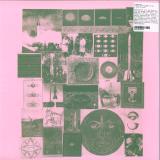
A Place In My Memory Is All I Have To Claim is the new album by Australian atmospheric pop trio Hydroplane, the storied 'offshoot' formed by three quarters of independent pop group, The Cat's Miaow. On this, their first music after two decades plus of radio silence, Andrew Withycombe, Kerrie Bolton and Bart Cummings return to the gentle, close-quarters musical world they shared around the turn of the century.
Recorded during 2024 in Melbourne and Ballarat, A Place In My Memory… picks up the thread Hydroplane set down with its precursor, 2001's The Sound Of Changing Places, though you can hear echoes of their other releases, too, with Withycombe noting a through-line from the group's 1998 "Failed Adventure" single. There's little quite like A Place In My Memory…, then or now, though. Maybe you can draw some connections between Hydroplane and their sister group, The Cat's Miaow, while fellow travellers might include Empress, The Ah Club, and further back, Young Marble Giants, Veronique Vincent (the muffled, ticking drum machine also makes me think of Robin Gibb's Robin's Reign).
There's also an umbilical to the bedroom-crafted electronica doing the rounds in the late nineties and early noughties. Hydroplane hint at this through their approach to songwriting, which often builds creatively around loops as structural devices. Through all this, the trio achieve an effortless, organic weightlessness across these nine lovely songs. Many feature Bolton's clear singing voice, drifting along, while guitars, keyboards, drum machines and loops tickertape away. The constituent parts fit together, but they also have a curiously detached quality - think of abstract cloud formations sharing the same sky.
Hydroplane and The Cat's Miaow often dealt in emotional ambiguity and uncertainty, and the uncertainty of the nostalgic. This was always one of the most appealing facets of their music, and A Place In My Memory… is thus named perfectly. I couldn't dream up a better title for the album and its reflections on history, lived experience, and the inevitable tangle between these two phenomena. These reflections variously address such concerns as human cruelty, flight, space travel, adventurism and spiritualism. There's also "To the Lighthouse", not a direct reference to the Virginia Woolf book, but a great title, nonetheless. (They've always had excellent titles, often borrowed, for songs and albums.)
A beautiful collection of drowsy, sleepy pop, humble and quiet, but resolute in its craft, A Place In My Memory Is All I Have To Claim is dream work in practice; a lovely reintroduction. Welcome back, then.
On Stock and ready to ship

Composer, singer, producer, and multi-instrumentalist Laufey continues her story by writing and recording Bewitched, her second album. Inspired by jazz greats and classical masters while possessing a point of view that could only be conveyed by a 21st-century twentysomething, Bewitched represents an expansion of Laufey’s sonic palette.
Tracks like the breezy bossa nova cut “From The Start” and the smoldering string-assisted ballad “Promise” have classic songcraft and intricate arrangements that make them feel instantly
timeless, while Laufey’s conversational lyrics give her music a relatability to the next generation of jazz, pop, and classical aficionados.
On Stock and ready to ship
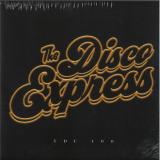
Regarded as one of London's "leading disco labels" The Disco Express is one of the most consistent and influential forces in the modern nu-disco scene.
A record label, international event series and DJ collective, TDE is dedicated to original, soul-infused house and disco music. With a global family of artists, the label blends vintage warmth with modern energy to honour the past whilst envisioning the future.
TDE100 is a 15 track compilation that distills the label's essence. Packed with fresh originals and hand-picked gems, the compilation blends funk, soul, nu-disco, house, and electronica. Crafted to move seamlessly from peak-time dance floors to laid-back Sunday listening, it's both timeless and forward-thinking.
Pressed across 2 X LP’s in a Gatefold Sleeve featuring John Morales / Derrick Carter & Inaya day.
This is original house & disco for 21st century dance floors and this train ain't slowing down anytime soon…
On Stock and ready to ship

Indian Summer of Love finds The Bongolian immersed in a new set of sounds and influences for a new Belle Epoch. It’s a musical landscape informed by the Sixties psychedelia of India via a Haight Ashbury happening.
It’s a kaleidoscopic vision that takes us from a 20th century Fin de Siècle and lands us in the here and now of the 21st Century. It’s for dancers, for seekers and is all underscored by The Bongolian’s trademark heavy rhythms and breaks. It’s another fine instalment of essential cuts for the dancefloor and for high fidelity listening, quality is guaranteed.
From the East to the West, welcome to the Indian Summer of Love. Nasser Bouzida performs drums, percussion, guitars and keys whilst the album features several new flavours to the Bongolian sound with the prominent instrumentation of sitars and bansuri, along with flute, trumpet, saxophone and trombone performances from several stellular international guest musicians.
On Stock and ready to ship

LP 2x12"[28,36 €]
The begena is a large ten-stringed lyre which is part of the traditional Amharic heritage of Ethiopia. The Amharas, who have long formed the politically and culturally dominant people of Ethiopia, mainly inhabit the central and northern part of the country. In the majority, they follow the monophysite Orthodox Tewahido Church established in the early fourth century AD.
Music plays a very important part in the life of the church. Most of the liturgy is sung and, contrary to secular music, it is accompanied by percussion instruments only. The begena occupies a special place because it is the one melodic instrument exclusively dedicated to the spiritual repertory. Because of its mythical origin, it is highly respected. Tradition holds that the begena was given to king David by God, and brought to Ethiopia by Menelik I, together with the Ark of the Covenant. It has always been the instrument of kings and nobles. Played by pious men and women of letters, it never became widespread. But it never disappeared either, not even under the Derg regime (1974-1991) which had banned the instrument.
Among Amhara string instruments, the begena is the most carefully crafted, especially with regard to the ornately sculpted crossbar. Its ten gut strings are cleaned and twisted several times. The characteristic buzzing timbre equalled by no other Amhara instrument is due to the enzirotch, that is, small bits of leather placed between each string and the bridge. This plays an important part in the sound production by creating a brief contact between the string and the upper rim of the bridge, thus modifying the vibrating properties of the string. In this manner, the spectrum of the sound is considerably enhanced (up to over 10 kHz).
The begena is a very powerful instrument, it keeps the devil thirty steps away, and its presence in the home wards off malicious spirits. Priests and preachers recommend its presence, especially during Lent (Fassika Tsom) when the Orthodox Amharas ponder their sins and repent. Because of its spiritual import, the begena generates intense emotion. According to some musicians, playing the begena brings them into direct contact with God or the Virgin Mary. The religious role of the begena is underscored by the shape of the instrument, each part symbolises an important element of the faith. The crossbar for instance, which reaches across the entire width of the instrument, represents God who is above all things. The belly which "gives birth" to the sound represents the Virgin Mary, and the ten strings recall the Ten Commandments.
Recorded by Stéphanie Weisser in Addis Ababa, Ethiopia, March 2002-December 2005.
Mastered by Renaud Millet-Lacombe.
Issued under license from VDE-Gallo, Switzerland.
On Stock and ready to ship
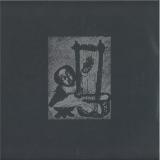
Cassette[16,18 €]
The begena is a large ten-stringed lyre which is part of the traditional Amharic heritage of Ethiopia. The Amharas, who have long formed the politically and culturally dominant people of Ethiopia, mainly inhabit the central and northern part of the country. In the majority, they follow the monophysite Orthodox Tewahido Church established in the early fourth century AD.
Music plays a very important part in the life of the church. Most of the liturgy is sung and, contrary to secular music, it is accompanied by percussion instruments only. The begena occupies a special place because it is the one melodic instrument exclusively dedicated to the spiritual repertory. Because of its mythical origin, it is highly respected. Tradition holds that the begena was given to king David by God, and brought to Ethiopia by Menelik I, together with the Ark of the Covenant. It has always been the instrument of kings and nobles. Played by pious men and women of letters, it never became widespread. But it never disappeared either, not even under the Derg regime (1974-1991) which had banned the instrument.
Among Amhara string instruments, the begena is the most carefully crafted, especially with regard to the ornately sculpted crossbar. Its ten gut strings are cleaned and twisted several times. The characteristic buzzing timbre equalled by no other Amhara instrument is due to the enzirotch, that is, small bits of leather placed between each string and the bridge. This plays an important part in the sound production by creating a brief contact between the string and the upper rim of the bridge, thus modifying the vibrating properties of the string. In this manner, the spectrum of the sound is considerably enhanced (up to over 10 kHz).
The begena is a very powerful instrument, it keeps the devil thirty steps away, and its presence in the home wards off malicious spirits. Priests and preachers recommend its presence, especially during Lent (Fassika Tsom) when the Orthodox Amharas ponder their sins and repent. Because of its spiritual import, the begena generates intense emotion. According to some musicians, playing the begena brings them into direct contact with God or the Virgin Mary. The religious role of the begena is underscored by the shape of the instrument, each part symbolises an important element of the faith. The crossbar for instance, which reaches across the entire width of the instrument, represents God who is above all things. The belly which "gives birth" to the sound represents the Virgin Mary, and the ten strings recall the Ten Commandments.
Recorded by Stéphanie Weisser in Addis Ababa, Ethiopia, March 2002-December 2005.
Mastered by Renaud Millet-Lacombe.
Issued under license from VDE-Gallo, Switzerland.
On Stock and ready to ship

2026 Repress
Tauche ein in die klangliche Welt von Paul Kalkbrenners neuem Meisterwerk The Essence – einem Album wie ein Archiv persönlicher Zustände. Entstanden über mehrere Jahre hinweg, teils im Studio, teils in einer Berliner Wohnung irgendwo zwischen Mid-Century-Moderne und 70er-Jahre. Diese besondere Atmosphäre hat sich tief in die Musik eingeschrieben – und macht »The Essence« zu Kalkbrenners persönlichstem Album.
On Stock and ready to ship

Swiss shapeshifter Elsa surfaces on Punctuality for the first time, marking the label’s seventh release with a debut EP that dives deep and swims sideways through an eclectic milieu of club influences.
Across the five tracks on Web Glow, there are nods to turn-of-the-century tech house, liquid D&B, broken IDM, psy-laced trance, and modern tek mutations. Subtle wubs ripple under the surface, low-end pressure coils tight, and meticulous sound design binds the tracks into a fully realized vision of Elsa’s forward-thinking sound. Enter the unfolding.
Roza Terenzi steps up to remix “Web Glow,” reanimating the track as a skeletal early-morning stepper—the mood is giving sizzling dubbed-out vocal wisps, pulsing subs, and stripped-back drums. “Groupie” notches up the BPM but keeps things fluid with aquatic atmospherix, jittering FX, and drums that skid out and under rolling basslines.
“Fortune Cookie” flashes uk-tinged tech house with shimmering shards of SFX, resplendent with stuttering kicks, glassy pads, and sultry textures. The halftime jungle-IDM stylings of “No Ads” round off the EP in a haze of fractured breaks and dubbed-out atmospherics. A murky, magnetic debut on Punctuality—Elsa sketches out a soundworld all her own. Dive in and catch it.
On Stock and ready to ship

Chloe Qisha makes her vinyl debut with Modern Romance: The EPs, a special 12" gatefold edition that brings together her acclaimed first two EPs in one beautifully crafted package. A rising figure who featured as one of British Vogue's 25 most important women this year & on the covers of NME & Rolling Stone, Chloe blends 80s art-pop with Abba melodies and Troye Sivan attitude. Selling out her debut show in 4 mins and after only 5 shows has supported both Sabrina Carpenter & Coldplay alongside slots at All Points East, Latitude & Pitchfork.
Housed in a striking gatefold sleeve with full lyrics and original artwork, the vinyl also includes an exclusive fold-out poster with printed lyrics all housed in a screen printed overbag.
On Stock and ready to ship

Repress!
Kirk Degiorgio’s influence on electronic music cannot be overstated, having been responsible for producing some of the most emotive and soulful machine music dating right back to the early 90’s. As a leading figure in UK techno his As One, Elegy and Future/Past output on labels such as B12, R&S and his own Applied Rhythmic Technology (A.R.T.) have rightly become revered classics and helped shape ambient techno and what would come to be known as IDM/Future Electronica. His connection with Cyphon co-founder Jamie Odell also dates back to the turn of the millennium when Kirk invited Jamie to play keys on his 21st Century Soul LP released on Ubiquity and subsequently releasing an EP together under the name Super Aloof on Exceptional.
This item has not yet been released. You can pre-order the product now.

'A Senegalese Griot singer, an Amsterdam improviser and a Puerto Rican jazz drummer find each other on an open playground, a stage built for improvisation, an old cinema now used for minute made story telling.
'Equipped with an m'bira, a xalam, a drum kit, a voice, percussion, house hold tools and an electric clavichord on 220 volt, they sit down and take off: Wrrrrrraaang!
'Singer and percussionist Mola Sylla is in many ways a musical explorer. Born and raised in Dakar, Senegal, he grew up in the tradition of the griots. Griots play conveying stories – sometimes decorated with music, theater and dance – which all play an important role in West African culture. His rhythm and melodic compositions differ from the western agreed schedules and provide surprising twists.
'Puerto Rican drummer Frank Rosaly has been involved in the improvised and experimental music scenes since 2001 when he became an integral part of Chicago's musical fabric, navigating a fine line between the vibrant improvised music, experimental, rock and jazz communities.
'Oscar Jan Hoogland is the sound of Amsterdam in person. He is an instant composer and inventor of his own instrument by joining a clavichord, a keyboard instrument from the 17th century, to 220 Volt electricity. As the last student of the late pianist, composer and improvisor Misha Mengelberg he tears like a tornado through the Amsterdam jazz and impro scene.
'Together they are Mother Tongue.'
This item has not yet been released. You can pre-order the product now.

Barking-born Jane Fitz, and Transmigration label founder David Fogarty, curate a collection of tracks from East London and Essex’s rich but largely overlooked constellation of independent record labels and distributors operating from London’s E16 to the edges of the Thames estuary during the 1990s.
Mysterious Vastness documents a hidden and largely detached scene that only forms into something coherent with hindsight. From a time when record labels could press and hand-distribute 1000 copies locally, the late 80s acid house and outdoor rave scenes were moving from the fields to the clubs of London and DJs such as Colin Dale, Colin Faver and Darren Emerson were dominating the airwaves and parties with a distinct mix of other-worldly techno, trance and out-there house music. Among the seemingly bland post-war housing estates and factories, a scattered handful of producers were experimenting with early versions of music production software to create an exotic, end-of-the-century soundtrack to the suburban-meets-industrial landscape.
The compilation features a selection of finds from East London’s second hand record or charity shops over a period of 15 years. Many of which have featured in Jane’s sets over the years, most notably the “Beyond The A13" Podcast for Furthur Electronix. A mix she described at the time as the soundtrack to an area of London “totally bereft of natural beauty, but to me, somehow always full of mystery and wonder.”

Celestial Echo (miche & Stu Clark) team up with Divine Disco’s Greg Belson to launch a brand-new 7-inch series spotlighting Detroit’s powerhouse gospel, soul and R&B label — HOB (House of Beauty). Founded in 1956 by Mrs. Carmen Murphy, HOB wasn't just a label — it was a beacon. From the basement of her beauty salon on Detroit’s West Side, she ran one of the most important Black-owned gospel imprints of the 20th century. At a time when both the music industry and the country were stacked against her, Mrs. Murphy built a sanctuary for soul — a Black woman-owned business and creative hub in volatile times.
This inaugural 7-inch kicks off with two in-demand killers:
Side A: Elder Ward & The Ward Singers – "It’ll All Be Over" A fast-paced gospel dancer with a monster groove, killer breaks and heart-wrenching vocal delivery — this one’s a guaranteed floor-filler and rarely surfaces for less than £250 on the collector circuit, if at all. Urgent, uplifting, and impossible to ignore.
Side B: Victory Travelers – "Power Lord" Another holy grail moment — deep, raw, and unshakeably soulful. Rare in its original form, often fetching close to £100, it’s a heavy dose of electrified gospel sure to hit home with fans of deep soul and spiritual funk alike. Fully licensed and remastered, this 7-inch comes housed in a custom Celestial Echo / Divine Disco series sleeve with a faithful reproduction of the HOB label.
On Stock and ready to ship

Grupo Yoyi's rare gem 'Paco La Calle' comes from 1977 and is now available on its own 45rpm for the first time ever, and is a fine window into the artist's pioneering blend of Afro-Cuban rhythms, jazz, funk and disco. Originally released on Cuba's iconic Egrem label, it's the only known solo project from producer Jorge Soler. It's brimming with lush horn arrangements and warm analogue synths, so both sides effervesce with genre-crossing spirit that feels timeless even now, almost half a century on. These are the sort of sounds that are perfect for both soundtracking a sunlit afternoon or heating up a dancefloor and will have Latin fusion freaks and crate-diggers alike in a spin.
On Stock and ready to ship

In 2047, amidst the deafening yet oh-so-familiar soundscape of the Movement Festival in Detroit, we met again: I, pdqb, and Scape One, known as two of the most respected electronic music composers worldwide. The air pulsed not only with the latest beats but also with a barely perceptible energy only the two of us knew. We hadn't simply flown in; we'd arrived with our fantastic "Diskmind" time-travel machine, an incredible invention, capable of effortlessly catapulting us through the centuries.
"It's unbelievable, isn't it?" I shouted over the bass, eyebrows raised. "A machine that lets us travel through all of history, and there isn't a single song that honors it! Not one!"
Scape One nodded vigorously, his gaze sweeping over the stage lights. "That's absurd! How can such a revolutionary invention remain unsung? It's almost an insult to music history itself."
We looked at each other, a silent understanding in our gazes. The mission was clear: The "Diskmind" needed its anthems. And who, if not us, who used and loved it, should create them?
And so, we decided to become the musical chroniclers of the "Diskmind," ready to tell the story of our time machine across four different eras...
For Synaptic Cliffs, it's an extraordinary honor to present these three Scape One variations of the original song 'Diskmind' (first released on The Electrifying Dojo, 2025). Each masterpiece was recorded in different future decades of the 21st century (of ourse with the help of the Diskmind time travel machine) and reflects the corresponding trend in electronic music. A1: A timeless, pristine Electro composition from the year 2035. A2: An IDM marvel from late summer 2075, recorded in the Zero gravity of Space Station 775. B: An Experimental Electronica symphony recorded at pdqb's Studio 577 on Mars Outpost 47A. Only musical equipment that doesn't currently exist was used for this release
On Stock and ready to ship

2025 Repress
It's rare that a certain sound is entirely an artist's own. Although undeniably a stew of impeccable influences - from blues to folk to Latin to dusty funk, soul and hip-hop - one cannot hear a Tommy Guerrero song without immediately recognising it as his - and his only.The cult skater from San Francisco is globally renowned as one of the original members of the legendary "Bones Brigade" team. And as an accomplished multi-instrumentalist, his laid-back soul is beloved by all who've basked in its blissful glow.There's something elemental about this music that really stirs the soul. Strikingly beautiful and instantly addictive, it's a kind of funk-fuelled, melody-driven, groove-based magic. There's a serenity and heart in the playing that radiates warmth and splendour, as if crafted for endless sunsets. His albums that surfaced on Mo Wax at the turn of the century have been treasured since their release and it's two of his most vital LPs that we're honoured to reintroduce.The originals were quietly pressed on to a single piece of vinyl so we've worked closely with Tommy this year to bring you these fresh, limited editions. They have been lovingly remastered, cut nice and loud on to heavyweight double vinyl and presented in deluxe gatefold jackets.A Little Bit Of Somethin' is a quietly majestic gem. Brimming with Guerrero's horizontal "loose grooves", these brief but innovative instrumentals demonstrate a rich variety and, as such, comprise an LP that is aptly titled. An enchanting start-to-finish listen, it was instantly regarded as essential upon release via Mo Wax in 2000. It has aged remarkably well.Throughout this inspired collection, simplicity is key. In deploying it, Guerrero presents a beautifully crafted melodic soundscape. The distinctive, mellifluous approach of his guitar style, blending Brazilian, Cuban, Mexican, soul and jazz motifs, is at once startlingly new and tantalisingly familiar. Set against unrushed percussion, the music releases a crystal clear stream of healing frequencies to create a fragile, hypnotic atmosphere.Each track clocks in at around three minutes and, with a lack of studio polish or commitment to traditional song structure, it's a wonder how this enigmatic record demands your attention. However, through its gentle dynamism and impressive playing, it does just that. Whilst resolutely low-key, this lo-fi aesthetic feels genuinely organic and remarkably personal, its powerful intimacy truly connects. It's what makes this album so beloved of those lucky enough to be already familiar with it. From Margaret Kilgallen's truly iconic cover artwork to the music contained within, it's all brilliantly effortless.Guerrero's musical ideas are consistently compelling throughout, making it impossible to select highlights. The album's laconic drift touches upon jazz-fusion workouts and slow-mo hip-hop drums, Tortoise-style experimental post-rock and cinematic sound textures. It's at once hazy, light and bouncy yet sombre and bluesy. The Latin soul of El Chicano blends with the breezy jazz of Grant Green. By employing guitars and drum machines to create a stripped down rhythmic tapestry of spellbinding, addictive songs, there are even traces of The Durutti Column. A little bit of country, a little bit of rock & roll. A Little Bit Of Somethin', indeed.
On Stock and ready to ship

With releases on Underground Status London, BaDumTish, Fresh Milk and Statewide Swing, among others, S.R. has been helping to define the US-based UK Garage scene over the last few years. S.R. Volume 3 marks the 5th anniversary of this white-label series and his first 4-track 12" release. Conceived in the early months of 2025, S.R. Volume 3 draws inspiration equally from UK Garage and techy Drum and Bass to create a dancefloor-focused record that firmly captures 21st century tension.
On Stock and ready to ship
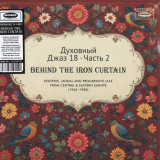
One of the most politically charged terms of the 20th century, the Iron Curtain was a metaphor for political and cultural division. In a post-war telegram Winston Churchill referred to the fault line that ran through Europe between East and West as "an Iron Curtain is drawn down upon their front. We do not know what is going on behind".
In this two-part album, as far as jazz is concerned, we will showcase, describe and celebrate exactly what was 'going on behind'. We see that music is the power supreme, with the ability to transcend all barriers, be they physical, political or metaphorical.
Our liner notes illustrate the complex and contradictory history of Soviet jazz, and the tracks we've chosen cover the key period of the early 1960s to the 1980s. It was during these dark years of the Cold War that the Soviet Union and its satellite states produced a number of outstanding artists playing in a variety of styles. The impact of modernism, from hard bop and Latin to modal and cool jazz, had found its way through cracks in the curtain. The deeply-felt ancestral strains of traditional European folk music were combined with the exciting new and progressive sounds of the West, and a radical, intoxicating brew was created that no amount of guns, tanks or polonium tea could overcome.
We chronicle the triumph of jazz at a time of extreme geopolitical conflict. What went on behind the Iron Curtain in these countries was once mysterious and unknown to the West, but the perseverance of their artists provided sound and light amid the secretive, dark days of the communist-capitalist standoff. There was no end of life-affirming spiritual jazz behind the Iron Curtain.
"Whether it's by improvisation in the African-American jazz tradition, or by a village kobza player standing on top of a damn hill - he feels connected to the stars."
On Stock and ready to ship

*all original recordings from mid 90s Estonian released cassettes. Fascinating interpretations of the UK breakbeat and Jungle sounds recorded when the world felt like a much bigger place.
Since hearing the first breakbeats via the Finnish radio nightly shows introducing the burgeoning UK scene, Virko Veskoja, later head figure of Lu:k, was completely swept away by this new technological language that sounded like machines trying to initiate contact with people. The fluttering rhythm patterns, strings and vocal lines haunting the pathways of the infinite network. Like hip hop taken over by Skynet.
Reimagining it all in mid-90’s Estonia, a fresh and dirt-poor republic newly welcomed to the family of sovereign states on the outskirts of Eastern Europe, was challenging, to say the least. Finally, with the help of entry level music programs, custom-made soundcards and self-built computers by the other Lu:k-head Tõnis Valk, Lu:k took the first tentative steps in the history of Estonian jungle.
Eight Lu:k cuts have been compiled into a handy selection, a true sign of the times when uncertainty came with certain hope and optimism – new territories to chart, new frontiers to conquer. A time of innocence captured so sublimely in Lu:k’s music.
The compilation starts with menacing orchestration that sounds like the birth of a civilization, like in „2001: A Space Odyssey“, or the arrival of Godzilla, only to give way to sweeeet strings and the inimitable Minnie Riperton in “Lovin U”, combining all the essential elements of Lu:k in a track that has remained uncorroded by time since its inception in 1994.
The following “Demo 3” is its antithesis – fast and nervous, a harbinger of the darker days of neurofunk and techstep ahead. More in line with the social realities of the time, when something (or someone) could materialise out of thin air and attack you just as violently as those beats here.
“La:v” was Lu:k’s signature track throughout their brief career that went on only for a few years, 1994-1997. Lifted to heaven’s by Petula Clarks’s wonderful vocals, it perfectly captures the pure essence of creation. “I made it in my bedroom. Something like that just came out. Sorry”, says Virko apologetically.
From the themes of love we are led towards darker scenarios again with “Drunk-Drive”, a more vengeful cut reminiscent of early Ram Records’ nocturnal dangers, skylines shaped by basslines. Previously only available on the uber-rare “Raadiomaja valvelauas” CD compilation from 2005.
“In the Limelight” is lifted from their second album “Dreams in Drums” from 1996 (only released on cassette), and if it’s meant to address their new-found underground celebrity status in Estonia, there is surprisingly little elation here – the track rather consists of introspective strings and beats that sound almost melancholic.
Out of the remaining three tracks, “Proov2mix” and “Kadunud leitud” are the result of a treasure hunt amongst the old, obsolete harddrives – little nuggets that were condemned to obscurity until now. Between them, another vocal-led cut “010”, a non-album track only featured on two comps until now, is a strong reminder of Lu:k’s prodigious ability to handle vocal lines and morph them together with their own weaving synthetic melodies, strong pads and commanding beats.
Lu:k’s music has been largely unavailable for the better part of this century, with original tapes and CD’s changing hands for a small fortune. This vinyl release couldn’t come at a better time, bringing a seminal chapter of Estonian dance music’s mythical history to light again, both for the old-school acolytes and new converts.
All music by Virko Veskoja
On Stock and ready to ship

Showbiz! nennt sich MIKEs zehntes Soloalbum, das auf seinem Label 10k erscheint. Pitchfork bezeichnete es als "bisher größte Leistung des jungen Künstlers" und vergab das Prädikat "Best New Music". Es setzt neue Massstäbe für ihn und die teilnehmenden Zeitgenossen (Thelonious Martin, Salami Rose Joe Louis, Jacob Rochester, Anysia Kym, Harrison SURF GANG, ShunGu, Laron, redLee, u.a.), während er das nächste Kapitel seiner Karriere als unverzichtbare Stimme des 2020er-Jahre-Hip-Hop aufschlägt. Zur Unterstützung von Showbiz! startete MIKE seine bisher grösste Tour mit unzählig vielen Gästen, die ihn Anfang 2025 nach Europa führte (mit 6 Daten in DE+AT), von wo aus er über UK & Irland ausgiebig durch Nordamerika touren wird.
On Stock and ready to ship

When SW. AKA, Stefan Wust, first established SUED in 2011, their compelling, cosmic and anonymous material struck a rare chord, emanating far beyond the freeform Berlin underground in which it was written. Unknowingly, Los Angelean Oliver Bristow had
established a parallel musical universe, founding the hyper-specific label Acid Test, inviting pioneering artists such as Donato Dozzy, Tin Man and Pepe Bradock to indulge in glorious interpretations of 303 control. Without compromise, these were records that quietly
reinvigorated electronic music.
Some years later, a new label, SWOB, unites Wust and Bristow in a very different landscape. And while it would be easy to transform the purity and integrity of this special alchemy into something like nostalgia, yearning for an alternative culture before
influencers and against algorithms, SWOB endeavours to find inspiration in arguably tougher truths.
“By the mid-90s, the techno scene had already reached a breaking point”, recalls Wust.
“Today, the scene is so highly professionalized that it barely resembles what was once called the "underground. But "underground" was never more than the simple reality that music circulated on cassettes among friends or that dubplates were played at illegal
parties... The consequence of today’s professionalization is the death of the original movement.”
Still, no one can kill an idea. Here, inspired by the “Outside Tekno” or “Outkast Techno” that emerged to subvert even back in the day, SWOB are proud to introduce the tekkNOthing trilogy, a new project from SW. beginning on cassette and culminating later
on vinyl. Some years in development, tekkNOthing first began to take shape during the 2020 global pandemic, when ‘the underground’ quickly began to mean something radically different once again.
“I noticed how everything was accelerating while simultaneously spinning in circles – existing in a kind of creative limbo on a global scale”, recalls Wust. “And that’s where true freedom lies: for artists – in any sense – to consciously engage with this necessity. In
other words, irrationality or nonsense can eventually generate meaning.” While hardly capitulating to the contemporary hammering of techno’s most recent developments, tekkNOthing’s first chapter quickly establishes a frenetic pace; tracks like ‘nuclearFALLoutX’ and ‘paslolESmess’ interlock and unfold at a tempo removed from that typically associated with SW. while ‘euroBSS’ and ‘viscousHEAT’ successfully experiment with a more guttural palette, veering far into a rejuvenating and previously uncharted leftfield.
A resolutely human endeavour, the music of SW. is nonetheless written and recorded in the looming shadow of AI, whose free-form adoption of pop culture, hip-hop and techno reminds Wust of “when photography emerged in the 19th century... painting was no
longer bound to naturalism. Similarly, music today is no longer bound to fixed standards – through AI, it can become truly free.”
If not in competition, than taking inspiration from this landscape of new opportunity, tekkNOthing diversifies further with eight unpredictable tracks across part II, taking in stuttering machine-funk on ‘crAMPDUNK’, a freeform organ jam via ‘sonicENdo’ and the
inexplicable piston-percussive, post-punk exotica heard on ‘poorTENOOR#a#01’ DJs with dual cassette decks skills might even find function in the more overtly floor-focused ‘DU ¨NEhowSE#1takeÄ’ or ‘lookLOOK’.
The times may have changed, but the promise remains simple; more music, more freedom.
On Stock and ready to ship

“Less than a month after one of the most violent fire events in the history of the continent, new shoots had burst through the scorched hardpan, nourished by the still-vital roots of those flayed and blackened trees.” John Vaillant, Fire Weather.
Loscil (aka Scott Morgan) returns to kranky with Lake Fire, a nine-track offering of ash-laden sonics that mine the tension within the cycle of destruction and rejuvenation.
Lake Fire is the result of a disjointed creative process. Originally conceived as a suite for electronics and ensemble, most of the original compositions were deserted, save for Ash Clouds, featuring James Meager on double bass. The remaining tracks were reshaped and remixed, built anew out of the remnants of the abandoned work. The result is a phoenix, an album burnt to the ground only to be reassembled out of its cinders. Fragments of the original lurk beneath a densely overpainted canvas of sound.
Infused into the resulting rearrangements are impressions from a road trip into the mountains marking a personal half-century milestone, surrounded by the ominous proximity of wildfires and dense smoke; celebrating life while the world burns. The album’s title comes from the striking irony that forest fires are often named after regional lakes - perhaps subconsciously referencing ancient lore. The cover photos were taken from this same trip, while sitting in a rowboat staring into the grey abyss of an opposing mountainside outside of Revelstoke, BC, obfuscated by smoke from a nearby lake fire.
Press quotes for previous solo release “Clara”:
"The sound sculptor Scott Morgan continues to astound.” Pop Matters
"A beautifully nuanced work, Clara is both revealing and mysterious -- and loscil fans wouldn't expect anything less.” Allmusic
press quotes for previous collaboration release with Lawrence English “Colours of Air”:
"As you might expect from the steady hands at the tiller, this is a cortex-hugging drone record of beauty and depth.” The Quietus
"One of the thrills of listening to this record is how its initially predictable veneer fades on subsequent listens to reveal layers of mischief underneath.” Resident Advisor
On Stock and ready to ship

Exploring the water engineering relationship between Japan and the Netherlands across a trilogy of experimental releases, the third and final part of Field Records' Waterworks series is courtesy of Yui Onodera. Pairing delicate synthesis and instrumentation with field recordings and negative space, the accomplished artist and sound architect examines the impact of water engineering on Japan's Kiso Three Rivers.
The location refers to the confluence of the Kiso, Nagara and Ibi rivers on the Nōbi plain in Gifu prefecture. In the late 19th century, Japanese authorities collaborated with Dutch engineer Johannes de Rijke to separate the three rivers at the lower part of the Kiso delta. These extensive improvements, which were finalized in 1912, successfully shielded the city of Nagoya from regular flooding.
Onodera's minimalist palette and detailed approach to spatial sound design balances microscopic field recordings and tonally-rich traditional instruments, which he applies with stark focus to the subject of the Kiso Three Rivers across eight extended pieces of music arranged into two distinct parts. The A side's shorter tracks are delicately sculpted miniatures interweaving chiming bell tones, treated guitar impressions and hushed pads. The B side's two longer suites are more overtly minimal in nature, emphasising sampled water sources accented with patient brush strokes of synthesis.
This project is supported by the Embassy of the Kingdom of the Netherlands in Tokyo, Japan.
On Stock and ready to ship

The multi-media project Kraftwerk was started in Düsseldorf, Germany 1970 by Ralf Hütter and Florian Schneider. They set up their electronic Kling Klang Studio where they conceived and produced all Kraftwerk albums.
Kraftwerk created the soundtrack for the digital age of the 21st century. AUTOBAHN 1974, RADIO-ACTIVITY 1975, TRANS EUROPE EXPRESS 1977, THE MAN-MACHINE 1978, COMPUTER WORLD 1981, TECHNO POP 1986, THE MIX 1991, TOUR DE FRANCE 2003. Their compositions, using innovative techniques, electronic sounds and synthetic voices combined with computerised rhythms, had a major musical influence on Electro, Hip Hop, Techno and Synth-Pop.
On Stock and ready to ship

Liner Notes by Martyn Pepperell
A collection of ten hypnotic guitar renditions that dive deeply into the traditional compositional musicality that underpins Harakami’s hallucinatory beatscapes before reconsidering them under a fresh, innovative and engaging new light. River: The Timbre of Guitar #2 Rei Harakami signals a new level of awareness and understanding of both Rei Harakami’s significance and Ayane Shino’s undeniable talent.
VITAL SALES POINTS:
In 1996 Tokyo-based label Sublime Records received a cassette demo from Rei Harakami, a 26-year-old Japanese experimental filmmaker, and musician. Within one year Harakami’s debut LP ‘Unrest’ was released. As the 21st century dawned, Harakami was becoming a critically acclaimed figure, and there was a feeling in Japan that Harakami would be an inevitable successor to such luminaries as Haruomi Hosono and Ryuichi Sakamoto. Sadly Harakami passed away at age 40 in 2011, leaving behind a musical legacy that seemed to deserve more recognition. A fitting tribute now comes from the incredibly gifted classical guitarist Ayane Shino. Continuing her album series ‘The Timbre of Guitar’ (the inaugural release of which was ‘Sakura’ - a cover album of Susumu Yokota's seminal album, released through the Swiss label, Mental Groove Records in 2021), she now presents ‘River ???? : The Timbre of Guitar #2 Rei Harakami’. Ayane has reworked some of Harakami’s standout tracks into an album of tranquil yet complex compositions helping to build a new level of awareness and understanding of Rei Harakami’s significance. A collection of ten hypnotic guitar renditions that dive deeply into the traditional compositional musicality that underpins Harakami’s hallucinatory beatscapes before reconsidering them under a fresh, innovative and engaging new light.
In the years that followed Harakami’s untimely passing, Sublime Records continued to sign and support new artists emerging from Japan’s rich and fertile electronic music scene. This eventually led to a meeting with gifted classical guitarist Ayane Shino in 2020. Although a new name within electronica, Shino’s classical resume is impeccable. She has performed with a range of prestigious orchestras in concert halls and at music festivals across Japan, Europe, and South America while playing classical guitar for numerous animations, movies and television commercials and holding various educational roles. These days, she also hosts the Tokyo Harmonics radio show, which is syndicated through Hyogo prefecture’s Ashiya Radio and TJS Radio in Los Angeles.
During her time completing a masters at Tokyo’s University of the Arts, Shino became fascinated by Brian Eno, Aphex Twin, Oneohtrix Point Never, Steve Reich, and, closer to home, Harakami and Susumu Yokota. ”I found myself in an environment where I was surrounded by fellow students who produced computer music, live electronics, and installations,” she explains. Following her meeting with Sublime, Hideoki Amano, the producer and owner of Musicmine, the parent company of the label, asked Shino if she would be open to transcribing and recording an album of covers of the late, great composer, producer and DJ Susumu Yokota’s music in incorporate into then-upcoming events commemorating the 5th anniversary of his death and reissues of his past works. “Yokota made music with the Roland TB-303 bass synthesizer and samplers, not in a way like a conventional instrumentalist, so I was aware it might be more of a challenge for her,” Amano explains. Fittingly, Shino was up for his suggestion, leading to ‘Sakura: The Timbre Of Guitars #1 Susumu Yokota’. Song by song, Sakura highlighted Shino’s free-flowing playing and prowess at translating electronic music into classical guitar shapes.
After considering Harakami’s background as an instrumentalist, Amano felt revisiting his catalogue should be the next step for Shino. Well-versed in how often classical versions of electronic music tend to fall flat, he asked her to examine Harakami’s songs closely, select the musical phrases suitable for guitar and create arrangements that would sound interesting to music listeners with a deep engagement with ambient, techno and electronica. In Harakami’s discography, Shino discovered “a sense of simplicity, warmth, moisture and a floating sensation.” “I was gripped by his songs, which had an array of sounds that gave me a sense of mystery but also coexisted with a sense of familiarity,” she explained. Moving beyond his official releases, Shino began digging through YouTube to find live recordings, radio appearances and obscure outtakes. Within her mind’s eye, imagining playing his songs on guitar was effortless. On her approach to the album, Ayane explains: “For this album, I succeeded in spinning some exquisite, silk thread like delicate tones, interwoven with human warmth, gentleness and simplicity. And I was also able to rework Rei Harakami's distinctive sound with a floating feel to it and transform it into a very classical guitar sound. I hope many people will be able to receive this group of sounds that I created in this album that I played with all my heart.” A record of limitless innate beauty, ‘River ???? : The Timbre of Guitar #2 Rei Harakami’ is a delicate and thoughtful body of work. A true masterclass in deconstruction and subsequent rebuilding, and an eternal lesson in how the art that we leave behind can outlive us all.
On Stock and ready to ship

“Traces”, the debut album from Vesto Comodo, presents a sonic meditation on the enduring power of human emotions and behaviors in an era where the boundaries between organic and artificial consciousness have dissolved.
Introspective, funky, earthy and deep: the album sound palette juxtaposes elements like century-old piano phrases with mysterious synth pads, while tape-squashed drum breaks and jazzy flute themes spiral together creating a journey into a prehistoric futurism.
On Stock and ready to ship

Over the last ten years, Brazil’s Millos Kaiser has cultivated a reputation as a top-ranking selector passionate about bringing his home country’s underappreciated music to the world. After starting as a punk and indie musician in Niterói, Rio de Janeiro, he turned his hand to DJing in the late 2000s and relocated to Sāo Paulo. There, he spent the 2010s rocking city squares, warehouse parties and street parties with DJ Trepanado in the Selvagem duo before cofounding the celebrated Selva Discos label in 2017.
Since 2019, Millos’s focus has shifted to his solo DJ career and ventures as an edit maker, reissue compilation curator, audiophile bar co-owner, and now producer. Planet Trip Records has been very good friends with Millos for a long time and is very pleased to present his first original release, the Te Quero Perto (I Want You Close) EP, available in vinyl and digital formats.
Assembled like a DJ-friendly 12” for late 20th-century nightclub specialists, Te Quero Perto kicks off with Millos’ original ‘club mix’ and an accompanying ‘instrumental’ version (digital.only). Driven by an uptempo machine beat straight out of the mid-'80s, rave pianos, 303 acid bass, and an explosive Brazilian pop vocal sung by Juju Bonjour, it’s an absolute belter of a tune and a masterclass in in-period styling.
Elsewhere on the EP, Millos’s European friends Lipelis & Orion Agassi turn in an equally belting Latin Freestyle remix in vocal, dub and instrumental mixes (instrumental is digital only). Rounding things out, fellow Rio de Janeiro producer Paco Cabana throws the tune into a cocktail shaker before pouring a sunkissed, percussion-heavy reimagining for us to sip on. Front to back, it’s an all-killer, no-filler debut from a generational talent.
On Stock and ready to ship

After a long break since their first vinyl release, theBasement Discos returns to wax with “Dog With A Bone”, a diverse V/A compilation that channels vintage ‘90s house energy through a bold, 21st-century lens. Expect classic grooves, modern twists, and plenty of dancefloor heat as theBasement Discos reaffirms its vinyl legacy.
Order now. Collecting orders for repress.

Two days after his 100th birthday, Marshall Allen started recording New Dawn, his debut solo album. A member of Sun Ra’s Arkestra since 1958, Allen assumed leadership of the band in 1995. Throughout his nearly seventy-year career, Allen has never released a solo album under his own name, and yet, instead of capping such a legendary output, New Dawn seems to herald a new beginning. A love letter to spacetime, it channels a century of musical intelligence into seven tracks, showing Allen at his most protean—freely moving from relaxed, transdimensional palettes to bluesy big band and beyond.
The title track “New Dawn” is the centerpiece of this impressive album and the arranger Knoel Scott wrote the lyrics himself. We are thrilled to have the incomparable Neneh Cherry, stepdaughter of legendary jazz musician Don Cherry, lend her unmistakable voice to this song.
“It’s gorgeous! Neneh is a jazz singer now! Sounds like something Nina Simone might have done.” – David Byrne
The 7” single is limited to 300 copies, numbered, and comes in a chic screen-printed cover …
On Stock and ready to ship

Here comes a true South American LATIN JAZZFUNK treasure from Argentina!!!
Sound Essence is more than proud to present these lost recordings from 1974 to music lovers again in all their glory.
CARLOS FRANZETTI, who has once again been in the spotlight in recent years thanks to the re-release of his strong late 70s JazzFusion record "Graffiti", was also in charge of this record called DEDOS. The story behind:
In 1974, after CARLOS FRANZETTI was living in Mexico and worked as the musical director of FERMATA International, he returned to Argentina. In Buenos Aires his friend MOCHIN MARAFIOTTI was recently appointed A&R at the local recording label MUSIC HALL . Marafiotti asked Carlos if he wanted to record some of his music and he answered that he had in mind a group playing LATIN JAZZ . After a couple of meetings they came out with the idea of covering the RUBEN RADA tune DEDOS recently recorded in the US by AIRTO MOREIRA along with the OPA TRIO. Carlos contributed his own composition "Doce y Diez" . He selected the group consisting of his friend and member of the uruguayan Band TOTEM, Ruben Rada on percussion, Ricardo Lew on guitar , Emilio Valle on bass and Osvaldo Lopez on drums covering keyboards and vocals himself . This formation recorded tracks and vocals in a three hour session and the next day the track was mixed. Music Hall released "Dedos" and "Doce y Diez" on a single record and after months of discrete airplay and not so good sales the project for an album was draped.
"It is a rewarding experience to see a re-release of this two songs a half century after the original release.
It was hot and it looks and sounds even hotter now. I love it!" (Carlos Franzetti, New Jersey, December 2024).
On Stock and ready to ship

From an artist in their seventies, you probably wouldn’t expect to hear an album like this. But Brazilian drumming legend Ivan ‘Mamão’ Conti has been experimenting and innovating for the last half a century. As one third of cult Rio jazz-funk trio Azymuth, Mamão was at the root of the group’s ‘samba doido’ (crazy samba) philosophy, which warped the traditional samba compass with jazz influences and space age electronics. Even with his lesser known jovem guardua group The Youngsters, Mamão was experimenting with tapes and delays to create unique, ahead-of-its-time sounds, way back in the sixties. More recently Mamão recorded an album with hip-hop royalty Madlib under the shared moniker ‘Jackson Conti’.
With his first album in over twenty years, and the first to be released on vinyl since his 1984 classic The Human Factor, Mamão shares his zany carioca character across eleven tracks of rootsy electronic samba and tripped out jazz, beats and dance music. Featuring Alex Malheiros and Kiko Continentino on a number of tracks, the Azymuth lifeblood runs deep, but venturing into the modern discotheque (as Mamão would call it), Poison Fruit also experiments with sounds more commonly associated with house and techno, with the help of London based producer Daniel Maunick (aka Dokta Venom).
Take a bite of Mamão’s psychoactive Papaya and join the maestro on a weird and wonderful stroll through the Brazilian jungle.
United by a love for the music of Mamão and Azymuth, the CD and digital edition also feature the previously released remixes and dubs from some of today’s most forward-thinking producers with a penchant for percussion, including IG Culture, the 22a crew, Max Graef and Glenn Astro.
On Stock and ready to ship

12"[23,49 €]
Ulrich Troyer has been producing music now solidly for over twenty years within a largely genre free framework, but whilst navigating forms such as avant-garde, techno, leftfield, field recording, electronica, glitch and ambient it is the aesthetics of dub that guide his creative direction. Not really recognisable in an orthodox form as remixed versions of roots reggae songs but in the way sonics are manipulated with space, the application and layering of delay, reverb and echo that fixes his output well within the scope of what might be called futurist dub.
The nearest comparisons to his new album TRANSIT TRIBE can only be established by a synthesis of some of the more adventurous explorations in modern music such as African Head Charge, Jon Hassell, Pole (Stefan Betke), Bill Laswell or even Miles Davis; featuring a diverse selection of artists and friends not only from Vienna and environs but also from around the world, sounds are not so much fused but allowed to float along the continuous flowing tide of warm waves of bass.
Rather than to allow the names of Ulrich Troyer's collaborators be merely listed in the album credits, what they bring to this joyful affair needs to be outlined, albeit briefly: Co-producer credits go to Osman Murat Ertel from Istanbul, who employed a variation on the old foolproof Nick Lowe method for checking out the impact quality of his own sound productions by playing tracks through his car sound system speakers!
Murat is a member of the electro-psych-folk group Baba Zula where he plays electric saz, oscillators and theremin and played a key part in the creative development of the album. Mamadou Diabate, the balafon master originally from Burkina Faso and now resident in Vienna, has developed his own unique technique of playing solos that replicate the sound of three instruments playing in unison; however the multi-talented Mamadou is engaged here on singing and playing the talking drum. From South Tyrol Reinhilde Gamper is a member of the experimental trio Greifer who are bringing the sound of the zither into the twenty-first century using new playing techniques and electronic gadgets. Susanna Gartmayer is an Austrian composer and bass clarinetist specialising in improv and multimedia sound research. Diggory Kenrick has been engaged with creating new dub fusions and also re-energising classic rocksteady and roots reggae classics, renowned for his interventions on flute. Didi Kern is an electronic dance musician and drummer from Vienna with a focus on free improvised music. Hamidou Koita, a singer and multi-instrumentalist, is from a traditional Griot family in Burkina Faso but now resident in Vienna and a regular musical partner of Mamadou Diabate playing drums and calabash. Austrian Lukas Lauermann is both a studio and live musician playing cello, also working on electronic sound design and writing string arrangements. He has recorded extensively and appeared on stage with both Mark Lanegan and Hans-Joachim Roedelius. Martin Mallaun is a Tyrol-born specialist in both the development of the zither in modern music and also as a researcher in the effects of climate change on the vegetation of Alpine ecosystems. Mystica Tribe is the musical alias of Tokyo-based dub/techno producer Taka (Takafumi) Noda. He collaborated with Vienna's own Vegetable Orchestra on 2020's "Transplants (Mystica Tribe Version)". After studying classical percussion Flip Philipp is now a jazz vibraphone player and member of the Vienna Symphony Orchestra. Wolfgang Pfistermüller is a member of the Vienna Trombone Quartet and the developer of the incredible bass-trombone Aurora with its uniquely warm and resonant sound. Roger Robinson is a renowned British poet, winner of many contemporary poetry prizes and member of the experimental music group King Midas Sound. Kwame Yeboah is a Ghanaian born UK based keyboard wizard who tours regularly with Yusuf / Cat Stevens, Ms. Dynamite and Pat Thomas.
So contained on the album is an astonishing mix of musicians and instruments: sounds of cowbells recorded in the South Tyrolean alps processed by modular synthesizers and heavy analogue bass synths combined with instruments such as zither, bass-zither, electro saz, flute, talking drum, trombone, cello, vibraphone, marimba, djembe, contra-alto clarinet, melodica, Farfisa - all bound together by organic live-drums and dub effects.
Liner notes by Steve Barker
On Stock and ready to ship

2025 Repress
30 years of Fuse means 30 years of road paving.
An ode to the past and a hint to the future, Fuse shares this milestone with its original guests from 1994 all the way to its fresh party goers of the past years as a promise to keep its dance floor focused on quality music and timeless moments.
In over a quarter century, the Brussels club has stood the test of time by rooting itself in ageless music and employing pioneering artists - large or small, international or local - to command the decks of Belgium's longest running dance floor. A celebration of this legacy and the renewed imprint is in order, coming in the form of a 30 track compilation of techno's best and brightest from around the world. One track for one year, this collection of recordings highlights the status quo of enduring club music, beginning with a nod to the past: a re-release of Jeff Mills iconic 'Step to Enchantment' from 1993. This glance to the past quickly shoots us forward into the current state of techno with legendary artists like Planetary Assault Systems, DVS1, Steffi, Rodhad, Donato Dozzy, DJ Nobu and many others who headlined the club in recent years. Cementing itself as a respected escapist institution, Fuse also calls on its growing local scene to prove why Brussels continues to remain a reference in the scene even outside of its own borders.
On Stock and ready to ship

Steyoyoke Black 100 marks the celebration of the label’s 100th release, encapsulating the essence of dark, emotive techno in an exclusive double vinyl format. This milestone features eight compelling tracks from both established and emerging talents, perfectly embodying the Steyoyoke Black sound.
Side A kicks off with “Rune” by MPathy & Andrewboy, a track filled with intensity and deep energy, followed by “Psilocybin” from Santiago Celasso, which takes listeners on a mesmerizing, trippy journey. On Side B, Pablo Goyesi delivers “Volatile”, an ever-evolving powerhouse of sound, while Furkan Cinar’s “Rigity” brings a dark, driving force to the mix. Side C continues the exploration with “Silky” by Aquiver, a beautifully textured and atmospheric piece, alongside “Voyager I” from Senses Of Mind, a track that captures the feeling of an interstellar adventure. Closing out the compilation on Side D, 2Qimic presents “Elyssia”, a hypnotic and powerful tune, and Blotho & Studio Deep deliver “Foundation”, a track that grounds the collection with deep, resonant rhythms.
Each track on Steyoyoke Black 100 represents a unique piece of the label’s identity, coming together to celebrate a century of releases in true Steyoyoke Black style. Available exclusively on double vinyl, this limited edition is a must-have for collectors and lovers of dark, emotive techno.
On Stock and ready to ship

Santos’ first release for Matt Edwards’ Rekids imprint, the four-track ‘We Were All Kids Once’ EP, is a continuation of the experienced producer’s output on his own Let Me Understand Records, which has seen a staggering amount of support from DJs since it’s launch in 2018.
Traversing rugged, tracky, Relief-influenced House/Techno (‘One Day’), drummy grooves (‘Don’t Touch’ and ‘Rollercoaster’) and cosseting beat-down Deep House (‘Someone’), ‘We Were All Kids Once’ is one of those genuinely essential EPs that provides exceptionally consistent dancefloor ammunition across it’s breadth.
With the likes of Ryan Elliott, Honey Dijon, Ame, Raresh, Luke Slater, Enzo Siragusa, Ben Sims and more supporting his output over the past few years, Santos is in the form of his career. While releases like the breakthrough ‘Camels’ and the anthem ‘Hold Home’ mark Santos as a producer of note at the turn of the century, his four solo albums and, most recently, his Let Me Understand Records EPs have proved he’s an artist that is constantly pushing forward.
Santos’ EPs regularly fall into the ‘if you know, you know’ category of various tastemakers across Disco, House and Techno and ‘We Were All Kids Once’ neatly displays why.
On Stock and ready to ship

Earquake 1991[22,48 €]
Earquake 1992[22,48 €]
Earquake 1993[22,48 €]
Earquake 1994[22,48 €]
Earquake 1996[22,48 €]
Earquake 1997[22,48 €]
Earquake 1998[22,48 €]
Earquake 1999[22,48 €]
It is the year 1995 and it’s summer, the second extremely hot summer after 1994, and the asphalt on Gladbacher Straße in Cologne is glowing. Ravers in much too wide and much too colorful clothes doze off in the glaring midday heat. These are the last days of the legendary Delirium record store, a socio-cultural biotope that would later become KOMPAKT. In June 1995, the store moved deeper into the Belgian Quarter, to Brabanter Straße 42 near Friesenplatz.
Wolfgang Voigt liked to wear too-big sunglasses even back then, just as he already had the master plan for the next few years, the new store, the renaming to KOMPAKT, and the upcoming takeover of the musical world order by minimal techno in his head. On less sunny days, the musician Wolfgang Voigt was tinkering with his very own label Profan, a new sound, new pseudonyms and masquerades. His alter ego Mike Ink had grown tired, another self, one of many, was now pushing forward to become the next torch in the storm.
By early 1995, the first Grungerman EP, "Hout," had been released on Profan. A nucleus of ambient loops that already announced the sonic aesthetics of GAS, stoic rhythmic structures that would shape the coming decade of minimal house and techno, and an all-encompassing gloom and heaviness that didn't want to fit at all with the gaudy reality of the nineties between Loveparade, Mayday and VIVA House TV. This probably most hedonistic decade of the 20th century had celebrated, besides techno, above all a rough guitar music called Grunge, coined and immortalized by a depressive, hyperactive and narcoleptic young man with matted blond hair who had taken his own life a year before. In no other track has Wolfgang Voigt packed these inner and outer contradictions of his art as well as of the mid-nineties more ingeniously than in "In Tyrannis". From wall to wall there are four steps.
"Klang" by Wolfgang Voigt originally comes from the first and only GAS EP on Profan, "Modern", from the spring of 1995 and is one of the most beautiful exhibits of Voigt's sound of those years, which relentlessly runs its course somewhere between glistening sunrises on Ecstasy and bad drugs in the dark Liquid Sky Cologne. With "Hocker DJ 1" and "Hocker DJ 2" there are two more musical references to this myth-enshrouded place in Kyffhäuserstraße, where for a few years the entire, so-called Sound Of Cologne had literally settled down.
Wir schreiben das Jahr 1995. Es ist Sommer, der zweite extrem heiße Sommer nach 1994, und der Asphalt auf der Gladbacher Straße in Köln glüht. Raver in viel zu weiten und viel zu bunten Klamotten dösen ihren Rausch aus in der grellen Mittagshitze. Es sind die letzten Tage des legendären Delirium Plattenladens, eines soziokulturellen Biotops, aus dem später die Firma Kompakt hervorgehen sollte. Im Juni 1995 erfolgte der Umzug tiefer hinein ins Belgische Viertel, in die Brabanter Straße 42 in der Nähe des Friesenplatz.
Wolfgang Voigt trug schon damals gerne zu große Sonnenbrillen, so wie er bereits den Masterplan für die nächsten Jahre, den neuen Laden, die Umbenennung in KOMPAKT sowie die anstehende Übernahme der musikalischen Weltordnung durch Minimal Techno im Kopf hatte. An weniger sonnigen Tagen tüftelte der Musiker Wolfgang Voigt an seinem ureigenen Label Profan, an einem neuen Sound, neuen Pseudonymen und Maskeraden. Sein Alter Ego Mike Ink war müde geworden, ein anderes Ich, eines von vielen, drängte nun nach vorne, um die nächste Fackel im Sturm zu werden.
Anfang 1995 war die erste Grungerman EP “Hout” auf Profan erschienen. Ein Nukleus aus ambienten Loops, die bereits die klangliche Ästhetik von GAS ankündigten, stoischen rhythmischen Strukturen, die das kommende Jahrzehnt Minimal House und Techno prägen sollten, sowie einer allumfassenden Düsternis und Schwere, die so gar nicht zur knallbunten Realität der Neunziger Jahre zwischen Loveparade, Mayday und VIVA House TV passen wollte. Dieses wohl hedonistischste Jahrzehnt des 20. Jahrhunderts hatte neben Techno vor allem eine raue Gitarrenmusik namens Grunge gefeiert, geprägt und unsterblich gemacht von einem depressiven, hyperaktiven und an Narkolepsie leidenden jungen Mann mit verfilzten blonden Haaren, der sich ein Jahr zuvor das Leben genommen hatte. In keinem anderen Track hat Wolfgang Voigt diese inneren und äußeren Widersprüche seiner Kunst wie auch dieser Zeit Mitte der Neunziger genialistischer verpackt als in “In Tyrannis”. Von Wand zu Wand sind es vier Schritte.
“Klang” von Wolfgang Voigt stammt ursprünglich von der ersten und einzigen GAS EP auf Profan, “Modern”, aus dem Frühling 1995 und ist eines der schönsten Exponate des Voigtschen Sounds dieser Jahre; ein Track, der irgendwo zwischen gleisenden Sonnenaufgängen auf Ecstasy und schlechten Drogen im dunklen Liquid Sky Cologne unerbittlich seine Bahnen zieht. Mit “Hocker DJ 1” und “Hocker DJ 2” finden sich zwei weitere musikalische Referenzen an diesen mythenumrankten Ort in der Kyffhäuserstraße, an dem sich für einige Jahre der gesamte sogenannte Sound Of Cologne im wahrsten Sinne des Wortes niedergelassen hatte.
On Stock and ready to ship

Fan Club Orchestra (FCO) has its roots in collaborative performances and recordings that began taking place in the late nineties in Brussels. These continued into the second decade of the new millennium around Belgium and neighbouring countries. At a time when large contemporary arts spaces were less professionalised, less obedient to
funding and attendance numbers, and Still tuned to their founding DIY impulses, FCO were able to nurture their nebulous cast of players with their unconventional ensemble of instruments to their own ends. The apparent informality of their performances, mixed with the sheer spectacle of their unfolding, transplanted the experimentalism of New York's downtown scene of the 1960s into the cracked consumer electronics period of new media art at the turn of the century. A newly regrouped FCO now present their album 'VL_Stay' on 12th Isle. This literation of FCO sees Baudoux joined by Ann Appermans on guitar and bass, and Zéphyr Zijlstra on trumpet. Appermans is an original FCO member as well as a frequent collaborator with Baudoux. Zijlstra is a jazz student at the Royal Conservatoire of Brussels. Recorded in just two weeks, the trio invoke the pedigree with which FCO first toyed, while sketching a continuity with new references.
On Stock and ready to ship

Cassette[14,92 €]
Ulrich Troyer has been producing music now solidly for over twenty years within a largely genre free framework, but whilst navigating forms such as avant-garde, techno, leftfield, field recording, electronica, glitch and ambient it is the aesthetics of dub that guide his creative direction. Not really recognisable in an orthodox form as remixed versions of roots reggae songs but in the way sonics are manipulated with space, the application and layering of delay, reverb and echo that fixes his output well within the scope of what might be called futurist dub.
The nearest comparisons to his new album TRANSIT TRIBE can only be established by a synthesis of some of the more adventurous explorations in modern music such as African Head Charge, Jon Hassell, Pole (Stefan Betke), Bill Laswell or even Miles Davis; featuring a diverse selection of artists and friends not only from Vienna and environs but also from around the world, sounds are not so much fused but allowed to float along the continuous flowing tide of warm waves of bass.
Rather than to allow the names of Ulrich Troyer's collaborators be merely listed in the album credits, what they bring to this joyful affair needs to be outlined, albeit briefly: Co-producer credits go to Osman Murat Ertel from Istanbul, who employed a variation on the old foolproof Nick Lowe method for checking out the impact quality of his own sound productions by playing tracks through his car sound system speakers!
Murat is a member of the electro-psych-folk group Baba Zula where he plays electric saz, oscillators and theremin and played a key part in the creative development of the album. Mamadou Diabate, the balafon master originally from Burkina Faso and now resident in Vienna, has developed his own unique technique of playing solos that replicate the sound of three instruments playing in unison; however the multi-talented Mamadou is engaged here on singing and playing the talking drum. From South Tyrol Reinhilde Gamper is a member of the experimental trio Greifer who are bringing the sound of the zither into the twenty-first century using new playing techniques and electronic gadgets. Susanna Gartmayer is an Austrian composer and bass clarinetist specialising in improv and multimedia sound research. Diggory Kenrick has been engaged with creating new dub fusions and also re-energising classic rocksteady and roots reggae classics, renowned for his interventions on flute. Didi Kern is an electronic dance musician and drummer from Vienna with a focus on free improvised music. Hamidou Koita, a singer and multi-instrumentalist, is from a traditional Griot family in Burkina Faso but now resident in Vienna and a regular musical partner of Mamadou Diabate playing drums and calabash. Austrian Lukas Lauermann is both a studio and live musician playing cello, also working on electronic sound design and writing string arrangements. He has recorded extensively and appeared on stage with both Mark Lanegan and Hans-Joachim Roedelius. Martin Mallaun is a Tyrol-born specialist in both the development of the zither in modern music and also as a researcher in the effects of climate change on the vegetation of Alpine ecosystems. After studying classical percussion Flip Philipp is now a jazz vibraphone player and member of the Vienna Symphony Orchestra. Wolfgang Pfistermüller is a member of the Vienna Trombone Quartet and the developer of the incredible bass-trombone Aurora with its uniquely warm and resonant sound. Roger Robinson is a renowned British poet, winner of many contemporary poetry prizes and member of the experimental music group King Midas Sound. Kwame Yeboah is a Ghanaian born UK based keyboard wizard who tours regularly with Yusuf / Cat Stevens, Ms. Dynamite and Pat Thomas.
So contained on the album is an astonishing mix of musicians and instruments: sounds of cowbells recorded in the South Tyrolean alps processed by modular synthesizers and heavy analogue bass synths combined with instruments such as zither, bass-zither, electro saz, flute, talking drum, trombone, cello, marimba, djembe, contra-alto clarinet, Farfisa - all bound together by organic live-drums and dub effects.
On Stock and ready to ship

Time Ghost Technologies - Ghost One - E-Control “Evasional Feelings” Mini Lp.
A Childhood Intelligence Project.
Our newest record label was born from the urge to represent electro music through our Childhood Intelligence Universe. “Time Ghost Teknologies” is an entity dedicated to timeless and futuristic electro—one of the genres with the deepest roots in the age of technology, which has established itself into the 21st century and beyond. Tales of sci-fi endeavors, forgotten technologies, UFOs and outer world civilizations, yokai and spirits — electro has united mysticism and magic as one of the ancient pillars in electronic history.
On Stock and ready to ship

Hardcover Book which includes a 208-page book documenting Louisville's rich Black Gospel music legacy and access to a comprehensive digital archive.
In the mid-20th century, Louisville gospel music was occasionally recorded when members of the local gospel community pressed 45rpm records and LPs, and released them through grassroots record labels such as Sensational Sounds, Grace, Blessed, and D.J.S. Over the years, a substantial body of work was produced in our city, but those recordings are in danger of being lost forever.
The Louisville Story Program has been working with dozens of people in the local gospel music community to locate, digitize, and preserve hundreds of these recordings and to develop a book that documents and honors the legacies of the people and communities that produced them.
For decades, the passion, hard work, and support of countless people across dozens of Black church communities in Louisville have nurtured and sustained a rich gospel music ecosystem. This music has served as a central part of people's religious practice and as an expression of Black pride, joy, affirmation, love, dignity, determination, and hope. This legacy continues to this day.
With support from The Owsley Brown II Family Foundation and Owsley Brown III Philanthropic Foundation, LSP has partnered with members of the gospel community and a local advisory group of local gospel historians and luminaries:
To locate, clean, and digitize gospel records of local artists released by small local labels
To accompany the local Black gospel music community in developing a 4 CD box set that includes a 200+ page hardcover book with first-person documentation of their rich history
To create an accompanying double LP featuring 26 of those songs
To create and maintain a public-facing digital archive of 1,000 songs and 1,000 photographs
To celebrate the final release with a large concert at the Brown Theatre (September 28, 2024)
On Stock and ready to ship

Astral travel with Cybotron into the meta-narrative of the Parallel Shift, a new sonic fiction that raises many questions about military science of the near-future and the possibility of other worlds.
Descending backward through the rhythms of time, the Skynet module retracts from the hyper-structural society of 2100, edging toward the mid-century modern age teetering on the brink of what was then the frontier of “the future”. The system boots the Infiniti process, morphing into a cosmotechnic vessel coursing the superhighway of burgeoning general intelligence, seeking data from just before “the overshoot and collapse.”
R&D methods, rhythmanalytically applied, dissect the aftermath of an industrial society that burst through the ecological capacity of Spaceship Earth. Fractal visions of war and innovation spike and recede from and into the surfaces of reality being bent and guiding the eyes, ears, touch towards a laboratory in the year 1961. A nuclear expert, Don Lewis, receives orders to decrypt the mysterious black dodecagonal disc known as Fortec and the extraterrestrial biology unearthed in Roswell. He joins a team disassembling Fortec and studying the recurrent dodecahedral patterns linked to the human nervous system.
Through dismantling and probing, the team cycles through a saecular search devoid of finite conclusions, limited by Earth’s intellectual and technological prowess. One 1960s night, Lewis, while meddling with Fortec’s cyborganic innards, accidentally electrifies himself. His cyclotron and missile experience guides him to circuit-bend Fortec, stirring the entity from a mechanical slumber. Lewis and Fortec communicate in resonances, until it drifts back into a tranquil stasis.
The US Defense and contractors, unbeknownst to them, observe this breakthrough. They later permit Lewis to exit military service as the Air Force forms the Foreign Technology Division. Concurrently, MJ12 evolves into CY12, delving into second-order cybernetics. Lewis clandestinely keeps working on Fortec fragments, transitioning from military engineer to musician, pioneering the LEO module, a fusion of Fortec’s essence and audio engineering.
He shares his insights with Roland founder Ikutaro Kakehashi, aiding the creation of the iconic TR-808. Meanwhile, Fortec branches out, coining “Cyberspace” – a collective illusion of liberty unshackled by physical, political, or spiritual bounds, anchored in the equitable distribution of The Golden Ratio across realities. Yet “Cyberspace” morphs into a chaotic truth reservoir, spilling over into deception.
The Parallel Shift manifests in the perpetual “Now,” a collapsed event horizon where past and future are ensnared in a relentless present, unfurling along a dissolving timeline, overseen by a monolithic simulation under ceaseless watch…
— The Rhythmanalyst aka DeForrest Brown, Jr.
On Stock and ready to ship

In July 2019, eleven years after Jay-Z became the first hip-hop artist to headline Glastonbury, Stormzy became the first English rapper to follow suit. Wearing a customised stab-proof vest designed by Banksy, the South London rapper delivered an explosive performance and finished by thanking the “legends for paving the way,” name-checking Wiley, Dizzee Rascal, and Giggs. Despite how unlikely it seemed for decades, UK rap was now firmly a part of pop music and the greater hip-hop canon.
Rich, nuanced, and often misunderstood, the history of UK rap is a story of music that refused to stand still. Factoring in socioeconomics, gender, identity, music industry disruption, and innovation, What Do You Call It? charts the artform’s first four decades, beginning when rap landed on our island in the early 1980s. Shaped by sound system culture, inspired by punk, and accelerated by rave, it has evolved from Britcore, UK hip-hop, and trip-hop of the late twentieth century to garage, grime, and drill.
Through cultural theory, historical research, and original interviews with key figures and collaborators in the UK rap scene, from pioneers like Malcolm McLaren, Soul II Soul, Tricky, Roots Manuva, and Roll Deep to modern artists like Dave, CASISDEAD, Little Simz, Loyle Carner, and Skengdo x AM, adds a rich human dimension to the UK rap story — one that helped change British music and culture forever.
“A long overdue exploration of rap music in the UK and its longstanding – albeit overlooked – legacy and influence. In an era when UK rappers dominate the charts, star in major movies and TV shows and front huge advertising campaigns for multi-national corporations, Kane traces back the arduous journey from maligned sub-culture to celebrated mascot of neoliberal capitalism.” Jehst
“David Kane writes with a deft touch and possesses a disarming and deeply insightful interview style. Sparking life, humour, and sorrow across every page of more than three decades of UK rap history.” Charlie Dark MBE
“Kane builds bridges in a rich musical universe full of heroes and villains—and plot twists. With an inimitable style, he merges culture high and low to bring new meaning to the music. What Do You Call It? is a landmark tome for UK rap music.” Brian DiGenti, Wax Poetics
“A mind rich in ideas” Stanley Ledbetter, The New Yorker
On Stock and ready to ship

2LP LIMITED DELUXE EDITION 500 COPIES NUMBERED
Charles Mingus’ music contains multitudes. Multitudes in constant evolution. It is not possible to capture the Proteus-Mingus in a snapshot that fixes his essence forever. We need more work, we need more inspiration. It takes an act of love and courage.
And this is what Attilio Zanchi- a long-time jazz player and educator of musical talents in the most prestigious Italian Conservatories – has done. He fixed on this record an ancient passion for Mingus,
who he followed and almost touched in life, creating - despite the title - much more than a portrait: a real live gallery of “ways of being Mingus”. “If I have to make one last record, now that I’m 70,” he said, “I want it dedicated to Mingus. In such a poor musical age, his music - in which traditional jazz, classical and contemporary, but also
dixieland and 'free', coexist - contains all the twentieth century”.
The gallery of the many possible Minguses, curated and recreated by Zanchi after being brought live on stage, with exceptional formations in which he combines great names of Italian jazz with younger
talents that he met in his path as an educator, grants a visit that leaves amazed for variety and intensity: Mingus is not for the faint of heart.
From the political vibes of “Remember Rockefeller At Attica”, up to the melodic tribute of “Sounds Of Love”, along the lines of the song that Mingus himself dedicated to Duke Ellington, up to the
transcendence of “For Harry Carney” by Sy Johnson, this album offers a constant heartfelt homage and interpretation of the multifaceted genius of Mingus, rigorous, personal and contemporary at the same time.
The act of love and talent of Attilio Zanchi is a door to the sonic, human, political and cultural universe of Charles Mingus. A tribute to the past and a seed for the future that, like his music, is changing all
the time. “Let my children have music! Let them hear live music. Not noise. My children! You do what you want with your own!”
Charles Mingus from the liner notes of “Let My Children Hear Music”
Enrico Sola
On Stock and ready to ship

Not so long ago in 2017, the first release on Michiel Claus' and Ailsa Cavers' Basic Moves saw the light of day and especially the shine of night. Produced by founding father Walrus, BM01 set the tone for a record label that focuses on releasing hidden archives from the 90s, whilst combining them with modern club music from the here and now. By highlighting the musical heritage of the Belgian electronic music scene, the label illustrates the continuity between past and present, history and shaping identities of 21st-century artists, undeniably building on the strong foundations of their forerunners. Seven years and nineteen releases later, Basic Moves is rounding off the series with BM20, a final double 12'' by one of the major figures from the Belgian underground: Circadian Rhythms also known as Dj Deg. After many years of collecting, deejaying and producing music, his musical spectrum ranges from synth, library and wave, to jazz, funk and disco, from house to techno. His journey started in clubs like Bocaccio (1988 - 1993), and La Gait? (1979 -1989), where young Deg came across deejay's like Olivier Pieters or Eric Beysens who made him choose the path of becoming a devoted disc jockey himself. BM20 is a sonic witness of Deg's first musical encounters with his machines, revealing a withdrawn selection of six bedroom patchwork tracks produced between the years of '93 & '99, a time without the internet or user manuals to help you solve the riddles of technology. Though only at the very beginning of his creative process, Deg's unique personality is nevertheless already clearly identifiable: blending techno with jazz, where the sharp edges of 16-step drum-sequences are smudged and bent in different directions. In the lower countries, the second half of the 90s was a period of fast & funky, happy Detroit, 140 BPM techno. Whenever Deg was not oscillating between record shops or gigs and had a moment on his own, mostly during morning hours after the club, he would spend his leftover energy in the studio. Either by himself or with his loyal ally Mike DMA, he would benefit from these moments to slow down and give space to a different, introverted sound - processing moods, feelings and thoughts. This record therefore gathers only a few of many (unrecorded) one-shot live sessions which were never intended to be shared - and only existed for the love of music and its power to take you beyond all things known. Thank you Deg for sharing your music and giving us a glimpse of your universe. Without your productions, your memorable warm-ups and closing sets - many of us would not be where we are now, and Basic Moves might never have been founded. As a last note to a closing song, BM20 is about being fully committed to the music and the club, a medium and place of fruitful settings for encounters, creativity and growth. Where dreams and ideas have a chance to exist, being almost ready and thought out to shape future times to come - and many party nights. Gurl, December 2023
On Stock and ready to ship

After 17 albums and a prestigious GRAMMY® Awards nomination, Ibrahim Maalouf returns with a new and highly innovative musical project. In terms of philosophical, historical and musical aspects, T.O.M.A, which stands for "Trumpets of Michel Ange", is a great adventure that takes us to a world where folklore and modernity become one. As always, Ibrahim's music strikes the perfect balance between sophistication and approachability, making it both challenging and inviting for a diverse audience. "T.O.M.A” is first and foremost a mixed album, a true blend of influences where the festive and nostalgic East is expressed with a rare freedom.
"T.O.M.A" is also the name of a brand of trumpets created by Ibrahim in collaboration with French manufacturers. It is this unique instrument, invented over half a century ago by his father, that Ibrahim plays on stage, and on which he now educates the new generation of trumpet players.
Last but not least, 'T.O.M.A' is a big celebration that brings together generations, amateurs and professionals alike, along with special guests!
With T.O.M.A, Ibrahim lays the cornerstone of an ambitious life project combining lutherie, French cultural exceptionalism, teaching, albums and live performance, and above all aiming to bring us together around shared values.
On Stock and ready to ship

Willie Roy Turner a native Mississippian, migrated with his family to the South Side of the city of Chicago during the 1950’s. Initially taking up employment at the Golden Rod Ice Cream Company, his first foray into secular music arose when he was accompanied by Muddy Waters Band at Smitty’s Corner Club and performed an impressive recital of the 1959 Big Jay Neely standard “There’s Something On Your Mind” at an Open Mic Night sometime in 1963. A regular talent show entrant, Duke would eventually meet and befriend fellow Mississippian, Garland Green. Green himself had been spotted at the Trocadero Theater by the then husband and wife team of Mel Collins and “Joshie” Jo Armstead, who signed him to their Giant Enterprises production company where he recorded several excellent singles for MCA’s subsidiary, Revue and Uni labels. Green’s third Revue single release, “Ain’t That Good Enough” was composed by Jo Armstead, brothers Howard and Walter Scott and session drummer Ira Gates. It was Green who introduced Duke Turner to the Scott Brothers. The Scott Brothers Review (later known as The Scott Brothers World), one of Chicago’s most respected bands, operated their own production company, Capri Productions, producing songs on both their own and other labels artists. With the Scott’s, Duke recorded his first 45, the upbeat funk mover “Doggie Dog World” b/w “Put Some Soul In Your Dance”. The tracks penned by Duke and respected arranger Johnny Cameron was released on Don Clay’s Omega label in 1968.
Duke then formed his own company, Spinning Top Records, initially releasing “Shake Your Rang-A Tang (Rang-Dang-Du) to be followed by a second single “(Let Me Be Your) Baby Sitter”. Originally intended for release with a b-side entitled “Friendship Or Friends” the studio engineer on the project Ed Cody persuaded Duke to drop “Friendship” in favour of a part 2 version of “(Let Me Be Your) Baby Sitter”. “Friendship Or Friends” was sadly never revisited and with Duke moving to several different addresses across the ensuing years, the tapes eventually became lost. Fast forward half a century, and following a conversation with collector Malcolm Collins who divulged the existence of a acetate of “Friendship Or Friends” won on e-bay by a British collector Russell Gilbert (now living in the Netherlands), the idea of releasing the song was born. When contacted, Russell was only too happy to loan to us the acetate as a mastering reference. Upon receipt of the acetate, we realized in addition to the unreleased “Friendship Or Friends” the version of “Baby Sitter” was a longer and different mix to the released 45 version. After confirming and reacquainting Duke with his long-lost masters a licensing deal was struck which will see the long overdue release of “Friendship or Friends” along with the alternative mix of “(Let Me Be Your) Baby Sitter” as part of a 3- track EP courtesy of Soul Junction Records that also includes the original 1974 version of “Give Me Some Sugar, Baby”, a song now finding favour with the ‘Lowrider’ scene. “Give Me Some Sugar, Baby” became Duke’s signature song, which he recorded again in 1983 under the title of “Sugar Baby Your Love” with his then band ‘Torch’, which included two young musicians that Duke had previously mentored, Terry Coffey and Jon Nettlesbey, the successful 90’s songwriting partnership responsible for several RnB/Pop hits for Howard Hewitt, Alexander O’Neil, Teddy Pendergrass and Keith Washington. Their credits also include Joey Diggs “Always Coca-Cola” hit commercial jingle.
On Stock and ready to ship

Theme: collaboration. Or how to remain creative in the modern world. Nanocluster started as a bespoke one off pop up gig that turned into an album series. Built around Colin Newman from acclaimed UK post-punk band Wire and his partner in life and sound Malka Spigel from Minimal Compact with various guests, they define collaboration. Colin met Malka when he produced her band in 1985.The collaboration started there. They became a couple and created their own projects like the instrumental electronic duo Immersion in 1994 and Githead in 2004 - spaces where they both 'feel really comfortable.' Growing out of Immersion, Nanocluster was birthed as a series of one-off gigs at the Rosehill in their new hometown of Brighton in 2017 with an added cast of influential and cutting edge musicians. These were not ad hoc jams. The songs had been written and rehearsed prior to each performance. This adventure led to a debut album, Nanocluster Vol 1, released in 2021 with Stereolab singer/guitarist Laetitia Sadier, German post-rock duo Tarwater, electronic musician Ulrich Schnauss and experimental artist Robin Rimbaud (Scanner). Released again as double 10 inch with each collaboration taking up each disc, the new album Nanocluster Vol 2 has further developed this idea with a stark beauty that sounds like a future pop with sleek lines and unexpected great melodies. Disc one is built around Thor Harris, the charismatic percussion player from Swans and many other projects, who they met and performed with at South By South West in Austin, Texas in 2023. Thor adds ideas, his tuned percussion instruments, clarinet and trumpet to the sessions. Disc two is built around Cubzoa (Jack Wolter from the band Penelope Isles) who brings his musical craft, beguiling voice, guitar and much more. Meanwhile Matt Schulz from Holy Fuck plays drums across both combinations helping the resulting music become a third entity. What results is a true collaboration that, enhanced via Immersion's production, merges its elements to develop a new harmony. Key to the process is Colin and Malka's radio show for Slack City radio, 'Swimming In Sound' with its entertainingly diverse playlist that has widened their horizons. It's also helped build relationships not only with these collaborators but also musicians like ambient country masters SUSS, with whom they plan an extended Nanocluster tour in the USA with in 2025 and Brighton via Falmouth's "jangly pop punk" Holiday Ghosts with whom they will perform the next Nanocluster event in their hometown, as well as many more in the pipeline. Malka: 'Nanocluster is collaboration but in a very specific form. We don't have rules. It's a series of creative snapshots. We start as the gig with our collaborators with tracks that we rehearse because this is not a jam and where it stops is an album.' Colin: 'It's chemistry & music. Malka & I operate as a team and now we've taken it to another level. Malka comes from a band where they would stand in a room together and work out the material. In Wire, I would present the songs, so when Malka and I first started working together, we had to find a third path, and that was the concept behind our collaboration.' Nanocluster Volume 2 is a 21st century collusion of shared ideas, creating a momentary extended musical family. It's about musical and personal relationships and the meeting place in the middle. A temporary band of house guests. The place where Immersion happens.
On Stock and ready to ship

Kolida Babo is the collaboration between two Greek woodwind musicians from separate regions - Socratis Votskos is from Pella, and Harris P. is from Athens. Their self-titled debut album was recorded in improvised live-take sessions beginning on the night of the “Kolida Babo” folk rituals of music and dance in northern Greece in winter 2013. They explore the ancient music of Armenia and the folk traditions of northern Greece’s Epirus and Thrace regions alongside abstract electronics and free jazz.
Their debut album was released by MIC Records (London) in 2019 to rave reviews. Other notable releases include the Jazzman Records jazz45 series and the soundtrack for the documentary ''Gospel of Michiel'' and "Loxy". Their music was supported by BBC 6Music, BBC Radio 3 - Late Junction, NTS, Soho Radio, WorldWide Fm as well as the Greek National Radio. Last but not least, they have performed in various places around Greece and Europe including festivals like CTM, Archipelago Festival and Vinterjazz Festival.
In their second full-length album Spirits of Mauronoros set to be released in 27/09/2024 by Veego Records, Kolida Babo revisit an old forgotten place in northern Epirus Greece, near the Greek-Albanian borders.
A spiritual music journey dedicated to the old village of Mauronoros (Black Mountain) and its people. This village is one of the many villages in Greece that is totally abandoned as a result of the economic crises and cultural changes that Greece faced in the last century. This profound depopulation of the area left behind ruins that echo its past trials and tribulations. However the traditional sounds of the village keep reappearing in urban centers like ghosts that haunt everyday life. This sonic dialogue between "modern" and "traditional", between "the peaceful countryside" and " turbulent urban centers" sometimes looks irrelevant and outdated but is of great consequence. It transports the listener in an unspecified time and place devoid of any cultural and geopolitical connotations and thus leaves them wondering for a freer and more authentic way of life.
On Stock and ready to ship

Somewhere between Solid State Survivor, Force Majeure and Danzindan-Pojidon you’ll find Shinichi Omata’s Boku ・ Neko ・ Platanus. Or rather you won’t – throughout his captivating debut from 1984, reissued by chOOn!! in 2022, you’ll hear connections to other music but its unique unbridled will keeps pushing those references out of mind.
Shinichi Omata is a fascinating figure – an unsung hero of early Japanese electronic music who between 1981–84 recorded three albums of incredible DIY techno-pop while studying as a student in Tokyo. At University, Omata worked and collaborated as a sitar player and keyboardist with artists such as Hiroko Yoshihara, Takami, DEA and various members of the LLE music circle, where he developed an expressive fusion of minimal synth and psychedelia.
This selection, lovingly extracted from Omata’s unreleased early recorded output, dating from 1981’s Neo Modernism through to 1983's With My Dog Ricky, demonstrates just how closely he clung to the original abstract ideal of moulding 8-bit bleeps and ungainly drum patterns into lo-fi triumphalism. On paper you wouldn’t give this aesthetic clash a pass were it not for the aural evidence of a unique sensibility, precociously openminded and visionary, charmingly transparent in respect of its influences yet possessed of a need for individuality.
Throughout this kaleidoscopic collection, all the ghost plastic in Omata’s head, Kosmische synthesis, synth-funk squiggles, arcade games and early Ambient is thrown together, reimagined and regarded affectionately – through a glass lightly, so to speak. Beneath the pulsing arpeggiated bleeps, Omata’s compositions show a remarkable economy and poise hinting at European classical influences - like a reimagining of Erik Satie’s piano miniatures that swaps 19th century Parisian boulevards for Tokyo’s 1980s technopolis. The music is sheer skin- puckering delight throughout, a delirious, mesmeric collage of dark disco bubblegum and eccentrically enchanting atmospheres that you cannot quite believe you’ve never heard before.
Available for the first time on vinyl, With My Dog Ricky: The Early Works of Shinichi Omata 1981-1983 is a vivid selection of synth miniatures lovingly extracted from Omata’s unreleased early recorded output.
Produced in cooperation with the artist for chOOn!!.
Mastered for vinyl/digital by Josh Bonati. Artwork by the acclaimed book designer Luke Bird
On Stock and ready to ship
After LMURWAX001 – the 'Half Past Century EP' – which featured a remix by tRicMast (Ricardo Villalobos & Tripmastaz), Santos returns with the second vinyl release on his label, Let Me Understand Records. The 'Second Wave EP' presents four tracks, each exploring different styles.
On Side A, the first track, 'Nziscira', delivers a fast-paced, minimalistic beat with floating chords and a poetic solo. 'Dumbeat' starts with a dark breakbeat, transitioning into a 4/4 kickdrum accompanied by a modulated pad and ethnic-inspired sounds, topped off with a subtle vocal that brings a funkier groove.
Side B opens with 'Venus Gala', a modern funk track rooted in 70s sounds, blending Moog, guitars, a Juno 60, and a Fender Rhodes jam. The EP wraps up with 'In Everywhere', an 80s-inspired electro-funk track featuring Korg VC-10 vocoder vocals.
On Stock and ready to ship

Influenced by ‘50s/’60s cocktail culture, the exotica of Martin Denny and a passel of other mid-century thrift-store denizens, Combustible Edison’s music already seemed like the lost soundtrack to some early-’60s Hollywood farce. With its woozy beatnik jazz and seductive bongo beat, this hip-swiveling score gets a first ever vinyl release!
On Stock and ready to ship

Bliss Point is proud to present the long awaited reissue of lost italo house gem Soft Keys – Bubbles.
Recorded in Trieste in 1993 by Edoardo Milani and Tullio Battisti, “Bubbles (Soap Mix)” is a slice of colorful, sun-soaked euphoria, a track delightfully leftfield and playful in a way so rarely found in club music. Originally released on Italy’s Promo Music label, it was quickly lost to time, a masterpiece locked away on an extremely hard to find 12”, soon growing in notoriety among DJs and collectors.
Bliss Point’s reissue of this classic includes two remixes from contemporary luminaries, each interpreting the timeless sound of Bubbles for the 21st century. Tokyo’s boys be kko explores the soaring complexity of the original, and New Yorker Olive T offers a thumping take on its deep and tender heart. The original “Acapella” version is also included.
This reimagining of Soft Keys – Bubbles is remastered and recut by Dubplates & Mastering, and features an homage to the original 12” sleeve designed by Brandon Oxendine.
On Stock and ready to ship

Clear Blue Vinyl[10,71 €]
Numero's second bundle of cover 45s is all things soulful. The Rotterdam-based Another Taste electrifies Maxx Traxx's 1984 Chicago boogie grail "Don't Touch It," which makes its debut on the 7" format here. Colemine Records' Say She She delivers a glamorous rendition of Jim Spencer's yacht-disco hit "Wrap Myself Up In Your Love." Columbia Recording artist Leon Bridges effortlessly transforms Pastor T.L. Barrett's "Like A Ship," updating the 50 year old gospel soul classic for the 21st century. All three are housed in a newly imagined Numero custom sleeve, reflecting the many shades of our ongoing Eccentric Soul 45 imprint.
On Stock and ready to ship

2023 was a breakthrough year for EABS in many ways. It was all thanks to the well received, fully self-produced album entitled In Search of a Better Tomorrow, recorded in collaboration with the Pakistani band Jaubi. EABS' forthcoming sixth album is a return to their roots – literally and figuratively. It is an in-depth study on rhythm, which materialised in the form of the album titled Reflections of Purple Sun.
The back to the roots part not only manifests itself in the lack of guest instrumentalists, but also in a renewed focus on the history of Polish jazz. The band's debut album Repetitions... was dedicated to Krzysztof Komeda. This time, the band picked up the entire Purple Sun album, which Tomasz Stańko recorded half a century ago. From the POV of Purple Sun fans, a hard-to-find and somewhat forgotten album, it may seem like a doomed undertaking. However, in order to pay tribute to one of the most iconic figures of Polish jazz, it was worth embarking on this mission and attempting to engage in a non-verbal conversation with the Slavic spirit that Master Tomasz Stańko undoubtedly was.
You can learn more about Reflections of Purple Sun through the comprehensive booklet accompanying the record. The cover art was created by the label's regular collaborator, Animisiewasz, whose design pays tribute to Pia Burri's original Purple Sun concept. Release date is 10 May 2024.
On Stock and ready to ship

SE Records presents "Tongestaltung" by MasCon - an exhilarating dive into the heart of underground techno. With roots tracing back to Berlin's iconic Tresor club, MasCon delivers a pulsating journey reminiscent of those unforgettable nights from the beginning of this century. "Tongestaltung" is a meticulously curated blend of raw energy and hypnotic rhythms, a testament to the essence of true techno. Featuring a dynamic remix by the esteemed Sunil Sharpe, this release promises to captivate aficionados and newcomers alike. Prepare to immerse yourself in the essence of authentic techno with MasCon's "Tongestaltung."
On Stock and ready to ship

"Once again it's quite difficult to pin down exactly what's going on through Herandu's debut album, Ocher Red, but its a little bit like Metalheadz meets Weather Report out on the Siberian steppes...
Herandu are brothers Evgeny and Mikhail Gavrilov from Novosibirsk in Siberia. Mikhail and his brother have played music together since they were very young eventually forming the band FPRF together in the mid 2000's. Eventually the group split as the members dispersed around Russia, but Evgeny and Mikhail continued to make music, Evgeny under the alias Dyad and Mikhail under the name Misha Sultan (some of you may remember his excellent cassette, Roots, which came out on Hive Mind in 2022).
Herandu was born in 2022 during several studio sessions they managed to grab whilst both visiting Siberia. They both quickly realised that together they were making music that didn't quite sound like either of their solo projects but which was influenced by the music of their formative years. Their friend Vladimir Luchansky was invited in to add saxophone and the result is an 'urban music' that's as influenced by the gritty cityscapes of '70s TV cop thrillers as it is by 21st Century urbanism.
The paintings on the album cover are by Italian artist Mauro Reggio, who kindly allowed us to use his work, and whose paintings seem to convey something of the mood of Herandu..."
On Stock and ready to ship

Black Vinyl[26,85 €]
On Stock and ready to ship

Cassette[10,88 €]
Forest Green Vinyl
Seafood Sam is a futuristic artifact. If that description might sound confusing at first, it matches the eclectic dualities found in true originals. With his effortless cool and timeless style, the North Long Beach native defies convention and exact comparison. He's a virtuosic rapper, a stop-you-in-your tracks singer, and a symphonic producer. Welcome to the lavish life of a laid-back transcontinental man of mystery, rolling in old school Cadillacs, eating caviar with a blade in his pocket, and making plays in vintage Pelle Pelle gear. A blaxploitation icon for the Instagram age, blessed with the bars of a `90s legend and 23rd century swagger. Seafood Sam is a true hero of modernity. On his full-length album debut for up-and-coming label drink sum wtr (Kari Faux, Deem Spencer, Aja Monet) debut, Standing on Giant Shoulders, Sam splits the difference between Snoop Dogg and D' Angelo, Curren$y and David Ruffin. The songs reveal a forward-thinking sensibility rooted in ancestral soul. He creates spiritual hymns for the streets that tap into universal ideals and irrepressible groove. In an era plagued by short-term thinking, his ambitions reveal a crate-digging depth of music history and a meticulous ear for detail. The giant shoulders in the album's title refer to James Brown, Bobby Brown, and Miles Davis - the holy trinity who inspired Sam's process. From the Godfather of Soul, Sam took a perfectionist's rigor and focus. The example of Bobby Brown lent an unshakeable confidence and self-belief. While the constant artistic left turns of the trumpeter that birthed Ccool offered an aspirational archetype. The story starts in the glory days of Long Beach hip-hop. As a young child, the G-Funk era soundtracked rides in Sam's father's car. Some of his earliest memories are trying to memorize Snoop's verse on "Nuthin' But a "G" Thang." Beyond gangsta rap, the LBC has historically doubled as a capital of lowrider soul and carwash oldies. At any intersection, you could hear Dogg Food or Brenton Wood, Warren G or Barbara Lynn. This too was absorbed via osmosis. It also just so happened that the art of performance was always in Sam's blood. So at family functions, he and his sister supplied entertainment by singing karaoke renditions of The Isley Brothers. While his Harlem Shake remains a thing of local lore. Long Beach is a culturally diverse mecca of skate parks and gang life, street fashion and tricky dance moves. This is the place that raised Sam on a diet of Wu-Tang and Nelly Furtado, Lil Bow Wow and Allen Iverson. He was the middle ground between his two older brothers: one who gangbanged, the other who graduated with a master's degree from UC-Santa Barbara. But it wasn't until the end of high school that Sam started to take rap seriously. Alongside long-time collaborators like Huey Briss and Reaper Mook, Sam's name began to make waves on the northside of the city, but he was partially distracted by a modeling career that paid the bills and took him all to way to walk in Paris' fashion week. The first turning point arrived with 2018's "Ramsey," a self-produced, slick-talk anthem with over 10,000,000 streams across all platforms. With each subsequent release, Sam showcased his peerless consistency, building buzz both online and in the city streets. Spin hailed his "smooth and unhurried cadences and understated lyricism_ that sounds like nothing else in Long Beach." Clash raved about Sam's "evolution as an artist, cruising through nostalgic production with slick, witty rhymes." The culmination arrives with Standing on Giant Shoulders. It's the evidence of a master, a young sensei in the model of Quincy Jones. All rhymes, singing, production, and arrangements were handled by Sam - with an assist from his close Long Beach kinsman Tom Kendall from the group Soular System. It's hard-edged and lyrical enough for disciples of Larry June and Roc Marciano, but orchestral and melodic enough for fans of Anderson .Paak and H.E.R.
On Stock and ready to ship

Nørus & Dj Whipr Snipr team up for Gravitational Attraction on Nerang Recordings. Queensland based DJ/producer and label head Dj Whipr Snipr has been running Nerang Recordings since 2016, putting out music from the likes of Interplanetary Criminal, Subjoi, DJ Swagger, DJ Bowlcut, J. Albert, Cassettes For Kids, and many more since its inception. Teaming up with Brazilian DJ/producer and Gestalt Records alumni Nørus here, the duo air their Second collaborative EP With flavours from Breaks, Electro, Techno and beyond.
Early support by: ÂME, Noah Pred & Eduardo De La Calle + many more!
On Stock and ready to ship

"Born in Poti, near Lake Paliastomi in Georgia, Nino Gvilia is a singer-songwriter whose lyrics offer up meditations on what it is to be human in the 21st Century, and aim to carry us beyond into ecology and the politics of the non-human world.
Her songs are influenced by folk and minimalism and make use of magnetic tapes, field recordings, vocal samples of contemporary thinkers and philosophers, and an array of strange instruments and vintage textures, drawing for us an intense dreamlike atmosphere.
Now I should tell you that Nino Gvilia does not exist. She is a purely fictional character invented in order to help us reflect on the place of the songwriter in times of global crisis."
Nino Gvili: songs & lyrics, vocals, toy guitar, harmonium, field recordings.
Zevi Bordovach: arrangements, synth, hammond, harmonium, vocals.
Pietro Caramelli: arrangements, electric guitar, electronics, vocals.
Giulia Pecora: violin.
Clarissa Marino: cello.
Recorded by Paul Beauchamp at O.F.F. Studio, Turin, March 2023.
Mixed by Paul Beauchamp and Pietro Caramelli.
On Stock and ready to ship

Marking their fifth instalment on the label, Aquaregia bastions Troma & PERS1 unveil their debut album entitled Ancestral Posterity. Through four Acts, this opus serves as a sonic tapestry across the annals of time; a deep hypnotic escapade from the genesis of civilisation to an enigmatic, dystopian future.
On Stock and ready to ship
Robert and Lyric Hood aka Floorplan return to Classic with two-track release ‘The Curse Breaker / What You Need’, further demonstrating their unique gospel house sound. With their growing catalogue of previous Classic releases gaining extensive club support from tastemakers such as Dan Shake, TSHA, Jamie Jones and Seth Troxler to name a small few, as well as widespread specialist radio support, the appetite for Floorplan’s Classic output is evident. Now the father and daughter duo return with another adventurous vocal sample for their latest release; ‘The Curse Breaker’ combines a religious sermon with expertly produced house, building from a small flame to its euphoric, blazing climax. Next up, ‘What You Need’ displays the duo’s disco influences with a heavy dose of classic 20th century soul.
On Stock and ready to ship

The late great Canadian pianist Glenn Gould made two significant and highly acclaimed recordings of Bach's Goldberg Variations, the first in 1955 when he was just twenty- two, presented here on 180g white vinyl, and the second a quarter of a century later in 1981 when he was nearing the end of his life.
Both recordings stand as benchmarks of the repertoire, offering fascinating insights into the music and Gould's approach to it. These recordings have never been out of print - a mark of their status and the respect they command in the canon of Bach recordings.
On Stock and ready to ship

Multi-disciplinary artist Leon Giseke, known to the international hip-hop and beat scene as Bluestaeb, releases the project of a lifetime with his self-titled album “GISEKE”. The album merges iconic R&B, funk and hip-hop productions with sharp lyrical contributions by some of 2021’s most promising vocalists. The LP, featuring Mick Jenkins, Ric Wilson, Uno Hype, Jerome Thomas and JuJu Rogers among many other vocalists, instrumentalists and producers, will be released via Berlin-based Jakarta Rec.
Multi-disciplinary artist Leon Giseke - known to the international hip-hop and beat scene as Bluestaeb - releases the project of a lifetime with self-titled album “GISEKE”.
After the success of his last releases “Bluestaeb & S. Fidelity present Underground Canopy” (2020) and the collaborative “SHE” (2019) with Harleighblu that combined gained more than four million streams on Spotify alone, Bluestaeb finally returns with his self-titled album “GISEKE”, making it his fourth one to be released via Jakarta Records on July 23rd.
While musically this new album merges iconic R&B, funk and hip-hop productions with sharp lyrical contributions by some of 2021’s most promising vocalists, such as Mick Jenkins, Ric Wilson, Uno Hype, Jerome Thomas or JuJu Rogers it will be a worthy follow up to his previous Jarkarta releases, which have gained more than 20M streams and sold mor than 5k copies to this day.
The 1st single “WHOA WAIT” (feat. Ric Wilson & cay caleb.) is set out to be released on May 12 along with some stunning visuals by Bluestaeb himself. The upbeat collaboration convinces with a playful disco vibe that let´s the listener long for the summer. The song got picked up by Apple Music’s Jazz Soul Café.
The forthcoming singles TTWL/TIBBE & THAT´S OKAY are set to be released on 02.06.2021 and 23.06.2021, respectively with “MOVIN” to be published as the last single on July 7th, 2021 all singles are set off cycle to gain more attention. The album’s focustrack “THE ROSES” however comes with a full length music video shot in Paris and features UK’s shooting star Louis VI on the vocals.
Giseke developed all visual concepts, which accompany the project, too: The artworks and videos breathe his passion for the socio-utopian ideas of mid 20th century architecture and design from the likes of Perriand, Aalto and Eames. Furthermore, contemporary fine art found its way onto the cover through the painting by Minneapolis-based artist Nick Dahlen.
And while most protagonists of Europe’s hip-hop beat making scene are driven by the commercial rise of lo- hip-hop, Bluestaeb deliberately wants to emancipate himself from this bias towards the streaming market and elevator music playlists. „Music with a nutritional value“, to quote great trumpeter Christian Scott aTunde Adjuah, is what he aimed and aims for at all stages of his career.
Accordingly “GISEKE” brings all of the artist’s knowledge, skill and ambition in music and beyond on the table: Various (pop) cultural fascinations, in music and beyond, are referenced on the album .. from Steve Winwood’s synthesized soul-pop to the prolific R&B and funk of the late 70s and early 80s, from Teddy Riley’s new jack swing to today’s neo soul induced hip-hop in Los Angeles and London and all aspects of this album reflect the unification of pseudonymous Bluestaeb and private person Leon Giseke as one.
Besides online promotion the album will further be promoted by external agencies within the territories of UK, France and Italy.
________________________________________
On Stock and ready to ship
Between improv, pop and r&b abstractions, and contemplative balearics, Sam Gendel and Ugné Uma “Tam tikri objektai erdvėje” subtly meanders through a fragile and forward cosmos both inward and out.
Sam Gendel and Ugnė Uma’s Tam Tikri Objektai Erdvėje album sketches a layered, melismatic and intertextual view on what both performers define as a lightness of being. Ugnė Uma’s musical stance is influenced by experimental poetry and Lithuania’s 20th century underground music scene - jazz and folk, resulting from the liberation of the country’s independence movements. Sam Gendel, from Los Angeles, is a saxophonist and producer, proficient on more instruments than the saxophone alone, whose recorded work both solo and collaborative has brought him acclaim as a vital new voice in modern jazz and beyond.
Tam Tikri Objektai Erdvėje is Lithuanian and translates as Some Particular Objects in Space. The six tracks on the album stand for every letter of the word Saturn. They sketch out a sound palette both fragile and full of forward momentum. With hints of improv, sampling their own recorded work and sounds of a childhood’s Yamaha Portasound PSS-290 synth into abstractions of pop and r&b, some of these tracks reach an almost balearic feel, the more contemplative end of it. With lyrics delving into cosmic phenomena, Tam Tikri Objektai Erdvėje is an album about space, whether cosmic or inward or the one in between. It easily surpasses the sum of its influences and the materials and tactics used to produce it.
On Stock and ready to ship

Orchestral Manoeuvres In The Dark (OMD) return with their 14th studio album Bauhaus Staircase, over six years after the triumph of their Top 4-charting record The Punishment of Luxury. The album was born from the impetus to kickstart new explorations during lockdown when as Andy McCluskey admits: “I rediscovered the creative power of total boredom.”
The album’s first offering as a single is the title track which serves as a nod both to Andy McCluskey’s love of the Bauhaus era & the power of protest art. “I am a huge lover of visual arts especially mid 20th century movements” Andy comments. “The song is a metaphor for strength and artist passion in the face of criticism and adversity. When times are hard there is a tendency for Governments to look at cutting funding for creativity just at the moment when the arts are most needed to nourish our souls. It seems appropriate that the song and its eponymous album were created during Covid Lockdown.”
Ranging further from the beautiful film noir ballad of ‘Veruschka’ and the dance stylings of ‘Anthropocene’ - a term for the current epoch in Earth’s evolution to the sinister ‘Evolution Of Species’ and the hectic ‘Kleptocracy’ - OMD’s greatest straight-up protest song - the new album is a broad electronic sonic masterpiece that lyrically tackles the topics of the future. The record closes on ‘Healing’ - a moment of reflective calm.
By rights OMD should be in semi-retirement performing classics like Enola Gay and Maid Of Orleans on the nostalgia festival circuit like so many peers. Instead they’ve created a landmark album worthy of their finest work. Bauhaus Staircase remains unmistakably the work of a duo who are still perfectly in sync 45 years after their first gig at legendary Liverpool club Eric’s.
“I’m very happy with what we’ve done on this record" McCluskey summarises. “I’m comfortable if this is OMD’s last statement.”
On Stock and ready to ship

Sept duos pour guitar acoustique et piano préparé is the second duo recording from Stephen O'Malley and Anthony Pateras. Their first together, Rêve Noir (2018), took an electro-acoustic scalpel to a 2011 duo concert for electric guitar and piano, using Revox and digital treatments to twist and smear gig documentation into ghostly echoes and fractured drones. Here, in contrast, the music is entirely acoustic and presented as it was performed, without overdubs. Both players’ choices of instruments are notable: this is O'Malley’s most extensive recording on steel string acoustic guitar (playing an instrument whose previous owners include Marissa Nadler and Glenn Jones) and Pateras return to the prepared piano, which he has rarely employed in recent years, after spending much of the first decade of the 21st century exploring its possibilities.
Recorded during O'Malley’s residency at La Becque on Lake Geneva in the summer of 2021, from the first moments of the opening ‘déjà revé’ the music immediately establishes the distinctive landscape of chiming tones and hovering clouds of resonance explored throughout its one-hour running time. Pateras’ preparations create tolling bell-like tones alive with complex overtones, alongside which O'Malley’s open strings and natural harmonics add a sparkling clarity. While Pateras’ music often uses a densely chromatic harmonic language, these duos are remarkable for their modal simplicity. However, the interaction between the pure intervals of O'Malley’s just-intoned strings and the unstable harmonies created by the piano preparations suspends the music in an oneiric state of hazy ambiguity. Without obvious reference to tempo or meter, the music floats in what the composer Ernstalbrecht Stiebler has called a ‘bottomless sound space’, the temporal placement of events determined by bodily rhythms and the performers’ own listening to (and enjoyment of) the sounds being made.
Heard one way, this music can seem striking in its consistency, almost environmental. Attending more carefully, the listener hears the pitch sets and tunings changing throughout the album’s length. Each piece has its own character, subtly distinguished from the others through mood, pacing, and timbre. On ‘déjà voulu’, for instance, O'Malley makes prominent use of slide, the woozy, bending pitches weaving through a series of lush arpeggiated chords from the piano. ‘Déjà senti’, on the other hand, is particularly spare, the gestures spaced out to the extent that they often float in isolation against the background of fading resonance. Much of ‘déjà su’ is built around a slowly pulsing single prepared piano tone, creating an almost ominous tension, whereas the sparkling guitar harmonics and arpeggios of the closing ‘déjà raconté’ have a gently triumphal air. While the music’s calm, rippling surface is immediately entrancing, these seven duos – in the tradition of the best improvised music – also reward close listening, which reveals sonic details and focuses the listener’s attention on how the music unfolds spontaneously from decision to decision, from gesture to gesture.
Recorded during a period when O'Malley and Pateras were grieving the loss of recently departed friends and collaborators, these seven duos possess a reflective, at times almost mournful quality. More importantly, though, they are imbued with other qualities that can arise from personal loss: a clarity that allows one to clear away the inessential, to begin again, to renew one’s faith in friendship and music.
On Stock and ready to ship

Ed Sheeran’s brand-new album Autumn Variations will be available for pre-order on the 24th August at 5pm before a worldwide release on the 29th September. It will be available to stream on all platforms as well as purchase physically as a CD or various limited Vinyl editions.
Ed Sheeran is an era-defining artist who has sold over 52 million albums and 150 million singles across the world. Through his fusion of thought-provoking songwriting, universal pop and multi-genre influence, his rich tapestry is not only perfectly suited to his audience but it’s something that transcends generations.
Since surfacing on the UK circuit in 2010 with his ‘No.5 Collaborations Project’ – an eight-track EP featuring his favourite grime artists of the time – the Suffolk-raised recording artist has resonated with fans across the world through his peerless songcraft and versatility. And now, with six consecutive UK No.1 albums to his name – ‘+’ (2011), ‘x’ (2014), ‘÷’ (2017), ‘No.6 Collaborations Project’ (2019), ‘=’ (2021) and ‘-‘ (2023) – Sheeran continues to reaffirm his status as one of the most in-demand pop stars on the planet.
Prior to the release of ‘=’ (October 2021) – an album that’s now surpassed five million global sales - Sheeran secured two UK No.1 singles in the UK with ‘Bad Habits’ and ‘Shivers’, which sat atop the UK’s Official Singles Chart for a combined total of 15 weeks. Moreover, the LP saw him take home 2 x EMA’s for ‘Best Artist’ and ‘Best Song’; an American Music Award for ‘Favourite Male Pop Artist’; British GQ’s ‘Solo Artist of the Year’; 4 x Los40 Awards; a BRIT Award for ‘Songwriter of the Year’ alongside a nomination for ‘Song of the Year’ at the 2022 GRAMMY’s.
Sheeran’s most recent album, Subtract, secured Ed his sixth No.1 album. Produced by Aaron Dessner, the album was anchored in his love of singer/songwriter compositions and written against a backdrop of personal grief and hope. Ed’s most critically-acclaimed album to date, it housed the heart wrenching UK No.1 single ‘Eyes Closed’ – a song about his late friend, Jamal Edwards.
But it’s not just his recorded music that’s seen the former Glastonbury headliner become one of the sought-after artists of the 21st century. Possessing a mystical ability to turn 90,000 capacity venues into the pub back-rooms that he first started playing in, Ed made history in 2015 after becoming the first-ever artist to play Wembley Stadium solo - without a band, just with his guitar and loop pedal - over three, consecutive sold out nights. Move forward to the summer of 2019 and Ed would re-enter history books after the completion of his mammoth two-year Divide tour, officially becoming the most-attended tour of all time after it culminated with special homecoming shows in Ipswich, Suffolk. Beginning last summer, Ed is currently travelling the world on his ‘+ - = ÷ x Tour’ (pronounced ‘The Mathematics Tour’), which saw him return to Wembley Stadium for a five-night run last June.
Ed Sheeran, who was awarded an MBE for his services to music and charity in 2017, is the proud recipient of 1 x IFPI Award (best-selling global artist of 2017); 4 x Grammys; 4 x Ivor Novello’s; 7 x BRIT Awards (including two consecutive wins for ‘Global Success’ in 2018 and 2019); 7 x Billboard Awards + more. Moreover, to this day, his blockbusting third studio album ‘÷’ remains the fastest-selling album, ever, by a male artist in the UK, while the LP’s lead single, ‘Shape of You’, maintains its status as the most-streamed song in Spotify’s history.
At the end of 2019, Sheeran was presented with the Official Chart Company’s first-ever ‘No.1 Artist of the Decade’ award following a host of accomplishments in his native UK including the most No.1’s across the UK’s Official Singles and Albums chart from the years 2010-2019. Most recently, Ed scored two more feats with the OCC after becoming the first British Solo Artist to claim 52 weeks – an entire year – at No.1 on the Official UK Singles Chart, with only Elvis Presley and The Beatles achieving more overall weeks at the top, as well as becoming the first-ever artist with four albums spending an entire year or more in the UK Top 10.
On Stock and ready to ship

The legendary Zed Bias is stepping out with a new label I Feel Good Records and intends for it to spread good vibes only through a diverse roster of talent and sounds that span house, bass and beyond. He has more than a quarter of a century of experience in the game and of eyeing new talents and helping them to shine and has always had a collaborative approach to music that will continue to define this label's MO. Zed is minting the label with a new single alongside award-winning d&b MC Inja.
'You Should Dance' pairs his warming tones with infectious garage drums and smeared, soothing chords that radiant heat. It will, indeed, make you feel good. D&b mainstay Bladerunner serves up a remix that has been doing the rounds for a while now and never fails to make an impact.
On Stock and ready to ship

Blending ambient, drone, krautrock, psychedelic, house music elements into a unique sonic universe... that's what Cloudland Canyon is known for! This American experimental music project led by Kip Uhlhorn comes with the release of their new self-titled LP on the always trustworthy Medical Records! The band continues to explore the boundaries of sound and space, taking the listener on a journey through lush soundscapes and immersive textures. Formed in 2002, Cloudland Canyon has released several critically acclaimed albums, including "Fin Eaves," "Lie In Light," and "An Arabesque."
Their recent releases have been produced by Sonic Boom from Spacemen 3/Spectrum. With each release, Uhlhorn has pushed the envelope of experimental pop music, collaborating with various musicians and producers to create intricate and otherworldly compositions. This time around Uhlhorn collaborated primarily with AI to generate and create a compositions that sound like they are meant for an alternate realm where both beauty and suffering are both present, but not at odds with one another. AI has helped Uhlhorn take one step further into the transfigurative looking glass.
The new LP, marks a new chapter in Cloudland Canyon's journey, expanding their sonic palette to include elements of techno and electronic music while still retaining their signature dreamy atmospheres. The album is a journey through a sonic landscape that is at once futuristic and nostalgic, evoking the feeling of driving down an endless highway into the sunset. Past musical collaborators have included some of the most exciting musicians working today, including Sonic Boom from Spacemen 3, Wayne Coyne & Kliph Scurlock of Flaming Lips, David Scott Stone of the Melvins, Unwound,& LCD Soundsystem, Dean & Britta from Galaxie 500 & Luna, and Jody Stephens from Big Star to name a few. "S/T" is a testament to Cloudland Canyon's ability to collaborate and create music that is both innovative and accessible. Whether you are a longtime fan or a newcomer to Cloudland Canyon's music, "S/T" is a must-listen for anyone interested in the possibilities of experimental music in the 21st century. With its combination of analog and digital textures, hypnotic rhythms, and expansive soundscapes, it is a journey you won't soon forget.
On Stock and ready to ship

La MegaCobla: an experienced traditional Catalan cobla wind quartet, born after an improvisation workshop with ZA! two years ago. Pep Moliner, Jordi Casas, Xavi Molina and Xavi Torrent are four of the most reputable and innovative cobla musicians, experts in hacking tradition and using their folk instruments in any modern musical genre.
Tarta Relena, young a capella trans-folk duet that have shook up theire scene. With their use of polyphony and voice FX, Helena Ros and Marta Torrella are digging in the deepest Mediterranean folk repertoire and placing it in the XXIst century with aesthetic renewal.
ZA!: Papadupau & Spazzfrica Ehd are European benchmarks of the underground Do-It-Yourself music community. Their uniquely intense shows, as well as their collective/collaborative work (wokshops, benefit shows, Do-it-Together cooperation) have allowed them to tour the whole world, from Tokyo to Maputo, from Tasmania to Sao Paulo, from New York to Saint Petersburg. Under the premise that avant-garde art is not incompatible with collective horizontal creation, ZA! mix cult, underground and popular music without asking permission.
These three elements come together with the purpose of portraying their own vision of Mediterranean music, filtered by distortion (so current in cognitive, social and identity terms) and psychedelia (so inevitable in an increasingly accelerated and saturated reality). A retro-futuristic journey from folk to free exploring the shores of the Mediterranean, claiming its power as a living core, never as a deadly border.
The TransMegaCobla fuses traditional Mediterranean culture -from bulería to kopanitsa, from gnaoua to sardana- with contemporary culture to create a fictional but deeply human and festive universe. Resurrecting the Phoenician language, the octet seeks common roots to fuse and remake them with contemporary molds such as rock, punk, free jazz and conducted improvisation. A timeless orchestra ready to invent, with real elements, a science-fiction Mediterranean in a parallel reality.
On Stock and ready to ship
Returning to Lisbon’s Light Channel Recordings, DJ Silver mines the rich seam of techno’s late-century flourishing into diverse forms – from stern 4/4 to reflective electro to gorgeous, cinematic ambient. ‘P World’ takes (and merits) the whole A-side: what starts as an unadorned piano solo unfurls into a mélange of sunburnt synth washes and hazy arpeggios, as if Detroit Escalator Co. went to the beach for a day. On the B, ‘Cell’ takes us on a nostalgic flight through Incunabula-era electro, here with a remarkable melodic lead line, while ‘Future Domination’ sheds the introspection and drops us straight into the ritual pressure of a packed techno floor. It’s a timely reminder that, even during a time of confinement, music can transport us to far-flung places.
On Stock and ready to ship

8 years almost to the day after releasing his unique re-interpretation album of his field recordings made in the late 90's in Tanzania, Kink Gong is back with another volume of bushmen madness. Here’s what Kink Gong aka Laurent Jean-neau has to say about his end of millennium trip:
‘’My experience in Tanzania is now over 20 years and most of the so called remix was started in Tanzania and left un-finished, then eventually retouched in Vienna, Paris, Shanghai, Kunming, Dali or Vientiane. 20 years later I searched my Tanzanian files and rediscovered unfinished tracks which are being now refreshed on this new record.
Back to the early days of the XXI century, when I lost my health trying to survive with the HADZAs, the last bushmen in northern Tanzania. In 1999 James Stephenson from NYC invited me to join his Hadzas friends. I would leave the bush to rest in a place with enough food and electricity and start to edit, loop and work on the original recordings, to trans-form them into organic abstract compositions, the only instrument I had recorded a lot with the Hadzas was the malimba and I bought different malimbas in Arusha to take back with me to Europe, I used either the original record-ings or me playing malimbas on some tracks and applied some electronic treatment to it, at that time I used Roland synths for some tracks.
The original recordings are related to scenes at night by the fire with the Hadzas, but also 3 different types of celebra-tions, Epeme Men was recorded on a moonless night with men and women singing and dancing in complete dark-ness in Mangola, an Hadza camp. Irawk Drum Under the Rain was recorded during daytime at a Multi ethnic gathering at the Franciscan Spanish catholic mission with a crowd dancing and singing under heavy rain while an IRAWK large (and wet) drum was being played, Northern Tanzania. Makonde Island was recorded in southern Tanzania at the boarder with Mozambique and is a pure scene of trance taking place on an island where the MAKONDE fishermen off the coast of Mtwara, get wild, hitting plastic containers for the sound, drunk and stoned men and women are hysterical-ly jumping and falling on each other, ending up with a few wounded.
Once again I'm responsible for this act of multicultural sabotage, but don’t forget that you can always listen to the origi-nal recordings on the Kink Gong recs collection. ‘’
Laurent Jeanneau, Berlin 2023
On Stock and ready to ship

Trent is back on BLESSYOU with another EP. 3 new tracks further deepening his explorations in masterful sample collages borrowing heavy percussive elements from his refined library of sounds juxtaposed with patterns of wild vocals, trippy sound effects and offset sax solos. Taking you to unforeseeable places with this rhythmic whirlwind of force much in tune with the artwork featuring a 17th century wind chart for aiding sailors in nautical explorations. Powerfully mastered for grandiose club adventures.
On Stock and ready to ship

Très toxique is the first ever recording of Un Drame Musical Instantané as a trio, three weeks before Trop d’Adrénaline Nuit, but already a year and a half after Défense De by Birgé Gorgé Shiroc (Nurse With Wound List). On December 21, 1976, it was the first time the three musicians met together in the basement of Studio GRRR. They had no idea what they were going to play, but the session was full of energy. Jean-Jacques Birgé plays the ARP 2600 synthesizer, the cassettes and many other instruments, as does Bernard Vitet, mainly on percussion, but also on sax and violin, while Francis Gorgé supports the backbone on electric guitar. Half a century has passed. Birgé creates the cover of Très toxique entirely by hand, using a white pencil and two acid-burnt images he had created in 1969 and printed two years later by the art printer of Picasso, Dubuffet and the Collège de Pataphysique. The 85 numbered and signed copies of this limited edition have only one side of 19 minutes, already a collector! But can anyone tell me what this music sounds like?
On Stock and ready to ship

Repress!
It can take a while for an artist to find their musical voice. For Alex Andrikopoulos, it’s been a journey that’s taken the best part of two decades. Now he’s set to mark a major milestone in his transition from record store owner, label co-founder and DJ to producer with the release of his long-promised first solo album for Leng, Waving. The Greek artist first joined the Leng Records roster in the autumn of 2020 and has since gone in to release the acclaimed ‘Punta Allen’ EP for the imprint. Before that, he spent the first decade of the century running the popular Radical Sounds record shop in Athens, before refocusing on running Quantized Music with fellow DJ/producer Tolis Q and developing his DJ career, where his unique blends of disco, house and techno tracks earned him bookings at some of Europe’s most storied clubs.
Waving, which appears on the back of a handful of fine EPs for a variety of labels, is his boldest and strongest statement yet as a musician and producer. Created with a little help from guest musicians and collaborators including keyboardist Artis Boriss, bassist Brotha Gilla, percussionists Ilario Arnel and Harold Perez, pianist Luciano Ledesma and guitarist Alex Searle, the album brilliantly blurs the boundary between 21st century disco, afternoon-ready downtempo grooves, and the kind of dancefloor-minded Balearic fare that’s devilishly difficult to pigeonhole.
Fittingly, the set begins with previous single ‘Punta Allen’, an eight-minute chunk of organic dancefloor goodness which slowly unfurls before rising towards and gorgeous and joyous conclusion, and ends with the squelchy, slo-mo cosmic funk of ‘Patrol Di Caribe’, where trippy synthesizer lines, layered percussion and more tuneful style pan style lead ins catch the ear.
In between, highlights are plentiful, from the driving, piano solo-laden dub disco brilliance of ‘Down My Soul’ and the languid, sun-kissed, beach-ready downtempo grooves of ‘The Jamail Pass’, to the rubbery, pitched-down electrofunk of ‘Window Spells’ (featuring a fine lead vocal from Max Giovara, the flash-friend, dubwise Balearic funk of ‘Waving’, and the throbbing brilliance of ‘La Di Da Di’, whose crunchy Clavinet lines, fluid electric piano solos, snappy drums and pulsating, arpeggio-style bass encapsulate all that is good about the album.
The digital edition of the album also comes bundled with eight more tracks not featured on the double-vinyl LP. Featuring the same blend of expansive musicality, organic drums and dancefloor nous, this octet effectively extends the album via a string of similarly playable, club-ready and sofa-friendly tracks. Standouts include the non-stop, nu-disco-meets-house excellence of ‘Large Stacks’, Hammond-laced head-nodder ‘Take The High Road’, horizontal Balearic funk shuffler ‘Prezend’ and hazy, vocal-sporting dub disco roller ‘Angels of Rhythm’, which previously appeared on the flipside of Lex’s ‘Punta Allen’ 12”.
On Stock and ready to ship

CALAMITA = KARKHANA members TONY ELIEH, SHARIF SEHNAOUI and Lebanese drummer MALEK RIZKALLAH join forces with the Egyptian singer AYA METWALLI - the result is the improbable meeting between free jazz / improv, punk rock & Oum Kalthoum!
CALAMITA is the "rock project" of SHARIF SEHNAOUI and TONY ELIEH, two of the most active musicians on the Lebanese experimental scene (among others projects, both are members of the "free Middle Eastern music" collective KARKHANA). SEHNAOUI comes from a jazz and improv music background, ELIEH is primarily a rock musician and founding member of the Lebanese post-punk band THE SCRAMBLED EGGS whose work in the last decade has covered many directions from pop-rock to plain experimental. They are joined by Lebanese drummer MALEK RIZKALLAH (WHO KILLED BRUCE LEE, ex THE SCRAMBLED EGGS). As trio they develop instrumental pieces that draw their inspiration from artists as diverse as Tony Conrad, Last Exit or Oum Kalthoum.
AYA METWALLI is an Egyptian singer/songwriter, composer and sound artist currently based in Beirut. Grown up in Cairo, her father would play non-stop Oum Kalthoum songs on road trips to the beach and Aya's mother; known to have the most beautiful voice in the family, she always sang at home and at family gatherings, so long before Aya was able to form her own music taste, immense amounts of Arabic classic songs and melodies already settled in her subconsciousness …
After her first EP "Beitak" in 2016, Metwalli (named "a musical enigma" by The Guardian) started to integrate more experimental and eerie sonic excursions into her avant-pop, so the collaboration with CALAMITA feels like a natural or logic step.
The roots for "Al Saher" ("stay awake") were laid when SEHNAOUI and METWALLI first worked together in "Night", a dance piece by ALI CHAHROUR which included a wide collection of Arabic songs and ancient poems, later Sehnaoui invited her to work with CALAMITA. The four met in a recording studio in Beirut, using songs by "The Voice of Egypt" Oum Kalthoum as starting point.Together they aim to fully revisit the song format and explore the possibilities of classical Tarab songs, extracted from their origins and reframed within the music of the twenty-first century. The result is a mix of various styles and influences that often seek to stretch the contrasts to towering extremes - animprobable blend between free jazz & improv, punk rock & Oum Kalthoum!
On Stock and ready to ship

At long last, hi-tek whizz-kid Metrist returns to Timedance with the third addition to the ‘Pollen’ series and brings his epic trilogy started in 2019 to a breath-catching end.
Elevating an already unique approach of sonic craftsmanship to whole new levels, the London based producer delivers some of his wildest and most dramatic compositions to date while pushing further his signature blend of 22nd century dancefloor pyrotechnics.
From the angelic vocal cascades of opener « Leven Lever Liver Love » to the heart-wrenching heights of « Bullet Time », a playful and intricate display of cross-pollinated emotions shines through this collection of boundary pushing tracks, giving them a life of their own while bringing a stormy cycle of auditory experiments into human nature to completion
As thunderstorms form, pollen grains often ascend into clouds, soaking up humidity to a point they inevitably burst out, liberating innumerable particles that tumultuous winds send back to ground-levels.
With a false sense of distance and safety, we sit back and watch the lightning strike in complete awe, unaware of pollen slowly descending from the skies, making its way through our lungs and deep into our bodies ; the storm may be over, but Pollen has now fully become a part of us.
On Stock and ready to ship

Recently created Guatemalan label Identidata is extremely proud to present Sacratávica, the very first collected survey of Joaquín Orellana’s compositions. With a career spanning over 50 years of activity across contemporary art, performance, theater and sound art, Orellana is a highly singular figure in Guatamalan culture. Often considered to be the sole avant-garde composer in the country, his work has a deeply interdisciplinary quality. Most of his music was created using an orchestra of his self-built instruments, also known as Útiles Sonoros. Sitting at the border of sculpture, sound installation and musical instrument, these Útiles Sonoros, which he’s been building and developing since the late ‘60s, are at the center of his artistic activity.
Aside the obvious formal aspect, his compositions also have a strong political message, while being deeply rooted in Guatemalan history, folklore and various identities, both indigenous and modern. Playful opener “Híbrido a presión” was one of the first of his compositions to be performed entirely using the Útiles Sonoros. However, due to its technical complexity the piece was seldom reproduced, except for a later staging that Orellana directed in Louisville, Kentucky. “Ramajes”(1984), initially titled “Evocación profunda y ramajes de una marimba” , tracks the many incarnations of the marimba across history, before reaching its final form as one of Orellana’s instruments by combining vibrational percussion with melody and poetry fragments.
The title track, ‘’Sacratávica’’, represents one of the most ambitious and emotionally charged pieces from the album. An expansive 22 minute composition mixing textures that mimick field recordings and multi-layered vocal melodies culminating in choral catharsis, ‘’Sacratávica’’ deals in baroque maximalism without ever feeling cluttered. For the casual listener, the track immediately stands out, not only because of the moving vocal layered harmonies, but also through its epic scale and strong sonic narrative. Dubbed “Las voces del Rio Negro”, the piece references the massacres that took place in Coban during a period where the army massacred numerous towns, throwing the bodies in the nearby Rio Negro (the Black River).
Final track, “Fantoidea”, a glistening, metallic ambient improvisation, was a reimagining of Disney’s Fantasia using Paul Dukas’s “The Sorcerer's Apprentice” as inspiration.
Despite his work being presented in numerous exhibitions and concerts in various prestigious museums and theaters across the world, very few quality recordings exist to date. The only previously available recordings so far or either of very poor quality or did not receive enough attention. This is why, although The compositions presented not being previously unheard, having them all together in a high quality audio object represents a key moment In Guatemalan and Latin American culture.
Recorded on August 31st 2016 during a historical concert attended by over 1000 people at the Centro Cultural Miguel Angel Asturias, designed by Efrain Recinos, one of Guatemala’s leading contemporary artist from the last century, the four pieces were performed by a selection of over 90 musicians (including 60 vocalists) who were already familiar with Orellana’s instruments, cherry-picked from the Guatemalan Conservatory.
For the people behind Identidata, it has been a long and arduous process to put together these pieces. Trying to offer a panoramic view of Orellana’s work, the curators have selected pieces ranging from different decades and artistic periods. Sacratávica is a portrait of a singular artist whose work speaks not only to his culture, but carries strong aesthetic sensibilities that resonate universally.
On Stock and ready to ship

*MILKY CLEAR VINYL - 300 COPIES ONLY FOR WORLD!!* Technology + Teamwork’s fizzling synths, interweaving textures and punchy rhythms are beguiling on their long-awaited debut album We Used To Be Friends. However, at the heart of it all it’s the connection between the group’s two members, Anthony Silvester and Sarah Jones, the friendship the much-travelled duo have managed to maintain for nearly 15 years and a showcase of the slow-burning construction of the electronic world that they’ve surrounded themselves with. We Used To Be Friends is ultimately the tale of two storied artists in their own right, holding onto each other through personal and career twists and turns, relocations and broader movements through respective phases of their lives. Silvester and Jones first met and then collaborated as part of biting post-punk five-piece XX Teens in 2008, eventually breaking off to forge their own path together even as the latter’s demand as a drummer grew. Performing with everyone from Hot Chip, Harry Styles and Bloc Party among many others, Jones has been a constant percussive presence across the sphere of alternative UK pop music – she’s also found time for her own solo project Pillow Person and played on records by the likes of Puscifer and Kurt Vile. Silvester meanwhile has performed in art galleries across Europe including: Fridericianum in Kassel, Kölnischer Kunstverein in Cologne, and Vleeshal in Middelburg, as well as providing sound design and composing work for several art films. Technology + Teamwork is the constant throughout all of that though. “Technology + Teamwork's name perfectly describes how we work” Silvester explains. “Sometimes the teamwork is between each other and sometimes it’s between us and the technology.” Although going by the name Technology + Teamwork as far back as 2014, two events conspired that pulled the project into focus for the pair of them: firstly, Silvester spent a year constructing a soundproof studio shed on the border of London and Essex where he lives. Secondly, inevitably, the pandemic brought the globe-trotting Jones back home to just seven miles away from her long-time collaborator and friend. “We probably hung out more than we had for a few years” says Silvester. “Also, after all her Pillow Person releases Sarah had gotten really good with recording vocals and knowing what did and didn’t work and had a really good home studio set up. We still worked separately though, exchanging ideas via email and WhatsApp.” As with many artists through 2020 and early 2021, working separately was a new necessity that they were forced to adapt to. However, it became clear that there were creative benefits to it. “It really changed our sound and our sounds became a lot more focused as a result” Jones says. “I wanted to use the same ideas of improvisation that I might use while playing the drums for myself and apply that to melodies and lyrics.” The album bristles with hyperpop modernity. You can hear it in the manipulated vocals most prominently on Big Blue’s disco strut and on Moving Too’s heady mix of pitched up voice and burrowing sub bass. However, the pair also looked to San Francisco and the West Coast synthesis movement of the 60s, Silvester inspired by the likes of Suzanne Ciani and Don Buchla. The plaintive lo-fi and melancholy of Amsterdam incorporates Mutable Instrument’s Marbles by Émilie Gillet which – inspired by Buchla’s own synthesis work – outputs random voltages to give the track an air of unpredictability. It’s something that occurs throughout the album, the duo revelling in the happy accidents that disrupt the flow of their hook-laden pop. “The ‘Buchlian’ ideas of music having randomness and uncertainty, completely freed us up” Silvester explains. “It felt a bit like having more members in the band, machines that didn't do what you expected or intended.” Perhaps more subtly, is the influence of 17th and 18th century Baroque music, with Silvester drawing a line between it and the 90’s R’n’B he and Jones both love – exemplified perhaps best on K+B’s percussive claps and sultry grooves. The portentous juddering synthpop of the title track, meanwhile, alludes specifically to Handel’s Sarabande. It’s typical of an album that only needs a scratch of its seemingly glossy surface to unearth a myriad of contorted touchstones and reference points that’ve fermented beneath it. Thematically there’s an anxious sense to the record, with tracks often balancing above a quiet sense of unerring tension even at their most bombastic. Moving Too is the result of an existential doubt that hit Silvester while out cycling, with the outro refrain "it's not enough to die you also have to be forgotten" a take on something Samuel Beckett once said. These worries are echoed on the album’s closing track What A Year, which borrows a lot of lines from the late drag performer and fashion designer Dorian Corey including the grimly defiant "you're gonna leave your mark somewhere in this world just by getting through it”. Those clouds offer a counter point to We Used To Be Friends, but then isn’t that what great pop albums do? Technology + Teamwork undoubtedly love the craft of the hook and the song, but they always position themselves left of centre, prepared to scuff things up, pull something out of shape or manipulate something to leave it sounding warped. Much like their friendship, nothing here is particularly linear – and it’s all the better for it. Bio: Anthony Silvester & Sarah Jones first collaborated as part of biting post-punk five piece XX Teens in 2008, eventually breaking off to forge their own path together even as the latter's demand as a drummer grew. Performing with everyone from Hot Chip, Bat for Lashes, Harry Styles and Bloc Party (among many others), Jones has been a constant percussive presence across the sphere of alternative UK pop music - she's also found time for her own solo project Pillow Person and played on records by the likes of Puscifer and Kurt Vile. Silvester meanwhile has performed in art galleries across Europe including Fridericianum in Kassel, Kölnischer Kunstverein in Cologne, and Wleeshal in Middelburg, as well as providing sound design and composing work for several art films. Technology & Teamwork is the constant throughout all of that though. "We Used To Be Friends" proves that Technology & Teamwork undoubtedly love the craft of the hook and the song, but they always position themselves left of centre, prepared to scuff things up, pull something out of shape or manipulate something to leave it sounding warped. Much like their friendship, nothing hear is particularly linear - and it's all the better for it.
On Stock and ready to ship

Full Dose is back! Once again exporting their distinctive brand of mutated dub directly from Glasgow's Southside. The label's 13th release is the work of a new name: Brollachan - "a shapeless darkness that craves bodily form".
As the name would suggest, the music itself evokes a certain eeriness. Brollachan fuses this with the metallic textures and airy rhythms commonly heard on Full Dose records. Tracks like "Hall" could well be written by a smoked-out mythical being, with deep subs and spring reverb-laden tones throughout. Quality stuff.
This juxtaposition of influences continues throughout the release. "Graze" has a particular aquatic feel. Sonar-esque synths punch through the haze and sustained synth sounds keeps the track in midwest territory.
Despite the obvious variety on show here, Brollachan of course keeps fans of the Full Dose sound on-side. "Mad Dawg" is a grimey take on this. General MIDI style sounds appear throughout the intro. This is complimented by intricate drum programming and a growling bassline, to give us a track straight from the 22nd century.
13 releases in and the tight-knit crew behind Full Dose continue to promote a sound that is both unique and reliable - Brollachan is no exception!
On Stock and ready to ship
JIMMY EDGAR's latest release for Innovative Leisure, LIQUIDS HEAVEN, is a psychedelic canvas of future R&B, euphoric bass, mutant tear-theclub-up rap, foundation-splintering noise, and gossamer soul.
On a surface level, it is a starburst of avant-garde fusion, collecting a diverse cast of eccentric geniuses and re- configured into an anthology of n - musique concrete.
As with all of his work, there is a deeper and subversive intent.
Do not mistakenly believe that LIQUIDS HEAVEN is merely a technicolor dream of ethereal abstractions. It bangs as hard as anything to ever bump from a subwoofer.
Over a polychromatic blast of crunk, bounce on Everybody like a rap
rave inside a 31st century space station. Bite That 2 finds Trinidad James spitting flames over booty- shaking, wall- crumbling bass. On Ya, 645AR chirps over a metallic chassis of booming industrial funk.For all the high energy propulsion, there is a counter-balance of melancholic beauty.
The album's opener, Euphoria features a Liz Y2K vocal that levitates with plaintive longing. The Milk- aided Dreams 1000000 sounds like the chimerical soundtrack to a manga utopia that needs to be imagined. Milk also appears on the finale, Never Leave, which
captures a bittersweet sadness, the wistful emotion of the tide slipping away.
Jimmy's career has been a series of fascinating left- turns. Signed to Warp Records as a teenage electronic music prodigy, his work needs a scholarly bibliography to properly assess. He's recorded for the world's most respected imprints (Warp, K7, Hotflush, Innovative Leisure and his own New Reality Now).
Raised in Detroit, there have been stints soaking up inspiration in Berlin, Atlanta, LA, and New York. His list of close collaborators includes the most innovative musicians of the millennium, including Hudson Mohawke, Danny Brown, SOPHIE, DAWN, Mykki Blanco, Vince Staples, and several full projects with Machinedrum
as J-E-T-S.
On Stock and ready to ship

Freude am Tanzen is back for a very special occasion. In 2022, three Various Artists EPs will be released, celebrating the 24th anniversary of the label from Thuringia. Whilst occasions like this would normally be celebrated on the quarter century, this release makes sense not only on the mathematical level. 3 compilations with 4 tracks provide the half of 24.
The release however also makes sense in terms of history. Freude am Tanzen is showcasing a broad range of electronic music, never neglecting their history but also looking into the future.
The last installment of the anniversary-compilation starts with the upcoming effgee reminiscing about something that’s most likely happened to everyone once or twice, packed into a classic yet fresh house track. Beautiful chords combined with a proper baseline. Sharing the A-Side with him is d.m.s., who’s production is settled somewhere between the urban and the jungle, incorporating elements of both worlds. Some groove to it, with vocals that stimulate to think!
The B-Side on this release focusses on variation. Lauer combines lush deep house vibes with some acid elements into his track ‚Janitors‘, while LoYoTo have opened their whole toolbox for their contribution. A wide array of samples and a meticious drum arrangement.
On Stock and ready to ship

In 1975, under the oppressive air of military dictatorship in Brazil, brothers Lelo and Zé Eduardo Nazario invited bassist Zeca Assumpção to join their musical experiments in a basement under Sao Paulo’s Teodoro Sampaio Street. As teenagers, the trio had already been playing together in Hermeto Pascoal’s Grupo, alongside guitarist Toninho Horta and saxophonist Nivaldo Ornelas, and it was while working together under Hermeto’s direction that the Paulista rhythm section (as they were then known) began to realise their own potential.
With many nightclubs and venues closed in the mid-70s and government censors dictating the output of radio, TV and art galleries, many Brazilian artists fled during the years of dictatorship. But underground, Grupo Um were fusing avant garde ideals with contemporary jazz and Afro Brazilian rhythm; making phenomenally free and expressive music - in stark contrast to the sterile, conservative conditions being imposed above ground.
Just like Hermeto Pascoal’s Viajando Com O Som from the following year, Starting Point was recorded over two days at Vice-Versa Studios, by revered engineer Renato Viola. The studio was one of the best in Sao Paulo and musicians communicated with engineers through cameras and a monitor, allowing the group complete immersion in the process. They also made use of the studio’s hemispherical tiled room, which served as an acoustic reverberation chamber.
The album begins with Zé Eduardo Nazario’s thunderous drum solo on “Porão da Teodoro”, before clearing the clouds with the lone Berimbau which opens “Onze Por Oito”. Built around a hypnotic electric bass line, heady Fender Rhodes improvisations, and more rip-roaring drums, it’s a rapturous, electrifying freak-jam in 11/8.
Like some invertebrate deep-sea curiosity, the free-form “Organica” is made up of Lelo Nazario’s playfully eerie prepared piano, with Zé Eduardo’s percussion flurries darting around Assumpçao’s double bass. The equally non-conformist, percussion-only piece “Jardim Candida” features many of Zé Eduardo’s home-made instruments, including a long saw blade played with vibraphone sticks and violin bow. While working with Hermeto, Zé Eduardo famously built his own all-in-one percussion set-up known as the “Barraca de Percussão” (Percussion Tent) - the first of its kind in Brazil, which he would also use on Hermeto Pascoal’s Viajando Com O Som and throughout his career.
“Suite Orquidea Negra'' (Black Orchid Suite) was written by Lelo Nazario as the score for an imaginary movie - the story of a rare, black orchid which produced a substance meant to cure all diseases, but which had mysteriously disappeared from the laboratory… “As a screenplay it’s not very good” reflects Lelo in jest, “but the music ended up being very interesting, the way its parts are chained to one another carries a little of the mystery I imagined for the movie.”
The album closes with the triumphant “Cortejo dos Reis Negros” (Procession of Black Kings) - a groovy variation on the Maracatu rhythm, with a two-note bassline underpinning piano improvisations, exultant wordless vocals, cuicas, slide-whistles and a very special guest appearance from Zé’s dog Bolinha.
Starting Point was to mark the inception of one of Brazil’s most daring instrumental groups. Their debut now sits in the lofty echelon of otherworldly 70s Brazilian music, alongside the likes of Marcos Resende & Index’s self-titled debut, Cesar Mariano & Cia’s Sao Paulo Brasil, Azymuth’s debut and indeed Hermeto Pascoal’s Viajando Com O Som. But just like all of those titles, which were either shelved or largely ignored at the time, Grupo Um - so radically ahead of their time - struggled to find a label to release their debut album. So Lelo kept the tapes safe in his archives, which is where they sat for almost half a century. Finally, almost fifty years later, this mesmerising piece of history is here, and it was only the beginning...
Grupo Um’s Starting Point will be released by Far Out Recordings, on vinyl LP, with an insert featuring unseen photos and liner notes by the Nazario brothers, as well as a CD on 17th February 2023.
On Stock and ready to ship

You Can Can is an echoed affirmation, an album which traces song forms around silence, field recordings, and degraded analog memories. This is folk music transmogrified and mutated, as if recorded and reconstructed in Pierre Schaffer’s GRM studio.
Not your typical Mariposa folk duo, the group is comprised of Toronto avant-music scene stalwarts, vocalist Felicity Williams (Bernice, Bahamas) and bricolage artist and synthesist Andrew Zukerman (Fleshtone Aura, Badge Epoch). The album feels like a somnambulant conversation, fragmented and half-remembered with Williams’ vocals traveling through a landscape of field recordings and Zukerman’s saturated concrète topographies. It is an electro-acoustic assemblage, both analog and digital, comprised of air, electricity, minerals, wood, and water. Although the album nods towards traditional forms of folk and musique concrète (if at this point it can be called a traditional form), it is outwardly and inwardly contemporary; non-linear, citational, opaque, and sui generis. In a way it feels like a sonic index of the narrative experiments found on the infamous Language school-related publisher The Figures, in the work of Lyn Hejinian, Clark Coolidge, and Lydia Davis. In the musical continuum, the album picks up where Linda Perhacs left off in the early 70’s—explored by Gastr Del Sol in the ‘90s—a convergence of rural acoustic idioms and urban avant-electronics. This is country music for the discerning cosmopolitan citizen of the 21st Century.
RIYL: Luc Ferrari, Brannten Schnüre, William Basinski, Oval, Eric Chenaux, Emmanuelle Parrenin About Everything In Time and Failure Figures, Felicity Williams says:
Everything In Time is indebted to the language of Brazilian author Clarice Lispector (as translated by Alison Entrekin). Drawing on insights from psychoanalysis, we trace the roots of melancholy to render them available to consciousness; words from the ghostly realm of the transpersonal filter through dreams and shine a beam of light onto a lone trillium in a forest at night. Other influences include the experience of not knowing, of being subject to a gestation outside of one’s control. This is an ode to the power of naming to obliterate, to set free.
Failure Figures is a meditation on the radical contingency of reality and the vicissitudes of the will. With Slavoj Zizek as my guide (think: “Hegel for dummies” - I’m the dummy in this scenario), I wander through the valley of the shadow of death, and take heart. The last verse refers to an experience I had recording at a studio in Brussels. I was singing in French, with which I have some fluency, and the producer was complaining to the artist whose song it was that my delivery was not convincing. Thinking I was out of ear shot, he said in French, “c’est comme elle n'est pas là”; I was pronouncing the words correctly, but I failed to express anything. So what or whom is responsible for conveying meaning, if not the form of the word itself? And if the connection between meaning and form is broken, how do we fix it?
Gratitude to Thom Gill (guitar) and Daniel Fortin (bass) who joined us on the recording of Failure Figures. Thanks as well to my old roommate Christopher Willes, who unwittingly left behind his hand bells deep in the hall closet. We unearthed them by accident, and the bells became an important sound element. Thanks to other past roomies Robin Dann and Claire Harvie, whose childhood piano and guitar respectively still reside with us, and were used in the recording. Field recordings were made in Toronto, Canada and Celestún, Mexico in 2020.
On Stock and ready to ship

Vol.2[13,87 €]
The missing pieces of the NJOI puzzle are finally coming to you via Food Music on both 12" vinyl & digital formats. The electronic music pioneers unveil "Hidden Gems Vol. 1", the first in a 2 part series of previously unreleased material that follows their "Collected" album. The package also features the incredible talents of vocalist, Luvain.These tracks became a huge part of their original live set, and the iconic mixed "Live In Manchester" release, and after huge demand since their televised 1990 Brixton performance, they're finally available as fully extended individual recordings.
On Stock and ready to ship

'A Winged Victory For The Sullen' is the first installment of the new collaboration between Stars Of The Lid member Adam Wiltzie and L.A. composer Dustin O'Halloran. The duo agreed to leave the comfort zone of their home studios and develop the recordings with the help of large acoustic spaces, hunting down a selection of 9ft grand pianos that had the ability to deliver extreme sonic low end.
Other traditional instrumentation was used including string quartet, French horn, and bassoon, but always juxtaposed is the sound of drifting guitar washed melodies. The recordings began with one late night session in the famed Grunewald Church in Berlin on a 1950's imperial B?sendorfer piano and strings were added in the historic East Berlin DDR radio studios along the River Spree. One last session on a handmade Fazioli piano in a private studio on the Northern cusp of Italy, before the final mixes took place in a 17th century villa near Ferrara with the assistance of Francesco Donadello. All songs were then processed completely analogue straight to magnetic tape.
Their secret to harvesting new melodic structures from the thin air of existence was for the duo to push themselves to dangerous territory, realising that clear thinking at the wrong moment could stifle the compositions. The final result is seven landscapes of harmonic ingemination. In 'Requiem For The Static King Part One' ? created in memory of the untimely passing of Mark Linkous ? they have taken the age-old idea of a string quartet and then shot it out of a cannon to reveal exquisite new levels of sonic bliss.
Of the 13 minute track 'Symphony Path?tique', Wiltzie says 'after almost 20 years of struggling to create interesting ambient drone music, I feel like I have finally figured out what I am doing'. Notable guest musicians include Icelandic cellist Hildur Gudnadottir, as well as Erased Tapes label comrade Peter Broderick on violin. A Winged Victory For The Sullen is not a side project ? it is the future of the late night record you have always dreamed of. A Major release for Forte, Non exportable.
On Stock and ready to ship

LNTG brings another batch of those supremely executed edits to the table, timeless tracks from the vaults given a fresh feel, extended, reworked and reloved. One side shines a light on a record that has had the resurgence of the century and on the B, two steamy disco belters.
On Stock and ready to ship

Tropical Disco continue to rewrite the disco handbook as they clock up an impressive quarter century of vinyl releases with a sublime Volume 25 of their series.
Featuring four disco cuts laced with jazz, funk, touches of electro and lots of dancefloor swagger it perfectly continues to build and diversify the sound of the series. Getting in on the party are a trio of Italian disco lovers Musta, an artist whose releases regularly set the disco and house charts alight, alongside the highly rated Corrado Alunni and the mysterious Fun Kool both of whom also hail from Italy.
Opening proceedings, and in stellar form, is co-label boss Sartorial whose ‘Hootin N Tootin’ is a real jazz funk gem. Incessant piano riffs, a groove of a bassline which edges towards acidic in places, guitar licks aplenty and choppy drums all combine for a track which could be played anywhere from a jazz inspired pool party to the funkiest of clubs. ‘Hootin N Tootin’ is as musical as it is dance worthy, two very handy traits which will see it survive the ever onwards march of time.
Musta’s ‘El Matador’ meanwhile has a high energy, fun-filled approach to life. It’s a track which very much defies pigeon holing but which comes from the same effusive family of earworms as Samin’s ‘Heater’ and may well prove to be just as big a breakthrough hit if it lands in the right hands over the summer. It’s very much a track with a big mischievous smile on its sun worshiping face.
Corrado Alunni’s ‘Funk Decision (Dub Mix)’ falls very much into the early Soulfuric camp of Soulful house music, a sound which Tropical Disco has regularly flirted with recently with some fantastic results. Divine live sax, guitar loops and ass shakin’ bass all merge perfectly for a very classy six = minutes of shimmering dancefloor groove.
Fun Kool’s ‘Low Tow’ sees out the EP and takes us off on an 80’s inspired electro journey. Stabby synths, subtle cowbell and Vangelis-esque keys all combine for a track which brings Metro Area’s take on the genre immediately to mind. ‘Low Toe’ deserves all the plaudits which undoubtedly come its way, a future classic for sure.
That Tropical Disco keep conjuring up EP’s of this quality is a major cause for celebration in itself. Disco in 2022 is a progressively more and more interesting place to live given the multifarious avenues which it continues to open up and this EP is a perfect example of the depth, diversity and incredible quality of a genre overflowing with passion. We very much hope that the first 25 volumes are only the beginning.
On Stock and ready to ship

Freude am Tanzen is back for a very special occasion. In 2022, three Various Artists EPs will bereleased, celebrating the 24th anniversary of the label from Thuringia. Whilst occasions like this would normally be celebrated on the quarter century, this release makes sense not only on the mathematical level. 3 compilations with 4 tracks provide the half of 24.
The release however also makes sense in terms of history. Freude am Tanzen is showcasing a broad range of electronic music, never neglecting their history but also looking into the future.
Chapter 001, as the first of three, comes with four deep house tracks.
The A-Side comes with a focus on broken beats and versatile arrangements. Module One delivers a dreamy ride containing a stunning vocal sample. Rising Sun has provided a superb collection of samples that have emerged into a track, that’ll light up moods everywhere its played.
On the flip side in contrast, Chuck Boris has contributed the catchy house roller „Put A Mask On Your Face“. Soela rounds of the first edition off with a very emotional yet forward thinking production, making it a gem your record bag should not miss.
On Stock and ready to ship

The official soundtrack of the 2021 'Rumba Rules, New genealogies' documentary movie by Congolese artist Sammy Baloji and Quebec filmmaker David Nadeau-Bernatchez. A deep dive into Kinshasa’s vibrant Rumba scene, including remastered classics by Brigade Sarbati, Werrason, Papa Wemba, Franco & le Tout Puissant O.K. Jazz
Rumba Rules, New genealogies is about contemporary rumba in Kinshasa, but this music has deep historical roots nevertheless. Born in the interstices of the colonial world and thriving during the three decades of the Mobutu era in Zaïre, Congolese rumba has been iconic and popular all over Africa for decades. The roots of Rumba are even deeper, and the many paths it evokes trigger the imagination. The story goes that this music came with the migration of the ‘Kumba’ drum and dance in previous centuries, African slaves having carried it all around the Americas and giving birth to Cuban ’Rumba’, Colombian ‘Kumbia’ and many others. With its varied rhythms, guitars and horns, through LPs and radio stations, Rumba came back to (re)conquer Africa throughout the 20th century, paving the way for new practices. One could say this music is a sort of palimpsest, a memory in itself of Atlantic migrations and histories.
Rumba is nowadays discussed all around the world, igniting many debates among the Congolese diaspora. Being the constant talk of the town sometimes overloads public debate, and many people get tired of this broken record. Thus, over the last decade, enterprising producers have worked hard to promote Kinshasa’s musical diversity and tried to emulate new sounds to reach worldwide attention. But Kin’ locals and urban dwellers will not be fooled : new shoots cannot hide the forest. Despite some difficulties to innovate, despite the pastoralist sermons and the diaspora fighters pushing for concert cancelations, rumba is still at the core of the Congo today. Talented artists such as Fally Ipupa, Ferré Gola, Brigade Sarbati and others are leading the fifth generation, and the religious world has also proven to be a nurturing environment for the cultural and economic dynamism of this music.
Focusing on the music of Brigade Sarbati and his Orchestra, this record offers a deep dive into Kinshasa’s rumba scene. Halfway between professional studios and Zoom H4 field recordings, the rumba herein is about today’s youth: dense, full of energy and breakdowns, insights and name-dropping. The cavacha rhythm, the solo and bass guitar’s playing style, the singing style and numerous dedications all resonate with the history of Rumba. In an era where digital sound is taking over, it is interesting to highlight the instrumental and live performance compositions of this music. Digital technology is indeed used during the recording and mixing phases, but Congolese rumba still relies strongly on instrumental playing. There is all that but also, many other things to hear on this record… It’s time to let it be. A big thanks to Étienne Tron for making it possible: it is on his initiative and through his patience that this album is in your hands today. (David Nadeau-Bernatchez, december 2021)
On Stock and ready to ship

Untitled Musica unveil their second release with a carefully crafted EP by Romanian wizard, Herck.
"Stradivari EP" delivers two groove-infused musical masterpieces as an ode to the great violin maker of the 17th century.
On Stock and ready to ship

In the early 21st century, a shadowy figure rose from the dust that settled atop forgotten record collections throughout Africa, leaving behind
a trail of clues in what seemed like a wild good chase, but in October 2013, Luaka Bop will unmask a phantom: the great William Onyeabor.
'...anyone out there making music at the moment will be quite excited by this...' Damon Albarn
'...a synth-slathered prog-funk killer...' - Pitchfork
"talk to @LuakaBop about details of the William Onyeabor comp they are working on today... gonna blow minds!!!!!!!!!' - Four Tet
Promotional Assets
Covers & Remixes by Devendra Banhart, Man Tear (DFA) & Hess Is More, Caribou, Dam-Funk, Justin Strauss, Scientist, Optimo, Prince Language, Illum Sphere, James Holden, Peaking Lights, etc.
Art collaborations with John Akomfrah, Njideka Akunyili, Harrison Haynes, Dave Muller, Odili Donald Odita, Xavier Simmons and music videos by Brian Baderman, Mike Sumner & Kindess. Partnership with Moog, Boiler Room, DubLab, Beats in Space & East Village Radio. Events at Moog Fest, Pop Montreal, Le Comptoir General
On Stock and ready to ship

2025 Repress
On his fourth album proper, Now Here No Where, Danish producer Kölsch (aka Rune Reilly Kölsch) is charting new terrain. Fans of his ‘years trilogy’ – 1977, 1983 and 1989, released on Kompakt over the past decade – were privy to a kind of sonic diary, an autobiography, tracking the artist’s early years through three albums of superior, meticulously rendered techno. Calling in collaborators where needed – most notably, the strings of Gregor Schwellenbach – there was still something deeply personal going down, not quite hermetic, but internally focused; the albums proved not only Kölsch’s mastery of his chosen form, but also his capacity to make techno personal, individual, and to trace histories of the self through music. But on Now Here No Where, Kölsch finds his feet firmly planted in the present. Reflecting on his new album, he notes, “It is fascinating to write about memories and feelings that have had years to manifest and develop, but how would I approach current emotions?” It’s a good question: our past coheres through the narratives we build around memories, but the moment we’re in, the newness of the now-ness, is harder to navigate; this story is as yet untold. For Kölsch, this makes Nowhere Now Here “an album about life in the year 2020. A time defined by confusion, misinformation and environmental challenges. It is an emotional interpretation of personal and mental challenges, observations and personal growth.” Kölsch does this with music that effortlessly balances emotional heft with the dancefloor’s brimming desires. It’s a space that Kölsch has navigated for a while now – one of techno’s breakthrough acts, an in-demand DJ across the globe and a prolific and restlessly creative producer, he’s also Kompakt’s biggest-selling act – but Now Here No Where ratchets up the lushness, making for a delirious drift across twelve tracks that are at once perfectly poised and deeply trippy. “Great Escape” is an elegant swoon, an opener that pivots on a sigh and a prayer; then “Shoulder Of Giants” bustles into view, subliminal clatter and an aching violin line giving way to a riff that glows with fluorescence and iridescence. “Remind You” combines an odd ECM jazziness with notes from a twenty-first century torch song; “Sleeper Must Awaken” mines huge buzzing synths and lets them float, in and out of sync, with reduced, ticking beats; “Traumfabrik” (dream factory – there’s a giveaway) is oddly lush, the tones malleable and plastic, morphing across a glitching undertow. There are sad, emotional washes of strings throughout the penultimate “While Waiting For Something To Care About”, while “Romtech User Manual”’s patterns twist and shape in the light. Throughout, Kölsch never keeps his eye off the dancefloor, and you can tell this is his still his home. “The amount of energy and joy I experience every time I perform, has a profound effect on me. It has inspired me so much of late and has become an integral part of my musicality.” “The way we join in expressing our hope for the future every weekend has given me so much,” Kölsch concludes. The club as a temporary autonomous zone, as a space both of freedom and of politics; somehow, that’s all here, Now Here No Where. “Most of all, it is an album about hope.”
Auf seinem vierten Album “Now Here No Where” betritt der dänische Produzent Kölsch (alias Rune Reilly Kölsch) neues Terrain. Seine Trilogie mit den Jahreszahlen 1977, 1983 und 1989, die in den letzten zehn Jahren bei Kompakt erschienen war, hatte seine Fans durch eine Art akustisches Tagebuch, eine Autobiografie geführt, die die frühen Jahre des Künstlers über die Länge von drei großartig produzierten Techno-Alben nachgezeichnet hatte. Wo es nötig war, wurden Kollaborateure hinzugezogen - allen voran für die Streicher, arrangiert von Gregor Schwellenbach -, dennoch zeichnete die Musik immer auch etwas zutiefst Persönliches aus, etwas nicht Hermetisches, auf eine bestimmte Art immer auch nach Innen fokussiert. Die Alben bewiesen nicht nur, wie sehr Kölsch die von ihm gewählte äußere Form beherrscht, sondern auch seine Fähigkeit, Techno zu etwas Persönlichem und Individuellem zu machen und der eigene Geschichte durch Musik näher zu kommen.
Auf “Now Here No Where” steht Kölsch nun mit beiden Beinen fest auf dem Boden der Gegenwart. Mit Blick auf sein neues Album stellt er fest: "Es ist faszinierend, über Erinnerungen und Gefühle zu schreiben, die Zeit hatten, sich zu manifestieren und zu entwickeln, aber wie nähere ich mich meinen aktuellen Emotionen?”. Eine gute Frage: Unsere Vergangenheit wird im Innersten zusammengehalten durch Geschichten, die aus Erinnerungen entstehen, aber der Moment, in dem wir uns befinden, die Neuheit des Neuen, ist schwieriger zu beschreiben; die Geschichte ist noch nicht erzählt. Für Kölsch ist “No Here Now Where” daher "ein Album über das Leben im Jahr 2020. Eine Zeit, die von Verwirrung, Desinformation und ökologischen Herausforderungen geprägt ist. Es geht dabei um die emotionale Interpretation von persönlichen und mentalen Herausforderungen, von Beobachtungen und der eigenen, individuellen Weiterentwicklung".
Kölsch tut dies mit Musik, die mühelos kleine Gefühlsausbrüche mit den großen Sehnsüchten der Tanzfläche in Einklang bringt. Es ist dieser Zwischenraum, in dem sich Kölsch schon seit einiger Zeit bewegt, als weltweit gefragter und gefeierter Live Act, DJ und so unermüdlicher wie kreativer Produzent (nicht umsonst ist Kölsch der “biggest-selling-artist” bei Kompakt), doch “Now Here No Where” treibt all das noch weiter auf die Spitze: ein enormer Sog entsteht, der uns über zwölf Tracks hinweg gefangen hält wie ein perfekt ausbalancierter Trip. Der Opener "Great Escape" ist pure Eleganz, ein Track, der irgendwo zwischen Seufzer und Gebet hin und her schwankt; dann drängt "Shoulder Of Giants" ins Blickfeld, ein unterschwelliges Geklapper, eine wehende Geige, schließlich ein schillernder Riff, der in der Dunkelheit zu leuchten und zu glühen scheint.
"Remind You" kombiniert seltsamen ECM-Jazz mit einem sentimentalen Liebeslied des 21. Jahrhunderts; "Sleeper Must Awaken" schürft im Bergwerk riesiger Synthesizer, mal im Takt, mal aus dem Takt ticken die minimalen Beats; "Traumfabrik" ist ungewöhnlich “lush”, die einzelnen Töne, geschmeidig und modelliert, zerfließen in einem glitzernden Abgrund. Das vorletzte Stück "While Waiting For Something To Care About" wird von traurigen, emotionalen Strings untermalt, während sich die Strukturen von "Romtech User Manual" im Licht drehen und immer wieder neu formieren. Die ganze Zeit über behält Kölsch die Tanzfläche im Auge, und man merkt ihm an, dass sie immer noch sein Zuhause ist: "Die Menge an Energie und Freude, die ich bei jedem Auftritt erlebe, hat eine tiefe Wirkung auf mich. Sie hat mich gerade in letzter Zeit stark inspiriert und ist zu einem integralen Bestandteil meiner Musik geworden.”
"Die Art und Weise, wie wir an jedem Wochenende gemeinsam unsere Hoffnung auf eine bessere Zukunft zum Ausdruck bringen, hat mir viel gegeben", so Kölsch abschließend. Die Vision des Clubs als eine temporäre autonome Zone, als ein Raum von großer Freiheit aber auch von politischen Ideen, das ist irgendwie alles hier drin, Now Here No Where. "Es ist vor allem ein Album über Hoffnung."
On Stock and ready to ship

Autoroutes II by Pamplona's III3S (aka SuperSobreSaturado) is the soundtrack for a 21st-Century trip interconnecting continents and generations of Acid-House lovers and ravers. This record is a hard-driving journey into (Ph)uturistic sounds that takes it back to the Old School.
III3S knows that the best road-trips begin and/or end in Chicago (which is, after all, the start-point of the legendary Route 66) and he knows the start-point of any journey into Acid-House is Chicago's Phuture, the legendary masters whose "Acid Trax" created the genre in 1986. And so he is humbled to get remix support on this special edition vinyl release from none other than Phuture members Lothario Lee, Dj Spank-Spank, and Ron Maney aka Dj Skull.
A side
A68 (Acid Mix) A groovy analog bass-line rides a potent four to the floor kick while acid squelch rises over snapping rhythms of hats, snare and rolling rim-shots until deep chords bring light like the sunrise after an epic all-nighter.
B side
B1 A68 (Dj Spank Spank & Lothario Lee's Hard Acid Remix)
The Chicago legends and Acid-House inventors Dj Spank Spank & Lothario Lee step hard on the throttle by adding reverb and distortion to a crushing 4x4 kick. They push the drama of the original's rising minimalist melody by cranking up the 303 squelch and steadily building the snare-rolls and syncopated hi-hats.
B2 A68 (Ron Maney aka Dj Skull Remix)
Phuture's Dj Skull draws out the deep, groovy funk of the original's bass-line with a hypnotic, evolving rework.
On Stock and ready to ship

2x blue LP[33,57 €]
U2 return with their hotly anticipated new studio album 'Songs of Experience'. The Island Records priority release completes a stellar year for the Dublin band, following their return to stadiums with the critically acclaimed, sold out 'The Joshua Tree Tour 2017' playing to 2.4 million fans in just 51 shows across Europe and North and South America, as well as the successful 30th Anniversary re-issue of 'The Joshua Tree'.
Recorded in Dublin, New York and Los Angeles, Songs of Experience was completed earlier this year with its subject matter influenced by Brendan Kennelly's* advice to Bono, to ...write as if you're dead'.
The result is a collection of songs in the form of intimate letters to places and people close to the singer's heart: family, friends, fans and indeed himself.
Songs Of Experience is the companion release to 2014's 'Songs Of Innocence', the two titles drawing inspiration from a collection of poems, Songs of Innocence and Experience, by the 18th century English mystic and poet William Blake.
Produced by Jacknife Lee and Ryan Tedder, with Steve Lillywhite, Andy Barlow and Jolyon Thomas, the album features a cover image by Anton Corbijn of band-members' teenage children Eli Hewson and Sian Evans.
'The Blackout' and 'You're The Best Thing About Me' were the first songs to be made available from the album. 'You're The Best Thing About Me' is the band's first UK Top 20 airplay record in a decade and has also been remixed by Norwegian superstar DJ and producer Kygo.
*Brendan Kennelly - Irish poet, novelist and Professor Emeritus at Trinity College, Dublin.
12' x 12' rigid box (numbered).
- 2LP gatefold vinyl - cyan blue vinyl, 16 tracks.
- Deluxe CD, 17 tracks.
- Fold-out poster.
- Songs of Experience Newspaper.
- Download voucher.
On Stock and ready to ship

2022 Repress
In future times, culture historians will refer to Gabor Schablitzki aka Robag Wruhme as a creator of a singular techno sound, a rock in the murky sea of arbitrary musical dullness that befell mankind in the early 21st century.
Furthermore, a lesser known quality of Schablitzki will be praised and explored: He was a relentless wordsmith, a deeply passionate inventor of elegant idioms that enriched German language. Take ‘Freggelswuff’ or ‘Wemmel’ as shining examples.
It’s within this context that a certain cultural artefact released on a Cologne based record label called KOMPAKT (which towards the end of the 21st century made a hardly publicised turn to manufacturing CO2-neutral wall plug systems) that went by the sonorous title ‘Topinambur’ has to be mentioned. Legend has it that Schablitzki claimed to have created the word ‘Topinambur’, unknowingly that local farmers have been marketing a root tuber under the same name since it got imported from America in 1610 AD. The following tenacious copyright lawsuit between Schablitzki and a large agricultural consortium lasted for many years. It isn’t considered as a highpoint in Schablitzki’s turbulent life but it still serves a staircase wit that is passed on from generation to generation amongst Black Forest moonshiners.
Kulturhistoriker künftiger Generationen werden Gabor Schablitzki alias Robag Wruhme als Schöpfer eines singulären Techno-Sounds preisen, als einen Fels in der Brandung der im frühen 21. Jahrhundert vorherrschenden Beliebigkeit. Als DJ und Produzent war ein Meister des deepen Abrisses, werden sie weiterhin formulieren, obschon es weitere 136 Jahre dauern wird, bis die subkulturelle Bedeutung des Wortes 'Abriss' zweifelsfrei geklärt werden konnte.
Es wird aber auch eine weitere einzigartige Qualität Gabor Schablitzkis hervorgehoben werden: Er war ein unermüdlicher Wortschöpfer, der die deutsche Sprache um elegante Idiome wie Freggelswuff oder Wemmel bereicherte. In diesem Zusammenhang findet meist eine Veröffentlichung des Kölner Labels KOMPAKT (welches im ausklingenden 21. Jahrhundert einen wenig bemerkenswerten Wandel zum Hersteller von CO2-neutralen Dämmstoffdübeln vollzog) Erwähnung. Diese Veröffentlichung erschien unter dem klangvollen Namen "Topinambur" und die Legende besagt, dass Schablitzki behauptete auch hier der Nachwelt eine neue Wortschöpfung hinterlassen zu haben, nicht wissend, dass europäische Landwirte bereits seit 1610 A.D. unter diesem Namen ein aus Amerika importiertes Knollengewächs vermarkteten. Der sich daran anschliessende Copyright-Streit zwischen Schablitzki und einem mächtigen Agrarkonzern, zählte nicht zu den rühmlichen Episoden seines bewegten Lebens, sorgt aber seit Generationen als Treppenwitz unter Schwarzwälder Schnapsbrennern für viel Geschmunzel.
On Stock and ready to ship

Mannequin's 100th - a comp looking forward featuring an international and serious cast... BIG TIP!
The modern synthwave scene would be significantly poorer without the keen ear and tireless efforts of the Mannequin label run by Alessandro Adriani. Geographically situated within the nerve centers of Rome and Berlin, yet with a musical spirit that easily transcends these boundary lines, Mannequin's back catalog has been an important component in the modular assemblage that makes up electronics-based independent music in the 21st century, and an important reference point for those who need to defend against the lazy accusations that this such is purely retro' in its form and content. Recent accolades and accomplishments - being named Resident Advisor's label of the month' for May of this year, starting the 'Death of the Machines' 12' series, and being given the 'green light' for bi-monthly parties at the Säule room in Berghain - have been earned through Mannequin's unflagging commitment to sonic diversity and Adriani's own realization that the anxious and sharp-edged sounds associated with, say, the Cold War of the 1980s can convey a completely different message today. Adriani says it best when claiming that there is no such thing as 'old' or 'new' music...only the music of now'. With this cogent statement of intent, Mannequin continues to go on exploratory missions to find the best and most relevant aspects of genres like acid, industrial, EBM, post-punk, coldwave and still more.
Which brings us to Mannequin's newest project and 100th release overall: the Waves of the Future double LP compilation, which itself is not a conventional retrospective collection. Case in point - none of the artists appearing on this collection have put out their own releases on Mannequin yet, despite acting as Mannequin's unofficial ambassadors (via DJ sets and other means). This makes the set even more compelling rather than less so, since it shows how Mannequin fits into a larger picture that includes other scene leaders and label owners including Beau Wanzer, Willie Burns (WT Records), Silent Servant (Jealous God) and Ron Morelli (L.I.E.S.). Of equal importance is how Waves of the Future projects a sense of aesthetic resilience and continuity, showcasing just how well the current artists allied with Mannequin employ and re-interpret the sonic lexicon that appears on that label's reissues of 'classic' acts such as Nocturnal Emissions, Bourbonese Qualk, Din A Testbild and Doris Norton.
However, none of this would matter as much if the music itself didn't have strong potential for lighting a blaze in the dark corners of the human imagination, and of course for forcing bodies into motion. Each track here pivots around a couple of key sound elements that seem to set the stage for the next track to come: see the sputtering / chopped ghost voices on Morelli's Charges Won't Stick,' which easily informs the slicing drone and authoritarian beat of Shawn O' Sullivan's Ill Fit,' which then lays down the emotional foundation for the sequencer-powered With You' from An-I & Adriani or the glassy landscape of Illum Sphere's Exhaustion'. Elsewhere, the wired mischief of Not Waving intersects easily with the spherical electro-funk and coded commands of Beau Wanzer. When all the disparate parts of Waves of the Future are soldered together, it perfectly illustrates Mannequin's non-linear philosophy and Adriani's suggestion that Mannequin listeners directly engage with the music rather than trying too hard to analyze or dissect it.
On Stock and ready to ship

comes in deluxe gatefold edition with lyrics sheets and colored vinyl limited to 500 copies
Early 20th century. Barbarism on an industrial scale. After the final shots had rung out Europe was left a husk, a shell to be rebuilt. And she did rebuild. Slowly, but surely, normality returned. Different zones. Different ideologies. One Europe. Yet not everyone was happy. Within this struggling continent there were those who saw the hand of authoritarianism at the wheel, past criminals ruling and lands being led back to dictatorship. The solution: the sub machine gun.From Reason to Ritual is Rude 66´s most ambitious album to date. Amsterdam´s premier electronic musician maps the rise and fall of terrorism over two slabs of wax. Gruesome naivety, one that led to countless deaths, is given an electro beat on the first record, 'Reason.' Warbling wave vocals from Ruud's wife Shaunna tell a bitter tale of paranoia and looming violence. That violence is truly realised on the second record 'Ritual.' Beats rain like shards of broken glass, constricted acid and echo as the enemy closes in for the final hollow defeat. An album that takes you from manifesto to death march.
On Stock and ready to ship

West Africa's most iconic dance-band are back. A decade on from their last album and almost half a century since their formation, Senegal's Orchestra Baobab return with a timeless set of classic, swaying tunes fusing Afro-Cuban rhythms and African tradition in the group's trademark style.
On Stock and ready to ship

Repress!
OUTTA SIGHT, in association with Sony Music Entertainment UK Ltd., present two Modern Soul Monsters back-to-back.
JEFF PERRY (aka Jeffree) was born into rare soul royalty, the nephew of Robert Bateman, a pioneer of the Detroit sound, and brother of Greg Perry with whom he would co-write and produce for Holland/Dozier/Holland scoring hits for the Honey Cone, Chairman of the Board, Freda Payne and Jeff’s own group 100 Proof Aged In Soul.
“”Love Don’t Come No Stronger…” has transcended its Modern Soul status to become a mainstay of the 21st Century Northern Soul Weekender scene, an essential 45 for any discerning DJ wanting a guaranteed floor-filler.
MANDRILL were formed in New York in the late Sixties by the Wilson brothers, originally from Panama. They were joined over the years by a succession of accomplished musicians who honed their unique Latin-tinged sound that attracted, first Polydor, then United Artists and Arista, who signed them in 1977. “Too Late” was released in ’78 and helped define the “crossover” sound of the Northern Soul scene. It remains an anthemic and sought after 45 guaranteed to pack the floor.
expected to be published on 08.05.2026

Pioneering in the 80' and 90's and an absolute spearhead in the world of post-punk, cold and new wave, EBM, electro... a series of albums and compilations from the extensive Antler Records archives are now being released again.
The first compilations 'Early Years Vol. 1, Vol 2 and Vol 3” were received with great enthusiasm and flew out the door. Now there is Vol. 4 with again carefully chosen gems from the rich Antler archives with carefully selected recordings of influential bands such as Snowy Red, Poësie Noire, Sigmund und sein Freund and Vomito Negro, a.o.
Again a great compilation of the best what the Belgian synth-wave/EBM scene had to offer in the eighties of the 20th century.
expected to be published on 08.05.2026

Pioneering in the 80' and 90's and an absolute spearhead in the world of post-punk, cold and new wave, EBM, electro... a series of albums and compilations from the extensive Antler Records archives are now being released again.
The first compilations 'Early Years Vol. 1, Vol 2 and Vol 3” were received with great enthusiasm and flew out the door. Now there is Vol. 4 with again carefully chosen gems from the rich Antler archives with carefully selected recordings of influential bands such as Snowy Red, Poësie Noire, Sigmund und sein Freund and Vomito Negro, a.o.
Again a great compilation of the best what the Belgian synth-wave/EBM scene had to offer in the eighties of the 20th century.
expected to be published on 08.05.2026
Cassette[14,50 €]
Aspen is very proud to introduce ‘Non Sonett’ by the Christian Wallumrød Ensemble. This ensemble is a pioneering Norwegian chamber group whose work on ECM and Hubro has redefined the boundaries between jazz, contemporary composition and folk music.Across seven albums, the ensemble has developed a highly distinctive l anguage built on restraint, timbral nuance and collective interplay, placing it among the most influential European ensembles of the 21st century.
Bringing together some of the finest musicians in Norway, the ensemble draws on a rare collective sensitivity, where each player contributes to a deeply integrated and texturally rich sound world.
With Non Sonett, the Christian Wallumrød Ensemble opens a new chapter that grows directly out of recent years of work in more solitary and cross-disciplinary contexts. In this period, Wallumrød has developed material for solo performance as well as for dance, allowing ideas to take shape in more fluid and exploratory formats. Some of this material now finds its way into the ensemble, where it is met by the possibilities offered by instrumentation, collective playing, and the distinct voices of the musicians. At the same time, older pieces—originating in entirely different settings— re-emerge here in new forms, reshaped by the ensemble context.
A defining aspect of Non Sonett is the way many of the pieces function less as fully determined compositions and more as open frameworks: starting points, suggestions, or “springboards” for music. These structures invite response rather than prescribe outcome, relying on the ensemble’s inherent sensitivity and capacity to realize and transform the material in performance. The result is music that feels both precise and fluid, shaped in equal measure by composition and by the interpretative presence of the players.
Central to this album is a continued deepening of Wallumrød’s long-standing interest in ambiguity and in dissolving boundaries between different musical elements and expressive worlds. By placing contrasting materials and associations side by side—sometimes subtly, sometimes more overtly—the music opens up spaces where meanings remain fluid and interconnected. On Non Sonett, this approach is taken a step further, allowing these juxtapositions to play an even more active role in shaping the music’s character and flow.
This approach connects closely with the ensemble’s broader artistic trajectory. Over time, the Christian Wallumrød Ensemble has developed a language that is immediately recognizable—marked by reduction, clarity and a deep attention to sonic detail. While each release has its own character, the underlying aesthetic remains consistent: a focus on the inner life of sound itself. Rather than foregrounding gesture or virtuosity, the music draws the listener toward the smallest elements, where meaning emerges gradually through texture, spacing and timbre.
The listening experience becomes one of concentration and proximity, where each sound carries weight, and the accumulation of detail forms a larger whole. References may be sensed—to early polyphonic music, Norwegian folk traditions, or more recent experimental practices—but these are absorbed into a singular musical language that resists categorization.
As with the ensemble’s recent work, Non Sonett also continues the integration of electronics as a fundamental part of the sound world. Each musician engages with electronic elements alongside their acoustic instruments, creating a layered and dynamic sonic environment. At times, this leads into extended, exploratory passages reminiscent of analogue musique concrète; at others, electronics operate almost imperceptibly, subtly altering and extending the acoustic textures in real time.
expected to be published on 08.05.2026
vinyl[21,81 €]
Aspen is very proud to introduce ‘Non Sonett’ by the Christian Wallumrød Ensemble. This ensemble is a pioneering Norwegian chamber group whose work on ECM and Hubro has redefined the boundaries between jazz, contemporary composition and folk music.Across seven albums, the ensemble has developed a highly distinctive l anguage built on restraint, timbral nuance and collective interplay, placing it among the most influential European ensembles of the 21st century.
Bringing together some of the finest musicians in Norway, the ensemble draws on a rare collective sensitivity, where each player contributes to a deeply integrated and texturally rich sound world.
With Non Sonett, the Christian Wallumrød Ensemble opens a new chapter that grows directly out of recent years of work in more solitary and cross-disciplinary contexts. In this period, Wallumrød has developed material for solo performance as well as for dance, allowing ideas to take shape in more fluid and exploratory formats. Some of this material now finds its way into the ensemble, where it is met by the possibilities offered by instrumentation, collective playing, and the distinct voices of the musicians. At the same time, older pieces—originating in entirely different settings— re-emerge here in new forms, reshaped by the ensemble context.
A defining aspect of Non Sonett is the way many of the pieces function less as fully determined compositions and more as open frameworks: starting points, suggestions, or “springboards” for music. These structures invite response rather than prescribe outcome, relying on the ensemble’s inherent sensitivity and capacity to realize and transform the material in performance. The result is music that feels both precise and fluid, shaped in equal measure by composition and by the interpretative presence of the players.
Central to this album is a continued deepening of Wallumrød’s long-standing interest in ambiguity and in dissolving boundaries between different musical elements and expressive worlds. By placing contrasting materials and associations side by side—sometimes subtly, sometimes more overtly—the music opens up spaces where meanings remain fluid and interconnected. On Non Sonett, this approach is taken a step further, allowing these juxtapositions to play an even more active role in shaping the music’s character and flow.
This approach connects closely with the ensemble’s broader artistic trajectory. Over time, the Christian Wallumrød Ensemble has developed a language that is immediately recognizable—marked by reduction, clarity and a deep attention to sonic detail. While each release has its own character, the underlying aesthetic remains consistent: a focus on the inner life of sound itself. Rather than foregrounding gesture or virtuosity, the music draws the listener toward the smallest elements, where meaning emerges gradually through texture, spacing and timbre.
The listening experience becomes one of concentration and proximity, where each sound carries weight, and the accumulation of detail forms a larger whole. References may be sensed—to early polyphonic music, Norwegian folk traditions, or more recent experimental practices—but these are absorbed into a singular musical language that resists categorization.
As with the ensemble’s recent work, Non Sonett also continues the integration of electronics as a fundamental part of the sound world. Each musician engages with electronic elements alongside their acoustic instruments, creating a layered and dynamic sonic environment. At times, this leads into extended, exploratory passages reminiscent of analogue musique concrète; at others, electronics operate almost imperceptibly, subtly altering and extending the acoustic textures in real time.
expected to be published on 08.05.2026
RAINY DAY ED.[24,79 €]
Pete Lambrou, the visionary composer and multi-instrumentalist behind VLMV (pronounced "Alma"), is one of the most singular voices emerging from the ambient, post-rock, and experimental scenes in the UK. With a career that spans atmospheric solo work, film and television scoring, and evocative live performance, Lambrou has carved out a distinctive sonic universe he describes as "ambient-ish post-something" (Pete Lambrou) a playful yet accurate summation of a sound that is at once genre-fluid and deeply immersive. The album takes its title from Sara Teasdale's 1918 poem and Ray Bradbury's later short story, both of which imagine a world continuing quietly after humanity's disappearance. This idea became the gravitational centre around which the record formed. Written during a period of deep engagement with climate fiction and ecological thought, `There Will Come Soft Rains` reflects on humanity's legacy, its technological ambition, and its uneasy relationship with the natural world. A century on from Teasdale's poem, the balance of power feels less certain, and Lambrou's music inhabits that tension with remarkable subtlety. "The initial ideas stem mostly from chaos, randomness or sound exploration and then get shaped as I go. Typically, and certainly for this album. It's evolved since album 1, which was more song / chord based. It's a fun process of finding the sound and then working out whether it's speaking to me - or merely just a cool noise. That's fun, but it sometimes can't evolve or progress, so then begins the long journey of shaping it into some sort of song format - which doesn't have to be a-typica,l but whatever feels right to me. The subject matter and overall theme is important too - it's got to all make sense within itself. There's no point having a slowly creeping theme and then rush the music." (Pete Lambrou) VLMV embody an emotional honesty that works with patience and nuance. Whether you're encountering his music for the first time or returning to its quiet depths, VLMV offers an aural space that resonates long after the final note fades. Lambrou's singular sonic language sits at the intersection of ambient, post-rock, modern classical, and experimental electronic music, while remaining unmistakably human at its core. "Instrumentally it's far more synth based - as soon as I had the concept, I wanted to make sure technology clash and marry with traditional instruments (at different times) in a sort of slow-moving dance I suppose. One is nature, one is human development and technology. Sometimes working together and sometimes in opposition. On my previous albums I'd say that at least half of the tracks started life as songs, whereas with `There Will Come Soft Rains` I think the majority (if not all) started as experiments in sound." (Pete Lambrou) Sonically, the album is VLMV at its most cinematic and textural. Warm, intimate piano figures and elegiac string arrangements are set against unstable modular synthesis, fractured rhythms, and evolving sound design. The organic and the artificial are locked in a slow, shifting dialogue, mirroring the album's central themes. At times the music feels tender and nostalgic, at others unpredictable and mournful, yet it never tips into despair. Instead, a quiet resilience runs throughout the record. "The album is slightly unusual in that it was mixed in Dolby Atmos before being mixed down to stereo. Most, if not all, do it the other way round. That's because I got to work with a superb mix engineer who just happens to live opposite. It was extremely random and lucky, moving to a tiny hamlet in the South of England and there being a Dolby Atmos studio opposite with a genius of an engineer. We had in mind that we would do it this way round and enjoy the mix process and give everything its own space - it still had issues when folding down to stereo, but overall a more pleasurable mix!" (Pete Lambrou) There Will Come Soft Rains has a geological sense of time: themes creep, expand, erode, and reform, resisting conventional structures in favour of something more patient and immersive. Each sound exists because it needs to; they move, recede, and emerge with a three-dimensional clarity that enhances the music's cinematic quality, giving each element room to breathe while maintaining an enveloping sense of cohesion. Lambrou's unique voice is Intimate and fragile, his vocals hover above the instrumentation, a guiding thread through the expansive soundscapes, drawing listeners closer into the emotional core of each piece. "Long time vocal collaborator Anja Madhvani did lots of harmonies on the album - I wanted to include her voice as much as possible on this album. In terms of string players - 3/4 have been long term collaborators with me. Marie Schreer actually recorded all strings on my first album ALMA, and Fraser & Clodagh have worked on every album (and occasional live shows) since Stranded Not Lost. In terms of art - Joel Cammarata designed the cover, and accompanying art - he designed Sing With Abandon and I absolutely adore his work, but also - he's so great at understanding and developing and capturing the concept." (Pete Lambrou) Layered harmonies drift through the music like distant signals or half-remembered voices. Madhvani's presence adds a human fragility to the album's vast soundscapes, reinforcing the sense of memory and longing that runs beneath the surface. The strings, performed by a close circle of trusted collaborators, further ground the record in warmth and physicality, acting as a counterweight to the synthetic elements that threaten to unravel it. "Despite the heavy subject matter, I wanted to create an album that imparts hope and optimism, marrying traditional instrumentation as nostalgia, with technological innovation through the randomness of modular synths." (Pete Lambrou) The partnership with Pelagic Records feels both organic and significant. Known for championing artists who value emotional weight, sonic ambition, and artistic integrity, the label provides a natural home for VLMV's work. Lambrou's music shares Pelagic's ethos: immersive, patient, and unafraid of scale whether intimate or vast. With There Will Come Soft Rains, Pete Lambrou has crafted a work that feels timely without being didactic, expansive without being overwhelming. It stands as a quiet, but powerful statement that lingers long after the final notes fade. FOR FANS OF Sigur Ros * Olafur Arnalds * Radiohead * Keaton Henson * This Will Destroy You
expected to be published on 08.05.2026
Pete Lambrou, the visionary composer and multi-instrumentalist behind VLMV (pronounced "Alma"), is one of the most singular voices emerging from the ambient, post-rock, and experimental scenes in the UK. With a career that spans atmospheric solo work, film and television scoring, and evocative live performance, Lambrou has carved out a distinctive sonic universe he describes as "ambient-ish post-something" (Pete Lambrou) a playful yet accurate summation of a sound that is at once genre-fluid and deeply immersive. The album takes its title from Sara Teasdale's 1918 poem and Ray Bradbury's later short story, both of which imagine a world continuing quietly after humanity's disappearance. This idea became the gravitational centre around which the record formed. Written during a period of deep engagement with climate fiction and ecological thought, `There Will Come Soft Rains` reflects on humanity's legacy, its technological ambition, and its uneasy relationship with the natural world. A century on from Teasdale's poem, the balance of power feels less certain, and Lambrou's music inhabits that tension with remarkable subtlety. "The initial ideas stem mostly from chaos, randomness or sound exploration and then get shaped as I go. Typically, and certainly for this album. It's evolved since album 1, which was more song / chord based. It's a fun process of finding the sound and then working out whether it's speaking to me - or merely just a cool noise. That's fun, but it sometimes can't evolve or progress, so then begins the long journey of shaping it into some sort of song format - which doesn't have to be a-typica,l but whatever feels right to me. The subject matter and overall theme is important too - it's got to all make sense within itself. There's no point having a slowly creeping theme and then rush the music." (Pete Lambrou) VLMV embody an emotional honesty that works with patience and nuance. Whether you're encountering his music for the first time or returning to its quiet depths, VLMV offers an aural space that resonates long after the final note fades. Lambrou's singular sonic language sits at the intersection of ambient, post-rock, modern classical, and experimental electronic music, while remaining unmistakably human at its core. "Instrumentally it's far more synth based - as soon as I had the concept, I wanted to make sure technology clash and marry with traditional instruments (at different times) in a sort of slow-moving dance I suppose. One is nature, one is human development and technology. Sometimes working together and sometimes in opposition. On my previous albums I'd say that at least half of the tracks started life as songs, whereas with `There Will Come Soft Rains` I think the majority (if not all) started as experiments in sound." (Pete Lambrou) Sonically, the album is VLMV at its most cinematic and textural. Warm, intimate piano figures and elegiac string arrangements are set against unstable modular synthesis, fractured rhythms, and evolving sound design. The organic and the artificial are locked in a slow, shifting dialogue, mirroring the album's central themes. At times the music feels tender and nostalgic, at others unpredictable and mournful, yet it never tips into despair. Instead, a quiet resilience runs throughout the record. "The album is slightly unusual in that it was mixed in Dolby Atmos before being mixed down to stereo. Most, if not all, do it the other way round. That's because I got to work with a superb mix engineer who just happens to live opposite. It was extremely random and lucky, moving to a tiny hamlet in the South of England and there being a Dolby Atmos studio opposite with a genius of an engineer. We had in mind that we would do it this way round and enjoy the mix process and give everything its own space - it still had issues when folding down to stereo, but overall a more pleasurable mix!" (Pete Lambrou) There Will Come Soft Rains has a geological sense of time: themes creep, expand, erode, and reform, resisting conventional structures in favour of something more patient and immersive. Each sound exists because it needs to; they move, recede, and emerge with a three-dimensional clarity that enhances the music's cinematic quality, giving each element room to breathe while maintaining an enveloping sense of cohesion. Lambrou's unique voice is Intimate and fragile, his vocals hover above the instrumentation, a guiding thread through the expansive soundscapes, drawing listeners closer into the emotional core of each piece. "Long time vocal collaborator Anja Madhvani did lots of harmonies on the album - I wanted to include her voice as much as possible on this album. In terms of string players - 3/4 have been long term collaborators with me. Marie Schreer actually recorded all strings on my first album ALMA, and Fraser & Clodagh have worked on every album (and occasional live shows) since Stranded Not Lost. In terms of art - Joel Cammarata designed the cover, and accompanying art - he designed Sing With Abandon and I absolutely adore his work, but also - he's so great at understanding and developing and capturing the concept." (Pete Lambrou) Layered harmonies drift through the music like distant signals or half-remembered voices. Madhvani's presence adds a human fragility to the album's vast soundscapes, reinforcing the sense of memory and longing that runs beneath the surface. The strings, performed by a close circle of trusted collaborators, further ground the record in warmth and physicality, acting as a counterweight to the synthetic elements that threaten to unravel it. "Despite the heavy subject matter, I wanted to create an album that imparts hope and optimism, marrying traditional instrumentation as nostalgia, with technological innovation through the randomness of modular synths." (Pete Lambrou) The partnership with Pelagic Records feels both organic and significant. Known for championing artists who value emotional weight, sonic ambition, and artistic integrity, the label provides a natural home for VLMV's work. Lambrou's music shares Pelagic's ethos: immersive, patient, and unafraid of scale whether intimate or vast. With There Will Come Soft Rains, Pete Lambrou has crafted a work that feels timely without being didactic, expansive without being overwhelming. It stands as a quiet, but powerful statement that lingers long after the final notes fade. FOR FANS OF Sigur Ros * Olafur Arnalds * Radiohead * Keaton Henson * This Will Destroy You
expected to be published on 08.05.2026

Mutant, in collaboration with Hollywood Records and 20th century Studios, is proud to present the premiere physical media release of Benjamin Wallfisch's score to the first of two 2025 Predator films, the animated anthology PREDATOR: KILLER OF KILLERS Benjamin Wallfisch had quite the task in scoring KILLER OF KILLERS.
Not only did he need to tackle one of the most iconic sci-fi titles in pop culture history, but he had to do so across multiple time periods, locations and genres. A Scandinavian arctic right of passage, a Japanese Feudal revenge plot, and a World War Two underdog dogfight - all bookended by an epic battle on the Yautja home planet where the far-reaching nature of the Predator finally reveals itself after 30 years of filmmaking.
All the while, Wallfisch nimbly navigates the spirit of each period, their cultural instrumentation, and the kineticism of each chapter, and the emotional stakes of each battle. It's a minor miracle of a score that we are honoured to celebrate.
Featuring original artwork by Oliver Barrett, featuring liner notes by the films director Dan Trachtenberg, and pressed on 140gm Red vinyl, this release is essential for fans of the series.
A physical media release of PREDATOR: BADLANDS featuring a score by Wallfisch and co-composer Sarah Schachner is forthcoming.
expected to be published on 08.05.2026
40 Thieves have been part of the Leng family since 2011 during which time they have released many quality singles and EPs as well as their sole full-length album, 2014’s epic The Sky Is Yours. Even so, double A-side ‘Love Is’/’Let Me Show You’ still marks their first release on Leng for almost three years.
In keeping with their signature sound, ‘Love Is’ is trippy, hallucinatory and gently mind-altering, with psychedelic guitar sounds, echoing percussion, and a heady lead vocal courtesy of crew member and Alona, all of which rides a chunky dub disco bassline and chugging mid-tempo beats. Richard Sen, a DJ and producer known for his love of dubbed-out sonics and pulsating grooves, delivers a typically spaced-out and otherworldly rework. Rooting his revision to the dancefloor via an undulating electronic bassline that throbs away restlessly throughout, Sen stretches out the track and emphasises its more trippy elements before introducing dreamier chords and heady vocals with a brilliant interpretation.
On ‘Let Me Show You’, 40 Thieves step things up to deep house tempo while remaining firmly rooted in 21st century San Francisco nu-disco with rich, dubby bass guitar, tactile piano chords, futurist synths and knowing nods to Patrick Cowley productions of the late 1970s and early ‘80s. The track is presented in two forms: the superb ‘Vocal Mix’, where Alona’s vocal rises above the groove and intoxicating electronics, and a genuinely radical and out-there dancefloor focused ‘Dub’. Pushing the track’s wilder and more out-there elements to the max via stripped-back arrangements and a smorgasbord of effects, 40 Thieves re-wire the cut as a heads-down psychedelic disco chugger topped off with wonderfully loved-up chords.
Order now and we will order the item for you at our supplier.
More than half a century into its existence, heavy metal still prowls as a living force in the dark, and Vancouver's SPELL summon that spirit with defiant conviction on their fifth album, 'Wretched Heart'. Rejecting the safety of nostalgia, the band; Cam Mesmer, Al Lester, Gabriel Tenebrae and Jeff Black, step beyond retro homage into shadowy new terrain, where harmony guitars blaze like torches against the night and gothic atmospheres coil around songs pulsing with desperation, longing, and wild exaltation. Forged through the fire of the stage and shaped by trusted collaborators, this is SPELL at their most potent: dramatic, vulnerable, and unafraid of excess. From existential laments to bittersweet anthems that shimmer with both steel and sorrow, 'Wretched Heart' beats with a fiercely human pulse. In SPELL's hands, heavy metal is no museum relic but a darkly romantic covenant-restless, cathartic, and forever reaching beyond the veil.
expected to be published on 01.05.2026
More than half a century into its existence, heavy metal still prowls as a living force in the dark, and Vancouver's SPELL summon that spirit with defiant conviction on their fifth album, 'Wretched Heart'. Rejecting the safety of nostalgia, the band; Cam Mesmer, Al Lester, Gabriel Tenebrae and Jeff Black, step beyond retro homage into shadowy new terrain, where harmony guitars blaze like torches against the night and gothic atmospheres coil around songs pulsing with desperation, longing, and wild exaltation. Forged through the fire of the stage and shaped by trusted collaborators, this is SPELL at their most potent: dramatic, vulnerable, and unafraid of excess. From existential laments to bittersweet anthems that shimmer with both steel and sorrow, 'Wretched Heart' beats with a fiercely human pulse. In SPELL's hands, heavy metal is no museum relic but a darkly romantic covenant-restless, cathartic, and forever reaching beyond the veil.
expected to be published on 01.05.2026
More than half a century into its existence, heavy metal still prowls as a living force in the dark, and Vancouver's SPELL summon that spirit with defiant conviction on their fifth album, 'Wretched Heart'. Rejecting the safety of nostalgia, the band; Cam Mesmer, Al Lester, Gabriel Tenebrae and Jeff Black, step beyond retro homage into shadowy new terrain, where harmony guitars blaze like torches against the night and gothic atmospheres coil around songs pulsing with desperation, longing, and wild exaltation. Forged through the fire of the stage and shaped by trusted collaborators, this is SPELL at their most potent: dramatic, vulnerable, and unafraid of excess. From existential laments to bittersweet anthems that shimmer with both steel and sorrow, 'Wretched Heart' beats with a fiercely human pulse. In SPELL's hands, heavy metal is no museum relic but a darkly romantic covenant-restless, cathartic, and forever reaching beyond the veil.
expected to be published on 01.05.2026
The album is a powerful reaffirmation of human creativity: "My music has always been about connection, bringing enduring old stories into conversation with contemporary life," Portman says. "This album is a collective, entirely human-made effort, and it's richer because of it." Renowned for her luminous songwriting and distinctive voice in contemporary folk, Portman steps into bold new territory with an album that charts a heroine's midlife journey through dark woods in search of wonder. Drawing on ballads and folktales, Dominion of Spells explores themes of burnout, misogyny, motherhood, miscarriage and personal transformation, weaving lived experience with mythic imagery and traditional folk narratives. The title track, Dominion of Spells , reclaims a 17th- century phrase once used to diagnose women as "disordered", drawing on the myth of the wandering womb and the long history of medical misogyny. Portman transforms these ideas into a vision of a freer, fairer realm where women's bodies are understood rather than feared. The first single, Turn Again , is a tender meditation on parenthood, inspired by her young son's imaginative shapeshifting games and echoing the Tam Lin ballad, where steadfast love breaks a powerful spell. Elsewhere, the album explores women's right to move safely after dark, genderswapped retellings of heroic quests, miscarriage, phone addiction and the restorative power of creative practice.
expected to be published on 01.05.2026

On Layaway Plot, Pretty Baby weaves elements from turn of the century Dischord bands, the emotive Richmond punk scene, the cerebral experimental rock of Olympia, and angular post-punk revival. Piercing guitars, frenetic bass and chaotic drums pulse under layered unsettling synth pads and desperate, throaty vocals. At their apex, distorted walls of sound finally crash and from the dust emerge plaintive and melancholy instrumental sections.The resulting sound pays homage to the progenitors of post-hardcore while resisting the traps of nostalgia. Layaway Plot finds the band vulnerable, angry, sardonic, and at times defeated. But never without hope. Now fully realized, Pretty Baby is a band equally at home in art galleries, basements, and punk clubs alike.
expected to be published on 01.05.2026

“The music on this record is a reflection of journeys and travel. The real world kind and the metaphorical ones as well. Having experienced the arrival of my children, the decline and departure of my parents, and the many years of venturing out and returning home in my own life, travel feels like the perfect tropology to consider the mysteries we inhabit. Travel and its impressions, rituals, superstitions—the possibilities and risk-all open up onto the landscape of our biggest questions, fear and wonder.
“Two songs established the spine of this music. Songs I’ve always loved, it seems even before I’d heard them. The first one, and the source of the title is ‘You Belong to Me’ by Jo Stafford. Colonial overtones unmissable to our modern ears aside, it’s also a beautiful mid century romance—and an ode to the threat of a shrinking world. The song represents the loneliness and the mystery of being alone and left behind. The singer is not asking their loved one to shut down horizons, merely reminding them to return when the traveling is done. To set aside The Silver Plane of transition, change and the in-between for the intimacy of solid earth.
“The second song is ‘Promised Land’ by Chuck Berry. Also about a journey and another one that moves easily between allegory and narrative. The singer is on the move across segregated America trying to get to the promised land of California. The song is both a tall tale that evokes Mark Twain, and an American epic that can keep good company with Herman Melville. When the hero finally makes it to California, his first instinct is to call home and reassure the Old World that he’s safely arrived in the new one.
“The songs on Fly the Ocean in a Silver Plane were recorded at home over the last couple years. I played electric guitar, rubber bridge acoustic guitar, Ableton Live and an Electron Digitone synth. My friend Mallory Linnehan aka Chelsea Bridge contributed beautiful violin and vocals to a couple of the songs. We recorded those performances on a summer afternoon in Chicago at the Not Not space with the windows open.
“The cover is a photo of my mom—one I never saw when she was alive. With the headscarf and that excited, nervous expression, she looks about to embark on a journey. Ready, finally, to cross the tarmac and board the Silver Plane. “Wishing safe travels to all.” — Mark N / Pan•American
b DEATH CLEANING listen
b DEATH CLEANING listen
b DEATH CLEANING listen
[b] DEATH CLEANING [listen]
[b] DEATH CLEANING [listen]
[b] a2 DEATH CLEANING [listen]
[b] a2 | DEATH CLEANING [listen]
Order now and we will order the item for you at our supplier.
Certain paths necessitate and call for one singular long sequence in order to arrive at a fully formed conversation or reasoning. Nothing seems to broadcast it more clearly than the trajectory Brussels based Italo-Vietnamese artist Nguyễn Zen Mỹ embarked on during the last decade as Radio Hito.
After a string of highly cherished and sought out tape releases, Radio Hito’s new album ‘L’uso e gli attributi del cuore’, co-released by Maple Death & Meakusma, unfolds with devastating
clarity, a profound balance of depth, minimalism and emotional grounding. A ten-sequence song cycle for voice and MIDI soundfonts adapted from the 2021 book by French poet Claude
Royet-Journoud.
Written and recorded between January 2023 and August 2025, the cycle evolved through nearly 80 live performances from Galicia to Kazakhstan before arriving at its recorded form. Set to an Italian libretto adapted from Royet-Journoud’s text ‘L'usage et les attributs du cœur’ (POL, 2021), the work revisits the tradition of the 19th-century Lied — art song built on existing poetry— transposed into a radically economical contemporary setting: voice and Casio CTK workstations.
"I was interested by this incompleteness CRJ mentions - by the ‘suspension’ of meaning questioning readability and intelligibility. I ‘resisted’ to CRJ’s texts since I met him and got to know his work. … It seems to me that when playing the songs, I submit an object to be completed by the audience."
Radio Hito’s distinctive approach to setting poetry to music — spare arrangements, strophic repetition, and a voice suspended between recital, fm transmission and canzone — creates a language of its own, reaching new heights on ‘L’uso e gli attributi del cuore’, songs that are formally rigorous, emotionally restrained, and shaped by the discipline of sustained live performance, interlocking into a coherent cycle.
Rather than illustrating the poem, Radio Hito approaches it as a space of suspension. Royet-Journoud described poetry as a “profession of ignorance” where meaning remains incomplete; these songs extend that trembling state, allowing repetition, digital timbre, and restraint to hold the text open.
Often misread as minimal synth or romantic chanson, Radio Hito’s practice is rooted instead in the lineage of the art song and song cycle: open structures, close attention to language, and a live performance economy that pushes the voice at the heart of the stage. The choice of accessible keyboard workstations — light, portable, and embedded in contemporary popular culture — replaces the historical piano.
Radio Hito creates fantastical, mirage-like songs, intimate yet elusive. Her music is forlorn chanson for the digital age; bringing her haunting and beautiful vocalisations into conversation with MIDI soundfonts and humble-yet-deep casio compositions. Music that strides for simplicity, yet lands miraculously within an entire new universe, a uniqueness achieved from like-minded spirits such as Ghedalia Tazartès, Savina Yannatou & Lena Platonos, Dorothy Carter, cycles that trickle down into estuaries.
“Radio Hito's set is superb. Sitting on the altar steps with a synth, her fabulously expressive vocals colour sparse, pensive compositions.” The Wire
expected to be published on 30.04.2026

Esbe returns to Cold Busted for a phenomenal new four-track EP, Sunset Girl. With previous releases on Dusted Wax Kingdom and Cult Classic, as well as his acclaimed Bloomsday and Late Night Headphones albums for Cold Busted, the Los Angeles-based multi-genre beat-maker is riding a wave. Sunset Girl is another exciting moment in Esbe's musical progression. The release starts quietly with the gentle, muted piano chords of "Special." A sparse hip-hop beat and subdued melodic layers round out the tune, cutting away to reveal a lonesome vocoder vocal. "Again" is as close as Esbe gets to a pop song, as a carefree male vocal and twinkling pianos ride over a crisp, solid rhythm track. More delights await on "Sunset Girl" with its simple piano line, reverby percussion hits, distant sax solo, and splashes of vocal collide in a sonic daydream. "I Want Love" closes things out on a vintage flavor, with echoes of a mid-century school dance reverberating into a modern day beat battle. Potent vibes all around.
Order now and we will order the item for you at our supplier.
Artist and multi-instrumentalist Flaer looks to the landscape to explore pastoral melancholy on debut release, Preludes. It is released in a second edition black vinyl, with an alternate cover artwork.
Ensconced in his family home in rural Leicestershire in the early months of 2020, painter and musician Realf Heygate (b. 1994) picked up his childhood cello for the first time in several years and began to play. Setting himself parameters to only record onto 4-track tape with acoustic instruments – cello, piano and acoustic guitar – he assembled a suite of instrumental compositions that form the basis of Preludes, his debut album as Flaer and the inaugural release on Odda Recordings.
Channelling the tension and unease between the pastoral idyll of the English countryside and the darkness which lurks beneath the surface, the mini-album draws inspiration from the analogue aesthetic of 1970s folk horror films, weaving field recordings of birdsong, church bells and the natural environment into chimerical melodies that reflect on Heygate’s childhood experiences of rural England.
“It was really important not to isolate the sound from its environment,” he explains, describing the compositional and recording process as “site-specific”. Developed over a series of intuitive musical enquiries, the mini-album’s uncanny quality emerges from combining raw demo takes with overdubs of almost orchestral grandeur.
Heygate points to the final track as indicative of the work as a whole: “‘Follow’ really is the mantra for the release and embodies the practical approach I was taking to music making: not to force the music but see where it takes you.”
As a painter, Heygate’s practice takes artefacts through sequences of reproduction that embrace the fluctuating materiality of the copy. Since obtaining a degree in Fine Art from Central Saint Martins in 2017, he has exhibited solo at Peter von Kant and Springseason galleries in London, and has participated in group shows at Saatchi Gallery, Cob Gallery and Senesi Contemporanea.
Describing his artistic practice as one of self-erasure, music instead provides Heygate with a more personal and autobiographical outlet. Where the two worlds combine is on Preludes’ striking artwork, which features paintings of 13th century stone carvings from the font of the church in the town where he grew up.
Speaking to a time where people were connected to the land in a more profound way, each symbol is assigned to a track on the album, which Heygate likens to giving them a title.
“To add that one juxtaposition might open a whole new interpretation or language that might be hard to find otherwise,” he explains.“Over time it might reveal itself to you, which is why I'm excited about it being released. To throw them out there and see what comes of it.”
expected to be published on 24.04.2026
A century-old grand piano, a secluded house surrounded by the greenery of Brittany, no internet connection, and a reel-to-reel recorder.L'Écho de Bretagne, the new EP by Niklas Paschburg, set for release from fall 2025 via Nettwerk Music Group, is a solo piano record as essential as it is intense. An album made of silences, space, slowness. A music that doesn't chase impact, but truth.
the album release is march 26th - 2026.
If his previous work, Mexican Alps (2025), marked the first time the German composer and producer created an ambient-electronic album without his instrument of choice, the piano, L'Écho de Bretagne emerges as a direct response to that absence. "It was exactly the lack of piano that brought about the need for this new record, which instead puts that instrument, so vital to me, at the very center, stripping everything else away," Niklas explains.
Born in 1994, Paschburg has shaped over the years a musical path deeply connected to travel, nature, and introspection. From his debutTuur Mang Welten(2016) toOceanic(2018),Svalbard(2020),Panta Rhei(2023), and the aforementionedMexican Alps— alongside soundtracks, remixes, and collaborations with artists like RY X, Hania Rani, Ásgeir, and Bryan Senti — his sound bridges neoclassical, electronic, ambient, and pop-driven composition.
WithL'Écho de Bretagne, the Hamburg-born, Berlin-based musician continues his exploration by seeking solitude in nature, much like he did onSvalbard, but this time with an even more radical choice: disconnecting completely from the internet, and switching off both computer and smartphone for a while, in order to fully immerse himself in his new music. "I rented an old cottage in Paimpol, Brittany, where I knew there was a grand piano," he recounts. "When I got there, I discovered that not only was the piano more than a hundred years old, but it was also of an unknown brand, never restored, and quite difficult to play. But that gave it a unique character, and I didn't give up. Sure, it was an instrument left to its own fate, I couldn't play anything too fast. But how fascinating was that? I'm convinced that setting limits, instead of giving yourself total freedom when composing, can become an extraordinary source of inspiration."
As for the decision to temporarily detach from a life that demands we stay constantly connected, Niklas describes it as both a creative and human experiment. "I had my laptop and phone with me, just in case, but I kept them turned off. That choice made me wantL'Écho de Bretagneto be a fully analog work, even in how it was recorded." A way of clearing the mind. "I don't think I've ever been as calm as I was during those days in Paimpol. Even though I was working on a very specific project and didn't have much time, that period was more relaxing than any vacation."
Not that it was free of hiccups. "I'd borrowed a reel-to-reel recorder small enough to travel with me, but after recording a session on the piano, I realized it wasn't working properly, the sound was distorted, full of crackles. I got worried, because I wasn't near any big city where I could find a technician. Luckily, I figured out the problem was the old tape reels I had brought along. That was the only time I had to go online, to order new ones. But it was just for a moment. I shut everything off again right after." At that point, Niklas was waiting for the new tapes to arrive. He found out, completely by chance, from a local UPS courier that they had been delivered to a nearby village. "Since my phone was off, I couldn't track the shipment. So one day I asked this delivery guy, who didn't know anything about it. But from that point on, we'd see each other daily and talk… That's what being disconnected also means: reconnecting with people around you, even strangers. It was thanks to that courier that I found out where the tapes had ended up. And he even helped me get them back, writing directions for me on a scrap of paper."
But there's another element that makes this new EP unique.L'Écho de Bretagnewas recorded entirely live; its tracks are all improvised, complete with their imperfections. This approach leads to a sound that is pure, profoundly organic, and deeply authentic, intentionally preserved to give the listener the feeling of a live performance happening in their own living room. The touch of fingers on the keys, the breath of the wood, the tension of the vibrating string, all become part of the music. There is no construction, only expression. "Even now, when I listen back to it, I feel that moment I gave myself to step away from everything: from reality, from words, from noise." The result is a collection of suspended melodies and atmospheres, reflecting a state of the soul. A refuge from the rush of time. A pause from the world.
expected to be published on 24.04.2026
Venturing into “a limbo world between medieval tropes and modern-day decay”, New Orleans musician Urq (half of art punk duo Spllit) returns with a new solo offering. Recorded over a single, intense month, This Dismal Village is a homespun document that sits somewhere between jittery punk, dreary psychedelia, and hooky bedroom pop. Recorded to 4-track, the record embraces limitation as a creative engine, resulting in a sound that is raw, unsettled, and deeply atmospheric.
The album is set not in a fixed point in time or geography, but a liminal environment where dystopic visions and archaic fixtures exist side by side. In the dismal village, kings and witches share space with televisions, skyscrapers, and modern enterprise; organ fanfares echo down streets populated by disgruntled townsfolk and whispered gossip. It is simultaneously the dark ages, 1950s suburbia, and a 21st-century metropolis. Embracing anachronism was central to the project’s identity, an attempt to collapse history into a single, uneasy present.
Sonically and philosophically, the album sits firmly in the tradition of rough and raw cassette rock. Guided By Voices’ Bee Thousand looms large as an influence, particularly its ability to build an entire world through unpolished, first-take recordings. Robert Pollard’s idea of the “four P’s” (psych, punk, prog, and pop) serves as a neat summary of the artist’s musical instincts and each element can be traced right through the heart of This Dismal Village. Further inspiration comes from post-punk’s so-called “Calgary Sound,” a loose movement blending psych pop, post-punk, and math/prog elements with a home-recorded, unpretentious ethos.
The result is an album that unrolls like a place wandered through, uneasy, occasionally familiar, and impossible to pin down in time. All captured on tape before it could disappear like an apparition, like a dream only half-remembered.
expected to be published on 24.04.2026

‘Since the 16th century, the Ecuadorian province of Esmeraldas has been home to a unique Afro-Indigenous culture originating in the integration of the Indigenous Chachi and Nigua peoples with African Maroon communities. Juyungo documents significant Esmeraldan artists and bands playing the Afro-Ecuadorian folklore of the province, as well as including some older field recordings. Based mostly on the marimba, whose origins lie partly in the African balafon, partly in Indigenous percussion instruments, the music is laced with call and response chants, ambient insect and bird noise, the filigree finger-styles of the Andean guitar tradition and the panpipes of the mountains. This is resonant insider roots music at its headiest — the mystic revelation of Esmeraldas, gully deep and lustral.’
- Francis Gooding, The Wire.
The fifth in our series of LPs compiling classic music from Ecuador. Customary Honest Jons runnings: a beautiful gatefold sleeve; superior pressing, with vivid, intimate sound; full-size, sixteen-page booklet, in colour throughout, with detailed, fascinating, bi-lingual notes, and stunning photographs.
The music is transfixing, magical; not like anything else. From start to finish, this album is continuously, profoundly immersive; a kind of journeying, trippy meditation about slavery and cultural resistance, identity and mix, places and spaces, futures and pasts. It’s inscrutable to net-surfing, algorithms, Shuffle. But for a taste try the insurgent marimba roller Agua Largo, jet-propelled by Rosa Huila’s rapturous blend of African spiritualist and Christian chant. ‘Healing music,’ Zakia called it on Gilles Peterson’s BBC show recently. And the ravishing pasillo Kasilla Shungulla — ‘calm your heart’ in the Quichua language — a duet between the Peruvian master-guitarist Raúl García Zárate and viola da gamba by Juan Luis Restrepo from Medellin, recorded in a baroque church in Buzbanza, Colombia.
Order now and we will order the item for you at our supplier.

What the fuck?? What the fucking fuck?? It's the only realistic response to these dark, divisive and dangerous times. How do you react? How do you feel? How do you soundtrack? Immersion is the project of post punk musical architects Colin Newman (Wire) and Malka Spigel (Minimal Compact) and Matt Schulz (Holy Fuck, Savak & Lake Ruth). Since the pandemic, Immersion has been mainly working on their Nanocluster collaborations, but they have now re-engaged with the core project after a UK and USA tour gave them a shot of musical urgency and lyrical immediacy. If the Nanocluster project is about collaboration, then Immersion in 2025 is a response to where humanity finds itself in the second decade of the 21st century. It reacts to not only that relentless rhetoric of these times but also how we as humans should respond. Music is the message, the medium, the massage and the moment. This song collection manages to combine the unease with hope, minimally hypnotic songwriting with taut melodies and inventiveness with groove. The lead off track released on July 28th is "Use It Don't Lose It" which they describe as `An expression of us both together, saying the same thing for ourselves & for others. The words are so direct they need no explanation. Anyone could join in with the chanting!
Order now and we will order the item for you at our supplier.

2025 European press. Originally pressed in limited copies on a Thai LP (2023) - Comes with download code.
‘Araya Lam’ marks the third album from The Paradise Bangkok Molam International Band. Following their releases ‘21st Century Molam’ and ‘Planet Lam’, the band delves even deeper into the roots of Isan music, collaborating with traditional musicians on vocals as well as instruments like the Pong-Lang, Pi, and Sor. Each element adds a fresh dimension to the band’s distinctive reinterpretation of Molam.
The album also sees the band expanding their sonic horizons — nodding to New York post-punk on ‘Zud Rang Ma’, and drawing inspiration from the musical traditions across the Indian Ocean on ‘Psych Lam Kor’.
By looking back to their roots while continuing to push boundaries, ‘Araya Lam’ represents the next chapter in the ever-evolving journey of The Paradise Bangkok Molam International Band.
Order now and we will order the item for you at our supplier.

expected to be published on 22.04.2026
From Detroit’s techno resistance to Berlin’s elastic minimalism, Lusaka’s ancestral futurism to Chicago’s house communion, When There Is No Sun is a recording project, uniting visionary electronic music producers to reimagine the universe of Sun Ra. One of the most radical musical pioneers of the 20th century, Sun Ra used jazz, electronics, poetry, and performance to expand the possibilities of sound, identity, and imagination. Commissioned by Omni Sound and curated by Ricardo Villalobos, the series brings together Underground Resistance, Chez Damier & Ben Vedren, Calibre, A Guy Called Gerald, She Spells Doom, Barış K, and Ricardo Villalobos himself. Drawing from Omni Sound’s recordings of Living Sky by the Sun Ra Arkestra and My Words Are Music of Sun Ra’s poetry, the producers pull fragments of sound and text into their own creative orbits, passing through the portal that Sun Ra opened into a realm where the impossible is possible. Saul Williams, Tunde Adebimpe, Mahogany L. Browne, Abiodun Oyewole, Anthony Joseph and Tara Middleton are the featured voices that turn rhyme into rhythm and revelation into resistance Rooted in deep reverence for Sun Ra’s legacy, yet reaching forward as a living, generative force, When There Is No Sun is not a tribute but a continuum, balancing the pulse of electronic music with the spirit of experimentation, embodying Sun Ra’s promise that ‘there are other worlds’ if you are willing to see them.
Order now and we will order the item for you at our supplier.

One of the longest standing figures amidst the Discrepant wolfpack, the unstoppable alias of sound collector Laurent Jeanneau returns to the fold 2 years after 'Tanzania II' with this 2.0 update of the celebrated 'The Lisu' sort-of-mixtape released way back in 2014.
Based on recordings of music from the Lisu communities in China and Thailand captured on site, this mix shows Gong more like a selector or dj, restricting electronic processing to a bare minimum in order to convey different histories, places and timeframes within the same mesmerising continuum. A respectful and deeply vivid evocation of all the richness and diversity found among the different strands of lisu music, from ceremonial vocal incantations through a chibeu string instrument "processed" in loco through saturated street speakers to moments of pure poetic radiance, 'The Lisu' flows gracefully with the keen sense of wonder and knowledge of one of this century's most thoughtful and insightful sonic travellers.
expected to be published on 17.04.2026

Box Set[110,71 €]
Metaphon is pleased to present this première edition, which brings together a near-complete collection of the acousmatic works of Liliane Donskoy, recorded in the 1970s and 1980s.
Liliane Donskoy (*1933) is a French, classically trained pianist, music teacher, and composer of both instrumental and acousmatic music. She began her musical training at an early age, undertaking private piano studies with Yves Nat at the age of thirteen, shortly after the Second World War. During the 1960s and 1970s, she pursued advanced studies with prominent figures of twentieth-century music, including Darius Milhaud, Olivier Messiaen, Pierre Schaeffer, and Guy Reibel, and participated in courses led by Karlheinz Stockhausen, Luciano Berio, György Ligeti, and Iannis Xenakis.
Despite this extensive and diverse training, Donskoy encountered limited institutional and professional opportunities to fully realize her artistic vision. A decisive turning point occurred in 1977, when she gained access to the facilities of the Institute of Psychoacoustics and Electronic Music (IPEM) in Ghent. There, she realized and completed the majority of her acousmatic compositions.
Donskoy’s oeuvre is characterized by a high degree of structural complexity, precision, and expressive intensity. Her work reflects a pronounced and distinctive artistic temperament, manifested through a rigorous exploration of sound material and form. Notwithstanding its artistic significance, her music has remained largely unknown, as her compositions were neither widely circulated nor formally released, leading to their relative obscurity until the present publication.
expected to be published on 17.04.2026

slipcase edition[63,24 €]
Metaphon is pleased to present this première edition, which brings together a near-complete collection of the acousmatic works of Liliane Donskoy, recorded in the 1970s and 1980s.
Liliane Donskoy (*1933) is a French, classically trained pianist, music teacher, and composer of both instrumental and acousmatic music. She began her musical training at an early age, undertaking private piano studies with Yves Nat at the age of thirteen, shortly after the Second World War. During the 1960s and 1970s, she pursued advanced studies with prominent figures of twentieth-century music, including Darius Milhaud, Olivier Messiaen, Pierre Schaeffer, and Guy Reibel, and participated in courses led by Karlheinz Stockhausen, Luciano Berio, György Ligeti, and Iannis Xenakis.
Despite this extensive and diverse training, Donskoy encountered limited institutional and professional opportunities to fully realize her artistic vision. A decisive turning point occurred in 1977, when she gained access to the facilities of the Institute of Psychoacoustics and Electronic Music (IPEM) in Ghent. There, she realized and completed the majority of her acousmatic compositions.
Donskoy’s oeuvre is characterized by a high degree of structural complexity, precision, and expressive intensity. Her work reflects a pronounced and distinctive artistic temperament, manifested through a rigorous exploration of sound material and form. Notwithstanding its artistic significance, her music has remained largely unknown, as her compositions were neither widely circulated nor formally released, leading to their relative obscurity until the present publication.
expected to be published on 17.04.2026

Bristol experimental band SUGAR HORSE are delighted to announce that their third album, Not A Sound In Heaven, will be released on 10th April 2026 via Fat Dracula Records.
To celebrate the news, the band are sharing the bruising lead single ‘Secret Speech’, available to stream on all good digital service providers from 12th February 2026.
Also announced today are a run of April 2026 UK album headline tour dates and an appearance at StrangeForms Festival 2026, with tickets on sale now (see below for full listings).
“We are fortunate enough to live in what is generally known as ‘The West’,” says front man Ash Tubb of the lyrical themes behind the new track. “I say fortunate with gritted teeth, because I know—as I’m sure the reader knows—that living in the West isn’t always rosy. The vast majority of people struggle everyday to feed, clothe and house themselves. Let alone receive adequate healthcare, schooling and workers’ rights.”
“We are, however, where all the world’s wealth is hoarded. We are at the centre of Empire. The people outside of this empire—those of the Global South—have had their resources extracted and their populations exploited by our own governments, with very little given back in return. This won’t go on forever. It will inevitably end, as all great empires do.”
“We in The West have a choice to make in the meantime; either help create a new, fairer world, or let the greed of our ruling classes become the undoing of all of us.”
The first glimpse of new material from the quartet, ‘Secret Speech’ starts as Not A Sound In Heaven means to go on—a politically-charged wrecking ball of a song that smashes its way through the often unbelievable chaos and brutality of the 21st century with vitriolic malice.
How do you capture the machinations of the geo-political industrial war machine—and all the horrors that go with it—in the studio, without seeming trite or crass? That’s the question that Sugar Horse have posed themselves on their forthcoming third album Not A Sound In Heaven, and they must surely be one of the only bands in existence capable of delivering on just that premise with both musical substance and cutting philosophical insight.
“Ever since I was born I can remember visions of war, famine, and death being beamed directly into my living room via the magic of television,” says Tubb of the record. “These visions were accompanied by newsreader narratives designed to either humanise or dehumanise the people involved. We humanise our government’s allies and dehumanise their enemies. This is taken as common sense, or even wisdom to some degree. People watch the news and accept it as fact, simple and true.”
“As a person gets older they move in one of three different directions with this acceptance of reality; They embrace what they’re being told, they fall into a kind of trust free nihilism or they learn that there are deeper narratives at play.”
“Not A Sound In Heaven is an aged acceptance of the latter. An acceptance of sitting at the centre of a global empire of both military and economic dimensions. An acceptance that the stories we’re told as a nation, or what’s generally in the zeitgeist, isn’t necessarily reality itself.”
“How does a person cope with the weight—and, frankly, the guilt—of a society that perpetuates such distinct inequalities? A society that thinks a bit of killing abroad is fine, as long as it improves the lives of people at home. You can see why so many choose to embrace it. Hell, nihilism seems pretty sensible. Once a person decides upon pursuing a degree of truth however, things get a bit depressing. Beyond depressing...maddening.”
“This album explores this kind of breezy, frivolous subject matter in a manner that will no doubt be uplifting to the listener and massively financially rewarding for the artist.”
The new album follows on from their standalone AA single ‘What’s Your ETA? Let’s Have A Tear Up’/‘Would You Like Me To Be The Cat?’ which was released late last year as a surprise double drop.
expected to be published on 10.04.2026

Regarded as one of the most significant and influential musicians of the 20th century, Hank Williams recorded 55 singles that reached the top 10 of the Billboard Country & Western Best Sellers chart, five of which were released posthumously, and twelve of which reached #1. After a life of alcoholism and substance abuse, Hank Williams died on New Year’s Day 1953 at the age of 29 in the back seat of a car, while going to perform a concert in Canton, Ohio. His songs have been covered by hundreds of artists and he influenced the careers of such stars as Chuck Berry, Elvis Presley, Waylon Jennings, Johnny Cash, Bob Dylan, and the Rolling Stones. Presented here are his 22 greatest hits. 22 TRACKS - 180-GRAM VIRGIN VINYL - SPECIAL GATEFOLD - LIMITED EDITION
expected to be published on 10.04.2026

The culmination of an incredible six months of touring the new ‘Aria’ live show, Marsh shares his ‘Aria EP’.
Originally birthed as an audio-visual live concept designed to showcase Marsh’s growing catalogue and the many talented vocalists he has worked with, ‘Aria’ began as two UK shows - the first at London’s premium new venue, HERE at Outernet, followed by a night at New Century in Manchester.
More recently the EP has been supported by a run of eight North American shows including dates at New York’s Webster Hall, Los Angeles’ Fonda Theatre, and a set at Montreal’s Piknic Électronik festival. The ‘Aria’ live show reached its final stop at iconic Colorado venue Red Rocks Amphitheatre for Anjunadeep Open Air - a particularly snowy and enchanting performance for all those lucky enough to be there.
The full EP features two brand new Marsh tracks; ‘Mercy’, a hard-hitting club record known for getting the crowd moving on ‘Aria’ tour dates, and ‘Hope’, a softer track with uplifting vocal samples.
The ‘Aria EP’ is out November 15 on Anjunadeep.
Order now and we will order the item for you at our supplier.

Ok Leute, die fünf legendären Thrasher aus Antwerpen kommen mit einem dicken Moshbrett zurück auf das europäische Crossover-Parkett! Glatte 9 Jahre nach 20 Last Century brettert "Future Is Calling" straighter und direkter, aggressiver als je gehört - I know, das liest man bei jeder neuen Platte, aber hier stimmt es ausnahmsweise mal. Im Ernst, das neue Zeug klingt in keinster Weise angestaubt oder so, als wäre es schon das 100. Mal wieder aufgewärmt - im Gegenteil: Toxic Shock hat die kleine Pause der letzten Jahre offensichtlich gutgetan und ordentlich Fuel in den Motor geschüttet. Hier passt alles - die Gitarren sind super aufeinander abgestimmt, das Drumming ist tight und vor allem Wally, der Sänger, hat einen fetten Sprung in die A-Liga der Shouter geschafft. Aber klar - Toxic Shock erfinden das Crossover-Thrash-Game nicht neu, im Gegenteil, sie zollen den Großen des Genres Tribut! Klar, Excel, Suicidal Tendencies, Testament - das sind die Referenzen. Gleichzeitig merkt man die Hardcore/Punk-Wurzeln der fünf - nicht zuletzt durch das überaus passende und gelungene Cover von The Gun Club. Und fun fact - bei dem Gun Club-Song klingen Toxic Shock stellenweise wie Lee Hollis zu seinen besten Spermbirds-Zeiten! Was "Future Is Calling" aber wirklich auszeichnet, ist diese rohe, ungebremste Energie, die trotzdem nie ins Chaos kippt. Die Songs sind kompakt, kommen schnell auf den Punkt und haben trotzdem genug Hooks, um im Ohr zu bleiben. Kein unnötiger Schnickschnack, kein selbstverliebtes Gefrickel - einfach ehrlicher, wuchtiger Crossover mit Haltung. Genau so muss das 2020er-Thrash-Revival klingen. Moshpit-Garantie inklusive.
expected to be published on 03.04.2026
![Babes Of Enola Grey/artist] - Krieg und Wohlstand](https://www.deejay.de/images/l/4/3/1227043.jpg)
Crave Tapes is thrilled to announce the first vinyl release on the label which will be the second album from Frankfurt's underground post-punk/dark wave band Babes of Enola Grey, Krieg und Wohlstand.
Krieg und Wohlstand sees Babes of Enola Grey follow the path of their 2021 debut, Anfang vom Ende, and take a step further into the realm of melancholic and disillusioned soundscapes. While keeping a certain retro character to the songs, Deborah Vision, Salvador Islero and Fabian van Castorp focus on quite contemporary themes, which some might call the most German obsessions:
War and prosperity.
But this is not the only reference to the band's heritage. Sometimes more, sometimes less, there are musical allusions to various German influences and contributions to (modern) music and music history. While Doppelt Frei is a nod to EBM and bands like DAF or the early Die Krupps and Wie auf Schienen as well as Die Heuschrecken pay homage to German düster punk bands like Fliehende Stürme or EA80, Panik and the title track Krieg und Wohlstand refer to the romantic German art song tradition of the 19th century (not to mention the obvious hint at a certain successful German Schlager in Die Kugeln und das Herz).
This makes Krieg und Wohlstand not only a worthy epigone of the band's debut, but also takes the album and the artistic approach to another level.
Commenting on the chosen format (12" vinyl), the band members said: "It was clear to us that we wanted to release this album on vinyl. When you look atGerman history, war and prosperity have to be seen as two sides of the same medal, or in this case of a record".
expected to be published on 03.04.2026
Some tracks are just too good to only feature on a compilation, even if it is a significant and celebratory set like Leng’s 15 Year anniversary album from late last year. That’s certainly the case with Payfone’s brilliantly atmospheric ‘Dime Algo’, a seductive slab of slow-motion Balearic disco featuring ‘I Feel You’ vocalist Kyd Nereida, along with Sofi Hardoy and Ludmila Rodriguez.
For this single release Black Science Orchestra, one of Britain’s most storied production collectives, deliver some truly exceptional remixes. Initially making their name with a series of sensational house jams on Junior Boy’s Own across the 1990s, BSO became renowned for the quality of their remixes as well as an ever-evolving trademark sound that put soul, organic instrumentation and references to dance music’s rich and varied past front and centre.
Comprised of Rob Mello, Ashley Beedle and Darren Morris, Black Science Orchestra work has been rare in recent years but here they deliver some magical takes on ‘Dime Algo’, blending Payfone’s original instrumentation with their own low-tempo magic. The Vocal Mix begins with sparse drums, Kraftwerkian bleeps and heavy sub-bass, building the action in waves with 303 lines, electro synths, warm chords and Nereida’s superb lead vocals combining to re-frame ‘Dime Algo’ as a deep, far-sighted slice of chugging 21st century acid-disco. The Dub Mix stretches things out with effects-laden instrumentation, acid lines and vocal snippets. Deeper and woozier, with more prominent use of the trio’s 303 trickery and Payfone’s superb original elements, it’s a heady, intoxicating and loved-up interpretation that subtly gains intensity throughout its seven-minute duration.
Order now and we will order the item for you at our supplier.

High Cube is the beat-focused brainchild of Brian Foote (Peak Oil, Leech) and Paul Dickow (Strategy, Community Library), two low-key legends of the American experimental underground. After some 30-odd years of making music separately and together, Foote and Dickow are collaborating in earnest for the first time as a duo. For this debut, the pair enforced a simple, stringent set of rules: five instruments, a one-hour timer, and a total ban on overthinking.
The result is a record that is the sound of two old friends unplugging the usual levers and letting the "accident" of their chemistry take the wheel. It is drier, sparser, and decidedly "chunky"—a fictional band stepping into a suit to drive around for a while. It is neither dance nor chill-out, but a moody, complex trajectory defined not by the gear used to make it, but by the narrative mood it compels.
"Volcano Snail” starts things off in a disheveled shuffle, locking into gear with blurred and bubbling effluence. The shimmering dimness is lit low, with a woozy gait that recalls the headiest highs and luminescent lows of Jan Jelinek. “Underwater Welder” is a foggy, neon-lit cruise of skittering low-ends suspended in a permanent fall of color, while “A Dragon’s Treasure is its Soul” offers blown-apart, low-end city pop fragmented into an array of rhythmic detritus. Chordal textures hover in the air as a percussive loop takes its beguiling and frolicking shape.
B-side opener “Yonaguni” shapeshifts in real time, drifting with the grace of a glacier before bobbing in a frigid pool of vibrating clatter, static, and synth stabs. “Ofid+wor” offers a tried and true blitz of braindance, nodding to an endless list of 20th and 21st-century electronic body music. Buoyant closer “Mother of Thousands” holds a gravity-defying tenderness, pirouetting on a breeze with the elegance of effervescent longing. Woven together, the six extended tracks of High Cube are tethered to nothing but the ether—a giant sonic leap of peripheral absurdity from two artists with a lifetime of shared rhythm.
Vinyl[22,65 €]
Death Is Not The End present a further volume of Arja Kastinen's eerie amalgamations of 110 year old wax cylinders with her own meticulously transcribed takes, this time focussing in on Armas Otto Väisänen's field recordings of kantele player Iivana Mišukka (b. 1861 d.1919).
"Ivana Mišukka (1861–1919) was one of the Karelian kantele players recorded by the folk music researcher Armas Otto Väisänen on wax cylinders in 1916 and 1917. In the early 20th century, the remote areas of Border Karelia were undergoing the final phase of a transformation in musical culture, with the ancient runo song tradition giving way to newer forms of music. This transition is reflected in Mišukka's repertoire and choice of instrument. The ancient small kantele, hollowed out of a single piece of wood, was already rare at the turn of the century. Mišukka's kantele was a new type of instrument with 26 strings, constructed of several parts, but he played it using the traditional plucking technique. Like other Border Karelian kantele players, his repertoire consisted of music rooted in runosong culture, as well as newer dances and songs from the east and west. Most of the recorded material falls into the latter category.
Ivan Bogdanov Mišukka was born out of wedlock in Suursara village, Suistamo, on 1 May 1861. He began playing the kantele at the age of five or six, quickly mastering the instrument. In adulthood, he was considered one of the area's best master players. Mišukka was landless for most of his life and lived in different parts of the Suistamo parish. His first wife, Tekla Markintytär, died in 1897 at the age of 40, and his second wife, Jevdokia Filipintytär Jeminen, died in 1907 at the age of 50. Seven children were born from the first marriage, two of whom died young. The third wife, Maria Ignatintytär Gurnan (Kuurnanen), was a well-known master of lamentations. Together with Maria, Iivana Mišukka worked as a tenant farmer in the village of Suursara. Mišukka suffered from rheumatism, which prevented him from participating in physical work like Maria. This was apparently partly the reason why Iivana Mišukka went to earn extra money by playing the kantele on gig trips. He often had other traditional artists from Suistamo as his travelling companions, such as the runosingers Konstantin Kuokka and Iivana Onoila. Iivana Mišukka died in Leppäsyrjä village, Suistamo, on 18 May 1919 at the age of 58, and his kantele was donated to Teppana Jänis.
Mišukka only used 14 of the 26 strings on his kantele, playing the same tunes either a fourth higher or lower. He tuned his kantele to the major scale using fifths, except for a low seventh scale degree on the upper strings, but not below the fundamental. Since he did not use the seventh note of the scale on the upper strings at all, he could use the major scale both lower and a fourth higher with this tuning. According to Mišukka, the sound of higher, or 'finer', strings is 'more beautiful', while that of lower ones is 'greater'. Among runosingers, the size of the thirds varied, ranging from major to minor to neutral. A similar phenomenon can be observed in kantele tunings, where the third, sixth and seventh scale degrees vary in a comparable way.
During a meeting, Väisänen suggested that Mišukka play the smaller kantele belonging to Konstantin Kuokka. The idea was to bring it closer to the horn to improve the recording quality. However, the kantele was completely out of tune, and now Mišukka tuned it to the Lydian scale (track 18).
Using the old plucking technique, Mišukka placed his right middle finger on the fundamental tone, his right index finger on the second scale degree, his left middle finger on the third scale degree and his left index finger on the fourth scale degree, and his right thumb on the fifth. The thumb also played the notes above the fifth note of the scale. As Mišukka remarked to Väisänen: 'Peigaloll' tuloo enemb ruadoa' (the thumb has to do more work). However, he did not use the seventh note of the scale on the upper strings at all. Below the fundamental note, he played the seventh and sixth notes of the scale with his right middle finger of and the fifth note of the scale with his right ring finger. This fifth scale degree below the fundamental is almost always used as a drone. Sometimes, when the melody required it, Mišukka, like other players, also varied the fingering. He would also occasionally strike the same string with the side of his fingernail after plucking it.
The wax cylinder recordings of Karelian kantele players are kept in the archives of the Finnish Literature Society in Helsinki, Finland. Copies were made of them onto reel-to-reel tapes in both the 1960s and 1980s. The 1960s copies are mono and the 1980s copies are stereo. However, not all kantele recordings from these decades have survived.
The sound of the kantele is difficult to hear in wax cylinder recordings due to its low volume, and it occasionally becomes completely obscured by noise. During the copying process, the cylinder sometimes rotates unevenly, resulting in breaks or jumps in the music. Additionally, the rotation speed of the cylinder in the copies does not correspond to the performance speed of the original music, which alters the pitch. However, since Väisänen's precise notes are available in the archive, it is possible to deduce the melodies, their speed, and the tuning level of the kantele in the recordings. Of the copies of the original recordings from the 1960s and 1980s, I have selected the one that best met the requirements of this publication and adjusted the speed of the recording to align with Väisänen's notes. To enhance the listening experience, I have replayed the songs, which now partly overlap the old recordings on this release."
— Arja Kastinen
expected to be published on 27.03.2026
Tape[16,39 €]
Death Is Not The End present a further volume of Arja Kastinen's eerie amalgamations of 110 year old wax cylinders with her own meticulously transcribed takes, this time focussing in on Armas Otto Väisänen's field recordings of kantele player Iivana Mišukka (b. 1861 d.1919).
"Ivana Mišukka (1861–1919) was one of the Karelian kantele players recorded by the folk music researcher Armas Otto Väisänen on wax cylinders in 1916 and 1917. In the early 20th century, the remote areas of Border Karelia were undergoing the final phase of a transformation in musical culture, with the ancient runo song tradition giving way to newer forms of music. This transition is reflected in Mišukka's repertoire and choice of instrument. The ancient small kantele, hollowed out of a single piece of wood, was already rare at the turn of the century. Mišukka's kantele was a new type of instrument with 26 strings, constructed of several parts, but he played it using the traditional plucking technique. Like other Border Karelian kantele players, his repertoire consisted of music rooted in runosong culture, as well as newer dances and songs from the east and west. Most of the recorded material falls into the latter category.
Ivan Bogdanov Mišukka was born out of wedlock in Suursara village, Suistamo, on 1 May 1861. He began playing the kantele at the age of five or six, quickly mastering the instrument. In adulthood, he was considered one of the area's best master players. Mišukka was landless for most of his life and lived in different parts of the Suistamo parish. His first wife, Tekla Markintytär, died in 1897 at the age of 40, and his second wife, Jevdokia Filipintytär Jeminen, died in 1907 at the age of 50. Seven children were born from the first marriage, two of whom died young. The third wife, Maria Ignatintytär Gurnan (Kuurnanen), was a well-known master of lamentations. Together with Maria, Iivana Mišukka worked as a tenant farmer in the village of Suursara. Mišukka suffered from rheumatism, which prevented him from participating in physical work like Maria. This was apparently partly the reason why Iivana Mišukka went to earn extra money by playing the kantele on gig trips. He often had other traditional artists from Suistamo as his travelling companions, such as the runosingers Konstantin Kuokka and Iivana Onoila. Iivana Mišukka died in Leppäsyrjä village, Suistamo, on 18 May 1919 at the age of 58, and his kantele was donated to Teppana Jänis.
Mišukka only used 14 of the 26 strings on his kantele, playing the same tunes either a fourth higher or lower. He tuned his kantele to the major scale using fifths, except for a low seventh scale degree on the upper strings, but not below the fundamental. Since he did not use the seventh note of the scale on the upper strings at all, he could use the major scale both lower and a fourth higher with this tuning. According to Mišukka, the sound of higher, or 'finer', strings is 'more beautiful', while that of lower ones is 'greater'. Among runosingers, the size of the thirds varied, ranging from major to minor to neutral. A similar phenomenon can be observed in kantele tunings, where the third, sixth and seventh scale degrees vary in a comparable way.
During a meeting, Väisänen suggested that Mišukka play the smaller kantele belonging to Konstantin Kuokka. The idea was to bring it closer to the horn to improve the recording quality. However, the kantele was completely out of tune, and now Mišukka tuned it to the Lydian scale (track 18).
Using the old plucking technique, Mišukka placed his right middle finger on the fundamental tone, his right index finger on the second scale degree, his left middle finger on the third scale degree and his left index finger on the fourth scale degree, and his right thumb on the fifth. The thumb also played the notes above the fifth note of the scale. As Mišukka remarked to Väisänen: 'Peigaloll' tuloo enemb ruadoa' (the thumb has to do more work). However, he did not use the seventh note of the scale on the upper strings at all. Below the fundamental note, he played the seventh and sixth notes of the scale with his right middle finger of and the fifth note of the scale with his right ring finger. This fifth scale degree below the fundamental is almost always used as a drone. Sometimes, when the melody required it, Mišukka, like other players, also varied the fingering. He would also occasionally strike the same string with the side of his fingernail after plucking it.
The wax cylinder recordings of Karelian kantele players are kept in the archives of the Finnish Literature Society in Helsinki, Finland. Copies were made of them onto reel-to-reel tapes in both the 1960s and 1980s. The 1960s copies are mono and the 1980s copies are stereo. However, not all kantele recordings from these decades have survived.
The sound of the kantele is difficult to hear in wax cylinder recordings due to its low volume, and it occasionally becomes completely obscured by noise. During the copying process, the cylinder sometimes rotates unevenly, resulting in breaks or jumps in the music. Additionally, the rotation speed of the cylinder in the copies does not correspond to the performance speed of the original music, which alters the pitch. However, since Väisänen's precise notes are available in the archive, it is possible to deduce the melodies, their speed, and the tuning level of the kantele in the recordings. Of the copies of the original recordings from the 1960s and 1980s, I have selected the one that best met the requirements of this publication and adjusted the speed of the recording to align with Väisänen's notes. To enhance the listening experience, I have replayed the songs, which now partly overlap the old recordings on this release."
— Arja Kastinen
expected to be published on 27.03.2026

Over half a century after it set them on the path to superstardom, Queen’s regal second album, Queen II, has been remixed and remastered.
Arguably the heaviest Queen album, Queen II was originally released in 1974 and widely heralded as their first true masterpiece. With Brian May and Roger Taylor as executive producers, the album has been stunningly mixed by the team of Justin Shirley-Smith, Joshua J Macrae and Kris Fredriksson.
expected to be published on 27.03.2026

Step back into the irresistible world of Dutch pop legends Gruppo Sportivo with Vinylly! (Selected Songs '78-'91). a vibrant, limitededition celebration of the band's most iconic tracks. This double LP is the ultimate collector's item for fans of clever pop, quirky humor, and timeless hooks.
Featuring standout songs like ''Beep Beep Love,'' ''My Old Cortina,'' ''Up to Date,'' and cult favorites from The Buddy Odor Stop, Vinylly! captures the band's golden era with crisp remastered sound and a beautifully designed sleeve and 4-page booklet. A complete overview of a group that defined an era with their playful lyrics, sharp arrangements, and unmistakable charm.
The band is touring throughout 2026 to celebrate the 50th birthday of Gruppo Sportivo.
expected to be published on 27.03.2026
Anton Toorell’s second solo album, Solos II, deepens and intensifies the six-string language introduced on his 2022 debut, Solos. Rather than widening his scope, the Swedish guitarist, composer and producer sharpens his focus, homing in on the physical and sonic relationship between player, instrument and tuning. The result is three extended pieces of cascading tonality that feel disciplined yet light, their conceptual frameworks always secondary to the luminous sounds Toorell draws from two guitars.
Throughout Solos II, Toorell explores both the guitar’s potential for silvery, sometimes clashing textures and his own physical engagement with the instrument. Across ‘Volta’, ‘Cripta’ and ‘Scala’, he plays two guitars simultaneously: one fretted with the left hand using hammer-ons and pull-offs, while the right hand activates mostly open strings on a guitar resting in his lap. Despite the inherent complexity of this approach, the music never feels busy or demonstrative. Technique remains a quiet servant to Toorell’s compositional instincts and improvisational sensitivity.
The album leaves space for unplanned resonances and happy accidents, yet its structures are clear, resilient and finely balanced. The seventeen-minute ‘Volta’ unfolds as a shimmering continuum, its repeated figures gently reshaped through minute inflections, creating a sensation of constant motion. ‘Cripta’ spirals inward, cycling hypnotically in a way that recalls both Terry Riley’s iterative minimalism and the hallucinatory guitar loops of early Seefeel.
With the closing ‘Scala’, the recording environment comes fully into view. Captured in a 16th-century wine cellar at Palazzo Stabile in Piemonte, Italy, the room functions as a guiding presence and an implicit third instrument. Toorell tuned the guitars in response to the cellar’s reverberant character, seeking configurations that would open up the space itself.
expected to be published on 27.03.2026
In 1955 Miles Davis played an all-star jam session at the Newport Jazz Festival with Thelonious Monk on piano, Gerry Mulligan on baritone sax and Zoot Sims on tenor sax. This performance immediately drew the attention of Columbia Records' George Avakian, who was so impressed that he immediately offered Davis a contract if he could form a regular band. The group he then assembled would go down in history as Davis' so-called "First Great Quintet", consisting of John Coltrane on tenor sax, Red Garland on piano, Philly Joe Jones on drums, Paul Chambers on bass and of course Miles himself on trumpet. 'Round Midnight is Miles Davis' first record for Columbia and also the first studio recording of the First Great Quintet. The recording sessions began on October 26 1955 but the album wasn't released until 1957 as Davis was still under contract at Prestige at the time. These respective sessions yielded Steamin', Workin', Cookin' and Relaxin'; albums that would go down in history as quintessential blueprints of late 1950s hard bop.
The record is made up of a collection of standards and one traditional song ("Dear Old Stockholm", from the 19th century). Notably, it features what may be considered the most well-known versions of Thelonious Monk's "'Round Midnight" and "Bye Bye Blackbird". That Avakian made a golden signing was sufficiently clear from the start, but no one could foresee that it would be this quintet on Columbia that would go on to change the course of modern jazz forever with Kind of Blue. 'Round Midnight is available as a limited edition of 1500 individually numbered copies on crystal clear vinyl.
expected to be published on 20.03.2026
What's the first thing you think of when someone mentions Thee Oh Sees? Probably their riot-sparking live show, right? Visions of a guitar-chewing, melody-maiming John Dwyer careening across your cranium, rounded out by a wild-eyed wrecking crew that drives every last hook home like it's a nail in the coffin of what you thought it meant to make 21st-century rock 'n' roll? Yeah, that sounds about right. But it misses a more important point-how impossible Thee Oh Sees have been to pin down since Dwyer launched the project in the late '90s as a solo break from such sorely missed underground bands as Pink and Brown and Coachwhips. (While Dwyer still records songs on his own, Thee Oh Sees is now a five-piece featuring keyboardist / singer Brigid Dawson, guitarist Petey Dammit, drummer Mike Shoun and multi-instrumentalist / singer Lars Finberg.) That restlessness extends to everything from the towering, thirteen-minute title track of 2010's Warm Smile LP to the mercurial moods of 2008's The Master's Bedroom Is Worth Spending a Night In. Now, Thee Oh Sees chase the home-brewed symphonies of Castlemania with the scrappy, high-wire hooks of Carrion Crawler / The Dream. Originally envisioned as two EPs, it was cut live to tape in less than a week at Chris Woodhouse's Sacramento studio in June, reflecting the battering-ram bent of the band's live show better than any bootleg ever could. "As I'm sure most would agree," explains Dwyer, "Castlemania was more of a vocal tirade. This one's meant to pummel and throb." That it does, whether one blasts the slow, speaker-bruising build of "The Dream," the sunburnt organs and dovetailing guitars of "Crack in Your Eye" or the interstellar instrumental "Chem-Farmer," a perfect example of what happens when one takes a well-oiled machine-a gang of rabid road warriors, really-and adds a second, groove-locked drum set to the mix. To listen is to realize that Dwyer's music is as manic as the underground comic inclinations of his artwork; colorful and confusing in a way that's more than welcome. It's downright refreshing, like a slap in the face at 5:00 in the morning. Or, as Dwyer puts it, "You have to leave a mark somehow."
expected to be published on 20.03.2026
Black Vinyl[26,68 €]
Multi-coloured vinyl LP or CD. For fans of Nektar, Van Der Graaf Generator and Progressive Rock! Formed in Germany in 1969, Nektar favoured extended compositions and concept albums over the constraints of pop. They were among the progenitors of the progressive rock movement of the 1970s as well as the jam-band scene that arose in the late 1990s. Their sound travelled well to the States, where they enjoyed Top 40 success with "A Tab in the Ocean" (1972) and "Remember the Future" (1973). Nearly 20 albums and a half-century later, the band's artistic and personal charisma has earned them masses of devoted fans. Now Nektar is broadening their horizons with the first in the "Mission To Mars" trilogy. Their first to feature new drummer Jay Dittamo, alongside longtime members Ryche Chlanda (guitars),Kendall Scott(keyboards), and original members Derek "Mo" Moore(bass) and Mick Brockett (visual environment).From the rocking title track "Mission To Mars" to the beautiful "I'll Let You In", Nektar covers all of the prog rock bases while venturing into some new melodic territories. Track listing: Mission To Mars; Long Lost Sunday; One Day Hi One Day Lo; I'll Let You In
expected to be published on 20.03.2026
![Babes Of Enola Grey/artist] - Krieg und Wohlstand](https://www.deejay.de/images/l/1/7/1226617.jpg)
Crave Tapes is thrilled to announce the first vinyl release on the label which will be the second album from Frankfurt's underground post-punk/dark wave band Babes of Enola Grey, Krieg und Wohlstand.
Krieg und Wohlstand sees Babes of Enola Grey follow the path of their 2021 debut, Anfang vom Ende, and take a step further into the realm of melancholic and disillusioned soundscapes. While keeping a certain retro character to the songs, Deborah Vision, Salvador Islero and Fabian van Castorp focus on quite contemporary themes, which some might call the most German obsessions:
War and prosperity.
But this is not the only reference to the band's heritage. Sometimes more, sometimes less, there are musical allusions to various German influences and contributions to (modern) music and music history. While Doppelt Frei is a nod to EBM and bands like DAF or the early Die Krupps and Wie auf Schienen as well as Die Heuschrecken pay homage to German düster punk bands like Fliehende Stürme or EA80, Panik and the title track Krieg und Wohlstand refer to the romantic German art song tradition of the 19th century (not to mention the obvious hint at a certain successful German Schlager in Die Kugeln und das Herz).
This makes Krieg und Wohlstand not only a worthy epigone of the band's debut, but also takes the album and the artistic approach to another level.
Commenting on the chosen format (12" vinyl), the band members said: "It was clear to us that we wanted to release this album on vinyl. When you look atGerman history, war and prosperity have to be seen as two sides of the same medal, or in this case of a record".
expected to be published on 20.03.2026
Represss!
Z Records continues its commitment to unearthing the obscure and
long forgotten tracks from the last 40 years through the ever-popular
Under The Influence series. Following on from Red Greg, Nick The
Record, Sean P, Faze Action, and last years Alena Arpels. It’s now the
turn of one of the scene’s most impressive collectors & DJs; Rahaan
Hailing from Chicago his love affair with muzik started in the late 70’s early 80’s, listening to muzik on the radio combined with his mom and dad playing their records every weekend. In the early 80’s on the South side of Chicago, he started hearing something a bit different, what they called ‘house muzik’. A combination of Disco, Jazz, Soul Funk, New Wave and Italo Disco. Here Rahaan digs deep into his impressive record collection that he has collected, built up and crafted over his many years of travelling, networking and DJin to showcase 22 of his finest and rarest cuts. Many of the tracks on the album would cost hundreds and that’s if you were even able to find the originals! As always with ZR compilations a lot of time and effort has been spent on creating these masters from the original vinyl, cleaning them up, removing all the clicks and pops resulting in the cleanest sounding copy possible.
Order now and we will order the item for you at our supplier.

This new EP from 30-year US progressive veteran and master sound engineer Darwin Chamber was written with the idea of a San Francisco acid trip in mind, from the initial dose to the first onset of weirdness, then on to peak time mind melting. A DJ Spun remix of 'The Acid Test' is jacked deep house with hints of strangeness hidden in the background, then things really get liquid and trippy on 'Never Coming Down', 'The Acid Test' in original form is pure 303 aquatics and '25th Century Acid Cat' is an explosion of colour. 'Get Down' brings a bit more tension and anxiety as things begin to unravel.
Order now and we will order the item for you at our supplier.

With Figures of Glass (Piano Etudes – Edits), Vanessa Wagner offers a new listening perspective on Philip Glass’s Piano Études, shaping a curated selection of edited versions drawn from her acclaimed recording of the complete cycle. These edits do not alter the substance of the works; rather, they refine their temporal focus, revealing their emotional force with renewed clarity.
Conceived in parallel with Figures of Glass, a hybrid project developed with visual arts collective Scale, the release extends a dialogue between piano and light, sound and space. Between piano and light, Vanessa Wagner interprets Glass’s Études at the heart of a scenographic installation, exploring the visual imagination embedded in the composer’s music. Minimal structures become spatial gestures; repetition opens onto perception, colour, and resonance. Taken together, these edits form a coherent arc through Glass’s language: from tension and propulsion to suspension and introspection, from rhythmic urgency to contemplative stillness. Wagner’s approach is marked by precision, restraint, and a deep attention to resonance, allowing each piece to unfold with an assumed expressive sobriety.
Figures of Glass also exists as a live creation, presented for the first time in Paris at the Théâtre du Châtelet on April 7, 2026. In both recorded and staged forms, the project invites contemporary listening contexts — from focused headphone listening to immersive visual environments — while reaffirming the Piano Études as a major landmark of 21st-century repertoire. Bridging modern classical piano, minimalist writing, and spatial listening formats, Figures of Glass (Piano Etudes – Edits) speaks equally to traditional classical audiences and new listeners discovering Philip Glass through curated, editorial-driven experiences.
expected to be published on 13.03.2026

Golden God Vinyl[32,35 €]
For more than three decades, Converge have delivered musical and emotional catharsis, putting purpose before perception and intent before interpretation. Whether it’s their 2001 landmark recording Jane Doe or their 2021 Bloodmoon: I collaboration with Chelsea Wolfe, they have created some of the most compelling music, lyrics, and visual art of the 21st century. During that time, fewer bands have had a greater impact on the underground imagination. It seems unlikely that anyone who has been making music for this long would create one of their best works for their eleventh album, in their 35th year as a band. And yet: Love is Not Enough might be the apotheosis of Converge’s decades-long journey through the punk, hardcore and metal microcosm. What vocalist/lyricist Jacob Bannon, guitarist/producer Kurt Ballou, bassist/vocalist Nate Newton and drummer Ben Koller have created is a strident artistic statement on the turmoil of living that hones their collective strengths to a razor’s edge. There isn’t an ounce of fat. Every song moves with a power and purpose that eclipses their human origins, that speaks to the anger, pain, and frustration of the modern age.
expected to be published on 13.03.2026
Kiva, the first and only album from Royce Doherty and Paul Mac’s duo project of the same name, is a sparkling gem hiding in plain sight within the Australian musical canon. Originally released in 1997 by id/Mercury, Kiva offers up a collection of timeless queer pop songs draped in dreamy ambient, downbeat and dub sensibilities. The music is the product of a serendipitous meeting of minds between two young music obsessives who crossed paths in Melbourne in mid ‘90s. It’s also a perfect evocation of the futuristic techno-utopian impulses that supercharged the global electronica counterculture during the race towards the 21st century. “I never had these big diva plans or anything like that,” Royce reflects. “It just sort of evolved that way.”
Nearly three decades after the fact, Royce and Paul remember Kiva as a golden moment of creative synergy. “When I listen back to this album now, it’s got such a vibe and feel that’s really its own,” Paul enthused. “There's so much of our version of dub on this record. It’s beautiful hearing Royce's core song ideas stretched out to eight minutes of trippy, acid kind of moments set over slow breakbeats and stuff. It felt so fresh being able to have this elastic sound, pull songs apart and stretch them into space.”
Originally released in 1997, this CD has been gracing select chill-out rooms, and queer afters-sessions ever since. With a loving remaster by Mikey Young, this infrequent discogs pop-up is now yours to own on vinyl for eternity (born). This is a Vinyl Only Release
Order now and we will order the item for you at our supplier.
Smokey Vinyl[27,52 €]
I fell into a deep sleep of reason Everything broken and hence when I woke up from that deep sleep of reason it all made sense
A Unique Artistic Partnership This project represents a distinct and carefully considered artistic endeavor. Developed by Mark Springer (Rip, Rig and Panic) and Neil Tennant (The Pet Shop Boys), it combines a suite for piano, quartet, and quintet with vocals, accompanied by lyrics offering thoughtful introspection. The collaboration explores the intersection of divergent creative approaches-one characterized by radical expression, the other by meticulous craftsmanship. The result is a work that invites reflection and demonstrates the potential of disciplined artistic dialogue.
The Sources of the Project Neil Tennant: I bought a book of Goya's print series Los Caprichos which had inspired Mark's music and saw that the artworks were a satirical, cruel, nightmarish portrayal of the politics, corruption and culture of his era, exploring his dreams - or nightmares - while exposing the double standards of the ruling establishment. The lyrics I wrote for "Sleep of Reason", in response to Los Caprichos, are intended to be sardonic and dreamlike, looking back to Goya's nightmares but then reflecting on my experiences in 21st Century popular culture and media in which I have located the "monsters" Goya saw in his dreams. It often feels like we're living in an era dominated by monsters with their grotesque egos hollering through social media, unfiltered and untruthful, leaving a trail of wreckage behind them. Maybe it's always felt like that.
Order now and we will order the item for you at our supplier.

Michel Houellebecq is, of course, well-known for his novels, translated into more than 40 languages, and his Goncourt Prize (The Map and the Territory, 2010), but perhaps less so for his debut album, released exactly a quarter of a century ago on Tricatel label. One can sense the influence of Serge Gainsbourg's L'Homme à la Tête de Chou, a disillusioned Procol Harum and a world-weary Burt Bacharach hovering over Houellebecq's poems in Présence Humaine, a now cult classic album orchestrated by Bertrand Burgalat and the musicians of Eiffel. Twelve thousand copies sold and a few concerts later, the writer decided (or so we thought) to bid farewell to the stage, only to generate more media attention though his literary success. Frédéric Lo is, of course, known as an exceptional lyricist, composer, arranger, and producer, author of a sublime fourth solo album (L'Outrebleu, released last March) and a master of collaborative work, notably with Bill Pritchard, Peter Doherty and Daniel Darc. Initially, Michel Houellebecq and Frédéric Lo met for the tribute album that the latter was planning for the tenth anniversary of Daniel Darc's death, but their recording of "Psalm XXIII" was, to their great disappointment, rejected by the label and therefore did not appear on the final version of Cœur Sacré (2023). Fortunately, every cloud has a silver lining, and the two men decided to take their collaboration a step further. Lo decided to set the writer's words to music, in his studio in Pantin. Raw, stripped-down music draped in electronica, adorned with piano and antediluvian drum machines, often minimalist, sometimes repetitive, provides the perfect backdrop for twelve tracks that question and reflect on humanity's past and future (if indeed there is one). Reflections on the human condition, 21st-century style, a work of speculative fiction conceived by two eternally modern "young lads," Souvenez-Vous de l'Homme (Remember Man) is an album that might occasionally evoke The Stranglers' La Folie, and, given the title, that's probably no coincidence. But above all, it's a hypnotic and melancholic album, uncompromising and captivating. Most importantly, it's an album like no other.
expected to be published on 06.03.2026
