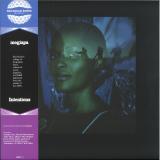
Rome, late afternoon, 1974. The light comes in over the colossal hills, the way it only does for an hour before the city forgives itself for the day's noise. Axefield is on an urgent quest to create cinema in the form of sound as a romantic alternative to disposable tools. He is looking for a sound so effortless he is not sure it can truly exist, but only be felt - somewhere between a film score, a heartbeat and a late night dinner at his favourite trattoria.
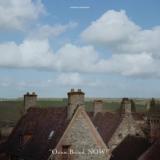
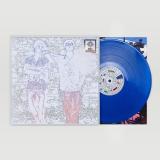
Ostuni Bound, NOW! is the debut album from Amsterdam-based electronic artist and composer Axefield, bringing club-heavy bass music together with the drama and romance of 70s Italian cinema. The narrative and emotions within the record stem from a romantic setting in Southern Italy that unexpectedly turned violent, forcing Axefield to flee the city after receiving the death threat "non provocare morte".
At its heart is the belief that romanticising life can lead us towards deeper human meaning, offering a different route from the hyper-capitalist pursuit of efficiency that increasingly shapes how we live and create. Throughout the album, Axefield worked through three characters representing innocence, control and destruction, using each as a framework for decisions in production, composition and mixing.
The album features Amsterdam-based rising UKG talent DANN and Johannesburg-based Kamohelo, frontman of Swedish electronic group Off The Meds. It's all starting to feel like cinematic time travel in which beauty is reintroduced in the realm of contemporary dance.
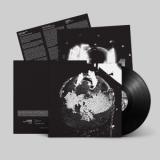
Released on Intercept alongside a beautifully crafted vinyl edition, Ostuni Bound, NOW! feels like the soundtrack to a film that was never shot. Somewhere behind him, a projector he cannot see begins to turn, playing a film for an audience that has not arrived yet.
As they arrive, he is the one who ultimately presses play.
And just like that, Ostuni Bound, NOW! Begins where Rome has always begun: beyond function and beauty and all that lingers in between.
Concrete Noir, the project of composer, sound designer, and educator Piero Fragola, returns with Blades of Grass, a new EP released on Italian label Deset, following the acclaimed Romance Ruins.
The record develops Concrete Noir’s atmospheric and cinematic approach to electronic music, combining dense textures, sustained rhythmic tension, and immersive sound design. Side A features “Density,” “Pure,” and “Sleepless Eyes,” while Side B presents two reinterpretations: Legowelt’s electro-driven remix of “Rain On Me,” which emphasizes its synthetic and nocturnal qualities, and Caruan’s dance-floor reworking of “Sleepless Eyes,” preserving its atmospheric character.
Conceptually, Blades of Grass shifts from the themes of transformation and decay explored on Romance Ruins toward resilience—the ability to bend under pressure without losing identity or coherence. The EP reflects Fragola’s broader artistic language, shaped by more than two decades of experience in electronic music, audiovisual arts, sound research, and modular synthesis, including his work as a designer for Tiptop Audio and previous releases on international labels.
Robert Nasveld (*1955 Utrecht) studied piano at the Utrecht Conservatory with Polo de Haas, Sas Bunge and Herman Uhlhorn, composition with Joep Straesser, and electronic music with Ton Bruynèl. After completing his piano studies, Robert Nasveld specialised in 20th-century repertoire, with a particular focus on Dutch, Russian and American music. He achieved international fame as a pianist for his interpretations of the works of the American composer George Crumb, which led to invitations to perform at various events, including the Warsaw Autumn Festival (1990). His connection with George Crumb also enabled him to produce a seven-hour live broadcast of Crumb's music for VPRO radio in 1986 and a television program with the composer. Nasveld recorded the complete works for one piano by George Crumb, which was released by the Attacca label in 1991. He has given concerts in Europe, Russia, and the United States.
Nasveld was also a member of the Orgella Quartet, founded in 1976 (with Margaret Krill, Polo de Haas, and Niek de Vente), Piano Kwadraat, and the Netherlands Pianists Quartet (with Marian Bolt, Corien van den Berg, and Niek de Vente). These ensembles specialised in performing music for two eight-handed pianos. He also collaborated with several vocalists, including Claron McFadden, Marjanne Kweksilber, and Liesbeth List (tour 1983/'84). Due to multiple sclerosis, he retired from performing in 1998.
From 1988 to 2021 Robert Nasveld worked for Dutch national radio (NOS/NPS/NTR) as a program producer for NPO Klassiek. Until 2004, he was editor of Supplement, which received the Silver Reiss Microphone in 1996, the highest award for a radio program, for its adventurous and innovative programming. Robert Nasveld also programmed concept evenings at Muziekcentrum Vredenburg, featuring contemporary music performed by soloists, ensembles, and the broadcasting orchestras for NOS/NPS. From 2019 until his retirement in 2021, he presented a series of podcasts for NTR/NPO Radio 4 about electronic music pioneers. The three compositions on this LP are the only tape pieces recorded by Nasveld. They were created at Ton Bruynèl’s studio at the Utrecht Conservatory and the Institute for Sonology in Utrecht.
Blume returns to James Tenney's Postal Pieces with a second volume: the three Swell Pieces and Koan, written for Alison Knowles, Pauline Oliveros, La Monte Young and Malcolm Goldstein, on vinyl for the first time from one of the key suites of 20th Century avant-garde music.
In 1970, James Tenney (1934-2006) reversed the entropy of his own life and went west. After spending the majority of the post-war years at the centre of cultural ferment in New York, he accepted a position at the newly inaugurated California Institute of the Arts (CalArts), alongside Allan Kaprow, Simone Forti, John Baldessari, Nam June Paik, Alison Knowles, Morton Subotnick, Harold Budd and Charlemagne Palestine. While the move began an enduring period of relative obscurity, Tenney quietly remained one of the most distinct and groundbreaking composers of his generation, producing a remarkably focused body of work inquiring after the elemental character and perception of sound.
Among the most celebrated of his efforts are the Postal Pieces, a suite of eleven compositions completed in 1971. Citing his strong dislike of writing letters, Tenney sent his friends short scores on the back of postcards. The eleven pieces are composed around three themes: his concept of swell form (utilizing repetition and progressing through a structurally symmetrical arch), intonation, and the desire to produce "meditative perceptual states."
Composed for a group of friends - the visual artist Alison Knowles, the composers Pauline Oliveros and La Monte Young, and the composer and violinist Malcolm Goldstein - the four works on this second volume are intimate, poetic and discreet. They were written roughly contemporaneously with the formation of minimalism by many of Tenney's closest friends, and share its elements of chance, durational tone, repetition and constraint, but they approach them on different terms, anticipating the more complex forms of post-minimalism. Rooted in gestalt theory, they are music in which the composer almost entirely disappears, offering greater attention to the artists to whom they were sent and to the subjective experience of the listener.
A student of Carl Ruggles, John Cage, Harry Partch and Edgard Varèse, an active member of Fluxus, a pioneer of computer music at Bell Labs and a collaborator of Carolee Schneemann, Tenney represents a winding thread connecting the entire history of American avant-garde and experimental music. The second collection by Blume attending to the Postal Pieces, recorded by The Barton Workshop under the direction of James Fulkerson, follows the long sold-out first volume (BLUME 022). It comes with exact replicas of the original postcard graphic scores and newly commissioned liner notes by Bradford Bailey.
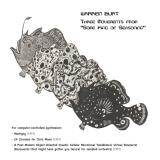
03: A Post-Modern Object-Oriented Chaotic Cellular Microtonal Teledildonic Virtual Simulacra! (Buzzwords (that might have gotten you tenure) for sampled orchestra)
01: Martigny (1991) for computer-controlled synthesizer
02: 24 Chorales for Chris Mann (1991) for computer-controlled synthesizer
EM Records is proud to release Three Movements from “Some Kind of Seasoning” by the eminent Warren Burt: composer (and performer, writer, instrument builder, educator) of genius. Burt was born in 1949 in the USA, and moved to Australia in 1975. Throughout his long and inspired career, his expansive aesthetic has eagerly embraced microtonality, improvisation and technology, fusing these elements in often humorous and/or irreverent compositions based on live interaction with intelligent or semi-intelligent machine processes. He sets up machine-generated musical environments and then “wanders through” their rules and behaviors, exploring the resulting possibilities in a manner which never results in tech-driven alienation or alienating randomness; Burt’s keen and personable musical intelligence is always evident. This release features music from the final sections of a near-six-hour epic cycle of interactive computer and synthesizer pieces from 1990-91, investigating the magical intermediate space between the human and the mechanical. Dedicated to Kenneth Gaburo, the music draws on wide-ranging inspirations including Sun Ra and Elliott Carter, Quincy Jones’ “Setembro” and Charles Ives, Portsmouth Sinfonia and ancient Greek modes. With good-natured humor, an openness to the excellence of “mistakes” and a wide range of timbres, the music includes progressions of "traditionally musical" pitches, delicate textures of sustained electronic tones, raucous and noisy combinations of sound. Available on 12” LP, CD and DL, with liner notes by the composer.
c 03: A Post-Modern Object-Oriented Chaotic Cellular Microtonal Teledildonic Virtual Simulacra! (Buzzwords (that might have gotten you tenure) for sampled orchestra) 1991 for computer-controlled synthesizer
[c] 03: A Post-Modern Object-Oriented Chaotic Cellular Microtonal Teledildonic Virtual Simulacra! (Buzzwords (that might have gotten you tenure) for sampled orchestra) [1991] for computer-controlled synthesizer
[c] 03: A Post-Modern Object-Oriented Chaotic Cellular Microtonal Teledildonic Virtual Simulacra! (Buzzwords (that might have gotten you tenure) for sampled orchestra) [1991] for computer-controlled synthesizer
Composer and multi-instrumentalist Koen Holtkamp has spent more than two decades shaping a body of work at the intersection of ambient, experimental, and electroacoustic music. Known for his role in the influential duo Mountains, as well as a solo catalog defined by texture and spatial awareness, Holtkamp has long explored how sound interacts with environment and perception. With Nightlife, he enters a new phase of that inquiry, one shaped as much by physical relocation as artistic evolution.
After leaving Brooklyn for the relatively rural setting of New York’s Hudson Valley, Holtkamp found himself immersed in nature and embracing a slower way of life, a shift that directly informed the album’s creation. Rather than rushing into a new project, he allowed the space itself to guide him, focusing on experimentation and play instead of a fixed outcome. Over time, a new instrument emerged from his modular system, built around physical modeling techniques that emulate plucked string sounds. Drawing on a deep affinity for acoustic traditions, from guitar soli to the kora and other chordophones, he began translating those influences into an electronic language, creating music that feels tangible, effusive, and even intimate, despite its synthetic nature. As the pieces took shape, Holtkamp expanded the project into a kind of imagined ensemble. Composed with specific collaborators in mind, the album features extensive contributions from drummer Greg Fox and saxophonist and flutist Matt Bauder, whose performances subtly reshape the material and draw it toward more fluid, song-like forms, alongside a guest appearance from Ben Vida on synth bass. Yet even as Nightlife occasionally resembles a band in motion, its construction resists traditional cohesion. Acoustic and electronic sources coexist to create a hyper-dimensional sense of space, with each element deliberately placed in its own distinct environment, yielding a complex yet inviting setting that feels both otherworldly and completely natural.
Much of the album was created during late-night sessions, which became a kind of personal ritual and ultimately inspired its title. Nightlife unfolds as a series of finely detailed environments, where stillness, texture, and subtle interplay take precedence over momentum. Each piece invites close listening while remaining open and unforced, reflecting both a change in pace and a deepening of focus. The result extends Holtkamp’s ongoing interest in how sound can shape, and be shaped by, the spaces we inhabit.
Creole Culture is the triumphant return of Dawn Richard’s King Creole era. Steeped in history but with its flag planted firmly in the future, Creole Culture pulls elements from Richard’s heritage as a Black and Native American woman who has spent a lifetime making and engaging with music. Following New Breed (2019) and Second Line (2021), Creole Culture is akin to a panel of a triptych: a fully-realized sonic and narrative universe in which Richard, as King Creole, rebuilds her hometown of New Orleans in her image. She not only honors her city for what it was or what it gave her, but stakes a claim for it as a cradle of global culture now and for all time.
Creole Culture follows two acclaimed avant-garde R&B albums with composer Spencer Zahn — the later of which, 2024’s Quiet in a World Full of Noise, found Richard exorcising the specters of grief and trauma in the wake of her father Frank Richard’s health struggles and the killing of her cousin Cisco. It is a softer take on the brass-soaked swagger of Richard’s previous King Creole efforts, an evolution brought about when she realized she had left a crucial viewpoint out of her exploration of New Orleans: her own. “New Breed was the story of New Orleans through my father’s eyes,” Richard explains. “I used his samples, his music, his cultures, his work with Chocolate Milk, his side of the family. Second Line was my mom — her interludes riddled the album with her depiction of what is meant to be a Creole woman in New Orleans. The masculine and feminine sides of King Creole had expressed themselves through them, but the story felt unfinished, like my version of the story was untold.”
That story is, for lack of a better word, complex: at turns triumphant and tragic, sexy and mournful, braggadocious and contemplative. Creole Culture presents Richard’s New Orleans as a utopian soundscape — an intoxicating blend of R&B, soul, hip-hop, pop, and jazz — that’s survived and thrived despite the dystopian circumstances visited upon it. Richard presents the melange of influence and artifact on Creole Culture with the care of a botanist nurturing new hybrids in a rose garden.
What emerges from that care is at once delightful and unexpected, enlisting a crew of guest stars including Big Freedia, Anjelika “Jelly” Joseph, Tarriona “Tank” Ball, and Durand Bernarr for features that play against type. Tank’s turn at spoken word verse on “l v r” serves to add dimension to King Creole’s New Orleans, as does Joseph’s undeniable voice on “chuuuurch.” “I’m not normally a features girl,” says Richard, ”but King Creole can’t build a world from scratch without help. What’s beautiful about the features here — which is also true of my band and producers — is they come from people who understand the materials of the world they’re from, they’re people I love, and they’re people who are just extraordinary at what they do. They’re part of the atmosphere of this place. You need them for the record to breathe.”
In the end, that’s what King Creole creates: a space where Dawn Richard can breathe, can be at peace with herself, and let loose with others. From finding love in opening single “enough” to relishing in the Afrocaribbean futurism of “fiesta,” Creole Culture is a tremendous, freeing breath of fresh air. It captures the resolve of a woman and a place who’ve survived the unimaginable and sees the future not as something to be endured, but as something to be created. Dawn Richard has been making that future one album at a time over the course of her career. Creole Culture is her most stunning one yet.
Creole Culture is the triumphant return of Dawn Richard’s King Creole era. Steeped in history but with its flag planted firmly in the future, Creole Culture pulls elements from Richard’s heritage as a Black and Native American woman who has spent a lifetime making and engaging with music. Following New Breed (2019) and Second Line (2021), Creole Culture is akin to a panel of a triptych: a fully-realized sonic and narrative universe in which Richard, as King Creole, rebuilds her hometown of New Orleans in her image. She not only honors her city for what it was or what it gave her, but stakes a claim for it as a cradle of global culture now and for all time.
Creole Culture follows two acclaimed avant-garde R&B albums with composer Spencer Zahn — the later of which, 2024’s Quiet in a World Full of Noise, found Richard exorcising the specters of grief and trauma in the wake of her father Frank Richard’s health struggles and the killing of her cousin Cisco. It is a softer take on the brass-soaked swagger of Richard’s previous King Creole efforts, an evolution brought about when she realized she had left a crucial viewpoint out of her exploration of New Orleans: her own. “New Breed was the story of New Orleans through my father’s eyes,” Richard explains. “I used his samples, his music, his cultures, his work with Chocolate Milk, his side of the family. Second Line was my mom — her interludes riddled the album with her depiction of what is meant to be a Creole woman in New Orleans. The masculine and feminine sides of King Creole had expressed themselves through them, but the story felt unfinished, like my version of the story was untold.”
That story is, for lack of a better word, complex: at turns triumphant and tragic, sexy and mournful, braggadocious and contemplative. Creole Culture presents Richard’s New Orleans as a utopian soundscape — an intoxicating blend of R&B, soul, hip-hop, pop, and jazz — that’s survived and thrived despite the dystopian circumstances visited upon it. Richard presents the melange of influence and artifact on Creole Culture with the care of a botanist nurturing new hybrids in a rose garden.
What emerges from that care is at once delightful and unexpected, enlisting a crew of guest stars including Big Freedia, Anjelika “Jelly” Joseph, Tarriona “Tank” Ball, and Durand Bernarr for features that play against type. Tank’s turn at spoken word verse on “l v r” serves to add dimension to King Creole’s New Orleans, as does Joseph’s undeniable voice on “chuuuurch.” “I’m not normally a features girl,” says Richard, ”but King Creole can’t build a world from scratch without help. What’s beautiful about the features here — which is also true of my band and producers — is they come from people who understand the materials of the world they’re from, they’re people I love, and they’re people who are just extraordinary at what they do. They’re part of the atmosphere of this place. You need them for the record to breathe.”
In the end, that’s what King Creole creates: a space where Dawn Richard can breathe, can be at peace with herself, and let loose with others. From finding love in opening single “enough” to relishing in the Afrocaribbean futurism of “fiesta,” Creole Culture is a tremendous, freeing breath of fresh air. It captures the resolve of a woman and a place who’ve survived the unimaginable and sees the future not as something to be endured, but as something to be created. Dawn Richard has been making that future one album at a time over the course of her career. Creole Culture is her most stunning one yet.
The title of Ghost Bridge, the East-Coast-spanning chamber ensemble Hour's fifth record, is less metaphorical than one might expect. Bandleader Michael Cormier- O'Leary repurposed it from an unrealized movie concept about a bridge that inexplicably starts disappearing. On the nearly-ten-minute title track of this richly imaginative suite of songs_written for a 13-piece ensemble that includes woodwinds, strings, and vibraphone as well as a rock rhythm section_Hour conjures up this central image with spectral string harmonics and free-time percussion gestures. While writing the keyboard pieces that became the takeoff point for the album, Cormier-O'Leary also found himself reflecting on the loss of loved ones or even his own mortality. The six kaleidoscopic instrumental pieces on Ghost Bridge, though, feel more cosmically inquisitive than straightforwardly elegiac, sketching a progression from existential doubt toward understanding and acceptance. Ghost Bridge forms a contrast with Hour's art-rock-informed, more improvisatory early releases, representing a step further into intricate chamber orchestration. Known for his work with Friendship, Wendy Eisenberg, and 2nd Grade, Phillybased multi-instrumentalist and Dear Life Records founder Cormier-O'Leary has made Hour a home for increasingly cinematic instrumental compositions since the mid-2010s. With dazzling production by Lucas Knapp, Ghost Bridge delivers plenty of the live ensemble's trademarks, especially cyclically developing guitar and keyboard melodies. However, even more than on Hour's last studio album, unconventional harmonies and sophisticated counterpoint take center stage here. These emotionally multifaceted compositions feel as rooted in contemporary classical and film soundtrack music as in indie rock. One of the most striking elements of Ghost Bridge is the more significant developmental role the orchestral instruments assume in each piece. Instead of underscoring Cormier-O'Leary's central hooks, there is a new mesmerizing level of detail to the group's conversational interactions and kinetic energy. "Centralia" is a stately and idiosyncratic fugue built from repeated and overlapping phrases, while Ghost Bridge's compositions are full of unexpected pivots in harmony that allow recurring melodic motifs to sound continually reshaded. On "Pearls," the chords modulate drastically around Cormier-O'Leary's inviting central melody in a way that emulates cuts in a film telling several parallel stories. There is an unsettled quality to the chords on Ghost Bridge, with Cormier- O'Leary's progressions avoiding firm grounding in either clearly sunny or melancholy tonalities. This mood is made more concrete by the record's sole vocal track, the jazz-inflected "Sky is Blue," featuring an uncannily gorgeous performance by Heeyoon Won. The song seems to be a communication from a person who has departed, offering consolation or perspective to someone left behind. Though its sonic palette is often tranquil, Ghost Bridge explores heartbreak, grief, anger, and helplessness in a distinct and pretense-free way. The project represents a bold step forward for Cormier-O'Leary as a composer and arranger, and on Ghost Bridge Hour reaches its most fully realized form to date, connecting soaring themes with an inventiveness that perfectly suits the searching nature of the subject matter.
The Chronicles of Narnia: The Voyage of the Dawn Treader is a 2010 fantasy-adventure film based on The Voyage of the Dawn Treader (1952), the third novel in C. S. Lewis’ fantasy series The Chronicles of Narnia. It is also the third and final installment in the original Chronicles of Narnia film series. Set three years after the events of Prince Caspian, the film follows the two youngest Pevensie children, Edmund and Lucy, as they return to Narnia to join the new king Caspian in his quest to rescue seven lost lords and to save Narnia from a corrupting evil that resides on a dark island.
Composer David Arnold scored the film, with themes composed by Harry Gregson-Williams (who scored the first two films). It was Arnold’s fourth collaboration with director Michael Apted. He created specific themes for the characters The Dawn Treader and Reepicheep, and used themes from the previous films for the opening and closing scenes as well as recurring characters, to ensure that the film is consistent with the franchise. The score was performed by an 87-piece orchestra and a 40-piece choir, resulting in an epic soundtrack with just the right magical touch to compliment this film.
OTHELLO is the debut album by pianist and composer Orson Claeys. Bringing together influences from jazz, hip-hop, urban culture, and everyday life, the record offers the clearest portrait yet of an artist shaped as much by the worlds around him as by music itself.
The title refers to Claeys' full name, Orson Dwight Othello Claeys, and reflects the album's central concern:identity. Throughout the record, personal experiences, cultural influences, and artistic inspirations converge into a body of work that seeks to understand how an artist is formed, both within and beyond music. Musically, OTHELLO builds on jazz, strongly intertwined with hip-hop, contemporary culture, and ideas beyond traditional musical frameworks. For Claeys, music is not a fixed genre, but an open and evolving form of expression.
This broad perspective is evident in the album's carefully chosen collaborations. A track like "WHAT A NIGHT" first took shape during a studio session with indie-soul singer Sevens, whose harmonic ideas laid the foundation for the track. As the composition evolved, Claeys felt it called for a stronger hip-hop voice. Through a recommendation from Mixmonster Menno of STUFF., he was introduced to L.A. rapper IAMOMNI, whose contribution brought exactly the energy and perspective the track needed. The result unfolds like a late-night journey through Los Angeles, with IAMOMNI's contribution adding a sense of movement, character, and place.
Elsewhere on the album, "SPIRAL", featuring Belgo-Brazilian vocalist Helena Casella, grew out of a long-standing mutual admiration. Conceived as a meeting point between R&B and jazz, the composition balances the groove and emotional depth of the former with the improvisational spirit and spontaneity of the latter. The collaboration developed naturally from the outset, with Casella instinctively understanding the atmosphere Claeys envisioned while enriching the music with her own warmth and nuance.
A long-held ambition materializes on "SHADOWBOXING", where Claeys is joined by drummer, producer, and one of the key figures in contemporary Belgian jazz, Lander Gyselinck. Gyselinck's work, particularly his collaboration with Zwangere Guy on Pourriture Noble, was instrumental in showing Claeys how the language of hip-hop could coexist naturally with jazz, an idea that runs through OTHELLO. Drawing inspiration from boxing, the track is a musical equivalent of a fighter's walk towards the ring: focused, intense, and driven by the sense of anticipation that precedes stepping into the fight.
After this heightened intensity, the album gradually moves toward its closing statement. OUTRO / HANIN", featuring oud player Akram Ben Romdhane, a longtime collaborator whose playing forms a natural bridge between Claeys' previous work and the broader musical landscape explored across the album. The title references the Tunisian Arabic word hanin, meaning "nostalgia", a fitting conclusion to a work deeply concerned with memory, identity, and personal history.
Beyond music itself, OTHELLO is informed by a wider cultural landscape. Urban culture, with its visual language, creative independence, and sense of community, forms an important backdrop to the record. Sport also plays a significant role, particularly boxing and basketball, whose emphasis on discipline, focus, and resilience mirrors Claeys' own creative process. Rather than being treated as separate influences, these worlds coexist without hierarchy, reflecting an artistic vision that resists rigid boundaries and allows different disciplines, communities, and experiences to inform one another.
Come Back Down, the new album by Nashville experimental-pop duo Total Wife, was born from the edge of sleep. When composer and producer Luna Kupper would begin to fall asleep during late-night mixing sessions, the songs would follow her into the halfway place between dream and lucidity. Like Dale Cooper in Twin Peaks, she'd wake with a new perspective on the puzzle she was piecing together. "I'm a psychological mixer - I'm trying to think of how someone's experiencing the sound, versus getting stuck in trying to make all these different tones and using all this gear to make something sound a certain way," Kupper says. And like a spiral from waking life into dream, the songs on Come Back Down are endlessly self-referential, building whole universes from a single point. Kupper sold all of her synths to make rent before she started working on the album, and so every inorganic sound is instead built from samples of the band's own work. A guitar on one song may be reprocessed and used as a synth on the next, while everywhere on the album vocal samples are taken from a single unreleased cover of Elliott Smith's 'Between the Bars.' In tribute to this process, the album was almost named The Julia Set after the mathematical equation which feeds into itself again and again, creating beautiful fractal images. The intention was to create something complex but accessible; experimental, yet precise and without abstraction. In her lyrics, too, lyricist and vocalist Ash Richter is as straightforward as she's ever been. She drew on her experience of pandemic isolation to write about connection and disconnection, using her lyrics as a tool for the communication that was missing in everyday life. On the soaring, shoegazey track 'peaches,' a storm that forced the cancellation of a recording session became a metaphor for emotional distance. 'still asleep' chronicles Richter's euphoria after Total Wife's first tour, and watches it begin to curdle into paranoia. "Thank the full moon, my heart is overflowing," she sings, before: "Is there such a thing as too happy?" The experience of isolation was prompting Richter to think back to her childhood, a time marked for her by solitude and natural play - climbing trees, making mud pies, getting lost in the woods. On tracks like 'in my head' and 'second spring,' she uses the imagery of nature to recall that time and forge a connection with her lonely inner child. "I feel connected with transcendentalist writing and magical realism - trying to convey things in a concrete way, but with that element of psychology and mystery," she says. Richter and Kupper, friends from high school, formed Total Wife in 2016, relocating from Boston to Nashville in 2020. Both are visual artists as well as musicians, which they incorporate into their work with Total Wife via layered and purposeful visuals. A DIY streak underpins everything that they do - from handling their own artwork and music videos to recording their own music, releasing tapes through their label Ivy Eat Home, and hosting house shows in the basement they've christened Ryman 2. In Nashville they've settled into a weirdo scene living under the record industry's floorboards, a hive of collaborative and creative energy that has made them excited to call the city home. They also assembled a live band for the first time shortly after moving to Nashville, consisting of Ryan Bigelow, Sean Booz and Billy Campbell - injecting their creative process with a jolt of spontaneity and aliveness that has fed back into Come Back Down.
Come Back Down, the new album by Nashville experimental-pop duo Total Wife, was born from the edge of sleep. When composer and producer Luna Kupper would begin to fall asleep during late-night mixing sessions, the songs would follow her into the halfway place between dream and lucidity. Like Dale Cooper in Twin Peaks, she'd wake with a new perspective on the puzzle she was piecing together. "I'm a psychological mixer - I'm trying to think of how someone's experiencing the sound, versus getting stuck in trying to make all these different tones and using all this gear to make something sound a certain way," Kupper says. And like a spiral from waking life into dream, the songs on Come Back Down are endlessly self-referential, building whole universes from a single point. Kupper sold all of her synths to make rent before she started working on the album, and so every inorganic sound is instead built from samples of the band's own work. A guitar on one song may be reprocessed and used as a synth on the next, while everywhere on the album vocal samples are taken from a single unreleased cover of Elliott Smith's 'Between the Bars.' In tribute to this process, the album was almost named The Julia Set after the mathematical equation which feeds into itself again and again, creating beautiful fractal images. The intention was to create something complex but accessible; experimental, yet precise and without abstraction. In her lyrics, too, lyricist and vocalist Ash Richter is as straightforward as she's ever been. She drew on her experience of pandemic isolation to write about connection and disconnection, using her lyrics as a tool for the communication that was missing in everyday life. On the soaring, shoegazey track 'peaches,' a storm that forced the cancellation of a recording session became a metaphor for emotional distance. 'still asleep' chronicles Richter's euphoria after Total Wife's first tour, and watches it begin to curdle into paranoia. "Thank the full moon, my heart is overflowing," she sings, before: "Is there such a thing as too happy?" The experience of isolation was prompting Richter to think back to her childhood, a time marked for her by solitude and natural play - climbing trees, making mud pies, getting lost in the woods. On tracks like 'in my head' and 'second spring,' she uses the imagery of nature to recall that time and forge a connection with her lonely inner child. "I feel connected with transcendentalist writing and magical realism - trying to convey things in a concrete way, but with that element of psychology and mystery," she says. Richter and Kupper, friends from high school, formed Total Wife in 2016, relocating from Boston to Nashville in 2020. Both are visual artists as well as musicians, which they incorporate into their work with Total Wife via layered and purposeful visuals. A DIY streak underpins everything that they do - from handling their own artwork and music videos to recording their own music, releasing tapes through their label Ivy Eat Home, and hosting house shows in the basement they've christened Ryman 2. In Nashville they've settled into a weirdo scene living under the record industry's floorboards, a hive of collaborative and creative energy that has made them excited to call the city home. They also assembled a live band for the first time shortly after moving to Nashville, consisting of Ryan Bigelow, Sean Booz and Billy Campbell - injecting their creative process with a jolt of spontaneity and aliveness that has fed back into Come Back Down.
Pierre Mariétan (1935–2025) was a prolific Swiss composer, sound artist, and pioneer in acoustic ecology who spent most of his life working in France. Over his long career, he composed more than 300 instrumental, orchestral, vocal, and electronic pieces. Mariétan studied under avant-garde legends like Pierre Boulez, Karlheinz Stockhausen, and Bernd Alois Zimmermann. In 1966, he founded GERM (Groupe d’Étude et de Réalisation Musicales), a music collective that blurred the lines between strict composition and free improvisation. In 1969 the French BYG label released a GERM album and the same year GERM played at the legendary 5-day Festival in Amougies, Belgium, sharing stage with Pink Floyd, The Soft Machine, Frank Zappa, Don Cherry,…
In 1979 Mariétan founded the Laboratoire d'Acoustique Urbaine (Urban Acoustics Laboratory) to bridge environmental sounds, urban architecture, and musical composition. Mariétan was also a professor at the University of Paris where he taught the relationship between sound and space. Later in life, he remained active as a director for the Movement of Environmental Sound and continued developing permanent, immersive sound installations across the globe. His album Musique d’été was originally released on cassette back in 1983 by Éditions Salabert and Costin Miereanu’s Poly-Art International, and it has been slightly tweaked for this LP reissue. The record splits his vision of "Summer Music" into two different vibes. Side A is a deep dive into an electronic, synthesizer-driven landscape, while Side B features raw acoustic field recordings of forests and traditional Swiss alphorns.
Adjust the intensity of the sound at the same level, if not just above the background noise specific to the place of diffusion.
We welcome back one of Ireland’s most important electronic music pioneers, Roger Doyle for his third solo release on our Allchival label. For those who don’t know, Doyle is a composer, producer, founding member of the influential music-theatre company Operating Theatre, and friend to the label. Doyle has been exploring the possibilities of electronic sound since the 1970s which we have been mining.
Idir brings together new fixed electronic works, software piano improvisations and voice, alongside a new recording of music from Operating Theatre’s 1986 production of Sebastian Barry’s The Pentagonal Dream, performed by Olwen Fouéré. Also included is a response to the dreamlike language of James Joyce’s Finnegans Wake.
Meaning “between” in Irish, Idir feels like a fitting title for an album that moves between eras, technologies, theatre and electronic composition: connecting Doyle’s pioneering past with his continuing practice. Returning back to an electronic foundation, the majority of tracks were composed between 2023 and 2025.
"Time Is Slipping Away is an album by American R&B/jazz fusion producer, composer, keyboardist and vocalist Dexter Wansel. It is the last of four studio albums released at Philadelphia International Records. The album contains songs with different styles from P-funk to sophisticated quiet storm music to instrumental jazz-funk. It features the two popular songs ""The Sweetest Pain"" and ""I'll Never Forget (My Favorite Disco)"". The former song features vocals by soul singer Terri Wells. Time Is Slipping Away is available as a limited edition of 500 copies on purple coloured vinyl and includes an insert with lyrics."
out of Stock
Last delivered 7 days ago available to reorder, subject to availability
Forgotten electronic treasures by composer Ton de Leeuw rediscovered: first release in the Dutch Oscillation Series
Dutch Oscillation Series (DOS) proudly announces the release of a box set featuring the complete electronic works of Ton de Leeuw (1926–1996). This publication marks the first instalment in a new series that brings the history of Dutch electronic music to life for a broad audience. The official presentation will take place on Saturday, 12 September, during the Gaudeamus Festival for contemporary music in Utrecht.
Unique discoveries from the archive. For far too long, twentieth-century Dutch electronic music has remained hidden away in dim archives, only occasionally accessible under optimal conditions. Many compositions have not been heard for decades, perhaps after being presented to an audience only once. For this project, the original tapes were carefully traced in basements and archives, including the mysterious work Chronos, which was rediscovered in the collection of the Netherlands Music Institute (NMI). Even close collaborators of De Leeuw were unaware of the existence of Chronos. Another highlight of this release is the radiophonic oratorio Job (1956), which was awarded the Prix Italia radio prize by broadcaster Rai.
The recordings were digitised by experts at the Institute of Sonology and the Instituut voor Beeld en Geluid (Netherlands Institute for Sound and Vision). The music was then meticulously restored and mastered in the studio of Jos Smolders (EARLabs), in accordance with modern standards, while strictly adhering to the composer’s original artistic intentions.
The edition includes eight works composed between 1956 and 1982. The collection is released as a deluxe LP and CD box set and is also available via streaming and as high-resolution downloads. For an optimal listening experience, originally four-channel works such as Elektronische Studie (Electronic Study) and Antiphonie (Antiphony) are available as special Dolby Atmos downloads, allowing listeners to experience at home the unique spatial sound world envisioned by Ton de Leeuw.
About Ton de LeeuwTon de Leeuw was one of the most influential Dutch composers of the twentieth century. A thinker with a distinctly cosmopolitan outlook, he immersed himself deeply in musical cultures from India, Japan, and Indonesia, among others. His work consistently sought to bridge Eastern and Western musical traditions and concepts.
In addition, De Leeuw enjoyed a distinguished academic career. He served for many years as senior lecturer and director at the Amsterdam Conservatory and was affiliated as a senior research fellow with the University of Amsterdam. His book Muziek van de twintigste eeuw (Music of the Twentieth Century) remains a standard reference work.
French composer, artist and co-founder of Transversales Disques, Jonathan Fitoussi has developed a distinctive body of
work over the past two decades, blending analog synthesis, minimalism and electronic music.
Inspired by the mineral landscapes and luminous atmosphere of southeastern France, DELTAS is his fifth solo studio album.
Combining hypnotic drum patterns, flowing pulses, shimmering electronic textures and contemplative movements, it unfolds as a deeply immersive journey through space, light and motion.
A rich and evocative work from one of the most singular voices in contemporary electronic music.
out of Stock
Last delivered 8 days ago available to reorder, subject to availability
IVM Trio is made up of percussionist & composer Sébastien Forrester, producer & visual artist Mika Oki, and artist & producer Apulati Bien. All three sit within the French-Brussels axis, united by a shared love of free improvisation, sparse atmospherics and rapturous club mutations. Inner Voice Movement is a genuinely exploratory record — abstraction and contemplation sit side by side, as the trio dives into the micro-precision of computer music while mirroring organic, environmental schemes. These have long been persistent points of study for all three artists.
Arriving on Accidental Meetings, their debut album has been a long time coming, and it features three outstanding vocalists. South Korean artist bela brings the depth and range of their guttural vocals; Bristol-based Grove, a leading voice in punk-dancehall crossover, pulls things back with a spoken-word feature; and Naples sound artist Sara Persico rounds things off with a stunning excerpt of storytelling.
Created in collaboration with Florida-based production duo The Still Brothers, the album pairs Rollo's songwriting with beautiful analogue production and rich, organic arrangements. The project was further elevated by producer and mixer Mike Hill, before Grammy Award-winning mastering engineer Dan Millice put the finishing touches on the record.
Recorded over the course of several visits to The Still Brothers' studio in Florida, The Jelly Man was shaped by both its surroundings and the creative partnership at its heart.
Together, Rollo and The Still Brothers crafted a beautifully warm, analogue-sounding record, deeply inspired by Florida's natural beauty and the laid-back atmosphere. Recorded with an 8-channel Tascam tape machine, the album radiates warmth, vibrancy and character, while a host of carefully chosen collaborators bring their own distinctive voices to each track.
Rollo Doherty is a multi-instrumentalist, songwriter, producer and composer, as well as an accomplished filmmaker, illustrator and animator. His previous EP earned him support slots on Skinshape's UK tour and Palace's European tour, alongside airplay and support from BBC Radio, KEXP and NPR.
The Jelly Man marks an exciting new chapter for Rollo Doherty—an album that captures a sense of place, collaboration and timeless craftsmanship.
Created in collaboration with Florida-based production duo The Still Brothers, the album pairs Rollo's songwriting with beautiful analogue production and rich, organic arrangements. The project was further elevated by producer and mixer Mike Hill, before Grammy Award-winning mastering engineer Dan Millice put the finishing touches on the record.
Recorded over the course of several visits to The Still Brothers' studio in Florida, The Jelly Man was shaped by both its surroundings and the creative partnership at its heart.
Together, Rollo and The Still Brothers crafted a beautifully warm, analogue-sounding record, deeply inspired by Florida's natural beauty and the laid-back atmosphere. Recorded with an 8-channel Tascam tape machine, the album radiates warmth, vibrancy and character, while a host of carefully chosen collaborators bring their own distinctive voices to each track.
Rollo Doherty is a multi-instrumentalist, songwriter, producer and composer, as well as an accomplished filmmaker, illustrator and animator. His previous EP earned him support slots on Skinshape's UK tour and Palace's European tour, alongside airplay and support from BBC Radio, KEXP and NPR.
The Jelly Man marks an exciting new chapter for Rollo Doherty—an album that captures a sense of place, collaboration and timeless craftsmanship.
»Baby Ghost« is the debut album by double bassist and vocalist Jordan Sand. Released through Hallow Ground, it blurs the lines between different genres and modes of expressions, improvisation and composition and showcases the unique playing style the composer has developed. Sand blends her voice with the bowed harmonics and subharmonics of her double bass. At once conceptually rigorous and musically open-ended, Sand’s wordless meditations on death and what comes after are both visceral and explorative.
Sand is a boundary-crossing instrumentalist, performer, and session musician who has worked in folk, free jazz, pop, classical and new as well as experimental music. In 2020, she took a hiatus. When she picked up the bass again, she began stripping down the relationship to her instrument to its core elements, searching for a way to melt the sounds of bow and voice together. This resulted in the appearance of ghost notes, tones emerging from the addition or subtraction of two frequencies, and harmonics that she adds with her falsetto.
On »Baby Ghost,« Sand utilises this acoustic sound and the spontaneous precision of her improvisational practice for pieces that deal with the subject of dying. They move from more polyphonic improvisations toward abstraction, touching upon harsh noise and minimalistic bow-chants before returning briefly to a melodic soliloquy, and finally landing on an extended subharmonic drone. This progression reflects the journey of the spirit after death; the experience of visions, memories, ecstasies and terrors before the dissolution of the self.
Sand performs this process physically, blending her voice with her instrument to explore how the senses might dissolve and merge when they enter a state between life and beyond-or-between-life. Born out of the moment and dedicated to a lost friend, »Baby Ghost« is quite literally an otherworldly achievement.
This is the first full-length release from South Korea"s beloved pansori psych-pop band available worldwide. The release follows an extremely successful and eventful year for LEENALCHI. They had their first-ever North American tour, opening for Japanese Breakfast at Stern Grove, sessions at KCRW and (rumor has it) KEXP, and in the fall, they"ll be on the East Coast, including opening for Geese at Forest Hills on the very same date this record comes out. LEENALCHI is led by the great composer Jang Young-Gyu, who has undoubtedly scored all your favorite Korean horror movies, including The Wailing, Train To Busan, and the Good, The Bad, The Weird. Sugungga sounds like animals talking to each other over tripped-out bass lines. It gets its name from the old Korean folk tale about a clever and loyal turtle who tries to lure a rabbit underwater and into the lair of a Dragon King who has come down with an illness that can only be cured by the rabbit"s liver. What is the fate of the rabbit? This fall, you will find out.
The single is the latest collaboration from the pioneering electronic artist and follows “Intertwine,” which featured TT, aka Theresa Wayman of Warpaint. Other collaborations on A Body Of Voices include “Turns,” featuring the ethereal vocals of Nicole Miglis (Hundred Waters), and “True Love, Don’t Be Afraid” featuring Stephen McBean (Black Mountain & Pink Mountaintops), “Fight or Flight” ft. Aisha Badru, “Falling” ft. Maiah Manser and multi-instrumentalist Aaron Shaw, “Floating” ft. multi-instrumentalist and composer Spencer Zahn, and the unreleased track, “Take Me” ft. Raphaelle Standell-Preston (Braids, Blue Hawaii). A Body of Voices delivers the most collective and melodically driven project of his acclaimed quarter-century. Having spent decades mastering his natural instincts for space, tempo, and timing, LaValle set a deliberate goal to break beyond his usual parameters by inviting an expansive community of vocalists and marquee indie players into his realm. The resulting record pushes his sonic map entirely, seamlessly blending his signature, textural synthesis with a vibrant tapestry of voices spanning dream-pop, alternative, and R&B. Nearly thirty years into the project, A Body of Voices proves that while The Album Leaf remains unmistakably his, it is a pioneering musical universe he is never afraid to redefine.
This songwriting-focused approach on A Body of Voices marks a natural evolution for an artist who has been steadily making his mark as a soft-spoken innovator since 1999. Now based in Los Angeles, LaValle started out in the San Diego music scene, creating vivid, rhythmic, soaring instrumentals centered around the Rhodes piano. Over more than two decades of acclaimed releases on seminal labels like Sub Pop, City Slang, and others, he has become a definitive touchstone for meditative electro-organic music. While earlier milestones like 2023’s Future Falling and 2024's Blast EP found him increasingly renewed by outside perspectives, A Body of Voices brings that collaborative spirit to its full, unbridled potential.
Perhaps the most acclaimed pianist and composer from his generation in Norway, mostly known for his Lightning Trio and presence in a variety of bands - here with a new band playing in the crossroad between jazz, Norwegian traditional folk and improvisations from a very strong combination of musicians. Including Veslemøy Narvesen, Nicolas Leirtrø, Hans P. Kjorstad, Guro Kvåle and Brede Sørum.
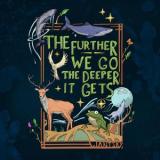
The final installment of the GIANT SKY trilogy, Giant Sky III, will be released on October 2nd, 2026, preceded by the single "Fleeting Glimpse", which offers the first taste of the new album. A companion postlude album, The Further We Go The Deeper It Gets, will follow on October 16th, 2026. Together, the two records complete an ambitious body of work that has seen Viken explore a broader and more introspective musical landscape than ever before. "Fleeting Glimpse" provides an evocative introduction to the final chapter of the GIANT SKY trilogy. While Viken"s band Soup has become renowned for its emotionally charged, crescendo-driven soundscapes, GIANT SKY allows him to embrace an even wider palette of influences. Drawing from alternative art rock, post-rock, electronica, ambient music, indie, folk, and progressive rock, the project balances immersive atmospheres with memorable melodies. In an era increasingly dominated by algorithms, artificial intelligence and digital perfection, Viken has consciously taken the opposite path. GIANT SKY is built around the human element of music-making, embracing imperfections and authenticity as artistic strengths. "This album has been with me for a long time. Some of the ideas on Giant Sky III go back many years, and in a way it feels like a cross section of the last 25 years of my life as a composer. We live in a time where music is increasingly shaped by algorithms, AI and endless digital possibilities. I suppose this record is my way of walking upstream a little bit - taking the slower route, trusting the human imperfections, and letting the music find its own shape. It wasn"t a quick album to make, but I"m proud of what it became: ambitious where it needed to be, modest where it should be, and above all, honest." - Erlend Viken
The final installment of the GIANT SKY trilogy, Giant Sky III, will be released on October 2nd, 2026, preceded by the single "Fleeting Glimpse", which offers the first taste of the new album. A companion postlude album, The Further We Go The Deeper It Gets, will follow on October 16th, 2026. Together, the two records complete an ambitious body of work that has seen Viken explore a broader and more introspective musical landscape than ever before. "Fleeting Glimpse" provides an evocative introduction to the final chapter of the GIANT SKY trilogy. While Viken"s band Soup has become renowned for its emotionally charged, crescendo-driven soundscapes, GIANT SKY allows him to embrace an even wider palette of influences. Drawing from alternative art rock, post-rock, electronica, ambient music, indie, folk, and progressive rock, the project balances immersive atmospheres with memorable melodies. In an era increasingly dominated by algorithms, artificial intelligence and digital perfection, Viken has consciously taken the opposite path. GIANT SKY is built around the human element of music-making, embracing imperfections and authenticity as artistic strengths. "This album has been with me for a long time. Some of the ideas on Giant Sky III go back many years, and in a way it feels like a cross section of the last 25 years of my life as a composer. We live in a time where music is increasingly shaped by algorithms, AI and endless digital possibilities. I suppose this record is my way of walking upstream a little bit - taking the slower route, trusting the human imperfections, and letting the music find its own shape. It wasn"t a quick album to make, but I"m proud of what it became: ambitious where it needed to be, modest where it should be, and above all, honest." - Erlend Viken
On Passing Fires, his follow-up to The Weather Up There, drummer and composer Jeremy Cunningham, alongside a tight circle of collaborators, transforms intimate piano sketches, family-room recordings, and richly layered studio performances into a vivid meditation on memory, love, and change. Vibrant, emotional, and full of unexpected turns, the album darts between hypnotic grooves, psychedelic textures, and tender poetic ballads, balancing homemade warmth with striking sonic detail.
Kukangendai are the innovative three-piece Kyoto based experimental rock band formed in 2006 with Junya Noguchi on guitar and vocals, Keisuke Koyano on bass, and Hideaki Yamada on drums. Since 2016 the band have set up shop in their studio and venue space, Soto, which houses an incredibly well tuned and powerful sound system that has become a well known destination for touring musicians. In March of 2025, Marionette was celebrating a belated 10 years of activity with label showcases across Japan in collaboration with Dotei Records, and Soto was inevitably one of the stops as many label alumni have set foot in the venue over the years. This is where I got to experience Kukangendai perform for the very first time and knew right then we were destined to work together.
Kukangendai embody an undeniable sense of timing and precision through collage-like repetition of minimalist phrases that manifest as a single unified rhythm. Their latest offering for Marionette, titled Baquet Wheel, is a purely acoustic endeavor, remarkably recorded live using Taku Unami's special binaural microphone. The trio seamlessly twist polyrhythms and melodies rooted in jazz, krautrock, blues, and Tuareg producing a timeless sound that preserves the primitive and memory evoking narratives buried deep within the music. Over the course of five tracks, the visceral nature of Kukangendai’s dynamic evolves from playful riffs that are seemingly familiar yet strikingly original, making it impossible to discern exactly when this material was conceived.
Kukangendai have maintained a prolific yet relatively low profile for the last two decades, with a handful of self-released editions on their own labels (Soto and Leftbrain) as well as a collaborative album with pioneering electronic music composer Ryuichi Sakamoto in 2018, then venturing outside Japan in 2019 to release their first widely distributed album on Ideologic Organ, a label curated by Sunn O)))’s Stephen O'Malley. Other collaborative projects to date include an album produced with rap group Moe and ghosts, live performances with Keiji Haino and with poet Gozo Yoshimasu, productions with the Chiten theater company, and most recently a remix album of their works featuring Carl Stone and Madteo.
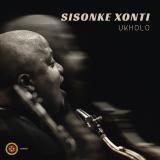
Sisonke Xonti is a celebrated South African jazz saxophonist, composer, and bandleader. Originally from Cape Town, he relocated to Johannesburg where he deeply immersed himself in the local jazz scene, collaborating with esteemed artists like Nduduzo Makhathini, Abdullah Ibrahim, Hugh Masekela, Herbie Tsoaeli, and Zim Ngqawana.
6 years later, Sisonke is back with a powerfull album ‘”uKholo” with Shane Cooper on double bass, Yonela Mnana on piano and vocals, Ayanda Sikade on drums, Keenan Ahrends on guitar, and Gontse Makhene on percussion. The album opens with" Khanya (Prayer)", featuring Mandisi Dyantyis —a piece that immediately signals a more mature direction to Sisonke's debut on As-Shams. Between jazz and spiritual jazz, this album will soon become a benchmark in South African jazz history. Produced by Simbad and executive producer Fred “Spider” Jacquier.
‘Oud-player with The Handover, Eissa was mentored by two legendary figures in Egyptian music: composer and multi-instrumentalist Abdo Dagher, and oud master Hazem Shahin. The music here is heavily rooted in both Egyptian classical music and a number of different folk music traditions, but it goes its own way, through expansive and intricate original compositions.
‘The epic title track, with Eissa playing oud exclusively, takes up two thirds of the album. It seamlessly transitions into heart-stopping recitation of the thirteenth century poet Baha´ al-din Zuhayr… serious, loving, tender and insistent, all at once. Visionary and virtuosic, but at the same time warm and close.
‘A future classic.’
The re-launch of mars assault records last year brings the possibility to re-issue its back-catalog: the tunes that were released during the first run of the label (1998-2003).
here we have 4 tracks from "Arach", from the studio concept "centiped sound system", ( a duo of composers, also including Peter Pan), which were originally released on two records ( mars assault 3.65b, mars assault 3.7r1) in the years 2000/2001: very sharply produced hard-tekno, very original also (the "sound of centiped" is like no other hardtechno), and yet 100% as relevant on the dancefloor nowadays as it was at the time.
Another mars assault record equality good to play in a party as to listen to at home.
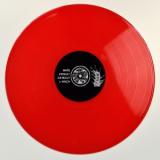
2025 cut with Hervé at dK Mastering /Paris (cut in 33/45rpm for optimum sound quality); 300 copies limited re-press, 180g pressing; a very sober object on the outside, but translucide red within.
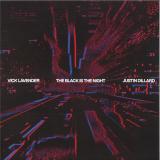
Forbidden Dance Records returns with its 13th release to the city where the label's journey first began: Chicago.
For The Black Is The Night EP, longtime Chicago house figure Vick Lavender joins forces with multi-instrumentalist Justin Dillard for three deeply musical downtempo cuts, bringing together the language of Chicago house with jazz, soul and live instrumentation.
Born and raised on Chicago's West Side, Dillard is a pianist, Hammond organist, percussionist, composer and arranger whose musical path has crossed with figures such as Branford Marsalis, Ornette Coleman, Roscoe Mitchell and the late Von Freeman. His musicianship has also become an integral part of Lavender's richly organic productions over the years.
Across three tracks, Lavender and Dillard slow down the tempo without losing the pulse. Warm keys, live instrumentation and loose percussion unfolding through the kind of deep, soulful arrangements that have long defined their work together.
A return to Chicago, but from a different angle.
out of Stock
Last delivered 14 days ago available to reorder, subject to availability
Japanese crossover and fusion are hot again now. As either an outgrowth of, or a spin-off phenomenon from, the global reappraisal of
city pop, Japanese fusion has been rapidly rising since around last year.
Widely known as a support member for YMO and also popular on the overseas club music scene through Colored Music, her cuttingedge dance-pop unit with Atsuo Fujimoto, keyboardist, composer, and vocalist Ichiko Hashimoto released this, her second solo work, in
1985. Released on DOMO, the label headed by Kazumi Watanabe, and naturally produced by Kazumi Watanabe himself, who also plays
guitar on the album.
A truly crossover work of remarkable freedom, moving across fusion, techno, piano pieces, danceable music, classical, Japanesque
sounds, bossa nova, ambient, and more. Her fleeting singing voice is wonderful as well.
Intentions, the debut of LA-via-Chicago beat maker, composer, and multi-instrumentalist megiapa, is a 40 minute master class in synth-heavy, jazz-informed Neo-soul.
megiapa's lush and emotionally layered album feels less like a collection of songs and more like a living archive of transformation. Across its warm synths, fluttering basslines, meditative voice notes and spiritual grooves, the Los Angeles-based producer, vocalist and composer maps the uncertain terrain between heartbreak, healing, fear, and surrender.
The album's title is genuine.
"The record is literally my intentions," she says. "It's a representation of my intentions, my dreams over the last five years or so."
Those years carried the weight of upheaval: the pandemic, the collapse of a long-term relationship, a move away from Chicago, and the disorientation that follows when the structure of your life suddenly disappears beneath you. But Intentions never sounds defeated. Instead, it radiates the quiet confidence of someone learning to trust herself in real time.
out of Stock
Last delivered 18 days ago available to reorder, subject to availability
Intentions, the debut of LA-via-Chicago beat maker, composer, and multi-instrumentalist megiapa, is a 40 minute master class in synth-heavy, jazz-informed Neo-soul. megiapa"s lush and emotionally layered album, feels less like a collection of songs and more like a living archive of transformation. Across its warm synths, fluttering basslines, meditative voice notes and spiritual grooves, the Los Angeles based producer, vocalist and composer maps the uncertain terrain between heartbreak, healing, fear, and surrender. Featuring: Ahmad Muhammad (aka Kafari), Mekala Session, Blvck Spvde, Aankha Neal, Telemakus, Aisha Mars, 10.4 ROG
out of Stock
Last delivered 18 days ago available to reorder, subject to availability
Jason Dungan (aka Blue Lake) and Johan Carøe find beauty in the rhythms
and repetitions of domestic life for collaborative album, 'Routine' - out September 25
Copenhagen-based multi-instrumentalists Jason Dungan and Johan Carøe didn't set out to make an album. Instead, as the title 'Routine' suggests, they found their way there through a process of habitual making and listening, developing an intuitive musical language to reflect the dreamlike meanderings and creative play of life's quiet moments. 'Routine' blends pop orientated sounds, Avant-garde minimalism, folk and new age with the emotive depth of film-score.
Their meeting was not entirely coincidental. Previously in bands such as Squares and Triangles, Jason Dungan has since recorded multiple albums under the moniker Blue Lake, including the lauded 'Sun Arcs', pursuing his passion for self-built percussion and multi-string instruments. Johan Carøe meanwhile is a composer whose film soundtrack work has seen him collaborate with Angelo Badalamenti, Arp, and Sofie Birch, at whose Andersabo residency (curated by Dungan) the pair first met, resulting in the highly praised album 'Repair Techniques' written by Birch and Carøe.
'Routine' emerged organically over many years against the backdrop of great personal change. As Carøe said goodbye to his father and welcomed his first child, the pair sent each other fragments of melodies and patterns, working up responses when time allowed to assemble a sonic palette that combined acoustic instrumentation of zither, clarinet, cello, saxophone (among others) with the textures of tape, drum machine and Yamaha DX7 synth. Inspired by the vulnerability and DIY ethos of Arthur Russell's home recordings, the vision of labels like Disques de Crepescule, and the art pop, experimentation inherent to late '70s and early '80s recordings from NYC and Japan alike, Dungan and Carøe conjured new forms for their folk, leftfield pop and avant garde influences from the low-lit living rooms of Copenhagen and rural Sweden. "I'm very interested in the ways in which music and art emerge from our wider experiences as people, workers, parents and in the daydreaming activity of making music," Dungan explains of a process which allowed the duo's individual styles to drift apart and merge together seamlessly. "I think the process was definitely capturing moments in time, but over a long time," Carøe adds. "It was a bit like improvisation, but with time stretched."
The music floats with grace and humility, remaining sophisticated yet acutely introverted.
Whether on 'Clouds', where soft layers of zither and clarinet are moved along by a featherlight bass riff and the hypnotic clip-clop of the primitive groovebox, or the gentle grandeur of cello rising and falling through 'Routine 1', the album reveals itself over 10 instrumental tracks, evoking the ineffable calm that descends when the light changes and the world turns inwards. The act of time passing became a key creative ingredient to the evolution of the album, enriched with the exciting challenge to transform their passing rounds of home recordings via a slow release musical dialogue. Jason found creative moments in the twilight hours to lay down zither, melodica, acoustic guitar to name but few, while Johan utilising "line-in and headphones" would manipulate, stretch and pitch Jason's melodic pathways during newly born naptimes.
Carøe rhythmically plucks and slides the stringed cello instrument, leaving palpable foundations on 'Hymn' and 'Chords', in a treated, stylistic approach akin to Mabe Fratti, while 'Silence' draws to a close with a gospel touch. Dungan's harp-motion zither flourishes reveal more classical connotations on 'Reunion' with inspiration of Bedroom Community's Nico Muhly as organs rise with Moogs, culminating with a climatic choral outro from friend, mezzo-soprano Anna Caroline Olesen.
'Routine' then is their first collaboration, an album of deep and sincere reflection with inviting overtones that gesture with unrushed authenticity. A document of a new-found friendship that opens a window into the most personal of spaces, where the daily practices of music and life exist side-by-side to wondrous effect.
This album is the soundtrack to Absolum, a fully hand-drawn universe with a unique story, created by the team behind Streets of Rage 4, TMNT: Shredder's Revenge, and more.
Known for Ori and the Blind Forest and Halo Infinite, lead composer Gareth Coker brings his signature emotional depth, blending dark fantasy orchestration with medieval-inspired themes and somber atmospheres.
From orchestral soundscapes to thrilling boss battle themes, this soundtrack features guest tracks from Mick Gordon (DOOM 2016, Wolfenstein: The New Order, Atomic Heart), Yuka Kitamura (Elden Ring, Dark Souls III, Dark Souls II), Motoi Sakuraba (the Dark Souls series, Mario Golf, Star Ocean), and Rachel Hardy (Stray Gods, Eternal Strands), setting the tone for the events unfolding in this cute yet twisted fantasy world.
Magic may be forbidden in these lands, but the music is no less enchanting!
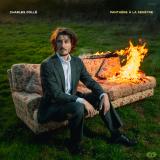
After releasing two EP, Charles Dollé reveals an ambitious and cinematographic album with his label Tricatel. He reinvents his musical language, undulating across ethereal sound landscapes in a style bordering film music. The self-titled "singing composer" lets his dreamy lyricism lead his creations: at the crossroads between indie pop, soft rock, electronic music, and ambient, Charles bends music genres with subtlety and contrast.
Radically exploratory, Raphael Loher’s Figuren is an album shaped by process and experimentation. Guided by intuition, listening, and a deliberate distancing from his primary instrument—the piano—, the LP marks a decisive step in the Swiss pianist and composer’s artistic development, expanding his sonic vocabulary while maintaining a distinct and personal language.
Figuren draws on ten intimate concert recordings from Keemuun—Loher’s debut for Three:four Records—created during the pandemic and performed in his studio for just one or two listeners. This source material was subsequently developed during a residency in the Blenio Valley, where Loher deconstructed melodic elements, isolated individual tones, and extracted resonances, reassembling them into new configurations. The process generated around 30 initial pieces and also informed his sophomore album, Hug of Gravity, released by Hallow Ground in 2025.
In a further stage of transformation, Loher processed these fragments through a Revox B77 tape machine, subtly altering their pitch before digitizing and reshaping them once again. This iterative cycle of manipulation and recombination forms the core of Figuren’s sonic language.
Departing from the more structured frameworks of his earlier work, Figuren foregrounds experimentation as both method and aesthetic. The compositions range from finely layered rhythmic microstructures to sparse, evolving melodic fragments, each unfolding with a precise sense of restraint.
2026 RE-Release
Beat machine freak duo Bill Converse and Patricia (Max Ravitz) present 380/750, a new EP on Acid Test that blends the two producers’ singular styles to form an emotive “introspection on the dance floor” experience over the course of 4 tracks.
Recorded at Ravitz’s Brooklyn studio over the course of two days, 380/750 features raw, no-multitrack, no-edit live recordings that showcase the duo’s intuition for expressive rhythm tracks. Considering Converse’s roots in the 90’s Michigan rave scene, and Ravitz’s Chicago upbringing, the midwestern strains really shine through. With rhythm-composer mutations, acid dripping over atmospheric synth textures, and the ever-present jack throughout, 380/750 offers a deep sound to get lost in that feels both new and classic at the same time.
out of Stock
Last delivered 13 days ago available to reorder, subject to availability
Errands is the first duo recording from Marja Ahti, Swedish-Finnish sound artist and electroacoustic composer, and John McCowen, a native of Southern Illinois, now residing in Iceland, whose work centres on a radical exploration of clarinet multiphonics. Working without the aid of electronics, McCowen has spent years finessing performance techniques that allow him to layer beating patterns and split tones that belie their source in a monophonic instrument. Ahti, in contrast, has built up a stunning body of work in recent years using a classic electroacoustic palette of electronic, field recordings and instrumental sounds. Sharing a bill at the 2024 iteration of Stockholm’s Edition Festival, the pair discovered a sensibility shared across their different sonic means, beginning the collaborative process that would eventually result in the mercurial side-long pieces heard on Errands.
The word ‘errand’ suggests something purposeful but routine, and Ahti’s and McCowen’s work is suffused with the everyday. Meeting with McCowen to record in Iceland, Ahti used the opportunity to gather field recordings, capturing not the natural sublimity often associated with the country—think Chris Watson’s shifting glaciers—but everyday life in Reykjavik. Snatches of bustling streets and what could be humming engines thread between static sinewaves, stretches of clarinet resonances and fleeting textures, the latter often at once visceral and impossible to identify. Errands: we are a long way from the grandiose framing devices favoured by the pioneers of electroacoustic music, yet many of their principles are at work here. The gradual metamorphosis of one sound into another, the carefully achieved ambiguity between the acoustic and electronic, the treatment of the stereo field as a compositional element: all of these link Ahti and McCowen’s music to the electroacoustic tradition, yet their sensibility is radically different. The overall effect is a kind of stillness, but one at peace with continuous change. Like the unwieldy but somehow stylish everyday forms captured in the Hertta Kiiski photographs that adorn the record's sleeve, the music seems to prize a kind of deliberate awkwardness, interrupting static held textures not with an abrupt cut, but with a quick fade, suddenly revealing background as foreground.
Ahti and McCowen’s world is everyday and unornamented, but also shadowed by the numinous. Halfway through 'Chorales', we hear an arrangement for overdubbed recorders of an early motet of Messiaen’s, O sacrum convivium! Played on recorders, the piece shrinks into delicacy and dim memories of childhood music lessons, while at the same time its harmonies retain the grandeur of their liturgical origin. This double quality inflects much of what follows on Errands, including snatches of field-recorded water or air, which seem at once elemental and domestic. Enlivened with countless details that repay repeated relistening, Errands is a record that leaves the listener ready to open their ears anew to their own sound environment.
Originally released by CRI in 1974 and now reissued on vinyl for the first time by Death Is Not The End, Music by Earle Brown is a concise overview of the composer's landmark early experiments with graphic notation, open form structures and magnetic tape.
_______________________________
Times Five (1963): Govert Jurriaanse (flute), John Floore (trumpet), Harry Sparnaay (bass clarinet), Jaring Walta (violin), Roelof van Driesten (violin), Gerrit Oldeman (viola), and Harro Ruijsenaars (cello). Ton Hartsuiker acts as piano leader, with Earle Brown conducting the acoustic instruments alongside pre-recorded magnetic tape.
Octet I (1953): Composed, created, and realised entirely by Earle Brown using multi-channel magnetic tape.
December 1952: Composed by Earle Brown, solo piano by David Tudor.
Novara (1962): Govert Jurriaanse (flute), John Floore (trumpet), Harry Sparnaay (bass clarinet), Jaring Walta (violin), Roelof van Driesten (violin), Gerrit Oldeman (viola), Harro Ruijsenaars (cello), and Ton Hartsuiker (piano), with Earle Brown conducting.credits
Originally released by CRI in 1974 and now reissued on vinyl for the first time by Death Is Not The End, Music by Earle Brown is a concise overview of the composer's landmark early experiments with graphic notation, open form structures and magnetic tape.
_______________________________
Times Five (1963): Govert Jurriaanse (flute), John Floore (trumpet), Harry Sparnaay (bass clarinet), Jaring Walta (violin), Roelof van Driesten (violin), Gerrit Oldeman (viola), and Harro Ruijsenaars (cello). Ton Hartsuiker acts as piano leader, with Earle Brown conducting the acoustic instruments alongside pre-recorded magnetic tape.
Octet I (1953): Composed, created, and realised entirely by Earle Brown using multi-channel magnetic tape.
December 1952: Composed by Earle Brown, solo piano by David Tudor.
Novara (1962): Govert Jurriaanse (flute), John Floore (trumpet), Harry Sparnaay (bass clarinet), Jaring Walta (violin), Roelof van Driesten (violin), Gerrit Oldeman (viola), Harro Ruijsenaars (cello), and Ton Hartsuiker (piano), with Earle Brown conducting.credits
Violeta García & Hora Lunga return with 4ever, their second album and the follow-up to I’ll Wait For You In The Car Park. Released in 2025 on -ous, their debut received airplay on BBC and NTS and was selected for Bandcamp’s Best Experimental Music year-end list. 4ever picks up where that record left off: in ordinary moments, small scenes and the strange emotional weight of being somewhere between places. But here, these moments are stretched across a much larger, darker screen. A night flight, a terminal, a bad connection. When too many feelings are carried from one place to another, everyday situations begin to feel epic, empty, or apocalyptic.
Built from García’s cello and Hora Lunga’s synths, samples and field recordings, the album pushes further into emotion, letting fragile melodies, orchestral cello gestures, heavy low-end and compressed noise melt into something both dystopian and strangely familiar. Its warmth is not meant to be an escape from this world, but something that appears within it. Acoustically, the album lives through the closeness of the materials, the way sounds stay with each other, and in the feeling that even the most unstable moments are being carried together. The album presents itself in scenes that fade into each other: quiet melodic fragments that are interrupted and restarted, unpredictable changes of direction, held together by an inevitable melody, a bright synth harmony unfolding into an almost orchestral cello arrangement. Later, a broken organ-like sample turning in circles, cello melodies appearing as if they were trying to remember a song that never belonged to one voice alone. An endless loop that is placed under changing lights, briefly opening into emotional chords, then slipping back into emptiness.
It is this instability that Violeta García and Hora Lunga place at the center of their collaboration. They do not decorate the cello with production, or place electronics around an acoustic centre. They explain: “On 4ever, we become part of the same unstable surface. What holds the record together is not resolution, but the trust in staying together as things distort, overload, disappear and return.”
Violeta García, an Argentinian cellist known for her solo work and for her role in the punk band Blanco Teta, brings the instrument close to the body, as melody, pressure, texture, noise and sudden emotional weight. García has brought her distinct musical voice to KEXP, Rewire, Le Guess Who?, Bad Bonn Kilbi, Silent Green, TransMusicales, Roskilde and more.
Hora Lunga, a Zurich-based producer and composer working across unstable song forms, treats electronics less as a frame than as a weather system: something that can hold a scene together, distort it or make it disappear. In recent years, his compositions have ranged from experimental song forms, sound performances, ensemble compositions and film music. His ensemble WIRREN consists of up to fifteen performers.
Named after a now-shuttered nightspot that overlooked the beach on Italy's picturesque Tuscan coast, Maxime Denuc's 'Club Imperiale' is a work of speculative historical fiction, a record that imagines a point of creative symbiosis between the Catholic church and the ecstatic dancefloors of the early '90s.
Using a MIDI-controlled pipe organ, Denuc creates dense clouds of impossible-to-play notes that ricochet backwards and forwards through history, from Rome's reverberant cathedrals to the white, sandy beaches of the Balearic Islands.
Two years ago, the Brussels-based French composer was forwarded a surprising video by a Belgian fan. It was shot during a Wedding at a church in Menorca, where the organist was playing 'Infinite End', the lead track from 2022's 'Nachthorn'. Immediately, Denuc knew that this was the thematic backdrop he'd been waiting for; he imagined the aftermath of the event, wandering through small villages and teetering on a cliff's edge, finding a provincial nightclub and retracing his steps back to the beach to witness the
sunrise.
out of Stock
Last delivered 11 days ago available to reorder, subject to availability
For its third release, Ambient Sans turns to one of the most quietly beloved works in Japanese ambient music.
Recorded at Biwa Studio in 1989, White Morning is the work of Fumio Miyashita — composer, arranger, and multi-instrumentalist whose output through the late 1980s and early 1990s occupies a singular space between healing music, environmental sound, and meditative ambient. Where his contemporaries were mapping the exterior world, Miyashita turned inward: his music was designed for the body as much as the ear, conceived explicitly for rest, focus, and presence.
White Morning distills that vision into its purest form. Two extended pieces — 目覚め (See The Light) and 朝の祈り (Morning Prayer) — built from soft synthesizer layers, delicate acoustic textures, and a stillness that feels less composed than discovered. Music that doesn't impose itself. Music that simply stays.
Originally released on CD in 1991 and circulated quietly ever since among devotees of kankyo ongaku and Japanese new age, White Morning has never appeared on vinyl — until now. Essential listening for anyone drawn to the environmental music of Hiroshi Yoshimura, the meditative depth of Satoshi Ashikawa, or the healing ambient of Klaus Wiese.
out of Stock
Last delivered 21 days ago available to reorder, subject to availability
For her new and most radical album »Electroacoustic Works for Halldorophone«, Martina Bertoni used the electronic instrument at EMS Stockholm to create four pieces that are massive in scale and incredibly intimate, sonically restrained and emotionally overwhelming—almost ambient and always demanding your full attention.
Martina Bertoni returns to Karlrecords with »Electroacoustic Works for Halldorophone,« her most radical album yet. The foundation for the four electroacoustic pieces was laid during a residency at Stockholm’s legendary Elektronmusikstudion (EMS) that the Berlin-based cellist and composer used to explore the curious instrument, originally designed by Halldór Úlfarsson in 2008, as an algorithmic system in order to examine tunings and the mathematical relationships between Aiming to analyse and understand their interaction beyond the composer’s control, Bertoni sought to engage more deeply with the concepts of time, tuning, and, most importantly, control. Accordingly, her four »Electroacoustic Works for Halldorophone« seem both massive in scale and incredibly intimate, sonically restrained and emotionally overwhelming— almost ambient and always demanding your full attention.
While the halldorophone—famously used by Hildur Guðnadóttir for her »Joker« score—roughly resembles a cello and can be played like one, it is an electronic instrument. The vibration of its strings is being picked up, amplified, and then routed through a speaker. This creates a feedback loop that becomes increasingly complex depending on how much gain is added to individual strings. Úlfarsson gave Bertoni a carte blanche for how to handle the instrument, but she stresses that she relied on »minimal interventions—some string strumming and plucking« that set the interactions of different sounds and frequencies into motion. »I decided to not approach it like a cellist would,« she explains. »Instead I used it as a kind of generative organ by turning it into a feedback machine, with tuned feedback triggering more feedback depending on the tuning, which was based on tetraphonic scales that I could apply on the four main strings as well as the sympathetic group of strings.«
Bertoni recorded the material in the EMS studio, later composing and arranging the four complex pieces in her home in Berlin, after which they were mixed and mastered by Ciaran O’Shea. While this can be considered a compositional abstraction process, traces of her concrete work as a performer are firmly ingrained in the music. »The halldorophone doesn’t have a line output, just a double set of speakers, which is why I recorded all sounds with two microphones in the EMS studio,« she explains. »That’s why there’s plenty of breathing sounds here and there—label owner Thomas Herbst and I jokingly refer to the album as my ›chamber music record‹.« And indeed, there is a striking sense of intimacy to these four pieces throughout which individual sounds, harmonic frequencies, and even subtle rhythmic figures seem to move both on their own accord but also according to a underlying vision that steers their interplay.
Indeed, »Electroacoustic Works for Halldorophone« is an album built on and marked by contrasts. The soothing polylogue of single sounds in the higher register on opener »Omen in G« is counterpointed by massive bass drones, while the second piece, »Nominal in D,« plays a cunning game of repetition and difference by combining thick textures with all kinds of rhythmic elements. »Fades in C«—the longest of the four pieces, clocking in at 17 minutes—unlocks the emotional potentials of the sonic qualities of the halldorophone, sounding at once serene and anthemic, and »Organon in D« closes the album by underscoring how Bertoni’s unconventional approach allows her to seamlessly transform simple, quiet tones into complex, towering walls of sound.
Forest Swords' debut album 'Engravings' is back in print on vinyl and CD for the first time in years, newly remastered by Rashad Becker with previously unheard bonus tracks exclusive to this edition.
Created by electronic producer and composer Matthew Barnes, and originally released via Tri Angle Records, 'Engravings' received instant acclaim from the likes of Resident Advisor, Pitchfork, The Guardian and saw Barnes take his hypnotic live show across festivals like Sonar, Glastonbury, Unsound and Le Guess Who.
While much of British electronica is defined by its inner cities, 'Engravings' was recorded in Barnes' hometown on the banks of an ancient river in Merseyside, the album's earthy, organic soundscape reflected the landscape and climate: all silt and sandstone, woodlands and wind, with the ghosts of Liverpool's pop music and clubbing history echoing in the near distance.
The album was a prototype for a sonic vocabulary Barnes has expanded on over the next few years: in critically acclaimed studio albums ('Compassion' and 'Bolted' via Ninja Tune), collaborations with Massive Attack and Neneh Cherry, remixes for the likes of Bjork, as well as commissions for video games, ballet and film scores - of which he has carved a career as an in-demand composer and sound designer.
'Engravings' is a snapshot of an artist confidently defining their own language: a piece of work that distills influences like dub, ambient, rave, post-rock and psychedelia into an ancient-futurist musical vision that feels timeless and vital.
Cello player and electronic artist Martina Bertoni returns with her 2nd album for Karl: Hypnagogia delivers six new, masterfully crafted tracks between experimental ambient, drone and modern composition.
Cellist and composer Martina Bertoni started playing the cello at a very young age. Classically trained, her career further developed around experimental and film music, for which her cello has been featured in numerous records, works and soundtracks for films and series. After two EPs and her debut full length All The Ghosts Are Gone (2020), Bertoni joined the Karl roster where she released Music For Empty Flats in January 2021 to critical acclaim (a.o. one of the Top Ten drone albums of 2021).
On her new album Hypnagogia she continues to explore the sonic possibilities of her cello which she uses as primary source for composition and sound processing through reverbs, feedbacks and sub-bass frequencies, thus crafting sonic sculptures, rich of atmospheres and frictions, fed by ambient as much as drone and modern composition.
In the words of Martina Bertoni:
"The six tracks that constitute Hypnagogia have been written during 2021 and partially inspired by the reading of Stanislaw Lem's book Solaris. The title refers to a transitional state of consciousness from wakefulness to sleep, during which one might experience sensorial hallucinations and lucid dreaming, and can tap into the pristine structures of the subconscious. Hypnagogia portraits an imaginary cosmic journey of the Self that crash ends into a blinding sun."
Sun Ra is better known to most as a musician than a poet, but he identified equally as both. My Words Are Music provides direct access to the sentiments of a poet who never called Earth home. The spoken word album hosts an inspired array of artists who personally chose their favorite Sun Ra poems to recite. Freed from the page, his poetry acquires an unexpected simplicity and poignance it possessed all along.
This all-star and intergenerational lineup of artists conjure wisdom from his words: spoken word elder Abiodun Oweyole of The Last Poets; rapper, and singer-songwriter Saul Williams; jazz experimentalist Melanie Charles; British-Trinidadian poet, novelist and musician Anthony Joseph; poet Mahogany L. Browne; poet, playwright, and conceptual artist Carl Hancock Rux; musician/digital composer L’Rain; singer, actor, and director Tunde Adibempe of TV on the Radio singer; British DJ and BBC radio host Zakia Sewell; ballistic hip-hop poet Jive Poetic; and longtime members of the Sun Ra Arkestra, Marshall Allen, Knoel Scott, and Tara Middleton.
Punctuated by impish electronic interludes composed and played by Marshall Allen, these voices bless Sun Ra’s poetry with new life My Words Are Music offers the opportunity to follow Sun Ra into a
better future. “Prepare for the journey,” he writes in his poem “The Cosmic Age”, “You have a rendezvous / With the living wisdom.” My Words Are Music is a project developed in conjunction with Living Sky, the all-instrumental Sun Ra Arkestra album released on Omni Sound in 2022
»Cosmogonical Ears« is Amosphère's first album for Hallow Ground. Following her contribution to the Swiss label’s »Epiphanies« compilation and her 2021 full-length debut »More Die of Heartbreak« on 33-33, it features three expansive pieces. The Paris-based composer and multidisciplinary artist delves deeper into themes of time, space, cosmology, human perception, and psycho-physical effects, crafting profound sonic meditations. Drawing on a minimalist approach while blending electronic and acoustic elements, Amosphère’s long-form compositions are living, breathing entities whose sonic richness and evocative power unfold gradually over time, putting »Cosmogonical Ears« in direct kinship with previous Hallow Ground releases by artists such as Kali Malone and FUJI|||||||||||TA.
The album opens with its longest piece, »Land of eternal delight,« composed for the Buddha10 exhibition at the Museo d'Arte Orientale in Turin. Written during three years of isolation—a period in which Amosphère explored meditation practices and diverse belief systems—it merges mythology with personal transcendental experiences, reflecting on a challenging time for humanity. »By blending Buddhist philosophy and sculpture with my own meditation practices, I sought to explore a way for people to transcend the boundaries of space and time—not as a believer, but as an observer,« she explains. Featuring handmade ceramic instruments and recorded by Thomas Lefevre, the piece combines Amosphère’s electronic organ with Marc Lochner’s flute contributions, creating a sound that is simultaneously minimalist and expansive.
The concept of teleportation and how it challenges traditional notions of time and space serves as the foundation for the second piece. »Recent advances in quantum physics suggest that teleportation might be possible through quantum entanglement,« Amosphère notes. »What if science fiction is becoming reality—or has already existed in ancient times?« Drawing inspiration from theories proposed by physicists such as Roger Penrose, Amosphère again worked together with flutist Lochner, this time using her VCS 3 synthesizer. »Teleportation« weaves single notes into intricate, non-linear patterns that defy conventional logic, creating a complex auditory tapestry. The last piece »Black hole in, white hole out« was recorded on Corsica and features Miao Zhao’s bass clarinet drones alongside Amosphère’s church organ. It imagines the possible sound of crossing a black hole while also suggesting the study of its theoretical exit and its potential applications for large-scale time and space travel.
The questions posed by »Cosmogonical Ears« do not yield straightforward answers. Instead, Amosphère’s restrained yet intricately layered compositions require full immersion and concentration from the listener. As expressed by the album’s title—which envisions the birth of a new universe through listening—»Cosmogonical Ears« offers an experimental approach to auditory perception as a tool for seeking truth, freedom, and harmony between the outer world and the inner self.
Pressure Chords is the first joint album by composer-performer John McCowen, trombonist Weston Olencki and cellist Lucy Railton. McCowen’s composition is based on the spectral analysis of contrabass clarinet multiphonics, and the tuning system corresponds with the overtone spectrum of McCowen’s instrument. The trio adaptation of Pressure Chords presents itself as an exercise in both patience and intensity, slowly building towards an expressive finale. Across its 34-minute runtime, restrained minimalism slowly gives way to maximally affective sonic force.McCowen, Olencki and Railton first shared the stage for an improvised session at Berlin’s KM28. McCowen realised that he found two capable partners for creating orchestrations of his works for the contrabass clarinet. Olencki, who also contributes field recordings to the album, has worked across different genres and traditions, while Railton has made a name for herself as a composer and improviser as well as a performer of Just Intonation music. Weston and Lucy both have immense experience performing and composing music outside of equal temperament, so it seemed like a perfect situation, McCowen says. The trio first presented Pressure Chords live at Berlin’s Morphine Raum in 2023 before recording a studio version with Adam Asnan in the following year. The recording—mixed and mastered by Albert Finnbogasson in Reykjavík—elegantly captures the multi-layered tonal and sonic qualities that the musicians so carefully explore. As a result, their performance doesn’t so much invite but necessitate deep listening—time passes differently on and with Pressure Chords.
Issued on Crystal Clear vinyl is Max Richter’s emotive and minimal score to Damon Lindelof’s TV series about a post-apocalyptic global event where 2%
of the world’s population disappears without explanation. Richter’s approach explores the feelings of the protagonist’s family, the Garveys, through intimate,
small scale music. He tackles this psychological landscape by bringing a ritual quality to the score, while themes of departure and loss are represented by
a sense of sonic decay, relying on the instrumentation of a few sustained tones on pianos, harps and celesta.
Max Richter is a classically trained composer that defies boundaries. Trained at the Royal Academy of Music and finishing his studies under the tutelage
of avant-garde composer Luciano Berio in Florence, Richter’s career has followed many paths. His musical output ranges from ballets
(Wayne MacGregor’s Infra), reinventions of classical works (Vivaldi’s Four Seasons), collaborations with The Future Sound Of London, Roni Size and
Vashti Bunyan to writing scores for film and TV (Waltz With Bashir, Lost and Found, Last Days on Mars) and solo work.
The album title, Bachar Mar-Khalifé Plays Christophe, inevitably comes as a surprise: the Lebanese composer, singer, and multi-instrumentalist ventures into the world of the pop dandy who escaped the yé-yé era… From the very first notes, one thing becomes clear: splendor flows effortlessly from melodies restored to their fragility and simplicity. Bachar Mar-Khalifé explores the hypnotic melancholy of a world that is both sophisticated and crystal clear. A fascinating plunge “into this collapsing luxury,” as the lyrics of Paradise Lost say. Seven tracks with his collaborators Dogan Poyraz on drums and Aleksander Angelov on bass, seven narratives unfolding the musical richness of Christophe’s songs as much as that of Bachar Mar-Khalifé’s playing and singing. A captivating journey, both on record and on stage. It all started there, in fact. In April 2025, BMK dared to pay tribute to Christophe at the Fragile Festival, at the Cirque Zingaro, five years after his death. At first glance, it wasn't his familiar world. "I haven't idolized him my whole life," he explains. "I really knew Christophe personally before I knew his work in detail." During his childhood in Lebanon, and then after arriving in France in 1989 at the age of six, the music played at home left little room for Christophe's pop. "We listened more to Brassens, Brel, Ferré, Barbara. I hardly knew anything more than 'Les Mots bleus.' Then we met. Christophe loved the night, young musicians, exploring together..." In 2018, Bachar and Christophe recorded a Unik session for FIP, which involved recording a 45 rpm single live, followed by a concert at the Maison de la Radio. The younger brother has the opportunity to discover a legend, but also how it works: “His melodies allow you to go very far—even him, who seems to be searching for a new version with each interpretation, as if he wanted to return to the organic aspect of the song. A researcher who, out of a need for freedom, wants to escape the image people have of him.” So there was no question of overproducing these covers as one might do with the stage fright of tackling an intimidating work. “I tried to go very fast to deliver each song, as if I had composed it myself.” Working instinctively, very spontaneously, the bulk of the album comes from the trio's rehearsals and the concerts that followed. “I chose songs that moved me. Very beautiful melodies and very beautiful lyrics.” Whether the lyrics are by Jean-Michel Jarre or Alain Kan, “they often speak of love in danger.” “I like to hear this quote from Paradise Lost: ‘Dandy, a little cursed, a little aged / In this crumbling luxury.’ Here and there, he pruned the lyrics, as if to make them more audible, in Les Mots bleus, ‘The winter wind blows in April / I love the still silence’ – an evocation of the month of Christophe’s death. And he chose a little-known song from the yé-yé era, Les Amoureux qui passent, in which we hear the young trumpeter Siméon Petrov, who further expands the play on the archetypes of vintage romantic song. Between accepted fragility and the vertigo of feeling, between virtuosity of lightness and unfathomable depths, Bachar Mar-Khalifé unfolds an unexpected kinship with Christophe.” A kinship of silences and sonic surprises (a synthesized zurna sound in "Emporte-moi," for example) that will continue on tour. He is also preparing an album of original songs, his first since 2020, after many compositions for film and collaborations with other artists. He writes songs of love and dance, at a time when Lebanon and the world are experiencing such dark times. Perhaps this is yet another lesson from Christophe: to love and sing "in this crumbling luxury."
With the release of "Wildnis" in autumn 2026, Klangwart celebrate 30 years of the group"s existence. During numerous sessions in their own Inkiek studio in Unna/Germany and a residency in Montoriol/France in 2025, Klangwart have created their new work "Wildnis" ("wilderness"), inviting Sébastien Del Grande to add tenor and alto saxophone, drums, marimba and other various percussion instruments to their electronic textures. Catalan composer and performer Ivan Chin aka Ivan Telefunken also participated in the recording sessions by contributing to a Catalan version of Swiss group Grauzone"s famous new wave hit "Eisbär" under the title "Os Polar". Timo Reuber"s arrangements, production and mastering gave the album its final touch. Klangwart started their musical expedition into for them unknown territories already in 2014 when they went to Bogotá/Colombia in order to record with protagonists of the local music scene: Damián Ponce (drums), César Quevedo (bass) and Eblis Alvarez (violoncello), members of The Meridian Brothers, and singers Juanita and Valentina Añez Rothmann a.k.a. Las Añez. The result, released on Markus Detmer"s Staubgold label in 2019, was Klangwart"s trademark sound permeated by a Latin American pulse and pitch. With "Wildnis" the story continues: field recordings from Latin America are interwoven with delicate electronic structures, Del Grande"s iconoclastic approach to the saxophone meets Klangwart"s familiar organ drones, Catalan folk meets German Krautrock.
Eero Koivistoinen's debut album reissued in July Eero Koivistoinen is a wide-ranging composer and a talented musician – one of the all-time greats of the Finnish jazz. In 1965 Koivistoinen founded a trio that played avant-garde and fusion jazz together with Pekka Sarmanto and Edward Vesala. In 1967–68 he was a member of Blues Section – a group that is regarded as the first progressive rock band in Finland. Valtakunta (“Kingdom”) was originally released in 1968 and is Eero Koivistoinen’s first jazz LP. The songs of the album are based on the lyrics written by Finnish poets Pentti Saarikoski, Tuomas Anhava, Hannu Mäkelä and Jarkko Laine. The vocalists are Eero Raittinen, Seija Simola, Vesa-Matti Loiri and Koivistoinen himself. He also plays the tenor saxophone, piano and vibraphone, and is joined by a vast selection of legendary Finnish musicians, including Seppo "Baron" Paakkunainen, Pekka Sarmanto, Ronnie Österberg, Hasse Walli, Juhani Aaltonen, Antero Jakoila, Kaj Backlund, Esa Pethman, and Reino Laine among many others. All compositions are by Koivistoinen. The album reflects well the forthcoming compositional repertoire of Koivistoinen with its wide style spectrum. Valtakunta was reissued on vinyl in 2016 via Svart and the pressing quickly found a new home on the turntables of record collectors worldwide. After ten years, it's time to bring back this quintessential piece of Finnish psychedelia, avant-garde, free jazz, and progressive rock on wax and CD again.
Whispering Ln. Vol. II was recorded between 2018 and 2019 in America, alongside the pieces that formed the first album. These recordings belong to the same time and space, shaped by the same quiet focus and slow attention to sound.
While remaining rooted in minimalism, this album introduces several more rhythmic pieces, drawing inspiration from early electronic music – echoes of composers such as Tom Dissevelt and Raymond Scott.
Movement and stillness coexist throughout this record. Rhythms and patterns shift and occasionally dissolve. The music asks for little and offers even less explanation, inviting listening without urgency – to slow down and remain present. May it offer a moment of calm, where time loosens, and attention gently settles.
"Fuera del cielo" (1975) is an art rock/space jazz masterpiece infused with prog scents from one of the true legends of Argentinian rock. The sounds of floating acoustic pianos, organ and harpsichord, basslines and even bandoneon combine with Litto's own voice and create a unique blend of deep and delicate beauty. 'La Balsa' was the first Argentine massive rock hit. In 1967 Los Gatos became the most famous local rock band with this song. At the front, as composer and singer, was Litto Nebbia. Although this milestone has remained eternally linked to Nebbia's name, almost eclipsing the rest of his work, it is really his solo career that unveils the artist's overwhelming talent and his determination to create music freely, regardless of commercial considerations. It is an album to be filed next to the highly acclaimed "Bazar de los milagros" and "Cosas que no quieren morir", released the following year, creating an outstanding body of work that represents Nebbia's talent at its best. Nebbia's genius transcends beyond the Southern Hemisphere. The international scene of DJs and vinyl collectors shows signs of its taste for Litto Nebbia recordings, now highly sought after in their original editions, probably as part of a rediscovery of little-explored global sounds, within a journey through music always hungry for exciting new sounds. First time vinyl reissue, remastered sound.
Remastered limited edition double vinyl with double-sided screenprinted poster-cover (sleeve folds out to be one huge poster). A real collectors item!
When Off Off came out around June 1984, one couldn’t speak of an independent music scene in Portugal. Warm Records’ vague existence didn’t have any impact and Dansa do Som’s inaugural release appeared only in December. 10 years after the revolution, after two IMF interventions, a lot of political instability (not to say turmoil, in the first couple of years) and the natural excesses of a sudden burst of freedom, the Portuguese consumer had more choices but a generally poor standard of living. There was no entrepreneurial culture and serious second thoughts about investing private money in risky ventures.
After many complaints about the whole music scene (institutions, critics and record label executives, popular and classical music alike), something that would continue well beyond the end of the decade, Telectu decided to finance, record, produce, release and sell an album with complete independence from outside structures. Their karmic reward was profit. According to Vítor Rua, Off Off was the only album fully payed by the duo and the only one that really payed off. Not an easy accomplishment for a double LP housed in a large (also double-sided) screenprint with complicated cuts and folds. The artwork was conceived by António Palolo, a friend and multidisciplinary artist. It was based on a collage of heavily saturated and xeroxed polaroids framed in shocking pink and green. Palolo was considered the third member of Telectu, regularly producing slides, video and other visual support for their shows. The inspiration for the type of cover came from GRM’s Gramme series.
Off Off is divided in four distinct sides, each one corresponding to a “theme” or “function” related to Telectu’s manifold artistic interests and interactions. The titles are also gateways to influences and a small portion of Portuguese cultural life:
- Side 1 / “Diagonale” is dedicated to Egídio Álvaro, art critic and gallery director (he opened Diagonale in Paris). Performance art was arguably his main artistic concern over the years, so the music on this side is suggested for use by one or more performers in live or playback situations. The three tracks segue into each other, linked by a synth arpeggio much in the same way as Telectu’s previous “Belzebu” álbum (1983);
- Side 2 / “Anarké” is dedicated to the composer Filipe Pires, one of Jorge Lima Barreto’s recurring invocations when asked about worthwhile contemporary music in Portugal. It is subtitled “concert music”, proposing «a new form of listening». Three tracks also, and these are separated by “clap interludes”, which basically consisted in the following: JLB and VR each had a pair of headphones on, and they clapped their hands according to the rhythm of the music each one was listening. Both musicians were interacting with a different Steve Reich piece: Vítor with “Music for Mallet Instruments”, Jorge with “Six Pianos”. The result is disjointed clapping, an awkwardly deliberate celebration of their own music. Telectu applauded themselves.
- Side 3 / “Cornucópia” is subtitled “music for theatre” and dedicated to Luís Miguel Cintra and Luís Lima Barreto (JLB’s brother), both connected to the Cornucópia theatre company. The side consists of several short pieces previously used as interludes in the Cornucópia staging of “Mariana Espera Casamento” (1983). Field recordings, mood pieces, ambience and a numeric poem (“Soneto Soma 14x”, by E.M. de Melo e Castro) read by João Perry, a quite well-known stage actor. His voice is treated with a flanger effect;
- Side 4 / “Palolo” is “video music”. It’s a one-take mix recorded from cassette sources (Telectu studio experiences) and done live while watching António Palolo’s Om film (1978) projected on the living room wall. It’s a deep, immersive, quasi-mystical 20-minute piece perfectly suiting the meditative, abstract, fluid images created by Palolo by mixing paint and water inside a bathtub. One imagines the Cosmos, hardly suspecting the technique. The film is 90 minutes long, so the music on the LP is of course edited.
The six titles on sides 1 and 2 evoke demons, all of them with conflicting symbolism, since it varies from culture to culture, religion to religion. No explanation is given and Vítor Rua has no idea where this imagery comes from. During virtually the whole stretch of the 1980s, Jorge was the one in charge of titles and concepts, and Vítor didn’t bother too much even reading the liner notes :) In any case, when you synchronize the listening experience with the imagery, a powerful impression emerges, a feeling of being in the presence of these entities while placing yourself inside the sonic narrative.
Off Off is undoubtedly a seminal album in the history of electronic music, as much Heldon as Fripp & Eno, jazz and American minimalism, cosmic out-thereness, mantric miniatures. Telectu at the height of their powers, still very early on, delivering an album-manifesto advocating intermedia art and the fierce independence of Portuguese musicians «from the scum of capitalist music industry monopolies. It’s a path to follow, albeit one that requires enduring hardships and retaliation from music industry gangsters.» Despite a few journalists deemed «capable of being free», the media are «enslaved by the dominant and fascist imbecility of the speculators of light music.» Off Off is addressed to those journalists «and to an audience angry at the cultural misery imposed upon us ..., certain that this music will open new horizons of musical pleasure in the conception of Portuguese avant-garde music, and in the open consciousness of us all. OFF OFF repeats Freedom.»
Those two words are a direct lift from Alberto Arbasino’s 1968 book Off Off, the basis of which is a critical analysis of Theodor Adorno’s and Dwight MacDonald’s ideas concerning the stratification of culture in different levels (high, mid and low) and the pervasiveness of mass culture in the form of a culture industry. In very simplistic terms, and that is precisely the point that inspired Jorge, Arbasino argued that it was possible and desirable to effect a revolution from below, cultivating alternative circuits completely cut-off from what he termed the in-in reality. Telectu’s record was a deliberate demonstration that it could be done, displaying Freedom in the face of all the gatekeepers and other human obstacles.
From Berlin to Lagos: Jembaa Groove expand their sound on "Be A Lover"
Berlin-based outfit Jembaa Groove return with "Be A Lover", a four-track EP set for full release on 18 September via global soul imprint Agogo Records. Following two critically acclaimed albums and an intensive period of touring across Europe and the US — including a SXSW showcase and a widely acclaimed KEXP session — this latest release marks a new chapter in the band’s trajectory. Built around highlife rhythms and shaped by Afro-jazz and the more organic edges of Afrobeats, "Be A Lover" unfolds with a warm, languid and deeply soulful feel, capturing different strands of today’s multifaceted Afrofusion scene.
Here, the band strips back from a seven-piece ensemble to its two founding members, while at the same time opening outward into a deeply collaborative space. At its centre is a close creative partnership with celebrated Nigerian highlife revivalists The Cavemen., alongside contributions from London-based, Nigerian born soul artist Azekel, Lagos vocalist Tim Lyre, and Malian icon Fatoumata Diawara.
“This record has a different flavour,” says Owusu. “It’s really about collaboration — different feelings, different thoughts, different energies coming together.” While centred around the Lagos contemporary scene, the record is shaped by a wider diasporic network stretching across London, Lagos, Berlin and Amsterdam, cities producer and bass player Yannick Nolting describes as “the pillars where everything that is happening in today’s highlife and Afro-fusion scene.”
Formed in Berlin in 2020, Jembaa Groove began after a chance meeting between bassist, producer and composer Yannick Nolting and percussionist, vocalist and songwriter Eric Owusu. Drawing on their respective musical journeys — Nolting’s years working with Lusophone artists in Lisbon and Owusu’s deep roots in Ghana’s highlife tradition, including work with Pat Thomas and late highlife legend Ebo Taylor — the project quickly took shape: their debut album Susuma established a powerful, poly-rhythmic sound grounded in highlife, jazz and soul, while 2024’s "Ye Ankasa | We Ourselves" expanded that vision through collaborations with artists across Ghana and its diaspora, including UK based Ghanaian singer, rapper, percussionist, and arranger K.O.G and legendary Ghanaian highlife musician Gyedu-Blay Ambolley.
The collaborative spirit continues on "Be A Lover", most of which grew out of a meeting with sibling duo The Cavemen. at Supersonic Jazz Festival in Amsterdam in 2023, leading to a sustained exchange of ideas between Berlin and Lagos. With two acclaimed albums behind them, The Cavemen. have emerged as central figures in both Lagos’ alternative music scene and the wider contemporary highlife revival, bringing the genre to a new generation through a stripped-back, melody-driven sound. “There was some kind of magnetism towards Lagos,” says Nolting; for Owusu, who is Ghanaian but spent much of his life in Nigeria, the connection runs even deeper. “I feel lucky to be able to bring different cultures together and make something really beautiful,” he says. A key part of that process was a close working exchange between Nolting and The Cavemen.’s Kingsley Okorie, who effectively stepped into a co-producing role on three out of four of the tracks.
The one exception is opener No Pain No Gain, which features Nigerian-born, East London-based Azekel, whose smooth, R&B-leaning vocal moves through a slow-burning arrangement of bright keys, gently rising horns and atmospheric synths, anchored by Owusu’s organic percussion.
The title track Be A Lover, featuring Afro-fusion Lagos artist Tim Lyre, distills the EP’s central message into its most immediate form. Backed by syncopated percussion and a gently smouldering arrangement, Lyre’s voice moves with a laid-back, melodic ease, delivering a simple refrain: “be a lover, not a fighter.” “It’s a very simple message,” says Nolting, “It’s about showing more love, on a personal level but also more broadly… just show love.” That same sense of warmth runs throughout the record, reflecting its core idea.
On Obi, The Cavemen. take centre stage, with Kingsley Okorie leading through melancholic, plaintive vocals rooted in classic highlife. In contrast, his brother Benjamin James punctuates the track with high-pitched vocal interjections, heightening the emotional tension against a backdrop of slow, restrained instrumentation.
Waka follows with a more melodic, hook-led refrain from Eric Owusu, whose loose, almost conversational delivery creates a striking contrast with Fatoumata Diawara’s unmistakably powerful, raspy vocal. The collaboration grew out of a chance meeting while Owusu was on tour, with ideas exchanged quickly and Diawara returning a finished vocal within days. “We are so proud to have her. It’s a privilege” says Owusu. "Be A Lover" is a record shaped by connections like these — between people, scenes, and cities. “It was partly intention, partly destiny,” says Nolting. “We met these people along the way, and somehow Lagos was meant to come into our path.”
Saxophonist Patrick Shiroishi and drummer Jason Nazary present their new album, "here i am no i". The release marks their duo debut for We Jazz Records, adding to an expanding release catalog also including Nazary"s solo album Spring Collection (2021). "here i am no i" is a free-flowing body of work with continuous forward-motion, building on the acoustic duo setting and expands with electronics and voice landing somewhere beyond genre. Dedicated to jaimie branch, the album is a spontaneous product of trying to come to terms with the unimaginable loss of a close friend. Patrick Shiroishi is a Japanese-American multi-instrumentalist, composer & poet based in Los Angeles. His solo work has appeared on labels such as Sub Pop, Touch, American Dreams and Otherly Love. Jason Nazary is a Brooklyn-based drummer and producer, whose work has previously appeared on the We Jazz label on the solo album Spring Collection and on New Monuments by Amirtha Kidambi"s Elder Ones. RIYL: Patrick Shiroishi, Jason Nazary, Anteloper, jaimie branch, Y-OTIS, Koma Saxo, Jon Hassell.
When we go searching for a Black avant-garde, we have to be prepared to look in unexpected places. The route to a Black avant-garde involves walking down – what some might consider – peculiar highways. Where they see strangeness, a road leading them nowhere, we see nothing but beauty. The paths Darren Cunningham went down, the highways he took to make Actress, are a chapter in the story of the Black avant-garde. Cunningham the footballer. Cunningham the Wulfrunian. Cunningham the ex-footballer. Cunningham the DJ. Cunningham the Londoner. Cunningham the producer. Cunningham the painter. Cunningham the writer. Cunningham the composer. This is where the Black avant-garde in Britain is made. This is where you have to go to find it.
Across an expansive discography of more than ten LPs, Actress has created his own arcane language of hermetic references and inter-dimensional electronic composition.
Radical Frame arrives 18 years since debut album Hazyville, and it feels like an apotheosis. The image realised. We get the full gamut of Actress signatures. Short bursts of broken down music. Tiny sketches of zoomed-in sound. Refracted dance floor heat. And we get more.
Perhaps Radical Frame is a container for everything that Cunningham has built so far. A frame he is handing over to the next in line. The next artist to make their own way in the Black British avant-garde.
Wenn wir nach einer schwarzen Avantgarde suchen, müssen wir bereit sein, an unerwarteten Orten zu suchen. Der Weg zu einer schwarzen Avantgarde führt - wie manche finden mögen - über ungewöhnliche Pfade: wo sie Fremdheit sehen, einem Weg, der nirgendwohin führt, sehen wir nichts als Schönheit. Die Wege, die Darren Cunningham beschritt, die Highways, die er befuhr, um Actress zu erschaffen, sind ein Kapitel in der Geschichte der schwarzen Avantgarde. Cunningham, der Fußballer. Cunningham, der Wulfrunianer (Anm.: Einwohner von Wolverhampton). Cunningham, der Ex-Fußballer. Cunningham, der DJ. Cunningham, der Londoner. Cunningham, der Produzent. Cunningham, der Maler. Cunningham, der Schriftsteller. Cunningham, der Komponist. Hier entsteht die schwarze Avantgarde in Großbritannien. Hier muss man hingehen, um sie zu finden.
In einer umfangreichen Diskografie von mehr als zehn Alben hat Actress seine eigene, geheimnisvolle Sprache aus hermetischen Referenzen und interdimensionalen elektronischen Kompositionen geschaffen.
„Radical Frame” erscheint 18 Jahre nach seinem Debütalbum, „Hazyville”, und fühlt sich wie eine Apotheose an: das Bild ist vollendet. Wir bekommen die ganze Bandbreite von Actress' Markenzeichen zu hören: Kurze Ausbrüche reduzierter Musik, winzige Skizzen von vergrößertem Klang.
Vielleicht ist „Radical Frame“ ein Gefäß für all das, was Cunningham bisher geschaffen hat. Ein Rahmen, den er an den Nächsten weitergibt. An die nächsten Künstler:innen, die seinen eigenen Weg in der britischen Avantgarde der Schwarz.
When we go searching for a Black avant-garde, we have to be prepared to look in unexpected places. The route to a Black avant-garde involves walking down – what some might consider – peculiar highways. Where they see strangeness, a road leading them nowhere, we see nothing but beauty. The paths Darren Cunningham went down, the highways he took to make Actress, are a chapter in the story of the Black avant-garde. Cunningham the footballer. Cunningham the Wulfrunian. Cunningham the ex-footballer. Cunningham the DJ. Cunningham the Londoner. Cunningham the producer. Cunningham the painter. Cunningham the writer. Cunningham the composer. This is where the Black avant-garde in Britain is made. This is where you have to go to find it.
Across an expansive discography of more than ten LPs, Actress has created his own arcane language of hermetic references and inter-dimensional electronic composition.
Radical Frame arrives 18 years since debut album Hazyville, and it feels like an apotheosis. The image realised. We get the full gamut of Actress signatures. Short bursts of broken down music. Tiny sketches of zoomed-in sound. Refracted dance floor heat. And we get more.
Perhaps Radical Frame is a container for everything that Cunningham has built so far. A frame he is handing over to the next in line. The next artist to make their own way in the Black British avant-garde.
Wenn wir nach einer schwarzen Avantgarde suchen, müssen wir bereit sein, an unerwarteten Orten zu suchen. Der Weg zu einer schwarzen Avantgarde führt - wie manche finden mögen - über ungewöhnliche Pfade: wo sie Fremdheit sehen, einem Weg, der nirgendwohin führt, sehen wir nichts als Schönheit. Die Wege, die Darren Cunningham beschritt, die Highways, die er befuhr, um Actress zu erschaffen, sind ein Kapitel in der Geschichte der schwarzen Avantgarde. Cunningham, der Fußballer. Cunningham, der Wulfrunianer (Anm.: Einwohner von Wolverhampton). Cunningham, der Ex-Fußballer. Cunningham, der DJ. Cunningham, der Londoner. Cunningham, der Produzent. Cunningham, der Maler. Cunningham, der Schriftsteller. Cunningham, der Komponist. Hier entsteht die schwarze Avantgarde in Großbritannien. Hier muss man hingehen, um sie zu finden.
In einer umfangreichen Diskografie von mehr als zehn Alben hat Actress seine eigene, geheimnisvolle Sprache aus hermetischen Referenzen und interdimensionalen elektronischen Kompositionen geschaffen.
„Radical Frame” erscheint 18 Jahre nach seinem Debütalbum, „Hazyville”, und fühlt sich wie eine Apotheose an: das Bild ist vollendet. Wir bekommen die ganze Bandbreite von Actress' Markenzeichen zu hören: Kurze Ausbrüche reduzierter Musik, winzige Skizzen von vergrößertem Klang.
Vielleicht ist „Radical Frame“ ein Gefäß für all das, was Cunningham bisher geschaffen hat. Ein Rahmen, den er an den Nächsten weitergibt. An die nächsten Künstler:innen, die seinen eigenen Weg in der britischen Avantgarde der Schwarz.
out of Stock
Last delivered 29 days ago available to reorder, subject to availability
After meeting and working with Janko Nilovic - the extraordinary French library maestro - on a new album, while traveling and performing together around the world for almost 10 years, Igor Zhukovsky & Romeo Miussky - the multi-instrumentalist production duo, and rhythm core of The Soul Surfers - were inspired to make a record of free, spiritual, esoteric sounds which blended together on tape and made Sound Excitement happen.Drawing on their experience as soundtrack composers and using heavyweight Soviet analog equipment, including a few vintage personal instruments belonging to some legends of the Soviet leftfield music scene, Igor & Romeo started experimenting with genre-blending music. The outcome of their recordings are a mixed bag of different moods and genres."It's something similar to a library record or more like a compilation of many different library records on one LP for a good decade if you know what I mean? It's the work which we're really excited about and excited to share with you! ...oh that's hell of a wordplay!"
out of Stock
Last delivered 26 days ago available to reorder, subject to availability
Music From Memory presents ‘Miraggi’, the debut release by Argento, a new project conceived by composer and producer David August. Written between Berlin and the Tuscan coast, the record unfolds as an imagined soundtrack to the Mediterranean, shaped by memory, longing and a profound connection to landscape.
The earliest sketches emerged during extended periods spent along Italy’s Tyrrhenian coast, where the shifting light, vegetation and ever-changing presence of the sea became lasting creative impulses. At the same time, an immersion in Italian library music of the 1970s and ‘80s quietly informed the project’s tonal language, while traces of jazz fusion and Balearic ambience surfaced not as direct references but as distant echoes.
Built around a dialogue between synthesizers, electronics, acoustic percussion and environmental recordings, ‘Miraggi’ balances rhythmic movement with spacious, cinematic composition. During the recording process, August was joined by drummer and percussionist Lorenzo Setti, whose performances and co-writing became an integral part of the album’s evolving rhythmic language. Across extended improvisations and recording sessions, August and Setti gradually shaped a musical language that feels both deeply personal and quietly transportive, allowing atmosphere and place to become as important as melody or rhythm.
The title ‘Miraggi’ (‘Mirages’) emerged organically, evoking a longing for something that remains just out of reach — something that cannot fully be grasped or lived. It suggests a suspended state between perception and imagination, akin to a hallucination or a dream. In this sense, ‘Miraggi’ reflects the project’s inner narrative: an imagined soundtrack shaped by desire, memory and the spiritual abundance of the Mediterranean Sea.
‘Miraggi’ will be released on vinyl and digitally via Music From Memory on September 10th 2026.
out of Stock
Last delivered 8 days ago available to reorder, subject to availability
Jack Wyllie, a composer, multiâÇ`instrumentalist, and co-founder of the Mercury Prize nominated Portico Quartet, debuts under his own name. The album radiates hope, mirroring nature s beauty and cyclical rhythms while weaving through contemporary jazz, ambient, classical, and postâÇ`rock. Collaborators include Hania Rani and Duncan Bellamy.
British composer Simon Goff interprets space, both within ourselves and the objects that surround us with Interior Realms - vol.1; a wondrous, contemplative work of electronic chamber music.
The idea first came from the philosophical idea underpinning the book Interior Realms, published by Theatrum Mundi in 2021. In it, a collection of essays reflects upon architecture’s influence on the human spirit. It challenges us to think not only about music as space, but also about how architecture can shape our ideas of composition. It also asks us to think about how space can make us experience music internally differently.
Interior Realms, the album, inhabits this idea and creates a dreamlike, atmospheric arch between its outer and inner parts. Joyous, immense and light-filled compositions sits side by side with the almost pure silence and introspect of its inner core. Goff wanted to create parallel compositional voices, performing them in various locations, each offering its own sonic character, unique spatial sounds, and reverb. Together with his long-time collaborator, Lynn Wright, the album was recorded in the Großer Wasserspeicher, Berlin's oldest water tower, and at the Grunewaldkirche, a location known amongst others from being the birthplace of many great works by artists such as Nils Frahm, Dustin O´Halloran and more. Cellist Anne Müller appears alongside Goff’s violin and viola on several pieces as they improvised and interacted with each other in the resonance of the space.
In addition to his own endeavors, Simon composes primarily for film and has collaborated with Hildur Guðnadóttir, Jóhann Jóhannsson and Peter Broderick among others. His collaborators has left an inspiring mark on him, all while standing firmly on his own feet with grand intention and results as heard on this absolutely brilliant atmospheric work.
"Mighty Vertebrate" is the International Anthem debut from Anna Butterss (2024). The Adelaide-born bassist/composer has been a first call for LA tour and studio work since relocating there in 2014 - racking up credits with notables across the experimental, jazz, and pop worlds alike - but their most notable contributions to the burgeoning LA scene have been as a member of both Jeff Parker"s ETA IVtet and rising proto-trance supergroup SML, who Pitchfork says "represents the thrilling next phase of a vibrant L.A. community."
The final collaboration between Eliane Radigue and Important Records is this double LP edition of Triptych. Radigue insisted that her music only be released on vinyl if the pieces would fit without being edited or cut. Triptych met those requirements leaving room for an etching on the 4th side.
Back to music after three years of silence... On the suggestion of Robert Ashley, Douglas Dunn commissioned Triptych from Eliane Radigue for choreography. Only the first part of Triptych was staged at the premiere at the Dancehall/Theatre of Nancy on February 27 1978. Recorded in the composer's studio in Paris.
After the 1974 premiere of Adnos in San Francisco, a group of French students introduced Eliane Radigue to Tibetan Buddhism. When she returned to Paris, she†began to explore this spirituality in depth, which slowed her musical production up until 1978. Triptych marks her return to composition, and draws its inspiration from "the spirit of the fundamental elements, water, air, fire, earth" Eliane Radigue likes to add that this has often been useful to her in her moments of research and transitions.
This three-part composition, with its great humility and contemplative simplicity, heralded a new period of her work and was the first in a series of masterpieces inspired by Tibetan Buddhism: Adnos Trilogy (1980), Songs of Milarepa (1983) - with the voices of Lama Kunga Rinpoche and Robert Ashley , "Jetsun Mila"(1986), as well as the Trilogy of Death: Kyema (1988), Kailasha†(1991) and Koume†(1993).
The compositions recorded here are a product of work with computers in synthetic speech, song and vocal sounds and were created between 1972 and 1975. The music was realized on two different computer music systems and takes advantage of, and attempts to extend and explore their features. The system employed to realize speech songs was created at the Bell Telephone Laboratories for research in synthetic speech and speech communication. Since the system was not designed for musical purposes, its limitations were severe and its musical use a great (and often rewarding) challenge. The system used for In Celebration and The Story of Our Lives was designed with the expressed purpose of creating synthetic musical voices, and was therefore much better suited to the task at hand. As with any high technology project, there was extensive collaboration in the production of the works.
The works on this disk are called computer music because the sounds were created numerically in a computer before reaching magnetic tape and loudspeakers. The computer did not compose the music. However, it was only used as a sound synthesis and analysis medium. In order to hear the sounds which are represented in the computer as successions of numbers it was necessary to attach a digital-to-analogue converter to the computer. The converter transformed the succession of numbers into a fluctuating voltage which was recorded directly on to audio tape.
The technique used to create the synthetic voices is called speech synthesis-by-analysis. For this method of speech synthesis, only those words, phrases and sentences which have been spoken into the computer previously (via an analogue-to-digital converter) may be synthesized. First the digitally-recorded speech is analyzed by programs which extract the attributes (parameters) of the speech for short time segments (.01 sec.). From these parameters the speech may be recreated in a form which resembles the original recording very closely. But for musical purposes the parameters are most often altered before synthesis. It is possible, for example, to change the natural pitch contour of the speech into a melodic line or to change the speech speed without altering the natural pitch level.
The variety of musical patterns which may be created from the analytic parameters is limited only by the composer's imagination. Most of the speech sounds on the recording were created by changing the pitch and duration attributes of the original on resynthesis, but for a few, the resonances (the formants) of the speech were altered as well. The voice of the book in The Story of Our Lives was created by replacing the program which simulates the sound of the human vocal cords with one consisting of 64 sine tones glissandoing at different rates. All the textures in which more than one voice is heard were obtained by mixing the synthetic voices together digitally.
Piano Works 2016-2026 collects fourteen impromptu pieces by composer and producer John Carroll Kirby, written whenever he had the opportunity to sit at a piano while on the road. These mostly solo works for piano were recorded in Los Angeles, Rome, Tokyo, Wollongong (Australia), rural New Zealand and London. Piano Works marks a departure from the full-band sound of recent albums Blowout and Septet, which Kirby has spent the past years performing live around the world. The album is a study in piano repertoire: Baroque, Romantic, Impressionist, jazz, minimalist, atonal, and more. Most of the pieces have an impromptu feel - improvised, or meant to sound improvised, or at least written in one sitting. The collected pieces on Piano Works are a document of Kirby's life as a piano player and touring musician, and "serve as the melodic / harmonic lexicon for what would inform all my other compositions of the past ten years." John Carroll Kirby has scored two feature films, and his solo piano song "Walking Through a House Where a Family Has Lived" formed the score for Oscar-nominated short film Retirement Plan.Fans of John Carroll Kirby's cult favourite solo album Conflict will find plenty to love in Piano Works 2016-2026.
out of Stock
Last delivered 14 days ago available to reorder, subject to availability
Héritage Mélodies is the meeting point between saxophonist and composer Jean Vernhères and Black Stamp Music, brought together by a shared passion for the warm colors of music, groove, and the beauty of sound.
Nurtured from an early age by jazz and African-American music—from blues and soul to hip-hop—Jean Vernhères also ventured into Highlife, Afrobeat, and Funk, exploring the fertile “Black Atlantic” that runs throughout his musical journey.
For his first album as a bandleader, he brings together Pierre Bauzerand on Steinway piano, Laurent Vanhée on double bass, Guillermo Roatta on drums, and, as a special guest, Alfio Origlio on Fender Rhodes and piano. Six original compositions where Soul Jazz, Latin Groove, Afro-Caribbean rhythms, spirituality, and intimate melodies come together.
Recorded at Bernard Estardy’s legendary Studio CBE and mastered in Berlin at East Side Mastering, Héritage Mélodies embraces a true audiophile aesthetic: from the breadth and spaciousness of Haumea City, a nod to CTI Records, to the delicacy of Marion.
More than a jazz record, Héritage Mélodies is a story of lineage, travel, and transmission: a personal tribute to all those who have carried forward a musical heritage that transcends time.
Jack Wyllie, a composer, multiâÇ`instrumentalist, and co-founder of the Mercury Prize nominated Portico Quartet, debuts under his own name. The album radiates hope, mirroring nature s beauty and cyclical rhythms while weaving through contemporary jazz, ambient, classical, and postâÇ`rock. Collaborators include Hania Rani and Duncan Bellamy.
out of Stock
Last delivered 34 days ago available to reorder, subject to availability
Layered guitars, synths and wordless vocals set the scenery in this epic, beautiful and introspective solo debut by musical wanderer Lynn Wright.
Wright, who has mostly eschewed developing a fixed artistic identity throughout his already long career, has preferred to remain on the periphery of collaborative projects and behind the scenes. It took until recent times for him to make “Before The Sinking Plains”, which arrives as his first solo recording after decades of traversing underground scenes in New York and beyond. Wright defines the album as “a collection of atmospheric compositions structured as songs or songs masking as atmospheric compositions.”
The album began during a long neurological illness as guitar loops Wright would make each morning in his apartment and let play quietly in the background. At some point he began recording the ones he liked and adding layers of treated guitars, vocals, and synths, and then, eventually, giving them defined structures. The album features none of the aggression of his louder bands and improvisatory projects, but retains the dark hues.
Before The Sinking Plains lives on the familiar peripheries of our post-everything sound world, with elements of everything from washed-out dream pop and atmospheric drone works to sparse noir folk and minimalist vocal composition moving within the linings of Wright's subtle yet grand pieces, creating a perfect backdrop for watching the sky merge with the vast open fields.
Since relocating to Berlin some years ago from New York, he has worked closely with composer Simon Goff, who mixed his current album, as an editor, engineer and composer on various film and recording projects. He also plays lap steel guitar in Swans bassist Dana Schechter’s band Insect Ark. This is just the top of the iceberg when it comes to Wright's collaborations and projects throughout the years.
Minions & Monsters is the brand new 2026 installment in the popular Minions franchise. The animated adventure follows the Minions as they find themselves caught up in a world of larger-than-life creatures, unexpected challenges, and the kind of chaotic situations that have made the franchise a global success. The film expands the Minions universe while staying true to the humor and charm that audiences have come to love.
The movie’s original score is composed by Oscar-nominated composer John Powell, whose work on How To Train Your Dragon, Shrek, and Kung Fu Panda has earned him a place among the most acclaimed composers working in film today. For Minions & Monsters, Powell delivers a lively orchestral score that complements the Minions on their adventure and brings it to life.
Minions & Monsters is available as a limited edition of 1,000 copies on yellow (LP1) and turquoise (LP2) vinyl, and includes a 4-page booklet with liner notes by John Powell.
‘A Wolf In Sheep’s Clothing’ (2006) is an unusual album, first because it does things with classical music that aren’t usually done. The songs Josephine Foster sings here are classical pieces, written (the texts are German poems) by some of the greatest German composers of the 19th century, Franz Schubert, Robert Schumann, Johannes Brahms, and Hugo Wolf. “Foster has found perhaps the most appropriate vehicle yet for her singular and affecting talents – 19th century German art-songs, wholly reconstructed here via Foster’s skeletal arrangements of voice and guitar” Pitchfork. Remastered and repackaged with new artwork.
When one thinks of the terms “mass” and “massive” in music, especially contemporary music, perhaps certain aural images come to mind: generic metal heaviness; dynamics-bereft noise; ear-battering dance floor madness; the multitudinous forms of drone darkness. All of these are massive in their own fashion. However, this newstudio album from 7FO (pronounced “nana f o”), a composer-performer based in northern Osaka, investigates and inhabits a different aspect of the massive. A glorious combination: dense low frequencies; sculpturally condensed blocks of sound, subtly swinging gravitational fields ― and a surprising sense of rolling and rollicking joyfulness and play. “Massive” doesn’t have to mean “dark” ― consider the sun. This is the third 7FO release on EM Records, following the well-received Ryu no Nukegara (Dragon's Husk) (2018). On these 2024-25 recordings, 7FO focuses his drum machines, synths and musical vision into eight compact structures which were partially inspired by the intense essence of American pre-war blues and the shining soul of traditional Ethiopian music, especially the works related to King Solomon and the Queen of Sheba. While not obviously evident, the glowing core of these musics has been captured and condensed here; another inspiration is the massive sculptural 1980s works of Yoshi Wada ― although there are obvious differences, there is a similar material tangibility to the vibration of the air. The final piece, “Shirohebi”, is an update of the b-side of 7FO's 7-inch single "Healing Sword" (2023), featured on Henry Rollins’ radio program. We invite you to experience and enjoy these eight massive blocks of sound, imbued with 7FO’s heartfelt warmth and humour, dense but not dark; shifting, rolling, appearing and disappearing: 7FO once picked up a roadside stone, which split as it sat in his palm. This experience, referenced in the release’s title, hints at the metaphysical magic of music, a realm beyond mere coincidence: even the massive density of stone can split, and reveal the magic within. Available on CD, LP and digital download.
For the best part of the last decade, Dumfries-born, Glasgow-raised Liam Shortall AKA corto.alto has been in his home studio in the Southside of the Scottish city, cooking up frenetic improvisations, diligently wonky productions and genre-spanning compositions with a close-knit group of local collaborators. Now signed to Ninja Tune, the multi-instrumentalist producer, composer and performer announces “SOME SMALL FORTUNE”, which finds Shortall at his most expansive and unpredictably exciting, working with his widest range of features to date, collaborating with the likes of Mick Jenkins, Vector, anaiis, Oscar Jerome, Jacob Alon (Brit Award winner), BINA., Terra Kin and Eriff alongside his longtime Glaswegian band, drummer Graham Costello, Mercury Prize nominated Fergus McCreadie and saxophonist Mateusz Sobieski to produce an electronic, classical, pop and indie-influenced record that extends far beyond the confines of its meticulous making
out of Stock
Last delivered 14 days ago available to reorder, subject to availability
Composing primarily with the piano, Kotaro Maruyama creates music for a variety of visual media, including commercials and short films. Influenced by the composer Toru Takemitsu, he places importance on the “silence” and "ambience" of sound, aiming to create works where the music quietly depicts a scene.
Kotaro Maruyama's first solo album, "Vapor Curve," is constructed entirely from the sound source of the OP-Z digital synthesizer. Notably, he avoids the concept of harmony for a single tone, instead pursuing a unique "woven harmony" created by intricately layering multiple independent melodies. Using only the OP-Z, and recording everything in a single take without using a computer, Kotaro Maruyama's "Vapor Curve" is distinguished by its uncompromising production style. The minimalist melodies that are layered to create an ambient soundscape, along with the incidental noise that gives an organic texture to the inorganic electronic sound, showcase the raw appeal of sound that is imperfect."
Originally scheduled for release September 2025, this album faced delays due to a series of errors involving the distributor, pressing plant, and cutting engineer. However, earlier this year, Personal Affair teamed up with a new distributor, Rubadub, who introduced them new pressing plant, allowing them to restart the entire pressing process from scratch. Emerging from Tokyo via Glasgow, this release is now ready to deliver a fresh sound to the world."
BUCHLA MEETS ORCHESTRA IN QUADRAPHONIC SPACE ON CIANI/ORKEST
Suzanne Ciani, Metropole Orkest and Simon Dobson release historic immersive performance in multiple immersive formats including quad vinyl.
Silverlake, CA \\ June 4, 2026 – Electronic music pioneer and five-time Grammy nominee Suzanne Ciani joins the internationally acclaimed Metropole Orkest, conducted by Simon Dobson, for the release of CIANI/ORKEST, a landmark live album composed entirely of new work, created specifically for this unprecedented collaboration.
Recorded at Amsterdam Dance Event (ADE) before a rapt audience, CIANI/ORKEST is not a retrospective. It is a bold, immersive meeting of the Buchla electronic instrument and 50-piece orchestral sound. The result is a sweeping sonic landscape, at once intimate and monumental.
Under the direction of the Metropole Orkest, renowned for its genre-defying collaborations with artists from jazz to contemporary classical - strings shimmer, brass swells and woodwinds echo the organic, fluid qualities that have always defined Ciani’s sound. “This project feels like a homecoming,” says Ciani. “The Buchla was always orchestral to me, an instrument capable of infinite color. Hearing those colors unfold through the Metropole Orkest has been profoundly moving.”
At the heart of CIANI/ORKEST lies Ciani’s lifelong commitment to quadraphonic sound. From her early Buchla performances in the late 1960s to her 2018 release LIVE Quadraphonic, Ciani has treated space as a primary compositional parameter. Working alongside immersive producer KamranV, Ciani continues to explore immersive sound as both artistic and human gesture. Kamran’s decades of work in spatial formats, converge here in service of a singular goal: to let sound behave as it does in the physical world. “For both of us, quad is musical,” Kamran notes. “The way Suzanne works, quadraphonic is nested in — not the technology per se — but the intent you bring to the work.”
The recording stands as a meditation on legacy, evolution, and the enduring dialogue between technology and human expression. The live album captures the electricity of performance, the immediacy of touch plates under Ciani’s hands, the collective of musicians responding in real time, and the audience’s shared immersion in quadraphonic-inspired space.
CIANI/ORKEST is released by Atmospheric/AKP Recordings/CyKiK in multiple double-disc quadraphonic 12” Record packages designed by grammy-nominated designer Rebeka Arce. Each pressing is made regionally to minimize carbon emissions and also contributes to nature via Brian Eno's EarthPercent, the music industry's climate and nature foundation.
The release is encoded using the dublab Quadraphonic Universally Accessible Resource Kit (QUARK). QUARK enables binaural listening via standard 2-channel playback or 4-speaker playback via Involve Audio hardware decoders, vintage Regular Matrix quadraphonic receivers, Dolby Pro-Logic II/Dolby Surround Upmixer (DSU) receivers, or any multi-channel audio interface equipped computer. This album is immersive via all formats: digital download, streaming (Qobuz, Spotify, SoundCloud, Bandcamp), radio broadcast, vinyl and high-resolution Dolby Atmos (Apple Music, Tidal, Amazon HD, IIA), Sony 360RA (Nugs, Amazon HD) and Eclipsa Audio (YouTube).
About Suzanne Ciani
Suzanne Ciani is a composer, pianist, sound designer, and electronic music pioneer whose work spans experimental, new age, classical, and cinematic sound. A five-time Grammy nominee and recipient of the Moog Innovation Award, she continues to perform internationally, captivating audiences with immersive modular synthesis performances.
About Metropole Orkest
Based in the Netherlands, the Metropole Orkest is one of the world’s leading genre-crossing orchestras, known for collaborations with artists including Brian Eno, Herbie Hancock, Snarky Puppy, Jacob Collier, and within contemporary classical and electronic spheres.
Dark Entries helps Suzanne Ciani come out of the closet as Steve! Legendary composer, sound designer, and Buchla maestra Suzanne Ciani has a staggering list of accolades and accomplishments, from scoring Hollywood films to releasing influential new age records to literally designing the Coca-Cola bottle-opening sound. In the late 70s/early 80s, Ciani, while living in New York, acquired an Eventide H 949 harmonizer, which offered high fidelity pitch-shifting. In her words, “When I adjusted the pitch of my voice to 0.80, my natural voice became re-invented as what was clearly a gay man, who I called Steve. I became Steve; and Steve expressed himself as only he could.” Ciani adopted the male persona and collaborated with Peter Baumann of Tangerine Dream on “Steve Goes to a Party.” The track features Ciani-as-Steve adlibbing in decadent and delirious fashion alongside Baumann’s robotically funky beats. Steve would emerge again a few years later at George Louvis’s Stardust Studios in New Jersey, to create “Steve Saves the World,” an absurdist and ecstatic proto-house groover complete with a gospel-esque chorus from the Stardust All-Stars. This EP is rounded out by a birthday wish to Ciani’s then-boyfriend Alfred on “Steve Happy Birthday Wishes” featuring Suzanne. Steve’s Out of the Closet perfectly captures the delirious techno-poptimism of the 1980s downtown avant-garde, with parallels in Robert Ashley’s Perfect Lives or Lynn Goldsmith’s project Will Powers, responsible for the track “Adventures in Success.” The Steve sleeve was designed by Eloise Shir-Juen Leigh, and the record also includes a birthday card with liner notes from Ciani.
John Tchicai (1936 – 2012) was one of the most important free improvising saxophonists of the 20th Century: an artist of rare vision and aptitude whose lines soared and stood out even in the most hallowed company, and whose body of work as a leader / composer is among the most singular and distinct within the entire canon of that music. But Tchicai’s importance doesn’t end there. Born in Copenhagen, Denmark, to a Danish mother and a Congolese father, his life and career represent a crucial bridge between the European and American traditions of free jazz. Initially trained on violin as a child, Tchicai shifted his focus to the clarinet and alto saxophone during his mid-teens, and began touring Europe as a professional musician by his early 20s, which landed him at a socialist youth festival in Helsinki, Finland, where he met the trumpeter Bill Dixon and saxophonist Archie Shepp. Impressed by what they heard, Dixon and Shepp encouraged the young saxophonist to move to New York, and in so doing changed the history of jazz forever.
Tchicai’s arrival in New York marks the rare occurrence of a European player joining the intimate circle that was first wave of American free jazz. Following his landing in the city in November of 1962, in addition to regularly sitting in with Don Cherry’s group, Tchicai began playing with Bill Dixon's band alongside Archie Shepp and Roswell Rudd, forming the nucleus of the foundation of the New York Contemporary Five - one of the most important groups of the era - which counted Tchicai, Shepp, Cherry, Don Moore, and J. C. Moses as its members. From the ashes of this group, Tchicai would go on to found the legendary ensemble, New York Art Quartet, with Roswell Rudd, Milford Graves, and Lewis Worrell, as well as working within Albert Ayler's band, recording “New York Eye and Ear Control”, Shepp’s band, recording “Four for Trane”, the ensemble that recorded John Coltrane's “Ascension”, and the Jazz Composer's “Orchestra”.
By the time he decided to return to Denmark in 1966, had Tchicai chosen to record little else, his legacy within the history of music would have been ensured. Incredibly ambitious, his arrival home marked the beginning of an incredible period of activity which saw him radically expanding his creative explorations, which by the end of the decade would include becoming a founding member of Amsterdam's Instant Composers Pool and helping to record John Lennon and Yoko Ono's “Unfinished Music No.2: Life with the Lions”. This, however, was proceeded the formation of a new orchestra, Cadentia Nova Danica, led by Tchicai, dedicated to radical cross-disciplinary exploration. Remaining together between 1966 and 1971, the group and its shifting membership regularly fell into collaboration with artists and composers, notably Musica Elettronica Viva, who existed beyond the realms of jazz, as well as participating within multi-media events that incorporated the visual realms.
Cadentia Nova Danica’s only two LPs - “Cadentia Nova Danica” (Polydor, 1968), and “Afrodisiaca” (MPS, 1969) - are effectively Tchicai recorded efforts as a leader, and are legendary. There’s little mystery, once heard, why the later landed on Thurston Moore’s iconic “Top Ten from the Free Jazz Underground”, published by Grand Royal in 1996. Sadly, despite playing extensively during their five year run, with exception of a CD documenting a performance at Jazzhus Montmartre, in 1966, until now there has been no other publicly available recordings that allow us to capture a glimpse of this astounding band at work. Alga Marghen / Formalibera’s vinyl pressing of a never before released body of recordings, made in Copenhagen between 1969 and 1970, changes that in the most exciting of ways.
Comprising three pieces - “Mc Gub Gub, (I–VIII)”; “Ode to Skt. John”; and “Pladepip” - the material on this stunning LP comes from two specific events. The first, which encompasses the first side, “Mc Gub Gub, (I–VIII)” was recorded by Cadentia Nova Danica - in this instance, Tchicai, Sune Weimar, Theo Rahbek, Christian Kyhl, Niels Holt, Jørgen Thorup, Michael Schou, Morgens Bollerup, Allan Gregersen, Ole Matthiessen, Pierre Dørge, Willy Jaegert, Anthony Barnett, and Jon Finsen - on May 29th, 1969, at the ABC-Theatre in Copenhagen. Penned by Tchicai, the piece is a sprawling, evolutionary composition at the outer reaches of free jazz, rooted in large blocks of colliding tonality and rhythm - a sound only accessible to larger ensembles - that push territories explored by Charles Mingus to previously unimagined heights, threaded by moments of hard blown fire. Writhing like a stormy sea - skronking and devilish - “Mc Gub Gub, (I–VIII)” is a work of profound complexity that singlehandedly illuminates not only Tchicai’s singular vision as a composer, but also the power and uniqueness of Cadentia Nova Danica during the band’s most vital period.
The two pieces - “Ode to Skt. John” and “Pladepip” - taking up the flip side, were recorded on February 21st, 1970, at the Danish Broadcasting Corporation’s Radio House, and are the outcome of Cadentia Nova Danica’s extended residency there between 1969 and 1970. In many ways, these two recordings offer some of the best insights into the broad collaborative approaches that defined the band, in this case encountering them working with Danish experimental composer, Svend Erik Werner, who was among the earliest in his country to embrace stylistic pluralism and the use historical forms within a modern context. “Ode to Skt. John” - based on aspects of Gregorian music - was penned by Werner, incorporating heady improvisation by the members of Cadentia Nova Danica, this time made up by Tchicai, Sune Weimar, Hugh Steinmetz, Theo Rahbek, Christian Kyhl, Michael Schou, Morgens Bollerup, Ole Kühl, Torben Enghoff, Mauritz Tchikai, Kjeld Ipsen, Willy Jaegert, Ole Matthiessen, Ole Thilo, Pierre Dørge, Steffen Andersen, Jon Finse, and Clause Bøje. The piece is a fascinating binary of the composed and improvised, utilising the band’s large scale to introduce a remarkable sound within its slow progressions and furious, driving free moments, in this incredible meeting of worlds.
The album’s final piece, “Pladepip”, is arguably its most historically significant: an entirely singular piece, unlike anything in Tchicai’s recorded canon as his foray into musique concréte. Drawing upon two recordings of full-band improvisations by Cadentia Nova Danica, for its creation Tchicai also gouged the surfaces of 78rpm records in his collection to skip and create repeated phrases and patterns, creating a stunning sound collage of hard angles and abrupt phrase, that creates a striking counterpoint to the band’s flowing improvisations that bookend those passages. The result is an engrossing listen and easily one of the most unique and culturally important gestures in the entire history of musique concréte.
Truly incredible, Alga Marghen / Formalibera’s vinyl pressing of this never before released body of recordings, made by John Tchicai’s Cadentia Nova Danica, in Copenhagen between 1969 and 1970, offers an unprecedented window into one of the most important groups working in Europe during that period, significantly expanding their rare and slim discography to date. Accompanied by extensive exploratory liner notes by veteran jazz writer, Ed Hazell, this is easily one of the most historically important archival releases of the year and is impossible to recommend enough. Absolutely essential on every count.
Mariá Portugal has been active in the music scenes of Brazil and Europe as a drummer, composer, singer, and music producer. After graduating in composition, she has focused her research on free improvisation and its possible intersections with popular song. This exploration resulted in her acclaimed album EROSÃO (2021) and in the formation of two groups: the EROSÃO Septet and the EROSÃO Percussion Trio, both based in Germany.
She is also a member of the group Quartabê and has toured and recorded around the world with various artists, moving between pop, free jazz, free improvisation, and Brazilian popular music. She has performed and recorded with artists such as Elza Soares, Anthony Braxton, Joe McPhee, Fred Frith, and Tomeka Reid. She is a member of Fire! Orchestra, Fire! Trio, Endless Breakfast and MONSTER.
In 2020, Portugal was the 13th Improviser in Residence at the Moers Festival. As a curator, she has participated in the Soundtrips-NRW in Duisburg and currently coordinates the concert series “TOMA CHOCOLATE!” in Berlin, besides being the guest curator for this year's unlimited Wels festival. She also composes music for dance, theater, and film, including the award-winning soundtrack for the film “1976”, which earned her the Chilean Film Academy Award in 2025. She was nominated for the 2025 and 2026 German Jazz Prize in the drums and percussion category.
Emilio Gordoa is a Mexican sound artist, percussionist, and composer whose work focuses on sound and performance as primary means of expresion. Based in Berlin since 2012, he has been an active contributor to the city’s Echtzeitmusik scene and is involved in the international avant-garde music community.
His projects include solo and ensemble performances, sound installations, and compositions for film, theater and dance. He has collaborated with a wide range of artists, including Jérôme Noetinger, Ingrid Schomliner, Yuko Kaseki, Burkhard Beins, Don Malfon, John Butcher and Sabiene Vogel. Gordoa’s approach combines experimental percussive techniques with electronic elements, leading to invitations to perform at events such as the Moers Festival, Meakusma Festival in Belgium, A’larme!, and Maerzmusik in Berlin.
He founded WildSonico, a platform for experimental music, and has been part of artist residencies at institutions like the Akademie der Künste and Kunststiftung NRW. He also worked as the Improviser in Residence for the Moers Festival. His discography includes albums such as Substantial Myths (2022), Balderi Variations (2019), and GRIFF (2021), which reflect his ongoing engagement with music. His work has been supported by organizations such as the Goethe-Institut, Musikfonds e.V., and INM - initiative neue musik berlin, and he has received recognition, including an Honorary Mention at the Prix Ars Electronica.
Burkhard Beins was born in 1964 in Lower Saxony and has been living in Berlin since 1995. He is considered a stylistically influential percussionist as a composer/performer, due to his individually developed playing techniques. Additionally, he works with analog synthesizers and live electronics, plays electric bass, and has created various sound installations.
He collaborates as a soloist, as well as with artists such as Chris Abrahams, Keith Rowe, Sven-Åke Johansson, Axel Dörner, Andrea Neumann, and many others. He is also a member of several ensembles including Sawt Out, Activity Center, Polwechsel, The Sealed Knot, Zone Null, Perlonex, Trio Sowari, Vertigo Transport, the NoWave/Krautrock band Slurge, and the Berlin Splitter Orchestra.
Since the late 1980s, he has performed concerts and participated in international festivals for experimental and contemporary music across Europe, America, Asia, and Australia. He has released more than 70 CDs and LPs in collaboration with various artists.
Burkhard Beins has been an Artist-In-Residence at the Künstlerhäuser Worpswede (2009), EMS Stockholm (2014), Muong Studios, Hoa Binh/Vietnam (2015), the Robert Rauschenberg Foundation, Captiva/Florida (2017), as well as at DAR, Drsukininkai/Lithuania (2018), and the Agosto Foundation, Prague (2019).
Leap Life is Saul Williams’ first solo album in over 10 years and marks a major return for one of the most influential voices in spoken word and experimental music. Named after Saul’s leap year birthday, the project has been carefully sequenced by composer and producer Carlos Niño as a fully immersive, front-to-back listening experience.
The album expands Saul’s sound into electronic and ambient territories while remaining rooted in spoken word, with rich sound design built from nature recordings, environmental textures, and expansive instrumentation. It also sees Saul step further into the role of producer, drawing influence from Fela Kuti, Black church traditions, and South African electronic music. The record features a standout cast of collaborators including Kamasi Washington, Georgia Anne Muldrow, Moor Mother, Gonjasufi, and Surya Botofasina, alongside material developed with Robert Del Naja (Massive Attack). Released via Big Dada, the album marks a full-circle moment with the label where Saul originally launched his solo career.
When everything around is racing blindly toward ruin, change direction and spin as fast as you can until you defy gravity and rise above the ground into blissful madness. "K-drone", the debut album by three renegades—Jakub Šimanský, Michal Vaľko, and Ján Podracký—is like a hallucinatory Calvary with five stations. Each station is a time-loop capsule, a tiny utopia sneering at the phantom progress of the world outside.
The opening track, "Speedrone", is pure vertigo; for seven long minutes, there's nothing to hold onto. Šimanský’s banjo cuts through the air, Vaľko’s hurdy-gurdy sounds like someone scraping a rusted sheet of metal with a handful of nails, and Podracký’s bass recorder hums like a slowly intensifying migraine. "Sine" is like a train journey through a barren wasteland, where the images outside the window constantly repeat like a bad trip. "Pro DJ" starts like a gig in a bar at the end of the line—a gig that never actually goes anywhere. It’s as if all three are locked in a spasm, their repeated motifs turning into haunting earworms. "Alien Radigue" shifts into a strange idyll in a clearing in the middle of the forest, where an unknown bird species trills in the background. The end and definitive dissolution come in "Slush", where everything suddenly slows down. Šimanský plucks a simple guitar melody, Podracký’s harmonica drifts from side to side like a boat gently rocking by the shore, and Vaľko’s hurdy-gurdy drones like a drunken mosquito buzzing around.
"K-drone" sounds like an acid anti-western movie recorded in a tucked-away burrow, like smoke-soaked folk and experimental campfire songs echoing through a deep forest. It evokes Third Ear Band's "Alchemy", it screeches and repeats like some of Henry Flynt's experiments, and you could easily imagine hearing it drifting from one of the windows on the cover of Hala Strana's eponymous album.
Jakub Šimanský is the bard of Czechoslovak guitar primitivism, an earthy folk sommelier whose fingerpicking you may also know from the duo Šimanský Niesner. Michal Vaľko, aka Line Gate, needs no introduction to fans. He has released three albums on mappa, and his hurdy-gurdy meditations hold an important place in the drone and minimalist music scene. "Den", "Apex", and "Trap" have become essential listening. Ján Podracký is a self-taught composer and musician whom you might know from various participatory music projects, such as an orchestra where all the players play diatonic harmonicas. Besides harmonicas, he has long explored a wide range of flutes. In short, a pied piper who will guide you through other worlds.
American experimental composer Stephen O’Malley releases Avaeken, two sides of immense, immersive, self-annihilating music via Dais Records.
The record preserves site-specific work: O’Malley installed Avaeken as part of Wish You Were Here, the exhibition by renowned American artist Banks Violette, underscoring the tension between presence and absence, life and loss.
O’Malley and Violette have developed a distinct language of sound, space, and sculpture over the past two decades, reverberating through the walls of world-class institutions from The Guggenheim and Centre Pompidou to prominent galleries such as Maureen Paley in London, Gladstone Gallery in NYC, and Antwerp’s TICK TACK, the brutalist space where Wish You Were Here unfolded in early 2026.
Emerging now as an LP, Avaeken presents power and phenomena: low-frequency vibrations, deep oscillations, and phase cancellations that translate as innately effective in any environment. Violette’s visual expression — the impossibility of locating yourself within the loss of a friend and the broader decay of culture — now fills the LP sleeve and feels inextricable from O’Malley’s sound, both still without resolution.
“Natural harmonic tone coloured by the valves of the amplification is the one desired characteristic,” reads the initial notes.
“At first I asked, why would I write for another guitar player?” he says. “I realized how amazing it is to be a listener on the other side of the music; together we were able to try all these precisions with intonation, harmonics, specific microtonal ideas.”
The quartet performed Avaeken several times before O’Malley joined them for a recording session at Muziekcentrum De Bijloke, a 13th-century former hospital with modern acoustics in Ghent.
The compositions recorded here are a product of work with computers in synthetic speech, song and vocal sounds and were created between 1972 and 1975. The music was realized on two different computer music systems and takes advantage of, and attempts to extend and explore their features. The system employed to realize speech songs was created at the Bell Telephone Laboratories for research in synthetic speech and speech communication. Since the system was not designed for musical purposes, its limitations were severe and its musical use a great (and often rewarding) challenge. The system used for In Celebration and The Story of Our Lives was designed with the expressed purpose of creating synthetic musical voices, and was therefore much better suited to the task at hand. As with any high technology project, there was extensive collaboration in the production of the works.
The works on this disk are called computer music because the sounds were created numerically in a computer before reaching magnetic tape and loudspeakers. The computer did not compose the music. However, it was only used as a sound synthesis and analysis medium. In order to hear the sounds which are represented in the computer as successions of numbers it was necessary to attach a digital-to-analogue converter to the computer. The converter transformed the succession of numbers into a fluctuating voltage which was recorded directly on to audio tape.
The technique used to create the synthetic voices is called speech synthesis-by-analysis. For this method of speech synthesis, only those words, phrases and sentences which have been spoken into the computer previously (via an analogue-to-digital converter) may be synthesized. First the digitally-recorded speech is analyzed by programs which extract the attributes (parameters) of the speech for short time segments (.01 sec.). From these parameters the speech may be recreated in a form which resembles the original recording very closely. But for musical purposes the parameters are most often altered before synthesis. It is possible, for example, to change the natural pitch contour of the speech into a melodic line or to change the speech speed without altering the natural pitch level.
The variety of musical patterns which may be created from the analytic parameters is limited only by the composer's imagination. Most of the speech sounds on the recording were created by changing the pitch and duration attributes of the original on resynthesis, but for a few, the resonances (the formants) of the speech were altered as well. The voice of the book in The Story of Our Lives was created by replacing the program which simulates the sound of the human vocal cords with one consisting of 64 sine tones glissandoing at different rates. All the textures in which more than one voice is heard were obtained by mixing the synthetic voices together digitally.
Elevating, uplifting and beautifully arranged. Jasmine Myra's sophomore album Rising builds on the success of her
breakthrough album Horizons to deliver a major statement from one of UK Jazz's rising stars. Produced by Matthew Halsall and mixed by Greg Freeman (Hania Rani, Matthew Halsall, Portico Quartet), Rising delivers a confident and vibrant follow up that joins the musical dots between Myra’s influences Kenny Wheeler, Bonobo and Shabaka Hutchings while delivering something unique, beautiful and profound.
Rising is also the sound of a composer and performer growing in stature and adding extra layers of confidence and poise to both her playing and composing. Aided and abetted by Matthew Halsall who once again lends his production skills, Rising is fuller, richer and deeper as Myra develops her uniquely uplifting sound.
Much like my first album, Rising is a reflection of a period of my life. It is a continuation from Horizons, which was all about my experience during lockdown, and entailed overcoming my struggles with mental health. Following on from that experience, I set out to continue building my self-confidence. This album has an uplifting and spiritual sound, drawing influence from artists such as Makaya McCraven, Bonobo and Shabaka Hutchings.
Rising features the same core of musicians as Myra’s debut album Horizons (Gondwana records GOND052): guitarist Ben Haskins, drummer George Hall pianist Jasper Green, harpist Alice Roberts (who both also perform with Matthew Halsall) and bassist Sam Quintana who collectively bring a deft understating of the subtle textures of Myra’s music and perform with a collective empathy and drive that really pushes the music on a radiant journey. And a string quartet add gently elevating textures to Still Waters, Knowingness, From Embers and How Tall The Mountains.
out of Stock
Last delivered 49 days ago available to reorder, subject to availability
A long-overdue return to one of the most singular moments in Nurse With Wound's sprawling discography. Originally issued in 1994, Rock 'n' Roll Station marked a turning point - the album where Steven Stapleton's decades-long engagement with collage, musique concrète, and the outer limits of post-industrial sound first met the hypnotic, rhythm-driven studio sensibility of Colin Potter. What began as a request to rework some of the more percussive sections of 1992's Thunder Perfect Mind mutated, under Potter's hand, into something else entirely: an hour of swivelling grooves, warped exotica, and looping psychedelia, channelling the ghosts of Pérez Prado, Graham Bond, Joe Meek, and Jacques Berrocal into the most rhythm-conscious work the group had ever made. Three decades on, it remains one of the most beloved entries in the NWW catalogue. Issued by United Dirter as a limited LP, this new VIP edition reframes the album through four extended remixes and reworkings, each running close to or beyond ten minutes - a deep re-engagement with the source material by the extended Nurse With Wound family. Joining the usual suspects of Colin Potter, Matt Waldron, Andrew Liles, and Diarmuid MacDiarmada is an unexpected and historically significant presence: Jean-Jacques Birgé, the French composer, filmmaker, and co-founder of Un Drame Musical Instantané, whose GRRR imprint (founded 1975) famously appeared on the original Nurse With Wound List nearly half a century ago. A quiet circle, closing. The LP arrives as forerunner to a more ambitious project still to come: The Iron Lung Gives Way To The Surgical Stocking, a 5CD set due later in 2026, of which these reworks offer a first glimpse. Housed in striking new full-colour artwork by Babs Santini - Stapleton's longstanding visual alter ego. 500 ww copies in black & orange vinyl. Genre/Style: Electronic / Dark Ambient / Experimental / Drone
Special gatefold LP + 12-page booklet attached to the sleeve with extensive liner notes and previously unpublished archival photographs documenting Salleh’s career. Fully licensed from the Johari Salleh.
Habibi Funk’s new sister label Audible Beauty Records second release: A landmark collection retelling the untold story of Malaysian jazz featuring 9 songs from the legendary composer, arranger and trumpet player Johari Salleh. Salleh played a crucial role in shaping the sound of modern Malaysian music across radio, television, film and live performance and has composed dozens of popular songs in his decades long career. His personal musical passion always was jazz, reflected in this deep selection of jazz works that were previously unavailable unless you had one of the few dozen copies pressed locally in the 1970s. The album doesn’t only highlight his musical statue as a composer but also as a outstanding trumpet soloists bringing together jazz, spiritual undertones and Malaysian folkloric themes balancing slower pacing deep, modal grooves with more upbeat jazz funk leanings. For fans of Salah Ragab, Ahmed Malek, Mulatu Astatke, Dollar Brand and co.
out of Stock
Last delivered 49 days ago available to reorder, subject to availability
Keyboardist/composer Doug Carn was the
biggest star on the legendary Black Jazz Records
label, with four releases to his credit (all reissued
by us at Real Gone Music), and remains a
touchstone for spiritual jazz fans and musicians
alike. But very, very few folks have heard his
debut record, cut for the venerable Savoy label
back in 1969. In fact, it’s so rare that we couldn’t
even find a copy to use for artwork, so, with
Doug’s help, we enlisted his daughter Eroniffa
Ibrahim to create illustrations for our reissue
based on the original cover photos. But you know
what we did find? That’s right…the original master
tapes! So, not only is this the first LP reissue for
The Doug Carn Trio, but it’s an all-analog edition to
boot, pressed at Gotta Groove Records with their
proprietary GrooveCoated stampers to minimize
high-frequency loss with each successive pressing.
And, we’ve added an insert with liner notes by Aaron
Cohen based on an exclusive interview with the man
himself. As for the music, it’s a tight organ trio set
that starts cooking right from the get-go with a groovin’ cover of Gus Cannon’s “Walk
Right In,” which became a folk hit for The Rooftop Singers. Carn’s fluid, forward-thinking
playing anticipates Larry Young’s future keyboard forays, and originals like “Butter from
the Duck” and “Yna Yna’s Delight” presage the compositional prowess he flashed on the
Black Jazz releases (note: that’s Don Hales on guitar, not Gary Starling as credited on the
original record). The opening salvo from a scintillating career, finally available again!
out of Stock
Last delivered 57 days ago available to reorder, subject to availability
Special gatefold LP + 12-page booklet attached to the sleeve, featuring in-depth essays, archival photography and historical material. Fully licensed from the Soliano family.
Habibi Funk’s new sister label Audible Beauty Records debut release: A landmark collection retelling the untold story of Malaysian jazz featuring 11 songs from the legendary composer, arranger and pianist Alfonso Soliano, originally recorded for Radio Television Malaysia (RTM) and only released in a run of a few dozen copies for radio broadcast. Widely regarded as one of the foundational figures of Malaysian music, Soliano blended jazz, Latin influences and traditional Malay musical forms into a uniquely local sound of all original compositions. The recordings also feature contributions from some of Malaysia’s most important musicians and composers of the era, including Johari Salleh and Ahmad Nawab. For fans of Salah Ragab, Ahmed Malek, Mulatu Astatke, Dollar Brand and co. The release includes extensive liner notes and previously unpublished archival photographs documenting Soliano’s life and legacy.
out of Stock
Last delivered 49 days ago available to reorder, subject to availability
Michaela Turcerová’s compositions unfold in slow motion. The saxophonist and composer’s glacial music zeroes in on the granularities of each note as it rings, soaking in every subtle shift in texture and pitch.
Šumum exemplifies this patient approach to writing music, branching out from themes of loss and togetherness into an intricate tapestry of introspective sound. These four pieces invite deep collaboration between performers, who together shape the music through the shared process of listening and interpreting Turcerová’s relatively open scores. And while these works often grow from long, stretched-out tones, they also foreground forward direction: no note stays in one place, no melody is without action. Instead, Šumum chronicles how the tiniest shifts can lead to major transformation.
Šumum builds from Turcerová’s longheld interests in place and minimalism. Many of the composer’s works explore perception: how a room can shape the music we hear, and how repetition alters a melody. Like the music of Éliane Radigue, Šumum embraces the rainbow of colors that appear when close listening with the wave-like flow of looped melodic and rhythmic patterns. All the album’s pieces observe the subtle changes that happen as music grows.
Group communication yields the constant evolution that defines Šumum. The album feels like a conversation, with each instrumentalist swapping phrases or trading places when the moment feels right. “Straty” builds from a series of strongly accented drones that appear as quickly as they fade away; underneath them is a perpetual rhythm that drives the color of each long held note, from melancholy into radiance and back again. With “Vlny,” pitch eventually disappears, leaving a delicate rhythm, and with “Masy,” a matrix of brassy tones link together and eventually burst. No matter where the music goes, one thing remains true: Šumum invites close listening, and in the process, reveals the beauty of continual motion.
Eero Koivistoinen's debut album reissued in July Eero Koivistoinen is a wide-ranging composer and a talented musician – one of the all-time greats of the Finnish jazz. In 1965 Koivistoinen founded a trio that played avant-garde and fusion jazz together with Pekka Sarmanto and Edward Vesala. In 1967–68 he was a member of Blues Section – a group that is regarded as the first progressive rock band in Finland. Valtakunta (“Kingdom”) was originally released in 1968 and is Eero Koivistoinen’s first jazz LP. The songs of the album are based on the lyrics written by Finnish poets Pentti Saarikoski, Tuomas Anhava, Hannu Mäkelä and Jarkko Laine. The vocalists are Eero Raittinen, Seija Simola, Vesa-Matti Loiri and Koivistoinen himself. He also plays the tenor saxophone, piano and vibraphone, and is joined by a vast selection of legendary Finnish musicians, including Seppo "Baron" Paakkunainen, Pekka Sarmanto, Ronnie Österberg, Hasse Walli, Juhani Aaltonen, Antero Jakoila, Kaj Backlund, Esa Pethman, and Reino Laine among many others. All compositions are by Koivistoinen. The album reflects well the forthcoming compositional repertoire of Koivistoinen with its wide style spectrum. Valtakunta was reissued on vinyl in 2016 via Svart and the pressing quickly found a new home on the turntables of record collectors worldwide. After ten years, it's time to bring back this quintessential piece of Finnish psychedelia, avant-garde, free jazz, and progressive rock on wax and CD again.
Born at the turning point between apartheid and democratic South Africa, the Xitsonga bubblegum-disco duo Chibuku embodies the energy of a time of change,as Nelson Mandela was released from prison and kwaito began to emerge. Althoughthey did not achieve the fame of figures such as Paul Ndlovu or Penny Penny, their only album Maxambe (1992) is now considered a precious time capsule, a raw disco treasure rediscovered by lovers of forgotten music. Behind the project is Dr Joe Shirimani, a guitarist, singer, composer and producer of genius from Tzaneen and Soshanguve, recognised as one of the major architects of South African disco and bubblegum. Long overlooked, Maxambe nevertheless bears witnessto an era and a social perspective: migration ("Lekomfere"), debt and economics ("Xikweleti"), and family relationships ("Mhamazala"). The music is festive in appearance, but deeply rooted in the reality of its time. Released on Tusk/Diamond Music, an iconic label of the 1980s and 1990s bought out by Gallo Record Company, Chibuku is now emerging as a diamond rediscovered from the archives of South African disco. Its name, borrowed from a millet beer popular in several southern African countries, sums up the spirit of the group: popular, sincere and deeply rooted in local culture.
out of Stock
Last delivered 61 days ago available to reorder, subject to availability
Gondwana Records is pleased to announce ‘Interlude’, the second album from Estonian-born, London-based composer and pianist Hanakiv.
Showcasing an expanded sound, the compositions trace a journey of overcoming the past, unfolding into a seductively unconventional style imbued with hope and a therapeutic quality.
Pressed on high quality black BioVinyl at Optimal in Germany for maximum sound quality.
out of Stock
Last delivered 61 days ago available to reorder, subject to availability
For the 10th Anniversary of the iconic and unique For Honor, Kid Katana Records teamed up with Ubisoft to bring you this high quality album on an exclusive double vinyl. With over 35 million players since its release, For Honor has kept on bringing new content in the game, enriching the players’ experience with new Heroes, Factions and Music to keep the battle for survival and honor alive.
The physical edition is a premium 2LP designed in close relationship with the game's creative team:
● Track selection handpicked by For Honor team, including 2 new tracks (Year 10 exclusive) and a track never released before from Y1 Season 7
● 2 Golden vinyls
● Exclusive cover art with glossy effect on the logo
● Exclusive 16-page booklet with insights on each faction’s music, liner notes
from the game’s creative team and composers Luc St-Pierre, Danny Bensi and
Saunder Jurriaans
The tracklist is a selection of music from the 10 seasons of the game, one side per faction:
Gilles Peterson presents Norma Winstone Live at Maida Vale is a live album that comes as part of an amazing collaboration between BBE Music and UK DJ and radio legend Gilles Peterson. Pre-empting the future release of Gilles' compilation BBC Sessions Vol 2 – Maida Vale: the end of an era on BBE Music, this Norma Winstone concert is an absolute must have for anyone who is part of the Jazz fanbase. Released as a vinyl LP this recording captures vocalist and composer Norma Winstone with a group of contemporary and emerging musicians that include her sons Leo and Alex Taylor on drums and vocals respectively, the world renowned tuba player Oren Marshall, pianist and composer Elliot Galvin (Shabaka Hutchins, Emma-Jean Thackray) and saxophonist Mark Lockheart (Polar Bear, Radiohead, Robert Wyatt). As BBE Music celebrates 30 years as one of the UK's (and the world's) pre-eminent and innovative Black music record labels this collaboration with Gilles Peterson is an apt partnership to curate, release and highlight some of the music from Gilles' groundbreaking BBC Sessions recorded at the globally famous Maida Vale studios. To feature a concert by a legend such as Norma Winstone, who has worked with everyone from Joe Harriot to Michael Garrick to Ian Carr's Nucleus in her over 50 year career, is clearly a highly personal moment for Gilles as he described the Maida Vale gig as 'possibly the biggest highlight of all my years at the BBC'. Released on BBE Music as a five track vinyl LP, Gilles Peterson presents Norma Winstone Live at Maida Vale comes in a gatefold sleeve which features photographs from the session and sleeve notes by the excellent music and culture writer Emma Warren.
Black Screen Records once again teams up with composer Chris Christodoulou and Hopoo Games for a vinyl repress of the classic original soundtrack to Risk of Rain 2. At the request of Christodoulou, the new edition of the triple vinyl comes on heavy 180g black wax, the way he enjoys the format the most. The set is housed in a beautiful trifold sleeve with the original artwork illustrated by Italian artist Daniele Giardini. All 20 songs have been carefully remastered by Christian Bethge (Risk of Rain, Deadbolt, Divinity: Original Sin II, A Plague Tale) for the vinyl format. With Risk of Rain 2 the classic multiplayer rogue-like returns with an extra dimension and more challenging action. No run will ever be the same with randomized stages, enemies, bosses, and items. Play solo, or team up with up to four friends to fight your way through hordes of monsters, unlock new loot, and find a way to escape the planet. In his third collaboration with Hopoo Games, Chris Christodoulou returns to the Risk of Rain franchise adding another dimension to the game's music-verse. This two-hour-long genre-bending release spans from foreboding electronica to pounding progressive metal and features all music from the game and then some.
The sleepy calm of Klondyke, Louisiana, is shattered when an unknown man ruthlessly shoots his way out of a courtroom, abducting a girl hostage at gun-point and tearing out of town in a stolen car. Who is he? What is his concern with the girl, with a multi-millionaire’s secluded house, and with a great oil rig out in the Gulf of Mexico?
Fear Is The Key is a 1972 British action flick directed by Michael Tucher starring Barry Newman (Vanishing Point) and Suzy Kendall, based on Alistair MacLean's 1961 eponymous novel. The film is probably best remembered for its spectacular and lengthy car chase sequence, which necessitated a ten-minute plus action cue that demanded split-second timing so that each bar would blend perfectly with the chase sound effects. Realizing composer Roy Budd was just 25 years old when he recorded this score, makes it all the more impressive. Fun fact: this is the feature film debut of Sir Ben Kingsley so make sure to give it a whirl, especially if you're into hard-driving British jazz. In any case, this soundtrack too will surely satisfy fans of the jazz-funk and library music found on labels such as KPM and Music De Wolfe.
The soundtrack of Fear Is The Key is available as a limited edition of 500 individually numbered copies on pink marble vinyl and includes an insert with liner notes.
Fourteen years after its original release, Dux Content returns with a newly remastered version of Lifestyle, the cult album by A. G. Cook and Danny L Harle.
Around its initial release, very little information existed about Dux Content beyond the description “audience entertainment specialists”. Lifestyle was initially self-released in 2012, before a limited reissue from PC Music in 2013 as a digital download, continuous mix, and video by Daniel Swan.
Lifestyle remains a remarkably singular and forward-thinking record, capturing a slice of Cook and Harle’s formative years. The album contains unmistakable traces of the musical sensibilities and maximalist production that would later define the pair as highly influential figures in contemporary and experimental pop.
A. G. Cook is an artist, producer and songwriter best known as the founder of influential record label PC Music and for his work as executive producer for Charli xcx on the albums BRAT, Charli, Pop 2, Number 1 Angel and the forthcoming Music, Fashion, Film. Other credits include work with Beyoncé, Hikaru Utada, Oklou and Turnstile.
Danny L Harle is a music producer and composer, and founding member of PC Music. His work includes executive producer credits for Caroline Polachek’s albums Pang and Desire, I Want to Turn Into You, as well as collaborations with Dua Lipa, Clairo, Carly Rae Jepsen and PinkPantheress. This year, he released his album Cerulean via XL.
Chloe Lula Announces Syntax: A Singular Vision Connecting Ambient Meditations and Hypnotic Techno San Francisco-born, Berlin-based artist Chloe Lula announces the launch of Syntax, a record label that codifies her unique position within the electronic music landscape. Arriving as the definitive home for her work as a DJ, producer and cellist, Syntax follows her established residency at Tresor and acclaimed releases on foundational labels including Mord, Blueprint and the highly esteemed experimental imprint Subtext. Her label is the culmination of a decade spent as both a participant in and a defining voice in the scene—a space where Lula’s deep and cohesive vision of electronic music finally converge. The label’s name refers to the arrangement of elements to forge new meaning, a philosophy Lula applies to her singular musical grammar. Whether through her slow-burning, exacting techno or her instrumental compositions, Lula’s work is characterized by a patience that understands nuance and counterpoint. This vision is reflected in the label's structure: releases will arrive in thematic series that bypass traditional genre markers to focus on atmosphere, immersion and hypnotica. The imprint’s debut, SYN-PLS01, marks the beginning of the Pulse series, a collection specifically engineered for the floor. For this inaugural release, Lula took recordings from Swiss electroacoustic composer Alexandra Bellon as a jumping-off point, molding Bellon's architectural sense of space into six tracks of driving techno. Future series will expand the catalog into ambient and instrumental territories, reconciling formal acoustic tradition with the raw functionality of the electronic landscape. With a career spanning editorial leadership at Resident Advisor and her work shaping the dialogue of the culture through her writing and interviews, Lula brings a deep, analytical knowledge to her craft. Syntax is the connective tissue between her work in the booth and her critical contributions to the field—a project that formalizes her distinct perspective as both a curator and a creator. SYN-PLS01 arrives on May 8. Follow @syntax.records for updates.
out of Stock
Last delivered 56 days ago available to reorder, subject to availability
The legends of the golden era of Italian soundtracks and library music go by many names, but the backbone of that era’s definitive sonic identity is most often identified as I Marc 4 (also known as Marc 4 or I Marc Quattro). While the moniker might be less familiar to the uninitiated, it is a simple acronym derived from its founding members: Maurizio Majorana (bass), Antonello Vannucchi (organ), Roberto Podio (drums and percussion), and Carlo Pes (guitar). The number "4" serves to highlight the core synergy of these four master musicians. Their journey began in Rome’s vibrant jazz scene of the 1950s and early 1960s, where they honed their craft as members of the RAI national orchestra and collaborated with the most prominent jazz and pop icons of the day. However, it was their pivotal role in defining the Italian cinematic sound of the 1960s and 1970s that secured their legacy. Their unmistakable style was an eclectic fusion of beat, jazz, classical, and Latin influences—textured with early synthesizers, experimental sound effects, and a blend of electronic and baroque instrumentation. Consequently, their initials are etched into the credits of countless landmark recordings by legendary composers such as Nino Rota, Armando Trovajoli, Gianni Ferrio, Alessandro Alessandroni, Piero Umiliani, and Ennio Morricone.
Beyond their work as session luminaries, they produced a vast body of library music under their own name at the legendary Telecinesound Studios in Rome. These recordings were released through prestigious library labels like Sermi, Ricordi, and Fonit Cetra, as well as through their own imprints: Nelson Records, Silver Men, and Silver Music, spanning a definitive series of sixteen albums. Ten of these volumes were issued on Nelson Records during the 1970s, featuring the now-iconic military stencil design. Each release was color-coded: red (G.L.P. 1001), dark blue (G.L.P. 1002), gold (G.L.P. 1003), light green (G.L.P. 1004), brown (G.L.P. 1005), black (G.L.P.1006), light blue (G.L.P. 1007), yellow (G.L.P. 1008), orange (G.L.P.1009), and cool green (G.L.P. 1010). The series was completed by two elusive companion releases: S.M. 2001 on Silver Music and S.M. 2002 on Silver Men, both presented in the same distinctive brown sleeve. Rediscovered in the 1990s and 2000s, these Nelson releases have since achieved cult status among collectors, producers, and DJs worldwide. The final two installments, S.M. 2001 and S.M. 2002, remain the rarest and most enigmatic of the set.
Often overlooked, they contain some of the most profound "hidden gems" in the group’s catalog. The tracklist traverses a wide stylistic spectrum: from the rare groove and proto-hip hop energy of "Trama Nella Metropoli", "Beat Morbido", and "Candy", to the lush cinematic atmospheres featuring the ethereal vocals of Edda Dell'Orso on "Summer In Love", "On The Rain", and "Arcobaleno". The collection is rounded out by sophisticated jazz pieces like "Flauti Ensemble", "Passeggiata", and "Atmosfere Dolci”. Sonor Music Editions has meticulously curated the finest moments from these two rare albums for this first-ever dedicated reissue. Bringing together the best of Silver Music (S.M. 2001) and Silver Men (S.M. 2002), this release retains the iconic stencil artwork but introduces a striking silver finish. This design choice honors the original ten-album sequence while shedding new light on these outstanding recordings—works that remain, in every sense, golden.
out of Stock
Last delivered 68 days ago available to reorder, subject to availability
* Following on from the hugely popular ‘Klavirni’ (Emika’s first solo piano album in 2015) her second installment of piano solos are a magical cluster of melodies, dreamy effects, obscure production mistakes with tape echo’s and other old analog gear.
* The pieces were recorded during the time she was pregnant with her first child Silvy, to whom she has dedicated this record ‘To Silvy who heard it first from the inside’.
* The collection of ‘Dilo’s’ which means moment in Czech, were recorded ‘in a state of ultra hyped up creativity combined with a massive fear about losing my identity or creativity as an artist once I would become a mother’ - says Emika about the album process.
* A truly personal affair and in keeping with the original style of the first Klavirni, all the Dilo’s were recorded improvisations by the composer on her home piano, this time in Berlin.
* Dilo 7 from the first album has been streamed more than 15 million times on Spotify and there will also be a ‘Red Edition’ repress of the album on vinyl.
* This release marks the 5 year anniversary of Emika Records, celebrating 5 years of independence since her days with Ninja Tune.
* Dilo Variations EP (not released previously before on vinyl) will come with the anniversary releases on a cute little 10’’ with updated artwork.
* This is also the final release in her Emika Records catalog before starting a new venture in 2020 with more details to follow later in the year.
* ‘Klavirni Temna’ which means dark piano in Czech, explores the relationship between dark and light, good and evil, death and rebirth.
* ‘Music is a powerful and sometimes unexplainable force.’ - Emika
out of Stock
Last delivered 68 days ago available to reorder, subject to availability
In a world currently defined by unrest, uncertainty, and cultural fracture, acclaimed saxophonist, composer, and bandleader Isaiah Collier returns with Joy, a 5-track EP that reframes one of humanity’s most nuanced emotions both as a devotional grounding and political act.
Collier’s deeply personal compositions present joy as an act that isn’t rooted in escapism or abstraction, but rather, as something hard-won rooted in lived experience, shaped by transformation, and sustained through connection. Throughout the album’s five compositions, Collier positions joy as a guiding light during challenging times, an expression of challenging yourself to utilize your gifts, an affirmation of love and discovery, and as an affirmative source of reassurance.
“We are in a paradoxical time, where so much is being revealed to us,” Collier shares. “Everything feels political from every scope… our collective hearts feel the heaviness in the air. Yet I say to you all—don’t despair. For right now, the most political thing we can do is share joy.”
That ethos is made clear in the opening title track and lead single “Joy.” A pulsing rhythmic motif anchors the melody with a sense of both searching and certainty. Collier conceived the piece around 3 years ago reflecting on a time where many people in his life were experiencing loss of family and friends and experiencing profound life transitions. “Everything just felt like it was falling apart with no aim in sight,” he reflects. “Yet, there is a light at the end of it all.”
As he played the chords with a sense of urgency, he could feel the vibration of yellow in the piece. That initial triplet motif serves as the guiding light on the piano and the only word Collier could hear was Joy. In addition to Collier at the helm singing and playing piano and tenor sax on the track, it features an expansive 11-piece ensemble with a full horn and string section allowing Collier’s propensity for composition and arrangement to shine with an eclectic sonic palette.
“Landscape of Dreams” finds Collier serendipitously leaning into utilizing his gifts as a multi-instrumentalist. While he had a sketch of the piece going into the studio, a traffic delay caused musicians to be late arriving at the studio. Never one to waste time in the studio environment, Collier stepped into new creative territory and took up the challenge of executing playing all instruments himself as an act of trust and experimentation. “I’ve never done this before, and so it was a leap of faith for me,” he asserts. “I always dream of doing stuff like this, and being part of the small percentage of people who can do it like Prince, Steve Lacy, Frank Zappa, and Stevie Wonder. The end result finds Collier immersed in a hypnotic soundscape playing layered flutes, drums, Metatron, Wurlitzer, and auxiliary percussion.
Another layer of joy is revealed in “Where I’m Loved” that serves as a love letter and leaning into the process of stepping into the willingness to explore life and love with a partner. On the intimate meditation of vulnerability and connection, Collier's vocal prowess is on full display, exerting effortless falsetto reminiscent of D’Angelo over soulful Wurlitzer and guitar as he crosses over into more R&B-inspired realms. “I believe everyone deserves this feeling or to honor the memories of it. Furthermore, I believe you should also go where you’re celebrated and not tolerated.”
“When the Dust Settles” captures the electricity of live collaboration and Collier further steps out of being confined to any specific genre. He had just gotten a microKORG keyboard from co-producer Sonny Daze and was exploring the vast array of sounds on the instrument. Collier plays synth bass on the microKORG joined by the electrifying improvisation of Cole Runge on guitar and the combustible rhythm of his brother Jeremiah Collier on drums with additional post-production work from Sonny Daze.
The album’s final track “God’s By Your Side” reflects on perseverance and artistic legacy, directly inspired from the passing of D’Angelo, whose life’s work was a huge part of Collier’s childhood growing up in the late 90s and early 00s. With gospel flavor and direct influence both from D’Angelo’s vocal and instrumental arrangements, the track speaks to resilience and persistence in the face of obstacles—an affirmation of source and reassurance. “And what’s better than having God by your side, right?” asserts Collier.
Joy is a through-and-through expression of the arc of joy in its truest form. Joy transcends fleeting happiness and is conscious gratitude shaped by taking chances, leaning into your gifts, fostering community, and lived experiences.
“Joy is partially happiness,” Collier explains. “But to me it means happily being grateful for family, friends, lovers, teachers, and good times. These are the things that anchor us.”
The release of Joy comes off the heels of significant momentum for Collier, whose work continues to garner accolades and resonate across cultural spheres. He was featured on the cover of DownBeat’s April 2025 issue, where he was named “The Next Sax Giant,” and profiled on NPR’s Jazz Night in America for his ambitious 13-movement interdisciplinary suite The Story of 400 Years, that traces 400 years of Black American History. He released two full-length albums in 2024 with The World Is on Fire highlighted in The New York Times’ Fall Arts Preview and The Almighty named among the publication’s Best Jazz Albums of the year.
Beyond performance and recoding, Collier’s influence is recognized in broader cultural and intellectual spaces as he was the recipient of the Jazz Journalists Association’s 2025 Up and Coming Artist of the Year Award, the 2024 Chicagoan of the Year in Jazz, and was named a Steve Jobs Archive Fellow joining an elite cohort of the next generation of artistic visionaries through a yearlong program.
In addition to the release of Joy, Collier is touring his “Collier Plays Coltrane” program throughout 2026 in honor of John Coltrane’s centennial. Rather than presenting Coltrane’s expansive catalog as repertory, Collier approaches this music as something living, reshaping it in real-time with a sense of space and improvisational dialog reflecting both reverence to the past and present times.
out of Stock
Last delivered 64 days ago available to reorder, subject to availability
includes DL code and insert with English & Japanese lyrics
The terms “nursery rhymes” and “children’s songs” may give rise to visions of idyllic innocence and the charms of childhood, but "Play Nursery Rhymes and Children's Songs" by Tokiyo Ooto & Orhythmo, their first release on EM Records, brings forth quite different aural imagery: this is an eerie and unsettling sonic picture book which hints at the darkness and mystery which form the hidden heart of many traditional songs and rhymes. The length of the songs provides a hint: each piece delves deeply into the latent uncanniness of the music, with superficial innocence gradually displaced as electric guitar, bass, field recordings and concrete sounds draw the listener into a chilly forest, while Tokiyo Ooto’s voice croons dark “lullabies for adults,” blending elements of folk, slowcore and dream pop. The Tokiyo Ooto & Orhythmo duo formed in 2023, releasing their first album in 2024. This release updates two pieces from the first album, and also includes a traditional Japanese children’s song from Shiga Prefecture and a masterpiece for children by composer Yasushi Akutagawa. Both musicians are Osaka-based: Ooto is a guitarist and singer-songwriter who also works in band and solo contexts; Orhythmo is a bassist with hardcore punk roots who focuses on improvisation, drone, noise and ambient sound. This release is available on CD, vinyl and DL; physical versions feature a printed insert with Japanese and English lyrics. The evocative cover is by Yoshitomo Ano.
Night Lives is composer Kristine Tjogersen's second album on Aurora Records, and the follow up to the critically acclaimed debut album Between Trees from 2024, it's now being released on vinyl for the first time Kristine Tjogersen 's Night Lives (2023) is an excursion into the shrouded world of nocturnal creatures. Produced in a multidisciplinary collaboration with the Norwegian contemporary music ensemble Cikada , biologist and writer Hanna Bjorgaas, scenographer and performer Ellen Jerstad, visual artist and lighting designer Evelina Dembacke, and artist and designer Marie Payan, Night Lives offers a fantastical imagining of how bats, moths, owls, micro- organisms, and other nighttime dwellers communicate, immersing audiences in wonders that are beyond our human eyes and ears.
Celebrated drummer, bandleader, and composer Cindy Blackman Santana has been a force to be reckoned with since her 1987 debut album, Arcane, featuring jazz legends Wallace Roney, Joe Henderson, Kenny Garrett, and Buster Williams. Fast forward to 2026, and Cindy commands that same power with her new album, Coherence: a once-in-a-lifetime musical journey combining jazz, rock, fusion, and spirituality, featuring special guests John McLaughlin and Carlos Santana. Buckle up for a masterclass in modern music from one of the most electrifying drummers to ever do it.
With Tarabesque, his powerful new album, Firas Zreik delivers his boldest and most visionary work to date. Fearlessly placing the kanun—the shimmering Mediterranean harp—at the center of a jazz quartet, a hybrid ensemble, and an Arab Takht ensemble, Zreik reimagines the instrument as both a rhythmic engine and melodic force. He builds a world of Maqam-driven melodies woven through rich harmonic and modal landscapes that feel fresh, organic, and defiantly new.
Based in New York City, Zreik is a Palestinian composer and kanunist who recently received Grammy recognition as a songwriter and performer on Residente's award-winning album Las Letras Ya No Importan, and composed The Art of Kanun, a film music album commissioned by Universal Music Production France. He is an official showcase artist at WOMEX 2022, a MacDowell Fellow, and has performed at Lincoln Center, Joe's Pub, and The Jazz Gallery.
With Tarabesque, Zreik signals the emergence of a new musical language—merging Tarab, the ecstatic listening state central to Arab musical traditions, with global influences to create a sound timeless, urgent, and entirely his own.
Bidule 2.0 is an unique reinterpretation of Pierre Henry’s little-known sound heritage combined with ErikM’s original composition. The album explores previously unused raw materials, transformed through ErikM’s highly digital approach, balancing fixed composition and unexpected sonic events, a singular sonic experience where where historical archives and contemporary creation converge.
"Bidule 2.0 is a composition by ErikM that revisits a selection of the unused sonic heritage of composer Pierre Henry, covering the period from 1950 to 1974, sourced from the Son/Ré studio and digitized by the BnF (Bibliothèque nationale de France). Over the decades, Pierre Henry and his team accumulated a vast collection of sonic materials from their studio research.This sound library, recorded on analog tape, is a testimony to the recording techniques of that era — including the quality of microphones and recording media, as well as the acoustics of the recording spaces — all of which define the sound of a time. Not wanting to create a remix from the composer’s iconic sounds, I chose instead to work with selections of raw material from unused recording sessions, 168 sequences ranging from one to twenty-two minutes each. Isabelle Warnier and Bernadette Mangin provided me with sessions of prepared piano, series of electronic sounds, feedbacks, and voice recordings. Pierre Henry’s analog sounds were, for the most part, processed through successive stages (up to five generations of transformation), using a custom electronic device: Idiosyncrasie 9.3, built on Max/MSP and Lemur." - ErikM
Ancient Infinity Orchestra return with their third album, It’s Always About Liberation, a new record that deepens the vision of their acclaimed recent work while moving into darker, more searching emotional territory.
Conceived as a partner to It’s Always About Love, this new body of work shares its predecessor’s generosity and spiritual openness, but carries a different charge. Where the previous album focused on healing and warmth, It’s Always About Liberation is largely animated by struggle, perseverance and the desire for transformation while still offering a path to betterment. It is music made in full awareness of a fractured world, yet unwilling to surrender to it.
Like It’s Always About Love the album title draws inspiration from words spoken by Moor Mother during their 2024 We Out Here festival performance that deeply affected bandleader Ozzy Moysey: “It’s always about love / It’s always about liberation.” Those twin ideas became a framework for the two albums Ancient Infinity Orchestra were creating. If one album explored love as repair, this one explores liberation as movement, continually striving toward freedom, clarity and deeper connection.
The 16-member ensemble is led by double bassist and composer Ozzy, with a distinctive line-up that explains their sound better than any artificial genre divisions: two double basses, harp, saxophones, clarinets, violin, viola, cello, oboe, flutes, mandolin, congas, piano, drum kit, with bells, shakers and other percussion instruments scattered on the floor of live sets and recording sessions, ready for members to use whenever the spirit takes them.
This orchestration, and the overlap between membership and friendship, gives Ancient Infinity Orchestra a sound that is at once expansive and intimate, earthy, and cosmic, constantly shifting yet grounded in shared intention. The attention to intention and the inviting sonic world connects the music to artists ranging from Alabaster dePlume to Gondwana label boss Matthew Halsall.
Gradually, the Orchestra became a grounding force in the emerging jazz scene in Leeds, bringing together individuals from different musical backgrounds co-founding the Café Oto-inspired Limpet Club or co-hosting the monthly Sonic Plunge (‘a platform for adventurous experimentation’) and co-founding the Leeds Improvisers Orchestra. Additionally, the ensemble acted as a bridge between musicians in Brighton and Leeds, after Ozzy spent a stint back on the south coast between 2020 and 2022.
Their debut, River of Light, was a vibrant celebration of togetherness recorded in three days and released on Gondwana in 2023. A Maida Vale session for Jamie Cullum’s BBC Radio 2 show brought them to a broader audience, as did bookings at North Sea Jazz Festival and Gretchen, Berlin. Since then, Ancient Infinity Orchestra has become a by-word for music that could be framed as ‘spiritual jazz’. Whilst Ozzy avoids the phrase when describing his music, he’s crystal clear that his heroes are associated with those words – citing Art Ensemble of Chicago, Pharoah Saunders, Coltrane (Alice and John), and Don Cherry as major influences.
Across trance-like meditations, rising grooves, moments of grief and collective uplift, It’s Always About Liberation speaks to the battle within the mind as much as the inequalities of the wider world. It acknowledges the darkness but lets connection and creativity have the last word Ancient Infinity Orchestra is a gathering of voices, traditions, and energies converging into something timeless. Their music is a journey inward and outward, always reaching toward the universal.
out of Stock
Last delivered 75 days ago available to reorder, subject to availability
Gold & Black Yolk Vinyl. 11 bit studios and Black Screen Records are teaming up for the soundtrack release of the iconic game success Frostpunk 2 on vinyl. For the first time the award-winning score by Piotr Musial can be enjoyed in its entirety on LP and for the occasion a luxurious set was created with the music on gold and black "yolk" vinyl, packed in a gold embossed gatefold sleeve. Develop, expand, and advance your city in a society survival game set 30 years after an apocalyptic blizzard ravaged Earth. In Frostpunk 2, you face not only the perils of never-ending winter, but also the powerful factions that watch your every step inside the Council Hall. "Frostpunk 2 isn't all about the change. It's about respecting the legacy so you may expect the return of your favourite motifs." - Piotr Musia? The atmosphere of the Frostpunk series (11 million players worldwide) would not be the same without the epic music by Piotr Musia? in which desperation mixes with poignant melancholy. Without question the same composer had to return to create the OST for the sequel. The music of Frostpunk 2 still evokes the same feelings of hopelessness and despair, yet has much more space to it. As the city in the frozen wastes grows so does the music that surrounds it matures in an exceptional way. Dive once more into the post-apocalypse with this orchestral masterpiece and_keep warm.
Danny Clay is a composer who often utilizes classical instruments, open forms, found objects, analog media, and digital errata in his work. He has collaborated with musicians and ensembles throughout the US, including Kronos Quartet, Eighth Blackbird, Third Coast Percussion, Volti, the San Francisco Girls Chorus, Wu Man, Sarah Cahill, Phyllis Chen, the International Contemporary Ensemble (ICE), Ensemble Dal Niente, the St. Louis Symphony Orchestra, and others.
10 years after his last solo release on IIKKI ("Stills" IIKKI001), Danny Clay comes back with "A Moment Beyond". A new intimate and out-of-time piece evolving between ambient, chamber music and contemporary music.
Multi-dimensional Expressionist, Maia aka Sonjia Hubert Harper is an internationally renowned vocalist, multi-instrumentalist, songwriter and composer who is proficient on several musical instruments that include flute, piccolo, harp and vibraphone. As a music educator Maia specializes in vocal training for adults with developmental disabilities (Autism, Down Syndrome, etc) and school-aged children. Over the years Maia has gained notoriety as a longtime member of the Association for the Advancement of Creative Musicians (AACM of Chicago) and Pan Afrikan Peoples Arkestra (Horace Tapscott, Los Angeles).
60 Years celebrates six decades of of pianist and composer Horace Tapscotts radical and uplifting musical and social vision. Digging deep into the Arkestra"s archives, the album gathers breath-taking unreleased material, including previously unheard compositions, from every stage of the band"s development - from Tapscott"s earliest iterations of the group, recording at home in 1961, to the current incarnation of the band, led by the new generation of young musicians. Remastered from archival sources by the Arkestra"s longstanding engineer Wayne Peet, 60 Years is presented by The Village, a label operated by members of the Pan Afrikan Peoples Arkestra. With archival photographs documenting the Arkestra"s history, the album arrives with liner notes featuring track-by-track commentary from Arkestra members past and present. In the words of Mekala Session, "This release is the culmination of 60 years of Black history through sound". South Central"s musical colossus is still very much awake, and 60 Years reveals the secrets of the Ark.
L'Oriole is the meeting point between violinist and composer Clara Lévy and sound artist Stéphane Clor. Combining violin, violoncello piccolo and a unique orchestra of resonators and transducers, the duo explores birdsong, resonance and the transformative power of sound. Acoustic instruments are projected into cymbals, drum skins, aluminium cans and other resonant objects, creating rich layers of colour, texture and spatial depth. Inspired by the work of Olivier Messiaen and his fascination with birds, L'Oriole unfolds as a journey through imagined birdsongs, suspended sonic landscapes and raw bursts of acoustic energy.
His technical fluency and electronic sensibility place groove at the centre of his language, allowing him to control density, space and pulse with clarity. Across work with Loyle Carner, Jordan Rakei, Petter Eldh and Alfa Mist, his playing remains recognisable - elastic, deliberate and grounded in feel. Released on Edition Records, the album marks a new chapter with Spaven stepping forward as a bandleader and composer with a clear focus. The music is built from the inside out - groove shaping harmony, texture shaping form. Studio and live performances follow the same intent: direct, physical, locked into the pocket. The result is controlled intensity, where technique serves expression, and the music moves freely across genres without losing its centre of gravity
Performing on the Baroque cello (outfitted with gut strings and without an endpin, making it so that the performer has to clutch the instrument between the legs), Yo-Yo Ma delivers the warm, listener-friendly classical music that he has become known for. Supported by conductor Ton Koopman's period Amsterdam Baroque Orchestra, Ma presents a wholly unusual interpretation of some of Bach's better known Baroque works, as well as some lesser known pieces by Italian composer Luigi Boccherini.
The sound of the Baroque cello changes the mood of each familiar piece to something warmer and more intimate. The string composition has a less dry tone than the usual wound string, and the absence of the endpin means that there is no sound traveling through the floor, therefore all of the sound comes directly from the body of the instrument. Ma's skilled handling of the pieces evolve Simply Baroque beyond an interesting experiment and into a beautiful listening experience.
Simply Baroque is available as a limited edition of 500 copies on aquamarine vinyl and includes a 4-page booklet with liner notes.
Legendary hard-bop pianist and composer Horace Silver (1928 - 2014) was influenced by a wide range of musical styles, notably gospel, African, Latin, and Soul Jazz. He recorded primarily for Blue Note between 1952 and 1980, resulting in 25+ album releases. Presented here is Horace Silver's fourth LP Silver's Blue taped for the Epic label during two sessions in 1956, which followed three earlier sessions he had already recorded for Blue Note. The Epic session was to be the last LP he cut for the label, following which he returned to Blue Note where he remained until 1980 with the album 'Silver'n Strings Play the Music of Spheres'. The longevity of Silver's tenure with Blue Note was down to a deep friendship with the label's boss Alfred Lion, who allowed him greater input on aspects of album production than was usual at the time. Silver's Blue includes Blue Note stable mates Donald Byrd and Hank Mobley.