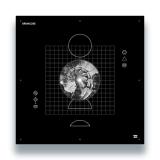
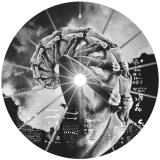
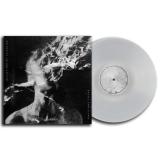
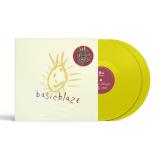
One of the most innovative and ambitious albums ever made, Genioh Yamashirogumi’s Ecophony Rinne is a sonic masterpiece featuring over 200 musicians that expanded the limits of what music and sound could do.
Before Akira there was Ecophony Rinne. Originally released in 1986, Ecophony Rinne is a four-part symphony of “ecological music” by Geinoh Yamashirogumi that married ancient tradition with technological innovation, and changed the way we listen to music in the process.
Half-speed mastered at Abbey Road by Miles Showell, Time Capsule’s high-tech analogue reissue is the first to reproduce composer Ōhashi’s ground-breaking “Hypersonic Effect” theory on vinyl, cutting frequencies beyond the realm of human hearing into wax to capture the full spectrum emotional impact of this extraordinary work.
Founded by genius polymath Tsutomu Ōhashi aka Shoji Yamashiro, Geinoh Yamashirogumi is a shapeshifting collective of over a hundred members from across disciplines. Rejecting professional musicianship, Ōhashi cultivated an ethos where neuroscientists, psychologists, doctors, journalists, engineers and students could critique society through artistic expression and pursue their research in ethnomusicological performances that spanned global traditions, Eastern spirituality and Western classical form.
Ecophony Rinne represents the pinnacle of this vision - an expansive orchestral suite made with over 200 musicians that channeled Ōhashi’s thinking about mankind’s relationship with nature, and fundamental questions of life, death and rebirth.
Here pipe organ synths made from sampled Tibetan horns sit alongside field recordings from Central African forests, Buddhist mantras circle dummy head microphones, Javanese Jegog percussion ensembles pulse like verdant ecosystems, and the acoustics of temples, caves and landscapes are conveyed in the mix. Weaving together culture, nature and technology, it is a record that vibrates with the polyphony of life on Earth.
But Ecophony Rinne was not only musically innovative. Noticing the difference between vinyl and CD versions of the album where digital reproduction limited the sound, Ōhashi developed a theory of “Hypersonic Effect”, determining that ultra-high frequencies above 20khz can impact human perception even if they are inaudible. At once a physical and a psychological experience, to listen to Ecophony Rinne is to feel music differently.
The rest is history. After its release, Ōhashi was approached by director Katsuhiro Ōtomo to produce the soundtrack for Akira, the work for which Geinoh Yamashirogumi is best known. Emerging from the shadows at last, Ecophony Rinne was its transcendental blueprint, reissued in its most complete hypersonic form on vinyl for the first time.
Rather than describe nature, Ecophony Rinne embodied it. Rather than reflect culture, Ecophony Rinne defined it. Rather than explore technology, Ecophony Rinne changed it. As a work of art, it is more relevant than ever. You won’t have heard anything like it.
4/5 Mojo review: ‘Sparse, hypnotic big-room techno that builds from the bass drum up
Double LP is released on 140gm black vinyl in a transparent gloss foil sleeve, artwork and design by Ian Anderson for Designers Republic. Circuitry Electronic launches with a release that stands as a statement of intent - an artist with few true peers within English electronic music, with an album that jumps out of the speakers and slaps you around the chops. G-Man is Gez Varley - one half of Sheffield pioneers LFO, and thirty years into his solo career, with his first vinyl album release since Avanti on Force Inc way back in 2002. Speaking to DJ magazine in 2014 Gez recalled his early days working with Mark Bell as LFO: “We were influenced by groups like 808 State. Unique 3, Nightmares On Wax and also stuff like Kraftwerk, Detroit techno and early electro. So when we first hooked up and made tunes together we just wanted to rock the dancefloor at our local club The Warehouse”.
Their eponymous track ‘LFO’ – a classic of the bleep and bass techno movement – was one of the first releases on the Warp label, gate- crashing the UK’s Top 20 whilst annoying Simon Mayo along the way. Having worked with the likes of Richie Hawtin, Karl Bartos, Laurent Garnier, Art of Noise, Radiohead, YMO and Alan Wilder, in addition to the LFO output, you'd expect Gez to know his way around a techno dancefloor rhythm and drum pattern, and this is an inventive funk-filled journey that never veers too far into experimental territory yet avoids the cliches and generic tropes that too often lose the listener when techno manifests in album form.
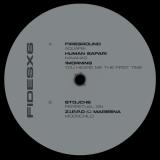
Fides Records proudly presents the second last chapter of its 10-year anniversary series: X6. Here, the narrative pivots toward groove and immersion between Detroit-rooted sounds, jazz-infused flair, glitchy futurism, and deep dub meditation. This chapter highlight the label’s love for movement, texture, and long-form atmosphere.
Side A opens with Fireground’s “Aquaria”, a sexy, bouncing techno cut carrying old-school Detroit spirit and harmonic fluidity: funky yet refined, shaped by the Italian duo’s live-set mentality, live improvisation and vintage synthesisers. Human Safari’s “Havanas” follows, merging jazz and techno through a standout trumpet solo and lush groove work, carving out a vibrant, genre-crossing mood that feels both bold and effortless. Closing the side, 1morning’s “You Heard Me The First Time” delivers early-2000s techno DNA with a modern edge: glitchy rhythms, unpredictable sequencing, and a playful sense of tension-and-release.
Flipping to Side B, Macedonian master Stojche leads with “Perpetual Sin”, a dub techno lesson in restraint: evolving through spacious layering and emotional subtlety until it fully envelops the room. The record closes with Z.I.P.P.O & Mareena’s “Moonchild”, a tribal, dub-infused deep techno immersion where percussive drive meets meditative energy—an internal journey built for big systems and late hours.
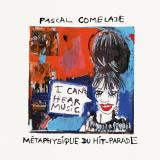
I first encountered Pascal Comelade’s music thirty years ago—and nothing has sounded quite the same since. I was immediately captivated: he is an artist like no other, whose sincere and selfless love of music is always evident, especially in his tender reworkings of other people’s songs.
Comelade seems to work like a watchmaker: meticulous, precise, and obsessive—yet always drifting into something dreamlike. His music opens hidden doors, telling strange and beguiling stories filled with obscurity, kindness, and reserved humour.
Back then, my fascination was instinctive. Today, with a few more words at my disposal, I look to this exceptional 70-year-old French musician and feel exactly the same pull.
Métaphysique Du Hit-Parade is the first vinyl compilation devoted to Pascal Comelade’s favourite cover versions. It spans a forty-year career and traces sixty years of rock and roll history along the way. “Sheena Is a Punk Rocker” becomes a soft, soothing lullaby that may well have made the Ramones weep. Then there are his idiosyncratic tributes to Jonathan Richman (“Egyptian Reggae”) and The Kinks (“Sunny Afternoon”), alongside nods to formative heroes such as The Gun Club, Captain Beefheart, and MC5.
Two exclusive recordings stand out particularly: Bob Dylan’s “Girl from the North Country” and Nirvana’s “Come As You Are”—a song that shaped my early youth. Both were recorded especially for this release.
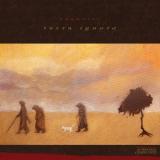
Elations Recordings presents "Terra Ignota", the long-awaited new full length album from elusive Melbourne-based fusion ensemble Krakatau. "Terra Ignota" marks a return and an epochal shift for the group, a deep exploration of possible sonic spaces and a portent of things to come.
In the years since 2016's cosmic jazz funk-prog-spiritual 12" "Tharsis Montes/Apogean Tide" Krakatau have worked on refining their craft as instrumentalists and writers, expanding further into the world of jazz and fusing influences from world folk musics, contemporary jazz and the European post-minimalist music of the 1980s and early 90s. "Terra Ignota", literally translated as "Unknown Land", takes its name from the cartographer's notation for uncharted territory, the blank spaces on maps where knowledge gives way to imagination and speculation, gesturing towards the group's studio explorations and search for new sonic worlds in the years spent developing the record.
The results are a diverse yet unified combination of sounds and influences across five tracks that see Krakatau drawing closer to the independent underground "world" jazz scene of the 1980s than anything contemporary. The album opens with the digi-minimalism and fourth world atmospherics of title track "Terra ignota", a percussion heavy latin fusion sound in "Birds of Passage", and melancholic ambient saxophone and synthesiser duo "In Memory". Three-part epic "Cosmetic Surgery" journeys through a long, complex post-minimalist arrangement into latin fusion and contemporary jazz, followed by the contemplative ECM-styled acoustic quartet closer "Trial in Absentia".
The album features significant contributions from saxophonist Rob Vincs, former Victorian College of the Arts head of Jazz and Improvisation and a collaborator with Australian musician Brian Brown; layered percussion and wordless vocals from Brazilian percussionist and esteemed songwriter Alcides Neto; and a guest performance from trumpet player Reuben Lewis on the title track.
For two decades, Gun Outfit has been a band defined less by genre than by continuity, patience, and a commitment to making music that reflects their lived experience.
Formed in Olympia, Washington in 2006 but long since rooted in Los Angeles, the group has evolved from a raw duo into a quietly formidable five-piece, their sound growing from scrappy post-punk beginnings into something spacious yet intimate, and always underpinned by an experimental edge.
On Process & Reality, Gun Outfit return with their most ambitious and immersive work to-date, a sprawling 80-minute double album shaped by time, environment, and philosophy. Recorded over the course of a single month in the late summer of 2020, on an 80-acre ranch in Pine Flat, California, while a massive forest fire burned less than ten miles away, the seeds of these songs were stark and strange.
Its title, Process & Reality, draws from the central work of philosopher Alfred North Whitehead, whose philosophy places intuition, experience, creativity, and relationality at the center of existence.
The band’s current lineup reflects both longevity and openness. Sharp and Keith remain the band’s primary architects, joined by longtime drummer Daniel Swire, multi-instrumentalist Henry Barnes, and bassist Kayla Cohen. Additional collaborators include Chris Cohen, Warren Lee, and Danny Sasaki all of whom add further depth, leaving subtle fingerprints across the album.
Musically, the album expands the band’s palette without abandoning its core sensibility. Dulcimer, autoharp, sitar, melodica, keyboards, homemade electronics, and a wide range of acoustic and electric textures appear throughout. The sound is mellow yet expansive, songs move between fragility and hefty atmospheric passages.
Influences surface obliquely rather than overtly. Elements of reggae and dub inform the production’s spatial sensibility. Echoes of long-form European jam bands coexist with sharp post-punk. British folk traditions, American country, and classic West Coast songwriting drift in and out of focus; the band is never afraid to lead or follow.
On Lila, his debut LP, Moroccan artist Karim presents a series of undulating electronic rhythms laser-etched into tessellated form: drumless techno from the pre-Sahara, built for communal psychic expansion.
Drumless, yes, but not percussionless. There are shakers, castanets, stabs, plonks, thuds. There are insistent basslines propelling forward, pulsing with energy, rippling in time. There are tones interlocking, rolling, fluttering, pattering. Dancing within, around, between each other. Considered in terms of sheer geometry, Lila is a techno record, unmistakably. But it sounds quite unlike any other techno record you've heard lately.
To write the album, Karim borrowed from the music of the Gnawa, a religious-spiritual musical tradition descended from West African peoples brought to Morocco as slaves hundreds of years ago. Now integrated deeply into Moroccan culture, the centerpiece of Gnawa music is the lila—or "night," in Arabic—an all-night-long ritual of rhythm designed to induce participants and musicians alike into a healing trance state. Which, if you're a dedicated raver, may sound familiar, yes?
Crafted entirely with modular synthesizers, Lila conjures a range of textures and moods. The show opens with "Bakh," a blissful exercise in beatlessness, clear and crystalline. On "Philipoussis," "Kiyex," and "Sonic," arpeggiated synths approximate Gnawa chants while interlaid percussion keeps time in multiple meters. "La" and "Kille" pulse in half-time, ideal for creative mixing. "Joul à lèvre" bristles with electricity, the sound of a charged lightning rod. "Pamil," woozy and lurching, feels like being shipwrecked on a forgotten island. Last and absolutely certainly not least, on the final track, "Miloir," Karim faces West and unleashes the album's only kick drum for a ten-minute psychedelic techno masterpiece. The mind warps; the body moves.
Lila is released on Tikita, Karim's own record label, founded in 2014. Tikita's discography, spare but tightly curated, features artists from across the globe pushing outwards into techno's deepest reaches. Karim's album pushes even farther. Listen for yourself.
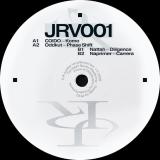
JUDDER opens a new chapter in its history with its first 12-inch vinyl release As part of a new mini-album series, the label brings together artists from diverse backgrounds and musical perspectives. What unites them all is an openness to experimentation and a deep affinity for sub-frequencies. Side A is driven by a bold, high-impact sound with references to techno, grime, and baile funk. The release opens with Komo by Italian producer Coido. The track unfolds in unpredictable ways, its rebellious character maintaining tension from start to finish and refusing to let go of the dancefloor. This energy is carried forward by Oddkut. His Phase Shift is a pure body-mover, where the core bassline and rhythms awaken a raw, primal energy. Side B shifts the focus toward more minimalist, rhythm-centered forms of bass music. In Diligence by Nattah, breakbeat and UK techno merge into a hybrid where atmospheric reverbs are expertly balanced with the drive of sub-bass pressure. Inspired by racing games, Naprimer closes the release with Carrera. This new 100 BPM experiment brings together the best elements of the Bristol and Manchester scenes. Tracklist: A1 Coido – Komo A2 Oddkut – Phase Shift B1 Nattah – Diligence B2 Naprimer – Carrera
With the title "Treatise On A Narcissist" hinting at the EP's thematic exploration, the four originals by Shaleen are a masterclass in atmospheric, driving techno-built on powerful basslines, intricate percussion and an unnerving emotional intensity. This formidable body of work is then subjected to four distinct and high-calibre reinterpretations, each pushing the originals into new sonic territories.
Fiedel delivers a masterclass in raw, functional Berlin Techno. His "Treatise on a Narcissist" Remix builds on a foundation of caustic percussion and echoing metallic textures to create a journey into the machine's heart, powered by monolithic kick drums and pulsating, hypnotic sequences. This is peak-time, strobelit intensity-a dark, unforgiving lesson in rhythm and propulsion.
Mareena's sophisticated version of Shaleen's "Treatise On A Narcissist" strips the original back to its essential hypnotic core. It locks into a precise, relentless rhythm with characterizing sharp hi-hats, a focused, pulsating kick drum and creates a sense of deep,
foreboding atmosphere by utilizing subtle, filtered synth drones and echo effects.
Rosati's Remix of Shaleen's "Nymphomaniac" layers hypnotic elements, leading to a massive, euphoric breakdown and creates a captivating, almost obsessive mood. This track demands movement. It's an unrelenting sonic journey characterized by a hard-thumping rhythm section that maintains relentless forward momentum.
JakoJako steps up to deliver a nuanced and immersive re-imagining of Shaleen's "Fused in Desire". Moving away from high-impact euphoria, this remix focuses on dark, driving Techno.
The textural soundscape features a powerful low-end as well as lush, evolving pads and shimmering, modulated synth textures that create a vast, emotional space to establish a profound, steady pulse. Designed for total immersion, this track serves as both a
high-energy peak-time weapon and a hypnotic journey for early-morning dancefloors.
memotone returns to Accidental Meetings with a collection of stunning and delicately crafted songs, featuring Ugné Uma, guest (Jabu) & Typesun!
Multi-instrumentalist, producer & composer memotone (Will Yates) announces the release of his album Warm Shadows and a homecoming on Accidental Meetings. Warm Shadows sees Yates’ discography continue to flourish and traverse into new territory once again, his ever-growing sound palette commands total attention throughout the LP. Within the album sees delicate collaborations with Lithuanian artist Ugné Uma, Jabu’s guest and percussionist, Typesun.
Memotone is a learn-by-playing multi-instrumentalist and producer, working with minimal, ambient and contemporary classical music. Predominantly an improviser, recent years have seen memotone lean towards a more free-form approach, exploring jazz, drone and more meditative music, also showing a keen interest in sound design and textural experimentation. Will has released music with various labels over the years to critical acclaim, most notably; World of Echo, The Trilogy Tapes, Sähkö Recordings, Accidental Meetings, Patience/Impatience & Black Acre.
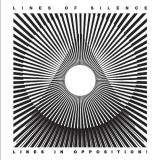
From deep within the astral planes of all that is cosmic in the Northwest and through a fog of kaleidoscopic haze emerges the latest mind-expanding music makers to arrive on Sprechen in the form of the Todmorden based Lines Of Silence.
Living amongst a hotbed of UFO activity and home to the UK's highest ever beach they combine experimental analogue and digital electronics, motorik beats, polyrhythmic improvisation and drone rock guitar explosions to create an immersive, expansive and contemporary take on psychedelia.
Their long player on Sprechen: 'Lines In Opposition !' takes the listener on a visionary aural journey across 8 tracks of electronic, shamanic soundscapes where the sounds of Krautrock exist in harmony alongside drone-esque ambient excursions through an array of synths, guitars & sequenced patterns that draw heavily on the stylings of NEU!, Aphex Twin, Kraftwerk and the musical pickings of the more esoteric sets and radio shows by Andrew Weatherall.
A truly universal listening experience to take you into a higher state of electronic music consciousness...
J-Walk return to BiD with a one off single 'Never Go Home' ahead of an album of new works to be released next year...
Recorded in his Stockport studio & channeling the DIY ethos of his previous BiD release Broken Beauty, 'Never Go Home' is a paeon to the mind-altering oeuvre of late 80's indie psychedelia, influenced by artists such as Spacemen 3, Nick Nicely & The Field Mice.
On the flip 'Dub Never Go' expands the vision with a version that wades deeper into dub territory, spacing out the stems & positioning the song in an abstract format.
This limited-edition vinyl release comes in a homemade sleeve which is stamped, numbered & implanted with J-Walks DIY DNA.
LIMITED TO 350 COPIES! 2 x 12" Gold Vinyl w/ Gold Foil Embossed Cover, shrink wrapped.
‘Elevation’ is album eleven from High Focus Records founder and 1/4 of The Four Owls Fliptrix.
The latest instalment in a formidable run sees the lyricist further his vision of the world in the hope of elevating the collective mind and spirit of both artist and listener across 19-tracks.
Having worked with Forest DLG in some capacity across all of his records over the past fifteen years, from mixing and mastering, but also collaborating on multiple tracks as rapper / producer, it is surprising that it took so long for the pair to come together on a full-length collaborative project.
‘Elevation’ is that record.
Fliptrix reached out to Forest with a view to creating something completely different from his previous boom bap heavy outing ‘Dragonfly’, he is always looking to advance his craft and take things higher, and after Forest responded with a pack of 70+ instrumentals the direction of travel became crystal clear. The result is an album designed to lift the listener into a higher state of consciousness and trigger conversations about the state of the world, in the hope of enacting positive change during tumultuous times.
Fliptrix’s vision and Forest DLG’s style feel perfectly aligned. The album is truly collaborative; Forest going away and creating the artwork inspired by Fliptrix’s otherworldly experiences with the Shipibo tribe in the rainforests of Peru; from the single covers, to the album cover and merchandise as Fliptrix focussed on writing.
Having worked with all the greats in the UK hip hop scene, Fliptrix actively sought out new energies on ‘Elevation’, especially when it comes to the album features. Jungle forefather General Levy on lead single ‘ENERGY! ENERGY! ENERGY!’ Grime legend Frisco on ‘Visionaries’, Ayah Marar on ‘Transform’, Da Flyy Hooligan, Kamakaze, Coops, and a 19-strong HF posse cut in the shape of ‘Dangerous’ make this album a must-listen for anyone looking to elevate.
Hiriketiya is a small, enclosed bay on Sri Lanka's southern coast, where jungle leans toward the water and the days unfold without urgency.
Passing through in early 2025 on the way to Europe, Alex Albrecht spent a week here at MOND's artist residency, allowing the rhythms of the place to quietly shape the work that followed.
During the residency, Albrecht recorded and exchanged ideas with Sri Lankan musicians Dhyan Basho on sitar, Dinelka Liyanage on electronics, Uvindu Perera on double bass and Pasindu Herath on saxophone.
Their performances appear throughout the album, sampled and re-contextualised, influencing its melodic language, pacing and emotional tone.
Much of the music was shaped directly by its surroundings. Field recordings were gathered across Hiriketiya, and instruments were played wherever it felt necessary. This included rocks beside the ocean where waves set irregular rhythms, tall grasslands where wind and insects blend into the recordings, and open decks overlooking the sea. 'Round Table' captures this approach most clearly. Recorded while sitting together overlooking the ocean, a large steel table in front of the group gradually became part of the composition, used instinctively as an unplanned percussive element.
Not everything could be captured. Some of the most meaningful moments occurred before recording was possible. Those sounds exist only in memory, and the album is shaped in part by an attempt to hold onto their feelings.
Rather than documenting the residency in a linear way, the album gathers fragments, recordings, electronic sketches and field sounds, assembling them into a continuous listening experience shaped by place and recollection. MOND owners Jess and Renato foster an environment that supports artists without directing them, creating space for focus, trust and connection.
The result is a record shaped by Hiriketiya's enclosed bay, dense vegetation, heat and night air. Music formed through listening, restraint, missed recordings and the sensation of being temporarily held by a place.
On 27 March, fabric Originals presents Shō, a five track EP of introspective, transcendent electronics from Japanese techno icon DJ Nobu. Inspired by the Buddhist Brahmavihāras - joy, compassion, loving-kindness and equanimity - Shō unfolds as a meditative, emotional journey rooted in Nobu’s experiences of Tokyo, mindfulness and inner clarity. From kinetic renewal to serene minimalism, the EP channels presence, acceptance and the simple truth that breathing itself is living.
Each track on ‘Shō’ marks a step in an emotional and spiritual journey, channelling the foundational virtues of the Brahmavihāras, which are the four ‘Sublime States’ of Buddhist practice: ‘Muditā’ (joy), ‘Karuṇā’ (compassion), ‘Mettā’ (loving-kindness), and ‘Upekkhā’ (equanimity). Together these principles form a path towards an open, boundless heart, which is mirrored in the EP’s unfolding sonic narrative.
“In recent years I became overly sensitive to my surroundings and society, finding myself strongly affected by every daily occurrence. It was during this time that I discovered meditation. And beyond that lay Buddhism. Through this, my sensibilities became able to express themselves more naturally. I decided to portray my feelings, and the scenery in Tokyo, conveying what I was experiencing in real-time, as music.
The EP title ‘Shō’ denotes views, thoughts, and actions aligned with Buddhist truth, and encapsulates my striving for presence, clarity, and acceptance. It also represents the conscious, mindful understanding that simply breathing is living.” DJ Nobu
Inspiriert von Vorbildern wie Earth, Wind & Fire, The Bar-Kays und Kool & the Gang erwarb sich die 1975 in Mississippi gegründete Formation Freedom im gesamten Süden einen Ruf als kraftvolle Live-Funk-Band. Die Debütsingle "Can't You See/Sunshine" (1977) klang unglaublich souverän, ausgefeilt, pulsierend und voller Potenzial. "Can't You See" mit seinem modernen Soul-Boogie-Sound und "Sunshine" mit knackigen Bläsern, treibenden Rhythmus und ausgelassener Energie. Tolle Reissue auf Miles Away mit türkisgrünen Labels und originalgetreuem Fotocover.
It’s Girls Night / Long Hair marks a confident next step for the Amsterdam-based, Dutch-Argentinian artist, pushing deeper into darker, more physical territory. Built from warped drum patterns, low-end pressure and distorted, inhuman textures, it leans fully into a percussion-led, club-focused sound.
It’s Girls Night is immediate - fast, raw, and unrelenting.
Long Hair pulls things into a heavier, more ritualistic space - broken rhythms, slower tension, deeper atmosphere.
Shaped by formative nights in places like De School, the EP reflects a direct connection to the dancefloor - where repetition, intensity and immersion take over.
A concise, impactful release and the first in a series with fabric Originals
Celestial Echo returns with a proper UK soul classic — The Cool-Notes “I Forgot How To Love You”, back on 12” and cut loud for the dancefloor.
Hailing from South London, The Cool-Notes were one of the UK’s most consistent soul outfits through the late ’70s and ’80s. While many know them for their chart successes later in the decade, this early period shows the band in a formative state — warm basslines, tight rhythm section, rich harmonies and that unmistakable Britfunk feel.
“I Forgot How To Love You” is one of those records that’s quietly done the rounds for years. A favourite of Frederika’s back in the day, it’s about time it has it’s first ever reissue.
Presented on 12” in a clean company sleeve, this edition gives the record a new lease of life.
Celestial Echo is here to put proper soul records back into circulation — Buy or Cry
'We Fell In Turn' is the solo debut from Brooklyn-based trombonist, composer, and quartet leader Kalia Vandever. Vandever, who plays with Harry Styles and Japanese Breakfast, “sculpts her trombone’s golden tones into dazzling compositions” (Pitchfork), writing music that tends to “dip you into a feeling or a pattern or a breathing speed, and keep you there” (The New York Times). In 2022, Vandever released Regrowth, an album that “features the ecstatic, brilliant melodies that have become Vandever’s signature sound” (Bandcamp). This spring, Vandever brings contemplative reflection to We Fell in Turn, a brave and understated work from an ascending voice in American jazz.
Recorded over three days in upstate New York, 'We Fell In Turn' is improvisational — a stark palate of solo trombone, voice, effects, and little more. “My solo process has always been heavily rooted in improvisation,” says Vandever. “I wanted the process to feel similar to the way I perform. Lee Meadvin, who engineered and produced the album, had a heavy hand in the creative process as well. He would dictate prompts before I started improvising and those pieces ended up shaping a lot of the imagery that comes up throughout the record.”
Connecting the dots between Jeff Parker’s 'Forfolks', and early releases from Grouper, 'We Fell In Turn' is a study of space and patience, embracing vulnerability in its sparse adornment. At times, the album is reminiscent of Patrick Shiroishi’s 'Hidemi', both in its familial inspiration and solo instrument study, while sharing the ineffable feel of William Basinski’s 'The Disintegration Loops' — the traces of her trombone folding in on themselves in an organic loop. Emotionally generous throughout, Vandever acts as a torchbearer for jazz’s historical yearning for connection.
On 'We Fell in Turn' Vandever draws inspiration from childhood memories — events that shaped her approach to love, community, and partnership, and her maternal homeland of Hawaii. “We were exploring childhood memories, earliest experiences with disappointment and pain, and my Hawaiian roots,” says Vandever. “We Fell In Turn came after I titled the track "We Wept In Turn". Both come from the intangible feeling of waking up from vivid dreams, particularly the experience of falling right before waking up or waking up in tears.”
Through this exploration into her heritage, Vandever also found guidance. “In Hawaiian mythology, ‘aumākua are known as ancestral spiritual guides that manifest in different forms, whether physical or intangible,” says Vandever. “My ‘aumākua visits me in my dreams, usually with a reassuring hug or a reminder of my past. Memories and early experiences seem to escape me, but find their way back in dreams.” And now they’ve found their way into 'We Fell in Turn', Kalia Vandever’s stunning solo debut.
Another massive offering from the one and only Mick Harris, continuing on in his Culvert Dubs Sessions experimentations with a new 2xlp. Once again Mick delves deep into the shadow realm of slow beat, psychedelic heavily textured, grinding dub techno. Eight tracks of absolute industrialized, delay swept, full pressure, sound system shaking murk ridden, dark water dubs. Top form work when Mick lets loose in this wild style, just the right balance of beauty, restraint and brutality. Total heavy weight music!
Spatial stalwart and ambient master Aural Imbalance returns for a fresh slice of atmospheric heaven with Unknown Universe. A1 - Alien Lifeform A serene, distinctly atmospheric synth intro with light hats introduces Alien Lifeform, Aural Imbalance toying with filtered breaks and a deep bassline which ushers in trademark melodic pads and a thoughtfully constructed amen pattern. Rolling and intense, the track embodies Spatial’s love for the floor as well as the absorbed listener, nodding along to the laid-back rhythms on the 2am train home. A2 - Indigo Soothing, calming synths create an evocative introduction peppered lightly with cymbals and gentle intrigue, before the Circles break takes center stage with a delightfully constructed and crisply programmed pattern. A spirited breakdown with a subtle trance-like quality ensues before the breaks take over again, all set to a suitably earthy 808 bassline humming away below. AA1 - Empty Universe Deliciously clean and chunky Hot Pants breaks provide a DJ-friendly intro to Empty Universe, a blissful rolling track which sees Aural Imbalance fusing incredible 80’s synthwave vibes, rolling deep basslines and micro melodies with that timeless and evocative break - programmed to perfection - culminating in a stunningly atmospheric piece, fresh for the discerning listener - just as we like it at Spatial. A2 - Lunar Phase Kick back as Aural Imbalance closes the EP in fine form with a leisurely trip to the dark side of the moon. Lunar Phase opens with a short intro featuring sullen tones and light hats before a hypnotic break pattern takes over proceedings, and airy padwork circles above. A meandering melody builds throughout the piece and develops its final form during a luscious breakdown, and through the closing stages of this truly beautiful track. Words by Chris Hayes (Spatial/Red Mist)
Continuing his inspired path into fractalised micro-dub-techno, John Howes lands his Paperclip Minimiser project amongst kindred spirits on Blank Mind. Crooked rhythms and tender machine hums hang in crisply defined virtual space — a gallery of science and soul that follows a natural lineage from the breakthrough years of the clicks n' cuts era by way of UK bass permutations.
Operating out of the UK's North West, Howes has been incubating a singular sound through his ongoing development of intuitive production and performance tools under the Cong Burn banner. The sometime record label and software stamp has a long-standing friendship with Blank Mind—the affinity is easy to hear in their shared exploration of modernist broken techno. Having just released a second album under his Paperclip Minimiser alias for similarly spirited West Coast US lodestar Peak Oil, Topology Transform extends the project's sound world with three tracks carved from the same period of studio orienteering. Free of the constraints of the LP format, these three tracks open up broader possibilities from Howes' customised systems, navigating the outer edges of the Paperclip paradox.
The A side opens on a 150BPM cascade of crunchy percussion and pin-prick ripples, driven by twitchy kinesis while maintaining a light-footed dexterity. If the first track finds its locomotion through double-time intensity, the second track celebrates the space that opens up around half-time pacing — two sides of the same tempo that radiate distinct energies. Conversely, the B side stretches out into an extended ambient repose. The consistency between this beatless excursion and the more propulsive A side speaks to the clarity of Howes' craft—a shimmering, blue-hued pool of advanced sonic treatment from a producer in command of a truly personal studio practice.
CUSDE010 marks the debut vinyl release by DJ PEPER. Four stripped-back house cuts built for the dancefloor, rooted in classic Detroit aesthetics and deep machine groove. Former member of the duo YYYY, now exploring deeper house territories while maintaining a steady, evolving groove.
Austrian musician, painter, and filmmaker Kimyan (formerly Kimyan Law) combines sound and visual design in an impressively direct way to create a comprehensive artistic experience. He takes an open, intuitive approach to his compositions, connecting the
resonances of traditional instruments and rhythmic patterns from Central, North, East, and Sub-Saharan Africa with sophisticated production techniques. Kimyan's current album,
“Coloria,” in which he explores the concept of timbre in a multifaceted way, marks the pinnacle of his artistic development to date.
For his Live -concerts, Kimyan relies on the organic element of playing, using instruments such as electronic drum pads and MIDI controllers.
This gives his pieces a spontaneous, physical presence on stage that goes far beyond mere reproduction and makes his performances a lively interplay between improvisation and structure. In conjunction with his self-designed artwork and videos, corresponding audiovisual worlds are created in which cultural influences and identities, moods and timbres shine together radiantly. Kimyan's works tell stories in many colours, yet always in one language: his own.
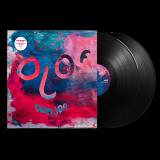
1/2 of seminal electronic act The Knife, Olof Dreijer will be releasing his debut album 'Loud Bloom' via dh2 this May following years of drip feeding solo music under various aliases and lending his production talents across the scene. The 14 track (double vinyl) album consists of equal parts dancefloor ready bangers (some of which have been previously released) and more still, ambient moments that highlight Olof's versatility as a producer as well as the sounds from around the globe that he takes inspiration from.
In a burst of colour and rhythm that cuts a distinctive path through modern club music, Olof Dreijer crystallises his solo work around a gleaming debut solo album, Loud Bloom, out 8 May via dh2.
Across the album, Dreijer toys with the tension between pure pleasure music and his tireless thirst for the new. You might hear the structure of a Chicago house beat or a classic drum machine hit, but at every turn these tropes are remoulded into dazzling new forms. Taking inspiration from Nigerian author Akwaeke Emezi and their ability to deliver bold, progressive themes and visionary sci-fi through the accessible lens of romantic fiction, Dreijer makes vividly unconventional dance music utterly instinctive and easy to love.
1/2 of seminal electronic act The Knife, Olof Dreijer will be releasing his debut album 'Loud Bloom' via dh2 this May following years of drip feeding solo music under various aliases and lending his production talents across the scene. The 14 track (double vinyl) album consists of equal parts dancefloor ready bangers (some of which have been previously released) and more still, ambient moments that highlight Olof's versatility as a producer as well as the sounds from around the globe that he takes inspiration from.
In a burst of colour and rhythm that cuts a distinctive path through modern club music, Olof Dreijer crystallises his solo work around a gleaming debut solo album, Loud Bloom, out 8 May via dh2.
Across the album, Dreijer toys with the tension between pure pleasure music and his tireless thirst for the new. You might hear the structure of a Chicago house beat or a classic drum machine hit, but at every turn these tropes are remoulded into dazzling new forms. Taking inspiration from Nigerian author Akwaeke Emezi and their ability to deliver bold, progressive themes and visionary sci-fi through the accessible lens of romantic fiction, Dreijer makes vividly unconventional dance music utterly instinctive and easy to love.
Drumcode returns with its flagship A-Sides series, led by a huge new Adam Beyer single that highlights the 20-track compilation.
If you want a snapshot of techno in any given year, look no further than Drumcode’s annual A-Sides compilation. The release broadly charts the evolution of the genre, while giving a platform to standout demo’s Adam Beyer has received across the course of the year with many emerging artists finding their music on Drumcode for the first time. Case in point – Wehbba, Charles D and Raxon who all debuted on the label via a track on the A-Sides series and have gone on to become regular contributors to Beyer’s influential labels.
This year’s compilation features an exciting mix of established heavy-hitters, alongside a slew of new faces set to make their mark on the genre. ‘We Don’t Say Please’ – is emblematic of Adam Beyer’s sound in 2025 – fresh, experimental and thriving on cross-genre pollinations, as elements of bass music, rap and techno collide, underpinned by a distinctive UK vocal. The results are inspiring.
Elsewhere, the 20-track compilation brims with highlights. HI-LO’s ‘NYC to Amsterdam’ has inflections of New York house fused with driving techno elements. Nicole Moudaber returns to DC in cahoots with the rising ZLATA for the super-charged ‘Report to the Dancefloor’. Oscar L & Charles D mint a new collaborative partnership with the immersive, spacey cut ‘Lift Me Up’. LUSU continue their red-hot run following the recent ‘Move 2 the Groove’ EP, and craft a straight-up mind-mashing single ‘LIKE THIS’. Mark Reeve is in trademark strong form with hypnotic ‘My Mind’, which comes to life via a massive synth led. The fantastic Kaufmann shares her ‘People are Strange’, a nod to a classic vox, re-contextualised for a modern techno audience.
As is tradition, a troupe of ascendant producers land on Drumcode for the first time. They include Uruguay’s Enzo Monza, who delivers the crisp ‘Late Night’ – a favourite of Beyer’s; Mattia Saviola, whose ‘Parallel Dimension’ is a powerful cut with fantastic sound design; Romanian artist Tao Andra, who shares the celestial ‘Unity’; and long-time industry stalwart AdamK, who makes a richly deserved Drumcode debut in partnership with Vikthor feat. MC Stretch on the stunning ‘Silence + The Sound’.
KIZZY is the breakthrough EP from rising East London artist Bel Cobain, one of the most distinctive new voices emerging from the UK alternative R&B and soul landscape. Written across 18 months of late-night ideas, scattered sessions, and quiet breakthroughs, the project captures an artist in motion. Following a string of singles that introduced her raw lyricism, KIZZY marks a confident step forward with intimate, sharp, and melodically rich songs that sit in the space between endings and new beginnings.
Across these six tracks, Bel moves with striking emotional honesty through a rich palette that encompasses rock’s bite, jazz’s looseness, R&B warmth, hip hop rhythm, folk intimacy, and fractured breaks. She blends conversational storytelling with her distinct smoky vocals, reflecting on change, learning to let go, and finding light in the aftermath. The EP invites the listener to listen closely to the cracks, the softness, and the pulse of the beauty that still rises when a chapter turns.
Bel Cobain is fast becoming known for her ability to connect deeply with audiences, pairing classic songwriting instincts with a contemporary sonic edge. Early support has come from tastemaker radio and press, with momentum building across streaming platforms as listeners discover her unique perspective on vulnerability and self-awareness. Released as Brownswood Recordings celebrates its 20th year, KIZZY continues the label’s tradition of championing the most singular artists.
Marking a significant milestone in her career, this release is Bel Cobain's first-ever record. It is presented as a Collector's Edition Limited Edition 1xLP gatefold vinyl, pressed on Terracotta colored wax. With short-form video campaigns, targeted digital marketing, radio support, and a growing live presence, this release positions Bel Cobain as one of the UK’s most compelling new artists for 2026.
Carrier’s debut album features eight elegantly rude arrangements that dance in negative space between Photek’s frictional syncopations, Rhythm & Sound’s dubwise minimalism, and Torsten Pröfrock’s fractured dynamics, bolstered on two tracks by contributions from Voice Actor and Memotone, summoning a noirish, jazzier frisson to his signature metrics and temporalities.
Since hard-snagging our ears and feet in 2023 with 12”s for FELT and his own eponymous label, Guy Brewer’s Carrier has become the go-to project for anyone who had almost given up on chasing these sorts of ultra-subtle but vitally distinctive new permutations in dance music. For the past two years, his unpredictable variations within a style have kept us all tip-toed and seat-edged with organisations of a finely chiselled percussive palette and smouldering ambient noise that distils the salient aspects and spirits of D&B, dub techno, electro-acoustic music, and trip hop with unique traction. In effect, he’s enacted a clear leap of imagination from previous work issued as part of Commix and solo as Shifted that only continues to reveal hallucinatory psychoacoustics on this first album detail.
»Rhythm Immortal« sees Brewer tilt the project into slower, resoundingly more atmospheric realms, better to luxuriate in the instinctive guile and integer-stepping style ’n’ pattern of his incredible sound. At the album’s poles, a vocal cameo by cult gynoid Voice Actor follows from Gavsborg’s on a preceding 7” single to ideally model his sound’s mutability and compatibility with trip hop forms, and Memotone helps seal the deal with a hovering glow lent to »Offshore«, whilst Carrier jostles the reins throughout with masterful control of his thing, crisply purposed to the album canvas. In that context, it’s perfectly adaptable to bodies both supine or in motion, ushering a hypnagogic sway with »A Point Most Crucial«, and hingeing around the slightest interplay of 16th-note hi-hat ruffles and recoiling reverbs on »Outer Shell«, or blissfully stepping on knife-edge 2-step on »Wave After Wave«.
The album conveys a deeply personal pulse and spiritual devotion to that kind of all-tension-no-release mode typical of so much music we love – from Kode9’s earliest re-factoring of Prince to Photek’s »Ni-Ten-Ichi-Ryu«, from T++/Dynamo and Traktor’s asymmetric dynamics to Burial’s shockout debut – refactored with a rare conviction in its unspoken powers to activate the eyes-shut imagination.
RAWAX welcomes Guillaume & the Coutu Dumonts to the artist Family!
Very happy to announce a series of records, starting with "Coup de Théâtre" which is a very strong opening release for us.
Lovely EP full of ´Groove, Soul and Funk.
Don't miss!
Six hard-hitting tracks, without unnecessary breathing space. The spectrum is wide, the trajectory crystal clear: from muscular Hard Dance to incisive Techno, reaching into the more radical territories of Hard Techno. Each track strikes with precision, alternating massive kicks, abrasive textures, and pressure-building rises that compress the space before impact. Direct, efficient, surgical.
An undeniable classic in Manu Kenton’s catalogue, “Arkanoid” is reborn in a revisited version by Wex 10. The remix injects additional tension, sharper and more cutting, transforming the track into a formidable weapon calibrated for peak-time intensity. A rework faithful to the original DNA, yet propelled into a more explosive dimension.
True to its identity, Mekanik Records delivers an EP that condenses power, tension, and club efficiency. No unnecessary detours, no artifice. Just the essentials: rhythm, energy, impact.
Français
Mekanik Records rallume la mèche et, cette fois, l’étincelle éclate d’un rire nerveux. Avec “Hi Hi Hi Hi Hi Ha Ha EP”, Manu Kenton livre un manifeste en six déflagrations, façonné pour les nuits denses et les dancefloors sous haute tension.
Six titres percutants, sans respiration superflue. Le spectre est large, la trajectoire limpide : de la Hard Dance musclée à la Techno incisive, jusqu’aux zones plus radicales de la Hard Techno. Chaque morceau frappe avec précision, alternant kicks massifs, nappes abrasives et montées sous pression qui compriment l’espace avant l’impact. Direct, efficace, chirurgical.
Classique incontournable du répertoire de Manu Kenton, “Arkanoid” renaît dans une version revisitée par Wex 10. Le remix insuffle une tension supplémentaire, plus tranchante encore, transformant le titre en arme redoutable calibrée pour les pics d’intensité. Une relecture fidèle à l’ADN original, mais propulsée vers une dimension plus explosive.
Fidèle à son identité, Mekanik Records signe ici un EP qui condense puissance, tension et efficacité club. Pas de détour inutile, pas d’artifice. Juste l’essentiel : rythme, énergie, impact.
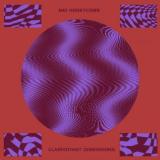
Clairvoyant Dimensions is the first album by Mei Honeycomb, a new duo of Jordan Czamanski, renowned as a member of the acclaimed Juju & Jordash and the Magic Mountain High project, with solo work released as Jordan GCZ, and legendary saxophonist Jeff Hollie, known mostly for his work with Frank Zappa and Ike Willis. An explorative ambient album, Clairvoyant Dimensions is an exercise in distance and contemplation, and the exhilarating feeling of insight, however fleeting, like staring at the midnight flicker of an old VCR. Czamanski's music has a trademark tenderness and soft-spokenness, an ability to maximize minimalist musical elements and bring them to an open-ended conclusion. Jeff Hollie provides interpretative sax lines on all tracks, slipping into the scene like a shadow, silent and unexpected, touching upon emotional registers almost explicit, yet confounding.
As musical signifiers keep turning around themselves, they set up a mood of euphoria, one that suggests understanding. Never explicitly spaced-out, there is continuous reference to cosmoses both inward and far away. Ambient music in modern form. Jordan Czamanski uses his experience in producing off-the-charts club music to come up with five tracks that at times are standstills, and at times dwell in forward momentum. Jeff Hollie provides both comprehension and beautiful confusion. As grainy images switch into focus, Clairvoyant Dimensions is a beautiful and contemplative trip that suggests its own reality in delicate ways. One of the five tracks, the gorgeous live-recorded Painted Desert Pastel, features composer, performer, and researcher Ilya Ziblat Shay on double bass and electronics.
Screen-printed cover designed by Johan Kauth.
Mastering by Rashad Becker
Drumcode returns with the ever popular A-Sides series, kicking off with tracks from big names HI-LO, Nicole Moudaber, and Mark Reeve.
HI-LO’s ‘NYC to Amsterdam’ has inflections of New York house fused with driving techno elements. Nicole Moudaber returns to DC in cahoots with the rising ZLATA for the super-charged ‘Report to the Dancefloor’
Mark Reeve is in trademark strong form with hypnotic ‘My Mind’, which comes to life via a massive synth led stomper. Showcasing new talent we have Mattia Saviola, whose ‘Parallel Dimension’ is a powerful cut with fantastic sound design.
This perfectly formed EP brings together Dutch duo Fouk with a selection of collaborators across four groove-led cuts blending house, disco, and nu-disco influences.
The title track sees Fouk teaming up with The Phenomenal Handclap Band, delivering a vibrant vocal cut driven by warm basslines, uplifting melodies, and classic disco instrumentation. Importantly, both the vocal and instrumental versions appear here as extended mixes exclusive to the vinyl release.
Further collaborations with Archil & Leon and 79.5 continue the EP’s groove-heavy approach, combining soulful vocals, live instrumentation, and dancefloor-ready arrangements.
Already receiving strong support across radio, DJs, and streaming platforms, including plays from Bill Brewster (NTS Radio), Colleen Cosmo Murphy, Dom Servini, Francois K, Graeme Park, Hot Toddy, Massimiliano Pagliara, Pete Herbert, Slothboogie, Tim Zawada / Star Creature Universal Vibrations, Dave Pezzner, Nadiem Shah, Luxxury, Dj Supermarkt, Luke Solomon, Seamus Haji, Sophie Lloyd, J-Kriv, DJ Rocca, Faze Action.
The release has also landed #1 placements on Spotify’s Nu Disco editorial playlist.
With warm grooves, uplifting vocals and strong crossover appeal between disco, house and nu-disco scenes, this EP offers high playability for DJs and strong appeal for modern disco and house collectors.
May 2026 marks the arrival of TYGAPAW (aka Dion McKenzie)’s first full-length album on Tresor Records, entitled Together You Gather All Power Applied Worldwide. An acronym of its creator’s name, TYGAPAW’s third studio album is a deeply personal collection of music building worlds where Black queer and trans siblings can thrive, while unifying dancefloors worldwide. A proposition that collective wisdom liberates us from the matrix of domination we live within. The album unfolds as the latest chapter in TYGAPAW’s ongoing techno opera opus, continuing to center the voices of Black women, which surface as layered incantations rather than lyrics - powerful, haunting, sensual, activating.
With the process of creating the album starting in 2023, as TYGAPAW (Dion McKenzie) was in the first year of their transition, the music reflects the intensity of that period, where they were experiencing deplatforming as a response to the shift in their physical appearance: Tracks like ‘M32 Riddim’ and ‘Helicopter hovers over my Crown Heights Apartment’ feature high-paced rhythms intersecting with intense siren-like synths to form demanding compositions echoing a heightened sense of alert. Yet throughout the album, relief comes in the form of TYGAPAW’s vocal features, co-conspirators, and chosen family, whose voices are treated with reverb and echo, a sonic fingerprint that leads back to the pioneers in the legendary studios of TYGAPAW’s native land, Jamaica, an important reminder that the past will always inform the future. It is an album for dancers first and foremost, where joy, defiance, and integration with the natural body coexist, and every drop feels less like a climax than a transformation. Expect a bass that permeates your soul and melodic synthesized sequenced phrases echoing the dancehall eras of TYGAPAW’s youth, reshaped into hypnotic melodies that glow over industrial kicks designed to command attention, reasserting Jamaica's pioneering yet often overlooked contribution to electronic music.
In the opening track, ‘Can I Live’, Precious Okoyomon’s words feel like the beginning of a ritual; setting the intentions for the rest of the proceedings. As McKenzie puts it, their “work is about regeneration, resetting, getting integrated into nature, and about rebirth. That’s the tone I wanted to set at the outset of the album.” Ms Carrie Stacks continues this thread of support in ‘Don’t Panic’ with heavily processed vocals on top of a beat that takes inspiration from another important ingredient in the antidote to the oppression of isolation: Ballroom culture. “ I feel like I found my queerness in Ballroom, that’s why this track is very important to me.”
Echoes of NYC Black queer nightlife scene also permeate in the energetic drums of ‘Exorcise the Language of Domination’, in which Julianna Huxtable’s spoken performance complements the various movements and tones of the music. “My producer brain thought this was the one that Juliana’s vocals would be best suited for. I hinted: ‘what do you think of this one?’ She just went into her notes and picked some passages to go with the first section of the track. From there, it was a year-long process of development. It required time and space for this thing to evolve, but I think it’s one of the most powerful tracks on the album.” London’s SUUTOO contributes the album’s only musical collaboration on ‘B2B’, a track that emerged from sessions in McKenzie’s New York studio where the real objective was to connect and have fun; a time out from the demands of life outside.
The album closes out with a double hit of emotion in the form of ‘Effects of Resistance and Black Trans Masculine Experience’. The former features South African scholar Khanyisile Mbongwa drawing connections that exist between Africa and the Black diaspora, whilst looking to the future and calling for a shared sense of community.
The latter piece, an instrumental version of the piece which featured on the IMMIGRANT E.P. of 2025 is a gentle and deeply affecting end to the record, a place of peace and acceptance. This end-of-cycle tone is mirrored in the sleeve photography, which also ties back to IMMIGRANT by finally revealing what was hidden: a portrait of the artist fully self-actualized; a step towards true inner liberation. TYGAPAW is sonically defiant across this album; bass frequencies feel tactile — less heard than inhabited — infectious lead synth melodies remain with you long after the track ends. An overall sound that leaves asserting an urgent need for connection. From Detroit to New York to Berlin to Jamaica, despite geographic distance, this album reminds us that we remain in solidarity, recognising that meaningful world-building requires collective input and action, both personal and communal, if we are to move toward liberation.
Charlotte de Witte announces three brand new tracks in the form of her richly resonant EP ‘Amor’, out April 30th on her KNTXT imprint. The vinyl will include an additional Instrumental Mix of her track ‘O Movimento’.
The world's number one techno artist recently celebrated her 15th career anniversary with two monumental Flanders Expo 23k capacity performances, her long-awaited debut album (plus a new Deluxe Edition), and press support from Vogue, Grammy Museum, BBC 6 Music, DJ Mag (with cover), Mixmag, Rolling Stone, Billboard, Zane Lowe, Clash, Flood Magazine (cover).
‘Amor’ EP: each track features the breathy, full-toned vocals and Portuguese lyrics of CERES. The Brazilian singer, DJ & producer favours techno with tasty slices of UKG. Add to that, subtle motifs link the three tracks, giving the impression they form a suite. ‘This EP is inspired by my love for Portugal and Brazil, the countries, the people, the food, the culture. Made with lots of amor.’ - Charlotte de Witte
Title track ‘Amor’ (feat. CERES) delivers a galloping beat starred with spacey FX, as a hoover siren builds tension and CERES begins her rhyming chant. A sprinkle of acid becomes a sulphuric tidal wave. Next, ‘Sem Ar’ (feat. CERES): ‘Airless’; frantic rattling percussion overlays the fast beat to breakbeat-adjacent. CERES’ resonant voice is showcased in an acapella breakdown before her soulful voice becomes an acid robot’s, sharp and penetrating. Finally, ‘O Movimento’ (feat. CERES); ‘Movement/motion’, speeding beat with hi-hat backbeat duels with CERES’ voice, now sounding almost breathless, before acid filters in as the track builds.
Passages in Time, the third album from Kasper Bjørke Quartet, traces the contours of a blend of spiritual jazz reverence and the calming grandeur of '80s ambient. Inspired by Christopher Nolan's observation that "time is the most fundamental part of our human experience," the compositions are approached as fragments of time and memory. Meditations on the elusive nature of time form the heart of the work, merging freeform jazz improvisations with cyclical synthesizer patterns that mirror its quiet undulations.
Dreamy synths intertwine with guitar, harp, trumpet, flugelhorn, saxophone, and flute, creating a spacious environment for contemplation. The music invites reflection on the choices that shape our lives and the lives of those closest to us, and on the quiet weight of our priorities within the brief span we call life on this planet. Each passage unfolds as a fleeting moment suspended in time. The subtitles hint at fragments from someone's diary, tender observations of love, parenthood, and connection. Together, the passages form a musical memoir of sorts, where memory and emotion are gently woven into the compositions.
Passages in Time does not impose structure or meaning, it reflects them, offering an open space as the instruments drift in and out of focus, tracing time's subtle rhythms and inviting the listener to infuse their own memories and meaning into these passages.
The album also marks a transformation for the Quartet project itself. Langstrakt (Claus Noreen), part of the original ensemble, continues to operate the synthesizers alongside Bjørke, while the wider constellation of contributing musicians has evolved. Strings and piano give way to flute and saxophone by Oilly Wallace, guitars by Danish ambient composer Anna Roemer, trumpet and flugelhorn by Malthe Kaptain, and cascading orchestral harp by Katie Buckley, principal harpist with the Icelandic Symphony Orchestra.
The cover painting is by American artist Marcus Leslie Singleton, courtesy of V1 Gallery, and reflects the meditative and timeless atmosphere of the music.
Passages in Time is released on Bjørke's own imprint, Sensitive Records, following the two previous Quartet albums released on Kompakt Records: The Fifty Eleven Project (2018), a debut that introduced Bjørke's ambient and neoclassical explorations, and Mother (2022), which expanded the ensemble's sound with emotive choir compositions and guest appearance by Sofie Birch (Unsound / Stroom). Together, these three albums trace a journey of artistic growth, from introspective experimentation to a fully realized, contemplative expression of time, memory, and human connection.
Mit gerade mal 17 Jahren releaste Joey Bada$$ sein erstes Mixtape "1999" welches den Sound der goldenen Hiphop-Ära der 90er Jahre adaptierte, so authentisch und selbstverständlich als sei er mit dabei gewesen.
Die Kritiker überschlugen sich in ihren begeisterten Rezensionen und es folgten Features mit Asap Rocky, Kendrick Lamar, Mac Miller & Action Bronson. Der junge Brooklynite ist schon längst mehr als nur ein Geheimtipp. Die ersten audiovisuellen Kostproben gab es in den vergangenen Monaten in Form von "Big Dusty" und "Christ Conscious". Am 20. Januar erscheint nun sein Debütalbum, das den Titel "B4.DA.A$$" trägt.
In just five years, The Spy has gone from underground newcomer to one of the most talked-about names in the European electro and EBM dark electro scene. Early releases on Osáre Editions and Mechatronica quickly placed him on the radar of forward-thinking clubs and selectors across Europe. Now landing on Oráculo Records, he presents his most wave-driven and club-oriented material to date: pure, physical electro built for dark rooms and late hours. Driving basslines and sharp machine rhythms—infused with subtle, classic post-punk tension—define a sound that connects the dancefloor with the shadows, drawing clear parallels to artists like L.F.T, Credit 00 or Gesloten Cirkel. This is music made to move bodies without sacrificing attitude—raw, confrontational, and far removed from formulaic club clichés. Five years in, the message is clear: this is not hype, but momentum—an artist fully in command of a modern electro language built for the underground. Presented in ONE-OFF truly limited edition of 300 copies lacquered pressed on 180 gr. high quality solid BLACK vinyl. All tracks have been specially remastered and mastered for vinyl by Daniel Hallhuber at Young and Cold Studios (Germany).
‘White Series #4’ marks the debut EP of Marc Feldmann and Dominik André as a producer duo. The record opens with ‘Natural Oscillation’
, a hypnotic techno piece where flowing percussion meets subtle trance influences. ‘A Breeze of Mistral’ builds on this energy with layered repetition and a deep pulse that unfolds gradually, drawing the listener further in. On the flip side, Audrey Danza reinterprets Natural Oscillation with a direct, dancefloor-focused approach. She sharpens the groove, raises the tempo, and pushes the track forward with her signature, driving drums and a tightly locked kick, transforming the original’s hypnotic flow into a no-frills cut. The EP slows the pace with ‘Discernible Rhythms’, a reflective, 80s-influenced synth chugger that adds warmth and restraint to the record. Released as a hand-stamped white label on Subject To Restrictions Discs, White Series #4 reflects and continues the label’s contribution to the more understated forms of electronic club music.
While self-proclaimed "garage and jackin' house" revivalist Marc Cotterell has developed his Plastik People label into a fine outlet blessed with an ever-growing family of artists, he still maintains a steady release schedule of his own. The British producer is naturally in good form on his latest Plastik People missive. Check first opener 'Take Your Time', where breezy piano stabs and deliciously soulful vocals ride a squelchy bassline and loose-limbed garage-house beats, before admiring the more "trad" soulful house flex of the gorgeous and lightly funky 'Mysterious Ex'. Over on side B, 'Feed The Soul' is a string-laden slab of revivalist New Jersey garage-house goodness which doffs a cap to the early 1990s, while 'This Life Living' re-casts Jill Scott r&b classic 'Golden' as a rolling soulful house delight.
The Bobby Hamilton Quintet Unlimited's Dream Queen has been captivating jazz collectors ever since it was first released in 1972. Its meditations on spiritual jazz are profound as they are moving with the deft touch of band-leader Bobby Hamilton on keyboards weaving his way through subtle textures of sound. The backing band is an equally formidable force with each adding to the melting pot as it builds into a frenzy on third track "In the Mouth of the Beast".
After months of careful excavation and meticulous restoration, dj echotree finds his way to ZitStill with a singular artefact. Delving into lost remnants of the spirit world, a gapless collage of found footage, spoken word and otherworldly jazz slowly emerged. A mute yet eloquent testimony, held together by instinct and the steady pulse of the MPC.
Much remains to be uncovered about this entity and its teachings, rooted in beliefs that left no written trace. What is known is its devotion to the human touch, unafraid of imperfection. A form of worship rich in texture, best experienced on hazy afternoons and mist-laden mornings.
Das Remix Paket für Charles Petersohn’s Children Of Zu Zu EP glänzt durch seine Vielfalt zwischen jazzy Broken Beats und Afro/Deep House, mit Re-Works von Mary Olivetti, Moodorama, als420, Viktor Marek, The Greater Manchester Housing Authority und Charles Petersohn selbst.
“Der gemeinsame Wunsch, dass die Tracks der EP an die Idee anknüpfen sollen, dass ein Remix ein eigenes Kunstwerk sein kann, ist voll aufgegangen. Alle Mixe haben eine persönliche Handschrift, nutzen die Originals als Material, mit dem nach Herzenslust gespielt wurde. Ich bin sehr glücklich!” Charles Petersohn
Format: Vinyl 12“ Full Cover mit schwarzer Innenhülle und rundem Sticker
Evighet proudly presents its sixth release, EVIGHET006, featuring the distinctive sound of Healing Force Project, the long-running creative vision of Italian artist Antonio Marini. For more than a decade, Healing Force Project has explored the intersections between electronic experimentation, free jazz and electroacoustic research. His work unfolds with a rare sense of spontaneity and depth, merging intuition and technical precision into a sound language that feels timeless and deeply personal. Over the years, this unique approach has earned him a cult reputation across the underground and avant-garde music scenes. EVIGHET006 is the result of a free creative process, a series of recordings shaped by intuition rather than concept or structure. Within this collection, elements of jazz, drill-inspired beats and dubstep textures emerge and intertwine. The music alternates between dark tonalities and unexpected shifts toward melodic and almost folkloric moments, inviting the listener into an evolving, immersive experience. A highlight, “Playing Tabla and Smoking Weed with Aliens”, reveals the hypnotic pulse of the tabla, guiding the piece through a steady percussive flow that feels both ancient and futuristic. Elsewhere, rhythmic improvisations and fragmented breaks form intricate layers that dissolve and reform with subtle tension. With this release, Healing Force Project continues to move along his own path, shaping sound as a form of exploration and reflection. EVIGHET006 captures an artist in constant evolution, translating instinct into form and intuition into movement.
The experiment aboard orbital station Sequoia-4 began as a routine test of the acoustic array. The team attempted to synchronize an analogue resonator with a quantum audio synthesizer. The two incompatible frequencies were expected to cancel each other out. Instead, the instruments registered a stable wave. It didn’t fade, on the contrary, it did respond to every sound, every movement around it.
At first, they assumed a coding error, but the wave began adapting to the researchers’ voices, shifting its amplitude and rhythm. Within hours, its spectrum started to resemble a heartbeat. The recording was forwarded to the Analysis Division, where it was named Hybrid Dub — a hybrid resonance formed between the machine and the human senses. The phenomenon proved unpredictable: each listener described different effects, from gentle euphoria to vivid recollections of memories that had never occurred.
Even after the system was powered down, a faint signal persisted in the ether — as if the mechanism had learned to breathe on its own. Some claimed that, when replayed, traces of the ocean, rustling leaves, and distant voices could be heard — as though the signal had passed through layers of living matter and remembered them.
The project was shut down, and the archive sealed. Only one line remained in the final report: “The signal wasn’t created — it discovered us.”
Made up of Matt Tuck, Michael ‘Padge’ Paget, Jamie Mathias, and Jason Bowld, Bullet For My Valentine return with their 8th album ‘Social Apocalypse’. The band have accrued multimillion album sales, multibillion streaming numbers, multiple Gold certifications at home and abroad, plus three UK Album Chart and Billboard 200 Top 10 placement.
Thematically, ‘Social Apocalypse’ combines the bare-faced lyrical introspection of people weathered and worn by the modern world. Working once more with producer Carl Bown – a veteran of four Bullet albums, alongside work with Sleep Token, While She Sleeps,
Malevolence and more – the idea for each track was diligently scrutinized, constructed and polished to its immaculate final form.
The track ‘Social Apocalypse’, rages against the end of the world as we know it, ‘I Don’t Trust Tomorrow’ is a reflection on the fear of the unknown labelled as the heaviest Bullet song ever complete with a hair-raising vocal turn from Lorna Shore’s Will Ramos. The second collaboration features Against The Current vocalist Chrissy Costanza also stepping in to duet on the exceptional ‘In The Absence Of You’.
Reminiscent of the band’s storied past without ever being repetitive of it, it’s with a steelyeyed determination to break new ground that the beloved hallmarks of Bullet For My Valentine past and present – Acid Rain and Fragile’s rapid-fire riffage, the melodic sensibility of Masquerade and Never Enough, and the anthemic balladry of Read Between The Lines and Here Without You – are refocused and re-energized for the future.
Bullet For My Valentine have established themselves as one of Britain’s all-time most celebrated rock and metal exports and now enter the dawning of a new era with the same burning drive and vision as ever.
Made up of Matt Tuck, Michael ‘Padge’ Paget, Jamie Mathias, and Jason Bowld, Bullet For My Valentine return with their 8th album ‘Social Apocalypse’. The band have accrued multimillion album sales, multibillion streaming numbers, multiple Gold certifications at home and abroad, plus three UK Album Chart and Billboard 200 Top 10 placement.
Thematically, ‘Social Apocalypse’ combines the bare-faced lyrical introspection of people weathered and worn by the modern world. Working once more with producer Carl Bown – a veteran of four Bullet albums, alongside work with Sleep Token, While She Sleeps,
Malevolence and more – the idea for each track was diligently scrutinized, constructed and polished to its immaculate final form.
The track ‘Social Apocalypse’, rages against the end of the world as we know it, ‘I Don’t Trust Tomorrow’ is a reflection on the fear of the unknown labelled as the heaviest Bullet song ever complete with a hair-raising vocal turn from Lorna Shore’s Will Ramos. The second collaboration features Against The Current vocalist Chrissy Costanza also stepping in to duet on the exceptional ‘In The Absence Of You’.
Reminiscent of the band’s storied past without ever being repetitive of it, it’s with a steelyeyed determination to break new ground that the beloved hallmarks of Bullet For My Valentine past and present – Acid Rain and Fragile’s rapid-fire riffage, the melodic sensibility of Masquerade and Never Enough, and the anthemic balladry of Read Between The Lines and Here Without You – are refocused and re-energized for the future.
Bullet For My Valentine have established themselves as one of Britain’s all-time most celebrated rock and metal exports and now enter the dawning of a new era with the same burning drive and vision as ever.
SK_eleven celebrates a decade of sonic exploration with a 13-track compilation showcasing its signature tension, technical discipline, and stylistic spectrum. Reuniting a tight circle of artists whose contributions have helped shape the label, the release offers an unrelenting sequence of pressure, mental twists, and textural collisions; a multifaceted snapshot of techno's enduring capacity to evolve, disturb, and seduce.
The compilation resists uniformity. Instead, it thrives on contrast: tension versus release, density against spaciousness, rhythm in all its permutations. From high-energy metallic openers and dub-inflected body rollers, to disorienting, delay-heavy experiments and stripped-back percussive tools, each contribution reveals a unique grip on groove and detail. Some tracks move like engineered machines: sharp, robotic, and syncopated to surgical precision. Others embrace sensuality and unpredictability, exploring spatial motion, layered harmonic friction, and states of controlled chaos. Each piece acts as a structural component in a larger sonic architecture, where tension is built, collapsed, and rebuilt. Friction becomes a form of choreography. Across the record, a shifting palette of emotional mechanisms takes form; granular and magnetic, haunting and quietly forceful, restrained, then disruptive.
More than a retrospective, SK_eleven's first compilation becomes a collective gesture toward techno's unresolved possibilities: its ability to hold contradiction, remain in flux, and mutate without conclusion.
With Black Koyo, Mattias De Craene enters a sound world at once intimate and vast. Born from journeys in Morocco and Brussels, the project traces the rhythms, chants, and spirits of the Gnawa tradition, revealing a quiet resonance that echoes De Craene's own search for depth and presence. Guibri, qraqueb, call-and-response chants, saxophone, loops, and electronics come together in a trance-induced dialogue - ritualistic, elemental, and dreamlike - creating a space where listening becomes immersion, tradition meets imagination, and music unfolds as a shared act of reflection and wonder.
About Mattias De Craene
Mattias De Craene's artistic path is marked by rare coherence. As a central voice in Nordmann and MDC III, he developed a physical, rock-inflected jazz language driven by propulsion, volume, and trance-like collective energy. Over time, a period of personal rupture - burnout, tinnitus, depression - shifted his focus inward. The saxophone became a breathing, textural presence, and in his solo work, he weaves saxophone, electronics, loops, and minimal forms into a cinematic, hushed world where repetition, resonance, and silence slow perception. Rooted in ambient and introspection, his music prizes attention over impact, precision over excess - a quiet intensity recognized with a nomination as Musician for the Music Industry Awards (MIA's).
About Black Koyo
Black Koyo is a Brussels-based ensemble and one of the most compelling voices of the Gnawa tradition outside Morocco. Led by maalem Hicham Bilali, the group brings guibri, qrraqueb, and call-and-response chants to life with trance-like intensity and ritual precision. Their music is both rooted and contemporary, weaving earthbound rhythms and vocal invocations into ecstatic, immersive soundscapes, creating a space where ancestral resonance meets present-day imagination.
About Jan Bang
Jan Bang is a pioneering Norwegian producer and musician, celebrated for his mastery of live sampling and his ability to merge electronics with improvisation, rhythm, and texture in real time. He mixed the album and occasionally joins live performances, bringing his signature approach to sound as co-founder of the influential Punkt Festivaland collaborator with artists such as Jon Hassell, David Sylvian, Arve Henriksen, and ECM Records' roster. As a performer and sound architect, Bang creates immersive, trance-like sonic textures where silence and sound carry equal weight. Within Mattias De Craene ftBlack Koyo, his live sampling becomes an organic instrument, weaving saxophone, electronics, and Gnawa rhythms into hypnotic, physically charged soundscapes.
Line-up & credits
Mattias De Craene - sax, electronics | Hicham Bilali - guibri, vocals, qraqueb |Ismael Akhraz - vocals, qraqueb | Marwan Abantor - vocals, qraqueb
All tracks are original gnawa traditionals played by Black Koyo and arranged by Mattias De Craene.
Album produced & recorded by Mattias De Craene in Essaouira, Morocco and hometown Ghent, Belgium 2025.
Text by Hicham Bilali.
Mixed by Jan Bang at Punkt Studio
Mastered by Lieven Van Pee
Artwork by Marina Sviridova
Design by Benoit Van Geel
Manufactured and distributed by N.E.W.S.
Executive production by W.E.R.F. records
Supported by Flemish Government, Jazzlab, nona, HA Concerts, Aubergine artist Management,
KAAP, La Bestia (Wout Van Putten) & mdcmu.sic vzw.
2026 (c) W.E.R.F. records
New York's P-Sol lands again on their small but already well-formed PS7 label with a pair of smartly crafted and soul-soaked cuts. 'Fat Beatty' comes first and glides in on silky, neo-soul style deep hip-hop with an easy, late-night warmth topped by a few bars of neat rhyming. On the flip is something more playful and funky with jazzy keys dancing over the languid rhythms. 'Legend' features some familiar gravelly but emotive tones as well as some other smart samples from the hip-hop world. Smooth yet substantial, this is P-Sol at his most relaxed and refined.
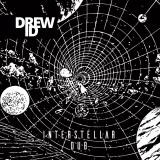
Drawing inspiration from the novel Neuromancer, Drew Id’s cosmic new single launches us deep in to the solar system.
Interstellar Dub started as an experiment in minimal dub techno, but was eventually overwhelmed by dirty spring reverbs and phasing hi-hat delays. A heavyweight rhythm and a hypnotic bass form the foundation, while extra-terrestrial melodies and synthetic skanks add spice and colour to this off-world stepper.
On the meditative Aphid Steppa, dreamy guitar and melodica licks interplay with snarling synths and a percussion based rhythm, propelled along by a solid bassline, before finally giving way to a deep space outro.
The Meanjin / Brisbane based producer first came to prominence as guitarist for reggae band Kingfisha, but has slowly been building a profile for his dubwise productions, inspired by the UK steppers scene and Australia's outdoor bass culture, with releases on Culture Dub, Dubmission and Sub Channels.
We are welcoming a fresh blood from the south of Italy: Delikwe
Words Create Vibrations is a solo EP recorded between 2023 and 2025, where techno and dub foundations merge seamlessly with ambient textures and breaky-step rhythms. Across five tracks, the record unfolds as a deeply atmospheric journey — hypnotic, spacious, and rhythmically dynamic. Sub-heavy frequencies meet shifting percussive structures, while layers of delay and texture generate a sense of depth that feels both physical and introspective. Each composition evolves patiently, acting as a meditation on resonance, movement, and the unseen architecture of vibration.
The A-side presents Delikwe’s original works in their purest form: immersive, restrained, and subtly transformative. Rooted in sound system culture yet open in structure, the tracks balance meditative stillness with rhythmic propulsion.
On the B-side, Australian producer Pugilist delivers a powerful reinterpretation. Known for his refined low-end pressure and deeply immersive productions, he reshapes the source material into a weightier, system-focused experience. His remix amplifies the sub frequencies and spatial depth while preserving the meditative core of the originals, creating a compelling dialogue between exploratory dub atmospheres and grounded sonic precision.
Words Create Vibrations stands as a sonic exploration where rhythm, space, and texture converge into a fully immersive listening experience — crafted for powerful sound systems, late-night sessions, and attentive minds alike.
c a3. Agna Street [Words Create Vibrations]
[d] b1. 6am [Ice Mix]
[e] b2. 6am [Pugilist Remix]
ABR002 brings Art Bleek Records back to the floor with Get Involved, a deep house cut built for late-night warmth and open-air uplift. Anchored by Phoenix’ beautiful, soulful vocal, the original version glides on a tight house groove, rich chords and that instantly memorable hook that keeps pulling you back in.
The package expands the story with a proper remix roster: David Duriez delivers both a driving club rework and an Acid Dub twist, while Jamie Anderson pushes the energy into a crisp, dancefloor-focused direction. Art Bleek rounds it off with his own remixes, from a punchy peak-time flip to a stripped instrumental for DJs who want the groove in pure form.
A versatile 12" for deep house heads, vocal heat, classic house attitude, and enough versions to fit any set.
Horsemen make their debut on Small Great Things with Southbound, a warm and colourful EP made to ease the winter blues.
Drawing from a wide palette of house influences, the record showcases the duo’s versatility and depth beyond a single formula. The release follows Horsemen’s first year as residents at Small Great House, the label’s monthly party at OXI Berlin, including its beloved summer open airs that helped shape the sound of this EP. Southbound also introduces their first collaboration with vocalist Guya.
While the A-side sets a relaxed tone with disco and jazzy influences, perfect for those summer open-airs, the B-side shifts firmly into club territory, delivering two dancefloor-proven cuts for the night.
The A-side opens with Make Me Feel Excited, an almost disco-tinged summer anthem driven by a distinctive sample. It is followed by Napoliballa, featuring Guya on vocals, a sun-soaked jazzy track with playful rhythms. The side closes with Lighter Days, a moody piano-led track that adds a deeper, more dreamy tone.
The B-side moves into club territory, with Running offering a driving, floor-focused cut led by a bold organ hook, followed by a faster, more club-oriented version of Napoliballa.
Ein aufmerksamer Zuhörer der Welt zu sein, bedeutet, von Sprache umgeben zu sein. Sprache hallt durch fast jeden Raum, in dem sich Menschen aufhalten, ob unerwünscht oder erwünscht, banal oder tiefgründig. Worte stehen auf der Seite und klingen im Ohr nach, vermehren sich endlos. Diese Überfülle fasziniert den Komponisten und Musiker Ben Vida schon lange, aber in den letzten Jahren hat sie zu einer neuen Art des Musikmachens geführt, die die Vorrangstellung der Sprache in unserer Klang- und Kulturwelt gleichzeitig hervorhebt und hinterfragt. Sanft und spielerisch bricht Vida die Hierarchie von Bedeutung und Klang der Sprache auf, bis sie in egalitärer Harmonie existieren. Oblivion Seekers ist Vidas neuestes Album in diesem Kompositionsstil, nach der Zusammenarbeit mit dem New-Music-Ensemble Yarn/Wire The Beat My Head Hit aus dem Jahr 2023. Wie bei seinem Vorgänger liegt der Fokus der Musik auf koordinierten Duetten aus gesprochenem Wort in neutralem Ton, wobei die variablen Rhythmen der bewegten Worte komplexe interne rhythmische Strukturen schaffen. Er wird von den Stimmen von Nina Dante, Christina Vantzou, John Also Bennett und Félicia Atkinson, die einen einzigartigen Klang erzeugen, der weder ihrer noch seiner ist und in seiner Geschlechtsdarstellung, seinem Akzent und seiner Aussprache fließend ist. Die instrumentalen Kompositionen, die den Hintergrund des Albums bilden, haben den ungezwungenen Fluss eines Dialogs, gesprächig, aber zurückhaltend, selten als Motor der Veränderung. Es herrscht eine ruhige, konzentrierte Stimmung, die durch den zurückhaltenden Rhythmus der Stimmen noch verstärkt wird, sodass man das Gefühl hat, die Musik sei ein langes Mantra, das nie ganz zu seinem Ausgangspunkt zurückkehrt. Der Effekt ist bezaubernd, gleichermaßen einschläfernd und fesselnd, und suggeriert Wiederholung, ohne sich jemals genau gleich zu bewegen. Die Instrumentierung der vier Stücke des Albums variiert; ,Be Yr Own Abyss" wird durch den wellenartigen Kontrapunkt der Saxophone geprägt, während der mehrdeutige Klang des Vibraphons über ,Oblivion Seekers" schwebt und Frasers anschwellender Bass den einzigen dramatischen Auftritt des Albums liefert. Die Musik verändert sich im Ohr, während der Text die Form und Bewegung der Komposition ständig neu definiert und in einen neuen Kontext stellt, auch wenn sie in ihrem jenseitigen Glanz konsistent bleibt. Der Text besteht oft aus Sprachfetzen, denen Vida während seines Lebens beim Komponieren begegnet ist: zufällig mitgehörtes Gemurmel in der Schlange im Supermarkt, eindrucksvolle Sätze aus einem Roman, den er gerade las, Eindrücke von Musik, die er immer wieder auf seinem Plattenspieler hörte. Kleine, ansonsten unbedeutende Details sammeln sich an, nicht um eine Erzählung zu bilden, sondern um einen Eindruck vom komplexen Prozess der Bedeutungsfindung zu vermitteln, der im täglichen Leben stattfindet. Charaktere und Szenen tauchen im Bild auf und verschwinden wieder, und Sätze, die nach einer Erklärung verlangen, dürfen einfach vorbeiziehen. Vidas Liebe zu Robert Ashley ist gut dokumentiert, aber vielleicht noch bedeutender sind Mark E. Smith und The Fall, Neil Tennant und die gesprochenen Verse der Pet Shop Boys, die gesamte Geschichte des Hip-Hop und Meredith Monk. Die Art und Weise, wie die Worte dargeboten werden, ist genauso wichtig wie die Worte selbst und offenbart eine Intentionalität und Direktheit, die Vida mit den abstrakten Konstruktionsmustern des Textes hervorhebt und untergräbt. Auf Oblivion Seekers ist der omnidirektionale Lärm der Marmor, den Vida abträgt, um zu beleuchten, wie wir die unermessliche Fremdheit der Welt verarbeiten. Der Triumph des Albums besteht darin, dass wir nichts von dem schönen Geheimnis verlieren, wie diese Zeichen unsere äußere und innere Welt miteinander verbinden.
Charlie May and Duncan Forbes return to 49North with a brand-new Spooky record !
Lucent unfolds with the long form Biform, essentially a piece in two halves that perfectly sets the listener up for the lush widescreen sonic journey that follows. The album flows from start to finish building energy as it moves though it’s different phases culminating in the infectious groove of Perpetual.
This is the sound of Spooky back in the room doing what they do best, making beautiful emotive electronic music that transcends boundaries.
"After being praised as one of the best releases of 2025 by multiple platforms, the highly praised debut album from Obeka lands on vinyl via YUKU.
The rhythmic dynamics and emotive attitudes of A World No More captures the density of soundsystem culture in Obeka's ancestral roots. YUKU presents the Bermudians debut album capturing a Neo-Colonial dystopia, protest and Afro-Futurism hyperextended through decaying sonic structures of a dark past and its grievances which very much exist today.
Growing into adulthood within the walls of British and European Colonial systems meant the disconnection and lostness in a new country hid me from the world at a young age. Unlike London's vast and culturally engaging migrant communities, the industrial milling town of Stockport introduced a coldness towards people from other countries I experienced in my first year after relocating from Bermuda. I couldn't understand why. Whether cold words thrown towards me or actions upon other people who look like me, it has shown to be a dooming societal virus with no cure. The most comfort was found through what was familiar - drums and rhythmic spirituality of my homeland. It was a safe-haven, a place to empty the anger and confusion. It's been 15 years since relocating and as my sound evolved, it seems classism, racism, oppression and civil control of ethnic peoples has become worse - even now more legalised and normalised. Ogun (a powerful Yoruba deity associated with anger, justice and war) acts as the opening sequence of the record and its symbolism. Using distorted bass frequencies and dissected Regga-Dub immersed in live-sampled ghostly voices of the lost ones. This sonic exercising is also applied in Drillaman - a stampede of industrial framework and metallic instruments wielded over moody Dancehall MC'ing, magnifying two parallel worlds in cocooned evolution. The resurrection of Transatlantic African cultures and identity have never been silenced, rather carried elsewhere through trade routes of enslavement, which was pivotal when composing and completing the album upon returning home to the Caribbean for the first time ever. After reconnecting with my heritage my blurred vision of what's wrong in the world became so clear. Guidance in empty plains seek truth throughout the pain - A statement of finding oneself expressed on the poetic closing track A World No More.
On Fawohodie (A West African Adinkra symbol that represents independence, freedom, and emancipation stamped on the album cover) the motive and atmosphere begins to change. Afro-Caribbean idealism which refers to the philosophical concept that emphasizes the interconnectedness of individuals and the importance of community, often contrasting with Western individualism, begins to take shape in a new universe. We can co-exist. The track framework uses machine-led software forming frequencies we have no control over, then manipulated through decomposing soundscapes, scattered hand-drums and human-made weapons of control - exposing the hidden disparity that's been carried over generations whilst balancing hopeful and musical foundations towards equality and peace. On Pressure and Kuduro! the writing direction attempts to wake people up. Not settling for a composed approach like in past projects, quite the opposite. A call for native sonic awareness, dismantled vocals of protests, eroded percussion using chains, gears and motorised harmonies sculpted in challenging abstract behaviors far outside my comfort zone. A direct abrasiveness and weight I want people to feel, whilst finding hope and solace through enchanting choirs and hypnotic basslines in complete synchrony.
"Purity in sound manifests when you least expect it. The smallest memory or feeling grows from a seed into a sonic language that you, and only you can interpret and release back into the world." "
Gap Mangione's monumentally influential Diana In The Autumn Wind. AKA BEWITH200LP. And, without question, Be With's White Whale.
They said it could never be done. And with good reason.
We've spent the past 12 years trying to license this legendary 1968 recording from Gap and, after much work, it's finally here. Remarkably, this is the first ever vinyl reissue of Gap Mangione's Diana In The Autumn Wind, produced with the full and extensive participation of Gap. An exceedingly rare album, it's been coveted by funk, soul, jazz and hip-hop sample fiends for decades.
It's unarguably *the* most sought after album for J Dilla / Madlib sample collectors. It has also been brilliantly sampled by A Tribe Called Quest, Large Professor, Ghostface Killah, Kendrick Lamar and Talib Kweli.
But this record is so much more than a sample-spotters curio. It's solid gold throughout. Bursting with killer funky-jazz grooves and tracks adorned with warm electric piano, the release is notable for featuring some extremely significant players at the very outset of their careers; Tony Levin, at 21, whose superb playing on both acoustic and electric bass was the harmonic mainstay of the trio and Steve Gadd, at 23, one of the greatest drummers of his generation.
With acceptable copies of this holy grail changing hands for $400, to call this reissue "much-needed" underplays just how vital it is. Gap's story is told in his words alongside rare photos across a sumptuously designed 2-page insert and, to augment this deluxe edition further, its all wrapped up in a beautiful, no-expense-spared luxury tip-on sleeve, as per the original hens-teeth release. And, while we're talking packaging, just take a look at that cover - a work of art in and of itself.
The tracks are short but complex, with that extraordinary rhythm section backing the beautiful piano, organ and electric piano work of Gap. It's like the best ever library funk breaks record you never heard - but all your favourite golden age rap producers were all over it, long ago. It's a stunning blend of the vibrant, driving music of the Gap Mangione Trio coupled with the sensitive composition and superb orchestration of Gap's legendary brother, Chuck Mangione, who helmed an amalgam of seemingly disparate elements – rock, big band jazz, solo improvisation and "classical" music - into a spectacularly cohesive whole that has aged wonderfully well. As Gap himself notes in the liners, "with this group I was able to explore and add new and exciting elements from rock, Brazilian and then-current pop music."
Opener "Boy With Toys" triumphantly swaggers out the gate, all big band horns, flutes and dextrous organ work. The synthesis of everything going on is nothing short of stunning. When one wise YouTube commentator called this tune "old school superhero music", Gap agreed. Rap luminaries did, too, amongst them Talib Kweli, who rapped over DJ Scratch's chopped up intro for "Shock Body" on his Quality album back in 2002.
You've barely recovered from that incredibly affecting opener when you get hit over the head with the exquisite title-track. And now you see how two of the greatest beats of all time emerged from one single track produced nearly 50 years earlier. Unforgettably utilised by Dilla for Slum Village's heartbreakingly good "Fall In Love" and then Madlib for his "Official" beat for Dilla to rap over, on the Jaylib record. Regardless of the records it went on to spawn, this is just a staggering tune in its own right. Be beguiled by the flutes and the flutter tonguing, the counter-melody from the trombones, the soprano sax solo. All of it. Simply beautiful.
The questing organ and horn workout "Long Hair Soulful" deserves a lot more attention, overshadowed somewhat by the opening two monsters but no less fantastic. It swings, it grooves and Gadd and Levin truly cook. Up next, Gap's wonderfully percussive, mellifluously piano-heavy cover of "Yesterday" by some fellas called The Beatles. It's a subtly arresting gem. "The XIth Commandment" is damn fine, with thick, gorgeous electric piano and snappy drum work underpinning chaotic soundtracky horns. To close out the side, "St. Thomas" showcases the "fourth" member of the Gap Mangione Trio, conga drummer Dhui Mandingo. Having performed with the Trio since 1965, Dhui‘s African-based and jazz-latin-influenced style amazed listeners and its way to hear why.
Opening the B-Side, standard "You're Nobody Till Somebody Loves You" breezes along in the late-night jazz club fashion before things get super deep with the outstanding and - up to now - un-sampled "Pond With Swans". It's simply heavenly, and how its moody, melancholic intro has yet to be pilfered is anybody's guess. It oscillates between gentle, sombre movements and bombastic grooves, equally hypnotic and joyous. The rendition of "You Are My Sunshine" is yet another showcase for Gap's virtuoso playing and Gadd's mastery of the pocket. Indeed Gadd's drumming on "Free Again" is nothing short of neck-SNAPPING! Ghostface took it for not one but two "Iron's Theme" tracks across his seminal Supreme Clientele. It's got that Galt MacDermot "Coffee Cold" feel. Suuuuuper cool. The frantic "Dream On Little Dreamer" hurtles along and must've surely had the whole room absolutely swinging from the chandeliers back in Rochester in the late 60s. The album closes with the magnificent Graduate Medley, featuring memorable renditions of "Scarborough Fair", "The Sounds of Silence" and "Mrs. Robinson". The warm electric piano lines of the former were sampled by The Ummah (Dilla again!) for Tribe's "Pad & Pen" from their reappraised final album, The Love Movement, as well as by Large Professor on his much-loved "The LP (For My People)".
Under the watchful eye - and extremely attentive ears - of Gap Mangione himself, the audio for Diana In The Autumn Wind has been carefully remastered by Be With regular Simon Francis, with a few much needed tweaks here and there, according to the artist's wishes. At the prestigious Abbey Road Studios, Cicely Balston's expert skills have made sure nothing is lost in the cut whilst the records have been pressed to the highest possible standard at the always stellar Record Industry in Holland. The artwork restoration has taken place here at Be With HQ and has that drop-dead gorgeous cover artwork popping like new. Buy on sight!
A new 12” on Studio Barnhus from Sexy Lazer and Kaktus Einarsson, carrying dis4nguished Icelandic bloodlines into decidedly humid club territory. Across two tracks, the pair favor reduc4on over spectacle: taut beats, disciplined arrangements, and a strong sense of space, with the kind of detail that makes simple ideas hit with pure geyser force. While one side draws on 4ghtly coiled rhythms and freaky nocturnal tension, the flip sees the formula in its straightest, driest and most relentless form. Both sides moving with the calm confidence of a track that knows its DJ is expertly handling their task.
AO (Trascendental Amor Organization) appears with a five-track EP for Modern Obscure Music's Trip-Vapor-Club Focus Series, released as a vinyl-only edition. The record aligns with the series' ongoing interest in club music as an experimental framework, following releases by Pedro Vian and Actress.
Drawing from techno and electro without committing to their functional codes, the EP explores rhythm as texture and acidic repetition as inquiry. Pulses are skeletal, surfaces are unstable, and melodic fragments emerge only to dissolve back into noise and space. The tracks suggest movement without instruction, privileging sensation over utility.
Minimal in format yet dense in implication, the EP positions the dancefloor as a speculative zone-sound designed as much for close listening as for physical immersion.
Internationally acclaimed producer and DJ Tripmastaz is proud to announce the launch of his sublabel, Respect The Craft.Legacy, a heartfelt tribute to his early creative roots. Marking a significant milestone in his career, the first release on the new sublabel revisits and completes his unreleased projects from the early 2000s.
This series encapsulates an era of raw creativity and innovation, showcasing tracks that were originally started between 2000 and 2004. Until now, these works have remained unfinished and unheard—hidden gems from Tripmastaz’s studio archives. Through the new label, the producer has brought these ideas to life, meticulously completing each track while staying true to the essence of the time they were created.
The series bridges the past and present, blending the raw energy of the early 2000s with today’s refined production techniques. The debut release drops soon, promising a timeless tech & deep underground sound.
“This is a closure for me—an opportunity to honor my creative journey and give these tracks the life they deserve,” Tripmastaz explains. “The early 2000s were a formative period for me as an artist, and these records embody the passion and ideas that shaped my path. Completing and releasing them now feels like a full-circle moment.”
A1: Martin Stadtfeld - Neue Clavier-Übung I, Partie V in G Major Prelude 01:43:00
A2: Martin Stadtfeld - Neue Clavier-Übung I, Partie V in G Major Gigue 01:04:00
A3: Martin Stadtfeld - L'art de toucher le clavecin Prelude No 7 in B-Flat Major 01:28:00
A4: Martin Stadtfeld - Pièces de clavecin, Sixième ordre No 5 in B-Flat Major, "Les Baricades Misterieuses" 02:35:00
A5: Martin Stadtfeld - Sonata in D Minor, BWV 964 III Andante 02:37:00
A6: Martin Stadtfeld - Sonata in F Minor, K 466 03 16:00
A7: Martin Stadtfeld - Sonata in A Minor, K 54 01 57:00
A8: Martin Stadtfeld - Suite in B-Flat Major, HWV 434 / I Prelude 01 26:00
A9: Martin Stadtfeld - Suite in B-Flat Major, HWV 434 / II Allegro (Sonata) 01 23:00
A10: Martin Stadtfeld - Suite in B-Flat Major, HWV 434 / III Aria con Variazioni 02 34:00
A11: Martin Stadtfeld - Suite in E Minor, RCT 2 IV Gigue en rondeau II 01:40:00
A12: Martin Stadtfeld - Suite in E Minor, RCT 2 VIII Tambourin 01:11:00
B1: Martin Stadtfeld - Passatempo al cembalo, Sonata No 3 in C Minor / I. Allegro moderato 02 10:00
B2: Martin Stadtfeld - Passatempo al cembalo, Sonata No 3 in C Minor / II. Allegro 01 41:00
B3: Martin Stadtfeld - Sonata No 21 in C-Sharp Minor, R.21 02 25:00
B4: Martin Stadtfeld - Pièces de clavecin XIV Le Marche des Scythes 05:21:00
B5: Martin Stadtfeld - The Well-Tempered Clavier, Book II Prelude and Fugue in E-Flat Major, BWV 876 / I Praeludium 03:01:00
B6: Martin Stadtfeld - The Well-Tempered Clavier, Book II Prelude and Fugue in E-Flat Major, BWV 876 / II Fuga 03:20:00
B7: Martin Stadtfeld - & Lilian Akopova The Well-Tempered Clavier, Book I Prelude No 1 in C Major, BWV 846 (Arr. for Piano four hands by Martin Stadtfeld -) 01:44:00
B8: Martin Stadtfeld - / Lilian Akopova Armide, LWV 71, Act V Passacaglia (Arr for Piano four hands by Martin Stadtfeld -) 03:45:00
C1: Martin Stadtfeld - / Lilian Akopova Canon, P 37 (Arr. for Piano four hands by Martin Stadtfeld -) 03 34:00
C2: Martin Stadtfeld - The Fairy Queen, Z 629, Act II Hush, no more, be silent (Arr. for Piano by Martin Stadtfeld -) 02:32:00
C3: Martin Stadtfeld - The Fairy Queen, Z 629, Act V Chaconne (Arr. for Piano by Martin Stadtfeld -) 02:28:00
C4: Martin Stadtfeld - Four Seasons Summer Variation (After Violin Concerto in G Minor, Op 8, No. 2, RV 315 III. Presto) 02:44:00
C5: Martin Stadtfeld - Four Seasons Winter Variation (After Violin Concerto in F Minor, Op 8, No. 4, RV 297, III. Allegro-Lento) 01 43:00
C6: Martin Stadtfeld - Trumpet Concerto in D Major, TWV 51 D7: IV Allegro (Arr. for Piano by Martin Stadtfeld -) 01:40:00
C7: Martin Stadtfeld - Canarios (Arr for Piano by Martin Stadtfeld -) 01 30:00
C8: Martin Stadtfeld - Praise (After Israel in Egypt, HWV 54 Dank sei Dir, Herr) 02:13:00
C9: Martin Stadtfeld - Piano Improvisation 1 (After Prelude from Neue Clavier-Übung I, Partie V) 01 06:00
C10: Martin Stadtfeld - Piano Improvisation 2 (After Prelude from Neue Clavier-Übung I, Partie V) 01 16:00
D1: Martin Stadtfeld - Minuet Piano Meditation 1 (After Minuet in D Minor, BWV Anh 132 from Notebook for Anna Magdalena Bach) 01 03:00
D2: Martin Stadtfeld - Minuet Piano Meditation 2 (After Minuet in D Minor, BWV Anh 132 from Notebook for Anna Magdalena Bach) 01 23:00
D3: Martin Stadtfeld - Air Piano Meditation (After Air from Orchestral Suite No 3, BWV 1068) 01 53:00
D4: Martin Stadtfeld - Fugue Piano Meditation (After Fugue for Organ in G Minor, BWV 578) 01 47:00
D5: Martin Stadtfeld - Chaconne Piano Meditation (After Chaconne in G Major, HWV 435) 01 44:00
D6: Martin Stadtfeld - Sarabande Piano Meditation (After Sarabande from Suite in D Minor, HWV 437) 01 11:00
D7: Martin Stadtfeld - Aria Piano Meditation (After "Eternal Source of Light Divine" from Ode for the Birthday of Queen Anne, HWV 74) 01 53:00
D8: Martin Stadtfeld - Folia Piano Variation 1 (After Violin Sonata in D Minor, Op 5, No. 12) 00 47:00
D9: Martin Stadtfeld - Folia Piano Variation 2 (After Violin Sonata in D Minor, Op 5, No. 12) 00 58:00
D10: Martin Stadtfeld - Prelude Piano Variation (After Prelude from Violin Sonata in F Major, Op 5, No. 10) 01 51:00d11 Martin Stadtfeld - Piano Improvisation 1 (After "Ach bleib mit deiner Gnade") 02:21:00
D12: Martin Stadtfeld - Piano Improvisation 2 (After "Ach bleib mit deiner Gnade") 02 19:00
D13: Martin Stadtfeld - Piano Improvisation 3 (After "Ach bleib mit deiner Gnade") 00 58:00
D14: Martin Stadtfeld - Piano Improvisation 4 (After "Ach bleib mit deiner Gnade") 02 50:00
Mit seinem neuen Doppel-Album "Baroque Colours" präsentiert Martin Stadtfeld eine einzigartige Palette farbenreicher Werke des Barocks. Und das in einer ganz besonderen Form: Für den ersten Teil wählte er 19 wunderbare kleine Originalstücke aus, u.a. von Bach, Rameau oder Händel, aber auch von weniger bekannten Komponisten wie Johann Kuhnau oder Joseph-Nicolas-Pancrace Royer. Für den zweiten Teil hat Stadtfeld einige seiner Lieblingstücke des Barocks ausgewählt und für Klavier neu bearbeitet. So gibt es aus Vivaldis berühmten "Vier Jahreszeiten" die mitreißenden Melodien aus dem "Sommer" und dem "Winter" neu zu erleben - als kurze, wunderbar klingende Piano-Stücke. Oder den berühmten "Kanon" von Johann Pachelbel in einer neuen Fassung für Klavier zu vier Händen, die Martin Stadtfeld mit der Pianistin Lilian Akopova eingespielt hat. Diese ist auch seine Partnerin bei den vierhändigen Fassungen des ersten Präludiums von Bach sowie der "Passacaglia" aus Lullys Oper "Armida". Ein Erlebnis sind auch die Klavierfassungen von Purcells Musik aus der Oper "Fairy Queen". Nahezu meditativ klingen Stadtfelds Improvisationen über Themen von Bach (u.a. das berühmte "Air" und "Menuett"), über Werke von Arcangelo Corelli sowie über das Kirchenlied "Ach bleib mit Deiner Gnade". Aufgenommen wurden die insgesamt 45 Stücke mit einem modernen Steinway mit einem sehr nahen und warmen Klangbild, so dass sich die Farbenpracht und Intensität unmittelbar auf den Hörer überträgt. Es ist, als ob man vor einem farbenreichen barocken Gemälde stehen würde und dabei immer neue Farben entdeckt.
Hey! Cabrera is back at Bordello. Following on from Italo Void, this time he arrives with two friends and fellow countrymen in tow: Marta Paradise, the duo of Paolo Ancona and Davide Pozzovivo. A shared passion for the analogue riches of the 1980s cements this new partnership, a passion fully captured in the bold synth‑lines and heady grooves of Go By Night. Bodies swirl in the fog of “Stasera No.” Glittering melodies float above clean beats, shifts swooping and tucking before the unmistakable vocals of Fred Ventura smoulder. The mood drops from disco to basement as “Go Ahead” takes hold. Those addictive hooks remain central, but now they’re teased by breathy samples, orchestral rinses and thick basslines.
Whistle blasts and cowbell rumbles introduce the flip. Bright and luminous, vocoder verses carry this late‑night rave straight into sunrise. Tempos fall for the close. Fragile drum patterns form a base from which machined and spoken words intertwine with bubbling 303 lines. A record that captures every moment of the night.
Mark Reeve starts 2026 in prime form with ‘Body Drops’, a quick-fire follow-up to his recent A-Sides contribution ‘My Mind’.The veteran artist has an inimitable touch in the studio going back over 15 years and can always be relied upon to deliver high-impact techno creations. Tracks such as ‘Run Back’, ‘Distance’ and his collaboration with Adam Beyer ‘Nine of You’ make thrilling reference points.‘Body Drops’ found its way onto Drumcode via Bart Skils. “Bart and I have a very good musical understanding and we really respect eachother. So, when he said I think this would fit to Drumcode, I was like ok let me send it. Adam came back to me with a massive yes, and it went from there.”He continues: “I can see that a new peak-time sound is evolving. Very modern and groovy sounding, which is exactly what I like. I guess all the other tracks on Drumcode that have come out recently got me very inspired.”The track is a gem. Driven by an otherworldly stomping riff, it immediately strikes you with its unique sonic character. Huge without being banging, watch this fit a variety of high-impact moments.‘Feed My Fire’ is a rolling big-bodied track that sees elements of prog,techno, psy and silky chords combine for a chugging dancefloor cut.“This is a personal favourite of mine simply because it’s so groovy andfits more intimate sessions. But I also tested it in front of bigger crowds and it really does the job.
In discotheques and dark rooms across Europe, Boys’ Shorts have earned the trust of the queer and wider clubbing communities as generous stewards of a timeless sound that, like themselves, never stops moving forward. The duo of Vangelis and Tareq initially met at an underground club in their native Greece. Sensing a rare sonic connection, the pair became friends, forming Boys’ Shorts to meet again and again, travelling from their adopted cities of Thessaloniki and London to appear as far afield as Berlin’s Panorama Bar and New York’s Le Bain, as well as supporting Goldfrapp and Hot Chip on tour. Their motivation? In their own words, “we make people dance!”
Following years of gradual, thoughtful studio sessions, and EP releases on tastemaking electronic labels including Phantasy Sound and Live At Robert Johnson, Boys’ Shorts establish their own imprint, ALL SORTS, in order to deliver a fantastically ambitious debut album, ‘What Does It Take To Make These Men Happy?’
The LP opens with the grandiose, cosmic vista of ‘The Space Between Us’, a classic passage of strings and synthesis, before the shared Boys’ Shorts vision falls back to earthier territory with deep groove of ‘Let’s Fall In Love’, mixing universal sentiment with a patient vision of human potential and the voice of Greek electronic pioneer, K.BHTA. ‘Come’ aligns with NYC’s Michael Cignarale, offering an excitable invitation to the mind and body sculpted by the way of a throbbing, warehouse-sized statement of nineties house sensuality. Channeling heroes Lowe and Tennant at their most introspective, ‘Short Life’ maintains the dance, yet dares to ask, “what if the parties aren’t enough anymore… Can you ask for something more?”
Out of the pet shop and straight into the strobe lights, ‘Disco Romantica’ makes true on the promise of its title, a lovelorn monologue giving way and slipping into rave stabs and whirring synthesis that looks forward to a memorable, emotionally-charged night ahead. Underpinning this feeling of anticipation, ‘Going Out Hoping To See You’ introduces the voice of Justin Strauss to Boys’ Shorts' musical world. A certified icon of club culture, spinning from The Mudd Club to modern day DJ booths, Strauss’s generation spanning experience of nightlife leans into the fundamentals of human connection and the pleasure of musical discovery, wrapped in irresistible chug.
Another transformative figure in club music, Fischerspooner’s own Casey Spooner dips into French for the Motorik cyber sleaze of ‘MECANIMAUX’, their own vocals pitching up and down with playful EBM abandon. ‘Montage’ offers a different kind of composition, conjuring an ecstatic club banger that finds inspiration in nineties indie rock motifs alongside the rave scene, while ‘Run’ promises to blow out sound systems before its weighty electro bassline succumbs to waves of glistening synths.
Such bombast into beauty perfectly sets up the record’s blissful conclusion; ‘The Stars Are Out For You’ is electro-pop so delicate as to heal aching feet (and mend broken hearts), while offering the final tender moments of the album as a form of tribute on ‘Untitled (For Mitsi)’. It’s a thoughtful ending to a thrilling trip through a shared passion for electronic and pop music in all its glorious potential. What does it take to make these men happy? It’s a pleasure to find out.
Dino Lenny returns to Rekids with the ‘Piano Lessons at Eight’ EP, complete with a Tal Fussman remix. It follows Lenny’s ‘Not About The Volume’ EP, released in December 2025.
London-based DJ, producer, vocalist, and Fine Human Records label owner Dino Lenny returns to Radio Slave’s Rekids with the ‘Piano Lessons at Eight’ EP 24th April 2026, alongside a remix from label regular Tal Fussman. The EP follows Lenny’s ‘Not About The Volume’ EP, which released late 2025, and won support from Laurent Garnier, Chloé Caillet, Catz ‘n Dogz, and more.
‘Piano Lessons at Eight’ centres Lenny’s own vocals over a dark, chugging rhythm that develops steadily, tracing a personal journey from formal piano training to the discovery of electronic music. The biographical thread running through the record gives it an identity that sits apart from purely functional dance music. Rekids regular and Survival Tactics boss Tal Fussman then provides the accompanying remix, a crunchy, percussive rework that brings his characteristic blend of deep house and raw techno to bear, adding melancholic piano stabs that add texture without crowding the arrangement. The outcome is focused, atmospheric, and built for extended play.
With releases on R&S, Diynamic, Innervisions, Crosstown Rebels, Strictly Rhythm, Bedrock, and his own Fine Human Records label, and collaborative work alongside Underworld, Missy Elliott, Wu-Tang Clan, and Madonna, Lenny holds a long-established position within both underground and mainstream electronic contexts. Consistently supported by Pete Tong, Solomun, Carl Cox, and Groove Armada, he maintains a presence that spans scenes without being defi ned by any single one. Since 2021, he has hosted Tomorrowland’s CORE radio show, platforming artists including Nina Kraviz, Ellen Allien, and DJ Tennis.
An’archives presents 'sensitive', a new album, and the first solo vinyl release, by Japanese keyboardist and synth player, Mitsuhisa Sakaguchi. A deftly assembled suite of glistening electronic tonalities, 'sensitive' is the latest in a lengthy run of excellent, idiosyncratic albums by Sakaguchi. A low-key yet productive artist, Sakaguchi has released banks of solo titles via his own Bandcamp page, and is also an in-demand improvisor for electronics: see, for example, recent collaborations with Yoshiki Ichihara ('TO(R)RI INFRANTA', 'Ftarri', 2025), Tatsuhisa Yamamoto ('non equal mad', self-released, 2020), and the - trio with Yamamoto and Uchihashi Kazuhisa ('self-titled', Modern Obscure, 2023).
'sensitive' is a startling album for many reasons, not least its rich attention to detail. Sakaguchi’s ear is sensitized to the complexity of electronic sonority, something he’s developed through decades of performance and improvisation, though he’s not limited to that language. “I mainly use multiple synthesizers and process the sounds with effects,” he clarifies, detailing his approach to his music. “I also use a lot of acoustic sounds such as field recordings and percussion; sometimes I also use sounds such as prepared piano.”
Indeed, you can hear this see-sawing balance between the electronic and acoustic written across 'sensitive' – see the activated cymbals that twist and stutter through the first half of “metatoxic”, which are soon replaced by a similar stream of burbling synth-flow. The opening “sensitive rot” folds field recordings into Sakaguchi’s electronic kit to such a degree that the differing forms dissolve into each other; on “green shrine”, the field recordings are more present, yet still poetically framed, taken as they are “from the mountains of my hometown, Yawata City, Kyoto,” Sakaguchi explains.
The tender balance achieved by Sakaguchi as he moves between practices, tonalities and temporalities helps manifest the guiding conceptual force behind 'sensitive', where Sakaguchi explores a cleansing reverie. “What I wanted to portray with this album was to create an album of sounds that shattered and reassembled my current ‘sense’ and ‘toxins’,” he nods, “along with the ‘nature’ around me. Electronic sounds, our bodies, the environment around us, and nature all blend.”
From there, Sakaguchi attempts a transformation, or transmutation – an alchemical process of exchange. “I am attempting to explore whether it might be possible for the sounds to come closer to each other,” he concludes, “or perhaps even to interchange places.” On the five pieces that comprise 'sensitive', you can hear this fusing and exchange. Inhabiting similar spaces as the music of Nuno Canavarro, Asmus Tietchens, Omit, and other like-minded visionaries, 'sensitive' traverses curious, quixotic terrain between electronic composition, electro-acoustics, and improvisation.
"There is a suspicion that no one really knows how to deal with the legacy of the past." — Siarhiej Kraŭčanka
Malenčyk / Lami is a double vinyl release pairing previously unpublished archival recordings of Belarusian fiddler Stanisłaŭ Malenčyk with a response to that archive by Italian sound artist Giovanni Lami.
Stanisłaŭ Malenčyk (1928–2007) was a self-taught fiddler from a small village in Western Biełaruś, born on land that was then Polish territory. He never studied music formally and never worked on a collective farm — he supported his family solely through playing, crafting his own violins and harmonicas by hand. The music he played was made for a community: weddings, christenings, a room full of people, a shared life. As life shifted toward the cities and the village dissolved, that music lost the only place it could exist. By the end of his life, Malenčyk — nearly blind — was playing for whoever happened to be there: at the local bazaar, on district buses, moving through the aisles. He simply couldn’t stay home. He had to play.
These recordings were made by ethnographer Mykoła Kozienka in Ščučyn in 1999 and have not been released until now.
Giovanni Lami approaches this archive from a distance that could hardly be greater — geographical, cultural, temporal.
Credits:
Record 1 (Side A/B) — performed by Stanisłaŭ Malenčyk,
recorded by Mykola Kozenka in Shuchyn, Grodno Region, Belarus in 1999.
Record 2 (Side C/D) — produced by Giovanni Lami.
Mastering by Siarhej Cviki and Anton Aniščanka
Archival research by Alaksej Krukoŭski and Alaksandr Baroŭski
Cover Artworks by Volha Savič
Cover design by Ihar Jukhnievič
Project curation by Anton Aniščanka
Project assistance by Alaksiej Šumakovič
Texts by Siarhei Kraŭčanka (essay, editing, translation),
Alaksej Krukoŭski and Alaksandr Baroŭski (Malenčyk biography),
Giovanni Lami (artist statement)
black.round.twelve returns with Dancing Tiger EP, a new vinyl release from Tagir exploring the deeper edges of Minimal House and Tech House. Rooted in the label’s vinyl-only ethos and focused curation, the record leans into long-form grooves, subtle detail and controlled movement.
The title track “Dancing Tiger” is a slow-burning minimal piece stretching across twelve minutes. Oboe-like tones and modular textures sit alongside processed vocal fragments and acoustic percussion, anchored by a steady low-end that develops with patience.
“Break It Love” moves into a more direct framework, combining vocal loops with an elastic bassline and a steady 4/4 pulse, while modular elements add texture and forward motion.
On “Off Smoke”, the structure becomes more abstract, with a repeated vocal phrase stretched, pitched and fragmented across a pumping groove. Subtle variations and underlying swing create a controlled but fluid sense of movement.
With Dancing Tiger EP, Tagir delivers a groove-led record that aligns closely with black.round.twelve’s approach, balancing functionality with detail and maintaining a clear focus on the dancefloor.
“An irresistibly narcotic sonic palette… Low-lit sounds for blissed-out ravers.” FACT LA electronic artist Holodec debuts on Phantom Limb with hypnotic new album TRU FOLK, a subtle and environmentally sensitive documentation of everyday life for distant synthesis, interwoven field recordings, and urban haze. Described as “both a folk record and an audio document” by Holodec - aka West Coast producer Jieh - TRU FOLK draws from 15 years of field recordings that capture a range of environments from city life to the domestic everyday. These audio narratives form the foundation of the considerately textured representation of the same spaces that make up the record - full of earthen, grounding synthesis, semipresent melodies, and smogged-out tonal palettes. It occupies a zone somewhere between tangible and dreamlike, treating sound as evidence of living rather than an escape from it.
The Bluebeaters enjoyed a revival with their 2025 album Everybody Knows, released by Record Kicks. In 2023, to be included in a compilation created by Freedom Sounds Festival in Cologne (Germany), we reworked an extra track entitled TRINITY that had been left off the album. In addition to being included in the compilation, it became the first single on 7-inch vinyl released by the newly formed Caribb Roots.
Although we played it live, the recording of the song had been left half-finished, so we picked it up again, recorded the horns and vocals, and finished mixing it.
The song is linked to the very Italian tradition of Western film soundtracks, and Trinity is a seminal song in this sense.
With Coalescence, The Third Room brings together artists from distinct yet interconnected techno lineages, united by a shared understanding of the music as both physical and introspective. Rather than staging contrasts, the EP focuses on convergence, where propulsion, atmosphere and restraint fold into a coherent whole. Rene Wise & Ignez open the release with Anjos, pairing Wise's tactile, percussive pressure with Ignez's expansive, oceanic pads. The result sits at the intersection of functional drive and elevated, almost devotional space, reflecting a new generation's approach to techno as both tool and inner landscape. Norbak's remix draws the track further inward, deepening its hypnotic pull and extending its energy into a more meditative, slow-burning form. On the B-side, Claudio PRC & Luigi Tozzi present Onirica, a deeply restrained and immersive composition rooted in atmosphere, spatial detail and subtle psychedelia. Unfolding with patience, it rewards attentive listening and long-form dancefloor contexts. Markus Suckut closes the EP by reducing Onirica to its bare essentials, applying his signature economy and precision to heighten tension and focus. Coalescence reflects The Third Room's vision of techno as a shared terrain, where different voices and generations meet, align and quietly reinforce one another.
No matter where you are in the world, distance fades when like-minded people connect.
Clima Futuros understands climate as a condition rather than a setting. An environment where trajectories take shape, move forward and, sometimes by chance, intersect. Each track follows its own path until those paths briefly align — not as a destination, but as a shared moment in time.
At the center of the record, DJ F outlines a common atmosphere shaped by movement, reinterpretation and intent. The EP unfolds through original cuts and reworked versions, where ideas circulate, transform and return with renewed meaning.
One of the tracks features saxophone lines by Nala Rami, adding a melodic presence that sits naturally within the climate, while remixes by Less J and Jarren expand the EP from different angles.
Rather than a fixed narrative, Clima Futuros presents a shared space — shaped by aligned paths, recycled forms and the quiet convergence of futures moving in the same direction.
This journey officially debuts with a Various Artists EP that perfectly embodies our sonic research, transcending musical genres and form to focus on pure feeling and connect to a timeless energy.
Opening the EP is Dismal with Holocryptic Woods, a 'psychedelic jungle' progressing vortex that challenges perception. Following is Little Sea with Jaguaro, a journey that evokes the golden-age aesthetic of progressive trance, balancing hypnotic structures and organic references to nature.
On the B side, Rambal Cochet presents Unreal Engine, a dark ritual at 135 BPM where Memphis rap meets acid spirals and neon atmospheres. Closing the VA, Electrodynamique delivers Ezo, an immersive electro trance dedication to the magic festivals’ nights feelings, rounding out the mosaic of identities of this project.
XKatedral Anthology Series II (An Anthology Of Slowly Evolving Timbral Music), featuring exclusive music from Kali Malone, Jessica Ekomane, Mats Erlandsson, Theodor Kentros, Wilma Hultén, and Maria W Horn.
"XKatedral Anthology II is the second instalment in a series of archival releases dedicated to presenting music by composers affiliated with XKatedral working within the realm of slowly evolving harmonic and timbral music. This double-vinyl set contains an array of pieces dating from 2018 - 2020. This collection of pieces focuses on the use of synthetic sound and algorithmic composition languages as tools for precise work within the realm of spectral exploration. In addition to this, the electronic instrumentation in many of the pieces is augmented by acoustic instruments.
The first piece on side A is Kali Malone’s Music for Low Quartet. This piece is an adaptation of the composition “Rose Wreath Crown” originally released on The Sacrificial Code in 2019. In this iteration, the music is scored for two double basses played by Vilhelm Bromander and Zach Rowden, and sine tone electronics performed by Malone herself. The recording of this piece was made at EMS in 2019.
Closing side A is Jessica Ekomane’s ‘First Light’. This computer music piece focuses exclusively on digital sound, layering razor sharp synthetic textures into an otherworldly dynamic weave. The music heard here is a reworked version of a piece originally commissioned by Semibreve in 2020.
Side B contains the work ‘Hands Melt In The Sun’ by Mats Erlandsson. This composition is built from electronically processed tuned zithers and synthetically generated tones arranged in a series of chordal inversions over a sustained fundamental tone. This music, written as a love-letter to the localized drone tradition of Stockholm in the years 2008-2012, was composed and recorded in seven days while in residence at Ställbergs Gruva in Bergslagen, in the summer of 2018.
Opening the second half of the collection is Rough Draft v.7 by Theodor Kentros. Kentros’ compositional practice usually combines acoustic and electronic source material and in this piece he molds the sound of the Buchla 200 and a collection of recorded wind instruments into a molten mass of sound. In its original form, this music was presented as a multichannel immersive work and even in the current stereo configuration it retains some of that enveloping sense of depth.
The second piece on side B, Inertia, is by Wilma Hultén, who makes her debut on record here. An exclusively synthetic piece, Inertia utilizes internal digital feedback in a sealed synthetic system to manifest a harmonic field that swells and abates throughout the length of the piece, interspersed by small gestural elements.
Closing Anthology II is Maria W Horn's work ‘Dies Irae’ for female vocal quartet, pitched glass and synthesis. ‘Dies Irae’ uses a modified form of traditional tonal harmonic language to invoke an uncanny and restless middle ground between the classical western polyphonic vocal tradition and contemporary electronic music. The version heard here is a live recording from Eric Ericssonhallen in Stockholm on May 30th 2020. Performing the piece here are the vocalists Katarina Henryson, Lisa Holmgren, Vilma Ogenblad and Paula Wegmann, as well as Maria herself on glass and electronics."
Limited Edition: Box with holographic hot foil logo print and five printed inner sleeves - No Repress
SHDW's label, Mutual Rytm hits a notable milestone at the start of 2024 as it turns two years old and hits its 20th release. To mark the occasion, the carefully curated compilation 'Federation Of Rytm III' arrives on February 2nd with a 30-track 5 x 12" boxset vinyl release and a further 6 digital bonus tracks.
Mutual Rytm is synonymous with serious, no-frills techno. It is a go-to for the world's most influential DJs and a home to some of the scene's most innovative producers. Over the last two years, it has explored several shades of sound, always with high-quality production and forward-thinking styles. A fine balance has always been struck between new and emerging talents and established names with plenty more to say, and that is the case on this collection which features the legendary likes of Blawan, Gary Beck, Colin Benders, The Advent and Dax J next to ANNE, Alarico, JakoJako, Chlar, LDS and many more.
Founder SHDW says, "I've poured my heart into curating a compilation of 36 tracks, a reflection of my deepest musical passions. The lineup is stacked with incredible artists, and it captures the label's essence - a fusion of artists spanning generations, united by a shared spirit and aesthetic, creating a seamless 'mutual rhythm'."
Although all 36 tracks stand alone as high-grade and club-ready dynamite, they also collectively form a versatile listening experience thanks to how they've been carefully assembled into a perfectly sequenced journey.
Each one dives into a different nuance within the world of techno and there is a range of moods from dark and driving to more energising and uplifting. The collection not only shows how far Mutual Rytm has come in a short space of time but also that it remains in a constant state of evolution and has a bright future ahead in 2024 and beyond.
SHDW's vision at Mutual Rytm was always to present a cohesive yet varied musical experience, and Federation Of Rytm III does exactly that.
Swedish producer Robert Leiner’s landmark 1994 album ‘Visions Of The Past’ finally gets a vinyl LP reissue on Apollo, the ‘ambient division’ of R&S Records. Long regarded as one of the pivotal ambient/electronic long players, the album has stood the test of time and serves as a reminder on how potent the early ambient techno releases were.
Leiner was a central figure in the early European techno and ambient landscape, carving out a distinctive sound that bridged atmospheric depth and rhythmic intensity. Known for his releases as The Source Experience and contributions to the R&S/Apollo catalogue, as a producer and engineer, Leiner’s work resonated across the underground, earning him a reputation for visionary, emotionally charged productions that stood apart from his contemporaries.
'Visions Of The Past’ captures this duality perfectly with expansive ambient passages that drift into hypnotic techno, while layers of intricate sound design and pulsating low end create a timeless and immersive listening experience. Tracks unfold with patience and precision, like the 12-minute-long marine epic ‘Aqua Viva’, balancing introspection with kinetic dance energy, and the new age ambience of ‘Dream Or Reality’ and ‘Northern Dark’ embodying the forward-thinking ethos that defined Apollo’s golden era.
Three decades on, this long out of print album finally returns on vinyl format, freshly remastered and restored, reaffirming its status as an essential document of electronic music’s evolution and Robert Leiner’s enduring influence.
‘Visions Of The Past’ by Robert Leiner is available on Apollo Records from 7th November 2025.
Back in 2022, Is It Balearic? Recordings founders Coyote (AKA long-serving producers Richard Hampson aka Ampo and Timm Sure) took time out from releasing music on their own labels to deliver a near perfect mini-album on Phil Cooper’s similarly mind-ed NuNorthern Soul imprint, Everything Moves, Nothing Rests.
A superb exploration of their trademark sound, where gentle downtempo rhythms and nods to dub came cloaked in colourful ambient chords, sun-bright melodic motifs, organic instrumenta-tion and quirky spoken word samples, Everything Moves, Nothing Rests deserved a sequel. So, three and a half years on, the duo has delivered just that: a fine six-track EP that offers an even deeper and more atmospheric exploration of their signature sound.
It is a sonic approach that should now be familiar to Balearic en-thusiasts the world over. Aside from delivering a steady stream of singles, albums and remixes on their own imprint, Hampson and Sure have also showcased their skills and loved-up musical mis-sives on International Feel, Music For Dreams, Needwant, MM Discos and Citizens of Vice.
The Higher The Sky, The Deeper The Ocean, their hotly anticipated NuNorthern Soul return, is named in honour of a quote from Ped-ro Alonso’s documentary series On the Ship of Enchantment, an extended voyage in which the Money Heist movie star meets healers and masters of ancestral medicine across his native Mexi-co.
There’s naturally a meditative and slightly psychedelic sound to much of The Higher The Sky, The Deeper The Ocean, which offers a subtly varied exploration of Coyote’s style and influence. Yearning, soft-focus opener ‘Muted Beauty’ – the kind of immersive, effects-laden and sample-sporting ambient bliss found nestling on Fila Brazillia albums of the mid 1990s – is followed by the similarly gentle ‘Go All The Way’, where delay-laden acoustic guitars, spo-ken word snippets and gaseous chords stretch out atop a languid, slow-motion groove.
‘A Drop in the Ocean’ picks up the pace a little via a glorious hat-tip to turn of the 90s ambient house – all dub-wise bass, heady deep house sonics, spaced-out chords and half-buried references to sunrise-ready Balearic synth-pop records of the late 1980s. Late psychedelic guru Terrence McKenna appears in sampled form on ‘Dolce Far Niente’, a tabla-driven drift and musical hallucination which conjures mental images of lying in the Mexican desert, gazing intently at a starry sky.
In contrast, ‘Riviera Sound’ is a chunkier, brighter and more sun-splashed affair – all deep, dubby bass, sustained piano parts, punchy downtempo breaks and the duo’s trademark ambient pads – while superb closing cut ‘No Coincidences’ fixes jazzy double bass samples, twinkling keyboard motifs, subtle acid lines and Latin-laced percussion to a street soul-adjacent beat.
Heady, impeccably crafted and thoroughly enveloping, The Higher The Sky, The Deeper The Ocean is Coyote at their dazzling best. It marks another significant chapter in their ever-evolving musical journey.
Death Is Not The End collaborate with Uzbek label Maqom Soul to deliver an LP counterpart to last year's mixtape of the same title, compiling specially picked & fully licensed individual belters from the ex-soviet studios of Central Asian republics between 1978 and 1989 - incl. Uzbek, Tajik, Kurdish & Uyghur artists pulling traditional folk motifs together with pop & rock and psych elements.
"These recordings do not form a smooth or coherent history. They feel more like a sequence of discoveries made at different moments and in different circumstances. Songs and instrumental pieces that once lived inside specific contexts radio broadcasts, philharmonic programs, touring routes now sit side by side, revealing hidden connections as well as clear fractures between them.
Nasiba Abdullaeva appears here as a voice from the end of an era. Trained within a conservatory system, she worked inside the format of the Soviet pop song while filling it with melodic logic that did not come from Moscow or Leningrad. Her voice is soft and sustained, shaped by Eastern melisma, and it never functions as decoration. Even in tightly structured songs there is a sense of resistance, an effort to preserve a musical language rooted in Uzbek tradition rather than fully adapted to an all Union standard.
The ensemble Sintez, later renamed Navo, represents a different path. Beginning as a student rock group, the band was gradually absorbed into the official VIA system with all its limitations and compromises. Yet it was precisely within those boundaries that Sintez and Navo developed a recognizable sound. Electric guitars and jazz rock harmonies do not overpower the folk material but remain in tension with it. Their recordings feel like negotiations between what the musicians wanted to play and what they were allowed to perform.
The Tajik ensemble Gulshan reflects an institutional approach carried to a high professional level. Formed under television and radio structures, the group treated folk material almost as a written score. Carefully constructed arrangements, close attention to orchestration, and restrained use of pop techniques define their sound. There is less spontaneity here, but a strong sense of discipline and structure, where national melody becomes part of a carefully controlled sonic framework.
Koma Wetan occupies a very different space. Formed in the 1970s, this Kurdish rock group approached poetry and folklore as tools of cultural assertion. Their psychedelic rock never feels like a stylistic borrowing. Instead it functions as a contemporary vessel for language and themes that might otherwise have remained unheard. Even today these recordings sound fragile and stubborn at the same time.
The Uyghur ensemble Yashlik, closely connected to a musical drama theatre, operated somewhere between stage performance and popular music. Their songs are built on folk melodies but shaped for wide audiences. What emerges is a constant attempt to preserve the recognizability of Uyghur musical identity without freezing it in a folkloric frame. Yashlik's music exists in a state of balance between representation and development.
Digging Central Asia does not attempt to establish hierarchies or offer a single wayof listening. Names and dates matter less than the sound itself. Tape noise, abrupt transitions, and unexpected timbres remain part of the material rather than flaws to be corrected. This music existed at the crossroads of multiple routes geographic, cultural, and ideological. Heard today in a new context, it no longer feels peripheral. Instead it stands as a reminder that the history of popular music is far more fragmented, layered, and polyphonic than it is usually allowed to be."
Fresh Hold Releases presents Helen Ripley-Marshall's mysterious Australian ambient electronic album "Green Chaos", reissued for the first time on vinyl LP. Originally released in 1988 on Sydney based private press label Freefall, "Green Chaos" marks the sole release from Ripley-Marshall.
In the late 80's Ripley-Marshall lived a Bohemian lifestyle in inner city Sydney; "surrounded by musicians, actors and artists, there was an amazing creative experimental vibe going on". While playing in new wave/art rock band "D Face" she began Green Chaos as a personal project to counteract the creative friction sometimes experienced within a group dynamic, heavily inspired by Arnold Frolows' "Ambience" radio show on Australia's Triple J and particularly the music of Tangerine Dream, Harold Budd and Brian Eno.
Initially a solitary endeavour, once she decided to record in a studio Green Chaos morphed into a somewhat collaborative, improvisational project with other musicians invited into the studio to improvise and add their own interpretations and ideas, additional layers and dimensions, resulting in a work that combines a clear influence from the electronic repetition of the Berlin school with a meandering, futuristic lyricism. Although influenced by the long form sonic journeys of artists like Tangerine Dream, Ripley-Marshall's background in art rock and new wave brings a more concise approach, each song a self-contained universe that says only what is necessary in the arrangement.
After completing a sound engineering course Ripley-Marshall recorded the album at Sydney's Exeter House Studio over several months alongside studio engineer Andrew Knight, met through a fellow member of D Face. Knight ran Freefall, a private press recording label releasing folk and bluegrass music, which had Green Chaos as its sole ambient release. Ripley-Marshall self distributed the album to local inner city record stores and dropped a copy to Triple J, where it became a regular staple of Arnold Frolows' show.
These days Ripley-Marshall has moved away from music and is predominantly focused on visual art. "Green Chaos" stands as the only released product of her musical years, both a personal window into the vibrant experimental art scene of late 1980s Sydney and a deep, timeless anomaly of Australian electronic music.
Stevie Cox and Ansboy: two powerhouses of the Glaswegian club scene join forces for their collaborative debut EP on Rhythm Section INTL- ‘Twice Like Rice’. It’s a weighty four-track EP designed for the dancefloor, taking in myriad influences from dub techno, breaks, trance and good old fashioned house music. The Ep is full of deep, pulsating rhythms, lush textures and emotive peaks - all road tested in Stevie’s Iconic home turf: Sub Club.
Stevie Cox has long been a name long ruminating on everyone's lips, as a resident DJ of the iconic ‘Sub Club’ with an ever-growing tour schedule and back catalogue of releases via the likes of Klasse Wrecks and Optimo. Whilst the name Ansboy may be new to some, it is a fresh alias for the grammy nominated producer and mixdown engineer Robert Etherson who has long been a staple in the Scottish scene with an international touring repertoire under his belt.
The two friends met in their hometown of Glasgow and began their musical journey together last year after Robert taught Stevie how to do mixdowns. The pair clicked effortlessly, quickly discovering they shared the same passion for emotive, deep and progressive dance music. Their first track together - which took shape in the form of ‘Drift’ - a high-energy synth led anthem, came out with a special selection of tracks curated by Bradley Zero for his exclusive SHOUTS Summer sampler in 2025.
For the Twice Like Rice EP, their work evokes all corners of the dancefloor, kicking things off with ‘GC’ - a peak time breaks-infused trancey-heater - a master class in building dancefloor tension which gives way into a searing crescendo. Things spin towards a darker percussive focus on the more intense ‘Twice Like Rice’.
On the b-side things return to blissful euphoria with ‘Virgil’ - a warm up dub-techno ballad, before the emotional release of ‘Subculture closure’ inspired ‘Carter21’.
Drawn from the wider Microliths and Momentary Drifts project, this EP finds zak�, Ossa and ASC working in miniature form with signature restraint but real emotional resonance. Each piece functions as a fleeting vignette where tone and texture carry more weight than the structures. ‘Microlith 1’ opens with soft, cascading keys, while ‘Microlith 2’ drifts further into distant, spectral territory. By the time ‘Microlith 8’ arrives, its gentle fade into static leaves a quiet sense of unresolved possibility. It is a concise, thoughtful collection that will have you keen to hear the whole LP.
For his new full-length on Second End Records, Lyon-based artist Jonnnah turns deeply inward. Conceived as a form of therapy, as much as a reflection and a testimony, the record retraces a process of introspection and confrontation with one’s own history, looking back at origins, DNA, and the invisible ties that connect us to our ancestors, while opening paths toward new connections.
The double-sided structure of the album makes this journey tangible. The first side lingers in uncertainty : opaque atmospheres, fragmented rhythms, and restless textures mirror the doubts, questions, and fragile states of self-analysis. The second side, in contrast, embraces clarity and resolution, dense yet luminous soundscapes where reconciliation and acceptance take shape, culminating in The Blue Comet, a piece charged with finality and revelation.
Opening with the multipart suite N-zero, symbolizing the beginning of therapy, and closing with O-one, evoking the soul’s original purity, the record traces a complete emotional and spiritual cycle. Between them, the third edition of Insomnia Never Ends once again portrays the struggle between sleep and the irresistible pull of musical distraction, a fragile tension that runs through the album as a whole.
The record condenses Jonnnah’s language into something rawer and more direct. Layers of dub and dub sonic resonate against ethereal ambient passages, while techno impulses maintain tension and forward motion. Each piece feels at once intimate and expansive, designed as much for solitary listening as for collective experience.
A new chapter in Jonnnah’s trajectory, the album is a document of transformation : from shadow to light, from questioning to acceptance.
Between flesh and silicon. “Under My Skin” (2026) is the first album by IADI, released by Neo Life. A record like few
others, highly conceptual, cover art included. Its essence lies in the folds of the increasingly ambiguous relationship
between man and machine, where the former designs the latter and, perhaps without fully realizing it, is gradually
destined to adapt and be reprogrammed by it. Each track of “Under My Skin” is, in fact, a sort of interface, connector, or
any other imaginative point of contact between two creative phases, amid emotional impulses and binary calculations.
The sonic architecture oscillates between analog warmth and algorithmic coldness, constructing landscapes in which
pulsating synthesizers and mechanical rhythms seem to question each other. There's no linear narrative, but rather a
progressive immersion in a zone of near-friction, where the comfort of technology coexists with more than a faint
musical uneasiness, like a background noise that never ceases to remind you who's truly in charge. In “Under My Skin”,
the machine is neither an enemy nor a simple instrument: it's a real presence, intimate, even tactile, amplifying desires,
fears, and dreams of dawns beyond the digital realm. Intelligent dance music. Less noise, more sensations. Electronic,
but profoundly human.
The final result, then, is a music project that speaks to the present, yet sounds like an X-ray of the future, capturing that
fragile moment when humanity and technology stop observing each other from afar and begin to merge, track after
track. It's no coincidence that IADI's album opens with “Impulse”, an immediate expression of an electrical impulse, for
both humans and machines, which is also the language of the nervous system, as fast as it is vital—pure energy and
rhythm, a track as intense as it is irregular. And after this introduction, it's the turn of the equally erratic “Axon”, whose
title describes the neuron that transmits the signal over distance, telling the listener to sit back and relax for a new
journey through the notes toward the more melodic “Cortex”. The cerebral cortex, the ultimate seat of thought and
memory, becomes the source from which the musical flow of the first part of the work is drawn.
Then, suddenly, an automatic, or instinctive, response to the constant succession of impulses: “Reflex”, or zerotemperature techno, with a fragmented pace, featuring vocal samples, breaks, and restarts. In the producer's
imagination, the subsequent, and conversely placid, “Neuron” represents the emotional core of the second part of the
work, providing a kind of respite from the seething vibrations. While the neuron is the basic unit of the nervous system,
the synapse is the functional connection point between one neuron and another effector cell, essential for the
transmission of nerve impulses and communication in the nervous system, enabling functions such as learning and
movement. Likewise, a track like “Synapse” once again illuminates the path traced by IADI. The more experimental and
streamlined “Static” instead suggests true ordered chaos. “Dreamstate” is the conclusion suspended in the void, relating
to that dreamlike state between waking and sleeping, where consciousness fades toward infinity and visions begin. Pure
fading into the subconscious. Eternal return to where it all began. Dancing is a form of consciousness. Every beat is a
question. IADI, however, holds all the answers you need.
Music From Memory presents inrain, a collaborative project by Rudy Tambala of A.R. Kane and Alison Shaw of Cranes, originally recorded in the early 1990s.
inrain brought together two artists who were at the time shaping distinct yet quietly influential currents within alternative music. Through A.R. Kane, Tambala had helped redefine the possibilities of guitar music, placing atmosphere, abstraction, and emotional ambiguity at its centre in ways that would later resonate across dream pop, shoegaze, trip hop and experimental pop. At the same time, Shaw’s work with Cranes was establishing a singular vocal presence and a deeply intuitive approach to mood and space. inrain emerged at the intersection of these sensibilities.
The project began after Tambala was introduced to Shaw by Geoff Travis, leading to sessions at H.Ark! Studios in Stratford, East London. Working outside the expectations of their primary bands, the pair recorded informally over several months, building songs from minimal foundations. Early sampling technology, drum machines, acoustic guitar, and voice were used sparingly, with arrangements left open and space treated as an active element within the music. Vocals were often improvised, first takes preserved, and the atmosphere of the studio — calm, unhurried — became part of the sound itself.
Originally released in limited form during the early 1990s, the recordings carried subtle traces of the surrounding musical landscape: the low-end experimentation of emerging jungle, dub-influenced rhythmic structures, and a restrained melodic sensibility shaped as much by classical textures as by contemporary underground culture. Though modest in scale, the music feels quietly expansive — intimate, patient, and emotionally direct.
For this release, all tracks have been newly remastered from the original DAT tapes. This edition also includes the additional track 'Biology', written and recorded in 2012
On his sixth album, The Arc of Tension, the Berlin based DJ, label owner and producer OLIVER KOLETZKI yet again presents his remarkable vision of contemporary electronic music, while he assumes the role of a storyteller. The Arc of Tension speaks to its listener as a singular, self contained work, which communicates by way of its natural flow and arc of suspense. The latter is mirrored not only in the multifarious narrative of the actual album, but can also be understood as evidence for its creator's long musical history. While Koletzki focussed on a diverse range of vocal collaborations on his previous long players, he now moves on to a different form of storytelling, rooted in the quiet confidence of a veteran musician, as well as the hectic lifestyle of a globally in demand DJ. The Arc of Tension is the psychonautic journey through the various continents of Oliver's consciousness. The quiet chirps and warbles, which initially unfold on the opener 'A Tribe Called Kotori', thus act as a loose associative bridge to 'Der Muckenschwarm', Oliver's big breakthrough hit of 2005. The first minutes of the album leave no room for doubt - we are immediately locked into an autobiographical world of sound that knows how to captivate from the get go. The dreamy, exotic timbres of the downbeat tracks 'By My Side', Tankwa Town' and 'Byron Bay' penetrate our minds in a subtle yet purposeful manner. But soon the tension tightens and organic sounds one by one evolve towards a sterner, electronic cadence.
Taeko Onuki will release an album “Peter and Friends” to commemorate the 50th anniversary of her debut.
This album includes Taeko Onuki's concert “Peter and His Friends”, which was planned and held mainly with electronic sound songs from the 1980s
and 1990s, represented by “Peter Rabbit and Me” and “Carnaval” by Taeko Onuki.
Although many fans had been waiting for the electronic style concert, which had been held only a few times in the 80's, it was difficult to reproduce it
in Onuki's satisfactory form, and it had not been performed.
The epoch-making concert “Peter and Friends” was held in Tokyo and Osaka in 2023 and sold out every performance. The epoch-making concert
“Peter and Friends” has been held in Tokyo and Osaka, and all concerts were sold out. This long-awaited work is a live recording of the concert held at
EX Theater Roppongi in Tokyo on July 9, 2024.
The Fall of Communism as Seen in Gay Pornography is the original soundtrack to the film of the same name by WILLIAM E. JONES. Our first release in the seven-inch format, the record comes with original texts by WILLIAM E. JONES and JARETT KOBEK. 100 copies, numbered.
Seminal New Jersey producers, Blaze are recognised as one of the greatest production outfits in House Music. Formed in 1984 and with over 100 releases to their name, undoubtedly one of the highlights of their rich and expansive discography is their 1997 LP, Basic Blaze. Containing some of their best work to date across eight tracks, it’s an essential listen for any house music fan. With the only copies available selling on the second market for £60+, now for the first time since the initial release, Defected & Slip N Slide present an exclusive reissue for RSD. Pressed on transparent yellow vinyl, housed in a replica artwork sleeve this is a much-needed reissue for all House Music fans!
Cold Crush Blue Ice vinyl… what other colour could Tuff City possibly give fans for this seminal early Hip Hop masterpiece on RSD?! The Cold Crush Brothers hold the distinction of being the first-ever Hip Hop group, blazing the trail in the culture’s formative years and opening the door for countless acts to follow. Fresh, wild, fly, and bold, this is true old-school rap at its finest — a nod to the scene’s earliest days, recorded not long after their appearance in the now-cult-classic Wild Style movie. Newly remastered and pressed on a dinked 7” in an original Tuff City branded sleeve, this special-edition colourway brings a legendary moment in Hip Hop history back to life.
Laurie Torres is a Canadian musician and composer raised in Montréal, Québec by Haitian parents. Since 2008, she has been a trusted stage and studio performer for Julia Jacklin, Pomme, and Land of Talk, as well as being a founding member of Folly & The Hunter, with whom she recorded four studio albums and toured Canada, Europe and the UK.
In 2023, Laurie shifted focus to work on her own creations, a process of making time - the will and the need becoming omnipresent. Drawing creative inspiration from contemporary artists like Tirzah, Gia Margaret, Valentina Magaletti, Tara Clerkin Trio and ML Buch, 'Après coup' finds Torres intersecting at a pivotal moment where artists whose marginalized identities are at the forefront in creating a beautiful array of "other options".
"Being othered and tokenized as a woman who plays music, as well as a queer and black person, takes a toll, while also positively feeding a strong urge to push and be seen."
Centering around piano, drums and synthesizer with interweaving field recordings, 'Après coup' follows the precursor ep 'Correspondances' in the form of a sprawling 11-track album. Translating directly from French - afterwards, after the event - its title subliminally points at something deeper between the lines. Recorded in 2023 between tours in a small window of time where 'normal' life hadn't quite recommenced, Torres meticulously crafted her debut solo material in view of surrounding nature, all providing the perfect nourishment for long streams of improvisation. Built right up to the edge of a lake, Studio Wild in St-Zénon, Québec offered an unparalleled location and set up for her freeform creativity.
Instrumental music seemed like a natural response and evolution for Torres who had long basked in the world of "pop music" as she elaborates: "I had an urge to use creativity as a sort of resting place, a place where things can unfold slowly and take time to reveal themselves. In other worlds words, I felt the need to make something slower, more elusive"
The immediacy of Torres' recorded takes doubled with minimal overdubs create a fiercely direct, intimate and unpolished lo-fi beauty. 'Après coup' then is self-reflective, open and inclusive with Torres allowing herself to be fully seen. An album to be felt at close distance with unrivalled authenticity. This album stands as a testament to Laurie's artistic evolution and serves as a beacon, inspiring her to continue nurturing her own creative pursuits and finding exhilarating freedom.
Once I Was Young and The Airplane Album find the producer taking yet another sonic right turn. "These records were made in the same year with a very similar creative process. I moved almost completely away from sampling, experimented more than ever with ambient and techno elements and used the album format as a way to tell a story about moments in my life." Once I Was Young is a storytelling work that journeys through analogue synth-pop, modulated techno and raw, dusty drums with otherworldly melodies. Moments of beauty come through escapist, naturalistic ambient tracks and fusions of Kraftwerkian sequencing with more classical piano, while stark, clubready grooves keep things moving. Airplane contrasts similar shades of light and dark, synthetic and organic, rough and smooth. Glitchy, imperfect analogue sounds, knackered drum machine grooves and eerie synth phrasing evoke a post-human world with icy atmospheres. Elsewhere, warmth comes from bittersweet melodies and loose, funky drums that ooze retro-future charm.
Once I Was Young and The Airplane Album show a diff erent side to Escobar, one that embraces introspection and experimentation while exploring a whole other world of meaningful machine soul
Please Note: This format is 3×12' Vinyl in a gatefold sleeve with the full 11 track CD inside. Dub Police are proud to announce the release of their first artist album courtesy of Birmingham-based producer Emalkay, who is set to release his hotly anticipated debut LP 'Eclipse' this Spring. First making a name for himself with early releases on his own Morphic Sounds imprint, Emalkay has continued to push the boundaries of underground bass music ever since, delivering a slew of huge releases on the way. Having been an integral part of the Dub Police stable ever since his 'Explicit / Heroics' 12' for the label in 2009, Emalkay has gone from strength to strength with a series of heavyweight tracks that includes the phenomenal 'When I Look At You' and recent smash 'Crusader'. Comprised of 11 tracks, 'Eclipse' is a bold and powerful album encapsulating perfectly everything that makes Emalkay such a prodigious talent, effortlessly showcasing the depth and diversity of his sound while always remaining true to his inimitable style. As addictive as it is hard-hitting, the album doesn't just provide a collection of dancefloor tracks, but a confident and coherent artistic statement. A brilliantly confident and varied debut album, 'Eclipse' is set to cement Emalkay's place as one of the biggest and most exciting producers working in bass music today.
a Emalkay - Flesh & Bone
b Emalkay - Metropolis
c Emalkay - Keep Goin On
d Emalkay - True Romance
e Emalkay - Space Hopper
f Emalkay - When I Look At You
Cititrax release Sand Clock, the new full-length album by Men With Secrets, the Italian trio of Donato Dozzy, Lino Monaco, and Nicola Buono (Retina.it). Originally emerging from a shared background in experimental techno under the name Le Officine Di Efesto, the three musicians turned toward classic post-punk, minimal wave, and synth-driven pop with the formation of Men With Secrets. Their debut album Psycho Romance (2020), released on Bunker Records, introduced a meticulously produced body of work that felt like a rediscovered European darkwave recording from the early 1980s—yet was entirely contemporary in its construction.
With Sand Clock, the trio deepen this language. The album leans more directly into the melodic clarity and romantic tension of late-80s and early-90s darkwave and synthpop while maintaining the stark restraint that defines the project. Icy synthesizers, shuddering basslines, and precise drum machine programming frame baritone vocals that are intimate, emotionally exposed, and quietly apocalyptic.
Balancing pop structure with gothic atmosphere, Sand Clock moves between shadowed dance floor momentum and solitary headphone introspection. It is not an exercise in revivalism, but a continuation—an acknowledgment that the emotional architecture of that era remains unresolved and still relevant. Written and produced by Donato Dozzy, Lino Monaco, and Nicola Buono and recorded in Rome and Pompeii.
The vinyl edition is pressed on clear 160-gram vinyl, limited to 500 copies worldwide. Each record is housed in a heavy printed jacket with a printed inner sleeve.
(Extrawelt Remix) The second vinyl installment of 20 shifts focus toward cinematic structure, melodic depth, and genre-crossing reinterpretations. Collaborations and remixes involving Extrawelt, Noga Erez, Perfect Stranger, PRZ, and A. Balter underline Eitan Reiter's refined and flexible production approach.
20 (Part 2) is a 12-inch vinyl release featuring exclusive vinyl cuts that are not available digitally, offering collectors insight into Reiter's evolving sonic language.
LS003 completes the vinyl-only snapshot of 20, presenting carefully selected collaborations adapted for the physical format.
“Duran Duran” aka “The Wedding Album” released in 1993 was a return to form for the band, charting in the top10 on both the UK and US album charts and spawning the world-wide hit’s ‘Ordinary World’ and ‘Come Undone’
Following in 1995, “Thank You” was an album of covers featuring songs written by Led Zeppelin, Bob Dylan, The Doors, Lou Reed and Elvis Costello. The album charted in the top20 of both UK and US charts.
Originally squeezed onto 1LP, both albums are highly sought after as neither have been re-pressed on vinyl since their original release. They are now spread across 140g 2LPs for the best sound. CDs will now be in paper sleeves as opposed to jewel cases.
“The Wedding Album” has a newly embossed sleeve and includes a 12” art card, and “Thank You” features a gatefold sleeve with a fold out poster replicating the original release.
For the first time on LP vinyl, Come Ahead: The Remixes Vol.2 (Dubs) brings Primal Scream’s club-ready reinventions into full analog glory. Originally released in FLAC format in 2025, this second volume dives deep into dub territory, reimagining tracks from Come Ahead with hypnotic grooves and spacious textures. Featuring reinterpretations by Lovefi ngers, Black Science Orchestra, Radio Slave, and Pet Shop Boys (in dub mode), each track pulses with low-end warmth and rhythmic experimentation. From the acid-drenched swirl of “The Centre Cannot Hold” to the narcotic haze of “Innocent Money,” this is Primal Scream at their most psychedelic and dancefl oor-minded. Specially mastered for vinyl, the sound is immersive and tactile — perfect for DJs, collectors, and audiophiles alike.
Eight tracks, nearly an hour of music, and a sleeve that nods to rave-era design make this a must-have for fans of dubwise house and experimental club culture. Limited pressing. Maximum impact. Come Ahead: The Remixes Vol.2 (Dubs) is available as 2LP Black Vinyl.
Laputa, a title taken from the fantastical floating island of Gulliver's Travels is aptly named as 'The album that never landed' for, apart from a limited touchdown in Japan, Laputa was never released. This mystical world is a summation of Yokota's journey so far, a complex and at times challenging work but immeasurably rewarding. Beguiling and bewitching in equal measure.
Over fifteen undulating sonic fugue states, he guides listeners round a liminal world, made up of familiar materials but formed in a way defying all laws of perspective and physics. Background murmurings give way to almost uncomfortably foregrounded chattering, and one perceived soundstage segues into another impossible tableau of sonic apparitions, some recognisable in form, but all boldly decontextualised and arranged in expertly cluttered amalgams.
Laputa's obscurity was a prime reason Lo Recordings decided on the Skintone retrospective. Falling as it did between The Boy and the Tree on The Leaf Label and our own debut of Symbol. It was something of an audio crime that the album had never been properly explored and discovered. Lo Recordings hope Laputa can now ascend to its rightful place... hovering above us.
Newly remastered version of Oren Ambarchi’s long out-of-print classic Hubris originally released on Editions Mego in 2016. Expertly remastered by audio wizard Joe Talia who worked with the original mixes, highlighting the myriad details of the audio with forensic precision, previously unheard up until now.
From the 2016 press release:
Hubris continues the exploration of relentless, driving rhythms heard on Ambarchi’s Sagittarian Domain (2012) and Quixotism (2014). Where those records looked to Krautrock and techno for their starting points, the sidelong opening track here begins from the perhaps unlikely inspirations of disco and new wave, drawing particularly from Ambarchi’s love of Wang Chung’s soundtrack to William Friedkin’s To Live and Die in L.A. Leaving behind the song-forms of these reference points, Ambarchi weaves a sustained and pulsating web of layered palm-muted guitars from which individual voices rise up and recede, eventually setting the stage for some lush guitar synth from Jim O’Rourke. Arnold Dreyblatt collaborator Konrad Sprenger contributes overtone-rich motorized guitar, pushing the piece into a satisfying intersection of shimmering minimalism and rhythmic drive that smoothly builds up until the entrance of Mark Fell’s electronic percussion in its final section.
After a short second part, in which Ambarchi, O’Rourke and crys cole pay tribute to the skewed harmonic sense of Albert Marcoeur with a track built from layered guitar figures and abstracted speech, the long final piece pushes the concept of the first side into darker and denser areas. Joined by electronics from Ricardo Villalobos and the twin drums of Will Guthrie and Joe Talia, the layered guitars of the first piece are transformed into a raw and tumbling fusion-funk groove that calls to mind early Weather Report or even the first Golden Palominos LP. As this stellar rhythm section rides a single repeated chord change into oblivion, a series of spectacular events emerge in the foreground: first, aleatoric synthesizer burbles from Keith Fullerton Whitman, then slashing skronk guitar from Arto Lindsay, until finally Ambarchi’s own fuzzed-out harmonics take center stage as the piece builds to an ecstatic frenzy. Few artists could hope to include such an incredible variety of collaborators on one record and still hope for it to have a unique identity, but Ambarchi manages to do just that, crafting three pieces that emerge directly out of his previous work while also pushing ahead into new dimensions.
Players: Oren Ambarchi, crys cole, Mark Fell, Will Guthrie,
Arto Lindsay, Jim O’Rourke, Konrad Sprenger, Joe Talia, Ricardo Villalobos, Keith Fullerton Whitman.
It’s True What They Say is the debut EP from Edinburgh-based, husband-and-wife duo Sarah/Shaun (pronounced simply Sarah Shaun), aka Sarah and Shaun McLachlan (pronounced “McLochlin”).
“Sarah and I both have a love for nostalgia,” explains Shaun. “We watched that amazing old 80’s Sci-Fi, (John) Carpenter movie, Starman, a few months back. Myself and my brother David used to watch it all the time. We must have been, roughly, 5-7 at the time. I remember loving the movie but the end, you know, with the beautiful, atmospheric, synth ending, I love that particular moment the most - best part of the movie, you know, when he goes home… It’s heartbreaking but stunning, all the same. It’s the music that moves you most… It did when I was 5 and it still does to this day. It must have had some form of a (much deeper) impact on me.”
The duo narrates stories across themes of love, hope, family, friends, dreams and sadness - the good that comes with the bad in everyday life, not just on a personal scale but within a community as well.
“Starbed is the first song I have ever written and just came out of the blue really, with Shaun playing a melody and me singing along,” says Sarah. “It’s simple and just about two people in love. Love songs are always the best songs, after all… Music has been a big part of my life from a young age. I was unwillingly dragged to piano and violin lessons, which I’m thankful for now! I’d say the first band I really became obsessed with growing up were the Beatles, and on the back of that a lot of 60s music and fashion. From then on, I had a love for music.”
“Shaun definitely opened my ears to a lot of sounds and got me thinking about soundtracks and all the noises that can be made,” she goes on. “We love just spending time experimenting in the house with instruments, pedals etc and Ali is a real magician to work with, too…”
The recordings took place over the summers of 2022 and 2023, with fellow Delta Mainline member Ali Chisholm (aka Jaguar Eyes) plus long-term friend and collaborator Gavin King. Further collaboration then came via the ‘net from the (international) likes of Chris Dixie Darley (Father John Misty), Darren Coghill (Neon Waltz) and Daniel Land (The Modern Painters), among others (see a full list of credits below).
Both Sarah and Shaun have a love for uber-soundtrack producers such as Hanz Zimmer, Max Richter, Cliff Martinez plus live acts such as Beach House, Spiritualized, M83, Suicide, Moby and OMD (to name a few). Shaun also credits the work of Kyle Dixon & Michael Stein (from Survive) on the Stranger Things score… “Even a moment in a movie, whether it be just 30 seconds during a particular scene, it grips you,” he says. But there’s something much deeper at play as well. “Music is a healer,” he goes on, “and I write from my own perspective but more so for others. Once I've done my bit, it doesn't belong to me any longer. It belongs to whoever wants it or needs it.”
The result is a cinematic, synth-wavey, dream poppy and downright beguilingly beautiful body of work. And they’re just getting started…
REVIEWS/RADIO/FEEDBACK:
“Starbed is folky, flavoured by pedal steel, cello, and brass. Dust Tears, in stark contrast, is a mini synth-pop rave epic. Part Bicep. Part Human League. Keep Your Eyes Closed summons a mood that’s romantic, but also dark and potentially doomed – like David Lynch’s Twin Peaks meets Cliff Martinez’s Drive score. My pick though is It’s True What They Say, whose interwoven jangle and picking recalls New Order’s more introspective moments (Love Vigilantes, Love Less… ). Drums crashing, cathartic. Guitar raising dramatic arcs. Its chorus a rush, like a reprise of Pains Of Being Pure Of Heart’s ‘Higher Than The Stars’.” BAN BAN TON TON
"Dust Tears sees them sharing vocal duties over a synth foundation reminiscent of Moby’s Go - Artist Of The Week” THE SCOTSMAN
"Woozy pop" NEMONE (Mary Anne Hobbs Morning Show, BBC 6Music)
"Nice one, very David Lynch meets Euro dream pop" YOUTH (Killing Joke, Paul McCartney, U2, The Orb, Spiritualized etc)
"Music sounds killer! Real emotion” DAVID HOLMES
"I’m enjoying it” TIM BRINKHURST aka LONDON (IKLAN, Young Fathers, Callum Easter)
“Oh, this is lovely!” SEAN JOHNSTON (A Love From Outer Space)
"It’s totally my cup of tea with milk and biscuit" BRENT RADEMAKER (Beachwood Sparks/GospelBeach)
"Beautiful, ecstatic electronica! Short and to the point" KEVIN BALES (Spiritualized, Julian Cope, Soulsavers, BE)
"Makes me wanna sit in the sun and sip an Arnold Palmer" CHRIS DIXIE DARLEY (Father John Misty)
“Really beautiful - Cocteau Twins / Spiritualized vibes but has its own thing going on, too - worth checking out!” JULIAN CORRIE (Franz Ferdinand, Miaoux Miaoux)
‘Sounded nice on a sunny day, makes me think of Twin Peaks, nice moods’ EAMON HAMILTON (Sea Power)
"Dealing in nostalgia, no bad thing at all, great to play that (Dust Tears) for you” RODDY HART (BBC Radio Scotland)
“I'll give the vocal tracks a spin before the release." VIC GALLOWAY (BBC Radio Scotland)
"Rather good!" IAIN ANDERSON (BBC Radio Scotland)
CREDITS:
Lyrics, Guitars, Keys, Synths, Drums, Drum Programming, Percussion, Mandolin, Glockenspiel: Shaun McLachlan
Lyrics, Vocals, Keys by Sarah McLachlan
Guitars, Synths, String Arrangements, Drum Programming, Engineering: Jaguar Eyes Percussion/Drums/Effects, Fire Extinguisher: Darren Coghill (Neon Waltz)
Guitars by Daniel Land
Slide Guitar by Chris Dixie Darley (Father John Misty)
Brass by Bruce Michie
Keys, pre-production & engineering on “It’s true what they say”: Gavin King
All produced by Jaguar Eyes and Shaun McLachlan and then mixed at Glasgow’s Chem19 Studios by David McCaulay (From Scotland With Love, Rick Redbeard, BBC TV’s Attenborough and The Mammoth Graveyard score).
Artwork: Jamie Walman (Fourteen Admirals)
MORE INFO:
Although Shaun released a pair of solo singles (When We Dance and Give Your Love To Me) during Lockdown, he will be better known to many via his work as the multi-instrumentalist in Edinburgh band Delta Mainline. With two albums released to date, Oh! Enlightened and Bel Avenir, both rapturously received by fans and critics alike, Delta Mainline have developed an international, cult following. Oh Enlightened (2013) achieved widespread critical acclaim on release, earning the band comparisons to Arcade Fire and Echo & The Bunnymen, while 2019’s Bel Avenir pulled in references to The Flaming Lips, Pink Floyd, David Bowie and krautrock. A third DM album is currently being mixed and due for release later this year…
‘Red Moon’ is Alannah’s second solo single and marks her first ever physical vinyl release. The song reflects on growth, misdirection and self-reconnection, told through a woman looking back at her younger self. Written on a quiet beach in the Algarve, under a striking red moon, the moment became the catalyst for the lyrics, carrying a deep, spiritual stillness into the music. Alannah is a 23-year-old singer-songwriter whose sound blends RnB, jazz and hip-hop with soulful, storytelling vocals. Influenced by artists such as Sarah Vaughan and Billie Holiday, she views songwriting as a form of emotional release and shared healing. With performances at iconic venues including Ronnie Scott’s and Pizza Express Jazz Club, her voice carries a timeless energy, full of heart, vulnerability, and quiet power. Stanley Hood’s remix reimagines ‘Red Moon’ into a moody Deep House cut. Alannah’s layered vocals float over warm keys, late-night percussion, and thick, club-ready production, shifting the emotional core towards the dancefloor while preserving the intimacy of the lyrics. Supported across specialist radio and tastemaker sets. Released as a Record Store Day exclusive on coloured 7" vinyl with full picture artwork. Strictly limited run. When it’s gone, it’s gone.
London based composer, multi-instrumentalist and producer Akusmi announces 'Lines', an exhilarating new collection of works born from the desire to take where the acclaimed debut album 'Fleeting Future' left off - in search of new forms.
" 'Secant', I must have listened to this tune 3 times in a row, this one soundtracked my night drive through the winding roads" - Benji B, BBC Radio 1
'Lines' is presented as a Limited edition clear vinyl (500 copies only worldwide), printed in heavy-weight reverse board sleeve with a hand-numbered edition sticker. The vinyl edition also features 'Oblique' (A2), an exclusive version for the vinyl format, plus the now revered 'Longing for Tomorrow' - (Brandt Brauer Frick Remix), previously unreleased physically and now pressed on vinyl format, ending side B. The cover artwork features another collaboration with Dutch visual artist Sigrid Calon and design by label founder Adam Heron.
Formed with a sense of urgency and a reductive approach 'Lines' is almost entirely comprised of alto saxophone, clarinet and piano with embellishments of ambience and minimal percussive elements. Recorded in full at his home studio in London, Pascal Bideau speaks about the process:
"I wanted to go a bit more a bit more horizontal and ambient, work with layers of lines, might they be dotted or straight, and leave them to unfold and see where they would take me."
Akusmi uniquely finds the spaces in between experimental jazz, crossover classical and ambient music.
TALISMANN strikes again with a third drop on his KLINIEK series. Examining the human eye as an instrument of clarity, a study in truth seeking and international recalibration. The point where vision, truth and self-reflection converge and collapse. An expanded 15 minutes on the A-side transfers you through a dark wormhole into the good old times of 90's pounding dub-techno. With the B-side covering three essential highly effective techno tools in true TALISMANN form.
The beautifully crafted twelve-track opus is out now via Stil vor Talent.
Berlin-based artist, DJ, producer and Stil vor Talent co-founder Oliver Koletzki today releases his twelfth studio album, “12” — a deeply considered, emotionally rich long-player that marks the next chapter in a career spanning more than two decades at the forefront of electronic music. The album is out now on Stil vor Talent in digital formats and as a 2x12” gatefold vinyl.
Serving as both a milestone and a manifesto, “12” distils Koletzki’s evolving sound into its most refined form yet. Across twelve tracks, the album explores atmosphere, restraint and emotional clarity, balancing slow-burning club energy with introspective storytelling. It’s a record shaped by experience, patience and an unwavering attention to detail; qualities that have long defined Koletzki’s output as both an artist and a label curator.
The journey begins with album opener “Petrichor”, a quietly powerful introduction built around wistful organ chords that gradually unfold into a warm, hypnotic groove. Acting as the album’s emotional threshold, the track sets the tone for what follows: music that rewards immersion, thrives on nuance and unfolds with deliberate pace. From there, 12 moves seamlessly between introspective moments and more direct dance floor statements, always guided by Koletzki’s unmistakable melodic sensibility.
Singles released in the lead-up to the album offered carefully sequenced glimpses into its breadth. December’s “Trip With Me”, a collaboration with Frida Darko, brought playful energy and sharp modern club dynamics, while January’s “I Don’t Need Your Love” delivered a confident, emotionally charged statement rooted in Koletzki’s introspective yet club-ready DNA. February’s “Petrichor” revealed the album’s cinematic depth, followed by “Schnapsidee” in March — a track that leans into groove, character and subtle eccentricity.
Elsewhere on the album, tracks like “Logic”, “It’s All Gone” and “Tick Tick” showcase Koletzki’s ability to create tension and release through finely balanced arrangements, while “La Hora de Mosquitos” and “Calle Sur” hint at the global influences that continue to shape his sound. The closing stretch — from “About the Fox and a Tiger” through “What Remains” to “Voice or Noise” (with Frida Darko) — brings the album to a reflective, yet characteristically playful conclusion.
As a whole, “12” feels purposeful and cohesive, guided by a clear narrative arc rather than fleeting trends. It reflects the maturity of an artist with nothing left to prove, yet still driven by curiosity and a desire to evolve. Much like Koletzki’s previous albums, “12” stands as a self-contained world, inviting listeners to step inside and stay.
Released on Stil vor Talent, the album also reinforces the label’s ethos of artistic freedom, quality and long-term vision. Now over 20 years strong, the imprint continues to shape contemporary electronic music while remaining deeply rooted in underground culture: a balance Koletzki himself has embodied throughout his career.
Entering the abandoned warehouse full of haze and blinded by the strobe lights, you feel the rush when the bass kicks in. You have no idea if the year is 1996 or 2026, but it doesn't matter as long as you are alive.
Indeed, another batch of forgotten and previously unreleased radioactive acid techno has surfaced on the anonymous, vinyl-only Kilotoni imprint — possibly their strongest release so far.
A1 The peak of acid techno is perhaps found in its most stripped-down form. As the bass line throbs your breath out, you try to chase the kick drum in a game of hide-and-seek until complete exhaustion. It's something you play after the copies of Betty Ford and Sync In start to melt during a nuclear reactor accident.
A2 A ravey or hard-techno-oriented approach is applied to the acid techno formula here. The squelching, pulse-width-modulated synth makes for an eerie yet irresistible call to the dance floor. The snare rolls might just be your guilty pleasure.
B1 The flip side opens with funkier techno that the Voyager probes could bump to in outer space a million years from now. A wild acid line is accompanied by playful chords and beats. Detroit influences meet Nordic melancholy.
B2 The kick drum keeps pounding its way through while a lonely TB-303 is traveling in its own space and time. Influenced perhaps by the Midwest acid techno style, this could be a mid-90s DAT-tape lost inside the transatlantic postal system on its way to the Analog Records USA headquarters.
Tom Jenkinson, alias Squarepusher, präsentiert Kammerkonzert – ein Feuerwerk aus messerscharfen, rasend schnellen Riffs, teuflischen Orchesterklängen und rasanten Wendungen, das Progressive, Ambient, elektronische und experimentelle Musik vereint.
Der einzigartige Hardcore-Rave-/IDM-Produzent, experimentelle Musiker und Schöpfer futuristischer Fusion-Formen blickt auf ein 30-jähriges Schaffen mit einer Vielzahl herausragender Alben zurück. Von dem furiosen Breakbeat-Acid und dem brachialen Live-Bass-Angriff auf "Feed Me Weird Things" (1996) über das selbsterklärende "Music For Robots" (2014) bis hin zum virtuosen Live-Showcase "Solo Electric Bass 1" (2009) und dem entrückten Concrète-Jazz von "Ultravisitor" (2004) – nur wenige zeitgenössische Musiker haben ein so breites Spektrum an Musik so souverän abgedeckt. Doch trotz dieser Bandbreite zeichnet sich sein 30-jähriges Schaffen vor allem durch zwei Dinge aus: Unberechenbarkeit und Regelbruch. Da sein neues Album "Kammerkonzert" auf Warp im Grunde ein Kammerkonzert ist, bei dem er alle Parts selbst spielt, kann man getrost sagen, dass er seit seinem kristallklaren Drum-&-Bass-Debüt für das Label im Jahr 1996, der EP "Port Rhombus", einen langen Weg zurückgelegt hat.
Mit "Kammerkonzert" beginnt für Squarepusher nach 21 Alben eine neue Ära als Komponist.
After two co-headlining tours over the past decade, (the) Melvins are continuing their long tradition with us of teaming up with another band on an album. Next up – Napalm Death! This isn’t just some split release with the bands each getting a side. Savage Imperial Death March is a full collaboration with both Melvins & Napalm Death playing together on all the tracks.
This release originally came out on super-limited CD and vinyl via AmRep in 2025 (tour and AmRep store only). This will be an extended version with 2 extra songs, brand new artwork from Mackie Osborne, new vinyl variants, and will be the official release for the first time at record stores, DSPs and more.
Napalm Death are credited as pioneers of the grindcore genre by incorporating elements of crust punk and death metal. Even after exerting an indelible influence on the entire world of heavy music for nearly 40 years, there is still no band on Earth that sounds like Napalm Death. Not just pioneers, but an enduring benchmark for invention and fearlessness in heavy and experimental music of all kinds, the Birmingham legends are still hurtling forward at full pelt.
The Melvins are one of modern music’s most influential bands. Having formed in 1983, the group — founded by vocalist/guitarist Buzz Osborne, with drummer Dale Crover joining a year later — has been credited with merging the worlds of punk rock and heavy music, forming a new subgenre all their own. Over their 40-plus-year career, they’ve released more than 30 original albums, numerous live records, and far too many to count singles and rarities.
The long-overdue revival of Bim Sherman’s catalog begins here. These essential recordings will become widely available again for the first time in decades, opening a new chapter in the appreciation of one of Jamaica’s most distinctive voices and representing a major moment for reggae and dub aficionados around the world. This reissue series will not only preserve his legacy but will also offer listeners the chance to experience the depth and timeless resonance of Sherman’s work in its full glory.
Bim Sherman—born Jarret Lloyd Vincent, in Westmoreland, Jamaica—holds a unique place in reggae history. Emerging in the mid 70s, his ethereal, haunting vocal style quickly set him apart from his contemporaries. He was soon collaborating with the top producers and musicians of the era, including Adrian Sherwood and the On-U Sound collective, bridging the gap between roots reggae and experimental dub and laying the groundwork for the fusion of Jamaican sounds with the vibrant underground scene in the UK. His career, from Kingston to London to Mumbai, was marked by an artistic daring and spiritual intensity that has earned him enduring respect across generations.
The centerpiece of this reissue campaign is Ghetto Dub from 1988, a record that distills Sherman’s artistry into its most potent form. Originally released in a limited number, the album embodies the stark yet soulful beauty of dub production. With its reverb-drenched drums, cavernous basslines, and echo-laden atmospherics, Ghetto Dub transforms Sherman’s various tracks into spectral presences that drift in and out of the mix. The arrangement and production—minimal yet profoundly textured—captures both the raw urgency of Jamaican street culture and the forward-looking experimentation of the UK dub scene. Each track unfolds like a meditation, balancing grit with grace, density with space. Ghetto Dub is more than an album; it is an immersive soundscape that reaffirms Bim Sherman as one of reggae’s most otherworldly and visionary figures.
This first-time reissue of Quinteplus’ 1971 album revives a key moment in Argentine jazz, featuring crisp trumpet and tenor sax, electric piano-driven funk and modal grooves, and a tight, spacious rhythm section. It showcases prominent figures like Jorge Anders and “Pocho” Lapouble.
==================================
Quinteplus was born in Buenos Aires at the end of the 1960s, emerging directly from the ideas and experiments of the legendary Agrupación Nuevo Jazz. Founded in the early ’60s, this collective brought together some of the most forward thinking figures in Argentine jazz functioned as a creative lab where musicians questioned where jazz could go next. Among the key ideas discussed was the fusion of jazz with Argentine folk styles such as zamba, chacarera, malambo, cueca, and candombe, as well as a deeper look into African rhythms as a bridge between musical worlds.
Two members of that collective, keyboardist Santiago Giacobbe and bassist Jorge “Negro” González, carried those ideas forward when they formed Quinteplus in 1969. The group came together naturally: all the musicians already knew each other and had played in different projects around the Buenos Aires scene. They shared a strong admiration for Julian “Cannonball” Adderley’s quintet, along with a clear goal—to develop a modern jazz language grounded in local Argentine rhythms.
From the start, Quinteplus stood out for its openness and adventurous spirit. Rhythm was central, and so was experimentation. The band belonged to a generation of Argentine jazz musicians eager to explore electric instruments and new textures, anticipating what would soon be known as jazz-rock. This was happening in Buenos Aires at the very same time Miles Davis was opening new doors with “In a Silent Way” and “Bitches Brew”. Giacobbe introduced one of the first Fender electric pianos in Argentina, while González pioneered the amplification of the upright bass and even developed a hybrid electric, boxless version of the instrument. Trumpeter Gustavo Bergalli, meanwhile, maintained close ties with the emerging Argentine rock scene, collaborating with Luis Alberto Spinetta and appearing on Almendra’s first album.
In 1971, Quinteplus recorded its first and only studio album for EMI. The original lineup featured Jorge Anders on tenor saxophone, Bergalli on trumpet, Giacobbe on keyboards, González on upright and electric bass, and Norberto “Pocho” Lapouble on drums and percussion—who also illustrated the album’s iconic sleeve. The record is a refined showcase of the band’s musical vision: original compositions, fluent jazz language, folk-derived rhythms, funky electric textures, tight ensemble playing, and standout brass solos. Though critically praised, the album received little label support and sold modestly, eventually becoming a sought-after collector’s item.
Quinteplus disbanded in 1973, their music was perhaps too bold and unconventional for its time.
Münchenbuchsee, a suburb of Bern, Switzerland. Stephan Eicher is the youngest of three children. His father, a radio and TV repairman, is also a jazz violinist and a sound tinkerer in his spare time. In the family home's converted fallout shelter turned studio, Mr. Eicher experiments with homemade sequencers, tortures handcrafted drum machines, and abuses reel-to-reel tape recorders—all under the fascinated gaze of young Stephan.
The boy quickly develops a musical curiosity, exploring sound through various experiments and wanderings. Alongside his younger brother Martin, Stephan crafts audio plays on a homemade multi-track recorder (essentially several cassette decks hooked together!), which they write, record, add sound effects to, and perform for family and friends. Just a couple of nice kids, really...
Then comes 1972, and Lou Reed's Transformer album changes everything for the Eicher kids. For 13-year-old Stephan, it's a revelation—especially "Vicious", the opening track, which he plays on repeat for months. He convinces his father to buy him an electric guitar. Not stopping there, his father also builds him a tube amp using an old radio.
Then comes adolescence. A rough one. Stephan leaves home at 16 and moves to Zurich. With obvious artistic talent, he persuades his art teacher to help him get into F+F, a radical, alternative art school—despite his young age. Accepted, he starts learning video techniques, determined to become a filmmaker.
At F+F, Stephan organizes Dada-style happenings and concerts with a group of friends known as the Noise Boys. Among them: one of his teachers on bass, Veit Stauffer on drums (who would later found ReR/Recommended Records), his girlfriend Sacha on vocals, and Stephan on guitar. In one of their early performances, they release a remote-controlled mouse covered in dull razor blades into the audience to create panic and chaos. Keeping with this aggressive, confrontational spirit, they once played a concert while wearing headphones blasting Tristan and Isolde, trying to perform their own songs simultaneously—to maximize the cacophony. The goal was always the same: clear the room.
Their “songs,” if you can call them that, followed suit. Take "Hungeriges Afrika", for instance—performed entirely with power drills and some drum feedback.
To make ends meet, Stephan returns to Bern on weekends to work as a waiter at the Spex Club, the city’s main punk venue. On September 16, 1980, during a show by proto-electro group Starter, the police raid the club and arrest everyone. Stephan, who manages to avoid arrest, seizes the opportunity to “borrow” Starter’s gear left behind. He suddenly finds himself in possession of a Roland Promars synth, a Korg MS20, and a gorgeous CR78 drum machine, which he runs through a Big Muff distortion pedal to get that perfect gritty sound.
He then sets out to reinterpret some Noise Boys tracks, reworking them during impromptu sessions recorded on a dictaphone (yes, a dictaphone—now the lo-fi sound makes more sense, doesn’t it?). He ironically titles the resulting cassette "Stephan Eicher spielt Noise Boys" ("Stephan Eicher plays Noise Boys"). This gem features seven tracks, which are the ones reissued here.
Back in Zurich, he visits his friends Andrew Moore and Robert Vogel, who have a DIY cassette duplication setup. They make 25 copies of Stephan Eicher spielt Noise Boys for Stephan and his friends. Robert encourages him to visit Urs Steiger of Off Course Records and play him the tape.
Without much hope, Stephan shows up at Urs’s office. But Urs is instantly hooked and suggests releasing a 7” single. Due to space constraints, they reluctantly drop two of the seven tracks ("Hungeriges Afrika" and "One Second"). As for the musical score featured on the cover—it was randomly chosen and remains a mystery to this day. Calling all music theory nerds!
The 7-inch is pressed in 750 copies and released in the first week of December 1980—a date Stephan remembers well, as it’s the same week John Lennon was killed. Smartly, Urs sends a promo copy to François Murner, Switzerland’s answer to John Peel, who hosts a show on alternative station Sounds. Murner falls in love with the record and starts giving it airtime. To Stephan’s surprise, sales follow—and people actually seem interested in his music.
Even this modest underground success scares Stephan a bit. He stops making music for a year and moves to Bologna, where he works as a programmer at Radio Città, a feminist radio station.
Meanwhile, Stephan’s younger brother Martin, who’s also involved in the punk scene, joins the band Glueams as a singer and guitarist. Glueams, named after the fanzine run by two of its members (drummer Marco Repetto and bassist GT), eventually rebrands as Grauzone. Stephan is invited to their shows to project hacked Super 8 visuals live on stage.
Urs Steiger, now working on a compilation titled Swiss Wave – The Album, asks Grauzone to contribute alongside bands like Liliput, Jack and the Rippers, The Sick, and Ladyshave (Fall 1980).
For the album, Martin tasks Stephan with producing their recording sessions. Under Stephan's artistic direction, two tracks emerge: "Raum" and "Eisbär". During "Eisbär", Martin plays a minimalist bass line borrowed from post-punk band The Feelies (just an open string). Drummer Marco Repetto struggles to keep time. Later that evening, unhappy with the takes, Stephan builds a four-bar drum loop from a ¼-inch tape and uses it instead of the flawed original. He then adds bleepy synths and wind sounds to complete the track’s icy vibe before handing it over to Urs.
The Swiss Wave – The Album compilation is released quietly at first, but things snowball thanks to "Eisbär", which eventually becomes a smash hit—selling over 600,000 singles.
Meanwhile, Stephan plays in a rockabilly band called SMUV (named after Switzerland’s social security agency) and begins producing artists, including the debut album of Starter (1981), which includes a more pop-oriented version of "Minijupe".
By early 1982, Stephan starts spending time with the post-punk girl band Liliput (formerly Kleenex). They’re older than him, and he happily drives them around in his Renault Major, acting as their roadie.
By 1983, Grauzone—signed to the major label EMI, which turned out to be a misstep—is falling apart. Stephan begins to pivot toward a more mainstream pop sound with his debut solo album Les Chansons Bleues.
Xerrox Vol. 3 is the eighth solo studio album by German electronic artist Alva Noto, released in 2015 as part of the ongoing Xerrox penthalogy, which began with Xerrox Vol. 1 (2007) and Xerrox Vol. 2 (2009).
Inspired by formative influences such as Andrei Tarkovsky's 1971 film Solaris, La Isla Misteriosa y el Capitán Nemo by Juan Antonio Bardem, and Henri Colpi, Carsten Nicolai exchanges austerity for cinematographic lushness in the remarkably widescreen third volume of his Xerrox series.
In line with the series' focus on "using the process of copying as a basis," the eleven compositions of this volume can be heard as copies of memories, exploring emotional data patterns that are reflected as melodic vectors and noise.
This remastered version will be reissued on NOTON in 2026
Tracklisting
---------------------------------------------------------
Medium: 1 // Side: A // Track: 1
Artist: Alva Noto
Title: Xerrox Atmosphere
Playtime: 00:01:22
Explicit Lyrics: No
ISRC: DE1N62500026
(P): 2025 NOTON
Country: Germany
Engaging artistically with the unique oeuvre of the Pet Shops Boys through the form of cover versions is both an appealing and risky endeavour. Hundreds of such adaptations already exist, and covering songs is a complex undertaking, one that Neil Tennant and Chris Lowe themselves have mastered to perfection.
Exciting cover versions involve a skillful game of allusions and references, quotations and are entangled with personal as well as borrowed memories. Cover versions are homage, appropriation and interpretation — in many ways like adding letters in a Scrabble game: a new word, a new meaning emerge. Or, in the best case, a new song.
With her first debut EP ’Heart’, due for release in April 2026, Cat Storm dives into this labyrinth. It includes beguiling and intimate versions of 'Heart', ‘The Way It Used To Be’, ‘A Man Could Get Arrested’ and ‘Home And Dry’. The artist behind Cat Storm is Carmen Strzelecki. Born in Lörrach, raised in Mannheim and relocating to Cologne in the 1990s, Carmen has become an integral part of the Cologne art and culture scene since founding her publishing house ‘StrzeleckiBooks’ in 2009.
She produced her EP herself in collaboration with some of the grand masters of the Rhineland indie and electro aristocracy. The remixes by Christian Skrzypek, oskø and Clima ensure that it is well-suited for clubs.
We are excited to continue our work with Art P / Art Programming by finally offering the first full-length work from this Bremen-based electronic group. Originally released only on cassette in 1983, the self-titled album has now been fully restored and remastered, complete with bonus tracks and unreleased mixes unearthed from a rare demo.
The LP opens with "Wesen vom anderen Stern" ("Beings from Another Planet"), a downtempo, 808-driven electro synth wave track with German lyrics telling a story of aliens capturing earth, becoming the new "Herren" (lords), while humans are reduced to mere "objects." Art Programming founding member Jens-Markus Wegener notes that this track has always been a favorite during live performances, and it's easy to imagine how the futuristic sounds would have blown people away at the time.
Next is the electro/proto-techno title track "Art Programming," which we previously issued on a limited 12" in its full-length form. With its straightforward Roland 808 rhythms, catchy synth lines, and vocoder vocals, it's a classic example of German electro, and one of the earliest proto-techno tracks - long before Cybotron claimed the techno mantle. Its extensive break and electronic twist make it an early precursor to the genre. Wegener recalls that this track was created exclusively by him and Grotelüschen, with Grotelüschen contributing most of the melodic elements, while Wegener focused on drum machine programming and vocoder vocals.
On "That's Me," the album welcomes back singer Claudia Roebke. Although it's an electronic composition, Roebke adds a rock-infused, almost psychedelic vibe to the song. The lyrics, written by Wegener, depict a person obsessed with their appearance, using irony to critique societal beauty norms, questioning the obsession with perfection and attraction.
The album continues with a series of uptempo electro tracks: "Videoscreen," "La Gare," and "Genscher Pull 'N' Push." The first two feature slightly different mixes from an earlier demo that we personally prefered over the versions that were available on the final cassette release. "Videoscreen" expands on the theme of social isolation, with lyrics reflecting on a world obsessed with watching video all day - a topic that resonates strongly with today's culture of doom scrolling and social media addiction.
Next up, "Genscher Pull 'N' Push" is an incredible electro/wave/proto-techno track recorded in October 1982 with a political edge. Originally omitted from the album, it was only available on the demo cassette we mentioned earlier. The song takes aim at German politics, with lyrics that shout "bitte geh nach links / bitte geh nach rechts" ("please go to the left" and "please go to the right"), referencing the shifting political allegiances during the 1982 coalition change, when Genscher's party, the FDP, left the Helmut Schmidt cabinet to join the CDU/CSU opposition. The track was never released as the political topic had become outdated just a few months later.
The album closes with "Light and Fire," which originally served as the album's opening track. Its quirky, upbeat vibe now makes for a fitting outro.
The gear used on this album reads like a dream list for early 80s electronic music production: Roland Jupiter 4, TR 808, TB 303, System 100, SVC 350, Korg Mono/Poly, Moog Prodigy, FRICKE-Sequenzer, Roland CSQ-100 Sequenzer, Coron DS-8, MM 12/2, Sony TC 399, TEAC-244 Portastudio, Ibanez DM 1000, EH-Electric Mistress, EV-Micro. This unique lineup of equipment sets the album apart from NDW releases of the era, lending it a distinct sound with heavy proto-techno leanings and that straightforward electro vibe we all love.
The album is being released as a very limited edition of 300 copies on transparent red vinyl, complete with a full picture sleeve and lyrics inlay. This is yet another rediscovered and restored 80s gem on our label that you definitely don't want to miss!
AE Productions in association with Sure Shot Recordings and In Effect Recordings are pleased to announce a 10 Year Anniversary Edition of the critically acclaimed Phill Most Chill and Paul Nice album as the Fabreeze Brothers.
The hugely successful first edition which was pressed on colour vinyl and supplied in double fold out sleeve sold out in only 2 weeks from release date and then the 2nd pressing black vinyl edition sold out a little while later but has for years been out of print but is increasingly requested by shops, via email, social media, AE Productions website back in stock requests, etc…
As it has been 10 years since original release back in 2015 at the time of proceeding with manufacturing, it was the perfect opportunity to do a 3rd pressing to mark the anniversary but we had to pull out all the stops for a 3rd run of this incredible album and also make it subtly different again in packaging design from the 1st and 2nd pressings so that each has it’s own particular feel and quality.
With help from the original designer and all-round vinyl artwork supremo Mr Krum we have found some nice adjustments for the gatefold sleeve where the detail from the insert sheet found in the original issues is incorporated into the inside panels of the sleeve. We have also tweaked the hype sticker to mark the 10th Anniversary Edition and updated the vinyl labels so as to work better with the new Splatter vinyl which follows the original red and yellow vinyl but each splattered with the opposite colour.
For something a little extra we have compiled a Limited Expanded Edition Double Cassette Box Set that includes the original album and also a ‘Bonus Tape’ which features all of the remixes, alternate versions, Original Versions of album cuts and bonus tracks found on B-sides of the array of singles and we included for good measure 2 tracks that only appeared on the promotional only LP sampler that ended up being different on the final release. This is limited to cassette just for the non-vinyl heads as all of these tracks already appear on vinyl. The outer box is A5 card in black with gold foil Fabreeze Brothers logo and comes with discography booklet.
‘The Bonus Tape’ from the box set is also available as a standalone cassette release with alternate j-card art work so that it has it’s own flavour and so that anyone that purchased one of the original run of cassettes that sold out before we could even ship any copies, did not need to purchase the main album again unnecessarily and to make it noticeable from the Expanded Edition Box Set version.
This version also has an alternate shell design in keeping with the clear shell with dark liner that was commonplace back in the 90’s and the cassette geeks may note the red text on the spine as was also a common design back then – giving this a pseudonym of ‘the 90’s tape’ during the design process.
We couldn’t stop there so we also have an extremely low quantity Limited Edition Mini Disc version which is the main album plus 8 of the bonus tracks from The Bonus Tape – only missing the 2 least significant alternate versions but clocking in at just a few seconds under 80 minutes – the absolute maximum for the format! Mini Disc???!!! You’re probably asking – yes!
While looking into the cassette duplication options we realised that the duplicator also offers Mini Disc production so we thought that it may be worth doing a very small run just because not only are professionally manufactured Mini Disc’s rare in Hip Hop, they are rare within the entire music industry as they never really took off as a medium to purchase music but ended up as the choice for home recorded Walkman and car use. Indeed, AE boss Mr Fantastic still has his main machine, portable and old discs. Amazingly also, the sleeve artwork transferred brilliantly to the Mini Disc template. They are manufactured using high quality Sony discs using ATRAC 4.5 codec.
All releases are supplied with unique free download codes on cards that are included inside the packaging but also with the Expanded Edition cassette and Mini Disc having 2 cards – 1 for the main album and a 2nd card for ‘The Bonus Tape’. The free downloads are supplied direct from Phill Most Chill’s Bandcamp page keeping it independent.
This album brings together some of the finest music ever released on Black Jazz Records which in its short four-year history, between 1971 and 1975, released over 20 superlative albums which all successfully blending spiritual jazz, funk and soul jazz of the highest calibre. Similar to other independent jazz labels at the time, including Strata-East Records and Tribe Records, Black Jazz focussed on a number of key artists, most of whom first established their career during this period, and all of whom are featured here. Featuring The Awakening, Doug Carn, Walter Bishop, Chester Thompson, Kellee Patterson and more. Black Jazz Records was founded in Oakland, California, by pianist Gene Russell and percussionist Dick Schory.
The label released twenty albums between 1971 and 1975. Artists who recorded for Black Jazz Records included Cleveland Eaton (bassist for Ramsey Lewis), keyboardists Doug Carn and Chester Thompson, vocalist Kellee Patterson, saxophonist Rudolph Johnson, bassist Henry Franklin, and spiritual fusion group The Awakening. The label was distributed and financed by Ovation Records, based in Chicago. Schory founded Ovation in 1969, shortly after leaving RCA. Schory was a Grammy-nominated percussionist who was also known for his development of the stereo recording techniques including Dynagroove and RCA Victor’s Stereo Action. Schory also pioneered quadrophonic sound, and a number of Black Jazz Records were in quadrophonic and other formats such as ¼” tape and 8-track.
Black Jazz launched in 1971 with Gene Russell’s ‘New Direction’. Russell was the creative force behind the label, acting as producer, engineer and A&R and focussed on developing new solo artists. The most successful of these was Doug Carn, who released four albums featuring his wife, Jean Carn, as vocalist. She later changed her name to Jean Carne and became a successful soul singer signed to Gamble and Huff’s Philadelphia International empire.
it „Symphonica“ schlägt Dark Tenor alias Billy Andrews ein neues Kapitel auf. Das 13 Tracks umfassende Rock-meets-Klassik-Album erscheint am 16. April 2027 und verbindet die monumentale Kraft großer klassischer Kompositionen aus unterschiedlichen Epochen mit der unmittelbaren Energie zeitgenössischer Rockmusik.
Dabei entwickelt Dark Tenor sein musikalisches und visuelles Konzept konsequent weiter: Während er klassische Werke erneut aufgreift und zu eigenständigen Songs formt, erhält jede Single
auch filmisch ihre ganz eigene Epoche. Die dazugehörigen Musikvideos entführen das Publikum in unterschiedliche Zeiten und Stilwelten.
Das persönlichste Album von Dark Tenor
„Symphonica“ entstand in enger Zusammenarbeit mit Billys Produzenten Eric in Helsinki. Für jeweils zwei intensive Wochen trafen sich die beiden in einem Studio der finnischen Hauptstadt, um gemeinsam neue Songs zu schreiben, Ideen weiterzuentwickeln und den besonderen Klang des Albums zu formen.
Fernab des Alltags entstand ein Raum für Offenheit und musikalische Freiheit. In den neuen Songs verarbeitet Billy viele Höhen und Tiefen seines Lebens: persönliche Erfahrungen, prägende Begegnungen, schmerzhafte Momente und entscheidende Wendepunkte.
Dabei richtet sich der Blick immer nach vorn. Trotz aller Nachdenklichkeit ist „Symphonica“ ein Album voller Zuversicht, innerer Stärke und Hoffnung.
Was ist Klassik heute?
„Symphonica“ ist mehr als Musik. Das Album eröffnet einen mutigen Dialog mit der Frage: Was ist Klassik eigentlich heute?
Billy Andrews verbindet die Werke ikonischer Komponisten wie Mozart, Wagner und Beethoven mit modernen Sounds. Rockgitarren, epische Drums und das 3D-gedruckte Cello „Cellini“ treffen auf fein gearbeitete Orchesterpassagen und eindrucksvolle Chöre.
Seine klassischen Wurzeln als ehemaliger Sänger des Dresdner Kreuzchors und später an der Semperoper Dresden verleihen jedem Ton Tiefe und Authentizität.
BOSLTD013 brings Luminér in a tight, floor-minded 12" that leans into the warm end of micro house and minimal without losing its bite. Analogue Forma is all about motion and detail: elastic grooves, crisp drum work, and that slightly dusty, hardware-fed sheen that sits perfectly between deep and functional.
Across four cuts, the record shifts from rolling, hypnotic pressure to sharper, twisted angles, keeping the swing present and the space alive. The B-side closes with “Forma (Gogan Remix)”, flipping the original into a more driving, late-night tool while staying true to the release’s analogue character. Vinyl only, built for DJs, and made to live in the mix.
Wendy Eisenberg hat die letzten zehn Jahre als feste Größe der Independent-Musikszene und als Künstlerin von inspirierender Vielseitigkeit verbracht. Als Singer-Songwriterin, Improvisatorin und virtuose Gitarristin sind die Koordinaten ihrer Kunst ständig im Wandel, von Art-Rock über Jazz bis hin zu mitreißender freier Improvisation und ausdrucksstarker Folk-Musik. Mit Höhepunkten wie dem 2020 erschienenen Album Auto" und dem 2024 Free-Jazz-Album Viewfinder" hat sie sich einen Namen als ambitionierte Künstlerin gemacht. Nachdem sie die letzten fünf Jahre damit verbracht hat, in verschiedenen Bands, Genres und kreativen Herausforderungen zu experimentieren, und nach einer Phase der Selbstkonfrontation, die sie mit einem persönlichen Exorzismus vergleicht, hat Eisenberg einen Meilenstein erreicht. Die poetischen und formal gewagten Folksongs von Wendy Eisenberg sind ihre bisher klarste Vision. Die Songs begannen 2020 Gestalt anzunehmen, als Eisenberg aus West-Massachusetts wegzog, wo sie nach ihrem Studium am New England Conservatory in Boston einige Jahre gelebt hatte, und nach Brooklyn zog. Aus Sehnsucht nach der ländlichen Atmosphäre ihres früheren Zuhauses fühlte sich Eisenberg zu den warmen Klängen von Country und Folk hingezogen. Die Songs sind echte Folk-Lieder", sagt Eisenberg über ihr Album. Bei der Produktion geht es weniger darum, zu sehen, was die Gitarre leisten kann, sondern vielmehr darum, die inhärente Fremdartigkeit der Sprachen zu akzeptieren, die sie seit anderthalb Jahrhunderten spricht." Auf Wendy Eisenberg schafft die Künstlerin ihr eigenes Paradigma mit einem eng verbundenen Kreis von langjährigen Freunden und Mitwirkenden, darunter Bassist Trevor Dunn, Schlagzeuger Ryan Sawyer und Co-Produzentin Mari Rubio (more eaze), die für Pedal Steel, Synthesizer und Streicharrangements zuständig war. Die Aufnahmen fanden oft in Eisenbergs Haus statt und verliehen jeder Note eine wunderschöne Ensemble-Textur. Endlich war ich von Menschen umgeben, die mich akzeptierten", sagt Eisenberg. Viele der Songs auf diesem Album sind in diesem neuen Gefühl entstanden. Ich wollte, dass es unglaublich beruhigend wirkt, da es einige massive Veränderungen im Selbstverständnis und Selbstwertgefühl beschreibt. Es geht um Erleichterung."
In September 2024, Nacho Piek, Rapha Mundi, Odd Signals and Ibai Machín gathered for four days in a beautiful house in Etxeberri, a small village in Navarre with barely 50 inhabitants. Isolated from everyday rhythm and surrounded by nature, the goal was clear: to create a production camp dedicated exclusively to club music.
The result is Etxeberri EP, the debut of Buenobueno Soundsystem — a work that captures that coexistence in the form of direct and timeless music, designed for the dancefloor. An organic crossing of influences ranging from House, Techno and late-90s Minimal Trance to contemporary UK Bass.
Etxeberri EP will be released on March 13 exclusively on vinyl, in a limited edition of 200 copies. Each record includes an inlay with photographs of the creative process and private access to an audiovisual piece shot by Jesús Iriarte documenting the experience and the spirit behind the project
Chinaski opens 2026 with SOULMEEX record label exactly where he thrives best: suspended between nostalgia and futurism, melody and motion. Known for his synth-forward language and cinematic instincts, the Berlin-based producer delivers a release that feels both playful and sharply intentional, channeling emotion without sacrificing precision.
Across the EP, Chinaski revisits the spirit of Italo through a contemporary lens, shaping glistening arpeggios, buoyant basslines, elastic grooves and joyful synth stabs into five tracks that move effortlessly between the dancefloor and the imagination. There’s an unmistakable sense of lightness here-music that doesn’t overthink itself, yet is clearly crafted by someone who understands form, tension and release.
Rather than leaning on retro tropes, Chinaski treats dance music as a living, breathing language. The melodies feel familiar but never predictable; the rhythms pulse with warmth and confidence. An unforced sense of freedom runs through the release, inviting repeated listens and late-night moments alike.
With this EP, SOULMEEX sets the tone for 2026 with clarity and purpose, and Chinaski delivers the spell-subtle, melodic, and quietly irresistible.
Karkossyn returns to the shadows with Undergrowth, a harrowing descent into the Bristolian void that pushes dark drum and bass into its most predatory forms. The EP opens with a cold, eerie prologue. A warning that constructs a menacing world before the listener is dragged into the sonic abyss.
Drawing from dnb, trip-hop, and jungle, the soundscapes are characterized by a visceral dread birthed from the dampest corners of the South West. These tracks are built on distorted bass, gritty drums, and raw percussion, layered with atmospheric drones that heighten the feeling of suspense throughout.
Adding to the murk, Bristol’s own Pessimist provides a remix that results in a skeletal, rhythmic haunting. It is a definitive statement of UK dread, solidifying Karkossyn’s place as an uncompromising architect of industrial-tinged carnage.
Marking a milestone for the imprint, this serves as Erosion’s first physical release.
DJ Support: Nic Fanciulli, Joe T Vannelli, Danny Tenaglia, Richie Hawtin, Nick Curly, Shiba San, Adam Beyer, Marco Bailey, Boris, Jamie Jones, Markus Schulz, Tom Novy, John Digweed, James Zabiela, Tiesto, Claude VonStroke, Roger Sanchez, Blond:ish, Adriatique, Paul van Dyk, Joris Voorn, Deer Jade, Vintage Culture & Paco Osuna
Few labels can claim true legendary status in dance music - where trends fade as quickly as they emerge and icons are made and broken overnight. Yoshitoshi stands as one of those rare exceptions.
The label makes its return with a statement of intent: a definitive new remix package of Alcatraz’s era-defining “Giv Me Luv”, a dancefloor classic that hasn’t seen fresh interpretations in over a decade. While the original has remained a staple for those who know, it’s now primed for a new generation of club enthusiasts.
“Giv Me Luv” represents everything Yoshitoshi has been standing for: raw energy, unforgettable hooks, and that indefinable magic that makes a track timeless. Bringing it back with new remixes after all these years demanded artists who could match its legacy.
Enter Sébastien Léger, the French maestro whose thirty-year journey has seen him perform everywhere from Coachella to the Great Pyramids of Giza. His interpretation delivers the sophisticated, hypnotic drive that has made him one of electronic music’s most respected tastemakers and the founder of the acclaimed Lost Miracle imprint.
Alongside him, progressive titan Jerome Isma-Ae, whose unique fusion of trance, techno and house has dominated Beatport charts and earned him breakthrough recognition from Armin van Buuren, unleashes his signature sharp, breathtaking power on the classic.
The vinyl also includes the original mix on the B-side, completing a package that marks Yoshitoshi’s triumphant return to form.
pdqb is an entity without a fixed form, moving through multiple timelines at once, performing in all of them simultaneously.
Every tone on this record was sampled somewhere else: in collapsed futures, unfinished pasts, and inside stress loops that never resolved. The tracks are not composed - they are retrieved, stitched together from moments that already happened and moments that haven't happened yet.
The music is unstable, dependent on who listens, and in which dimension, the tracks re-arrange themselves, revealing different harmonics, different fears, different exits. No two listeners hear the same, even if they play it at the same time.
The überskilled Detroit remixers provide a solution for Earthbound listeners - those unable to time-travel or shapeshift: By filtering pdqb's multidimensional signal through machine discipline, they force a temporary alignment - a version of a track that sounds the same to most listeners. Only then does collective rhythm become possible, a shared timeline where bodies on a dancefloor move to the same future at once.
---
Dr. Paul Dominic Quentin Bernard defines Future Traumatic Stress Disorder as a cognitive condition marked by a reversal of mnemonic orientation. Memory, in this model, no longer operates retrospectively but functions prospectively, encoding anticipated survival outcomes rather than past experience. Affected subjects do not recall what has been lived through; instead, they retain anticipatory memory structures of what will be survived. Bernard notes that this temporal inversion produces sustained psychological stress and warrants further empirical investigation.
Rising star Storm Mollison lands her debut on Heist with an ep blending House & R 'n B and we're completely hooked.
The future is looking bright for Storm Mollison - Heist's newest. Marked as artist to look out for by Shazam on their fast forward 2026 list, Storm's got a bright and busy year ahead, after an already big 2025. Last year alone, she featured on Kiki's hit 'Getting ready for the party', featured on a Mixmag London event and a Raw Cuts X Heist ADE party, had her first cover feature on Spotify, multiple radio 1 appearances, released several singles, a full EP on Noir Fever and a Luuk van Dijk remix.
If that's not enough to get you excited, we suggest you just listen to her 'Act like that' EP on Heist. In Storm's own words: "it's the most exciting music I've made so far" and we couldn't agree more. Her EP is a perfect blend of her love for house music and soulful R 'n B with its 4 tracks smothered in deep chords, smooth vocals and crunchy textures.
EP opener 'Doing Sumthin'' has been a staple in Dam Swindle's sets ever since receiving Storm's first demo and has never failed to make the crowd bounce from left to right with its quirky and equally cool vocal courtesy of Aaron Pfeiffer. Sometimes, you just need someone to tell you which way to move and before you know it, the whole club is doing it. The beat is chunky, and the sax lick is a nice wink to the old school house that has influences Storm's sound so much.
Act Like That - the EP's title track -, is a modern R' n B song that could have easily been on Rochelle Jordan's latest album. The lyrics are perfectly delivered by Storm herself and celebrate women who stand up to unreliable men. It could well be the badass soundtrack of womanhood for 2026 delivered in a silky-smooth package that'll live rent-free in your head for the foreseeable future.
On the flipside is "Gotta Go', an undercover dancefloor burner with lush keys and a lean-back groove. The track relies on crisp textures and little frizzles all throughout the track, with a big breakdown for ultimate release.
Ep closer 'Workin' takes us back into R 'n B territory, this time in a very danceable form. Storm's soft vocals lie on top of a steady beat with deep chords and a bassline so sexy It'll make you get down no matter where you're hearing this.
It's hard to speak about a breakthrough for an artist that has already seen such a rise in the scene, but if we're talking about her music, this will be the record that people come back to after years and say, "remember when she releases ALT!?"
Incl. Remixes by Red Axes, Roman Flügel & Abe Duque
What does it mean to exist in sound?
It does not begin with a beat, but with a choice. With the moment when someone decides not merely to inhabit the space, but to shape it – and in doing so, makes themselves visible.
Roman Flügel stands as a constant in the background. Not as an authority, but as a collective consciousness. Since the 1990s, he has moved through club music like a seeker, never content with the first answer. House, techno, experimentation – these are not genres, but states of being. His remix thinks, hesitates, opens, strikes like a surging acid wave, warping reality and demanding true presence.
New York taught him that club music is never neutral. It is body, friction, attitude. Abe Duque’s remix carries a strangely enchanting relentlessness, a resistance to smoothness – as if the dancefloor were a place where freedom is not claimed, but fought for.
Red Axes do not enter this space; they conjure it. Their sound is raw, repetitive, circular, as if deliberately refusing linearity. House, dub, and acid elements become material for a movement that is more trance than structure. Their remix does not ask where it is going; it asks why one should ever stand still.
And then there is Tim Paris. Not at the center, but as a narrator. As someone who knows that the voice is an attitude. “That Boy” is not a pose, but a mirror, ironic, direct, vulnerable. Paris moves between new wave house and club, always aware that identity is never fixed, but formed in the moment.
This remix record is not a gathering of names. It is a situation, four perspectives on the same question:
What does it mean to exist in sound?
Yet sound alone does not tell the full story: like music, the visual is a space to be shaped, felt, and deciphered. The cover of Tim Paris feat. Foremost Poets – That Boy, created by Konstantin Fürchtegott Kipfmüller, a visual artist at the Hochschule für Gestaltung in Offenbach under Heiner Blum, embodies this principle. Drawing inspiration from the urban environment, Kipfmüller transforms traces of decay, weather, and time into abstract narratives that, like the music of Tim Paris, Roman Flügel, Abe Duque and Red Axes, unfold meaning layer by layer. The result is no mere adornment, but a mirror of the sonic landscape: every line, every surface an echo of the question of what it means to exist – fully, in the moment, in sound.
For Oath's latest release presents Vault with Holes, the first record from French duo C.ling. Formed by lifelong friends Paul Brunet and Alexandre Maillet, now based between Paris and Brussels, the pair draw from a wide European electronic music network and a classical background.
Combining hyper-kinetic sound design, delicate instrumentation and fluid, polyrhythmic layering, C.ling's sound is immersive and genre-less at times, rooted in remembrance and shifting emotional spaces. Vault with Holes unfolds like chapters, where thresholds between tracks feel like breaks in a narrative, reflective, tactile and quietly expansive.
Chris Liebing's first full solo techno LP, 'Evolver' is released on 27th March 2026, via his own CLR imprint. The German techno don's LP features a host of collaborators across music, images, and artwork. Luke Slater, Charlotte De Witte, Speedy J, The Advent, Terence Fixmer, Pascal Gabriel, Daniel Miller contribute to the music, while long-time collaborators Studio Bergfors deliver design, and legendary photographer Anton Corbijn shot Liebing for the project.
The Evolver LP is the sum total of Chris Liebing's three decades at the beating heart of techno. It's the record only someone whose first break as a techno DJ was playing five hours at Sven Väth's infamous Omen in Frankfurt - and who has ridden out every twist and turn of life and subcultures since, while remaining rooted in the true school, dark, sweaty techno sweat pits of the world - could have made. It's the result of deep introspection, but it's about utter immediacy. It's the sound of someone previously driven along by compulsion and happenstance at last finding the confidence to be utterly intentional about their practice, allowing them to take the most classic, familiar, proven elements from the past and render them completely new.
Evolver is also Liebing's first completely solo album. There are collaborations, yes: with old friends from the OG techno generation, Luke Slater, Speedy J, and The Advent, all on uncompromising form, and with new generation figurehead Charlotte De Witte, who provides a thrilling narration of total surrender to the moment on acid clarion call "Symphonie des Seins". But unlike all Liebing's albums to date, there's no co-pilot. Every structure, every mixdown, every choice serves his singular vision of how his untold immersion in the surging currents of the world's greatest clubs should sound. The elements are all those forged in the white heat of Omen and Tresor in the mid 90s - brutal repetition, titanium kick drums, industrial atmospherics, but also dark rave euphoria, ever present surging acid lines just on the cusp of trance, and just enough human voices to remind you of bodies on the dance floor - but rendered with all the extraordinary accumulated skill and technological developments since then.
It's Chris's vision entirely, his musings on sound, technology, and life birthing tracks like "Roy Batty." Inspired by thoughts of AI becoming sentient and hungering for more life like Rutger Hauer's titular Blade Runner character, it was one of the first tracks to emerge and a foundation stone for the album. And in pursuit of that vision, it's built like a "proper album". The anticipation and menace of intro "Unfold" tip over into the glowing hot high drama psychedelia of "Symphonie…" then the breathless headlong rush of The Advent collab and on through an unfolding narrative that goes deep, goes dark, opens out into grand vistas, takes strange turns before finally landing on the alien landscape of… well… "Endtrack".
Not everything is pummelling on Evolver - the dazzling title track feels like you've been welcomed into the courtly dance of a higher dimension civilisation, and the audacious Speedy J collab "Shaping Frequencies" is a beatless flow that tests the boundaries between signal and noise. But for all its complexity, conceptualism, and stylistic branching out, every last part unmistakably powered by that dark techno-cavern energy above all else. All of it positively radiates the qualities of Liebing's greatest work and sets to date - but somehow even more so than before. Whether you're listening for aesthetic inspiration, cerebral stimulation or just that raw physical power, this album will sweep you up into its momentum and won't let go of you until it's done.
In the last two years, Barry Can’t Swim has released two albums – When Will We Land? and Loner. The debut was nominated for a Mercury Music Prize, winning 2024’s Best Dance Act on BBC Radio 1 and being nominated for Best Dance Act at the BRIT Awards in the same year. The latest album, 2025’s Loner, hit the top ten in the UK charts and was number one in the dance charts. This summer, Barry Can’t Swim cemented his position as one of the most singular new voices in electronic music with a gangbusting performance as a headliner at All Points East in London’s Victoria Park, building on his back-to-back performance with Bonobo at Coachella in 2024. Barry’s Late Night Tales mix brings together disparate styles and forms them into a coherent narrative. The powerful house tracks, like Lance DeSardi’s ‘Power of Suggestion’ and Daniel Avery’s remix of Factory Floor, intertwine with the abstract grooves of Freddie Da Stupid or Ronald Langestraat’s leftfield reading of Boz Scaggs’ ’70s smash ‘Lowdown’. There are exclusive tracks from Barry Can’t Swim himself (in the form of new single ‘Chala’ and an exclusive edit of Superpitcher’s ‘Yves’) and from friends and contemporaries, like Ninja Tune labelmate O’Flynn. Leaving aside the obvious quality of the mix, with its serpentine twists and dramatic turns, you can tell Josh is a fan of this series by bringing in his own personal poet, the brilliant Seamus, for the spoken word section right at the end. He’s a one-man Late Night Tales programmer.
DISPLACES represents Fabris' most personal musical journey to date, inspired by the concept of hyperobjects and cartographic practices. The album sculpts a high-dimensional phased time-space composed of concrete materials and digital archetypes in a state of constant displacement. It delves into the symbolic and philosophical realms of mapping as one of the greatest sense-making mechanisms for life, in dialogue with object-oriented environments, superimposition and non-locality applied to cosmic, temporal, and emotional memory.
The sonic ecosystem expands on the image of navigating a path through a set of places, from the microcosm of quanta to the macro force of dark matter, from underwater depths to overland terrains, encapsulating the cyclical flow between birth and death, both in ecological and anthropological sense. The intersection of these shifting states is explored through the extensive processing of the langspil, Iceland's only traditional instrument, intertwined with manipulated field recordings of biophonies and geophonies captured across Icelandic and Venetian territories. These recordings form the backdrop for a meditative process that relocate familiar objects into unfamiliar realms, reflecting on the transformative power of self-reflection while encapsulating the fragmentation and entanglement found in nature and the human state. The record plunges the listener into a disconcerting and physical soundscape, as a “ghostly spectrality that comes in and out of phase with normalized human spacetime,” evoking sensations of suffocation and release as each layer continuously unfolds the palimpsest of the enclosed labyrinth.
“Extraction of the I” embodies a subatomic reaction—erupting as a molecular force that rises, only to re-submerge with a solitary exhale underwater. In this mutated dark space, beluga whales breathe into "Xanadu Phasing," creating a pulsating tension that releases only to unveil a frozen landscape.
In “Barricading the Ice Sheets” the glacial material morphs into a liquid tunnel of digital artifacts, building a wall of noise that shatters into scattered fragments of ice, resembling bird calls from another world.
A moment of stasis is offered with the appearance of an asymmetrical loop in Monolith I, evoking a primitive rite before an unknown force emerges.
The physical intensity of subsonic material in "A Quake in Being" interrupts the hieratic tone, detuning into polluted sonic matter sourced from relics of the First World War in the Venetian Prealps. The geography of this place reconciles with the original homeland in "The Map is the Territory," blending negative space with anthropogenic elements and exploited sounds of the langspil.
The burning density of "Wolf-Rayet" projects into the void, echoing the residual sounds of a local church as relics of fossilized religions. Wolf tones are the remains in Monolith II, introducing the final track, "Topography of Extinction," where evolving psilocin textures invite the listener to uncover deeper layers of meaning and dislocation.
In den letzten fünf Jahren hat sich Joe Westerlund intensiv mit der Clave beschäftigt, dem metrischen Muster, das zunächst die afro-kubanische und lateinamerikanische Musik geprägt hat und dann in fast alle Bereiche des Jazz und Rock Einzug gehalten hat. Was bedeutete es, dass eine Idee so flexibel war, dass sie so viele Formen annehmen konnte und dabei doch ihre eigene Essenz behielt? Das Ergebnis ist für Westerlund ein Sprung ins Unbekannte: Curiosities from the Shift, ein 12-Track-Spielplatz mit endlos verwobenen Beats und Melodien, auf dem Westerlunds Begeisterung für die Clave auf seinen experimentellen Umgang mit Texturen trifft und seine rhythmische Symphonie mit Freunden Hand in Hand geht, die diesen Raum gemeinsam mit ihm gestalten. Die dreiteilige Suite, die die erste Hälfte von Curiosities ausmacht, beginnt mit den Schrottplatz-Percussions und den entzückenden Bass-Splashes, die ,Tem" umrahmen, und endet mit dem surrealistischen Boom-Bap von Daumenklavieren und Shakers auf ,Can Tangle". Diese Stücke strahlen eine hart erkämpfte Freude aus, als würde Westerlund sich in Echtzeit daran erfreuen, eine potenzielle Sackgasse zu entdecken, aber trotzdem seinen eigenen Weg nach vorne zu finden. Diese Songs wurden zu einer Art Arbeitsplan für das Terrain, das Westerlund auf Curiosities erkundet, vom glorreichen Call-and-Response-Opener ,Nu Male Uno" bis zum unheimlich amorphen Schlussstück ,Felt Like Floating". Alle diese Songs zeichnen sich durch einen erkennbaren Rhythmus aus, wie den galoppierenden Gang in der Mitte von ,Midpoint" und den kopfnickenden Puls, der sich durch ,Persurverance" schlängelt, dessen Name augenzwinkernd falsch geschrieben ist, um seiner Aussprache aus North Carolina via Wisconsin zu entsprechen. Aber das sind nur Sprungbretter für andere Texturen, Stimmungen und Ideen, wie die New-Age-Anklänge - schimmernde Metallophone, zwitschernde Vögel, zurückhaltende Flöten -, die ,Midpoint" durchziehen, oder die Dub-artigen Delays und Gamelan-Hymnen, die ,Persurverance" durchziehen. Dies ist zutiefst vielschichtige Musik, deren treibender Kern durch eine Reihe überraschender Entscheidungen ausgeglichen wird. Bittersüße und Freude, Trauer und Befreiung, Seufzer und Lächeln: All das ist hier vorhanden und verflechten sich bis ins Unendliche. In den Monaten nach den ersten Sessions wandte sich Westerlund an Freunde - darunter Tim Rutilli von Califone, den Saxophonisten Sam Gendel, den Trompeter Trever Hagen und die Violinisten Libby Rodenbough und Chris Jusell. Es waren seine am gründlichsten komponierten und präzisesten Werke, aber er wollte hören, was passierte, wenn seine Freunde in Echtzeit darauf reagierten. Sie lieferten Anmut, Tiefe und Gefühl, wobei ihre Parts den Vorhang zu verborgenen Winkeln rhythmischer Welten öffneten. Westerlund gibt bereitwillig zu, dass er von der Betonung des Grooves und des Metrums des Albums überrascht ist, die sich von abstrakten Klängen abhebt. Nachdem er so lange mit Bands gelebt und gearbeitet hatte, ging er davon aus, dass er mit grundlegenden Metren fertig war. Diese 12 Songs verschmelzen so viele von Westerlunds Leidenschaften zu endlos faszinierenden Stücken, die mit vertrauten Elementen seine Abenteuer ins Unbekannte übertragen. Verspielt, aber zart, wehmütig, aber wundersam, von Beats angetrieben, aber nicht an sie gebunden - dies ist Westerlunds bisheriges Vermächtnis, das Soloalbum, das einen Blick auf eine musikalische und emotionale Landschaft eröffnet, die vielleicht sogar noch reichhaltiger ist, als er es sich jemals hätte vorstellen können.
Dark Entries does as they often do once more here and revives a cult gem with Sucre De Pasteque, a 1986 standout from legendary French industrial outsiders Vox Populi! Formed in Paris in 1981, the group fused musique concrete, early industrial grit and Persian instrumentation into a sound that felt improvised yet eerily deliberate. This reissue captures the band at their most curious and unbound: psychedelic dirges, cosmic drones, hypnotic chants and broken machine-funk all dissolve into one disorienting, deeply fried trip. Bleak but never heavy-handed, the album embodies the anarchic imagination of the 80s DIY cassette underground. Archival photos and notes from the band add extra context.
This 7" record by Agogo Records features two remixes by Mo' Horizons. Track one is a cover of Nat King Cole's "Calypso Blues", performed by percussionist and singer Nené Vasquez, who is part of the Mo' Horizons family and used to play in Shakira's band in a former life. Super Oud is a musical project from Bremen, Germany, combining traditional Middle Eastern sounds with modern electronic grooves.
a. Nené Vasquez - Calypso Blues (Mo' Horizons Remix)
Written by Nat King Cole & Don George. Published by Crestview Music.
Original production by Nené Vasquez. Remix production by Ralf Droesemeyer.
Lead Vocals by Inna Vizotska. Additional Remix Vocals by Frankie Figueroa.
b. Super Oud - Zala (Mo' Horizons Remix)
Written by Claas Bösling & David Niedermayer.
Original production by Claas Bösling. Remix production by Ralf Droesemeyer.
Oud by David Niedermayer. Remix Vocals by Marriam.
Ben is a Detroit-based producer who makes up half of Symptoms of Love, along with BPT records alum Ryan Spencer. He here brings us a 4 tracker of the absolute highest order. It both sounds like music that no one else is making, while also sounding like a pastiche of everything that you've ever liked in the past. The magic formula baby!!!!!!! Shall we walk thru the music together?
BPT founder and music's #1 man Jeremy Castillo has described the EP absolutely brilliantly as such: "YMO style dissonant electro with a Detroit touch on the a side, with pitched down Patrick Cowley psychedelic Macarena on the B-side.
The A1 and title track is an incredible statement of intent from Ben - it really does sound like if Hosono grew up in Detroit listening to Electrifying Mojo. It's an absolute blast of sunlight coming through your headphones. Press play and watch your vitamin D levels rise baby!!!
A2 cut "Music Remembers" is a groovy joy ride reminiscent of Galaxy II Galaxy, complete with re-pitched vocal chops and 808 claps galore. This will hit SO hard on a spring day if you live in a city currently blanketed in snow.
On the flip, B1 "Whose Water" will be a big hit with anyone who dug Dam Funk's Garret project. Introspective downtempo synth fans rejoice!!! And we wrap a stellar outing with B2's "New Sun" - a propulsive Cosmic workout that will open up any dancefloor. The psychedelic Macarena is right baby!!!
2026 Repress
Ivy Lab return for 2015 with their most ambitious and most accomplished EP yet, spanning across the most pearlescent of D&B through to rough, rugged glitch and raw half time grooves. Adding extra freshness is man of the moment Sam Binga and Brighton based El Train, each bringing their own take on the Lab sound. A stunning collection of work presented on multiple formats including limited edition vinyl with hand-crafted packaging from the Ivy Lab boys themselves.
Since establishing his Stereo:type imprint, former Papa Records contributor Risk Assessment (real name Glyne Braithwaite) has released a dizzying amount of material, both digitally and on vinyl. His latest wax outing boasts four superb, tried-and-tested cuts. He gets straight to the point on opener 'Get Up', a chunky, emotive and life-affirming affair that appears to make liberal use of orchestral and vocal samples from what sounds like a luscious, maximalist Philly Soul workout of the mid 1970s, before going percussion crazy on 'Circus' (which also boasts samples from a much-loved disco record). 'I Had Enuff' is a colourful and piano-rich classic house number boasting fine vocals from Kathy Brown, while 'Man Like Mike Delgrado' is a swirling, filter-heavy chunk of swirling disco-house hedonism.
StandUP Records returns with its second release, welcoming a respected name Konerytmi with the 1999 EP.
Across five tracks, Konerytmi pulls listeners straight into the golden era of 80s electronic music. Steering clear of formulaic kicks and basslines, the EP embraces eerie nostalgia, raw textures, and dim-lit atmospheres, the elements that defined the genre’s earliest identity. It’s a deep dive into the past, capturing the authentic sound, spirit, and experimental edge of early electronic music.
WRWTFWW Records is very happy to announce the release of Renga, the new collaborative album from Gak Sato and Tadahiko Yokogawa - available on limited edition LP (300 copies worldwide !) housed in a heavyweight sleeve with inside out print of a beautiful artwork by Aoi Huber Kono.
Renga (??, linked poem) is a genre of Japanese collaborative poetry in which alternating stanzas, or ku (?), of 5-7-5 and 7-7 morae (sound units or syllables per line) are linked in succession by multiple poets.
Inspired by the traditional Japanese poetic form of linked verses, Renga unfolds as a fluid 10-track journey spanning ambient, jazz, breakbeats, electronica, environmental music, techno, cinematic, library music, and musique concrète. Much like its literary namesake, the album is built on intuition and shared momentum, each piece emerging from what came before while opening new paths forward. Beats appear, disappear, then reassemble, while textures shift between organic warmth and electronic abstraction. The result is music that resists fixed categorization, existing somewhere between known subgenres and free-form exploration.
The album's visual counterpart, created by Aoi Huber Kono, mirrors the sensibility of the music. It's elegant, modern, and quietly expressive, extending the idea of linked forms from sound into image.
Points of interest
- For fans of ambient, experimental electronic music, jazz-inflected compositions, breakbeats, techno, cinematic soundtracks, library music, musique concrète, genre-blurring sonic exploration, linked verses, and dark blue.
- A unique collaboration between Gak Sato and Tadahiko Yokogawa, inspired by the Japanese poetic form of linked verses.
- Presented on limited edition LP housed in a heavyweight sleeve, edition of 300 copies.
- Artwork by acclaimed visual artist Aoi Huber Kono, extending the album's concept of interconnection across disciplines.
RareTwo Inc. aka DJ Sneak and Tripmastaz are back together for 33 chambers EP, the next Respect The Craft release.
Words by Sneak:
"On a hot Ibizan summer the Rare Two fellas spent a period of 33 days on the island making tracks in a house garage with a couple of pieces of affordable gear and a whole lot of talent. We managed to create 33 tracks often burning them on CD to take to djs like Ricardo Villalobos at Amnesia and seeing the instant reaction of the crowd. We are a mega team of same mentality dudes who create from the heart breaking all rules and getting music done for a purpose. The Tripmastaz and Sneak Team is one to expect many great dance floor killers. As we call them Guttah Styles!
Words by Tripmastaz:
Recently I found these projects and since they were done on just a laptop and cheap small speakers, I gave them proper analog mixing and mastering.
All tracks remain exactly the same form and arrangement as they were originally done, including track Aww Lawd, that was featured on R. Villalobos BBC Radio 1 Pete Tongs mix back in 2018.
Mike Grinser at Mandmade Mastering did the lacquer cut and made it sound very crisp and loud a lot like it would've been cut in the 90s.
Through his tracks, Jumo explores nostalgia and memory, from phili to memory, blending memories of youth and fleeting sensations. Tgthr encourages living the moment, while lula unfolds like a raw, cinematic road movie. The synthetic voices of sirens create a hypnotic theme, reflecting free souls suspended between a desire to escape and the fear of falling back. Euphoria tackles the madness of man's race to innovate and his indifference to the world, mixing mechanical urgency and emerging awareness. Each track plays with contrasts; melancholy and euphoria, darkness and light; combining synthesizers, persistent bass, and saturated textures. Together, they form a sonic journey where dancing becomes an act of memory and emotional survival.
Ein legendärer 80s-Electro-Klassiker kehrt endlich zurück auf Vinyl!
Mit „Los Niños Del Parque“ landete Two Of China, das Projekt der DJ-Legende Talla 2XLC, 1986 einen der prägendsten Club-Hits der Electro- und Wave-Ära.
Jetzt erscheint dieser Meilenstein erstmals wieder als farbige 12“ Maxi Single – streng limitiert und ein echtes Sammlerstück für DJs, Vinyl-Liebhaber und Fans elektronischer Musik der 80er Jahre. Der hypnotische Sequencer-Sound, die düstere Atmosphäre und der ikonische Club-Drive machten den Track damals zu einem festen Bestandteil internationaler Tanzflächen.
Die Maxi Single enthält vier originale Mixe aus dem Jahr 1986, sorgfältig ausgewählt und in ihrer ursprünglichen Form erhalten – authentisch, druckvoll und zeitlos.
Nach dem erfolgreichen Release der CD „Techno 2026“ im letzten Jahr folgt nun eine exclusive Vinyl-Ausgabe.
Diese Schallplatte ist kein simples Re-Release, sondern ein kuratierter Auszug aus dem ursprünglichen CD-Projekt: Die drei DJs haben jeweils ihre persönlichen Highlights ausgewählt und daraus diese exklusive Vinyl-Edition zusammengestellt.
Treibende Grooves, hypnotische Sequenzen und atmosphärische Spannungsbögen spiegeln den Sound wider, der bereits die CD zum Erfolg gemacht hat – nun verdichtet und veredelt für das Vinyl Format
Clock Poets returns with Get Down, the seventh release on the label and a floor-focused statement from Spanish producer Baltazar, based in Palma de Mallorca and founder of the Sapernika platform. Known for selecting and developing distinct, groove-centred voices from the underground, Clock Poets hands the reins to an artist who understands hypnosis, repetition and tension as tools rather than effects.
The A-side, “Get Down”, is a pumping minimal cut shaped by slightly tribal percussion loops and a locked-in groove that builds momentum through subtle shifts rather than overt peaks. Hypnotic male vocal samples circle like a mantra, weaving ritual into rhythm as the track steadily tightens its grip on the floor. On “Try On Trust Me”, the formula expands: a female vocal, washed in reverb and echo, floats between melodic textures and soft pads, creating a more spacious, emotive framework while maintaining the same disciplined drive and forward motion. Closing the record, “On My Way” dives deeper — a stripped-back 4/4 minimal construction infused with Arabic and double harmonic scale influences. Spatial, meditative and profoundly hypnotic, it stretches time and space, offering a moment of emotional suspension within the dancefloor continuum.
With Get Down, Baltazar doesn’t chase trends — he commits to groove, sophisticated repetition and unique atmospheres. In doing so, he both reinforces Clock Poets’ sonic identity and injects it with a fresh, trance-like intensity, proving once again the label’s consistency without predictability.
CRYME lands on Oddysee with 5 club tools designed for maximum dance floor functionality. Titled “7th Element”, the Berlin-based producer finds himself in form with a collection of deep and dubby dance floor grooves, rhythmic programming and sexy vocal-infused house. The record also features a sophisticated slice of steamy, house-laced techno in collaboration with Ben Reymann. Another step in the SEVEN’s co-founder steadily growing repertoire that shows continues upwards progression.
A Sudden Burst of Noise is a study in equivalence between rotational frequency, material structure and sonic form. The album is based on sonified pulsar data and field recordings captured at a concrete radiotelescope located in the Eifel region of West Germany.
Following the core concept of BRUTALISM, architecture and infrastructure are not treated as backdrop but as structural agents. The radiotelescope – its reinforced concrete body, rotational mechanics and scientific function – serves as compositional framework. Rotational movement becomes rhythm. Structural tension becomes texture.
Measured cosmic data becomes sound.
The source material consists of astronomical measurement data translated into sound, combined with field recordings from the site itself: interacting with exposed concrete, mechanical resonance and electromagnetic presence. Dornen and Lomi process these elements into compositions that oscillate between abstraction and physical density.
The result is not a documentary representation of the site but a sonic architecture derived from it. Each track reflects a structural component: axis, mirror, descent, radiation. The record unfolds as a sequence of material states – from reduction and
erosion to rotation and amplification.
With A Sudden Burst of Noise, BRUTALISM continues its transformation of material, texture and structure into sonic forms. The vinyl format captures our site-specific research process as a physical object.
Blue Hour distills over a decade of artistry into his debut album Selva, unearthing eight tracks inspired by ancient wisdom and forgotten worlds.
Blue Hour is the moniker of Luke Standing, a multifaceted artist, producer, and label owner navigating between past and present electronic dance music. Over more than a decade, Standing has built a career balancing transformative craft with a sharp curatorial approach, earning him respect across the global scene. After years of sonic experimentation, he now releases his debut LP Selva. “I never set out to make an LP – it just wrote itself,” he says. “I followed my intuition, and the music found its own path.”
Born and raised in the UK, Standing grew up in parallel with club culture, moving between Brighton, Bristol and Berlin while running club nights and establishing himself under former aliases Furesshu and Esoteric.
He launched his Blue Hour project in late 2013, shortly after relocating to Berlin. Initially a platform for his own music, Blue Hour quickly became a collaborative hub, blurring the lines between personal output and curation. Over time, Standing has cultivated an international ecosystem of like-minded artists while continuously expanding his own sonic horizons.
Selva marks his first full-length studio album, weaving a lifetime of influences into a cohesive narrative inspired by ancient wisdom and forgotten worlds. The eight-track double LP transforms his inner dialogue into a subconscious story pulling inspiration from a labyrinthine network of influence and experience. “I followed the music obsessively, reflecting and refining until the story revealed itself,” Standing explains.
“To me, the LP evokes Amazonian or Mayan jungles, themes of exploration, the mysteries of the natural world, wisdom passed down through generations. I didn't set out to write about these things consciously,
they just emerged on their own.” he adds.The album was shaped through intensive work in his studio and periods spent in subtropical locations.
Listening closely, Selva unfolds like a modern ceremony: the opening tracks channel his early UK dance influences, shifting into blends of traditional and contemporary techno, then expanding into melodic soundscapes before concluding with transcendental textures and atmospheres. The result is an introspective journey where functionality and emotive storytelling coexist, revealing a depth in Blue Hour we haven’t heard before.
Whether performing, curating, or producing, Standing operates with a deep commitment to sound, culture, and collaboration. More than an artist, he is an architectural thinker of what electronic music could become. “Every release is my own metamorphosis,” he says. “This LP reflects my current form, and I’m curious to see what the next chapter brings.” Few artists can unify a lifetime of genre-spanning influences into a sound as sharp and focused. On Selva, Blue Hour does exactly that, opening a new era of deeper
immersion from his Berlin-based label.
Beat Machine Records is proud to drop the sixteenth chapter of its iconic Swinging Flavors series, starring Newcastle’s own Nectax — a breakbeat alchemist pushing jungle and D&B into jagged, unpredictable territory — backed with a remix from forward-thinking bass manipulator Fracture.
Cool Runnings is exactly that: a hypnotic, mid-nineties-tinged jungle cut stripped back and dubbed out, but sharpened with modern production techniques that give every snare and sub-bass a punchy, alive quality. Razor-sharp breaks collide with rolling basslines, weaving a track that’s at once nostalgic and fully of-the-moment.
The B-side flips the energy with Fracture’s remix, injecting fractured percussion, jagged fills, and high-octane bass tweaks. It’s a modern take that preserves the original’s laidback groove while kicking it into full-blown club chaos. Together, the two tracks form a high-voltage 7” that bridges classic jungle aesthetics with contemporary sonic experimentation. “Cool Runnings is my take on a laidback mid-nineties tipped Jungle track. Stripped back, dubbed out, but with a subtle focus on modern production techniques to tie it all together,” says the artist.
Following recent Swinging Flavors contributors like Ac1d Vicious, DJ Sofa, and Ornette Hawkins, Nectax marks the next evolution for the series: tense, textured, and unafraid to push the floor into new territory.
The release continues Beat Machine Records’ mission to highlight forward-thinking club music rooted in underground culture, with a sharp focus on physical formats and hybrid rhythms.
Analog Fingerprints Vol. 0 is a compilation bringing together the early 2000s works of Marco Passarani under his Analog Fingerprints alias, collecting key tracks originally released on Rome’s Plasmek and Pigna labels.
For Numbers, the story starts long before the label itself. In their formative years, digging in Glasgow’s Rubadub, Passarani’s records felt like dispatches from a future city. Releases on his own Nature Records and on labels such as Generator and Interr-Ference Communications were mind blowing: rooted in Detroit techno, Chicago house and electro, yet pushing somewhere new. Much like fellow travellers Autechre, who would remix him in 2001, Passarani’s music balanced machine funk with restless experimentation.
Information was scarce, and you would hear these records first on the dancefloor or at listening stations in shops like Rubadub. Print fanzines like Ear and early web outposts such as Forcefield offered only fragments. But there was a palpable axis forming between Detroit techno and a new European wave of record labels including Skam, Rephlex, Clone, Viewlexx and Nature itself. It was the sound that defined Saturday nights at Rubadub’s ‘69’ parties in Paisley, just outside of Glasgow.
Passarani’s records, in particular, were instrumental in bringing together the future Numbers co-founders. Richard had already booked him pre-Numbers; meanwhile Calum (Spencer) and Jack (Jackmaster), then 16/17 year olds working alternate Saturdays in Rubadub, were so enamoured with the Roman sound that they travelled to Rome for the Bitz Festival in 2003 to seek out Passarani and Lory D at their source.
The first Analog Fingerprints release landed as a 12” on Plasmek in 2001, following the fractured, IDM-leaning 6 Katun material. For Passarani, the project marked a recalibration. A DJ first and foremost, he had moved into production via early computer setups, from a Commodore Amiga through primitive PC audio, Cubase and Logic, later experimenting with Ableton. The IDM scene had offered a playground for trial and error, but there was always a tension between abstraction and the dancefloor. Analog Fingerprints became the bridge: still intelligent, but with more dance than distance. After years of broken beats and complex arrangements, he wanted directness without surrendering identity.
Working closely with Francesco de Bellis and Mario Pierro in the Pigneto district, the trio formed Pigna as a vehicle for reclaiming a more accessible dance sound, deliberately steering away from the minimal wave beginning to dominate Europe. Sessions were fast, instinctive, often stretching late into the night with friends dropping by. It was a studio as social space, production as collective energy.
“In that constant search for balance, Analog Fingerprints was my way of expressing something closer to the classic dance floor. The track 'Tribute' - a tribute to my favourite early Detroit techno track of all time, 'First Bass' by Separate Minds - came after I realised I had almost lost my connection with the dance floor. The simplest step was to take inspiration from early Chicago and Detroit and twist it in our Roman ‘Pigna’ way. My goal was to create more accessible dancefloor tracks by mixing my unconscious Italo roots with my teenage love for that early US sound, ensuring the result was as far as possible from the minimal sound that was starting to dominate everywhere.” - Marco Passarani
Technically, the Analog Fingerprints tracks span a transitional era: Roland TR-909, SH-101 and Alpha Juno hardware met early software experiments. A Novation Drumstation rack stood in for the unattainable TR-808, syncing with TB-303 and TR-606. Yet the true secret weapon was Jeskola Buzz, a tracker-style modular environment that allowed step-by-step parameter control and strange melodic constructions, later exported into the audio sequencer. Even the lead on ‘Tribute’ came from an early PPG Wave-style plugin. It was hybrid thinking at a moment when digital tools still felt unstable but full of possibility for technologists like Passarani.
Behind the music sat Finalfrontier, a loose Roman collective orbiting Nature and Plasmek. Distribution and production were intertwined; importing obscure records into Italy built connections with like-minded outsiders across Europe and the US. Expensive phone bills and fax machines forged an “electronix network” that linked Rome to Clone, Viewlexx, Skam, Rephlex, Rubadub and Detroit’s Underground Resistance. There was a shared sense of survival and resistance, of operating against commercial systems.
Passarani recalls “The first time I found a sheet of paper inside an Underground Resistance 12” with info about upcoming releases... and a huge picture of Spock on the back. Imagine that: you love the music, you love Star Trek, and there’s someone on the other side of the ocean sharing those same values and sounds. It was the perfect match. We even gave our original company the suffix ‘Finalfrontier’: that says it all.”
Feedback in that era arrived physically: distributor faxes, conversations with visiting DJs, the experience of playing abroad and meeting kids who had connected with the records. Glasgow became a key node in a scattered outlier network. Passarani personally brought the first two Nature releases to Fat Cat in London, playing them in-store. Shortly after, a fax arrived from Rubadub in Glasgow requesting copies.
“I still remember that phone buzz and the fax paper slowly sliding out, with someone I didn’t know saying they wanted 75 copies of Nature 001. Or like the time we got a fax from the Rephlex crew just saying, “Hello Nature Records, Keep up the good work.” That was how we knew the message was getting through. It was a fantastic feeling; just one piece of thermal fax paper as an analog notification - the mood for the entire week would change.” - Passarani
The connection to Glasgow has since stretched across generations. As Passarani reflects, links often fracture as scenes renew themselves, but in Glasgow something different happened. New and old mixed seamlessly. There was a visible trust in what came before, and a willingness to carry it forward rather than discard it. Observed from Rome, it was deeply encouraging.
Analog Fingerprints Vol. 0 captures that moment of exchange: Rome to Glasgow, Detroit to Europe, experiment to dancefloor. It documents an artist recalibrating his sound and a network of scenes discovering one another in real time, connected by vinyl, faxes and shared intent.
No stranger to the game, Jay Tripwire returns bringing his usual caliber of stylish, late night tales.
2 extended no-nonsense cuts combine to form his ‘Jazz is Pain’ EP. Ethereal themes bleed through a body of meticulously programmed rhythms and beats that bubble and bleep in “Jazz is Pain”. With sprinklings of deep tones and jazz notes creeping in throughout, Jay delivers some otherworldly weaponry fit for the darkest hour.
“Jazz is Life” embodies the spirit of world music as he tells the story through twisted and tweaking lenses, as a plethora of drums, calls and crashes lead the way, punctuated by a tight rhythmic section that ticks away.
The Citadel Speaks marks the first recorded statement of ElektrAV as a curatorial imprint.
Rooted in Pamplona’s Citadel —and more specifically within the Arms Hall— this release brings together Alberta Balsam, Boris Divider, Bendiak, Komatssu and µ-Ziq, artists whose practices have resonated within the festival’s ecosystem through a shared sensitivity to space, experimentation and sound as cultural expression. Their contributions are not conceived as documentation of an event, but as part of an ongoing cultural dialogue.
The Citadel is not presented here as a venue, but as an active entity: a space that absorbs, transforms and emits sound. Each contribution responds to that condition, forming a collective statement shaped by place, time and intention.
This first volume initiates a living archive.
What follows is not a catalogue of releases, but a body of work.
TCHDWN, the former DMC Vice World Champion and Barcelona based artist, returns with the highly anticipated second chapter of his vinyl-only series: "BCN City Of Mind Summer Collection." Following the success of the Spring Collection, which garnered support from artists like Gabbs and Velasco, this new volume elevates the journey. Still calling Barcelona his creative home since 2018, TCHDWN continues his sonic exploration of the city, capturing the heat, the late night energy, and the relentless pulse of a Mediterranean summer!
It started in a Brooklyn studio back in 2011. A raw demo, a shared vision, and a deep reverence for the echoes of Basic Channel and King Tubby. After years of meticulous overdubbing and sonic layering, Marter (Bass) & Yony (Drums) have finally completed their masterpiece. Originally licensed to Bill Laswell’s label for digital release, this warm, lo-fi journey is finally available in its truest form. Recorded on 4-track and 8-track tape before meeting ProTools, every frequency breathes with analog soul.
This album sold out immediately upon its initial release in 2018. Due to overwhelming demand, a highly limited number of copies have been repressed with sticker on black jacket.
Lars Huismann returns to Mutual Rytm as he delivers the second instalment of his "Sounds From The Past" trilogy on the label.
As SHDW & Obscure Shape's Mutual Rytm imprint continues to grow, it's clear that the DJ and producer pairing have a strong vision for the label and are building an equally impressive roster of artists to form the imprint's core family members. One of the early standouts is Lars Huismann, who arrived to deliver a selection of impactful offerings influenced by the "golden years" of techno in his own unique style crafted by various production techniques. Having featured on the label's opening VA and delivered the first EP for MR002, racking up a wealth of global support in the process, mid-November welcomes a return for the Berlin-based talent as he serves up six fresh cuts in his signature sound for "Sounds From The Past II".
Opener "Sounds From The Past II" is an action-packed title cut fusing typically slick rolling grooves with hazy melodies and atmospheric releases of tension, while "Propulsion" takes cues from its title and sees precise drum shots, echoed background vocals and a tunnelling groove taking the track right into the thick of the action.
On the flip, B1 "Loucura" brings a percussive workout as frantic organic drums and resonant brass melodies bring a party
to proceedings, with "Stroke" and "Nudge" both armed with tough kicks, zipping synths and more subtle vocal work.
Digital buyers get an extra exclusive in the form of "Dub Division", welcoming a slightly more subdued but equally as impactful track guided by dubby chords and peppy hi-hats to close the show.
Elevation, released in 1974 on Impulse! Records, finds saxophonist Pharoah Sanders expanding his spiritual jazz vision on an album that balances ecstatic expression with focused ensemble interplay. Produced by Ed Michel and recorded in 1973 across two live performances and a studio session, Elevation features a dynamic ensemble including Joe Bonner on piano, Calvin Hill on bass, and Michael Carvin on drums.
The album’s open forms, modal grooves, and spiritual themes underscore Sanders’s ongoing search for transcendence and cultural affirmation through sound. With chant-like melodies, circular motifs, and immersive rhythmic textures, pieces like “The Gathering” and the title track reflect a more meditative and exploratory side of Sanders’s aesthetic. Elevation comes towards the end of Sanders’ tenure on Impulse!— a cohesive and spiritually resonant statement that bridges the raw fire of earlier albums with a deeper, more spacious sound.
The album’s open forms, modal grooves, and spiritual themes underscore Sanders’ ongoing search for transcendence and cultural affirmation through sound. With chant-like melodies, circular motifs, and immersive rhythmic textures, pieces like “The Gathering” and the title track reflect a more meditative and exploratory side of Sanders’s aesthetic. Elevation marks the culmination of his Impulse! discography — a cohesive and spiritually resonant final studio statement that bridges the raw fire of earlier albums with a deeper, more spacious sound.
The Verve Vault series is always mastered from analog tapes and pressed on 180g vinyl at Optimal.
a A1. Elevation 18:26
b A2. Greeting To Saud (Brother McCoy Tyner) 4:15
[c] B1. Ore-Se-Rere (Nigerian Juju HiLife) [6:20]
[d] B2. The Gathering [14:09]
[e] B3. Spiritual Blessing [6:20]
[a] A1. Elevation [18:26]
[b] A2. Greeting To Saud (Brother McCoy Tyner) [4:15]
[c] B1. Ore-Se-Rere (Nigerian Juju HiLife) [6:20]
[d] B2. The Gathering [14:09]
[e] B3. Spiritual Blessing [6:20]
[a] A1. Elevation [18:26]
[b] A2. Greeting To Saud (Brother McCoy Tyner) [4:15]
[c] B1. Ore-Se-Rere (Nigerian Juju HiLife) [6:20]
[d] B2. The Gathering [14:09]
[e] B3. Spiritual Blessing [6:20]
[a] A1. Elevation [18:26]
[b] A2. Greeting To Saud (Brother McCoy Tyner) [4:15]
[c] B1. Ore-Se-Rere (Nigerian Juju HiLife) [6:20]
[d] B2. The Gathering [14:09]
[e] B3. Spiritual Blessing [6:20]
A label long synonymous with raw, off-centre electronics and uncompromising club tools, Bjarki’s bbbbbb recors welcomes a producer whose approach feels cut from the same cloth, London’s Henry Greenleaf. In an era where functionality often outweighs feeling, ‘Brawn’ is a record that doesn’t court approval; it insists on impact. Built for high-pressure systems and low ceilings, it channels force not as spectacle, but as design.
Greenleaf’s catalogue to date, spanning labels such as Par Avion, YUKU, and ARTS, sketches a restless trajectory between precision and collapse. His productions operate where rhythm becomes architecture: kicks land like poured concrete, subs buckle and flex beneath shifting percussive grids, and textures are stretched until they fray at the edges. Sound is treated as a physical material, layered and stress-tested, reshaped until the familiar mutates into something tactile and strange.
Across the EP, that philosophy takes full form. A1 ‘Brawn’ sets the tone with dense, piston-like drums and tightly coiled low-end pressure, balancing brute force with meticulous spatial control. ‘Jump Up To Be’ follows with a more fractured swing, percussive shards ricocheting across a framework that feels perpetually on the verge of rupture. On the flip, ‘Gawk’ strips things back to skeletal components, carving negative space between distorted pulses and menacing, warped rhythmic figures, before ‘UNTUNTUNT’ closes the record in driving fashion, delivering a raw, functional workout that reduces the groove to its bluntest, most hypnotic form.
True to the label’s ethos, ‘Brawn’ doesn’t chase trends or smooth its edges. It folds air and pressure into motion, pares club music down to its working parts, and leaves room for spontaneous chaos to erupt within the grid; moments where structure splinters, energy misbehaves, and control gives way just enough to keep things volatile. Engineered yet unpredictable, utilitarian yet unruly, the EP embodies the tension, unpredictability, and uniqueness that have long defined bbbbbb recors.