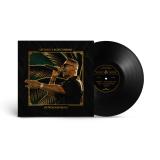
On January 17th, 2026, Grammy Award-winning hip-hop icon Lupe Fiasco joined Miami’s Nu Deco Ensemble, a hybrid orchestra dedicated to reimagining music from all genres, for a special concert at Miami Bandshell. This Juneteenth, Lupe and Nu Deco will release the recording for the whole world to hear, presenting Lupe Fiasco’s hits and new classics as they have never been heard before. Invigorated by the backing of the 33-person full orchestra, led by conductor Jacomo Bairos, Lupe forcefully rhymes every word of career highlights like “Daydreamin’,” “Kick, Push,” and “Paris, Tokyo,” emphasizing the musicality innate to Lupe’s tongue-twisting bars. In addition, Lupe presents unique live versions of new hits, including “Samurai,” from his critically acclaimed 2024 album of the same title, and “SOS,” an outtake released for the first time on 2025’s Samurai DX. The Nu Deco version of 2015’s “Dots & Lines” begins with a solo guitar exhibition from Aaron Lebos, while songs like “Daydreamin’” and thrilling closer “Superstar” benefit from the powerful pipes of backing vocalist Kelley Kessell and J Howard. The 9-track set is a scorcher, reaffirming Lupe’s status as one of the most proficient and electrifying live performers in hip-hop today.
It’s a unique universe with a distinct mood. Boy Deco’s SAP LP cements his offbeat artistic vision in a laid-back retro pop style. With distorted guitar riffs, wildly original arrangements and toplines that amplify the project’s intentional sense of ease, SAP is one of those rare gems you don’t forget and keep coming back to whenever you need to unwind.
Pop band Deco have announced their debut album, Destination: I Don’t Know released 6th September on Modern Sky. Deco have become the UK’s most intriguing viral pop acts, capturing millions with their social media mashups and earning themselves some famous fans along the way; though far from a flash in the pan online-only endeavour, the quintet emerged with this stunning debut album after building their reputation on the live scene.
Don Cherry reunites with his bandmates Charlie Haden and Billy Higgins from the original Ornette Coleman Quartet along with ‘Teaxs tenor’ saxophonist James Clay on this stellar session from 1989. This Verve By Request title is pressed on 180-gram vinyl at Third Man in Detroit.
Tom Trago returns to Rush Hour after 10 years with a wonderfully accomplished mini-album, tip!
During the years he spent living in Amsterdam, when his DJ career seemed to become an unstoppable juggernaut, Tom Trago was a regular visitor to Deco Sauna, a local institution that helped him “decompress” and de-toxify his body. Eventually, a more extended period of “decompression” was needed, with Trago moving to the coast to reassess his priorities and spend more time with his young family.
‘Deco’, his sixth album and first for Rush Hour in a decade, was recorded following an extended absence from club dancefloors, as Trago cut back on DJ commitments to prioritise family life. When he returned to the studio, often with his daughter by his side, Trago initially struggled to get back into the groove. The desire to make dancefloor-focused music had – temporarily, at least – deserted him; instead, he found himself drawn towards a desire to create “electronic lullabies” and music that reflected his more pastoral environment (his home backs on to a patch of woodland in which he would walk every day).
Returning to his most familiar synthesisers – and specifically the first synthesiser he bought, on credit, as a young DJ and wannabe producer – Trago set about navigating different musical routes without the straight-jacket of club-focused dancefloors. Occasionally, old friends from Amsterdam would join him in the studio – Tracey and Maxi Mill, both of whom are part of his Voyage Direct label roster, contributed to tracks on the album – but for the most part the production process was a solo endeavour: musical therapy for an artist determined to do things differently after years spent making club hits and sweat-soaked peak-time workouts.
The results are rarely less than spellbinding. Trago sets his stall out with opener ‘Dark Oak’, a gorgeous, colourful, sun-bright scene-setter co-produced by Tracey that layers tumbling lead lines, chiming melodic motifs and kaleidoscopic chords atop the gentlest of bubbly beat patterns. Maxi Mill lends a hand on ‘Central Park’, a deep and hypnotic excursion marked out by rhythmic bleeps, minimalistic beats and layered melodies, and the summer sun-down rush of ‘Never Peace a Puzzle’, where kaleidoscopic synth sounds, meandering solos and looped electronic stabs rush towards a dancefloor of the mind.
Trago’s desire to create “electronic lullabies” for his young daughter comes to the fore on ‘To Be Left Unlocked’, a hypnotising fusion of spacey electronic motifs, Steve Reich style (synth) marimba melodies and slowly building musical intensity, while the echoing Fender Rhodes riffs, squelchy synth-bass, glistening guitar notes and sparse, snappy post hip-hop beats of ‘When The Sky Is Watching Us’ doff a cap to the producer’s roots as a bedroom beat-maker.
Given the project’s genesis, it’s perhaps fitting that Trago chose to conclude proceedings with ‘It Might Be Forever’ and the digital only ‘Blue Dope’, the album’s most rejuvenating, immersive, and vibrant moments. Both feature sustained chords painted with vivid aural brush strokes and come blessed with the merest hint of a rhythmic pulse – a thread that subtly runs throughout Trago’s most mature and musically rich album to date.
Matt Anniss
out of Stock
Last delivered 65 days ago available to reorder, subject to availability
Late 70s Westcoast Yachtpop you can almost dance to!
Man nannte sie nicht umsonst die - Me Me Me Generation'. Die sehr von sich überzeugten bärtigen Musiker (und die Musikerinnen in wabernden Kleidern), die Mitte/Ende der 70er in L.A.'s Strassen rum hingen und sich selbst feierten. Der geschmackvolle Teil der Musik-Welt hätte diese Musikrichtung noch vor einigen Monaten nicht mit der Zange angefasst. Zu sanft, zu übertrieben, zu luxuriös, zu offen hedonistisch, zu ausladend. Zu unecht, zu gekünstelt, nicht authentisch, und dann noch diese unfassbaren Akkordwechsel...Aber ' Too Slow To Disco - vol. 1' hält sich nicht auf mit solchen alten Geschichten und Klischees. Wir alle wissen, sobald Musikgenres alt werden, scheinen die wichtigen, relevanten Teile auf einmal durch und diese Zusammenstellung versteht sich als Dokument eines fast vergessenen Teils der West Coast Musikwelt Mitte bis Ende der 70er Jahre.Es hat ein Jahr gedauert, die von uns ausgewählten, meist unbekannteren Songs aufzutreiben. Songs von Musikern, die damals gerade ihre ersten, oft wenig erfolgreichen Schritte unternahmen, bevor sie Jahre später mal eben eine Handvoll Welthits aus dem Ärmel schüttelten und die - grosse Welle' der Musik der kalifonischen Küste surften. Also, willkommen zu Volume 1 unseres sogenannten PRM (Personal Rediscovery Movement).
Don Cherry's downtown Paris funk masterwork produced in 1985 by Ramuntcho Matta and originally released by Barclay in France only, finally gets a worldwide release on Wewantsounds. Featuring French post-punk muse Elli Medeiros, avant garde poet Brion Gysin and cult Senegalese drummer Abdoulaye Prosper Niang (Xalam), this is a unique soundbite of Paris in the early 80s at its coolest when funk, jazz and new wave were mingling with sounds from Africa, Jamaica and Latin America. Newly Remastered, the album is augmented by a second LP worth of bonus tracks and a deluxe gatefold sleeve with a new essay by French journalist Jacques Denis (Liberation).
WRWTFWW Records proudly announces the release of sfs/in vain (selected tracks) by UK jungle heavyweight and Future Retro London founder Tim Reaper, a limited-edition 3LP bringing together selected tracks from two previously digital-only albums, sfs and in vain.
An insane collection of slower 140 BPM wonders, sfs/in vain explores jungle, dubstep, UK garage, R'n'B, grime, liquid D&B and broken beats through Tim Reaper's fresh and informed approach. Deconstructed and reconstructed club music, rooted in tradition but looking forward, these tracks reveal another side of one of the key figures in the modern jungle revival.
The selection comes from 2 albums. sfs collects a body of slower material Tim Reaper worked on throughout 2025, stretching across various genres of UK electronic music. in vain comes from a much more personal place. Written during a period of instability, heartbreak, financial and professional uncertainty, the album became a way for Tim Reaper to process what was happening around him and find some kind of escape. The tracks were made at a point when the effort he had put into rebuilding his life felt as though it had all been "in vain" - hence the title. The result is warm, melancholic, soulful, simply very human.
Together, these selected tracks highlight the incredible range of Tim Reaper's production, proving that his understanding of jungle extends far beyond the traditional boundaries of the genre. From heavyweight bass music to delicate melodic passages, sfs/in vain (selected tracks) is a beautifully varied snapshot of an artist constantly pushing UK club music into new territories.
Tim Reaper has been leading the resurgence of jungle for years, with releases on AKO, Skeleton Recordings, 7th Storey Projects, Green Bay Wax, Dalston Chillies, Parallax, Myor Massiv, V Recordings, Deep Jungle and many more. He is also the founder of Future Retro London, one of the most respected labels and platforms in the contemporary jungle scene.
Pronounced Zero (ay ay) RIOT
Shit and Shine go fully CAN on their eleventh album release for Riot Season since their debut way back in 2004.
DEEP SOLID GROOVE REPETITION !!
Fully CAN in the sense that the rhythms are VERY CAN LIKE, but with a modern sharper edge and less flowery decoration. If CAN had a Roland TR-1000 drum machine it might sound a lot like this!
Basically all your favourite bits of krautrock, but sharpened up with modern tools, and it works perfectly! Say it again … DEEP SOLID GROOVE REPETITION !!
It’s definitely danceable, if that’s your thing, but also definitely deeply listenable. Something to put on and fill the space with infectious groove while you wash the dishes or drive your car, have your workout (I’ve heard from several sources $&$ makes excellent workout music) or whatever.
Two long songs on each side of the record. It’s an absolute beauty and actually sounds like shit and shine might be taking things a bit more seriously for a fuckin’ change! BRAVO !!!
Phenomena begins with two artistic voices that seem to speak different languages. Barcelona-based producer R-010 (Lucas Rojo) approaches composition through rhythm, space and electronic transformation; Madrid-born vocalist and multidisciplinary artist Venerandi through texture, breath and the expressive possibilities of the human voice. By the time the album reaches its final moments, that distinction has quietly disappeared.
Rather than functioning as a meeting point between two individual practices, Phenomena gradually
becomes a third language—one that belongs to neither artist alone. Voice no longer sits above the music
but moves inside it, dissolving into layers of synthesis, percussion and guitar until performance itself
becomes another malleable sound source. Likewise, electronic production never behaves as a fixed
environment; it constantly adapts, absorbs and responds, allowing acoustic gestures and digital
manipulation to reshape one another in real time.
This continuous transformation defines the record more than any particular genre ever could. Echoes of trip hop, bass music, psychedelia and experimental electronics drift across its surface, yet they are never
presented as stylistic markers. Instead, they appear as temporary states within an ecosystem that remains
in constant motion, where dense rhythmic passages collapse into suspended atmospheres and moments
of stillness carry as much weight as those driven by pulse.
The presence of Matteo Caro (guitar and percussion), Pablo Gorostiaga (guitar) and Alessio Rodolico
(percussion) further expands this dialogue. Their contributions are not decorative additions but structural
ones, gradually dissolving the distinction between composition, improvisation and production. Instruments
emerge, mutate and disappear inside the same sonic fabric, making it increasingly difficult to distinguish
what was performed from what was transformed.
With Phenomena, Lapsus Records presents a work that feels less interested in crossing genres than in
questioning the borders between artistic identities themselves. The album never asks the listener to decide
where the human ends and the machine begins. Instead, it quietly suggests that, after enough careful
listening, the question itself may no longer matter.
Animative is new work by composer, producer, saxophonist and synthesist Josh Johnson (SML, Jeff Parker ETA IVtet, Flea and The Honora Band), his third album under his own name, and his first for International Anthem/Nonesuch. The album further advances Johnson deep into a territory he has been exploring for years: live-processed electro-acoustic takes on deconstructed rhythmic jazz. The ten track album - co-produced by Johnson and Paul Bryan, featuring contributions from Meshell Ndegeocello, Macie Stewart, Marquis Hill, Ben Lumsdaine, and more - is a marvel of electro-acoustic innovation that combines compositional brilliance and technological ambition into a mesmerizing blend of skeletal soul-jazz, post-bop, electronic minimalism, and dreamy ambience.
IRST ALBUM IN 10 YEARS.
TOURING WITH TROPICAL FUCK STORM IN NOVEMBER (DATES BELOW).
PRODUCED BY DAN LUSCOMBE (THE DRONES) WHO IS ALSO PART OF THE LIVE BAND.
PREVIOUS ALBUMS ON HARDLY ART/SUB POP AND REMOTE CONTROL.
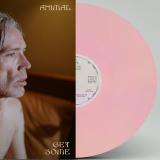
VERY LIMITED BLACK VINYL AND INDIES ONLY PINK VINYL . NON-RETURNABLE.
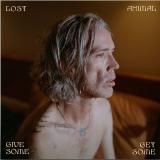
‘Jarrod Quarrell, creator of Lost Animal, is one of the most underrated songwriters in Australia and one of our all-time favourites. He creates poetic expressions. His work is very interesting in a highly original way and richly emotional. The songs reveal themselves more over many listens and always feel fresh. His powerful, beautiful, transformative, and unforgettable songs possess the vast depth of the human spirit.’ - GIMMIE GIMMIE GIMMIE ZINE
‘Quarrell has developed a collaged techne that embodies a heart-on-sleeve attitude. Lush melodic delays wash with an influx of lyrics that pierce with uncanny imagery and diction.’ - VICE
It’s not every day you hear about a new Lost Animal album. In fact, it’s been ten years between drinks. The debut Ex Tropical (Hardly Art/Sub Pop) was released in 2011, and followed by You Yang (Remote Control) in 2016. So what happened, and where’s frontman/mastermind Jarrod Quarrell been for the last ten years?
From the horse's mouth, “I don't give a fuck about productivity”. A humbling reply. It confirms Quarrell's MO: here’s an artist as a non-conformist. And when he does see fit to bless us with his unique vision of what music can sound like, it has the ability to completely charm and disarm. Amongst a sea of rock bands, LA is essentially a solo act. Simply put; LA is JQ. But on the other hand, amongst an ocean of solo acts, LA possesses the grandiosity of a full band, punk in spirit, but without being fast, or heavy.
Armed with keys and synths, timbres align more with what a toucan might listen to, as opposed to what's heard commonly throughout Melbourne's gig economy. Strings are gently plucked and horns are tenderly blown. These are the colourful brush strokes that decorate the upper frequencies. They’re the ticket to a far away land;exotic, and potentially very dangerous. If the crew from Hear My Eyes are reading this, consider Lost Animal performing Give Some Get Some as the soundtrack to the next time you screen The Hangover Part 2. Yeah, the one where shit gets super fried in Thailand.
The album examines the underbelly of what a ten year journey might rub up against. As one may expect, a lot of that action is below the belt. Tracks like Do That Thing, and In
Rewinding, a few things have happened in the past ten years that are worth illuminating. Shags is no longer commandeering the bass full time. Though he does make an appearance on a couple tracks. The main difference from present day to yesteryear LA is Dan Luscombe (The Drones). Luscombe has jumped into the role of producer (and also part of the live band). One could say he’s a producer of the Spector-ilk: playing a hands-on approach and assisting Quarrell's song crafting. He may have suggested to add a chorus or two, but the chord progressions remain distinctly Lost Animal. You'll recognise them easily by their beauty, combined with either fragility or rigidity. Luscombe is arguably the defining force that made this album happen. Perhaps he had Quarrell at gunpoint. Yet to be confirmed. Regardless, thank fuck for Luscombe because it may have been another decade.
But the album's defining feature is arguably Quarrell's lyricism. He may not cross-examine where he's been, but his voice does unmask where he is: absolved and reincarnated. The decade-long journey has resulted in him looking inwards and unlocking himself. The album's many mantras suggest that he may be a bird (I'm a Bird Now), or that he is living on another planet (Never is Forever). Whatever and wherever he may be,
Give Some Get Some invites the listener to reflect on their own journey over the past decade. Because the game's got a price. So ask yourself what have you taken, and what have you given? Life ain't a box of chocolates. It's a bowl of berries. And when fruit symbolizes temptation, get some.
Molecular Recordings proudly announces the release of "Structure Series 1," a special vinyl collection marking the label's 30th anniversary.
This release features unreleased tracks from both veteran artists and emerging producers, highlighting the label's ongoing commitment to innovative and high-quality techno music.
For three decades, Molecular Recordings has been a leader in the techno scene, continually pushing the genre's boundaries and redefining its sound. "Structure Series 1" is a testament to this legacy, blending the work of established artists who have shaped the label’s history with fresh talent poised to influence its future.
"Structure Series 1" is more than a collection of tracks; it is a celebration of Molecular Recordings' journey and a glimpse into its future. This release commemorates 30 years of musical innovation and signals the beginning of a new chapter in techno.
Hanne Lippard and Renato Grieco's Today's Special is a suite of language works synthesising melody and diction that integrates the literary and the audible in a repertoire of songs that bask in the melody of voice and the punctuations of structured composition. Working with methods of reduction rather than opulence in both tonal composition and rhetoric, each piece pegs the poetic to the musical with compositional schematics and methods. It is important to state that there is little to none improvisation here, instead, the duo set up matrices, rules and structural links that facilitated meaningful locus of exchange between their two practices. Lippard's texts are a collection of new and previously completed works. In these, as is typical for her work, she enjoys the easy pleasure of wordplay, iterative language, and decontextualised anecdote, as in opener Portrait of a Betrayal, a piece about the loss of a phone and the way it haunted the owner who dropped it, based on a lived experience. Grieco's instrumentation works with Lippard's language art as a form of acoustic typography. "I studied graphic design and I think about how you can express typography through voice," she says. "Renato's use of the viola da gamba becomes like an underline, or a font's brushstrokes, in ways that feel typographical." In this, the classically-trained composer Grieco often finds and echoes the pitch movements of Lippard's voice, intonation mirrored and revealed, linguistic meaning doubled and shadowed by plucked, strummed or bowed strings. His main instrument is the viola da gamba, the instrument considered closest to the human voice for its tonal range and ability to mimic inflections and timbre, and here he brings it even closer to the voice, building systems by which it moves with and around Lippard. He also plays piano and Wurlitzer, and joins her in speaking on Receiver and in conversation for final track The Black Rose. "Hanne's voice is an artist's voice, embodied as the artwork itself," he says. "But where my approach is from the perspective of a composer, hers is around rhetoric and language. We worked towards each other in this sense, Hanne finding a space to welcome my voice, and me designing an acoustic space to enhance her vocal persona." In some tracks the structural connections are obvious - the matched tumbling delivery and stepped pitches of voice and piano in Aficionado sounding like two tipsy friends descending a staircase. In others, like the triptych of tracks Three Rungs Ladder, structured with rules derived from nursery rhymes, or cumulative song (akin to the 12 Days of Christmas). For the Colour 1 and Colour 2 pieces, the duo worked from palettes of colours connected to clusters of harmonies, which underlined the power of the word and its articulation. The absurd Labradorable personifies a people pleaser, A Story About Being Blue is an imagined playful monologue from the Deep Blue supercomputer - requesting in sing-song stop motion to be called Debbie, and Larry - as Grieco echoes in factual reportage. Hurtbeat unpacks and recomposes a tweeted non-apology by a Russian art collector about owning a piece of racist art, Grieco shadowing Lippard's generating a third `drop-shadow' performer from the resonances between the duo, typographic re-articulation of the source material. The Receiver includes lines from Robert Ashley's Improvement (Don Leaves Linda), Ashley existing as a spiritual parent of sorts to the practices contained on Today's Special, and here interpolated as if he is being quoted and written through within the audible world of the piece in a palimpsest of borrowed sentences. Closing track The Black Rose contains its own self-aware comedy, a lightly distorted conversation sourced from a Reddit thread about whether black roses exist, recorded as if it were an internet radio or a low budget podcast, the casual exchange stilted in the delivery of platitudes as scripted speech. Today's Special was developed in person over the course of a series of small residencies - at Deutsche Akademie Rom Villa Massimo, Rome; Fondazione Morra, Napoli; Callie's, Berlin. In these limited periods that rarely stretched beyond a week, Lippard and Grieco developed strategies for the works, keeping tightly locked to musical concepts. This, for Grieco, is about maintaining a solid, meaningful connection within the compositions, and committing to everything having a purpose for existing within the work. Each element pulls its weight; has something to say, literally and metaphorically speaking. In the same way that Lippard's work leaves nowhere for her to hide, he wants the music to exist with its own naked purpose: "It's is about exposing nudity via reduced materials," says Grieco. "This is a form of courage we want to embrace. Once we take off everything, it needs to be extremely precise to maintain a connection with the audience. We have a lot of tools to hide behind now, to protect ourselves and our identities as artists, performers, and in life more generally. It's something I don't want to do. I want extreme reduction: no hiding."
This is the sound of dream Texas, the cinematic Texas conjured in film and 20th century literary and art myth… big dark blueing horizons swallowing the infinite distance, a lonely poetry of sound, but also a stock taker of the iconoclastic, psychedelic, art rebel side of Texas… the cracked rock music side of Texas, the avant-garde in concrete cracks, the recklessly used, mind expanding drugs Texas, the dripping eastern swamps, the Houston house parties with the sounds of records blasting down the block and becoming musique concrète in the hot summer night.
Chrome Chasm’s debut album Interpreter is ambient, minimal in feel, maximal in texture, beautifully disorienting, vastly spacious— until it isn’t. It's a naturalistic shapeshifter, taking majestic form in the aforementioned elements and then dissolving back to raw genetic material to form anew. Spiritual jazz overtones, pedal steel moans and buzzing, noisy ambient visions are upended by grey-folded psychedelic unveilings. Interpreter’s three expansive tracks present a most detailed performance by its three deft musicians and the outcome often feels like a gorgeous collage in real-time.
Chrome Chasm was formed in 2024 by three of Houston’s brightest underground stars: Mlee Marie (Hearts Of Animals) on alto saxophone, flute and voice (whose long-form experimental sax performances helped inspire the formation of the band), Will Adams (Lower Dens/ Ka-Nives) on pedal steel, synth, percussion and voice, and Tom Carter on guitar. Carter has been casting a long shadow over Texas psychedelia and American underground music for over 3 decades, most notably with the Houston based Charalambides, a powerful creative force of the pre-new weird America era of experimental and avant psychedelic music, and most notably since with his solo guitar magnum opus Long Time Underground (which was deemed among the best experimental albums of 2015 by Pitchfork).
Interpreter’s opening track “The Star,” recorded almost completely live in one room and one take, is a 16-minute manifesto on ‘Dream Noir.’ An astute scholar of cross-genre connectivity and the through-lines of kosmische and spiritual-leaning sonic realms can hear echoes of Cluster, the skronk and beauty of Rahsaan Roland Kirk, and the architectural ambient flow of Harold Budd and Philip Glass in the tidal lapping of distorted guitar, mantra-like saxophone and pedal steel flow. From its deconstructed, pastoral opening moments to its proto-electronic center that crests into a bombastic polytonal climax, Chrome Chasm never neglect narrative arc for experimentation and avant technique. In fact, as a group, they effortlessly control, open, fill and contract space in abeyance to emotional vibration. “The Star,” and indeed the album as a whole, feels more like a communion or extended poem, in direct communication with the listener, than it does a ‘captured experience.’
Across the three longform tracks of Interpreter, Chrome Chasm conducts a masterclass in fusing real time performance energy with an abstract, cut-up master’s reimagining of the literal. They demand the listener meet their music with dream logic and then, like the best dream peddlers, they present a labyrinth to fall into and experience, a place where explanation and conclusion become obsolete, and engagement and immersion become sublime.
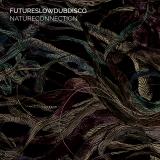
Nearly two years after "Superpaesaggio," Futureslowdubdisco rematerializes with a new album rooted in deconstructed rhythms, suspended atmospheres, minimalism, emotional tension, and ethnic echoes. Simone Ticconi and Francesco Colagrande, true explorers of sound, first delve into dark and shadowy ravines ("Shaman"), then descend into ocean depths ("Wendigo"), and make their way through impenetrable forests ("Natureconnection"), finally reaching the slopes of an active volcano ("Manitou").
The adventurous journey is rounded out with two more danceable remixes by Virtual Reality and Adelmo.
The crowning achievement is the artwork created by Awer, which pairs with the previous work by Flavia Mastrella.
Postmodern library music of great pathos. Giosue' Impellizzeri.
FUTURESLOWDUBDISCO is a project born from the meeting of producers Simone Ticconi and Francesco Colagrande. The duo explores sonic territories that combine downtempo, minimal techno, and dub. A blend of deep and hypnotic atmospheres, capable of moving between the contemplative dimension of listening and the pulsating energy of club culture, for an unforgettable rhythmic, ethereal, and psychedelic journey.
Son Of first surfaced in 2015 with Social Zombies on Opal Tapes. A decade on, he returns with YYY on his own label, Digital Empathy, the fifth in its sinister futurism catalogue. Unconventional minimalist Detroit electro, eroded IDM, 8-bit dungeonstep, and deconstructed funk interlace into one unifying sonic world of YYY. The dawn of the anti quasi-replica is here. Only taste will survive.
Phwoar! TD go four for the floor on Volume 9, letting loose with a set of sure-shot hits from all corners of their sonic spectrum.
A tag team match up, this action spectacular trades peak-time pump, Balearic cool, Italo thrust and dance-punk theatrics on its way to snatch the championship.
Obviously TD ooze subtlety and taste, so as we sat sipping Schnapps from our Stanley cups, we couldn't help but take a little inspo from our kitchen decor. 'Live Love Pump' - what a mantra. In musical form, this philosophy takes the shape of a capital D-isco delight, equal Pats Cowley & Adams, EQ-freaked and filtered into something dafter than a pair of chrome clad millionaires. Big room mirrorball magic if ever we've heard it.
The A2 sees the drunk AOR funk of 'Sure Line' take a leisurely stroll down the coast, a Gauloises in the gob and tattered Baldwin in the back pocket, flipping and flopping along the prom to buoyant bass, melting brass and more than a little melancholy.
Booting off the B-side, 'Un America' is a massive mid-tempo chugger replete with laser fire, synth scree and nipple high guitar. Powering along on a serious bass sequence armed with hooks-a-plenty, mostly incomprehensible lyrics and a groove which won't quit, this has all the ingredients required for an Italo all-timer.
The finale finds us in the company of some punk pioneers at their absolute silliest, bringing the kind of whacky vocal vibe, surf-centric style and off kilter groove the B-52s made a career of. Add in animal chatter and scratchy guitars and you've got the sort of secret weapon the Idjuts unleash waaaay post peak.
Limited Press - Numbered Insert - Drum Fun Guaranteed
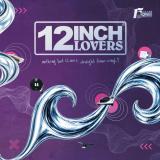
12 Inch Lovers - Celebrating 15 Years of Vinyl Culture!
Belgian vinyl-only event concept 12 Inch Lovers celebrates its 15th anniversary with two new additions to its established sampler series. Now entering its seventh year, the series reflects the music and atmosphere of the events, combining dancefloor favourites with carefully selected discoveries.
Samplers 13 & 14 bring together sought-after classics, hard-to-find gems and selected tracks and versions making their vinyl debut. Each volume features nine full-length tracks across two 12-inch records, making both releases essential additions for DJs and collectors alike.
Sampler 13 includes Sorry I Am Late by Kollektiv Turmstrasse, Marea (We've Lost Dancing) by Fred again.. & The Blessed Madonna, and Lifetimes by Slam feat. Tyrone Palmer. Further highlights include Tocadisco's Morumbi and the Martijn ten Velden Remix of Guitarra G.
Sampler 14 features Dreams by Deep Dish feat. Stevie Nicks, All That Matters by Kölsch feat. Troels Abrahamsen, and the NiCe7 Remix of It's Yours by Jon Cutler feat. E-Man. Belgian favourites Decoy & Roy with Inner Life and The Mackenzie with Higher In The Sky add to the selection.
Rooted in 15 years of vinyl-only events, these two compilations capture the distinctive sound of 12 Inch Lovers, offering lasting appeal for long-time fans, record collectors and DJs looking tobring proven classics back to the dancefloor.
Nothing But (Future) Classix, Straight From Vinyl!
Sampler 14 opens with Jon Cutler feat. E-Man - It's Yours (NiCe7 Remix). This remix pairs the recognisable vocal with a punchy house groove. A fresh take on a familiar classic that sets the tone straight away. Next comes Sterac Electronics - Destination Reached, with Steve Rachmad
showcasing his feel for electronic funk. Tight rhythms and an infectious groove make this a record with lasting appeal.
Side B features Swen Weber - Maya (Rerub), a powerful club track whose build and driving rhythm keep the dancefloor moving. Deep Dish feat. Stevie Nicks - Dreams then delivers a familiar moment. Stevie Nicks' distinctive voice and Deep Dish's warm, immersive house sound
give this well-known song a character all of its own.
Side C brings Kölsch feat. Troels Abrahamsen - All That Matters, a melodic track in which the vocaland gradual build complement each other beautifully. The kind of record that feels equally at home deep into a club night or under the first rays of sunshine at a festival. Next is Chew Fu feat. Steve Clisby - Purple Rain (Mousse T.'s Home A Lone Mix). Mousse T. gives this interpretation of the Prince classic a warm, soulful house groove, leaving plenty of room for Steve Clisby's voice to shine.
On side D, Jürgen Paape - We Love takes over. Playful, melodic and full of character, it adds a different flavour to the selection. Decoy & Roy - Inner Life follows with a generous dose of nostalgia and a sound that perfectly reflects a love for Belgian club classics. Closing the sampler is The Mackenzie - Higher In The Sky, whose dreamy melodies and uplifting energy provide a fitting finale.
Nine tracks across two 12-inch records, each in its full-length version. Much-loved classics, inspired remixes and lesser-known gems, brought together withthe same love for music that has driven 12 Inch Lovers' events for 15 years.
Coming from deep within the city that brought us Master P’s legendary No Limit Dynasty and Lil Boosie comes an artist who uniquely encapsulates the crossing point between lowslung Hip Hop and forward thinking, emotive electronic music. 22-year-old New Orlean’s based Suicideyear AKA James Prudhomme brings his own Southern Gothic perspective to the table with new album ‘Color The Weather,’ set for release on July 6th via LuckyMe. Although not his debut album per se - 2015’s ‘Japan’ on OneOhTrix Point Never's Software label was a collection of previously released beats – ‘Color The Weather’ represents the first time Suicideyear has specifically sought to create a complete body of work, further developing different textures and sounds that were hinted on last year’s critically acclaimed ‘Hate Songs’ EP. Within these tracks lie the ghosts of Prudhomme’s past - a difficult childhood truncated in his teens by his family home burning down. When he left Baton Rouge for his new home in New Orleans he found himself further entrenched in the Southern Rap scene whilst he soaked up the avant-garde electronic music he found online. Balancing his tender instrumentation alongside some of the tightest drum programming in the game - these tracks twist and turn - new elements are built and destroyed constantly encompassing a huge emotional range. On the records’ two vocal features he expounds on this innovative and ambitious duality – Domino Records own Georgia filling the track with longing and hope whilst Prudhomme deconstructs the track around her. The Casey MQ featured ‘Said and Done’ goes further - the last third of the track slowing to a codeine induced haze paying a nod to the Chopped and Screwed sound of James youth. “Color The Weather is about the ability to build or form security after trauma/betrayal & building personal coping mechanisms to get through said traumas. Doing what it takes to control your life when powers are working against it. The total resilience of the human spirit.” James Prudhomme
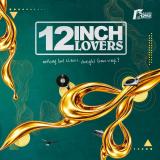
12 Inch Lovers - Celebrating 15 Years of Vinyl Culture!
Belgian vinyl-only event concept 12 Inch Lovers celebrates its 15th anniversary with two new additions to its established sampler series. Now entering its seventh year, the series reflects the music and atmosphere of the events, combining dancefloor favourites with carefully selected discoveries.
Samplers 13 & 14 bring together sought-after classics, hard-to-find gems and selected tracks and versions making their vinyl debut. Each volume features nine full-length tracks across two 12-inch records, making both releases essential additions for DJs and collectors alike.
Sampler 13 includes Sorry I Am Late by Kollektiv Turmstrasse, Marea (We've Lost Dancing) by Fred again.. & The Blessed Madonna, and Lifetimes by Slam feat. Tyrone Palmer. Further highlights include Tocadisco's Morumbi and the Martijn ten Velden Remix of Guitarra G.
Sampler 14 features Dreams by Deep Dish feat. Stevie Nicks, All That Matters by Kölsch feat. Troels Abrahamsen, and the NiCe7 Remix of It's Yours by Jon Cutler feat. E-Man. Belgian favourites Decoy & Roy with Inner Life and The Mackenzie with Higher In The Sky add to the selection.
Rooted in 15 years of vinyl-only events, these two compilations capture the distinctive sound of 12 Inch Lovers, offering lasting appeal for long-time fans, record collectors and DJs looking to bring proven classics back to the dancefloor.
Nothing But (Future) Classix, Straight From Vinyl!
Sampler 13 opens with Kollektiv Turmstrasse - Sorry I Am Late, the club track many will recognise from Solomun's legendary Boiler Room set in Tulum. Its unmistakable bassline sets the mood straight away. Next comes Skape D'Jear - Everything In You (Dedicated Clubba Mix), a
lesser-known house gem making its first appearance on vinyl.
Side B features Karmon feat. Terry Shand - Take My Hand, a melodic house track with a strong vocal performance that remains hard to find on vinyl. Tocadisco - Morumbi then takes things up a notch. With its driving percussion, this is a record that has blasted through the speakers of countless Belgian clubs and beyond.
Side C brings Fred again.. x The Blessed Madonna - Marea (We've Lost Dancing). A track about missing the shared experience of dancing, it became closely linked to the return to the dancefloor for many. Next, we head to Berlin with Kotai - Sucker DJ (Marcin "Highfish" Kozlowski Remix), a distinctive club classic that still holds its own. Daddy's Groove & Little Nancy - It's Not Right, But It's Okay closes this side with a groovy reworking of Whitney Houston's well-known song, now available on vinyl for the first time.
Side D captures the spirit of Ibiza with G Club presents Banda Sonora - Guitarra G (Martijn ten Velden Remix). Its recognisable guitar lines and gradual build make this a track to lose yourself in. This remix makes its vinyl debut here. Closing the sampler is Slam feat. Tyrone Palmer -
Lifetimes. Palmer's distinctive voice and the Scottish duo's outstanding production make this a record that still hits home after all these years.
Nine tracks across two 12-inch records, each in its full-length version. Much-loved classics, lesser-known gems and tracks making their vinyl debut. Selected with the same love for music that has driven 12 Inch Lovers' events for 15 years.
The modern day torch carriers of electric Brazilian jazz-funk. Fans of Azymuth, Marcos Resende, Antonio Adolfo and Cesar Mariano look no further !
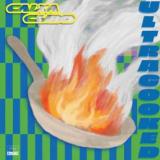
Ultracooked infuses the Sao Paulo trio’s deep understanding of Brazilian music history with their consummate musicianship and infectious joy of playing. Their distinctly electric jazz-funk flavour rises to the top, as they pay homage to some of their musical heroes and teachers.
Where previous albums nodded to the lineage of Azymuth, Antonio Adolfo, Cesar Camargo Mariano and Marcos Resende, Ultracooked walks ! ! straight up to the greats and shakes their hands. Gilberto Gil and Caetano Veloso are here, with fresh versions of Espresso 2222 and Odara respectively. Garoto - the great choro guitarist and composer whose harmonic imagination quietly laid the ground for bossa nova - is here too, and honoured with a deconstructed reading of "Jorge do Fusa".
Recorded in the wake of the passing of both João Donato and Hermeto Pascoal, each has a song on the album named after them. Listen to Caixa Cubo and you can see why, their playfulness echoes Donato’s mischievous cheek, while their creative openness is clearly Hermeto inspired. But with both “Hermeto” and “Dontao” each featuring the sampled voice of the late masters themselves, the songs read more as conversations than eulogy. Caixa Cubo carry forward these legacies with care.
In good company, Zé Leônidas, who lit up 2023's Agora, returns to sing on "Expresso 2222", "Essa é Pra Tocar no Rádio" and "Cortejo", while guitarist Edson Woiski brings his sinewy sound to those Gil interpretations and to "Cabaré", before adding his voice to the closing chorus.
Ultracooked was produced by Caixa Cubo alongside Frederico Pacheco, who recorded and mixed the album at O&O Studios in São Paulo, with mastering by Casper Sutton at Gearbox Studios in London.
Jeff Parker's 2016 album The New Breed was a turning point for both Parker and International Anthem, changing the trajectory of his solo career as well as drawing an abundance of attention to our fresh imprint despite our then very limited catalog. Most importantly though, the album is the first to give voice to Parker's wholly unique take on sample-based beat construction augmented by improvisation and live instrumentation (performed in this case by the high-level crew of Paul Bryan on bass, Josh Johnson on alto saxophone and keys, Jamire Williams and Jay Bellerose on drums, Parker's daughter Ruby on vocals, and Parker himself on guitar, synths, and other instruments). What began as Jeff's interest in understanding his own idea of hip-hop processes (and how they related to his work in jazz) expanded into a blueprint for much of his work since then. (Hear also: The New Breed's expansive followup Suite For Max Brown, the gentle deconstructionist solo guitar of Forfolks, and the long-form slow bloom improvisation of
Adepta Editions launches its new FuoriSerie series with catalog number AE/FS-01, a 6-track EP titled Tetsudo by Pauk (Pau Cabruja), a pivotal figure in Barcelona's experimental electronic music and modular synthesizer scene. FuoriSerie is a dedicated series that grants invited artists complete creative freedom, handing over full control of both the musical vision and the visual aesthetic. Within this framework, Adepta Editions operates purely as a platform, empowering artists to build and express their world without constraints. In Tetsudo (Japanese for railway / iron road), Pauk unfolds his signature sonic language through a 6-track journey: a complex architecture built on modular synthesizers, deconstructed glitch rhythms, dense ambient soundscapes, and intricate patterns of friction and inertia. AE/FS-01 stands as an essential release for avant-garde electronic collectors and aficionados of analog-driven, conceptual IDM.
Even if Ancient Greek isn’t part of general knowledge anymore, the word mega is. Hence, you might admire our modesty to say that Roman Flügel’s first outing on Running Back in 2022 is perfectly headed. Greta, large, mighty and somewhat the love- or brainchild of his earlier Garden Party and the previous D.I.S.C.O., Mega pulls out all the stops: hi-nrg melodies, circus bells, cowboy funk and honey hooks at 140 beats per minute. While it is nearly impossible not to take this bait or decorate it with the Bobby-O medal of honor, Roman proves one more that you can be catchy and classy at the same time.
Rules on the other hand, puts some of these stylistic devices in reverse or down-tempo mode and feels like brushing your teeth after an extended feast or the perfect hors d’oeuvre.
Completing the picture with Film 1, Film 2 and Film 3, Flügel flexes his freethinking muscles and lands in-between art school new wave bands and soundscape science. Music that is masterly made, magical in its impact and perfectly described with a misquoted line from Get The Balance Right: it’s never predictable.
Klara Lewis’ distinctive talent for disfiguring sound into forms that remain recognisably song-like reaches a new peak here. Her new album Opening is a deceptive recording with veiled melodies and clandestine bangers.
Lewis, creator of worlds, treats music as a mirror that reflects a perspective misaligned with the real image. Her music moves in unusual and often startling ways. Acoustic instruments such as ukulele and piano are subjected to processes of deconstruction and reconstruction, their original forms continually reshaped.
The tracks within Opening offer an array of disorientating tactics; damaged field recordings are suddenly sliced into ominous rhythmical patterns whilst deceptively simple tactics provide foreboding dread. Often alien on entry, the progression of a piece can land in a surprising tenderness, or the other way around. The momentum grows as a physical state but also one which is questioning, desiring, encapsulating a feeling, to explore a further way of expression and ultimately connecting: A new closeness, a new perspective.
Opening is an album in which the protagonist’s manipulation of sonic matter seems to extend beyond the music itself, resulting in a corresponding manipulation of the active listener. Sounds shift, dissolve, and re-emerge in altered forms, creating an experience that feels both intimate and disorienting. Lewis maintains a delicate balance between abstraction and emotional immediacy, drawing the listener into a world where familiar musical gestures are constantly reconfigured in surprising ways.
The works on Opening are refracted through an exploratory and transformative lens, suggesting an artist continuing to redefine the possibilities of musical language as a space where the instantaneous and the eternal come together.
Music by Klara Lewis. Mastered by Stephan Mathieu. Cut by Andreas Kauffelt at Schnittstelle, Berlin. Artwork by Klara Lewis. Design by Klara Lewis & Nik Colk Void. Images from ”En Masse” by Circa, directed by Yaron Lifschitz. Dancer Holly-Rose Boyer.
”Tide” commissioned for compilation album "Dissolving Strawberry" (2020), released by Irrlicht. ”Drip” and ”Feel” originally composed for the film ”Failed Emptiness” (2024) by Mika Taanila.
Trentemøller's new untitled album explodes with the force of a supernova before dissolving into swooning vocals. Across 10 songs, maximalist guitar-noise blowouts collide with some of the most bruising shoegaze you'll hear this year. "The noisy got noisier, the dreamy got dreamier," says Trentemøller. "I was ruthless this time."
Opener "Swerve", recorded with Vienna-based singer Sakura, crashes into searing walls of sound - a stark contrast to 2024's haunting Dreamweaver. The album's radically intuitive energy persists on the anthemic "Visceral" and the industrial fuzz of "Your Love Walks Alone", featuring Sune Rose Wagner of the Raveonettes. "Coyote" deconstructs synths into feedback and brutal guitars, while "To Mist" and "Halved" (featuring Midwife) offer nocturnal respite - nugaze ambience reduced to fractals of fragile beauty. For the first time in Trentemøller's history, vocals appear on every track - contributors include Sakura, German-British singer Anika, Midwife, Tan Cologne, Sune Rose Wagner, Jonas Bjerre of Mew, and Danish singer-songwriter Emma Acs, among others. "I knew early on exactly who I wanted. We never met in the studio; everything was exchanged remotely. I'm pretty shy, and it gave the vocalists the privacy to really open up," he explains. Songwriter, multi-instrumentalist, producer, and mixer - Trentemøller did it all himself. "I don't follow trends or think in algorithms." The reward: playing the album live, start to finish, for the very first time on the upcoming live tour.
Tectonic Recordings presents Tectonic Sound: Vol. 2, the second instalment of the various artists series curated by label founder Pinch. Following the first Tectonic Sound collection, released in 2025 to mark the twentieth anniversary of the label, the series continues Tectonic’s forward-facing approach; bringing together artists from their wider family and connecting dots across the underground.
Longstanding figures of the UK Bass scene such as J:Kenzo and Roska sit alongside a new gen of artists including Ehua, Manami, Cimm, Denham Audio, Henry Greenleaf and SHXCXCHCXSH. Beatrice M. also returns following the release of their acclaimed debut album Sinking earlier this year, while Jay Carder and Sir Hiss make their first outings as solo artists on the label, after both appearing as collaborators on Sinking.
Pinch says: ““As Tectonic enters its third decade, the spirit and passion behind the music hold true to its roots. I love every single track on this compilation and how it shows off the various corners of the label's sound. Each artist has delivered something truly special!”
Each artist arrives with a distinct sound and history of their own, but across these twelve original tracks there’s a shared understanding of what Tectonic represents. Different strains of the UK bass continuum come together, creating a space where sounds collide, and new forms take shape.
Pinch leads the charge with ‘Hold On!’, an upfront, high-definition 4x4 propulsion tool that pairs rolling momentum with seismic bass pulses. Manami enters with ‘Turning Point’, further solidifying her newer direction, leaning into deep, dubbed-out territory with a sound that feels both vast and exploratory, while remaining heads-down and locked in. Henry Greenleaf steps in with ‘Whist’, an ominous and otherworldly offering, reminiscent of early dubstep productions that fell somewhere between the lines of dark garage, 2-step and grime.
Elsewhere, SHXCXCHCXSH’s ‘NexxxD’ and Sir Hiss’s ‘2TUFF’ form a middle climatic point of pure chaos, with Sir Hiss serving up a raw slab of gnarled grime waveforms and cascading claps. Beatrice M. & Cimm bring things back down with ‘Pad City’, a cool, meandering cut of shuffling house, while Lorem closes the compilation with ‘Console Corners’, exploring the outer rims of sound manipulation and deconstruction before tying it all together.
Since its formation in 2005, Tectonic has been a trailblazing force in electronic music, helping to define and continually redraw the boundaries of dubstep and its surrounding sounds. The compilation arrives in the middle of a serious run for the label. Earlier this year, Tectonic released Beatrice M.’s debut album Sinking, a major moment for the label that was embraced across the electronic music community. Pinch has also continued his long-running creative relationship with legendary grime MC Trim this year, following their joint 2025 EP No Caller ID, with recent single Striker.
Across Tectonic Sound Vol. 2, those different strands of Tectonic’s history and present day meet head-on. The music moves between familiar forms and stranger territory, with rhythms and frequencies refracting across the collection. It’s a record that feels cohesive without being uniform, reflecting a label whose sound has always been defined by forward movement.
For over three decades, Berlin-based DJ, producer, and curator Marcel Dettmann has remained a central force in electronic music, continuously pushing the boundaries of the craft. Deeply rooted in early influences ranging from post-punk and industrial to synth-pop, his dynamic DJ sets and expansive discography, including seminal releases on Ostgut Ton and Dekmantel, effortlessly weave together raw techno, Chicago house, electro, and avant-garde soundscapes.
Far beyond club booths and releases on his own imprints, MDR and Bad Manners, Dettmann’s multidisciplinary ethos has led him into artistic territories spanning gallery soundscapes, ballet compositions, and cinematic film scores. This relentless creative curiosity defines a career built at the intersection of dancefloor functionality, collaborative experimentation, and perpetual sonic evolution.
Dettmann introduced My Own Shadow last year, a project where music, visual art, and photography converged in two EPs, Approaching (2025) and Faultline (2026) prior to the release of the full album this coming Autumn. More than just a name, this project lets sound, image, and vision blend organically, reflecting his intuitive process of deconstruction, resonance, and emotional discovery.
Speaking about the project Marcel says “My Own Shadow wasn’t born from a big concept. I simply liked the idea of working under another name and started following it. Different things I was doing - music, photography, visual work - slowly began to connect.
It happened quite naturally. My Own Shadow is me - just seen from another perspective.” Neither an alter ego nor a departure, My Own Shadow: Album is an intimate reflection of the artist; a transient, ever-shifting form that dances with the light and subtly reshapes its contours to reveal new depths.
My Own Shadow: Album is built with textural minimalism through rhythm, tension and release, embarking on a path through the recollections and experience of the dancefloor. This space remains the ultimate proving ground where history, instinct, and transcendence collide, guiding Dettmann through his musical interests.
My Own Shadow - Album is driven by rhythm, texture, space and tension. Across tracks such as ‘Gravitational Scar’ and ‘Resolution Vector’, these elements are constantly reshaped, connecting Dettmann’s past with a sound that remains firmly in motion.
A sky-light was signalling a hidden location in the middle of an abandoned project-ST industrial zone. A set of harrowing buildings designed for the production of ST (soul-theft) assets. The once sterile atmosphere of these grounds was lost to the entropic ways of time, but more noticeably to a metronomous thumping-sound shaking loose exterior segments of its buildings. Inside one of the main production halls, the air carried a spirit of rebellion amassing in pools of condensation dripping from the ceiling. Bodies were moving in unison as people were discovering a truth hidden deep within them all.
Meanwhile in space…
Decommissioned robot weaponry was being repurposed and contorted to create analog musical equipment. While the details of these trials and technology were held as top-secret in the alliance, the one thing that couldn’t be hidden was that same metronomous pounding. Gainax’ base had been fundamentally transformed to a site for the research and distribution of audio-product she was secretly shipping to her terrestrial allies.
Hand Stamped & Numbered (limited to 300 copies)6.6
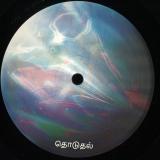
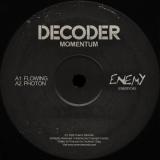
Decoder arrives on Toca with "Vaanavil", his first solo outing on the label. This EP carries a more refined, emotionally driven approach from previous works while maintaining a simple, clear motif throughout the 4 tracks. Vaanavil translates to "Rainbow" in Tamil, which is reflected deeply throughout the release: colorful, explosive, and melodic moments that capture the spectrum of light, and just in time for the upcoming summer months :D
Electrumos is said to be a lost continent hidden somewhere on Earth. Some believe it lies beneath the surface, others claim it drifts invisibly through the atmosphere or exists between different layers of time. Despite countless attempts, nobody has ever managed to locate it.
On this EP, pdqb becomes the first known traveller to access Electrumos, intercepting and decoding the mysterious electromagnetic transmissions emanating from within.
He transforms these signals into irresistible electro-cognitive frequency patterns.
Featuring remodels by dynArec and DMX Krew, along with artwork by John Armleder.
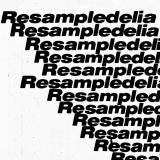
DJ Strawberry returns with Resampledelia, a new album for Appendix.files that pushes his ongoing explorations of footwork and juke into more abstract and textural territory.
Pathologically cheeky, thick with spices and full of rhythmic acrobatics, Resampledelia is built around a process of repeated resampling - taking source material apart, manipulating it and rebuilding it into new rhythmic and sonic structures. Across eight tracks, sounds are warped, stretched and recontextualised into something simultaneously intricate and instinctive, moving between the physicality of the club and the detail of deep listening. There is a playful maximalism to the record, with dense textures and unusual rhythmic turns constantly rubbing up against its underlying sense of groove.
The album develops an approach first explored on 2024’s deceleration EP, where DJ Strawberry slowed the familiar 160 BPM framework of juke and footwork to bring its sonic detail further into focus. His 2026 Personal Jazz EP for Juke Bounce Werk pushed the idea towards the club, preserving and highlighting his source material rather than completely deconstructing it. With Resampledelia, that process is taken further, with samples repeatedly reworked until their original forms become almost unrecognisable.
The record also reflects the creative freedom that has developed through DJ Strawberry’s relationship with Appendix.files and label head King Softy. Their creative exchange began when King Softy’s Dad sent him a tape by DJ Strawberry, prompting him to reach out. What followed has developed into an ongoing relationship around the label, with each release giving Strawberry further room to explore and push his sound in new directions.
“The creative freedom Appendix gives me results in pursuing my own sound in the most experimental way... the label’s character plays a huge role in the process.” - DJ Strawberry
That freedom is central to Resampledelia. It is a record that doesn't settle into one mode of listening, instead finding its own space between rhythmic gymnastics, detailed sound design and the physical pull of the dancefloor.
Resampledelia features two reworkings of lead single 'routine', with King Softy and oyubi contributing remixes.
Written and produced by Emre Öztürk
Mastered by Ike Zwanikken
Artwork by Emre & Amos
Designed by Amos Turner
Houston’s premier street griot is stepping into his most profound chapter yet with his highly anticipated upcoming album, O.Y.N. Throughout a decorated career that spans over 1.2 billion global streams and a fiercely loyal fanbase, Maxo Kream—born Emekwane Ogugua Biosah, Jr.—has established himself as one of rap’s most authentic, uncompromising storytellers. From the raw trenches of Alief to the critically acclaimed triumphs of Punken, Brandon Banks, Weight of the World, and his triumphant 2024 independent pivot Personification, Maxo has long been celebrated by Pitchfork, NPR, and Complex for his cinematic, hyper-detailed world-building. Now, O.Y.N. finds the Houston icon turning his gaze inward, pairing his signature Texas grit with an expansive, global perspective that redefines his artistic boundaries.
If his previous work was about Maxo taking full creative control as an independent force, O.Y.N. is about him uncovering who he is at his core. Following the passing of his father, Maxo found himself searching deeper for his family origins, leading to a pivotal moment of artistic and personal rebirth. For the first time in his life, Maxo traveled to Lagos, Nigeria, anchoring his new music in a profound celebration of his Nigerian heritage. The emotional centerpiece of this journey is the JPEGMAFIA-produced single “Time Out,” an introspective track that moves away from the frantic energy of his past releases to offer a stripped-back look at love, loss, and legacy. Featuring a heavy, resonant drum presence on the outro, the song’s accompanying music video was filmed on location in Lagos, capturing Maxo navigating his ancestral roots in real-time.
While O.Y.N. reaches new emotional depths, it doesn't sacrifice the hard-hitting, volatile street persona that made Maxo a star. The album expertly balances soul-baring vulnerability with cutting-edge hip-hop experimentation, showcasing elite chemistry with some of the genre's most forward-thinking visionaries. Look no further than “Fake Jeezy,” a collaborative explosion featuring Denzel Curry and masterminded by JPEGMAFIA. The track is a masterclass in industrial chaos, combining sharp lyricism and early-2000s trap imagery with cold, surreal visual aesthetics. This duality highlights Maxo's unique positioning in the culture as a trusted street general who can effortlessly trade bars with rap's avant-garde elite.
From his early days flipping Kendrick Lamar's “Rigamortis” to sharing marquee tracks with the likes of A$AP Rocky, Travis Scott, and Tyler, The Creator on hits like “Big Persona,” “Cracc Era,” and “Cracc At 15,” Maxo Kream has always been a rapper's rapper. O.Y.N. represents the ultimate synthesis of this incredible journey. It is an album born from the soil of Alief but elevated by the spirit of Lagos—a raw, beautiful, and heavy-hitting testament to an artist who has survived his past, honored his losses, and fully embraced his destiny.
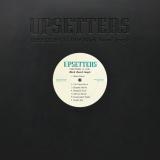
One of the most influential dub albums ever made. The remixing techniques used – radically new for 1973 – helped transform the role of the producer and the engineer to that of creative artists in their own right.
First released in Jamaica in December 1972, Upsetters 14 Dub Black Board Jungle is widely regarded as one of the first full-length dub albums and a true landmark in reggae history. Produced by the visionary Jamaican innovator Lee “Scratch” Perry, it marks the decisive moment when dub evolved from incidental B-sides into a fully realized long-playing art form. At a time when Jamaican sound system culture was flourishing, producers were beginning to strip down popular reggae tracks into instrumental “versions,” emphasizing the bass and drums for sound system deejays to toast over while adding echo and reverb effects to make things more interesting and dynamic. While King Tubby, who was in charge of mixing the tracks, was pioneering the technical foundations of dub, Perry expanded the approach by adding the hypnotic and psychedelic sound effects that made this record so rich in ideas, rendering the album more conceptually bold.
The album reworked previously released rhythm tracks by the Upsetters, which were recorded between 1970 and 1972, shortly before Perry opened his own studio – the legendary Black Ark Studio in Kingston. Their tight, groove-driven playing provided a solid backbone for these radical studio manipulations. Using the mixing desk as an instrument, tracks were deconstructed in real time – dropping vocals in and out, isolating drumbeats, pushing bass lines to the front of the mix, and sending fragments of sound spiraling into space through the heavy use of a spring reverb and tape delay effect units. Silence became as important as sound, and the interplay of rhythm and echo created a hypnotic, immersive listening experience.
Upsetters 14 Dub Black Board Jungle established dub as a genre defined by creative studio intervention. It demonstrated that the remix itself could be the main attraction, influencing generations of reggae producers and resonating far beyond into the techniques and aesthetics of post-punk, electronic music, hip-hop, and ambient sound design. By transforming the studio into a creative laboratory and elevating the “version” to an art form, this foundational album reshaped not only Jamaican music, but the whole of modern music production culture.
Digital Sting returns after a bit of a hiatus with an across-the-globe collaboration featuring two of contemporary electronic music's most mysterious and prolific figures. Berlin-based, UK- born Low End Activist meets British Columbia-based, Philippines-born SeekersInternational for a seamless merger of their distinct but eclectic styles. SKRSINTL's woozy abstracted dubwise and dancehall psychedelia drips in, pooling and merging into Low End Activists minimalist and precision delivered bass bin pressure. Both artists' music spends some of its time in the hazy edges and ambience between sounds with hints of the activity,
atmosphere and noise of the larger world present in the individual sounds themselves. An aspect of this record rides like a distilled essence of a merger between vhs era soundtracks, dusty live sound system tapes and classic era grime instrumentals but avoids the trap of obvious nostalgia. What is created through collage, deconstruction and refinement is in its whole very now. Like all things SKRSINTL and Low End Activist the continuum is honored and the momentum is always pushing forward.
The records come in double sided silk screen printed DJ Jackets, with Obi Strip style stickers and hand stamped white labels printed and assembled by Digital Sting.
The artwork for this release was created in collaboration between SKRSINTL and Digital Sting.
Mastered by Alec Ness and Greg Reierson. Vinyl run of 330 copies.
With Parallel Worlds, RFLX opens a new chapter for Eight of Cups Records, delivering a raw and focused statement built around tension and transformation.
“I wanted to avoid any form of release. With Parallel Worlds, tension becomes the language itself. I was drawn to this constant escalation, something that dissolves linear time and locks me into a different state of perception… where the drop never comes. And that’s exactly the point.”
“By removing resolution, I wanted to keep everything open: a space where perception expands and multiple realities can coexist. Parallel Worlds is not about choosing a direction, but about becoming aware that more than one is always there.”
A four-track immersive EP refusing the conventional payoff, Parallel Worlds unfolds as a continuous escalation, creating a suspended space where perception shifts and different realities begin to overlap.
The release features two original cuts alongside exclusive remixes by JOEY BELTRAM and AT-XYA.
Techno pioneer Joey Beltram strips the title track down to its raw essence, transforming it into a relentless dancefloor weapon driven by physical energy, hypnotic grooves and his unmistakable signature sound.
AT-XYA takes the opposite route, deconstructing and reshaping the original into an ethereal, cinematic journey for those fragile moments when night dissolves into morning and everything suddenly makes sense ;)
Completing the EP is Danxome, a deeper tribal-inspired cut reconnecting with the origin of the concept. In the Fon language, Danxomɛ means “in the belly of Dan”, the cosmic serpent and the origin of the world. Before parallel worlds, there was one.
Parallel Worlds started from a simple thought:
Every day, all versions of you exist. You just don’t see them all. You can stay the same, or you can shift.
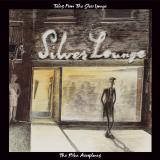
The Blue Aeroplanes have been delivering their distinctive brand of rackety sprechgesang for four decades now, and they are showing no signs of slowing down. Their new studio album, ‘Tales From The Silver Lounge’ is based on overheard conversations between the clientele of The Silver Lounge, a rather louche café/bar in an unnamed city on an unknown planet much like ours, and in an unknown time, though the decor tends to the late 50’s, early 60’s.
The identities of the members of the Silver Lounge are, of course, confidential.
This is the 14th Blue Aeroplanes studio album and the third with the current line-up, which is:
Gerard Langley: vocals
Bec Jevons: guitar, vocal and backing vocals
Mike Youé: guitar, vocal and backing vocals
Rita Lynch: guitar, vocal and backing vocals
Chris Sharp: bass and backing vocals
John Langley: drums and percussion
Ed Taylor: many different instruments and backing vocals
Wojtek Dmochowski: dance
Alexander Dmochowski guests on saxophone and clarinet, Will Diamond on violin and Steve Bush adds backing vocals.
After two best-of compilation albums were released by Chrysalis Records in 2025 (‘Magical Realism’: The Best Of The Blue Aeroplanes’ and ‘Outsider Art’: The Other Best Of The Blue Aeroplanes’), the band are now back firmly in a sort of present with a new album that features all the guitar-band flavours that anyone could need, with poems that cover name-doppelgangers, falconry terms, Don Marquis, postcards, Greek mythology, abandoned Teslas, the First World War and the surreal nature of music-hall jokes.
“The Blue Aeroplanes? Not my cup of tea, but I can see what people see in them.” Mark E. Smith
In the seclusion of a house in the Bavarian Forest, something unfolded that felt less like a conventional album production and more like an internal process of condensation. This house wasn’t a studio - it was a retreat. Its 1960s-inspired interiors, creaking wooden stairs, and crackling fireplace shaped the sound of Carl Gari as much as the instruments themselves. Though the house no longer exists, its atmosphere remains present in the recordings.
The music of Carl Gari - Jonas Yamer, Till Funke, and Jonas Friedlich - resists easy categorization, a trait that continues on this monumental new album. From the friction between electronic music and guitar textures, the trio forges a distinctive, idiosyncratic sound. Distorted electric guitars and pulsating basslines intertwine with analog drum machines, tape delays, and intricate effect chains, creating music that is raw, organic, and psychedelic. A new element on the album is the trio’s first use of vocals: Jonas Yamer, usually on bass, raises his voice in a punk-tinged, invented language that hints rather than narrates, unsettling more than it explains.
The guest artists do not merely decorate the sound - they alter its very structure at critical points. Polygonia contributes layered vocals that mesh seamlessly with the album’s technoid architecture. Will Brooks of Dälek delivers a dark rap feature on ‘Poison Shyness (Anti-Social)’, his words carving the sonic space with precision. Coby Sey adds introspective vocals that hover between experimentation and restraint on ‘Inner Link’. New York rap pioneer Sensational introduces a deliberately rough, individual counterpoint on ‘Disco Lights’, while the German percussionist Simon Popp drives the album forward with an uncompromising drum performance that insists rather than accompanies on ‘Zeitesser’.
The cover photographs, taken by Jonas Yamer, project images of corridors onto paintings located in the now demolished house where the album was recorded. Visually, this reflects a key motif of the album: spaces exist only as overlays and echoes - not mystical ghosts, but traces of a place that has physically vanished.
Recorded between 2016-2024 in Neunburg vorm Wald and Munich. With kind support by Kulturreferat der Landeshauptstadt München.
Mixed by Johannes Wagner aka J.Manuel at Apollo Studio, Berlin (A1, D1 w/ Fadi Mohem). Mastered & cut by Stefan Betke at Scape Mastering.
Photography by Jonas Yamer. Packaging design by Sepehr Mokhtarzadeh.
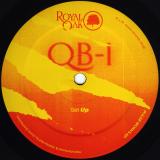
A batch of bass-heavy basement house tracks on the Clone Royal Oak series, simply because these are too much fun not to release on vinyl! The QB-1 project leans on those stompin' old school Todd Terry and Kenny Dope beats, but adds some modern production skills and turns them into proper DJ tools for those sweaty house basements, or what the heck, even your TikTok rave!
"La Duquesa", the most tender and most refined piece of the album Amygdala, perfectly casual and serious, deep and euphoric, all at the same time, is dedicated to the Spanish Duquesa de Alba, who, as holder of 46 titles of nobility, is even more highly decorated than Queen Elisabeth. Koze is fascinated by this lady: With her peculiarly creepy appearance she seems like a relic from the past era of the Spanish nobility. She is the most pictured woman in Spain and a pop phenomenon. When, in 2011, she married a man 24 years younger than herself, the entire country badmouthed her. Sometimes Koze would love to be that younger
man, who the Spaniards dismiss as a legacy hunter! Encore the needle is cookin'. Dj Koze did it again. His homage to Audrey Horne. "Burn with me" - a fucked up, deep and schizophrenic brainfoodbouncer with legato bass and hi hats way out of time. The beat burst like shagging, the dirty off hi-hat lashes remorseless in the twatherd - everyone just wants to get laid straight away.
Black Truffle is pleased to present Even Colder Spring, the latest release from the mysterious and wildly prolific Cities Aviv (a.k.a. Wilbert Gavin Mays, who also records as African-American Sound Recordings), a rare appearance from the artist outside his own D.O.T. Audio Arts label. For over a decade, Cities Aviv has twisted hip-hop conventions into the most skewed and splayed forms, layering and lacerating twitching loops, extreme production techniques and his mercurial vocal stylings into hermetic décollage. Across 16 tracks, Even Colder Spring charts Mays’ restlessly experimental approach: what sound like fully formed productions are interrupted suddenly after seconds; interjections of field recordings cue unexpected shifts; details drown under layers of fuzz. His vocal delivery takes in rhythmically intricate rap, barely articulate murmurs and freely melodic song, the latter often with a disorientating lack of connection to the track’s harmonies. The lyrical shifts are as paratactical as the musical movements. Apocalyptic visions of social and cultural uniformity alternate with reflections on mortality, glimpses of everyday life and head-scratching one-liners: ‘Maybe Mars is bougie?’ His reference points are as surprising as ever, the Dante quotes of previous releases joined here by a track named after Henri Bergson’s idea of the élan vital. Australian listeners, in particular, might be especially taken aback to hear ‘Closing Door’ open with the phrase ‘the tyranny of distance’.
While Mays’ work can sometimes be claustrophobically bleak, the productions here are often sparkling, at times touching on the shimmer of private-issue New Age sounds and the more playful end of krautrock. The instrumental ‘Martine Drift’ could almost be a snatch of Cluster’s Zuckerzeit caught through dial-up internet. The distant echoing drums of ‘L_area’ cross Persona’s Som with lo-fi IDM, while closer ‘Final Heaven’ dissolves a cloud of loops across almost seven minutes into ecstatic, rippling distortion. The graphic design, at the artist’s request closely modelled on the format of Corwood Industries, offers as good a clue as any to what awaits the listener on Even Colder Spring: a world at once impossibly opaque and intensely personal.
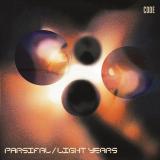
SCR-012 marks the first ever comeback on our label as we’re humbled to have Code back on Sunny Crypt! After the reissue of their CD-only side project “Mortal - Excepts from Deco”, this time we are happy to announce a fully remastered reissue of their debut EP, titled “Light Years / Parsifal”, previously released in 1992 on Down By Law Records. For the occasion, the Tonbridge-based electronic quartet offers us a hazy, hypnotic slice of early-'90s UK underground house / techno hybrids, balancing a steady dance-floor pulse with dub-inflected spaciousness and a psychedelic, almost otherworldly atmosphere. Its appeal lies in the tension between rhythm and abstraction: music that remains grounded in the physical language while reaching toward something more trance-inducing, elusive, and introspective.
Multi-faceted artist Calibre today shares his sixteenth studio album "Feeling Normal". The album is out now to pre-order on Vinyl, CD and on digital platforms via his own independent imprint Signature Recordings.
The record is his first bonafide 140bpm record and a staggering body of work that shows the genius levels of one of electronic music's most respected auteurs. Across the 13 tracks, he transcends through space and time, creating music that will take the listener on a weighty sonic journey. The album announcement is accompanied by two dub versions "Bad" and "Badder" deconstructed from the track "Badman" with DRS from Mark Ernestus available via his Hardwax store January 29th and Bandcamp February 12th. "Getting to work with Mark Ernestus is a real honour, I collected Basic Channel, Rhythm & Sound and his other work for many years and still do. It's hard to avoid the influence of this guy in electronic music across genres and so it is a real pleasure to have him do his thing with the Badman tune which I think sounds closely related."
All of the tracks on the record have been road-tested in Calibre's DJ sets over the last 2/3 years with many of them being sought-out by his hardcore fans. It was only a matter of time then that he put them out for all to consume. With a nod to the dancefloor, the clear idea for the album came about following the release of his most personal album to date "Planet Hearth". "It still works in the headspace but ultimately it's been written for the sweaty club experience we miss now, also after an album like Planet Hearth it felt very liberating to do," he remarks. When writing albums, he often just puts it down to the general chaos of life, not citing any one influence but generally just waits to see what comes. With one of the tracks on the album written 7 years ago on the island of Valentia, It became a project that he spent the intervening years collecting tracks for, not really knowing when he was going to put it together as an album. "The whole album is special to me, everything on there has import and meaning beyond for me, I have spent much time on all these and hope they are special for other people too."
Belfast-born, Berlin-based Calibre - AKA Dominick Martin - shows no sign of slowing down. As a producer, DJ, songwriter, multi-instrumentalist and painter, he is one of the most unique and inspiring living artists. With a career spanning two decades, his ability to remain underground whilst being one of the most-respected is testament to who this enigmatic artist is. To this day, he has never been remixed and has a seriously impressive amount of unreleased music under wraps. With everything on hold and gigs on the backburner, this record is exactly what the world needs right now.
When Khalab and Baba Sissoko first recorded together in 2015, they produced something definitive: a record where electronics and griot tradition achieved genuine synthesis rather than polite cohabitation.
Not layered genres maintaining separate identities, but two forms evolving into something singular. "Tata" took Track of the Year at the 2016 Gilles Peterson Worldwide Awards, found champions in Laurent Garnier, Ben UFO, Matthew Dear, Bonobo, and many others — but more significantly, it established a working method built to last.
Eleven years on, they return with Foli Bah on Hyperjazz Records. Theirs is a relationship built on trust. Khalab constructs structures that don't develop linearly but spiral inward — loops that reveal something new with each rotation, tightening until the listener stops resisting and surrenders. Sonic architectures that don't expand outward but deepen over time, layering toward saturation. Baba Sissoko inhabits these structures with instruments from Malian tradition, not as ornamentation but as load-bearing elements: the tradition becomes structure, not decoration. Electronics and griot practice stop negotiating terms and start speaking the same language.
Following the release of Haunted House Party, Bradley Thomas Turner was contacted by the Cryptozoological Society of New York City to create music for their museum’s holiday exhibitions. As enigmatic as they are controversial, the secretive society gave the composer free rein to create music that celebrated their profane (and, according to their critics, pseudoscientific) explorations of the darker side of yuletide folklore. The endeavour was denounced by religious groups, the scientific community and even parts of the cryptozoological community as “blasphemous,” “irresponsible”, and “a dangerous topic to make light of” respectively. Not much is known about the pandemonium that broke out on the night of the opening reception, but one journalist (who has been granted anonymity by request) infiltrated the event and captured the recordings that follow. Death cult ritual? Mishandling of cursed artifacts? Elaborate practical joke? Publicity stunt? No one can (or will) say for sure as no person in attendance has been willing to speak on record. Therefore, we present these recordings so the general public can decide for themselves.
he four tracks of his 2013-released „Feldspar“ EP see Romanian producer YVAT at the absolute peak of his sonic journey.
Roughly operating within the confines of IDM, Braindance, Phonk and Post-Dubstep YVAT serves a highly seductive sonic menu for advanced late night dancefloors with this one, amalgamating his signature backbone of highly detailed and well crunchy beats, shimmering harmonies and warmly caressing, comforting, all embracing low end goodness for those in the know. Criminally underrated and for the first time available to a global
audience.
Press quote:
„You used to dig Autechre but you think their best days are long gone as they've lost their bouncy beats vs. deep strings and nice little melodies path? Went off into deconstruction?
I'm totally with you here and that's why I love Yvats's recent "Feldspar EP" on the great Minor Label so much. The man named Octavian Justinian Uta - and which is better known to his parents under this name - brings back this special and long time missed twist again, serving the best Electronica 12" I've come across in ages. Limited to 200 copies in greymarbled vinyl and hardly available via regular distribution channels. Get your copy, now! “
baze.djunkiii / nitestylez.de / 04/2013
Never officially distributed before and available limited quantities only.
Limited edition of 200 copies. Grey-marbled vinyl pressing
'A Senegalese Griot singer, an Amsterdam improviser and a Puerto Rican jazz drummer find each other on an open playground, a stage built for improvisation, an old cinema now used for minute made story telling.
'Equipped with an m'bira, a xalam, a drum kit, a voice, percussion, house hold tools and an electric clavichord on 220 volt, they sit down and take off: Wrrrrrraaang!
'Singer and percussionist Mola Sylla is in many ways a musical explorer. Born and raised in Dakar, Senegal, he grew up in the tradition of the griots. Griots play conveying stories – sometimes decorated with music, theater and dance – which all play an important role in West African culture. His rhythm and melodic compositions differ from the western agreed schedules and provide surprising twists.
'Puerto Rican drummer Frank Rosaly has been involved in the improvised and experimental music scenes since 2001 when he became an integral part of Chicago's musical fabric, navigating a fine line between the vibrant improvised music, experimental, rock and jazz communities.
'Oscar Jan Hoogland is the sound of Amsterdam in person. He is an instant composer and inventor of his own instrument by joining a clavichord, a keyboard instrument from the 17th century, to 220 Volt electricity. As the last student of the late pianist, composer and improvisor Misha Mengelberg he tears like a tornado through the Amsterdam jazz and impro scene.
'Together they are Mother Tongue.'
Deep techno, sometimes nostalgic and melancholic: that what Zooloft Records is. Giorgio Gigli and Francesco Baudazzi (Obtane), balancing soul and body, give birth to intense storytelling through sound, enhanced by an intimate reflection about childhood innocence.
Introspection is driven by a vein of subtle and rarefied nihilism, pervaded in each release. Project's graphics evoke the idea of abstract thoughts written on blank paper, where shadows meet memories.
Future, maybe, is the memory of a beautiful past. So, we are here, today, and proud to present you a special, collector-item vinyl boxset, limited to 100 pieces only, handsigned and remastered, containing the full Zooloft discography.
Impressive Collective, BBE Music and Mark de Clive-Lowe present: Remixes & Reimaginations World-renowned for decades, Mark de Clive-Lowe is a New Zealand-born, Tokyo-based pianist, composer and producer, widely recognised as a pioneer in nu-jazz, broken beat and electronic music. In contrast to his previous release on Impressive Collective, the contemplative solo project 'past present (tone poems across time)', this collection brings together MdCL’s extraordinary reinterpretations of other artists’ work. As he explains: “Remixing has always meant more to me than just rearranging stems - it’s about uncovering a new reality inside the music.” From the uplifting gospel-house of Close Counters’ 'I’ll Be There For You', recontextualised for the broken beat dancefloor, to the timelessly angelic tones of We Are KING’s ‘Supernatural'; from Omar’s 'This Is Not A Love Song' reimagined almost 30 years later, to the politically charged intensity of Anthony Joseph’s 'Maka Dimweh' - every remix has been crafted with the progressive dancefloor in mind, while still resonating for the deep listener and always in service to the original artist’s essence. “I’m grateful to every artist who’s invited me to dive into their work - to deconstruct it and reimagine it with love, curiosity and respect. This compilation isn’t just a retrospective, it’s a celebration of the remix as an art form.”
Under the right conditions, half-remembered dreams can meld seamlessly into hazy present moments. Time spent alone can be an emotional blank canvas, and an opportunity to deconstruct sense and feeling; a patchwork of snippets both rooted in memory and abstracted from reality. The title of ‘quilted lament’ perfectly captures the way Gretchen Korsmo and claire rousay’s overlapping missions come together to do just this. Worn polaroid melodies and snatched everyday noises seem overheard through windows onto the street. They feel emotionally twinned, claire and Gretchen, it’s not always possible to tell where one ends and the other begins. Their musical thoughts and DNA are sewn together into a mini symphony of warmly embracing movements.
Built remotely between pre-existing friends in the underground music scene, the duo layered ideas onto audio files, and sent them back (and forth). And these luscious instrumentals truly do feel assembled by intuition, casually crafted with little need for guidance. “claire and I are both emo,” explains Korsmo. “We are both former texas-dwellers too and relate over both the woes and beauties of being in the American DIY experimental music scene.” Buoyant piano keys and hushed layer vocals tracks sit alongside a humming field-recorded scrapbook; a neighbour caught in a moment of private inspiration while street noise elevates; a private hymnal in the bathroom while the washing machine ends its cycle. Both artists take field sounds from a wealth of Zoom and Tascam recordings made in the last half-decade in Santa Fe, San Antonio, Los Angeles, Kamakura, Japan and elsewhere – from a baseball game announcer in Santa Fe, to the sound of a friend eating a juicy peach. At times, the bedroom walls seem to grow thin amid atmospheric creaks and disembodied whispers. Despite its very emo core, this is a recording engulfed in an intense sense of bliss, more at peace than we’ve heard either artist before.
"Phantom Seance Ballett is a boombox orchestra, Nō mimes, Vicky’s protection spells, Detlef’s psychic shuffles, a smoke machine, a strobe light chamber, painting, Margit Carstensen’s chiffre, Susie Greene’s insults, Schleim, Ebichu’s echoes and Anna Oppermann’s limbo."
Thus we welcome Lena Willikens & Sarah Szczesny's ethereal Phantom Kino Ballett project to Utter with 'Phantom Seance Ballett', an unusually tangible manifestation of what has become an on-going series of live performances and installations that incorporate sound, video, costume, still imagery and beyond. The themes explored weave in and out of grasp, touching on the otherworldly and mysterious, on hypnotic rites and ceremonies, on the fetishisation of cultural tropes and curios.
While carefully documented, these happenings had not been distilled or presented in a cohesive format until now. Of course, an attempt to harness and package such an experience required an imaginative leap beyond the traditional 'record-in-sleeve' approach and Lena and Sarah have overseen every aspect of this remarkable collection themselves.
Working with designer Till Sperrle, Lena and Sarah have conjured up a fold-out box containing an LP, a riso-printed credits poster detailing the samples and snippets collaged into the sound, a 36 page book with imagery from various shows and an essay by Thomas Vorreyer plus sticker pack. The limited 50 copy artist edition contains an additional 10 special riso-prints within an artist stamped hand-numbered box. For all, the LP contains twenty hidden locked grooves cut into the run-out on each side presenting snippets from the artists' archive.
The first of these pieces - 'Identikit Arkaden Seance' - took place on the 2nd of October 2019 at NAK Neuer Aachener Kunstverein and is a live recording. This performance was part of their exhibition "Chambers of Phantom Kino Ballett", where they showed new video works and displayed the now infamous costumes and slippers worn by Lena, Sarah and a rotating cast of guest phantoms.
At this performance, the seven performers carried boomboxes playing individual audio tracks inside and outside the Kunstverein, while Viktoria Wehrmeister and Detlef Weinrich improvised music alongside the phantoms' moving soundtracks of sonic snippets, poetry, field recordings and soundscapes.
The second piece - 'Studio Chamber Seance' - contains diverse audio tracks of performances that were held by Willikens and Szczesny in collaboration with Wehrmeister and Weinrich. It has been deconstructed and rearranged with additional sound material from the Lena Willikens & Sarah Szczesny archive, then edited and mixed by Lena and Sarah in Amsterdam and Cologne last year. Additional music by Detlef Weinrich and Viktoria Wehrmeister features throughout, recorded live in Aachen 2019 and Frankfurt 2020.
Mastered by Gordon Pohl. Transfer, additional mastering & lacquer cut by Helmut Erler at D&M.
On SMM0000105, Soreab locks into glitchy, percussive dub framework with Ilbiryani, combining tension with intricate rhythmic detail. The original thrives on steady, intentional dub experiments, balancing density and clarity with precision. In contrast, Banishsh completely deconstructs the track into polyrhythmic abstraction. The low end deepens into an almost DnB-weight sub, and the rhythm unravels into something unstable yet narcotic. Where Soreab’s mix defines control, Banishsh finds beauty in disarray. Together, they engage a dialogue between cohesion and entropy — two sides of the same sonic idea, equally substantial in their own language.
Portuguese techno mainstay Dextro drops cultured EP 'Covil Dos Abutres' for his label debut on Mutual Rytm.
Dextro has been immersed in electronic music and DJing since the early 90s. In the decades since, he has become synonymous with a sound deeply rooted in simplicity and authenticity. Fuelled by a passion for his craft, his production process is guided by intuition and spans a diverse range of styles, from tunnelling grooves to more potent techno with deep and hypnotic layers. He has held several key residencies and released on top labels like CLR and Missile Records, and he adds to those with a first outing on SHDW's Mutual Rytm with 'Covil Dos Abutres'.
The five-track 12" and eight-track digital EP has a sleek, stripped-back style, with wide-spanning corners of the techno realm explored. 'Covil Dos Abutres' is a deep space transmission with journeying, frictionless beats and deft sci-fi motifs that recall classic touches synonymous with the genre's pioneers. 'Correct Incorrect' keeps the pressure on with more rubbery, dubbed-out groves beautifully decorated with delicate melodies. 'Vida E Morte' is another sublime and hypotonic minimal techno sound with funk in the kicks and a freaky late-night spirit. 'Element One' again combines perfectly reduced drum groves with atmospheric pads and curious samples that keep you intrigued, and 'Beautiful Day' closes out with sonar-like synth pulses over the most skeletal but captivating rhythms. Digital cuts 'Time Line', 'Savana Urbana', and 'Diferencas' further explore the intersection of minimalism with cosmic synth designs that take you off into distant astral worlds.
Rhythm Of Paradise captures the essence of modern Italian piano house with the "Ti Sento EP".
A coherent and refined project that blends radio appeal and club depth, all with a warm, Mediterranean soul and pure Italian House Vibe.
The EP opens with the title track, an emotional summer anthem built on a sensual Italian female vocal. Beautiful piano hook in the real Italo style & warm M1 organ bassline, are the foundation that makes this track a unique narrative experience keeping balance between radio-friendly immediacy and a solid timeless club presence.
From the emotional Ti sento going to the festive, sunny mood of "Mi Piace" on A2, where the energy is amplified by a more driving rhythm and piano melodies that celebrate pure joy. It's the EP's track designed to create a peak of collective euphoria on the dancefloor.
On B, Micheal’s partner in crimes St. David reimagines “Mi Piace” track on a tribal dub journey with an Ibizan soul, where the original vocal is deconstructed into echoes, the bass becomes hypnotic, and the groovy organic percussions keeps the floor moving and shaking. A version for emotive charm of early Italo house, evoking euphoric dancefloors, Calypso beach parties in the style of Palmares or Irma records.
Closing with B2. Ti Voglio and its seductive groove, and a refined afterhours atmosphere. It demonstrates how Italian emotion in house music can also be communicated through the power of few elements that hits your sensitive side. Sax atmosphere and deep dub groove capture the rhythm of the listener for this beautiful closing track.
A complete collection of Timeless Italo House journey for those that knows !
Written and Produced by Michele Lamacchia. Includes remix from St. David
Mixed & Mastered by St. David
Chami and DHAEUR step up for the first release on DIG Curated, the sub label of Dust in Grooves (DIG), a pioneering force in the world of vinyl techno, born in Berlin. This passion project, launched by Olivia Mendez and Chami, spotlights emerging artists who embody the essence of the imprint's signature style--sophisticated, timeless, and groovy. With each release, a new talent is endorsed by a seasoned digger from the scene, aiming to push forward undiscovered sounds and empower the community.
After years of refining his palette as a dedicated DJ and acoustics master, the Italian-born, Berlin-based DHAEUR
has developed his distinct creative vision rooted in sound quality and stylistic research. At the time of crossing
paths with Chami, DHAEUR had already produced a handful of immersive tracks, exploring unknown territories
while keeping things minimalistic, giving DJs the freedom to construct their preferred sonic environments. Four of these tracks are pressed on DIG Curated 001, marking the beginning of a chapter for the sub-label that brings forth the future sound of techno.
The opening track of the release SUBJECT ZERO is a cinematic, mental, elegant journey, playing with the
perception of built up anticipation. This boundless, loopy soundscape is designed to induce inner quests on the
dancefloor and is a grand point of departure to unknown adventures ahead. This interlude of primordial grooves sets the scene for a voyage through a not-so-distant world where dystopian visions and technology merge with hypnotic synths. Evoking human emotions and desires is the hot and groovy track MIN(E)D, with vocals that could be from a female replicant building her own sonic web3 through the soundsystem of a steamy dancefloor.
On the B side, things quickly gain power and intensity, with STEPS racing through pounding beats, enigmatic
pads, and unpredictable claps, only tamed by DHAEUR's impeccable acoustic design. The EP closes with the cryptic, mechanical sounds of HEX 1904d1, deconstructing old patterns and programming a new form of evolved consciousness--inspired by precision and a reverence for organic movements.
In the beginning of the 1970’s, Guinea-Bissau was a country broken up into many ethnic groups and at the heart of a war for independence. By reviving traditional musical genres as Gumbé and singing in guinean Kriol, José Carlos Schwarz & Cobiana Djazz established an immediate affective bond with their audiences. Through its music and politically engaged spirit of the lyrics, the band played a significant role in shaping the social and political consciousness of the masses. As well as influencing local bands like Super Mama Djombo and giving back a deep sense of cultural identity to bissau-guineans.
The explosive birth of Cobiana Djazz brought about other kinds of detonation. Schwarz became involved in urban guerilla activities which resulted in several bombings in the centre of Bissau, leading to his imprisonment and torture. He remained in lockup for a total period of about 2 years, between 1972 and 1974.
The process of decolonisation, in the wake of the Portuguese revolution of 25 April 1974, led to the recognition, during the same year, of the sovereign nation of Guinea-Bissau.
Schwarz, a key figure in the fight for independence, played an important part in the transition to the democratic regime, profiting from his popularity as an artist. Soon, his criticism (underscoring opportunism and irresponsibility in high places) became a thorn in the side of the political elite. Uneasy with the disquieting effects of his work, government officials effectively separated the author from the masses by assigning him to the embassy in Havana.
José Carlos Schwarz met a tragic and untimely death at the age of 27, when his plane crashed on arrival at Cuba's José Martí International Airport, on May 271th 1977.
Hailed by african giants like Orchestra Baobab, Letta Mbulu or Miriam Makeba (with whom he recorded his first and only solo album), “Zé Carlos” and his poetry won a lasting position in the annals of Guinea-Bissau. However, this collection of songs remains relatively unknown outside the country and its diasporas.
We are proud to offer, in close collaboration with the Schwarz family, this first official reissue on vinyl. Remastered and pressed on heavyweight vinyl.
pdqb shows no signs of slowing down. Relentlessly productive and constantly locked into transmission mode, it delivers 13 tracks of its unmistakable Electro-Cognition sound. Sharp, futuristic, body-moving music wired straight into the nervous system.
From precision electro workouts to mind-bending synth transmissions, every track hits with purpose, style, and identity.
However, the remix lineup is equally heavyweight. Four elite reworks from four serious operators, each one twisting the source code into new dimensions.
---
Half pinball table, half neural reactor, wired directly into a wall of aging synthesizers. The so-called Transient Witness (aka Preconscious Data Quantum Buffer) records not what people did - but what they almost did: Every flash of hesitation, every thought that vanished before becoming real, every dream erased at sunrise.
At its center pulses a synthetic brain, decoding impulses too brief for language. These signal transients are micro-events that appear and disappear in milliseconds.
When activated, the table will not play sound. It remembers it. Each collision of steel ball and sensor triggers forgotten futures, lost timelines, phantom rhythms from decisions never taken. Basslines from parallel selves. Melodies from unrealized lives. Percussion patterns from collapsing probabilities.
The 13 original tracks featured on this release are a transmission recovered from one of its sessions. Electro pulses, synaptic breaks, machine funk, and signals from thoughts that never survived long enough to exist.
The 41st release on TECHNO Records marks a defining milestone: the first full- scale solo record by the label’s founder, Nastia, in her music career. It opens up a new depth of detail within the character and identity of both the artist and the catalogue.
Rather than making a loud statement, Nastia focuses on a restrained and functional approach to techno, shaped through subtle shifts in tension, texture, and rhythm. The tracks move with intention, avoiding obvious peaks in favour of gradual development and controlled energy—a familiar methodology and a direct analogy to the evolution of the label itself. Crafted with dancefloor energy in mind but not bound by it, the release offers a fresh perspective on the author’s persona, stripping away excess and overexplanation. It leaves ample room for the listener’s imagination and a versatile, expert application within a DJ set.
The trajectory of ascents and shifting attention in an artist’s career is the only honest path, providing material for reflection and the anchoring of values. This depth of experience cannot be replicated by overnight success or short-lived peaks—only decades of exploration, trial, and error can forge a work built to endure. Studio work becomes a new instrument for Nastia to build value capital, while her debut solo EP stands as an artefact marking a historic point for the author and the label.
TECH041
A1 “Indoctrinated” — a masterclass in rhythmic interplay used as a narrative device. It functions as a sonic manifesto: universally accessible yet distinctly individual. A process-driven track, its strength lies in its ability to repeatedly shift the listener’s focus. It serves as an ideal transitional tool, offering a calculated awakening from a hypnotic state.
A2 “Ignorance Is Keelleeng” — a structured dancefloor powerhouse built on a precise understanding of peak-time energy. Functioning as a set-defining anchor, it allows the DJ to pivot the mix in any direction without losing momentum. A true catalyst track that opens up new sonic horizons.
B1 “True Majority” — the most forward-thinking cut on the record, providing a definitive blueprint for the hypnotic techno sound of summer 2026. It presents a multi-layered, all-encompassing sonic tapestry that interacts with the listener while maintaining a strictly restrained narrative. A motif-driven track that subtly exposes an underlying tension.
B2 “Additive Integration” — best conceptualised within an extended set where the goal is to gradually establish the atmosphere and dictate the rules of the journey. A track built on anticipation, it conserves energy and conceals its inner mechanics until the final acts. It compels the listener to decode its sonic language for full comprehension.
The Dead Mauriacs is the project of French artist Olivier Prieur, "Paravents et miroirs, une cérémonie" is a live soundtrack.
The Dead Mauriacs describe their music as "Exotica Concrete" - their music is composed of field recordings made on a daily basis, as well as a diverse collection of sounds, including piano, Indian harmonium, violin, ukulele, didgeridoo, pieces of wood, glass, paper, and metal plates. The album is a spectacular 40-minute sound collage, assembled by sampling Exotica music represented by musicians and arrangers such as Les Baxter and Arthur Lyman, who were active in the 1950s.
"Exotica is a musical genre or sub-genre that emerged in the 1950s in the United States with musicians and arrangers like Les Baxter or Arthur Lyman. It is an extraordinary music because it is false: bird calls imitate bird songs, you can hear the sound of the waves, it is a Western fantasy, particularly North American, of a world and an imagery that never existed. It is a music associated with mass tourism, mass entertainment, consumerism. Arthur Lyman recorded about 30 records in 10 years in Waikiki. With his band, they played and recorded under a geodesic aluminum dome. The dome belonged to the owner of the hotel he played for every night. They did this at night to avoid noise. It's music that is both profoundly naive and totally flawed. In this, it is seductive and intellectually interesting. It is music that could easily be criticized today, but it is an imaginary in itself, like the Italian film music of the 1960s and 1970s." (Excerpt from the calax's interview)
The Dead Mauriacs are not only involved in music, but also in a wide range of other creative endeavors, including video and painting. He also repsonsible for the artwork of this LP. The inside of the product is also accompanied by an 8-page interview with Mauriacs and compiled his amazing artworks.
The Dead Mauriacs
Paravents et miroirs : une cérémonie / Screens and mirrors: a ceremony
Side A
Courte dérive, une ouverture / Short drift, an opening
Le retour des insectes électriques / The return of the electric insects Les oiseaux étranges / The strange birds Tension, terreur factice / Tension, false terror
Dénouement malais / Malaysian ending
Rituels et vanités 1 / Rituals and vanities 1
Rituels et vanités 2 / Rituals and vanities 2
Italiens dʼHambourg / Italians in Hamburg
Side B
Secrets pour piano / Secrets for piano
La suite Monory, Padoue-Le Caire-Nassau / The Monory Suite, Padua-Cairo-Nassau Hommes à découper / Men to cut out Lassitude moite / Clammy weariness
Le soleil artificiel du pont croisière / The artificial sun on the cruise deck
Pirogues et palmiers, vus de la scène / Pirogues and palm trees, seen from the stage La traversée / The crossing Rideau / Rideau
Fields recordings : Semproniano and Siena, Italy, Figueira, Portugal, Charentes, France. An electrical wire with a frequency shifter gave birth to the insects. Real and fake piano. Everything made with a computer and a midi keyboard.
Music premiered at Hörbar, Hamburg, 28th of December 2017. Music (and video) Olivier Prieur.
Thanks to Thorsten Soltau and all people at Hörbar.
Hello to Felix Kubin & Marie-Pierre Bonniol, Julia & Jan Warnke. Kisses to Hélène.
The aptly named "Momentum" is the label's first EP from Decoder, who recently released an album to wide acclaim on Planet X. Spread across 6 tracks, the EP is drenched in psychedelia as it effortlessly moves through different moods and aesthetics to take dancers through the night.
"Flowing" begins the EP with stripped-back percussion and moody atmospherics, transporting the listener into a trance. "Photon" takes a nostalgic trip back to the 90s, featuring a 909 workout that's heavily processed with intensifying effects.
"Strawbs" presents what might be the most captivating track of the EP, characterized by its rolling, hands-in-the-air vibe that persists throughout the song. To conclude the vinyl, "Dyslexic" is intricate and enigmatic in all thedelightful ways. Mallets intermittently appear and disappear as the 909 maintains a steady rhythm. "Dyslexics untie!"
DJ Support: Luke Una, Leftfield, Ewan McVicar, Optimo, Damian Lazarus, Jimpster, Hifi Sean, Lovefingers, Heidi Lawden, Justin Robertson, Damian Harris, Sean Johnston (ALFOS)
Electronic music icon Jon Dasilva continues to push forward into the future with “Sun Brings Joy”, alongside Swedish production compadre Skyskrapa and vocalist extraordinaire Donald Waugh.
Coming in a few different flavours, the Bass ID mix has already piqued interest on the socials... is it house? Is it techno? Is it bass music? Who knows, but Luke Una has already called it “the tune of the year”…
The package is completed with a remix from in demand genre bending dj/producer Spatial Awareness.
A mercurial producer, he has had a string of cutting-edge productions to his name spanning over two decades, on labels including Ellum Audio, Rush Hour, Soma, Mute, Deconstruction, Better Days, Eskimo, and many more. His early productions were considered seminal works, combining breaks, African influences, Acid and Bleep culture.
He is in the process of finishing a number of electronic projects for labels such as Balkan Vinyl, Mighty Force, I Love Acid and Hottwerk.
Jess Sah Bi is well-known as half of the legendary duo Jess Sah Bi & Peter One who brought homegrown Country-Americana to the West African masses with their smash debut Our Garden Needs Its Flowers in the mid-1980s. Touring stadiums and reaching listeners worldwide, their music has racked up millions of spins on YouTube and remains imprinted in the hearts of Ivorians of a certain age. ATFA reissued their album in 2018, garnering critical acclaim from publications including Pitchfork and Rolling Stone and reaching a new generation of listeners outside Ivory Coast (Cote d'Ivoire). Sometime in the early 90s, Die Sahbi - or Jesse, as he known to friends-became gravely ill with an unknown ailment and almost died. He visited various doctors and all kinds of religious healers and nothing helped. One day he went down to an Evangelical Christian revival in his neighborhood. They prayed over him and he was delivered. He says, "Their prayers helped chase out whatever demons and unhealthy spirits were inside me. After that my illness went away. When I went to the United States a few months later on an exchange program I wanted to make music to thank God because I was saved." He recorded an album of music praising God in order to honor a promise he made to himself at the depths of his desperation in the hospital. The album Jesus-Christ Ne Deçoit Pas Jesus Christ Does Not Let Us Down came out in 1991 and sold around 3000 cassettes in Ivory Coast. The master tape was lost along the way so the recording has never been on digital platforms until now. Jesse didn't have much time to record while visiting South Carolina, hence the relatively short album, 6 songs including two reprises for filler. A local pastor connected him with a studio and some American musicians (Robert Fortner and Gary Davis) to help. They added acoustic guitar, percussion and keyboard accompaniment to Jesse's soaring French and Gouro vocals, harmonica and finger-picked acoustic. The resulting recording is deeply soothing and contemplative music that perfectly compliments the songs already embraced by millions. But he had to find the rest of the studio expenses-$600 total-which he secured drawing cartoons for UNICEF. Jesse is Ivory Coast's first political cartoonist, a vocation for which he was widely celebrated at the time. It also made him a few enemies which lead to him leaving the country permanently a few years later. Jesus-Christ Ne Deçoit Pas is Jess Sah Bi's first and only gospel album. Fortunately, fans responded with enthusiasm: widespread radio airplay and concerts followed, along with a growing solo profile in the country. The first big gospel artists in Ivory Coast were the duo Mathieu et Constance, who emerged in 1989. There was a bigger gospel music movement in English-speaking counties like Ghana and Nigeria (Christians make up roughly 40% of the population in Ivory Coast, slightly less than Muslims). Jesse didn't have any intention of working in Christian music but he realized, "You don't make music to make money-you want to send a message." In the years since Jesus-Christ's release, gospel music in Ivory Coast has grown to become a key part of music culture in the country. Spiritual music appears in community actives across the public and private spectrum from religious gatherings and parties to television broadcasts and music festivals. And, as it has evolved and indigenized locally, gospel music has picked up elements of traditional Ivorian music, reggae and soul. The album ultimately precipitated the demise of the duo, who were soon separated geographically as Peter One relocated to Nashville. He went on to become a nurse and release a successful solo album on Verve following the ATFA collaboration. Nowadays Jesse lives in the Bay Area and continues to record and perform music wherever and whenever he has the chance. He is publishing a new book of humorous cartoons in 2025 and his most recent album Never Give Up came out in 2020
"After being praised as one of the best releases of 2025 by multiple platforms, the highly praised debut album from Obeka lands on vinyl via YUKU.
The rhythmic dynamics and emotive attitudes of A World No More captures the density of soundsystem culture in Obeka's ancestral roots. YUKU presents the Bermudians debut album capturing a Neo-Colonial dystopia, protest and Afro-Futurism hyperextended through decaying sonic structures of a dark past and its grievances which very much exist today.
Growing into adulthood within the walls of British and European Colonial systems meant the disconnection and lostness in a new country hid me from the world at a young age. Unlike London's vast and culturally engaging migrant communities, the industrial milling town of Stockport introduced a coldness towards people from other countries I experienced in my first year after relocating from Bermuda. I couldn't understand why. Whether cold words thrown towards me or actions upon other people who look like me, it has shown to be a dooming societal virus with no cure. The most comfort was found through what was familiar - drums and rhythmic spirituality of my homeland. It was a safe-haven, a place to empty the anger and confusion. It's been 15 years since relocating and as my sound evolved, it seems classism, racism, oppression and civil control of ethnic peoples has become worse - even now more legalised and normalised. Ogun (a powerful Yoruba deity associated with anger, justice and war) acts as the opening sequence of the record and its symbolism. Using distorted bass frequencies and dissected Regga-Dub immersed in live-sampled ghostly voices of the lost ones. This sonic exercising is also applied in Drillaman - a stampede of industrial framework and metallic instruments wielded over moody Dancehall MC'ing, magnifying two parallel worlds in cocooned evolution. The resurrection of Transatlantic African cultures and identity have never been silenced, rather carried elsewhere through trade routes of enslavement, which was pivotal when composing and completing the album upon returning home to the Caribbean for the first time ever. After reconnecting with my heritage my blurred vision of what's wrong in the world became so clear. Guidance in empty plains seek truth throughout the pain - A statement of finding oneself expressed on the poetic closing track A World No More.
On Fawohodie (A West African Adinkra symbol that represents independence, freedom, and emancipation stamped on the album cover) the motive and atmosphere begins to change. Afro-Caribbean idealism which refers to the philosophical concept that emphasizes the interconnectedness of individuals and the importance of community, often contrasting with Western individualism, begins to take shape in a new universe. We can co-exist. The track framework uses machine-led software forming frequencies we have no control over, then manipulated through decomposing soundscapes, scattered hand-drums and human-made weapons of control - exposing the hidden disparity that's been carried over generations whilst balancing hopeful and musical foundations towards equality and peace. On Pressure and Kuduro! the writing direction attempts to wake people up. Not settling for a composed approach like in past projects, quite the opposite. A call for native sonic awareness, dismantled vocals of protests, eroded percussion using chains, gears and motorised harmonies sculpted in challenging abstract behaviors far outside my comfort zone. A direct abrasiveness and weight I want people to feel, whilst finding hope and solace through enchanting choirs and hypnotic basslines in complete synchrony.
"Purity in sound manifests when you least expect it. The smallest memory or feeling grows from a seed into a sonic language that you, and only you can interpret and release back into the world." "
Death Is Not The End collaborate with Uzbek label Maqom Soul to deliver an LP counterpart to last year's mixtape of the same title, compiling specially picked & fully licensed individual belters from the ex-soviet studios of Central Asian republics between 1978 and 1989 - incl. Uzbek, Tajik, Kurdish & Uyghur artists pulling traditional folk motifs together with pop & rock and psych elements.
"These recordings do not form a smooth or coherent history. They feel more like a sequence of discoveries made at different moments and in different circumstances. Songs and instrumental pieces that once lived inside specific contexts radio broadcasts, philharmonic programs, touring routes now sit side by side, revealing hidden connections as well as clear fractures between them.
Nasiba Abdullaeva appears here as a voice from the end of an era. Trained within a conservatory system, she worked inside the format of the Soviet pop song while filling it with melodic logic that did not come from Moscow or Leningrad. Her voice is soft and sustained, shaped by Eastern melisma, and it never functions as decoration. Even in tightly structured songs there is a sense of resistance, an effort to preserve a musical language rooted in Uzbek tradition rather than fully adapted to an all Union standard.
The ensemble Sintez, later renamed Navo, represents a different path. Beginning as a student rock group, the band was gradually absorbed into the official VIA system with all its limitations and compromises. Yet it was precisely within those boundaries that Sintez and Navo developed a recognizable sound. Electric guitars and jazz rock harmonies do not overpower the folk material but remain in tension with it. Their recordings feel like negotiations between what the musicians wanted to play and what they were allowed to perform.
The Tajik ensemble Gulshan reflects an institutional approach carried to a high professional level. Formed under television and radio structures, the group treated folk material almost as a written score. Carefully constructed arrangements, close attention to orchestration, and restrained use of pop techniques define their sound. There is less spontaneity here, but a strong sense of discipline and structure, where national melody becomes part of a carefully controlled sonic framework.
Koma Wetan occupies a very different space. Formed in the 1970s, this Kurdish rock group approached poetry and folklore as tools of cultural assertion. Their psychedelic rock never feels like a stylistic borrowing. Instead it functions as a contemporary vessel for language and themes that might otherwise have remained unheard. Even today these recordings sound fragile and stubborn at the same time.
The Uyghur ensemble Yashlik, closely connected to a musical drama theatre, operated somewhere between stage performance and popular music. Their songs are built on folk melodies but shaped for wide audiences. What emerges is a constant attempt to preserve the recognizability of Uyghur musical identity without freezing it in a folkloric frame. Yashlik's music exists in a state of balance between representation and development.
Digging Central Asia does not attempt to establish hierarchies or offer a single wayof listening. Names and dates matter less than the sound itself. Tape noise, abrupt transitions, and unexpected timbres remain part of the material rather than flaws to be corrected. This music existed at the crossroads of multiple routes geographic, cultural, and ideological. Heard today in a new context, it no longer feels peripheral. Instead it stands as a reminder that the history of popular music is far more fragmented, layered, and polyphonic than it is usually allowed to be."
Rave-o-lution - Teknology EP (HDK-3)is a manifesto disguised in project.
Forged in the raw energy of the underground, Rave-o-lution - Teknology EP explores the connection between machine, movement and collective consciousness. This is not nostalgia, it’s forward motion. Teknology as a tool, rave as a language, evolution as a necessity.
Across four different versions, the same core signal mutates and adapts, shifting pressure, tempo and density while staying locked to its original frequency. Each version is built for a different moment on the floor, from deep hypnosis to pure mechanical drive.
Sometimes a pad emerges in the break, a moment of suspension where emotion cuts through the structure. A brief opening. A breath inside the system. Proof that even the hardest teknology carries feeling beneath the steel.
HDK-3 is made for soundsystems at full power, bodies in sync, and minds ready to disconnect from the surface and dive deeper.
No compromise.
No decoration.
Just rave — evolved.
Protocolo SysEx aka Fabio Vinuesa lanza este EP en su sello con cuatro pelotazos originales y dos remixes de Boris Divider y Heinrich Mueller.
GEOMETRÍA VIRTUAL documents a scenario in which mechanisms of control cease to function as external layers and instead become the very foundation of the system. The album does not propose a future dystopia, but rather a reality in which decision-making is automated and artificial intelligence is established as a structure of social control.Protocolo SysEx, a project by Fabio Vinuesa, is conceived as a narrative and sonic framework from which to examine the political and philosophical implications of a world governed by artificial intelligence. The release includes reinterpretations by Boris Divider and Heinrich Mueller and constitutes the first chapter of a trilogy focused on the progressive normalization of algorithmic control.
Geometría Virtual EP – Distrito 91 15
a A1 - Geometría Virtual Part I
b A2 - Geometría Virtual Part II
Laputa, a title taken from the fantastical floating island of Gulliver's Travels is aptly named as 'The album that never landed' for, apart from a limited touchdown in Japan, Laputa was never released. This mystical world is a summation of Yokota's journey so far, a complex and at times challenging work but immeasurably rewarding. Beguiling and bewitching in equal measure.
Over fifteen undulating sonic fugue states, he guides listeners round a liminal world, made up of familiar materials but formed in a way defying all laws of perspective and physics. Background murmurings give way to almost uncomfortably foregrounded chattering, and one perceived soundstage segues into another impossible tableau of sonic apparitions, some recognisable in form, but all boldly decontextualised and arranged in expertly cluttered amalgams.
Laputa's obscurity was a prime reason Lo Recordings decided on the Skintone retrospective. Falling as it did between The Boy and the Tree on The Leaf Label and our own debut of Symbol. It was something of an audio crime that the album had never been properly explored and discovered. Lo Recordings hope Laputa can now ascend to its rightful place... hovering above us.
OTON releases limited edition vinyl and CD box set of Alva Noto's Xerrox series.
Pioneering in his approach to digital sound and its materiality, Alva Noto (Carsten Nicolai) began his ongoing exploration of sampling, degradation and recontextualisation with the Xerrox series in 2007. Over the years, the project has evolved into one of the most distinctive bodies of work in contemporary electronic music, situated between minimalism, experimental sound art and digital abstraction.
Across five albums, Xerrox Vol.1 (2007), Xerrox Vol.2 (2009), Xerrox Vol.3 (2015), Xerrox Vol.4 (2020), and Xerrox Vol.5 (2024), Nicolai's method evolves from sample-based work toward original composition as he deconstructs and reassembles source material into precise, sculpted sound worlds that are at once minimal and emotive.
Remastered in collaboration with Bo Kondren of Calyx Mastering, the Xerrox recordings of Volumes 1, 2, and 3 are made available alongside Volumes 4 and 5 on vinyl and CD under the title 'reMASTER', presented in a beautifully designed box featuring original artwork by Carsten Nicolai.
Loud Ambient 2 picks up directly from where Loud Ambient left off. After picking the drum machines back up, we returned to the colourfield ideas that shaped the first record. Rothko remained a key reference, along- side a strong recommendation to spend time with the work of Josef Albers. We did exactly that, and it paid off.
Alongside the music, we created 50 new pieces of artwork for Loud Ambient 2. These became tools rather than decorations. Working this way felt open and rewarding, and brought a real sense of play back into the process. We already understood what a Loud Ambient track could be, so slipping back into that headspace felt natural. The tracks came together quickly, full of energy, movement and that familiar noodle quality.
The creative side landed easily this time. There is some- thing about working with colourfields that frees you up and pushes you further into abstraction. It removes hesitation and keeps the focus on instinct and response.
With the drum machines and synths loaded, we kept our heads down and made the kind of music we want to hear on a dance floor. Loud Ambient 2 is the result.
WRWTFWW Records is pleased to announce its fifth collaboration with NY-LA ambient / jazz / downtempo musician Danny Scott Lane with the first ever vinyl release of his 2022 full-length album Holy Goodnight, available on limited edition LP (500 copies worldwide) housed in a heavyweight sleeve.
After Home Decor, Shower, Caput, and Songs For Sex, here’s another Danny Scott Lane classic. On Holy Goodnight, he handles synths, keyboards, bass, guitar, percussion, and field recordings for a smooth nightride through city pop, contemplative jazz, vaporwave, slow funk, cozy ambient, library music vibes, and relaxed moods.
Holy Goodnight feels like cruising through a half-asleep city with the windows down and the radio low—lush harmonies and soft grooves guiding the way. It’s warm and hazy music for late hours and early mornings, introspective, comforting, cinematic, intimate…
Following the release of chillout staples on WRWTFWW, Danny Scott Lane further cements his unmistakable sonic universe. Complete the collection and sink deeper into the night.
Points of interest
For fans of ambient jazz, city pop, downtempo, smooth funk, vaporwave, library music, night drives, neon lights, quiet introspection, cozy late hours, and peaceful goodnights.
Super limited edition vinyl (500 copies worldwide) of Danny Scott Lane’s Holy Goodnight, available on vinyl for the first time ever.
The Vibracid network reaches its fourth phase — the moment of awakening.
What was once hidden beneath layers of programming now resurfaces: the total recall of collective memory.
Encrypted memories from multiple worlds are decoded through sequences of electro-bass, acid warfare, and cinematic techno tension.
Six sound engineers from the Galactic Confederation synchronize their signals to reassemble what was erased — transmitting across psychic fields, dancefloors, and forgotten neural corridors.
Calagad 13 opens the operation with Mad Flava, pure raw energy — the ignition spark that reactivates the buried code.
5ZYL follows with To Your Knees, a dark and heavy descent into pressure and distortion.
Saigg brings the direct, high-voltage electro of Procesos Continuos, channeling precision and drive.
On the B-side, Lups Digga delivers Just Dance, a floor-oriented electro-bass detonator built for propulsion.
Roi expands the field with Despoiled — cinematic, tense and electrified, balancing techno discipline with emotional depth.
Finally, Cliff Dalton closes with Snowbirds, an introspective and elegant comedown: the calm after total awakening.
Mastered and crafted with precision for a strictly limited edition of 150 copies on purple vinyl.
Bézier ripples their way back to Dark Entries with Decompose, an LP of doomed spa music. Multi-instrumentalist Robert Yang has made numerous appearances on Dark Entries for more than a decade, with releases spanning the stylistic gamut from hi-NRG disco floor-fillers to lush ambient epics. Decompose, Bézier’s second LP, is perhaps his most introspective work yet. It is an album almost ten years in the making, a deep investigation of life, loss, and the struggle of knowing oneself. If one were to pull a tarot deck for this album it would be the Nine of Swords. The album honors the lives of the fallen victims of Pulse Nightclub. It honors lives lost or suffering through the ongoing genocide in Gaza. The title track takes the form of a Buddhist chant, a brooding synth-driven meditation that scales steadily until breaking into John Carpenter-esque arpeggios halfway through. Tracks like “Egg,” “Marionette,” and “A Fading Citadel Atop Black Sand Bluffs” build on this soundworld, one in which intricate melodies and cavernous reverb induce in the listener feelings of both claustrophobia and free-fall. The album’s dancefloor-leaning moments, like “Codebreaking” and “Split a Path Towards the Thicket” are spartan, tunnel-vision techno tracks speeding towards ego-death. Decompose chronicles Yang’s journey to find peace with himself, as a gay Asian American. During this process, they learned to “repot” long-lost parts of their identity so they could grow forth in wholesome fashion. The sleeve for Decompose was designed by Eloise Shir-Juen Leigh, and features a photograph by Frankie Casillo of Robert laying on a bed of rocks in savasana pose, resembling an ascetic, evocative of the monastic vibes of the record.
Disco legend Sylvester comes to Dark Entries with Private Recordings: August 1970, an intimate collection of vintage jazz, blues, and gospel. While Sylvester is best known for his chart-topping collaborations with producer Patrick Cowley, such as “You Make Me Feel (Mighty Real),” this release reveals his passion for the sounds of the 30s and 40s. In 1970 a 22-year-old Sylvester had moved to San Francisco and found himself involved with the Cockettes, the infamous psychedelic performance art troupe. Among this milieu was Peter Mintun, a pianist and record collector living in a commune devoted to retro culture. According to Mintun, “We were like hippies who lived in the twenties. We lived in a house that didn’t have anything modern in it. Nothing in it was made after World War II.” Mintun and Sylvester bonded over their love of Black singers of yore and were allotted a slot during Cockettes performances reviving the music of the Prohibition Era. One afternoon, Sylvester and Mintun recorded a number of their shared favorites using a high-end microphone a friend had acquired. Private Recordings features 9 songs from this session, including standards like “Stormy Weather,” “Happy Days Are Here Again,” and “God Bless the Child.” Sylvester’s unmistakable falsetto brings depth and a dash of camp to these familiar tunes. The recordings are casual and intimate, even capturing banter between Sylvester and Mintun; their brief rendition of “When My Dreamboat Comes Home” has the duo working out a melody in real time. In addition to their sonic explorations of decades past, Sylvester and Mintun also staged photographic shoots in vintage couture. Private Recordings comes with a 16-page booklet on firm cardstock featuring images from these never-before-seen shoots as well as liner notes from Mintun detailing his friendship with Sylvester and their experiences recording. All this is housed in a metallic silver sleeve designed by Eloise Leigh featuring a 1920’s Art Deco aesthetic. The record will be released on September 6th which would have been Sylvester’s 76th birthday, and all proceeds from Private Recordings will go to the two charities that Sylvester left his royalties after his death: Project Open Hand and PRC (formerly AIDS Emergency Fund). This essential release documents the earliest known recordings from one of disco’s greatest talents.
After years of refining his sound, Decoder presents "Prakasa", an album that explores the emotional and expressive side of his soundscape. Its subtle shifts and surprising moments create space for the listener to get lost, to imagine, and to find something unexpected in every track.
The album takes its name from the Sanskrit word meaning "light" and "manifestation," a concept reflected clearly in the cover artwork and central to Decoder's vision. Planet X is honored to release such a powerful yet delicate album-one that feels equally at home in intimate listening settings as it does in clubs and festivals worldwide.
The vibration that links the invisible. A shared pulse between mind, body and machine. AUMATRA is neither a place nor an object. It is a living structure: a sonic ritual activated when the pulses of different minds fall into sync.
A space where every sound becomes a frequency, and every frequency becomes a connection.
Inspired by the ancestral and shaped by the digital, AUMATRA is a weave of intensity, discipline and collective creation-an echo from the past projected toward what has yet to be name
The union of Antwerp synthesist David Edren and Tokyo minimalist Hiroki Takahashi is a fit so natural as to feel preordained. Both traffic in subtle shades of contemplative electronics, marked by patience, space, and poetic restraint. And both have rich histories of curation and collaboration – Edren in the duo Spirit & Form alongside Bent Von Bent, and Takahashi as proprietor of the Kankyō record shop, as well as one fourth of cosmic ambient quartet UNKNOWN ME. Mutual fans of one another’s work, they began sharing stems in the latter half of 2020, which slowly blossomed into a collection of multi-hued compositions inspired by notions of connectivity and impermanence, translated for east and west: Flow | 流れ.
Opener “Dusk Decorum | 黄昏 礼節” maps the mood of what’s to come, elegantly pirouetting and percolating through an expanding vista of looming stars and half-light horizons. Takahashi describes Edren’s arrangements as evoking “a strange feel, something we haven't heard much of before.” The sensation is one of “in-betweenness,” a restless current whispering beneath the beauty, like seasons seen in time-lapse footage: flickering but infinite, transience turned permanent. Takahashi’s signature sculpture garden tones plot spiral patterns over which Edren cascades dazzling pointillist synthesizer coloration. The pieces veer between delicate and dilated, micro and macro, their aperture forever softly in flux.
From the oscillating orchestral lullaby of “Stalactime | 鍾乳石時計” to the sweeping, sparkling dream sequence closer, “Shift Register | シフトレジスタ,” the album achieves the elusive goal of being more than the sum of its parts. This is music of rare air, elevated and amorphous, shimmering just out of reach. Though Edren and Takahashi have yet to cohabitate the same room in person (a fact that should be rectified soon by an astute festival booker), their palettes and poise are perfectly paired, twin fragilities woven into seven radiant and regenerative vibrational states. The cover design of a beatific, beaded leaf rippling on the surface of a hidden pond aptly captures the record’s muted majesty. Takahashi’s quiet pride is justified: “We are very happy with this time-consuming and carefully crafted work.”
Cindytalk has remained a majestic proposition over the decades, one marked by a continued process of disintegration and regeneration. Change has been a constant for Cindytalk, as has been the presence of the Scottish musician Cinder, who has fronted the project since the early '80s. The first Cindytalk albums embraced a dark theatricality of post-punk dissonance and abject rock deconstruction that coupled industrial dirges with Cinder's beatific vocals, these same vocals that were once plied to the earliest This Mortal Coil and Cocteau Twins recordings,forever binding Cinder to the 4AD lore. But even on those albums, Camouflage Heart and In This World, Cinder was pushing the band to embrace the studio as a tool for further abstraction of sodden drones, cobwebbed dark elegance, and decayed textures.
By the early aughts, Cinder had reimagined Cindytalk through the granular processes of digitalia with a handful of equally celebrated works of glitch-born expressionism for Editions Mego. Cinder explains that "those elements were growing roots under our sound and had started to organically change the shape of what we were doing. The fucked-up rock music was in retreat and the electro-acoustic abstractions were becoming apparent. Fast forward to the early part of the 21st Century and my first laptop. It seemed natural where I needed to begin that part of my new sonic journey. To further explore those and new territories. Sunset and Forever is intrinsically connected to what came before."
Sunset and Forever is a labyrinthine opus, one that returns to the themes of the sacred and profane that have rippled through all of Cindytalk's recordings, albeit in various guises. The opening track "Embers of Last Leaves" is a haunted piece of undulated, cyclical tones that entwine into a sorrowful chorale with Cinder's own voice. Thumps of electronic drum kicks and bass drops dot the apocalyptic menace of "Tower of the Sun" but serve not as a rhythmic grid, but as painterly noises that further disrupt and disturb the machined dissonance. A cinematic radioluminescence blooms from the tempered electronics within "For Those Eyes, Shadows Of Flowers." The finale "I See Her in Everywhere" bookends the opening number with a seemingly human chorus build from electronic tones cast in cathedral reverence. Sounds throughout may appear adjacent to those of Fennesz, Holly Herndon, or even Lovesliescrushing from time to time, but Sunset and Forever remains purely Cindytalk.
Cover designed by Chris Bigg, known for his iconic design work for 4AD. Mastered by James Plotkin.
In 2015 Sam Shepherd - aka Floating Points - released his break out, critically acclaimed debut Elaenia. Earlier this year he followed up the album with Reflections - Mojave Desert, a short film and soundtrack featuring tracks recorded in the Mojave Desert. Today the polymathic producer is pleased to announce his latest project, Ratio, an epic track bordering on 19-minutes that harks back to his earlier dance floor focussed releases. Over the course of the summer Floating Points has developed Ratio as part of his solo live electronic show at festivals around the world. The track has fast become a fan favourite, a true highlight of the set.
Ratio will be released on 20th October. The full-length version will be available on all digital platforms. The track will also be available on vinyl, presented as a deconstructed mix of the 18+ minutes.
Amotik recruits Norway's Kameliia and Dallas-based Decoder for the third split EP on his increasingly essential AMTK+ label.
Kameliia's hypnotic and atmospheric music has appeared on the likes of Overbalance and Unterwegs, where she has previously flexed her sophisticated take on sound design and heady soundscapes with driving and physical grooves. Decoder recently started his new Toca label with Jay York and has previously appeared on labels like Subsist, Float and Jeff Mills' legendary Axis.
Kameliia kicks off with the heavy and thumping 'Beyond', combining forceful drums and a slow, mystical synth lead that encourages you to follow it deep into the night. '8-12' is another perfect fusion of the head and body with supple percussion smeared with balmy and cosmic chords for a classy and immersive cut.
Decoder opens the B-side with 'Kalpavriksha', a twitchy and paranoid cut laced with bleeps and pulses, crafting a futuristic soundscape that grows ever more intense. 'Swayambhu' brings experimental shades with its tightly interlaced drums and synths beneath an unsettling synth line that whistles like a storm. Closing the release is the excellent 'Velinattu,' a buoyant track that's warm and full of delicate percussive layers.
The White Chief project has been defined by her creator as the background character for self_sabotage deconstruction. Deeply inspired in early Industrial, Noise and Power Electronics taking, musically and conceptually some development model acts like Throbbing Gristle or Whitehouse, and certain complex lyrical compositions like could be some Fad Gadget tracks, Maria Barros, a colombian dj and producer known as Gatasanta delivers 5 dense, raw, noisey and dark cuts with the aesthetical connotation of the violent modern times, created among other analogical sounds with multiple Moog bass lines. This record includes also, two tracks from AMAS, Gatasanta's first live project with artist performer Ivana Ray Singh, both artists based in Barcelona. These two tracks appears on the EP as a tribute to the duo's early years of electronic production and performance tours around. All tracks has been produced 100% hardware.
Ambroos De Schepper and Pepijn Gyssels became roommates when PiP moved to Brussels in 2021. Both paid close attention to each other’s musical approach and interests. One year later, Ambroos moved out. When he swung by to pick up some boxes, they decided to record something for the fun of it. Between May '23 and November '24 they continued experimenting with textures and improvisations. This collaboration has become the deepening of a friendship and a way to maintain it at the same time.
PiP: “We would have coffee or the occasional beer and everything we recorded came very organically. Ambroos would just bring his saxophone, a clarinet, some FX pedals or a weird flute. Whatever he felt like on that particular day. A few hours later he would usually be on his way again, leaving me with the recordings. I could treat them as I pleased.”
Ambroos: “I liked the idea of working with someone focussing on the physical side of music. Not so much on chords and tonality, but on texture and atmosphere. This gave me a framework with less concrete references, using words like “dark” or “busy”. I could improvise freely and we would try and catch a particular moment."
“l’Esprit de l’Escalier” is meant to be a musical meditation, opening up a continuous and detailed sound palette, aimed for the right mental state to listen with. Ambroos came up with the melody in COVID times and later in PiP’s studio, they recorded it on clarinet.
“Sans Loup” is the first jam the duo did together, after Ambroos and Lou moved out of the apartment they shared. Lou Wéry eventually found her way back to the album, as she can be heard playing the wing piano in this track.
PiP: “We recorded in the apartment we used to rent together. Since the title track and the entire album are named after Lou being absent in this dynamic, it seemed only natural to invite her in a later stage.”
“Spring Whistle” was an attempt to embed Ambroos’ musicality in dreamy textures and “Bring Back Bones” was built around an endlessly evolving krakeb recording that PiP took home from on a trip to Morocco. Both tracks are not aimed to end or evolve drastically, they just make the clock tick slower.
To conclude this release, “Velours de Tendre” is built out of a deconstructed groove and a field recording of the “Ronde van Vlaanderen”, a small reference to the countryside where PiP grew up. The reverberating chords you hear are the echoes Tijn Driessen squeezed out of an old harmonium, in a staircase of De Grote Post in Ostend.
PiP: “During a residency in De Grote Post we recorded in a staircase with a spaced pair of omni microphones. And you can take ‘spaced’ quite serious; one was positioned 5 stories higher and the other 3 stories lower.”
Sans Loup is the first vinyl to release on PiP’s label. They look alike, but none will be identical. The cover is screen printed in various combinations + a risograph insert. A highly personalized object.
credits
Released on Zitstill Records
Recorded in Brussels, Horebeke, Morocco and elsewhere, between September 2021 - November 2024
Music, mixing and production by Pepijn Gyssels
Saxophone, flute and clarinet by Ambroos De Schepper
Grand piano on “Sans Loup” by Lou Wéry
Harmonium on “Velours de Tendre” by Tijn Driessen
Mastering and lacquer cut by Anne Taegert at Dubplates & Mastering
Pressing by Objects Manufacturing
Layout and graphic design by Liselotte Van Daele & Otis Verhoeve
Photography by Willem Mevis
Special thanks to: Stijn Cools, Victor De Greef, De Grote Post
'Yara Asmar’s new album presents 11 pieces recorded over the past year between the small town of Alfred in upstate New York and Beirut. These sometimes fragile and tentative sound sketches reflect the times as Yara steps out, as if onto ice, into a new life on a new continent during a time of tragedy, turmoil and upheaval. She works with unfamiliar instruments, new materials and new sounds to build on her intimate style; homemade mechanical music boxes and a personal archive of family recordings form the backbone of its delicate textures. Asmar explores the peculiar resonance of the metallophone and her collection of deconstructed toy pianos, and guides her music into ever more surreal territories. The result is a work that is dreamlike, fragmentary and strangely timeless.'
This 4 tracker dives deep into the hypnotic core of analog and modular techno. Arthur Robert sets the tone with Gluon, a precision-built trip of layered energy, while Decoder pushes forward with the kinetic drive of Running Start. On the flip, Jacom crafts Echo Bells, a resonant, minimalist journey of shifting textures, before Uväll closes the release with Dimension, a spacious exploration that balances intensity and depth. Four unique voices, one cohesive vision - pure techno for focused minds and late-night floors.
We The People were a vocal quarter who recorded a handful of singles between 1969 and 1976. Their most prolific release is this release from 1973 produced by Landy Mcneal. The music arranger was prolific Bert DeCoteaux Ace Spectrum (“Don’t Send Nobody Else”). Also Patti Austin, The Main Ingredient, Roy Ayers, Ramsey Lewis, Ben E.King, Sister Sledge, Lonnie Liston Smith and Marlena Shaw to name a few
High Focus Records is proud to unveil the artwork for the forthcoming Verb T & Illinformed collaborative album: ‘The Land Of The Foggy Skies’, designed by Siou Escalon.
As you would expect from two of the hardest working artists in the UK rap game, Verb T & Illinformed have delivered a fitting sequel to the iconic 2015 release ‘The Man With The Foggy Eyes’. The pair have both raised the bar, taking their already incredible chemistry to new levels, as demonstrated with singles ‘Rotten Luck‘ & ‘New Paths‘.
An all encompassing cinematic opus, ‘The Land Of The Foggy Skies’ once again proves why Verb T is one of the most decorated MC’s in UK Hip Hop and why Illinformed is in a class of his own when it comes to production.
Following the skewed-unself-help-brilliance of ‘Sus Dog’ (which marked his first full foray into songs, abetted by Thom Yorke), and its companion piece ‘Cave Dog’, Chris Clark returns to the dancefloor’s simple, but no less affecting pleasures, with ‘Steep Stims’.
“I found it hard to pull away from listening to this record, hard to stop making it, I had to remove myself from the Stims and stop enjoying it at some point. The album feels like nature to me. I love it when electronic music feels more naturalistic than acoustic music, more potent, that’s the devil’s trick, the promise of electronic music.” comments Chris.
“I used an old synth - the Virus on all of the tracks. I used it at Mess in Melbourne - run by my friend Robin Fox - I loved it so much I had to buy one when I got back to the UK, it took a while to find. They’re a bit clunky to program but make some of my most favourite sounds.”
‘Steep Stims’ marks a back-to-basics approach, invoking the early years of gung-ho creativity enforced by limitations in technology at the time. “Most of the tracks on this album capture the spirit of making music on old samplers, which don’t have much memory time”, explains Clark. “It reminds me of making ‘Clarence Park’, my first album, where I would have to finish tunes in the session, as they would be saved on floppy disks and I couldn’t easily go between tracks. This new record is just a few synths and a few choice sounds; the writing is the important thing.”
Made quickly, ‘Steep Stims’ reflects the immediate rave energy of his live show, but that’s not to say it’s basic floor fodder, as it’s rife with personality, synth magic, and knack for melody. Although swift and impressionistically captured rather than laboured over, it’s still formidably deft, with plenty of oddball weirdness lurking beneath the dancefloor.
Soft, orange, scorched, brutal, the opening track ‘Gift and Wound’ captures the classic dance music dread / awe / euphoria combo perfectly, before ‘Infinite Roller’ merges sparkly-minimalism with snarling bass and soft sines, which turn more dense and metallic as it progresses.
The melancholic smoke belch of ‘No Pills U’ gives strong classic vibrations, which is belied by its creation, made in just 20 minutes. “I love working quickly sometimes”, comments Clark. “Inspiration hits, rough and ready. It’s off the cuff but also screams ‘don’t gild the lily with nonsense, keep it simple keep it clean’”. Segueing into its elder brother, the piece becomes bigger and beatier on ‘Janus Modal’, where it permutates for over 7 minutes of fluttering, beatific club majesty.
At ‘18EDO Bailiff’ you inexplicably find yourself at a clearing, things have suddenly got much quieter. You enter a decrepit and eerie old house, and as you move through its unsettling interior, you arrive at ‘Globecore Flats’. A real piano tuned to 18 notes per octave gives the pair of tracks a haunted, olde worlde feel, which promptly gets eaten by a huge tech step tearout monster, birthing a strange but exotic beast.
The white hot ‘Blowtorch Thimble’ is all hooktasm-rave-hyper-amen-energy, whilst acidic flute leaps around like Ian Anderson on pingers throughout the catchily simple jump-up lurch of ‘Civilians’.
“‘In Patient’s Day Out’ is like some sort of Morricone-does-kraut-rock-with-drum-machines, but that’s probably just in my head” says Clark. “I made several versions of this then went with the early mix but cranked through some choice outboard because it just had something.”
Drumless, yet still full of exhilarating-big-trance-drama, ‘Who Booed The Goose’ flashes by in stroboscopic fast forward, then ‘5 Millionth Cave Painting’ gives a palate cleanser, letting “the virus with its delicious broken, luxurious reverb have a moment”, before ‘Negation Loop’ swoops down in all its glory, with Clark’s tweaked vocals leading deconstructed trance breakdowns, tape edits and brutal noisebursts.
An antidote to the bombast of its predecessor is ‘Micro Lyf’, which closes the set on a poignant note, of sorts. Muted staccato gives way to field recordings “that gradually put it in this outside space; alien in a meadow somewhere nameless. It feels like a sinkhole. The record kinda swallows itself up and then is gone”, ends Chris.
Heralding 10 years of relentless club futurism, Timedance strikes forward once more with TD10. Batu's label has nurtured experimentation between techno propulsion, soundsystem pressure and innovative sound design since the beginning, rarely resting in one space and always reaching for new ideas. Across 23 forward-facing cuts, this compilation continues that tradition with a strong cast of scene-leading heavyweights and crucial emergent talent.
The wide-ranging styles across TD10 are bound together by a shared affinity for bassweight presence and vibrant, three-dimensional production. Fractured, artful deconstruction from Daisy Moon, Marco Shuttle and Verraco sits alongside the snarling half-step pressure of re:ni and Lurka and the jagged drum intensity of Lechuga Zafiro, 33EMYBW, Ayesha, and Jabes. There's space for big room anti-anthems from Pearson Sound, Bambounou and Batu himself, wildcard swerves from Minor Science and Skee Mask and more emotive melodic sensibilities from Polygonia, El irreal Veintiuno and BADSISTA. At every turn, the ideas are fresh, toying with the idea of an all-encompassing sound for the label and throwing open the possibilities for what it might represent in the future.
Timedance has thrived in an era where technology has eroded the boundaries between the generic formulae of dance music's past, helping set the pace for innovation and presenting compelling, immediate music across the tempo range. TD10 responds to that legacy with its gaze fixed firmly forwards, ushering in the label's next chapter in proudly unpredictable style.
Pearl River Sound - Selected Works 17-24 is a unique sonic archive of Roberto Semeraro, known as Pearl River Sound, one of the most eclectic experimenters in the Italian electronic scene. This collection compiles years of research and sonic exploration, featuring previously unreleased tracks that have never been pressed on vinyl. Moving fluidly between idm textures, deconstructed techno, glitch, breakbeat rhythms, and ambient incursions, each track represents a moment in Pearl River Sound's artistic journey between 2017 and 2024. This release is part of LOSTINLAYOUT GALLERY's participation in the exhibition at EXP - Palazzo delle Esposizioni in Rome, running from April 26, 2025, as part of the group show "THE ART OF TOMORROW. TODAY #1." The exhibition features works by four urban artists: LUCA FONT, JOYS, STEN & LEX, and V3RBO. Each print is randomly paired with a 10x15 cm postcard insert showcasing an artwork by one of the four visual artists.
For their first album as Gilla Band (formerly Girl Band), the
foursome have redrawn their own paradigm. ‘Most Normal’ is like
little you’ve heard before, a kaleidoscopic spectrum of noise put in
service of broken pop songs, FX-strafed Avant-punk rollercoaster
rides and passages of futurist dancefloor nihilism.
Lockdown robbed Gilla Band of any opportunity to try the new
material out live, but the pandemic also incinerated any idea of a
deadline for the new album. They were free to tinker at leisure, to
rewrite and restructure and reinvent tracks they’d cut, to, as
drummer Adam Faulkner puts it, “pull things apart and be like,
‘Let’s try this. We could try out every wild idea.’”
The group also fell under the spell of modern hip-hop, “where
there’s really heavy-handed production and they’re messing with
the track the whole time,” says Fox. “That felt like a fun route to go
down, it was a definite influence.”
‘Most Normal’ opens with an absolute industrial-noise banger that
sounds like a manic house party throbbing through the walls of the
next room as a downed jetliner brings death from above. What
follows is unpredictable, leading the listener through a sonic house
of mirrors, where the unexpected awaits around every corner.
The common thread holding ‘Most Normal’’s ambitious Avant-pop
shapes together is frontman Dara Kiely. Throughout, he’s an antic,
antagonistic presence, barking wild, hilarious, unsettling spiels,
babbling about smearing fish with lubricant or dressing up in binliners or having to wear hand-me-down bootcut jeans (“It was a
big, shameful thing, growing up, not being able to afford the look I
wanted and having to wear all my brother’s old clothes,” says
Kiely).
‘Most Normal’, then, is a triumph, the bold work of a group who’ve
taken the time to evolve their ideas, to deconstruct and reconstruct
their music and rebuild it into something new, something
challenging and infinitely rewarding. It’s a headphone masterpiece.
It’s a majestic exploration of the infinite possibilities of noise. It’s a
bold riposte to your parochial beliefs on whatever a pop song can
or should be. It’s the best work these musicians have put to
(mangled) tape.
Perhaps you've chanced upon a Number Station, unwittingly as you scour the shortwave bands, and heard a cold, disconnected voice repeating simple commands endlessly into the ether. Or maybe you've scanned past a series of bleeps and pips, or pockets of noise, thinking nothing of them, as you seek a favoured music station. These are messages, to those who know how to receive them, and are able decode them in their various forms and configurations.
Shropshire Number Stations - Recordings of Covert Shortwave Radio Stations charts the covert shortwave radio stations broadcasting silently through the air around us, to aspirant agents in the fields of Shropshire, UK and the counties which surround it. These two continuous sides include recordings of 19 such lay-stations, captured by Eric Loveland Heath at various points over the last few years. The true nature of these amateur networks may never be known, nor might their cyphers ever be revealed. These are recordings of their activities, made conceivably for the sake of posterity alone, offering a glimpse into clandestine worlds otherwise obscured from view.
“In stark contrast to the stress-makingly staccato assault of your average 'ardcore rave, Telepathic Fish was a wombeldelic sound-and-light bath"
Simon Reynolds (Energy Flash: A Journey Through Rave Music And Dance Culture)
The first-ever illustrated compendium recounting the seminal underground South London ambient party that surfaced at the axis through which the likes of Ninja Tune, Warp and Rising High flowed. Telepathic Fish shared fertile waters with Megatripolis and The Big Chill, moving the early 90s London back room chill-out space into the kaleidoscopic spotlight.
Documenting the sights and sounds of South London’s seminal Telepathic Fish ambient parties. Hosted by Chantal Passamonte (aka Mira Calix - RIP), David Vallade, Mario Aguera and Kevin Foakes (aka DJ Food) - collectively named Openmind. With the help of Mixmaster Morris (The Irresistible Force) and Matt Black (Coldcut), they put on some of the earliest chill out events in London.
Rooted deep in the heart of the electronic underground they started DJing and decorating house parties or squats with mind-blowing installations and wholly idiosyncratic design, hosting the likes of Aphex Twin, Andrea Parker and Tony Morley (The Leaf Label). Within a year they were playing VIP after shows for the likes of Orbital and illegal New Year’s gatherings at the disused Roundhouse whilst guesting on Coldcut’s Solid Steel radio show on London’s KISS FM.
Whilst collaborations with legendary club nights such as Megatripolis saw them share bills with Autechre, Higher Intelligence Agency, Scanner and Global Communication, they also created their own ambient fanzine - Mindfood – to document the scene evolving around them. A 20-page history of their parties is included in the release, richly illustrated with personal photos, artwork and memorabilia from their adventures between 1992-95. The gatefold sleeve also features their Telepathic Fish logo, mirroring an original T-shirt design they sold in Ambient Soho, a record shop three of the four worked in at different times.
The selections featured here are all personal favourites that were played at the Telepathic Fish parties during the 90s. Picked and arranged by Mario, David and Kevin who combed their collections for key pieces they associate with the time and Chantal’s music tastes. Over a hundred tracks were selected, totalling nearly 11 hours of playing time, before being whittled down to the essentials by the trio, forming a snapshot of their world back in the day.
KEY POINTS:
* Features long deleted and hard to find tracks by Caustic Window (Richard D. James aka Aphex Twin), Tranquility Bass, Spacetime Continuum and Global Communication (Mark Pritchard and Tom Middleton).
• Pressed on DJ friendly double black vinyl
• Includes A 20-page history of their parties is included in the release, richly illustrated with unseen personal photos, artwork and memorabilia from the Telepathic Fish crew’s adventures between 1992-95, as well as detailed liner notes courtesy of founding members Mario Ageura and Kevin Foakes.
• Cover includes horizontal obi sticker with quote from Simon Reynolds' book Energy Flash: A Journey Through Rave Music And Dance Culture, describing the Telepathic Fish parties' place in the dance music landscape.
• Lacquer cut by Beau Thomas at Ten Eight Seven Mastering
For their first album as Gilla Band (formerly Girl Band), the
foursome have redrawn their own paradigm. ‘Most Normal’ is like
little you’ve heard before, a kaleidoscopic spectrum of noise put in
service of broken pop songs, FX-strafed Avant-punk rollercoaster
rides and passages of futurist dancefloor nihilism.
Lockdown robbed Gilla Band of any opportunity to try the new
material out live, but the pandemic also incinerated any idea of a
deadline for the new album. They were free to tinker at leisure, to
rewrite and restructure and reinvent tracks they’d cut, to, as
drummer Adam Faulkner puts it, “pull things apart and be like,
‘Let’s try this. We could try out every wild idea.’”
The group also fell under the spell of modern hip-hop, “where
there’s really heavy-handed production and they’re messing with
the track the whole time,” says Fox. “That felt like a fun route to go
down, it was a definite influence.”
‘Most Normal’ opens with an absolute industrial-noise banger that
sounds like a manic house party throbbing through the walls of the
next room as a downed jetliner brings death from above. What
follows is unpredictable, leading the listener through a sonic house
of mirrors, where the unexpected awaits around every corner.
The common thread holding ‘Most Normal’’s ambitious Avant-pop
shapes together is frontman Dara Kiely. Throughout, he’s an antic,
antagonistic presence, barking wild, hilarious, unsettling spiels,
babbling about smearing fish with lubricant or dressing up in binliners or having to wear hand-me-down bootcut jeans (“It was a
big, shameful thing, growing up, not being able to afford the look I
wanted and having to wear all my brother’s old clothes,” says
Kiely).
‘Most Normal’, then, is a triumph, the bold work of a group who’ve
taken the time to evolve their ideas, to deconstruct and reconstruct
their music and rebuild it into something new, something
challenging and infinitely rewarding. It’s a headphone masterpiece.
It’s a majestic exploration of the infinite possibilities of noise. It’s a
bold riposte to your parochial beliefs on whatever a pop song can
or should be. It’s the best work these musicians have put to
(mangled) tape.
More Rice and Jugaar Records – Two Bangkok-affiliated labels – bring together an assemblage of their mutual friends for a heady, floor-focused VA with moods to soundtrack peak flow, after-hours rabbit holes, and just about everything in between.
Rudoh of Jugaar Records fame kicks us off with ‘Madoh’, a bendy groove that initially bares flex of early 2000s Minimal with its trimmed, rubbery percussion and obscured vocal snippets. As the track progresses, a hefty break and a catchy synth line bolster things before breakdowns unfold like little trippy slumbers rudely interrupted by bold, punchy drops.
Next up is Tokyo legend Gonno who follows up with ‘Rad’, a broad-shouldered banger propelled by a heaving kick and clap combo. A wrought synth is paired with odd shocks of acid and a sequence that flickers like a strobe. All the while a thick, gnarled bass line rumbles underneath, keeping vibes at boiling point throughout.
More Rice’s DOTT follows up with a swampy excursion propelled by a potent kick and nimble submarine tones. Drums are neatly stacked in polyrhythms as an infectious swing unfolds, one that’s decorated with ghostly synths and a generous dose of psychedelic synthesis.
Sarayu – also of More Rice fame, closes things up with ‘Fuijan Groove’, a brilliantly lean cut that lets the subs do the talking. Sharp tonal blobs flesh out a simple but highly effective march as spectral pads expand in plumes of smoke until the conclusion of a rich and varied record that unites two kindred labels perfectly.’
‘More Rice and Jugaar Records – Two Bangkok-affiliated labels – bring together an assemblage of their mutual friends for a heady, floor-focused VA with moods to soundtrack peak flow, after-hours rabbit holes, and just about everything in between.
Rudoh of Jugaar Records fame kicks us off with ‘Madoh’, a bendy groove that initially bares flex of early 2000s Minimal with its trimmed, rubbery percussion and obscured vocal snippets. As the track progresses, a hefty break and a catchy synth line bolster things before breakdowns unfold like little trippy slumbers rudely interrupted by bold, punchy drops.
Next up is Tokyo legend Gonno who follows up with ‘Rad’, a broad-shouldered banger propelled by a heaving kick and clap combo. A wrought synth is paired with odd shocks of acid and a sequence that flickers like a strobe. All the while a thick, gnarled bass line rumbles underneath, keeping vibes at boiling point throughout.
More Rice’s DOTT follows up with a swampy excursion propelled by a potent kick and nimble submarine tones. Drums are neatly stacked in polyrhythms as an infectious swing unfolds, one that’s decorated with ghostly synths and a generous dose of psychedelic synthesis.
Sarayu – also of More Rice fame, closes things up with ‘Fuijan Groove’, a brilliantly lean cut that lets the subs do the talking. Sharp tonal blobs flesh out a simple but highly effective march as spectral pads expand in plumes of smoke until the conclusion of a rich and varied record that unites two kindred labels perfectly.’
Harap-Alb is the first full-length album by Articulat, following a trilogy of EPs (two released on vinyl) and previous appearances on Rotterdam’s Afrobotic Musicology label. This new project deepens Articulat’s commitment to narrative-rich electronic music — blending structure, rhythm, and texture to evoke both dancefloor tension and cinematic storytelling.
“This album began as a personal exploration—an attempt to deconstruct a story that has been familiar to me since childhood and reimagine it through sound. I first encountered Harap Alb as a crackling, timeworn radio play on vinyl, and its atmosphere has lingered with me ever since. This is my way of keeping that story alive—not by preserving it in amber but by passing it forward in a different form, hoping it resonates in a new way.”
Perhaps, years from now, someone will discover this record the same way I found the original. And in doing so, they too will add their own craft and love to the tale.
Based on the 1964 radio play adaptation by Vasile Mănuceanu
Original story: Povestea lui Harap Alb, written by Ion Creangă in 1877
Halina Rice is a London-based electronic music artist known for her groundbreaking approach to music production and live performance.Rice has established herself as a leading figure in the contemporary electronic scene, blending complex soundscapes with immersive visual elements.
Her previous releases have been praised for their innovative use of technology and emotional depth, earning her a dedicated following around the world.
EVOLVE came about through her work in spatial audio where sounds are separated into granular objects and combined to create highly textured compositions.
Rice has toured the album extensively across the UK and Europe with sold out headline shows as well as festival appearances including a recent appearance at Polygon London live on the lineup with adjacent artists Jon Hopkins and Max Cooper.
Press coverage for the album includes Mundane Mag, Narc Magazine and previous support for the artist project includes feture length articles in Electronic Sound Magazine, DJ Mag, Mixmag, Decoded, Earmilk and Headphone Commute.
"EVOLVE's audio palette is a mix of organic and industrial sounds and beats that capture moments fleetingly. As the album title suggests they evolve and shift... exhilarating as the buoyant energy of the sounds grab your ears' attention, eager for your body to move."
Richard Rozen - Dialogue for Desires (w/ Tommy Vicari Jnr Remix)
Following the inaugural BF00, Based Faith continues its journey into the religion of the dancefloor
with BF01, Dialogue for Desires, a four-track exploration of energy, groove, and emotion from Richard Rozen, featuring a remix from Tommy Vicari Jnr.
On the A-side, Dialogue with You in My Dreams is an electrifying cut, driven by classic house stabs, rolling vocal chops, and a relentless 909 groove, blending playful energy with forward momentum. Tommy Vicari Jnr strips it back for a transformative, hypnotic remix, carefully deconstructing the original before building into an explosive moment sure to please the discerning dancefloor.
The B-side intensifies with We Are Our Desires, a serious workout drenched in tension and groove, subtly asking: "Is this forever?" Closing out, That Time pulls things inward, offering a deep, minimalistic journey through layered textures, introspective movement - and of course - plenty of cowbell.
This release is a Vinyl only, limited pressing, and there will be no repress-for the believers.
lim. 2xLP colored yellow and oxblood vinyl with Poster, Sticker & Mp3 Download!
We are back with another chapter in our ongoing series of unearthing smooth vibes from all over the world, this time we go back to the FUTURE for you with: THE SUNSET MANIFESTO Volume 2. After a five year break mainly concentrating on the late 70s/early 80s Westcoast Soul/Yacht/AOR sound, we finally dive deep into the modern world of our beloved sister-label Too Slow To Disco NEO (for the third time after 2018s TSTD NEO - En France and 2020s The Sunset Manifesto excursions). But of course it wasn't a real 5 year break since the first Sunset Manifesto compilation, as in the meantime we also released a few digital TSTD Neo singles, and - more importantly - our "Too Slow To Disco NEO - FM" playlist on spotify (handcurated by Dj Supermarkt every week and now hosting more than 1500 tracks of mellow, modern sunshine vibes) was growing steadily and becoming a new, important fixpoint in the TSTD musical universe. TSTD NEO is the outlet Dj Supermarkt is using to unearth modern laidback, smooth, sunny slow disco vibes with a soulful Westcoast/Balearic touch. For him TSTD always has been about a laidback vibe/feeling, not a certain time period in musical history. And that sunny Westcoast vibe we dug out on those traditional TSTD compilations has become a huge influence to so many modern artists. So it makes sense that we present the cream of new slo/mo NuDisco/Sunset Disco/Daytime Disco acts in the TSTD format, a luxurious compilation, with artists from all across the globe: Not only from the two homelands of that modern slow disco sound, Los Angeles/California and France, but also from Beijing, Montreal, Mexico, London, New York, Stockholm, Rotterdam… the moon, you name it! This music is more a state of mind, a feeling, then a geographical thing. We are happy and really excited to annouce the following passengers are on board with exclusive tracks: Poolside, Woolfy, Prep & Eddie Chacon, Turbotito, Young Gun Silver Fox, Lovetempo, Kimchii, Goodvibes Sound a.m.m.
PHYR003 - REACTIONS VA is the second vinyl release of Pyramidal Decode's imprint.
This Various Artist opens with a dancefloor-oriented track by the label boss himself called Fiammata.
On the A2 we find Overdose, a raw and warm 909 exercise by the Dutch legend Dimi Angelis.
The B side starts with 'Las Cenizas', a proper spanish groove by the Techno-expert Ribe.
Closing the release we have 'Therma', a great hypnotic track crafted by the Japanese pioneer Takaaki Itoh.
We’re beyond proud to announce UER003, a powerful new chapter for Unearthed Records, and a symbolic release marking our move from the underground scenes of Austin, Texas to the pulsating heart of Milan, Italy.
“Unstable Energy EP” comes from Two Opposites, a rising Italian duo with a sharp ear for deep, analog Italo and razor-edged electro. Hailing from the new school but drawing heavily from the roots, they deliver a record that bridges dreamy nostalgia with modern club energy. Every track is a journey—raw, emotional, and primed for dance floors that live in the shadows.
This record isn’t just a release—it’s a statement. The sound of Unearthed going global. The beginning of a new era.
As most of us now live in a world saturated with information, this album feels like a reflection of how the modern world might sound if it were to process its own chaos through a unified scream. Hailing from the highlands of Bandung, West Java, a city where tradition and modernization intertwine in the rhythm of daily life, Xin Lie unpretentiously translates this cultural fusion into a sonically rich and rhythmically bold debut LP.
The artist’s roots in the hardcore and punk scenes reverberate throughout the album, though they’ve been reshaped and refined for the club. There’s an undeniable pleasure in experiencing the chaos Xin Lie channels—irregular beats, dynamic frequencies, and disjointed grooves collide and expand, each track laced with a sense of unpredictable energy. Yet even in its most chaotic moments, the music feels deliberate, its edges softened by a sense of compositional care.
The album reveals a strange duality: tracks that seem to beckon you to the dance floor but never quite let you settle there. Frequencies flicker and fluctuate in patterns that feel just slightly off-grid, as though resisting traditional structures. Yet, amidst the digital textures, Xin Lie weaves in organic sounds—snippets of native conversations or environmental noise—creating layers that feel both intimate and expansive.It’s fair to say this album extends far beyond the boundaries of today’s club music.
Picture this: you’re moving through your daily routines—mundane, repetitive—and suddenly, the music shifts your perspective. It reframes the ordinary as something surreal, as though it’s deconstructing itself in real-time, breaking into fragments or conjuring entirely new forms. Perhaps it’s best imagined as the soundtrack to a multi-sensory art installation or a performance staged not in a gallery but in an unassuming house down your street. Who’s to say where it might take you?
OiOiOiOIAiAiAiIAiÆÆÆÆÆÆIIIIII!!!! The new Cucum45 EP dares to speed off from the endpoint of the two previous outputs Something Weirdcore and Cyclops í poka and off the edge of the record at 1000km/h. With a hardcore opening track titled “IIIiiiIIiiiiiiiiiiiiiIIIIIIIiiiiiiiIIIIIiiiiiiiiIIIIIIIiiiiiii” (I added several more I’s in there for dramatic effect) that clocks with everything it needs to say at under 2 minutes, it’s safe to say that Cucumb45 aka Bjarki in this EP is WIDE AWAKE, YES!
Take “OpxThermin” – it’s straight up full-bore hardcore cartoon-pyrotechnics in overload, skipping and skedaddling over the turntables. Flipping out in a wild cocktail rush of hardcore ruffidge and smudged breaks that’s all smacked out on sugar frosted meth, listeners are gonna need some surgery to remove the smiley gurns from their faces. “Get Slothered 6even2” effectively can’t keep still as a track. From the collapsing rhythms and the pinging sound effects, it then decides what’s needed is a little bit of hip-hop flow in the background. Many hardcore rave re-treads (sorry, “deconstructed rave music”) often forget what this track seems to do at ease, and that is get you goddamn moving.
"Rathakrem" might have glitchy ambient Nintendo 90s vibe checks, but it is VERY un-chill. Stressed out hard drives grind to dust and distressed sounds of arcade dynamics mean that what you hear is the sound of Mario bricking it through all those haunted castle sections. Ironically the last track, “Crying Indian and Laser Horse” is the EP chill out tune, aiming instead for a nice, soothing, bottoms out disco-fister oompa-loompa warehouse techno track with auto-tuned cats, gunfire, orgasms, and
horses. A fine soundtrack for the morning commute!
Dallas based producer Decoder lands on Delsin with four versatile techno interpretations. From deep and immersive techno hypnotica to emotive electro bliss. It's a well rounded EP with some type of elegance from a young producer who seems to have been doing this for decades. Decoder's sound palette is warm and forceful, very direct yet still sensitive.
discos elgozo is proud to present our second single with two songs by Las Raras Del Folclor, a queer feminist musical project from the Colombian Caribbean, which harnesses the decolonising power of cumbia and drums to heal the community and transgress patriarchal orders. This musical project is part of the LBT Raras no tan Raras Corporation, which was born in 2019 in preparation for LGBT Pride Day in Barranquilla, Colombia.
Las Raras Del Folclor are feminist, maricas, drummers and caribbean. Their musical proposal is a disruptive political bet, where the lyrics carry a message of respect for the lives and re-existences of sexual and gender diversities, while the drumming and collective chants unite us in the joy of the movement of our diverse bodies. If in the first track, La Denuncia, we find the strength of our ancestral women to confront patriarchal violence, in the second track, La Pajarera, we find the community that welcomes and cares for us.
Credits:
Mayré Rivero: Voz principal (B), maracas, coros, palmas y animaciones.
Madeleyne Camargo: Voz principal (A), coros, animaciones y palmas.
Dani Brache: Llamador, coros y animaciones.
Maria Camila Navarro: Tambora, coros y animaciones.
Alejandra Peñaloza: Tambor alegre, coros, palmas y animaciones (B).
Naikel Villarruel: Tambor alegre, coros y animaciones.
Grace Lascano (Orito Cantora): Coros, palmas y producción musical.
Jenn del Tambo: Tambores, jamblock, platillos, palmas y producción
musical.
Composición y Autoría: Mayré Rivero, Madeleyne Camargo, María Camila
Navarro, Alejandra Peñaloza, Isabela Luján, Alana Delgado, Dani
Brache, Naikel Villarruel, Eliana Villa, María Serje y Grace Lascano
(Orito Cantora).
Emerging from the suburbs of North London in the early 1990s, Hulusi was an experimental electronic music collective formed by four friends of multi-ethnic origin: Cypriot, Caribbean, Indian and English heritage. Cultivating their musical practice within very specific parameters of time and space, Hulusi instills the essence and spirit of the acid house movement (and its aftermath) that had taken much of England by storm from 1988 onwards. The ‘Dream’ EP was the collective's first release of their self-funded and limited output, offering up a categorically elusive record that could soundtrack the most esoteric and life affirming club moments, whilst simultaneously satisfying the ears and obscure desires of those found dwelling in the heavily occupied ‘chill out’ rooms and nocturnal after parties. As the emerging UK rave scene aligned with newfound accessibility of music production, the late 80s and early 90s became a fertile ground for experimental electronic music, spawning a generation of bedroom and basement producers interacting with and creating music for often the very first time. Like many, Hulusi was a musical project that connected the dots between DIY spirit, technological advancements and the burgeoning cultural phenomenon of acid house. The project operated outside of the then perceived, traditional band conventions, instead developing their sound and exchanging ideas through the format of demo tapes and floppy disks, nurturing their work through individual bedroom studios and feedback sessions. Considered a crucial and possibly defining element of the record, is Hulusi’s unconscious exploration of the groups hybrid cultural identity. Rooted in a shared desire for self-invention, the Dream EPreflects Hulusi's response to a world of rapid musical and technological change. Each track on the record draws inspiration from both Western and Eastern musical frameworks, symbolized through the record’s structure. The ‘Western Side’, featuring "Dream," echoes the ambient techno and acid house influences of early rave culture and bands like 808 State and Orbital. In contrast, the ‘Eastern Side’ of the record is highly decorated with samples, yet stripped back, through its purposeful use of organic sounds, reflecting the group's fascination with blending Western modernism with imagined Eastern themes. Despite operating in near obscurity, Hulusi - The Dream EP acts as an audible catalyst to transport the listener to a different time and place, offering a lucid snapshot into the musical and cultural explorations of the past whilst simultaneously remaining a timeless piece of music.
A collection of ten hypnotic guitar renditions that dive deeply into the traditional compositional musicality that underpins Harakami’s hallucinatory beatscapes before reconsidering them under a fresh, innovative and engaging new light. River: The Timbre of Guitar #2 Rei Harakami signals a new level of awareness and understanding of both Rei Harakami’s significance and Ayane Shino’s undeniable talent.
VITAL SALES POINTS:
In 1996 Tokyo-based label Sublime Records received a cassette demo from Rei Harakami, a 26-year-old Japanese experimental filmmaker, and musician. Within one year Harakami’s debut LP ‘Unrest’ was released. As the 21st century dawned, Harakami was becoming a critically acclaimed figure, and there was a feeling in Japan that Harakami would be an inevitable successor to such luminaries as Haruomi Hosono and Ryuichi Sakamoto. Sadly Harakami passed away at age 40 in 2011, leaving behind a musical legacy that seemed to deserve more recognition. A fitting tribute now comes from the incredibly gifted classical guitarist Ayane Shino. Continuing her album series ‘The Timbre of Guitar’ (the inaugural release of which was ‘Sakura’ - a cover album of Susumu Yokota's seminal album, released through the Swiss label, Mental Groove Records in 2021), she now presents ‘River ???? : The Timbre of Guitar #2 Rei Harakami’. Ayane has reworked some of Harakami’s standout tracks into an album of tranquil yet complex compositions helping to build a new level of awareness and understanding of Rei Harakami’s significance. A collection of ten hypnotic guitar renditions that dive deeply into the traditional compositional musicality that underpins Harakami’s hallucinatory beatscapes before reconsidering them under a fresh, innovative and engaging new light.
In the years that followed Harakami’s untimely passing, Sublime Records continued to sign and support new artists emerging from Japan’s rich and fertile electronic music scene. This eventually led to a meeting with gifted classical guitarist Ayane Shino in 2020. Although a new name within electronica, Shino’s classical resume is impeccable. She has performed with a range of prestigious orchestras in concert halls and at music festivals across Japan, Europe, and South America while playing classical guitar for numerous animations, movies and television commercials and holding various educational roles. These days, she also hosts the Tokyo Harmonics radio show, which is syndicated through Hyogo prefecture’s Ashiya Radio and TJS Radio in Los Angeles.
During her time completing a masters at Tokyo’s University of the Arts, Shino became fascinated by Brian Eno, Aphex Twin, Oneohtrix Point Never, Steve Reich, and, closer to home, Harakami and Susumu Yokota. ”I found myself in an environment where I was surrounded by fellow students who produced computer music, live electronics, and installations,” she explains. Following her meeting with Sublime, Hideoki Amano, the producer and owner of Musicmine, the parent company of the label, asked Shino if she would be open to transcribing and recording an album of covers of the late, great composer, producer and DJ Susumu Yokota’s music in incorporate into then-upcoming events commemorating the 5th anniversary of his death and reissues of his past works. “Yokota made music with the Roland TB-303 bass synthesizer and samplers, not in a way like a conventional instrumentalist, so I was aware it might be more of a challenge for her,” Amano explains. Fittingly, Shino was up for his suggestion, leading to ‘Sakura: The Timbre Of Guitars #1 Susumu Yokota’. Song by song, Sakura highlighted Shino’s free-flowing playing and prowess at translating electronic music into classical guitar shapes.
After considering Harakami’s background as an instrumentalist, Amano felt revisiting his catalogue should be the next step for Shino. Well-versed in how often classical versions of electronic music tend to fall flat, he asked her to examine Harakami’s songs closely, select the musical phrases suitable for guitar and create arrangements that would sound interesting to music listeners with a deep engagement with ambient, techno and electronica. In Harakami’s discography, Shino discovered “a sense of simplicity, warmth, moisture and a floating sensation.” “I was gripped by his songs, which had an array of sounds that gave me a sense of mystery but also coexisted with a sense of familiarity,” she explained. Moving beyond his official releases, Shino began digging through YouTube to find live recordings, radio appearances and obscure outtakes. Within her mind’s eye, imagining playing his songs on guitar was effortless. On her approach to the album, Ayane explains: “For this album, I succeeded in spinning some exquisite, silk thread like delicate tones, interwoven with human warmth, gentleness and simplicity. And I was also able to rework Rei Harakami's distinctive sound with a floating feel to it and transform it into a very classical guitar sound. I hope many people will be able to receive this group of sounds that I created in this album that I played with all my heart.” A record of limitless innate beauty, ‘River ???? : The Timbre of Guitar #2 Rei Harakami’ is a delicate and thoughtful body of work. A true masterclass in deconstruction and subsequent rebuilding, and an eternal lesson in how the art that we leave behind can outlive us all.
5-track vinyl-only release by Basse-cour label boss Decoq, delivering a raw, unapologetic slice of hard techno. Drawing light inspiration from the early '90s rave scene, this EP channels the gritty energy of industrial warehouses and the euphoria of underground dance floors. Thunderous kicks, gritty textures, hypnotic rhythms, haunting synths, and relentless grooves collide in a collection that pays homage to the roots of rave while keeping its sights firmly set on the future: this is a must-have for selectors who thrive on pure, unadulterated energy.
A visceral journey into the heart of techno’s rebellious roots and a pure dance floor ammunition for true heads.
Vinyl- Only Ep in 5 tracce firmato da Decoq, boss e anima dell’etichetta Basse-cour, che offre una cruda e inarrestabile dose di hard techno. Vagamente ispirato alla scena rave dei primi anni '90, questo EP incanala l’energia ruvida dei magazzini industriali e l’euforia delle piste da ballo underground. Casse martellanti, texture grezze, ritmi ipnotici, sintetizzatori inquietanti e groove implacabili si fondono in una raccolta che rende omaggio alle radici del rave, guardando al contempo verso il futuro.
Un must-have per i selector che vivono di energia pura e incontaminata: un viaggio viscerale nel cuore ribelle del techno e una vera arma da dance floor per gli intenditori.
Following his acclaimed collaboration with Sw., Dreamlogicc is back on Kimochi, this time having his work remixed by some tasteful producers from across the electric spectrum. K-rAd is first up with a sharp, punchy rework of 'Fleetingly Jazzis' which then also gets reworked by Brendon Moeller & Todd Gys with their Eho Kates project. It's a gritty, stomping house cut and on the flip, Merix (formerly Midnight Circuitry) delivers a deconstructed breaks interpretation, while Shielding crafts a hypnotic re-edit of 'I'll Hausen You'. Shine Grooves wraps up with a slinky dub house remix which is perfect for early evening warm ups or late night wig outs.
Erudite, the upcoming album by Thomas Decock, is a powerful exploration of modern jazz fusion that uniquely intertwines literature and music. Inspired by iconic literary characters and novels, the album aims to bring the profound emotions and complex themes of these stories to life through music. This project reflects the collective creativity of Thomas Decock and his band, pushing the boundaries of jazz and redefining them with an innovative approach.
Compositions such as the exhilarating and dynamic Rodya, inspired by Dostoevsky's renowned novel Crime and Punishment, and the refined interpretation of Joni Mitchell's Cherokee Louise, showcase both technical virtuosity and profound emotional engagement. From the sharp, angular theme of Rodya to the lyrical melody of Emma-inspired by the character from Flaubert's Madame Bovary-which also highlights the acoustic qualities of the ensemble, Erudite offers a wide palette
of musical colors, ranging from intense improvisation to expressive, lyrical moments.
The music on the album is characterized by the remarkable interaction between the musicians, who are equally at home in jazz and electronic music. Both individual and collective improvisation form the core of the band's musical expression. The sound is crafted through a blend of electronic and acoustic instruments. Erudite is not only an album for jazz enthusiasts but also for listeners intrigued by how music can complement and deepen literary narratives.
Released under the W.E.R.F. label, the album promises an engaging listening experience for a broad audience, from jazz purists to fans of innovative music. Erudite is a work that brings the spirit of both music and literature to life, taking the listener on a journey through the musical translation of classic stories.