Sam Prekop's eponymously titled LP is a study in pop nuances. Simultaneously transporting the listener from mild climes and swinging palms to darkened skies and wind blown steppes, the record will be easily recognized by fans of The Sea and Cake. Known to many as the singer and main songwriter for said group, Mr. Prekop is assisted on this release by Chad Taylor (Chicago Underground Duo), Josh Abrams (ex-Roots, Town and Country), Jim O'Rourke (Gastr del Sol) and Archer Prewitt (The Sea and Cake). Those expecting to find more of the computer beats and trickery found on The Fawn and Two Gentlemen are in for a surprise. Whilst prevalent on "Faces and People" - (a lucious groove overlayed by cornet and guitar), the computer takes a back seat to real strings, drums, piano, electric piano and organ as well as electric and acoustic bass. The subtle grooves, a trademark of The Sea and Cake records, are still present here as Sam and his band blend West African rhythms with a bit of soul, jazz and pop. The resulting record is something wholly original, elegant and earthy. A cauldren, if you will, of sweet smelling and enlightening stew. So line up, grab a spoon, and dig in. All the ingredients and intoxicating aromas necessary for an auditory feast are contained within.
The ethereal harmonies of Eve were ever present, but the psychedelic girl group feel of their previous band, Honey Ltd, was replaced with funky grooves and a stoned country rock vibe that permeated Los Angeles in the early 1970s. In the late 1960s, four teenage girls from Detroit hitch-hiked to Los Angeles to follow their dream. Known as the Mama Cats, their combined voices, created a magical instrument, a holy harmonic vehicle built upon the inspiration and improvisation of four close friends. Their ethereal voices and heavenly harmonies sounded like no one. Upon meeting Lee Hazlewood in Los Angeles, he was bowled over, offering them a recording contract on his label, Lee Hazlewood Industries (LHI), renaming them, Honey Ltd. Their sole 1968 LP never saw the light of day. Out of the ashes of the group, the three remaining members continued on under the name Eve. In the spring of 1970, Eve and producer Tom Thacker went into the studio to record "Take It And Smile". The ethereal harmonies were ever present, but the psychedelic girl group feel of the Honey Ltd album were replaced with funky grooves and a stoned country rock vibe that permeated Los Angeles in the early 1970s (Think John Philips "Wolfking Of L.A.). Backed by another amazing group of musicians, the recording sessions included members of the Wrecking Crew, Elvis' TCB band, Ry Cooder, Sneaky Pete and Glenn Frey from the Eagles. Featuring songs by James Taylor, Fred Neil, The Gibb Brothers, Burt Bacharach, Bob Dylan, Mac Davis and a handful of amazing originals including the beautiful "Dusty Roads" and the title track "Take It And Smile," co-written with Glenn Frey. Upon its release, the album failed to find an audience. After recording one last song, "So Tired" for The Vanishing Point soundtrack, the girls went their separate ways, each continuing to sing professionally with artists that include Bob Seger, Neil Young, Tina Turner, Loretta Lynn and countless others. Remastered from the original analog tapes by GRAMMYr-nominated engineer John Baldwin, the reissue is complimented by a new Q&A interview with Eve members Laura Creamer, Temmer Darigan & Joan Glasser and GRAMMYr-nominated reissue producer Hunter Lea. This record is the first release in a new series of full albums reissues from the LHI (Lee Hazlewood Industries Records) catalogue that Munster will be releasing over the next months. All the releases include liner notes and exclusive interviews with the artists, rare photos, and restored original artwork
Director David Lynch once said "I long for a kind of quiet where I can just drift and dream. I always say getting inspiration is like fishing. If you're quiet and sitting there and you have the right bait, you're going to catch a fish eventually. Ideas are sort of like that. You never know when they're going to hit you." Inspired by this quote in both name and spirit, Hollie Kenniff's The Quiet Drift is an ambient gallery of cloudlike synths, seraphic strings, echoing guitars, and other celestial textures guided to cohesion by Hollie's own wordless singing. Though the album certainly creates (and originates from) the kind of space where Lynch's proverbial "fish" can be caught, The Quiet Drift is a fitting title for Hollie's own history, both recent and distant. During the course of the album's creation, Hollie and her family moved cross-country from an island in Washington state, to an island in Maine before ultimately relocating to Canada. "As a child I visited Ontario year-round," she explains in her own words. She continues "More than any other landscape, I think the lake, rivers, and woods there left the most enduring impression on me. The landscape and pace of life of these places will always stay with me." But the reverberant spaces Hollie crafts need no physical headquarters. Instead of conjuring views of nature at the ground level, her sound more readily evokes a top-down perspective, with the distinct features of the land shrinking underfoot as the listener becomes untethered from geography altogether. The Quiet Drift belongs more to the liminal spaces between life and afterlife, memory and fantasy, landscape and dreamscape, than any mappable locale. Describing her formative years, Hollie says "As a dual US/Canadian citizen who spent my childhood in a rural town-- one that I haven't returned to in many years - I have a sense of not entirely belonging anywhere. When I was a teenager my close friends were male musicians, so I was also an outsider to the degree that they were wild and anarchic in a way that I wasn't. I was a quiet book reader and avid music listener who enjoyed being around a creative group. I was also a radio DJ for alternative and punk music throughout high school." In this light, The Quiet Drift attests that creativity is placeless, and calls into question the stereotype of artists as scene-centric city dwellers. Having come of age in the absence of metropolitan sensory overload, Hollie learned to spot the muse in nature, and within herself, instead of the echo chamber of a frenzied peer group. On The Quiet Drift Hollie Kenniff wholly escapes from such pop-culture feedback loops into transcendent, shimmering realms, and she brings the listener along with her. In this age in which we have all been called to reevaluate our relationship to indoor spaces, and seek refuge in the great outdoors, The Quiet Drift provides an apt soundtrack for such rebalancing.
out of Stock
Last delivered 4 years ago available to reorder, subject to availability
Released in 2020, Rheinzand’s self-titled debut LP heralded an authentic vibe of retro-futuristic disco-pop, distinguishing themselves in the current climate of dance music. The album was met with acclaim, picked by Piccadilly Records as their nr. 1 album of the year.
Since, the material on that album have proven fertile ground for practitioners in the art of the remix. On this EP, we release a selection of those efforts.
On the first slot, we have Running Back label owner and longstanding DJ heavyweight Gerd Janson polishing off his house music fluency with a gleaming take on ‘Blind’. The swerving vocals of Charlotte Caluwaerts’ reverberate through space ray arpeggiators and burnished drum gates. Belgian compatriot Blitzzega, the neon-drenched moniker of composer Bjorn Eriksson, features with a dizzyingly switched-on version of ‘Mi Mundo’, sporting gnawing synths and hijacked funk licks.
Next, dub-pop wizards Peaking Lights serve up a heady brew of plugged-up melodies braided around Reinhard and Charlotte’s shuffling vocals. This remix blends the magenta glow of synthwave with the deep grooves of maybe late Theo Parrish.
We round off the EP with a treat form Dennis ‘Citizen’ Kane, the iconic dance music figure who emerged in mid-90s NYC downtown scene. A veteran DJ and disco-head, Kane applies a luminous hand to Rheinzand’s ’14 Again’, deepening the vibe of kittenish mystery through carefully layered work of phasing drones, wandering synths, and mushrooming rhythm section (think T-Connection).
out of Stock
Last delivered 4 years ago available to reorder, subject to availability
“Montreal’s genre-defying post-rock combo BIG|BRAVE could very well be the most noteworthy recent heavy curiosity to come out of the city in recent years.” - NOISEY
“…combines elements of Björk, Neurosis and Sunn O))) into a cohesive whole; but this whole is an ever evolving and challenging sonic mass.
- THE QUIETUS
Minimalism and instinct, structure/freedom and meticulous timing form the cornerstones of their precise, rhythmical sound.
Lyrically, the album explores the weight of race and gender, endurance and navigating other people’s behaviours, observation and protest. The band further comment “this album involves what it means navigating the outside world in a racialized body and what it does to the psyche as a whole while finding individual worth within this reality.”
This time featuring the core trio Robin Wattie, Mathieu Ball and Tasy Hudson, for their most collaborative record they’ve made so far. The band elaborate “having cut our teeth in very different musical backgrounds respectively, our intuitions vary, which has an interesting effect on our individual approaches and ears.”
For this record, BIG | BRAVE once again made the trek down to Rhode Island to record with Seth Manchester at Machines with Magnets. They remark “we fully trust his instinct as an engineer and his creative output, getting to experiment with textures, concepts, layers, and with pretty much every single recorded sound, the process of making records with Seth is an absolute journey and pleasure.”
With the initial seeds planted in 2012, with no other goal than simply experimenting with the instruments in their possession, Robin Wattie and Mathieu Ball started writing subtle ambient/minimalistic folk songs together. When long time friend Louis Alexandre Beauregard joined on drums, the goal still remained to play as tranquil as possible. After an incident where Wattie’s acoustic guitar broke, and having borrowed a friend’s electric as a replacement, larger amps that Ball had in storage from previous bands started to get incorporated to the outfit. Now with amplitude as a compositional tool, BB never lost interest in the power of minimalism and fragility. It became clear that loud volume would become just as effective as the lowest possible ones and the juxtaposition of both would become something BB still uses as their main MO to this day.
After self-releasing Feral Verdure in 2014, the band had the opportunity to open for Thee Silver Mt Zion in Montreal QC. After which, Efrim Manuel Menuck found something meaningful in the members and the band and invited them to open on future shows with Mt Zion and with Godspeed! You Black Emperor.
In 2015, the band entered the studio with Menuck and recorded “Au De La”. With no home for the record, they decided to take a chance in writing to Southern Lord. As luck would have it, Greg Anderson happened upon their email among hundreds and responded. Since then, the band has had a home with Southern Lord Records. (Along with Au De La, Southern Lord has released Ardor in 2017, A Gaze Among Them in 2019 and VITAL in 2021).
After Beauregard’s departure in 2018, the band traveled down to Rhode Island with Loel Campbell on drums to make a first record with Seth Manchester at Machines with Magnets. After the album’s release, with Campbell unable to tour, Tasy Hudson joined the ranks and the band spent most of the year touring their 2019 album “A Gaze Among Them”.
In 2020, the core trio of Ball, Wattie and Hudson once again made the trek down to Machines with Magnets to record their 5th LP “VITAL”.
Since their inception, the band has had many honours and privileges of touring a number of times in North America and Europe with bands such as Sunn O))), MY DISCO, The Body, Thou, Primitive Man and Thee Silver Mt Zion.
This is a pure labour of love, not only is Daniel Vangarde a musical legend, he created, produced and wrote, (together with his musical partner Jean Kluger) acts like Gibson Brothers, Ottawan and La Compagnie Creole, he’s also the father of Thomas “Daft Punk” Bangalter, one of Mighty Mouse’s musical heroes.
Mighty Mouse reveals: I loved the original, and wanted to keep the energy of it in my remix. I kept a lot of the music parts and added a few synth elements and re did the drums to support what was already there. It was much fun, and a little nerve racking. When I got the stems it was like a history lesson and I could hear where Daft Punk must have got some of their influence from, just listen to those vocoders!
I got the seal of approval from Daniel too, as he said…“It did put a great smile on my face too! congratulations, the remix is really good.
The remixer understood the spirit and energy of the music, this is rare.” Now, talking about a compliment!
Mighty Mouse’s mind was blown at this point, so we are excited to bring you this masterpiece in 12” format!
out of Stock
Last delivered 4 years ago available to reorder, subject to availability
Calibre's mighty wind has blown through the drum 'n' bass scene ever since his first tentative forays into production in 1998. As a trained musician and student of the genre, he quickly developed a unique sound that was warm, orchestral and hypnotic. Attracting the attention of tastemakers like Fabio, the Belfast-born producer and DJ was encouraged to work harder and faster on this liquid funk, resulting in what would become his signature sound. By the time his sophomore album, "Second Sun", came into orbit, Calibre was recognised as a shining star of the scene.
One of the few who had realised the potential of the album format, he crafted dubbed out house grooves, jazzier downtempo numbers, and introspective vocal-led tracks amongst the more trad tempos the largely dancefloor single-based genre was known for.
The album is awash with high points, from the anthemic "Drop It Down", to the more reflective MC tracks like "Timeout" and "Blink Of An Eye". Most producers would labour over such delicately balanced arrangements for weeks, but the fact that Calibre can knock such masterworks out in a matter of hours tells you how effortlessly and naturally his music comes to him.
"Working quickly gives me a unique and personal sound," says Calibre. "It also helps that I like to sample my own playing. Any type of instrument I could get my hands on, I'd record it live. Maybe quite badly, but I still did it. It helped create my own sound. If you can play an instrument, and you can play it with a little bit of passion and a little bit of love, it'll give you something back."
In the fourteen years that have passed (Second Sun dropped in October, 2005) Calibre has written more material than quite possibly anyone else in the scene, and this year shows no sign of him slowing up. Besides the usual wealth of remixes in the pipeline, and a forthcoming techno album on Craig Richards' label, a sixth Shelflife compilation of unreleased Calibre material will be dropping on his own Signature Records label. But for now, let's rewind the story, as the man himself takes us, track by track, through Second Sun.
out of Stock
Last delivered 12 months ago available to reorder, subject to availability
Second release of the year already from the party music people of Abstrack. This time, it’s Brussels based artist Strapontin whose original production is on the menu, with re interpretation from several gifted companions. The multitude here is no excuse for genericity or easy recipes, rather a fertile playground for toying around with a wide range of vibes and moods.
Matches is a poetic, sensual spoken-word piece. The song feels like a flower about to blossom, though with plenty of hybrid DNA in it. In the end it leaves the way wide open for further emotions to get through. And they do.
Sasnal Park is the emotion of wander : looking for something forever, but for what? The drums make you believe that you found it but they turn out to be a mirage, and so does every tangible element of the track. A beautiful journey in the end even if you don’t know where you’ve been.
Family Diner … no ambiguity this time : a mystical roller as dark as it is trippy. Or maybe more trippy. Either way, not sure you can resist dancing to this one played out loud. Lose yourself to screaming halfway through, but only to fall back well rooted in those dancing feet afterwards.
On the flip, remixers put it where they’re expected to : A Strange Wedding takes the wandering “Sasnal Park” on the Edge of trancy club music, closer to the roots of Abstrack parties.
Feon turns the belter “Family Diner” into a road roller : sirens and massive subs engage into a memorable fist fight.
And home man Vidock choses the very dreamlike “Matches”, adding quite a touch of dancefloor but not removing one inch of dream.
out of Stock
Last delivered 5 years ago available to reorder, subject to availability
In the year 2018 visual artist Ken Verhoeven (1991, lives and works in Antwerp) presented his Friendship Paintings, a collection best described as “deconstructed designs for friendship bracelets”, at Trampoline gallery in Antwerp.
The subject: the friendship bracelet. A wristband infused with meaningful (?) symbols. Symbols crafted thread after thread. One pulls a string, and ... friendship happens. Or ... friendship is being manipulated by symbolism. Not unlike a fetish.
Ken Verhoeven upcycled this vulgar object and brought it inside the art gallery. Where he showed not only the designs, but also the schematics for how to craft each bracelet. Like exposing the crystals of friendship.
It is a recurring storyline in Ken Verhoeven’s work. In the words of gallerist Stella Lohaus “he constantly interprets curiosities that casually present themselves in the world around him.”
Friendship Songs For this book, Ken Verhoeven structured ten works as a dramatic narrative.
He invited me to translate these works to music. To treat them as sheet music. Graphic scores. From here on, the Friendship Paintings become Friendship Songs.
On the accompanying CD, i recorded 10 arrangements of the 10 scores. Not unlike how Ken Verhoeven only used an existing DIY online generator to create the designs – i stuck to very limited tools while arranging the music. Namely one Roland Sound Canvas module for the sounds, Christian Schubart’s seminal book about the aesthetics of the tonal arts – to determine the tonality of each score, and the Spectrotone Instrumental Tone-Colour Chart for the instrumentation. The latter being a system invented a century ago in Hollywood, to apply different colours to the various instruments and registers of an orchestra.
We arrive at objective musical interpretation. However, since we are not dealing with heartless content here, the arranger does need to take subjective decisions, to bring the arrangements home. These small musics can / should (who is the manipulator now?) be played as a friendship bracelet. Thus: as endless loops. Every song repeats itself as long as you wish for. Like the symbol on the bracelet is being repeated until the circular object is finalized. Once, twice, 10, 20, 100, ?? times. Enjoy, Friend!
Riding the razor’s edge between rigorous experimentation, innovation, and tradition, London based, Italian composer, cellist, and electronic performer, Sandro Mussida, joins the Die Schachtel family with Rueben, his 3rd solo LP.
Active since the early 2000s, Sandro Mussida worked extensively with Mark Fell, Curl Collective, Lorenzo Senni, Oren Ambarchi, and Alessandra Novaga, among others, as well as a founding member of the interdisciplinary artists' group TQS Collective, before releasing his solo debut, Ventuno Costellazioni Invisibili, on Metrica in 2017, followed by Eeeooosss, released by Soave in 2019. Rueben, like its predecessor, deploys a microtonal vocabulary within a three-instrument sound palette and builds upon Mussida’s long-standing investigations of active listening, augmented by a developing practice that challenges aural perceptions of historical, non-equal-tempered tuning systems.
The 3rd instalment of Die Schachtel’s Decay Music series - launched to highlight inspired contemporary experimental efforts in the ambient, ethereal, and emotively abstract music - Rueben was recorded during 2018 in the church of St.Giusto in Volterra, Italy. Deeply inspired by Italian Renaissance paintings encountered by Mussida during the work’s composition, and conceived at the intersection of acoustic and electronic aural fields, in careful response to the space itself, the sounds of electric guitar, bass clarinet and cello - treated as minuscule sound atoms, rapidly projected to form structures of evolving densities - harmoniously enter into dialogue, forming a multi-layered, contemplative sonic landscape, within the interwoven complexity of their own reflections.
Central to Mussida’s work is the role of the performer, the experience of sound in a given space, and the relation of those sounds to memory and observation. Across the length of Rueben, bound to the work’s inspiration in the visual realm, the interplay between the senses blurs, presenting the act of listening as a mirror for the experience and legacies of seeing. In Mussida’s hands, sound emerges as a trace or memory suspended in a non-linear conception of time, where imprint, movement, and event, as they relate to place and happening, are perceived by the ear, recalling the Russian theologian Pavel Florenskij’s idea of ‘reverse time’, that likens temporal condition activated by experiences with art as similar to that of dreams.
Vast in scope and intricate detail, the 9 discrete compositions that form Rueben unfold in a series of interconnected, shimmering landscapes of tone and texture, each, through the interplay of their elements, configuring a radically dense rendering of minimalist, ambient music that challenge the perceived boundaries of those historical definitions. The identity of individual sound sources fades against their collective whole, sculpting an inward-looking aural image of the church of St.Giusto, that echoes the radiance of the paintings that lay at the heart of the album’s inspiration.
An inspired and radically forward-thinking realization of electro-acoustic music, Mussida pushes toward innumerable possible futures of experimental practice, imbued with ghosts and histories of the past. Rueben is issued Die Schachtel on vinyl in a one-time edition of 250 copies, pressed to 180g marble vinyl and housed in a pro-printed inner sleeve and jacket, featuring an original Sumi-e painting by Japanese artist and avant rock drummer Akihide Monna (Bo Ningen), contained in a silk-screen PVC sleeve.
RAWAX proudly welcomes Kim Nazel, one of the founders of N.W.A. aka The Arabian Prince to the Family! We are happy to present you in future some classic releases and new productions, including a brand new album on the RAWAX WEST COAST EDITION. Starting with "The Arabian Prince And The Sheiks - Take You Home Girl/ Innovator" from 1985, originally released on RAPSUR Records. Our release contains for the first time the unreleased extended version of "Take You Home, Girl"!!! Another highlight is " Innovative Life" this track was done by Kim Nazel together with another legend who is Dr. Dre!!!
Highly recommended!
out of Stock
Last delivered 22 months ago available to reorder, subject to availability
Musique Pour La Danse is proud to present SPACED OUT!, a compilation curated by Belgian artist and producer DJ Athome (Front de Cadeaux) which focuses on psychedelic dub, space rock, and early electronica created in the UK's festival scene between 1986 and 1996, the result of a life long passion and 30 years of following artists from the festival scene.
It was a loosely organized British musical movement born in the early 80s and focused on free festivals in Stonehenge and other countercultural sites across the country. It represented a continuation of the psychedelic spirit of the 60s, with altered states of consciousness, dub production techniques, non-Western influences as well as instruments featuring heavily, along with a desire to side-step mainstream venues, labels, and attitudes.
Musically, it took on many forms, from mind-expanding space rock to third eye-opening electronica to shattering psychedelic dub. Visually, the zines, cassettes, LPs, and CDs created by this scene also displayed heavy influences from 60's psychedelia, updated for the late 80s and early 90s.
In the 90s, the zines and cassettes reached the eyes and ears of DJ Athome, then a young DJ living in Liège. After meeting a group of like-minded individuals organizing local gigs which was single-handedly responsible for putting Liège on the map for many British bands, he dived headfirst into the sights and the sounds of this festival scene, gathering as many albums as possible and joining local collectives involved in the organization of events.
This compilation is in equal amounts an introduction for newcomers and a confirmation for those who already know that this was without a doubt one of the trippiest and most compelling psychedelic musical movements of the last decades, notable for its hybridity, its sincerity, and above all its wonderfully life-changing effects for listeners and performers alike.
The compilation is presented in 2LP format, along with a limited edition Riso printed scene which features a foreword by acclaimed philosopher Timothy Morton, along with liner notes by David Borsu, one of the key players of Liège's musical collectives in the 90s and illustrations by designer Andrew Beltran.
out of Stock
Last delivered 22 months ago available to reorder, subject to availability
If you don't yet know, Flexi is a record store and music label based in Italy and run by Simone and Lorenzo.
Over the years, Flexi have gained both the respect and recognition of the music scene, earned by almost forty years of experience in the world of music and with the support of many DJs, artists and fans
Finally Flexi Cuts returns with a brand new release pressed on a “raw transparent" vinyl called “Velvet Series” no 2 – six quality tracks from six superb artists for an electronic journey that makes you fly over “velvet”.
Selection of the works wasn't easy; the tracks were chosen tryin' to maintain a high quality level, such as the oldest (v. series part 1) which have been so appreciated out there.
The A side opening is by Bologna-based Brine, with “YR Body” that provides a Juno-ish bassline with a catchy vocal and a jazzy mood.
Then we have “Benerice" from Daughters and Sons (aka the master Luca Fronza) who throws us into a beautiful Detroit-inspired analog jam.
This side ends with our very own Sicily man Manuold with fresh Italo-House vibes absolutely made for the dance floor.
On the B side, welcome back the veterans Tengrams (formerly the Piatto brothers from N.O.I.A Records) with the outstanding "Rapid Eye Movement"… travelling across retro-future influences and 808 patterns… under a dystopian-sci-fi movie theme.
B2 track is by the Calma duo who plays with a few elements to build a neverending techno climax...did you recognise the sample?
The last track is a sort of relaxing downtempo sunset closure complete with bells, from the California producer Gloved Hands, a name that speaks for itself.
out of Stock
Last delivered 4 years ago available to reorder, subject to availability
Rone is a stalwart of the French electronic scene and returns with his fourth album, 'Mirapolis', a synesthetic journey with features from Bryce Dessner (The National), Baxter Dury, John Stanier (Battles) and Saul Williams. The artwork was created by the critically acclaimed director Michel Gondry.
Stepping into Rone's music is like sleepwalking through a vividly colourful dream, eventually stumbling across a strange, scintillating Megapolis of saturated light and colours: 'Mirapolis'. Its twelve tracks / districts, each with their own specific planning, pulsate as though animated by their musical mastermind.
The project was an opportunity to get reacquainted with long- time stage and studio partners John Stanier, Gaspar Claus and the Vacarme band and Bryce Dessner (guitarist for The National,) while bringing in new collaborators (and thus, new interpretation of Rone's dreams). We find American slam-poet Saul Williams, who happened to be in Paris for a moment and contributes a searing anti-Trump screed, Baxter Dury, who brings an irresistible East London touch to 'Switches', a kind of fan fic that reimagines the Beatles' Sergeant Pepper lounging pensive in a club chair, Israeli electronic music muse Noga Erez, who inspired 'Waves' which, despite being recorded remotely, betrays a euphoric partnership, and finally, Kazu Makino, Blonde Redhead's bewitching singer and multi- instrumentalist, who contributes to the album's closer, the gauzy 'Down For The Cause'.
Rone remains a producer of grand instrumental pieces, which cannot be easily categorized in the architectural canon of our electronic music galaxy. Hypnotic, cinematic opening track 'I Philip' is an offshoot from the score for the first French virtual reality fiction, built around Philip K Dick - the perfect gate into a city that then opens up myriad temporal perspectives.
out of Stock
Last delivered 5 years ago available to reorder, subject to availability
Tape Crackers: An Oral History Of Jungle Pirate Radio. Rollo Jackson is a London-based filmmaker who grew up immersed in the city's dance music culture of the mid-90's. His films, whether for the likes of Hot Chip, Man Like Me, or Warp Records bare the traits of someone whose formative years were spent clad in the brash hues of a Versace print shirt and the bright white of a fresh pair of Reeboks. Whatever his subject, the spirit of too many late nights spent doing homework to the crackling sounds of pirate radio, or of weekends spent in booming, sweaty warehouses on the outskirts of London is always threaded throughout. Rollo presents a documentary DVD entitled Tape Crackers, an oral history of Jungle music and an affectionate, touching, and, at times, incredibly funny, tale of bedroom obsessiveness. Told through Michael Finch's tape collection which he recorded while growing up in Islington, North London, it's also an untold (or more accurately unheard) history of UK underground music of the last 10 years - Jungle, Garage and Grime are all knitted into the story through the MCs and DJs who manned the decks and mics. Movers of the underground today such as Riko Dan and B Live are on some of the tapes played in the film. The D90s might be dusty but this music still sounds ultra-crisp. Warning, may contain: late days of Dream FM, middle days of Kool FM/MC Ruff and DJ Uproar on Dream FM/MC Fize and DJ Swiftly/Riko Dan on Pressure FM/Evil B on Rude FM/DJ Target and Maxwell D on Rinse FM/DJ Brockie, MC Five-O and MC Moose on Kool FM in 1993/DJ SL with Strings, Koji and Flinty Badman (Ragga Twins) + Demon Rockers.
The first release from Toronto’s newest and most exciting Record Label, EastSide Edits! Limited run pressing of hand-stamped white labels, exclusive to release 001. Blessed by some of the top DJ’s in the world, this is sure to sell out fast! Donuts for the 45 slingers, and donuts for the House DJ’s, EastSide Edits brings a unique twist to the 45’s world by catering to both markets on each release. Carefully selected familiar Edits that work well in both environments is the name of their game! This first release has gained a lot of attention, with the test pressings being championed by some of the top turntable legends in the game. DJ Koco’s recent doubles routine and feature play of the B-side to this record has his massive following asking where to find it.
Side A is brought to you by the young wonder from New York, Pinto NYC. Pinto has been making quite the name for himself, signing music to some stellar House labels across the world, including the legendary Nervous Records, Glasgow Underground, and Simma Black. His upbeat and funky edit of “Rock with you” brings familiarity and energy sure to light the dance floor on fire! Creative sampling and pumping drums are his signature sound. This one hooks the listener early and smashes it home!
Side B is brought to you by the incredibly talented Toronto Disco duo, LeBaron James. LeBaron James are at the top of their game, pumping out high quality Disco Edits to a whole host of successful labels. Home base for them has been the incredibly successful Spacedisco label, run by Juno award winning Toronto artist, Hatiras. Their super catchy Disco edit of “Never gonna give my love again” will have you singing at the top of your lungs, feeling like you’re front and center at Studio 54! The vibe gets pushed even further into overdrive with the onset of a smooth and sexy sax solo that carries through the tail end of the record. This one has already proven to catch the ears of some major players across the globe! Don’t sleep on this white label. House DJ’s have responded overwhelmingly, and after watching DJ Koco’s Instagram routine we are confident that every 45 slinger in the UK will be digging for doubles on this one!
out of Stock
Last delivered 20 months ago available to reorder, subject to availability
I first discovered khroniky – Ukranian folk songs – in the Highlands of Scotland. I was watching a screening of Bajka, a mesmerising documentary made by the filmmaker Lucia Nimcová and sound artist Sholto Dobie. I knew nothing about these ballads beforehand, but I was fascinated by these odd, beautiful songs, especially the easy way in which they mixed misery and levity, where gentle melodies blend with tales of dark violence. The folk songs describe hardship, murder, torture, death in gulags, heavy drinking, outsmarting men, love affairs. But they’re often very funny too – many of the songs make fun of marriage, and there’s an amazing subcategory of khroniky songs called potka (vagina) songs.
The khroniky have never been properly documented because they were considered too crude, or contained lyrics that were problematic, politically. When Ukrainian folk songs have been archived in the past, it’s normally a sanitised, more polite version of the ones that Lucia remembers from her childhood. Lucia grew up on the other side of the Ukrainian border in Slovakia. She is part of the Rusyn (Ruthenian) minority ethnic group found in the borderlands of Slovakia, Hungary, Romania, Ukraine and Poland. Rusyn is a centuries-old Slavic language, looked down upon as a poor, uneducated dialect by the neighbouring Ukraine and Slovakia. It was forbidden to talk about Rusyn culture at Nimcova’s primary school, but the khroniky stayed in her memories.
“I remember weddings when I was young,” says Lucia, who now lives in Addis Abeba, Ethiopia. “At the end of the night, when everyone was drunk and the young couple would go around their guests, people would sing in Rusyn. There was singing and dancing, and songs about being in prison or falling in love. I picked up the lyrics and sometimes my mum would make my sister and I sing them for people we met on the train. I was about five or six but the lyrics still come back when I sing to my kids.”
Determined that these rich, nuanced, unique songs shouldn’t be forgotten, she decided to record them. Over two years, Lucia, joined by experimental musician Sholto Dobie, visited Rusyn villages high in the Carpathian mountains to rediscover the songs and make the documentary. It was at the beginning of war breaking out in Ukraine in 2014.
“The Rusyn community is a very closed one,” explains Lucia. “Sometimes we’d have to wait several days to hear someone sing; we had to earn their trust before they shared something very personal to them. We’d stay up ‘til 5am at a wedding, then go straight to a morning baptism, or collect haystacks with the villagers, hoping they’d sing while they were working.”
DILO is named after an important independent Ukrainian daily newspaper that was shut down when the Red Army entered Lviv in 1939. The four long tracks on DILO blur field recordings with song; an unpolished, privileged glimpse into a private world. We hear dogs barking and insects buzzing in the summer heat, then a blast of hurdy gurdy or violin will drift in, or a plaintive song soars softly over the rural background noise, with casually harrowing lyrics about a cuckoo, “lifeless in a world of misery”, as translated in the album’s booklet.
For both Lucia and Sholto, it was important not to tamper too much with what they heard. “When you think about ethnography,” Lucia explains, “you have to have a lot of time, love and respect to document it with sensitivity.”
“The songs all have their own atmosphere and intimacy from the spaces they were recorded in and it was important to maintain these particularities and move with them,” adds Sholto, who now lives in Vilnius, Lithuania. “They guide and sometimes interrupt a journey between interiors – domestic spaces; in kitchens, by the fire – and exteriors; marketplaces, cow sheds. We used contact microphones to record metal bridges and fences, and we spent one afternoon recording a wool processing machine, the details of the rattling and tuning wheels are the ground layer for the third track.”
Lucia took rough notes and diary entries during the recording process, which are now shared in the booklet alongside a selection of lyrics, loosely translated, but revealing the depth and astonishing beauty that sometimes lies in the language of these folk songs.
The feel of the album is intimate, flipping between laughter, where a woman sings about selling her pussy to buy a cow in one track, then shifts to a raw, painful truth; an adult son asks his mother why his dad won’t be back for dinner, as he’s gone to war.
Since Lucia and Sholto began working together in 2014, they have shared the audio recordings on radio and film and shown photos in gallery spaces, making sure these special, smutty, poignant songs don’t get lost. This new record and booklet joins that same continuum, another glorious fruit from the same rare tree.
Panzer Dragoon: Remake is a faithful recreation of the 1995 SEGA Saturn 3D rail-shooter with brand new graphics, updated controls and new features. The game offers both the original 1995 soundtrack, composed by the late Yoshitaka Azuma, as well as newly arranged tracks by composer Saori Kobayashi, whose previous works include the soundtracks for Panzer Dragoon Saga and Panzer Dragoon Orta. Kobayashi respects Azuma’s work while adding her own style to the arrangements.
Discos Transgénero re-issue the Marnie Weber classic first solo LP, “Songs Hurt Me” originally from 1989. This seminal record was an important part of the Los Angeles post-punk performative art rock scene. Brooding synthesizers, heavy bass, strange melodies, and poetic lyrics lead you through an industrial journey. These songs were born from Weber’s earliest performance art characters: a deer, an old woman, a manic courtesan, and a butterfly. Songs Hurt Me was originally co-produced by Phillip Drucker AKA Jackson Del Ray of Savage Republic and 17 Pygmies fame.
Marnie is a pioneer in art rock from the 80’s in Los Angeles. She emerged early in the music scene as the bass player in the Party Boys, a formative and important Los Angeles post-punk downtown art scene band. During this period, the Party Boys performed shows with The Minute Men, Savage Republic, The Red Hot Chili Peppers, Fourwaycross, The Blue Daisies, Perry Farrell’s first band Psi Com, Camper Van Beethoven, and many more. Bruce Licher of Independent Project Records, whom Marnie met in art school, released the first Party Boys record. After performing with the Party Boys, Marnie went on to become a noted solo performative art musician in her own right. She has released five solo records and numerous group album releases.
As a visual artist Marnie created the cover of Sonic Youth’s A Thousand Leaves album – interesting to note Marnie is the hamster girl on the cover. She also designed posters for Sonic Youth and did a co-release of her second album with Thurston Moore on his label Ecstatic Peace. Expanding from her musical roots, Marnie exhibits artwork, films, sculptures, collages, sound installations, and costumes internationally in museums and galleries. She has had two extensive survey exhibitions of her artwork – most recently at the Museum of Contemporary Art in Geneva.
Songs Hurt Me was remastered by Mark Wheaton at Catasonic Studios Los Angeles using the original tapes for an unprecedented restoration of this historic album. Discos Transgénero has thoughtfully designed and pressed the reissued LPs in Germany. This unique edition of Songs Hurt Me is a limited release of 400 copies distributed worldwide.
out of Stock
Last delivered 5 years ago available to reorder, subject to availability
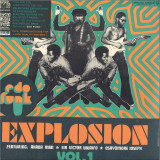
Analog Africa Presents Edo Funk Explosion Vol. 1, available on
2xLP/Gatefold LP with 20-page booklet / CD with 36-page booklet. It was
in Benin City, in the heart of Nigeria, that a new hybrid of intoxicating
highlife music known as Edo Funk was born.
It first emerged in the late 1970s when a group of musicians began to experiment with different ways of integrating elements from their native Edo culture
and fusing them with new sound effects coming from West Africa s night-clubs.
Unlike the rather polished 1980 s Nigerian disco productions coming out of the
international metropolis of Lagos Edo Funk was raw and reduced to its bare
minimum.
Someone was needed to channel this energy into a distinctive sound and Sir
Victor Uwaifo appeared like a mad professor with his Joromi studio. Uwaifo
took the skeletal structure of Edo music and relentless began fusing them with
synthesizers, electric guitars and 80 s effect racks which resulted in some of the
most outstanding Edo recordings ever made. An explosive spiced up brew with
an odd psychedelic note known as Edo Funk.
That’s the sound you’ll be discovering in the first volume of the Edo Funk Explosion series which focusses on the genre’s greatest originators; Osayomore
Joseph, Akaba Man, and Sir Victor Uwaifo: Osayomore Joseph was one of the
first musicians to bring the sound of the flute into the horn-dominated world
of highlife, and his skills as a performer made him a fixture on the Lagos scene.
When he returned to settle in Benin City in the mid 1970s - at the invitation of
the royal family - he devoted himself to the modernisation and electrification
of Edo music, using funk and Afro-beat as the building blocks for songs that
weren’t afraid to call out government corruption or confront the dark legacy of
Nigeria’s colonial past.
Akaba Man was the philosopher king of Edo funk. Less overtly political than Osayomore Joseph and less psychedelic than Victor Uwaifo, he found the perfect
medium for his message in the trance-like grooves of Edo funk. With pulsating
rhythms awash in cosmic synth-fields and lyrics that express a deep personal
vision, he found great success at the dawn of the 1980s as one of Benin City’s
most persuasive ambassadors of funky highlife.
Victor Uwaifo was already a star in Nigeria when he built the legendary Joromi
studios in his hometown of Benin City in 1978. Using his unique guitar style as
the mediating force between West-African highlife and the traditional rhythms
and melodies of Edo music, he had scored several hits in the early seventies,
but once he had his own sixteen-track facility he was able to pursue his obsession with the synesthetic possibilities of pure sound, adding squelchy synths,
swirling organs and studio effects to hypnotic basslines and raw grooves. Between his own records and his production for other musicians, he quickly established himself as the godfather of Edo funk.
What unites these diverse musicians is their ability to strip funk down to its
primal essence and use it as the foundation for their own excursions inward to
the heart of Edo culture and outward to the furthest limits of sonic alchemy.
The twelve tracks on Edo Funk Explosion Volume 1 pulse with raw inspiration,
mixing highlife horns, driving rhythms, day-glo keyboards and tripped-out guitars into a funk experience unlike any other.
out of Stock
Last delivered 5 years ago available to reorder, subject to availability
We welcome another newcomer to the label, UK-badman Cartridge, who steps up with a smashing debut EP showing the world he’s not messing about. Big Things!
Stone Cold:
The aptly titled EP opener hits hard like a boulder, painting a post-apocalyptic super-metroidesque landscape, building upon the glorious ‘Flummox’ from SUBALT010. Gritty synth lines stating a simple yet catchy and evolving melody, all rounded by a fat bass exactly how we like it. A glittery rain paves the way to the breakdown and the second drop, which tells the final part of this majestic romance.
Choker:
Time to get stealthy with this one… a sinister intro erupts into a refined yet powerful barrage of bass. Solid groove, heavily panned percussion, clever wobs and synth hits, masterful reverb and delay interplays, Cartridge’s sound design really sets to impress with this superb number.
Sweet Doughs:
If the concept of ‘sinister’ was established on the previous track, ‘Sweet Doughs’ definitely takes it to the next level. Menacing car-tyre-screeching-like synths and an amusing yet slightly uncanny vocal sample set up the pace for this weighty dance-floor rattler. A saturated 808-like bass propels the track, which reveals itself as a master-class on how to blend power, bass, crafty sound design and an incredible attention to details.
out of Stock
Last delivered 4 years ago available to reorder, subject to availability
Primal Scream frontman Bobby Gillespie, alongside solo artist and Savages vocalist Jehnny Beth, presents this stunning debut solo project collection - exploring loss, miscommunication and emotional inarticulacy that a married couple experience as they realise that their relationship is breaking down.
‘Utopian Ashes’ draws on the tradition of country soul classics, such as Gram Parsons and Emmylou Harris’s ‘Grievous Angel’ and George Jones and Tammy Wynette’s ‘We Go Together’, to deal with the heavy realities of love turning sour. It’s an album for people who have dealt with the inevitable sadness that comes with age and acknowledged the realities of life. There is no sweetening of the pill, but it does achieve what should be the goal of all good art: to make us feel less alone. And while it’s not autobiographical, it channels heartfelt truth from the songwriters’ own experiences.
In addition to Bobby Gillespie and Jehnny Beth, the album features Johnny Hostile (bass) alongside Primal Scream trio Andrew Innes (guitar), Martin Duffy (piano) and Darrin Mooney (drums).
Andrés Vargas Pinedo is a prominent composer of Amazonian popular music from Peru. He is blind and has excelled as a player of the quena and the violin. He was born in the city of Yurimaguas but he developed as an artist in Lima, for thirty years he has worked as a traveling musician on a street in the San Isidro district of Lima. Throughout his career, he has formed and joined various popular music groups. This compilation presents fifteen songs of his authorship, belonging to his first two groups: Conjunto típico Corazón de la Selva and Los Pihuichos de la selva, active between 1965 and 1974, and which helped define the sound of Amazonian popular music.
These years saw the emergence of an Amazonian popular music movement led by Vargas Pinedo as well as groups such as Los Solteritos, Flor del Oriente or Selva Alegre. These artists based their music on the rhythms of the Amazonian folklore (pandilla, sitaracuy, movido, cajada, chimayche) and were nourished by influences from the coast and the highlands of Peru, as well as by the tropical rhythms of Brazil, Colombia and Ecuador, achieving a musical synthesis that is an invitation to collective celebration and endless dance. A sound that is defined by a constant and hypnotic rhythmic base of kick and snare drums, upon which the quena and violin develop imaginative melodic lines. Sometimes there is a singing voice, sometimes the voices playfully appear as sounds that identify Amazonian popular speech or that emulate jungle animals.
The fifteen tracks gathered in 'El fabuloso sonido de Andrés Vargas Pinedo: Una colección de música popular amazónica' (1966-1974) / 'The fabulous sound of Andrés Vargas Pinedo: A collection of Amazonian popular music' (1966-1974) are a good introduction to the work of an essential creator of Peruvian music, whose sound expresses the spirit of the Amazonian people and summarizes the transition from tradition to the popular in the context of the emergence of a record industry of Amazonian music. Andrés Vargas constitutes a fundamental basis for the music of the Amazon, as his work synthesizes diverse influences, having that original root as its main motive.
This compilation is presented in vinyl format and includes a brochure with extensive information and photos. The audio has been remastered directly from the original tapes. Edition of 300 copies. Art by Jordy García (Blumoo Posters).
Up to kick off 2021 in the most adequately frenzied, thoroughly corrosive fashion, DDS04 serves up a quintet of chrome-tanned, hi-velocity beats courtesy of Italian hardware fetishist Anna Funk Damage (previously heard on the likes of Mind Records, Lux Rec, Lazy Tapes and more) and Austrian-Hungarian outfit Dutch Courage - alias Superskin & Új Bála - each of whom step up to the plate to deliver an exquisitely ear-wormy slice of their deranged industrial gospel.
A-side starts off to the sound of AFD's hard bouncin' "48 Hours Death" - a raw-cooked deluge of head-reducing EBM grit, flaring binary signals and Giallo-infused arpeggios out a blood-stained Suspirian tale. Fear for the deadly scalp hunters lurking in the club's darkest nooks, they've just sniffed out your trail.
Brutal churner "Youssef" picks up the torch and pulls out the quake-inducing breaks without further ado, dressed out with languorous Orientalistic melodies and steely distortions tailored to bend mind by the dozens. Forged in the furnace, the full-out punk-minded "I Come From Fire" rounds off the side on a drum and bass-heavy note, drawing as much from 60s psych-garage as it does from 80s deconstructionist tape music.
Flip sides and here's Budapest unit Dutch Courage taking the reins with the off-kilter treat "Hand Of The Sword" - navigating a weird zone of its own, floating astride post-apocalyptic Bristol bass, sliced-and-diced abstraction and overly textured yet equally bone-bruising riddims.
Wrapping up the journey with both force and serenity, "Neo-Soulmates" follows a similar path with its warped synth flexions and raucous machine cries making the rounds from one end of the spectrum to the other effortlessly, merging to give birth to something genetically contrasting from any contemporary. A most fitting finale to an EP that celebrates and encourages sonic bizarro in all its forms and manifestations.
out of Stock
Last delivered 5 years ago available to reorder, subject to availability
In view of the immense Black Lives Matter mobilisation in reaction to the murder of George Floyd and the comparatively meagre societal reaction to the attack in Hanau, the question arises: How come our society does not show the same empathy and solidarity towards its own fellow citizens with Kurdish, Turkish, Bulgarian, Bosnian, Afghan migrant backgrounds or members of the Roma and Sinti?
How limited is our postcolonial discourse if we are unable to address the racist exploitation of those who repair our cars, deliver our parcels or harvest our asparagus?
It’s all a sham. Shake it off like a biometric photograph. Shake off that false consciousness. The Black Diaspora is a transatlantic lie invented by music curators and journalists. Embrace this nuanced return to structures and superstructures, to articulations and historical constellations as analytical tools.
Allow me to dampen your expectations. This is not the sound of decolonisation. This is no compilation of BLM protest songs. This is no celebration of Black emancipatory struggles. You will not be able to play this at your hip post-pandemic house party. This will not go down well with your woke friends. This is music for the square in the room. For that reluctant BAME/Person of Color repelled by your fetishisation of the African-American experience.
This is music for gated communities. This is Fehler Kuti singing of class relations, not of identities and positionalities. This is Fehler Kuti resisting.
Listen to these songs of infrastructure and appraisal of the welfare state. Join me in mourning the broken promises of prosperity for all. Send that “Ausländer“ of your mind to heaven. Colonialism fucked you up. Platform Capitalism is keeping you in chains. Are we to unionise all human and non-human workers at Amazon? Will modernity always have that "forever nigger“? What about those dispossessed field hands harvesting your asparagus?
All is lost. The system is rigged. Because all histories, gestures and identities have been absorbed into this late capitalist apparatus we call diversity. It can integrate anything and anyone. It made me. It is the price of the ticket. And it is unable to challenge its own premise of an atomised society. As if you and I had so little in common.
They will try and help you. They will build a museum for your history and a scholarship program for your future. I warn you. Don‘t let them give you a name. Resist appellation. Don’t get that German passport. Don‘t eat asparagus.
Fehler Kuti, Spring 2021
All songs by Julian Warner. Produced by Markus Acher and Tobias Siegert.
recorded and mixed by Tobias Siegert at Minga Records, july – december 2020 mastered by Moritz Illner at Duophonic
Cover art and photography by Andreas Neumeister. Layout by Sascha Schwegeler.
Fehler Kuti “Professional People” is part of the same multiverse as “The History of the Federal Republic of Germany as told by Fehler Kuti und die Polizei”. A production by Julian Warner. In cooperation with Münchner Kammerspiele. Funded by the Department of Arts and Culture of the City of Munich. Released by Alien Transistor.
out of Stock
Last delivered 5 years ago available to reorder, subject to availability
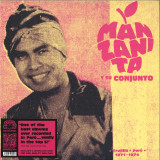
Following the 70s Peruvian cumbia compilation by Ranil last year, Analog Africa returns to Latin America to highlight the work of one of Perú’s undisputed masters of the electric guitar: Manzanita. This 13th release in the Limited Dance Edition Series includes 14 mostly instrumental compositions of electrifying Peruvian cumbia and guaracha. Manzanita's unique guitar lines rest on confident foundations that shifts gears effortlessly. Limited Edition LP in Gatefold Cover pressed on 180g high quality virgin vinyl
"I was in Lima, hanging out with collector-extraordinaire Victor Zela, who had spent the previous few years pouring his passion for Peruvian Cumbia into the blog „la cumbia de mis viejos“, a trove of incredible music. But after the birth of his first child, his priorities shifted and he decided to part with some of his rarest LPs. I was one of the lucky few given an early chance to examine his treasures, and when I picked up the album Manzaneando com Manzanita, Victor said: “Take it! its one of the best LPs ever recorded in Perú … easily in the top five”. That was all the encouragement I needed … two years later many of the songs from that masterpiece have made it onto Manzanita y su Conjunto, a compilation of electrifying Cumbia sides from Manzanita’s golden era.
Berardo Hernández – better known as Manzanita – first surfaced during the psychedelic Cumbia craze. At the head of the scene were the magnificent Los Destellos, whose leader, Enrique Delgado, was such a six-string wizard that other guitarists found it impossible to escape his shadow. But when Manzanita arrived, his electric criollo style sent shockwaves through Lima’s music scene and posed a serious threat to Delgado’s dominance as king of the Peruvian guitar.
Manzanita had come to Lima from the coastal city of Trujillo, five hundred miles up the coast – a place where Spanish, African and indigenous populations had been living and making music together for centuries – and came of age at a time when the first wave of psychedelic rock from the US and UK was starting to sweep the airwaves. But the sounds of Cream and Hendrix disappeared from the radio just as quickly in 1968 when Juan Velasco seized control of the country in a military coup. The new regime, which favoured local traditions over cultural ‘imports’ from the north, was a blessing in disguise for the Peruvian music scene.
Record labels flourished as new bands, raised on a hybrid diet of electric guitars and Cuban rhythms, rushed in to fill the vacuum created by the lack of imported rock. A new genre, known as Peruvian cumbia, was born and Manzanita quickly became one of its most original voices.
Starting in 1969, Manzanita y su Conjunto released a steady stream of singles that used Cuban guaracha rhythms as the foundation for dazzling electric guitar lines. After countless 45s and several years on the touring circuit, the band signed to Virrey, an important Peruvian label, and recorded two LPs acknowledged as masterpieces among aficionados of tropical music. Most of the songs on Analog Africa’s new compilation Manzanita y su Conjunto are drawn from those legendary sessions of 1973 and 74.
Although he scored a few more hits in the later 70s, his dissatisfaction with the music industry caused him to withdraw from the scene for several years; and when he finally retired for good, the golden age of Peruvian cumbia was a distant memory. But when Manzanita was at the top of his game he had few equals. Victor Zela was right: this is some of the best music ever recorded in Perú."
out of Stock
Last delivered 5 years ago available to reorder, subject to availability
The Go! Team return with their new album ‘Get Up Sequences
Part One’ out via Memphis Industries and featuring the singles
‘Cookie Scene’, ‘World Remember Me Now’ and ‘Pow’.
On ‘Get Up Sequences Part One’, Ian, Ninja, Nia, Simone, Sam
and Adam have created a musical world distinctly of their own
making. A place where routine is outlawed and perfection is the
enemy. Where Ennio Morricone meets The Monkees armed
with flutes, glockenspiels, steel drums and a badass analogue
attitude. We’re talking widescreen, four-track, channel hopping
sounds that are instantly recognisable.
In The Go! Team's world, old’s cool, the future’s bright and
melody is the star. Just check the second cut ‘Cookie Scene’
with a bouncing flute and junk shop percussion it introduces
guest rapper Indigo Yaj, who delivers an old school vocal that
continues this sonic trip. ‘Pow’ channels Curtis Mayfield and
enter stage centre, the inimitable Ninja in full flow and you don’t
stop, you won’t stop to this flute driven free for all.
By way of demonstrating The Go! Team’s old’s cool manifesto
comes the ‘needle-in-the-red’ ‘I Love You Better’, a defiant
message to an ex love, spelling out exactly how he’s messed
up - and then there’s those steel drums. Following that comes
the soda fountain soul courtesy of ‘A Bee Without Its Sting’, a
groovy protest song that makes its point with a tambourine.
The musical wagon train then takes you into the widescreen
windswept Western that is ‘Tame The Great Plains’, heading off
into a polyrhythmic panorama that’s full of hope. Slappin’ you
back to reality comes ‘World Remember Me Now’, a timely
reminder that when you’re lost in the routine of life, you can
always count on The Go! Team.
The Go! Team return with their new album ‘Get Up Sequences
Part One’ out via Memphis Industries and featuring the singles
‘Cookie Scene’, ‘World Remember Me Now’ and ‘Pow’.
On ‘Get Up Sequences Part One’, Ian, Ninja, Nia, Simone, Sam
and Adam have created a musical world distinctly of their own
making. A place where routine is outlawed and perfection is the
enemy. Where Ennio Morricone meets The Monkees armed
with flutes, glockenspiels, steel drums and a badass analogue
attitude. We’re talking widescreen, four-track, channel hopping
sounds that are instantly recognisable.
In The Go! Team's world, old’s cool, the future’s bright and
melody is the star. Just check the second cut ‘Cookie Scene’
with a bouncing flute and junk shop percussion it introduces
guest rapper Indigo Yaj, who delivers an old school vocal that
continues this sonic trip. ‘Pow’ channels Curtis Mayfield and
enter stage centre, the inimitable Ninja in full flow and you don’t
stop, you won’t stop to this flute driven free for all.
By way of demonstrating The Go! Team’s old’s cool manifesto
comes the ‘needle-in-the-red’ ‘I Love You Better’, a defiant
message to an ex love, spelling out exactly how he’s messed
up - and then there’s those steel drums. Following that comes
the soda fountain soul courtesy of ‘A Bee Without Its Sting’, a
groovy protest song that makes its point with a tambourine.
The musical wagon train then takes you into the widescreen
windswept Western that is ‘Tame The Great Plains’, heading off
into a polyrhythmic panorama that’s full of hope. Slappin’ you
back to reality comes ‘World Remember Me Now’, a timely
reminder that when you’re lost in the routine of life, you can
always count on The Go! Team.
To celebrate 20 years of the record label Jamaican Recordings,Jah Floyd has cut a track telling the story of its beginnings and the people involved. The initial meeting of legendary Reggae producer Bunny `Striker’ Lee in Jamaica and the various artists that became part of the labels catalogue. Such greats as Tapper Zukie, Niney The Obsever, Black Solidarity producer Ossie Thomas. Artists and Producers who music helped define the labels sound. A great collection of releases for all involved alongside its other label Kingston Sounds.
What would have been the labels 20th year and Bunny Lee’s 80th birthday celebrations have sadly been curtailed by the sad passing of Mr Lee in late 2020.
But makes this 500 only 7’’ all the more poignant and comes with a dub version as its B-Side,which for the Reggae label Jamaican Recordings the dub versions was its driving force.
As the track says in its lyrics… `Hope you enjoy the ride respect… Jah Floyd’.
Leng Records has long had close ties with the underground music scene in San Francisco, with low-slung dub disco and psychedelic disco outfit 40 Thieves releasing their acclaimed album The Sky Is Yours on the imprint way back in 2014. Now Leng has turned to another stalwart of the Bay Area scene, Cole Odin, on a single that’s every bit as trippy and engrossing as you’d expect from one of San Francisco’s most frequently overlooked talents. Cole made his Leng debut earlier in the year, contributing the electro-influenced track ‘Numbers Game’ to the label’s 10th anniversary compilation. On ‘Little Boxes’, he’s joined by good friend Eddie C, a much-loved disco and house producer from Canada best known for his releases on Endless Flight and Red Motorbike. The pair recorded the track while Eddie was staying with Cole in San Francisco last year.
In keeping with the low-slung, hallucinatory sound that has always been a big feature of the San Franciscan scene, ‘Little Boxes’ is a trippy, mind-altering affair in which waves of sitar sounds, cosmic synths, effects-laden guitars and kaleidoscopic electronics rise above a weighty punk-funk bassline and crunchy, snare-heavy beats. It has serious dancefloor chops but is also atmospheric and immersive: perfect 5am music for Bay Area beach parties and mushrooms-fuelled forest raves.
Fittingly, it’s 40 Thieves who provide the accompanying remix, a 10-minute epic created with the assistance of Adonis and Rodney from the psych rock band ‘Guavatron’ for additional synths and the guitars. Beginning with tabla-style percussion, swirling chords, psychedelic guitar licks and mystical sitar sounds, the remix builds in waves, with looser drums and even weightier bass propelling the track forwards at a metronomic and hypnotic pace. By the time the eyes-closed guitar solos drop two thirds of the way through, you’ll be tripping hard and reaching for the lasers. It’s a genuinely stunning remix of a genuinely intoxicating, mind-mangling track.
out of Stock
Last delivered 4 years ago available to reorder, subject to availability
'The inventive record producer and vocalist Lee 'Scratch' Perry was involved in every musical shift of note in his native Jamaica, from the rhythm and blues that pre-dated the arrival of ska in the early 1960s through the slower and more spacious rocksteady style that appeared middecade and, of course, the frenetic sound of reggae, which he helped to birth as an independent producer during the late 1960s. Operating as 'The Upsetter' from his base in a downtown Kingston record shop, Perry found his greatest success with instrumental music during this phase, the organ and saxophone re-castings of standard vocal issues proving exceptionally popular overseas.
'Scratch The Upsetter Again surfaced early in 1970 as a largely instrumental set, but with dreamy reverb a hefty feature and keyboards veering away from standard organ motifs. Dave Barker, who was soon to hit the pop charts as part of Dave & Ansel Collins, tackles The Shirelles' 'Will You Still Love Me' in soul reggae mode, only for Perry to shift things towards the emerging dub spectrum with 'Take One.'
'As Perry inched ever closer to the dub experimentation he would turn into an art form at his own Black Ark studio later in the decade, Scratch The Upsetter Again shows him moving away from the standard approaches of his competitors in his quest to test the very limits of recorded sound. And reggae was all the richer for it.'
—David Katz (excerpt from the liner notes)
Re-mastering by: Ray Staff at Air Mastering, Lyndhurst Hall, London
Morgan was one of the most active artists in the Los Angeles underground jazz scene, and a member of the late great Horace Tapscott‘s artist collective Union of God’s Musicians and Artists Ascension (UGMAA). He performed alongside Tapscott, and other Nimbus recording artists like Jesse Sharps, who he introduced to Tapscott. He also performed with Arthur Blythe, Gary Bartz, Azar Lawrence, as well as soul icons Willie Hutch (notably on the Foxy Brown soundtrack) and Rufus & Chaka Khan. Most recently he contributed to Carlos Niño’s 2016 album Flutes, Echoes, It’s All Happening!, and was a part of Niño and vocalist Dwight Trible’s soul-jazz group Build An Ark (which also featured Tribe’s Phil Ranelin).
Journey Into Nigritia was Morgan’s debut as a leader, and the first of three recordings he released for Nimbus West. The album has a strong post-Coltrane spiritual feel, with some modal-based melodies, and some fiery solos from saxophonist Dadisi Komolafe. The record also features a solid rhythm section featuring bassist Jeff Littleton and drummer Fritz Wise.
Review by T J Gorton
At the dawn of the Reagan years, LA jazz pianist Nate Morgan recorded his first album for Nimbus West. Journey Into Nigritia portrays an artist marked by the icons of his day, and striving for reinvention. Although he came from a solid jazz background, coming up through the Pan Afrikan People's Arkestra, Morgan found more exciting work with pop bands in the seventies, including glory years with Rufus w/Chaka Khan. On Journey into Nigritia, Morgan re-embraces jazz. Included in the band are Jeff Littleton on bass, Fritz Wise on drums, and Dadisi Komolafe on alto sax.
The collection opens with the Trane-ish Mrafu. Komolafe blasts off in short order, and while the modal chording recalls Tyner, Morgan shows flashes of the nimble loquacious gift that define him. While Alice Coltrane incense perfumes "Morning Prayer, Morgan's devotional sincerity and personnel expression triumph.
Suitably complex with yearning minors, Mother features the trio performing a memorable composition. Littleton's deep-note sustain contrasts Wise's shimmering cymbals, while Morgan tells heart-wrenching truth. With a somewhat solemn theme, He Left Us a Song regularly bursts through into straight-ahead fast break sprints up and down the court. The unexpected "Study in C.T. offers an homage to Cecil Taylor and Morgan's musical roots with free improvisations on a dense and spiky theme. The exhilarating result has Morgan exploring his own way, with a winking slinging of jagged bass chords halfway through.
While a quarter century's experience has nurtured Morgan's prodigious gifts beyond this ambitious debut, Journey Into Nigritia offers enjoyable insights into his artistic evolution, while adding another precious title to the discography of one of the most woefully under-recorded greats of our time.
A fantastic little record – and very much the kind of set that the Strata East label was created to represent! The music here would hardly have found a home on the bigger jazz labels of the period – not because it's too avant-garde or non-commercial, but just because it's so deeply personal and powerful – the boldest vision on record of trombonist John Gordon, who composed a mind blowing suite of tracks for the first side of the album, as well as some equally great tunes for the second half! Gordon leads the group on trombone – with solos that are soaring and soulful, alongside work by the great James Spaulding on alto and flute, Waymond Reed on trumpet, John Miller on piano and keyboards, Lyle Atkinson on bass, and Frank Derrick on drums! If you know some of the other players here from their own work of the time, you know you're in for a treat – as the music has this fantastic sound of strong individual voices coming together, instruments lifted high on a mission of music – with results that are as fantastic all these many years as they were in the 70s.
Re-mastering by: Cicely Baston at Alchemy/Air Mastering, Lyndhurst Hall, London
A two-LP set on Theresa, Rejoice features Pharoah Sanders in excellent form in 1981. Sanders sounds much more mellow than he had a decade earlier, often improvising in a style similar to late-'50s John Coltrane, particularly on "When Lights Are Low," "Moments Notice," and "Central Park West." The personnel changes on many of the selections and includes such top players as pianists Joe Bonner and John Hicks, bassist Art Davis, drummers Elvin Jones and Billy Higgins, vibraphonist Bobby Hutcherson, trombonist Steve Turre, trumpeter Danny Moore, a harpist, and (on "Origin" and "Central Park West") five vocalists. The music always holds one's interest, making this one of Sanders' better later recordings. Scott Yanow/AMG
COLTRANE'S classic "Moments Notice" is a complete gas! Sanders like Coltrane, pulls and holds attention with his entrances. Bobby Hutcherson's and Hicks solo's are heated and models of vivid imagination. The three put forth some of the very best solo...'s in the entire album.
Then there's the arresting new talent introduced here -GEORGE V JOHNSON JR., whose marvelous lyrics and vocal work are truly auspicious! He sings with James Moody on occassion and is happily remindful of the insistent giftness of the late EDDIE JEFFERSON. Johnson's three stanzers close with "Relax dig the sounds of Coltrane's Music. Coltrane fills your heart with love and harmony. Trane played with magic. Listen to the melodies and you will see momently. When you here the message of his song!". There's no doubt in my mind that henceforth George V Johnson should and will be sought for his own gift to the music. He sang the song for Sanders at the Village Vanguard, and Sanders "felt that George ought to be heard".Thank you, Pharoah Sanders for Sharing.... by Herb Wong
Nimbus West spirit jazz essential: the Creative Arts Ensemble's classic debut One Step Out. One of the most sought after and highly-regarded titles to have appeared on Tom Albach's celebrated Nimbus West imprint, One Step Out is a timeless work of spiritualized jazz. A true gem from the Los Angeles jazz underground, the album was pianist and composer Kaeef Ruzadun Ali's first recording as leader of the Creative Arts Ensemble, the only large ensemble group that emerged directly from Horace Tapscott's legendary Pan Afrikan Peoples Arkestra community jazz group. A Los Angeles native, Kaeef was introduced to the Tapscott circle in the late 1970s. His first experience of the Arkestra's ethos was through PAPA tenorist Michael Session, who took him to the famous "Great House" at 2412 South Western Ave., LA -- a large mansion house which members of the Arkestra had taken over as a space for communal living. Life in the Great House was a continuous stream of music, dance and community events. "When I walked in there," recalled Kaeef, "it was like this whole rush came over me, just from going in the front door -- It was like a very, very warm feeling of love. I went and I came out with 'Flashback Of Time', and that was my first arrangement." Kaeef quickly became a significant contributor of compositions to the Arkestra's songbook -- his piece "New Horizon" would be recorded by Horace Tapscott for the latter's Tapscott Sessions series. But "Flashback Of Time" would eventually appear on One Step Out, played by the new group he had put together from stalwart Arkestra members. Inspired by both Tapscott's example and by the Art Ensemble of Chicago, Kaeef had wanted to follow their lead by assembling a larger unit. Featuring seasoned Arkestra regulars including reedsman Dadisi Komolafe, drummer Woody "Sonship" Theus and altoist Gary Bias, with veterans Henry "The Skipper" Franklin on bass and George Bohannon on trombone, One Step Out is a key document of the Los Angeles radical jazz underground. Featuring the sanctified vocals of Kaeef's sister, B. J. Crowley, the album is a tour de force of spiritually energized independent jazz music.
Strut presents one of the most in-demand and significant albums from the archives of Jimmy Gray's Black Fire Records, 'Bow To The People' (1976 )by theatre collective Theatre West, based out of Dayton, Ohio. Recorded at Arrest studios in Washington in '76, 'Bow To The People' brought together songs from several of Theatre West's best known plays including Bow To The People, The System and Black Love and unflinchingly explored serious issues around drug addiction, mental health and cultural awareness. "The whole idea of Bow To The People was to honour our black forefathers," explains Dillard. "It was important to do that for the kids that didn't know." Shelved following the original recording, the Bow To The People album eventually surfaced on a limited CD on Black Fire in 1993. Now receivingits first full international release, the album features the previously unreleased tracks 'Man Of Many Means' and 'I Don't Know Much About Love'
out of Stock
Last delivered 5 years ago available to reorder, subject to availability
The Jive Turkeys are made up of four musicians who have been playing together for the better part of the last five years in a hip-hop group called Soundscape. Soundscape is a group based in Oxford, OH, home of Miami University. This is where Matt Amburgy (organ), Terry Cole (bass), Andrew DeRoberts (guitar), and Rob Houk (drums) first met. And while Soundscape has always provided all of them the opportunity to grow and develop as musicians through the group's unique fusion of genres (hip-hop, funk, jazz, rock).
Milanese imprint Ansia returns with a new V/A of warped, unconventional techno. Following his critically acclaimed debut LP 'Perdu', label-head Piezo continues to carve out his club-ready and explorative sonic niche, this time calling on a team of kindred left-field sound manipulators to get the job done. Manchester's BFFT (Whities, Gobstopper, Cong Burn) leads the charge with a dexterous cut that marries mind-bending sound design with club-ready functionality. Next up is Timedance-affiliate Metrist, who is as playful as ever on 'LB Steaua': a deceptively simple 4/4 beat peppered with distorted glitches and psychedelic details reminiscent of Perlon's more left field releases. Moving to the B-side, Piezo delivers his trademark brand of ruffneck techno - buzzing with off-grid tribal drums, cartoon synths and nonsense vocal samples. To close, Mexican leading-light Siete Catorce ratchets up the tempo for a singular track in a world entirely of its own: rude, fast, no-frills, sitting somewhere between digital cumbia and hardcore tekno. Unsurprisingly this one ended up in Batu's relentlessly forward thinking BBC Essential Mix.
out of Stock
Last delivered 2 years ago available to reorder, subject to availability
I attended a trade fair in Rio de Janeiro, Brazil. In this show, we met producers, label and festival managers. It is a privileged moment when it is possible to learn about new trends, new musical forms, emerging groups. The timing of the meal is undoubtedly the most important. We take the time to introduce ourselves and discover each other. When my turn arrived, I took out my little map to locate the town of Sète on the map of France. There, an American promoter exclaimed "Yeah! You live in this beautiful city. Where there is this incredible music. ” I admit that at the time I didn’t quite understand what he meant but flattered by his remark I told him yes. Later, I realized that he was talking about gypsy music that made the whole world dream.
When my friend shared this anecdote to me, it resonated deeply with me. Indeed, for us, people of the south of France, this was nothing exceptional. Indeed, every day you could meet in the street a gypsy musician performing a rumba, another declaiming a fandango or another who liked to paraphrase the maestro Django. It is part of our daily environment, but it is indeed a peculiarity of this region. The territory of the Mediterranean arc, from Arles to Perpignan, is indeed the cradle of gypsy music in France. In addition, we must underline the major influence of the Gypsy artists of Catalonia in the development of these different artistic forms. Through weddings and family reunions, the repertoires have shifted to be reinterpreted according to the identities specific to each and the territories of residence.
With this new collection, we wanted to show, to hear all the musical richness of Gypsy and Manouche artists populating the territory. From appropriation to recreation, they never stop bringing this music to life, re-enchanting it and offering it a resolutely modern reading, open to the world. In this first opus, devoted to the guitar, we will take the routes of latin music, flamenco or jazz alongside renowned artists and young talents. With "The sound of guitars", it is a first door open to the gypsy music of the Mediterranean Arc, that we will discover gradually through the "Mediteranean Gypsies roads" collection.