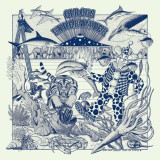
Horros, the third album by Finnish sonic voyagers Virta, is issued in September 2023. With Horros, Virta build on and take into new terrain the questing, jazz-tinged electroacoustic adventures of their last album, December 2016’s Hurmos, and its predecessor, their November 2012 debut Tales From Deep Waters. Still recognisable as who they were, the Virta of 2023 now delves further than ever before into their inner world to craft their most affecting, most atmospheric and most cinematic music to date. Even so, Horros does not need to be accompanied by images – it envelops so much that signposts are unnecessary. The music itself is the guide through this sound world. The creators of this environment are Antti Hevosmaa (electronics, flugelhorn, trumpet, vocals), Erik Fräki (electronics, drums, percussion, vocals) and Heikki Selamo (bass, electronics, guitar, lap steel, vocals). Together as Virta – which translates from Finnish as electricity, energy or stream – the trio were acclaimed as a “cornerstone of Finnish experimental music” by Finnish daily by newspaper Savon Sanomat in 2016. Horros will ensure this status becomes the case internationally. Beyond Finland, Virta already have dedicated listeners in Canada, France, Germany, Poland, the United States and the UK. Reflecting on Horros, Antti says “We’ve always made music we want to listen to ourselves. We’ve asked what is the sound we want to listen to? We are digging deeper now, with new elements – more vocals. Lyrics too, which we haven’t done before.” Without sacrificing who they are, Virta now have a wider scope than ever. “A key idea with Virta is to make the music you hear in your head and share it with people,” adds Heikki. “Yes, to share what is in our heads,” agrees Erik. “But also, it becomes live music, that’s the point
Buscar:electric 6
Wewantsounds is delighted to announce the reissue of Omar Khorshid's cult instrumental album from 1978 originally released in Lebanon. The album features Khorshid's trademark twangy electric guitar sound over arabic melodies enhanced by fascinating fuzzed-up arrangements and early synthesizer sounds. Wewantsounds' series of Arabic music reissues are curated by Lebanese-born Arabic music expert Mario Choueiry from Institut du Monde Arabe in Paris. The album has been newly remastered and comes with the original 'Voice of Lebanon' LP artwork
Wewantsounds is delighted to announce the reissue of Omar Khorshid's highly sought after instrumental album 'Giant + Guitar' originally released in 1974 in Lebanon and recorded at Polysound Studio by famed Lebanese engineer Nabil Moumtaz. The album features Khorshid's unique electric guitar sound mixed with arabic melodies over superb psych arrangements. The album has been newly remastered and comes with the original 'Voice of Lebanon' artwork and a 2 page insert featuring liner notes (Eng/Fr) by Lebanese DJ and curator Ernesto Chahoud.
The iconic voice of Luzmila Carpio rings out from the Andes, spreading messages of indigenous struggle, female empowerment and unceasing love for both the people and planet around us. An undeniable icon of Bolivian Andean culture whose career spans multiple decades, Luzmila has released more than 25 albums (there’s a reason that Rolling Stone described her as”one of the most prolific indigenous singers of South America”), inspiring millions while singing in both her native Aymara-Quechua language and Spanish. Yet Luzmila Carpio isn’t someone who’s content to simply rest on her laurels; she continues to take risks and push her music into vibrant new soundworlds. On new album Inti Watana: El Retorno del Sol (her first LP in a decade), she’s teamed up with Argentinian producer Leonardo Martinelli (a.k.a. Tremor), a ZZK veteran who’s spent the bulk of his career finding the common ground between Latin American folk rhythms and modern electronics. Building off the momentum created by 2015’s Luzmila Carpio Meets ZZK collection in which her music was reworked by not only Tremor, but standout electronic artists like Nicola Cruz, Chancha Vía Circuito and El Búho this new album is meant to stretch across genres, generations and continents, with Luzmila’s sonorous, occasionally birdsong-inspired vocalizations gracefully gliding amongst ambient textures, programmed beats and (of course) a bevy of traditional instrumentation from around the globe. Over the course of the LP, Bolivian charangos and quenas sit comfortably alongside the sounds of harmonium, violin, acoustic and electric guitar, Argentinian bombo leguero and sacha guitar, Armenian duduk and a litany of Asian percussion. Inti Watana: El Retorno del Sol which will be accompanied by a full length documentary might not sound like previous Luzmila Carpio releases, but on a spiritual, political and lyrical level, her core values remain unchanged. A native of Bolivia’s Potosí region, she’s long been a beacon for indigenous communities in not just her home country, but throughout Latin America, her voice inspiring joy and pride amongst ancient peoples whose culture and inherent beauty are often overlooked. Her pursuit of music a field traditionally dominated by men in Andean communities long ago made her a pillar of women’s empowerment, but Carpio has also been a vocal proponent for social change, using her influence to advocate not just for the rights of women, but for the protection and increased visibility of all indigenous people. Yet it’s the planet itself that Carpio is most passionate about, and she’s devoted much of her new album to conversations with Mother Earth and Father Sun
Eric Krasno is a two-time GRAMMY winning guitarist, musician and producer best known for his work with Soulive, Lettuce, Tedeschi Trucks Band & Pretty Lights. Krasno has been nominated for a GRAMMY a total of seven times for Best Blues Album, Best Contemporary Blues, Best R&B, and Best Electronic Album.
Otis McDonald is a producer/multi-instrumentalist best known for his copyright free music released exclusively through the YouTube audio library, amassing over 5 million downloads and over 25 million streams.
Mike Chiavaro is a Brooklyn based electric and upright bass player with an impressive history.
Combined they form King Canyon, blending their unique styles into an infectious groove filled project with healthy doses of R&B/Soul and funk. The vibe will resonate with fans of Khruangbin, Bobby Caldwell, Allman Brothers, Soulive, Lettuce, El Michels Affair, Unknown Mortal Orchestra, Menahan Street Band, Durand Jones and the Indications, and Son Little (who's featured on one of the tracks).
In the perfect quarantine story the trio forged a relationship and has yet to meet in person. In April of 2020 in the midst of quarantine, Eric Krasno came across Otis McDonald’s music on Instagram and immediately became a fan. Months later, McDonald who had been working on music with his longtime friend, Mike Chiavaro, enlisted Krasno to add in some guitar to the mix and before they knew it, the trio had an album's worth of material and thus King Canyon was born.
The guys have still yet to meet in person, but despite this, the grooves are insatiable. The writing and feel are unlike any other projects these musicians have been involved with previously.
- A1: Ifo (Identified Flying Object) (Identified Flying Object)
- A2: Runaway
- A3: Heart Be Still
- A4: I Won't Give Up
- B1: Vote, Baby, Vote
- B2: Two Clouds Above Nine (Feat Jamal-Ski)
- B3: Electric Shock
- C1: I Had A Dream I Was Falling Through The Ozone Layer
- C2: Fuddy Duddy Judge (Feat Michael Franti)
- C3: Pussycat Meow
- D1: Thank You Everyday
- D2: Rubber Lover
- D3: Come On In, The Dreams Are Fine (Feat Arrested Development)
Never Before Reissued On Vinyl! After the smash success of Deee-lite's debut record World Clique, and their now-iconic dance club hit "Groove Is In The Heart", anticipation was high for a follow-up from the New York-based dance music trio of vocalist Miss Lady Kier, and producers DJ Towa Tei and Super DJ Dmitri.
For their sophomore record Infinity Within, Deee-Lite opted to venture in a different direction of sorts. The club-embracing disco-funk sounds and groovy vibes of World Clique were everpresent, but while that record contained themes of global togetherness, Infinity Within took a more socially aware route, with politically charged themes of environmentalism, (To show their bonafidese, Infinity Within was one of the first titles to be issued in an ecologically friendly Eco-pak.) sexual liberation, voting rights, and critique of the juidicial system.
Taking major inspiration from the ancient Chinese divination text I Ching, Miss Lady Kier would later explain that Infinity Within was a natural progression for the group, not a departure. Elaborating in an interview with Reflex Magazine, she remarked: "The reason why we titled this new album Infinity Within to balance out World Clique’s idea of looking outward and thinking about unity is if you look outward, you should look inward to see what you’re doing as an individual.
Because people seem to be so passive I’d like to see people turn their TV sets off and start protesting." Infinity Within was not the overwhelming commercial success that World Clique was, but it's tracks shined on the Billboard Dance Club charts, with it's lead single "Runaway" reaching #1 on the chart, bolstered by a Gus Van Sant-directed music video.
The record also featured a slew of top-tier collaborators, including Parliament veterans Bernie Worrell, Maceo Parker and Bootsy Collins (Returning from their appearances on World Clique) as well as Bootsy's brother Catfish Collins, legendary house DJ Statoshi Tomiie, and rap verses from Michael Franti, Jamal-Ski, and a pre-"Tennessee" Arrested Development.
Even though critical reaction at the time was cooler than their debut, over the years Infinity Within has been considered an underrated
gem of 90's dance, a classic of early club and house music, and a remarkable follow-up for Deee-Lite.
Essential South African jazz, funk and soul - An anthology dedicated to the legendary Black Disco ensemble. Distilling the group’s recorded output into a single commemorative document, Discovery 1975-1976 compiles cuts from the lauded Night Express album alongside rare gems from the group’s long-out-of-print first and third albums. The newly remastered selection features previously unissued single versions of the mighty “Night Express” itself, a funk juggernaut with piercing flute whistles and rapturous sax cries as well as “Dawn” from the album Black Disco 3, a trippy, flute-driven awakening of soft light and gentle colours.
With a Yamaha organ and a dream, Pops Mohamed started his musical journey in the mid-1970s as the bandleader and composer of Black Disco, creating a hip melange of chill-out jazz with futuristic drum machine sounds and spiritual overtones. His cosmic organ transmissions were accompanied by two of the most sought-after session players on the South African scene, the sax and flute wizard Basil Coetzee, who had risen to fame in 1974 as one of the soloists on the hit “Mannenberg,” and Sipho Gumede, the young bass prodigy who was already rubbing shoulders with the old guard at the outset of his career. Backed at first with polyphonic beats from Mohamed’s electric organ and later taking on a drummer, Black Disco created a signature sound and a trilogy of innovative albums in a burst of studio creativity between 1975 and 1976.
On the heels of their epic various artists compilation, As-Shams Archive have produced a doozy of a compilation of some very essential South African jazz.
“Those familiar with my music will notice this album is a lot different from previous releases which were written around the acoustic guitar. I often ask myself if it is a mistake to release an electric album (and a pretty heavy one at that) but in the end I thought what the hell you only live once! “
“Being Generation X these songs are heavily influenced by that period which I consider in pop/rock history, musically arguably the best. I know it will probably be criticized for being too “old fashioned” by some but I can honestly say I’ll take that as a compliment as my musical “D.N.A” is defined by that period in time”.
Limited rerelease. Unavailable for years. The legendary album from 1984. Fully remastered by David Cunningham. These recordings were originally released on cassette by Touch in 1984 with the exception of 'Parts Of My Body', released on a single by Canal Records in 1979. Performed by: Steve Beresford: bass, piano, farfisa organ, prophet 5, trumpet, flugelhorn, euphonium, percussion, glockenspiel, voice, toy piano, melodica, noises, rhythm tracks, drumkit. David Toop: guitar, prepared guitar, bass, percussion, flute, alto flute, glockenspiel, voice, tapes, noises, rhythm tracks David Cunningham: tape treatments with guests: Lol Coxhill, Dawn Roberts and Maartje ten Hoorn 'The atmosphere which General Strike conjure together suits an old fashioned, cold war-ish scenario of technology. Their 'Interplanetary Music' is the space pop of George Pal and 'The Day The Earth Stood Still', of computers built like Blackpool Tower in order to struggle through simple trigonometry, of 'The Jetsons' and I.G.Y. They go no further than Expo 67, the world's last gasp of optimism. And although there are dark and disquieting moods set in this mosaic which their listeners have pieced together, it is made with a humour which is true to the spirit of adventure which those references apply. The sanitation merchants who make up most of the world's record-makers today would forbid our ears from hearing these strangely electric keyboards, earthworked textures, bizarre chattering of percussion, and voices that seem like puzzled robots. Cataloguing the sound in that way makes it all seem a bit of a joke, but it isn't: laughter is encouraged, but it's serious music, made with a great deal more serious spirit than the great and disheartening mountain of music which today implores you to hear and not listen.' (Richard Cook).
- 1: Open The Eyes Of My Heart, Lord
- 1: 2I Give Myself Away, So You Can Use Me
- 1: 3Break Every Chain
- 1: 4Jesus, Every Day Your Name Is The Same
- 1: 5Step Into The Water
- 1: 6Solve My Need
- 1: 7Falling In Love With Jesus Was The Best Thing I've Ever
- 1: 8You Did Not Leave Me, You Bless Me Still
- 1: 9If I Couldn't Say One Word, I'll Just Wave My Hand
- 1: 0I Gotta Run
- 1: Hosanna
- 1: 2Locked Down, Mama Prays For Me
- 1: 3It's In My Heart
- 1: 4I'm Still Here
- 1: 5Lay My Burden Dow
Haunting in situ recordings from Parchman Farm Maximum Security
Prison in Mississippi (usa) producer Ian Brennan (Tinariwen,Ustad Saami,
Ramblin' Jack Elliott, Zomba Prison Project) recorded the prison's Sunday
gospel service and the results are unforgettable
The performances range from solo a-capella to a floor- shaking electric band. The
repertoire includes both traditional and newly penned spirituals. "some
Mississippi Sunday morning" is an unfiltered and deeply resonant journey into a
musical world rarely seen or heard
Martina Berther and Philipp Schlotter are prolific in their respective ways, having been active in pop and jazz music, respectively, as well as playing in bands and exploring the outer fringes of sound art or composing music for film. Their first joint album »Matt« was recorded over the course of four days in a church in the Swiss village after which the album was named. Berther and Schlotter worked with the buildingʼs organ as well as synthesizers and electric bass to follow an experimental approach that oscillated between composition and free improvisation. The five pieces, recorded directly to tape by Flo Götte without any additional overdubs, are characterised by an intimacy and rawness that calls to mind the introspective atmosphere of Hallow Ground label mateʼs FUJI||||||||||TA or mastering engineer Lawrence Englishʼs latest album for the Swiss label. »Matt« is the result of two versatile composers and musicians executing minimalist ideas by giving them plenty of space to unfold.
The album opens with »Unruhe,« a composition that is based on the twelve-tone technique. Using a stopwatch to ensure the adherence to the pre-determined temporal intervals between the individual notes, Berther and Schlotter used the church organ and synthesizers for an ominous piece that traverses different moods and levels of intensity throughout its 14-minute run time. »LFO1« and »LFO2« are different variations of the same concept: Based on a synthesizer preset and structured by an organ drone, two tone generators slowly fall silent, resulting in elegiac pieces that call to mind the work of Éliane Radigue. »Frachter« and »Gallia« put more emphasis on percussive elements. Again working with organ as well as Bertherʼs prepared electric bass, this improvisation comprises interlocking textures that sound almost menacing on »Frachter,« while they create a very different atmosphere on »Gallia.« These notable discrepancies in sound and mood are even more astonishing if you consider that the two pieces are based on the exact same recording, played at different speeds.
As two variations on the same idea with very different results, these two pieces perfectly represent how the duo effectively creates emotionally affective sound worlds with very few means. Berther and Schlotterʼs conceptual minimalism yields rewarding, multi-faceted aesthetic results. »Matt« is an intimate album, marked by a sense of vividness and spontaneity, but also the product of compositional conciseness.
His jaw- dropping, natural sounding, and unschooled skill on acoustic guitar, matched with an authentic 'Belfast Blues' voice, drew comparisons to John Martyn and Rory Gallagher, with nods to Van Morrison and Foy Vance. In addition to being an acoustic guitar star, Dom is equally adept on electric guitar, showcasing his talents with his power trio.
Dom has won a handful of European and UK Blues Music Awards. His sophomore studio album, 'A Savage Life' received rave reviews with Rock and Blues Muse declaring, "Dom Martin is the next rising star in the global roots scene.
Jump aboard now before he passes you by." Blues in Britain declared that Dom was "A rare talent of such sheer genius," and Classic Rock effused, "The Belfast guitarist is a sprawling talent."
His latest effort,' Buried in the Hail 'was co- produced by Grammy nominated producers Chris O'Brien & Graham Murphy. The album takes the listener on a very personal journey. "Unhinged" is all anger and fury, sparks and smoke and flames, from screaming amps. Taking a positive turn is "Daylight I Will Find", a song about life's challenges and how through self- love, one can find the answers. The sole cover on the album is a broken down, heartbroken version of "Crazy".
Written by Spiral Tribe’s co-founder and visual artist, Mark Angelo Harrison, A Darker Electricity charts the infamous sound system’s nomadic journey and the rapid escalation of their popularity – and notoriety.
From small squat-scene parties in early 90s London to enormous warehouse raves and free festivals. The undercover police operation against them. The record deal with Youth. The creation of their community recording studio. The government stitch-up and their prosecution. The escape to Europe and the start of the teknival scene.
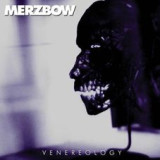
The undisputed king of Japanese noise MERZBOW returns, as the landmark album Venereology celebrates 25 tinnitus-inducing years with its inaugural vinyl pressing! Remastered by James Plotkin (ISIS, ELECTRIC WIZARD, FULL OF HELL, and more) and featuring reworked art, this is the most extreme recording of harsh electronic sickness you will ever own! Venereology features a second LP with more than 20 minutes of unreleased bonus material. - Highly influential noise album from a scene torchbearer/pioneer - Remastered by James Plotkin (ISIS, ELECTRIC WIZARD, FULL OF HELL, and more) - Reworked cover art - 25th Anniversary - Bonus material with unreleased music For Fans of: Prurient, Whitehouse, Wolf Eyes, Masonna, Sunn 0))), Full Of Hell Select Press Quotes: - "A masterpiece..." - The Quietus - " severe and atrophic, but also entertaining, heterogeneous, energizing, malleable. " - Pitchfork
If the Corona pandemic and the accompanying concert bans have at least one good thing going for them, it's the extra time musicians have to write songs and live out their creativity. This circumstance was also the driving force for the SAMURAI PIZZA CATS, who come from the Electric Callboy environment. Frontman Sebastian Fischer was behind the microphone in their predecessor band Her Smile In Grief, whose line-up also included Daniel "Danskimo" Haniß, who is now celebrating success as guitarist, songwriter and producer of Electric Callboy. The contact between the two never broke off and so Daniel also produced Sebastian's later band Fall Of Gaia in recent years, whose former drummer and multi-instrumentalist Stefan Buchwald is also involved in this new project - family business from downtown Castrop Rauxel! So while Stefan contributes the music, Sebastian writes the lyrics and Daniel, as a creatively involved producer, ensures a well-rounded overall result. Okay, before we try your patience any further, let's talk about the elephant in the room: the band name. The SAMURAI PIZZA CATS have named themselves after a Japanese anime series from the early nineties. Why? Stupid question! Of course, because they are fearless warriors on their instruments, love to eat pizza and like cats! And maybe a little bit because they have soft spots for anime and silly band names - but only maybe. Rumour also has it that "Banzai! Smack! Meow!" is an onomatopoeic description of the band's sound.
Discrepant proudly presents the Vinyl edition of Lebanese trio Malayeen. Malayeen is the project of Lebanese musicians Raed Yassin (Keyboards, Turntables & Electronics), Charbel Haber (Electric Guitar & Electronics) and Khaled Yassine (Darbouka, Percussion). Born from Yassin and Haber's love for the music of quintessential Egyptian guitarist Omar Khorshid, Malayeen disassembles and re-configures the work and style of the iconic guitarist innovative take on Arabic music. The final result makes for an original and unique update of Khorshid & belly dancing inspired songs from the past. Over the course of 7 compositions, appropriately named after Khorshid and famous belly dancers from the Arabic diaspora, the three musicians' varied backgrounds and techniques collide and coalesce in an experimental yet magical fashion, not actually playing Khorshid's music, but inspiring themselves from the cult guitarist's genius to create something completely new, modern and unexpected. A unique LP featuring the combined talents by key players of the Lebanese avant-garde. The Malayeen LP edition is released by Discrepant in collaboration with Lebanese exploratory label Annihaya effectively combining East and West musical strains of thought as well as conclusively deconstructing and displacing this particular form of 'popular' music. Design by Studio Safar S.A.L. Comes with full color poster painting by Omar Khouri Special vinyl one time pressing to 500 copies. "Uplifting, beat-driven pieces, often melodic, definitely Arabic, with destabilizing touches from external sounds, sound manipulations, and textural plays. The 17- minute 'Samia' is a roller-coaster ride culminating in a dizzying solo/duo between Yassine's darbouka and a darbouka track from a record played by Yassin. Great stuff. Monsieur Délire
Black Vinyl[20,80 €]
The latest EP from Drab Majesty marks the start of a stirring new chapter in the band's majestic legacy. Written during a 2021 retreat to the remote coastal Oregon town of Yachats, Deb Demure leaned into the neo- psychedelic resonance of a uniquely bowl - shaped 12 -string Ovation acoustic/electric guitar. After early morning hikes in the rain, Deb would record ambient guitar experiments the rest of the day, tapping into "flow states," letting the sound lead the way. These sessions were then refined or recreated, and later elevated further with key collaborations by Rachel Goswell (Slowdive), Justin Meldal Johnson (Beck, M83, Air), and Ben Greenberg (Uniform, Circular Ruin Studio). An Object In Motion is true to its title, capturing the chrysalis moment of an artist evolving, reborn and untet hered, silhouetted against an open horizon. "Cape Perpetua" kicks off the collection's divergent palette: sparkling acoustic fingerpicking refracted through delay, equal parts raga and reverie. Melodies and moods congeal and dissipate, at the threshold of rustic American primitivism, brooding neo-folk, and pastoral melancholia. "The Skin And The Glove" deploys jangle to different effect baggy, soaring, grey skied kaleidoscopic pop in the spirit of Stone Roses, Primal Scream, and The Glove. Rachel Goswell lends her iconic freefall voice to The Cure - esque ballad, "Vanity," infusing poetic gravity to the doomed refrain: "If the valve breaks / then the earth quakes / and history finds a way / to put you in your place." "Yield To Force", the closing track of the EP, may be the most anomalous offering of the set. A 15 minute instrumental odyssey of cyclical strings, ominous slide guitar, and simmering synthesizer, the piece sways and spirals like a long zoom into distant storm clouds. Demure finesses the guitar with a restless but regal grandeur, unfolding a panorama of peaks, shadows, and plateaus. It's music both intuitive and prophetic, tracing the slow swing of pendulums across an endless plain. Taken as a whole, An Object In Motion presents a showcase of potential futures from Drab's evolving domain, their sound poised to bloom at the precipice of transformation.
KAU (previously KAU trio.) is an instrumental trio based in Brussels. Representing various European backgrounds, the Belgian capital and melting pot proves to be a never ending source of inspiration for the band. Taking influences from jazz, groove and dance music, their aim is simple but straightforward: to make your heads bob. The formula they use to do so has been the same since their early days: improvisation, never ending jam sessions and an open-mindedness towards various genres and styles. This gives their music an organic and vibrant feel. Furthermore, the three boys' long-lasting friendship is at the heart of it all, always relying on what brings them together: their love for music. The KAU cycle is bound to repeat itself and to birth something new - over and over again.
"The Cycle Repeats" is KAU's debut album, due on September 22 on SDBAN Ultra, the home of ECHT!, Black Flower, Glass Museum, STUFF. and more. It represents a milestone in the band's musical journey: it's their firm decision to present a strong and unified trio playing music that stands out through the combination of 80's synths, acoustic drums and electric bass. Moreover, the album succeeds in capturing the energy of their infectious and legendary live shows.
Highlights are album opener "Kampala", which has a throbbing bassline, jazzy synths and heavily modified arpeggiators at its core. The album's first single "Little Steps" starts with a strong hip hop groove, morphing into Herbie Hancock-style chords. "Amulet" is inspired by breakbeats, fast paced grooves and pentatonic bass lines. Both "Kautokeino" and "Alaska" are an invitation to travel to the utmost remote places of this earth, using intense sequencing and suffocating subbasses into an epic finish, probably demonstrating the trio in its most sincere form.
In short: with André Breidlid on drums, Matteo Genovese on bass and Jan Janzen on synths, KAU are a trio of childhood friends with a pan-European identity, whose music reflects the city they grew up in: unapologetic, richly diverse and with a spontaneous groove underlining it all. With their new album "The Cycle Repeats" they directly aim for your dancing shoes and souls.
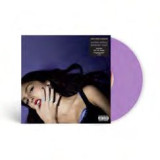
Mit der ersten Single „vampire“ läutete die dreifache GRAMMY Gewinnerin Olivia Rodrigo das zweite Kapitel ihrer Karriere ein – und nimmt ab sofort Kurs aufs zweite Album: GUTS erscheint am 08. September!
Emotional noch intensiver und extrem abwechslungsreich arrangiert, setzt die 20-Jährige für „vampire“ auf eine ähnliche Dynamik wie bei ihrer Single „drivers license“, mit der sie 2021 den internationalen Durchbruch schaffte. Kein Wunder also, dass „vampire“ sofort als „Monster Power Ballad“ (Pitchfork) gefeiert wurde. Zeitgleich kündigte Olivia Rodrigo mit GUTS ihr zweites Album an. Zum Teil auch in den New Yorker Electric Lady Studios geschrieben, entstand das neue Album größtenteils mit Dan Nigro in dessen Garagenstudio in Los Angeles, mit dem die 20-Jährige bereits für ihr Debütalbum SOUR zusammengearbeitet hatte. Während Olivia in den vergangenen 24 Monaten selbst „gefühlt 10 Jahre“ reifer geworden sei, klingt auch ihr Songwriting sehr viel ausgereifter und selbstbewusster als zuvor: „Dieses Mal ging’s viel mehr ums eigentliche Songwriting – was manchmal auch bedeutete, dass ich mich selbst gar nicht so ernst nehmen durfte. Wir haben wahnsinnig viel ausprobiert und sind schließlich bei einem Sound gelandet, der viel mehr Rockeinflüsse hat als meine älteren Sachen“, so Rodrigo. ”GUTS” erscheint auf CD und Vinyl in diversen Formaten.
Releasing Italian soundtrack gems on 7" has become a mission for Four Flies! This time the label went back to Franco Prosperi's 1972 film Un uomo dalla pelle dura (known in English as either The Boxer or Ripped-Off) and hand-picked two tracks that were included not in the (now uber-rare) original OST album released on Pegaso/RCA, but in the (even rarer) library album Meedley (sic) released by Carlo Pes a couple of years later, where, needless to say, he was accompanied by his legendary quartet I Marc 4, whose recognizable sound permeates both tunes on this 7".
Side A contains "The Riff", a stupendous acoustic-guitar-and-drums break that was later sampled by DJ-producer Nicola Conte for his debut album Jet Sounds (2000). In contrast, side B veers into fancy poolside cocktail party territory with "Bossa Party", a relaxing, bossa nova-infused jazz tune woven by Carlo Pes' electric guitar lines and Antonello Vannucchi's piano phrasing.
It's a limited edition so don't sleep on it!
A cautiously redemptive portrait, any happy ending reflects the possibilities of fulfillment and stability, not the things themselves. In May 2021, months before the film's release, Courtney Barnett and collaborator Stella Mozgawa rendezvoused with Cohen in Melbourne to shape a score that fit that premise-- nothing too obvious or instructive, to tell the audience how they should feel. Barnett found she liked listening to what the duo had made, existing within its reflective gaze. She began sorting through those little instrumentals like amoebic puzzle pieces, figuring out how they fit into a full picture.
The result is a seamless series of 17 instrumental improvisations called End of the Day: Music from the Film 'Anonymous Club', soundtrack reimagined as impressionistic sound- art collage. Like Barnett's rock songs, they wordlessly ask hard questions of our
softest parts, wondering what it is we really find there.
“It was a rainy day at the recycling centre in Leitrim. There, amongst the tangle of discarded kettles and broken-down toasters, I first laid eyes on her…” A few years after her stand-out contribution to our ‘Wacker That’ compilation and following a bunch of purple patch releases for Nyahh Records, TakuRoko, Fort Evil Fruit and Eiderdown Records, Natalia Beylis graces Touch Sensitive with a true landmark album for the label – ‘Mermaids. Recorded both at home in Leitrim and at neighbour Mat Warren’s studio (Studio Moo Moo – a converted cow shed), ‘Mermaids’ was inspired by two salvaged items: a CRB Elettronica Ancona - Model: Diamond 708 E electric keyboard from the local tip and a photo taken by her father found in a pile of old family scraps. Smuggled home in the back of the van and ridded of the nine purple crayons lodged inside, the keyboard sounded perfect to Natalia; “The sounds that come from her when I play always move me like water; swimming in rivers and floating in the murk beneath the surface.” The striking image which would become the cover art features Natalia’s mother and two friends during a dip in the ocean. We see three women hanging out on a large rock – their bad-ass hairdos and poses perfectly framed and saturated in sepia. “There are complete siren vibes coming from the rock. Three women, three girls, three witches, three mermaids. I wish I was one of them. Or friends with them.’ After testing compositions and recordings for months on the rescued keys, the discovery of her father’s image formed the final work: “A confluence of the sounds and the image charged through me, and the album began to flicker into being.” Much like the push and pull of the River Shannon, Natalia’s own local swimming spot, ‘Mermaids’ flow is both organic but unstoppable. Anchored around the album’s hypnotic 17-minute title track, we are fully immersed within this subaquatic suite from the first splash. Alongside the keyboard’s glistening tone, field recordings from Natalia’s expansive archive bring us back up for air; taking stops to check in with the chittering chickens and ducks of Athlone. In keeping with her back catalogue and extensive body of work, ‘Mermaids’ exists within its own imagined universe. This is truly singular work that continues to underline Natalia as one of the finest underground artists of her time. We wholeheartedly encourage you to take a forty-minute sonic dip into a deep, murky, watery world of her own creation.
Coming off the back of the expensive Lovesexy Tour, Prince needed to replenish his coffers and agreed to record nine original songs for Tim Burton's box office smash movie, Batman, starring Michael Keaton, Jack Nicholson and Kim Basinger. The 1989 album was a huge success, and featured hit singles “Batdance” and “Partyman”, as well as “Scandalous”.
- A1: Moon To Light (Number Ii) - A 3 22
- A2: Moon To Light (Number Ii) - B 3 30
- A3: Soul Cathedral (Number Ii) - A 3 06
- A4: Soul Cathedral (Number Ii) - B 3 06
- A5: Light In The Rains (Number Ii) - A 1 38
- A6: Light In The Rains (Number Ii) - B 1 32
- B1: Mondial Scoop (Number Ii) 2 03
- B2: Mecanic Bird Song 2 58
- B3: Mephisto Jet (Number Ii) - A 2 19
- B4: Mephisto Jet (Number Ii) - B 2 18
- B5: Mephisto Jet (Number Ii) - C 1 03
- B6: Phasing News - A 2 01
- B7: Phasing News - B 2 56
Volume 2[23,49 €]
European funk fusion of the highest order, Michel Gonet's Phasing News Volume 1 is the essential companion piece to the venerated Volume 2. It's truly a library treasure that every home must own. As Tele Music themselves said, it contains "tense and mysterious underscores in a range of styles"; whilst we don't disagree, we'd add swaggering, orchestral drama-funk-jazz-breaks. Vital.
Opener "Moon To Light (Number II) - A" is a total wonder. It's incredible, and what a way to begin a record. The percussion is electrifying, complimenting the dark, heavy piano, eerie organ work, electric guitar soling and rhythm section brilliance. Part B is virtually identical but without the electric guitar. The slow "Soul Cathedral (Number II) - A" is an ambient spacey synth gem which is both beatless and drenched in phased organ. Pretty captivating. Part B plays it rather straighter, a church organ continuing the same melody and tempo but with less of the swirling synthy effects.
"Light In The Rains (Number II) - A" sounds like something Diamond D would've sampled in the mid-to-late 90s, conjuring as it does that peculiar, creeping Axelrod-funk, all eerie electric guitar and organ, bass and spacey effects. Part B loses the electric guitar and adds brass.
The swirling, dramatic "Mondial Scoop (Number II)" has that urgent News At Ten feel with its prominent timpani drums whilst "Mecanic Bird Song" is a frenetic, abstract track with disorientating keyboard interplay.
*Total highlight* "Mephisto Jet (Number II) - A" rides a slick, proto-hip-hop beat with melodic, warm Rhodes yet, thrillingly, casually ups the drama with strings and timpanis. It then returns to its more mellow state. Ace. Part B adds acidy, phased percussion to create a more hypnotic, tripped out feel to proceedings. Part C is half as long but, pared back to just drums and Rhodes, it's arguably twice-as-nice.
To close, the shuffling, bell-laced urgent jazz of "Phasing News - A" is another highlight, riding a great bassline and augmented by ace drums, organ and electric guitar. Part B is also great, removing the guitar and doubling down on the head-nod funk.
The audio for Phasing News Volume 1 has been remastered by Be With regular Simon Francis, ensuring this release sounds better than ever. Cicely Balston's expert skills have made sure nothing is lost in the cut whilst the original, iconic Tele Music house sleeve has been restored here at Be With HQ as the finishing touch to this long overdue re-issue.
Piotr Kurek’s new album “Smartwoods” is a sprawling root system of tiny melodic phrases that loop and curl around subtly evolving instrumental thickets. The Warsaw-based producer and composer takes his cues from early music, baroque music and experimental jazz, entangling his influences with filigree traces of contemporary computer music and fueling it with sonic vapors from the near future.
Made up of seven distinct segments, the album blurs its acoustic and electronic elements into an illusory hedge of abstract sound. Harp, saxophone, clarinet, double bass, voices and guitar twist into computerized processes and synthesizer chirps, creating an uncanny dreamworld where the real isn’t always what it seems. Each player is entwined with the other to create a living, breathing whole.
Like Kurek’s painterly 2021 album “World Speaks”, “Smartwoods” is also inspired by visual art - particularly the whimsical work of Algerian-French graphic designer Jean Sariano. The album cover features artwork by Polish painter Tomasz Kowalski, whose shapeshifting creatures and miniature stories aptly reflect the music’s wild fantasy. The first manifestation of “Smartwoods” – a live show at Unsound in Kraków in 2022 – featured animations by Italian artist Francesco Marrello, who put together a visual treatment for the single “Harps”.
Music composed, arranged and produced by Piotr Kurek
Anna Pašic - harp
Tomasz Duda - clarinets, saxophone, flute
Wojtek Traczyk - double bass, electric bass
Piotr Kurek - keyboards, MIDI wind controller, electric guitar
Recorded in June and November 2022 by Piotr Kurek, Piotr Zabrodzki (Studio Pasterka) and Tomasz Duda
10 new songs with Tiger Lou. You will instantly hear that it"s Tiger Lou on Rasmus Kellerman vocals, the driven drums of Pontus Levahn and the charismatic typical Tiger Lou electric guitars. Tiger Lou fans, you get what you want!
- 1: Wires
- 1: 2 End Times
- 1: 3 Shitty Bushes
- 1: 4 Send The Bill
- 1: 5 Figures
- 1: 6 Good Thing
- 1: 7 Paloma
- 1: 8 Boulders
- 1: 9 Runaways
- 1: 0 Baccardi
- 2: 1 Doom
- 2: Oceans
- 2: 3 Sparkles
- 2: 4 Sweet Square
- 2: 5 Faucets
- 2: 6 Lux Rafael
- 2: 7 Homework
- 2: 8 Eulogy For The Heath Ledger
- 2: 9 Gulo Gulo
- 2: 10 Neon
- 2: 11 Subjects
- 2: 1 Someday
1 LP[21,81 €]
10 new songs with Tiger Lou. You will instantly hear that it"s Tiger Lou on Rasmus Kellerman vocals, the driven drums of Pontus Levahn and the charismatic typical Tiger Lou electric guitars. Tiger Lou fans, you get what you want!
"PETROL", das zweite Album der Schweizer Doom-Visionäre TAR POND, wurde einerseits von US-Doom-Klassikern wie SAINT VITUS inspiriert, greift aber andererseits auch auf die britischen Wurzeln zu, die von BLACK SABBATH verkörpert werden. In anderen Momenten blitzt bei TAR POND eine Verbindung zu zeitgenössischen Doom-Acts wie ELECTRIC WIZARD und ACID BATH auf. Parallel dazu verkörpern TAR POND aber auch die bekannte Eigensinnigkeit des Schweizer Metal, der sich durch Individualität und kreative Eigenständigkeit auszeichnet, so wie es herausragende Acts wie CELTIC FROST, CORONER und ZEAL & ARDOR musikalisch vorgelebt haben. Als Martin Ain, Bassist der Kultband CELTIC FROST und eines der Gründungsmitglieder von TAR POND, im Oktober 2017 plötzlich verstarb, stand auf einmal alles in Frage. Der legendäre Schweizer Musiker hatte vor diesem tragischen Tag das Debütalbum bereits aufgenommen - zusammen mit den anderen Gründungsmitgliedern, dem ehemaligen CORONER-Drummer und Lyriker Marky Edelmann sowie dem renommierten Scratchboard-Künstler und Sänger Thomas Ott. Nach einer langer Pause und intensiven Überlegungen entschieden sich TAR POND schließlich dafür, als Band weiterzumachen und das Debüt im Gedenken an Martin Ain unter dem Titel "Protocol of Constant Sadness" zu veröffentlichen. Aufgenommen wurde das Debüt unter der Leitung von Produzent und Gitarren-Legende Tommy Vetterli (CORONER) in den Jahren 2016/17. Beflügelt von der enthusiastischen Reaktionen auf "Protocol of Constant Sadness", haben sich TAR POND erneut mit Tommy Vetterli im New Sound Studio zusammengetan, um den Nachfolger "PETROL" einzuspielen. Aufgrund von Besetzungswechseln vor und während der Studioaufnahmen ist "PETROL" aus einer Zusammenarbeit von alten und neuen Bandmitgliedern zu verschiedenen Zeiten entstanden. Trotz dieser Umstände erscheint das zweite Album sowohl kohärent als auch auf das erklärte Ziel von TAR POND fokussiert - nämlich: Einen Soundtrack aus brachialer Kraft und ein elektrisches Protokoll einer fortwährenden Traurigkeit abzuliefern. Während die Schweizer ihr Debüt unter der Bezeichnung 'Doom'n'Gloom' einordneten, wurde ihr Sound auch schon als eine Kombination aus Doom und Post-Metal beschrieben. Mit "PETROL" lösen TAR POND ihr ursprüngliches Versprechen ein: Dieses Album ist ein wunderbarer Soundtrack voller bedrückender Dunkelheit und tiefer Trauer.
- A1: Big Buck Meets The Perpendicular Fish
- A2: Trees Walk
- A3: The Surface Of The Water
- A4: Rugaru By Itself
- B 1: I Wash My Hair With Limes
- B2: She Dreams Of Golden Gloves Dancing
- B3: Entrance Of The Deacon
- C1: Weeping Of Electric Sheep
- C2: First Hump Of Stately Plump
- C3: Thunder Daughters Underwater
- D1: Requiem For The Glass Trapeze
- D2: Muddy Ghosts Running From Rain
- D3: Behind The Altar There Is A Carousel
Soundway presents Circus Underwater’s 1984 self-titled masterpiece. Remastered and extended to a double LP, this deluxe version includes six unreleased tracks unearthed from the original ¼” tapes, and presented with an insert, including never-before-seen photos and the fascinating story behind the music.
Featuring artwork from Grateful Dead collaborator, David Lundquist, the album encapsulates a unique moment in time. Echoing the story of a generation that grew up in the 50s and 60s where music was everything, two friends embark on a journey of experimentation which begins in the beatnik suburbs of Washington DC and travels to the heart of hippie San Francisco.
The result is an opus that fearlessly blurs the boundaries of genres and embraces diverse influences. Elements of prog, rock, ambient and wave music culminate in an odyssey that seamlessly bridges the gap between the spaced-out creativity of the 70s and electronic music of today
Wewantsounds is delighted to announce the first international reissue of Ayako Shinozaki's hard to find LP "Music Now For Harp" released in 1974 by Nippon Columbia. The LP was released on the label's cult "Master Sonic" series and features Shinozaki's harp soundscape on works by renowned composer Toru Takemitsu and Katsuhiro Tsubono. The highlight of the album is the spaced-out, ethereal 25-min ambient epic 'Heterodyne' featuring cult musician Takehisa Kosugi (Taj Mahal Travellers, Group Ongaku) on electric violin and sound waves. The album has been newly remastered by Nippon Columbia and is reissued here with its original artwork designed by legendary Japanese graphic designer Kohei Sugiura. It includes a 2 page insert with new liner notes by Alan Cummings.
'The double Oscar-nominated and multi-award-winning Icelandic composer Jóhann Jóhannsson (1969-2018), known for his film scores for "Arrival", "Sicario", or "The Theory of Everything", was renowned for his innovative and unique blend of classical and electronic elements. With his original, profound, and moving works for film and stage, he achieved worldwide fame and is considered one of the most celebrated film composers of the last decade.“Jóhannsson’s music gives the impression of having arrived in a time capsule from a distant planet that is a mirror image of our own. His own absence now adds further mystery and magic to his music’s unique sound world.” - Gramophone.The monumental orchestral work "A Prayer to the Dynamo," reminiscent of a lost symphony, was inspired by Jóhannsson's great fascination with technology. In particular, he drew inspiration from recordings of electrical installations and generators that he had made at the Elliðaár Power Station in Iceland, which are deeply intertwined with the orchestral sound. Furthermore, he was also captivated by the works of Edison, Tesla, and especially a chapter in the memoirs of American historian Henry Adams (1838-1918). In that chapter, Adams described his impressions of the 1900 Paris World Exhibition and the hidden power of the enormous machines he had seen there. Deutsche Grammophon now releases the world premiere recording of this outstanding orchestral work performed by the Icelandic Symphony Orchestra, conducted by Daníel Bjarnason. The album also includes two suites from Jóhannsson's soundtracks for "The Theory of Everything" and "Sicario", both of which were nominated for Oscars and various other awards, with the former winning the Golden Globe for Best Original Score.
- Word Games (Live)
- Love The One You’re With (Live)
- Sugar Babe (Live)
- Do For The Other (Live)
- Jesus Gave Love Away For Free (Live)
- 49: Bye-Byes/For What It’s Worth (Live)
- You Don’t Have To Cry (Live)
- The Lee Shore (Live)
- Cherokee (Live)
- Black Queen (Live)
- Know You’ve Got To Run (Live)
- Band Introduction (Live)
- Ecology Song (Live)
- Bluebird Revisited (Live)
- Lean On Me (Live)
Founding member of Buffalo Springfield and folk-rock supergroup Crosby, Stills, Nash & Young, Stills' first solo album, Stephen Stills, earned a gold record, is the only album to feature both Jimi Hendrix and Eric Clapton, and climbed to #3 on the album charts. Stephen Stills’ single "Love the One You're With" became his biggest solo hit, peaking at number 14 on the Billboard Hot 100 and is the first track on this collection. 14 tracks from Stephen Still’s First US Tour, previously unissued and recorded Live at The Berkeley Community Theater in 1971, featuring David Crosby on two songs. In 1971 Stephen Stills embarked on a US tour, opening each show with an intimate acoustic first set, and closing each night with a riveting electric set featuring the Memphis Horns. These historic, previously unreleased recordings took place over two nights at the Berkeley Community Theater, with David Crosby joining him on vocals and guitar for "You Don’t Have To Cry" and "The Lee Shore." These recordings find Stills at peak performance in both vocal delivery and musicianship, effortlessly incorporating alternate instrumentation on his instantly recognizable tracks, including a seamless medley of “49 Bye Byes" and "For What It’s Worth” unexpectedly played on piano. Hand-picked by Stills from his personal archives, this album captures timeless and era defining performances. Fans who were lucky enough to catch his historic debut trek, dubbed “The Memphis Horns Tour,” were treated to the balladeer, the raving troubadour, the acoustic bluesman, the soul driver, and by far the most passionate music maker. Backed by a loyal cast of friends, including his usual steady rhythm section—drummer Dallas Taylor and bassist Calvin “Fuzzy” Samuels—along with keyboardist Paul Harris, guitarist Steve Fromholz, and percussionist Joe Lala, these Northern California shows were one of the most unique and intimate stops on the tour This album, rather than being an artifact from a bygone era, sparkles and stimulates. It cajoles you into thinking, feeling and—most importantly—moving. Stephen Stills Live At Berkeley 1971 is a cornucopia of priceless sound—and all of it bears the distinct and loving fingerprint of Stephen Stills.
Stomu Yamash'ta's ultra-rare cult 1971 LP is reissued for the first time, it is a deep, cosmic, at time ambient performance recorded live and
featuring two other Japanese legends: Takehisa Kosugi from the TajMahal Travellers and jazz pianist Masahiko Satoh
Remastered from the master tapes with original gatefold artwork, obi and newintroduction by Paul Bowler. Recorded live at Yamaha Hall in Tokyo on April 18, 1971, the all- night concert was recorded in front of an invite- only audience consisting of friends and musicians. Yamash'ta had Satoh on keyboards along with Fluxus master and leader of the Taj Mahal Travellers Takehisa Kosugi on violin and Hideakira Sakurai on electric shamisen.
Edited down to fit two sides of an album that will become 'Sunrise From West
Sea', the performance is both hypnotic and ethereal. It starts with Kosugi's
distinctive electric violin and develops into a deep, spiritual free form
conversation between the four musicians, giving them all the space, they need to
freely improvise and interact with each other, mixing electronics, percussion,
electric organ and shamizen without ever clashing. The interaction alternates
between quiet, tranquil Eastern meditations and more paced parts, fuelled by
Yamash'ta's extraordinary percussion playing.
Yamash'ta never reached the creativity heard in 'Sunrise From West Sea' again.
The album was recorded during one of the most fertile periods in Japan where
such groups as Les Rallizes Denudes and Taj Mahal Travellers and jazz
musicians like Masahiko Satoh and Yamash'ta were revolutionising the Japanese
music scene.
- A1: Super Electric
- A2: Put Ya Hands Up
- A3: Where’s The Party At (Featuring Mighty 44)
- A4: Back To Back (Featuring Z-Mc)
- A5: Rockin’ With The Best
- A6: Freak It On
- B1: Throw 1 Back At Cha
- B2: Live Your Life (Featuring Max’c)
- B3: Kingstep
- B4: Something Going On (Featuring Jessica Folcker)
- B5: We R Atomic
- B6: Steady Rockin’
Burnin' Sneakers is the second studio album by hip hop group Bomfunk MC's, released in 2002. It is the follow-up album of their successful debut In Stereo.
The album spawns the singles "Super Electric", "Live Your Life" (featuring Max'C) and "Something Goin' On" with Jessica Folcker, who's best known for her international hits "Tell Me What You Like" and "How Will I Know (Who You Are)".
The single "Live Your Life" reached the number 1 position in Finland and the top 10 in both Norway and Sweden.
Burnin' Sneakers is available as a limited edition of 1000 individually numbered copies on flaming coloured vinyl and includes an insert.
"Pavement is in transition here-CRCR is a California album recorded on 32nd Street and Ninth Avenue in Manhattan...It"s the sound of a great band gaining ambition, confidence, ability." - Joe Levy, Village Voice "An album electric with carefree swagger and ageless amplification" - Billboard "A masterpiece, a record that continues to glimmer with unique brilliance two decades after its release" - Stereogum
Repress!
Le Très Jazz Club keeps on exploring Japanese jazz and Three Blind Mice catalog with the reissue of this amazing 1976 record by drummer George Otsuka. This LP is reissued for the first time since 1976. Reissued for the first time outside of Japan, “Physical Structure” by Japanese drummer George Otsuka is an amazing jazz-fusion album, featuring Fumio Karashima on the piano and Fender Rhodes and Shozo Sasaki on tenor sax. Check the surprising and sublime cover of “Naima” which alone justifies to get this record! With : George Ostuka (drums), Shozo Sasaki (tenor & soprano sax), Fumio Karashima (piano, electric piano, synthesizer), Mitsuako Furuno (bass), Norio Ohno (percussion). Recorded on February 11, 1976
Auf ihrem vierten Album "Sonic Moons" begeben sich DOMKRAFT auf eine Reise in den inneren Kosmos. Die Schweden düsen mit ihrem Fuzz-Antrieb und einem Treibstoff aus psychedelischen Riffs und Doom Metal durch die Untiefen der galaktischen Psyche in alternative metaphysische Realitäten; auf der Suche nach Flucht, Erholung und Erlösung. DOMKRAFT bleiben ihrem bisherigen musikalischen Kurs treu, wobei das nordische Trio jedoch hörbar gereift und das Songwriting deutlich präziser wirkt. Die markanten Doom-Hymnen sind geblieben, allerdings durch kleine Details und Nuancen leicht in Richtung Heavy Rock verschoben. DOMKRAFT wurde von Sänger und Bassist Martin Wegeland, Gitarrist Martin Widholm und Schlagzeuger Anders Dahlgren gegründet, um ihrer gemeinsamen Liebe zu Bands wie SPACEMEN 3, MONSTER MAGNET, SLEEP und HAWKWIND aktiv Ausdruck zu verleihen. Das Trio entwickelte aus seinen Einflüssen einen Sound, der bewusstseinsverändernde Psychedelik, hypnotischen Minimalismus und emotionale Klagegesänge miteinander verbindet. Dies drückt sich auf DOMKRAFTs monolithischem Debütalbum "The End of Electricity" (2016) ebenso deutlich aus wie auf dem heftigen Nachfolger "Flood" (2018) und dem gefeierten dritten Album "Seeds" (2021). Mit "Sonic Moons" sprengen DOMKRAFT den Fluchttunnel zu den emotional geladenen inneren Räumen des Geistes auf und gleiten durch fantastische neue Sonnensysteme zu unerforschten musikalischen Planeten. Jetzt ist der perfekte Zeitpunkt, um sich mit den Schweden auf die intergalaktische Reise ins Innere zu begeben!
Whitney K and band are back with an electric live album that captures the best from their classics ‘Two Years’ and ‘Hard To Be A God’, including a few nuggets from the back catalog and the unreleased tune aptly titled ‘Dire Straits’.
If ‘Two Years’ was the thunder, the rawness and the spirit, a combination of outsider folk, modern psych, grit, humor and everything in between, ‘Hard To Be A God’ was the sophistication, the dedication, the mind traveling far and beyond… ‘Vivi!’ is the hot sauce missing, the perfect setting, the inevitable gift, really putting the word ‘motion’ behind the poetry, the electricity carrying the rollicking combo, the road opening up literally wide and infinite and the wide-eyed dreams becoming a coliseum standing in front of the chaos.
Recorded live in Montreal upon returning from Whitney K’s first European month long tour, ‘Vivi!’ is a vivid, exuberant and jarring photograph of a band that’s lived to see the force of ‘togetherness’, a ritual, a communion of sorts where emotions run free and into the unknown.
The lines between off-centre synth songs and catchy hits have always and forever been ultra-thin. With Immer the proof of the pudding is in the eating. Ede & Deckert managed to turn a red wine and post punk melancholy fueled jam session into a haunting alternative dance jam. While their instrumental sits neatly between the dark wave of Eleven Pond and the British Electric Foundation, it is the voice of the German singer with the mysterious name Sargland. One could think it is possibly an anagram? Called in for spontaneous vocal work, the repetitiveness and heartfelt expression of lovelorn of his tone and lyrics are quite simply irresistible and dichotomic. Whether it’s lover’s grief or delight, Immer works its magic in every way and for everyone.
Black Vinyl[27,52 €]
Mit der ersten Single „vampire“ läutete die dreifache GRAMMY Gewinnerin Olivia Rodrigo das zweite Kapitel ihrer Karriere ein – und nimmt ab sofort Kurs aufs zweite Album: GUTS erscheint am 08. September!
Emotional noch intensiver und extrem abwechslungsreich arrangiert, setzt die 20-Jährige für „vampire“ auf eine ähnliche Dynamik wie bei ihrer Single „drivers license“, mit der sie 2021 den internationalen Durchbruch schaffte. Kein Wunder also, dass „vampire“ sofort als „Monster Power Ballad“ (Pitchfork) gefeiert wurde. Zeitgleich kündigte Olivia Rodrigo mit GUTS ihr zweites Album an. Zum Teil auch in den New Yorker Electric Lady Studios geschrieben, entstand das neue Album größtenteils mit Dan Nigro in dessen Garagenstudio in Los Angeles, mit dem die 20-Jährige bereits für ihr Debütalbum SOUR zusammengearbeitet hatte. Während Olivia in den vergangenen 24 Monaten selbst „gefühlt 10 Jahre“ reifer geworden sei, klingt auch ihr Songwriting sehr viel ausgereifter und selbstbewusster als zuvor: „Dieses Mal ging’s viel mehr ums eigentliche Songwriting – was manchmal auch bedeutete, dass ich mich selbst gar nicht so ernst nehmen durfte. Wir haben wahnsinnig viel ausprobiert und sind schließlich bei einem Sound gelandet, der viel mehr Rockeinflüsse hat als meine älteren Sachen“, so Rodrigo. ”GUTS” erscheint auf CD und Vinyl in diversen Formaten.
- A1: Bukka Whte - District Attorney Blues
- A2: Joe Callcott - Fare Thee Well Blues
- A3: Memphis Minnie & Kansas Joe - Can I Do It For You/ (Part 1)
- A4: Skip James - Cherry Ball Blues
- A5: Biig Joe Williams - Little Leg Woman
- A6: Bo Carter - Shake 'En On Down
- A7: Arthur Pettis - Good Boys Blues
- A8: Willie "Poor Boy" Lofton - It's Killin Me
- A9: Mattie Delaney - Down The Big Road Blues
- A10: Charley Patton - Shake It & Break It (But Don't Let It Fall Mama)
- A11: Robert Wilkins - Rolling Stone (Part 1)
- A12: Mississppi Bracey - I'll Come Over Some Day
- A13: Tommy Johnson - Maggie Campbell Blues
- A14: Mississippi Matilda - Happy Home Blues
- A15: Son House - Dry Spell Blues (Part 1)
- A16: Sonny Boy Nelson - Pony Blues
- A17: Rube Lacy - Ham Hound Crave
- A18: Lousie Johnson - All Night Long Blues
- A19: Ishman Bracey - Saturday Blues
- A20: Mississppi Mud Steppers - Vicksnurg Stomp
- A21: Willie Brown - Future Blues
- A22: Garfield Akers - Cottonfield Blues (Part 1)
- A23: Jelly Jaw Short - Grand Daddy Blues
- A24: The Mississiippi Moaner - Mississippi Moan
- A25: Johnny Temple - Big Boat Whitle
- A26: Kid Bailey - Mississippi Bottom Blues
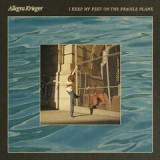
It contains all the signatures of her best lyricism: delicate and precise phrasings, moments that flicker between beauty and banality, meaning that forms through the accretion of observations, memories, and unexpected adages. This is an album that is at once post-theistic and devoted to a relationship with the divine, each song blinking in and out of "the fragile plane," a place Krieger describes as "a middle ground in the universe," both abstract and peaceful, where time, bodies, and names don't exist.
Krieger initially collaborated with Luke Temple and Jeremy Harris to record her vocals and guitar to tape at Panoramic Studios in West Marin, CA. As the album continued to form, Krieger envisioned instruments - like the French and English horn (Nancy Ranger and Priscilla Reinhart), electric guitar (Jacob Drab), and pedal steel (Kevin Copeland) - as characters which would walk in and out of the soundscape. What emerged from conversations with composer Sammy Weissberg, are brass parts that have a dark, almost surreal logic: horns arise to emphasize a word or phrase, fall out completely, only to rush back with dissonant orchestrations that gesture simultaneously toward deterioration and generation.
While Krieger takes inspiration from Elliot Smith's honesty, Judee Sill's cosmic reaching, and Joni Mitchell's sharp noticing, the dream-like association, harmonic dissonance, and angular melodic ascensions in each song are singularly and delightfully Krieger's.
"I Keep My Feet on the Fragile Plane" is a daring collection of songs by an artist who scries with both the cold glass eye of truth and the beating heart of empathy; who portrays life in all its twisted complexities.
Anchored by the powerhouse precision drumming of Felix Lehrmann and the resounding groove of electric bassist Thomas Stieger, augmented by kaleidoscopic contributions from Raphael Meinhart on vibes, marimba, MalletKAT Pro and synth and pyrotechnic shredding from six-string marvel Arto Makela, this potent collection of intelligent high- energy music conjures up favorable comparisons to everyone from Philip Glass and Frank Zappa to Joe Zawinul, Allan Holdsworth, King Crimson and Tribal Tech.
And while those varied influences may seep into the fabric of the ten
compositions here, the members of Marriage Material apply their own personal touch to the material, which they've come to define as "cinematic jazz."
Verheyen reflects on how he "learned a valuable lesson, from all those years making records and touring with Supertramp. We always lamented that the record was a demo for the tour, because the songs developed so much more on the road. This time I was fortunate to play the music for a year and a half before committing it to CD and vinyl, so the songs feel much more fully realized. It was a luxury recording music we all knew so well."
This is reflected in the musicianship heard on the album, which includes a masterful duet between Carl and Sophia James – of American Idol fame – on Riverboat Sky’s title track. The supporting musicians consist of Verheyen’s regular touring band – Dave Marotta (bass), John Mader (drums) and Troy Dexter (keyboards); who are supplemented by Jim Cox, Alex Acuna and Chad Wackerman.
Baguette Magique returns with four original tracks produced by Madrid’s own Babu, who shares with us a beautiful and timeless piece of work.
The Ep starts off with “The Chamber”, a perfect intro to the electric energy of the record with a mischievous bass line, laser sounds and trippy chopped-off vocals from video game Halo that welcomes you literally into’s Babu’s universe.
Then comes “Play My Game” which shares the same name of the EP as we consider it to be the center piece of the record. A timeless electro gem, cut for the club and for the after hours.
The beautiful deep bass, malicious synths and ominous robotic voices are genuine and powerful. The Madrid based producer keeps on giving bangers for the club on the flip side with “Radio Transmission”.
The electricity is tangible in this hybrid track between Minimal, Techno and Electro topped off with glitchy fx and looped vocals. We conclude the ride with the lovely retro house track “Alpedrete House”. The deeper and groovier sounds make it the romantic cut from the record to dance and maybe fall in love on the dance floor.
Rotterdam rising star Danou P steps up to Jamie 3:26’s label with a three-track EP of emotive deep house.
The title track ‘Allez Hoop’ is deep, moody and somewhat reminiscent of an electronic ‘Riders On The Storm’. Lush strings, analogue leads, classic Rhodes and a barely containable synth sequence stacked on top of a driving groove.
‘Jazz Dummy’ sees Danou P collaborate with fellow Rotterdam based artist Kems Kriol. It’s a classic sounding track drenched in live percussion and that good old M1 saxophone.
Closing out the EP ‘So Fruit’ is an homage and inside joke gone wrong in a good way. Funky electric piano stabs and rhythmic synths in a sandwich of punchy drums and thick bass. It pays tribute to an absolute classic track and features an epic flute solo by Moises Toscano Fuentes.
Indies Only LP is opaque green vinyl. Both LPs come with a download. The moment the needle drops on Bite, the new A Giant Dog record, one’s conception of what an A Giant Dog record sounds like bends like space and time around a starship running at lightspeed. The biggest point of departure is that Bite is a concept album, concerning characters who find themselves moving in and out of a virtual reality called Avalonia. A Giant Dog’s first album of original songs since 2017’s Toy, Bite finds the band Sabrina Ellis, Andrew Cashen, Danny Blanchard, Graham Low, and Andy Bauer at their peak as musicians, challenging themselves with more complex arrangements and subject matter that forced them out of their heads and into those of the characters who occupy this supposed paradise. “We had to find ourselves within, or project ourselves into, the principal characters. We developed them, got to know their minds, emotions, and motivations, and then expressed those in nine songs,” Ellis explains. Themes of addiction, gender fluidity, living ethically in a capitalist society, physical autonomy, avarice, grief, and consent bubble beneath the promised happiness of Avalonia. This is evident in songs like “Different Than,” where Ellis sings, “My body can’t explain the things my mind don’t comprehend” as if societal gender pressure is squeezing its protagonist out of their skin. The songs on Bite are full of bombast, at turns calling to mind the spacefaring operatic rock of Electric Light Orchestra and the high drama of an Ennio Morricone film score. The album’s narrative sweep is epic in scope, its characters facing impossible odds and certain doom, existing as comfortably with the sci-fi grandiosity of Thin Lizzy’s Jailbreak as it does with the high fantasy of Dio and Iron Maiden. Appropriately, A Giant Dog came to this narrative armed to the teeth with new ideas, unleashing synthesizers and string sections to create what Ellis describes as orchestral, symphonic, futuristic punk. To achieve this, they left their home turf of Austin, Texas, for La Cuve Studio, just outside of Angers, France. Living in the French countryside, A Giant Dog laid down their vision of the future against a decidedly pastoral backdrop. On walks from Angers to La Cuve, Ellis says that they “would see many things, and also nothing at all. Swans on the river. Romani people living in little trailers, with a side hut built for their dog. A juggler on a unicycle—not fucking with you.” “We thought we wouldn’t be allowed back in France after this trip, to be honest,” they continued. “Five loud, stomping, clapping, rowdy Americans who ran through the streets of Angers for three weeks in November 2022.” The experience capped two years of planning and writing, fleshing out the universe of Avalonia beyond the bounds of most concept albums. The resulting nine songs do not merely occupy this space: They’ve lived in it, and they want out.
Boy Harsher, Portishead, Thom Yorke, Radiohead, Beak>, ERAAS, SUUNS. Over the past seven years, Public Memory's distinctive use of analog synthesizers, electronic beats mixed with organic percussion, lo-fi sound design, and gritty ambience has created a singularly eerie and shadowy world. The first seconds of Public Memory's new record, Elegiac Beat, thrust us immediately into that world. We are in media res, with a feeling of sudden movement from a sensible point A to B. Given some time however, we realize that there is something askew–a bit of brightness here, some shadows pushed aside, some jazz and funk amongst the dub and Krautrock. This is an unfamiliar, ambiguous mood that pushes Public Memory towards new ground. We still drift past the clouded lights and hollowed out buildings of previous albums, but with an occasional bounce in our step now, a bit of golden haze around the edges. First single "Savage Grin" cements this clearly. The track has a jazzy, trip-hop flavor, albeit filtered through Public Memory's narcotic, hazy lens. We could be in a hotel lounge in the alps somewhere on holiday, or out of time in a majestic, sparkling ballroom. But we still have the feeling of being haunted, or perhaps even hunted in some way. This feeling intensifies and comes to a head towards the ever-darkening end of the track, leading directly into "Afterimage", in which someone almost imperceptibly sings "I hear them coming" in a twisted, auto-tuned flail. Second single "7 Floor" begins with flanged drums and damaged synthesizer stabs, evoking a kind of apparition floating towards us in the mist. As the track moves on there is, similarly to "Savage Grin", a contrast in feeling between a cold exterior roaming and an interior, warmer, human place. This time however, we move from the colder to the warmer as the synths from the track's beginning make way for a Rhodes-style organ and backing string synth, infusing an unexpected sense of peace. But like "Savage Grin", the track moves to its end through an in-between place beyond the haze. Faded and distant synthesizers meld with voices–human, or perhaps otherwise–that beckon us, or perhaps warn us. We can't be sure which. Third single "Far End Of The Courtyard" brings us closest to classic Public Memory territory with hip-hop beats, chopped and screwed samples, lo-fi ambience, and ghostly electric pianos complementing the vocals. There is darkness, perhaps more here than in the previous two singles, but with a crucial moment of uplifting lightness so subtle it may be missed upon first listen. As an inverse to both "Savage Grin" and "7 Floor" we end with brightness, the jazzier side of the record pushed to the forefront as the track fades away on that golden haze. In the end though, the haze may be just that: a vapor, a mist, a slight dusting of some other world on top of the degraded one Public Memory so effectively portrays. Elegiac Beat is between two places, and as it straddles the line between the two, we are uncertain if the light it brings shines directly from the sun, or if it is dimly reflected through that majestic ballroom world. For fans of 1990s Bristol trip hop, coldwave, and Thom Yorke's The Eraser
- Panda Bear, Voice of the Seven Woods, Mammane Sanni Abdoulaye. File under: Jazz / Electronic. Titi Bakorta almost didn't make it. Born in and raised in Kinshasa, the Congolese multi-instrumentalist was on his way to Uganda when he fell off the boat as it traversed the mighty Congo River. Unable to swim, Bakorta was saved by a friend who dragged him to the closest city Kisangani, where he was unexpectedly acquainted with local singer Dancer Papalas. Soon they were performing in bands together, traveling across the continents and settling in Tanzania, South Sudan and Dubai - they even appeared in front of General Defao, the beloved Congolese vocalist who fronted legendary soukous bands Grand Zaiko Wawa, Choc Stars and Big Stars. Now based in Kampala, Bakorta offers his own unique take on Congolese pop and folk sounds, weaving traditional elements through a psychedelic lattice of guitar loops, mangled voices and eccentric beatbox rhythms on his debut full-length. He bends woodblock snaps on 'Kop' into stuttered blurs, wailing emotionally over twanging riffs and bizarre, theatrical xylophone twinkles. It's still pop music on some level, but curved around Bakorta's unwieldy personal narrative - there's a sense that everything could unravel at any time but it all hangs together, strengthened by Bakorta's confident, contemporary production smarts. 'Elles Vais' is more airy, with celestial soukous vocals that float above tight, electronic drums. Tangled guitar echoes overlap each other like dense, weaved tapestries, contrasting perfectly with Bakorta's urgent, driving pulse. Occasionally, he transcends completely, like on 'Molende' where his chants and phrases neatly flutter between praise music and contemporary R&B. "Hustling, hustling, hustling, everyday I'm hustling," an angelic voice coos over phased electric guitar plucks and looped, AutoTuned chorals. It makes perfect sense that Bakorta should team up with Metal Preyers' Jesse Hackett on the album's final track, the aptly-titled 'Titis Haunted House'. The two artists share a similar obsession with moonlit, carnivalesque soundscapes, and Hackett's eerie synths provide a suitably eccentric foundation for Bakorta's ghostly wails and fuzzy guitar sounds.
black LP[27,69 €]
King Krule, Interpol, Alex G, Orion Sun, Snail Mail, Toro Y Moi, Unknown Mortal Orchestra. “Transparent Yellow” Indie Store Colour. (LPC1) available while stocks last. For Lutalo, creating music is an act of hope in and of itself. Throughout their meticulously crafted folk, rock, and soul, on which they sing and play all the instruments, the Twin Cities-raised, Vermont-based musician embeds golden lines of poetry that inspire curiosity about the world and empathy for everyone searching for a way through it. After releasing their 2022 debut EP, Once Now, Then Again, Lutalo emerged as a rising talent in the indie world, catching the attention of Fleet Foxes’ Robin Pecknold and Big Thief’s Adrianne Lenker, who invited the young musician on tour. Following a vinyl release with that breakthrough project, they are releasing its companion EP, AGAIN, on August 25 via Winspear. On the ambitious AGAIN, a collection of kinetic indie rock tracks, Lutalo makes bold critiques of systemic oppression, capitalism, and the digital attention economy. Though these topics are heady, their writing always sits at an accessible place of personal introspection. Like on the arresting single “Push Back Baby,” whose fuzzy electric guitar lines twist and unfurl in intricate patterns, Lutalo paints a complex portrait of our current reality that’s “rooted in the greed or narcissism of capitalists,” they explain. “I’m analyzing those systems and patterns, and also asking, ‘Can we continue to not perpetuate this?’ Because it’s hurt a lot of people historically. I’m just asking people to question it.” Through their music, but also through their lifestyle that’s alternative to America’s economic and political systems, Lutalo asks listeners to imagine new possibilities. “I want to help people question the way they’re living,” they say, “so we can create a better reality for us to exist in together.”
yellow LP[27,69 €]
King Krule, Interpol, Alex G, Orion Sun, Snail Mail, Toro Y Moi, Unknown Mortal Orchestra. “Transparent Yellow” Indie Store Colour. (LPC1) available while stocks last. For Lutalo, creating music is an act of hope in and of itself. Throughout their meticulously crafted folk, rock, and soul, on which they sing and play all the instruments, the Twin Cities-raised, Vermont-based musician embeds golden lines of poetry that inspire curiosity about the world and empathy for everyone searching for a way through it. After releasing their 2022 debut EP, Once Now, Then Again, Lutalo emerged as a rising talent in the indie world, catching the attention of Fleet Foxes’ Robin Pecknold and Big Thief’s Adrianne Lenker, who invited the young musician on tour. Following a vinyl release with that breakthrough project, they are releasing its companion EP, AGAIN, on August 25 via Winspear. On the ambitious AGAIN, a collection of kinetic indie rock tracks, Lutalo makes bold critiques of systemic oppression, capitalism, and the digital attention economy. Though these topics are heady, their writing always sits at an accessible place of personal introspection. Like on the arresting single “Push Back Baby,” whose fuzzy electric guitar lines twist and unfurl in intricate patterns, Lutalo paints a complex portrait of our current reality that’s “rooted in the greed or narcissism of capitalists,” they explain. “I’m analyzing those systems and patterns, and also asking, ‘Can we continue to not perpetuate this?’ Because it’s hurt a lot of people historically. I’m just asking people to question it.” Through their music, but also through their lifestyle that’s alternative to America’s economic and political systems, Lutalo asks listeners to imagine new possibilities. “I want to help people question the way they’re living,” they say, “so we can create a better reality for us to exist in together.”
- A1: Rock Extra 3 00
- A2: Slowrama 2 10
- A3: Latin Pop Sound 3 30
- A4: Morning Melody 1 12
- A5: Islam Blues 0 55
- A6: Phasing Drums N° 1 1 10
- A7: Phasing Drums N° 2 1 16
- A8: Phasing Drums N° 3 1 25
- B1: Pacific Rock 2 25
- B2: Quasimodo Pop 3 16
- B3: Carmel Beach 3 25
- B4: Auto Moto Rallye 1 32
- B5: V S.o.p Rock 2 10
- B6: Rythmiques N° 1 0 53
- B7: Rythmiques N° 2 0 45
- B8: Rythmiques N° 3 0 53
A Tele Music CLASSIC from 1972, Pierre-Alain Dahan's Continental Pop Sound is of those library albums with something for everyone. Breaks? Check. Fuzz guitar? Check. Slower, jazzy stuff? Double check. It's a stunning collection of psychedelic rock, soulful funk and retro pop stylings that's currently going for over £200 on Discogs. And with good reason. French drummer, percussionist and composer Pierre-Alain Dahan was a key member of the legendary Arpadys, Disco & Co, Voyage, Tumblack (with Wally Badarou and Sauveur Mallia) and Jef Gilson Septet. So, you know this Be With reissue is nailed on essential.
Skip the by-numbers opener "Rock Extra" and head straight to the deeeeeep, minimalist groove of "Slowrama", a humid masterclass in low-slung, creeping crime funk with weighty breaks and beefy bass complimented by hypnotic wah-wah and warm electric piano. Sensational. It was sampled by Prince Po in 2004 for his "Love Thang" track. The galloping "Latin Pop Sound" is a percussive, Santana-esque tour de force featuring fantastic guitar shreds over a bassline to die for. "Morning Melody" is a lightweight amble whereas the brief but deliciously psych-rock heavy "Islam Blues" is a must for your mixes when requiring short segue tracks. The A-Side closes out with "Phasing Drums N° 1, 2 & 3", all completely ace. For us, N° 3 is the pick of the bunch, with particularly slooooow and deliberate drums underpinned by a droning, sinister organ. Hip-hop, before hip-hop, no less.
The genuine monster "Pacific Rock" blasts out the gate to usher in Side B, a thrilling and unrelenting pop-rock instrumental that really drives. "Quasimodo Pop" contains great slow mo funk breaks and scratchy guitars that alternate with pretty heavy riffing to create a compelling base track. "Carmel Beach" is as beautiful as the location it's named after, as insouciant guitars glide over super slo-mo beats and dramatic organ before it breaks down to a laconic, reflective electric piano showcase. Sumptuous. "Auto Moto Rallye" is a brief driving funk gem, as you might expect, complete with revved up guitars tuned and played to emulate the irresistible sound of growling race cars.
The upbeat, piano-led rock stomper "V.S.O.P Rock" is all well and good but, what you might really be here for is the trio of tracks that ensure the LP ends on an almighty high. The three most famous tracks “Rythmiques 1, 2 & 3” all come complete with *ultra*-dope breaks. N° 2 is probably our favourite, with the shuffling bassline and breaks combo augmented by the wonderful cowbell. Though on any other day, it could be N° 3! This album is often considered as the “baby brother” to Tele Music's Rythmiques, and this triptych is all the proof you need. Outstanding.
One of the very best French drummers ever, Pierre-Alain Dahan began his career at the Blue Note in Paris with Sonny Stitt, Dexter Gordon and Daniel Humair. Some start, eh?! He also participated in the recording of Serge Gainsbourg's cult album 'La Ballade de Melody Nelson' before going on to make countless KILLER library funk records and be a key member in the legendary Arpadys, Disco & Co, Voyage, Tumblack (with Wally Badarou, Sauveur Mallia et al), Jef Gilson Septet (alongside Henri Texier) and many more. Some pedigree.
The audio for Continental Pop Sound has been remastered by Be With regular Simon Francis, ensuring this release sounds better than ever. Cicely Balston's expert skills have made sure nothing is lost in the cut whilst the original, iconic Tele Music house sleeve has been restored here at Be With HQ as the finishing touch to this long overdue re-issue.
- A1: Rythmiques N° 4 2 03
- A2: Rythmiques N° 5 2 03
- A3: Rythmiques N° 6 2 10
- A4: Rythmiques N° 7 1 48
- A5: Rythmiques N° 8 3 50
- A6: Rythmiques N° 9 2 45
- A7: Piano + Piano 2 30
- B1: Auto Rythmiques 3 45
- B2: Rythmiques N° 10 2 00
- B3: Rythmiques N° 11 2 10
- B4: Océan Horizon 2 45
- B5: Super Carrousel 1 40
- B6: Gay Shopping 2 10
- B7: Suspense N° 1 3 50
Part of Tele Music Reissue Campaign, 2023 first time reissue, 140g vinyl
Wow! Pierre-Alain Dahan & Mat Camison's Rythmiques is another iconic release in the hallowed Tele Music catalogue. First appearing in 1973, it features tense funk, blunted jazz and heavy breaks all the way. Considered the rightful sequel to Continental Pop Sound, it's a vital album for producers and DJs; and you can probably guess that RHYTHM is central to the record's presentation. And you can really taste what's rhythm, to borrow a phrase. French drummer, percussionist and composer Pierre-Alain Dahan was a key member of the legendary Arpadys, Disco & Co, Voyage, Tumblack (with Wally Badarou, Mallia et al!) and Jef Gilson Septet whilst his partner here, Mat Camison, was a pioneering synth LORD. So, you know this Be With reissue is absolutely crucial.
The album picks up from where Continental Pop Sound left us, opening with the tense, stabbing thriller-funk of "Rythmiques N° 4". The dubbier "Rythmiques N° 5" is no less electric and definitely has a spacey air of wonky funk about it with the slightly off-kilter rolling piano. "Rythmiques N° 6" is more percussive-focussed with a brilliantly hypnotic opening that really stretches the drama out. “Rythmique N° 7” alternates between fast-paced, skipping drums and slo-mo funk, always with the clavinet high up in the mix. Wicked. The dope jazz of “Rythmique N° 8” truly mesmerises with licks of electric piano, funky bass flourishes and varied percussion. “Rythmique N° 9” has great, sloppy-yet-hard intro drums which sound like something Daft Punk could've pilfered circa Human After All, punctuated by a guitar rock refrain that repeats til the end but is never overdone. The A-Side closes with the beautiful, melancholic "Piano + Piano", a reflective jazzy piano track which could easily open a wide-ranging set this autumn and many after it. Stunning.
Opening Side B, "Auto Rythmiques" is a hectic yet compelling funk workout but it's all about the frankly devastating breakbeats on “Rythmiques N° 10 & N° 11” with effortlessly twisted funk bass lines over open drum breaks and enough tension and rhythmic switch-ups to keep your neck-snapping and your mind lifted. Downright essential. Taking leave from the heavy funk break action, the pastoral "Océan Horizon" is perhaps an unfairly overlooked highlight. A gorgeous, softly-aquatic, ambient gem, it's gently percussive with warm, floaty keys decorating the mellow rhythmic bed. The mercifully brief "Super Carrousel" is harmless fun-fair-funk but perhaps best skipped over whilst the intriguingly titled "Gay Shopping" is another throwaway exercise in inexcusable jaunt whilst. To close out this memorable set, thankfully, we're left with "Suspense N° 1" to get us back on course with its unsurprisingly tense mix of urgent stringed instruments that flirt with rhythm and melody yet the longer the track goes on. Deep.
One of the very best French drummers ever, Pierre-Alain Dahan began his career at the Blue Note in Paris with Sonny Stitt, Dexter Gordon and Daniel Humair. Some start, eh?! He also participated in the recording of Serge Gainsbourg's cult album 'La Ballade de Melody Nelson' before going on to make countless KILLER library funk records and be a key member in the legendary Arpadys, Disco & Co, Voyage, Tumblack (with Wally Badarou, Sauveur Mallia et al), Jef Gilson Septet (alongside Henri Texier) and many more. Some pedigree.
The audio for Rythmiques has been remastered by Be With regular Simon Francis, ensuring this release sounds better than ever. Cicely Balston's expert skills have made sure nothing is lost in the cut whilst the original, iconic Tele Music house sleeve has been restored here at Be With HQ as the finishing touch to this long overdue re-issue.
Black Truffle is pleased to announce The Leisure Principle, a new solo LP from London-based bassist and sound artist Otto Willberg. A key player in the London underground, Willberg is often heard on acoustic and electric bass in free improv settings and bands with Laurie Tompkins (Yes Indeed) and Charles Hayward (Abstract Concrete), as well as the fractured No Wave unit Historically Fucked. His previous solo releases have ranged from extended technique double bass to explorations of the acoustics of a 19th century artillery fort. But nothing Willberg has committed to wax so far prepares a listener for The Leisure Principle, six unashamedly melodic improvisational workouts created almost entirely with heavily filtered bass harmonica and electric bass. On the opening ‘Reap What Thou Sow’, a single-note bass harmonica loop pulses along underneath a roaming bass solo, the side-chained envelope filtering (where the dynamic behaviour of the bass determines the filter for both bass and harmonica) fusing the two instruments into a single stream of burbling shifts in resonance. After several minutes of patient exploration of this low-end landscape, the music suddenly opens up in widescreen with the entrance of Sam Andreae’s graceful melodica chords, spreading out across the stereo field. From this epic opener, each of the remaining pieces goes on to explore a slightly different aspect of the terrain. On ‘Shadow Came into the Eyes as Earth Turned on its Axis’, a similarly buoyant harmonica bass line provides the foundation, but this time playing a soulful descending riff, its almost R&B feel abstracted and half-obscured by the filtering. On ‘Mollusk’, echoed bass arpeggios skitter between elegiac chords somewhat reminiscent of the opening of John Abercrombie’s ‘Timeless’, before settling into a hypnotic groove. On the record’s second half, Willberg pushes further into the possibilities of his idiosyncratic instrumentation. On ‘Wetter’, bass and harmonica come together into a monstrous, growling jaw harp; on ‘Had we but world enough and more time’, the subtly shifting pulsating patterns start to feel almost like a kind of evaporated, drum-less dub techno until an eruption of wheezing bass harmonica gives the piece a comically folkish turn. Willberg’s melodically inventive and virtuosic bass performance calls to mind any number of fusion touchstones, from Jaco Pastorius to Mark Egan’s singing tone in the early Pat Metheny Group—even Anthony Jackson’s work with Steve Kahn. But with its radically reduced instrumentation, The Leisure Principle is also an exercise in minimalism, and the absence of percussion gives even its funkiest moments a strangely abstracted quality. At times, its uncanny blend of the abstruse and the immediate suggests the fried pop experiments of David Rosenboom or the skewed but deeply musical DIY of 80s underground groups like De Fabriek. Both easy on the ear and profoundly strange, The Leisure Principle proudly takes its place among the most eccentric offerings on the Black Truffle menu.
Acoustic Bass, Bass Fender – Buster Williams
Composed By – Harold Land (tracks: A1 to A3, B2)
Design Cover – MPI*
Drums – Ndugu (Leon Chancler)*
Electric Piano, Piano – Bill Henderson*
Flugelhorn, Trumpet – Oscar Brashear
Oboe, Tenor Saxophone – Harold Land
Photography By – David Shepard
Producer – Bob Shad
Supervised By – Ernie Wilkins
Originally released: 1972
Whispers is the first proper P.G. Six album since 2011"s Starry Mind. Time passes slowly, as they"ve been known to say out in the country, and before you know it, there"s a bunch of it behind you. After five releases in the first decade of P.G. Six, it may seem a bit of a surprise to have not heard something new in the past twelve years - but a cursory listen to Murmurs & Whispers will answer why, as the deep acoustic focus of the tracks imply an investment of the type of compassion and understanding that takes time and concentrated effort to conjure. Additionally, Pat Gubler"s always got a few pots going at once in his ever-expanding musical universe. He"s been active since the mid-90s, first with Memphis Luxure and Tower Recordings, then as P.G. Six, and as a member of Metal Mountains, Wet Tuna, Garcia Peoples and Weeping Bong Band. Additionally, some time was spent making collaborative records with Dan Melchior (in 2019) and Louise Bock (in 2021). Pat"s been playing the harp for more years than he"s been in bands, but when he realized that he was writing a set of songs centered around harp compositions, he spent some time in the woodshed with his instrument, a late 80s model Triplett Celtic 34 String Harp (which replaced a lovely Paraguayan harp he"d played for years previously). After the previous P.G. albums of electric band arrangements, he was in a place of writing songs with more silence in them. He ended up playing a lot of the parts himself on Murmurs & Whispers, adding guitar, bass, keyboards, recorder and hurdy gurdy, in addition to his harp and vocals. Clark Griffin and Wednesday Knudson, who Pat plays with in Weeping Bong Band, played and sang a bit themselves, and the record was recorded piece by piece in houses around upstate New York by Mike Fellows. Returning to the quiet acoustic sound of the first couple of P.G. Six albums, Parlor Tricks and Porch Favorites (which has seen a much-needed reissue in the past year after too many years OOP) and The Well of Memory, Murmurs & Whispers is more straightforward in expressing its vision of rural celestial wonder. Bucolic and comfortably lived in, Murmurs & Whispers nonetheless projects the transcendent heart of P.G. Six once again, and as ever, it is magnificent to hear it passing through us.
Long festering on the West Coast, Frankie and the Witch Fingers have carved out a niche that’s equal parts molten tar pit teardown and end-stage anxious careen. As they wind out of the stoned-ape psychedelics of their 2020 opus Monsters Eating People Eating Monsters… their sound, over a series of singles, has begun to thicken and throb. It’s coalesced into a darker strain that ingests the explosive impulses of R&B, the rhythmic insistence of 70’s German Progressives, and the elasticity of funk fusionists alike. They weld their arsenal of influences to a chassis of nail-bitten bombast. On the upcoming Data Doom the band hurtles the listener head first into the wood-chipper of technological dystopia, systemic rot, creeping fascism, the military-industrial profit mill, and a near-constant erosion of humanity that peels away the soul bit by bit. With a fuse lit by these modern-day monstrosities the band seeks to find salvation through a thousand watt wake-up of rock n’ roll exfoliation.
i am fortunate to play with amazing musicians - always have had my ear to the 6 winds to assess players and their strengths and the music we would make...
electric or acoustic, 2 or 5 people, country, folk, blues, string players, grass,
rocking, quiet or loud - WHATEVER the category does not matter (as it is just a category) - there has always been a group of great musicians near to help me get there - and yes, i am lucky
on this recording MATT FLINNER (mando and banjo), SHAD COBB (fiddle)
and BRYN DAVIES (double bass) & ALL folks on vocals and me on dobro/piano/banjo and guitar -mostly ben bullington's 1933 D18- we had been playing anytime a festival wanted a fiddle/banjo/mando/double bass/acoustic guitar instrumentation sound from me- in one way, it can easily be called "bluegrass" -( not a big stretch )- i kinda think "string band " is as good or a better name (certainly less used)... so enter this DARRELL SCOTT STRING BAND
(a rose by any other name)
HERE'S HOW THIS RECORD CAME ABOUT- we had 2 consecutive weekend gigs (arkansas and colorado) and rather than sending us... more
The album title is an ancient alchemic motto which means "Walk within yourself'' in Latin.
Recorded only and exclusively with electric guitar, the musician explores the threshold of subconscious with heavy drones, fragile soundscapes and haunting melodies, realizing a work between ambient and high-volume drone music. ''Ambula ab intra is an oneiric travel into the depths of the psyche, experiencing the inner path into Self. The outcome is an ethereal work of heavy ambient guitar soundscapes.
Rare Jazz-Funk album from 1978 by Headhunters founder.
Featuring an all-star line-up including Herbie Hancock.
Originally released in 1978 on Tobisha EMI Japan.
First vinyl reissue outside of Japan released in collab w/Totown Records. Comes with double side insert.
Paul Jackson (born in Oakland, California in 1947) needs little introduction. Paul began playing bass at the age of nine and was considered by many of his teachers to be a musical prodigy. Jackson was known as a “Musician’s Musician” and shaped a sound that launched a new direction in contemporary music: the so-called ‘Pulse Playing’, a trademark sound of close-meshed funk grooves combined with sensational rhythms. With this innovative approach, he influenced entire generations of jazz and funk musicians to come. Paul’s compositions were sampled by big acts from the likes of Prince, TLC, Mobb Deep and NWA…just to name a few.
Paul Jackson was a founding member of the Headhunters under Herbie Hancock (THE group responsible for their ground-breaking fusion and jazz-funk compositions that took the world by storm in the 70’s). The solid union between Hancock and Jackson has been especially evident in the many international tours they have made together…not to mention that he participated on most of the Headhunters albums and Herbie’s solo albums.
Paul has also worked as a producer and as a studio/live musician alongside acts such as Santana, Sonny Rollins and The Pointer Sisters. He was a frequent guest performer at renowned international festivals such as the Montreux and Newport events. Jackson’s composing has not gone without recognition and was nominated for Grammy Awards in 1974, 1975 and 1976. Like other highly talented, creatively motivated engineers of music, Paul has expanded his career to other mediums such as playing on blockbuster movie soundtracks such as “Death wish” and “Dirty Harry”.
Paul Jackson also wrote five solo albums worth listening to – including the monster of an album that is known as “Black Octopus” which is considered to be a kind of lost Headhunters album.
His debut album “Black Octopus” saw the light of day in 1978 and is a total piece of art filled with abstract sticky funky grooves, floating electric piano playing, strong thumping bass lines, raw heavy drums and amazing vocal acrobatics (Jackson himself takes vocals in 3 out of 5 songs, and his soulful singing voice strikes an emotional chord that does not go unnoticed).
On “Black Octopus” you’ll also find some of the best all-star musicians from the likes of Alphonse Mouzon (Roy Ayers, Betty Davis, Azar Lawrence)…and last but not least fellow Headhunters Bennie Maupin and Herbie Hancock himself.
With “Black Octopus” Paul Jackson wrote the book on how a jazz-funk-fusion album should sound like. The fact that the album was only distributed in Japan at the time (Jackson resided in Tokyo since the late 70’s, where he passed away in 2021) continues to increase its reputation as an album that is VERY hard to find. This is a must-have gem…not only for fans of jazz, funk and rare grooves, but also for DJs and collectors around the globe.
On its’ release in November 2022, Daniel Stenger’s debut mini-album as Flashbaxx, Take Care My Friend, won plenty of plaudits for its’ enticing blend of jazz-funk instrumentation, audible warmth, effortless musicality, and memorable, sun-soaked songs. Now the set returns in remixed and reworked form, with a sextet of artists taking it in turns to put a new spin on the German producer’s carefully crafted and immaculately executed tracks.
The six-cut vinyl version boasts two revisions that have already made waves on digital download: a genuinely life-affirming hip-hop-soul take on ‘Strangers’ courtesy of East Midlands’ maestro Atjazz, where Katherine Kempf’s smouldering lead vocals rise above head-nodding beats, woozy electric piano chords, yearning horn arrangements and smooth bass guitar, and a sublime Moods mix of ‘Love Boat’ that re-frames the track as a languid, groove-fired shuffle through Balearic jazz-funk territory.
The other four reworks, which are exclusive to this EP, are similarly inspired. Chris Pookah collaboration ‘City Lights’ is given the remix treatment not once, but twice. First NuNorthern Soul regulars Mike Salta and Mortale re-imagine the track as a gently breezy, dusk-ready blend of bouncy, samba-influenced grooves and colourful Balearic nu-disco, before BJ Smith – the first artist to release music on Phil Cooper’s imprint way back in 2012 – takes the track into semi-acoustic, blue-eyed-soul-meets-Balearic jazz-funk territory. Gentle, tactile, and vibrant, it’s a stunning, soul-stirring revision.
To round off the EP, two producers renowned for creating atmospheric, sunrise-ready soundscapes deliver their versions of Stenger’s kaleidoscopic, musically rich aural visions. Marshall Watson handles ‘Alright’, smothering a languid, slow-motion drum machine beat in jazzy double bass, delay-laden electric piano motifs, lazy jazz guitars, rising synth strings and the dreamiest of pads.
Then, to round things off in considerable style, Tambores En Benirras reworks title track ‘Take Care My Friend’, teasing out the track’s inherent musical colour and warmth whilst adding his own distinctive spin. Pleasingly hard to pigeonhole, his remix makes extensive use of deep, dubby bass, Latin-style percussion, leisurely beats, blossoming synth sounds and all manner of effects-laden instrumental flourishes – including guitar solos that recall some of Dave Gilmour’s most laidback, eyes-closed moments. It provides a genuinely brilliant conclusion to an effortlessly impressive set of remixes.
After his acclaimed album for us released recently, Ribe comes again into the mothership with this modular madness EP, proving again his mastery of intelligent techno and sound design.
La penumbra is the first track, as the title suggests, darkness and shadows come immediately to mind when listening to it. A solitary bass drum joined by several drones and ambiences interleaving and mutating over the arrangement.
El Metodo follows, electric and sharp, with repetitive modular bleeps floating over a bass heavy groove. The only additional elements are percussive and come into the track progressively until the hypnotic climax.
Flipping the record, Las Raices introduce distortion and roughness on the equation, relying on a powerful groove soon accompanied by high pitched drones and electric synthetic washes.
Last Tune is Bajo el Olivo, liquid and elastic, with resonant bubbles going asymmetrically on top of the rhythm with occasional percussive details going on the back. A sci-fi sequence appears in the middle of the track adding additional sound hypnosis.
No doubt that Ribe has his own trademark sound and we are really proud of having him onboard.
Green in Blue Vinyl[20,80 €]
The latest EP from Drab Majesty marks the start of a stirring new chapter in the band's majestic legacy. Written during a 2021 retreat to the remote coastal Oregon town of Yachats, Deb Demure leaned into the neo- psychedelic resonance of a uniquely bowl - shaped 12 -string Ovation acoustic/electric guitar. After early morning hikes in the rain, Deb would record ambient guitar experiments the rest of the day, tapping into "flow states," letting the sound lead the way. These sessions were then refined or recreated, and later elevated further with key collaborations by Rachel Goswell (Slowdive), Justin Meldal Johnson (Beck, M83, Air), and Ben Greenberg (Uniform, Circular Ruin Studio). An Object In Motion is true to its title, capturing the chrysalis moment of an artist evolving, reborn and untet hered, silhouetted against an open horizon. "Cape Perpetua" kicks off the collection's divergent palette: sparkling acoustic fingerpicking refracted through delay, equal parts raga and reverie. Melodies and moods congeal and dissipate, at the threshold of rustic American primitivism, brooding neo-folk, and pastoral melancholia. "The Skin And The Glove" deploys jangle to different effect baggy, soaring, grey skied kaleidoscopic pop in the spirit of Stone Roses, Primal Scream, and The Glove. Rachel Goswell lends her iconic freefall voice to The Cure - esque ballad, "Vanity," infusing poetic gravity to the doomed refrain: "If the valve breaks / then the earth quakes / and history finds a way / to put you in your place." "Yield To Force", the closing track of the EP, may be the most anomalous offering of the set. A 15 minute instrumental odyssey of cyclical strings, ominous slide guitar, and simmering synthesizer, the piece sways and spirals like a long zoom into distant storm clouds. Demure finesses the guitar with a restless but regal grandeur, unfolding a panorama of peaks, shadows, and plateaus. It's music both intuitive and prophetic, tracing the slow swing of pendulums across an endless plain. Taken as a whole, An Object In Motion presents a showcase of potential futures from Drab's evolving domain, their sound poised to bloom at the precipice of transformation.
In dem Moment, als die Nadel auf die neue A Giant Dog-Platte fällt, krümmt sich die eigene Vorstellung davon, wie eine A Giant Dog-Platte klingen soll, wie Raum und Zeit um ein Raumschiff, das mit Lichtgeschwindigkeit fliegt. Bite ist ein Konzeptalbum, in dem es um Charaktere geht, die sich in einer virtuellen Realität namens Avalonia bewegen und zugleich ist es das erste Album von A Giant Dog mit eigenen Songs seit Toy von 2017.
Sabrina Ellis, Andrew Cashen, Danny Blanchard, Graham Low und Andy Bauer - auf ihrem Höhepunkt als Musiker, fordern sie sich mit komplexeren Arrangements heraus und versetzten sich hinein in die Köpfe der Figuren, die dieses vermeintliche Paradies Avalonia bewohnen. "Wir mussten uns in den Hauptfiguren wiederfinden oder uns in die Hauptfiguren hineinversetzen. Wir entwickelten sie, lernten ihre Gedanken, Emotionen und Motivationen kennen und brachten diese dann in neun Songs zum Ausdruck", erklärt Ellis. Themen wie Sucht, Geschlechterfluidität, ethisches Leben in einer kapitalistischen Gesellschaft, körperliche Autonomie, Geiz, Trauer und Zustimmung sprudeln unter dem versprochenen Glück von Avalonia.
Dies wird in Songs wie "Different Than" deutlich, in dem Ellis singt: "My body can't explain the things my mind don't comprehend", als ob der gesellschaftliche Geschlechterdruck seine Protagonistin aus ihrer Haut herausquetscht. Die Songs auf Bite sind voller Bombast und erinnern abwechselnd an den raumfahrenden Opernrock des Electric Light Orchestra und die hohe Dramatik einer Ennio Morricone Filmmusik. Der erzählerische Bogen des Albums ist von epischer Tragweite, seine Charaktere stehen vor unmöglichen Unwahrscheinlichkeiten und sind mit dem sicheren Untergang konfrontiert, und ist so bequem vergleichbar mit der Sci-Fi-Grandezza von Thin Lizzy's Jailbreak wie auch mit der High Fantasy von Dio und Iron Maiden. Passenderweise sind A Giant Dog bis an die Zähne bewaffnet mit neuen Ideen zu dieser Erzählung gekommen, mit Synthesizern und Streichern, um das zu schaffen, was Ellis als orchestral beschreibt: symphonischen, futuristischen Punk. Um dies zu erreichen, verließen sie ihre Heimat Austin, Texas, in das La Cuve Studio in der Nähe von Angers, Frankreich.
Auf dem französischen Land legten A Giant Dog ihre Zukunftsvision vor einer ausgesprochen pastoralen Kulisse nieder. Auf den Wanderungen von Angers nach La Cuve, so Ellis, sahen sie "viele Dinge, und auch gar nichts. Schwäne auf dem Fluss. Romani, die in kleinen Anhängern leben, mit einer Hütte für ihren Hund an der Seite Ein Jongleur auf einem Einrad - ich verarsche dich nicht. Wir dachten, wir dürften nach dieser Reise nicht mehr nach Frankreich zurück, um ehrlich zu sein", fährt sie fort. "Fünf laute, stampfende, klatschende, randalierende Amerikaner, die im November 2022 drei Wochen lang durch die Straßen von Angers gelaufen sind." Diese Erfahrung war der Höhepunkt von zwei Jahren Planung und Schreiben, in denen das Universum von Avalonia Gestalt annahm. Die daraus resultierenden neun Songs besetzen nicht nur diesen Raum: Sie haben darin gelebt und sie wollen raus.
In dem Moment, als die Nadel auf die neue A Giant Dog-Platte fällt, krümmt sich die eigene Vorstellung davon, wie eine A Giant Dog-Platte klingen soll, wie Raum und Zeit um ein Raumschiff, das mit Lichtgeschwindigkeit fliegt. Bite ist ein Konzeptalbum, in dem es um Charaktere geht, die sich in einer virtuellen Realität namens Avalonia bewegen und zugleich ist es das erste Album von A Giant Dog mit eigenen Songs seit Toy von 2017.
Sabrina Ellis, Andrew Cashen, Danny Blanchard, Graham Low und Andy Bauer - auf ihrem Höhepunkt als Musiker, fordern sie sich mit komplexeren Arrangements heraus und versetzten sich hinein in die Köpfe der Figuren, die dieses vermeintliche Paradies Avalonia bewohnen. "Wir mussten uns in den Hauptfiguren wiederfinden oder uns in die Hauptfiguren hineinversetzen. Wir entwickelten sie, lernten ihre Gedanken, Emotionen und Motivationen kennen und brachten diese dann in neun Songs zum Ausdruck", erklärt Ellis. Themen wie Sucht, Geschlechterfluidität, ethisches Leben in einer kapitalistischen Gesellschaft, körperliche Autonomie, Geiz, Trauer und Zustimmung sprudeln unter dem versprochenen Glück von Avalonia.
Dies wird in Songs wie "Different Than" deutlich, in dem Ellis singt: "My body can't explain the things my mind don't comprehend", als ob der gesellschaftliche Geschlechterdruck seine Protagonistin aus ihrer Haut herausquetscht. Die Songs auf Bite sind voller Bombast und erinnern abwechselnd an den raumfahrenden Opernrock des Electric Light Orchestra und die hohe Dramatik einer Ennio Morricone Filmmusik. Der erzählerische Bogen des Albums ist von epischer Tragweite, seine Charaktere stehen vor unmöglichen Unwahrscheinlichkeiten und sind mit dem sicheren Untergang konfrontiert, und ist so bequem vergleichbar mit der Sci-Fi-Grandezza von Thin Lizzy's Jailbreak wie auch mit der High Fantasy von Dio und Iron Maiden. Passenderweise sind A Giant Dog bis an die Zähne bewaffnet mit neuen Ideen zu dieser Erzählung gekommen, mit Synthesizern und Streichern, um das zu schaffen, was Ellis als orchestral beschreibt: symphonischen, futuristischen Punk. Um dies zu erreichen, verließen sie ihre Heimat Austin, Texas, in das La Cuve Studio in der Nähe von Angers, Frankreich.
Auf dem französischen Land legten A Giant Dog ihre Zukunftsvision vor einer ausgesprochen pastoralen Kulisse nieder. Auf den Wanderungen von Angers nach La Cuve, so Ellis, sahen sie "viele Dinge, und auch gar nichts. Schwäne auf dem Fluss. Romani, die in kleinen Anhängern leben, mit einer Hütte für ihren Hund an der Seite Ein Jongleur auf einem Einrad - ich verarsche dich nicht. Wir dachten, wir dürften nach dieser Reise nicht mehr nach Frankreich zurück, um ehrlich zu sein", fährt sie fort. "Fünf laute, stampfende, klatschende, randalierende Amerikaner, die im November 2022 drei Wochen lang durch die Straßen von Angers gelaufen sind." Diese Erfahrung war der Höhepunkt von zwei Jahren Planung und Schreiben, in denen das Universum von Avalonia Gestalt annahm. Die daraus resultierenden neun Songs besetzen nicht nur diesen Raum: Sie haben darin gelebt und sie wollen raus.
- A1: Vortex Count - Growthh
- A2: Translate - Nyquist
- A3: Pulso - Unexpected
- A4: Aural Research - <>
- B1: Droneghost - Cartographer
- B2: David Bowman - Ligo
- B3: Animatek - Black Cat
- C1: Hd Substance - Kormoran
- C2: Groof - Al Caer Sube
- D1: Dorian Gray - Arcadia
- D2: Andrey Detochkin - Brain Impulses
- E1: Pedro Pina - Peakoil
- E2: Victor Santana - The Feeling Of Never Giving Up
- F1: Hironori Takahashi - Velk
- F2: Subtraum - Binare Code Ii
- G1: Plural - Stowaway
- G2: Hanton - Astral Travel
- H1: Eleck & Alex Schultz - Engine Control
- H2: Lakej - Someone Lead The Way
Neurotwin is a Trilogy:
Part I
In the fight against Alzheimer's, epilepsy, schizophrenia and other diseases characterized by an imbalance in neuronal activity, there are chemical weapons, such as those that try to prevent the protein fragments known as beta-amyloid plaques from developing in the cerebral cortex , and physical, such as electrical stimulation that allow to restore the functionality of brain cells. This last resort, which has already been shown to be effective in modifying the activity of the cerebral cortex, is today a weapon of general intervention. Converting it to precision requires the development of individualized and predictive brain models that allow identifying where and how much to stimulate each patient. To achieve this, an international European team is working on the creation of virtual replicas of the most unknown organ in the body: the Neurotwin project.
According to recent research, the decrease in power in the neuronal oscillations of the gamma band of the cerebral cortex (a pattern whose frequency ranges between 20 and 50 Hertz) favors the development of protein fragments related to Alzheimer's.
Transcranial application of weak electrical currents has proven to be an effective and painless way to modulate brain activity without side effects.
The objective is to create complete computational models of the brain with real data of living beings (human patients) and that allow to anticipate and specify the effects of non-invasive stimulation techniques on neurological mechanisms.
"Never turn your back on a friend."
- Alfred Hitchcock
Part II
The Neurotwin project is the successor to an initiative that encompasses many projects called Virtual Physiological Human, which was based on the idea of creating a complete model of a human being on a computer, to perform non-invasive tests at the computational level. Now the concept has been derived to "Digital Twin", which seeks not only to have an equal computational model for everyone, but to create "twin" digital models of each patient in order to be able to make personalized medicine from the genome of each individual. Specifically, in our project, we have focused on digital twin brains, which would be representations of patient brains created from data extracted with current neuroimaging and brain activity monitoring techniques.
"Mirrors are used to see the face, Art to see the soul."
- George Bernard Shaw
Part III
A digital twin is a computer system programmed in such a way that, receiving the same inputs as the physical object or process it is a twin of, it provides the same outputs.
Characteristics of digital twin technology
1 Connectivity
2 Homogenization
3 Reprogrammable and intelligent
4 Digital traces
"There is no light without shadows and no fullness of mind without imperfections. Life requires for its realization, not perfection, but fullness. Without imperfection, there is no progress or growth."
- Carl Gustav Young
- An Anxious Host Is Described
- A Grift Is Detailed
- One Man's Trash Is Another Man's Garbage
- Skull Of Cortázar
- The Aftermath Of Post Office Arson Is Described
- The Sunken Cost Is Detailed
- Goes Reptile
- The Other Side Of The Coin Of The Confession Of The Medievalist
- Cart Dog
- Tired To The Bone
- Spanish House Is Described
Since the early 2010s, Josh Mason has slowly amassed an enchanting discography, publishing recordings on labels such as Florabelle, Dauw, Longform Editions, and his retired Sunshine Ltd. imprint. Whether focusing on electric guitar or modular synthesizer, Mason approaches his music with intentionality, tenderness, and a keen ear for detail, resulting in an exceptional and enduring oeuvre.
His workmanlike approach to craft and monomaniacal interest in circuit design culminated in 2021’s “Utility Music,” a daunting book/CD project that documents and unpacks a yearlong exploration of a Doepfer A-100 Eurorack system. The irony of such a project is that it might lead listeners to believe that academic technique and synthesis technology are the animating principles of his practice, but the reality is that this is only part of the story. Listening to Mason’s music one gets the sense that, like a good novelist, he truly cares about his characters, which take the forms of the textures and timbres of archaic wavetable oscillators, idiosyncratic filters, pulverized samples, and exotic noise sources.
“An Anxious Host” feels like a pivotal release in Mason’s catalog. It’s his first vinyl outing since 2019’s astounding “Coquina Dose,” and it may be the most succinct and potent album he’s made. The track titles function like stage directions in a play, intimating a hazy, filmic narrative populated by schemers, dreamers, and lost souls. As ever with Mason’s work, place is paramount, and this record is thoroughly shot through with the humidity, warmth, and “end of the line”-ness of the state of Florida. Seasick swells and sunken melodies; swampy, sputtering loops; sonic flotsam pooling together and flowing out, beckoning the listener to come have a soak.
LP-Reissue des ersten Albums, ursprünglich 2010 veröffentlicht!
Die Gruppe spielt eine Mischung aus Doom Metal und Psychedelic Rock der 1970er-Jahre, wobei die Gitarrenriffs an Black Sabbath erinnern. Des Weiteren wurde die Band von Neil Young, The Beatles, Electric Wizard oder The Kinks beeinflusst.
Limitiertes, dunkelgrünes Vinyl!
LP-Reissue des letzten Studioalbums, ursprünglich 2018 veröffentlicht!
Die Gruppe spielt eine Mischung aus Doom Metal und Psychedelic Rock der 1970er-Jahre, wobei die Gitarrenriffs an Black Sabbath erinnern. Des Weiteren wurde die Band von Neil Young, The Beatles, Electric Wizard oder The Kinks beeinflusst.
Limitiertes, dunkelgrünes Vinyl!
Death Waltz Recording Co. are proud to reissue the debut LP from Le Matos. If you dug the Turbo Kid soundtrack then these are the guys responsible for the music! Originally self released by the band in 2013 and now a highly sort after by record collectors the world over. Le Matos produce 80's influenced dance floor electronica with nods to Daft Punk and Ed Banger. An absolutely essential reissue. 2 X 180G VINYL PRESSED ON WHITE AND GREY SWIRL VINYL (200 COPIES ONLY)
1972, vor fünfzig Jahren, veröffentlichte Hammondorgel- und Acid-Jazz-Legende Ronnie Foster sein BlueNote-Debüt „Two Headed Freap“, von dem nicht nur der Track „Mystic Brew“ ein erstaunliches Eigenleben entwickelte, spätestens nachdem A Tribe Called Quest ihn als Sample-Grundlage für ihren Song „Electric Relaxation“ auf dem 1994er Album „Midnight Marauders“ benutzten.
Die neun Songs auf „Reboot“, Ronnie Fosters Rückkehr zum Blue-Note-Label, klingen gradlinig, kraftvoll und frisch wie eh und je. Seine Art von Soul-Jazz hat in den letzten Jahrzehnen diverse Revivals gefeiert und beweist hier, dass sie eigentlich nie aus der Mode gekommen ist. In den Linernotes widmet Foster die Aufnahmen seinem 2021 verstorbenen „Bruder, Freund und Helden Dr. Lonnie Smith, einem der Weltbesten auf der Hammond B3-Orgel“.
No shortage of colorful characters emerged from Cameroon’s bikutsi scene in the 1980’s and early 90’s. Gibraltar Drakus is one of the most enduring and enigmatic of the artists who helped transform bikutsi into a beautifully endless fabric of triplet rhythms that eventually reached ears around the world.
Following the advent of Cameroon Radio Television in 1987, bikutsi began to supplant makossa and soukous for domination of the local airwaves and the attention of cosmopolitan, thrill-seeking residents of Cameroon’s capital Yaoundé and beyond. Biktusi perfectly fused Beti traditional music and increasingly electronic, highly rhythmic guitarbased bikutsi. Mimicking the sound of village-based xylophone music by rigging a mute to electric guitar strings, bikutsi artists provided a relentlessly energetic dance format for those with a taste for music steeped in their hometown sensibility (countering the popular makossa that many felt sounded less indigenous).
By the early 1990’s, Les Tetes Brûlées were indisputably the most famous and influential artists in bikutsi, due in part to the innovations of their incendiary guitarist Théodore Zanzibar Epeme. Following their first European tour in 1987, the band blew up internationally but Zanzibar tragically, and mysteriously, passed away, which nearly brought an end to the band completely. In hindsight, the consensus among most Cameroonians is Zanzibar’s contributions to biktusi were transformational and immeasurable.
“Zanzibar is the one who taught me how to compose a song, and I learned a lot from Zanzibar musically. We spent whole nights working on methods and other approaches to compose beautiful songs. I owe half of everything I have today to Zanzibar!”
Swept up in all this was Gibraltar Drakus, who was the youngest member of Les Têtes Brûlées and was also the protégé of his biggest supporter, Zanzibar. So it was fitting that he dedicate his 1989 debut to their groundbreaking late guitarist who had meant so much to him. Drakus literally exploded from his first album Hommage A Zanzibar (1989), which sold over 100,000 copies despite rampant piracy. For the recording, Drakus made sure he engaged prolific producer Mystic Jim to record and mix the album. The innovation musically rests both within the guitar interplay and the discipline in the orchestration, which result in a mind-bending clockwork of cross-rhythmic harmony.
Marc Mac back with another high grade Bruk, Electro Boogie monster. This is the fourth and final piece of the series. From Africa to Jamaica, Brazil and now Japan Marc Mac has explored the international fusion and cultures that has been an influence on his style of Broken Beat. The four track EP is under-pinned with Jazz/Funkiness and a hint of Jungle in the subs can be felt on "Kambei". 'Yasuke Soul" and "Tokyo Nightlife" feel like a head nod to Ryuichi and Akiko, so buckle up and get ready for a Journey eastbound. Brilliant cover art is supplied by Mitchy Bwoy.
arigatō
Lndon Odense Ensemble is a powerhouse quintet that combines forces from the Causa Sui/El Paraiso family tree (Jakob Skott, Jonas Munk, Martin Rude) with the vibrant, experimental London jazz scene (Tamar Osborn, Al MacSween). On two studio full-lengths, released in 2022 and 2023, they have explored the confluence of psychedelia, improvisation and cosmic jazz. On this set, recorded at the 2021 edition of Denmark's Jaiyede Jazz Festival, the energy is cranked up another notch or two. Comprised almost entirely of exclusive material not found on the two studio records these three sonic excursions dive head-on into the fiery side of the group's sound. Taking up the entire A-side "Energy Ascending" starts out as a gently flowing piece of dreamy jazz that wouldn't have sounded out of place on a late 1960s Pharoah Sanders record. As the piece evolves the guitar takes it into rock territory, where it dissolves in a mesmerising breakdown before commencing a build of epic proportions, lead by Tamar Osborn's baritone sax, channelling The Stooges as much as John Coltrane. Heavy. On the B-side things get more electronic and spacy. Here the ensemble uses album track "Sojourner" as a starting point for a new improvisation guided by Al MacSween's virtuoso keyboard work. The rhythm section creates a hypnotic foundation for layers of synths and electric keys to fully blossom and travel into cosmic territory. Limited to 300 copies on transparent ochre vinyl.
REPRESS
Codek is the brainchild of Jean-Marie Salaun who grew up in Paris influenced by the folklore of the inner city. In 1978 he joined art rock group SpionS alongside Gregory Davidow and recorded two singles. Diving into the Paris post punk scene he met Claude Arto and designed the artwork for Claude's single on Celluloid Kwai Systeme / Betty Boop.' Robin Scott (M Pop Music') had produced the SpionS first single and wanted to collaborate further. With Claude, Jean-Marie wrote Me Me Me', intended for a choir, for M. Then SpionS split and Robin was off to Switzerland to record an album to follow-up his hit single. That left Jean-Marie alone in London, where he began working as Codek, a play on the brand name Kodak The Me Me Me' single was released by MCA Records in 1980. Back in Paris, now with some studio experience, Celluloid Records hired Jean-Marie to produce records for Artefact and Les Orphelins. Over the next 2 years he began working on ideas for the next Codek single Closer / Tam Tam'
Closer' started its life as an electric baseline played by Jean-Marie. Claude Arto sequenced the floating synthesizers. Laurent Grangier and Frédéric Lapierre of reggae band Immigration Act played the horns. The lyrics Hard to say. Easy to do. We don't need to say what we do' were a statement on creation as narration expressed Jean-Marie's ennui, I'm tired with it.' Tam Tam' was inspired by Burundi drummers playing on the plaza in front of Beaubourg where the song was recorded. Jean-Marie enlisted one of the drummers from the circle, Georges Atta Dikalo, to lay down percussion for the song. The female singers were from the French Caribbean and added falsetto tribal chants. JM was part of the the African night scene in Paris, remixing Xalam's Kanu' and Touré Kunda's Salaly Muhamed.' Claude achieved complex rhythmic patterns using a modular synthesizer and heavy processing. Jean-Marie recorded himself beating his chest for the thump noises. The recording of Tam Tam' and Closer' spanned over two years. They started on 16-track in Studio d'Auteuil, where JM blew the woofers, before resuming in Studio Centre Georges Pompidou with an added 8-track recorder. Jean-Marie was producing other bands, and a lot of this was recorded on "borrowed" studio time. The single was released in 1981 on West African Music, a tiny label from the Ivory Coast, and was re-released a year later by Island Records in the UK (where the B-side was re-named Tim Toum'). Both tracks were staples in the DJ sets of Beppe Loda and Daniele Baldelli, finding a spiritual home in the Cosmic scene of Italy.
Both songs have been remastered for vinyl by George Horn at Fantasy Studios in Berkeley. The jacket is an exact replica of the 1981 edition with artwork by Angela Boy, inspired by primitive electronics and African paintings. Each copy includes an doubles-sided insert with photos and liner notes by Jean-Marie Salaun.
These days, singer-songwriter and actor David Blue tends to be remembered only in relation to Bob Dylan. A member of the supporting cast in mid-60s Greenwich Village and The Rolling Thunder Revue. Yet to categorise Blue in this way is reductionist, and does him an injustice. He was something of an archetype of the 60s generation of Greenwich Village singer-songwriters. Yet, esteemed by his peers, he was overlooked. He released seven albums in a decade, and his acting career was shaping up when he died suddenly at the age of just 41. His passing was barely noted in the rock press, and in the subsequent years Blue was all but forgotten. Of late, though, that’s changed. His albums started to reappear on CD on small labels and, in 2020, both Rolling Stone and Mojo magazines published major reappraisals. Blue – at last – was getting the attention denied him in life.
It wasn’t until 1965 that Blue, as Dave Cohen, released his first recordings – three songs on Elektra’s Singer Songwriter Project. All betrayed a debt to pre-electric Dylan. But then again, so did much else coming out of Greenwich Village at the time. Elektra contracted Blue to do his own album, and in 1966 David Blue was released – his first recording to appear under that name. Electric folk rock with a garage band attitude, somewhat in debt to Highway 61, it didn’t sell well. Shortly after the album’s release Blue formed and toured with The American Patrol, a four-piece rock band, recording an album for Elektra that was never released.
Now, for the first time, Hanky Panky and Mapache release those historical abandoned American Patrol recordings, along with the three tracks included on Elektra’s 1965 LP Singer Songwriter Project, as David Blue And The American Patrol The Lost 1967 Elektra Recordings & More and David Blue, his self-titled 1966 debut album, on two exclusive vinyl editions limited to 500 copies
Lori McKenna titled her album 1988 after the year she married her husband, Gene, yet the 10 songs within also serve as a love letter to lifelong friendships, people she’s lost, and her family. Recorded with producer Dave Cobb in Savannah, Georgia, 1988 naturally has its nostalgic moments, even if not every ending is a happy one. With more of an electric edge than her past projects, 1988 feels in step with classic ‘90s albums by Sheryl Crow or Gin Blossoms, where the lyrics pulled you in as much as the melody or production. Playing together on acoustic guitars while facing one another in the studio, McKenna and Cobb tracked the album live, giving it a feeling of immediacy and authenticity.
Jade Warrior is the debut self-titled and self-produced album by Jade Warrior, released in 1971 as part of the progressive rock movement. The album sets the scene for what the majority of the band's albums were to sound like, mixing various ethnic sounds with a progressive and otherworldly sound, as well as sudden changes between slow acoustic guitar melody, to distorted and heavy electric guitar with a faster tempo.
Peter Jefferies, a living legend of New Zealand underground music, from his seminal bands Nocturnal Projections and This Kind Of Punishment, to his collaborative efforts in bands such as Plagal Grind and Two Foot Flame, is perhaps best known for his solo work on masterpieces such as The Last Great Challenge In A Dull World (1990) and Electricity (1994), as well as Elevator Madness (1996). All of these albums came out on vinyl but one of the best was the singular Closed Circuit (2001) which, unfortunately, only came out on compact disc and was somewhat lost to time until now. After Grapefruit released his collection of singles and unreleased songs called Last Ticket Home in 2019, Jefferies mentioned he’d always hoped one of his personal favorite solo albums could someday be heard on vinyl as it was intended. Grapefruit is proud to finally be able to highlight Jefferies’ last album of lyric-based songs by releasing Closed Circuit on vinyl, remastered and with new artwork and insert. This album features all of Jefferies’ signature tense and dark, piano-driven rock and moody balladry, along with themes of personal isolation and domestic ambivalence. It’s a tour-de-force that has remained in the dark too long.
Swami John Reis celebrates his 100th year in rock ’n’ roll with a brand new band and record! “Ride The Wild Night” is neither completely similar nor dissimilar to his previous bands (Hot Snakes, Night Marchers, The Sultans, Rocket From The Crypt, Drive Like Jehu, etc).
Yet the sound is immediately familiar and assuring (like an old friend you lost touch with that comes back into your life only to ask to borrow money).
The music is an amalgam of ’60s folk-punk, ’70s punk-punk and pre-Vietnam War rock ’n’ roll, filtered through the Reis’ unregistered, trademark sensibilities. “I wanted to celebrate some of my favorite rock n roll in its transitional periods. Flaming Groovies, Paul Revere and the Raiders, The Kinks, The Saints and others created some of the most exciting recordings while also connecting the musical past to its future. That really appeals to me”.
Although titled a “solo” record it is predominantly in name only. The record is built on stentorian bedrock of savage drumming by J. Sinclair K. of Hot Snakes and the pounding acoustic piano of Joe Guevara. Also adding their expertise to the mix is Chris Prescott (Pinback) Gar Wood (Hot Snakes), Glen Galloway (Truman’s Water), Jacob Turnbloom (Mrs. Magician) and Jordan Clark (PLOSIVS). With this backing, Swami John Reis finalizes it with his throaty basso and weaponizes the files with roaring electric guitars, rapid acoustic guitar strum and bass.
Hear his defiant, croak-howl in what might be his most autobiographical work yet. “All of these stories are real. They just might not be completely true.” Reis adds, ”The words come from what I overhear through my fence, what I see across the street, pictures I see in my head, experiences that I can’t forget or am grateful to remember.” If there is a loose theme throughout the record he offers, “Musically and lyrically there is a motivation to surrender to a restless and impulsive spirit that can only be satisfied by breaking things. Creating rubble for better or worse. “
Music critics and fans alike have long referred to Reis’s signature voice as “The Velvet Yawn” and never has that description been more apt. “Ride The Wild Night” was recorded by Reis at City Of Refuge (Night Marchers, Black Lips, The Spits) and mixed by Ben Moore (Hot Snakes, Diamanda Galas) at Singing Serpent.
The Jolisa EP marks a significant shift in Luca dell’Orso’s sound. Although the electric hooks and rolling rhythms that characterise the dutchman’s signature style are still present, new avenues are explored. One notable change is the addition of vocals, care of the EP’s namesake: Jolisa. The opening, “Sixteen”, smoulders with a palpable intensity. Steady beats and textured pads support synth stabs as impassioned vocals recant a tale of past lessons. “Reach Out”, on the flip, is a different animal. Big and daring, chords chug next slicing snares while lyrics brim with hope. Two instrumental works balance the four tracker. “Nighttime” is perfectly sculpted with a soulful melody and clean percussion, vocoder lyrics giving a sorrowful slant to track. A true epic closes: “Tomorrow’s Already Here.” Bold keys and racing rhythms collide in this 80s steeped extravaganza, electro-disco and car chases in this incredible end. A defining EP from Luca dell’Orso.
A central figure in Seattle’s fading disco scene, radio DJ, producer, engineer, writer and multi-instrumentalist…Tony Benton was the driving force behind the Seattle soul-funk sound during the late 70s & 80s. Starting off his career at the age of ten he learned how to play the piano and then finally got to take a music class in the 7th grade. Having access to an electric piano made him fall in love with the thought that he could make his own music. At the age of 16 Tony and his friends already formed their first band called ‘Crystal Clear’ and were making up songs in his basement.
Things would really start off when Tony Benton teamed up with his group to form the avant-boogie group Teleclere who went on to release their first single in 1982 (Fantasy Love / Ultra Groove). That’s when Tony started playing all of the other instruments and thus earning him the title ‘multi-instrumentalist’. Teleclere was all about creating and performing original music, there was no music scene in Seattle at that time for a black artist or group who played original compositions. Rap-music was also emerging and clubs slowly started to switch from live performances to deejays.
Through the success of their independent EP release, Teleclere followed up a year later with their Affection/Defection album which created a serious hype. This gave them the chance to regularly open at concerts for national artists in halls and clubs. They played at nightclubs, bars, festivals, private parties and did mini tours in the Washington State cities & Canada…including opening for Grammy-award winning soul-star Peabo Bryson (performing for a crowd of 3,000 in their hometown Seattle)
Sadly, radio would not play their music so folks never really had the chance to hear it unless they saw them perform live (they always won the crowd over). To add insult to injury, venues and the likes started to mainly book cover bands playing top 40 music. Disappointed by this Tony Benton became a radio personality but would continue to record and perform under the name ‘Teleclere’ with various players and vocalists for many years to come. Only a handful of his tracks recorded were released in the end.
Thankfully we are left with the unique audio-document that is the Affection/Defection LP. The album took the scene by storm in 1983 and sounds like a sci-fi space odyssey unfolding on an intergalactic dance floor…a chopped and slapped slice of 80ies electro-funk, sensual soulful serenades, pulses of Innervisions-worthy bass, top of the line vocals and a plethora of vocoder magic. Also included is the hit ‘Steal Your Love’ that was featured on the acclaimed 2014 Light In The Attic compilation ‘Wheedle’s Groove Volume II: Seattle Funk, Modern Soul And Boogie 1972-1987’.
Tidal Waves Music (in collaboration with the Numero Group) now proudly presents the first ever vinyl reissue of this fantastic private pressed Seattle electronic soul/funk album (originally released in 1983 on Telemusic Productions). This rare record (original copies tend to go for large amounts on the secondary market) is now finally back available as a limited 180g vinyl edition (500 copies) complete with the original artwork and obi strip.
High Roller Records, reissue 2023, electric blue/ olive green splatter vinyl, ltd 250, insert, A1 poster
As its now tradition we start the year with yet another fluid album from Portuguese pianist and composer Tiago Sousa.
Presenting now the second volume of his ongoing series »Organic Music Tapes«, Tiago now adds the electric organ to his trademark piano compositions, broadening his palette of sounds into an even more fluid and organic world with references to American minimalism of the 60’s, in particular Terry Riley and Steve Reich’s influence both looms heavily over these pieces
The piano still takes centre stage here but the organ opens both sides of the album like a statement of intention… the compositions take a nebulae type state, floating eternally over stars and planets, with their indefinite and indeterminate contours, never settling and never leaving.
Music as organic matter, like water, sand, stars or nebulae. Tiago translates complex patterns into transcendental experiences to our ears whilst cementing further his place as one of the most distinct voices to emerge out of the modern wellspring of piano driven minimalism.
Indonesian City Sound: Panbers’ Psychedelic Rock and Funk 1971-1974
The Pandjaitan Brothers or Panbers came from the North Sumatra minority Christian group, the Bataks, whose ancestry traces back to an island at the center of Lake Toba. As a minority group within Indonesia's Muslim-dominated society, this ethnic minority has produced top military generals, celebrity lawyers, and a legion of pop and rock superstars.
Suffice to say, some of the biggest names in the country's pop history were Bataks. Panbers fit the bill perfectly.
The band's strong Christianity belief looms heavily in the music they produce. The prominent use of the Hammond organ in their early materials is evocative of church music the band members have been around in their whole life. Bandleader Benny Pandjaitan's fills his characteristic wail with existential dread, with many utterances of the word "mengapa" (why).
Guilt is another central theme Pandjaitan repeatedly comes back to in his lyrics. But they balance it with joy, on songs such as "Come on You Dance" "Let's Dance Together" or "Haai" (a play on the word high), where references to recreational substances are plentiful.
Although they modeled themselves after the era's rock bands Beatles and fellow countrymen Koes Plus, Panbers had a unique aversion to the electric guitar. In "Jakarta City Sound," a fiery three-note guitar solo is laid so far down in the mix that they are barely audible. In "Haai" they modify the guitar to sound like a jungle instrument playing traditional North Sumatran music. In "Rock and the Sea," arguably their most well-known song globally, they decided to ditch electric guitar altogether and replace it with a sitar.
In the absence of an electric guitar, Panbers had to rely on Doan's inventive bass playing and Asido's drum works to do the heavy lifting - and boy, do they deliver (Their 1971 debut "Volume 1" saw plenty of drum breaks). In this compilation, listeners will hear recordings from Panbers' fertile four-year period - a time that produced in some of the grooviest and hardest-sounding psychedelic music in Indonesia's rock history.
For those uninitiated on the glory Panbers, consider this compilation an introduction to some of earliest and heaviest rock sound to come out of Indonesia.
For the last twenty years, Sami Yenigun has DJed, thrown parties, released records and built community in Washington DC. He lived in and helped produce the underground event space Subterranean A. He's a co-founder of the DC mega party ROAM. He started the label 1432 R alongside Joyce Lim and Dawit Eklund. He's made music for Future Times, World Building, Rhythm Section, and Ghostly International. He’s produced for Dreamcastmoe and jammed with the Lifted crew.
Sami's also an award-winning journalist and Executive Producer of the largest afternoon news broadcast in radio, All Things Considered. He's won a Peabody, a Murrow, A World Press Photo Award and a National Press Club Award for his work, which includes creating a show with the legendary DJs Stretch and Bobbito, serving as editor of NPR's podcast about race, Code Switch, and covering elections, epidemics, insurrections, and of course, music.
It’s a lot, but whether finding a flute that fits, an extra battery for his Marantz, or the energy to make beats after a week of telling stories, Sami's enthusiasm for life, and the people in it, make it work.
The latest record, Elevate, is a testament to that enthusiasm. Four tracks that crackle and pulse with the same electricity that runs through all of what he makes. Just as Sami's interests in his personal and professional life are ranging, so are his tastes for club fare, and you can hear it on this release.
Four views of mother nature: a forest and a mountain range; a wicked city and a well. Traced from house and techno, through a lens and back.
It's a body of work that continues to branch and build. Elevate is a step into Sami's next chapter: Where flutes, stories, queerness and truth curve together.
Shapes of Rhythm is proud to present the self-titled debut LP of Turkish psychedelic pop from MLDVA & Çınar Timur. This record is a celebration of the classic music and culture typically of the 70s and 80s, but which also leans into western jazz funk and soul jazz moments. If you're into the Turkish music legends of the 70s and 80s such as Barış Manço and more recently Altın Gün or Derya Yıldırım & Grup Şimşek, you've come to the right place.
MLDVA were formed in Krakow, Poland in 2013 as a DJ and production outfit. Under the influence of Greek and Turkish folk and psych-rock music they began to transform into a band, taking up instruments including the Saz which is one of the most recognisable trademarks of the Turkish sound. Two years later in 2015 they invited Turkish instrumentalist Çınar Timur to join them and this completes the line up on their debut. This electric album is packed with excellently-recorded expansive tracks which are full of energy, psychedelic deep grooves, hard-hitting breakbeats and everything else you'd expect with classic Turkish sounds.
The instrumental double-header of Neşat Erkaş' Zülüf Dökülmüş Yüze, moving into the time-honoured traditional Kozan Dağıis the perfect opening track. The introduction is an overture of sorts with two minutes of Çınar Timur's pondering guitar. This tees up the record perfectly before heading into a break-beat driven workout with the band matching Çınar's evocative and energetic riffing. The result is a tight sound and a heavy groove that sets the tone for what's to come.
With the band unveiled, Sarı Çizmeli Mehmet Ağa, written by Barış Manço (a legend in Turkish popular music), hits a relaxed, deeper and more psychedelic groove, dominated by Wojciech Długosz's dreamy Rhodes piano, set against choppy wah-wah guitar licks that characterize that classic electric Turkish pop sound. We're introduced to Ulaş Çıbuk's vocals for the first time, telling the historic tale of a charitable village lord Mehmet Ağa from 19c Anatolia known for his generosity. He shared his fortune with people inneed and as a result, died penniless. This track also features the unique sound of Çınar's Mictrotonal electric guitar.
Bir Adım Öte is MLDVA & Çınar Timur's magnificent mellow moment, marking the halfway point in their debut. The group shows that it's not all about the frenetic in a nod to western Soul-Jazz constructs. They showcase restraint, emotion and that joy in repetition of a wonderful guitar refrain. Not content with holding this down, Wojciech Długosz's Rhodes solo steps into a world that's US-influenced Soul jazzand is a lesson in reduction and feeling. Çınar Timur then takes a solo turn, keeping it western-influenced with an on the spot improvisation. When the three minutes of solos are over, we're brought back out of thedream and towards the East again.
Adımız Miskindir Bizim kicks off like a hip hop/funk crossover tune, until the chord changes muscle in, to remind you where you are in the world. As with other tracks on the debut, the tune is marked by recurring motifs, this time from Çınar's microtonal electric guitar. We've more solo Rhodes action, thist ime busier and more urgent. The lyrics–originally written by Yunus Emre – criticizevalues such as holding grudges that destroy ideas of love, friendship and peace among people which causes hostility. Adımız Miskindir Bizim concludes with an uplifting vocal vamp which switches it up unlike any of thetracks on the LP.
In Fesupanallah– made most popular by Erkin Koray – Ulaş Çıbuk sings about the simple subject ofbeing patient with never ending problems in life, and trying to find a solution for them. This cut takes a rhythmical side-step to the rest of the album. The kick drum maps out a solid four-four, but the vocals and guitar lines move around it to impose Fesupanallah as being the record's most traditionally Turkish-sounding cut.
The album's closing track Ölüm Allah'ın Emri (another Manço classic) was recorded live in the band's more familiar surroundings of Krakow's Cheder Cafe during 2020's Jewish Culture Festival. The lyrics tell the tale of someone who has accepted death but cannot accept the separation that comes with it. We open with a dreamy, psychedelic mood before progressing into a heavy-riffing rock feeling with probing synths. Ulaş delivers his vocals over the top of a stripped back, shuffling groove. As the track progresses towards a frenetic conclusion, drummer Szymon Piotrowski cuts loose, combining with Grzegorz Dąbek's synth lines.
MLDVA & Çınar Timur's debut LP is not the sound of a band starting out. Taking time to hone their craft and let influences across the global spectrum of music mature, this is the result of years of jamming, gigging and collaborating. Now, after prestigious festival appearances and their place on Saz Power – an essential modern Turkish music compilation – they're making a lasting contribution to a rich, time-honored culture. MLDVA & Çınar Timur releases Friday 30 June 2023 on limited edition vinyl LP and digital download/streaming services on Shapes of Rhythm. Global distribution by Kudos Records.
JEROME BRAILEY funk drummer and former member of George Clinton’s PARLIAMENT FUNKADELIC is most famous for co-writing PARLIAMENT’s 1976 gold hit single “Give Up The Funk (Tear The Roof Of The Sucker)". But thanks to poor management, in 1978 he and several other members mutinied and left the group.
That same year Jerome gathered his own crew, dubbed them MUTINY, and issued two classic funk albums on Columbia Records: “Mutiny On The Mamaship” (1979) and “Funk Plus The One” (1980). A third album entitled “Black Hat Daddy & The Silver Comb Gang” was scheduled for release on Jerome’s own label J.Romeo in 1981 but, due to unforeseen circumstances never saw an official release, although a handful of tracks were included on MUTINY’s 1983 album “A Night Out With The Boys”.
So now, Jerome Brailey & Regrooved Records proudly presents the original mixes and line-up for the true 3rd and unreleased MUTINY album “Black Hat Daddy & The Silver Comb Gang”.
Bonus 7' - Black Hat Daddy & The Silver Comb Gang by Child Support Instrumental
JEROME BRAILEY funk drummer and former member of George Clinton’s PARLIAMENT FUNKADELIC is most famous for co-writing PARLIAMENT’s 1976 gold hit single “Give Up The Funk (Tear The Roof Of The Sucker)". But thanks to poor management, in 1978 he and several other members mutinied and left the group.
That same year Jerome gathered his own crew, dubbed them MUTINY, and issued two classic funk albums on Columbia Records: “Mutiny On The Mamaship” (1979) and “Funk Plus The One” (1980). A third album entitled “Black Hat Daddy & The Silver Comb Gang” was scheduled for release on Jerome’s own label J.Romeo in 1981 but, due to unforeseen circumstances never saw an official release, although a handful of tracks were included on MUTINY’s 1983 album “A Night Out With The Boys”.
So now, Jerome Brailey & Regrooved Records proudly presents the original mixes and line-up for the true 3rd and unreleased MUTINY album “Black Hat Daddy & The Silver Comb Gang”.
Bonus 7' - Black Hat Daddy & The Silver Comb Gang by Child Support Instrumental
JEROME BRAILEY funk drummer and former member of George Clinton’s PARLIAMENT FUNKADELIC is most famous for co-writing PARLIAMENT’s 1976 gold hit single “Give Up The Funk (Tear The Roof Of The Sucker)". But thanks to poor management, in 1978 he and several other members mutinied and left the group.
That same year Jerome gathered his own crew, dubbed them MUTINY, and issued two classic funk albums on Columbia Records: “Mutiny On The Mamaship” (1979) and “Funk Plus The One” (1980). A third album entitled “Black Hat Daddy & The Silver Comb Gang” was scheduled for release on Jerome’s own label J.Romeo in 1981 but, due to unforeseen circumstances never saw an official release, although a handful of tracks were included on MUTINY’s 1983 album “A Night Out With The Boys”.
So now, Jerome Brailey & Regrooved Records proudly presents the original mixes and line-up for the true 3rd and unreleased MUTINY album “Black Hat Daddy & The Silver Comb Gang”.
Long time Leng recording artists 40 Thieves are back with one of their most notable singles to date – a surprise collaboration with two NYC disco originals, storied vocalist Cinnamon Jones and multiinstrumentalist/producer Gary Davis.
San Francisco outfit 40 Thieves has been serving up cosmic, dubbed-out and otherworldly contemporary disco treats since the mid 2000s, and have been part of the Leng family since 2011. The crew, headed up by Layne Fox, Jay Williams and Corey Black, have released countless killer cuts on the label, as well as an expansive
debut album, 2014’s The Sky Is Yours.
They’ve worked with other artists before, but nobody at the same legendary level as Cinnamon Jones and Gary
Davis. The latter cut his teeth as a musician working with iconic disco producers Patrick Adams and Peter Brown at their P&P Records stable, before becoming a producer and artist in his own right writing and arranging the disco classic ‘Got To Get Your Love’ performed by Clyde Alexander & Sanction.
Jones, meanwhile, has enjoyed a hugely successful career both in her native New York (as Joyce Jones, an original member of First Choice) and on the West Coast, where she not only became an in-demand performer, but also snagged a role in the Supremes biopic Dream Girls.
‘The Gift’ is one of Jones’ most cherished solo songs – a joyful celebration of a new day dawning that has long been popular in her live sets. With input and instrumentation from Davis and a fantastic delivery of her own lyrics by Jones, 40 Thieves has successfully re-framed the track as a sunrise-ready future Bay Area free party
favourite; a dubbed-out, suitably cosmic creation that’s presented in three potent versions.
Leading the charge, and stretched across side A of the vinyl version is the band’s ’Disco Mix’ which boasts a fully realised instrumental arrangement and extensive use of passages from Jones’ vocals. Not all the lyrics are present as the Bay Area band has chosen to focus on selected lines that most neatly fit their musical vision and
celebrate the joys of dancing at sunrise. There are more spaced-out keyboard solos, sharper guitars (smothered in effects in true 40 Thieves fashion) and sound design that’s as immersive as it is heady and intoxicated.
On the flip is the ‘Disco Dub’. A bona-fide dub disco chugger rich in relentless synth-bass, addictive guitar licks, echo-laden vocal snippets, sparkling nu-disco electronics, tactile, deep house style electric piano stabs and cosmic effects aplenty, it’s a track tailor-made for slowly shuffling while the sun peeps over the horizon.
To complete an inspired package, 40 Thieves have also included a killer DJ tool: a ‘Beats’ take that wraps energy packed percussion hits, trippy electronic noises, trailing dub delays and sparse melodies around a metronomic drum machine beat. It’s a wavy, groovy and pleasingly mind-altering way to conclude one of 40 Thieves’ most magical EPs to date.
- 1: Let Me Drown - Ufomammut
- 2: My Wave - High Priest Featuring Bobby Ferry From -16
- 3: Fell On Black Days - Marissa Nadler
- 4: Mailman - Somnuri
- 5: Superunknown - Valley Of The Sun
- 6: Head Down - Frayle
- 7: Black Hole Sun - Spotlights
- 8: Spoonman - Horseburner
- 9: Limo Wreck - Witch Mountain
- 10: The Day I Tried To Live - Beastwars
- 11: Kickstand - Jack Harlon & The Dead Crows
- 12: Fresh Tendrils - The Age Of Truth
- 13: 4Th Of July - Marc Urselli's Steppendoom, Featuring: Drums - Matt Cameron (Soundgarden Pearl Jam) Vocals - Igor Sydorenko (Stoned Jesus) Guitars, Ebow - Alain Johannes (Qotsa, Eleven) Throat Singing - Albert Kuvezin (Yat-Kha) Throat Singing - Utelo
- 14: Half - Dozer
- 15: Like Suicide - Darkher
white 2x12"[54,58 €]
Als SOUNDGARDEN gegen Ende des 20. Jahrhunderts ins Rampenlicht traten, war die Band aus Seattle ebenso authentisch, heavy wie völlig unbeeindruckt von allem, was damals als angesagt und cool galt. Ihr kraftvoller Sound, erhabene Melodien und punkige Attitüde ließen die Amerikaner zu idealen Vorreitern des Grunge werden. Als diese Welle abflaute, gelang es SOUNGARDEN durch überragende Musikalität und intelligentes Songwriting die Ära des Grunge zu überdauern und sich auch international an der Spitze zu halten. Ihr ikonisches Album "Superunknown" war nicht nur ihr kommerziell erfolgreichstes Werk, das SOUNGARDEN weltweit zu Megastars werden ließ, sondern es enthält auch die eingängigsten, bedeutendsten und härtesten Songs, die diese Band je geschrieben hat. Auf "Superunknown Redux" spielt eine handverlesene Auswahl der lauteste, coolsten und vielseitigsten Bands der heutigen Rock- und Metal-Szene alle fünfzehn Tracks dieses bahnbrechenden SOUNDGARDEN-Albums in fesselnden eigenen Interpretationen neu ein. Wie bei den Redux-Alben üblich, erscheint auch parallel zu "Superunknown Redux" ein Begleitalbum unter dem Titel "Best of Soundgarden". Dieses enthält weitere 15 von diversen Interpreten neu aufgenommene Klassiker aus dem umfangreichen Repertoire der Grunge-Götter. Die Magnetic Eye Redux- Reihe lässt ausgewählte Künstler handverlesene klassische Alben aus der Geschichte des Rock und Metal komplett neu interpretieren und respektvoll in das neue Jahrtausend übertragen. Bisher hat das Label solche Meilensteine wie PINK FLOYDs "The Wall", HELMETs "Meantime", BLACK SABBATHs "Vol. 4", JIMMY HENDRIX' "Electric Ladyland", "Dirt" von ALICE IN CHAINS und AC/DCs "Back in Black" in Redux-Versionen veröffentlicht. Unter vielen anderen haben sich solch herausragende Künstler wie MATT PIKE, PALLBEARER, THE MELVINS, ALL THEM WITCHES, KHEMMIS, ASG, ZAKK WYLDE, MARK LANEGAN, SCOTT REEDER an diversen Redux-Projekten beteiligt. Mit "Superunknown Redux" zollen Magnetic Eye Records und zahlreiche musikalische Freunde der Legende aus Seattle den gebührenden Respekt und laden mit faszinierenden neuen SOUNDGARDEN-Interpretationen zum siebten Streifzug ins Redux-Territorium ein.
- 1: Let Me Drown - Ufomammut
- 2: My Wave - High Priest Featuring Bobby Ferry From -16
- 3: Fell On Black Days - Marissa Nadler
- 4: Mailman - Somnuri
- 5: Superunknown - Valley Of The Sun
- 6: Head Down - Frayle
- 7: Black Hole Sun - Spotlights
- 8: Spoonman - Horseburner
- 9: Limo Wreck - Witch Mountain
- 10: The Day I Tried To Live - Beastwars
- 11: Kickstand - Jack Harlon & The Dead Crows
- 12: Fresh Tendrils - The Age Of Truth
- 13: 4Th Of July - Marc Urselli's Steppendoom, Featuring: Drums - Matt Cameron (Soundgarden Pearl Jam) Vocals - Igor Sydorenko (Stoned Jesus) Guitars, Ebow - Alain Johannes (Qotsa, Eleven) Throat Singing - Albert Kuvezin (Yat-Kha) Throat Singing - Utelo
- 14: Half - Dozer
- 15: Like Suicide - Darkher
black 2x12"[50,38 €]
Als SOUNDGARDEN gegen Ende des 20. Jahrhunderts ins Rampenlicht traten, war die Band aus Seattle ebenso authentisch, heavy wie völlig unbeeindruckt von allem, was damals als angesagt und cool galt. Ihr kraftvoller Sound, erhabene Melodien und punkige Attitüde ließen die Amerikaner zu idealen Vorreitern des Grunge werden. Als diese Welle abflaute, gelang es SOUNGARDEN durch überragende Musikalität und intelligentes Songwriting die Ära des Grunge zu überdauern und sich auch international an der Spitze zu halten. Ihr ikonisches Album "Superunknown" war nicht nur ihr kommerziell erfolgreichstes Werk, das SOUNGARDEN weltweit zu Megastars werden ließ, sondern es enthält auch die eingängigsten, bedeutendsten und härtesten Songs, die diese Band je geschrieben hat. Auf "Superunknown Redux" spielt eine handverlesene Auswahl der lauteste, coolsten und vielseitigsten Bands der heutigen Rock- und Metal-Szene alle fünfzehn Tracks dieses bahnbrechenden SOUNDGARDEN-Albums in fesselnden eigenen Interpretationen neu ein. Wie bei den Redux-Alben üblich, erscheint auch parallel zu "Superunknown Redux" ein Begleitalbum unter dem Titel "Best of Soundgarden". Dieses enthält weitere 15 von diversen Interpreten neu aufgenommene Klassiker aus dem umfangreichen Repertoire der Grunge-Götter. Die Magnetic Eye Redux- Reihe lässt ausgewählte Künstler handverlesene klassische Alben aus der Geschichte des Rock und Metal komplett neu interpretieren und respektvoll in das neue Jahrtausend übertragen. Bisher hat das Label solche Meilensteine wie PINK FLOYDs "The Wall", HELMETs "Meantime", BLACK SABBATHs "Vol. 4", JIMMY HENDRIX' "Electric Ladyland", "Dirt" von ALICE IN CHAINS und AC/DCs "Back in Black" in Redux-Versionen veröffentlicht. Unter vielen anderen haben sich solch herausragende Künstler wie MATT PIKE, PALLBEARER, THE MELVINS, ALL THEM WITCHES, KHEMMIS, ASG, ZAKK WYLDE, MARK LANEGAN, SCOTT REEDER an diversen Redux-Projekten beteiligt. Mit "Superunknown Redux" zollen Magnetic Eye Records und zahlreiche musikalische Freunde der Legende aus Seattle den gebührenden Respekt und laden mit faszinierenden neuen SOUNDGARDEN-Interpretationen zum siebten Streifzug ins Redux-Territorium ein.
- Loud Love - Freedom Hawk
- Ugly Truth - Heavy Temple
- Slaves And Bulldozers - High Desert Queen
- Rusty Cage - Witch Ripper
- Birth Ritual - Mirakler
- Burden In My Hand - Miss Lava
- Toy Box - Sun Crow
- Jesus Christ Pose - Spotlights
- Nothing To Say - Swamp Coffin
- Outshined - Milana
- Applebite - Josiah
- Searching With My Good Eye Closed - Lamassu
- Uncovered - Blue Heron
- Tighter And Tighter - Dendrites
- Room A Thousand Years Wide - Restless Spirit
yellow 2x12"[54,58 €]
"Best of Soundgarden Redux" ist das bereits traditionelle Begleitalbum zu den Werken der Redux-Reihe. Es ergänzt "Superunknown Redux" mit 15 weiteren Coverversionen klassischer Titel aus dem umfangreichen Repertoire der Grunge-Götter, die von ebenso vielen spannenden Interpreten aufgenommen wurden.
Als SOUNDGARDEN gegen Ende des 20. Jahrhunderts ins Rampenlicht traten, war die Band aus Seattle ebenso authentisch, heavy wie völlig unbeeindruckt von allem, was damals als angesagt und cool galt. Ihr kraftvoller Sound, erhabene Melodien und punkige Attitüde ließen die Amerikaner zu idealen Vorreitern des Grunge werden. Als diese Welle abflaute, gelang es SOUNDGARDEN durch überragende Musikalität und intelligentes Songwriting die Ära des Grunge zu überdauern und sich auch international an der Spitze zu halten.
Ihr ikonisches Album "Superunknown" war nicht nur das kommerziell erfolgreichste Werk, welches SOUNDGARDEN weltweit zu Megastars werden ließ, sondern es enthält auch die eingängigsten, bedeutendsten und härtesten Songs, die diese Band je geschrieben hat.
Auf "Superunknown Redux" spielt eine handverlesene Auswahl der lautesten, coolsten und vielseitigsten Bands der heutigen Rock- und Metal-Szene alle fünfzehn Tracks dieses bahnbrechenden SOUNDGARDEN-Albums in fesselnden eigenen Interpretationen neu ein.
Die Magnetic Eye Redux- Reihe lässt ausgewählte Künstler handverlesene klassische Alben aus der Geschichte des Rock und Metal komplett neu interpretieren und respektvoll in das neue Jahrtausend übertragen. Bisher hat das Label solche Meilensteine wie PINK FLOYDs "The Wall", HELMETs "Meantime", BLACK SABBATHs "Vol. 4", JIMMY HENDRIX' "Electric Ladyland", "Dirt" von ALICE IN CHAINS und AC/DCs "Back in Black" in Redux-Versionen veröffentlicht. Unter vielen anderen haben sich solch herausragende Künstler wie MATT PIKE, PALLBEARER, THE MELVINS, ALL THEM WITCHES, KHEMMIS, ASG, ZAKK WYLDE, MARK LANEGAN, SCOTT REEDER an diversen Redux-Projekten beteiligt.
Mit weiteren SOUNDGARDEN-Klassikern des Begleitalbums "Best of Soundgarden Redux" vergrößern Magnetic Eye Records gemeinsam mit fünfzehn Freunden das enorme Vergnügen von "Superunknown Redux", welches dem ikonischen Album der Legenden aus Seattle den gebührenden Tribut zollt.
- Loud Love - Freedom Hawk
- Ugly Truth - Heavy Temple
- Slaves And Bulldozers - High Desert Queen
- Rusty Cage - Witch Ripper
- Birth Ritual - Mirakler
- Burden In My Hand - Miss Lava
- Toy Box - Sun Crow
- Jesus Christ Pose - Spotlights
- Nothing To Say - Swamp Coffin
- Outshined - Milana
- Applebite - Josiah
- Searching With My Good Eye Closed - Lamassu
- Uncovered - Blue Heron
- Tighter And Tighter - Dendrites
- Room A Thousand Years Wide - Restless Spirit
black 2x12"[50,38 €]
"Best of Soundgarden Redux" ist das bereits traditionelle Begleitalbum zu den Werken der Redux-Reihe. Es ergänzt "Superunknown Redux" mit 15 weiteren Coverversionen klassischer Titel aus dem umfangreichen Repertoire der Grunge-Götter, die von ebenso vielen spannenden Interpreten aufgenommen wurden.
Als SOUNDGARDEN gegen Ende des 20. Jahrhunderts ins Rampenlicht traten, war die Band aus Seattle ebenso authentisch, heavy wie völlig unbeeindruckt von allem, was damals als angesagt und cool galt. Ihr kraftvoller Sound, erhabene Melodien und punkige Attitüde ließen die Amerikaner zu idealen Vorreitern des Grunge werden. Als diese Welle abflaute, gelang es SOUNDGARDEN durch überragende Musikalität und intelligentes Songwriting die Ära des Grunge zu überdauern und sich auch international an der Spitze zu halten.
Ihr ikonisches Album "Superunknown" war nicht nur das kommerziell erfolgreichste Werk, welches SOUNDGARDEN weltweit zu Megastars werden ließ, sondern es enthält auch die eingängigsten, bedeutendsten und härtesten Songs, die diese Band je geschrieben hat.
Auf "Superunknown Redux" spielt eine handverlesene Auswahl der lautesten, coolsten und vielseitigsten Bands der heutigen Rock- und Metal-Szene alle fünfzehn Tracks dieses bahnbrechenden SOUNDGARDEN-Albums in fesselnden eigenen Interpretationen neu ein.
Die Magnetic Eye Redux- Reihe lässt ausgewählte Künstler handverlesene klassische Alben aus der Geschichte des Rock und Metal komplett neu interpretieren und respektvoll in das neue Jahrtausend übertragen. Bisher hat das Label solche Meilensteine wie PINK FLOYDs "The Wall", HELMETs "Meantime", BLACK SABBATHs "Vol. 4", JIMMY HENDRIX' "Electric Ladyland", "Dirt" von ALICE IN CHAINS und AC/DCs "Back in Black" in Redux-Versionen veröffentlicht. Unter vielen anderen haben sich solch herausragende Künstler wie MATT PIKE, PALLBEARER, THE MELVINS, ALL THEM WITCHES, KHEMMIS, ASG, ZAKK WYLDE, MARK LANEGAN, SCOTT REEDER an diversen Redux-Projekten beteiligt.
Mit weiteren SOUNDGARDEN-Klassikern des Begleitalbums "Best of Soundgarden Redux" vergrößern Magnetic Eye Records gemeinsam mit fünfzehn Freunden das enorme Vergnügen von "Superunknown Redux", welches dem ikonischen Album der Legenden aus Seattle den gebührenden Tribut zollt.
Bonded over the struggles of the pandemic and a mutual love for Motown, Soul and Afrobeat, Denmark"s renowned outlet for jazz, April Records proudly presents "Moko Jumbie", the debut by it"s latest outfit "A Plane To Catch". The vibrant Danish jazz scene came to a crashing halt along with the rest of the world in early 2020, and a tight-knit community of up-and-coming musicians were thrust into a void, robbed of the largest part of their livelihood and joy, live performance. Gathering in a graffiti-smudged artist"s space in an old industrial facility in Copenhagen"s outskirts, they created a space for themselves to improvise in a funky, groove-based setting. What came out was an expression of longing for all that was lost during the pandemic - a musical antidote to the loss of fun, joy, community, movement, travel and youthful abandon that the pandemic had temporarily put a halt to. Exploring the rich exchange between West African musical traditions and Western funk and soul, this is music meant for dancing, transporting the listener to dance floors both real and imagined. Featuring warm, raw production the record creates a real sense of energy and intimacy, as if the listener is in a dark club with an electric jam band. Through the eight compositions the quintet joyfully navigates familiar harmonic clichés from 70"s soul tunes, a variety of infectious toe-tapping grooves, playful improvisations and melodic duo horn arranging. Explorations of darker tonalites popularied be Ethio-Jazz legend Mulatu Astatke provide a welcome departure through harmonic contrast and propulsive polyrhythmic groove. The title "Moko Jumbie" derives from a mythical character in Afro-Caribbean folklore. During carnival season masked Moko Jumbies can be seen dancing on stilts in colorful garments, towering over the crowds. Part gods, part healers, part ghosts, and most importantly: moving expressions of freedom and the perfect mascot for this celebratory album.
Sophistication is a very apt description of both the music and the performing artist that is Bill Albright (real name Anthony Bills). Born in 1961 and raised in Baltimore, MD. Albright received a vocational as well as an associates degree in Electrical Engineering and Technology during 1981 the same year as he was blessed with the birth of his son Anthony Jr. From 1982 through to 1985 Bill had moved to New York City to model professionally for several major retail corporations such as Macy’s and Bloomingdales making good use of 170 pounds, six feet tall frame and handsome photogenic looks, while still finding time to hone his singing, songwriting and studio engineering skills through attending art Composers Theatre. His musical management and composing skills were to continue upon his return to his native Baltimore in 1986 as the prelude to him joining the national fundraising touring team for The United Negro College Fund in conjunction with the National Basket Ball Association (NBA) Slam Dunk Contests. Interacting with such celebrity players as Magic Johnson, Arsenio Hall, Spike Lee and Robert Townsend and Atlanta Hawks team mates Spud Webb and Dominique Wilkins.
Through his travels during 1989 Albright decided to settle in Atlanta, GA, making it his home to this present day. Once settled he founded his own cleaning business ‘All Bright Cleaning Services Inc’ built on good old-fashioned ethics of hard work and a strong determination to succeed, the exact same traits that he would later display in his future musical journey. While providing his cleaning services to major commercial companies, home, office and car detailing Albright found the time to continue pursuing his musical ambitions with a strong emphasis on live and recorded performances. In 1993 Albright formed ‘Bill Albright Productions Inc’ working with the late Keith “Keecho” Rawls the former Keyboardist and Musical Director for Peabo Bryson. Albright’s work has often been likened to Peabo’s for obvious reasons as well as Luther Vandross and Johnny Gill, He also draws inspiration from the stars of his youth Nat King Cole, The Isley Brothers, Frankie Beverley and Marvin Gaye amongst others. Albrights productions while being contemporary still retain an old school leaning which widens his appeal to a broader audience. Feeling that the time wasn’t right to release his material Albright continued with his successful cleaning business and live performances, that was until 2022 when he released the first of his productions (as a download only) the stylish “Sitting By The Phone” which gives more than a passing nod to Billy Stewart’s timeless classic “Sitting In The Park” but recorded in Albright’s own unique way. Albright’s second and forthcoming release is the more contemporary mid-tempo mover “In The Middle Of The Night” (only available as a download in the United States) but is due for a simultaneous vinyl 45 release in the UK paired with the aforementioned “Sitting By The Phone” as Soul Junction’s next 45 outing.
MARMO, a collaborative project between Christian Duka (Vādin / Amoenus) and Marco Maldarella (Sinestesie), was born out of friendship and shared passion for music-making. Starting off respectively as the electric guitarist and singer in a metal band nearly a decade ago, the pair have worked their way through various flavours of electronic music inhabiting someplace between ambient and dance music, arriving at their singular aesthetic on this, their second album and first for Utter.
'Epistolae' - Latin for 'written letters' - was created between London and Bologna during the COVID-19 pandemic, an ode to friendship and as a way to keep connected during a time of isolated separation. The album is conceived as one continuous musical experience, with each track flowing effortlessly into each other in sequence as is heard on the final cut you are listening to now. A veritable sonic journey, as one might say.
The outcome is an undulating collage carrying emotion as its common thread, with rich ambient textures giving way to bursts of percussion, simmering with shrouded whispers and spoken word, embossed with rhythms and borrowing influences from downtempo, dub, breaks, techno and tribal electronica.
'Epistolae' is available on limited vinyl and digital formats, mastered & Cut by Anne Taegert at D&M. Artwork by Marco Maldarella.
The label is crated by Mathtiiaas Rosén (Mattias Lindgren) AKA Microman in 1995 in Stureby outside south of Stockholm Sweden.
in the beginning as a way of getting out things that Plumphuse Records did not...
After moving to UK in 98 more got in to it´s own "style" much because of London and that market, ...The label is just Microman´s backyard for experiments and try fix the holes in a dj set, the tunes needed in between the other. A techouse deep house funk house techno hybrid, now lately with the Ahab 13 taking the jump in to Brake Beat and Jungle looking back paying respect to 1998 old school.
Ahab 15 is here and Microman is on the case with a four track ep called: Freja - With a melodic yet stomping sound for both the bar before the gig.
A1: Stoopid Geneie 126 BPM a dark random bass and motion progressive rhymes.
A2: Omberg 122 BPM deep house soft rumble bass positive cords... To the more Techno style.
B1: Freja 132 BPM hybrid techouse journey with a brake down after 03:30 going into strings and full bass line revealed.
B2: Lite mer forskning 130 BPM balearic style sound with electric live bass and steel guitar melancholic melody.
Selected Classics presents a crucially curated cross section of Colorado producer Andrew Dahabrah, aka FOANS’ finest work, sourced from a nearly six-hour self-released vault of tracks posted to his Bandcamp in 2018. Simply called Classics, the sprawling 100-song digital collection was intended as the project’s final offering- a comprehensive culling of the hard drive, after which there’d be “no looking back”.
Fortunately, minds have changed, and FOANS remains extant, but an air of finality and desperation still haunts these tracks, born of bruised emotions and the burnout of working seven days a week “in the middle of nowhere” as an electrician in isolated oil fields. It’s music of hidden hours and private survival, slipstreaming through sleek cybernetic house, gauzy matrix ambience, low-slung dusty jack, and woozy fractal techno. Placeless and weightless, heady and kinetic, Selected Classics distills Dahabrah’s sidewinding inner vision to its swooning fiber optic essence.
- A1: Mine
- A2: Sparks Fly
- A3: Back To December
- A4: Speak Now
- A5: Dear John
- A6: Mean
- A7: The Story Of Us
- A8: Never Grow Up
- A9: Enchanted
- A10: Better Than Revenge
- A11: Innocent
- A12: Haunted
- A13: Last Kiss
- A14: Long Live
- A15: Ours
- A16: Superman
- A17: Electric Touch (Feat Fall Out Boy)
- A18: When Emma Falls In Love
- A19: I Can See You
- A20: Castles Crumbling (Feat Hayley Williams)
- A21: Foolish One
- A22: Timeless
Die mehrfache Grammy-Award Gewinnerin Taylor Swift veröffentlicht „Speak Now“ (Taylor’s Version) eine Wiederveröffentlichung des von ihr 2010 veröffentlichten Albums „Speak Now“. Das Album, welches alleinig von der Sängerin geschrieben wurde, zeichnet sich durch brutale Ehrlichkeit und tagebuchartige Bekenntnisse aus. „Speak Now“ (Taylor’s Version) markiert die dritte Wiederveröffentlichung ihrer ersten sechs Studioalben. Zuvor veröffentlichte Taylor Swift „Fearless“ (Taylor’s Version) & „Red“ (Taylor’s Version).
Ihr letztes Studioalbum „Midnights“ erreichte sogar Platz 1 der deutschen Charts. „Speak Now“ (Taylor’s Version) enthält zusätzlich zu den bereits 2010 veröffentlichten 16 Songs noch 6 Titel ( From t he Vault), auf welchen unter anderem die Band Fall Out Boy & Hayley Williams von Paramore zu hören sein wird. Die mit mehrfach diamant-ausgezeichnete Künstlerin nahm das Album im Alter von 32 erneut auf, was einen Bezug zu den Lyrics ihres Songs „Never Grow Up“ („32 and still growing up now“) herstellt.
Jedes Vinyl-Album enthält:
22 Lieder darunter 6 bisher unveröffentlichte Songs (From The Vault), Sammler-Albumhülle mit einzigartigem Front- und Rückcover, 2 einzigartige Farben Violett oder Orchidee, je nach Produkt marmorierte Vinyl-Scheiben, Sammelbare Albumhüllen mit Songtexten und nie zuvor gesehenen Fotos sowie ein Foto
und Prolog im Klappcover.
Third in a trilogy of LPs of Library Music miniatures from composer and multi-instrumentalist Daniel O’Sullivan (Æthenor, Ulver, This is Not This Heat, etc) following 2020’s Electric Māyā and 2021’s Fourth Density. For heads, the term “Library Music” in 2021 might evoke dodgy Italian gray market LPs and crate diggers hunting for “funky breaks” - but London’s venerable KPM Music is working with groundbreakers like Daniel to open up new avenues for composers to experiment. The 15 tracks on “The Physic Garden” are fully-formed and orchestrated compositions, which would be highlights on anyone’s LP, never mind as incidental music. Of the music, Dan says: “The Physic Garden is an album of diverse instrumentals inspired by a swathe of verdant vistas from manicured gardens and follies to urban common land, overgrown and forgotten. Convalescent memories in the shape of psychedelic auditory botanics.”
Key tracks include the droning acoustic folk of the title song; the Canterbury-esque rolling horn and woodwind melody of “Return the Heart” (with expert drum kit from Frank Byng); The prog-ish odd meter interlude “Buttercup Tea”; The quiet ambience and delicate melody of “Dusty Feather:”; and the Eno-like drift of “Vapourer Larvae.”
“Library music. Akasha. Here you accept that music behaves like a thing to accentuate another thing, seemingly unrelated. A beautiful, shining blankness. Not passive. An opportunity to wade. A brief encounter with an open-ended destiny. As in, you never know who or what it will be partnered with. With library music the emphasis tends to be on functionality and less on sonic self-portraiture. So it compels you to be concise, like what is the function of this work? The distance is liberating. It’s less “What Am I? and more “What Is This?”. It compels you to be brief, each little cell is a world of its own in an assemblage of miniatures all vibrating in their collective identity. Then there is the occult nature of library music which is fetishized by many for its ability to induce time travel, often to send us back to some televisual memory. However, despite its broad-brush strokes, the library can be so profoundly alien, especially when experienced independently of the televisual realm; an unruly chimera of genre mutations, compositional curiosities and the deepest wallpaper you ever laid ears on. Perhaps the observances of library music can help unshackle us from our artistic insecurities and delusions, where one is drawn to the shape of music as a whole instrument unto itself; as a vehicle carrying our intention and consisting of everything we have to give at that moment; so things that are seemingly unrelated are ultimately connected.” – Daniel O’Sullivan
With absolute electricity at every turn as well as the rough 'n' ready charisma of frontwoman Stacey Savage, Savage Master strutted and surged with a power and poise redolent of early '80s US metal. Uniquely, the hooded Louisville quintet put a concertedly occult spin on everything, making them stand out amongst all those trying to reignite a 'Metal Massacre'. Swift and succinct were the eight songs
across the half- hour 'Mask of the Devil'; for however much "star power" was already here early on, Savage Master knew that heavy metal ultimately lived or died on the strength of songs - and they were just beginning to realize their massive potential.
Nothing compares to Lewis Taylor and nobody crafts a "B-Side" quite like him. Indeed, his long deleted B-Sides are the stuff of legend. So, gathered together for the first time on one slice of wax, we present The Damn Rest: an album's worth of B-Sides from the era of the 1996 Lewis Taylor ("Damn") album. More off-the-wall and abstract than the album proper, these rare, underheard tracks burst with Lewis's uncompromising genius. A lot more experimental, the music is still drop dead beautiful. The Damn Rest is the essential bridge between Lewis Taylor and Lewis II.
Lewis Taylor's self-titled masterpiece from 1996 was to be originally called Damn. You can see the word right there on the from cover. However, concerns over distribution in the US scuppered this desired title. When thinking about what to call this collection of essential B-Sides from the era of that first album, we thought The Damn Rest would be appropriate. But these tracks aren't simply throwaways or outtakes, as Lewis himself states: "each little group were recorded specifically for the release of each 'single'." These B-Sides were simply the next thing to happen after self-titled, and before Lewis II. In other words, you need this!
The collection opens with "Asleep When You Come", the A2 on the original "Lucky" 12". It's a slow-mo string-drenched soul offering, cast in cinematic soft-focus with a vocal performance from the heavens set against wonky, shuffling drums and delicate instrumental flourishes. Beautiful. Also from the "Lucky" single, "You Got Me Thinking" may actually be Lewis' funkiest moment and is definitely one of our favourites, a great, gently psychedelic funky club track, that's for sure. Next, the gorgeous, meandering "I Dream The Better Dream" is just sheer, metronomic bliss, with shades of Stevie Wonder. Just ask D’Angelo, who included the track on his Feverish Phantasmagoria show for Sonos. Not only a celebrity-fan-favourite, it's Lewis's, too: "My favourite has always been this track. In my fantasy it’s what early Soft Machine would’ve sounded like if Marvin Gaye was their lead singer."
As we move to the B-sides from the "Whoever" single, the first to feature is "Pie In The Electric Sky / If I Lay Down". It's a brilliantly sprawling classic. A head-nod funk workout in two parts; part psychedelic heavy soul jam, part breezy Marvin-esque near-instrumental of the deeply lush variety. It needs to be heard to be believed. Astonishing! Flip over for "Waves", a shimmering, dramatic, sweeping string-led fan favourite. The climax of the song is just too stunning for words. It's followed by the deep wyrd-soul of "Trip So Heavy" the final, dizzying track from the "Whoever" single and another celestial funk delight featuring strings, organ, twisted bass and heavy drums. From the "Bittersweet" 12", "A Little Bit Tasty" is a building, schizophrenic soul-jazz epic that starts out with Lewis performing a call and (distant) response with himself over a gentle mid-90s drum loop before snatches of heavy, crunching metal guitars blast apart the otherwise neat song structure. Ultimately, it's unarguable that The Damn Rest is worth it for the inclusion of the jaw-dropping "Lewis III" alone. A dazzlingly lush and stunningly sophisticated prog/soul hybrid that owes as much to "Pet Sounds" as "What's Going On" with arrangements that grow and unfold in layers. Just sparkling.
A compilation like this feels like one of those promo-only rarities they used to give out to a select few back in the good old days, so when it came to the artwork it only made sense to follow what Cally Callomon (head of Island’s art department) had done for the singles and promos back in the 90s. He even did us some fresh scribbles of “The Damn Rest” to match his handwriting that’s all over the first album and its singles. We hope you like it as much as the music contained within. Simon Francis’s vinyl mastering ensures these classic recordings sound as great as they deserve to. The record has been cut by Cicely Balston at Air Studios and pressed at Record Industry. We've lost Prince. We still have Lewis.
Phi-Psonics is a meditative, deeply soulful immersive jazz group from
Los Angeles, led by bassist Seth Ford-Young and featuring Sylvain
Carton on woodwinds, Mitchell Yoshida on electric piano, and Josh
Collazo on drums. Their deeply soulful music draws on jazz and
classical influences together with Ford-Young’s own musical
experiences, relationships, and his introduction to spirituality, yoga and philosophy at a young age, along the way they create something
uniquely their own, beautiful landscapes for your thoughts to roam
within.
Octava is their second album and like the Cradle before it’s emotional,
introspective, and unusual approach to spiritual jazz offers us a
beautiful space for uplifting contemplation and wields a quiet power to create a spiritually inspiring world of timeless, warm melodies and
instrumental exploration for the deep listener. Originally from
Washington DC area, Ford-Young moved to California in the early 90s
and fell in love with the deep sounds of the upright bass and the music of Charles Mingus, John and Alice Coltrane, and Duke Ellington along with Bach, Chopin, Pärt, and Satie. He immersed himself deeply in music and keen to learn combined intense personal study with
collaborations, tours, and recordings with artists such as Tom Waits,
Beats Antique, and John Vanderslice. In 2010 he moved from the SanFrancisco Bay area to the Los Angeles hills and continued his
explorations and although Phi-Psonics music has been described as
spiritual jazz, or deep immersive listening music but this is music for
fans of Radiohead and The Invisible as well as fans of Alice Coltrane
and Pharaoh Sanders.
The album opens with Invocation as we embark on our journey. The
repeated melody at the end feels ancient but also contains an energy
that is driving forward. An Offering is a humble but beautiful tune full of texture and colour. We Walk in the Gardens of Our Ancestors shows clear eyed reverence for those who came before us as we walk through their gardens. Green Dreams is a tender, gentle love song to Seth’s wife.Where We've Been Is a group improvisation centered around the drums. Lunar Reflections is a romantic ode to nature that draws inspiration from where Seth lives a green oasis within the sprawling cityscapes of LA. Becoming draws on memories of the dark days of 2020 but this was a period that was also full of beauty and light and this song elevates and uplifts us. Finally New You offers hope of change
Phi-Psonics is a meditative, deeply soulful immersive jazz group from
Los Angeles, led by bassist Seth Ford-Young and featuring Sylvain
Carton on woodwinds, Mitchell Yoshida on electric piano, and Josh
Collazo on drums. Their deeply soulful music draws on jazz and
classical influences together with Ford-Young’s own musical
experiences, relationships, and his introduction to spirituality, yoga and philosophy at a young age, along the way they create something
uniquely their own, beautiful landscapes for your thoughts to roam
within.
Octava is their second album and like the Cradle before it’s emotional,
introspective, and unusual approach to spiritual jazz offers us a
beautiful space for uplifting contemplation and wields a quiet power to create a spiritually inspiring world of timeless, warm melodies and
instrumental exploration for the deep listener. Originally from
Washington DC area, Ford-Young moved to California in the early 90s
and fell in love with the deep sounds of the upright bass and the music of Charles Mingus, John and Alice Coltrane, and Duke Ellington along with Bach, Chopin, Pärt, and Satie. He immersed himself deeply in music and keen to learn combined intense personal study with
collaborations, tours, and recordings with artists such as Tom Waits,
Beats Antique, and John Vanderslice. In 2010 he moved from the SanFrancisco Bay area to the Los Angeles hills and continued his
explorations and although Phi-Psonics music has been described as
spiritual jazz, or deep immersive listening music but this is music for
fans of Radiohead and The Invisible as well as fans of Alice Coltrane
and Pharaoh Sanders.
The album opens with Invocation as we embark on our journey. The
repeated melody at the end feels ancient but also contains an energy
that is driving forward. An Offering is a humble but beautiful tune full of texture and colour. We Walk in the Gardens of Our Ancestors shows clear eyed reverence for those who came before us as we walk through their gardens. Green Dreams is a tender, gentle love song to Seth’s wife.Where We've Been Is a group improvisation centered around the drums. Lunar Reflections is a romantic ode to nature that draws inspiration from where Seth lives a green oasis within the sprawling cityscapes of LA. Becoming draws on memories of the dark days of 2020 but this was a period that was also full of beauty and light and this song elevates and uplifts us. Finally New You offers hope of change
Going past musical genres and instead straight towards something more elemental - Selvhenter’s music creates a strikingly direct, physical experience of sound composed of polyrhythms, acoustic and electric melodies, heavy music and improvised beauty.
Since forming in Copenhagen in 2010, drummers Jaleh Negari and Anja Jacobsen, saxophonist Sonja LaBianca and trombonist Maria Bertel have forged a unique approach to making music that starts with their instrumental setup: two drummers that interlock as frequently as they go their own way, a trombone put through a bass amplifier loud enough to rattle your chest and a saxophone put through a range of effects so that it often sounds unrecognisable. Selvhenter work within their own idiom, drawing from the individual players’ personalities and interests to make a highly collective music, where all four musicians are absorbed into a total sound where an improvised free jazz approach collides with experimental electronic music and avant-garde noise/post-punk sonorities.
Their new LP Mesmerizer - which marks their first physical album release in nearly a decade and their debut on the French label Hands in the Dark - carries forward this process of exploration, deploying original and complex patterns of rhythm through various percussive instruments and finely textured horns and synths. The attention to sonic details is also almost pushed to an extreme on this new offering, making the open auditory adventure suggested by the title of the album all the more captivating. These creative developments have brilliantly kept Selvhenter’s music alive to new uncharted moods and possibilities, while at the same time strengthening their core elements: a propulsive, dense and often ecstatic music.
In 2016, After Reissuing Two Bruce Haack Albums, Haackula And Electric Lucifer Book Ii, Telephone Explosion Began Speaking With Ted Pandel (bruce's Lifelong Friend And Business Partner) About Working On The 1970 Masterpiece The Electric Lucifer. It Turned Out There Was Another Matter That He Wanted To Discuss: Finding A Final Resting Place For The Bruce Haack Archive.
We Were Shown Test-pressings Of The Electric Lucifer Board Mixes From His Columbia Studio Sessions, Countless Pieces Of Written Music, A Large Number Of Personal Photos, An Invitation From Raymond Scott Inviting Bruce To Play His Newly Created Electronium
Instrument (now Owned By Devo's Mark Mothersbaugh), Poems, Press Clippings, And, Most Importantly, A Heavyduty Shelf Containing 213 Reel-to-reel Tapes. All Of The Chosen Material On The Preservation Tapes Is Unreleased, Has Only Been Heard By A Handful Of People And Showcases A Relatively Unknown Period In Bruce's
Musical Career Where Bruce Was Recording For Sparrow Records (who Billed Themselves As "america's Best Christian Music Record Label'). Bruce's Signature Farad Vocoder Continues To Feature Prominently, But The Lyrical Content Is Decidedly More Religious.
The Bruce Haack Archive Is Now Resting In The Provincial Archives Of Alberta, In Edmonton,
Alberta, Canada.
Freestyle Records are proud to reissue Ambiance II Fusion's mid-80s fusion rarity "Come Touch Tomorrow" - originally recorded in Hollywood CA October/November 1984 and released in 1985.
Following a yearly run of 4 albums self-released between 1979 and 1982, Nigerian-born saxophonist, flutist, and clarinettist Daoud Abubakar Balewa then took a few years off before returning with 1985's "Come Touch Tomorrow", the first of two albums issued under the updated name of Ambiance II Fusion. Combining the afro-spiritual jazz & be-bop inflected fusion of his earlier work as Ambiance, this record took the project into more modern & distinctly cosmic planes with the introduction of spacey pads and drum machines working alongside somewhat tighter arrangements and solid rhythm sectons. Of particular note here is the B1 track "Boy What a Joy" on which a sublimely funky synth & drum machine throwdown is presented in prophetically lo-fi fashion - recalling recent stylistic approaches from the likes of Dâm-Funk among others.
Participating Musicians:
"AMBIANCE II FUSION"
Stanley Dominguez - Guitars
Dr. Isacc Ford - Drums/Electric Drums
Ralph Rodriguez - Percussion
Juliian Breeton - Bass
Jardin Wilson - Bass
Lee Williams - Keyboards/Syntheziers
Daoud Abubakar Balewa - Alto & Tenor Saxophone/Percussion
Larry Dominguez - Alto Saxophone
Suzanne Daniels - Vocal Sounds
"AMBIANCE II FUSION ENSEMBLE"
James "Kino" Cornwell - Keyboards
Randy Landis - Basses
Rick Smith - Percussion
Jim Lum - Guitars
Arnold Ramsey - Drums
Daoud Abubakar Balewa - Soprano Saxophone/Percussion
Recorded at Sound Images Recording Studios - Sound Images Entertainment Complex - North Hollywood, CA & Classic Sound Studios - Hollywood, CA. October/November 1984.
Brüder und Schwestern, wir haben uns versammelt, um die Heavy-Götter auf dem Altar des Metal anzubeten. HIGH PRIEST kommen aus Chicago, Illinois in den Vereinigten Staaten von Amerika, um unsere Tage mit einer hoffnungsfrohen Botschaft des Doom zu erhellen. Ihre Prophezeiung in Form des Debütalbums "Invocation" ist in Stoner Rock gehauen und in metallene Schrift gegossen. HIGH PRIEST haben sich die Worte der Ältesten zu Herzen genommen. Ihre glorreichen Harmonien und Melodien tragen die eingängige Handschrift von THIN LIZZY. Die düstere Schwere wurde von BLACK SABBATH vorausgesagt und von ELECTRIC WIZARD wiederbelebt. Sogar einige Verse von METALLICAs klassischen Riffs haucht den Songs ihr Leben ein. Und aus den Schriften des Grunge kommt eine emotionale Kraft, die durch an ALICE IN CHAINS gerichtete Gebete empfangen wurde. All diese Herrlichkeit wird in einem neuen Testament aus bluesigen Gitarrenriffs und gefühlvollem Gesang dargeboten. HIGH PRIEST entstanden mit einer klaren Vision in den Köpfen von vier Freunden, die seit ihrer Jugend schon in diversen Bands und Besetzungen zusammen gespielt hatten. Während einer ELECTRIC WIZARD Show in ihrer Heimatstadt im Jahr 2015 gelangten sie spontan und gleichzeitig zu der Erleuchtung, dass sie fortan Doom und Old School Metal spielen mussten. Ihr erstes öffentliches Bekenntnis zum Metal-Evangelium war die im Jahr 2016 erschienene EP "Consecration", die HIGH PRIEST nicht nur viel Aufmerksamkeit in der Doom und Stoner Metal-Szene einbrachte, sondern auch einen Plattenvertrag mit Magnetic Eye. Dies führte zunächst zur Veröffentlichung der zweiten EP "Sanctum" im Jahr 2019. Nun ist es soweit: HIGH PRIEST liefern ihr mit Spannung erwartetes Debütalbum ab. "Invocation" hält nicht nur, was die beiden EPs versprachen, sondern trägt seine Hörer auf einem Wagen aus feurigen Riffs direkt in den Himmel. Amen!
- A1: Crossroads
- A2: Bell Bottom Blues **
- A3: Lay Down Sally
- B1: Holy Mother
- B2: I Shot The Sheriff
- B3: Hard Times **
- B4: White Room
- C1: Can’t Find My Way Home (Feat. Nathan East On Lead Vocals)
- C2: Edge Of Darkness**
- C3: Old Love
- D1: Wonderful Tonight
- D2: Layla
- E1: Concerto For Electric Guitar Part 1
- F1: Concerto For Electric Guitar Part 2
In 1990, Eric Clapton performed 18 nights at one of his favorite venues - the famous Royal Albert Hall in London. During the 18 run of shows Clapton performed with three different line-ups: a rock band, a blues band, and an orchestra. Eric returned to the same venue in 1991 with the same three line -ups and played a further 24 shows. The huge undertaking of rehearsing for performances of three distinctly different genres was made even more challenging by the line-up for the rock shows varying from 4, 9 or 13 band members.
Clapton has always played with superlative musicians, and these shows were no exception. The bands included Johnnie Johnson, Jimmie Vaughan, Chuck Leavell, Nathan East, Greg Phillinganes, Steve Ferrone, Ray Cooper, and Jerry Portnoy. Additionally, legendary special guests joined Clapton on stage: Phil Collins in the rock ensemble; Robert Cray, Buddy Guy and Albert Collins for the blues shows.
The Orchestral performances were arranged and conducted by Michael Kamen the highly regarded and successful composer who had worked with Clapton previously (Lethal Weapon, Edge Of Darkness). The set list included the epic 30 minute ‘Concerto For Guitar’ that Kamen composed especially for Clapton - released now for the first time.
Many of the performances in both years were filmed and recorded. The huge volume of audio and film material from the archive has been painstakingly restored and upgraded by Clapton’s team of Simon Climie (audio production and mixing), producer Peter Worsley (Slowhand at 70 and The Lady In The Balcony), and director David Barnard (The Lady In The Balcony).
This remarkable series of shows will finally be given the release that they deserve. A full concert of each genre (Rock, Blues, Orchestral) has been assembled from the hours of material available and will be released on audio (CD, LP, digital) and with an accompanying film on Blu-ray and DVD.
Orchestral show features a stunning version of ‘ Layla’, plus stand-out highlights of ‘Bell Bottom Blues’, ‘Edge Of Darkness’ and ‘Sunshine of Your Love’. Great covers of ‘Cocaine’, ‘I Shot the Sheriff’ and ‘Knockin’ on Heaven’s Door’ also feature.
- A1: Pretending**
- A2: Running On Faith**
- A3: Breaking Point
- B1: I Shot The Sheriff (Feat Phil Collins On Drums
- B2: White Room**
- B3: Can’t Find My Way Home (Feat Nathan East On Lead Vocals
- C1: Bad Love **
- C2: Before You Accuse Me
- C3: Lay Down Sally
- D1: Knocking On Heaven’s Door (Feat Phil Collins On Drums)
- D2: Old Love
- D3: No Alibis (This Version Was Released As A B-Side Of The Single ‘Wonderful Tonight’
- E1: Tearing Us Apart
- E2: Cocaine
- E3: Wonderful Tonight**
- F1: 1. Layla
- F2: Crossroads
- F3: Sunshine Of Your Love
- G1: Key To The Highway
- G2: Worried Life Blues **
- G3: Watch Yourself **
- G4: Have You Ever Loved A Woman**
- H1: Everything’s Gonna Be Alright
- H2: Something On Your Mind
- H3: All Your Love (I Miss Loving)
- H4: Johnnie’s Boogie
- I1: Black Cat Bonei
- I2: Reconsider Baby
- I3: My Time After A While
- J1: Sweet Home Chicago
- J2: Watch Yourself (Reprise)
- Orchestral Show
- Side One
- 1: Crossroads
- 2: Bell Bottom Blues **
- 3: Lay Down Sally
- Side Two
- 1: Holy Mother
- 2: I Shot The Sheriff
- 3: Hard Times **
- 4: White Room
- Side Three
- 1: Can’t Find My Way Home (Feat. Nathan East On Lead Vocals)
- 2: Edge Of Darkness**
- 3: Old Love
- Side Four
- 1: Wonderful Tonight
- 2: Layla
- Side Five
- 1: Concerto For Electric Guitar Part
- Side Six
- 1: Concerto For Electric Guitar Part 2
In 1990, Eric Clapton performed 18 nights at one of his favorite venues - the famous Royal Albert Hall in London. During the 18 run of shows Clapton performed with three different line-ups: a rock band, a blues band, and an orchestra. Eric returned to the same venue in 1991 with the same three line -ups and played a further 24 shows. The huge undertaking of rehearsing for performances of three distinctly different genres was made even more challenging by the line-up for the rock shows varying from 4, 9 or 13 band members.
Clapton has always played with superlative musicians, and these shows were no exception. The bands included Johnnie Johnson, Jimmie Vaughan, Chuck Leavell, Nathan East, Greg Phillinganes, Steve Ferrone, Ray Cooper, and Jerry Portnoy. Additionally, legendary special guests joined Clapton on stage: Phil Collins in the rock ensemble; Robert Cray, Buddy Guy and Albert Collins for the blues shows.
The Orchestral performances were arranged and conducted by Michael Kamen the highly regarded and successful composer who had worked with Clapton previously (Lethal Weapon, Edge Of Darkness). The set list included the epic 30 minute ‘Concerto For Guitar’ that Kamen composed especially for Clapton - released now for the first time.
Many of the performances in both years were filmed and recorded. The huge volume of audio and film material from the archive has been painstakingly restored and upgraded by Clapton’s team of Simon Climie (audio production and mixing), producer Peter Worsley (Slowhand at 70 and The Lady In The Balcony), and director David Barnard (The Lady In The Balcony).
This remarkable series of shows will finally be given the release that they deserve. A full concert of each genre (Rock, Blues, Orchestral) has been assembled from the hours of material available and will be released on audio (CD, LP, digital) and with an accompanying film on Blu-ray and DVD.
The Clapton classics performed with the rock band include ‘White Room’, ‘Lay Down Sally’, ‘Wonderful Tonight’, ‘Pretending’ and ‘Layla’. The Orchestral show features a stunning version of ‘ Layla’, plus stand-out highlights of ‘Bell Bottom Blues’, ‘Edge Of Darkness’ and ‘Sunshine of Your Love’. Great covers of ‘Cocaine’, ‘I Shot the Sheriff’ and ‘Knockin’ on Heaven’s Door’ also feature. The 14-song Blues set includes standards such as ‘Sweet Home Chicago, ‘Have You Ever Loved A Woman’, and ‘Key To The Highway’.
The limited-edition ‘Definitive 24 Nights’ deluxe box sets include 47 songs and almost 6 hours of music on 6 CDs or 8 LPs and 3 Blu-ray’s.
Did you know that if we go back 10 generations, we could count for each of us some 2,046 ancestors, going back 20 generations there would be 2.097.150 ancestors and going back 40 generations each of us would have more than a trillion ancestors, which is more than all the people who have ever lived on earth?
This complicated paradox, known as the Pedigree Collapse, however, leads to the simple conclusion that we all share at least one ancestor with each other.
Inspired by this reflection, "How many ancestors do we have?" is the latest EP by Woxow, sound mixologist and mastermind of Little Beat More, translating the concept into a profound journey in search of the roots of music, to find that ancestral vibration that has resonated in every human being since the dawn of time.
Jazz atmospheres, refined hip hop beats, world music overtones, dub rhythms and reggae reminiscences, all enriched by the dense and meaningful voices of London's Reggae RoastMC Natty Campbell, the eclectic and electric Raashan Ahmad and the legendary rapper and
performance poet Azeem, bringing to light the infinite connections that unite all humanity.
The album is further enriched by the precious remixes of underground legend Koralle, electronic shaman Deela, dub master Paolo Baldini Dubfiles, and gifted hip-hop head Luke Beats, who hybridise Woxow's ancestral vision with their skillful artistry, giving a new dimension to the tracks.
The artwork by visual artist and filmmaker Simone Brillarelli captures the essence of the album in a vibrant bloom of colourful flowers sharing the same soil, and ultimately the same planet, reiterating the message of shared family and unity that is celebrated in the music.
The EP is available both as a gatefold with two 7-inch vinyls and as a single 12-inch vinyl, as well as digital. Join the family now.
Did you know that if we go back 10 generations, we could count for each of us some 2,046 ancestors, going back 20 generations there would be 2.097.150 ancestors and going back 40 generations each of us would have more than a trillion ancestors, which is more than all the people who have ever lived on earth?
This complicated paradox, known as the Pedigree Collapse, however, leads to the simple conclusion that we all share at least one ancestor with each other.
Inspired by this reflection, "How many ancestors do we have?" is the latest EP by Woxow, sound mixologist and mastermind of Little Beat More, translating the concept into a profound journey in search of the roots of music, to find that ancestral vibration that has resonated in every human being since the dawn of time.
Jazz atmospheres, refined hip hop beats, world music overtones, dub rhythms and reggae reminiscences, all enriched by the dense and meaningful voices of London's Reggae RoastMC Natty Campbell, the eclectic and electric Raashan Ahmad and the legendary rapper and
performance poet Azeem, bringing to light the infinite connections that unite all humanity.
The album is further enriched by the precious remixes of underground legend Koralle, electronic shaman Deela, dub master Paolo Baldini Dubfiles, and gifted hip-hop head Luke Beats, who hybridise Woxow's ancestral vision with their skillful artistry, giving a new dimension to the tracks.
The artwork by visual artist and filmmaker Simone Brillarelli captures the essence of the album in a vibrant bloom of colourful flowers sharing the same soil, and ultimately the same planet, reiterating the message of shared family and unity that is celebrated in the music.
The EP is available both as a gatefold with two 7-inch vinyls and as a single 12-inch vinyl, as well as digital. Join the family now.
- A1: Solid As A Rock Feat Natty Campbell
- A2: Blueprint Feat Raashan Ahmad
- A3: Enough Is Enough Feat Azeem
- B1: Blueprint Feat Raashan Ahmad (Koralle Remix)
- B2: Enough Is Enough Feat Azeem (Deela Remix)
- B3: Solid As A Rock Feat Natty Campbell (Paolo Baldini Dubfiles Remix)
- B4: Enough Is Enough Feat Azeem (Luke Beats Remix)
Did you know that if we go back 10 generations, we could count for each of us some 2,046 ancestors, going back 20 generations there would be 2.097.150 ancestors and going back 40 generations each of us would have more than a trillion ancestors, which is more than all the people who have ever lived on earth?
This complicated paradox, known as the Pedigree Collapse, however, leads to the simple conclusion that we all share at least one ancestor with each other.
Inspired by this reflection, "How many ancestors do we have?" is the latest EP by Woxow, sound mixologist and mastermind of Little Beat More, translating the concept into a profound journey in search of the roots of music, to find that ancestral vibration that has resonated in every human being since the dawn of time.
Jazz atmospheres, refined hip hop beats, world music overtones, dub rhythms and reggae reminiscences, all enriched by the dense and meaningful voices of London's Reggae RoastMC Natty Campbell, the eclectic and electric Raashan Ahmad and the legendary rapper and
performance poet Azeem, bringing to light the infinite connections that unite all humanity.
The album is further enriched by the precious remixes of underground legend Koralle, electronic shaman Deela, dub master Paolo Baldini Dubfiles, and gifted hip-hop head Luke Beats, who hybridise Woxow's ancestral vision with their skillful artistry, giving a new dimension to the tracks.
The artwork by visual artist and filmmaker Simone Brillarelli captures the essence of the album in a vibrant bloom of colourful flowers sharing the same soil, and ultimately the same planet, reiterating the message of shared family and unity that is celebrated in the music.
The EP is available both as a gatefold with two 7-inch vinyls and as a single 12-inch vinyl, as well as digital. Join the family now.
To mark its ten year anniversary, Mexican Summer presents a new, limited edition pressing of No Joy’s classic album Wait to Pleasure expanded with two new tracks from the beloved band's original line up. Wait To Pleasure is the product of the Montreal noise-pop band’s first foray in a fullyfurnished studio environment. Here the band has flourished, delivering their finest set to date, rooted heavily in shoegaze ripcurls and devastating melody, finishing sentences whispered long ago with depth, variance and force. Singer-guitarists Jasamine White-Gluz and Laura Lloyd and drummer Garland Hastings knock down the fence between nostalgiaand modernity, chaos and control, in a perfectly- realized effort made to bridge their uncompromised musical pasts with the alarmist tendencies of the present. Wait To Pleasure found No Joy set loose in Mexican Summer’s studio, Gary’s Electric, for two weeks in 2012, with producer Jorge Elbrecht at the helm. “Our earlier records are purely guitar-based, rock band lineups,” Laura adds, “and with Wait To Pleasure we seized the opportunity to change things up a bit.”
Percussionist Takashi Nakazato is well known for his work with Jazztronik and Kyoto Jazz Massive and is now back on Ten Lovers Music with a stunning new Japanese Latin Jazz EP.
The Takashi Nakazato Set are the following musicians featuring over the four tracks; Willy Calderon (Timbales), Yu Hagiwara (Alto Sax/Soprano Sax), Kei Ishi (Baby Bass), Miwa Kashima (Rhodes/Piano), Ryo Kawasaki (Electric Bass/Double Bass), Takahiro Miyazaki (Tenor Sax), Oli Savill (Congas), Ayumi Suzuki (Vibraphone/Marimba), Mitsuru Tanaka (Trumpet), Hayato Yamazaki (Drums) and of course Takashi Nakazato himself (Batá Drums, Cheqere, Cowbell, Claves, Wind Chime, Chaworó, Congas, Bongo, Catá, Iyá, Vibra Slap, Cymbal).
The EP was mixed by Eiji Hirano at Studio Happiness in Japan and mastered by Jose Rico in Madrid, Spain. All four tracks are quality pieces of music in their own right and we were more than happy to commit this to vinyl.
-2023 Repress-
Following his acclaimed Scars of Intransigence album of 2014, Emile Facey (Plant43) is back on terra Shipwrec. On skeletal rhythm supports strings and bass intertwine, link and disappear. Facey performs audio alchemy, transforming cold chords into organic warmth, transfiguring electrical impulses into palpable emotion. Frigid currents flow through bright bars, ephemeral percussion snap at heels of soaring keys as Plant 43 draws you deeper and deeper into the bare and beautiful brilliance of Grid Connection.
Green Vinyl
For its fifth release, french label The Bass Academy goes back into time!!! Originally written by legendary Man Parrish, "Boogie Down Bronx", a cult classic from 1984, sees a mighty resurrection with a "fresh mix" rework from UK Electro veteran Bass Junkie. Not the first time Phil Klein (Battle Trax, Breakin' Records) remixes Man Parrish as he committed in 2002 the heavy “Bass Junkie's Boogie Down Bass Mix” of “Hip Hop Re Bop”. Today, he serves up an uncompromising electro funk mayhem made of old schoolish samples, vintage synth melodies, retro congas, relentless scratches and pounding 808 beats. This brand new Sci-Fi anthem, enhanced with the legitimate legacy from the past, will invite you for some irresistible B-Boy breakdancing movements on the linoleum!!! Tuuuuuunnne! On the flipside, Phil teams up once again with long time partner in crime Simon “The Dexorcist” Brown. Together, as Gods Of Technology, (Battle Trax), they revisit another untouchable song, “Future Computer”, an exclusive to TBA track written by Jamie Jupitor and published in 2017 (TBA02). Metallic sororities melt with nasty vocoder sequences and imparable whispers turn the cut into an ode to the dancefloor thanks to harsh and hammering beats. What a timeless monster in pure West Coast tradition! With abrasive outings to appear on the forthcoming months including an incredible album with Matt Whitehead on Dominance Electricity, Phil Klein definitively returns to studios stronger than ever, putting a end to a short blackout. Rush in this hypnotizing collector 12”, limited as usual to 150 copies as it marks one of Phil Klein’s best releases to date!
In collaboration with Croatian label Sareni Ducan, Discom proudly presents an official reissue of a very rare self-titled album of Yugoslavian 80’s funk band Boom Selekcija.
Boom Selekcija was a short-living group of musicians from Belgrade, active from 1979 to 1983. They recorded their debut and only album for the label Diskos in 1983 and after that disbanded. The line-up included musicians from Boban Petrovic’s backing band and Silva Delovska from Kim Band on vocals. The quality of recorded material and the complete lack of information about the band set them as a cult act among DJs and crate diggers. This is one of the albums which makes you ask ”What is this?” when you hear it, but nobody around could tell you an honest answer.
A side of the record begins with a track called Moje Cake (eng. My Tricks). It is a groovy theme with mellow vocals-a story of the poser who thinks he is very interesting. The same groove continues in the song Rokenrol Štipaljke (Rock And Roll Easy Girls) where friends are preparing for a crazy go out in a discotheque. It ends in a Balearic atmosphere in the songs Studentski San ( eng. A Student’s Dream)- a song about dreaming luxurious life on the Adriatic coastline) and Vladina Gitara (eng. Vlad’s guitar)-a nice dreamy guitar instrumental in the 70’s Yugoslavian style.
Equally groovy and interesting B side portrays naive and charming 80’s Belgrade: discotheques, parties, girls, tough guys, urban stories about real-common people and their destinies … all packed with such style and grace like you are in New York City suburbs in the late ’70s and enjoy perfect funk/soul musicianship. In this sense, you can hear: amazing slap bass by Vladan Mracic in the song Zuljas Me ( eng. You Are Going To My Nerves); cool funky guitar licks by Aleksandar Stefanovic in the song Bora Klej; authentic soul singing style of Mile Perisic and beautiful electric piano solo of Oliver Polak in song Frizerka Nada (eng. Nada, The Hairdresser) and convincing funk rhythm drumming by Zoran SImovski all way through.
This record will remain a significant point for investigating Yugoslavian funk history and it will be welcomed on every dance floor in the world that favors lesser-known grooves. We hope that we will manage to bring it closer to the younger audience and show how people used to live and have a good time in Belgrade and Yugoslavia.
- A1: Electric Light Orchestra - Mr Blue Sky
- A2: Gerry Rafferty - Baker Street
- A3: Rod Stewart - Da Ya Think I'm Sexy?
- A4: 10Cc - Dreadlock Holiday
- A5: Justin Hayward - Forever Autumn
- A6: Wings - With A Little Luck
- A7: Kate Bush - The Man With The Child In His Eyes
- B1: Bonnie Tyler - It’s A Heartache
- B2: Suzi Quatro - If You Can't Give Me Love
- B3: Clout - Substitute
- B4: Crystal Gayle - Don't It Make My Brown Eyes Blue
- B5: Elton John - Part-Time Love
- B6: Billy Joel - Movin' Out (Anthony's Song) (Anthony's Song)
- B7: Joe Walsh - Life's Been Good
- B8: Blue Öyster Cult - (Don't Fear) The Reaper (Don't Fear)
- C1: Donna Summer - Macarthur Park
- C2: Chic - Le Freak
- C3: A Taste Of Honey - Boogie Oogie Oogie
- C4: The Three Degrees - Givin' Up Givin' In
- C5: Chaka Khan - I'm Every Woman
- C6: Yvonne Elliman - If I Can't Have You
- C7: Odyssey - Native New Yorker
- C8: Earth Wind & Fire - Fantasy
- D1: The Boomtown Rats - Rat Trap
- D6: Elvis Costello & The Attractions - (I Don't Want To Go To) Chelsea (I Don't Want To Go To)
- D7: The Jam - Down In The Tube Station At Midnight
- D8: Patti Smith - Because The Night
- E1: Abba - Take A Chance On Me
- E2: Baccara - Sorry, I'm A Lady
- E3: Boney M - Rivers Of Babylon
- E4: Althea & Donna - Uptown Top Ranking
- E5: Blondie - Denis
- E6: Olivia Newton-John - Hopelessly Devoted To You
- E7: Renaissance - Northern Lights
- E8: Dean Friedman - Lucky Stars (With Denise Marsa)
- F1: Marshall Hain - Dancing In The City
- F2: Eruption - I Can't Stand The Rain
- F3: Dee D Jackson - Automatic Lover
- F4: Sarah Brightman & Hot Gossip - I Lost My Heart To A Starship Trooper
- F5: Hot Chocolate - Every 1'S A Winner
- F6: Commodores - Three Times A Lady
- F7: Rose Royce - Wishing On A Star
- D2: The Undertones - Teenage Kicks
- D3: Buzzcocks - Ever Fallen In Love (With Someone You Shouldn’t’ve) (With Someone You Shouldn’t’ve)
- D4: Siouxsie & The Banshees - Hong Kong Garden
- D5: The Rezillos - Top Of The Pops
NOW Music is proud to present the next instalment in our ongoing ‘Yearbook’ series, NOW – Yearbook 1978; 85 tracks from a magical year in Pop! The 85 track special edition CD is housed in ‘hard-back-book’ packaging, including a 28-page booklet featuring a summary of the year, a track-by-track guide, a quiz, and original singles artwork. NOW – Yearbook 1978; 46 tracks on a 3LP set pressed on translucent pink vinyl - from a magical year in Pop!
Lost soul phenomenon Lewis Taylor's Numb finally arrives on double vinyl! One of UK soul’s most fascinating artists, most enigmatic figures and most under-appreciated talents, Andrew Lewis Taylor is a prodigious multi-instrumentalist and eclectic polymath. He enjoys a fiercely loyal following which, over the years, has included celebrity champions like Bowie, Elton and D'Angelo. Numb is Taylor's sixth album, initially released on his own label Slow Reality (an anagram of his name) and licensed to Be With for this long-awaited physical edition. It captures Taylor's wholly unique, intoxicating take on lush, late-night psychedelic soul music.
Lewis wrote and recorded these 10 brand new tracks after a 17 year break from making music, although the album came together over a two-year period. The years away have done nothing to dull Taylor's unique musical vision. He still astounds. The lyrical themes, however, have shifted. Understandably, more than a decade and a half of soul searching and unflinching self-examination cannot fail to influence this most honest of songwriters, and boy does it show. Numb marks a return to the darker, more mysterious side of his output: "Brian Wilson-channels-Smokey Robinson atmospheres", as Mojo put it recently.
After playing a rapturously received gig at the Bowery Ballroom in NYC in 2006, Lewis unceremoniously walked away from music and disappeared completely. An interview in 2016 shed light on some of the reasons for Taylor’s withdrawal from the business, but there was no hint of a return anytime soon. Then in June 2021, news emerged out of the blue that he was readying new music alongside Sabina Smyth with whom he had worked first time around.
On Numb, Lewis deftly balances stark, soul-bearing lyrics with moody mid-tempo pop-soul sheen. He deals candidly with depression, mental turmoil, even thoughts of suicide - clearly more personal than Taylor's earlier songs. The music is rich, warm and layered, with infectious melodies and hooks that stick with you. A true grower of an LP, it really does reward repeated listens. As Jim Irvin in Mojo reflected, "despite the depths these plumb, it's a curiously uplifting experience, unfurling like a concept album about life's challenges with an optimistic beauty at its heart."
Triumphant dubwise horns ring out yet, almost instantly, “Final Hour” takes on a dark, downbeat vibe. With lyrics that confront (and, seemingly, confound) death head-on, Lewis ensures the groove is still there, the beats still swing and your head still nods, strings glissade. Woven around delicate yet insistent piano and subtle strings over a killer bassline, the title track “Numb” is a good example of the lyrical themes throughout the album. As Taylor reflects, "So removed I feel no pain / And for all I know I could be having the time of my life" with a coda that feels very much in conversation with Brian Wilson's finest harmonies. "Feels So Good" is sophisticated 90s-sounding soul of the highest order. The music and vocals feel simultaneously optimistic and despondent. Downlifting. A neat trick, and one Lewis has been so adept at over the years. "Apathy" is a mini-epic, a symphonic-soul gem which builds and glides and, eventually, soars. “Worried Mind" is another slow-builder, creeping out the gate in a sketchy, discordant fashion before climbing to half-crescendo but never quite breaking free of its disorientating restraint.
The brighter "Please" presents a more hopeful mood, with the refrain "I still believe" ringing out as Lewis harmonises with himself. "Brave Heart" quietly struts from step one, as Lewis's falsetto swaggers over a downtempo backdrop with ace echoey drums, beautiful strings and serene electric guitar. Closing out Side C, "Is It Cool" answers its own (non-) question with a spellbinding five and a half minutes of swoonsome deep soul that oscillates between a restrained, barely-there backdrop and a lushly full musical accompaniment of acoustic and electric guitar and organ over bass and slick drums. The penultimate track "Nearer" is a magical, soul-stirring ballad in which Lewis sings of reaching a sweet salvation and achieving a peace of mind. If the hairs on the back of your neck aren't standing up by the midway point, you might need to check your pulse. Album closer and true tear-jerker "Being Broken" places Lewis's gorgeous voice high in the mix and the wordless falsetto and melodies invite you to ponder what Pet Sounds might sound like if it were refashioned as a dubby 21st Century electronic soul album. Astonishing.
Simon Francis’s vinyl mastering spreads out the ten tracks over a double LP so, as ever, nothing is compromised. And as usual, the records have been cut by Cicely Balston at Air Studios and pressed at Record Industry. Turn it up and let the Lewis Taylor sound envelop you.
- A1: Seeker
- A2: The Unconscious
- A3: Hollow
- A4: Skeleton Woman
- A5: Sorrow (I Just Want To Be Free) (I Just Want To Be Free)
- A6: Sometimes I Sleep
- B1: Swift's Requiem
- B2: The Way I Am
- B3: A Shadow Darker Than The Rest
- B4: Wash Away That Feeling
- B5: When I Find It Hard
- B6: Now That's What I Call Obscene
- B7: How Was I To Know
Bringing their story to the present, The Boo Radleys new single, "Seeker", introduces the band’s eighth album. Where last year’s album, joyful in tone yet brooding with heavyweight lyrical themes, came together as an exploration of the isolated ideas of each member, Eight is, according to vocalist and co-songwriter, Sice formed of songs recorded “purposefully to appear together on an album.” Before adding, “There is also a greater depth of integration, which means that it’s more difficult to tell which member of the band the song originated with.”
Reflecting on "Seeker", the new album’s opening track, written about leaning on those we trust to share life’s highs and lows, bassist and co-songwriter, Tim Brown says: “This song started out as a three-chord synth pop tune and mutated into a brassy bop courtesy of trumpeter, Nick Etwell. The electric guitar flourishes were added by Louis Smith before Sice added layers of backing vocals which help drive the song along and bring it to its joyful conclusion.”
The next chapter of the Natural Information Society is here. Since Time Is Gravity, credited to Natural Information Society Community Ensemble with Ari Brown, presents a newly expanded manifestation of acclaimed composer & multi-instrumentalist Joshua Abrams nearly 15 year, 7 albums &-counting flagship ensemble. Joining the core NIS of Abrams (guimbri & bass), Lisa Alvarado (harmonium) Mikel Patrick Avery (drums) & Jason Stein (bass clarinet) are Hamid Drake (percussion), Josh Berman & Ben Lamar Gay (cornets), Nick Mazzarella & Mai Sugimoto (alto saxophones & flute), Kara Bershad (harp) & Chicago living legend of the tenor saxophone Ari Brown. Recorded live to tape at Electrical Audio & The Graham Foundation, cover painting Vibratory Cartography: Nepantla, by Lisa Alvarado. 2xLP on Eremite USA, 2xLP & CD on Aguirre/Eremite Europe. Out 14-04.
Since first developing Natural Information Society in 2010, Joshua Abrams has been gradually expanding the group’s conceptual underpinnings, its musical references & the sheer number of the group’s members. Its music is, in a sense, an expansive form of minimalism, based in repeated & overlaid rhythmic patterns, ostinatos & modality. Its roots, its scale & its meaning become clearer in time. If time is gravity, it also allows us to carry more. Having begun as fundamentally a rhythm section with Abrams’ guimbri at its core, the version here can stretch to a tentet, including six horns.
Abrams has been expanding his minimalism gradually, but he has long understood a key to minimalism’s potential: the breadth of its roots in the late 1950s & early 1960s, ranging from the dissatisfaction of young European-stream composers with the limitations of serialism to the simultaneous dissatisfaction of jazz musicians with the dense harmonic vocabulary of bop & hard bop. The former began exploring rhythmic complexity & narrow tonal palates in place of harmonic abstraction (Steve Reich’s Drumming, Philip Glass’ Music with Changing Parts; perhaps above all Terry Riley’s In C & his late ‘60s all-night organ & loop concerts); the later reduced dense chord changes to scales (signally with Miles Davis' Kind of Blue, but rapidly expanding with John Coltrane’s vast project). In the 1950s the LP record opened the world with documentation of Asian & African musics, key influences on both minimalists & jazz musicians. If John Coltrane’s soprano saxophone suggested the keening shehnai of Bismillah Khan, the instrument was rapidly taken up by two key minimalists, LaMonte Young & Riley, similarly appreciative of its flexible intonation, the same thing that kept it out of big bands.
If the guimbri, the North African hide-covered lute that Abrams plays with NIS, involves a rich tradition of hypnotic healing music associated with the Gnawa people, Abrams’ music also touches on other musics as well — other depths, memories & healings, different drones, rhythms & modes. As the group expands on Since Time Is Gravity, he has made certain jazz traditions in the same stream more explicit as well. If there is a mystical & elastic quality involved in the experience of time, both in direction & duration, you will catch it here. The parts for the choir of winds expand on the roles of Abrams’ guimbri, Mikel Patrick Avery & Hamid Drake’s percussion & Lisa Alvarado’s harmonium: at times, the winds are almost looping in the tentet version, each hitting a repeating note in turn, at once drone & distinct inflection on temporal sequence. The brilliance of the work resides in Abrams’ compositions, the NIS’ intuitive execution & in Ari Brown’s singular embodiment of the great tenor saxophone tradition, including the oracular genius of Eddie “Lockjaw” Davis, & Yusef Lateef. The three pieces by the expanded NIS featuring Brown —the opening “Moontide Chorus” & “Is” & the ultimate “Gravity”— have an immediate impact, & togther might be considered a kind of concerto for tenor saxophone. Here Brown presses almost indistinguishably from composed melody to improvised speech, getting so close to language that he might have a text. Everything here is a sign. Note the tap of the Rhythm Ace that links “Moontide Chorus” to “Is”, the attentive heart always present, even when signed by a machine. There’s a link here to the methodologies & meanings of dub music & the linear & vertical collage of beats, textures & tongues: treated with reverence, a sample of a beat-box can be as soulful, as hypnotic, as a mbira or a tamboura. If those pieces with Brown are heard as a suspended concerto, the three embrace & enfold the other works, like the sepals of a flower. That placement will also touch on the mysteries of our perception of time.
Particularly in “Is”, but elsewhere as well, a phenomenon of transcendence arises in which time appears to be tripartite, at once moving backwards & forwards & standing still. This is an act of technical brilliance certainly, but also an illumination of music’s ability to represent temporal consciousness through polymetrics. This particular listener has only heard it before in a few places, including the horn shouts & bowed basses of Coltrane’s Africa, in moments of Charles Mingus’ The Black Saint & the Sinner Lady, in certain pieces where tapes were literally running backwards, & earlier still in Dizzy Gillespie’s Cubana Be, Cubana Bop, in which the composer George Russell & conguero Chano Pozo found a music that spoke at once in the voices of Stravinsky’s Rite of Spring & the vestigial rites, rhythms & songs of the Yoruba language & Santeria religion of inland Cuba.
In Joshua Abrams’ compositions & the realization of them by the NIS, in the time of one’s close listening & memory thereof, distinctions between the “natural” & the “social”, the “quotidian” & the “transcendent” are erased, suspended or perhaps irrelevant. Consider two of the ensemble pieces, one named for nature, the other social science. In “Murmuration” the repeated wind figures of flute & alto saxophone combine with the interlocking patterns of harp, guimbri & frame drum (tar) to create a perfect moving stillness, not an imitation but a witness to the miracle of the starlings’ astonishing collective art, a surfeit of beauty that might be the ultimate defense tactic.
“Stigmergy” takes its name & concept from the Occupy movement’s Heather Marsh, who proposes a social system based on a cooperative rather than competitive models, one in which ideas are freely contributed & developed as ideas rather than an individual’s property. In its form, Abrams’ “Stigmergy” is the closes thing to traditional jazz, a series of accompanied solos by each of the wind players. However, the composed accompaniment is a radically collectivist notion: a repeated rhythmic figure, call it ostinato or riff, in which the different winds each play only a note or two of the figure, a concept both more collectivist & individualistic in its conception than any typical unison figure. It suggests another of the underlying recognitions that propel the Natural Information Society, the group as social organism, the teleology of hypnotic anarchy, all parts in place, functioning systematically, evolving & expressing itself, its nature & society, as a transformative organism.
George Lewis has described music as “a space for reflection on the human condition”. This suggests that, rather than a “distraction”, at least some music might serve as a distraction from distraction. It’s a focus, a clarity, a awareness, an external invitation to interiority, as if music itself is a model for form & contemplation, an organism contemplating for us or as us. If that is a possibility, & I am sure I have heard such musics, than this music is among them. How many of our rhythms, melodies & harmonies (cultural, historical, biological, psychic) might such music carry, translate & transform in the particulate ecstasy of our own murmuration? (Stuart Broomer, April 2022)
Z Lovecraft AKA Rhythm Section International's Mali Baden-Powell, offers up four originals on the Utopia Club Tracks label that showcase the disco/house end of his varied output. 'Exotic Passage' coasts along serenely with gently slapped bongos and warm electric piano, definitely a weapon to have in one's warm up arsenal. 'Release (The Tension)' ups the heat a little with a busier bassline, filters and disco licks, before B-side opener 'Lust In Denial' comes with more jazz-slanted piano riffs and 'People Get Too Deep' closes proceedings with the most spacious and dubby arrangement of the quartet. Musically refreshing and understated but lively enough to move feet onto dancefloors, this is the business.
- A1: Jpye & E11E - Freedom Ain't Free
- A2: Jpye & Da Roc - You Freak Out
- A3: Jpye & E11E - Shiver
- B1: Jpye & Da Roc - Xcuse My French
- B2: Jpye & Renato - Va La-Bas (Feat Michael T)
- B3: Jpye & Renato - Tutto Ok
- C1: Jpye & Leonidas - Lazyjack
- C2: Jpye & Renato - Take Off
- C3: Jpye & Da Roc - Spinnaker
- D1: Jpye & Iamrobd - Fingers Crossed
- D2: Jpye - Freedom Ain't Free (Instrumental)
- D3: Jpye & Da Roc - Spinnaker (Instrumental)
Jean-Philippe Altier’s first full-length excursion as Jpye, 2021’s Samba With You, was heralded a contemporary Balearic pop gem – a superbly summery, sun-kissed set full of atmospheric instrumentation, colourful synth sounds, strong songs and star turns from a wide variety of musical friends and guest performers.
Bleu Your Mind, his hotly anticipated follow-up, takes a similar sonic approach to its predecessor, with Altier being joined in the studio by friends old (vocalist e11e, keyboardist Michael T and fellow Twonk members Leonidas and Renato Tonini all reprise their roles from ‘Samba With You’) and new (Da Roc and Iamrobd) on a set that effortlessly mixes and matches elements of nu-disco, jazz-funk, laidback synth-pop, Italo-disco and Balearic beats.
Those who savoured ‘Samba With You’ will feel at home right away, as e11e sings softly and sweetly atop the gentle Latin infused shuffle, dusk-ready instrumentation and chiming vibraphone solos of ‘Freedom Ain’t Free’. French composer and keyboardist Da Roc make’s his first appearance on the following track, the duelling electric pianos and synths of sun-splashed instrumental Balearic pop gem ‘You Freak Out’, before e11e returns on the throbbing and suspenseful ‘Shiver’– a re-imagined and genuinely glassy-eyed cover of Marie Laure Sachs’ sleazy 1978 Italian disco jam of the same name. So, it continues, with Altier and his collaborators painting scintillating sonic pictures in kaleidoscopic colours.
Impeccable arrangements and pin-sharp instrumentation work in perfect harmony with seductive grooves that pack plenty of subtle swing. Even more impressively, ‘Bleu Your Mind’ is an album that genuinely rewards repeat listens, with each successive spin revealing more musical touches and cannily crafted melodic motifs. As a result, highlights come thick and fast throughout, from the delay-laden jazz-funk-goes-electrofunk fizz of ‘Xcuse My French’ (with Da Roc), and the humid afternoon heat of ‘Va Là-Bas’ – a gorgeous and immersive, sunset-ready affair produced alongside Renato and featuring dazzling kets from Michael T) – to the slow-motion Gallic/Italian reggae-pop of ‘Tutto OK’ (a nod to the tropical-tinged reggae sounds created in France during the 1980s), and the slap-bass sporting, smoothed-out (but low-down) grooves of Renato hook-up ‘Take Off’.
As ‘Bleu Your Mind’ progresses, the musical details become more refined, the grooves drowsier and the mood more horizontal. This subtle shift can be heard in Leonidas co-production ‘Lazyjack’ – all chiming lead lines, languid bass guitar, snappy drum machine beats and glistening guitar motifs – the vocoder-sporting stoner funk of ‘Spinnaker’, and the yearning brilliance of ‘Fingers Crossed’. The album’s most emotive and immersive moment by some distance, ‘Fingers Crossed’ sees Altier and collaborator Iamrobd (also a fellow Twonk member) tease out a slow-motion groove in combination with lilting Spanish guitar solos, ultra-dreamy chords, twinkling pianos and delay-laden drum machine hits. Bittersweet and brilliant, it’s a track guaranteed to send shivers down your spine. By the time it fades out, via a sustained piano chord, you’ll be sat or stood in wide-eyed, open-mouthed wonder.
A kaleidoscope of harmony vocals - as Crosby, Stills and Nash might have sounded with a funky back beat. Delicate acoustic fingerpicking, warmed by a swell of brass before a drama of electric unfolds. Guitar band music, delivered with the sensibilities of someone who knows how to make you dance. Sun-kissed blue-eyed soul, reminiscent of Ned Doheny, but emanating from a beach far from California.
These are the sounds of Jim, as heard on debut album 'Love Makes Magic'.
Debuting in 2021 on the folk-informed 'Falling That You Know' EP, Jim is the latest alias of songwriter, multi-instrumentalist and renowned DJ Jim Baron. Famed as co-founder and musical director of festival-stunning favourites Crazy P, his latest Jim project is a musical journey unlike anything he has done before.
Following on from the Bergisch-Brandenburgisches Quartett’s anarchic Live ’82 (BT095), Black Truffle continues its deep dive into the archives of legendary drummer/accordionist/photographer/composer/conceptual prankster Sven-Åke Johansson with Scheisse ’71. Recorded in November 1971 during the Berliner Jazztage at a heavy-hitting concert that also included the Spontaneous Music Ensemble and groups led by Peter Brötzmann, Manfred Schoof, and Masahiko Sato, Scheisse ’71 is the only document of a wild, otherwise unrecorded quintet featuring Johansson on drums, accordion and oboe d’amore, legendary free jazz vocalist Jeanne Lee, her husband Gunter Hampel on vibes, flute and bass clarinet, live electronics pioneer Michael Waisvisz on modified Putney (VCS 3) synthesizer, and the unknown Freddy Gosseye on electric bass. Part of a festival centred on giants of jazz like Duke Ellignton and Dizzy Gillespie, the radical performance shocked its audience, who can be heard heckling and yelling abuse at points, including the titular exclamation of ‘Scheiße!’ Clocking at just over half an hour and recorded in raw but detailed stereo by Johansson himself, the music burns with intensity while also making room for spacious passages and frequent dynamic movement. Beginning with Lee’s voice, Hampel on flute and Johansson on oboe d’amore in a bird-like game of call and response, the unexpected entry of Waisvisz’s tortured, squelching synth bursts prompts the first of many changes in energy and instrumentation, as Gosseye’s busy, roving bass enters and Johansson moves to the kit, his swinging cymbal work and juddering toms extending the approach of Sunny Murray or early Milford Graves. The presence of synthesizer, electric bass, and Lee’s highly amplified voice moves the quintet away from conventional free jazz textures, at times pushing into zones of abstract free sound reminiscent of what groups like MEV, AMM or Johansson’s MND were exploring in the same years. But the energy and joyful melodicism of the music keep it rooted in the tradition of American fire music and its European inheritors. Capable of changing gears in an instant from ferocious blow outs to fragile tapestries of chiming vibes and fizzing synth, the music finds space for Lee’s post-bop free scat (which integrates shrieks and howls just as a post-Ayler saxophonist might), Gosseye’s virtuosic bass runs (a rare attempt to apply the classic free jazz style of players like Alan Silva or Henry Grimes to the electric instrument), Johansson’s folkish accordion interjections, and even a sustained passage of unison bass clarinet and electric bass riffing in its second half. Special mention should be made of Waisvisz’s Putney performance, one of the earliest documents of this under-recorded instrument inventor and player, here playing a major role in giving the music its wildly exploratory, primordial air, his buzzing glissandi and bubbling filter sweeps at times howling like a distressed monkey. Arriving in an austerely stylish sleeve with beautiful black and white photographs by Johansson, Scheisse ’71 is an essential recording that adds yet another layer to our appreciation of this golden era of radical free music.
Bristol’s Remotif makes his highly-awaited debut on space•lab with his wormhole of a new EP, ‘Substation Fever’. Kicking things off on the A side, the title track enters the scene with spacious, organic drums, building in energy as we tunnel through its course; travelling from the cool, oxygenated air of a forest-scape into dazzling, far-reaching intergalactic realms.
Next up, ‘Substation Fever’ gets a dreamy reimagining courtesy of Leeds legend and space•lab regular, Adam Pits. Channelling the energy of Remotif’s original into a hazy, blissed-out cloudscape, this track was made for accompanying early morning sunrises where orange-hued dashes of light reflect off the surface of gently rippling water.
On the flip side, ‘Hi Tek Lo Life’, crackles with the fluctuating electrical impulses of a TV without signal or a radio between channels. Flecked with corroded vocal samples and billowing synthlines, this is a track that explores the inbetween - the moment when connection is almost lost, but not quite. There is a beauty in the roughened-edges of these partially obscured details.
The final track of the EP, ‘The Signal Prevails’ is perhaps an answer to its precursor. Opening out onto trip-hop-esque terrain, this track follows the path set out by a blurred-out, echoing vocal as it deftly works its way through narrow, winding pathways of powerful 90s-style breaks.
A much-loved DJ regularly making an appearance on space•lab’s lineups, we are delighted to now showcase Remotif’s skill in the studio with this mind-opening new EP.
Avishag Cohen Rodrigues is an artist and musician based in New York. She broke out to the Tel-Aviv underground scene at age 18 with the guitar drum duo Laila. Since then she has been playing electric guitar with Ryskinder, Sloppy Jane, Cumgirl8. She has a forthcoming solo project where she plays too many of the instruments. She is currently an MFA candidate at Columbia University in the Sound Art Department.
In 2019 she released her first EP “One Winter One Hunter” with Baby Satan Records (Berlin). She has opened for major acts such as Dirty Beaches, Better Oblivion Community Center, Mac DeMarco, Psychic Ills, Deerhoof, Cloud Nothing, Night Beats, Wire, The Shivers.
Foundation is set in the future when the world is barely remembered and humans have colonized the galaxy. The record introduces Donnie Ozone, a brilliant visionary rapper and psychohistorian whose job is to use lyrics and rhymes to predict the future. It is divided into six chapters, each showing a part of the bigger picture portrayed on the outstanding cover by Infidel.
Teslasonic gathers together the galaxy's top scientists and artists on a bleak outer planet and sets out to preserve the accumulated knowledge of humankind and begin a new human galactic empire based on Art, Science and Technology. He calls his sanctuary the Foundation and designs it to withstand a dark age of ignorance, barbarism, and warfare that he predicts will last for a long time.
Fredfades is finally ready with his second album as a solo artist. The producer and DJ and has remained active as a musician ever since his debut single in 2008. Since he released his debut solo album 'Warmth' six years ago he's ben diving into a bunch of different genres and cross-ing musical landscapes such as ambient, hip-hop and house, which has led to releases and productions across labels like his own Mutual Inten-tions imprint, as well as bigger labels like Stones Throw, Fresh Selects and Jakarta Records. This sonic voyage has resulted in ‘Caviar’ - an album that tells the story of a producer who's ready to let go of his youthful love and indulge himself to electronic music.
Fredfades name is more often seen on foreign club posters than back home in Norway. This has colored the musical expression of the Oslo-born multi-artist, and on ‘Caviar’ he is gathering inspiration from every corner of the world where he has traveled. You can clearly hear the inspi-rations from the sounds of Rome, Manchester, South-Africa, Detroit, New York, Berlin, Paris and the Balearic ocean, which are all well repre-sented throughout the album's eight tracks. If you close your eyes and put your ears close to the speakers you will hear loons, running water, African percussion instruments, roaring saxophones, bit-crushed samples, moaning women, TB 303’s, bottom-heavy basslines and recordings of whales communicating at the bottom of the ocean. Everything seamlessly put together for Fredfades’ own sonic world view. The album features a bunch of talented friends of Fred, such as Telephones or the vocalists MoRuf and Kristian Hamilton.
Despite being known as more of a progressive and edgy DJ that haunts down a lot of indie and private press electronic music, Fredfades has cultivated a more elegant and controversial output in his own music. His progressions often consist of dwelling jazz chords from electric pianos or mellow sub-filtered synth patches that creates space where he can unleash rowdy basslines, rhythm sections and leads just as confident and captivating as the man himself. On the jazzy ‘Tenerife 1994’ you can hear a tribute to one of Fred’s greatest heroes in music: Pharoah Sanders, while on ‘My Heart Is On The Edge’ and ‘Summer of Love’ the energy and euphoria is boiling over and directs your mind towards the summer raves which Fredfades is known to throw down in Oslo.
On the LP covers backside Fredfades is posing with a Korg Wavestation in front of the block where he grew up in the suburbs outside Oslo, while the front cover is showing an airbrushed illustration of Caviar from sturgeon - ‘From block to Beluga’. The black vinyl contains magic grooves created by an electronic musical convertite, with the power to transport the listener from a perpetual winter to the 90s warm dance floors and the 'Second Summer of Love’.
- A1: Gather Up
- A2: Devil Inside Me
- A3: Fallen Angel
- A4: Medicine
- A5: Wolf Quartet
- A6: Solstice
- B1: October Sun
- B2: The Signs
- B3: Knock Knock
- B4: Bonfire
- B5: Village Dance
- B6: Farewell Summer Sun
- C1: The Dawn
- C2: Devil Inside Me (Walk With Samuel) (Walk With Samuel)
- C3: Fire Chant (Alternate Version)
- C4: You That I See (Early Demo)
- C5: Early Knock
- C6: To The Floor (Demo)
- C7: Wolf Quartet
- D1: Ukenwhistle
- D2: Venison Sketch
- D3: On A High
- D4: October Outtake
- D5: Honky Knock
- D8: Sea Chant
- D6: An Electric Hero
- D7: Food Chain Blues
Matt Berry’s second album for Acid Jazz was the astounding ‘Kill The Wolf’. Building on and expanding on the sound of his label debut, it mixed baroque folk with psychedelia.
Containing the well-received single ‘Medicine’, the ruralistic ‘Gather Up’, as featured in ‘What We Do In The Shadows’, and the nine minute ‘Solstice’, as championed by BBC Radio 6 Music.
Zuerst veröffentlicht im Jahr 2013 feiert 'Kill The Wolf' seinen 10. Geburstag. Auf seinem zweiten Album führt Matt Berry seine progressive Musik mit 70-Jahre-Pop und psychedelischen Experimente fort und etabliert sich mit einem von der Kritik gefeierten Werk weiter als Musiker.
Anlässlich des zehnjährigen Jubiläums des Albums sind Deluxeversionen von Tracks erhältlich - in einigen Formaten zum allerersten Mal. Die Doppel-LP im Gatefold-Format enthält das Originalalbum auf der LP und das gesamte exklusive Material auf einer zweiten LP.
- A1: Vampire Weekend - A-Punk
- A2: The Cribs - Another Number
- A3: Razorlight - Golden Touch
- A4: Mystery Jets - Young Love (Feat Laura Marling)
- A5: Klaxons - Golden Skans
- A6: Modest Mouse - Float On
- A7: Kaiser Chiefs - Ruby
- B1: The Ting Tings - Shut Up & Let Me Go
- B2: Electric Six - Danger! High Voltage (Soulchild Radio Mix)
- B3: Lcd Soundsystem - Daft Punk Is Playing At My House
- B4: Hard-Fi - Hard To Beat
- B5: Editors - Blood
- C1: Mgmt - Kids
- C2: Basement Jaxx - Where's Your Head At
- C3: The Rapture - House Of Jealous Lovers
- C4: The Futureheads - Hounds Of Love
- C5: Interpol - Slow Hands
- C6: The Fratellis - Chelsea Dagger
- D1: Kasabian - Club Foot
- D2: Yeah Yeah Yeahs - Heads Will Roll (A-Trak Remix Radio Edit)
- D3: Bloc Party - Banquet
- D4: The Wombats - Moving To New York
- D5: The Libertines - Don't Look Back Into The Sun
- D6: Jet - Are You Gonna Be My Girl
GALLUS bottle that sense of anticipation, the idea that anything could
happen. Throwing back to the days when responsibilities were few, anticipation was high, and opportunity was around every corner. The band combine the energetic bounce of Sports Team with the tongue in cheek running commentary of life in 2022 of Yard Act and the introspection of contemporaries Fontaines D.C.
The band's reputation for electric, and at times chaotic, live shows grew quickly, and they soon took to filling rooms up and down the UK, Europe and beyond. Having supported the likes of Biffy Clyro and played to thousands at festivals and
showcases, including SXSW, The Great Escape and ESNS, in the last 12 months,
Gallus' reputation on the international stage is starting to grow in notoriety. This
was reflected in the band being crowned Best Rock/Alternative Category at the
Scottish Alternative Music Awards in 2022.
Repress!
It can take a while for an artist to find their musical voice. For Alex Andrikopoulos, it’s been a journey that’s taken the best part of two decades. Now he’s set to mark a major milestone in his transition from record store owner, label co-founder and DJ to producer with the release of his long-promised first solo album for Leng, Waving. The Greek artist first joined the Leng Records roster in the autumn of 2020 and has since gone in to release the acclaimed ‘Punta Allen’ EP for the imprint. Before that, he spent the first decade of the century running the popular Radical Sounds record shop in Athens, before refocusing on running Quantized Music with fellow DJ/producer Tolis Q and developing his DJ career, where his unique blends of disco, house and techno tracks earned him bookings at some of Europe’s most storied clubs.
Waving, which appears on the back of a handful of fine EPs for a variety of labels, is his boldest and strongest statement yet as a musician and producer. Created with a little help from guest musicians and collaborators including keyboardist Artis Boriss, bassist Brotha Gilla, percussionists Ilario Arnel and Harold Perez, pianist Luciano Ledesma and guitarist Alex Searle, the album brilliantly blurs the boundary between 21st century disco, afternoon-ready downtempo grooves, and the kind of dancefloor-minded Balearic fare that’s devilishly difficult to pigeonhole.
Fittingly, the set begins with previous single ‘Punta Allen’, an eight-minute chunk of organic dancefloor goodness which slowly unfurls before rising towards and gorgeous and joyous conclusion, and ends with the squelchy, slo-mo cosmic funk of ‘Patrol Di Caribe’, where trippy synthesizer lines, layered percussion and more tuneful style pan style lead ins catch the ear.
In between, highlights are plentiful, from the driving, piano solo-laden dub disco brilliance of ‘Down My Soul’ and the languid, sun-kissed, beach-ready downtempo grooves of ‘The Jamail Pass’, to the rubbery, pitched-down electrofunk of ‘Window Spells’ (featuring a fine lead vocal from Max Giovara, the flash-friend, dubwise Balearic funk of ‘Waving’, and the throbbing brilliance of ‘La Di Da Di’, whose crunchy Clavinet lines, fluid electric piano solos, snappy drums and pulsating, arpeggio-style bass encapsulate all that is good about the album.
The digital edition of the album also comes bundled with eight more tracks not featured on the double-vinyl LP. Featuring the same blend of expansive musicality, organic drums and dancefloor nous, this octet effectively extends the album via a string of similarly playable, club-ready and sofa-friendly tracks. Standouts include the non-stop, nu-disco-meets-house excellence of ‘Large Stacks’, Hammond-laced head-nodder ‘Take The High Road’, horizontal Balearic funk shuffler ‘Prezend’ and hazy, vocal-sporting dub disco roller ‘Angels of Rhythm’, which previously appeared on the flipside of Lex’s ‘Punta Allen’ 12”.
Siamese Twins Records presents Temple Rat, known offstage as Mei Yuxin, and her highly anticipated debut EP, "The Composition of Air." This album signifies her first solo release with Siamese Twins, following her contribution to the Kāthā V.A. (ST-๐๐ห้า), which Higher Intelligence Agency later reworked on ST-๐๐๘. Each track gracefully transitions, creating a harmonious blend of ethereal haze yet grounded echogenic brushstrokes. Despite the otherworldly ambiance, the EP remains deeply rooted in an ancient mystique, which Mei has skillfully crafted.
Hailing from Chengdu, Mei is a master of the traditional Chinese Erhu, a two-stringed folk instrument made of wood and snakeskin. The soulful resonance of this time-honored instrument intertwines with Mei's productions and live performances.
The opening track, "Dreaming of Electric Sheep," immerses listeners in a dystopian sci-fi atmosphere, masterfully merging rustic ambiance with hissing field recordings and IDM-inspired elements. Hypnotic rhythms envelop and wash over meditative alchemy.
"Rooted in the Soil of Your Heritage" features a captivating collaboration with Portuguese vocalist Meta_, taking on a contemporary darkwave approach. This track spirals into the horizon, offering solace through interlacing oscillations, and perfectly illustrates Mei's ability to facilitate interethnic dialogue with her distinct and enthralling Erhu sound.
The true story unfolds in the title track, "The Composition of Air," as Mei expertly employs organic synths to create absorbing arpeggios and sequences.
The final piece, "东风," feels familiar and otherworldly, as drums pirouette beneath melodies that balance delicately, culminating in an intriguing and welcoming soundscape—the ideal conclusion to a captivating EP.
Legendary New York band M'lumbo distil experiences from their pre-pandemic shamanic travels into their stunning new album The Summer Of Endless Levitation. The eight-track vinyl LP is an avant-garde take on folk music informed by painter and sculptor Jean Hans Arp's 'Biomorphic' works and it serves as a sonic renewal of self.
The cult M'lumbo collective has been a legendary and groundbreaking act since first forming in the mid-80s. They cross genre boundaries as they draw on jazz, world, electronic, rock and experimental music that escapes the commercial world and take you into another realm entirely. There is no limit to their sound; each member brings their own cultural background to the mix, making the band all the more unique.
As the coronavirus pandemic struck, three members of the band Rob Ray Flatow, Paul-Alexandre Meurens and Brian O'Neill under-took a regimen of shamanic traveling in New York City. The experiences led them to spontaneously compose and perform a suite of pieces, informed and inspired by Jean Hans Arp's works but also by the feelings of isolation and indefinite exile yet to come in their urban environment.
Compared to the works they have done as part of the larger M'lumbo band, this album is a more modest and naive affair that is "a vehicle for the renewal of feeling using only a few instruments - acoustic and electric guitar, keyboard, flute, small percussion, kalimba and clarinet - and locating a sense of both the deep sadness and uplifting powers of reverie."
'There Are No Words' kicks off with heavenly chords and organic percussion that recalls the jungle jazz of Don Cherry, then 'Shoreline' is a five-minute dub with percolating rhythms and new age melodies before the soul-soothing acoustic guitar of 'The Afternoon Levitation' blisses you out on a sunny day. The perfectly entitled 'Swoon' is another gloriously uplifting piece of musical spirituality that fuses the electronic and synthetic with the ancient and ritualistic. There is more jungle jazz, big-band horn work and cosmic synth modulations of 'Open The Heavens' while 'Quanta' is a shuffling, jumbled mix of radiant chords, wigged-out electronic lines and celestial charm. 'Planetfall' goes from free-form jazz to double-time techno and back to cathartic ambient. The final trio of tracks conjures up everything from the transcendental jazz of Alice Coltrane to the cinematic downtempo of Calm.
A legend. Electric. Transformative. The greatest of all time. There’s no superlative that
Richard Pryor hasn’t already earned, and with good reason. From the very start, his voice was
both singular, truly unmatched, and plural, containing multitudes. In a breath, he embodies a
full swath of humanity, dropping his audience into the raucousness of Hank’s Place,
becoming everyone from the streetwise handyman to the lecherous farmers, beautiful black
Irma who loved to tell people to kiss her ass to Weasel who spent all the time he wasn’t
signifying on negging potential marks. He dances between pimps Coldblood and Smooth,
dips into the persona of Tarcy the cop, and transforms into tight-lipped Jesse, the basketball
beast. In another, he paints an entire scene-within-a-scene with “Prison Play.” He’s everyone
(a not uncomfortable feature of his existence: having grown up Black in a Jewish tenement
in an Italian neighborhood, he jokes that the general attitude among the local toughs was
“Get him! He’s all of ‘em!”), everything, everywhere. Along the way, Pryor punctuates every
laugh with a jab, sharply rebuking all the social ills that seek to divide and conquer, all the
filthy, inhumane -isms that offend the senses (or rightly should). And he does it all while
assuring his audience they have nothing to fear from the Black man—except his thoughts.
Svart Records proudly presents Sonny Rollins with the Heikki Sarmanto trio, in an extremely rare live performance at Finland Festival in the summer of 1972. Available for the first time, fifty years after it was initially recorded, this incredible show features Sarmanto on the Fender Rhodes electric piano, his brother Pekka Sarmanto on bass and Esko Rosnell on drums. Legend of American Jazz, “Saxophone Colossus” Sonny Rollins hand picked Heikki Sarmanto and his Finnish trio for this night of improvisation and mutual respect that culminated in years of collaboration after. The music conjured throughout this live extravaganza is everything a Jazz aficionado could have hoped for, with extensive improvisations and incredible soloing by the musicians. Two standards and one original by Rollins, which last between sixteen and twenty-four minutes, illustrate both the quartet’s vibe and supreme virtuosity. Taking place at the magnificent Finlandia Hall, an architectural marvel, which was completed only a few months earlier, and recorded by the YLE (The Finnish Broadcasting Company), this legendary concert has been expertly mastered by Pauli Saastamoinen at the infamous Finnvox Studios in 2022 to perfectly highlight the magic that was in the air all those years ago. Rollins seems to be especially in high spirits throughout the show and his powerful and expressive playing, full of humor, is simply marvelous. He even manages to quote some hints of Jean Sibelius’ “Finlandia” tone poem as a tribute to the venue. Through our tireless efforts at Svart Records to preserve our musical culture, you can now be re-introduced to an important piece in the jigsaw of Finnish Jazz history, immortalised on double vinyl gatefold and CD and both limited to only 1000 copies.
Yumi Zouma release a special one off coloured vinyl (colour in colour red), a cover version album of Oasis seminal album (What's the Story) Morning Glory reimagined by Yumi Zouma - first time pressed on vinyl for retail. On bands own imprint.
Ygrok brings a long-awaited fourth release to its catalog. René Audiard's Sakhalin' takes things a step away from traditional club music.
The A side, Vox Out' opens with the skeleton of a rhythm. Scattered tom drums and barely detectable whirs, fading and reeling in the background. When the distorted voices begin their story behind a hissing, grinding off-shaker, you know this will not be your traditional club track. A story develops. The barest hint of a shuffling beat, a subtle reminder of Soren's previous work, pins down the journey into the darkest psychic territory. The title track Sakhalin steps even further into darkness. Crackling electrics and disjointed atmospheres change at a glacial pace over a submerged hydraulic beat. Sakhalin Audiard experimental territory.
Opaque Pink Coloured LP Vinyl - M.E.B. (formerly Miles Electric Band) led by Vince Wilburn, Jr collects a progressive All-Star ensemble featuring Miles Davis alumni and the players Miles inspired. This brand new, never-released studio recording captures a multi-generational who’s who of acclaimed artists performing new Miles-inspired compositions. Two tracks of the five on the album include unreleased trumpet performances by Miles and the album, produced by Miles' alumni Lenny White and Wilburn, features music legends including Ron Carter, Marcus Miller, Stanley Clarke, Donald Harrison, Darryl Jones, Vernon Reid and John Scofield. This album is dedicated to the memory of Wallace Roney and Bernard Wright and contains some of their final recordings. The cover is an original painting from artist and Miles’ associate Mikel Elam. Pressed on hot pink vinyl, this is the exclusive vinyl release.
Miles in the Sky reflects the intriguing curiosities and rainbow possibilities suggested by the album cover. Miles Davis' fifth and final album with his classic second quintet is kaleidoscopic in sound, forward-looking in structure, and contextually grounded in approach. As the legendary leader's first venture into what would become fusion, it's historical for containing the premier appearances of electric piano, bass, and guitar on a Davis effort.
The album's wide-open soundscapes soar. As do the fluid contributions of Davis' mates. Tony Williams' percussion, central to every composition here, transpires before your eyes. Herbie Hancock's piano hovers and fades with sublime purity. And George Benson, who sits on "Paraphernalia," blows the equivalent of smoke rings with his bluesy guitar, which here takes on brilliant tonality and definition. The acoustic material that occupies the second half of the record is equally transparent and full-bodied.
Granted enhanced production and a greater field of audible information, Miles in the Sky can finally be perceived as belonging to the same upper echelon as Davis' ubiquitously acclaimed Nefertiti and Filles de Kilimanjaro – the albums that precede and follow, respectively, this watershed title. Commonly branded a "transitional" work, Miles in the Sky showcases Davis already at ease with electric instruments and eager to venture into uncharted territories. Doubling as organized jams and bridges between jazz and rock, both the rhythmically challenging "Stuff" and frisky "Paraphernalia" glancing toward the future while keeping solid footing in the past.
Similarly, so do "Country Son" and "Black Comedy." In his original review for jazz authority Down-Beat, Larry Kart observes: "Davis takes material from his earlier days and darkens its emotional tone. His opening phrase on 'Country Son' recalls a fragment from his 'Summertime' solo on the Porgy and Bess album, but here it is delivered with a vehemence that rejects the poignancy of the earlier performance. Even on 'Black Comedy,' his most straight-ahead solo here, the orderly pattern of the past is displaced and fragmented."
Flavoured with humuor, bossa nova, country, and even ballroom phrases, the compositions on Miles in the Sky explode with creativity, purpose, and color.
Reissue of this legendary album from Orchestra Baobab. Remastered from tapes.
Released in 1981, the legendary album "Mouhamadou Bamba" is the masterpiece of the Orchestra Baobab, which has dedicated more than ten years of existence. Under the direction of the percussionist saxophonist Issa Sissokho, of the irremovable guitarist Barthélémy Attiso the band records this album at the Golden Baobab studio in Dakar directed and produced by the young producer Ibrahima Sylla.
The Baobab symbolizes both the rooting in Senegalese traditional values and the ability of the tree to reach heights, the sound of the group is a perfect syncretism of Senegalese and Afro-Cuban imaginaries in which the montunos of electric guitars and vocal improvisations in wolof language marry subtly to the rhythms of cuban son and other boleros.
Back in 2013 we took ourselves on a discographic adventure without really knowing what we were doing! Who would have thought that 10 years later, we'd be releasing our 50th 45 RPM record?
As luck would have it, we are happy to announce our new release, in collab with one of the flagship bands from today's funk scene, Germany's own "Mighty Mocambos", who have been delivering their instrumental groove and Caribbean vibes via their alter ego, "Bacao Rhythm & Steel Band" across Europe for more than fifteen years.
So, what better way to immortalize the raw and intense live sound that they're famous for than releasing a record on our favourite format?
Two sides recorded live on tape during the "Queen 16 B-Girl battle" in Berlin in 2022. Somewhat reminiscent of Can's "Vitamin C", the A side "International Cypher" has an oriental funk feel thanks to the use of the sharp sound of an electric Phin (Thai guitar), while thestraight up percussive funk instrumental "Queen 16 theme" pays tribute to the B-Girls onlyfestival, of which the soundtrackwas designed for the occasion.
Their masterpiece? With breaks for dayyyyyys and an almost ambient, heavy jazz atmosphere throughout, *this* is the apex of British jazz-rock fusion. We'll Talk About It Later was first released on Vertigo in 1971 and original copies are now very tricky to score. Like all the Nucleus records, it’s aged ridiculously well and this Be With re-issue, re-mastered from the original analogue tapes, shows off just why this deserves to be back in press.
Genius trumpeter and visionary composer Ian Carr was one of the most respected British musicians of his era. He was a true pioneer and saw the potential in fusing the worlds of jazz with rock, just as Miles Davis and The Tony Williams Lifetime did in the US. In late 1969, following the demise of the Rendell-Carr quintet, and tiring of British jazz, Carr assembled the legendary Nucleus. Regarding music as a continuous process, Nucleus refused to “recognise rigid boundaries” and worked on delivering what they saw as a “total musical experience”. We can get behind that.
Under bandleader Carr, Nucleus existed as a fluid line-up of inventive, skilled musicians. This constant evolution and revolution was all part of the continuous musical exploration and discovery that took jazz to new levels. And the music has kept relevant. To steal a line from a review of our re-issue of Roots, when it comes to anything Nucleus “it’s basically already hip-hop”.
We'll Talk About It Later is arguably Nucleus's best album. Not only that, it's in the top 5 of all fusion albums. By the time Nucleus entered Trident Studios in September 1970 to record Elastic Rock's successor, they had already won a best group award at the Montreux Jazz Festival. Once again presented in a Roger Dean designed die-cut gatefold sleeve it continued to demonstrate the chemistry and interplay that worked so brilliantly on Elastic Rock; Carr's sumptuous trumpet and flügelhorn lines, Karl Jenkins's funk-filled electric keyboards, Chris Spedding's wah-wah guitar, Brian Smith's sax and the rhythmic foundation of drummer John Marshall and bassist Jeff Clyne.
The group work and insane musicianship Nucleus were famed for is in evidence from the off. The intensely funky "Song for the Bearded Lady" is absolute FIRE, blasting out the speakers to leave listeners floored. Counterpoint riffing segues into a spacious groove and a Carr trumpet solo demonstrating the influence of electric Miles from the period. The stop-start funk of "Sun Child" would appeal to Soft Machine devotees whilst the genuinely touching "Lullaby for a Lonely Child" is a lovely downtempo ballad. Featuring an understated, reflective horn line from Carr and Smith and atmospheric, shimmering bouzouki from Spedding, there's an exotic flavour which contributes to the bliss. The ominous, sleazy title track retains a swaggering menace and is not the only track to lend a sort of heavy stoner rock atmosphere. The guitars and bass are deep and low throughout, conjuring heavy psych moments to go with the actual jazz and even funk. To say this album was in conversation with Bitches Brew would not be overstating the sheer brain-frying brilliance.
The Weather Report-adjacent "Oasis" opens Side B, a colossal track featuring nearly 10 minutes of steadily building melodic horns, keys and choppy guitar riffs. So ace, it could easily go on for another 10. Mesmeric. Spedding adds unique vocals to the undeniable groove of "Ballad of Joe Pimp" whilst saxophonist Smith's duet with drummer Marshall at the conclusion of "Easter 1916" - inspired by the Yeats poem about the Irish nationalist uprising in Dublin - adopts the wildness of the most incendiary free jazz.
This Be With edition of We'll Talk About It Later has been re-mastered from the original Vertigo master tapes, Simon Francis’ mastering working together with Cicely Balston's cut at AIR Studios to weave their usual magic with these wonderful recordings. The stunning die-cut sleeve has been restored with the original gatefold window pane depicting the Irish uprising in 1916. Incredible, timeless, guaranteed spine-chills.
- A1: 1916 (1:11)
- A2: Elastic Rock (4:05)
- A3: Striation (2:14)
- A4: Taranaki (1:38)
- A5: Twisted Track (5:19)
- A6: Crude Blues (Part 1) (0:54)
- A7: Crude Blues (Part 2) (2:38)
- A8: 1916 (The Battle Of Boogaloo) (2:58)

- B1: Torrid Zone (8:41)
- B2: Stonescape (2:39)
- B3: Earth Mother (5:15)
- B4: Speaking For Myself, Personally, In My Own Opinion, I Think… (1:31)
- B5: Persephone’s Jive (2:14)
Nucleus's Elastic Rock is undisputedly a milestone in Jazz-Rock. A beautiful and vital debut album, it was first released on Vertigo in 1970. Original copies are now very tricky to score and, like all the Nucleus records, it’s aged ridiculously well. This Be With re-issue, re-mastered from the original analogue tapes, shows off just why this deserves to be back in press.
Genius trumpeter and visionary composer Ian Carr was one of the most respected British musicians of his era. He was a true pioneer and saw the potential in fusing the worlds of jazz with rock, just as Miles Davis and The Tony Williams Lifetime did in the US. In late 1969, following the demise of the Rendell-Carr quintet, and tiring of British jazz, Carr assembled the legendary Nucleus. Regarding music as a continuous process, Nucleus refused to “recognise rigid boundaries” and worked on delivering what they saw as a “total musical experience”. We can get behind that.
Under bandleader Carr, Nucleus existed as a fluid line-up of inventive, skilled musicians. This constant evolution and revolution was all part of the continuous musical exploration and discovery that took jazz to new levels. And the music has kept relevant. To steal a line from a review of our re-issue of Roots, when it comes to anything Nucleus “it’s basically already hip-hop”.
The very title Elastic Rock could be regarded as the group's MO, describing a melting point between their rock and jazz impulses. Indeed, housed in a memorable gatefold jacket designed by Roger Dean, the die cut molten teardrop shape on the front sleeve opens to reveal a fiery volcanic crater. On the back, Dean's drawing has Carr with saxophonist Brian Smith, guitarist Chris Spedding, drummer John Marshall, bassist Jeff Clyne and sax, oboe and pianist Karl Jenkins in a circle, the central core of a movement and the basis for its activity.
Recorded over four days in January 1970, Elastic Rock didn't sound like any other British jazz album. Exploding out the gate, "1916" opens with Marshall's frantic pounding before melancholic horns enter. The smooth title track, "Elastic Rock" is just a gorgeous electric blues track. Light drums, gentle melodic horns, piano and a solid bassline serve as the perfect bed for Spedding's graceful bluesy guitar melodies. The serene "Striation", a Clyne and Spedding collaboration, is led by bowed bass and is the epitome of calm before the late night laid back vibe of "Taranaki" breezes along sweetly and smoothly with great trumpet and tenor.
The truly emotional "Twisted Track" is elegant with horns, while guitar is gently played with drums and bass. Initially deeply soothing, it gradually builds with various solos and duets. "Crude Blues (Part 1)" features an excellent oboe part by Jenkins with laconic guitar helping out. "Part 2" is livelier, with a heavy backbeat and great wind parts. "1916 (Battle Of Boogaloo)" features a steady bassline and great call and response parts from the horn section.
The highly-charged centrepiece of the record, the mesmeric epic "Torrid Zone" features an hypnotic bassline and hi-hat with some of the ensemble's best soloing. Brilliantly encapsulating the jazz fusion aesthetic so desired by the group, the rhythm section is rock-influenced but magically retains a laid-back jazz vibe. Just perfection. Spacey jazz in the style of In a Silent Way, the semi-ambient "Stonescape" features smooth, muted brass, warm, smokey keys and a barely-there rhythm section. Heavenly.
The bubbling, fragile restraint of "Earth Mother" partially utilises the "Torrid Zone" bassline but takes the energy in a different direction with Marshall's frenetic drumming and Spedding's unpredictable riffing. Next comes the very idiosyncratic drum solo track by Marshall in the appropriately-titled "Speaking for Myself, Personally, in My Own Opinion, I Think." The album closes with the raucous "Persephones Jive", a track that ends the album frantically, riotously, just as it began.
This Be With edition of Elastic Rock has been re-mastered from the original Vertigo master tapes, Simon Francis’ mastering working together with Cicely Balston's cut at AIR Studios to weave their usual magic with these wonderful recordings. The stunning die-cut gatefold sleeve has been restored in all its molten glory.
What a record! The outstanding Solar Plexus, the much-loved third album from Ian Carr and Nucleus, was first released on Vertigo in 1971. Inevitably, original copies are now very tricky to score and, like all the Nucleus records, it’s aged ridiculously well. This Be With re-issue, re-mastered from the original analogue tapes, shows off just why this deserves to be back in press.
Genius trumpeter and visionary composer Ian Carr was one of the most respected British musicians of his era. He was a true pioneer and saw the potential in fusing the worlds of jazz with rock, just as Miles Davis and The Tony Williams Lifetime did in the US. In late 1969, following the demise of the Rendell-Carr quintet, and tiring of British jazz, Carr assembled the legendary Nucleus. Regarding music as a continuous process, Nucleus refused to “recognise rigid boundaries” and worked on delivering what they saw as a “total musical experience”. We can get behind that.
Under bandleader Carr, Nucleus existed as a fluid line-up of inventive, skilled musicians. This constant evolution and revolution was all part of the continuous musical exploration and discovery that took jazz to new levels. And the music has kept relevant. To steal a line from a review of our re-issue of Roots, when it comes to anything Nucleus “it’s basically already hip-hop”.
We'll let Ian describe this one: "I wrote Solar Plexus' last year with the help of an Arts Council grant. It is based on two short themes which are stated at the beginning (Elements I & I1). The first theme is angular and has a slow, crab-like movement: the second theme is direct, simple and diatonic. CHANGING TIME and SPIRIT LEVEL explore the first theme and BEDROCK DEADLOCK and TORSO explore the second one. SNAKEHIPS DREAM tries to fuse both themes. (The title is a reference to the famous dancer 'Snakehips' Johnson)."
Solar Plexus features the same lineup as Elastic Rock and We'll Talk About It Later, but they're augmented by six guests, three of which play brass. Carr himself had almost full control of the writing and it does feel very different to the previous albums. It's more of a jazz record loosely based on a rock foundation rather than jazz fusion jamming.
The haunting synth-and-bass soundscape "Elements I and II" opens the album in dramatic, experimental fashion. It gives way to the bright, funky feel-good jazz of "Changing Times". An elegant onslaught of horns, courtesy of guests Kenny Wheeler and Harry Beckett, ride a solid groove for the duration. How the brass refrains have eluded samplers is beyond us. The melancholic "Bedrock Deadlock" features the brooding majesty of Jenkins' oboe and Clyne's mournful, skittering double bass. Wah wah guitar, drums and funky percussion then take over before the horns ride us out over frenetic beats. The dark, angular "Spirit Level" is a real highlight, by turns harmonic and beautiful then dissonant and wayward. Wonky jazz with no apparent structure or melodic bones. Regardless, it represents a great showcase for each virtuoso performer.
The breezy soul of "Torso" feels like a breath of fresh air, skipping along in the uptempo style with guitar, horns, drums and bass. A track which truly sounds scintillating, featuring sax solos, fantastic propulsive interplay from all the group around the halfway stage before Marshall gets his chance to really shine in closing out with a polyrhythmic drum solo. Final track "Snakehips' Dream" stretches cooly out over 15 minutes to round out a spellbinding album. An epic, suave groove, it's a relaxing piece with warm electric keys, laconic guitar and languorous horns. Truly sophisticated soulful jazz. An absolute masterclass. We could easily listen to this all day long.
This Be With edition of Solar Plexus has been re-mastered from the original Vertigo master tapes, Simon Francis’ mastering working together with Cicely Balston's cut at AIR Studios to weave their usual magic with these wonderful recordings. The stunning gatefold sleeve has been restored to complete this sensational package.
Ltd Edition!
Format: Clear Smoke Vinyl!
* In Katta's music, ancient and modern worlds come together, the sacred meets the profane, and technological chasms are crossed: you might hear her play on some of the world's most treasured pipe organs in churches and cathedrals, or on her state-of-the-art, custom-built electric touring organ - and whether the ambience is provided by the dreamy acoustics of vaulted sacred spaces, or electronic soundscapes weaving in and out of her organ lines, the spirit of her music is unmistakable: ethereal, experimental, arresting.
* Katta first came to international prominence as a classical organist and harpsichordist, performing with orchestras such as Anima Eterna (with Jos van Immerseel), Zurich Chamber Orchestra (with Sir Roger Norrington), the Royal Flemish Philharmonic, and the Prague Symphony Orchestra - but it was when she started writing and performing her own music that her artistic identity truly asserted itself. 2016's 'Veni Sancte Spiritus' album was the first to showcase her compositions – other-worldly, spiritual works featuring distinctive vocals and tinkling, percussive bells: by turns lyrical and jarring, they seemed to come from a distant and mysterious past, and yet to belong entirely to the present. Katta’s original vocal/instrumental project Vox Organi won a prize at 2018 Classic Prague Awards.
* Katta also finds inspiration in collaborating with other artists, from British violinist Daniel Hope to American organ sensation Cameron Carpenter. This year she performed at Olavsfest in Norway, taking the stage right after a set from Björk. Her new album 'Vox Organi' will be released soon on Berlin label Emika Records, and Katta has been performing material from the album on her recent tour of the same name.
Sometimes I sink into the dark side of life,
Lucky me to have music to pull me back into the light” Kutiman
Following on from his critically acclaimed Open LP released in October, revered polymath Kutiman returns to Siyal Music with his Dense EP. Kutiman continues to push forward with developing his sound as we see the artist creating his first ever electric leaning release. Not the only first, as the haunting vocals layered throughout are a result of Kutiman debuting his very own voice. Kutiman pulls elements from various musical inspirations, be it moody electronica, garage and 2step, modern classical music, ambient or twisted r'n'b. The outcome is a unique, cutting edge blend of emotional pitched down vocals, melodic airy pianos and glitching sound effects.
“This EP expresses emotions from a dark period that I went through. At the time I was into dark electronics and also found inspiration from Rhythm and Sound, Burial, The Blaze, Plasticman and more. The EP all started from a little "Volca" drum machine, which I hooked up and set up a mostly analogue setup around it with some synths and drum machines that enabled me to "jam" a lot of the music without the need to stop for overdubbing or editing”. Kutiman
With an illustrious career spanning over a decade, Ophir Kutiel aka Kutiman moved to Tel Aviv as a teenager to study jazz at the prestigious Rimon music college. It was during this time that he was able to immerse himself in music, with influences cited as Massive Attack, DJ Shadow, Amon Tobin and Parliament. Fast forward to 2007 and his self-titled debut album received a 8.2 rating from Pitchfork and set the precedent for what was to come. Other tastemakers to highlight over the years include; The Guardian, Billboard, The New Yorker, The Wire, Uncut and XLR8R among others. Kutiman is forever pushing boundaries with his music, and draws on a range of world influences from spiritual jazz to psychedelic funk. ‘Dense EP’ sees Kutiman adding yet another string to his musical bow, as we enter the era of electronic inspired music.
- A1: Darktide Main Theme
- A2: The Uprising On Hive Tertium
- A3: Prison Break
- A4: Onboard The Tancred Bastion
- A5: Escaping The Prison Ship
- A6: The Imperium Unites
- A7: Immortal Imperium
- A8: Dropship To Hive Tertium
- B1: Entering The Hive City
- B2: The Transit Horde
- B3: Imperium Of Man
- B4: The Mourningstar
- B5: Disposal Unit (Imperium Mix)
- B6: Late Night Entertainment
- B7: Nightsider
- B8: City Of Tertium
- B9: Broadcast Apparatus
- C1: Apparatus Receiving
- C2: Data Interference
- C3: Forge Manufactorum
- C4: Atoma Prime
- C5: Entering Throneside
- C6: Waiting To Strike
- C7: Path Of Trust
- D1: Unrest In Throneside
- D2: Transmission Commences
- D3: Offworld Auspex
- D4: Hive City Lowest Level
- D5: The Torrent Fights Back
- D6: Warp Traveller
- D7: Debriefing
- E1: Escape Initiated
- E2: Imperial Advance
- E3: Hab Block Bonanza
- E4: The Will Of The Imperium
- E5: Write Transmit
- E6: Sublevel Data Interrogation
- E7: Reality Slipping
- E8: Heart Of Heresy
- E9: Embrace Of The Chaos Cult
- F1: Forge Chaos Detected
- F2: Last Man Standing
- F3: The Emperor Of Mankind
- F4: Admonition
- F5: The Imperium Unites Part 2 (Bonus Track)
- F6: Disposal Unit (Original Mix)
- F7: Reality Slipping (Imperium Mix)
- F8: Transmission Commences (Late Night Mix)
A co-op coalition of Laced Records, Fatshark, and Games Workshop has summoned forth a deluxe triple vinyl for Jesper Kyd’s incredible new Warhammer 40,000: Darktide score.
48 tracks have been specially mastered for vinyl and will be pressed onto heavyweight galaxy-effect discs in yellow & black, blue & black, and red & black. The widespined outer sleeve features a spot gloss logo on the front cover; while the three spined inner sleeves sport artwork by the Fatshark team.
Darktide succeeds Fatshark’s much beloved Vermintide series with brutal co-op action set in the dystopian future of Warhammer 40,000. Composer Jesper Kyd’s many challenges included capturing the pomp and propaganda of the Imperium’s Inquisition; finding a way to represent ‘living machines’ the size of city blocks and thousands of years old in the lore of the game, but still tens of thousands of years more advanced than our own; and finding the sound of the dangerous lower levels of the Underhive.
He spectacularly achieves this with characterful choral and folk instrumental performances layered among all manner of vintage analog synths, giving the whole soundtrack a rusty, mechanical but not robotic feel — all dusty data and grinding grooves. It’s a unique score that sheds the orchestral and electric guitar palettes of other Warhammer titles.
His best work to date is presented to us as Ivan’s voice is centre stage, with layered harmonies added to the soundscape of delay-soaked electric guitars, and essentials-only drums and bass.
Drawing from new life experiences, musical influences from the likes of J.J. Cale, Nina Simone and Tim Buckley, along with the freedom to create at his leisure; Ivan’s original and unique sound remains recognisably present, creating a fusion of 1960s/70s folk and blues. If you’re a fan of John Martyn’s drowsy melancholia you’ll love this album.