Following in the footsteps of "Mind Palace" and "Lost Spirits", respectively issued in 2018 and 2021, Hidden Empire return to Stil vor Talent with their eagerly anticipated third studio full-length, "Momentum". Going the same route that came to define their sound throughout the years, Branko Novakovic and Niklas Schäfers cook a savvy mix of deep electroid flavours and prog techno magnitude which flourishes in the long-playing format. Orbiting the frontier between proper no-nonsense, floor-focussed effectiveness and a trademark exploratory take on electronics, Hidden Empire here delivers one of their most accomplished slices to date, which not only spans the largest span of their many-faceted influences, from tribal anchorage to hypermodern escapology, but breathes a truly epic wind into it.
Draped in luscious, silken envelopes and easternmost ambiences, "Dawn" gets the ball rolling on a mystique-imbued note, halfway meditation-friendly material and square-shouldered club busting wares. Moving into Afro-infused house grounds, "Modesty" finds Branko and Niklas heading for the deeper end of the spectrum, as they pull out a clinically precise blender of rattling percussions, opaque incantations, lush synth swashes and verbed-out machine talk, tailored for nightly boogie rituals in the forest. "Avalanche" opts for a more brooding, deadlier approach. Cutting its path away from prying eyes, this one finds Hidden Empire pulling the stealth weaponry to absolute hypnotic effect - perfect for serious in-between peak time business with its thick, thriller-like tension, mist-shrouded atmosphere and surgical focus. Featuring Felix Raphael on vocals, "Who We Are", is a pop-influenced chugger that perhaps best defines Hidden Empire's ambivalent style, both hi-NRG and innervated with a melancholy that infuses down to the bass and most functional elements. Geared up for big-room traction with its seesawing synths and clinical drumwork, Raphael's moving timbre does more than offer a sensible counterpoint to the track's overall sturdy backbone, it takes it to a whole other dimension completely.
"Repeat The Good" ft. Wolfson balances out a fast-ticking groove with those subtle melodic lines Hidden Empire champion to astounding vibrancy, offering a particularly satisfying glimpse into their vortical imaginarium, whereas "Last Call" has us journeying to straight out Moroder-esque territories, flush with the aptly configured palette of fuzzy space disco bass, fast-paced Italo churn and vocodized talk for good measure. All in breaks and chopped-up euphoria, "Vivid" runs the hoodoo down in muscular fashion and with impressive levels of energy throughout, all set at cranking up the heat one notch further, while "Rebel" provides us with the kind of rough-around-the-edges EBM horsepower and neon-clad synth engineering that'll get the basement in a state of alert. Encompassing all of the pair's idiosyncratic merger of styles - from pop-laced Italo to spaced-out techno wares, through jagged motorik and heavily mecched-out jacking house, "Alright" shows off Hidden Empire's wide arsenal of pyrotechnics under the most compelling of lights. A more openly jagged and quirky weapon that hatches into a full-fledged solar number around the half, "Momentum" roars up the club's highway at full throttle, proving a formidable asset when it comes to plunging dancers into a state of weird, left-of-centre euphoria.
A stroboscopic eclipse is predicted as "Dark Sun" enters the room, deploying its obscure wingspan over the ravers, not quite a bad omen as it lets more light in with every bar, its brittle piano lines and heart-wrenching vocals cutting a path into the crowd's pulsating hearts. Graceful as Hidden Empire's music can be, a moment of utter exhilarating beauty. "Savasana" wraps up the voyage with a pure slab of cyphered 4x4 seduction, as an ASMR-like voice guides us across the soul-questioning haze that blankets our pathway onto a luminous finale. A piece of elusive nature, clearly designed for the club and yet telling a tale of off-piste initiation through twelve fascinating movements, "Momentum" will undoubtedly etch on the listeners' mind as one of the German pair's most strikingly powerful emanations.
Download:
1. Hidden Empire - Dawn Interlude
2. Hidden Empire - Modesty
3. Hidden Empire - Avalanche
4. Hidden Empire & Felix Raphael - Who We Are
5. Hidden Empire & Wolfson - Repeat the Good
6. Hidden Empire - Last Call
7. Hidden Empire - Vivid
8. Hidden Empire - Rebel
9. Hidden Empire - Alright
10. Hidden Empire - Momentum
11. Hidden Empire - Dark Sun
12. Hidden Empire - Savasana
13. Hidden Empire & Felix Raphael - Who We Are (Instrumental)
Buscar:electro pop
Bogota born and raised DJ and producer Nicolas Duque has been lighting up the scene following a string of VA contributions and his perfect pop-tinged UKG debut EP on Breaks 'N' Pieces. Since then Duque has gone on to release music that flirts with nostalgia and contemporary electronics on Dansu Discs, Magic Carpet and Limousine Dream sublabel Nug-Net, merging house with various UK flavours.
Now he makes his debut on Situ-888 with a futuristic four track EP demonstrating his fluidity between genres, this time opting for 4/4 kick drums and pleasure-seeking bleeps.
The sound of swinging hi-hats and classic bass notes churn as the record starts to spin, before distant electronics and crowd roaring grooves take hold in opening track 'Ritmos Contundentes'. 'The Unforbidden Track' is the perfect follow up, this time introducing acidic leads and festival ready chords brimming with warmth and light.
The Aptly titled 'Ting-a-ling' opens the B-side in a playful mood, with optimistic melodies racing at full steam ahead. The record comes to a close with 'Midnight Library' encompassing everything that makes this record great; the combination of mischievous, yet light-hearted grooves built perfectly around an interchanging melody.
- A1: Naomi Akimoto - Bewitched (Are You Leaving Soon) (Are You Leaving Soon)
- A2: Atsuko Nina - Tonkachi
- A3: Miho Fujiwara - Heartbeat
- A4: Miharu Koshi - Scandal Night
- B1: Chu Kosaka - Shirakechimauze
- B2: Teresa Noda - Tropical Love
- B3: Makoto Matsusa - Business Man (Part 1)
- B4: Susan - Ah! Soka
- C1: Yukako Hayase - Suiyoubi Madeni Shinitaino
- C2: Parachute - Kowloon Daily
- C3: Hiroyuki Namba - Tropical Exposition (Who Done It? Version)
- C4: Pizzicato Five - Boy Meets Girl
- D1: Mari Iijima - Love Sick
- D2: 1986 Omega Tribe - Cosmic Love
- D3: Osamu Shoji - Pub Casablanca
- D4: Chiemi Manabe - Untotooku
Light in the Attic’s Pacific Breeze series has supplied the world’s growing legions of Japanese music fans with an expertly curated selection of the most sought-after City Pop recordings—the mesmerizing and nebulous genre of Japanese bubble-era music of the ‘70s-’80s that encompasses AOR, R&B, jazz fusion, funk, boogie and disco. These familiar sounds are spun through the unique lens of optimistic, cosmopolitan fantasy colored by Japan’s affluence at the time. Much of the music has previously been nearly impossible to acquire outside of Japan and continues to captivate listeners with its unique blend of groove-laden escapism, even birthing wholly new genres such as Vaporwave.
Pacific Breeze 3: Japanese City Pop, AOR & Boogie 1975-1987 marks the latest chapter in the famed series and features holy grails plus under-the-radar rarities. The collection bursts at the seams to reveal some of the greatest Japanese tracks ever laid to tape, pushing towards the edge of City Pop to reveal glimmers of the next waves of styles to spring forth from the country’s creative minds. The appearance of Pizzicato Five hint at the emergence of Shibuya-kei while the influence of hip hop and electro as an emerging global trend are also evident here through the prevalence of heavier programmed drum beats on tracks such as “Heartbeat” by Miho Fujiwara.
This volume of Pacific Breeze, like its predecessors, is a female-forward offering with many tracks being voiced by women who would become household names in Japan as actresses and pop idols. Their songs here subvert the norm and brim with an innovative spirit that shatters gender roles in favor of sonic transcendence. Techno-pop classics from Susan, Miharu Koshi and Chiemi Manabe sit alongside sublime funk from Atsuko Nina and Naomi Akimoto while Teresa Noda slides into the mix with a sultry reggae jam. The genre span is stretched wider with hypnotic jazz fusion by Parachute and Hiroyuki Namba, a synthesizer fantasy from Osamu Shoji, and magnetic pop by Makoto Matsushita and Chu Kosaka.
Although not front and center, the visionary members of Yellow Magic Orchestra are still very present on Pacific Breeze 3, with Haruomi Hosono, Ryuichi Sakamoto, and Yukihiro Takahashi taking up producer and musician roles on many of these tracks. Pacific Breeze 3 serves up a captivating musical journey that adds an essential chapter to the iconic compilation series.
Tracklist:
Naomi Akimoto - Bewitched (Are You Leaving Soon), Atsuko Nina - Tonkachi, Miho Fujiwara - Heartbeat, Miharu Koshi - Scandal Night, Chu Kosaka - Shirakechimauze, Teresa Noda - Tropical Love, Makoto Matsushita - Business Man Pt. 1, Susan - Ah! Soka, Yukako Hayase - Suiyoubi Madeni Shinitaino, Parachute - Kowloon Daily, Hiroyuki Namba - Tropical Exposition (Who Done It? Version), Pizzicato Five - Boy Meets Girl, Mari Iijima - Love Sick, 1986 Omega Tribe - Cosmic Love, Osamu Shoji - Pub Casablanca, Chiemi Manabe - Untotooku
LTD CRYSTAL CLEAR EDITION
Electronic pop quartet Ladytron announce their highly anticipated seventh studio album "Time"s Arrow". Crystalline melodies enveloped in icy textures and rippling arpeggios, shoegaze, disco, and industrial sounds that combine in their signature electro pop style. Forming in Liverpool in the late 90s, Ladytron"s debut album "604" was released a year ahead of 2002"s "Light & Magic in 2005 - "a quantum leap record" said Pitchfork. The group were lauded as leaders of the new electro pop and electroclash scenes then flourishing, and "Light & Magic" went on to be influential, for both independent and mainstream electronic pop music which followed.
The "Punctual Problems" EP is the first solo release of Paul Prier, who has already accompanied artists such as Charlotte Gainsbourg, Christine & The Queen or Woodkid on stage or in the studio.
The record is in perpetual balance between a learned music, inspired harmonies and an impeccable production and the desire to propose a pop record accessible to all.
Ex-member of the electro-pop duo Toys and decisive stage man on the keyboard for Charlotte Gainsbourg, Christine & The Queens and Woodkid, Paul Prier is the brand new signature of the Research and Development house (Jacques, Miel de Montagne, PPJ). With his first EP "Punctual Problems", the Parisian finally presents himself alone, with the audacity to turn his phobias into strengths and the elegance to make them light.
We can better appreciate what Punctal Problems means - and what drives its engine. All the technique (his classical and jazz training), the hard work (an obsession with detail that is the lot of arrangers), the erudition (always ready to talk about harmonies with Stevie Wonder or choruses with Thundercat), are here only to serve the beauty of simple and limpid melodies, that we will hum everywhere. Inner dialogues, self-critical and tender at the same time, disguised as love songs so that everyone can project themselves into them. "It's harder to make a really good, sophisticated pop song that speaks to everyone than an ultra-codified jazz song reserved for a niche. In pop, anything goes, so it's all a matter of dosage. That's why Paul Prier can do a hundred versions of a song before he finds the right one... and too bad if it's the first.
Nachdem 2013 zum 10-jährigen Jubiläum die Deluxe Version veröffentlicht wurde, ist ,Give Up" nun wieder als einfache LP im Original Format zu haben. Man kann alle Zeit und alles Geld der Welt darauf verwenden, das perfekte Pop-Szenario zu erschaffen, aber manchmal müssen sich die Sterne von ganz allein in die richtige Position rücken. Und obwohl die Mitglieder von THE POSTAL SERVICE schon früh darüber Witze machten, dass ,Such Great Heights" der ,Hit" ihres Debüalbums ,Give Up" sei, konnte niemand ahnen, was für einen Einfluss diese Album haben sollte, das in Schlafzimmern des Mittleren Westens konzipiert wurde. Über zehn Jahre sind ins Land gegangen, seit das kleine Projekt aus Ben Gibbard von DEATH CAB FOR CUTIE und Jimmy Tamborello (DNTEL, FIGURINE) scheinbar aus dem Nirgendwo anrauschte und sich tief in die Ohren all derer eingrub, die in Kontakt mit dem ansteckenden Electropop von THE POSTAL SERVICE geraten waren. Natürlich war die Musik von THE POSTAL SERVICE zu jeder Zeit viel mehr als nur Electropop. Die Kraft, mit der Jimmy und Ben den Zeitgeist des Indie Rocks der frühen Nuller Jahre heraufbeschworen, machte sie zu einem derartigen Phänomen, dass Künstler wie BEN FOLDS, AMANDA PALMER, STREETLIGHT MANIFESTO und CONFIDE ,Such Great Heights" gecovert haben. Ein Zeugnis des zauberhaften Funken und der melodischen Kompaktheit des Songs. Der Sound der Band ist ein derartiger Meilenstein, dass der Terminus ,Postal Service-esque" ein akzeptiertes Adjektiv in der Musikwelt ist. Es war unmöglich, vorherzusagen, wie groß ,Give Up" werden würde, aber schon 2003 war klar, dass diese Herren etwas ganz Besonderes erschaffen hatten.
- A1: Laissez-Nous Rentrer Dans Vos Coeurs
- A2: Tina
- A3: L'homme Au Grand Chapeau
- A4: Une Vie Moderne
- B1: French Kiss
- B2: Telstar
- B3: Zazou Sur La Piste
- B4: La Ballade Des Cardiaques
- C1: La Noosphere, La Noosphere
- C2: Rue Merlan
- C3: Le Retour De L'homme Au Grand Chapeau
- C4: Anyhow For The Tennis
- C5: En Hommage A Pop Corn
- C6: Les Ergs N°1, 2, 3 Et 4
- C7: Outpop
- C8: Drone E. M
- D1: Tina Blues
- D2: Telstar Jungle
- D3: Zazou Sur La Piste
- D4: Sequences S.i.r
- D5: Night Tonight
- D6: Love In Loops
- D7: Some Never Fired
- D8: The Gause Mask Serves A Purpose
After the experience of Camizole, Dominique Grimaud began a new (and different) adventure in 1979 with Monique Alba. Alongside Gilbert Artman (Urban Sax), Guigou Chenevier (Etron Fou Leloublan), Jean-Pierre Grasset (Verto) and Cyril Lefebvre (Maajun), Vidéo-Aventures is composed of instrumentals capable of reconciliating Captain Beefheart, Henry Cow, Suicide and... John Barry. All with the backing of Rock In Opposition, which enabled this Musiques pour garçons et filles to become known worldwide.
“Let us enter your hearts”: is the request made by Vidéo-Aventures, and how can we refuse? Especially as Musiques pour garçons et filles, recorded by Dominique Grimaud and Monique Alba fifty years ago along with handpicked colleagues, is as fresh as ever.
1979: having improvised a huge amount (and how!) with Camizole, Grimaud tried his hand at composition and studio recording with Alba. Their first instrument was the AKS synthetiser, with which the duo recorded the instrumental tracks that were then offered to their comrades Guigou Chenevier (Etron Fou Leloublan), Gilbert Artman (Lard Free, Urban Sax), Jean-Pierre Grasset (Verto) and Cyril Lefebvre (Maajun).
At the end of the year, they all came into the studio for a week to record the eight tracks of this mini- album that Chris Cutler would issue a few months later on his label, Recommended. In France it was the beginning of the agitation around Rock In Opposition, to such a point that Musiques pour Garçons et Filles would rise to second place in the NME independent Charts. And this is hardly surprising...
For these instrumental miniatures (here with the bonus of rare archives, some of which are previously unpublished) are uncontrollable: electronics augmented by lap-steel guitar (“Tina”), cunning pop (“Zazou sur la piste”), mechanic sound (“Une vie modern”), street piano (« French Kiss »), disturbing atmospheres (“La ballade des cardiaques”) or something like a TV theme tune capable of adjusting all the colours (“Telstar”)... With such promising ingredients, why stop Vidéo-Aventures from entering?
(2022 REISSUE)
"...some of the most delightful electronica to arise in Britain since Aphex Twin, the Black Dog and Global Communication." - Bethan Cole, The Sunday Times
"...electronica rarely comes as intriguing and atmospheric and laden with weirdly unshakable tunes" - Alexis Petridis, The Guardian
The first in a complete series of Ghost Box re-issues, starts with the 2004 EP Farmer’s Angle by Belbury Poly. The very first release for label co-founder Jim Jupp was joyfully naïve yet oddly sinister electronica. It very much set out Ghost Box’s stall with its strong roots in library music, TV soundtracks, folk and psychedelia.
Farmer’s Angle is issued on 7inch vinyl, CD and all digital channels. Packaged in the original sleeve art by Julian House that was to establish the label’s strong visual identity. Drawing influences from library music albums and Penguin books of the 60s and 70s with a classic British modernist aesthetic, House’s work for Ghost Box predated the eventually ubiquitous use of paperback book visuals in popular commercial graphic design. Farmer’s Angle was included in an Electronic Sound magazine feature, A History of Electronic Music in 75 Records.
Belbury Poly
Jim Jupp has released EPs, singles and seven albums on Ghost Box under the name of Belbury Poly. He is also a member of The Belbury Circle along with Cate Brooks (of The Advisory Circle) and occasional collaborator, John Foxx. In 2019 he co-wrote and produced the music and spoken word album Chanctonbury Rings with Justin Hopper and Sharron Kraus. He has recorded library tracks for KPM, BMG and Lo-Editions. He has remixed tracks for several artists including John Foxx and Bill Ryder-Jones (The Coral) and co-written a song with Paul Weller for his 2020 album On Sunset.
Still rooted in these early influences and with a consistent and strong visual identity, the label has developed over the years and now has a more international roster with a broader range of musical styles. But each new release continues to be a unique fit into the label’s distinctive parallel universe.
The first thing that grabs you about Altin Gün"s new album is the energy. With Ask, the Amsterdam-based sextet turn away from the electronic, synth-drenched sound of their 2021 albums, Alem and Yol. While those two, created at home during the pandemic, paid homage to the electronic pop of the 80s and early 90s, Ask, marks an exuberant return to the 70s Anatolian folk-rock sound that characterised Altin Gün"s first two albums, On (2018) and Gece (2019). But there"s development here too. Ask is the closest the band have come so far to capturing the infectious energy of their live performances. "It"s definitely connecting more with a live sound - almost like a live album," says bassist Jasper Verhulst. "We, as a band, just going into a rehearsal space together and creating music together instead of demoing at home." "We didn"t record it like we did the last album," agrees vocalist Merve Dasdemir. "We basically produced that one at home because of the pandemic. Now we"ve gone back to recording live on tape." How many more worlds do Altin Gün visit in this joyful expedition? "Rakiya Su Katamam" is glowering space rock as though Gong had taken a stopover on the Bosphorus. "Canim Oy" is a psychedelic freak-beat stomper from a world where Istanbul"s Kadiköy district was the Carnaby Street of the east. "Güzelligin On Para Etmez" is a dreamy acid-folk anthem. And the finale, "Doktor Civanim," is an irresistible slice of sci-fi disco camp with lava-lamp synth squiggles that wouldn"t sound out of place next to Baris Manço"s "Ben Bilirim." Fresh yet timeless. Rooted in antiquity yet yearning for heavenly futures. Ask wants to take you places. All you have to do is strap yourself in
Melanie Martinez is set to release her new album ‘Portals on March 31st, with the first track off the album, ‘DEATH’ set to release alongside the official music video on March 17th.
Melanie Martinez's creative drive and talents have always distinguished her from other musicians. Her compelling music and visual art have created a rabid global fanbase with over 8.4 million followers on Instagram, 11.4 million subscribers on YouTube, 6.3 billion global streams, and 2.4 billion official YouTube views. After releasing her platinum-certified 2015 debut album, Cry Baby—which reached No. 1 on Billboard's alternative albums chart and has amassed over 3.5 billion streams worldwide —she conceived and directed a video for each song on the album. These mini-movies traced the traumas and insecurities experienced by the album's character, Cry Baby. As of 2020, every song on Cry Baby is RIAA certified Gold or higher, including the 2X Platinum “Dollhouse” and the Platinum “Pity Party,” “Carousel,” “Mad Hatter,” and “Soap.”
Melanie’s sophomore album and film, K-12, is another ambitious triumph with debuts at #3 on the Billboard 200 Chart, #1 on the Billboard Alternative Album Chart, #1 on the Billboard Soundtrack Chart, and a nomination for “Top Soundtrack” at the 2020 Billboard Music Awards. K-12's music is a vibrant and singular melting pot of low-key hip-hop, soulful pop and indie-leaning electro. K-12's universe is an expansion of the one introduced in Cry Baby. Using lyrics rich with metaphor, songs address the struggle to find a place to belong—including within friendships, the physical world and romantically—even when fitting into society feels like an uphill battle. Since releasing her K-12 album last September, Melanie has released 13 new music videos from the project which have now garnered over 100 million views collectively.
"Hungarian guitarist Gabor Szabo (1936-82) issued only three live recordings during his lifetime. Significantly, the first of these, The Sorcerer (1967), remains the most popular album in the guitarist’s all-too abbreviated discography. But there were also More Sorcery (1968) and Gabor Szabo Live with Charles Lloyd (1974), offering Szabo totally in his element and at his bewitching best.
Several more of Szabo’s concert recordings have surfaced in the intervening years, including this one, superbly captured for radio broadcast live in 1976 at the 600-seat Agora Ballroom in Cleveland, Ohio. It is a revelation. There is a sense here that concert patrons may have been hearing an altogether different Gabor Szabo than record buyers.
For one thing, Szabo is heard fronting what is likely his own group, rather than an army of studio musicians. In 1976, Szabo was leading a tremendous quartet with George Cables (or Joanne Grauer) on piano, Tony Dumas on bass and Sherman Ferguson on drums. Szabo had not had a band with this much jazz clout since his famed quartet with Jimmy Stewart in 1967-68 – and it is a union worth savoring: Szabo’s records during this period were light, at best, on jazz.
It’s unclear if any of these musicians are on the Agora date, but as Dumas’s “It Happens” opens the program, it’s a good bet, at least, that the bassist is on board here. But as Szabo’s ’76 quartet is not known to have recorded a studio record, Live in Cleveland is the closest thing to what a mid-seventies Szabo jazz album would sound like.
Gone, are the strings, vocals and concessions to commercial consideration so prevalent on so many of Szabo’s studio records at the time. What is present, though, is fine craftsmanship, tremendous interplay, and the exciting improvisation that good jazz always yields.
This particular concert was part of Sansui’s “New World of Jazz,” a series of 13 hour-long jazz concerts recorded at Cleveland’s iconic Agora Ballroom and broadcast over 40 FM radio stations. The series was sponsored by Sansui Electronics, a Japanese manufacturer of audio and video equipment, which previously sponsored a similar series of rock concerts recorded at the Agora as well.
Sansui was promoting its matrix QS 4-channel sound system – offering, what was considered at the time, superior diagonal separation and stereo compatibility. The firm, partnering with Agora Ballroom and Agency Recording Studio owner Hank LoConti (1929-2014), was looking to take advantage of what they rightly felt was the then-current jazz renaissance.
Each show’s 16-track master tape was mixed through the Sansui QS 4-channel encoder,” according to an August 1976 Billboard article detailing the arrangement, “for distribution to the 40 FM stations throughout the United States that bought the series” – allowing for three commercial spots for local dealers to advertise."
The recording is available for the first time on CD and VINYL. Mastering by grammy-nominated Jessica Thompson.
The first ever complete overview of Goth culture will be released in 2023.
Finally, after a decade of work, countless interviews and immersing himself into the culture, John Robb's definitive book is a journey far into The Art Of Darkness. The first in-depth book on Goth is a deep dive into the enduring culture and the social, historical and political backdrop that created the space for The Art Of Darkness to thrive.
680 pages with interviews with the likes of Andrew Eldritch, Killing Joke, Bauhaus, The Cult, The Banshees, The Damned, Einsturzende Neubauten, Danielle Dax, Johnny Marr, Trent Reznor, Adam Ant, Laibach, The Cure, Nick Cave and many others, this is a deep
dive and walk on the dark side and into the very heartland of Goth.
Every generation has got to deal with the blues - embrace the melancholy. Find a beauty in the darkness, a poetry in sex and death...Whether it’s the Roman love of ghost stories, European macabre folk tales of the Middle Ages, Romantic poets, or the original Gothic tribes sacking the Eternal City, a walk on the dark side has always had its attractions. In the post-punk period, Generation Xerox saw music, clothes and culture come together to create one of the most enduring pop cultures of them all that still resonates to this day..
Goth.
It may have been a retrospective term for a scene that was already thriving, but its back story goes back millennia. The book starts with the fall of Rome and ends with Instagram and Tik Tok influencers, taking diversions through Lord Byron, European folk tales, Indian sadhus, Gothic architecture, Romantic poets, philosophers and idealists before coalescing through the dark end of the Sixties’ youthquake, and then blooming like Baudelaire’s Les Fleurs Du Mal in the post-punk period.
Defying the broken heartland of the post-industrial cities, the semi-forgotten satellite towns and the grim real politic of the Thatcher years, this was a post-punk culture full of dark dance and a death disco. The music soundtracked the style and a Stygian obsidian soundtrack fused the many fragments of culture that had been flirted with in the post-war pop narrative; a darker culture that began to coalesce around the holy trinity of the Doors, the Velvets and the Stooges in the late Sixties before flirting with glam rock, being amplified by punk, exploding as Goth, and then splintering into electronic dance music, industrial, psychobilly and new Goth, before finally filtering through dystopian Hollywood blockbusters, modern literature and throughout the modern world.
In the late Seventies, Goth culture emerged around a clutch of bands who found a new form of beauty in the apocalyptic foreboding, as a new youth tribe took glam rock from the catwalk to the cobbles and onto their own dance floors, creating their own art of darkness.
- A1: Electroplasm 10:12
- A2: No Turn Un-Stoned 8:02
- B1: Shpongolese Spoken Here 6:38
- B2: Ineffable Mysteries From Shpongleland 10:26
- C1: Nothing Is Something Worth Doing 6:24
- C2: I Am You 11:36
- D1: Invisible Man In A Fluorescent Suit 8:54
- D2: Walking Backwards Through The Cosmic Mirror 8:13
- E1: Ineffable Mysteries From Shpongleland (Live At Red Rocks 2014) 9:54
- E2: Nothing Is Something Worth Doing (Live At Red Rocks 2014) 6:42
- F1: I Am You (Live In London 2013) 11:29
2023 Repress
* After three groundbreaking albums over the course of a decade, the internationally acclaimed electronica project Shpongle have returned from what fans feared was the end of the project when 'Nothing Lasts but Nothing is Lost', their third album, was released. Not prepared to leave us hanging, electronic music pioneers Simon Posford and Raja Ram have continued to push the envelope and break boundaries to create yet another sonic masterpiece: the much-awaited fourth Shpongle album, 'Ineffable Mysteries from Shpongleland'.
* There are languages here that Shpongle fans will know and love as much as their previous work, and yet there are some massive leaps forward in terms of production techniques, sonic trickery, structure, and direction compared to all of the previous outings to date. With influences drawn from anywhere from Steve Reich and Mike Oldfield to the Batman movies and beyond, this really is another 'over the top' record in terms of production skills, tonal textures, and original ideas from Shpongle. It is rich in detail and emotion, in worldly and otherworldly samples and inspiration, and in
harmonic and melodic construction.
* Shpongle continues to evolve and inspire and with two sell-out back to back shows at the Roundhouse in London (30th and 31st October) to celebrate the launch, Shpongle prove to be as popular as ever and this album is already in huge demand.
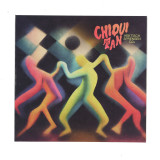
Terra Magica Rec. first 7’’ release „Chiqui Tan“ by the label heads Hektisch Sprengen DJs will be limited to 250 copies. The A-side hits the listener with some 1980s early Electronic-Downtempo-Cumbia-Colombian-Venezuelan-Tablemountain-Dub-Grooves. This reminiscence is leading to an extra full blown up 21st century Bass-Queen alert. And these HSDJ dials hit you into a stripped naked sample of Nigerian-Swedish DJ-dentist-mainstream-star Dr. Alban and his Eurotrash-90s-Pophouse-anthem “No Hash Hash, No Cocaine”. This is for sure no “Ottonormal”-90s-revival thing!
On the flip side Hektisch’s haptic wood razzle move covers the classic 1994-Liquid-Deep-Netherlands-Trance-House-Track “Paper Moon” by 51 Days which back then sampled the rare 1972-MPB-Funk-Cover-Version of Carol Kings “Corazón”. Guess what! It drops like a late 1990s-Ed-DMX-London-classic gone Electroboogie-Miamibass-Break with a SH101-baseline and Sprengen’s take on Spanish-90s-Trance-Vocals. Watch out 4 TERRAMs “Asi me gusta” title caps series as well! Trigger warning: That hidden Sequential Circuit Sixtrack loves you like a windy horse on Acid. Loads to experience on this little innocent wax disc!
Soundway releases a storming compilation of Cameroonian-born, Nigerian-based super producer Nkono Teles’ solo work.
The pioneer of West African electronic music was known for being tapped by over 100 other musicians to produce or arrange their music, from King Sunny Adé, Guy Lobe, even Steve Monite’s
album “Only You” and more. Having already appeared on Soundway’s best-selling compilation “Doing It In Lagos”, here more of Nkono’s
limited solo work is carefully remastered and reissued on
vinyl for the first time. One of a small handful of pioneers of the Nigerian electronic music scene in the 1980s (alongside the likes
of Jake Sollo & William Onyeabor), Teles was known for being tapped by over 100 musicians to feature on, produce or arrange their music. The list of ‘80s Nigerian records that his sound and style embellished
is seemingly endless: Steve Monite (he arranged and produced the music on the Only You album recently re-issued by Soundway), Dizzy K, Peter Abdul, Odion Iruoje, Steve Black, Rick Asikpo, Feladey, Charly Boy, Majek Fashek & Sonny Okosuns, to name just a few,
all engaged his enigmatic production and keyboard services throughout the 1980s. He became known as the first person in Nigeria to push the use of the drum machine into popular music and created a unique and original boogie-funk sound combining these new
beats with guitars and an array of new and affordable synthesiser sounds that started appearing in the early 1980s.
Felte Records presents `Glimpse Of Heaven' - a stunning new album by the Hawaii-born, LA-based musician, singer, producer and professional mastering engineer Jess Labrador, AKA Chasms. Labrador's deeply personal work as Chasms has always felt like an unveiling. Following 2019's `The Mirage,' which was a dark, dubby meditation on grief and loss, this new album is both familiar and different. The third full-length under the Chasms name, `Glimpse of Heaven' trades in washes of reverb for starker moments of closeness and intimacy. An exploration of the personal inventory and reckoning necessary to move forward in life, the LP considers not only how we relate to the world, but more importantly how we relate to ourselves. While always distinct, you could previously detect post-punk, shoegaze, and dub sensibilities in the music. Dreamy drift tethered by skittered beats, airy vocals, and melancholic melodies are here like previous efforts too. However, at the same time, Labrador steps into new territory with an expanse of vaporous synths and samples, adding to the project's ethereal electronic pop and dubwise pulse. Lush guitars glisten throughout the album, but this time only in sparse, disciplined embellishments. `Glimpse of Heaven' is a fully realised version of Chasms beyond its influences; to say that this is a seamless evocation of such disparate sounds as Massive Attack, Basic Chanel, Sade, Seefeel and Dif Juz is to say it is wholly unique. While she continues to unfurl her thoughts, there is a shift from opening up to the listener toward allowing the listener to witness her opening to herself. Where the last Chasms record was about various kinds of collapse, `Glimpse of Heaven' is about trying to develop as a whole person. It seems to ultimately be asking whether what we want and what we need align in ways that will get us where we want to be. Can we let go of the comfort of bad habits and steer ourselves toward a less easily obtained but maybe more enduring happiness? `Glimpse of Heaven' is a Chasms record, but really it's a Jess Labrador record. This is the first release operating on her own, and it feels like that's the only way this could have been made. It finds itself in the rare company of those few records that exist within themselves; it's a complete environment. You don't need to know anything to tune in and enjoy the world that she's created. It's a record that feels indebted to itself. It offers premonitions but not directions. It gives us honesty, but doesn't claim to know exactly where that will lead.
Kosaya Gora a new indie project from acclaimed electronic producer/singer Kedr Livanskiy and experimental producer/visual artist Flaty, have announced their first full-length album Kosogor today. Kosaya Gora is an entirely new sonic direction for them both. The debut is a multilingual foray into guitar-based folk, haunting dream pop, and moody synth, underpinned by Livanskiy"s signature hypnotic vocals.
- Doin Nothin (Feat. U-God)
- Everything Ok (Feat. Jack Davey)
- Everybody Nose (Feat. Sa-Ra And Nola Darling)
- Above Crenshaw (Feat. Cashus King)
- Slngbngrs!
- Soupa (Feat. Suzi Analogue)
- Hours
- Annie Hall (Feat. Chop, Cherry Pop, And Tiombe Lockhart)
- Tags (Feat. Exile)
- Spring Winter Summer Fall (Feat. Jimetta Rose)
- Down To Earth (Feat. Donel Smokes, Definite, And Dubble Oh)
- My Sunshine (Feat. Nia Andrews)
- Jazmin (Feat. Andy Allo)
- Jazzmen
- Ronald Morgan (Feat. Edan)
- Keep Ush Inn
- Doin Somethin (Feat. El Prez, Pac Div, U-N-I, Tiron & Ayomari, And J*Davey)
Experience an experiment turned masterpiece…"York". Originally titled "NoYork" and slated to be the major label debut from acclaimed Los Angeles emcee Blu, this much-discussed collection was eventually renamed and (finally) released through Nature Sounds in 2013. The result was a certified classic that remains one of Blu’s most ambitious projects to date.
Infused with the electronic experimentation of the early 2000s L.A. beat scene, "York" covers a wide spectrum of sound, displaying the production of beat icons like Flying Lotus, Madlib, Exile, Dibia$e, Shafiq Husayn, Daedalus, Knxwledge, and Samiyam. Melding world-class lyricism with sonic textures encompassing psych rock, dub, broken beats, and jazz, the album strikes a unique balance between golden era hip-hop and eclectic futurism. Several guest artists helped Blu realize this vision, including U-God of Wu-Tang Clan, Edan, Sa-Ra, Pac Div, Suzi Analogue, U-N-I, J*Davey, and more.
With the original 4LP pressing long out of print, Nature Sounds is celebrating the 10-year anniversary of "York" with the release of this new redesigned gatefold 2LP edition.
- 1: Sea Breeze
- 2: Hercules
- 3: Heat Haze
- 4: Bicycle Ballet
- 5: The Downs
- 6: Ramblers' Dance
- 7: Greyfriars
- 8: Blackfriars
- 9: St Nicholas
- 10: St Katherine
- 11: St Leonard
Oliver Cherer is back with a new Gilroy Mere record which follows on from his other much lauded Clay Pipe releases (The Green Line, Adlestrop and last year’s D Rothon collaboration, Estuary English).
Over the last two decades Ollie has released numerous collections of music in an ever shifting array of modes, from folktronic, singer-songwriter styles through psychogeographic electronica to jazz-tinged, confessional ghost-pop and most recently, the “guitar tainted machine rock disco” of Aircooled.
Gilden Gate is an album of two halves. Side 1 ‘Rising’ celebrates the sun-drenched beaches, pastures and heaths of rural Suffolk, whereas Side 2 ‘Falling’ explores the underwater world of the lost city of Dunwich and its five church spires.
Oliver says:-
“A few years ago I discovered the lost city of Dunwich. I’d made a trip to Suffolk to shoot a short film about Sizewell Nuclear Power Stations and stayed in the old Coastguard’s Cottage on Dunwich Beach within sight of Minsmere Nature Reserve and the power plants. It’s a wild, sleepy place of pines and heath and North Sea winds and a strangely mysterious air – Sutton Hoo is nearby and Eno’s reference to the very beach that I was staying on made perfect sense. In the small museum at Dunwich I learned that this tiny hamlet had once been a major medieval city of international trade. It seemed unlikely and even now, knowing Dunwich as a small village, I find putting what I know about the place into perspective as a city a certain kind of impossible.
It seems that over a period under the influence of the weather, natural erosion and market rivalry the thriving harbour port was inundated by the North Sea and eventually slipped into and under it. The city of churches was lost and all the spires engulfed and toppled. What remains are the few houses, and the ruin of Greyfriars crumbling inexorably down the cliff and exposing the bones of buried monks as the graveyard follows the building’s stones into the sea.
There are local legends surrounding the site including stories of fishermen hearing the bells of lost churches and seeing the ghostly, lighted city beneath their boats as they return to the shore.
Gilden Gate is named for one of the entrances to the old city and is a musical meditation on Dunwich past and present. Frances Castle’s beautiful sleeve art depicts the surface and the sub-marine, the warm and the cold, the past and the present. The glass rises and the glass falls and in the background there are sirens, fog horns, church bells and Eno, and on the sea bed there are the scattered remains of a once great city.”
"Dans cent ans" is not a record: it’s a talisman.
Flavien Berger doesn’t make music, he makes time machines.
In 2015, he released his first album, Leviathan, which he’d imagined like a moment suspended into the bowels of present time.
In 2018, Contre-Temps, his critically acclaimed second album, was narrated like a flashback.
Dans Cent Ans (“In 100 Years”) ends this trilogy and launches into the future with the grace of a poisonous serpent.
Flavien had just finished producing Pomme’s last album and was simultaneously scoring Céline Devaux’s feature film Tout le monde aime Jeanne, when he recorded this album, during six months of isolation.
In the garret of a Belgian house in construction, these 12 tracks were born, close to the sky, both direct and mysterious.
Because Flavien Berger knows how to make machines sound sensual (a key example is the pop song “D’ici là”) and dares to interweave electronics, chanson and art music, organic instruments and synthetic choirs, without ever falling into parodic territory.
Because his voice, more precise, unreverbed, and close-mic’d than ever, sings to our ears – using multisyllabic rhymes (“Trop ivres pour te plaire / Tropiques du cancer”) and surrealist imagery (“la neige restera rose” – “the snow will remain pink”) – stories that feel unknown yet obvious.
And like both previous albums ended with a long eponymous track like a breath of air, “Leviathan” and “Contre-temps”, so does “Dans Cent Ans”, a 15-minute long saga where vocals, wind instruments and machines converse, as if Debussy, Etienne Daho and a Sufi Dervish met in a dream.
After listening to this album, the vertigo of love and the collision of times are one and the same.
In one hundred years, music will survive us all, and its dangerous beauty will awaken other lives. In the meantime, Flavien Berger keeps stunning ours.
On behalf of re:discovery records, it is with great excitement that we announce the 1st of a 3EP set highlighting the music on 1990's Norwegian electronic act Neural Network. In 1993-1995 they released 2 full albums or Origo Sound that featured label mates Biosphere. In 1993 they opened up for Prodigy and shared the bill with other seminal acts like AFX, Autechre, Orbital and H.I.A among other heavyweights. However, their 2 full albums 'Brain-State-In-A-Box' & 'Modernité' did not get picked up by any other label or distributer and their popularity stayed regional. In fact a 3rd album was never released (Until part 3 comes from this series!) and sadly they went their separate ways to form other electronic acts in 1997. We hope to shine a bright light on their early music. Side A features the wonderful aquatic adventure in 'Aqueous' followed by a shift into the sci-fi realm with the mysterious 'Mechanical Heart'. Two great examples that show off the group's deep post rave sound for the future. A real melding of styles. All 3 EP's have inserts where the band shares their memories of the early days.
All these tracks in the series are placed on vinyl for the first time with fantastic artwork by UK's Grid Pattern. Dare to Dream! Its not only our credo at re:discovery records but it's also our goal in hearing music that was made for the stars.
Death and Vanilla return with 'Flicker', presenting their unique pop music that defies categorisation. Housed in a beautifully austere post-ironic de-constructed sleeve; 'Flicker' is a modern reflection on these difficult times. World crises notwithstanding, they return reborn, re-arranged and revitalised after assimilating dub reggae, the motorik spirals of Can, the modal meander of Philip Glass and The Cure's dreamier pop sounds; plus the twice removed symphonic ambience of Spiritualized and Talking Heads under heavy manners from Brian Eno. By osmosis their period of transition since 2019's much darker 'Are You A Dreamer?' has hatched new eclectic electronica anthems riddled with melody lines, and layered for lush love. - Forming in Malmö, Sweden, Death And Vanilla gravitated towards vintage musical equipment; from vibraphone, organ and mellotron, to tremolo guitar and Moog synthesisers. Soaking up soundtracks from the 60s and 70s, listening to library music, kosmiche, French Ye-ye pop and 60s psych, Marleen Nilsson, Anders Hansson and Magnus Bodin were fashioned by the city's austere industrial past and flat pack present, and all in the shadow of the Orsesund Bridge that links their dreamworld to mainland Europe and a darker reality. Death And Vanilla at once sound like everything is possible; but nothing else at all. There is a flicker of hope for everyone. - "Deploying vintage instruments in their quest for melancholic utopia." Electronic Sound * "Baroque pop through a dreampop filter." The Guardian Ltd Indie Retail Only Yellow Vinyl LP including DLC!
A year and a half ago, THE MFA returned to the fore once more, when we released their "Oranges and Lemons EP".
Their new album, “Lights Out”, which could be described as a long time coming, is definitely THE MFA’s most ambitious work to date.
As they put it in their own words: “The album is very special to us. It’s a long ambition brought to fruition. It’s an album that is at home on the dancefloor or at home. We’ve always been influenced by 90s rave culture and the club scene of that era and the explosion of creative freedom through electronic music that happened back then.”
The album sums up what THE MFA stands for; their love of electronic music intertwined their love of songs and melody, sometimes banging, sometimes pensive, sometimes longing, occasionally up-beat and happy. Melodic techno-pop-rave then.
The album opener "My Desire" pins down the essence of the album, showing some pop sensibility and a healthy dose of that early 90s spirit with longing vocals by Rhys Evans. The track shows from many angles of the intensity of what club culture was about. The track has, for sure, that pop quality which sets it apart - it is a very complete and rounded and in the true sense, a hit.
"Identify This" kicks off with blissed-out sci-fi sounds but commences with 90s rave chords that gets under your skin and creates a fantastic kaleidoscopic picture of moody UK rave with these spurts of emotional uplifting moments which are worth every penny.
"Bear Likes To Rave" takes us back to the warehouse days and reminds us of the acid warehouse parties with fanned stroboscope beams and dry ice cannons. It’s like looking down on a rave party happening from above, from a bird's eye view, which is in full swing where the euphoria spills over into the audience. "Girl Ahead" is a vocal track exclusively on the digital version of the album, again with Rhys Evans on vocal duties. Here they ponder all the possibilities of the future and the mistakes of the past. Features space toms and grand piano rave chords to evoke a housy feel within.
With "Freedom24" a Hi-NRG melody meets nightcrawler sounds ala "Klang De Familie". This is a soundtrack for the night.
"Lammas Day" has the chilling exotic quality of 808 State "Pacific State" if you grant us this comparison, paired with some phantastic Dr Who sensibilities! This track is quite a voyage!
"Warehouse"... Make Some F-...ing Noise... A TV presenter speaks about Acid house...... This is a wild mash up of impressions which nicely go together due to the melodic string composition and the 303 sequences.
"The Snapping Branch" starts with a mash up of sounds and then dives into an episodic snapshot of "happiness" when the serotonin shoots in (just before it drops). Experiencing a perfect flow that does not want to end. Every clubber knows that feeling.
"You Make Me Smile" is the third vocal track on the album featuring Rhys Evans on vocals. It has fantastic radical stark mood changes and blatant shifts, therefore throws the listener from one corner to the other. Just like the contrast of day and night. Bits here and there might conjure a Radiohead spirit, but really this is all MFA.
"Lights Out” certainly puts across the feeling you get at the end of the night - the club has closed; you are walking home. These are the sounds and feelings in your memories as you chase the vibe that is dwindling as the club becomes ever further away.
Sacramento, CA duo Blank Gloss’s third album, Cornered, is an exquisite statement of pop ambient starkness, an album that oscillates between lush beauty and spare melancholy. It follows from their 2021 debut for Kompakt, Melt, an album that saw Morgan Fox (piano, synths) and Patrick Hills (guitar) aligned, loosely, with the cosmic pastorale of the ‘ambient Americana’ movement. Cornered feels like a significant step forward, though – by peeling back the layers of their music, they’ve revealed both its restful core and its solemn gravitas. It is unendingly lovely, but with something disquieting at its centre.
Cornered was recorded quickly, over two days in December 2020. There’s nothing rushed or haphazard about the album, though; everything has its place, with each sonic element contributing profoundly to these nine miniature dioramas. It signals change, quietly but perceptibly, through the way the duo sculpts their material, building out of loose improvisations that morphed into songs. While there was no plan in mind when Blank Gloss settled into the studio, Fox recalls that “right away we realised that things were sounding and feeling a bit different than any of the sessions we had previously.”
That difference can be heard in the increased amount of space Blank Gloss gift to their sound sources. Some of the most moving moments on Cornered come when Fox and Hills strip everything back – see, for example, “Crossing”, which sets pensive piano across a shyly humming drone and quiet arcs of guitar, recalling the driftworks of Roger Eno. Curiously, the album’s distinctive shape and mood develops, at least in part, from a change in instrumentation, with Hills using a MIDI pick-up on his guitar. “This resulted in making things happen a lot quicker,” Fox says. “It also helped create what I think is a bit more sombre, dark feeling to some of the songs.”
Elsewhere, on songs like “Salt”, the piano tussles with flecks of guitar, single tones sent out to mingle with the stars, like Morricone at 16 RPM, while Cornered’s centrepiece, the eleven-minute “No Appetite”, lets long arcs of electronic texture breathe and sigh, tangling together in a cat’s cradle of bliss. Throughout, it feels as though the music is blossoming as you hear it, like watching time-lapse footage of flora in bloom. But perhaps the most seductive thing about Cornered is the sense you get, listening, that the music was something unexpected, a visitation. “It almost felt like we weren’t dictating where the music went and how it sounded,” Fox agrees. “We were just there in a room together in December and these sounds were happening, and we were lucky enough to be recording the process.”
Cornered, das dritte Album des kalifornischen Duos Blank Gloss aus Sacramento, ist ein exquisites Statement von pop ambienter Krassheit, ein Album, das zwischen üppiger Schönheit und sparsamer Melancholie oszilliert. Es folgt ihrem 2021er Debüt für Kompakt, Melt, einem Album, auf dem sich Morgan Fox (Klavier, Synthesizer) und Patrick Hills (Gitarre) locker an der kosmischen Pastorale der „Ambient Americana“-Bewegung ausrichteten. Cornered fühlt sich jedoch wie ein bedeutender Schritt nach vorne an – indem sie die Schichten ihrer Musik abschälen, haben sie sowohl ihren ruhigen Kern als auch ihre feierliche Schwere offenbart. Es ist unendlich schön, aber mit etwas Beunruhigendem in seiner Mitte.
Cornered wurde relativ schnell aufgenommen, über zwei Tage im Dezember 2020. Es klingt jedoch nichts überstürzt oder willkürlich an diesem Album; alles hat seinen Platz, wobei jedes Klangelement einen wesentlichen Beitrag zu diesen neun Miniaturdioramen leistet. Es signalisiert Veränderung, leise, aber wahrnehmbar, durch die Art und Weise, wie das Duo sein Material formt und aus losen Improvisationen aufbaut, die sich in Songs verwandeln. Als Blank Gloss sich im Studio niederließen, gab es zwar keinen Plan, aber Fox erinnert sich: „Uns war sofort klar, dass sich die Dinge etwas anders anhörten und anfühlten als bei allen vorherigen Sessions.“
Dieser Unterschied ist in der größeren Menge an Raum zu hören, die Blank Gloss ihren Klangquellen bietet. Einige der bewegendsten Momente auf Cornered kommen, wenn Fox und Hills alles zurücknehmen – siehe zum Beispiel „Crossing“, wo ein nachdenkliches Klavier über einen schüchtern summenden Drone und leise Gitarrenloops setzt und an die Driftworks von Roger Eno erinnert. Seltsamerweise entwickelt sich die unverwechselbare Form und Stimmung des Albums zumindest teilweise aus einer Änderung der Instrumentierung, bei der Hills einen MIDI-Tonabnehmer an seiner Gitarre verwendet. „Dies führte dazu, dass die Dinge viel schneller abliefen“, sagt Fox. „Es hat auch dazu beigetragen, einigen der Songs ein etwas düstereres, dunkleres Gefühl zu verleihen.“ An anderer Stelle, bei Songs wie „Salt“, spielt das Klavier mit Gitarrenfetzen, einzelne Töne werden ausgesandt, um sich mit den Sternen zu vermischen, wie Morricone bei 16 U/min, während Cornereds Herzstück, das elfminütige „No Appetite“, lange Bögen schlägt, elektronische Texturen atmet und seufzt, um sich in einem Katzenkörbchen der Glückseligkeit zu verheddern. Während des Hörens fühlt es sich an, als ob die Musik blüht, als würde man sich Zeitrafferaufnahmen von blühenden Pflanzen ansehen. Aber das Verführerischste an Cornered ist vielleicht das Gefühl, das man beim Zuhören bekommt, dass die Musik etwas Unerwartetes war, eine Heimsuchung. „Es fühlte sich fast so an, als hätten WIR nicht diktiert, wohin die Musik geht und wie sie klingt“, stimmt Fox zu. „Wir waren just im Dezember zusammen in einem Raum, als diese Geräusche passierten, und wir hatten das Glück, dass die Aufnahme mitlief.”
There’s something almost magical about a great
collaboration. When two artists are able to
synchronize on an infinitesimal level, where each
note and breath and strum aligns to create a
perfect whole. The Colorist Orchestra know how to
do this - in fact, they’ve made it their speciality. Since 2013, the Belgian duo (comprised of multiinstrumentalists and long-time friends Aarich Jespers and Kobe Proesmans) have made a
career out of reimagining the discographies of a wide array of artists, using their background in
pop, electronic, and world music to transform the songs. Recently, they have reconnected with acclaimed
Icelandic singer-songwriter Emilíana Torrini, with whom they first collaborated in 2018, on the album, ‘The Colorist Orchestra & Emilíana Torrini’. This time, however, the project exceeded even
their own expectations. In 2023, The Colorist Orchestra and Emilíana
release ‘Racing The Storm’, a joint record tha takes both artists to towering new heights. An album of all original material, it melds The Colorist Orchestra’s classical chamber pop roots with the
power and fragility of Emilíana’s understated
songwriting. LP pressed on 140g white vinyl in 350gsm spined
sleeve on silver foil board with 200gsm reverse
board inner sleeve
- 01: Morose Vandal The White-Out Memorial
- 02: Saint Advantage
- 03: A Cast Of Gray On The Arm Lights The Stovetop Pilot
- 04: Loose Jaw
- 05: Ash Wednesday, The Triage
- 06: Sky Blue Above The Gang Violent Motion
- 07: Anxiety Interlude (Feat. Andre Altrez)
- 08: Feral Pet The Ankh The Ticker Wears
- 09: Tomorrow On The Installment Plan, A Debt Unpayable
Emotion Hospice is the debut LP by New York-based sound artist and writer Chaperone on Bedouin Records. Combining layers of doom electronics, dystopian ambient, and manipulated tape loops, Emotion Hospice reflects both the artist's suffering and recovery from addiction, as well as Philadelphia's history of socio-economic decay and misanthropy.
Emotion Hospice was recorded from 2016 to 2019, when Chaperone's David Coccagna lived and worked in his hometown of Philadelphia, a city notoriously known for its poverty, redlined city divisions, and fascist policing tactics. While exploring the sound of the city and the effects of its political and social climate, Coccagna also struggled with and managed to overcome a severe addiction to alcohol, tying further the misaligned nature of the self to the maladjusted world he grew up in that is reflected in the record itself.
Sonic thrills and their destruction is present throughout the record, as Coccagna experiments with the brutal manipulation of bossa nova, varying styles of jazz, hip hop, and rap, using 4-Track tape loops, shortwave radio frequencies, various apps on his iPad, and open source audio editing software. With Emotion Hospice, Chaperone liberates the inherent darkness of the cheerful and poppy music that he samples and transforms it into an extensive, doomy sound of a future that is dystopian, maladroit, suffering, but hopeful about human beings. The album was written and recorded entirely by Coccagna aside from the track featuring New York rapper and producer Andre Altrez, whose establishment of Girard Hall in Philadelphia was a beacon of DIY ethos that became legendary in the city in its own right.
Chaperone's Emotion Hospice is his first release on Bedouin Records. His cassette release Dead Pitbulls Slung On Tired Shoulders was his first outing for Bedouin's now defunct sub-label Bastakiya Tapes in 2017. This initial tape was the catalyst to a working relationship between Coccagna and label operator Salem Rashid as collaborators and colleagues.
Ware began as an experimental electronic duo back in the 1980s, when you had to know what you were doing. Comprising Sacha Galvagna, who went on to play with acts as diverse as Rosa Mota, Horsepower, Charles Atlas, Crown Estate, The Last King of England and Carta, and Andrew Wilson a producers’ producer, noise machine maker and DJ, who found underground acclaim for his Crossed Wires output, the band reconnected earlier this decade when they found themselves with some unexpected time on their hands. From across continents the pair took advantage of 21st century technology to resurrect a sketchpad of aural experimentation that would become the foundation of Star Catalogue, Ware’s long overdue long player set for release through Absent Music.
Setting out with the spectral cha-cha of title track Star Catalogue, Ware chart their passage through diaphanous arrangements that veer off mid-song into unexpected new spaces, melting into liminal vibrations that render large parts of the album as continuous pieces inherently connected by overtones and sentiment. Threading its gossamer sounds into a surprisingly unyielding whole, the album takes in the phantasmal glam of Nerve Agency, Sable Bay’s prismatic ache, the infinitesimal disquiet of Eigen State, and the nylon strung desire of New Model. As the pair impart the unhurried entreaties of The Splintered Woods, which gives way to the cabin fever of My Life as a Ghost and its switch up into ebullient arousal, the unexpected focus-pull of Frame, the shadowy elegy of Nepenthe, and the apparitional house of The Apprentice Pillar, Ware artfully draw the listener into a heady intimacy that is a striking contrast to the cookie cutter soul-bearing histrionics of modern pop music.
In an era in which the thrill of anticipation has been extinguished by the attention-free instant gratification of streaming’s ‘what you want when you want it’ model, Ware have delivered a piece of work that is greater than the sum of its exemplary parts. Painted in exquisitely fragile figures that lead inexorably onward through its 11 tracks, Star Catalogue won’t be so vulgar as to demand your attention, but it unquestionably deserves it.
Niklas Paschburg"s third album Panta Rhei arrives via 7K! on March 17th, 2023. The title and the music are inspired by Heraclitus"s Greek philosophy that "everything flows" and finds the Hamburg-born artist exploring an unrestricted world of post-classical music drawn from deep within himself. Across two previous albums, the now Berlin-based Paschburg has been captivated by the movement of the Baltic Sea (2018"s Oceanic) and the darkness of a Northern European winter (2020"s Svalbard). As a result of being unable to travel during the pandemic, this latest album finds him looking inside his own heart and mind. Niklas"s personal journey becomes a captivating and colourful musical journey that combines his melancholic and delicate pianism with synths and electronic beats, suggestive ambient and the evocative voices of German singer Lúisa, Spaniard Bianca Steck and the Icelandic Kaktus Einarsson, frontman of post-punk band Fufanu. It is a move towards ambient-pop that is intimate and meditative but with positive and uplifting vibes.
"Dans cent ans" is not a record: it’s a talisman.
Flavien Berger doesn’t make music, he makes time machines.
In 2015, he released his first album, Leviathan, which he’d imagined like a moment suspended into the bowels of present time.
In 2018, Contre-Temps, his critically acclaimed second album, was narrated like a flashback.
Dans Cent Ans (“In 100 Years”) ends this trilogy and launches into the future with the grace of a poisonous serpent.
Flavien had just finished producing Pomme’s last album and was simultaneously scoring Céline Devaux’s feature film Tout le monde aime Jeanne, when he recorded this album, during six months of isolation.
In the garret of a Belgian house in construction, these 12 tracks were born, close to the sky, both direct and mysterious.
Because Flavien Berger knows how to make machines sound sensual (a key example is the pop song “D’ici là”) and dares to interweave electronics, chanson and art music, organic instruments and synthetic choirs, without ever falling into parodic territory.
Because his voice, more precise, unreverbed, and close-mic’d than ever, sings to our ears – using multisyllabic rhymes (“Trop ivres pour te plaire / Tropiques du cancer”) and surrealist imagery (“la neige restera rose” – “the snow will remain pink”) – stories that feel unknown yet obvious.
And like both previous albums ended with a long eponymous track like a breath of air, “Leviathan” and “Contre-temps”, so does “Dans Cent Ans”, a 15-minute long saga where vocals, wind instruments and machines converse, as if Debussy, Etienne Daho and a Sufi Dervish met in a dream.
After listening to this album, the vertigo of love and the collision of times are one and the same.
In one hundred years, music will survive us all, and its dangerous beauty will awaken other lives. In the meantime, Flavien Berger keeps stunning ours.
For a quarter of an hour, Zürich was the navel of the world. Let's look back: at New York's CBGB's, pre-punks were shredding away, Malcolm McLaren, as a man with a fine-tuned taste for the hip, imported the sound to London, where his sweetheart Vivienne Westwood dressed the test-tube band The Sex Pistols. A few pop magazines later (we are in an analog world!) punk bands sprouted everywhere, like shiny pimples on poorly fed teenagers. Contrary to legend, even back then, it was often those with a musical background who were the most successful. One such example, Henrich "Wüste" Zwahlen, who had learned the violin, attended a jazz school and went into prog-rock before joining the Nasal Boys, one of the first punk bands in Zürich. The scene included the female band Kleenex (cover: Fischli of art heroes Fischli/Weiss), whose minimalism was praised by the London music press, while the world's most important rock theorist, Greil Marcus, wrote an ode highlighting Zürich's role as the birthplace of Dadaism. A fertile ground for the militant youth movement that exploded in 1980 and stirred up the city of banks, protestantism and boredom with raw wit and expressive violence. Gathering at concerts of local bands and fueled by endogenous and artificial substances - they paid homage to exuberance and self-indulgence.
The mantra of "everything-is-possible" was driven forward on the musical front by progress in terms of means of production: analog electronic instruments were no longer reserved for hippie nerds, who sat in front of large plug-in boards like autistic-psychedelic switchboard operators connecting cables for their sound carpets. Now snazzy stage personnel elicited fast-paced sounds from handy devices often made in Japan. Kraftwerk was fashionable, the Zurich duo Yello experimented with new synthetic sounds, and the groundbreaking album "Alles Ist Gut" by the Düsseldorf based duo D.A.F. (Deutsch Amerikanische Freundschaft) was released, which chanted its program of provocation times danceability with lines such as "Tanz den Jesus Christus, tanz the Mussolini, tanz the Adolf Hitler." In England meanwhile, electronically backed New Romantic bands were replacing New Wave. The Human League, Heaven 17, Duran Duran, OMD, Depeche Mode or Visage stormed the charts.
In Zürich's underground, the duo Aboriginal Voices caused a stir at that time. A couple, good-looking, styled, looking cool into the cold neon light, with a danceable beat and sequenced electro sounds, to which Micheline gave a very unique touch when she sang in French and English. Micheline had a classical piano education, had left home early, worked as a lighting technician in a strip joint and at Booster, the hottest boutique in town (one of the relicts that still exists). Voilà: a musician who was as stylish as she was tough. She was already playing with Wüste in the band "Doobie Doos", a band where everyone played an instrument they didn't master. In 1980 the Aboriginal Voices were formed, initially with vocalist Magda Vogel (of later UnknownmiX fame), who was trained as a classical singer.
Frustrated by organizational friction and constant hassles with band lineups, Wüste and Misch decided to do everything as a twosome: self-mixed, self-styled, self-produced. With the top-of-the-line Linn drum machine clocking the beat, Wüste's guitar and Micheline on the Yamaha synthesizer created a unique sound of danceable electronic music. Whereby the Aboriginal Voices acted as a kind of proto-influencer, receiving the latest equipment to try out, especially since they made it a point not to work with tapes, but to design everything for live shows. They had an interface built for the legendary Roland MC-4B, who sequenced the modular Roland System 100M but where one output controlled a light show synchronized with the sound. A pioneering act that fit well into the DIY spirit of punk, with its self-distributed tapes and fuck-you attitude towards the cretins of the music industry. Consequently only two cassettes and an EP were released. There was something futuristic about the sound, the vestiary style and the electronics, while the attitude remained rebellious. Of course something so deeped in the Zeitgeist wasn't meant to last. Wüste moved to New York, Micheline stayed in Zurich, both still active in the music scene to this day.
Sven Regener, head of the band Element of Crime and one of Germany's most successful pop writer said a few years ago when asked if he knew of any Swiss music: "Of course! In 1983, a Swiss band called Aboriginal Voices played with us at a festival in Zurich. Great, avant-garde electro-pop. That was my first encounter."
If you ever saw them live, you never forgot them, and so over the years you belonged to a teeny-tiny circle of insiders, happy to be joined after all these years by new aficionados who appreciate the sound of that quarter-hour, when Zurich was ravishing, creative and exciting.
- Thomas Haemmerli
Electronic duo Pale Blue return to Crosstown Rebels with ‘No Words’, the second single from their forthcoming album ‘Maria’, with remixes from DJ Tennis and Perel.
Italians Do It Better founder Mike Simonetti and Silver Hands’ Elizabeth Wight’s rich and storied careers within the electronic realm and beyond only elevated further with the launch of their Pale Blue project in 2015, unveiling a series of critically acclaimed releases via Simonetti’s 2MR imprint with plaudits including Pitchfork, FACT and Resident Advisor, to name just a few. Having provided the first look into their forthcoming album on Crosstown Rebels entitled ‘Maria’, scheduled for release on the label later this year, the pair return to open March with the second single from the project, ‘No Words’ - accompanied by remixes from DJ Tennis and Perel.
Detailing the backstory to the record, Simonetti notes both upcoming single ‘No Words’ and the majority of the tracks on the duo’s forthcoming album project were made on the exact synths used to create Jaydee’s iconic 1993 hit, ‘Plastic Dreams’.
Guided by a captivating bassline accented by Wight’s charming vocals, which flutter amongst the mix, ‘No Words’ is a hooky and compelling production that ebbs and flows across its near five-minute duration with effortless ease, capturing the playful nature alluded to by Simonetti. Life and Death head honcho DJ Tennis’ remix arrives next, veering down a hazy yet absorbing path as crisp organic drums and engrossing melodies form around the vocals and journey through light and dark textures.
The B-side of the record belongs to DJ/producer, vocalist and DFA Records favourite Perel, offering a cosmic dive through spacey synths, skittering bleeps and pops, and tough kicks across her take on the production - before distorting and warping the vocals and shifting the emphasis on the ever-evolving electronics across her ‘Dub Version’.
- A1: Rashoumon (Feat The Blue Jeans)
- A2: Sado Okesa (Feat The Bunnys)
- A3: Tsugaru Goze (Feat The Blue Jeans)
- A4: Tsugaru Jongara Bushi (Feat The Blue Jeans)
- A5: Abashiri Bangaichi (Feat The Blue Jeans)
- B1: Dannoura (Feat The Blue Jeans)
- B2: Tsugaru Hanagasa (Feat The Blue Jeans)
- B3: Taiyou Ni Sakebou (Feat The Blue Jeans & Rui Takahashi)
- B4: Komoro Oiwake (Feat The Bunnys)
- B5: Amefuru Machikado (Feat The Blue Jeans)
Japan's guitar hero Takeshi Terauchi reworks traditional songs and lets everything go wild with his magnificent and frenzied guitar sound. Enter the electrifying world of Eleki!
Gatefold 180g heavy vinyl LP, reverse board print. Comes with extensive liner notes by Japanese pop culture writer Julien Seveon (Cinexploitation)
All tracks licensed by King Record Co., Ltd., Tokyo, Japan.
Mastering and lacquer cut by Jukka Sarapää at Timmion Cutting Lab, Helsinki, Finland.
Artwork by Nker
The aftermath of World War II gave rise to a global phenomenon that saw new generations of young people rise up determined to forge new paths from their elders – culturally, politically, and musically. Japan was no exception and the recent past made the local youth angrier, hungrier and even more determined to fully experience something different from their parents. The country caught on to the early rock & roll craze almost in tandem as it was happening in the States. Teenager Chiemi Eri singing "Rock Around The Clock" and Kazuya Kosaka with "Heartbreak Hotel" were among the first to make what would soon be called Rokabiri accessible to a large audience. Teacher and parent associations showed concern regarding this new music when teenagers started missing school to attend afternoon shows – one of which most notably being the Nichigeki Western Carnival where all the top names of Rokabiri played to sold out audiences. But by the end of the 1950s, the youth of Japan had moved on to something else entirely: Eleki.
The 50s and 60s were a time of rapid change that saw trends come and go. Japan, like all other industrial countries, saw its youth move from one musical sensation to the next. And in the early 60s, there was one band in particular that created a distinct new flavor: The Ventures. Leaving behind vocals and focusing strictly on the impact of the sound of the electric guitar, The Ventures drove kids crazy all over the world. Other bands followed, most notably The Shadows, but in Japan, no other instrumental rock band managed to leave such an impact. The sound of The Ventures helped boost guitar sales in Japan and soon hundreds of cover bands were popping up all over the country. The Eleki Bumu (electric boom) was now in full effect with Takeshi Terauchi emerging as its first and greatest guitar hero.
Terauchi was born January 1939 in the prefecture of Tochigi, north of Tokyo. His mother taught music and played the shamisen – a traditional Japanese stringed instrument – while his father ran, among other things, an electronics shop. Their respective professions were to be decisive in the path that Terauchi would later take. Serendipitously, at the age of five, Takeshi was given his first instrument – a guitar. His destiny sealed, he quickly began experimenting with different tools from his father's shop to give his instrument a stronger sound. The technological approach came from his father, the technique from his mother. Terauchi's signature playing style owes a lot to his mother's instrument of choice, as he attacks the notes on his guitar as one plucks the strings of a shamisen.
This exceptional compilation you are holding in your hands explores some of the best works by Takeshi Terauchi, recorded between 1966 and 1974, where the guitar hero looks inwards to Japan for inspiration. A meeting between traditional folk songs and the unique way Terauchi and his band play: the content is explosive, inspired, and highly addictive! The 60s and 70s were undoubtedly Terauchi's finest hours, and in the late 60s, one Japanese critic said that Terauchi was not only the best guitarist in Japan, but also in the world. You can now find out why.
»Love As Projection« is the new album by Frankie Rose, her fifth studio LP and second for Night School following the reissue of her interpretation of The Cure’s »Seventeen Seconds«. Frankie Rose has forged an enviable musical legacy, from playing with bands like Crystal Stilts and The Vivian Girls but on »Love As Projection« she takes a bold step into electronic pop production. A sumptuous recorded statement, it dances in ecstasy and broods on the tumult of the western world’s decay in equal proportion. At the heart of the album is glowing, confident songwriting, resplendent in hooks and choruses but still touched with an optimism undimmed.
After spending nearly two decades establishing herself across New York and Los Angeles independent music circles, Rose re-emerges after six years with a fresh form, aesthetic, and ethos. Celebrated over the years for her expansive approach to songwriting, lush atmospherics, and transcendent vocal melodies and harmonies, »Love As Projection« is a reintroduction of her established style through the lens of contemporary electronic pop. Recorded with producer Brandt Gassman and mixed with long-term collaborator Jorge Elbrecht this is the album Frankie Rose has been building up to her entire career.
More than a rebirth, a refinement, a resurgence, »Love As Projection« boasts a widescreen scope: a long- form project heavily considered for half of a decade, culminating in the most personal and accessible collection of art-pop that Frankie has ever written. When Rose aims for the pop jugular as in first lead track »Anything«, the result is unstoppable. A majestic pop song built for radio, it erupts into an irresistible chorus that marries classic epic 80s American pop with the cult effervescence of Strawberry Switchblade »It’s like a prom scene in a John Hughes movie. It’s a hopeful song about abandoning fear even if the world is quite literally on fire.. In the end, at least we have each other,« says Rose. »Sixteen Ways« further boasts a propulsive, massive chorus, though tempered by a cynicism built in global post-truth, global malaise. »It’s about getting your hopes up, but simultaneously making lists in your head about how it will never work out in your favour.«
The big anthems don’t let up there. On »DOA« some massive, rolling drums lathered in big mid-80s gated reverb dovetail with a syncopated baseline for the ages as Rose’s vocal sails effortlessly above. The effect isn’t unlike ethereal vocalists Clannad circa Howard’s Way or Enya jamming with Simple Minds in their stadium-conquering heyday. Rose tempers the adrenalin with heart-tugging bittersweet tones and there are plenty of them. »Sleeping Night And Day« takes its time with an off-the-cuff chorus, swirling around in harmony and chorus-bass. »Saltwater Girl« picks up the balladeering baton with another nod to album track-mode Switchblade, deep space opening up in the mid-tempo drum track and soupy, digital atmospherics. Album closer »Song For A Horse«, reimagines modern Pop production a-la-PC Music but shorn of the meta-atmosphere. Pianos, swelling synths, minor keys cut through with major. These moments, also seen in Feel Light offer ballast to the soaring pop choruses. Moments like these are big oceans of emotion to fall into before being led out by Rose into a bright new day.
»Love As Projection« is released in the USA by Slumberland.
- 1: Bewitched (Are You Leaving Soon)
- 2: Tonkachi
- 3: Heartbeat
- 4: Scandal Night
- 5: Shirakechimauze
- 6: Tropical Love
- 7: Business Man Pt. 1
- 8: Ah! Soka
- 9: Suiyoubi Madeni Shinitaino
- 10: Kowloon Daily
- 11: Tropical Exposition (Who Done It? Version)
- 12: Boy Meets Girl
- 13: Love Sick
- 14: Cosmic Love
- 15: Pub Casablanca
- 16: Untotooku
Pink Vinyl[67,19 €]
- The third chapter in the acclaimed Pacific Breeze series! - Artwork by renowned illustrator Hiroshi Nagai - Compiled by Yosuke Kitazawa and Mark "Frosty" McNeill (dublab) - Newly remastered audio - 2xLP housed in a deluxe wide spine jacket with full color inner sleeves and custom die-cut OBI - Extensive artist bios by Yosuke Kitazawa // Light in the Attic's Pacific Breeze series has supplied the world's growing legions of Japanese music fans with an expertly curated selection of the most sought-after City Pop recordings-the mesmerizing and nebulous genre of Japanese bubble-era music of the '70s-'80s that encompasses AOR, R&B, jazz fusion, funk, boogie and disco. These familiar sounds are spun through the unique lens of optimistic, cosmopolitan fantasy colored by Japan's affluence at the time. Much of the music has previously been nearly impossible to acquire outside of Japan and continues to captivate listeners with its unique blend of groove-laden escapism, even birthing wholly new genres such as Vaporwave. Pacific Breeze 3: Japanese City Pop, AOR & Boogie 1975-1987 marks the latest chapter in the famed series and features holy grails plus under-the-radar rarities. The collection bursts at the seams to reveal some of the greatest Japanese tracks ever laid to tape, pushing towards the edge of City Pop to reveal glimmers of the next waves of styles to spring forth from the country's creative minds. The appearance of Pizzicato Five hint at the emergence of Shibuya-kei while the influence of hip hop and electro as an emerging global trend are also evident here through the prevalence of heavier programmed drum beats on tracks such as "Heartbeat" by Miho Fujiwara. This volume of Pacific Breeze, like its predecessors, is a female-forward offering with many tracks being voiced by women who would become household names in Japan as actresses and pop idols. Their songs here subvert the norm and brim with an innovative spirit that shatters gender roles in favor of sonic transcendence. Techno-pop classics from Susan, Miharu Koshi and Chiemi Manabe sit alongside sublime funk from Atsuko Nina and Naomi Akimoto while Teresa Noda slides into the mix with a sultry reggae jam. The genre span is stretched wider with hypnotic jazz fusion by Parachute and Hiroyuki Namba, a synthesizer fantasy from Osamu Shoji, and magnetic pop by Makoto Matsushita and Chu Kosaka. Although not front and center, the visionary members of Yellow Magic Orchestra are still very present on Pacific Breeze 3, with Haruomi Hosono, Ryuichi Sakamoto, and Yukihiro Takahashi taking up producer and musician roles on many of these tracks. Pacific Breeze 3 serves up a captivating musical journey that adds an essential chapter to the iconic compilation series.
- 1: Bewitched (Are You Leaving Soon)
- 2: Tonkachi
- 3: Heartbeat
- 4: Scandal Night
- 5: Shirakechimauze
- 6: Tropical Love
- 7: Business Man Pt. 1
- 8: Ah! Soka
- 9: Suiyoubi Madeni Shinitaino
- 10: Kowloon Daily
- 11: Tropical Exposition (Who Done It? Version)
- 12: Boy Meets Girl
- 13: Love Sick
- 14: Cosmic Love
- 15: Pub Casablanca
- 16: Untotooku
Black Vinyl[63,82 €]
- The third chapter in the acclaimed Pacific Breeze series! - Artwork by renowned illustrator Hiroshi Nagai - Compiled by Yosuke Kitazawa and Mark "Frosty" McNeill (dublab) - Newly remastered audio - 2xLP housed in a deluxe wide spine jacket with full color inner sleeves and custom die-cut OBI - Extensive artist bios by Yosuke Kitazawa // Light in the Attic's Pacific Breeze series has supplied the world's growing legions of Japanese music fans with an expertly curated selection of the most sought-after City Pop recordings-the mesmerizing and nebulous genre of Japanese bubble-era music of the '70s-'80s that encompasses AOR, R&B, jazz fusion, funk, boogie and disco. These familiar sounds are spun through the unique lens of optimistic, cosmopolitan fantasy colored by Japan's affluence at the time. Much of the music has previously been nearly impossible to acquire outside of Japan and continues to captivate listeners with its unique blend of groove-laden escapism, even birthing wholly new genres such as Vaporwave. Pacific Breeze 3: Japanese City Pop, AOR & Boogie 1975-1987 marks the latest chapter in the famed series and features holy grails plus under-the-radar rarities. The collection bursts at the seams to reveal some of the greatest Japanese tracks ever laid to tape, pushing towards the edge of City Pop to reveal glimmers of the next waves of styles to spring forth from the country's creative minds. The appearance of Pizzicato Five hint at the emergence of Shibuya-kei while the influence of hip hop and electro as an emerging global trend are also evident here through the prevalence of heavier programmed drum beats on tracks such as "Heartbeat" by Miho Fujiwara. This volume of Pacific Breeze, like its predecessors, is a female-forward offering with many tracks being voiced by women who would become household names in Japan as actresses and pop idols. Their songs here subvert the norm and brim with an innovative spirit that shatters gender roles in favor of sonic transcendence. Techno-pop classics from Susan, Miharu Koshi and Chiemi Manabe sit alongside sublime funk from Atsuko Nina and Naomi Akimoto while Teresa Noda slides into the mix with a sultry reggae jam. The genre span is stretched wider with hypnotic jazz fusion by Parachute and Hiroyuki Namba, a synthesizer fantasy from Osamu Shoji, and magnetic pop by Makoto Matsushita and Chu Kosaka. Although not front and center, the visionary members of Yellow Magic Orchestra are still very present on Pacific Breeze 3, with Haruomi Hosono, Ryuichi Sakamoto, and Yukihiro Takahashi taking up producer and musician roles on many of these tracks. Pacific Breeze 3 serves up a captivating musical journey that adds an essential chapter to the iconic compilation series.
Pop Matters said that "Nnamdï's sounds are a testament to the continual melting away of genre distinctions in the current era of (particularly Black) music." His extensive catalog includes covers significant ground in hip-hop, pop, rock, punk, orchestral, and experimental music. In 2021, NNAMDI expanded his freewheeling sonic explorations for an entrée into the world of pop-infused dance and electronica with the release of the Are You Happy EP on November 12, 2021. Notably, Are You Happy is the only NNAMDI project to date that he did not produce, perform, and record by himself. To the surprise of his fans, NNAMDI bucked that self-imposed precedent to work with Chicago producer Lynyn. Lynyn is the alias of composer Conor Mackey, NNAMDI's longtime bandmate in the jazz-fusion quintet Monobody. Are You Happy released shortly before Lynyn's 2022 debut electronic LP lexicon (Sooper Records), which went on to garner significant acclaim. DJ Magazine said that "lexicon is likely to set him apart as one of IDM's next visionaries".
After a first mini-album Dr Bolivard which took the form of a funky and electronic tragi-comic self-psychotherapy, a series of interviews with creators on YouTube (Jacques, Myd, L'impératrice...) where he played a zany psychiatrist character asking existential questions, Bolivard is back with a new mini-album which will be released on January 27th 2023: M. Bolivard.
Composed between 2020 and 2022, he gives his impressions of a turbulent period: pandemic, confinements, American and French elections, global warming, war in Ukraine, worsening mental health... Bolivard keeps his black humour and his taste for nonsense while adding a good dose of satire. On the agenda: social anxiety, radicalisation of opinions, narcissism, psychopathy...
Musically, French pop and funk are always mixed with electronic music. Bolivard sings, raps, slams, speaks, above all to tell stories that are more or less crazy, often funny, sometimes disturbing, definitely creative.
Dutch Uncles, Manchester"s much-revered electro art rock quartet, return with their long-awaited sixth album, True Entertainment, on Memphis Industries. Taking inspiration from Yellow Magic Orchestra, Prince, Steely Dan, Ennio Morricone, The Blue Nile, Kate Bush and Roxy Music, "True Entertainment behaves like it knows it"s been away for some time, and doesn"t apologise for that," jokes vocalist / lyricist Duncan Wallis. "Ultimately, it"s written with the mindset that on our sixth album, we"re only in competition with ourselves when it comes to finding satisfaction in our craft." True to this mantra, True Entertainment bears some of the most delightfully fun Dutch Uncles music to date; paired with some of their most existential and introspective lyrics. What is success? Am I enough? How can I better? (and can I afford to be better?) The title was a DJ name bestowed upon Wallis by guitarist Peter Broadhead. Wallis, an in-demand DJ and compare in his native city, wrote the acid house and Sign O" The Times-era Prince-influenced title track when reflecting on the awkwardness he sometimes feels when he"s recognised as the singer in a band while working one of his many public-facing jobs.
- A1: La Strega (Her Journey To The Grand Ball)
- A2: The Grand Ball Of The
- A3: Duljas
- A4: Morning At Boma Park
- A5: The Five Curtains
- A6: Book Of Roses
- A7: In Doga
- A8: Gamée
- B1: Passage To Promise
- B2: In The Woods Of Kroandal
- B3: Jugglers In Obsidian
- B4: Chanson De L'heure Bleue
- B5: Czippa And The Ursanian Girl
- B6: The Birds Of Tilmun
- B7: Hirzel / Jours D'amour
- B8: Manto's Arrow And The Sphinx
- B9: Letters To A Young Rose
Book of Roses is yet another brilliant Vollenweider album, yet it's notably
different from the rest of his works to date
There is a wide range of styles and a tremendous range of different instruments
and sound effects used here. In addition to his electroacoustic harp, you hear
orchestral music, vocals, hammer dulcimer, bassoon, flutes, harmonica, horns/
brass instruments, piano, electric and acoustic guitars, accordion, bass, and
many different types of percussion, e.g. hand clapping, chalk/crayon scratching,
and various kinds of drums. In addition you hear many sound effects: pages
turning in a book, footsteps, clocks ticking, dogs barking, birds chirping, bow and
arrow, and many other special effects.Even though this album is perhaps more
"chopped up" into different songs (and four separate "chapters" like in the book) it
flows together nicely as do the rest of his albums and the songs are great to
listen to. There is a diverse range of styles. It starts off with orchestral
movements, then we have the cheery "Morning at Boma Park" and the smooth
crayon- scratching rhythm of the title track, to the optimistic sounding South
African "Passage to Promise" to the fast paced Spanish- guitar/ harp piece
"Jugglers in Obsidian." Track 13 "Hirzel" is probably the most mainstream
Vollenweider track on this CD. It is an upbeat song with a pop-rock feel and brings
back a similar style and intensity of many of the songs from "Dancing With the
Lion." The final track "Letters to a Young Rose" has a somewhat festive African
feel and beat with several different kinds of percussion and is a perfect way to
end the album.Bottom line: It may be different and more diverse from many of his
previous albums, with many different instruments and sound effects in addition
to his harp, but "Book of Roses" is another must-have Vollenweider album.
"Contamination" is a 1980 horror / sci-fi movie directed by Luigi Cozzi,
who has collaborated with Dario Argento for some time, author of many underground movies that have been very popular
Its soundtrack was entrusted to Goblin during a hectic period for the band (Squadra Antigangsters, Amo Non Amo, Patrick, Buio Omega) who had various line- up changes: abandoned by guitarist Massimo Morante and keyboardist Claudio Simonetti, brothers Marangolo (Agostino on drums and Antonio on saxophone), Fabio Pignatelli (bass guitar) and Maurizio Guarini (keyboards) with Roberto Puleo on guitar, wrote one of the best scores of that time showing a wide
range of music styles (Jazz, funk, rock, electronic) and once again showcases Goblin's ability in creating very original film scores. The album has some extra tracks from the "Buio Omega" soundtrack, which was the first full release (fans would have to wait 1997 for a full CD release). Agostino Marangolo: Drums & Percussions Antonio Marangolo: Sax Roberto Puleo: Guitars Maurizio Guarini:
Keyboards Fabio Pignatelli: Bass guitar
Castelli is the musical moniker of Milan’s Stefano Castelli. His debut album, Anni Venti, combines all the synth history of his native Italy with soulful song writing. Produced by Luca Urbani, the record draws on inspiration from the analogue sounds of pop and wave whilst commenting on our contemporary condition. Rumbling basslines and clean beats are elevated by the glorious chorus lines of the opening “Festa.” The tracks on offer are short and bursting with energy, like the lilting “Cosmonauti” or the addictively upbeat duet of “Wave Goodbye.” A retrospective future dawns in the vocoder and rhythmic pulses of “Cani,” electro echoes of a man machine world. A range of styles are drawn on to create Castelli’s signature sound, his band background merging with synth warmth in “Paradiso Tropicale.” Italy’s famed soundtracks come to the fore in the measured drama of “Quando Guardi I Film.” What permeates the collection is a tender hopefulness, one that culminates in the enthusiasm and electronic exploration of “Nave.” A ten track journey from the heart of Milan.
Gondwana Records announces 'Goodbyes' the debut album from Estonian pianist and composer, Hanakiv, a deeply beautiful, meditative piano album featuring special guest Alabaster dePlume
"This is an album about healing. It is about saying your goodbyes to everything that doesn't serve you anymore. Each of these songs has a little goodbye in it. So, these are very beautiful and necessary goodbyes".
Hanakiv is a young composer and musician from Estonia (now based in London) who creates meditative piano-based ambient music with elements from classical and electronic music. 'Goodbyes' is her debut recording and draws on influences as diverse as Tim Hecker, Björk "Vespertine", Kara-Lis Coverdale, Arvo Pärt, Erkki-Sven Tüür and Aphex Twin as well as her own cultural heritage. Music has an important part in Estonian culture, especially choir music and its traditions, but Hanakiv also draws on her love of nature – the beautiful Estonian seaside and forests - and on her time in Iceland. However, it was moving to London that gave her the freedom to make her own music: "London gave me the freedom and courage to really be who I am (as a person and musically)" and her heritage and her new home both offer inspiration to Goodbyes, as Hanakiv moves between these two opposite places, a bustling metropolis and a small country full of nature, drawing inspiration from both as she sculpts her own voice.
Hanakiv had an unconventional music education – she started studying music at a school for handbells when she was nine and was part of a handbell ensemble for eight years. Starting on piano at the same time she went on to study composition at high school, and later at the Estonian Academy of Music. Eventually switching to electroacoustic composition, she studied in Reykjavik, and did internships in Malmö, and again Reykjavik before moving to London. She grew up in a musical family and her grandmother was a piano teacher and choir conductor.
"I would always ask her to take me to her choir rehearsals. I remember sitting under the grand piano, listening to the choir and just being mesmerised by the sounds. She also teaches in a local music school in the south of Estonia with about ten pianos, and I'd spend a lot of time there as well. I believe this was the starting point for me to get to where I am now. The last two pieces on the album (Home II and Home I) are composed in this same music school, so it feels like a full circle.
An early influence was Regina Spektor "the first artist who made me really want to play piano" alongside dream pop and Sigur Rós' as well as Estonian contemporary composers such as Erkki-Sven Tüür and Arvo Pärt. Later her studies took her to Reykjavík: "There is this amazing record shop called 12 Tónar in Reykjavik where you can drink espressos and listen to all their vinyls. I spent quite a lot of time there. There is something about Icelandic music that really excited me (the mixture of contemporary electronic sounds with melancholy, emotionality). This is when I started getting more into electronic music, and experimenting outside of classical music". Following a year long break from studying and inspired by making an electroacoustic soundtrack for a friend's abstract video, she was inspired to complete a masters in electroacoustic composition, diving fully into the worlds of sound recording and mixing and focusing on surround sound and how to position and move sounds in space, eventually doing an internship with composer Kent Olofson in Malmö, who works with multi-speaker systems for theatre productions. "I learnt a lot from him and he introduced me to some of my favourite plugins I've used a lot on this album as well."
Hanakiv moved to London just as the pandemic hit and found herself trapped, in a big new city, without any network or family and so just concentrated on making music. "I stayed in my room with my basic equipment - keyboard, Korg minilogue, SM 58 and Rode nt1-a microphones, laptop and speakers. I was reading about mixing, and trying out different things and listening to a lot of music to get the sense of the mixes and production and finishing a commission piece for 5.1 multi speaker system at that time so I set up four speakers for quadrophonic surround sound in my room!". She also found her way back to piano - my instrument – and started practicing again, playing the pieces she used to play, but also just improvising, and this was the beginning of what would become her debut album, 'Goodbyes'.
"I started appreciating everything about music again (even melody!), and everything just came together naturally, and I arrived to a point where I finally found my voice, and I had something that I wanted to say and share. I composed "Meditation I" first and started with "Goodbye", and all the other pieces are derived from that. Without "Meditation I" there wouldn't be this album. If you listen closely, "Meditation I" starts where "Goodbye" ends; "Meditation II" is born from "Meditation I".
But it was meeting Fi Roberts, a sound engineer based at the legendary Strongrom Studios in Shoreditch, London in December 2020 that really brought the album into focus. The pair bonded over an interest in prepared piano and a similar approach to production ideas (a balance of not overdoing it, and letting the songs speak for themselves, but being open to explore) and Fi became a friend but also a confidant and eventually co-producer
"Fi has a big impact on this record but I don't know how to really explain that properly. Of course, this album is sonically stunning thanks to her amazing mixes and recording skills, but she also believed in this music so much and it created something very special - that's difficult to measure with words. She just works with heart, and I really appreciate that"
This then is 'Goodbyes', the first offering from a major new voice, who offers us a meditative work full of space and tranquillity but also life and friendship and meaning. And we are very proud to welcome her to the Gondwana family.
With her hypnotizing voice and vivid lyricism, Jackie Mendoza makes fantastical, intimate electro-pop propelled by ukulele-based dance grooves. Having grown up between her birthplace of Chula Vista, California and Tijuana, Mexico, the 29-year-old singer-songwriter and multi-instrumentalist bridges these two worlds with dynamic soundscapes that pull from Latin pop, electronic music, and indie pop. She creates a musical universe that exists beyond strict borders of genre and geography, giving her the space to traverse the vast expanse of her interiority. Mendoza first started performing in 2014 as the vocalist for Brooklyn dream pop bands Gingerlys and Lunarette. She then broke out as a solo artist with her 2016 pop hits "Islands" and "La Luz," which showcased her imagery-packed, yet deeply introspective lyrics. On LuvHz, her 2019 adventurous debut EP that was initially inspired by a painful breakup, she turned her personal experiences into songs that observe greater truths about the world around her. As a result, the project became a broader reflection on varying forms of love, in relationships with your partner, your culture, and the natural environment. Mendoza expands this approach on her debut album, Galaxia de Emociones (Galaxy of Emotions), which sees her exploring a great range of feelings, from depression, celebration, outrage, numbness, hopelessness, and thrilling love. She uses each emotion as a portal to convey the intricacies of her experience as a queer, first-generation Mexican American woman, who actively defies and criticizes machismo and the Christian culture she was surrounded by. Brought up in the suburban border town of Chula Vista, she recalls being told by her parents to not mix English with Spanish, but speaking "spanglish" quickly became inevitable. It wasn't until high school, that learning to play ukulele and singing in school musicals allowed her to authentically express herself. "This album is about finding the courage to not only face my emotions, but also sharing them by singing them out loud." Mendoza says. The project was co-written and co-produced by Mendoza and Rusty Santos (Animal Collective, Panda Bear), with a contribution from Grammy winning producer and accordionist Ulises Lozano. As Galaxia de Emociones cruises from shimmering indie pop to accordion-laced electronic norteño, Mendoza proves there is both power and tenderness in embracing the fullness of your being and not doubting your instincts that might have been discouraged by society. She says it all in the opening song, "Natural," which blooms with spacey synths and twinkling ukulele plucks. "There is no use in controlling what comes natural to you," she sings in Spanish in a spellbinding loop. With her new album, she hopes that listeners can connect with her words and look within to explore their own galaxy of emotions.
Silver Vinyl[34,66 €]
After Belgian electro-samba wunderkinds Antena
split at the end of 1985, singer Isabelle Antena
immediately shed her cold wave crown for a
sophisticated pop princess tiara.
On 1986’s Martin Hayles-produced ‘En Cavale’,
echos of Madonna and city pop abound, with a
lipstick stain of L80s Euro dance and spilled
cosmopolitan’s worth of bossa nova stirred in for
good measure.
This elegant second chapter of a French pop diva
has been expanded to include Antena’s shelved
Island Records demo, adjacent B-sides and
rarities, plus an expansive essay and previously
unpublished photographs.
Coloured vinyl format pressed on Seaside Silver
vinyl
Black Vinyl[32,98 €]
After Belgian electro-samba wunderkinds Antena
split at the end of 1985, singer Isabelle Antena
immediately shed her cold wave crown for a
sophisticated pop princess tiara.
On 1986’s Martin Hayles-produced ‘En Cavale’,
echos of Madonna and city pop abound, with a
lipstick stain of L80s Euro dance and spilled
cosmopolitan’s worth of bossa nova stirred in for
good measure.
This elegant second chapter of a French pop diva
has been expanded to include Antena’s shelved
Island Records demo, adjacent B-sides and
rarities, plus an expansive essay and previously
unpublished photographs.
Coloured vinyl format pressed on Seaside Silver
vinyl
- A1: ) Siamese
- A2: ) First Day On A New Planet
- A3: ) Pow R Ball
- A4: ) Kewpies Like Watermelon
- A5: ) Phasers On Stun/ Sola Kola
- A6: ) Black Hole Love
- B1: ) Velvy Blood
- B2: ) Plastic Ashtray
- B3: ) Death 2 Everyone
- B4: ) Pachinko
- B5: ) (-)
- B6: ) Kernel
- B7: ) Road Song
- C1: ) It Is
- C2: ) On Yr Mind
- C3: ) Teen Dream
- C4: ) Majesty
- C5: ) Burriko Girl
- C6: ) Got The Sun
- D1: ) Silver Krest
- D2: ) Sucker/ Kitty Litter
- D3: ) Lo-Fi Scary Balloons
- D4: ) The Power Of Negative Thinking/ The Love That Brings You Down
Remastered reissue of “We Are Urusei Yatsura” (originally released in 1996), with bonus vinyl of unreleased demos and B-sides
Celebrating the 30th Anniversary of the founding of Glasgow “Geek Rock” band Urusei Yatsura
– Double Clear-Vinyl Reissue of 1996 Album
In the days before “landfill” indie, and in rebellion against a developing Britpop orthodoxy, there were some weird but melodic bands coming of age outside London that drew inspiration from the US underground and the sparkly retro-futurism of Japan. Primitive guitar noise with art rock leanings, post punk DIY and fanzine culture. The best known of these bands was maybe Urusei Yatsura; “noisy stars”, named in honour of Rumiko Takahashi, legendary manga creator.
Back in 1996, after several increasingly well-received 7’s, the band travelled to Leamington Spa to record their debut album with John Rivers, producer of Swell Maps and Glasgow scene godparents, The Pastels. The resulting album won the group legions of new fans and gained them their first Independent #1 chart placing, alongside peers Ash and Super Furry Animals.
“These were fertile years in Glasgow, a scene with no name, no single sound, where the magic thread tying everyone together was words and works so personal, they couldn’t be mistaken for anyone else’s. ‘We Are Urusei Yatsura’ is a cascade of ‘why not?’ thinking. The way ‘Phasers on Stun’ spirals into ‘Sola Kola’; the sunburned 23-second improv at the end of ‘Pachinko’; the slack-echoing strings of the outro to ‘Road Song’ sprayed with the shrapnel of toy electronics. Pure pop magic, Ren & Stimpy on upstairs, ray-guns, Ian’s homemade walkie-talkie speaker, a beatbox, all sealed with a “Talking Tina” doll’s emphatic endorsement: “I love it”” – Nick Soulsby
The vinyl-only double LP set comprises the original 1996 album recorded by John Rivers, accompanied with an extra disk of unreleased demos, rare singles and B-sides which have not been available since the 90’s. It documents the time leading up to the release of the LP and the singles that came from it, capturing the development, lost pop moments and essential experiments from the eccentric and joyful Glasgow band. The cover has been completely remixed using archive
photos and artwork from the time, with new interviews and extensive notes. The release marks 30 years since the official birthday of the band, 9/3/93.
“When I drove the transit van that took them down to Leamington Spa to record their first proper LP, there was a sense of quiet, assured anticipation. I couldn’t wait to hear it and when I came back a couple of weeks later to pick them back up, I remember so clearly when they played it from the van’s tape deck. Fergus and Graham were hunched over, focusing intently on what they wanted to change about the mix. The reverb wasn’t right or something. Maybe they didn’t like how high the vocals were in the mix. I said to them, you’re listening to the details, but missing what is most important–this is a fantastic record! It was. It is. It is a fantastic record. They were a brilliant live band and I am so lucky to have been able to have been there to see their formation.” – Alex Kapranos.
On Al Hadr, Sabrina Bellaouel taps into myriad influences: from spirituality, astrology to club culture, romance, the body and self-love. Creating a balance between places, identities and sounds is a huge part of the charm of Al Hadr. As a true Libra, she’s finding a balance between honoring her roots and carving out her future.
Following two solo EPs, also on InFiné — 2020’s We Don’t Need To Be Enemies and 2021’s Libra — the French-Algerian producer and vocalist’s unique style of electronic R&B blossoms with Al Hadr, a 13-track album featuring collaborations with dance producer Basile3, experimental club DJ and writer Crystallmess, jazz musician Monomite and pop singer Bonnie Banane, among others.
Born, raised and based in Bagneux, outside the southern périphérique of Paris, Bellaouel lives between worlds. At home, her Algerian heritage and Muslim faith have fused tight familial bonds and a keen sense of history and culture; as “Berbers”, she speaks French and Arabic. In her headphones, she finds comfort in the sparse experimentalism of Radiohead and romantic tales of Jill Scott. On the hot club dance floors of Paris, driving house beats connect her to her body.
In swirling these private and public passions together on Al Hadr — which translates from Arabic as “the present time” — Bellaouel is the most vulnerable she’s ever been on record. Classic neo-soul and silken R&B blend with club electronics. Tender harmonies are sung and rhymes are spoken in English, French and Arabic, exploring love, faith and identity. Samples of drum machines are the backbone for wisps of woodwind, strings, keys and environmental ‘found sounds’, including Bellaouel’s own live recordings.
Creating a balance between places, identities and sounds is a huge part of the charm of Al Hadr. As a true Libra, she’s finding a balance between honoring her roots and carving out her future.
Innemuseum is the debut album by Danish composer, singer and multi-instrumentalist Cisser Mæhl. The 10 fragile compositions for vocals, sparse electronics and a myriad of instrumentation illuminate a hushed charm unlike few other Sonic Pieces releases to date.
The album sparked off while Cisser was working in a mountain lodge in mid Norway during summer 2019. On her spare time she would find herself recording mountains, rivers, stones, plants and animals in the beautiful scenery. After moving to Oslo shortly after, she rented a studio to further work on her own music, songs and sound processing. Through some friends she met Norwegian artist Jenny Hval who became an inspiration as she started taking solo classes with her. Jenny then pushed to contact producer Lasse Marhaug to work together. This became the last piece of the puzzle for Innemuseum to come to fruition as Lasse ended up putting the final touches on the album. When Cisser returned to Copenhagen after 7 months in Oslo, the album was finished. The title “Innemuseum” refers to both the dark months in Oslo and the retraction towards the inner self. An inner museum - music from within, both as a person and as in physical places.
This is undeniably a very personal record that sounds like the musical embodiment of Cisser herself. She sings in Danish in a close-miked way like she's sitting right next to you, all while gentle rhythms and soft strings together create a sort of bright, minimal chamber music with hints of pop sensibility. It almost feels like a Scandinavian reflection of Colleen's work in her more quiet, vocal periods. A music box of weightless compositions for the conscious mind.
Green Marbled Vinyl
Following up to his maiden transmission for the label, "Cosmic Silence", issued a year ago, Italian producer Alessandro Cozzolino AKA Cioz resurfaces on Stil vor Talent with his longed-for debut album "Supermassive Whole" - a ten-track cosmic odyssey in sound percolating staple elements of Cioz's palette of choice, from otherworldly techno to Latin-inflected house, via the obvious injection of kosmische and electronica soundscaping.
The lead single "Wachaka" - recorded in collaboration with Cape Town producer Ryan Murgatroyd, exemplifies Cozzolino's electrifying approach to a T. An inch-perfectly balanced mix of Afro-infused polyrhythmic bravura and seesawing synth moves, the track swells with a blazing fire at heart that keeps on sprawling infectiously with each and every bar. Trading the linear buildup for most sensuous levels of syncopation, "Me Monkey" serves up a warmer kind of funk, perfect for getting snug and cozy before an avalanche of seesawing chords up the ante towards space-opera-esque amplitude. All in elusive sinuosity and processed machine talk, "Harakat" dwells the confines of wonky house templates and polyamorous EBM, while "I Always Wanted To..." goes the slo-burning, counterclockwise route, primed for languid moments in the alcove.
"B1" is perhaps the most spitting avatar of the Italian whiz's hybrid rolling-and-pounding rhythmic style, nicely embodying both its quirky, hip-swaying and fanfare-like percussive aspects. The ecstatically bouncy "Do It The Way You Feel" showcases Cioz's more rousing, floor-friendly facet with a killer combo of hi-octane electro dynamics, pop-rock motif'd hooks and slashing breaks taking the controls. The mood also happens to be melancholic at times, such as on the beautifully understated "Is This Real", which bridges the gap betwixt piano-house déjà-vu - here tweaked to distinctively soul-wrenching effect, and a prog buildup glossed under a thick sauce of FX, similar to that of "Sudpol Birgit"'s inflating saturation in the post-prod treatment. Somewhat brushed with balearic shades in mind, "Pace e Amore" follows a more classic curve, slowly veering off onto ambient-laced territories, while "Lost in Space" evokes a certain idea of gravity-defying plenitude through that ever intuitive and subtly arranged collage of tender wistfulness and endless attraction towards the groove, which defines Cozzolino's phraseology so fittingly.
David Cunningham was born in Ireland in 1954. His work ranges from pop music to gallery installations including several collaborations with visual artists. His first significant commercial success came with The Flying Lizards' single "Money," an international hit in 1979.
Originally released in 1976, Cunningham's first solo album Grey Scale has become a landmark statement of DIY minimalist composition – continuing in the vein of the wild explosion of arthouse experimentation from the early '70s. Cunningham, then a student at the Maidstone College of Art in Kent, drafted fellow student non-musicians and (using whatever instruments available) crafted an endlessly shifting sonic palette with an improvisor's keen sensitivity to space, texture and tone.
As Cunningham states in the liner notes, his approach was to "pursue something (which may appear trivial or meaningless) so rigorously or relentlessly to the point that it reveals something new."
Cunningham was influenced by live performances he was attending at the time by English composers Cornelius Cardew, Gavin Bryars and Michael Nyman as well as free improvisors Evan Parker, Derek Bailey, David Toop and Paul Burwell.
The inaugural release on Cunningham's own Piano label, Grey Scale was indeed "something new" in 1976. The artist quickly integrated his experimental sensibilities to produce art-rock pioneers This Heat, whose debut appeared on Piano in 1979. His popular success performing as The Flying Lizards (with two electro-punk albums on Virgin during the New Wave era) was presaged by this seminal work of fascinating sound collage and tonal freedom. First-time reissue.
In the wake of their acclaimed comeback album Figures (2020), Aksak Maboul took a playful sideways step to create this total work, a 63-minute, continuous suite of fifteen pieces, which could be described as an experimental audio play. The thread running through Une aventure de VV (Songspiel) is Véronique Vincent"s text, an enigmatic philosophical-poetical tale unfolding through monologues and dialogues, spoken and sung by a series of characters. The music was written & arranged by Marc Hollander and features his characteristic genre-hopping tendencies: strands of electronica, pop, jazz, collage, techno, ambient, improv, krautrock, contemporary classical & systems music are merrily woven together, in the inimitable Aksak Maboul style. The album"s subtitle, Songspiel, highlights its theatrical/musical aspect: the work pays oblique homage to the those experimental radio plays that once emerged from the creative workshops of the BBC, the RTF and the RAI, and especially to those German Hörspiels which, at their best, might combine spoken word, instrumental or electronic music, songs and sonic research. The album features appearances by Alig Fodder, Audrey Ginestet & Benjamin Glibert (Aquaserge), Lætitia Sadier (Stereolab), Blaine L. Reininger (Tuxedomoon), Don The Tiger, and the members of AKsak Maboul"s current live line-up.
As soon as the pilots of the Space Oddities endeavour decided to tackle Yan Tregger's oeuvre, a major problem surfaced: where to begin? And where to end? Upon which side should one launch into the ascension of this body of work? It will have taken Alexis Le-Tan and Jess years to put up this selection, capturing the profusion and eclecticism of Tregger who, at 81 years old, has yet to lay down the arms and still defines himself as a "jack of all trades". Symphonies, library music, movie soundtracks, TV credits, advertisement, French variété, pop, disco, electronic, experimental or relaxation music, Yan Tregger (born Edouard Scotto di Suoccio) took up all genres, styles and formats through a career spanning from the end of the 50s to this day. How the Stakhanovist successfully went down so many different routes can be explained by his innate talent for composing melodies; they are the very basis on which his iconoclastic production was built. Ten years ago already, Yan Tregger had welcomed us in the studio of his Parisian suburb pavilion. There, sat in front of his machines and albums framed on the wall, he had delved into the midst of a life writing itself like would a rather unusual musical score.
Following her 2021 debut, ‘Save My Day’, remixed by DJ Python, PYTKO returns to Phantasy with ‘Silent’, experimental and introspective electronic songwriting this time radically reworked by beloved pop-experimentalist, Bullion.
On ‘Silent’, PYTKO invites listeners to lean in closer than before. Seemingly untangling the frustrations of a faltering love affair, it’s vulnerable lyrics arrive buried beneath a sophisticated arrangement that, with bit-crushed electronics and rumbling bass notes, seems to decay with haunting effect. In contrast, the austere ‘Orchids & Limes’ mines an equally original sound, a striking sort of cyber-balearica sculpted around PYTKO’s intricate guitar work, conjuring an even darker sense of romance.
In radical contrast, Bullion proves a perfect fold to PYTKO’s vision with his positively high-spirited flip of ‘Silent’. The man behind DEEK Recordings and cult hits such as Blue Pedro keeps PYTKO’s perspective front-and-centre, while performing an alchemy of magic and melancholy that results in one the most memorable remixes in Phantasy’s fifteen-year history.
If you find the time, please come and stay a while in abracadabra’s beautiful neighbourhood; a magically wonky wonderland where strangers leave as friends to a block party soundtrack as eclectic as it is infectious. The California duo’s album shapes & colors is a dazzling collage of psych-fuelled synthscapes and contemporary Baroque-pop of anti-capitalist movements and escapism, precisely pieced around their own working lives in a blue-collar town.
In the heart of Oakland’s industrial Jingletown above a former auto-repair shop in what was once a mechanics’ break room where poker rounds ensued, Hannah Skelton (Vocals, Synthesizers) and Chris Niles, (Bass, Synthesizers) constructed the angular 80s-tinged anthems (think John Hughes montages to Talking Heads) of their new album, to positively offset the pandemic’s amplification of dysfunctional society. “It reflects our current reality: a huge mess that is systematically broken but isn’t entirely lost,” Hannah tells. “We’re inviting listeners to conjure up every drop of hope and willpower left inside them, pour that into the giant vat of anger and frustration bubbling inside us all, and with this potion collectively enact the necessary change to bring love and light into this dark space.”
When Covid forced Hannah from her salon in San Francisco to become a backyard mobile hairdresser, what she saw inspired them both and the lyrical foundations for their new record. “I’d drive to mansions and people would complain about how hard the pandemic had been next to their swimming pool and tennis courts.” First meeting after the album’s co-producer Jason Kick (Mild High Club, Sonny and the Sunsets) recruited the pair for a Halloween band covering Eurythmics’ art-rock debut ‘In The Garden,’ the pair hit it off and shapes & colors is a product of the years that followed. It combines Chris’ own rhythmic demos following years on the road touring and opening for Amon Tobin, Matthew Dear and Generationals in Maus Haus with Hannah’s lyrical musings honed from project Cassiopeia, so even when topics are as heavy as the beats, they’re met with luminously positive arrangements of hope and warmth.
The by-product of a psychedelic New Year’s Eve escaping a monotonous 2020 reality, the title track itself captures fireworks over East Oakland as viewed from the pair’s couch whilst listening to Mort Garson’s Plantasia for 6 hours straight. The daydream collage of ‘inyo county’ is “a little souvenir taking me back into the bottled-up essence of a slow lazy morning, waking up in bed far from home,” Hannah tells recalling those enforced stay-at-home days. “It fell out of me because I was craving that blissful flavour.” Meanwhile ‘dawn of the age of aquarius’s new parallel reality evolved from a happy accident when their demos had reset to a drone which Jason reworked into a Laurie Anderson-esque breathy vocoder effect. Even bloops and beeps from a forgotten recording session at the Vintage Synthesizer Museum in Emeryville can be heard, where the pair used Mini Moog, Fairlight EMI and ARP 2600 to arrange their sound into shapes whilst distortion and dirt from mixing on 1979 Neve 5313 Console added to the recordings’ color.
Casting a brighter rainbow still, in all its pastel-hued glory, Hannah, also illustrated a self-portrait of the band for the album artwork. “It reflects our makeshift recording studio to encapsulate all aspects of that time and space,” she shares of their abode where, over an intense two-week period and fuelled by the aroma of fermenting vino from the winery below, their single chord, bass and drum-heavy, groove-first momentum took them on an unexpected journey whilst the next-door couple would fire pizzas in their yard and a grandfather across the road would sweep the street clean. “We’d drink coffee and start the day, consistently working, without interruption,” Chris tells of finding their flow. “The loft is a cool space with skylights, tall ceilings and no shared walls so we could be as loud as we wanted to be.”
Just as well. Diving into decades of electronica and crunchy sound effects, field recordings and animal sounds, blended with an infectious Latin influence, shapes & colors is bolstered by live percussionists Greg Poneris (drums), K. Dylan Edrich (Vocals, Percussion: congas, bongos, chimes, cow bells and wood blocks, tone drum and tri-tone whistle) and Tom Smith (Guitar, Synthesizers, Vocals).
NIMBY crews grab those earplugs now. abracadabra is your new noisy neighbour, and there’s no turning this party down.
Light in the Attic’s Pacific Breeze series has supplied the world’s growing legions of Japanese music fans with an expertly curated selection of the most sought-after City Pop recordings—the mesmerizing and nebulous genre of Japanese bubble-era music of the ‘70s-’80s that encompasses AOR, R&B, jazz fusion, funk, boogie and disco. These familiar sounds are spun through the unique lens of optimistic, cosmopolitan fantasy colored by Japan’s affluence at the time. Much of the music has previously been nearly impossible to acquire outside of Japan and continues to captivate listeners with its unique blend of groove-laden escapism, even birthing wholly new genres such as Vaporwave.
Pacific Breeze 3: Japanese City Pop, AOR & Boogie 1975-1987 marks the latest chapter in the famed series and features holy grails plus under-the-radar rarities. The collection bursts at the seams to reveal some of the greatest Japanese tracks ever laid to tape, pushing towards the edge of City Pop to reveal glimmers of the next waves of styles to spring forth from the country’s creative minds. The appearance of Pizzicato Five hint at the emergence of Shibuya-kei while the influence of hip hop and electro as an emerging global trend are also evident here through the prevalence of heavier programmed drum beats on tracks such as “Heartbeat” by Miho Fujiwara.
This volume of Pacific Breeze, like its predecessors, is a female-forward offering with many tracks being voiced by women who would become household names in Japan as actresses and pop idols. Their songs here subvert the norm and brim with an innovative spirit that shatters gender roles in favor of sonic transcendence. Techno-pop classics from Susan, Miharu Koshi and Chiemi Manabe sit alongside sublime funk from Atsuko Nina and Naomi Akimoto while Teresa Noda slides into the mix with a sultry reggae jam. The genre span is stretched wider with hypnotic jazz fusion by Parachute and Hiroyuki Namba, a synthesizer fantasy from Osamu Shoji, and magnetic pop by Makoto Matsushita and Chu Kosaka.
Although not front and center, the visionary members of Yellow Magic Orchestra are still very present on Pacific Breeze 3, with Haruomi Hosono, Ryuichi Sakamoto, and Yukihiro Takahashi taking up producer and musician roles on many of these tracks. Pacific Breeze 3 serves up a captivating musical journey that adds an essential chapter to the iconic compilation series.
Tracklist:
Naomi Akimoto - Bewitched (Are You Leaving Soon), Atsuko Nina - Tonkachi, Miho Fujiwara - Heartbeat, Miharu Koshi - Scandal Night, Chu Kosaka - Shirakechimauze, Teresa Noda - Tropical Love, Makoto Matsushita - Business Man Pt. 1, Susan - Ah! Soka, Yukako Hayase - Suiyoubi Madeni Shinitaino, Parachute - Kowloon Daily, Hiroyuki Namba - Tropical Exposition (Who Done It? Version), Pizzicato Five - Boy Meets Girl, Mari Iijima - Love Sick, 1986 Omega Tribe - Cosmic Love, Osamu Shoji - Pub Casablanca, Chiemi Manabe - Untotooku
WRWTFWW Records is very excited to present a new full-length collaborative project by Japanese ambient/environmental legend Takashi Kokubo (Ion Series) and Italian/Swiss trombonist Andrea Esperti (Esperti Project): Music for a Cosmic Garden.
Recorded during the heights of the pandemic and completed in February 2021, the majestic 8-track ethereal/botanical soundscape created by Kokubo and Esperti is available as a limited edition double LP, a digipack CD, as well as in digital format.
Takashi KOKUBO, environmental music figure, celebrated sound designer, and founder of Studio Ion, has released over 20 albums, including the genre-defining and highly sought-after Ion Series. He's also played a major role in the sonic identity of Japan, creating the country’s mobile phone earthquake alert sound, credit card payment validation jingles, and much more. In 2020, Takashi Kokubo received a Grammy nomination for his track "A Dream Sails Out to Sea, Scene 3" off Light in the Attic’s Kankyo Ongaku compilation. He is known for recording “sound scenes from nature” around the world using a binaural CyberPhonic microphone of his own invention and for his very unique brand of healing music.
Andrea ESPERTI is a Swiss trombonist and composer originally from Puglia (Italy). He plays in multiple genres (classical, pop, world, electro, jazz) with a globe-trotting approach: encounters with peers, rhythmic exchanges, and unplanned music projects; this is where lies the foundation of his work.
Music for a Cosmic Garden is an ode to celestial botanics, a contemporary and hallucinogenic take on the soothing ambient genre immortalized by artists such as Midori Takada and Satoshi Ashikawa, a beautiful pairing of synthesizers and the mighty trombone, taking you to a meditative galaxy far, far away, where other-worldly is just another word for cozy.
Recommended track for maximum pleasure: "Gaia’s Love Theme".
Started as a reggae band, Chequers were formed by the Matthias Brothers, John & Richard, in Aylesbury, Buckinghamshire in 1973. Inititally releasing in the early part of the 1970s (with their first single Rudi's In Love charting in the UK) their sound then developed to also incorporate Philly soul influences in the mid-70s, then releasing a rare but solid LP 'Check Us Out', in 1976. The group eventually evolved into a seven piece funk outfit in the late 70s, playing shows to larger and larger audiences and touring throughout the UK & Europe.
1980 saw the birth of the Matthias brothers' own small independent outlet for the group, Matthias Records. The press release of the new label's first single declared that their "roots in the reggae and soul music of the last mod era" were being brought up to date, now embracing "the music of today and tomorrow...". That 45 (the cheeky pop-punk meets ska cover version of Midnight Hour, backed with the uptempo instrumental funk of Move Up) didn't necessarily come good on that promise. 3 years would then pass until this 45 showcased the throughly-updated & stellar electro-boogie sound of Hard Times and it's equally strong b-side If You Want My Love.
Following this neither Matthias Records nor Chequers as a group ever released anything further - the record's scarcity (and hideously inflated prices on today's secondhand market) hint at low sales and potential distribution problems upon it's original release, perhaps leading to the label and the group calling it a day. Conjecture aside, there's really no denying this record slaps, and with discogs prices reaching beyond ridiculous levels there is only one option - get it before it's gone!
- 1: Play Back
- 1: 2 Easy Street
- 1: 3 Seaside Weekend
- 1: 4 Ten Minutes
- 1: 5 How Can They Tell
- 1: 6 Be Pop
- 1: 7 Magic Words
- 1: 8 Booby Trap
- 1: 9 Life Is Too Short
- 2: 1 Mummy's Not At Home Tonight
- 2: Don't Think About It
- 2: 3 Time To Work
- 2: 4 Blow The World Away
- 2: 5 Behind The Door
- 2: 6 Be Pop (1" Mix)
- 2: 7 Life Is Too Short (New Dance 1")
- 2: 8 Mummy's Not At Home Tonight (1983 Island Demo)
- 2: 9 Achilles (1983 Island Demo)
- 2: 10 Be Pop (1983 Island Demo)
SEASIDE SILVER VINYL[34,41 €]
After Belgian electro-samba wunderkinds Antena split at the end of 1985, singer Isabelle Antena immediately shed her cold wave crown for a sophisticated pop princess tiara. On 1986's Martin Hayles-produced En Cavale, echos of Madonna and city pop abound, with a lipstick stain of L80s Euro dance and spilled cosmopolitan's worth of bossa nova stirred in for good measure. This elegant second chapter of a French pop diva has been expanded to include Antena's shelved Island Records demo, adjacent B-sides and rarities, plus an expansive essay and previously unpublished photographs.
- 1: Play Back
- 1: 2 Easy Street
- 1: 3 Seaside Weekend
- 1: 4 Ten Minutes
- 1: 5 How Can They Tell
- 1: 6 Be Pop
- 1: 7 Magic Words
- 1: 8 Booby Trap
- 1: 9 Life Is Too Short
- 2: 1 Mummy's Not At Home Tonight
- 2: Don't Think About It
- 2: 3 Time To Work
- 2: 4 Blow The World Away
- 2: 5 Behind The Door
- 2: 6 Be Pop (1" Mix)
- 2: 7 Life Is Too Short (New Dance 1")
- 2: 8 Mummy's Not At Home Tonight (1983 Island Demo)
- 2: 9 Achilles (1983 Island Demo)
- 2: 10 Be Pop (1983 Island Demo)
Black Vinyl[31,89 €]
SEASIDE SILVER VINYL
After Belgian electro-samba wunderkinds Antena split at the end of 1985, singer Isabelle Antena immediately shed her cold wave crown for a sophisticated pop princess tiara. On 1986's Martin Hayles-produced En Cavale, echos of Madonna and city pop abound, with a lipstick stain of L80s Euro dance and spilled cosmopolitan's worth of bossa nova stirred in for good measure. This elegant second chapter of a French pop diva has been expanded to include Antena's shelved Island Records demo, adjacent B-sides and rarities, plus an expansive essay and previously unpublished photographs.
BASSIST/COMPOSER PETROS KLAMPANIS LOOKS TO PAST AND FUTURE AS HE TRANSFORMS TRADITIONAL GREEK MUSIC WITH TORA COLLECTIVE
Unique instrumentation bridges Greek folkloric and modern jazz worlds, with Klampanis (bass, artistic direction), Areti Ketime (vocals), Thomas Konstantinou (oud, laouto), Giorgos Kotsinis (clarinet), Kristjan Randalu (piano), Ziv Ravitz (drums, electronics, co-production) and more.
Following up his acclaimed recent outings Rooftop Stories and Irrationalities, bassist and composer Petros Klampanis creates one of his most inventive musical settings to date with Tora Collective, his sixth album as a leader. For Klampanis, who grew up in Athens, Greece
surrounded by the confluence of Mediterranean and Balkan folk cultures, making music has always meant navigating cultural crossroads. With Tora Collective (“Tora”=“Now”) he puts traditional Greek music at the centre, even as he presents it from a bold new angle.
In addition to the two new originals “Disoriented” and “South By Southeast,” Klampanis and his compact hybrid jazz/Greek folk ensemble interpret popular Greek songs such as “Xehorismata,” “Sybethera,” “Hariklaki” and “Menexedes ke Zoumboulia.” These songs, Klampanis asserts, are “not just part of Greek cultural heritage or a fragment of the past, but also as part of the future: they live into the present, breathe into the ‘here and now,’ while constantly evolving in a dynamic state and in dialogue with contemporary music.”
“For me it’s a personal thing,” he says. “I want to reflect on what Greek music and culture offer the world. How can music from the Aegean to Epirus and from the Ionian Islands to Crete, meet and speak to the hearts and minds of musicians and audiences from different parts of the world, different traditions and backgrounds?”
To that end, Tora Collective draws on regional characteristics, as Klampanis explains: “Every region has a strong identity. In Epirus the clarinet is more prominent and the music has this slow, groovy, meditative vibe. The islands are lighter sounding, Macedonia is groovier, faster tempos and energetic dances. Music from Asia Minor or Istanbul is more sophisticated. Greeks often refer to Istanbul as ‘Poli,’ from Constantinopoli, so the songs from there are called ‘Politika.’”
There is magic in the clear and consistent voice of Areti Ketime throughout Tora Collective, as can also be said for the supremely voice-like articulation of Giorgos Kotsinis on clarinet. Ziv Ravitz, on drums and electronics, also plays a pivotal role as coproducer: “He added so much in the orchestration,” says Klampanis. “His knowledge of electronics, all these non-acoustic sounds and keyboards, treatments of the acoustic instruments, it’s all because of Ziv. He brought a new perspective on the whole thing.”
The string element in Tora Collective is also strong: in addition to Klampanis’ bass there is Thomas Konstantinou on oud and the traditional Greek laouto, as well as Kristjan Randalu (the pianist in Klampanis’ Irrationalities trio) providing an anchor and bringing Klampanis’ inventive arrangements into harmonic focus. Additional guests appear: Alexandros Arkadopoulos on clarinet for “Disoriented,” Laura Robles on percussion for “South by Southeast” and trumpeters Sebastian Studnitzky and Andreas Polyzogopoulos on “Milo Mou ke Mandarini” and “Hariklaki,” respectively. (“Milo Mou” is slated as a post-release bonus track.)
Using traditional Greek music to discover a common new voice, the project aims to build dialogue, spark creativity, cultivate respect for the past, pave a path forward, discover a new musical storytelling powerful enough to reach and touch audiences in many countries. This is an experiment that bridges worlds: the east and the west, the traditional and the modern, the nostalgic and the forward-looking, using the power of music and improvisation.
As part of the legendary Canadian label Unidisc's ongoing 40th anniversary celebrations, Lime's 1983 HI-NRG masterpiece is back with a super-fresh 2021 re-rub from the one and only Tiga.
Husband and wife duo Lime (aka Denis & Denyse LePage) notched up tons of hits with their own unique brand of fast paced electronic disco and Italo leaning dance-floor bombs. 'Angel Eyes' was one such hit, a driving vocoder heavy synth fest with whiplash electronic drums and serious attitude to boot that can turn any discotheque into throbbing sweaty hysteria! Who else could lend their own style and flavour to such a momentous track but the man Tiga, whose darker edged and chopped up poppy remix takes 'Angel Eyes' into altogether different territory! Absolutely essential repress, beautifully presented by your friends over at Unidisc.
Red Vinyl
Initial LP copies pressed on opaque red vinyl! As its name suggested, the intimate and sultry Cuntry Covers Vol. 1 was always going to have a follow-up. Led by the brooding vocals of Bria Salmena, Cuntry Covers Vol. 2 is every bit as potent as its predecessor whose noir-inflected alternative country-rock stood in sharp contrast to the singer's commanding delivery as leader of post-punk revivalists FRIGS. Debuting the project in 2021, the languid, reverb-drenched Cuntry Covers Vol. 1 saw her artfully collaborating with multi-instrumentalist Duncan Hay Jennings and reimagining a carefully picked collection of Americana anthems. Vol. 2 pushes the envelope further and harder. Encompassing feverish takes on tracks by Gillian Welch, Paula Cole, Mary Margaret O'Hara, Robert Lester Folsom, Glenn Campbell - by way of Nick Cave - and the late, great Loretta Lynn, Bria's deliciously dark approach shimmers through these six startling songs. Created during a break from Salmena and Jennings' work in Orville Peck's world-conquering backing band, Vol. 2 was recorded directly after Peck's second album and Bria's US tour supporting Wolf Alice. Embracing contrast, the sunny circumstances in which Vol. 1 was made were flipped on their head. Instead of a bucolic barn in the Canadian countryside, they recorded the new tracks in chilly Toronto, huddled together in their tiny makeshift home studio, with Jennings at the controls. They enlisted the help of local Toronto musicians Lucas Savatti (FRIGS), Simone Baril (US Girls, The Highest Order, Darlene Shrugg, Partner), Andrew Manktelow, and frequent collaborator Jaime Rae McCuaig. While Vol. 1 was Bria's attempt at subverting country music's conservative roots and primarily white and heterosexual agenda, here the emphasis was on experimentation. While Vol. 2 might be less personal, it's just as idiosyncratic, with half of the reversions staying true to the originals and others taken to a different universe entirely. Building on the tried-and-true/bold-and-new duality of Cuntry Covers' first offering, Vol. 2 delivers a deeper dive into the duo's brilliant alchemy of traditional and contemporary reinterpretations. The added experimental flourishes, from dizzying electronica and pulsing bass to sax-driven soul, take Bria's new EP into previously uncharted territory, signalling a thrilling new step in Bria's adventurous evolution.
Canto Ostinato is the new volume of classical minimalism from musician and producer Erik Hall. Written for four pianos in 1979 by Dutch composer Simeon ten Holt, the piece is freshly framed as an intimate, hour-long solo performance consisting of multitracked grand pianos, electric piano, and organ. Modern yet warm, ethereal yet tangible, Hall's Canto Ostinato expertly bridges a revered piece of meditative concert repertoire with a tactile and highly personal studio setting. Chicago-born and Michigan-based, Erik Hall is known as a multi-instrumental pillar for the groups NOMO, Wild Belle, and his own songwriting moniker In Tall Buildings. He has composed music for feature films, and as a producer/engineer he has shaped records for Natalie Bergman and Western Vinyl labelmates Lean Year. In a 2020 creative pivot, he chose to reinvent composer Steve Reich's monumental contemporary classical masterpiece Music for 18 Musicians as a solo undertaking, applying the piece's score to the familiar keyboards, guitars, and synthesizers in his studio. "At the time I think I was working through my identity as a musician and an artist," Hall explains, "and on a level there was some sort of exorcism of a long held pop spirit." The album was celebrated for being "freshly thrilling" and "legible in history but assertive of the moment" (Pitchfork) and "beguiling, meditational, and magical" (Electronic Sound). It won the 2021 Libera Award for Best Classical Record, and it quickly joined the canon of the piece's quintessential recordings. "There is a pseudo-meditational benefit to working on a longform piece that's built on repetition," Hall says. "Every stage- from internalizing the music, to executing the performance, to editing and mixing the record- requires deep and sustained presence of mind. I've always been drawn to a hallucinatory combination of harmony and repetition, and I found the entire process addictive." An apt second chapter, Canto Ostinato is inherently vast, and its score gives great creative license to the performer. Comprising 106 sections, complete freedom is given to repeat each one as many or as few times as desired. Additional leeway is given with regard to dynamics, articulation, and even instrumentation. On the heels of his previous, rather maximal arrangement, Hall chose to limit this album's palette to three foundational keyboards of his studio: a 1962 Hammond M-101 organ, a 1978 Rhodes Mark I electric piano, and his family-heirloom 1910 Steinway grand piano. "This particular piece brought the added challenge of rekindling my dexterity as a pianist, something I haven't maintained in earnest since I was a teenager," he admits. The ensuing five-note rhythmic motif- the piece's primary building block- is steady and workmanlike, forgoing virtuosic flare for depth, texture, and resonance, and eventually giving way to the stunning gratification of a gorgeously lyrical left turn. As with Music for 18 Musicians, Hall employed no loops nor quantization nor any programmed or sequenced instruments of any kind. Every part was performed live in a room and captured with microphones, one at a time, each informed by, and reacting to the last. In this way the record breathes with interplay and an organic humanity, complete with flaws, noise, and the faint sound of turning pages. The recording quality is nonetheless toneful and saturated, characteristic of Hall's production style and straying from the usual transparency of classical albums by using gear with tubes, transformers, and various stages of compression in the signal path. Always there is unmistakable realism and the feeling of being present in the room, sitting among the keys, hammers, and tines. Ten Holt said: "Time, patience and discipline are the prerequisites for making a genetic code productive." His landmark composition provides Hall once again with a wondrous space in which to reverently embody this sentiment and deftly convey the elegant beauty of this music.
Local Action is proud to present Cyclorama, the long-awaited debut album by Ariel Zetina.
A resident DJ at Chicago’s iconic Smartbar, a long-standing Discwoman family member and a key part of the city’s dance music and LGBTQ+ communities, Ariel has established herself as one of the most exciting electronic artists operating today - through releases such as 2020’s acclaimed MUAs at the End of the World and 2017’s Organism, and her meticulous approach to DJ mixes - as recently evidenced on Sestina, her 2020 contribution to Mixtape Club.
Written across 2021 and honed this Spring, Cyclorama is Ariel’s most impressive and all-encompassing work yet, showcasing her as a producer, vocalist and also curator, pulling together an ensemble cast of her peers in Chicago (Cae Monāe, Mia Arevalo, DANNN) and some of the most exciting names in contemporary club music (Violet, Bored Lord).
Conceptually, Cyclorama draws heavily from Ariel’s background as a theater writer and producer. Popularized in 19th century German theater, a cyclorama (or cyc) is a large curtain, placed on the back wall of the stage. This creates an illusion of extra depth in the background, and often is used to represent the sky. In Ariel’s words, “I imagine all the tracks on this as the lights and action projected onto the cyclorama. The whole album is like the cyc, a representation of the sky. Or an imagined sky. An imagined dancefloor. An imagined theatrical production.”
As well as drawing conceptually from Ariel’s background in theater, the album draws on a personal level from Ariel’s journey as a trans woman of color - most directly on Cyclorama’s three vocal tracks, ‘Gemstone’, ‘Slab of Meat’ and lead single ‘Have You Ever’.
On ‘Have You Ever’, Ariel collaborates with Cae Monāe, a dear friend and fellow trans woman of color. “‘Have you ever been with a girl like me before?’ and all the lyrics refers to the fear and anxiety that cis men who are attracted to trans women feel, and also any woman that doesn’t fit the mold of a stereotypical woman”, Ariel explains. “Cae and I - and many trans women - have been in so many situations where society tells cis men they cannot be with trans women and this explores that and gives power to all trans women in this situation. The techno reflects that, as well as the “Spell my name” section at the end, showing the true power of trans women.”
On ‘Slab of Meat’, Ariel delivers a hypnotic solo vocal performance that builds in intensity with each line (“I am treated like a slab of meat both emotionally and sexually sometimes, especially one left in the freezer on the back burner. Why did you bring this meat home from the market? For what? You’re wasting meat!”), while ‘Gemstone’, a collaboration with Mia Arevalo, continues the empowering themes of ‘Have You Ever’ in a different context:
“‘Gemstone’ is a call for trans women to take time with your transition because it will all happen eventually. As two girls who have started our transition almost a decade ago, I think we have both seen that we have always needed to take our time to take our time. Reminders not to rush or compare yourself to other girls. I love the metaphor of gemstone months representing different periods of transition. I’ve been so many different women in recent years, and I'm excited to continue my journey.”
It’s immediately followed by album closer ‘Tropical Depression’, the title of which is a reference to Ariel growing up with tropical depressions, storms and hurricanes affecting her hometown of Jacksonville, Florida as well as her family in Belize City:
“This track for me is about living day to day and continuing while dealing with my really intense clinical depression. The sample comes from “Why can’t you let me go?” but is supposed to be transformative and not necessarily legible. How we hold on to our trauma and depression like a protective shell. This is an attempt to deal with it in a different way.”
The Cyclorama album cover, directed by Dylan Bragassa, stars Ariel alongside Monāe and Arevalo in an imagined theater production. In Ariel’s words, “a theoretical performance starring only trans women of color - I wanted an ensemble shot to represent the ensemble nature of this album! Love how Dylan combines so many ideas to create a very unique image that asks so many questions.”
Agar Agar is a french electropop band signed on Cracki Records.
On 2016, their released their first EP "Cardan" including instant classics like "Prettiest Virgin" and "I'm That Guy".
Cardan EP navigates between synth-pop and new wave, led by the bewitching voice of Clara Cappagli and the 90's rave synthesizers of Armand Bultheel.
During the 60s and 70s, three distinguished old gentlemen who had built their careers playing "made in France" exotic jazz - Roger Roger, Nino Nardini and Eddie Warner - met every evening in the Ganaro recording studio, playing like kids with their new toys: souped-up keyboards that looked more like prototypes of spaceships to explore the Milky Way. Flying high on whimsical and joyful inspiration, the improbable trio used their strange instruments to sketch out the beginnings of something that, at that time, resembled the future of music. Let's take a trip with them toward a pop, light-hearted and electronic future.
Some records just stop you in your tracks. They resonate with you and feel instantly familiar like an old friend, even on the first listen. SOYUZ's third album ‘Force of the Wind’ is one of those records. It holds all the trademarks, beauty, and eccentricities of classic Brazilian recordings, from the 60s and 70s, that we have come to love. Think artists such as Milton Nascimento, Lô Borges, Burnier e Cartier, Arthur Verocai et al. But this record wasn’t made in Brazil and is in fact a brand-new release.
SOYUZ (which translates as 'union') is a creative collective from Minsk, Belarus, led by composer, arranger, and singer, Alex Chumak, multi-instrumentalist, Mikita Arlou, and drummer, Anton Nemahai. SOYUZ's previous albums explored and reimagined the legacy of jazz-oriented, non-English-language pop music of the 20th century. For their third album, there is a stronger focus, and it is influenced by 70s Música popular Brasileira and building bridges from it to present-day Belarus. Alex notes that from the moment he first encountered Brazilian music, he found in it a kind of concentrated emotion that felt as if it were familiar to him from his childhood. This non-verbal emotion and connection between the listener and musician echoes in the music, regardless of understanding of the language the album is recorded in.
‘Force of the Wind’ includes songs sung in Russian and Portuguese as well as instrumental compositions. Its musical palette is both acoustic and electroacoustic: rich warm Rhodes piano, soaring string arrangements, and a controlled drum swagger sounding both relaxed yet super tight. Alongside Alex's sublime vocals, that grace the majority of the tracks, the album features guest performances by multi-talented musician and vocalist Kate NV and rising Brazilian star, Sessa. Alex also recently arranged a number of tracks on Sessa's highly praised 2022 album 'Estrela Acesa'.
On the album, the trio is joined by a cast of friends; NY-based musician of Turkish origin percussionist, Cem Mısırlıoğlu, classically trained composer, Simon Hanes, who aided with string arrangements and conducting the string players, Netherlands-based Brazilian multi-instrumentalist, Gabriel Milliet, on flutes. With the collaboration of these friends SOYUZ have created nine songs/suites that are subtle and plenitude and like the best albums, leave you aching for more.
‘Force of the Wind’ is an enigma, Brazilian yet not Brazilian, vintage yet still contemporary, out of sync with modern culture yet completely relevant and necessary.
- A1: Andrzej Marko - Dhamma (3:33)
- A2: Andre Mikola - Circulation (3:30)
- A3: Andrzej Marko - Magic Scenery (5:12)
- A4: Andre Mikola - Longing For Tomorrow (3:35)
- A5: Andre Mikola - Nocturnal Flowers (3:39)
- B1: Andre Mikola - Fly Me To The Sun (3:46)
- B2: Andre Mikola - Birth Of A Butterfly (3:44)
- B3: Andre Mikola - Riding On A Sunbeam (3:52)
- B4: Andre Mikola - Osmosis (4:33)
- B5: Andre Mikola - Solar Heating (3:36)
Fly Me To The Sun is a breathtaking German library gem from the hallowed Coloursound label. Originally out in 1983 it features two Polish composers, Andrzej Marko and André Mikola. If outré synth-funk is your thing, you need this record.
Almost blindingly luminous with positive vibes and radiant optimism, Fly Me to the Sun is a collection of funky, sun-dappled compositions for synthesizer and live instruments like drums, bass and guitar. A dope blend of beatbox driven future jazz and electro pop.
The wonderfully sleaze-adjacent opener "Dhamma" includes some grandiose piano chords amid floating ambient sounds a la Steve Hillage with slick drums entering the fray at a languid pace. "Circulation" sounds like Bowie ran into Chaz Jankel during an extended stay in Los Angeles, the Thin White Duke emerging out of a studio at 6am, bleary-eyed and clutching this filthy, bleepy instrumental of sonic smut. "Magic Scenery" is as delicate and astounding as the title suggests, a deep ambient movement conjuring halcyon images of rolling fields with abundant fauna and flora; acid-tinged visions of intense colour and natural beauty. Cool, slo-mo breaks adorn the strutting melancholy of “Longing for Tomorrow” and “Nocturnal Flowers” to close out Side A.
Skip the title track, which opens up Side B, and head straight to “Birth of a Butterfly” for a slice of creeping digi-dub-soul niceness. This should've been front and centre of that Personal Space compilation a decade ago. Raising both the tempo and the temperature, “Riding on a Sunbeam” continues in the mesmerising cosmic funk style before "Osmosis", one of the clear stand-outs, presents a fine vintage synth solo over a mellow funky rubberband beat. The closing track, "Solar Heating", warms things up with slapped bass and bold drum machine beats and the synth lends Sci-Fi vibes to the dark dub-funk-reggae rhythm.
As David Hollander, in Unusual Sounds: The Hidden History of Library Music, states, Coloursound was "founded in 1979 by composer, music lawyer, and vibraphonist Gunter Greffenius. A Munich-based library with a reputation for releasing innovative and ambitious music, it catered largely to the market for experimental sounds, its first release was 1980’s Biomechanoid, an abstract synthesizer excursion by Joel Vandroogenbroeck, of the pioneering kosmische band Brainticket. The record — complete with imposing, anonymous title and unearthly H.R. Giger cover art — set the tone for the label’s progressive leanings. The label’s catalogue stands as a tribute to the unfettered creative license that libraries were able to provide to forward-thinking musicians who, frustrated by the whims and constraints of the commercial scene, found complete freedom in the world of production music."
As with all our library music re-issues, the audio for Fly Me To The Sun comes from the original analogue tapes and has been remastered for vinyl by Be With regular Simon Francis. Richard Robinson has brought the original Coloursound sleeve back to life in all its metallic silver glory.
Pink Vinyl
Canadian producer Dylan Khotin-Foote has kept his Khotin alias going for the better part of a decade; the impressionistic electronic project shifts with the movements in his life. Sometimes it leads, like when the club-friendly grooves of 2014's Hello World immersed him in the heart of Vancouver's underground dance scene, and sometimes it follows, like 2018's Beautiful You, a downtempo salve for DJ fatigue His melodic sensibility and playful ear for atmosphere remain the rippling core of the project's fingerprint; whether beat-driven or ambient, a foggy smear or a dusted and pristine print, a Khotin track has a distinct and instantly recognizable swirl. During and after the 2020 release of Finds You Well, his second LP on Ghostly International, Khotin-Foote settled back into a slower vibe in his hometown of Ed- monton. Even before the pandemic, his pivots to softer production, and away from DJing, left him with fewer opportunities in Vancouver and club bookings overall, and as a self-identifying introvert, he was fine with that. But the change of pace did open space for Khotin-Foote to grapple with concepts of adulthood and career. At his lowest, he almost walked off this musical path altogether; instead, he doubled down on the craft _ the tone, pacing, and dynamism of new material _ arriving at a definitive full-length. With Release Spirit, Khotin releases himself from the pressure of expectation, fusing and refining everything we know about his music. The warmth and familiarity of Khotin's dreamy, dulcet style meet new ideas and frameworks, a natural progression, a modest revelation; Khotin confirms it is okay to move slowly and he's never sounded better doing it. The album title borrows from the "release spirit" mechanic in the video game World of Warcraft. When players die, they are prompted to release their spirit and return as ghosts to find their corpses and come back to life. Khotin sees it as a worthy metaphor for the impending change his return home presented and the resulting process of purging artistic expectations to find his creative self again. On this go- around, he is freer, more playful, and more intentional within his palette of warped synth, breakbeats, and piano sounds _ including the classic Casio SK-1 presets he's used since the start _ mingling with wistful samples, field recordings, and other abstract snippets. For the first time, he enlisted Nik Kozub to do the mix and assist with sequencing. Khotin-Foote has long worked with the Edmonton-based musician and engineer in the mastering phase, as well as their days co-running the label Normals Welcome, and this time was able to involve his ears earlier given their newfound proximity. "I think it's my best sounding record to date." We begin on "HV Road" or Happy Valley Road, where Khotin-Foote spent time during a family vacation in British Columbia's Okanagan Lake. His plans to record crickets at night are quickly foiled by his younger siblings; the cute exchange orients the listener to a core memory of sorts, setting the tone of universally understood warmth and wonder that has defined some of Khotin's most transportive tracks. Hazy percussion takes hold, and we are swept further into the wisp of "Lovely," a grooving, melodic standout built on the interplay between the beat and human voice-like hums. Khotin knows this zone well; equally suited for a reverie or a club warm-up. The bubbling atmosphere and absurdity of "3 pz" offer a cosmic/comic interlude and also speak to reflections on his family's move to Canada two generations ago, and the audio tutorials they used to learn English. "I can only imagine my grandpar- ents repeating some of the bizarre phrases." "Fountain, Growth" finds Khotin in collaboration with Montreal's Tess Roby (Dawn to Dawn) for the project's first-ever vocal track. Roby's soft cadence echoes atop spiraling air pockets of rhythmic production, lending a breezy, almost shoegaze pop feel. Throughout the single and the album, wind gusts between the compositional layers, akin to the roaming spirits of its namesake, curving around the birdsong of "Life Mask" and seamlessly reaching "Unlimited <3." The latter bumps in slow motion; disembodied whirrs from his Casio collide with 808 drums and sub-bass for a vibe that teeters on trap and instrumental hip-hop. Release Spirit rests in a dream sequence. Oscillating synth lines dance around the heartbeat of "Techno Creep," a hyperactive REM state before the digitized ambient sprawl of "My Same Size." In the final pass, Khotin imagines transcontinental travel from the glow of his screen. He recorded "Sound Gathering Trip" to soundtrack a genre of YouTube videos he's taken to that follows train routes through Europe and Japan. The scene is serene and moving; piano keys warble as static-filled sound design shimmers off the rails, from cityscapes to the countryside, an introspective ride through a world beyond his bedroom. It doubles as an apt parting image for Khotin's project as a whole: dreaming big but happiest when riffing on the details, shaping environments from the inside out. Over the last decade, he has stretched from his core in Edmonton, leaving a trace in Vancouver and beyond; but when all signs point home, he loops back to see it all from a different vantage, revitalized, refined, and free.
Canadian producer Dylan Khotin-Foote has kept his Khotin alias going for the better part of a decade; the impressionistic electronic project shifts with the movements in his life. Sometimes it leads, like when the club-friendly grooves of 2014's Hello World immersed him in the heart of Vancouver's underground dance scene, and sometimes it follows, like 2018's Beautiful You, a downtempo salve for DJ fatigue. His melodic sensibility and playful ear for atmosphere remain the rippling core of the project's fingerprint; whether beat-driven or ambient, a foggy smear or a dusted and pristine print, a Khotin track has a distinct and instantly recognizable swirl. During and after the 2020 release of Finds You Well, his second LP on Ghostly International, Khotin-Foote settled back into a slower vibe in his hometown of Ed- monton. Even before the pandemic, his pivots to softer production, and away from DJing, left him with fewer opportunities in Vancouver and club bookings overall, and as a self-identifying introvert, he was fine with that. But the change of pace did open space for Khotin-Foote to grapple with concepts of adulthood and career. At his lowest, he almost walked off this musical path altogether; instead, he doubled down on the craft _ the tone, pacing, and dynamism of new material _ arriving at a definitive full-length. With Release Spirit, Khotin releases himself from the pressure of expectation, fusing and refining everything we know about his music. The warmth and familiarity of Khotin's dreamy, dulcet style meet new ideas and frameworks, a natural progression, a modest revelation; Khotin confirms it is okay to move slowly and he's never sounded better doing it. The album title borrows from the "release spirit" mechanic in the video game World of Warcraft. When players die, they are prompted to release their spirit and return as ghosts to find their corpses and come back to life. Khotin sees it as a worthy metaphor for the impending change his return home presented and the resulting process of purging artistic expectations to find his creative self again. On this go- around, he is freer, more playful, and more intentional within his palette of warped synth, breakbeats, and piano sounds _ including the classic Casio SK-1 presets he's used since the start _ mingling with wistful samples, field recordings, and other abstract snippets. For the first time, he enlisted Nik Kozub to do the mix and assist with sequencing. Khotin-Foote has long worked with the Edmonton-based musician and engineer in the mastering phase, as well as their days co-running the label Normals Welcome, and this time was able to involve his ears earlier given their newfound proximity. "I think it's my best sounding record to date." We begin on "HV Road" or Happy Valley Road, where Khotin-Foote spent time during a family vacation in British Columbia's Okanagan Lake. His plans to record crickets at night are quickly foiled by his younger siblings; the cute exchange orients the listener to a core memory of sorts, setting the tone of universally understood warmth and wonder that has defined some of Khotin's most transportive tracks. Hazy percussion takes hold, and we are swept further into the wisp of "Lovely," a grooving, melodic standout built on the interplay between the beat and human voice-like hums. Khotin knows this zone well; equally suited for a reverie or a club warm-up. The bubbling atmosphere and absurdity of "3 pz" offer a cosmic/comic interlude and also speak to reflections on his family's move to Canada two generations ago, and the audio tutorials they used to learn English. "I can only imagine my grandpar- ents repeating some of the bizarre phrases." "Fountain, Growth" finds Khotin in collaboration with Montreal's Tess Roby (Dawn to Dawn) for the project's first-ever vocal track. Roby's soft cadence echoes atop spiraling air pockets of rhythmic production, lending a breezy, almost shoegaze pop feel. Throughout the single and the album, wind gusts between the compositional layers, akin to the roaming spirits of its namesake, curving around the birdsong of "Life Mask" and seamlessly reaching "Unlimited <3." The latter bumps in slow motion; disembodied whirrs from his Casio collide with 808 drums and sub-bass for a vibe that teeters on trap and instrumental hip-hop. Release Spirit rests in a dream sequence. Oscillating synth lines dance around the heartbeat of "Techno Creep," a hyperactive REM state before the digitized ambient sprawl of "My Same Size." In the final pass, Khotin imagines transcontinental travel from the glow of his screen. He recorded "Sound Gathering Trip" to soundtrack a genre of YouTube videos he's taken to that follows train routes through Europe and Japan. The scene is serene and moving; piano keys warble as static-filled sound design shimmers off the rails, from cityscapes to the countryside, an introspective ride through a world beyond his bedroom. It doubles as an apt parting image for Khotin's project as a whole: dreaming big but happiest when riffing on the details, shaping environments from the inside out. Over the last decade, he has stretched from his core in Edmonton, leaving a trace in Vancouver and beyond; but when all signs point home, he loops back to see it all from a different vantage, revitalized, refined, and free.
Electronic pop quartet Ladytron announce their highly anticipated seventh studio album "Time"s Arrow". Crystalline melodies enveloped in icy textures and rippling arpeggios, shoegaze, disco, and industrial sounds that combine in their signature electro pop style. Forming in Liverpool in the late 90s, Ladytron"s debut album "604" was released a year ahead of 2002"s "Light & Magic in 2005 - "a quantum leap record" said Pitchfork. The group were lauded as leaders of the new electro pop and electroclash scenes then flourishing, and "Light & Magic" went on to be influential, for both independent and mainstream electronic pop music which followed.
- A1: Al Norte 01 00
- A2: Into Love / Stars 05 44
- A3: Exit Strategy To Myself 03 08
- A4: Where You Find Me 02 31
- A5: Ship 04 04
- B1: Loose Ends 05 31
- B2: Into The Ice Age 06 21
- B3: Oh Sweet Fire 03 50
- B4: Ghost 01 23
- B5: Sans Soleil 03 16
- C1: Night‘s Too Dark 02 55
- C2: *Stars* 01 10
- C3: Al Sur 03 18
- C4: Into Love Again 05 08
Yellow Vinyl[37,52 €]
2023 Repress On Vertigo Days, the first album in seven years for The Notwist, one of Germany’s most iconic independent groups are alive to the possibilities of the moment. Their music has long been open-minded and exploratory, but from its engrossing structure, through its combination of melancholy pop, clangorous electronics, hypnotic Krautrock and driftwork ballads, to its international musical guests, Vertigo Days is both a new step for The Notwist, and a reminder of just how singular they’ve always been. Most importantly, the core trio of Markus and Micha Acher and Cico Beck are reaching out: as Markus reflects, “we wanted to question the concept of a band by adding other voices and ideas, other languages, and also question or blur the idea of national identity.”
It’s been seven years since The Notwist’s last album, Close To The Glass, and in that time the various members of the group have been busy with side projects (Spirit Fest, Hochzeitskapelle, Alien Ensemble, Joasihno), guest appearances, a record label (Alien Transistor), movie scoring, helping organise the Minna Miteru compilation of Japanese indie pop & running a festival (Alien Disko). Those divergent paths feed back into Vertigo Days in surprising ways, from its structure, built from group improvisations, with songs flowing and melting into one another in a collective haze, to its spirit, which feels refreshed and alive. There’s something cinematic about Vertigo Days too, reflective of the group’s time working on soundtracks, and reflected in the rich, moody photographic artwork by Lieko Shiga that adorns the cover.
The first sign of this newfound openness was the album’s lead single, “Ship”, where the group were joined by Saya of Japanese pop duo Tenniscoats, her disarmingly hymnal voice sighing over a propulsive, Krautrocking beat. Elsewhere, American multi-instrumentalist Ben LaMar Gay sings on “Oh Sweet Fire”, also contributing “a love lyric for these times, imagining two lovers in an uprising hand in hand.” American jazz clarinettist and composer Angel Bat Dawid adds clarinet to the spaced-out dream-pop of “Into The Ice Age”, while Argentinian electronica songwriter Juana Molina gifts some gorgeous singing and electronics to “Al Sur”. Saya also reappears as a member of Japanese brass band Zayaendo, who guest on the album. Throughout, The Notwist also capture the openness of their live performances, too, where they mix and link their songs in unexpected ways.
Indeed, what’s most impressive about Vertigo Days is the way it sits together as one long, flowing suite, the album conceptualised as a whole entity – it’s perfect for the long-distance, dedicated listening experience. This is also captured by the album’s lyrics, which Markus states, “feel more like one long poem.” The dimensions of that poem are multi-faceted, something intensified by the geopolitical weirdness of its times: “As the situation changed so dramatically, while we were working on the record, the theme of ‘the impossible can happen anytime,’ more about personal relationships in the beginning, became a global and political story.” But it also works at a level of poetic abstraction, such that each song gestures in multiple directions – the deeply private pans out to the global. The one certainty is that there is no certainty. “It’s maybe mostly about learning and how you never arrive anywhere,” Markus concurs. To sit within uncertainty is brave, but it’s also where we feel most alive, and Vertigo Days is an album that is brimming with life, with enthusiasm and love for music and for community, all wide-eyed and dreaming.
- A1: Al Norte 01 00
- A2: Into Love / Stars 05 44
- A3: Exit Strategy To Myself 03 08
- A4: Where You Find Me 02 31
- A5: Ship 04 04
- B1: Loose Ends 05 31
- B2: Into The Ice Age 06 21
- B3: Oh Sweet Fire 03 50
- B4: Ghost 01 23
- B5: Sans Soleil 03 16
- C1: Night‘s Too Dark 02 55
- C2: *Stars* 01 10
- C3: Al Sur 03 18
- C4: Into Love Again 05 08
Black Vinyl[26,85 €]
2023 Repress on Yellow Vinyl
On Vertigo Days, the first album in seven years for The Notwist, one of Germany’s most iconic independent groups are alive to the possibilities of the moment. Their music has long been open-minded and exploratory, but from its engrossing structure, through its combination of melancholy pop, clangorous electronics, hypnotic Krautrock and driftwork ballads, to its international musical guests, Vertigo Days is both a new step for The Notwist, and a reminder of just how singular they’ve always been. Most importantly, the core trio of Markus and Micha Acher and Cico Beck are reaching out: as Markus reflects, “we wanted to question the concept of a band by adding other voices and ideas, other languages, and also question or blur the idea of national identity.”
It’s been seven years since The Notwist’s last album, Close To The Glass, and in that time the various members of the group have been busy with side projects (Spirit Fest, Hochzeitskapelle, Alien Ensemble, Joasihno), guest appearances, a record label (Alien Transistor), movie scoring, helping organise the Minna Miteru compilation of Japanese indie pop & running a festival (Alien Disko). Those divergent paths feed back into Vertigo Days in surprising ways, from its structure, built from group improvisations, with songs flowing and melting into one another in a collective haze, to its spirit, which feels refreshed and alive. There’s something cinematic about Vertigo Days too, reflective of the group’s time working on soundtracks, and reflected in the rich, moody photographic artwork by Lieko Shiga that adorns the cover.
The first sign of this newfound openness was the album’s lead single, “Ship”, where the group were joined by Saya of Japanese pop duo Tenniscoats, her disarmingly hymnal voice sighing over a propulsive, Krautrocking beat. Elsewhere, American multi-instrumentalist Ben LaMar Gay sings on “Oh Sweet Fire”, also contributing “a love lyric for these times, imagining two lovers in an uprising hand in hand.” American jazz clarinettist and composer Angel Bat Dawid adds clarinet to the spaced-out dream-pop of “Into The Ice Age”, while Argentinian electronica songwriter Juana Molina gifts some gorgeous singing and electronics to “Al Sur”. Saya also reappears as a member of Japanese brass band Zayaendo, who guest on the album. Throughout, The Notwist also capture the openness of their live performances, too, where they mix and link their songs in unexpected ways.
Indeed, what’s most impressive about Vertigo Days is the way it sits together as one long, flowing suite, the album conceptualised as a whole entity – it’s perfect for the long-distance, dedicated listening experience. This is also captured by the album’s lyrics, which Markus states, “feel more like one long poem.” The dimensions of that poem are multi-faceted, something intensified by the geopolitical weirdness of its times: “As the situation changed so dramatically, while we were working on the record, the theme of ‘the impossible can happen anytime,’ more about personal relationships in the beginning, became a global and political story.” But it also works at a level of poetic abstraction, such that each song gestures in multiple directions – the deeply private pans out to the global. The one certainty is that there is no certainty. “It’s maybe mostly about learning and how you never arrive anywhere,” Markus concurs. To sit within uncertainty is brave, but it’s also where we feel most alive, and Vertigo Days is an album that is brimming with life, with enthusiasm and love for music and for community, all wide-eyed and dreaming.
It seems fitting that a trilogy of albums celebrating nature should conclude some eight years after its second chapter. Manchester-via-Todmorden based instrumental trio Plank’s first two LPs – 2012’s kosmiche-inspired Animalism and 2014’s more expansive and structurally disruptive follow-up Hivemind – enjoyed relatively quick gestation periods. However, Plank are firm believers in letting nature run its course, and so it is that their third LP Future of the Sea arrives early in 2023. “I always knew I wanted to make three albums inspired by nature” says Plank main-man David Rowe (synths / guitar). “Future of the Sea is another exploration into odd time signatures and traditional rock instruments alongside synths and electronics.”
“Future of the Sea is a celebration of the power and majesty of our oceans and how humankind has been destroying them through industrial scale fishing and global warming” says Rowe. “Rachel Carson put it more eloquently in her book The Sea Around Us: ‘It is a curious situation that the sea, from which life first arose should now be threatened by the activities of one form of that life. But the sea, though changed in a sinister way, will continue to exist; the threat is rather to life itself.’” A post apocalyptic underwater city scape adorns the cover in an illustration by Jake Blanchard, whose work you'll also see on Richard Dawson's latest album 'The Ruby Cord'.
The synthetic nature of Plank’s sprawling rock odysseys feel at their most pronounced on Future of the Sea which leans to the band’s love of Pink Floyd era Meddle, Camel, film score composers like John Carpenter and Vangelis, 70s experimentalists Harmonia, 1980s King Crimson and 90s post-rock adjacent group Tortoise. In polyrhythmic dexterity if not heaviness, Plank also take some influence from Meshuggah, and it’s in their movement between the 16 minute final album track’s sections that it feels most prominent. They swerve from crunching stoner rock jams to more ambient spatial explorations, crescendoing progressive peaks, 80s synth pop and finally a crushing riff-laden finale.
Ever dream you're in a spaceship on a never-ending journey to an unknowable destination? That's how Nyles Lannon often thought of life in the early part of the pandemic, when time seemed to stand still, before the vaccines or even knowing when there might be any. But whether that spaceship is a desolate prison or a vessel for escaping to a better world depends on how you use it. With literally nowhere to go, the Film School guitarist and his then-12-year-old son Skye, on drums and modular synths, would jam most evenings in Nyles's home studio, just to have something to focus their minds on and counter the tedium of "remote learning." What started out as a way to keep his talented kid busy became a means to process the anxiety and disorientation of that strange, scary stretch of time. The result is Vanishing, a ten-song album of moody melodies, new wave beats, droney rock, and even an electrogroove instrumental interlude, by the father-son project they named Nyte Skye.
The emotional toll of lockdown, our collective grief, the literal darkness that engulfed the sky thanks to devastating wildfires brought on by climate crisis—these are heavy subjects, but the songs also convey how we managed to keep each other sane, and inspired, through it all. Film School devotees will find plenty to love; so will fans of the Police (Stewart Copeland being one of Skye's major
influences), the Cure, Spiritualized, and Elliott Smith. The album's opener, "Dream State (I'm Vanishing)," is a wistful synth-driven indie gem about disappearing into an alternate universe where worries don't exist. "Doing Time," with its massive washes of 12-string guitar and sophisticated syncopated beat, is a shoegazey meditation on holding onto a child's sanguine outlook in the face of adversity. If dream pop track "Take Me Up Again" is the album's bounciest, its counterpoint is "Faded," whose bittersweet melody and gentle rhythm bely themes of physical and emotional frailty.
Ultimately, not only did working on Vanishing help the duo cope with a uniquely challenging situation, but just being stuck at home helped stoke their creativity. "Music was the only thing I did during the pandemic, besides online school," Skye says. "It gave us all this time we didn't have before to make the album." For Nyles—knowing they might never have that kind of time again—to be able to put out a record with his son is, simply, "a dream come true."
Vanishing was written, recorded, and produced by Nyles Lannon and Skye Lannon and mixed by Dan Long, with additional contributions from Zach Rogue (Rogue Wave), Nichole Kreglow (backup vocals), lyricist Neil Rodenmeyer (Lupa Rosa), and Ian McDonald (FUTRVST).
- A1: Al Norte
- A2: Into Love/Stars
- A3: Exit Strategy To Myself
- A4: Where You Find Me
- A5: Ship (Feat Saya)
- B1: Loose Ends
- B2: Into The Ice Age (Feat Angel Bat Dawid)
- B3: Oh Sweet Fire (Feat Ben Lamar Gay)
- B4: Ghost
- B5: Sans Soleil
- C1: Night's Too Dark
- C2: *Stars*
- C3: Al Sur (Feat Juana Molina)
- C4: Into Love Again (Feat Zayaendo)
2023 Repress: Limited Transparent Yellow, 3-sided Vinyl, heavy wide-spine outer sleeve, printed inners! On Vertigo Days (Release: 2021), the first album in seven years for The Notwist, one of Germany"s most iconic independent groups are alive to the possibilities of the moment. Their music has long been open-minded and exploratory, but from its engrossing structure, through its combination of melancholy pop, clangorous electronics, hypnotic Krautrock and driftwork ballads, to its international musical guests, Vertigo Days is both a new step for The Notwist, and a reminder of just how singular they"ve always been. Most importantly, the core trio of Markus and Micha Acher and Cico Beck are reaching out: as Markus reflects, "we wanted to question the concept of a band by adding other voices and ideas, other languages, and also question or blur the idea of national identity."
With their emotive melodies, propulsive rhythms, angular guitars and dark cinematic electronics, TRAITRS have quickly become one of modern post-punk’s fastest rising independent bands. Consisting of Sean-Patrick Nolan and Shawn Tucker, TRAITRS formed during the summer of 2015 in Toronto, Ontario Canada. The duo recorded demos with producer/engineer Josh Korody (Nailbiter, F*cked Up, Japandroids, Dilly Dally), garnered the attention of Pleasence Records label head James Lindsay and released their debut cassette Rites And Ritual in April 2016. After gaining buzz in the European and North American dark music scenes, TRAITRS released their critically acclaimed LP Butcher’s Coin (Pleasence Records, Manic Depression Records, Alchera Visions) in May 2018. Backed by the strength of lead single ‘Thin Flesh’, the duo embarked on a series of lengthy tours overseas, performed in over a dozen countries including showcases at Wave Gothik Treffen, Castle Party, Extramuralhas, Nocturnal Culture Night, Wavefest, Canadian Music Week and Pop! Montreal. Their relentless touring schedule and work ethic caught the attention of Schubert Music Publishing’s Thomas Thyssen and Eric Burton, and in October 2020 they announced TRAITRS as the first signing to their brand-new record label Freakwave Records. This year, TRAITRS will release ‘The Sick, Tired And Ill’ EP on July 30 and the full-length LP ‘Horses In The Abattoir’ on November 19.
Feral Five’s dazzling debut album ‘Truth Is The New Gold’, is an evocative voyage through a Feraltropolis style future city, and an offering of sonic elixir for heart, feet and mind. Leading us through secret spaces, changing skies, personal truths and revelations, the Ferals glide seamlessly between bold alt pop, experimental electronica, and cinematic landscapes.
With acclaimed singles, EPs, and radio play from BBC 6 Music and Radio X X-Posure under their belt, the Ferals have now signed with independent label Reckless Yes to take us on a deeper emotional journey in ‘Truth Is The New Gold’.
Across this glittering album Feral Five’s multi-layered songs and hook-laden grooves use a unique palette of tools and instruments, both hyper-modern and ancient. From the AI vocals to live coded sounds, strings, and played quartz crystals, to the skillfully interwoven electronics, synths and guitars. Always reinventing their sound, the Ferals have created their own new sonic world, but one that we can all relate to, examining the challenges of living in a 21st Century that you couldn’t make up.
- A1: Danny - Maantielta Taloon (Nachts Scheint Die Sonne) (Nachts Scheint Die Sonne)
- A2: Koivistolaiset - On Siita Aikaa (Good Grief Christina) (Good Grief Christina)
- A3: Danny - Muuttokoon Maailma Taa (Cigarettes Women & Wine) (Cigarettes Women & Wine)
- A4: Virve Rosti - Antaudun (Giving Up Giving In) (Giving Up Giving In)
- A5: Mona Carita - Mona Carita Soita Mulle (Call Me - Theme From American Gigolo) (Call Me - Theme From American Gigolo)
- A6: Virve Rosti - Ohari (The Runner) (The Runner)
- B1: Markku Aro - Lady Lady Lady (Lady Lady Lady) (Lady Lady Lady)
- B2: Eini - Pista Valot Pois (Vamos A Bailar) (Vamos A Bailar)
- B3: Mona Carita - Mika Fiilis (Flashdance... What A Feeling) (Flashdance... What A Feeling)
- B4: Tarja Jykyla - Jos Valot Sammuttaisit (Turn Out The Night) (Turn Out The Night)
- B5: Seija Simola - Luotan Rakkauteen (Thief Of Hearts) (Thief Of Hearts)
- B6: Tauski Peltonen & Meiju Suvas - Kay Mun Vierellain (Hand In Hand) (Hand In Hand)
The pioneer of electric pop music, Giorgio Moroder (born April 26, 1940 in Ortisei, Italy) is an internationally acclaimed songwriter and producer who left his trace also in Finnish popular music. Several Moroder’s compositions and productions were released in Finland with Finnish lyrics in the 1970s and 1980s, when Moroder had his most creative peak. This compilation includes twelve Finnish Moroder covers from early bubblegum pop to electronic disco. Giorgio Moroder began his musical career as a singer. He gained success performing bubblegum pop in the late 1960s. He wrote some of his hits himself, but he also sang songs written by others. During his singer years he succeeded with songs Looky Looky (1969) and Son of My Father (1971). The latter became well known also in Finland, where it was covered by one of the most famous Finnish singers in 1960s and early 1970s, Ilkka Lipsanen alias Danny. The song found its way to Finland via Britain, where British band Chicory Tip had covered it first and made it to the charts with the song. Danny was not the only Finnish singer in the early 1970s who looked at Moroder’s repertoire when searching for good songs. Koivistolaiset was a singing and dancing duo of sisters Anja and Anneli Koivisto who were well-known celebrities in 1970s Finland. They released Moroder’s composition Good Grief Christina as On siitä aikaa in 1973. This song was also discovered from Chicory Tip’s repertoire. Cheerful and danceable bubblegum pop was an early 1970s phenomenon and in Finland it was the most popular music played in discos during those years.
Released in 1981& the last in a decade-long run of Top 50 R&B albums, ‘The Electric Spanking Of War Babies’ was the band’s twelfth studio LP & featured several players new to the Funkadelic line-up, notably Sly Stone. With its allusions to the Vietnam War & US imperialism, George Clinton’s project was destined to court controversy from the start, not least for its uncompromising sleeve art which original label Warner Bros. censored. Described by Robert Christgau as “the solidest, weirdest chunk of P-Funk since one nation gathered under a groove” & originally conceived as a double LP, many tracks saw release on Clinton’s later P-Funk projects. Arguably, it is better for having been précised down to a single album while still spawning two hit singles, the title track (US R&B No. 60) & ‘Shockwaves’ (US R&B No.53). FUNKADELIC Masterminded by the larger-than-life figure of George Clinton, Funkadelic was a key component of his influential P-Funk empire. Funkadelic’s unique combination of Rock, Psychedelia, R&B & Soul led to the band crossing over to the pop mainstream & gaining a vast international following, becoming one of the most important & influential groups in music. On 6 May 1997, Parliament / Funkadelic were inducted into the Rock & Roll Hall Of Fame by Prince. To commemorate six decades of thrilling & delighting fans, George Clinton returned to the stage in 2022 for a series of concerts. To celebrate, Charly have reissued Funkadelic’s classic four albums ‘Hardcore Jollies’; ‘One Nation Under A Groove’; ‘Uncle Jam Wants You’; & ‘The Electric Spanking Of War Babies’ (originally released by Warner Bros during a golden period for the band between 1976-1981). Each album will be available as deluxe gatefold Digi-Sleeve CDs in PVC wallets + obi-strip & facsimile-edition gatefold LPs on 180-gram black vinyl & limited edition 180-gram colored vinyl + 1970s-style obi-strip in a protective PVC sleeve. “They played a HUGE role in creating the future of music.” PRINCE
- A1: Logic System - Unit
- A2: Kraftwerk - Computerwelt (2009 Remastered
- B1: Whodini - Magic's Wand
- B2: Rocker's Revenger - Walking On Sunshine (Feat Donnie Calvin
- C1: Klein & Mbo - Dirty Talk (European Connection
- D1: Liaisons Dangereuses - Los Niños Del Parque
- D2: Yello - Bostich
- E1: The The - Giant
- F1: The Residents - Kaw-Liga
- G1: Clan Of Xymox - Stranger
- G2: A Split - Second - Flesh
- H1: Severed Heads - Dead Eyes Opened
- H2: The Weathermen - Poison!
- I1: New Order - Blue Monday
- J1: Anne Clark - Our Darkness
- J2: 16 Bit - Where Are You?
- K1: Phuture - We Are Phuture
- K2: Model 500 - No Ufo's (Vocal
- L1: Frankie Knuckles Feat Jamie Principle - Your Love
- L2: Quest - Mind Games (Street Mix
- M1: Jasper Van't Hof - Pili Pili
- N1: Guem Et Zaka Percussion - Le Serpent
- N2: Hugh Masekela - Don't Go Lose It Baby
- O1: Sly & Robbie - Make 'Em Move
- Q1: The Ecstasy Club - Jesus Loves The Acid
- R1: Foremost Poets - Reason To Be Dismal?
- S1: Lhasa - The Attic
- S2: A Guy Called Gerald - Voodoo Ray
- T1: M/A/R/R/S - Pump Up The Volume - Usa 12" Mix
- T2: Bobby Konders - Nervous Acid
- U1: Meat Beat Manifesto - Helter Skelter
- V1: Raze - Break 4 Love
- W1: Sueño Latino With Manuel Goettsching Performing E2-E4 - Sueño Latino (Paradise Version
- X1: Off - Electrica Salsa
- O2: Brian Eno - David Byrne - Help Me Somebody
- P1: Primal Scream - Loaded (Andy Weatherall Mix
For this uniquely personal retrospective spread over twelve vinyl discs, Sven Väth takes us back to the early days of his DJ career. On What I Used To Play we meet great pioneers of electronic music, gifted percussionists, obscure wave bands, and innovative producers of a bygone 'new electronic' era. Rough beats and irresistible grooves from the identification stage of house, techno, and acid remind us not just how far electronic music has evolved over the past four decades, but how great it was to dance to EBM, techno, and house for the very first time.
If there is one protagonist of the electronic music scene who has remained curious, innovative and at the very cutting edge of music for over four decades, it's Sven Väth. His multi-layered artist albums and Sound of the Season mix compilations have been defining the genre for over two decades, and even today, he is constantly on the lookout for the next top tune to add to the highlights of his next set. At least, that's the case when he's not producing them himself as an artist or remixer. "Actually, it's always been part of my DNA to think ahead," and nothing had been further from his mind than looking back at his past, but when in spring of 2020 the international DJ circuit had to be scaled down to virtually zero, the 'restless traveler' suddenly had time. Time to stop and reflect on "how it actually was back then, at the very beginning of my career..."
"It was a great trip and with every track, beautiful memories came flooding back".
In the London apartment, he had just moved into, Sven has set up a "little music room", where he cocooned himself for several days, "to look way back for the first time and review my musical journey through the eighties, so to speak."
The interim result was six thematically oriented playlists with a grand total of 120 tracks from 'early 80s' to 'Balearic late 80s', together with excursions into afrobeat, European new wave, and EBM sounds and a few epochal techno/house tracks from the USA in between. From these 'Best of Sven Väth's favorites', the project What I Used To Play crystallized. Sven remembers how the Cocoon team reacted to his proposal: "They found the idea of making a compilation out of it MEGA from the beginning and everyone said 'Sven, go for it', but then, of course, the work really started, namely, to clear the rights and to get clean sounding masters of the up to 40-year-old tracks. There was also disappointment, of course. We couldn't clear certain titles because the rights holders in the USA had fallen out with each other or simply disappeared from the scene. In short, it wasn't easy, but now I can safely say we got the most important tracks."
Finally, after two years of research, curation, design, and administrative fine-tuning, the "little retrospective" from 1981 to 1990 is available. The exquisitely packaged, and three-kilo heavy box set is not only physically impressive, WIUTP is also the definitive record of Sven Väth's musical development. On each of the twenty-four sides of vinyl, you can trace track by track, what influenced him during which phase, and how he took off as a DJ from his parents' Queen's Pub straight into the spotlight at Dorian Gray. There and at Vogue (later OMEN), Sven became the style-defining player in the DJ booth that he still is today.
1981 - 1990: Future Sounds of Now
In the early eighties, the crowd in clubs like Vogue and Dorian Gray danced to what nowadays we call 'dance classics' - mainly disco, funk, soul, and chart pop. It was up to a new generation of DJs, including Sven Väth, the youngest protagonist in the Rhine-Main area at the time, to create their own club-ready music mix. Good new tracks and potential floor-fillers were rarities that had to be sought out and found, in order to prove oneself worthy.
Without MP3s, internet streaming, or other digital download possibilities, music didn't just gravitate to the DJ, instead, it had to be tracked down. In well-stocked record stores in Frankfurt and Wiesbaden or even in Amsterdam, London, or New York, Sven and friends sourced the material for countless magical nights. On WIUTP we can follow Sven's very personal journey through this wild, innovative era in which synth-pop, funk, hip-hop, and disco were successively replaced as 'club music' by house, techno, acid, and breakbeat. By the end of the decade, it was clear to see that these once exotic 'fringe' phenomena would soon become 'mass' phenomena.
Early 80s
Dirty Talk by the Italian-American duo Klein & M.B.O. represents the most innovative phase of the Italo-disco genre in the early eighties like no other track. Mario Boncaldo (I) and Tony Carrasco relied entirely on the original synthetic drum and percussion sounds of the Roland TR-808, coupled with the raunchy vocals of Rossana Casale and guitar accents of Davide Piatto. Of course, other tracks from this period were also influential in style, most notably Unit by Logic System, which worked as the perfect soundtrack to the laser lighting system at the legendary Dorian Gray club. With stomping beats and robotic rap interludes, Bostich by Yello also belongs on Sven's eternal playlist - after all, it caught the attention of Afrikaa Bambaataa, who invited the Swiss duo to perform at the Roxy in New York in 1983.
EBM Wave - Mid 80s
From today's point of view, the almost ten-minute-long, downtempo track Giant by Matt Johnson's band project The The, would probably not be considered an obvious club classic. However, a closer (re)listen reveals the rhythmic intricacies of the percussion overdubs by JG Thirlwell (aka Foetus) on Johnson's composition, and it becomes clear why this exceptional piece of music is one of Sven's absolute favorites. Other classics from this phase include Kaw-Liga by the mysterious The Residents, the hypnotic-synthetic Our Darkness by Anne Clark (and David Harrow), and last but not least, the somber, monotonous anthem Where Are You? by 16Bit, one of Sven Väth's projects together with Michael Münzing, Luca Anzilotti from 1986.
US House - Late 80s
You certainly can't talk about Chicago house without mentioning Frankie Knuckles. The resident DJ at the Warehouse not only gave the name to an entire genre, but also produced epochal floor fillers on the Trax label like the timeless Your Love, sung (and moaned) by Jamie Principle. Acid house protagonists Phuture also hail from Chicago, and on We Are Phuture (also released on Trax) we hear the chirping acid sounds of the legendary Roland TB-303 in full effect. Another featured classic is No UFO's by Detroit's Model 500 aka Juan Atkins, who is rightly considered the 'Godfather of Techno' even if the genre-defining track from 1985 still breathes with the spirit of hip-hop and electro from the first breakdance era.
Afrobeat
Le Serpent, by Algerian-born Abdelmadjid Guemguem, is a track that sounds completely different from everything else on WIUTP. Made in 1978, it's a monumental, rousing groove created without bass or synths, just with five congas! Even though Guem sadly passed away in 2021, his immortal, acoustic beats are understood all over the world and will continue to enrich many thousands of DJ sets for years to come. Another classic that not only Sven appreciates beyond measure is Hugh Masekela's Don't Go Lose it, Baby. In addition to being one of the most important jazz pioneers, the trumpeter and freedom fighter from Johannesburg was very experimental, integrating electronic sounds into his music in later years, in a similar vein to Miles Davis and Herbie Hancock. Dutch jazz pianist Jasper van't Hof's afrobeat project Pili Pili has also aged well. The trance-like, almost sixteen-minute-long track of the same name, manages to fill a whole side on the seventh of twelve vinyl discs in the WIUTP box.
UK-US-Euro - Late 80s
Time for a change of scene, in the truest sense of the word, and from a musical perspective, this section is like landing on another planet. First up is Andrew Weatherall's classic remix of Primal Scream's Loaded, featuring the iconic Peter Fonda sample (lifted from the 1966 biker film Wild Angels) that came to personify the mood triggered by the British Second Summer of Love in the late eighties: "We wanna be free to do what we wanna do, and we wanna get loaded...". This period also saw the emergence of M/A/R/R/S whose only single, 1987's Pump Up The Volume, became a club classic with support from DJ legend CJ Mackintosh. In this most eclectic of sections, we also encounter New York house and reggae producer Bobby Konders and his seminal Nervous Acid.
Balearic - Late 80s
Those who know him, know that Sven had already lost his heart to the 'magic island' of Ibiza as a teenager, so with that in mind, the WIUTP project couldn't end without a Balearic chapter. Inspired by Manuel Göttsching's E2-E4, the immortal, eponymously titled Sueño Latino belongs in there without question. Equally popular on the island was, and still is Break 4 Love by Raze, which thinking about it, would also fit perfectly into the house chapter. Last, but not least, there's an overdue reunion with Sven Väth himself, in his role as frontman of the successful Frankfurt trio OFF. Together with Michael Münzing and Luca Anzilotti (later of Snap!) this 'Organization For Fun' created the off-the-wall club hit Electric Salsa in 1986 which incidentally turned into an international chart smash, putting Sven in the enviable position of having to decide between pop stardom and a DJ career. Well, we all know how that decision turned out and the rest, as they say, is history. A not insignificant part of his story is What I Used To Play. Enjoy!
- A1: Hardy's Jet Band – Sorry, Doc! (3 12)
- A2: Hardy's Jet Band – Wind It Up (2 52)
- A3: Hardy's Jet Band – Safari Track (2 58)
- A4: Hardy's Jet Band – Look At Me (2 27)
- A5: Hardy's Jet Band – Blue Butterfly (2 44)
- A6: Hardy's Jet Band – What You Call To Be Free (3 03)
- B1: Orchestra Klaus Wuesthoff – Lady In Space (2 26)
- B2: Orchestra Klaus Wuesthoff – Big Beat (2 45)
- B3: Jan Troysen Band – A Blue Message (3 31)
- B4: Jan Troysen Band – Pop Happening (2 29)
- B5: Orchestra Gary Pacific – Ghetto Gap (2 43)
- B6: Orchestra Gary Pacific – Soft Wind (2 07)
- B7: Orchestra Gary Pacific – So Far (1 38)
Behold! Yes, Blue Butterfly, one of the absolute stunners on the revered Selected Sound, is finally available for all the beat-heads. Heavyweight library funk with a psychedelic touch, the super in-demand Blue Butterfly from *deep breath* Hardy's Jet Band, Orchestra Klaus Wuesthoff, Jan Troysen Band and Orchestra Gary Pacific - was originally released in 1971. Incredibly ahead of its time, it's been rare and sought-after for decades.
For many aficionados, this is the best Selected Sound release. Loaded with fuzzy wah-wah guitar, deep flute-lines atop soulful psych-rock breakbeats and huge organ action, its uncompromising funk will blow you away. Sampled for many hip hop beats and dropped by well known rare groove DJs around the world, one jewel in particular from this glorious German vault needs little introduction. The intro to Orchestra Gary Pacific's mesmeric "Soft Wind" rides the illest, crispest drum break you've perhaps never heard - like, the drum break to end them all - alongside a smooth, deep bass line from the heavens. It featured notoriously on the beloved Dusty Fingers comps of the 90s and was brilliantly sampled by Pacewon for his eternal "Sunroof Top". Just listen and be dazzled.
Beyond this mini-masterpiece, the other killer tracks offer brilliance in abundance. Hardy's Jet Band take control of the full A side, and it's full of dynamic psych-funk bombs. Hard, "big city" industrial groovers. In particular, the initial one-two of "Sorry, Doc!" and "Wind It Up" provide thrilling funky-blues rock instrumentals showcasing relentless guitars, flutes, sax and organ, the latter containing gorgeous, hypnotic breakdowns; these tracks just slay. The title track, "Blue Butterfly" is a real deep strut of a track with fantastic soloing from guitar and flute over crisp drums whilst the highway banger "What You Call To Be Free" certainly sounds a lot like unbridled, rhythmical liberty.
On the flip, the ghost-riding "Lady In Space" is a string-drenched acid-western foxtrot. Yep. “Pop Happening” by Jan Troysen Band is a heavy, druggy psych-fuzz organ groover whilst their slow beat-organ-flute gem "A Blue Message" is a gorgeous psych floater conjuring deeply strange frontier lands. Preceding their monster "Soft Wind", the soulful, uptempo groover “Ghetto Gap” by Orchestra Gary Pacific contains solo piano and flute whilst closing out the set is the free-and-easy samba beat of "So Far".
Founded in the late 60s by German composer and musician Klaus Netzle (who recorded under the alias Claude Larson for Sonoton) Selected Sound began as a production music company specialising in jazz, orchestral and electronic recordings. You can’t miss those early LPs in their iconic glossy metallic copper sleeves with minimal German typography. Serious, classy stuff.
The audio for Blue Butterfly has been remastered for vinyl by Be With regular Simon Francis whilst Richard Robinson has handled reproducing the glossy metallic (iconic) original Selected Sound sleeve. Essential.
‘Living Rooms’ is a full-blooded debut of rich, playful, experimental pop from the artist Fe Salomon – full of unabashedly big songs and sumptuously big sounds. Fe’s soulful and arresting lead vocals weave amongst soaring strings and big band brass sections; clattering percussion and disjunctive rhythms; dirty electro synth and butchered guitar. A collaboration with producer and contemporary classical composer Johnny Parry, ‘Living Rooms’ is a true pop album with a distinct, exuberant and deeply generous sound.
Born in Northampton, Fe moved to London at 18 for a place at Theatre College; but soon left to concentrate on music and songwriting, falling quickly into the Camden music scene, and earning her a prolific career as a singer. Building on her diverse musical background and honing her unusual sonic style, this album has been percolating at the back of Fe’s mind for a long time. The perfect storm of personal and external factors thus created the moment to make it. ‘Living Rooms’ tells stories of multiple lives lived and lost
in the city, of friendships that meant everything and the characters you’ll never meet again, of transience and loneliness, and of getting by and moving on.
At the forefront of the album is an organic and fiercely honest lead vocal performance. However, Fe permits her voice to be twisted and distorted into the fabric of the instrumentation. The un-doctored lead vocals are frequently haunted by angels and demons, created through Fe’s uninhibited willingness to this manipulation, and capturing the more visceral emotions within the expression of the human voice.
‘Living Rooms’ navigates a wide spectrum of sounds and emotions. Take album opener “Polka Dot”, a track that mixes emotive vocals with an avant-garde alt/pop production to conjure a cut as stylish as it is shrouded in shadowy mystique. A track “about mourning innocence, and the darkness that’s picked up along the way, with an ‘up yours’ sarcastic tone, and not wanting to grow old”, it sets the scene for a twisting collection that up-ends expectations at every opportunity.
Elsewhere, the chunky hooks of “Super Human”, the sci-fi/country/big band of “Wired of Caffeine”, or the intimately sung vocals and Vaughan-Williams-esque string sections of “Taxicabs”, all contribute to an album that evolves like a rich and constantly surprising tapestry.
Although the conception of the album was a frenzy of wild experimentation. The album is faithful too, and celebratory of many joyous pop traditions; but searches for ways to reinterpret the familiar. And no less so than on the off-kilter centre-piece “Quintessential England”. Through wry lyricism and vivid imagination, the track paints a lucid, if lonely, depiction of a life lived out in the sticks; one that ultimately arrives at the conclusion that perhaps “the grass isn’t always greener”.
Gifted with the kind of superpowers that have blessed Alison Goldfrapp with her unwavering glam-pop allure and Stevie Nicks with that invincible soul, Fe Salomon’s empowering first release will prove she’s cut from the same cloth and ready to be your newest musical hero.
Jonah David has been creating and releasing music as Fantasy Camp since 2012, when he began producing and making beat tapes at age 16 in small-town Pennsylvania. Now based in Wilkes-Barre, and 10 years older, David has built Fantasy Camp into a gothic dream pop powerhouse, celebrating his first label release with Casual Intimacy on Memory Music.
The record comprises seven tracks of bedroom-produced, universe-sized dream pop, lo-fi R&B, indie rock, and electro-pop that document the aftermath of a long-term relationship’s dissolution, and the complexities of dating outside of the parameters of traditional, long-haul partnership. Casual Intimacy captured that weirdness.
David grew up in Hamburg, Pennsylvania, and started Fantasy Camp as a faceless project to put out a massive collection of mixtapes and production work. Over the years, he built up confidence and desire for a different pace, and by 2018 started adding vocals to his work. Initially, he would record on his phone’s voice memos function and clean it up on his computer, but over the years he collected equipment to outfit a basic bedroom studio setup.
Splatter Vinyl[25,84 €]
Gemma Ray takes an unexpected detour from her
acclaimed psych-soul and torch song oeuvre with
a hard-edged experiment in cinematic electronica.
Epic despite its underlying simplicity and groove,
‘Gemma Ray & The Death Bell Gang’ blends the
funereal and the sinister with tenderness and
yearning, with a dash of automaton-pop and a
Dada-esque playfulness for good measure. Front
and centre are Gemma’s trademark stirring voice
and harmonies.
Released on eco-mix and splatter coloured vinyl
formats, with download card and exclusive pull-out
poster by British painter Deryk Thomas (Swans,
Angels of Light).
The record was recorded at Tempelhof Flughafen
in Berlin and features collaborations from sound
designer Ralf Goldkind (Fantastichen Vier, Mona
Mur), lap steel player Kristof Hahn (Swans), and
syncussion by Andy Zammit (Jon Spencer).
Accompanying videos for the singles ‘Come
Oblivion’, ‘Howling’ and ‘Procession’ by animator
Lucy Dyson (Paul McCartney, Beyonce, Courtney
Barnett).
Eco-Mix Coloured Vinyl[25,84 €]
Gemma Ray takes an unexpected detour from her
acclaimed psych-soul and torch song oeuvre with
a hard-edged experiment in cinematic electronica.
Epic despite its underlying simplicity and groove,
‘Gemma Ray & The Death Bell Gang’ blends the
funereal and the sinister with tenderness and
yearning, with a dash of automaton-pop and a
Dada-esque playfulness for good measure. Front
and centre are Gemma’s trademark stirring voice
and harmonies.
Released on eco-mix and splatter coloured vinyl
formats, with download card and exclusive pull-out
poster by British painter Deryk Thomas (Swans,
Angels of Light).
The record was recorded at Tempelhof Flughafen
in Berlin and features collaborations from sound
designer Ralf Goldkind (Fantastichen Vier, Mona
Mur), lap steel player Kristof Hahn (Swans), and
syncussion by Andy Zammit (Jon Spencer).
Accompanying videos for the singles ‘Come
Oblivion’, ‘Howling’ and ‘Procession’ by animator
Lucy Dyson (Paul McCartney, Beyonce, Courtney
Barnett).
- A1: Break The Spell (Feat Zander Miller)
- A2: Every Cloud Has A Silver Lining
- A3: Elephant In The Room (Feat Khrono K)
- A4: The Boundary Between You & The Outside World
- A5: Scratch Beneath The Surface
- A6: Cast Pearls Before Swine
- B1: Heart Breaker
- B2: Heart Breaker (Hood Joplin Dream Girl Edit)
- B3: Idiom (Feat Driftnote)
- B4: Digital Dotex
- B5: Trippy Staircase To Portal Wonderland
- B6: Mirage
Korea Town Acid (Jessica Cho) is wildly creative. She is an electronic artist at her core, but that barely scratches the surface of what her sound encompasses. Citing influences as UK future bass, glitch, jungle, and alternative hip hop, KTA fuses these sounds with concepts of movement and texture, to create multi-faceted works that go beyond the club. Born in Seoul, Korea, Toronto based DJ/Producer Korea Town Acid maintained a fierce but mindful schedule amidst pandemic induced lockdowns. With the ease of restrictions and the gradual return to a version of normalcy, KTA continues to thrive, without hitting pause. In 2021 she released her full length LP Metamorphosis, a self produced ten-track record, featuring collaborations from Toronto based artist DESIIRE, U.K based Korean pianist and rapper Pianwooo, Seoul rapper PNSB, L.A beatmaker Dreamdave, and New Jersey MC, L.J The Alien. She swiftly followed that up six months later with the release of Cosmos, another self produced full length LP that boasts the 2022 Juno Award nominated track, ‘Sobriety’. She also contributed to Cadence Weapon’s 2021 Polaris Prize winning record Parallel World, producing the track ‘Play No Games’. Despite touring restrictions in 2021, KTA delivered a notable hardware set as part of Hinter Live, showcased at POP Montreal, and continued her monthly online residency at The Lot Radio in New York. Korea Town Acid released her latest LP, Elephant in The Room, via URBNET. The twelve track self produced and mixed album, was mastered by East End Mastering in Toronto, ON, and features a lineup of Canadian guest collaborators, including Zander Miller, Khrono K, and Hood Joplin. In anticipation of the release, KTA has been actively securing live performance sets to showcase new tracks, with recent appearances at Vancouver’s Wonderment Festival, Montreal’s MUTEK Festival Toronto’s Summer of Seoul festival at the TIFF Atrium, Peprally, and Promise Cherry Beach series
The new album Octagon Sphere by Duesseldorf duo Strafe F.R. comprises of four pieces recorded in 2020 and 2021 at the group's own studio. The work features heavily treated female vocals and includes rhythmic patterns and electronic sounds contributed by invited guest musician Detlef Klepsch (of the group keit). The overall atmosphere is tense and moody, both dark and uplifting at the same time. Octagon Sphere was mastered by Kai Blankenberg at Skyline Tonfabrik.
Octagon Sphere is the sister release to last year's CD Soundless Sphere – both albums are tied together by rhythmic alchemy and sound manipulation in highest detail.
STRAFE FÜR REBELLION was founded in 1979 in Düsseldorf by the two artists Siegfried Michael Syniuga and Bernd Kastner. Conceived as an experimental project rather than a band, the duo is active since the early 1980s, they continue to work together to this day.
They demonstrated their subtle abilities in numerous performances and concerts. The members of STRAFE FÜR REBELLION see themselves as researchers on different visual and acoustic levels; they always make use of their idiosyncratic and unusual humor. The duo emphasize that they not only explore the world of music, but also incorporate elements of knowledge, and thus all usable influences, into their experiments. Working plans, storyboards, and compositional schemas usually serve as the basis for new musical projects.
Their texts reflect their interest in science, history, philosophy, as well as everyday phenomena, mass media, and popular culture: in their experimental sound experiences, performances, and installations STRAFE FÜR REBELLION are absolutely avant-garde, working at the forefront of research-performatively, acoustically, visually, and in a variety of media. Their motto always remains aesthetically uncompromising with serious pleasure.
- A1: Louise Freeman - Mirage
- A2: Mark - Dreamland
- B1: Loukas Thanos - Jazzburger
- B2: Galvanica - Nightlights In Japan
- B3: Santoro - Lover Message
- C1: Jet Set - Love Break
- C2: Silvia Dheve - Night Ranger
- C3: Isamar & Compañia - No Estas
- D1: Robert Sandrini - Occhi Su Di Me
- D2: Tom Hooker - Talk With Your Body (Instrumental)
- D3: I M S. - An English '93
* 2022 Repress ** Profondo Nero compiled by Cinema Royale
Profondo Nero narrates a storyline that goes beyond the borders of Italy’s musical legacy. Cutting across the face of Italo disco’s leftfield musicians between the early and late ‘80s, Profondo Nero champions a multi-faceted sound that nods to the blueprint of Italo disco but tries to dig deeper. The music is unmistakably Italo disco but moves away from the familiar classic sound. Amsterdam based collector Cinema Royale stitches together eleven tracks from 1983 – 1989, celebrating a sound he fittingly describes as ‘leftfield Italo’.
The compilation connects the dots between soulful disco (Louise Freeman – Mirage), synth-pop (Mark – Dreamland), electro-rap (Loukas Thanos – Jazzburger), breaks (Santoro – Lover Message), 80s dub disco (Jet Set – Love Break), Balearic (Isamar & Compañia - No Estas), boogie (Tom Hooker – Talk With Your Body) and proto-house (International Music System - An English ’93).
Profondo Nero’s title salutes the legendary oeuvre of Italian horror director Dario Argento. His Profondo Rosso (1975) is a classic example of exquisite cinematic storytelling, boasting courageous colors, expressionist camera angles and an unforgettable Goblin score forming the ingredients for an intriguing piece of art. Profondo Rosso’s music, created the spark for a new Dekmantel Records endeavor led by Amsterdam based experimental film score connoisseur, record collector and DJ Cinema Royale.
For those in the know of underground Amsterdam music culture, Arne Visser aka Cinema Royale is among the city’s longest standing record collectors. Born to an Italian mother and Dutch father, Arne was brought up on a diet of Italo disco in the 80s. Cinema Royale explains: ‘For Profondo Nero I took a plunge into the lesser known fringes of Italo disco. From there I tried to connect, among others, San Francisco boogie, Balearic, Japanese late era Italo-electro and synth-pop funk. I hope you can hear what I had in mind: an infectious showcase of my take on traditional Italo disco that will hopefully get a lot of listeners itching for a spin. It’s fair to say that lately this particular sound has seen a reappraisal and renewed interest.
As a party-starting collection for entry-level connoisseurs or suave but lazy types, I hope Profondo Nero can be an education. I’m not claiming I’m the first DJ or collector to do so, but I did try do present something special by digging deep.’ It wasn’t my goal to unearth the most obscure tracks, instead I wanted to compose a compilation that takes you on a journey.
‘In my opinion the best DJs create something extraordinary out of illogical selections by combining music against all odds and showing different kind of moods along the way. There’s a certain amount of arrogance involved: you take the music out of its original context. But by doing so in a very conscious way, you might be able to enhance the power of the individual records. Hopefully each song on Profondo Nero provides an intimate and memorable experience.’
Credit 00 is back on track with four monsters in his bag that are almost too dangerous to get unleashed. The Uncanny Valley regular from Leipzig sends us down into the electronic vortex while taking some detours to places that haven't been visited in a long time. Thanks to his DIY attitude and an open mindedness for all kinds of music, you can find traces of jungle, garage, trance or even 90s pop and gabber in this hard rocking machine funk. He's juggling with sounds and genres like no one else. It's just so much fun to listen and dance to these tunes. Indeed, there is no other...
- A1: Inner Winner
- A2: Hardwood Classic
- A3: Decades
- A4: Rain Delay
- A5: In My Cups
- B1: Son, Even Nolan Ryan Has His Bad Days
- B2: Ferocious Porches
- B3: Shaky Warrior
- B4: Let's Talk Money
- B5: Ancient Patience
- C1: Hang Time
- C2: Tarot Cards & Arrow Shards
- C3: Cocaine Mansion
- C4: No Dance
- C5: Cheesecake
- D1: Sky High
- D2: Rockers
- D3: Slumps
- D4: On The Sparrow
- D5: Maggie Valley
Aaron Mader, known professionally as Lazerbeak, is a Minneapolis-based artist and producer. Over the past decade he has collaborated with everyone from reigning pop queen Lizzo (producing her entire debut album), Doja Cat, Dessa, bluegrass heavyweights Trampled By Turtles, indie supergroup GAYNGS, and the Grammy-winning Minnesota Orchestra, all while continuing to build and create with life-long comrades from his own Doomtree artist collective and notching production credits on everything from Lin-Manuel Miranda’s Hamilton Mixtape to the dark electro-pop of Banks’ critically acclaimed III album. Aside from being a founding member of the Doomtree collective, he is also the CEO and General Manager of Doomtree Records, handling the day-to-day operations, management, and inner workings of the crew and label. His latest solo album Lava Bangers II, the second in an on-going instrumental beat tape series, is being released in two-song monthly installments throughout all of 2022, culminating in a 20 song limited edition 2xLP physical release in January 2023.
Red Vinyl
It has been exactly ten years since Finders Keepers first intrepidly entered Andrzej Korzyński’s cavernous musical vault, but it is only today that we are able to proudly announce the safe retrieval on what we consider the true heavy psych holy grail of the Polish composer’s mind-bending oeuvre. By cruel coincidence this welcome event has sadly come during the same year as the composer’s tragic passing. However, in true Korzyński style, alongside his previous Finders Keepers releases, the legacy he has left behind in this one final lost soundtrack project alone has come with musical riches beyond anyone’s wildest expectations.
The comprehensive elusive archive of the deeply psychedelic soundtrack to Andrzej Żuławski’s forbidden film Diabeł (The Devil) is perhaps the most detailed dossier one could wish to find – including audio sketches, rejected proposals and pre-butchered variations that play out like an intense and veritable creative conversation between the director and the maestro, both of whom are widely recognised as true mavericks of socialist-era Poland’s fertile artistic landscape. Never intended for anything as conventional as a straightforward movie tie-in promotional disc (state owned Eastern European record labels rarely did this), the music in this archive has required special forensic inspection. Let’s say the devil is in the detail. The 7” record you are now holding is more than just a companion piece, and it is far from a selection of the (non-existent) poppy title themes to promote a full feature-length album. This standalone release is wholly unique in its own right, giving Finders Keepers listeners a final access all areas snoop into the mind of one of the pillars of our alternative musical community.
As those familiar with Żuławski and Korzyński’s long-running relationship will understand (a methodology best exemplified in the schizoid soundtrack to the film Possession), their exchanges were deeply nuanced and often complicated, with lots of artistic “tennis” thrown into the mix. The key plot in this behind-the-scene fable is that after delivering his original off-kilter psychedelic score to the director, maestro Korzyński was asked to make the music “totally unique, like something from another planet”, to which Korzyński took his tapes, pulled down the vari-speed to a guttural grind and continued to recompose over the top using avant-garde electro-acoustic techniques while deploying psychedelic skills of guitarist Winicjusz Chróst. This limited record release proudly boasts Korzyński’s original uptempo awkward psychedelic pop music prior to the doom laden growls that make the official films soundtrack a true Goliath of Eastern European soundtrack composition. Which, when recontextualised, will stand as a veritable face-melter for stoner rock fans. As one of Finders Keepers deepest conquests, we are delighted to share The Devil Tapes… What is a grail without the wine.
incl. 3 Tracks for download
Better known as one half of the Stavroz quartet, Pieter De Meester and Maxim Helincks turn up on A Tribe Called Kotori with their self-titled third studio effort as Shady, following up to "Your Skin" EP on Beat & Path last year. Grinding a wide set of influences through oddball, genre-bending compositions, the pair has been carving out its own wonky, cross-curricular sound grammar away from normative restrictions and creative-hindering behaviourism - like the weird brainchild to Soulwax, Nicolas Jaar and Connan Mockasin.
"Can I Be Yours" gets the ball rolling on a spectral pop tip, blending together the vaporous spook of ultra-processed riffs with mischievous drum play and hypnotically smooth-tongued vocals dissolving in rippling delays. A further nocturnal affair, "Cruisin" goes a more sensuous, electro-friendly route, beaconed with hints of washed-out folk and cosmo-ambient spaciousness. The Cali vibes meet spoken Brit post-punk motif'd (think Baxter Dury out for a quick surf session with the Beach Boys) "Sun" rounds off the ride on a catchy Mod-like note, merging to perfection the swinging London's debonair charm with that of the west coast's typical carefreeness of being. That's ocean-spray bottled in a tune.
Download
1. Shady - Cruisin
2. Shady - CIBY
3. Shady - Sun
Cathode Blue Coloured Vinyl[26,01 €]
Hot on the heels of 2021’s Huffy (which reached #1 on the UK indie chart), New York indie rock legends We Are Scientists return with their 8th studio album, Lobes. Largely written at the same time as Huffy and once again self-produced, Lobes stays glued to the indie dance floor but showcases a darker, more electronic pop sound than its rock indebted predecessor. Always present though are the catchy melodies and soaring choruses which have become the band’s calling card over their near 2-decade career.
Black Vinyl[22,65 €]
Hot on the heels of 2021’s Huffy (which reached #1 on the UK indie chart), New York indie rock legends We Are Scientists return with their 8th studio album, Lobes. Largely written at the same time as Huffy and once again self-produced, Lobes stays glued to the indie dance floor but showcases a darker, more electronic pop sound than its rock indebted predecessor. Always present though are the catchy melodies and soaring choruses which have become the band’s calling card over their near 2-decade career.
Following the April 2022 reissue of the album Shrimp Boats, We Are Busy
Bodies presents companion titles Plum and Cherry and Deeper in Black
to round out a Lionel Pillay and Basil Mannenberg Coetzee trilogy as part
of the label's As-Shams South African jazz archive series
The connection between these three albums is tight as the 1987 release Shrimp
Boats compiled unreleased recordings from both the 1979 session for Plum and
Cherry and the 1980 session for Deeper in Black. These two rare records have
been carefully remastered from their original tapes and are back in print for the
very first time in over 40 years.Shrimp Boats and Plum and Cherry capture the
extraordinary musical chemistry that existed between pianist Lionel Pillay and
tenor saxophonist Basil Coetzee in the late 1970s. The respective album
showpieces Shrimp Boats and Cherry each occupy an entire side of vinyl with
both exquisite musical journeys clocking in at an epic 25 minutes a piece. While
Shrimp Boats was an instrumental reimagining of the popular 1951 song by
American singer Jo Stafford, Cherry drew inspiration from Abdullah Ibrahim at the
behest of producer Rashid Vally, who wanted to emulate the success of the
famous track that had helped launch his independent As-Shams/The Sun record
label in 1974.
Ibrahim's hit Mannenberg had also featured Basil Coetzee and it was this zeitgeist
South African jazz recording that had given rise to his stage name. Capturing the
grace and vitality of working- class township life on the city fringe, Cherry
channels the type of laid-back Cape groove that Abdullah Ibrahim, recording as
Dollar Brand, introduced to South African jazz in the 1970s. On the flip side, Plum
appears to take its own simple chord change in the same direction before
breaking into a chugging 20-minute romp that verges on proto-electronica and on
which Pillay hangs all manner of savage keyboard riffing and experimentation.
The two distinct flavours of Plum and Cherry make for a well-rounded platter with
an iconic cover featuring the work of abstract expressionist painter and AsShams/The Sun collaborator Hargreaves Ntukwana.
One of DEEWEE’s newest family members, 25-year-old Belgian musician and producer, Mozes Mosuse aka Movulango shares news of his debut EP “Mirror In Man” - out 18th November.
“We’ve always called him the psychedelic romantic of the studio,” say David & Stephen Dewaele, founders of DEEWEE / Soulwax.
“Mirror in Man” is proof that you shouldn’t put a time limit on creativity. An utterly forward-thinking five-track musical adventure taking in psychedelic folk jams, woozy electronica and looped-up beats, it is the culmination of a five-year process for Movulango. A journey that has seen Mozes transform from dancefloor-slaying producer (his previous credits include being one-half of Ego Troopers and Future Sound of Antwerp) to a kind of West Coast pop art Balearic troubadour.
The 1980s will forever be remembered for electropop sensations, yet few, if any, are quite as sensational as Yaz's Upstairs at Eric's. A standard-setting mélange of smoky blues singing, jazzy arrangements, disco-tinged beats, and dancefloor vibes, the smash debut fits equally as well at a late-night club as it does in a living room, where the record's complexity and exoticism takes listeners hostage. No wonder the 1982 landmark remains one of the decade's most essential albums.
This numbered edition Silver Label LP breathes with a decongested openness, textural richness, and expansive tonal palette. Alison Moyet's inimitable vocals, such a huge part of the record's appeal, are dramatically enhanced, her sensual timbre, bittersweet crooning, and knockout range now encompassing the full frequency spectrum and projecting outward in a way that traverses the flatness of the original pressings.
Indeed, her bluesy deliveries are at once elegant and exuberant, and give collaborative partner Vince Clarke free range to construct beat architectures that encompass freewheeling disco, house music, uptempo dance, and chilled-out pop. The former Depeche Mode member also layers on elegant keyboard melodies, establishing contagious hooks and electronic-laced landscapes that preceded the techno explosion and do so with a cooler elegance. Tape loops, random field-noise dialogues, and synth-stroked bass notes add to what's nothing less than a perfect collusion of moody paranoia and soulful warmth.
While a cousin to synth-pop LPs by the likes of the Eurythmics, Soft Cell, OMD, and Depeche Mode, Yaz's Upstairs at Eric's is singular for its chemistry between Moyet and Clarke – and an insouciant batch of songs high on emotion, style, and substance.
Rebecka Tarnqvist's new album Memo - The album is, as is often the
case with Rebecka Tarnqvist's albums, a shimmering collection of songs
that moves between the acoustic and the electronic, between the art
musical and classic pop
Like its predecessor Home Secretary, Memo was created in close collaboration
with Johan Lindstr m and several of the musicians also return here. Memo are
notes from life in a city and the music was created in an unusually complicated
time for our part of the world. Already October 7 My Neighbour is released, where
Tarnqvist and M. Ward wonder what happened in the house next door
- A1: Cassius - I <3 U So
- A2: Miss Kittin & The Hacker - Frank Sinatra
- A3: Romane Santarelli - Uni
- A4: Lake Soul - Autour De Toi
- A5: Kompromat - Niemand
- B1: Busy P Feat Haich Ber Na & Shay Lia - Track Of Time
- B2: David Shaw & The Beat - My Tongue Your Spit
- B3: Henrik Schwarz - Imagination Limitation (Dj-Kicks) - Mi
- B4: Booka Shade - Mandarine Girl
- B5: I Cube Feat Rza - Can You Deal With That?
- C1: Cardini & Shaw - In The Ballroom
- C2: Étienne De Crécy - Am I Wrong
- C3: Remain & Populette - Discomfort
- C4: Benoit & Sergio - Boy Trouble
- D1: Yan Wagner - Slamdunk Cha-Cha (Wagner's Quaalude Mix)
- D2: Justice - Dvno
- D3: Zombie Zombie - Rocket #9
- D4: Paradis - La Ballade De Jim
Classic Black Vinyl, DL card. Jane Weavers experimental ensemble in collaboration with Peter Philipson and Raz Ullah, Fenella returns with a hallucinogenic excursion into ambient textures and hypnagogic drones on new album 'The Metallic Index'. Taking further steps into their combined compositional universe with this follow-up to 2019's acclaimed Fehérlófia album. Loosely based on a genuine story accounting the short-lived abilities of a young psychic nurse in 1920's London, Fenella's niche muse justifies this celebratory return to vinyl but not once does it fall into the supposed tropes of staid hauntological-plunderphonics which repeatedly come to muddy our thirsty streams. Fenella make spirited melodic progressive pop music that pulsates with the same magnetism that fans of Jane Weaver's own The Silver Globe and Modern Kosmology have come to expect and hold closely. Handcrafted using a generous archive of some of the best vintage equipment in the country (partly recorded at Soundgas studios in Darkest Derbyshire) the sound structures you hear at the heart of this album form the basis for Fenella's best work yet, while the individual spectral vocalisations and ethereal electronics that circle the room capture this trio's return, as peripheral visions, in full-phantasmic bloom. "A sonic exaltation and refinement of craft, going further into the realms of atmospheric abstract cosmology blissfully morphed with the mythopoetic" The Quietus
Cyclo Records (The Supermen Lovers, SunTrust, Gemini, JT Donaldson, BRS, Dr Drak, Rednail Kidz...) is proud to present the first single “Take a Pill” by southwest France collective DIS OUI, an original compendium of electro-pop and catchy House beats made for the dance floors and for radios. A progressive but obsessive track driven by old school (rhythm piano) and futuristic sounds on disillusioned male vocals. Check for the stripping Acid version on the B side !
Ayahuasca: Music for Film, by Luis David Aguilar (1978-1983) compiles works by Luis David Aguilar, one of the most prolific composers of film scores in Peru. It shows the great versatility and avant-garde style that has distinguished his work. Luis David Aguilar (Arequipa, 1950) occupies a fundamental place in the history of film music in Peru, not only because of the prolific nature of his work (which also includes music for television and advertising), but because of the singular, experimental style found in many of his scores. Aguilar's music blends modern academic composition with the use of native instruments, synthesizers, sound collages and a diversity of resources, which identify him as a key figure to understand a period of Peruvian music marked by the imprint of the avant-garde and the use of native sounds, which developed during the late 70's and the early 80's. Aguilar belongs to the so called "Generation of the 70's", along with Peruvian composers such as Walter Casas, Seiji Asato and Aurelio Tello, who were then immersed in the languages of contemporary classical music. But he also shares the spirit of renewal of a generation of musicians who came from the world of jazz and electronic experimentation such as Manongo Mujica and Arturo Ruiz del Pozo. Ayahuasca is an album that collects pieces from 1978 to 1983 and offers an overview of the different musical paths that Aguilar followed during his career as a soundtrack composer. The album opens with music from the film El viento del ayahuasca The Wind of Ayahuasca (1983), by director Nora de Izcue, performed by the National Symphony Orchestra and Choir of Cuba under the baton of Luis David Aguilar, with Chucho Valdés on piano. Recorded at the ICAIC studios (Cuba), it is an ambitious orchestral and vocal composition, in which you can hear the beginning of the famous melody of "Mujer Hilandera" [Female Weaver], popularized by the Amazonian cumbia group Juaneco y su Combo, which serves as an introduction to the sound world of the jungle, a dense and hypnotic atmosphere that, without a doubt, places this work as one of the most important compositions of the author's repertoire. The next track is the music for the documentary Anónimo cotidiano [Anonymous Everyday] (1979), by director Jorge Rey, a unique experimental piece for synthesizers (played by Aguilar), drums and percussion (played by Manongo Mujica), with the addition of various Andean instruments (panpipes, charango, among others). It is a clear example of fusion of sound experimentation and timbres from the Andean world. And finally Los constructores [The Builders] (1978), by director José Carlos Huayhuaca, a salsa which incorporates unusual sounds of tubular bells and prepared pianos. Ayahuasca: Music for Film by Luis David Aguilar (1978-1983) is the second album by Aguilar released by Buh Records, following the celebrated Hombres de Viento/Venas de la Tierra (1978-1982), appeared in 2015. The album is published in vinyl format, in a limited edition of 300 copies, as part of the Essentials Sounds collection. It includes a booklet with notes by Luis David Aguilar. The audio has been remastered from the original reel tapes by Aldo Montalvo. The artwork and design is by About Studio.
The Belgian minimal synth band's three releases – a cassette and two vinyl EPs – were all titled »Against The Dark Trees Beyond«. This compilation collects the songs from these records.
"They were interesting times, the early eighties. Against a backdrop of cold war and economic crises, the DIY attitude of the earlier punk movement had spawned near countless new genres where artists and bands broke the three-chord guitar mould and experimented with new content matter, singular song structures and – in many cases – new instruments. Synthesizers became affordable and were no longer the sole privilege of rock millionaires. All around the globe, musical creativity boomed as never before, and Belgium was no exception: Digital Dance, Snowy Red, The Names, Pseudocode, Marine, 1000 Ohm, De Kommeniste, M.Bryo & D.M.T., De Brassers, Struggler, Siglo XX are but a few legendary names of bands and artists who started making a name for themselves.
In Leuven, things were happening as well. Until then, the music scene in this rather provincial town had been dominated by straightforward rock and blues acts. Not for much longer, though: in places like Arno'z and (later) The Gladhouse, where young budding artists met with kindred spirits, bands were often formed on the spot and, more importantly, started to make ripples.
Ludo Camberlin and Karel 'Bam' Saelemaekers already had a certain track record in Leuven's burgeoning music microcosm. But what they shared would become the cornerstone of A Blaze Colour (Against The Dark Trees Beyond): a fascination for new forms and instruments, a penchant for sonic adventure and a profound love for gripping songs. The full band name, by the way, was inspired by a phrase from the Irish-American novelist J.P. Donleavy, a writer who belongs in the definitely-worth-checking-out section.
After appearing on the first No Big Business LP (1981) with the instrumental 'Fisk', A Blaze Colour's first proper release, as was so often the case in those days, was a self-produced cassette. The music – which would later be dubbed 'minimal' – was characterized by the use of basic rhythm machines (Boss Dr. 55, mainly) and analog synthesizers (for the synth geeks: Korg Delta and MS20, Roland SH-2 and Jupiter IV, and the infamous Casio VL-1). Camberlin’s vocals, meanwhile, displayed an aloofness totally in sync with the zeitgeist. Equally important, though: all five tracks on this cassette were bona fide songs with a clear sense of structure, aided by a sonic mastery that demonstrated a high level of experience: 'Means To An End' started out as a proto-industrial track before bursting out into a moroderesque finale. The remix of 'Fisk' was as sprightly as the next river salmon, while 'Or Lie Again' proved the perfect soundtrack to a nightly walk through wet deserted streets. On the other hand, 'Through With Life', rife with disturbing sound effects countered by a slow portamento, could have been a prize track on a post punk 'Lamb Lies Down On Broadway'. And in true dramatic fashion, 'Follow The Signs' was the perfect ending of this five-song cycle: a driving sequencer and gripping chord progression coupled with a simple but powerful vocal line. Considering the limited technical means the duo was working with, this was no less than a triumph.
A few months later, the band released a seven-inch single on its own ABLACO label. 'Dark Trees Beyond', a quirky pop song, was coupled with 'Addict Of Time', a dark and brooding spoken word piece. Not the kind of single to storm hit parades, but it didn't go unnoticed. The Minny Pops' Wally van Middendorp, who had founded the Plurex label in 1978, invited A Blaze Colour to his studio in the Netherlands, to record an EP. It would prove to be a massive step forward: recording in a semi-professional studio offered great possibilities, the recently acquired TR-808 drum machine allowed for a broader rhythm palette, and the three new tracks (next to the re-recording of 'Through With Life') showed a band on the top of their game: 'The New Ones' was a wry and haunting song built around a live drum loop and an ominous bass pattern, while 'Nowhere Else' was a near-pop track with very un-minimal vocal harmonies. And it's a mystery why 'Altitude' – another instrumental – was never used in a stylized, high-profile detective soundtrack.
Another song from these sessions, the revved-up 'Cold As Ever' turned up on the high-profile Plurex "Hours" compilation, where it shone brightly, next to songs of a.o. X-Mal Deutschland, Nasmak, Minny Pops and Section XXV.
Meanwhile, Camberlin had already carved out a bit of a reputation for himself as a producer, while Saelemaekers was a respected graphic designer. It remains uncertain if this played a big part in the end of A Blaze Colour, but the fact remains: as studio recordings go, 'The Ultimate Fight' on the "No Big Business 2" compilation, was to be their swan song. What a way to go, though: maybe their best song ever, this was a synthetic bastard funk groove, complete with shout-out chorus and punch-drunk middle-eight. It shut a door, for sure, but it did so with a resounding bang.
So there it is and there it was. Short, sweet, visionary, pioneering and highly influential. And as anybody listening to this first ever compilation will be able to assess probably one of the most colourful electronic acts of its time.
On a more a personal note, A Blaze Colour proved to be instrumental in my own coming of age as a lyric writer, when Ludo and Bam graciously adopted some of my earlier writings, warts and all. To hear them translated into songs was no less than magic, and it certainly gave me the confidence to start our own band a bit later. And the magic continued when Ludo became our producer and Bam designed our record sleeves. But that’s another story, obviously. Because this is the place and the time to dive back into the wondrous world of A Blaze Colour!"
Bart Azijn (Aimless Device)
We're glad to be back with the third instalment of our new series of DJ and Artist curated 12" mini compilations: Melodies Record Club.
Following Ben UFO and Four Tet's selections last year, Hunee helms volume three which includes three tracks this time including music from Digital Justice, Dorothy Ashby and Frantz Tuernal. Available early November in loud 12" format.
In his own words: " These three distinct pieces of music tap into different layers of my memory. One being part of the imagination, the other two rooted in the memories of a special morning in the woods of Houghton (and other times and places). On one side we have a beatless ecstatic piece of electronic music by Digital Justice called Theme From 'It's All Gone Pearshaped'. Originally released in 1994 on Rob Gretton's (ex-manager of Joy Division and New Order) label Robs Records, Pearshaped is a 13 minute live jam from two friends messing around in a loft studio full of synths, inadvertently creating magic that can "take many shapes and forms in the hands of a DJ and the movement of a dance floor, whilst its harmonic counterpoint shines through the wildest mixes and combinations"
On the flip, we have Dorothy Ashby's spiritual piece featuring Koto and spoken word "For Some We Loved" from her classic album "The Rubáiyát Of Dorothy Ashby" originally released in 1970 on Cadet and Frantz Tuernal's "Koultans" originally released in 1986 by l'AMEP (Association Martiniquaise d'Enseignement Populaire) which was also a school in Martinique. "After dancing to a set from Cedric Woo at an intimate, after-closing dance party at Brilliant Corners called "Freedom Suite" which completely re-calibrated my sense of experiencing and dancing to music, I went home and immediately searched through my collection for music to listen to and potentially play with these new found sensitivities - the very physical experience of music, the pulling force pushing one into the transcendence of time and space. Dorothy Ashby's "For Some We Loved"immediately took me back to that feeling and opened up in front of me an otherworldly-world through it's free flowing polyrhythms and sparkling Koto playing. I have yet to play my own "Freedom Suite"night, but I hope when that moment comes, I can give back what I have received back then, and "For Some We Loved"is a first step in trying just that.""I have been shown Frantz Tuernal's privately pressed 12"containing "Koultans" by my trusted music friend Nicolas Skliris from Paris a few years ago. An unlikely piece of music (a Zouk song with flamenco-inspired guitar playing) from Martinique that was both a highlight back at Giant Steps when I played the song 3 times in a row in the early morning, and a few weeks later in the woods of Houghton where a few thousand dancers were deeply moved to its melody, when the sun came up in the morning and started descending upon the lake behind the DJ booth, bathing the smiles upon the dancers faces with its reflection."
Hunee's instalment is out early November in loud 12" format, and the first press comes with a folded A2 insert with words from and about the Artists. Graphic design by Atelier ChoqueLeGoff, illustration and animation by Nevil Bernard and for the audiophiles out there, remastered and cut at half speed by Matt Colton at Metropolis Studios!
Vector Lovers has remained a firm favourite of the underground electronic music scene cognoscenti and holds a coveted place among the most hallowed of record shelves, and with good reason. Since the early 2000s Martin Wheeler has explored a sparse audio wasteland in order to develop a new sonic palette that looks outward to electro, IDM and ambient.
After self-releasing a handful of his own productions on the Iwari label, Wheeler’s career defining album was signed by British label Soma in 2005, leading to the first great revival of 90s IDM. Capsule for One' was an unrivalled masterpiece that perfectly synthesised the heritage of the Hardcore Continuum with renewed airs and degree of clarity that ushered in a new millennia and sound. It arrived as a worthy successor to the venerated Warp artists of the time, while embracing new panoramas and technologies.
Capsule for One' is a melancholic album, with an almost cosmic spirituality that provokes daydreaming. From its opening track 'City Lights From a Train' it welcomes the listener onto an infinite journey at the speed of light, connecting the past, present and future, folding time and space and painting neon cities populated by cyborgs. The album reaches its zenith with 'Melodies and Memory', featuring Wheeler’s very own voice, which has arguably become one of this century’s greatest electronic ballads to date. In fact, the impact of 'Capsule for One' was such that Tracey Thorn commissioned him to produce her song 'Easy', from the album 'Out of the Woods' Virgin, 2007.
For its forthcoming release on Lapsus Records, Martin Wheeler has remixed each and every song on 'Capsule for One', as well as adding two previously unreleased tracks 'A Simulation' and 'Perfect Score', both produced around the same epoch. This extra special release, with artwork redesigned by Josep Basora, features a double marbled vinyl and a limited edition insert print.
Jon K and Elle Andrews’ MAL imprint returns with a new LP from one of the London experimental underground's best kept secrets, Rory Salter aka Malvern Brume. His music is rare, eccentric and mysterious - somewhere between Coil's bleak ritual magick and the BBC Radiophonic Workshop's most experimental, minimal fringes.
Malvern Brume operates just beneath the radar, occasionally turning up at Café OTO lineups and on a smattering of releases for Low Company, Alter, Infant Tree and Kasual Plastik - but he’s never one to shout too loudly about his work. ‘Body Traffic’ is his most interesting set to date, laying bare a process melting found sounds, field recordings and spoken word into throbbing, pulsing rhythms. It’s an evocation of a fraught mindset during the early weeks of lockdown in 2020; sequestered in his flat next to a trainline, the infrasonic - and more audible - rumbles of rolling stock and a nagging sense of dread infecting his ambiguously discomfiting recordings.
Operating in a headspace that values world-building and vivid, visual emotionality, Salter’s careful melodies are familiar - the distant, weeping melancholia of 1970s British TV hangs off the recordings like net curtains, and his atmosphere loops into experiments that weave through bare traces of industrial music, blank-faced electro pop, and hedonistic Brummie techno, all reduced to a cinder.
The mood is set on the bellyaching resonance and crawling walls of the title tune, while 'Through Beaked Fog Horns' is drowned beneath morning mists: lopsided synth drones choke and drift, percussion mutates into inebriated bubbles, and tape-f*cked environmental whirrs create an atmosphere that’s hard to decipher in one take.
‘Moss Spines Clenched’ follows cryptic stains on peeling flocking, and the icy creep of ‘Tense Branches Waver’ quivers beyond a cracked windowpane. The artist’s voice appears from beneath a cardboard box fort in the imaginary world of ‘Cornered Into Sleat’ as a distant drum beats out a marching thud and traffic squeals are sculpted into chirpy whistles, before ‘Bri Dun’ resolves the eerie tension in an OOBE-like ascent above the dado-rail and across the tracks, watching himself fade into a dissociative bliss.
"All chatter falls quiet…” Salter murmurs thru saturation and white noise. It’s a sound that’s gonna stick with us for a while.
- A1: Die Achse - Under The Church
- A2: Nostlagie Eternelle - Peace Of Mind
- A3: Years On Earth - As You're Told
- A4: If, Bwana - Tiny Bladders
- A5: Stefan Schrader - Attempt To Rap
- B1: Misteek - Bump Beat
- B2: M Rendell - Cv In
- B3: Dix Ferro - Bienvenidos A Neuchatel
- B4: Sluik - Open Window
- B5: Pornosect - Pressure Level
- B6: The Horse He's Sick - Projectile Fascination
- C1: M Nomized - Nitsed
- C2: John J Lafia - Life Is Short
- C3: Interaccion - Newton
- C4: Die Mysteriosen - Spurhund
- C5: Homage A Brinkmann - Franzosisch
- D1: Solanaceae Tau - Tekno Pop
- D2: Ob Ovo + Sha 261 - The Cia, It Dances
- D3: Collectionism - We Are All Children Of God
- D4: Upm - Anstalt
- D5: Wolfgang Wiggers - Slightly Mental
Rich-poor divide widens. Unemployment soars. The East and West eyeball each other on the brink. 2022 isn't too far off the 1980s. Contort Yourself know this.
Following the huge success of the prophetic 80s Underground Cassette Culture Vol 1, Vol 2 is set to hit shelves and screens with the same brand of distortion soaked didactics.
Twenty one tracks from across the globe make up this second installment with nothing being constant. Instead, the overarching message is one of wanton abandonment; burnt-out artists peddling an electronic punk profanity, marginalised musicians spitting on the establishment and industry.
Rusted guitar strings, cobbled drum machines and fire in the belly; this is the recipe.
A soundtrack of despondent despair, a lament of languid lechery, an anthem of what was then and still is now.
Pianist, drummer, composer and producer Hamish Balfour presents jazz funk, soul and electronic music, bridging the gap from classic Blue Note to Warp via Sonar Kollektiv on Running Colours, his electrifying debut album for London's Shapes of Rhythm Records.
Praised by Jazzwise for hissolo flourishes and sidestepping harmonies, Hamish Balfour should be a recognisable face to jazz addicts. The go-to keys player has performed and recorded alongside American jazz drumming legend Harvey Mason, Tenderlonious, The Temptations, Odyssey, Faze Action, Yolanda Charles' Project PH, Bassically, Nim Quartet and Yam Who. Popping up not only in the credits of many sought-after albums, but also Channel 4, ITV and BBCprogrammes for his compositions on various shows.
Over the course of eleven tracks, Balfour folds in and explores his influences, with a wide yet highly cohesive and strong palette of sounds, whilst interacting with high caliber guest vocalists such as spoken word artist and broken beat icon, Lyric L(Seiji,Nathan Haines), London Elektricity and Hospital Records' star vocalist Elsa Esmeralda, award-winning and chart-storming singer-songwriter Belle Humble (Freestylers, Paloma Faith) and soul and house mainstay Andre Espeut (Afriquoi,Simbad,Faze Action).
Responsible for all piano, synths, percussion and production on the album, Balfour's musicality shines through, a reminder of how overdue this debut album as leader is. However, in addition to the incredible vocalists, he's joined by some of the UK's finest jazz musicians: James Copus (trumpet), Pete Matin (bass), Laurie Lowe and Saleem Raman (drums) and Rob Updegraff (guitar).
Elsa Esmeralda implores us 'not to be afraid' on lead single and title track Running Colours. A perfect invitation to get stuck into this many layered album. Balfour compliments Esmeralda's soothing vocals with delicate piano intro before Lowe's bruk-easque drums and lead an irresistible groove bedded in warm synths and guitar licks.
Yes or No showcases Loose Lips legend Lyric L contemplating the uncertainty of love over a swinging mid-tempo jazz funk boogie groove propelled by tight drums and Hammond chords, closing with a flying trumpet solo from Copus, weaving around Balfour's nimble keys.
Wealth, featuring singer/songwriter Belle Humble, displays incredible depth and restraint. Humble delivers the enticing vocal with ease, as it slides over the intricate webs of jazz fusion and electronics.
Mogul is arguably Running Colours' curveball. An eastern-inspired whirlwind of all manner of synths and twisting drums which constantly morph throughout. Guitars and trumpets take turns to solo on a track that feels like a series of questions that we never quite get answers to.
Balfour's ability to merge free wheeling jazz and fusion with timeless electronic production and soulful compositions is also apparent on instrumental pieces such as Reflector 28. Here, we find the musicians upbeat, uplifting, progressive and playful, showcasing the keys whilst the bass underpins the groove.
South Of The Sun is Running Colours' laid-back moment with Roy Ayers-type vibrations as bass and drums sit in the pocket (at least to begin with), whilst a Rhodes weaves its magic. Like many of the album's tracks we take a few twists and turns before returning to our main feel-good motif.
Hamish's long awaited debut is sure to exceed the expectations of those who know him already, whilst introducing a whole new audience to his wealth of talent and originality.
On their third album, »Rideau«, Swedish trio Tape made their great leap forward. Released in 2005 on Häpna, following two albums of pastoral folk meets electronica, »Rideau« saw the trio of Andreas and Johan Berthling, and Tomas Hallonsten, working with an outside producer, Marcus Schmickler (best known for his post-rock outfit Pluramon). On »Rideau«, Tape’s music opened out considerably, embracing traditional minimalism, and luscious melodicism. Now, seventeen years later, »Rideau« has a new home with Morr Music, who are reissuing the album on vinyl, marking its first appearance on the format, including an extra track.
It’s only logical that »Rideau« should reappear via Morr Music. Like Tape themselves, Morr Music was a significant part of the worldwide gang busy reconciling electronica, pop, and acoustic, group- oriented sound across the 2000s, and »Rideau« sits neatly alongside other releases of similar heritage. And yet, »Rideau« feels contemporary, suggesting the creative discoveries made by the trio have ongoing resonance; their elliptical poetry echoes through recent music from the likes of Tara Clerkin Trio, and Tape’s sometime collaborators, Tenniscoats.
Asked about the album, Johan Berthling recalls, “»Rideau« was a special album for us to make”. While they had previously recorded their albums in rural Sweden, for »Rideau«, the trio decamped to Schmickler’s Piethopraxis Studio in Cologne. The creative space that Schmickler carved out for the group allowed them to explore this new material to its fullest. For his part, Schmickler found himself drawn to Tape’s music –“Their focus was a combination of seemingly timeless folk influences with noisy electronics and field recordings,” he explains. You can hear Schmickler’s influence at an almost molecular level – Tape had never sounded quite so graceful and assured with their compositions. “Marcus really shaped the music, working architecturally to build the form of the pieces,” Berthling recalls.
»Rideau« represents a collective exhalation for Tape, with the trio exploring more involved, longer pieces, which situates them in yet broader musical contexts. There are clear connections with the history of minimalism, for example, via the repeating organ phrase of »Sunrefrain«, and the insistent piano arpeggio of »A Spire«, which builds into a Reich-ian dream song, with sensuous electronics and glinting vibraphone dappling abstract shapes across the song’s stretched canvas.
Reflecting on Tape’s essence, Schmickler isolates their “uncompromised ethos, caring about small details.” This echoes most radically through the twilight environment of »Long Lost Engine«, which sets the listener adrift on impossibly radiant drones, while a gentle, almost Feldman-esque melody plays out over the song’s surface. It’s followed by the reissue’s extra track, Japanese electronica quartet Minamo’s remix of »Roulette«, a connection that would lead to a Minamo/Tape collaborative album, »Birds Of A Feather« (2007).
For now, though, here is the gorgeous, penumbral abstraction of »Rideau«, an album of whispers and clues, quiet moments and grand gestures, reintroduced to a welcoming world.
Vinyl Only
A key player in the French electronic music scene, DAMIEN ALMIRA launches his new single vinyl label ALMIRA RECORDS.
On the 2nd release, he resumes his famous pseudonym TIMID BOY :
"Blond Tall Speed" is a deep tech dancefloor anthem.
The remix is directed by Romanian hero MIHAI POPOVICIU for a delicate journey in depth.
'Awao' is a beautifull dreamlike rhyme performed with the voice of the French-Russian Parisian u-datcha.
We Smile were part of the Hamburger Schule back in the early Nineties: expressive vocals, associative lyrics in German and English, brittle guitars and overall a quite broad interpretation of the general idea of Pop. Now, 30 years later, Hamburg label Couldn’t Care More releases these spectacular remixes of songs from We Smiles album “Für Die Anderen”: Glasgows JD Twitchs (Optimo) turns “Sack Voll Drogen” into one twisted colossus of a track, made from electro, breaks and rave , Tokyos Tentenko fires up the Casio for her two versions of "31 24 42" and Hamburgs Mense Reents (Egoexpress, Die Vögel, Die Goldenen Zitronen) builds the most extraordinary elegant Pop song from the sparse "Can't Resist (Popmusiker Sind Auch Künstler-Version)". Also included is the formidable (and remastered) original of "Kind Und Kegel".
A joint release by LA's Hippos In Tanks and Montreal's Arbutus Records, the Darkbloom EP is a thrilling split by d'Eon and Grimes. Harnessing the dark energy of her sophomore album Halfaxa, along with the shimmering dream pop of her debut Geidi Primes, Grimes' side represents a synthesis of her two sonic personalities. Displaying a level of clarity and craftsmanship heretofore unseen in her releases, Boucher presents a stunning new collection of ethereal dreamscapes that expand her creative palette without compromising the spectral presence she is known for. Following the Middle-Eastern-tinged R&B of 2010's Palinopsia, d'Eon broadens his stylistic breadth through reference to a number of electronic genres - for example, he simultaneously incorporates elements of Chicago footwork and new jack swing, but surprises the listener with strange forays into bygone genres such as UK drum and bass and trip hop. Presently available worldwide on CD and Digital formats, Darkbloom will be available on vinyl, for the frst time in many territories, on May 20th, 2016.
To confuse parts for the whole is inevitable with Palm. Drummer Hugo Stanley, bassist Gerasimos Livitsanos and guitarists/vocalists/high school sweethearts Eve Alpert and Kasra Kurt started making music together as teenagers, and spent much of their twenties in the kind of proximity unusual for adults, outside of touring bands and the International Space Station. For a number of years the band consumed the lives of its members to a point of exhaustion: “To be honest I think we got a little burnt out. There were times where it wasn’t clear if we’d make another record,” says Alpert. It was only after multiple freak injuries followed by a pandemic, forced a pause - from touring but also from writing, rehearsing, even seeing each other- that the four were able to regroup and see a way forward again.
On their latest effort, Nicks and Grazes, Palm embrace discordance to dazzling effect. “We wanted to reconcile two potentially opposing aesthetics,” Kurt says. “To capture the spontaneous, free energy of our live shows while integrating elements from the traditionally gridded palette of electronic music.” In order to avoid what Kurt refers to as “Palm goes electro,” the musicians spent years educating themselves on the ins and outs of production by learning Ableton while also experimenting with “the percussive, textural, and gestural potential” of their instruments. To this end, the band continued the age-old tradition of instrument-preparation, augmenting guitars with drumsticks, metal rods and, at the suggestion of Charles Bullen (This Heat, Lifetones), coiling rubber-coated gardening wire around the strings. The unruliness of the prepared guitar on songs like “Mirror Mirror” and “Eager Copy” contrasts with the steadfast reproducibility of the album’s electronic elements.
While Palm cite Japanese pop music, dub, and footwork as influences on this album’s sonic palette, they found themselves returning time and again to the artists who inspired them to start the group over a decade ago. “When we were first starting out as a band, we bonded over an appreciation of heavy, aggressive, noisy music,” Alpert reflects. “We wrote parts that were just straight-up metal.” Kurt adds, “I found myself rediscovering and re–falling in love with the visceral, jagged quality of guitars in the music of Glenn Branca, The Fall, Beefheart, and Sonic Youth, all important early Palm influences.” Returning to the fundamentals gave Palm a strong foundation upon which they could experiment freely, resulting in their most ambitious and revelatory album to date.
The story of Gold Panda's journey from an acclaimed debut record to now, as he releases his third full length album, is an entirely circular one. Hailing from Chelmsford Essex in the UK, in the six years since the release of his genre-defining debut album 'Lucky Shiner', the electronic artist most comfortable with the moniker Derwin Panda spent the subsequent years splitting the majority of his time between London, Berlin and countless excursions to Japan. As he created his third album ''Good Luck And Do Your Best' he ultimately found himself back where he began, in the East of England. Whereas his second album 'Half Of Where You Live' was occasionally taut, perhaps harder and more piecing, the 11 songs that comprise 'Good Luck And Do Your Best' have a distinctly warmer palate, one that echoes 'Lucky Shiner' a little more, albeit with a clearer range of sounds, and also, to Derwin's mind, one where 'the tracks aren't popping out against each other. It's a complete record.'
Amsterdam based DJ and producer Mayo joins the Fides family with her Frenemies EP marking the 15th release of Fides Records.
Mayo showcases 5 cuts of finely crafted electro and EBM-influenced Techno, it's impossible not to be drawn by her distorted voice that defines each track.
Unrelenting grooves and a deeper look into her analog sound design flair, these tracks are timeless in sound and production quality.
“Tell me how you die” kicks it off as the A1 with stomping analog kick and drums, a dark jumping bassline pushing the groove with ethereal synths.
“Not your shadow” as the A2 strips it back into a 303Acidbass-based track marked by singular industrial sounds and Vocal Shots that are lost in the groove carried by a background synth sequence that follows throughout the track.
The last track of the A Side is “Frenemies” a pulsing, meditative composition featuring label owner and Tresor resident Z.I.P.P.O, who added to Mayo's energetic, analog and eventually dark sense, a more mental, deep and intense face typical of the Italian artist. The B Side starts with Miami Legend Danny Daze’s Hell Mix of “Frenemies” in which he exhibits his unique sound design techniques, combining tribal-tinged rhythm, sharp FX that pops up from the corners of the soundscape with stretched vocals in order to highlight the track's protagonist: a modulated brass bass.
Mary Lake’s Remix of “Tell Me How you Die” closes the EP with a deep kick drum driven forward with rolling and modulated closed hats that run through the track while atmospheric sounds carry the filtered Brass before dissolving into the end of the track.
Debut album by Dutch producer w1b0, who passed away in August, to be released in November on U-TRAX.
Wibo Lammerts' sudden death on August 15thshocked the worldwide electro community, and also left the record label, that had been working on the debut album with the artist known as w1b0 for the past two years, dumbfounded and in grief.
Wibo had jokingly always called his upcoming debut album 'his legacy', which now sadly has become a painful truth. With the support of Wibo's family, U-TRAX is now doing the only thing that doesn't feel totally wrong: proceed as planned, and release 'When Humans Ruled The Earth' on November 11.
W1b0 made quite a name for himself with heavy electro tracks that he released on labels like Bass Agenda, Hilltown Disco and Discos Antónicos. Standing at 202 meters, and combined with a cheerful character, most people remember him as the gentle giant of electro.
For this album, Wibo wanted to steer away from the dark and heavy electro he mostly made until then. The idea of having a platform to create delicate electronic music in different styles, and make it a showcase of his versatility, was very appealing to him. And that is where he and U-TRAX found each other.
The full-length album (over 75 minutes on cd and digital) comes after 'The Pilex Program EP', released in October, that featured a remix by Detroit's Ectomorph of 'Pilex Driver' and saw 'Program Yourself To Feel' remixed by a well-known Dutch producer that recently created the new 'techno alias' Human Form.
As usual with U-TRAX, the album comes in three different editions, with the 11-track double vinyl version containing the Ectomorph and Human Form remixes. The CD and digital version boast original versions only, plus four additional tracks: 'Alternate Reality Interface', 'Mixed Matter Fluctator', 'Synthetic', and 'In There'. The cassette version more or less has the same track list as the CD/digi version, but has both aforementioned remixes and a bonus track in the incredibly hypnotizing 'I Wanted You', a track that unfortunately couldn't be on the CD and vinyl versions.
Buyers of the physical releases get treated on superior quality products, another trademark of U-TRAX. The vinyl edition boasts over one hour of music, on two 180 grams, green vinyl discs, in a black & white & neon green gatefold sleeve. The eye-catching artwork is created by Utrecht artist Leffe Goldstein, known amongst others for his psychedelic beer can designs for Utrecht brewery Maximus. Wibo, being the beer lover he was, had zero doubts about having Leffe Goldstein do the cover for his album. The CD has a total playing time of 75 minutes and comes in a beautiful 6-panel digipack, while the cassette will have full-color on-body print and comes in a plastic-free Maltese cross fold-up sleeve.
Opener 'Acid Whip' is one of the oldest compositions on this album, in which a dark 303 bassline hums over layers of spacey strings. Wibo named it after the legendary Whip It party in Amsterdam's De Melkweg. 'Alternate Reality Interface' then presents bouncy rhythms toying around with all sorts of analog (bass) synthesizers, before we go really deep with the epic ambient techno track 'Wandering Souls'.
Then things get a little lighter spirited: 'Mixed Matter Fluctator' is an electro track that builds on sounds created by Matt Buggins. It has very strong Detroit influences, the city Wibo loved so much and that he made a pilgrimage to with a group of friends that called themselves 'The Techno Tourists'. The tempo goes up a notch in 'Program Yourself To Feel', that halfway opens up in wide science fiction strings that evoke memories of Star Wars, the movie series that Wibo was a great fan of, and that was the source of many of his tracks' names. The Human Form remix opens the vinyl edition of this album and is a downright belter of a track.
Next is a somewhat experimental intermezzo named 'Synthetic'. Erratic beats and pounding bassdrums get accompanied by very subtle eerie-sounding strings, before melancholic synthesizers and piano chords take over. This is an excellent prelude to the epic 'Hologram Computing', a track that is one of our favorites. It slowly and softly builds and builds, before a pounding bassdrum breaks loose and a hypnotic arpeggio takes you to higher planes.
Not ready to letting the listener relax, w1bo then serves 'Beilstein Reference', which again presents his trademark cocktail of down-to-earth electro rhythms and catchy melodies, covered in all sort of little sounds and noises, giving the song a lot of energy. What follows is 'Hit me', a track loosely based on a song by Dutch indie rock band Mr. Joe Abe. Wibo met the band's singer on a camping site while being on holidays and the two decided Wibo should do a remix of one of their songs. Nothing was left of the original except the vocals, and the result is a remarkable cheerful, poppy electro song.
'Anticipated Input' is one of the more recent tracks Wibo made for this album, combining electro, acid and, yes: epic strings. But not all is peace and quiet on this album, as 'Pilex Driver' shows. This is w1b0 going experimental in a danceable fashion: Industrial sounds make the track sound like we're passing a construction site that is playing loud electro music. On the vinyl version of this album, Ectomorph totally decomposed the original and made it into a mysterious, almost subdued, and totally brilliant electro track that sees a main role for the retro Roland CR drum machines sounds.
TFHats, Wibo's fellow member of the Transhumanism collective, added lyrics to 'Cartesian Coordinates'. His vocals add a pleasant New Wave flavor to this song, that has breaks that remarkably reminds one of Nirvana's 'Smells Like Teen Spirit'. What follows is the most personal track on this album. 'Fornan' is a song that Wibo made for his wife Nanette, and was added as the last piece of the puzzle that creating an album is. The warm Detroit techno atmosphere in this electro song couldn't be a more beautiful tribute to his love, and mother of their two young boys.
The album then takes a surprising detour through a 1980s landscape with 'In There', that features the Joy Division-esque vocals of another one of Wibo's friends, indicated only as Vincent. The super slow and gloomy track is a treat for anyone that loved the darker side of New Wave. The album has a worthy closer in the sensitive, yet playful 'Schlegel Diagram'.
h 08: Hit Me (w1b0's Slugfest Assault Dub) feat. Mr Joe Abe
Brandneues Album des US-Future-Funk-Produzenten Yung Bae featuring Channel Tres, EarthGang, Jon Batiste, AWOLNATION, Cosmo's Midnight, Pink Sweat$, u.a. 'Groove Continental: Side A' ist ein Sommeralbum voller Wohlfühl-Disco, Funk, Hip-Hop & Soul. Yung Bae, ein Vertreter des Vaporwave-Subgenres Future Funk, kombiniert Electro-Funk-Sounds mit japanischen 1980er City-Pop-Samples zu einem verspielten Disco-Pop. Bierfarbenes 180g Vinyl.
Shelter Press extend a quietly cine-poetic invitation to visit the Outer Hebrides via immersive sounds - field recordings of psalm singing and local dialect - collected and arranged by interdisciplinary artist Joshua Bonnetta, going hand-in-hand with Shelter Press’ core interests in the fading light of its 10th year in operation. A beautiful artefact - complete with 60 page photobook.
Accompanied by an evocative photo study and access to an accompanying film and essay, Bonetta’s second release for Shelter Press following 2016’s ‘Lago’ imparts a real feel for the archipelago, off the north west coast of Scotland, where he was stationed during an artist’s residency during 2017-2019. Stitched together from observant field recordings and interviews with residents on the islands of Barra, Berneray, Harris, Lewis & North Uist, the work elicits a sense of timelessness in its slow drift between shores, hills, standing stones and the intimacy of its voices, including Gaelic spoken word, folk song and whistling. Save for the appearance of a plane overhead, the sounds of car and boat motors, plus a little bit of electronic disturbance that pull you into the modern era; the results practically imagine what it would have been like to visit the islands with a recording device at any point since the last ice age.
For Bonetta, who hails from rural Canada, the similarities between his formative landscapes and those of Scotland must have appeared familiar, perhaps a subconscious recall/reminder that the two places shared a landmass, albeit 425 million years ago. His sound sensitive subtlety and cinematic ear in arranging his collected sounds serves to highlight the way the modern world only just infringes on Innse Gall’s ancient landscapes and only relatively modern tongues (if we’re thinking in geologic terms of scale). We hear the sounds of its avian population seamlessly eliding its humans in the whistling of Alick Macauley, and the natural cadence of of its mild oceanic climate mirrored in lilting Gaelic folksong, here performed by Calum McDonald, Joey Morrison, and Maggie Smith, and more generally practiced by only a tiny percentage of Scotland’s population (some 1%) but still surely alive in its meridian isles where time moves much more slowly.
With the nuance and poetry expected of a Shelter Press title, ‘Innes Gall’ reflects on the area’s anglicised name, meaning “islands of the strangers”, with calming, soberly documentarian results as heartwarming and fascinating as a visit to the area, just without the effort of travel, and from the comfort of your own living space. Bonnetta is incapable of ignoring the cinematic frame, and intersperses each shot with enough poetry to keep you entranced.
- A1: Return To Hot Chicken
- A2: Moby Octopad
- A3: Sugarcube
- A4: Damage
- B1: Deeper Into Movies
- B2: Shadows
- B3: Stockholm Syndrome
- B4: Autumn Sweater
- B5: Little Honda
- C1: Green Arrow
- C2: One Pm Again
- C3: The Lie & How We Told It
- C4: Center Of Gravity
- D1: Spec Bebop
- D2: We're An American Band
- D3: My Little Corner Of The World
25TH ANNIVERSARY in Yellow Vinyl
The eighth Studio Album by the Band, released on April 22, 1997. It was produced by Roger Moutenot and recorded at House of David in Nashville The Album expands the guitar-based pop of its predecessor Electr-O-Pura to encompass a variety of other music genres, including Bossa Nova, Krautrock and Electronic Music. Most of the Songs on the Album deal with melancholy emotions and range from short and fragile Ballads to long and open-ended dissonance.
“A rather gorgeous and engrossing collection, that borrows stealthily from a rich history of sound effect and soundtrack to build a tender poem to the night time.” - CLASH
“The plan was to make twenty 90-second tracks designed as TV themes,” says Arab Strap’s Aidan Moffat, of the initial thought behind his new instrumental album as Nyx Nótt “But it wasn't a satisfying listen, it was too gimmicky and silly.”
So instead, Moffat decided to stretch the idea out, plunge deeper, and expand the music into full tracks, “making some of them quite long and dramatic, with the odd swift turn here and there.” In fleshing these tracks out into more fully realised songs he began sourcing samples from professional TV and film music libraries. “The focus then turned to making a proper album out of these modern library sounds,” he says. “I decided to stick with the Themes From title and named the tracks after the sorts of shows they made me think of when I listened back.”
The result is a record that explores genre themes such as: ‘Thriller, ‘Porno’, ‘Caper’ and Swashbuckler’, and acts as an audio equivalent of channel hopping through a unique TV station programmed by Moffat. “I still wasn't sure about all this until I did the album cover, which brought it all together,” he says, of the artwork that places an old smashed TV unit front and centre with a woman perched on top. “It has echoes of old TV compilations but is pretty cheeky and slightly sexy in that old 70s compilation style. I wanted this one to look a bit more fun than the last one, as well as hopefully sound a bit more fun too.”
Aside from being a fun experience, it is also a stirring and immersive listen, one that allows the listener to imagine their own accompanying visual scenarios to each musical theme. The opening ‘Docudrama’ marries a gently creeping beat with strings that glide from tense to sweeping, while ‘Porno’ is all seedy smoky jazz that feels plucked right out of Travis Bickle’s late night trips to porn cinemas in Taxi Driver.
Touches of jazz pop up in other places too, on ‘Hardboiled’ this merges with subtle pulses and gargles of electronics that build to a rousing crescendo of horns and bleeps, and on ‘Caper’ there’s a vivacious full jazz band skip to the lively swinging rhythms. “There's a few more jazzy elements here,” Moffat says. “Although I'm not quite sure where that came from. Although, like everyone else, I've had plenty of time to be introspective recently, so I decided the next Nyx Nótt album should be more upbeat and encourage some occasional foot-tapping.”
However, what becomes apparent, the longer you spend in the world of Themes From, is how singular and unique the tone of each composition is. “Each track has its own individual feel,” says Moffat. “The idea was to sound like a different composer and band throughout.” It’s a stylistic leap that continues Nyx Nótt’s trajectory as one that shares no direct link to Moffat’s other projects. “I approach them in completely different ways and with a different purpose in mind,” says Moffat. “I don't think Nyx has ever heard of Arab Strap, and certainly doesn't own any of their albums.” It’s also a notable shift from the debut album under this moniker, and suitably given the theme, Moffat has created a visual comparison between these two sonic worlds. “If the first Nyx Nótt album was like looking out on dark prairies before dawn, this is more like a walk through a neon Soho after a few cocktails.”
Comprehensive box of 6 LPs / EPs and the band's first rare 7inch.
Aroma Di Amore is/was Belgian’s premier cult band. Since the early eighties ADA innovatively combined electronics with rock. With a mix of razor-sharp Flemish lyrics and unconventional song structures the group earned a cult status in Belgium and abroad. 40 years later they conclude their career with a few last concerts and a vinyl box set spanning the years 1983-1987.
At the notorious Rock Rally of 1982 Aroma Di Amore stands out with their wonderful handling of the Flemish language, a deep bass, typical cold new wave drums, biting guitar riffs with the occasional flavor of absolute madness. Frontman Jos Verlooy adopts the stage name Elvis Peeters. The explanation for this remarkable pseudonym choice: in 1977 – the period of the singer's musical awakening – one of the two famous rocking Elvises (not Costello, but Presley) succumbs to his pill addiction. So, dixit Verlooy, there is an Elvis vacant. A banal surname belongs next to that exotic first name. A combination that breathes rock 'n' roll, according to the singer.
His companion Gerry Vergult – who very much determines the sound with his metallic riffs, somewhat indebted to Jean-Marie Aerts – adopts the stage name Fred Angst. Completely in line with the depressing zeitgeist of the 1980s. Gerry eats and breathes music. Besides composing most of ADA’s songs, he records & self-produces a few fantastic dark en loner solo minimal wave tracks as Fred Angst. He is still musically active, more towards the electronic leftfield nowadays under the moniker Zool.
It is clear from an early age that companion Elvis Peeters possesses the gift of the word. As an adolescent he published the punkzine “Dus”. The punk spirit stimulates Peeters. He begins to transform the poetry that he has been entrusting to paper for some time into song lyrics. It is on a whim and without any stage experience that punk friends Peeters and Angst register for the Rock Rally as Aroma di Amore. On a bed of post-punk and cold wave (Joy Division, Wire and Sisters of Mercy are the main influences), they initially let out playful, minimalist and nonsensical slogans such as "Doe De Mafia" (1982) and "Gorilla Dans De Samba" (1983). Later on, the tone becomes more serious, although Peeters' choice of words continues to show a penchant for absurdism and sarcasm. No one in Dutch songwriting imitates this verbal elasticity, certainly at that time.
The numerous songs about war are downright horrifying. In the 1980s, an arms race is underway. When the Belgian government decides to install nuclear missiles in 1981, Aroma di Amore asks for one minute of silence in the hall during performances. In "Lauwe Oorlog" (1983), Peeters exposes the core of his unrest: “paraat voor de parade / de vrede wordt begraven / met militaire eer”. To this day, the frontman of AdA still proudly wears his at least 30 year old 'atomic energy, no thanks!' button.
In 1984 Aroma releases Koude Oorlog on the new and independent Brussels label Play It Again Sam. The traditional press and radio ignore the record, but in the alternative circuits the mini-album does not go unnoticed, and the group starts to build a solid fan base, resulting in more and more offers for gigs. There's also interest in the Netherlands, and due to the international contacts of PIAS, the record also ends up in France, Switzerland, Spain and Canada.
Encouraged by this modest success, the group returns to the studio for a 12" single. With new group member Frits De Cauter on sax, they record "Voor De Dood". To this day, Voor De Dood remains the most popular AdA song, as evidenced by the countless compilations on which the song has appeared.
AdA goes to the Netherlands to record their next album “De Sfeer Van Grote Dagen”. The people from Nasmak have built a new studio in Eindhoven and one of the members, Theo Van Eenbergen (later Henry Rollins), will be the producer. “De Sfeer Van Grote Dagen” is the group's most adventurous album, and the reviews are again unanimously favorable. However, sales are disappointing and PIAS proposes to recruit Chris Reed of Red Lorry Yellow Lorry and record a new single with him. "Zonder Omzien" is recorded at the prestigious Pyramid Studio. However, PIAS is waiting to release the album and in the meantime AdA is recording a number of extra tracks with producer Ludo Camberlin, including "Koekoek In De Stad". Towards the end of the year, Lo and Elvis travel to Africa for a few months and as a result the group comes to a standstill. In this period, Zonder Omzien is released.
At the beginning of 1986, Peeters and Meulen return, and Andrea Smits leaves the group. Luc Pillards is hired as a replacement, and when Ludo Camberlin presents himself as a new label boss and producer (Anything But Records), they start recording their first full album for the label. “Harde Feiten" kicks in immediately, and the group is back up to cruising speed. In the first week of release, the record even appears in the bestseller list of the record stores.
At the beginning of 1987 the recordings for the second album start, this time in a production by Peeters and Angst themselves. Shortly after the shooting, AdA goes to Switzerland for a short but successful tour, with Men 2nd and Cas & Organized Crime as support act. "Koudvuur" is published in the autumn and considered to be their strongest record so far by the group, the reactions are rather low. Both the reviews in the press and the sales are disappointing and put a damper on the joy. Nevertheless, the group is invited to perform in Valencia, Spain, where they have an unexpected success.
MUTANT SOUNDS BLOG
Aroma Di Amore have always been outsiders, even within the confinement of the alternative rock circuit. Their peculiar blend of raw guitars, electronics, Dutch lyrics and unconventional song structures was too hybrid for many. Those howewer who, without prejudice, would lend an ear to the band's music, discovered an energetic, authentic and uncompromising collective that stood above all trends. While so many Belgian "connaisseurs" had their doubts about the possibilities of international recognition for a band singing in Dutch, Aroma Di Amore toured France, Switzerland and Spain; their records figured in alternative charts from Poland to Canada.
From beginning to end the nucleus of Aroma Di Amore consisted of Elvis PEETERS, who in a inimitable, possessed way delivered his highly original lyrics, and Fred ANGST, guitarist mastering the heaviest riffs as well as refined tapestries of sound. Furthermore, the line-up varied throughout the band's carreer with:- H.K. (Guitarist from 1982 until 1983)- Andrea SMITS (Organ from 1982 until 1985)- Luc PILLARDS (Synthsizer in 1986)- Jan WANDELAAR (Guitar and synthesizer in 1986)- Pulcherie (Saxophone in 1983)- Wout DOCKX (Bass from 1987 until 1988)and especially- Lo MEULEN (Bass from 1983 until 1987)and the late Frits DE CAUTER (Saxophone from 1984 until 1986) contributing to the music.
Box Set includes: Gorilla Dans De Samba 7" (1983), Voor De Dood 12" (1984), Koude Oorlog LP (1984), De Sfeer Van Grote Dagen 12" (1985), Zonder Omzien 12" (1986), Harde Feiten LP (1986), Koudvuur LP (1987)
First-time reissue of Aroma Di Amore's debut album, originally released in 1984.
Aroma Di Amore is/was Belgian’s premier cult band. Since the early eighties ADA innovatively combined electronics with rock. With a mix of razor-sharp Flemish lyrics and unconventional song structures the group earned a cult status in Belgium and abroad. 40 years later they conclude their career with a few last concerts and a vinyl box set spanning the years 1983-1987.
At the notorious Rock Rally of 1982 Aroma Di Amore stands out with their wonderful handling of the Flemish language, a deep bass, typical cold new wave drums, biting guitar riffs with the occasional flavor of absolute madness. Frontman Jos Verlooy adopts the stage name Elvis Peeters. The explanation for this remarkable pseudonym choice: in 1977 – the period of the singer's musical awakening – one of the two famous rocking Elvises (not Costello, but Presley) succumbs to his pill addiction. So, dixit Verlooy, there is an Elvis vacant. A banal surname belongs next to that exotic first name. A combination that breathes rock 'n' roll, according to the singer.
His companion Gerry Vergult – who very much determines the sound with his metallic riffs, somewhat indebted to Jean-Marie Aerts – adopts the stage name Fred Angst. Completely in line with the depressing zeitgeist of the 1980s. Gerry eats and breathes music. Besides composing most of ADA’s songs, he records & self-produces a few fantastic dark en loner solo minimal wave tracks as Fred Angst. He is still musically active, more towards the electronic leftfield nowadays under the moniker Zool.
It is clear from an early age that companion Elvis Peeters possesses the gift of the word. As an adolescent he published the punkzine “Dus”. The punk spirit stimulates Peeters. He begins to transform the poetry that he has been entrusting to paper for some time into song lyrics. It is on a whim and without any stage experience that punk friends Peeters and Angst register for the Rock Rally as Aroma di Amore. On a bed of post-punk and cold wave (Joy Division, Wire and Sisters of Mercy are the main influences), they initially let out playful, minimalist and nonsensical slogans such as "Doe De Mafia" (1982) and "Gorilla Dans De Samba" (1983). Later on, the tone becomes more serious, although Peeters' choice of words continues to show a penchant for absurdism and sarcasm. No one in Dutch songwriting imitates this verbal elasticity, certainly at that time.
The numerous songs about war are downright horrifying. In the 1980s, an arms race is underway. When the Belgian government decides to install nuclear missiles in 1981, Aroma di Amore asks for one minute of silence in the hall during performances. In "Lauwe Oorlog" (1983), Peeters exposes the core of his unrest: “paraat voor de parade / de vrede wordt begraven / met militaire eer”. To this day, the frontman of AdA still proudly wears his at least 30 year old 'atomic energy, no thanks!' button.
In 1984 Aroma releases Koude Oorlog on the new and independent Brussels label Play It Again Sam. The traditional press and radio ignore the record, but in the alternative circuits the mini-album does not go unnoticed, and the group starts to build a solid fan base, resulting in more and more offers for gigs. There's also interest in the Netherlands, and due to the international contacts of PIAS, the record also ends up in France, Switzerland, Spain and Canada.
Encouraged by this modest success, the group returns to the studio for a 12" single. With new group member Frits De Cauter on sax, they record "Voor De Dood". To this day, Voor De Dood remains the most popular AdA song, as evidenced by the countless compilations on which the song has appeared.
AdA goes to the Netherlands to record their next album “De Sfeer Van Grote Dagen”. The people from Nasmak have built a new studio in Eindhoven and one of the members, Theo Van Eenbergen (later Henry Rollins), will be the producer. “De Sfeer Van Grote Dagen” is the group's most adventurous album, and the reviews are again unanimously favorable. However, sales are disappointing and PIAS proposes to recruit Chris Reed of Red Lorry Yellow Lorry and record a new single with him. "Zonder Omzien" is recorded at the prestigious Pyramid Studio. However, PIAS is waiting to release the album and in the meantime AdA is recording a number of extra tracks with producer Ludo Camberlin, including "Koekoek In De Stad". Towards the end of the year, Lo and Elvis travel to Africa for a few months and as a result the group comes to a standstill. In this period, Zonder Omzien is released.
At the beginning of 1986, Peeters and Meulen return, and Andrea Smits leaves the group. Luc Pillards is hired as a replacement, and when Ludo Camberlin presents himself as a new label boss and producer (Anything But Records), they start recording their first full album for the label. “Harde Feiten" kicks in immediately, and the group is back up to cruising speed. In the first week of release, the record even appears in the bestseller list of the record stores.
At the beginning of 1987 the recordings for the second album start, this time in a production by Peeters and Angst themselves. Shortly after the shooting, AdA goes to Switzerland for a short but successful tour, with Men 2nd and Cas & Organized Crime as support act. "Koudvuur" is published in the autumn and considered to be their strongest record so far by the group, the reactions are rather low. Both the reviews in the press and the sales are disappointing and put a damper on the joy. Nevertheless, the group is invited to perform in Valencia, Spain, where they have an unexpected success.
MUTANT SOUNDS BLOG
Aroma Di Amore have always been outsiders, even within the confinement of the alternative rock circuit. Their peculiar blend of raw guitars, electronics, Dutch lyrics and unconventional song structures was too hybrid for many. Those howewer who, without prejudice, would lend an ear to the band's music, discovered an energetic, authentic and uncompromising collective that stood above all trends. While so many Belgian "connaisseurs" had their doubts about the possibilities of international recognition for a band singing in Dutch, Aroma Di Amore toured France, Switzerland and Spain; their records figured in alternative charts from Poland to Canada.
From beginning to end the nucleus of Aroma Di Amore consisted of Elvis PEETERS, who in a inimitable, possessed way delivered his highly original lyrics, and Fred ANGST, guitarist mastering the heaviest riffs as well as refined tapestries of sound. Furthermore, the line-up varied throughout the band's carreer with:- H.K. (Guitarist from 1982 until 1983)- Andrea SMITS (Organ from 1982 until 1985)- Luc PILLARDS (Synthsizer in 1986)- Jan WANDELAAR (Guitar and synthesizer in 1986)- Pulcherie (Saxophone in 1983)- Wout DOCKX (Bass from 1987 until 1988)and especially- Lo MEULEN (Bass from 1983 until 1987)and the late Frits DE CAUTER (Saxophone from 1984 until 1986)contributing to the music.
First-time reissue of Aroma Di Amore's 2nd album, originally released in 1986.
Aroma Di Amore is/was Belgian’s premier cult band. Since the early eighties ADA innovatively combined electronics with rock. With a mix of razor-sharp Flemish lyrics and unconventional song structures the group earned a cult status in Belgium and abroad. 40 years later they conclude their career with a few last concerts and a vinyl box set spanning the years 1983-1987.
At the notorious Rock Rally of 1982 Aroma Di Amore stands out with their wonderful handling of the Flemish language, a deep bass, typical cold new wave drums, biting guitar riffs with the occasional flavor of absolute madness. Frontman Jos Verlooy adopts the stage name Elvis Peeters. The explanation for this remarkable pseudonym choice: in 1977 – the period of the singer's musical awakening – one of the two famous rocking Elvises (not Costello, but Presley) succumbs to his pill addiction. So, dixit Verlooy, there is an Elvis vacant. A banal surname belongs next to that exotic first name. A combination that breathes rock 'n' roll, according to the singer.
His companion Gerry Vergult – who very much determines the sound with his metallic riffs, somewhat indebted to Jean-Marie Aerts – adopts the stage name Fred Angst. Completely in line with the depressing zeitgeist of the 1980s. Gerry eats and breathes music. Besides composing most of ADA’s songs, he records & self-produces a few fantastic dark en loner solo minimal wave tracks as Fred Angst. He is still musically active, more towards the electronic leftfield nowadays under the moniker Zool.
It is clear from an early age that companion Elvis Peeters possesses the gift of the word. As an adolescent he published the punkzine “Dus”. The punk spirit stimulates Peeters. He begins to transform the poetry that he has been entrusting to paper for some time into song lyrics. It is on a whim and without any stage experience that punk friends Peeters and Angst register for the Rock Rally as Aroma di Amore. On a bed of post-punk and cold wave (Joy Division, Wire and Sisters of Mercy are the main influences), they initially let out playful, minimalist and nonsensical slogans such as "Doe De Mafia" (1982) and "Gorilla Dans De Samba" (1983). Later on, the tone becomes more serious, although Peeters' choice of words continues to show a penchant for absurdism and sarcasm. No one in Dutch songwriting imitates this verbal elasticity, certainly at that time.
The numerous songs about war are downright horrifying. In the 1980s, an arms race is underway. When the Belgian government decides to install nuclear missiles in 1981, Aroma di Amore asks for one minute of silence in the hall during performances. In "Lauwe Oorlog" (1983), Peeters exposes the core of his unrest: “paraat voor de parade / de vrede wordt begraven / met militaire eer”. To this day, the frontman of AdA still proudly wears his at least 30 year old 'atomic energy, no thanks!' button.
In 1984 Aroma releases Koude Oorlog on the new and independent Brussels label Play It Again Sam. The traditional press and radio ignore the record, but in the alternative circuits the mini-album does not go unnoticed, and the group starts to build a solid fan base, resulting in more and more offers for gigs. There's also interest in the Netherlands, and due to the international contacts of PIAS, the record also ends up in France, Switzerland, Spain and Canada.
Encouraged by this modest success, the group returns to the studio for a 12" single. With new group member Frits De Cauter on sax, they record "Voor De Dood". To this day, Voor De Dood remains the most popular AdA song, as evidenced by the countless compilations on which the song has appeared.
AdA goes to the Netherlands to record their next album “De Sfeer Van Grote Dagen”. The people from Nasmak have built a new studio in Eindhoven and one of the members, Theo Van Eenbergen (later Henry Rollins), will be the producer. “De Sfeer Van Grote Dagen” is the group's most adventurous album, and the reviews are again unanimously favorable. However, sales are disappointing and PIAS proposes to recruit Chris Reed of Red Lorry Yellow Lorry and record a new single with him. "Zonder Omzien" is recorded at the prestigious Pyramid Studio. However, PIAS is waiting to release the album and in the meantime AdA is recording a number of extra tracks with producer Ludo Camberlin, including "Koekoek In De Stad". Towards the end of the year, Lo and Elvis travel to Africa for a few months and as a result the group comes to a standstill. In this period, Zonder Omzien is released.
At the beginning of 1986, Peeters and Meulen return, and Andrea Smits leaves the group. Luc Pillards is hired as a replacement, and when Ludo Camberlin presents himself as a new label boss and producer (Anything But Records), they start recording their first full album for the label. “Harde Feiten" kicks in immediately, and the group is back up to cruising speed. In the first week of release, the record even appears in the bestseller list of the record stores.
At the beginning of 1987 the recordings for the second album start, this time in a production by Peeters and Angst themselves. Shortly after the shooting, AdA goes to Switzerland for a short but successful tour, with Men 2nd and Cas & Organized Crime as support act. "Koudvuur" is published in the autumn and considered to be their strongest record so far by the group, the reactions are rather low. Both the reviews in the press and the sales are disappointing and put a damper on the joy. Nevertheless, the group is invited to perform in Valencia, Spain, where they have an unexpected success.
MUTANT SOUNDS BLOG
Aroma Di Amore have always been outsiders, even within the confinement of the alternative rock circuit. Their peculiar blend of raw guitars, electronics, Dutch lyrics and unconventional song structures was too hybrid for many. Those howewer who, without prejudice, would lend an ear to the band's music, discovered an energetic, authentic and uncompromising collective that stood above all trends. While so many Belgian "connaisseurs" had their doubts about the possibilities of international recognition for a band singing in Dutch, Aroma Di Amore toured France, Switzerland and Spain; their records figured in alternative charts from Poland to Canada.
From beginning to end the nucleus of Aroma Di Amore consisted of Elvis PEETERS, who in a inimitable, possessed way delivered his highly original lyrics, and Fred ANGST, guitarist mastering the heaviest riffs as well as refined tapestries of sound. Furthermore, the line-up varied throughout the band's carreer with:- H.K. (Guitarist from 1982 until 1983)- Andrea SMITS (Organ from 1982 until 1985)- Luc PILLARDS (Synthsizer in 1986)- Jan WANDELAAR (Guitar and synthesizer in 1986)- Pulcherie (Saxophone in 1983)- Wout DOCKX (Bass from 1987 until 1988)and especially- Lo MEULEN (Bass from 1983 until 1987)and the late Frits DE CAUTER (Saxophone from 1984 until 1986)contributing to the music.
First-time reissue of Aroma Di Amore's 3rd album, originally released in 1987.
Aroma Di Amore is/was Belgian’s premier cult band. Since the early eighties ADA innovatively combined electronics with rock. With a mix of razor-sharp Flemish lyrics and unconventional song structures the group earned a cult status in Belgium and abroad. 40 years later they conclude their career with a few last concerts and a vinyl box set spanning the years 1983-1987.
At the notorious Rock Rally of 1982 Aroma Di Amore stands out with their wonderful handling of the Flemish language, a deep bass, typical cold new wave drums, biting guitar riffs with the occasional flavor of absolute madness. Frontman Jos Verlooy adopts the stage name Elvis Peeters. The explanation for this remarkable pseudonym choice: in 1977 – the period of the singer's musical awakening – one of the two famous rocking Elvises (not Costello, but Presley) succumbs to his pill addiction. So, dixit Verlooy, there is an Elvis vacant. A banal surname belongs next to that exotic first name. A combination that breathes rock 'n' roll, according to the singer.
His companion Gerry Vergult – who very much determines the sound with his metallic riffs, somewhat indebted to Jean-Marie Aerts – adopts the stage name Fred Angst. Completely in line with the depressing zeitgeist of the 1980s. Gerry eats and breathes music. Besides composing most of ADA’s songs, he records & self-produces a few fantastic dark en loner solo minimal wave tracks as Fred Angst. He is still musically active, more towards the electronic leftfield nowadays under the moniker Zool.
It is clear from an early age that companion Elvis Peeters possesses the gift of the word. As an adolescent he published the punkzine “Dus”. The punk spirit stimulates Peeters. He begins to transform the poetry that he has been entrusting to paper for some time into song lyrics. It is on a whim and without any stage experience that punk friends Peeters and Angst register for the Rock Rally as Aroma di Amore. On a bed of post-punk and cold wave (Joy Division, Wire and Sisters of Mercy are the main influences), they initially let out playful, minimalist and nonsensical slogans such as "Doe De Mafia" (1982) and "Gorilla Dans De Samba" (1983). Later on, the tone becomes more serious, although Peeters' choice of words continues to show a penchant for absurdism and sarcasm. No one in Dutch songwriting imitates this verbal elasticity, certainly at that time.
The numerous songs about war are downright horrifying. In the 1980s, an arms race is underway. When the Belgian government decides to install nuclear missiles in 1981, Aroma di Amore asks for one minute of silence in the hall during performances. In "Lauwe Oorlog" (1983), Peeters exposes the core of his unrest: “paraat voor de parade / de vrede wordt begraven / met militaire eer”. To this day, the frontman of AdA still proudly wears his at least 30 year old 'atomic energy, no thanks!' button.
In 1984 Aroma releases Koude Oorlog on the new and independent Brussels label Play It Again Sam. The traditional press and radio ignore the record, but in the alternative circuits the mini-album does not go unnoticed, and the group starts to build a solid fan base, resulting in more and more offers for gigs. There's also interest in the Netherlands, and due to the international contacts of PIAS, the record also ends up in France, Switzerland, Spain and Canada.
Encouraged by this modest success, the group returns to the studio for a 12" single. With new group member Frits De Cauter on sax, they record "Voor De Dood". To this day, Voor De Dood remains the most popular AdA song, as evidenced by the countless compilations on which the song has appeared.
AdA goes to the Netherlands to record their next album “De Sfeer Van Grote Dagen”. The people from Nasmak have built a new studio in Eindhoven and one of the members, Theo Van Eenbergen (later Henry Rollins), will be the producer. “De Sfeer Van Grote Dagen” is the group's most adventurous album, and the reviews are again unanimously favorable. However, sales are disappointing and PIAS proposes to recruit Chris Reed of Red Lorry Yellow Lorry and record a new single with him. "Zonder Omzien" is recorded at the prestigious Pyramid Studio. However, PIAS is waiting to release the album and in the meantime AdA is recording a number of extra tracks with producer Ludo Camberlin, including "Koekoek In De Stad". Towards the end of the year, Lo and Elvis travel to Africa for a few months and as a result the group comes to a standstill. In this period, Zonder Omzien is released.
At the beginning of 1986, Peeters and Meulen return, and Andrea Smits leaves the group. Luc Pillards is hired as a replacement, and when Ludo Camberlin presents himself as a new label boss and producer (Anything But Records), they start recording their first full album for the label. “Harde Feiten" kicks in immediately, and the group is back up to cruising speed. In the first week of release, the record even appears in the bestseller list of the record stores.
At the beginning of 1987 the recordings for the second album start, this time in a production by Peeters and Angst themselves. Shortly after the shooting, AdA goes to Switzerland for a short but successful tour, with Men 2nd and Cas & Organized Crime as support act. "Koudvuur" is published in the autumn and considered to be their strongest record so far by the group, the reactions are rather low. Both the reviews in the press and the sales are disappointing and put a damper on the joy. Nevertheless, the group is invited to perform in Valencia, Spain, where they have an unexpected success.
MUTANT SOUNDS BLOG
Aroma Di Amore have always been outsiders, even within the confinement of the alternative rock circuit. Their peculiar blend of raw guitars, electronics, Dutch lyrics and unconventional song structures was too hybrid for many. Those howewer who, without prejudice, would lend an ear to the band's music, discovered an energetic, authentic and uncompromising collective that stood above all trends. While so many Belgian "connaisseurs" had their doubts about the possibilities of international recognition for a band singing in Dutch, Aroma Di Amore toured France, Switzerland and Spain; their records figured in alternative charts from Poland to Canada.
From beginning to end the nucleus of Aroma Di Amore consisted of Elvis PEETERS, who in a inimitable, possessed way delivered his highly original lyrics, and Fred ANGST, guitarist mastering the heaviest riffs as well as refined tapestries of sound. Furthermore, the line-up varied throughout the band's carreer with:- H.K. (Guitarist from 1982 until 1983)- Andrea SMITS (Organ from 1982 until 1985)- Luc PILLARDS (Synthsizer in 1986)- Jan WANDELAAR (Guitar and synthesizer in 1986)- Pulcherie (Saxophone in 1983)- Wout DOCKX (Bass from 1987 until 1988)and especially- Lo MEULEN (Bass from 1983 until 1987)and the late Frits DE CAUTER (Saxophone from 1984 until 1986)contributing to the music.
First-time reissue of Aroma Di Amore's 3rd EP, originally released in 1985.
Aroma Di Amore is/was Belgian’s premier cult band. Since the early eighties ADA innovatively combined electronics with rock. With a mix of razor-sharp Flemish lyrics and unconventional song structures the group earned a cult status in Belgium and abroad. 40 years later they conclude their career with a few last concerts and a vinyl box set spanning the years 1983-1987.
At the notorious Rock Rally of 1982 Aroma Di Amore stands out with their wonderful handling of the Flemish language, a deep bass, typical cold new wave drums, biting guitar riffs with the occasional flavor of absolute madness. Frontman Jos Verlooy adopts the stage name Elvis Peeters. The explanation for this remarkable pseudonym choice: in 1977 – the period of the singer's musical awakening – one of the two famous rocking Elvises (not Costello, but Presley) succumbs to his pill addiction. So, dixit Verlooy, there is an Elvis vacant. A banal surname belongs next to that exotic first name. A combination that breathes rock 'n' roll, according to the singer.
His companion Gerry Vergult – who very much determines the sound with his metallic riffs, somewhat indebted to Jean-Marie Aerts – adopts the stage name Fred Angst. Completely in line with the depressing zeitgeist of the 1980s. Gerry eats and breathes music. Besides composing most of ADA’s songs, he records & self-produces a few fantastic dark en loner solo minimal wave tracks as Fred Angst. He is still musically active, more towards the electronic leftfield nowadays under the moniker Zool.
It is clear from an early age that companion Elvis Peeters possesses the gift of the word. As an adolescent he published the punkzine “Dus”. The punk spirit stimulates Peeters. He begins to transform the poetry that he has been entrusting to paper for some time into song lyrics. It is on a whim and without any stage experience that punk friends Peeters and Angst register for the Rock Rally as Aroma di Amore. On a bed of post-punk and cold wave (Joy Division, Wire and Sisters of Mercy are the main influences), they initially let out playful, minimalist and nonsensical slogans such as "Doe De Mafia" (1982) and "Gorilla Dans De Samba" (1983). Later on, the tone becomes more serious, although Peeters' choice of words continues to show a penchant for absurdism and sarcasm. No one in Dutch songwriting imitates this verbal elasticity, certainly at that time.
The numerous songs about war are downright horrifying. In the 1980s, an arms race is underway. When the Belgian government decides to install nuclear missiles in 1981, Aroma di Amore asks for one minute of silence in the hall during performances. In "Lauwe Oorlog" (1983), Peeters exposes the core of his unrest: “paraat voor de parade / de vrede wordt begraven / met militaire eer”. To this day, the frontman of AdA still proudly wears his at least 30 year old 'atomic energy, no thanks!' button.
In 1984 Aroma releases Koude Oorlog on the new and independent Brussels label Play It Again Sam. The traditional press and radio ignore the record, but in the alternative circuits the mini-album does not go unnoticed, and the group starts to build a solid fan base, resulting in more and more offers for gigs. There's also interest in the Netherlands, and due to the international contacts of PIAS, the record also ends up in France, Switzerland, Spain and Canada.
Encouraged by this modest success, the group returns to the studio for a 12" single. With new group member Frits De Cauter on sax, they record "Voor De Dood". To this day, Voor De Dood remains the most popular AdA song, as evidenced by the countless compilations on which the song has appeared.
AdA goes to the Netherlands to record their next album “De Sfeer Van Grote Dagen”. The people from Nasmak have built a new studio in Eindhoven and one of the members, Theo Van Eenbergen (later Henry Rollins), will be the producer. “De Sfeer Van Grote Dagen” is the group's most adventurous album, and the reviews are again unanimously favorable. However, sales are disappointing and PIAS proposes to recruit Chris Reed of Red Lorry Yellow Lorry and record a new single with him. "Zonder Omzien" is recorded at the prestigious Pyramid Studio. However, PIAS is waiting to release the album and in the meantime AdA is recording a number of extra tracks with producer Ludo Camberlin, including "Koekoek In De Stad". Towards the end of the year, Lo and Elvis travel to Africa for a few months and as a result the group comes to a standstill. In this period, Zonder Omzien is released.
At the beginning of 1986, Peeters and Meulen return, and Andrea Smits leaves the group. Luc Pillards is hired as a replacement, and when Ludo Camberlin presents himself as a new label boss and producer (Anything But Records), they start recording their first full album for the label. “Harde Feiten" kicks in immediately, and the group is back up to cruising speed. In the first week of release, the record even appears in the bestseller list of the record stores.
At the beginning of 1987 the recordings for the second album start, this time in a production by Peeters and Angst themselves. Shortly after the shooting, AdA goes to Switzerland for a short but successful tour, with Men 2nd and Cas & Organized Crime as support act. "Koudvuur" is published in the autumn and considered to be their strongest record so far by the group, the reactions are rather low. Both the reviews in the press and the sales are disappointing and put a damper on the joy. Nevertheless, the group is invited to perform in Valencia, Spain, where they have an unexpected success.
MUTANT SOUNDS BLOG
Aroma Di Amore have always been outsiders, even within the confinement of the alternative rock circuit. Their peculiar blend of raw guitars, electronics, Dutch lyrics and unconventional song structures was too hybrid for many. Those howewer who, without prejudice, would lend an ear to the band's music, discovered an energetic, authentic and uncompromising collective that stood above all trends. While so many Belgian "connaisseurs" had their doubts about the possibilities of international recognition for a band singing in Dutch, Aroma Di Amore toured France, Switzerland and Spain; their records figured in alternative charts from Poland to Canada.
From beginning to end the nucleus of Aroma Di Amore consisted of Elvis PEETERS, who in a inimitable, possessed way delivered his highly original lyrics, and Fred ANGST, guitarist mastering the heaviest riffs as well as refined tapestries of sound. Furthermore, the line-up varied throughout the band's carreer with:- H.K. (Guitarist from 1982 until 1983)- Andrea SMITS (Organ from 1982 until 1985)- Luc PILLARDS (Synthsizer in 1986)- Jan WANDELAAR (Guitar and synthesizer in 1986)- Pulcherie (Saxophone in 1983)- Wout DOCKX (Bass from 1987 until 1988)and especially- Lo MEULEN (Bass from 1983 until 1987)and the late Frits DE CAUTER (Saxophone from 1984 until 1986)contributing to the music
First-time reissue of Aroma Di Amore's 4th EP, originally released in 1986.
Aroma Di Amore is/was Belgian’s premier cult band. Since the early eighties ADA innovatively combined electronics with rock. With a mix of razor-sharp Flemish lyrics and unconventional song structures the group earned a cult status in Belgium and abroad. 40 years later they conclude their career with a few last concerts and a vinyl box set spanning the years 1983-1987.
At the notorious Rock Rally of 1982 Aroma Di Amore stands out with their wonderful handling of the Flemish language, a deep bass, typical cold new wave drums, biting guitar riffs with the occasional flavor of absolute madness. Frontman Jos Verlooy adopts the stage name Elvis Peeters. The explanation for this remarkable pseudonym choice: in 1977 – the period of the singer's musical awakening – one of the two famous rocking Elvises (not Costello, but Presley) succumbs to his pill addiction. So, dixit Verlooy, there is an Elvis vacant. A banal surname belongs next to that exotic first name. A combination that breathes rock 'n' roll, according to the singer.
His companion Gerry Vergult – who very much determines the sound with his metallic riffs, somewhat indebted to Jean-Marie Aerts – adopts the stage name Fred Angst. Completely in line with the depressing zeitgeist of the 1980s. Gerry eats and breathes music. Besides composing most of ADA’s songs, he records & self-produces a few fantastic dark en loner solo minimal wave tracks as Fred Angst. He is still musically active, more towards the electronic leftfield nowadays under the moniker Zool.
It is clear from an early age that companion Elvis Peeters possesses the gift of the word. As an adolescent he published the punkzine “Dus”. The punk spirit stimulates Peeters. He begins to transform the poetry that he has been entrusting to paper for some time into song lyrics. It is on a whim and without any stage experience that punk friends Peeters and Angst register for the Rock Rally as Aroma di Amore. On a bed of post-punk and cold wave (Joy Division, Wire and Sisters of Mercy are the main influences), they initially let out playful, minimalist and nonsensical slogans such as "Doe De Mafia" (1982) and "Gorilla Dans De Samba" (1983). Later on, the tone becomes more serious, although Peeters' choice of words continues to show a penchant for absurdism and sarcasm. No one in Dutch songwriting imitates this verbal elasticity, certainly at that time.
The numerous songs about war are downright horrifying. In the 1980s, an arms race is underway. When the Belgian government decides to install nuclear missiles in 1981, Aroma di Amore asks for one minute of silence in the hall during performances. In "Lauwe Oorlog" (1983), Peeters exposes the core of his unrest: “paraat voor de parade / de vrede wordt begraven / met militaire eer”. To this day, the frontman of AdA still proudly wears his at least 30 year old 'atomic energy, no thanks!' button.
In 1984 Aroma releases Koude Oorlog on the new and independent Brussels label Play It Again Sam. The traditional press and radio ignore the record, but in the alternative circuits the mini-album does not go unnoticed, and the group starts to build a solid fan base, resulting in more and more offers for gigs. There's also interest in the Netherlands, and due to the international contacts of PIAS, the record also ends up in France, Switzerland, Spain and Canada.
Encouraged by this modest success, the group returns to the studio for a 12" single. With new group member Frits De Cauter on sax, they record "Voor De Dood". To this day, Voor De Dood remains the most popular AdA song, as evidenced by the countless compilations on which the song has appeared.
AdA goes to the Netherlands to record their next album “De Sfeer Van Grote Dagen”. The people from Nasmak have built a new studio in Eindhoven and one of the members, Theo Van Eenbergen (later Henry Rollins), will be the producer. “De Sfeer Van Grote Dagen” is the group's most adventurous album, and the reviews are again unanimously favorable. However, sales are disappointing and PIAS proposes to recruit Chris Reed of Red Lorry Yellow Lorry and record a new single with him. "Zonder Omzien" is recorded at the prestigious Pyramid Studio. However, PIAS is waiting to release the album and in the meantime AdA is recording a number of extra tracks with producer Ludo Camberlin, including "Koekoek In De Stad". Towards the end of the year, Lo and Elvis travel to Africa for a few months and as a result the group comes to a standstill. In this period, Zonder Omzien is released.
At the beginning of 1986, Peeters and Meulen return, and Andrea Smits leaves the group. Luc Pillards is hired as a replacement, and when Ludo Camberlin presents himself as a new label boss and producer (Anything But Records), they start recording their first full album for the label. “Harde Feiten" kicks in immediately, and the group is back up to cruising speed. In the first week of release, the record even appears in the bestseller list of the record stores.
At the beginning of 1987 the recordings for the second album start, this time in a production by Peeters and Angst themselves. Shortly after the shooting, AdA goes to Switzerland for a short but successful tour, with Men 2nd and Cas & Organized Crime as support act. "Koudvuur" is published in the autumn and considered to be their strongest record so far by the group, the reactions are rather low. Both the reviews in the press and the sales are disappointing and put a damper on the joy. Nevertheless, the group is invited to perform in Valencia, Spain, where they have an unexpected success.
MUTANT SOUNDS BLOG
Aroma Di Amore have always been outsiders, even within the confinement of the alternative rock circuit. Their peculiar blend of raw guitars, electronics, Dutch lyrics and unconventional song structures was too hybrid for many. Those howewer who, without prejudice, would lend an ear to the band's music, discovered an energetic, authentic and uncompromising collective that stood above all trends. While so many Belgian "connaisseurs" had their doubts about the possibilities of international recognition for a band singing in Dutch, Aroma Di Amore toured France, Switzerland and Spain; their records figured in alternative charts from Poland to Canada.
From beginning to end the nucleus of Aroma Di Amore consisted of Elvis PEETERS, who in a inimitable, possessed way delivered his highly original lyrics, and Fred ANGST, guitarist mastering the heaviest riffs as well as refined tapestries of sound. Furthermore, the line-up varied throughout the band's carreer with:- H.K. (Guitarist from 1982 until 1983)- Andrea SMITS (Organ from 1982 until 1985)- Luc PILLARDS (Synthsizer in 1986)- Jan WANDELAAR (Guitar and synthesizer in 1986)- Pulcherie (Saxophone in 1983)- Wout DOCKX (Bass from 1987 until 1988)and especially- Lo MEULEN (Bass from 1983 until 1987)and the late Frits DE CAUTER (Saxophone from 1984 until 1986)contributing to the music.
Extremely rude, extremely powerful, extremely Detroit. You will never miss this one if you are on the dance floor. The boss of Visillusion records was one of the first music producers and DJ’s who dipped his toes into the deep black pond of techno. Actually, that was so long ago that nobody knew the name of this genre at the time. From 1987 he has appeared under different monikers around the globe for many occasions and he is definitely cannot be stopped.
Fresh three-tracker from Thomas Barnett is a gold horse. Moscow-based Exarde has got you covered if you are one of those DJ’s who like lifting heavy weights. Just pop the A-side on the deck without even looking and let this warehouse bounce. But don’t forget to flip it in a few minutes because the B-side has a more experimental feel if we might say and just can’t be missed by any electronic music aficionado.
Electronic pop music superstars Röyksopp present their extraordinary ‘Profound Mysteries’ project, released through Dog Triumph. Röyksopp worked with a cast of global visual and musical collaborators to create an incredible 30 tracks, 30 artefacts, 30 visualisers and 30 films that have been revealed throughout the year.
‘Profound Mysteries’ brings together some of the most talented music artists in the world, including Alison Goldfrapp, Pixx, Susanne Sundfør, Astrid S, and Karen Harding.
Electronic pop music superstars Röyksopp present their extraordinary ‘Profound Mysteries’ project, released through Dog Triumph. Röyksopp worked with a cast of global visual and musical collaborators to create an incredible 30 tracks, 30 artefacts, 30 visualisers and 30 films that have been revealed throughout the year.
‘Profound Mysteries’ brings together some of the most talented music artists in the world, including Alison Goldfrapp, Pixx, Susanne Sundfør, Astrid S, and Karen Harding.
Electronic pop music superstars Röyksopp present their extraordinary ‘Profound Mysteries’ project, released through Dog Triumph. Röyksopp worked with a cast of global visual and musical collaborators to create an incredible 30 tracks, 30 artefacts, 30 visualisers and 30 films that have been revealed throughout the year.
‘Profound Mysteries’ brings together some of the most talented music artists in the world, including Alison Goldfrapp, Pixx, Susanne Sundfør, Astrid S, and Karen Harding.
Electronic pop music superstars Röyksopp present their extraordinary ‘Profound Mysteries’ project, released through Dog Triumph. Röyksopp worked with a cast of global visual and musical collaborators to create an incredible 30 tracks, 30 artefacts, 30 visualisers and 30 films that have been revealed throughout the year.
‘Profound Mysteries’ brings together some of the most talented music artists in the world, including Alison Goldfrapp, Pixx, Susanne Sundfør, Astrid S, and Karen Harding.
Many Worlds Interpretation is a collection of cosmic Americana for electronics, guitar, and percussion culled from Jon Iverson’s extensive home-studio archive. 1984, Los Osos, California. In a small cinderblock cottage, hand-painted with bright psychedelic flora, Jon Iverson created vibrant new worlds. He spent long days and nights immersed in sound, perfecting home recording on his 8-track reel-to-reel, combining his love for kosmische and Berlin School electronics with an infatuation with ethnographic sounds and expansive guitar music. In a duo with fellow sonic traveler Thomas Walters, Iverson released missives from the studio on a self-titled LP released on country legend Guthrie Thomas’ Eagle Records. That release featured
three electro-acoustic compositions (“Naningo”, “River Fen”, and “Fox Tales”) as well as a gathering of guitar duo tapestries. Many Worlds Interpretation re-imagines those interplanetary works alongside several unreleased compositions that also feature synthesizer, guitar, and percussion, creating a re-visioned album which leans into Iverson’s electronic studio wizardry.
All songs have been carefully transferred from analog tape to high resolution digital, retaining their vintage studio warmth, but mixed and mastered for modern ears and audio systems. The album is pressed at 45rpm, further enhancing the audiophile experience.
Artist Statement
I worked in a Harley Davidson parts warehouse in the summer of 1976 in the San Francisco Bay Area. The goal was to save enough money to buy transportation for college and a Teac 4 track 1/4" reel to reel tape machine. By September there was a rusting monkey-vomit green car in the driveway and shiny new Teac with a Sony condenser microphone in the bedroom. At this point I had been playing guitar for a dozen years and like most children of the sixties, dreamed of joining
a band.
Went to college instead to study business.
But all was not lost. 1978-1979 was spent as Weird Al Yankovic's roommate and we recorded and created enough songs to play shows around San Luis Obispo, California, where we were attending college. Many of those recordings have yet to be heard by the public, including the first performances of My Bologna and many other parodies of pop songs of the day. We sent tapes to Dr. Demento, we auditioned for The Gong Show and were barred from playing at the local college after one memorable performance. Wild times.
I, however, was more intent on working on "serious" music, with albums from Vangelis, Tangerine Dream and Jean Michel Jarre providing inspiration. DJing at the local college radio station and then public radio outlet provided exposure to an endless stream of obscure albums (Sky Records from Germany was a particular favourite). Most of them would never make it to the air, but my buddies and I would pass them around like exotic treasure.
Fast forward a couple more years and I had picked up a Mini-Moog and eventually a Prophet V synthesizer as well as starting a collection of instruments from around the world. The Teac and synths formed the basis for a growing DIY studio that had taken over a modest-size garage (pictured on the cover) that had been converted into a two room cottage in Los Osos, California.
The Teac was eventually joined by a rented Otari 1/2" 8-track and then finally a vintage MCI JH-100 2" 16-track. The compositions on this album were recorded on these three machines between 1982 and 1989. At some point an Apple II computer with Alpha Syntauri sound card and keyboard were added and then later the first personal computer sampling hardware/software kit, the Decillionix DX-1. The DX-1 forms the rhythm track for “Fox Tales” and the Alpha Syntauri was programmed to create the pulsing synth for “Naningo”. “River Fen” was tracked with both the Alpha Syntauri and the Prophet V.
I knew this music wasn't commercial, but didn't care. It was inspiring working with the first computer-based synths and semi-pro gear. Home studios were still rare in the early 80s until the Tascam Portastudio blew the DIY door wide-open. But I was more interested in sound quality so stuck with reels of tape instead of lower fidelity cassettes.
During the time these songs were recorded, I was also collaborating with my good friend and mandolinist, Tom Walters. “River Fen”, “Naningo” and “Fox Tales”, were solo recordings that also ended up on the first Iverson & Walters album, First Collection. The other four pieces on this new LP were never fully finished or released until now.
— Jon Iverson, September 2022
On his third album Blizz Munich-based drummer and producer Simon Popp further blurs the line between electronic and organic sounds. In carefully crafted, slow-growing tracks tuned metal percussions cut through searing synth pads, sucking the listener into a sonic vortex.
Informed by personal and spiritual themes, Popp's debut album Laya, as well as his 2021 follow-up Devi make use of rhythms as storytelling mechanisms. Contrasting light and dark, organic and synthetic sounds, his compositions engage in a dance of subtle complexities, enticing the listener into the practice of close listening.
Throughout Blizz, a panopticon of metallophones takes flight, floating freely over earth-bound counter rhythms, conjuring up call and response techniques inherent in polyrhythmic music. This technique favors experimentation over perfectionism, leaving space for happy accidents to unlock new melodic possibilities. According to Popp, "it's much more interesting to try to push the boundaries of an instrument to see what's possible."
»Hallway Waverider« is Mikko Singh’s second album for Morr Music under his Haleiwa moniker. Blending the washed-out aesthetics of dream pop with a lo-fi take on modern psychedelia, it is a fuzzy record in more than one sense. The ten songs see the multi-instrumentalist explore the sonic idiosyncrasies of analogue recording equipment while also expressing a self-assured statement by a musician who has carved out a niche for himself and feels perfectly at home in it. “This record is like me telling my teenage self that I am OK,” says Singh. “Back then, I was recording my song ideas on cassette players but held the belief that music should be recorded in an expensive studio with expensive gear in order to be real.” As it turns out however, Singh had been right from the start, having come full circle as an established artist some twenty years later.
After exploring the affordances of vintage equipment for 2019’s »Cloud Formations« LP, Singh worked with a Tascam 244 4-track cassette recorder and Tascam 388 8-track reel-to-reel recorder to transform the sounds of his vintage synthesizers, bass, the occasional guitar part, and drums supplied by Svante Karlsson for »Hallway Waverider«. By experimenting extensively with the machines’ unique sonic qualities and constantly reworking the pieces in regards to their sound signature over the course of two years, Singh has found the perfect equilibrium of electronic music and lo-fi aesthetics while navigating with ease through styles like driving surf rock, gritty garage punk and ethereal dream pop. On his new record, he seamlessly integrates these influences into anthemic yet soothing songs.
The title of the album refers to Singh’s halcyon days as a teenager spent listening to punk music and—in wintertime—skateboarding in his own bedroom. The lyrics refer to surfing as a nod to both his own experiences with riding the waves and the music genre that has provided him with inspiration throughout his career as a prolific recording artist with three solo albums under his belt. However, surfing primarily serves as a metaphor for something bigger. “It’s about things in life that are important to me; things that make me feel good and soothe the mind,” he explains. It comes as no surprise then that »Hallway Waverider« is also dedicated to a key figure in his life. “The album is an ode to my mother who passed away in 2015,” says the artist. “She made it possible for me to have a good childhood and to be able to do what I love.”
This sense of closure and being at peace with himself is also expressed in lyrics like "A sea stroll. Going slower. Feeling featherlight,” expressing a calm that perfectly mirrors the music’s steady grooves and welcoming overall feeling. Starting with the upbeat »River Park/ Sleeping Pill«; to the almost ambient, synthesizer-heavy »A Bottomless Pit«; or short, punk-inspired and bassline-driven outbursts like »Watered Down« or »Halulu Lake«; to the blissful title track that closes the album, Singh opens up a whole panorama of different moods across a broad variety of musical styles. They are connected by that rare thing: a unique musical vision expressed by an instantly recognisable sonic signature.
On November 18th, Rural Tapes is back with a follow-up to the highly acclaimed debut album "Rural Tapes" from 2021. A year and a half ago, Arne Kjelsrud Mathisen was declared a genius by Mojo, who described his music as a hybrid between Kraftwerk, Air, Tortoise and Serge Gainsbourg. While the debut album was created over a period of almost 10 years, the music on "Inner space music" has been composed and recorded during one intense month in January 2022 in Mathisens own studio in the countryside of Grimstad, Norway. Again, a number of high-profile musicians have left their mark on Rural Tapes' music, including The Dream Syndicate frontman Steve Wynn, PJ Harvey saxophonist Terry Edwards and REM guitarist Peter Buck and Scott McCaughey, both of whom are Mathisen's bandmates in the psychedelic jangle pop group The No Ones. ACCLAIM FOR RURAL TAPES: “A level of its very own” MOJO "Rural Tapes delights in the unexpected. At every turn, you encounter something new, something to be marvelled over. Kjelsrud Mathisen has said he wants this music to stand the test of time. It will." The Independent “A dreamy self-titled debut full of broad soundscapes... Melding smooth jazz with floaty puffs of synth, the album is both meditative and uplifting, the sort of soundtrack you might expect from a dream sequence in a 1970s film." GQ Magazine “From the first notes of this debut album from respected Norwegian producer Arne Kjelsrud Mathisen, you know you’re in for a treat. As Rural Tapes he makes rich, warm technicolour soundtracks… it really is delightful stuff.” Electronic Sound "This is an excellent debut album." Prog Magazine "Mathisen’s musical pedigree makes Rural Tapes an intriguing musical journey of an album that takes in pulsating Krautrock, neo-classical moods and dreamy, proggy pop, all formed through an intuitive composition process." Shindig Magazine
The current moment in music is an interesting one: electronic music is more popular than ever, but at the same time there is a growing counterworld of new bands and musicians who are inventing new styles by reinterpreting old styles and combining live music with electronic production. Many of these new musicians are switching between "scenes" and styles - just like many young listeners do today. Kryptox, the sub-label of Toy Tonics, is a platform for these new hybrid musicians. Noah Fürbringer is one of these new talents. Moving in these intermediate worlds - a virtuoso drummer, composer and busy band leader who is at home in many genres and besides writing his own great music which he debuts on this album he also is a side musicians for some big names of the German rap and indie pop scene.
First trained in his church choir, Print played in R&B bands in high school and later developed a reputation as a standout rapper. On Adventures in Counter-Culture, he experiments with the synths, keyboards, and drum machines that connected the musical dots of those early days.
Print began pursuing his career as a musician in 2001, working on several hip hop projects including his collaborative project Soul Position with DJ/Producer RJD2. Releasing The Unlimited EP & 8,000,000 Stories on Rhymesayers Entertainment with RJ, Blueprint began work in 2004 on what would become his first solo album, 1988. The success of that album allowed him to tour extensively throughout North America and Europe, before returning home to focus on writing and recording his next album. When he sat down to work on this sophomore effort, Print began with the dark, soulful and sample heavy hip hop of the early 90's, but soon found himself hitting a creative wall. What shook him loose was a new mission: to create an album that encompassed every facet of music he knew, blurring genre lines and bringing it back home as one cohesive listening experience. The more he worked to pair new found interest in rock & electronic music with his love of hip hop, the more he was able to break down that creative barrier.
Thus began his Adventures in Counter-Culture, a monumental undertaking that would involve reinventing himself as a musician and person. His growing cynicism with the world, his disdain for pop culture, the state of politics, and an apathetic, uninspired society, all worked as fuel to inspire this sophomore album. Moved by the impact that sampling lawsuits were having on the music community, Blueprint also decided to return to his roots and began writing and producing his own original content.
First trained in his church choir, Print played in R&B bands in high school and later developed a reputation as a standout rapper. On Adventures in Counter-Culture, he experiments with the synths, keyboards, and drum machines that connected the musical dots of those early days.
Print began pursuing his career as a musician in 2001, working on several hip hop projects including his collaborative project Soul Position with DJ/Producer RJD2. Releasing The Unlimited EP & 8,000,000 Stories on Rhymesayers Entertainment with RJ, Blueprint began work in 2004 on what would become his first solo album, 1988. The success of that album allowed him to tour extensively
throughout North America and Europe, before returning home to focus on writing and recording his next album. When he sat down to work on this sophomore effort, Print began with the dark, soulful and sample heavy hip hop of the early 90's, but soon found himself
hitting a creative wall. What shook him loose was a new mission: to create an album that encompassed every facet of music he knew, blurring genre lines and bringing it back home as one cohesive listening experience. The more he worked to pair new found interest in rock & electronic music with his love of hip hop, the more he was able to break down that creative barrier.
Thus began his Adventures in Counter-Culture, a monumental undertaking that would involve reinventing himself as a musician and person. His growing cynicism with the world, his disdain for pop culture, the state of politics, and an apathetic, uninspired society, all worked as fuel to inspire this sophomore album. Moved by the impact that sampling lawsuits were having on the music community, Blueprint also decided to return to his roots and began writing and producing his own original content.
- A1: Starbow « Voyager Il (12" Version) » (1978)
- A2: The Electronic System « Moog Jealousy » (1973)
- A3: Daniel Vangarde « La Poursuite » (1977)
- A4: Who's Who « Dancin' Machine » (1979)
- A5: Starbow « Intersidereal Message (12" Version) » (1978)
- B1: Soul Iberica Band « I'm Looking For Jeremy » (1977)
- B2: La Boca « Laugh (The Longest Laugh In The Disco History) » (1977)
- B3: The Lovelets « Midemman (Theme Midem 74) » (1974)
- B4: Yamasuki « Kono Samourai » (1971)
- B5: Ami Stewart « Rocky Woman (12" Version) » (1981)
- C1: Who's Who « Palace Palace (12" Version) » (1979)
- C2: The Great Disco Bouzouki Band « Greek Girls » (1978)
- C3: Vicky Edimo « Let Me Love You Tonight » (1980)
- C4: Gibson Brothers « Come To America (Instrumental Disco Version) » (1976)
- C5: Black Blood « A.l.e. (A Mwana) » (1975)
- D1: La Compagnie Créole « La Nuit Des Requins » (1984)
- D2: Ottawan « Qui Va Garder Mon Crocodile Cet Été? (Extended) » (1981)
- D3: Rocky & Vandella « Dès Que T'as Dit Disco T'as Tout Dit (Extended) » (1979)
- D4: François Patrice « Le Contrat » (1973)
- 5: Daniel Vangarde « Une Comète Va Rencontrer La Terre » (197)
Born Bangalter in 1947, Daniel Vangarde is a French songwriter and producer. In 1967, he met Jean Kluger who became his publisher. In the 1970s, their tandem stood out in those fields, for a plethora of popular French artists such as Petula Clark, Claude François, Joe Dassin, Dalida, Régine, Sheila and Ringo. 1975 saw the birth of Vangarde’s label, Zagora, and his first and only solo LP. Later on, Vangarde and Kluger were responsible for a number of hit songs by The Gibson Brothers, Ottawan and La Compagnie Créole. With or without Kluger, Vangarde also wrote and produced songs that remained underground, under several monikers (Starbow, Who’s Who, Soul Iberica Band, Yamasuki, Rocky & Vandella…) and for various artists. Let’s open these incredible cosmic disco funk vaults! Available on Double Vinyl (featuring 2 exclusive tracks) & CD .
Brimming with breezy melodies, breakneck percussion, & electronic flourishes. Back in print 10th Anniversary, on Orange Vinyl. 181.8 k Spotify Listeners, 1.12 Million Streams. Recommended If You Like: Do Make Say Think, Explosions in the Sky, Ratatat, The Album Leaf, Mogwai, Positive/uplifting instrumental loopage ‘n riffage. Transitions is the 2012 album by post-rock duo El Ten Eleven. Bobbing and weaving from one time signature and tempo to another, the duo of Kristian Dunn and Tim Fogarty jolt the listener into new sonic territories with the delicacy of a tilt-o-whirl. Includes a cover of Duran Duran's "Tiger Tiger". Back in print on Orange Vinyl. A refreshing trifecta of compositional prowess, intricate riffage, and experimental pop melodies. --Premier Guitar // “El Ten Eleven is proof that live looping and programming can rock; and that instrumental tracks can captivate and hold a room’s attention as well as any vocal-led group.” --Tape Op! // Track Listing: Transitions / Thanks Bill / Yellow Bridges / No One Died This Time! / Birth / Tiger Tiger / Lullaby
- A1: Watch Your Tone
- A2: Ready (Feat Nov)
- A3: You Don't Know (Feat Kas, Jarv Dee & Jvde)
- A4: Maybe I Should Move To La
- A5: Heartache + U
- A6: Why Can't We Go Back
- B1: Come Closer (Feat Marcus Harmon)
- B2: Flirtation Avenue (Feat Foreign Tapes & Jvde)
- B3: Easy Come, Easy Go (Feat Jvde)
- B4: Flow (Feat Dave Giles Ii & Cor.ece)
- B5: Do Better (Feat Toribio)
- B6: Always With U
Bad Colours is back with his sophomore album, "Always With U," out on Bastard Jazz Recordings in November, 2022. The London-born, Maryland-raised, Brooklyn-based DJ, songwriter, producer, and multi-instrumentalist - aka Ibe Soliman - continues to build on the well-deserved acclaim from his 2021 debut LP, "PINK," as well as a slew of standalone singles and collaborations with the likes of Shabazz Palaces, Jarv Dee, and Stas THEE Boss.
"Always With U" sees Ibe further develop his talents as a songwriter and producer, while maintaining the signature balance of banging dance music and dense bars that he's quickly becoming known for. The album expands Ibe's role to a collaborator, band leader, and all-around star-of-the-show; it's certainly still a dance record, but there's also so much more. Live instrumentation accompanies every track, with the notable contributions of Nigerian bassist Akin-Alade Ogo heard across the album, as well as the NY-based saxophonist Carras Paton on the jazzy, upbeat house number, "Heartache + U."
The lead single, "Maybe I Should Move to LA," sees the proudly Brooklyn-based Bad Colours contemplate a move out West – an idea that came about following a trip to LA for the 20 Years of Bastard Jazz anniversary party (which he DJed) in November last year. Bright pads, a thumping four-on-the-floor beat, and a catchy vocal line make it the perfect accompaniment to a top-down joy-ride up PCH. The album's second single, "You Don't Know," features frequent collaborator and PNW darling Jarv Dee, as well as KAS and JVDE who have both been making waves in the Brooklyn scene (KAS for his work with Grammy- nominated producer Harmony Samuels featured on BET, and JVDE as the lead-singer of alternative band Blind Benny). "You Don't Know" turns up the heat with Jarv and KAS trading dense, rapid-fire verses over a high-tempo beat and detuned vocal; the kick cuts out for the bridge, replaced by syncopated keyboard stabs and JVDE's stacked vocals. "You Don't Know" is high-energy hip house at its finest: Super catchy and irresistibly dancey.
The two singles are emblematic of the rest of the album, which largely alternates between vocal and hip house, sometimes jazzy, other times touching on R&B or dancefloor influenced pop. Dave Giles II and Cor.Ece (who recently both contributed to Beyoncé's chart-topping "Renaissance" LP and Honey Dijon's "Work" single) feature on "Flow," while Toribio (of the acclaimed Brooklyn band Conclaves) provides vocals for "Do Better;" both tracks are on the mellower side, reminiscent of late-90s New York mid-tempo garage. Rising artist N.O.V. features on the second track, "Ready," rapping over a bass-heavy beat; MarcusHarmon makes a return after appearing on "PINK," with smooth vocals on the romantic "Come Closer." Aforementioned JVDE can be heard throughout the album, contributing to "You Don't Know," "Flirtation Avenue," and "Easy Come, Easy Go."
While Ibe's career has spanned nearly two decades - as both a DJ (alongside the likes of James Murphy, Mark Ronson, and Q-Tip) and producer (for Kendrick Lamar, Faith Evans, Keyshia Cole, and Rick Ross, among others) - the Bad Colours name only came into being in early 2020, with the debut LP, "PINK," being released in February, 2021 on the Brooklyn tastemaker label Bastard Jazz. By tapping into his deep network of artist friends, Ibe compiled a treasure-trove of vocal samples, snippets, sketches, and fresh instrumental loops into a beautiful debut record that touches on hip-hop, house, and left-field electronic, while remaining danceable.
A slew of singles throughout 2020 and 2021 included "Feelin' Like," featuring the Seattle rapper Jarv Dee, has become an underground hit, popping up everywhere from Best Buy ads, Hulu's "Woke," celebrity Peloton instructor Emma Lovewell's playlist, and even as a soundtrack to the Mayor of Madrid's TikTok video. Most recently, "Feelin' Like" had a prominent placement in the #1 Netflix film "Spiderhead," directed by Joseph Kosinski ("Tron: Legacy;" "Top Gun: Maverick") and starring Chris Hemsworth, Miles Teller, and Jurnee Smollett. The breakout success of "Feelin' Like" further led to a collaborative EP with Jarv Dee, titled "BLAKHOUSE," which saw additional features from fellow PNW natives Shabazz Palaces ("Clouds," featured in Hulu's "Shoresy") and Stas THEE Boss ("Black Skin"). This year, Bad Colours dropped the early Summer banger "Hit The Breaks," and served as the musical director for the influential MADE New York festival, a two-day fashion, music, and arts event presented by Public School NYC and Paypal, that saw performances by Nas, Heron Preston, and Bearcat among others.
"Always With U" is a testament to Bad Colours' versatility as a producer and artist, which has allowed him to bring together such a diverse group of friends and collaborators. Yes, the house and hip-hop roots remain, but "Always With U" shows an evolution of the Bad Colours sound into masterfully crafted dancefloor sounds. It's a truly stunning follow-up from an artist undoubtedly on the rise. The album is out on all platforms, via Bastard Jazz Recordings, November 11th, 2022.
- A1: Carlos Cutaia - Operativo
- A2: El Signo - Dimensiones Ocultas (Ric Piccolo Edit)
- A3: Ultimate Warriors - Running Away From You
- B1: Abaddon - No Es Computable
- B2: Toby - Ain’t That Better (Harari Edit)
- B3: The Originals - Vamos A La Playa
- B4: Mike Ribas - Secuencia Sin Consecuencias
- C1: Adalberto Cevasco - Reencuentros N° 2
- C2: Los Músicos Del Centro - Esquirlas
- C3: Divina Gloria - Mediterranée Club
- D1: Mike Ribas - Como Son Los Retratos (Harari Edit)
- D2: Delight - I Wanna Make You Mine
- D3: Gaita - Mueve Tu Cuerpo
- E1: Donald - A Ver, A Ver (Ric Piccolo Edit)
- E2: Bad Girls - Dance To Dance
- E3: Carla Rab - Sexy Films
- F1: Los Músicos Del Centro - Aire De Trópicos
- F2: Jorge López Ruiz - De Mamá Candombe
- F3: Jorge Alfano - Fuego
Soundway’s telescope to forgotten and lesser known musical realms extends to Argentina on a brand new, triple vinyl compilation, Síntesis Moderna: An Alternative Vision Of Argentinian Music 1980-1990.
A digital rewilding of computer and synth powered music, dripping with an impressive variety of influence, from Italo disco, electro-funk, post punk, tango, ambience, jazz-fusion, Afro-folk and techno pop. The record is a cultural document of a musical decade transformed after the lifting of restrictions of English language music post Falklands War, and the end of Argentina’s military dictatorship.
Anchor and Adjust is the debut album from, Australian synth-pop duo
Syzygy; Rebecca Maher and Gus Kenny both formerly of beloved
Melbourne synth-punk band Spotting
This new project explores a more unadulterated electronic aesthetic combined
with an unabashed pop sensibility.Gus was listening to a lot of 80s synth music
and minimal wave, while Bec was deep into mainstream 80s pop divas and new
wave. The resultant album sits at a crossroads of genre. The melodies of new
wave pop meet the synth tones of 80's coldwave, the vocal dynamics of postpunk and the DIY ethos and raw edges of punk. Layered synths twist and weave.
Featuring celestial, emotive vocals, the album is often bright and upbeat,
danceable, but also moody, thoughtful and clever. It is sparkling and edgy
electronic pop.
The album's lyrics explore the power dynamics in relationships, including the
relationship with yourself. It is about control and being controlled. Attempts to
unravel years of ingrained behaviour and decision making to try and see the world
another way. It yearns for clarity, asking questions and searching for definitions to
try to understand what is perception, what is manipulation and what is truth.
I was speaking to myself, through myself. Both aware of having these feelings
and disconnected from how they were making me feel. Making this record
allowed me to create order and meaning. It was both my wake up call and my pep
talk for changes I desperately needed in my life. Rebecca Maher. Pressed on
Transparent Purple Color vinyl.
GENRE : Synth-pop, Electronic, Darkwave
Blue Vinyl
The Outer Edge is proud to present the first ever vinyl release of "No Message" by Art P, a still lesser known and lost masterpiece from the P.A.P. archives. Art P (initially Art Programming) was an electronic music duo consisting of Jens-Markus Wegener and Frank Grotelüschen. On "No Message", originally released in 1985, we hear the band's most profound work, a detailed and unique mixture in between of Electro and the synth-laden edge of New Wave.
We initially discovered Art P on the tape compilation "berlincassette 2-85" a couple of years ago. Their contribution, the title track from their second and last album "No Message", blew us right away: punchy drum machines, heavy synths and cool female vocals delivering a serious, yet slightly ironic view on the meaninglessness in pop music having "no message". A couple of months later, when we finally were lucky to get hold of an original full length tape, we couldn't ask for more: powerful apocalyptic Synth Wave on "A Place To Fear", thrilling vocoder Electro Funk on "Polaroid", uptempo New Wave Synth Pop on "Sounds of the City", dreamy and melodic Electro on "Without Jackets", and other well produced tracks. It was an absolute necessity for us to get in touch with Art P and ask for permission to re-release their music on vinyl.
"No Message" was remastered from the absolute best original tape source and sounds incredibly well. The release is limited to 300 copies and will be pressed on blue vinyl. It contains an insert with lyrics and additional art. We think it is save to say, that this should not be missed!
As a side note it should be mentioned that Wegener later became a key figure in the German music market. He was the founder of companies such as Public Propaganda, Europe's largest and most successful promotion agency in the mid '90s, the publishing company AMV, the distributor PP Sales Forces, among others. As a freelance promoter for SPV and the PIAS label he was also responsible for establishing the term Electronic Body Music as a musical genre. Grotelüschen was active as a music journalist (e.g. for Spex magazine) and later became an important and well known journalist for science.
- A1: Raymond Guiot - Quintett Flash
- A2: Herve Roy - Repetition Echo
- A3: Raymond Guiot - Primitive Spirit
- A4: Jean-Pierre Martin - Jelly Roll Dance
- A5: Pierre Dutour - Savage Trumpet
- A6: Pierre-Alain Dahan & Slim Pezin - Slim Bertha
- B1: Jean-Pierre Martin - Sesame
- B2: Sauveur Mallia - All The Bass
- B3: Michel Gonet - Cuica-Racas
- B4: Pierre-Alain Dahan & Mat Camison - Baby Rider
- B5: Pierre Bachelet & Mat Camison - Miami Blues
- B6: Guy Pedersen - Bass Session
- C1: Andre Arpino & Maurice Plessac - Pop Drums
- C2: Guy Pedersen - Indian Pop Bass
- C3: Michel Gonet - Nuclear Tension
- C4: Michel Gonet - Red Sunset
- C5: Pierre-Alain Dahan & Mat Camison - Rythmiques No. 10
- C6: Pierre-Alan Dahan & Slim Pezin - Soul Car
- C7: Pierre-Alain Dahan - Slowrama
- D1: Sauveur Mallia - Double Polygone
- D2: Pierre-Alain Dahan & Mat Camison - Long Time Playing
- D3: Michel Gonet - Devil Dance (Version B)
TELE MUSIC is a label of Éditions Musicales Sforzando now owned by BMG Production Music. It is entirely devoted to the music library, that is to say, music for sound illustration used in audiovisual productions. Created in 1966 by Roger Tokarz,
just before advertising was allowed on French television, Editions Sforzando specialized from the outset in sound illustration for radio and television.
This collection, soberly entitled “Volume 2”, is the sequel to “Volume 1”, produced with equal care, passion and fervour by Lord Funk & DJ L.C. In the mid-90s, Tele Music vinyl was sold at ridiculously low prices. Often disparaged by collectors and record shops, considered by some as lift music or vulgarly called “music by the meter”, the music store was only of interest to fans of instrumental music! But in the 2000's, it had a second life and saw its prices soar on Discogs, thanks to sampling and digging in Hip-Hop mainly. This advent of the library is an era that Lord Funk, curator of this compilation, experienced when he brought several music library collections to New York City (NYC) to his A1 Records stronghold in 1997.
In this 2nd volume, Lord Funk & DJ L.C. have chosen a range of music from 1969 to 1983, from psychedelic jazz to electro funk via rnb, soul and jazz-funk. Most of the titles in this collection were recorded in the magic place that was the famous CBE recording studio set up by Georges Chatelain, Janine Bisson and Bernard Estardy. Bernard, nicknamed the giant, was a sound genius and a mixing perfectionist. Georges Chatelain was an electronic engineer. Together, they brought a sound,
a colour, a trademark. Bernard Estardy was also considered as one of the greatest French sound engineers and an energetic organist for Nino Ferrer or Nancy Holloway. We warmly thank Julie Estardy for her total and unreserved involvement in these reissue and compilation projects.
The combination of all these prodigies has given TELE MUSIC a phenomenal and unique sound colour in the service of a sound repertoire that is now part of the French heritage.
- A1: Problemes D'amour (Underground - 2000 Edit)
- A2: Computer Sourire (Radio Version)
- A3: Dance Boy Dance (Fuzz Version)
- A4: Computer Sourire (Skizzo Version)
- A5: C’est La Vie (Short Edit)
- B1: C’est La Vie (Another Mix)
- B2: Jump
- B3: C’est La Vie (Lorenzo Boscussi Rework 2019)
- B4: Problemes D'amour (Usa Version)
- A1: Alexander Robotnick - Problemes D'amour (Demo)
- A2: Mya & The Mirror - Hesitation (Usa Version)
- A3: Naif Orchestra - Check-Out Five (Radio Version)
- A4: Mon Bijou - Just A Lover (Style Version)
- B1: Mon Bijou - Mon Bijou
- B2: Gina & The Flexix - I Wanna Believe (Usa Version)
- B3: Naif Orchestra - Ring Me Up
- B4: Naif Orchestra - Broad-Line
Pioneers, that’s what we call them. Not properly a giant team, but a bunch of forward thinking producers. In the heyday of the italo disco there was some forward thinking, a new way to address the club scene. 1985 is the golden year and if you want to get to the core of the synth-pop experience look no further ! This previously unreleased compilation collects a series of unbelievable tracks. An outstanding vision featuring la crème de la crème of the early 80s scene. All the way from electro wizard Alexander Robotnick to the astonishing performance of vocalist Mya Fracassini, through the French connection of Bigazzi brothers of Mon Bijou.
Thomas Haines (TH) is a composer and sound editor who primarily works in film, TV and animation. TH has recently completed score and sound on cinema projects with artist film makers including Shezad Dawood, Georgina Starr, Noor Afshan Mirza, Brad Butler and Patrick Goddard. As well as writing music for picture, TH is a core member of the London Snorkelling Team, who recently performed the world Premier of Gavin Bryars' On Lassus for the Collège de Pataphysique in Paris. In 2022, TH wrote a large scale live percussion ensemble score for artist Georgina Starr's Gelato Balleto.
The two pieces on this LP were generated from musical material found within a 14-minute recording of Sainsbury's supermarket, Chingford, UK. The source recording contains music-like material, scanner bleeps and conveyor belt drones. This material, once isolated, cross-processed and re-recorded, reveals vivid extended electroacoustic versions of itself. The compositions use film sound restoration processing, mixed with compositional techniques popular in classic early electronic music and musique concrète including pointalist collage, and ring modulation.
Buenos Aires-based producer, luthier and musician Barrio Lindo presents
his fourth LP - Espuma de Mar - and his first recorded in a band format
The eight-track album represents a departure for the producer, embracing a much
more acoustic sound, inspired by a period of deep listening. The result is an
unforgettable journey that skillfully navigates between Spiritual Jazz and LatinAmerican popular music like Tango or Bolero, all embellished by subtle touches
of electronica. Unlike anything else, it is a glimpse into the future of the everevolving and bubbling South American music scene. Pressed on 180-gram White
color vinyl.
Ingredient is the elegant collaboration of Toronto poets, composers, producers and dear friends Ian Daniel Kehoe and Luka Kuplowsky. Their self-titled release is an enigmatic electronic avant-pop record attuned to the micro and macro perspectives of the natural world. Ingredient is an album whose lyrics are more poem than lyric, and whose songs exist in a merger of house music, philosophically-minded lyricism and contemporary R&B. One might recall electronic and art-pop luminaries such as Yukihiro Takahashi, The Blue Nile, and Arthur Russell, or connect it to contemporaries like Nite Jewel, Westerman and Blood Orange. A distinct world of dance, of questions, of secrecy and ultimate softness.
Eight years of friendship forges strange telepathy.
In the summer of 2020, Ian Daniel Kehoe was entrenched in a new feeling of heaviness; psychosomatic symptoms had started to proliferate; stress made new pores across the body, bending sensitivity into pain. His days were met with confusion, detachment, sleeplessness and pain without causation. Disfigured, he felt that what had been central and centering was blown out to the periphery of things. In a moment of self-preservation he reached out to his dear friend Luka Kuplowsky to make an album together. For Kehoe, it was an instinctual grasp for the anchoring truthfulness of deep friendship and the potential for a dedicated creative collaboration. Kuplowsky’s presence was light, supportful and curious, eager to explore musically the sounds they were mutually drawn to: house music, ambient pop, dub. The duality between Kuplowsky and Kehoe – between the Aflight and the Unmoored – is a portrait of a friendship whose exchanges came easy and produced an outpouring of song. Creation and therapy crisscross. In email correspondence that catalogs their process of collaboration, affection abounds: “feels bare without the Luka Licks”, or “Love you so much”, or “Kinda just overwhelmed with deadliness coming in at all angles.” When their voices first come in together on “Wolf,” that harmony arrives in a dramatic avant-pop sound that is bold and wondrous.
Kuplowsky and Kehoe both arrive at Ingredient as established artists whose works are committed to language’s propensity to provoke and mystify. Kuplowsky’s 2020 album Stardust is an idiosyncratic and otherworldly blend of pop and jazz romanticism grounded by Cohen-esque vocals and a stirring philosophical curiosity. Kehoe’s entrance into the new decade has hatched four records of pop experimentation, most recently 2022’s Yes Very So, a euphoric and bold album of poetic synth-pop and meditative ambient instrumentals. Kuplowsky and Kehoe’s union as Ingredient is a beautiful and unusual chemistry that integrates their distinct approaches while bringing forth a newness: a sound that alternates between cinematic technicolor and dubbed out fogginess; a lyricism that exchanges their lucid and clear poetics for a playful and obtuse verse. The album intuitively taps into the opposing emotional states of Kuplowsky and Kehoe during the conception of the record, contrasting the buoyancy of trumpeting keyboards (“Resurface”), angelic synthesized voices (“Come”), and rolling bass (“Photo”) with the record’s underlying darkness of whirring buzzsaw textures (“Transmission”), whooping sirens (“Wolf”) and murky ambience (“Illumination”). Lyrically, this duality arises in the record’s flux between openness (“Variation”, “Raindrop”) and existential dread (“Wolf”). “Illumination” most clearly crystalizes this opposition, reconciling the verses’ neurotic yearning for enlightenment with the chorus’ liberating doctrine of negation: “no more devotion… no more delusion”. Amidst the gradations of light and dark, Kuplowsky and Kehoe trade indelible, lush melodies as though their voices are made of a substance that melts easily one into the other. The harmony of poetry, sound, and texture cuts through your brain fog like a wet diamond.
Ingredient’s self-titled record was assembled by Kuplowsky and Kehoe over the course of six months in a home studio they frequented daily. Amidst synthesizers and drum machines they composed, re-composed, and workshopped a wide array of music, ultimately focusing on a set of eight songs that lived in a shared musical and philosophical world. Recording days often ended in basketball games at a local court or a rooftop commune over a pot of tulsi tea and a crossword puzzle. Kuplowsky brought in the Blue Cliff Record – the classic anthology of Chan Buddhism – whose inscrutable and sublime insights remained constant throughout the recording process as an activator of reorientation and reflection. While Kehoe was frequently rendered physically immobile by bouts of anxiety, a patience and mutual caring governed the pace of their creation; rest, stretching and meditation became equally important as the act of arrangement. Invited into their intimate circle of composition was Thom Gill, whose heavenly voice uplifts “Variation” and “Raindrop,” and Karen Ng, whose alto sax simmers and dances around the funky strut of “Raindrop.”
The lyrics on Ingredient reflect the persistence of change, the infinite variability of nature where randomness and divergence are no accidents. In Daoism, duality, in the form of Yin and Yang, is not contradictory as it is in Western idealist philosophy, but rather composes the eternal and lived paradox of our changeless-changing universe: changeless because all is change, and changing because the dynamism of the Dao makes each moment transformational. Kuplowsky and Kehoe refract this way of seeing the world, as in Variation: “Variation in the natural world / there it is.” Ingredient is an experience of the manifold ways of saying there it is of the transformational world, and there it is, unfolding. Elsewhere, change and ephemerality is addressed through the record’s preoccupation with non-human perspectives, reorienting the listener to the wolf, the mouse, the emerald frog, the centipede, the bird, the fly in the lamp. The album cover visualizes this fascination with the striking image of a reddish-orange frog atop a defamiliarized landscape of dark green leaves. Mirroring the exploratory process of the record’s collaboration, the frog also signals the amphibian’s natural inclination to leap into boundless potential. Kuplowsky and Kehoe’s lyrics manifest philosopher and ecologist Timothy Morton’s concept of “the mesh,” drawing attention to the “vast, entangled web” of interconnectedness that connects all life forms and interweaving the songwriters’ shared wonder into the Animal’s unknowability. As Luka narrates in the breakdown of the dance-floor ready “Photo,” “the closer we observe things, the further they retreat into abstraction.” In Ingredient’s ecosystem, perception is a reversible fractal where the world’s minutest details mirror the shape of the cosmos.
According to the Dao, the path to healing starts by reorienting perception away from the self and toward the self’s subsumption in Totality. For Kehoe, collaborating with Kuplowsky became the reorientation necessary for the self-preservation he was seeking, opening up a shared creative practice to navigate and soften the complexity of his psychological shattering. The album begins with Kuplowsky intoning “colossal faith” which bounces around the stereo field in a cloud of echo, and it is the enormity of “faith” that centers both Kuplowsky and Kehoe’s collaboration and their inquisitiveness in the vast mysteries of our very being. Truth in Ingredient is not an essential nugget, but a bending of the light – it is the equivocal entanglement of how we are in nature as nature, but with a plea or prayer under our breath that marks our felt distance from what we are a part of: “carry me towards the mountains of my birth / returning to the nest / the silence of the earth.”
new pressing on red & black swirl vinyl. RIYL: New Order, Drab Majesty, The KVB, Black Marble, The Soft Moon. Layering synths, guitars, electronic percussion and live drums, Houses of Heaven fuses early industrial and techno rhythms with the melodicism of shoegaze and a heavy dose of dub-influenced effects on their first full-length album titled 'Silent Places.' Written against the backdrop of the Northern California wildfires, ever-growing tent cities and the continued rise of empty luxury housing in the Bay Area, the album explores the intimate experiences that transpire within the chaotic confines of modern living. Opener "Sleep" basks in the tension surrounding the album's inception with blown-out kick drums, claustrophobic verses, and deteriorating vocal effects. Sharp arpeggiated synths and woozy strings neutralize the track's subterranean anxiety with texture and sensuality. Produced by Matia Simovich (Inhalt) and with engineering credits that include Monte Vallier (Weekend) and John McEntire (Tortoise), it's a potent introduction to the muscular sound design underpinning the album. Booming taiko drums sound the beginning of "Dissolve the Floor," the album's most club-ready track. A pulsing arpeggio gives the song its industrial heartbeat while disintegrating tape delay throws menace into the hazy atmosphere. The undulating techno beat breaks and repairs itself with seductive and satisfying timing. "In Soft Confusion" doesn't stray from the album's obsidian narrative as it envisions and ponders the aftermath of human extinction. Sonically speaking, though, it's the album's most uptempo offering with Tecon's supremely infectious chorus vocal hook and Beck's dizzying guitar riffs. The intricate electronic drum programming is elevated by Ott's live drumming, which lends a refreshingly human touch to the potentially icy, and often mechanical, sonic territory of synthdriven music. Adding density to the album's shadowy allure are the unusual sounds and vintage outboard effects that Tecon and Simovich impressively maneuver into the album's tonal palette. Great care has been taken to finesse familiar pop structures with an inventive edge. It's this mindfulness of past and present that is sure to secure Silent Places as a standout album in the new decade. Also Available From Houses Of Heaven: Remnant 12" EP
- A1: Love Song
- A2: Young Bastards
- A3: Stop It
- A4: Blind Man
- A5: Skin O Daayba - Complex Habits No.3
- A6: We Are Waiting
- B1: Mantra
- B2: Skin O Daayba - Feedbackless World
- B3: Cupping Glass
- B4: Half Monk Half Herring
- B5: Ukoidm - Fishing (Edit)
- B6: Eric
- B7: In The Garden
- B8: Sequencer
- C1: Who Are We
- C2: Hit
- C3: Yozti 2
- C4: Voices Cricket
- C5: Attempt To Raise Hell
- C6: Anna's Assignment
- D1: In Our Culture (Surname Version)
- D2: Lesson 4 Voices
- D3: Intermission
- D4: Chicken
- D5: Untitled
- D6: Against Soap
- D7: Bereshit
- D8: Caretakers
Black Truffle is pleased to announce Uri Katzenstein’s Audio Works, produced in collaboration with Holon’s Centre for Digital Art. Spanning sculptural installation, performance, video art, and many other media, Katzenstein’s absurdist, poetic, and often hilarious work made extensive use of sound and music. This, however, is the first release dedicated to the artist’s audio work, collecting 28 tracks produced between the early 1980s and 2017. Compiled from dozens of hours of recordings left uncatalogued (and in some instances unheard) at the artist’s death in 2018, these four sides are a treasure trove, offering a captivating glimpse into a uniquely uninhibited creative practice. Predominantly recorded alone, with some contributions from regular collaborators such as Ohad Fishof on the later pieces, many of these tracks stem from Katzenstein’s time living in New York in the 1980s. Feeding on the cross-pollination of post-punk energy, radical art practice, and new media possibilities that characterised the New York scene at this time, many of Katzenstein’s recordings squeeze multilayered vocal experimentation into synth-based miniatures with a distinctively pop twist, their forms ruptured with anarchic bursts of free-form electronics, sounds from self-built instruments, and field-recorded snatches of the outside world. Katzenstein’s electronic production calls up touchstones of skewed 80s art pop like Laurie Anderson, Ambitious Lovers, and Scritti Politti, but imbued with DIY directness and economy of means. The arrangements of synths, percussion, and noise elements are invigoratingly raw and, at times, almost austerely minimal. On ‘Intermission’, thick distorted chords accompany a wandering portamento melody, inhabiting the wayward carnival space of Roedelius’ most unhinged efforts. Many of the tracks centre on Katzenstein’s multi-tracked vocal performances, often moving between multiple languages, (most commonly English, German, French, and Hebrew). A bewildering range of vocal approaches are present on these pieces, from sweet wordless harmonies to hammed-up growls and monastic recitations. On ‘Skin O. Daayba – Complex Habits no. 3’, improvised resonance singing against a backdrop of echoing electronics and radio snatches. ‘Half Monk Half Herring’ layers multi-lingual syllabic fragments, crossing sound poetry techniques with melodic invention in a way rarely heard outside of Caetano Veloso’s Araçá Azul. On ‘Attempt to Raise Hell’, Katzenstein’s distorted voice spits out streams of alliterative nonsense (‘the hemlock of Henry, he was a hermit…purple pumpkin pulsates to pops’), while on the hilarious ‘Eric’, Katzenstein appears to instruct a small boy simultaneously in basic French and German conversation. On ‘Chicken’, vocal harmonies accompany the pecking and clucking of the titular fowl. Moving from bent, outsider synth pop to snatches of Jo Jones-esque automated instrumental clang and absurdist linguistic experiments, these are far more than footnotes to an artist’s gallery works. Accompanied by extensive, beautifully written liner notes by Roee Rosen and the little information that exists on the individual tracks, Katzenstein’s Audio Works inhabits an outer fringe of DIY pop and sonic experiment reminiscent of Pascal Comelade or Die Welttraumforscher, where accessible forms convey radical interrogations of song, word, and sound.
Ltd Edition White Vinyl, DL card.
Debut from genre-defying producer, Yosa Peit. Laurie Anderson meets Bjork; Prince overlapped with Arthur Russell and the hum of Blue Velvet, with jarred and splintered ambient production reminiscent of Aphex Twin. ‘Phyton’ gets a special expanded edition via Fire Records, featuring unreleased tracks; ‘Tyrann’, a live version of the haunting album track ‘Serpentine’ and end of the night lament, ‘Rise’. ‘Phyton’ is a conundrum with its own humour and beauty amid the electronica soundtracking; it’s a record that’s defied genre categories when first released on Tax Free Records two years ago. Yosa’s ascension from singer to producer is now complete. “In my head I was making a movie,” Yosa told No Wave magazine, “I dreamed up a Coen Brothers’ movie scene for a few tracks.” The result is a haunting, provocative sound; a soundscape where songs merge and splinter, a trip that’s never predictable.
"The production is super fresh" Holly Herndon. // “Warped lo-fi meets glitchy electronica and pop” The Vinyl Factory //
Download extras: 1. Serpentine (Live Bonus) 2. Rise (Bonus)
Blue Vinyl
Throughout his productive career, Carl Oesterhelt has proven to be an artist who finds it easy to move between musical genres and concepts. Much of his work has been within classical and chamber music, but he has also scored museum exhibitions and he is sometimes part of The Notwist crew as an angular figure on the Munich scene.
In Umor Rex we have been lucky enough to publish an array of Oesterhelt's universes. In Eleven Pieces for Synthesizer (Umor Rex 2019) we heard his kosmische side, where the connections with Harmonia or Klaus Schulze were amalgamated with ecclesiastical organ pieces and intense semi-automatic rhythms. A deeply melodic, fresh album. Pure syntax of the modern synthesizer. Further, in The Aporias of Futurism (Umor Rex 2021), in collaboration with Andreas Gerth (Driftmachine, Tied & Tickled Trio), Oesterhelt showed what is perhaps his darkest side —a work full of nuances within concrete music and midnight atmospheres. As deep and cerebral an album as it is surprising and catatonic.
Yet it seems that Carl Oesterhelt has another ace up his sleeve. Now he surprises us with The Dualistic Principle, a fantastic album full of weird but charming electronic melodies, rhythms that push the body to movement, sometimes syncopated and abstract, others permanent and fluid. In this work, Oesterhelt invited Johan Simons to give voice to the lyrics. The Dualistic Principle is a sort of rendition of a philosophical review or a nostalgic memory of the glamorous years. There is also underlying humor in the Post / Space-pop / Munich-disc assortment. The Dualistic Principle is the score to an imaginary film of contemporary hedonism.
All music & lyrics by Carl Oesterhelt. Voice by Johan Simons. Additional strings played by the Ensemble für synkretische Musik. Recorded in Munich & Bochum, Germany. Mastered by John Tejada in Sherman Oaks, USA. Artwork by Daniel Castrejón in Mexico City.
Brilliantly unclassifiable ambient midi-jazz salvo from Brazil’s Gabriel Guerra aka Guerrinha - member of PAN/Future Times' Lifted ensemble and lynchpin of the Rio De Janeiro underground. Very highly recommended noir sleaze x fantasy lounge music somewhere on the spectrum between Gigi Masin, Spencer Clark, 0PN, Flanger and Koji Kondo’s iconic video game soundtracks.
Deployed as the third release on the expertly curated confuso editions, ‘Cidade Grande’ sees Guerra unfurl an immersive and deeply enveloping variant of lounge jazz noir intersecting Japanese city pop, classic video game soundtracks and future-primitive kosmische signatures in a way that defies easy categorisation. Guerrinha colours outside the lines in swirling, exquisitely trippy designs that are as easy on the ears are they are hard to fully fathom over a single sitting.
Mirroring a strain of jazz music’s evolution from sophisticate lounge soundtrack to more psychedelic lustre when musicians found acid and Brazilian styles in the ‘60s, Guerrinha slants the paradigm thru the prism of late ‘80s midi with a c.21st suss that coolly echoes hauntological takes from Spencer Clark & James Ferraro to Leyland Kirby, and Eli Keszler’s electro-acoustic jazz proprioceptions, as much as emotive Kenji Kawai soundtracks. There's a complete lack of cynicism in his approach, and dense, hypnotic tracks like 'Venda Casada Village' and the moving 'Kafta Hoje' sound so completely straight-faced it's impossible not to respect the flex.
It’s a hugely trippy listen, at once calming and eerily evocative, with a wipe-clean palette of deft midi orchestrations that conjure flashbacks to soundtracks for everything from Twin Peaks to Sharky & George or Patlabor, but with more opalescent depth, dancing around motifs in holographic designs that mark the uncanny valley of perception.
“24” is Minuit Machine’s 4th LP. Electronic masterpiece, subtle mix of dark wave, techno and electropop, “24” is both surprising and seductive. Authentic, emotional and powerful, “24” is a real immersion into Minuit machine’s dark, dystopian and futuristic world. Through this LP, Hélène and Amandine are facing all obstacles and disappointments life brings on their way. Each track is a self-affirmation, a rallying cry and an urge to live. The instrumental part is clearly marked and contributes to create the band’s unique sound. The strong beats are a call to dance while the synths, stabbing and emotional, will definitely move you. Finally, the deep basses give the tracks an “EBM” touch. Vocal lines are more pop, with less reverb. They are meant to obsess and stay in your head all day long. They were thought of as a 90's dance music chorus, but with feelings. As usual, the lyrics are very personal and describe several states of mind. Since their creation, Hélène and Amandine kept on reinventing themselves in order to translate their inner questioning and emotions into music. From this point of view, “24” could be Minuit Machine’s most accomplished work since each track sounds like a confession.
2022 marks the 25th anniversary of Suction Records, the Toronto-based electro/IDM label founded in 1997 by two emerging producers, Lowfish (aka Gregory De Rocher) and Solvent (aka Jason Amm), the latter still overseeing the label to this day. The label’s inaugural release was a split Lowfish/Solvent 12”, marking both artists’ debut vinyl appearance.
Gregory and Jason had known each other since high-school, but a deeper friendship was forged during their university years, after Gregory introduced Jason to early Rephlex releases by Aphex Twin and µ-Ziq. Gregory had been making electronic music in his bedroom for more than a decade, but it was those Rephlex releases that ignited Jason’s passion to do the same. After several years of obsessive gear buying, music making, and playing tracks for each other, Lowfish and Solvent had hit their stride, and their demos even attracted the interest of legendary early IDM labels labels Skam (for Lowfish), and Isophlux (for Solvent). But things were slow-moving in those days — letters, faxes, phone calls… nothing was panning out. So that’s when they decided to start their own label, and put out 300 copies of this 12”, suction001.
The label was heavily inspired by contemporary artists like AFX, Autechre, and Panasonic, but on suction001, those influences collided with their ‘80s synth-pop and industrial roots to create something unique. 25 years later, it still sounds fresh, and like nothing else out there. On suction001, 808 drum machines are run through distortion and breakbeats are chopped and mangled, contrasting with melodic OMD-style leads and catchy synth-pop basslines — a sound the label would refer to as ‘distortion pedal new wave.’
Over the past 25 years, Suction’s sound has morphed and evolved, but in recent years has shifted back to it’s original Rephlex-inspired roots. That makes 2022 the perfect year to revisit this wild, 1997 debut, now reissued in a new, expanded edition for it’s 25th anniversary. The reissue adds 2 bonus tracks — a 1999 remix by Detroit electro-punk duo ADULT., along with a previously-unreleased version of Lowfish’s A1 cut, and also features new and improved artwork, including an insert with full label discography.
Limited to 500 copies, and comes with a Bandcamp download card.
Puckered with ruggedly pointillist swagger and evoking discrete worlds hidden in plain sight, »Traditional Music of South London« is a riveting masterwork by experimental music’s distinctive and cherished modernist, Dale Cornish. It is a concrète grimoire of recent and ancient folklore that binds Dale’s music, lyrics, and background into a strikingly personal synecdoche of South London.
Since emerging as part of London’s shouty electroclash movement in the mid ‘00s, and assuming the role of deconstructed rave pioneer and poet in 2011, Dale Cornish has been (lo)key to new movements in electronic music’s underbelly for the best part of this century. His 12th LP, proper, »Traditional Music of South London« is Dale’s definitive record; a confident testament to artistic maturity that comes with doing your thing against the grain over decades, and a potent expansion on ideas chiselled during his run of releases with the inspirational (now sadly defunct) label, Entr’acte, who helped foster Dale’s explorations of concrète rave and industrial pop tropes during the ‘10s.
On one level the album reads as a deep topography or psychosexual-geography of London’s lost gay club haunts, with the meat-motoring deep house of ‘Great Storm’ recalling DJ Sprinkles taking Loefah to the darkroom in its concrète carved and flesh trembling 8:08 perfection; or more literally in »Foxhole«, with Dale’s deliciously Croydon-toned accent describing urban gay mythologies with pungent lyrics about rotten fox cadavers synced to drily ricocheting hand claps, while the tight swinge of his “requiem for all the dead gay venues” in the gut-level bass of »Hoist Crash Fort«, and the playful evocation of “internecine conflict within the gays - live!” on »Palace Intrigue« just utterly slap like nothing else.
Yet it’s in the LP’s slower, bloozier and folky vocal bits that Dale’s dare- to-differ character comes into its own. The clandestine skulk of ‘My Geography’ portrays him like a modern Jandek traversing London’s brutalist- meets-semi rural meridian, and at its gooier core flashes of folk-classical brilliance such as the groggy ‘Norman Lewis’ give way to the writhing foley orgy of »Crowd Scene«, while the naked, one-take end of szn paean of »SCY BFR HNH« and slurred, Tricky-esque confessional »Shout Outs« consolidate and temper the conflicting aspects of his persona with a deep burning pathos in the LP’s fading phosphorescence.
In an era of overproduction and imitation-not-innovation, Dale’s strikingly original, sensually brutalist industro-folk-dance-pop critically cocks a snook at conventional, careerist music while embracing its heartical truths. An extremely personal record certain to resonate with those who believe art in music still matters.