For the Llamas" 1992 debut, Sean O"Hagan, working the sextant to navigate a post-Microdisney course in the musical world, posted them up as a guitar pop band (RIYL: NRBQ, Big Star, Steely Dan), with nine exquisitely crafted examples of the oft out-of-step sound. Had there been no more after this, Santa Barbara would still be sought-after buried treasure by the perennial waves of voyagers seeking these sweet, jangling spices to this very day. 1st ever LP pressing!
Suche:exquisite music
- A1: You Are The Sunshine Of My Life 2:45
- A2: Maybe Your Baby 6:45
- A3: You And I 4:39
- A4: Tuesday Heartbreak 3:09
- A5: You've Got It Bad Girl 4:55
- B1: Superstition 4:40
- B2: Big Brother 3:35
- B3: Blame It On The Sun 3:28
- B4: Lookin' For Another Pure Love 4:45
- B5: I Believe (When I Fall In Love It Will Be Forever) 4:48
The fifteenth album by Stevie Wonder, originally released in October 1972. As the second of five consecutive albums which made up Stevie's classic period, Talking Book found Wonder at the top of his game, combining tight song writing with warm electronic arrangements and effervescent vocal performances. Released in 1972 and sandwiched between the release of Music of My Mind and Innervisions, Talking Book saw the then 22 year-old Wonder enjoying more artistic freedom from Motown, taking over the production reins and playing most of the instruments himself. As a result, the sound of the album is sharply defined by Wonder's exquisite keyboard work, and his use of the Hohner clavinet model C on Superstition became widely regarded as one of the definitive tracks featuring the instrument. Despite making the majority of Talking Book himself, the album also benefits from the talents of guest guitarists Jeff Beck, Buzzy Feton and Ray Parker, Jr who featured on Maybe Your Baby and Lookin' For Another Pure Love.
- Dorothy Moore - Girl Overboard
- King Floyd - I´m For Real
- Ray Crumley - Good Guys Don´t Always Win
- George Jackson - Play Something Pretty
- Bobby Bland - My Heart´s Been Broken Again
- Jimmy Jules - Having A Little Talk With Love
- Chuck Brooks - I Believe In Love
- Joe Wilson - Sour Love, Bitter Sweet
- Ted Taylor - Caught Up In A Good Woman´s Love
- Eddie Giles - I Can´t Get Over You
- Reuben Bell - Asking For The Truth
Soul4Real returns to the south with a selection of eleven songs from Malaco, Muscle Shoals Sound Studios and Alarm Records.
There is no doubt that in the 1970s and 1980s, Malaco in Mississippi and Muscle Shoals Sound in Alabama were both highly significant in defining the southern soul sound. Malaco’s Studio had opened in 1967, while Muscle Shoals Sound Studio opened its doors for business in 1969, when four musicians left nearby Fame Studios to go it alone. Alarm Records, meanwhile, based in Shreveport, Louisiana, provides us with four of the tracks on this album.
Independent producers and major record companies sent their artists south to record, taking advantage of both Malaco and Muscle Shoals Sound’s talented array of musicians, writers and producers. Muscle Shoals Sound, in particular, started to receive artists from Atlantic Records from the get-go; R.B. Greaves, Baby Washington, Sam & Dave and Solomon Burke led the way, along with Scotland’s Lulu. The first relesase on their own record label was the timeless “It Hurts So Good” by Katie Love. Meanwhile, Stax (amongst others) sent some of their artists to record at both studios, and Malaco would also lease some of its own productions out to Atlantic. Alarm Records was a smaller set-up which also produced some wonderful records.
This album opens with the only female singer featured – Dorothy Moore. Her exquisite “Girl Overboard” has been justifiably popular on the soul scene for decades. The other ten tracks showcase an array of fine male singers, most of whom (Bobby Bland and King Floyd aside), sadly and perhaps unjustly, never really made the big time. It is the first showing on vinyl for three of the tracks here (previously having only been issued on CD), and Jimmy Jules’ reading of “Having A Little Talk With Love” has never appeared anywhere before. As always, sit back and savour the music!
For the 6th release, Mung Records presents the Future Empire EP by acclaimed Italian DJ and producer Gianmaria Coccoluto, known in the scene as GNMR.
Raised in a musical environment, Gianmaria’s passion for music developed from an early age, shaping his profound sensitivity to sound, which reflects in every creation. GNMR’s productions entail an accurate musical exploration, blending various arrangement techniques with both analog warmth and digital precision. His works are characterized by an exquisite aesthetic and an intuitive mastery of groove.
Emilia Sisco's debut album on Timmion Records, "Introducing Emilia Sisco", takes you on a smooth ride in the world of vintage soul, featuring 10 beautifully crafted original songs written by Sisco in collaboration with the renowned Cold Diamond & Mink band. The album showcases this young talent's unique ability to blend classic soul influences with contemporary flair, building mesmerizing harmonies by layering her voice, and through these channeling a sound that is both timeless and fresh. From the opening track "Say Yes" - grooving like an independent gospel soul jam that somebody discovered in dank Midwest cellar - to the closing "Secretly," each song is a testament to Sisco's deep connection to the emotional core of soul music. As one of the album's highlights, "Don't Let Nobody," stands out as a sweet anthem of love and encouragement for your fellow human. With its heartfelt lyrics and Sisco's gently floating vocal performance, the song displays the essence of the album_soulful, sincere, and deeply moving. The Cold Diamond & Mink band provides lush, downtempo arrangements throughout the record, perfectly complementing Sisco's voice and bringing her compositions to life with a rich, organic sound. In "Introducing Emilia Sisco" the singer's signature style of downtempo soul shines brightly, offering listeners a blend of introspective ballads and uplifting grooves. After her string of exquisite and well-received singles on Timmion, this album documents the impressive progress of a formidable new voice, one that is sure to resonate with fans of classic and contemporary soul alike.
Six Nine Records Ltd. UK proudly presents a fantastic release from UK’s queen of soul and disco – Ania Garvey! Hailing from Bahamas and now residing in London, Ania is giving us two sublime tracks on one beautiful and shiny 7”, the brand-new tune “Good Love” on top and the exquisite John Morales mix of “Let’s Feel Good on the flip. Certified dancefloor destroyers and a must have for all discerning music lovers, record collectors and DJs. Definitely not to be missed as it is a limited UK press with full colour printed picture cover!
- A1: Skywaving
- A2: Life In The Wires, Pt 1
- A3: This House Of Winter
- A4: The Solid State Orchestra
- B1: Evaporator
- B2: Strange World
- B3: Idiot Box 04 58
- B4: Absent Friends
- C1: School (Introducing The All Seeing Eye)
- C2: Propergander
- C3: Sign Of Life
- D4: Moral And Consequence 08 13
- D1: Life In The Wires, Pt 2
- D2: Starting Fires
Red[35,71 €]
The album is Frost* at its most ambitious, offering nearly 90 minutes of music over 14 exquisite tracks. The album is the brainchild of Godfrey who was inspired to create the conceptual world for the album based on the group’s previous release Day and Age (2021).
Fans of the band’s masterful debut album Milliontown (2006) will enjoy the band revisiting the style that made that debut album one of the most successful prog rock albums of the last 20 years, a fact that was not lost on Godfrey as he was writing this new record. “With Day and Age, we made it a very specific point: we're not doing any solos, we'll do clever arrangements. And we enjoyed that discipline, but this time I thought it might be good to row back on that position a bit. Plus I wanted to have a little bit of a nod to Milliontown with this album, because it's been nearly 20 years since Milliontown came out and I’m still proud of it. The 15-minute title track has a few of those Milliontown moments in it which were great fun to do again.”
Mitwirkende
wird veröffentlicht am 18. Oktober 2024
Line-Up:
Jem Godfrey – Keyboards, guitar, vocals
Nathan King – Bass, vocals
John Mitchell – Guitars, vocals
Craig Blundell - drums
"Jede Prog-Band, die etwas auf sich hält, sollte eigentlich ein Doppelalbum machen, oder?", fragt Frost*-Frontmann Jem Godfrey. Das war eine der ersten Ideen, als der Songwriter/Keyboarder/Sänger der Band die Arbeit an Frost*s 5. Studioalbum "Life in the Wires" in Angriff nahm. Das Album ist Frost*s ehrgeizigstes Werk und bietet fast 90 Minuten Musik auf 14 exquisiten Tracks. Das Album ist das Geistesprodukt von Godfrey, der von der vorherigen Veröffentlichung "Day and Age" (2021) der Gruppe inspiriert wurde, die konzeptionelle Welt für das Album zu erschaffen. Fans des meisterhaften Debütalbums "Milliontown" (2006) werden sich freuen, dass die Band den Stil wieder aufgreift, der das Debütalbum zu einem der erfolgreichsten Prog-Rock-Alben der letzten 20 Jahre gemacht hat - eine Tatsache, die Godfrey nicht entgangen ist, als er das neue Album schrieb. "Bei Day and Age haben wir es sehr genau genommen: Wir machen keine Soli, wir machen clevere Arrangements. Und wir haben diese Disziplin genossen, aber dieses Mal dachte ich, es wäre gut, in dieser Position ein wenig zurückzurudern. Außerdem wollte ich mit diesem Album eine kleine Anspielung auf Milliontown machen, denn es ist schon fast 20 Jahre her, dass Milliontown herauskam, und ich bin immer noch stolz darauf. Der 15-minütige Titeltrack enthält ein paar dieser Milliontown-Momente, die zu wiederholen mir großen Spaß gemacht hat." "Life in the Wires" wird als limitierte 2CD Edition, als Gatefold 2LP und als Digitales Album erhältlich sein, mit atemberaubendem Artwork von Carl Glover (Steven Wilson).
Who is Isabelle Lewis, anyway?
What kind of music does she make? Is she an opera singer? Does she write pop songs? Does she compose ethereal ambient soundscapes? Does she play chamber music on the violin? Is she producing dark, electronic beats?
Well… yes. But Isabelle Lewis is not so much a person as a project. Isabelle’s debut album, Greetings, credits a trio of composer–performers at its heart: producer Valgeir Sigurðsson, vocalist Benjamin Abel Meirhaeghe, and violinist Elisabeth Klinck. The sound of the elusive Isabelle Lewis is heard most clearly in the push and pull between them, the three-way tension that gives the album its musical and emotional drive.
Each of the three brings more to the collaboration than those epithets might imply. Elisabeth’s solo performance practice incorporates composition, improvisation, live electronics, and a close command of bowing and fingering techniques that make her fiddle sing, whisper or whistle as required. Benjamin is a self-taught countertenor - keening, crooning, and swelling to a voluptuous sensuality—but also an interdisciplinary stage director and performer. Well known for his work as a producer and studio collaborator, and as a composer of scores for film and stage, Valgeir’s solo discography interweaves meticulously crafted electronics, drones, noise, and other digital elements with acoustic instruments and vocals recorded with naked, unflinching clarity.
But the extravagant theatricality Benjamin brings to the aptly titled “Drama”—also featuring a heroic violin solo from Elisabeth—grapples against the thudding bass of the implacable digital backdrop. On “Mother, Shelter Me” Valgeir’s austere and detailed production throws the hushed violin and vocals into stark relief. The result is an exquisitely uncanny juxtaposition of past and present, human and mechanical, like a Rococo treasure viewed under cold fluorescent lights, or an 18th-century automaton slowly opening its clockwork eyes.
Even the lyrics seem somehow out of time. On “O Solitude,” Benjamin goes so far as to quote an entire song by the first great English opera composer, Henry Purcell, verbatim. No stranger to Purcell’s music, which has made its way into Benjamin’s theatrical productions as well, here Isabelle Lewis removes Purcell’s melodies and harmonies and sets the text, Katherine Phillips’s 17th century translation of a poem by Antoine Girard de Saint-Amant, to new music whose heightened, archaic character nevertheless seems haunted by Baroque ghosts.
Throughout the album, the outsized emotions and timeless archetypes of Benjamin’s lyrics feel like relics from some half-forgotten past—from the neatly rhymed couplets of “Fisherman,” a seemingly straightforward (but still somewhat askew) character study, to the abstraction of “Moonshell,” whose words seem like the fragments of some ancient, lost lament. It is just another of many ways in which Isabelle Lewis carefully distorts the listener’s notions of time. On a more micro level, time can stop for a moment of weightless, drifting ambience, and then plunge forward as the cloud of harmonies suddenly lock into tempo with the drop of the bass or the change of a chord. Or else that weightless moment is allowed to be, as in the aptly named prologue and epilogue to these Greetings (“Voicemail”/“…and farewell”), or in the interstitial tracks that bind the album together, connecting its dramatic peaks with expanses of meditative stasis.
The album as a whole is elegantly shaped, swelling from an intimate, interpersonal statement into something deeper and more spacious. The first half of the album leans slightly towards self-contained pop songcraft and ticking beats, while side B jumps off from “O Solitude” into the almost symphonic grandeur of songs like “Moonshell” or the instrumental “Not the water, air, or the dirt.”
But as it progresses, the contrasts only grow more sublime: antique and postmodern, human and machinelike. The ominous weight of the droning sub-bass and trombone (guest player Helgi Hrafn Jónsson) only makes the interplay between vocals and violins (guest player Daniel Pioro joining Elisabeth) seem more delicate and vulnerable. The ethereal string tremolos of “Moonshell” seem to pull against the heavy, shuddering electronics and layers of crooning vocals.
And that, in short, is where you will find Isabelle Lewis. Like an ancient stone archway, or a delicate house of cards, the architecture of Greetings is held together by the tension between opposing forces. Not just in Elisabeth’s playing, Benjamin’s singing, or Valgeir’s arrangements and production but in the conflict and contrast that generates the synergy between them.
Oh—Isabelle says hi, by the way. She’s looking forward to meeting you.
Roberto Cacciapaglia is an Italian composer and pianist who started out in the fertile Milan avant-garde scene of the 1970s, which included Franco Battiato, Giusto Pio, Lino Capra Vaccina, Francesco Messina, among others. After studying at the conservatory, he worked at RAI's Studio of Musical Phonology – an electronic music laboratory similar to NDR/WDR in Germany, GRM/IRCAM in France or BBC Radiophonic Workshop.
Originally released in 1979, Sei Note In Logica (Six Notes In Logic) is Cacciapaglia's second album. While his debut, Sonanze, offers a series of ambient mini-soundtracks, Sei Note presents a singular, sinuous piece. The composition is based on a finite set of musical notes, yet this limitation is the point of departure for a grand tour of possible combinations and enthralling timbres (marimbas, strings, reeds and human voice).
Like Steve Reich's Music For 18 Musicians, the joyous experiment of Sei Note is grounded in constant variation. Often doubled by multiple instruments, non-repeating patterns are exquisitely layered, while electro-acoustic signals transform and further refract through visceral effects. Within this conceptual framework, Cacciapaglia does not so much juxtapose rigid dichotomies – acoustic vs. electronic, melodic vs. dissonant, simple vs. complex – as fuse them into an expansive whole.
What started as an inspired study in Minimalism becomes a bold feat of 20th century music. Sei Note In Logica is deeply sincere and, at the same time, quite playful. With one foot firmly planted in the past and the other steeped in technology, Cacciapaglia's influence can be heard in the work of Jim O'Rourke, Fennesz and Ben Vida.
The inspiration comes from The rhythms that unite us, the sounds
that guide us on a meditative journey. The whole set maintain a
development and exquisiteness in each note and section that
flood you with a hypnotic and essential groove, offering an
immersive and captivating experience as result.
--
This is an odd to unity!
A long time ago in the Mongolian steppe, people from the Khori,
the Kiyat and the Sunud decided to unite their forces with other
tribes to fight against the oppression of Western forces. The tribal
leaders celebrated their union under the stars of Altan Ovo sacred
mountain. The Mongol Empire was born, the attackers were
defeated and the steppe found peace for centuries.
Don’t stay alone, go with your tribe and you’ll be able to move
mountains!
A1 Northern Lights
Darkly, tense tones take center stage as Northern Lights kicks the LP off, introduced with an eerie synth before classic, striking old school breaks that aficionados will recall from the likes of John Bs Secrets drop, chopped expertly by our Spatial duo to create a quietly vengeful beat pattern with heavy kicks and a unique stuttering detail. Circling menacingly around the mix we are treated to swathes of choral detail, subtle vocal samples and shimmering ambience..
A2 Sunset on Mars
Showcasing the strengths of both producers through a delightfully rich atmosphere, Sunset on Mars opens with soothing echoed effects that ooze a welcoming sense of wonder. Delicate in composition yet still packing a punch, the breaks sit over a sumptuous deep sub bassline which carries our journey through simple key melodies, vivid mood-changing synths superbly to create a pure, wholesome atmospheric bliss.
B1 Totality
Dominant hats and cymbals surf the peaks of the mix early in Totality, detailed old school breakbeats quickly seizing our attention constructed with an effortless attention to detail. A stark, thick atmosphere is carved from a broad backdrop of sound blending vocals and synths, enveloping the listener with a dense, bleak soundscape that develops continually as the breaks roll on with memorable intent.
B2 Reincarnation
A deeply evocative, interstellar intro opens Reincarnation, generating images of lonely spacewalks with trademark Spatial aplomb. The vibe continues through a barrage of heavy analogue amens which crush the mix, edited with a chunky, commanding panache. The listener can picture pillars of isolation and thundering defiance dancing in duality as the elements weave their way fluidly throughout.
C1 Seraphim
Into an intense, epically atmospheric piece next as Seraphim channels the spirit of yesterday for a journey into the souls core via scene-trademark Hot Pants breaks, a moody 808 bassline and swirling atmospheric pads, melodies & synths. Layered with detailed FX demanding repeated listens to soak it all in, Seraphim is a special track which will take over your setlist and the journey home.
C2 Prism of Light
Sit back and relax to another slice of classic atmospheric bliss with Prism of Light, opening with a DJ-friendly hi hat intro before melodic synths generate an instantly unforgettable late-90s vibe. Hot Pants breaks drive us forward with a wondrously simple yet effective mix of 2 step and double kick edits, as blissful ambient washes and vocal hits are drizzled over the mix. Delightful.
D1 Harmonic Function A uniquely constructed beat pattern guaranteed to move you opens Harmonic Function, building up from rushing cymbals and hats intertwined with a fantastic crunchy, metallic half-time snare. Throw in a slew of mournful melodies and blanketed pad work around the mix and youre left with a superbly laid back yet danceable piece from ASC & Aural Imbalance, continually innovating in their music as ever on Spatial.
D2 Fade to Grey
Old school rhythms are on the agenda as our duo close out the album with a tense, meandering exploration through space, circling the planets through mellowed out beats before a layer of dense, analogue breaks are added to the mix as the atmosphere escalates. Exquisitely programmed vocals provide texture and feeling, while an understated bassline rumbling on below, completing a timeless collage of sound.
Words by Chris Hayes (Spatial / Red Mist)
- Liberation Movements
- Teardrop
- A Dance More Sweetly Played
- For Oumou Sangaré
- Shozi
- Neo Marabi
- Amada Part 1
- Amada Part 2
"Join the Kyle Shepherd Trio on 'A Song More Sweetly Played' as they explore, collaborate and improvise on the ‘songs we like to play’. The album’s title is a dedication to the celebrated South African artist William Kentridge, with whom Shepherd collaborated on a joint-work “Waiting for Sybil” that has toured world-wide. In addition to ten Shepherd originals, perhaps most unexpected is the inclusion of an exquisite reading of Massive Attack’s ‘Teardrop’ and a deconstructed take of Journey’s ‘Don’t Stop Believing’, a favourite rock anthem that Shepherd describes as a ‘guilty pleasure’.
‘The inclusion of the Massive Attack and Journey tunes – that’s something out of character to me,’
observes Shepherd. The selection rests well within the grand jazz tradition of repurposing popular songs as vehicles for improvisation, thought, and pleasure. ‘It just came down to playing some tunes that we like and we can flow with, so that we can be inspired and express ourselves in a very natural organic way,’ he says. ‘We walked away from the from the studio feeling like – you know, we actually really enjoyed playing this record! I felt less attached to any sort of predetermined concepts except that we would play some music that I wrote that we like – a selection of things that we like to play. It felt like a bit of a tonic – every musician gets a chance to breathe through the music, and the music just flows and moves as organically as we could make it.’
To hear one of South Africa’s foremost pianists play with intention, freedom and enjoyment, in the tradition and beyond it, is above all a gift to the listener, and Matsuli Music is proud to be able to share the Trio’s first album in a decade, A Dance More Sweetly Played.
Kyle Shepherd is one of South Africa’s leading jazz, film and theatre music composers and pianists of his generation, internationally recognised for his distinctive compositional style and performances. He was the Standard Bank Young Artist of the Year for Jazz in 2014 and the UNISA piano competition winner in 2019, and has performed in 28 countries around the world, including 11 concert tours to Japan."
The Kyle Shepherd Trio: Kyle Shepherd (Piano), Shane Cooper (Double Bass) and Jonno Sweetman (Drums).
All Compositions by Kyle Shepherd except “Teardrop” by Massive Attack and “Don’t Stop Believing” by Journey.
Recorded May 2024 at Sunset Studios, Cape Town
Recording Engineer - Jürgen von Wechmar
Mixed by Martin Ruch.
Mastering by Frank Merritt.
Artwork and Design by English Designed and produced with support from the Baxter Theatre, Cape Town.
VSION 02 is the soundtrack to when the club's heartbeat matches yours; the first sip of water while cavernous drums engulf you. Kasra V's latest offering appeals to the glory days of the tribal side of 90s electronic music: sacred rhythms that echo influences from NYC clubs of past times and the freaky side of abstract dance music, while still retaining a unique flavor from his creative V-sion. Drawing a direct line from the shadowy corners of late 90s club culture to the avant garde, Kasra's world building is on full display, calling to mind both the full-bodied spirit of Victor Calderone's primal grooves and the voodoo beats of Exquisite Corpse. His most dancefloor oriented work to date, Kasra infused the energy of spontaneous jams into refined and layered sonic alchemy, utilizing vintage gear and pedals to evoke spiritually timeless flavors. The record is artistically represented by a Pierrot-esque visual, a perfect symbol for the playful psychedelia that is still entrenched in a hedonistic flair. There's more time in our ritual dance, take another sip.
- Say Yes
- Your Girl
- Love So Divine
- Certainly
- Turn Up
- Too Late
- Don't Let Nobody
- In These Binds
- Worth The Ride
- Secretly
TRANSPARENT YELLOW VINYL[22,27 €]
Emilia Sisco's debut album on Timmion Records, "Introducing Emilia Sisco", takes you on a smooth ride in the world of vintage soul, featuring 10 beautifully crafted original songs written by Sisco in collaboration with the renowned Cold Diamond & Mink band. The album showcases this young talent's unique ability to blend classic soul influences with contemporary flair, building mesmerizing harmonies by layering her voice, and through these channeling a sound that is both timeless and fresh. From the opening track "Say Yes" - grooving like an independent gospel soul jam that somebody discovered in dank Midwest cellar - to the closing "Secretly," each song is a testament to Sisco's deep connection to the emotional core of soul music. As one of the album's highlights, "Don't Let Nobody," stands out as a sweet anthem of love and encouragement for your fellow human. With its heartfelt lyrics and Sisco's gently floating vocal performance, the song displays the essence of the album_soulful, sincere, and deeply moving. The Cold Diamond & Mink band provides lush, downtempo arrangements throughout the record, perfectly complementing Sisco's voice and bringing her compositions to life with a rich, organic sound. In "Introducing Emilia Sisco" the singer's signature style of downtempo soul shines brightly, offering listeners a blend of introspective ballads and uplifting grooves. After her string of exquisite and well-received singles on Timmion, this album documents the impressive progress of a formidable new voice, one that is sure to resonate with fans of classic and contemporary soul alike.
Celebrating dance music’s roots in Africa, global music superstars Soweto Gospel Choir and renowned Australian DJ Groove Terminator team up with Grammy-winning producer Latroit to present ‘History of House,’ a global reimagination of the iconic dance music classics that defined a generation.
Featuring exquisite multilingual vocal performances and collaborations with some of Southern Africa's most promising emerging artists, "History of House" stands as a vibrant celebration of music and culture. This album transcends boundaries, effortlessly connecting diverse cultures across generations with an authentic fusion of global beats, Afro house, Amapiano, and house music.
Camelot, the legendary seat of King Arthur's court in Early Middle Ages Britain, was probably not a real place. A corruption of the name of a real Romano-Briton city, the word "Camelot" accumulated symbolic, mythic resonances over centuries, until achieving its present usage as a near-synonym of "utopia." In the mid-20th century alone, Camelot inspired an explosion of representations and appropriations, among them the violent, affectless Arthurian court of Robert Bresson's 1974 film Lancelot du Lac and the absurdist iteration of Monty Python's 1975 Holy Grail, both of which feature armored knights erupting into fountains of blood; the mystical Welsh world of novelist John Cowper Powys's profoundly weird 1951 novel Porius, with its Roman cults, wizards and witches, and wanton giants; and the nationalist nostalgia of President John F. Kennedy's White House. Unsurprisingly there are fewer Camelots in more recent memory. Camelot, Canadian songwriter Jennifer Castle's extraordinary, moving 2024 chronicle of the artist in early middle age, charts a realer, more rooted, and more metaphorical place than the fabled Camelot of the Early Middle Ages (or its myriad depictions), but it too is a space more psychic than physical. In Castle's Camelot, the fantastic interpenetrates the mundane, and the Grail, if there is one, distills everyday experience into art and art into faith, subliming terrestrial concerns into sublime celestial prayers to Mother Nature, and to the unfolding process of perfecting imperfection in one's own nature. Co-produced by Jennifer and longtime collaborator Jeff McMurrich, her seventh record is at once her most monumental and unguarded to date, demonstrating a mastery of rendering her verse and melodies alike with crisply poignant economy. For all their pointedly plainspoken lyrical detail and exhilarating full-band musical flourishes, these songs sound inevitable, eternal as morning devotions. "Back in Camelot," she sings on the lilting, vulnerable title track, "I really learned a lot / circles in the crops and / sky-high geometry." The album opens with a candid admission of sleeping "in the unfinished basement," an embarrassing joke that comes true. But the dreamer is redeemed by dreaming, setting sail in her airborne bed above "sirens and desert deities." If she questions her own agency_whether she is "wishing stones were standing" or just "pissing in the wind"_it does not diminish the ineffable existential jolt of such signs and wonders. This abiding tension between belief and doubt, magic and pragmatism, self and other, sacred and profane, and even, arguably, paganism and monotheism, suffuses these ten songs, which limn an interior landscape shot through with sunstriped shadows of "multi-felt dimensions" both mystical and quotidian. The epic scale and transport of "Camelot," with its swooning strings, gives way dramatically to "Some Friends," an acoustic-guitar-and-vocals meditation in miniature on Janus-faced friends and the lunar and solar temperatures of their promises_"bright and beaming verses" versus hot curses_which recalls her minimalist last album, 2020's achingly intimate Monarch Season. (In a symmetrical sequencing gesture, the penultimate track, the incantatory "Earthsong," bookends the central six with a similarly spare solo performance and coiled chord progression, this time an ambiguous appeal to _ a wounded lover? a wounded saint? our wounded planet?) Those whom "Trust" accuses of treacherous oaths spit through "gilded and golden tooth"_cynics, critics, hypocrites, gurus, scientists, doctors, lovers, government, the so-called entertainment industry_sow uncertainty that can infect the artist, as in "Louis": "What's that dance / and can it be done? What's that song / and can it be sung?" Answering affirmatively are "Lucky #8," an irrepressible ode to dancing as a bulwark against the "tidal pools of pain" and the "theory of collapse," and "Full Moon in Leo," which finds the narrator dancing around the house with a broom, wearing nothing but her underwear and "big hair." But the central question remains: who can we trust, and at what cost faith, in art or angels or otherwise? Castle's confidence in her collaborators is the cornerstone of Camelot. Carl Didur (piano and keys), Evan Cartwright (drums and percussion), and steadfast sideman Mike Smith (bass) comprise a rhythm section of exquisite delicacy and depth. This fundamental trio anchors the airiness of regular backing vocalists Victoria Cheong and Isla Craig and frames the guitars of Castle, McMurrich, and Paul Mortimer (and on "Lucky #8," special guest Cass McCombs). Reprising his decennial role on Castle's beloved 2014 Pink City, Owen Pallett arranged the strings for Estonia's FAMES Skopje Studio Orchestra. On the ravishing country-soul ballad "Blowing Kisses"_Pallett's crowning achievement here, which can be heard in its entirety in the penultimate episode of the third season of FX's The Bear_Jennifer contemplates time and presence, love and prayer_and how songwriting and poetry both manifest and limit all four dimensions: "No words to fumble with / I'm not a beggar to language any longer." Such rare moments of speechlessness_"I'm so fucking honoured," she bluntly proclaims_suggest a state "only a god could come up with." (If Camelot affirms Castle as one of the great song-poets of her generation, she is not immune to the despairing linguistic beggary that plagues all writers.) Camelot evinces a thoroughgoing faith not only in the natural world_including human bodies, which can, miraculously, dance and swim and bleed and embrace and birth_but also in our interpretations of and interventions in it: the "charts and diagrams" of "Lucky #8," a daydreamt billboard on Fairfax Ave. in LA in "Full Moon in Leo," the bloody invocations of the organ-stained "Mary Miracle," and all manner of water worship, rivers in particular. (Notably, Jennifer has worked as a farmer and a doula.) The album ends with "Fractal Canyon"'s repeated, exalted insistence that she's "not alone here." But where is here? The word "utopia" itself constitutes a pun, indicating in its ambiguous first syllable both the Greek "eutopia," or "good-place"_the facet most remembered today_and "outopia," or "no-place," a negative, impossible geography of the mind. Utopia, like its metonym Camelot, is imaginary. Or as fellow Canadian songwriter Neil Young once sang, "Everyone knows this is nowhere." "Can you see how I'd be tempted," Castle asks out of nowhere, held in the mystery, "to pretend I'm not alone and let the memory bend?"
. For Fans Of: The Weather Station, Weyes Blood, Adrianne Lenker, Phoebe Bridgers, Joan Shelley, Lana Del Rey, Cass McCombs, Angel Olsen & Neil Young. Camelot, the legendary seat of King Arthur’s court in Early Middle Ages Britain, was probably not a real place. A corruption of the name of a real Romano-Briton city, the word “Camelot” accumulated symbolic, mythic resonances over centuries, until achieving its present usage as a near-synonym of “utopia.” In the mid-20th century alone, Camelot inspired an explosion of representations and appropriations, among them the violent, affectless Arthurian court of Robert Bresson’s 1974 film Lancelot du Lac and the absurdist iteration of Monty Python’s 1975 Holy Grail, both of which feature armoured knights erupting into fountains of blood; the mystical Welsh world of novelist John Cowper Powys’s profoundly weird 1951 novel Porius, with its Roman cults, wizards and witches, and wanton giants; and the nationalist nostalgia of President John F. Kennedy’s White House. Unsurprisingly there are fewer Camelots in more recent memory. Camelot, Canadian songwriter Jennifer Castle’s extraordinary, moving 2024 chronicle of the artist in early middle age, charts a realer, more rooted, and more metaphorical place than the fabled Camelot of the Early Middle Ages (or its myriad depictions), but it too is a space more psychic than physical. In Castle’s Camelot, the fantastic interpenetrates the mundane, and the Grail, if there is one, distills everyday experience into art and art into faith, subliming terrestrial concerns into sublime celestial prayers to Mother Nature, and to the unfolding process of perfecting imperfection in one’s own nature. Co-produced by Jennifer and longtime collaborator Jeff McMurrich, her seventh record is at once her most monumental and unguarded to date, demonstrating a mastery of rendering her verse and melodies alike with crisply poignant economy. For all their pointedly plainspoken lyrical detail and exhilarating full-band musical flourishes, these songs sound inevitable, eternal as morning devotions. “Back in Camelot,” she sings on the lilting, vulnerable title track, “I really learned a lot / circles in the crops and / sky-high geometry.” The album opens with a candid admission of sleeping “in the unfinished basement,” an embarrassing joke that comes true. But the dreamer is redeemed by dreaming, setting sail in her airborne bed above “sirens and desert deities.” If she questions her own agency whether she is “wishing stones were standing” or just “pissing in the wind” it does not diminish the ineffable existential jolt of such signs and wonders. This abiding tension between belief and doubt, magic and pragmatism, self and other, sacred and profane, and even, arguably, paganism and monotheism, suffuses these ten songs, which limn an interior landscape shot through with sunstriped shadows of “multi-felt dimensions” both mystical and quotidian. The epic scale and transport of “Camelot,” with its swooning strings, gives way dramatically to “Some Friends,” an acoustic-guitar-and-vocals meditation in miniature on Janus-faced friends and the lunar and solar temperatures of their promises—“bright and beaming verses” versus hot curses which recalls her minimalist last album, 2020’s achingly intimate Monarch Season. (In a symmetrical sequencing gesture, the penultimate track, the incantatory “Earthsong,” bookends the central six with a similarly spare solo performance and coiled chord progression, this time an ambiguous appeal to … a wounded lover? a wounded saint? our wounded planet?). Those whom “Trust” accuses of treacherous oaths spit through “gilded and golden tooth” cynics, critics, hypocrites, gurus, scientists, doctors, lovers, government, the so-called entertainment industry sow uncertainty that can infect the artist, as in “Louis”: “What’s that dance / and can it be done? What’s that song / and can it be sung?” Answering affirmatively are “Lucky #8,” an irrepressible ode to dancing as a bulwark against the “tidal pools of pain” and the “theory of collapse,” and “Full Moon in Leo,” which finds the narrator dancing around the house with a broom, wearing nothing but her underwear and “big hair.” But the central question remains: who can we trust, and at what cost faith, in art or angels or otherwise? Castle’s confidence in her collaborators is the cornerstone of Camelot. Carl Didur (piano and keys), Evan Cartwright (drums and percussion), and steadfast sideman Mike Smith (bass) comprise a rhythm section of exquisite delicacy and depth. This fundamental trio anchors the airiness of regular backing vocalists Victoria Cheong and Isla Craig and frames the guitars of Castle, McMurrich, and Paul Mortimer (and on “Lucky #8,” special guest Cass McCombs). Reprising his decennial role on Castle’s beloved 2014 Pink City, Owen Pallett arranged the strings for Estonia’s FAMES Skopje Studio Orchestra. On the ravishing country-soul ballad “Blowing Kisses” Pallett’s crowning achievement here, which can be heard in its entirety in the penultimate episode of the third season of FX’s The Bear Jennifer contemplates time and presence, love and prayer and how songwriting and poetry both manifest and limit all four dimensions: “No words to fumble with / I’m not a beggar to language any longer.” Such rare moments of speechlessness “I’m so fucking honoured,” she bluntly proclaims suggest a state “only a god could come up with.” (If Camelot affirms Castle as one of the great song-poets of her generation, she is not immune to the despairing linguistic beggary that plagues all writers.) Camelot evinces a thoroughgoing faith not only in the natural world including human bodies, which can, miraculously, dance and swim and bleed and embrace and birth but also in our interpretations of and interventions in it: the “charts and diagrams” of “Lucky #8,” a daydreamt billboard on Fairfax Ave. in LA in “Full Moon in Leo,” the bloody invocations of the organ-stained “Mary Miracle,” and all manner of water worship, rivers in particular. (Notably, Jennifer has worked as a farmer and a doula.) The album ends with “Fractal Canyon”s repeated, exalted insistence that she’s “not alone here.” But where is here? The word “utopia” itself constitutes a pun, indicating in its ambiguous first syllable both the Greek “eutopia,” or “good-place” the facet most remembered today and “outopia,” or “no-place,” a negative, impossible geography of the mind. Utopia, like its metonym Camelot, is imaginary
- 01: Comida Congelada
- 02: El Verano De Elia Y Elizabeth
- 03: Todo Volverá A Ser Como Antes
- 04: Morir En Otra Habitación
- 05: Circuito
- 06: Comida Congelada (Instrumental)
- 07: El Verano De Elia Y Elizabeth (Instrumental)
- 08: Todo Volverá A Ser Como Antes (Instrumental)
- 09: Morir En Otra Habitación (Instrumental)
- 10: Circuito (Instrumental)
With "Morir en otra habitación", Wild Honey delivers a wonderful record full of emotion and warmth. Beautiful pop music that travels through an intimate moment with an unusual and touching naturalness.
It has been just over three years since Guillermo Farré, the singer and multi-instrumentalist behind Wild Honey, released "Ruinas futuras" (2021). Hailed as one of the best albums of that year, that record reflected his recent fatherhood and the exceptional circumstances of the first stage of the pandemic. Now, his new songs are the echo of a difficult and convulsive time after the death of his father.
The result is a mini-album of five songs that swing between fragility, the unexpected and the everyday. It is a snapshot that captures, as Guillermo describes in one of his lyrics, "slow motion avalanches". These are pieces charged with great emotional intensity but also full of light, driven by the expansion and openness of their exquisite arrangements.
"When I try to remember when something happened, I always think of historical events or personal milestones like moving houses, the birth of my children or the records I've made over the years. Recording an album is sort of like taking a photograph of a particular life moment and I've got used to records helping me sort out the time in my head."
"Morir en otra habitación" is the deliberate effort to document the strange and surprising feelings of that period, knowing that over the years these songs will be the easiest way to remember those months. A feverish exercise of describing in songs that journey of extremes where making breakfast for my children, explaining to them what a person's ashes are or playing the game of making a wish upon seeing a shooting star all come together."
In its vinyl edition, the album will include instrumental versions that, without the presence of Guillermo's voice, are close to the soundtracks he has recorded in recent years for film and TV.
Although Wild Honey is a project with a marked personal character, "Morir en otra habitación" has the support of collaborators close to Guillermo. Co-produced with Remate, the album includes contributions from Clara Viñals (Renaldo & Clara), Anna María Biffi, Javier Lorente and José María Rubio. In addition, Sean O'Hagan (The High Llamas) is responsible for the exquisite string arrangements, which recall Scott Walker, Belle & Sebastian or the most delicate Colin Blunstone, and Ali Chant (Aldous Harding, M. Ward, Katy J Pearson) has been in charge of the mixing.
- A1: Magic
- A2: Miss A Thing
- A3: Real Groove
- A4: Monday Blues
- A5: Supernova
- A6: Say Something
- B1: Last Chance
- B2: I Love It
- B3: Where Does The Dj Go?
- B4: Dance Floor Darling
- B5: Unstoppable
- B6: Celebrate You
- C1: Till You Love Somebody
- C2: Fine Wine
- C3: Hey Lonely
- C4: Spotlight
- D1: A Second To Midnight (With Years & Years)
- D2: Kiss Of Life (With Jessie Ware)
- D3: Can't Stop Writing Songs About You (With Gloria Gaynor)
- D4: Real Love (With Dua Lipa - Studio 2054 Remix)
- E1: Say Something (Basement Jaxx Remix)
- E2: Say Something (F9 Club Remix)
- E3: Say Something (Syn Cole Extended Mix)
- F1: Magic (Purple Disco Machine Extended Mix)
- F2: Real Groove (With Dua Lipa - Studio 2054 Initial Talk Remix)
- F3: Dance Floor Darling (Linslee Electric Slide Remix)
Kylie invites fans to return to the dancefloor with a collection celebrating all things ‘DISCO’.
DISCO’ was released in November 2020 and entered the charts at Number 1 in the UK, making it Kylie’s eighth UK Number 1 album. It is a record-breaking release for the pop icon, making Kylie the first female solo artist to claim Number 1 albums in five consecutive decades (‘80s, ‘90s, ‘00s, ‘10s, and ‘20s). ‘DISCO’ received widespread critical acclaim, deemed ‘an irresistible tonic to real life. Thank God for Kylie Minogue’ by Metro in a 5* review, ‘the ultimate rescue remedy’ by The Observer (4*) and ‘an exquisitely produced, effervescent tribute to 70s and 80s disco music and dance as escapism’ by The i (4*).
For ‘DISCO’, Kylie worked with long-time collaborator Biff Standard plus Sky Adams (with whom she worked with on Golden), Teemu Brunila (David Guetta, Jason Derulo) and Maegan Cottone (Iggy Azalea, Demi Lovato), alongside others. The album was largely recorded in lockdown with each team member recording and working from a separate location, leading to Kylie having a vocal engineering credit on all but two of the sixteen tracks on the record.
2024 Repress
Medical Records releases the first full length LP in 5 years by LA's Geneva Jacuzzi. To say Jacuzzi is a multifaceted artist would be an understatement. She is well known for her uncompromisingly obtuse synth-driven pop and one-of-a-kind performance art that is comprised of one time only spectacles and installations. Her works have been presented in famous art institutions such as the Museum of Contemporary Art, MOCA and numerous other venues across the globe. She has developed a very focused cult following in the art AND music scenes. She was originally well known for her multitude of self-released home recordings but also released a full length Lamaze in 2010 on the Vinyl International to much acclaim. Not to mention her track The Sleep Room featured on The Minimal Wave Tapes Vol 2. Technophelia is the culmination of a hybrid of DIY and professional studio recordings (with the help of esteemed producer Chris Coady) that resulted in this exquisite album. Features the soon-to-be-hits I'm A TV and Cannibal Babies. Lovers of unique and left-field wave such as Gina X, Ronny, and the like will be transfixed by the raw, oozing newness of it all. All tracks recorded/performed by Geneva Jacuzzi with additional production by Chris Coady at Sunset Sound Studios. Mastered by Josh Bonati. Presented on high-quality 180gram heavyweight white vinyl.
- A1: Anemona
- A2: Pandancer Feat Cosima Olu
- A3: Mega-Zapper
- A4: Leyli Feat Arnau Obiols
- B1: Milo Feat Kamohelo
- B2: Xummiemu
- B3: Wild Child Meadows Feat Oliver Grimball
- B4: Uh-Oh!
- C1: Utado Feat Nah Eeto
- C2: Curry Wurst Collab Feat Janne Tavi
- C3: ?Sally Está Loca!
- C4: Heavenly Pills
- D1: Dolphin Lundgren Feat Kamohelo
- D2: Soul Ego Spacesuit
- D3: Perroflautas
- D4: Higher, Better, Faster, Slower
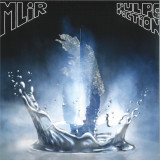
MLiR is one of those rare creative partnerships where personalities and talents perfectly match, an exquisite balance of similarity and polarity leading to ingenuity. In the case of MLiR, this dynamic has resulted in the form of consistently vibrant takes on current, past and future global dance music, an artistic expression
fuelled by equal parts tireless record digging and masterful studio wizardry.
Their two previous EPs on Studio Barnhus count among the label's most played and loved, and the forthcoming debut album Pulpo Fiction, released this October on the Stockholm label, takes it to the next level with a staggering tracklist of 16 new recordings featuring vocal talent as diverse as Kenyan rapper Nah Eeto, American
poet Oliver Grimball and Swedish soul singer Cosima Olu.
The music is as wild a ride as ever with MLiR at the controls – ranging from the nostalgic to the futuristic, the deep to the poptastic – with a firm base in the kind of high-powered, light-footed dancefloor material the duo is so beloved for.
Fully Restored Vinyl Remaster & Restored Original CD Release Artwork For Vinyl With
Memorabilia Assemblage Full Colour Inner-Sleeve
“A pitch-perfect exercise in the type of literary pop music that I felt had gone amiss since
Factory stopped releasing records. “ Alan McGee (On 17 Stars – The Guardian 2009 )
After a short label hiatus, Caroline True Records are delighted to bring you a limited
vinyl edition of a classic Salford /Manchester album.
The Montgolfier Brothers, Mark Tranmer (GNAC) & Roger Quigley (At Swim Two Birds)
initially released “Seventeen Stars” on the Salford-based Vespertine label in 1999.
Much critical acclaim & appreciation from pop dynamo Alan McGee led to a 2000 re
release on his nascent post-Creation Poptones imprint.
“So we ended up pressing records as usual. Our first record was Seventeen Stars by the
Montgolfier Brothers, a baroque, cinematic classic that almost no-one has ever heard.” Alan
McGee (On Poptones in “Creation Stories: Riots, Raves & Running A Label” 2013 )
Since that moment, “Seventeen Stars” has gathered universal plaudits & affection,
along with occasional live performances from the group.
To mark the 20th anniversary of the original release, CTR have remastered this brilliant
work for vinyl. The sleeve expands the original Vespertine CD release artwork to LP
size. Beautiful, memorable, fragile ... An album that proves the longevity of great
songwriting, tunes and textures that stay with you.
“An exquisitely beautiful elegy to a lifetime of misspent opportunities.”. (Exclaim – USA 2000)
For lovers of Felt, The Durutti Column, Jacques Brel, The Blue Nile & François de Roubaix.
This is a vinyl only strictly limited-edition release with no repress.
On October 18th, Minnesota born singer-songwriter Breymer, aka Sarah Walk (she/they), will release ‘When I Get Through’ with One Little Independent Records. The album is a strikingly honest exploration of their relationship with gender and identity, and specifically it tracks Walk’s experience undergoing top surgery, from making the decision to the process itself.
Breymer utilizes a rich array of instrumentation elevated by a standout vocal performance, raw lyricism, and textured production by Grammy winning Tyler Chester. Exquisite, layered vocal harmonies across the record enforce its reflective themes, and at times the conversation seems to be internal, with much of the record posing questions such as “Am I better now?”, “Am I on the wrong path?”, “Who am I?”. ‘When I Get Through’ examines a journey of self-discovery, it’s introspective and transformative, and it’s a testament to the strength of its lead; someone willing not just to make the choice, but to document the emotional experience in its entirety.
On their decision to change their artist name, Walk explains that “this album feels really transformative to me. I was compelled to have some kind of separation between my artist existence and personal existence. Bremer is my middle name and has always been intriguing to me; I like that it’s androgynous and uncommon. I changed the spelling, and it feels like it suits my music, particularly parallel to this album, and I was ready for a fresh start. Choosing a name requires a certain amount of agency and intentionality. This album feels bold and gender non-conforming, and Breymer felt like it encapsulated all of that”.
Revelatory and radically insightful, ‘When I Get Through’ bares all as Breymer takes listeners through every stage of their pursuit for self-acceptance. Unlike anything that has come before it, Walk’s ideas surrounding their own physical and mental progress are candid, authentic and ultimately breathtaking. Amidst a body of deftly constructed songcraft and extraordinary poeticism, Breymer has penned a companion piece for anyone in search for their true selves.
On October 18th, Minnesota born singer-songwriter Breymer, aka Sarah Walk (she/they), will release ‘When I Get Through’ with One Little Independent Records. The album is a strikingly honest exploration of their relationship with gender and identity, and specifically it tracks Walk’s experience undergoing top surgery, from making the decision to the process itself.
Breymer utilizes a rich array of instrumentation elevated by a standout vocal performance, raw lyricism, and textured production by Grammy winning Tyler Chester. Exquisite, layered vocal harmonies across the record enforce its reflective themes, and at times the conversation seems to be internal, with much of the record posing questions such as “Am I better now?”, “Am I on the wrong path?”, “Who am I?”. ‘When I Get Through’ examines a journey of self-discovery, it’s introspective and transformative, and it’s a testament to the strength of its lead; someone willing not just to make the choice, but to document the emotional experience in its entirety.
On their decision to change their artist name, Walk explains that “this album feels really transformative to me. I was compelled to have some kind of separation between my artist existence and personal existence. Bremer is my middle name and has always been intriguing to me; I like that it’s androgynous and uncommon. I changed the spelling, and it feels like it suits my music, particularly parallel to this album, and I was ready for a fresh start. Choosing a name requires a certain amount of agency and intentionality. This album feels bold and gender non-conforming, and Breymer felt like it encapsulated all of that”.
Revelatory and radically insightful, ‘When I Get Through’ bares all as Breymer takes listeners through every stage of their pursuit for self-acceptance. Unlike anything that has come before it, Walk’s ideas surrounding their own physical and mental progress are candid, authentic and ultimately breathtaking. Amidst a body of deftly constructed songcraft and extraordinary poeticism, Breymer has penned a companion piece for anyone in search for their true selves.
The album is Frost* at its most ambitious, offering nearly 90 minutes of music over 14 exquisite tracks. The album is the brainchild of Godfrey who was inspired to create the conceptual world for the album based on the group’s previous release Day and Age (2021).
Fans of the band’s masterful debut album Milliontown (2006) will enjoy the band revisiting the style that made that debut album one of the most successful prog rock albums of the last 20 years, a fact that was not lost on Godfrey as he was writing this new record. “With Day and Age, we made it a very specific point: we're not doing any solos, we'll do clever arrangements. And we enjoyed that discipline, but this time I thought it might be good to row back on that position a bit. Plus I wanted to have a little bit of a nod to Milliontown with this album, because it's been nearly 20 years since Milliontown came out and I’m still proud of it. The 15-minute title track has a few of those Milliontown moments in it which were great fun to do again.”
Mitwirkende
wird veröffentlicht am 18. Oktober 2024
Line-Up:
Jem Godfrey – Keyboards, guitar, vocals
Nathan King – Bass, vocals
John Mitchell – Guitars, vocals
Craig Blundell - drums
"Jede Prog-Band, die etwas auf sich hält, sollte eigentlich ein Doppelalbum machen, oder?", fragt Frost*-Frontmann Jem Godfrey. Das war eine der ersten Ideen, als der Songwriter/Keyboarder/Sänger der Band die Arbeit an Frost*s 5. Studioalbum "Life in the Wires" in Angriff nahm. Das Album ist Frost*s ehrgeizigstes Werk und bietet fast 90 Minuten Musik auf 14 exquisiten Tracks. Das Album ist das Geistesprodukt von Godfrey, der von der vorherigen Veröffentlichung "Day and Age" (2021) der Gruppe inspiriert wurde, die konzeptionelle Welt für das Album zu erschaffen. Fans des meisterhaften Debütalbums "Milliontown" (2006) werden sich freuen, dass die Band den Stil wieder aufgreift, der das Debütalbum zu einem der erfolgreichsten Prog-Rock-Alben der letzten 20 Jahre gemacht hat - eine Tatsache, die Godfrey nicht entgangen ist, als er das neue Album schrieb. "Bei Day and Age haben wir es sehr genau genommen: Wir machen keine Soli, wir machen clevere Arrangements. Und wir haben diese Disziplin genossen, aber dieses Mal dachte ich, es wäre gut, in dieser Position ein wenig zurückzurudern. Außerdem wollte ich mit diesem Album eine kleine Anspielung auf Milliontown machen, denn es ist schon fast 20 Jahre her, dass Milliontown herauskam, und ich bin immer noch stolz darauf. Der 15-minütige Titeltrack enthält ein paar dieser Milliontown-Momente, die zu wiederholen mir großen Spaß gemacht hat." "Life in the Wires" wird als limitierte 2CD Edition, als Gatefold 2LP und als Digitales Album erhältlich sein, mit atemberaubendem Artwork von Carl Glover (Steven Wilson).
The highly anticipated follow-up to Thee Sacred Souls's breakout 2022 self-titled debut, Got A Story To Tell, features 12 all original new songs, a soaring statement of exquisite craftsmanship from this young band from San Diego whose story grows bigger by the day. Recorded and produced by Gabriel Roth at Penrose Recorders, in Daptone’s Riverside, CA studio, and written in the throes of supporting their 2022 album, which was met with significant excitement and major touring that brought them across the world. What swirls together on Got A Story To Tell is an appreciation of decades of soul music, and beyond - a sound and feel that is timeless, lived in, and very much in the now. Album opener “Lucid Girl” champions independent women, set to some of the toughest sounding drums and bass the band has yet to put to tape. “Waiting On The Right Time” slinks with a touch of slow-burning psychedelia. A plea for empathy punctuates “One and the Same,” with Lane singing: “We’re one and the same, I feel one day / We learn to live with each other / In love, not fear / Just for a moment, why can’t we be together.” “On My Mind” is a sweeping orchestration, with Lane navigating the complexities of finding happiness while balancing the good with the bad. The album is punctuated with strings and squelching guitar, trundling piano, pops of conga, horns - it makes for a thrilling, layered listen that rewards with multiple spins.
John Davis is a sound artist and filmmaker based in the Bay Area. Active since the mid-aughts, he has published recordings on labels such as Root Strata and Digitalis, as well as on his own Bimodal Press imprint. “Landlines” sees a return to the SOD catalog for Davis, following a full-length release in 2013, and may be seen as somewhat of a spiritual successor to that album. In all of Davis’ work, there is a specific pastoral sensibility that feels firmly rooted in the forests and coasts of Northern California, moving with the delicate and erratic cadence of dust motes rendered visible in bright sunlight. Opening track “Verichrome” articulates the soundscape wonderfully, stitching together Music Mouse-esque formant synthesis and meditative vocal sampling with an exquisite minimalist suite for prepared piano. Of these recordings, Davis himself writes, “In a general sense the conceit here is nostalgia, a desire to reflect on the importance of connection – to ourselves and to the world around us. The title is, of course, a euphemism for the telephone, but I am also considering landscape, horizons, and infrastructure, as well as the invisible lines that connect us, the threads that bind us, and the communities that form us.”
- A1: All In (Original Mix)
- A2: Golden (Original Mix)
- A3: Axen (Original Mix)
- A4: Dicktator (Original Mix)
- A5: Give It To Me (Original Mix)
- A6: Ergh (Original Mix)
- B1: Treat Yourself Badly (Original Mix)
- B2: Try Again (Original Mix)
- B3: Flummi (Original Mix)
- B4: Rabbit Underground (Original Mix)
- B5: Your Mother (Original Mix)
- B6: Seven Rivers (Original Mix)
- C1: Dicktator (Club Mix)
- C2: Golden (Cub Mix)
- C3: Treat Yourself Badly (Club Mix)
- D1: Give It To Me (Club Mix)
- D2: All In (Club Mix)
Heavy support by Radio Slave, Sam Divine, Acid Pauli, Green Velvet and Maceo Plex to name a few, while also being played on radio stations world wide. The album marks the beginning of a new chapter for The Glitz as they embark on a journey beyond the world of electronic music. After a wide range of beautiful, inspiring, provoking and uplifting The Glitz-singles, we are now approaching the full album in all its might. The singles have shown us the diverse soundscapes you can find in Andreas and Daniels musical multiverse, with the genres ranging from the classic House and Techno genres, to also introducing their take on Trip Hop, Neo RnB, Hip Hop, Ballad and Electronica. This journey into their musical realm has resonated with fans and colleagues alike the last months, putting the first single on position 1 in the German Club Charts for four weeks straight (it is still in the Beatport top100 after 7 months). Born out of a desire to create a space to explore and expand their unique sound, their new album is a bold extension of The Glitz vision and purpose. It has been a long time coming and is the result of four intense years in the studio together with the unique and talented singer and songwriter Mulay. And now it is time to present the full album to the world. is the mesmerising product of one of their many jam sessions in the studio. It carries the unique The Glitz fingerprints all over it while also letting them shine in a new context. The slow flowing Hip Hop beat paired with Mulays raw vocals and incredibly poetical and personal lyrics is a must hear for old and new The Glitz-fans alike.
Placed between some of the beautiful singles we have heard before, "Ergh" hits us with full force. The track takes us on a breaky, synth loaded trip. As an energetic and driving fresh breath of air, the track combines a frisky attitude with a tension building arrangement, showing that while Andreas and Daniel embrace new genres and styles, they still have good ears for club oriented, heavier hits as well. "Flummi" is put to work in a similar setting, but with a completely different world of sounds. Bright synths slowly build up, paralleled with the pulsating low end and guiding the listener towards an explosive breakdown. The track is followed by the wild and intoxicating "Rabbit Underground" that swoops you off your feet like a rocket launch. A skilfully crafted yet raw drum work with an exquisite snare creates a foundation for tantalising synths and captivating vocals that radiates with power. After this rollercoaster of a track, the wilderness is countered with the soft and playful "Mother". The Glitz bring together various layers of soft synths and smooth percussions, creating a beautiful sphere where the captivating vocals by Mulay shine in a new way. Ending this incredible journey of sound exploration is the stunning ballad "Seven Rivers". No noise, no distractions, just a beautifully stripped down ballad that carries an ocean of emotions. A perfect completion of "Axen". In their own way, each song carries the unique sound characteristics that Andreas and Daniel are so known and loved for, while giving them space to experiment and show themselves in new ways. The mix of emotionally charged, dance floor oriented and vibrant songs are bound to give the listeners an entrancing, unforgettable experience.
Oh yes! First ever official reissue of the positively sublime and very rare Butterfly LP, recorded in Tokyo in 1979 by Japanese songstress Kimiko Kasai and jazz legend Herbie Hancock.
Due to it's super-rare status as a Japan-only release, this exquisite collection of covers never got the recognition it deserved at the time, despite incredibly inspired performances from Kimiko, Herbie and the supremely talented musicians assembled for the project. From heavenly drummer Alphonse Mouzon and renowned organist Webster Lewis to bassist Paul Jackson, reedman Bennie Maupin and the master percussionist Bill Summers, the legendary performers crafted amazingly good vocal versions of Herbie / Headhunters jazz-funk. Unsurprisingly, it has been heavily in demand for many years.
The LP opens with Kimiko's highly desirable version of "I Thought It Was You", an elegant take on Herbie's own anthem. Other superb re-workings include the delicately soulful "Butterfly", jazzy groover "Sunlight", the smooth and sexy "Tell Me A Bedtime Story" and the beautiful ballads "Maiden Voyage" and "Harvest Time". A wonderful example of perfectly understated and masterful jazz-funk soul fusion that shouldn't be missed, the set closes with a jaw-dropping version of Stevie Wonder's "As".
This lovingly curated reissue enables a long overdue reappraisal of this hitherto unavailable masterpiece. The stunning artwork which adorned the original jacket - complete with OBI strip and sumptuous
4 page folded insert - has been faithfully restored. Simon Francis' sensitive mastering elevates the sound throughout and, as ever, it has been pressed at a reassuringly weighty 180g. Essential.
The fertility of the Cuban music scene in the 1970s was rich and blooming. FA-5’s self-titled album from 1976 is a perfect example of the energy and vitality emanating from the country’s musicians and marks the next release in Mr Bongo’s Cuban Classics series. A unique musical fusion that encompasses Latin rock, funk, soul, disco and Afro-Cuban rhythms to form a diverse and alluring album.
The exquisite, funk-fuelled opener, 'Muevete Con Las Fuerzas Del Corazon', is maybe the most-known song on the album. It is a super catchy cut powered by a dynamite bassline, joy-filled horn playing and splashes of drum breaks that will ignite any dancefloor.
The record surfs through genres as it progresses. 'Di Tu Que Haras Sin Mi’ and 'Paso Sin Mas' lean back with a West Latin rock / AOR flavour to their grooves. Elsewhere, the dreamy, cosmic, Balearic-tinged 'El Blue' and fuzzy funk-rock breaks of 'Pero Lo Cierto Es Que No Quise Mas' further show the breadth of styles at play on the LP. Another big highlight on the album is the Latin, disco-funk sounds of 'Casa De Ladrillo', which morphs into a cover version of the Commodores 'Brick House'. The result is a superb alternative take on a much-loved classic.
Released on the state-owned Areito Records, the album was directed by Nestor Caballero, who arranged the songs alongside Aneiro Taño and Osvaldo Caraballoso. The prolific Tony Taño produced the album with the recording courtesy of Tony Lopez who worked with Juan Pablo Torres, Los Reyes 73, Grupo Los Yoyi, Raúl Gómez and many other Cuban greats that we have featured in the Cuban Series.
A fabulous, under-the-radar classic, that will enrich any collection.
Reissue
'Find Me Finding You', the new album from the new organization called the Laetitia Sadier Source Ensemble, manages to strike new chords while touching familiar keys in the song of life.
From its percolating opening beat, 'Find Me Finding You' locates new systems within the sound-universe of Laetitia Sadier. This in itself isn't a surprise - Laetitia has relentlessly followed her music through different dynamics and into a variety of dimensions over the course of four solo albums since 2010 (not to forget her three albums with Monade and the long era of Stereolab) - but the nature of the construction here stands distinctly apart from her recent albums. Laetitia was inspired by a mind's-eye envisaging of geometric forms and their possible permutations. As she sought to replicate the shapes in music, this guided the process of assembly for the album.
Part of the freshness of 'Find Me Finding You' comes from working and playing within the Source Ensemble and exploring new sound combinations via a set of youthful and evolving musical relationships. Laetitia recognized the energy of the tracks in their initial form and sought to preserve their vitality by not retaking too many performances - instead, the rawness in the tracks was retained and refined at the mixing stage, maintaining an edge throughout. When we hear synth lines diving, lifting and drifting, unusual guitar textures, the plucked sound of flat wound bass strings or the bottomless pulsing of bass pedals stepping out of the mix with an exquisite vibrancy, this is the sound of the Source Ensemble.
A key to Laetitia's music is her use of vocal arrangements. Throughout 'Finding Me Finding You' the shifting accompaniment creates space to bring this element gloriously forward. Arranged by Laetitia with Joe Watson and Jeff Parker making string charts that were subsequently transposed to vocal parts for several songs, richly arranged choirs of voices provide depth along with the thrilling presence of extra breath in the sound. Laetitia's community-politic is well-served by the groups of voices lending support to the machining of the song craft, providing additional uplift to her quintessentially forward-facing viewpoint - as well as massed voices from three different countries sharing space in harmony.
Working in collaboration is Laetita's tradition and a key to this album's view on being free together. The designation of Source Collective implies a new togetherness phase, alongside long time collaborators Emmanuel Mario and Xavi Munoz, keyboard and flutes parts played by David Thayer (Little Tornados) were essential contributions, as well as further keys, synths and electronics from Phil M FU and several intense guitar sequences from Mason le Long. Chris A Cummings (aka Marker Starling, Laetitia's favourite composer) graciously wrote 'Deep Background' for her. The duet with Hot Chip's Alexis Taylor on 'Love Captive' (not to mention Rob Mazurek's distinctive coronet playing) gives voice to an ideological cornerstone of 'Find Me Finding You'
Harde Smart is back again! With the new Harde Smart 7" Sampler, you get a taste of the upcoming Harde Smart Volume 2: Flemish & Dutch grooves from the 1980's, the successor to the acclaimed original Harde Smart compilation that showcased the best of the Dutch-linguistic territory back in the '70s. Even in the decade that followed, a whole host of gems were made that were remarkably danceable, catchy and playful, as proven by the two tracks on this sampler. Joost Belinfante puts it nicely on the B-side: 'nothing to prove, nothing to claim, it is as it is.' Harde Smart never disappoints.
Harde Smart Volume 2: Flemish & Dutch grooves from the 1980's
Harde Smart is on it with the sophomore compilation effort Flemish & Dutch grooves from the 1980's. Vinyl aficionado's No Sleep Richy and Micha Marva teamed up with Sjefke De Kok (one of Holland's illest to rack those crates!) to continue their journey. While raking deep in the dusty bins with Dutch and Flemish records, they once again discovered an exquisite selection of tracks. Too weird to play, too rare to throw away. From butt-shaking boogie to weird disco adventures on wax, this album is sounding like all the good stuff the eighties had to offer: both smooth and sexy as well as dark and wavy. Get ready for an atypical introduction into the Dutch lyric-driven music from the 1980's.
The Harde Smart 7" Sampler will be released on Friday 15 March 2024 via Sdban. Harde Smart volume 2: Flemish & Dutch Grooves From the 80's will be released soon via Sdban
The latest full-length from Kishi Bashi, Kantos is a work of exquisite duality: a party album about the possible end of humanity as we know it, at turns deeply unsettling and sublimely joyful. In a sonic departure from the symphonic folk of his critically lauded 2019 LP Omoiyari - a career-defining body of work born from his intensive meditation on the mass incarceration of Japanese-Americans during World War II - the Seattle-born singer/songwriter/producer's fifth studio album encompasses everything from Brazilian jazz and '70s funk to orchestral rock and city pop (a Japanese genre that peaked in the mid-'80s). Informed by an equally kaleidoscopic mix of inspirations - the cult-classic sci-fi novel series Hyperion Cantos, the writings of 18th century enlightenment philosopher Immanuel Kant, a revelatory trip to ancient ruins on the island of Crete - Kantos ultimately serves as an unbridled exaltation of the human spirit and all its wild complexities. During the earliest stages of creating songs for the album, Ishibashi's main intent was to return to his highly eclectic musical roots, in part by tapping into his jazz background and by delving into the dance-rock-leaning sensibilities he previously embraced as co-founder of Brooklyn-bred indie band Jupiter One. But not too long into the songwriting process, he stumbled upon an AI-equipped website capable of composing catchy song hooks based on a prompt - a turn of events that quickly catalyzed the existential inquiry at the heart of Kantos. Although his ruminations on AI, transhumanism, and humanity's troubled fate indelibly guided the making of Kantos, Ishibashi nonetheless views the album as "less of a warning about this kind of hubris but more a celebration of the very characteristics that make us human: desire, passion, empathy, and love." "If there's anything I want people to come away with when they hear this record, it's a feeling of excitement about the possibilities of human-created art," he says. "Even as we're learning more about all the amazing things AI can do, I think humans will always be one step ahead in terms of our creativity and innovation. There's still no limit to what we have to offer."
- A1: The Music Was There
- A2: Cais
- A3: Late September
- A4: Outubro
- A5: A Day In The Life
- B1: Interlude For Saci
- B2: Saci
- B3: Wings For The Thought Bird
- B4: The Way You Are
- B5: Earth Song
- C1: Morro Velho
- C2: Saudade Dos Aviões Da Panair (Conversando No Bar)
- C3: Um Vento Passou (Para Paul Simon)
- D1: Get It By Now
- D2: Outro Planeta
- D3: When You Dream
Milton + esperanza wurde 2023 in Brasilien aufgenommen und ist eine traumhafte Kollaboration und musikalische Verkörperung einer Freundschaft, die vor fast 15 Jahren begonnen hat. Das Album enthält
16 Tracks, die fünf von Nascimentos geliebten Klassikern feiern und neu interpretieren, neu geschriebene Originale von Spalding und faszinierende Interpretationen von „A Day In The Life“ von den Beatles und „Earth Song“ von Michael Jackson, neben anderen Werken, die liebevoll die Musik Brasiliens und weit darüber hinaus erkunden. Zu den besonderen Gastauftritten gehören Paul Simon, Dianne Reeves, Lianne La Havas, Maria Gadú, Tim Bernardes, Carolina Shorter, Shabaka Hutchings und andere. Milton +
Esperanza glänzt mit Duetten zwischen diesen beiden ikonischen Stimmen, exquisiter Musikalität und dem, was Spalding als zentrales Thema des Albums identifiziert: Die Bedeutung jüngerer Generationen, die mit den Älteren zusammen neue Räume schaffen, von ihnen lernen und neue Ideen entwickeln.
First official vinyl reissue under Sonor music production license - numbered to 500 copies.
Outstanding Italian Library session from the desirable Nike private label owned by Bruno Battisti D'Amario and featuring the great Silvano Chimenti on guitars and Edda Dell'Orso scats. Amazing, refined Score music released for TV and documentaries music production with superb loungy and soft sounds inspired by Western landscapes and natural panorama. Moody and bluesy jam with a mixture of various guitar tones, trippy atmospheres and themed descriptive music with addiction of soft Psychedelic moods, Easy Listening and allegro vibes alternated by sweet melodies. The cult maestro and Morricone's collaborator D'Amario here provides one of his highest masterwork in composition with its classical guitar added by Chimenti's Psychedelic notes and some mindmelting Edda Dell'Orso's scat numbers. Several exquisite Spaghetti Western inspired themes, maybe used as original score for obscure movie in the '70s / ethereal LSD Psychedelic vibes with isolated distorted Wah Wah / Lounge moods throughout with nature inspired themes / Folk & Blues influences / trippy Scat vocals / 70s Easy Listening and panoramic descriptive music for a very complete Library session. Great album!
To experience Justin R. Cruz Gallego's pulverizing Sub Pop debut is to get burned down to ashes and burst forth, born anew. Grim Iconic...(Sadistic Mantra), the Tacoma-based artist's second album, is driven by opposing forces: noisy abstractions and tightly structured beats, anguish and dissolution at the outside world and empowerment within, apathy and catharsis. Grim Iconic...(Sadistic Mantra) weds scouring electronics to hooky songs and Gallego's powerful drumming in a way that feels visceral and new. It's his most personal statement to date, at once playful and intent, driven and combustible, total fucking chaos mixed into glints of broken-glass beauty. Born in Tucson, Arizona, Gallego experienced culture shock as a child after relocating to the frigid climes of the Pacific Northwest. He found solace in the Seattle punk scene centered around Iron Lung Records and has since remained a fixture in the underground community. "I see this record as first and foremost a musical statement," Gallego says. "I grew up in punk and DIY subcultures, but before that I had Latin music playing in the background through my childhood and every phase of adolescence. It was surprisingly natural to incorporate. I realized I wanted to go deeper into these rhythms. I wanted to make a record that felt as experimental as much as it felt from the perspective of a Latino. When I got a glimmer of that possibility, it felt exciting." Lead single "Dogear" is a face-melting party starter that sounds like someone forced Talking Heads and Rudimentary Peni to share a practice space. "I wanted a song that felt playful in the way it attempted to be dissonant without taking itself too seriously," Gallego says. "Cholla Beat" is even more ambitious, an anthemic mix of WAR and Wire led by unruly synthesizers spiraling down a labyrinth of production. Gallego's influences for the album are vast, ranging from British documentary filmmaker Adam Curtis to electric Miles Davis to audio miscreants like Demdike Stare and Oneohtrix Point Never. But it's Gallego's assured sonic vision that resounds the loudest. And, while J.R.C.G. is a solo project, conceived and executed primarily in Gallego's home studio, he found strength in opening the project to others, starting with Seth Manchester as co-producer. Manchester's penchant for bone-rattling frequencies, as seen in his production work with The Body, Battles, and Mdou Moctar, made him a natural fit for Gallego. Together, they retained the intimacy of Gallego's home recordings while taking advantage of the hi-fi stylings of his Machines With Magnets Studio in Rhode Island. The closing song, "World i," offers a glimpse into the live experience of Grim Iconic...(Sadistic Mantra), with upwards of seven band members blasting off. The album features a fascinating mix of supporting players, many of whom cycle through J.R.C.G.'s live lineup: Morgan Henderson (The Blood Brothers, Fleet Foxes), Jason Clackley (Dreamdecay, The Exquisites), Jon Scheid (Dreamdecay, U Sco), Erica Miller (Casual Hex, Big Bite), Veronica Dye (Terminator) Phil Cleary (U Sco), and Alex Gaziano (Dreamdecay, Kidcrash, Science Amplification). Taken as a whole, G.I.S.M. is a whirlwind of sound, pummeling, and cleansing. It's a sweaty, thrilling aural adventure and, like a great basement show, it'll leave you breathless, exhausted, and wanting to repeat it all over again. As any good mantra should.
This record is 20 years in the making. It features two songs by one Makode Linde, legendary visual artist and musician, dear friend of (and frequent cover designer for) Studio Barnhus, the wonderfully weird dance label from Stockholm, the city Makode once called home, before moving to Berlin around the same time work started on these two songs.
On Never Getting Over Me, Makode sings an age-old song of lost love and persistent passion over a zany, sunsoaked riddim, while Professional Help is a piece of bossa nova perfection, its protagonist lamenting his old flame's refusal of therapy over a graceful, flute-driven instrumental.
Exquisite songwriting and glowing lo-fi charm will have these propel straight to your heart, taking up residency in that sacred place reserved for the sweetest pop songs only.
"Are Possible" is a spark-throwing, undulating fusion of styles played (mainly) on banjo, upright bass and drums, made possible by the individual perspectives of Nathan, double-bassist Casey Toll (Jake Xerxes Fussell, Mt. Moriah) and drummer Rex McMurray (CAVE) work together in an easy-rolling manner, but one that contains an expansive, ass-shaking confabulation of ideas. Music is time in redux: Are Possible"s many moments in time carry details from all over the place. Rex brought a rhythm to the table after drumming on buckets at work, Casey provided a bassline that redirected a previous jam, Nathan brought in a song he"d been fucking with forever and they figured it out together. Their diversity of sources moves easily within the arrangements, rendering a far-ranging set of feels, from transcendental to new country funk to good ol" jazz and the folk-rock, even - all of it drawn out exquisitely when they mixed at Electrical Audio in Chicago with the delicate hands of Cooper Crain upon the faders. The Nathan Bowles Trio have done their due diligence, passing their music through time and space on their way to now.
The opening track to the Alan Parsons Project’s Eye in the Sky remains the most recognized instrumental in sports—fanfare inseparably tied with introducing NBA legend Michael Jordan and his six-time world-champion Chicago Bulls mates before games, and still used by many teams as an energy-raising prelude. Indeed, the subdued grandiosity, cosmic bluster, and lights-out wonder of “Sirius” sets the table for the band’s smash 1982 album, whose hallmark smoothness, lushness, and balance extend to the music’s exquisite song writing, dreamy emotions, and underlying orchestral scope. Credit for the record’s craft, cohesiveness, and accessibility also falls to Alan Parsons and creative partner Eric Woolfson’s knack for recruiting session pros that translate their visions with unquestioned feeling—particularly, vocalists who include former Zombie leader Colin Blunstone and soul singer Lenny Zakatek.
Mastered from the original master tapes, Mobile Fidelity’s RTI pressed 180g 45RPM 2LP version of Eye in the Sky features succulent warmth, magnificent balance, low-end heft, and see-through transparency that take you into the studio with Parsons at Abbey Road Studios. Each note seems perfectly placed, every sequence painstakingly considered. Boasting front-to- back depth, concert-hall-level separation, realistic presence, and bang-on accuracy. This release will test the capabilities of the world’s finest stereo systems. There’s more information, more texture, more nuance— more of everything to be experienced. British progressive rock would never again sound so sophisticated, suave, or steady.
Atlantic records impresario Jerry Wexler had many strings to his bow, but undoubtedly his greatest stroke of genius was leading Aretha towards the Fame Studios in 1967 to conduct her first sessions for the label. A lady with many quite uneven Columbia albums to her name would turn the world of soul music upside down and reveal the Queen of Soul to the world. The music created was both harrowing and spine-chilling in equal measure, leaving everyone in its radius in a state of soulful euphoria.
“Can” was recorded during the ‘Hey Now Hey’ LA album sessions circa 1972, with Quincy Jones at the helm, and is a scintillating slow burner of exquisite beauty.
“I’m Trying” is a glorious 1969/70 outtake from her ‘Spirit in the Dark’ LP, cut at Criteria with Wexler and the MSS boys in tow.
A friend of mine recently alluded that you sometimes don’t realise the true greatness of a track until it is embossed in 7” vinyl. So true!
*REMASTERED ROUGH TRADE DEBUT LP LIMITED TO JUST 500 COPIES WITH EMBOSSED OUTER SLEEVE AND ORIGINAL INNER SLEEVE ON BLACK VINYL*
Dream POP, they called it. Given AR Kane’s Alex Ayuli once worked for advertising agency Saatchi & Saatchi, it’s no surprise that he and collaborator Rudy Tambala invented their own genre before critics could stick their oar in. It was a canny move, but more importantly, it was accurate: the music of AR Kane was made for dreamers, by dreamers, and its languor and longing made it particularly bewitching listening; their music is often smeared and blurry, happily lost in its own indefinable pleasures. “We wanted dream pop,” Tambala says, “that feeling of a dream where the rules are different. Dream logic.”
-UNCUT REISSUE OF THE MONTH
"A.R. Kane carved out a unique musical path, welding elements of pop, psych, dub, electronica, funk, noise, jazz, ambient and more in a way that had never been done before. Or since. Their debut in particular is a work of unbridled brilliance."
*Electronic Sound*
‘Sixty Nine’ the group’s debut LP that emerged in 1988 had critics and listeners struggling to fit language around A.R. Kane’s sound. As a title it was telling - the year of ‘Bitches Brew’, the year of ‘In A Silent Way’, the erotic möbius between two lovers - and as originally coined by the band themselves, ‘dream pop’ (before it became a free-floating signifier of vague import) was entirely apposite for the music A.R. Kane were making. Crafted in a dark small basement studio in which Tambala recalls the duo had “complete freedom - We wanted to go as far out as we could, and in doing so we discovered the point where it stops being music”. There was an irresistibly dreamy, somnambulant, sensual and almost surreal flow to ‘sixty nine’s sound, but also real darkness/dankness, the ruptures of the primordial and the reverberations of the subconscious, within the grooves of remarkable songs like ‘Dizzy’ and ‘Crazy Blue’. Alex’s plangent vocals floated and surged amidst exquisite peals of refracted feedback but crucially there was BASS here, lugubrious and funky and full of dread, sonic pleasure and sonic disturbance crushed together to make music with a center so deep it felt subcutaneous, music constructed from both the accidental and the deliberate, generous enough to dance with both serendipity and chaos. ‘sixty nine’ remains - especially in this remastered iteration - ravishing, revolutionary – Neil Kulkarni
"A.R. Kane made some of the most exciting, forward-thinking, and science fictional music of their era".s*
Sweet soul and sentimental music has never really gone out of style, and in the particular cases of the innovative wave of 1950's filin era Cuban boleros, or 1960's Nuyorican street soul, they both remain a thriving beacon of timelessness and universality, capturing a particular style of breezy Caribbean romantic music that has stubbornly thrived in the tough concrete landscape of New York City.
Perhaps there is some love in the heart of the city, as the new ensemble La Triunfadora has managed to tap into something of significant substance on their debut recording, Clasicos Sentimentales Para Una Nueva Generación. Co-produced by band leader Benjamin R. Juliá and renowned talent William Holland aka Quantic (recorded and mixed at the latter's Selva Recording studio in Brooklyn), the group has managed to capture the essence of this reemerging style of classic music, while further injecting their own inspired vision of experimental and psychedelic arrangements.
On A-side display for this debut 7-inch release on Names You Can Trust are two canonized Cuban boleros from maestro composer and guitarist Cesar Portillo De La Luz, stacked together in an old school continuous medley, and transformed with lush orchestration that has the talented musicians sparkling behind the duet of lead vocalists Candace Camacho and bandleader Juliá.
The B-side jumps from 1950's filin into Ralfi Pagan's iconic 1969 latin soul masterpiece "Hijo De Mama." Once again La Triunfadora peppers in just enough exquisite arrangements and musicianship to transform the original into something fresh, yet still guided from an analog sensibility, and ultimately performed with a familiar romanticism that these classic lovers' songs have managed to express over the decades to different generations.
Tiny Habits were formed in Boston, MA by artists Maya Rae, Cinya Khan and Judah Mayowa. The three singer-songwriters met at Berklee College of Music and the band was born at the beginning of 2022.
They started out by sharing covers recorded in the stairwell of their dorm and posting them on social media. Focusing on beautifully intimate three-part harmonies the trio's enticing signature sound, offered exquisite, reimagined versions of songs from across a spectrum of styles and quickly drove them to viral success. They received recognition and early support from artists as diverse as David Crosby, Marcus Mumford, Phoebe Bridgers, and Noah Kahan. Collaborations include work with Mark Ronson, JP Saxe and Lizzy McAlpine, who they supported on NPR’s Tiny Desk
Their debut EP “Tiny Things” was released in April 2023 and established them as one of “the” bands to watch in the year ahead.
In early 2023, the band opened for Gracie Abrams “Good Riddance Tour” across North America, followed by their own sold-out US “Tiny Tour”
At the end of 2023, the trio opened for Noah Kahan on his “Stick Season Tour” across Europe, followed by a sold-out headline show in London. In January 2024, the band rejoined Gracie Abrams, opening for the Australian leg of her “Good Riddance Tour”. This was followed by a sold-out headline show in Melbourne and a performance at the Minetta Lane Theatre in New York with Kacey Musgraves. The New Yorker recently wrote a feature piece on the band, coining them “The Prodigies of Harmonies”.
INSIDE is the third album (and second in a row on Brixton Records) by the respected ten-piece group from Barcelona that fuses Jamaican music and jazz. DROP COLLECTIVE bravely faces the so-called third album syndrome and makes a sincere declaration of principles, a public manifestation of their musical identity. The two sides of the album are clearly identified. Side A is Inside-Out, displaying five own-penned compositions, including three songs sung in Catalan and two in English, in which DROP COLLECTIVE make it clear what they like to do and what they are capable of offering. The album opens with "Com Estimo Jo" (The Way I Love), a reggae ballad composed by Andreu Domènech (baritone sax) that is dedicated to the growth and learning we do when we love. It is followed by "Let Us Dance", a fluid ska with Latin airs and an invitation to dance, which recaptures the sound of some of the most celebrated passages from their previous album. "Estel" (Star) is a melancholic reggae song, sung in Catalan, in homage to someone who is no longer here - "now you are the star that watches over us from up there, bright, bright". Prior to the release of this LP, four advance tracks have been published on digital platforms, but "Life's Too Short" is, perhaps, the album's single. This resounding reggae with a powerful brass section could have easily taken more elaborate instrumental and studio developments, however, the band has preferred to produce a compact track brimming with strength and lasting less than three minutes. “Ombra" (Shade) closes this side of the album with solemn roots sonorities. The B-side is Outside-In, four reinterpretations of jazz classics that DROP COLLECTIVE internalize, make their own and, therefore, also form part of their identity. The choice of pieces is hair-raising, because of the risks they take. "Yearnin'" is a cover of the song originally included in one of the most epic albums in the history of jazz, "The Blues and the Abstract Truth", by saxophonist Oliver Nelson. DROP COLLECTIVE take the song to their own territory with the skill and freshness of expert ska-jazzers and with the special collaboration of trumpeter Joan Mar Sauqué, they make one of the most famous riffs in jazz sound unashamedly contemporary and... Caribbean. "Day by Day" is an adaptation of the standard from the late forties of the last century that was part of the regular repertoire of, among others, Frank Sinatra. The result is a swinging ska love themed, sugary and romantic, with an exquisite interpretation. And to close the album, two extraordinary trials by fire for Maria del Rio, the band's vocalist, which she solves with total ease and mastery of the situation. "What a Little Moonlight Can Do", a composition by Harry Woods that the legendary Billie Holiday recorded in 1935 and which, after 90 years, still sounds fresh in up tempo ska mode, and "Sinnerman", a traditional spiritual from the early 20th century made popular worldwide by Nina Simone, becomes a lively ska-jazz with soulful touches and an infectious organ solo by Daniel Ferruz. INSIDE is an album with a compact, solid, and synchronous sound, but full of details, which gives a total sense of permanence and singularity to their skareggae- jazz mastery, in which many universes fit.
- A1: Hello 00 27
- A2: A Love From Outer Space 05 08
- A3: Crack Up 04 12
- A4: Timewind 00 15
- A5: What's All This Then? 04 03
- A6: Snow Joke 04 46
- A7: Off Into Space 00 04
- B1: And I Say 02 42
- B2: Yeti 00 11
- B3: Conundrum 02 32
- B4: Honeysuckleswallow 03 20
- B5: Long Body 01 21
- B6: In A Circle 04 37
- C1: Fast Ka 00 27
- C2: Miles Apart 03 01
- C3: Pop 03 40
- C4: Mars 00 20
- C5: Spook 03 10
- C6: Sugarwings 03 37
- D1: Back Home 00 07
- D2: Down 05 14
- D3: Supervixens 05 40
- D4: Insect Love 02 52
- D5: Sorry 00 05
- D6: Catch My Drift 05 40
- D7: Challenge 00 06
*REMASTERED ROUGH TRADE DEBUT LP LIMITED TO JUST 500 COPIES WITH EMBOSSED OUTER SLEEVE AND ORIGINAL INNER SLEEVE ON BLACK VINYL*
Dream POP, they called it. Given AR Kane’s Alex Ayuli once worked for advertising agency Saatchi & Saatchi, it’s no surprise that he and collaborator Rudy Tambala invented their own genre before critics could stick their oar in. It was a canny move, but more importantly, it was accurate: the music of AR Kane was made for dreamers, by dreamers, and its languor and longing made it particularly bewitching listening; their music is often smeared and blurry, happily lost in its own indefinable pleasures. “We wanted dream pop,” Tambala says, “that feeling of a dream where the rules are different. Dream logic.”
-UNCUT REISSUE OF THE MONTH
"A.R. Kane carved out a unique musical path, welding elements of pop, psych, dub, electronica, funk, noise, jazz, ambient and more in a way that had never been done before. Or since. Their debut in particular is a work of unbridled brilliance."
*Electronic Sound*
‘Sixty Nine’ the group’s debut LP that emerged in 1988 had critics and listeners struggling to fit language around A.R. Kane’s sound. As a title it was telling - the year of ‘Bitches Brew’, the year of ‘In A Silent Way’, the erotic möbius between two lovers - and as originally coined by the band themselves,
‘dream pop’ (before it became a free-floating signifier of vague import) was entirely apposite for the music A.R. Kane were making. Crafted in a dark small basement studio in which Tambala recalls the duo had “complete freedom - We wanted to go as far out as we could, and in doing so we discovered the point where it stops being music”. There was an irresistibly dreamy, somnambulant, sensual and almost surreal flow to ‘sixty nine’s sound, but also real darkness/dankness, the ruptures of the primordial and the reverberations of the subconscious, within the grooves of remarkable songs like ‘Dizzy’ and ‘Crazy Blue’. Alex’s plangent vocals floated and surged amidst exquisite peals of refracted feedback but crucially there was BASS here, lugubrious and funky and full of dread, sonic pleasure and sonic disturbance crushed together to make music with a center so deep it felt subcutaneous, music constructed from both the accidental and the deliberate, generous enough to dance with both serendipity and chaos. ‘sixty nine’ remains - especially in this remastered iteration - ravishing, revolutionary – Neil Kulkarni
"A.R. Kane made some of the most exciting, forward-thinking, and science fictional music of their era".
*Reissue Of The Week In The Quietus*
- 1: Betty Baker
- 2: Blackberry Blossoms
- 3: Pompey Ran Away
- 4: Cluck Old Hen
- 5: Chimes
- 6: Lost Girl
- 7: Can't Jump Josie
- 8: Red Bird
- 1: Rockingham
- 2: Prettiest Little Girl In The County
- 3: Drunken Hiccups
- 4: Hog Went Through The Fence, Yoke And All
- 5: Polly Put The Kettle On
- 6: Shortening Bread
- 7: Billy In The Lowground
Past collaborators of Decosimo include indie/folk artists Jake Xerxes Fussell, Wye Oak, and Hiss Golden Messenger. Past collaborators of Schrey include experimental/sound artists Alvin Lucier, Gordon Mumma and Yasunao Tone. In April 2021, Joseph Decosimo, Luke Richardson, and Cleek Schrey three of the most compelling interpreters in the American traditional music scene gathered at a cabin in Tennessee to explore their collective repertoire of Old-time fiddle and banjo tunes, gleaned from visits with older players, field recordings, and vintage 78s. Working with fiddle, hardanger d’amore (a fiddle with sympathetic strings), banjos, and a 19th-century pump organ, the trio captured both the sonic details of their instruments and a generous musical interplay rooted in a dozen years of collaboration. Their debut album, Beehive Cathedral, presents resonant, thoughtful, and expansive explorations of Appalachian and American music. The results showcase deep Details study and enveloping, exhilarating performances. A rich vein of stories and relationships to people and places underpin Beehive Cathedral. Much of the album draws on Decosimo’s experiences learning the music of Tennessee’s Cumberland Plateau, where he grew up and worked as a folklorist. A key source of inspiration was fiddler Clyde Davenport (1921-2020), “Clyde was a social and musical trickster who knew hundreds of old tunes and had an uncanny ability to recall each piece in exquisite detail,” says Decosimo. “During my visits, he’d play breathtaking local pieces from his father Will, who was born in 1868. His father had learned some of them from a neighbor who was born in 1829.” "This record expresses some of what we hear in Southern traditional music: the ring of the strings, the buzz of the tunings, the hum of the organ,” explains Schrey. Spending time listening to old recordings and imagining how those sounds were made has made the trio keenly interested in the relationship between physical motion and sound in their source material. The result is a dense layering of sounds and interaction. Of this sonic interplay, Irish fiddle luminary Martin Hayes observes, “The sound of a beehive conveys the idea of a unified harmonious soundscape which is how this recording sounds. Beehive Cathedral is a sonic delight, a beautiful blend of Old-time soundscapes and more. This is a hypnotic recording that is grounded, subtle and refined
Besides being a leading session musician in Milan's jazz scene between the 60s and 90s, Italian pianist Oscar Rocchi created a number of exquisite library albums in the pop-jazz genre. These include among others "Erbe Selvatiche", "Pop-Paraphrenia" and "Woman's Colours" (the latter co-written with his friend Giancarlo Barigozzi) as well as "Alchemy in Jazz", which is now available in digital format for the first time ever.
Originally released on Ring, an imprint of Edizioni Minstrel, the album was recorded by a quintet featuring Rocchi on piano plus long-time collaborators Hugo Heredia (sax and flute), Sergio Fanni (trumpet), Gianni Cazzola (drums) and Furio Di Castri (double bass), and has since become a cult record in countries from the US to Japan, where it was released for the first time on CD in 2013.
With a palette ranging from frenzied post-bop echoes("Gold-Fast", "Nigredo") to sentimental nocturnal ballads ("Solution", "Rubedo") to cheerful modern-jazz vibes ("Mercury", "Silver-Bop", "Sulphur"), here Rocchi paints an elegantly syncopated musical fresco that, like the magical, alchemical process referred to in the title, transmutes the harsher aspects of jazz syntax into a graceful and more euphonic style that is approachable for jazz neophytes and yet enjoyable for seasoned jazz lovers.
Airual002 proudly presents the "Devotion" EP, a mesmerizing journey into the realms of dub techno with great passion and devotion to tradition but approaching it `also with modern studio strategies and equipment.Mario Lauriano, a Naples native now based in Berlin, showcases his prowess in crafting meticulously designed dub techno with "Devotion."
The title track is a captivating fusion of pulsating rhythms and ethereal melodies, transporting listeners to another dimension. XDB's remix of "Devotion" amplifies the energy while retaining the essence of the original track, making it perfect for obscure dancefloors.
On the flip side, Lauriano's "Patiently Waiting" offers a mesmerizing exploration of broken atmospheric techno, complemented by a fresh and house remix from the legendary Samuel L Session.
"Devotion" EP is a testament to Airual002's commitment to pushing the boundaries of electronic music while staying true to its roots. With its exquisite blend of elegant dub techno and atmospheric sounds, this release is set to leave a lasting impression on listeners.
French saxophonist Musina Ebobissé unveils ARMAUN, his third release under the Blendreed name. ARMAUN – Ambient Resistance Music Against Urban Noise – takes a stand against the interference of invasive irritants with sublime slow motion music. Its four pieces evoke an ecstatic peace, allowing both artist and listener to breathe deeply. As the compositions unfold, each exhalation resonates at the frequency of the human mind in repose.
Layers of treated and reverberant saxophone fuse into a hypnagogic whole, as elongated melodies interact with their own fragmented and transformed echoes. In a semi dream state, existence is experienced at a languid pace, as each phrase decays into a haze of crosscurrents.
If ARMAUN recalls the fourth world music of Jon Hassell and Eno, it equally finds oblique kinship with André 3000's "New Blue Sun". Likewise, it shares essential DNA with vaporwave and the tape-loop experiments of Terry Riley. Conceived as a confluence of acoustic and electronic elements, Blendreed explores the intersection of jazz, ambient, post-rock and experimental music.
This is work of exquisite beauty with a direct function. It provides an antidote to the bombardment of our senses. After unhooking your mind from temporal entanglements, ARMAUN will absorb your soul.
Tiny Habits were formed in Boston, MA by artists Maya Rae, Cinya Khan and Judah Mayowa. The three singer-songwriters met at Berklee College of Music and the band was born at the beginning of 2022.
They started out by sharing covers recorded in the stairwell of their dorm and posting them on social media. Focusing on beautifully intimate three-part harmonies the trio's enticing signature sound, offered exquisite, reimagined versions of songs from across a spectrum of styles and quickly drove them to viral success.
They received recognition and early support from artists as diverse as David Crosby, Marcus Mumford, Phoebe Bridgers, and Noah Kahan. Collaborations include work with Mark Ronson, JP Saxe and Lizzy McAlpine, who they supported on NPR’s Tiny Desk
Their debut EP “Tiny Things” was released in April 2023 and established them as one of “the” bands to watch in the year ahead.
In early 2023, the band opened for Gracie Abrams “Good Riddance Tour” across North America, followed by their own sold-out US “Tiny Tour” At the end of 2023, the trio opened for Noah Kahan on his “Stick Season Tour” across Europe, followed by a sold-out headline show in London. In January 2024, the band rejoined Gracie Abrams, opening for the Australian leg of her “Good Riddance Tour”. This was followed by a sold-out headline show in Melbourne and a performance at the Minetta Lane Theatre in New York with Kacey Musgraves. The New Yorker recently wrote a feature piece on the band, coining them “The Prodigies of Harmonies”.
Lenticular Sleeve / White Vinyl. When Jack Tatum began work on Life of Pause, his third full-length to date, he had lofty ambitions: Don't just write another album; create another world. One with enough detail and texture and dimension that a listener could step inside, explore, and inhabit it as they see fit. "I desperately wanted for this to be the kind of record that would displace me," he says. "I'm terrified by the idea of being any one thing, or being of any one genre. And whether or not I accomplish that, I know that my only hope of getting there is to constantly reinvent. That reinvention doesn't need to be drastic, but every new record has to have its own identity, and it has to have a separate set of goals from what came before." What came before: a rightfully acclaimed, much beloved display of singular pop craftsmanship. Tatum's dreamy, unexpected 2010 debut, Gemini, was written while he was still a student at Virginia Tech University. Its equally disarming follow-up, 2012's Nocturne, marked the first time he'd been able to bring his bedroom recordings into a studio, to be performed and fully realized with the help of other musicians. There has been a set of wonderfully expansive EPs in between_each hinting at new directions and punctuating previous ideas_but with Life of Pause, Tatum delivers what he describes as his most "honest" and "mature" work yet, an exquisitely arranged and beautifully recorded collection of songs that marry the immediate with the indefinable. "I allowed myself to go down every route I could imagine even if it ended up not working for me," he says. "I owe it to myself to take as many risks as possible. Songs are songs and you have to allow yourself to be open to everything." After a prolonged period of writing and experimentation, recording took place over several weeks in both Los Angeles and Stockholm, with producer Thom Monahan (Devendra Banhart, Beachwood Sparks) helping Tatum in his search for a more natural and organically textured sound. In Sweden, in a studio once owned by ABBA, they enlisted Peter, Bjorn and John drummer John Ericsson and fellow Swedish Radio Symphony Orchestra veteran Pelle Jacobsson, to contribute drums and marimba. In California, at Monahan's home, Tatum collaborated with Medicine guitarist Brad Laner and a crew of saxophonists. From the hypnotic polyrhythms of "Reichpop" to the sugary howl of "Japanese Alice" to the hallucinogenic R&B of "A Woman's Wisdom," the result is a complete, fully immersive listening environment. "I just kept things really simple, writing as ideas came to me," he says. "There's definitely a different kind of `self' in the picture this time around. There's no real love lost, it's much more a record of coming to terms and defining what it is that you have_your place, your relationships. I view every record as an opportunity to write better songs. At the end of the day it still sounds like me, just new."
Hypnotised is the first encyclopedia project to cover the global trance movement during its most prolific years. Following compilations directed to the early Dutch, British and German trance movements, this fourth installment shines a light on the influential Belgian scene. Published in limited 3x12’’ vinyl, 3xCD and digital formats, ‘’Hypnotised: A Journey Through Belgian Trance Music (1992-2003)’’ includes 27 exquisite tracks from classic imprints like Airscape, CJ Bolland, M.I.K.E. and Jericho.
repressed !
Kavinsky’s ‘Odd look’ is one of those songs which will haunt you for a long time after hearing them, one of Kavinsky’s acclaimed ‘Outrun’ highlights for sure.
The deep, raw and soulful instrumental brings a cinematic sound which has the power to litterally put you in a virtual movie just listening to music ! And SebastiAn’s vocal part on top is a unique rendering, somewhere between Stevie Wonder and HAL.
The Weeknd was invited to sing on the song by Kavinsky himself. As a big fan of his singing skills, the zombie wanted him to give his song the real soul touch that he’d had in mind for ages. His performance reminds of Michael Jackson, a fast and swinging vocal line, extremely addictive !
A-Trak who has been Kavinsky’s pal for years now delivers a banging remix with bass & drums and a beautiful & strange vocal hook. The kind of tune that can be played in a NYC hip hop party, as well as in a techno warehouse in Berlin with the same effect : arms up ! A-Track rules it as always.
Midnight Juggernauts have taken the spacey-progressive path for their approach towards ‘Odd Look’. Trancey sounds built around those Scarface-like choirs surround you and bring you back to the early 9O’s chill out era, It’s emotional music, as on their recently released ‘Uncanny Valley’ album.
Prince 85 is the newcomer of this selection of X-tra strong producers. His new-hip hop sound fits Kavinsky’s moods perfectly, adding a brilliant re-cut work and some exquisite additional keyboards. Real drinving music, that’s the deal.
Surkin has the recipe for producing absolute club anthems, his re-do of Kavinsky’s tune is one more proof of his skills. Sirens, brilliantly produced vocal excerpts and his signature synth sounds alltogether create a happy and hysteric mood that one could imagine create club riots !
Budapest’s Alley Catss wants m Helux to serve as both a new station in their work and an homage to the new age-influenced and sample-heavy synthesis of previous albums (such as 2020’s "compassion & paralysis", 2016’s ℶ, or 2021’s "exophage"), and it already feels like a genre unto itself: Absurd Ambient. Inspired by the emptiness and silliness of theatrical sets left empty, devoid of action, still and incomplete, m Helux is an awkward place of bleak humour; poured over and yet frozen.
Produced by Máté Janky over the course of late 2023 through to early 2024, this is an unpredictable collage of hefty symbolic audio mysticism, 90s sampling, dub influences, fractured R&B vocals. It’s nonetheless interspersed with the knowing cheesiness of new agey bells and chimes, at times cut up to cartoonish levels, melding their most laughable and wonderful connotations.
Influenced by the likes of Klein, Alley Catss’ collaging and sampling techniques seek to sonify utopic scholastic visual concepts –poking a dose of fun at them along the way.
These seven tracks shimmer and shake, but never rumble. Alley Catss’ sui generis approach creates a beautiful parody of reference genres. Myriad tropes are desiccated and reworked into an exquisite corpse of blissed out sounds and voices. This is maddening music that’s monstrous and pretty, often all at once.
Artist and musician Gillies Adamson Semple explores the material resonance of drone
on new vinyl-only album Volumes.
In 2022, Gillies Adamson Semple made a pilgrimage to the Valère Basilica in the Swiss Alps to play the oldest functioning pipe organ in the world. Built in 1435, this unique instrument is the centrepiece of this sensitive and stirring 6-track release, tracing the elemental themes of spirituality, anatomy, ecological collapse, and the nature of listening in its glacial minimalist drones.
Drawing inspiration from the long-form compositions of Sarah Davachi and Kali Malone, Volumes was built from in-situ recordings Semple made in Switzerland, with the aim of capturing the physical qualities of the sound, from the stops and pedals to the air rushing through the organ’s ancient pipes. Treated like sculptural material and re-assembled at Semple’s London studio in the tradition of musique concrète, the tracks evoke a sense of exquisite timelessness, at once part of and floating free of their environment.
As Semple explains: “What I like about the organ is that you can make it feel very physical. It has all these mechanical parts that sound really beautiful. And the piece is never performed. It is something that is rooted in the site. The whole pilgrimage to see this organ in Switzerland ended up acting like that, where you’re going to this very sacred place to see this specific instrument, but all you’re taking back is recording.”
Released on vinyl via Fourth Sounds, Volumes was initially conceived as the soundtrack to Semple’s 2023 exhibition of the same name at Cedric Bardawil in London.
Edition of 200 with risograph insert, liner notes by Anton Spice. Fully remastered for vinyl.
SIMON AND GARFUNKEL’S SWAN SONG: BRIDGE OVER TROUBLED WATER FEATURES METICULOUS PRODUCTION, GORGEOUS SONGWRITING, AND HEALING SPIRIT
Sourced from the Original Master Tapes and Limited to 4,000 Numbered Copies: Mobile Fidelity’s 180s SuperVinyl 33RPM LP Plays with Staggering Detail, Clarity, and Definition
1/4" / 15 IPS analogue master to DSD 256 to analogue console to lathe
Unifying, soothing, comforting: Simon and Garfunkel's Bridge over Troubled Water quickly became the album of an era upon release in 1970, the benchmark set serving as a beacon of hope and hymn of reassurance during a time marked by polarizing changes, social unrest, uncertain politics, and the dawn of a new era. These uplifting reasons — to say nothing about the gorgeous songwriting, meticulous production, and watershed performances — attest to why it is more relevant than ever in our current climate. Music, Bridge over Troubled Water simultaneously suggests and proves, heals all wounds and lifts all boats.
The seminal effort Rolling Stone named the 51st Greatest Album of All Time reaches illustrious sonic and emotional heights on Mobile Fidelity’s 180g SuperVinyl 33RPM LP. Pressed on MoFi SuperVinyl and strictly limited to 4,000 numbered copies, this ultra-hi-fi collector's edition brings you closer to music that picks up where the duo's Bookends leaves off. You'll enjoy deep-black backgrounds and pointillist details. Seemingly every note, breath, and movement is reproduced with exquisite accuracy, clarity, and balance. Each rotation benefits from SuperVinyl’s ultra-low noise floor and superb groove definition.
The best-selling record in the U.S. for several years running and winner of six Grammy Awards — including nods for Record of the Year, Album of the Year, Song of the Year, and Best Engineered Recording — Bridge over Troubled Water endures as a staple of accessible sophistication, angelic elegance, effortless singing, unhinged ambition, and therapeutic spirit. While it would turn out to be the final studio set for a duo surrounded by creative and personal disagreement, Simon and Garfunkel's collaborative ethos and soaring harmonies — combined with reflective narratives centred on the American experience, friendship, romance, and farewells — combine to turn the 11-track work into a paean to resolution, reconciliation, calm, and balance.
Home to the legendary title track graced by Garfunkel's pacifying solo lead vocals as well as the equally famous folk ballad "The Boxer," Peruvian-based "El Condor Pasa," upbeat "Cecilia," and rock ’n’ rolling "Baby Driver,” Bridge over Troubled Water remains as renowned for its musical diversity as its lyrical poignancy. Moving beyond the templates they'd perfected on four prior albums, Simon and Garfunkel embrace a then-unimaginable swath of styles. Rock, pop, gospel, country, R&B, South American, and jazz strains course throughout the songs, each sparked with bold experiments yet grounded in a well-orchestrated melange of melody, rhythm, and classicism that makes everything personal, familiar, and warm.
Not for nothing is Bridge over Troubled Water one of the finest-sounding albums ever made. Featuring instrumentation helmed by members of Los Angeles' fabled Wrecking Crew as well as multiple choral and string sections, songs took hundreds of hours to complete and involved pioneering recording techniques. Evoking both Phil Spector's live"Wall of Sound" approach as well as inventive effects, Bridge over Troubled Water is a triumph of texture, atmosphere, and architecture. Our audiophile edition brings the record's unique traits to the fore.
Whether the reverberation generated by Garfunkel's cassette recorder on "Cecilia," echoing drums captured in a corridor heard throughout "The Boxer," automobile noises peppering "Baby Driver," layer upon layer of voices dotting "The Only Boy Living in New York," or echo-chamber percussion on the title track, details comes through with stunning accuracy, clarity, and dimensionality. In every regard, Bridge over Troubled Water exudes genius.
Unadorned with any post-production tricks or overdubs, Garcia/Grisman breathes with naturalism and presence. You will effortlessly detect the full body of the instruments, witness the woody grain textures, and get lost in the surprisingly velvety qualities of Garcia's lullaby-like singing. Our pressing also marks the first time this delightfully joyous affair has been issued in analogue form. You will never hear a better-sounding Americana-styled recording.
Pals since the mid-1960s, Garcia and Grisman bonded over their love for traditional folk and bluegrass. The two teamed up amidst what became a gold rush of top-notch productivity and creativity for Garcia. Partnering with bassist Jim Kerwin and percussionist/fiddler Joe Craven, the pair approaches every passage with innate ease, as if either musician could finish the others sentence. The affable chemistry and soothing interplay wash over a selection of songs as notable for their diversity as the way Garcia and "Dawg" turn them into the equivalent of old friends you haven't seen in years.
Exquisite melodies and jewel-shaped notes decorate the simple, convivial structures of tunes that hop, jump, skip, skitter, and bop. The atmosphere is reminiscent of the legendary gypsy-jazz exchanges between Django Reinhardt and Stephane Grappelli, and equally sharp. Swirling with Middle Eastern modality, the closing 16-minute-plus rendition of Grisman's rippling "Arabia" – complete with a section based on a Cuban fold theme - is alone enough worth the price of admission to this sensational session. But there's so much more.
The quartet delves into Celtic themes ("Two Soldiers"), jazz-grass ("Grateful Dawg"), old-world ballads ("Russian Lullaby"), and Appalachian flavours ("Walkin' Boss") with nonpareil skill and soulfulness. Garcia and Grisman's tandem picking throughout epitomize sublime. And for many listeners, the duo's revised version of the Grateful Dead staple "Friend of the Devil" ranks as the finest-ever recorded, the pace patient, the narrative vocals heartfelt, and the synchronous solos tailor-made for the enveloping progression. Better yet, it's all captured in astonishing fidelity.
Dj Tsygan, an Integral Member of the Skylax Crew, Has Been Making Waves With His Latest Release, "Purple Dreams." He Ventures Into Uncharted Territory This Time, Infusing Elements From New Beat and Ebm, in Homage to the Late '80s Icons, Including Boytronic, Daf, and Visage. the Ep Opens With a Remarkable Track, the Exquisite "Putain," Which Effortlessly Transports Us Back to the Poetic Vibes Reminiscent of Belgian Legend Arno, All the While Seamlessly Intertwining the Aforementioned Influences. Following This, We Are Treated to a Starkly Different Yet Harmonious Piece, the House Anthem "Jestem Twoje," Evoking Memories of the Early '90s at Its Finest, Akin to the Iconic Latour Era (Sharon Stone, Anyone?). Concluding the First Side Is the Enchanting "Grey," a Barely Disguised Tribute to Visage's "Slow Is the New Fast." Flipping to Side B, We Are Greeted With the Aptly Named, Sultry, and Seductive "People Are Still Having Sex." It Instantaneously Conjures Images of Confetti (The Sound of C) but Without the Cheesy Undertones, Delivering a True, Vintage Banger. the Journey Concludes With the Deeply Personal and Profoundly Italian "Never Lost." This 12-Inch Record Is Nothing Short of Breathtaking, a Musical Odyssey That Resonates With Both the Nostalgic and the Contemporary, Promising an Unforgettable Auditory Experience....
HYPERWIDE LUSTRE is Orchestroll’s debut record, a mini-LP released on Montreal’s GARMO – a highly curious and deeply devolved collection of music produced and performed for a run of live club sets by the duo.
Jester-like, this is music that laughs at you: because it’s funny, because it’s not; because you did too much, because you did too little. Because you’re too loud; too quiet. Wrapped in the exquisite production chops of Richard-Robitaille and Osborne-Lanthier, Hyperwide Lustre is quasi-sarcastic and fully irreverent, a shimmering hybrid of spectral dance music and avant classical; psychedelic, cinematic, fluid, and yet bejeweled with a crushing opulence. Lovelorn synths and haunted, clattering, percussion rolls through these halls. Will you follow them to their source? Or turn away?
Like a slow labyrinthine descent into ever-less-familiar passages, Orchestroll have crafted an album that feels genuinely puzzling and new. A warm welcome into a strange world. Two puppetmasters who lost control of their puppets long ago. The keyboard whispers, but the mouse decides the tale.
With $10 Cowboy, Charley Crockett didn’t set out to make a themed record. He had released a concept album in 2022, the critically acclaimed Man From Waco, propelling Crockett to new heights and establishing him as one of the leaders of a sparkling revival of traditional country and folk music. For the follow up album, Crockett wrote freely, over a two-month period, as he wound his way across the United States on the back of a tour bus. The resulting songs—raw, personal, vivid portraits of a country in transition—ended up being connected after all. “This material is written at truck stops, it’s written at casinos, it’s written in the alleys behind the venues, it’s written in my truck parked up on South Congress in Austin,” explains Crockett. “A ramblin’ man like me, a genuine transient, is in a pretty damn good position to have something to say about America.” As the album unfolds, you begin to understand that a $10 Cowboy is anyone who has hustled to get by, who didn’t fit in, who has slept on other people’s couches, or the street, who has fallen down, gotten up, and ventured from home chasing a paying gig, or a new start. “Being out on the road gives you a first-hand experience of how different kinds of Americans see themselves as going through some kind of great struggle,” Crockett says. “The roughneck working the oil and natural gas fields in West Texas. The single mother raising kids by herself. The young man working a street corner because he thinks it's his only option. I would be dishonest if I said I couldn’t see the thread. Each of ‘em feel invisible. I am struck by the battles they are fighting internally, and the ways they have been entrapped by what America says they are.” The album was recorded at Arlyn Studios in Austin, produced by Crockett and his long-time collaborator Billy Horton. It was recorded live to tape, with anywhere from 6-12 musicians and backup singers on each track, giving the songs the feel of a live performance. It’s a sound Crockett has been after for years. “Reason I cut it on tape is because when you got the right people in the room, and the great players rise to the occasion when that red light is on and the tape is rolling, you get the magic of a great performance.” It's exactly what he achieved with $10 Cowboy. Regular bandmates Fox, Nathan Fleming, and Mayo Valdez are joined by some of the genre’s most talented players—Rich Brotherton, Kevin Smith, Dave LeRoy Biller, T. Jarrod Bonta and others, including a string quartet. Lauren Cervantes and Angela Miller sing on the album. While the musicianship and accompaniment are exquisite, they are also subtle, placed joyously, yet judiciously across the album. No, Crockett didn’t set out to write a themed record. Or, through his studied eye, to find America. But with $10 Cowboy, he might have done both.
The second reference from Distortion Records is signed by the label Head "Hankook". His style is characterized by very powerful and refined drum beats on which classic acid and bass lines blend perfectly, turning his tracks into authentic tools for DJs looking for burning the most demanding dance floors. Exquisite old school sounds, funk vocals, vision and experience when creating effective tracks that work in any dj set. Many years in the best South Spain parties and festivals support the DIST002 proposal, which is undoubtedly one of the records of the breakbeat season. In this his first solo vinyl, the artist has had the privilege of making a stellar collaboration with former member of the band The Prodigy, Leeroy Thornhill, in addition to collaborating with his partner in front of Distortion, Orebeat, who is also one of the main responsible for the Distortion Records sound. Along with these collaborations, Hankook offers us two original cuts Funky DJ and Fucking Beat. A spectacular EP signed by one of the most relevant artists of the Spanish breakbeat genre that shows his influences and vision. Mastered by Simon Davey at The Exchange Vinyl, a final touch that makes this album an authentic masterpiece, made to last.
Death Songbook is an exquisite and unique collaboration between Suede’s Brett Anderson, Charles Hazlewood and Paraorchestra featuring special guests Nadine Shah and Gwenno. The album features delicate new interpretations of iconic songs by the likes of Echo & The Bunnymen, Suede, Depeche Mode, Mercury Rev and Japan tackling themes of death, the death of love, anxiety, loss and transcendence. Paraorchestra is the world's first large-scale virtuoso ensemble of professional disabled and non-disabled musicians. The CD and LP packages feature beautiful photography from the original recordings at Wales Millennium Centre, Cardiff.
- A1: Step By Step - Ik Laat Me Niet Belazeren
- A2: Monica Rypma - Ik Hou Veel Van Jou
- A3: Bloedgroep O - Slow Motion
- A4: Francis Verdoodt & Herrie - Tegelliedje / Gevaarlijk (Harde Smart Edit)
- B1: Rob Glotzbach - Hoofdstuk 1
- B2: Noodweer - De Toekomst Laat Me Koud
- B3: Jan Hautekiet - Nachttrafiek
- B4: Peter Praet & Praeters - Enkel Proberen
- B5: Omar & The New Sound - Drugs
- C1: Joost Belinfante - Zonder Woorden
- C2: De Div - Teken De Tijd
- C3: Mam - Ongelofelijk
- C4: Cocododo - Roekoe
- D1: Kurt Van Eeghem - Cool Hé, Jongen
- D2: Nadagen - Onder 4 Ogen
- D3: Mensen Blaffen - Braziliaanse Woud
- D4: Wim De Craene - Hoor
Did you know that for decades, record collectors across the Dutch-speaking region have overlooked a significant portion of their own musical heritage while avidly searching for rare grooves and breaks in bins filled with more exotic music? It's a fact! And that's where Harde Smart comes in. After delving deep into dusty crates of Belgian and Dutch music, Harde Smart's inaugural compilation in 2019, dedicated to music from the 1970s, brought to light a selection of smooth, jazzy, funky, and soulful gems from Flanders (the Dutch-speaking part of Belgium) and Holland. In addition to exquisite grooves and hard-pounding drums, these songs shared Dutch lyrics, offering a unique compilation of lyric-driven Flemish and Dutch music from back in the days.
Yet, nothing is as certain as the unexpected. This compilation marked the first time a Dutch album uncovered the authentic Afro-American funk and soul vibe, which, albeit sporadically, influenced the work of both popular and lesser-known singers and musicians in this corner of the world during the 1970s. Undoubtedly, influences also stemmed from French chanson and rock music of the era. This 21-trackalbum shattered all musical predictability, taking listeners on a strange and nostalgic journey, offering a revised collection of "essential homegrown classics" for local listeners while also captivating non-Dutch-speaking audiences.
With the second compilation, Harde Smart shifts its focus from the 1970s sound to explore the next decade, the 1980s. Vinyl aficionados No Sleep Richy and Micha Marva joined forces with Sjefke De Kok, one of Holland's premier crate diggers, to continue their musical odyssey. Digging even deeper into dusty bins filled with Dutch and Flemish records once again unearthed an exquisite selection of tracks-too weird to play, too rare to ignore. From butt-shaking boogie to weird disco adventures on wax, this album encapsulates all the good stuff of the 1980s: smooth and seductive alongside dark and wavy. Get ready for an atypical introduction into the Dutch lyric-driven music from the 1980's.
Nia Archives is the star at the forefront of the latest era of jungle. Since her emergence in 2020, her collagist soundscapes have helped bring the sound to a new generation of clubgoers (though fair warning: don’t call her a “revivalist” – she’s the first to point out that the scene never went away). So when it comes to talk of the 24-year-old producer, DJ, singer and songwriter’s much-anticipated debut album, the odds are you’re thinking of a full-length record of weightless jungle tracks with basslines so intense they’ll leave your ears ringing.
But the reality of the Bradford-born, Leeds-raised artist’s first ever album – while very much replete with that exquisite jungle sound she does so well – is also doing something a little different. On the thrilling and freeing Silence Is Loud, Nia Archives is looking to make music for beyond the rave. As she explains: “I think music can be experienced in different ways, and there’s different kinds of music for different scenarios. Say you’re at a festival listening to music with thousands of other people, that can feel really uniting. But then you might listen to an album on your own in the bus, or in a taxi; and this project is definitely more a record to sit and listen to than a collection of club tracks.” Nia is intent that Silence Is Loud is taken in as a full body of work of something “more song-focussed, putting interesting sounds on jungle.” It means that this is a record which finds gloomy Britpop, warm Motown, soaring indie, a love for Kings of Leon’s Aha Shake Heartbreak, skittering IDM, Madchester, classic rock, old skool hardcore and more, woven and fused into her ragga and junglist tapestry, all layered with feeling, imbued with her songwriterly lyricism about loneliness, relationships, family, navigating her 20s, and the intense potential power of silence.
The vast sonic palette on Silence Is Loud comes down to Nia’s broad array of influences through her life. With her Jamaican heritage, Nia remembers hearing jungle as a child via her nana, as well as at Bradford Carnival, where she was drawn to the soundsystem culture, dancing carefree on the floats in the parade. The first album she ever bought was Rihanna’s debut, Music of the Sun, and she also went to Pentecostal church back then, and was obsessed with gospel. Aged 16, she moved to Manchester, where she didn’t really know anybody: and so, her solution to meeting people was going out. “Partying was a huge part of my life,” she says, “They used to do little freestyle cyphers at the house parties and I would join in – that’s kind of how I got into singing.” She had found music boring at school, but in meeting all these new people she became interested in making her own music as a hobby. “I was making boom-bap kind of stuff which I didn’t really like in the end,” she laughs, “My lyrics are quite deep, so on a hip-hop beat it all sounds really depressing. I wanted people to dance to my music.” And so she began experimenting with faster tempos alongside that melancholy songwriting, teaching herself how to make beats on Logic: “It’s all been a lot of trial and error, really.”
Nia went to study music in London, and was also interested in visual art, making collages and VHS: “Before the music, I was trying to make a visual archive of my life and the people around me,” she explains, “And then my music was like my diary, and a sonic archive, as well.” Hence, she paired the word “archives” with her middle name, Nia. To this day, in her spare time she’s working on pulling together a documentary on the global nature of the jungle scene.
Back on those first two EPs, Headz Gone West (2021) and Forbidden Feelingz (2022), she honed that junglist sound, painting it with new flecks of colour and vibrance. It was only after she started releasing work that she realised pursuing music could be a viable life path for her. The decision has been paying off ever since. Nia Archives placed third in the prestigious BBC Sound Poll for 2023, alongside garnering a nomination for the Brit Awards’ Rising Star prize, plus wins at the DJ Mag, NME, the MOBOs and Artist and Manager Awards. She has also toured the world – be it North America, Europe or Asia – and even opened a show in London as part of a little something called Beyoncé’s Renaissance World Tour. She’s renowned as a party-starter in her own right, too, with takeovers at Glastonbury, Warehouse Project and her own Bad Gyalz day event. She’s done official remixes for the likes of Jorja Smith, had a huge summer hit with her Yeah Yeah Yeahs rework ‘Off Wiv Ya Headz’, and worked with brands like Corteiz, Nike, Flannels, Burberry, FIFA and Apple. In just three years, it’s fair to say that Nia Archives has become a need-to-know name in dance music.
But Nia is not interested in being one fixed thing. Building on the terrain from her third EP, Sunrise Bang Ur Head Against Tha Wall, the universe of Silence Is Loud is not totally unfamiliar territory; but it’s still emblematic of a bolder scope than we’ve heard from the artist before. Working with Ethan P. Flynn (the songwriter and producer known for his work with FKA twigs and David Byrne), the resulting record is an impressive feat of deftly-sculpted textures; sometimes big and euphoric, like the wobbly, lusty bass of ‘Forbidden Feelingz’, or elsewhere notably gentle and quiet – see: the gorgeous, surprisingly drumless ‘Silence Is Loud (Reprise)’, a heartfelt number that sits somewhere in the school of Adele. “I really sharpened my songwriting skill on this project,” Nia says, “I was really intentional about what I was writing about, and I really loved co-producing with Ethan. His process is so different to anyone I’ve worked with before, and he’s got a kind of DIY set-up like me.” Flynn’s flat overlooks the Barbican, adding that unquantifiable futurist urban quality that the area holds to the music. The pair enjoyed the collaborative process so much that the album was done within three and a half months.
Perhaps this is why Silence Is Loud maintains an exuberant immediacy while still being sleek and spacious, interspersed with flourishes of metallic beats, lush melody and topped with her sugary but powerful vocal, floating over it all. There is an intimacy to the record, perhaps in part due to Nia writing most of her lyrics while sitting in bed in her flat in Bow (once a bedroom producer, always a bedroom producer). You can hear it on the refrain for lead single ‘Crowded Roomz’, which finds rippling guitar lines cutting taut through the beats as Nia refrains: “I feel so lonely crowded rooms.” The song is an examination of life on tour, constantly surrounded by people, but not necessarily those she can be herself around; more than that, the track is exemplary in the category of sad bangers.
Silence Is Loud often finds itself in that push and pull between melancholy and euphoria. There’s a celebration of her unconditional love for her younger brother (the title track), a rumination of an evening with an Irish boy she met by Temple Bar (‘Cards On The Table), or a letter to herself on the light and airy ‘Unfinished Business’, even coming to terms with a lover having a past they haven’t quite processed yet (“nobody comes with a clean slate”). The latter was recorded the week after a music festival, and accordingly captures Nia’s vocal in its not quite healed, husky state.
Nia’s work is always a snapshot of where she’s at when she’s making it. This might not be the debut album you were expecting, but that’s what makes Silence Is Loud so special. Nia Archives has learned the rules of her sound, and is unafraid to break them, pushing jungle and herself into new, unchartered territories that, in turn, go some way to map the history of the greats of British dance music. More than that, it plants her firmly in that lineage.
Early Moods’ sophomore album A Sinner’s Past is the ultimate dosage of classic early 70s proto-metal, 90s grunge riffing and timeless songwriting delivered with an explosive youthful energy. The Los Angeles area quartet burst onto the scene fully formed with a sound that somehow simultaneously merged gritty underground Street Doom with slick “big box” Heavy Metal melodies on their self-titled RidingEasy debut album in 2022. And it’s the band’s highly skilled musicianship paired with exquisite aesthetic taste — in addition to their killer live show — that has made them an immediate popular favorite. A Sinner’s Past takes those elements several steps higher with a nod to Soundgarden’s huge sonic depth, the low-mid fuzz drenched tones of Sabotage and classic 70s melodies and structures of Ulli Roth-era Scorpions. The latter in particular inspiring the album’s intricate tonal shifts and shimmering twin leads. “I’m very proud of these songs,” says guitarist Eddie Andrade. “We did a lot of different things, took a lot of chances and show a lot of growth, and I think people will pick up on it. I was trying to use more open chords, not the typical styles. We came off touring with Candlemass and Pentagram, sharing those shows with our heroes really pumped us up. We went into the studio just hungry to record.” The album was recorded near the band’s home base in Pico Rivera, CA by Allen Falcon of Birdcage Studios, who also mixed their debut album. “He’s a good friend of the band and we wanted to be more comfortable, in a relaxed environment for this,” Andrade says. “He had a lot of input and his ideas made a lot of impact on this recording.” The band started recording in May 2023, then worked on the album on and off for 3 months between tours, which also lends to its very refined sound. Early Moods was founded in 2015 by Andrade and vocalist/keyboardist Alberto Alcaraz after a few years of playing in thrash and death metal projects before the two realized that the classic doom that they’d grown up with was what they really wanted to explore. Going through a few lineup changes while delving deeper into the diverging influences that were calling, Early Moods arrived at the sound and lineup that grew their fanbase locally. The band released their debut EP Spellbound in 2020 on German label Dying Victim Productions, followed by their self-titled debut full length on RidingEasy Records in 2023. Early Moods is Oscar Hernandez on lead guitar, Chris Flores on drums, Elix Felciano on bass, Alcaraz on vocals/synth and Andrade on guitar.
, Old fat furry cat-puss , Wake up and look at this thing that I bring, Wake up, be bright , Be golden and light , Bagpuss, Oh hear what I sing. 12th of February, 1974, and for an audience of small children at 1:45pm, a life irrevocably coloured by the wayward wonderings of one saggy cloth cat. Some 44 years later and Earth Recordings opens the door to Bagpuss & Co. once again, revealing for the first time the original music in all its newly-mastered splendour. The 32 tracks that make up the main body of the compositions are – like all good folk music – a patchwork of traditional pieces, half-remembered tunes and pure improvisation. It's testament to Sandra Kerr and John Faulkner's musicianship that the recordings work so well, not only within the context of the television episodes, but as an album in its own right. Of the recording, Oliver Postgate (in his exquisite autobiography 'Seeing Things') says: "Between them Sandra and John could play every sort of instrument from a mountain dulcimer to an Irish fiddle. They knew and could sing every tune in the world and didn't bother with written music, except as a last resort. They were exactly suited to Gabriel the Toad and Madeleine the Rag Doll and in those roles were happy to play whatever music and sing whatever songs would be needed." Those songs manifested themselves as reworkings of familiar tunes ('I Saw A Ship'; 'Row Your Boat'; 'Bucket's Burning'), takes on traditional ballads ('Brian O'Lynn'; 'The Frog Princess'; 'Weaving Song'; 'The Old Woman Tossed Up in a Basket') and delicious flights of fancy ('The Bony King of Nowhere'; 'Turtle Calypso'; 'Uncle Feedle'). The counterpart to Madeleine and Gabriel's more polished ditties are the interludes from the mice; a raggle-taggle chorus that accompanies the creatures' efforts of help (with the mice once famously going on strike when they were not permitted sang as they worked). Again, Postgate muses: "Once I had worked out a few episodes I would make a very rough list of the bits where I though music would be appropriate. I would send it to Sandra and John to think about. Then we would borrow a fairly silent room in a remote house and, taking the various articles that we intended to celebrate with us, would spend a happy day with a tape recorder, thinking up and recording whatever songs and tunes came to mind." The outtakes provide an intimate – and often very humourous – insight into the trio's work ethic, if it can be called such a thing. (By all accounts they sound as though they're having a very jolly time indeed.) Highlights include alternative opening words and end music, as well as Postgate sound-checking in character as Bagpuss. This never-before heard audio provides a real treat for fans (and indeed those new to the Smallfilms stable) – affirmation again to the enduring quality of these special recordings, and the beloved programme that inspired them. "An accidental classic of the folk-roots underground that we never dared hope we’d hear with such clarity."Stewart Lee
Steeped in the sounds of electro disco, italo and new beat, Ace Vision is an artist raised on the synthesizer traditions of Italy.
Following on from his debut EP,”Not An Ordinary Story”, the musician returns with four pieces of crafted electronics; Snapping percussion lays a path for arcs of melody, bruised bass and computer game chords for the driving energy of “Enigmatic Flow.” The same rhythmic strength is carried into “Middle of the Night.” Kicks and snares are the foundation from which perfumed keys ascend. In the exquisite “Goodbye,” warm analogue waves are punctuated by beats while rolling arpeggios and soaring lines drift above vocoder lyrics. “Synthpop Voyager” ends the EP. Warm playful melodies are central in this elegant and emotional finale, crisp drum patterns being the central columns around which Ace Vision weaves his analogue tapestry. Four tracks that tell a very different musical tale.
More about the world has changed than not in the decade since dance production dyad Frank & Tony released their last full-length record, 2014’s You Go Girl. Despite, or perhaps in spite of, this shifting landscape, house music has managed to stay fundamentally reliable (either a bug or its greatest feature, depending on who you ask). Where previously, Frank & Tony have been celebrated for their contemplative, studious approach to the genre, with 2024’s Ethos, the Brooklyn/Biarritz-based duo return amidst metastatic cultural upheaval to prove out those scholarly credentials — with an album that serves to remind listeners why dancefloors and liberatory politics consistently share the language of movements and revolutions.
Undoubtedly, Ethos is tremendously influenced by the multitude of projects originating from, and supported by, the duo and their label in the decade since You Go Girl– releasing records from a vast diversity of artists (including Nadia Khan, Gry, Villete, Darand Land, Alex Albrecht, DJ Sprinkles and CCL), and Harris becoming curatorial voice of Brooklyn’s premiere venue for audiophiles, Public Records, where he continues to amplify work across a global diaspora (and where the duo maintain a residency of wide praise).
It is this bright energy and focus on the necessity of community and relationships that animates the aptly-titled Ethos. If past Frank & Tony releases have been lauded as ‘a coloring book in which someone has exclusively drawn inside the lines… with extreme precision,’ Ethos deviates by inviting friends in for a game of exquisite corpse. From singer and pianist Eliana Glass, whose androgynous, double-reeded voice freestyles across album opener Olympia, to distinct track features from fellow house masterminds DaRand Land, DJ Aakmael and Lawrence over half of the album’s nine tracks highlight artists in the larger Scissor & Thread circle.
Of the countless accolades and analyses that surround Blue, no point is more significant than the fact that the 1971 Joni Mitchell album continues to become more popular, revered, referenced, and relevant with each passing day. Such vitality is not only extremely singular; it is the ultimate measure of great art and, in the context of Blue, indisputable proof of the record's accessibility, integrity, and timelessness. If the most brilliant and everlasting music seeks to find truths shared by all of humanity, Blue can be said to be universal doctrine.
Sourced from the original analogue master tapes, pressed on MoFi SuperVinyl, and strictly limited to 12,000 numbered copies, Mobile Fidelity's UltraDisc One-Step 180g 45RPM 2LP box set presents the landmark album with reference-grade detail, tonality, and directness. Marking the first time the beloved LP has received audiophile-quality treatment, it's one of six iconic 1970s Mitchell records Mobile Fidelity is reissuing on definitive-sounding vinyl and SACD sets.
Everything about Blue sounds more intimate, involving, and inescapable on this transparent pressing, which benefits from a virtually non-existent noise floor and superior groove definition. Mitchell's voice, positioned front and center, and primarily accompanied by minimalist acoustic guitar, piano, and dulcimer playing, comes across clearly and prominently. Suspended notes and radiant chords double as question marks, commas, and phrases. The in-the-room presence and spatial dimensionality make absolute the full-range spectrum of introspective emotions — hurt and distress, self-awareness and joy, difficulty and uncertainty, warmth and desire — Mitchell navigates, queries, and contemplates throughout the record. The defencelessness the singer once spoke about is laid bare here like never before.
The packaging of the Blue UD1S set complements its distinguished status. Housed in a deluxe box, both LPs come in special foil-stamped jackets with faithful-to-the-original graphics that illuminate the splendor of the recording. This UD1S reissue exists as a curatorial artifact for listeners who prize sound quality and production, and who desire to engage themselves in everything involved with the album, including the unforgettable cover photograph of a ruminative Mitchell shot by Tim Considine.
Deemed the third Greatest Album of All Time by Rolling Stone; universally celebrated by critics, fans, artists, and educators; and defined by a spell of disarmingly vulnerable songs that are at once confessional, intense, spare, honest, painful, hopeful, and exquisite, Blue charts love, spiritualism, independence, and loss like no record before or since. Widely considered the album that established the singer-songwriter template, the largely autobiographical LP changed everything shortly after its original release in June 1971. Amazingly, it continues to do so more than five decades later.
An incalculable influence on generations of artists, it stands as the through-line from Carole King, Elton John, James Taylor, Joan Armatrading, and Leonard Cohen to Patti Smith, Carly Simon, Emmylou Harris, and Rosanne Cash to 21st century contemporaries like Brandi Carlile, Taylor Swift, Sharon Van Etten, and Courtney Barnett. Teetering between agony and optimism, it is — to borrow a phrase from Mitchell's eternal "A Case of You" — a bottomless "box of paints."
The beauty of the stripped-down arrangements, intoxicating melodies, and Mitchell's wisdom on Blue didn't go unnoticed. Critical acclaim, coupled with the depth of the material and Mitchell's reputation, propelled the album into the Top 20 in the U.S. and Top 10 in the U.K. Yet while so much pop music diminishes with age, Blue has defied norms and headed in the opposite direction. Its 50th anniversary year witnessed an outpouring of tributes, reflections, and testimonials that helped frame the record's escalating importance and symbolism — apt in an age in which women have become the prominent trailblazers in rock, R&B, and hip-hop.
Perhaps most succinctly, in a 2021 article celebrating the LP, the Los Angeles Times declared: "In 1971, nothing sounded like Joni Mitchell's Blue. 50 years later, it's still a miracle." Nothing, indeed. Yet "miracle" suggests Blue partially owes to a divine agent or inexplicable circumstance. And though Mitchell's bracing conviction and forthright sincerity can appear otherworldly, her musical approach and lyrical storytelling is nothing if not personal and human. What we hear is pure truth — no matter how aching, complicated, or stark.
Much has been written about the circumstances that inspired the songs on Blue: Mitchell's romances; her time overseas; her disdain for celebrity; her lingering sense of loss at having given up her daughter for adoption; her treatment by the very same industry that her music made uncomfortable; her prolonged search for resolution. These situations and experiences pushed Mitchell to question everything — especially big-picture concepts that have always obsessed mankind: fulfilment, autonomy, love, honesty, being.
"I wanna make you feel free," Mitchell sings on the record-opening "All I Want." Mission accomplished. Blue is liberation — and the start of a freedom that continues to impact music, culture, and identity today.
More About Mobile Fidelity UltraDisc One-Step and Why It Is Superior
Mobile Fidelity Sound Lab's UltraDisc One-Step (UD1S) technique bypasses generational losses inherent to the traditional three-step plating process by removing two steps: the production of father and mother plates, which are created to yield numerous stampers from each lacquer that is cut. For UD1S plating, stampers (also called "converts") are made directly from the lacquers. Since each lacquer yields only one stamper, multiple lacquers need to be cut. Mobile Fidelity's UD1S process produces a final LP with the lowest-possible noise floor. The removal of two steps of the plating process also reveals musical details and dynamics that would otherwise be lost due to the standard multi-step process. With UD1S, every aspect of vinyl production is optimized to produce the best-sounding vinyl album available today.
Idriss D officially launches the brand new label Nedjma with his own 2-vinyl, 8-track album as first release. The imprint will serve as a platform for up and coming talents from the Arabic world who are not represented in the current musical landscape. A very bold statement from Idriss himself, this record sees the Franco-Algerian dj and producer infuse his personal history into what he loves the most and share it with the rest of the world.
First track Tsakhbira works as the perfect opener for the album with a melodic ambient-like mood and Arabic chants, with second track Beld el fen following in the same vein with raditional instruments interspersed with synth stabs and eerie atmos.
Chazil’s upbeat rhythm spices up the vibe, a mix of ethereal
singalongs and bouncy percussions. Mohamed is the first foray into Electronic territory, a downtempo piece featuring French vocals and plenty of analog industrial clanks that lead into subsequent Hey Galbi, an exquisite melodic house number with acid synth melodies and piano keys.
Electro (Leila Moon Remix) delves into more experimental landscapes, with darker tones, blurred vocals and pulsating beats, while Elf Leila is quintessential Electroclash Arabic music, blending these two genres together, with a syncopated super catchy bassline. Closing track Harramt is a whirlwind of snare rolls, 303 arpeggios and nods to North African heritage sounds.
After humble lo-fi beginnings in the Australian Art-Pop Underground, Donny Benet has expanded his cult-like following across the Globe with a resonant Array of danceable Repertoire dealing with Love- and Affection. New album "Mr Experience" marks a new chapter, informed by a wealth of musical- and personal development.
For Mr Experience, Donny envisioned a Soundtrack to a Dinner-Party- Set in the late 1980's. While his earlier Recordings drew Inspiration from DIY Pop Conspirators such as Ariel Pink & John Maus, Donny channelled the Stylings of Bryan Ferry & Hiroshi Yoshimura as the Impetus for new Material, evident on the Intimacy found on ‘Girl Of My Dreams’ and it's lush production- with a soothing whistle-along Chorus for good Measure!
Sincerity has been a key component of Donny Benet’s output since the beginning. His songs deal with genuine Emotion served on a kitsch Platter. An alter-ego manifested in the beginning of the 2010's, Donny has blurred the Lines of Artifice to create a back- Catalogue that can embrace- and challenge, often simultaneously, - the notion of Irony in Art.
"Mr Experience" moves further away from ironic Notions as Donny explores lyrical- and musical themes which embody Observations of Maturation in his audience, his tightknit musical Community- and himself. While ‘mature’ is a term that often rings hollow as an album descriptor, the term couldn’t be more apt for Mr Experience.
Previous album The Don was created with the luxury of time. The phenomenal Response to that Album across Europe- and the United States - fuelled by accompanying Music Videos clocking in Views in the Millions- meant that there were scant Windows of Opportunity to write- and record a follow-up.
With a legacy in Sydney’s music community, working with Sarah Blasko, and tightknik collaborators Jack Ladder & Kirin J Callinan, Donny Benet is accustomed to collaboration on the Stage- and in the Studio, mostnotably on the 2014 full-length release Weekend At Donny’s.
“There is such immense talent evident in every aspect of the Donny Bene experience - the vision of the character, the steadfast adherence his narrative and the musicality of Benet himself all combine to makesomething truly genius.” - Double J, Australin.
“Donny Benet makes feminine music for everybody” - Vice, Netherlands.
“The Don does not sound like amusical copying machine”. - 3voor12 National, Netherlands.
“The set was punctuated with virtuosic solos and exquisite harmonies, and added another layer of genius to the show.
We almost couldn’t handle it... Donny for president!" - Indie Berlin.
“Everyone loves Donny Benet” - Feature in Gonzai, France.
“Phenomenal Australian Showman... Offers Top-Class Dance Music with Virtuose-Bass Guitar- and Keyboard Parts & incredible Sound-Colour feel.” - Podujatie.sk, Slovakia.
Donny has toured Europe five times since the start of 2018 and has played in the UK, Austria, Germany, Slovakia, France, Netherlands, Spain, Portugal, Belgium, Denmark, Switzerland, Czech Republic, Greece and Sweden. The Don will revisit Europe twice in 2020, once for his own headline shows in May then back again in August for festivals!
Étrange Hiver (Strange Winter) is UK songwriter, Tom McRae's 9th studio album. An exquisite collection of original duets with renowned French artists, such as Keren Ann, Chien Noir, Alex Beaupain, Clou and more. McRae decided to collaborate on these 11 new songs with various artists as a way of acknowledging his deep love of French music, and deepen his relationship with mainland Europe, following Britain’s disastrous decision to leave the EU. Tom’s debut album went Gold in France in 2001, selling over 60,000 copies, and he has divided his time between Paris and Wiltshire since 2021. Says Tom: “I grew up being intrigued by classic French songs. Before streaming services made all music readily available, only the huge crossover pop songs made it across the channel, but while my friends were listening to Vanessa Paradis, I was listening to Serge Gainsbourg. It seemed exotic, adventurous, and to be from another planet, let alone a country only 21 miles away from my own.” During Covid, McRae released a single with his Belgian friend, Wannes Cappelle, a reworking of one of Tom’s songs in English and West Vlaams, as well as an album of duets with a Welsh artist, Lowri Evans. Both projects sparking his interest in collaboration with other artists. “It’s not been a great time to be British since 2016”, says McRae. “We’ve become politically, economically and culturally isolated since Brexit - and I want to show that I feel more of a European than simply just an English person.” “But mostly this album, Étrange Hiver, is about beautiful songs, some in English, some in French. Sung as duets with friends (some established artists, as well as some new or undiscovered voices) and creating 11 little emotional moments in a crazy world. Some cinematic, some more intimate and personal, all of the songs addressing the important things in life: love, loss, political populism, impending climate collapse… written at a time when it feels as if the world may never escape from this long, strange winter.“ Artists duetting on this album with Tom include: Keren Ann, Chien Noir, Clou, Alex Beaupain, Rose, Naya, Vanille, Helena Noguerra, Alma Forrer, Aïtone, Julien Brocal, and now more are lining up to sing with Tom on a volume 2
Longtime friends and musical collaborators Max Essa and Eddie C join the RNT fold with a 4 tracker of melancholic and exquisitely produced chilled out disco. Begun as a lockdown project, the We Live In The Hills EP explores a vast palette of sonic soundscapes, from the shimmering guitars and acid lines of Melon Stepping, to the insistent rolling bass and whimsical synths of Save Me, the deep funk of the EP’s title track, and the late nite driving soundtrack stylings of Sixth Bridge. This EP tells a hopeful story of emerging from isolation and doubt, like a lovely musical sunrise after a long dark night.
Following his blissfully abstract, piano-based collaborations with Harold Budd and Ruben Garcia over the last 20 years, The Arcades Project is John Foxx’s first solo piano album, released on vinyl for the first time. This latest work has a fresh sense of wonder, as if returning to the instrument after the raging analogue noise of his last major work, 2020’s Howl (by John Foxx And The Maths) necessitated a further retreat into quiet, minimal music. Reviews for The Arcades Project: “Delicate evocation of the ambience of a city’s galleried passages.’ Mojo 4 ****. 'This exquisite and refined solo piano work is a fine addition to a body of work made by an artist always investigating memory and imagination.’ The Quietus Album of the Month for April 2023. 'His most evocative music.’ Uncut Magazine 8/10. ‘Delicate, drifting and hypnotic.’ Record Collector 4 ****. ‘Unmissable’ Electronic Sound Magazine. 'Its minimalism is moving; its restraint rich in reverie. Foxx's 21st-century body of work grows ever more absorbing.’ Prog magazine. ‘An album that has the potential to be a classic of modern times and a reference point for classical ambient for years to come.’ Louder Than War. ‘Awed wonder . . . and frequently beautiful.’ Classic Pop. 'Foxx has created 12 stunning pieces of music . . . sparse, minimalistic, and extremely moving . . . It goes a long way in demonstrating just how much of a genius he is' Spill Magazine.
Best known for his work for legendary Thai director Apichatpong Weerasethakul (he even designed the enigmatic “bang” in 2021’s labyrinthine ‘Memoria’), Japan’s Koichi Shimizu has been honing a unique musical language since the early ‘90s, where some of his earliest material can be found on a split LP with Yoshiteru Himuro via once-iconic imprint Worm Interface (itself home to music from Autechre side-line Gescom). ‘Imprint’, was initially released quietly back in 2021 and has been remastered for this new edition, removing one track and bumping it up with four more, making it all available on vinyl for the first time.
The album offers a perfect overview of Shimizu’s broad palette, ranging from fine-wrought keys to electronic brutalism and guttural rhythmic pulses, plotted with an underlying narrative cadence that evinces his ability to heighten the impact of moving image, whilst also colouring the imagination with ephemeral sound imagery. His tekkerz are in bracing, anticipatory effect on a retooled, expanded version of his music from ‘Memoria’ within the convulsive, swarming silhouette of ‘Imprint’, and ‘The Path’ finds his aural accompaniment to ‘Uncle Boonmee...’ given room to breathe and develop into an unexpected, OOBE-like experience. In ‘Moth’ he magnifies and anthropomorphises a winged insect with finely chiselled technical nous, and his exquisite arrangement to ‘Faded Sign’ is somehow comparable to the ephemeral emotional register of cinematic collaborations between Ryuichi Sakamoto and Carsten Nicolai.
J. Robbins on Basilisk:
2020 gave us the pandemic, which despite all its awfulness also gave me a lot of opportunities to write and demo music - but everyone was terrified to get into the same room together to play. Finally, around February of 2021, I called up Brooks Harlan and Darren Zentek and asked if they would be down to meet me at the studio and do a 2-day session and see how it turns out. Brooks and Darren were into the idea - we were all in full cabin fever mode at that point and dying to do anything - so I sent them the demos and we did it. The musical connection had always already been there, but the energy that came from all being in the same room doing this together - something we had just spent a year wondering if we’d ever get to do again - was wonderful. It felt like having been lost in the desert, and then finding an oasis. I’ve never been so happy with a session - both the results and the experience, and the outcome was exactly what I had wanted: something more stripped down and very immediate.
We were all fired up and we did a second session in March 2022. In the interim I enlisted some collaborators:Gordon Withers to add cello and second guitar to a few songs, Janet Morgan and her two sisters to sing some harmonies, Dave Hadley to play pedal steel on “Not The End,” and Chicago punk legend John Haggerty to add an actual blazing guitar solo to the song "Exquisite Corpse." And I went on working on vocals and overdubs at home. The lyrics were (as always) somewhat therapeutical: “Automaticity” came out of thoughts on aging and remaining present in a world increasingly going on auto-pilot; “Last War” and “Dead Eyed God” work out fears prompted by January 6th and the rise of neo-fascism. More personal matters were trying to work themselves out as well. Recurring childhood dreams ("Deception Island"), surrealist games ("Exquisite Corpse"), and trephination guru Amanda Feilding ("Open Mind") were also in the mix.
Another result of pandemic isolation was that I had also been working on more abstract, electronic based music(inspired by my love of film soundtracks, Peter Gabriel’s music, and by studio work I had done not long ago with the band Locrian), using granular synthesis, sampling, and software synths. So as Basilisk came together, I wanted to see if I could pull those sounds into the flow of the record, open up its vocabulary a little and still make something cohesive. Connection has always been the whole point of music making for me. There are so many ways to come at it, and i don't want to close any of those doors. Going forward, I only want to open more of them.
2023 Repress
Frank Maston’s Tulips is a sample-ready film score to the best 70s movie never made. Originally a super-limited self-release on his Phonoscope label in late 2017, Tulips has already become incredibly sought-after. Be With were introduced to Maston by mutual friends Aquarium Drunkard and it didn’t take long before we decided this modern classic deserved a reissue.
Inspired by the deep-grooving soundtracks of Italian cinema - think Morricone, Umiliani and Alessandroni - Maston conceived the entire Tulips project as a continuation of these revered works. Frank designed the artwork and made two 16mm films to accompany the music: “It wasn’t just the LP… it was kind of a whole vibe I was trying to create. Not really trying to emulate the things that influenced me but more trying to make something that could sit alongside those records on a shelf. I’m still very proud of the project.”
There’s a distinct library music feel too, with wiry organ, spacey keyboards and loping 60s guitar hinting at KPM and DeWolfe. Like the best library music, Tulips creates a cinematic universe through sound alone, evoking moving images in the listener’s technicolour imagination. It turns out that was accidentally on purpose: “I was discovering a lot of library music for the first time… listening to a composer’s entire catalog or finding all this obscure stuff. I wasn’t entirely conscious of the influence until I started making this music and realized I was channeling the vibe. That’s when I began focusing more on weaving melodic themes throughout the record to make it function more like a soundtrack”.
Tulips was recorded between 2015 and 2017 in a small studio in a village called Zwaag in Holland, during downtime from Frank’s touring duties with Jacco Gardner’s band. “Tulips” comes from the title of the very first demo he made in Holland, it was the first thing that came to mind. Makes sense.
Recording in Europe with some very European influences in mind, Frank wanted to eschew any American influences. But we can still feel the studio wizardry of the likes of Brian Wilson and Harry Nilsson in there somewhere. A psychedelic bedroom-pop song-cycle, full of hypnotic hooks and dusty drums, Tulips manages to sound charmingly homemade yet wholly widescreen.
Dreamy opener “Swans” is an exquisite soul instrumental and recalls the soft-psych of Koushik, which Be With loves of course. Tropicalia influences abound in the cool and breezy “New Danger” and the KPM-references are loud and proud on the lush organ pop of “Old Habits”. Fast-paced “Chase Theme No. 1” manages to be both tense and laid back, decorated by acid-drenched spaghetti Western guitars. The glorious Gainsbourg-esque melancholia of “Infinite Bliss” is all gauzy flutes and happy-sad vocalizing and the title is almost perfect: it’s bliss, no question; *if only* it went on forever. Side A closes with “Evening”, a subtle bossa nova beat thing. Gorgeous.
Side B opens with the heat-shimmer guitars of “Rain Dance”, evoking an unreleased Byrds or Buffalo Springfield backing track. Yes, it’s that good. “Sure Thing” is music to accompany an elevator ride you never want to end, but in a good way! The ornate “Garçon Manqué” is as beautiful as the instrumentals on Pet Sounds (think “Let’s Go Away For A While”) and the wistful “Turning In” starts like a stroll in the park before Maston introduces a scorched-Earth guitar solo that would startle if it wasn’t so pitch-perfect. “Chase Theme No. 2” is a briefer, more keening counterpart to what we hear on side A. The head-nod bass-drums-keys funk of “Hues” rounds out this staggeringly assured set; still opening each phrase with a plaintive strum, but using vibrato and heavy reverb to accent the electric organ melody. Sublime.
All these top drawer musical references might sound like just more of the usual release notes hyperbole, but there’s a reason that this still-young LP already changes hands for big money. It really is that good. Of course that first pressing didn’t hang around for long and Frank’s regularly been asked about a re-press pretty much ever since.
Re-issuing Tulips on Be With made sense to Frank “because the record would fit in so well with the catalogue”. Having already delved into the archives of KPM and Themes, and beginning to do the same with Coloursound and Selected Sounds, the collaboration “just makes sense and seems inevitable”. We agree.
Frank wasn’t sure a record of instrumentals with obscure soundtrack references would be an easy sell when it was originally released, and was surprised when Tulips turned out to be exactly what some people wanted to hear. We reckon its timeless beauty ensures that it’ll *always* have an audience.
The record was originally cut to be played at 45rpm, a technical quirk that grants the home listener the opportunity to go deeper, for longer. Played at 33rpm, the more languid unfurling of the tracks proves just as wonderful a trip. As a psilocybin-soaked case study from Aquarium Drunkard back in January of 2019 describes, some of the songs sound as if they were intended to be heard that way. The slower speed allowing the listener to step inside and perhaps even “crack the code” of the music’s meaning.
Mastered for this vinyl reissue by Simon Francis and featuring alternative burnt orange artwork from Maston himself, this Be With pressing is limited to just 500 copies. Hypnagogic it may be, but please don’t sleep.
Upside Down is the third studio album by American band Set It Off. The album was released on October 7, 2016 through record labels Equal Vision Records and Rude Records. Since the release of sophomore album ‘Duality’ in 2014 (produced by John Feldmann - 5SOS, Blink-182, Good Charlotte, All Time Low), lots of things have changed for Tampa, FL natives Set It Off. Considered among many like the freshest pop rock band in the scene, they’ve been working for the past few years on ‘Upside Down’, third full-length album to date, in which they continue to expand their signature sound of high energy, orchestra-infused pop and exquisite musical composition and harmonization. ‘Upside Down’ will be available worldwide-wise in physical & digital formats on July, 22nd in perfect time to become one of this Summer’s soundtracks.
“I like to work with a variety of instruments and set ups,” says Mark Van Hoen, sometimes known as Locust or Autocreation but here working under his own name on the excellent Plan For A Miracle, his first physical release of solo music since 2018’s Invisible Threads. ”Sometimes it’s literally in my studio, with all the hardware electronics available. Sometimes the laptop, using software instruments. Some of the tracks on this record were recorded in the desert (Joshua Tree) using a 4-track tape machine and small modular synthesiser set up. Each track was recorded in different location using different instruments, which accounts for the distinction between each piece. It’s also about my own reaction to my environment, and what’s going on in my life at the time.”
The Croydon-born Van Hoen started musical life in the early 1990s, signing for R&S records in 1993 but developing his own, myriad and distinctive style across a range of releases on Touch, Editions Mego and other labels, using a battery of instruments, including analogue synthesizers and taking a number of different approaches to recording, rather than ploughing a single sonic furrow. He has worked on a number of collaborations, including with Nick Holton and Neil Halstead of Slowdive, under the moniker of Black Hearted Brother - their Stars Are Our Home was released in 2013. “I have known Neil Halstead since 1992,” says Van Hoen. “He shared a house with me for a couple of years, and the music I was making and listening to along with clubs I was attending had an influence particularly on Pygmalion, the final Slowdive album on Creation.”
Each track on Plan For A Miracle does indeed sound like a world unto itself, a mini-environment, a weather condition, an ecosystem created for the moment. It’s a collection of tracks recorded over the past few years, released on Bandcamp - despite his apparent absence, Van Hoen works constantly. Opener “Climates”, in its exquisite limpidity, feels like a homage to Brian Eno, one of his most formative influences in his teen years, commencing with Music For Films, which he bought in 1979. “This Is For Them”, feels like a ghostlike throwback to early drum & bass or electronica, reminiscent of his own, earliest outings. “There have been a number of requests from labels to make some more music like my very early releases on R&S,” says Van Hoen. “This is part of ‘letting go’ and realising that there’s nothing less creative about going back to those styles again.”
“Pencil Of Spheres” is something else again, a magnificent, imaginary glass structure, shimmering, refracting, without visible means of suspension, a thing of impossible beauty. “Electric Lights” evokes an abandoned fairground, its lights still pulsating, its music lingering. “The Underpass”, meanwhile, insofar as it reminds of anything at all, is faintly reminiscent of Cluster or Neu’s! West German ambience, the urban mundane rendered magical, the sodium lights, the whitewashed walls. The reverberant, faintly oriental chimes of “Insight” transport us yet again, burgeoning and intensifying.
The landscapes, the skyscapes rendered on Plan For A Miracle feel unpopulated as a rule - but when he does introduce vocal elements, Van Hoen has a history of doing so to spectacular effect - think of “Real Love” from 1998’s Playing With Time, the seductive intonation of its title recurring throughout like a series of massive holograms, echoing, stuttering, breaking up, surging. Here, there are just the faintest of vocals, barely distinct, disquieting. “There’s been a bit of a game changer in recent times,” explains Van Hoen. “AI software that enables you to extract vocals and instrument parts from virtually any recording. That means sampling individual parts from existing sources is no longer limited to the original mix exposing certain parts soloed. The vocal parts I use are from multiple sources and often pitch shifted altered rhythmically and melodically.“ There’s further vocal chatter on “I Really Do”, proceeding at a faster pace as if giving chase, or being pursued - distant, enigmatic. “The Music”, meanwhile, its beat tolling, lost in its own fog of static, features a curious intonation, like the ghost of a lost Walker Brother.
Sadly, the album’s title is in reference to a personal tragedy on Van Hoen’s part - the loss of his wife. Titles such as “I Won’t Give Up”, which faintly reminds of another Eno masterpiece, Another Green World, in its nautical hurly-bury, or the pastoral strains of “Mrs Who”, heavily clouded with sadness, seem to allude to this. “In fact the record was recorded entirely before she passed away,” says Van Hoen, “most of it before she even became very ill. The title was given to the album when it started to look like she wasn’t going to make it beyond a few months. It was something Osho said - “plan for a miracle” - so it was a statement of hope. Unfortunately it was not to be.” Although the album is non-thematic, non-specific in its atmospheres, sound paintings, elegant structures it most certainly stands as a magnificent monument to Osho’s memory.
-David Stubbs.
You’d think a guy like Butch Walker (producer/ writer for such artists as Pink, Fall Out Boy, Avril Lavigne, Weezer, Green Day, Katy Perry, and Taylor Swift) wouldn’t be particularly unlucky in love, but on Readysexgo the torture never stops, as Butch recounts one failed affair after another in exquisitely painful detail. All set to Marvelous 3’s never less than hooky power pop/glam metal stylings, often placed in seamless segues from one song to another...Readysexgo is the catchy soundtrack to the love life of a hopeless but somewhat embittered romantic. We worked with the band to create a special Expanded Edition for the album’s first-ever vinyl release at music retail, adding the non-LP side “Fastboat” plus two covers from the album sessions, one of Naked Eyes’ “Always Something There to Remind Me,” and one of Steely Dan’s “Reelin’ in the Years,” which ended up in the Jim Carrey flick Me, Myself and Irene. And after looking at the red, white, and blue artwork (faithfully reproduced here on a gatefold album jacket with lyrics), we figured if you blend those all together, you get purple, so purple vinyl it is for this 2-LP set!
Svaneborg Kardyb are Nikolaj Svaneborg – Wurlitzer, Juno, piano and Jonas Kardyb – drums, percussion a multi award winning duo from Denmark, with a fast-rising international reputation and with an NPR Tiny Desk concert – number one on many artist’s wish lists - in the bag before even the release of their Gondwana Records debut album Over Tage last November.
Their beautiful, exquisite compositions draw on Danish folk music and Scandinavian jazz influences, resulting in a joyful melding of beautiful melodies, delicate minimalism, catchy grooves, subtle electronica vibes, Nordic atmospheres and organic interplay. All of this and more shines through on their NPR session, first broadcast in May 2022 on YouTube. But of course, not everyone watches YouTube and so here, remastered for vinyl and download, is a strictly limited to 1500 vinyl, four tracker - At Home (An NPR Tiny Desk Concert) featuring bespoke artwork from Gondwana Records’ Daniel Halsall.
Here is what Kara Frame had to say for NPR, “Svaneborg Kardyb's Tiny Desk (home) concert was recorded in the countryside of Djursland, Denmark. "You have to drive for a while on a gravel road, and then you come to a lovely old house surrounded by hills and a stream on one side and a very flat landscape on the other, where you can see 10 miles away," the band wrote to us, describing the location of the shoot. It's this place that inspired Svaneborg Kardyb's second album, Haven (or "garden" in English). "Haven celebrates places we like to be," the duo said.
The Danish jazz duo is composed of Nikolaj Svaneborg on the Wurlitzer, synthesizer and piano, and Jonas Kardyb on drums and percussion. Their instrumentation set-up is untraditional, with the drums and keys facing each other, a position that they play in on stage just as they do in Kardyb's kitchen and living room here. They open up their set with the title track from Haven, which begins with a quiet melody over an effervescent loop. The sound mimics the shimmy of leaves in the breeze.”
Into the void hits from second one. Strong beats lead the way into this dreamlike soundscape, where metallic drum elements and effortless reverb tails take us on a journey. We get lost in a slow build and an unassuming bass-line drives us home, until the track collapses just to hit twice as hard coming back in. Dreamy vocals float over dirty synth lines, melodies that feel familiar guide the way to continuous build ups, where we can’t help but move our bodies to the gritty, thumping bass-line pushing us forward relentlessly.
Tempest is all about the beat. Simple, yet endearing, it reels us in and guides us on an endless rise where fragile synth swells and powerful percussion elements tease our ears. High-pitched glimmers dance across the soundscape with ease. A track that rises again and again, yet never quite implodes in-between. Instead it builds, in the most natural way, skilfully and exquisitely, whilst sirens add a well-rounded urgency, that’s hard to resist.
London-based producer Otik releases his first album 'Cosmosis' on Martyn's label 3024. The 11-track LP signifies the fourth album on the imprint across its ten-year tenure, showcasing a more introspective side to Otik's musical output.
The album leans into delicate melodies, hazy atmospheres and lush analogue sounds, often evoking blissed-out feels and ripples of brilliant colour. Produced three years ago during lockdown, 'Cosmosis' comes after a period of spiritual struggles, where Otik questioned his faith, religious beliefs, and the concepts of right and wrong. While the pandemic allowed ample time for reflection, Otik translated these thoughts into music from his Peckham-based studio, later finding a home on 3024's evolving discography.
Following Otik's EP 'Soulo' in 2021, 'Cosmosis' marks the second release from the Bristol-born DJ and producer on 3024. This time, his sound stems from a broader palette, touching on slower, aerated ambient notes through to rugged D'n'B, displaying the far-reaching breadth, vision and maturity of Otik's aesthetic.
Keen to release a body of work that explores the journey of enlightenment and the struggles to get there, Otik drew inspiration from the luminary filmmaker Terrence Malick and how Malick portrayed ideas and philosophies in films like The Tree of Life and Voyage of Time. As a result, the record conveys a compelling narrative of rebirth, told through exquisite sound design and a push-pull pace that oscillates across the album.
The lead single 'Cosmosis' binds astral breakbeats with a star-lined melody stitched against a spacious backdrop. Sparse, celestial vocals punctuate the soundscape and add a spiritual feel, culminating in a dazzling trip at just over five minutes.
Imagine the realm of House music without the influence of the 90s! An epitome of that remarkable era in house and techno is embodied in the reissue of Gijs Vroom's work under his Beyond pseudonym. Originally unleashed by the renowned ESP, it's now back in circulation for all, courtesy of In The Future. As an extra treat, we've included the exquisite track 'Breathless,' a gem never before available on vinyl. Stay tuned for the upcoming release from ITF! Twice the record was released on the classy ESP from Amsterdam now back on vinyl with all versions + an original Beyond track which has never been released on vinyl.
Repress!
Following his first ep for Accidental Jnr in the summer Bambooman is now back with something entirely different. The downtempo experimental designs of the 'Feel EP' give way to his latest offering 'Shudder'. Available on 12' and digital the 4 tracks of Shudder weave through a club music tapestry like a chainsaw through custard. The opening and title track is hard to describe, a mix of off kilter synth stabs and hammering snare that routes you to the floor - it's one of those tracks to whip out of your bag to remind the crowd they have no idea what is coming next. Track 2 'Grasp' with a blissful Detroit groove under deep rich melting chords is a perfect blend of early funk house style and super crisp new production.Side B opens with 'M1' a lazy floor track with washes of bells, static and detuned synth above a bed of solid kick and shuffling bass. Finally 'Kyrian' closes proceedings, another club friendly slice (despite being in a 7/8 time signature), the track could have led the EP in its own right but feels like the perfect bookend with its shifting almost garage like 2-step feel and glancing vocal hook.Bambooman wields refined live recordings, warm exquisite melodies and a silvery vocal into the track's rich musical fabric. It's hard to suppress the emotions with this one' - Boiler Room on 'Feel EP'
Ever wondered what a Brian Wilson solo album
from 1969 would sound like?
Look no further. (No A.I. needed...)
Exquisitely arranged by ex-Animal Vic Briggs and
featuring several Wrecking Crew musicians who
also played on Pet Sounds, MARK ERIC’s A
Midsummer’s Day Dream is a unique blend of
Beach Boys/Four Freshmen sensibilities coupled
with wistful, lush surf psychedelia.
Defiantly soft, the 1969 LP captured the tail end
of L.A.’s pop innocence perfectly, just as it
slipped into infinity. First time on vinyl since its
original release.
Coming this summer! Our 2002 & 2009 CD reissues
of A Midsummer’s Day Dream caught the soft pop
collector’s world entirely off guard: Very few
were aware of the LP’s existence, and the
reaction was united: A masterpiece was
unleashed and a new generation of daydreamers
was born! The result was glowing reviews in MOJO
and UNCUT, a Japanese edition, as well as soaring
prices for the original long out-of-print vinyl
pressing. The full-colour gatefold jacket includes
EXCLUSIVE, rare photos, and UPDATED and
EXPANDED liner notes that feature the
participation of Mark Eric himself. Reissue
produced, annotated, and designed by STEVE
STANLEY.
Soul To Burn features highly inventive and memorable avant-rock songs by trio of celebrated musicians, Reciprocate. The germ of the notion that would flower into Soul To Burn came when Reciprocate’s vocalist/guitarist Stef Kett reflected on the idea of funk rock. It ought, he thought to himself, be the best of genres but so often in practice it ends up being the poorest. True enough. Kett decided to approach the problem from a fresh angle, multiple fresh angles, grinding angles, creating an “alt-soul” in which the soul gets to stretch and burn, applied with the power of a rock’n’roll trio but dynamism and agility, rather than cumbersome bulkiness. Reciprocate is a super-group made up of highly celebrated musicians from the UK DIY music scene – their singular, searing-hot power conjured by Stef Kett (Shield Your Eyes) in tandem with drummer Henri Grimes (Shield Your Eyes, Big Lad) and Marion Andrau (The Wharves, Underground Railroad) on bass. The result is the excellent Soul To Burn, which proceeds at a cadence all of its own, halting and blasting, ducking and weaving, zooming away from its distant cousins: Taste era Rory Gallagher or Mr Zoot Horn Rollo of Captain Beefheart’s Magic Band. That’s particularly evident on “Self Regarding Floor Sweepings”, with echoes of “When Big Joan Sets Up” from Beefheart’s Trout Mask Replica, especially with Kett’s added harmonica as the trio hit the winding dirt track, slaloming and swerving. Here is an album of full throttle soul, an avant-rock made up of ear worms so intoxicating they borrow from deep in the mind down deeper into the heart – it’s the cool, weighty groove of Tony Joe White leathering it at full throttle, fuelled by virtuosic back beats that remind of somewhere between the rolling rock of Mitch Mitchell and the fractured noisebeat of Lightning Bolt’s Brian Chippendale: immediate, innovative, virtuosic, exhilarating. Key to the impact of Soul To Burn is Grimes’ drumming, a force unto itself, which sometimes feels like it’s engaged in a creative and playful tussle with Kett’s virtuosic vibrato guitar. Take “Rhodia”, which sounds initially like a radical reworking, an anagram of Free’s “All Right Now”, on which Grimes doesn’t so much hit the groove as hammer it into the ground. Reciprocate tend to be averse to mere repetition, too full as they are of ideas, possibilities. But they know how to hit a riff, as on “Pissed Hymn”. Kett’s vocals are unconventionally impassioned - no vibrato or performative hollering. Rather they climb, up and and again up from the pit of the soul. There’s a sense throughout that this music is hard wrought, squeezed through small apertures, produced against the odds, born to trouble as the sparks fly upwards. There are quieter moments, however, such as the exquisitely beautiful “Ressypressocate”, which affirm the ultimately tender place from where this album proceeds, notes plucked like black flowers, twisted and cherished. Reciprocate demonstrate an astonishing virtuosity, nuance and musical sensitivity manifested through their deep mutual understanding and synergetic interactions. There are moments of sync and camaraderie that remind of the very late Beatles, those rare moments during the Let It Be Era when they loosened up, reassumed their old understanding. But then Kett’s lets fly with a long, looming note and suddenly we’re somewhere else again. With Soul To Burn, Reciprocate set out their stall of intoxicating, super catchy good-time, big heart music – a human album delivering a human message of love and love lost. By the album’s end, you’ll feel pushed and pulled through the mill, wiped out, blissfully exhausted, strangely serene
Robert Hood's techno and Femi Kuti's Afrobeat intertwine in a new form where jazz-grooves reign supreme. For the fourth season of La Compagnie des Indes & Sourdoreille "Variations" live series of creations for France TV, the duo were united around the singer and producer James Brown, performing a tribute to the legendary Godfather of Soul who passed away in 2006. This "Variations" album is the live recording of this unique collaboration and performance, capturing a very special moment in time.
The evening witnessed a meeting of two icons in their own genres: one with synths and drum machines, the other on saxophone: Robert Hood and Femi Kuti embody excellence in their respective fields and the pair combined to make something truly unique, soulful, funky and spontaneous. Recorded in one 30+ minute take, "Variations" is embellished by Femi's exquisitely free-flowing yet restrained saxophone, whilst Hood anchors the groove with layers of pads and kicks with the long-time mastery of a true DJ.
Alongside Jeff Mills and Mad Mike, Hood is one of the original members of Detroit techno group Underground Resistance. His style is characterised by minimalist and experimental tones with an assertive groove. Throughout the '90s, he helped pave the way for techno to flourish - giving birth to minimal techno with his seminal album "Minimal Nation". Since then, he has been consistently forwarding electronic music culture with ground-breaking productions, sensational performances and his M-Plant label.
Alongside him, Femi Kuti takes on every musical style with his saxophone, which he plays with a virtuoso touch: pop, soul, electronic music and Afrobeat, of which he is one of the leading exponents. The son of Afrobeat singer and political activist Fela Kuti, he has inherited his father's zeal for both music and activism, where he continues to highlight the plight of most Nigerians living conditions in the oil rich state.
With "Variations" the duo capture an explosive combination on a special night in Paris 4 years ago, November 2019, filmed at the ADP Group headquarters (Paris Aéroport - Charles de Gaulle (CDG) - Roissy).
"It is so amazing when a vision comes to fruition. I enjoyed collaborating with the legendary Femi Kuti for this special project." Robert Hood
Norwegian act Ulver rose to prominence from a blacker metal-rooted background in their early years, to becoming widely known for high- calibre soundscapes & exquisite experimental & electronic art as part of their continual & ever- shifting evolution.
With a penchant for folklore- laced black metal in their formative years & with what could be considered even then to be eclectic & unconventional compositions compared to the more raw & primitive offerings from other arising acts in the scene at the time, Ulver made a big mark on the genre since their formation in the early 90's, spawning a unique & celebrated trilogy of early works which arrived in quick succession, starting with their monumental 1995 debut, 'Bergtatt', before the more serene acoustic- driven experience of 'Kveldssanger'
the following year & completed by the more feral & ferocious
utpouring of #Nattens Madrigal' in 1997.
Before this much revered trilogy, though, came 1993's 'Vargnatt'. This was Ulver's
first foray into the wilds & an exceptional debut demo, utilising what was to
become a staple acoustic guitar implementation amid melodic & often complex &
obtuse arrangements, conjured & delivered with an already advanced degree of
musicianship, with vocals appearing courtesy of longstanding frontman Kristoffer
"Garm" Rygg. This early incarnation of Ulver also notably featured Carl- Michael
Eide of Aura Noir/Ved Buens Ende fame on drums, plus this recording featured
Robin "Mean" Malmberg on bass guitar, from fellow Norwegian pioneers
Mysticum.
This edition of 'Vargnatt' marks 30 years since its original release. The audio itself
is sourced from the original DAT, plus this release contains the bonus track
'Vargnatt', captured live at Bootleg TV in Oslo, 1993 & sourced from the original UMatic, courtesy of the National Library of Norway.
ME LOST ME led by Newcastle-based artist Jayne Dent announces a new album RPG via Upset The Rhythm on 7th July, and is touring across the UK including support dates with Pigs x7. RPG (recorded in Blank Studios with Sam Grant of Pigs x7) is ME LOST ME’s fourth outing as a collective, having transitioned from an ambitious solo project in 2017, Jayne now regularly collaborating with acclaimed North-East jazz musicians Faye MacCalman and John Pope.
ME LOST ME delights in experimenting with songwriting and storytelling, creating a beguiling mix of soaring vocals and atmospheric electronics that playfully weave together disparate genres, drawing influence from folk, art pop, noise, ambient and improvised music. Hauntological in part, RPG is concerned with tales and with time - are we running out of it? Does insomnia cause a time loop? Do the pressures of masculinity prevent progress? Jayne Dent asks these questions and more on RPG, her homage to worldbuilding and the story as an artform, calling back to those oral traditions around a campfire, as well as modern day video games - bringing folk music into the present day as she does so.
ME LOST ME presents sound reaching in opposite directions, straddling time towards the archaic and timeless traditions of folktales, and towards the possible and potential futures of pastoral Britain and the world at large. Part speculation, part reminiscence, what results on the new album RPG is music that sounds ultimately displaced and yet omnipresent, adjacent to a hapless Vonnegut hero whose life is scattered throughout time and history, but full of wonder and curiosity rather than fear.
On track “The Oldest Trees Hold The Earth”, we see time stretched out between the branches of impossibly old beings in the woods. This track was co-written in Aarhus, Denmark with fellow Newcastle folk musician (with Danish heritage) Ditte Elly. The pair wordlessly passed a sheet of paper between each other to write the lyrics, inspired by Højbjerg and Mosegård, the woods they were sitting in. “How long should I wait/Before the moss grows?/On my skin, on my outstretched arms,” the lyrics are sung in a round, the close harmonies delicate and detailed.
A central thesis of this album is the joy of creation, something which is paid homage to in the album’s final track, “Science And Art” (Not because we need it to last/just because we needed to make it - so we invented the words/this language). It is also reflected in the definition that Jayne gives for “folk” itself. She comments, “To me, folk is quite an expansive idea. I think of it as creative work that's often made ad-hoc, with things that are at hand and more often than not it's born of a DIY ethos. It is songs and stories of the people, as in the traditional sense, but also creative coding, game design etc. Whatever outlet someone has for their creative expression could be described as folk. It's the things we make because humans need to make things, and the stories we tell about ourselves and the world around us.”
Crucially, on latest album RPG, Dent expands her songwriting and looks towards the unreal locations of worldbuilding in video games for inspiration. She comments, “I think the main similarity is the importance of a song's setting/environment to inform its narrative and textures, I'm often most inspired when out walking in the natural landscape, in cities and travelling to places I've never been before - the environment I'm in really impacts the work I make. While writing this album, however, I found myself inspired by imaginary landscapes, those in video games, paintings, etc. I was writing stories into these unreal locations instead. Even the songs inspired by real places, like The Oldest Trees Hold the Earth, have a very surreal quality to them in the songs, like they're being warped and turned into something not of this world. I think that's the main difference for me in terms of the thematic content and inspiration behind this album - I've been getting more and more interested in balancing surreal and fantastical environmental elements with ordinary and everyday settings.”
RPG upends the concept of the eternal return - we may be in the midst of inevitable repetition, but we tell stories whilst awaiting the passage of time.
"Being familiar with, and a fan of Jayne's earlier work, it was great to get the opportunity to work with her on the production of her new record. I had in mind a sense of what the record might be, but what came of the sessions, led by the vision Jayne had for the record, totally exceeded my expectations. As far as albums go, it has a breadth of writing and a sonic depth that made it a truly brilliant record. Having Jayne join us on a leg of the Pigs x7 tour in April is going to be ace. The creative nature, the sincerity and bold strokes of ME LOST ME put it in that space outside of any genre pigeonholes, and between our two sets I imagine the audience is going to have a proper sonic bath..."
Sam Grant, Pigs Pigs Pigs Pigs Pigs Pigs Pigs, 2023
“The music of Me Lost Me is beguiling, idiosyncratic and cinematic - or should that be video-game-omatic? This suite of songscapes often hits the sweet spot between ancient and modern with its masterful blend of stark folk, neon electronic burbling and unusual arrangements. Jayne's singing is refreshingly straightforward and nuanced - it's exquisite! - and perfectly punctures the nebulae of synths and brass which billow around the old wooden frames of the songs. Whilst listening I had images in my mind of what Northumberland might look like through the eyes of Simon Stalenhag - foggy moors, a robot looking across the sea to Lindisfarne, twinkling lights on metal towers.... that sort of thing. It's a really great album.”
Richard Dawson, 2023
Synth pioneer and musical polymath, Wally Badarou is a genius. But you know that already. A vinyl version of his majestic Colors Of Silence has been craved by the Balearic cognoscenti ever since its low-key 2001 release. Indeed, when we first started work on Be With, we asked some pals with exquisite taste what their dream release would be. We asked Balearic legend Moonboots and, without hesitation, he said Colors Of Silence by Wally Badarou. We didn't know Wally had made this album. And most still don't. But that's about to change.
Colors Of Silence is ostensibly a new age album. As ever though, Wally's sophisticated synth textures and expressive keyboard runs are so full of character, so full of life, that this work of art transcends any easy genre categorisation. It's simply stunning, throughout. It sounds like A.r.t. Wilson or Suzanne Kraft, with traces of CFCF and Jonny Nash. But it was made a good decade earlier than the work of these modern giants. Sometimes, it doesn't seem far from some Larry Heard albums.
Island Records founder Chris Blackwell's friend Nathalie Delon asked Wally to provide music for the yoga DVD she was to release. Lack of time on both sides made them agree on using "quality demos" Wally had in his ideas bank. It's understandable why Colors Of Silence remains somewhat of a lost gem. As Wally explains: "Total lack of promotion made it an 'intimate' release, which was exactly what I was looking for: just a buzz-maker and time-buyer that would allow me to concentrate on the real thing as soon as I'd have time, which could also turn into a rare collecting item later, once the final versions made their way to success. You never know."
Over the years, Colors Of Silence has become a true cult record for the ambient/Balearic heads.
The beguiling but brief "Dance In The Dust" is the shuffling, hyper-percussive, hypnotic opener. It gives way to the deep serenity of "Amber Whispers". It's a gliding, divine, mini melodic masterpiece. It'll make you swoon in its extreme beauty. The bright and breezy "Where Were We" follows, a tropical, reggae-tinged bounce through the islands.
The uptempo groove is maintained on the keys-drizzled soca-funk of "The Lights Of Kinshasa" before Side A is rounded out with "Pictures Of You". It starts with stately, melancholic, unadorned piano and this alone would make for a beautiful song. But Wally always gives us that bit extra and he effortlessly introduces warm, dreamy pads and minimal, slo-mo percussion to augment a frankly stunning piece of work.
Ushering in Side B, Wally's mesmeric piano playing is to the fore again, in the intro to uber-chilled "Serendipity For Two". The playing becomes more mellifluous as the track progresses and adds warmth through exotic percussion, woodwind, sweeping synths and digi-drums. It has echoes of, er, Echoes. It segues seamlessly into the more propulsive, wavy "Smiles By The Millions". If you're not nodding and grinning along widely to the gently throbbing bassline underpinning this, we can't help you. The meditative "Higher Still" follows, cinematic in feel and ever so slightly sinister with the strings. It sounds particularly Badalamenti-esque, if you ask us.
That unmistakable, almost peculiar Badarou funk - so lyrical, so texturally rich and so rhythmically spacious - is all over "Oriental". Next up, "Days To Wonder" brings the serenity back, insistent yet melodic keys, as if played in a place of worship, coupled with birdsong, conjure a kind of instant nostalgia for halcyon days of youth. The contemplative "Dawn Of Europa" is a sombre, beatless, ambient journey whilst the glorious, too-brief "Crystal Falls" features soft percussion and sparkle before fully glistening with some gentle head-nod beats. Wally brings this incredible collection to a mellow, tender close with the graceful "Purple Lines".
There can be few artists more under-appreciated given their vast influence than Wally Badarou. His solo work practically defined the sound of the Balearic DJs of the 1980s, and thus the more sophisticated sound of dance culture thereafter. A synth specialist, Badarou was the long-time associate of Level 42. He was one of the Compass Point All Stars (with Sly and Robbie, Barry Reynolds, Mikey Chung and Uziah "Sticky" Thompson), the in-house recording team of Compass Point Studios responsible for a series of albums in the 1980s recorded by Grace Jones, Tom Tom Club, Mick Jagger, Black Uhuru, Gwen Guthrie, Jimmy Cliff and Gregory Isaacs. Badarou's keyboard playing could also be heard on albums by Robert Palmer, Marianne Faithfull, Herbie Hancock, M (Pop Muzik), Talking Heads, Manu Dibango and Miriam Makeba. He also produced Fela Kuti. Phew!
Meticulously remastered and cut by both Simon Francis and Cicely Balston respectively, it has been pressed to the highest possibly quality at Record Industry in Holland. Special thanks must go to Apiento from Test Pressing who first introduced us to Wally and facilitated all those early zoom meetings. It couldn't have happened without his help. Not least on pulling the art together, too, which features striking original photography by Mads Perch. Benji Roebuck of Roebuck Press did his thing brilliantly in art working the whole package to completion. All in all: essential.
Celebrating her 60th birthday, Nikki Iles, one UK's most unsung jazz virtuoso, is set to release "Face to Face," collaboration with the illustrious NDR Bigband. This highly anticipated album stands as a resounding testament to the unmatched quality, meticulous artistry, and virtuosity of these extraordinary musicians. "Face to Face" marks a transformative turning point, propelling her artistry onto a grand stage where it rightfully belongs. Her piano compositions bear an unparalleled emotional depth, captivating listeners with each exquisite note.
Joined by the NDR Bigband, known for their impeccable performances and musical prowess, this album delves into the heart of contemporary jazz. Together, they craft a sonic tapestry that redefines the genre and transcends conventions. Beyond a mere celebration, "Face to Face" is a revelation of Nikki Iles' genius and a testament to her impact on the music world. It offers an intimate encounter with her raw talent and undeniable charisma. . With each listen, "Face to Face" unravels the layers of Nikki Iles' musical brilliance, perfectly complemented by the grandeur of the NDR Bigband. This album invites us into the magic of true artistry.
It is our pleasure to announce an exciting collaboration born out of the resounding success of UMAY and BASHKKA's iconic EP, "Maktub." Together, we are thrilled to unveil the culmination of BASHKKA's initial vision: the release of a meticulously crafted vinyl edition, complete with fresh and iconic remixes courtesy of some of her closest comrades and confidants. Ever since its electrifying debut in February, "Maktub'' and its mesmerizing title track, 'Act Bad,' have set dance floors ablaze across the globe. This explosive track earned the esteemed title of Top Summer Hit from Germany's venerable Groove Magazine, leaving us with no choice but to bestow upon it the grand physical manifestation it so rightly deserves. This offering is tailor-made for the discerning vinyl aficionados, dedicated collectors, and music connoisseurs who have fervently championed both this release and the incomparable talent of BASHKKA throughout the year. Graciously funded by the generous support of Initiative Musik, we have not only breathed life into this iconic release but have also empowered BASHKKA to co-direct her very first music video, in collaboration with the visionary director Valentin Noujaim, based in Copenhagen. Within the grooves of this vinyl masterpiece, you will discover four exquisite remixes thoughtfully crafted by BASHKKA's esteemed friends: Roza Terenzi, Hyperaktivist, Sedef Adasi, and AKUA. This illustrious ensemble perfectly encapsulates the essence of the project--an impassioned homage to the tight-knit community of allies and pioneering femme leaders who remain steadfast in their mission to challenge prevailing industry norms and dismantle the barriers that have long hindered marginalized communities' path to success. As each contributor works tirelessly on their own endeavors, they collectively construct vital support systems that foster sustainable growth and uplift those in need within our midst. With an exceptional team standing firmly in our corner, we eagerly anticipate unveiling a treasure trove of delightful surprises that this release promises to deliver. Stay tuned for tantalizing hints and immerse yourself in the tangible embodiment of BASHKKA's iconic creation.
In ¿Quién?, Sylvia Meyer combines music, image, sound and poetry. Her lyrics, so subtle, acquire a singular dimension. They grow and become an essential lyricism that vindicates art and music. Almost 30 years after her last album release, Sylvia Meyer released ¿Quién?, an album where everything happens between his piano and his voice. Its exquisiteness, sensitivity, luminosity, and refinement coexist with arranging complexity and virtuosic, achieving a unique texture and a voice that penetrates souls to nest there, and grow beauty. The musical atmospheres and the universes of beauty to which the songs that make up this album transport us rescue that sound so complete and, at the same time, so inevitably montevidean, which travels absolutely free. Meyer is one of the most important Uruguayan artists of the last four decades. Composer and owner of a unique and special voice. Everything that sighs fills it with beauty and mystery. His music manages to transcend the borders of cinema, theater, concerts and art. "Because a the music, the only thing that interests is music" repeats Sylvia Meyer
Beloved Polish downtempo / nu jazz masters Skalpel present an exquisite collection of the older Skalpel’s classics and some exclusive material performed live by a masterful 17-piece Big Band. Skalpel’s “Big Band Live” brings mellow, smoky vibes, hypnotic grooves and vibrant, occasionally blissful mood. Polish jazz at its best!
Skalpel is a nu-jazz classic. On their debut and sophomore albums “Skalpel” and “Konfusion” (Ninja Tune) they were able to resurrect the dusty spirit of the 60s & 70s jazz and reimagine it for the 21st century audiophiles. They created emotionally charged music, sophisticated in its structure. After ten years Skalpel returned in 2014 with “Transit” an album that segued from sample-based music into compositions created on virtual instruments. Their critically acclaimed 2020 album “Highlight” together with the follow-up: „Escape Remixes EP” (which included a remix by rising modern classical star Hania Rani and globally respected house duo Catz‘ N Dogz ) had almost 6 million streams on Spotify alone. Their last studio album „Origins” was an inspiring contemporary vision adapting various currents of electronica and dance music of the millennium era. The latest release earned them a „Polish Grammy” - Fryderyk Award.
The journey continues as Marcin Cichy and Igor Pudło present Skalpel Big Band. Patryk Pilasiewicz, composer and musician from Poznań, who is the originator of the idea, dissected and revised Skalpel’s music for a seventeen-person Big Band. The idea was to weave new, acoustic interpretation of Skalpel’s compositions with their original electronic sound.
Formed in 1987 in Umeå, Sweden, Meshuggah has been called "one of the ten most important hard and heavy bands" by Rolling Stone and enjoys the respect and admiration of fans and musicians alike. It is impossible to talk about experimental or avant-garde metal without mentioning this truly groundbreaking band: MESHUGGAH mix ultra-complicated rhythmic patterns with massive riffs and aggressive growls, combining death metal, mathcore, thrash and progressive metal to create their unique style. The year 2023 now marks the 25th anniversary of one of the band's first milestones, "Chaosphere".
Originally released on November 9, 1998, Meshuggah's third studio album shows the band toning down some of the thrashier sounds of earlier releases in favor of the more technical, polyrhythmic and groove-oriented sound they would explore on subsequent albums.
The album includes the songs "New Millennium Cyanide Christ", "Corridor of Chameleons" and "Neurotica", among others, which are some of the band's most streamed tracks.
Formed in 1987 in Umeå, Sweden, Meshuggah has been called "one of the ten most important hard and heavy bands" by Rolling Stone and enjoys the respect and admiration of fans and musicians alike. It is impossible to talk about experimental or avant-garde metal without mentioning this truly groundbreaking band: MESHUGGAH mix ultra-complicated rhythmic patterns with massive riffs and aggressive growls, combining death metal, mathcore, thrash and progressive metal to create their unique style. The year 2023 now marks the 25th anniversary of one of the band's first milestones, "Chaosphere".
Originally released on November 9, 1998, Meshuggah's third studio album shows the band toning down some of the thrashier sounds of earlier releases in favor of the more technical, polyrhythmic and groove-oriented sound they would explore on subsequent albums.
The album includes the songs "New Millennium Cyanide Christ", "Corridor of Chameleons" and "Neurotica", among others, which are some of the band's most streamed tracks.
'Tema di Susie' is one of the main themes from the soundtrack composed by Alessandro Alessandroni for the 1976 Italian noir Sangue di sbirro, known in English as Blood and Bullets, as well as Knell, Bloody Avenger (the Susie in the original title refers to the female love interest of the film's hero, who is on a mission to seek revenge for the gangland murder of his policeman father).
At once sweet and sentimental, haunting and melancholic, 'Tema di Susie' stands out from the other tracks in the film, which are more action oriented. Like the rest of the score, however, it exemplifies the way in which, during the '70s, Italian film composers created their own version of the sound of American blaxploitation cinema, with its groovy blend of funk, jazz, and soul. It is no coincidence that the film's director, B-movie specialist Alfonso Brescia, specifically requested music in the style of Shaft, the iconic film that defined that sound in 1971.
Though seemingly simple, 'Tema di Susie' is a perfect example of Alessandroni's style – in particular his unique ability to effortlessly blend groove and melody, funk and feeling, into one musical piece. So, we invited different artists with different backgrounds, influences and approaches to bring their individual take on this elegant and now timeless tune.
Neapolitan duo Fratelli Malibu have taken Alessandroni's melodic theme and woven it into a mesmerizing tapestry of rhythmic beats, world percussion and ethereal atmospheres. Drawing inspiration from funk/Afrobeat, synth-pop and Italo-disco, they've conjured a psychedelic-tinged, afro-cosmic groove that's bound to transport you to another dimension.
As the music unfolds, you'll feel like you've stepped into a vibrant, fantasy world. The breaks, outro, and intro are woven with a psychedelic thread that leaves you yearning to return once the final note fades away. And that's not all – they've injected an irresistible pop sensibility into the track with the use of drum machines and synths. The result? A rework that not only amplifies the dreaminess of the original but also seamlessly marries the past with the future.
We love the track so much that we decided to double the fun with a vocal retouch version, courtesy of the Italian funk/soul collective Banda Maje. Their vocalists, Chiara Della Monica and Cristina Cafiero, elegantly infuse cinematic and Balearic vibes into the mix, paying a wonderful homage to Fratelli Malibu's exquisite arrangement.
Bringing together Johannesburg’s two saxophone titans for a supergroup recording project was a
visionary move by Jo’Burg Records in 1976. Following the success of Makhalemele’s debut The
Peacemaker and Mankunku’s long-awaited sophomore release Alex Express, which both appeared in
1975, the bar had been set very high. Enamoured by their jazz contemporaries, the session was
concocted by members of an exciting new South African rock group called Rabbit, who formed a
backing group consisting of guitarist Trevor Rabin, bassist Ronnie Robot and drummer Neil Cloud
alongside jazz pianist Tete Mbambisa. Recorded at the state-of-the-art Satbel Music Recording
Studios, the inspired performances of this diverse cast of young South African artists at the height of
their powers was captured with exquisite fidelity. Packaged as The Bull and the Lion, the album title
references Mankunku’s signature composition “Yakhal’ Inkomo” (which means “the bellow of the
bull”) and Makhalemele’s stage name “Ratau” (meaning "lion"). The pairing of Mankunku and
Makhalemele stands with Moeketsi/Matshikisa and Pillay/Coetzee as one of the epic collaborations of
South African jazz in the 1970s.
British rock legend GRAHAM PARKER returns with his first album of new material since 2018. LAST CHANCE TO LEARN THE TWIST finds the veteran singer-songwriter in top form, offering up thirteen new compositions with exquisitely tasteful backing by The Goldtops (bassist Simon Edwards, drummer Jim Russell, guitarist Martin Belmont and keyboard player Geraint Watkins) and frequent contributions from the Easy Access Orchestra horns and backing vocal duo The Lady Bugs. It's a dazzlingly diverse album: sweet classic soul grooves and roots rock sounds dominate, framing lyrics dripping with Parker's vintage "Wicked Wit" (as one song title has it) and his inimitable, impassioned vocal delivery. Two early singles have hinted at the record's depth: the devastatingly stark "We Did Nothing" with its heartbreaking examination of the cost of inaction on both the personal and global stages, and the delightfully playful reggae-tinged "Them Bugs." The beautifully bittersweet ballad "It Mattered To Me" is set to follow, while the folk-informed meditation on mortality "Last Stretch Of The Road" has proven an instant fan favorite at recent solo performances. But there's much more waiting to be discovered on the full album, which is at once one of Parker's most relaxed and boldest statements to date.
- A1: The Connection Machine - Echoes From Tau Ceti
- A2: Direct Movement - Natural Chemistry
- A3: Paradise 3001 - Surfin The Cuban Waves
- B1: Exquisite Corpse - Strange Attractor
- B2: Orlando Voorn - Still
- B3: Nyx - Delphi (Rewaxed)
- C1: Stefan Robbers - Afridisiac (Jumpy Mix)
- C2: Fluxland - Fluxland
- C3: This Side Up - Glider
- D1: Georgio Schultz - Trance
- D2: Quazar - Cycle Drops
- D3: 2000 And One - Crystal
Vol.2[25,17 €]
Through 35 hedonistic highlights stretched across three volumes, Music For The Radical Xenomaniac delivers the first ever deep dive into The Netherlands’ colourful house sound of the 90s and the under-celebrated producers and record labels whose music soundtracked a countrywide cultural movement.
Plenty of books and documentaries have celebrated the riotous raves, legendary clubs, high profile DJs and promoters who shaped The Netherlands’ hedonistic house scene throughout the 90s. Music For The Radical Xenomaniac dares to challenge these narratives by shining a light, for the first time, on those who created the scene’s kaleidoscopic, game-changing and globally influential soundtrack.
Leading the charge were a disparate group of key creators who not only forged links with their counterparts in Detroit, Chicago, New York, Belgium, Germany and the United Kingdom, but also became celebrated figures on the worldwide electronic underground (Eric Nouhan, Aad De Mooy, Orlando Voorn, Stefan Robbers and Steve Rachmad). Alongside key underground imprints (Stealth Records, Basic Energy, ESP, Prime and Outland Records included) and lesser-known producers, these pioneers gave flavour to a radical musical movement via open-mindedness, unheard-of creativity and a genuinely futuristic ethos. All of these artists and labels are represented throughout the series.
So, what defined this hedonistic house sound from The Netherlands? Stylistically, it was varied – as the series so emphatically proves – but was defined by a set of distinctive sonic characteristics: emotive musical motifs, high-frequency synth sounds, mellow basslines, pulsating rhythms and more than a touch of hallucinatory intent.
Volume 3 is packed with in-demand tracks and hard-to-find gems, including a previously CD-only cut from Dutch techno originator Orlando Voorn (1999’s ‘Still’), a genuine rave classic from The Hague by hardcore DJ Charly Lownoise as Fluxland, and a killer cut from prolific producer – and genuinely influential pioneer – Aad De Mooy AKA D-Shake. He’s represented on this volume by Paradise 3001 cut ‘Surfin The Cuban Waves’, which first appeared on ESP Records in 1993.
Other highlights include Direct Movement’s ‘Natural Chemistry’, a sought-after slow house cut produced by Dennis Buné, who had an enormous impact on the Dutch house scene as Jaimy, and ‘Delphi (Rewaxed)’ by NYX, a highly regarded and hard to find single from former new wave and synth-pop producer Bart Barten, and occasional studio partner Hanz Meyer.
Packed full of forward-thinking 90s gems remastered for today’s dance floors by Alden Tyrell, Music For The Radical Xenomaniac Volume 3 is a life-affirming celebration of a distinctly Dutch musical movement, whose rich textures and melodies are still inspiring new generations of DJs and dancers today.
For anyone familiar with the Swedish progg movement of the '60s/'70s, this album will feel both familiar and completely new. The songs have a distinctive feeling where jam session- like soundscapes are balanced with exquisitely wellwritten melodies. Like A mixture of Slowgold and Dina ogon in the soundscape and whith a vocal tone that in some parts of the songs reminds of (Markus) Krunegard. The music brings back the summer evenings and lazy days vibe.
With a dreamy undertone in the sound but a story that is more serious. All songs are recorded on tape, adding even more character to the sound. Jattedam is an unfiltered expression of whatever absurd fantasies, fantastic pretensions, soulheavy burdens, clear insights, insatiable curiosities may come their way. Join the band and explore "Onda Blommor".
- A1: Turkish Cotton
- A2: 89 Earthquake
- A3: Solid Plan (Feat Action Bronson)
- A4: Palisades, Ca (Feat Big Sean)
- B1: Summer Reign (Feat Ty Dolla $Ign)
- B2: Orange Village (Feat Slum Village)
- B3: Porsches In Spanish
- B4: Art Talk (Feat Boldy James)
- C1: Ocean Sounds
- C2: Left No Evidence (Feat Evidence)
- C3: What Happened To The World? (Feat Wiz Khalifa)
- C4: Éxito (Feat Jay Worthy)
- D1: 60 Days
- D2: Barragán Lighting (Feat Joey Bada$$ & Curren$Y)
- D3: Margie's Candy House
The Great Escape is the debut collaborative album from San Francisco Legend, Larry June & prolific super producer, The Alchemist. Through a process that felt very organic, the two churned out an extra healthy amount of music that resulted in what may be their magnum opus. At 15 tracks, the album includes tasteful features from some of Hip-Hop's most celebrated figures; Action Bronson, Big Sean, Ty Dolla $ign, Slum Village, Boldy James, Evidence, Wiz Khalifa, Jay Worthy, Curren$y & Joey Bada$$. Like a fine wine, sit back, let it breathe, and enjoy the neat yet exquisitely rich complexities of two of Hip-Hop’s smoothest figures.
Sampha announces the full details of his highly-anticipated, sophomore album LAHAI, out October 20th on Young. Taken from his paternal grandfather’s name, which is also Sampha’s middle name, LAHAI revels in the awe and magic of our existence, synthesizing the exquisite chaos that one experiences confronting the cycle of life and the beyondness. Spanning 14-tracks, with contributions from some of Sampha’s closest friends, peers and collaborators including: Yaeji, Léa Sen, Sheila Maurice Grey (Kokoroko), Ibeyi, Morgan Simpson (Black Midi), Yussef Dayes, Laura Groves and Kwake Bass, LAHAI, in contrast to Process, is a communal affair seeing Sampha explore the many ways in which we as humans connect to each other, and to something bigger than ourselves. On the album’s latest single “Only,” premiering today via a new music video directed by Dexter Navy in collaboration with Sampha, which follows the recent “Spirit 2.0,” we meet a newly energized Sampha, as he spits melodically over a fragmented hip-hop hued beat with co-production from El Guincho.
Not unlike its maker, LAHAI defies clear categorization. Spanning jazz, soul, rap, dance, jungle and west African music, LAHAI sees Sampha elevating his production and vocal ambition to great new heights. A notable singer, songwriter and producer, it’s no wonder that artists like Kendrick Lamar, Stormzy, Travis Scott and previously, Drake, Solange, Frank Ocean, Beyoncé, Lil Wayne and Alicia Keys have all tapped the artist for his inimitable voice plus songwriting and production contributions to their music. His work expands across multiple disciplines, with previous creative partnerships including the fashion designer Grace Wales Bonner, the Shy Light zine with Durimel (who also shot the LAHAI artwork) his Process film with director Kahlil Joseph, and most recently creative director Jonny Lu, with whom Sampha worked to create the LAHAI album artwork and logo.
If Process, Sampha’s 2017 Mercury-Prize-winning debut album, was an artist figuring out his own place in the world, engulfed in the shadows of grief and loss, LAHAI is an exercise in the radical acceptance and joy in the human condition, and the beauty in the journey itself. Welcome to Sampha’s next musical chapter: LAHAI.
Dead Times is Lee Buford (The Body, Sightless Pit, Manslaughter 777) and Steven Vallot (Muslin). The duo originally began working together in 2008 while living together in Providence DIY space The Sickle, and releasing the early records from The Body and The Assembly of Light Choir on their short-lived Aum War label. They quickly achieved cult status with just two limited releases. Those releases have become highly coveted rarities for The Body fans and those familiar with the world of Providence, Rhode Island"s legendary DIY scene, which gave rise to artists like Lightning Bolt and Black Dice. Emerging over a decade later, Dead Times connects the threads of the untethered extremes of their origins to the mastery of production, composition, and structure each member has cultivated in their time apart. On their debut self-titled full-length, Dead Times present a kind of mesmeric dread, a world of desperate beauty wrapped in sonic venom. Buford and Vallot each bring wells of experience and new skill to Dead Times since their days living together in dilapidated warehouses. The duo"s shared history remains an essential element to their chemistry, but each has sharpened their craft to harness that raw creativity into music that is fearless, poignant and undeniably unique. A band"s band, but not for long. Dead Times, the duo"s first album, is staggering in its ambitions and exquisite in its execution. Lee Buford is known for his prolific work in acts including The Body, Sightless Pit, Everyone Asked About You, and more, alongside numerous collaborations with the likes of Full Of Hell, BIG|BRAVE, Thou, OAA, and Siege Engine. Steven Vallot is known for his collaborative work both musically, and artistically, with artists such as Krieg, The Body, Whitehorse, and Drew McDowall.
Sampha announces the full details of his highly-anticipated, sophomore album LAHAI, out October 20th on Young. Taken from his paternal grandfather’s name, which is also Sampha’s middle name, LAHAI revels in the awe and magic of our existence, synthesizing the exquisite chaos that one experiences confronting the cycle of life and the beyondness. Spanning 14-tracks, with contributions from some of Sampha’s closest friends, peers and collaborators including: Yaeji, Léa Sen, Sheila Maurice Grey (Kokoroko), Ibeyi, Morgan Simpson (Black Midi), Yussef Dayes, Laura Groves and Kwake Bass, LAHAI, in contrast to Process, is a communal affair seeing Sampha explore the many ways in which we as humans connect to each other, and to something bigger than ourselves. On the album’s latest single “Only,” premiering today via a new music video directed by Dexter Navy in collaboration with Sampha, which follows the recent “Spirit 2.0,” we meet a newly energized Sampha, as he spits melodically over a fragmented hip-hop hued beat with co-production from El Guincho.
Not unlike its maker, LAHAI defies clear categorization. Spanning jazz, soul, rap, dance, jungle and west African music, LAHAI sees Sampha elevating his production and vocal ambition to great new heights. A notable singer, songwriter and producer, it’s no wonder that artists like Kendrick Lamar, Stormzy, Travis Scott and previously, Drake, Solange, Frank Ocean, Beyoncé, Lil Wayne and Alicia Keys have all tapped the artist for his inimitable voice plus songwriting and production contributions to their music. His work expands across multiple disciplines, with previous creative partnerships including the fashion designer Grace Wales Bonner, the Shy Light zine with Durimel (who also shot the LAHAI artwork) his Process film with director Kahlil Joseph, and most recently creative director Jonny Lu, with whom Sampha worked to create the LAHAI album artwork and logo.
If Process, Sampha’s 2017 Mercury-Prize-winning debut album, was an artist figuring out his own place in the world, engulfed in the shadows of grief and loss, LAHAI is an exercise in the radical acceptance and joy in the human condition, and the beauty in the journey itself. Welcome to Sampha’s next musical chapter: LAHAI.
Minimal Wave presents the first vinyl reissue of French legends Martin Dupont’s seminal album from 1987, ‘Hot Paradox’. Martin Dupont was originally founded by Alain Seghir in Marseille in 1980. He enlisted numerous collaborators throughout the years, including Beverley Jane Crew, Brigitte Balian, and Catherine Loy. Martin Dupont was immensely talented with a rare dynamic between its varying members that was likely inspired by a combination of their magnetic personalities, creative vision, and the home studio where they recorded. Their music was colorful, enthusiastic, delicate, melancholy, and mysterious. A mixture of hot and cold, light and dark. They created electronic music that incorporated guitars, clarinets, and saxophones and is described by many as New Wave yet truly transcended genres.
Aside from having been released as part of ‘The Complete Collection: 1980-1988’ 5-LP box set, the ‘Hot Paradox’ album hasn’t been available on vinyl since 1987. It is one of Martin Dupont’s most exquisite albums, illustrating the band’s mastery of synthesizer work, drum programming, and vocal duets. The album is vibrant and emotive, simultaneously somber and bright, theatrical and danceable. It is an essential album in the French cold wave, new wave, and minimal synth scenes, and in recent years, has finally received the recognition it deserves beyond any musical categorization.
The Hot Paradox album reissue is pressed on 180-gram black vinyl, is accompanied by the original insert/lyrics sheet, and is housed in a heavy-weight sleeve featuring art by Yves Cheynet. After remaining under the radar for 35 years, Martin Dupont reformed in 2022 and returned to the stage in 2023 with a US tour and the Kintsugi album. The band continues to tour Europe and record new material in their new studio in France.
Trumpeter, composer and bandleader Nick Walters returns to his D.O.T. Records imprint with his majestic new album, Marine Moods. The album revives his sextet, who last appeared together on his 2019 album 'Active Imagination' (22a). This stellar collection of musicians picks things up where they left off, delivering an exquisite suite of contemporary jazz-fusion, gleaning the very best elements from afro, modal and spiritual jazz.
Another dream coming true! One of Giuliano Sorgini's finest and most sought-after titles is finally available as an official LP reissue – the first ever – remastered from the original tapes.
Originally released in 1971on the small library music imprint FAMA, which operated as a sub-label of RCA Italy, the record contains the original music written for Scappo per cantare, a small, pseudo-psychedelic 'musicarello' (musical comedy film) broadcast on RAI television and starring, among others, Italian singers Gianni Morandi and Mauro Lusini.
The only credited album artist is Sorgini, but it's impossible not to perceive, in this record, the hand of his close friend and colleague Alessandro Alessandroni.
This should not come as a surprise. In the early 70s, the two composers and multi-instrumentalists had a fruitful collaboration that saw them, under the monikers Braen (Alessandroni) and Raskovich (Sorgini), produce an abundance of works together, most of which have now gained the recognition they deserve. These include, among others, two 7" singles from their band The Pawnshop, three records in the series Alle sorgenti delle civiltà (Folkmusic), the crime/noir library albums Quarta pagina (Usignolo) and Inchiesta giudiziaria (Octopus Records), as well as the LP Tempo Libero (Panda Records), which was released shortly after the record presented here and in some ways drew rhythmic inspiration from it.
While their collaboration remained unacknowledged on the original release of Scappo per cantare (this was not uncommon at the time, especially in the field of library music), the record sounds perfectly in line with other works composed by Alessandroni in the early 70s, such as Complesso Gisteri's Mostra Collettiva (co-written with Oronzo De Filippi), or even a landmark album like Spontaneous, where Sorgini contributed to a handful of tracks.
So, yes, the sheer beauty of Scappo per cantare is the result of an incredible synergy between two heavyweights of Italian library music! Airy and sweeping melodies à la Zoo Folle, psychedelia à la Under Pompelmo, and various percussion instruments played by Sorgini seamlessly blend and fuse with elements and touches provided by Alessandroni.
More specifically, we find Alessandroni's signature, melancholy whistle in "Desolazione"; the peaceful and dreamy sound of his 12-string guitar in "Scogliere" and "Con Amore"; the trademark harmonies of his vocal ensemble Cantori Moderni in the last two tracks mentioned and in "Per cantare"; and his ingenious use of distortion on his Fender Stratocaster in the suspenseful transitions "Concentrazione" and "Fantocci", as well as in the frantic/hypnotic hippie numbers "Mordente" and "Fendente" (as a side note, it is worth remembering that Alessandroni experimented extensively with distortion in the rock-infused album Underground, co-written with De Filippi and released in 1971 under the moniker Braen's Machine, probably a reference to British psychedelic band Soft Machine).
The creative relationship between Sorgini and Alessandroni was so symbiotic that it would be useless to try to identify in more detail their respective contributions to the sound of Scappo per cantare. The alchemy between these two musical geniuses is the key to the album's exquisitely Italian mixture of cheerful lounge, sweet psychedelia and smooth easy listening.
To do justice to the quality of the music, this remastered reissue is enriched by a new artwork by Eric Adrian Lee, who drew inspiration from the psychedelic visual culture of the period in which the album was written and recorded.
Hania Rani announces her new album, Ghosts, bringing her songwriting and beautiful vocals to the fore and featuring special guests Patrick Watson, Olafur Arnalds and Duncan Bellamy (Portico Quartet). Ghosts will be released via Gondwana Records, followed by Hania"s most monumental tour to date, with shows in the EU, US and Canada. Ghosts is the sound of an ever-evolving artist and, just as the album"s title suggests she passes repeatedly and gracefully between musical worlds: as composer, singer, songwriter, and producer. This album builds on Rani"s earlier successes Esja and Home with an expanded yet still minimal setup of piano, keyboards, synths (most importantly her Prophet) and features more of her mysterious, bewitching voice. Its spirit is warm, beckoning one into an ambitious double album that unfolds at an exquisite pace, informed by her revelatory, exploratory live performances. Ghosts is also an album of collaborations as Rani is joined by Patrick Watson, who breathes unearthly life into the ethereal "Dancing with Ghosts". "Whispering House"is written and recorded with her friend, Olafur Arnalds and casts a peaceful, ineluctable spell; and Portico Quartet"s Duncan Bellamy contributes vital loops to "Don"t Break My Heart" and "Thin Line".
Northern California psychedelic sorcerers Carlton Melton are brain surfers, mind trippers, … “psychlists,” if you prefer. The band will take your head for a ride, occasionally rushing at superluminal speeds through a wormhole or gliding softly on a gentle breeze in a leafy glade. Sometimes your brain needs to rage, and sometimes it needs to repose. For a decade and a half, the band has yo-yo’ed, almost schizophrenically, between these two modes: walloping space jams with furious guitar solos in one hemisphere of the brain and ethereal, feather-light splashdowns in the other. Not to mention a track here and there that builds from the latter into the former. But with two new releases in 2023, the band has evolved. Whether psych rock or ambient trance, their sound remains driving, organic, and flowing. With the addition of Anthony Taibi (White Manna, DDT), however, the group’s metal freak-outs are Hawkwindier and their droning kraut trances are Spacemen 3-er. In January, the quartet released the playfully spacey Resemble Ensemble, recorded in Taibi’s home studio 3D Light. October now sees the band Turn To Earth, a work with scents of Autumn, a season of death and transition. The cover art evokes a vine-covered, electric crucifix. The sound is, well, earthy but also gritty and striving towards change. The album was recorded in Fall 2022 and now harvested in Fall 2023. Phil Becker (Terry Gross, Pins Of Light) contributed drums and percussion to a few tracks on Turn To Earth, recording the album at El Studio in San Francisco.
With Becker at the helm, the synths have become more prominent (“Cosmicity,” “Roboflow,” “Migration”) and the tone heavier on the doom (“Cloudstorming,” “Unlock The Land,” title track): several moments could even serve as background music for epic dark fantasy films like Conan the Barbarian, Fire and Ice, or Heavy Metal. As exquisite as Turn To Earth is, Melton are best appreciated as a live act: their recordings as well as their gigs are largely improvised – not so much composed as birthed. And yet their most recent tour ended abruptly and perilously. The group had to cancel its final three shows once members were admitted to Arnhem hospital in the Netherlands. Five years later, reinforcements have strengthened the band and restocked its arsenal of great tracks. After the rockus interruptus of that 2018 tour and the tantric tease of the intervening Covid lockdown, Melton have some unfinished business. An October 2023 tour is poised to set the freshly minted quartet back onto the stages of Europe and within the cerebral folds of its fans. Turn To Earth, sure … but keep your head in outer space. Carlton Melton is: andy duvall – drums/gtr; clint golden – bass; rich millman – gtr/synth; and anthony taibi – synth/gtr.
Five years in the game marks a very special milestone for In-Reach Records, a label born from a love of drum & bass music and a passion to share that love with like-minded individuals. What better way to celebrate that milestone than a compilation of the sounds and souls that have fuelled the labels journey so far. The artists behind all nine of IRR’s past releases have combined, along with some important members of the In-Reach family, to create this exquisitely emotive VA album.
Heading up the release is a very serious piece of wax dropping in September 2023. The 12” vinyl exclusive album sampler comprises two tracks that have been causing waves in the scene for some time. Kicking off with Kid Drama’s remix of ‘Another Place’, we have an expert re-work of an already awesome track from Sam Binary and Deviant. The hissing bass joins the drum break half way through the intro while the vocal sample repeats its mantra. As expected, a gear change hits on the drop with the entry of sub bass stabs, which take on an increasingly melodic form as they evolve throughout the track.
The legendary Madcap takes on remix duties for the B-side with his take on Greekboy’s & AKA's ‘The Jungle’, which first aired on LTJ Bukem’s Radio 1 Guest Mix in 2021. The stepping drum break enters from the outset, building atmosphere alongside the pads and vocal cries in preparation for the extremely weighty running baseline.
Critically acclaimed pianist/composer Aaron Diehl's penchant for the past
influencing the future has come full circle with his fully realised suite of
Mary Lou Williams' Zodiac Suite - the first fully-fledged professional
recording of this incredible music
Solely paying tribute to Mary Lou Williams was not the goal, as Diehl's mission is
to give honour and praise to one of the greatest composers of the 20th century
and the forgotten rich history of Black Classical Music.
Joined by the orchestral collective The Knights and special guests Evan
Christopher (clarinet), Nicole Glover (tenor sax), Brandon Lee (trumpet), and
Mikaela Bennett (soprano), Diehl breathes vibrant new life into a masterwork that
the composer herself was never able to fully realize during her lifetime.
Aaron Diehl approaches the piano with a delicately nuanced expressivity and an
exquisitely attuned touch that have garnered him acclaim at the highest levels.
From his collaborations with such jazz innovators as Wynton Marsalis, Cécile
McLorin Salvant and Benny Golson, to his exploratory work in the classical realm
with Philip Glass or the New York Philharmonic, to his own current- crossing
recordings as a leader, Diehl is singularly committed to a journey of musical
discovery regardless of genre or context
Mick Flannery is one of Ireland's most acclaimed songwriters and singers
The award- winning, double- platinum selling artist has released seven studio
albums, three of which have reached No. 1 status.
On September 15th he will release his eighth studio album 'Goodtime Charlie'.
Featuring collaborations with Valerie June, Anais Mitchell and Tianna Esperanza.
Mick has partnered with US Label Oh Boy Records, which for them will be their
first non-American signing.
"Mick Flannery has a voice for the ages, a complete Master of his craft" cited by
Clash Magazine, whilst The Sunday Times said he "conjures up exquisite storytelling." His last album in 2021 consisted of a collection of duets with up and
coming Irish artist Susan O'Neill. American Songwriter called 'In The Game' a
"Sorrowful Masterpiece." The record was nominated for the Choice Music Prize,
and won the RTE Radio 1 song of the year two years in a row for tracks 'Baby Talk'
and 'Chain Reaction.' The album was the biggest selling independent record in
Ireland in 2021.
Mick Flannery's songs are fluent in expressing layered aspects of the human
condition, its flaws, triumphs, and general uncertainty. Originally a stone mason
by trade, he once described his stage presence as that of a 'Mountain goat'
however over the years that shy awkwardness of said mountain goat has started
to dissipate. His live shows are renowned for his self- deprecating humor,
audience engagement and the ability to bring people on a journey of both
heartbreak and joy, often in the same instance
ENG The new Will Toledo from Austria? - LAUNDROMAT CHICKS is the music project of TOBIAS HAMMERMÜLLER, who just turned 18 and still goes to school. He recorded most of the songs from his debut on Siluh Records by himself. Live he performs them with his band featuring Lena Pöttinger (drums), Theresa Strohmer (guitar, vocals) and Felix Schnabl (bass). Felix Schnabel, on the other hand, has his own garage punk project called SALAMIRECORDER, with Tobias playing bass. Musically, the whole thing sounds like an exquisite jingle-jangle indie/twee-pop sound. It almost seems like a lost album from early influential labels like Flying Nun, Cherry Red, Postcard Records. The songs from "Trouble" were mostly written at home, in the bedroom, in front of the TV and at his favorite spot at the movies. The basic mood of the songs is mostly melancholic, though that you can still cook or dance to, or listen to on the bus when you're on your way to going out with your friends. Tobias Hammermüller took inspiration from the indie rock sound of the 2010s (Snail Mail, Chastity Belt, The Babies, Best Coast, The Drums) and from many new wave hits (Aztec Camera, Psychedelic Furs, Echo and the Bunnymen, Prefab Sprout). The lines of text are largely based on quotes from films. He is particularly fond of the old strips by Éric Rohmer and Wim Wenders, and from New Hollywood/Nouvelle Vague movies, because they often deal with identity crises and escapism, just like his songs.
Bobby Caldwell's second album, Cat In The Hat, from 1980, is one of his greatest moments and another masterwork of soulful sophistication. Featuring the eternal "Open Your Eyes", brilliantly sampled by J Dilla for Common's "The Light", it's about as essential as records get. Like its eponymous predecessor, it's been out of print for far too long. To finally release the hugely-anticipated reissue is one of our sincerely proudest moments.
Whilst Ned Doheny is known in Japan as "Mr California", native New Yorker Bobby Caldwell has always been "Mr AOR" to his Far-Eastern friends. His distinct charm is an irresistible blend of soul, jazz, and pop influences. He possessed phenomenal songwriting prowess, smooth vocal performances, was both a great soul guitarist and dextrous keyboard player and known for genius chord progressions. It all added up to a multi-layered brilliance entering the studio, and the singular sound he landed on was laced with soulful, sweeping strings and funky horns, touching lightly on disco, while allowing his supple voice to carry the stunning tracks he'd crafted.
Right from the off, it's easy to tell that Cat In The Hat is a deeply special record. It's fantastically produced and incredibly well-rounded, carving its own lane with deep soul, warm jazz and a stunning vocal delivery that really helped Bobby reach out to some big new audiences at the time. Goosebumps at the ready for the rolling power-piano funk of "Coming Down From Love", opening up the album with a track as good as anything Steely Dan or The Doobies ever crafted, with a vocal performance from the heavens. Pumping AOR wonder "Wrong Or Right" is up there with the slick, classy rhythms of prime Ned Doheny whilst the cool, skipping soul of guitar-drenched "To Know What You've Got" is a funky ballad par excellence, with elemental traces of "What A Fool Believes". No bad thing. Closing out Side A, the folk-funk of "You Promised Me" is a bright, soulful strut with a wonderful vocal coda that just builds. Sensational.
The delicate bounce and falsetto self-harmonising of "It's Over" offers a truly delightful introduction to Side B, and serves as a great precursor to what follows. Bobby's dynamite "Open Your Eyes" is likely the reason you're all here. As if he needed it, the eternal J Dilla further immortalised Caldwell in the hip-hop canon with his production of Common’s epochal “The Light,” which heavily samples the magical “Open Your Eyes.” On a post paying tribute to Bobby in March 2023, Questlove claimed that he "got word Brother Bobby loved it". Bobby's original has seen new life even more recently from the likes of Dwele and Kendrick Lamar and deservingly so, as its insistent drums and staccato piano created a modern-soul classic. You'd think that would be hard to follow, wouldn't you? Not so, when you're Bobby Caldwell. Indeed, the horn-drenched stepper "Mother Of Creation" is absolutely ace, and, whisper it, possibly the album's finest track, all funky piano and guitars with horn lines to die for. Exquisite ballad "I Don't Want To Lose Your Love" rounds out the album beautifully.
Bobby sadly passed away on 23rd March 2023, after a long struggle with mitochondrial damage and oxidative stress, due to an adverse effect from a fluoroquinolone antibiotic. The reissue of Cat In The Hat will be available on vinyl across the globe, ensuring that fans of his incomparable talent - and soul music enthusiasts worldwide - can radiate in the deep beauty of this seminal album. Meticulously remastered and cut by both Simon Francis and Cicely Balston respectively, it has been pressed to the highest possibly quality at Record Industry in Holland.
In the swirl of underground music emerging from Dunedin, New Zealand in the 1980s, Peter Gutteridge stands as one of the era’s most intense and shadowy figures. Despite being a founding member of The Clean and The Chills, Gutteridge would eschew indie-rock fame for the hypnotic and driving sounds of his later bands such as Snapper.
Fittingly, it is Pure—Gutteridge’s lone solo album of intimate home recordings—that serves as the most revealing and celebrated release of his career. As Peter Jefferies writes in the liner notes, “That’s what’s so good about Pure. Not only the songs, but the name, the name for the recording. It is as pure as you can get. That’s the real deal, when it goes from nothing to something and he catches it on his machine.”
Originally released on cassette in 1989 on Xpressway, Pure documents Gutteridge’s stunning use of 4-track as instrument. Featuring lo-fi pop gems and interstitial sketches, the LP combines densely layered keyboards and guitars, distorted drum machines and possessed-sounding vocals to create a truly singular work of undistilled artistic vision.
While Gutteridge denied that he was the architect of the “Dunedin Sound,” Pure sits comfortably next to the most revered Flying Nun releases of its time. Shifting exquisitely from churning rattle to an airy ease without losing momentum, these twenty-one songs hold a lasting place in the canon of DIY music. Recommended for fans of Syd Barrett, Jim Shepard and early Fad Gadget. Includes drawing chosen by Peter’s family.
- 1: Hello
- 2: A Love From Outer Space
- 3: Crack Up
- 4: Timewind
- 5: What's All This Then?
- 6: Snow Joke
- 7: Off Into Space
- 8: And I Say
- 9: Yeti
- 10: Conundrum
- 11: Honeysuckleswallow
- 12: Long Body
- 13: In A Circle
- 14: Fast Ka
- 15: Miles Apart
- 16: Pop
- 17: Mars
- 18: Spook
- 19: Sugarwings
- 20: Back Home
- 21: Down
- 22: Supervixens
- 23: Insect Love
- 24: Sorry
- 25: Catch My Drift
- 26: Challenge
A.R. Kive collates the three most astonishing works from that most miraculous of duos - A.R. Kane - comprising the ‘Up Home’ EP from 1988 that signified the band’s dawning realisation of their own powers and possibilities, their legendary debut LP ‘sixty nine’ (1988) and its kaleidoscopic, prophetic double-LP follow up ‘i’ (1989).
In founder-member Rudy Tambala’s new remastering, the music on these pivotal transmissions from the birth of dream pop, have been reinvigorated and re-infused with a new power, a new depth and intimacy, a new height and immensity. Vivid, timeless and yet always timely whenever they’re recalled, these records still force any listener to realise that despite the habits of retrospective myth-making and the
safe neutering effects of ‘genre’, thirty years have in no way dimmed how resistant and dissident to critical habits of categorisation A.R. Kane always were. Never quite ‘avant-pop’ or ‘shoegaze’ or ‘post-rock’ or any of those sobriquets designed to file and categorise, A.R. Kive is a reminder that those genres had to be coined, had to be invented precisely to contain the astonishing sound of A.R. Kane, because
previous formulations couldn’t come close to their sui generis sound and suggestiveness. This is music that pointed towards futures which a whole generation of artists and sonic explorers would map out. Now beautifully repackaged, remastered and fleshed out with extensive sleeve notes and accompanying materials, ‘A.R. Kive’ reveals that 35 years on it’s still a struggle to defuse the revolutionary and inspirational possibility of A.R. Kane’s music.
A.R. Kane were formed in 1986 by Rudy Tambala and Alex Ayuli, two second-generation immigrants who grew up together in Stratford, East London. From the off the pair were outsiders in the culturally mixed (cockney/Irish/West Indian/Asian) milieu of the East End, with Alex and Rudy’s folks first generation immigrants from Nigeria and Malawi, respectively. The two of them quickly developed and fostered an innate and near-telepathic mutual understanding forged in musical, literary and artistic exploration. Like a lot of second-generation immigrants, they were ferocious autodidacts in all kinds of areas, especially around music and literature. Diving deep into the music of afro-futurist luminaries such as Sun Ra, Miles Davis, Lee Perry and
Hendrix, as well as devouring the explorations of lysergic noise and feedback from contemporaries like Sonic Youth and Butthole Surfers, they also thoroughly immersed themselves in the alternate literary realities of sci-fi and ancient history (the fascination with the arcane that gave the band their name), all to feed their voracious cultural thirsts and intellectual curiosity.
It was seeing the Cocteau Twins performing on Channel 4 show the Tube that spurred A.R. Kane into being - “They had no drummer. They used tapes and technology and Liz Fraser looked completely otherworldly with those big eyes. And the noise coming out of Robin’s guitar! That was the ‘Fuck! We could do that! We could express ourselves like that!’ moment”, recalls Tambala - and through a mix of
confidence, chutzpah, ad hoc almost-mythical live shows and sheer innocent will the duo debuted with the astonishing ‘When You’re Sad’ single for One Little Indian in 1986. Immediately dubbed a ‘black Jesus & Mary Chain’ by a press unsure of WHERE to put a black band clearly immersed in feedback and noise, what was immediately apparent for listeners was just how much more was going on here - a
tapping of dub’s stealth and guile, a resonant umbilicus back to fusion and jazz, the music less a conjuration of past highs than a re-summoning of lost spirits.
The run of singles and EPs that followed picked up increasingly rapt reviews in the press, but it was the ‘Up Home EP’ released in 1988 on their new home, Rough Trade that really suggested something immense was about to break. Simon Reynolds noted the EP was: Their most concentrated slab of iridescent awesomeness and a true pinnacle of an era that abounded with astounding landmarks of guitar-reinvention, A.R. Kane at their most elixir-like.
If anything, the remastered ‘Up Home’ that forms the first part of ‘A.R. Kive’ is even more dazzling, even more startling than it was when it first emerged, and listening now you again wonder not just about how many bands christened ‘shoegaze’ tried to emulate it, but how all of them fell so far short of its lambent, pellucid wonder. This remains intrinsically experimental music but with none of the frowning orthodoxy those words imply. A.R. Kane, thanks to that second generation auto-didacticism were always supremely aware about the interstices of music and magic, but at the same time gloriously free in the way they explored that connection within their own sound, fascinated always with the creation of ‘perfect mistakes’ and the possibilities inherent in informed play.
‘sixty nine’ the group’s debut LP that emerged in 1988 had
critics and listeners struggling to fit language around A.R. Kane’s sound. As a title it was telling - the year of ‘Bitches Brew’, the year of ‘In A Silent Way’, the erotic möbius between two lovers - and as originally coined by the band themselves, ‘dream pop’ (before it became a free-floating signifier of vague import) was entirely apposite for the music A.R. Kane were making. Crafted in a dark small basement studio in which Tambala recalls the duo had “complete freedom - We wanted to go as far out as we could, and in doing so we discovered the point where it stops being music”. There was an irresistibly dreamy, somnambulant, sensual and almost surreal flow to ‘sixty nine’s sound, but also real darkness/dankness, the ruptures of the primordial and the reverberations of the subconscious, within the grooves of remarkable songs like ‘Dizzy’ and ‘Crazy Blue’. Alex’s plangent vocals floated and surged amidst exquisite peals of refracted feedback but crucially there was BASS here, lugubrious and funky and full of dread, sonic pleasure and sonic disturbance crushed together to make music with a center so deep it felt subcutaneous, music constructed from both the accidental and the deliberate, generous enough to dance with both serendipity and chaos. ‘sixty nine’ remains - especially in this remastered iteration - ravishing, revolutionary.
The final part of this ‘A.R. Kive’ contains 1989’s astonishing double-LP ‘i’ which followed up on ‘sixty nine’s promise and saw the duo fully unleash their experimental pop sensibilities over 26 tracks, plunging the A.R. Kane sound into a dazzlingly kaleidoscopic vision of pop experiment and play. Suffused with new digital technologies and combining searingly sweet and danceable pop with perhaps the duo’s strangest and boundary-pushing compositions, the album did exactly what a great double-set should do - indulge the artists sprawling pursuit of their own imaginations but always with a concision and an ear for those moments where pop both transcends and toys with the listeners expectations. Jason Ankeny has noted that “In retrospect, ‘i’ now seems like a crystal ball prophesying virtually every major musical development of the 1990s; from the shimmering techno of ‘A Love from Outer Space’ to the liquid dub of ‘What’s All This Then?’, from the alien drone-pop of ‘Conundrum’ to the sinister shoegazer miasma of ‘Supervixens’ — it’s all here, an underground road map for countless bands to follow.” Perhaps the most overwhelmingly all-encompassing transmission from A.R. Kane, ‘i’ bookended a three year period in which the duo had made some of the most prophetic and revelatory music of the entire decade.
After ‘i’ the duo’s output became more sporadic with Tambala and Ayuli moving in different directions both geographically and musically, with only 1994’s ‘New Clear Child’ a crystalline re-fraction of future and past echoes of jazz, folk and soul, before the duo went their separate ways. Since then, A.R. Kane’s music has endured, not thanks to the usual sepia’d false memories that seem to maintain interest in so much of the musical past, but because those who hear A.R. Kane music and are changed irrevocably, have to share that universe which A.R. Kane opened up, with anyone else who will listen. Far more than other lauded documents of the late 80s it still sounds astonishingly fresh, astonishingly livid and vivid and necessary and NOW.
AWEH is back to present Shukuma, the highly anticipated collaboration between label head Esa and South African Kwaito legend Kamazu from Soweto. This record, created between 2020 and 2022, is a testament to the power of musical synergy and South African cultural aweh-ness.
As part of Shukuma, the title track and the EP also lies the future Kwaito classic, Muntu. This dance floor banger not only showcases the creative prowess of Esa and Kamazu but also features a collaboration with Dirty Bungalow, adding a unique touch to the overall EP. Muntu has already been featured in the esteemed podcast series, The Invisible Hand.
To further enhance the experience, Esa has collaborated with talented artists Floating B_strd and Sanoy to create an exquisite art piece that perfectly captures the essence of Shukuma. The final artwork will be revealed on the official release day, adding an element of surprise and anticipation. This is a Kwaai Collab you don't want to miss.
Die zweifache GRAMMY®-Preisträgerin und Entertainment-Legende Tanya Tucker, die gerade in die Country Music Hall of Fame aufgenommen wurde, wird am 2. Juni 2023 ihr mit Spannung erwartetes neues Album ”Sweet Western Sound” bei Fantasy Records veröffentlichen.
”Sweet Western Sound” wurde erneut von Brandi Carlile und Shooter Jennings produziert und bringt das preisgekrönte Trio nach der Veröffentlichung von Tanyas bahnbrechendem Album ”While I’m Livin’” (2019) wieder zusammen.
Ihr erstes neues Album seit 17 Jahren, ”While I’m Livin’”, machte Tucker einer neuen Generation bekannt und gewann den GRAMMY für das beste Country-Album sowie den besten Country-Song für die ergreifende Single ”Bring My Flowers Now”.
”Sweet Western Sound” basiert auf Tuckers exquisitem & warmem Gesang und einer spektakulären Sammlung von Songs mit Tiefgang - ein selbstbewusstes Bekenntnis zur Vitalität und Zielstrebigkeit einer unbändigen und unersetzlichen Countrymusik-Ikone.
Mysteries Of The World is the stunning final studio album from legendary Philly supergroup MFSB. Expertly co-written and produced with the mighty Dexter Wansel, it features the untouchable, sparkling masterpiece "Mysteries Of The World". The whole album is truly exquisite; a stylish, classy collection of pure Philly soul and orchestral jazz-funk.
MFSB, an acronym for Mother, Father, Sister, Brother, was formed by producers Gamble & Huff of Philadelphia International Records. The band's roots can be traced back to the house band at the legendary Sigma Sound Studios, where they played on numerous hit records by artists like The O'Jays, Harold Melvin & The Blue Notes and The Stylistics. Mysteries Of The World comprises slick jazz-funk grooves, mostly penned by Wansel, who produced a fair chunk of the album in a similar style to his space-funk records. MFSB's smooth sound is retained but it receives a fresh, elegant and jazzy upgrade. While this album is as mellow as the rest of the latter-period MFSB recordings, it never forgets the group's soul music underpinnings.
Swaggering, well-timed horn blasts, sweeping strings and a percolating, hard thumping slap-bassline combine to devastating effect on amazing opener "Manhattan Skyline". It's a sexy mid-tempo instrumental which sets us up nicely for what follows. Essays could be written analysing the perfection of title track. Arguably the finest jazz-funk instrumental ever made, it's absolutely magnificent. Featuring musicianship of the highest calibre, the band play with their trademark tight discipline, cooking up a syncopating rhythm with an array of exploratory keyboard riffs wrapped around a punchy bassline sent from heaven. It sounds like house music, it's that ahead of its time. The string intro is sumptuous, hypnotic and divine and that's all before the beat hits. The track fuses classical, jazz and funk into a musical journey that you never want to end. Absolutely flawless, it's a dramatic disco dancefloor killer.
Says Dexter Wansel himself: "You know, of all the songs I wrote/produced/arranged for MFSB, this is for me the most different. I think it's an experiment in rhythmic, soft sonic synth and live string and harp combinations. I composed it in an effort to blend a funky groove, along with synthesis, and orchestral sounds. There are 3 synthesizers: Oberheim 4 voice, Polymoog, and of course Arp 2600v. And, as I remember, I recorded the track with the rhythm section, string, harp and flute players first. Then I added synthesis."
The profound elegance remains in abundance on the slinky, harp-laced "Tell Me Why"; Carla Benson's beautiful voice truly shines on this sophisticated cut. The side closes out in dramatic style with the string-drenched "Metamorphosis". It's a staccato, Blaxploitation groove workout featuring wah-wah guitar, creeping basslines, rich horn solos and soulful vocals drifting in and out of the mix. The bouncy, irrepressible "Fortune Teller" opens the B side in the bass-heavy orchestral funk style before the beautiful "Old San Juan" glides in, a Balearic-adjacent track with intricate arrangements, building its mellow soul groove around an atypical flamenco guitar hook. Melancholy, guitar-led instrumental "Thank You Miss Scott" is a real highlight, with gorgeous flute, string and percussive elements whilst closer "In the Shadow" works an otherworldly synth line into its bossa nova groove.
An essential record for fans of Philly soul and groovy jazz-funk, Mysteries Of The World was mastered for vinyl by Simon Francis and cut by Cicely Ralston for Alchemy at AIR Studios. The stunning artwork, the work of renowned illustrator Robert Giusti, was restored at Be With HQ to round out this beautiful reissue.
- 1: Critical Spirit
- 2: A Different Idea Of Love
- 3: A World Of Abstractions
- 4: An Hour Off For Friendship
- 5: The Compass Of A Telegraph
- 6: The Closing Of The Gates
- 7: The Opening Of The Gates
- 8: The Moment Only
- 9: The Vast Indifference Of The Sky
- 10: I Was Very Fond Of You, But Now I'm So Tired
- 11: A Language Forgotten
- 12: A Faint Qualm For The Future
Eight years on from the release of his compelling debut album ‘Sun, Cloud’, Luke Howard has now established himself as one of the most important and exciting musicians in contemporary classical music. The composer has been at the forefront of opening up piano music to a new generation, while challenging the notion of what can be achieved in the form. New album ‘All Of Us’ is not only an exquisite portrait of isolation, loss, resistance and reconciliation in both stark and rich shades of piano, orchestra and electronics, but the theme of quarantine provides a framework for the record. Throughout the album, Howard shifts between subtle permutations of shifting sound, etched with his trademark intimacy and restraint, and applied with a palate both minimalist and expansive; to his own piano, celeste and synthesiser, the Budapest Art Orchestra (conducted by Peter Pejtsik) plays strings, guests added flugelhorn, viola, contrabass and modular synth whilst fellow post-classicist Ben Lukas Boysen provides additional programming, production and mixing on ‘Critical Spirit’ and ‘The Opening Of The Gates’.
Unadorned with any post-production tricks or overdubs, Garcia/Grisman breathes with naturalism and presence. You will effortlessly detect the full body of the instruments, witness the woody grain textures, and get lost in the surprisingly velvety qualities of Garcia's lullaby-like singing. Our pressing also marks the first time this delightfully joyous affair has been issued in analogue form. You will never hear a better-sounding Americana-styled recording.
Pals since the mid-1960s, Garcia and Grisman bonded over their love for traditional folk and bluegrass. The two teamed up amidst what became a gold rush of top-notch productivity and creativity for Garcia. Partnering with bassist Jim Kerwin and percussionist/fiddler Joe Craven, the pair approaches every passage with innate ease, as if either musician could finish the others sentence. The affable chemistry and soothing interplay wash over a selection of songs as notable for their diversity as the way Garcia and "Dawg" turn them into the equivalent of old friends you haven't seen in years.
Exquisite melodies and jewel-shaped notes decorate the simple, convivial structures of tunes that hop, jump, skip, skitter, and bop. The atmosphere is reminiscent of the legendary gypsy-jazz exchanges between Django Reinhardt and Stephane Grappelli, and equally sharp. Swirling with Middle Eastern modality, the closing 16-minute-plus rendition of Grisman's rippling "Arabia" – complete with a section based on a Cuban fold theme - is alone enough worth the price of admission to this sensational session. But there's so much more.
The quartet delves into Celtic themes ("Two Soldiers"), jazz-grass ("Grateful Dawg"), old-world ballads ("Russian Lullaby"), and Appalachian flavours ("Walkin' Boss") with nonpareil skill and soulfulness. Garcia and Grisman's tandem picking throughout epitomize sublime. And for many listeners, the duo's revised version of the Grateful Dead staple "Friend of the Devil" ranks as the finest-ever recorded, the pace patient, the narrative vocals heartfelt, and the synchronous solos tailor-made for the enveloping progression. Better yet, it's all captured in astonishing fidelity.
Santilli returns to Mad Habitat after a European sojourn on Growing Bin! The Eora-based multi-instrumentalist is one half of Angophora, but his solo work exists in the lineage of electro-acoustic visionaries like Steve Tibbetts. With each subsequent release, Santilli strikes the balance between mining his well-defined personal aesthetic and expanding his vision.
The instrumental palette of this record is centered around guitar and synthesizer, bolstered by an incredible array of idiophones and membranophones. There is no shortage of spellbinding moments, like the glacial synths that pan across “Mirrors”, the cascading beauty of “Colours” or the woodland symphony of “Hollow” - the latter even recalls the environmentally-focused work of Waak Waak Djungi’s Peter Mumme.
There’s a common thread across this album in the way it evokes the expanse of nature that Santilli spends much of his time in. All 9 tracks feel like a glimpse into an exquisitely realized scene and across all of them, Santilli's music is suffused with an unhurried sense of ease. The music here feels immersive and panoramic as a result, and we’re grateful to share a glimpse into the worlds Santilli captures.
Tom James Scott holds a unique position in experimental music. With a soft brush approach Scott, who currently lives on the North-West coast of England, has explored delicacy in music with a variety of sublime releases on a variety of labels. Predominantly known for gentle investigations of guitar and piano, Scott has shifted to incorporating different technology and tactics over time. All of this, either in performance or recording, is embedded with a spirit that is quintessentially his own. Nightshade is the latest in his expanding catalogue, one which ignites an alarmingly new take on his approach to music. Echo on Water initiates proceedings with the unmistakable sound of tape.
Any instrumentation is buried amongst the woozy sway of the medium itself, with its rough dynamics soon morphing into an overwhelmingly swirling mass of emotionally decayed sound. The movement of matter takes on a haunted shape with sounds looping and falling apart as the physicality of the medium holds it all together. The second track Blue Mist furthers this approach with its smeared haze of gorgeous emotion. This is deep exploration of ideas meeting matter. Wasting Stars takes up the entire flip side with the sound of tape recoiling a bit to allow the delicate glow of instruments to come more to the fore, with gentle effects that weave the musical matter. As a skewered take on Scott’s earlier piano explorations the atmosphere here is a subdued soundscape evoking the spiritual sadness found in the piano works of Gurdjieff/De Hartmann, with a modern lo fi angle.
Nightshade is a deeply effective journey and one of the most exquisite examples of Scott’s delicate approach so far. Two sides of form which inhabit contrasting yet complimentary clouds of sound communicating in an stunning emotional flow. As music with only trace elements of melody, Nightshade is a beautiful take on tools being used to explore paths both highly idiosyncratic, deeply moving and discreetly personal.
Available for the first time on vinyl - a 20th anniversary release of The Mystic Chords Of Memory's seminal, unique DIY psych-folk debut. By Beachwood Sparks singer/songwriter Chris Gunst & Aislers Set's Jen Cohen. Mastered at Abbey Road. The seeds of this exquisite album are scattered among the tracks of Make The Cowboy Robots Cry - the LP Beachwood Sparks hung their hats on before a ten year break. A further step forward from west coast country psych towards something with folkier roots but new, mysterious and above all free. Chris and Jen's conjuring of magical, unforced, domestic spirituality. Recorded in a little wood cabin amongst the redwoods overlooking a running creek with a range of collected musical toys. Just give it 5 minutes once you’ve dropped the needle & you’ll be right there. Here’s Amanda Petrussich’s brilliant write up in Pitchfork - “With its soft melodies, sweet vocals, and scratchy DIY production, Mystic Chords of Memory is also an overwhelmingly intimate record, focused and domestic - much closer to Elliott Smith than former-benchmarks the Byrds and Buffalo Springfield…. The duo's wordy moniker was lifted from Abraham Lincoln's first inaugural address, a lecture delivered in the spring of 1861 and boldly eternalised at the base of Mount Rushmore... Appropriately, the band's sound is just as archaic as a truly striking political speech: Gunst and Cohen blend tinkling bells, melodica, harp, keyboards, bits of samples, tinny drums, and strummy guitars, presenting a vaguely contemporary update on the British folk phenomenon of the late 1960s with more blips. Mystic Chords of Memory is a surprisingly coherent re-introduction to Gunst, and his professional coupling with Jen Cohen has proven both a freeing and inspired move.” Two decades later it’s obvious how seminal a record they conjured up. They forged a path that came to define the wave of US indie that followed for a while. In our opinion, the original has a natural, guileless, effortless beauty that trumps them all. Without a whiff of Starbucks. "Mystic chords of memory speech I interpreted the meaning as the underlying psyche fabric we are all creating on this land together. Jen and I thought it would be a great name to inspire our music together. This was really close to post 9/11 times and we were thinking about all of this and also wanting to improve our own contribution to the psychological fabric of the world.” Chis Gunst.
The latest by Canadian composer Tim Hecker serves as a beacon of unease against the deluge of false positive corporate ambient currently in vogue.
Whether taken as warning or promise, No Highs delivers – this is music of austerity and ambiguity, purgatorial and seasick. A jagged anti-relaxant for our medicated age, rough-hewn and undefined.
Morse code pulse programming flickers like distress signals while a gathering storm of strings, noise, and low-end looms in the distance. Processed electronics shiver and shudder against pitch-shifting assemblages of crackling voltage, mantric horns (including exquisite modal sax by Colin Stetson), and cathedral keys.
Throughout, the pieces both accrue and avoid drama, more attuned to undertow than crescendo. Hecker mentions “negation” as a muse of sorts – the sense of tumult without bombast, tethered ecstasies, an escape from escapism. His is an antagonism both brusque and beguiling, devoid of resolution, beckoning the listener ever deeper into its greyscale alchemies of magisterial disquiet.
ME LOST ME led by Newcastle-based artist Jayne Dent announces a new album RPG via Upset The Rhythm on 7th July, and is touring across the UK including support dates with Pigs x7. RPG (recorded in Blank Studios with Sam Grant of Pigs x7) is ME LOST ME’s fourth outing as a collective, having transitioned from an ambitious solo project in 2017, Jayne now regularly collaborating with acclaimed North-East jazz musicians Faye MacCalman and John Pope.
ME LOST ME delights in experimenting with songwriting and storytelling, creating a beguiling mix of soaring vocals and atmospheric electronics that playfully weave together disparate genres, drawing influence from folk, art pop, noise, ambient and improvised music. Hauntological in part, RPG is concerned with tales and with time - are we running out of it? Does insomnia cause a time loop? Do the pressures of masculinity prevent progress? Jayne Dent asks these questions and more on RPG, her homage to worldbuilding and the story as an artform, calling back to those oral traditions around a campfire, as well as modern day video games - bringing folk music into the present day as she does so.
ME LOST ME presents sound reaching in opposite directions, straddling time towards the archaic and timeless traditions of folktales, and towards the possible and potential futures of pastoral Britain and the world at large. Part speculation, part reminiscence, what results on the new album RPG is music that sounds ultimately displaced and yet omnipresent, adjacent to a hapless Vonnegut hero whose life is scattered throughout time and history, but full of wonder and curiosity rather than fear.
On track “The Oldest Trees Hold The Earth”, we see time stretched out between the branches of impossibly old beings in the woods. This track was co-written in Aarhus, Denmark with fellow Newcastle folk musician (with Danish heritage) Ditte Elly. The pair wordlessly passed a sheet of paper between each other to write the lyrics, inspired by Højbjerg and Mosegård, the woods they were sitting in. “How long should I wait/Before the moss grows?/On my skin, on my outstretched arms,” the lyrics are sung in a round, the close harmonies delicate and detailed.
A central thesis of this album is the joy of creation, something which is paid homage to in the album’s final track, “Science And Art” (Not because we need it to last/just because we needed to make it - so we invented the words/this language). It is also reflected in the definition that Jayne gives for “folk” itself. She comments, “To me, folk is quite an expansive idea. I think of it as creative work that's often made ad-hoc, with things that are at hand and more often than not it's born of a DIY ethos. It is songs and stories of the people, as in the traditional sense, but also creative coding, game design etc. Whatever outlet someone has for their creative expression could be described as folk. It's the things we make because humans need to make things, and the stories we tell about ourselves and the world around us.”
Crucially, on latest album RPG, Dent expands her songwriting and looks towards the unreal locations of worldbuilding in video games for inspiration. She comments, “I think the main similarity is the importance of a song's setting/environment to inform its narrative and textures, I'm often most inspired when out walking in the natural landscape, in cities and travelling to places I've never been before - the environment I'm in really impacts the work I make. While writing this album, however, I found myself inspired by imaginary landscapes, those in video games, paintings, etc. I was writing stories into these unreal locations instead. Even the songs inspired by real places, like The Oldest Trees Hold the Earth, have a very surreal quality to them in the songs, like they're being warped and turned into something not of this world. I think that's the main difference for me in terms of the thematic content and inspiration behind this album - I've been getting more and more interested in balancing surreal and fantastical environmental elements with ordinary and everyday settings.”
RPG upends the concept of the eternal return - we may be in the midst of inevitable repetition, but we tell stories whilst awaiting the passage of time.
"Being familiar with, and a fan of Jayne's earlier work, it was great to get the opportunity to work with her on the production of her new record. I had in mind a sense of what the record might be, but what came of the sessions, led by the vision Jayne had for the record, totally exceeded my expectations. As far as albums go, it has a breadth of writing and a sonic depth that made it a truly brilliant record. Having Jayne join us on a leg of the Pigs x7 tour in April is going to be ace. The creative nature, the sincerity and bold strokes of ME LOST ME put it in that space outside of any genre pigeonholes, and between our two sets I imagine the audience is going to have a proper sonic bath..."
Sam Grant, Pigs Pigs Pigs Pigs Pigs Pigs Pigs, 2023
“The music of Me Lost Me is beguiling, idiosyncratic and cinematic - or should that be video-game-omatic? This suite of songscapes often hits the sweet spot between ancient and modern with its masterful blend of stark folk, neon electronic burbling and unusual arrangements. Jayne's singing is refreshingly straightforward and nuanced - it's exquisite! - and perfectly punctures the nebulae of synths and brass which billow around the old wooden frames of the songs. Whilst listening I had images in my mind of what Northumberland might look like through the eyes of Simon Stalenhag - foggy moors, a robot looking across the sea to Lindisfarne, twinkling lights on metal towers.... that sort of thing. It's a really great album.”
Richard Dawson, 2023
A wild and funky collection of Afro grooves that was ahead of its time in 1977 and has become a collector’s item in recent years, especially due to the growing international interest in Colombian picó sound system culture. Fruko and his studio bands Wganda Kenya and Kammpala Grupo treat us to a diverse set of African and Caribbean styles, laced with crazy synths, psychedelic guitar and infectious pan-African polyrhythms. By the time Discos Fuentes released the album “Wganda Kenya Kammpala Grupo” in 1977, Wganda Kenya’s discography was expanding with many 45 singles and appearances in various artists collections. The group’s 1975 debut record “África 5.000” was a full length LP in the U.S. and a various artists compilation in Colombia, which was followed by the self-titled long player the following year. However, Kammpala Grupo, which shared the album’s title and was credited to three songs on the record, had never appeared before, yet was basically the same studio group as Wganda Kenya. Most likely the creation of this short-lived studio band was just a ploy by the label to make it seem like there were more groups playing the type of exotic afro tracks favored by the picotero DJs of Colombia’s Caribbean coast (especially in Barranquilla and Cartagena). 1974 Discos Fuentes’ management had sent musician, band leader and producer Julio Ernesto “Fruko” Estrada to the coast on an A&R mission to discover what people were dancing to in the verbenas (communal open air neighborhood parties) run by the owners of picó sound systems (decorated mobile DJ rigs). Always game for an adventure, Fruko was tasked with bringing some popular examples of these esoteric, hard-to-find African, French and Dutch Antillean records back to Medellín to serve as inspiration (or to outright copy) so that the label could enter into the growing regional market and spread its popularity to the interior of Colombia and other Latin American countries via its own studio creation, Wganda Kenya. Fuentes was always returning to exploit the rich African-rooted culture of the coast as it had with the cumbia and other regional genres before, so in a way it was not surprising that they were attuned to this particular niche phenomenon from a marginalized sector of the population. The most popular genres with the champeta dancers in the 70’s and 80’s were styles like Congolese rumba, highlife, afrobeat, juju, mbaqanga and soukous as well as the music of Haiti, Guadeloupe, Martinique, Curaçao and Dominica, all of which were fiercely guarded by the DJs who had managed to acquire them often through extreme means of travel, barter and intense digging. The record kicks off with the joyful ‘El Gallo Africano’ which features exquisite interplay between Sepúlveda’s highlife style guitar and an authentic-sounding African style saxophone, perhaps played by Carlos Piña. In reality it was ‘Go Call Police Chief’ by prolific Nigerian highlife guitarist Chief Oliver Sunday Akanite, aka Oliver De Coque. Next up is Kammpala Grupo’s ‘La Yuca Rayá’ (‘Grated Yuca’), written by Isaac Villanueva in a style he termed son haitiano which sounds much more like Zimbabwe Shona mbira music. Wganda Kenya’s ‘Caimito’ (star apple, a type of tropical fruit), on the other hand, is actually a cover of a relatively well-known Haitian merengue song. Kammpala Grupo then takes us from the French Antilles to the multi-cultural discotheques of Paris, where a cover version of Black Soul’s Afro-boogie anthem ‘Black Soul Music’ is retooled and renamed ‘King Kong’, perhaps in a nod to the 1976 remake of the monster flick of the same name. Side two introduces us to the infectious merengue rebita of Angola via ‘La riphyta’ with “Paparí”, aka Mariano Sepúlveda, doing the vocals and faithfully replicating the Angolan guitar style. ‘La Trompeta Loca’ (‘The Crazy Trumpet’), probably the nuttiest track on the album, is an ingenious cover of ‘Ye Gbawa Oo Baba (Tribute To Nigeria)’ by Joe Mensah of Ghana. As with all their covers of African tunes, this rendition tightens up the original with some pop sheen, more consistent drumming and higher production values, remaking it into a powerful slow-burning dance floor filler. This is followed by one of the most powerfully original songs to come out of the entire Wganda Kenya project, Mike Char’s reggae anthem ‘El Nativo’ with Joe Arroyo on vocals. The record ends on a more authentically Caribbean sounding note with the instrumental ‘El testamento’, a cheerful islands banger with bright brass, syncopated calypso beats and chunky cuatro guitar (or ukulele). The original was in the mento genre and titled ‘Sweet meat’, written and recorded by Jamaican trumpeter Bobby Ellis. First time reissue. 180g vinyl.
- 1: Muse
- 2: Akwê
- 3: Nonvignon
- 4: I Miss You
- 5: Lean In (Featuring Mark Guiliana)
- 6: If I Knew (Featuring Burniss Travis & Mark Guiliana)
- 7: Painful Joy
- 8: Okagbé Interlude
- 9: Dou Wé Interlude (Featuring Burniss Travis & Mark Guiliana)
- 10: Astronauta
- 11: Walking After You
- 12: Mi Wa Se Interlude (Featuring Marley Guiliana, Burniss Travis, Mark Guiliana)
Lean In is the exquisite new studio album from GRAMMY-nominated singer Gretchen Parlato and globetrotting guitarist Lionel Loueke - an album that has been twenty years in the making. Meeting in New York City in the early 2000s the pair discovered that they shared an intimate musical bond, a beautiful seed which flowered in performances but was not expressed in the studio, until now! Individually they are internationally renowned, performing with the best of the best and developing a formidable reputation as prolific, creative and world-class Artists. Together they surpass the sum of their parts and form a partnership that is inspired and inspiring. Together Gretchen and Lionel invite you to lean in and join them in the celebration of their musical conjunction.
...And I Mean It is an amalgam of girl group, new wave, blues, pop, and folk-rock by Genya Ravan. To hear her exquisite voice on "Night Owl" soaring above her own backing vocals is intense, imagine Etta James backed by the Sex Pistols doing a rock version of "Earth Angel." Of all Ravan's work, ...And I Mean It is possibly the most concise and picture-perfect statement of what the woman is musically about. A girl group pioneer who worked with Richard Perry prior to his finding the Pointer Sisters groove, there is no doubt Ravan influenced that major producer, and his work did the same for her. "Pedal to the Medal" is high-end treble rock before it came into vogue. This is the other side of Siren, the album Genya produced for Ronnie Spector, with more emphasis on a good-time rocking party. "I'm Wired, Wired, Wired" is a rock & roll anthem for people who burn the candle at both ends, while "I Won't Sleep on the Wet Spot" embodies the unbridled sexuality of this album. The music crunches while Ravan uses her voice, her production skills, and her legacy to create something far removed from her days in Ten Wheel Drive. The horns are replaced by searing guitars and Charlie Giordano's magical piano work. The sound of the keyboard and its erratic splashes really are key to "I Won't Sleep on the Wet Spot," while the guitar and bass battle it out. "Steve...," on the other hand, is Goldie & the Gingerbreads ten years after. This Ravan/Conrad Taylor composition was the 45 from the album, and it has "hit" written all over it. 20th Century just didn't have the right mechanisms in place to get some of the great music they put out on radio, such a pity as Harriet Schock, Randy Edelman, and the fake soundtrack for All This and World War II (a Beatles tribute album) contained songs that should have been big hits. What did hit off this album, on FM radio as an album track, is the brilliant duet by Ian Hunter and Ravan, the subtle and folky "Junkman." Released on Hunter's excellent Once Bitten Twice Shy CD on Legacy in 2000, the song and the performance are timeless. Ravan once said: "I was asleep with the tv on, and was saying to myself...that's my voice...that's my song...that's me! I woke up to find "Junkman" on TV in a film." The song got placed in a cable movie without the producer's knowledge! "Junkman" was a sound not heard on FM radio prior to its release, much like MTV's "unplugged" versions of songs, but it is more unplugged than most of this material -- take the rocked-out version of Motown that is the cover of Marvin Gaye's "Stubborn Kinda Girl," or the Springsteen-style blast that is "It's Me," a tune Springsteen should cover.
A tale of two Indians recorded in Cologne, Stockholm & Berlin.
Anurag Choudhary & Pawas Gupta are Non Solo.
Friends from more than two decades, these gentlemen decided to bring together their knowledge of music at Anurag's apartment in Stockholm back in 2008. Anurag’s life journey took him to Stockholm,
Sweden and Pawas’ culminated in Berlin, Germany; both cities a cultural and a musical powerhouse in their own right. Anurag, a professionally trained Flautist (bamboo Flute or “Bansuri”) in the traditional Hindustani Classical Music and Pawas, someone who has been exploring the realms of electronic music since 1997 as a DJ and releasing records under different monikers since 2007 decided to bring in their forces on a gloomy Stockholm afternoon.
You may ask, why Non Solo? Well, for obvious reasons!
In traditional Indian classical music you are trained as a soloist, mastering a single instrument and each instrumentalist has a deep understanding of the common syntax and rules of engagement that produce some brilliant duets. Both Anurag and Pawas have been pursuing their solo music careers and mastering their craft. However, ‘Non solo’ brought these two (soloists) together to collaborate on something that has not been done before in this way so two soloists coming together and forming NON SOLO.
It all started over a “Fika” which translates to “ a concept, a state of mind, an attitude and an important part of Swedish culture. Many Swedes consider that it is almost essential to make time for fika every day.
It means making time for friends and colleagues to share a cup of coffee (or tea) and a little something to eat” in Anurag’s favourite Cafe, not to forget his exquisite palette for Coffee. After a short brainstorming on how to create something new and fresh without it being too cliched and with the help of impeccably roasted coffee beans that were freshly brewed, the men decided to jam it out to see where this goes.
The first attempt resulted in the second track on the record “Svar” which means “note or tone” which was a one take track. Motivated and excited, they both decided to continue working on this project.
A few months later Anurag visited Pawas' previous Studio in Cologne to record, where Sarang, Tandav and Bhoop were born. Even though the creation had happened, they felt it wasn't the right time to put
it out there just yet. However, time flew by and after almost 14 years of waiting, the men came back to what they had created and decided it was now the time to release it.
The title track “Sarang” is inspired by raga Brindavani Sarang, where Anurag infuses the romantic and mystical flavour of this raga with his flute and Pawas brings his deep repertoire of electronic grooves and
atmospheric sounds to create an intelligent track that touches the listeners.
Svara is inspired by raga Hansadhwani (translated ‘svan song’ or ‘sound of swan’) is an endearing melange of Indian classical and house music.
Tandav is a high energy track based on a variation of Sarang raga. With Pawas’ in-depth knowledge of both Indian classical percussion and electronic music….. This track combines multiple rhythmic layers
manifesting in one exhilarating track that is filled with polyrhythmic cadence and interludes.
Bhoop is melancholy and nostalgia infused into one melodious offering inspired by raga Boopali laid over a bed of organic drums and bass.
The Feel:
Svara is falling in love, the feeling you get when you are walking after that first wonderful date, smile on your face and so much anticipation and joy in the heart for all that excitement that is about to come.
Sarang is being in love, when you start to experience all those emotions you didn’t know even existed inside your heart. It is a complete journey.
Bhoop has a tinge of melancholy, longing and missing each other , while Taandav is coming back together after a long time away from each other. Re-discovering each other and re-experiencing all those
emotions at an even deeper level and celebrating the togetherness, be it in friendship or relationship.
Non solo is first in its kind to bring the melodious/musical depth inspired by the raga traditions to the exhilarating rhythmic world of deep house and electronica.
Available now in your favourite digital store and on limited edition Vinyl with an exquisite typographic artwork by Shantanu Suman in collaboration with Masala Movement's Manoj Kurian!
Timo Kaukolampi, frontman for Finnish electronic rock group K-X-P and tireless sonic wanderer, is releasing his second solo album, this time on Optimo Music. Exquisitely rendered, shadowy, curiously claustrophobic and even occasionally paranoid, Inside The Sphere is an album wholly deserving of its name.
A sense of paranoia is one of the threads through this glittering, winking electronic maze. Kaukolampi says “I came up with this metaphysical concept of the “sphere”. When you are manipulated you are ‘Inside The Sphere’. It’s like this dome of ‘undue influence’ that you don’t know exists around you. It’s a bit like the inside of a cult.”
Indeed, it’s amazing the effects achieved with a few sparse electronic textures, the odd smattering of studio trickery, and two or three well-placed synthesizer parts. Though the result might sound ostensibly simplistic, Inside The Sphere is an album of reduction rather than addition. The rhythmic and textural scaffolding is based around what’s not there, rather than what is. Take ‘VCS3’. At first listen, it seems forged from a few synth lines and a simple percussion part – so far, so simple. But listen closer, enter the sphere, look behind the mask – notice the slightly detuned drones, the chattering percussive textures, that distant swell of bass, the way the central fugue shifts and mutates somehow statically, like a barber’s pole.
Might we be listening to an album within an album, a more complex song cycle hiding within the folds of an ambient electronic album? This ties in with another of Kaukolampi’s thematic frameworks – that of the mask. He references Oscar Wilde’s quotation that “Man is least himself when he talks in his own person. Give him a mask, and he will tell you the truth.”
Inside The Sphere is not a one-note album. For every moment where a clammy ambient space enters, a buttery analogue bassline is there to fill it. This clash seems to be the album’s engine room, its power supply.
Timo references devotional and choir music as an influence on this album. The paranoia and foreboding is tempered by these headier aspects. Kaukolampi mentions “empty and hollow spaces” in relation to several of the songs. Perhaps this is the very space behind the mask, where outward disguise merges with inner reality. Perhaps inside the sphere is not always such a bad place to be.
Following the partnership between Altrimenti and Quindi for a suite of remixes of Cabaret du Ciel, the two Italian labels collaborate once again to explore three vivid versions of tracks from Woo's exquisite album Paradise In Pimlico. The verdant, delicate musicality of Woo's original material offers an abundance of riches for remixers, and the results are true to Altrimenti's stated purpose to explore and experiment in the fusion of different approaches to electronic music.
On the A side, Joseph Tagliabue offers up a snaking, psychedelically charged dancefloor vision of 'Cadenza d'Innocenza'. Milan-based Tagliabue has developed a potent sonic signature across releases for labels like Invisible Inc. and Sound Metaphors before starting his own Blue Sea Studio as an outlet for his expanding work into the field of contemporary soundtracks. That cinematic sensibility comes through in waves on this subtly trance-licked epic - a soaring set piece for the most dramatic of party situations.
On the B side, Leeway opens proceedings with his remix of 'Even More Notes'. As the founder of Wain Records and the Scram club night, the London-based producer is fostering a culture of leftfield dance music with an organic sensibility. On his interpretation of Woo, he offers up a more experimental, dub-informed strain of 4/4 club rhythms.
Completing the set, Other Lands & Linkwood join forces for their approach to 'Gold Star'. Other Lands is also known as Fudge Fingas, and alongside Linkwood he helped shape the warm, deeply rooted house sound of seminal label Firecracker Recordings. The duo's affinity for soulful musicianship and the disco roots of house music comes through in this spiralling, hazy rendition perfectly pitched at moments when a softer, more spiritual approach is needed without losing the guidance of an insistent groove.
Once again the overarching theme on this collection of remixes remains quality - a pursuit of meaningful expression, originality and open-hearted musicality. From the source material to the resulting remixes, the pursuit was a successful one.
Drop a needle on Psyché's debut album and you'll see visions, or rather Mediterranean visions, be they of waves of heat shimmering above dunes of sand, or of women dancing around a bonfire on a rocky plain, or of bushy cliffs overlooking emerald-green and turquoise sea. The name Psyché is of course ancient Greek for 'soul' or 'mind', signifying the band's love of psychedelic funk, but also the wide range of Mediterranean influences – from Southern Europe to the Balkan Peninsula, and from Anatolia to the Maghreb – that provide an endless source of inspiration for their hypnotic sound and minimalist style.
Psyché members Marcello Giannini (Guru, Nu Genea, Slivovitz), Andrea De Fazio (Parbleu, Nu Genea, Funkin Machine) and Paolo Petrella (Nu Genea) have been active in the Naples music scene for almost two decades, most notably during the first wave of the new Neapolitan Power movement (Slivovitz, Revenaz Quartet). Over the years they have often crossed paths and collaborated on side projects in various genres (math-rock duo Arduo and, more recently, synth-pop duo Fratelli Malibu), before working together as the rhythm section of Nu Genea's live band. Following their first tour with Nu Genea in 2018, they started Psyché with the intent of exploring more minimalist styles and making music with just a few elements.
A unique combination of psychedelia, groove and improvisation, the music of Psyché goes back to the roots of our future; it evokes visions of a mythical past, blending centuries-old music traditions and mixing them with modern genres. Like a warm Mediterranean breeze, it travels across lands, seas and eras, distilling essential rhythms and cosmic pulsations.
The album's opener "Kuma" (titled after the first ancient Greek colony on the Italian mainland, now an archeological site near Naples) is like a vibrant, magical wave. With its deliberately simple harmony and sharp guitar riffs, it travels across the Mediterranean from Italy to North Africa, first lapping gently on Greek and Turkish shores – with some compositional elements reminiscent of Italian pop legend Lucio Battisti – and then speeding up and landing on the driving, syncopated rhythms of afrobeat. While listening to it your eyes fill with images of small white houses shining in the sun, of fig trees heavy with fruit, of spice bazaars and colourful medinas, and you can almost feel the desert wind blowing in your hair.
The journey continues with two examples of Psyché's bold and elegant approach to contemporary afrobeat and cumbia fusion: "Cumbia Mahàre" and "Amma". The former combines minimal synths and exhilarating rhythmic patterns of drums, percussion, guitar and bass, drawing us into the movements of an imaginary ritual dance (the term mahàre was used in Southern Italian dialects to indicate witches). Next is the cinematic and mysterious ambiance of "Angizia" (a snake goddess worshipped by the Marsi in ancient Italy), another fascinating mixture of different sonic traditions and cultures where hip-hop/funk drums are blended with Maghreb influences, Balkan echoes, and hypnotic, Theremin-like synths that have sort of a sci-fi movie quality to them.
The title track "Psyché", with its uptempo afro-rhythms, ethereal vocalizations and refined percussion, is almost a manifesto of the band's style and confirms the freshness of their minimalism, which is not afraid of taking in the sun of lands confined between the sea and the desert. The following "Manea" (named after the Roman-Etruscan goddess of the dead) is an afro-funk number with smooth and introspective dreamy jazz touches, and with an arrangement dominated by a guitar that, dripping notes like drops of water, creates a delicate, cinematic sound. Next, we come to "Hekate" (the Greek goddess of magic, witchcraft and crossroads), a track that fuses psychedelia, spacious Latin guitars and a fast, tight groove. The album comes to a close with the exquisite melodic ballad "Kelebek", which seamlessly combines hip-hop drums and dreamy guitars, and whose warm, flowing sonorities and evocative atmospheres conjure the image of a butterfly (which is what kelebek means, in Turkish) floating over the Mediterranean and, from there, the world.
Alison Goldfrapp has set a towering bar for British synth-pop in the 21st century and she’s only just getting started. The magnetic London-born singer, songwriter and producer’s seven albums with Goldfrapp were fuelled by an unfailing modernity and a sixth sense for sounds that were more timeless than any trend. With the release of her debut solo album The Love Invention—an electrifying dance-pop suite—her multi-faceted musicianship reaches a new peak.
The Love Invention marks Alison’s reawakening as a dancefloor priestess, in an intoxicating showcase of the disco and house influences that have always been at the heart of her musical DNA. “So Hard So Hot” bottles the ephemeral joy of a dancefloor with its anthemic house beat, disco handclaps, and an exquisitely alluring vocal from Alison. The sense of uninhibited liberation courses through album highlights like “In Electric Blue,” a yearning synth-pop confection with a chorus as blissful as love’s first butterflies. On “Never Stop,” she is flooded with the rush of an all-encompassing love over a buoyant, rubberised beat; the sublime synth-pop of “Fever” is an ode to the intoxicating majesty of the dancefloor, with a chorus that explodes as if setting off a glitter cannon.
Alison Goldfrapp has set a towering bar for British synth-pop in the 21st century and she’s only just getting started. The magnetic London-born singer, songwriter and producer’s seven albums with Goldfrapp were fuelled by an unfailing modernity and a sixth sense for sounds that were more timeless than any trend. With the release of her debut solo album The Love Invention—an electrifying dance-pop suite—her multi-faceted musicianship reaches a new peak.
The Love Invention marks Alison’s reawakening as a dancefloor priestess, in an intoxicating showcase of the disco and house influences that have always been at the heart of her musical DNA. “So Hard So Hot” bottles the ephemeral joy of a dancefloor with its anthemic house beat, disco handclaps, and an exquisitely alluring vocal from Alison. The sense of uninhibited liberation courses through album highlights like “In Electric Blue,” a yearning synth-pop confection with a chorus as blissful as love’s first butterflies. On “Never Stop,” she is flooded with the rush of an all-encompassing love over a buoyant, rubberised beat; the sublime synth-pop of “Fever” is an ode to the intoxicating majesty of the dancefloor, with a chorus that explodes as if setting off a glitter cannon.
- A1: Boat
- A2: Salt Water
- A3: Eyes Closed
- A4: Life Goes On
- A5: Dusty
- A6: End Of Youth
- A7: Colourblind
- B1: Curtains
- B2: Borderline
- B3: Spark
- B4: Vega
- B5: Sycamore
- B6: No Strings
- B7: The Hills Of Aberfeldy
White Vinyl[36,93 €]
Ed Sheeran is set to release his new album ‘-‘ (Subtract) - the last in his decade-spanning mathematical album era - on 5 May 2023 through Asylum/Atlantic on vinyl, cassette and CD. An album that revisits Ed’s singer/songwriter roots, and one that was written against a backdrop of personal grief and hope, ‘-’ (Subtract) presents one of the biggest stars on the planet at his most vulnerable and honest.
In Ed’s own words - “I had been working on Subtract for a decade, trying to sculpt the perfect acoustic album, writing and recording hundreds of songs with a clear vision of what I thought it should be. Then at the start of 2022, a series of events changed my life, my mental health, and ultimately the way I viewed music and art.
Writing songs is my therapy. It helps me make sense of my feelings. I wrote without thought of what the songs would be, I just wrote whatever tumbled out. And in just over a week, I replaced a decade’s worth of work with my deepest darkest thoughts.
Within the space of a month, my pregnant wife got told she had a tumour, with no route to treatment until after the birth. My best friend Jamal, a brother to me, died suddenly and I found myself standing in court defending my integrity and career as a songwriter. I was spiralling through fear, depression and anxiety.
I felt like I was drowning, head below the surface, looking up but not being able to break through for air.
As an artist I didn’t feel like I could credibly put a body of work into the world that didn’t accurately represent where I am and how I need to express myself at this point in my life. This album is purely that. It’s opening the trapdoor into my soul. For the first time I’m not trying to craft an album people will like, I’m merely putting something out that’s honest and true to where I am in my adult life.
This is last February’s diary entry and my way of making sense of it. This is Subtract.”
Since he first learnt ‘Layla’ by Eric Clapton on guitar at the age of 12-years-old, Sheeran’s love of the singer/songwriter began. Growing up with the likes of Damian Rice, Bruce Springsteen and Bob Dylan playing on repeat in his parents’ house – artists that his dad, John, introduced him to – ‘-‘was always on Ed’s horizon. Yet as the songs and writing process took on a whole new meaning and direction after a series of hard-hitting events impacted Ed’s world in 2022, one thing that remained untouched was his strong desire to make a record anchored in his love of singer/songwriter compositions. And now, as he gears-up for the release of his most soul-baring work to date, ‘-‘ serves as a timely reminder for why Sheeran remains one of the most gifted lyricists of his generation; an artist who breaks down his own experiences for fans to seek comfort and belonging.
‘-‘ is the result of Sheeran pushing the boundaries of his songcraft, as he delivers the most profound songwriting of his career. Teaming-up with Aaron Dessner (The National) on writing and production after the pair joined forces following an introduction from mutual friend Taylor Swift, Ed and Aaron began crafting the album in February last year. Writing over 30 songs during their month-long studio stint, the album’s fourteen tracks are seamlessly tied together by exquisite production from paired back, folk-leaning textures to bolder, full-band/orchestral arrangements.
Ed Sheeran burst onto the UK music scene in 2011 with his debut album ‘+’. Rapidly establishing himself as a history-making artist, he followed with ‘x’, ‘÷’, ‘No.6 Collaborations Project’ and ‘=’ - a catalogue that has seen Sheeran become one of the world’s biggest musical success stories of the 21st century.
Ed Sheeran is set to release his new album ‘-‘ (Subtract) - the last in his decade-spanning mathematical album era - on 5 May 2023 through Asylum/Atlantic on vinyl, cassette and CD. An album that revisits Ed’s singer/songwriter roots, and one that was written against a backdrop of personal grief and hope, ‘-’ (Subtract) presents one of the biggest stars on the planet at his most vulnerable and honest.
In Ed’s own words - “I had been working on Subtract for a decade, trying to sculpt the perfect acoustic album, writing and recording hundreds of songs with a clear vision of what I thought it should be. Then at the start of 2022, a series of events changed my life, my mental health, and ultimately the way I viewed music and art.
Writing songs is my therapy. It helps me make sense of my feelings. I wrote without thought of what the songs would be, I just wrote whatever tumbled out. And in just over a week, I replaced a decade’s worth of work with my deepest darkest thoughts.
Within the space of a month, my pregnant wife got told she had a tumour, with no route to treatment until after the birth. My best friend Jamal, a brother to me, died suddenly and I found myself standing in court defending my integrity and career as a songwriter. I was spiralling through fear, depression and anxiety.
I felt like I was drowning, head below the surface, looking up but not being able to break through for air.
As an artist I didn’t feel like I could credibly put a body of work into the world that didn’t accurately represent where I am and how I need to express myself at this point in my life. This album is purely that. It’s opening the trapdoor into my soul. For the first time I’m not trying to craft an album people will like, I’m merely putting something out that’s honest and true to where I am in my adult life.
This is last February’s diary entry and my way of making sense of it. This is Subtract.”
Since he first learnt ‘Layla’ by Eric Clapton on guitar at the age of 12-years-old, Sheeran’s love of the singer/songwriter began. Growing up with the likes of Damian Rice, Bruce Springsteen and Bob Dylan playing on repeat in his parents’ house – artists that his dad, John, introduced him to – ‘-‘was always on Ed’s horizon. Yet as the songs and writing process took on a whole new meaning and direction after a series of hard-hitting events impacted Ed’s world in 2022, one thing that remained untouched was his strong desire to make a record anchored in his love of singer/songwriter compositions. And now, as he gears-up for the release of his most soul-baring work to date, ‘-‘ serves as a timely reminder for why Sheeran remains one of the most gifted lyricists of his generation; an artist who breaks down his own experiences for fans to seek comfort and belonging.
‘-‘ is the result of Sheeran pushing the boundaries of his songcraft, as he delivers the most profound songwriting of his career. Teaming-up with Aaron Dessner (The National) on writing and production after the pair joined forces following an introduction from mutual friend Taylor Swift, Ed and Aaron began crafting the album in February last year. Writing over 30 songs during their month-long studio stint, the album’s fourteen tracks are seamlessly tied together by exquisite production from paired back, folk-leaning textures to bolder, full-band/orchestral arrangements.
Ed Sheeran burst onto the UK music scene in 2011 with his debut album ‘+’. Rapidly establishing himself as a history-making artist, he followed with ‘x’, ‘÷’, ‘No.6 Collaborations Project’ and ‘=’ - a catalogue that has seen Sheeran become one of the world’s biggest musical success stories of the 21st century.
Remix EP 1 (incl. Remixes by Acid Pauli, Coldcut, DMX Krew, Shahrokh Dini, Frivolous)
After the release of Felix Laband’s highly acclaimed 5th album “The Soft White Hand” in November 2022, it’s about time to give it some extra class remix treatment. So here comes a massive package with remixes by living legends Coldcut, Acid Pauli, DMX Krew, Frivolous and Shahrokh Dini.
Felix Laband’s The Soft White Hand is the masterwork of an artist who expresses himself through musical and artistic collage acting together to reinterpret his sources and to express significant elements of his own personal story.
Released by Munich-based Compost Records, the 14-track album is Laband’s first full-length offering since the critically acclaimed Deaf Safari in 2015. It is heralded by the single “Derek and Me”, and is being pressed on vinyl for distribution globally.
In The Soft White Hand Laband works with source materials that will be familiar to those who know his previous four records – Thin Shoes in June (2001), 4/4 Down the Stairs (2002), Dark Days Exit (2005) and especially Deaf Safari which reached deep into the South Africa scene and its political culture to inspire its vocal and music sampling. However, the disengagement he felt from his homeland during his latest album’s creation – an abiding sense of untethered-ness to place and space, exquisitely rendered in tracks like “Death of a Migrant” – is perceptible in Laband’s desire to illuminate instead aspects of his own life.
Tape
The music of Melati ESP aka Melati Malay is a euphoric vision of megacity rhythm and rainforest escape, club breaks and weightless pop, mapping new dreams from the sound of futures passed: hipernatural.
Drawing on the music era of her teenage years growing up in Jakarta – Javanese radio Dangdut, gamelan cassettes, Moving Shadow-era liquid jungle, Japanese chill-out, etc. – as well as her current work in progressive percussion trio Asa Tone, Malay’s solo debut is boldly borderless, bridging worlds and wavelengths into a richly imagined hybrid synthetic utopia.
hipernatural is momentous linguistically, too, as Malay’s first foray into singing in Indonesian, the language of her youth. She characterizes her lyrical mode as “abstract, and a bit broken,” an intuitive collage of diaristic emotion and oblique poetry (“plant me in fleeting twilight / missing home, where is home? / I am another you”). Her voice serves as its own versatile instrument, alternately intimate and alien, sensual and sacred, shaded with the haze of hidden heavens.
Co-produced with long-time collaborator Kaazi (100% Silk, Asa Tone), the album’s 12 tracks are cohesive but eclectic, threading through temple bass music, cyber siren techno, Stereolab drum n bass, new age downtempo, and dial-up rave reveries, flecked with tactile fragments of offworld dialogue, computer hum, bubbling water, and beyond.
Malay’s technique of sampling and processing her voice into an electronic palette which she then performs on generative instruments gives the songs a bewitching artificial intelligence elegance, exquisite but uncanny. Hers is a hybridity both organic and hypermodern, deeply personal yet globally sourced – YouTube rips, nature tapes, cheap sample packs, club bootlegs. hipernatural champions a dynamic new language at the axis of then and now, of east and west
Limited Vinyl
Polly Records, the new Hamburg based music imprint kicks of with a 2 Track 7'' record added by 3 digital jams called "Bumpers". On this release, producer Speckman captures a part of his 2020 outlet, which includes a heavy UK influence, driven sound-textures as well as fast and shaking beats. At some point it might feel like you would touch the power supply with wet fingers. The producer and Golden Pudel Club resident Speckman also happens to be a member and co-founder of the Polly Records Crew. Accompanied by his fellows and partners Natalie Andruszkiewicz and Malte von der Lancken, who both are heavily involved in the Hamburg club and art scene, they built the group behind the promissing new label. Andruszkiewicz, graphic-designer and artist, known for her exquisite and unique style in colors, forms and typography evolved in a surrounding of bands and musicians, her talent and high demand led into works such as Booklets, Party-Flyers and Album-Covers for bands like Aroma or Pool. Malte von der Lancken, does bookings for the highly reputed club Uebel & Gefährlich and is responsible for tons of great parties that clearly pushed the landscape of electronic dance music around the city of Hamburg since years.
With forced powers the trio is now setting up Polly Records, a label that is willing to push boundaries and provide a platform to artists that really try to outbreak specific genres or styles, visually and audio vise. Aware of a long-lasting tradition of great hamburg based institutions such as Smallville Records, Dial or the Golden Pudel Club, Polly will certainly continue that road but perhaps in another vehicle for example a sportscar with butterfly doors.
After Speckman's "Bumpers" EP which is going to be released in late summer, the label wants to introduce another hamburg based talent, that been kept hidden for too long. Stay tuned.
On Garden Party, Rose City Band"s country psychedelic rock evokes the wide-open spaces of the American west and free spirits who call it home. Led by acclaimed guitarist and vocalist Ripley Johnson, Rose City Band are some of the best players in contemporary rock: pedal steel guitarist Barry Walker, keyboardist Paul Hasenberg, bassist Dewey Mahood (aka Plankton Wat), drummer Dustin Dybvig, and features Sanae Yamada of Moon Duo on Synthesizer. Garden Party is both a celebration of summer and all it brings: friends gathering at backyard BBQs, cold beers on a hot porch, 12-foot sunflowers, and an exaltation of the value and respite of a moment of calm; the pleasures of time in the garden to appreciate the beauty of a contorted carrot, or a morning on a stoop watching a hummingbird. Freedom, contentment, and joy were the sources for the songs; they certainly bring the listener right there. From the soaring guitar solos to the driving rhythms, the elegant pedal steel lines to the organ grooves, Garden Party has a live band"s energy captured in exquisite detail. Garden Party is an invitation, a welcoming hand extended, and a joyous ride. Like all great music, the album taps into the listeners" emotional center and takes them to their happy place - their sunny spot. Recorded at Center for Sound, Light, and Color Therapy in Portland and mixed by John McEntire, the band"s sounds surround and embrace you. Garden Party"s last two tracks feature special guest Sanae Yamada (Moon Duo) who added some synth magic to the final two tracks. Ripley says it best "I always like when an album starts in one place and ends in another" What a beautiful journey it is!
Veteran artist Sebra Cruz releases his debut album ‘Don't Worry Psy Happy’ on DJ Tennis’ revered Life & Death imprint. The daring eleven track LP is as experimental as it is definitive and encapsulates the Italian spirit in perfect style.
The LP follows two previously teased singles; ‘Margaret’, an ode to Cruz’ girlfriend which is a deeply passionate and expressive melodic house offering and album title ‘Don’t Worry Psy Happy’ a hedonistic, tripped out soundscape.
The lead track ‘Sunfish’ is a melange of powerful synths overlaid with sporadic vocals and a swinging breakbeat which make the record the perfect soundtrack for early morning dancefloor euphoria.
The album continues its genreless motif and is hard to pin down. It broaches a variety of styles including cinematic and ambient leaning sonics such as ‘Optimist’ and ‘Poliziesco’, the latter which includes Gabriele Fabbri’s atmospheric guitar riff throughout.
‘The Siebel Road To Mars’ is a similarly powerful yet emotive record which samples current Italian President Sergio Mattarella between the piano and the extraterrestrial sound palette. Continuing with the more abstract tracks ‘Flying Junior’, which was named after Cruz’ own sailboat, emulates the peacefulness and tranquillity of the sea. It’s yet another reflection of Sebra Cruz’ artistic personality.
Juxtaposing the calm and serene records from the album, ‘AltreCose’, inspired by the energy of the Neapolitan people during Sebra’s DJing residency in the 90s, is a more high energy disco-infused record. Similarly ‘When Life Was Slow’, released on Life & Death back in 2020, is another upbeat dance interpretation and a tribute to Cruz’ passion for Italian composers from the 60s and 70s.
Speaking about the album Sebra says: “What emerges is in my opinion an album with predominantly Italian spirit, disco, house with both edgy and gentle influences. I never decide what to do first, I simply follow my spur of the moment instinct. Releasing an album for Life & Death is cool because I've always had huge respect for Manfredi.”
Sebra Cruz and DJ Tennis have a long lasting and trusting collaborative relationship exhibited by the former's numerous releases on Tennis’ Life and Death label. DJ Tennis’ encyclopaedic musical brain and shared passion for Italian composers perfectly complements Sebra’s stylings.
Striking an impeccable balance between abstract and obscure sonics and more methodical and conventional melodies, 'Don't Worry Psy Happy’ is a body of work that exquisitely expresses Sebra Cruz’ personality via different worlds and mediums.
- A1: Song Can Heal The Ailing Spirit - Yevgeni Abramovich Baratynsky
- A2: There Were Storms And Tempests - Yevgeni Abramovich Baratynsky
- A3: La Belle Dame Sans Merci - John Keats (Transl. Wilhelm Veniaminovich Lewick)
- A4: O Melancholy Time! Delight For Eyes! - Aleksandr Sergeyevich Pushkin (Excerpt From “Autumn”)
- A5: Farewell, O World, Farewell, O Earth - Taras Hryhorovych Shevchenko (Excerpt From “The Dream”)
- A6: I Will Tell You With Complete Directness - Osip Emil’evich Mandelstam
- B1: Here’s A Health To Thee, Mary - Aleksandr Sergeyevich Pushkin (After A Poem By Bryan Waller Procter)
- B2: Winter Journey - Aleksandr Sergeyevich Pushkin
- 9: The Isle - Percy Bysshe Shelley (Transl. Aleksandr Solomonovich Rapoport)
- B3: Autumn Song - Sergei Aleksandrovich Yesenin
- B4: Swamps And Marshes - Sergei Aleksandrovich Yesenin
- B5: Winter Evening - Aleksandr Sergeyevich Pushkin
The gentle music and quiet nostalgia of some of the most exquisitely beautiful poetry ever written flows through Hélène Grimaud’s latest album, a tribute to the Ukrainian composer Valentin Silvestrov. Together with baritone Konstantin Krimmel, winner of the 2018 International Helmut Deutsch Lied Competition, Grimaud presented extracts from Silvestrov’s song-cycle Silent Songs at the Stienitzsee Turbine Hall near Berlin last August, in the presence of the octogenarian composer, who has lived in Berlin as an exile from his war-torn homeland since March 2022.
Gaïsha is the collaboration between the Belgian-Moroccan singer Aïcha Haskal and some exquisite musicians, bringing you oriental & psychedelic grooves. Aicha Haskal’s voice is smooth and warm, and switches seamlessly between Arabic chants, parlando and even rap. The diverse background of the musicians (Absynthe Minded, Sylvie Kreusch, Va Fan Fahre, Echoes of Zoo, De Beren Gieren) results in a brilliant melting pot of styles, ranging from cabaret to spaghetti westerns and eastern elements.
Their first album will be released on the 24th of March 2023. In November they dropped the single ‘Ana Aïcha’. An ode to the singer’s name, spreading a clear message: gender equality. The melody translates this protest into a great psychedelic oriental trip.
The previous track ‘Ghalat’ got some promising reviews:
•“Who is a fan of the music of Altin Gün, has a nice discovery with this new single from the Ghent based Gaïsha.” - Indie Style
•“The rhythm, synths and groove seem western, but otherwise everything about this track exudes an eastern melancholy. And when Haskal switches to French, you imagine yourself somewhere in a shisha bar in cosmopolitan Paris.” - Damusic
•“Sounds like: an Arab-psychedelic cracker with a pinch of funk and Serge Gainsbourg” - Cutting Edge
Sacramento, CA duo Blank Gloss’s third album, Cornered, is an exquisite statement of pop ambient starkness, an album that oscillates between lush beauty and spare melancholy. It follows from their 2021 debut for Kompakt, Melt, an album that saw Morgan Fox (piano, synths) and Patrick Hills (guitar) aligned, loosely, with the cosmic pastorale of the ‘ambient Americana’ movement. Cornered feels like a significant step forward, though – by peeling back the layers of their music, they’ve revealed both its restful core and its solemn gravitas. It is unendingly lovely, but with something disquieting at its centre.
Cornered was recorded quickly, over two days in December 2020. There’s nothing rushed or haphazard about the album, though; everything has its place, with each sonic element contributing profoundly to these nine miniature dioramas. It signals change, quietly but perceptibly, through the way the duo sculpts their material, building out of loose improvisations that morphed into songs. While there was no plan in mind when Blank Gloss settled into the studio, Fox recalls that “right away we realised that things were sounding and feeling a bit different than any of the sessions we had previously.”
That difference can be heard in the increased amount of space Blank Gloss gift to their sound sources. Some of the most moving moments on Cornered come when Fox and Hills strip everything back – see, for example, “Crossing”, which sets pensive piano across a shyly humming drone and quiet arcs of guitar, recalling the driftworks of Roger Eno. Curiously, the album’s distinctive shape and mood develops, at least in part, from a change in instrumentation, with Hills using a MIDI pick-up on his guitar. “This resulted in making things happen a lot quicker,” Fox says. “It also helped create what I think is a bit more sombre, dark feeling to some of the songs.”
Elsewhere, on songs like “Salt”, the piano tussles with flecks of guitar, single tones sent out to mingle with the stars, like Morricone at 16 RPM, while Cornered’s centrepiece, the eleven-minute “No Appetite”, lets long arcs of electronic texture breathe and sigh, tangling together in a cat’s cradle of bliss. Throughout, it feels as though the music is blossoming as you hear it, like watching time-lapse footage of flora in bloom. But perhaps the most seductive thing about Cornered is the sense you get, listening, that the music was something unexpected, a visitation. “It almost felt like we weren’t dictating where the music went and how it sounded,” Fox agrees. “We were just there in a room together in December and these sounds were happening, and we were lucky enough to be recording the process.”
Cornered, das dritte Album des kalifornischen Duos Blank Gloss aus Sacramento, ist ein exquisites Statement von pop ambienter Krassheit, ein Album, das zwischen üppiger Schönheit und sparsamer Melancholie oszilliert. Es folgt ihrem 2021er Debüt für Kompakt, Melt, einem Album, auf dem sich Morgan Fox (Klavier, Synthesizer) und Patrick Hills (Gitarre) locker an der kosmischen Pastorale der „Ambient Americana“-Bewegung ausrichteten. Cornered fühlt sich jedoch wie ein bedeutender Schritt nach vorne an – indem sie die Schichten ihrer Musik abschälen, haben sie sowohl ihren ruhigen Kern als auch ihre feierliche Schwere offenbart. Es ist unendlich schön, aber mit etwas Beunruhigendem in seiner Mitte.
Cornered wurde relativ schnell aufgenommen, über zwei Tage im Dezember 2020. Es klingt jedoch nichts überstürzt oder willkürlich an diesem Album; alles hat seinen Platz, wobei jedes Klangelement einen wesentlichen Beitrag zu diesen neun Miniaturdioramen leistet. Es signalisiert Veränderung, leise, aber wahrnehmbar, durch die Art und Weise, wie das Duo sein Material formt und aus losen Improvisationen aufbaut, die sich in Songs verwandeln. Als Blank Gloss sich im Studio niederließen, gab es zwar keinen Plan, aber Fox erinnert sich: „Uns war sofort klar, dass sich die Dinge etwas anders anhörten und anfühlten als bei allen vorherigen Sessions.“
Dieser Unterschied ist in der größeren Menge an Raum zu hören, die Blank Gloss ihren Klangquellen bietet. Einige der bewegendsten Momente auf Cornered kommen, wenn Fox und Hills alles zurücknehmen – siehe zum Beispiel „Crossing“, wo ein nachdenkliches Klavier über einen schüchtern summenden Drone und leise Gitarrenloops setzt und an die Driftworks von Roger Eno erinnert. Seltsamerweise entwickelt sich die unverwechselbare Form und Stimmung des Albums zumindest teilweise aus einer Änderung der Instrumentierung, bei der Hills einen MIDI-Tonabnehmer an seiner Gitarre verwendet. „Dies führte dazu, dass die Dinge viel schneller abliefen“, sagt Fox. „Es hat auch dazu beigetragen, einigen der Songs ein etwas düstereres, dunkleres Gefühl zu verleihen.“ An anderer Stelle, bei Songs wie „Salt“, spielt das Klavier mit Gitarrenfetzen, einzelne Töne werden ausgesandt, um sich mit den Sternen zu vermischen, wie Morricone bei 16 U/min, während Cornereds Herzstück, das elfminütige „No Appetite“, lange Bögen schlägt, elektronische Texturen atmet und seufzt, um sich in einem Katzenkörbchen der Glückseligkeit zu verheddern. Während des Hörens fühlt es sich an, als ob die Musik blüht, als würde man sich Zeitrafferaufnahmen von blühenden Pflanzen ansehen. Aber das Verführerischste an Cornered ist vielleicht das Gefühl, das man beim Zuhören bekommt, dass die Musik etwas Unerwartetes war, eine Heimsuchung. „Es fühlte sich fast so an, als hätten WIR nicht diktiert, wohin die Musik geht und wie sie klingt“, stimmt Fox zu. „Wir waren just im Dezember zusammen in einem Raum, als diese Geräusche passierten, und wir hatten das Glück, dass die Aufnahme mitlief.”
Ware began as an experimental electronic duo back in the 1980s, when you had to know what you were doing. Comprising Sacha Galvagna, who went on to play with acts as diverse as Rosa Mota, Horsepower, Charles Atlas, Crown Estate, The Last King of England and Carta, and Andrew Wilson a producers’ producer, noise machine maker and DJ, who found underground acclaim for his Crossed Wires output, the band reconnected earlier this decade when they found themselves with some unexpected time on their hands. From across continents the pair took advantage of 21st century technology to resurrect a sketchpad of aural experimentation that would become the foundation of Star Catalogue, Ware’s long overdue long player set for release through Absent Music.
Setting out with the spectral cha-cha of title track Star Catalogue, Ware chart their passage through diaphanous arrangements that veer off mid-song into unexpected new spaces, melting into liminal vibrations that render large parts of the album as continuous pieces inherently connected by overtones and sentiment. Threading its gossamer sounds into a surprisingly unyielding whole, the album takes in the phantasmal glam of Nerve Agency, Sable Bay’s prismatic ache, the infinitesimal disquiet of Eigen State, and the nylon strung desire of New Model. As the pair impart the unhurried entreaties of The Splintered Woods, which gives way to the cabin fever of My Life as a Ghost and its switch up into ebullient arousal, the unexpected focus-pull of Frame, the shadowy elegy of Nepenthe, and the apparitional house of The Apprentice Pillar, Ware artfully draw the listener into a heady intimacy that is a striking contrast to the cookie cutter soul-bearing histrionics of modern pop music.
In an era in which the thrill of anticipation has been extinguished by the attention-free instant gratification of streaming’s ‘what you want when you want it’ model, Ware have delivered a piece of work that is greater than the sum of its exemplary parts. Painted in exquisitely fragile figures that lead inexorably onward through its 11 tracks, Star Catalogue won’t be so vulgar as to demand your attention, but it unquestionably deserves it.
Tartelet Records is thrilled to present the debut album from Doc Sleep – 10 tracks of exquisitely rendered melodies and rhythms shaped with grit and beauty in equal measure. Birds (in my mind anyway) is a widescreen vision of electronica as a medium to express your personal situation and respond to your environment – a rave adjacent art form free from the perceived rules of the dancefloor. To date, Melissa Maristuen known as Doc Sleep has established herself in the context of the club – first engaging with the culture in San Francisco before moving to Berlin. She helps run the Room 4 Resistance party, DJs on Refuge Worldwide, co- owns the Jacktone label and has released on Detour, Dark Entries and her own label. But in making Birds (in my mind anyway) she set herself an ultimatum.
“At the time of recording this album, my life, all my routines and priorities had to change – music was no exception. I decided if I couldn't be happy making an album free of the dancefloor, I was finally going to be done with music. Instead, I found a musical voice free of tempo and textural restriction. Eventually, I had a sound, and once I had the sound, the album came pretty quickly. It was a very different process writing music for no one...except myself.”
If the impression given is one of a consistent style across the album, think again. Doc Sleep moves freely between tempos and themes, even if there are some recurring qualities binding the music together. She weaves fluttering arps with poise, lending them an almost choral quality which gives the album a very human touch. But they’re equally emotionally ambiguous or pockmarked with sonic interference – reflections of the collisions and conflicts
that typify the human experience.
Every inch of the album is a personal touch – the title was pulled from Doc Sleep’s mother’s response to hearing the album, while her friend Kiernan Laveaux offered a beautiful text which appears on the back. Those closest to her all fed into the artwork process, which captures the curious dichotomy between urban brutalism and botanical finery often found in the parks of Berlin – a vital place of respite when she was making the album.
The beautifully mysterious Ourpeggio - so heavily supported by TEED and Bonobo - finally lands on Food Music.
The timeless original takes you to another dimension with it's melancholic synth patterns and exquisite middle eastern vocals which weave around a tripped out groove, whilst the Shadow Child remix loses the four-to-the-floor, instead fusing Garage and Rave breakbeats which will keep you entranced until sunrise.
This one's set to turn heads for a long time.
Electric Light Orchestra leader Jeff Lynne did more than figuratively reach for the sky on Eldorado. Daring to be bold, and creating imaginative worlds that invite the listener to escape the mundane, the visionary composer-musician achieved a multidisciplinary fantasia and, in the process, a prog-rock landmark. Nearly 50 years later, the concept album's brilliance can be experienced like never before in cinematic, IMAX-worthy fashion.
Sourced from the original analogue master tapes, pressed on MoFi SuperVinyl vinyl at RTI, housed in a keepsake box, and limited to 10,000 numbered copies, Mobile Fidelity's UltraDisc One-Step 180g 45RPM 2LP set of Eldorado allows the long-time audiophile staple to resonate with reference-setting dynamics, tones, and colours. Conjuring the feeling of journeying to different horizons, the record's songs teem with layer upon layer of details, which can now be heard as the producers intended. This very special release both pays tribute to the record's merit and enhances the spectacular program for generations to come.
Presenting the album with breathtaking clarity yet retaining the warmth, texture, and emotion that differentiate live music from reproduced sounds, the collectible reissue features beguiling levels of in-the-moment presence, grand-scale sound-staging, and instrumental balance. Bursting with a veritable cornucopia of stimuli, MoFi's Eldorado package also benefits from superb separation and immersive atmospherics that stem from the meticulous remastering process – as well as an ultra-low noise floor, industry-leading groove definition, and dead-quiet surfaces courtesy of the MoFi SuperVinyl properties.
The premium packaging and gorgeous presentation of the UD1S Eldorado pressing befit its extremely select status. Housed in a deluxe box, it features special foil-stamped jackets and faithful-to-the-original graphics that illuminate the splendour of the recording. No expense has been spared. Aurally and visually, the reissue exists as a curatorial artefact meant to be preserved, touched, and examined. It is made for discerning listeners that prize sound quality and production, and who desire to fully immerse themselves in everything involved with the album.
An artistic breakthrough that established Electric Light Orchestra as a pioneering band (and confirmed Lynne as the leading practising Beatles disciple), the 1974 effort remains notable for its involvement of a full orchestra and choral section, the range of which are captured with exquisite results on this LP. Eldorado distinguished itself from the band's first two works not only via Lynne's sharpened songwriting but due to the hiring of an orchestra that augmented the group's three string players. Co-arranged by Lynne and conductor Louis Clark, the symphonic movements bolster the contagious fare without ever drowning it. The accents also act as transports into the varied narrative universes.
Finished as a story before Lynne put notes down on paper, Eldorado ironically owes its inspiration to Lynne's father. In response to his dad's criticisms about the band, Lynne conceived a melodic tour de force that, like The Wizard of Oz, which informs the cover art, emphasizes the power of everyday dreams and everyman heroism. It's no coincidence that the sonic journey begins with an overture punctuated by the words of a cynic who condemns "the dreamer, the un-woken fool."
Beautiful yet fun, ambitious yet consistent, Eldorado proceeds to celebrate such romantics and escapists. A Technicolour escapade marked by lush melodies, fluid crescendos, and an intoxicating blend of energetic rock and sweeping orchestral elements, the album weds rich imagery and sweeping sounds in manners that make the two inseparable. In Lynne and company's hands, reality and fantasy collide, and dissolve any dividing lines. The proof is not just in the epic production, but in the timeless (and catchy) nature of songs such as the balladic "Boy Blue," power-pop packed "Illusions in G Major," and, of course, the aptly titled hit, "Can't Get It Out of My Head."
Decades later, Eldorado doubles as an invitation to break away from monotony whether you're listening to your Mobile Fidelity reissue on a large system or an excellent pair of headphones.
MoFi SuperVinyl
Developed by NEOTECH and RTI, MoFi SuperVinyl is the most exacting-to-specification vinyl compound ever devised. Analogue lovers have never seen (or heard) anything like it. Extraordinarily expensive and extremely painstaking to produce, the special proprietary compound addresses two specific areas of improvement: noise floor reduction and enhanced groove definition. The vinyl composition features a new carbonless dye (hold the disc up to the light and see) and produces the world's quietest surfaces. This high-definition formula also allows for the creation of cleaner grooves that are indistinguishable from the original lacquer. MoFi SuperVinyl provides the closest approximation of what the label's engineers hear in the mastering lab.
More About Mobile Fidelity UltraDisc One-Step and Why It Is Superior
Mobile Fidelity Sound Lab's UltraDisc One-Step (UD1S) technique bypasses generational losses inherent to the traditional three-step plating process by removing two steps: the production of father and mother plates, which are created to yield numerous stampers from each lacquer that is cut. For UD1S plating, stampers (also called "converts") are made directly from the lacquers. Since each lacquer yields only one stamper, multiple lacquers need to be cut. Mobile Fidelity's UD1S process produces a final LP with the lowest-possible noise floor. The removal of two steps of the plating process also reveals musical details and dynamics that would otherwise be lost due to the standard multi-step process. With UD1S, every aspect of vinyl production is optimized to produce the best-sounding vinyl album available today.
Time and duration are core themes in the work of both William Basinski and Janek Schaefer, and this long-distance collaboration took a suitably long gestation of eight years from start to finish. In that time, our collective perception of time has at times become disorienting. “ . . . on reflection” remodels that instability as an exquisite work of art – one that is unmoored by time or space. Limitation breeds creativity, revealed as an expression of minimalism and close focus. Deploying a delicate piano passage from their collective archive, Basinski and Schaefer weave and reweave in numerous ways, forging an iridescent flurry of flickering melodies. The sounds of various birds heard from late night windows on tour can occasionally be heard throughout, ricocheting off mirrored facades, reflecting on themselves as they continually reshape their own environments with song. “ . . . on reflection” looks backwards, a bustling revelry of positive emotions heard through the aging mirrors of memory. It is a celebratory meditation where sound shimmers through time like the light of the sea’s waves glistening as it folds and unfolds upon itself. Created 2014-2022 between L.A. & London. Mixed at Narnia, Walton-on-Thames. For Harold Budd. Press Quotes: “At its best, William Basinski’s music inspires the sort of rapturous testimony usually reserved for peak experiences, cult leaders and the dead.” Pitchfork // "Schaefer finds peace in discord. His musique concrete pieces tend to evoke an ominous sense of mortal doom, yet enrapture in the process.” Pitchfork
Breaking the Balls of History, recorded in five days and produced by John Goodmanson at the legendary Robert Lang Studios in Shoreline, WA. Here are two artists at their prime, each a human library of musical knowledge and experience, entirely distinctive in their songcraft and sound. In Quasi-form, the band becomes alchemically even greater than the sum of its parts: Janet’s galloping drums and Sam’s punk-symphonic Rocksichord and their intertwining vocals make something gigantic, anthemic. In the thick of a cataclysmic social and political moment, they’ve crafted exquisitely melodic songs that glitter with rage and wild humor and intelligence, driven by a big bruised pounding heart.
Paul Wise aka Placid is the driving force behind ‘We’re Going Deep’ – a thriving online community and record label that keeps you coming back for more. Born out of a lifelong affair with the many shades of electronic rhythm and an obsession for collecting records since 1988, Paul is known and respected by many in the realms of underground House and Techno. Renowned for making hips and feet move at parties, clubs and fields across the UK and beyond over the last few decades.
As a label owner, his mission couldn’t be clearer - releasing new music for heads of all persuasions. Fresh cuts aimed squarely at the dance floor, front room or even just your headphones. Rather than staying too hung up on the past, he continues to serve up the freshest in Acid, Electro, Techno, Deep House alongside sweet slices of Electronica.
Sticking to the format of 4 superlative cuts from equally talented producers, the quality remains unquestionably consistent on Volume 8 of his various artist series. Kicking off A1 in style with a family affair from Acid House aficionado Affie Yusef and his daughter Leila, ‘Dublovr’ is a Class A slice of pure late night chug that rides clockwork rhythms to a rolling bassline. As dubbed out synths ring out to lift you skywards – eerie sweeping undertones add another dimension. Tried and tested since the summer season, the added layer of a TB-303 brings everything nicely to a head. Not to be outdone, Bristol based Electro emissary Zobol delivers a pure slice of machinist joy on A2 ‘Sense The Consesus’, showing his ability to finesse and balance uplifting melodies with warm synthesis on this finest of jams.
Over on the flipside, Maltese producer Acidulant takes up the reins with the hushed tones of ‘The View of Her Shade’ on B1 – a thoughtful excursion into electro hinterland that’s a textbook lesson in making more with less. Last but not least, mysterious I Love Acid affiliate Type-303 turns out an exquisite IDM inflected serving of woozy broken Electronica on the mysterious ‘Knowhere’. Steeped in rippling melodies and aquatic
Landing on Cosmocities right on cue for the summer season ahead, Japanese producer Masumi Nishimura alias Inner Science deals out a new entry into his shimmering, shape-shifting mindset. Flying us off to a soothingly dreamy and colourful headspace, bristling with vibrant sound design minutiae to wrap your ears around, Inner Science exhibits the elevating power of his music through three original joints, complemented by two exquisite remixes from multi-faceted British genius Joe Goddard and Giegling staple, Map.ache. The acid-infused glitter of “Unfold” paves the way with understated bravura; a piece of squelchy yet dazzling nature, organically making the rounds between propulsive club music territories and exotica-laced cascades of sound. “Quiet Track 3” follows a similar course with its phantasmagoric landslides of chimey melodies and driving bass traction on stealth mode, all scudding and mingling with haiku-esque spiritual balance, while “Never Fade Away” blows the winds of poetic transcendence through a finely engineered mix of forward-racing groove and a honey-dripping, rainbow-like shower of elementally lush textures and envelopes.
Flip it over and here’s Joe Goddard taking “End of the Beginning" for a slower, slightly less sign-busy jaunt across sun-soaked clearings and pastures. Laying further focus and emphasis on the synth work and build-up here, Goddard channels Inner Science's many facets and wildland-like exuberance through a more directed, further orchestrated pathway. Tackling “Momentary Spread”, map.ache treats us to a further dynamic, floor-friendly approach, routing its listener onto proper functional, gridlocked tracks. Bleached-out pads evaporating into aether as the bass etches into your mind with durable effect, it’s a proper oneiric roller that engulfs you down its gushing throat of faded escapism and brittle, post-discoid melancholy