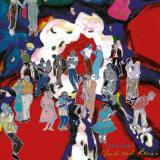
Limited Edition - 180g red-black marbled vinyl in poly sleeve w/ art print insert - 200 copies with no repress The Technokunst label journey continues with the third iteration of the Split Series, bringing together two long-standing figures from the deeper reaches of Techno. This time, Japan’s Takaaki Itoh and Scotland’s Deepbass are proving that in Techno, nothing is lost in translation. The EP opens with Takaaki‘s signature, timeless mental synth workout, “Fusioner”. Deepbass strips the original back to its core elements and takes the track in a much more minimal, yet functional direction that we’re sure is going to work wonders on any floor. On the flip, Deepbass continues to venture into more emotive territory with his original “Monolite”. Unafraid to use vocal pads, the track is brimming with emotion, giving it a distinctly cinematic feel, like a story unfolding. Takaaki closes the record with a pounding iteration of “Monolite”, with tones like those straight out of an astromech robotics division. Mastered by Gio at Artefacts Mastering and lacquer cut by Simon at The Exchange. The artwork is based on a digitally scanned painting on canvas by Dorka Berkes.
EURO2086 is the DayVentura’s second EP; compared to “The Midnight Man”, released in February on Slow Motion Records (focussed on more modern sounds), this time gives more attention to his roots and focus on the 80-90s European electronic dance sound and style.
Alan Vegas ,Live at Max's Kansas City" fängt einen der furchtlosesten Innovatoren und Visionäre der Musikszene in voller kreativer Kraft ein und verwandelt diesen Punk- Club, eines der kultigsten kulturellen Wahrzeichen New York Citys, in ein Theater aus roher Performance, klanglichen Experimenten und kompromisslosem künstlerischem Ausdruck. Aufgenommen am 18. Juli 1980, nur wenige Wochen vor der Veröffentlichung seines bahnbrechenden selbstbetitelten Solo-Debüts, zeigt der Auftritt Vega an einem entscheidenden Punkt in seiner Karriere, an dem er eine einzigartige künstlerische Sprache entwickelt, in der Rockabilly, Blues, elektronischer Noise und Performancekunst mit elektrisierender Intensität zusammenfließen. Auf sieben Titeln wird Vega von dem jungen texanischen Gitarristen Phil Hawk begleitet, dessen messerscharfe Gitarrenarbeit sich mit Vegas Tonbandmanipulationen und experimentellen Klängen verflechtet, um seine kompromisslose klangliche Vision zu verstärken. Eher vom Instinkt als von Konventionen getrieben, fängt das Album die Kollision von Rockabilly und Blues mit elektronischen Experimenten, unerbittlicher Energie und der radikalen künstlerischen Freiheit ein, die Vegas Karriere prägten. ,Live at Max's Kansas City" ist ein lebendiges Dokument davon, wie Alan Vega am Beginn seiner Solokarriere stand - mit dem unerschütterlichen Engagement seiner kreativen Kräfte. Jeder Schrei, jeder Pfiff und jeder Ausbruch des Publikums wird Teil der Performance selbst und bewahrt den explosiven Austausch zwischen Künstler und Publikum, der Vegas einzigartige Bühnenpräsenz ausmachte. Entdeckt von Liz Lamere und Jared Artaud im Alan-Vega-Archiv, dem ,Vega Vault", wurde ,Live at Max's Kansas City" von Josh Bonati aus den Original-Live-Aufnahmen remastert, wobei die Bänder von Ted Young übertragen wurden. Diese historische Performance, die ein weiteres bisher unbekanntes Kapitel aus dem ,Vega Vault" enthüllt, ist zum ersten Mal auf Streaming-Plattformen und auf Vinyl erhältlich .
Balaise was the original title of Vers le Nord’s debut album. In French slang, balaise means something in between badass and flamboyant. The word keeps popping up throughout the record, like a teenager’s graffiti scrawled on a bus shelter after a few drinks. Balaise robots. Balaise ghosts lurking in the shadows. Balaise is the barfly who fantasies about becoming a street vigilante. In many ways, Matthieu Pellerin's new solo project is entirely contained within that word: a gigantic piece one man against the world cobbled together, a monument shaped by hand using layers of synthesizers sounding like cathedral organs cast in concrete.
Stitching this type of freak together took time. Five years, or what sounds like forever in an age obsessed with career trajectories and content strategies. But for Matthieu Pellerin, it was never about career plans or taking the easy road. Or he would have dug up the rotting corpse of Oi Boys, his now-defunct band, whose brief existence and explosive popularity once united sullen skinheads, gothic street punks, and old school punks alike. Or he would have fully embraced the Metz scene, now that the Great International Triple Alliance of the East (Noir Boy George, The Dreams, The Feeling Of Love...) and rising solo acts like Tune Zitoune, Josy Bazar, Fantôme Josepha, and Tony Gerrano have somehow transformed this sprawling open-air heroin camp into an unlikely capital of cool. But Vers le Nord doesn't point East, and it is as a lone rider that Matthieu Pellerin can fully reveal his songwriting scope.
With Le Seul Élément, his first solo project, the Lorraine native had already shown a rare gift for crafting worlds. Picture vast sonic masses stretching like industrial zones, noise-filled fog pierced by pale neon lights and landscapes caught somewhere between the gnarliest dive bar and a doomsday bunker. And slipping through the soul-crushing slowness and fractured blackened atmospheres, one could perceive a throwback to his years plotting in black metal-tinged Loth and Bishop.
Vers le Nord populates those landscapes that once were rough sketches. Damaged characters reign supreme, with a plethora of exquisite mutts brought to life, rather than outcasts committed to the cause. Where Nuits Blanches —his new supergroup featuring members of Rixe, Lion's Law, Headbussa and La Femme— pulls no punches with raw confessions, Pellerin switches gear for tales of robot apocalypses, vagrants and fam-seeking school shooters, delivered with William Sheller-esque rhymes and striking images. Yet even within fiction, he manages to create something deeply intimate, almost defining, showing very little effort: he is a natural. All in all, à l’aise (at ease). Songs resonate deeply with the listener, perhaps because of Pellerin’s odd way or always addressing someone without ever really naming them, a floating, obsessive and inescapable “you” calling us out.
Despite all of the darkness, Vers le Nord stirs deep emotions. There is something of Type O Negative or Anna von Hausswolff in its constant collision of the ludicrous and the epic gothic, its bleak romanticism that never tells a sordid tale. While the vocals remain rooted in a distinctly French punk lineage—think No Class, La Souris Déglinguée and OG Bérurier Noir—the reactor core is hidden somewhere else. Oneohtrix Point Never feels like a closer relative with his ultra-emotional music made of cold synths and disembodied anthems, swallowing and regurgitating forty years of icy, contemplative new wave across ten songs. It comes as no surprise that Lila Ehjä and Aimable, two rising specialists in lowering the temperature below seasonal norms, appear on “Enterrez-moi bordel” (“Bury Me, for fuck's sake”), a grandiose, spectral and magnificently arrogant finale. And in the end, Vers le Nord starts where the original idea was hiding all along: somewhere amid the ruins, definitely balaise and yet somehow, completely à l'aise.
St. Panther is the recording project of Dani Bojorges-Giraldo (they/them), a Mexican/Colombian artist, producer, singer, rapper, and multi-instrumentalist living in East Los Angeles. On their full-length debut, East Side Love Story, they dedicate an effervescent, soulful set of love songs to the place they call home.
The project has developed over the past six years within the walls of their East Los Angeles apartment. Friends, lovers, sounds, and songs, the essence of the East Side pours through the windows as an endless stream of distinctly Latino taste. Chicano soul, Motown classics, G-funk anthems, and other feel-good oldies fill the air with warmth and romance. Everything imbues the timeless East Side Love Story, arriving in 2026 on the art-forward label drink sum wtr.
Volume 1 - Growth
Resurrection is a long-term musical work that has accompanied Christine Benz for almost twenty years. The first track was created in 2007 (track id - Born after Code), with another piece added nearly every year thereafter.
Throughout this time, she continued to produce other music while steadily developing her artistic language.
Musically, the album moves between minimal techno, ambient and experimental electronic music. Across different phases of her life, Resurrection gradually grew into an archive of her personal and musical evolution.
The complete work unfolds as a trilogy across Volumes 1-3.
At its core lies her fascination with sound as material. Rather than thinking in terms of conventional melodies, she works with textures, vibrations, and spatial relationships. A small number of elements give rise to complex sonic spaces, where minimal changes can have a profound effect. Mistakes, chance occurrences, and unexpected responses from the systems she uses also become part of the music. Even from chaos, remarkable structures
emerge. Whenever unplanned beauty reveals itself, she preserves it as a small “miracle” in which control and chance intertwine.
The complete work unfolds across three chapters: Growth, Structure and Resonance, exploring repetition, frequency, perception, consciousness and technological development in the relationship between humans and
machines. It moves from origin through the formation of an internal order towards connection and interaction.
Volume 1: Growth, draws upon the Fibonacci sequence and the spiral as symbols of natural development, with the music growing through repetition and minimal change into increasingly complex forms. Throughout the
project, technology appears as a tool, a partner and a mirror of our perception, raising the question of whether consciousness, responsibility and empathy can evolve alongside technological progress.
During the project’s long evolution, Donato Dozzy developed an interest in Christine’s distinctive sound design.
In 2021, this led him to propose his own interpretation of Our Determination for Volume 1, subtly reworking the track through his own musical perspective.
The artwork developed by Christine also went through a creative process of its own. The original photographs were taken in a basement around 2019, with a wet curtain draped over her. In 2026, she decided to transform
this visual world into a moving-image artwork. For the production, a film crew reconstructed the entire setting.
The video shoot demanded a great deal from Christine: after several hours beneath the wet curtain, the cold was no longer merely part of the staging. This elaborate creative process gives the artwork its distinctive character
and makes it an essential part of Resurrection.
The first chapter will be released in November 2026 as a double-vinyl edition housed in a distinctive gatefold sleeve with an inside-out finish, matte varnish, and partial raised spot UV varnish. Two further double-vinyl
releases, Structure and Resonance, will complete the trilogy. All three volumes will be released on Pirat Records.Records.
Half a century after its original release, legendary Lebanese musician and singer Marcel Khalife—renowned oud player and global icon of both music and activism—returns with a new recording. On this album, he reinterprets four of the five tracks from his debut, Promises of the Storm. A bold defiance of time and history.
Why revisit the same album, 50 years later? The reasons are many, but one stands above the rest: history itself seems to be repeating. The narrative unfolds once more in the same dire circumstances as half a century ago, as if time has folded in on itself, returning everything to its starting point. The urgency, the necessity—it all remains, pressing and inescapable. We must begin again.
In 1976, a young Marcel Khalife found himself exiled in Paris, fleeing the Lebanese Civil War and his family’s Christian village, where his progressive, left-wing ideas had placed him under a kind of house arrest. He was one of the few to openly and unwaveringly champion the Palestinian cause. The situation quickly became untenable, especially since, just a month before the war began in March 1975, Khalife—fresh out of the conservatory—had given his first public concert to great acclaim. Then, everything collapsed. What does one do when trapped at home? Read books, play the oud, and turn those readings into songs. In his family’s de facto prison, Khalife began setting the poetry of the great Palestinian poet Mahmoud Darwish to music. These songs, born of confinement, he carried with him into exile, driving to Paris where a producer offered him the chance to record an album. Naturally, the tracks were the ones he had been improvising at home from Darwish’s poems. The album’s title, Promises of the Storm, echoed the war that was just beginning. Khalife recalls that the album became a hit after a concert at the Fête de l’Huma, where 500 copies were sold in a single day. “Everything started there, and it never stopped,” he remembers. He would meet Mahmoud Darwish shortly after, at a dinner organized by mutual friends. From that moment, a deep friendship blossomed between the two men.
With Darwish’s words and Khalife’s music, the songs of Promises of the Storm are imbued with a powerful evocative force—melancholy, tenderness, and poetic resistance in the face of violence. The album catapulted Khalife to international stardom, leading to endless tours and recordings, yet he never abandoned his commitments.
Now, 50 years later, Promises of the Storm returns in a fresh recording, because history is repeating itself. After the Israeli bombings in Lebanon at the end of 2024, Khalife, who was on tour, found himself stranded in Paris. He remembered a recurring request from his son, musician Bachar Mar-Khalife, who had often urged him to re-record his now-classic debut album. One morning, oud in hand, Marcel knocked on his son’s door and said, “Shall we? I’m ready to record.”
These new versions are stripped down, raw, and intimate—just the solitary strings of the oud. Khalife sings as never before, his voice no longer marked by the fragility of youth but imbued with something deeper, freer, unshackled. It soars high yet resonates low, always clear, as if to escape sadness, to evoke love and violence, desire and exile. In just four songs, Khalife encapsulates a lifetime, and a philosophy of life. Rita tells of a love of Darwish’s, with the haunting line (translated from Arabic): “Between Rita’s eyes and mine, a rifle.” Oummi invokes the figure of the mother as a metaphor for the lost land. Promises of the Storm is a meditation on revolution, the hope for change, the melancholy of defeat, and the power of thought. Passport captures, through poetry, the feeling of being stateless—a citizen of everywhere and nowhere.
Time has only strengthened these texts and this music. History never repeats itself without a valid, indispensable reason for the present. That reason is fully contained in Marcel Khalife’s new interpretations, which have never sounded so clear, so right, so essential.
Fourteen years have passed since Woollen Kits released two albums in a single year (Woollen Kits and Four Girls, both 2012), but Melbourne/Naarm’s beloved Kits are back to remind us what we’ve been missing all this time.
Weather the Storm still draws from the same deck of cards, but opens the door to some more classically renowned influences like The Velvet Underground, Television Personalities, Beat Happening ,Marine Girls, Bob Dylan, Van Morrison, et al.
Across ten tracks it’s clear just how well they can write a hook, a verse, a chorus, a song; bringing together themes of everyday life, love and sincerity with aphorisms, stories and the classic sound we know and love.
Woollen Kits’ approach is almost as minimal and primitive as it was back in 2007, when singer/guitarist Tom Hardisty first sent a few channels into the red on an old Tascam tape machine. Simple chords, strong melodies, witty lyrics and a clear message. It’s a hell of a combination when it’s done well, and one they would only refine from there.
Tom (Hardisty) recruited a second Tom (Ridgewell, drums) and a Leon (Applebee, guitar) to help guide his new Cramps/Half Japanese- worship bedroom project into a real-life band, playing their first gig on NYE ’08 before launching into 2009 to record their first canon release, the Teenage Love 7”.
Yes, much time has passed since the band’s last record, Four Girls, came out in late 2012, but in the interim members have released plenty of other music across numerous projects, including Constant Mongrel, Nun, Canine Apathy, The UV Race, TB Ridge as The Director, Calamari Girls & more.
Mit „La Forteresse“ schlägt Pomme ein neues Kapitel ihrer künstlerischen Laufbahn auf. Auf ihrem fünften Studioalbum präsentiert die heute 30-Jährige ein zutiefst persönliches Werk, das sie erstmals vollständig selbst produziert hat, unterstützt von den Musiker:innen ihrer Live-Band.
Konzipiert als Fabel in vier Kapiteln, erzählt „La Forteresse“ eine Geschichte der Emanzipation: von der Kindheit und ihren Prägungen über die Liebe und ihre Verletzungen bis hin zu den Mauern, die wir manchmal durchbrechen müssen, um uns selbst neu aufzubauen.
Entstanden über mehrere Jahre hinweg zwischen Japan, dem US-Studio von Aaron Dessner und dem Château de la Haute-Borde, schöpft das Album seine Bildsprache aus Burgen und Wäldern, mittelalterlicher Mythologie sowie den fantasievollen Welten von Hayao Miyazaki. Musikalisch entfaltet Pomme dabei ein so vielschichtiges Universum wie nie zuvor, in dem intimer Folk, Klavier und Stimme, akustische Gitarren, Synthesizer und opulente Orchestrierungen aufeinandertreffen.
Stück für Stück fällt die Rüstung, und immer mehr Licht dringt in die Festung ein. „La Forteresse“ ist ein intimes, reichhaltiges und zugleich strahlendes Album, das eine Pomme zeigt, die freier und selbstbestimmter wirkt als je zuvor und ihr künstlerisches Universum vollkommen beherrscht.
As a longtime member of Hot Chip and LCD Soundsystem, Al Doyle has spent decades working alongside two of the most distinct vocalists in modern pop: Alexis Taylor and James Murphy. If he’s had a song or an idea, there’s always been someone else he’d rather have sing it.
But on November 20, 2026, the British multi-instrumentalist will release Hollywood Saviour, an album that drove him to finally embrace his own voice. “It’s me discovering a way to write and sing stuff that I could live with,” he says of his first-ever solo outing.
Recorded in his East London studio, Relax and Enjoy, Hollywood Saviour has the feeling—the rush and release—of a breakthrough, of an artist letting go. Doyle’s found freedom in simplicity here, leaning into the many pleasures of guitar-bass-drums, indulging wholeheartedly in the weird, spontaneous, raucous, and raw. He sounds free.
That sense of fun and rampant possibility can be felt in every groove, Doyle finding added inspiration in the loose and the louche, from Sexual Harassment’s 1983 electro-funk raunch-o-rama “I Need A Freak” to Throbbing Gristle’s locomotive 1980 paean to jerking off, “Something Came Over Me,” which is lovingly covered here.
At times, this album feels like a delirious response to the darkness of our current moment. On opener “Hard Times in America,” Doyle offers us a psychedelic window into his experiences traveling back and forth to the United States in recent years, feeling fascism’s hold tighten with each visit.
That sense of character comes through in Doyle’s vocal approach, a giddy combination of Iggy Pop, Pete Shelley, and PIL-era John Lydon. On “All I Want for Christmas”—a dark and devastating highlight—he takes on the shape of a drug addict come holiday season, “both dead and alive,” abandoned by his family, stumbling through a garden of drum machine and piano. It’s a pop song, lovely and lovingly rendered. It just wouldn’t be the same without his voice.
Robbie Williams and Miss Monique release their anticipated collaboration, 'Beauty In Us' via Cr2 Records.
One of the most talked-about unreleased IDs of the summer festival and clubbing season, ‘Beauty In Us’ is a soaring collaboration that blends Robbie’s vocals with Miss Monique’s immersive synths and progressive house production to euphoric, hypnotic effect. The collaboration has already built huge anticipation across the global electronic community, with Miss Monique giving the track its world premiere as the closing record of her Tomorrowland 2026 Main Stage set, before delivering a second standout performance during Carl Cox's weekly residency at Ibiza's UNVRS, where Robbie Williams made a surprise appearance to perform the track on stage for the duo's first-ever live performance together.
The moment became one of the defining highlights of the Ibiza season, generating widespread buzz across socials, cementing its status as one of the year's most anticipated crossover dance releases.
Speaking about the collaboration, Robbie Williams and Miss Monique said: "Our very special musical collaboration inspired by our different but equally defining experiences of electronic music and clubbing in Stoke-on-Trent and Kyiv... from the 90s to the 2010s. It feels right for now. It was a dream to perform it in Ibiza for the first time!" One of the world's most celebrated music artists, Robbie Wiliams continues an extraordinary run following the release of his UK No.1 album ‘BRITPOP’, while Miss Monique has firmly established herself as one of melodic techno's defining global stars through headline performances at Tomorrowland, Coachella, Ultra Miami, EDC Las Vegas and her Hi Ibiza residency, alongside a rapidly growing catalogue of acclaimed productions and remixes.
With ‘Beauty In Us’, two artists from different musical worlds come together to create an emotional, peak-time anthem that bridges generations of dance music culture, from the euphoric club scenes of the 90s and 2010s to today's global progressive/melodic movement.
· Vinyl-Exclusive Extended Mix.
· One of the most talked-about unreleased IDs of the summer festival and clubbing season.
· World premiere at Miss Monique's Tomorrowland 2026 main stage closing set Robbie Williams surprise appearance at Miss Monique's UNVRS set was one of the defining moments of the 2026 Ibiza season.
Vocalisations like ‘Hooo’ and ‘Huhuh’ form the wordplay on Use Knife’s upcoming release as these sounds are meant to summon strength, overcome fear and unleash unwavering sonic assault. Set for November 20, the EP ‘Hooo Huhuh’, on the band’s own Hooo Huhuh record label, is Use Knife’s first release since its acclaimed 2nd album ‘État Coupable’ on VIERNULVIER records in 2025.
The journey of Use Knife began in 2020 during a music residency in art centre VIERNULVIER (Gent, be) when Iraqi percussionist Saif Al-Qaissy, Stef Heeren and Kwinten Mordijck, as well as the multidisciplinary artist and scenographer Youniss Ahamad, came together to form Use Knife, later joined by Jerusalem In My Heart’s Radwan Ghazi Moumneh as mixer and guest musician. The project quickly gained the attention of prestigious platforms like The Wire, The Quietus, BBC6's New Music Fix, KEXP, NTS, Inverted Audio, METAL Magazine, Ma3azef, A Closer Listen, and others documenting the universal resonance of Use Knife's message.
Since releasing its debut album ‘The Shedding of Skin’ on VIERNULVIER, a remix EP ‘Peace Carnival’ on Morphine records, and follow-up album ‘État Coupable’, Use Knife has played its visceral audio-visual liveshows at many prestigious festivals like Le Guess Who?, Tremor, Colours of Ostrava, Les Trans Musicales, Rewire, Sonic City, Resonator, Roadburn, Donau, Fusion, Rage Sacrée, Micro, Clandestino, E-fest and many more.
Praised by The Quietus and The Wire for its vibrant and wholehearted performances, Use Knife has been described as an electrifying live act that fully engages its members and audience alike. Their sound, dubbed 'industrial Iraqi EBM', is celebrated for its ability to immerse the audience in a hypnotic state, erasing global borders through real-life connection and dazzling visuals on gigantic projection fabrics, resulting in exhilarating sensory experiences.
Further extending Use Knife's influence, Radio alHara in Palestine has hosted Use Knife's 'Feeding the Gentry' show since 2023, where the band aims to build a community by opening their platform to other guests like Saint Abdullah & Eomac, Monstera Occulta, Cinna Peyghami, Bader, Anthony Sahyoun, ... thus broadening the band's international reach and impact.
Earlier this year, Use Knife collaborated with Rabih Beaini from Morphine Records to re-remix the band’s track ‘To Feed the Gentry’ (feat. Radwan Ghazi Moumneh), blending in the beautiful track ‘Kunna’ by Rully Shabara. The resulting track was included in Beacon Sound’s compilation ‘Gaza is the Moral Compass’ to help support Palestinian-led mutual-aid groups on the ground in Gaza.
The forthcoming 'Hooo Huhuh' EP, releasing on November 20, advocates for the resilience and determination of the people, their collectives and communities, with energetic vocalizations, distorted percussion and throbbing saxophones. The title track, originally mixed by Radwan Ghazi Moumneh and mastered by Heba Kadry during the ‘État Coupable’ sessions, has been surgically reworked into the clubby rant that is ‘Ho Hahaa Huh’ and the drone-like mantra ‘Nobody Can Separate Us محد يكدر يفركنا’.
The limited vinyl edition comes with a 3-color risoprinted sleeve designed by Lebanese artist and graphic designer Farah Fayyad.
In 2022 bracht Hendrik Lasure met 'Het Wiel' voor het eerst een album onder eigen naam uit. Vier jaar later krijgt die plaat een vervolg met 'De Val': elf eigenzinnige Nederlandstalige songs waarin Lasure een wereld bouwt die ergens tussen het alledaagse en het magisch-realistische zweeft.
Waar 'Het Wiel' nog terugblikte op de kindertijd, draait 'De Val' rond verbinding en het gebrek eraan. Melancholie en sehnsucht lopen als een rode draad door het album, maar Lasure verpakt ze in poëtische taferelen waarin de gewone wereld voortdurend een beetje uit haar voegen raakt. Mensen gooien stenen in de slotgracht van een paleis, de avondzon kleurt de hemel paars en een toevallige ontmoeting kan zomaar een heel nieuw universum openen.
Ook muzikaal kiest Lasure voor de essentie. Voor 'De Val' verruilde hij zijn vertrouwde piano tijdens het schrijven voor een gitaar, een beperking die de songs hun eigen vorm en directheid gaf. Producer Koen Gisen hielp die wereld verder uitbouwen, samen met onder anderen Meskerem Mees, Jolan Decaesteker (Ão, Mooneye), Aya Suzuki en Sep François.
Het resultaat is een spaarzaam gelaagde plaat met veel ruimte voor Lasures karakteristieke manier van zingen: ergens tussen melodie en poëtisch parlando. Referenties als Spinvis, Mount Eerie, Sun Kil Moon en PJ Harvey zijn nooit ver weg, maar 'De Val' heeft bovenal een heel eigen signatuur. Avant-kleinkunst, nu-pop ofiets waarvoor nog geen naam bestaat: Lasure maakt muziek voor wie graag even uit de werkelijkheid verdwijnt.
Acid Pauli's new album "Mystic Meltdown" is hypnotic mystery, textural mastery, all hurtling through your system at peak velocity, unrelenting yet full of mischief and spirit.
The first full-length Acid Pauli album since 2020's MOD, here the artist, Martin Gretschmann, who you might also remember from Console and The Notwist, reaches out to collaborators, unearths new sounds through travel and then brings it all together with one long, sweeping breath - an album to take in as a whole, to ride its compulsive energy to the end and then back to the start, over and over again.
While the album's been brewing for some time, "It took months and months to find the coherency and the story that this album is telling," Gretschmann recalls, "Arranging the pacing, feeling how the tracks come together into one album", it reads as effortless. It draws from Gretschmann's various musical languages, from the techno, house and ambient of Acid Pauli, even reaching back to the electronica of Console, but it places them in new contexts, at new speeds and in rich, giddy contrasts. Mystic Meltdown feels like endless pleasure, unflagging energy.
It's also an album rich with multiplicity. There are many voices that visit us at the Mystic Meltdown, from Hani Mojtahedy's Kurdish vocal on "Goman (Remix)", through to Lhasa de Sela's "Con Toda Palabra" in Spanish. A sample of Kingdom Molongi's voices opens the title track and returns on "Mystic Feedback" - this feels like a particularly profound connection, given the inspiration that Gretschmann has gleaned from the musical community surrounding the Nyege Nyege Tapes label and organisation over the years. He's also appeared at one of their festivals, by all accounts a revelatory experience.
Sometimes Gretschmann reaches back yet further. "Yes, Caroline" hints at an abstract relationship with the Beach Boys' pop masterpiece, Pet Sounds. Yet the way he draws these various influences into his own music always displays more than a touch of transmutation. Releasing the album on his own label All Is Acid which has recently been undertaking a reissue program of some of Acid Pauli's earlier works, "Mystic Meltdown" feels like a complete expression for Gretschmann; from beginning to end, from creation to reflection. "Building up, going into different spheres and emotions," Gretschmann concludes. "Working through some darker shades, trying to find light. Pouring in to get through."
** Vinyl-exklusive Tracks
Kosmische Psychédélique (Motorik, Astral and Avant-Garde Musik from Deutschland and Beyond 1970–2025)
Der neue Two-Piers-Sampler "Kosmische Psychédélique" entführt den Hörer auf eine Reise durch die hypnotische Welt der Kosmischen Musik – von den wegweisenden Motorik-Beats, elektronischen Experimenten, psychedelischen Klangwelten und avantgardistische Ambient-Sounds des Deutschlands der frühen 1970er Jahre (La Düsseldorf, NEU!, Harmonia, Cluster, Brainticket, Klaus Schulze, Popol Vuh, Faust, Guru Guru, Tangerine Dream) bis zu zeitgenössischen Künstlern, die deren astrale, ambiente und avantgardistische Möglichkeiten von Wiederholung, Textur und Raum auch heute noch ausloten.
So schlagen Acts wie Boards Of Canada, Turzi, Tortoise, Beak>, Pale Blue Eyes oder The Early Years Brücken zu Post-Rock, Shoegaze und Electronica, und veranschaulichen damit, wie das vor über fünf Jahrzehnten in Deutschland etablierte musikalische Vokabular bei einer neuen Generation psychedelischer und experimenteller Künstler Anklang fand und findet – und bis heute noch nachwirkt.
Wie alle Ausgaben der "Psychédélique"-Serie ist auch diese Ausgabe keine Crave-Digger-Sammlung obskurer, schwer zu findender Raritäten, sondern eine Hommage an die Kosmische Musik, die die Gelegenheit bietet, in ihre eigenwillig-wunderbaren Klänge einzutauchen und ihre Genialität zu genießen.
Antonio Carlos Jobim was definitely one of the most important artists in the bossa nova movement of the 1960s. The pianist and guitarist wrote the iconic "Desafinado" and, probably the most famous song in the genre, "The Girl from Ipanema". His elegant style of playing the music became the blueprint for the genre and inspired many.
Stone Flower is the album where you hear Antonio Carlos Jobim evolve in response to the new trends of the 1970s. His gentle and signature melodies are still there, but there are new elements; you here for example an electric Fender Rhodes. These changes only add to the timeless sound of Stone Flower.
The album has an impressive line-up of artists that were at their creative peak such as Ron Carter, Airto Moreira, and Eumir Deodato. Producer Creed Taylor and engineer Rudy Van Gelder give it the warm, high-quality sound that's typical of many CTI releases.
Stone Flower is available as a limited edition of 2000 individually numbered copies on transparent/black marble vinyl.
Eve 6 is the debut studio album by American alternative rock band Eve 6, originally released in 1998. The lead single and popular song "Inside Out" became a hit and reached #1 on the Modern Rock charts. Other singles include "Leech", "Superhero Girl", "Open Road Song" and "Tongue Tied", all contributing to the album's wide recognition.
The album was produced by Don Gilmore, known for his work with Linkin Park and Good Charlotte. Eve 6 became certified Platinum, selling over one million copies in the United States and achieved high positions on the Billboard charts, making it a hugely successful rock debut.
Eve 6 is available as a limited edition of 1500 numbered copies on yellow & white marble vinyl. The record comes in a deluxe sleeve finished with leather laminate and includes an insert with lyrics and liner notes.
What is an edit? A correction, a confession, a DJ tool, a mild act of vandalism—or simply the result of listening to somebody else’s record and thinking: very good, but what if this bit went on a little longer?
For his contribution to the Running Back Mastermix series, Gilles Aiken aka Edward opens a folder that has apparently been filling up for quite some time.
The Giegling resident’s thirteen edits reach back through years of DJing, collecting and producing. Made for sets rather than release schedules, they form something like a musical autobiography told through other people’s records: Carl Craig, Roman Flügel, Motohiko Hamase, Kirk Degiorgio, Aubrey, Sven Väth, Michael Rother and more.
From Japanese ambient jazz and Detroit techno to dub techno, house, trance and kosmische music, these are not attempts to improve records that didn’t need improving. They are the small interventions that happen after living with music for a long time: a rhythm exposed, an entrance moved, a passage extended, the unnecessary made necessary.
“These records mean a lot to me,” says Edward. “They consist of edits I’ve gathered over the years, some of them going way back. In a way, they reflect my musical journey. All of these artists have been a huge influence on me as a producer and DJ.”
Usually, such edits remain on hard drives, USB sticks and in vaguely labelled folders. This time permissions were requested, publishers located and, somewhere, presumably, a spreadsheet became very important.
Miraculously, everybody said yes.
Thirteen thank-you notes to the music that helped make Edward Edward. Naturally, they require three records.
Mastermixed accordingly.
Also available on cassette,
What is an edit? A correction, a confession, a DJ tool, a mild act of vandalism—or simply the result of listening to somebody else’s record and thinking: very good, but what if this bit went on a little longer?
For his contribution to the Running Back Mastermix series, Gilles Aiken aka Edward opens a folder that has apparently been filling up for quite some time.
The Giegling resident’s thirteen edits reach back through years of DJing, collecting and producing. Made for sets rather than release schedules, they form something like a musical autobiography told through other people’s records: Carl Craig, Roman Flügel, Motohiko Hamase, Kirk Degiorgio, Aubrey, Sven Väth, Michael Rother and more.
From Japanese ambient jazz and Detroit techno to dub techno, house, trance and kosmische music, these are not attempts to improve records that didn’t need improving. They are the small interventions that happen after living with music for a long time: a rhythm exposed, an entrance moved, a passage extended, the unnecessary made necessary.
“These records mean a lot to me,” says Edward. “They consist of edits I’ve gathered over the years, some of them going way back. In a way, they reflect my musical journey. All of these artists have been a huge influence on me as a producer and DJ.”
Usually, such edits remain on hard drives, USB sticks and in vaguely labelled folders. This time permissions were requested, publishers located and, somewhere, presumably, a spreadsheet became very important.
Miraculously, everybody said yes.
Thirteen thank-you notes to the music that helped make Edward Edward. Naturally, they require three records.
Mastermixed accordingly.
Also available on cassette,
TAR050 Sub Basics & Thanos Hana - Tar 50 TH Tar Hallow __ The bass and drums clears slightly out of frame. The synth lines are watching a sudden wide-open space from a blinding altitude. The voltage remains, refusing to settle for comfort. Sub Basics and Thanos Hana building a record that hammers one stubborn head cornerstone. Then you get four dubs and fifty undeniable grooves.
In their countless years of deep digging, Dark Entries has uncovered many curiosities, oddball Italo and synth-wave creatures too rare to live, too funky to die. Dark Entries’s conservationist efforts began with 2020’s Endangered Species Vol 1. Six years later, we are finally treated Endangered Species Vol 2, an even more ambitious effort which features eleven specimens previously deemed extinct, now safely preserved on vinyl. Things kick off with an extended mix of Palazzo di Danza’s “Play That Song For Me,” a lavishly produced German-Italo number propelled by a slinky bassline. Russian Olga Vosconyan’s “Cars” delivers what might be the moodiest song ever produced for a car commercial.
Fuzz Dance maestro Alexander Robotnick appears with a previously unreleased male vocal demo version of “I Wanna Believe,” a legendary track that would later appear under the name Gina & the Flexix. Canadian industrial royalty Dwayne R. Goettel (Psyche) and cEvin Key (Skinny Puppy) team up on the horror-sampling hit-heavy blaster “Bastards.” Belgian EBM progenitors à;GRUMH... report for duty with a slab of machine funk on “The Army.” UK DIY stalwarts Khmer Rouge bring Krautrock-inflected minimalism with “Take Me (Across the Floor Tonight) In Dub.” Endangered Species Vol 2 comes housed in a sleeve designed by Eloise Shir-Juen Leigh, and includes a 16 page booklet featuring liner notes, lyrics, and photographs of each featured project. Please assist Dark Entries in their efforts to preserve the rarest of beasts (and beats).
King Street Sounds continues to reissue house classics from their legendary back catalogue, this time releasing a second VA sampler featuring four deep soulful house tracks.This compilation showcases dancefloor fillers from notable artists such as Dennis Ferrer, Lil Louis, Masters at Work, Mood II Swing, and Kimara Lovelace. These underground anthems have stood the test of time and still sound as fresh as when they were first released.House music enthusiasts can once again come together and take the opportunity to own these incredible tracks on this fantastic EP.
A well needed vinyl re-issue of these sought after Break 3000 Electroclash classics from the period 1999-2003.
Originally released on Meuse Muzique in Maastricht, The Netherlands.
"Plastique People feat. Zusi" became a club hit again these past few years and saw the original vinyl prices soar on Discogs. "Last Emotion" was previously unreleased and brought back to live again thanks to the great Argentinian label "Calypso's Dream" who did the fine "The Rise Of Poseidon I" release three years ago that also included the fierce banger "Sacrifice", which became a hit back in the days when it was first featured on the massive DJ Kicks compilation by Tiga in 2003. The re-issue by "Calypso's Dream" sold out in a few weeks and was never re-pressed. The vocoder anthem "Emolotion" saw a vinyl only comeback on the cool Italian label "Mondo Phase" from Milan together with "Plastique People" in 2023, these limited copies were gone in days as well.
As a lot of people missed out on these Electroclash anthems by Break 3000 in the first vinyl re-issues we thought now is the right time to give them another run and make them available again. Enjoy!
All tracks were re-mastered by Salz Mastering in Cologne. Music & Art by Break 3000.
The next WOLF Music EP is here, and once again it comes courtesy of a new addition to the label roster. New York-based DJ and producer DJ Alone Again is a natural fit for what we do at WOLF, delivering a sound that hits that sweet spot where deep meets soulful, with the raw, understated energy of the authentic New York underground running through every track.
With a growing catalogue of original productions and edits, DJ Alone Again has released music through labels including YORE Records, House Salad Music, Dobro, Fantin Zoo Records, and Dealt With Records. His musical roots extend beyond house, too. Earlier work with the band Vain Pursuit, alongside a wealth of SoundCloud mixes and underground edits, reveals an artist with a deep appreciation for melody, songwriting and the emotional side of dance music.
Opening the EP is ‘Freedom of House’, a sublime take on the classic NYC-meets-Chicago deep house sound. Warm, soulful and hypnotic chords sit at the heart of the track, surrounded by intricate, skippy percussion and a deep, driving bassline. Carefully placed female vocal snippets drift in and out of the groove, while a spoken-word ode to the freedom and self-expression that house music offers provides the track with its emotional centre. It’s a celebration of movement, individuality and that unspoken connection forged on the dancefloor.
On the A2, ‘State of Flux’ keeps those warm, evocative chords front and centre, building an infectious groove around an instantly memorable melody courtesy of the vibes. Subtle synth strings add depth and atmosphere, bringing a touch of late-night melancholy to the arrangement, while the rhythm rolls steadily underneath. Everything is expertly layered without ever feeling crowded, giving the chords, melody and percussion room to breathe whilst pulling the listener deeper into the track.
‘Horizontal Patterns’ takes the winning formula of ‘State of Flux’, adding a beautifully understated vocal hook that sums this track up perfectly: deep in the groove.
Closing out the EP is ‘In Your Orbit’, a serene, dream house number with a deeply hypnotic edge. Ethereal flute lines drift through the arrangement, weaving around vocal phrases that seem to lift the consciousness somewhere beyond the dancefloor. There’s a sense of weightlessness and escape in the arrangement, but the dance floor pulse courtesy of the warm chord stabs never lets you float too far away. Dreamy yet deeply rooted, it’s a meeting point between introspection and movement; music to lose yourself in.
If this EP had landed on Guidance 30 years ago, it would probably be changing hands for a small fortune on Discogs by now.
Landing on the 4th of September via his own imprint Knee Deep In Sound, ‘Obsessions’ is less a traditional dance record and more a reckoning — with where Daley Padley finds himself now, as an artist and as a person. Written across a period of constant movement, touring and introspection, the album holds the push and pull between intensity and stillness that has come to define his world.
This is an artist who started making music in Barnsley — long nights, small rooms, total commitment to sound. Those early marathon sets weren’t a stepping stone to something else. They were the foundation of everything that followed: global tours, chart success, the creation of Knee Deep In Sound, a career built entirely on instinct rather than expectation. Hot Since 82 has never followed a fixed path. He’s carved out a space that sits somewhere between underground credibility and global reach — and it’s that same restless, uncompromising approach that shaped this album.
“Some days feel heavier, some thoughts harder to hold. But music still reaches the places words can’t. It’s therapy and a reset button.”
That sense of release runs through the entire record. While rooted in house music, Obsessions doesn’t sit in one place for long — not to prove a point, but because that’s simply how Padley hears music. It moves between deep house, breakbeat, melodic electronica and full club focus as naturally as a conversation shifts tone. Moments of euphoria give way to reflection and tensions dissolves into release.
The album opens with ‘All That Matters’ — a track that feels immediately both expansive and intimate and sets the emotional register for everything that follows. From there it unfolds like a journey rather than a sequence.
Lead single ‘Shaded’, landing on the 12th June taps directly into classic house lineage while feeling unmistakably current — a bridge between where this music began and where it’s heading. Elsewhere, ‘Life’s Too Short’ and ‘Eternity’ introduce warmth and movement, weaving piano, breakbeat and subtle Afro influences into the album’s wider palette.
As the record progresses, the light changes. ‘Wow’ leans into darker, late-night territory — tension, restraint, a hypnotic centre. The collaborations with Kuuda on ‘State Of Mind’ and ‘Time’ bring the album back into full club focus: driving, physical, built for scale.
Astro’, the new double LP by Donato Dozzy, is in many ways a culmination and intersection of life-long interests, and Tresor Records is delighted to announce that it will launch into the cosmos on November 20, 2026.
Donato Dozzy is beloved for his way of blending synthesised sounds into seamless, deep, hypnotic works, whether as a DJ or in the studio. So it might come as a surprise that at the root and source of Dozzy’s musical inspiration, we find Japanese children’s cartoons and toys.
In the late 70s into the 80s, Italian youngsters, including Dozzy, were captivated by a wave of Japanese cartoons featuring Jumbo Machinders, awe-inspiring robots on adventures beyond our solar system. Every episode came dubbed into Italian, and had its own specially written Italian theme song, each pressed onto a 7inch single. This was the launchpad for two lifelong obsessions: vinyl records and vinyl figurines, and still kept in his home today in immaculate, carefully tended collections.
In 2025, Dozzy took a sample from the first of the Japanese themes he ever owned, Astro Robot Contatto Ypsylon. Marking the first time he had directly sampled a song for his own work, later to become the track ‘Astro’, this created an impulse to begin a series of new music, sparked by the robots in his collection.
Dozzy’s meticulous respect for his collections is reflected in the precision of these tracks. Elements within each track are harmoniously organised together while ever retaining a sense of space that reflects the cosmic subject matter. Explorative tracks like ‘Raydeen’, and ‘Himika (M Song)’ exemplify this with powerful yet gentle arpeggios, while ‘Pegasu’ brings forth visions of robots assembling for a deep-space mission launch.
Much like the human characters in the cartoons who piloted the Jumbo Machinder robots, on ‘Astro’, Donato takes control of mighty machines such as the EMS Synthi AKS to create sonic journeys for us all to embark on. ‘Jumbo Crack’, written on the AKS, is a soaring beatless piece built of rising bass tones and white noise that combine to conjure taking off from earth or a long journey through space. The whole collection is rounded out with ‘Ryoma (Lò Song)’, a gigantic trance anthem that could easily be the closing credits of your favourite childhood cartoon.
With ‘Astro’, Donato Dozzy pulls together threads in his life: the warp of music and synthesisers intertwining with the weft of childhood memories. A tribute to that freedom to dream, and to the sounds that, from the turntable of his childhood, led him toward alien and technological musical territories.
Am National Album Day (NAD), der nun schon zum sechsten Mal stattfindet, kommt die UK-Musikszene jedes Jahr zusammen, um die Albumkultur zu feiern und zu fördern. Das diesjährige Thema der 90er Jahre soll ein Licht auf ein äußerst reichhaltiges Musikjahrzehnt werfen, das sich zwischen Pop, Trip Hop und Hip Hop bewegte: NAD-Release: Nas "It Was Written" - gold & black marbled Vinyl. "It Was Written" war Nas' zweites Album, das 1996 veröffentlicht wurde. Es war ein sehr erfolgreiches, millionenfach verkauftes Album mit Beteiligung von Lauryn Hill, Dr. Dre, Foxy Brown und Mobb Deep. Seit seiner Veröffentlichung war es außerhalb der USA nicht auf Vinyl erhältlich.
TECHNO Records continues its 2026 release series with a new work by Germany-based artist VNNN., a fixture of the Ruhr area’s underground techno scene for more than a decade.
Built around an intuitive search for bearings within a complex personal identity, the record takes Staza — the Bosnian word for path — as its poetic title.
Noir-toned, hypnotic and driving at its core, the music sets deep tension against insistent momentum and call-and-response energy. Each of the four original tracks refracts the same artistic identity in a different way. Together, they form a cohesive, self-assured techno vision. Raw and direct without sacrificing detail, the release reflects the focus of the artist who has produced extensively, released selectively and remained highly self-critical while refining his own sound.
Nadia Struiwigh reroutes “Prava Ljubav,” turning its central hook into what VNNN. describes as a junglistic firework. Her remix extends this portrait with a contrasting fifth state — a genre deviation that reflects both artists’ broad musical outlook and their willingness to move beyond boundaries when inspiration leads them there.
TECH042 gives physical form to the layered outcome of two singular artistic inquiries, turning it into a functional object and marking the debut of both VNNN. and Nadia Struiwigh on TECHNO Records.
DJ Koze unveils a spiritual and surprising journey into rapturous spheres with Wespennest EP. The visionary artist and master of electronic sound, presents his first own release after 2018's global club hit "Pick Up".
"Candidasa" and "Wespennest" are the result of DJ Kozes inspiring stay in a secluded Benedictine monastery on the enchanting island of Sulawesi. Amidst this idyllic setting, he found the perfect environment to unleash his musical vision. He composed all of the music of "Candidasa" while lying on his stomach, in an act of deepest devotion and self-reflection. In doing so, he fed exclusively on so-called heroin kebabs to immerse himself in a trance-like state of creative flow. The result is a soundscape of unimagined depth and beauty that enchants the senses and transports listeners to another dimension by massively increasing the frequency of flicker fusion.
On "Wespennest” the wonderful Sophia Kennedy takes the stage and breathes a new dimension into the music with her impactful lyrics and vocals. With generous dedication, Sophia has provided exclusive excerpts of her yet unreleased songs, giving this track a radiant psychedelic power. The combination of DJ Kozes musical genius and Sophia Kennedy's glorious vocals creates a club track full of wonderment, opening up a mystical rapturous world for listeners. Already an instant classic of German dance music.
With "Candidasa" and "Wespennest" DJ Koze has once again pushed the boundaries of electronic sounds and created a spiritual journey that touches the soul and frees the mind. This EP is the first harbinger of his highly anticipated new album, which will be released in 2024. The time until the release can be wonderfully bridged with the magical album "Hit Parade", which DJ Koze has produced for the British legend Róisín Murphy and on which we can be carried away into the world of musical brilliance.
Ilija Rudman is marking the 30th release on our musical town of Sakskøbing. The Croatian artist has told this particular story how he wanted with 4 tracks crucially being together on this disc so it would be a complete tale of “Egg of the Sun”. From heavenly pads & guitar riffs he has given birth to this particular disc which is ready to enter into the vast world of music. The artist has been putting out discs since the early 2000’s and has developed a vast discography behind his name that only deserves respect and admiration whether he is working solo or in collaborations with other musical souls. The label is welcoming a true visionary to its roster and it can only yield the feelings of excitement, admiration and proudness. The egg is so close to the sun like Icarus used to be in his time however instead of burning it only shines with brilliance.
Amelie Lens' debut album 'AURA' is the first full-length studio album to come from the Belgian artist despite being one of the most respected and sought-after acts in electronic music today.
Of the album, Amelie says:
"'AURA' is my story. Aura is about the connection between the crowd and me. Music has always been my escape, my way of turning my emotions and energy into something new. When I was younger, I would disappear into nightclubs and create myown world in my head. Being in the nightclubs gave me this feeling of belonging somewhere, I felt connection and freedom I had never experienced before. That feeling changed my life completely. So this album really reflects that whole journey. From playing tiny local clubs and driving myself through the night for gigs, to standing on huge festival stages, becoming a mother, building EXHALE and learning how to balance it all in life.
I wanted 'AURA' to feel emotional but still powerful, uplifting but raw. From big festival tracks to the trippy tracks I'd play at 4am at RSO. Although making this album is one of the biggest things I have ever done in my life, I wanted to keep it light and somehow playful. Because that is also how I am as a person. This is the most honest version of myself I've ever shared. I hope it brings some light, happiness and connection to others as it does to me. Because Aura is and always will be about my connection to you."
The album will consist of 11 brand new tracks, all produced by Lens - with one stellar collab, who will be announced in due course.
Scottish producer and label owner Graham Wilson signals a new phase for Seventh Sign Recordings with a four-track EP that blends Detroit techno roots with bright European electronic colours. Across the release, Wilson moves between pulsing four-on-the-floor rhythms, analogue basslines, crisp drum-machine percussion and shimmering synth work. "Mode" opens with an energetic, uplifting drive with steady kicks, pulsing bass and bright synth leads shaped with clean, modern production and side-chained pads. "Oberheim' follows with warm analogue textures, arpeggiated lines and optimistic pads, carrying a classic synth-wave feel while keeping a tight, Detroit-leaning groove. "Are You There" pushes into tense, atmospheric territory: rising pads, crisp hi-hats and a pumping bassline build momentum, giving the track a spacious, late-night techno edge. Closing cut "Parallel Lives" shifts into retro-futurist mode, neon-lit and melodic, evoking 80s energy and nocturnal late night drives. All in, a strong, forward-looking EP that connects machine-soul heritage with modern electronic clarity, ushering a fresh chapter for Seventh Sign.
Techno is an experimental journey: deep, moving, cinematic, carried by science-fiction dreams steeped in true melancholy. Over time, much of this heritage has faded away. The soul and spirituality of the music have receded, giving way to the oversized ego of some, and to the constant need to show off on social media: a techno that looks beautiful, but is sterile, limited, meaningless, with no jazz, gospel or disco influence at all. The innovators, whether African-American in Detroit, Chicago and New York, or German with Kraftwerk, bet everything on the hypnotic and mesmerizing side of this music. "Lost Spiritual" was born from this observation, with a simple idea: to give more credit to the music and what it makes you feel than to the musician's look or haircut. This record is a tribute, an inspiration, and the hope that the spiritual dimension, which was the priority in the early 80s, will never die.
La techno est un voyage expérimental : profond, émouvant, cinématographique, porté par des rêves de science-fiction empreints d'une véritable mélancolie. Avec le temps, une grande partie de cet héritage s'est effacée. L'âme et la spiritualité de la musique ont reculé, laissant place à l'ego démesuré de certains, au besoin permanent de s'afficher sur les réseaux sociaux : une techno belle en apparence, mais stérile, limitée, vide de sens, sans aucune influence jazz, gospel ou disco. Les innovateurs, qu'ils soient afro-américains à Détroit, Chicago et New York, ou allemands avec Kraftwerk, misaient tout sur l'aspect hypnotique et envoûtant de cette musique. « Lost Spiritual » est né de ce constat, avec une idée simple : donner plus de crédit à la musique et à ce qu'elle procure qu'au look du musicien ou à sa coupe de cheveux. Ce disque est un hommage, une inspiration, et l'espoir que la dimension spirituelle, qui était la priorité au début des années 80, ne meure jamais.
For the 4th release on Children of the Sun, we welcome our good friend and longtime collaborator, Cosmic JD, with a hardware heavy EP, a homage to the vintage art of magnetic recording.
Each track embodies Cosmic’s approach to music making: hardware based, machine finished. Raw, deep and instinctive, with every track printed to tape, giving the machines room to breathe and the sound its own character.
Flowgeist emerges from a shared inquiry into sound and aesthetics. Genre remains peripheral; meaning stays tethered to sensation. The self-titled debut, released on Evighet Records (EVIGHET007), follows that logic across a full record, moving from matter to memory and giving passing states somewhere to stay. Trip Hop, Drum and Bass, post-punk, breakbeat, EBM, Techno and modular electronics all surface within it, summoned only where a feeling demands them, with acoustic instruments retaining their grain inside the electronic frame. The A side keeps its instruments close and its focus intimate, opening on "Molecules," where Zainab J Lascandri's voice and Arthur Boudet's guitar set the album's tone before it moves through cycles that won't break: a life stuck in place, a trust already gone bu14t still being tended, an attraction whose charm thins out under repetition. That inward attention eventually turns outward, closing the side on a colder note about how influence gets performed and mistaken for substance. The B side works through broken rhythm and cinematic scale. It examines political language for the seams in its polish, follows a relationship reduced to proximity without real contact, and rises to the record's most forceful club passage before settling into "Crystal Muse," where Massimo Capobianco's guitar moves alongside an extended modular passage, luminous and unhurried. The album closes by turning its attention to composition itself, treating the act of writing music as a way of holding onto experience before it disappears. Across both sides, the record travels from immediate, bodily feeling toward something more contemplative, carrying the same emotional attention from private entanglement into wider systems and finally into the quiet work of making the record itself.
Oráculo Records joins forces once again with Unknown Pleasures Records under the banner of “The Black Alliance” to celebrate one of electronic music’s most influential acts: SUICIDE. Widely regarded as pioneers whose radical approach helped lay the foundations of minimal synth and darkwave, Alan Vega and Martin Rev receive a tribute from artists who carried their influence into new territories. Absolute Body Control, Gabi Delgado of DAF, Patrick Codenys and Richard 23 of Front 242, and Dirk Da Davo of The Neon Judgement appear alongside some of the most compelling contemporary projects in the international dark music underground. Spread across two records, this collection of cover versions also features SUICIDE songs revisited by Alan Vega himself with Marc Hurtado, presented on vinyl for the first time. Their presence creates a direct connection between the original voice of SUICIDE and the generations shaped by the duo’s uncompromising vision. An instant classic in spirit and scope, “SUICIDE Pioneers’ Celebration” honours a legacy that continues to resonate across the underground. Produced in a one-off pressing of just 500 copies, this is a collector’s edition to discover, play and treasure for years to come.
The latest in our series of Limited Edition 7x7" Soul Box Sets celebrates the work of Dave Hamilton.
Dave's musical career in Detroit stretched from the 40s into the 80s. He was involved in all black music styles during that period - blues, jazz, and gospel as well as soul music.
A talented songwriter, he wrote or contributed to ten of the fourteen compositions here and produced them all in his studios.
Though his released output was modest, considering the amount of recording he did, the gems in his tape vaults have been surprising and entertaining black music lovers since they were accessed by Ace in 1990.
That purchase came about due to Richard “Gilly” Gilbert’s detective work in discovering that a big covered-up Northern Soul spin at Wigan Casino was actually Dave’s production on “Little Ann” Bridgeforth. The ensuing years have seen soul tracks in all genres, issued on Kent and BGP and we are still discovering great tracks 36 years on. Witness ‘You Got Me Where You Want Me’ by Chico & Buddy, a fabulous funky number from around 1970 that would have been a soul fan’s favourite whenever it was issued; this is its first public appearance.
Funk crosses over to all dance scenes these days and even jazzier tracks like Dave’s own ‘Soul Suite’, a close relation of his coveted ‘Pisces Piece’ will pick up plays now it is on vinyl. Northern Soul lovers have been demanding J T Rhythm’s ‘I Love The Way You Walk’ on a seven, as have Motown connoisseurs with Rita DuShay’s original of ‘All I Need (Steal Away Tonight)’ as covered by Barbara McNair on her 1966 Motown LP.
Original copies exist of the Ravins ‘Your Love Is What I Want’ but unless you have several grand to spare on this fast and furious dancer, our audio-enhanced release is a great substitute; especially with the Kent 45 deleted.
OC Tolbert delivers a tough and menacing Clarence Reid song ‘Along Came A Woman’ which has huge dancefloor potential, like Dave’s own bluesy vocal on his similarly gritty, R&B composition ‘Take Care Of Your Own Business’.
Dave’s accomplishments into the 70s and 80s are admired by modern soul lovers and his ‘Ride The Disco Train’ by the Moderations, hit a perfect groove for progressive clubs of the genre. Both the Felecia Johnson and New Experience tracks thrive on the laid-back atmosphere Dave was able to conjure up in his home studios and the talented singers present his thoughtful songs with panache.
With enhanced audio for both of Little Ann’s uptempo and ballad classics ‘What Should I Do’ / ‘Deep Shadows’ this box set is irresistible as well as being a tribute to the unsung heroes of Detroit Soul music.
Multi-faceted artist Calibre today shares his sixteenth studio album "Feeling Normal". The album is out now to pre-order on Vinyl, CD and on digital platforms via his own independent imprint Signature Recordings.
The record is his first bonafide 140bpm record and a staggering body of work that shows the genius levels of one of electronic music's most respected auteurs. Across the 13 tracks, he transcends through space and time, creating music that will take the listener on a weighty sonic journey. The album announcement is accompanied by two dub versions "Bad" and "Badder" deconstructed from the track "Badman" with DRS from Mark Ernestus available via his Hardwax store January 29th and Bandcamp February 12th. "Getting to work with Mark Ernestus is a real honour, I collected Basic Channel, Rhythm & Sound and his other work for many years and still do. It's hard to avoid the influence of this guy in electronic music across genres and so it is a real pleasure to have him do his thing with the Badman tune which I think sounds closely related."
All of the tracks on the record have been road-tested in Calibre's DJ sets over the last 2/3 years with many of them being sought-out by his hardcore fans. It was only a matter of time then that he put them out for all to consume. With a nod to the dancefloor, the clear idea for the album came about following the release of his most personal album to date "Planet Hearth". "It still works in the headspace but ultimately it's been written for the sweaty club experience we miss now, also after an album like Planet Hearth it felt very liberating to do," he remarks. When writing albums, he often just puts it down to the general chaos of life, not citing any one influence but generally just waits to see what comes. With one of the tracks on the album written 7 years ago on the island of Valentia, It became a project that he spent the intervening years collecting tracks for, not really knowing when he was going to put it together as an album. "The whole album is special to me, everything on there has import and meaning beyond for me, I have spent much time on all these and hope they are special for other people too."
Belfast-born, Berlin-based Calibre - AKA Dominick Martin - shows no sign of slowing down. As a producer, DJ, songwriter, multi-instrumentalist and painter, he is one of the most unique and inspiring living artists. With a career spanning two decades, his ability to remain underground whilst being one of the most-respected is testament to who this enigmatic artist is. To this day, he has never been remixed and has a seriously impressive amount of unreleased music under wraps. With everything on hold and gigs on the backburner, this record is exactly what the world needs right now.
Ghost Dubs, real name Michael Fiedler, aka Jah Schulz, announces a rebirth with 'Damaged', his first album for The Bug's PRESSURE label..
Having recently dropped two criminally overlooked, experimental dub LPs, with his 'Dub Over Science' series, the German producer/bass specialist, now stretches his own parameters of outwardness still further, with these twelve fresh explorations of dub deviance. For those who feel the fusion of dub techno and ambient drone had creatively ended with the demise of the short lived, Berlin based Chain Reaction label. Ghost Dubs now upgrades, and extends that legendary blueprint's abstract methodology even further and deeper, floating away upon a wonderfully warm sea of hiss and static bliss. This is dub so atomized that it disintegrates within your eardrums. Its music, where the machines take over and virtually all traces of humanity are erased. But thankfully, the warmest soul still oozes seductively from the pores of Fiedler's robo riddims. Relentlessly hypnotic, seriously sedated, 'Damaged' celebrates the point of departure within it's mesmerising low end grooves. Album opener 'Chemical', provides an opiated slo-mo skank, which sounds like Plastikman's 'Consumed' era pulsations drenched heavily in sub aquatic fx. A triumph of surface noise surfing and sub woofer testing relentlessness, it provides the perfect intro to this compellingly immersive album. For batty shakers and headtrippers alike, there's added thrills aplenty, as Ghost Dub's richter scale tremor rhythms remain impressively massive, and the atmospheric depths of 'Damaged' appear tantalisingly oceanic. Throughout the duration of the dreamy selection, there is an obsessive balance of bewitching ambience and heavyweight bassbin shaking. The lead single 'Thin Line' itself provides a missing link between African Headcharge's early percussive body probes and Rhythm & Sound's addictive radiance, with the slightest hint of Burial's doomed romantic hauntology added for good taste. Alternately, and no less gracefully, 'Dub Lobotomy' bizarrely resembles Miles Davis 'Get Up with it' chopped, screwed, and relocated to a futuristic Kingston Town. Impressive indeed, Fiedler's mastery of live dubbing on his mixing desk shines accross the duration, and gives the album an improvised edge, and sense of peripheral chaos. Elsewhere, spooked steppars('Hot Wired'), haunting house ('True to life') and 4th World psychogeography('Undone'), combine to ensure there is a forever changing mixture of flavours percolating within the admirable consistancy of the overall sound.
With a tip of the cap, and nod of the head to Pole('Second Thoughts'), its no surprise then that PRESSURE would then turn to the great, Berlin based producer Stefan Betke, to master/cut this collection at his infamous Scape mastering room. And a fine job he did too, as high quality sound and levels are definitely maintained throughout.
If you like your melodies submerged, your dub narcotic, your basslines obese, and your beats evaporating, 'Damaged' provides the perfect prescription and entry point into Ghost Dub's spectral soundworld.
When Khalab and Baba Sissoko first recorded together in 2015, they produced something definitive: a record where electronics and griot tradition achieved genuine synthesis rather than polite cohabitation.
Not layered genres maintaining separate identities, but two forms evolving into something singular. "Tata" took Track of the Year at the 2016 Gilles Peterson Worldwide Awards, found champions in Laurent Garnier, Ben UFO, Matthew Dear, Bonobo, and many others — but more significantly, it established a working method built to last.
Eleven years on, they return with Foli Bah on Hyperjazz Records. Theirs is a relationship built on trust. Khalab constructs structures that don't develop linearly but spiral inward — loops that reveal something new with each rotation, tightening until the listener stops resisting and surrenders. Sonic architectures that don't expand outward but deepen over time, layering toward saturation. Baba Sissoko inhabits these structures with instruments from Malian tradition, not as ornamentation but as load-bearing elements: the tradition becomes structure, not decoration. Electronics and griot practice stop negotiating terms and start speaking the same language.
1st repress of the rare UK compilation “In Reggae Time”.
Originally released in 1970, it brings together a series of very rare tracks issued only on 7" singles around 1967 by Ember Records and its sub-labels.
The sound is not just Reggae—it’s only marginally so—offering a vibrant mix of 1960s UK mod, R&B, Ska, and Northern soul.
A cassette-only collection of scratchy one-away dubplates and 45s from the vaults of Jah Massagan Sound, featuring plates cut at the studios of legendary producers and engineers such as King Tubby, Lee Perry, JoJo Hoo Kim, and Joe Gibbs among others during the peak of the roots sound in the mid 1970s through to the early 1980s.
Beginning in Leyton in 1972, owner-operator Lloyd alongside childhood friend and amp builder Tony Mass were part of a wave of reggae soundsystems formed in London and across the UK immediately after the Windrush generation. Focused on preserving and promoting the authentic Jamaican roots, Jah Massagan has remained a small but steadfast cornerstone in the East London scene more than 50 years later. Eljay Mass, the son of owner Lloyd, takes the reins for this cassette-only document, as the torch is passed on inter-generationally to continue the sound’s work.
Truths and secrets often reveal themselves at night, under the freedom of shadowy darkness, away from prying eyes. In creating Given to the Night, sisters Valentine and Clementine Nixon have crafted a world that drifts through the in-between: between dream and reality, between day and night and the undefined, and ultimately a world that embraces the discomfort of being untethered. A process that follows simplicity and intuition rather than pre-determined narratives. “We recorded songs as they appeared, which sometimes felt like catching light. Before we realised it we had a record”, the duo explain.
While making the record Valentine and Clementine gently pushed away from the world- deleted social media, retreated into the trees of their native New Zealand - and only invited a couple of people in during the recording process. From that space, the album came together in an eerily easeful way.
There is a dream-like drift and sonic timelessness to the the record, as reflected in its nocturnal title, which can be read in two ways:
“Being taken by, or being inclined towards nighttime, preferring its blurry cloak of shadows to the harsh light of day; or giving oneself up to night, in sacrifice, letting go of fear and melting into the darkness.”
Written during a time of personal transition there was “a sense of finding the light in the shadow” they add. Guitar lines float, synth lines entwine, tapes hiss and vocals stream creating a kaleidoscopic montage of transient memories and emotions. A spectrum of feelings arise - isolation and joy, insomnia and manic highs, confusion and fleeting clarity, grief and healings. In the record, these feelings all merge and fade into one another in a nonlinear manner, as life tends to do; creating something deeply human that simultaneously gestures towards the transcendental.
FatCat was recorded in a single session-live, with all four musicians together in the same place. What you hear on the record isn't a polished production, but a one-of-a-kind recording of four people playing at the same time in the same room.
This is not a nostalgic gesture. It's a stance. As music is increasingly understood as the output of a prompt, the question of what actually makes music becomes urgent again. Not flawless, efficient production, but the imperfect moment and its context. Not the result, but the process in which four people listen to each other, react to each other, misjudge, and find one another. This fallibility - the hesitation before an entrance, the slight pull in the timing, the glance between musicians that signals a turn - is not a weakness but the substance itself. It cannot be synthesized, because it isn't a data point but a lived relationship: between the instruments, between the people, between their shared history and what emerges new in this one take. The album is thus also a statement on the question of where, in the age of generative music, authorship and art can still be located: not in the result alone, but in the shared risk taken in creating it.
"The question was always: how do I bring my work as a producer and beatmaker onto the stage? How can something that usually happens alone behind closed studio doors become a live experience?" With the album FatCat, Sepalot pursues this question to its logical conclusion: what began as a live performance now becomes the recording itself - the studio becomes a stage for a day, and the stage becomes the definitive version of the album.
The love for electronic music remains, the raw pressure of hip hop is still palpable - and yet everything on FatCat sounds like a fresh start, captured in the very breath in which it was played.
On stage as in the studio, the four characters fit together like a puzzle. Sepalot's signature as producer and mastermind is unmistakable. On drums, Fabian Füss, longtime partner behind the kit and the voice that makes Sepalot's radio hit "Rainbows" so unforgettable. On bass, Robin Jermer. On trumpet, Matthias Lindermayr, multiple award-winning jazz virtuoso with his own albums on Enja Records. And then there's Sepalot himself, who turns it all into more than just the sum of its parts.
The eclectic beats, the pulsing bass, Sepalot's passion for atmospheric sound design - all of it remains, now joined by an element of jazz and captured in its most immediate, unpolished form. The album shows what four people in one room are capable of: a sound born of shared experience, and precisely for that reason, unique.
Consummate selector DJ Sundae returns to Efficient Space with Nothing Ever Was, an immaculate compendium of phantom independent melancholia spanning '60s/'70s village green folk, outsider shoegaze and new millennium domestic pop. Each recording an emotional exorcism, Sundae breathes oxygen into music that was barely there in its own time, made in quiet places and crawl spaces, shared only with a precious few via private presses, hobby labels and now-decaying CD-Rs.
Free of any prescribed epoch, continent, scene or rarity, Noughties homemade indie pop opens both sides with the 4-track wonders of The Motifs and Betelmire, unlinked contemporaries finding their place alongside Andrew Jay's Crazy Horse rust, the regional-garage adolescence of Pauline Scribner and the anaesthetised Mancunian guitar-poetry of the late Quigley.
The remaining coordinates zigzag between the UK and US. Folk wayfarers John Strang & Valentine Lewis Lloyd, Virgin Insanity, Kusudo & Worth and Penny Wager's spartan Garden of Eden acoustica find their mirror in Empress and Slumber's close-quarters indie pangs. Chicago power pop fixture Phil Angotti is caught at his most tender, while Teri Rini takes the final bow with her universe-stopping hotel lounge torch song.
A deeper, more personal exploration of Sky Girl's sentimental songwriting, Sundae found himself amassing a cache of tracks too undeniable to remain confined to his anonymous mixtapes for TTT, P.A.M. and Good Morning Tapes, or bi-monthly hour on NTS Radio. Again his emotional sorcery draws together an unlikely cast, their unwritten narrative assembled from fragmented memories of past lives left behind by future horse trainers, ketamine therapists and Fab Four cover band careerists.
With not a second squandered across 1LP, it took a village to bring this new companion into being, with David Bergot's forensic audio restoration, dreamlike imagery from Matthieu Crozier, Ivan Liechti's elegant design and a perceptive foreword by kindred spirit Jessica Pratt.
Visteria ist das Projekt der Warschauer Musikerin Hönorata – Gitarren, Bass, Gesang und Produktion liegen in den Händen einer Frau, deren Einflüsse von Female-Fronted US-Metal bis zu frühem britischen Hardcore der Marke G.B.H. oder Broken Bones reicht. „Ich habe jahrelang zu Bands wie Détente, Chastain oder Znöwhite mitgeschrien und dabei versucht, meine eigene Stimme zu entwickeln“, sagt sie. „Détente war dabei ein besonders wichtiger Einfluss auf den Sound, den ich anstrebe.“
Das selbstbetitelte Debüt-Demo erschien Ende 2024 zunächst bei Godz Ov War Productions und war in der ersten Kassettenauflage nahezu sofort vergriffen – eine zweite folgte, mit demselben Ergebnis. „Visteria“ bietet vier Tracks plus Intro in 15 Minuten: kompakte, furiose Statements, getragen von rohem Riffing und Hönoratas intensivem Schreigesang.
Die Ästhetik — Leder, Nieten, Antikreuze — ist genauso prägnant wie die Musik, und Hönorata zieht keine Trennlinie dazwischen. „Das Erscheinungsbild eines Künstlers ist die visuelle Erweiterung seiner Musik, seiner Botschaft, seiner Haltung und Persönlichkeit. Image und Musik sind untrennbar verbunden.“ Als High Roller Records sie nach dem Black Silesia Festival kontaktierte, war sie überrascht: „Ich konnte es wirklich kaum fassen.“ Die Neuauflage als 12“ Mini-LP und CD gibt nun all denjenigen, die das Tape verpasst haben, die Gelegenheit, ihr Versäumnis nachzuholen.
Elypsia Records presents A Future Tribe, the new album from Italian electronic music producers CEM3340 & 2030. Rooted in the formative language of electro and early techno, A Future Tribe channels the past through a lens very much focused on the future. Across the album, analogue warmth, machine-driven funk, synthetic textures and futuristic atmospheres come together in a sound that channels the pioneering spirit of early Detroit while remaining unmistakably connected to the present. For CEM3340 and 2030, machines are not simply tools, they are central to the creative process. Both producers have spent years immersed in the culture of electronic hardware. They've been carefully building and refining their own approach to production through an extensive collection of synthesisers, drum machines, sequencers and studio equipment. Based in Bari, southern Italy, their work reflects a deep fascination with the physicality of electronic music: oscillators, circuitry, voltage, rhythm and the unpredictable character of machines programmed and played with a human touch. That philosophy is deeply embedded in A Future Tribe. Rather than treating the early years of techno as a museum piece, CEM3340 & 2030 approach its foundational ideas as a living language - one that can be stripped back, re-translated and taken somewhere new. The influence of Detroit's first generation of electronic innovators is unmistakable. There are echoes of the futuristic electro and techno pioneered by artists including Juan Atkins and his contemporaries, where funk, science fiction, machines and the possibilities of tomorrow became part of a new musical vocabulary. It is an approach that has already earned the duo recognition within that lineage. Their previous Machines Awake EP, released through Atkins' Metroplex Records, was described as paying homage to the classic foundations of the genre while pushing them into new territory. Juan himself gave the release his sonic approval. But A Future Tribe is not an exercise in retro-futurism for its own sake. The album comes from two producers who understand the history, have the hardware to explore it and, crucially, are interested in what happens when those influences are given space to evolve. The result is electronic music that is full of funk, groove and a kind of nostalgia that is pure and intentional without being a pastiche. Together, they make music that is rooted in one simple truth: machines can't come to life without human creativity.
Francesco Messina is perhaps best known for his split album with fellow composer Raul Lovisoni, Prati Bagnati del Monte Analogo, originally released on the seminal Italian label Cramps in 1979. Along with contemporaries Franco Battiato, Juri Camisasca and Giusto Pio, Messina helped reshape the world of modern composition with an organic rawness and haunting beauty.
In November 2023, Messina performed Prati Bagnati live for the first time in Milan, Italy – along with pianist Michele Fedrigotti, who appeared on the original LP. The concert was a tremendous success and led the composer to further reflect upon the music he made over 40 years ago. From his home piano – a hundred-year-old Schimmel with magnificent resonance – new pieces began to emerge out of these meditative sessions.
As Messina says in the liner notes, "The idea of making a new album wasn't the driving force at all; what mattered was trying to reconnect with the 'freedom' I had experienced back then while creating that music. I started over without haste or deadlines, simply trying to find a deeper, inner connection."
W.25TH / Superior Viaduct is honored to present Le api dell'invisibile. From the hazy drone of "For Florian" and the title track to the gentle swells of "Letter for an Absent Friend," the album is a lush amalgam of new age and ambient minimalism that is vividly reminiscent of Messina's earlier work.
The title draws inspiration from a famous reflection by Austrian poet Rainer Maria Rilke: "We are the bees of the invisible. We ceaselessly gather the honey of the visible, to store it in the great golden hive of the Invisible." It is a phrase that has long shaped the way Messina looks at his music – transforming lived experience into sound, making audible what normally eludes the eye.
Mehr als 50 Jahre dauerte die Karriere von David Bowie, dennoch war es ein Schock, als er Anfang des Jahres 2016 plötzlich verstarb. Der Musiker, Sänger und Produzent hinterlässt der Welt ein beeindruckendes Gesamtwerk mit 25 Soloalben und vielen weiteren Livealben, Kompilationen, Soundtracks und Gastauftritten. »Legacy (The Very Best Of David Bowie)« heißt der neue Best-of-Sampler, der jetzt noch einmal einen Blick auf die größten Hits seines Lebens wirft – von Klassikern bis hin zu seinen letzten Aufnahmen. Natürlich darf die Sammlung dabei auch nicht auf seine größten Hits verzichten, darunter »Let’s Dance«, »Space Oddity«, »Starman«, »Ziggy Stardust« und viele weitere. Mit »Lazarus« hat es auch ein Song von seinem letzten Album »Blackstar« auf die Kompilation geschafft. Zu den weiteren Highlights auf »Legacy (The Very Best Of David Bowie)« gehört unter anderem eine neue Version von »Live On Mars?«, die von Produzent Ken Scott gemixt wurde. 20 Songs haben es auf das Album geschafft.
“Nothing grows in the shadow of great trees,” said Constantin Brancusi when leaving Auguste Rodin’s studio. The same holds true in music, as Richard Raux’s journey proves. At the end of 1970, after recording the debut album of the legendary band Magma, which he co-founded, Raux set out to explore new musical horizons. Under the names Faarmadin and later Hamsa, he crafted a sound deeply rooted in jazz and improvisation, yet daringly open to experimentation.
A devoted admirer of Charlie Parker, Raux played bebop alongside René Urtreger and performed with Bernard Lubat’s Percussion Expérience. Jazz is a cornerstone of Hamsa’s iconoclastic approach, blending seamlessly with psychedelic and progressive rock, and the rich musical traditions of Madagascar, where Raux spent his formative years.
Hamsa is as much a personal endeavor as it is a “family affair.” Alongside his brother Patrice on guitar, Raux brought together a circle of friends—Alain Lecointe (double bass), Jean-Lou Besson (drums), John Faure (guitar), and Alain Pistre (percussion)—to record at the iconic Château d'Hérouville, just outside Paris, at the end of 1974. Yet the spirit of Hamsa is deeply Malagasy, rooted in the village of Andranomadio, which gives its name to the album’s opening track: a vibrant explosion of percussion and color. Africa’s presence resonates throughout the record, whether invoking Brotherhood of Breath (Chris McGregor) on “Johanna,” the Malagasy-infused work of Jef Gilson, or paying homage to John Coltrane’s Africa.
Far from being “just another fusion,” Raux’s music dazzles and transports. The saxophone-guitar unison on “Ahiri Lalita” captivates, the vocals of “Fahamadina” sweep you away, and the manifesto of “L’exploité” hits hard—yet with a liberating warmth. Sunshine and joy shine through on the album’s closing track, “Cultivate the Garden of Your Heart” (with Alby Cullaz on double bass and Jean Padovani on drums), capturing the ethos of Richard Raux and Hamsa—and now, ours too.
OR (AKA John Talabot) is a Catalan producer, electronic musician & DJ residing in Barcelona. his 2012 debut album ƒIN received critical acclaim from The Guardian (5*), Anthony Fantano, Pitchfork (8.5 BNM) & DJ Mag. Highly anticipated, Talabot's first album in over a decade. A more left-field side of Talabot, with tangle of cartwheeling synth hooks, bursting with colour & looping electronics. RIYL Floating Points,Leon Vynehall,The Field
Originally released on Flying Nun in 1983, Fall In A Hole is a double LP of an especially incendiary Fall show at Mainstreet Cabaret in Auckland, NZ in August 1982. The second of a two-night stand, this would be the band's final concert of its successful first tour of Australia and New Zealand. Recorded by longtime Flying Nun associate Chris Knox – who also made the striking cover artwork – Fall In A Hole follows the release of earlier live albums Totale's Turns and A Part of America Therein, 1981.
Besides capturing The Fall onstage during one of its most feral and exhilarating periods, Fall In A Hole is historically significant for several reasons. It heralds the end of Marc Riley's tenure with the band, an era considered by many Fall fans to be the group's peak, and showcases the two-drummer lineup heard on 1982's Hex Enduction Hour, with both Paul Hanley and Karl Burns sharing drumkit duties onstage. With Riley and Craig Scanlon on dual guitars and Stephen Hanley on bass, The Fall was stepping out in its final iteration with a majority of personnel rooted in their late '70s lineup.
The setlist is peppered with a mix of singles and album tracks old and new – including several that had yet to be released. Rarities like "Fantastic Life," "Backdrop" and "Solicitor In Studio" are given epic, feedback-drenched airings, while fan favorites like "Hip Priest," "Prole Art Threat" and "The Classical" radiate with lively, raucous energy.
Superior Viaduct's edition is the first time that Fall In A Hole has been reissued on vinyl. Includes liner notes by Roy Montgomery. Digital transfers made from analogue master tapes in the Flying Nun Collection and Chris Knox Collection held at the Alexander Turnbull Library (National Library of New Zealand).
Hey! Mein Name ist Terry Cole, und ich habe das Privileg, ein wunderbares unabhängiges Plattenlabel namens Colemine Records in Loveland, Ohio, zu betreiben. Wir machen das schon seit fast 20 Jahren, und wir haben das Glück, unser Label direkt über unserem ebenso wunderbaren Plattenladen namens Plaid Room Records zu betreiben. Im März 2020, als die Realität einer globalen Pandemie einsetzte, waren wir uns nicht sicher, wie es mit unserem Veröffentlichungsplan weitergehen sollte. Alles kam quasi sofort zum Stillstand. Aber nach ein paar Wochen des Brainstormings beschlossen wir, dass wir - obwohl unser Plan für physische Veröffentlichungen völlig auf den Kopf gestellt worden war - jeden Donnerstag abends eine neue digitale Single veröffentlichen würden, bis wir den normalen Betrieb wieder aufnehmen konnten. Wir nannten die Kampagne ,Brighter Days Ahead", denn bei Colemine versuchen wir, immer das Positive zu sehen, wann immer es geht. Also haben wir den größten Teil des Jahres 2020 lang jeden Donnerstag digitale Singles veröffentlicht; dazu gab es virtuelle Listening-Partys und DJ-Sets auf YouTube. Das hat ziemlich viel Spaß gemacht. All diese Songs gipfelten in einem 2-LP-Set, das wir schließlich 2021 in physischer Form veröffentlicht haben. Und obwohl wir hoffen, dass so etwas wie eine globale Pandemie nie wieder passiert, musste ich zugeben, dass ich einen Weg finden wollte, die ,Brighter Days Ahead"-Kampagne zu einer Art dauerhaftem Projekt für uns zu machen. Während ich das hier schreibe, ist es das Jahr 2026 - offensichtlich habe ich also ein paar Jahre gebraucht, um diese Idee zu entwickeln, aber wir sind endlich am Ziel angekommen und das fühlt sich verdammt gut an. Die Idee ist ziemlich einfach: Der erste Band von ,Brighter Days Ahead" verfolgte einen rückblickenden Ansatz _ eine Zusammenstellung dessen, was wir bereits veröffentlicht hatten _ und dieses Mal verfolgen wir einen vorausschauenden Ansatz. Was du in deinen Händen hältst, ist ein Vorgeschmack auf das, was noch kommen wird. Diese Platte ist eine Kristallkugel, die tief in die musikalische Zukunft des Jahres 2027 blickt und dir einen kleinen Vorgeschmack darauf gibt, worauf du dich aus dem Colemine-Universum freuen kannst. Und wisst ihr was? Dieses Stück Plastik, das ihr in euren Händen haltet, ist die einzige Möglichkeit, es zu hören. Diese Songs sind noch nicht digital erhältlich. Einige davon sind Rohmischungen. Manche sind so brandneu, dass die Songtitel noch nicht einmal endgültig feststehen. Also reißt die Schutzfolie ab und schnallt euch an - ihr seid dabei, eine Zeitreise in die Zukunft zu unternehmen, ganz ohne Fluxkompensator. - TERRY COLE (Inhaber / Betreiber Colemine Records)
The Blue Aeroplanes have been delivering their distinctive brand of rackety sprechgesang for four decades now, and they are showing no signs of slowing down. Their new studio album, ‘Tales From The Silver Lounge’ is based on overheard conversations between the clientele of The Silver Lounge, a rather louche café/bar in an unnamed city on an unknown planet much like ours, and in an unknown time, though the decor tends to the late 50’s, early 60’s.
The identities of the members of the Silver Lounge are, of course, confidential.
This is the 14th Blue Aeroplanes studio album and the third with the current line-up, which is:
Gerard Langley: vocals
Bec Jevons: guitar, vocal and backing vocals
Mike Youé: guitar, vocal and backing vocals
Rita Lynch: guitar, vocal and backing vocals
Chris Sharp: bass and backing vocals
John Langley: drums and percussion
Ed Taylor: many different instruments and backing vocals
Wojtek Dmochowski: dance
Alexander Dmochowski guests on saxophone and clarinet, Will Diamond on violin and Steve Bush adds backing vocals.
After two best-of compilation albums were released by Chrysalis Records in 2025 (‘Magical Realism’: The Best Of The Blue Aeroplanes’ and ‘Outsider Art’: The Other Best Of The Blue Aeroplanes’), the band are now back firmly in a sort of present with a new album that features all the guitar-band flavours that anyone could need, with poems that cover name-doppelgangers, falconry terms, Don Marquis, postcards, Greek mythology, abandoned Teslas, the First World War and the surreal nature of music-hall jokes.
“The Blue Aeroplanes? Not my cup of tea, but I can see what people see in them.” Mark E. Smith
The Blue Aeroplanes have been delivering their distinctive brand of rackety sprechgesang for four decades now, and they are showing no signs of slowing down. Their new studio album, ‘Tales From The Silver Lounge’ is based on overheard conversations between the clientele of The Silver Lounge, a rather louche café/bar in an unnamed city on an unknown planet much like ours, and in an unknown time, though the decor tends to the late 50’s, early 60’s.
The identities of the members of the Silver Lounge are, of course, confidential.
This is the 14th Blue Aeroplanes studio album and the third with the current line-up, which is:
Gerard Langley: vocals
Bec Jevons: guitar, vocal and backing vocals
Mike Youé: guitar, vocal and backing vocals
Rita Lynch: guitar, vocal and backing vocals
Chris Sharp: bass and backing vocals
John Langley: drums and percussion
Ed Taylor: many different instruments and backing vocals
Wojtek Dmochowski: dance
Alexander Dmochowski guests on saxophone and clarinet, Will Diamond on violin and Steve Bush adds backing vocals.
After two best-of compilation albums were released by Chrysalis Records in 2025 (‘Magical Realism’: The Best Of The Blue Aeroplanes’ and ‘Outsider Art’: The Other Best Of The Blue Aeroplanes’), the band are now back firmly in a sort of present with a new album that features all the guitar-band flavours that anyone could need, with poems that cover name-doppelgangers, falconry terms, Don Marquis, postcards, Greek mythology, abandoned Teslas, the First World War and the surreal nature of music-hall jokes.
“The Blue Aeroplanes? Not my cup of tea, but I can see what people see in them.” Mark E. Smith
Another release on 25Hours is out. Label’s boss Giacomo Silvestri returns with two killer tunes, this time in collaboration with his close friend, and talented producers, Andrea Giuliani. They deliver something solid and catchy, perfect for the dancefloor.
You can also find two massive remixes by other two artists well known in the music industry: Manuel De Lorenzi, with his unique touch rolling and underground, and Jamahr who made something more electro with his solid signature.
This release will make you dance from start till the last second, don’t miss it.
Cécille Summer 2026 Compilation
Summer and Cécille have always gone hand in hand.
For 2026, we’re back with another carefully selected collection of records that perfectly capture where house music feels today. Eleven tracks from artists we’ve admired for years, longtime friends of the label, exciting
newcomers, and fresh faces joining the Cécille family for the very first time.
Piem opens the journey with his long-awaited Cécille debut. A respected name in the scene for many years, his unmistakable groove has been on our radar for a long time, and we’re proud to finally welcome him to the label with Give Me The Rhythm.
Leon returns to where it all began. Since his very first Cécille release back in 2009, he’s been an important part of the label’s story. Let Bass Kick is classic Leon—timeless, understated and effortlessly effective.
UK duo Late Replies continue their incredible rise with Moment 4 U. Their fresh take on house music has been impossible to ignore, and we’re thrilled to have them on this year’s compilation.
Dutch mainstay Jesse Maas delivers Voices In My Head, another classy slice of groove from one of the most consistent names in the Netherlands’ house scene.
Buenos Aires’ Manu Desrets impressed us so much that one track simply wasn’t enough. His two contributions, Get GG and Voy No Kako, showcase two different shades of his sound and perfectly reflect why he’s become
one of the most exciting producers coming out of Argentina.
Andrew Azara has become a true part of the Cécille family over the years. This time he teams up with Traumer, who makes his label debut with a beautifully understated deep house record. Need You is one of those tracks
that quietly sticks with you.
We’re also excited to welcome Jay de Lys to the family. Together with Simon Kidzoo and Monölitio, the trio delivers Into The Light—a warm, feel-good house record that instantly became one of our favourites. Three
artists from Argentina, the Netherlands and Barcelona coming together exactly the way house music should.
After turning heads on last year’s Costa compilation, Brazil’s Classmatic returns alongside fellow Florianópolis producer Marian. Brazilian Madness is exactly what you’d expect: infectious groove, irresistible swing and that
unmistakable Brazilian sense of rhythm.
One of the hottest young names coming out of the Netherlands right now, Stefan Meser delivers Don’t Hesitate—one of those records that gets stuck in your head after the very first listen.
Closing the compilation is someone who’s been part of the Cécille story since the very beginning. Christian Burkhardt has been a longtime friend of the label and one of Frankfurt’s finest. Specialo lived in our vault for almost two years while we waited for the right moment to release it. This felt like the perfect place for it, and the perfect way to close another Cécille summer.
Eleven tunes. Eleven different stories. One soundtrack for Summer 2026. Welcome to the next chapter of Cécille.
After the worldwide techno hit that was Darc Marc's "Dirty Rocking Bass" comes the next Cluster X instalment from French legend GANEZ THE TERRIBLE. "The Rave..." is another prime time techno monster from the Acid Techno/Techno underground that is going to cause massive dancefloor mayhem with its cheeky 'The rave, the sound, the people, the party" sample and hard funky beats and 303 stabs. With pounding remixes from D.A.V.E. THE DRUMMER, and new kid-on-the-block SEON, and a kicking bonus track "Elevator" from Ganez himself this gives a nod to all areas of harder techno.
Mit ihrem neuen Album Nine setzt das aus Chicago stammende Post-Metal-Trio Russian Circles seine bedächtige Weiterentwicklung und disziplinierte Verfeinerung fort. Dabei besinnen sie sich auf ihre Stärken und erweitern zugleich die Grenzen ihres Klangspektrums. Dies ist eine Band ohne Radio-Hits. Es gibt keinen Konsens unter Fans darüber, welches ihr bestes Album ist. Was bleibt, ist der Ruf nach Beständigkeit und Qualität - ein Ruf, der sie zu einer der weltweit bedeutendsten Bands im Bereich des instrumentalen Heavy Rock gemacht hat. Auch wenn sie betonen, dass ihre Musik aus einer Vielzahl unterschiedlichster Einflüsse schöpft, lässt sich sagen, dass sich die experimentierfreudige Vielfalt von Russian Circles zu einem unverwechselbaren, einzigartigen Sound entwickelt hat. Obwohl die Mitglieder von Russian Circles mittlerweile über das ganz USA verstreut leben - Gitarrist Mike Sullivan in Los Angeles, Schlagzeuger Dave Turncrantz in Chicago und Bassist/Keyboarder Brian Cook auf Vashon Island bei Seattle -, haben sie für Nine ihre jeweiligen Standorte musikalisch miteinander verwoben. Die sieben gewaltigen, fast seismischen Titel wirken wie Soundtracks zu den Herausforderungen und Tragödien des modernen Lebens. "Unsere Musik ist ein gemeinsamer Prozess der Versöhnung, der Orientierung und der Reflexion über das Älterwerden - sowohl als Individuen als auch als kreative Einheit. Das Leben hat reale räumliche Distanzen zwischen uns geschaffen, doch die Band bildet weiterhin unseren gemeinsamen Mittelpunkt. Diese kreative Zusammenarbeit ermöglicht es uns, den Lauf der Zeit zu erfassen und zugleich voller Zuversicht in die Zukunft zu blicken", erklärt die Band. Während frühere Alben beim Erkunden verschiedener musikalischer Gefilde fast spielerisch wirkten, ist Nine das Zeugnis einer Band, die ihr Terrain genau kennt und ihre Position in dieser vielfältigen Klanglandschaft festigt.
Die Rare Groove Collection: Ethiopian Rare Groove beleuchtet einen der faszinierendsten Schmelztiegel moderner Musikgeschichte. In den Clubs und Cabarets des vibrierenden Addis Abeba der 1960er und 1970er Jahre entstand ein einzigartiger Sound, der äthiopische Traditionen mit Soul, Funk, Jazz und Disco verschmolz. Diese Edition versammelt rare und prägende Aufnahmen einer Szene, die bis heute weltweit nachhallt. Künstler wie Mulatu Astatke, Mahmoud Ahmed oder Getatchew Mekurya stehen für eine Musik von hypnotischer Kraft, getragen von polyrhythmischen Grooves, markanten Bläserlinien und unverwechselbaren Melodien. Das Doppel-Vinyl ist mehr als eine Compilation: Es ist ein musikalisches Zeitdokument, das die kreative Energie einer urbanen Hochphase einfängt - rau, elegant und zeitlos zugleich.
Please can someone please give me a better word for Sexy? Because the thesaurus is giving me ick...Send help because this is a SEXY record – and (football analogy incoming) – a sexy summer signing....
Yes, that’s right ODF’s summer transfer to the Shall Not Fade main label is complete. ‘The Rhythm Grooves’ makes a hat trick of 12”s for us after the UK OTW producer’s double sell out EPs ‘Deep Step’& ‘Rock With Me’ on our Time is Now imprint. The UKG and grooving breaks specialist has been developing his game and steps into House territory for something of a statement EP and we’re (hot and) here for it. Since launching his own On Da Floor label last year ODF has been on a tear and this record perfectly encapsulates why. Four double threat tracks that can be weaponised both as main stage WMDs or as deadly 3am tickets to another place....
This invisible dichotomy is most clearly on show in title track & A side opener ‘The Rhythm Grooves’ is equal parts hot under the collar and hands in the air. Deep and sexy house but with a stepping baseline and a big vocal. ‘Free Your Soul’ stays deep, a swung jacking house cut with big M1 stabs and piano riffs and cheeky breakbeat breakdowns. That palette is timeless and there’s every reason this track will be too.
The B-side leans more into sweaty room & heads down territory but just like before there’s that double threat and we’ve seen both these tracks go off in big rooms at peak time. ‘Back to Mine’ calls back to that sweet spot in the early 2000s with French Touch inspired tech house was dominating Ibiza...Sleazy and sunbaked? Check. But what we didn't realise was missing w as some Accieeeed. Big shout from ODF there.. ‘Do You Feel Me?’ closes out in celebratory style. A proper tech house tool complete
with chugging bassline and more sexy breathy vocals. It’s the after hours roller.
A serious note to close, because I don’t want the playfulness of this press release to make you overlook this (sexy) EP as it’s appeal is more than skin deep. Having sat with – and lusted over –these tracks for a while I can tell you that they just get better (and hotter) with every outing. The Rhythm Grooves is out 28th August 2026 on Shall Not Fade.
Der Euro-Disco-Klassiker „Jasmin China Girl“ von Mozzart aus dem Jahr 1988 feiert sein großes Comeback und erscheint jetzt endlich wieder als farbige Maxi-Single auf Vinyl. Der legendäre Dancefloor-Hit zählt bis heute zu den beliebtesten Euro-Disco-Tracks der späten 80er Jahre und begeistert mit seinem eingängigen Refrain, charakteristischen SynthesizerSounds und dem unverwechselbaren Retro-Feeling.
Neben den originalen Maxi-Versionen des Kultsongs dürfen sich Fans und Sammler auf ein besonderes Extra freuen: Auf der B-Seite befinden sich brandneue Remixe, die den klassischen Mozzart-Sound modern interpretieren und gleichzeitig den Charme des Originals bewahren. So trifft nostalgischer 80s-Disco-Sound auf zeitgemäße Club-Elemente und sorgt für frischen Wind auf dem Plattenteller
'Church & Raves' is a great title for an EP given the strange relationship between the two. You're unlikely to get many people in the UK who go to both, but at the same time the communion of a good dance is often likened to the joys of collective experience that people feel in their chosen place of worship. Jazz pianist, organist, composer and bandleader Jonny Liebeck brings together a background in both here: 'Dancefloor Motive' and 'In My Feels' run jungle's rhythmic urgency through a jazz sensibility and breakbeats are given real harmonic depth rather than just serving as a backbone. 'Underground Soul' and 'Modal House' lean closer to classic house but with those Latin jazz touches from his debut still lingering in the margins. A thoughtful, well-crafted EP for anyone who wants their music with real substance.
Sweep returns with its second release, bringing together Jigit co-head O.Bee and Unreleased boss Cem G. ‘Makes Me Feel’ is the first music to see the light from a long-standing friendship and collaboration shaped between their two homes, New York and Istanbul, and comes backed with a stirring remix from Giegling’s Edward.
O.Bee and Cem G bring forward a sound rooted in Istanbul’s music culture, developed through ReSolute’s warehouse parties on the outskirts of Brooklyn and refined at Berlin’s Club der Visionaere. It’s music that feels equally at home in all three settings. Dyed Soundorom’s Sweep is built around underground sounds with depth and groove — much like his own DJ sets — and this second release sits naturally within that world.
On side A, the original mix of ‘Makes Me Feel’ rolls out with a sturdy groove from the start. O.Bee and Cem G build the energy carefully, peppering the ethereal atmosphere with a repeated vocal clip as the tension grows. A variety of percussive layers and pads add depth, keeping you locked in. Halfway through, the vocal goes into full flow — scattered words bounce around like a jumbled poem, evolving into a call and response of dissipating voices on top of the rolling bass, fully hypnotizing. Underground music par excellence.
The flip features a rework from one of Giegling’s central figures, Edward, who adds a tougher edge to the original. Still operating in the deeper end of the spectrum, the remix plucks out the ‘Make me feel’ part of the vocal and uses it throughout. Dark, brooding and enchanting, Edward’s reinterpretation progressively adds more layers, increasing the dynamism while bringing further nuance to the atmosphere. A real treat for Edward fans…
If you caught Dyed Soundorom playing anywhere, you surely would have heard these cuts in the mix. Perfect dancefloor groovers… Now they’ve finally arrived on Sweep — c'est l'heure de la fête!
Turbo was a part of Joe Robinson and Sylvia Robinson’s All-Platinum Records set up in New Jersey which operated from 1967 to 1979. At one stage the fiercely independent and proudly black owned label threatened to become another Motown or Philadelphia International. That never happened, but the Robinson’s dream of worldwide success came later when Sylvia discovered Rap, recorded Rappers Delight by The Sugarhill Gang and Sugar Hill records was born.
Music historian Steve Guarnori describes All Platinum as "probably the most unusual record company there ever was. Dysfunctional, but at the same time wonderful."
The All-Platinum chaos extended to Turbo. But despite anarchy - some superb albums went straight from manufacture to be deleted and sold as cut-outs - sublime music was created. This 10" 6-track release collects together some of the most hallowed Turbo releases which between them have become cherished by collectors.
Brother to Brother "The Bottle" captures the label at its most astute. Gil Scott-Heron and Brian Jackson’s original version was an album only track on Strata-East so Turbo seized the opportunity to quickly make a worthy cover version and rush release it a single which enjoyed success.
"Ton Of Dynamite" by Frankie "Love Man" Crocker was Turbo’s debut release in 1968 (it actually sounds a later recording). At the time Frankie was a DJ on WWRL radio station in New York and the release was essentially a reward for his previous support of All-Platinum releases. The record (a b-side) is actually made Willie & The Mighty Magnificent who went on to re-record it as
"Funky 8 Corners". It took until 1975 for "Ton Of Dynamite" to get recognition when it became an anthem as the UK Northern Soul scene adopted it as part of the movement away from old skool 1960’s Soul. Whatever its’ provenance, "Ton Of Dynamite" is now revered by the Rare Soul and Funk communities.
The Optimistics "Man" from 1971 is another b side single. The group specialised in smooth harmony Soul but "Man" is a funkier affair which won support from Rare Soul aficionados and will cost you £600 plus if you are lucky enough to locate a copy of the hard to find 45.
Willie & West "Attica Massacre", also from 1971, is an even more elusive single. It is a powerful protest against the killing of 29 prisoners, many black, following a riot at a prison - Attica Correctional Facility in New York. The deaths and a subsequently discredited cover up caused outrage. John Lennon was amongst the first musicans to make a recording about the bloodbath, but the most emotional protest is this Willie & West track. Only 300 copies were manufactured of one of the most powerful civil rights recordings ever made. The vocal sounds like anti-War Edwin Starr at his most bristlingly aggressive.
Perhaps the strangeness of All-Platinum is best illustrated by the later success of Lonnie Youngblood "Sweet Sweet Tootie" which is essentially the backing track of "Attica Massacre" plus exquisite sax playing by Lonnie. Despite it selling 100,000 plus copies the label did not see this as a reason to reissue "Attica Massacre". Strange. Or as Marvin asked "What’s Going On"?
The New Sounds "Don’t Take Your Love From Me" was only issued by Turbo as an album track. Despite good music on it the LP was poorly (it at all)/ promoted and flopped. The superb "Don’t Take Your Love From Me" is a long time Northern Soul / X-Over favourite.
Larry Saunders mesmerising "On The Real Side" made no impact when released on Turbo in 1974 but was nevertheless issued in the UK by London Records. The Northern Soul discerning dancers instantly latched on to its combination of uplifting lyrics, heartfelt vocal and clomping beat and since then its’ appeal has extended across the whole of the Soul community. Without doubt an all time classic.
So six treasures from a label that despite frequently advocating cash out of chaos frequently conjured up awesome music.
ANORAX is grateful to have the opportunity to present this very special Soul selection.
There are two version of the LP - limited to 100 numbered copies with transparent wax and classic black wax edition. Both 180g with special OBI strip.
Maciej Envee Goliński is an artist who probably needs no introduction. He has been working with U Know Me practically since the label's inception. His last album ("Time & Light") made a huge impact worldwide, but we had to wait eight years for the next vinyl release. In the meantime, Maciej has certainly been busy – he has released numerous club singles under several aliases, and has helped record and mix numerous albums from the world of jazz, soul, and electronica. "Wyszymory" is a carefully crafted concept album, inspired by our roots. "Wyszymory" is an album on which every open-minded listener will find something that has been playing in their soul for a long time...
"Of all things visible and invisible, my life is most filled with music and a fascination with sound. It matters not whether they are natural or artificial, isolated or resonating through space. Sounds that evoke
memories, as well as those entirely new. Some of them have resonated unchanged for thousands of years. Certain resonances and rhythms have remained unaltered for generations so distant that they have left no other trace in human civilization.
This bond with our ancestors truly fascinates me. Ever since I realized it, I have become more attuned to inspiration. Listening to traditional and classical music, I kept finding new anchor points. I was constantly surprised by new invitations to ponder what connects – or divides – the pulse of our region’s traditional music with the rhythms of Africa, the tribes of the vast East, or the frozen North. My great authority, Tomasz Stańko, in interviews conducted by Tomek Michałowski, used beautiful parables of love and creativity to bring me closer to the Cro-Magnon cave artists. The Icelandic literary magician Andri Snær Magnason, in his book On Time and Water, captivated me with the fascinating observation that through emotional contact, words, ideas, or memory, we reach back and forward two or even three generations – spanning a period of about 270 years. Then there is Sam Kowalski, who with his wonderful obereks played on the gitalele, took me on a hypnotic journey, from which one returns with a deep admiration for the art of musical storytelling, passed down from generation to generation. Finally, my own children surprise me with talents, behaviors, and increasingly distinct features of those generations that now dwell only in my hazy memory and on old photographs.
I wanted the protagonists of this album to be the very phenomena that modern humans share with their ancestors, regardless of the level of civilization. Most vital among them is the relationship between humans, nature, and their own emotions. Wyszymory has nothing to do with an academic study, though I did delve into Slavic mythology, archaeology, and history in search of inspiration. Nor is it an album of traditional music, even if such music is present thanks to wonderful instrumentalists. I managed to invite artists who cross boundaries daily, working not only with Polish music but also with Hindu and African traditions, and even jazz, with its long history of blending influences. Naturally, the album became a kind of sonic comic book, where individual scenes and stories – the sounds, pulsations, and ideas on how to use them – came to me over time, often under unique circumstances and in inspiring contexts."
Envee
Often credited as the father of multi-media theatre, Alwin Nikolais (1910-1993) took complete creative control over his productions - including cutting-edge approaches to lighting and costume that transformed human bodies into shifting sculptural shapes, while also composing wildly innovative electro-acoustic and synth-based audio as accompaniment.
After initially experimenting with musique concrète and tape manipulation (as demonstrated on the 1959 LP Choreosonic Music of the New Dance Theatre of Alwin Nikolais) Nikolais became the first owner of Robert Moog's synthesizer at the Audio Engineering Society convention in New York in late 1964. Relying heavily on the Moog and later the Synclavier synth/sampler, these 21 tracks document Nikolais' highly-prescient compositions across the mid 1960s through to the late 1980s - existing not only as extensions of his other-worldly choreographic productions, but standalone pieces of foundational mid-century American electronic and experimental music.
"Born in Southington, Connecticut in 1910, Nikolais’s early years and early career were in acting, music and puppetry. It was not until the late 1930s that he began his work as dancer/choreographer in Hartford, Connecticut, where he was commissioned by the Avery Memorial Theatre, a part of the Wadsworth Atheneum, to create an evening-length work to the music of Ernst Krenek. Previously his work and study as a pianist-organist found him accompanying silent films. This sort of accompaniment required from the musician not only a playing skill but also a versatility in improvisation, matching movement to sound, and evoking mood to situation.
Nik was drawn initially to dance by his involvement with the percussion scores used by the illustrious early twentieth century German dancer Mary Wigman. In trying to learn more about percussion, he was lured into dance class and thus his career began. His development of music and dance occurred simultaneously. His introduction to the twelve-tone technique opened his mind to the expanding areas of atonal music, and his dealing with music as sound per se. In 1948, after being appointed director of the Henry Street Playhouse in New York, Nikolais formed the Playhouse Dance Company, later known as the Nikolais Dance Theater, and began his aesthetic orientation toward dance as a study of motion. By the 1950s, he had ceased creating literal dances and began his explorations and eventual milieu as an abstractionist.
Sound became an important part of his abstract theatre. For his first dances, which involved his new thinking of dance as both a visual and kinetic art, he used live percussion scores in which he directed his dancers to play instruments of all nature. There was a combination of children’s toy instruments as well as harsh and resonant automobile brake drums, and other pitched auto parts which he also used to accompany classes. Once he installed his own tape recording machines, he quickly used the limited range these instruments provided in a new way, slowing and increasing speed and reversing sound. He also made the sounds adhere to the choreographic structure (not the other way around), thereby giving the dance its independence from the musical phrasing. But the real need remained: the search for new sound. Nik made a sound library, recording noises and percussion and vocal sounds, which the French aptly called musique concrète. Needless to say, he became a master at splicing bits and pieces.
From 1956 to 1962 Nikolais composed eleven major scores for his theatre pieces using such techniques. In 1963, James Seawright, who at the time was assisting Nik in his productions and also working at the Columbia-Princeton Center for Electronic Music, recorded a sound bank for the production Imago (1963). With this material, Nikolais created his first synthesizer score. Imago won the Paris Grand Prix in 1968 and launched the Nikolais Dance Theatre towards its national and primarily international acclaim.
During the same period, Seawright came to Nik and told him of a young man who had invented and constructed a simplified synthesizer and insisted that Nik visit the electronic fair currently being held in New York. Nik did so and met Robert Moog. He was completely taken by the new machine and after making some suggestions to Moog, (which Moog made), Nik bought the inventor’s first machine with the aid of a Guggenheim Fellowship. Moog himself was astonished by what his machine could produce for Nik. This machine was later acquired by the Museum of Musical Instruments at the University of Michigan at Ann Arbor as the first Moog synthesizer. The Synclavier was Nik’s next source of sound and since the mid-1970s remained the major instrument in the Nikolais soundroom.
Alwin Nikolais has been honored and awarded throughout the world. He has received the French Legion of Honor, the Kennedy Center Honors, National Medal of the Arts, two Guggenheim Fellowships, as well as Mellon, Ford, and Rockefeller grants. He has been a recipient of NEA grants since 1966, been awarded five honorary doctorates, all for his remarkable achievements in Dance Theater. His genius has influenced several generations of artists."
—Murray Louis
Perry Louis is a pivotal figure in the UK jazz dance movement. As a dancer and choreographer, producer, DJ, broadcaster, and founder of the internationally respected jazz dance collective JazzCotech Dancers, he is perfectly placed to curate this collection.
Perry has been at the heart of the scene since the early 1980s, from JAFFAS, the Electric Ballroom, Dingwalls, Acid Jazz, Hi Hat, and Messin’ Around, taking its energy and sound as far as Japan, the USA, St. Lucia, India, Canada, and across Europe.
This compilation celebrates 25 years of Shiftless Shuffle, with Perry as its ambassador and driving force. Over the years, he has collaborated with top DJs including Paul Murphy, Gilles Peterson, Snowboy, Colin Curtis, and Shuya Okino, helping shape the UK jazz dance sound into a global phenomenon.
The album blends deep jazz, fusion, Latin, and groove-driven tracks, reflecting both the scene’s rich heritage and its forward momentum.
From the brand-new exclusive track by Kyoto Jazz Massive, Get It Together (Samba Fusion Mix), to Bunny Brunel’s Fickle Funk appearing on vinyl for the very first time, and the hard-hitting Caribbean Fire Dance by Tom Grant, this compilation tells the story of a movement—an underground culture born on UK dancefloors that has now captured a worldwide audience.
IT is celebrating the Detroit - Bristol connection with the "Magenta Glow EP" from Hodge. This began with Hodge playing for IT in Detroit, first at Return to the Source, and then at a spring party at Tangent, where he was so inspired by what he saw that he began composing music for these environments. It quickly expanded to a number of songs, each to be carefully mixed from their stems by BMG in the Interdimensional Laboratory on hardware to give the record the largest and most solid sonic footprint it could have, using the same process as the recent Andy Toth record and Alchemical Sisters album. Each song is unique, yet each is so strong it could be its own single. Science fiction themes are highlighted with "Magenta Glow" referencing Philip K. Dick, and "Oankali" being named after entities from Lilith's Brood by Octavia E. Butler.
Multi - instrumentalist with rare elegance, FKJ unveils its first album French Kiwi Juice, and invites us in his world.
Tribute to his idols, affirmation of musical maturity, FKJ goes from Jazz to Soul, with his electronic touch that makes his paw incomparable.
A warm, reassuring and sensual universe.
His children’s questions (Why are there boundaries), his joys (Blessed & Joy), his journeys (Go Back Home & Canggu), the Franco-New Zealander delivers himself in an intimate and profound album, with music as an universal language.
An opus to advise to enthusiasts, travelers, dreamers...
Midmorning on a beautiful sunny Sunday in 2011 in the heart of Tokyo, where frenetic and otherworldly Shibuya meets softer, sleeker Aoyama, Portland Oregon-based producer/performer/DJ Conoley Ospovat walked into Seco Bar and was met by a major party in progress. Eddie C was the only person on the lineup, and had already been on the decks for hours. Conoley caught the immense end of the ride, and was then introduced to Eddie by a mutual friend.
A few more encounters in Japan followed, and then the two of them moved to Berlin - arriving nearly simultaneously - where they continued to hang out at gigs and in more casual settings in that fabled and demanding city. Eddie was a source of tips and inspiration for Conoley, and the musical and personal connection was strong.
Fast-forward 10 years, and both are inhabitants of the verdant Pacific Northwest. It is there that their Rain/Sky collaboration was born.
Lindsey Flowers, Conoley's dear friend and long-time collaborator, lends her words and sweet voice on Rain/Sky...
Rain/Sky
Celestial shimmer, liquid light
Falling to nourish and cleanse
Lifted, grounded
Cool green energy and feeling
Between now and then.
Dedicated to Tetsuyoshi 'Sisi' Kisisita
Originally released in 2006, Rendezvous is a rare, dub techno track released by Nao AKA DJ Compufunk from Compufunk Records in Osaka. Working under the name Lovegod for the first and only time, he created a timeless epic for a live set at the legendary, short-lived underground club "United Underground ??? (Tsurunoma)".
Now revived 20 years later by Richard Akingbehin’s Kynant Records, Priori contributes a dreamy rework and Janeret slows it down into a crisp dub version to complete the EP.
Written & produced by Naoyuki Yamakawa
Additional production by Francis Latreille and Mickael Jeanneret
Mastering by Anne Taegert @ Dubplates & Mastering
Artwork by Grant Gibson
Distributed by N.E.W.S
The twelfth release on Early Morning is a collaboration between Fauxplay and Anthony Pappa, two producers whose shared roots in progressive house give the record its coherent, unhurried identity. Four tracks, nearly thirty minutes, built around a single piece and its transformations.
Forever Seeking is the foundation. A seven-minute arc that settles into its groove with patience, opens into a melodic break that creates genuine space, and returns with a drop that carries weight without force. The Ambient Mix closes the record as its quiet resolution - the same melody stripped of rhythm, allowed to exist on its own terms.
Between them, Simon Vuarambon contributes two interpretations. The Remix maintains the emotional core of the original while moving with greater urgency, cycling through two distinct breaks and drops across eight minutes. The Dub Mix takes a more stripped approach, emphasizing space and low-end, giving each element room to breathe.
This is music for the later hours, where the dancefloor and the inner world become the same place.
After the acclaimed Quanteen by MYKI, Chat Noir returns with the second release of its new CHTNR series, welcoming back Pletnev, following his appearance on Chat Noir Hors-Série #3.
Bleach Please is a tightly engineered dose of techno and progressive trance, driven by relentless grooves, hypnotic momentum and razor-sharp sound design. Four tracks where precision meets psychedelic tension and every detail has a purpose.
Load the machine, turn it up, and let Pletnev do the rest.
Rosa Balisteri was one of the brightest stars on the Italian folk scene of the 1960s and 1970s, certainly far too little known given her talent and expressive power. Her life story is marked by a tormented nature, punctuated as it is by traumas, anguish, injustices, and wounds that forever scored her turbulent existence. Through her songs, Rosa relives the suffering and despair for the devastating challenges and trials of her harrowing life. The archaic and expressive power of her dialect stirs the emotions, exuding anger and pain, but also love and devotion. Through her, all of Sicily sings as well, that of the marginalized people, of peasant struggles, of miners, of cart drivers, and of war. The significance of her protest places her alongside the similar experiences of the historic voices of American blues, the great folk singers of the 1960s such as Odetta and Joan Baez, and the social commitment of two South American heroines like Violeta Parra and Mercedes Sosa. The edition includes a 20-page booklet that tells the story and features the lyrics.
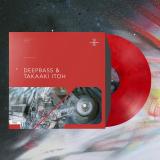
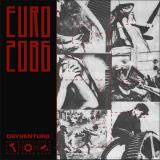
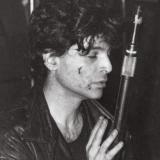






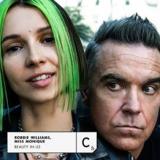



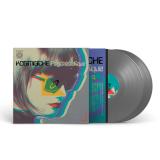
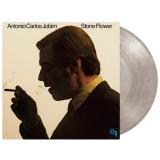



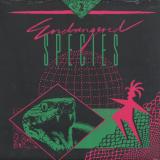










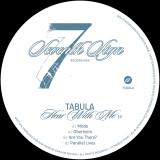


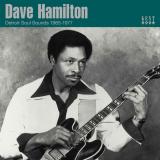


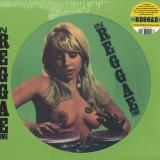











![VARIOUS - BRIGHTER DAYS AHEAD [VOLUME 2]](https://www.deejay.de/images/l/7/1/1270471.jpg)