“With their debut record, the merry order of musically miscreants from Los Angeles bring you their eccentric, eclectic, electric Polywave experience” The core members are: Neight Trion (The Black Angels, The Shine Brothers), Rocky (Death Valley Girls), Jay Eraser (Grooms, Roya), Oh-Ra (?) and Malware (Dead Meadow). Recorded and mixed by Jason Simon at Tekeli-li Sound. Mastered by Howie Weinberg "World Destroyers’ Pleasure Club is a musickal order formed during the great plague of the 20’s in Los Angeles in thanks to a constellation of fortuitous alignments. In the midst of the isolation that connected all people across the globe, in that unsettling quiet, a vision was obtained of community, ecstasy and revelry. The vision took on a life of its own as the band found each other and continues to propel the unit forward in their journey toward its realization. When asked to describe their strange, mutant music some fans and even members have found it difficult to do so. For this reason they have chosen the term Polywave as their designated genre which they envision as including other forms of expression besides music, a tendency to be hyper-eclectic and bearing the distinguishing mark of a commitment to continual, intentional self-transformation. WDPC has performed at venues such as Permanent Records Roadhouse, Zebulon, Lodge Room and more, both headlining and supporting artists such as The Intelligence, The Black Lips and The Nude Party. Nicknamed The Mysterious Party Band, they’ve been told they sound like a “Gospel Devo” by DJ Al Lover (Fuzz Club Records), and drawn comparisons to Talking Heads, The Fall, Butthole Surfers and Peter Gabriel. As influences they cite artists as varied as Hailu Mergia, Psychic TV, Scott Walker, Fela Kuti and Red Crayola but these influences don’t necessarily reveal themselves sonically as much as resembling the spirit in which they were conceived. Artist Neight Trion, the principal songwriter, spends as much time on the lyrics as composing the music, aiming for both to be strong enough to stand on their own. Membership includes a revolving and evolving collection of instrumentalists and collaborative mimetic entities but the core members are Neight Trion, singer/keyboards (The Black Angels, The Shine Brothers), Rocky, bass guitar (Death Valley Girls), Jay Eraser, guitar (Grooms, Roya), Oh-Ra, drums (?) and Malware, synth (Dead Meadow). Hailing from all across the US and Europe their operations are based in the Los Angeles area. Armed with their eponymous debut released by Blow Your Mind Records based in Santiago, Chile, they’ll be coming to a town near you and preparing the way for the coming Polywave. This is only the beginning, the first stages of metamorphosis. They invite you to join them in their pursuit of the communal ecstatic experience
Search:i like the way
Joe Pernice has been writing for a long time—most of his life, in fact—and has crafted a remarkable catalog that boldly reinterprets and recasts classic American pop. Who Will You Believe may be his most moving and nuanced album yet; it’s certainly his timeliest. “These songs were all written during the same time period,” he says, “and they all seemed to tap into a mood I was in at the time. I go through spells where I’m a certain way for three or four months. I might be more reticent than usual, or more outgoing. With all of my records—and especially with this one—the songs all feel like they belong together, probably because they all arrived during the same stretch of time.”
In a single six-month stretch he was left reeling from the deaths of three close friends, including David Berman, poet and songwriter for Silver Jews and Purple Mountains, and Gary Stewart, the Rhino Records co-founder and tireless Pernice Brothers supporter since their first album in 1998. “That was such a bad patch when David and Gary both took their own lives. And my cousin Joe Harvard, who started Fort Apache Studios in Boston and was like a brother to me—he died, too. It was such a tough year. I was thinking about them a lot and watching how divided America had become. I was doing my best to try and take nothing for granted.”
Pernice has been releasing albums for over 25 years. And with age comes a greater patience and an immense appreciation for the act of creation. Who Will You Believe showcases a beautiful balance between such sadness and moments of solemnity with warm humor and camaraderie.
Mario Rusca is most probably the biggest living Italian jazzman. His major influences are Duke Ellingtons composing abilities and Hampton Hawes' brilliant sound. He immersed himself in the harmonic inventions of the incredible pianists of the 60s and 70s: from Bud Powell to Bobby Timmons, Wynton Kelly and Bill Evans. Mario Rusca has been the house pianist of Capolinea, the most important Italian jazz club of the 70s and 80s. He went on to perform in important national and international settings-representing Italy in the "Piano Solo'' category of the "International Festival of Varsavia" and participating with his quintet at the "International Festival of Montreal". He has collaborated with a multitude of prestigious names: Chet Baker, Tony Scott, Curtis Fuller, Gerry Mulligan, Lou Donaldson, Art Farmer, Bob Berg, Lee Konitz, Dusko Gojkovic, Al Gray, Kay Winding, as well as Stefano Bagnoli, Enrico Rava, Tullio De Piscopo, Kenny Clarke, Stan Getz, Jimmy Owens, Toots Thielemans, Gianni Basso, Pepper Adams, Steve Lacy, Steve Grossman, Franco Ambrosetti, Woody Shaw, and Eddie "Lockjaw" Davis. With Gerry Mulligan, in particular, he toured in 1976 and with Lee Konitz, he recorded Wheres The Blues? at the end of the 90s. In this regard, Suspension in 1975 with Tullio De Piscopo and Recreations in 1976 with the phenomenal Larry Nocella playing saxophone are still very beautiful and modern recordings. As Mario says, "In jazz, you choose the companions that you can dialogue the most with.there needs to be an interplay, there needs a...a way of feeling, which is why you choose musicians because they feel like you, or, if nothing else, they follow you". The chemistry between the three of them is perfectly aligned, synergistic. Tonys drums and Riccardos bass create a soft and essential rhythmic tapestry that never hinder the creative prowess of the band leader. Here Mario Rusca is interpreting the most dynamic jazz standards. Blues for Gwen by McCoy Tyner, Blues Walk by Lou Donaldson, Blue Minor by Sonny Clark, Turnaround by Ornette Coleman, Bass Blues by John Coltrane or even Super Jet by Tadd Dameron. You cant help but imagine yourself on top of a convertible, smiling and carefree, while they travel through the soloist progressions of Turnaround and Super Jet. We need to underline the four originals included in this recording: Blue Dream (for Allerim), Tempo Blues, Double Horn e Monochrome Blues, extremely suggestive compositions, rich of intuitions and which well exhibit Mario Rusca composition skills and his ability to play the blues. MONOCHROME BLUES is a winning trio album which will deeply please the most demanding jazz hears. The musicians Mario Rusca (piano) Riccardo Fioravanti (bass) Tony Arco (drums)
- A1: Rock N Roll Train 4 21
- A2: Skies On Fire 3 34
- A3: Big Jack 3 57
- A4: Anything Goes 3 22
- B1: War Machine 3 09
- B2: Smash N Grab 4 06
- B3: Spoilin' For A Fight 3 17
- B4: Wheels 3 28
- C1: Decibel 3 33
- C2: Stormy May Day 3 10
- C3: She Likes Rock N Roll 3 52
- C4: Money Made 4 15
- D1: Rock N Roll Dream 4 40
- D2: Rocking All The Way 3 22
- D3: Black Ice
"Black Ice" ist das mittlerweile 15. Studioalbum der Band und der erste Longplayer mit neuen Songs seit "Stiff Upper Lip", das Anfang 2000 Platz eins der deutschen Album Charts belegte. Gleichzeitig feiern die australischen Rock-Legenden damit ihr Debüt beim SONY-BMG-Label Columbia. "Black Ice" entstand unter der Regie von Star-Produzent Brendan O'Brien (Rage Against The Machine, Springsteen, Pearl Jam, Incubus, u.v.a.) in den Warehouse Studios in Vancouver. Abgemischt wurden die Songs vom kanadischen Juno-Award-Preisträger Mike Fraser, der neben zahllosen AC/DC-Meisterwerken auch entscheidend an Alben von Aerosmith, Dio, Biffy Clyro, Motley Crue, Van Halen und Slipknot mitgewirkt hatte. Ende Oktober startet die Band zu ihrer ersten Welt-Tournee seit 2001.
Mit "Rock 'N Roll Train" brachten Angus Young, Brian Johnson, Malcolm Young, Cliff Williams und Phil Rudd bereits den ersten Vorab-Song des Albums aufs (Hit-)Gleis: Kurz nach dem offiziellen Radio-Date schoß das AC/DC-Brett in den Top 100 der deutschen Airplay-Charts. Und auch die weiteren vierzehn Stücke auf "Black Ice" haben es in sich. "Es sind viele starke Songs auf dem Album - denn darum geht es ja letzten Endes bei einer Band. Man ist immer nur so gut wie seine Songs", erklärt Gitarrist Angus Young, "manche Stücke muss man ein zweites und drittes Mal hören, aber das finde ich sehr positiv - wenn die Songs mit jedem Hören wachsen." "Es ist das beste Album, das wir je gemacht haben. Schlicht und einfach", ergänzt Sänger Brian Johnson, "'Back in Black' war großartig für seine Zeit, bzw. es ist ein zeitloses Werk. Aber das neue Album zeigt, wie vielseitig die Band ist."
"Trauma and the shock effect of it - the leftover residue of harsh reality so impactful that it shapes the way you imagine, envision and calculate your position in regard to everything and everyone around you.
A new type of psychological radius evolves. Boundaries are reinforced. Relationships are recessed. A damaged brief system float aimlessly. Vulnerable to and for anything reminiscent of a worthy cause. The truth about facts became satirical monologue, dead end expressions that have no critical arrangement. We all know someone that either has been or will be"
- Jeff Mills
The Eyewitness reveals a habitual pattern in the way it symbolizes a mirror reflection of mankind in our most vulnerable moments. It is the forthcoming album of Jeff Mills and it is composed from the perspective of an unknowingly complicit bystander and it is at the very least, psychologically pathological in nature. What this release is essentially proposing is an admission to the diagnosis that no one is immune to shock and trauma. Not the accuser or the accused. And this abnormality s culturally and generally transmittable - handed down and passed over to one another disguised as righteous theatre.
As an artist, what Mills is notoriously known for is the perspectives and paths he chooses to approach hefty, complex, and sometimes, awkward subjects. The best way to recognize the narratives of his mostrecent album works such as "The Clairvoyant", an eerie transcending album that plays through like a Seance for creating a bridge to reach another dimension or "Mind Power Mind Control", a cautionary warning about the consequences of supporting deceit, mind control and mass mental persuasion is to start by first taking a moment to look at yourself in a mirror. He's suggesting sound as a reflection and what we might be able to see in ourselves. Proposing that we might be the problem and a solution. In the same vicinity of his recent solo albums, the direction, scope or target of The Eyewitness is first about us, then about it.
More than the few previous albums he's released lately, this one has a unique relationship in terms of imagery and visual treatments that represent the concept. The front cover shows Mills, neatly dressed in a black suit that appears to be caught in the act of doing something methodically as he cohorts to supportwith a bright white type of surgical light towards the viewer. Stark and in the act of.......something offensive - it could be some type of hypnotic machine at work. Other photos show him in darkened spaces. Remote and deep in thought.
Other clues are the titles of the tracks such as "Sacred Iridescent Mirror (The Pledge)": this refers to the act of installing value and credit to something ambiguous and "Menticide" which means the systematic effort to undermine and destroy a person's values and beliefs. In the opening track, "in A Traumatized World" we hear the narration spoken by Mills. In a language he specifically created for this album. It's a dialect that is designed to be undistinguishable, but spoken with a compassion that it could be sympathized with. In the latter part of the track, it reaches a climatic point. Meaning, "it" has happened. And the album is the evidence.
On extra note:
In this day and age,it's comforting to see a musician like Jeff Mills administer music conceptually without any conditions attached. The artistry and craft of using sound and rhythm to bring forth a concern, a warning or the result of a diagnosis to the listener.
All Black Everything, the debut EP by UK-based, Parisian bassist, vocalist and composer Amy Gadiaga, is an expansive, boundary-pushing 5-track collection showcasing prodigious bass playing and a voice brimming with power and emotion. It's a profound exploration of self-acceptance that presents both a celebration and acknowledgement of Gadiaga's deep-seated darkness.
Inspired by the 2020 Black Lives Matter movement All Black Everything confronts racial identity complexities and the challenges of being a societal 'black sheep' and sees Gadiaga courageously transform her insecurities into a narrative of self-empowerment.
Born to parents of Senegalese, Gambian, and Malian descent, and hailing from the outskirts of Paris, the multitalented Gadiaga has been making waves in the UK music industry since she moved to London aged 18. With a fresh and unique style that bridges the old school jazz tradition of musicians such as Betty Carter and Wayne Shorter with the raw, rootsy modern sound of artists such as D'Angelo, Stevie Wonder and Twinkie Clark, Gadiaga's breadth of ambition and revitalising approach have brought early critical acclaim and ardent fans.
Signalling the arrival of a significant new voice on the London music scene, All Black Everything communicates the liberating essence of embracing individuality and presents a journey through Gadiaga's personal struggles, standing as a testament to art's transformative power and encouraging listeners to find strength in their uniqueness. "All Black Everything is very much an exploration and embracing of one of my archetypes in life which is the black bird/black sheep" she explains. "That feeling of not thinking you belong anywhere, of being misunderstood and really tending to your own. No helping hand. But it's ok sometimes because you also feel like nobody can compete with you, you're one of a kind."
"Two-pronged, remix attacks don't come much more exciting and potent than this... as here - thanks to our good friends at Nervous NYC - we're beyond hyped to bring you the legendary Masters At Work and Dave Lee on one single, fully weaponised package.
Putting their own, inimitable spins on Louie Vega's ˙Music Is My Life˙ - which features the unique talents of Unlimited Touch - we're treated to a pair of wonderfully complimentary, but no less idiosyncratic re-rubs from these two stalwarts of the scene.
With a production hand and artistic touch like no other - Masters At Work lead the way here, with their main remix. Characterised by that trademark looseness and deliciously warm, organic approach - their rework is awash with woozy psychedelia and layered so expertly, that getting lost in the music is both gloriously simple and an absolute pleasure. But no true Vega & Dope remix suite, would be complete without a bonafide Dub version. And for ˙Music Is My Life˙ - this sees the dynamite duo take proceedings down a distinctly more mesmeric and mood-laden path… one where the vocal is instead used as a powerful rhythmic weapon, and the star of the show, is a surreptitiously morphing and shape-shifting, delicately acid-laced synth lead.
Next up - having recently switched his attentions to productions under his own namesake - is Z Records' head honcho, Dave Lee. Snapping into life with its crisp and punchy drum work - what Lee's remix does share with that of the Masters is in the over-arching, tripped-out haze which douses proceedings. However - where his remix opts to stick its head well and truly above the parapit, is in it stylistic flavouring. As when it comes to slicing that genre cake, so to split the worlds of Disco and House perfectly down the middle - there's simply no one who does it finer.”
First release in 5years by Snaker, and the catalog counts 11nd.
This title features a joint work release by 2 artists, KOOLMFL and Sonic Weapon who also been busy with their releases on Powder’s Thinner Groove label. Their approach to express “Contemporary library sound” was to experiment with various way to create funky collages, Trippy beats, groovy or anti-groovy loop arts, and fragments of noise and scratch. The sound is going everywhere but consistent as a sound library to Get On Down.
2025 Repress
Operation Sole like the summer, hopefully, imminent; “Operazione Sole” like the 1967 song by Peppino Di Capri, considered, perhaps wrongly, the first ska in Italy, but certainly the first to talk about Jamaica and upbeat rhythms.
The record you have in your hand is intended to be a testimony to how much the sounds born in Kingston between the '60s and '70s had a significant influence on local pop.
With the first explosion of reggae in England between 1968 and 1970, as well as with the rise of Bob Marley to a worldwide cult phenomenon, parallel to the all-English phenomenon of Two Tone and the ska revival, Italy, always attracted by the new trends not only English, he certainly couldn't stay on the sidelines.
Therefore these innovative and unknown upbeat sounds, derived from the blues of the 1950s and mixed with a Caribbean sauce, have also taken hold in the Bel Paese.
It began as early as 1959 with the song “Nessuno” by Mina, considered to all intents and purposes a Jamaican shuffle, to arrive in a few years at blue-beat (I4 di Lucca, Claudio Casavecchi) and ska (Margherita, Peppino Di Capri , Silvano Silvi, Renzo and Virginia) and be exposed to the first reggae (for example Jo Fedeli and his Italian version of “Israelites” by Desmond Dekker). Thus, we quickly reach the end of the decade of the economic boom and the culture, styles, references change: everything becomes more busy (on a cultural, artistic and political level).
After a stalemate phase that lasted more than five years, Bob Marley's reggae (considered a sort of new Messiah) conquers the planet, including Italy: the producers and artists, even at a high level, for a few years do not remain at all indifferent to this novelty and decide to introduce the "upbeat", primarily reggae, into the various pop repertoires: well-known names such as
Loredana Bertè, Mario Lavezzi, Rino Gaetano, Ivano Fossati, Ilona Staller, Adriano Celentano, Edoardo Bennato throw themselves headlong into new sonic adventures, in a pioneering way, but often with excellent results.
The "Operazione Sole" collection wants to take the credit, instead, of proposing and discovering lesser-known artists (with the exception of Gino Santercole, former associate and relative of Il Molleggiato), often real meteors in the Italian musical panorama, who have tried to achieve (or achieve again) success by adapting the pop that was so popular in those years to the new black sounds prevailing in the West.
We are in the early 80s and we range from the most classic reggae, to Italo-disco contaminated by dub up to the true Neapolitan style which, on more than one occasion, in its being endemically "black" and full of groove, has wrung out the watch out for agreements made in Kingston and London.
“Operation Sun”: a pleasant philological work, but surrounded by an equally pleasant aura of disengagement.
- 1: The Feeling That I Get
- 2: Until Tomorrow
- 3: Today (Without You)
- 4: Taking The Heart Out Of Love
- 5: I'll Never Fall In Love Again
- 6: I Go To Sleep
- 7: Do I Still Figure In Your Life
- 8: In The Morning
- 9: Come To Me Slowly
- 10: Put A Little Love In Your Heart
- 11: I'm Sorry But Think I Love You
- 12: You Make Me Feel Like A Natural Woman
- 13: Ford Leads The Way
Born Samantha Owens in Liverpool, Jones began her recording career in The Vernon Girls, a female singing group affiliated with the Vernon Football Pools company; they created a popular Beatles tribute album in 1964 with producer Charles Blackwell, who launched Jones’ solo career that same year. Blackwell producer a debut solo LP for Ascot in 1968; two years later, Larry Page released sophomore set A Girl Named Sam, with Austrian wunderkind Mark Wirtz casting her in the broad realm of pop, though most of the songs describe romantic failures. The album thus has a tongue-in-cheek cover of Burt Bacharach’s “I’ll Never Fall In Love Again” and credible renditions of Aretha’s “You Make Me Feel Like A Natural Woman” and Jackie DeShannon’s “Put A Little Love In Your Heart.”
Limited green vinyl 180gr press with one bonus track for RSD 2020.
Jaqee – is rhythm and life ”Places becoming journeys in themselves… Different places where I have lived and learned, places that have made my heart beat, the emotional realms that I have experienced. This is where it all starts, every time. Where I am is where it happens, because I am, there. Here.” She sings. She laughs! And she cries, too. Jaqee cannot tell when music and singing became her life, it has ”just always been there, in my head” she says. Now with the fourth album she has taken a closer look at herself, from every possible angle. No hiding. Different phases, different sides of her personality and musical creativity are all there. All as one. ”I am a diaspora kid, I fell in love with all kinds of music, I let myself embrace it all, because good music, is good music. All the way from Uganda at age 13 to the new home and culture in Sweden, then leaving Sweden as an adult for Berlin – has made me the Jaqee that I am”, says the Ugandan /Swedish artist who also received a Swedish Grammy nomination for her past work. Being on the move is without a doubt an important part of her life. “For me travelling is about being exposed to different perceptions, situations, cultures and extreme emotions, it has always made me grow. How many times have I not thought that: I wouldn’t have experienced this or that, if hadn’t been here. I love that feeling!” Jaqee’s music reflects this constant movement and progress. The album is inspired by places like Berlin, South Africa and Jamaica. The trip to Jamaica resulted in the only collaboration track on “Yes I am” recorded in Kingston with reggae artist Anthony B. Teka, the “Kokoo Girl” and “Yes I am” Producer says: ”This time around, like on the last album, we have worked with our colleagues in different countries. Musicians we love and musicians that are inspiring like Martin Hederos (The Soundtrack of our lives) who arranged the strings on the album. We also had New York drummer Daru Jones of Rusic Records play on some tracks. All these talents enhance the idea and expression that we wanted for “Yes I am”. With the album done, it is again time to hit the road and tour for Jaqee. “Getting out there and meeting the crowd is a high. We laugh, we dance and we get loud together. This is the best part of working with music – having a good time together. Music is a universal language.” On composing music, she admits that this time, more than ever, the words matter. Newly found motherhood has made this album in particular a significant legacy. Every song has a life punctuation of its own she has not limited herself by thinking in genres. Making the tone very straightforward. “The melodies and lyrics are closely intertwined, how I sing a word makes all the difference. Even though I love word play, it has to be very clear. Since I am not educated in reading music, I instead visualize and hear it, it seems to be the way my system works. It is all about rhythm and life, it is “YES I AM“.
"I wish I could turn or turn back" "Sometimes it’s hard to resist the feeling that there was a crucial turn in life out of which everything else flowed. Maybe in our more reasonable frames of mind we can dismiss that thought and take our plans and intentions very seriously. But, there’s often a lurking conviction that, like the oak from the acorn or the movie from its opening scene, it is already all there. In the first moment of Relics of Our Life, anything could happen, anything could come next. But as the suspense is broken with the first notes, the world of the record springs up as both an internal experience and a landscape of which we will learn something, but definitely not everything. The songs induce a swimming sense of cycling repetition and variation where shifting details tilt the ground under us. The round and round doesn’t make us dizzy; like breathing the right way, it makes us both heavier and higher. "Pawliczek’s songs can be located in the company of the greats of Flying Nun Records – maybe the delicacy of The Great Unwashed with the heavy heart of The Verlaines and smartness of The Chills. But, ultimately, his interests are elsewhere – a heart-break song over an earthly lover feels like only the tipping point for longing and devotion that outstrips the personal. In this sense, Popul Vuh for their hymnal geometry and switched-on Palestrina, and Terry Riley for cosmic elation come to mind. The songs have sweeping and cinematic proportions and depths of field constrained by a pop economy love of leanness. "But who’s supplicating whom here? The songs’ devotional quality is not upward to the sacred or even outward to the profane. It’s more like a magnetism between its elements – sounds, voices and rhythms. The track No Talk intones “why don’t you talk to me?” over a driving guitar and one feels visited by some kind of archaic god on whom the tables have been turned, finding himself jealous of our thousand little thoughts. The record finishes with his distorted lilting dance, trying to seduce us with some red red wine that is no one’s blood, but everyone’s favorite drug." -- Karina Gill (Cindy, Flowertown) 2024
Repressed for the first time in 2 years, Note price change. Sermonizing Black Nationalism, Pan-Africanism and the benefits of a healthy and just lifestyle during the height of the Bad Boy/Roc-AFella era of nihilistic excess in the late 90's, Dead Prez also signed to a major label (Loud/Columbia) despite leaning much more towards the burgeoning indie aesthetics of the day. But this was a good thing – using major label muscle to wake up righteous hip-hop fans who might have fallen asleep at the wheel. The group itself – consisting of MCs stic.man and M-1, who produced or co-produced most of the duo’s music – was formed in Tallahassee, Florida in the early 1990's.
By later that decade, the duo had started making significant waves, having their music heard on the soundtracks to “Soul In The Hole” and “Slam,” as well as appearing on albums by Big Pun and The Beatnuts. By 1998, they released their first official single, the serious, stark “Police State,” on Loud, appropriately brought to the label by Lord Jamar of Brand Nubian. After building a solid rep over the next two years with fiery live performances, in 2000 they unleashed their debut album, Let’s Get Free.
The album was a welcome return to provocative and often radically political rhetoric that hearkened back to hip-hop forebears including The Coup, Public Enemy and KRS-One (as well as poetic descendants like the Last Poets and Watts Prophets). Let’s Get Free was critically acclaimed and benefited from multiple singles, including the infectious, thick analog drive of “Hip-Hop” “It’s Bigger Than Hip-Hop,” with a remix co-produced by a young Kanye West; “Mind Sex” (with Abiodun Oyewole of the Last Poets); and the poignant “I’m An African.”
But the singles weren’t the only worthy songs, as just about every cut here has deeper meaning than most full albums by their early 2000's peers. Highlights: the thought-provoking, anti-drug album opener “Wolves”; “We Want Freedom” “They Schools” and “Propaganda” . All in all, this is one of the more underrated and possibly Top 5 fully-realized political hip-hop albums of all time.
"The wash of flangers & shimmery reverb have been the foundation in Cali psych ever since the Byrds went electric. And while that sound might've dropped off occasionally, it never dropped out. The Velvets minimalist stylings were infused into the mix by The Dream Syndicate in the early 80's & thus a game changer was born. Clay Allison, Opal, Green On Red all took their charge from that current. Then the Shoegaze scene of the 90's looked at those bands as vectors, things got a little more drenched, so yet more seeds were sown into the fertile terroir. Cut to current climes & the bay area is teeming with the latest iterations: Children Maybe Later, Now, & Cindy easily come to mind. But curiously the band most steeped in the mohair constitution is April Magazine, who (thus far) have been content in the shadows. Up till now they've seemed like characters plucked out of a Kazuo Ishiguo novel-mysterious & ethereal-but perhaps this pressing of last year's cassette only release will flush them out. 'Wesley's Convertible Tape For The South' shows the band defly balancing all those that have come before them while also incorporating flourishes of Les Rallizes DeNudes, Hallelujahs & Nagisa Ni Te into the pageantry . So in a way, April Magazine is transforming the landscape yet again; denser, fuzzier, lush & wistfully challenging. 'Wesley's Convertible Tape For The South' is the band's 1st vinyl release stateside (an LP of older tracks was released last year via a UK only label) so no import tariffs! What were once whispers are now proclamations. Just because you don't know them doesn't mean you can't love them. So grab a copy & hug it out amongst yourselves." -- Tom Lax (Siltbreeze Records)
Jaqee's last album with the promising title "Fly High" leads the inclined listener into a sometimes idiosyncratic fermentation of street-ready R'n'B, pop aesthetics, jazz intellect, world music earthiness, chanting Afro soul and sensitivity and softness of classical music and orchestral warmth, which is defined by Jaqee's voice throughout all tracks, but never overridden. Thilo "Teka" Jacks, who produced "Fly High", is looking for musical salvation and the courage to change things up in order to illustrate unity, also in busy, heated, African sub-currents like High Life, but also in European dancefloor stereotypes and even traces of soca and merengue, all of course always only thought of, because the real main actor is and remains Jaqee's sustained singing, her unique intonation and her voice, which sometimes sounds clear and angry, other times fragile and sensitive - that's the way it should be. Despite or precisely because of this immensely expressive character of the album, it is advisable to listen to the work several times: Jaqee makes music with sophistication and expression and a look that also allows for sheer black music entertainment, "Fly High" proves this with lasting effect. "Fly High" is now available on vinyl for the first time.
SABÏRE has now returned in 2024 with a 15 track epic, self-styled "half-concept" album, "Jätt", 5 years in the making. SABÏRE began at the tail end of 2010 as an idea to have a band that played simply what came naturally on guitar to Scarlett Monastyrski with no set genre or category. Simply the natural music. Shortly thereafter, the concept grew to accompany that sound with a big show and distinctive stylisation. The biting and sharp sound production, along with their personal lyrics, birthed for them a label for their music: ACID METAL. Not to be confused with the mind altering substance, Acid Metal took its name from the concentrated corrosive fluid not unlike the blood of the Xenomorph in the Alien films. The instruments are awash with acidic modulation, "like a drop of acid in the dark." The lyrics all hold a tinge of biting realism that once realised by the listener, stings them like a droplet of acid resting upon their skin. To take their metaphor further, their distinctive production style let's stand apart from the rest of the "modern" sound that degrades the potentcy of many new bands. They call it "brick culture," because it all sounds the same. Concentrated acid burns all the way through anything solid leaving a hot trail behind it, like the band continues to do so with garnering the attention of the world of heavy music. Band leader Scarlett Monastyrski comments : " 'Jätt' is meant to be THE sound of SABÏRE. A monolith to what we stand for artistically. We wanted this album to be its own art piece rather than simply a collection of arbitrary songs, a really 'blue' coloured sound. The physical copies hold beautifully styled texts detailing the concept for those chosen songs, as well as small epistles to accompany each track," says . “ 'Jätt' is a “blue” sounding album; the colour. You may understand that more when listening to the album yourself. The cover of 'Jätt', “Dante and Virgil in the Ninth Circle of Hell” - Gustav Doré, 1861, could be seen through a symbolic lense in which the listener is symbolised as Dante, the artist as Virgil, and the bodies locked within the ice of frozen lake as the music surrounding them; we as the artist are shepherding the listener through the mire. This could be perceived like this, or you may just see it as an attractive album cover. “ "We put our heart and soul into this one and can't wait to give our Wild Ones and Acid Fiends what they've been so patiently waiting for
January 2023, Dorset. Snow is piled at the door, icy roads are closed, and Emily Cross is in a coffin. Not a setting typical for a rebirth. But for Loma, this is where they bring their band back from the brink. "It's like a demon enters the room, whenever we get together", writer, singer and instrumentalist Cross says of the struggle to bring new Loma music into the world. Following the release of their 2020 second album Don't Shy Away, Loma's three members were cast around the globe and the band-not for the first time-entered a deep sleep. Multi-instrumentalist and recording engineer Dan Duszynski remained in his studio in Don't Shy Away's central Texas heart, but Cross, a UK citizen, moved to Dorset, and writer and instrumentalist Jonathan Meiburg left the US for Germany to research a book. In the pandemic years, even being in the same room was impossible, and attempts to start a new record faltered. The following winter, in an attempt to salvage the record and the band, Cross suggested they regroup in the UK, in the tiny stone house-once a coffin-maker's workshop-where she works as an end-of-life doula. With minimal recording gear and few instruments, Loma turned two whitewashed rooms into a makeshift studio, using a padded coffin as a vocal booth. It was a turning point. They scrapped much of what they'd made, letting a new place set a new course. The one-lane roads, hedgerows and dark skies of Dorset gave the new songs an ineffable but unmistakable Englishness. The band used the ruin of a 12th-century chapel as a reverb chamber-surprising hillwalkers who peeked in to find them singing to no one-and the sounds of Cross's chilly workshop wormed their way into the recording: a leaky pipe, a drummer's brushes on a metal lampshade, the voices left on an ancient answering machine. What emerged was How Will I Live Without A Body?: a gorgeous, unique, and oddly comforting album about partnership, loss, regeneration, and fighting the feeling that we're all in this alone. Many of its songs have a feeling of restless motion; faceless characters drift through meetings and partings, tangling together and slipping away. "I Swallowed A Stone" is like a nightmare with a happy ending; "How It Starts" and "Broken Doorbell" reflect on the challenge (and necessity) of wrestling with agoraphobia. Though the record nods to the trio's separate lives- a German percussion ensemble, a pair of Texan owls, and the surf at Chesil Beach make guest appearances-the core of Loma's sound remains intact: earthy, organic and deeply human, anchored by Cross's cool, clear voice. Loma's previous album, Don't Shy Away, was galvanized by the unexpected encouragement and contributions of Brian Eno. This time, they found inspiration in another hero, Laurie Anderson, who offered a chance to work with an AI trained on her entire body of work. Meiburg sent her a photo from his book-in-progress about the once and future life of Antarctica; Anderson's AI responded with two haunting poems. "We used parts of them in a few songs," he says. "And then Dan noticed that one of its lines, 'How will I live without a body?' would be a perfect name for the album, since we nearly lost sight of each other in the recording process." In the end, Loma's efforts to reconnect with one another are the album's central focus: what do you owe a shared past, when everyone and everything has changed? "Making this record tested us all," says Duszynski. "I think that feeling was alchemized through the music." Alchemized, because How Will I Live Without A Body? is by no means a stressed-out record: an undercurrent of deep calm runs through it. But maybe 'relaxed' isn't the right word. It's more like a feeling of relief, of making it through a tough journey together.
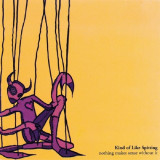
Nothing Makes Sense Without It, the seminal sophomore LP by Kind of Like Spitting, is finalyl getting the deluxe reissue that it deserves.. The group's second album, originally released in 2000, is a heartbreakingly tender effort, with songwriter Ben Barnett's signature, sullen voice aching across twelve slow-burners. Now, 24 years after its original vinyl pressing, the album has been reissued as a deluxe 2xLP featuring an entire extra LP of demos and unreleased tracks. Whether you're replacing your worn out original pressing or just discovering Nothing Makes Sense Without It, this reissue is a must have for both longtime die-hards or any fan of the music of Kind of Like Spitting's northwest indie contemporaries like Death Cab For Cutie, Pedro The Lion and Elliott Smith.
- A1: I Don't Wanna
- A2: 394
- A3: Nothing True
- A4: Second Chance
- A5: Sneakyville
- A6: Amazing Grace
- A7: Belt
- B1: Hate Your Friends
- B2: Don't Tell Yourself It's Ok
- B3: Uhhh
- B4: Fed Up
- B5: Rat Velvet
- B6: Fucked Up
- C1: Mod Lang (From 'Crawling From Within' Compilation)
- C2: Buried Alive
- C3: Gotta Stop
- C4: Sad Girl (From 'Crawling From Within' Compilation)
- C5: Belt
- C6: 394
- C7: Falling
- C8: Don't Tell Yourself
- C9: Uhhh
- C10: Amazing Grace
- C11: Rat Velve
- C14: I Like To
- C15: So I Fucked Up
- C16: Sick Of You
- C17: Hate Your Friends
- C12: Second Chance
- C13: Sneakyville
Repress!
Note - Sleeve says contains a bonus CD, these represses do not have a bonus CD, they have a download card.
Hate Your Friends is the 1987 debut album by the Lemonheads, one of only three full-length releases to feature the original band line- up of Evan Dando, Ben Deily, and Jesse Peretz. The album showcases a hardcore-punk-to-pop-rock sound and sensibility as playfully fierce as it is surprising…especially to listeners who know the band only from their better-known major label recordings of the 1990s. The roots of Hate Your Friends begin with the genesis of the band itself: when high school friends Ben Deily and Evan Dando—inspired by a shared love of the 70’s absurdist comedy troupe the Firesign Theatre, literature, and punk rock—began playing their own songs together in 1985. Dando and Deily first started out as a two-piece ensemble: swapping back and forth between a shared Guild guitar (and a crappy amp) and vocal mic, and pounding a drum kit “borrowed” from the high school jazz band. With the addition of classmate and friend Jesse Peretz on bass, the two-man outfit quickly became a power trio. With a handful of original songs, a passionate love for their favourite bands—from Husker-Du, the Replacements, Black Flag and the Germs, to the Saints, Wire and ‘77 UK punk—and a tiny recording budget, the Lemonheads set about their first studio session within days of their high school graduation in June of 1986. During that summer, a significant amount of what would become the band’s debut album was recorded in Brookline, Massachusetts, with Deily and Dando sharing vocal, guitar and drumming duties. Above and beyond bass, Jesse proved pivotal as the band’s manager, booker and tireless promoter—helping arrange for the Lemonheads self-released debut EP, Laughing all the way to the cleaners, later that summer, and shortly thereafter helping establish the relationship with Curtis Casella of TAANG! records that paved the way to full-length LP Hate Your Friends. Finally, with the addition of full-time (and fairly short-lived) drummer Doug Trachten, the last songs of Hate Your Friends were recorded in the winter of 1986-7. BONUS TRACKS: This Fire Records re-issue features bonus tracks including 12 never-before-released live tracks from a 1987 radio session, rare tracks from the early compilation Crawling From Within, and additional tracks not included on the original release of Hate Your Friends (“Buried Alive” and “Gotta Stop”).
"Multiplatinum hitmakers Fastball are remembering it's okay to have hits. Reflecting on their meteoric rise with chart-topping debut “The Way,” guitarist/vocalist Miles Zuniga wryly remarks, “I like to say that ‘The Way’ gave us the freedom to continue doing what we do.”
And what Fastball does is write hits. Their latest, Sonic Ranch, produced by David Garza (Fiona Apple) and John Fields (Demi Lovato, Miley Cyrus), is ten sing-along gems, combining pop smarts & the wisdom of 30 years together."
The long running vessel for Cameron Stallones' psychedelic excursions, Sun Araw, returns to Discrepant after last year's split with Tarzana via Keroxen sister label (KRXN033).
Without much precedent in his own - already wide-ranging - back-catalog, 'Cetacean Sensation' discards the dubby vibes, psych-rock sunburnt jams, tropical visions, or stalking sensibilities of such classic efforts as 'On Patrol' or 'Ancient Romans' towards a deeply focused and vivid solitary approach, while still retaining this Sun Araw blissed out escapist feeling.
Composed of hydrophone recordings of whales and dolphins sourced during a summer in Galicia, 'Cetacean Sensation' paints an impressionistic and sensory floating canvas that expertly escapes both academic-like documentarian purposes and any new-age spa vibrations one could associate with such subject matter. Processing those raw recordings into alluring collages that flow gracefully between moments of clear eco-location and submerged impressions of wildlife social dynamics. By the third track - Dance of the Minke - we're introduced to this ringing MIDI tone that evokes a CD-ROM era of mystic educational programs and click-and-deploy strategies that still feel very much like an unfulfilled future, conjured again by 'Spider Crab Elegy's sparse keyboard pads and sound effects that give way to this properly elegiac tentative melody. 'The Spider Crab Point' ends the album on a more uneasy vibe, with synth tones pointing towards no particular direction, confounding and strangely inviting at the same time. As sensations often do.
Music written and produced by Cameron Stallones using hydrophones and digital synthesisRecorded in 2019 in Galicia, ES
Mastering by Rashad Becker
Like an unsent love letter to a psychedelic London where everyone is trying to find their way to a secret Television Personalities gig, Cuneiform Tabs emerge with an astounding debut of lo-fi pop and DIY experimentation. A hazy collage of joyful heartaches, twisted children's TV themes and sing-song melodies, the album echoes the sounds of '60s AM radio from a dozen narrow alleyways to the North.
Over 18 months, the Tabs' Matt Bieyle and Sterling Mackinnon traded 4-track tapes between the Bay Area and the UK. While they previously played together in indie band Violent Change, the duo's physical distance and their songwriting process of building, blurring and distorting across the Atlantic would create something no one saw coming. Grabbing any instruments at their disposal and splitting vocal duties, Bieyle and Mackinnon pushed their Tascam to its limit to make glittering, odd-shaped gems.
There is an insular feel to Cuneiform Tabs, suited for late nights after the entire city has stumbled into dreamtime or lazy afternoons when you can't quite recall where you need to be, but you know you won't make it there on time. It's like a pirate radio show where Bob Pollard alternates Swell Maps and Cleaners From Venus records while randomly unplugging various bits of gear and reading passages from a book on R.D. Laing.
Originally released in a hyper-limited artist edition, W.25TH / Superior Viaduct is thrilled to bring this kaleidoscopic LP to a wider audience.
If I had to do it all over again, I wouldn't listen to records. I very rarely listen to jazz records because they all do the same thing. I only listen to original musicians like Ahmad Jamal and Duke Ellington, musicians like Clark Terry, Dizzy Gillespie, Sonny Rollins and John Coltrane." A true icon, Miles Davis left an indelible mark on the genre through his recordings. "The Miles Style" is a compilation of his masterpieces, the timeless quality of the album and Miles Davis' ability to reshape jazz make it a classic
The new album from Lebanese-American musician Solpara, Melancholy Sabotage, marks his full length debut and return to Nicolas Jaar's Other People label. While it was recorded over Covid lockdowns, Jaar had been talking about wanting to back a Solpara full-length since he put out Swing. The album came to life while Solpara was living alone in a Brooklyn loft, collecting unemployment checks and viewing ample free time as the artist residency he'd dreamed of; he'd previously been forced to make music in odd windows between numerous jobs and the unmerciful pace of city life. Free from obligations, he would wake up early to take Arabic lessons online, read Tracey Thorn's autobiography, and skateboard the deserted streets, then come home and design sounds until he had a track that felt like it needed to be released. While this easy going lifestyle was peaceful in many ways, Solpara found more complex inspiration in the emotion that stemmed from participation in Black Lives Matter protests and the 2020 Beirut Port explosion, which rocked all of his extended family members in Lebanon.
Melancholy Sabotage explores the theme of sabotaging melancholy. Echoing sounds from the post-punk, trip-hop, and ambient genres, it is about sabotaging the cycle of melancholy and looking at this process without ignoring the sources that put it into motion. It may be compared to a rattling breaking free from retention, reaching states of dreamy euphoria while simultaneously acknowledging the sources of retention, viewed from above. The sources can be personal, political, or socio-economic. They are to be apprehended post-melancholy, after the sabotaging of the initial cycle of melancholy. In other words, it is about transcending melancholy and understanding where it came from with some distance. It may be beautiful and healthy to feel for a while, but how may one sabotage this cycle when it becomes paralyzing? Ultimately, this album is about feeling melancholy but also resisting it and naming the sources that initiated it.
"Time To Hold Better" points to neglect on both personal and group levels. "This Time Last Year" is a personal time capsule. "We Keep Us Safe" is about solidarity, autonomy, and care witnessed within protest groups. "Melancholy Sabotage" is a sonic exploration of the album concept illustrating anger and sadness, but finally, resistance and liberation from these feelings. "Measures" is a more fluid exploration of the latter after the initial storm has passed. "We Don't Owe" points to bigger bodies inflicting harm on populations that we owe nothing to. "Breaking Points" harkens the times that we may lose focus while pushing to transcend melancholy. "Eviction" is about being pushed out of a space unwillingly while simultaneously being forced to move forward.
Melancholy Sabotage pulls from a range of genres, uniting electronic sounds under the same post-punky glow. It pulls from complex, heavy themes including damage and injustice, presenting Solpara's most moving body of work to date. It highlights the poignance that has always been at the heart of his fluid sound, which caters to dancefloors and avant-garde spaces in equal measure. Working with a mix of dissonant guitars, distorted drum machines, and distant, reverb-washed vocals, Melancholy Sabotage is Solpara's uneasiest outing to date. The record pinpoints the duality at the heart of Solpara's sound, which is as plaintive as it is searing.
“Black Magic Man is arguably the pivotal Joe McPhee release. It bridged the span between the regional and the international, bypassing the national altogether. “Recorded in the same sessions that produced Nation Time, Black Magic Man consists of music not chosen for that LP. Like its much-feted sister, technically it falls under the domain of CjR, Craig Johnson’s herculean effort in support of McPhee. An erstwhile painter, Johnson became a self-taught audio engineer, acquiring equipment expressly to document McPhee’s music. In December 1970, five years after Johnson and McPhee had met, they recorded two days of activity —a concert followed by an additional day of recordings—at Vassar College where McPhee was teaching in the Black Studies department. About half of the material was used to make Nation Time. While they had planned to issue a follow-up, the money wasn’t there, so the tapes sat dormant. “Fast-forward five years—Werner X. Uehlinger, a Swiss businessman who worked for Sandoz Pharmaceuticals, contacted Johnson while on a trip to the US, and over dinner with McPhee, they discussed putting out some of the unused tracks from the Nation Time sessions. With this casual encounter in 1975, Hat Hut Records was inaugurated. The new label’s maiden release was Black Magic Man, dubbed Hat Hut A, the first in what would become Hat Hut’s letter series. Along the way, the series would feature seven Joe McPhee records, including the first four in a row.” —John Corbett (excerpt from the liner notes)
An exercise in control of auditory limitations and possibilities, GAEL redefines techno production with their comprehension of cold atmospherics and meticulous world building. Exemplified in their first solo EP ‘Frozen White Horse’ released on BITE Records, fervent, hurtling drums are underpinned by hopeful euphorics and circulating, breathy cybernetics. A culmination of sophisticated sonic dialects reared from the intersections of soundscaping and electronic music, the berlin-based DJ/Producer from Dagestan (by-way-of Kyiv and Odesa) commits their practice to the inclusivity of borderless, capricious and emotive dance- floor synergy. This energy was previously captured on BITE last year with their appearances on the Shedding Skin VA and The Soft Moon’s Exister Remixed. GAEL’s harmonic and organic approach to techno production echoes the heartbeat of dancefloor resistance,captivating audiences across venues from Berlin’s Berghain to Kyiv’s ∄ as a resident at the queer event series XITb. Delivering thunderous feeling through experimental sounds and masterful pacing, the 4-track-EP blurs the margins of moody techno exploration with remarkable attitude and a foreboding sense of uphill struggle. For the opening title track, a procession of stacked chords,synths and snares are met with a cyclone of galloping percussion building to maximum intensity until dispersing into echoey chimes. As the listener is able to catch their breath, the second track ‘prpttcxsstnc’ reignites - this time with trepidatious yet ethereal vibration, as the track continues to inject GAEL’s post-punk style of galvanised energy, rich layered drums maintain the undercurrent of resolute chaos into the following track ‘there is nothing left’. Sombre track titles are off-set by triumphant vigour for the third instalment, pushing through gale force drums and the clanging zaps and bleeps of electronic debris. Concluding with the final cacophony of collaged beats and drums, bellowing siren-like cold wails meld with GAEL’s calamity crescendo of crashing cymbals, the procession of rapturous drums slipping into a distant echo of warped hollow gleams.
- A1: Succession (Main Title Theme) - Orchestral Intro Version
- A2: Adagio In C Minor
- A3: Andante In C Minor
- A4: Serenade In E-Flat Major
- A5: Dark Minuet
- A6: Million Dollar Home Run
- A7: Succession - End Title Theme - Piano And Cello Variation
- A8: Rondo In F Minor For Piano And Orchestra - Kendall's Journey
- A9: Andante Con Moto - Piano And Strings - "Vaulter
- A10: Roman's Beat - Hearts
- A11: Itermezzo In C Minor - Piano And Double Bass
- A12: Concerto Grosso In C Minor - End Credits - You Have To Be A Killer
- A13: Furioso In F Minor
- B1: Andante Agitato - End Credits - “The Raid”
- B2: Sinfonietta In A Minor - Strings Variation - “The Photo”
- B3: Tuscany” Suite For Piano And Orchestra
- B4: Andante Moderato - End Credits - _Amen
- B5: Langsam - We Gave It A Go
- B6: End Credits - Vivace Appassionato In G Minor
- B7: Andante Espressivo - String Orchestra - Number One Boy
- B8: Allegro In F Minor - Arrival At Waystar
- B9: Succession - Andante Risoluto
- B10: End Credits - Choir And Orchestra - With Open Eyes
Immerse yourself in the immersive world of Succession like never before with the Official Soundtrack on vinyl. Discover the soundscape that accompanies the gripping drama of the Roy family's power struggles, brought to life through a selection of tracks that capture the essence of the acclaimed series.
Featuring both original compositions and carefully selected classics, the Succession vinyl soundtrack offers an emotional journey through the highs and lows of the Roy dynasty. From moments of intense family conflict to triumphs of corporate conquest, each track takes you deeper into the heart of the story, making it a must-have for fans and collectors alike.
Treat yourself to the luxurious experience of vinyl and enhance your listening sessions with the rich, warm tones that only analogue audio can offer. Add the Succession vinyl soundtrack to your collection today and immerse yourself in the world of power, wealth and family intrigue
Underground lifer Nick Sakes returns on the debut LP from Upright Forms. The tight-knit Minneapolis trio feels like the culmination of Sakes' varied and prolific career to date, bringing together the unhinged prog-punk ferocity of Dazzling Killmen & Colossamite with the careening chaos of Xaddax and the shout-along hooks and dynamic songcraft of Sicbay. Blurred Wires is skewed yet tuneful, challenging yet compulsively listenable, concise yet brimming with invention. The experience of a lifetime distilled to 33 rotations across a gripping 33 minutes.
Consider “They Kept on Living,” a song that first appeared in an earlier version on the SKiN GRAFT comp Sounds to Make You Shudder!. It starts off with a grinding 7/4 groove, with cryptic lines over scratchy noise-punk chords. After a brief build, the band explodes into a massive chorus, with Sakes shouting the title line against a fist-pumping riff.
The trio sound equally convincing digging into the pummeling aggression of “My Lower Self,” where Sakes’ vocals start off as a feral snarl and then soar triumphantly during the chorus, or the soothing indie-pop hush of the Paster-penned “Drive at Night.”
Various “tug-at-your-heartstrings” touchstones informed “Long Shadow”. Sakes channeled Television Personalities, cult heroes of melodic British post-punk, on “Animositine,” which he accurately labels “our prettiest song.”
Nearly 35 years into his career, Sakes is finding new ways to challenge himself — and in Paster and Westphal, he’s found two musicians who are equally comfortable with both the thorniest and the loveliest manifestations of underground rock. When they reflect on their chemistry, they agree that their openness to collaboration is, as Sakes puts it, “one of our superpowers.”
On Blurred Wires, that superpower yields dynamic, challenging and profoundly memorable results.
Limited Edition MOD Compact Disc in Digipak Lite packaging."
Flunk's third ordinary album 'Personal Stereo' was released in 2007.
The album "Personal Stereo" is similar to the first two ("For Sleepyheads Only" (2002) and "Morning Star" (2004)) in that it is centered around Anja's elf-like vocals over Ulf's programmed electronica and Jo's layers of guitars and other stringed instruments. And even if uplifting melancholy is still the Flunk trademark, and Anja sings more beautifully than ever, "Personal Stereo" is in some ways darker than its predecessors. But it also sees a return to the debut album notion of cutting and pasting from the last 30 years of popular music, sometimes in an obvious way (as on the title track and "Change My Ways"), other times as more obscure nods to Flunk heroes. One of them, cult favorite Daniel Johnston, contributes with vocals on "Haldi".
As usual, Flunk's "budget pop" is recorded and produced in its entirety in bedrooms in two different apartments in Oslo, at Ulf's and Jo's.
The album has not been available on vinyl. Until now! It will be printed in a limited run of 200 copies.
Placid aka Paul Wise is chief in command at ‘We’re Going Deep’ – an expanding online community and record label, born from lifelong affair with the many shades of electronic rhythm and obsession for collecting records since 1988. He’s spent the last 3 decades moving heads and feet at venues, parties and fields across the UK and beyond.
On a mission to share and release new music via his label, you’ll find only the best in Acid, Electro, IDM, Techno and Deep House for the dance floor, front room or your headphones making the cut. For the 10th and final edition of his much prized various artist series, he unearths more machine fuelled magic: offering another set of equally excellent music from stellar talent.
Starting the dance, Dutch maestro Boris Bunnik dons his Versalife mantle to opens with ‘Skirmish 101’. Setting the machines to cycle, Bunnik fires a hefty slab of bass to bring down the walls whilst pristine robot like rhythms set your body in motion, all enveloped with sparse synthesis and shimmering effects. Crashing the joint with ‘Acid Baby’ - The Acid Pimp drops a no holds barred, riotous 303 workout that’s nothing short of a tour de force in exorcising the power of Roland’s most celebrated silver box. Putting pedal to the metal with drums and reverb, a smiley face or grimace is guaranteed!
Longtime collaborators Jamie Anderson & Owain K reset the dial on the flip with ‘Basement Dub’, a house paced workout that glides at a steady pace. Evoking the spirit of Mood II Swing whilst immersed in the depths of an underwater realm. Ending on the upbeat note of Konerytmi’s ‘Aamunkoitto’, the Finnish producer reflects a breezy disposition with a joyful melody, step-to electro beat and rolling acid bassline – all perfectly balanced to keep your calm and head out in the right direction, a great way to sign off on this highly collectable series.
Cloudy Vinyl[25,00 €]
Baby Blue & Halloween Orange Vinyl. In their decade-plus together, the four-piece_Julia Shapiro (guitar, vocals), Lydia Lund (guitar, vocals), Gretchen Grimm (drums, vocals), and Annie Truscott (bass, vocals)_have created a resonant body of work. Live Laugh Love is a natural continuation. Against the bizarre backdrop of the past few years, Chastity Belt remained a supportive space for the members to grow and experiment, drawing on the ingredients most essential to their process since the beginning: authenticity and levity. Recorded over three sessions in as many years (January 2020, November 2021 and 2022), the focus became more about enjoying their time together in the studio than making it feel like work. Their ease and familiarity with engineer Samur Khouja in LA, who also recorded their last album, made for a particularly enjoyable process. Once completed, they returned to renowned engineer Heba Kadry who mastered the album.Album opener "Hollow" sets the tone with a gently driving rhythm while guitar layers stream like sun rays through an open car window. A warmth radiates through Shapiro's voice, even while grappling with feeling lost and stuck. "The older I get," Shapiro says of the lyrics, "the more I realize that I might just always feel this way, and it's more about sitting with the feeling and accepting it, rather than trying to fight it." That wisdom seems to anchor Live Laugh Love. Chastity Belt has never shied from navigating the spectrum of difficult emotions, and an existential thread weaves throughout the subject matter. And yet the songs feel more grounded than ever; there's a sense of quiet confidence and self-assurance that comes with being less numb and more present. Facing discomfort takes more fortitude, after all.Live Laugh Love finds the members in their prime as musicians. Their parts trace intricate patterns over one another, but there's room to breathe between the layers. Everyone contributes to the writing, sometimes switching instruments, and for the first time, all four members sing a song. It's never been more apparent that they are creative siblings, cut from the same belt. "We've been playing music with each other for over a decade," says Shapiro, "so it really does feel like we're all fluent in the same language, and a lot of it just happens naturally.""Laugh" seeks in the balm of friendship, aware of the anticipatory nostalgia that hits during a good time that you're already missing before it's gone; the heavier guitar tones on "Chemtrails" streak ominous chord progressions over Grimm's precision timekeeping, lamenting memories that won't fade easily. During a transitional time, Truscott came across a note in their phone that read, "it's not hard all day, just sometimes," which inspired a poignant line in the chorus of "Kool-Aid," their first song as lead vocalist on a Chastity Belt recording. Another standout, "I-90 Bridge" shines with a silvery melody that soars as Lund belts one of the most resounding moments on the album: "Tell your girlfriend she's got nothing to fear/I'm set in my head/My body's a different story." The track "Blue" saunters nonchalantly with a wink; you can almost hear Shapiro's smile as she sings "Faking it big time/So I can hit my stride/Man, it feels good to be alive," channeling early Chastity Belt channeling early '90s before channeling the late Elliott Smith in a spiral of distortion and insight: "Don't get upset about it/It's gonna pass/Tell all your friends about it/They're gonna laugh.""We have such a strong sense of each other's musical inclinations" says Lund. "I think this allows for a lot of playfulness_we can kinda surprise each other, like a good punchline would."
Hardway Bros teams up with Beth Cassidy on Rekids for a timeless ode to the legendary Murk Records The release includes a ‘coral way’ dub mix and a remix by Erol Alkan and Richard Norris’ Beyond The Wizards Sleeve.
Sean Johnston is the man behind Hardway Bros, an alias well known for wobbly, downtempo, and synth-laced disco jams which have appeared on the likes of Is it Balearic? Whiskey Pickle, and Throne of Blood over the last decade. On this single, which is a love letter to legendary early 90s label Murk Records, Johnston links with vocalist Beth Cassidy, known for her work as part of Manchester’s Sea Fever and Section 25.
Hardway Bros’ wonderful 'Murky' is deep and sensual house music. The vocal brings sultry charm, unfolding in soulful style over whimsical ambient pads and chunky drums. It oozes with character and harks back to actual songwriting of days gone by.
Beyond The Wizard's Sleeve is an alias of dance music pioneers Erol Alkan and Richard Norris. It was established to bring psyched-out, acid touches to the dance floor and has resulted in a critically acclaimed album on Alkan’s Phantasy Sound and much more. Their excellent Re-Animation is eight minutes of drawn-out disco chug, loose grooves and masterful chord work. Up last is a Coral Way dub that strips things back to the beats, layers in plenty of cosmic FX, and lets your imagination run wild on the tripped-out synth leads that pan between the stars.
What might appear to be the most unlikely collaboration of 2024 proves also to be one of the most invigorating listens of the year! Shackleton & Six Organs of Admittance are in full aural/metaphysical alignment in their mutual effort to become Jinxed By Being. On first listen, it becomes immediately clear that this fusion of Shackleton"s bass heavy cosmic dread and Six Organs" ritual folksong makes total sense. Longtime listeners know that both Shackleton and Six Organs of Admittance have been unafraid to pursue their muse into any and all encroaching depth of darkness or outer boundary of potential dissonance - in fact, that has always been their default mode, finding more of resonance way out there in the process. They also share that ol" maverick psychedelic ritual transcendental music vibe, don"t they? And a fascination with repetition and cycles. And a mutual inspiration drawn from alternative tunings and literature...all this considered, it"s been basically inevitable that Ben Chasny and Sam Shackleton would work together. It took a while for them to find each other-and once they did, it was almost eerie, how preordained it felt. When the music started coming, though-that"s when it got really eerie. The mood rises from the music like smoke, a sure signal of total integration. Jinxed by Being finds Shackleton & Six Organs of Admittance delighting in their synthesis. Reveling in the unique sonic textures found in the collage, they launch small details that unfold into a massive space and often multiply into lines of dimensional space, crossing the stereo spectrum with enervating motility. Here lies all the proof you need against the danger of categorizing by perceived genre rather than intention-encounters like Shackleton & Six Organs of Admittance might never have found the linear space in which they sit next to each other, beyond alphabets and other institutional organizing principles. Rearrange your libraries-or you might miss getting Jinxed By Being.
Los York's became the epitome of Peruvian garage sound. Two of the best and wildest songs contained on their last LP had never appeared on a single despite their enormous potential for the dance floor and the interest they aroused among DJs since their rediscovery in the 60s scene. Set the dance floor on fire with the first time 45 issue of this Latin garage double-sider. DESCRIPTION After two successful albums on MAG, supported by a handful of singles, the Peruvian garage beat band Los York's culminated their disagreements with their label by leaving it in 1969 and signing a new contract with Virrey. Along the way there was an album to finish for which they had already recorded a good part of the instrumental tracks. "Los York's 69" finally saw the light of day on MAG but, to the surprise of its fans, the voice of its charismatic singer, Pablo Luna, had been replaced by that of the no less iconic Pablo Branda, also known as Melcochita. The all-round artist, trained in the studios of MAG as a skilled percussionist, guitarist and sonero, proved himself to also sing and shout with the same energy and attitude as the brilliant Pablo Luna. On top of that, it is rumored that it was another MAG artists, Los Teddy's, who actually completed the instrumental tracks for some cuts on the album, something that seems consistent with the much more energetic and surfy style of songs like 'El Sicodélico'. Two of the best and wildest songs contained on their last LP had never appeared on a single despite their enormous potential for the dance floor and the interest they aroused among DJs since their rediscovery in the 60s scene. Set the dance floor on fire with the first time 45 issue of this Latin garage double-sider: 'El Sicodélico' and 'El Loco'.
It’s fair to say Wallace is one of those rare producers that has already amassed quite the reputable back catalog in a very short space of time. Let alone in 2023 having already released two albums and a handful of Eps with labels such as Rhythm Section, Mule Musiq and CWPT, he’s become a go-to producer for many DJs. To some it may seem like he’s at the beginning of his career but Wallace has been producing for over 10 years refining his sound.
On Loop label boss Moxie has been an early supporter of his, not only championing him in her DJ sets but also having him feature heavily on her NTS show. The pair are thrilled to be finally putting this release out into the world, showcasing why Wallace really is, the real deal.
The whole EP is filled with tons of percussion and rhythm, pulling the listener in. Tanzanite & M’bira in particular are undeniable groovers. Red Velvet on the other hand is something you might expect to hear played at 5am Fabric room 1, whilst Violet is a treat only for the vinyl heads and shows off how versatile Wallace really is as a producer, offering something on a slower tip.
Speaking of the release, Wallace says:
The A-side of Tanzanite is inspired by time spent in Africa when I was young. My dad used to make animal programmes & one time I tagged along for his jaunt around South Africa and Namibia. The 'M'bira' track uses the instrument of the same name which he picked up, when out there & the title track is inspired by a gem stone park we visited in Cape Town. The B-side takes inspiration from recent clubbing experiences. In this way, the EP is juxtaposed from the joyous, open air, playfulness of the A to the moodier, darker feel of the B.
*Early support coming in from Liv Wutang, Yu Su, Erol Alkan, Dr Banana, Kamma, Bradley Zero, Richard Sen, Axel Boman, Tom Ravenscoft, Dar Disku & more..
- Legendäre experimentelle Jazz-Aufnahmen von David Lynch und Angelo Badalamenti von Anfang der 90er Jahre. - die Musik wurde versatzweise in David Lynchs Film- und Fernseharbeiten verwendet, ist aber nie als richtige Veröffentlichung erschienen. Thought Gang wurde nach der Ausstrahlung der zweiten Staffel von ,Twin Peaks" geboren, als die Hauptproduktion des Kinofilms ,Fire Walk With Me" gerade erst begonnen hatte. Das esoterische Jazz-Side-Projekt von David Lynch und Angelo Badalamenti entwickelte sich ursprünglich aus dem Slow Cool Jazz, der die ,Twin Peaks" TV Serie mitgeprägt hatte. Thought Gang erblühte zu einem experimentelleren Sound: horizontlose Aussichten auf LSD-getränkten Freejazz, geschnürt mit gesprochenen Wortnarrativen und ausgedehnten Geräuschkulissen. Der Soundtrack zu ,Fire Walk With Me" präsentierte zwei vorläufige Tracks ("A Real Indication" und "The Black Dog Runs at Night") von einem Album, das von Mai 1992 bis 1993 stückweise aufgenommen und zweieinhalb Jahrzehnte lang nicht veröffentlicht wurde. In den folgenden Jahren tauchten Fragmente und Arbeitsversionen von Thought Gang-Material immer wieder auf: in einem von Lynch geführten Adidas-Werbespot; in Szenen in ,Hotel Room", ,Mulholland Drive" und ,Inland Empire"; in gelöschten Szenen von ,Fire Walk With Me" und am meisten in Showtimes dritter Staffel von ,Twin Peaks". "Frank 2000" und "Summer Night Noise" sowie ein alternativer Instrumental-Mix von "Logic and Common Sense" unterlegen Szenen der dritten Staffel und helfen, den ausgesprochen experimentellen, rauschhaften Soundtrack der Serie zu definieren. David Lynch über Thought Gang: "It's sort of like jet-fueled jazz in a weird way, but it's all based on stories. It's Modern Music."
Originally released in 1983 on Hessian.
Bryn Jones’ work was justly known for its excess—of tracks created, of rhetoric, of volume levels, of repetition, of length—and the sometimes indiscriminate way he produced material as Muslimgauze carried over into his approach to the part of the business that involved getting people to actually hear his music. Known for the deluge of DATs he’d share with the labels he worked with, Jones also didn’t necessarily restrict himself to just one outlet.
Very early in his career, in the same year the first two Muslimgauze LPs came out (1983), Jones released an obscure 7” single with completely blank black sleeve art on a label called Hessian. »Hammer & Sickle« is to date the only release on Hessian (which may have just been Jones himself?). Those two LPs, Kabul and Opaques, are fascinating in the context of the full swath of Jones’ work. They’re much spacier, more drifting, and notably less interested in using the kind of Middle Eastern percussion and other instrumentation that’s such a distinct element on many Muslimgauze releases. »Hammer & Sickle« operates in a similar territory, but if anything a little further out from the main body of Jones’ work.
The side-long title track and the three b-sides here are all cut from the same cloth, spacious productions that mainly play rounded synth percussion against echoing, ›bag of wire‹-style dub hits. After the lengthy examination of »Hammer & Sickle« itself, the other three cuts experiment with altering pitch, duration, tempo, and other elements as if testing the ways Jones could vary the effects of the title track without ever ditching its component parts. His sound was already quickly evolving (even the next year’s Buddhist on Fire is closer to what fans likely picture when they think of the »Muslimgauze sound«), leaving »Hammer & Sickle« an intriguing and valuable portrait of one of Jones’ early side investigations.
*REMASTERED ROUGH TRADE 4 TRACK E.P LIMITED TO JUST 500 COPIES*
Everything on “Up Home!” is bigger, richer; the guitars are huge, as though they’re being played through the clouds, massive gusts of blue-green noise that move across the stereo spectrum like weather systems. “Baby Milk Snatcher” is built around face-flattening dub bass, with glinting piano and shards of guitar ricocheting through the song. “W.O.G.S.” is delirious to the point of expiration; “One Way Mirror” is their attempt at weird, lopsided ‘anti-funk’, the song’s melody crushed by avalanches of six-string interference. And the closing “Up” is AR Kane’s masterpiece, a disembodied thud pulsing at its heart as a six-note guitar melody spirals ever onward, Ayuli’s voice lost in its own reverie, hymning escapism via references to Jamaican political activist Marcus Garvey’s ‘black star line’.
• Jon Dale, lead review in Uncut Magazine
who grew up together in Stratford, East London. From the off the pair were outsiders in the culturally mixed (cockney/Irish/West Indian/Asian) milieu of the East End, with Alex and Rudy’s folks first generation immigrants from Nigeria and Malawi, respectively. The two of them quickly developed and fostered an innate and near-telepathic mutual understanding forged in musical, literary and
artistic exploration. Like a lot of second-generation immigrants, they were ferocious autodidacts in all kinds of areas, especially around music and literature. Diving deep into the music of afro-futurist luminaries such as Sun Ra, Miles Davis, Lee Perry and Hendrix, as well as devouring the explorations of lysergic noise and feedback from contemporaries like Sonic Youth and Butthole Surfers, they also thoroughly immersed themselves in the alternate literary realities of sci-fi and ancient history (the fascination with the arcane that gave the band their name), all to feed their voracious cultural thirsts and intellectual curiosity.
It was seeing the Cocteau Twins performing on Channel 4 show the Tube that spurred A.R. Kane into being - “They had no drummer. They used tapes and technology and Liz Fraser looked completely otherworldly with those big eyes. And the noise coming out of Robin’s guitar! That was the ‘Fuck! We could do that!
The duo debuted with the astonishing ‘When You’re Sad’ single for One Little Indian in
1986. Immediately dubbed a ‘black Jesus & Mary Chain’ by a press unsure of WHERE to put a black band clearly immersed in feedback and noise, what was immediately apparent for listeners was just how much more was going on here – a tapping of dub’s stealth and guile, a resonant umbilicus back to fusion and jazz, the music less a conjuration of past highs than a re-summoning of lost spirits.
The run of singles and EPs that followed picked up increasingly rapt reviews in the press, but it was the ‘Up Home EP’ released in 1988 on their new home, Rough Trade that really suggested something immense was about to break. SimonReynolds noted the EP was: Their most concentrated slab of iridescent awesomeness and a true pinnacle of an era that abounded with astounding
landmarks of guitar-reinvention, A.R. Kane at their most elixir-like.
If anything, the remastered ‘Up Home’ is even more dazzling, even more startling than it was when it first emerged, and listening now you again wonder not just about how many bands christened ‘shoegaze’ tried to emulate it, but how all of them fell so far short of its lambent, pellucid wonder. This
remains intrinsically experimental music but with none of the frowning orthodoxy those words imply. A.R. Kane, thanks to that second generation auto-didacticism were always supremely aware about the interstices of music and magic, but at the same time gloriously free in the way they explored that connection within their own sound, fascinated always with the creation of ‘perfect mistakes’ and the possibilities inherent in informed play.
In a heartfelt tribute to Mike Wells, who tragically passed away in 2022, Viasonde, with the blessing of the Wells family, embarks on a mission to reintroduce Gridlock to the world. The four main Gridlock albums will be reissued on vinyl for the first time, starting with "The Synthetic Form" double LP.
Available on June 7th, this limited edition release will be featured on clear vinyl with black and bone splatter alongside black vinyl. Additionally, 50% of the proceeds from LP sales will be donated to the American Foundation for Suicide Prevention, honoring Wells' memory. Both formats are extremely limited and Non-Returnable.
In the mid-90s, a resurgence in Electro-Industrial was firmly focused on dance-floors. At this pivotal time, two San Francisco metal scene defectors, Mike Wells and Mike Cadoo, connected through a mutual friend. Bonding over their shared appreciation for non-metal influences, Wells, armed with a sampler and a couple of synths, had crafted a few tracks. Cadoo swiftly added vocals to these compositions, and thus, Gridlock was born.
With relentless dedication, the duo embarked on sculpting a grittier, more ominous variant of electro-industrial. Steering clear of the upbeat rhythms typical of the genre, they opted for a dystopian, dirge-like pace. Drawing inspiration from iconic acts like Skinny Puppy, Einsturzende Neubauten, and Fields of the Nephilim, they pieced together the Sickness demo. Eager to share their creation, they distributed the demo to anyone who would lend an ear, including many users on the rec.music.industrial newsgroup. Despite numerous rejections from industrial music labels citing its lack of danceability, Pendragon Records saw potential and took a chance.
Thus commenced the earnest endeavor of crafting their debut album, "The Synthetic Form." Upon its release, it marked a pivotal moment in industrial music, ushering in a fusion of classic, experimental, and dystopian ambient elements. Pendragon Records tantalizingly teased the album as "Unleashing a World of Your Demons," offering a glimpse into its bleak exploration of themes like regret and personal turmoil.
Over the years, Gridlock evolved through three subsequent albums, progressively exploring diverse sonic territories beyond the confines of industrial music. However, their journey met an acrimonious end with the duo parting ways, leaving behind their albums as poignant relics, elusive on digital platforms and sought after by collectors at premium prices... until now.
On her sophomore album "Germ in a Population of Buildings", upsammy moves through her surroundings with the curiosity of a place-bending landscape architect. The album is rooted in her interest for ambiguous environments in constant shift, and the feeling of discovering strange patterns in different ecosystems. Often, the Amsterdam-based artist finds herself zooming in and out beyond a place's most recognizable surface features to inhabit the microscopic and gigantic. Gathering field recordings and evocative environmental sounds, she shapes this source material into vibrating electro-acoustic rhythms and unstable, psychedelic textures. upsammy's debut album, 2020's critically-acclaimed "Zoom", was praised for its careful reimagining of IDM, evolving vignettes that nodded towards the dancefloor without being shackled to its rigid set of rules. On "Germ in a Population of Buildings" her process has evolved considerably; the skeletal trace of IDM is still present but it's been trapped in amber, allowing her unique sonic landscape to develop organically. 'Being is a Stone' is a proof of concept in many ways, layering upsammy's contorted voice in rickety patterns beneath a lattice of fragile rhythms and faintly melancholy synths. It's never immediately obvious where the sounds are coming from - a hiccuping beat might be glass cracking underfoot, and larger pulses could be wet concrete, rusted iron or bent plastic. As the sounds develop they morph into each other, demolishing what came before and building on top of the ornamental wreckage. On the dynamic 'Constructing', upsammy's sound design fluxes through hyperactive bass music structures, abstracting expectations at every turn. Often her sounds are whisper quiet, rattling and vibrating until heavier masonry drops and disrupts the structure. And when discernible rhythms subside into the background, like on the album's eerie title track, they become almost illusory, morphing between the real world and the electronic. upsammy's processed voice works like a bridge between these realms, snaking between stark, whimsical melodies on 'Patterning', arching from AutoTuned detachment into cooing, dreamy intimacy. By considering the harmonies between each location she's visited, upsammy has been able to build a unique topology that's an uncanny digital amalgam of her lived experience. It's a thoughtful alternative in an era more concerned with flatting the landscape than crumpling it and examining its peaks and troughs.
Four years after releasing their debut record, Indus are back in 2024 with Negra, their second album. This record explores the essence of the night through dance, seduction and mystery, while paying homage to Colombian amphibious cultures and the land as that place that has seen us moving and that we always return to. With these ten songs Barranquilla producer Oscar Alford, along with Andres Mercado and a select group of collaborators, builds a bridge between the sounds and histories of the Pacific and the Caribbean, bringing together territories like a river running through them and connecting them. Oscar says that on this record "there's this confluence of various cultural universes, on the one hand there's the traditional music of the coast and river areas, there are various maestros who collaborated on the record and they brought that, also there's electronica which is a universal language, and even hip hop and more urban genres like dembow." The record kicks off with "Deja," a ritual of initiation, a galactic, synthetic entrance into a place of plenty, a journey to the ethereal and the night. It's followed, like light and guide, by the song "Alfa Indi," with Gamero singer Nelda Piña, a release of electronic sounds evoking creation in all its senses. The night is an excuse for and a generator of desire, seduction and flirting in "Candela tu Trá," in collaboration with Tomás Llerena, grandson of the legendary Petrona Martínez. The earth is evident in tracks like "Canción del muerto," homage to the marimba maestro Gualajo, with his brother Pacho Torres and Bogotá rapper N. Hardem, a song that could be a farewell ritual and tribute to the land as the place to which we always return, one that holds the history of those who walked that land and left their mark on it. We hear this in "Corre Cimarrón" with Ka Oddun, portraying the journeys of fleeing enslaved ancestors as they tried to survive until they reached the palenque, a place of freedom. Negra explores the mysticism of the night and the cosmos within the Colombian musical tradition. A dialog between root rhythms, voices and synths with bases oscillating between techno-champeta, afro-tech and future-dembow. With this record Indus comes across as one of the most versatile acts on the Latin American scene, especially in the way they reinterpret ancestral music and resignify its sound.
Black Truffle is thrilled to present the first vinyl reissue of David Rosenboom’s unique Future Travel, originally released on the short-lived Detroit label Street Records in 1981 and here presented in an expanded edition with an additional LP of wild, previously unheard live and studio material from the same period.
Future Travel emerged from the confluence of two important streams in Rosenboom’s work at this time. First, his exploration of ‘propositional music’, defined as ‘complete cognitive models of music’ that start from the radical question, ‘What is music?’ In this case, the music belongs to the universe of Rosenboom’s In the Beginning (1978-1981), in which proportional relationships determine the material available to the composer in all musical parameters (harmonic relationships, melodic shapes, rhythmic subdivisions, dynamics, and so on). Second, the work documents a key moment in Rosenboom’s long collaboration with synthesizer pioneer Don Buchla. Having played a role in developing concepts for some of the modules of the Buchla 300 Series Electric Music Box (an innovative analogue modular system controlled by micro-processors), Rosenboom went on to write the software for Buchla’s hybrid analogue-digital keyboard synthesiser, the Touché, the instrument heard most prominently here.
In a way that no purely analogue synthesizer could, the 300 Series and Touché allowed Rosenboom to work with the In the Beginning algorithms in real time, the synthesizers becoming ‘intelligent instruments’ that actively collaborate with the performer. Developing the open structures of the electronic pieces from In the Beginning, Future Travel explored the possibilities of simply ‘playing the system’, recording live at Francis Ford Coppola’s Zoetrope studio in San Francisco. Working from loose sketches, Rosenboom added acoustic instruments to the electronic sounds and, on some pieces, the processed voice of Jacqueline Humbert. Like Rosenboom’s collaboration with Humbert on the abstracted synth-chanson of Daytime Viewing, this music set out deliberately to challenge the ‘stratified and illusorily coagulated identities in the musical culture of the time,’ refusing distinctions between ‘serious’ and popular music. But where Daytime Viewing achieves this in part through genre references, Future Travel is bracingly sui generis, existing in a unique universe where radical formalisation à la Xenakis spontaneously gives rise to expressive jazz harmonies and old-timey folk melodies.
The crystalline quality of many of the Touché sounds gives Future Travel a sparkling, immediately enticing surface, its layers of shifting ostinato patterns pulsating outside conventional meter, rippling like waves on the surface of water. On opener ‘Station Oaxaca’, ping-ponging synth arpeggios and hand percussion accompany a sentimental violin melody, abruptly overtaken by layered keyboard runs, before the entry of tinkling marimba-like sounds reframe the scene as sci-fi Martin Denny exotica. ‘Time Arroyo’ begins as an austere study in staccato synth sounds in multiple overlapping tempi, reminiscent of Ligeti’s famous ‘clock’ rhythmic effects. Before long, it opens up into a melodic passage with the gentle heroism of classic Roedelius, which proves to be only a brief interlude before the layers of rhythmically distinct synthesiser patterns begin to build and accelerate into an increasingly dense cacophony. The wildest twists and turns are saved for the epic closer ‘Nova Wind’, where the arrangement focuses on Rosenboom’s virtuoso piano playing, perfectly embodying the project’s radical disregard of stylistic orthodoxies as he moves from hyperactive pointillistic flurries to a kind of space-age gospel.
At several points throughout the record, the distinctive voice of Jacqueline Humbert is heard reading passages from the text component of In the Beginning, a dialogue between The Double (an embodiment of humanity’s timeless desire to replicate itself in spiritual and technological copies) and two Spirit Characters. Fittingly, as all are conceived as embodiments of a future form of techno-human collective consciousness, distinctions between the three characters are not immediately evident in Humbert’s delivery, just as the music blurs the boundaries between intelligent computing and human spontaneity. Adorned with a striking retro-futurist cover (and here accompanied by extensive new liner notes and archival images), Future Travel is a time capsule of radical imaginings at the birth of our digital age, reminding us of utopian possibilities of which our own present seems so often to fall short.
- A1: Mr Righteous (Intro)0 35
- A2: You Need Knowledge 3 45
- A3: 88 Soul 3 12
- A4: Black Shakespeare 3 02
- B1: For My People ..It's Spiritual 2 55
- B2: Lonely At The Top 3 56
- B3: Just Listen 4 05
- B4: California Dreamin' 4 33
- C1: Purity 3 59
- C2: Kunta Kente 4 20
- C3: 1993 Shit 3 49
- D1: We Got Plots 3 38
- D2: Do Win-Dis 4 11
- D3: Hope She Remembers Me 3 15
A Gilles Peterson-approved deep jazz-rap classic.
2024 first time vinyl release, 140g double vinyl, remastered audio with restored artwork.
Limited and Non-Returnable.
Holy grail hip-hop alert! Superstar Quamallah's Invisible Man was never released on wax so, to celebrate the 15th anniversary of this astounding record, we present the first ever vinyl edition. A stunning record which gained accolades upon its initial release, such as a prominent feature on Gilles Peterson's renowned Best Of 2009 show, it's one of the most essential jazz rap albums of all time.
Deep jazz rap on that mellow-melodic tip, Invisible Man is an unforgettable album with nothing but dope beats and dope bars. There's a strong chance this album has passed you by but we truly believe it to be a lost hip-hop masterpiece. It supremely captures the essence of a golden age classic without being slavish to the past. No, this ain't some facile throwback rap. It's a fresh and deeply soulful, original album shot through straight from the heart. Perfect to chill to, Invisible Man is profoundly jazz-oriented and captures with simplicity and sincerity the essence of hip-hop circa 1983-1994. It sounds like vibing with your nearest, dearest and oldest friends on a long hot summer night as the tantalising thought that anything is possible fills the air. You know what, we can just call this "magic hour rap" and we think you'll know what we mean. It's just beautiful. Just Listen.
Brooklyn-born, California-based emcee, DJ, and producer Superstar Quamallah was active in the West Coast underground scene throughout the 90s and recorded extensively with such revered names as Defari and Tajai. His parents were some serious artistic heavyweights, too; his father was soul organist Big John Patton, a giant in the jazz world known for his releases on Blue Note whilst his mother was an active designer. However, he remains relatively unknown. Invisible Man, named ostensibly after the classic Ralph Ellison novel, could also refer to how he is viewed by the public at large. With close affiliations to the Hieroglyphics, Dilated Peoples and Likwit crew, his debut EP "Don't Call Me John" arrived in 1999 on ABB Records, after which he took a sabbatical from recording which included graduate school, travelling, teaching at Inglewood High and eventually a professorship of African Studies at Berkeley.
With a laidback flow and deep, relaxing presence on the mic, Superstar Quamallah is equal parts Big Daddy Kane, Rakim and Guru. Invisible Man is refined, soulful, feel-good hip-hop of the old school. Its wise, spiritual and literate sound, combined with the summertime vibes projected by the smooth beats and the nostalgia-inducing samples and vocal scratches, created jazzy boom-bap rap reminiscent of prime De La Soul, A Tribe Called Quest and Gang Starr.
Irresistibly bouncing opener "You Need Knowledge" loops sparkling pianos, horns and a nagging whistle refrain with scratched vocal refrains from Slick Rick, Mobb Deep and Guru. The super-smooth head-nod classic "88 Soul" also utilises a beautifully swelling piano line and dusty breaks whilst Quamé reminisces about his childhood in NYC. Deeply moving, the silky, sultry "Black Shakespeare" is built around an elegant piano loop and goes hard on the superman lover tip whilst "For My People...It's Spiritual" is transcendental rap in conversation with Rakim and older gods. The "Moment Of Truth"-sampling "Lonely At The Top" is striking for its undiluted boom-bap stylings and the staccato flute-hop of "Just Listen" is riddled with soulful refinement. The deeply-affecting, wistful-yet-triumphant bells and horn-drenched single "California Dreamin'" is top-tier rap of unimpeachable quality. What a flow!
Another highlight is the rich melodic piano-rap of "Purity", a beautiful ode to the foundations of rap and those keeping the culture authentically alive. Beautifully played instruments and spiritual jazz samples elevate the deep thinking present on "Kunta Kente" whilst the darker jazz-tinged battle-rap of "93 Shit" goes super hard both in a lyrical sense and with its no-holds drum punches. The breezy Rhodes and string loops that serve as the sonic backdrop to the slinky jazz rap of "We Got Plots" are just gorgeous as our hero evokes Common's "I Used To Love H.E.R." with a head-spinning tale of crime, deception and double crossing. And some twist! "Do Win-Dis" has a tense crime-funk backing and rolling beats which complement Quamé's flow perfectly before the record is rounded out by the tough yet jazzy brilliance of rap confessional "Hope She Remembers Me". Just sensational.
Upon its original release, Quamallah himself declared: "My favorite time period for Hip Hop music was definitely between 1983 and 1994 with 1988 and 1993 being two years that standout as extremely impressive years musically and culturally. The fashion, slang, movies, TV shows and vibe during those years was incredible. While totally submerged in the feelings and music of that entire time period, I went to work on Invisible Man and I am excited for people to hear the result! It is an album that I would want to hear from some of my favorite artists of the past and present today. This is not a RETRO trip for me; this is me at my best lyrically and spiritually using the accessories of the 80s and 90s to fuel me. I am a 88 soul as the song states!"
This album goes deep. It goes all in. When Invisible Man first came out it had a real hold on us here at Be With HQ. We couldn't stop listening to it. We'd venture to say it's one of the top 25 rap records of the 2000s. In the years since its release, it has remained a criminally underrated record, an increasingly hidden gem. We sincerely hope this first time double LP release will go some way to correct this.
It's been mastered for vinyl by Simon Francis, cut by Cicely Balston and pressed at Record Industry. Finally available on the format it should always have been on, it must never be rendered invisible again.
Rare debut LP by the eccentric Peruvian singer Jean Paul "El Troglodita", known for his wild performances and extreme way of life. Enrique Roberto Tellería made his Peruvian television debut in 1965 under the stage name Jean Paul El Troglodita and wearing an imitation leopard skin suit. He would switch from melodic calm to shouting wildly or suddenly drop to the floor on his knees and smash the furniture like crazy. At the age of 19, DisPerú signed him to the label on the strength of these early performances. His first single included a freely translated version of 'Secret Agent Man' in Spanish. He began to work on the eleven cover versions that would feature on his first LP immediately, writing all his own lyrics and accompanied by the beat band Los Steivos. Despite the predominance of English beat music in Peru, the album only included three songs directly related to the British invasion: 'Bus Stop' by The Hollies, also played in raga rock style; 'Paint it Black' by The Rolling Stones; and 'The House of the Rising Sun', which follows the arrangement recorded by The Animals. So most songs come the American songbook. Apart from 'Tema de El Troglodita' (a versión of 'Secret Agent' by The Challengers), we find the bluesy 'Mustang Sally' (Sir Mack Rice). Two other US numbers, originally performed with orchestral accompaniment, were adapted to fit the rock band format: 'Poor Side of Town' (Johnny Rivers) and 'Take Me to the Moon' (Kaye Ballard). 'El verdadero amor' ('True Love'), an uncredited version is in a similar vein. The Spanish song 'Negro es negro' (Los Bravos) and the Brazilian track 'Que todo se vaya al infierno' (Roberto Carlos) also feature on the LP. El Troglodita's association with the so-called nueva ola, indicated on the back cover, needs clarification. In Peru, nueva ola was a mixed bag rather than a specific musical style and encompassed slow rock, twist, bossa nova and all the styles that the record industry produced to tame the wild rock 'n' roll impulses of teenagers in the early sixties. The Peruvian artists that performed these inoffensive Spanish adaptations of Paul Anka, Neil Sedaka or Frankie Avalon, were presented as successful models of youth culture. This was until 1964, when the Beatles with their mop-top haircuts hit the charts, vindicating rock 'n' roll and imposing the group format over the soloist model. Meanwhile the press continued to call any youth music recorded during the rest of the decade nueva ola. Jean Paul noted these distinctions early on and distanced himself from it in several statements. He saw his performance more in a style as a solo artist as following in the footsteps of e.g. Los Saicos. His 'hippie' lifestyle got him arrested by the new de facto military government in 1968, who accused him of promoting drug consumption and corrupting the Peruvian youth. The charges were soon dropped but his reputation was tarnished, and he ended up emigrating to Central America. The album includes Spanish sung versions of British beat songs and covers of the American songbook as well as various international hits.
- 01: Liebe (Instrumental Demo)
- 02: &Apos;Gusto (Live Version With &Quot;He&Apos;S A Heartattack&Quot; Lyrics)
- 03: Leaving For The Moon (Instrumental Alternate Demo)
- 04: Combining Fire With Water (Unreleased Song)
- 05: Remarkable Encounters (Instrumental Song Written For The Movie
- 06: Ecstasy Feat. Zeno Gabaglio (Unreleased Alternate Version)
- 07: Happy To See You (Early Instrumental Version)
- 08: There&Apos;S Nothing Like You (First Demo)
- 09: Moah (Instrumental Demo)
- 10: Leaving For The Moon (First Demo)
- 11: What Are We Looking For (Released Only On The Compilation
- 12: Asia (Instrumental Acoustic Demo)
Perseverance, originally released in 2020, is not a new Peter Kernel album. Rather, it's a collection of songs which didn't find their place on official albums throughout the years but, one way or another, shaped the duo and brought them where they are today. These tracks are like them: funny, sad, too much, not enough, flawed and simply human! Twelve demos, alternative takes and rarities that come with twelve additional tracks available on a digital download card.
Compassion combines ethereal pop with ‘80s synth textures, and slacker-rock charm. It's got a bit of Matthew E. White, chilled out BC Camplight and Conor Oberst.
The inviting and perceptive songs on Rui Gabriel’s debut LP Compassion all tackle growing up. It’s about how the older you get, your priorities shift, friendships evolve, and responsibilities become inescapable. For Gabriel, the Indiana-based, Venezuela-born artist and co-founder of the acclaimed band Lawn, the changes in his own life inspired him to write a solo full-length that sounds like nothing the indie rock journeyman has done before. Across 10 vibrant tracks that combine ethereal pop with slacker-rock and piano-driven dance music, it’s a galvanizing showcase of personal growth and the grace you give yourself to push forward.
Work on Compassion started in 2018 when Gabriel was living in New Orleans. “I was living a pretty teenage life in many ways,” says Gabriel. “I worked at a pizza restaurant and would just go to shows or parties. I wasn’t doing anything other than music. I didn't have many responsibilities.” The songs he was working on at the time—tracks that didn’t fit Lawn but Gabriel still liked—initially went unfinished. But as Gabriel’s life changed, so did his songwriting and his desire to see his ideas through. “When I was writing lyrics, I was settling down with my partner and about to become a dad,” says Gabriel. “I was making choices about my life that contradicted the existence I had before. I had a different set of priorities.”
The songs on Compassion deal with youthful carelessness ("Dreamy Boys") and coming face-to-face with newfound responsibilities ("Change Your Mind"). It's consistently a biting, observant look at getting older thanks to Gabriel's unique perspective as a South American immigrant who's lived across the United States for the past 13 years. “When you are Hispanic, English isn't your first language, and you're in a music scene with a bunch of white people, you're going to stand out a little bit,” he says. On “Church of Nashville,” “Hey, Leonard Cohen is singing poems by the gentrified alley” he humorously aims at scene pretension and industry gatekeepers.
Compared to Gabriel’s work with Lawn, where he writes frenetic post-punk songs and yells, for Compassion he explores more straightforward pop sensibilities and showcases his singing voice. “I wanted to do a solo record to prove to myself that I could sing,” says Gabriel. Take the meditative, piano-based lead single “Target,” which is inspired by Dido and finds Gabriel gorgeously harmonizing with singer Kate Teague. He reaches similar infectiousness on the sunny rocker “Summertime Tiger,” which guests Stef Chura. Co-produced by Gabriel and Nicholas Corson (The Convenience, Video Age), Compassion is consistently warm, generous, colorful, and adventurous.
“Compassion is a record about change,” says Gabriel. “It's a coming-of-age record but for somebody who's coming of age into their thirties.”
(Clear with black, white & yellow splatter limited to 500 copies) SKA DREAM is a complete re-recording of Jeff Rosenstock's critically-acclaimed 2020 record NO DREAM however this time around all the songs are ska songs you're welcome. The very good idea to make this record came together when, like many other bands throughout this pandemic that refused to participate in super spreading events, we were trying to find a fun way to make some music together to share with people. Otherwise we were just spending our evenings texting the group chat in dread about the collapsing world around us. Not the most fun band activity. As with most things ska in my life, what started out as a fun goof with friends eventually morphed into "Hey, what if we tried to make it good though?" All of us have a pretty deep history playing and touring the country in punk/ska bands. We all understand the stigma that comes along with ska, we've all dealt with the pitfalls of it, and we've all kept on truckin' regardless. If you are one of those people who loves music as long as it isn't ska, that's cool, we see you. This record isn't for you and you don't have to listen to it. Byeeee. Okay, everyone else, we see you too, we love you and check it out, SKA DREAM is real. This record includes contributions from Jer Hunter (JER, Skatune Network, We Are The Union), Rick Johnson (Mustard Plug), Laura Stevenson, Ara Babajian (The Slackers, Leftover Crack), Boboso, Sean Bonnette (AJJ), George Clarke (Deafheaven), David Combs (Bad Moves), Chris Farren, Augusta Koch (Gladie, Cayetana), Angelo Moore (Fishbone), Franz Nicolay, nonregla, Elise Okusami (Oceanator), Mike Park (Bruce Lee Band, Skankin Pickle, Asian Man Records), PUP, Anika Pyle (Katie Ellen, Chumped) & Shannon Toombes.
Alternative were a Scottish anarcho-punk band of the early 80s that often drew comparison to Crass for their black attires, logos, firm political beliefs, as well as having their own open house, “The Pad”, where like-minded radicals would join and discuss ideas surrounding pacifism and anti-nuclear armament. The ‘In Nomine Patri’ EP is dark, furious, and articulate.
Penny continues; “Largely through their fierce commitment to ‘changing the world’, Alternative were often referred to as the Scottish Crass. Knowing that talking the talk could only be a half of it, Alternative resolutely walked the walk. Based in Dunfermline, they set up The Pad, an autonomy centre where, over tea and buns, revolutionary visions of peace and love could fester and grow. Theirs was a studied and often poetic form of anarchy which concentrated on people not power. Their interest was not in themselves, but in others. They knew all too well that the only way forward was to do it yourself, and that’s precisely what they did, a’plenty. After all these years, give ‘em your ears.”
• Transparent red LP with HQ download limited to 250 units worldwide.
• Previous collaborations with Pete Namlook for the FAX label and Alio Die for Projekt .
• Soundtrack work featured in trailers for The Hunger Games 1 & 2 and Blade Runner 2049.
Vion is the 29th full-length album to bear the name of Italian soundtrack composer, engineer, and producer Lorenzo Montanà. It is his first solo effort for Oakland-based emotive electronics outpost n5MD.
Vion began as a means for Montanà to experiment with jazz brush drum patterns. The album slowly took shape, and further experimentation gave way to stylistic shifts that, in turn, broadened the album's palette to include ought-era experimental electronica motifs and percolating ambiance. Motion is a constant with nearly all of Montanà's output; details are ever-evolving, rarely static. The brushed drums and leftfield production comple- ment each other and give Vion a sense of lightness juxtaposed with its somewhat melancholic tonality.
With Vion, Montanà has stretched beyond his recent more ambient offerings to include a cross-section of his electronic music output thus far.
- A1: Back On Top Again
- A2: Another Love Lay Over Feat Shirley Diamond
- A3: I Lost My Baby On Face Book Feat Donnie Mckisic
- A4: Keep It On The Hush Hush
- A5: Get In Touch With Me
- B1: What Happened To The 0-0 Wee
- B2: Can I Still Be Your Friend
- B3: I'd Be A Fool 2 Fool Around With You
- B4: I Put A Claim On That Thing
In the history of Black American soul music many recording artists have been called “Legends” some deservedly and perhaps some not so deserving of this current over used accolade? I might be a tad biased here, perhaps? but in my book one James Howard McCelland a.k.a Jesse James has surely earned the right to be called a “Legend” this octogenarian performer has weathered many storms and shifts in musical trends and styles over the years but like the trouper that he is albeit in lower keys these days he still manages time and time again to come up with the goods! “Back On Top Again” is Jesse James latest production album, a project filled with recent and current recordings in a southern soul style that has likened in passing by several respected soul scribes to the Malaco Sound I’ll let the record buying public make their own minds up on that one, I’m sure veteran DJ Bob Jones won’t mind me using his quote below:
The album also features two of Jesse’s friend’s with Donnie McKisic providing the rapping and additional backing vocals on the upbeat “I Lost My Baby On Face Book” and Shirley Diamond who you may recall from Soul Junction’s recent 45 release “You Don’t Know Who You Sleeping With” (SJ1021) returning with another excellent Diamond & James duet “Another Love Lay Over” as a further foot note the featured song “I’d Be A Fool 2 Fool Around On You” is an excellent cover version of what was a previously unissued Harvey Scales song until Soul Junction released it as the flipside their thirteenth 45 single release way back in 2011.
Album Sleeve Notes:
At the dawn of the 1960’s a young aspiring soul singer from Richmond, California by the name of James H. McClelland was honing his performing skills in several local nightclubs. At one particular show the compere struggled to pronounce the young performer’s surname and to hide his embarrassment he hurriedly introduced him as ‘Jesse James’, which became Jesse’s Stage name to the present day.
Jesse’s big break came through his aunt who at that time just happened to be dating West Coast Blues and R&B Legend Jimmy McCracklin. The aunt suggested to McCracklin the he should take a listen to her talented nephew, suitably impressed McCracklin produced Jesse on a song he’d written “I Will Go” for the local Shirley label. The release is credited to Jesse James & The Royal Aces a bunch of local musicians that Jesse had grown up with which included Slyvester Stewart a.k.a Mr “Dance To The Music” himself Sly Stone” on guitar. “I Will Go” was quite a popular record locally and led to a further four Jesse James releases on Shirley culminating in Jesse’s most sought-after record the delightful “Are You Gonna Leave Me”in 1966. The following year Jesse recorded the minor hit “Believe In Me Baby” released by the local ‘Hit’ label before being picked up by 20th Century for national distribution. While signed to 20th Century Jesse recorded a self-titled album and three other 45 singles before leaving the label.
Following a solitary 45 release for the Uni Label in 1969 Jesse formed his own Production and Publishing company ‘South Richmond Music’ releasing 45’s on his own label logo’s Zea and Zay before returning to 20th Century for a second time during 1974, releasing two 45 singles of which the sublime “If You Want A Love Affair” reaching #92 in the Billboard R&B charts in 1975, a song that would later receive worldwide acclaimed and is now regarded as Jesse’s signature tune. Ron Carson had been the producer on the later 20th Century releases and it was he that placed one of Jesse’s songs “The Same Thing Happens” on the Happy Fox label’s blaxploitation album “Black Fist”.
Into the 1980’s Jesse leased some of his songs for release on the Atlanta Georgia, Midtown label, a solitary release on the Moonlite Hope Music label (a lead single for a proposed album that never materialised) followed before Jesse joined Max Kidd’s Washington based TTED label. The TTED imprint was to yield Jesse’s biggest hit record “I Can Do Bad By Myself” reaching #61 in the R&B Charts. Following TTED Jesse formed Gunsmoke records releasing “Love On The Side” in 1988, from there on Jesse has continued to regularly release numerous studio albums though the 90’s into the new millennium and on to the present day.
Now well into his seventh decade as a performer this most resilient and enduring performer, has never been one to let the grass grow under his feet. He still performs live shows and is actively writing, producing and recording fresh new material. Soul Junction have now gathered together some of Jesse’s most recent and new recordings to form this album project which is aptly titled “Back On Top Again” Ride on Jesse James!
Having plied his trade around the world for more than three decades, German guitarist, bandleader and musical explorer Jan Whitefield has always instilled in his craft a natural aesthetic of authenticity, a key component which has seen him amass a sizeable and varied catalogue of material which has remained timeless where some of his contemporaries have faded away.
In the early 90s, as various UK bands were signed up by sizeable labels and enjoyed even mainstream chart success in the Acid Jazz and rare groove boom, Jan and his brother Max formed the Poets Of Rhythm, self-releasing their own uncompromisingly hard-edged take on 70s street funk on the then completely unfashionable 7" single format, forerunning the Deep Funk scene by almost a decade. 30 years on, in spite of a legion of retro-focused bands having followed in their wake, few have yet to come close to matching the energy and spirit of those early Poets 45s.
Since then, Jan has applied himself to all manner of new incarnations and innovative side-projects, releasing further funk surveys as the Whitefield Brothers before leading his own band under the pseudonym Karl Hector, with releases on labels such as Stones Throw, Daptone, Ninja Tune, Mo'Wax, Strut and more. An avid music lover, explorer and record collector extraordinaire, Whitefield's music has effortlessly absorbed his expanding interests along the way, particularly drawing influence from Ethiopian Jazz and West African funk and highlife, as well as Kraut-rock and ambient via his Rodinia alter-ego.
More recently, Whitefield has begun to venture into the astral planes of what's now commonly referred to as 'spiritual jazz', and this is very much where we find him manifesting on 'The Infinity Of Nothingness'. A set of mature, delicate and meditative orchestrations, like much of Whitefield's best work the album is studiously true to its key influences - and in this instance the twin figureheads of Sun Ra and Pharoah Sanders are particularly preeminent - but also completely avoids falling into a trap of mere tribute or facsimile. With subtle yet diverse accents of Hip Hop, Library and the Avant Garde appearing wholly unobtrusively, the album is unified by a marked trance-like feel, beginning with the sparse, processional opener 'Nothingness' through to the 3 part 'Infinity Suite' of 'Time', 'Space' and 'Energy'.
As he did as a schoolboy with the Poets of Rhythm, with 'The Infinity Of Nothingness' Whitefield achieves that exceptionally rare feat of creating music that is not only worthy of sitting alongside that of his overarching influences, but will also stand up with it against the tests of time.
LP, 2024 Repress - half speed mastering
"The 50 best IDM albums of all time"
Pitchfork
"A liquidy headbox of aural shapes, whose forms hardly change yet seem to encompass infinite viscosity within them, like rainbow pools of oil on water"
Wire
"Before IDM became a nation of Aphex and Autechre cosplayers, the genre was less defined by aesthetics than by a shared ideology. Here was a loosely connected axis of post-rave kids, united by little more than a shared willingness to subvert the tools of their techno idols and create sounds that hadn't previously been imagined. No record of the era better embodies this find-a-machine-and-freak-it ethos than Islets in Pink Polypropylene, the otherworldly debut by British producer Anthony Manning."
Pitchfork
"It’s refreshing to hear an all-electronic album that sounds so organic yet so totally alien."
Fact
"One of the UK’s first post-rave ambient records proper; sharing much more in common with Autechre’s Amber or AFX’s Selected Ambient Works Vol. II - which were both released in that same year - than anything else before or around it."
Boomkat
For fans of avant everything innovative and experimental music.
About The Album>>>>
The whole album was composed and realized on the Roland R8 drum machine. It followed the same process as the Elastic Variations pieces, with the major addition of many, many hours of editing.
Each piece was composed as a series of patterns, of varying lengths ( 5,6,7 bars long ). The stock R8 sounds were embellished with one of several ROM sound library cards ( mostly the Dance card, number 10 ).
These patterns were created by tapping out a rhythm, then, in real time, using the Pitch slider as the pattern looped, to create improvised melodies for each of the pattern's voices.
The rough version of each piece was built by stitching the patterns together as a song, listening to each addition over and over, to make sure the melodies flowed into each other in a vaguely coherent manner.
Once this initial rough structure was in place I set about fine tuning every single note.
The R8 doesn't allow you to assign a pitch to a note in the conventional sense. It's not possible to assign a pitch of Middle C to the first note of the first bar. Instead, it assigns a numerical value to a note's pitch, between -4800 and +4800 ( I think those numbers are correct - that little screen is seared into my memory ).
If you restrict all notes within a piece to a multiple of, say, 400, you therefore create the possibility of a sort of scale. For multiples of 400, you have a total number of 24 permissable notes. However, most of the percussive sounds, when pitch shifted, only sounded 'good' over a reduced range.
The first editing step was to go through the entire piece, and change every note's pitch to its nearest multiple of 400.
The second step was to draw out the entire piece on graph paper, the Y axis being pitch, X being time. This drawing gave me a visual sense of a melody's flow. It was easy to see too many notes clustering around too tight a pitch range for instance, or a single note straying way down into the lower register while all others at that point in the melody were in the upper.
Once these first 'clearing-up' edits were complete I could set about re-writing elements that didn't sound right melodically. Often this meant stripping out whole chunks of superfluous notes, to reveal a cleaner melody line, then shifting its shape slightly. If the flow of the line of dots on the graph 'looked' balanced and sweetly sinuous, then often it sounded so.
This entire process took many weeks per piece. Weeks of doing almost nothing else. Listening. Re-drawing. Re-writing. Listening. Round and round and round. When I could hear the whole thing in my head, from beginning to end, and nothing seemed to jar ( too excessively ), I knew it was done, time to move on.
I imagine it's very similar to the process of stop animation. Your days are filled with painfully tiny incremental changes that seem to be getting nowhere. Then, slowly, a shape, narrative, starts to appear. Then, all of a sudden, somehow, it's done.
When all the pieces were complete the R8 was taken into Irdial's studio where some simple effects were added, each voice recorded individually for clarity onto 8-track tape and mastered onto an ex-BBC half-inch tape deck.
Then I slept. And vowed never to do it again.
*****
And the title ?
Soon after finishing the pieces I happened to read a magazine article about Christo's "Surrounded Islands" installation with the music playing in the background.
There was something about a particular cluster of words within a random sentence that seemed pleasing and somehow appropriate.
"Islets in Pink Polypropylene" seemed to make as much sense as anything else.
Ralph Session is a producer who has been making his mark on the house music scene dropping quality underground house music since 2009. The New Yorker, now based in Barcelona, has racked up well received releases on some of the hottest labels around including Razor n Tape, Local Talk, Nervous, Moulton Music, Large and Exploited and continues to head up his own label Half-Assed as a platform to curate the culturally deep sound of his native New York City. For his Freerange debut he’s joined forces with LA producer and vocalist Juliet Mendoza who can also be found dropping gems for the likes of Planet E, Ocha and Shaboom.
Freak sees Ralph stay true to his roots once again with all the US house hallmarks present and correct. Muscular beats keep things punchy and with plenty of weight and energy whilst the simple stabs and vibraphone hook and just the right touch of musicality without getting in the way of the all important groove. Juliet Mendoza adds the icing on the cake with her spoken word urging you to cut loose on the dance floor.
Detroit’s own Ladymonix steps up for remix duties and turns the Freakometer up to 11. Fresh from output on her own Frizner Electric label as well as Planet E, Toucan Sounds and Studio Barnhus, she twists things into an otherworldly house jam which will lock you into it’s minimal groove. By glitching out the vocal and keeping the groove stripped to the core Ladymonix has created a club track that will stick in your head long after the lights come up.
In addition to these two versions we also have Ralphs own Brooklyn Bounce Mix and an instrumental to get your teeth stuck into.
The Guardian wrote “the Canadian songwriter has one of the all-time great singing voices in popular music, an intensely romantic Chet Baker-ish instrument that seems to float with piercing direction, like a paper aeroplane thrown hard through mist.” With Uncut describing his songcraft “as delicate and lovely as a rare orchid” and Record Collector praising the album’s “sublime alien balladry” such are the accolades that have accrued throughout Chenaux’s unique and consummately uncompromising solo music for well over a decade now. Delights Of My Life opens a new chapter for the singer/guitarist and formally introduces the Eric Chenaux Trio, with Toronto-based musicians Ryan Driver on Wurlitzer organ and Phillipe Melanson on electronic percussion. Driver is a longtime collaborator, appearing on several of Chenaux’s solo albums (even embedded into the very title of the 2010 masterpiece Warm Weather With Ryan Driver). Melanson has a long list of involvements that include Bernice, Joseph Shabason, and U.S Girls, and a recent release with his Impossible Burger project on Chenaux’s own experimental label Rat-drifting, but this marks the first fulsome involvement between the two as players on a recording. In many ways Delights Of My Life also picks up right where Chenaux’s previous album left off, in its subversions of a classic, timeless jazz-inflected balladry, while the interplay of the trio formation indeed unfurls many new delights. Recording together at Chenaux’s spartan home studio in rural France, Driver’s harmonically warped organ and Melanson’s electroacoustic sampling and percussion hold time in newfound ways. Where previously Chenaux relied on a freeze/sustain pedal and minimalist rhythmic triggers to generate both pulse and chordal foundations, Melanson now paints timekeeping with expressive and intricate colourations, through live deployments of fluid sampled percussion (including orchestral timbres like timpani, kettle drums, and woodblock) that blur the boundaries between acoustic and electronic. Driver also ramps up his role in the song arrangements (prefigured in his support playing on Say Laura), teasing out chords and melodic filigree on Wurlitzer that percolate more prominently with Chenaux’s signature fried guitar solos and succulent singing. Both trio members add dulcet backing vocals, most notably on the 10-minute tour-de-force of fuzzed and ring-modulated swing “This Ain’t Life” that opens the record. All seven songs on the album groove and sway, simmer and sparkle, like nothing in the inestimable Chenaux discography to date. Chenaux’s tunes have the uncanny ability to sound like jazz standards; songs you feel you’ve heard before, though certainly never quite like this. Yet these are of course all originals, compositionally and interpretively, bent through an inimitable avant/out-music lens. Delights Of My Life conveys warm familiarity, shot through with the exuberantly experimental subversion and playful, even mischievous, iconoclasm that continues to mark Chenaux as defiantly, virtuosically, and genially one-of-kind
Club music culture necessarily shifted gears in many ways during and after the course of the pandemic. Older participants found their way into other interests and younger participants took new reigns to orient spaces they felt good inside of. The agenda for the music, and the cultural industry surrounding it at large, took a more frivolous and “fun” turn. Clubs needed to recoup lost money, people needed more refreshing catharsis for their nightlife escape, and in some pockets scattered around the globe a newer and younger cadre of producers/promoters/DJ’s pulled optical cues from a scattering of “darker” influences to give an alternate aesthetic to the aforementioned “vibes” culture. In the midst of this, a large polarization of conceptual energy shifted within the compositional and utilitarian machinations of the club music culture leaving behind the brooding and cerebral placeholders for different kind of enjoyable hedonism. Terrestrial Paradise’ “Artificial Hell” harkens to another prescient time before that shift occurred. “Artificial Hell’ might just be an illustration of what all of this fun escapism encapsulates.
Terrestrial Paradise is the latest moniker from Montreal come Los Angeles based producer Jaclyn Kendal. Having developed and cemented her sonic positionality with releases on North American labels like Ascetic House and Summer isle over the years, as well as a series of monolithic live sets, Bank is pleased to announce Kendal’s Terrestrial Paradise first full length album “Artificial Hell”. Over the course of nine recordings, “Artificial Hell” gives a master class in pressurized industrial techno of the slower variety. Fitting with the legacy of Bank’s output since it’s inception, Terrestrial Paradise’s aesthetic sensibilities sit within the canon of a certain tinge of club music imbued with a sense of natural grit, sans pretense.
“Artificial Hell” nods to artists like Scorn, Regis, and 400 PPM while maintaining it’s own territory in the landscape of cerebral and brooding rhythmic techno. Ominous, mechanistic drones sit above succinctly exacted percussion composition and sound design. Throughout “Artificial Hell”, Kendal shows her proficiency with the push and pull of building and releasing tension. On tracks like “Salvation” and “Relativity” she melds her synth wash wallscapes with driving percussion, serving as both a hint and counterpoint to the the entirety of the latter part of the album taking on spartan ambient compositions as a way to keep the listener in a subdued stasis. This album is a statement piece from a long time participant in the North American underground music sectors. It reminds the listener through perilous, considered rhythms and darker drone impositions to cement themselves back into a place where not
everything is always a good time.
Red Vinyl[26,85 €]
British four-piece rock band Collateral are set to release their highly anticipated sophomore album Should’ve Known Better on May 24, 2024. The album is distributed worldwide by Cargo. The album will be released on CD, red vinyl, picture disc, limited edition cassette, and digital. Friday February 9th saw the release of the lead single “Glass Sky.”. The new single “Glass Sky” and the forthcoming album Should’ve Known Better is produced by Dan Weller (Those Damn Crows, Enter Shikari, Monster Truck, Kris Barras, Holding Absence, Bury Tomorrow). "I love massive riffs, massive hooks and feel-good guitar music,” says Weller. “When Collateral sent me their demos, I jumped at chance to produce their new record. I’m proud of what we managed to create. It’s Collateral mk2 - ambitious, daring and refined. I can’t wait for people to hear it." Since the band released their debut album (Top 5 UK Rock Album Chart) at the start of 2020 Collateral have spent no time standing still. Covid came only weeks after the debut album was released and forced the band to cancel their highly successful tour with Phil X (Bon Jovi) halfway through. This made the band hungry to keep the momentum. With innovative ways to produce top quality live streams, the band became special guests supporting the likes of Skid Row, H.E.A.T and Reckless Love. The exciting and flamboyant Kent-based rock and roll band are comprised of Angelo Tristan (lead vocals, guitar), Louis Malagodi (guitar), Jack Bentley-Smith (bass) and Ben Atkinson (drums). On October 21, 2022, Collateral independently released a re-mixed and re-mastered version of their debut album “Re-Wired” which featured Jeff Scott Soto, Phil X, Kee Marcello, Rudy Sarzo, Danny Vaughn, and Joel Hoekstra. The re-release saw the band in the Official UK Rock Charts at #12. After the gruelling back-to-back tours with Skid Row, H.E.A.T and Reckless Love, the band ignited a spark and strengthened their already loyal fanbase leading them to win the opening slot at 2023s Stonedead Festival, leading the band to perform their biggest show. Collateral’s hotly tipped sophomore album looks like it will take them to the next level. A lot of people don’t know what to expect from the new album, as the band have been tight-lipped about the new songs. Collateral have created a state-of-the-art rock album that will immerse listeners in their rock music universe, enabling fans to feel the blood, sweat and glory that went into the recording of every song. “We felt that our debut album was lacking the production,” reflects Collateral’s frontman, Angelo Tristan. “For the sophomore album, I wanted to make sure that this time we left no room for error and so got one of the hottest producers in the music industry, Dan Weller, to help lift these songs into a new dimension. With Dan’s pioneering studio expertise, this album has massive production quality that enables you to get lost in each character-filled track. Dan really brought out the emotions we were trying to portray and has achieved it with his own unique style.” “We wanted this album to express where we were in our own lives since the release of our first. So much has happened since then, I mean the world shut down for what felt like a lifetime! And it was obvious that people were going to need some sort of optimism. I hope ‘Glass Sky’ is one of those songs that gives people the belief to find themselves again.” “Whereas, the feel-good ‘Just One Of Those Days’ is trying to find the good side of a bad day. Me being me, couldn’t help but to write a big power ballad, ‘The Long Road’, that I wrote from a very hard and deep place, in hope that it could maybe bring some peace and comfort to people who need it. I think there’s all aspects of life running though this album and what it means to us will remain in our hearts forever. ”Should’ve Known Better” is an album that goes beyond specific music genres,” says Angelo. “It’s almost like a soundtrack to a beating heart. It’s an album that will remain timeless in years to come
Picture Disc[26,85 €]
British four-piece rock band Collateral are set to release their highly anticipated sophomore album Should’ve Known Better on May 24, 2024. The album is distributed worldwide by Cargo. The album will be released on CD, red vinyl, picture disc, limited edition cassette, and digital. Friday February 9th saw the release of the lead single “Glass Sky.”. The new single “Glass Sky” and the forthcoming album Should’ve Known Better is produced by Dan Weller (Those Damn Crows, Enter Shikari, Monster Truck, Kris Barras, Holding Absence, Bury Tomorrow). "I love massive riffs, massive hooks and feel-good guitar music,” says Weller. “When Collateral sent me their demos, I jumped at chance to produce their new record. I’m proud of what we managed to create. It’s Collateral mk2 - ambitious, daring and refined. I can’t wait for people to hear it." Since the band released their debut album (Top 5 UK Rock Album Chart) at the start of 2020 Collateral have spent no time standing still. Covid came only weeks after the debut album was released and forced the band to cancel their highly successful tour with Phil X (Bon Jovi) halfway through. This made the band hungry to keep the momentum. With innovative ways to produce top quality live streams, the band became special guests supporting the likes of Skid Row, H.E.A.T and Reckless Love. The exciting and flamboyant Kent-based rock and roll band are comprised of Angelo Tristan (lead vocals, guitar), Louis Malagodi (guitar), Jack Bentley-Smith (bass) and Ben Atkinson (drums). On October 21, 2022, Collateral independently released a re-mixed and re-mastered version of their debut album “Re-Wired” which featured Jeff Scott Soto, Phil X, Kee Marcello, Rudy Sarzo, Danny Vaughn, and Joel Hoekstra. The re-release saw the band in the Official UK Rock Charts at #12. After the gruelling back-to-back tours with Skid Row, H.E.A.T and Reckless Love, the band ignited a spark and strengthened their already loyal fanbase leading them to win the opening slot at 2023s Stonedead Festival, leading the band to perform their biggest show. Collateral’s hotly tipped sophomore album looks like it will take them to the next level. A lot of people don’t know what to expect from the new album, as the band have been tight-lipped about the new songs. Collateral have created a state-of-the-art rock album that will immerse listeners in their rock music universe, enabling fans to feel the blood, sweat and glory that went into the recording of every song. “We felt that our debut album was lacking the production,” reflects Collateral’s frontman, Angelo Tristan. “For the sophomore album, I wanted to make sure that this time we left no room for error and so got one of the hottest producers in the music industry, Dan Weller, to help lift these songs into a new dimension. With Dan’s pioneering studio expertise, this album has massive production quality that enables you to get lost in each character-filled track. Dan really brought out the emotions we were trying to portray and has achieved it with his own unique style.” “We wanted this album to express where we were in our own lives since the release of our first. So much has happened since then, I mean the world shut down for what felt like a lifetime! And it was obvious that people were going to need some sort of optimism. I hope ‘Glass Sky’ is one of those songs that gives people the belief to find themselves again.” “Whereas, the feel-good ‘Just One Of Those Days’ is trying to find the good side of a bad day. Me being me, couldn’t help but to write a big power ballad, ‘The Long Road’, that I wrote from a very hard and deep place, in hope that it could maybe bring some peace and comfort to people who need it. I think there’s all aspects of life running though this album and what it means to us will remain in our hearts forever. ”Should’ve Known Better” is an album that goes beyond specific music genres,” says Angelo. “It’s almost like a soundtrack to a beating heart. It’s an album that will remain timeless in years to come
- If I Lose
- You Promised
- The Wise Man
- The Morning After
- Moon Ride
- More Understanding Than A Man
- More Understanding Than A Man (Instrumental)
- There I Was
- Kiss & Tell
- Half-Way In Love
- Goodbye July
- Four Letter Words
- Hurry On Home
- I Ought To Stay Away From You
- I Love
- Under My Umbrella
- I Don't Intend To Spend Christmas Without You
- Sunday Morning
- Thoughts
- Love Songs
- Don't Go Away
- Take A Picture
- Sun
- What Can I Give You
- Come To Me Slowly
- The 8.17 Northbound Success Merry-Go-Round
- Something's Wrong With The Morning
- Think Of Rain
- Can You Tell
- Someone I Know
- Love
- Why Do I Cry
- Spanky And Our Gang
- Most Of My Life
- It's Alright Now
- Timothy Gone
- The Hum
- Please Believe Me
- Yes I Am
- I Think A Lot About You
- I'd Like To See The Bad Guys Win
- Values
- California Shake
- Hold Me Dancin
- Shine
- Goodbye July
Black VINYL[68,03 €]
Words And Music" ist eine 3xLP-Box mit dem Werk der im Jahr 2021 verstorbenen Sängerin und Songwriterin MARGO GURYAN. Als Zeugin von Revolutionen in Jazz und Pop hat sich GURYAN ihren Platz im Pantheon der Songwriter verdient. Dass sie jahrzehntelang weitgehend unbekannt war, liegt nicht an zerstörten Träumen, sondern an ihren eigenen Entscheidungen und Prioritäten. Von den bescheidenen Anfängen über die Höhepunkte ihres barocken Pop-Meisterwerks "Take A Picture" von 1968 und die gesammelten Demos bis hin zur jüngsten viralen Verbreitung von "Why Do I Cry" - das Boxset "Words And Music" fängt die gesamte Karriere von GURYAN ein, einschließlich 16 bisher unveröffentlichter Aufnahmen und einem 32-seitigen Booklet, das ihre ganze Geschichte erzählt. Produziert wurde die Box von ihrem Stiefsohn Jonathan Rosner, ihrem Freund und Historiker Geoffrey Weiss und den Numero Group-Mitarbeitern Douglas Mcgowan, Rob Sevier und Ken Shipley. Alle Tracks wurden von Jessica Thompson neu gemastert. In ihrer Blütezeit veröffentlichte GURYAN nur ein einziges Album: "Take A Picture" von 1968. Da MARGO jedoch kein Interesse daran hatte, aufzutreten, zu touren und für ihr Werk zu werben, wurde das Album damals kaum beachtet. Dennoch wurde die Platte in den 1990er Jahren zu einem begehrten Kultobjekt. Eine neue Generation von Hörer*innen lernte ihre Arbeit kennen, als "Take A Picture" im Jahr 2000 neu aufgelegt wurde. Kurz darauf folgten die gesammelten Demos, eine unglaubliche Zusammenstellung von ausgegrabenen alternativen Aufnahmen und neu veröffentlichten Songs, die MARGO selbst betreut hat. GURYANs Leben war in den dazwischen liegenden Jahren weiterhin von Musik erfüllt; sie wurde Musiklehrerin, schrieb weiterhin Songs und pflegte Freundschaften mit einem wachsenden Kreis von Anhängern. Die Geschichte von MARGO GURYAN ist die einer Frau, die von klein auf in die Tiefe ging und nie Angst vor Veränderungen hatte. Ihr Gespür für Ton, Phrasierungen, Spannung, Präsenz und Texte, die treffen, machen ihren Namen heute zu einem Synonym für ausgefeiltes Songhandwerk und die unnachahmliche Coolness der 1960er Jahre. Ihr Einfallsreichtum und ihre Technik stellen sie in die Tradition von Kammer-Pop-Ikonen wie Brian Wilson und Burt Bacharach, während die bittersüße Offenheit in ihren Beschreibungen des Frauseins einen Mittelweg zwischen Carole Kings Pop-Fabrik und der Singer-Songwriter-Ära aufzeigt. Aber die unaufdringliche Strenge von MARGOs künstlerischer Stimme ist ganz ihre eigene.
The first thing that strikes you is the rhythm. The Gossip have been making punks dance since they debuted 5 years ago, long before dance punk existed. Soulful and jagged, you can hear everything from Dischord to Motown in Brace's playing. Now, with the addition of new drummer Hannah Blilie (Shoplifting, ex-Chromatics) they have a new thundering beat for the kids to dance to on the corners and in the clubs. The next thing that smacks you is Beth's voice, all the guttural blues of the South is in that inimitable instrument. It resonates with the confidence that is in her lyrics asking people to hold on just a little bit longer, re-assuring the youth that there are others out there, and spitting in the face of all who say otherwise! "Standing in the Way of Control", their third album, was recorded by Guy Picciotto (Fugazi) at Seattle's Bear Creek. From heartbreakers like "Coal to Diamonds" to the anthemic title track, released as a single with a Le Tigre remix, the band is unafraid to put it all out there and take their audience to new places. This is the sound of a band destroying and surpassing all expectations placed on them.
"On “We Are Where We Are,” a glimmering mid-tempo highlight from Annabel’s new album, Ben Hendricks sings of “a modern way to fill the empty space.” Worldviews, the band’s fourth LP and first in nine years finds the band reconciling with the ways the world has changed in the decade since they’ve been away. His protagonists are trying to determine the boundaries between what’s real and imagined, navigating their worldviews and the dominant ones around them, fighting for an escape or at least a distraction, wondering where the time goes, “going through the motions, running in a circle.” That could’ve been Annabel’s fate, too. But the core of the Ohio band is brothers Ben and Andy Hendricks, and as long as they’ve got each other, we’ve still got Annabel. In a world that feels so uncertain and so disconnected, where else is there to turn but back to Annabel? Think of Worldviews less like a comeback and more as the product of years spent gestating.
Hendricks spends the chorus of “All Time” promising to “make up for all the lost time,” and Annabel makes good on that promise for the next half hour. Worldviews is the most locked in the band has ever sounded, perfecting and building on their indie-emo sound. The title track and “Dog” are classic Annabel, sprightly and jangly midwestern rock songs, while “Defense Mechanism” is a rougher-edged update; when they go in the opposite direction, it results in some of their best work: “Every Home Needs a Ghost” is spartan and spectral, worthy of its title, and the beautiful “Small Victories” dabbles in downtempo electronics. They don’t sound like a band returning after nearly a decade; they sound at the same time hungry and lively like scrappy upstarts and wizened and seasoned like they never left."
- A1: Fé De Sábio - Crepúsculo
- A2: Nuno Rebelo - Vê-Se Das Nuvens
- A3: Vítor Rúa - T
- A4: Tó Neto - Daly
- B1: Luis Cilia - Saxofonía
- B2: Spqr - Flow
- B3: Telectu - Untitled
- B4: Pilar - Voz Do Mar
- C1: Carlos María Trindade - Em Campo Aberto
- C2: Balladium - Andrómeda
- C3: Ban - Irreal Social
- D1: Pop Dell'arte - Querelle
- D2: Santa Maria Gasolina Em Teu Ventre - Optical Sunday Without William Burroughs
- D3: Croix Sainte - We Build Cities
- D4: Linha Geral - Hino À Nossa Luta
Unveiling an unheard scene: Glossy Mistakes presents "Atlantic Mavericks: a Decade of Experimental Music in Portugal 1982-1993"
Glossy Mistakes is proud to announce the upcoming release of "Atlantic Mavericks: a Decade of Experimental Music in Portugal 1982-1993," a groundbreaking double LP compilation that offers a unique glimpse into the vibrant landscape of Portuguese experimental music. Set to launch on June 10th, this monumental release showcases the evolution and innovation of the Portuguese music scene during a transformative decade marked by political upheaval and artistic experimentation.
Compiled by Glossy Mario and featuring liner notes by Rui Miguel Abreu, "Atlantic Mavericks" captures the essence of a generation of artists who dared to challenge conventions and push the boundaries of what was possible in music.
The compilation stands as a testament to the eclecticism of the Portuguese music scene during this period, featuring a diverse range of genres and styles. From ambient and new age to electro, rock, and synth-pop, "Atlantic Mavericks" offers something for every listener, inviting them to explore the rich tapestry of sounds that defined the era.
The 1980s in Portugal were a time of profound transformation, marked by the aftermath of a peaceful revolution and a burgeoning desire for artistic expression. As the country emerged from political turbulence, a new generation of musicians began to explore uncharted territories, paving the way for a wave of experimentation and innovation.
From the emergence of artists like Rui Veloso and bands like UHF, who ushered in a new era of Portuguese rock, to the founding of independent record labels like Fundação Atlântica and Ama Romanta, the 1980s saw a surge in creativity and a desire for independence within the music industry.
"Atlantic Mavericks: a Decade of Experimental Music in Portugal 1982-1993" offers a comprehensive overview of this dynamic period, featuring tracks that span the spectrum of experimental music. Each song tells a story of artistic evolution and creative risk-taking, reflecting the diverse influences and eclectic tastes of the Portuguese music scene during this transformative decade.
Spanning from 1982 to 1993, the compilation includes contributions from a wide range of artists, including SPQR, Croix Sainte, Linha Geral, Balladium, Ban, Santa Maria, Gasolina Em Teu Ventre!, Fé de Sábio, and Telectu, among others. With each track carefully curated to showcase the breadth and depth of Portuguese experimental music, "Atlantic Mavericks" promises to be a must-have for music enthusiasts and adventurous listeners alike.
"Atlantic Mavericks: a Decade of Experimental Music in Portugal 1982-1993" will be available on June 10th as a double LP release, offering listeners a chance to immerse themselves in the sonic landscapes of 1980s Portugal. Whether experienced on vinyl or through digital channels, this monumental compilation is sure to leave a lasting impression on all who encounter it.
"NY Psychedelic Art Rock!
Touted as the “new Doors,” Ars Nova’s second release shows the band genre-bending jazz and heavy psychedelia in a style that’s their own. Shifting from a largely classical centric sound, this was the group’s last album before going their separate ways. Pressed on pink vinyl!
Sunshine & Shadows takes the baroque-meets-psych sound of the debut and turns a bit more to the psych side. The stately brass interludes are gone, but horns still figure prominently in the mix. There’s some jazzy New Orleans flavor to a couple of the tunes, albeit twisted into a 7/4 vamp on “You Had Better Listen.”
The instrumentalists in the band, featuring trumpet and trombone, really give the music a unique flavor, setting them apart from the multitudes of other American psych bands. Ars Nova might be likened to Ultimate Spinach (but without the overly serious, pretentious lyrics) or later Zombies (though with less emphasis on the keyboards).
It’s all very well written and nicely played, and when they do a tender ballad like “Temporary Serenade,” the acoustic guitar is very lute-like, much more along the lines of classical than folk (like the later work of Jan Akkerman with Focus), and the trumpet descant adds a lovely spice.
“Well, Well, Well” is the heaviest rock tune in their repertoire, with a great electric guitar riff and hot organ playing, again set apart by trombone and trumpet. This one is definitely worth seeking out for baroque pop fans."
"NY Psychedelic Art Rock!
Touted as the “new Doors,” Ars Nova’s second release shows the band genre-bending jazz and heavy psychedelia in a style that’s their own. Shifting from a largely classical centric sound, this was the group’s last album before going their separate ways. Pressed on pink vinyl!
Sunshine & Shadows takes the baroque-meets-psych sound of the debut and turns a bit more to the psych side. The stately brass interludes are gone, but horns still figure prominently in the mix. There’s some jazzy New Orleans flavor to a couple of the tunes, albeit twisted into a 7/4 vamp on “You Had Better Listen.”
The instrumentalists in the band, featuring trumpet and trombone, really give the music a unique flavor, setting them apart from the multitudes of other American psych bands. Ars Nova might be likened to Ultimate Spinach (but without the overly serious, pretentious lyrics) or later Zombies (though with less emphasis on the keyboards).
It’s all very well written and nicely played, and when they do a tender ballad like “Temporary Serenade,” the acoustic guitar is very lute-like, much more along the lines of classical than folk (like the later work of Jan Akkerman with Focus), and the trumpet descant adds a lovely spice.
“Well, Well, Well” is the heaviest rock tune in their repertoire, with a great electric guitar riff and hot organ playing, again set apart by trombone and trumpet. This one is definitely worth seeking out for baroque pop fans."
A Haunted Tongue is the third album by Colossal Squid, the solo project of producer/virtuoso drummer Adam Betts (Goldie, Squarepusher, Melt Yourself Down, Jarvis Cocker). The first self-titled Colossal Squid album (2016) was intended by Betts as a way of exploring the process of creating music from purposefully limited tools (a drumkit and electronica) and finding a place where technology and live performance could happily meet. In comparison, the second album Swungert (2019) acted as a chance to see if the music written from that same process could be moulded (via collaboration and editing) into something more traditionally recognisable as a ‘song’. A Haunted Tongue moves things on one step further, letting the process and approach fade into the background, freeing Betts to balance a million inspirations (early 90s Warp, rave tapes, Nubian drumming, Indonesian gabba…) and filter them through an anything-goes punk aesthetic that results in a feeling of freedom that is both refreshing and rare. Betts has spoken of “a recurring dream of a stranger trying to get across an important message but not talking in any discernible language” that guided these recordings. This feels appropriate to the listener – the language of A Haunted Tongue isn’t straightforward or easily classified but yet the message is clearly understood and embraced by the listener at a primal level. That message is one of hope - channelling the shared euphoria of communal musical experience and searching for an uncynical and personal expression of positive energy that can move people and resonate with them. “A while back we had a chat with JR Moores, he was doing a Bandcamp piece on the label. We mentioned we wished we did more rave-related releases. Within seconds we had the Johnny Broke album in our inbox. Johnny Broke is actually Wayne Adams. Wayne messaged and told us about Adam Betts (AKA Colossal Squid). And here we are, dealing with someone who drums for Squarepusher and Goldie. Both Chris and I have the biggest love for 90s rave music. For me (Joe) I'm listening to an alternative world that I was old enough for but missed out on. I knew the music but didn't have the knowledge to drive around the M25 looking for the fields. It's a history I don't quite have but feel like I do. It's like the Beatles: known all my life but no idea why. It's cut into our DNA. It was our punk rock but we missed it. This Colossal Squid album, no matter how many times I listen to it, brings something new every time. And it makes me feel like I'm finally there” – Wrong Speed HQ
IMOGEN presents WIGS002 - a four track EP celebrating the women of Wigs, featuring Grace Dahl, NVST, Rebecca Alle Paine and IMOGEN.
WIGS002 kicks off with heavy breaks and kick drums bringing a rough hardcore vibe to IMOGEN’s latest single ‘SHOUTOUT 2 LDN’, premiered by radio legend Mary Anne Hobbs on her Radio 6 show.
IMOGEN samples a vocal from her favourite 90s MC Alex Pearce, adopting the same “zero f***s attitude” of the early 2000s techno scene. She combines this with squelching reese basses and slick programmed breaks to bring the same energy of early warehouse parties to the dancefloors of today.
Next up, Grace Dahl departs from her usual rolling techno style with electro banger ‘I Like Em Sexy’. A fast-paced distorted vocal slides its way through the drums into an epic breakdown before an unexpected 4/4 drop. IMOGEN and Dahl’s musical chemistry shone in their B2B on the Wigs NTS show, making this the perfect A-side combo of the EP.
Upcoming Italian DJ and producer Rebecca Alle Paine keeps up the EP’s high energy with the perfect DJ tool of rolling 909 drums. Hardgroove is having its resurgence right now and Rebecca is a leading light in the genre currently flooding the scene. Wigs isn’t the only label to pick up on Rebecca’s driving style - she recently released an album on hardgroove legend Ben Sims’ label as well as featuring on Freddy K’s KEY. It is clear Rebecca is one to watch for 2024.
NVST closes off the EP in a mind bending Aphex Twin-style crescendo. ‘A Face Has No Voice’ is an eight minute long saga boasting her skill as a multiverse producer. It follows a journey through dub, breaks and IDM. WIGS002 showcases the true diversity of the next generation of musicians, and that one piece of music can traverse many genres.
Wigs kicked off as a project aimed to offer a new approach to party series and workshops with an emphasis on community, bringing like minded ravers together to build a platform for the next generation of artists and party goers. As well as a residency at Tresor Berlin, Wigs has hosted sold out parties across Europe bringing names such as Daria Kolosova, Dr Rubinstein Salome and more. After the success of WIGS001, Wigs is proving itself to be a staple sound in dance music right now.
WHITE & BLOOD RED VINYL[38,45 €]
black & beer vinyl[38,45 €]
black & white vinyl[38,45 €]
clear & brown vinyl[38,45 €]
foggy orange vinyl[38,45 €]
yellow w/red splatter vinyl[38,45 €]
white and red vinyl[38,45 €]
Black Vinyl[38,45 €]
Red Creek's debut release, The Raging River, is a seamless continuation of the writing process and the creative mindset that has guided Cult of Luna for the last couple of years. "The Raging River" feels more like a bridge. A midpoint that needs to be crossed so we can finish what we started with "A Dawn To Fear". It's a seamless continuation of the writing process and the creative mindset that has guided us for the last couple of years. It's been an interesting as well as an introspective way of working, having our instinct leading the way and then having to figure out where it takes us. But not only has it been a linear journey, some aspects of it is clearly circular. We have been a fan of Mark Lanegan for many years. So in 2005 when we wrote the song "And With Her Came The Birds" we had his voice in mind and the working title was "The Lanegan Song". But we were not many years over 20 and our lack of self-confidence prevented us from even daring to ask. It took fifteen years for us to get the guts to ask him. Hearing his voice on "Inside Of A Dream" is nothing more than feeling that we're inside of a dream. Johannes Persson
WHITE & BLOOD RED VINYL[38,45 €]
milky clear w/ black speckles VINYL[38,45 €]
black & white vinyl[38,45 €]
clear & brown vinyl[38,45 €]
foggy orange vinyl[38,45 €]
yellow w/red splatter vinyl[38,45 €]
white and red vinyl[38,45 €]
Black Vinyl[38,45 €]
Red Creek's debut release, The Raging River, is a seamless continuation of the writing process and the creative mindset that has guided Cult of Luna for the last couple of years. "The Raging River" feels more like a bridge. A midpoint that needs to be crossed so we can finish what we started with "A Dawn To Fear". It's a seamless continuation of the writing process and the creative mindset that has guided us for the last couple of years. It's been an interesting as well as an introspective way of working, having our instinct leading the way and then having to figure out where it takes us. But not only has it been a linear journey, some aspects of it is clearly circular. We have been a fan of Mark Lanegan for many years. So in 2005 when we wrote the song "And With Her Came The Birds" we had his voice in mind and the working title was "The Lanegan Song". But we were not many years over 20 and our lack of self-confidence prevented us from even daring to ask. It took fifteen years for us to get the guts to ask him. Hearing his voice on "Inside Of A Dream" is nothing more than feeling that we're inside of a dream. Johannes Persson
WHITE & BLOOD RED VINYL[38,45 €]
milky clear w/ black speckles VINYL[38,45 €]
black & beer vinyl[38,45 €]
clear & brown vinyl[38,45 €]
foggy orange vinyl[38,45 €]
yellow w/red splatter vinyl[38,45 €]
white and red vinyl[38,45 €]
Black Vinyl[38,45 €]
Red Creek's debut release, The Raging River, is a seamless continuation of the writing process and the creative mindset that has guided Cult of Luna for the last couple of years. "The Raging River" feels more like a bridge. A midpoint that needs to be crossed so we can finish what we started with "A Dawn To Fear". It's a seamless continuation of the writing process and the creative mindset that has guided us for the last couple of years. It's been an interesting as well as an introspective way of working, having our instinct leading the way and then having to figure out where it takes us. But not only has it been a linear journey, some aspects of it is clearly circular. We have been a fan of Mark Lanegan for many years. So in 2005 when we wrote the song "And With Her Came The Birds" we had his voice in mind and the working title was "The Lanegan Song". But we were not many years over 20 and our lack of self-confidence prevented us from even daring to ask. It took fifteen years for us to get the guts to ask him. Hearing his voice on "Inside Of A Dream" is nothing more than feeling that we're inside of a dream. Johannes Persson
WHITE & BLOOD RED VINYL[38,45 €]
milky clear w/ black speckles VINYL[38,45 €]
black & beer vinyl[38,45 €]
black & white vinyl[38,45 €]
foggy orange vinyl[38,45 €]
yellow w/red splatter vinyl[38,45 €]
white and red vinyl[38,45 €]
Black Vinyl[38,45 €]
Red Creek's debut release, The Raging River, is a seamless continuation of the writing process and the creative mindset that has guided Cult of Luna for the last couple of years. "The Raging River" feels more like a bridge. A midpoint that needs to be crossed so we can finish what we started with "A Dawn To Fear". It's a seamless continuation of the writing process and the creative mindset that has guided us for the last couple of years. It's been an interesting as well as an introspective way of working, having our instinct leading the way and then having to figure out where it takes us. But not only has it been a linear journey, some aspects of it is clearly circular. We have been a fan of Mark Lanegan for many years. So in 2005 when we wrote the song "And With Her Came The Birds" we had his voice in mind and the working title was "The Lanegan Song". But we were not many years over 20 and our lack of self-confidence prevented us from even daring to ask. It took fifteen years for us to get the guts to ask him. Hearing his voice on "Inside Of A Dream" is nothing more than feeling that we're inside of a dream. Johannes Persson
WHITE & BLOOD RED VINYL[38,45 €]
milky clear w/ black speckles VINYL[38,45 €]
black & beer vinyl[38,45 €]
black & white vinyl[38,45 €]
clear & brown vinyl[38,45 €]
yellow w/red splatter vinyl[38,45 €]
white and red vinyl[38,45 €]
Black Vinyl[38,45 €]
Red Creek's debut release, The Raging River, is a seamless continuation of the writing process and the creative mindset that has guided Cult of Luna for the last couple of years. "The Raging River" feels more like a bridge. A midpoint that needs to be crossed so we can finish what we started with "A Dawn To Fear". It's a seamless continuation of the writing process and the creative mindset that has guided us for the last couple of years. It's been an interesting as well as an introspective way of working, having our instinct leading the way and then having to figure out where it takes us. But not only has it been a linear journey, some aspects of it is clearly circular. We have been a fan of Mark Lanegan for many years. So in 2005 when we wrote the song "And With Her Came The Birds" we had his voice in mind and the working title was "The Lanegan Song". But we were not many years over 20 and our lack of self-confidence prevented us from even daring to ask. It took fifteen years for us to get the guts to ask him. Hearing his voice on "Inside Of A Dream" is nothing more than feeling that we're inside of a dream. Johannes Persson
WHITE & BLOOD RED VINYL[38,45 €]
milky clear w/ black speckles VINYL[38,45 €]
black & beer vinyl[38,45 €]
black & white vinyl[38,45 €]
clear & brown vinyl[38,45 €]
foggy orange vinyl[38,45 €]
white and red vinyl[38,45 €]
Black Vinyl[38,45 €]
Red Creek's debut release, The Raging River, is a seamless continuation of the writing process and the creative mindset that has guided Cult of Luna for the last couple of years. "The Raging River" feels more like a bridge. A midpoint that needs to be crossed so we can finish what we started with "A Dawn To Fear". It's a seamless continuation of the writing process and the creative mindset that has guided us for the last couple of years. It's been an interesting as well as an introspective way of working, having our instinct leading the way and then having to figure out where it takes us. But not only has it been a linear journey, some aspects of it is clearly circular. We have been a fan of Mark Lanegan for many years. So in 2005 when we wrote the song "And With Her Came The Birds" we had his voice in mind and the working title was "The Lanegan Song". But we were not many years over 20 and our lack of self-confidence prevented us from even daring to ask. It took fifteen years for us to get the guts to ask him. Hearing his voice on "Inside Of A Dream" is nothing more than feeling that we're inside of a dream. Johannes Persson
WHITE & BLOOD RED VINYL[38,45 €]
milky clear w/ black speckles VINYL[38,45 €]
black & beer vinyl[38,45 €]
black & white vinyl[38,45 €]
clear & brown vinyl[38,45 €]
foggy orange vinyl[38,45 €]
yellow w/red splatter vinyl[38,45 €]
Black Vinyl[38,45 €]
Red Creek's debut release, The Raging River, is a seamless continuation of the writing process and the creative mindset that has guided Cult of Luna for the last couple of years. "The Raging River" feels more like a bridge. A midpoint that needs to be crossed so we can finish what we started with "A Dawn To Fear". It's a seamless continuation of the writing process and the creative mindset that has guided us for the last couple of years. It's been an interesting as well as an introspective way of working, having our instinct leading the way and then having to figure out where it takes us. But not only has it been a linear journey, some aspects of it is clearly circular. We have been a fan of Mark Lanegan for many years. So in 2005 when we wrote the song "And With Her Came The Birds" we had his voice in mind and the working title was "The Lanegan Song". But we were not many years over 20 and our lack of self-confidence prevented us from even daring to ask. It took fifteen years for us to get the guts to ask him. Hearing his voice on "Inside Of A Dream" is nothing more than feeling that we're inside of a dream. Johannes Persson
The archetype for the '60s-era girl group was etched indelibly into stone, like a commandment: three pretty girls with matching outfits and bouffant hairdos would sing, with musical backing supplied by a bunch of guys standing in the shadows. The Quatro sisters shattered that archetype forever with the Pleasure Seekers, an all-girl teenage rock & roll group who played all the instruments themselves and were fully capable of wiping the stage with any male band that crossed their path. Pressed on violet vinyl!
First time on vinyl!
Newly remastered. LP housed in a gatefold jacket.
Featuring Herbie Hancock, Martha Reeves, Alphonse Mouzon, Chuck Rainey, Patryce “Choc’let” Banks, Carlos Morales, and members of The Pointer Sisters.
In the 1970s, Betty Davis defied genre and gender by pushing her voice to extremes and embracing the erotic. She articulated a kind of pre-punk, funk-blues fusion that had yet to be normalized in mainstream music – a style that few musicians have come close to replicating. As one of the first Black women to write, arrange, and produce her own albums, Betty was a visionary who disregarded industry boundaries and constraints. Raw, unapologetic and in full control, Betty paved the way for generations of future artists who said “funk you” to the music industry and social norms.
In 1979, when Davis entered an L.A. studio to record her fifth and final album, she was reeling from a series of setbacks. Three years earlier, after recording her fourth album, Is It Love Or Desire, Davis was dropped from her label and the LP was subsequently shelved. In 1978, her beloved band Funk House went their separate ways. Looking for a fresh start, Davis relocated to Hollywood to focus on songwriting. Before long, British manager Simon Lait (Toni Basil), offered to fund her next project.
With renewed vigor, Davis reunited with former Funk House guitarist Carlos Morales and brought together industry veterans like fusion drummer Alphonse Mouzon and session bassist Chuck Rainey. Old friends Anita and Bonnie Pointer (The Pointer Sisters) and Patryce “Choc’let” Banks joined Davis on vocals, as did Motown legend Martha Reeves. The resulting album, Crashin’ From Passion, was her most musically diverse, blending elements of reggae and calypso (“I’ve Danced Before”), jazz (“Hangin’ Out in Hollywood,” “Tell Me a Few Things”), dark synth-pop (“She’s a Woman”), and even disco (“All I Do Is Think of You”). Equally exploratory are Davis’ vocals, as she trades in her signature sass and snarls for more nuanced stylings.
Among the album’s few funk tracks is “Quintessence of Hip,” in which Davis hails musicians like Bob Dylan, Billie Holiday, Stevie Wonder, and John Coltrane, while deftly integrating elements of their work. The song also offers a moment of stark vulnerability, as she sings, “Isn’t rich? Isn’t it queer? Losing my timing so late in my career.” It would prove to be a prophetic line in the months to follow.
The mixing process was mired by artistic differences and then cut short, amid the death of Davis’ beloved father. Bereft and exasperated, Davis returned home for the funeral, setting into motion her retirement from the music industry. Crashin’ From Passion, meanwhile, would be shelved for 15 years and licensed for a CD-only release, without Davis’ consent, in the ‘90s. This 2023 edition of the album, made with Davis’ full approval and cooperation, marks its first official release and first time ever on vinyl. The package was designed by GRAMMY®-winning artist, Masaki Koike, while the album cover features an incredible shot of Betty captured in London in the mid-1970s by renowned photographer Kate Simon.
Crashin’ From Passion was remastered by Dave Cooley at Elysian Masters and pressed on vinyl at Record Technology, Inc. (RTI). The accompanying booklet includes a treasure trove of rare photos from the era, plus lyrics, and new liner notes by writer, ethnomusicologist, and Betty’s close friend, Danielle Maggio, who integrates interviews that she conducted with Davis, marking her last ever interviews.
First time on vinyl!
Newly remastered. LP housed in a gatefold jacket.
Featuring Herbie Hancock, Martha Reeves, Alphonse Mouzon, Chuck Rainey, Patryce “Choc’let” Banks, Carlos Morales, and members of The Pointer Sisters.
In the 1970s, Betty Davis defied genre and gender by pushing her voice to extremes and embracing the erotic. She articulated a kind of pre-punk, funk-blues fusion that had yet to be normalized in mainstream music – a style that few musicians have come close to replicating. As one of the first Black women to write, arrange, and produce her own albums, Betty was a visionary who disregarded industry boundaries and constraints. Raw, unapologetic and in full control, Betty paved the way for generations of future artists who said “funk you” to the music industry and social norms.
In 1979, when Davis entered an L.A. studio to record her fifth and final album, she was reeling from a series of setbacks. Three years earlier, after recording her fourth album, Is It Love Or Desire, Davis was dropped from her label and the LP was subsequently shelved. In 1978, her beloved band Funk House went their separate ways. Looking for a fresh start, Davis relocated to Hollywood to focus on songwriting. Before long, British manager Simon Lait (Toni Basil), offered to fund her next project.
With renewed vigor, Davis reunited with former Funk House guitarist Carlos Morales and brought together industry veterans like fusion drummer Alphonse Mouzon and session bassist Chuck Rainey. Old friends Anita and Bonnie Pointer (The Pointer Sisters) and Patryce “Choc’let” Banks joined Davis on vocals, as did Motown legend Martha Reeves. The resulting album, Crashin’ From Passion, was her most musically diverse, blending elements of reggae and calypso (“I’ve Danced Before”), jazz (“Hangin’ Out in Hollywood,” “Tell Me a Few Things”), dark synth-pop (“She’s a Woman”), and even disco (“All I Do Is Think of You”). Equally exploratory are Davis’ vocals, as she trades in her signature sass and snarls for more nuanced stylings.
Among the album’s few funk tracks is “Quintessence of Hip,” in which Davis hails musicians like Bob Dylan, Billie Holiday, Stevie Wonder, and John Coltrane, while deftly integrating elements of their work. The song also offers a moment of stark vulnerability, as she sings, “Isn’t rich? Isn’t it queer? Losing my timing so late in my career.” It would prove to be a prophetic line in the months to follow.
The mixing process was mired by artistic differences and then cut short, amid the death of Davis’ beloved father. Bereft and exasperated, Davis returned home for the funeral, setting into motion her retirement from the music industry. Crashin’ From Passion, meanwhile, would be shelved for 15 years and licensed for a CD-only release, without Davis’ consent, in the ‘90s. This 2023 edition of the album, made with Davis’ full approval and cooperation, marks its first official release and first time ever on vinyl. The package was designed by GRAMMY®-winning artist, Masaki Koike, while the album cover features an incredible shot of Betty captured in London in the mid-1970s by renowned photographer Kate Simon.
Crashin’ From Passion was remastered by Dave Cooley at Elysian Masters and pressed on vinyl at Record Technology, Inc. (RTI). The accompanying booklet includes a treasure trove of rare photos from the era, plus lyrics, and new liner notes by writer, ethnomusicologist, and Betty’s close friend, Danielle Maggio, who integrates interviews that she conducted with Davis, marking her last ever interviews.
CLEAR VINYL EDITION[26,26 €]
On Yard, Wisconsin-bred, Chicago-based four-piece Slow Pulp nestles comfortably into pockets of nuance, impressions, contradictions-sonics and lyrics finessed together to bottle the specific tension of a feeling you"ve never quite been able to find the right words for. In that regard, listening to Slow Pulp can feel like being in a room with someone who"s known you so long that they can read your every micro-expression and pinpoint exactly how you"re feeling before you can. Perhaps this spawns from the band"s own shared history and chemistry; in various ways, the four of them grew up-are still growing up-together. The dreamy songs of the Midwest (United States) indie rock outfit draw on moody shoegaze, hooky grunge, and intimate lo-fi fare. The band made their full-length debut with Moveys in 2020. After the downcast 2021 7" Deleted Scenes, they put the focus on hooky grunge pop for singles like 2021"s "In Too Deep" and 2023"s "Cramps". After their label debut single the band toured throughout Europe and the UK earlier this year as main support for Death Cab For Cutie. The new album "Yard" is their second full-length album and first for ANTI-.
Black Vinyl[27,52 €]
"Loving You Backwards, the debut album from Blood, flourishes in the subtle, the ambiguous, the shades of gray. In winter of 2021, longtime Austin residents Blood made a fresh start, using a move into a house together in Philadelphia as a chance to reorient and spend time writing music around the clock. As they wrote, the sound of the band began to shift. Blood, in the past, made huge, angry, grandiose, operatic songs. Loving You Backwards, was not that. Instead, this debut record is quieter, less reactive, but no less powerful.
As an organism, Blood circa Loving You Backwards, was a six piece. Tim O'Brien is the lyric writer, but the song writing and arrangement is a painstakingly collaborative process in which the band aims for democracy over swiftness. The record also features the band’s first major work with the producer Daniel Enrique Howard, whom the band recorded with at his studio in Brooklyn. Howard helped guide Blood into this new sonic territory. It is not a bedroom project, but instead fully realized, somehow sounding both intimate like Liz Harris’ Grouper feels intimate and totally vast in the way that a Talk Talk record feels vast. It’s in the same universe as Ought in its earlier iterations.
The songs on Loving You Backwards exist in the realm of ballads, heart-wrenching and weird pop with a post rock sensibility. It explores, as the title implies, approaching a relationship in the reverse, dealing with your past while you try to stay in the present. Loving You Backwards is a record of ideas and big honesty, but it’s also a record of genuinely pristine pop. A definitive statement from a band that is more than on the rise as truly excellent songwriters and performers."
One can hardly imagine the genre-busting, culture-crossing musical magic of Outkast, Prince, Erykah Badu, Rick James, The Roots, or even the early Red Hot Chili Peppers without the influence of R&B pioneer Betty Davis. Her style of raw and revelatory punk-funk defies any notions that women can’t be visionaries in the worlds of rock and pop. In recent years, rappers from Ice Cube to Talib Kweli to Ludacris have rhymed over her intensely strong but sensual music.
There is one testimonial about Betty Davis that is universal: she was a woman ahead of her time. In our contemporary moment, this may not be as self-evident as it was thirty years ago – we live in an age that’s been profoundly changed by flamboyant flaunting of female sexuality: from Parlet to Madonna, Lil Kim to Kelis. Yet, back in 1973 when Betty Davis first showed up in her silver go-go boots, dazzling smile and towering Afro, who could you possibly have compared her to? Marva Whitney had the voice but not the independence. Labelle wouldn’t get sexy with their “Lady Marmalade” for another year while Millie Jackson wasn’t Feelin’ Bitchy until 1977. Even Tina Turner, the most obvious predecessor to Betty’s fierce style wasn’t completely out of Ike’s shadow until later in the decade.
Ms. Davis’s unique story, still sadly mostly unknown, is unlike any other in popular music. Betty wrote the song “Uptown” for the Chambers Brothers before marrying Miles Davis in the late ’60s, influencing him with psychedelic rock, and introducing him to Jimi Hendrix — personally inspiring the classic album Bitches Brew.
But her songwriting ability was way ahead of its time as well. Betty not only wrote every song she ever recorded and produced every album after her first, but the young woman penned the tunes that got The Commodores signed to Motown. The Detroit label soon came calling, pitching a Motown songwriting deal, which Betty turned down. Motown wanted to own everything. Heading to the UK, Marc Bolan of T. Rex urged the creative dynamo to start writing for herself. A common thread throughout Betty’s career would be her unbending Do-It-Yourself ethic, which made her quickly turn down anyone who didn’t fit with the vision. She would eventually say no to Eric Clapton as her album producer, seeing him as too banal.
Her 1974 sophomore album They Say I’m Different features a worthy-of-framing futuristic cover challenging David Bowie’s science fiction funk with real rocking soul-fire, kicked off with the savagely sexual “Shoo-B-Doop and Cop Him” (later sampled by Ice Cube). Her follow up is full of classic cuts like “Don’t Call Her No Tramp” and the hilarious, hard, deep funk of “He Was A Big Freak.”
The mercurial talent that is SW. back in the building with a new album, and if it weren’t already apparent, OYSTER45 goes some way to assert his place in the pantheon of pioneering producers. In fact, nobody can question his position right at the vanguard of forward-facing dancefloor dynamics.
myDEFINITION part II catches the SUED co-founder as vital as ever. Keeping it on that dusty, low-key flex that has long been his trademark, it harnesses ingenuity to conjure some of the most intriguing gear you’re likely to hear from a limited studio setup. Gone are the hi-tek jazz and ambient flourishes of the near-mythical ‘Untiled’ album, opting, instead, for pure dancefloor headiness. Precision-tooled breakbeats, opulent IDM cybernetics, tuff bleep n’ bass and late nite electro across 10 distinct trax.
Side quests into more abstract realms are fleeting. Dappled melodies evoke warmth in hues of pink and orange but any ambient-dub ephemera quickly dissipates into the peripheries in favour of club-ready pressure. The spectre of mid-‘90s dance music looms large but the SW. blueprint, with its captivating free-form approach, spins those vintage tropes into a distinct sound unto itself. Masterful, cinematic and hallucinatory.
Often drawing comparisons with B12’s seminal brand of ambient techno, SW. will surely be a stylistic reference point in his own right for years to come. Such is the indelible influence he has cast on contemporary electronic music.
Unique, Bold & Scottish - The LaFontaines are back with their fourth studio album, Business As Usual.
Business As Usual sees the band back from a short hiatus to bring you their most personal and vulnerable record yet.
Having been together since their teens, Kerr Okan (vocals), Jamie Keenan (drums, vocals) and Darren McCaughey (guitars, production) know their audience and have honed their sound to deliver their message in the most direct way possible.
The bands personality, charm and charisma shines through their output, which coupled with their already unrivaled unique offering has earned them a dedicated, loyal fanbase - who identify with the band through more than just the music.
Their live shows are their superpower – a guaranteed good time which sees the band connect with their audience on a level that most live acts never achieve. There is no one like The LaFontaines.
Unique, Bold & Scottish - The LaFontaines are back with their fourth studio album, Business As Usual.
Business As Usual sees the band back from a short hiatus to bring you their most personal and vulnerable record yet.
Having been together since their teens, Kerr Okan (vocals), Jamie Keenan (drums, vocals) and Darren McCaughey (guitars, production) know their audience and have honed their sound to deliver their message in the most direct way possible.
The bands personality, charm and charisma shines through their output, which coupled with their already unrivaled unique offering has earned them a dedicated, loyal fanbase - who identify with the band through more than just the music.
Their live shows are their superpower – a guaranteed good time which sees the band connect with their audience on a level that most live acts never achieve. There is no one like The LaFontaines.
Two gypsies with pedigree backgrounds in Flamenco got together with a drum machine in a studio during the early 80's and the result was Chipen, a somewhat poppy chart oriented project featuring Peret Reyes the grandson of legendary Catalan Gitano musician Peret (aka "El Rey de la Rumba") and Johnny Tarradellas. "Volao" is a mid tempo effort to bridge Pop and Rumba, mixing catchy funk guitar riffs with elements of Flamenco in unprecedented ways. "Chiribiri" sounds like it could be the theme song to a Catalan morning show or even a Japanese 80's Toyota Camry ad, reeks of stereotype and cliche, except that Chipen is the real deal, as real as the darkness of the hair dye on the cover photo. Extended version of Volao on the B side. Remastered at Manmade Mastering in Berlin.
"Family Style is a blues rock album by the Vaughan Brothers, originally released in 1990. The album features the brethren guitarists and vocalists, Jimmie and Stevie Ray Vaughan, in their only studio collaboration. In his early years, Stevie Ray Vaughan often remarked that he would like to do an album with his brother. He fulfilled that wish in his very last studio performance, which was released nearly a month after his death. The liner notes end with ""Thanks Mama V. for letting us play."" With slick production from Nile Rodgers, this is bluesy, but far from purist. Jimmie makes his vocal debut on ""White Boots"" and ""Good Texan,"" and the brothers blur the lines between their expected guitar styles - Stevie sometimes going for a less sustainy twang, Jimmie moving into Albert King territory. Family Style is available as a limited edition of 2000 individually numbered copies on translucent blue coloured vinyl and includes an insert with lyrics. "
Budapest’s Alley Catss wants m Helux to serve as both a new station in their work and an homage to the new age-influenced and sample-heavy synthesis of previous albums (such as 2020’s "compassion & paralysis", 2016’s ℶ, or 2021’s "exophage"), and it already feels like a genre unto itself: Absurd Ambient. Inspired by the emptiness and silliness of theatrical sets left empty, devoid of action, still and incomplete, m Helux is an awkward place of bleak humour; poured over and yet frozen.
Produced by Máté Janky over the course of late 2023 through to early 2024, this is an unpredictable collage of hefty symbolic audio mysticism, 90s sampling, dub influences, fractured R&B vocals. It’s nonetheless interspersed with the knowing cheesiness of new agey bells and chimes, at times cut up to cartoonish levels, melding their most laughable and wonderful connotations.
Influenced by the likes of Klein, Alley Catss’ collaging and sampling techniques seek to sonify utopic scholastic visual concepts –poking a dose of fun at them along the way.
These seven tracks shimmer and shake, but never rumble. Alley Catss’ sui generis approach creates a beautiful parody of reference genres. Myriad tropes are desiccated and reworked into an exquisite corpse of blissed out sounds and voices. This is maddening music that’s monstrous and pretty, often all at once.
Tunnel Blanket delivers the epic-in-scope soundscapes that followers of its makers' previous recordings are accustomed to, but presents them in new lights - where once the sun shone down bright upon immediate tropes and traits, now their work is better suited to distant starlight, casting changeable shadows across vistas of inspired, ambitious amplification. This is not an album to pick through in search of bold hooks and instant melodies. It is an ever-shifting, always moving work, which seems to evolve before the listener - spidery guitar lines feeling their way forth like vines scrambling up trunks in time-lapse photography.
With two successful albums and a sold-out world tour under their belt, Paris-based L'Impératrice have matriculated from a good-times instrumental act created by music critic Charles de Boisseguin to a six-piece powerhouse whose sashaying mixes of funk and French Touch, disco and deep house now include the fetching vocals of singer Flore Benguigui. Their new album Pulsar, is a focused but far-reaching record, the jubilant testament of a band with plenty to say and the skills to say it themselves. Across 10 tracks, L'Impératrice move freely and authoritatively among the sounds they love, bridging hip-hop, kosmische, and modern pop with their most unabashed embraces of French Touch and international house ever. Benguigui, meanwhile, boldly sings of self-empowerment by shirking beauty standards, ageism, and drab normalcy, with a little help from an exciting set of new friends. A longtime fan who had seen the band multiple times, Maggie Rogers flew to Paris to lead the svelte and graceful "Any Way," approaching the song with an unabashed vim. They had a similar encounter with Erick the Architect, who was so enthusiastic about the sample- based and panoramic "Sweet & Sublime" that Benguigui scrapped one of her own verses to make more room for him. And Italian singer Fabiana Martone (Nu Genea) crafted the melody for "Danza Marilu" the moment she heard its disco thump. Throughout these 10 songs, L'Impératrice espouses the rare willingness to be real about life and its woes while also sounding like a perfect picture of joy. Pulsar opens like a window being slid open onto an unimagined world. During the title-track finale, where a casual confession of suffering climbs into a mighty climax rooted in redemption, the band intertwines dubstep, turntablism, and symphonic strings to offer a bracing conclusion: however we are is OK.
Ryo Fukui is a renowned pianist born in Hokkaido, Japan. His fresh and delicate playing has attracted many listeners, and his first album, "Scenery," has been highly acclaimed worldwide. Fukui, who began playing the piano at the age of 22, recorded this album at the age of 28. The earnest performance of his youthful days shakes the listener's emotions in a pleasant way. It Could Happen To You" swings as if strutting, "Early Summer" is exhilarating and joyful, and "Scenery" seems to contain the night air of late autumn. The "Hokkaido-like emotion" that blends with Fukui's qualities and combines a large scale and subtlety is pleasant to listen to. The green leaves sprouting, the dazzling clear stream, the clear sky, the snow falling without a sound.... Here, the beautiful scenery spun by Ryo Fukui lives on forever.
U.S. Cinematic outfit Whatitdo Archive Group returns to explore the worlds of Mid-Century Exotica and Library Music with "Palace Of A Thousand Sounds," out on May 5th.
From the instrumental cinematic-soul outfit behind 2021's critically acclaimed The Black Stone Affair comes Whatitdo Archive Group's most recent foray into the realms of the esoteric and arcane, and their most adventurous album to date: Palace Of A Thousand Sounds, available May 5th, 2023 on Record Kicks on limited edition LP, CD and digital platforms.
After The Black Stone Affair enthralled record collectors by traversing the cinematic landscape of an imagined 1970s Spaghetti Western, Palace Of A Thousand Sounds finds Whatitdo Archive Group entrenched deeper in the worlds of mid-century exotica and library music—from the Tropicalia-steeped Amazon to the minor key tonalities of the far-out Near East.
When the dust finally settled from their debut album, composer and tireless sound scientist Alexander Korostinsky set out to discover the band's new direction, with the ultimate goal to breathe new life into the mid-century era sound with the compass of modernity as his guide.
From its conception in 2021, Palace has sought to carry on a legacy set in motion by the likes of Martin Denny, Les Baxter and Juan García Esquivel. Korostinsky, guitarist Mark Sexton, and drummer Aaron Chiazza recorded the album in marathon sessions from Korostinsky's Studio "A," in Reno, Nevada—a mysterious sonic laboratory where the year 1970 has yet to happen, and vintage analog equipment interfaces with modern musical perspectives and experimental recording techniques to produce era-defining sounds.
Not content to appeal to the sensibilities of armchair anthropologists, Palace Of A Thousand Sounds finds the band interrogating the genre itself while making studious tributes to the real places and times it draws from. It's in this tension between here and there, fantasy and reality, that Whatitdo Archive Group find their groove.
Drawing from a century of pop and folk sounds from around the world the way only 21st-century crate-diggers can, Palace is rooted in an undercurrent of heavy funk that is decidedly here and now. Whatitdo Archive Group showcase the breadth of their influences with disarming confidence, equally at home behind sweeping harp, loungey vibraphone or Turkish bağlama saz. A lush seventeen-piece orchestra commanded by award-winning composer Louis King (Janelle Monáe, Monophonics) completes the instrumental mélange, enticing listeners to imagine a borderless planet unified by melody and rhythm.
The album is unafraid to explore the strange and uncomfortable in pursuit of an authentic musical identity, subverting expectations in pursuit of forwarding the genre while paying homage to its past. Fans will appreciate the architectural complexity of the record accessible only through multiple listens—each visit to the palace yielding new details to marvel at, curiosities to ponder, grand mysteries to explore.
Once the needle drops, W.A.G carefully guides you from room to room, sound to sound within the walls of the album's sonic palace. Listening becomes an aural journey providing glimpses into different worlds both real and imagined; you are everywhere and nowhere all at once—a guest in the grand halls and hanging gardens of time and sound.
Steeped in obscurity, a cult following of crate-diggers and musical oddity collectors has been brewing over the mysterious releases of the Whatitdo Archive Group. Surfacing in 2009 from the high deserts of Reno, NV USA, this three-piece recording collective(Alexander Korostinsky, Mark Sexton and Aaron Chiazza) focuses solely on curating, performing and preserving esoteric soundtrack, library and deep-groove collections. As an onlooker, it's hard to tell whether the music they are procuring is actually archival, music of their own creation, or both. Their debut LP The Black Stone Affair, the formerly lost soundtrack music of a once-shelved Italian cinematic masterpiece, was released in 2021 and received praise from the likes of Wall Street Journal, Mojo Magazine, Uncut, Shindig, Blues & Soul Magazine, BBC 6, FIP Radio (FR), KCRW (US), JazzFM (UK) and more. Two years later, the Whatitdo Archive Group is back. Get ready for an exotic adventure with their sophomore full-length effort: Palace of a Thousand Sounds.
Review: Three German instrumental talents - Chris Haertel, David Nesselhauf, Julian Gutjahr - make up The Drawbars, whom together describe their music as 'off jazz'. Following up their prior outing for Basel's BurningSole, on which two instrumental originals stuck out like raw thrums, their latest is an unexpected curveball in the form of a standout rare groove version of Billie Eilish's modern classic 'Bad Guy'. Riffing of its madhouse hooks by way of a watery high electric keyboard part, the essence of the track pairs timely well the Northern-soulful form of breaks, fills and bass jaunts. The B, 'Smokes & Mirrors', returns to OG songwriting and hears electric glisses and portamento synths dance across sultry, incense-filled rhythmatic rooms and navy-noted blueses.
A home, a house, has countless frequencies. Each room, each corner feels different. Swings differently. And as you grow older, you realize which corner is yours. But yeah, it takes time…
It certainly marks the end of an era when the house one called home as a kid no longer exists. This home, it was the starting point of so many journeys. Of one big, ongoing journey. And so it feels good, soothing, reassuring to at least return to a spot nearby – to that (proverbial) hill from where you can see it. Feel the vibe that made you.
Andi Haberl’s debut solo album as Sun is sort of dedicated to that house. It’s a journey leading to that hill overlooking everything that made him. It’s not about nostalgia, not about actually returning to a specific place. Instead, it’s about finding a personal frequency, an overlapping of sounds and samples, an open space that mirrors and extends whatever frequencies felt right at different points in time.
“To me, the results feel like Gold Panda/Four Tet meets Steve Reich meets Krautrock meets film scores. I just really wanted to create moods that touch me – and ideally others, too.”
Talking about his first solo album, Haberl recalls many stages: early compositions that ended up on Alien Ensemble’s albums, early DIY/home studio/multi-instrumentalist inspirations (Le Millipede), new technologies that came and went, even a set of wildly convincing arrangements (done with Cico Beck’s crucial input) that ultimately became stepping stones for yet another round of DIY takes. “It was a long, recurring process, and the songs went through so many different versions,” he says, talking about phases of growth (“I added more and more equipment over time”) and pruning, “cleaning up my music a bit.” Tending towards instruments that open up space, and slowly falling in love with sampling, he certainly didn’t rush things once it was time for interior design decisions ;)
“During this whole process I got to learn so much about my own taste, how I prefer to listen to the pieces, which musical elements really matter to me… and what my own voice is. For example, that acoustic elements are most important to me: the banjo, piano, drums, my voice, glockenspiel, trumpet, melodica. Anything that opens up some space.”
Every journey begins with a search: “Missing” with its plucked chords opens like a sunrise over pastoral plains, gently leading the way towards the intricate, playful explosion that occurs once a certain amount of energy (“Sun”) hits dirt and other surfaces: things grow, clot and curdle into new shapes, like new buds; layers of sound move forward, drenched in Spring’s new light. Relying on samples to ask for precipitation (“Rain On Me”), robotic “Low” goes from barren to bass-heavy after its midway shift in pace, full of loops plucked from the shade.
Towards the album’s midpoint, things are suddenly reversed: “Cluster” has that backwards pull, you can’t tell what’s what, yet everything is perfectly locked in, as the pace increases once again. And before the title song shimmers with densified cheering (to eventually stand tall like early Lymbyc Systym), “Beside Me” swipes you off your feet with its booming bass drum. The beat returns once again (“Daydream”), full of searching voices underneath, and at “Dawnday,” we can finally catch a melancholy view of the house. Voices hum. It’s the score moment of the album. Everything makes sense now. A happy end of sorts?
“I want to take people on a journey. A personal journey, too, because when my parents split up and sold the house I grew up in, I felt a bit like the ground had fallen out from under my feet. But I have dedicated the album title and the accompanying piece to this house… so I can keep it in good memory.”
“I Can See Our House From Here” has been a long time coming. It’s been a long journey. Homeward-bound. Leading to a place that’s really Haberl’s – his sound. His frequencies.
Known as a long-time member of The Notwist and various other bands/projects (Alien Ensemble, AMEO, jersey, Ditty etc.), Berlin-based drummer/composer Andi Haberl has also worked with My Brightest Diamond, Till Brönner, Owen Pallet, and Kurt Rosenwinkel, to name a few. “I Can See Our House From Here” is his first solo offering.
Plasma Color Vinyl. 'The way Bloomsday's Iris James Garrison writes songs feels like somewhere between a mirror and a memory. Spacious, full-bodied folk songs, they are an ode to things that are good no matter how small; they sometimes feel like the ghost of a Mary Oliver poem. Bloomsday's new record, 'Heart of the Artichoke', is a relic of unfettered creativity and community. They recount the miracles of the mundane, the memories that become sacred, an ode to all that is holy: nightswimming, songs plucked from the ether, the ways friendship can endure. Like earlier Bloomsday songs, the work here is threaded with warmth; it's simmering, crisp and deeply human, an encapsulation of the present moment. Recorded across 10 days in June 2023 in upstate New York at duo Babehoven's studio and co-produced by Babehoven's Ryan Albert, with mixing by Henry Stoehr of Slow Pulp. The record was built out with a wideranging group of collaborators, including inventive drumming from Andrew Stevens (Lomelda, Hovvdy), Alex Harwood, Richard Orofino, Babehoven's Maya Bon, Hannah Pruzinsky (h.pruz, Sister.), and Chris Daley. It was an insulated and collaborative experience: all family dinners on the back porch, bonfires, feeling a full sense of joy, of friendship, of purity in the artistic self. Collaboration is an integral part of Bloomsday's musical process. Garrison is malleable in the studio, their songwriting generous and spacious. But in listening to the record, there's a sense that Garrison leaves room for the players, for the listener; for songs to find the shapes they're meant to take. Garrison's role as maestro is crucial, singular - it's a collaborative, exploratory spirit harnessed by Garrison's intuition, and by an honest commitment to carve out creative space for play, to delve into what's known - or pushing past that, into unknown. "The ghosts of the past still come up and haunt me," Garrison says, "but I sit in what I have and see it. All of these songs are about loved ones, about personal struggles with getting out of my head and being present." Heart of the Artichoke was written from a healed, matured place - written in a moment of safety from chaos. It's a prayer for the present, an appreciation of tenderness and what happens once we give ourselves the space to really see, and really feel - becoming free and whole - an ode to the way healing allows us to bloom.
'The way Bloomsday's Iris James Garrison writes songs feels like somewhere between a mirror and a memory. Spacious, full-bodied folk songs, they are an ode to things that are good no matter how small; they sometimes feel like the ghost of a Mary Oliver poem. Bloomsday's new record, 'Heart of the Artichoke', is a relic of unfettered creativity and community. They recount the miracles of the mundane, the memories that become sacred, an ode to all that is holy: nightswimming, songs plucked from the ether, the ways friendship can endure. Like earlier Bloomsday songs, the work here is threaded with warmth; it's simmering, crisp and deeply human, an encapsulation of the present moment. Recorded across 10 days in June 2023 in upstate New York at duo Babehoven's studio and co-produced by Babehoven's Ryan Albert, with mixing by Henry Stoehr of Slow Pulp. The record was built out with a wideranging group of collaborators, including inventive drumming from Andrew Stevens (Lomelda, Hovvdy), Alex Harwood, Richard Orofino, Babehoven's Maya Bon, Hannah Pruzinsky (h.pruz, Sister.), and Chris Daley. It was an insulated and collaborative experience: all family dinners on the back porch, bonfires, feeling a full sense of joy, of friendship, of purity in the artistic self. Collaboration is an integral part of Bloomsday's musical process. Garrison is malleable in the studio, their songwriting generous and spacious. But in listening to the record, there's a sense that Garrison leaves room for the players, for the listener; for songs to find the shapes they're meant to take. Garrison's role as maestro is crucial, singular - it's a collaborative, exploratory spirit harnessed by Garrison's intuition, and by an honest commitment to carve out creative space for play, to delve into what's known - or pushing past that, into unknown. "The ghosts of the past still come up and haunt me," Garrison says, "but I sit in what I have and see it. All of these songs are about loved ones, about personal struggles with getting out of my head and being present." Heart of the Artichoke was written from a healed, matured place - written in a moment of safety from chaos. It's a prayer for the present, an appreciation of tenderness and what happens once we give ourselves the space to really see, and really feel - becoming free and whole - an ode to the way healing allows us to bloom.
A kaleidoscopic sonic riot, Nandakke? is the hotly anticipated debut album from Japanese-Belgian duo Aili. Featuring 10 tracks of surreal electro-pop, joyful electronica, house music and more, Nandakke? is a euphoric album that sees Aili Maruyama and Orson Wouters more than fulfil the promise of their acclaimed debut EP.
Recorded over the course of six months in Orson's studio, packed full of vintage synths, Nandakke? captures the spontaneous spirit and creativity of those sessions. Exchanging riffs and rhythms, bouncing sounds and samples off each other, Aili and Orson would let the music take them where it wanted. The result,an album full of wild ideas and bold, playful experimentation.
More than anything an exhilarating feeling of discovery courses through Nandakke?, leaving you never sure where it will go next. One minute a pulsing electro-pop number featuring Aili's dad discussing his takoyaki (battered octopus) recipe, the next an explosive high energy workout song like Up & Down.
Certainly Aili was surprised to find herself singing in her own unique version of Japanese again.
"I thought that I was done with that after our debut EP, but apparently not as I speak even more Japanese on the album!" said Maruyama. "Every time we were in the studio these words would just tumble out. It's a complicated language but I just love to play with it.
"In many ways I'm an outsider, I left Tokyo aged 7, so there's a lot I notice as someone who is not a native speaker and it doesn't always make sense, there's a lot of mistakes in it.But in a way that sums up the whole philosophy of the album and how Orson and I work together."
That notion of duality, a sense of belonging but feeling apart, of being between two worlds and inventing your own captures the spirit of Nandakke?, itself a Japanese word that roughly translates to "Well, what was it?".
"It's something you say when you're looking for a word, like you know it but have forgotten how to say it. That's literally how I communicate with my dad the whole time," Maruyama explains. "The main feeling I have when I go to Japan is that I know the language, I can speak it, but part of me still feels like it doesn't have all the vocabulary. There's a gap there that nandakke has always filled for me. All the lyrics come from that place, that seven-year old trying to speak Japanese."
Whether Aili's singing about the language she invented with her father over the years to bridge the gap between them (Nandakke?), the idiosyncratic Japanese relationship to fashion (Fashion) or riffing on children's playground songs (Yubikiri) the result is a remarkable album that defies easy categorisation.
Bursting onto the Belgian scene in 2021 with their acclaimed debut EP, Dansu, its lead track spent 8 consecutive weeks at the #1 spot of Radio 1's VOX list and saw the band nominated for Studio Brussel's De Nieuwe Lichting ('New Generation') award. Since then Aili have appeared playing live on the Belgian TV show Roomies, been tipped by the likes of Rolling Stone, become regulars on tastemaker stations like KEXP and KCRW in the US and Nova in France, toured across Europe and, just recently, played their first sell out shows in Japan.
The three howler monkeys of NAG strike back with their new album “Boys Of Europe”. They debuted in 2016 as an exciting breath of basement-smelling air. Their moderately original alternative cement mix of the filthiest of punk, the truest of hardcore, and the evilest of metal was very well received. Then came gigs and tours around Europe before the second album was released in 2018, to raving reviews too, ofcourse. But then there was dead silence. For a long time. Now they’ve finally returned from obscurity with ten perfected and mighty NAG-tunes. Indeed, their hair has become greyer, and their backs hurt more, but there’s no way you can tell. They still sound like raging Norwegian teenagers. NAG has stayed true to their original ‘crust punk black metal’ formula, and the new album is as hard, fast and straightforward as anything they’ve done before.
Black Truffle is pleased to announce Resonant Trees, the first vinyl release from French composer-performer Léo Dupleix. An active member of the international community of younger musicians working with just intonation, Dupleix has composed works for solo instrumentalists and ensembles in Europe and Japan, as well as performing extensively on harpsichord, piano and electronics. His music is distinguished by a formal clarity and elegance of surface, gently shaping pure intervals into delicate melodic patterns and shimmering harmonic planes.
Resonant Trees presents two side-long pieces for harpsichord and ensemble, both setting slowly repeating patterns played on harpsichord and guitar within an environment of sustained tones. Dupleix performs on a French double manual harpsichord (tuned to a just intonation scheme of his own devising) and Prophet synthesizer, joined by Juliette Adam (bass clarinet), Johanna Bartz (traverso flute), Cyprien Busolini (viola), Fredrik Rasten (6- and 12-string guitars), and Mara Winter (traverso flute). The harpsichord begins Resonant Tree I alone, slowly sounding out a series of arpeggiated chords that emphasise the unique (and for unaccustomed listeners, sometimes unsettling) harmonic and timbral qualities of justly tuned intervals. Long tones from synthesiser, bass clarinet, viola and Baroque traverso flutes slowly creep into the spaces between the arpeggiated chords, joined after several minutes by delicate patterns of harmonics played by Rasten on acoustic guitars.
On Resonant Tree II, a similar structure and ensemble (without the flutes) are used with quite different results. We again hear only the harpsichord at first, but this time playing a series of flowing melodic lines, each of which is repeated several times. Joined again by long tones from the ensemble, here the viola is particularly prominent and its interplay with the harpsichord creates fascinating acoustic effects. In both pieces, repetition gives the music a static, stable quality while, at the same time, the exact shape of the repeating patterns remains difficult to grasp. As Dupleix writes, these pieces dream of music as ‘space and a sound that one could grasp in one’s hand.’ As the near-static quality of the repetitions and long tones with little incident make these two stretches of musical time feel like spaces for the listener to inhabit, the small variations on a narrow range of related material act like a three-dimensional object whose each facet is examined in turn. At once austere and seductive, Resonant Trees takes its place beside the work of contemporaries like Catherine Lamb, while also calling up the languorous melodic world of Mamoru Fujieda, the dignified melancholy of Satoshi Ashikawa’s classic Still Way and the espaliered chamber atmospherics of the Obscure catalogue.
- A1: Playing It Cool 00 01:59
- A2: Playing It Right Dub 00 01:53
- A3: Trust & Believe 00 03:37
- A4: In I Dub 00 02:53
- A5: California 00 02:59
- A6: By Night Dub 00 02:53
- B1: Not Good For Us 00 02:52
- B2: Formula Dub 00 02:56
- B3: Be What You Want To Be 00 02:39
- B4: Be Good Dub 00 02:25
- B5: I Can't Do Without You 00 01:59
- B6: Still Need You Dub 00 02:01
Keith Hudson was a one-of-a-kind musical innovator with an impeccable track record from the start: his first studio recording involved former Skatalites, and his earliest releases provided solid-gold hits for Ken Boothe (“Old Fashioned Way”, 1967), John Holt, Delroy Wilson, U-Roy and the others.
With Pick A Dub Hudson produced one of the best dub albums ever, and with The Black Breast Has Produced Her Best, Flesh Of My Skin, Blood Of My Blood he released the first concept album in reggae history, bringing his all-around talents to full fruition as early as 1974. Thematically dedicated entirely to Black history, the latter of these two albums is a masterpiece that captivates with an atmosphere that is as dark as it is deeply spiritual, charged by Hudson's eccentric vocals. Like Lloyd Bullwackie Barnes, his splitting from tradition was dynamic and all his own.
As his career moved on, Hudson found himself working outside of Jamaica, more frequently in London and New York studios and for transatlantic audiences, his dark experimentalism becoming increasingly better suited to the LP than the cardinal 7” reggae format.
Playing It Cool & Playing It Right was released in 1981 on the Joint International label, in NYC, with Lloyd Bullwackie Barnes as the executive producer. The Love Joys and Wayne Jarrett, stalwarts of Barnes' record label, Wackies, would also inimitably feature Hudson at the microphone. Like Bullwackie, Hudson was a devotee of Coxsone Dodd’s Studio One and Playing It Cool & Playing It Right follows Dodd’s then strategy of overdubbing his signature rhythms. The Studio One sides were aimed at the dancefloor and Hudson’s reworkings of tracks like “Melody Maker” are more psychological. Here, deep Barrett Brothers rhythms are made deeper with reverb, filters and distortion; everything pitched down and overlaid with new recordings of guitar, percussion, keyboard, and voice, often heavily treated.
Playing It Cool & Playing It Right continues Hudson’s psycho-acoustic journey into the abysses of existence, and overwhelms with the beauty of artistic self-empowerment. "Too much formula," sings Hudson, whose voice is occasionally reminiscent of Sly Stone or even Tom Waits. "Darkest night," answers an echoing background choir elsewhere. Even more fascinating is Hudson's production, which reflects Black history in even the smallest sound detail, the flashing whip of the slave driver still echoes in the sound of the snare drum. Rarely has a roots sound been made so electrifying, so expansive in all directions, so crystal clear, so bass-warm and echophonic as on these 30 minutes of music.
Playing It Cool & Playing It Right is legendary, strange, utterly compelling music that has possibly never been more topical than it is today.
"Remembering is not the opposite of forgetting," Casey MQ sings at the start of Later that day, the day before, or the day before that, his new LP and Ghostly International debut. It's a phrase fittingly misremembered from something the LA-based, Canadian-born composer came upon as he spiraled into unconscious and subconscious-led writing sessions at the piano. Casey's known for his 2020 breakthrough release babycasey, which gave voice to songs seen through the lens of childhood, various film score work and collaborations with artists such as Oklou (who returns here), Eartheater, and Vagabon. His gifts as a producer and songwriter are rooted in textural world-building and the excavation of personal truth. With Later that day... he questions what is true entirely, understanding our mind's tendency to bend and project onto pictures of the past. Across vivid, baroque pop balladry, Casey MQ reorients his recording project and point of view under the notion that memories are malleable. All the joy, pain, love, and loss housed within remembrance is open to interpretation and deconstruction, which he does deftly, with curiosity and complete artistic freedom. "It's a memory album," Casey puts it simply, winding up for the deeper unpacking, "and it might be a breakup album, too_there are more questions than answers." Engaging his dreams and sitting with sheet music at his newly acquired piano, he looked to new and old inspirations including the works of Claude Debussy, Joni Mitchell, and Joe Hisaishi's beloved Studio Ghibli film scores. "Since I was young, I always wanted to write a piano album." babycasey's studied electronic sound isn't wholly abandoned on Later that day... instead, it comes through like an atmosphere, giving Casey's more spacious, minimal arrangements a distinct luster and sheen. The textures and tones shift from song to song as if mirroring the way our minds constantly recontextualize, remember, and forget. Cathartic opener "Grey Gardens" _ its title derived from a dream abstractly related to the Toronto restaurant, but not the 1975 film, which he cites as another coincidental false memory _ presents the record's plaintive, haunted feeling. "Even if not reading into lyrics, sonically I wanted it to feel like you're being pulled into a universe. Not fantasy or otherworldly per se, something more tangible, of the body and mind," Casey says. "Hearing it back, I realized this track was the key to unlocking it." His tender falsetto hovers above ambient washes and echoed keys, each word falling carefully in the crevices. "Asleep At The Wheel" unfolds on arpeggiated synth before a burst of symphonic color; the synth returns inverted to harmonize with the outro, "I love a car crash, I love a story, I love a memory, I swear it's real..." Casey leans into digital imagination on the warm, introspective "Me I Think I Found It." Subdued, stuttered percussion underscores the singer as he cycles through pixelated imagery _ screenshots, smiles, streetlights _ searching for higher meaning through love. Built on ascendent chord distortions, "Dying Til I'm Born" gives the record one of its boldest pulses of emotion. The back half stretches out; "Is This Only Water" is sparse and foggy, "Baby Voice" is intimate and desperate for something to remain. "Words For Love" grooves on guitar, and "Tennisman9" aches in heartbreak. French musician Marylou Mayniel, aka Oklou, appears as the collection's only guest for the closing duet, "The Make Believe," a bright and buoyant send-off that gives Later that day... both a sense of resolve and cyclical-motion. "We are young, under the sun," they sing together, a parting image brimming with lightness.
- I Guess I'll Have To Change My Plan
- I Could Have Told You
- Stormy Weather
- That Old Feeling
- My One And Only Love
- As Time Goes By
- Imagination
- How Deep Is The Ocean
- Here's That Rainy Day
- Where Is The One
- Day In - Day Out
- I Couldn't Sleep A Wink Last Night
- Sentimental Journey
- Somewhere Along The Way
- These Foolish Things (Remind Me Of You)
- Stardust
- Young At Heart
- Polka Dots And Moonbeams
- All The Way
- Nevertheless
- On A Little Street In Singapore
- Melancholy Mood
- That Old Black Magic
- Come Rain Or Come Shine
- Autumn Leaves
- Why Try To Change Me Now
- Full Moon And Empty Arms
- Where Are You
- What'll I Do
- That Lucky Old Sun
- I'm A Fool To Want You
- The Night We Called It A Day
Bob Dylan released “Triplicate”, his third collection of pop standards. Like Dylan’s earlier albums, “Shadows in the Night” (2015) and “Fallen Angels”(2016), most of the songs have an association with the great Frank Sinatra. This double LP presents Frank Sinatra’s versions of many of the songs Dylan sang in these three forays into The Great American Songbook. Orchestras accompanying the iconic singer are led by Nelson Riddle, Gordon Jenkins, Billy May, Alex Stordahl, and Tommy Dorsey, among others. Dylan once related this about an encounter he had with Ol’ Blue Eyes: “He was funny, we were standing out on his patio at night and he said to me, ‘You and me, pal, we got blue eyes, we’re from up there,’ and he pointed to the stars. ‘These other bums are from down here.’ I remember thinking that he might be right.”
When Man Man released its last album, "Dream Hunting in the Valley of the In Between," frontman Honus Honus (née Ryan Kattner) was in a state of unrest, oscillating between hope and cynicism. Perhaps fittingly, the album dropped during the pandemic, a time at which we could all relate. But, much like that bizarre turn of events, the ennui now seems so distant to Man Man. A revived sense of purpose washes through Man Man's new album, Carrot on Strings, radiating a mix of calm and confidence. Kattner always embodied a wild-man pied-piper vibe: his melodic, unhinged art-rock was at once intriguing and angsty. He was so alluringly creative that you went along with it, even if you were never sure where Man Man would take you. Carrot on Strings is no less inventive, but its ethos is radical in context of the band's two-decade career. "When I was younger, I would feed off of chaos. I would, you know, be upset and get drunk and smash chairs," Kattner explains. "Now those chairs are in my head: It's less of an outward projection, more of an interior monologue." The name "Carrot on Strings" came to Kattner while experimenting with the sound of someone munching on the vegetable, which you can hear in the cacophonous, similarly named song. It alludes to how success always seemed to dangle uncertainly before him, often just out of reach. But listen intently and you'll hear a more content Kattner finding an uneasy peace: "Life, as far as I've known it, has always been side hustles. Would it be great if I could go into a studio and record for a year without figuring out how to finance it? Yeah, it would be," he says. "But ultimately, I need to keep making music because art is an extension of my psyche. It's how I have learned to translate the palpitations of my heart. Simply put, I'd go insane without it." Growing up as a multiracial Hapa kid (half Filipino, half white) with a father in the U.S. Air Force, Kattner lived an itinerant childhood that included a few pivotal years in Germany, where he honed in on an appreciation for out there German cinema and art. His film obsessions and screenwriting background were crucial to Carrot on Strings. The album nods to the films of Werner Herzog and Rainer Werner Fassbinder as much as Italo-disco, Randy Newman, goth rock, and avant pop. (Kattner continues to work in the film industry with an acting role in the upcoming horror-comedy movie Destroy All Neighbors, for which he also served as composer; music supervising season 1 & 2 of the Interview With The Vampire AMC TV series; and shopping around, with director Matthew Goodhue, a script he wrote that he describes as a Wim Wenders road movie on acid.) In a bid to not overthink anything - his last album took seven years to make - he recorded the bulk of Carrot On Strings in five days in Mant Sounds studio in Glassell Park, Los Angeles with "very chill" producer Matt Schuessler, who had worked on Man Man's cover of Neu!'s "Super" for the seminal Krautrock band's box set. The resulting album represents a newfound sense of self for Kattner, who finds himself inspired and at peace both personally and artistically in ways that eluded him for most of his first 15 years playing music. When, on Carrot On Strings, you hear Kattner croon humbly, or sing of the tension between his outsize stage persona and the thoughtful, soulful guy he actually is, you're hearing Kattner liberate himself. "I first got into music to escape from myself," he says. "And now, it sounds so corny, but I have zero doubt that music ended up saving my life."
Sect have a lot on their minds. With the release of their brand new single, New Low and the promise of Plagues Upon Plagues, the follow up full-length to 2019’s Blood of the Beasts, Sect explore the intersection of issues which have cascaded over us for the last five years, the “plagues” of the title referring to the literal pandemic, and the metaphorical plague of the political state and the rise of fascism.
Comprised of an international cast of stellar musicians, who cut their teeth in a formative moment of political, cynical, antagonistic extremes, Sect unites Scott Crouse (Earth Crisis, Tooth & Claw) & Jimmy Chang (Undying, Catharsis) - guitars, Steve Hart (Day of Suffering, Mania For Conquest) - bass, Andy Hurley (Fall Out Boy, Racetraitor) - drums and Chris Colohan (Cursed, Unwell) - vocals. They released No Cure For Death in 2017 and Blood of the Beasts in 2019.
Plagues Upon Plagues opens with the bereft waves of “No Uncertain Terms”, a side of the band we haven’t seen before. Vocalist Chris Colohan describes this album as “a funeral rather than a trial”, the activism of previous releases fading to sorrow and grief.
Lead single New Low follows with the advent of marching drums, a funereal procession for the world we hoped to build. There’s frantic horror on the album too, with the track “Drowning in Sorrows” taking a look at the ways in which we numb ourselves as a society. “#ForeverHome” is a bitterly angry track about how people used animals for both narcissistic virtue signalling and one-way comfort in the pandemic, and abandoned them en masse just as selfishly when social life came back. Speaking to their straight-edge principles and how that continues to feed into their songwriting, Chris says, “the only kind of straight edge songs I’m interested in writing are dynamic ones that address human realities that you don’t have to be straight edge to engage with.”
On Plagues Upon Plagues, Sect pierce through the veil of complacency, forcing listeners to confront uncomfortable truths about the fragility of our world. The band wields their sonic arsenal like a prophetic warning and with raw vocals and uncompromising lyrics, they confront the harsh realities of existence in these tumultuous times. As society teeters on the brink of chaos, Sect's cold hard statement resonates with an urgency that cannot be ignored.
First time released on Vinyl. Unheard since 2007. Artwork by Maliq Griffin aka DJ Porno (Tame’s long-time collaborator and friend.)
An unreleased Stretch Armstrong HOT 97 freestyle ft. Redman and Rah Digga. Remastered production by Shape, Mishap, and others.
We’re honoured to reissue an album by a truly unique voice in hip hop and dearly missed friend, Tame One. The year is 2007, Fresh off collaborations with the likes of El-P, Cage, and The Weathermen, Tame One - one half of the Newark duo The Artifacts, was approached by a Montclair skateboard shop Division East, as he personified their East Coast new school culture of skating, graffiti, and MCing. This relationship gave way to Division East Records and their first full length release entitled "The Grudge." Despite its merits and the efforts of those involved, the album went largely unheard outside of NJ hip-hop circles. Call it a casualty of the post-CD/pre-streaming musical landscape of the early 00’s. Now, 17 years later and almost 2 years after his heartbreaking transition, issued for the time on purple vinyl, Tame One’s The Grudge
A1 - Blue Sky
Opening with a clean, DJ-friendly Hot Pants break, Blue Sky offers the listener a subtle, warming production with inquisitive synth work creeping around a fine selection of serene effects, panning excitedly across a pristine, polished field. Utilising light orchestral strings, a soft undertone bassline and wistful twilight sounds, Aural Imbalance blends danceable breakbeats with the soothing sounds of yesteryear as fluidly as ever.
A2 - Starburst
Starburst jumps straight into a tight, energetic beat pattern constructed with old school breaks and an off-key bassline, soon joined by eerie, spectral pads to gradually build an ethereal, other-worldly vibe. The composition is elevated by arising symphony of swirling blippy melodies, expressing a nervy and curious tone with detail and harmony before the beat recedes, allowing the melodies to shine alone in the dreamy outro.
AA1 - Frozen Tears
Aural Imbalance conjures a quietly grandiose track with Frozen Tears, driven by muffled keys and thick hi-hats in the intro before a luscious, meditative melody enters the mix. Intricate breakbeats with a suitably understated bassline accompany the fading and echoing synthetic strings, rich pads and subtle bells, producing a beautifully varied spectrum of sound, perfect for the Spatial record box.
AA2 - Moonlit Clouds
A distinctive, impeccably produced Helicopter break takes center stage with Moonlit Clouds, a deftly relaxing ambient aura floating overhead as synths and knowing melodies slowly weave their way into your psyche like shimmering fireflies seizing the moment in the dark. A low sub bassline permeates the depths to complete a collage of euphony to round off another special EP from Aural Imbalance.
Words by Chris Hayes Spatial/Red Mist
Hello! Tim here. My band is called Strand of Oaks. This is my eighth record and it's called Miracle Focus. I spent over three years building Miracle Focus. In the midst of writing, I became a painter and spent two seasons acting on a television show (Mayans MC). The dichotomy of painting for days in my garage and then flying out to LA to play a villainous biker on TV was one of the most thrilling experiences of my life. The idea of Miracle Focus was born out of one simple concept: to make people feel good. Throw in a healthy mix of Ram Dass, yoga, Freddie Mercury, Alice Coltrane, and Beastie Boys, plus over a year of writing and building the extremely dense architecture of the songs, and Miracle Focus was born. The result is FUN, wild, rhythmic music filled with synth layering and mantra-like lyrics intended to uplifting and hopefully bring some light to whoever listens. In many ways, this record is a love letter to bliss. Through meditation, I found a way to connect with something greater, a positive force that allowed me to write music as a manual towards a more love-focused life. And the miracles I refer to aren't asking the universe for anything; it's just acknowledging and celebrating this complex beautiful moment that we all get to share. It will be gone, it will re-emerge as something new, that will be gone, repeat....repeat... repeat - this eternal cycle. My most sincere hope is that whoever listens might through sonic osmosis experience a similar joy. Sending peace and love. Thank you for your time. - Tim
- Can't We Be Friends
- Isn't This A Lovely Day
- Moonlight In Vermont
- They Can't Take That Away From Me
- Under A Blanket Of Blue
- Tenderly
- A Foggy Day
- Stars Fell On Alabama
- Cheek To Cheek
- The Nearness Of You
- April In Paris
- Don't Be That Way
- Makin' Whoopee
- They All Laughed
- Comes Love
- Autumn In New York
- Let's Do It (Let's Fall In Love)
- Stompin' At The Savoy
- I Won't Dance
- Gee, Baby, Ain't I Good To You?
- Let's Call The Whole Thing Off
- These Foolish Things (Remind Me Of You)
- I've Got My Love To Keep Me Warm
- Willow Weep For Me
- I'm Puttin' My Eggs In One Basket
- A Fine Romance
- Ill Wind
- Love Is Here To Stay
- I Get A Kick Out Of You
- Learnin' The Blues
Ella Fitzgerald was an great American jazz singer, sometimes referred to as the "First Lady of Song", "Queen of Jazz", and "Lady Ella". She was noted for her purity of tone, impeccable diction, phrasing, timing, intonation, and a "horn-like" improvisational ability, particularly in her scat singing. Louis Armstrong, nicknamed "Satchmo", "Satch", and "Pops", was an American trumpeter and vocalist. He was among the most influential figures in jazz. His career spanned five decades and several eras in the history of jazz. Together Ella & Louis recorded various songs. On this 3 LP in a gatefold sleeve the complete “Ella & Louis”& “Ella & Louis Again” albums (30 tracks). All these tracks were recorded in Hollywood in 1956 & 1957 with on most tracks Oscar Peterson on piano, Herb Ellis on guitar, Ray Brown on bass. Buddy Rich played drums on Ella & Louis. Louie Bellson drums on the “Ella & Louis Again” tracks. This Classic Albums Collection is a must have for music lovers.
- If I Lose
- You Promised
- The Wise Man
- The Morning After
- Moon Ride
- More Understanding Than A Man
- More Understanding Than A Man (Instrumental)
- There I Was
- Kiss & Tell
- Half-Way In Love
- Goodbye July
- Four Letter Words
- Hurry On Home
- I Ought To Stay Away From You
- I Love
- Under My Umbrella
- I Don't Intend To Spend Christmas Without You
- Sunday Morning
- Thoughts
- Love Songs
- Don't Go Away
- Take A Picture
- Sun
- What Can I Give You
- Something's Wrong With The Morning
- Think Of Rain
- Can You Tell
- Someone I Know
- Love
- Why Do I Cry
- Spanky And Our Gang
- Most Of My Life
- It's Alright Now
- Timothy Gone
- The Hum
- Please Believe Me
- Yes I Am
- I Think A Lot About You
- I'd Like To See The Bad Guys Win
- Values
- California Shake
- Hold Me Dancin
- Shine
- Goodbye July
- Come To Me Slowly
- The 8.17 Northbound Success Merry-Go-Round
THINK OF RAIN VINYL[72,69 €]
Words And Music" ist eine 3xLP-Box mit dem Werk der im Jahr 2021 verstorbenen Sängerin und Songwriterin MARGO GURYAN. Als Zeugin von Revolutionen in Jazz und Pop hat sich GURYAN ihren Platz im Pantheon der Songwriter verdient. Dass sie jahrzehntelang weitgehend unbekannt war, liegt nicht an zerstörten Träumen, sondern an ihren eigenen Entscheidungen und Prioritäten. Von den bescheidenen Anfängen über die Höhepunkte ihres barocken Pop-Meisterwerks "Take A Picture" von 1968 und die gesammelten Demos bis hin zur jüngsten viralen Verbreitung von "Why Do I Cry" - das Boxset "Words And Music" fängt die gesamte Karriere von GURYAN ein, einschließlich 16 bisher unveröffentlichter Aufnahmen und einem 32-seitigen Booklet, das ihre ganze Geschichte erzählt. Produziert wurde die Box von ihrem Stiefsohn Jonathan Rosner, ihrem Freund und Historiker Geoffrey Weiss und den Numero Group-Mitarbeitern Douglas Mcgowan, Rob Sevier und Ken Shipley. Alle Tracks wurden von Jessica Thompson neu gemastert. In ihrer Blütezeit veröffentlichte GURYAN nur ein einziges Album: "Take A Picture" von 1968. Da MARGO jedoch kein Interesse daran hatte, aufzutreten, zu touren und für ihr Werk zu werben, wurde das Album damals kaum beachtet. Dennoch wurde die Platte in den 1990er Jahren zu einem begehrten Kultobjekt. Eine neue Generation von Hörer*innen lernte ihre Arbeit kennen, als "Take A Picture" im Jahr 2000 neu aufgelegt wurde. Kurz darauf folgten die gesammelten Demos, eine unglaubliche Zusammenstellung von ausgegrabenen alternativen Aufnahmen und neu veröffentlichten Songs, die MARGO selbst betreut hat. GURYANs Leben war in den dazwischen liegenden Jahren weiterhin von Musik erfüllt; sie wurde Musiklehrerin, schrieb weiterhin Songs und pflegte Freundschaften mit einem wachsenden Kreis von Anhängern. Die Geschichte von MARGO GURYAN ist die einer Frau, die von klein auf in die Tiefe ging und nie Angst vor Veränderungen hatte. Ihr Gespür für Ton, Phrasierungen, Spannung, Präsenz und Texte, die treffen, machen ihren Namen heute zu einem Synonym für ausgefeiltes Songhandwerk und die unnachahmliche Coolness der 1960er Jahre. Ihr Einfallsreichtum und ihre Technik stellen sie in die Tradition von Kammer-Pop-Ikonen wie Brian Wilson und Burt Bacharach, während die bittersüße Offenheit in ihren Beschreibungen des Frauseins einen Mittelweg zwischen Carole Kings Pop-Fabrik und der Singer-Songwriter-Ära aufzeigt. Aber die unaufdringliche Strenge von MARGOs künstlerischer Stimme ist ganz ihre eigene.
Multi-platinum country artist Sara Evans known for chart-topping hits like "Sud in the Bucket " and "A Little Bit Stronger," is poised for a new chapter. This March marked her debut on Melody Place Records with the release of the single "Pride" and her long awaited album, Unbroke. Simultaneously, she's preparing to unveil an updated version of her memoir, "Born To Fly," through Howard Books, a Simon & Schuster imprint. Expect this insightful memoir to hit shelves this Summer, offering readers a deeper understanding of Sara Evans beyond her musical achievements. Add in the recent launch of her lifestyle podcast and "Diving in Deep" and a plethora of TV appearances expect to see (and hear) Sara Evans everywhere.
Jetzt auch als Neuauflage in Ltd. Edition Rotem Vinyl erhältlich!
"Songs are like tattoos" - die berühmte erste Zeile von Joni Mitchells "Blue" - ist ein Gefühl, das für die kanadische Rockerin Lee Aaron schon immer eine große Rolle gespielt hat.
Im Laufe ihrer 18 Alben umfassenden Karriere hat Aaron Musik geschrieben, aufgenommen und produziert, die mit Gold und Mehrfach-Platin ausgezeichnet wurde. Sie gilt als eine der besten Rocksängerinnen Kanadas und hat auch Ausflüge in den Jazz, Blues und sogar in die Oper unternommen. Dafür erhielt sie zahlreiche Preise und Auszeichnungen und wurde 2023 in Kanadas Walk of Fame aufgenommen.
"Das Einzige, was ich noch nie gemacht habe, war ein komplettes Cover-Album", sagt Aaron. "Es schien mir ein wirklich cooles und superlustiges Projekt zu sein, das ich zu diesem Zeitpunkt in Angriff nehmen wollte..."
"Tattoo Me" ist eine klangliche Zeitkapsel, die die Jahrzehnte überbrückt. Einmal mehr zementiert Aaron ihren Status als Rock'n'Roll-Chamäleon, indem sie Altes mit Neuem verbindet und damit nicht nur beweist, dass die transzendente Kraft der Musik niemals aufhört, sondern dass auch sie selbst nicht bereit ist, dies in absehbarer Zeit zu tun.
The Talented Italian Producer, Known for His Enigmatic Project Hill and Recognized for His Previous Ep Collaboration With the Detroit Legend Javonntte on Skylax Records, Is Making a Much-Anticipated Return Under His Real Name, Alessio Collina. an Ardent Aficionado of Authentic House Music, Collina, Hailing From Italy, Gifts Us a Remarkable Lesson in His Latest Offering, the "Pieces of Life Ep." Collina's Dedication to the Origins of House Music Is Evident Throughout This Ep, and It's a Refreshing Reminder of the Genre's Timeless Roots. Italy, a Country With a Deep Appreciation for House Music, Once Again Serves as the Source of Inspiration for This Artist. the "Pieces of Life Ep" Pays a Heartfelt Tribute to the High-Energy and Groove-Laden House Tunes of the 90s, Echoing the Sounds of Iconic Figures Like Dj Duke, Marshall Jefferson, and Labels Like Strictly Rhythm. With Each Track, Collina Effortlessly Transports Us Back to That Golden Era, Capturing the Very Essence and Spirit of That Unforgettable Time. the Ep Kicks Off With the Electrifying "All of That," an Absolute Masterstroke That Sets the Tone for What Follows. Its Pulsating Beats and Infectious Melodies Are Reminiscent of the Fervent Dance Floors of Yesteryears, Evoking a Sense of Nostalgia While Remaining Incredibly Fresh and Contemporary. the Ep's Three Other Titles, "Humble Groove," "Lost World," and "Mid Season," Continue to Captivate and Immerse Listeners in Collina's World of Evocative, Groove-Filled House Music. Each Track Showcases His Meticulous Attention to Detail and His Ability to Create an Authentic Atmosphere That's True to the Genre's Roots. Collina's "Pieces of Life Ep" Is More Than Just a Musical Collection; It's a Genuine Homage to the Spirited House Music of the 90s. His Dedication to Preserving the Essence of the Genre While Infusing It With His Unique Creativity Shines Through in Every Beat and melody.
This Ep Not Only Reinforces Italy's Profound Connection to the House Music Legacy but Also Solidifies Alessio Collina's Place Among Contemporary Artists Who Honor the Past While Paving the Way for the Future. as Skylax Records Prepares to Release This Exceptional 12-Inch, It's Clear That "Pieces of Life" Is a Treasure Trove for Any House Music Enthusiast, Inviting Them to Rediscover the Magic of the 90s With a Fresh Perspective....
- A1: Billion Dollar Gravy (Feat Liane Carroll) (Watch The Ride Remix)
- A2: Different Drum (Feat Robert Owens) (Whiney & Unglued Remix)
- A3: Life Is Beautiful
- B1: Cum Dancing (Mozey Remix)
- B2: Fast Soul Music (Feat Liane Carroll) (Dogger & Mindstate Remix)
- B3: My Dreams (Feat Robert Owens) (Zero T Remix)
- C1: Harlesden (Kimyan Law Remix)
- C2: Born To Synthesise (Feat Liane Carroll) (Bop X Subwave Remix)
- C3: Syncopated City (Feat Liane Carroll) (Imo-Lu & Whytwo Remix)
- D1: Main Ingredient (Feat Liane Carroll) (Hugh Hardie Remix)
- D2: To Be Me (Conrad Subs Remix)
Repress!
Twenty years ago, London Elektricity unleashed one of the most seminal drum & bass albums into the world. 'Billion Dollar Gravy' was Tony Colman's second longplayer, following the iconic debut project 'Pull The Plug' released in 1999. Widely acclaimed and well-respected for a multitude of reasons - from the iconic album artwork of Tony holding the 'Billion Dollar Gravy' picket sign, to revolutionary anthems such as album title-track 'Billion Dollar Gravy', 'Different Drum' and 'Fast Soul Music', two decades on, the album is revisited with a fresh sonic injection.
'Billion Dollar Remixes' is a meticulously crafted project which aligns a selection of some of the finest drum & bass talent with the album originals, making way for the likes of Watch The Ride, Whiney & Unglued, Mozey, Dogger & Mindstate, Zero T, Kimyan Law, Bop x Subwave, imo-Lu, Hugh Hardie and Conrad Subs to put their spin on the 2003 classics.
Pressed onto 2 x pink transparent heavyweight 12" vinyls.
Tangential Music is pleased to present the new album from veteran Spanish DJ and producer, Dj Toner (aka Antonio Herrera). Alongside his co-writer/arranger Daniel Molina and with guests that include the legendary Blue Note Records innovator Erik Truffaz and Grammy winning flautist and saxophonist Jorge Pardo, he has created a 10 track collection of slow-burning instrumentals that straddle the worlds of hip hop, jazz and electronica.
With a personal, precision tooled approach to his craft, the Andalusian has offered up an album of finely modelled downbeat moods.
At first glance, ‘Out Side’ is made up of recognisably superior hip hop instrumentals but if you listen carefully, and with patience, one can hear a craftsman at work. A wooden box is just a box until you look closer. The hidden joints, the perfect lining up of the grain, the years of artisanal graft and laser-focussed attention to detail that go into making something that has nothing present, that doesn’t deserve to be there. This is how Dj Toner operates.
The two singles that preempt the album’s release reveal different sides of his craft. ‘Camina’ struts with tough intentions. Soundtrack-y in an exploitation police drama manner, the get-out-of-my-way drum break and tension-filled chords suggest the bad cop, Erik Truffaz’s piercing lyrical trumpet lines, the good. The Afro-jazz horns led second release ‘Surprise’ is an altogether more playful, sunbaked affair. Sensual and slow-burning, there’s still an edge but it’s too hot to quarrel.
Dj Toner’s minimalist attitude to creation is shared with his co-composer Molina - an individual’s contribution may be cut to the bone, leaving just its aura or tone. The echo of a piano, a single blast of tuneful wind from a flute, a perfectly positioned drum hit.
Since the Wu-Tang Clan’s RZA began applying his beatmaking prowess to movie soundtracks, the hip hop instrumental has been acknowledged as something to listen to, as much as being used as a DJ tool or backing for an MC. Dj Toner’s instrumentals can, therefore, be seen as soundtracks. Soundtracks to his life and craft, vignettes of his environment in both the urban sprawl and the wider and slower spaces of “el campo”.
The sweet-tempered jazz-blues of ‘La Rimosa’ is a gentle welcome to the album. A simple, laid back groove with the most romantic of piano hooks that one could imagine Common dropping rhymes on. You’re kept on your toes with the odd purposeful moment of discordant interruption but the tender heart of the composition is never far away.
‘O’Beat’ hints at John Coltrane with the sparse but full-sounding upright bass before a head-snap break leads into a curious piano groove, a vintage organ swirls into a psychedelic fractal, whilst the bluesy female vocal snippets add the spice, that zing in the Granadan gazpacho.
The flamenco guitar driven ‘Flama’ is an excellent example of intricate sample placement and musicality. Old school (school yard) scratch interludes, sweet piano hooks, a minimalist but knife sharp flute contribution from Jorge Pardo, and the crunchiest of drums taking us for an intriguing walk round the corner.
We’ve mentioned them before but it’s on ‘Sweetband’ that we can feel that Wu-Tang dread hanging off its shoulders. A brooding orchestral number with powerful horns and a cavernous piano hit. The title of the piece is in stark contrast to the dark shadows of the tune.
Erik Truffaz returns in fine form on the super lethargic jazz-funk-hop of ‘The Day’. His instantly identifiable muted trumpet sound paints dazzling colours over the more earthy tones of the filtered down keys as a rubbery upright bass keeps the forward momentum. Dj Toner’s ‘Blessed Are The Weird People’ album, was rated in Jazz Magazine as one of the 20 jazz albums of 2021, so he isn’t some dilettante when it comes to playing with the complex hues of jazz but he does like to strip it to its bare essentials.
‘Fanega’ sees a gorgeous flute contribution from Jorge Pardo. An eerie boom-bap groove with sprinkles of electronic pulses and washed out chords is the canvas on which the award-winning multi-instrumentalist evokes the heat shimmer of the savannah.
‘Esperanza’ translates as ‘hope’ in English and this lovely slow, swinging jazzy groove really does provoke feelings of positivity and belief. Sublime vibraphone and another stunning trumpet offering from Erik Truffaz, take us on a journey of warm days and possibilities, the shuffling drums and sweet chord patterns are nicely finished off by a tranquil horn chorus towards its unhurried end.
‘Under Beat’ ends on a beefy boom-bap groove with a liquid funk bassline, elegant synth strings and old school scratching. Again, there’s that undisputable soundtrack edge, action and motion, the smell of the city.
There you have it, 10 tracks that go beyond the surface, deep into the dedicated craft of Dj Toner. Decades of experience and collaboration purified and refined into beat-heavy emotions, listen closely or crank it up, it’s down to you!
Original pioneers of rare groove, PUSH, make a welcome return with an existing and exciting album. Originally released in 2004, now 20 years later it’s still alive and kicking. “Push People” is a cross pollenation of classic underground rare groove and contemporary feel good funk n' soul in the shape of heartfelt songs and incredible instrumental pieces. PUSH emerged from the underground London club scene in 1987, where they were at the heart of a community that thrived on JB inspired Funk, Blaxploitation soundtracks and raw soul-jazz. Push toured Europe and Japan and were regulars onstage at Gilles Peterson's legendary Dingwalls’ Talking Loud & Saying Something sessions. They have worked with the likes of Style Council's Paul Weller and Mick Talbot and have long provided the soulful foundation for the regular European tours of US divas like Candi Staton and Marlena Shaw. The triumvirate of key band members Crispin Taylor (drums), Ernie McKone (bass) and Mark Vandergucht (guitar) also doubled up as the rhythm section for the innovative Galliano – a conscious and wayward band that sold in excess of 800, 000 albums. PUSH are one of the mainstays of the Eighties Rare Groove and Acid Jazz scene alongside Brand New Heavies, Young Disciples and Soul II Soul. PUSH is on a mission, bringing a breath of fresh air and a wealth of musical experience into a very popular scene for people that "Feel the Funk!"
Turman first came onto the industrial scene in the late 70’s as the ominous ‘other half’ of legendary noise outfit NON. Shortly after recording the classic 1977 single Mode of Infection, Turman went on to pursue his own unique vision as a solo artist. Fusing every possible influence at his disposal while laying his ideas down on self-released cassettes like Flux (1981), Spirals of Everlasting Change (1987), Way Down (1987) and the massive Chapter Eleven cassette box set (1988). After a hiatus Turman resurfaced in 2005 to team up with seminal noise musician Aaron Dilloway. Since then, he has been gradually adding new titled to his already impressive discography.
For this archival release Turman selected 7 tracks that were recorded between 1980 and 1984. A welcome supplement to his library of avantgarde music that was released in the 80s. This album fits in nicely between the early industrial noise, the long-form minimalism of Flux and the rhythmic industrial of Way Down. Focusing on slowly shifting hypnotic loop-based layers of sound, it covers a specific side of Turman. It feels like there’s a direct link to his earliest works but it’s also a precursor to some pieces that were recorded much later. A missing link that finally gives us the opportunity of a complete overview of his early audio work.
All 7 tracks on this album have a connection to the written word in the form of a poem. Scans of the original typewriter poems are included together with collages and drawings from this specific time frame to create an essential and singular piece of art.
A bit more than half a decade on from his widely acclaimed debut Vanishing Points from 2018, Swiss guitarist, composer, and improv musician Manuel Troller releases his new record Halcyon Future. A rhythmically dense and ambiguous, yet joyful ride for unstable times, a plea for warmth and hopeful resistance.
Troller’s mode of incorporating, zooming in, and expanding on small elements from improvised sessions creates a multilayered work of driving rhythms and abstract, vibrating textures. Opening with Halcyon Future I’s distinctive open pulse, this first piece guides us through subtle harmonic shifts that are almost unrecognizable as they take place over extended time, overlapping and creating a sense of ambiguity until the piece reaches an almost optimistic level with Mario Hänni’s unexpected introduction of driving acoustic drums. Relentlessly and with increasing excitement, heavy electronic 80s bass drums and an armada of layered hi-hats push them on, leading to the all-incorporating melodic finale.
The two long pieces Halcyon Future I and Halcyon Future II focus on forward momentum. In between them stands DNA, a purposely directionless contemplation on emotion as such. It is raw, naked, and confrontational, with a tender and subtly changing chord progression creating intimacy and proximity, abstraction and warmth, like a beautifully vibrant hologram for the listener to walk around in.
The B-side with its 20-minute Halcyon Future II features playful futuristic guitars, enhancing and challenging the stereo image that Troller is already well-known for. As it’s given time to develop and take root, the ever-varying guitar interactions densify and the staccato patterns jump out of the speakers with joy, creating excitement and building momentum. Compared to Side A, things turn to a slightly more complex rhythmical, melodic, and harmonic feel here. There are easy references, such as Manuel Göttsching’s E2-E4 or Pat Metheny performing Steve Reich’s Electric Counterpoint, but Troller goes a different and very much more concrete way. Although the piece has been recorded in various places and through a long process of overdubbing, there is an astonishingly strong live feel to it, from beginning to the end, from the slow rise to the full spectrum and the almost krautrock-like finale. Improvisers Hans Koch on soprano saxophone and Michael Flury on heavily fuzzed trombone join in, while Troller and Mario Hänni on many guitars, bass, drum machines, and acoustic drums provide a joyous driving entity, not giving up until it all breaks down again. There is overkill and brute force, though never without depth and a vision of future.
In the musical scope of Halcyon Future, there is no need for an absolute definition of things. A continuously changing interpretation of repetitive and variable elements fading in and out of focus tells a story of an excited sense of acceptance. Feelings of transcendence stem from Troller’s layering of constantly shifting rhythmic structures with unforeseen improvised harmonic changes. Drum machine parts overlayed with acoustic drums shift between musical modes, anchoring the album on the verge of a jazz-influenced, motorik, post-ECM balearic plateau. Abstract textural elements gently swirl around and behind all that is rhythm, providing a submissive counterpoint. As with much of Troller’s work, Halcyon Future is an album that unfolds slowly, revealing more of its richness, detail, and subtle beauty at each listen.
Halcyon Future is a joint release by three:four records and meakusma.
Tuk Smith & The Restless Hearts is an American rock band from Nashville founded and fronted by former Biters leader Tuk Smith, originally from Atlanta, now living in Nashville. The band released their debut single "What Kinda Love" on January 10, 2020 and were also added as an opening act for The Stadium Tour with Def Leppard and Mötley Crüe on the same day. Then came the onset of Covid 19. “When the pandemic hit, it was like hitting the reset button on my music career” recalls Tuk, “everything got taken away…album campaign, stadium tour, record deal. The world was in lockdown, and the only way to escape was to throw myself into writing. My thoughts began exploring the past, and the inspiration for the songs just came in tidal waves.”
The new collection is a rock ‘n roll silver lining that came out of the solitude and reflection of the pandemic. Ballad Of A Misspent Youth is the new single (and subsequent album of the same name) released summer of 2022 on Tuk’s new record label MRG, through Virgin Music. Tuk explains, “I decided to make a rock and roll record for me and what I like because there was no label, there was no committee involved…just me and my stories. I wanted to create a setting and an authentic feeling about everything. I reunited with long-time friend Dan Dixon and recorded these songs in his garage studio, and there is a purity to the work that came from all the circumstances of that time.” Growing up as an outsider in rural Georgia, Tuk found solace in hardcore punk acts like Black Flag and The Exploited. From there, Smith branched out into exploring seventies New York bands like The Dead Boys and New York Dolls, which lead him across the sea where he embraced first-wave British acts like The Buzzcocks and the Clash. Smith wasn’t just a casual fan of these acts, he was obsessed with them and traced their lineage with fervent dedication. “I was always into the Clash growing up and Mick Jones’ favorite band was Mott The Hoople, so through the years I ended up developing a love of the first wave of British glam, power pop and things like that,” he explains. Soon Smith was forming his own acts, touring relentlessly and building a following with his high-energy live shows, including his tour of duty as lead singer for the Biters, who he fronted for nearly a decade. He offers “Then after being on the road for years, I had a reckoning about where I was at and the future ahead. …I realized the only way to achieve something meaningful was to be a good songwriter…that clicked. I went on a musical diet where I stripped the obscure stuff away, and I really started focusing on the greats. When I started clicking that it was just about the songs, things changed. I had already put my 10,000 hours in the van to play in the dive clubs, but then I put my 10,000 hours into figuring out how to write. I also started working with other songwriters. I humbled myself… it was an education, like going to school.” Tuk elaborates, “I wanted to kind of branch out musically and do different things, and I figured to go solo would be better. My manager actually suggested I call my new band “The Restless Hearts” and that's what he would call me all the time. It was the title of a Biters song that people loved and I’d seen a few restless hearts tattoos at our shows along the way… and so Tuk Smith & The Restless Hearts was born. I was in a period where I changed everything including the way I lived my daily life. I experimented with different ways to tap into positive/creative energy…it was an evolving overall process (and still is).” Tuk summarizes, “Things used to be about debauchery, and now they’re more about dedication. I mean, I was always driven, but I was sometimes focusing on the wrong things. Now I focus on the music and the craftsmanship of writing and producing and performing. “
Following the release of Eric Chenaux's last album Say Laura (2022), The Guardian wrote "the Canadian songwriter has one of the all-time great singing voices in popular music, an intensely romantic Chet Baker-ish instrument that seems to float with piercing direction, like a paper aeroplane thrown hard through mist." With Uncut describing his songcraft "as delicate and lovely as a rare orchid" and Record Collector praising the album's "sublime alien balladry" such are the accolades that have accrued throughout Chenaux's unique and consummately uncompromising solo music for well over a decade now. Delights Of My Life opens a new chapter for the singer/guitarist and formally introduces the Eric Chenaux Trio, with Toronto-based musicians Ryan Driver on Wurlitzer organ and Phillipe Melanson on electronic percussion. Driver is a longtime collaborator, appearing on several of Chenaux's solo albums (even embedded into the very title of the 2010 masterpiece Warm Weather With Ryan Driver). Melanson has a long list of involvements that include Bernice, Joseph Shabason, and U.S Girls, and a recent release with his Impossible Burger project on Chenaux's own experimental label Rat-drifting, but this marks the first fulsome involvement between the two as players on a recording. In many ways Delights Of My Life also picks up right where Chenaux's previous album left off, in its subversions of a classic, timeless jazz-inflected balladry, while the interplay of the trio formation indeed unfurls many new delights. Recording together at Chenaux's spartan home studio in rural France, Driver's harmonically warped organ and Melanson's electroacoustic sampling and percussion hold time in newfound ways. Where previously Chenaux relied on a freeze/sustain pedal and minimalist rhythmic triggers to generate both pulse and chordal foundations, Melanson now paints timekeeping with expressive and intricate colourations, through live deployments of fluid sampled percussion (including orchestral timbres like timpani, kettle drums, and woodblock) that blur the boundaries between acoustic and electronic. Driver also ramps up his role in the song arrangements (prefigured in his support playing on Say Laura), teasing out chords and melodic filigree on Wurlitzer that percolate more prominently with Chenaux's signature fried guitar solos and succulent singing. Both trio members add dulcet backing vocals, most notably on the 10-minute tour-de-force of fuzzed and ring-modulated swing "This Ain't Life" that opens the record. All seven songs on the album groove and sway, simmer and sparkle, like nothing in the inestimable Chenaux discography to date. Chenaux's tunes have the uncanny ability to sound like jazz standards; songs you feel you've heard before, though certainly never quite like this. Yet these are of course all originals, compositionally and interpretively, bent through an inimitable avant/out-music lens. Delights Of My Life conveys warm familiarity, shot through with the exuberantly experimental subversion and playful, even mischievous, iconoclasm that continues to mark Chenaux as defiantly, virtuosically, and genially one-of-kind.
The Telescopes Radio Sessions collects together the essence of three live session recordings in 3 different countries over a three year period between 2016-2019. This is the third in a series of radio session releases from Tapete Records that have so far included The Monochrome Set and Comet Gain. More session releases are being lined up for the rest of the year and beyond - enjoy the sonics and stay tuned. Over the years I have read a lot on people’s impressions of The Telescopes. Some folk think it’s a collective, others imagine it used to be a band and feel nostalgia towards what they consider to be the original line-up (even though many had come before, during and since) and some people refer to it as currently a solo career. In a way this is all true and none of it is. When faced with these kind of questions, along with questions about the style of music that The Telescopes make I often say The Telescopes house has many rooms, which explains things perfectly for me but for people on the outside looking in it only serves to increase their confusion. For me, confusion isn’t such a bad thing. Everything is born into confusion, the sense we try and make of that chaos is interesting and excites me. The universe often disorientates, it sends me a jumble of thoughts and impressions coupled with a feeling of something I need to express… if I could only decipher the encryption. This is how The Telescopes music comes to be and it is also how The Telescopes came to me. I regard The Telescopes as an entity of it’s own that introduced itself in my darkest hour and I was chosen as its vessel. From the second it arrived I was obsessed to the point where there was nothing else. A bit like having an imaginary friend. As the obsession grew it began to infect others, everybody loved my imaginary friend and wanted a piece of it. As its success grew however, so did the corruption, until one day the entity fell silent. The silence lasted for years, I tried everything to reconnect but it was having none of it. I had been a bad caretaker, I had let the house become infested and I had lost my way. This epiphany served to remind me of simpler times when anything felt possible with this entity by my side. It had trusted me with something so simplistically profound and I had let it down. The realisation of this was a eureka moment. I am not The Telescopes, I never was and never will be, I am the caretaker, the lighthouse keeper and if a job is worth doing it is worth doing well. With this dawning, I felt a crack open up in the cosmic egg and a familiar confusion in my head. The entity had returned. It was time to start untangling its tangled threads once more, to make sense of what it was saying, this time without corruption. It’s all about listening. I listen to what my cosmic friend sends me and channel this expression into what you hear through your speakers. It may take one person to achieve this, it may take more. There is no set line up or instrumentation that can hold The Telescopes. Whatever it takes to hit the zone, whatever is available, absolute focus is imperative. Sometimes it takes sabotage to keep that line of vision intact, there is no room for preconceptions or complacency in making the music. The Telescopes music is the now
incarnate and a state of total being is necessary to achieve. From the outside looking in... again, it’s all about listening. What comes through your speakers is the only thing that matters. The music either reaches you or it doesn’t. Everything else may seem interesting or confusing but ultimately it is corruption. So if you’ve bought the record, read the sleeve notes and bought a ticket to see a live show, don’t be surprised if the line-up is or isn’t the same as the recording. The only thing that is for sure is that The Telescopes as an entity is speaking to you in its own voice in every scenario.
Of course the difference between albums and live shows is that you can play the record over and over again to the point where you know every line and every note that was played. Whereas with live events you are left with an impression that can only be replayed in your mind. It can be frustrating at times. When you are touring with a great line-up and feel like something exciting is happening, you want everyone to hear it, not just the people at the shows but the people that couldn’t make it on the night as well. There is no guarantee that there will be the same line-up at a live show as there is on the album. This is why live sessions are important, they document a side of things that is often fleeting. Here we have three sessions, all different people transmitting The Telescopes sound on each. Some are regulars, some dip in and out and some were just passing through. In each case The Telescopes chose them as their vessel and as the lighthouse keeper I did everything I could to help them on that journey while trying to be a good caretaker to the house of many rooms. The Telescopes have been invited in for many sessions over the years, the first two were for John Peel on BBC Radio 1. We also recorded a session for Marc Riley and Mark Radcliffe before their
celebrity when they had a show on BBC Radio Manchester. We could have compiled this album from those sessions, it was certainly considered but Tapete and myself believe this selection gives an exciting glimpse into that fleeting side of The Telescopes in a constant state of flux that is left mostly to myth and imagination. For those who listen to the records but have never had the chance to take in the live experience, welcome to the other side. For those that follow us live, here’s a little reminder and a keepsake. Infinite suns. Stephen Lawrie February 2024.
THE 1968 ALBUM ON WHICH JOHNNY CASH BECAME A LEGEND: AT FOLSOM PRISON AMONG THE MOST IMPORTANT AND POTENT STATEMENTS OF THE 20TH CENTURY
Johnny Cash already knew his way around Folsom Prison when he and his band stepped inside the institution’s forbidding walls on the morning of January 13, 1968 to record At Folsom Prison. He’d played there two years prior. But this time was different.
Cash took the stage that day for two shows amid a darkening sociopolitical atmosphere and a raging war in Vietnam, as well as the knowledge his career and health hung on by a thread. The Arkansas native shared many of the long odds and abject failures of the inmates for which he performed. The songs he chose, and the conviction with which he delivered them, say as much. The point at which Cash transformed from a country star into a legendary artist, and a bold statement about the American prison state and its commitment to rehabilitation, the triple-platinum At Folsom Prison remains one the most important, potent, and fabled records of the 20th century.
You can hear it echo off the walls of the room; pulse through the itchiness of the Tennessee Three’s acoustic-based boom-chick rhythms; crackle in the announcements conveyed over the intercom; ring in the comedy of the off-cuff remarks and pair of novelty tunes; sense it in palpable energy that wells up within Cash and his audience. And you can experience it like never before via Cash’s knockout singing. The bedrock foundation of all his music, the singer’s baritone resonates with profound degrees of depth, pliability, and passion that underscore how much this appearance meant to him — and the extent he was living the narratives.
Indeed, every song on At Folsom Prison serves a purpose and speaks to the conditions — mental, emotional, physical, geographical, legal, social — the inmates confronted on a daily basis. Beginning with the explicit messages of the opening “Folsom Prison Blues,” Cash makes it clear he understands and shares many of their plights. Not for nothing did the myth of Cash having done hard time persist for decades once this record hit the streets. That’s how real it is, and how dedicated Cash remains to conveying every note with the same truth he invests in the impromptu comments he makes between and amid songs.
Listen to the sorrow, regret, pity, and loneliness of Merle Travis’ “Dark as the Dungeon,” Cash pulling syllables til they threaten to break and inhabiting the mood of bleak phrases such as “pleasures are few” and “the sun never shines.” Witness the isolation, dejection, and sadness punctuating the walking-blues “I Still Miss Someone,” matched in gravity by a solemn reading of “The Long Black Veil” — a traditional dirge that involves murder, cheating, and deception. Cash cuts even deeper on a heartbreaking solo rendition of “Send a Picture of Mother” and plainspoken version of Harlan Howard’s “The Wall,” detailing a suicide disguised as jailbreak through cliched-jaw deliveries that softly curse the impossible situation.
In chronicling temptations, mistakes, mortality, punishment, and life “inside” — for better or worse, the stories of the disenfranchised, forgotten, written-off, and unrepentant — At Folsom Prison also has a blast playing the outlaw role. Cash captures wild-eyed craziness and out-of-control mayhem on a revved-up take of “Cocaine Blues,” taking extra satisfaction in its dastardly tales by way of voice that shifts into character for the sheriff and judge. The gallows humor and racing drama of “25 Minutes to Go”; quicksilver accents and resigned acceptance of “I Got Stripes”; train-whistle blare and twangy locomotion of “Folsom Prison Blues” — all fight the law only to see the law win.
Cash remains deeply committed at every moment, and inseparably connected with the tortured souls removed from the goings-on of the outside world. No wonder all but two songs here stem from the day’s first performance that saw Cash, Luther Perkins, Marshall Grant, and company give everything. As does the Man in Black’s soon-to-be-wife, June Carter. The couple’s fiery duet on “Jackson” scorches; their combination of surrender and fortitude “Give My Love to Rose” puts us in the dying protagonist’s shoes.
And with the closing “Greystone Chapel,” famously penned by convict Glen Sherley, who watched it all happen under the watchful eye of guards, Cash separates the corporeal from the spiritual, relaying lessons about salvation and survival. Heady themes to which he’d return for the remainder of his illustrious career.
- A1: This Mortal Coil - Waves Become Wings
- A2: Kid Congo & The Pink Monkey Birds - La Lliarona
- A3: The Black Angels - Science Killer
- A4: Low - (That's How You Sing) Amazing Grace
- B1: Chimes & Bells - The Mole (Trentemøller Remix)
- B2: Velvet Underground & Nico - Venus In Furs
- B3: Vampire Hands - Safe Word
- B4: The Shangri-La's - Walking In The Sand
- C1: M.ward - Poor Boy, Minor Key
- C2: Darkness Falls - Noise On The Line
- C3: Papercuts - Unavailable
- C4: We Fell To Earth - Lights Out
- C5: Thee Oh See's - Ghost In The Trees
- D1: Trentemøller - Blue Hotel
- D2: Nick Cave & Warren Ellis - The Proposition #1
- D3: Eden Ahbez - Full Moon
- D4: Ekko - Rehearsal
- D5: Paul Morley - Lost For Words - Part. 1
Warehouse Find!
FIRST TIME ON VINYL
HALF SPEED MASTERED 180 GRAM VIRGIN VINYL PRESSINGS
INCLUDES COVER ART PRINT
INCLUDES EXCLUSIVE CHRIS ISAAC COVER VERSION
INCLUDES DOWNLOAD CODES FOR THE ORIGINAL MIX AND UNMIXED VERSION IN WAV AND MP3 FORMATS
Trentemøller is the Dane who did. He's been making electronic music of one kind of bent or another for over 15 years, first making his name as part of Trigbag, a live house act that toured extensively. But it's his solo material that has impacted on the dance community - and beyond. 'La Champagne' was a game-changer and his remixes of artists like Sharon Phillips secured his place as an artist with some serious chops. But that's not all he is. You can hear that yearning in his productions and it's evident here, a sort of Protestant northern European melancholy. He is aided on his journey towards the Baltic by some heavy hitters, of course: Velvet Underground, Mazzy Star, This Mortal Coil. But that's not the story, it's not where the plot comes from, it's not where we're going. It's just a little indicator to reassure you we know the way. No. For it's in the dark beauty of Low's tremulous 'Amazing Grace' or even the way that the Shangri-Las' '(Remember) Walkin' In The Sand', surrounded by the similarly inclined, takes on a funereal gait. As we navigate the flatlands of your mind, we're helped along by a generous sprinkling of Anders' fellow Danes, like Darkness Falls (the atmosphere of this mix aptly encapsulated right there), Ekko, Chimes & Bells and the Late Night Tales tradition, Trentemøller's cover of Chris Isaacs' 'Blue Hotel', sung by Marie Fisker and Steen Jørgensen.
Originally released in 2010 this mix has gone on to become a classic, it was never released on vinyl at the time, so due to public demand we have carefully mastered each track and carefully cut at half speed for optimum sonic reproduction.
Available on “Green Tea” colored vinyl, limited to 300. Remixed by Chris Teti & remastered by Kris Crummet for 10th Anniversary. Recommend If You Like: Prince Daddy & the Hyena, Into It. Over It., Blink-182. Maybe it always had to be this way. Posture & the Grizzly formed in Connecticut, in '08, and churned out a couple of demo tapes before dropping their debut LP in early 2014. Busch Hymns was scrappy and raw, all weed smoke and pent-up fury. Songs like "Egg Nog Drunk Off Hilary Duff's Piss" (yeah) and "You Know I Know What You Did Last Summer" exemplify the band's charm perfectly crystalline, wobbly leads ready to burst under bouncy hooks equal parts snarl and singalong. Just a glance at the tracklist lets you know what Posture & the Grizzly's all about: eight goofily titled songs in and out in eighteen minutes. Just in time for the LP's tenth anniversary, it's been given a remix by The World Is…'s Chris Teti, who originally produced and engineered the album back in 2013, along with remastering from Kris Crummett (Knuckle Puck, Dance Gavin Dance). Sometimes when an album like this is remastered, it loses some of its charm; the gloss crowds out the grit, the whole thing is recolored a bit too bright. But not so on Busch Hymns—these songs are crisper, but that doesn't mean they're cleaner. J. Nasty's throaty howls are as ragged as ever, but this time around they stand out against Piss Malone and Cabbage Pile's rhythm section, no longer straining for spotlight but basking in it. Their sound would get streamlined a bit over the course of their next two albums, I Am Satan and Posture & the Grizzly, replacing some of Busch Hymns's bite with a clearer-eyed sparkle and a newfound melodicism. Busch Hymns stands now as a document of the cult punks' early days, a transitional period from their throat-shredding demo days to their all-too-brief time as a pop-punk juggernaut. It's clearer than ever with the Busch Hymns remaster that Posture & the Grizzly was meant to sound like this, was meant for more than basement shows and beer-soaked floors. In this light, Busch Hymns is more than a transitional period; it's a glimpse into the greatness to come. So if you're sick of listening to modern punk too, then quit it. Listen to Busch Hymns instead
LIMITED BOXSET[117,61 €]
10 Year Anniversary Gatefold 2LP 10 year anniversary gatefold 2LP edition of Cult of Luna's take on Fritz Lang's Metropolis film, Vertikal. "Somewhere Along The Highway" and "Eternal Kingdom" were inspired by the landscape of Västerbotten, the county we are from. We realised that there was only one way to go for us: to the city, into the future. Making a droney John Carpenter-esque album would be too easy and we've never been about taking the simple route. I was studying film at the time and had been floored by the aesthetic of German expressionism. This resonated perfectly with Erik Olofsson, who had just got into Italian futurism. This was a real challenge. We put in a lot of effort to realize our vision of the stale, artificial city in all aspects of what an album is. The way we played guitar (only down strokes), the production, artwork and band photos, everything was done with the vision as a guide. "Vertikal" is the album where we had the most precise vision of what we wanted to do and worked hardest to transform it from an idea into reality. A lot of things happened during the years between "Eternal Kingdom" and "Vertikal" and I could continue writing for ages but this will do for now. Ten years have passed since its release and what felt like a rebirth of the band, the band that is still ongoing with new goals and missions. It's a full circle kind of thing. At the time we had no label and now we are releasing it on our very own. Life is strange. Johannes Persson - Umeå December 2022
In November 2021, Portland-born rapper Aminé released his latest project, TWOPOINTFIVE. The twelve-track release finds Aminé using the project to explore new sonic territory. This exploration is best evidenced by the project’s lead single "Charmander,” the video for which was lauded by GQ as the "Most Menswear-y Music Video of 2021" for its incredible styling and featured by Pitchfork as one of the best music videos of October 2021. After six months of anticipation, Aminé has prepared a vinyl offering for fans of the project to add to their collection for the very first time. Since its release, the album has amassed over 100 million streams and garnered praise from Billboard, Complex and Highsnobiety, in addition to the aforementioned support from Pitchfork and GQ. The vinyl will be sold online this summer and in-store with select retail partners. Speaking on the project, Aminé shares: "The POINTFIVE projects are the breaks in between albums where I give myself the freedom to make music without expectations, focusing instead of spontaneity and the best of what comes from stream of conscious creation, which is why they arrive unexpectedly without a long rollout. It’s an opportunity to create for my day one fans the way I used to in my bedroom. Thanks for listening." TWOPOINTFIVE takes inspiration from various strains of club and dance music, synthesized in a way that feels distinct to Aminé and his brand of clever lyricism. TWOPOINTFIVE acts as the second act to his 2018 project ONEPOINTFIVE, which is also lead with an introduction from Rickey Thompson and arrived in between Aminé's debut album Good For You and sophomore album Limbo. ONEPOINTFIVE solidified Aminé's status as a hitmaker in the modern hip-hop landscape with tracks like "REEL IT IN" and "BLACKJACK." Listen to TWOPOINTFIVE above and stay tuned for more from Aminé coming soon. Full Press Report PDF - Artist Bio - PR Report
Darning Woman is an intentional, beautiful, sometimes confrontational album that shreds expectations of DIY, bedroom music, and feminine themes. There's a lushness and maternal instinct at play, as Coope connects the dots between physicality, ephemera, and the ultrafeminine. "I don't really like to deal that much with themes of personal hardships, or heartache and love," says Anastasia Coope. "Ultimately, I work most honestly with the language of what is happening in a moment and the passage of time around it. That, coupled with my reaction to entering the artistic landscape, and my thoughts about what does and doesn't get representation, comprises most of this album." Darning Woman explores, among other things, the meditative aspect of sewing, patching and embellishment, care and repair, collection not as modern, craven consumption but as a counterpoint to materialism. This sort of collection - the good kind, the gathering of things to make a home - can be, in Coope's words, "A very baby way to critique capitalism. Birds make nests, right? It can be a new life for a thing that was made. What you surround yourself with matters." To that end, Anastasia Coope is also the founder and leader of the Bonzo collective and show series, an exciting new home for the type of expansive, profoundly creative scene that New York has been missing for some time. And while Bonzo may well be the ascent of a new community, Darning Woman is the story of Anastasia Coope, herself. It is the sound of Coope entering the world as an artist, acknowledging the tangle of what changes - the gaze of the world, Coope's art in reaction and community to art in general - and what does not: her ideas and her own self.
red LP[26,85 €]
The Dream Of Delphi is an ode to motherhood created in LA, Natasha’s second home, during the Covid-19 pandemic. It’s a sonic archive of a time when Natasha birthed her daughter Delphi earth side. The record weaves together ten song poems, documenting the polarity of navigating both an exterior world that was seemingly turning upside down, whilst also experiencing theprofoundly personal and transformational early moments of mothering Delphi, named after the Greek Oracle, the ancient future teller. The music became Natasha’s sanctuary, born out of stolen trips to the studio, where each track was improvised and completed in a few hours and chronologises her diary like offerings over a period of two years; from “The Midwives Have Left”; to writing a “Letter To My Daughter”; and all the way through to “Waking up”, as well as a cover of her daughter’s favourite song, “Home”.While the storytelling behind Bat For Lashes’ previous albums have traditionally used otherworldly narratives and female lead characters (e.g. ‘Laura’, ‘Daniel’ and ‘The Bride’), for the first ti me, The Dream Of Delphi is about Natasha’s personal experience of the magical and sometimes melancholy intimacy of early motherhood. This record creates a more private form of mythology around the music than her previous work. The Dream Of Delphi touches on more of an instrumental “Bat For Lashes” world, and shows Natasha to be both a confident composer and craftswoman of intimate landscapes. While the music creates a more womb-like, ambient space for the listener, it still leaves ample room for her signature dream pop songwriting to vibrate through. Natasha has worked with Brad Oberhofer, Mary Lattimore and Jack Falby on this record.
black LP[26,85 €]
The Dream Of Delphi is an ode to motherhood created in LA, Natasha’s second home, during the Covid-19 pandemic. It’s a sonic archive of a time when Natasha birthed her daughter Delphi earth side. The record weaves together ten song poems, documenting the polarity of navigating both an exterior world that was seemingly turning upside down, whilst also experiencing theprofoundly personal and transformational early moments of mothering Delphi, named after the Greek Oracle, the ancient future teller. The music became Natasha’s sanctuary, born out of stolen trips to the studio, where each track was improvised and completed in a few hours and chronologises her diary like offerings over a period of two years; from “The Midwives Have Left”; to writing a “Letter To My Daughter”; and all the way through to “Waking up”, as well as a cover of her daughter’s favourite song, “Home”.While the storytelling behind Bat For Lashes’ previous albums have traditionally used otherworldly narratives and female lead characters (e.g. ‘Laura’, ‘Daniel’ and ‘The Bride’), for the first ti me, The Dream Of Delphi is about Natasha’s personal experience of the magical and sometimes melancholy intimacy of early motherhood. This record creates a more private form of mythology around the music than her previous work. The Dream Of Delphi touches on more of an instrumental “Bat For Lashes” world, and shows Natasha to be both a confident composer and craftswoman of intimate landscapes. While the music creates a more womb-like, ambient space for the listener, it still leaves ample room for her signature dream pop songwriting to vibrate through. Natasha has worked with Brad Oberhofer, Mary Lattimore and Jack Falby on this record.
Strawberry Wind, produced by Richard Swift (Nathaniel Rateliff and The Night Sweats, Foxygen, The Shins) not only delivers on a promise to create an honest album for kids and parents but it represents what Baylin calls the “beautiful divide,” of juggling family life with her creative life, a difficult task by any measure. “The divide in me is easy to feel because I invest 100% of myself into my family and often the creative gets put to the side,” she explained, “so when I decided to begin writing for this album it just poured out of me.” Now singer / songwriter Jessie Baylin shares that creative outpouring on her debut children’s album, ‘Strawberry Wind’. Throughout the album, Baylin doesn’t hold back on telling it like it is. Weaving through lyrical themes of dream life, supermoons and summertime vibes are some gentle doses of reality. “I don’t want to lie to my kids. Life is hard sometimes and you need to find a way to deal with it... there will always be things in life you can’t control. But, you can dream of a better world and make your own refuge,” says Baylin, who is mom to 4-year-old Violet and is expecting her second child with her husband. Baylin, who’s released four critically-acclaimed albums over the years, says the seed was planted for this album after recording a cover of Harry Nilsson’s He Needs Me from the kids’ film Popeye. “The song has a childlike sense, but the message is very deep. It’s magical, it’s dark, and it hit all the right notes. I wanted to do an album that feels like that” she says. “Since becoming a mother, I found myself being around the house a lot and I started gravitating to these wonderful albums I remembered from my own childhood - The Beatles, Harry Nilsson’s The Point!, John Lennon, Roger Miller’s Robin Hood and Carole King’s Really Rosie." The magic of those iconic 1970s records she mentions is that they’re all grounded in solid songwriting and were never dumbed down for the audience. “Those records felt very honest and that was my mission here. I also wanted it to feel magical and remind people of the child inside of all of us that is filled with a sense of wonder and pure joy and hope.”
For fans of Duster, LSD and The Search for God, The Microphones. Double LP (NO BOOKS!) First official physical copy of fan-made compilation of alternate tracks and demos from cult phenomenon album Deathconsciousness. Freshly remastered. With the broader adoption of the internet around the turn of the century, how people would engage with and discover underground music would change forever. As a result of the new digital era, DIY was now worldwide, and no band embraced this new frontier better than Have A Nice Life. Formed in 2000 by duo Dan Barrett and Tim Macuga, the Middletown, CT-based pair would, throughout the 00s, self-release and share a number of demos and home recordings via early social media channels as well as establish its in-house label ENEMIES LIST HOME RECORDINGS. These first steps set in motion Have A Nice Life’s rise to renown as an icon of underground music in the internet age, culminating with the release of its pivotal 2008 debut album, Deathconsciousness. Through word of mouth and online discussion, Deathconsciousness became subject to viral praise thanks to its synthesis of bleak post-punk, lo-fi shoegaze, and carpets of hypnotic drone music. Eventually, this humble self-released project would attain the status of a post-internet cult classic, amassing Have A Nice Life a fervent online following that the band would interact with in kind. In an effort to thank and continue to engage with Have A Nice Life’s internet cult following, Barrett and Macuga would regularly share links to old demos, works in progress, and outtakes from the recording of Deathconsciousness. Over time, a group of fans would compile these demos into an unofficial release. Dubbed Voids, this fan-made compilation several alternate takes of tracks from Deathconsciousness, as well as a handful of early versions of songs that would appear on Have A Nice Life’s two following albums, The Unnatural World and Sea of Worry. While undeniably reminiscent of their final album version counterparts, the earlier versions of these tracks each feel distinct in a way that makes the moody, decidedly lo-fi aura of Voids an essential slice of the Have A Nice Life discography. Hungry for more from the enigmatic duo, fans swarmed around this compilation, accompanied by loud calls for it to receive a physical release. Seeing that demand and with the band’s blessing, a pair of fan-made tape pressings of Voids would be released via Music Ruins Lives, a DIY label run by Have A Nice Life superfan Thom Wasluck, also known for his band Planning for Burial. Between both instances of the tape swiftly selling out and the compilation’s long absence from streaming services, Voids has historically been an elusive release to track down, only available in the obscurest corners of the internet or physically on the secondary market at eye-wateringly high prices.
Over a decade since its initial, unofficial release in 2011, The Flenser is proud to reissue Have A Nice Life’s Voids for the first time ever in an official capacity in physical form. Originally released digitally in early 2023 and freshly remastered for the occasion, this reissue of the beloved compilation will receive its first-ever wide release on physical formats (CD/LP/Cassette). This release also marks the first time fan-favorite tracks from Voids “Sisyphus”, “I’m Doctor House”, and “Human Error” will be available on vinyl and CD. Like a symbolic passing of the torch, the physical versions of the 2023 Voids reissue come with a foreword essay written by Wasluck, the previous custodian of Voids during the Music Ruins Lives days.
A landmark recording and masterful symphony of performance, composition, and execution, Miles Davis' E.S.P. established the template jazz would follow for the following decade. The 1965 record splits the gap between accessible hard-bop and the cutting-edge approach Davis increasingly pursued into the 1970s. Adventurous, sophisticated, and yet altogether cohesive, E.S.P. stands out not only due to its elastic compositions but via its chemistry, interplay, and feeling attained by the instrumentalists. The first album Davis' classic second quintet made together, it's also very arguably the group's best. Never before has the effort been experienced in such transformational sound.
Pressed at RTI, this 180g 45RPM 2LP set of E.S.P. renders the music's dynamics, pitch, colors, and textures with lifelike realism and proper scale. Reference-caliber separation, wall-to-wall soundstages, and distinct images magnify the intensity and beauty of Davis and Co.'s creations. Whether it's the distinctive snap of Tony Williams' drum sticks against the snare head, air moving through Davis' trumpet, acoustic thrum of Ron Carter's bass, or upper register of Herbie Hancock's piano, the sound is better than you'd even hear in the most intimate jazz clubs. Prepare to be swayed on every level.
For many, E.S.P. looms among the decade's best albums if only because of the significance of Davis' line-up. While Hancock, Williams, and Carter are holdovers that began playing with one another on 1963's Seven Steps to Heaven, Wayne Shorter functions as the secret weapon and key addition responsible for this ensemble hitting a new peak. Indeed, the saxophonist helped pen two of the seven compositions here – notably, E.S.P. is entirely comprised originals and clocked in as one of the longest-running jazz LPs issued at the time – and, more importantly, grants Davis the confidence and leeway necessary for the eruption of enigma, steadiness, and tension.
As he did with John Coltrane year earlier, Davis hangs back and picks his moments to solo, with Shorter stepping up to supply the churn. Their bandmates respond in kind, itching to take off into new stratospheres all the while keeping their improvisations grounded and connected to the piece at hand. Guided by Davis' visions and inspired by current boundary-pushing works by the likes of Ornette Coleman, Cecil Taylor, and Coltrane, the magnificent results spark with variation, harmony, emotion, energy, and brilliant movement.
Interlocking lines drive "Little One," alternating rhythms pulse through the funky "Eighty-One," melodies soar on the balladic "Iris," the aptly titled "Mood" broods over minor-key structures, and "Agitation" – goosed by a two-minute percussive introduction by Williams – delivers on its promise. No record – and no group of musicians – have ever balanced coherent themes and exploratory playing in better fashion than Davis' quintet on E.S.P. It's the avant-garde record even jazz traditionalists love, and essential on every level.
Unadorned with any post-production tricks or overdubs, Garcia/Grisman breathes with naturalism and presence. You will effortlessly detect the full body of the instruments, witness the woody grain textures, and get lost in the surprisingly velvety qualities of Garcia's lullaby-like singing. Our pressing also marks the first time this delightfully joyous affair has been issued in analogue form. You will never hear a better-sounding Americana-styled recording.
Pals since the mid-1960s, Garcia and Grisman bonded over their love for traditional folk and bluegrass. The two teamed up amidst what became a gold rush of top-notch productivity and creativity for Garcia. Partnering with bassist Jim Kerwin and percussionist/fiddler Joe Craven, the pair approaches every passage with innate ease, as if either musician could finish the others sentence. The affable chemistry and soothing interplay wash over a selection of songs as notable for their diversity as the way Garcia and "Dawg" turn them into the equivalent of old friends you haven't seen in years.
Exquisite melodies and jewel-shaped notes decorate the simple, convivial structures of tunes that hop, jump, skip, skitter, and bop. The atmosphere is reminiscent of the legendary gypsy-jazz exchanges between Django Reinhardt and Stephane Grappelli, and equally sharp. Swirling with Middle Eastern modality, the closing 16-minute-plus rendition of Grisman's rippling "Arabia" – complete with a section based on a Cuban fold theme - is alone enough worth the price of admission to this sensational session. But there's so much more.
The quartet delves into Celtic themes ("Two Soldiers"), jazz-grass ("Grateful Dawg"), old-world ballads ("Russian Lullaby"), and Appalachian flavours ("Walkin' Boss") with nonpareil skill and soulfulness. Garcia and Grisman's tandem picking throughout epitomize sublime. And for many listeners, the duo's revised version of the Grateful Dead staple "Friend of the Devil" ranks as the finest-ever recorded, the pace patient, the narrative vocals heartfelt, and the synchronous solos tailor-made for the enveloping progression. Better yet, it's all captured in astonishing fidelity.
A holy grail for fans of French boogie, early hip hop, Arabic funk and Balearic bops,"Ettika" has been seriously sought after since Vidal Benjamin found it in the 1€ bin back in 2006. Teasing the ears of the underground via Vidal's 'Balearic Nightmare' mix for Noncollective, copies of the original were soon snapped up completely, and the later adopters were sated by a Blackdisco edit from Alexis Le-Tan (himself gifted Vidal's second copy), which is now also rare as hen's teeth. The fervour for the track is easy to understand. Underpinned by an endlessly buoyant bass groove, chanted female vocals dart out the speakers like a post- modern mantra while synth vamps flare in stuttering stereo.
Middle-Eastern motifs add an air of mystery, but this truly belongs in a dance floor utopia. That the track was the product of a 'back-to-work' scheme aimed at unemployed immigrant youth in Rouen only adds to the appeal. Led by teacher Bernard Guégan, a quartet of students delivered lyrics in French and Arabic inspired by their rejection letters, serving a little social commentary and a lot of funk. If you're mad on Ahmed Fakroun and Shams Dinn, or even those folks in the Bush of Ghosts, then this is a must have for you.
Archeology isn't just about excavation, there should be interpretation too, and in this case it comes from Italian duo Hear & Now and Leeds' The Veteran Delinquents. The former furnish the 12" with two radical takes, the dreamy downtempo stroll of their French Remix - all unhurried percussion, Gilmour-riffing and coastal élan - and the peaktime pump of their Arab Remix, which transports the original vocal into a land of desert new beat and Balearic trance with a little space left for some frazzled fretwork. If you've followed their work with Claremont you know the quality on show.
The Veteran Delinquents, the collaborative vehicle of Leeds stalwarts Craig Christon and Tim Hutton, condense a lifetime of club experiences into their remix, establishing the infectious groove of the original before subverting with chugging bass and winking acid, all augmented with their own slick synth work. The original was an all time classic at Craig's Joe's Bakery nights way back when, and this new interpretation is both respectful and revolutionary.
1973 was an amazing year for the pop/rock duo Hall & Oates as they ushered their superstardom further with the incredible second album masterpiece Abandoned Luncheonette.
Produced by the great Arif Mardin, this nine-song album fused with classic Philly soul, rock and acoustic pop anthems delivered in a big way for the history making duo. Including the huge hit single "She's Gone," as well as the celebrated title track, Abandoned Lunchonette was a watershed album which has rewarded them with non-stop success for the past four decades.
Abandoned Luncheonette is the most commercially successful of the duo's Atlantic Records period; the album reached No. 33 on the Billboard Top LPs & Tapes chart. Twenty-nine years after its release, the album was certified platinum (over one million copies sold) by the Recording Industry Association of America (RIAA).
This top-notch Analogue Productions reissue is pressed at Quality Record Pressings, and housed in tip-on old style gatefold double pocket jackets with film lamination by Stoughton Printing.
1974 soundtrack from Ennio Morricone Pressed on Red Vinyl & includes a 30x30cm insert Liner notes and audio remastered by Claudio Fuiano “Allonsanfàn” is a 1974 historical film written and directed by Paolo and Vittorio Taviani; set in 1816 in Italy during the Restoration period, its cast features, among others, Marcello Mastroianni, Lea Massari, Laura Betti and Mimsy Farmer.
“Allonsanfàn” is the first collaboration between the two directors and Morricone, who would also compose the music for the film “Il prato” (The Meadow, 1979). The soundtrack starts with a main marching theme, “Rabbia e tarantella”, introduced by the piano and reworked in a thrilling way by the full orchestra; Giuseppe Tornatore liked it so much that in 2009 he asked Morricone to write a similar musical theme for a sequence of the film “Baarìa”. This motif is alternated with the bucolic passages for flute and orchestra of “Ritorno a casa”, the festive “Dirindindin”, the classical piece “Te Deum Laudamus” for orchestra and choir and “Frammenti di sonata” for solo violin and small ensemble.
This score was only partially issued on vinyl in 1979, and subsequently only on CD; for the first time, then, it’s here released on clear red vinyl in an extended version, including a 30x30cm insert. Liner notes and audio remastered by Claudio Fuiano.
Volume 3 of a set of collaborations between the prolific Argentine polymaths Reynols and the inescapable Acid Mothers Temple. Recorded in Buenos Aries on AMT’s 2017 South American Tour, the music has identifiable sonic elements from both groups but ends up sounding like neither, with a surprising weightlessness that keeps things jammy and psychedelic until the final track’s blustering rock. Taking up most of side 1, “Kicking Air Bricks” has a loose Gong/’70s Euro-classic vibe, with Satoshima Nani getting to swing on the drums in a way that isn’t always part of AMT’s steamroller, while the rest of the gang layers in abstract piano, percussion, glissando guitar, etc. “Multiverse Turtle Reflex” closes the side with a thick drone coda. Side two starts with Miguel Tomasin’s gentle vocal and organ accompaniment on “Smelling Oneiric Asado” before the group gradually gathers momentum with Wolf’s thick bass anchoring layers of clean and loose guitar interplay. “Lemurian Tsunami Inside A Hat” is a thriteen-minute heavy rock epic, with the Reynols’ guitars going head to head with Makota Kawabata’s easily recognized interjections, ramping up into a riffy crescendo.
Repress!
Wah Wah 45s are proud to present the full debut album from Afrobeat supergroupEparapo. Having come togetherduring the unprecedented events of the pandemic and the Black Lives Matter movement, and despite being a project born from the privations of lockdown, their music is ultimately an expression of hope, resilience & resurgence.
The word "eparapo" means "join forces" in Yoruba, the language of Afrobeat. It's also the title of a track by the late, greatTony Allen- drummer for Afrobeat legendFela Kutiand lifelong friend and mentor of our very own "Afrobeat Ambassador",Dele Sosimi. Not only did Tony help to invent Afrobeat, he always looked for ways to push the boundaries, never content with recreating what had gone before but constantly expanding and developing the genre. This project hopes to pay homage to his legacy, and that of Fela Kuti himself. Its aim is to innovate, fuse and diversify while still retaining the essence of the music.
The force behind Eparapo is bassist, composer & producerSuman Joshi.He has been a member of Dele Sosimi's Afrobeat Orchestra for nearly a decade and has performed on stage with the likes of Tony Allen, Seun Kuti, Ginger Baker & Laura Mvula. He is also bassist with UK jazz ensemble Collocutor and fusion project Cubafrobeat.
"The Eparapo project was conceived during a time of lockdowns & government scandals. The music that makes up this album was written and recorded against a backdrop of societal upheaval, culture wars and rising wealth inequality. With little scrutiny or resistance from the mainstream media, our human and democratic rights were being eroded and our institutions debased. Even our right to protest is now under threat. This is a call to action, an expression of frustration & anger at what our nation has become. It's saying that enough is enough, it's time to join forces and make our voices heard. It's time to take to the streets."Suman Joshi
The title track is an epic eleven minute musical representation of this frustration and anger, where the musicians really let loose and allow their voices to be heard. As the only instrumental track on the album it acts as a call to action that is central to this body of work. Featured vocalists on the album are Fela Kuti disciple and Wah Wah 45s artistDele Sosimi, who appears on the singlesBlack Lives Matter,From London To LagosandWho Invented Back & White?as well as a more recent recording,Follow The Money; and London based, Ghanaian born master percussionist and vocalistAfla Sackey, who takes lead vocals on the mournful yet somehow hopefulBeautiful City.
The rest of the group comprises of highly rated UK jazz vocalistSahra Gure; saxophonist, composer, producer and bandleader of the renowned forward thinking jazz outfit Collocutor,Tamar Osborn; keyboard player, producer and front man for Lokkhi Terra and Cubafrobeat,Kishon Khan; one of the UK's finest and most in demand trumpeters,Graeme Flowers, who has played with Quincy Jones, Gregory Porter and many more; trombonist for Bellowhead and mainstay of Dele's Afrobeat Orchestra,Justin Thurgur; and finally drummer for Steamdown and Sons of Kemet, as well as the man behind the Nache project,Eddie Wakili Hick.
The album will be available digitally and limited edition vinyl LP, with striking artwork by our award winning designer Animisiewasz.
In a flurry of madcap sampling pitched towards the heat of the night, Pedro Zopelar builds on the premise of his 2022 electro- funk love letter Charme, shifting his approach towards a particular
90s flair and a method with a specific end result. Ritmo Freak took root in studio experiments for a momentous — and rare — live set at São Paulo festival Não Existe in 2023, where Zopelar was caught up in one of those right-place, right- time moments we carry with us through life. As he explains himself: “This album is dedicated to freaky club culture. While I was playing at the festival there was a crazy tropical storm outside and the room was packed with the freakiest crowd. I’ve tried hard to immortalize that feeling on this record.” With the intended energy in mind, Zopelar focused on a particular mode of production centred around 12-bit sampling from his ample record collection. Considering his background as a trained pianist, here his musical instincts are forced to work within the limitations of short, snappy cuts from dusty 12”s. The lo-fi sound sources and the resourceful ways Zopelar works them gives the record an unmistakable old-skool flavour which he applies to forthright house, techno and electro funk rhythms, always taking care to draw out the soul of the music.
The stylistic touchstones flow past thick and fast on Ritmo Freak. From the amped up fierceness of the title track with its gaudy, cut n’ paste, vintage techno flavour to the effervescent electro funk of ‘Gabriellinha’s Boogie’ on to the surreal Balearic inversion of ‘Distraction’, this is a high-velocity, endlessly charming record bursting with the musicality Zopelar has made his name on. As the driving force behind many warehouse parties in São Paulo,
Zopelar has been immersed in club culture for a long time, and his distinctive catalogue of jazz, funk, acid and techno has graced highly respected labels like Apron, Selva Discos and Mother Tongue. Throughout, he’s displayed an affinity for the tangled roots of the groove with an open-eared, big-hearted sound. That’s what comes through on Ritmo Freak
Bel Canto returns with a new album In 2024, a new chapter unfolds in the history of one of the true pioneers in the electronic music genre - the Tromsø duo, Bel Canto. The upcoming album, 'Radient Green' expected before the summer, brims with creative and musical abundance. It sounds fresh and new while drawing from the unmistakable sonic landscape of the band's remarkable musical treasury, which includes mega-hits like 'Shimmering, Warm & Bright' and the Spellemannpris-winning 'Magic Box,' to name a few. The journey has been long, with many notable names contributing to the process, including Gilles Martin, who co-produced the band's first two albums, Erik Ljunggren, and Matias Tellez, who has mixed the new album. It's been 22 years since Bel Canto last released an album, but now it’s finally due.
Radiant Green by Bel Canto, released 26 April 2024, includes the following tracks: "Lifeworld ", "Train Window Girl ", "Lake Ice ", "The Winds Of The Milky Way " and more.
This version of Radiant Green comes as a 1xCD.
- A1: Rehearsal #1 (“I’ve Been Looking From The Outside”) 4:13
- A2: Rehearsal #2 (Metal Sludge, Aka "Bufo Gutturalis") 6:56
- A3: Rehearsal #3 (“Early Morning Haze”) 6:56
- A4: Rehearsal #4 (“Free To Blow With The Wind”) 3:04
- B1: Rehearsal #5 (Heavy Acid Funk Groove) 2:55
- B2: Rehearsal #6 (More Heavy Acid Funk Groove) 2:12
- B3: Rehearsal #7 (“Sunshine Comes My Way”) 3:27
- B4: Rehearsal #8 (Grind Groove) 1:02
- B5: Rehearsal #9 (Grind Groove, W/Solos) 2:42
- B6: Rehearsal #10 (Acid Rock Groove) 2:44
- B7: Rehearsal #10 (Acid Rock Emergency) 1:33
- B8: Rehearsal #11 (Shred And Stroll) 3:42
Influences from heavy bands of the time, such as Black Sabbath, Deep Purple and Steppenwolf are noticeable, with proto-doom and psych/funk undercurrents.
Do you like fuzz guitar? You're going to hear it screaming and wailing and building to epic tidal waves and crashes, the kinds of astonishing guitar cascades not heard since you cued up the best of all available live Jimi Hendrix recordings. Talking about a track known online as 'Bufo Gutturalis,' a poster's assessment: "I gotta say this is one of the most shocking songs from 60s, it's impressive how the sound can be heavy and dark -- it is also one of the earliest released songs most closely to call proto-doom."
“All this I do for glory” is a reasoning and exploration of the machinations of ambition and legacy, an examination of the concepts of afterlife, and the first half of a doomed love story in the model of the greek tragedies. As a narra- tive, it exists temporally somewhere between 2015’s “Never were the way she was” (with Sarah Neufeld) and the 1st volume of the NHW Trilogy.
With this, his first solo outing since 2013’s “To See More Light”, Colin Stetson ventures into territory both familiar and strange. Here still, is the dogmatically stripped down approach to performance and capture (all songs recorded live with no overdubs or loops) but there is an immediacy to the album that belies a more invasive and thorough miking of the various instruments being utilized and a seeming influence drawn from the early nineties electronica of artists like Aphex Twin and Autechre, evident in the more pointed role played by the instruments’ many percus- sive elements.
There are ancestries, motivic and timbral, woven through these six songs that plainly anchor them within the shared universe of his Trilogy, though the overall experience is one of extreme intimacy, the sounds and imagery more tangible and immersive than previous offerings. The brief and brutal “In the clinches” recalls (or presages) echoes of songs like “Judges”, though now feeling like one has fallen down the bell of Stetson’s ancient bass sax- ophone itself. “Spindrift”, crystalline and serene, calls to mind the ambient works of Aphex Twin, while “Between Water and Wind” with it’s “Immigrant Song” swagger, relentlessly carves it’s way into the bedrock here, paving the way with an increasing focus on the minute and the minimal, with a deepened sense of patience shared by most of the album’s six tracks.
Engineered and mixed by Stetson himself, this album represents a decidedly independent approach across the entire creative process and finds him at the top of his game, both as a composer and instrumentalist as well as a producer.
Deluxe 180g vinyl. Art Edition LP includes set of six 12”x12” art cards.
The follow-up to Kee Avil's acclaimed 2022 debut Crease: "A stunning debut" (The Quietus); "A whiplash style of uninhibited exploration" (The Wire); "Kee Avil's debut is a force" (Foxy Digitalis); "A work of Frankensteinian wonder" (Electronic Sound); "A tightly coiled, finely wrought vision of avant-pop" (Exclaim); "A debut of fiendish creativity" (Bandcamp Album Of The Day / Albums Of The Year) Kee Avil's music is both adventurous and intimate, intellectually challenging and emotionally resonant. The Montréal guitarist and producer's 2022 debut LP Crease garnered plaudits from outlets like The Wire, The Quietus, Mojo and Foxy Digitalis, picking up a Canadian Juno Award nomination and Bandcamp Album Of The Day and Albums Of The Year along the way. Its intricate construction, unnerving atmospheres, and knife-edge take on avant-pop prompted comparisons to early PJ Harvey, This Heat, and Gazelle Twin. A remix EP with work by claire rousay, Ami Dang, Cecile Believe, and Pelada brought collaborative perspectives to four Crease tracks, offering new pathways within those songs. With Spine, Kee Avil strips back her heavily textured compositions, opening up a much rawer sound. She calls it folk… and while traditionalists might scoff, this is urgent music that reflects the precarity of modern life, as well as the jarring mixture of electronic and real-world interactions that have become the fabric of our day-to-day experiences. There's a hypnotic post-punk somnambulance to it all, using the repetition and fracturing of melodic phrases interwoven with delicate electronics to create curious and persistent hooks. While not a concept album, themes of time's passage, remembrance, and decay crop up across multiple tracks. Each track intentionally only has four elements - guitar, electronics, and two other instruments, with Kee's voice and guitar pushed to the front. Within this minimalist framework, the juxtaposition of beauty and discomfort that is key to the Kee Avil sound stands out in skin-prickling relief. "We're shaped by many versions of ourselves," says Avil. "I was looking back at these versions of myself and what could have been, what didn't end up being and what did end up being, and going back like that through time. Seeing the future, the past." Spine was written in Kee Avil's home studio after a lapse in writing while touring Crease and working on other projects. She is a well-known and respected member of the Montréal experimental scene, and formerly ran Concrete Sound Studio with Zach Scholes, who continues to work with her as a producer on Spine. Compared to the three years that went into making her debut, Spine emerged in a matter of months - a process that may also be a factor in its intensity and sharpness: "This record was much harder, like it was really discovering everything from scratch." In her desire to not simply replicate or extend the sound of Crease, she felt she had to rip up the rule book, write in a different way, and pare back songs against her usual instincts. Sometimes, when we work against our ingrained habits, we get to the core of who we really are. Spine is an exercise in that process. Without over-intellectualizing or being didactic, it hits immediately and emotionally, especially if you are a person who has spent much time in the process of self-examination. Kee's voice hisses, whispers, and chants; her guitar bends and rings; electronics skitter and crackle; violin creaks like a door in the wind. There is something so evocative about the atmospheres she creates that it's easy to overlay one's own feelings onto her work, but to do that wholly would be to overlook one of the most important things about Spine: Kee Avil's clear and thoughtful vision. This isn't just the next step forward in her artistic trajectory; it's a stunner of a record that stands on its own, a bracing and thrilling listen that has much to reveal about the contradictions inherent in being human. - jj skolnik
The current lineup of New Haven's long running Mountain Movers (guitarist/vocalist Dan Greene, bassist Rick Omonte, guitarist Kr yssi Battalene, & drummer Ross Menze) have been playing together for over a decade now, making their recorded debut on a slew of singles released from 2011-2013, but it wasn't until 2015's "Death Magic" (released on New Haven label Safety Meeting) that the potential of that iteration of the group became clear; Mountain Movers are a force of nature. The camaraderie & sensitivity to each others playing has only grown over time, cr ystallizing on the group's trio of albums for Trouble In Mind; 2017's eponymous "Mountain Movers" served as a reintroduction of the group to a larger audience, while 2018's "Pink Skies" raged like a group confident in its strengths, and 2020's prescient "World What World" - written & recorded before the world shut down - slightly shifted focus away from the jams & back toward the weight of guitarist/songwriter Dan Greene's poetic tales of magical realism. The band's ninth album "Walking After Dark" finds a happy medium between both aspects of the band's strengths; Greene's lyrical compositions and the group's long-form improvised jams. To those that are tuned in, that feeling of communion is evident in the Movers' playing. The members swap & cycle effortlessly through instruments without missing a beat, utilizing the downtime of lockdown to write & record every jam in their practice space. Those piles of tapes would eventually get edited & sequenced into "Walking After Dark", a tour-de-force double-album that balances fried, stony brilliance with outré excursions of experimental serenity. Consider the opening track "Bodega On My Mind" that ambles in like a road-worn traveller, its lysergic folk strums peppered with acidic lead lines from Battalene's Telecaster, eventually giving way to "The Sun Shines On The Moon, where the group's sizzling guitars are buoyed by Omonte's pillowy bass & Menze's percussion. From there on out, tracks like "Factory Dream" give the listener a taste of The Movers' modus operandi here; a mixture of (more) traditional song craft interspersed between long-form, improvised pieces of modern psychedelia. The group shuffles through instruments; synths, drum machines, auto-harp, various forms of percussion (and whatever else was laying around) as well as the trad guitar/bass/drums configuration to craft a suite of songs that - while not necessarily similar in composition - feel unified in their overall sonic scope. Tracks like the 14-minute "Reclamation Yard", whose deep-space electronic pulse is juxtaposed against side C opener "See The City "s persistent acoustic strum that showcase similar ideas of the `spirituality ' of losing ones self in repetition, but executed differently. In many ways "Walking After Dark"s duality feels like a merger of "On The Beach"-era Neil Young & the collective freak-outs of Amon Düül, taking inspiration in the `incorporeality ' of free music and lacing it with Greene's hazy, haunting lyricism and is an exciting step forward for a band that's already a few steps ahead. "Walking After Dark" is released on black double-vinyl in a full color gatefold jacket & includes an insert with artwork & lyrics by member Dan Greene.
Limited to 500 LPs and 500 CDs. New album from the most danceable post-punk pop band in the UK. It's like something has exploded! CRUMBS have been incubating this, their second album, for a few years now. Who knows how they kept all the energy in check. It must have been like sitting on a volcano. The songs burst out with pure pop fire, sending splinters of guitar, sharp lyrics and snatches of the catchiest backing vocals. The rhythm section (Jamie and Gem): it's like Delta 5 meeting Le Tigre in a dark alley in Leeds, fusing blindly and completely, and then forcing its way into the back entrance of a venue, sending volts through the limbs of the unwitting punters, forcing them to dance. This is TIGHT. And as the lights come on and the indie kids throw themselves around, Ruth's vocals sweetly assault their ears with anger, joy, political intelligence - and all around, Stuart's guitar, sometimes twangly-melodic like the B52s, sometimes sweet and ringing like a memory of Scars, sometimes furious and feeding back, keeps you alert and thirsty for more. These songs do NOT outstay their welcome. Starts and ends are cut hard: no pre-echo, no wistful, drawn-out regretful fade-outs. CRUMBS have imbibed the key lessons taught by The Gang Of Four and The Au Pairs: never let the energy dissipate. But there is more than anger here. The band have smuggled a pop sweetness into the disciplined shapes of their angular songs. You're Just Jealous has sharp edges, but it's generous too. The album will be available as a vinyl LP, CD, download and on streaming services. CRUMBS - a brief history. They are based in Leeds, where they are active movers in the DIY scene that currently thrives in the North of England. They recorded a Marc Riley session in 2016, released their first album (on Everything Sucks) in 2017, toured extensively in 2018 and 2019, playing at the Brudenell Social Club with Swearin' and Jeffrey Lewis, and at plenty of fests such as LaDIYfest and Specialist Subject's birthday all dayer in Bristol, A Real Cool Fest in Bradford, Mousetival in Stockton and the Cambridge Indie pop Alldayer. They spent the pandemic creating these new, tightly-wound, irresistible pop songs. These are the people in CRUMBS and these are their influences: Stuart (GUITAR) - Bauhaus, Gang of Four, Shop Assistants // Gem (DRUMS) - Beat Happening, The Raincoats, Antelope // Jamie (BASS, BACKING VOCALS) - Delta 5, ESG, Chic // Ruth (VOCALS) - The Go-Go's, Mika Miko, Paint It Black Collectively - 80s pop music
- A1: Conway Kasey - Gassed
- A2: Ron Trent - Star Strut
- B1: Vick Lavender - Daylight
- B2: Dj Punch - Make My Body Shake
- C1: Timmy Registford - Tuna (Instrumental)
- C2: Vick Lavender - Mjs Revenge
- C3: Joe Claussell - A Deeper Grace (Lp Version Edit)
- D1: Jovonn - Latin Deep
- D2: Dj Punch - Afro Traxx
- D3: Mark Francis - Love U More
- D4: Conway Kasey - A Comino Espiritual
BANGER MAKE MY BODY SHAKE MAKE THE SPEAKERS SHAKE
It was two and a half years ago when a conversation took place between Sal Carmona and Dj Producer Jovonn Armstrong; talks of which planted a seed in Sal Carmona's ear, which years later would manifest what was once a dream into a reality. No stranger, nor a newcomer in the world of dance music, Sal's experience in the club scene goes way back to the days when his sisters, to whom he credits for helping shape the person he is today, took him to Dave Mancuso's The Loft. An experience that he recalls being nothing short of magical. It was a spiritual encounter that immediately took over thus steering him towards the direction of clubs such as The Paradise Garage, Bentley's, Underground, Red Parrot, Latin Quarters, Roseland, Studio 54, just to name a few. Years later, Sal decided to take on the role, of which he became quite successful at, of promoting his own events in New York City; throwing regular parties at venues such as Park Circle & USA roller skating rinks, Red Parrot, The Palladium, The Copacabana and many others, soon becoming one of the premier go to promoters in NYC. Taking a long and well-deserved hiatus from the club scene, in 2012 Sal decided to make his return back to what he loves. It was around this time that he began thinking what it would be like to venture into creating his very own record label. Envisioning his first release being a bona fide House Music Album, one that would include some of his favorite producers. Not one to let dreams drift into the ether, while recollecting on that conversation with Jovan way back, Sal set out to make that vision manifest into a reality and thus emerged this dope compilation titled Banger "Make My Body Shake" "Make the Speakers Shake"
A great idea which brings together an interesting mix that includes highly sought out and respected veteran producers in the scene, such as Timmy Regisford, Ron Trent, Dj Jovonn, and Joe Claussell. Alongside with up and coming DJ producers who are garnering their own adulation of fans, in the likes of Vick Lavender, Mark Francis, Conway Kasey, and DJ Punch. With valuable directional contributions from friend Joe Claussell, this, to say the least, has become far more than just a seriously dope compilation that consists of a unique coming together of serious dance music. More than the aforementioned, Sal Carmona has manifested a dream into a game changing music scripture that is one of a kind, especially in this day and age where it seems where things are thrown together hoping for something to stick. On the contrary, this is well planned and thought out dopeness at A higher level consisting of all new house music that hasn't been brought together like this in a very long time and probably not for a while afterwards.
Born in Beirut, Lebanon, Rami Gabriel has been a motive force in rock n' roll, jazz, Arabic, and experimental music communities across North America for over twenty years. In that time, he has released numerous projects across genres and under many names. On his debut LP for Sooper Records, Rami trips all the breakers. In his own name and voice for the first time, That's what I been sayin' is not so much a debut as a conflagration in Rami Gabriel's worldly underground. Drawing on Punk, Krautrock, Dub, No Wave, and lo- fi, the territory occupied by That's what I been sayin' is astringent, minimal, and buzzing with the sound of machines dancing in the wind. "I'm used to putting out records based on genre," says Rami of his multiple endeavors. "I was listening to one of the `70s Brian Eno records where he took his experimental work and his songs and put it all together, and I was thinking, `Why don't I try to put all the different ways I've been working for the last couple years onto one record?'" That's what I been sayin' ignites this vision with an album that ranges from the motorik-driven krautrock of "Like a monk" to the unexpected trance-like pairing of "Buzuq synth." That's what I been sayin' is a furnace of Rami's insuppressible impulses, where he undertakes to ask and answer: what is left of punk but making do with what is at hand? At times direct and scorching, at others meditative and wandering, That's what I been sayin' compresses Rami's understanding as a composer, musician, and singer into a restless, 11-track love letter to the underground. For Fans of The Fall, Haruomi Hosono, Brian Eno, and Scientist.
- The Witch
- Make It
- Long Green
- Bent Scepter
- There's Something On Your Mind
- Tall Cool One
- Straight Scepter
- Big Big Knight (On A Big White Horse)
- Little Sally Tease
- I'm Real
- Hey There Mary Mae
- Stagger Lee
- Blue Turns To Grey
- Louie Louie
- Turn On
- Money
- Jolly Green Giant
- Little Latin Lupe Lu
- You Were Just A Child
- Running Not Walking
- Lip Service
- You Did It Before
- High Heel Sneakers
- And It's So Good
- I Could Be So Good To You
"Rave-up & turn on! Fueled by a classy high-stepping image and hot instrumental licks born of old R&B and Northwest stalwarts the Kingsmen, Wailers and Sonics, this collection shows their always excellent material ranging from '60s punk to sunshine pop. Includes their debut single!
In many ways they were one of the quintessential Northwest bands. Their credentials were impeccable - leader Don Gallucci was a classically trained pianist who, as a younger teenager, played keyboards for the Kingsmen on "Louie, Louie." Early guitarist Pete Oulette had been in the Raiders and his replacement, Jim Valley, had founded the white hot Seattle band the Viceroys. When Valley got the call to become "Harpo," his slot was filled by Charlie Coe, who had played with the Raiders and Jack Ely and the Courtmen. And the last Goodtime guitarist was Joey Newman, who had made his mark with the Enchanters and Merrilee Rush and the Turnabouts.
Their only hit single, "I Could Be So Good to You," a Jack Nitzsche song, was their only national hit (#56) in spring 1967. Their Nitzsche-produced Epic album So Good was a curious amalgam of Overman originals and British Invasion covers.
Their earlier sound is much more raw – "You Were Just a Child" could have been a national hit. The dynamics and bridge in this are killer, as is the pulverizing fuzz bass. "I'm Real" may be the punkiest Don and the Goodtimes got; Note the cool reference to LA disc jockey "The Real" Don Steele. Other cuts like like "Make It" are as Northwest as they come. Rough and raunchy, this hot instrumental was the B side of their first single."
- 1: Kaleidoscope
- 2: Please Excuse My Face
- 3: Dive Into Yesterday
- 4: Mr. Small, The Watch Repairer Man
- 5: Flight From Ashiya
- 6: The Murder Of Lewis Tollani
- 7: (Further Reflections) In The Room Of Percussion
- 8: Dear Nellie Goodrich
- 9: Holidaymaker
- 10: A Lesson Perhaps
- 11: The Sky Children
- 12: Kaleidoscope (Earliest Known Recorded Version)
- 13: Dream For Julie (Earliest Known Recorded Version)
Look through any self respecting quality music publication or web site and peruse through a list of the most important and influential psychedelic albums of all time and you can be pretty sure to see KALEIDOSCOPE'S 'Tangerine Dream' ranked high up there, along with your 'Sgt Peppers', your 'Forever Changes' 'Satanic Majesties Request' 'Axis Bold As Love' 'Odyssey & Oracle' and 'The Psychedelic Sounds of the 13th Floor Elevators'........
This seminal album of quintessential English psychedelia is one of the most highly prized artifacts that define the psychedelic genre and like some of the most highly collected and prized albums from that time, mint copies can now go for way in excess of £1000.
Thus given the record`s rarity & collectability, matched to the recent explosive interest in all things psyche, garage & underground, you would be excused for thinking that this slice of perfect late 60's progressive underground pop would have been given the full reissue and remastering treatment already. Surprisingly though, you would very much be mistaken. But to those of you who know the checkered history of Kaleidoscope this will perhaps come as no surprise!!!
Thankfully after 3 years of painstaking detective work, chance encounters with Universal archivists, heavy negotiations with major label legal executives and some good fortune, we are delighted to announce that this record will finally not only get its first proper official reissue in over 5 decades, but thanks to a lot of pure persistence it can now be presented to its listeners in the manner in which it was supposed to have been heard, following the discovery of a batch of the original master tapes that were languishing in the vaults of Universal that have laid largely unheard for 50 years!
Furthermore following a couple of shared festival billings at Austin and Copenhagen Psyche Festival, with another legend of the scene, Mr Pete Kember aka SONIC BOOM of SPACEMEN 3 fame, Sonic has been holed up in his Lisbon studio, painstakingly remastering the album from the original ¼' tapes.
The remastering of these ¼' tapes though is only part of the story, as along with the discovery of these a significant number of ½' tapes and other material was also discovered which is penned for a future release when the band`s entire works will be presented in a definitive boxset of all four of their studio albums (including all their Fairfield Parlour recordings) plus BBC Sessions, live recordings, alternative takes, new mixes, unreleased tracks and material from the band`s own archive including pre-Kaleidoscope demos when they were known as both The Sidekicks and The Key.
For now though, this 50th Anniversary release comes with a flavor of what is to come, with the inclusion of two unreleased out-takes tracks from 1967 on a bonus 7' housed in a replica original paper thin Fontana sleeve which, includes an early version of the track that gave the band their name, the suitably titled: 'Kaleidoscope'. Whilst the flip presents an alternative earliest known recorded version of the album's follow-up single: Dream For Julie'.
The album itself, has been cut onto 180g heavyweight vinyl, housed in a deluxe high-end gatefold tip-on sleeve with the lyrics printed and new artwork. The first 1000 copies of the album will be hand numbered by the band & pressed on 'Tangerine' orange vinyl housed in an inner sleeve with attractive new artwork + download code.
Nathaniel Russell is a multi-disciplinary artist from Indiana who creates drawings, paintings, prints, murals, objects, videos, and music, often with friends and fellow artists. And in 2023, he packed up his car and drove from his home in Indiana all the way to North Carolina to record new music with his long-time friend Amelia Meath (Sylvan Esso, The A's) at Betty's, the wooded studio haven of Sylvan Esso, where recent releases from The Tallest Man on Earth, Caroline Rose, Wednesday, The A's, The Mountain Goats, Flock of Dimes, Indigo de Souza, and many more have been born. This record began with a funny and sad idea Russell had about a funeral. "I imagined a picture of a funeral with a merch table. It was an idea full of darkness and sweetness to me. Immediately I thought about what my merchandise would look like, what it would be. I began to think about what the record for sale at my funeral would sound like. I started to think about the songs I have made up and sung to and with my friends, family, and myself over the years. I noticed how the songs I had sung the longest seemed connected to others from a different time. I had changed some words and how I played them but they were all of me and my time on earth. I heard how these things fit together. Of course I now needed to see this project become a reality." Songs Of was produced by Meath, engineered by Alli Rogers, and features additional performances from Joe Westerlund (Megafaun, Califone) and Nick Sanborn (Sylvan Esso, Made of Oak).
Bill MacKay and Drag City are delirious with pride to announce the discovery of a new territory: Locust Land, a record which seeks to reflect the nerve-shredding consciousness run amok in our world today - and somehow allay it with sound. Bill"s music is a visceral crackling where it meets the air, and Locust Land can"t help but reflect its era more than any other in his discography. It"s been five years since the release of Fountain Fire - but in the interim, Bill has barely stopped moving, collaborating with artists across the spectrum, including cellist Katinka Kleijn, banjo player Nathan Bowles and keyboardist Cooper Crain. He"s also contributed to recordings by Steve Gunn, Ryley Walker, Bill Callahan & Bonnie Prince Billy (Blind Date Party), and Black Duck (on their self-titled record featuring Douglas McCombs and Charles Rumback). Forget five years - how"d he even get Locust Land squeezed out of his temporal lobes? Bill"s sense of music as art is constantly modulating - lifting off from where it is found and naturally migrating to some other place. Sometimes, that"s elsewhere - others, it"s simply to be found deeper inside the starting point. And so, the action of moving on informs the landscape of Locust Land. This manifests in several different ways. A restless energy and urgency is repeatedly felt - in the driving momentum of "Keeping in Time," "Glow Drift," and "When I Was Here" - while a dogged persistence radiates from the tone colors and percussion of "Oh, Pearl." Mating a dirge-like desolation with sparkling guitars, "Radiator" adds darkness and depth. The sense of searching, displacement and longing in vocal tracks "Keeping in Time," "Half of You," and "When I Was Here" speak literally to the tumult of current vibrations. Within the arrangements, there"s also departure from previous norms - in addition to the brilliant guitar work for which he is known, Bill plays a variety of keyboards, from piano to organ to synth, extending his music with the available voicings, while enriching the sound field without abandoning his signature brevity. For fans of his singing, and following in the recent tradition of Fountain Fire as well as his collaboration with Nathan Bowles, Keys, Locust Land expresses with an increased vocal presence - and heightened engagement, with Bill"s words and melodies drawing us closer. Also different: on his previous solo recordings, Bill played every sound. Here, he has invited other illustrious Chicagoans to join him: Sam Wagster (The Father Costume, Mute Duo) plays bass on three songs, two of which feature the percussion playing of Mikel Patrick Avery (Natural Information Society, Jeff Parker, etc.). Additionally, Janet Beveridge Bean (Eleventh Dream Day, Freakwater) adds otherworldly vocal textures to the elegiac "Neil"s Field." Whether played alone or with companions, this music projects the strength of a universal collective. Even with a piece that might earlier have passed for blissful pastorale, Bill displays some declamatory motives. The reverie which opens the album, "Phantasmic Fairy," embodies both transcendent and desperate moods, with Bill"s ineffable slide guitar playing afloat, with organs and synths, in a dream state suffused with a sense of foreboding - a requiem, perhaps for the days of unencumbered bandwidth? On the other side of the album, the strength to continue to hope appears in the lifting melodicism/exoticism of the album-closing title track, leaving the listener with the sense of having achieved a hard-won space - a place of personal contemplation and dissent, one that everyone on the planet deserves to visit every single day on earth. With cover art also by Bill MacKay (the third of his albums on Drag City to feature his work), Locust Land stands as a thoroughly personal statement from Bill to everyone everywhere.
Blue Vinyl[21,64 €]
180GM BLACK VINYL : 500 PRESSED WORLDWIDE.
Furthermore, Billy Mahonie now have their own label, Whistling Sam Projects, an almost sold-out London launch show at The Lexington on May 4th, and they are confirmed to play Portals Festival Saturday May 25th in East London. After nearly quarter of a century, Billy Mahonie are very much back.
Formed in the first wave of British post-rock alongside the likes of Mogwai in the late 90s, John Peel favourites Billy Mahonie are set to return with the first new music from their original line-up in some twenty-four years. Whilst their debut album ‘The Big Dig’, released in 1999 on Too Pure Records, is considered a classic of the post rock genre, Billy Mahonie always crafted their intricate music with memorable hooks and melodies and performed it with energy and gusto. Theirs was not an aimless, meandering sound, instead the songs and attitude were rooted in punk rock, and still are. Billy Mahonie put the rock into post-rock.
Set for release this coming May 24th via Whistling Sam Projects, ‘Field Of Heads’ sees the band returning with their classic original line-up of Gavin Baker (guitar), Howard Monk (drums), Hywell Dinsdale (bass and guitar) and Kevin Penney (bass and guitar). Whilst this line-up has been semi active for a few years, no new material came to fruition. After their last gig in 2017, however, the band decided it was time to get back into the studio, but with two members living abroad new challenges were faced, but ideas were shared, old ones were resurrected and finally in October of 2019, Billy Mahonie were back in the studio.
Recorded over two long weekends on either side of the Covid 19 lockdowns, the band tracked at The Church studios, owned by their former collaborator and front of house engineer Paul Epworth, with senior engineer Luke Pickering at the controls, allowing ‘Field Of Heads’ to quickly take shape.
New single ‘Kaiju’ gives the music world the first taste of ‘Field Of Heads’ and right from the off, it’s classic Billy Mahonie. Immediately bursting into life with the energy and melody that is so unique to their sound, Howard’s driving drums thrust the music ahead as the guitars and synths weave their way around them. Intricate and shifting, but never at the expense of a tune that sticks in your head.
“This one came from a chord progression myself and Gav first tried out jamming in 2010,” explains drummer Howard. “Needless to say, when Hywell and Kev got their hands on it, it became something no-one ever envisaged. Kev's great title is, of course, the Japanese name for the subgenre of monster-based science fiction. A frenetic riff opens the song and for a counter guitar part only two options remain, play in the minimal gaps or find an overarching theme. We chose both. Kaiju films influence the additional Synths, echoes of those early Japanese movie themes. Some people we have played this to in advance have suggested this track is one we should lead with, as it is kind of where we left off. We agree. It rocks pretty hard. And is a bit funky too. What’s not to like?!”
Furthermore, Billy Mahonie now have their own label, Whistling Sam Projects, set up for global distribution through SRD, an almost sold-out London launch show at The Lexington on May 4th, and they are confirmed to play Portals Festival Saturday May 25th in East London. After nearly quarter of a century, Billy Mahonie are very much back.
- A1: Samba 00 04:58
- A2: Panorama 00 04:39
- A3: Golfo Mistico 00 04:34
- A4: Open Sky With Tears Of Blue 00 04:56
- A5: Contemporary Lullaby 00 03:05
- A6: Requiem 00 02:55
- B1: Whispers 00 04:19
- B2: Modular Clouds In Rome 00 03:21
- B3: Piano Bells 00 03:30
- B4: Space Call From Mars 00 03:01
- B5: Tuning The Orchestra With Tears Of Blue 00 03:22
With Lucifer, Kompakt presents an album of rare beauty from two masters of modern music. A family affair, it’s a collaboration between the Italian father-and-son duo of Luciano Michelini and Lorenzo Dada, whose combined histories bring to Lucifer a depth of experience alongside clarity of vision and a finely tuned, neatly developed combined compositional voice. A lovely, beguiling suite of music that combines the electronic and the acoustic, the urban and the pastoral, its gorgeous night-eye vision and tender melancholy sits neatly within the Kompakt universe, while offering the curious listener some rich new perspectives.
There is already plenty to know both artists by. Lorenzo Dada creates across multiple fields – a techno producer and DJ who has already worked with the likes of Jay Haze, Fete, Leo Benassi, and Der, he’s released a small clutch of stylish, smartly designed EPs, and a solo album, Second Life (2018). His complementary background in classical music and composition informs his ensemble project, Tears Of Blue (who appear on Lucifer), where Dada paints with neo-classical tones for a quartet of violin, viola, cello and grand piano, supplemented by electronics for live performance.
Luciano Michelini’s history is yet richer. He may be best known, to many, for his piece “Frolic”, the theme to Larry David’s Curb Your Enthusiasm series; it was also sampled by Snoop Dogg for 2022’s “Crip Ya Enthusiasm”. But there’s much more to Michelini’s story. A successful soundtrack composer, Michelini both studied and taught at the Conservatoro di Santa Cecilia, and worked for RCA from the sixties to the eighties; his soundtracks from this period are gorgeous examples of the form, particularly his work for Il Decamerone Nero (1972), L’Isola Degli Uomini Pesce (1979), and the devastatingly gorgeous Dimensione Donna (1977).
In the eighties, Michelini and his wife Anna Gutling founded the Electronic Music Division studio and academy in Rome, which is where the majority of Lucifer was recorded. Dada reflects on the experience: “We never worked together before, so it was all new for both of us,” with Michelini adding, “I truly love this experience with my son. He’s a talented pianist and composer. I am not very familiar with electronic music nowadays, but we did it fluently.” There’s certainly a familial energy at play through Lucifer, and you can hear how Dada and Michelini, through exploration and experiment, find a shared language, balancing Dada’s tendency toward minimalism, and Michelini’s composerly voice.
Lucifer flows as a suite that interweaves electronic music with acoustic instruments: the lonely sigh of saxophone; Michelini’s lush, verdant piano; the weeping strings of Tears Of Blue (recorded at the studio of Michelini’s friend, the late Maestro, Ennio Morricone). These multiple voices are located within the electronic sighs and swarms from Dada’s kit; there are moments of propulsion, and passages of lambent drift, where the album revels in its tonal sweetness. If it flows so effortlessly, that’s because Lucifer was designed that way, as a suite or a sonata of sorts.
And the title? Dada reflects, “Lucifer was an angel who decided not to be one anymore. The miracle of life is that we can decide what we want to be, even if we are born as angels or vice versa.” This feels somehow apposite: there’s certainly something of the transformative, and the transportive, in Lucifer, a unique family collaboration of rare poetry and sensitivity, where two generations meet in the modern crucible that is the electronic music studio.
"I was in a dream, but now I can see that change is the only law." With a credo adapted from science fiction author Octavia E. Butler, an album title from a collection of metaphysical poetry, and an expansion in consciousness brought on by personal crisis, guitarist and songwriter Shana Cleveland learns to embrace a changing world with unconditional love on News of the Universe, the new full-length from California rock band La Luz. News of the Universe is a record born of calamity, a work of dark, beautiful psychedelia reflecting Cleveland's experience of having her world blown apart by a breast cancer diagnosis just two years after the birth of her son. It's also a portrait of a band in flux, marking the first appearance for drummer Audrey Johnson and the final ones from longtime members bassist Lena Simon and keyboardist Alice Sandahl, whose contributions add a bittersweet edge to a record that is both elegy for an old world and cosmic road map to a strange new one. But is there any band in the world more suited to capturing the chaos of change in all its messy beauty than La Luz? Formed by Cleveland in 2012, La Luz is beloved for their ability to balance bedlam and bliss, each new record another fine-tuning of the band's mix of swaggering riffs with angelic vocals borrowed from doo-wop and folk; a band so reliably great that it makes the huge step forward in confidence and sheer musicality that is News of the Universe all the more formidable. Cleveland, also a writer and painter, has developed into a truly original songwriter with her own canon of haunted psychedelia. Yet if Cleveland has spent years writing songs about ghosts, what lurks in the shadows of News of the Universe is nothing less than death itself. "There are moments on this album that sound to me like the last frantic confession before an asteroid destroys the earth," says Cleveland. The powerful sense of openness that permeates News of the Universe is at least partially due to the fact that it is a record made entirely by women-from the performing, writing, and producing all the way through to the recording, engineering, and mastering. Working with producer Maryam Qudos (Spacemoth), the all-female environment allowed Cleveland to feel safe tapping into difficult places and expressing hard emotions women are socialized to suppress. Unashamedly vulnerable, unabashedly feminine, and undeniably triumphant, News of the Universe is another knockout record from a band so reliably great that it has perhaps led people to overlook how pioneering La Luz really are: women of color in indie music forging their own path by following their own artistic star into galaxies beyond current musical trends, always led by an earnest belief in the cosmic power of love and a great riff. Never is that more true than on News of the Universe, which might be La Luz's most brutal record to date but also their most blissful.
Drunk Uncle isolated themselves into a cabin on an East Texas farm to write and record the follow up to their debut Look Up in 2022. The result "O, brittle weather!" is a thoughtful, probing album that explores a cacophony of sounds in a playful and whimsical way. The album feels like a telling of a great story- songs like pages colored with splashes of acoustic and electric guitars, floating bass, keys, horns, and percussion that ranges from a whole kit to a single tambourine that succinctly cues up the next chapter. Narrated by melodic vocals belting out emotional poetry, "O, brittle weather!" seems to plead with you to keep listening until the last word. Then, it begs you to listen again. Most bands are content to just collect a handful of songs and group them together as an album. Drunk Uncle strived to make something bigger than themselves. And wouldn't you know it, they succeeded.
The Baby Seals debut album, "Chaos," is a sonic exploration that blends heavy guitars, a pop edge, and a punk rock garage spirit with a heavy attack. The band, comprised of Amy "Amos" Devine on drums and backing vocals, Kate Shore on bass and backing vocals, and Kerry Devine on guitar and lead vocals, delivers a raw and energetic collection that captures the essence of their live performances. Recorded in March 2023 in Thaxted, just outside of Essex, "Chaos" embodies the DIY ethos that has defined The Baby Seals' approach to music. The decision to minimise post-production sets "Chaos" apart from previous recordings, reflecting the band's commitment to authenticity and a desire to showcase their growth and maturity. The album definitely is about how we feel and experience the world around us in our 30s and 40s. The Baby Seals have grown up? Does not mean sonically lame for sure. The album definitely has themes: inclusivity, gender inequality, the mental load, the motherload, power, body positivity, challenging taboos, liberation. The importance of what to take seriously and what not to take seriously. Title track, Chaos is one of the songs on the album written after a series of events including watching an interview with the late writer Benjamin Zephaniah who said the only way to liberation for all was to tear big governments down and to believe in your community. Further stand-outs are the funny "ID'd At Aldi" and the just classy "Vibrator" The cover artwork sums us up and hopefully gives you a feeling of what the album sounds like.
Members of The Chats, second LP in anticipation of their debut Euro Tour, FFO Cosmic Psychos, The Saints, Stiff Richards. Australia never misses. European release of The Unknowns second LP, released on Bargain Bin Records in Australia. "There have already been some monster LPs released in 2023, and the sophomore album from The Unknowns just might be the best of the lot. The Brisbane-based then-trio released one of the greatest punk albums of the roaring twenties (so far) with Nothing Will Ever Stop back in late 2020. Now a foursome following the addition of The Chats' Eamon Sandwich on guitar, The Unknowns have returned with an even better follow-up. East Coast Low manages to take most of the musical genres I hold dear and mash them together in the most delightful way. Basically the sound is classic punk rock with a ton of energy and catchy tunes (what else would you expect from Australia?). Yet at the same time, this album aligns beautifully with modern-day garage punk, power pop, and straight-up rock n' roll. East Coast Low packs ten tracks of punchy sing-along punk rock into 23 and a half minutes of pure fun. Songs like "Dianne," "Rid of You," "Thinking About You," and "I Don't Know" prove once again that there's a certain kind of itch that only old school punk rock n' roll can scratch. These guys are doing nothing new. But man, they do it so freaking well! If we're talking about the cream of the contemporary Aussie punk crop, The Unknowns have earned a place in the conversation." Josh/ Faster and Loude.
Benny Sings, the Amsterdam-based singer, songwriter and producer, blends together influences from AOR, soul, jazz and pop. Known for his distinctive vocal and piano chops, he put his own spin on Drake's "Passionfruit" to mark his signing with Stones Throw.
Since 2003, Benny Sings has been releasing his own music and collaborating with artists including Anderson .Paak, Mndsgn, GoldLink, and Mayer Hawthorne. He was featured on Rex Orange County's 2017 hit "Loving Is Easy" and had a breakout performance on NPR's Tiny Desk series. He says of the “Passionfruit” cover: “Pop music has always been a goal of mine and I liked the idea of presenting this song in a more old-fashioned or conventional way."