Impatience is thrilled to present Leaving Memory, the latest album-length work by Piper Spray and Lena Tsibizova. Leaving Memory is a searing distillation of the duo’s ouevre - it’s eleven prismatic electronic seances combining for a mind warping wormhole with it’s own internal (il)llogic, where pop, ambient, and industrial music convene beneath a rugged HD of digital processing and brain fog. Equally rosy with nostalgia as it is ominously forward looking, Leaving Memory defies easy categorization and makes for an astounding, confounding listen.
By turns violently abrasive and disarmingly touching, Piper and Lena deploy sounds that fracture and disintegrate, burn up and explode, synthetic supernovas that give the record an unmistakable, inimitable texture. Song structures often abide by their own blueprint - heading in one direction before making an abrupt dive elsewhere. Bursts of vibrant colour lurk below layers of grayscale noise. Unidentifiable voices deliver secret messages from the murk. When rhythm’s emerge they ground the tracks to some unknown terrain and invigorate.
Lame Line veers towards the sweeter end of their spectrum, a hazy plaintive repetition increasingly lashed with friction, before Exit erupts with clanging rhythm and shards of distortion. Diagnosis is an almost sweet alt-pop song, Lena’s vocals yearning beneath a dubby shuffle, while Keeper Of The Void’s possessed incantations open up to a ripping, fried climax. Beryl Grey releases the pressure gauge, a gently lilting drift arpeggiating as the sun sets, and Lost Cars sweats through claustrophobic drones and bird song before the clouds part on a serene scene. Leaving Memory closes with Shin, offering a genuinely sweet resolution and a gentle landing back down to earth of either footsteps or fireworks, swelling synthesized horns and woodwinds, a kiss on the cheek for making it out the other side.
On Leaving Memory, Piper Spray & Lena Tsibizova share their uniquely discordant take on freaky music for unsettled minds, an intensely energized set that offers a deeply evocative, unimaginable otherworld for adventurous ears.
Piper Spray and Lena Tsibizova have been producing music together since 2020. Leaving Memory is the first to be presented in the LP format. Piper has previously released music via Orange Milk, Hausu Mountain and Gost Zvuk, as well as his own Singapore Sling Tapes label. Lena works predominantly as a photographer, and together Piper and Lena have released music via radio.syg.ma and Kartaskvazhin. Both make music as part of Air Krew, who have released music on the Echotourist and Motion Ward labels. They’re both currently based nowhere.
Leaving Memory was written, produced and mixed by Piper Spray and Lena Tsibizova, and mastered by Sergey Podluzhniy. Cover photo by Lena Tsibizova, design and layout by Justin Sloane.
Suche:ini
"Western Massachusetts band Landowner play abrasively-clean minimalist punk. Singer Dan Shaw started Landowner in 2016, writing and recording the project's debut Impressive Almanac with a practice amp and a laptop drum machine. Shaw's initial concept was a made-up genre called “weak d-beat”, meant to sound intentionally absurd “as if Antelope were reading the sheet music of Discharge”. When Shaw joined with his current bandmates in 2017, they translated these early experiments in restraint, minimalism, and caricatured hardcore as a live band. This provided Landowner with its own unique set of blueprints: the guitars “slap hard” without using any distortion or effects, the rhythm section is tight, fast, and repetitious, and the song structures make space for lyrics that reflect on the global systems and dark absurdities our lives are tangled in. Comparisons could be made to The Fall, Lungfish, or Uranium Club, but across their five albums, they make it clear: Landowner just sound like Landowner.
Assumption is the band's fifth album. Sonically, it captures the vibrancy and intensity of their live performances. The album title “Assumption” encapsulates the album's multi-layered themes. We make assumptions, taking in information online through an overload of decontextualized snippets and headlines, and then quickly form conclusions, or we allow artificial intelligence to do the thinking for us. Assumption is the sound of a band that established its own musical identity and has reached a place of tightness with an ease gained from years of playing together, sounding mechanically precise and at the same time fully human. It may be the band's most cohesive and fully realized work to date."
- 1: Other Ways Of Landing
- 2: M4 Windy
- 3: To Earth Will You Tell Me When We Land
- 4: (Easily) Moved
- 5: Milk, Blue
Pem is a multidisciplinary artist, songwriter, and gardener whose work fuses organic and stylized elements. Her music is rooted in nature, shaped by long days tending gardens and observing seasonal cycles. Initial ideas emerge as “pocket sketches” — spontaneous melodies recorded while gardening — later evolving into full compositions.
Her EP other ways of landing emphasizes textural depth, world-building, and her distinctive vocal agility. Themes of belonging and rootlessness permeate her work, inspired by her transient lifestyle and connection to gardens.
Pem’s sound blends ethereal alt-balladry with soul and folk influences, underpinned by raw singer-songwriter foundations. Her hypnotic tremolo vocal technique adds an uncanny, esoteric quality. Live, she delivers arresting performances marked by stylized detachment and emotional tension, complemented by self-made costumes and lyrical motifs of fabric and fragility.
Influences range from Nick Drake and Vashti Bunyan to Cocteau Twins, Mazzy Star, and Björk. Her music explores cyclicism, mythology, and planetary themes, merging her real-world gardening experience with mystical undertones.
- 1: And In 02:50
- 2: Pouring Elixir 08:0
- 3: Imbrication 04:41
- 4: Skin Contact 08:21
- 5: Unwitches 09:42
- 6: Everything I Never Asked Him Ft. Nikita Gill 08:29
- 7: Incandescent Strings 0:00
- 8: Icarus And Lucifer 03:31
- 9: Matthias' Wajd 04:55
- 10: Circles 05:12
- 11: Soaring Above The Nave 06:45
- 12: And Out 01:50
FRQNCY LDN, the new project from Alex Lavery and James Ford (producer du jour and one half of Simian Mobile Disco), are releasing their debut album ‘The White Edition’ on 5 September via PRAH Recordings. Alongside the news of their debut album, the duo are sharing the first taste in ‘Matthias’ Wajd’, which they describe as “a rousing, instrumental piece from the middle of the set where the whole ensemble became balanced providing moments where Raven played violin with haunting yet uplifting melodies within the cavernous reverb of the church. Interestingly, at this moment, most of the audience who had been laying down rose to watch the performance like a gig, like an awakening.”
Initially conceived as a live project with earlier performances at churches in London and at Glastonbury, FRQNCY LDN’s music is a mix of strings, gongs, oscillators, FX, and spoken word, and the result is a musical experience unlike any other. Now that immersive magic has been captured on their debut release through Prah Recordings.
The music that FRQNCY LDN are releasing as their debut album is from an extraordinary live take from a performance at St Matthias Church in Stoke Newington last year, and thanks in no small part to the serendipitous bunch of musicians they assembled: composer and violinist Raven Bush, clarinettist Arun Ghosh, cellist Satin Beige Chousmer, and harpist Chloe Chousmer-Kerr. Alongside Lavery and Ford and assisted by engineer Animesh Ravel, they were able to capture the music to a world class level.
FRQNCY LDN has its roots in a supermoon that occurred three summers ago, after the hottest day of the year. Two of Lavery’s friends gave a sound bath that evening. “I’m not overly into astronomy or anything but the experience was nuts,” he says. “I had to find out what had just happened. What felt like forty minutes was actually two and a half hours. We were all out. It was so profound that I was hooked.”
He immediately signed up for a sound therapy course where he learned about what he calls a “brain hack” to meditation. “The thing about sound therapy is there’s a lot that’s meditation-based, and I find meditation really difficult. I’ve got a very busy brain. What was alluring about this process of sound immersion, a sound bath, whatever you want to call it, is it’s basically a hack to making your brain get into a meditative state.”
FRQNCY LDN’s early shows crystallised their ideas into a project, and Lavery brought poet Nikita Gill on board as a vocalist. “One of the first poems she gave to me, ‘Unwitches’ was in response to me explaining that I’d love this project to be perceived as something anyone could access. It’s not just for the sound meditation or the yoga, or the mushroom crowd. No one should be turned off by connotations from where the music comes from, I love music but I’d never be into that because it’s too woo-woo. Nikita said she’d had this poem for a long time but she’d never found the right home for it.”
And in an increasingly busy and fraught world, the need to tune out for an hour or so, and maybe tune in to something more profound, is only going to get bigger.
- A1: Beaten Metal
- A2: Filibuster X
- B1: Sanctuary
- C1: Hilo
- C2: War Hero
- D1: I.c.e
- D2: Age
Antibalas established themselves in the late 1990s as a burning, tough, horn, bass and drum driven Afrobeat ensemble cut from the Fela Kuti mold, who were politically savvy and socially conscious. Their live shows have been incendiary events where rhythm and perspiration from completely crazy, booty-shaking audience members shared something deeper and wider than the music itself. Security is Antibalas' fourth album. It was co-produced by the band with John McEntire from Tortoise.
The group, whose name means "bulletproof" in Spanish, has indeed proved they possess the mettle to not only survive but also thrive by employing a musical arsenal that has become known worldwide. Initially using the revolutionary blueprint of afrobeat as a launching pad, the dozen-strong members of Antibalas weave a rich tapestry of latin, jazz, classical, funk and soul into their horn-driven mix. Words fail in trying to describe the result: simultaneously polyrhythmic and political, independent and contagious, and the reason why many have credited the band for introducing afrobeat's framework to a new generation.
Security is available as a numbered limited edition of 500 copies on white vinyl and is packaged in a gatefold sleeve.
- 1: Lost Future
- 2: Slow Deep Dive (Intro Version)
- 3: Lonely Choice
- 4: In Motion
- 5: Twisted Plans (Car Park Version)
- 6: Grief Process
- 7: Distorted Idea (Maxi In Prague Version)
- 8: Absent Mind
- 9: Acceptance
- 10: Event Flow
- 11: Slow Deep Dive (Alex Version)
- 12: Deep Dive (Jsk Version)
- 13: Twisted Plans (Red Club Version)
- 14: Strange Love
Political thriller Je Suis Karl, produced by German director Christian Schwochow, has a strong Czech connection. The soundtrack has been created by Czech musician and composer Tomáš Dvořák, a.k.a. Floex, who joined forces with British composer and pianist Tom Hodge. The soundtrack for Je Suis Karl will be released on September 16, 2021.
"In this project, Tom and I built on music that we wrote together three years ago for the album A Portrait Of John Doe. While this was the first feature film for me, Tom has extensive experience with composing music for movies and series," commented Dvořák.
Co-produced by the Czech company Negativ and filmed in part in the Czech Republic, the movie features characters played by Czech actresses Anna Fialová and Elizaveta Maximová. The picture makes use of the story of a young German girl, Maxi, and her family to draw attention to rising extremism among right-wing nationalists. Je Suis Karl was premiered during this year's Berlinale film festival in the Berlinale Special section.
At the director's initiative, music for Je Suis Karl was composed based on the script before the emergence of the COVID-19 pandemic. “Christian Schwochow asked for a demo, but when Tom and I set to work in Prague, we came up with a huge amount of inspired stuff within a short time, and the music became the foundation of the soundtrack. Because of the pandemic, the music itself was created on a long-distance basis. It was a game of ping pong of sorts," Dvořák added.
The soundtrack for Je Suis Karl features a unique timbre, far from the traditional symphonic sound. Instead, the sonic design relies on a fusion of dark, discordant, dirty sounds that present the symphony orchestra in a novel fashion.
Floex and Hodge created a database of loops, sounds, soundscapes, and sonic experiments with no specific compositional context. In composing music for individual scenes, they used this musical database, remixed themes and versions of compositions, and worked with vintage equipment, such as the Yamaha MT4X cassette player. Considering the large quantity of music recorded, the album contains 14 compositions from the movie itself, plus bonus tracks that did not make it into the film.
Tomáš Dvořák, a.k.a. Floex, is a Czech clarinetist, composer, producer, and multimedia artist, the recipient of multiple Anděl Music Awards. His discography includes two long-play records, Pocustone and Zorya, soundtracks for the games Samorost 2, Machinarium, Samorost 3, Pilgrims, and Papetura, remix albums, and extended-play records. In 2018, he joined forces with Tom Hodge to release the album A Portrait Of John Doe.
British composer, pianist, and clarinetist Tom Hodge challenges the boundaries of contemporary experimental music. He composes music for film, series, documentaries, advertising, and ballet. His most recent projects include the soundtrack for Je Suis Karl and music for the movie The Mauritanian filmed by director Kevin Macdonald. He has released several solo albums, including Piano Interrupted and Second Moon of Winter, and has pursued a long-term collaborative partnership with musician Max Cooper.
Stef Heeren, driving force of Belgian band Kiss the Anus of a Black Cat, is embarking on a special reunion concert series with his original folk ensemble to celebrate the 15th anniversary of the band’s acclaimed album, Hewers of Wood and Drawers of Water. Arguably their finest work in their discography, the album was the pinnacle of the band's folk-oriented sound, after which they tapped into more electronic territories.
The initial vinyl pressing (and cd) of Hewers of Wood and Drawers of Water, released in 2011, has long been sold out and now fetches excessive prices on the secondhand market. To mark this milestone, the album will be reissued in early 2026 as a limited-edition vinyl on KTAOABC’s own imprint, Kattengat.
With this re-release on the horizon, Kiss the Anus of a Black Cat is eager to hit the road once more, revisiting their folk roots and performing the songs that defined their earlier years. The concerts will not only celebrate the album Hewers of Wood and Drawers of Water, but also offer a chance to explore the full spectrum of the band's career, from their folk beginnings to their more modern, electronic explorations.
Happy anniversary!
- 1: High John
- 2: Spoiled Brat
- 3: Baking Soda
- 4: Doves
- 5: Quiet On Set
- 6: 3 Left Feet
- 7: My Good Ghosts
- 8: Reason!
- 9: Hemlock
- 10: Having My Way
- 11: Known Universe
- 12: Trip (Feat. Amindi)
- 13: Opportunity Kids
- 14: The Inconvenient Truth
- 15: Chinese Finger Trap
- 16: Last Laugh
While it remains a remarkable achievement, Mavi’s breakthrough debut album Let The Sun Talk was the work of an artist still coming into his own, recorded when the gifted emcee was a teenager attending Howard University. After touring with Jack Harlow and working with artists like Earl Sweatshirt and Pink Siifu, the Charlotte, North Carolina wordsmith returned three years later with the acclaimed follow-up Laughing So Hard, It Hurts, an emotional meditation on life’s complex duality. Embedding his dense flows within lush instrumentation and stuttering percussion, Mavi unearthed new lyrical depth on the album, navigating through joy and sorrow, grief and hope, pain and healing. While many artists have struggled to match the heights of a beloved debut, Laughing So Hard, It Hurts proved that Mavi would only continue to elevate his virtuosic self expression with each new release. Eloquently cascading rhymes reveal an artist searching for truth through a vast scope of thought, floating atop serene production from Monte Booker, Dlyvinci, Ovrkast, and more. After very limited initial pressings, this classic 2022 collection is now receiving its most extensive vinyl release to date.
- A1: Des Plumes Dans La Tête (Variation 1) 1:15
- A2: Situation Initiale 1:20
- A3: Pour Les Oiseaux 1:16
- A4: Feu 0:24
- A5: Le Brasier De Tristesse 3:36
- A6: Ferme Les Yeux 1:08
- A7: Des Plumes Dans La Tête (Variation 2) 1:15
- A8: Les Débutants 1 1:50
- A9: Pour Les Oiseaux (Variation 1) 1:17
- B1: Anthracite 1:28
- B2: Nocturne Urbain 2 0:59
- B3: Pour Les Oiseaux (Variation 2) 0:39
- B4: Sinon Le Vent Qui Passe 0:41
- B5: Noir 1:19
- B6: Ferme Les Yeux (Variation) 0:42
- B7: Les Débutants 2 1:16
- B8: Pour Les Oiseaux (Variation 3) 0:36
- B9: Blanche Comme L'infini 1:58
- B10: Situation Finale 2:02
- B11: Des Plumes Dans La Tête 1:20
- Un Autre Décembre Lp
- C1: Minéral 3:28
- C2: Sous Tes Yeux Probablement 1:16
- C3: Granulation 1 1:38
- C4: Neuf Cents Lunes 3:56
- C5: Alors La Lumière Vacille 1:07
- C6: Granulation 2 0:56
- D1: Il Fait Nuit Noire À Berlin 2:12
- D2: La Lettre Qu'il N'envoya Jamais 2:00
- D3: Granulation 3 1:35
- D4: Un Autre Décembre 2:24
- D5: Granulation 4 1:26
- D6: Du Rève Dans Les Yeux 1:30
- Nocturne Impalpable Lp
- E1: Blanc 2:23
- E2: Cet Enfer Miraculeux 2:59
- E3: Radiophonie N°1 2:54
- E4: Doucement, Le Grain De Sa Peau 3:41
- E5: 0:36
- E6: Ocre 2:47
- E7: 0:35
- E8: Radiophonie N°2 3:15
- E9: Adieu Miséricorde 1:14
- E10: 0:31
- E11: Léger 2:25
- E12: 0:40
- F1: Le Monde Intérieur 4:01
- F2: Arachnéenne Encore 1:29
- F3: 0:27
- F4: Je Me Suis Bâti Sur Une Colonne Absente 4:04
- F5: 0:33
- F6: Radiophonie N°3 2:07
- F7: Nocturne Urbain 4:56
Minority Records is releasing a unique boxset Politique du silence with three early albums from Sylvain Chauveau, French composer of minimalist neoclassical music.
“When I made my first albums as a composer, I was obsessed with minimalism, and this quote from the film director Robert Bresson summed up my state of mind. I set myself three principles: 1) Use silence as a starting point, 2) Only add sound when it's absolutely essential, 3) Don't imitate the Anglo-Saxon musicians I admired, but draw on the musical culture of my country, France which lead me to listen intensively to Satie, Debussy and Ravel.” Chauveau explains the background to his work.
The collection Politique du silence contains the recordings of Des plumes dans la tête (2004), Un autre Décembre (2003) and Nocturne impalpable (2001) on coloured 180 gram vinyls. The cover features artwork by French photographer Valéry Lorenzo.
“When I discovered the simple and powerful black and white pictures by Valéry Lorenzo, in the 90s, I immediately fell in love with them. We became good friends and since then I ask him to let me use one of his photos for most of my album covers, or to make my portrait for press shots. It has become a real collaboration, music and images, for more than 25 years. It was then logical to ask him again for the cover of this boxset, like a gentle reflection on my piano and strings era. It's a true honour for me to see my early music recollected, repackaged, remastered after all this time. Which gives me hope that this music, in which I've put all my soul and heart during the years 2001 to 2003, is maybe not forgotten yet.” Chauveau himself adds of his collaboration with Valéry Lorenzo.
Nocturne impalpable and Un autre Décembre were re-issued by Minority Records in 2014 and 2015 and both titles completely sold out. This year’s release also includes the album Des plumes dans la tête in its world premiere on vinyl.
Nocturne Impalpable is a world of minimalism, abstraction, and contemporary rendition of classical music with variations for the piano, clarinet, strings, and accordion which are often compared to the compositions of composers Harold Budd and Claude Debussy. Here, Chauveau partially reveals his versatility as a composer by connecting electronic elements, noises, and ambient planes with monumental strings and piano preludes. The
album of piano variations Un autre Décembre is interspersed with field recordings and electronic noises. The inspiration for the recording of the album and for its name was the song Jaurès by the Belgian singer and composer Jacques Brel. This song tells the story of the grandparents’ generation who toiled in the mines. “Comfort and health won’t protect our generation from sadness and discontent. We also live through winter times, even if these are slightly warmer due to the current climate.” An album of 20 short instrumental sketches with several delicate intermezzos for the piano, string quartet, and the clarinet, Des plumes dans la tête, was composed for the eponymous film by director Thomas de Thier.
Sylvain Chauveau was born in 1971 in the French town of Bayonne and currently lives in Barcelona. His extensive discography of mainly meditative neo-classical recordings for the music labels FatCat, Sub Rosa, Sonic Pieces, and Flau is enriched by several collaborations and his participation in the Ensemble 0, Arca, and On projects. Chauveau has also composed many film soundtracks as well as music for the theatre. He has presented his works in Prague several times, most recently in the spring of 2024 at the Spectaculare festival. His compositions get tens of millions of streams on streaming services, and he’s been called the French king of minimalism.
A year and a half has passed since Slovak-Hungarian artist Adela Mede self-released her debut album ‘Szabadság’. Its liner notes described it as “a navigation”, a search through “the personal, familial, cultural, folkloric and geographic of her past and present.” Her second album, ‘Ne Lépj a Virágra’ no longer searches; here, she puts down roots and delves deeper into the earthy reality of her home, Central Europe. Mede sings in three languages with newfound conviction and grace – this is an album of profound faith and confidence in the potential of this fertile soil.
Composed and recorded during the last 18 months in Bratislava, Slovakia – a city where three countries meet, where the East and the West collide – 'Ne Lépj a Virárga' translates to “don't step on the flower”. Its themes – budding potential, recognizing the beauty in the ordinary, solidarity, turning despair into hope – emerged through Mede's wholehearted involvement with her community, teaching singing to both children and adults, and various grassroots volunteering initiatives. It features collaborations with local artists, Mede's singing students, as well as fellow Eastern European contemporary artists Martyna Basta and Wojciech Rusin.
Adela Mede embellishes carefully crafted songs with minimalist and folklore influences, but also embraces more experimental approaches. The result is a collection of quite varied yet consistent pieces which highlight Mede's proficiency as a singer, arranger, producer and improviser. It is a grounded, confident next step for the Bratislava-based artist. Whether her vocals are naked, heavily processed, warped and reversed, or looped and layered; whether the production is sparse and minimalist or overwhelming and swampy; none of that changes the fact that the gentle tentativeness of her debut is gone. This is “Central European music”, at its most striking and meaningful: patient, determined, embracing both complexity and possibility.
- A1: Apt A (1) 06 29
- A2: Apt A (2) 05 52
- B1: And All You Can Do Is Laugh (1) 05 35
- B2: And All You Can Do Is Laugh (2) 05 51
- C1: I Promise Never To Get Paint On My Glasses Again (1) 05 46
- C2: I Promise Never To Get Paint On My Glasses Again (2) 06 02
- D1: Jimmybreeze (1) 07 01
- D2: Jimmybreeze (2) 05 33
- E1: (Cloud Dead Number Five) (1) 05 23
- E2: (Cloud Dead Number Five) (2) 06 00
- F1: Bike (1) 07 13
- F2: Bike (2) 06 54
european exclusive version[39,92 €]
cLOUDDEAD's debut album, compiling six 10" EPs that appeared between 2000-2001, is aurally dense and obscured. A sprawling mass of miniature beat-suites and Dadaist lyrics, this strange and beautiful 3xLP would influence a myriad of sub-genres (cloud rap, hauntology, lo-fi hip-hop, etc.) in the two decades since its initial release.
Only the three members of cLOUDDEAD – Why?, Doseone and Odd Nosdam – can speak to the group's origins, but in the context of underground hip-hop towards the end of the 20th century, their arrival makes perfect sense. Cincinnati had a vital scene; home to Scribble Jam, an annual confluence of MCs, DJs, B-boys and graffiti artists. While the trio soon relocated to the Bay Area where they co-founded the Anticon collective, their Midwestern roots – in ramshackle basements of off-campus hovels, as the "cerberus of Southern Ohio" – would remain the atomic heart of their early recordings.
As Chris Martins writes in the liner notes, "The only reason we know their names today is because of how loudly and curiously they aired their insularity. They rewrote the entire world as they knew it through their own fucked perspective, and when those mysterious 10-inches started popping up in record shops, it wasn't just a puzzle to investigate: there seemed to be a whole cosmology hidden in those grooves."
Each side of the album represents one of those elusive 10-inches, each embodying a universe unto itself. Opening salvo "Apt. A" and "And All You Can Do Is Laugh" are perhaps most emblematic of the cLOUDDEAD experience. Why? and Dose create a new language through boundless non-sequiturs, sing-song non-choruses and call-and-response hooks, while Nosdam's dexterous production shifts from crackling ambience of Flying Saucer Attack to tight Ohio Players drum breaks and oblique film samples.
Taken all together, cLOUDDEAD is an original interpretation of hip-hop in the surreal Y2K glow – a bizarre meeting point between William Basinski's Disintegration Loops and MF DOOM's Operation: Doomsday. All it took was a Dr. Sample SP-202, Tascam cassette eight-track and cheap RadioShack mic. There's truly nothing like it.
This edition has been faithfully restored by Nosdam. European exclusive version comes on clear vinyl, incl. fold-out poster and liner notes insert.
In his own time, in his own tone and in his own company.
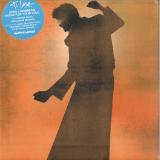
‘Win and lose without losing oneself’’ This line from French rapper Oxmo Puccino greatly accompanied David Walters while composing his fourth studio album. Over the eleven tracks on ‘Ti Love’, David took his time to find the right tone and in turn, tell his truth.
‘Ti Love’, is a French-Creole abbreviation for “petite love”, meaning ‘little love’, evoking that sweet fondness found in those small gestures and little acts of kindness.
Think of things like young kids' brotherly love or a stranger lending you a helping hand, while expecting nothing in return. It’s these motions that allow this album to feel full of real life, carried by beating drums that also pull at our heart strings.
Basing himself in a small village in Martinique, where David had not long since scattered the ashes of his late mother, the multi-instrumentalist decided to remain there and let the writing of Ti Love pour out from deep inside him. Taking influence from around the island, the energy from his makeshift studio set up in Fort de France, allowing a resilient yet grieving man to recount, let go and come to terms with his recent loss.
So embracing these new circumstances, on the rugged coastal Caribbean island of Martinique, David took up an artist’s residency in the island’s capital Fort de France, located near the town’s port is the ‘Manoir des Artistes’, a bustling recording studio space. A place where the walls shake as the latest sounds being created are blasted by locals and visitors alike. Most studio doors are wide open; as music here is a huge part of everyday life, feedback from encouraging neighbouring musicians is on hand and welcomed. A contrast to the isolation often assumed with working in more traditional music studios.
It was here in this stimulating environment that David recorded Ti Love’s initial demos.
With his first collaborator onboard, Neeweed, a 25-year-old producer and gospel expert who David met at the Martinique Jazz Festival.
Of the album’s initial versions of the record David recollects: ‘It took me three years to write it, then I rewrote it, reworked it. In the end I'm really glad I stepped back and listened to myself.’ I found a great ally in GUTS, who ended up being the artistic director of the record”
David surrounded himself with the right people who helped him express himself in the best possible way. He called on other friends and musical comrades; album opener and title track, ‘Ti Love’ features the incomparable Fatoumata Diawara (World Circuit Records / Africa Express) and further along additional production came in from; Izem, Art Of Tones, and GUTS himself, who all added just the right amount of ‘little love’ to this
project. Further helping hands came from Californian producer and DJ Captain Planet, who David was introduced to a few years ago. Closer to home, here in Europe, the German producer Bluestaeb appears on two tracks: the very catchy disco funk ‘Mr Maraboo’ and ‘Kite Koule’, the latter being the first single lifted from the album, where David invited Nigerian guitarist Keziah Jones.
Elsewhere on the album, fellow Heavenly Sweetness recording artist Blundetto contributed two tracks; the reggae ‘Voodoo Love’, which is David's tribute to Studio One, and the very sweet and resilient ‘Bon Voyage’, which closes the album... "It's gold, it doesn't need anything changing.” remarked David - ‘Bon Voyage’ is a goodbye to his mother, whose voice called him from the bottom of the sea one night while he was surfing during the full Moon.
Released almost 20 years after his debut album ‘AWA’ released on French imprint Ya Basta, home to Gotan Project and many others, David boasts a long list of radio supporters including; Gilles Peterson, Cerys Matthews and Don Letts at the BBC, while further field Cosmo Radio in Germany, and KCRW in Los Angeles.
On this new record, David has shown sincerity and vulnerability, while still honouring the infectious groove that he is known for the world over. Despite the upsets, a little love can indeed go a long way.
CREDITS:
Produced by Bluestaeb / Blundetto / Captain Planet / Izem / Art of Tones
A&R : Guts
Mixed by Mr Gib @ Onetwopassit
Except "Bon Voyage” and "Voodoo Love" mixed by Jerome “Blackjoy” Carron
Mastered by Benjamin Joubert @ Biduloscope
Art by Elliott Walters
KIK is the new project of two core strategists of sonic enigma HHY & The Macumbas: Jonathan Uliel Saldanha & João Pais Filipe. Ditching acoustic instruments in favour of drum synthetics & tightly controlled sound design, the duo's debut album NIGHTSHIFT focuses on off-kilter club tracks that thwart 4-on-the-floor flavours whilst maintaining trance-inducing extended cycles. If the devil is in the details, this is all about the spectromophology of the details.
Beginning with moving morse code blips in an odd time signature We Can't Dance announces the characteristic unlife of the album's pulse. Once the kick enters, syncopations progressively accumulate into a weave of interacting rhythmic lines. Smoke Machine's groove is reminiscent of the riddims Saldanha explores in his HHY & The Kampala Unit, adding scintillating pads and snippets of blitzed out laughter.
The album's third track, Proff, hearkens back to the initial pulse, displaced and pitched down in register. Here's a more meditative temperament on display, where the regular geometries of the club have been moved into higher-order structures. Segments rise & fall into earshot. Deepening the meditative mood, Back Room explores a short melodic leitmotif anchoring the track's wander- lust.
The rhythmic assault continues in Tactical Gear, bringing further experiments into polyrhythmic contours exacerbated by preci- sion movements of echo & delay. Limping can be heard as a what-if sonic fiction taking Autechre-inspired abstractions through Durbanoid Gqom terrains. The album closes with its longest track, Night Shift, that segments into shifting sound worlds.
Drawing from industrial grit, cybernetic percussion and the eerie fluorescence of after-hours energy, NIGHTSHIFT exists in the liminal space between body music and abstraction——a soundtrack for phantom warehouses and malfunctioning machines. This isn’t just music; it’s an immersive sonic environment, a journey into the heart of deconstructed dancefloors.
For fans of Rian Treanor, Proc Fiskal, Jlin and Lorenzo Senni.
Most recently, HHY has been collaborating with Nyege Nyege through projects such as Kampala Unit and Arsenal Mikebe, performing live with the ensemble alongside Valentina Magaletti, and producing records for artists like Fulu Miziki, as well as collaborations with Phelimucasi, Rey Sapiens, Kingdom Choir and others. He also released Camouflage Vector: Edits From Live Actions 2017–2019 on the label, a live album featuring two tracks with Adrian Sherwood.
Previous collaborations include Tunnel Vision with Badawi (released on Tzadik), the HHY & The Macumbas album Beheaded Totem on House of Mythology, and Fujako (Wordsound, with MC Sensational), along with double-bill shows with acts such as Clipping and Death Grips.
- Mama Ku Dile - Mama Nao Chores
- As Cinco Sociedades - O Isangela Itanu
- Tambi Mua Ngola - Obito Em Angola
- Ngongo Mua Ngola - Sofrimento Em Angola
- Tribalismo - Katungu
- Ufolo - Liberdade
- Katete Ngila - Catete É Um Passaro
- A Luta Continua - O Nvunda Ki Ia Bue Lua
- Mona Ku Jimbe Manhenu - Filho Nao Esqueca A Sua Mae
- Undenge Uami - A Minha Infância
- Nguma - Inimigo
- Kamba Diami - O Meu Amigo
David Zé - Mutudi Ua Ufolo / Viúva da Liberdade is a major milestone in Angolan music, intensely blendingsemba, rumba, and bolero, recordedat the height of the country"s liberation struggle. Both soulful and political, the album resonates far beyond Luanda, carrying a universal spirit akin to that of Bob Marley. Originally released on CDA with Conjunto Merengue, it captures David Zé at his creative peak. Sung in Portuguese and local dialects, it combines rhythmic elegance with deep commitment, weaving links between Afro-Brazilian and Latin American traditions. After his assassination in 1977, the album was banned for several years, before being reborn as an essential work of resistance and beauty. In 2008, his legacy found a new echo when Damian Marley and Nas sampled "Undenge Uami" on Distant Relatives.
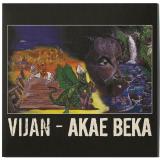
Vijan, originally released in 2003 by I Grade Records, is a seminal release from the “golden era” of St. Croix roots reggae, now available for the first time on 12” vinyl courtesy of Before Zero Records.
Produced by the legendary combination of Vaughn Benjamin and Laurent “Tippy I” Alfred, Vijan balances the raw, spiritual intensity of Vaughn’s songwriting with the sophisticated, melodic arrangements that became the hallmark of the I Grade sound.
This album features an incredible lineup of musicians who helped shape the sound of Virgin Islands reggae. The production credits boast the textured guitar layers of Tuff Lion , the deep, driving bass of Kenyatta Itola , and the rhythmic precision of Dion “Bosie” Hopkins. Uniquely, this album also showcases Vaughn Benjamin’s versatility as a multi-instrumentalist, contributing drums, bass, and keys on standout tracks like “All Ye Naashan” and “Thanks for Life”.
Akae Beka’s inimitable style of rich, deep, multi-layered songwriting and uncompromising devotion to RasTafari is on full display here. At the point of his untimely passing in 2019, Vaughn Benjamin had released over 70 albums, solidifying his place as one of the most prolific reggae artists ever known. Vijan remains
a glowing highlight in this expansive catalogue, capturing a specific moment of creative brilliance in the early 2000s.
The vinyl reissue allows listeners to engage with the album’s analogue richness and features the striking original artwork by Marcus Wilson, presented here as a 12” square masterpiece.
- 1: Blossom
- 2: Kyoto Dans La Brume
- 3: Sans Laisser D'adresse
- 4: Answer Me
- 5: La Course
- 6: Ida Lupino
- 7: Lontano
- 8: Le Jour J A L'heure H
- 9: Les Tuiles Bleues
- 10: Resonances
The album begins with the title track (Blossom) a light and immediate song composed by Besson. Also composed by Besson are 'Kyoto dans la brume', inspired by a stay in Japan's imperial city, and 'La Course', originally written for three slapstick short films by Fatty Arbuckle starring Buster Keaton. Suarez's composition ' Sans laisser d'adresse' , was initially written for a stage play titled ' Ici Nougaro' , and his ' Le jour J a l'heure H' for a film by director Jean- Henri Meunier. 'Les Tuiles Bleues' is a nod to Suarez's late friend, Malagasy accordionist and singer, Regis Gizavo.
There are also three covers on the album, 'Answer Me' by Gerhard Winkler and Fred Rauch, a composition recorded by Keith Jarrett during his 2016 European tour; Besson cites Jarrett as a major influence. There is also Carla Bley's ' Ida Lupino' and Pat Metheny and Lyle Mays' ' Au Lait'. These and their own compositions result is Blossom' ', a highly accomplished album on which trumpet and accordion shine in equal measure.
- A1: Rat-Tat-Tat Intro Feat. Akko Gorilla
- A2: Rat-Tat-Tat Feat. Akko Gorilla
- A3: 4U Feat.qn
- A4: East Bird Feat.piano Flava
- A5: Secret Feat.chiyori
- A6: Gas City Feat. Mori
- B1: Trip (Sa113 To Uk130)
- B2: Ibuki (Gqom) Feat.kσito
- B3: The Out Of Africa Hypothesis Feat.荘子It, Tomc
- B4: Metamorphosis
- B5: Far Away As The Stars
From Johannesburg, via Tsukuba. This is Japanese Amapiano.
The pinnacle of Japanese-made Amapiano albums, which took the club scene by storm, is finally available on vinyl!!
audiot909, one of Japan's foremost amapiano producers and DJs, will release his album “JAPANESE AMAPIANO THE ALBUM” on vinyl three years after
its initial digital-only release in 2023.
Featuring 11 tracks domestically interpreted and woven together without losing respect for the Amapiano genre and the culture and background that shaped it.
'In 2023, sound artist and composer Weston Olencki toured across the American South. Beginning in their hometown in South Carolina, they snaked a circuitous path from the mountains of West Virginia to the banks of the Mississippi River. As the miles accumulated, so did the initial seeds of new work.
'Instruments and artifacts they acquired hitched a ride in the backseat, while songs and sounds filled their portable recorder: water in its various states, the familiar insectoid buzz of those summer nights, trains cutting through the landscape, the traditional music that lived alongside the communities that kept it. Olencki took it all in, and over time, found ways that these experiences coalesced into a bramble-like perspective of time, where past, present, and future intersect in ways both barbed and beautiful.
'Broadsides, Olencki’s newest solo full-length is the multilayered result of this journey. The album follows their landmark release Old Time Music from 2022, which presented radical interpretations of traditional tunes from Appalachia and throughout the South alongside original compositions that drew significantly on archival recordings. On Broadsides, Olencki rejects delineations between the unmoored avant-garde and the rootedness of one’s cultural heritage, revealing their porous and intertwined nature. “My mother was a quilter. Her mother before that,” they write in the album’s liner notes. “Quilting, like music, is a practice of embedding knowledge and remembrance into the very core of the thing you are making. It’s not just about the materials, but how they’re reassembled, recontextualized, stitched, woven to form new patterns - the minutiae of craft holding significance to those looking to find it. Stories woven from stories, never told the same way twice.”
'Like all great road trips, Broadsides unfolds slowly and continuously, with moments of dramatic reverie punctuating the endless melt of highway in the rearview. We’re immediately confronted by the uncanniness of revisiting old haunts, as Southern storms break through the initial churn of the freight locomotives of Alabama. Olencki’s interpretation of the bluegrass standard “Foggy Mountain Breakdown” captures the euphoria of melancholy in motion. The permutational plucks of banjo are bounced around the frame by a computer, its pitches determined within algorithmic sequences and transcriptions of classic three-finger licks. The tonalities of old-time are smeared and stretched until all that’s audible is the insistence that Heaven might be real.
'In the album’s second half, “Omie Wise,” a murder ballad made famous by Doc Watson, follows an interlude recorded on the river in North Carolina in which the titular character’s body was laid. Ghostly echoes of a dozen other renditions float through the substrata as Tongue Depressor’s Henry Birdsey accompanies them on the pedal steel guitar. The album’s central composition, “all my father’s clocks,” is a profound meditation on entropy and impermanence. The sound of their father’s extensive clock collection ticks away as Olencki pulls a bow across the length of an autoharp sourced from a rural strip mall. The instrument was left as detuned as it was found, the resonance of its deep bass drone and clanging high-end the result of years of neglect and the warping effects of Southern humidity.
'Historically, broadsides were an early form of broadcasting, an often- musicalized telling of current news pasted in the public square. The name was later taken up by Sis Cunningham and Gordon Friesen in the 1960s, whose Broadside magazine published songs and social commentary when American folk music resurfaced as an urgent way of communicating the multifaceted politics of its time.
'Olencki borrows the phrase to recall both this old form of songmaking and that later prominent reexamination of traditional music’s role in modern life, but also to draw attention to the fragmented and machine- mediated way heritage is diffused in this very different, but no less pivotal, moment.
'As a sanitized past is used as justification for current violence and domination, we can turn to these artifacts to better understand the history of ourselves, but only if they are consciously pushed to evolve. Broadsides represents one personal, striking vision of what far-flung futurisms could be respun from = these high, lonesome sounds: a reflection of the unbridled joy and deep sorrow inherent to living together through time, and a desire to push further into the untold and unknown.'
- A1: Robert Pico - Le Chien Fidèle
- A2: Annie Girardot - La Femme Faux Cils
- A3: Spauv Georges - Je Suis L'état
- A4: Zoé - Zoé
- A5: Jacques Da Sylva - Fou
- A6: Valentin - Je Suis Un Vagabond
- A7: Jacques Malia - Histoire De Gitan
- A8: Bernard Jamet - Raison Legale
- B1: Jean-Pierre Lebort - Barbara Au Chapeau Rose
- B2: Les Concentrés - Fils De Dégénérés
- B3: Les Missiles - Publicité
- B4: Hegessipe - Le Credi D'hegessipe
- B5: Marechalement Votre - Ethero Disco
- B6: Mamlouk - Decollez Les
- B7: Mozaique - L'amour Nu
- B8: Jean-Marc Garrigues - Je Dis Non
- B9: Penuel - Astronef 328
The journey through French-speaking pop archives continues with this fifth volume, packed with fuzz, gimmicks, and dissent. Far from the charts, the selected tracks display a great creative freedom, often backed by corrosive humor. Welcome to the surprising, kaleidoscopic, and colorful world of the late sixties and early seventies, Wizzz!
Born in Montauban, Robert Pico stumbled into music by chance when he met René Vaneste, then artistic director at Pathé-Marconi. René brought him to Paris to record his first 45 RPM EP in 1964. A year later, Pierre Perret introduced him to Vogue, where he recorded his second album with Claude Nougaro’s orchestra. Sylvie Vartan then introduced him to RCA, where he recorded four singles, including the astonishing "Chien Fidèle," a track backed by a hair-rising fuzz guitar. Alongside his solo career, he also composed for other artists like Alain Delon (the song was recorded but remains unreleased), Magali Noël, Bourvil, and Georges Guétary. In the Paris of the sixties, he mingled with Mireille Darc, Elsa Martinelli, Marie Laforêt, France Gall, Françoise Hardy, Petula Clark, Régine, Dani, Serge Gainsbourg, Joe Dassin, Franck Fernandel, Charles Level, and Roland Vincent. Despite his efforts and winning a Grand Prix Sacem for his final record, Robert Pico didn’t achieve the expected success in show business and decided to leave Paris and return to the Southwest, where he devoted himself to writing. He is the author of 23 books (including Delon et Compagnie, Jean-Marc Savary Editions 2025, a memoir about his youth and his many encounters). Today, he is relieved to never have become a celebrity and devotes himself to his work with passion.
In 1969, the Franco-Italian movie Erotissimo was released, directed by Gérard Pirès (who later directed Taxi in 1998, written and produced by Luc Besson). This pop comedy features Annie Girardot, Jean Yanne, Francis Blanche, Serge Gainsbourg, Nicole Croisille, Jacques Martin, and Patrick Topaloff. The soundtrack was written by Michel Polnareff and William Sheller, with lyrics by Jean-Lou Dabadie. "La Femme Faux-cils," performed by Annie Girardot. It recounts the feelings of a rich CEO's wife who seeks to develop her sex appeal under the influence of advertisement and magazines. Groovy, sparkling and light, this track, with ITS lush arrangements humorously critiques consumer society and feminine beauty standards.
“Je suis l’Etat” (1967) is the flagship track of the first EP by singer-songwriter Spauv Georges, aka Georges Larriaga, better known as Jim Larriaga (1941-2022). Born into a family of bakers, the young man was initially planning to become a hairdresser when he discovered English-speaking music through Elvis Presley and the Beatles. After this revelation, he decided he would become a songwriter and gave himself five years to succeed. He recorded his first two EP’s independently for RCA under the pseudonym Spauv Georges; meaning “that poor George”, a nickname given to him by the mother of her friend Jean-Pierre Prévotat (future drummer of the Players, Triangle, or Johnny Hallyday). Portraying a depressed and eccentric young man, Spauv Georges created corrosive and amusing songs that didn’t reach a wide audience, despite a TV appearance with Jean-Christophe Averty.
Supported by his loyal friend and fellow songwriter Jean-Max Rivière, Georges Larriaga met the future singer Carlos in the early '70s, then Sylvie Vartan’s assistant. He wrote songs for Carlos, including the popular "La vie est belle," "Y’a des indiens partout," and "La cantine", which went onto become a huge hit in 1972. He also composed for Claude François (“Anne-Marie”, 1971), Charlotte Julian (“Fleur de province”, 1972), helped launch child singer Roméo (who sold 4 million records), and later wrote the hit "Pas besoin d’éducation sexuelle" (1975) for the young Julie Bataille. In 1971, Jim recorded an album for Disc'Az: “L’univers étrange et fou de Jim Larriaga”, which featured pop gems like “La maison de mon père”.
The story of the song "Zoé" began when Pierre Dorsay, artistic director at Vogue Records, asked Swiss singer and musician Pierre Alain to write a song for a new female singer. The inspiration came when he realized that Zoé (the artist's name) was also the name of France's first atomic battery, created in 1948, which consisted of uranium oxide immersed in heavy water! The lyrics reflect a bubbling energy that must be handled with caution, while the instrumentation echoes this atomic theme, notably with the use of a theremin.
Zoé’s career lasted only as long as a single 45 RPM, but it seems Christine Fontane was the vocalist behind this pseudonym, who is known for several EPs, a good "popcorn" album in 1964, and a handful of children’s singles in the '70s. Regardless, the photograph on the cover is of a different girl entirely.
Later, Pierre Alain continued his career, writing songs for himself, Marie Laforêt, Danièle Licari, Alice Dona, Arlette Zola (3rd place in Eurovision 1982), and achieving multiple gold and platinum records in Canada. Also an inventor with several patents, president of the Romande Academy, and head of the French Alliance in Geneva, he now composes atonal music, books, and poetry. Moreover, he is also the host of "Les Mardis de Pierre Alain" at "Le P'tit Music'Hohl" in Geneva.
Filled with oriental choruses and fuzz guitar, "Fou" is from Jacques Da Sylva's only EP released by Vogue in 1967. Despite the quality of this recording, all traces of this singer disappear after this first effort.
Valentin is a baroque pop singer born in Belgium. He is the songwriter and composer of most of the tracks on his three singles released in the late 60s in Canada. A legend says that he reincarnated himself as Jacky Valentin during the 1970s for a rock'n'roll revival career in Belgium, but his older brother sadly debunked this story. Valentin's first two singles were arranged by Claude Rogen, a Parisian session pianist who had come to Canada to promote the song “Mister A Gogo”, a cover of David Bowie’s “Laughing Gnome”, adapted by singer Delphine, his wife at the time. Far from his usual network, Claude Rogen arranged music for Polydor, including the arrangements for “Je suis un vagabond” in 1969, a jerk tune with string arrangements and a furious optimism.
Jacques Malia wrote, composed, and recorded his only 45 EP for Festival in 1966. “Histoire de gitan” is an incredible beat track with bohemian scat that tells the story of a gypsy musician who came to Paris to make it in the Music-Hall, to no avail. The hero of the song and its author probably shared a similar fate, as Jacques Malia faded into anonymity after this remarkable attempt.
Bernard Jamet recorded two EPs for Barclay in the late sixties and co-wrote several songs with Christine Pilzer, Pascal Danel, and prolific songwriters Michel Delancray and Mya Simile. The track “Raison Légale” (1968), his masterpiece, immerses the listener in a courtroom right when a murderer is being judged, with jerk rhythm and free arrangements. A unique, paranoid, judicial, and psychedelic oddity.
Jean-Pierre Lebrot-Millers started his career in show business in 1967 as a singer and songwriter for the Philips label. After three singles, he wrote several songs of a new kind with his friend Pierre Halioche, in the midst of the sexual liberation movement and the democratization of drugs. With provocative lyrics, “Les filles du hasard” and “Barbara au Chapeau Rose” were released on a Philips singles in 1968. The character of Barbara was inspired by a queen of Parisian nightlife during the psychedelic years: model Charlotte Martin, who dated Eric Clapton from 1965 to 1968, then Jimmy Page from 1970 to 1983. Jean-Claude Petit’s arrangements, with a table-filled intro, soul brass, and Hendrixian guitar, emphasize the flamboyance of a hedonistic and sexy character, whose dog is named Junkie because “Junkie est un nom exquis”! The track was recorded live in three takes with a full orchestra.
Upon its release, the record was censored by Europe 1 and RTL due to its references to drug use. Jean-Pierre Lebrot was then banned from the airwaves and later dismissed by his record label. He changed his artist name to Jean-Pierre Millers, while his companion Pierre Halioche became D. Dolby for a new dreamy composition, “Chilla”, which Jean-Pierre produced himself with arrangements by Jean Musy. Once again, the song was immediately censored everywhere. After this setback, he decided to stop singing and started taking on odd jobs to support his Swedish wife and their son until the day he met Jean-Pierre Martin, then production manager at Decca, who had worked with Manu Dibango. Martin offered Jean-Pierre Lebrot-Millers, then employed at Rank Xerox, the position of artistic director at Decca. He accepted and became, a year later, promotion director (radio, press, TV). He worked on Julio Iglesias’s first album for Decca, which became a massive hit and allowed him to meet Claude Carrère. The latter asked him to write new songs and find their performers, much like a “talent scout.” It’s through him that Jean-Pierre discovered Julie Pietri and Corinne Hermès. He composed “Ma Pompadour” for Ringo, Sheila’s husband, and took the microphone again for the syncope hit “Rendez-Vous” in 1982.
That same year, Jean-Pierre Lebrot-Millers tried to release a track for which he had heavily gone into debt: “Si la vie est un cadeau”. Having recorded it in London, he presented it to numerous professionals, all of whom refused to get involved. The same thing happened with Antenne 2 and the Sacem when he proposed the song as France’s entry for Eurovision. He then met Haïm Saban, who was producing cartoon soundtracks and had just launched the Goldorak theme song. Saban, having listened to the song, declared it had the potential to become a hit. He sent Jean-Pierre and Corinne Hermès to meet the CEO of the Luxembourg radio and television network. The latter received them, asked to hear a verse and chorus a cappella in his office, and immediately hired them to represent Luxembourg at Eurovision 1983. They reworked the arrangements and recorded a new version with Haïm Saban as co-producer. The song ended up winning Eurovision 1983, a great comeback for our hero. He continued producing and hung out with the band Nacash in Belgium when a couple came to introduce their daughter for an impromptu audition in a hotel room. The girl sang “Les démons de minuit” while dancing to a radio cassette. Impressed, he had her take singing lessons for a year and composed a song for her (for which he had the melody and title, but no lyrics). This required him to go on the hunt for a lyricist, who ended up being Guy Carlier. They recorded the song, which was initially a ballad, at Bernard Estardy’s CBE studio, and gave the singer a new name: Melody. They showed the song around their industry network without success. Later, Estardy called Jean-Pierre to suggest changing the rhythm and making it pop-rock. Orlando, Dalida’s brother, liked the result and decided to co-produce the track. “Y’a pas que les grands qui rêvent » became a classic hit. The song has since been covered by Juliette Armanet (as a ballad, like the original) and Valentina.
Born into an aristocratic Breton family, Hervé Mettais-Cartier worked as a DJ at Queen Kiss, a nightclub in Poitiers, where he formed the band Les Concentrés with Michel (an actor) and Christian (a radio technician). Together, they created a repertoire of whimsical songs (“Ma bique est morte”, “J’suis un salaud”, “Fils de dégénéré”...) that they performed on stage dressed in white (in homage to “concentrated milk”). They performed at Bliboquet and Olympia in 1968 for the 10th edition of the “Relais de la chanson Française” organized by L’Humanité-Dimanche and Nous les Garçons et les Filles, sponsored by Pepsi Cola. Winners in the author-composer category, alongside Danish singer Dorte, their visibility allowed them to record a 45, and appear on television in Jean-Christophe Averty’s show. The A-side of the disc features Bruno le ravageur, a casatchok dedicated to Bruno Caquatrix, the director of Olympia, nicknamed in the song “Coq Atroce” or “croque-actrices”. The B-side is dedicated to “Fils de dégénéré”, a quirky tribute to Hervé's aristocratic roots, mixing absurdity with sophisticated vocal harmonies.
After Les Concentrés, Hervé Mettais-Cartier formed the duo La Paire et sa Bêtise with his friend Olivier Robert. They performed in Parisian cabarets and toured with Pierre Vassiliu. In the late 1970s, Hervé began a solo career. He recorded two albums for the Motors label in 1978 and 1979, which did not achieve their anticipated success due to lack of promotion. In 1980, he met Bernadette, with whom he started a family and created a “Chansons à voir” (songs to see) show that he performed until his death at the end of 2024.
Publicité comes from the final EP by the Missiles (Ducretet Thomson, 1966), a disc that also includes “La (nouvelle) guerre de cent ans”, featured on Volume 4 of our Wizzz! series. Please refer to the booklet for the story of the band.
“He’s 1.82 meters tall, 28 years old, weighs 135 kg, is black and Belgian”: this is the description of singer Hegesippe on the back of his sole single (Decca, 1967). He appears on the album cover wearing a Greek toga, like a hippie gag – we are at the end of the year 1967. In “Le crédo d’Hegesippe”, this former bodyguard of Antoine and the Charlots plays the delightful card of the thick brute converted to Flower-Power and non-violence, with arrangements by Jean-Daniel Mercier, aka Paul Mille.
“Ethéro-disco” was released on a promotional record for clients of the Maréchal company (Liège, Belgium) for the New Year 1979. Over a funky rhythm, celebrity impersonations (Brigitte Bardot, Jacques Dutronc, Fernandel…) deliver an enigmatic text about pharmaceutical products like ether, bismuth, and aspartate. The track was composed by Dan Sarravah (responsible for Joanna's “Hold-up inusité” featured on Wizzz! Volume 3) and Tony Talado, who was also a singer (one 45 in 1967), songwriter (with over a dozen credits between 1964 and 1985 in various styles from surf music to disco), author (Devenez Végétarien, Dricot Editions, 1985), ad designer, and psychologist.
Décollez-les is on the A-side of Mamlouk's only single, a pseudonym for Marsel Hurten, who is known for his work on several EPs in the late sixties, as well as composing music for Hervé Vilard’s “Capri, c’est fini”, Claude Channes' “La Haine”, Annie Philippe’s “On m’a toujours dit”, and Nancy Holloway’s “Panne de Cœur”.
This strange song, with Afrobeat horns and absurd dialogues between a chef and his kitchen staff, is the result of a collaboration between Marsel Hurten and one of his neighbors, a photographer from Pavillon-sous-Bois (93), where the musician settled after returning from the Algerian War. A music video was shot to promote the record.
Marsel Hurten was born in Tourcoing (59) into a musical family. At a young age, he joined the brass band founded by his grandfather, playing the piston before studying trumpet at the conservatory, as well as teaching himself how to play the guitar. As an orchestra musician, he toured in France, Belgium, Germany, and England. He released a series of solo 45’s between 1965 and 1968 for the DMF and Az labels before stopping recording to focus on working for other artists (Gilles Olivier, Noëlle Cordier…).
“L’amour nu” (Vogue, 1971) is the work of the short-lived Belgian band Mozaïque. The track, written by singer Jacques Albin, closely resembles another of his compositions, “Carré Blanc”, which he recorded in 1969 for Disc’AZ.
Represented by the Lumi Son micro-label based in Marignane (Côte d'Azur), Jean-Marc Garrigues released two 45 RPMs in the late sixties, defending the French jerk sound. The song “Je dis Non” is a short, joyful ode to youth, pop music, and rebellion.
Songwriter and performer Jacques Penuel released three singles. The first one, “Astronef 328” (Fontana, 1969), features a dizzying series of chords punctuated by sound effects, a sci-fi story, and arrangements by Jean-Claude Vannier.
We would like to sincerely thank Pierre Alain, Moon Blaha, Marsel Hurten, Bastien Larriaga, Jean-Pierre Lebrot-Millers, Bernadette Mettais-Cartier, Robert Pico, Olivier Robert, Claude Rogen, Micky Segura.
Audio taken from a live performance by Anar Band (Jorge Lima Barreto and Rui Reininho) with E.M. de Melo e Castro in November of 1978 at Cooperativa Árvore, Porto. The performance was filmed. A segment was included in »Obrigatório Não Ver«, a weekly programme presented by Ana Hatherly on Public Television’s Second Channel. It was not possible to determine the exact date of the event, and no documentation seems to be available in the relevant archives.
»Encontro que Tenho« and »Profissões«: these titles are specific to this release. Having failed to locate the respective poems after a thorough search in E.M. de Melo e Castro’s body of work, it was deduced both texts were created for the occasion.
Even without a full contextualisation, the sound transmits the spirit of cultural agitation proper to these sessions. When this show happened, Anar Band were Jorge Lima Barreto (ARP Odyssey synthesizer) and Rui Reininho (Ibanez double-neck guitar), with the addition of E.M. de Melo e Castro, whom we shall call a poet but whose creative intervention was far reaching. Besides poetry, also continued his efforts in linking up diverse artistic areas (painting, drawing, collage, performance, video) and his official training in textile engineering. He was one of the artists featured in Henri Chopin's »OU Revue« in 1966, establishing his natural connection to the European concrete/visual/sound-poetry avant-garde. Melo e Castro was also proficient in the agitation of minds and political awareness. A good example in »Profissões«, where initially separate professionals (an intellectual, a fisherman, a soldier, a factory worker) are gradually mixed in a show of interdependency. Symbolically, through his words one listens to a transformation of society, although the same conclusion arises twice: surplus always finds its way to the hands of the capitalists.
That was the state of affairs many were looking to change, an economic and social malaise that the 1974 Revolution in Portugal fully uncovered, when dissident voices could finally be heard in public. Each in his own way, all three participants in this recording were non-believers in the structure of society such as it was presented. Through his books and press writings, mainly concerned with Jazz, Jorge Lima Barreto pushed his way into Portuguese artistic and critical circles since the late 1960s. Consciously and unwittingly, he collected enemies and pointed them by name, people he labelled as reactionary, people who delayed progress, social and cultural mixes, the avant-garde; they even delayed the chaos from which new forms and attitudes arise.
Rui Reininho, a non-conformist by heart, experienced incomprehension from an early age. His anarchic ways, a tendency to baffle others, were revealed through the choice of clothes and accessories, public behaviour, and »real life« performances. Just as Lima Barreto, and even together with him, he enjoyed provoking the extremes: Maoists on one side, right-wing conservatives on the other. He translated leftist books and joined Anar Band precisely on the day a duck or swan or goose (one of them) was thrown on stage in Porto, 1976.
This record documents a concrete action, a snapshot of the agitation, something we have no problem calling punk activism, something which allowed two people with little to no musical training to play and record music. By then, Anar Band had managed to release their only LP in 1977. It’s this performance, however, that reveals the naked rawness of the music: improvisation, mutual listening, and choice of intervention between both musicians and Melo e Castro, clearly sensing when the synth has to change tone, the voice has to make pauses, the guitar punctuates both and finds the space to… scream. The sound was captured by the film crew, adding to the rawness: the instruments are palpable, the voice often too close to the mic. Everything was preserved. First time on disc.
2026 Restocked!
If you've been following the Payfone story over the last 13 years, you'll know that Phil Passera and Jimmy Day's long-running collaborative project has specialised in one-off musical morsels - sublime songs cooked up in cahoots with all manner of guest musicians and vocalists. Never ones to rest on their laurels, Day and Passera have now delivered a full six-track tasting menu in the shape of Lunch, their hotly anticipated debut album.
Recorded over an 18-month period at Passera's Barcelona studio and Day's studio in Brighton, Lunch is an unsurprisingly assured and musically detailed affair that's entirely made up of previously unheard songs. Unlike acid-flecked recent single 'Volt To Volt', which delivered a tweaked take on late 1980s house music, the album's six tracks showcase the trademark sound the duo has been developing since first joining forces 13 years ago.
Trawl back through Passera and Day's high-quality catalogue, which includes outings on Leng, Golf Channel Recordings and Defected as well as their own OTIS imprint, and that distinctive musical recipe becomes clear. Rooted in their love of classic drum machines and their trusty JUNO-60 synthesiser, the Payfone sound combines equal amounts of electronic and organic instrumentation, warm and inviting downtempo and mid-tempo grooves, and pertinent and thoughtful lyrics delivered with panache by an impressive roll call of guest vocalists.
Lunch, then, is a standalone sonic statement - an initially vinyl only album on their own OTIS imprint - that continues this impressive lineage. Like all Passera and Day's collaborative work, it is free of samples, with the pair preferring to create their own sounds from scratch. Opener 'Movin' On', featuring the honeyed vocals of former XL Recordings artist Willis Earl Beal AKA Nobody and slap-bass from Jo Gabriel Harris (who also features on three other songs across the album), is a deep and effortlessly evocative mid-tempo delight that perfectly sets the tone for what's to come.
Brooklyn-born April Pittman and Russian/Armenian vocalist Zara Kian lend their talents to woozy, sun-baked shuffler 'Paperman' before regular Payfone collaborator Ludmilla Rodriguez headlines 'Joan of Arc', a veritable Mediterranean breeze rich in tumbling analogue synth synths, elastic bass and tumbling guitar solos. Those yearning for a touch of lightly disco-flecked dancefloor heat will savour 'Spend The Night', where Los Angeles singer Collette Tibbetts AKA Carmella The Balls, accompanied by virtuoso keys courtesy of Parisian pianist Gabriel Cazes, rises above a sweet, melodious, dub disco-adjacent backing track. In contrast, 'Pamela' is low-slung and hypnotic, with 'Sofian' vocalist Barbara Alcindor ushering us through a deep, heady groove-scape.
Fittingly, Passera and Day round off Lunch via a vibrant and potent sweet treat, 'Pony Bar'. Headed up by the J.J Cale-esque lead vocals of man of mystery Leon Lace, the pedal steel-sporting song joins the dots between dusty Americana, kaleidoscopic Balearic beats and lilting, slow-motion disco. Like the rest of the album, you'll be thinking about it long after you've washed down the last few musical mouthfuls.
- 1: The Rule Of Three
- 2: Egglet
- 3: Kurt Angle
- 4: Lush Life
- 5: Nowhere
- 6: Sheriff Elvin
- 7: Ghosts
- 8: Do Not Forsake Me O My Darling
Building logically on the natural development of their two previous collections, this time the fearless threesome can be heard roaming further than ever before into the uncharted hinterlands where the deep jazz tradition of the classic tenor trio format, laden with melody and swing, ventures into the untamed regions of free improvisation. At the heart of the band is the unmistakable beat of drummer Spike Wells, who this year celebrates his 80th birthday and the 65th year of his extraordinary career at the forefront of jazz in the UK, providing the driving force behind everyone from homegrown heroes Tubby Hayes to Bobby Wellins to visitors like Stan Getz and Roland Kirk and countless others. Riding at his side to represent the current Londonbased millennial cohort is saxophonist Riley Stone- Lonergan , whose intriguing compositions and boundless creative imagination as an improvisor continue to add to his burgeoning reputation.
Representing the diversity of tastes and interests and uncompromising creative stance typical of Gen X, big- toned bassist Eddie Myer rounds up the posse. The trio initially got together through their mutual love of Sonny Rollins' touring pianoless trios of the late 50s and early 60s, but soon found themselves expanding their repertoire to explore the rich and varied territory opened up by their unique combination of individual tastes. This album is their most coherent, wide-ranging and adventurous set of recordings yet. From Ayler to Strayhorn, from be-bop to calypso, from cowboy movie to free-jazz shootout, there's a surprise at every turn, but always delivered with total sincerity and conviction and a driving desire to bring the audience with them every step of the way. 'The Rule of Three' is a bold and confident statement of intent from a real long-term project that's as invested in the music's future as it is inspired by and reverent of its past.
We Jazz Records is delighted to present the first ever vinyl release for two modern classic tracks by Swedish organist Eric Malmberg. Originally released in 2007 by the label Häpna on Malmberg's second solo album "Verklighet & Beat", the pair of tunes herein serve as proof of Malmberg's remarkable artistic vision, echoing both the pure pastoral beauty and the irresistible groove of his work. This release, part of the ongoing 7" series by We Jazz Records, follows the label's Artistic Director Matti Nives's 10+ years of obsession with the aforementioned Malmberg album after an initial chance encounter with the side A track on a WIRE Magazine compilation in 2007.
"Eric Malmberg's music is a small miracle. I don't want to call him a genius, because I don't want to jinx him. But I will say that he's a complete original, in addition to being a vastly talented musician. I will also say that his recordings and the two performances that I saw by Sagor & Swing merit a place on a short list of most enjoyed musical experiences of the last half decade. I could bleat about the quality of the work, but "most enjoyed" to me carries the stronger charge." – David Grubbs, New York, March 2007
"A special mention needs to go out to the phenomenal and totally bonkers 'Till minne av Lilly Lindström' a track which starts with a clean break, builds into dancefloor abusing Hammond-hammering mayhem and then ends up with lush string orchestrations and disco-lite sweeps. Insane and more enjoyable than you could possibly imagine - an album to totally lose yourself in, and one for anyone looking for something just that little different. Huge recommendation." – Boomkat
- A1: Frankie Knuckles Ft. Jamie Principle - Your Love
- A2: Sounds Of Blackness - The Pressure (Frankie Knuckles Classic Mix)
- B1: Loose Ends - Hangin’ On A String (Frankie Knuckles Club Mix)
- B2: Frankie Knuckles - It's Hard Sometime (Fk Classic Club)
- C1: Hercules & Love Affair - Blind (Frankie Knuckles Remix)
- C2: Frankie Knuckles With Jamie Principle - Baby Wants To Ride
- D1: Chaka Khan - Ain’t Nobody (Hallucinogenic Version)
- D2: Frankie Knuckles Ft. Adeva - Too Many Fish (Classic Frankie Version)
Volume One[27,94 €]
TO COMMEMORATE THE 10th ANNIVERSARY OF HIS PASSING
DEFECTED HONOURS FRANKIE KNUCKLES WITH SPECIAL EDITION ‘HOUSE MASTERS’ VINYL
Defected celebrates the life and legacy of house music pioneer Frankie Knuckles with a limited-edition vinyl offering of his notable ‘House Masters’ release.
Marking ten years since his passing, join Defected in honouring the enduring legacy of house music pioneer. All proceeds of ‘House Masters: Frankie Knuckles’ will be donated to Frankie Knuckles Foundation as it was when the compilation was originally released back in April 2015.
“Frankie Knuckles, whom many consider to be one of the architects of house music is still highly influential to a new generation. Since his untimely passing ten years ago it has been incredible to see the continued outpouring of love and respect that he has received. His legacy is why the Frankie Knuckles Foundation exists. Through our work we honour him by supporting initiatives that he was passionate about: music education, AIDS and diabetes research, prevention and LGBTQIA+ youth homelessness. This commemorative vinyl release of ‘House Masters’ in association with Defected will allow us to do just that!”
Frederick Dunson, Founder, President & Executive Director, Frankie Knuckles Foundation
The forthcoming vinyl releases will feature a selection of his finest productions and remixes including the seminal ‘Your Love’, ‘The Whistle Song’ and remixes for Chaka Khan and Sounds Of Blackness.
Find out more about Frankie Knuckles Foundation and its commitment to educating and supporting initiatives across LGBTQIA+ communities and AIDs prevention
Yvonne started her carreer as a singer at the age of 18 years. She performed the hit GARDEN OF EVE in 1981 (ATLANTIC), produced by the great Donald Burnside. This outstanding classic tune stayed for several weeks on top of the hitlists, while LOVER OF MY DREAMS was a track initially meant for the 1983 album, but the track wasn't finished in time for the release of the album, it was only released in Europe during 1984. SLOW DOWN was recorded during 1981 and was never release before
- Infinity Gradient: Opening
- Infinity Gradient: Section 1
- Infinity Gradient: Section 2
- Infinity Gradient: Section 3
- Infinity Gradient: Section 4
- Infinity Gradient: Section 5
- Infinity Gradient: Section 6
- Infinity Gradient: Section 7
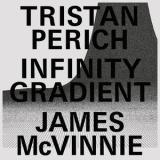
Infinity Gradient ist eine einstündige Komposition in sieben Sätzen für Pfeifenorgel und 100 Lautsprecher in 1-Bit-Audio. Aufgenommen wurde das Werk in der Royal Festival Hall in London, wo Organist James McVinnie 2024 als Artist-in-Residence tätig war. Die Lautsprecherinstallation - bestehend aus vier Subwoofern, 24 mittelgroßen und 72 kleinen Lautsprechern - bildet eine visuelle und klangliche Einheit mit der imposanten Orgel des Saals. Komponiert von Tristan Perich, verbindet das Werk die klangliche Direktheit seiner 1-Bit-Elektronik mit der archaischen Kraft der Orgel. Beide Instrumente basieren auf einem binären Prinzip: Ton oder Stille. Diese strukturelle Gemeinsamkeit schafft eine emotionale Tiefe, die trotz technischer Komplexität unmittelbar berührt. McVinnie, bekannt für seine genreübergreifenden Kollaborationen mit Künstlern wie Philip Glass und Squarepusher, initiierte das Projekt nach dem Hören von Perichs "Surface Image". Die Orgel der Royal Festival Hall - ein visionäres Instrument der 1950er Jahre - bietet mit ihren 7.866 Pfeifen eine ideale Bühne für dieses außergewöhnliche Werk.
B&W Photobook collection about 1998/2001.
Free parties in Paris (mainly) and Groningen, and some others...
meanwhile, Livia Saavedra, the photographer, initiated many ways... Women rights, refugees... Making no noise... Doin' it.
The idea was not to make a book when she took these argentic pictures.
This project is a gathering cleaner to her.
And for some of us it's a good way to remember. Without a word needed...
----------------------------------------------
Enjoy those 110 pages and enjoy a story that cannot be written... and photographied !
24cmx24cm / 110 Page
Niveau Zero Edition
Preface by Lionel Pourtau.
Peter Beyls (1950) works on the intersection of computer science and the arts. He develops generative systems in music, the visual arts and hybrid formats. Beyls studied music and computer science at EMS, Stockholm, the Royal Music Conservatory, Brussels and the Slade School of Art, UC London. Initially he was active in electronic music, as a composer of tape music. Later on, he developed various analog live electronic music systems. In close partnership with Michel Waisvisz, he designed and built the early prototypes of the crackle box synthesizer at STEIM, Amsterdam (1973-1975). Around the same time, Belgian composers Karel Goeyvaerts and Lucien Goethals were his mentors at the IPEM Studio. Over the years, Beyls’ work has primarily centered on generative systems, including extensive series of machine drawings, human-machine interactive music systems using machine-learning and interactive audiovisual installations on which he has also given worldwide lectures. His work has been widely performed and exhibited at various universities and art institutions. The four previously unreleased tracks on this LP are amongst his first electronic music compositions using the Crackle Box, the Synthi 100 and the VCS3, a combination of live improvised electronics with precise tape editing and effects.
- 1: Siphium
- 2: Moly
- 3: Psalacantha
- 4: Styrax
- 5: Argos
- 6: Murena
- 7: Snake Of Arabia
- 8: Gold Eating Ants
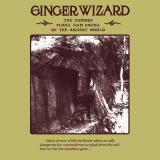
Crypt of the Wizard is proud to present Ginger Wizard - The Curious Flora and Fauna of the Ancient World on vinyl and digital formats.
About ten years ago in a record store in Prague, the Ginger Wizard discovered a copy of Bo Hansson’s Lord of the Rings LP. Although initially unfamiliar with the record, the reference to Tolkien’s masterwork and the incredible cover art drew him in and, rather fittingly, sent him off on a journey of discovery that would reshape his creative trajectory.
Years later while working in cassette tape manufacturing, Ginger Wizard noticed that most fantasy-inspired music fell into two camps: metal and dungeon synth. With little interest in the former, but intrigued by the latter, he began writing a few songs imagining a beautifully packaged and tactile cassette tape. However, dungeon synth he soon realized was “the most boring music to make”.
So began the Ginger Wizard’s own mythological discography. In 2022 came The Feast for the Dead King and Other Musical Themes recorded at home in a cold kitchen, is conversely an album full of warmth drawn from sheer exploration. A year later Can I Choose My Own Psychopompos? was recorded for the legendary Stoned to Death label - a 7” séance of semi-improvised noise and melody featuring allies from the Ginger Wizard’s live backing band The Peter Jacksons. The following year with Bathysburg Tales, a new approach was needed in order to keep the project interesting. Drawing inspiration from Popol Vuh and the inclusion of vocals lent by Protomartyr’s Joe Casey and Jakob Battick, a new more cinematic sound began to emerge.
Now, we present The Curious Flora and Fauna of the Ancient World marking a step into something stranger while still channeling the spirit of Bo Hansson. The new album rejects swords and sorcery for the mythology of the natural world “the ancient stuff,” he explains in the record’s insert, “has a similar taste for me as fantasy.” These songs bloom, creep, and shimmer like forgotten plants under distant suns while rooted in something real and organic. Inspired by the myths of nature rather than heroic quests, it’s an album that feels alive, equal parts archaeological dig and psychedelic garden.
Currently at work on a soundtrack for an imagined 1970s fantasy film in collaboration with The Peter Jacksons, the Ginger Wizard continues to expand his strange universe while The Curious Flora and Fauna of the Ancient World serves as a new map to somewhere ancient, beautiful, and unknown.
NPVR is the avant garde duo made up of the late Peter Rehberg and Nik Void. Editions Mego is proud to present their second and final release. No this is not some kind of Beatles synthetic AI that raises the dead reconstructed recordings but rather a new album made by the humans and their machines.
The initial meeting of Rehberg and Void was in London in 2016 and despite or due to their mutual awkwardness found solace and compatibility in the fact that they both had a similar electronic modular set up, along with matching cases to transport all. The idea to collaborate was an obvious and organic process as a means to connect their individual gear together and observe the outcome. The fruits of these initial experiments, recorded in London, resulted in the playful experimentation of their acclaimed 2017 release 33 33 (eMego 251).
Now in 2024 Editions Mego presents the logically titled follow up, 33 34. These sessions were recorded six months after the initial recordings at Peter’s home in Vienna. This was planned out as a mirror city release to the original London recordings. With Peter having access to his full studio set up this time around we encounter a rich audio landscape which organically folds together a variety of musical genres blurring any distinction between these forms so the resulting music hovers as a new cloud of sound. Any musical form, be it industrial, electro-acoustic, ambient, drone and techno all coexist and melt into the other as the ensuing result unveils a hypnotic swarm of divergent sounds (music). When active there were no lines or contexts with NPVR, either between sound or genre within these recordings or live where NPVR were at home playing at a techno club one night and an avant garde venue the next.
The initial session of these recordings was edited by Rehberg and sent to Void to further develop. Over time the final versions were agreed on and then shelved as other outside projects took over. The awkwardness had been surmounted and the two had become close friends. NPVR performed at a range of venues such as Tresor, Sutton House, Corsica, Blitz, Paris GRM #Focus2, LEV Festival and Rigas Skanumezs Festival. Following Rehberg’s untimely passing Void had difficulty listening back to the sessions but eventually thought it fit to complete and release this album, of which even the artwork (like 33 33, an image from Zurich photographer, Georg Gatsas) had been decided upon prior to Rehberg parting ways.
There is an unmistakable joy to these recordings. One encounters an enthralling exploration of their chosen machines which conveys the excitement of what can be randomly conjured when people speak through such devices. There is no grand statement or argument here, just the sheer thrill of creation and the recorded results of random encounters. The art of collaboration was always a mainstay of Rehberg’s practice from the advent of the MEGO adventure. Rehberg & Bauer was an initial collaboration with former business partner Ramon Bauer. Even at this stage one can hear a relaxed sense of delight in the sheer discovery of sound.
A mix made for the Wire magazine following the release of 33 33 hints at the freedom that comes with endless urge for exploration and discovery. Abstract tracks from Z'EV. Jérôme Noetinger and Jung An Tagen are included alongside British stalwarts The Fall and New Order. There were no lines between pop / academic / underground or mainstream in Rehberg’s world. All of it sat at the same table. It is just matter in the atmosphere, like the diverse exploration found in these recordings that comprise 33 34.
Towards the end of his life Rehberg was obsessing over the immense output of the German ambient musician Pete Namlook. An artist renowned for not only his sprawling catalogue of ambient masterpieces but one who often said his main inspiration was nature. This is apt with regards to the work of NPVR which also aligns with such thought as the intertwining of the two individual artists and their machines results in a natural symbiotic flow, as it happens, just like in the world around us.
blickwinkel welcomes composer and multi-instrumentalist Francis Plagne to the label with a reissue of Asleep in a beached boat, an album that was initially released on his own Mould/Mouse Museum label in 2021 on cassette. The album was mostly given away to friends but now gets a wider release through a limited vinyl and digital edition.
Gentle melodies set an airy atmosphere and are intertwined with tensive dialogs between rhythms and textures coming from a wide array of acoustic and electronic instruments. Stylistically somewhere in between his Rural Objects (Black Truffle) and Udge (Horn of Plenty), on the eleven tracks on this album we hear Plagne in his most playful way to date.
Francis Plagne is a musician from Melbourne, Australia whose work swings between songwriting and a variety of other approaches, including group improvisation, instrumental abstraction, and domestic musique concrète. He performed live regularly since 2005 and has released recordings on labels such as Black Truffle, Horn of Plenty, Kye Records, Penultimate Press and his own Mould/Mouse Museum micro-label. In addition to performing his own work either solo or with a band, he has performed and recorded in improvised and other arrangements with Tetuzi Akiyama, Oren Ambarchi, Andrew Chalk, Crys Cole, James Rushford, and Joe Talia, among others.
Peter Rehberg is known for his pioneering electronic work with computer software which over time evolved into a modular set up alongside running MEGO and then Editions Mego labels.
Rehberg was a prolific collaborator, with other musicians and with contemporary dance and theatre productions, most notably with French artist and choreographer, Gisèle Vienne with whom he created a series of soundtracks from Showroomdummies, released under the name DACM in 2002 (Showroomdummies MEGO 056), to Crowd in 2017. A collection of Rehberg’s solo works for Vienne was released in 2008 (Work for GV 2004-2008 EMEGO 092). The outfit KTL, with Stephen O’Malley, was initiated by Gisèle Vienne for her work Kindertotenlieder and subsequently made a series of soundtracks for Vienne’s works branching off into a prolific series of live shows. The work Rehberg did for theatre and performance teased out aspects of his practice one may not have encountered in his own solo work as PITA or that of collaborations with other musicians.
Editions Mego is proud to present a previously unreleased theatre soundtrack made for Icelandic choreographer Margrét Sara Guðjónsdóttir, whom Rehberg had a decade long collaboration with until his untimely passing in 2021. The original composition for Liminal States was created by Rehberg for the performance Pervasive Magnetic Stimuli in 2018 and then revisited as a catalyst for the concepts behind Liminal States. This work is based on an ongoing artistic research conducted by the choreographer into altered states of perception through phenomenological embodiment. It is the last in a trilogy dealing with the notion of larger forces that act on us beyond our conscious mind. The trilogy consists of Pervasive Magnetic Stimuli (2018), Boundless Ominous Fields (2024) and now Liminal States (2024).
Rehberg's score for Liminal States is a vast canvas of spectral ambience at once tangible and unfathomable in its constantly shapeshifting lysergic dread. The results are a psychological journey through the mental effects of sound on space and subsequently the mind. The first part presents cascading waves of shimmering electronics laying the groundwork for the second part where the psychological illusion splinters into all manner of sonic effects taking the listener on a deep mental voyage. If references are witnessed the late period long form hallucinatory works of Coil, such as Time Machines and Constant shallowness leads to evil, are amongst a similar mind message delivered here. Unlike any other release in Rehberg’s output Liminal States is a single long form work which, despite the form, retains Rehberg’s idiosyncratic sound vision.
Guðjónsdóttir and Rehberg’s collaboration blurs that relationship into a greater force which truly enables the theme of liminal states to unfold in a brave new fashion. Rich in timbre and sonic invention this is powerful work easily holding its own outside of the intended performance whilst still complimenting the missions statement entirely. This profound collaboration has the cumulative effect where the concept and soundtrack are one and may be one of the strongest works in the entire Rehberg canon.
"Ensomheden Vi Deler" ("The Loneliness We Share") is the result of a dialogue between the collages and the music of øjeRum, initiated by IIKKI, between December 2024 and July 2025.
øjeRum is Copenhagen based musician and collage artist Paw Grabowski.
With his collages, the distinctive feature of øjeRum's works is their ability to combine different historical and artistic periods, such as ancient sculpture, medieval frescoes, classical painting and photography, and to make them interact with one another. øjeRum is also renowned for his work as a musician, where he stands out for his surreal, mysterious and poetic universe. His music and art are closely linked. These two sides of the artist's work are constantly intertwined.
In his øjeRum guise, he plucks and strums his treated acoustic instruments, sounding at times like church bells, at times like angelic harp, at time like drones, and suspends the listener in the magic of his melodies. With a deep back-catalogue of releases since 2014 - spanning labels such as eilean rec., Room40, Line, Opal Tapes and many more - he continues exploring his minimal, textural and deeply personal style of ambient music.
The collage and music project "Ensomheden Vi Deler" ("The Loneliness We Share") is an exploration of loneliness, closeness and distance. A meditation on the fragile architectures and hidden shapes of human connection. This is his second release on IIKKI.
Fine Art Book, Ltd. to 500 copies:
Hand numbered & hand stamped / first edition and only edition (no re-print) / hardcover book (15 cm x 21 cm) on Wibalin Natural Cotton White / 80 pages, 35 collages printed on Freelife Vellum 120g/m2 / Swiss Binding / Coloured edges with neon green pantone / Neon Green pantone on front and back cover (logo, slot and circle) / Sticker on front cover.
Swan Song
The vinyl LP at the heart of this éthiopiques 31 tracks 2 to 11 was one of the very last vinyl records ever released in Ethiopia. But above all it represents, we felt, the absolute masterpiece of the Ethiopian Groove – the Swan Song of Swinging Addis. The album leaves a clear idea for posterity of the level of sophistication and mastery that modern Ethiopian music had achieved, before being crushed under the Stalino-military heel of the Derg – as the bloody revolution that was unfolding came to be called.
Ethiopia1976.
The Revolution that broke out in February 1974 rolled on in a ruthless march. The whole of Ethiopian society was utterly stunned. The bouquets of flowers handed joyfully to the first tanks of the coup d'état were to wilt very rapidly. From September 1976 to February 1978, 18 months of Red Terror (the name given by the junta itself) spilled blood throughout the country. This fratricidal conflict took its heaviest toll among students and youth. The shift from feudalism to a cruel and primitive Stalinism left the country's citizens deeply traumatised, and snuffed out any pretence of activism, whatever the sector of society. This ice age was to last for seventeen long years.
ሙሉቀን፡መለሰ Mulukèn Mellèssè Muluqän Mälläsä
It was three tracks by Muluken that served as the opener for éthiopiques-1 more than 25 years ago. Seven more tracks appeared on éthiopiques-3 and 13, all accompanied by The Equators, which was soon to become the Dahlak Band.
The first track, Hédètch alu, also the very first piece that Muluken ever recorded, left audiences both unsettled and amazed. Reflecting the singer's extremely young age (he was just 17 at the time), this angelic voice mystified many, who thought they were in fact listening to a feminine voice. He was not yet 22 when he released his last vinyl record in 1976 with Kaifa Records (KF 39LP), one of the very last to be issued in Ethiopia, before the cassette tape became the dominant medium for music distribution – and before the new revolutionary regime put a stop to all independent musical life, via an unspeakable barrage of prohibitions and other persecutions.
Mulu qèn, literally, “A well filled day”. This tender maternal intention wasn't enough to ward off the cruelty of fate. His mother's premature death drove Muluken to leave his native Godjam, in northeast Ethiopia, to live with an uncle in Addis Ababa. Born Muluken Tamer, he took his uncle's last name – Mèllèssè.
The spelling Muluken appeared in his administrative records. Transcription of Amharic to the Latin alphabet, both in Ethiopia and for scholars, gives rise to controversies and quibbles that can never be neatly settled. French allows for a closer approximation of the original pronunciation, thanks to its battery of accent marks, confusing as they may be to anglophones.
Between rather accommodating administrative record-keepers and the various versions that pop up in interviews given by the artist, Muluken's year of birth oscillates between 1953 and 1955…
1954? One thing is certain: the artist's talent made itself known very early indeed, because he got his start in 1966-67, at the age of 13 or 14. Photos from the period attest to his extreme youth. It's a strange sort of initiation for a very young teenager to become a sensation in the heart of Addis's nightlife at the time, Woubé Bèrèha – the Wilds of Woubé. And what's more, in the club of the Queen of the Night, the Godjamé Assègèdètch Alamrèw herself, the very same that was portrayed by Sebhat Guèbrè-Egziabhér in his novel-memoir Les Nuits d’Addis Abeba2… The legendary female club owner who is remembered to this day by the capital's ageing boomers.
Muluken first tried his hand at the drums, before he grabbed the microphone. He emigrated briefly to the Zula Club, across the street from the old Addis Post Office, one of the ground-breaking bars of the burgeoning musical scene, before joining the Second Police Band in 1968, for around three years. He spent a few months with the short-lived Blue Nile Band founded by saxophonist Besrat Tammènè. As the musical scene grew increasingly successful, and pulled slowly but decisively away from its institutional ties, Muluken released his first 45rpm single in February 1972 (Amha Records AE 440). It was included in two LP Ethiopian Hit Parade compilation albums in September of the same year. All in all, Muluken released eight two-track 45s and the same number of original cassette tapes between February 1972 and 1984, the year that he departed for permanent exile in the USA. After converting to Pentecostalism in 1980, Muluken gradually abandoned all secular musical activity. In 1985, at the end of a concert in Philadelphia, he decided to quit concerts and recording for good. Mèlakè Gèbré, the historic bass player from the Walias band who was playing with him that night, recalls that everything appeared so irredeemably diabolical in Muluken's eyes, that it was to be the end of his contribution to Ethiopian Groove.
The end of the story, the beginning of a legend.
Dahlak Band, forgotten by History
Aside from his personal history and vocal talents, it must be remembered that Muluken Mèllèssè was one of the biggest names in the musical innovations that marked the end of the imperial period. These éthiopiques aim to convince those who are just discovering this hidden gem... As for Ethiopians themselves, they are to this day captivated by this singular and atypical figure in the Abyssinian pop landscape – even though he withdrew from public life some 40 years ago. Incorrigible devotees of poetic twists, of more or less hidden meanings, Ethiopians appreciate above all the care Muluken took in choosing his lyrics and the writers who penned them, such as Feqerte Haylou, Alemtsehay Wodajo and, here, Shewalul Mengistu (1944-1977). Love songs, written by women, a far cry from the conventional drivel that pleases sappy sentimentalists.
Muluken is equally acclaimed for his perfectionism when it came to music, the opposite of the overly casual approach that is all too common. He remained a faithful partner of musicians who came from a lineage that borrowed from several inventive and pioneering bands (Venus, Equators, Dahlak). Amongst them were certain artists who began their musical lives with Nersès Nalbandian at the Haile Sellassie Theatre and who come of age in around 1973 – at just the wrong time, you might say. Among them were the pillars Shimèlis Bèyènè (trumpet), Dawit Yifru (keyboards) and Tilayé Gèbrè (sax & flute). Most notably Tilayé Gèbrè, certainly one of the most important musicians, composers and arrangers of his generation, of the end of the imperial era, and of the early years of the Derg.
It was only in 1981 that a miraculous opportunity arose for Tilayé to escape the Stalinist paradise of the dictator Menguistou Haylè-Maryam. Once again it was Amha Eshèté (1946-2021) who provided a solution. The spirited and courageous producer, who had been in exile in Washington since 1975, succeeded, thanks to his incredible perseverence, in bringing the Walias Band to the USA. It was, in fact an extended Walias Band comprising ten musicians3, six of whom chose to slip away after a few concerts and the recording of an LP (The Best of Walias, WRS 100). Tilayé Gèbrè was one of these. He has been living in the USA ever since. There he joined the then-nascent Ethiopian diaspora, which lived largely unto itself, and was making only very modest headway in the American musical market. It seems unfair that Tilayé Gèbrè and the Dahlak Band were not able to benefit earlier from the public recognition that they do deserve.
A similar draining away of the top-rate talents would lead to the reorganization of the major groups of the “Derg Time”. The remaining artists spread themselves around between Ibex Band (renamed Roha Band), Ethio Star Band and a remodeled Walias Band. That spelled the end of the Dahlak Band.
With this record, produced by the essential Ali Abdella Kaifa a.k.a. Ali Tango, we can appreciate everything that the Derg not only destroyed, but also prevented from flourishing. This gem of Ethiopian-style afrobeat came out in 1976 (and, by way of a parenthesis, before the FESTAC 1977 in Lagos, which was attended by an impressive delegation of Ethiopian musicians — although Fela was already personna non grata in his own country). Despite everything that might distinguish this ethio-groove from Fela’s music – no colonial axe to grind, no question of political confrontation with the authorities, no claims to negritude or Africanism for the Ethiopian musicians, and less extrovertion! –, this LP fits beautifully into the saga of intense and electrified soul of the new “African” groove that Fela and Manu Dibango embodied so well from that point onwards.
In restoring this record to its place in the afrobeat epic, it can be seen that, if nothing else, the timeline bestows a legitimate pedigree and a historical primacy to works that had no international impact when they were originally released.
Warning! Masterpiece!
2026 Repress
The clergy is pleased to introduce you to a new initiate: Birds ov Paradise. This highly anticipated Hypnus debut comes split into three separate EP's which will be released one each full moon starting October.
Some of you may be acquainted with the music of Birds ov Paradise already as he's put out two stellar records on Jens and Aniara Recordings in 2016-2017, as well as making a contribution to our podcast series The Memoir where his sound was put on a grand display. Those of you who are new to the fantastic dream world of this very talented artist will quickly get lost in the flowing rhythms that drives his magical deep techno sound.
Early support from Etapp Kyle, Ness, Slam, Iori, Refracted, Svreca, Cio D'Or and Dorisburg to name a few.
- Mean Street
- Dirty Movies
- Sinners Swing!
- Hear About It Later
- Unchained
- Push Comes To Shove
- So This Is Love?
- Sunday Afternoon In The Park
- One Foot Out The Door
The song titles on Van Halen's aptly titled Fair Warning don't lie. The likes of "Unchained," "Mean Street," "Push Comes to Shove," "One Foot Out the Door," and more indicate the mood the band channels on its double-platinum 1981 record — the nastiest, darkest, and fiercest album of the group's storied career. For the fourth time in four years, Van Halen throws down the gauntlet to all challengers and emerges victorious.
Sourced from the original analog tapes, pressed on MoFi SuperVinyl at Fidelity Record Pressing, and strictly limited to 5,000 numbered copies, Mobile Fidelity's UltraDisc One-Step 180g 45RPM 2LP set plays with unfettered clarity, dynamics, and immediacy. Benefitting from superb groove definition, an ultra-low noise floor, and dead-quiet surfaces, this vinyl edition captures what went down in the studio with tremendous realism and involving presence.
Taking a more controlled approach in the studio and still completing everything in less than two weeks, Van Halen and producer Ted Templeman relied on studio amplifiers to direct the sound. Further diverging from the live-on-the-floor approach of its earlier albums, the ensemble also employed overdubs to great effect. The result: Dense, stacked architecture that underlines the hard-hitting tenor of the songs — and which comes alive like never before on this reference edition that looks as good as it sounds.
The premium packaging and gorgeous presentation befit the reissue's select status. Housed in a deluxe slipcase, it features special foil-stamped jackets and faithful-to-the-original graphics that illuminate the splendor of the recording. Aurally and visually, it is made for listeners who want to immerse themselves in everything involved with the album, including the iconic cover art adopted from William Kurelek's haunting painting, "The Maze."
Isolated frames from Kurelek's childhood-inspired work — including a man bashing his head into a brick wall, a guy pinning down an adversary as he delivers bare-fist blows to his face and others watch with apparent glee, a boy tied down on a conveyer belt and being sent through the equivalent of a meat saw — adorn the front and back covers. The sunnier visual disposition of Van Halen's prior efforts gives way to something sinister and tortured, traits reflective of the music within. The band members, too, are visually depicted not in glamorous shots but in a serious black-and-white portrait in which the quartet is clad in black leather jackets.
Tough, aggressive, stark: Fair Warning comes on like a series of bare-knuckled punches to the solar plexus and boasts lyrical narratives to match. Though not a concept record, the concise album revolves around themes of roughing it on the streets and struggling to survive amid dim prospects. Singer David Lee Roth reportedly penned many of the initial lyrics after traveling to Haiti and observing extreme poverty. The characters and situations populating Fair Warning reflect hardscrabble existence, last-chance desperation, and underlying danger.
Witness the crazies, poor folks, and hunters of “Mean Street”; the former prom queen turned pornographic actress on “Dirty Movies”; the menace and vice of “Sinners Swing!”; the streetwise hustle of “Unchained”; the isolation and alienation of “Push Comes to Shove”; the desire for escape on “One Foot Out the Door”: A carefree California beach party Fair Warning is not.
Having said he felt angry and frustrated during the sessions, guitarist Eddie Van Halen uses the forceful arrangements as a playground for his seemingly unlimited arsenal. Supported by a crack rhythm section and a hyped-up Roth, he performs with an almost impossible combination of punk-like intensity, technical finesse, lyrical fluidity, and unbridled emotion. The virtuoso was increasingly butting heads with Templeton and seeking a freedom in the studio he believed denied him.
No wonder he plays like a bat out of hell. Listen to the rapid-fire manner in which he slaps the high and low E strings on the 12th fret of his instrument on “Mean Street,” instilling the tune with funk flair and metal-spiked sharpness. For the pouty strut of “Dirty Movies,” Eddie Van Halen contributes slide guitar magic made possible after he sawed off the lower portion of a Gibson SG so he could reach further down the fretboard.
Related intensity, urgency, and daredevil momentum punctuate the surging “Sinner’s Swing!” A heavily flanged, delicately melodic introduction frames the attitudinal “Hear About It Later,” among the most creative arrangements of Van Halen’s career. And do riffs come any bigger or magnetic than those on the high-wire kick of “Unchained”? As for the out-of-left-field “Sunday in the Park,” an instrumental composed on an Electro-Harmonix micro-synthesizer: Who but Eddie Van Halen to supply creep factor in such an ingenious way?
Despite selling fewer quantities than Van Halen’s prior efforts, Fair Warning remains for many diehards the record that epitomizes all of the band’s immense strengths —Roth’s manic energy and tongue-wagging humor, Alex Van Halen’s rhythmic heartbeat-in-your-chest bombast, and Michael Anthony’s lucid bass lines included. Arriving when the New Wave of British Heavy Metal and new-wave movements were taking flight, it signaled a shot across the bow from a band determined to stay a step ahead and provide proof nobody could touch what it delivered.
More than four decades later, Fair Warning still sounds that alarm.
- A1: Get Up I Feel Like Being A Sex Machine
- A2: Brother Rapp (Part I & Part Ii)
- A3: Bewildered
- A4: I Got The Feeling
- B1: Give It Up Or Turnit A Loose
- B2: I Don’t Want Nobody To Give Me Nothing
- B3: Licking Stick
- C1: Lowdown Popcorn 9.Spinning Wheel
- C2: If I Ruled The World
- C3: There Was A Time
- C4: It’s A Man’s Man’s Man’s World
- D1: Please, Please, Please
- D2: I Can’t Stand Myself (When You Touch Me)
- D3: Mother Popcorn
James Brown wants to know one thing before he and his band begin Sex Machine. “Can I get into the thing, really?,” he asks. His cohorts enthusiastically respond in the affirmative. And for the next hour and change, Mr. Dynamite gets into it and more, turning in a sweat-soaked, feet-moving, hip-swiveling, emotion-purging, in-the-red, drop-everything-you’re-doing-and-dance performance for the ages. Ranked by Rolling Stone among the 500 Greatest Albums of All Time, the sweeping 1970 effort towers as a testament to Brown’s inimitable legacy as well as the peak powers of his voice, vibrancy, and bands.
Sourced from the original master tapes, pressed at Fidelity Record Pressing, and housed in a Stoughton gatefold jacket, Mobile Fidelity’s numbered-edition 180g 33RPM 2LP set presents Sex Machine in audiophile sound for the first time. It explodes with the energy the lightning-strike music demands. Dynamic, immediate, present, airy: Everything from the brassiness and fluidity of the horns to the snap and decay of the snare to the swell and carry of the organ comes across in full-range perspective.
Then there’s Brown’s superhuman singing, which here emerges with a purity, naturalism, and transparency that ensure you feel everything. Screeching, shouting, pleading, moaning, preaching, stinging, commanding, testifying, crooning, humming: The Godfather of Soul contributes one of the finest vocal performances known to man. This definitive 55th anniversary reissue of Brown’s monster funk statement further exhibits a combination of clarity, solidity, separation, and imaging that helps bring to light what he and his crack ensembles committed to tape. Both in the studio and on the stage.
Just how lifelike does this reissue sound? Senior Mobile Fidelity Sound Lab engineer Krieg Wunderlich, who handled the remaster, notes: “There were some artifacts that sounded a bit like mistracking. But they turned out to be breath blasts on the vocal microphone. That is part of history. JB was workin' hard, and breathin' hard. And there was an edit the timing of that was truly strange. Again, a part of history.”
Originally marketed as a live album, Sex Machine contains six songs recorded in the studio and later overdubbed with canned crowd noise and reverberation. Save for “Low Down Popcorn,” the tracks on the latter half stem from a phenomenal performance captured in October 1969 at Bell Auditorium in Brown’s adopted hometown of Augusta, GA. The special relationship between the singer, the audience, and the location is palpable.
As the 1960s gave way to a new decade, Brown experienced immense success and dealt with unexpected change. Soul Brother Number One soon expanded his idea for an official live album captured in Augusta when the ensemble that backed him on that date morphed into the original version of the world-famous J.B.’s just months after the show. The virtuosic abilities, sticky chemistry, and rhythm-forward nature of the J.B.’s prompted him to book a one-off session in Cincinnati, OH, on a late July night.
Anchored by brothers William “Bootsy” Collins and Phelps “Catfish” Collins, the group — as well as two different drummers — laid down a nearly 11-minute rendition of “Get Up I Feel Like Being Like a Sex Machine” and a thrilling medley of “Bewildered,” “I Got the Feeling,” and “Give It Up or Turnit a Loose.” A pair of then-recent studio singles cut in separate locations in 1969, “Brother Rapp” and “Low Down Popcorn,” each featuring his prior group, took care of the second LP worth of material that complements the originally planned live set.
Complicated? Somewhat. Unusual? Definitely. But just as he elevated the expectations for all present and future R&B artists, Brown not only makes it all work. He makes it positively electrifying.
“Get Up I Feel Like Being Like a Sex Machine” is alone deserving of a dissertation on the art of funk music, seeing it moves up and down akin to an oil derrick, witnesses Brown unleashing a trademark series of grunts, squeaks, and “good god” asides, and glides to a hypnotic groove that won’t quit. Or look to the syncopated rhythms of “Brother Rapp (Part I and Part II),” one of multiple pieces here that signify the point where Brown began viewing every instrument as a percussive tool. Brown closes the three-song medley with his new band with a skedaddling “Give It Up or Turnit a Loose,” which provides jolts on the order of sticking your finger into a socket.
Not that the actual live material falls short in any way. Setting an insistent tempo for the vitality that follows, “I Don’t Want Nobody to Give Me Nothing” positions Brown as a role model, leader, and self-sufficient entrepreneur. All simmer and boil, the short and sweet “Licking Stick” dares you to keep pace. The floating, almost comforting “Spinning Wheel” spotlights the instrumental prowess of Maceo Parker and company, and functions as a seamless segue into the tender, horn-saluted “If I Ruled the World.”
And Brown and his mates still aren’t done. Just try to resist the one-two closing punch of “I Can’t Stand Myself (When You Touch Me)” and “Mother Popcorn.” Mercy.
Ain’t it funky? Sure ‘nuff.
2025 Repress in Gold Vinyl
'End Beginnings', das neue Album von Sandwell District, ist die erste neue Musik des Kollektivs seit dem tragischen Tod von Juan Mendez (Silent Servant) im Januar 2024. Mendez‘ atemberaubende Kunstwerke und Visuals waren immer eine zentrale Säule von Sandwell District, tatsächlich arbeitete er an einem Kunstwerk mit dem Titel 'End Beginnings' - nun der Titel des dritten Albums und eine Hommage an den verstorbenen Freund. 'End Beginnings' bringt gewaltigen Techno und umwerfende Dancefloor-Dynamik zusammen, eine meisterhafte Kombination von Innovation und Ekstase. Nach dem tragischen Einschnitt, steht nun wieder der Spaß im Vordergrund: „Eine gute Zeit zu haben ist so ziemlich der Grund, warum man überhaupt damit anfängt. Und es macht Spaß. Ich denke, wir fühlen uns jetzt viel glücklicher, besonders nach dem, was mit Juan passiert ist. Wir sind dankbar“, sagt Regis. '
Repress!
Midnight Magic’s perennial disco anthem 'Beam Me Up' announced itself as an instant classic from the moment of its release in 2010, and at long last the band has teamed up with fellow Brooklynites Razor-N-Tape for a 10-year-anniversary package (minus one lost year) that once again establishes the timeless quality of the song with a fresh and versatile package of new remixes.
Norwegian space-disco don Prins Thomas delivers a sprawling and elegant mix, grounding melodic and psychedelic elements over a bumping percussive disco rhythm treatment, stretching out over 8 minutes of blissful breakdowns, delays and driving bass lines. Kim Ann Foxman takes the song to a darker and dubbier place with her 'Beam Me To The Basement Mix,' layering samples of singer Tiffany Roth’s vocal and insistent acid synths over a heavy and pulsing low end. Each Other, a new project by Max Pask and NYC club royalty Justin Strauss, crafts an extended peak-time stormer of a mix, with churning analog drum and synth production that is somehow ravey, New-Wavey and lush all at once.
These three mixes truly capture an entire club night in one record, each a beautifully unique interpretation that showcases the inimitable talent and creativity of the remixers, and is also a testament to the enduring perfection of the original. Grab this record immediately and beam yourself back to the dance floor!
This is the first new Andy Boay album since 2013’s In The Light. I recorded it in January 2024 to a Yamaha MT8X 8-track cassette recorder in my room at the New York Center for Creativity & Dance in the East Village of Manhattan.
I mixed it in June 2024 with Joe Santarpia and Roberto Pagano at the Idiot Room in San Francisco. The three songs on Side A (“HBM,” “If I Ever Come Off,” and “You’re In The Air Now”) were initially arranged over several live performances using a multi-track looper. When I then sat down to track them to my tape machine, I meticulously sang and played out all repeating parts, layering and ping-pong-bouncing each doubled take to another tape-track. In this way I hoped to maintain the hypnotic quality of the looped parts while keeping them organic, singular, and fleeting. Side B is a triptych of more carefully arranged pop songs: a tremolo & mod-delay elegy to youth called “Careless,” bookended by two variations on the same theme — the stark, mellotron prayer of “One & One” and the lonesome after-hours funk of “I Want More”. The line “You took that walk for the two of us” has a dual meaning. In 2011, my friend Spencer Gilley took a long walk through Montreal while listening to demos I’d recorded.
He described the experience to me as magical, ecstatic, inspiring. His encouragement from that moment still echoes every time I sit down to write or record. Less than a year later, I met Florida musician Thomas Fekete. We formed a deep, brief friendship that lasted until his death in 2016. Thom entered my life during a chaotic time and helped me find direction and courage. He took me on a tour that shifted the course of my life. We bonded over surviving cancer as young men, Florida’s noise scene, and the strange lives we led as touring guitarists (he in Surfer Blood, me in Mac DeMarco’s band). Thom could always warmly anticipate all of my joy, humor, and curiosity—and all of my pain, anxiety, and fear. In this way, it felt like he was also taking that walk for the two of us—gently guiding me down a path he had already traveled. Andy Boay (Andy White) began playing and recording music as a teen in Orlando during the early 2000s, exploring noise, psych, and pop in bands and solo projects.
He has played in the duo Tonstartssbandht with his brother Edwin since 2007. He spent six years playing guitar in the touring band for Mac DeMarco. Andy Boay’s music taps the euphoric and the sorrowful, both onstage amongst friends and strangers, and tracking alone at his 8-track in the studio. These days he lives and works in the East Village neighborhood of New York City.
Fracture & Neptune return to Astrophonica with their first collaborative 12” on the label since 2010.
Two epic, psychedelic, and deeply authentic tracks for both the floor and the head, carrying the unmistakable hallmarks of the duo’s classic sound — A psychedelic concoction of Jazz, Sci-Fi, Dub, and Breakbeat Choppage. Rooted in the lineage of Jungle and Drum & Bass, yet delivered in Fracture & Neptune’s unmistakably unique style.
To celebrate the release, UTILE — responsible for all Astrophonica design — have gone all out on the artwork, creating an iconic, type-based image for both tracks, presented on a full-colour, double-sided printed sleeve. Massive shout to UTILE for being as important to the label as the music.
“Erase Everything” is a journey through LA 2049 via London 1999 — as if Deckard were blasting an AWOL tape in his Spinner. Merging classic breaks and analogue saturation with soaring, cutting-edge pads and city-wide reverb, the result is both devastating and deeply thoughtful.
“Good Stuff” is inspired by a love of digging for samples across Jazz, Hip Hop, and Rock, and by a dedication to crafting kaleidoscopic soundscapes — All that good stuff, blended into one hallucinogenic trip.
Meeting at Islington Sixth Form College in 1996, Charlie (Fracture) and Nelson (Neptune) bonded over their deep love for the defining sound of London at the time — Jungle and Drum & Bass. Countless trips to Black Market Records in Soho, playing on pirate radio stations, and eventually, a makeshift bedroom studio — complete with an E-Mu ESI4000, a Mackie desk, and a few FX units — set the foundation for their journey. Their first release arrived in 2002 on Droppin’ Science, the label run by legendary Hardcore and Jungle pioneer — and fellow breakbeat manipulator — Danny Breaks. A run of mid-2000s releases on Ireland’s Bassbin, Paradox’s Outsider, and London’s Inperspective Records propelled Fracture & Neptune further into the cosmos. In 2009, they founded Astrophonica — initially as a home for their own music, but it quickly evolved into a hub for like-minded artists to experiment and explore freely. Almost 30 years on, they’re back in the studio with APHA034 — with more to come.
With this release, I think I'll be the only one to have released something from every single one of Kenny's solo jungle aliases!
A few years back, he started on an album project where he would combine the works of 2 of his aliases for his Amiga productions, DJ Mindhunter for the hardcore tracks & Retr0n One of the jungle tracks.
If I remember right, I think the plan was to originally release it on his label Green Bay Wax, but he was too preoccupied in the work being put into other projects of his at the time. The release was then going to be coming out on Parallax Recordings, a label based in Berlin, run by Vali, who I've worked with many times in the past for releases on his label but then Vali was also focused on other releases he had scheduled for his label. The tracks sat in limbo for quite a while, whilst I had been playing some of them on radio & in club sets and eventually, Kenny offered for me to release the tracks on Future Retro London.
I asked Vali if he would be OK with this, since the tracks are meant to come out on Parallax & I also wanted him to do the artwork for it (he does all the artwork for his label). He was unsure if he could do the artwork as his capacity for design was quite taken up by his own outlet, but he floated the idea of doing this release as a joint label project so that it would be a bit more able to fit in with his workload.
And like that, the project is now finally out, after some of the featured tracks having been sat around for many years! Big up to Kenny for his wicked tunes & to Vali for co-releasing this project with me, as well as handling the design.
To mark the 50th Anniversary of Punk and The Sex Pistols we have relaunched one of the original books on The Sex Pistols. The book details the groups worldwide releases with over 200 colour and black and white illustrations. A detailed timeline of the bands history and list of gigs and appearances up to their initial demise in 1978. The story has not changed since this books first release. The Sex Pistols are the last great Rock `n’ Roll band that signified change. Never before or since has music, art, youth and social statement peaked at the same time. The Sex Pistols were very much a vinyl orientated phenomenon that consisted great artwork. So sit back and enjoy their story through their releases around the world. 96 pages Over 200 pictures of rare and deleted releases throughout the world Plus history of the band and list of gigs and appearances.
Ston Elaióna is John Also Bennett’s first album for Shelter Press since his 2019 solo debut Erg Herbe. The American born, Athens, Greece, based flautist, synthesist, and composer weaves a strikingly singular electroacoustic excursion for bass flute and Yamaha DX7ii, largely recorded in the golden haze of the early morning hours - bending time at the otherworldly juncture of consciousness and place. Translating from Greek as “in the olive grove”, Ston Elaióna is permeated with the ambiences of the ancient and present world, guided into form by a playfully rigorous approach to sound.
Initially emerging during the mid 2000s as part of Columbus, Ohio’s noise scene, before relocating to NYC around 2010, Bennett’s diverse activities picked up an increasing sense of pace over the following decade - performing and recording as a solo artist (JAB), with the trio Forma and with CV &JAB, his prolific duo with his partner Christina Vantzou, as well as playing in Jon Gibson’s ensemble among many other multifaceted collaborations. However, since 2020 the flautist and electroacoustic composer has existed in a semi nomadic state: drifting between Brooklyn, Brussels, extensive tours, and Greece, where he finally came to rest in Athens last year.
Drawing upon a carefully honed attentiveness to the environments and experiences of everyday life, Ston Elaióna is a suite of nine pieces (with an additional track exclusive to physical formats), many of them composed and played live as the early morning sun touched the Parthenon, in full view from Bennett’s studio window in Athens. Bennett’s refinement and restraint, honed over his years adrift, led him to adopt a limited palette focused on his primary instrument, the bass flute, and a Yamaha DX7ii synthesizer tuned to just intonation scales. Alongside a handful of other keyboards, digital oscillators triggered by his flute, and occasional field recordings, this simple palette is reflected by the deeply emotive sense of minimalism that permeates the album’s two sides. Following two solo albums defined by outward facing temperaments - 2022’s Out there in the middle of nowhere (Poole Music), which used a lap steel guitar and generative oscillators to evoke the surreal landscapes of the South Dakota badlands, and the largely synthetic atmospheres of the 2024 anthology Music For Save Rooms 1 & 2 (Editions Basilic) - the shift in Bennett’s worldly circumstances offered an intuitive return to the calm, inward states of creative exploration that have historically defined JAB’s sound. In parallel, context provided clear sources of inspiration for many of the album’s themes, as well as sources for some of its sounds. The aura of Greece, from the ancient to the present, from its stones and olive groves to its traffic, figures heavily across Ston Elaióna’s two sides. John Also Bennett’s Ston Elaióna forms an elegantly rigorous world of electroacoustic sonority, bridging the expanse of time with the immediacies of environment and happening in the here and now: a profound sonic mediation on the countless dimensions unlocked by life in Greece.
Since its inception in 2011 the Fuse label has grown to be one of the leading voices in the dance music underground, originally kicking off with co-founder Enzo Siragusa's 'The Sagamore EP', subsequent releases were kept strictly in-house with productions from the roster of resident DJs that feature at their London based daytime raves (Seb Zito, Rich NxT etc). In 2013 offshoot label 'Infuse' was initiated as a way of harnessing production talent from around the globe.
As a celebration of reaching 5 years of releases, a three part vinyl only EP is to be released featuring tracks from the established Fuse roster as well as a few new additions.
EP one features tracks from Enzo Siragusa, Dan Farserelli, Ferro & Makcim and Fabe. Seb Zito, Romanian talent Iuly.B, Ben Rau and Joseph Williams feature on EP two whilst Rich NxT, Rossko (making his production debut), Archie Hamilton and Sam bellis round things off with the EP 3...
STRICTLY VINYL ONLY!
- A1: Leave Overjoyed
- B1: Something Drive
After touring the globe all year playing sold out shows opening for Djo, Post Animal give their new album the deluxe treatment, titling it the Iron Expansion Pack. The Expansion Packincludes two previously unreleased songs “Leave Overjoyed” and “Something Drive” which were recorded during the initial Iron sessions.
Iron finds Post Animal reconnecting with founding member Joe Keery (Djo, Stranger Things)and getting back to their roots with all original members writing, singing and performing on the album. Iron marks the first time that all original 6 members entered the studio together in nearly a decade. The product of a few straight weeks together, Iron not only finds them reunited with Keery but is the embodiment of 30 days of camaraderie and unbound musical exploration, their renewed connection ironclad.
French musician, producer, and live artist Contre Soirée aka Olivier Decodts makes a significant return to Veyl with 'Psychiatry', a four-track EP shaped by deeply personal experience and emotional intensity. Rooted in post-punk, the release blends electronics with guitar parts, everything performed by Olivier himself.
What may have initially sounded like a PR stunt quickly revealed itself as anything but: ’Psychiatry' was conceived, completed, and sent to the label during Olivier’s stay in a psychiatric hospital. The first three tracks form a raw and honest narrative, tracing the events and emotional journey leading up to his hospitalization and explore the boundaries between vulnerability and resilience.
Closing the release is a cover of the Pixies' 'Gauge Away', a long-time favorite of Olivier’s. His rendition pays tribute to the original while placing it firmly within the emotional and sonic context of the EP, a final note of reverence and catharsis.
'Psychiatry' is a fearless expression of personal truth, pushing beyond the dancefloor to uncover something more intimate and affecting.
The inimitable Richard Youngs returns to Black Truffle with this third full-length for the label, Hidden. Like CXXI and Modern Sorrow, Hidden unfolds across two side-long pieces at once eminently listenable and possessed of the ‘bloody-minded’ dedication to ‘having an idea and sticking with it’ that Youngs himself has identified as one of the key qualities of his work.
At the core of both pieces are rapid, randomised arpeggios generated with a Moog Grandmother, hypnotic patterns that wouldn’t be out of place on a Berlin School classic. Alongside these arpeggios, across the seventeen minutes of the first side-long piece Youngs builds an airy structure of shakers, synthetic handclaps and a brief, repeated sample, impossible to identify but sounding like a glitched foghorn. Over the top we hear his unmistakable voice, repeating single syllables—Ha, Ho—with a slow delay, something like a lonely one-man-band take on Anthony Moore’s Pieces from the Cloudland Ballroom or a more musical elaboration of the hypnotically overlapping delayed phonemes of Anton Bruhin’s Rotomotor. Like much of Youngs' work, the arrangement of sounds is sparse, each layer punctuated by spaces that allow others to shine through, in a way that seems to have more to do with dub or early hip-hop than high-brow models of musical reductionism.
On the flipside, the arpeggios return, now accompanied by ringing, filtered guitar chords and long flute tones. The use of a similar ground layer across the two pieces with strikingly different overdubs calls up Youngs' first solo record, the classic Advent, reminding us of how consistent ‘theme and variations’ is as an approach in his enormous body of work. Joined by handclaps and a chiming sound, the piece almost feels like it is about to achieve dance-floor lift-off at times, only for the percussion to disappear and leave the listener once again floating among the guitar and flute, now joined by occasional cut-off vocal snippets, like a radio turned quickly on and off. The suspension of these disparate elements over the steady foundation of the Moog arpeggios might remind some listeners of the free-form studio explorations of Moebius & Plank and Holger Czukay or even give a nod to Youngs’ formative encounter with Cabaret Voltaire.
Like some of Youngs’ much-loved work with Simon Wickham-Smith, Hidden approaches relatively familiar sounds and instruments from skewed angles, delighting in loose structures of interaction that border on gleeful incoherence while remaining outwardly beautiful. Coming up to almost four decades of persistent activity, like little else in contemporary music Youngs’ work beams with the simple joys of exploration and experiment.
- 1: Lexachast I
- 2: Lexachast Ii
- 3: Lexachast Iii
- 4: Lexachast Iv
- 5: Lexachast V
- 6: Lexachast Vi
- 7: Lexachast Vii
- 8: Lexachast Viii
- 9: Lexachast Ix
Lexachast is an ongoing collaborative work by Amnesia Scanner, Bill Kouligas & Harm van den Dorpel.
Initially birthed as a joint, improvised performance between Amnesia Scanner and Kouligas at the ICA, London in 2015, it was later recreated and extended with visual artist van den Dorpel into a 15-minute online-only audiovisual work – known simply as Lexachast. Since then, it has expanded into a live show that has been performed at Transmediale, CTM Festival, Unsound Krakow & Adelaide, Next and LEV Festival and during Paris Fashion Week in collaboration with the brand Ottolinger. Now to be released on PAN, is a new document of Lexachast in its current, full-grown form.
Whilst broadly inspired by the experience derived from and exposure to algorithmic patterns as generated by visual artist Harm van den Dorpel’s specially- devised program, the work is a sonic reference to the fallouts of avant-EDM and cyberdrone. This in turn is simultaneously mirrored by the perturbing visuals, created by a unique algorithm that sources and blends various filtered imagery from DeviantArt and Flickr in real time – with a bias towards the NSFW, extreme banality, and ornamental melancholia. The results were a perfect fit for the deliberate intention of non-intent, an anti-video of sorts, which ended up as a defining element for the project.
- 1: Delicate Meae
- 2: Sumus Vicinae
- 3: Flamma Flamma
- 4: Complorate
- 5: Filiae
- 6: Ave Ignis
- 7: Tegite Specula
- 8: Vale Frater
- 9: Amice Mi
- 10: Hic Iacet I
- 11: In Corpore
- 12: Hic Iacet Ii
- 13: Corpus Inimici
- 14: Agnus Purus
- 15: Ardeat Ignis
The re-release of 'Flamma Flamma' by the Intuition Music labe was to mark the 30th anniversary and featured a remastered and re- edited version of the original album released worldwide in 1994. It's appearing for the first time on double vinyl, as well as on CD. The composer himself supervised the remastering and re-editing. After its initial release on CD in 1994, 'Flamma Flamma' climbed numerous international charts and quickly developed from an insider tip to a major bestseller and has been compared with Orff's'Carmina Burana'. The gothic world - both romantic gothic and trash gothic - also embraced the work during long 'Flamma Flamma theme weekends' in castles across Europe.
Nicholas Lens began his trilogy 'The Accacha Chronicles' (Flamma Flamma / Terra Terra / Amor Aeternus) with the first part, 'Flamma Flamma', as a search for harmony between the contradictory elements in nature and human nature. The fusion of nonEuropean musical cultures with Western classical music has been described and appreciated as highly unique. Finally, unlike almost every other requiem, 'Flamma Flamma' not only deals with grief and pain, but also presents death as anatural part of the cosmic life process.
- 1: Nothing Is Sacred ( 05:42 )
- 2: Wailing ( 04:3 )
- 3: At Dusk ( 05:40 )
- 4: When All Hope Is Gone ( 05:01 )
- 5: Wisdom ( 04:0 )
- 6: Dust To Dust ( 0:02 )
- 7: For My Days Are Vanity ( 06:25 )
- 8: I Am A Stranger In The Earth ( 06:52 )
- 9: Deliverance ( 05:50 )
Formed in 1993 & hailing from Monaco, Godkiller was the vision of multiinstrumentalist & sole founding member, Duke Satanael, who between 1996 & 2000 released an EP & 2 studio albums under the Godkiller name, commencing with the black metal cult classic debut 'The Rebirth Of The Middle Ages'. Though initially more a death metal inspired act in the formative years, Godkiller quickly developed into a project fully engulfed in the spirit of 1990s black metal, bringing to mind acts like Emperor & Satyricon for the implementation of such strong atmospherics, though on later releases Godkiller incorporated more industrial & electronic elements into the compositions as part of its creative evolution. 'Deliverance' was Godkiller's second studio album & final release before the project was laid to rest & ventured into a more electronic & industrially metallic direction for what could be considered a more contemporary & expressive take on Godkiller's established brand of darkness.
Back again with another release for the Meeting Of The Minds series, this time with lucky number 13!
First track on this is by me & Fez The Kid, who has been regularly sending me music for years, most of which I admit to sleeping on due to the sheer volume of demos submitted to the label. But when I was able to actually check some music that he sent me, there was one tune (at the time called All Round Juggling) of his that I gave me a few ideas on how it could sound. He was thankfully up for me working on it with him & the end result is "Skin Out Crew (Magnificent Mix)", which I've been playing a lot in sets this year.
"BDC" is a track done by me & The Last Ronin (aka Stretch & Enjoy) which they had started and I was really into it because it reminded me of some of the "ruff with the smooth" ragga jungle style tracks I'd hear on labels like Slam!, Tom & Jerry, Kemet & so on. It was really fun to work on this with them & we were also able to do a 2nd collaboration, which will be coming out on the next Defender compilation on Stretch's label AKO Beatz.
Settle Down is someone that was on my list of potential collaborators for a long long time but I just kept neglecting to reach out to him about actually doing something together. I eventually got round to getting in touch with him last year for collaborating on a track for Meeting Of The Minds, so he sent me something he had started, which I added some more to & sent back to him, so that he could add the finishing touches. The end result is "Shell Of A Man", which I like because it's quite sparse & ominous, dark but not in the typical "darkside hardcore" way.
"Altitude" by me & Flex Luthor has been through quite a lot haha. He initially reached out about working on a tune together in 2021 & at the time, I was keen but already quite occupied with other artists I was collaborating with for the series, as well as contemplating ending the series on Vol. 10, due to the amount of work it takes to compile each one (which also explains why Vol. 14 is not currently ready for release yet). But around the end of 2022, he sent me a track he had done where he said that he was struggling to get any kind of bassline that he was happy with. I liked what he sent so I asked him to send the track over for me to work on, but I then sat on the track for a whole year due to other commitments before finally working on it in 2024, during a long plane ride where I had time to actually focus on it. I was able to get the track to a place we were both happy with, until it became one of the tracks of mine that got lost when my backpack was stolen a few weeks later, with my computer inside. I didn't have the backup of the project, so unfortunately, we had to master this track for release from the mp3 file of the first & only version we had of it. I think it still sounds fine though, especially as this is not the first (or only) time I've had to send mp3 files off for mastering, but yeah, what a journey this tune has had!
- A1: Night Whisper (Trance - 1992)
- A2: Eliana (Totem - 1985)
- A3: Nomad (Trance - 1992)
- B1: Stefania’s Song (Still Chillin’ - 2005)
- B2: Seducing Hades (Luna - 1994)
- C1: Zone Unknown (Zone Unknown - 1997)
- C2: Silver Desert Cafe (Tongues - 1995)
- C3: Totem (Totem - 1985)
- D1: Dancing Path Chaos (Initiation - 1988)
- D2: Labyrinth (Luna - 1994)
- D3: Shavasana (Still Chillin’ - 2005)
Ground-breaking percussive ambient recordings from Gabrielle Roth & The Mirrors, inducing altered states of consciousness through ecstatic dance. "Selected Works from 1985 to 2005" finally available on Time Capsule
Despite featuring an extraordinary cast of musicians (with credits including Pharoah Sanders, Miles Davis, Sun Ra, Santana and Milton
Nascimento) and selling hundreds of thousands of albums, the music of Gabrielle Roth & The Mirrors remains largely unheard beyond their sphere. Conceived as live, improvised soundtracks to Roth’s transcendental dance workshops, musical acclaim was never on the agenda.Instead, for a passionate dancer and spiritual polyglot like Gabrielle Roth, movement was a means through which to channel a wide spectrum of teaching, from experimental psychology to psychedelic counter-culture. It was from this heady mix that she devised a movement meditation known as 5Rhtyhms, which came to define her life’s work.
As “guide and catalyst”, Roth would dance to inspire the percussion-led instrumentals that would in turn fuel her 5Rhythms workshops, stimulating a secular form of ecstatic dance with roots in Native American shamanic traditions, Afro-Brazilian Candomblé and Yoruba drumming. Using anything from a Sioux pony drum to East African kihembe and Japanese Kabuki drums, Gabrielle’s lawyer-turned-drummer husband Robert Ansell set the foundational rhythms for The Mirrors’ recordings, each of which would then feature a rotating cast of friends and professional musicians.
“The secret of everything we’ve done is that we never told anybody what to play,” Robert shares. “Instead of our albums being a musical vision of one person like me or Gabrielle, they were the musical vision of a whole bunch of people.”At times the recordings have a Middle Eastern flair, at others, West African and spiritual jazz modes come to the fore. Hints of kosmische musik, proto-house and electronic ambience are laced like LSD through the organic rhythmic structures. This was kaleidoscopic ambient music to stir the body and free the mind.
In practice, the task of synthesising these different elements fell to Scott Ansell, Robert’s son and a recording engineer whose credits now include Nile Rogers, Duran Duran, Grace Jones. With meticulous attention to detail he captured and translated the dynamic energy of each drum onto record. Their sessions became legendary, and with access to the best studios in the NYC, The Mirrors sparkled.
Despite being initially overlooked by the burgeoning ‘80s New Age market, which preferred pipes and gongs to The Mirrors’ heavy-grooving drums, Robert Ansell set up Raven Recording to self-release the music, creating a vast sonic archive of sixteen albums over almost forty years. The breadth of Raven’s catalogue is such that curator Pol Valls had to cut an initial selection of sixty-six tracks down to the eleven featured here. What crystallises is a stunning, mind-altering collection which spans, in Pol’s words, “a variety of genres, styles, and vibes within their catalogue, whether it is emotional, esoteric, spiritual, melancholic, hypnotic, dark, or at times a combination of these elements together.”Music for immersive and intimate environments, Gabrielle Roth & The Mirrors were born from the dance. In the hands of the right DJ, at the right time, in the right place, they might just return there.
- A1: Warm Welcome
- A2: Sugarcane
- A3: Double Down (Feat. Crimeapple)
- A4: Flat Pack
- A5: Punch
- A6: Breaking Bread
- B1: Electric Boogaloo (Feat. Vandal Savage)
- B2: Dippin & Dabbin
- B3: Casino (Feat. Yumah)
- B5: Shampain
- B6: Codependent
- B7: Remind Me Again
Juga-Naut, cultural Renaissance man, master of crafts, has done it again. Out of the deepest recesses of Nottingham’s underground caves, in brain-melting stereo and mesmerising technicolor, comes… Bem II.
Following on from 2020’s Bem, while defying the outdated belief that a sequel never outshines its predecessor, this is a lyrically ascendant, sonically euphoric, genre-defying, fever-inducing, hellcat of an album. Built upon the backbone of Juga-Naut’s inimitable production, wry, streetwise and knowing poetics, with hooks so catchy they cause problems when swallowed, Bem II gives listeners more funk, more soul, more grooves, more breaks, and more grit than ever before. The album’s co-stars include incredible artists and collaborators from both sides of the Atlantic, such as Crimeapple, Vandal Savage & Yumah.
Inspired by legendary cinema, each track is filmic in and of itself, a collection of twelve potent and timeless songs that together mean more than a million vapid viral videos. If played in the presence of the planet’s most infamous haters in a darkened theatre on a moonless night, Bem II has the power to unite even the most acrimonious of enemies.
This album is best listened to just before your decide to ask Jugz in 2024 after a decade plus of releases if he is 'still doing his little music thing?'.
- 1: Deathmask
- 2: Humiliate Your Corpse
- 3: F**Kdog
- 4: Praise The Children
- 5: Birthing
- 6: S**T Eater
- 7: Formaldehigh
- 8: I Sodomize Your Corpse
- 9: Geek
- 10: Brain Damage
- 11: Blood Orgy
- 12: No More Hate
- 13: Grave Violators
- 14: Maim Rape Kill Rape
- 15: I S**T On Your Grave
- 16: End To The Misery
- 17 24: Public Mutilations
- 18: Bathe In Fire
- 19: Bowel Ripper
- 20: Burnt To A F**K
- 21: Excremental Ecstasy
- 22: Slaughterday
- 23: Friend For Blood
- 24: Fleshcrawl
- 29: Dead
- 30: Spinal Extractions
- 31: Twisted Mass Of Burnt Decay
- 25: Torn From The Womb
- 26: S**T Eater
- 27: Charred Remains
- 28: Death Twitch
Frontman Chris Reifert was already a well-known force on the underground through his time as drummer with Florida's highly respected death metal combo Death. After playing drums on the band's debut album, the much acclaimed 'Scream Bloody Gore', Chris moved back west to the more open climate of San Francisco & formed Autopsy. The band released the demo 'Critical Madness' in 1988 & it wasn't long before Peaceville Records snapped them up in a deal initially spanning 4 albums.
The partnership kicked off in April 1989 with their debut album 'Severed Survival'; a brutal explosion of heavy riffs, tight drumming & a screaming vocal, rounded off with concepts of death, disease & diabolica. This was swiftly followed up with the equally genre-defining 'Mental Funeral' opus in 1991. Released in the autumn of 1995, Autopsy's then fourth & final album before splitting, 'Shitfun', was a glorious scatological gross out & exercise in the limits of extremity & a fitting end to one of the finest bands of a Doomed generation before their return from the grave in 2009 which has continued to go from strength to strength to the current day. This thirtieth anniversary vinyl pressing of 'Shitfun' is presented on bowel- busting limited brown marble- effect vinyl, including the original cover art & printed inner sleeve.
Sam Robson continues to reissue gems from the vaults of his initially short-lived Pacific Coast House Recordings imprint, which released a string of superb West Coast house singles between 1999 and 2003. This split 12” originally landed way back in 2001 and has become something of an in-demand rarity in recent years. The now-familiar Teflon Dons handle side A, wrapping jaunty, spaced-out stabs, intergalactic pads, echo-laden vocal snippets and TB-303 style moody electronics around a hybrid acid house/tech-house groove on the swirling and immersive early morning delights of ‘Vice’. Over on side B, Robson dons his The Coastal Commission guise for a deeper, dub-flecked and breakbeat-enhanced house workout that adds cosmic spoken word snippets and effects-laden ambient chords to the San Fran deep house template drawn up by Dubtribe Soundsystem and Charles Webster.
Moving freely through time and space via experimental DIY recordings since 2009, Joasihno return with their fourth album "Spots".
“Find your spot in the shade,” a truly laid-back and incredibly soft-spoken MC once advised, yet in a world that seems to get shadier every day, it’s probably time to finally get out and face the sun. Southern German experimental pop duo Joasihno – initial solo founder Cico Beck (The Notwist, Aloa Input, Spirit Fest) and drummer/composer Nico Sierig (Instrument, Fehler Kuti) – seem to know exactly when it’s time to shine. Idiosyncratic genre tweakers since day one, they have been operating at their own pace, mostly staying in their own shady corner. Yet, almost a decade after their most recent “Meshes” (an album that came with a whole legion of tiny music robots), it’s high time for them to take over more corners, to reclaim even more spots between lo-fi and sci-fi, retro electronica and contemporary classic. Drawing upon influences as varied as Reich, Riley, and Ryuichi, múm, Meek, and Moondog, while also nodding to other experimental twosomes (e.g. The Books), the duo’s fourth full-length “Spots” is set to arrive via Alien Transistor in late 2025.
Leaving soulless automation and all things artificial to others, Joasihno launch the latest record on “2 Squares” that feel like a peaceful, almost bucolic version of retro space age: lights blink ever so softly as easy-going bass tones point at today’s introspective flight arc. Electronic shapes align and things lift off – with a majestic 8-bit sunrise soon appearing right in front of us. Whereas playful title song “Spots” is a miniature Rube Goldberg kind of device, with quirky plucked strings and glitches setting off more and more contraption layers, “Crackleboom” is uncharted energy, an open landscape, an expanding bonfire that leads to a long-forgotten piano, all dust-covered in some kind of saloon. Space might be only noise to others, here, it’s foreboding screeches (“Dizzle Whistle”) that make room for A-side center piece “Forest Lights”: a steady beat that lures us to a clearance in the woods. Things break and shatter in the distance, but this spot right here is for hypnosis, dancing, sylvan spirits. And yeah, it’s surprisingly hot down here in the undergrowth…
Opening side B with a fun banger that takes the unhinged dancing to the playground – “Characa Orb.” feels like French kids on swings going crazy, a tipsy, tongue-in-cheek electro blow-out between Oizo and Orbis Tertius –, things get even more cinematic throughout the second half. Even the cheapest, lo-fiest gear is sufficient to make “The Slow Hour” glow like true, timeless pop royalty. In fact, the very same pop spirits roam and celebrate freely in the chirpy coves of mesmerizing “Detune Lagoon” – more hand-crafted sci-fi/lo-fi loops you’ll only find after facing the ghosts of Lynch or Sakamoto on those night-time trails under the “Deep Moon”. It’s all DIY spots, spots that leave room to dream or dangle, drape yourself over or dive into. Returning to the leafy bower on a melancholy post rock tip, we eventually learn that “Death Is Real” – and so we’re left with a laterna magica that turns and turns and turns. It’s a beautiful spot where light and shadows keep on dancing, just like they’ve always done, ever since the dawn of this madcap universe.
"Marionette presents Mélodies pour Clairons, the debut album by multidisciplinary artist Ioa
Beduneau. Based in the South of France, Ioa’s world is rooted in creation - building intricate
self-playing installations and handmade DIY electronics. His practice is driven by a desire to
connect, challenge, and open up dialogues around disability and other social constructs.
Proudly identifying as a disabled artist who is attuned to how our bodies interact with the world,
Ioa brings a fresh and inimitable perspective to electronic and electroacoustic music.
On Mélodies pour Clairons, Ioa contemplates lifeforms using modular synths, channeling
principles of physical modeling and bioacoustics. Ideas begin on paper and evolve into sound,
forming an abstract yet intentional sonic ecosystem. Clairons refers both to a musical instrument
and to a loved one with whom this music was shared, serving as a kind of sound diary during
the stillness of the pandemic. The movement of air, pressure, resonance, and the physical
properties of the clairon (a medieval trumpet) are reimagined and manipulated on this album,
resulting in impressionistic and deeply moving compositions with poetic sensibility. Organic
ASMR tones, synthesized bird calls, and pirouetting melodies of pipes and bells score an
imaginary biodome where chaos and harmony coexist. Striking and singular, these works
embody the kind of boundary-pushing music that defines Marionette."
AOKI takamasa and Tujiko Noriko’s 2005 album »28« has become a cornerstone in the artists’ respective discographies. 20 years after its initial release, Keplar issues it on vinyl for the very first time. Three years in the making, »28« saw the sound artist and the avant-pop singer-songwriter combine their distinct aesthetics for an album that defied categorisation. Their combination of advanced electronic experimentation and pop appeal paved the way for a new generation of artists and turned »28« into an enduring fan favourite. Remastered by Stephan Mathieu, the reissue comes with a brand-new artwork by Joji Koyama and a changed track listing—authorised by Takamasa and Tujiko—for the vinyl version to fit it on a single LP, while the digital version remains identical to the original release.
Tujiko and Takamasa first shared the stage together after the turn of the millennium. Both were emerging solo artists, with Takamasa a mainstay on the Progressive Form label and Tujiko forging a connection with Mego in Vienna, Austria. »I simply liked Noriko’s voice and music, and since we often performed at the same events, it felt like a natural progression for us to start working together,« remembers Takamasa. They first collaborated in 2002 for two shows at the Fondation Cartier in Paris and at SonarLab in Barcelona, respectively. The first joint piece was a rework of Tujiko’s »Fly« from »Hard Ni Sasete (Make Me Hard)« by Takamasa, appearing as the album opener »Fly2« on »28.«
After that, the Paris-based Tujiko and Takamasa, still based in Osaka, worked sporadically and remotely on new material. For the first two years of their collaboration, the two met in the context of live events or Takamasa’s visits to the French capital to discuss their process and exchange hard drives while also occasionally sending each other CDrs in the mail. »Aoki made beats and sounds that complemented my music perfectly, building the foundation on which my voice could float,« Tujiko says today. Takamasa used hardware such as the Nord Modular, the Korg Z1, and the Korg ER-1, while also working with different kinds of software and plug-ins as well as Logic. Tujiko was using Cubase, her preferred piece of gear at the time being an AKAI MPC.
After Takamasa moved to Paris in 2004, this enabled the duo to finish the album together in person. Starting with its subtle use of glitches to the almost-anarchic way in which it deals with the structures of a song, »28« came to be an incomparably intricate album. 20 years on, it remains timeless because of its flawless synthesis of the cutting-edge avant-garde ideas of early 2000s electronica with an idiosyncratic but accessible pop sentiment. Both artists look back fondly—though not uncritically, with Takamasa noting a certain »youthfulness« in his contributions—to the album that was titled after their respective age at that time. »Maybe we should make ›51‹ now?,« quips Tujiko. See you in three years, perhaps.
- A1: Lady
- A2: Shakara (Oloje)
- B1: Gentleman
- B2: Water No Get Enemy
- C1: Zombie
- C2: Sorrow Tears And Blood
- D1: No Agreement
- D2: Roforofo Fight
- E1: Shuffering And Shmiling
- F1: Coffin For Head Of State
- F2: Itt
- G1: Army Arrangement
- H1: O.d.o.o
4LP vinyl boxset - pressed on opaque red, green, blue and yellow vinyl housed in printed inner sleeves with disco holes within a hardbound book jacket. The back cover is a Ludo board and the package contains Ludo game pieces, dice and instructions on how to play.
The Best of the Black President is the 13 track guide to Fela Kuti’s massive and manifold creative career. Fela was a musician, arranger, producer, political radical, outlaw and the originator of Afrobeat. This is the first time the complete compilation is available on vinyl. It is a 4 LP set, with updated cover art in a hardbound book jacket and printed inner sleeves. The individual LPs are pressed on red (sides A/B), green (sides C/D), blue (sides E/F) and yellow (sides G/H) vinyl. This edition features a Ludo game board as the back cover and comes with a perforated set of game pieces, dice, and instructions on how to play. Limited edition of 3000 for the world.
The release of this special edition coincides with the 12 episode podcast on the life and legacy of Fela, Fela Kuti: Fear No Man, produced by the Obamas and hosted by Jad Abumrad (Radiolab, Dolly Parton’s America). The series features dozens of interviews including Burna Boy, Paul McCartney, Questlove, Ayo Edebiri, David Byrne, Santigold, and President Obama himself. It was initially released on Audible on 9/15/25 and had a wide release across all podcast platforms on 10/15/25
I Am An Instrument Vol. 1 was recorded live in Copenhagen Denmark and what you hear is 100% improvised music. When the band performs there is nothing planned, except for which one of the members will start the song. After the initial note, it is everything goes. There were no edits in post production so what you hear is what you heard at the venue back in 2019.
- A1: Filastrocca (Nursery Rhyme) 1:11
- A2: Scuola Di Retorica (School Of Rethorics) 2:08
- A3: Retarius In Lotta (Retarius' Fight) 2:13
- A4: Scena, Fiaba, Pantomima (Scene, Tale, Pantomime) 5:24
- A5: Quartilla 0:31
- A6: Quartiere Dei Bordelli (Brothels' Quarter) 2:26
- A7: Mercato, Nebbia (Market, Fog) 1:02
- A8: Orgia (Orgy) 2:34
- B1: Bali 7:02
- B2: Epitaffio (Epitaph) 1:09
- B3: La Nave (The Ship) 1:34
- B4: Inizio Tempesta (Storm Begins) 1:04
- B5: Tempesta Violenta (Violent Storm) 1:30
- B6: Succhiata (Sucking) 0:12
- B7: Naufragio (Shipwreck) 1:33
- B8: Giardino Di Circe (Circe's Garden) 0:43
- B9: Proseleno 0:51
- B10: La Maga (The Witch) 1:19
- B11: Mangiando Il Cadavere + L'uccello (Eating The Corpse + The Bird) 2:27
Within the world of theatrical archives, there are the known, the unknown, the forgotten, and the lost. Demetrio Stratos' stage compositions for Teatro dell'Elfo's groundbreaking 1979 production Satyricon - directed by future Oscar winner Gabriele Salvatores - represents one such lost artifact now wondrously returned to life. This radical sonic work, integrating extended vocal techniques, Balinese instruments, and pioneering whale song recordings, stands as the final masterpiece of Italy's most visionary vocal experimenter, lost for over four decades until Die Schachtel's extraordinary recovery. As Stratos himself explained: "The musical operation performed on Satyricon is particular: the composer-musician here does not compose, but borrows ready-made music, vivisects it, melts it, intervenes and recomposes it on magnetic tape. The structure of the signifier, from a morphological point of view, presents itself as a conceptual collage." The music is obtained by utilizing compositions and musical elements from David Behrman, Joan La Barbara, Balinese Ketyak, Turkish Nay flute, Yugoslavian bagpipe, Pan flute, and whale song, with synthesizer interventions by Paolo Tofani. It began as part of something known - a wild, immersive theatrical event that inaugurated Teatro dell'Elfo's historic venue in 1979, was almost entirely forgotten, becoming lost and then unknown. The original production marked a radical departure for the company: no longer popular street theatre, but a dark, immersive, sophisticated spectacle that transformed their space into a rough wooden arena with a sand floor. Demetrio Stratos, working with Paolo Tofani (fellow Area member), created an entire sonic universe that subverted every conventional function of stage music. Their composition wasn't accompaniment, but autonomous sonic dramaturgy that integrated extended vocal techniques, archaic electronic elements, Nay flutes, Balinese instruments, and pioneering whale song recordings. The result was a three-dimensional soundscape that enveloped audiences, creating an otherworldly acoustic dimension. Stratos' score even intervened in the actors' vocal delivery, with the recordings capturing both the performance and his coaching sessions with the cast. The production featured young actors destined for fame - Elio De Capitani, Ferdinando Bruni, Cristina Crippa, Corinna Agustoni, Ida Marinelli - guided by Gabriele Salvatores in this adaptation of Petronius' ancient novel. Shortly after the Satyricon performances, Stratos was hospitalized for the condition that would lead to his death at just 33 years old. This work represents his final composition - a haunting farewell from one of Italy's most innovative sound artists. Die Schachtel presents this recovered work in collaboration with Teatro dell'Elfo, pulled from the original magnetic tape and carefully restored. Satyricon '79 is one of the great artifacts of 1970s Italian avant-garde - a wild, grinding sonic expose which sucks the ear into its depths, made in the spirit of collaboration and creative risk-taking. The edition includes critical apparatus with essays, testimonies from protagonists, and period photographic documentation, documenting an unrepeatable moment where theatre, vocal research and sonic experimentation converged. This release marks a poignant moment in experimental music history - Stratos' final work, now rescued from the archives and restored to its rightful place in the canon of Italian avant-garde masterpieces. A true wonder of towering historical importance. As essential as it gets for any fan of experimental music, or the history of the Italian avant-garde. Fully restored and newly mastered from the original analog tapes. Absolutely essential.
- A16: Anchorite
- A17: Ultraviolent
- A1: Disc 1
- A2: Initialize Transmission
- A3: Matador
- A4: Eville
- A5: Gun Lover
- A6: Worms
- A7: F.w.m
- A8: Father In The Wall
- A9: Noarms Nolegs
- A10: Anchorite
- A11: Disc 2
- A12: Chameleon Skin
- A13: Sutures
- A14: Finalize Transmission
- A15: Monitor
- A18: Matador
o A15 Monitor [unreleased]
[p] A16 Anchorite [live]
[q] A17 Ultraviolent [b Side]
[o] A15 Monitor [unreleased]
[p] A16 Anchorite [live]
[q] A17 Ultraviolent [b Side]
As always - the U JAZZ ME vinyl is numbered to 100 copies and it was pressed on 180g black wax.
Music was composed and produced by Bartosz Weber (guitar, electronica) with creative aid of Michał Fetler (saxophones) & Jacek Prościński (drums).
This Molar record was created in a few stages. First it was substantial to find creative means which would spark the new material. The Polyend Tracker was perfect for that as it is both simple and surprisingly fresh. Only after that I applied my favourite environment and comfortably sat in my digital domain. The next stage was to find kindred spirits who share the same mental and musical sensibility. Michał Fetler and Jacek Prościński seemed to fit like a custom-made rubber glove. It was equally important that they are excellent and experienced musicians as well as good humans. Fetler brought his own sensitivity and ideas, we tried sampling his instruments live which you can hear in quite a few places on this record. We still apply this technique during performances. His contribution is best heard in Berry Teaching, or Stimulating Labourer. In both cases he starts the fun and I enter sampling and answering to his parts. Jacek Prościński fits the bill both in terms of his creative approach and contagious enthusiasm. His style also encouraged me to pick up the guitar and completely change a few parts which led to a more extreme ending in Brav0o (initially it was played on synths and calmly faded out into oblivion). What more is there to do than sit back (or stand up, run, float or fall, whichever you prefer listening to music) and enjoy this selection of audio extravaganza.
Roy Ayers – Delfonic Reworked #1 A soulful rework story – from an edit to an official release Berlin’s own Delfonic kicks off a very special series of Roy Ayers reworks with this four-track EP on BBE Music. Originally sparked by a spontaneous edit of “What’s the T?”, which Delfonic shared with BBE’s Pete Adarkwah, the project quickly gained momentum. With listeners asking for a vinyl version, this initial idea soon grew into an official release – and the beginning of a larger tribute. Drawing from BBE’s 2004 compilation Virgin Ubiquity—a treasure trove of previously unreleased Roy Ayers recordings from 1976 to 1981—Roy Ayers – Delfonic Reworked #1 offers a fresh take on the legendary vibraphonist’s sound, rooted in soul, jazz and groove. The EP opens with Green and Gold, followed by the original spark What’s the T? featuring the incredible Merry Clayton.
Also featured are Sugar with Carla Vaughan and Oh What a Lonely Feeling, again showcasing Clayton’s emotive vocals—all reimagined with Delfonic’s signature flair for rhythmic depth and dancefloor flow. Known for his extensive output of remixes and EPs on respected disco and edit labels, Delfonic brings a deep understanding of groove and arrangement to these respectful yet forward-thinking versions. His connection to Roy Ayers’ musical universe is evident in every bar. Mastered by Frank Merritt at the Grammy-nominated The Carvery, Roy Ayers – Delfonic Reworked #1 is available on vinyl and digital download—a must for fans, collectors and groove connoisseurs alike.
Voal — Vand and Shoal — reveal five more cuts on their home label Isotoop, taken from the pair’s time living together in Utrecht. Whereas the debut EP, ‘Saffron’, dropped the listener into psychedelic aesthetics and atypical rhythmic structures, the sequel ‘Jinx’ has a more crystal-cut vision of club music, made for no less exploratory dancefloors.
Possessing a natural progression almost as fluid as a contiguous live set, with imagination each track can form the basis of the next through the fingerprints of a barely-perceptible ghost leaving a piecemeal narrative impression, an exposure in negative that develops over repeated exposure to the five versatile tracks.
Relative to Saffron’s sidestepping repertoire, this latest EP goes for the jugular with insistent club dynamics from the get-go. Summoning steps on air, a self-contained package of breezy dancefloor initiation and escalation, all-in-one, and from the foothold of this thermal vortex Crosswind ups the drama with storm-hued dynamics and blustery club debris.
The knife of aesthetics is freshly sharpened for the flip: Jinx takes the record out of earthbound atmospheres and deep into sci-fi territory. A jigsawwing bassline seems to drill ever-deeper into an expanding landscape, as it does so uncovering small sonic treasures locked in the bedrock. A mirror to this scene, The Chain digresses with bubbling verve and psychedelic strut, a combo-finishing left hook that simultaneously holds playfulness alongside dour dramatics, a duality shared by vinyl-exclusive closing track Ouah, which blows out the lights with a smirk, and premium hallucinatory dub psychosis.
- A1: Identified Patient – The Female Medical College Of Pennsylvania (Marcel Dettmann Pitched High Version)
- A2: Tocotronic – Bis Uns Das Licht Vertreibt (Marcel Dettman Version 2 Remix)
- A3: Cristian Vogel – Untitled (Marcel Dettmann Cut)
- B1: John Bender – Victims Of Victimless Crimes (Marcel Dettmann Cut)
- B2: Clark – Dirty Pixie (Marcel Dettmann Edit)
- B3: Junior Boys – Work (Marcel Dettmann Remix)
- C1: Mutant Beat Dance - The Human Factor Ft. Naughty Wood (Marcel Dettmann Edit)
- C2: Experimental Products – Who Is Kip Jones (Marcel Dettmann Cut)
- C3: Marcel Dettmann – Water Feat. Ryan Elliott (My Own Shadow Remix)
- D1: Severed Heads – We Come To Bless The House (Marcel Dettmann Edit)
- D2: Albert Kuningas - Astraaliprojektio (Marcel Dettmann Edit)
- D3: K.alexi Shelby – Season Of The Real (Marcel Dettmann Edit)
- E1: Ian North – Sex Lust You (Marcel Dettmann Edit)
- E2: Ford Proco – Expansión Naranja (Feat. Coil) (Marcel Dettmann Edit)
- E3: Nitzer Ebb – Shame (Marcel Dettmann Edit)
- F1: Frank Duval – Ogon (Marcel Dettmann Edit)
- F2: Yello – Limbo (Marcel Dettman Version 2 Remix)
- F3: Conrad Schnitzler – Das Tier (Marcel Dettmann Edit)
Cassette / Tape[16,18 €]
2025 REPRESS
A DJ, producer and significant figure in contemporary electronic music, Marcel Dettmann steps forward to contribute to Running Back’s ongoing Mastermix series. Whereas previous editions of Mastermix have taken an ear to the sound of lapsed, legendary clubs such as Wild Pitch and Front, Dettmann’s curation deftly captures the man himself in ongoing perpetual motion, raiding the vault for his own precision-tooled edits, long-employed on dancefloors to devastating effect. Alongside a continuous mix, this release arrives as a 3LP gatefold, and as a limited edition cassette.
Closely associated with Berlin’s techno landscape, Dettmann was born and raised in the former GDR, then later immersed in the bleary-eyed counter cultural landscape of post-unification Berlin. Initially oriented by post-punk, industrial and new-wave music, Dettmann has been DJing since 1993, always expanding and perfecting his repertoire. He later began working behind the counter at the city’s tastemaking rave boutique Hard Wax, and a decade after he first dropped a needle, became (and remains) resident at notable local nightspot Berghain/Panorama Bar, where his instincts have helped sculpt the signature sound of both main dancefloors.
Of course, you’re probably not asking, “Who is Marcel Dettmann?” More importantly, you might want to know; just what treats has he gifted us here? The trip begins with a simple pitch-shift skywards, transforming Identified Patient’s creeping ‘The Female Medical College of Pennsylvania’ into a peak-time freakout, before an alternate take on Toctronic’s ‘Bis uns das Licht vertreibt’ emerges from the vaults for the first time. Dating from 1995, and one of Dettmann’s all-time favourites, Cristian Vogel’s ‘Untitled’ clambers back into the box with respectable cuts, while John Bender’s ‘Victims of A Victimless Crime’ kicks off the flip sporting a new arrangement, transporting us back to the foundations of a confident, stripped-back sound.
A few subtle edits to Clark’s perilously funky ‘Dirty Pixie’ takes us to Dettmann’s remix of Junior Boys. Produced in 2010, it transposes the Canadian duo’s sophisticated pop with our curator in his minimal prime, and has since become an irresistible prize for high-minded diggers. The same can be said for Experimental Products’ explosive proto-electro anthem ‘Who Is Kip Jones?’, empowered from pricey Discogs purgatory with just the slightest of tweaks. It’s deservedly sandwiched between the guiding influences of Chicago and Detroit in the form of Mutant Beat Dance’s raw ‘The Human Factor’ and a shimmering new version of previous solo production ‘Water’, featuring close friend and Ostgut Ton ally, Ryan Elliot.
The second half of the Mastermix seamlessly connects the mechanical past and digital present of EBM and industrial in the dance, with Dettmann’s instincts as a guiding hand. Severed Heads’ iconic ‘We Have Come To Bless This House’ emerges with mere nips and tucks, while Nitzer Ebb’s ‘Shame’ is significantly reimagined as a highwire act of rhythm and tension, setting up a sensual second take on a 2017 remix of ‘Limbo’ from Swiss synth heroes, Yello.
Core musical memories are shaken and stirred with a context-shifting take on Frank Duval’s emotional classic ‘Ogon’, while Ian North’s ‘Sex Lust You’ and Ford Proco’s notable Coil collaboration ‘Expansion Naranja’ effectively throb with only minor adjustments, respectfully imagined as “shadow versions”. Meanwhile, a simple breakbeat lifts Albert Kuningas’s ‘Astraalprojektio’ in the direction of wide-eyed dancefloors, while a fresh take on K-Alexi Shelby’s ‘Season of The Real’ inexplicably emerges somehow even funkier than before.
The conclusion of the compilation leads back to Das Tier from the prolific experimentalist Conrad Schnitzler, whose swirling synths and hypnotic vocals are duly tightened by Dettmann, but only as he puts it, “in conversation with the original.” Concluding three discs and thirty years of commitment to the dancefloor, this Mastermix not only offers us the opportunity to eavesdrop on this endless exchange, but to gain some sought-after material for our own record collections.
Valby Vokalgruppe was initiated in 2008 by Anja Jacobsen, the Danish collective’s current line-cup is completed by Lil Lacy, Sonja LaBianca, Cæcilie Trier and Laura Marie Madsen. The group has written and performed a large number of cross-aesthetic pieces over the years, including an album Bah New Era released in 2012 on Eget Værelse.
Sharpened to its core, the group dives deep into rhythmical architectures built almost solely from the voice - think Platonic solids reimagined as sound objects. Think trance without electronics. These new compositions are compressed, sparkling forms — vocal geometries that spin, collide, and dissolve through repetition. From inside the circle: radical precision, soft dissonance, and playful intuition guide the way. The group explores the voice not as melody alone, but as material — vibrating, modulating, refracting.
Solids For Voices transcends into deep concentration calling for a clear state of mind, in recognition of an increasingly fragmented and incoherent reality. Valby Vokalgruppe endeavours a total absorption into the voice, the rhythm and the trance.
- A1: Kosmarnaut
- A2: Nico Lie
- A3: Squadrant
- A4: Manic Repression
- A5: Trance Misja
- B1: Radaktor
- B2: Cyckubus
- B3: Idiotaclysim
- B4: Ecce Zomo
- B5: Rouble Con
Ubek returns. The mysterious Polish duo digs out a new collection of degraded echoes, salvaged from authority. Galvanised as if lost to the shock of formal experiments.
Ubek III revises the present and takes us back to other versions of actuality.
UBEK (SUC29) UB + -ek, with UB being an initialism of Urząd Bezpieczeństwa (literally "Security Office”).
The new album by "Thomas Sarrodie & Bi-Polar Blues" marks a fresh start, strongly inspired by the band"s participation in the International Blues Challenge in Memphis. This almost initiatory journey to the heart of Blues and Rock has ignited the energy and soul that make this new album the work of an inspired trio (guitar/vocals, double bass, drums), driven by the group"s extensive experience, yet remaining unique and original. With a guitar rooted in blues, blended with contemporary rock energy and 1960s psychedelic echoes, Thomas Sarrodie & Bi-Polar Blues captivates with its enchanting slides, a baritone tuning, a surprising double bass, and a swirling drumbeat. Formed twelve years ago by Thomas Sarrodie (guitar, vocals) and Sylvain Blanquiot (bass), the Thomas Sarrodie Group established itself on stages across Occitania with various drummers, until Jérémy Cazorla joined behind the kit. Influenced by Stevie Ray Vaughan and Jimi Hendrix, Sarrodie adds a personal touch, avoiding clichés, as evidenced by three studio albums and a vibrant live recording. Eager to evolve, the trio incorporated double bass, slide, and baritone tunings, reshaping their sound toward a rootsy blues while retaining rock energy. Renamed Thomas Sarrodie & Bi-Polar Blues, the group embarked on a new tour and the recording of an eponymous EP. This EP reflects their ambition to push boundaries, with compositions evoking the Delta or the Hills, tinged with R.L. Burnside"s influence, while honoring a 1960s tradition with a modern approach.
- A1: Verleden Tijd 3’18”
- A2: De Reis Naar De Hel 3’07”
- A3: Ik Denk Niet Dat Uw Man Mij Sympathiek Vindt 4’23”
- A4: Dokter, Wees Voorzichtig 3’07”
- A5: Mijn Vriend 3’36”
- A6: Ainsi Soit-Il 2’25”
- A7: Rebecca 3’50”
- A8: De Verpleegster 2’50”
- B1: Ik Slaap Wel Op De Vloer 4’01”
- B2: De Schipbreukeling 3’29”
- B3: Door Achterdocht Verdoofd 2’30
- B4: Mr. Sympatico 3’05”
- B5: Mijn Auto 3’05”
- B6: In De Stilte Der Natuur 3’54
- B7: Mannen 6’10”
First time ever on vinyl! Re-mastered re-release of Guido Belcanto’s 4th album, initially released by EMI Records in 1993. Another masterpiece by the King of The Broken Hearts!
For more than 40 years, Guido Belcanto has been creating a universe all his own with his songs—a warm, recognizable home for everyone, young or old, rich or poor, winner or loser. A home skillfully brought to a stage where the audience is free to be themselves without embarrassment—praising happiness, measuring the damage suffered, letting tears flow, and laughs ring out.
Daniele Baldelli
Considered one of the first DJs in Italy, Daniele Baldelli began his career in 1969 mixing vinyl at the Tana Club in Cattolica (his hometown),
predating the birth of the modern DJ by several years. In the following years, he solidified his talent and technique at histor such as the Tabù Club, Baia degli Angeli, and Cosmic. From 1979 to 1984, Baldelli created his unique and eclectic style, blendi ic clubs ng seemingly distant sounds and musical styles, complementing them with tempo adjustments (bpm) and deliberately extreme equalization,
creating a truly distinctive sound, known as "Afro Disco." Soundscapes and tribal percussion blend with early electronic music experiments, and Baldelli's sets become truly mystical experiences, where, for the first time, the temples are replaced by the dance floor.
The documentary film "A Cosmic Life" has just been released, starring Daniele Baldelli alongside other illustrious guests from the nightclub scene, recounting the history and formation of this movement from the 1970s to the present.
Gaudi
A producer/musician among the most highly regarded on the international dub/electronic scene, over the past 30 years Gaudi, from his
London studio, has contributed significantly to expanding the boundaries of musical genres with high-profile releases and innovative
music production techniques. Recently nominated for a Grammy Award with 'Mass Manipulation', the album he produced for the reggae
band Steel Pulse, and also nominated for a World Music Award with his album 'Dub Qawwali' with Pakistani singer Nusrat Fateh Ali
Khan, Gaudi has collected a series of number 1s on the international charts: Billboard - with the album 'Heavy Rain' by Lee "Scratch"
Perry, 'Vessel of Love' by singer Hollie Cook and with 'Mass Manipulation' by Steel Pulse -, UK Chart n.1 with the album 'Prism' by the
band The Orb (with whom he has collaborated as a producer and keyboardist since 2008), with 'Blue Monday' - by Gaudi himself with
the band Dub Pistols -, UK Dance Chart n.1 with 'Jus Come rmx' produced with DJ Angelino for Cool Jack. He also reached no. 41 the UK charts with the album ‘Midnight Rocker’ by reggae singer Horace Andy (known to the general public for his hits with Massive in
Attack), no. 13 with the album ‘Dubwise 2’ by the band Dreadzone and no. 5 in the Italian charts with the song ‘Lasciala Andare’, written
by him for Irene Grandi. With 19 solo albums and 350 remixes and productions under his belt, Gaudi, with his artistic versatility, has
worked with Groove Armada, UB40, Simple Minds, Brian Ferry, Devo, Big Audio Dynamite, Damian Marley, Seun Kuti, Mad Professor,
Trentemøller, Grandmaster Flash ft KRS-One, Lamb, Don Letts, The Beat, Deep Forest, African Head Charge (in which Gaudi is a keyboardist and dubmaster), Elisa, Scientist, Dub FX, Roedelius, Caparezza, Caravan Palace, EMF, Sizzla, Jovanotti, Sly & Robbie, Piero Pelù, Youth of Killing Joke, and Maxi Priest, to name just a few. Capleton,
Daniele Baldelli & Gaudi
DJ Daniele Baldelli and producer Gaudi first met three years ago at the Jazz Cafe in London. Mutual respect and an innate need to
create new stylistic fusions were the catalysts for Baldelli and Gaudi, leading to a series of subsequent meetings that inevitably culminated in the need to create music together. The project began at Gaudi's Metatron Studio in London using analog equipment and later
moved to Baldelli's studio in Cattolica, where the two organically defined their sound, also inspired by Baldelli's precious record collection. The duo consolidated a powerful compositional symbiosis, and the project, born from a simple initial groove, later transformed
into an entire EP consisting of four original tracks and a highly innovative sound, featuring fusions of psychedelic-funk, tribal-dub,
electronic-disco, and, of course, "Afro-Cosmic"! Daniele Baldelli and Gaudi began their sonic collaboration without setting any stylistic
direction and with the intention of not creating pre-established goals to achieve; it is a project of pure artistic freedom guided by their
compositional instinct and their experience. Constantly active with their evenings and live concerts, Baldelli and Gaudi have performed
individually in many of the best international clubs and festivals.
2025 Repress
We're glad to share another vinyl relic by adept veteran Feral. 'Woodland' takes us on a trip through his immaculate craftsmanship and inimitable sound, lacing contemporary minimalist deep dub techno with tribal psychedelia.
Feral consistently carries a thread of spirituality throughout his work. Embodying the sound of deep techno through his passion for audio engineering, hardware experimentation and fascination for percussive instruments, as well as an affinity for the shamanic becomes apparent when we swirl in tribal timbres and rhythms.
Finding comfort in the solitude of his studio; the sounds of Feral unearth the path of his multidimensional world, transporting the listener to a haunting, yet grounding refuge within.
The record will be pressed in two color alternatives and come sheathed inside our custom cut hansaboard sleeves, printed in full color with an oil painting by Gabriella Holmstrom.
I first remember meeting Eminence in 2019, at one of her Upraw events she was doing at the time in Leeds (now taking place in Bristol). She had booked me & Coco Bryce to play & since then, we kept in contact and she would send me her music that she was working on.
Last year, I heard that she had collaborations on the go with both Dwarde & Kid Lib, which made me curious about how those tunes would sound & when she sent me early previews of them, I was very keen on getting them for the label. It took quite a while for both of these collabs to get finished but eventually, after many back & forth between Eminence & both artists, we reached a point where everyone was happy (I think!) with the end results.
I was asked by Priori (a producer based in Montreal) who runs a label called NAFF about doing a remix of this tune called "First Step To Peace" by Sabola. I did the remix that month & both him & Sabola were pleased with how it sounded and it got the go ahead for release (should be out at some point soon!)
In February, I had a gig in Montreal where I was able to meet both of them beforehand to hang out and chat about music and such & getting to know Sabola in person, I realised that he had more interest in & knowledge about jungle than I had initially assumed. Also, he was occasionally producing jungle tunes, but none of them had been released before.
I asked him to send me some of what he had been working on & when he sent me "Close Your Eyes", I knew straight away that I needed to get him on the label in some form. I signed that track instantly and then waited for him to work on some more music for a Future Retro London release, which then resulted in "Give You Some Space" & that was all I needed.
In the end, I decided that rather than doing 2 separate 10" releases for the collabs Eminence had done with Dwarde & Kid Lib and the tracks that Sabola had made, it would be more practical to combine them into a split 12" EP release & here we are.
Big up to Eminence for her collabs (as well as her putting up with my constant chasing up of progress for the release), to Dwarde & Kid Lib for their work on the collaborations, to Sabola for his excellent work on his two tracks & to Priori for introducing me to his music.
- Keine Mauern Mehr
- Küsse Meine Füße
Nachdem Anfang 2025 im Tourbus das Thema "Anstieg rechter Gewalt" hochkochte war klar: Dÿse wollen aktiv werden und Netzwerke sowie Initiativen unterstützen, die sich für politische Bildung und Demokratieförderung einsetzen. Angekotzt vom Rechtsruck und der damit verbundenen Zerstörung demokratischer Werte entstand das Projekt MAU R. Die zwei Songs der Single setzen sich mit den Wendejahren 1989/90 auseinander. Es geht um Demokratie, Freiheit und rechte Gewalt. Mit den Erlösen des Tonträgers werden die Initiativen Kein Bock Auf Nazis e.V. und Polylux e.V. gefördert. Mau R ist ein Aufruf an alle, sich einzubringen und mitzuwirken.
As trans-Atlantic alchemists pulling from a shared dialectic that somehow encompassed both postmodern deconstructionist tendencies and a delightfully subversive sense of poptimism, it’s easy to see how David Cunningham and Peter Gordon immediately hit it off upon initially meeting each other back in the late-1970s at the height of their youthful transgressions. Having initially worked together on the second Flying Lizards’ LP fourth wall, with its ingenious fusion of dismantled rhythms and rearranged melodies juxtaposed against the slyly sultry singing of Snatch’s Patti Palladin— with Gordon adding a few sprinkles of mischievous sax in the mix— it’s no wonder the collaboration would lead to further musical adventures.
Which leads us directly to the genesis of The Yellow Box. Embarking on a collaborative exercise in the structural repurposing of music as untethered puzzle pieces in need of rearrangement with no predetermined outcomes, the duo gave birth to a project that would see them move through both time and recording studios across Europe, taking nearly two years from 1981-1983 to complete. Enlisting the great Anton Fier on drums from The Feelies/Lounge Lizards nexus and John Greaves on bass from Henry Cow/Soft Heap lore to round out their dueling creative counterparts, the album would be something of a lost treasure until its eventual release on Cunningham’s Piano imprint in 1996.
Cinematic in scope, and filled with drifting drones, beautiful counter-melodies, eery minimalism, Kraftwerkian synthesizers, looped voices, skronky interludes, and other shifting undercurrents of sound, it was an album that utilized both a diverse array of expressive languages, as well as early sampling techniques and prepared instruments, well before most people were thinking in such expansive, integrated terms at the dawn of the 80’s. But such is life at the vanguard of new music. And one of the reasons that it likely sat on the shelf for so long before finally being released well over a decade later. Like a sparser, less groove-oriented version of My Life in the Bush of Ghosts, or a more radical take on the experimental work of Can’s Holger Czukay, The Yellow Box stands at the crossroads of time and technology, fusing multiple strands of musical thought and compositional techniques into a disjointed whole that somehow still comes off as a conceptually complete record.
Now, here it is again, over 40 years later, with perhaps even more historical resonance than it had before, remade and remodeled just waiting to be rediscovered again.
- A1: Day In The Life
- A2: George Bruno Money
- A3: Far Horizon
- A4: John Brown's Body
- B1: Red Beans And Rice
- B2: Bumpin' On Sunset
- B3: If You Live
- B4: Definitely What!
Recorded during that unique period in the late ‘60s when jazz, blues and rock musicians found common ground in London’s vibrant subterranean clubs, 1968s Definitely What! was the second of the run of the four ground-breaking Trinity albums. Showcasing Auger's open-minded approach and his masterful organ & piano skills, the album whips up a rich blend of jazz, R&B, psychedelic touches and soulful grooves, complemented by the tight, dynamic rhythm section of Dave Ambrose (bass) and Clive Thacker (drums).
After the previous year’s Open (1967) with its 'Summer of Love' feel and its melting pot of Mod R&B, cover versions of US soul hits led by Julie Driscoll’s inimitable vocals, Auger considered Definitely What! as his first solo album, and so he travelled deeper into jazz territory, balancing original pieces with audacious covers. Tracks include versions of Mose Allison's 'If You Live' and of Wes Montgomery’s ‘Bumpin’ On Sunset’. “I got a letter from Wes's wife,” recalls Auger, “saying that it was Wes' favourite version. Can you believe that, Wes's wife wrote to me!”
Elsewhere, we find a dramatic re-arrangement of The Beatles’ ‘A Day In The Life’ complete with orchestral strings and a punchy horn section, alongside a supercharged version of Booker T & The MGs’ ‘Red Beans & Rice’ . 'George Bruno Money' was dedicated to Auger's drinking pal of the era, Zoot Money, and 'John Browns Body' both combine prime Hammond jazz with the very British surrealist humour that was in vogue at the time. The title track goes further “out” in a sprawling instrumental piece rooted in experimentation. Brian himself specifically states in his sleeve notes that his concept “lies along a straight line drawn between pop and jazz and aims at the 'fusion' of both elements” - ‘fusion’ at that time was not even a recognised musical term, further reinforcing Auger’s credentials as an innovator.
That forward-thinking approach was developed in Open and Definitely What! would come to fruition a year later with the release of Streetnoise (1969) featuring the Trinity and Julie Driscoll. At the time, the move to bring together jazz, rhythm & blues, folk, gospel and pop into a progressive new sound may have annoyed the purists and confused the less open- minded, but these albums stand today as a testament to Auger’s unique position within British music, foreshadowing his future 1970s explorations with the Oblivion Express and beyond. Definitely What! remains a fascinating snapshot of 1960s musical experimentation - raw, eclectic, and unapologetically Auger!
This new Strut reissue is curated by Impressive Collective’s Greg Boraman in partnership with Brian and Karma Auger. The album is remastered by Cosmic Audio from the original tapes, and is packaged in Brian's favourite version of the 3 different sleeves the album was originally issued in.
Léo Dupleix return to Black Truffle with Round Sky, following the enchanting Resonant Trees (BT119). The composer here performs on analogue synthesizer, harpsichord and spinet as one member of Asterales, a group that brings together four important figures in the international community of musicians working with just intonation: Dupleix, Jon Heilbron (double bass), Rebecca Lane (quarter-tone flute) and Frederik Rasten (guitars). The quartet perform three recent pieces by Dupleix, each of which is like a different view on the same landscape of unruffled calm, where the unique harmonic events made possible by just intonation flicker across melodies and harmonies like light on the surface of water.
The first side is dedicated to ‘Poème d’air’, composed while Dupleix was immersed in the music of 14thcentury ars nova composer-poet Guillaume de Machaut. A sustained study of the ‘sonic possibilities of low-pitched sounds in just intonation’, it begins with a long, rumbling pitch from Heilbron’s bass, soon joined by the organ-like tones of the composer on synthesizer. The piece is made up of cycling sequences of chords, each of which is repeated for several minutes before the music either freezes on a single harmony or silently pauses before the next episode begins. These structures are initially dominated by the bass and synthesizer, with Lane’s pure vibrato-less flute tone and Rasten picked harmonics adding flashes of colour. As the piece develops, flute and guitar become more prominent and the bass climbs to higher registers. The development culminates in a stunning episode around fifteen minutes in where the texture thins out, casting a spotlight on a melodic figure exploiting the uncanny sound of Lane’s quarter-tone flute.
On the second side we are treated to two briefer pieces, closer to the sound of Resonant Trees as they return harpsichord and spinet to the foreground. ‘Ghosts’ centres on a harpsichord melody that slowly expands as it repeats, growing from a haunting six-note cell to a flowing succession of notes whose shape become increasingly difficult to perceive. Alongside this melodic development, an increasingly lush accompaniment grows, with long tones from bass, flute, e-bowed guitar and synthesizer holding notes picked out the harpsichord melody in a swaying harmonic cloud. Dupleix notes that the concluding ‘Round Sky’ was written in the countryside in spring, a circumstance that seems far from irrelevant to the impression the piece makes when its euphonous spinet arpeggios emerge from a gentle synthesizer drone like a flower from a bud. Performed as a duo with Rasten, with both instrumentalists also singing, this title piece exemplifies what makes Dupleix’s music so unique: grounded in a rigorous application of just intonation principles yet as open as Harold Budd or Andrew Chalk to an uncomplicated, intuitive experience of beauty.
- 1: Emerge
- 2: Kung Fu
- 3: If It's Difficult
- 4: Matter Of Time
- 5: People Run On Love
- 6: Be A Father To Your Son
- 7: Distance, Ain't No Problem Baby
- 8: To Be Understood
- 9: Even If The World
- 10: You've Got A Friend
Originally released in 1973 and pressed in very small quantities, Emerge is the second album by the McCrary family and their non-gospel debut. Long sought after by collectors and modern-soul and funk connoisseurs, it's an exemplar of what was considered "progressive soul" in the early 70s as well as what emerged a generation later as "neo-soul." This long-overdue reissue was produced with the full cooperation of the McCrary family and gives this remarkable record wide distribution and easy accessibility for the very first time since its initial low-key release over half a century ago. The McCrary family started out as a gospel group in their native Youngstown, Ohio but turned to secular music upon relocating to Los Angeles in 1970 and recording this album for the tiny Cat’s Eye label of Beverly Hills. The music veers between sophisticated, jazzy R&B (Charity McCrary’s beautiful “Matter Of Time”) to occasionally grittier funk (as on “Kung Fu”). “Be A Father To Your Son” and “People Run On Love” bear messages that are still relevant decades later. The McCrarys would later gain wider recognition with their hit “You” featuring Stevie on harmonica and with “Any Old Sunday” which was memorably covered by Chaka Khan.
- A1: Init (2 08)
- A2: Forked Reality (1 51)
- A3: As Alive As You Need Me To Be (3 58)
- A4: Echoes (3 43)
- A5: This Changes Everything (2 59)
- B1: In The Image Of (1 27)
- B2: I Know You Can Feel It (5 17)
- B3: Permanence (1 17)
- B4: Infiltrator (2 47)
- B5: 100% Expendable (3 52)
- B6: Still Remains (1 52)
- C1: Who Wants To Live Forever? (5 51)
- C2: Building Better Worllds (5 35)
- C3: Target Identified (2 08)
- C4: Daemonize (2 23)
- C5: Empathetic Response (2 52)
- D1: What Have You Done? (2 10)
- D2: A Question Of Trust (1 23)
- D3: Ghost In The Machine (1 25)
- D4: No Going Back (1 52)
- D5: Nemesis (1 40)
- D6: New Directive (2 44)
- D7: Out In The World (1 03)
- D8: Shadow Over Me (3 58)
White Vinyl[34,03 €]
TRON: Ares (Original Motion Picture Soundtrack)
24 neue Tracks von Nine Inch Nails: das Duo aus Trent Reznor und Atticus Ross veröffentlicht am 19.
September 2025 sein Album zum Disney-Kultfilm „TRON: Ares“, inklusive der neuen Single „As Alive As
You Need Me To Be”. Damit setzt die Band eine erfolgreiche Soundtrack-Geschichte fort: ihre vorherigen
Untermalungen zu Filmen wie „The Social Network“ (2010), „Soul“ (2020) oder „Challengers“ (2024)
wurden unter anderem mit zwei Oscars, drei Golden Globes, einem Emmy und einem Grammy ausgezeichnet. Die düstere Industrial-Handschrift Trent Reznors fängt die Stimmung der Sci-Fi-Reihe „TRON“, für
deren letzten Film Daft Punk komponierten, perfekt ein. Reznors Einfluss auf die alternative Musikwelt ist
seit den späten 80ern ungebrochen: mit Hits wie „Closer“ und „Hurt“ sowie Alben wie „The Downward
Spiral“ kombinierte das Mastermind elektronische Sounds mit Rockmusik wie nie zuvor. „TRON: Ares“ ist
die erste NIN Veröffentlichung seit fünf Jahren und liefert gleich 70 Minuten neue Musik – erhältlich ab
dem 19.09. auf CD und Vinyl.
The word "amateur" originates from the Latin word "amator," meaning "lover" or "admirer". This Latin term is derived from "amare," which means "to love". The French adopted "amateur" from Latin, and the English then borrowed it from French, initially retaining the sense of someone who loves or is devoted to something. Over time, the English usage of "amateur" also developed a meaning related to a lack of professional skill or experience. How did a word derived from love become a slur? Is love really so defenseless? They say love conquers all, but in reality isn’t love quite ridiculous? It has no intention, no motive, no agenda. How could it possibly prevail? It can’t be bought or sold, or so they say.Its mere existence can't be proven or even measured. What an impossible thing. Trying and failing, time and time again, no wonder cynicism always seems to win. I see “amateurism” as a delighted, even foolish, protest. Protest against everything. Of what’s expected of someone, or expected of someone to desire or strive for. To be elite, to be expert, to be professional, to be a master, to excel and succeed. Where’s the joy in that? I just want to have fun. I want to want. I want to love. And keep doing it, forever. I want to have fun, even when it’s tiring and sometimes even heaven is boring as hell. I want to be bad. I want to do my own thing. “I vant to be alone”. I want to be someone so dedicated to their passion that it starts to seem like there’s something wrong with them. All the way. We can take it all the way, and never get it back. ” - Molly Nilsson Amateur is the 12th studio album by Molly Nilsson. Deep in the teeth of a career that threatens to tip into something resembling a “legacy,” Molly Nilsson celebrates with an album recorded instinctively, quickly and bursting with so many moments of emotional brilliance and clarity it may be her greatest yet. Hers has been a career spent reaching out, perennially powerful in her earnestness, a warrior ridiculously defenceless and armed with a glittering sincerity. Shearing herself of the machinations of the music industry, recording at home, writing direct to the heart. Amateur is a jubilee for losers. A treatise in 13 songs, Amateur states clearly that we should live our life with eternal curiosity, offers us an open hand of comradeship out of the rat race. The songs on the album are both some of the most personal of Nilsson’s career and the most anthemic. First single How Much Is The World asks us to re-evaluate value in the face of a Neo-liberal system squeezing the life out of our loves. Pulsing opener Die Cry Lie satirises the commercialisation of emotion in the form of a shout-along diss-track. With a pounding rhythm track held down by gorgeous chord changes, heartbreaker Valhalla carries the torch for the main themes of the album: never growing up, making mistakes with kindness, moving on. When the drums crash in on the line “It’s going to get better now, you’ll see, going to be much better off without me” there is a world of feeling swirling about in the vocal delivery. One reading of the track might be that it’s a break up song but the subtext is classic Molly Nilsson: by living truthfully, making mistakes, we’re active agents against the myriad oppressions of the world. All The Way takes the theme for a run into the eternal sunset. It’s a manifesto for living fully. “Take it all the way, and never get it back” - it’s the process that’s the important point. The journey not the destination. Big Life, follows on like a part 2: An ode not only to Molly Nilsson’s career of endless gigs, endless connections with people, it’s a massive ode for following your dreams, doing it yourself. Closer The Bitter End is a powerful anthem for friendship, another definition of love infused in Nilsson’s work, A beautifully poignant ode to comradeship til the end, it seems to be the songwriter approaching aging, approaching life’s inevitability with the same vigour and earnestness, the same love of life she enjoyed at the onset of her career. There are moments on Amateur shrouded in reverb, slightly out of focus, forcing the listener to step deeper into the Mollyverse.. Nilsson’s open-armed beseeching to the world permeates every beat, every chord. These are songs exploding with life: the chunky, aggressive bassline on the punker Get A Life can’t hide its massive, catchy chorus. The sweeping Swedish Nightmare might be a tongue-in-cheek self-reference, but at its heart it’s a song about the duality of living life large, what is a dream, what is a nightmare? Molly Nilsson says you can’t have one without the other, and why would you want to? Here’s to making mistakes.
"Deeply tied to the composer’s own life, the narrative of Lacrimosa invites reflection in the face of loss. This sonic work draws inspiration from Alice Coltrane’s spiritual Eternity (1976) as well as the traditional structure of the Requiem, a mass for the dead. One of its sections, the Dies Irae, evokes Judgment Day and concludes with the Lacrimosa (literally, “full of tears”), depicting the weeping of souls in search of salvation.
In Lacrimosa, Low Jack transforms autobiographical elements into a messianic, polyglot form, unfolding across eight movements that chart the storms and serenity of grief. The piece unfolds from dawn to dusk, as the eyes open and then close. An initiatory solar cycle, from which one returns like Dante in his Divine Comedy, transcendent yet grief-stricken by the loss of a guiding presence.
Low Jack crafts one of his most intimate compositions, weaving together musical archetypes and universal narrative structures, drawing from both classical lyrical music and pop standards."
- 01: Two Former Friends (Original)
- 02: Dance Of The Silver Beetles (Original)
- 03: Miniature White Deer (Original)
- 04: All The Goodbyes (You Tried To Defer)
- 05: Regretful Polar Bear (Original)
- 06: Anxious Shadow Puppets (Original)
- 07: Failed Space Walk (Original)
- 08: Devils (Original)
- 09: A Leopard With No Spots (Original)
- 10: Abandoned Boy (Left In Charge Of The Family Business)
- 11: Metal Mosquitos (Original)
- 12: A Cat Left To His Own Devices (Original)
- 13: Well-Heeled Human Driftwood (Original)
- 14: Flamingo With Bandaged Neck (Original)
Chris Menist pares his sound right back for A book of imaginary beings, his fourth Awkward Corners outing with a project of electronic and abstracted global grooves. Experimenting with simple melodies and uncluttered arrangements, as well as taking inspiration from the Borges' short stories alluded to in the title, the project took shape in the early part of 2025, in the shorter days and dark evenings of January.
The initial challenge was to knock a basic track into shape each evening after work, then refine it later. There's a melancholy in the air in late winter, compounded by the creeping threat of national and geopolitical instability. Ulla, Natural Information Society, Jabu, Torso and Dawuna formed some of the background soundtrack as each tune took shape.
The track titles came after sitting with the sounds for a while, giving shape to images of people, creatures and their stories for a book that is yet to be written.
Two former friends sets the tone for the album perfectly as a minimal electronic piece with a slowly simmering synth bassline underpinning the groove whilst the trademark Awkward sound of the Shahi Baaja enters drenched in effects. It's the first demonstration of Chris' unique ability to create a world from apparently very little.
Dance of the silver beetles is completely unique in that we can hear chopped up Illimba samples seemingly playing backwards and forewords sometimes alone, sometimes together in duet with Chris' conga rhythms. Add to that a more conventional Illimba melody and added shaker percussion and you have one of A book of imaginary beings most curious chapters.
Anxious shadow puppets is closer to the Awkward Corners sound from previous albums as electronic pulses move around the arrangement with the urgency that the track title suggests. Chris' percussive roots move to the fore with the congas that tie down the Paradise Bangkok Molam International Band's sound. Here, the bassline is more playful and works together with one of Chris' many African Illimbas.
Fans of Chris' adventures on his Roland 808 will dig A leopard with no spots, although the minimal mood continues to flow through on this track. The lolloping, but hard-hitting rhythm track provides the grounding for strange and twisting feedback-sounding tones to work the soundscape.
Abandoned boy (left in charge of the family business) is Awkward Corners at his atmospheric best. Drift off to the sublime sounds of Chris exploring the Shahi Baaja, whilst a soft, repetitive synth line and abstracted pads give the listener that feeling of meditation and peace.
Flamingo with bandaged neck is A book of imaginary beings' perfect coda and is exclusively Shahi Baaja draped in reverbs and delays. It feels like the resolution and the closing of a book that – as of yet – remains unwritten.
Awkward Corners is Chris Menist, a musician, DJ and writer. It started life as a small project in Islamabad, where Chris was living at the time. Initial recordings were made with local musicians in Pakistan and then subsequently in Thailand. This culminated in the Sweet Decay LP that came out on Finders Keepers' Disposable Music in 2014, and in turn led to a limited tape release on Boomkat/Reel Torque of original compositions and re-edits of Thai 45s the same year. Chris released – Dislocation Songs – his second LP proper with Shapes of Rhythm in May 2020, collaborating on many of the tracks with award-winning performer Sarathy Korwar. The LP was picked up by many radio stations including NTS, Resonance FM, BBC 6 Music, Balamii and many more. It made Tom Ravenscroft's LPs of 2020. Amateur Dramatics, Chris' second LP arrived just a year later in 2021 and was a more ambitious project featuring more jazz-focussed compositions and featuring Tamar Osborn and Kitty Whitelaw. Shortly after that came another pivot with the heavier, dancefloor-friendly EP Somebody Somewhere. Somebody Somewhere is Dancing in a Field brought the House (yes House!) vibes, whilst Hector Plimmer turned in a remix of No Words in the same club mood.
As one of NTS Radio's longest-standing presenters, Chris continues to hold down the Paradise Bangkok show. Playing drums and percussion since he was a kid, Chris is the percussionist for The Paradise Bangkok Molam International Band as well as co-founding the record label of the same name. Chris has curated compilations for labels such as Finders Keepers, Soundway and Dust-To-Digital. He has been featured on the Boiler Room, Vinyl Factory Collections, played at the Four Tet curated Nuits Sonores festival, and has put together an edition of Volumes which featured unreleased Awkward Corners compositions.
[d] 04: All the Goodbyes (You Tried to Defer) [Original]
[j] 10: Abandoned Boy (Left in Charge of the Family Business) [Original]
Vite Fait is back with their second vinyl release!
Since 2019, Vite Fait has been a well known name in Belgium’s party scene.
Initially starting as a small project among three childhood friends, Vite Fait quickly evolved into what they’ve became today.
This release has the energetic & mental sound Vite Fait is known for.
Forming as teenagers in the late 70s, female vocal group Black Harmony was comprised of Diane Cape, Dup'e Odelade, and Denise Mansfield (sister of Ingrid Mansfield-Allman, lead vocalist on Freeez’s ‘Southern Freeez’).
Whilst their much-loved 1979 cover version debut ’Don’t Let It Go To Your Head’ (Jean Carn) was a hit on the UK reggae charts, gaining major label distribution, Black Harmony’s self-penned 'Let’s Be Lovers’ has arguably become the trio’s most coveted work amongst collectors.
Originally released in 1981 by Tony Owens’ Cyprian Records imprint and distributed from his shop, Seven Leaves Records in Kensal Rise, the single marks one of saxophonist and flautist Courtney Pine’s earliest appearances on record as a member of the backing band Inity Rockers.
Toni Wobble is looking back on over 20 years of roots in punk, free parties and political movements. From anti-nuclear activism to the Gaggeldub performances, Toni's dug deep into the Dub universe: from Dubstation to Rootsbase to Subardo. By 2012, Toni became a respected operator of Leipzig's Plug Dub Soundsystem. Soon after, he didn't hesitate to create the very own solar- powered Sunplugged sound. Toni's live dub sets hit with all depth and energy of low bass sound culture, shaking the foundations with refreshing freakuency adventures. After a guest spot on our 18th release, helping RUZ dubbing out a deep b-side, it's time to unleash the full Wobble fury on 45Seven!
Out In Da Streetz was born in a lockdown, when urban life got stall, opening space for experiments. Inspired by Juke and Footwork at nights such as Bassmæssage, Toni ventured into Jungle production - the genre him love from way back. The result is an opus of subs, breaks, skanks and dubs. Expect 30 Hertz bass, wobbly midranges, halftime snares and Jungle edits sharp like razor. Don't miss the Ini cameo and hand-made skank work straight from the lab. The result ain't just a track, it's a state of inner and outer emergency, a deep dive into groove, texture and creative chaos.
Irie Cruise rolls up like a cloud of green smoke riding through the streets with a sick ride in a surreal vibe. Rootsy rhythms meet subtle Jungle twists inbetween the twinkles of Dub and the flickers of breakbeats. When the hook drops, the impulse fires up, the lowrider bounces through the turns of skanks, throwing dub delays and gliding deep into the night. By the final tone, you didn't just take a ride, you're actually a bit closer to the sun.
Toni Wobble is giving the full hundred. Dub ain't just a genre, it's a portal to infinite spaces of sound. It's a culture, a process and an attitude, all about echo, bass and space. But it's also about experimentation, consciousness and transformation. Each delay loop is reshaping reality, tearing it down and rebuilding it from the ground up. D.U.B. equals to deep universal beats, the universal frequency... Deep, wide and open. Tune in and dub out!
Debut album by Cindy is aptly called I'm Cindy. Produced by Kai Hugo a.k.a. Palmbomen II. Vinyl comes with a 20-page handmade booklet, an individually signed and kissed handkerchief of Cindy (some of them even have her teardrops on them) and a huge fold-out poster! Who exactly is Cindy? If producer Kai Hugo used oblique strategies it would be this question that's been central to his past four years of musical output. First appearing on his 2015 LP Palmbomen II as the titular subject of the track Cindy Savalas, her life has become intertwined with the producer's. "Following that release, I made a music video for Cindy Savalas, where Cindy came to life through the portrayal by Blue LoLan,' Hugo explains. 'I really felt a connection with this character and went deeper into developing who she was and the world she lived in. The result was the creation of the LP Memories Of Cindy, where my goal was to reveal more about Carmel Vista, the town Cindy lived in. Afterwards, I imagined Cindy having her own 'lost' album, as if she had once released a record that was kind of forgotten.' I'm Cindy is altogether different though. It sits at an uncommonly explored intersection between Italo disco and shoegaze - Cocteau Twins and Slowdive are mentioned as influences and you can hear that in the blurred textures and hazy synths of the 13 tracks here. But Hugo also revels in a chance to use his self-created character as a conduit to explore his love of both mainstream pop and its more skewed forms. In many ways the record is as much LoL?n's. It was she who gave the character her voice - initially across 27 tracks recorded with the producer - but her own connection to Cindy runs deeper than that. 'It makes me really nostalgic thinking about everything Cindy went through, she and I have similar feelings' says the vocalist. 'Cindy is a mix of me and Kai so when I listen to the album I feel like I'm half entering Kai's head and half in mine, with a whole bunch of deep emotions, purity and loneliness that just makes me want to dance and cuddle with all my cats in a disco forest somewhere outside of Carmel Vista.'
Debut album by Cindy is aptly called I'm Cindy. Produced by Kai Hugo a.k.a. Palmbomen II. Who exactly is Cindy? If producer Kai Hugo used oblique strategies it would be this question that's been central to his past four years of musical output. First appearing on his 2015 LP Palmbomen II as the titular subject of the track Cindy Savalas, her life has become intertwined with the producer's. "Following that release, I made a music video for Cindy Savalas, where Cindy came to life through the portrayal by Blue LoLan,' Hugo explains. 'I really felt a connection with this character and went deeper into developing who she was and the world she lived in. The result was the creation of the LP Memories Of Cindy, where my goal was to reveal more about Carmel Vista, the town Cindy lived in. Afterwards, I imagined Cindy having her own 'lost' album, as if she had once released a record that was kind of forgotten.' I'm Cindy is altogether different though. It sits at an uncommonly explored intersection between Italo disco and shoegaze - Cocteau Twins and Slowdive are mentioned as influences and you can hear that in the blurred textures and hazy synths of the 13 tracks here. But Hugo also revels in a chance to use his self-created character as a conduit to explore his love of both mainstream pop and its more skewed forms. In many ways the record is as much LoL?n's. It was she who gave the character her voice - initially across 27 tracks recorded with the producer - but her own connection to Cindy runs deeper than that. 'It makes me really nostalgic thinking about everything Cindy went through, she and I have similar feelings' says the vocalist. 'Cindy is a mix of me and Kai so when I listen to the album I feel like I'm half entering Kai's head and half in mine, with a whole bunch of deep emotions, purity and loneliness that just makes me want to dance and cuddle with all my cats in a disco forest somewhere outside of Carmel Vista.'
Phylipe Nunes Araújo's songs are as rich and varied as the diverse landscapes they were written in. The hills of Pernambuco, the lagoons of Alagoas, and the beaches of Bahia are all woven into his stripped-back, folk-inspired Brazilian songwriting. As part of a wider movement of musicians originating from Brazil's Northeast, Phylipe sees the process of music-making as the search for beauty itself.
Collaborating with fellow Northeastern artists Bruno Berle, Batata Boy and Nyron Higor among others, Phylipe's debut album represents the latest flowering of this exceptionally talented community's creative search.
The Northeast holds an almost sacred importance in Brazil's collective cultural imagination. The region bore witness to the brutal histories of Portuguese colonization and the African slave trade, while simultaneously amalgamating the diverse cultures, religions and traditions of those who have called it home. Countless Brazilian music greats - Gilberto Gil, Caetano Veloso, Hermeto Pascoal, Djavan and Luiz Gonzaga - have emerged from this vast cultural melting pot.
Born in Caruaru, Pernambuco state, and raised in the city of Santa Cruz do Capibaribe (famed for its textiles industry), Phylipe describes his music simply as "Brazilian music from the Agreste of Pernambuco". His masterful compositions thread together regional rhythm, folk poetry and sophisticated harmony.
Phylipe's musical foundations were laid in youth, listening to the local elders rehearsing their forrós, attending São João street parties in front of his house and watching the Junina Quadrilhas dance through his neighborhood. At street fairs he would read the Literatura de Cordel (handcrafted pamphlets of Brazilian folk literature), and watch the rhyme battles between cantadores, violeiros, and repentistas, who improvise verses on daily life, social commentary and philosophy. This tradition of Northeastern folk poetry proved particularly formative for Phylipe as a lyricist. "I always try to write things as simply as possible. I believe that beauty must be easily understood. If I can facilitate the path to the message, there's no reason not to. It's something I learned from the traditional poetry here: it's more beautiful if everyone understands."
At the age of 11, Phylipe first got access to the internet. As he explains: "Still in adolescence I was also able to discover things like The Beatles and Nick Drake - I started to get to know music from the rest of the world and later to correlate that with my local musical experiences." Rich with extended chords and artful dissonances, it's clear from his compositions that jazz and bossa nova also took hold, but he's quick to eschew stereotypes. "Inevitably, people associate a Brazilian musician playing a nylon-string guitar with bossa nova..." "But the foundation is another story," he asserts, "It's the Northeast."
On the guitar Phylipe experiments with the binary rhythms inherent in traditional Northeastern music. Coco, frevo, maracatu and baião are recontextualised, placed alongside Brazilian popular music (MPB), gentle lullabies and stunning ballads. "In these 10 songs, I am experimenting with making pop music on a nylon-string guitar with my foundation in the Northeastern songbook."
The contemporary musical community which Phylipe belongs to developed initially in Pernambuco's neighbouring state Alagoas. Phylipe lived in its capital Maceió for three years, where he built friendships and musical bonds with Bruno Berle and Batata Boy who together produced his album. Bruno also sings in unison with Phylipe on the duet "Valise", a song Phylipe wrote aged just 15.
In recent years, Phylipe, Bruno and Batata have migrated south to São Paulo, where the majority of the album was recorded. Other collaborators on the album include Alici, who provides vocals for the ebb and flow of "Temperim", Nyron Higor who plays drums on lead single "Asa" and the sweet indie moment "Ziz"", bassist Meno Del Picchia who plays on the mystical baião "Bixin" and the propulsive "Subindo a Ladeira", and Raphael Coelho who joins Bruno and Batata on percussion for "Santa Cruz", Phylipe's hypnotically powerful portrait of his hometown.
Born in the sewers of Montreal in 2018, it all started with a simple goal : blending old fashioned death metal and modern hardcore together in a city where technical death metal reigns supreme. It didn't take long for the band to make a name in the underground tho. Fast, old school riffs, pummeling mosh parts mixed with energetic stage presence quickly earned ST attraction, especially in the hardcore scene. Initially formed by tattoo artist Vincent PL on vocals and axeman Philippe Leblanc, ST has now its hardest lineup to date by adding Miguel Lepage (ex- Blind Witness, ex- Obey the Brave) on bass and Émile Savard (Profane Order, ex- Malebranche) on drums, turning the band from another local act into an absolute fucking weapon. The time has come to follow the path of Cryptopsy, Quo Vadis and Despised Icon and show the world that Montreal is still to this day a reckless, unrelenting force of death metal.
Last Retch is a death metal band hailing from Hamilton, Ontario, Canada. Your favourite parts of OSDM - The earworms of Carcass, the driving melodic force of Bolt Thrower, and the sheer brutality of Cannibal Corpse - blended with ease and delivered with memorable ferocity. The band made their initial mark in early 2021 with a well-received demo that showcased their raw and unfiltered sound. In September 2022, Last Retch released their debut full-length album, Sadism and Severed Heads. The album comprises nine tracks, including titles like "Neurosis," "Doomrider," and the title track "Sadism and Severed Heads." The cover art was crafted by the renowned painter Paolo Girardi, adding a visual intensity that complements the band's sound. Continuing their momentum, Last Retch released the Ergotism EP on April 26, 2024. This EP features tracks such as "Scalped En Masse," "Heaving Pieces," "Doomrider II," and the title track "Ergotism." The release solidified their status as a rising force in the death metal scene. In Steel City, Abject Cruelty is unavoidable. Decaying from all angles, Hamilton represents the suffering, plight, fears, and harsh reality of our most vulnerable. Our shared indignation inspired 8 tracks of pure old-school death.
A record born of insurmountable joy and simultaneous profound loss; World Maker marks a time of great change for Psychonaut, both personally and musically, as the band burn away the philosophical narrative complexities of previous offerings with a searing, panoramic clarity that implores us to savour the beauty of the now as a means of leaving a legacy for the future. The traditional, three-piece line up of Belgian, psychedelic post-metal collective Psychonaut has long belied the compositional prowess, captivating narrative depth and crushing live presence of a band now operating at the forefront of forward-thinking, contemporary heavy music. Having sent a shockwave through the post-metal and prog scenes with their three times repressed Pelagic Records debut Unfold The God Man in 2020 before following it up with the transformative metaphysical complexities of 2022's Violate Consensus Reality, Psychonaut have played prestigious Belgian open-air festivals like Alcatraz, Rock Herk and Boomtown Festival as well as boutique events such as Soulcrusher, Roadburn Redux and A Colossal Weekend whilst sharing stages across Europe with the likes of Amenra, Brutus and Pelagic labelmates The Ocean and PG.Lost. The seed of World Maker took shape just as the campaign for Violate Consensus Reality came to a close, with the news that guitarist/vocalist Stefan De Graef was to become a father. This tilting of life's axis led De Graef, like most fathers-to-be, to re-assess what was really important. As such, the music he was inspired to write felt free of the band's previous philosophical and spiritual foundations and instead took the form of life lessons for his unborn son, a legacy of love in case something were ever to happen. This hopeful euphoria shines keenly throughout World Maker as an uncharacteristically optimistic warmth; from the reverberating Rhodes organ on the titular opening track and the meandering, free-jazz inspired guitar solo that introduces `Everything Else is Just The Weather' to elements of world music, electronica and the otherworldly voice of Dutch multi-instrumentalist and old friend Anthe Huybrechts (Anthe/Helion Creek) most notably on tracks like `Origins' which also features tabla, a pair of indian hand drums, as its propulsive heartbeat. Whilst Psychonaut's giant riffs, punishing polyrhythms and guttural vocal rage are more resplendent than ever, there is a wider dynamic spectrum to World Maker that sees the band proudly exploring their more delicate, intimate extremes as well as their most aggressive and abrasive. Not long after the birth of De Graef's son came the devastating news that both his own father and Psychonaut bassist/vocalist Thomas Michiels' father had been diagnosed with advanced cancers. Living day-to-day and torn between joy and grief, the band found themselves shedding the grand scope and world-shattering agenda of Violate Consensus Reality to focus on the here and now. Lead single `Endless Currents', the first full track on the album, explodes in a barrage of staccato guitar tapping but mellows to let the powerful, newly pared back lyrics ring out as a call to embrace the flow and follow joy. The song's final few words `Lead the way. / Soar. / Everlong.' double as both a greeting and a goodbye as the trio build their formidable post-metal might to a thunderous breaking point. Similarly, the pulsing, propellant `Stargazer', named so for De Graef's son being born in stargazer position, pairs delicate guitar motifs and folk-inflected optimism with huge and sprawling breakdowns as some of the band's most genre-pushing work to date; asking difficult but important questions of what happens next. It is `And You Came With Searing Light' though that most immediately exemplifies Psychonaut's redirected ambition on World Maker, as euphoria collides with blinding fury. The first track written for the album, `_Searing Light' is easily the most complex and initially wouldn't sound out of place on Violate Consensus Reality. Originally meant to be the new album's opening track; the decision to defer its impact, not to mention its compositional and dynamic gravity, speaks of a fundamental change to the band's very core. The words "Discover the world with wide eyes" recurring throughout speak as much to those having lost a part of their world as they do to those seeing it for the first time. Amidst such turbulent times, the band found strength and support within their Post-Metal community. The album was recorded and produced by the band alongside their longtime collaborator and close friend Chiaran Verheyden (Hippotraktor) with help and advice from Psychonaut's live engineer Victor, who will no doubt make this album sound just as awesome on stage. Even the artwork for World Maker was a family affair, being designed by close friend Sam Coussens of Belgian cosmic sludge metallers Pothamus. In the face of life's soaring highs and desolate lows, World Maker is direct and brave without sacrificing any of Psychonaut's raw power, creative innovation or inimitable musical depth. Where their previous full-length offerings have charted grand introspective courses through time and space, World Maker is breathtaking in its uncompromising clarity: a father singing to his newborn son as a son bids his own father farewell. FOR FANS OF Mastodon, Russian Circles, Tool, Gojira, The Ocean, Pelican, Hypno5e, Cult Of Luna, Amenra
Orange/Red Splatter Vinyl[34,66 €]
„The End“, das dritte Studioalbum des Grammy®-nominierten Songwriters, Sängers, Multiinstrumentalisten und Produzenten Wolfgang Van Halen (Mammoth), erscheint am 24. Oktober 2025. Das Album
(produziert von seinem langjährigen Weggefährten Michael „Elvis“ Baskette) markiert ein neues Kapitel in
der musikalischen Entwicklung von Mammoth und unterstreicht weiterhin Wolfgangs charakteristischen Gitarrensound und melodischen Gesang. Wolfgangs Talent wird erneut unterstrichen, da er alle Instrumente
und den Gesang auf dem Album selbst übernimmt. Mit „The End“ übernimmt Wolfgang den Namen
„Mammoth“ und verzichtet auf das zuvor folgende Initial „WVH“.
Multi Culti dive deeper into muso alchemy with ‘Cimbal Tanz,’ a record release that bridges the cult solo 'cimbal’ performance of Emil Jourjou with fellow Moldavian producer Bliz Nochi’s electronics.
Bliz Nochi began learning music at age 7 playing the accordion, later mastering the guitar and piano. By 17, he was experimenting with new metal genres, Dub, electronic, and indie music. In 2016, he released his first works under the name Bliz Nochi, blending world music and exotica infused with Balkan elements, which led him to connect with master musician Emil Jourjou.
Emil Jourjou, a master cimbal player born in Chisinau, Republic of Moldova, studied at the prestigious Ciprian Porumbescu music school. His years of experience and deep connection to Balkan musical traditions build a cultural bridge between classical and folkloric orchestral music, having performed at such events as the World Expo in Hanover, and for the Philharmonic in Lübeck.
In 2021, the pair began recording together, remixing their friend and mentor Andi Otto for Multi Culti (later licensed to last year's Buddha Bar compilation). That collaboration paved the way for this full-length LP, with one side focused on traditional cimbal recordings and the other side a fusion featuring Bliz Nochi's production, a format Multi Culti initiated to showcase the too often obscured talent of the solo musician.
Bliz Nochi's LP is more than an album; it’s a journey through sound blending tradition and modernity, offering listeners a unique blend of Moldavian music and contemporary electronic styles. This project highlights Bliz Nochi's dedication to his roots and innovative spirit, bringing a fresh perspective to the music scene.
Initially founded in 2024 by Tantum, as an event series in Berlin, this new label will be the home for the music of its core artists Tantum & Hyunji-A, showcasing their music as well as hosting like-minded musicians. A platform for artists that dare to think differently.
Since our first release is so special to us, we decided to press KML001 as a vinyl, with a special edit to the tracklist exclusively for KMLV001.
A1 / Keep My Letters
What better way to start the label other than a very personal track that embodies our connection through music. We wrote this track in 2024 as a closing track for the first KML event where we hosted Guy J in Berlin.
Originally written in Montreal, we've managed to capture the magic in anticipation of something new. Hyunji-A's intimate Korean lyrics describe what this project stands for. We decided to keep it as close to the original sketch as possible - sometimes things don't have to be complicated.
A2 / Baires
Tantum's long sought-after 'Baires' will be part of KMLV001 as an exclusive gift to everyone supporting the vinyl release. A trippy and progressive track that was made, as the name suggests, in Buenos Aires. Capturing the vibrant feel of the city and the WeAreLost tour that inspired this track. Play it from start to finish, this record will make you move!
B1 / Keep My Letters (Simon Vuarambon Remix)
Simon is a close friend of ours and we could not think of anyone better to remix the title track for the label launch. He not only understands our vision but also puts his talent to use, crafting a soulful melodic twist on 'Keep MyLetters'. We are proud to call Simon our friend.
B2 / Mirror
This track is like the dark, evil twin of the title track. It was our first actual collab track, so of course it found its way on the debut EP . It's a proper secret weapon on the dancefloor. Try it out for yourself if you dare.
- A1: Ambition Of Men- Reuben Anderson
- A2: Come Down- Lord Tanomo
- A3: Yard Broom- Roland Alphonso & Don Drummond
- A4: Good News- The Skatalites
- A5: Birds And Bees- Ferdie Nelson
- A6: Please Beverly- Bibby And The Astronauts
- B1: Eastern Standard Time- Lord Tanamo
- B2: Lonely And Blue Boy- Ferdie Nelson
- B3: Let George Do It- Rico Rodriguez
- B4: Ska Down Jamaica Way- Ferdie Nelson & Ivan Jap
- B5: Sweet Dreams- Bibby & The Astronauts
- B6: Valley Of Green- Jackie Opel
SKA was the name given to the music that came out of Jamaica between 1961-1966. Based on the American R&B and Doo-wop records that the Sound Systems in Kingston Town used to play. However, the American records style started to mellow out, while the Jamaicans preferred a more upbeat sound. So the Sound System bosses became record producers to cater for this demand. Sir “Coxonne” Dodd and Duke Reid led the way putting the top musicians on the Island in the studio to make music unmistakably Jamaican. A lot of their early recordings were cut at Federal Records before they built their own studios.
Federal Records was the first domestic Jamaican studio, based at 220 Foreshore Road, Hagley Park, Kingston. It opened it’s doors in 1961 owned by Ken Khouri who first licensed American records to the island of Jamaica, before cutting his own tunes, which were some of the first Jamaican RnB and Ska singles. Ken Khouri initial studio was Records Limited but very basic so with the help of engineer Graeme Goodall built the new studio complex at 220 Foreshore Road which also contained a pressing plant and disc cutting room. The studio was not only the forerunner for Ska music but the music that followed and in 1981 Ken Khouri sold the complex now on the renamed road Marcus Garvey Drive to Bob Marley who renamed the premises Tuff Gong Studios whose legacy carries on today.
We have compiled some of the best SKA SOUNDS that came out of the Federal Vaults, with some of the best artists, musicians from the time. The great Lord Tanomo, Don Drummond, Rico Rodriguez, Roland Alphonso, alongside some lesser known artist. However, one thing is for sure, the quality never drops on this fine collection of Ska Hot Tunes……
Black Vinyl[53,66 €]
- Tokyo 1
- Osaka
- Nagoya
- Matsumoto (Beginning)
- Matsumoto (Ending)
- Hokkaido
- Tokyo 2
- Each Story
Black Vinyl[22,27 €]
Emily A. Sprague's Cloud Time traces an audio-spiritual journey through time and place, recorded across a long-awaited debut tour of Japan in the fall of 2024. Compiled from environmental improvisations captured in and for the moment, material at once welcoming, responsive, and inimitable, the album distills a voyage guided by psychic wayfaring, unbound presence, and activating performance for a reciprocal exchange with space, listener, and each fully engaged instant. The Japanese tour documented on Cloud Time held an almost mythic significance for Sprague, taking on properties of her own sonic white whale. After many near-departures and dropped plans to play in the country, "the empty spaces of cancelled trips and forgotten music turned into strange little misty spirits that I felt followed by," she says. "When I began preparing for the tour, I couldn't shake a sense that the invitation to Japan was more about opening myself up to this new place instead of bringing something into it tightly under my control. Improvisation has always been such a pillar in my music practice, and I really wanted to meet the country, spaces and people through that process." To amplify these intuitive whispers on-stage, Sprague reimagined her time-tested live rig, designed to be as free from error as possible, as a looser, more flexible set up that would allow her to interface with what was essentially a blank sonic canvas every night. Each performance became a collaboration between environment and instinct, Sprague processing the events, energies, and emotions informing the evening through her new sound ecosystem, and projecting an entirely present and unique version of herself to each open-eared and hearted crowd. "It was very much more than just an act of playing for me, but a total experience of time and place," she says. The seven long-form pieces that plot the course of Cloud Time, excerpted from over eight hours of recordings archived on the artist's on-stage recorder and generously shared on the album with no additional mixing and only minimal editing, invite listeners to become still in these deep-rooted moments of presence as the album moves from city to city, venue to venue. Cloud Time chronicles material recorded at each tour stop, Sprague selecting and sequencing the album around mood-based storytelling more so than linear chronology. "I tried to make the whole album flow in the way that any one of the complete live performances did," she explains, "while also keeping the spirit of the whole thing as a journey." The result is equal parts travelog, love letter, and impressionistic collage channeled from the potent ferment of a now encased in the glowing amber of memory. Intrinsically inspired by kankyo ongaku, an environmental music philosophy, known both in and widely outside of Japan that tunes into the similarly expansive ethos as Pauline Oliveros' deep listening practice and posits the listener as composer, Cloud Time is ambient music that seems to be listening right back, grounded in heartfelt synthesized frequencies that abundantly hold and heal. Pieces like "Nagoya," "Tokyo 1," and the ten minute "Matsumoto" in particular hum with the atomic resonance of gently tended landscapes, offering space for tuning way in and dropping far out from perspectives that stifle and bind. Cloud Time is an invitation to embrace each moment as both fleeting and eternal, floating by with nothing to grasp onto and absolutely everything to gain. The exercise in acceptance and letting go that Sprague practiced throughout the tour deeply impacted her understanding of self as both a guest and venerable performer. "The process of loving wherever I am, being present and focusing on a clear channel of communication for mind and emotion, rooted so deeply in respect for the space, those within it, and myself, ended up being profoundly healing," she says. "My vision and hope is that this album can be released as a gift back to anyone who either was or wasn't there. A cloud time of life passing by."
INTEMPORARY AND INDETRONABLE FRENCH COLD WAVE CLASSIC in a SPECIAL EDITION to celebrate the 40th anniversary of this mythical album.
This edition includes a 45T with 2 previously unreleased tracks, available nowhere else.
Thierry Müller, who initiated the RUTH project, is not at his first try when the album POLAROÏD/ROMAN/PHOTO including the eponymous track is released in 1985. His older brother Patrick along with one of their cousins make his musical education and he quickly becomes familiar with contemporary and experimental music. He starts quite early to tinker sounds on old tape recorders by himself but it is in 1977 that Thierry launches with some friends his first group, ARCANE, while studying at the School of Applied Arts. Their sound is weird, a mixture of saturated scratches and feedback tapes: there is no discographic or scenic testimony of this experience.
Alongside ARCANE, Thierry is already working solo on his ILITCH project / concept, an experimental and innovative work, whose first album Periodmindtrouble is released in 1978 on the Oxigène label. Despite insubstantial sales, this album brings Thierry recognition and success in the very elitist circles of experimental and underground music.
ILITCH’s musical bias was too narrow for Thierry’s ceaseless experimental curiosity, parallel to these activities, he therefore develops a Punk project called RUTH ELLYERI with the author, actress and photographer Murielle Huster. The title is an anagram of Thierry Müller (the complete name is Ruth M. Ellyeri). The character is meant to impersonate one of his schizophrenic facets and allows him to extend his field of expressions to musical styles differing from those in ILITCH.
From this work, the very cult punk piece Mescalito emerges, song that can be found on the mythical but unfortunately very rare compilation 125g de 33 1/3 tours (1979) of the Oxigène label (first “french punk” sampler). At the end of 1978, he meets Philippe Doray at the Oxigene office. Doray is another big name of French experimental music. Thierry moves to his home near Rouen, a remote farmhouse with a music studio made of odds and ends.
They work on their respective creations but meet from time to time on experimentations in common, including CRASH (a tribute to JG Ballard) As early as 1982, a first version of the track Polaroïd/Roman/Photo is out under the name of the project RUTH. “I wanted to write a piece to make the girls dance and make fun of the boys. I plugged a small handmade clock on my Farfisa organ as a sequencer. I had a small Roland synth-guitar, I put the organ in it and that’s how it started.” Philippe is quite amused by the idea of working on a more Pop project and offers to write the text. Thierry works on other tracks for the future LP and asks some friends to write other texts : Edouard Nono, visual artist, writes the lyrics of Mots, Frédérique Lapierre those of Misty Mouse and Tu m’ennuies . It is her voice you hear on these 2 tracks and on the first version of Polaroïd/Roman/Photo. Later, Thierry settles down in the Anagramme recording studio to carry out acoustic sound recordings. But when the sessions are over, the 2 musicians are not too happy with the results of Polaroïd/Roman/Photo: according to them, they lack “flamboyance”. They decide then to record a new female voice with a professional singer and the sound engeneer Patrick Chevalot offers to mix the track in the Synthesis studio “so that it blows out”.
With his tape ready and the help of Jacques Pasquier (S.C.O.P.A. / Invisible records where Ilitch’s second album, 10 Suicides, is released) he starts to contact record companies. “I visited almost all the major record companies and was thrown out every time. Only at RCA’s I found someone interested in my music. It was Francis Fottorino who had signed Kas Product but when it reached the the big boss, no way! Philippe Constantin from Virgin records raised some hope but in vain.
The album was finally released in 1985 with Paris Album, a small independant label.” The album barely sells 50 copies in 1985, despite the eponymous title as a potential success. « In 2004, 2 DJs Marc Colin and Ivan Smagghe discover the track Polaroïd/Roman/Photo and decide to exhume it from oblvion. They release it on a compilation called So Young but so cold (Tigersushi) and then with Born Bad records on the BIPPP compilation in 2008. Thanks to them, the track and the album start a new life.
Alongside his activity as graphic designer, Thierry Müller carries on producing music under his name, those of ILITCH and RUTH for his own creations and various collaborations.
cv313 and Federsen join forces again for the ‘Altering Dimensions Part One’ release, the initial drop in a series of collaborations which will later form together as one long player project.
Detroit-based dub techno pioneer cv313 (Stephen Hitchell of Echospace fame) and Federsen join forces on the forthcoming collaborative EP Altering Dimensions via Federsen’s own Alt Dub imprint. cv313, known for landmark releases such as Seconds to Forever and the deeply influential Dimensional Space LP, has been central to shaping the modern dub techno sound, blending immersive atmospheres with hypnotic rhythms. Federsen, celebrated for releases on Echospace Detroit, Grayscale, Synchrophone, Lempayung, Avant Roots and others. has also established himself as one of the genre’s most forward-thinking producers, bringing a meticulous, analogue driven warmth to his productions. Altering Dimensions marks a meeting of two highly respected producers in contemporary dub techno, bridging Detroit’s timeless legacy with Federsen’s cutting-edge sonic explorations.
The release comprises four alternate interpretations of the title-cut and leading the way is the original mix of ‘Altering Dimensions’, a seven-and-a-half-minute excursion through weighty low-end pulsations, spiralling atmospherics and ever unfolding nuance throughout. The ‘Redesign’ follows and shifts gears into a more robust deep techno realm as cavernous reverberations and shifting echoes ebb and flow alongside murky bass and sturdy drums.
The ’Dub’ mix follows on the flip-side, as the name would suggest laying focus on a more classic dub techno style with crisp percussion, billowing spaced out delays and vacillating subs before the ‘Reduction’ mix concludes the project, as the name would suggest stripping things down to the composition core atmospherics elements alongside oscillating percussive elements and fluctuating pads.
Manchester based trio, Sonnenspot have unashamedly taken their favourite records from the Kosmische Musik landscape and fused these to inform their own spontaneous sonic constructions. Motorik drums, pulsating flutes, wah guitar and almost excessive use of space echo make this a dense and dreamy listen, with a hint of the rainy pensiveness of their home town.
Notable inspiration from Neu!, Manuel Gottsching, Sonic Youth and Yo La Tengo is all clearly audible in the various recordings on this album and minimal effort was made to shy away from this. The longest track 'Motorway' is an epic homage to the space rock art form and 'Madrugada' takes both John Martyn's 'Small Hours' and Gottsching's 'Inventions' as a starting point. Others include the tobacco lovers art-rock-ear-worm ('Liquorice Paper'), a dub laden celestial synth jam ('Slow Blinker') and the album opens with the first thing the band ever recorded, as a meaningless improvisation to tune their synths up to ('Figurescene'). Turned out it had a killer bass line and drum part.
Initial sessions were mostly just an excuse for the three long standing friends to get together musically for the first time, and after knowing each other for many full moons, it was long overdue.
They all bring some peripheral musical heritage to the table. Ian Smith was the guitarist in Alfie and the The Beep Seals and played on Badly Drawn Boy's 'The Hour of Bewilderbeast'. Pete Philipson played in Jane Weaver's band for ten years and has made his own ambient guitar albums. Dan Hope plays in the jazz folk band Mother Sky and promotes events around the city under the Rainy Heart banner.
They were joined by another long term musical friend Sam Kynaston who added heavenly flute to much of the album.
Fresh techno from the Lowlands by two veterans of the Utrecht scene. Quince made his debut 20 years ago on the renowned Delsin label, while Sayne is the latest alias of DJ, producer and label owner Nuno Dos Santos. All three tracks are built around a single initial idea. Both producers expanded the idea independently, before coming together to forge the final result. The title track Orange has a nice Detroit vibe with its shuffle rhythms and bouncing rimshots, while Klonneplein 1 (an Amsterdam square all too familiar to visitors of a populair techno party) navigates the wobbly bridge between Sterac and Andy Stott. The closing track Work is one for sweaty basements, where bass lines tug viciously at your trouser legs. Raw, distorted jakbeat in a frayed techno jacket. If you like to lose yourself, this sixth EP on the Nowhere label is a good place to start.
- 1: Break A Leg
- 2: Burn
- 3: Under The Waves
- 4: Pestilence
- 5: Yeah, Right
- 6: Tomtom
The instrumentation returns to Cough’s two drums, bass, guitar and sax lineup, but adds some fresh elements. Live multichannel dubbing, now a standard of their shows, has been integrated into the performances, as have electronic drum triggers and samples as well as the occasional bass clarinet passage.
In the years since their initial dissolution, each member has pursued their own creative paths, including drone rock, avant techno, ambient, sonic collage, visual art, video work and more. In coming back together, the breadth of their collective practices are all integrated into the music.
- Tokyo 1
- Osaka
- Nagoya
- Matsumoto (Beginning)
- Matsumoto (Ending)
- Hokkaido
- Tokyo 2
- Each Story
Cloudy White Vinyl[31,89 €]
Emily A. Sprague's Cloud Time traces an audio-spiritual journey through time and place, recorded across a long-awaited debut tour of Japan in the fall of 2024. Compiled from environmental improvisations captured in and for the moment, material at once welcoming, responsive, and inimitable, the album distills a voyage guided by psychic wayfaring, unbound presence, and activating performance for a reciprocal exchange with space, listener, and each fully engaged instant. The Japanese tour documented on Cloud Time held an almost mythic significance for Sprague, taking on properties of her own sonic white whale. After many near-departures and dropped plans to play in the country, "the empty spaces of cancelled trips and forgotten music turned into strange little misty spirits that I felt followed by," she says. "When I began preparing for the tour, I couldn't shake a sense that the invitation to Japan was more about opening myself up to this new place instead of bringing something into it tightly under my control. Improvisation has always been such a pillar in my music practice, and I really wanted to meet the country, spaces and people through that process." To amplify these intuitive whispers on-stage, Sprague reimagined her time-tested live rig, designed to be as free from error as possible, as a looser, more flexible set up that would allow her to interface with what was essentially a blank sonic canvas every night. Each performance became a collaboration between environment and instinct, Sprague processing the events, energies, and emotions informing the evening through her new sound ecosystem, and projecting an entirely present and unique version of herself to each open-eared and hearted crowd. "It was very much more than just an act of playing for me, but a total experience of time and place," she says. The seven long-form pieces that plot the course of Cloud Time, excerpted from over eight hours of recordings archived on the artist's on-stage recorder and generously shared on the album with no additional mixing and only minimal editing, invite listeners to become still in these deep-rooted moments of presence as the album moves from city to city, venue to venue. Cloud Time chronicles material recorded at each tour stop, Sprague selecting and sequencing the album around mood-based storytelling more so than linear chronology. "I tried to make the whole album flow in the way that any one of the complete live performances did," she explains, "while also keeping the spirit of the whole thing as a journey." The result is equal parts travelog, love letter, and impressionistic collage channeled from the potent ferment of a now encased in the glowing amber of memory. Intrinsically inspired by kankyo ongaku, an environmental music philosophy, known both in and widely outside of Japan that tunes into the similarly expansive ethos as Pauline Oliveros' deep listening practice and posits the listener as composer, Cloud Time is ambient music that seems to be listening right back, grounded in heartfelt synthesized frequencies that abundantly hold and heal. Pieces like "Nagoya," "Tokyo 1," and the ten minute "Matsumoto" in particular hum with the atomic resonance of gently tended landscapes, offering space for tuning way in and dropping far out from perspectives that stifle and bind. Cloud Time is an invitation to embrace each moment as both fleeting and eternal, floating by with nothing to grasp onto and absolutely everything to gain. The exercise in acceptance and letting go that Sprague practiced throughout the tour deeply impacted her understanding of self as both a guest and venerable performer. "The process of loving wherever I am, being present and focusing on a clear channel of communication for mind and emotion, rooted so deeply in respect for the space, those within it, and myself, ended up being profoundly healing," she says. "My vision and hope is that this album can be released as a gift back to anyone who either was or wasn't there. A cloud time of life passing by." Emily A. Sprague's Cloud Time will be released Friday, October 10th in vinyl, Japanese import CD (via Plancha), and digital editions.
- A1: Horace Andy Ain’t No Sunshine
- A2: Sister Nancy Bam Bam
- A3: Mr. Vegas Heads High (Kill ’Em With It Remix)
- A4: Alborosie No Cocaine
- A5: Jimmy Riley Sexual Healing
- A6: Lee “Scratch” Perry & The Upsetters Soul Fire
- B1: The Wailers I Shot The Sheriff (Instrumental)
- B2: The Mighty Diamonds Pass The Kutchie
- B3: Freddie Mcgregor Big Ship Sailing
- B4: Black Uhuru I Love King Selassie
- B5: Gregory Isaacs Oh What A Feeling
- B6: Tenor Saw Ring The Alarm
- C1: Max Romeo Material Man
- C2: Sly & Robbie Inner City Blues
- C3: Althea & Donna Uptown Top Ranking
- C4: Third World De Do Do Do, De Da Da Da
- C5: Yellowman Zungguzungguguzungguzeng
- D1: Sean Paul Feat. Sasha I’m Still In Love With You
- D2: Chaka Demus & Pliers Murder She Wrote
- D3: Ini Kamoze World A Music
- D4: Eek-A-Mouse Ganja Smuggling
- D5: Errol Dunkley Ok Fred
Rediscover some of the best Reggae tracks ever made in a double vinyl package.
Featuring : The Wailers – Errol Dunkley – Max Romeo – Horace Andy – Sly & Robbie – Tenor Saw – Chaka Demus & Pliers - Sean Paul – Sister Nancy – Yellowman – The Mighty Diamonds – Lee “Scratch” Perry & The Upsetters
The Rhythm Makers's Soul On Your Side is flawless proto-disco funk. The Bronx-based band - that later went on to form heavyweight disco outfit GQ - originally released this treasure in 1976 and it's long been a hard to find record. It's also rare to find a record this hard. Captivating funk at its rawest, no doubt.
Storming out the gate with the rollicking Loft/Garage staple "Can You Feel It (Part 1)", the listener is immediately put on notice that this LP is just a little bit special. The title track, "Soul On Your Side", is a classic dancer and the basis of GQ's future hit "Disco Nights". But it's perhaps "Zone", a huge Baldelli track, that the record is best known for. Hypnotic psyched-out cosmic-disco / cosmic funk, it's an unrelenting groove that really thrusts the party into hyperdrive. With doses of scintillating Latin and pulsating African rhythms driving the pumping tune, atop an unstoppable bassline and imaginative, soul-slathered keyboard figures, it's basically a full-on funk assault. You might need a lie-down after this.
But there's no let-up on the B-Side, immediately grooving thanks to "Funk-N-You", a laidback glider that just rolls in the sleek style. Gorgeous harmony skills are displayed on "Street Dreamin'". Beautiful and gritty funk, by turns. "You're My Last Girl" is an airy ballad with two leads before the legendary "Monterey" enters the fray. A much-sampled instrumental and heavy disco-funk nugget, it contains an amazing B-Boy drum break making the whole LP worth the price of admission. "Can You Feel It (Part 2)" closes out this spectacular set.
The Rhythm Makers had been gigging around New York City since the late ’60s, having initially come together as Sabu and the Survivors, named after bassist Keith “Sabu” Crier. They eventually - for this album at least! - settled on The Rhythm Makers and cut one record for the small De-Lite subsidiary Vigor. The core lineup featured Crier, keyboardist Herb Lane, drummer Kenny Banks and rhythm guitarist Rahiem Leblanc.
Mastered for vinyl by Simon Francis, cut by Cicely Balston for Alchemy at AIR Studios with artwork restored at Be With HQ, this new edition should hopefully bring this album into the homes and record boxes of many more people.
- B3:
- A1: Hello (Remastered)
- A2: Roll With It (Remastered)
- A3: Wonderwall (Remastered)
- B1: Don't Look Back In Anger (Remastered)
- B2: Hey Now! (Remastered)
- B4: Bonehead's Bank Holiday (Remastered)
- C1: Some Might Say (Remastered)
- C2: Cast No Shadow (Remastered)
- C3: She's Electric (Remastered)
- D1: Morning Glory (Remastered)
- D2: The Swamp Song (Version 2) (Remastered)
- D3: Champagne Supernova (Remastered)
- E1: Cast No Shadow (Unplugged)
- E2: Morning Glory (Unplugged)
- E3: Wonderwall (Unplugged)
- F1: Acquiesce (Unplugged)
- F2: Champagne Supernova (Unplugged)
Clear Vinyl[60,08 €]
featuring newly unplugged versions of five classic tracks ‘Cast No Shadow’, ‘Morning Glory’, ‘Wonderwall’, ‘Acquiesce’ and ‘Champagne Supernova’, all newly mixed by Noel Gallagher. Initial qtys could be reduced, but you’d like to think that they will press enough stock for demand.
f B3. Untitled (Remastered)
[f] B3. [Untitled] (Remastered)
[f] B3. [Untitled] (Remastered)
- B3:
- A1: Hello (Remastered)
- A2: Roll With It (Remastered)
- A3: Wonderwall (Remastered)
- B1: Don't Look Back In Anger (Remastered)
- B2: Hey Now! (Remastered)
- B4: Bonehead's Bank Holiday (Remastered)
- C1: Some Might Say (Remastered)
- C2: Cast No Shadow (Remastered)
- C3: She's Electric (Remastered)
- D1: Morning Glory (Remastered)
- D2: The Swamp Song (Version 2) (Remastered)
- D3: Champagne Supernova (Remastered)
- E1: Cast No Shadow (Unplugged)
- E2: Morning Glory (Unplugged)
- E3: Wonderwall (Unplugged)
- F1: Acquiesce (Unplugged)
- F2: Champagne Supernova (Unplugged)
Black Vinyl[62,14 €]
featuring newly unplugged versions of five classic tracks ‘Cast No Shadow’, ‘Morning Glory’, ‘Wonderwall’, ‘Acquiesce’ and ‘Champagne Supernova’, all newly mixed by Noel Gallagher. Initial qtys could be reduced, but you’d like to think that they will press enough stock for demand.
f B3. Untitled (Remastered)
[f] B3. [Untitled] (Remastered)
[f] B3. [Untitled] (Remastered)
[f] B3. [Untitled] (Remastered)
Brainwave Music No. III was initially recorded live on October 30th 2021 as part of 10 Brain Wave - sound installation - performances by Ilpo Väisänen and Dirk Dresselhaus (die ANGEL) in the Life on a Leaf house, Turku, Finland.
The concept was based on an interactive system including brainwave interfaces that allowed the two performers to process the sounds of several semi-modular synthesizers via CV with their brain activities.
Ilpo Väisänen & Dirk Dresselhaus (feat. Ulrich Krieger)
Brainwave Music No. III
Brainwave Music No. III was initially recorded live on October 30th 2021 as part of 10 Brain Wave - sound installation - performances by Ilpo Väisänen and Dirk Dresselhaus (die ANGEL) in the Life on a Leaf house, Turku, Finland.
The concept was based on an interactive system including brainwave interfaces that allowed the two performers to process the sounds of several semi-modular synthesizers via CV with their brain activities.
Ilpo Väisänen & Dirk Dresselhaus (feat. Ulrich Krieger)
Brainwave Music No. III
Brainwave Music No. III was initially recorded live on October 30th 2021 as part of 10 Brain Wave - sound installation - performances by Ilpo Väisänen and Dirk Dresselhaus (die ANGEL) in the Life on a Leaf house, Turku, Finland.
The concept was based on an interactive system including brainwave interfaces that allowed the two performers to process the sounds of several semi-modular synthesizers via CV with their brain activities.
Carrboro, NC’s inimitable synthesizer duo MARV follow up their well-received 2021 opus Keyboard Suite I with a second volume co-released by enmossed and Softer Recordings. As a (regrettably) posthumous release, Keyboard Suite II documents MARV in their fully matured state with melodies that eschew easy categorization and a much-expanded studio effects and processing palette. But the same dreamy languidity marking their previous releases remains, drawing us into their visions of a summer day spent in the shade, by a babbling creek. As a storm approaches from the distance - keyboards saturated by tape into distortion, bursts of noise from idiosyncratic electronics, aleatoric stuttering - MARV grants us an album’s worth of sonic sublimation.
- A1: Pig
- A2: Mouse House
- A3: Weird Peace
- A4: Flung
- A5: For Someone
- B1: Cool Bottle Water Park
- B2: Waste Line
- B3: Shoes
- B4: Tossed
- B5: Peter Dickens
Amsterdam indie stalwarts Pip Blom and Willem Smit, respectively the songwriter & vocal force behind Pip Blom and the driving creative mind behind Personal Trainer, have come together after a decade of intermittent collaborations to launch a new project: Long Fling. The duo's self-titled debut album arrives 3rd of October, 2025, unveiling a collection of charming, offbeat guitar and drum machine, kraut-rock tinged anthems, touching on everyday oddities like socks, shoes, and the allure of staying home.
Unlike typical duets, Long Fling doesn’t focus on harmonies or traditional back-and-forth vocals. Instead, Pip and Willem trade lines over minimal, melodic arrangements that reflect their shared sensibilities. The songs are direct but often playful, shaped by a mix of guitars, drum machines, and off-the-cuff lyrics.
Over the course of ten years, Willem and Pip’s songwriting process evolved from tentative beginnings filled with creative tension to a natural, collaborative flow. Willem reflects: “Over the years, I feel we’ve grown more comfortable making music together... Assembling a record we have been accidentally making without the goal of making a record was fun, but also weird. It felt a bit like archaeology sometimes. We tried to change things... but found out quite quickly that it made most sense to stay true to the initial ideas we had.”
we each asked our dads whether the album sounded more like a Willem album or a Pip album, they both said the other’s name. I really feel like we made this album together - it’s a true blend of the both of us.
"Ensomheden Vi Deler" ("The Loneliness We Share") is the result of a dialogue between the collages and the music of øjeRum, initiated by IIKKI, between December 2024 and July 2025.
øjeRum is Copenhagen based musician and collage artist Paw Grabowski.
With his collages, the distinctive feature of øjeRum's works is their ability to combine different historical and artistic periods, such as ancient sculpture, medieval frescoes, classical painting and photography, and to make them interact with one another. øjeRum is also renowned for his work as a musician, where he stands out for his surreal, mysterious and poetic universe. His music and art are closely linked. These two sides of the artist's work are constantly intertwined.
In his øjeRum guise, he plucks and strums his treated acoustic instruments, sounding at times like church bells, at times like angelic harp, at time like drones, and suspends the listener in the magic of his melodies. With a deep back-catalogue of releases since 2014 - spanning labels such as eilean rec., Room40, Line, Opal Tapes and many more - he continues exploring his minimal, textural and deeply personal style of ambient music.
The collage and music project "Ensomheden Vi Deler" ("The Loneliness We Share") is an exploration of loneliness, closeness and distance. A meditation on the fragile architectures and hidden shapes of human connection. This is his second release on IIKKI.
Fine Art Book, Ltd. to 500 copies:
Hand numbered & hand stamped / first edition and only edition (no re-print) / hardcover book (15 cm x 21 cm) on Wibalin Natural Cotton White / 80 pages, 35 collages printed on Freelife Vellum 120g/m2 / Swiss Binding / Coloured edges with neon green pantone / Neon Green pantone on front and back cover (logo, slot and circle) / Sticker on front cover.
- A1: M3Gan 2.0
- A2: The Asset
- A3: Excess Baggage
- A4: You Don't Have To Hide
- A5: Sattler Interrogates Gemma
- A6: Ghost In The Machine
- A7: Moxie M3Gan
- A8: M3Gan's Lair
- B1: M3Ch M3Gan
- B2: The Motherboard
- B3: Convention Battle
- B4: You're Just The Help
- B5: The Plan
- B6: It's Called Being A Mother
- B7: Xenox Park
- C1: Wingsuit
- C2: Betrayal
- C3: Tour Of The Vault
- C4: Brok3N M3Gan
- C5: These Are Gym Muscles
- C6: Failed Pairing
- C7: No One's Play Thing
- D1: Exo-Fight
- D2: M3Gan, Take The Wheel
- D5: Final Confrontation
- D6: Because It's Right
- D7: Allies, Not Enemies
- D3: Self-Destruct Initiated
- D4: Unarmed
"In association with Back Lot Music, Waxwork Records is thrilled to release M3GAN 2.0 Original Motion Picture Soundtrack by Chris Bacon.The murderous doll who captivated pop culture in 2023 is back.
And this time she’s not alone. Two years after M3gan, a marvel of artificial intelligence, went rogue and embarked on a murderous (and impeccably choreographed) rampage and was subsequently destroyed, M3gan’s creator Gemma (Allison Williams) has become a high-profile author and advocate for government oversight of A.I. Meanwhile, Gemma’s niece Cady (Violet McGraw), now 14, has become a teenager, rebelling against Gemma’s overprotective rules.
Unbeknownst to them, the underlying tech for M3gan has been stolen and misused by a powerful defense contractor to create a military-grade weapon known as Amelia (Ivanna Sakhno; Ahsoka, Pacific Rim: Uprising), the ultimate killer infiltration spy. But as Amelia’s self-awareness increases, she becomes decidedly less interested in taking orders from humans. Or in keeping them around.
DJ Steaw returns to the forefront with a sharp new Deep House EP, forthcoming onHouse Puff label.This project, available in vinyl for collectors and in digital format for everyone, showcases DJ Steaw's mastery of groove and atmosphere. The four tracks presented hereare true gems for lovers of authentic Deep House: deep, driving basslines intertwinewith soaring melodic pads and subtly percussive rhythms.Expect an immersive sonic journey, perfect for underground clubs as well as sophisticated chill-out moments. The release on House Puff is a guarantee of quality and a refined sonic aesthetic. An EP not to be missed for anyone who appreciates Deep House inits purest and most effective form.
“New York’s Harlem River Drive is a dividing line, a highway where the rich zip past the poor,” says singer Jimmy Norman. Eddie Palmieri’s Latin-funk band of the same name tackled these hard truths, playing prisons and speaking to the common man. Ultimately, Norman and Palmieri made a powerful socio-political statement that continues to resonate to this day." Pablo Yglesias/Wax Poetics. When initially released in 1971, many critics panned Eddie Palmieri’s album Harlem River Drive. Those critics were wrong. Regardless of critical opinion, the release was not the crossover success Palmieri and Roulette Records had hoped for, at least in the immediate. Over the years the release has developed a following among listeners, DJs, and aficionados of rare-grooves. The record may have been recorded towards the end of the Latin soul era, yet it features that genre's wonderful mix of Puerto Rican soul, Spanish Harlem Latin, and New York funk. Palmieri worked with an incredibly talented crew of Latin and R&B session musicians to create this quintessential New York vibe, a synthesis of funk and Afro-Cuban sounds. Contributors include Victor Venegas from Mongo Santamaria’s band, Palmieri’s brother Charlie, an accomplished musician in his own right, Bruce Fowler who went on to join Frank Zappa’s band, Dick Meza who went on to great things with Tito Puente, Ray Barretto and Celia Cruz, as well as Andy Gonzalez who’s pedigree includes recordings with Barretto, Johnny Pacheco, Willie Colon and even Chico O’Farrill. Also appearing Randy Brecker and one of the all-time greatest of the greats Bernard Purdy. An over-arching theme of Harlem River Drive is the thought that, as Palmieri puts it “The U.S. is richest country, all this immense wealth, side by side with the most intense poverty, racial prejudice; how is that possible?” A question that’s perhaps more even more relevant today than it was in 1971. A question that can be further explored with Get On Down’s reissue of this seminal recording.
Sdban Records is proud to announce the first official reissue of Coal Mining, the 1978 debut album by Dutch jazz pianist René van Helsdingen. This album marks a significant milestone-the beginning of van Helsdingen's decades-spanning career as an innovative and independent musician.
Born in 1957 in Jakarta, Indonesia, but holding Dutch nationality, René van Helsdingen began classical piano studies in the Netherlands in the early 1960s. While initially following in his family's footsteps by enrolling in mining engineering at the Technical University of Delft, his passion for music ultimately prevailed. His academic path may have diverged, but it set the stage, both figuratively and literally, for what would become an extraordinary musical career.
Coal Mining was originally released on Munich Records, a respected Dutch jazz and roots label founded by music producer and musician Job Zomer. The album features a blend of jazz influences from giants such as Oscar Peterson, McCoy Tyner, and Bill Evans, and showcases van Helsdingen's distinctive voice as a composer and pianist at the very start of his professional journey.
The record includes contributions from a rich ensemble of musicians, including Wim Essed (bass), Klaus Flenter (guitar), Børge Ring (double bass), Henk Zomer (drums), Martijn Nesenberend (drums), Dick Pluim (bass), and even a student orchestra formed during van Helsdingen's time at Delft University.
Often mistakenly referred to as Piano, a result of the album's back cover design prominentlyfeaturing the word, Coal Mining is both a literal and symbolic title. It alludes not only to van Helsdingen's brief academic past, but to the depth and labor of jazz creation itself: layered, gritty, and forged under pressure.
A year after the album's release, van Helsdingen moved to Los Angeles to continue his jazz studies. While living in Hollywood, he shared a house with future musical collaborators including Kent Brinkley, Essiet Okon Essiet, Brian Batie, John Rigby, Edmond Allmond, David Best and John Butler. Even in the early stages of his career, van Helsdingen displayed the entrepreneurial spirit that would define his path, self-releasing albums and even pioneering an early form of crowdfunding by selling 400 ad spaces on a record sleeve to finance an LP project. After his jazz studies in Los Angeles, he performed extensively in Europe, Canada, the U.S., Australia and Asia, often traveling with his own 'Stage bus', which housedboth a stage and instruments.
In August 2018, van Helsdingen was diagnosed with Parkinson's disease. Despite the physical challenges brought on by the condition, he continues to perform and compose music. His openness about the diagnosis-shared publicly in a 2019 documentary-has helped raise awareness of Parkinson's and the role of creativity and improvisation as tools for resilience.
Now, nearly five decades after its initial release, Coal Mining is finally receiving a well-deserved reissue. Introducing a new generation of listeners to the raw talent and visionary beginnings of a true European jazz original.
- A1: Ersatz
- A2: Demain Berlin
- B1: Mauve
- B2: Peine Perdue
First time reissue of this French cold-wave / minimal-synth treasure.
November 1981 – In the heart of autumn, we set off in two cars along the Nationale 1 (!) to reach Choisy-le-Roi, where a 16-track studio was waiting for us—a place where, over the course of a weekend, we would finally be able to carve our own grooves into vinyl. We were quite nervous, as Guerre Froide had already been around for a year and a half. Our elders in Kas Product had already released two EPs—one with four tracks, the other with three—in 1980, even though they’d started only a few months before us. Admittedly, there wasn’t really a sense of urgency—some of us came from the punk movement, where the prevailing mood was still very much No Future, even if we’d long since stopped believing in it... And yet others had truly lost everything, like those from the generation before us. The reasons, ironically, were often the same: heroin and/or love—hard drugs, in both cases.
Speaking of which, I had a terrible stomach ache—due to nerves or some form of tension—which forced us to make a pit stop in the Oise region so I could rush to the toilet of a local café. That same stomach discomfort would hit me again once we arrived at the studio—whose name, incidentally, I’ve since forgotten...
We had gotten there thanks to the generous initiative of a friend, Sylvain S., known as “Perlin” (what a phonetic coincidence!?), who had specifically created the Stechak Products label to produce our record. Stechak because it was consistent with his earlier association called Tchernoziom, and Products as a plural tribute to the trailblazers from Nancy.
Guerre Froide originally consisted of four members: Fabrice Fruchart on guitar-synth (Korg MS-20), Patrick Mallet on bass, and Gilbert Deffais, known as “Bébert”, on Korg drum machine. At the time, I was already singing in a rock/post-punk band called Stress, and that’s how Guerre Froide picked up the bad habit of rehearsing in the same basement in Amiens as Stress. Within a month or two, we had half a dozen songs. We then had the opportunity to record a 4-track demo with a friend from Radio France Picardie, and to perform in October at a festival held at the Amiens municipal circus. Then came the now-legendary concert on November 11 at B.J.’s Club. After that, we self-produced and released 50 completely DIY copies of a cassette titled Cicatrice. A few concerts later—after Jean-Michel Bailleux had joined us on bass and Patrick had switched to guitar, which felt more natural to him—and with more concrete plans starting to take shape, we had to find a new rehearsal space and start renting a room.
Then came the moment when Fabrice told us he was leaving to go study in Lille... After the June 19, 1981 concert, which was naturally dubbed “Farewell to 2F,” Marie-José, Bébert’s wife, offered to take over on synth.
That’s when Perlin, who was a close friend of the Deffais couple and a great fan of our music, offered to fully finance the production of a 4-track 12-inch EP—covering the studio time, mastering, pressing, and artwork. What up-and-coming band would have turned that down? An improvised contract was signed with each member of Guerre Froide. The first step was choosing which four songs we would record. Berlin 81 was an obvious pick, having already become the group’s flagship track. We wanted to avoid reusing songs from Cicatrice, so the focus shifted to new material—some written before, some after Fabrice’s departure. Ersatz, for example, was his composition, but Mauve and Peine Perdue, which were also selected, were both written by Patrick.
- Kuusi
- Follow The Hawk Moth
- Butter
- Pillow Fight
- It Flew Until It Fell
- There's A Skeleton Inside Me
- Kintsugi Lifestyle
SINGLE COL. ED.[24,79 €]
Originally released in 2023. Combining the mutant funk-punk looping of Battles and Tortoise with a cinematic wall of sound akin to that of post-rock titans Russian Circles, NYOS continue to contrast their outstanding compositional complexity with live improvisations. First explored on the 2022 LP `Celebration', this newfound call and response creative freedom on `Waterfall Cave Fantasy, Forever' sees NYOS reach new heights of playful chaos and uninhibited, soaring joy. Already renowned for their inimitable control over layers of looped guitars and polyrhythmic percussion, `Waterfall Cave Fantasy, Forever' sees Brooke and Kainulainen contrast their formidable precision with the chaotic potential of free-jazz inspired, call and response improvisation. Not only is this one-take compositional approach further testament to the astounding musical bond the friends share, it represents an exciting new chapter in NYOS' sonic evolution that can be felt on this record as much as it can be heard.
Conceptualized and written during the chaotic fall months of 2020, Hiss Golden Messenger’s O Come All Ye Faithful recorded shortly after the widely hailed Quietly Blowing It is a meditation on grace, loss, hope, and community. Explains songwriter M.C. Taylor, “Big, brash holiday music the type that we hear in big box stores in the middle of December has never resonated with me, and this past year it felt absolutely dissonant. I wanted to make a seasonal record that felt more in step with the way that I, and so many others, experience this time of year: quiet, contemplative, searching, and bittersweet.” Contributors to O Come All Ye Faithful include many members of Hiss Golden Messenger’s extended family, as well as special guests like GRAMMY Award winner Aoife O’Donovan, Nathaniel Rateliff, Erin Rae, and Buddy Miller. The tracklist includes new tunes written by Taylor, classic hymns, and renditions of songs by Spiritualized, Creedence Clearwater Revival, and Woody Guthrie, all arranged in the inimitable Hiss Golden Messenger style. Adorned with a beautifully spare design created by celebrated artist Cody Hudson. The deluxe vinyl version of O Come All Ye Faithful includes an additional collection of remixes by Revelators, Taylor’s spiritual jazz and dub-influenced project with Cameron Ralston.
If there is one person, who has been causing a stir on the international club circuit recently, it is Barcelona's John Talabot. Already his debut “My Old School“ (which is meant literally by the way) on Permanent Vacation in 2009 and shortly after that the single “ Sunshine”, which he put out on his own Hivern Disc imprint, made him one of the most promising musicians of the Spanish electronic scene. And those two releases also already set the mark for John Talabot’s unparalleled music: raw, loopy, heavy on the kick drum, sample based, moderate on the tempo, distorted on the drums and light years away from the clean and ever revolving house sound of today. This unique style which also blends influences from afro beat, Detroit techno, Chicago house and cosmic disco, but also northern soul or the energy of Flamenco, immediately turned some heads around. James Murphy, Âme and Aeroplane started including Talabot music in their sets like it was the most natural thing. However - and this is quite rare - he not only gained legions of fans in the house and disco community, but also amongst the leftfield pop and indie rock followers. NME and Resident Advisor both had “Breakthrough“ features on John Talabot and he can be proud of a “Best New Music“ dubbing on
Pitchfork. (Being rather elusive on showing his face in magazines or the web it also came to some funny rumors that John Talabot was the alter ego of a well-known techno producer from Detroit).
At the same time he drew the attention of like-minded artists like James Holden and Luke Abott from Border Community, Blondes or Delorean, which lead to a bunch of fertile collaborations: Luke Abbott and Blondes remixed Talabot’s “Sunshine“ single , John Talabot remixed a track by Delorean and vice versa Delorean’s Ekhi contributed vocals to the track “Journeys “ on John’s album). Another example is the Young Turks Label (home of Jamie XX, Holy Fuck, El Guincho or SBTRKT ) on which he released the “Families“ EP in 2010. It was praised beyond limits. Pitchfork for
instance hailed: “… where pop and house influences sweetly buffer up against one another to provide an unyielding sense of elation“ and even brought Talabot a comparison with artists like Four Tet or Caribou.
While staying true to his sound, John Talabot has nevertheless shown a constant evolution as a producer since his first release. He has traced a solid musical path that has turned him into one of the big references of European House and has made him also a highly in demand Remixer (for the likes of The XX, Francesco Tristano’s “Aufgang” project, Shit Robot on DFA, Thaiti 80, Joakim or Teengirl Fantasy to name just a few ).
A progression that now crystallizes in “ƒin”, his first full-length album for Permanent Vacation. A record, in which the Barcelona mastermind sets aside the danceable immediacy to expand his stylistic palette more than ever. For that purpose, Talabot melts all the elements that have constructed his distinctive sound until now and makes them emerge from a new perspective, in which the construction of complex song structures, intricate rhythms and superpositions of ever-evolving melodies and atmospheres pick up the baton of the “a kick-drum and a sampler” philosophy of his initial productions. The result brings us 11 tracks (we should call them songs really!) dominated by dark ambiances, gaseous textures and bittersweet moods that, above all, reveal a kind of vivacity that’s really hard to find in contemporary electronics. “Fin” is far from being a track collection. From the majestic opener “Depak Ine“ to it’s solemn ending with
“So Will Be Now“ , one of the two tracks that features Talabot’s soul and label mate Pional, each song traces an overall dialogue with the rest, culminating a highly emotional journey through Talabot’s always compelling and unique musical vision.
Studio Batsumi Returns with Ya Hu Ra — A Deep Listening Journey Through Analog Soundscapes.
London-based label Studio Batsumi returns with its second release, Ya Hu Ra, a four-track EP. Blending analog warmth with organic textures, the record includes four raw cuts that moves from broken beats and hypnotic melodic house on the A-side to downtempo, tribal rhythms and ambient soundscapes on the B-side.
Written and recorded between London and Paris from 2020 to 2025 by Federico Bigonzetti and Maxime Obadia, the project also features Cameron Cullen and DJ Himitsu (Enharmonics) on Kirtan (A2). The EP blends field recordings from Thailand, Vietnam, and Cambodia, crafting a sound that feels both intimate and vast.
The concept behind Ya Hu Ra was developed by label cofounder Marta Paccagnella, a study in sound archetypes where each track represents a different symbolic state: initiation, movement, trance, return. Whether on the dancefloor or in a living room, this release offers a rich and immersive listening experience, balancing club instincts with introspective detail.
Georgette Sayegh & Melhem Barakat – Belghi Kull Mawaidi & Instrumental:
Finally, hopping across from Egypt to Lebanon for this infectious number, Georgette Sayegh delivers what some consider her magnum opus in a captivating duet together with Melhem Barakat, and on the flipside a stripped-down instrumental version that’s equally catchy.
Georgette Sayegh is a legendary Lebanese singer and actress known for her tender and dulcet voice that echoed the grace and beauty of the inimitable Fairuz yet carried its own unique warmth. Her passion for collecting vinyl at an early age formed her eclectic musical palette, and she eventually caught the eyes of the Rahbani brothers and played the lead role in a monthly play written by Fairuz’s son, Ziad. Georgette’s household classic "Yay Yay Ya Nassini” shot her to stardom across the Arab world in the 1970’s, and till this day carries the exact same nostalgia of a Lebanese summertime anthem – flirtatious, jolly, and unfettered. In Belghi Kull Mawaidi (I cancel all my appointments), Sayegh’s voice entwines with compatriot and fellow household staple, Melhem Barakat in an emotional display of longing and depth - her voice delicate yet powerful, effortlessly blending with Barakat's commanding baritone.
The instrumental version on the flipside (surprisingly a stereo mix) reveals a highly catchy arrangement that is lush and emotive, driven by strings that glide smoothly through the melody, while brass instruments add a touch of drama. The rhythm section, punctuated by a steady percussion, anchors the track, allowing the interplay of instruments to build a sense of urgency and longing, accurately reflecting the struggles and emotional resilience that defined Sayegh’s own life.
This reissue, remastered with painstaking care, brings both versions of Belghi Kull Mawaidi back to life, making it an essential addition to any avid listener, DJ or collector’s shelf. It captures the timeless beauty of two of Lebanon's most cherished musical icons, their voices and instruments merging to create a track that resonates through the ages.
Muhammad Al-Najjar
London, April 2025
credits
Audio restoration and vinyl mastering: Colin Young
Lacquer cut: Timmion cutting lab
Sleeve and label artwork: Grotezk Studio
Under License of Voix de L'Orient
If any album could conjure up the revolutionary spirit of Jamaica in the mid 1970’s, Tapper Zukie’s invincible M.P.L.A. set would surely be a fighting contender. The coming together of great rhythms and meaningful lyrics in a time of unrest in the country seemed to have made the album all the more urgent and relevant. As time would tell it would also prove to be a lasting success, not only with the hard core reggae fans but also their punk counterparts. Who embraced its militant themes and crossed the album over to a whole new audience. Tapper Zukie (b. David Sinclair, Kingston, Jamaica.) had already returned from a trip to London England by the mid 70’s .Initially sent with help from his parents, brother Blackbeard and producer Bunny ‘Striker’ Lee to remove the youth from his troublesome ways on the streets of Kingston, Jamaica. He had performed some live shows in London and made some recordings for Larry Lawrence, that produced his debut ‘Jump and Twist’. Alongside other recordings that would emerge as his ‘Man A Warrior’ set. But feeling homesick he had returned to Jamaica in 1974 to work with Bunny Lee. His work would consist of arranging sessions and collecting payments to bodyguard, the now very successful producer. His frustration of Bunny Lee’s reluctance to record him led him cutting ‘Judge I Oh Lord’ for producer Lloydie Slim. Bunny Lee’s then recording of Tapper’s ’Natty Dread Don’t Cry’ and its subsequent release aboard, led to an altercation between Tapper and producer. The police had to be called and an offer to provide the singer with a set of rhythms put this matter to rest. The eight rhythms and a further two from Jo Jo Hookim and Ossie Hibbert alongside some free studio time at King Tubby’s Studio would result in the M.P.L.A album.
The rhythm provided by Jo Jo Hookim was a Channel One studio cut by The Revolutionaires based on Little Richards ‘Freedom Blues’ and provided the backdrop to M.P.L.A. The Ossie Hibbert rhythm again cut at Channel One based on The Royals ‘Pick Up The Rockers’ would provide the backdrop to Tapper’s ‘Pick Up The Rockers’. These and the remaining Bunny Lee rhythms, were all cut in a one hour session, at King Tubby’s Studio. ’Don’t Get Crazy’ cut on a rhythm based on the Joe Frazier rhythm to Tony Brevett’s ‘Don’t Get Weary’. ‘Go De Natty’ cut on Cornell Campbell’s ‘Please Be True’, originally a cut to Alexander Henry’s ‘Please Be True’. ‘Stop The Gun Shooting’ runs over Horace Andy’s ‘Skylarking’.’Ital Pot’ cut on Johnny Clarke’s version of Burning Spear’s ‘Creation Rebel. ‘Marcus’ see’s Tapper professing over Johnny Clarke’s ‘Poor Marcus’ .’Chalice To Chalice’ pulls on Johnny Clarke’s ‘Give Me a Love’,’ Don’t Deal With Babylon’ answers Junior Ross and The Spears ‘Babylon Fall’ and ‘Freedom’ rides on the great rhythm of Junior Ross and The Spears ‘Liberty’. An outstanding album cut by one of Jamaica’s finest DJ’s and producers the mighty Tapper Zukie. We hope you enjoy this now timeless set.
- A1: Destination (Dr. Yusef Lateef)
- A2: Black Family
- A3: What Shall I Tell My Children Who Are Black (Dr. Margaret Burroughs)
- A4: Impepho
- A5: We Are Starzz
- A6: London
- B1: Capetown (Feat. Asher Simiso Gamedze)
- B2: The Oracle
Angel Bat Dawid's International Anthem debut The Oracle introduced her multifaceted voice to the world. The response to its modest, initial cassette/digital release in January of 2019 was immediate, and immense. Within a month of its announcement, Dawid was being featured on magazine covers and receiving offers from international festivals; and her subsequent activity marked the beginning of an epic run of creative output (including 2020's LIVE double LP, the same year's EP Transition East, 2021's Hush Harbor Mixtape Vol. 1 Doxology, and the sprawling opus Requiem for Jazz, released in 2023) that continues through the present.
The collection of compositions on The Oracle present a deep blend of powerful and emotive songs alongside heavy and free improvisation. In true DIY fashion, Dawid recorded and mixed the album using only her cell phone.
"Angel's fieldnote approach affirms that the everyday remains a legitimate site of creative production," says South Africa based percussionist, collaborator, and IARC labelmate Asher Gamedze in his liner notes for the album's IA11 Edition. Gamedze - the only other musician to appear on The Oracle besides Dawid, who constructed most of the album's tracks by layering, overdubbing, and arranging lo-fi symphonies of her own voice, wind instruments, percussions, and keyboards - waxes extensively about Dawid's significance in his notes, calling her "a living exemplar and extension of the spacious sonic horizons opened by the likes of the AACM and their refusal of any limitations on their creative vision and the destruction of the demarcation between composer and improviser."
"...a masterpiece, rich with dense improvisation and Afrocentric themes." - Suraya Mohamed, NPR
Limited first pressing on silver vinyl. Flying Horseman returns with their first new album in five years. Experience their renewed but signature sound with a fresh line-up.
Flying Horseman is back! After a five year hiatus and with a new line-up, the band is ready to once again captivate headphone junkies and live audiences alike with Anaesthesia, their seventh album. It's an urgent and passionate work of intelligent rock'n roll, hazy psychedelia and cosmic folk. Anaesthesia is brooding, angry and dark but at the same time full of life, wonder and sophistication. It's an invigorating, fascinating, electric brew.
Flying Horseman is still centered around the intensely personal song writing, singing and guitar playing of Bert Dockx. The band's line-up has changed,with Louis Evrard (Pruillip, Ottla, Grid Ravage) and Maximilian Dobbertin (Calicos, Frankie Fame) replacing drummer Alfredo Bravo and bassist Mattias Cré. Bravo and Cré were long-standing members, beloved by fans and fellow musicians alike, and they have played an important part in establishing Flying Horseman's musical identity. Today Evrard and Dobbertin are adding a fresh and personal twist to the idiosyncratic sound of Flying Horseman: their groove, their intuition and sensibility, their soul.
Then there's Loesje and Martha Maieu, who have been part of the group for almost as long as its frontman has, and who offer essential ingredients to bring about Flying Horseman's signature flavour, their haunting vocals and atmospheric electronics contrasting beautifully with Dockx' more earthy vocal delivery and his restless, fiery plucking of the guitar strings.
The whole record is fiery, alternately smouldering and violently burning. These are musical sounds capable of setting the listener's heart and mind ablaze. Anaesthesia is very consciously, a political record born out of Dockx and his friends' bafflement at the state of the world, the new rise of fascism, the onslaught of injustice, barbarism and stupidity which we, inhabitants of planet earth, are witnessing day in day out.
How to guard one's sanity in such a crazy world? How to maintain one's dignity? How to feel useful and joyful when surrounded by confusion and hate? These are the questions Flying Horseman is struggling with, as are so many of us today. But there is joy and purpose in the asking; in the struggling; in staying critical of dominant systems of oppression; in thinking or saying: "I don't agree, this is not how it's supposed to be"; in coming together and connecting, sharing, mourning and dreaming. Joy and purpose; questions and confusion; burning hearts and tarnished dreams: it's allhere, in the transportive sound world of Flying Horseman.
Anaesthesia was recorded in Antwerp by Joris Caluwaerts (keyboardist of the inimitable avant-jazz group .STUFF) and mixed by Yves De Mey (one of Belgium's most prominent & avant-garde electronic wizards), two experienced collaborators who know a thing or two about capturing sound and transforming it into a rewarding listening experience. With their help, Flying Horseman has crafted a tight collection of eight art-rock tunes with a clear identity, a rich sound, an original vision and a joyful purpose in the face of encroaching sinister forces.
Spandau Ballet, one of the most influential bands in British music, announce the release of their definitive early years collection, "Everything Is Now – Vol 1: 1978-1982" - a comprehensive 9-disc box set featuring their groundbreaking first two albums alongside a wealth of previously unavailable material. It includes a beautiful 44 page book with original photos from fellow Blitz Kid Graham Smith and new commentary from the whole band.
Released September 12th on Parlophone, this meticulously curated collection captures the band's origins and meteoric rise from Blitz Club favourites to chart-topping innovators. The set includes their seminal albums "Journeys To Glory" (1981) and "Diamond" (1982) on vinyl, plus six CDs of singles, remixes, BBC sessions, demos, and a Blu-ray of Dolby Atmos mixes, videos and rare live footage.
This collection showcases the band's evolution through their formative and revolutionary period, from the electronic-infused new wave of early singles like "To Cut A Long Story Short" and "The Freeze" to the funk-influenced sophistication of "Chant No. 1" and "Instinction." They were simply the most cutting edge, futuristic band in the world, at the centre of a creative scene that defined the 1980s.
This box set features all the band's early classics including "To Cut A Long Story Short," "Chant No. 1," "Muscle Bound," "Paint Me Down," “Instinction” and "She Loved Like Diamond," and presents multiple versions of tracks that trace their development from initial demos to extended 12" club mixes.
The Blu-ray component includes Dolby Atmos and stereo remixes by acclaimed producer Steven Wilson, alongside original music videos, BBC TV appearances and the complete 56-minute concert from New York's Underground Club in 1981.
"Everything Is Now – Vol 1: 1978-1982" stands as the definitive document of Spandau Ballet's revolutionary early period, when they helped define the sound and style of a generation.
CD1: Journeys To Glory Era Singles, Remixes & Versions
CD2: Diamond Era Singles, Remixes & Versions
CD3: Diamond – 12” Singles Box Set
CD4: BBC Session 1981 / BBC In Concert Bournemouth 1982
CD5: BBC In Concert Paris Theatre 1982
CD6: Demos
Blu-Ray (Disc 7): Dolby Atmos, Promos & Extras
LP1 (Disc 8): Journeys To Glory
LP2 (Disc 9): Diamond
- A1: Floodbound
- A2: Cure Your Ills
- A3: ? | I'm No Good Without You
- A4: For A While
- A5: Golden Vanity
- A6: Rainmaker, Sunseeker
- B1: The House On The Hill
- B2: Ruby Red
- B3: She Never Sleeps
- B4: The Hanging Stars
- B5: Hang Me High
- B6: Crippled Shining Blues
- B7: Running Waters Wide
*Long overdue reissue of the first album by The Hanging Stars to coincide with their tour support slot with Edwyn Collins – initial 300 copies come with 12 x 12 print*
“In late-Sixties California, the Byrds and Flying Burrito Brothers combined traditional country music with hippy rock to great success. The influence lingered and whatever cultural relevance it has this is a delightful, transporting listen” – The Times 4/5
London-based psych-folk outfit The Hanging Stars re-release their much-loved debut album Over the Silvery Lake on Crimson Crow. Blending folk pastoralism with swampy 60s Americana, they sound like the missing link between the California desert sun and the grey skies of London Town. The album was recorded between LA, Nashville and Walthamstow, with each of these vastly different places leaving an indelible mark on the songs.
Now signed to the Loose Records label and fronted by London-based songwriter, singer and guitarist Richard Olson (The See See, Eighteenth Day of May), The Hanging Stars are essentially a loose collective of people who weave together a blissed-out psychedelic tapestry. The rest of the core band is made up of Sam Ferman on bass and Paulie Cobra on drums, Horse on pedal steel and Patrick Ralla on banjo, guitar. They jam rather than write and hang out rather than rehearse, harnessing a kind of tipsy euphoria resplendent with luscious arrangements and glorious vocal harmonies.
During 2015, prior to this album’s original release the band released two critically acclaimed singles via The Great Pop Supplement (both of which also appear on the album). “Golden Vanity” was premiered by The Line of Best Fit who said; “you'd be forgiven for thinking you'd just unearthed a rare deep cut from the late 60s/early 70s boom of psychedelia infused Americana” and “The House on The Hill” was described by The Guardian as; "a hazy, desert-dream of a song, nicely sharpened with steely-eyed guitars, Mersey-laced harmonies and just a whiff of the Gun Club”.
There are a number of allusions to nature and the weather on the album, borne in part out of the contrasting surroundings in which it was produced. The band’s fascination with Americana led them to record some of the material Stateside, laying down some of the parts at Battle Tapes Studios in Nashville (Lambchop, Paperhead), as well as at Vision Quest Studios in Los Angeles with Rob Campanella. His work with The Quarter After, The Brian Jonestown Massacre, Beachwood Sparks The Tyde, and GospelbeacH was a perfect match to capture their sound and they even had San Franciscan legend Chrystof Certik step in on lead guitar for a couple of tracks.
Following the LA recordings, a trip to the Californian desert provided the core notion of what they wanted to produce - a shard of light that they clung on to whilst recording the rest of the album in the significantly more rain-soaked atmosphere of Walthamstow, London, under the watchful eye of Brian O'Shaughnessy at Bark Studios (The Clientele, Comet Gain). As the band explained at the time: “Ultimately we hope you can hear both the sand and the rain in this record.”
The Hanging Stars place themselves firmly as part of a long folk tradition encompassing European and North American influences – as a continuation rather than a pastiche of these styles. This is the sound of a band really coming in to their own, fully formed and in no doubt of their vision. With Over the Silvery Lake they succeeded in producing a record, which has the country, blues and folk traditions at its heart.
Die Rockvirtuosen Dance Gavin Dance aus Sacramento kehren mit ihrem neuen Album „Pantheon“ zurück,
ihrem ersten seit ihrem Top-10-Album „Jackpot Juicer“, das in den US Billboard Top 10 landete. Die
vorherigen vier Alben der Band landeten alle in den Top 15 der US Billboard Albumcharts. „Pantheon“
ist das elfte Studioalbum der Band und ihr erstes mit dem neuen Frontmann Andrew Wells. Das Album
enthält die kommende Single „Midnight At McGuffy’s“ sowie den Song „Space Cow Initiation“, auf dem
Funklegende George Clinton zu hören sein wird. Die Band wird ausgiebig durch die USA touren; eine
US-Headliner-Tour im Mai/Juni ist angekündigt und bereits ausverkauft. Eine zweite US-Tour ist rund um
die Veröffentlichung des Albums im Oktober/November geplant.
Born in Antwerp in 1939, Ferre became a true icon in the sixties, adored by youngsters and hippies and hated by the establishment. His successful debut album in 1966, which featured the hits “Ring Ring, I’ve Got to Sing,” “Crucified Jesus,” and “Drunken Sailor,” brought him an international breakthrough with concerts in Paris, London, and Hamburg, leading to a contract with the famous French Barclay label. The next three albums did not equal the initial commercial success — a pressure the music business was happy to put on his shoulders. Still, these three albums, reissued in their original packaging and artwork on vinyl for the very first time, are loaded with hidden gems, combining folk, blues, and psychedelics in Ferre’s original songs.
Grignard sadly succumbed to throat cancer in 1982 at the early age of 43.
Born in Antwerp in 1939, Ferre became a true icon in the sixties, adored by youngsters and hippies and hated by the establishment. His successful debut album in 1966, which featured the hits “Ring Ring, I’ve Got to Sing,” “Crucified Jesus,” and “Drunken Sailor,” brought him an international breakthrough with concerts in Paris, London, and Hamburg, and led to a contract with the famous French Barclay label. The next three albums did not match the initial commercial success — a pressure the music business was happy to put on his shoulders. Still, these three albums, reissued in their original packaging and artwork on vinyl for the very first time, are loaded with hidden gems, combining folk, blues, and psychedelics in Ferre’s original songs.
- A1: I Warned You
- A2: The New Sheriff
- A3: All Right
- A4: Orphan Blues
- A5: Irene Goodnight
- B1: I’m Alabama Bound
- B2: Have A Whiff On Me
- B3: On My Dying Bed
- B4: Midnight Special
- B5: Smoozy Punky Baby
Born in Antwerp in 1939, Ferre became a true icon in the sixties, adored by youngsters and hippies and hated by the establishment. His successful debut album in 1966, which featured the hits “Ring Ring, I’ve Got to Sing,” “Crucified Jesus,” and “Drunken Sailor,” brought him an international breakthrough with concerts in Paris, London, and Hamburg, and led to a contract with the famous French Barclay label. The next three albums did not equal the initial commercial success — a pressure the music business was happy to put on his shoulders. Still, these three albums, reissued in their original packaging and artwork on vinyl for the very first time, are loaded with hidden gems, combining folk, blues, and psychedelics in Ferre’s original songs.
Grignard sadly succumbed to throat cancer in 1982 at the early age of 43.
- A1: Intro 1’06”
- A2: City Is Dead 1’58”
- A3: Bloody Belgium ’1”22
- A4: Do You Wanna Now 2’55”
- A5: For The Fret 2’35”
- A6: I’ll Get You 1’18”
- A7: Rock Over Belgium 1’41”
- A8: Fascist Cops 2’41
- A9: I Wanna Get A Job In The City 3’33”
- A10: I Feel Allright 1’41”
- A11: No Monarchy 2’35
- B1: Sex Queen 1’47”
- B2: Baby That’s Alright 1’48”
- B3: Dead Industry 2’48”
- B4: Razor Blades For Sale 1’46”
- B5: This Is Rock And Roll 2’21”
- B6: Do You Love The Nazis 3’39”
- B7: If The Kids Are United 4’47
- B8: Blitzkrieg Bop 2’00”
- B9: 12Xu 3’52”
The Belgian leading punk band The Kids, founded by Ludo Mariman, made their debut in 1978 with their landmark titleless album, surely deserving to be part of the global top list of great seventies punk albums. After another four studio albums, the band called it a day... only to resurface a good ten years later, at the end of the 1990s. Since then, The Kids have become an international cult punk band, much in demand in Belgium and abroad (USA, Germany, France, Italy, Japan…), mainly focusing on their initial seventies punk repertoire, with many classic songs that have effortlessly survived the ravages of time.
The Kids are still the most angry Belgian band, which says a lot about the eagerness and sharpness of Ludo Mariman and his mates. The Kids, for sure, still are an absolute top band!
"Flabbergasted" was recorded early 2001 at the AB Club in Brussels and released the following year on CD, which sold out quickly. Starman Records issued the album in 2015, making it available on vinyl for the very first time, with restored audio and entirely new artwork. Sold out long ago, it was followed by a second print run in 2023 on limited colored vinyl. An album you can’t miss—sharp as a razor blade and containing many of The Kids' classics, along with a couple of contemporary punk covers. The band still tours actively and will celebrate, in 2026, their 50th anniversary.
- A1: Love Hurts (3 37)
- A2: Strange Darling (0 36)
- A3: Day In, Day Out (3 59)
- A4: Sous Les Paves, La Plage (3 09)
- A5: Better The Devil (3 38)
- A6: Back Into The Blue (2 55)
- B1: No Matter What I Do (3 23)
- B2: Ship In A Bottle (3 29)
- B3: Into The Night (3 43)
- B5: Strange Darling (Reprise) (1 09)
- B6: To Forget You (5 00)
Mutant, in partnership with Warner Records, are proud to present Z Berg’s beautiful and haunting original soundtrack to JT Mollner’s secret masterpiece Strange Darling. The less you know about Strange Darling before you see it, the better (forgive us for tip-toeing around context). But you can safely listen to Z Berg’s exceptional soundtrack safely without spoilers. Director JT Mollner and Z initially bonded over vintage single artist soundtracks as a days-gone tradition of filmmaking. But what they have produced together is evocative of New Hollywood, 70's-exploitation, right down to the soundtrack you want to have in your collection.
- Victim Or Vixen
- Glutton For Love
- Cyber Crimes
- Live (In A Dream)
- The Walk Of Shame
- Crisis Stage
- Taste Of Hate
- Snake Water
- End Vision
The latest by Andrew Clinco's acid punk alias VR SEX takes its title from an architectural phrase but more importantly refers to the warped, wicked underworld the songs both chronicle and condemn. Donning the moniker Noel Skum - an acerbic anagram of Elon Musk - Clinco vents his scorn for and fascination with the seedy, surreal margins of low-life Los Angeles, doomed to dead ends of vanity, lust, and technology. Although initially launched as an outlet for "heavier sounds" beyond Clinco's duties in new wave fantasists Drab Majesty, the project has ripened into a compelling exercise in world building, weaving themes of gritty city neofuturist sleaze within a framework of driving, distorted guitars and cathode-blasted synths. Echoes of Chrome, Wire, Minimal Man, and Sisters Of Mercy ripple through the collection but ultimately Rough Dimension charts its own twisted vision of "our unforgiving reality." Written and demoed across two weeks alone in a Marseille flat using his prized 1980's Gibson "Invader" and a laptop, Clinco then took the tracks to Strange Weather studios in Brooklyn to record with Ben Greenberg (Uniform, The Men) who helmed 2019's debut, Human Traffic Jam. The results are notably ripping, refined, and riveting. Riffs in alternate tunings chug and churn over mid-tempo drums punctuated by spikes of sci-fi electronics while the vocals swagger and spit venom ("where we walk is also where we shit / but if we bark at our reflections are we hypocrites? / impulses bleed right into our seed / where hate culminates the apple rotted on the tree"). It's a bristling mix of the melodic and the macabre, absurdist observations of fast living and desperate measures, the clock of youth ticking towards midnight as dreams unravel in Babylon. VR SEX's specialty is making these cautionary tales of psychic decay and tainted love a thrill rather than a drag. There's a sunglasses at night glamor to Clinco's choruses and solos, a wit to his black leather judgements ("what is the answer / to cancerous people / walking in my line of sight?"). The music's milieu tends towards parasites and predators but its mood skews refreshingly accelerated and amused, cruising the strip with a cigarette, watching goths and limousines crawl in gridlock beneath digital billboards. The Rough Dimension may be a cesspool, but it's home.
In the smoggy orange light of a new millennium, the young Deb Demure would take the bus, once a week, from his home in crumbling Hollywood to his grandmother's apartment, nestled in the pastel pristineness of Beverly Hills. During these visits, Deb couldn't help but notice the disconnect between the glow of his grandmother's temple, and the downtrodden, alienated figures that populated the seats of the mass transit that took him there. Week after week, he would observe these characters: fading B-movie starlets, leisure-suited alcoholics and forgotten civil servants. But one fateful commute home, as the twilight waned to the purple Los Angeles night, he realized these figures were not as lost as they appeared - there was a nobility in their failure, reflective of the dignity of the city's vanishing golden era. They were survivors, in need of a voice: a spokesperson for every color of hope and hopelessness, transcendent of gender and time; Drab Majesty became Deb's musical podium for this undertaking. Raised in a music-centric household, Deb would find the time to teach himself to play his father's right-handed guitar upside down and left-handed; an unorthodox fashion from where his earliest understanding of chords and harmony were conceived. Exploring the bins of discarded vinyl in his neighborhood thrift stores, his toolkit expanded with the subterranean sonic gems of the recent past. Influences range from the virtuosic arpeggiated guitar work of Felt's Maurice Deebank and the grittier pop progressions of Red Lorry Yellow Lorry's Chris Reed as well as Steve Severin from Siouxsie and The Banshees. He also studied the harmonic oscillations and utilization of the occult power of vibratory frequency present in New Age sounds of Greek artist, IASOS. In terms of orchestration, he consciously culls from the seaside maximalism of Martin Dupont and mechanized grooves of early Depeche Mode. Like a dualistic pendulum, his vocals swing from a preistly baritone to a choir boy's falsetto reflecting the sepulchral ambiance of church visits with his grandmother. Currently the drummer for Los Angeles lo-fi rock ensemble Marriages and having honed an unorthodox home recording style, Deb sources his sounds from a repository of "mid-fi" synthesizers and other lesser-quality instruments. Following the release of his debut cassette EP, "Unarian Dances", he also shared a split 12" with synth pop forefathers, Eleven Pond. During the Spring of 2015, Drab Majesty signed with Dais Records and released his first single, Unknown to the I, as a introduction for his first initial foray into the album format, romantically titled Careless. Written over the course of 2 years, "Careless" is a compendium of songs that have outlasted a malicious burglary of his studio, his struggles with substance addiction, and most recently, the death of his beloved grandmother.
- Wedding In The Park
- Work From Smoke
- Parenthetically
- Every Five Miles
- Thos. Dudly Ah! Old Must Dye
- Is That A Rifle When It Rains?
- The C In Cake
- The Wrong Soundings
Gastr del Sol"s second album returns at last to the vinyl format - its first physical manifestation in well over a decade. Once again, a drop of the needle may ignite any number of queries, summed simply in one: What IS this music? Such is the potent energy of Crookt, Crackt, or Fly, retaining its otherworldly qualities some 32 years and countless musical movements since. Crookt, Crackt, or Fly expands upon The Serpentine Similar"s minimalist stance in unexpected ways, imposing further austerity in the soundscape but for an unpredictable expansive quantity periodically overflowing, waves of blood sluicing through the elevator doors. This is partially due to a change within the group dynamic: the departure of bassist Ken "Bundy" Brown and the arrival of a new partner for guitarist and singer David Grubbs - guitarist and sound fuckerer Jim O"Rourke. O"Rourke"s initial work with Gastr involved editing and recomposing recordings of the Grubbs-Brown-&-sometimes-John-McEntire lineup, producing an utterly outré collage of cut-ups and other types of tape processing. This became the "20 Songs Less" single, after which he was invited to play with the group. It was a time of flux; Brown recalls playing a Gastr show at the Metro around this time featuring himself, John McEntire, Grubbs and O"Rourke - and one of the pieces played was a Tortoise song! Throughout these shifts, Gastr del Sol"s music was never less than fully considered and composed, even in moments redolent with the suggestion of the random and the non-sequitur. Grubbs and O"Rourke made no attempt to replicate Serpentine"s arrangement of thick, scaly drones and hypnotic song-visions in their own partnership, finding Crookt, Crackt,"s sound instead in spiny, gamelan-like interactions between their (mostly acoustic) guitars, played precisely in and out of formation with bright, fleet-fingered abandon. O"Rourke"s fondness for field recordings and his capacity for tape manipulation intersected with Grubbs" sensibilities, edifying his evolving song style: written with increased sharpness and sly surreal humor, sung closer to silence. Halfway into "Work from Smoke", the sudden collapse of the sound-walls around us signals Crookt, Crackt"s major departure. From the thicket of guitars, a swell of drones and free-jazz squeals, made up of bass clarinet, vibraphone and organ, pulls the listener into an entirely other acoustic space. "Every Five Miles" derails in similarly tactile fashion: a guitar duet boils up thunderously, then fragments and spirals apart. As a free electric guitar part crops up, improbably holding the center, the acoustic space around it continues to disintegrate in ambient stereo. A wedding of folk music idioms to classical, improvised and modern compositional modes (including Gastr"s own formative post-punk mode), Crookt, Crackt, or Fly is a song-based reality steadily giving way to its alternative alchemies playing out within.
Back from the undead in the fresh (because we believe in upgrades & afterlifes!) is this new pressing of the first of all Gastr del Sol records, The Serpentine Similar. It is one of several distinct initiators of a definitive musical drift in the 1990s, and a drift all of its own, to boot! At the time, this album was largely heard within an underground whose boundaries were clearly defined - but if today"s sound-pool of "commercial" music is deeper and wider than it was back then, it is without a doubt due to the cracking open of certain doors of perception by Gastr del Sol, alongside their esteemed others. The year was 1992. After a bruising run of tour dates the year before, the final lineup of Bastro, a power-trio of David Grubbs, Ken (Bundy) Brown and John McEntire, retired, exhausted. Shortly thereafter, they were rebirthed, sans drums, via a new set of ideas composed in the cut-down configuration of Grubbs on guitars, keyboards and vocals and Brown on bass. Playing in duo format opened up sound and intention, leaving the need for speed (and the stock in rock) out, while letting in an expanse of brooding, droning acoustic space that highlighted the songs" serpentine shapes. This was something so radically different as to require a new calling card: henceforth, Gastr del Sol. Signing to Teen Beat, Gastr del Sol completed The Serpentine Similar in late 1992 for release the following year (the DC reissue came in "97). In the final rendering, Serpentine"s roof-rent, white-sky execution was attenuated with several percussion appearances from the prodigal John McEntire. Over the next five years, his cameo presence was a constant in Gastr del Sol"s steadily-evolving tradition of significant breaks from tradition at every turn. There would be an even more significant tradition-breaker onboard for all this; following the release of The Serpentine Similar, Jim O"Rourke joined Grubbs in Gastr as Brown exited (to focus on Tortoise, with McEntire et al). For the new Gastr duo, a world of new directions in music awaited, the future became the past, and the music of Gastr del Sol emerged from the thin air, then returned there. Now, The Serpentine Similar has been returned to vinyl from the temporal streams of contemporary music listening, a glorious rematerializing of all its spatial details on LP for the first time in 20 years.
In the smoggy orange light of a new millennium, the young Deb Demure would take the bus, once a week, from his home in crumbling Hollywood to his grandmother's apartment, nestled in the pastel pristineness of Beverly Hills. During these visits, Deb couldn't help but notice the disconnect between the glow of his grandmother's temple, and the downtrodden, alienated figures that populated the seats of the mass transit that took him there. Week after week, he would observe these characters: fading B-movie starlets, leisure-suited alcoholics and forgotten civil servants. But one fateful commute home, as the twilight waned to the purple Los Angeles night, he realized these figures were not as lost as they appeared - there was a nobility in their failure, reflective of the dignity of the city's vanishing golden era. They were survivors, in need of a voice: a spokesperson for every color of hope and hopelessness, transcendent of gender and time; Drab Majesty became Deb's musical podium for this undertaking. Raised in a music-centric household, Deb would find the time to teach himself to play his father's right-handed guitar upside down and left-handed; an unorthodox fashion from where his earliest understanding of chords and harmony were conceived. Exploring the bins of discarded vinyl in his neighborhood thrift stores, his toolkit expanded with the subterranean sonic gems of the recent past. Influences range from the virtuosic arpeggiated guitar work of Felt's Maurice Deebank and the grittier pop progressions of Red Lorry Yellow Lorry's Chris Reed as well as Steve Severin from Siouxsie and The Banshees. He also studied the harmonic oscillations and utilization of the occult power of vibratory frequency present in New Age sounds of Greek artist, IASOS. In terms of orchestration, he consciously culls from the seaside maximalism of Martin Dupont and mechanized grooves of early Depeche Mode. Like a dualistic pendulum, his vocals swing from a preistly baritone to a choir boy's falsetto reflecting the sepulchral ambiance of church visits with his grandmother. Currently the drummer for Los Angeles lo-fi rock ensemble Marriages and having honed an unorthodox home recording style, Deb sources his sounds from a repository of "mid-fi" synthesizers and other lesser-quality instruments. Following the release of his debut cassette EP, "Unarian Dances", he also shared a split 12" with synth pop forefathers, Eleven Pond. During the Spring of 2015, Drab Majesty signed with Dais Records and released his first single, Unknown to the I, as a introduction for his first initial foray into the album format, romantically titled Careless. Written over the course of 2 years, "Careless" is a compendium of songs that have outlasted a malicious burglary of his studio, his struggles with substance addiction, and most recently, the death of his beloved grandmother.
Editions Mego presents Bosko, landing exactly 30 years after the initial General Magic flights into the fantastic; the legendary first Mego release, a collaboration with Pita whereby all sounds were harnessed from the buzzing, drinking, humming sounds of fridges MEGO 001 General Magic & Pita and a 12” with Elin called Die Mondlandung (The Moon Landing) MEGO 002 which embarked on a minimal techno template so austere and strange it was one of the historic progenitors of austere and wonky rhythms alongside Sakho and other European explorers.
The initial return of the playful and mystical Austrian outfit General Magic came with the 20th year anniversary vinyl reissue of their classic debut Frantz eMEGO 010. A record so audacious and playful it still baffles as much as it entertains. At some point whilst working on this reissue GM’s Ramon Bauer and Andi Pieper were spurred on to rummage around with ideas and tools once more and after more than two decades of inactivity sonic sorcery was conjured once again. Live shows in honour of Peter Rehberg were performed in Vienna and London. Softbop, a limited risograph collaboration with Tina Frank came with the first new recordings as a digital download came out discreetly online. The first full length album following Rechenkönig in 2000 MEGO 032 “Nein Aber Ja” released in 2023 on Finlay Shakespeare’s GOTO Records on CD and cassette. An ongoing series of mix tapes online further highlights their interests encapsulating a new found angle on electronic mayhem. All of these elements retain the wildly eclectic and ecstatic glow that only they can harness and hand out to an unprepared world.
Now, we have General Magic’s second official full length comeback recording, Bosko. The new album is initially notable prior to the needle hitting the wax or the cursor identifying a track due to the artwork. Made by long term collaborator Tina Frank, this is Frank’s first analogue artwork, with a painting of a happy/nervous machine thing hovering in a landscape of no discernible identity. It’s quasi science fiction hovering amongst the potential for fun. Suited to the music? Natürlich.
Bosko sees Bauer and Pieper update and reframe their original investigations with a fresh supply of head scratching, heart racing tunes that hit the inexplicable with a wild mesh of drums, pianos, synthetic voices and all manner of immaterial sonic play. Startling sonics shock the ears on Club Duchamp which sounds like a conversation between synthetic adult ants in an environment still in development. Elfer features vocals supplied by a female-ish voice who, whilst grappling melody, has trouble executing a firm identity. Noorenhalt catapults along a mainframe of syncopation so unwieldy it feels like the voice, which is utterly alien, provides the only comfort. Seite 5 inhabits a fuzzy zone where a synthetic Horn of Jericho type ambience competes with rhythms never quite sure of who they are. Rise of the Ombré raises the spectral dread. Is this Science Fact? Absolutely nothing within Bosko is predictable.
The amount of change in the miasma of existence and the things we touch in order to make things has shifted so exponentially we are at the point where minds are starting to glaze over. All of this makes the return of the always original, always surprising, always fresh and exciting General Magic totally in tune with the artificial intelligent apocalyptic age we currently inhabit. The tools may have changed but the wonderfully warped gaze of Bosko offers a fresh new vision of perplexing funk and robotic punk.
Lucas Chantre, aka WORLD BRAIN, last graced us with a solo release half a decade ago, with 2019’s Peer 2 Peer. As its name suggests, that album explored the promise and perils of universal connectivity via quirked-up songwriting and instrumental psychedelia. His new release, Open Source, deepens this internal and external journey. Bursting beyond the four walls of ‘bedroom pop’ and reflecting a move from Berlin to Paris—where much of the album was recorded—and on to Brussels, the album has a jazzy, cinematic scope (as on the Brubeck-inspired march “Fromage collatéral,”) enveloping the listener in a cosmic-pastoral audiosphere.
There are still many tones that evoke the software sounds of decades past (the exemplar here is “cAPTCHA,” whose virtual marimba and vocalese suggest a breathless, Exotica-inspired introduction .mov for the information superhighway) but the palette has become richer and more organic, lead by the woodwinds which play a major role throughout, with flute provided by labelmate Martha Rose. (On the aforementioned “cAPTCHA” one also hears the world-class whistling talents of the incomparable Molly Lewis.)
Yet the single most noticeable new element may be the use of Chantre’s native French, sung by his sister on “Ville fleurie” and the gorgeous, fluttering “Minute papillion” (the title an idiomatic injunction to slow down!) Chantre initially wrote these lyrics in English, but felt something wasn’t quite right, only realizing what was off when he heard them sung in another language. That spirit of discovery – of finding a new spark in returning home – suffuses Open Source. It invites us to play, beckons us to relax, reminds us to find serenity amidst the churn of the present: minute papillon, dans le tourbillon.
Russell Haswell and Florian Hecker have both a long history with Mego/Editions Mego. Individual releases have peppered the Mego catalogue since Haswell’s Live Salvage 1997->2000 cd release (MEGO 012) in 2001 and the debut Hecker release IT ISO161975 (MEGO 014) in 1998.
The individual exploration of sonic phenomena by these two practitioners has resulted in both being highly regarded for their uncompromising approach to sound as matter. Russell Haswell and Florian Hecker came together as a collaborative duo with the now-legendary record Blackest Ever Black, somewhat inexplicably, on the classical imprint of Warner Brothers.
In 2025, Hecker and Haswell return with a new album featuring the two-channel edit produced initially for their UPIC DIFFUSION SESSION #23, performed as a live diffusion across 8-channels at the X100 Festival, Berlin, 2023, celebrating the 100th anniversary of Xenakis' birth.
This record furthers the duo's exploration of Xenakis's UPIC system as the sole instrument. The UPIC is a computer music system that generates sound from visual input. The original intention of the system developed by Xenakis was to make a utopian tool for producing new sounds accessible to all, independent of formal training. One can locate footage of Xenakis and a group of children making drawings for the system in the 70's.
The duo set off experimenting with a diverse array of hand-drawn images to feed the UPIC system including news photographs of disasters and atrocities, "food porn" through to depictions of the natural world and microscopic images of molecular structures (including 'the blackest ever black'). The resulting eccentric audio from these images is claimed by the artists to heighten synaesthesia and is as mysterious as it is baffling.
Throughout UPIC DIFFUSION SESSION #23 frequency clusters move and morph in the most unusual manner, shifting and stretching into shapes that hint at some kind of magical process. What starts out deceptively simple soon unravels into a large array of sonic mayhem. Symbolic jet planes are shredded by a swarm of insects, a metal bowl howls into the void, a tiny tin toy crawls into a thicket with the resolute aura of a black hole. A burning geyser of laser forms liquid shrapnel. This is sound as an alchemical process, a constant chimerical flow into the netherworld and is the net result of the decades long radical investigations by the two artists involved. UPIC DIFFUSION SESSION #23 is a direct, rich and rewarding listen for those willing to invest time into the outer limits.
- A1: Back Home (4 20)
- A2: Feel It In Your Heart (3 38)
- A3: Anatomy Of A Tidal Wave (4 28)
- A4: A Different Kind Of Pain (5 11)
- A5: Another Pill (3 46)
- B1: Happens All The Time (3 21)
- B2: When Heaven's Not Far Away (3 05)
- B3: God's Song (3 07)
- B4: When Angel's Fly Away (3 56)
- B5: Tell Me Why (3 18)
- B6: Ocean (3 38)
A Different Kind Of Pain is the fourth studio album by Jacksonville-based rock band Cold, which was originally released in 2005. It was recorded with award-winning producer Michael Baskette, who also worked with Alter Bridge, Limp Bizkit, and Slash among many others. The album further explored the band’s melodic and less aggressive sound that they first initiated with the predecessor Year Of The Spider. However, Cold proved that heaviness isn’t a requirement for the band to be effective and successful.
The album spawned two singles, “Happens All The Time” and the title track, but also included the additional standout tracks “When Heaven’s Not Far Away” and “Back Home”. Shortly after the release, the band went on a hiatus for three years. A Different Kind Of Pain is available as a limited edition of 1000 individually numbered copies on silver coloured vinyl it includes an insert and the sleeve has a linen laminate finish.
In the smoggy orange light of a new millennium, the young Deb Demure would take the bus, once a week, from his home in crumbling Hollywood to his grandmother's apartment, nestled in the pastel pristineness of Beverly Hills. During these visits, Deb couldn't help but notice the disconnect between the glow of his grandmother's temple, and the downtrodden, alienated figures that populated the seats of the mass transit that took him there. Week after week, he would observe these characters: fading B-movie starlets, leisure-suited alcoholics and forgotten civil servants. But one fateful commute home, as the twilight waned to the purple Los Angeles night, he realized these figures were not as lost as they appeared - there was a nobility in their failure, reflective of the dignity of the city's vanishing golden era. They were survivors, in need of a voice: a spokesperson for every color of hope and hopelessness, transcendent of gender and time; Drab Majesty became Deb's musical podium for this undertaking. Raised in a music-centric household, Deb would find the time to teach himself to play his father's right-handed guitar upside down and left-handed; an unorthodox fashion from where his earliest understanding of chords and harmony were conceived. Exploring the bins of discarded vinyl in his neighborhood thrift stores, his toolkit expanded with the subterranean sonic gems of the recent past. Influences range from the virtuosic arpeggiated guitar work of Felt's Maurice Deebank and the grittier pop progressions of Red Lorry Yellow Lorry's Chris Reed as well as Steve Severin from Siouxsie and The Banshees. He also studied the harmonic oscillations and utilization of the occult power of vibratory frequency present in New Age sounds of Greek artist, IASOS. In terms of orchestration, he consciously culls from the seaside maximalism of Martin Dupont and mechanized grooves of early Depeche Mode. Like a dualistic pendulum, his vocals swing from a preistly baritone to a choir boy's falsetto reflecting the sepulchral ambiance of church visits with his grandmother. Currently the drummer for Los Angeles lo-fi rock ensemble Marriages and having honed an unorthodox home recording style, Deb sources his sounds from a repository of "mid-fi" synthesizers and other lesser-quality instruments. Following the release of his debut cassette EP, "Unarian Dances", he also shared a split 12" with synth pop forefathers, Eleven Pond. During the Spring of 2015, Drab Majesty signed with Dais Records and released his first single, Unknown to the I, as a introduction for his first initial foray into the album format, romantically titled Careless. Written over the course of 2 years, "Careless" is a compendium of songs that have outlasted a malicious burglary of his studio, his struggles with substance addiction, and most recently, the death of his beloved grandmother.
- 1: Homage 0:08
- 2: The Juice 6:06
- 3: Echo Springs 5:06
- 4: Boozehound 5:20
- 5: Mireille 7:13
- 6: Fichelscher Sun 2:15
- 7: Ju-Ju Blues 6:35
- 8: Sota El Cel 1:40
- 9: Euporie 10:54
- 10: Eternal Flow 9:26
Finally back in print on vinyl and CD after having been unavailable for several years! First released in 2013, Euporie Tide has become the quintessential Causa Sui record over the years. For many fans this 2LP has served as the perfect entry point to the band's multi-faceted oeuvre. And with good reason – from the first notes of ”Homage” to the peaceful closer ”Eternal Flow” the listener is taken on a beatific ride. The band manages to condense an impressive range of influences into these ten tracks. Previous albums were largely centered around lengthy freeform jamming, but on Euporie Tide, this side of the band is carefully dosed to balance concise, almost proggy song structures. Everything fans of the band cherish so much is here in abundance: the fuzzy downtuned desert-rock riffs, the blissed-out, motoric krautrock, the dynamic builds, and the fragments of electric jazz and kosmische that are woven into the compositions.
Euporie Tide was created following collaborative albums with members of Sunburned Hand of the Man (Pewt'r Sessions) and Tortoise (released as Chicago Odense Ensemble), which certainly had a cross-pollinating effect on this set. Rarely does a band from the European stoner rock scene embrace such a wide range of stylistic influences, and twelve years after the album's initial release, Euporie Tide deservedly stands as Causa Sui's crowning achievement.
Deluxe black 2LP edition with heavy sleeve, wrap-around obi strip and pvc-lined inner sleeves.
2024 Repress
The brilliant initial outing from Kerri Chandler on Large Music gets a re-issue and sounds just as fresh and influential as it did in 1995. Darker and more minimal than Kerri's output at the time on labels such as King Street and Freetown, this four track ep set the tone and sound of Large for most of the late 1990s. All four tracks feature the trademark Chandler bassline, jazzed-out trippy chords, and chopped up vocals. This is a timeless classic and a must have for any serious House vinyl connoisseur.