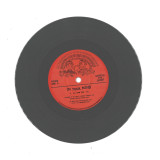
Here we‘ve got two tunes that come with a fascinating story. Recorded in the late 70’s, but never released, this music was thought to be lost.But let’s go back to the beginning. Rose was originally a member of family affair called „The Cornelius Brothers and Sister Rose“ heralding from Dania Beach, Florida. The group had early success with a recording contract with United Artists, which produced two albums in 1972 & 73 respectively, plus an extensive number of single release taken from these albums, which included the million seller ‘Too late to turn back now’.
But Rose’s story starts even further back, singing solo and as part of the Gospel Jazz Singers in the late 60’s, with even a solo appearance on The Ed Sullivan TV show. In 1970, at her mother’s request, she returned home to form the family group and to use her contacts in the music industry to move things forward. The group stayed together until 1976. Soon after Rose returned to a solo career, but few further releases appeared. During this time she recorded a number of tracks in Miami at The Music factory with producer Shirley Cowell, who later received a grammy nomination for her work with Lena Horne. Arrangement was done by gold-certified studio veteran Frank Owens. By this time the Disco sound had taken over much of the music industry and these tracks had a Hi-Energy feel that was much in favour at the time. This session produced the titles ‘Here’ and ‘I want you to stay with me’ but no release was forthcoming.
For many years they became almost forgotten, until the next chapter of the story.In 2018 DJ and record collector Dave Thorley saw an old & dusty acetate disc for sale online, credited to Rose Cornelius. When listening to it he realised that this was indeed Sister Rose of the aforementioned group and purchased it, initially with the intention of simply playing it in his DJ sets. Dave offered the disc to his friends of the Disco Bizarre crew from KitKatClub / Berlin for their record label. Rose, in turn, was contacted and she was kind enough to give permission for its release and additional contemporary remixes/ re-edits. Thus New York producer veteran DJ Duke and San Francisco Disco authority Jim Hopkins landed on the bill. You now have the results of this story on Disco Bizarre’s latest release - a story that has spanned fifty plus years. We at Disco Bizarre are excited about the final results and are happy we‘re able to share it with you.
quête:kit n c l a w s
Die beliebte Band Bright Eyes mit der dritten Welle von Veröffentlichungen im Rahmen ihres laufenden Companions-Reihe. Das Projekt sieht vor, dass die Band ihren gesamten Katalog neu auflegt, wobei jedes Originalalbum von Neueinspielungen begleitet wird. Diese Companion EPs enthalten dazu Gastauftritte von Johanna and Klara Söderberg (aka First Aid Kit), Gillian Welch und Alynda Segarra (Hurray For The Riff Raff) sowie eine Coverversionen von "Wrecking Ball" von Gillian Welch. Eines der Dinge, die Conor Oberst auffielen, als er und seine Band durch mehr als zwanzig Jahre Musik gingen, war, dass er vielleicht tatsächlich die ganze Zeit über denselben Song geschrieben hat. Natürlich nicht klanglich, aber konzeptionell. Diese letzte Welle enthält mit Noise Floor frühe Bright Eyes-Songs, die so roh sind, dass Oberst sie damals nicht direkt veröffentlicht hat, sowie mit Cassadaga und The People's Key die ausgefeiltesten und anspruchsvollsten Alben der Band. Als Bright Eyes mit Cassadega auf Tournee gingen, spielten sie 7 ausverkaufte Abende in der Town Hall in New York. Was gibt es Erwachseneres als einen Rockstar? Und doch ... "Thematisch unterscheiden sich diese frühen Songs gar nicht so sehr von denen, die ich jetzt mache", sagt Oberst und schüttelt den Kopf. "Es hat etwas Bestätigendes und Entmutigendes an sich. Man fragt sich: Habe ich mich wirklich verändert oder bin ich gewachsen? Aber vielleicht liegt es auch nur daran, dass ich von Anfang an wusste, worüber ich schreiben wollte. Es war eine interessante Reise, all diese alten Songs wieder aufzugreifen und neu zu interpretieren."
Die beliebte Band Bright Eyes mit der dritten Welle von Veröffentlichungen im Rahmen ihres laufenden Companions-Reihe. Das Projekt sieht vor, dass die Band ihren gesamten Katalog neu auflegt, wobei jedes Originalalbum von Neueinspielungen begleitet wird. Diese Companion EP enthält dazu Gastauftritte von Johanna and Klara Söderberg (aka First Aid Kit) und Alynda Segarra (Hurray For The Riff Raff) sowie eine Coverversionen "When You Were Mine" von Prince. Eines der Dinge, die Conor Oberst auffielen, als er und seine Band durch mehr als zwanzig Jahre Musik gingen, war, dass er vielleicht tatsächlich die ganze Zeit über denselben Song geschrieben hat. Natürlich nicht klanglich, aber konzeptionell. Diese letzte Welle enthält mit Noise Floor frühe Bright Eyes-Songs, die so roh sind, dass Oberst sie damals nicht direkt veröffentlicht hat, sowie mit Cassadaga und The People's Key die ausgefeiltesten und anspruchsvollsten Alben der Band. Als Bright Eyes mit Cassadega auf Tournee gingen, spielten sie 7 ausverkaufte Abende in der Town Hall in New York. Was gibt es Erwachseneres als einen Rockstar? Und doch ... "Thematisch unterscheiden sich diese frühen Songs gar nicht so sehr von denen, die ich jetzt mache", sagt Oberst und schüttelt den Kopf. "Es hat etwas Bestätigendes und Entmutigendes an sich. Man fragt sich: Habe ich mich wirklich verändert oder bin ich gewachsen? Aber vielleicht liegt es auch nur daran, dass ich von Anfang an wusste, worüber ich schreiben wollte. Es war eine interessante Reise, all diese alten Songs wieder aufzugreifen und neu zu interpretieren."
Repress! Essential garage Zamrock/soul/funk: the first official reissue of the celebrated band’s one and only album.
The musical style that became known as Zamrock came to embody the economic despair that
followed the 1973-1974 oil crisis, which flung Zambia into recession and exacerbated a wide
range of social tensions. Much of Zamrock also captured the controversy of wider politics in
Africa and the world. Perhaps the finest example of this is Black Power by The Peace.
The Boyfriends, from Kitwe’s Chamboli Mine Township, supplied the founding members for Zamrock’s most
famous band, WITCH, and kick started one of Zamrock’s best bands, Peace. Their sole Zamrock entry, Black
Power, recorded at Malachite Film Studio circa 1973/4 and issued circa 1975, sounds like nothing else in the
Zamrock canon: a lost message drifiting from the flower power era, imbued with a fiery Zambian voice.
Kusōzu : Nine Death Stages is the second album by the Tokyo trio Archeus, which consists of Keiko Higuchi (voice, percussion, trombone, shamisen), Shizuo Uchida (bass strings), and TOMO (hurdy gurdy, voice). It follows their debut, self-titled and self-released CD and cassette from 2021 and is further proof – if any were needed – that these musicians, who’ve known each other for some time, but only started playing together relatively recently, share a telepathic communication, improvising together, fully in the moment, and as one. Where their debut album featured four extended improvisations, Kusōzu is an object lesson in economy and clarity – nine tracks, thirty-three minutes, everything that needs be said and nothing more.
All three musicians are incredibly active in the Japanese underground. Higuchi currently plays with Sachiko in Albedo Fantastica, adding Uchida for Albedo Gravitas; Uchida and Higuchi team up with Masami Kawaguchi (guitar) in vDBG. She’s also recorded with improvisers such as Naoto Yamagishi, Yasumune Morishige, and Shin-Ichiro Kanda. Uchida is also a member of MAI MAO, Kito-Mizukumi Rouber, Hasegawa-Shizuo, UH, and TERROR SHIT, and he’s recently recorded with improvising guitarist Takashi Masubuchi; TOMO has previously been a member of Tetragrammaton and Pouring High Water, and has recently performed live with Mick of Kousokuya, Mitsuru Tabata, Keiji Haino, and Daisuke Takaoka.
While Higuchi and Uchida have been making music together for some time now, they appear careful not to impose their previously articulated lexicon to bear on Archeus. There are trace elements of their playerly voices still present – the stretchy, plastic scrabbling on bass strings from Uchida; Higuchi’s murmurations of tone, and sudden plunges back down to earth, vertiginous and woozy – but there are other things going on here, particularly with TOMO joining in the action. His hurdy gurdy is a wild card in a group of wild cards, here cranking out burred, purring drones, there fidgeting through floods of notes, cranked up really high, ducking and weaving between Higuchi and Uchida as the three pursue the eternal now that is core to the best improvised music.
Archeus seem to work alchemically, transmuting their base matter into gold. Named after the Buddhist art practice of kusōzu, the graphic painting of nine stages of a decaying corpse in the open air, “to demonstrate the effects of impermanence,” as scholar Gail Chin once wrote.
Kusōzu : Nine Death Stages is Archeus at their most rigorously attentive to each other’s playing, and by the end, the music is itself thinking and feeling.
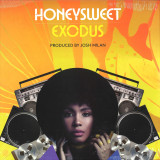
Josh Milan has been recording music professionally for over 30 years.He's played every role from artist to engineer in the studio.This project, Honeysweet, focuses on his production and musicianship.Utilizing only one musician on sax, Josh plays every instrument and sings every note on this project. His songs are packed with soulful dance floor grooves inspired by iconic, soulful groups like Brian Auger, Cymande, Pleasure, Africano, Santana and others.
"I wanted to do music that made me and my family feel good when I was growing up. It's the kind of music that families dance to at gatherings with a record player and no DJ”, says Josh. “Intros, Accents, Breakdowns, Bridges, and endings were all part of the music.” This music will transport Josh's audience to a place of musical freedom. This is music with, seemingly, no rules.
Josh Milan describes each track on the Honeysweet EP “Exodus” in his own words :
"Last Night Changed It All featuring Lawrence Clark on sax is the kind of groove that keeps its dance floor value while holding up the banner of true musicianship. This song was written after hearing a DJ set,where the DJ didn’t seem to be concern about staying within a musical box. He played all sorts of music in one set. I knew then that I’d branch out musically when recording.Rhodes, picked bass guitar, rhythm guitar and drum kit is all that's needed on this one.”
"Exodus the manipulation of major and minor chords in this groove make it complex and interesting. The listener is lead by the organ solo featured here. The song is a mental escape. A mental exodus complete with bongo section.”"Being Free is a message that captures the point of this entire project. Musical freedom and expression is where this project gets its
fuel. Horns, are included on this production. A true expression of soulful music. Being free should be all the time I'm your mind all the time.”
“Cranberries and Cream is my tribute to funk grooves as they were featured on records in 70’s. I’m a fan of that sound and I like to play by own funk grooves when I’m alone. This is one of the tracks on the ep I prefer to rock.”
“And So She Waits has eerie sounding pads in the background. They linger throughout the track. Popping in and out, as though they’re waiting for something. You will hear the change in mood once she is no longer waiting. The groove returns to it’s original state. Only she is no longer waiting, he is.”
“Crazy is me bringing the funk to dirty house music. Complete with house piano in the mix. The chords are unsettling. They are, in fact,Crazy. I though adding a horn arrangement to a house track like this would sound interesting and different.”Honeysweet “Exodus” out at all digital outlets and double pack vinyl set.
Following on from the Bergisch-Brandenburgisches Quartett’s anarchic Live ’82 (BT095), Black Truffle continues its deep dive into the archives of legendary drummer/accordionist/photographer/composer/conceptual prankster Sven-Åke Johansson with Scheisse ’71. Recorded in November 1971 during the Berliner Jazztage at a heavy-hitting concert that also included the Spontaneous Music Ensemble and groups led by Peter Brötzmann, Manfred Schoof, and Masahiko Sato, Scheisse ’71 is the only document of a wild, otherwise unrecorded quintet featuring Johansson on drums, accordion and oboe d’amore, legendary free jazz vocalist Jeanne Lee, her husband Gunter Hampel on vibes, flute and bass clarinet, live electronics pioneer Michael Waisvisz on modified Putney (VCS 3) synthesizer, and the unknown Freddy Gosseye on electric bass. Part of a festival centred on giants of jazz like Duke Ellignton and Dizzy Gillespie, the radical performance shocked its audience, who can be heard heckling and yelling abuse at points, including the titular exclamation of ‘Scheiße!’ Clocking at just over half an hour and recorded in raw but detailed stereo by Johansson himself, the music burns with intensity while also making room for spacious passages and frequent dynamic movement. Beginning with Lee’s voice, Hampel on flute and Johansson on oboe d’amore in a bird-like game of call and response, the unexpected entry of Waisvisz’s tortured, squelching synth bursts prompts the first of many changes in energy and instrumentation, as Gosseye’s busy, roving bass enters and Johansson moves to the kit, his swinging cymbal work and juddering toms extending the approach of Sunny Murray or early Milford Graves. The presence of synthesizer, electric bass, and Lee’s highly amplified voice moves the quintet away from conventional free jazz textures, at times pushing into zones of abstract free sound reminiscent of what groups like MEV, AMM or Johansson’s MND were exploring in the same years. But the energy and joyful melodicism of the music keep it rooted in the tradition of American fire music and its European inheritors. Capable of changing gears in an instant from ferocious blow outs to fragile tapestries of chiming vibes and fizzing synth, the music finds space for Lee’s post-bop free scat (which integrates shrieks and howls just as a post-Ayler saxophonist might), Gosseye’s virtuosic bass runs (a rare attempt to apply the classic free jazz style of players like Alan Silva or Henry Grimes to the electric instrument), Johansson’s folkish accordion interjections, and even a sustained passage of unison bass clarinet and electric bass riffing in its second half. Special mention should be made of Waisvisz’s Putney performance, one of the earliest documents of this under-recorded instrument inventor and player, here playing a major role in giving the music its wildly exploratory, primordial air, his buzzing glissandi and bubbling filter sweeps at times howling like a distressed monkey. Arriving in an austerely stylish sleeve with beautiful black and white photographs by Johansson, Scheisse ’71 is an essential recording that adds yet another layer to our appreciation of this golden era of radical free music.
- 1: No Control
- 2: Intro
- 3: The March Of The Deviants
- 4: Last Gang Standing
- 5: Won't See The Sunrise Anymore
- 6: Cursed
- 7: Geisterfahrer
- 8: Für Immer
- 9: Wreckhouse Stomp
- 10: She's Evil
- 11: They Come To Take You Away
- 12: Nine Lives
- 13: Sex, Love, Blood 'N' Death
- 14: Am I Human
- 15: Devil's Tail
- 16: Back From The Morgue
- 17: Shitlist Bop
- 18: Kicked Down Low, Get Back Up
- 19: Burn And Rise
Red Vinyl[25,63 €]
Official reissue of the German psychobilly legend Mad Sin’s 2010 album Burn And Rise. Since their indestructible bandleader Köfte DeVille had gone through some major personal changes, which encouraged him to lose almost 40 kilo grams, the album title is more than adequate. 18 tracks titled like “Last Gang Standing”, “Geisterfahrer (Ghost rider)”, "Wreckhouse Stomp", "The March of the Deviants", "9 Lives" or "Shitlist Bop” promise tension and also a bunch of surprises. The typical Mad Sin mix of psychobilly, rockabilly, 50’s Rock’n’Roll, Country, Punk and Surf sounds fresher than ever before. Featured artists include Sucker (Oxymoron, Bad Co.), Jack Letten (Smoke Blow), Hank (The Boss Hoss) and Marlen (Bonzai Kitten). An outstanding record which gave the band once more the chance to show that they think outside the box and can do a lot more than “just” rockabilly.
- 1: No Control
- 2: Intro
- 3: The March Of The Deviants
- 4: Last Gang Standing
- 5: Won't See The Sunrise Anymore
- 6: Cursed
- 7: Geisterfahrer
- 8: Für Immer
- 9: Wreckhouse Stomp
- 10: She's Evil
- 11: They Come To Take You Away
- 12: Nine Lives
- 13: Sex, Love, Blood 'N' Death
- 14: Am I Human
- 15: Devil's Tail
- 16: Back From The Morgue
- 17: Shitlist Bop
- 18: Kicked Down Low, Get Back Up
- 19: Burn And Rise
Black Vinyl[23,95 €]
Official reissue of the German psychobilly legend Mad Sin’s 2010 album Burn And Rise. Since their indestructible bandleader Köfte DeVille had gone through some major personal changes, which encouraged him to lose almost 40 kilo grams, the album title is more than adequate. 18 tracks titled like “Last Gang Standing”, “Geisterfahrer (Ghost rider)”, "Wreckhouse Stomp", "The March of the Deviants", "9 Lives" or "Shitlist Bop” promise tension and also a bunch of surprises. The typical Mad Sin mix of psychobilly, rockabilly, 50’s Rock’n’Roll, Country, Punk and Surf sounds fresher than ever before. Featured artists include Sucker (Oxymoron, Bad Co.), Jack Letten (Smoke Blow), Hank (The Boss Hoss) and Marlen (Bonzai Kitten). An outstanding record which gave the band once more the chance to show that they think outside the box and can do a lot more than “just” rockabilly.
The Complex Inbetween is a mesmerising journey inspired by the spirit of krautrock early electronic music and experimental rock. JeGong return with their second full- length album which sees them continue their musical journey inspired by the spirit of krautrock, early electronic music and experimental rock. With The Complex Inbetween Dahm Majuri Cipolla (MONO, Watter) and Reto Ma"der (Sum Of R, Ural Umbo) put a dazzling spin on the timeless music of genre innovators like Can, Faust and Neu!, incorporating noisier and more abrasive elements to create a mental odyssey into the uncanny. Born from the collision of the most unreal moments of Ma"der's free-flowing musical associations with Cipolla's stick-wielding hands, these eight compositions form the duo's own mythical realm after the rhythm has been set. As the cradle of electronic music, krautrock is often viewed by outsiders in terms of the mechanical rather than the human, yet Ma"der and Cipolla manage to uncover a human side that has always been present in the music of their forebears. That driving beat which powers album opener «Come To The Center» was never meant to be called `Motorik', as explains its inventor Klaus Dinger of Neu! in one interview. "It is very much a human beat. I like to call it the endless straight. It's a feeling like a picture." With Cipolla behind the kit the machine becomes human, testifying to the power that rhythm can hold over us as a deeply communal obsession. Like their debut, The Complex Inbetween shows the profound knowledge these two musicians have of their source of inspiration as well as their tremendous skill in applying its principles. With the piece «Night Screaming Moves» JeGong expands their sound with atmospheric drone rock elements. A feedback laden guitar motif surrounds the oscillations of mellotron sounds, behind it pounds a slow motion drum beat that is reminiscent of dragging, shuffling footsteps in the dark of night. Evoking feelings of trench coat wearing film-noir or the cloying darkness of cult 70s horror flicks, «Night Screaming Moves» shows that not only are the duo of Ma"der and Cipolla experienced musicians, but cinephiles and soundtrack lovers with a strong sense for moods and emotions. RIYL Neu!, Cluster, Tangerine Dream, Swans, Mogwai, Sonic Youth, John Zorn Ltd Coloured Vinyl!
- A1: Fearless Hero (Hero Version)
- A2: Por Qué Te Vas - Ft. Gaby Moreno
- A3: This Is The End - Ft. Dan Navarro
- A4: La Vida Es Una - Ft. Karol G
- A5: Star Light-Star Bright
- A6: Getaway
- A7: Retrospective
- A8: Meet Dog
- A9: Horner Heist
- B1: Travel Montage
- B2: Stop And Smell The Roses
- B3: Birthday Wish Rules
- B4: Let's Get Him
- B5: A Better Point Of View
- B6: Therapy Dog
- B7: Cabin In The Woods
- B8: Puss And Kitty's Flamenco Dance
- B9: Go Ahead, Run For It
- B10: A Proper Family
- B11: The Good, Bad, And Goldi
- B12: The Fight With Death
The 2022 DreamWorks Animation film Puss In Boots: The Last Wish is the sequel to the spin-off film Puss In Boots (2011) and the sixth installment in the Shrek franchise. Directed by Joel Crawford, the film features a voice star cast including Antonio Banderas, Salma Hayek Pinault, Florence Pugh, Olivia Coleman, and John Mulaney amongst others. It received an Academy Award-nomination for Best Animated Feature Film. The story follows the daring Puss In Boots, who discovers that his passion for peril and disregard for safety have taken their toll. Puss has burned through eight of his nine lives, though he lost count along the way. Getting those lives back will send Puss in Boots on his grandest quest yet.
Heitor Pereira composed the film's score, who is best known for scoring the Despicable Me franchise. For this specific release, Pereira selected his favourite pieces to be featured. Together with his team, these pieces were mastered to sound as best as possible on vinyl. It features the additional tracks "Fearless Hero (Hero Version)" with Antonio Banderas, "Por Qué te Vas" by Gaby Moreno, "This Is the End" by Dan Navarro & "La Vida Es Una" by KAROL G.
Puss In Boots: The Last Wish is available as a limited edition of 750 individually numbered copies on orange "Puss" marbled vinyl. This vinyl package includes the map to the "Wishing Star" and a 4-page booklet with liner notes by director Joel Crawford.
Banff, Alberta… a picturesque Western Canadian mountain town, famous for natural beauty, kitschy tourist shops and incredible nightlife. It’s this last attraction that provides the inspiration for Dragon Fli Empire’s newest opus, “Banff Avenue”. The two-man team of DJ Cosm and Tarik Robinson (aka Teekay) return with their first album since 2013’s “Mission Statement” and it’s a purely in-house effort with that 100% DFE formula of thumping, melodic beats by Cosm and Teekay’s smooth and intelligent wordplay. The chilled-out vibes on this album are the perfect musical remedy for the chaotic year that is 2020. Download and stream this incredible project (complete with instrumentals) today!
Tommy Prine’s debut album is not only a long-awaited introduction but a testimony to Prine’s twenties and the loss, love, and growth that has defined them. Co-produced by close friend and kindred musical spirit, Ruston Kelly, and beloved Nashville engineer and producer, Gena Johnson, the album is rich and dynamic, from cathartic jams to nostalgic storytelling. The son of late songwriting legend, John Prine, Tommy Prine grew up in Nashville surrounded by music, art and writing. As a child, he thought all parents were musicians, as his father “going to work” meant performing shows for adoring fans and writing songs. Tommy learned to play guitar by watching his father play, copying the ways his fingers moved and inadvertently developing his own singular style. Summers spent in his mother’s homeland of Ireland lent their own inspiration too and ten straight years camping at Bonnaroo introduced Prine to a swath of music not belonging under the greater Americana umbrella and his musical tastes grew to become decidedly eclectic, spanning John Mayer, Outkast, Bon Iver, the Strokes and more. In a way, what makes Prine’s own music so special is how he’s navigated life and creativity apart from his family’s name—as he once said, on stage, to a disorderly request for one of his dad’s songs, “You’re not about to get an hour of John Prine Junior.” It wasn’t until Prine reached his mid-twenties, though, that he considered a career of his own in music and began to share with others the songs he wrote in private. It took a long while for Prine to even share the songs he’d been writing about the triumphs and tragedies of his life, only recently deciding to let his friends and now-collaborators Ruston Kelly and Gena Johnson hear what he’d been putting together. This Far South is an emotionally complex but universally accessible debut that sonically brings together a colorful patchwork of musical influences and lyrically explores existential questions and emotional experiences.
- A1: Hanif Reads Toni (Feat. Hanif)
- A2: Sun, I Rise (Feat. Angélica Garcia)
- A3: Mezzanine Tippin' (Feat. Teller Bank$, Alfred.)
- A4: Run, Run, Run
- A5: Live! From The Kitchen Table (Feat. Ghais Guevara)
- B1: Tyler, Forever
- B2: Dedicated To Tar Feather (Feat. Anjimile)
- B3: The Story So Far (Interlude)
- B4: The Story So Far (Feat. Seline Haze)
- B5: Beloved! Paradise! Jazz!? (Feat. Ms. Jaylin Brown)
Recycled Col. LP
McKinley Dixon calls the late Toni Morrison the greatest rapper of all time; and the way he tackles topics like survival, violence, and religion within the expansive landscape of the Black experience, evokes her novels. It is from the title of Morrison‘s Beloved trilogy where he finds the title of his new album with City Slang Records: Beloved! Paradise! Jazz!? Musically his household was defined by “artists whose first name was Mary,” including Mary J. Blige and gospel duo Mary Mary. Discovering Outkast was formative for Dixon, deepening his love for hip-hop while he also grew curious about the more theatrical rock of groups of the day, bands like My Chemical Romance and Panic! At The Disco that his Maryland friends introduced him to. “Those groups also helped me with my sense of longing, since their music reflected a sense of longing,” he says. Eventually he channelled these competing influences into a debut EP he released in 2013. With time, his music became his primary means of self-expression, whether discussing Blackness or his own relationship with healing. Across his next releases, his style evolved and his confidence grew, especially when it came to live instrumentation. His 2021 debut album For My Mama and Anyone Who Look Like Her was a game changer, as Dixon set his sights on heartache and grief. “I was making these really dense and chaotic songs, stuffing whatever thought I had into five and a half minutes,” Dixon says of that project. Beloved! Paradise! Jazz?! is an attempt at channeling different impulses. Sometimes rough and other times delicate, this record is a journey into is a journey into the psyche of McKinley Dixon, with all of the of the attendant peaks and valleys.
- A1: Mindfield Saturnalia 4
- A2: Apostolis Clock Croc (House Quickly Mix)
- B1: F U.s.e. F.u.2 (Re-Edit)
- B2: Peyote Alcatraz
- B3: Psyche The Saint Became A Lush
- C1: Man With No Name From Within
- C2: Zen Solar Data (Extended Tribal Mix)
- C3: Francesco Farfa & Joy Kitikonti Beat Control (Siena Mix I)
- D1: Public Relation Eighty Eight (Instrumental)
- D2: Ghostdance Ghostbeat (New Beat Mix)
- D3: Chris & Cosey Exotika (12” Mix)
Part 2[29,87 €]
Sound Metaphors and Transmigration explore the early underground Goa party scene with a 2x12” compilation.
A collection of Techno, Italian-House, New Beat and Post Punk all heard on the same dancefloors amongst Goa's tropical beaches during the late 80's and early 90's. What is now understood as Goa Trance was once preceded by an amalgamation of many different genres smuggled to Goa in tape format by true music devotees that filtered through all that was being produced in the West shaping a unique dancefloor sound that could only pertain to the “Special Goa Music” genre. Sound Metaphors teams up with Transmigration and journalist, DJ and first hand witness of the scene at hand - Ray Castle – to present a meticulous body of research into the sound signature of that unique scene. 11 highly sought after tracks presented in a double LP gatefold format with an A1 poster insert and insightful liner notes by Ray Castle. A tracklist so lush, your discogs wantlists will forever be grateful – buy on sight.
“Everything about the Goa counterculture was illicit. The music from vinyl was bought with black market money and bootlegged onto cassettes and backpacked to India. Collectors and DJs would swap, dub and edit it, for free parties. The music was disseminated tape-to-tape by a clandestine traveller clique of ragtag party makers. This highly coveted ‘Special Goa Music’ contained a vibe—a brain-infesting vibe—capable of triggering apotheosis-like states for dosed up dancefloors, only possible for sunrise Goa parties in nature, in India.” - Ray Castle
With this release TAL delves deep into the very beginnings of Düsseldorf's post punk scene of the early 1980s. STUMM was the duo of Detlef Funder and Bernd Sevens who both would become pivotal figures in the tape underground movement of West-Germany, when they launched the SDV label in 1986. Individually they went on to produce boundary defying works as Konrad Kraft and Seventh Day respectively.
The material on this album was recorded by Funder and Sevens quite casually in 1980 in a rehearsal studio in the centre of Düsseldorf. Right from the beginning the two young musicians incorporated the atmosphere of the space in order to document the process of their sound experiments on a 4-track tape machine. For those recording sessions, which are now released for the first time ever on vinyl and download, Funder and Sevens managed to get their hands on a very rudimentary set of equipment consisting of merely a Korg MS 20 synth, a Roland CR 78 drum machine, a few electronic effects and a drum kit. The urgent and rough sound of the recordings imbues their production with a characteristic and era-specific edge that's hard to imitate today. Spontaneity and understatement were key elements in the brief creative period of STUMM. The recordings still have a uniquely dizzying quality and are somewhat of a basic blueprint for a lot of industrial/techno and post punk which was about to loom in all corners of the world. These tracks are also a testament to the vivid spark of a period in time that would soon be radically changed through the rise of digital technology.
Bernd Sevens: “Around 1980 there was a great musical awakening. Punk, New Wave, Industrial and of course Dub Reggae -- the electronic music blew us away. Everything we heard influenced us. Back then, cassette tapes were cheap and easily available. We could record our ideas on the spot and then copy and distribute the tapes. That's how it started. Giving it a go, experimenting, trial and error. The music you hear on the record was spontaneous and had no concept. Our collaboration was also not intended to be a permanent project. You could say we were dilettantes setting out on our journey, making it up as we went along. It felt like a beginning.”
Von einem Ein-Raum-Betrieb in New York City bis hin zu einem der weltweit führenden Musikunternehmen hat Atlantic eine Reihe von Aufnahmen veröffentlicht, die die Entwicklung der modernen Musik nachhaltig beeinflusst haben.
Unsere einjährige Kampagne ATL75 feiert die größten, klügsten und ikonischsten Künstler, die heute Teil der Atlantic Records-Familie sind. Künstler, die kulturell relevant, vielfältig, aufstrebend und inspirierend für die Musikfans von heute sind - weltweit.
Das Album der Stone Temple Pilots erscheint jetzt als Crystal Clear Vinyl.
- A1: Siamese
- A2: First Day On A New Planet
- A3: Pow R Ball
- A4: Kewpies Like Watermelon
- A5: Phasers On Stun/ Sola Kola
- A6: Black Hole Love
- B1: Velvy Blood
- B2: Plastic Ashtray
- B3: Death 2 Everyone
- B4: Pachinko
- B5: (-)
- B6: Kernel
- B7: Road Song
- C1: It Is
- C2: On Yr Mind
- C3: Teen Dream
- C4: Majesty
- C5: Burriko Girl
- C6: Got The Sun
- D1: Silver Krest
- D2: Sucker/ Kitty Litter
- D3: Lo-Fi Scary Balloons
- D4: The Power Of Negative Thinking/ The Love That Brings You Down
In the days before “landfill” indie, and in rebellion against a developing Britpop orthodoxy, there were some weird but melodic bands coming of age outside London that drew inspiration from the US underground and the sparkly retro-futurism of Japan. Primitive guitar noise with art rock leanings, post punk DIY and fanzine culture. The best known of these bands was maybe Urusei Yatsura; “noisy stars”, named in honour of Rumiko Takahashi, legendary manga creator.
Back in 1996, after several increasingly well-received 7’s, the band travelled to Leamington Spa to record their debut album with John Rivers, producer of Swell Maps and Glasgow scene godparents, The Pastels. The resulting album won the group legions of new fans and gained them their first Independent #1 chart placing, alongside peers Ash and Super Furry Animals.
“These were fertile years in Glasgow, a scene with no name, no single sound, where the magic thread tying everyone together was words and works so personal, they couldn’t be mistaken for anyone else’s. ‘We Are Urusei Yatsura’ is a cascade of ‘why not?’ thinking. The way ‘Phasers on Stun’ spirals into ‘Sola Kola’; the sunburned 23-second improv at the end of ‘Pachinko’; the slack-echoing strings of the outro to ‘Road Song’ sprayed with the shrapnel of toy electronics. Pure pop magic, Ren & Stimpy on upstairs, ray-guns, Ian’s homemade walkie-talkie speaker, a beatbox, all sealed with a “Talking Tina” doll’s emphatic endorsement: “I love it”” – Nick Soulsby
Die beliebte Band Bright Eyes mit der dritten Welle von Veröffentlichungen im Rahmen ihres laufenden Companions-Reihe. Das Projekt sieht vor, dass die Band ihren gesamten Katalog neu auflegt, wobei jedes Originalalbum von Neueinspielungen begleitet wird. Diese Companion EP enthält dazu Gastauftritte von Johanna and Klara Söderberg (aka First Aid Kit) und Alynda Segarra (Hurray For The Riff Raff) sowie eine Coverversionen "When You Were Mine" von Prince. Eines der Dinge, die Conor Oberst auffielen, als er und seine Band durch mehr als zwanzig Jahre Musik gingen, war, dass er vielleicht tatsächlich die ganze Zeit über denselben Song geschrieben hat. Natürlich nicht klanglich, aber konzeptionell. Diese letzte Welle enthält mit Noise Floor frühe Bright Eyes-Songs, die so roh sind, dass Oberst sie damals nicht direkt veröffentlicht hat, sowie mit Cassadaga und The People's Key die ausgefeiltesten und anspruchsvollsten Alben der Band. Als Bright Eyes mit Cassadega auf Tournee gingen, spielten sie 7 ausverkaufte Abende in der Town Hall in New York. Was gibt es Erwachseneres als einen Rockstar? Und doch ... "Thematisch unterscheiden sich diese frühen Songs gar nicht so sehr von denen, die ich jetzt mache", sagt Oberst und schüttelt den Kopf. "Es hat etwas Bestätigendes und Entmutigendes an sich. Man fragt sich: Habe ich mich wirklich verändert oder bin ich gewachsen? Aber vielleicht liegt es auch nur daran, dass ich von Anfang an wusste, worüber ich schreiben wollte. Es war eine interessante Reise, all diese alten Songs wieder aufzugreifen und neu zu interpretieren."
Aptly titled, ‘Welcome’ is the debut album from Don Glori. A kaleidoscopic free dive into his world, featuring 8 recordings of revolving jazz, Brazilian, soul and funk inspired compositions spinning together and blurring into a genre bending slew of new music.
There is an intangible element of joy and connection sitting just outside the grasp of description or definition that can be felt throughout this album. Each song on this album captures the spirit and irrepressible energy that underpins the core of the Don Glori project.
Imperfections are captured along with the moments of transcendence. Layers of vocal harmonies oscillate next to pulsating samba rhythms while spiritual overtones permeate throughout. Congas and percussion form a holy union with the drum kit, co-piloted by Don Glori’s own bass lines.
Saxophones, horns and flutes flutter in between the musical canyons carved out by the piano and vibraphone. When you press all of these forces together you can start to feel the intangible; the intrinsic human elements existing in the creases. The sweat, excitement and willingness of each musician to dedicate their spirit and take risks on every track of this album.
It’s clear from the outset that this is an expansive body of work, from the spiritual jazz opener ‘Maiden Waters’ to the bubbling street party that is ‘Dlareme’, and ending on the unashamedly seductive ‘Commodore’. This is the kind of record that will translate equally well to both the dance floor and the lounge room rug.
Reflections is a recording of Sufjan Stevens' sixth collaboration with acclaimed ballet and dance choreographer Justin Peck. Originally composed for World Premiere and performances (May 17-26, 2019) by Houston Ballet, the piano duet was recorded at Oktaven Studios by Ryan Streber and performed by pianists Timo Andres and Conor Hanick. Reflections is imbued with Stevens' memorable and emotionally resonant melodies and arrangements and continues to establish Stevens as a contemporary composer.
- A1: Ghosts Of Decay (Album Mix)
- A2: Let's All Make Brutalism (Album Mix)
- A3: You've Heard This One Before (Album Mix)
- A4: (B) Owls In Tesco Bags (Album Mix)
- B1: Open Your Head (Album Mix)
- B2: Harder Times (Album Mix)
- B3: (B) We Never Wanted You (Album Mix)
- B4: 98 Russell Street (Album Mix)
- C1: (We Never Needed This) Fascist Groove Thang (Album Mix)
- C2: Thee Difference Ov Girls (Album Mix)
- C3: Empire Statement Humanoid (Album Mix)
- C4: Circus Ov Daath (Album Mix)
- C5: (B) Let Me Dada (Album Mix)
- D1: This Is Phil Talking (Album Mix)
- D2: Sound Ov Thee Crowd (Album Mix)
- D3: I Dare You (Album Mix)
- D4: Borstal Communications (Album Mix)
Sometimes, things "just happen". For months, we’d been working away on various projects and then, without really thinking about it, The Black EP just happened. It seemingly appeared from nowhere.
We’d been talking about the old days; making music with friends and dodgy kit, renting small practice rooms and using makeshift recording studios. It was such a common thing back then, you could pick a dusty space in a half-derelict building for as little as £25 a month. In those days, the Cabs and Human League had studios with posh-sounding names, but in reality, they were the same old workspaces long abandoned by the industries they were built for. Nevertheless, the grand names made them sound magical.
Sheffield had thousands of these spaces, and some still exist today, but their abundance and low-cost made Sheffield a very active place. Someone was always doing something. They’d exploded onto the scene in a flurry of excitement before disappearing just as quickly.
There’s something about these little mesters (workshops) that we believe lives in the very consciousness of Sheffield. It’s one of the reasons we never really had big scenes like Manchester or Leeds. The Hacienda would've never been built here.
We don’t really do big gangs or have that kind of mentality. We tend to exist in little pockets, often leaving each other alone. It would be 30 years before any member of The Black Dog talked to Cabaret Voltaire. Sure, we’d stood outside their practice room as kids, trying to listen in, but never felt any reason to approach. Sheffield is like that.
Once we had the first two tracks of the Black EP, we set off to see Jon at Do It Theesen, where he manually cut the tracks to an extremely limited set of 7" singles using a vinyl lathe. It just felt right to go back to the old ways; a small gang creating something special in workshops and sheds. There’s something very satisfying about it, a perfect circle, if you will.
We pushed further by adopting old practices, working with one synth per person and limiting the use of our computers. We only stopped short of putting everything on beer crates. It seems like madness these days, but there is raw creativity within these confines. Pretty much every band started this way. Depeche Mode travelled to the studio on the London Underground for their first appearance on Top Of The Pops, all lugging a synth each. That's how we approached the creation of this album; stripped back, raw and minimal - it just felt so right.
And then there’s the competitive element that was influenced when the original Human League split and became Human League MK II and Heaven 17. Both continued to use the same studio to write what became the albums "Dare" and "Penthouse and Pavement". There is something about that drive that is very Sheffield, just making stuff and hoping everything falls into place.
In Sheffield, we do things differently, because that’s how we are built. away on various projects and then, without really thinking about it, The Black EP just happened. It seemingly appeared from nowhere.
Oscillate / verb – to move or swing back and forth in a regular rhythm. Alexander Flood has developed and refined a strong, progressive voice and style on his kit through his 17 years performing and studying. Previously graduating top of his year, he has been the recipient of many prestigious awards including Australia's Best Up-andComing Drummer in both 2012 and 2016, The John ‘Slick’ Osborne Scholarship in 2017 and the Helpmann Academy Jazz Award for Top Overall Graduate in 2018. In 2020 he signed with 6x Grammy nominee Christian Scott aTunde Adjuah to release Alex’s debut LP “HEARTBEAT” and “The Space Between” in 2022. 2023 finds Alexander aligning w/ Berlin’s Jakarta Records to release LP “Oscillate” - a blistering, hard-hitting meld of infectious rhythms, pulsing keys, and a swingin’ groove that melds into a genre-defying conglomeration of creative compositions and collaboration. In mid 2022 Alex travelled from Australia to Berlin, where he assembled a dream team crew of creative innovators featuring Hungarian keyboard player Àbáse, Australian bass guru Horatio Luna, and Brazilian flautista Paulo Cedraz. Together the group cut six unique dance tracks at Berlin’s iconic Jazzanova Studios, engineered by Grammy nominated Axel Reinemer. From the shuffling broken beats and dancing flute melodies in title track “Oscillate” to the experimental uptempo “Deja Vu”, the momentum of the music ceases to stop. “U R THA 1” features a driving jungle sound of repitched drums, vocal chops and 808 bass, and “Berlin” captures a classic funky 90s house feel powered by 4-on-the-floor kick and melodic basslines from Horatio Luna. Paulo Cedraz shines on flute in the Caribbean influenced “Ginealach”, and the LP finishes with the head-bopping “Hüpf” giving the listener a taste of some down-tempo beat music atop a bed of Àbáse’s lush rhodes. From top to bottom, the unique voices and powerful musicianship of each band member is obvious. Australian influence is at the core of the sound not only through the bass and drum chair, but through the punchy characteristic mix by Melbourne’s Lewis Moody and master by Gareth Thomson. The final piece of the puzzle was bringing in Alex’s childhood drum and percussion teacher Joel Prime, where they overdubbed additional percussion parts together in London. Artwork was stunningly put together by Robert Winter (Suff Daddy, Bluestaeb, K, Le Maestro) with visualizers put together by the stalwart KARL-F. Jakarta is ecstatic to share such a high-water mark of an album, out everywhere physically / digitally May 12th. Check the accompanying Press Sheet for Campaign Schedule and more. Besides online promotion from the label and artist profiles, the album will further be promoted by external agencies within the US and UK.
Super bitter-sweet ballad. Like 70% cacao chocolate. Tomasz Guiddo teams up with legendary Vienna crooner Louie Austen (remember all his hits on Cheap, KittyYo, Tirk, G-Stone, Klein Records, Etage Noir). On the flip side of this 7" the Columbian superdons Meridian Brothers turn this into real mambo madness, which gives the ballad a joyful twist.
Mark Hawkins readies ‘Venn Diagram’ album for Aus Music this May.
Mark Hawkins’ early releases on labels such as Djax Up Beats and Ugly Funk lit flares in the world of
underground techno, with a sense of humour and tougher-than-thou sonic palette enforced via his jacking live
sets. Across the following decades, Mark has delivered razor sharp cuts that encompass pretty much
anything that has an electronic heart - leaving his own unique trail for others to follow via his work for labels
as diverse as Dixon Avenue Basement Jams, Sonic Mind, Mistress Recordings, Houndstooth and Aus.
With his latest album, it feels like Mark has pushed ahead with a change of direction he started with 2021’s
‘The New Normal’. ‘Venn Diagram’ carries on this journey into uncharted lands; molten, distorted drum
assaults weave around glistening melodies, kitchen sink soul glides below fractured sound pools. Opener
‘Verblex Oscillos’ immediately demands your attention grabbing, with a so-happy-it’s-sad melody spiralling
around a cascade of tough-as-fuck dance floor destroying beats, along with ‘Isolated’s urgent combination of
strings, acid and chicago-tough electro beats.
Other cuts on the album share a similar approach, ‘Maladayfun Friction’s restless energy derives from a fusion
of skittering drums and deranged synths and ‘Still Have Time’s dreamy super saw pads and plaintive vocal
espouse a kind of wasted elegance, roaming the city nightlife in a Gucci dress and Doc Martin boots.
‘Nlasckhdsjk’ and ‘Frederikalstublieft’ propel forward with such a sleek and effervescent aesthetic, recalling
fast drives along picturesque European highways or heady take-offs to unknown urban territories. The
aesthetic becomes more elegant on the album’s centrepoint tracks ‘Rebula Conundrum’ and ‘Nlasckhdsjk’,
where optimistic bleeps, bass and 707 drums underpin jazzy chords and soaring leads.
Other tracks show the arc of Mark’s direction of travel, with soulful vocals that share a well of deep-rooted
optimism that was so evident on his breakthrough 2016 Social Housing album. ‘L.O.V.E.’ breaks into
post-Sophie territory with a catchy modulated vocal joyfully two-stepping across to the nightclub bar and
‘How Do I Know’ providing a heart rending torch song for 6am kicking-out-time refugees to help them find
their way back home.
Another beautiful & booming release from Piezo on his rock solid Ansia imprint, conjuring up 5 tracks of frenetic & kinetic mind/body music that are distinctly his own with a reverent nod to such genres as UKG, grime, techno, gqom & footwork.
Evolving beyond the manufactured nostalgia that populates today's current dance milieu, Piezo takes bass science into the realm of the metaphysical.
“jRj” & “Big Room Technow” emanate metric tons of somatic energy for the club crowd, the former building up momentum on a gqom-infused grime pattern, while the latter is like a tin robot whistling an odd melody inside a peak-time 4/4 banger.
“Sensory Overdraw” is an outstanding UKG curveball with a distinctive metallic bassline and intricate head swimming programming for the headphone listener.
A similar approach is applied to “Cutest Kitty Content”, which teems with bizarre ear-candies, but moves with a different and faster framework. Footwork with outsider insight.
Finally you have the digital exclusive “Zing Zang”, which slows things down but still keep the same balance between mind and body requirements.
The genre references aren't blanketing the tracks as much as they are being manifested through pure passion and love: these tunes are all encompassing bin shakers that knock and sway the lucky participants that are awakened enough to be open to the journey.
This is a rare release where you can see the forest from the trees and yet both can simultaneously be experienced and enjoyed.
The Offspring is a punk rock band from Garden Grove, California, formed in 1984. The band's current lineup consists of lead vocalist Dexter Holland, guitarist Noodles, drummer Pete Parada and bassist Todd Morse. Over the course of their 36-year career, they have released nine studio albums.
The Offspring is often credited—alongside fellow California punk bands Green Day, Rancid, Bad Religion, NOFX, Pennywise and Jawbreaker—for reviving mainstream interest in punk rock in the 1990s. They have sold over 40 million records worldwide, making them one of the best-selling punk rock bands in history. The Offspring achieved its first commercial success with their third studio album, Smash (1994), which has sold over eleven million copies worldwide, setting a record for most albums sold on an independent record label, and was the first album released on Epitaph to obtain gold and platinum status. After switching record labels from Epitaph to Columbia in 1996, the Offspring continued their commercial success with its next six studio albums: Ixnay on the Hombre (1997), Americana (1998), Conspiracy of One (2000), Splinter (2003), Rise and Fall, Rage and Grace (2008) and Days Go By (2012); the first four were certified platinum, multi-platinum, platinum and gold status by the RIAA respectively.
The legendary So-Cal punk group The Offspring are back with their 10th album and first new offering since 2008. After releasing two standalone tracks in 2020 - the over-the-top cover of Joe Exotic's (of Tiger King infamy) "Hey Kitty Kitty" and a rendition of Darlene Love's classic "Christmas (Baby Please Come Home)" - the band is ready to plant their punk rock flag in the sand once again with their blistering new album Let the Bad Times Roll.
With the help of producer Bob Rock, Dexter Holland describes the album as "the most cathartic thing we've done. The messages might be dark, but at the end what's left is that communication is important, working through feelings is important and most of all, hope is important."
Then let the bad times roll for now, in the hopes that good times lie ahead.
Multi Culti co-founder Dreems joins forces with Jacoby for kaleidoscopic sonic wizardry that flows seamlessly from symphonic dream pop to ambient esoterica.
If this album had been produced by ai the prompt would have been: create the perfect mix of daft punk - homework crossed with Brian Wilson - pet sounds containing shades of Moby - play but with the complexity and scope of the avalanches - since i left you, containing a few saucy licks of Nile rogers funk, dainty fragments of French psychedelic library-kitsch, mind-expanding flourishes from the BBC radiophonic workshop, all culminating with a bell-filled percussive piano ballad outro masterpiece produced by Brian Eno and four Tet on 180 mics of LSD after watching sesame street with lee perry.
It’s a record of fantastic imagination, full of surprises. Crack open your head, dive in and enjoy the trip!
Limited edition 7” containing ‘all your time’ and ‘in your mind’.
Modular synthesizers / electronics + a drum kit enhanced with triggers and sensors: on its self-titled debut album, the duo hÄK / Danzeisen creates a sonic energy that oscillates between high-precision rhythm patterns, analogue sounds and frenzy climaxes.
One must imagine hÄK / Danzeisen as a man-machine apparatus. A collection of cables, resonating bodies and restless limbs that together question all routines. Who overthrow conventional role of instruments and explore the possibilities of a new sound language. Bernd Norbert Würtz alias hÄK operates modular synthesizers, self-soldered circuits and control knobs. Philipp Danzeisen plays a drum kit enhanced with triggers and sensors. These two poles are connected to an interdependent whole in which a constant musical dialogue takes place. The dependencies within this system have been meticulously defined by hÄK / Danzeisen: Drum rolls and sound modulations are interconnected in such a way that there is no contradiction between the strict technological structure and the creative outburst that is possible at any time.
What drives hÄK / Danzeisen is the basic idea that the contrast between acoustic drums and synthetically produced sounds must be overcome in order to create a new experience. Würtz, Danzeisen and their combined instrumentation simultaneously rub up against the same edges, finding a single, piercing voice.
Ideal manifestations of this approach are the duo's live performances: raw energy that oscillates as precisely as it surprises between drones, abstraction and noise attacks, driven by an impudent take on jazz. Constantly oscillating between the registers of "composed" and "improvised", each performance by hÄK / Danzeisen ultimately becomes one of a kind. (Arno Raffeiner)
Tape
The music of Melati ESP aka Melati Malay is a euphoric vision of megacity rhythm and rainforest escape, club breaks and weightless pop, mapping new dreams from the sound of futures passed: hipernatural.
Drawing on the music era of her teenage years growing up in Jakarta – Javanese radio Dangdut, gamelan cassettes, Moving Shadow-era liquid jungle, Japanese chill-out, etc. – as well as her current work in progressive percussion trio Asa Tone, Malay’s solo debut is boldly borderless, bridging worlds and wavelengths into a richly imagined hybrid synthetic utopia.
hipernatural is momentous linguistically, too, as Malay’s first foray into singing in Indonesian, the language of her youth. She characterizes her lyrical mode as “abstract, and a bit broken,” an intuitive collage of diaristic emotion and oblique poetry (“plant me in fleeting twilight / missing home, where is home? / I am another you”). Her voice serves as its own versatile instrument, alternately intimate and alien, sensual and sacred, shaded with the haze of hidden heavens.
Co-produced with long-time collaborator Kaazi (100% Silk, Asa Tone), the album’s 12 tracks are cohesive but eclectic, threading through temple bass music, cyber siren techno, Stereolab drum n bass, new age downtempo, and dial-up rave reveries, flecked with tactile fragments of offworld dialogue, computer hum, bubbling water, and beyond.
Malay’s technique of sampling and processing her voice into an electronic palette which she then performs on generative instruments gives the songs a bewitching artificial intelligence elegance, exquisite but uncanny. Hers is a hybridity both organic and hypermodern, deeply personal yet globally sourced – YouTube rips, nature tapes, cheap sample packs, club bootlegs. hipernatural champions a dynamic new language at the axis of then and now, of east and west
- A1: Slowdive – Slomo
- A2: Chapterhouse – Pearl
- A3: Ride – Vapour Trail
- A4: Blind Mr Jones – Henna And Swayed
- A5: The Telescopes – Flying
- B1: Lush – Sweetness And Light
- B2: Spirea X – Chlorine Dream
- B3: Kitchens Of Distinction – The 3Rd Time We Opened The Capsule
- B4: Pale Saints – Sight Of You
- B5: Lowtide – Alibi
- B6: Ringo Deathstarr – Kaleidoscope
- C1: Horsegirl – Billy
- C2: Air Formation – Daylight Storms
- C3: Diiv – Taker
- C4: Bdrmm –A Reason To Celebrate
- C5: Flyying Colours – Long Holiday
- C6: Echo Ladies – Overrated – Robin Guthrie Version
- D1: Beach Horse – Lazuli
- D2: Mogwai – Kids Will Be Skeletons
- D3: Fleeting Joys – Go And Come Back
- D4: Ultra Vivid Scene – Mercy Seat
- D5: Galaxie 500 – Ceremony
Black Vinyl[29,83 €]
- A1: My Girl 2
- A2: Never Knew Your Name
- A3: La Luna
- A4: How Can I Tell You
- A5: Kitchen Floor
- A6: Misery
- B1: Leon
- B2: Circus Freaks
- B3: So Alive
- B4: Small World
- B5: Death Of A Rude Boy
- C1: Powder Blue
- C2: Black And Blue
- C3: My Girl 2 (Clive Langer And Charlie Andrew Mix)
- C4: Deolali
- C5 19: 78
- D1: My Obsession
- D2: Big Time Sister
- D3: Oh My Love
- D4: Crying
- D5: (You) Can't Keep A Good Thing Down
Oui Oui, Si Si, Ja Ja, Da Da" wurde erstmals 2012 veröffentlicht und ist das zehnte Studioalbum von Madness nach dem triumphalen Comeback-Album The Liberty Of Norton Folgate von 2009. Die Band hat verschiedene Titel für das Album in Erwägung gezogen, bevor sie sich zusammen mit dem legendären Künstler Peter Blake, der das einzigartige Coverdesign entworfen hat, auf den Namen einigte. Das Album, das eine Vielzahl von Pop-Perlen und majestätischen Dub-Cuts enthält, war das siebte Album der Band, das die Top Ten der
britischen Albumcharts erreichte, und bewies einmal mehr, dass Madness auch nach über 30 Jahren immer noch in Bestform sind. Diese Neuauflage enthält 7 Bonustracks, die nicht auf der Original-LP erschienen sind, und ist auf schwerem Doppelvinyl gepresst und in einer Gatefold-Verpackung präsentiert. Außerdem enthält sie
brandneue Linernotes mit Interviews mit den Bandmitgliedern Mike Barson, Chrissyboy Foreman und Daniel 'Woody' Woodgate.
The Offspring is a punk rock band from Garden Grove, California, formed in 1984. The band's current lineup consists of lead vocalist Dexter Holland, guitarist Noodles, drummer Pete Parada and bassist Todd Morse. Over the course of their 36-year career, they have released nine studio albums.
The Offspring is often credited—alongside fellow California punk bands Green Day, Rancid, Bad Religion, NOFX, Pennywise and Jawbreaker—for reviving mainstream interest in punk rock in the 1990s. They have sold over 40 million records worldwide, making them one of the best-selling punk rock bands in history. The Offspring achieved its first commercial success with their third studio album, Smash (1994), which has sold over eleven million copies worldwide, setting a record for most albums sold on an independent record label, and was the first album released on Epitaph to obtain gold and platinum status. After switching record labels from Epitaph to Columbia in 1996, the Offspring continued their commercial success with its next six studio albums: Ixnay on the Hombre (1997), Americana (1998), Conspiracy of One (2000), Splinter (2003), Rise and Fall, Rage and Grace (2008) and Days Go By (2012); the first four were certified platinum, multi-platinum, platinum and gold status by the RIAA respectively.
The legendary So-Cal punk group The Offspring are back with their 10th album and first new offering since 2008. After releasing two standalone tracks in 2020 - the over-the-top cover of Joe Exotic's (of Tiger King infamy) "Hey Kitty Kitty" and a rendition of Darlene Love's classic "Christmas (Baby Please Come Home)" - the band is ready to plant their punk rock flag in the sand once again with their blistering new album Let the Bad Times Roll.
With the help of producer Bob Rock, Dexter Holland describes the album as "the most cathartic thing we've done. The messages might be dark, but at the end what's left is that communication is important, working through feelings is important and most of all, hope is important."
Then let the bad times roll for now, in the hopes that good times lie ahead.
Since the beginning, space and the sound of it has been one of the cornerstones of Tapani Rinne and Teho Majamäki's music. The two previous albums contain meditative music recorded in acoustically interesting and atmospheric locations - temples and caves in India, as well as deep underground in the railway tunnels of Helsinki's metropolitan area.
With the new album, the musicians wanted to keep outside factors to a minimum and record compositions in controlled studio conditions. In this way, different spaces can be created electronically afterwards into the works. Aleksi Myllykoski and Mika Kalmi are responsible for mixing and post-production. The tracks are based on Teho's metal percussion instruments and Tapani's woodwinds.
In the finished pieces, the duo went towards free musical dialogue, in which the boundaries between improvisation and composed music become blurred and insignificant. Instead of listening to the sound of the space itself, musicians tuned in to listen to the vibration of the metal and wooden instruments. ”We focused on sensing the mutual resonance of the instruments and the sensitivity of the improvisation. A presence on the border of familiar and unknown.” Says Tapani and Teho. The recordings took place in Kitee, Eastern Finland, near the Russian border. The location and way of working gave birth to the name of the record - On The Border.
T4T LUV NRG present the first vinyl release by Gynoid 74, the beloved Glaswegian DJ known also as Miss Cosmix. Label heads Eris Drew & Maya Bouldry-Morrison (Octo Octa) met Gynoid 74 through their work with the queer Shoot Your Shoot event series in Scotland. Gynoid 74 has been DJing for 20 years and has shared her knowledge of DJing and sound with so many artists in Glasgow that she’s truly beloved there for her contributions to the scene. She’s as likely to be DJing as she is to be working sound at a local club or huddled off in her home studio. The three artists all formed an immediate connection because of their mutual love for old school electronics, tape culture, and proper house music. When the label finally heard Gynoid 74’s original music they were blown away. Gynoid 74 tracks are a truly refreshing mix of 12-bit sampling and raw breaks alongside “tracky” house music that could have come from Chicago in the 80s, but didn’t. The songs on the “Shroom E.P.” are elemental and elegant, each one recorded on a limited kit of gear by a special artist who makes timeless music for herself, creating little worlds of her own to exist in.
The vinyl release includes the incredible original artwork of ocypode_quadrata, which beautifully illustrates Gynoid 74 in communication with her snails and mushrooms.
- A1: Foolin’ Around
- A2: Under The Influence Of Love
- A3: Excuse Me (I Think I’ve Got A Heartache)
- A4: Above And Beyond
- A5: Think It Over
- A6: Tired Of Livin’
- A7: Pick Me Up On Your Way Down
- A8: The One You Slip Around With
- B1: Under Your Spell Again
- B2: Second Fiddle
- B3: Heartaches By The Number
- B4: Bad Bad Dream
- B5: I’ll Take A Chance On Loving You
- B6: Heartaches For A Dime
- B7: Keys In The Mailbox
- B8: Nobody’s Fool But Yours
After co-writing a top five song for Kitty Wells, Mommy For A Day, Buck ended
1959 with a hit of his own, Under Your Spell Again. The next six years brought
many more; Foolin' Around, Under The Influence Of Love and Heartaches By
The Number. However, Owens’ popularity had peaked by the late 1960s. So,
in 1969 he embraced the small screen and became co-host of Country Music
TV programme, Hee-Haw. The arrival on the scene of Country-Rock pioneers
the Flying Burrito Brothers in the late 1960s gave Buck Owens another share
of reflected glory. They loved the raw Hillbilly feel of his music, developed to
compete with the string-laden ‘Countrypolitan’ sound so popular in the early
1960s in the hands of Eddy Arnold, Jim Reeves and Patsy Cline.
Belgian junk jazz trio schroothoop (which translates as 'junk yard') bring together multi-instrumentalists Rik Staelens (wind & string instruments), Timo Vantyghem (bass & thumb piano) and Margo Maex (percussion). Their new album called 'MACADAM' will be out April 7 via Sdban Records, home of many strongholds in the lively contemporary Belgian jazz and groove scene.
In 2020, schroothoop first emerged with their much-acclaimed and infectious debut album Klein Gevaarlijk Afval (Small Hazardous Waste). "Music on homemade instruments with a surprisingly good result" (De Standaard). "Schroothoop show that material limitation can be liberating and that sometimes the source of new sounds is just old junk."(Written in music). "We assure you that this "scrap heap" is worth gold!" (Le Grigri).
On their second album, to be released on April 7, schroothoop explore the vast sounds of discarded objects found on the macadam streets of Brussels. Wooden crates turn into guitars and lyres. Scrap metal becomes a thumb piano, a cimbalom, or percussion bells. Their compelling collection of semi-improvised songs is born out of several fruitful residencies and live performances during which Margo Maex, Rik Staelens and Timo Vantyghem dive deeper into the possibilities and unique timbres of their DIY instruments.
The junk jazz trio find inspiration in traditional Afro-Cuban and North-African rhythms, New Orleans second line grooves, and Arabic Hijaz scales. On Macadam, the band also explore the realms of electronic music, not shunning hints of drum and bass, dub riddims and ambient soundscapes, using pitch shifting delays or gauzy reverbs. The album delivers a mesmerizing trip through the most diverse capital of Europe, mixed and post-produced by none other than sound wizard Dijf Sanders.
The trio originally met in the Brussels street orchestra scene. One night they found themselves jamming on trash cans, buckets and other illegally dumped materials. Soon after, they started building their own DIY instruments from street trash. Imagine flutes made out of pvc pipes, a scrap metal drum kit, thumb pianos made out of old kitchen knives, a tin can violin, worn-out cutting discs as gongs, and a washtub bass. Delivering their own brand of "junk jazz", Schroothoop literally gives junk a second life by immortalizing a whole range of lost and found objects through music. The Brussels-based group effortlessly incorporates jazz, Northern African music, and Afro-Cuban rhythms, resulting in a danceable and hypnotic trip through the city's melting pot.
Belgian junk jazz trio schroothoop (which translates as 'junk yard') bring together multi-instrumentalists Rik Staelens (wind & string instruments), Timo Vantyghem (bass & thumb piano) and Margo Maex (percussion). Their new album called 'MACADAM' will be out April 7 via Sdban Records, home of many strongholds in the lively contemporary Belgian jazz and groove scene.
In 2020, schroothoop first emerged with their much-acclaimed and infectious debut album Klein Gevaarlijk Afval (Small Hazardous Waste). "Music on homemade instruments with a surprisingly good result" (De Standaard). "Schroothoop show that material limitation can be liberating and that sometimes the source of new sounds is just old junk."(Written in music). "We assure you that this "scrap heap" is worth gold!" (Le Grigri).
On their second album, to be released on April 7, schroothoop explore the vast sounds of discarded objects found on the macadam streets of Brussels. Wooden crates turn into guitars and lyres. Scrap metal becomes a thumb piano, a cimbalom, or percussion bells. Their compelling collection of semi-improvised songs is born out of several fruitful residencies and live performances during which Margo Maex, Rik Staelens and Timo Vantyghem dive deeper into the possibilities and unique timbres of their DIY instruments.
The junk jazz trio find inspiration in traditional Afro-Cuban and North-African rhythms, New Orleans second line grooves, and Arabic Hijaz scales. On Macadam, the band also explore the realms of electronic music, not shunning hints of drum and bass, dub riddims and ambient soundscapes, using pitch shifting delays or gauzy reverbs. The album delivers a mesmerizing trip through the most diverse capital of Europe, mixed and post-produced by none other than sound wizard Dijf Sanders.
The trio originally met in the Brussels street orchestra scene. One night they found themselves jamming on trash cans, buckets and other illegally dumped materials. Soon after, they started building their own DIY instruments from street trash. Imagine flutes made out of pvc pipes, a scrap metal drum kit, thumb pianos made out of old kitchen knives, a tin can violin, worn-out cutting discs as gongs, and a washtub bass. Delivering their own brand of "junk jazz", Schroothoop literally gives junk a second life by immortalizing a whole range of lost and found objects through music. The Brussels-based group effortlessly incorporates jazz, Northern African music, and Afro-Cuban rhythms, resulting in a danceable and hypnotic trip through the city's melting pot.
- 180 GRAM AUDI OPHILE VINYL
- GATEFOLD SLEEVE
- PVC PROTECTIVE SLEEVE
- INCLUDES 2 PRINTED INNER SLEEVES WITH LYRICS AND PICTURES
The Soldier's Tale is a theatrical work 'to be read, played, and danced' by three actors (the soldier, the devil, and a narrator) and dancers, accompanied by a septet of instruments. The libretto relates the parable of a soldier who trades his fiddle to the devil in return for unlimited economic gain. The music is scored for a septet of violin, double bass, clarinet, bassoon, cornet or trumpet), trombone, and percussion. The libretto is adapted by Roger Waters from the translation by Michael Flanders and Kitty Black, based on the original text by Charles-Ferdinand Ramus.
As the work opens, Joseph, a Russian soldier, marches toward his hometown on leave, pack in tow. ('Marche du soldat'/'The Soldier's March') He rests by a stream and rummages through his pack. First he takes out his lucky St. Joseph medallion, then a mirror, then a photograph of his girlfriend. Finally, he finds what he was searching for: his fiddle. He begins to play. ('Petit airs au bord du ruisseau'/'Airs by a Stream') The devil appears disguised as an old man carrying a butterfly net, but Joseph does not notice him and continues to play. The devil sneaks up on Joseph from behind and startles him.
The Soldier's Tale package includes 2 printed inner sleeves with lyrics and pictures.
"Released in April 1966 by Decca Records, Aftermath was the Rolling Stones’ fourth British studio album. It was issued by London Records in the US in June 1966. Recorded at the RCA Studios in California, it was their first album released in true stereo.
It is also one of the first ‘popular’ albums to eclipse the 50-minute mark, and contains one of the earliest rock songs to exceed 10 minutes (the blues jam Goin’ Home). The album’s release was briefly delayed by controversy over the original packaging idea and title – Could You Walk on the Water? – due to London Reocord’s fear of offending Christians in the US.
The album was considered an artistic breakthrough for the band, being the first to consist entirely of Jagger–Richards compositions, (after their maverick young manager, Andrew Loog Oldham, had shut them in the kitchen of their flat until they had written some more original songs!).
It also featured strongly the immaculate guitar work of Brian Jones and the remarkably wry, observant song-writing of Jagger–Richards
Jones played a variety of instruments not usually associated with their music, including sitar, dulcimer, marimbas and Japanese koto, as well as guitar, harmonica and keyboards, though much of the music is still rooted in Chicago electric blues. The burgeoning influences of psychedelia, Bob Dylan and the tensions around the world, are evident in classics like Paint It Black, an eerily insistent number one hit, available on the US version of the LP.
Other classics included the jazzy Under My Thumb, where Jones added exotic accents with vibes, and the delicate Elizabethan ballad Lady Jane, with distinctive dulcimer, the wry observational Mother’s Little Helper with its unashamed lyrical drug references, and the overlooked gem – the brooding, meditative I Am Waiting.
The American edition was issued with a shorter track listing, substituting the single Paint It Black in place of four of the British version’s songs, in keeping with the industry preference for shorter LPs in the US market at the time."
"Released in April 1966 by Decca Records, Aftermath was the Rolling Stones’ fourth British studio album. It was issued by London Records in the US in June 1966. Recorded at the RCA Studios in California, it was their first album released in true stereo.
It is also one of the first ‘popular’ albums to eclipse the 50-minute mark, and contains one of the earliest rock songs to exceed 10 minutes (the blues jam Goin’ Home). The album’s release was briefly delayed by controversy over the original packaging idea and title – Could You Walk on the Water? – due to London Reocord’s fear of offending Christians in the US.
The album was considered an artistic breakthrough for the band, being the first to consist entirely of Jagger–Richards compositions, (after their maverick young manager, Andrew Loog Oldham, had shut them in the kitchen of their flat until they had written some more original songs!).
It also featured strongly the immaculate guitar work of Brian Jones and the remarkably wry, observant song-writing of Jagger–Richards
Jones played a variety of instruments not usually associated with their music, including sitar, dulcimer, marimbas and Japanese koto, as well as guitar, harmonica and keyboards, though much of the music is still rooted in Chicago electric blues. The burgeoning influences of psychedelia, Bob Dylan and the tensions around the world, are evident in classics like Paint It Black, an eerily insistent number one hit, available on the US version of the LP.
Other classics included the jazzy Under My Thumb, where Jones added exotic accents with vibes, and the delicate Elizabethan ballad Lady Jane, with distinctive dulcimer, the wry observational Mother’s Little Helper with its unashamed lyrical drug references, and the overlooked gem – the brooding, meditative I Am Waiting.
The American edition was issued with a shorter track listing, substituting the single Paint It Black in place of four of the British version’s songs, in keeping with the industry preference for shorter LPs in the US market at the time."
- A1: Anna & Miss Kittin - Forever Ravers
- A2: Chloé - Mars 500
- A3: Romane Santarelli - Amoramas
- A4: Tdj Feat Fknsyd - Open Air
- B1: Lilly Palmer - We Control
- B2: Anetha - Free Britney
- B3: Cinthie - Organ (Dj-Kicks)
- B4: Jungle - Keep Moving (The Blessed Madonna Remix)
- B5: Maya Jane Coles - Bo & Wing
- C1: Helena Hauff - C45P
- C2: Mansfield Tya - Auf Wiedersehen
- C3: Louisahhh !!! - Tap My Wire
- C4: Ellen Allien - Bowie In Harmony
- D1: Monika Kruse - Rising Heart
- D2: U R.trax - Folge Mir
- D3: Grimes - Genesis
- D4: Delaurentis - Be A Woman
From Ellen Allien to U.R. Trax, Miss Kittin to Anetha, or Chloé to Romane Santarelli Discoverall the greatest female producers of Electronic Music in a nice double vinyl LP : Women Of Electro ! - Including - Miss Kittin - Chloé - Romane Santarelli - TDJ - Maya Jane Coles - Anetha - Cinthie The Blessed Madonna - Lilly - Palmer - Helena Hauff - Ellen Allien - Mansfield.TYA DeLaurentis - Grimes - Louisahhh !!! - U.R.Trax - Monika Kruse...
Critically-acclaimed, criminally-overachieving Glasgow-based singer and guitarist Alasdair Roberts is known as a superlative original songwriter as well as an interpreter of traditional songs from Scotland and beyond. For the past twenty years, his recordings have alternated between these two complimentary poles, with "pop" records such as The Amber Gatherers and A Wonder Working Stone nestling in his expansive back catalogue alongside "folk" albums such as No Earthly Man and What News (with Amble Skuse and David McGuinness). Additionally, all of these records possess a further dimension, derived from their collation of songs together into one album-length statement. This is part of Alasdair"s great achievement in his career - for him, this thing of music and song hasn"t come the eons it"s travelled to simply entertain. These impulses fully present and well honed, Alasdair returns to his roots with Grief in the Kitchen and Mirth in the Hall, his fifth full-length collection of traditional song. Recorded live in the studio, it is an entirely solo collection of twelve traditional ballads and songs sparsely arranged for acoustic guitar, piano and voice. The majority of the songs originate in Alasdair"s homeland of Scotland, with a couple from Ireland and one from Prince Edward Island on Canada"s eastern seaboard too. The record takes its title from a line in the final verse of one of its songs, "The Baron o" Brackley" - a ballad of feuding clans and matrimonial betrayal from the north-east of Scotland. Grief in the Kitchen and Mirth in the Hall: it"s a title which goes some way towards encapsulating many of the record"s themes. Collectively the songs treat of various conflicts and tensions - those of gender; of class, status and position; and of geography and tribal belonging - and the roles and responsibilities expected at the various intersections of these constructs. That we should never forget! As with many of Alasdair"s recordings, Grief in the Kitchen and Mirth in the Hall contains ballads aplenty: tragic ("Bob Norris"), supernatural ("The Holland Handkerchief") and dramatic ("Eppie Morrie"). There are love songs ("The Lichtbob"s Lassie") and anti-love songs ("Kilbogie"). There are rare, seldom-heard pieces ("Young Airly") and much more well-known ones ("Mary Mild," a version of "The Queen"s Four Maries"). Woven through all of this - a thread of levity, perhaps - is a triptych of zoological allegories - a panegyric to a mystical steed ("The Wonderful Grey Horse"), a lament for a lost cow ("Drimindown") and a paean to a regal waterbird ("The Bonny Moorhen"), which serves to highlight the intersection of the mythic, the eternal and the mundane at which we all find ourselves in every day of our life on Earth. Grief In the Kitchen and Mirth in the Hall was masterfully recorded by Sam Smith at Green Door Studios, Glasgow over an economical two days, and mixed in one day. Its brevity on all levels is an aspect of its expression. Alasdair"s renowned acoustic fingerstyle guitar is understated yet questing, ever in service to the needs of the song, underpinning his soulful tenor voice. Three songs eschew his habitual acoustic guitar in favour of simple piano arrangements. The spare setting and Alasdair"s deeply committed performance gently reminds of the meanings and melodies of these old songs, chosen instinctively and with care, for all to hear and sing in 2023, and the world beyond that is ever coming.
We are very pleased here at RE:WARM Records to announce our first release of 2023 and our first full artist album from none other than David Kitt as he brings us his first album since July 2021. The Genre-bending Irish musician and producer has announced his ninth studio album ‘Idiot Check’ to be released on 31 March 2023 via RE:WARM. A unique and sincere songwriter with an expert ability to meld inspirations, eras and sounds, Kitt’s music glimmers with a sense of timelessness well-earned after over twenty years immersed in music.
Produced and recorded by Kitt himself using his “Breaking Bad mobile studio set-up”, the album was written between 2016 and 2022 in Dublin, Paris and eventually the remote town of Ballinskelligs in south-west Kerry, where the artist moved during the pandemic and has stayed ever since. Blending acoustic and electronic elements with expert precision, the record showcases both the diverse circumstances of its inception and Kitt’s personal breadth as a songwriter and producer. From the fuzzy, lo-fi “Wishing Well” fluttering with a gentle sense of magnetism, to the infectious and upbeat “Not So Soon”, and jovial, traditional folk cut “Balances”, “Idiot Check” is an evergreen album as experimental as it is ageless.
"Goldfish" Indie Store Exclusive Color Vinyl Brooklyn-based musician and producer Barrie Lindsay, known simply as Barrie, has a passion for creating left-of-center pop music. She spends her days writing songs and tinkering in Logic, stockpiling her creations in a vast archive of folders and hard drives. When it came time to select the songs for her sophomore LP, `Barbara,' she narrowed it down to sixteen tracks. As the record came together, it became clear that there would be two separate projects - the first being `Barbara,' an emotionally charged collection of songs dealing with the loss of a parent, the love of a new partner, and finding one's own identity. The remaining five tracks, which were more light-hearted and o the cu, were compiled into a new project titled `5K.' As an avid runner, Barrie named the EP after the common foot race. The aptly titled lead single, "Races," is a delightful synth-pop track in a unique 12/8 time, built around a bombastic drum kit and giddy key ris. "Nocturne Interlude" acts as a segue between `Barbara' and `5K,' showcasing a haunting melody amidst dark brass-like synths. Second half highlight "Ghost World" has a distorted guitar ri and classic drum pattern that evokes a forgotten 90's radio b-side. The song was recorded entirely by Barrie herself, serving as her own band on guitar, bass, keys, and drum kit. Even though most people would finish listening to the project front to back before finishing a 5k run, the short, sweet, and melodically rich EP begs to be replayed over and over. With `5K,' Barrie showcases her versatility as an artist, closing the loop between the sounds found on her debut LP `Happy To Be Here' and her follow-up `Barbara'.
- A1: India
- A2: Child Of Nature
- A3: Anna Was Mine (Demo Version)
- A4: Nature Boy (Mantovani Orchestra)
- A5: Land Of Love (Come My Love And Live With Me)
- A6: Hey Jacque (Hey Jacque)
- A7: Palm Springs (The Ray Anthony Orchestra)
- A8: Umgowah
- B1: Wild Boy ( With Mort Wise & The Wisemen And Rocky Holman)
- B2: Surfer John (Nature Boy & Friends)
- B3: Eden’s Island (Arthur Lyman)
- B4: Monterey (With John Harris And Paul Horn)
- B5: Overcomers Of The World (With John Harris)
- B6: The Clam Man
- B7: Nature Boy (The Talbot Brothers)
Colour Vinyl[31,89 €]
“Wild Boy …” is a reissue of the well-known 2016 release curated by Brian Chidester, renowned researcher and biographer of Eden Ahbez. Especially for this album, Brian wrote an interesting text about Abi’s life, which definitely became the decoration of the release.
With the new 2020 re-release, we went a little further and kept what is commonly referred to as studio cuts. It’s a few more minutes in the studio with ahbez himself, full of emotion and life. In addition, to the delight of fans, the edition includes an additional composition Nature Boy (Mantovani Orchestra).
Especially, it is worth noting the outstanding mastering prepared from practically decomposed tapes by the Grammy-nominated Jessica Thompson, which guarantees the deepest and warmth possible sound. Jessica a huge ahbez fan and we’re highly appreciated for what she has done to save his music for the future.
Eden Ahbez is definitely at the origin of psychedelic music and this release can be taken as further proof. Over the past twenty years, the iconic figure of the world’s first hippie Eden ahbez has become famous primarily for his 1948 song “Nature Boy”, praising universal love, and his amazingly solo album from the 1960s called “Eden’s Island” – one from the first concept albums in the history of music and probably the first psychedelic music album. “Wild Boy: The Lost Songs Of Eden Ahbez” deepens understanding of the origins of the psychedelic movement in the 1950s.
The disc contains a musical selection of works by Eden ahbez himself, written by him in the period after Nature Boy. The inclusion of songs such as “Palm Springs” – Ray Anthony Orchestra and “Hey Jacques” by Erta Kitt gives the listener the chance to discover for the first time the little-known recordings of world-famous artists composed by Eden ahbez. Through “Wild Boy” and “Surfer John” you can hear the author’s handling of absurd rock and exotic experimentation, as well as sweet psychedelic pop like Monterey (with Paul Horn on flute). Overall, Wild Boy: The Lost Songs Of Eden Ahbez offers an overview of the lost works of 1949-1971 with seven unpublished recordings and eight rare singles.
If in 2020 you are missing the hallucinogenic content in Eden Ahbez, it amazingly makes up for that deficiency with simple chords, expansive arrangements, and lyrics about travel, relaxation, free love, and spirituality. Thus creating the standard of psychedelic music. Eden Ahbez’s songs weren’t only fantasy and his personal philosophy was the real thing that he lived.
reviews:
“This carefully and extensively researched compilation culls covers by top notch mainstream artists juxtaposed with unreleased Eden recordings. What might sound like a mixed bag is actually more like a chronological, musical non-fiction novel about Eden Ahbez. While Eden was writing hundreds of songs and performing live and making recordings in various styles, his songs were also being picked up by popular artists like Nat King Cole and Eartha Kitt who recorded with a more polished mainstream style. There are also some early rock n roll style recordings here. Eden’s professionally recordings often end up as Novelty Pop records such as “Child of Nature” and “The Clam Man” but if you read between the lines and listen to the lyrics it is pretty eye-opening that he is singing about Eastern-religion-style and pre-hippie philosophies about being at one with the planet Earth.
All of this is explained in the lengthy liner notes inside the lp along with a few choice photos that establish Eden as a founding father of Southern California mystic/psychedelic music.” – Tiki_News
“Eden Ahbez’s life philosophy was summed up in the lyrics of his most famous song, “Nature Boy,” a 1948 hit for Nat King Cole: the song describes a “strange enchanted boy” who wanders the world in search of truth. “The greatest thing you’ll ever learn,” he concludes, “is to love and be loved in return.” Ahbez was a pre-cursor of California’s beatniks and hippies, and an exalted icon of ex-otica via his rare 1960 album Eden’s Island. Beyond “Nature Boy” and Eden’s Island, though, there were nu-merous lesser-known Ahbez record-ings. Ahbez biographer Brian Chidester has been doing an exemplary job of archiving and documenting that catalog of work. The Exotic World of Eden Ahbez (reviewed in UT#38) appeared a few years ago, gathering together 14 Ahbez-related rarities” – Ugly Things
. Follow up EP to 2022s ‘Barbara’, which was praised by The New York Times, NPR Music, KEXP, KCRW, Stereogum, The Line Of Best Fit, Billboard, Consequence, Under The Radar, Clash and more. Fresh off support tours with Alex G in the US and Japanese Breakfast in the UK. Barrie will be showcasing as an offcial artist at SXSW 2023. New EP expands on the sound of ‘Barbara’ while taking a fresh approach to songwriting and collaboration. Brooklyn-based musician and producer Barrie Lindsay, known simply as Barrie, has a passion for creating left-of-center pop music. She spends her days writing songs and tinkering in Logic, stockpiling her creations in a vast archive of folders and hard drives. When it came time to select the songs for her sophomore LP, ‘Barbara,’ she narrowed it down to sixteen tracks. As the record came together, it became clear that there would be two separate projects - the first being ‘Barbara,’ an emotionally charged collection of songs dealing with the loss of a parent, the love of a new partner, and finding one's own identity. The remaining five tracks, which were more light-hearted and o the cu, were compiled into a new project titled ‘5K.’ As an avid runner, Barrie named the EP after the common foot race. The aptly titled lead single, "Races," is a delightful synth-pop track in a unique 12/8 time, built around a bombastic drum kit and giddy key ris. "Nocturne Interlude" acts as a segue between ‘Barbara’ and ‘5K,’ showcasing a haunting melody amidst dark brass-like synths. Second half highlight "Ghost World" has a distorted guitar ri and classic drum pattern that evokes a forgotten 90's radio b-side. The song was recorded entirely by Barrie herself, serving as her own band on guitar, bass, keys, and drum kit. Even though most people would finish listening to the project front to back before finishing a 5k run, the short, sweet, and melodically rich EP begs to be replayed over and over. With ‘5K,’ Barrie showcases her versatility as an artist, closing the loop between the sounds found on her debut LP ‘Happy To Be Here’ and her follow-up ‘Barbara’
All of us carry a piece of where we’re from with us, but these parcels of fallow land often in a uniquely mysterious way become the prey that nourishes our aspirations. Agnès Gayraud a refined thinker by day that transforms into la Féline at night left Tarbes many years ago in search of greener pastures. After making a name for herself with Adieu l’Enfance (2014), Triomphe (2017), and Vie Future (2019), the author and musician has evolved once again. Her latest release Tarbes reinvents the circle of life and challenges our preconceived notions. She welcomes us to her hometown with sweet and clear melodies over the backdrop of an electronic hum, reminiscent of Mark Twain classic Tom Sawyer. Tarbes is no more than a listen away. Physically prevented from returning to her hometown by the viral threat we all know all too well, Agnès found her way back with a small Electone home organ. The constraints of off-peak hours that called for some DIY savvy, slowly but surely, roused her spirit. With a drum machine, a bass and a guitar, she succeeded in making the young girl inside her smile again. With 13 songs and just as many adventures Tarbes is a concept album that tells the story of a young woman’s formative years, as spent in her hometown. The returning hymn doesn’t only imprint nostalgia, it paints the full emotional portrait of a town. Because for Agnès, Tarbes is not just her theater, but her whole world, showing how fiercely protective she is of her hometown in the song Solazur. Under a magnifying glass of emotion, and with the sentimental testimony that is La Panthère des Pyrénées, the artiste shows us the skeletons in our own closets. Tarbes, more than a brief stopover in a rail journey to the coast, broaches issues that touch on abandonment, desertification, aging and redevelopment that many French towns and cities face today. Alexandre Guirkinger’s photographs serve as album art that illustrates this strangely unique singularity. While fine-tuning this collection of stories, in an oh-so-intimate album where solitude rips away the mask of confidence, Agnès found solace in uniting with other spirits. For 3 songs Tarbes, Jeanne d’Albret and Fum, inspired by an Occitan poem of Louisa Paulin (1888-1944), she invited the young voices of Conservatoire Henri Duparc a building she knows intimately, despite never feeling allowed to enter as a child to breathe the energy of their adolescence into this record. She also collaborated with Lyon’s own François Virot to imbue his delicate rhythms into her work, as well as Belgian guitarist Mocke Depret. Lastly, La Féline entrusted the last production stages to her eternal partner in music, Xavier Thiry, with Stéphane “Alf” Briat on the mixing board. The final piece has a complex tranquility, surrounded by non-verbality, with Jeanne d’Albret, Louisa Paulin and the Pyrénées safeguarding Agnes’ secrets. With the calm reassurance of her metamorphoses, La Féline delivers a slice of silence to her town, serving as both her cradle and theater. Tarbes’ Théâtre des Nouveautés is where Agnès Gayraud, La Féline, has decided to present Tarbes to its residents on October 14, 2022. While “nouveautés” evokes newness, this theater is reminiscent of a future which is already outdated, where modernity is only vague and fictional, carrying reminders of French haute-kitsch accordionist Yvette Horner, whose parents were the caretakers of what was then called the Cani Eldorado a bastion of virtue through the 30s, with its lineup of Catholic films. However, by the 60s, it would have become a temple of pornographic cinema. Tarbes, “Les Nouveautés”, end card. In the mid 90s, then 16 years old, Agnès discovered the volatile dust and the ghosts of the past that were hidden in this apostate theater. This phantom bequeathed song the teenager with the gift of her undeniable talent at her first appearance on stage a high school performance of a guitar-laden ballad sung in Spanish, a language her Andalusian mother has infused her with. On October 14, 2022, Agnès returns to the stage, bass in hand and joined by François Virot (drums), Mocke Depret (guitar), Léa Moreau (keyboard) and the Conservatoire de Tarbes singers to perform the album in its entirety
Inspired by three movies of avantgarde cinematographer Maya Deren (At Land, Ritual in Transfigured Time and A study in Choreography for Camera), Francesca Bono (vocalist, performer, founder of Ofeliadorme and member of the Donnacirco collective) and Vittoria Burattini (percussionist, multi-faceted drummer and member of influential Italian avant-rock band Massimo Volume) created a dense hypnotic transfixing collection of songs based upon the sole use of the Juno 60 synthesizer and the organic linear pulsating sound of a drum kit.
These apparent limitations set the scene for an incredibly rich and rewarding voyage that immediately establishes a strong identity that oscillates between circular dream soundscapes and psychedelic rhythmic architectures. Bono / Burattini excels in threading magical images where objects transform without warning (Your House Is A Ghost) and collapse into kosmische grooves (La Trama Del Desiderio) or when humming electronics mold into temporal dimensions (Sogno Nel Vigneto). Burattini’s astonishing use of the drum kit and her mallet driven timbre produce space and tension (Dinner Illusion) perfectly complementing Bono’s synthesized realm made of nuance and reflection (Dancing Demons). One of the album’s key elements is the sparse use of Bono’s singing, an intricate mix of measured phrasing, breathing, spiral structures and extrasensorial-like choirs that seem to reference the rich Italian tradition of cosmic jazz, library music and the unmatched work of the RAI engineers in the 70s working with Gruppo Di Improvvisazione Nuova Consonanza, Morricone, Daniela Casa. The driving Can-like pulse of Le Ossa shows force and flow while Stella’s haunting piano recreates a futuristic horror-movie OST.
Suono In Un Tempo Trasfigurato is beautifully recorded and mixed by Italian composer Stefano Pilia, a perfect match for Bono / Burattini’s sonic explorations and for a record that intersects experimental wave, alien grooves, contemporary electronics and futuristic sci-fi. Their blend of analog electronics and organic pulses place them in a time out of joint where dancing remains the one constant ritual.
2023 Repress
Altamira caves, Santander 34.000 B.C. One of the oldest archeological sites on planet earth, just 30 mins away by car was born and raised P.E.A.R.L. Following the primitivism of those who preceded him, Poor Lord is an act of pure Neanderthal techno, stomping, explosive and classic hardcore flavor, can't wait to elevate Herrensauna peak time pressure with this.
And as if this was Rotterdam records. Dimi forgives that front left 2-step raver facing down with, a small break and a sublime kitsch hardcore line, expertly driving by the solo project of one half of AnD.
After the massive remix for Peder on KAOS04 OnScreenActor comes back with his first solo production. I talk to him via an intermediate and I still have no clue who is the responsible of this music, although I do not care. For me TACHI is the greatest production ever released in KAOS. Finest murky hyperdisko.
u.r.trax was born in this millenium, met her when she was working as artist care of Possession last year, not sure even she had the legal age to go in but her classy and freaky bangers should be definitely sounding in the mighty Paris rave. Folge Mir is just a small showcase of her big talent. Follow her.
This may be the toughest KAOS till date, take it or not. Fear enough.
YoshimiOizumikiYoshiduO"s debut album To The Forest To Live A Truer Life combines the thrill and precision of masterful improvised music practitioners unearthing new sonic possibilities. Yoshimi P-We, now known as YoshimiO, is best known for her work as one of the founders and drummer in the Japanese rock band Boredoms alongside IzumikiYoshi (synthesizer, sampler, and programmed midi instruments on Vision Creation Newsun and Super æ), and multi-instrumental work in the all female group OOIOO. She has worked as a session player and vocalist on Yoshimi Battles the Pink Robots by The Flaming Lips. A balance of YoshimiO"s live improvisations and IzumikiYoshi"s correlated processed sounds give the pieces a sense of grounding and weightlessness in tandem. Being described by Wayne Coyne (The Flaming Lips) as "one of those strange genius musicians", YoshimiO uses the piano as her primary instrument in addition to her singular voice- every move is bent, stretched, and mutated by IzumikiYoshi"s modular synthesizer into cascades of brightly colored waves and dotted constellations of sound. Rather than taming YoshimiO"s spirited performances, IzumikiYoshi adorns every unique flutter with complementary otherworldly textures. Recorded primarily in a cafe nestled in a forest in Japan, To The Forest To Live A Truer Life is a celebration of pure potential, of music born of the moment expanding in every direction. YoshimiO has collaborated with and worked on numerous projects, most notably a raga band called SAICOBAB, an ambient project called Yoshimi and Yuka, the tribal drum OLAibi, and indie supergroup Free Kitten.
Das dritte schwarzweiße Album ist da. Mit "Insomnia? bringen Trettmann und KitschKrieg ihre Albumtrilogie zum Abschluss.
Es geht darauf um Trennung und die Liebe danach. Vor allem aber geht es um Menschlichkeit: wie wir wurden, wer wir sind,
und wie wir bleiben, wer wir waren.
Die zehn Songs auf "Insomnia? zeichnen einen Weg, der über Eskalation und die Flucht in die Abgründe der Nacht führt, den genialen Selbstbetrug des frischen Verliebtseins und Momente absoluter Klarheit, wie sie nur entstehen können, wenn davor viel Nebel war.
Die Musik trägt ihn auf dieser Reise, wie es in der Vita des ewigen Romantikers Trettmann immer der Fall war, egal ob die grad dolce war oder eher bitter schmeckte.
Sie hat ihm eine Identität gegeben und ihn gerettet, wenn es eng wurde. Die klanglichen Eckpfeiler sind dabei dieselben geblieben: der neue Flex aus USA und UK, aus Accra und Montego Bay, aus den Dancehalls in Jamaika und den Tanzhallen in Berlin.
Als explizite Referenzen aber treten sie auf "Insomnia? merklich in den Hintergrund . Insomnia? ist in dieser Hinsicht der Höhepunkt der KK-Tretti-Ära, ihr endgültiges Manifest. "Insomnia? ist echt, persönlich und vor allem menschlich.
Weil diese Musik wirklich für alle da ist.
Avid Habibi Funk listeners may be familiar with Libyan composer / producer Najib Alhoush, who’s track “Ya Aen Daly” - the Bee Gee’s “Stayin Alive” cover - was included in our second compilation. While the original track never excited us, Najib’s version managed to strip it from its pop approach that had taken over disco during the genre`s peak. At that time, disco tracks mostly were aiming to appeal to the widest audience possible. Najib had turned the original track into something different and very unique. Upon further research we found that Najib was actually the singer and founder of The Free Music band alongside Fakhreddin, Salim Jibreel, Abdulrazzak ‘Kit-Kat’, Mukhtar Wanis and Mohameed Al Rakibi.
Initially, we only licensed Najib Alhoush’s “Ya Aen Daly” from Yousef Alhoush, Najib’s son, who was pleased to hear that there was interest in his father’s music form someone abroad. In the process of exchanging and learning about Najib’s music and career, our understanding was that The Free Music only recorded the one album. This couldn’t be further from the truth, in fact, there were ten albums produced by the group, all impressively coherent with a clear influence from disco, soul, funk and reggae.
The Free Music album was probably the longest it ever took us to gather information, photos and musical source material in a good enough quality to be reissued. This is largely due to the complicated political situation in Libya, compounded by the fact that Libya is still largely cut off from international payment systems, so getting an advance payment to the right person can be a process that takes weeks. The same goes for getting master tapes to a studio abroad and afterwards back to Libya.
When we look for music that works under the umbrella of Habibi Funk, we often come across albums where bands experimented with influences from Soul, Jazz, Funk, Disco and more, usually on a single track or two but then they often go down to a different path for the rest of the album. This was not the case for The Free Music. All their albums are fully dedicated to their unique blend of Disco, Reggae and Funk and it feels that when we made the selection for this album, we could have chosen a completely different number of tracks and the album would be been equally strong.
The lead-off single is the stupendously groovy “Ana Qalbi Ehtar” out February 3rd along with LP pre-order to capitalize on Bandcamp Friday. From the outset, the rhythmic strumming of the funkified guitars give way to the galloping drums and bass, opening up to anthemic vocals and rounding out with a blistering guitar solo, a certified disco-funk classic through-andthrough.
Second single, out February 17th is the disco slammer “Hawelt Nensa Ghalaak.” Guitars, harmonized horns, synths and bouncing bass and drums collide w/ spaced out vox to make the track a dancefloor sureshot for any party.
Third single is “Mathasebnish,” out March 3rd, a pure disco-funk slammer if there ever was one – with stabbing horns, funky bass riffs, a riding rhythm guitar and anthemic vocals, rounded out with stunning flute and guitar solos – the track will surely be on repeat along with the arrival of warmer weather.
Album focus track “Men Awel Marra” is another standout disco-infused tune, showcasing the immense creativity out of Najib and The Free Music. This past summer we finally had the opportunity to get together with Yousef face-to-face at a coffee shop in Istanbul’s central Istiklal road together with our friend Anas El Horani. Yousef told us the whole story of how his father got into music, the start of the band and his father’s continued conflicts with the Gaddafi regime that probably kept his career from becoming even bigger. As always, both vinyl and CD come with an extensive booklet featuring background on The Free Music and Najib Alhoush, including words from Najib’s son, Yousef, as well as unseen photos, cassettes and more.
- A1: Last Supper
- A2: Road To Perdition
- A3: Kites
- A4: Can't Complain (Feat. Simone Pash)
- A5: Shampain (Feat. Jadakiss, Raekwon & Mike Classic)
- B1: Russian (Feat. Mvp)
- B2: Sincerely Yours
- B3: Can't Have (Feat. Jade)
- B4: Lies (Feat. Simone Pash)
- C1: Bad Karma
- C2: Demise (Feat. Freddie Gibbs)
- C3: How You Want It (Feat. Chris Echols)
- C4: Make A Deal (Feat. Joe Budden)
- C5: Childhood
- D1: Born Free
- D2: Major Star
- D3: Fallin D4 Man Alone
After almost a decade, Ransom's Pain & Glory album is finally being released on vinyl. This 2014 project is considered by many to be Duffle's best LP of the 2010s. The LP includes features from Jadakiss, Raekwon, Freddie Gibbs, Joe Budden, Simone Pash, Mike Classic, MVP, Jade, and Chris Echols, and production from 8 Bars, Dark Night, MVP, and TheRealRaw. Album art & layout by Jordan Commandeur
Bottle Rockets leader Brian Henneman
worked as Uncle Tupelo’s guitar tech
for a couple of years before forming an
alt-country band that rivalled his former
bosses. Released in Atlantic in 1997,
24 Hours a Day represented The Bottle
Rockets’ chance at the big time; it’s
their sole major label release, and they
pulled out all the stops for this one,
hiring former Del Lord Eric “Roscoe”
Ambel to produce and revisiting
“Indianapolis,” the song that got Henneman a record deal back in the early
‘90s. Alas, the record failed to break through commercially; but there will
always be a place in our hearts for this kind of hard-driving, honest, tuneful
rock and roll, best exemplified by “Perfect Far Away” and “When I Was
Dumb.” For its LP debut, we’re pressing this underappreciated classic in
coke bottle (natch) clear vinyl housed inside an album jacket with inner
sleeve…limited to 1000 copies!
- A1: Let's Do It
- A2: Looking For A Boy
- A3: Sholem
- A4: Hey Jacque
- A5: Avril Au Portugal (April In Portugal)
- A6: Monotonous
- A7: Beale St. Blues
- A8: I Want To Be Evil
- B1: C'est Si Bon (It's So Good)
- B2: Je Cherche Un Homme (I Want A Man)
- B3: Smoke Gets In Your Eyes
- B4: Mack The Knife
- B5: Angelitos Negros
- B6: Yellow Bird
- B7: Just An Old Fashioned Girl
- B8: Uska Dara (A Turkish Tale)
- B9: My Heart Belongs To Daddy
- B10: Santa Baby - Extended Version
American singer, actor, dancer, and civil rights activist Eartha Kitt was
celebrated for her highly distinctive singing style
Her recordings of "C'est Si Bon" and the Christmas novelty song "Santa Baby"became instant classics and are presented here along with many other hits.
Limited edition audiophile pressing on 180gram premium vinyl.
Eartha Kitt epitomized the idea of the sex-kitten chanteuse, rising to fame with a nightclub act centred on her slinky stage presence and her throaty purr of a voice. As much as she enjoyed vamping it up, she also projected the image of an exotic international sophisticate. She brought a definite zest to her torch songs and Orson Welles once called her "the most exciting woman in the world".
Eartha Kitt , lead vocals on all tracks,
plus: Henri René Orchestra,
Maurice Levine Orchestra,
Shorty Rogers Orchestra,
Anton Coppola Orchestra.
New York, 1953-59
- 1: Bewitched (Are You Leaving Soon)
- 2: Tonkachi
- 3: Heartbeat
- 4: Scandal Night
- 5: Shirakechimauze
- 6: Tropical Love
- 7: Business Man Pt. 1
- 8: Ah! Soka
- 9: Suiyoubi Madeni Shinitaino
- 10: Kowloon Daily
- 11: Tropical Exposition (Who Done It? Version)
- 12: Boy Meets Girl
- 13: Love Sick
- 14: Cosmic Love
- 15: Pub Casablanca
- 16: Untotooku
Pink Vinyl[67,19 €]
- The third chapter in the acclaimed Pacific Breeze series! - Artwork by renowned illustrator Hiroshi Nagai - Compiled by Yosuke Kitazawa and Mark "Frosty" McNeill (dublab) - Newly remastered audio - 2xLP housed in a deluxe wide spine jacket with full color inner sleeves and custom die-cut OBI - Extensive artist bios by Yosuke Kitazawa // Light in the Attic's Pacific Breeze series has supplied the world's growing legions of Japanese music fans with an expertly curated selection of the most sought-after City Pop recordings-the mesmerizing and nebulous genre of Japanese bubble-era music of the '70s-'80s that encompasses AOR, R&B, jazz fusion, funk, boogie and disco. These familiar sounds are spun through the unique lens of optimistic, cosmopolitan fantasy colored by Japan's affluence at the time. Much of the music has previously been nearly impossible to acquire outside of Japan and continues to captivate listeners with its unique blend of groove-laden escapism, even birthing wholly new genres such as Vaporwave. Pacific Breeze 3: Japanese City Pop, AOR & Boogie 1975-1987 marks the latest chapter in the famed series and features holy grails plus under-the-radar rarities. The collection bursts at the seams to reveal some of the greatest Japanese tracks ever laid to tape, pushing towards the edge of City Pop to reveal glimmers of the next waves of styles to spring forth from the country's creative minds. The appearance of Pizzicato Five hint at the emergence of Shibuya-kei while the influence of hip hop and electro as an emerging global trend are also evident here through the prevalence of heavier programmed drum beats on tracks such as "Heartbeat" by Miho Fujiwara. This volume of Pacific Breeze, like its predecessors, is a female-forward offering with many tracks being voiced by women who would become household names in Japan as actresses and pop idols. Their songs here subvert the norm and brim with an innovative spirit that shatters gender roles in favor of sonic transcendence. Techno-pop classics from Susan, Miharu Koshi and Chiemi Manabe sit alongside sublime funk from Atsuko Nina and Naomi Akimoto while Teresa Noda slides into the mix with a sultry reggae jam. The genre span is stretched wider with hypnotic jazz fusion by Parachute and Hiroyuki Namba, a synthesizer fantasy from Osamu Shoji, and magnetic pop by Makoto Matsushita and Chu Kosaka. Although not front and center, the visionary members of Yellow Magic Orchestra are still very present on Pacific Breeze 3, with Haruomi Hosono, Ryuichi Sakamoto, and Yukihiro Takahashi taking up producer and musician roles on many of these tracks. Pacific Breeze 3 serves up a captivating musical journey that adds an essential chapter to the iconic compilation series.
- 1: Bewitched (Are You Leaving Soon)
- 2: Tonkachi
- 3: Heartbeat
- 4: Scandal Night
- 5: Shirakechimauze
- 6: Tropical Love
- 7: Business Man Pt. 1
- 8: Ah! Soka
- 9: Suiyoubi Madeni Shinitaino
- 10: Kowloon Daily
- 11: Tropical Exposition (Who Done It? Version)
- 12: Boy Meets Girl
- 13: Love Sick
- 14: Cosmic Love
- 15: Pub Casablanca
- 16: Untotooku
Black Vinyl[63,82 €]
- The third chapter in the acclaimed Pacific Breeze series! - Artwork by renowned illustrator Hiroshi Nagai - Compiled by Yosuke Kitazawa and Mark "Frosty" McNeill (dublab) - Newly remastered audio - 2xLP housed in a deluxe wide spine jacket with full color inner sleeves and custom die-cut OBI - Extensive artist bios by Yosuke Kitazawa // Light in the Attic's Pacific Breeze series has supplied the world's growing legions of Japanese music fans with an expertly curated selection of the most sought-after City Pop recordings-the mesmerizing and nebulous genre of Japanese bubble-era music of the '70s-'80s that encompasses AOR, R&B, jazz fusion, funk, boogie and disco. These familiar sounds are spun through the unique lens of optimistic, cosmopolitan fantasy colored by Japan's affluence at the time. Much of the music has previously been nearly impossible to acquire outside of Japan and continues to captivate listeners with its unique blend of groove-laden escapism, even birthing wholly new genres such as Vaporwave. Pacific Breeze 3: Japanese City Pop, AOR & Boogie 1975-1987 marks the latest chapter in the famed series and features holy grails plus under-the-radar rarities. The collection bursts at the seams to reveal some of the greatest Japanese tracks ever laid to tape, pushing towards the edge of City Pop to reveal glimmers of the next waves of styles to spring forth from the country's creative minds. The appearance of Pizzicato Five hint at the emergence of Shibuya-kei while the influence of hip hop and electro as an emerging global trend are also evident here through the prevalence of heavier programmed drum beats on tracks such as "Heartbeat" by Miho Fujiwara. This volume of Pacific Breeze, like its predecessors, is a female-forward offering with many tracks being voiced by women who would become household names in Japan as actresses and pop idols. Their songs here subvert the norm and brim with an innovative spirit that shatters gender roles in favor of sonic transcendence. Techno-pop classics from Susan, Miharu Koshi and Chiemi Manabe sit alongside sublime funk from Atsuko Nina and Naomi Akimoto while Teresa Noda slides into the mix with a sultry reggae jam. The genre span is stretched wider with hypnotic jazz fusion by Parachute and Hiroyuki Namba, a synthesizer fantasy from Osamu Shoji, and magnetic pop by Makoto Matsushita and Chu Kosaka. Although not front and center, the visionary members of Yellow Magic Orchestra are still very present on Pacific Breeze 3, with Haruomi Hosono, Ryuichi Sakamoto, and Yukihiro Takahashi taking up producer and musician roles on many of these tracks. Pacific Breeze 3 serves up a captivating musical journey that adds an essential chapter to the iconic compilation series.
With his new album, Gecko Turner confirms that he is a standout artist in the global groove scene, a must for the outernational sounds aficionados.
Somebody From Badajoz is the fifth studio album in his much lauded discography and his first in seven years, eagerly anticipated by both his fans and himself: "this business of dedicating yourself to music and making songs... it's a long game."
With the release of his first two, remarkable, albums, Guapapasea! (2003) and Chandalismo Ilustrado (2006), Gecko started cultivating what one astute journalist defined as Afro-maduran soul—the "maduran" bit referencing Extremadura, a region in central-western Spain.
Badajoz, Gecko's birthplace, is the biggest city in the area, on the border with Portugal, by the Guadiana River. It is a place that oozes history, where there is constant movement at the border, and people's character is friendly and open-minded with foreign habits.
Gecko's Afro-maduran soul isbuilt on Afro-American music and drenched in Brazilian, African, Latin American and Jamaican sounds. There are also echoes of a youth marked in equal parts by our man's admiration for the Beatles and the flamenco that could be heard everywhere in Badajoz in the seventies. It makes for a singular sound and a musical language of its own—spicy, succulent, full of nuances, but with a very personal flavour.
The album opens with the Nigerian talking drums of Twenty-twenty Vision, (neo) soul in a magical falsetto, carried by a sumptuous orchestral arrangement with a cinematic flavour: "I'd been thinking about doing something called 'Twenty-twenty Vision' for some time, making a play on words with the vision we have of the world after the year 2020 and the medical expression, which, in ophthalmological terms, means 'normal or complete vision.' Beyond that particular song, I think that's the mood of the album: a look at society in the twenties of the 21st century and the feelings and demons it produces."
It's followed by De Balde, a very special song born from a posthumously discovered lyric by the great writer Carlos Lencero, a regular collaborator of Camarón, Pata Negra, and Remedios Amaya, and also from Badajoz. While conceived as a fandango, Gecko has moulded it into his sound in such a seamless way it now seems as if the words could only have been written to be embraced by the percussion, brass, and backing vocals heard on the album. It's the only lyric on Somebody From Badajoz not written by Turner, still it sits rather comfortably with the rest, sharing the same emotivity and sensitivity, as well as the trademark humour and irony.
Other tracks see more protagonism for the rhythm.The beat-driven Ain't No Fun Preachin' to the Choir features Gecko's vocals walking the thin line between singing and talking over a phenomenal afro-disco-funk-infused trailblazer. In Am I Sad? it's impossible to not bob your head to the queen of Papatosina's mongrel rhythm, as close to the banks of the Guadiana river as it is to the shores of the Mississippi. Qué Siesta Tan Buena, He Babeao Y To! is an ode to the snooze in true Afro-Maduran fashion. And in Come And Try, the Caribbean influence is evident—lovers' rock that invites you to dance in good company.
In these songs, and throughout the album, for that matter, the musicians accompanying Gecko, who himself plays many of the instruments as well, shine brightly. All hailing from Extremadura, Javi Mojave (percussion), Álvaro Fdez 'Dr. Robelto' (bass), and Rafa Prieto (guitar) have been carrying him with delicate forcefulness since he started out as a solo artist. At the same time, the wonderful and essential voices of Deborah Ayo, Astrid Jones, Fani Ela Nsue, and Miriam Solís give the album a sunny variety of colours. And there are many more—a sensational group of musicians contributes dazzling harmonic bursts to many of the songs. The palette of sounds is very diverse and rich in textures and nuances, including, for example, the ngoni, bells, and various repurposed kitchen utensils.
The groove is always around, moving between the magical border sound of Everybody Knows Somebody From Badajoz and Little Dose, the silky soul of The Sibariteo Appreciation Society, and the exultant celebration of End Of The World (which surprisingly sees Gecko turning to the occasional use of autotune), a piece that could be used for the final credits of a Monty Python film and, in fact, closes the album.
Gecko Turner has done it again with Somebody From Badajoz, looking to the future without losing sight of the roots. In times of upheaval all over the globe, when people are looking for purity, he delivers a formidable piece of work: risky, optimistic in spite of everything, and with a decidedly bastard sound. Let's rejoice.
- A1: ) Siamese
- A2: ) First Day On A New Planet
- A3: ) Pow R Ball
- A4: ) Kewpies Like Watermelon
- A5: ) Phasers On Stun/ Sola Kola
- A6: ) Black Hole Love
- B1: ) Velvy Blood
- B2: ) Plastic Ashtray
- B3: ) Death 2 Everyone
- B4: ) Pachinko
- B5: ) (-)
- B6: ) Kernel
- B7: ) Road Song
- C1: ) It Is
- C2: ) On Yr Mind
- C3: ) Teen Dream
- C4: ) Majesty
- C5: ) Burriko Girl
- C6: ) Got The Sun
- D1: ) Silver Krest
- D2: ) Sucker/ Kitty Litter
- D3: ) Lo-Fi Scary Balloons
- D4: ) The Power Of Negative Thinking/ The Love That Brings You Down
Remastered reissue of “We Are Urusei Yatsura” (originally released in 1996), with bonus vinyl of unreleased demos and B-sides
Celebrating the 30th Anniversary of the founding of Glasgow “Geek Rock” band Urusei Yatsura
– Double Clear-Vinyl Reissue of 1996 Album
In the days before “landfill” indie, and in rebellion against a developing Britpop orthodoxy, there were some weird but melodic bands coming of age outside London that drew inspiration from the US underground and the sparkly retro-futurism of Japan. Primitive guitar noise with art rock leanings, post punk DIY and fanzine culture. The best known of these bands was maybe Urusei Yatsura; “noisy stars”, named in honour of Rumiko Takahashi, legendary manga creator.
Back in 1996, after several increasingly well-received 7’s, the band travelled to Leamington Spa to record their debut album with John Rivers, producer of Swell Maps and Glasgow scene godparents, The Pastels. The resulting album won the group legions of new fans and gained them their first Independent #1 chart placing, alongside peers Ash and Super Furry Animals.
“These were fertile years in Glasgow, a scene with no name, no single sound, where the magic thread tying everyone together was words and works so personal, they couldn’t be mistaken for anyone else’s. ‘We Are Urusei Yatsura’ is a cascade of ‘why not?’ thinking. The way ‘Phasers on Stun’ spirals into ‘Sola Kola’; the sunburned 23-second improv at the end of ‘Pachinko’; the slack-echoing strings of the outro to ‘Road Song’ sprayed with the shrapnel of toy electronics. Pure pop magic, Ren & Stimpy on upstairs, ray-guns, Ian’s homemade walkie-talkie speaker, a beatbox, all sealed with a “Talking Tina” doll’s emphatic endorsement: “I love it”” – Nick Soulsby
The vinyl-only double LP set comprises the original 1996 album recorded by John Rivers, accompanied with an extra disk of unreleased demos, rare singles and B-sides which have not been available since the 90’s. It documents the time leading up to the release of the LP and the singles that came from it, capturing the development, lost pop moments and essential experiments from the eccentric and joyful Glasgow band. The cover has been completely remixed using archive
photos and artwork from the time, with new interviews and extensive notes. The release marks 30 years since the official birthday of the band, 9/3/93.
“When I drove the transit van that took them down to Leamington Spa to record their first proper LP, there was a sense of quiet, assured anticipation. I couldn’t wait to hear it and when I came back a couple of weeks later to pick them back up, I remember so clearly when they played it from the van’s tape deck. Fergus and Graham were hunched over, focusing intently on what they wanted to change about the mix. The reverb wasn’t right or something. Maybe they didn’t like how high the vocals were in the mix. I said to them, you’re listening to the details, but missing what is most important–this is a fantastic record! It was. It is. It is a fantastic record. They were a brilliant live band and I am so lucky to have been able to have been there to see their formation.” – Alex Kapranos.
- A1: Have Horn, Will Blow
- A2: The Chef
- A3: But Beautiful
- B1: In The Kitchen
- B2: Three Deuces
- C1: The Rev
- C2: Stardust
- D1: Skillet
- D2: I Surrender, Dear
- D3: The Broilers
- E1: I'm Just A Lucky So & So
- E2: Heat 'N Serve
- E3: My Old Flame
- F1: The Goose Hangs High
- F2: Simmerin
- F3: Strike Up The Band
- G1: High Fry
- G2: Smoke This
- G3: Pennies From Heaven
- H1: Pots & Pans
- H2: Jaws
- H3: It's A Blue World
- H4: Blue Lou
Released to celebrate tenor jazz saxophonist Eddie “Lockjaw” Davis’ Centennial, “Cookin’ with Jaws and the Queen” showcases the influential soul-jazz partnership of Eddie “Lockjaw” Davis and Organist Shirley Scott. Bringing together the Prestige albums “Cookbook, Vol. 1-3,” “& “Smokin’”.
This 4-LP set is pressed on 180-gram vinyl at RTI and newly remastered from the Original Analog tapes by Bernie Grundman. The package also features new liner notes by journalist Willard Jenkins.
- A1: Breezeplate (2022 Remaster) 03 44
- A2: Squarewave Colorwheel (2022 Remaster) 04 33
- A3: Toypieceplate (2022 Remaster) 03 33
- A4: Dodecatheon (2022 Remaster) 04 21
- A5: Sunsculpture One (2022 Remaster) 03 10
- B1: Sienna (2022 Remaster) 02 42
- B2: Kekker (2022 Remaster) 04 45
- B3: Gauss (2022 Remaster) 02 30
- B4: Billionwatt (2022 Remaster) 03 44
- B5: Continentsunderclouds (2022 Remaster) 03 08
- B6: Sunsculpture Two (2022 Remaster) 04 30
»Holo« by the US-American three-piece Kiln, first released in 1998, is one of those rare records that managed to carve out a niche of its own while also building bridges to variety of genres like Chicago-style post-rock, the ambient mysticism of projects like Rapoon or the music made at the intersection of shoegaze, and electronic music in the late 1990s. Lush textures, subtle rhythms, jazzy inflections and electronic experimentation seamlessly blend into each other over the course of the eleven tracks. This reissue through the German label Keplar makes the fully revised version, self-released by the group in 2007 under the name »Holo re/lux,« available on vinyl for the very first time. »Twenty-five years later this newly mastered vinyl edition is evidence that the sound of ›Holo‹ continues to attract like-minded listeners,« says member Clark Rehberg III. »Which on many levels means that our mission was successful.«
Rehberg had embarked on this mission together with Kevin Hayes and Kirk Marrison in 1993. They had first worked together under the name Fibreforms as a live trio that used treated guitars, kit drums, and tapes of found sound to explore the balance between band composition and recording experiments, while Marrison made heavy use of the Akai S612 sampler as a fabricating strategy with the project Waterwheel. »Kiln seemed to encapsulate the evolution and melding of those previous approaches to one that insisted on the continual opening up of the compositional process, allowing more of the mystery that can be discovered through studio experiments—and accidents—to become important elements of creating our music,« says Rehberg of the trio that is still going strong after three decades. »The word Kiln implies heat and transformation, an attitude that we apply to every sound we use—we begin with notes and performance and then mosaic with shape and colour.«
»Holo« followed up on the trio’s debut self-titled EP that had been recorded in the summer of 1996. »That same year, during a lull in our collabs, Kirk began building pieces on a low-memory Mac using an early 8-channel DAW,« explains Rehberg. Enchanted by the unprecedented fidelity and energy of those recordings, the three reconvened to build upon them and make more music in that manner. »I’d say our intention was no different than any other time: create something immersive and compelling: dense melodic blasts of uniquely constructed but ultimately accessible audio moments.« The group worked individually and in pairs for about 18 months while being spread across the United States. »We poured everything into it that we had at the time, working dead-end jobs by day and on audio in every other open moment. I remember the struggle of that process, but also the pure joy as we pulled down countless moments of magic while the pieces took shape.«
Rehberg says that he still hears »a time-stamp of those efforts and the belief that we were creating a special audio experience« when listening back to »Holo,« a record the band itself chose to revise almost a decade after its initial release. »Ultimately we just felt those pieces needed more impact and we had the tools and ability to make that happen,« he explains. 16 years after that and a quarter of a century after it first introduced Kiln as a force to be reckoned with, the remastered version feels indeed timeless. It is both a snapshot of the first extensive album project by a group whose bond is still »diamond strong,« as Rehberg puts it, and a record that continues to sound fresh, if not visionary also today.
All tracks composed and recorded by Kevin Hayes, Kirk Marrison, Clark Rehberg III.
Originally released on Thalassa in 1998.
Remaster by Stephan Mathieu. Vinyl cut by LUPO.
Cover art by Kirk Marrison & Clark Rehberg III.
Text by Kristoffer Cornils.
Die von Kritikern gefeierte Singer-Songwriterin und globale Pop-Ikone P!NK veröffentlicht am 17. Februar 2023 ihr mit Spannung erwartetes neunten Studioalbums "TRUSTFALL" via RCA Records. "TRUSTFALL" ist ihr erstes Studioalbum seit dem 2019 erschienenen Longplayer "Hurts 2B Human" und markiert eine aufregende Rückkehr der gefeierten Künstlerin zur Musik. Auf dem Album befindet sich natürlich auch die erste Singleauskopplung "Never Gonna Not Dance Again", ein catchy Pop-Track, der von den GRAMMY-Preisträgern Max Martin und Shellback produziert wurde, die den Song auch gemeinsam mit P!NK geschrieben haben. "TRUSTFALL" ist das perfekte musikalische Warm-Up für P!NKs große "Summer Carnival"-Tour im Sommer 2023 durch sieben deutsche Stadien.
With his new album, Gecko Turner confirms that he is a standout artist in the global groove scene, a must for the outernational sounds aficionados.
Somebody From Badajoz is the fifth studio album in his much lauded discography and his first in seven years, eagerly anticipated by both his fans and himself: "this business of dedicating yourself to music and making songs... it's a long game."
With the release of his first two, remarkable, albums, Guapapasea! (2003) and Chandalismo Ilustrado (2006), Gecko started cultivating what one astute journalist defined as Afro-maduran soul—the "maduran" bit referencing Extremadura, a region in central-western Spain.
Badajoz, Gecko's birthplace, is the biggest city in the area, on the border with Portugal, by the Guadiana River. It is a place that oozes history, where there is constant movement at the border, and people's character is friendly and open-minded with foreign habits.
Gecko's Afro-maduran soul isbuilt on Afro-American music and drenched in Brazilian, African, Latin American and Jamaican sounds. There are also echoes of a youth marked in equal parts by our man's admiration for the Beatles and the flamenco that could be heard everywhere in Badajoz in the seventies. It makes for a singular sound and a musical language of its own—spicy, succulent, full of nuances, but with a very personal flavour.
The album opens with the Nigerian talking drums of Twenty-twenty Vision, (neo) soul in a magical falsetto, carried by a sumptuous orchestral arrangement with a cinematic flavour: "I'd been thinking about doing something called 'Twenty-twenty Vision' for some time, making a play on words with the vision we have of the world after the year 2020 and the medical expression, which, in ophthalmological terms, means 'normal or complete vision.' Beyond that particular song, I think that's the mood of the album: a look at society in the twenties of the 21st century and the feelings and demons it produces."
It's followed by De Balde, a very special song born from a posthumously discovered lyric by the great writer Carlos Lencero, a regular collaborator of Camarón, Pata Negra, and Remedios Amaya, and also from Badajoz. While conceived as a fandango, Gecko has moulded it into his sound in such a seamless way it now seems as if the words could only have been written to be embraced by the percussion, brass, and backing vocals heard on the album. It's the only lyric on Somebody From Badajoz not written by Turner, still it sits rather comfortably with the rest, sharing the same emotivity and sensitivity, as well as the trademark humour and irony.
Other tracks see more protagonism for the rhythm.The beat-driven Ain't No Fun Preachin' to the Choir features Gecko's vocals walking the thin line between singing and talking over a phenomenal afro-disco-funk-infused trailblazer. In Am I Sad? it's impossible to not bob your head to the queen of Papatosina's mongrel rhythm, as close to the banks of the Guadiana river as it is to the shores of the Mississippi. Qué Siesta Tan Buena, He Babeao Y To! is an ode to the snooze in true Afro-Maduran fashion. And in Come And Try, the Caribbean influence is evident—lovers' rock that invites you to dance in good company.
In these songs, and throughout the album, for that matter, the musicians accompanying Gecko, who himself plays many of the instruments as well, shine brightly. All hailing from Extremadura, Javi Mojave (percussion), Álvaro Fdez 'Dr. Robelto' (bass), and Rafa Prieto (guitar) have been carrying him with delicate forcefulness since he started out as a solo artist. At the same time, the wonderful and essential voices of Deborah Ayo, Astrid Jones, Fani Ela Nsue, and Miriam Solís give the album a sunny variety of colours. And there are many more—a sensational group of musicians contributes dazzling harmonic bursts to many of the songs. The palette of sounds is very diverse and rich in textures and nuances, including, for example, the ngoni, bells, and various repurposed kitchen utensils.
The groove is always around, moving between the magical border sound of Everybody Knows Somebody From Badajoz and Little Dose, the silky soul of The Sibariteo Appreciation Society, and the exultant celebration of End Of The World (which surprisingly sees Gecko turning to the occasional use of autotune), a piece that could be used for the final credits of a Monty Python film and, in fact, closes the album.
Gecko Turner has done it again with Somebody From Badajoz, looking to the future without losing sight of the roots. In times of upheaval all over the globe, when people are looking for purity, he delivers a formidable piece of work: risky, optimistic in spite of everything, and with a decidedly bastard sound. Let's rejoice.
Die von Kritikern gefeierte Singer-Songwriterin und globale Pop-Ikone P!NK veröffentlicht am 17. Februar 2023 ihr mit Spannung erwartetes neunten Studioalbums "TRUSTFALL" via RCA Records. "TRUSTFALL" ist ihr erstes Studioalbum seit dem 2019 erschienenen Longplayer "Hurts 2B Human" und markiert eine aufregende Rückkehr der gefeierten Künstlerin zur Musik. Auf dem Album befindet sich natürlich auch die erste Singleauskopplung "Never Gonna Not Dance Again", ein catchy Pop-Track, der von den GRAMMY-Preisträgern Max Martin und Shellback produziert wurde, die den Song auch gemeinsam mit P!NK geschrieben haben. "TRUSTFALL" ist das perfekte musikalische Warm-Up für P!NKs große "Summer Carnival"-Tour im Sommer 2023 durch sieben deutsche Stadien.
- A1: 19 Naughty Iii
- A2: Hip Hop Hooray
- A3: Ready For Dem
- A4: Take It To Ya Face
- A5: Daddy Was A Street Corner
- B1: The Hood Comes First
- B2: The Only Ones
- B3: It's On
- B4: Cruddy Clique
- B5: Knock Em Out Da Box
- B6: Hot Potato
- C1: Sleepin' On Jersey
- C2: Written On Ya Kitten
- C3: Sleepwalkin' Ii/Shoutouts
- C4: Hip Hop Hooray (Pete Rock Remix)
- D1: Hip Hop Hooray (Extended Mix)
- D2: Written On Ya Kitten (Q-Funk Mix)
- D3: Written On Ya Kitten (Shandi Smooth Mix)
- D4: It's On (Beatnuts Remix)
- D5: It's On (Sunship Edit)
But when 19 Naughty III was released on February 23, 1993 with the lead single Hip Hop Hooray the group proved that they could recreate that magic. Celebrating its 30th Anniversary this year, the album has been certified platinum and "Hip Hop Hooray" has become a hip hop anthem. The single was #1 on the charts, earning the band their second Top 10 hit, with the video directed by Spike Lee, featuring
appearances from Tupac Shakur, Run-DMC and more. The album also contains the hits "Written on Ya Kitten" and "It's On" and has guest appearances from Heavy D and Queen Latifah. Production was handled entirely by group member KayGee, who has one foot in the clubs and the other one on the street corner, and that's true of the group as a whole.
Truly intrigued as a kid by the weird sounds his DIY electronica building kit could make, Mich L. (aka Mich Leemans of Paper Hats and curator of AB Salon) never stopped his quest for more beauty in hidden frequencies and harmonics of modular synths and old tape recorders.
His search into the deep mysterious sound spectrum unexpectedly made a surprising u-turn after a seizure of increasing tinnitus and enduring nausea.
The concept of listening, as stated by Pauline Oliveiros as 'the involuntary nature of hearing and the voluntary, selective nature of listening' took focus in his being.
These new insights, together with a studio rearrangement and the purchase of the EMS Synthi A are the keystones which shaped the contours of his debut solo album 'air near silence'
A precious, fragile and ultra personal sonic exploration of the inner self translated in carefully constructed synth and tape compositions : a microscopic auditive dissection of time and soul.
Slow burning stripped down shifting patterns, patched and wired straight from the heart, crawling steadily under your skin, with no plans to leave.
Hushed analogue splendor for patient music lovers who dare to be surprised.
File under:
deep immersive and profound listening, (dark) ambient, electronica, analogue synths, tape compositions
Recommended if you like:
Eliane Radigue, Coil, Kali Malone, Lucy Railton, The Caretaker, Pauline Oliveiros, BBC Radiophonic Workshop, Throbbing Ghristle, early electronics, DEATHPROD...
„One day I was on a visit sitting in his kitchen and when we decided to change to the sofa in the music room, his girlfriend proposed to listen to these old recordings, as maybe I would be weird enough to like them. „Recorded in my homestudio, low budget style with a cheap microphone, a sampler, drum machines, vinyl and a few borrowed synths. … A commitment to the funk, a raw analogue sound and also a dedication to black music and its architects.“ the artist comments on it.
I immediately dug the rather short demos a lot. As I had to swallow the information that there never were real plans to release them, I later decided on the bus home, I just had to puke out a „label“. Soon I asked him to extend some of the songs and let me do some mixing and here is the album.“ Cid Hohner
An entire long-player on hair, representing the complete Illwig catalogue. Beautifully raw electronic funk. Obscure, bouncy and atmospheric. Right. This is F.B.Illwig with the first official release on Moonwalk X Records after a singlesided promo 12“ sporting the extended version of „Why Do My Hair“.
A travelogue that unites physical and inner space, a series of trance states rendered in vivid colour, a delirious portal into the ether.
Marlene Ribeiro’s first albumunder her own name is all of this and much more. Toquei No Sol is a fresh new chapter for this unique artist, by far the most melodic and transcendent outing yet for her hypnotic dreampop.
This is only the latest release in a long history of sonic experimentation for Marlene, which includes her previous work as Negra Branca across a series of releases on labels such as Tesla Tapes and Zamzam and a long period as a member of audial iconoclasts and Rocket mainstays GNOD, not to mention collaborations with the like of Valentina Magaletti and Thurston Moore.
Toquei No Sol is also a record with a very distinctive and potent sense of place, paradoxically despite having been woven together from recordings made in Ireland, Wales, Portugal, Madeira and Salford.
It’s genesis came via a visit to Marlene’s maternal grandmother Emilia, whose influence as well as the sounds of her kitchen in Portugal.
can be heard on the album’s first track ‘Quatro Palavras’.
“Emilia ended up getting excited about me being able to record things there and then and - total news to me - told me she used to sing a lot when she was younger to the point of getting offered studio time but refusing it as she was fearful of what that could imply in those times” relates Marlene “From that point I planned to include her in this record as sort of the chance she never had of getting her voice out there.”
Elsewhere, a disarmingly catchy and irresistible grace is married to
a utilitarian approach to sound and texture. The ritualistic “Sangue De Lua de Lobo” (first released on a Sofia records compilation Songs Of The Lunar Eclipse) contains random objects from Marlene’s then-garden in Ireland, whereas on the drifting, beatific ‘Forever’ the percussion tracks are constructed from the sounds of pots and pans in her own Salford kitchen.
Yet at all times her fleet-footed approach to melody rings through even as the tracks conjure visions of heat-hazes, meditative spaces and late-night epiphanies. Although listeners may hear echoes of the
loop-driven psychedelia of Panda Bear’s Person Pitch or the incantatory ululations of Pocahaunted in these beguiling soundscapes and magick-strewn mantras, the truth is that the aesthetic here is
very much Marlene’s alone.
“It’s all a big misty haze of nostalgia, playfulness, self-reflection and hopefulness” is what Marlene reckons herself. Yet Toquei No Sol
is also a transporting vision from an artist both returning to her roots
and looking out to new celestial horizons.
The venerable Philip Lauer (aka “Lauer”) makes his debut on Public Release this Fall with his latest EP Otto Zero. One half of T&P, another half of Tuff City Kids, and a full two halves of Lauer, we're thrilled to welcome him to the Public Release family. I’ve been rinsing his tracks in my sets over the years; a sound so recognizably his, warm and fleeting emotions — yet simultaneously cold and rigid— he masterfully toes this line. The EP is serious party music for any room, whether it be the dance floor or the kitchen... It hits wherever, whenever.
- A1: Nina Simone - My Baby Just Cares For Me
- A2: Diana Krall - Straighten Up And Fly Right
- A3: June Christy - Give Me The Simple Life
- A4: Nancy Wilson - I Wish You Love
- A5: Shirley Bassey - I've Got You Under My Skin
- A6: Anita O'day - Sing, Sing, Sing
- A7: Helen Merrill - Anything Goes
- B1: Ella Fitzgerald - My Funny Valentine
- B2: Doris Day - Keep Smilin', Keep Laughin', Be Happy
- B3: Dinah Shore - Laughing On The Outside (Crying On The Inside)
- B4: Eartha Kitt - C'est Si Bon (It's So Good)
- B5: Julie London - Cry Me A River
- B6: Mildred Bailey - A Cigarette And A Silhouette
- B7: Melody Gardot - My Sweet Darling
- C1: Billie Holiday - God Bless The Child
- C2: Peggy Lee - Black Coffee
- C3: Carmen Mcrae & The Dave Brubeck Quartet - Take Five
- C4: Viktoria Tolstoy - Upside Out
- C5: Madeleine Peyroux - He's Got Me Goin
- C6: Sarah Vaughan - Summertime
- D1: Aretha Franklin - Try A Little Tenderness
- D2: Blossom Dearie - Teach Me Tonight
- D3: Abbey Lincoln - I Am In Love
- D4: Chris Connor - Lullaby Of Birdland
- D6: Dinah Washington - What A Difference A Day Makes
- D7: Norah Jones - Tennessee Waltz
- D5: Rosemary Clooney & Pérez Prado And His Orchestra - Sway (Quien Sera)
Tasteful double album with outstanding female singers. When it comes to vocal art alone, the jazz world is firmly in the hands of women. Just think of Billie Holiday, Ella Fitzgerald or Nina Simone. But singers of younger days, such as Sarah Vaughan or Diana Krall, are no less impressive with their enchanting voices. Reason enough for the French label Wagram to unite the most renowned female singers of the last decades on a double album.
Paulette bringt uns mit seiner bunten 3 Track EP den Sommer auf den Dancefloor. Yes!
Dieses facettenreiche Release, welches zusammen mit seinem guten Freund Emmrich entstand, ist nun schon die zweite Kooperation nach „Awake“ (auch erschienen auf Helgas Kitchen Records in 2017).
„Gimme Hollywood“ ist eine groovende Housenummer mit einem eingängigen Pianoriff – ein richtiger Arschwackler mit Hitpotenzial!
Der tragende Padsound von „Take Me This Morning“ versetzt uns auf einen gut gefüllten Dancefloor - in tiefer Trance im Einklang mit den Sounds der Nacht. Die verspielte Acidline nach dem Hauptbreak lässt uns dabei träumen und Raum und Zeit vergessen.
„Luv Ya“ rundet die EP mit seiner freundlichen Atmosphäre und den verspielten Chords ab. Sunset oder Sunrise? Hier ist alles möglich!
Widely considered to be one of the best albums of the 90s, 1992's Automatic For The People features R.E.M.'s iconic hit singles Nightswimming,' Man on the Moon' and Everybody Hurts.'
Commemorating the album's 25th Anniversary, this remastered Deluxe edition boxset features previously unreleased material, including 20 never-before-heard demos, and the previously unreleased tracks Mike's Pop Song' and Devil Rides Backwards.' A Blu-ray disc offers the full album (with bonus track Photograph' featuring Natalie Merchant) mixed in Dolby Atmos, plus a high-resolution master of the album, music videos, and the original 1992 EPK. Also included is Live At The 40 Watt Club 11/19/92 - a live set performed in R.E.M.'s hometown of Athens, GA.
still haven't met, nor spoken, all we know he's a he. the music is a unique blend of the best sounds in pop, rock, and hip hop, occasionally sprinkled with vintage greek lyra and polish spoken word. this could either lead us to find out more about him, or simply lead us up the garden path. one thing we know for sure, much though his past remains a blur, he most definitely is a beacon for our future. #ournameisleonidas - Kitsuné Musique -
The impact Belfast born duo Bicep have had on Irish music is unmeasurable, capturing the hearts and minds of the next-gen with their future-facing sonics. The pairing started their FMB label in 2012, going on to support a plethora of Irish artists in the process, from Cromby and Hammer to Brassica and Brame & Hamo.
The label's latest record comes from yet another Irish artist. Swoose, a name that should be familiar to any Irish electronic lover, began his career handing out flyers for legendary club Stiff Kitten. From here Swoose went on to become a resident of Shine and AVA Festival, and has released a string of killer records on Shall Not Fade and Lost Palms. Now residing in London, his record on FMB brings the OG Belfast dance music community back together for a fittingly euphoric release.
Title track ‘Breathe’ produces poignant undertones and contemplative thought, meditative breaks channeling the producer's fascination with wild flora and fauna. The track's interior begins to distort our sense of time and self, liquid textures forming over celestial harmonies like psilocybin. ‘Hyphae’ takes a 4/4 approach, while keeping the EP’s emotional personality present. Its pulsating bassline is balanced by far-reaching syths and dancing hi-hats, resting in a unified space of motion and colour.
Rotterdam via Belfast based artist Kessler has been on the tip of everyone's tongue since the return of clubbing. He has released music on Sherelle’s BEAUTIFUL black and LGBTQ+ label and his debut Shall Not Fade release was one of the most celebrated EPs of 2021. Kesslers knackt to create beautiful, other-wordly soundscapes that are both functional and edge on the side of melancholy are unmatched. His flip of title track ‘Breathe’ swaps gentler tones for his signature UK-sound inspired drums and crowd-evaporating atmospherics. The arrangements gentle ebb and flow, maintaining that signature blend of pace and etherealness.
Toronto’s Peach is on hand for the second remix – ‘Hyphae – a stripped-back early-morning groover that mixes psychedelia with flexible percussion. The track gives off a subtly uplifting vibe that blends heads-down club with minimal, punchy aesthetic. Just when you thought it was time to go home too...
Hailing from Brussels, Bandler Ching is a creation of musical ideas from composer and saxophonist Ambroos De Schepper (Kosmo Sound, Azmari and Mos Ensemble).
Flawlessly blending contemporary jazz, electronics, trap, hip-hop and global beats, the sound is based around the freedom of expression and improvisation and performed with astounding conviction. With the help of Alan Van Rompuy (Azertyklavierwerke), Federico Pecoraro (ECHT!) and Olivier Penu (Kel Assouf), the four idiosyncratic artists come together to express their musical identity to dazzling effect.
After a period of exploration, the quartet are set to release their debut album 'Coaxial' on the 27th January, via the groove-obsessed Sdban Ultra label. A hypnotic trip through each band members' musical fantasies, the band have their roots in jazz. "We start from Jazz and we give it our own attitude with improvisation and a lot of freedom and eventually mix it with influences such as electronics, beats, hip-hop etc," says De Schepper.
From the free-spirited beauty of 'You Call It' and pulsating, loose beats of 'Awpril' to the luminous 'Dag na Naamdag' inspired by warm winter memories and wild summer dreams, De Schepper gives the sax a new place in its musical sphere. The album title refers to the band members' various musical influences that coalesce around one artistic centre. That centre is 'Coaxial' - a distinct sound with a clear identity, yet versatile and difficult to catergorise.
Elsewhere, the bass-heavy 'RoodGroen' features Vieze Meisje (performer Maya Mertens) while the sonoric mayhem of 'Smooch' mutates without border - mischievous, dynamic and unpredictable at the same time. 'Rave Fever' is rich cataclysm of sound and rhythm while the intriguing 'You Have Got Me' and album closer 'Kitsune' showcase the magnetic soundings of Bandler Ching.
34-song SUPERSTORE is the Sam Gendel all genre follow-up album to 2021's 52-song Fresh Bread. SUPERSTORE is more unreleased music from the enigmatic producer/saxophonist collected from personal archives of solo recordings and collaborations in various venues. Contributing players on select tracks include Blake Mills, Gabe Noel, Kevin Yokota, and Philippe Melanson.
Sam Gendel - All Music
Marcella Cytrynowicz - Original Drawings
Philippe Melanson - E-Percussion Gu Shi, Saiko
Gabe Noel - Electric Bass [Saiko]
Blake Mills - Synth Guitar [Gu Shi]
Kevin Yokota - Drum Kit [Two-Tone]
Matthewdavid McQueen - Mastering
1000 black vinyl LPs. London-based ‘indie-supergroup’ SUEP announce their long-awaited debut mini-album Shop, a collection of 6 oddball, car-boot-sale pop songs with a sprinkling of theatrical storytelling. Led by Georgie Stott (of Porridge Radio, Garden Centre) and Josh Harvey, SUEP was born out of a near-decade of playing in sheds and barns with like minded personnel, holding a mutual love for Paul McCartney, Jona Lewie, the B-52s, Devo and other performative freaks enjoying themselves. Following a move to London from Brighton, the pair added George Nicholls (The GN Band, Joanna Gruesome, The Tubs), Will William Deacon (PC World, Garden Centre), and Ollie Chapman (Boil King) to the line-up. The 5 piece take turns writing songs and taking the lead vocal duties in a wonderfully playful but coherent collaboration, with their debut being a kaleidoscopic off kilter pop ride, taking the listener through haunted castles, deprived encounters, days lost to the imagination in bed, and through the integral friendships that give SUEP the energy to keep dancing to their own beat. The album was arranged and recorded in the Red Lion Boys Club, an ex-youth centre in which Georgie and Josh both lived. Using equipment collected by Josh in his travels as a bootsale and market trader, the sports hall was transformed into a makeshift studio for a few days, with sessions conducted by producer Matthew Green (Sniffany & The Nits, The Tubs, etc.) Mark Riley (BBC 6 Music) described SUEP’s debut single and album opener, ‘Domesticated Dream’ (2021) as “perfect pop music.” The joyfully kitsch track brims with a 70s Yamaha disco beat, deep bass, nostalgic drum machines, and hooky melodies. Possibly the most psychedelic and infectious track born out of lockdown, it tackles homelife, drinking too much, and making big plans that never come to fruition, but with a big technicoloured positivity for the future of the human-race, with the chorus’ refrain, “the psychedelic 4000s,” predicting the return of the psychedelic Age of Aquarius in a couple of millennia time. The following single ‘Misery’ (2021) is pure cosmic swing-pop wizardry in part inspired by spy music and The Supremes. Ollie, The track’s baritone vocalist, describes it as “A love song disguised as a song about loss. It's about cherishing the things that matter but it’s also about having the courage to say goodbye,” with each line of the song a small story about a different character. Whilst latest Shop taster ‘In Good Health’ is darkly euphoric like a pleasantly strange meeting of Siouxsie Sioux and Jona Lewie. It’s a playfully discombobulating mix of 80s jangly guitar, chirpy keyboard and moody post-punk tackling mental health, drug addiction, and the power of friendship, written after the song’s vocalist Georgie came out of hospital following a mental health crisis. “I wanted to write a song that encapsulated how important my relationships with my friends and boyfriend were at that time” she explains “…and one that also felt dark like I did at the time. I couldn’t go outside due to anxiety surrounding my health so I stayed inside for weeks. People would visit and watch films with me or let me tattoo them or make music with me. My community helped me recover.” Elsewhere on Shop is ‘Just The Job’ fronted by Harvey and described by him as “About the relief of accepting a menial existence, and allowing life to be boring - but (within that) how the small things are the important ones, how pulling a sicky or extra long lunch break are important things to do for yourself. It’s an anthem for working people who’ve had enough - and a crowd favourite at SUEP gigs. The darker undertones and post-punk angles of the Georgie-fronted ‘Onions’ is inspired by the crapness of cliques, with the band calling the song “A cry of welcome to all;” and finally the hooky ‘Friend of Mine,’ described as “A love letter to all the people that come and go throughout your life no matter how long you know them”. SUEP have received coverage in Independent & Clash, (among many others), with big support from Mark Riley and Steve Lamacq (BBC 6 Music) for early singles.
Samosa Records heads into the autumn with a crackling and enchanting EP from one of the masters of funky grooves and dusky beats, LTJ EDITS.
Opening the EP on the A-side, we have the perfectly pitched ‘Somebody’. Tight bassline merges with church- like organ chords, a sharp guitar riff and a soulful vocal that you feel in deep your bones. Meticulously constructed, this track will resonate with anyone familiar with LTJ Edits’ work (and newcomers alike).
A2 brings us the title track, Mr Man. This masterpiece has everything you want from a slow, thumping groove. At 98 bpm, it’s a trademark LTJ Edits smackdown, but oh boy - it has so much more in the trunk. Mesmeric, hypnotic - the familiar smooth mid-range tenor vocal gives you goosebumps on your goosebumps. An instant classic.
The B side kicks things off with mid-tempo stomper ‘Give All’. Make no mistake, this is LTJ Edits in the kitchen cooking soul food with a hint of blues and lashings of rare groove. A rolling, powerhouse of a track that also delivers a message to the masses, you’ll have this one thumping out of your speakers for a long, long time. Everybody needs it. Got to have it.
Finishing off this outstanding release is the cherry on top of the funky cake - simply entitled ‘James’. As soon as the guitar riff and bass starts, you get the meaning behind the title. This is all about the raspy, unmistakeable vocal, chanking guitar and funkadelic, bluesy bassline. A rhythmical, funk infused JB bath bomb from start to finish. After your first listen, you’ll want to go straight back on this ride.
The Mr Man EP is a serious chunk of vinyl and LTJ Edits has found a perfect home at Samosa Records. You have this in your record box and you’re ready for anything.
After their stellar and acclaimed live performance at
Wacken Open Air 2022, which generated a lot of
resonance within the scene, Leipzig-based heavy
psychedelic and instrumental trance rock band
Godzilla In The Kitchen are ready with their new
album, ‘Exodus’.
Heavily infected by great alternative bands such as
Tool, Faith No More, Helmet and Kyuss, these three
youngsters debuted in 2016 with their impressive selftitled album.
The three-piece band finally return now with their
second album, which contains a vibrant mixture of
melodic recognizability and rhythmic complexity;
instrumental psych post-rock in a very genuine way.
For fans of My Sleeping Karma, Tool, Mastodon,
Russian Circles, Aiming For Enrike, The Ocean,
35007, Karma To Burn and Monkey3.
LP pressed on clear vinyl
Following the success of his 2022 mod-club, soul-jazz adventure with Mick Talbot, on 27 January Acid Jazz Records will release Chris Bangs' compendium of dance-floor fillers and Latin dynamite. Chris, who coined the term 'acid jazz', has created a new solo album of 10 tracks that takes his unique spin on jazz DJ-ing and turned it to producing an album that is totally reminiscent of the classic '80s era on the UK dance scene.
Recent single 'Firebird' (Jazz FM's Breakfast show 'track of the week') encompasses a lifetime of Chris's musical influences to present a jazz-tastic smorgasbord of bossa, fusion, bop jazz funk, salsa and a myriad selection of other jazz stylings all delivered with his trademark ear for the grooves and melodies to go with it. Paying tribute to his roots, 'East Coast' is the distinctive sound of jazz-funk fusion which spread through UK clubs in the early '80s, whereas 'Dinamita's heavy duty percussion-led Montuno Salsa groove tips its hat to the sound of '70s NYC via Puerto Rico.
Elsewhere the album features a tough Batucada rework of Dom Um Romao's 'Kitchen (Cosina)', the bossa of Cal Tjader's 'Samba Do Sueno', Brazilian disco funk-jazz 'Sambara' via the epic samba fusion 'Lifetimes'. Firebird features an array of in-demand and exceptional musicians, including jazz guitarist Nigel Price (Van Morrison, David Axelrod, JTQ), supreme jazz piano stylist Janette Mason (Seal, KD Lang, Robert Wyatt), trumpeter Dave Priseman (Jeff Beck, Imelda May), bassist Ernie Mckone (Boogie Back), saxophonist Simon Bates (Elvis Costello, Chaka Khan, Carleen Anderson), and fresh from his remix work with Paul Weller, vibesman Roger Beaujolais. This brilliant team of collaborators have helped a remarkable musical maverick create a truly unique and incredibly exciting album. Independently self-produced and composed, Firebird is a set of tunes better than any Chris Bangs had ever done.
In den 1990er-Jahren war Chris Eckman das erste Mal in Harney County, nachdem er die Memoiren des Schriftstellers William Kittredge gelesen hatte. Während Kittredge die Breitwandlandschaft dieses Wüsten-Countys im südöstlichen Oregon feiert, kritisiert er gleichzeitig den rücksichtslosen Verbrauch der Landschaft durch mehrere Generationen Viehzucht seiner Familie. Es ist ein Buch über gescheiterte Träume an einem Ort rauer Schönheit. Nach der Rückkehr von dieser ersten Reise schrieb der Walkabouts-Frontmann den Song "Death At Low Water", der auf dem Chris-&-Carla-Album "Life Full Of Holes" landete. Ein Vorgeschmack auf "Harney County", das Eckman ganz diesem Landstrich gewidmet hat. Er folgt dabei eben jenem Gefühl von Rauheit und Zurückhaltung, das Kittredge in seinem Buch beschreibt. Ursprünglich wollte Eckman, dass das Album wie ",Nebraska" als Dubalbum" klingen sollte. Das ist nicht ganz gelungen, aber für die Geschichten gibt es nun umso mehr Raum zum Atmen.
Eric Clapton’s studio albums for Reprise Records are among the most beloved of the guitarist’s storied career and the focus of a new series of limited-edition, vinyl-only boxed sets. The first instalment, The Complete Reprise Studio Albums – Volume I, is available now The 180-gram, 12-LP set features Clapton’s first six studio albums for Reprise (Money and Cigarettes, Behind the Sun, August, Journeyman, From the Cradle, and Pilgrim) along with an additional LP of rarities from the era. The second instalment, coming in January, features 10 LPs that cover all five albums Clapton recorded for Reprise between 2001 and 2010, plus an LP exclusive to the collection that includes rarities from the same time.
The Complete Reprise Studio Albums – Volume II will be available on January 13, 2023. The set contains newly remastered versions of five studio albums pressed on 180-gram vinyl: Reptile (2001), Me & Mr. Johnson (2004), Sessions For Robert J (2004), Back Home (2005), and Clapton (2010). All the albums will be released as double-LPs except Sessions For Robert J, which makes its vinyl debut in the collection as a single LP.
Rarities (2001-2010), the collection’s final LP, brings together eight hard-to-find recordings from this prolific era in Clapton’s recording career. Highlights include the B-side “Johnny Guitar” and the Japanese-only bonus track, “Losing Hand.” “Midnight Hour Blues,” another rarity, was released in 2010 as a bonus track for Clapton.
VOLUME II covers a nine-year period that starts in 2001 with Reptile, Clapton’s 14th solo studio album. It reached #5 on the albums chart in the U.S. and sold more than 2.5 million copies worldwide. Two singles from the album – “Superman Inside” and “Reptile” – were nominated for Grammy Awards, with the latter winning for Best Pop Instrumental Performance.
Clapton returned in 2004 with Me and Mr. Johnson, an album of cover songs originally written and recorded by Delta-bluesman Robert Johnson, a trailblazing artist who profoundly influenced Clapton. Packed with passionate performances, the record sold more than two million copies worldwide and was nominated for a Grammy Award. The album is presented as a double-LP in the new collection and features an etching of the album cover on the final side.
Also in 2004, Clapton released Session for Robert J, a companion piece to Me and Mr. Johnson. The album captures acoustic and electric performances by Clapton and his band in Dallas and England as they rehearsed and recorded songs for Me and Mr. Johnson. The album, which makes its vinyl debut in this collection, includes fantastic versions of “Terraplane Blues” and “Sweet Home Chicago.”
Clapton’s hot streak continued in 2005 with Back Home, his 17th studio album. Certified gold in the U.S., the record featured guest performances by Vince Gill, John Mayer, Robert Randolph, Billy Preston, and Steve Winwood. On the album, Clapton paid tribute to his close friend George Harrison with a cover of Harrison’s 1979 song “Love Comes To Everyone.” Back Home won the 2006 Grammy Award for Best Engineered Album, Non-Classical.
Clapton is the final studio album on Volume II. It debuted in 2010 and peaked on the album charts at #6 in the U.S. and #7 in the U.K. Once again, Clapton was joined in the studio by an all-star group of guest musicians that includes Derek Trucks, Wynton Marsalis, Allen Toussaint, and J.J. Cale. On the album, Clapton mixed Tin Pan Alley standards and New Orleans jazz with new songs like “Run Back To Your Side,” which was nominated for a Grammy Award in 2011.
The Complete Reprise Studio Albums Vinyl Box Set - Volume 2 track listing
Reptile
• Reptile
• Got You On My Mind
• Travelin’ Light
• Believe In Life
• Come Back Baby
• Broken Down
• Find Myself 5:15
• I Ain’t Gonna Stand For It
• I Want A Little Girl
• Second Nature
• Don't Let Me Be Lonely Tonight
• Modern Girl
• Superman Inside
• Son & Sylvia
Me & Mr Johnson (3-sided Album)
• When You Got A Good Friend
• Little Queen OF Spades
• They're Red Hot
• Me And The Devil Blues
• Traveling Riverside Blues
• Last Fair Deal Gone Down
• Stop Breakin' Down Blues
• Milkcow's Calf Blues
• Kind Hearted Woman Blues
• Come On In My Kitchen
• If I Had Possession Over Judgement Day
• Love In Vain
• 32-20 Blues
• Hell Hound On My Trail
Sessions For Robert J
• Sweet Home Chicago
• Milkcow's Calf Blues
• Terraplane Blues
• If I Had Possession Over Judgement Day
• Stop Breakin' Down Blues
• Little Queen Of Spades
• Traveling Riverside Blues
• Me And The Devil Blues
• From Four Until Late
• Kind Hearted Woman Blues
• Ramblin' On My Mind
Back Home
• So Tired
• Say What You Will
• I'm Going Left
• Love Don't Love Nobody
• Revolution
• Love Comes To Everyone
• Lost And Found
• Piece Of My Heart
• One Day
• One Track Mind
• Run Home To Me
• Back Home
Clapton
• Travelin' Alone
• Rocking Chair
• River Runs Deep
• Judgement Day
• How Deep Is The Ocean
• My Very Good Friend The Milkman
• Can't Hold Out Much Longer
• That's No Way To Get Along
• Everything Will Be Alright
• Diamonds Made From Rain
• When Somebody Thinks You're Wonderful
• Hard Time Blues
• Run Back To Your Side
• Autumn Leaves
Rarities Vol 2
• Johnny Guitar
• Midnight Hour Blues
• You Better Watch Yourself
• Traveling Riverside Blues
• Little Queen Of Spades
• Take A Little Walk With Me
• Losing Hand
• I Was Fooled
Billy Nomates, the project of the Bristol-based songwriter, producer
and multi-instrumentalist Tor Maries, announces the release of her
much anticipated second studio album, ‘CACTI’, via Invada Records.
Recorded at her flat and Invada Studios, ‘CACTI’ is a huge step up
for the artist, who received widespread critical acclaim for her
eponymous 2020 debut album, with heavy airplay across BBC Radio
6 Music and support from luminaries such as Iggy Pop, Florence
Welsh and Steve Albini.
Though every bit as unrepentant as Billy Nomates’ debut, ‘CACTI’
comes from a much more exposed place and sees Tor further
develop her instinctive, inventive songwriting and production.
Unafraid to wade into the traumas of the past two years and the eerie
sense of apathy that lingers, alongside heartache and more political
themes, the 12-track collection openly confronts uncomfortable truths,
as Tor puts it, “70-80% of being bold is about being vulnerable as
hell.”
Maries said: “Writing ‘CACTI’ took just over a year. I wrote very
intensely and then none at all. (This seems to be the way I work
best). I picked up old drum machines, mapped out things in my
kitchen with the same small micro keyboard I always use and then
raided the cupboards and rooms at Invada Studios, to play and
experiment with old synths, an upright piano, this weird organ thing. I
hope everyone finds their own narrative in ‘CACTI’. I think it’s about
surviving it all.”
‘CACTI’ features ‘blue bones’ and ‘balance is gone’, both of which
have been playlisted at BBC 6 Music.
'What if Blitz hailed from Los Angeles and sang in Spanish’ isn’t a question you hear all that often. Fortunately, we don’t need to ask - the answer is provided by Generacion Suicida’s latest album, which rages and rattles in all the right places, drenched in the memorable brilliance that powered the Killed By Death compilations (ask yer dad - and if he doesn’t know or care, burn his terrible records and make some space to track down the KBD LPs). The band’s slogan is ‘musica del barrio, para el barrio’ - music from the neighbourhood, for the neighbourhood - but it sounds like they could use these hooks to take on the world. That’s a pretty accurate sentiment as well, because this album was written during the Covid-19 lockdown of 2020, while the world bubbled over with carefully managed misinformation, police violence and the sickening overspill of white supremacy’s foul brew. If Regeneracion sounds potent, it’s because there was a lot to be angry about, and the result is arguably their best album yet. Those chorused-out guitar lines carry shades of deathrock, hints of Manchester circa 1980, elements of something you might call goth if it was several degrees less furious. But there’s no doomed romance to this music; it’s an all-out attack. Street punk with the smarts turned up and an ear turned to the lessons learned from post-punk (but crucially, not the ‘post-punk revival’ that is essentially shirtless beardy lads chanting non-sequiturs over landfill indie). Chiefly, it’ll make you wanna get out of your chair, unite your local community and march on down towards your government’s centre of operations with a simple-to-use molotov cocktail kit. Its rage is infectious. It’s inspired by bleak moments in our recent shared history, but it revels in humans’ capacity to find strength in each other. And the tunes? Oh damn, they’re good.' Will Fitzpatrick.
"Onyeabor 80" draws equal influence from War, William Onyeabor, and Isaac Hayes. This steady groover is sure to keep the dance-floor moving! On the flip side we have "Bongo Grove", an Incredible Bongo Band influenced, upbeat horn-driven anthem. This one features Mitchum Yacoub on Bongos. Members of The Sure Fire Soul Ensemble, Mestizo Beat, and Mitchum Yacoub exploring new tones and directions!
- A1: Cassius - I <3 U So
- A2: Miss Kittin & The Hacker - Frank Sinatra
- A3: Romane Santarelli - Uni
- A4: Lake Soul - Autour De Toi
- A5: Kompromat - Niemand
- B1: Busy P Feat Haich Ber Na & Shay Lia - Track Of Time
- B2: David Shaw & The Beat - My Tongue Your Spit
- B3: Henrik Schwarz - Imagination Limitation (Dj-Kicks) - Mi
- B4: Booka Shade - Mandarine Girl
- B5: I Cube Feat Rza - Can You Deal With That?
- C1: Cardini & Shaw - In The Ballroom
- C2: Étienne De Crécy - Am I Wrong
- C3: Remain & Populette - Discomfort
- C4: Benoit & Sergio - Boy Trouble
- D1: Yan Wagner - Slamdunk Cha-Cha (Wagner's Quaalude Mix)
- D2: Justice - Dvno
- D3: Zombie Zombie - Rocket #9
- D4: Paradis - La Ballade De Jim
7" Black Vinyl in Fold-out Concertina Sleeve, 500 copies only. An anachronism in current times where individualism reigns supreme, Teeth Machine are a rare band knitted together through close camaraderie: a collective in the truest sense of the word, whose intricate, improvisational style resolutely resists being reduced to one single contributor. Teeth Machine found its beginnings in the close friendship and musical collaborations of Arthur Bently (saxophonist/lead guitarist) and Gray Rimmer (lead vocals/guitar). Having played together in various other projects since the age of 17 and disaffected with the music industry, the pair’s first furtive experimentations with the music that would later become Teeth Machine took place at a deliberate distance from the Outside world. This early incubation period, and the music made through endless bedroom sessions and demos recorded on laptops and tapes, became the spine of the project, fostering a sound that still retains both a precious intimacy and a large, expansive sonic scope. The band’s lineup as it stands today features long term friends and collaborators Anthony Boatright (Bass), Jamie Staples (Drums), and Ciara Reddy (Vocals/Synth). On their first self-assured, recorded offering to the wider world, Teeth Machine still bear the imprint of their origins, the band’s sound firmly grounded in the ethos of mutually weighted contribution, as well as the closeness cultivated in their early experiences, always retaining an air of uninhibited creativity and adolescent intimacy. ‘Gumball’, their first release on RaRaRok (Wulu, The Goa Express) was self-produced, mixed by Dilip Harris (King Krule, Mount Kimbie). It’s a song that conveys the tension and impossibility of communication and language, even when attempting to connect with those closest to us. Despite this, and however much the track itself bristles with an unmistakable air of friction, the listener gets the strong sense that there has not been a love lost, but rather one renegotiated, even expanded. Speaking about ‘Gumball’, Teeth Machine said: “‘Gumball’ is about the impossibility of talking. It was written during quite a chaotic period, and the lyrics came about after we had a big argument in the kitchen while trying to record a demo at the time - it tracks the madness and intensity of trying to make sense to someone you care about, or to yourself in your head. There’s a kind of antagonistic self help mantra that resonates throughout; it’s about internal and external conflict. It’s angry, but it’s also full of love too
Repress! Little Barrie And Malcolm Catto Team Up For Seven Tracks Of Breaks And Sci-Fi Fuzz For Maverick Producer Madlib's Label
Quatermass Seven, the meeting of minds between guitarist Barrie Cadogan, bassist Lewis Wharton and drummer Malcolm Catto represents a re-birth of sorts for Little Barrie, with these their first recordings since 2017’s Death Express and the untimely passing of their gifted drummer and friend Virgil Howe. As Lewis explains, the sessions played a part in the healing process, a way to re-connect through music without any intentions to necessarily come away with a finished record. “It was good to get in the studio again after such a long break especially as we didn’t go in with any agenda or expectations,” he explains. There was no preconceptions that we would make a new Little Barrie record, it was just an opportunity to work on some things Barrie had written for fun with zero pressure.” With most tracks recorded live with minimal overdubs, and produced by Malcolm at his Quatermass studios, The Heliocentrics’ main man brings new flavour to the band’s rhythm section by blending his power behind the drum kit and his expansive skills behind the mixing desk to take Little Barrie’s music forward into new territories. Recorded on Catto’s treasure trove of analogue gear, and mastered onto ¼” tape, the overall effect is guitar, bass and drums finding a sweet spot where genres collide, delivering a record that takes the influences of the past and pushes them towards somewhere more contemporary. “I definitely hear in Barrie’s songs a lot of common musical ground’” explains Malcolm. “It felt like a great thing to do, work with Malcolm while we’re figuring out what we wanna do,” Barrie concludes, “let’s just go in and do some playing and see what happens, and we came out with more than we ever intended.” Quatermass Seven delivers a dark, deep and expansive set of grooves, layered with frazzled and flawless guitar and flowing melodies, as well as pointing toward a future of exciting new musical opportunities. “Still here, so fine, just a little darker state of mind” sings Cadogan on ‘Steel Drum’, words which sum up hope in times of uncertainty, whilst unintentionally offering a perfect description of Quartermass Seven.
In an age where most contemporary bluesmen strive to mimic the past and pattern their music after the greats, Keb' Mo' is content to be himself. Original, charismatic, and immensely gifted, the guitarist/vocalist (born Kevin Moore) brings country blues in the late 20th century on his stunning self-titled Epic debut, which quickly climbed the charts and turned the former backing instrumentalist into a household name. Replete with gritty textures, close-up vocals, and resplendent acoustics, Mobile Fidelity's scintillating version of this 1994 set finally possesses the fidelity that brings Mo's Delta strains out of the backwoods and onto a lively back porch.
Half-speed mastered from the original tapes, this numbered edition 180g LP represents the very first time that Mo's watershed album has been given a much-needed sonic facelift. Gone are the hazes that obscured his singing, artificial ceilings that blunted the highs, and digital fog that interfered with the multitude of illuminating tones, details, and notes. What's revealed is startling intimacy and soothing emotion, Mo's gorgeous vocal timbres and inflections given equal space with his guitar, harmonica, and pace. Finally, a great-sounding contemporary blues record that doesn't resort to derivative recycling and bland revivalism.
The son of Southern parents, Mo' channels his heritage via a batch of superb folksy songs that relax, refresh, and regale. While he's since traveled in a more commercialized pop-oriented direction, Mo's initial salvo is nothing but raw, pure blues played with unbridled passion, tremendous conviction, and what is best deemed the essence of heart and soul. Keb' Mo' engages with a compelling mix of tradition and modernity, the headliner refraining from any attempt at assuming an artificial personality and instead basing his reputation on quality songs. As such, Mo's material resonates with deep, mellow vibes and extraordinary National steel guitar work, which complements his fluid, acoustic finger-picking and soulful strumming.
Mo' occasionally teams with an ensemble. But this record is mostly all about the basics: guitar, voice, and harmonica. Tunes such as "Victims of Comfort" and "Angelina" testify on behalf of his phenomenal country-blues songwriting; his covers of Robert Johnson's "Come On In My Kitchen" and "Kindhearted Woman Blues" speak to his reverence for the past. Shuffles, ballads, dance songs – Mo nails them all.
Keb' Mo' remains one of the finest blues albums made in the post-Stevie Ray Vaughan era. Don't miss this American gem that so many have since tried to copy.
If, among the Afro-Peruvian music groups that have emerged in recent years, there is one that has dared to take the sound to new dimensions, it is Perkutao. Heirs to the best Afro-Peruvian tradition, they have been able to integrate Afro-Cuban elements and various contemporary popular styles, which they play with amazing with speed and precision. "Mis ancestros", is their debut album for Buh Records. Perkutao is an Afro-Peruvian percussion ensemble founded in 2005, directed by Percy Chinchilla, musician, percussionist, zapateador and teacher of young generations of percussionists. "Mis Ancestros" (My ancestors) is their first record under the production of Manongo Mujica and is the fourth title of the collection "Perspectivas de la Música Afroperuana" (Perspectives on Afro-Peruvian Music). Chinchilla shares the artistic direction of Perkutao with William Nicasio 'Makarito', another outstanding percussionist. Both grew up in the famous Callejón del Buque, in the district of La Victoria, a spot preferred by bohemians and known by local music partying -jaranas criollas. Both were also formed in Perú Negro, an emblematic Afro-Peruvian ensemble, and both carry in their blood the cult of percussion and Afro tradition. Chinchilla comes from a family of Afro-Peruvian musicians including Caitro Soto and Ronaldo Campos. And Makarito is the son of Macario Nicasio and grandson of El Niño, legendary Cuban percussionist in charge of introducing congas and bongo to Afro-Peruvian rhythms. Perkutao arose precisely from the merging of these traditions, Afro-Peruvian, Afro-Cuban and Caribbean music, and have become one of the most sought-after percussion ensembles due to the intensity of their sound and their powerful performances that include stage movements and surprising acrobatic skills. In addition to Chinchilla and Makarito, the ensemble is completed by Edu Campos, Andree Liendo and Víctor Sánchez Pitín. "I follow in the footsteps of my ancestors, to the beat of the cajita, the quijada and the cajón, to the rhythm of a zamacueca, a festejo and a good landó". This is an excerpt of the lyrics of "Poema", the opening track of the album, the rhythmic base accompanies Chinchilla's voice and then increases in a crescendo that announces the paths to be explored by Perkutao. "Azañero Colorao", "Trucutum Kiti Pa" and "Cancha con Sabor", composed based on minor percussion (cajita, quijada), zapateo and cajón, respectively, are compositions that serve as an introduction, a tribute to the essential instruments of the Afro-Peruvian tradition. The last one in particular already defines Perkutao's style: a trepidant and orgiastic rhythm, hypnotic and hard hitting, Dionysian and cathartic. With "Madre Africa" and "Al Tayta Bukense", for djembes and congas, respectively, we find Perkutao retaking the Afro-Cuban heritage embedded to the Afro-Peruvian sounds, abakuá and festejo. "Lloraré", a version of a famous Cuban song, mirror the ensemble's fascination with Caribbean music (salsa is another genre cultivated by its members). "Mis ancestros" is an album about a tradition, but it is also a renewal. Perkutao opens a new direction for Afro-Peruvian music, its sound is an evocation and the here and now, it is deep-rooted but freely flowing percussion. Perkutao are Percy Chinchilla, William Nicasio "Makarito", Edu Campos, Andree Liendo y Víctor Sánchez Pitín. Produced by Manongo Mujica y Daniel Mujica. Recorded and mixed by Juan José Salazar at La Encía del Leopardo Estudio, Chorrillos, Lima, Perú. Mastered by Mario Breuer en Sensei Mastering, Córdoba, Argentina. Cover and Design by Yerko Zlatar.
The trashed hotel room and communal living depicted on the cover of the J. Geils Band's sophomore album tell you all you need know about the music, spirit, and energy spilling from within The Morning After. Shot through with raw, lean rock n' roll sparked by juke-joint blues and loose rhythms, the 1971 set comes on like the most fun, party-still-raging hangover any group in the 70s enjoyed. And now it rolls with an abandon that takes you inside the sweaty, smoky roadhouses and wall-to-wall-packed clubs the group dominated in its heyday.
Mastered from the original master tapes, pressed at RTI, and limited to 3,000 numbered copies, Mobile Fidelity's 180g vinyl LP achieves a sonic acumen that brings you face-to-face with the sextet's white-hot instrumental prowess and magnetic personalities. It's always been difficult to single out just one member of the band given the cohesive bluster the ensemble achieves as a whole, but this collectible audiophile edition allows you to do just that if you so choose, by way of superb imaging and separation. As for the band's trademark dynamics? Here, they feel like they're on the verge of exploding.
So go ahead. Twist the volume knob to the right as much as you want. You'll lose none of the focus, detail, placement, or presence no matter how high the decibels climb. The Morning After spills forth with previously unheard tonalities, ranging from the distinctive swells of Seth Justman's slow-burn organ to the live-wire spark of Geils' own downed-power-line-jumpy guitar work to the mooring hi-hat/cymbal/snare combinations of arrangement-steadying drummer Steven Bladd. Friends, this is raw rhythm n' blues, this is how it should feel, and, man, this is how it should sound.
Not for nothing did the Massachusetts-based collective name the album The Morning After. The music within doesn't abide by rules, ignores speed limits, flips the bird at curfews, and digs deep down into America's blues roots to yield organic material at once fresh, exciting, traditional, and original. The back-porch punch provided by the combination of "Magic Dick" Salwitz's searing, melodic, snake-like harmonica and vocalist Peter Wolf's animated, barely controlled deliveries is alone enough to make anyone with a faint pulse to stomp their feet, climb atop a kitchen table, and kick their boot heels until the neighbors call the cops.
Just witness the deceptive smoothness of the snake-like "So Sharp" or Maxwell Street zest of the aptly titled Magic Dick showcase "Whammer Jammer," which will leave you gasping for breath before it even ends. J. Geils Band also knew its way around deep-cut soul. The ensemble's Top 40, howling, adrenaline-to-the-heart rendition of the Valentinos' "Looking for a Love" and swirling, romantic take on Don Covay's "The Usual Place" seamlessly balance drive and emotion. Coupled with rafter-shaking originals such as "Floyd's Hotel" and the riff-propelled "I Don't Need You No More," sent up with typical Wolf vocal flair, and the record parks the band's all-night festivities and go-for-broke attitudes right on your front lawn.
One last word of warning to the uninitiated: The Morning After is not the slick-pop J. Geils Band of "Centerfold." And that is a very good thing.
Grey Splatter Vinyl
- A1: Aretha Franklin - Kissin' By The Mistletoe
- A2: Billie Holiday - God Bless The Child
- A3: Doris Day - Here Comes Santa Claus (Down Santa Claus Lane)
- A4: Eartha Kitt - Santa Baby
- A5: Edith Piaf - Le Noel De La Rue
- A6: Ella Fitzgerald - Santa Claus Got Stuck In My Chimney
- A7: Peggy Lee - I Like A Sleighride (Jingle Bells)
- B1: Evelyn Freeman - Didn't It Rain
- B2: Judy Garland - Have Yourself A Merry Christmas
- B3: Mahalia Jackson - O Little Town Of Bethlehem
- B4: Marie Knight - Gospel Train
- B5: Nina Simone - He's Got The Whole World In His Hands
- B6: Rosemary Clooney - Suzy Snowflake
- B7: The Andrew Sisters - Merry Christmas Polka
Celebrate Christmas with an array of stars and the best diva talent the world has ever known. Featuring classic songs and festive favourites from Aretha Franklin, Billie Holiday, Eartha Kitt, Ella Fitzgerald, Judy Garland, Nina Simone and many more, this LP is the perfect seasonal soundtrack.
- A1: Dean Martin - Let It Snow! Let It Snow! Let It Snow!
- A2: Frank Sinatra - Jingle Bells
- A3: Elvis Presley - White Christmas
- A4: Nat "King" Cole - The Christmas Song
- A5: Louis Armstrong - Christmas In New Orleans
- A6: Perry Como - Winter Wonderland
- A7: Bing Crosby - O Come All Ye Faithful
- A8: Sam Cooke - Wade In The Water
- B1: Elvis Presley - Blue Christmas
- B2: Paul Anka - It's Christmas Everywhere
- B3: Harry Belafonte - I Heard The Bells On Christmas Day
- B4: Bing Crosby & The Andrew Sisters - Santa Claus Is Coming To Town
- B5: Frank Sinatra - Silent Night
- B6: Ray Charles - The Snow Is Falling
- B7: Bing Crosby & Ella Fitzgerald - Silver Bells
- B8: Frankie Laine - I Believe
Celebrate Christmas with an array of stars and the best crooning talent the world has ever known. Featuring classic songs and festive favourites from Bing Crosby, Frank Sinatra, Eartha Kitt, Dean Martin, Gene Autry, Perry Como and many more, this LP is the perfect seasonal soundtrack.
To confuse parts for the whole is inevitable with Palm. Drummer Hugo Stanley, bassist Gerasimos Livitsanos and guitarists/vocalists/high school sweethearts Eve Alpert and Kasra Kurt started making music together as teenagers, and spent much of their twenties in the kind of proximity unusual for adults, outside of touring bands and the International Space Station. For a number of years the band consumed the lives of its members to a point of exhaustion: “To be honest I think we got a little burnt out. There were times where it wasn’t clear if we’d make another record,” says Alpert. It was only after multiple freak injuries followed by a pandemic, forced a pause - from touring but also from writing, rehearsing, even seeing each other- that the four were able to regroup and see a way forward again.
On their latest effort, Nicks and Grazes, Palm embrace discordance to dazzling effect. “We wanted to reconcile two potentially opposing aesthetics,” Kurt says. “To capture the spontaneous, free energy of our live shows while integrating elements from the traditionally gridded palette of electronic music.” In order to avoid what Kurt refers to as “Palm goes electro,” the musicians spent years educating themselves on the ins and outs of production by learning Ableton while also experimenting with “the percussive, textural, and gestural potential” of their instruments. To this end, the band continued the age-old tradition of instrument-preparation, augmenting guitars with drumsticks, metal rods and, at the suggestion of Charles Bullen (This Heat, Lifetones), coiling rubber-coated gardening wire around the strings. The unruliness of the prepared guitar on songs like “Mirror Mirror” and “Eager Copy” contrasts with the steadfast reproducibility of the album’s electronic elements.
While Palm cite Japanese pop music, dub, and footwork as influences on this album’s sonic palette, they found themselves returning time and again to the artists who inspired them to start the group over a decade ago. “When we were first starting out as a band, we bonded over an appreciation of heavy, aggressive, noisy music,” Alpert reflects. “We wrote parts that were just straight-up metal.” Kurt adds, “I found myself rediscovering and re–falling in love with the visceral, jagged quality of guitars in the music of Glenn Branca, The Fall, Beefheart, and Sonic Youth, all important early Palm influences.” Returning to the fundamentals gave Palm a strong foundation upon which they could experiment freely, resulting in their most ambitious and revelatory album to date.
At the start of the pandemic, Carrellee turned to the microKORG and Yamaha DX7 synths after finding traditional folk music to fall a bit flat in expressing the personal intensity of the year including the dissolution of her marriage. Following her weekly demo videos amassing nearly one million streams on Facebook in 2021, Carrellee teamed up with producer Brett Bullion (Low, Poliça, Now Now), Con Davison (Bad Bad Hats) and Huntley Miller (Lizzo, Slyvan Esso) in Minneapolis to distill 40 demos down to 10 cohesive album tracks. The resulting album conjures crushed artifacts of desire, with each instrument processed through crumpled and scorched analog tape. Carrellee draws inspiration from 80's new wave icons Cockteau Twins and Kate Bush, as well as a wide variety of Italo disco and synthwave artists. The single and music video "Morning Sun" by Doug Pray (Hype, The Defiant Ones) will be released in advance of the album on Negative Gain (Mr Kitty, Twin Tribes) with tour dates to follow.
Pique-nique Recordings is proud to present People’s Dream, the latest solo release from NYC-based vibraphonist and electronic producer Will Shore.
Inspired by Francis Bebey and Don Cherry’s electronic music from the 70s and 80s, People’s Dream draws heavily from modal jazz, minimalism, and dance music. It blends tightly composed percussive phrases with freely moving melodic improvisations that feel as much at home in a DIY loft space as they do on a custom-built sound system at Nowadays.
Shore says: “The vibraphone is the thing that I know best, but I’ve always found the instrument quite limited. Its pure bell-like tone can seem too pretty to evoke a wide range of feelings. I normally find ways to obscure that pure sound: I distort it, pitch it down, or layer rougher textures over it. But for People’s Dream and Lucid, instead of obscuring the sound quality, I decided to embrace it.
I used the vibraphone for not only melodic parts but also as a driving rhythmic element. I let the entrances and exits of melodies appear and disappear in a dream-like way, and added electronics and percussion as texture, to create a more cinematic atmosphere.”
On the B-side, UK producer and label-head Tom Blip (Blip Discs) flips Lucid into a driving, bass-oriented club track, fit for vibrant dancefloors this summer. On the back of successful collaborations with East African artists Swordman Kitala and Mubashira Mataali Group, Blip unleashes a trademark peak-time drum track designed to elude any dream-like state.
People’s Dream is the seventh release on NYC/Sydney label Pique-nique Recordings, which worked with Shore in 2019 on their signature event, Take Two. Shore led a nine-piece band through a reinterpretation of Albert Ayler’s Spiritual Unity for the occasion, utilizing his mentor Butch Morris’ conduction technique to rapturous effect.
- A1: Nina Kraviz - Skyscrapers (Dubyshkin Your Background Carpet Like In Ussr Mix)
- A2: Jurek Przezdziecki Aka Praecox - Alfa Loki
- A3: Roma Zuckerman - Soviet Journalist
- B1: K-Hand - Noroomforerror (Taken From "Inner Circle")
- B2: Izolenta - Catching Up With The Horizon
- B3: Nina Kraviz - All His Decisions
- C1: Ufo95 - J5Teen
- C2: U R.trax - Atom Heart
- C3: Ptu - Remote Flow Dynamics
- D1: Kittin - Continue
- D2: Antigone - Lolytrance (Pluck Version)
All his decisions. With tracks by Nina Kraviz, ANTIGONE, Kittin, u.r.trax, PTU, UFO95, Jurek Przezdziecki aka Praecox, Izolenta, Roma Zuckerman, Vladimir Dubyshkin, K-HAND.
Many Worlds Interpretation is a collection of cosmic Americana for electronics, guitar, and percussion culled from Jon Iverson’s extensive home-studio archive. 1984, Los Osos, California. In a small cinderblock cottage, hand-painted with bright psychedelic flora, Jon Iverson created vibrant new worlds. He spent long days and nights immersed in sound, perfecting home recording on his 8-track reel-to-reel, combining his love for kosmische and Berlin School electronics with an infatuation with ethnographic sounds and expansive guitar music. In a duo with fellow sonic traveler Thomas Walters, Iverson released missives from the studio on a self-titled LP released on country legend Guthrie Thomas’ Eagle Records. That release featured
three electro-acoustic compositions (“Naningo”, “River Fen”, and “Fox Tales”) as well as a gathering of guitar duo tapestries. Many Worlds Interpretation re-imagines those interplanetary works alongside several unreleased compositions that also feature synthesizer, guitar, and percussion, creating a re-visioned album which leans into Iverson’s electronic studio wizardry.
All songs have been carefully transferred from analog tape to high resolution digital, retaining their vintage studio warmth, but mixed and mastered for modern ears and audio systems. The album is pressed at 45rpm, further enhancing the audiophile experience.
Artist Statement
I worked in a Harley Davidson parts warehouse in the summer of 1976 in the San Francisco Bay Area. The goal was to save enough money to buy transportation for college and a Teac 4 track 1/4" reel to reel tape machine. By September there was a rusting monkey-vomit green car in the driveway and shiny new Teac with a Sony condenser microphone in the bedroom. At this point I had been playing guitar for a dozen years and like most children of the sixties, dreamed of joining
a band.
Went to college instead to study business.
But all was not lost. 1978-1979 was spent as Weird Al Yankovic's roommate and we recorded and created enough songs to play shows around San Luis Obispo, California, where we were attending college. Many of those recordings have yet to be heard by the public, including the first performances of My Bologna and many other parodies of pop songs of the day. We sent tapes to Dr. Demento, we auditioned for The Gong Show and were barred from playing at the local college after one memorable performance. Wild times.
I, however, was more intent on working on "serious" music, with albums from Vangelis, Tangerine Dream and Jean Michel Jarre providing inspiration. DJing at the local college radio station and then public radio outlet provided exposure to an endless stream of obscure albums (Sky Records from Germany was a particular favourite). Most of them would never make it to the air, but my buddies and I would pass them around like exotic treasure.
Fast forward a couple more years and I had picked up a Mini-Moog and eventually a Prophet V synthesizer as well as starting a collection of instruments from around the world. The Teac and synths formed the basis for a growing DIY studio that had taken over a modest-size garage (pictured on the cover) that had been converted into a two room cottage in Los Osos, California.
The Teac was eventually joined by a rented Otari 1/2" 8-track and then finally a vintage MCI JH-100 2" 16-track. The compositions on this album were recorded on these three machines between 1982 and 1989. At some point an Apple II computer with Alpha Syntauri sound card and keyboard were added and then later the first personal computer sampling hardware/software kit, the Decillionix DX-1. The DX-1 forms the rhythm track for “Fox Tales” and the Alpha Syntauri was programmed to create the pulsing synth for “Naningo”. “River Fen” was tracked with both the Alpha Syntauri and the Prophet V.
I knew this music wasn't commercial, but didn't care. It was inspiring working with the first computer-based synths and semi-pro gear. Home studios were still rare in the early 80s until the Tascam Portastudio blew the DIY door wide-open. But I was more interested in sound quality so stuck with reels of tape instead of lower fidelity cassettes.
During the time these songs were recorded, I was also collaborating with my good friend and mandolinist, Tom Walters. “River Fen”, “Naningo” and “Fox Tales”, were solo recordings that also ended up on the first Iverson & Walters album, First Collection. The other four pieces on this new LP were never fully finished or released until now.
— Jon Iverson, September 2022
"Have you ever had this endless feeling of unconditional love for someone or music, between virtuality and reality, which seems to be eternal for your own heart... " — Nicolas Masseyeff French DJ and producer Nicolas Masseyeff shares his first album in almost a decade on Marc Romboy’s label Systematic. The release brims with lush tones, electronica-flecked rhythms and rich soundscapes, suitable for a club-based audience and home listening. Celebrated visual artist Yann Masseyeff—Nicolas’s brother—is responsible for the artwork of the release.
Raised on the French Riviera, Nicolas Masseyeff started out as a local record dealer before purchasing his own shop, Limelight, establishing it as the most respected vinyl haunt in the South of France. Pursuing music production full-time since the late noughties allowed Nicolas to follow his true path, shaping him into the multi-genre artist he is today. Having released on Herzblut Recordings, Systematic, KD Music, Mobilee and several other esteemed imprints, Nicolas has worked relentlessly to craft a sound that transcends house, electronica, downtempo and afro house. Collaborations with Kittin, Oxia and Parallelle wind throughout his back catalogue, as well as remixes for Frankyeffe, Pig&Dan, Nikola Gala, Hot Since 82 and many more besides.
Endless offers an insight into Nicolas’ spiralling world, detailing the artist’s lithe production skills and consideration when collaborating with other talents, like the interdisciplinary singer Kittin. The collection sums up where Nicolas is at now in his career—a storied producer who continues to evolve, sharing an aesthetic rich in melody while retaining a dance-driven flavour. It’s the kind of sound that comes with years of practice, patience and perseverance.
Repress
The Vinyl Manual is the 21st century companion for anyone who is bringing their vinyl music collection back to life or discovering the joys of vinyl for the first time. With chapters on turntables and audio kit, it is a step-by-step guide to getting the most from your vinyl collection and understanding the technology behind it. We explain how vinyl delivers the unique sound so loved by audio enthusiasts and its evolution over 100 years, from the 78s of the late 19th century to today's advanced electronic formats.
As well as expert insight into setting up your system correctly and guides to choosing the right hardware for your music, the Haynes experts take you behind the scenes of the vinyl industry, including the super-clubs of the 1970s, 1980s and 1990s. We tell you the best way to build and curate your collection, from dance to rock to classical, and provide tips from the world's most respected professionals. Whether you are collecting, recording or just playing, the Vinyl Manual is the essential companion for any vinyl enthusiast.
Genre : Indie / Pop-folk The New Yorker Adam Green’s 11th and latest solo album, That Fucking Feeling, continues his musical explorations with longtime collaborators Loren Humphrey, James Richardson (MGMT), and Jesse Kotansky. The album places large-scale 'Wall of Sound' style productions alongside home-recordings done during COVID quarantine. Adam Green was touring in Europe in 2022 spring, and will tour in USA in November. When talking about the title track, Adam says: “I wanted to release something home-recorded. Back in the Moldy Peaches days I used to record everything on my parent’s kitchen table, but it’s been 20 years since I put out something like that. I wrote a few songs in quarantine singing into my laptop, and I like how direct it feels. Not every song has to be big, this is just a little song that felt like a sweet moment captured. I think of myself as a singing man, maybe that’s how I’m most comfortable in life” Tracklist : 1. Black Out / 2. That Fucking Feeling / 3. Red Copper Room / 4.Bitter Hearts / 5. All Hell Breaks Loose / 6. What's her face / 7. Dreidels of Fire / 8. Black Out (accoustic) / 9. What's her Face (accoustic) / 10. Little Failure
Die Schweden Freternia mit ihrem 2. Album nach ihrem Comeback Album "The Gathering" von 2019, welches nach 17 Jahren Pause erschien. Melodischer Power Metal, aber mit eindeutiger Heavy Metal Prägung, nicht die kitschige Variante.Euphorische Kritiken und lobende Worte folgten der Veröffentlichung des Albums und jetzt sind die Metal-Veteranen wieder zurück, ihr neuestes Werk auf die Welt loszulassen. Back to the roots. Die kombinierte Gitarrenarbeit von Patrik Von Porat und Tomas Wäppling fügt sich perfekt in zehn Meisterwerke ein, die von Fantasie und wilder Phantasie inspiriert sind. Geschichten von Einsamkeit und Schmerz, während das durchlaufende Thema Hoffnung ist. Die einzigartige Stimme von Humppi ist kraftvoller denn je und liefert Melodielinien, die aus dem Herzen stammen. Freternia hat sich einmal mehr als eine vielseitige Band erwiesen und das handwerkliche Können der Musiker wird die Fans begeistern. Von den groovigen Basslinien von Nicklas bis zu den heftigen Drums von Oskar, ist Freternia eine frische Brise am Metallhimmel und sie sind hier, um zu bleiben.
The Person is back on the dancefloor and she brought the delicious Australian version of a good old Italian recipe - ITALOZ DISCO. Mouthwatering rhythms spiced with everyday hustle, cosmic boogie and the extra dose of synthesizer! Changing the Meatballs for Oddballs to worship the Magic $ properly. Sull' alto lato (aka on the B-Side) we're changing the Oddballs for the Mothballs as the one and only Hysteric warms up the magic ragout in his unique steam-powered kitchen. Now go to work!
You still need to be convinced? Take these great lines by Patrick:
"Magic $" beams into the discotheque direct from deep space; a shimmering body of squelching bass, nebulous pads and snapping percussion which hosts Minna's bewitching vocals. The arch delivery and vintage sequences flirt with kitsch, but that playful genius particular to The Person pushes this into wonderfully wonkier territories. Basslines climb, keys collapse and the whole thing chugs and bubbles through a flawless arrangement. We thought they didn't make them like this anymore, but we were wrong. Stepping in on remix duty, renowned (Moth)baller Hysteric turns out a treatment that's worth a million bucks, boosting the bottom end with an acidic sequence, supercharging the percussion and punching in some strange sampler fun to guarantee utter club chaos.
Every superhero needs a theme song, and "The Person" sees Minna step away from the dancefloor to deliver a synthetic ballad for lucid dreamers everywhere. Jamming on top of a malfunctioning Jomox, Minna channels chimes, piano and a gentle chug into the classiest chord progression this side of Mike Francis. Closing cut "Go To Work" gives us neon lights and nighthawks as The Person indulges in a little Antipodean electro, proving once and for all that Australians Do It Better.
Essentia is not only the latin word for – you guessed that right – essential, but also the name of Krystal Klear’s return to Running Back. While trance might be a state of mind (according to DJ Dag), it’s also a tone theory with a very specific tool kit. Here you get the version that makes sense in the aural universe of a producer that got raised on a diet of hip hop, boogie and the foundation tunes in house music. Moderate in tempo, the result is still euphoric to say the least: melted brains, stimulated spinal cords and rave rampage included. Essentia balances the euphoric rush of its topical genre perfectly with the happy-sad moments after the rave. If that is not musical or emotional enough for your taste, you will find content in the Sunrise version. Excessive use of the well-beloved choir, breakbeats and - downs make it equally irresistible for sun-ups and love-ups.
Flip the coin for Winnies Karaoke. Stemming from the same source and session as Essentia. Named after the interactive entertainment bar in Chinatown NYC and made sometime in the early morning hours, its the quintessential Krystal Klear. Sawtooth boogie, if you will. It’s counterpoint is the Sundown mix. Techno prog for the tilted generation.
Sometimes, in the permanent search of happiness, the world of tomorrow needs the sound of yesterday made with the means and minds of today. Essential bliss.
4 Cuts Placed In "A First Quarter", the companion piece to Solos, is the sonic result of a collaboration with artist Lawrence Weiner. As Landry remembers, “I was working for Keith Sonnier at Castelli Gallery and met Lawrence. He asked ‘can you make a video for me?’ So we did "To and Fro..." At some point he was working on "A First Quarter" (1973) and wanted me to do the music. I said ‘I already have the music.’ He said ‘what do you mean?’ I had recorded several pieces with Kurt Munkcasi and walked around the set playing the music on a boom box.”
The set features one solo each by Landry and contrabassist Rusty Gilder, a duo for the tenor saxophones of Landry and Richard Peck, and an ensemble piece for Landry, Peck, Gilder, trumpeter Robert Prado, and drummer David Lee, Jr. Starting the record off is “Requiem for Some,” inspired by Gil Evans’ long, placid tones. The anchor is Lee’s dry cymbal attack and fancy footwork, dancing around overlapping and recombining horns, chords held just shy of splintering. “4th Register” is a grainy delayed solo tenor piece, presaging “Kitchen Solos” from Fifteen Saxophones by several years. “Piece for So” was, according to Landry, “a chance to give Rusty a solo”. Mostly known as an ensemble bassist, Gilder bounced between Lafayette, Charlotte, and New York, leaving a slim recorded legacy. Here, he stretches out for twelve minutes and change – with keen upper register detail and meaty up-tempo walk, he could have been mentioned in the same breath as players like Dave Holland and Barre Phillips. The closing “Duo Vivace” finds Landry and Peck sparring on tenors, the latter holding a melodic line while Landry leans into explosive glossolalia, until both become birds in flight.
Drummer and composer Edward Vesala, the most internationally renowned jazz musician from Finland, was very keen on percussion instruments. Oddly enough, this broad and enduring interest is hardly evident on his albums. Whether playing on his own albums or contributing to other musicians’ work, Vesala played a standard drum kit most of the time. He hardly used external percussionists on his own albums either. And most of all: his music was almost never percussive, at least in the traditional manner. Perhaps even stranger is the fact that he barely played any drum solos on his own albums. That’s why I’m Here (Blue Master Special, SPEL 311, 1974), recorded in Helsinki in 1973, is such a rarity. Of course, being a limited release has also made it an expensive treasure among collectors. Additionally, I’m Here is Vesala’s only solo album and only percussive album, and one of the few where he can be said to play drum solos, albeit in his own idiosyncratic way..
Born and raised in the piney woods outside of Haynesville, Louisiana, Chris Canterbury comes from the grimy remnants of a small oil patch town, a way of life that is slowly fading but still lingers in the songs he sings. Born to a working-class blue-collar family, Chris struggled to find the middle ground between his grandfather’s Southern Baptist sermons and the honky-tonk mystics that he discovered on old vinyl records in high school. Armed with an old thrift-shop guitar, Chris began playing and writing stories about life from a unique but oddly familiar point-of-view. Songs about liquor stores, truck stops, low-rent motels, and the grifters and transients that frequent them. It doesn’t matter if it’s a pool hall or a theater, a festival or a front porch, Chris’s live sound is the whiskey-laden prospectus that anyone with a struggle can relate to.
- A1: Bing Crosby - It's Beginning To Look A Lot Like Christmas
- A2: Ella Fitzgerald - Let It Snow! Let It Snow! Let It
- A3: Bobby Helms - Jingle Bells Rock
- A4: Elvis Presley - Blue Christmas
- A5: Frank Sinatra - Jingle Bells
- A6: Nat King Cole - Joy To The World
- A7: Harry Belafonte - We Wish You A Merry Christmas/God Rest Ye Merry Gentlemen
- A8: Jose Feliciano - Feliz Navidad
- B1: Dean Martin - White Christmas
- B2: Bing Crosby - Santa Claus Is Comin' To Town
- B3: Eartha Kitt - Santa Baby
- B4: Bobby Darin - Christmas Auld Lang Syne
- B5: Nat King Cole - The Christmas Song
- B6: Frank Sinatra - Have Yourself A Merry Little Christmas
- B7: Perry Como - Rudolph The Red Nosed Reindeer
- B8: Nat King Cole - O Holy Night
Ever since he remixed Abimaro & The Free’s ‘Mark’ back in 2014, NuNorthern Soul boss Phil Cooper has kept in touch with Daniel Stenger, the producer and self-taught multi-instrumentalist behind the Flashbaxx project. Cooper was always convinced that Sanger would be capable of crafting a very special release for the label but was willing to give him time to come up with something special.
With Take Care My Friend, a mini-album inspired by the German producer’s deeply rooted love of jazz-funk, Stenger has repaid the faith shown in him. He’s deliv-ered a collection of quality cuts marked out by audible warmth, effortless musicality and memorable, sun-soaked songs.
As he makes clear in the liner notes included with the vinyl version of the mini album, the project began with the recording of luscious, Rhodes-laden opener ‘Al-right’. After staying up all night recording the track, Stenger not only decided to continue recording with the same relatively limited set of instruments (think bass and electric guitars, drums, piano, electric piano, organ, hand percussion and a handful of synthesizers), but also stick to a hybrid sound that added a subtle Lat-in shuffle to his Balearic-minded take on jazz, funk and soul fusion.
We’re biased of course, but there’s no denying that Stenger’s creative choices have resulted in a superb set of tracks. While the restricted kit list provided focus during the music-making process, there’s still plenty of musical variety across the six tracks that make up the set.
For proof, compare and contrast the jazzy, loose-limbed headiness of ‘It Just Happens’, where simmer-ing synth-strings, twinkling melodic motifs and glis-tening guitar licks rise above smooth jazz-funk bass and a gentle broken beat rhythm, and the slow-motion soul brilliance of ‘Strangers’, where Kathryn Kempf’s evocative and poignant lead vocals rise above a sump-tuous downtempo groove and heart-aching piano lines.
This subtly varied but musically coherent vibe contin-ues across the mini album. Stenger indulges in a bit of New York daydreaming on ‘Brooklyn Love Boat’, a wonderfully musically detailed chunk of 1970s style jazz-funk heat that offers knowing nods to Roy Ayers, Herbie Hancock and the jazz-fusion stylings of Azymuth, before opting for a deeper, slower and even more seductive sound on the Hammond-sporting bliss of ‘Take Care My Friend’.
Closing cut ‘City Lights’, a gorgeous, soft-focus affair smothered in echoing Rhodes riffs and immersive chords, has the feel of an underground classic in wait-ing: a stirring, string-drenched future sing-along whose emotion-packed lyrics are delivered brilliantly by Glasgow-born singer/songwriter Chris Pookah.
Despite the song’s subject matter – the painful final breakdown of a relationship – there’s something strangely uplifting about the combination of Pookah’s pitch-perfect vocal delivery and the absorbing warmth of Stenger’s comforting and sonically detailed music. It provides a fittingly impressive finish to a mightily immersive mini album.
500 copies on limited purple vinyl
By The Sea come from the lineage of firework pop, bursts of colour and squeeze-your-hand intense love aligned with grey skies & work things.
Recall the first time you heard The Chills’ ‘Pink Frost’ or Television Personalities’ How I Learned To Live The Bomb’?
That’s the encounter.
Liam Power formed By The Sea in 2011, the band’s debut single Waltz Away coming out on The Great Pop Supplement label that year. In November 2012 the band released their self-titled album through Dell’Orso and GPS. The NME noted how there was “a beautifully bruised element to this Wirral act’s debut from the subdued, morbid production to Liam Power’s heroically battle-weary vocals”.
They have also often been tagged for their kitchen-sink dramas though they’re more akin to something like ‘Wish You Were Here’, both funny and dark without being maudlin. There’s an end of pier melancholy to By The Sea records though, something more than a scribble of sentiment on a souvenir postcard.
For their second LP ‘Endless Days, Crystal Skies the band turned over production duties to their friend Bill Ryder-Jones (formerly of The Coral) and released that bounty of melodic pop in 2014. It’s a partnership they have retained for the new third album ‘Heaven Knows Magnolia’ released on limited purple vinyl, CD and digital formats on October 21st. The song
Wganda Kenya was ahead of its time, anticipating current contemporary Afro-Latin-funk trends in a prescient way that has inspired a legion of fans across the globe. As part of that legacy, "Africa 5.000" (1975) has a legendary reputation as one of Discos Fuentes' best hard-to-find Afro Caribbean funk records and is a highly prized collector's piece. This LP features several classic dance floor gems as well as some lesser-known nuggets and a non-album bonus cut, plus informative notes. "Africa 5.000" (1975) has a legendary reputation as one of Colombia's best hard-to-find Afro-funk records and is a highly prized collector's piece today. The epic 'La torta' ('The Cake') kicks things off with a lively Colombian interpretation of Haitian compas. The tune is still remembered as a big picó (amplified sound system) hit at the verbenas (outdoor dance parties). 'Fiebre de lepra' ('Leprosy Fever') was also released as a 45 single and is certainly one of Wganda Kenya's wilder tracks. Funky wah-wah guitar, makossa style bass, manic organ, and feverishly insane vocals (from Wilson "Saoko" Manyoma and Joe Arroyo) indicate that Fruko and his pals were having a ball goofing around in the studio. If for no other reason, "Africa 5.000" is sought after for being the album containing Fruko and Javier García's outrageously funky and off-kilter 'Tifit hayed', which has become a tropical dance floor favorite in recent years. Again the "kitchen sink" approach is employed, including massive Latin bass lines, tasty Farfisa organ stabs, a bluesy, jazzy piano solo, and plenty of humorous vocal sound effects (including animal noises and lip burbling). However, it's the stomping break beats and cowbell counterpoint that has kept dance floors busy. Side B leaps out of the speakers with the heavy, strutting 'El caterete', which was the flip side to the 'Fiebre de lepra' single and is based on the 1970 song 'Cateretê' by Brazilian singer/songwriter Marku Ribas. Like its sibling Fuentes studio band Afrosound, Wganda Kenya was ahead of its time, anticipating current contemporary Afro-Latin-funk trends in a prescient way that has inspired a legion of fans across the globe, and this reissue of "Africa 5.000" will only serve to further cement the band's growing reputation amongst today's diggers of tropical psychedelia. First time reissue.
Lucrecia Dalt is a Colombian recording artist, songwriter, and producer currently based in Berlin, Germany. Dalt channels sensory echoes of growing up in Colombia on her eighth studio album ¡Ay!, where the sound and syncopation of Tropical Music encounter adventurous impulse, lush instrumentation, and metaphysical sci-fi meditations in an exclamation of liminal delight. Dalt's introspective approach to composition, last surfaced on her entrancing 2020 album No era sólida, refracts across ¡Ay! in a subconscious spectrum of the music genres she absorbed as a child. Treasured sounds and syncopations of bolero, mambo, salsa, and merengue rooted in Dalt's early surroundings awaken on ¡Ay! and give glow to the album's contours. The intuitive melodic structures of this music, processed by memory and modular synths, led Dalt to a mirage of her creative origins and the album she has always wanted to make. ¡Ay! is a tincture of rich acoustic textures filtered through the warmth of Dalt's signature machinic distortion, diffused of easily-defined edges as previously explored on No era sólida and her 2018 album Anticlines. Here, vivid incantations of upright bass, wind ensembles and brass form shimmers of harmonic motif, distilled across radiant rhythms. Dalt worked closely with friend and collaborator Alex Lázaro to cultivate new shapes and colors for slowed down tumbaos and bolero percussion patterns. Together they deconstructed the traditional drum kit into serpentine expansions of congas, bongos, temple blocks and timbales, all of which they tuned to dance among Lucrecia's lucid vocal processions. For Fans of David Sylvian, Rosalía, Robert Wyatt, Rita Indiana, Matías Aguayo, Tom Waits, Meridian Brothers.
Hot on the heels of the sold-out limited ep Was It Ever Real?, The Soft Pink Truth releases a super catchy, sexy contemporary disco banger Is It Going To Get Any Deeper Than This?, Throughout the ten songs of the album, the provocation to go "deeper" prompts promiscuous moves across the genres of disco, minimalism, ambient, and jazz, sliding onto and off of the dancefloor, sweeping higher and lower on the scale of frequencies, engaging both philosophical texts re-set as pop lyrics and wordless glossolalia. Throughout, Is It Going To Get Any Deeper Than This? aims for a kind of psychedelic poolside take on disco, using the steady 120 bpm rhythmic chassis of the music as a launchpad for reverie rather than big room EDM bluster. Sidestepping retro kitsch but paying homage to highly personal interpretations of disco such as Arthur Russell, Don Ray, Dr. Buzzard"s Original Savannah Band, and Mandré, or the jazz-funk of Creed Taylor and CTI Records. Its emphasis on slowly morphing deep house grooves will also appeal to fans of DJ Sprinkles, Moodymann, and Theo Parrish. At once catchy and spacey, poppy and perverse, Is It Going To Get Any Deeper Than This? shows a restless musician trying to square the circle of dance music and meditation, repetition, and change.
Members of Papir & Causa Sui travel through new musical realms. 3 musicians with their own compass: Martin Rude & Jakob Skott have shared a wide range of musical quests: from Causa Sui's "Bitches Brew of Stoner Rock" crossing the folk meditations of Sun River and arriving most recently as members of the pre-fusion electric dealings of the London Odense Ensemble. Papir guitarist Nicklas Sorensen is not merely adding a new layer to an established duo, but his presence to the party have brought it into more meditative dwellings. These pieces move slowly, evolving like the slow growth underneath the ground. Whereas Causa Sui & Papir have always excelled at blistering panoramic and often sundrenched sounds, Edena Gardens take a dive inwards and downwards rather than outwards. But there's also an electrically charged ecstatic rawness to the dealings. Like Æther, the 10 minute opener's 2 guitars-and-a-drum kit improv, finding it's way from tumbling drones into monolithic slow riffage. Elsewhere, we find trails of electronic vapors, misfiring bursts of noise and slow drones stretched out. Edena Gardens is a thing to be experienced first hand - it's not for everyone, but those who decide to stay are greatly rewarded. It's a debut unlike any other record on El Paraiso, perhaps unlike any you've ever heard. Welcome to Edena Gardens.
The Microphones, Bon Iver, Lomelda, Vegyn, Hovvdy, Dijon. “Lemon Cream” vinyl is for Indies Only. Follow up to 2019’s critically acclaimed ‘bunny’. Sam Hall’s new album as ghost orchard, ‘rainbow music’, is a collage of patience and meditation. It’s filled with nuances as quietly imperceptible as the seasons, or the profound movement of time, where one day looking back you realize your whole spirit has shifted. Where 2019’s critically revered ‘bunny’ was a love letter to a romantic relationship, ‘rainbow music’ documents the culmination of Hall’s first personal experience with loss in several forms. At the end of 2020, his longterm childhood pet passed away, and with it the last continuing threads of familiarity between being a kid and adulthood. Still based in the Grand Rapids, Michigan town he’d grown up in, the static ease of familiar living seemed to be coming apart at the seams, as friends moved on to bigger cities, relationships shapeshifted and in a short period of time, another kitten he’d adopted passed away prematurely, leaving Hall to question the trajectory in which he himself was headed. Like “songs in the key of life,” the title ‘rainbow music’ refers to the myriad of colors and qualities within Hall that are refracted throughout. It’s a symbolization of hope and the aftermath, the flickering light at the end of the tunnel (or “when a rainbow shows up after a big storm”). “Wish I could have fun anymore,” Hall ruminates on “dancing”, as well as confessing he “wish he made more upbeat bangers.” But reality packs more of a punch, and this collection of songs sees him finally be at peace with the current state of affairs. Relatable to anyone who has contemplated what it means to settle down, or even just catch your breath in an era where anguish is commonplace, the release of ‘rainbow music’ is a happy ending in its own right, a marker of survival that remains close to the bone. // Ghost Orchard’s “bunny” is a blushing, beatific beat. - The FADER // Fluttering and transportive, a swirl of beats and plucky guitar and strings that feels like a cocoon. - Stereogum // Hip-hop inflected, stream-of-consciousness confessionals that’ll have you swooning in the lazy summer sunlight. – Paste // Track listing: 01. Rest 02. Jessamine 03. Cursive 04. Maisy 05. Cut 06. soot 07. memory storage 08. Dancing 09. bruise 10. sweet song 11. comfort (rainbow)
After a year of releases exploring recent musics from the USA, Europe and the southern hemisphere the Horn of Plenty presents a survey of archival private, demo, and live tapes from local avant-anarcho-punks The Apostles. The tapes were (poorly) recorded in Islington & Hackney squats between 1981-1983 and they capture the fledgling band exploring various line-up’s, styles & techniques with limited means and ability. In 1983 The Apostles released their first vinyl EP and switched mainly to a more straight-ahead anarcho-punk style. They gained a strong following then called it a day in 1989. Their vinyl output is still regarded highly by fans and collectors and their ‘official’ demo tapes have become highly sought-after, particularly since being namechecked by Ty Segall in a 2014 interview. In a 2009 article charting the band’s history (frontman) Andy Martin gives these early tapes a mere footnote and states that, in his opinion, they are ‘Best Forgotten’. With respect Andy, I beg to differ. Best Forgotten shows the band grappling with the political, racial and cultural tensions of the time whilst exploring radical politics and issues around homosexuality and mental health. Their sympathies with The Angry Brigade’s ‘direct action’ ethos extended to their involvement with the squatted Centro Iberico and The Wapping Autonomy Centre where they worked closely with Crass, Poison Girls, Flux of Pink Indians and The Mob among others. Viewed retrospectively, it’s easy to draw comparisons with early Fall records, The Door and The Window etc… but also at their melodic best they echo 60’s beat groups and even 70’s blues-rock. A keen interest in tape collage (supplied here by Ian Rawes who later became established with his London Sound Survey project) and the avant garde also inform the mix. Highlights include a bleak reworking of Lemon Kittens’ Chalet D’Amour and a live version of Simon & Garfunkel's I Am A Rock segueing into their take on Alternative TV’s Splitting In Two recorded at The Recession Club in Ponsford Street, Hackney. The short-lived Recession Club, which The Apostles co-ran and where Andy Martin worked the door, also hosted the first ever Coil concert. On that night he refused entry to Death In June on account of their ‘inappropriate attire’. Best Forgotten comes in a hand stamped, stickered and assembled edition of 500 copies and includes an A3 poster and 32 page A4 zine collecting archival photos and images from The Apostles tapes & zines along with liner notes and reflections on the tracks written by Steve Underwood (Harbinger Sound), Chris Low (former Apostles drummer) and The Apostles frontman Andy Martin, who thought this whole thing was daft.
Melody Tomb is the first album in a new collaboration between Tokyo artist Teruyuki Kurihara and London drone pop band The Leaf Library. The nine tracks here have in common a metallic hum and a minimal, austere kind of beauty that recalls Teru's work on his 2020 Frozen Dust album (Mille Plateaux). Machine tones mix with static, noise and warm drones, whilst in other places the lineage of classic mangled Warp hardware is visible. In March 2020 The Leaf Library sent their friend Teru a batch of synth drones to play with in the hope a new collaboration would be born. "From the first time we heard Teru's music we knew we wanted to make something with him," say the band. "It has been such a pleasure seeing him take our minimal synth parts and turn them into something really strange and beautiful." The track Kite Beach was the first to arrive, featuring on The Leaf Library-curated Object Ten compilation on Objects Forever in 2021, with the rest of the album slowly appearing over the last year. The artists hope to continue the collaboration with another album in the near future.
For fans of: Autechre, Biosphere, Ben Frost
Freedom is both an integral and multi-layered topic for improvised music, describing its mechanics, aesthetics, and values and often an underlying political dimension as well. In the case of free jazz specifically, the word carries additional weight given the music's deep connection to the black liberation movement of the 1960's and 70's.
The passionate and unclassifiable work of Calgary-based improviser Jairus Sharif embraces each of these definitions of freedom and others, albeit strictly on its own personal and idiosyncratic terms. Since early 2020, the 34 year-old autodidact has been generating a steady stream of homespun solo recordings that forge unprecedented connections between hip-hop abstraction, cosmic skronk, outsider jazz, and staunch post-punk DIY ethos.
Leading up to the pandemic, Sharif's immersion in spiritual and exploratory jazz had culminated in him deciding to purchase an alto saxophone. Unbeknownst to him this instrument would be a catalyst for him to discover his own ardently individualistic artistic voice.
Prior to that point, he had always been somewhat of a solitary musical traveler. In 2002, he acquired his first instrument—a pair of Technics 1200s — but struggled to find local collaborators that had equal investment in hip hop culture. Ultimately, Sharif picked up the guitar, turning to the resilient local punk community, that had also nurtured both of his mothers some time earlier.
As Black Lives Matter gained momentum in the wake of George Floyd's murder, Sharif was suddenly flooded with an acute awareness of his own identity. It compelled him to zealously plunge headlong into open-ended spontaneous solo creation. Water & Tools, his strange and stirring debut for Toronto's Telephone Explosion Records (home to full-lengths from the likes of Brodie West's Eucalyptus, Mas Aya, and Joseph Shabason), offers a glimpse into this ongoing hermetic journey.
As Sharif dedicated himself to uncovering his own deeper musical truths, he assembled a home studio in his basement, cobbling together a drum kit from bits his bandmate had left at his house pre-pandemic, chaining effects together and outfitting the entire space with microphones. Somewhere between the chaos of child's treehouse and the tidy import of a shrine, this space (pictured on the album's back cover) consecrated his own imagination. He laid it out to maximize access to any and every tool in his arsenal, providing him a freedom to explore that he had never permitted himself to consummate before.
Within this cozy private universe, his recent purchase—the saxophone—assumed new meaning. It furnished a tangible connection to the black radicalism that mobilized free jazz, but also something far more personal. From a technical standpoint, the instrument was completely unfamiliar to him, yet rather than this being a hindrance to Sharif, his inexperience opened fruitful path forward, unencumbered by preconceptions. Resolving to shirk formal training, convention, and build his own understanding of it from scratch, allowed him to access his most raw, fundamental creative impulses. The Saxophone's inseverable bond with breath compounded this effect, echoing revelatory discoveries he had been making about breathing through yoga, research, and psychotherapy. Of course, the parallels with BLM's harrowing rallying cry—“I can't breathe”—were not lost on him either.
Water & Tools is a dense, contradictory statement with a blustery surface that shelters a soulful heart. It's generous music, exuding profound vulnerability—grappling with the loss of one his mothers, Lisa—all the while brimming with electric wide-eyed wonder. Almost every one of the nine pieces seems to carry some semblance of a groove, while remaining completely untethered from pulse. For Sharif, this collection is an expression of newfound lucidity, however for the listener his sonic concoctions act as powerful psychotropics. At points, there's a timelessness that's conveyed through the music's processional, ritualistic tenor, and yet there's an endless amount of wild, futuristic detail waiting to unspool at any given moment. Similarly, while this recording emerges from Sharif's private pilgrimage and personal emancipation, he also leaves room for collaboration. Woven throughout Sharif's one-man-ensemble textures, one finds Maxmilian Turnbull (of Badge Epoque, U.S. Girls, and Cosmic Range infamy) providing sundry keyboards and treatments, as well as his mixing skills.
Whether conjuring effusive psychedelia or plumbing introspective depths, the music that Jairus Sharif produces is singular, visceral, and wondrously unpredictable. Water & Tools sketches a raw, firsthand account of his nascent explorations within his own unbridled imagination.
For Fans Of Garage Punk, Power Pop, Cheap Trick, Dollyrots, Suzi Moon, Pretenders, Blondie, The Muffs, 5.6.7.8’s. One part pop, one part poison, all “poolside glitter punk,” Hayley and the Crushers offer up a tsunami of bad girl power. Anointed “the naked embodiment of power pop punk” by New Wave icon Josie Cotton (who signed the band to her Kitten Robot Records in 2021), Modern Adult Kicks is their most ambitious and self-possessed album to date. Produced by legendary LA punk producer and ex-Screamer Paul Roessler (TSOL, Josie Cotton, Richie Ramone), the album conjures up the electricity of first-car freedom, the woes of suburban isolation and the lurid pleasures of Y2K chat rooms all wrapped in the warm glow of a late-night infomercial. While the content is no doubt “adult,” there’s no shortage of kicks to be had. The California-to-Detroit transplants have injected even the most bummer of subjects (addiction, heartbreak) with a potent venom of caffeine and heart. Sure, BUST Magazine once likened the band to a bag of Sour Patch Kids, but this new album reveals fresh depths of flavor. Crafted in a post-Covid world, Modern Adult Kicks is exactly what it advertises to be: a more put-together, wiser “big sister” to the band’s sunny 2020 release, Vintage Millennial. Like finally being old enough to party with the babysitter, Kicks is a shining example of how growing up can actually rule. In the Crushers’ world, growing jaded isn’t an option and there’s never a good reason to stop dancing. Tracks 1 Taboo 2 Cul de Sac 3 She Drives 4 Broken Window 5 I Fall 6 Click and 7 Act Now 8 Lost Cause 9 California 10 Sober 11 No Substitutes 12 Overexposed
Revisiting a press release for the Nightingales' last album, Four Against Fate, we recalled hesitant anticipation for the forthcoming King Rocker, a film documentary of Robert Lloyd and Nightingales, made by Michael Cumming and Stewart Lee. After forty years of activity, Robert and the band had seen hyped recordings go lost, scant commercial success. Royalties? Ha. Yet response to King Rocker was immediately positive. Fab reviews galore, a long process regaining master rights which led to a series of expanded reissues with Fire. A tour postponed three times finally took place, to fully-packed houses. It was a very good year. The band felt a degree of anxiety prior to the sessions, which took place at Valencia's Elefante Studios. With bassist Andi Schmid isolated during Covid, the band had yet begun working out individual rough sketches, typically battered into songs over a period of months. They went into a new studio blind, with a new producer, Jorge Bernabe, without rehearsals . . . and produced a top-to-bottom masterpiece. Thirty seconds in, "Sunlit Uplands", is already a classic showcasing Fliss Kitson's increased songwriting power and the core dichotomy of the groups's best songs: perverse as fuck, catchy as fuck. I � CCTV is highlighted by a fab Jim Smith astral-garage guitar riff . . . and that's a one-two punch few albums ever equal, let alone carry over to the affectionate "Frances Sokolov", Robert's ode to mentor Vi Subversa, the playground riff that underlines "Spread Yourself Out" and then "Bloody Breath", the best encapsulation of all the band's genius in developing a kind of "pop" that no other combo has ever cracked. Other highlights include the lopsided mysterious beauty of "Magical Left Foot", the courtly raver of "I Need The Money At The Time" with a wonderful motorik groove driven by bassist Andi Schmid, and the album closer, "My Sweet Friend", a rockabilly lullaby which sounds like a magical outtake from Robert's one and only solo album It's a corker, it's a marvel, it's the best Nightingales record to date. Try and deny it. Tracks: 1 Sunlight Uplands (Turn That Frown Upside Down) 2 I � CCTV 3 Frances Sokolov 4 Spread Yourself Out 5 Bloody Breath 6 Mind Of Stone 7 I Needed The Money At The Time 8 The Very Nature 9 Magical Left Foot 10 Mark Meets No Mark 11 My Sweet Friend
Wally ist schon ne coole Sau…macht Musik, die an Zeiten erinnert wo Rio Reiser, Westernhagen, Reichel, Extrabreit und co noch als deutscher Rock definiert wurden und liegt damit trotzdem im Hier und Jetzt genau richtig! Man könnte auch bitternötig sagen, denn Wally schafft es mit großer, ungehobelter Klappe, alltäglichen Stories und verdammt viel Rhythm, Rock, Folk Country und Blues ein Stückchen Musik einzufangen, dass auf Gepflogenheiten, Klischees und alles bevormundende "Helikopter-Vorsicht" scheisst. Für den Ausnahmemusiker, der auch bei Bonsai Kitten neue Impulse setzte und sich eigentlich in fast jedem "handmade"-Genre wohlfühlt ist das "Alles halb so wild"! Wally lässt einfach alles raus was ihm auf der Seele liegt. Ganz unskandalös oder auf irgendwelche Märkte schielend! Dabei hat er gerade erst mit seinee Vorab-Single Auskoppelung "Der böse Wolf" auf dem "Artists for Peace"-Charity Sampler für die Ukraine (Platz 3&6 der Charts) ein Riesenpublikum erreicht.Aber Nachplappern war eh nie sein Ding! Man kann auch anecken ohne groß zu Trommeln! Das ist mehr Punk (auch wenn er keinen spielt) als so mancher Iro darstellen möchte…erinnert mehr an the "The Boss" oder Brian Fallon/ Gaslight Anthem, als an die ganzen heutigen Deutschrock-Bands die an die Erfolge einer Frankfurter Band anklonen möchten und "pseudorebellisch" sind. Wally rockt einfach mit Texten aus dem Leben und kleinen Alltagsgeschichten, die durch seine Musik und Leidenschaft zu etwas ganz Großem werden!
Etwas authentischeres im deutschen Rockbereich kannst du aktuell lange suchen!
Clear Vinyl
Downwards’ deep bonds with NYC catalyse the debut LP by Jim Siegel’s Vivid Oblivion, a reveberating post-industrial salvo produced by adopted Brooklynite Karl O’Connor (Regis), and co-mixed by Anthony Child (Surgeon) and Simon Shreeve, who also mastered it. It’s a super deep, highly atmospheric beast somewhere between Valentina Magaletti’s most expressive percussion work, Bark Psychosis, and classic, moody 4AD, which is coincidentally referenced via the artwork, made by Chris Bigg - legendary graphic designer and longtime assistant to Vaughan Oliver.
Invoking the density, vertiginous scale, and dark grimy nooks of NYC, ‘The Graphic Cabinet’ was realised by Jim Siegel - hardcore legend and occasional/regular drummer with everyone from Raspberry Bulbs to Damo Suzuki and Boredoms, made in close collaboration with Karl O’Connor aka Regis during 2021.
Stemming from intently deep listening sessions immersed in LPs by Viennese aktionist Hermann Nitsch and the myriad eras of Killing Joke, while also absorbing the atmospheres of classic Tarkovsky flicks, the album began life as gonzo field recordings of Siegel smashing the f*ck out of his drum kit, zither, scrap metal and gongs in an array of abandoned warehouse spaces. The recordings formed the basis of Karl’s compound productions, which add depth charge bass and sonorous metallic atmospheres to the mix, along with birdsong and gibbon hoots, plus guitar textures by Nick Forté (Raspberry Bulbs, Rorschach) for a dread-lusting jag deep in the belly of the Big Apple.
With a palpable tang of rust and blood in the air and grime under the fingernails, the seven tracks evoke a resoundingly brutalist portrait of space and place. Siegel’s nervy percussive discipline is framed in alternating barometric and light settings from cut to cut, variously snaking from the poltergeist clang and haunted resonance of ‘Converging and Dissolving’ to slamming motorik thrum in ‘Oblivion’ via imaginative descent into cyberpunk simulacra of the city as jungle-at-night in ‘Remnant Corridor’, replete with animalistic atmospheres that recall Organum.
While the raw attack and devilish swerve of the rhythms are utterly fundamental to the record, Karl’s atmospheric content and the animist mixing magick of Anthony Child and Simon Shreeve most potently give flesh to its bones. Patently evident on the stepping pulse and searching zither that keens into detuned orchestration on ‘Immediate Possession’, the zoned-out klang of ‘Stand Aside’ or in the flooded warehouse chaos of ‘Test For Traps’. The attention to spatial, textural and proprioceptive detail is tightened throughout, peaking with ‘Bargemaster’, a dense slab of tension that sounds like Jon Mueller’s Silo recordings fed through The Caretaker’s fogged machinery.
It’s one of the most impressive records on Downwards for a long while, bound to gnaw and spark the nerves of experimental rock and post-industrial’s greats, anything from The New Blockaders to Faust, Flying Saucer Attack and into iconic Blackest Ever Black releases in the modern era.
Yellow Vinyl
"Onyeabor 80" draws equal influence from War, William Onyeabor, and Isaac Hayes. This steady groover is sure to keep the dance-floor moving! On the flip side we have "Bongo Grove", an Incredible Bongo Band influenced, upbeat horn-driven anthem. This one features Mitchum Yacoub on Bongos. Members of The Sure Fire Soul Ensemble, Mestizo Beat, and Mitchum Yacoub exploring new tones and directions!
Oliver Johnson alias Dorian Concept veröffentlicht am 28. Oktober 2022 sein neues Album, „What We Do For Others“, auf Brainfeeder. Es ist das dritte Studioalbum des österreichischen Produzenten und Synthesizer-Experten, der für seine einzigartigen, wunderschön detaillierten Klangteppiche und wilden, gar euphorisierenden Live-Keyboard-Jam-Videos bekannt ist.
„What We Do For Others“ ist ein entspanntes, ruhiges, selbstbewusstes und intimes Album, das auf herrlich lockeren Arrangements und rückgekoppelten Klanglandschaften basiert und mit Fetzen seines eigenen verfremdeten Gesangs unterlegt ist, der eher als zusätzliche Instrumentierung denn als lyrische Phrasen präsentiert wird. Alle Elemente und Schichten wurden ohne Unterbrechungen aufgenommen und absichtlich nicht bearbeitet. „Ich glaube, deshalb hat diese Platte so etwas wie einen ‚Bandsound‘.“, erklärt Johnson. „Ich spiele alle Arten von Tasteninstrumenten, singe und benutze Effektgeräte, um diese freien Kompositionen zu schaffen.“ Der in Wien lebende Johnson ist ein fester Bestandteil der experimentellen Jazz-/ Elektronik-Szene, die im Umfeld von Brainfeeders Aushängeschild Flying Lotus floriert und sich diversifiziert hat. Mit frühen Veröffentlichungen auf dem Kindred Spirits-Label Nod Navigators und Affine Records spielte Johnson bei den ersten internationalen Label-Nächten von Brainfeeder im Jahr 2009 (Off-Sónar in Barcelona und die berüchtigte Hearn Street Car Park-Session in London) und bildete eine starke familiäre Bindung mit der Brainfeeder-Crew, die auf der gemeinsamen Liebe zu freaky Elektronik-Jazz-Fusion beruht. Johnson war an der Produktion von Thundercats „The Golden Age Of Apocalypse“ beteiligt, spielte die Tasten auf Flying Lotus' bahnbrechendem Album, „Cosmogramma“, und tourte mit den Live-Bands von FlyLo und The Cinematic Orchestra. Außerdem steuerte er die Tasten auf MF DOOMs „Lunchbreak“ bei, das von FlyLo und Thundercat produziert wurde. Kürzlich arbeitete er mit Kenny Beats an dessen Debütalbum, „Louie“, zusammen, wobei er bei drei Stücken die Tasten beisteuerte, und tat sich mit einem weiteren Pionier zukunftsorientierter Elektronik - Mark Pritchard - zusammen, um Musik für Damien Jalets zeitgenössische Tanzperformance, „Kites“, an der Göteborger Oper zu komponieren. Im Jahr 2020 arbeitete Oliver mit einem der weltweit führenden Ensembles für zeitgenössische Musik zusammen, dem Klangforum Wien, und komponierte ein Stück namens „Hyperopia“, das beim TRANSART Festival in Österreich aufgeführt wurde. Johnson veröffentlichte sein Debütalbum, „Joined Ends“, 2014 auf Ninja Tune, bevor er 2018 auf Brainfeeder landete, um „The Nature Of Imitation“ zu veröffentlichen: ein Album mit schwindelerregenden Partituren, kakophonischen Breakdowns und formidablen Rhythmen, von denen Pitchfork schwärmte: „Dorian Concept schafft etwas, das Elektro-Funk-Autoren der 70er und 80er Jahre wie Kraftwerk, George Clinton und Roger Troutman angedeutet haben: Computermusik, die den Funk unverhohlen imitiert, anstatt ihn nur zu faken.“.
Black Vinyl[36,35 €]
GOSPELHEIM haben mit "Ritual & Repetition" eine ebenso wunderbare wie wunderliches Wesen erschaffen: Seine glitzernde Haut ist aus eingängigen Dark Rock Melodien gemacht, seine Knochen aus massivem Gothic Metal geschnitzt. Seine gespaltene Zunge singt sowohl mit weiblicher Schönheit als auch mit klarer männlicher Härte. In seinen feurigen Augen spiegelt sich eine tiefe Melancholie, doch seine scharfen Zähne beißen ohne jede Reue zu. Diese junge britische Band legt auf ihrem Debütalbum ein erstaunlich ausgereiftes Songwriting vor, das scheinbar mühelos eine Fülle diverser Einflüsse vereint und mit seiner stilistischen Spannweite beeindruckt. Neben dem offensichtlichen Dark Rock und Gothic Metal fügen GOSPELHEIM eine Vielzahl an Klangaromen hinzu, die sogar Blues Rock und eine gesangliche Prise Rush aufbieten. Diese und andere würzige Zutaten kitzeln den musikalischen Gaumen und schmeicheln den Ohren. Gitarrist und Sänger Ricardo hat GOSPELHEIM zusammen mit Bassistin und Sängerin Coco in Manchester während der dunklen Tage des Jahres 2020 gegründet, als die Welt zum Stillstand kam. Das Duo ließ sich von der Lage der Menschlichkeit, Moral und existenzieller Konzepte wie Gut und Böse inspirieren, sowie von Horrorfilmen der Stummfilmzeit. Anfang November 2020 nahmen GOSPELHEIM im No Studio in Manchester ihr Debütalbum "Ritual & Repetition" mit Joe "Doctor" Clayton auf. Das Line-up der Band wurde später durch den zweiten Gitarristen Jordan und Rob am Schlagzeug komplettiert. Mit einer so beeindruckenden Visitenkarte wie "Ritual & Repetition" hinterlassen GOSPELHEIM einen bleibenden Eindruck bei ihren Hörern. Für alle, die sehnsüchtig auf ein Dark Rock Debüt gehofft haben, das es mit dem glorreichen Erstling von BEASTMILK aufnehmen kann, ist dies ein Album, das sich mit Nachdruck für eine Hörprobe empfiehlt.
Black Vinyl[33,40 €]
GOSPELHEIM haben mit "Ritual & Repetition" eine ebenso wunderbare wie wunderliches Wesen erschaffen: Seine glitzernde Haut ist aus eingängigen Dark Rock Melodien gemacht, seine Knochen aus massivem Gothic Metal geschnitzt. Seine gespaltene Zunge singt sowohl mit weiblicher Schönheit als auch mit klarer männlicher Härte. In seinen feurigen Augen spiegelt sich eine tiefe Melancholie, doch seine scharfen Zähne beißen ohne jede Reue zu. Diese junge britische Band legt auf ihrem Debütalbum ein erstaunlich ausgereiftes Songwriting vor, das scheinbar mühelos eine Fülle diverser Einflüsse vereint und mit seiner stilistischen Spannweite beeindruckt. Neben dem offensichtlichen Dark Rock und Gothic Metal fügen GOSPELHEIM eine Vielzahl an Klangaromen hinzu, die sogar Blues Rock und eine gesangliche Prise Rush aufbieten. Diese und andere würzige Zutaten kitzeln den musikalischen Gaumen und schmeicheln den Ohren. Gitarrist und Sänger Ricardo hat GOSPELHEIM zusammen mit Bassistin und Sängerin Coco in Manchester während der dunklen Tage des Jahres 2020 gegründet, als die Welt zum Stillstand kam. Das Duo ließ sich von der Lage der Menschlichkeit, Moral und existenzieller Konzepte wie Gut und Böse inspirieren, sowie von Horrorfilmen der Stummfilmzeit. Anfang November 2020 nahmen GOSPELHEIM im No Studio in Manchester ihr Debütalbum "Ritual & Repetition" mit Joe "Doctor" Clayton auf. Das Line-up der Band wurde später durch den zweiten Gitarristen Jordan und Rob am Schlagzeug komplettiert. Mit einer so beeindruckenden Visitenkarte wie "Ritual & Repetition" hinterlassen GOSPELHEIM einen bleibenden Eindruck bei ihren Hörern. Für alle, die sehnsüchtig auf ein Dark Rock Debüt gehofft haben, das es mit dem glorreichen Erstling von BEASTMILK aufnehmen kann, ist dies ein Album, das sich mit Nachdruck für eine Hörprobe empfiehlt.
Perpetual Doom proudly presents the new album from Austin Leonard Jones: Dead Calm. On this collection of nine new tracks, the Texas-based troubadour channels his eclectic talent into a melancholy country groove. Full of signature tumbleweed melodies and his deadpan wit, it is an essential addition to Jones’ unique and varied catalog.
Like any good country record, Dead Calm starts with a joke and ends in tears. “A werewolf walks into a bar,” Jones sings on opener “Cape Fear,” where vampires pour drinks and no one seems to escape. The town might be full of the undead, but it could be anywhere—after all, as Jones says, “It’s hard on the living in Cape Fear.” The slide guitar and faint bright keys set the tone for an album that mixes domestic sorrow with a touch of kitsch, like Conway Twitty at a seasonal Halloween outlet. “I’m the sole survivor of the all-night show,” he sings on “Back in the Black Lagoon,” “and it cost a thousand tears for every episode.” Somewhere between a funeral and a costume party, Dead Calm bursts with classic songwriting sure to get you on the dance floor and crying.
All these ghost towns, desert bars, and haunted capes emerge from the small town outside Austin where Jones wrote and recorded the album. Alongside producer Jesse Woods, he crafted a sound based on the traditional country palette of acoustic and slide guitar, organ and gentle drums. Songs like “Night Parrots” and “Demon Sands” take stock of life’s disappointments as Jones’ maudlin voice and Jesse Siebenberg’s pedal steel twist tighter around each other. “The Australia Song” puts autobiographical storytelling first, while “Exotics” laughs at our tendency to seek satisfaction in far-off places and things. It all comes together on “Its Treachery,” where Jones confronts the intimate betrayals of “a whole life not working out as planned.”
Sound familiar? Austin Leonard Jones invites you to join the club.
BACK IN STOCK
Precious, timely, moody reflections on migrating from Côte d’Ivoire to Moss, in Norway, over ruff breakbeat funk supplied by the nimble bass-playing of Maimouna’s old man (from Kambo Super Sound), and the expert conga and kit-drumming of Stliletti-Ana (from Jesse, in Helsinki). Even in their delirium, b-boys and girls will savour traces of the Incredible Bongo Band, in the chorus. Over the eight minutes, and going deeper on the flip, the mix lifts off into a cosmic steppers dub, featuring Gilb-r alongside Sotofett on keyboards, with no let up for the dancefloor in energy and vibes.
- A1: Rock This Mother
- A2: Talk To Me Girl
- A3: You Can Find Me
- A4: Check This Out
- A5: Jesus Going To Clean House
- A6: Hope You Understood
- A7: Is It What You Want
- A8: Love Is Everlasting
- A9: This Is Hip-Hop Art
- A10: Opposite Of Love
- A11: Do You Know What I Mean
- B1: Saving All My Love For You
- B2: Look Out Here I Come
- B3: Girl You Always Talking
- B4: Have A Great Day
- B5: Take My Hand
- B6: I Need Your Love
- B7: Your Town
- B8: Talk Around Town
- B9: Booty Head/Take A Little Walk
- B10: I Love My Mama
- B11: I Never Found Anyone Like You
Vinyl LP[23,49 €]
As the sun sets on a quaint East Nashville house, a young man bares a piece of his soul. Facing the camera, sporting a silky suit jacket/shirt/slacks/fingerless gloves ensemble that announces "singer" before he's even opened his mouth, Lee Tracy Johnson settles onto his stage, the front yard. He sways to the dirge-like drum machine pulse of a synth-soaked slow jam, extends his arms as if gaining his balance, and croons in affecting, fragile earnest, "I need your love… oh baby…"
Dogs in the yard next door begin barking. A mysterious cardboard robot figure, beamed in from galaxies unknown and affixed to a tree, is less vocal. Lee doesn't acknowledge either's presence. He's busy feeling it, arms and hands gesticulating. His voice rises in falsetto over the now-quiet dogs, over the ambient noise from the street that seeps into the handheld camcorder's microphone, over the recording of his own voice played back from a boombox off-camera. After six minutes the single, continuous shot ends. In this intimate creative universe there are no re-takes. There are many more music videos to shoot, and as Lee later puts it, "The first time you do it is actually the best. Because you can never get that again. You expressing yourself from within."
"I Need Your Love" dates from a lost heyday. From some time in the '80s or early '90s, when Lee Tracy (as he was known in performance) and his music partner/producer/manager Isaac Manning committed hours upon hours of their sonic and visual ideas to tape. Embracing drum machines and synthesizers – electronics that made their personal futurism palpable – they recorded exclusively at home, live in a room into a simple cassette deck. Soul, funk, electro and new wave informed their songs, yet Lee and Isaac eschewed the confinement of conventional categories and genres, preferring to let experimentation guide them.
"Anytime somebody put out a new record they had the same instruments or the same sound," explains Isaac. "So I basically wanted to find something that's really gonna stand out away from all of the rest of 'em." Their ethos meant that every idea they came up with was at least worth trying: echoed out half-rapped exhortations over frantic techno-style beats, gospel synth soul, modal electro-funk, oddball pop reinterpretations, emo AOR balladry, nods to Prince and the Fat Boys, or arrangements that might collapse mid-song into a mess of arcade game-ish blips before rallying to reach the finish line. All of it conjoined by consistent tape hiss, and most vitally, Lee's chameleonic voice, which managed to wildly shape shift and still evoke something sincere – whether toggling between falsetto and tenor exalting Jesus's return, or punctuating a melismatic romantic adlib with a succinct, "We all know how it feels to be alone."
"People think we went to a studio," says Isaac derisively. "We never went to no studio. We didn't have the money to go to no studio! We did this stuff at home. I shot videos in my front yard with whatever we could to get things together." Sometimes Isaac would just put on an instrumental record, be it "Planet Rock" or "Don't Cry For Me Argentina" (from Evita), press "record," and let Lee improvise over it, yielding peculiar love songs, would-be patriotic anthems, or Elvis Presley or Marilyn Monroe tributes. Technical limitations and a lack of professional polish never dissuaded them. They believed they were onto something.
"That struggle," Isaac says, "made that sound sound good to me."
In the parlance of modern music criticism Lee and Isaac's dizzying DIY efforts would inevitably be described as "outsider." But "outsider" carries the burden of untold additional layers of meaning if you're Black and from the South, creating on a budget, and trying to get someone, anyone within the country music capital of the world to take your vision seriously. "What category should we put it in?" Isaac asks rhetorically. "I don't know. All I know is feeling. I ain't gonna name it nothing. It's music. If it grabs your soul and touch your heart that's what it basically is supposed to do."
=
Born in 1963, the baby boy of nine siblings, Lee Tracy spent his earliest years living amidst the shotgun houses on Nashville's south side. "We was poor, man!" he says, recalling the outhouse his family used for a bathroom and the blocks of ice they kept in the kitchen to chill perishables. "But I actually don't think I really realized I was in poverty until I got grown and started thinking about it." Lee's mom worked at the Holiday Inn; his dad did whatever he had to do, from selling fruit from a horse drawn cart to bootlegging. "We didn't have much," Lee continues, "but my mother and my father got us the things we needed, the clothes on our back." By the end of the decade with the city's urban renewal programs razing entire neighborhoods to accommodate construction of the Interstate, the family moved to Edgehill Projects. Lee remembers music and art as a constant source of inspiration for he and his brothers and sisters – especially after seeing the Jackson 5 perform on Ed Sullivan. "As a small child I just knew that was what I wanted to do."
His older brother Don began musically mentoring him, introducing Lee to a variety of instruments and sounds. "He would never play one particular type of music, like R&B," says Lee. "I was surrounded by jazz, hard rock and roll, easy listening, gospel, reggae, country music; I mean I was a sponge absorbing all of that." Lee taught himself to play drums by beating on cardboard boxes, gaining a rep around the way for his timekeeping, and his singing voice. Emulating his favorites, Earth Wind & Fire and Cameo, he formed groups with other kids with era-evocative band names like Concept and TNT Connection, and emerged as the leader of disciplined rehearsals. "I made them practice," says Lee. "We practiced and practiced and practiced. Because I wanted that perfection." By high school the most accomplished of these bands would take top prize in a prominent local talent show. It was a big moment for Lee, and he felt ready to take things to the next level. But his band-mates had other ideas.
"I don't know what happened," he says, still miffed at the memory. "It must have blew they mind after we won and people started showing notice, because it's like everybody quit! I was like, where the hell did everybody go?" Lee had always made a point of interrogating prospective musicians about their intentions before joining his groups: were they really serious or just looking for a way to pick up girls? Now he understood even more the importance of finding a collaborator just as committed to the music as he was.
=
Isaac Manning had spent much of his life immersed in music and the arts – singing in the church choir with his family on Nashville's north side, writing, painting, dancing, and working various gigs within the entertainment industry. After serving in the armed forces, in the early '70s he ran The Teenage Place, a music and performance venue that catered to the local youth. But he was forced out of town when word of one of his recreational routines created a stir beyond the safe haven of his bohemian circles.
"I was growing marijuana," Isaac explains. "It wasn't no business, I was smoking it myself… I would put marijuana in scrambled eggs, cornbread and stuff." His weed use originated as a form of self-medication to combat severe tooth pain. But when he began sharing it with some of the other young people he hung out with, some of who just so happened to be the kids of Nashville politicians, the cops came calling. "When I got busted," he remembers, "they were talking about how they were gonna get rid of me because they didn't want me saying nothing about they children because of the politics and stuff. So I got my family, took two raggedy cars, and left Nashville and went to Vegas."
Out in the desert, Isaac happened to meet Chubby Checker of "The Twist" fame while the singer was gigging at The Flamingo. Impressed by Isaac's zeal, Checker invited him to go on the road with him as his tour manager/roadie/valet. The experience gave Isaac a window into a part of the entertainment world he'd never encountered – a glimpse of what a true pop act's audience looked like. "Chubby Checker, none of his shows were played for Black folks," he remembers. "All his gigs were done at high-class white people areas." Returning home after a few years with Chubby, Isaac was properly motivated to make it in Music City. He began writing songs and scouting around Nashville for local talent anywhere he could find it with an expressed goal: "Find someone who can deliver your songs the way you want 'em delivered and make people feel what you want them to feel."
One day while walking through Edgehill Projects Isaac heard someone playing the drums in a way that made him stop and take notice. "The music was so tight, just the drums made me feel like, oh I'm-a find this person," he recalls. "So I circled through the projects until I found who it was.
"That's how I met him – Lee Tracy. When I found him and he started singing and stuff, I said, ohhh, this is somebody different."
=
Theirs was a true complementary partnership: young Lee possessed the raw talent, the older Isaac the belief. "He's really the only one besides my brother and my family that really seen the potential in me," says Lee. "He made me see that I could do it."
Isaac long being a night owl, his house also made for a fertile collaborative environment – a space where there always seemed to be a new piece of his visual art on display: paintings, illustrations, and dolls and figures (including an enigmatic cardboard robot). Lee and Issac would hang out together and talk, listen to music, conjure ideas, and smoke the herb Isaac had resumed growing in his yard. "It got to where I could trust him, he could trust me," Isaac says of their bond. They also worked together for hours on drawings, spreading larges rolls of paper on the walls and sketching faces with abstract patterns and imagery: alien-like beings, tri-horned horse heads, inverted Janus-like characters where one visage blurred into the other.
Soon it became apparent that they didn't need other collaborators; self-sufficiency was the natural way forward. At Isaac's behest Lee, already fed up with dealing with band musicians, began playing around with a poly-sonic Yamaha keyboard at the local music store. "It had everything on it – trumpet, bass, drums, organ," remembers Lee. "And that's when I started recording my own stuff."
The technology afforded Lee the flexibility and independence he craved, setting him on a path other bedroom musicians and producers around the world were simultaneously following through the '80s into the early '90s. Saving up money from day jobs, he eventually supplemented the Yamaha Isaac had gotten him with Roland and Casio drum machines and a Moog. Lee was living in an apartment in Hillside at that point caring for his dad, who'd been partially paralyzed since early in life. In the evenings up in his second floor room, the music put him in a zone where he could tune out everything and lose himself in his ideas.
"Oh I loved it," he recalls. "I would really experiment with the instruments and use a lot of different sound effects. I was looking for something nobody else had. I wanted something totally different. And once I found the sound I was looking for, I would just smoke me a good joint and just let it go, hit the record button." More potent a creative stimulant than even Isaac's weed was the holistic flow and spontaneity of recording. Between sessions at Isaac's place and Lee's apartment, their volume of output quickly ballooned.
"We was always recording," says Lee. "That's why we have so much music. Even when I went to Isaac's and we start creating, I get home, my mind is racing, I gotta start creating, creating, creating. I remember there were times when I took a 90-minute tape from front to back and just filled it up."
"We never practiced," says Isaac. "See, that was just so odd about the whole thing. I could relate to him, and tell him about the songs I had ideas for and everything and stuff. And then he would bring it back or whatever, and we'd get together and put it down." Once the taskmaster hell bent on rehearsing, Lee had flipped a full 180. Perfection was no longer an aspiration, but the enemy of inspiration.
"I seen where practicing and practicing got me," says Lee. "A lot of musicians you get to playing and they gotta stop, they have to analyze the music. But while you analyzing you losing a lot of the greatness of what you creating. Stop analyzing what you play, just play! And it'll all take shape."
=
"I hope you understood the beginning of the record because this was invented from a dream I had today… (You tell me, I'll tell you, we'll figure it out together)" – Lee Tracy and Isaac Manning, "Hope You Understand"
Lee lets loose a maniacal cackle when he acknowledges that the material that he and Isaac recorded was by anyone's estimation pretty out there. It's the same laugh that commences "Hope You Understand" – a chaotic transmission that encapsulates the duality at the heart of their music: a stated desire to reach people and a compulsion to go as leftfield as they saw fit.
"We just did it," says Lee. "We cut the music on and cut loose. I don't sit around and write. I do it by listening, get a feeling, play the music, and the lyrics and stuff just come out of me."
The approach proved adaptable to interpreting other artists' material. While recording a cover of Whitney Houston's pop ballad "Saving All My Love For You," Lee played Whitney's version in his headphones as he laid down his own vocals – partially following the lyrics, partially using them as a departure point. The end result is barely recognizable compared with the original, Lee and Isaac having switched up the time signature and reinvented the melody along the way towards morphing a slick mainstream radio standard into something that sounds solely their own.
"I really used that song to get me started," says Lee. "Then I said, well I need something else, something is missing. Something just came over me. That's when I came up with 'Is It What You Want.'"
The song would become the centerpiece of Lee and Isaac's repertoire. Pushed along by a percolating metronomic Rhythm King style beat somewhere between a military march and a samba, "Is It What You Want" finds Lee pleading the sincerity of his commitment to a potential love interest embellished by vocal tics and hiccups subtlely reminiscent of his childhood hero MJ. Absent chord changes, only synth riffs gliding in and out like apparitions, the song achieves a lingering lo-fi power that leaves you feeling like it's still playing, somewhere, even after the fade out.
"I don't know, it's like a real spiritual song," Lee reflects. "But it's not just spiritual. To me the more I listen to it it's like about everything that you do in your everyday life, period. Is it what you want? Do you want a car or you don't want a car? Do you want Jesus or do you want the Devil? It's basically asking you the question. Can't nobody answer the question but you yourself."
In 1989 Lee won a lawsuit stemming from injuries sustained from a fight he'd gotten into. He took part of the settlement money and with Isaac pressed up "Saving All My Love For You" b/w "Is It What You Want" as a 45 single. Isaac christened the label One Chance Records. "Because that's all we wanted," he says with a laugh, "one chance."
Isaac sent the record out to radio stations and major labels, hoping for it to make enough noise to get picked up nationally. But the response he and Lee were hoping for never materialized. According to Isaac the closest the single got to getting played on the radio is when a disk jock from a local station made a highly unusual announcement on air: "The dude said on the radio, 107.5 – 'We are not gonna play 'Is It What You Want.' We cracked up! Wow, that's deep.
"It was a whole racist thing that was going on," he reflects. "So we just looked over and kept on going. That was it. That was about the way it goes… If you were Black and you were living in Nashville and stuff, that's the way you got treated." Isaac already knew as much from all the times he'd brought he and Lee's tapes (even their cache of country music tunes) over to Music Row to try to drum up interest to no avail.
"Isaac, he really worked his ass off," says Lee. "He probably been to every record place down on Music Row." Nashville's famed recording and music business corridor wasn't but a few blocks from where Lee grew up. Close enough, he remembers, for him to ride his bike along its back alleys and stumble upon the occasional random treasure, like a discarded box of harmonicas. Getting in through the front door, however, still felt a world away.
"I just don't think at the time our music fell into a category for them," he concedes. "It was before its time."
=
Lee stopped making music some time in the latter part of the '90s, around the time his mom passed away and life became increasingly tough to manage. "When my mother died I had a nervous breakdown," he says, "So I shut down for a long time. I was in such a sadness frame of mind. That's why nobody seen me. I had just disappeared off the map." He fell out of touch with Isaac, and in an indication of just how bad things had gotten for him, lost track of all the recordings they'd made together. Music became a distant memory.
Fortunately, Isaac kept the faith. In a self-published collection of his poetry – paeans to some of his favorite entertainment and public figures entitled Friends and Dick Clark – he'd written that he believed "music has a life of its own." But his prescience and presence of mind were truly manifested in the fact that he kept an archive of he and Lee's work. As perfectly imperfect as "Is It What You Want" now sounds in a post-Personal Space world, Lee and Isaac's lone official release was in fact just a taste. The bulk of the Is It What You Want album is culled from the pair's essentially unheard home recordings – complete songs, half-realized experiments, Isaac's blue monologues and pronouncements et al – compiled, mixed and programmed in the loose and impulsive creative spirit of their regular get-togethers from decades ago. The rest of us, it seems, may have finally caught up to them.
On the prospect of at long last reaching a wider audience, Isaac says simply, "I been trying for a long time, it feels good." Ever the survivor, he adds, "The only way I know how to make it to the top is to keep climbing. If one leg break on the ladder, hey, you gotta fix it and keep on going… That's where I be at. I'll kill death to make it out there."
For Lee it all feels akin to a personal resurrection: "It's like I was in a tomb and the tomb was opened and I'm back… Man, it feels so great. I feel like I'm gonna jump out of my skin." Success at this stage of his life, he realizes, probably means something different than what it did back when he was singing and dancing in Isaac's front yard. "What I really mean by 'making it,'" he explains isn't just the music being heard but, "the story being told."
Occasionally Lee will pull up "Is It What You Want" on YouTube on his phone, put on his headphones, and listen. He remembers the first time he heard his recorded voice. How surreal it was, how he thought to himself, "Is that really me?" What would he say to that younger version of himself now?
"I would probably tell myself, hang in there, don't give up. Keep striving for the goal. And everything will work out."
Despite what's printed on the record label, sometimes you do get more than one chance.
Rare Americans 3: Jamesy Boy & The Screw Loose Zoo is the third installment of the "Rare Americans" album series by the genre-bending Vancouver punks, Rare Americans. Helmed by bandleader, James Priestner, the band consists of fellow songwriter and brother Jared Priestner, Slovak guitarists Lubo Ivan and Jan Cajka, and drummer Duran Ritz. The four piece band experiments not only with a new character-driven universe but its widest variety of instruments to date. The album features the singles "Rhythm Kitchen (feat. D Smoke)," "Baby Boy," & "Walkin' n Talkin'," each accompanied by their own self-produced animated video. This is an invitation to walk into Rare Americans' world of colorful characters and stories – So what are you waiting for?
- A1: Onewayticket.ins Paradies 02:09
- A2: Überflug 01:23
- A3: Centauri Nachtclub Pt. 1 03:51
- A4: Durch Den Asteroidengürtel 02:48
- A5: Secu's Im Anmarsch 01:41
- A6: Fancy Cocktail 02:20
- A7: Intergalaktischer Diskocharme (Skit) 01:23
- A8: Schüttel Alles Ab 02:05
- A9: Kosmische Einflüsse 02:08
- A1: Rasch Zum Tresen 01:31
- B2: Geheime Lagune 01:44
- B3: Nackte Tatsachen 02:16
- B4: Tanzhypnose 02:15
- B5: Neptun Kitsch 01:18
- B6: Aufstieg Einer Weltraumstation (Skit) 00:53
- B7: Tanz Der Toy-Roboter 02:13
- B8: Die Astronautenjacke 02:49
- B9: Für Immer Deins 01:25
- B10: Blick Durchs Glas 01:20
- B11: Centauri Nachtclub Pt. 2 01:40
- B12: Woohoo (Ab Nach Hause) 01:52
Genug von verschlossen Clubtüren und abgesagten Parties? Capitano Tito lässt dich nicht im Stich. Der neueste Stop seiner intergalaktischen Reisen ist der angesagteste Vergnügungstempel des Universums, der Centauri Nachtclub! Schüttel alles ab beim Tanz der Toy Roboter, entdecke nackte Tatsachen in der geheimen Lagune und spüre kosmische Einflüsse beim Blick durchs Glas. Und gibt es doch mal Stress in der Weltraumdisko, so sind schon die Secus im Anmarsch, denn Nachtclubmanager MXM hat alles im Griff. Diskretion ist oberstes Gebot, die Raumstation ist gegen digitale Streams abgeschirmt. Sichert euch die formschönen Vinyltickets bevor die Gästeliste voll ist.
DUBFIRE ANNOUNCES HIS DEBUT SOLO ALBUM ON HIS SCI+TEC IMPRINT
With a career spanning over 3 decades, Dubfire has achieved global success as an artist with relentless drive, talent, and intuition. Pioneering commercial notoriety came initially as one half of the Grammy award (2001) winning duo Deep Dish, before embarking on a truly groundbreaking solo career in 2007. A career filled with timeless tracks include his early works ‘Ribcage’ (2007), ‘Emissions (2007), ‘Roadkill’ (2007) and the highly acclaimed ‘Exit’ (2014) a debut collaboration with Kiss Kitten. Collaborative work highlights include Luke Slater, Moscoman, Oliver Huntemann, Chris Liebing, Tiga and co-producing two tracks on the legendary Underworld’s ‘Barking’ album. A true artist, he has always been heavily invested in exploring boundaries or audio and visual technologies, which he displayed more than ever with his HYBRID show. A two-year world tour with a goal to reinvent the concert experience in 2015, also became his muse for his retrospective album ‘A Decade Of Dubfire’. A collection of all his biggest tracks and remixes from the last decade, released in 2017. It may come as a surprise to many, with so many landmark releases, that Ali ‘Dubfire’ Shirazinia hasn't yet released a totally solo album, until now.
EVOLV is an 11-track visionary into the mind of Dubfire to be released on his long-standing label SCI+TEC. It’s concept? The journey of the ‘hybrid’ being and its evolution, which kicks off with ‘Dark Matter’ and ‘Dust & Gas’ set a brooding atmosphere. The rougher percussion, and eerie lead in ‘Dark Matter’ is accompanied by a stripped back sound and glitchy vocals sitting in a spaced-out atmosphere in ‘Dust & Gas’. Its deep and minimal drum work is exceptional. ‘Escape’, a deep, dark and pulsating track that sets the tone for the body of work on the album. Coupled with ‘Elevation’ and it’s understated arpNew Release Information and crisp percussion for the second single. ‘Bottom Dweller’ give you two different versions, the original is straight forward, yet effective for a late-night head down cut, where the ‘Meltdown Mix’ takes a minimal path, and faster pace. ‘Swerve’ sees Dubfire return to that stripped back sound with heavy swinging
percussion, a landmark and much-loved element in his music. Sonically, the journey so far has been like a dystopian landscape, but ‘Decent’ brings a kaleidoscope of colour and sound before dropping into the ‘CHALLNGR’ duo. ‘CHALLNGR 1.1’ is perhaps the most contemporary track on the album. Dubfire picks up the rhythm for a full-on dancefloor focused track. It’s no-nonsense techno at its best, with heaps of pure energy. Two versions appear on the album, ‘CHALLNGR 1.2’ retains the BPM but reigns in the percussion with a snappier approach and a more euphoric warped effect. Closing out, is a special digital only track ‘The Bells Tolls’. This one drives the energy back to ground level, into a more unsettling and mysterious end to a killer 11 track debut album. The music will also be accompanied by a new audio-visual show from the revered DubLab team based in Portugal. Test shows at DGTL (Amsterdam),
Caprices (Crans-Montana) and in Sofia between 2018 and 2019 had created lots of buzz just before the COVID-19 pandemic shut the world down for two years. But now the stage is firmly set for the new album
and live shows. As music evolves, so does Dubfire. EVOLV is a special project from this pioneering producer showing his interpretation of techno in his own unique vision.
To confuse parts for the whole is inevitable with Palm. Drummer Hugo Stanley, bassist Gerasimos Livitsanos and guitarists/vocalists/high school sweethearts Eve Alpert and Kasra Kurt started making music together as teenagers, and spent much of their twenties in the kind of proximity unusual for adults, outside of touring bands and the International Space Station. For a number of years the band consumed the lives of its members to a point of exhaustion: “To be honest I think we got a little burnt out. There were times where it wasn’t clear if we’d make another record,” says Alpert. It was only after multiple freak injuries followed by a pandemic, forced a pause - from touring but also from writing, rehearsing, even seeing each other- that the four were able to regroup and see a way forward again.
On their latest effort, Nicks and Grazes, Palm embrace discordance to dazzling effect. “We wanted to reconcile two potentially opposing aesthetics,” Kurt says. “To capture the spontaneous, free energy of our live shows while integrating elements from the traditionally gridded palette of electronic music.” In order to avoid what Kurt refers to as “Palm goes electro,” the musicians spent years educating themselves on the ins and outs of production by learning Ableton while also experimenting with “the percussive, textural, and gestural potential” of their instruments. To this end, the band continued the age-old tradition of instrument-preparation, augmenting guitars with drumsticks, metal rods and, at the suggestion of Charles Bullen (This Heat, Lifetones), coiling rubber-coated gardening wire around the strings. The unruliness of the prepared guitar on songs like “Mirror Mirror” and “Eager Copy” contrasts with the steadfast reproducibility of the album’s electronic elements.
While Palm cite Japanese pop music, dub, and footwork as influences on this album’s sonic palette, they found themselves returning time and again to the artists who inspired them to start the group over a decade ago. “When we were first starting out as a band, we bonded over an appreciation of heavy, aggressive, noisy music,” Alpert reflects. “We wrote parts that were just straight-up metal.” Kurt adds, “I found myself rediscovering and re–falling in love with the visceral, jagged quality of guitars in the music of Glenn Branca, The Fall, Beefheart, and Sonic Youth, all important early Palm influences.” Returning to the fundamentals gave Palm a strong foundation upon which they could experiment freely, resulting in their most ambitious and revelatory album to date.
In the kitchen of the Byron Bay home of Winston McCall stands a
refrigerator, adorned on one side by a quote from Tom Waits: "I want
beautiful melodies telling me terrible things."This, the PARKWAY DRIVE
vocalist says, is a pretty good summation of himself
It holds true, too, as one of the guiding principles behind Darker Still, the seventh
full- length album to be born of this picturesque and serene corner of northeastern NSW, Australia, and the defining musical statement to date from one of
modern metal's most revered bands.Darker Still, McCall says, is the vision he and
his bandmates – guitarists Jeff Ling and Luke Kilpatrick, bassist Jia O'Connor
and drummer Ben Gordon – have held in their mind's eye since a misfit group of
friends first convened in their parents' basements and backyards in 2003. The
journey to reach this moment has seen Parkway evolve from metal underdogs to
festival- headlining behemoth, off the back of close to 20 gruelling years, six
critically and commercially acclaimed studio albums (all of which achieving Gold
status in their home nation), three documentaries, one live album, and many,
many thousands of shows.
While Darker Still remains irrefutably PARKWAY DRIVE, it finds the band sonically
standing shoulder to shoulder with rock and metal's greats – Metallica, Pantera,
Machine Head, Guns N' Roses – as much as it does their metalcore
contemporaries. "I wanted a classic guitar tone for this record," explains Ling, who
credits much of his inspiration to the connection his riffs have with a crowd in a
live setting.
Emerging from the darkness of the past few years, this is the true face of
PARKWAY DRIVE: redefined and resolute, focused in mind and defiant in spirit.
Australian art-punk combo Tropical Fuck Storm continues its hot streak of brain-bending releases with Moonburn, a maxi-single cassette on Joyful Noise Recordings. Side A offers the new song, "Moonburn," a ballad in the classic TFS style written and sung by Gareth Liddiard. Fiona Kitschin steps up to the microphone on "Ann," a cover of The Stooges that swaps Ron Asheton's scorching guitar part for a deranged sound collage of guitar freakouts, siren noises, and electronics. Side B includes an acoustic take on the fan-favorite song "Aspirin (Slight Return)" and a haunting cover of Talking Heads' "Heaven."
The ‘A Day At’ concept, from Parallelle, started in 2017 when they were helping their uncle in his leather factory, manufacturing belts. The variety of melodic sounds during the manufacturing process, from small tools to big machinery, quickly became the soundtrack to their day and the inspiration behind their very first song – The Factory.
Little did they know it would lead them on a sonic expedition to explore places where unexpected sounds became the centre of their musical pieces. A carpentry, a ski station, a supermarket, an airport, or a kitchen were their creative playground. The sawing of wood, the chopping of carrots, the rustling of plants, the click of a ski-shoe and the shaking of quinoa are just some examples of sounds that inspired their creativity.
After years of gathering sounds and composing the basis of their album. They teamed up with conservatorium musicians Nicolo Ricci on Sax tenor, Alessandro Mazzieri on Base and Simone Cesarini on Guitar who helped them sculpt the final touches to the album.
A fusion of jazzy vibe with concrete sound recording and electronic elements is the foundation of their first album “A Day At”
- 1: The Song With The Secret Name
- 2: Tdk Scribbled Intro
- 3: 79Th And Stony Island
- 4: I'll Fight You
- 5: Circuit City
- 6: I Retired Then I Changed My Mind
- 7: Burner Account
- 8: For Doom
- 9: Crenshaw And Homeland
- 10: Multi Game Arcade Cabinet
- 11: Credits Interlude
- 12: Peak Lockdown Raps
- 13: Kites
- 14: Cd Only Bonus Track
Big AC Records and renowned music photographer, Dean Chalkley, present ‘So Pure’, an astonishing soulful single written and recorded in just 48 hours by six musicians working together for the first time.
The collective, named Phono 48, features neo-soul singer Laville, Kitty and Lewis Durham (of Kitty, Daisy and Lewis), Amané Suganami (Maisha), Solomon Douglas and Nick Corbin, all of whom entered the studio with no preconceived ideas of what they would create.
The result is a beautifully crafted, contemporary-sounding song; Laville’s positive lyrics and smooth, laid-back vocal are soundtracked by an infectious piece of music, with all participants blending seamlessly to create a track at the intersection of soul, funk and jazz.
‘So Pure’ anchors the multi-media ‘New Perspectives’ project devised by Dean Chalkey, who captured the magic of the two days’ studio time in a vast series of documentary style images.
Additionally Chalkley and art director Ciaran O’Shea created a short experimental film with different abstract elements reflecting this brilliant creative journey, inspired by Jean Luc Godard’s ‘Sympathy For The Devil’, where the director shot the Rolling Stones as they made their famous record.
The multi-faceted ‘New Perspectives’ project also includes a one-off journal written by music journalist Andy Thomas. The project will launch on 17th February at The Museum of Youth Culture with a photography exhibition and film screening.
Brighton-based Harry Smith's debut release as Thought Trails sees him capture breaks and garage at its most contemplative potential. Whether it's through broken drum phrases, acid melodies, dark garage atmospherics or ice clips borrowed from grime, 4AM EP skillfully builds moods without sacrificing an inch of danceability.
Red Vinyl[24,58 €]
Sounding simultaneously from the past, the present, and the future, the debut album 'MLDE' by Marxist Love Disco Ensemble seeks to eradicate both the trite from disco and the sobriety from political music. Half poetic, half tongue-in-cheek, this stunning compact eight-track album is influenced by Eastern European and Mediterranean 70s disco records. In the words of band member Paolo, ''it was written in response to hearing 'I love America' by Patrick Juvet. The song prompted the question: why does disco, a genre originally created by oppressed minorities, eventually become synonymous with American capitalist excess?" MLDE seeks to break this connection.
Merging disco, post-disco 80s pop, and boogie into the fold, 'MLDE' was recorded using only analogue instruments, giving it warmth and space. Recorded on cassette, ¼ and ½ inch tape, this gives moments of lo-fi abstraction between the beats of an aggressive, tight drum kit. Instruments used for this recording range from saxophone, trumpet, harpsichord, guitar, and rare analogue synthesisers. The bass sound is shaped by early 80s boogie records, whilst the influence of artists such as Hamlet Minassian can be heard in some of MLDE's more driving-disco outings, such as 'Hues of Red'. In the tradition of Soviet vocal group records, which the band has studied, some songs are sung by a vocal quartet in homage to this tradition.
Tracks such as '1905' and 'Brumaire' have a greater pop aesthetic, with Paolo's vocal style on these more pop-driven songs evoking early 80s bands such as Orange Juice and Chas Jankel.
The format and message of pop and disco are commonly viewed just to entertain and move bodies around a dancefloor; however, lyrically, the subjects range from dialectical and historical materialism, class struggle, Marxist theory and praxis, as well as the concept of Marxist disco music.
Adding the icing to the cake, mastering don Joker aka Liam McLean dusted the album with his magic, giving the songs space where the room is needed, as well as the kick and punch demanded by the modern dancefloor.
Yes, this is a press release, and they are always full of hype, but we were blown away when we heard this album, and we hope it enriches you too.
- A1: Rock This Mother
- A2: Talk To Me Girl
- A3: You Can Find Me
- A4: Check This Out
- A5: Jesus Going To Clean House
- A6: Hope You Understood
- A7: Is It What You Want
- A8: Love Is Everlasting
- A9: This Is Hip-Hop Art
- A10: Opposite Of Love
- A11: Do You Know What I Mean
- B1: Saving All My Love For You
- B2: Look Out Here I Come
- B3: Girl You Always Talking
- B4: Have A Great Day
- B5: Take My Hand
- B6: I Need Your Love
- B7: Your Town
- B8: Talk Around Town
- B9: Booty Head/Take A Little Walk
- B10: I Love My Mama
- B11: I Never Found Anyone Like You
Cassette[11,72 €]
As the sun sets on a quaint East Nashville house, a young man bares a piece of his soul. Facing the camera, sporting a silky suit jacket/shirt/slacks/fingerless gloves ensemble that announces "singer" before he's even opened his mouth, Lee Tracy Johnson settles onto his stage, the front yard. He sways to the dirge-like drum machine pulse of a synth-soaked slow jam, extends his arms as if gaining his balance, and croons in affecting, fragile earnest, "I need your love… oh baby…"
Dogs in the yard next door begin barking. A mysterious cardboard robot figure, beamed in from galaxies unknown and affixed to a tree, is less vocal. Lee doesn't acknowledge either's presence. He's busy feeling it, arms and hands gesticulating. His voice rises in falsetto over the now-quiet dogs, over the ambient noise from the street that seeps into the handheld camcorder's microphone, over the recording of his own voice played back from a boombox off-camera. After six minutes the single, continuous shot ends. In this intimate creative universe there are no re-takes. There are many more music videos to shoot, and as Lee later puts it, "The first time you do it is actually the best. Because you can never get that again. You expressing yourself from within."
"I Need Your Love" dates from a lost heyday. From some time in the '80s or early '90s, when Lee Tracy (as he was known in performance) and his music partner/producer/manager Isaac Manning committed hours upon hours of their sonic and visual ideas to tape. Embracing drum machines and synthesizers – electronics that made their personal futurism palpable – they recorded exclusively at home, live in a room into a simple cassette deck. Soul, funk, electro and new wave informed their songs, yet Lee and Isaac eschewed the confinement of conventional categories and genres, preferring to let experimentation guide them.
"Anytime somebody put out a new record they had the same instruments or the same sound," explains Isaac. "So I basically wanted to find something that's really gonna stand out away from all of the rest of 'em." Their ethos meant that every idea they came up with was at least worth trying: echoed out half-rapped exhortations over frantic techno-style beats, gospel synth soul, modal electro-funk, oddball pop reinterpretations, emo AOR balladry, nods to Prince and the Fat Boys, or arrangements that might collapse mid-song into a mess of arcade game-ish blips before rallying to reach the finish line. All of it conjoined by consistent tape hiss, and most vitally, Lee's chameleonic voice, which managed to wildly shape shift and still evoke something sincere – whether toggling between falsetto and tenor exalting Jesus's return, or punctuating a melismatic romantic adlib with a succinct, "We all know how it feels to be alone."
"People think we went to a studio," says Isaac derisively. "We never went to no studio. We didn't have the money to go to no studio! We did this stuff at home. I shot videos in my front yard with whatever we could to get things together." Sometimes Isaac would just put on an instrumental record, be it "Planet Rock" or "Don't Cry For Me Argentina" (from Evita), press "record," and let Lee improvise over it, yielding peculiar love songs, would-be patriotic anthems, or Elvis Presley or Marilyn Monroe tributes. Technical limitations and a lack of professional polish never dissuaded them. They believed they were onto something.
"That struggle," Isaac says, "made that sound sound good to me."
In the parlance of modern music criticism Lee and Isaac's dizzying DIY efforts would inevitably be described as "outsider." But "outsider" carries the burden of untold additional layers of meaning if you're Black and from the South, creating on a budget, and trying to get someone, anyone within the country music capital of the world to take your vision seriously. "What category should we put it in?" Isaac asks rhetorically. "I don't know. All I know is feeling. I ain't gonna name it nothing. It's music. If it grabs your soul and touch your heart that's what it basically is supposed to do."
=
Born in 1963, the baby boy of nine siblings, Lee Tracy spent his earliest years living amidst the shotgun houses on Nashville's south side. "We was poor, man!" he says, recalling the outhouse his family used for a bathroom and the blocks of ice they kept in the kitchen to chill perishables. "But I actually don't think I really realized I was in poverty until I got grown and started thinking about it." Lee's mom worked at the Holiday Inn; his dad did whatever he had to do, from selling fruit from a horse drawn cart to bootlegging. "We didn't have much," Lee continues, "but my mother and my father got us the things we needed, the clothes on our back." By the end of the decade with the city's urban renewal programs razing entire neighborhoods to accommodate construction of the Interstate, the family moved to Edgehill Projects. Lee remembers music and art as a constant source of inspiration for he and his brothers and sisters – especially after seeing the Jackson 5 perform on Ed Sullivan. "As a small child I just knew that was what I wanted to do."
His older brother Don began musically mentoring him, introducing Lee to a variety of instruments and sounds. "He would never play one particular type of music, like R&B," says Lee. "I was surrounded by jazz, hard rock and roll, easy listening, gospel, reggae, country music; I mean I was a sponge absorbing all of that." Lee taught himself to play drums by beating on cardboard boxes, gaining a rep around the way for his timekeeping, and his singing voice. Emulating his favorites, Earth Wind & Fire and Cameo, he formed groups with other kids with era-evocative band names like Concept and TNT Connection, and emerged as the leader of disciplined rehearsals. "I made them practice," says Lee. "We practiced and practiced and practiced. Because I wanted that perfection." By high school the most accomplished of these bands would take top prize in a prominent local talent show. It was a big moment for Lee, and he felt ready to take things to the next level. But his band-mates had other ideas.
"I don't know what happened," he says, still miffed at the memory. "It must have blew they mind after we won and people started showing notice, because it's like everybody quit! I was like, where the hell did everybody go?" Lee had always made a point of interrogating prospective musicians about their intentions before joining his groups: were they really serious or just looking for a way to pick up girls? Now he understood even more the importance of finding a collaborator just as committed to the music as he was.
=
Isaac Manning had spent much of his life immersed in music and the arts – singing in the church choir with his family on Nashville's north side, writing, painting, dancing, and working various gigs within the entertainment industry. After serving in the armed forces, in the early '70s he ran The Teenage Place, a music and performance venue that catered to the local youth. But he was forced out of town when word of one of his recreational routines created a stir beyond the safe haven of his bohemian circles.
"I was growing marijuana," Isaac explains. "It wasn't no business, I was smoking it myself… I would put marijuana in scrambled eggs, cornbread and stuff." His weed use originated as a form of self-medication to combat severe tooth pain. But when he began sharing it with some of the other young people he hung out with, some of who just so happened to be the kids of Nashville politicians, the cops came calling. "When I got busted," he remembers, "they were talking about how they were gonna get rid of me because they didn't want me saying nothing about they children because of the politics and stuff. So I got my family, took two raggedy cars, and left Nashville and went to Vegas."
Out in the desert, Isaac happened to meet Chubby Checker of "The Twist" fame while the singer was gigging at The Flamingo. Impressed by Isaac's zeal, Checker invited him to go on the road with him as his tour manager/roadie/valet. The experience gave Isaac a window into a part of the entertainment world he'd never encountered – a glimpse of what a true pop act's audience looked like. "Chubby Checker, none of his shows were played for Black folks," he remembers. "All his gigs were done at high-class white people areas." Returning home after a few years with Chubby, Isaac was properly motivated to make it in Music City. He began writing songs and scouting around Nashville for local talent anywhere he could find it with an expressed goal: "Find someone who can deliver your songs the way you want 'em delivered and make people feel what you want them to feel."
One day while walking through Edgehill Projects Isaac heard someone playing the drums in a way that made him stop and take notice. "The music was so tight, just the drums made me feel like, oh I'm-a find this person," he recalls. "So I circled through the projects until I found who it was.
"That's how I met him – Lee Tracy. When I found him and he started singing and stuff, I said, ohhh, this is somebody different."
=
Theirs was a true complementary partnership: young Lee possessed the raw talent, the older Isaac the belief. "He's really the only one besides my brother and my family that really seen the potential in me," says Lee. "He made me see that I could do it."
Isaac long being a night owl, his house also made for a fertile collaborative environment – a space where there always seemed to be a new piece of his visual art on display: paintings, illustrations, and dolls and figures (including an enigmatic cardboard robot). Lee and Issac would hang out together and talk, listen to music, conjure ideas, and smoke the herb Isaac had resumed growing in his yard. "It got to where I could trust him, he could trust me," Isaac says of their bond. They also worked together for hours on drawings, spreading larges rolls of paper on the walls and sketching faces with abstract patterns and imagery: alien-like beings, tri-horned horse heads, inverted Janus-like characters where one visage blurred into the other.
Soon it became apparent that they didn't need other collaborators; self-sufficiency was the natural way forward. At Isaac's behest Lee, already fed up with dealing with band musicians, began playing around with a poly-sonic Yamaha keyboard at the local music store. "It had everything on it – trumpet, bass, drums, organ," remembers Lee. "And that's when I started recording my own stuff."
The technology afforded Lee the flexibility and independence he craved, setting him on a path other bedroom musicians and producers around the world were simultaneously following through the '80s into the early '90s. Saving up money from day jobs, he eventually supplemented the Yamaha Isaac had gotten him with Roland and Casio drum machines and a Moog. Lee was living in an apartment in Hillside at that point caring for his dad, who'd been partially paralyzed since early in life. In the evenings up in his second floor room, the music put him in a zone where he could tune out everything and lose himself in his ideas.
"Oh I loved it," he recalls. "I would really experiment with the instruments and use a lot of different sound effects. I was looking for something nobody else had. I wanted something totally different. And once I found the sound I was looking for, I would just smoke me a good joint and just let it go, hit the record button." More potent a creative stimulant than even Isaac's weed was the holistic flow and spontaneity of recording. Between sessions at Isaac's place and Lee's apartment, their volume of output quickly ballooned.
"We was always recording," says Lee. "That's why we have so much music. Even when I went to Isaac's and we start creating, I get home, my mind is racing, I gotta start creating, creating, creating. I remember there were times when I took a 90-minute tape from front to back and just filled it up."
"We never practiced," says Isaac. "See, that was just so odd about the whole thing. I could relate to him, and tell him about the songs I had ideas for and everything and stuff. And then he would bring it back or whatever, and we'd get together and put it down." Once the taskmaster hell bent on rehearsing, Lee had flipped a full 180. Perfection was no longer an aspiration, but the enemy of inspiration.
"I seen where practicing and practicing got me," says Lee. "A lot of musicians you get to playing and they gotta stop, they have to analyze the music. But while you analyzing you losing a lot of the greatness of what you creating. Stop analyzing what you play, just play! And it'll all take shape."
=
"I hope you understood the beginning of the record because this was invented from a dream I had today… (You tell me, I'll tell you, we'll figure it out together)" – Lee Tracy and Isaac Manning, "Hope You Understand"
Lee lets loose a maniacal cackle when he acknowledges that the material that he and Isaac recorded was by anyone's estimation pretty out there. It's the same laugh that commences "Hope You Understand" – a chaotic transmission that encapsulates the duality at the heart of their music: a stated desire to reach people and a compulsion to go as leftfield as they saw fit.
"We just did it," says Lee. "We cut the music on and cut loose. I don't sit around and write. I do it by listening, get a feeling, play the music, and the lyrics and stuff just come out of me."
The approach proved adaptable to interpreting other artists' material. While recording a cover of Whitney Houston's pop ballad "Saving All My Love For You," Lee played Whitney's version in his headphones as he laid down his own vocals – partially following the lyrics, partially using them as a departure point. The end result is barely recognizable compared with the original, Lee and Isaac having switched up the time signature and reinvented the melody along the way towards morphing a slick mainstream radio standard into something that sounds solely their own.
"I really used that song to get me started," says Lee. "Then I said, well I need something else, something is missing. Something just came over me. That's when I came up with 'Is It What You Want.'"
The song would become the centerpiece of Lee and Isaac's repertoire. Pushed along by a percolating metronomic Rhythm King style beat somewhere between a military march and a samba, "Is It What You Want" finds Lee pleading the sincerity of his commitment to a potential love interest embellished by vocal tics and hiccups subtlely reminiscent of his childhood hero MJ. Absent chord changes, only synth riffs gliding in and out like apparitions, the song achieves a lingering lo-fi power that leaves you feeling like it's still playing, somewhere, even after the fade out.
"I don't know, it's like a real spiritual song," Lee reflects. "But it's not just spiritual. To me the more I listen to it it's like about everything that you do in your everyday life, period. Is it what you want? Do you want a car or you don't want a car? Do you want Jesus or do you want the Devil? It's basically asking you the question. Can't nobody answer the question but you yourself."
In 1989 Lee won a lawsuit stemming from injuries sustained from a fight he'd gotten into. He took part of the settlement money and with Isaac pressed up "Saving All My Love For You" b/w "Is It What You Want" as a 45 single. Isaac christened the label One Chance Records. "Because that's all we wanted," he says with a laugh, "one chance."
Isaac sent the record out to radio stations and major labels, hoping for it to make enough noise to get picked up nationally. But the response he and Lee were hoping for never materialized. According to Isaac the closest the single got to getting played on the radio is when a disk jock from a local station made a highly unusual announcement on air: "The dude said on the radio, 107.5 – 'We are not gonna play 'Is It What You Want.' We cracked up! Wow, that's deep.
"It was a whole racist thing that was going on," he reflects. "So we just looked over and kept on going. That was it. That was about the way it goes… If you were Black and you were living in Nashville and stuff, that's the way you got treated." Isaac already knew as much from all the times he'd brought he and Lee's tapes (even their cache of country music tunes) over to Music Row to try to drum up interest to no avail.
"Isaac, he really worked his ass off," says Lee. "He probably been to every record place down on Music Row." Nashville's famed recording and music business corridor wasn't but a few blocks from where Lee grew up. Close enough, he remembers, for him to ride his bike along its back alleys and stumble upon the occasional random treasure, like a discarded box of harmonicas. Getting in through the front door, however, still felt a world away.
"I just don't think at the time our music fell into a category for them," he concedes. "It was before its time."
=
Lee stopped making music some time in the latter part of the '90s, around the time his mom passed away and life became increasingly tough to manage. "When my mother died I had a nervous breakdown," he says, "So I shut down for a long time. I was in such a sadness frame of mind. That's why nobody seen me. I had just disappeared off the map." He fell out of touch with Isaac, and in an indication of just how bad things had gotten for him, lost track of all the recordings they'd made together. Music became a distant memory.
Fortunately, Isaac kept the faith. In a self-published collection of his poetry – paeans to some of his favorite entertainment and public figures entitled Friends and Dick Clark – he'd written that he believed "music has a life of its own." But his prescience and presence of mind were truly manifested in the fact that he kept an archive of he and Lee's work. As perfectly imperfect as "Is It What You Want" now sounds in a post-Personal Space world, Lee and Isaac's lone official release was in fact just a taste. The bulk of the Is It What You Want album is culled from the pair's essentially unheard home recordings – complete songs, half-realized experiments, Isaac's blue monologues and pronouncements et al – compiled, mixed and programmed in the loose and impulsive creative spirit of their regular get-togethers from decades ago. The rest of us, it seems, may have finally caught up to them.
On the prospect of at long last reaching a wider audience, Isaac says simply, "I been trying for a long time, it feels good." Ever the survivor, he adds, "The only way I know how to make it to the top is to keep climbing. If one leg break on the ladder, hey, you gotta fix it and keep on going… That's where I be at. I'll kill death to make it out there."
For Lee it all feels akin to a personal resurrection: "It's like I was in a tomb and the tomb was opened and I'm back… Man, it feels so great. I feel like I'm gonna jump out of my skin." Success at this stage of his life, he realizes, probably means something different than what it did back when he was singing and dancing in Isaac's front yard. "What I really mean by 'making it,'" he explains isn't just the music being heard but, "the story being told."
Occasionally Lee will pull up "Is It What You Want" on YouTube on his phone, put on his headphones, and listen. He remembers the first time he heard his recorded voice. How surreal it was, how he thought to himself, "Is that really me?" What would he say to that younger version of himself now?
"I would probably tell myself, hang in there, don't give up. Keep striving for the goal. And everything will work out."
Despite what's printed on the record label, sometimes you do get more than one chance.
Black Vinyl[24,33 €]
The combination of big riffs, driving rhythms, thick yet lithe bass lines and rich vocal melodies has made for some of the greatest music of all time, and in the hands of Kings Of Mercia this recipe is intoxicating. Best known as the founding guitarist for Fates Warning, Jim Matheos is incapable of stifling his creativity. In early 2021, he started working on the songs that would become Kings Of Mercia’s self-titled debut album, bringing his distinct style yet doing something a little different. Churning out songs, Matheos’ next concern was to find the musicians who would help him realize the material, and his first priority was a vocalist. Enter FM vocalist Steve Overland. The combination of Matheos’ riffs and Overland’s vocals makes for perfect bedfellows. Behind the kit for the record is the legendary Simon Phillips (ex-Toto, Derek Sherinian), one of Matheos’ favorite drummers. Rounding out the group is bassist Joey Vera - Matheos’ Fates Warning bandmate - who brings his trademark style and professionalism to the table. With these players involved it was an easy, stress-free process throughout, making music for the love of it, and coming up with something that sounds familiar yet new, expanding the repertoire of all involved. This means songs like the half-acoustic ballad, half-swaggering “Too Far Gone” or the beautiful “Everyday Angels”, and the soaring “Wrecking Ball”, which opens the record on a high note, all brought to life in dynamic style. The hardest part of the whole process was coming up with a name for the band. It made sense to self-title the record due to it being the band’s debut, and given how much life there is in the songs it would not be surprising if it did not become the first of many, the combination of those involved creating something special, and with Matheos’ permanent creative hunger you may well be hearing a lot more from Kings Of Mercia.
An’archives announce the release of Ricshari, the first LP from Japanese free improvising duo MAI MAO. Consisting of Shizuo Uchida of Hasegawa-Shizuo, Albedo Gravitas, Archeus, Kito Muzukumi Rouber, TERROR SHIT, UH, etc. on bass, and Kyosuke Terada, of HUH (who have their own release due on An’archives soon), TERROR SHIT, Bay City Rolaz, Praymate, The Obey Unit, etc. on guitar, they’ve previously released two wild cassettes, Curvature Improvement Plan (Haang Niap, 2020) and Folk Dope Rally (2021), both documenting one-take improvisations from live gigs. Ricshari was recorded by Nobuki Nishiyama in January 2021, and is proof, if any was needed, that this duo is one of the most fiercely unique, out -there units currently extant – in Japan, or anywhere, for that matter.
The music of MAI MAO seems to proceed by opposites and juxtaposition, shifting from frantic, hectic runs of splattering note spray to moments of granular stasis, where Uchida and Terada coax their instruments into and out of deep wells of silence, or rest, temporarily, in a lagoon of fermenting fuzz. Spiralling kinetics are largely the order of the day, though – the opener, “Chew a flying flash prayer”, skitters here and there, guitar and bass jumping over one another in games of leapfrog and Twis ter, finding new ways to perplex and puzzle the listener, and perhaps each other in the process, Uchida and Terada fully committed to the short -circuiting spirit of the moment.
The energy here is hyperactive, but it also speaks of a curious and committed attention to improvisatory responsiveness, one that’s just as likely to fork off into different directions in a split second – it’s real edge-of-the-seat stuff, as though the hands are moving too fast for the mind to follow. That’s all the better, then, to let the gush of genuinely free-thinking, devoted duo improvisation to fly at its most playful and intelligent. File next to the likes of Davey Williams & LaDonna Smith and their TransMuseq companions, or th e wickedly perplexing bass-synth/trombone duets of Dave Dove Paul Duo, and you’ve some idea of what’s going on here, provisionally at least, ‘cos this one’s an enthralling, yet welcoming, head-scratcher of the highest calibre.
DARK MEDITATION may hail from Seattle, but their sound is steeped in
traditions associated with other corners of the globe'England's workingclass cities, frosty Scandinavian towns, Southern California meccas of
the '80s
Or as the band puts it, DARK MEDITATION sounds like the bastard amalgamation
of Venom and Judas Priest fighting it out on the Sunset Strip while Danzig and
King Diamond cheer them on. While such reference points may suggest a nexus
of evil kitsch and arena-level theatrics, the band's debut album Polluted Temples
comes from a place of down- and- out urgency and punk ethics, adopting the
gloomy anthems and riff worship of heavy metal titans for their sonic exorcisms
rather than their rock n' roll panache. It's an album that basks in big hooks,
righteous guitar work, and an arena-level stomp without compromising any grit,
grime, or guts.
Tracks: Prelude / Babalon.Money.Magick / Haunt of Fear / Strange Caress (of the
night) / Masters Coil / Desolation Days / The Howling Wild / Drink of the Blade /
Nocturnal Forever / Polluted Temples
- A1: Burying Ground
- A2: Sunday
- A3: Clang Bang Gang
- A4: Out
- A5: Your Home Is Where You're Happy
- A6: Falling
- B1: Die Right Now
- B2: Two Weeks In Another Town
- B3: Plaster Caster
- B4: Come To The Window
- B5: Take Her Down
- B6: Postcard
- B7: Live Without
- C1: Sunday (Mp3)
- C2: Cease To Exist
- C3: Burying Ground
- C4: If Only You Were Dead (Early Mallo Cup - 1987 Live On Wers)
- C5: Out
- C6: Nib
- C7: Clang Bang Gang
- C8: Take Her Down
- C9: Falling
- C10: Instrumental
- C11: From Here To Burma (With Juliana Hatfield - 1988 Live On Wers)
Black vinyl LP with DL.
Note - Sleeve says contains a bonus CD, these represses do not have a bonus CD, they have a download card.
Hate Your Friends is the 1987 debut album by the Lemonheads, one of only three full-length releases to feature the original band line- up of Evan Dando, Ben Deily, and Jesse Peretz. The album showcases a hardcore-punk-to-pop-rock sound and sensibility as playfully fierce as it is surprising…especially to listeners who know the band only from their better-known major label recordings of the 1990s. The roots of Hate Your Friends begin with the genesis of the band itself: when high school friends Ben Deily and Evan Dando—inspired by a shared love of the 70’s absurdist comedy troupe the Firesign Theatre, literature, and punk rock—began playing their own songs together in 1985. Dando and Deily first started out as a two-piece ensemble: swapping back and forth between a shared Guild guitar (and a crappy amp) and vocal mic, and pounding a drum kit “borrowed” from the high school jazz band. With the addition of classmate and friend Jesse Peretz on bass, the two-man outfit quickly became a power trio. With a handful of original songs, a passionate love for their favourite bands—from Husker-Du, the Replacements, Black Flag and the Germs, to the Saints, Wire and ‘77 UK punk—and a tiny recording budget, the Lemonheads set about their first studio session within days of their high school graduation in June of 1986. During that summer, a significant amount of what would become the band’s debut album was recorded in Brookline, Massachusetts, with Deily and Dando sharing vocal, guitar and drumming duties. Above and beyond bass, Jesse proved pivotal as the band’s manager, booker and tireless promoter—helping arrange for the Lemonheads self-released debut EP, Laughing all the way to the cleaners, later that summer, and shortly thereafter helping establish the relationship with Curtis Casella of TAANG! records that paved the way to full-length LP Hate Your Friends. Finally, with the addition of full-time (and fairly short-lived) drummer Doug Trachten, the last songs of Hate Your Friends were recorded in the winter of 1986-7. BONUS TRACKS: This Fire Records re-issue features bonus tracks including 12 never-before-released live tracks from a 1987 radio session, rare tracks from the early compilation Crawling From Within, and additional tracks not included on the original release of Hate Your Friends (“Buried Alive” and “Gotta Stop”).
Impressive reissue of sound designers and masters of field recordings Ultra-Red! These unique sounding tracks were first released on the legendary Fatcat 20 years ago and kept as secret weapons of DJs like Ricardo Villalobos, Craig Richards and Miss Kittin over the years. Here we have the two long, uncut versions that were never released before!
Limited copies!!
Black Vinyl[25,42 €]
Sounding simultaneously from the past, the present, and the future, the debut album 'MLDE' by Marxist Love Disco Ensemble seeks to eradicate both the trite from disco and the sobriety from political music. Half poetic, half tongue-in-cheek, this stunning compact eight-track album is influenced by Eastern European and Mediterranean 70s disco records. In the words of band member Paolo, ''it was written in response to hearing 'I love America' by Patrick Juvet. The song prompted the question: why does disco, a genre originally created by oppressed minorities, eventually become synonymous with American capitalist excess?" MLDE seeks to break this connection.
Merging disco, post-disco 80s pop, and boogie into the fold, 'MLDE' was recorded using only analogue instruments, giving it warmth and space. Recorded on cassette, ¼ and ½ inch tape, this gives moments of lo-fi abstraction between the beats of an aggressive, tight drum kit. Instruments used for this recording range from saxophone, trumpet, harpsichord, guitar, and rare analogue synthesisers. The bass sound is shaped by early 80s boogie records, whilst the influence of artists such as Hamlet Minassian can be heard in some of MLDE's more driving-disco outings, such as 'Hues of Red'. In the tradition of Soviet vocal group records, which the band has studied, some songs are sung by a vocal quartet in homage to this tradition.
Tracks such as '1905' and 'Brumaire' have a greater pop aesthetic, with Paolo's vocal style on these more pop-driven songs evoking early 80s bands such as Orange Juice and Chas Jankel.
The format and message of pop and disco are commonly viewed just to entertain and move bodies around a dancefloor; however, lyrically, the subjects range from dialectical and historical materialism, class struggle, Marxist theory and praxis, as well as the concept of Marxist disco music.
Adding the icing to the cake, mastering don Joker aka Liam McLean dusted the album with his magic, giving the songs space where the room is needed, as well as the kick and punch demanded by the modern dancefloor.
Yes, this is a press release, and they are always full of hype, but we were blown away when we heard this album, and we hope it enriches you too.