In apartheid-era South Africa, gospel music provided solace and served as a tool for covert communication to circumvent the censorship of the settler regime. By the 2010s, South African gospel, deeply ingrained in the soul of Soweto, assumed a new role—as a heartfelt cry against persistent failures and shortcomings, a cry mourning a South Africa that never materialized.
A new South Africa needed a new gospel sound.
In 2016, nine young men from different parts of Diepkloof, a celebrated neighbourhood brimming with talent within Soweto's sprawling township, came together to form the sound of a new South Africa under the name Diepkloof United Voice.
Diepkloof United Voice's music has gone viral multiple times on TikTok, YouTube, and Facebook, garnering between 60,000 to 2 million views. The comments section displays flag emojis from Brazil to India, showcasing the global reach of their music.
This album was recorded on site in Soweto, in an abandoned classroom of Lebowa Elementary School in Diepkloof Zone 3, where the choir rehearsed for years. Amid rolling blackouts, Diepkloof United Voice poured their heart, soul, and vocal chords into their debut record, combining classic South Africa gospel, Soweto's own kasi soul, American blues, and Zulu flavor, to present the contemporary gospel sound of a changing South Africa.
The promise of a new South Africa might finally be realized, as Diepkloof United Voice guarantees the country's future is guided by the truth, uttered with each gasp of breath from their inimitable voices.
In apartheid-era South Africa, gospel music provided solace and served as a tool for covert communication to circumvent the censorship of the settler regime. By the 2010s, South African gospel, deeply ingrained in the soul of Soweto, assumed a new role—as a heartfelt cry against persistent failures and shortcomings, a cry mourning a South Africa that never materialized.
A new South Africa needed a new gospel sound.
In 2016, nine young men from different parts of Diepkloof, a celebrated neighbourhood brimming with talent within Soweto's sprawling township, came together to form the sound of a new South Africa under the name Diepkloof United Voice.
Diepkloof United Voice's music has gone viral multiple times on TikTok, YouTube, and Facebook, garnering between 60,000 to 2 million views. The comments section displays flag emojis from Brazil to India, showcasing the global reach of their music.
This album was recorded on site in Soweto, in an abandoned classroom of Lebowa Elementary School in Diepkloof Zone 3, where the choir rehearsed for years. Amid rolling blackouts, Diepkloof United Voice poured their heart, soul, and vocal chords into their debut record, combining classic South Africa gospel, Soweto's own kasi soul, American blues, and Zulu flavor, to present the contemporary gospel sound of a changing South Africa.
The promise of a new South Africa might finally be realized, as Diepkloof United Voice guarantees the country's future is guided by the truth, uttered with each gasp of breath from their inimitable voices.
First music in 10 years from cult favourites Dark Dark Dark.
B Side is a solo cut from the bands lead vocalist Nona Maie Invie.
10” EP limited to 500 in UK/EU.
Fans of contemporaries Weyes Blood (of which DDD multi-instrumentalist Walt McClements is now a full-time member) and Angel Olsen (in whose live and studio band Invie is now a staple) will find much to love in these songs, as well as the b-side, Invie’s solo piece, “For Now” which, not unlike Invie’s 2017 solo release under the moniker IN / VIA, makes use of seamlessly interwoven piano and swelling, liquid synthesizer.
Invie sounds a bit like an alternate dimension Sharon Van Etten here and elsewhere. The three song set has the understated intensity of Nick Cave’s The Boatman’s Call and the promise of emotional liftoff that characterizes Kate Bush’s The Sensual World.
Dark Dark Dark’s rich history is punctuated by house shows and train hopping; touring as support for The National in Portugal;
playing both the National and TV on the Radio’s ATP Festivals, and years of indefatigable coast-to-coast U.S. touring. It’s a
history rich with recordings, including a pair of celebrated full-lengths produced by Tom Herbers (Low, The Cactus Blossoms),
three EPs, and a feature film score. Now, ten years later, –– surprise –– a new 10” single.
In 2013, when Dark Dark Dark released the What I Needed EP, anyone might have guessed it was a bridge between the previous year’s lauded LP Who Needs Who and the next big venture. The band had closed out 2012 as part of Australia's touring Harvest Festival, during which they stepped up to fill an unexpectedly vacant slot much later in the day, enchanting thousands of unsuspecting festival goers. Alas, after that, the band went silent.
The release of these new songs is certainly delightful and perhaps startling, as is the promise of more solo work from singer Nona Marie Invie. On the gorgeous and stately “Didn’t I Try,” Invie’s voice is elegant as ever, couched in the familiar sounds of Marshall LaCount’s distorted banjo and Mark Trecka’s rolling drums. The loping and haunted “Something Was There” follows –– a staple of Dark Dark Dark’s live sets in the last year of their touring.
Considering this band's history, their distinctive and dramatic sense of identity, this music is really and truly for fans of Dark Dark Dark.
Unlike what we might expect, traditional music is not one-size-fits-all. Each song has its own story,
history and characters which the singers must serve, rather than themselves. On his new album, Look
Over The Wall, See The Sky, John Francis Flynn delicately unpicks these traditional songs and
rearranges them with an emotional force that sometimes leaves them unanchored, floating in a surreal
space between the past and the present, the analogue and the digital, between love and tragedy.
Having (barely) survived the inaugural vinyl detonation of Powerman 5000’s Tonight the Stars Revolt!,
we’re back with its predecessor, 1997’s Mega!! Kung- Fu Radio. But the blast radius on this one might
even be bigger... after all, the initial title of this record (their first studio album) was The Blood Splat
Rating System. Once that release won awards from the Boston Phoenix Reader’s Poll for Best Metal
Album, Best Rap Album, and Album of the Year, DreamWorks signed PM5K and re-issued Blood
Splat under the Mega!! Kung-Fu Radio title in remixed, remastered, and supercharged form with a
couple of new tracks, the title cut and the great “20 Miles to Texas 25 to Hell.” Just as was the case
when we released Tonight the Stars Revolt, this baby’s never been on vinyl before, and we’re
pressing it in blue with black swirl vinyl complete with a printed inner sleeve. Duck and cover.
The Dam Swindle curated compilation Heist Classics Vol. 02 delivers even more of the label’s biggest hits in a beautiful limited-edition package.
It’s safe to say that in it’s 10 years of existence, Heist Recordings has given us plenty of amazing music and has cemented itself as one of the key labels in today’s house scene. The first 3 compilations of this year have had an amazing response with radio and club tastemakers (re)discovering some of the best music that has come out on Heist. With support from Paul Woolford, Luke Slater, Antal, James Zabiela, Nightmares on Wax, a 10/10 in Faze Mag and various radio plays on BBC R1 with Pete Tong, Annie Mac and more, it’s safe to say that everyone has been loving these releases. Now, Dam Swindle conclude their 10-year anniversary releases with Classics vol. 2: a limited-edition collection with hits from Crackazat, Andy Hart, Kassian, Makèz and Nachtbraker.
The release kicks off with ‘Alfa’: Crackazat’s biggest hit to date (and that’s saying something, coming from a producer that has delivered jam upon jam in his career). It’s a signature Crackazat song with an off-kilter live key loop, shuffling percussion and pumping low end.
Andy Hart’s ‘Epsilon Girls’ was originally released in 2014 and has helped cement the artist and label’s position in the house music landscape. A vintage Barbara St. Clair loop gives the track a lovely human touch, which is countered by layers upon layers of glimmering electronics.
Different Planets is the track that really kickstarted the career of the talented duo Makèz. Released in 2019, the track has everything we’ve come to love from their recognizable sound: lively drums, catchy hooks and warm & jazzy chords. UK duo Kassian are represented on this package with their track ‘8th Movement’. Their sound has progressed towards techno in recent years which has given them support from artists across the board such as Ben UFO, Special Request and many more. Their Heist classic ‘8th Movement’ - still housey in its core - already has hints of their newfound style in its sound design and rolling energy.
We end the record with what might be Nachtbraker’s biggest track of his career: ‘Hamdi’. You’ll find him currently at work with artists such as Shanti Celeste where he recently released his Capichone EP, but the sound he developed in the early part of his career had Heist written all over it. ‘Hamdi’ is a proper anthem, with African drums, an ecstatic vocal sample and a killer groove.
The vinyl release of Heist Classics Vol. 02 is printed on colored 180grams heavyweight vinyl and is limited to 1000 records with a special design by our Art Director Bas Koopmans (Wellness.)
Enjoy the music and play it loud!
Lars & Maarten
out of Stock
Last delivered 6 days ago available to reorder, subject to availability
Im Jahr 2022 veröffentlichten Bear's Den ihr hochgelobtes viertes Studioalbum "Blue Hours", das in den UK Album Charts auf Platz 6 landete, sowie den Original-Soundtrack für die Apple TV+ Serie Trying, bei dem sie mit Stars wie Maisie Peters und Jade Bird zusammenarbeiteten. 2023 kehrt das Folk-Pop-Duo Bear's Den zurück, um zwei neue EPs zu veröffentlichen: First Loves und White Magnolias.
Bear's Den wurden 2012 in London gegründet und haben sich mit ihren hymnischen Songs eine treue und internationale Fangemeinde erspielt. Mit vier Studioalben sowie einem gemeinsamen Projekt mit dem Komponisten Paul Frith sind sie seit ihrer Gründung regelmäßig in den Charts in Großbritannien und Europa vertreten. Ihr Debütalbum Islands" wurde für den Ivor Novello Award für den besten musikalischen und lyrischen Song nominiert.
Nach Tourneen durch die ganze Welt, bei denen sie in Theatern, Arenen und auf Festivals spielten, kehrten sie 2019 nach der Veröffentlichung ihres dritten Albums "So That You Might Hear Me" zu ihren Ursprüngen zurück, um eine Tournee durch winzige "Highlands and Islands"-Locations in ganz Schottland zu machen und eine begleitende Dokumentation zu drehen. Die Band ist keine Unbekannte im Bereich der Musikdokumentation und spielte neben Ben Howard, Nathaniel Rateliff und The Staves eine wichtige Rolle in dem preisgekrönten Dokumentarfilm Austin To Boston.
On For Annette, singer-songwriter ronja summons forth a certain unbridgeable void within our existence and the acceptance of the deafening silence that comes with it. Weaving the strands of her previous release something about us with multiple openings towards more abstract territory, this 5-track EP marks her debut under the forward-thinking Unguarded label, astutely situating her music well beyond the confines of the genre.
The opening track “Nothing Makes Me Feel” beckons the listener into a discreet moment amid the early light of dawn, commencing with an up-close acoustic guitar, soon to be graced by ronja’s hushed voice, softly whispering, as if to avoid waking someone near. “Just Once”, with its weeping waltz, is about losing one’s place in the world, about choosing the imaginary over the real. Behind the strummed chords hides a soft dither of sine tones that attempts to fill the gap that cannot be filled, only to transform into quavering distortion ever after. Where language may falter, ronja turns to choral-like instrumental pieces (“Light” & “Grass from Below”), characterized by her distinctive and multi-layered flute arrangements. The absence of words here allows for a sensible stage of introspection, a fleeting and diaphanous pause, forging a passage to a more hopeful outlook. Yet, these pieces are not isolated; hints of fluttering air and cavernous depths are subtly alluded to in the earlier, more song-based tracks. In just under 18 minutes running time, the theme of loss, or the anticipation of its arrival, lingers solemnly before transcending intermediate states in “Almost There”.
Admirers of the dreamgaze band Roomer, which made waves in and around the Berlin music scene this past year, might detect faint resemblances. Nonetheless, ronja—a pivotal presence in said band—unveils a distinct effort here, striking subdued but enticing tones, a foreshadowing of what is yet to come from this luminary artist. – Luka Aron
out of Stock
Last delivered 2 years ago available to reorder, subject to availability
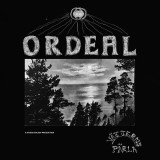
As an important agent of Gothenburg’s underground scene, Dan Johansson has been a member of several experimental harsh noise projects such as Sewer Election, and lo-fi indie folk bands like Enhet För Fri Musik and Amateur Hour. Ordeal is his latest solo output, and might as well be ashes stuck in the blast furnace's edges of his last longing career. Not by means of summing up genres or as a culmination of his musical development, but as a profound music piece weaved in his own household.
With not much more than a synthesizer, Vätterns Pärla is built by trembling, dissonant drones stained in feedback and reverberation, thickly textured by the no-fi quality of the recording, depicting a menacing atmosphere congested with heavy fumes. In Johansson's words, Ordeal "takes inspiration from the early 80’s albums of Maurizio Bianchi, filtered through a Gothenburgian no-fi bleakness. It’s an album for inner voyage, childhood memories, and places that now lost purpose and meaning”.
There's certainly intimacy and nostalgia, yet a claustrophobic, hypnotic ambiance wraps it all up in a contained and narrow space. Emphasis is put on texture rather than on detail, on color rather than on progression, on suspense rather than on conclusion. Tension varies stiffly, sometimes a drone layer dismantles and the mood seems to filter, but ragged edges are never polished. We can feel the walls and the air, which although tarnished, can be breathed in somehow. It's as if waking up in a dark room and having to recognize it with our ears and tact, testing its dimensions and its surface. The stillness in the chamber is like the stillness between gasps of storms.
Without visible stars, an enclosed share of night sky hides a heavy load of industrial debris underwater. These remnants are maybe the pearl regarding the album's title. It all can seem like a dream, a grim mechanical soundscape deafened by hefty, yet sporadic winds. Soil strives to make something grow, but sprouting is kept suspended, held by a dismal presentiment. Long shadows on the ground prove that darkness is about to befall. And as these shadows stretch, almost about to break up in a loud strike, the noise turns white.
LP SHIPPING ONLY / CD DELAYED “This is definitely the most honest and mature record Deathchant has ever made.” That’s Deathchant vocalist and guitarist T.J. Lemieux talking about the band’s third and latest album, Thrones. Think of it as not just the follow-up to 2021’s Waste, but the other side of the coin. “While Waste and our self-titled album touched on similar themes, they were sort of from a problem standpoint,” he explains. “Thrones is full of reflection, self-realization, and solutions for moving forward and conquering those problems.” Which isn’t to say that Deathchant have gone soft. Far from it, dude. In fact, Thrones just might be their heaviest record thus far. The band’s seamless swirl of classic rock guitar harmonies, syrupy sludge, blues boogie and psych bombast has reached a thrilling new apex as Lemieux spins high-powered tales of reckoning from beyond the wall of sanity. Thematically, Lemieux and his bandmates—bassist George Camacho, guitarist Doug Stuckey and drummer Joe Herzog—peel back the veneer of self-delusion to expose the fork in the road. “Thrones is meant to represent things that rule you, things you worship, things you rely on or think you need,” Lemieux says. “Sometimes those things make you feel in control, safe, on top of the world like you're in power—which over time often proves untrue.” Witness lead single “Mirror”: Kicking off with gleaming Lizzy-isms, the song rumbles into a thick groove overlaid with lysergic fireworks that conjure the shaggy European movers of decades past. “‘Mirror’ is the key to the whole Thrones theme,” Lemieux explains. “It’s about looking inward to realize what's ruling you, what's consuming you, and how delusional you've been about those things. Your sense of self is so damn important, and fully facing your truths is not an easy thing to do. It’s admitting that you’ve intentionally dulled and quieted your mind to distract, avoid and run from yourself, from memory, from loss and truth. At some point, you have to face that shit.” The languid and dreamy “Mother Mary” is also crucial to Thrones’ trajectory. “If the album was a book, ‘Mirror’ would be the first chapter and ‘Mother Mary’ would be the last chapter, though they’re not the first and last track for sonic reasons,” Lemieux explains. “‘Mirror’ is saying, ‘I’m looking inward because some things need to change,’ while ‘Mother Mary’ is saying, ‘Okay, things are fucked and have gone way too far but now we have this understanding—and acknowledging things is key to overcoming.’” Thrones was recorded live in a cabin in the remote mountain community of Frazier Park, CA, with trusty engineer Steve Schroeder (a.k.a. Schroeds). “We moved in for a week, rehearsed a bit and went for it,” Lemieux says. “Each tune got three or so takes, but we nailed ‘Mother Mary’ and ‘Canyon’ right away.” Overdubs were done at the cabin, Schroeder’s Studio 3, and Lemieux’s place. The album was produced by Lemieux and Schroeder. “Overall, it’s a pretty dark record,” Lemieux says. “It's serious and leans into heavy themes, sometimes using metaphor and imagery to soften those blows, but sometimes it hits direct. It’s positive, though—and cathartic. Forever riding on the line of total insanity and flirting with mental degradation. It’s our most realized and ambitious record to date.”
Flora Yin Wong’s ravishing interiority finds lucid expression on an absorbing second album for Modern Love, manifesting her instrumental storytelling in a syncretic bind of supernatural themes with hyperrealist, concrète sound design.
Through ten parts, Flora crystallises the ennui that followed an uncanny, disorienting trip to East and Southeast Asia. “On an unexpected stopover in Hong Kong after five years away, my friends took me to a Bazi reader one night - something I was curious about, but much of a ritual for them - ” Flora recalls. “My father told me that when I was born, he had obtained an auspicious reading that since stayed like a guiding talisman with me. It was almost past midnight but people were still lined up, rather shaken and visibly upset, to see the old man. He had kind eyes and asked me why I was there and I said I was at a crossroads. He asked me my time and date of birth, and told me to pick one of his four little white canary birds as a vessel for divination.”
This was the final stretch of an ultimately aimless few months across the continent, including a 20 year overdue return with her father to his adoptive family in his hometown Kuala Lumpur - for many reasons, ended up as a strange and uncanny trip. She spent solitude in a haunted house during the quiet snowfall of Kyoto, where she might have offended some spirit... and nights in mountain temples with South Korean monks, and an equally strange feeling return to the Island of the Gods.
“It culminated in what felt like a final disillusionment with Asia - sudden deaths and a breakdown in beliefs - somewhere I never really have or will be able to connect with. The process of the reading summoned a final blow to my gut - an overwhelming sense of rootlessness, and understanding that all there is is emptiness and entropy. No birth-divined protection, just a measurement of the night sky based off nothing and everything.”
Heavy with a sense of nightmarish dissociation and grief, Flora read about Giuseppe Tartini’s ‘Violin Sonata in G Minor’, aka the Devil’s Trill Sonata, a notoriously tricky c.18th composition which attempted to transcribe music heard in a dream, which the composer felt he could never fully bring into reality. It’s this soporific motif that binds and underpins ’Cold Reading’, finding Flora chasing the dragon of fleeting fantasy through passages of etched melancholy, pinched with hypnagogic jerks that linger in the memory.
From her use of the ‘Devil’s Trill’ Sonata in ‘All My Dreams are Nightmares’ through evocations of subtropical humidity in the Bryn Jones-esque, resonant hand-played percussion of ‘Konna’ and ‘Banjar’, to a breathtaking dreampop denouement ‘Nectar Dripping’ and the Enya-like lush of ‘Beautiful Crisis’, Flora blooms her ideas with an openended ambiguity so often missing from so called Ambient music, ushering the listener into a soundworld that disturbs and displaces, just as much as it calms.
Acclaimed synthpop trio A-Ha are teasing their latest album, not to mention independent film, 'True North', in what might just be the band's most crowning career achievement thus far. Their first project since 2015's 'Cash In Steel', it's high time they reined in on their success to do some good; the album and project is a relentless paean for the frozen magnetic north, and its ecological importance in connecting us to the environment.
out of Stock
Last delivered 2 years ago available to reorder, subject to availability
Weighing in with more of the deadly payloads that make systems weep, Alan Johnson return to Sneaker Social Club to finish what they started on 2022’s The Stillness EP.
Gareth and Tom’s sharp instinct for the fundamentals of crushing half-step pressure remain undiminished on this latest EP. Their sound palette reaches across contrasting strands of music culture, and every bar is teeming with micro details of sound design which give the tracks a living, breathing quality.
Ten Year Tonnage splits the EP open in whipcrack snares, DMZ flutes and a thick bed of sub, constantly shifting and teasing roots drops before opening up the mids and letting the low end snarl.
The chord hook on ‘Shapeshifter’ nudges towards some bold rave shapes, but there’s restraint and poise in the way the sounds get deployed. The Johnson way is one of suffocating space and uneasy tension, which obviously creates the best kind of dancefloor drama. As ‘Muay Size’ ably demonstrates, the likely lads are happy to pare a tune back to a skeletal framework and keep dancers waiting. When the pay-off comes, it’s not what you might expect, and that’s precisely why their sound is fresher than yours.
‘People Of The World’ goes even further out as it staggers and stumbles through skewed jazz samples and snatches of drums being thrown across the room. For all the splaying angles, there’s still a rock solid weight to the tune which proves Alan Johnson are more than comfortable taking things out to a weird fringe without losing their swagger.
out of Stock
Last delivered 2 years ago available to reorder, subject to availability
Acclaimed synthpop trio A-Ha are teasing their latest album, not to mention independent film, 'True North', in what might just be the band's most crowning career achievement thus far. Their first project since 2015's 'Cash In Steel', it's high time they reined in on their success to do some good; the album and project is a relentless paean for the frozen magnetic north, and its ecological importance in connecting us to the environment.
A fixture in Mexico's thriving electronic scene, the Argentinian import has made a name for himself alongside cohort Iñigo Vontier with a style that seamlessly blends haunted desert disco with gritty acid house and techno.
This EP might be his most cogent formulation yet, a mightily playable set of peak-time DJ-friendly tracks that bring enough mystery and wonkiness to a perfectly club-ready backbone. It's a conspiracy of sound, a cosmic abduction with pulsating rhythms and hypnotic bleeps sure to melt minds on the dance-floor.
DJ Feedback:
Tiefschwarz - "soooo gooood!!"
Roe Deers - "dope EP"
Matt FX - "an absolute tour de force EP. hard to pick a favorite, maybe guadalajara"
Justin Strauss - "great ep"
Kiki - "Cool trax!"
Mawimbi - "really like the acid touch in back in guadalajara"
Jerry Bouthier - "well put together madness yay!"
Phil smart - "Solid bunch of tracks, all great! Can't wait to test out on a dancefloor:)"
Vidis - "Cool stuff as per usual from señor Thomass. Young Woman in Kashmir and Back in Guadalajara are the faves."
Phred Noir - "Alll the tracks are so good, super happy to see Thomass back with sooo good tracks !"
Genish - "Back in Guadalajara for me ! fire"
Ayala (It) - "I'm a Thomas fan from years and years"
Kato - "mad fun”
Fabio Me Llaman Soltero - "Sublime work, always favorito Thomaaaaaazzzz"
out of Stock
Last delivered 5 months ago available to reorder, subject to availability
• Following on from the highly successful first two editions of
Dance Masters featuring the classics mixes from maestros
Shep Pettibone and Arthur Baker, the spotlight turns to
another remix legend, John Luongo.
• Boston born, John is one of the truly legendary DJ's and
remixers of the Disco era. John got his break at Epic by
overdubbing percussion from salt shakers and spoons onto a
promo and then passing them back the tape. This resulted in
him being flown to New York, and put in a studio (of his
choice) to mix and produce Melba Moore`s “You Stepped
Into My Life”. From this point everything he touched was a
hit. He went onto remix Disco classics by Jackie Moore –
“This Time Baby”, Dan Hartman “Vertigo / Relight My Fire”
and Patti Labelle “Music Is My Way Of Life”.
• However, John was not afraid of remixing artists that didn’t
fit into the disco genre and this attitude is borne out by the
tracklisting of this compilation, on which Gladys Knight and
The Pips rub shoulders with Fine Young Cannibals and
Billy Idol, and Baltimora appears alongside Banararama
and Serge Ponsar.
• “…if you played this whole thing, just put it on and didn’t
tell anyone it was me, they’d say ‘boy, what a great group of
songs this is!’” - John Luongo
• This cut down 16 track essential edition in pressed on 140g
black vinyl and features foreword by Arthur Baker and an indepth essay written by Alexis Petridis (Rock and Pop
reviewer for The Guardian).
• All tracks remastered by Nick Robbins at Sound
Mastering
out of Stock
Last delivered 2 years ago available to reorder, subject to availability
Balmat co-founders Philip Sherburne and Albert Salinas have been fans of Shy Layers’ lilting, Balearic pop for years, so when Shy Layers’ JD Walsh asked us to listen to a set of demos he was working up with fellow Atlanta multi-instrumentalist Jeff Crompton, we jumped at the chance. And once we heard their work in progress, the decision was almost immediate: We have to release this.
Together, Walsh and Crompton are Anagrams, and their debut album together, Blue Voices, might initially seem like a departure from Balmat’s habitually electronic terrain. It’s not ambient music, but it’s also not not ambient music, at least to listeners in the right frame of mind. The two musicians, who met when Walsh moved from Brooklyn to Atlanta in 2016 and began collaborating a few years later, see the music in similarly ambiguous terms. “I like it because it’s not jazz,” jokes Crompton, a veteran and credentialed jazz player. “And JD likes it because it’s jazz.”
Crompton is a musician (and former high-school band teacher) with deep roots in Georgia’s improvised and experimental music scenes; his credits include shows with Eugene Chadbourne, a guest appearance with Godspeed You! Black Emperor, and a collaboration with Duet for Theremin and Lap Steel’s 12-hour drone performance at Knoxville’s Big Ears. On Blue Voices he plays alto and tenor saxophone, clarinet, electric piano, and organ. Walsh has been releasing music as Shy Layers since 2015, when he started self-releasing on Bandcamp; the following year, Germany’s Growing Bin packaged his first two EPs as a self-titled album, and in 2018, Tim Sweeney’s Beats in Space label put out Shy Layers’ sophomore album, Midnight Marker. Where those records channeled Walsh’s playful harmonic instincts into wistful songwriting with tropical overtones, on Blue Voices he lets his experimental tendencies take the lead. Playing acoustic and electric guitars, electric lap steel, bass, Moog Matriarch, modular synth, and programmed drums, he concentrates his energies on richly textural layers and abstract assemblages of tone color.
Across the album’s 11 tracks, there are faint echoes of familiar touchstones: the atmospheric twang of Daniel Lanois’ pedal steel on Apollo: Atmospheres and Soundtracks; the mercurial modal runs of Ethio- jazz; the late-summer calm of Fuubutsushi; the versatility of players and composers like Patrick Shiroishi and Sam Gendel, who are asking similar questions about where jazz ends and some other, nameless territory begins. Mostly, though, what Blue Voices captures is the quixotic sound of two restless musical imaginations making it up as they go along, two voices discovering a shared language in a hitherto unexplored shade of blue.
out of Stock
Last delivered 2 years ago available to reorder, subject to availability
The funk fans have been waiting for this one. Finally available on vinyl, Grant Green’s near perfect slice of jazz funk and soul, Live at Club Mozambique, remastered and rendered back in the Motor City. Grant Green’s band had been playing a series of live dates at Detroit’s Club Mozambique, (before it became a fabled Male dance club) when this session was recorded live on two cold January nights in 1971. Powerhouse drummer Idris Muhammad and soulful tenor star Houston Person were brought in to supplement Green’s current band featuring Ronnie Foster on organ and Clarence Thomas on Soprano and Tenor Sax and Blue Note producer Francis Wolff recorded. This treasure was never released, though, and (conjectures aside) remained in the Blue Notes vaults for 35 years before a 2006 CD release. Sounding incredibly fresh and live, you’d be hard-pressed to find a more real stamping of Grant Green at the top of his game. The lp blends extremely hypnotic and wild funk such as their opening cover of a local funk hit “Jan Jan” by the Fabulous Counts next to laidback renditions of early 70’s soul favorites “Walk on By”, “Patches” and “One More Chance” by the Jackson 5. It perfectly captures the magic of hearing a legendary band effortlessly doing their thing in a small club while the audience unwinds after a long work day. Green pulls it all together with his melodic genius and perfect delivery. Great artists make it seem so easy. No pretensions here, just a great band burning up the stage with unmistakable chemistry on what might be the ultimate jazz funk time capsule. Maybe you can’t go back in time, but if you close your eyes and light a cigarette, you might be convinced you’re sitting in a wood-paneled club on Detroit’s Westside enjoying Grant Green and his band tear it up. Grant Green - Guitar Ronnie Foster - Organ Idris Muhammad - Drums Clarence Thomas - Soprano Sax, Tenor Sax Houston Person - Tenor Sax Recorded live at Club Mozambique - Detroit, MI 1971 by Francis Wolff
The funk fans have been waiting for this one. Finally available on vinyl, Grant Green’s near perfect slice of jazz funk and soul, Live at Club Mozambique, remastered and rendered back in the Motor City. Grant Green’s band had been playing a series of live dates at Detroit’s Club Mozambique, (before it became a fabled Male dance club) when this session was recorded live on two cold January nights in 1971. Powerhouse drummer Idris Muhammad and soulful tenor star Houston Person were brought in to supplement Green’s current band featuring Ronnie Foster on organ and Clarence Thomas on Soprano and Tenor Sax and Blue Note producer Francis Wolff recorded. This treasure was never released, though, and (conjectures aside) remained in the Blue Notes vaults for 35 years before a 2006 CD release. Sounding incredibly fresh and live, you’d be hard-pressed to find a more real stamping of Grant Green at the top of his game. The lp blends extremely hypnotic and wild funk such as their opening cover of a local funk hit “Jan Jan” by the Fabulous Counts next to laidback renditions of early 70’s soul favorites “Walk on By”, “Patches” and “One More Chance” by the Jackson 5. It perfectly captures the magic of hearing a legendary band effortlessly doing their thing in a small club while the audience unwinds after a long work day. Green pulls it all together with his melodic genius and perfect delivery. Great artists make it seem so easy. No pretensions here, just a great band burning up the stage with unmistakable chemistry on what might be the ultimate jazz funk time capsule. Maybe you can’t go back in time, but if you close your eyes and light a cigarette, you might be convinced you’re sitting in a wood-paneled club on Detroit’s Westside enjoying Grant Green and his band tear it up. Grant Green - Guitar Ronnie Foster - Organ Idris Muhammad - Drums Clarence Thomas - Soprano Sax, Tenor Sax Houston Person - Tenor Sax Recorded live at Club Mozambique - Detroit, MI 1971 by Francis Wolff
Reiko Kudo first debuted on the Tokyo underground music scene in 1980 with NOISE, a duo which apart from herself under her then maiden name Reiko Omura on voice, guitar and trumpet featured Tori Kudo on organ. Their only album TENNO (1980 on Engel) is probably one of the most outstanding and uncompromising records of all time.
Like other pioneering female producers from Japan such as NON (of NON BAND), PHEW and HACO, who had all begun their startling careers in the early days of the japanese Punk era, Reiko Kudo can surely be regarded as one of the most unique, uncategorisable and daring voices in the entire field of electronic and experimental music ever.
RICE FIELD SLOWLY RIPING IN THE NIGHT was REIKO KUDO's second album under her own name. It features TORI KUDO (MAHER SHALAL HASH BAZ) and SAYA and TAKASHI UENO (TENNISCOATS) on various instruments. The recordings took place in 2000 at Reiko' s and Tori's house in the rural surroundings of Shikoku island.
All recorded music on this album sounds like it originates in a parallel dimension where time and key signatures simply don't exist, Some might describe this as outsider music, but this doesn't really begin to do justice to the quality of the tracks, there is nothing accidental or forced here, this is simply music created in a very different way. Yet again REIKO KUDO had conceived of something utterly beautiful.
"After producing the album "Souvenir de mauve" with Maher Shalal Hash Baz which we released on our label Majikick, the idea came to us, to release Reiko Kudo's work. For Reiko's work, we brought our recording equipment from Tokyo to Shikoku and recorded the entire album at her house.
The piano was positioned in a room with a high ceiling. We would set up our small recording equipment in the room and started to record. The basic tracks were recorded without any rehearsal and just a few overdubs were added on top of it. To have a distant sound on the recording, Tori played trumpet in the next room. The choir was standing outside the house, singing "Enya-totto, enya-totto" through the open window. It was early spring, I remember that it was still a bit cold and the members of the choir were freezing outside.
Reiko plays only at certain times of the day, so that we were able to complete only two or three recordings a day. Therefore we had plenty of free time. We went to a hot spring, to a cafe, or we tried pottery on a spinning wheel at Tori's workshop. It was a very rewarding time.
When this album was finished, we brought it to her to listen to. She said happily "I think this is the best work I have ever done." We felt that all our efforts were richly rewarded. Secretly, we thought the same, so we are delighted that this album will be re-issued." - Saya and Ueno (Tenniscoats), Tokyo 2018
Originally released on Majikick Records, Japan, 2000 Restauration and mastering by Detlef Funder at Paraschall Mastering, Düsseldorf. Vinylcut at Calyx, Berlin Translation by Miki Yui and Claus Laufenburg. Many thanks to Reiko Kudo, Tori Kudo, Saya and Takashi Ueno, Satoru Higashiseto.
Sven Torstenson's notorious Drugs is a loopdigga's fever dream, bursting with breaks for days and featuring possibly the most iconic cover of all library music's cult classics. First released in 1980, it's now a hyper-rare and seriously sought-after electronic album full of experimental soundscapes and samples just waiting to be flipped. It's both terrifying and terrifyingly good. So much so, it's been brilliantly sampled by Kendrick Lamar and Chance The Rapper.
The sleeve describes Drugs as containing "the newest dimensions of electronic sounds. Dramatic underscores for all problems of today's life and society, at the border between reality and delusion." That's pretty spot-on. The fast moving "Euphoria" is an incredible, unignorable opener. It's loaded with disorientating effects and really needs to be heard to be believed. It's followed by the gorgeous "Soft Hallucinations", containing quiet, meditative and beautiful sounds - as the title suggests. One listen and you'll want to live in the warm embrace of this beatless, harmonic gem. Sinister squelchy synth stabs don't distract from the sheer beauty of the track's main (gentle) thrust. They only serve to elevate its trippy magic.
Next up, "Sky Move"'s agitated and repetitive rhythm makes it an intense listen but with a broad melody that will appeal to many. "Destroyed Dreams" utilises a muffled church organ and it sounds heavenly to begin with but it gradually invites increasingly distorted elements. Yes, you've had trips like this, we're pretty certain. Mental! Talking of bad trips, never have they sounded so good as "Horror Trip"; this fractured drama-synth just needs some some dusty beats to hold it up - get involved.
"Floating Illusions" almost sounds like a beatless Spiritualized bomb from the early-mid 90s; melodic, synthy, church organ-drenched. The mournful, dramatic "Lost Chance" pulses along on a bed of acidy synths whilst "The Morning After" is the sonic equivalent of the extreme fear and doom experienced in the aftermath of the previous night's carnage. Whilst somewhat uncomfortable listening, again, it's pretty compelling thanks to the myriad effects being expertly utilised. Fascinating. The sprawling, fragmented "Random Thoughts" is described as containing "confused melody phrases" - yeah, pretty much sums this one up.
The B-Side is ushered in by "Heroin" and it's as sketchy as you might think, all mysterious minor chords with a dominating - but not overbearing - bass refrain. Next up, the dream-like synthy fanfare of "Night Trip" climaxes after a few minutes of dramatic, ecclesiastical sounds whilst "Day Trip" layers its melody over a repetitive rhythmic base.
Next up, one of the *REAL* highlights makes itself known. Absolutely not to be missed, "Dealer's Corner" is all shifting tenors from quiet to hectic and back around again. The hectic parts are like a totally synthed-out-the-eyeballs jazz-funk collective wigging out with the latest electronic toys from 1980. This one totally SMOKES.
The dramatic "Sad And Hopeless" is appositely replete with dissonant, minor church-organ chords whilst "Riding Pegasus" uses a creepy ostinato bass melody to create irrational bleepy menace that's ripe for sampling. The penultimate track, "Hopeless Chaos" is another disorientating trip, a bleepy confection of sounds and phrases whilst closer "Goin' Mad" is all electronic percussion with an unpleasant rhthymic feel and irritating melody. Music to annoy your partner with!
Established in Munich in 1965 by Gerard and Rotheide Narholz, Sonoton introduced library music to Germany. Initially intended to cater to the country's new TV market, the library also provided an avenue for Gerhard Narholz's astonishing musical prolificacy, and soon became a haven for a wide range of European composers and musicians. In 1969, Sonoton struck a deal with the British label Berry Music for international publishing rights, exposing its catalog to a worldwide audience; when Berry was bought out by EMI in 1973, Sonoton transitioned into a full-fledged international label, with successes in the library and commercial fields and many innovations to its credit. Now a worldwide operation with hundreds of producers and composers under its employ, Sonoton nonetheless remains an independently run business still helmed by its founders - a remarkable achievement in an era when nearly every other major library has been absorbed by a multinational conglomerate.
The audio for Drugs has been remastered by Be With regular Simon Francis, ensuring this release sounds better than ever. Cicely Balston's expert skills have made sure nothing is lost in the cut whilst the original, iconic sleeve has been restored here at Be With HQ as the finishing touch to this long overdue re-issue.
out of Stock
Last delivered 2 years ago available to reorder, subject to availability
Wenn man vier US-Top-Ten-Alben (darunter zwei Nummer-Eins-Alben) veröffentlicht hat, die allesamt mit Gold- und Platin-Award ausgezeichnet wurden, dann kann man sich einen derartigen Move wohl erlauben: nur wenige Tage Vorbereitungszeit ließ US-Superstar Future seinen Fans und Fachpublikum, um sich auf den Release seines fünften Albums "FUTURE" einzustimmen. "FUTURE" ist der Follow-Up zu "EVOL" udn brachte die Hitsingle "Mask Off" hervor, die in Deutschland mit GOLD ausgezeichnet wurde und über 40 Millionen mal gestreamt wurde.
If there’s anything that defines SUDS, it’s friendship. Meeting through their love of the DIY scene currently emerging in Norwich, the band quickly found themselves gravitating towards writing songs together, and by Autumn 2021, Jack Ames (drums/vocals) joined Maisie Cater (vocals/guitar) and Dan Godfrey (guitar/vocals) to form a line-up that felt inherently natural. Stepping in on bass duties came Harry Mitchell, and things seemed to click instantaneously. Driven to keep the spark going they all upped sticks from their far flung edges of the county, pooled together to get a touring van and set to work. Just like their 2022 debut EP, In The Undergrowth, SUDS ventured down to Kent to record with producer Ian Sadler (Roam, Anavae), ready to explore the next chapter of their story. Step forth debut album The Great Overgrowth, a record brimming with addictive melodies and gorgeous moments of optimism. Their evocative and sometimes literary approach to lyrics takes inspiration from midwest emo and the 1960s Greenwich Village folk scene - Cater and Ames would regularly distract themselves while writing, gazing between the pages of books by Woody Guthrie, Allen Ginsberg, Bob Dylan and Brontez Purnell - which appears across their songwriting and would quickly become the foundation for their sound. Finding a delicate balance of sensitive lyricism dripping in warmth and killer guitar hooks, The Great Overgrowth follows on from the EP, telling the next part of the tale, as a tight knit group of twenty-something year old friends struggling and floating through life, to becoming more confident in their everyday lives and friendships while embracing change. The band are already off to a flying start, conquering sets at 2000 Trees Festival, The Great Escape and Truck Festival, as well as sold out shows with Spanish Love Songs, Pool Kids and Martha. Their talent for achingly intelligent, relatable lyricism and a heft for devil-may-care creative output already puts them heads above the rest. SUDS might be fresh faced but have the maturity and drive to become one of the most exciting emerging artists of 2023.
Next up on Q1E2 Recordings - for the label's fifth release so far - is Dr Sud. He's a Rome-born, Berlin-raised producer whose music is a fusion of percussion-centric soundscapes and integrated jazz-leaning harmonies, drawing inspiration from diverse genres like electronica, funk, and house.
On 'Heading South', the broken beat don serves up his specialist percussive sound, folding all manner of drums into synth-smothered house. The EP explores the undulating cycle of morning into night, back into morning, inviting you to dance your way through it all.
'Brina', a word which in Italian refers to morning dew - perhaps found on a tent on the morning of a festival - represents the breaking of dawn with broken beats. The track breaks and squints into the start of the day with spacious kick drums leaving room for warm, almost familiar pads and keys.
Then, 'Life Itself' reflects daytime, revolving around an arpeggiating synth that soon makes way for luscious keys.
An excursion into percussive bliss concludes side A in the form of the magical, grin-inducing 'Evening Breath'. This, as you might have guessed, is where the listener cruises through smoothly into the final stages of the day. It encapsulates that last burst of light as the sun sets and a slight shiver of the evening air slivers up your spine.
Then, before you know it, the mysterious night arrives. Flip to that B side, and 'Tramontana' will greet you, inviting you to dance deep into the late hours.
When you're there, the chugging '3/4AM' will hit the spot like an unforgettable dance floor moment, bursting with low and slow Balearic tendencies.
Finally, 'Mondgesicht' - "Moonface" in German -fittingly concludes proceedings with deep lounge vibes. Mumbles of effortless trumpet manoeuvre through a swaying sea of percussion and delicious, wavering synth solo. The day is here again. The cycle is complete.
This is some seriously high-quality music on show here from Dr Sud. The EP is out on Q1E2 Recordings in October.
out of Stock
Last delivered 2 years ago available to reorder, subject to availability
As the front person of celebrated indie band Cymbals Eat Guitars, guitarist and singer Joseph D'Agostino spent over a decade setting autobiographical, emotionally vivid lyrics against a backdrop of soaring and compositionally ambitious rock. After four critically acclaimed LPs that solidified D'Agostino's reputation as a gifted songwriter, he chose to break from his long-term band and debut a new project: Empty Country. The project's second full-length is a thrilling affair, delivering an engaging and deeply moving rumination on time, family, and the disintegration of America. Although it is a record about the forces that drive Americans apart, it's also imbued with empathic love and an understanding of what binds people to family and country-in spite of the darknesses we encounter. The concept of a Great American Rock Album might scan as outdated in 2023, but with this sprawling and uncompromising epic, D'Agostino and Empty Country shatter ambivalence and confront the horrors with a community-minded sense of cautious optimism. "We may be staring into an abyss," says D'Agostino. "But we're all staring together." Despite the stoicism of its storytelling, Empty Country II cuts the darkness with beauty, humor, and an earnest belief in the transcendent power of rock music. Its sprawling and sonically adventurous arrangements range from luminous jangle-pop to scorching emo-punk to narcotized Americana. Empty Contry II featuring ome of D'Agostino's most danceable songs too. Legendary recording engineer John Agnello, whose previous collaborations with Cymbals Eat Guitars resulted in their 2014 high-water mark, LOSE, brought his trademark clarity and nuance to the process, helping Empty Country II crackle with a vital energy that imbues these stories with genuine lifeforce. RIYL: Silver Jews, Pixies, Husker Du, Wilco, Pavement, Superchunk, Modest Mouse. Ltd pink vinyl LP (500 copies ww)
Bad Wolves refuse to follow. Instead, the platinum-certified Los Angeles band — John Boecklin drums, Daniel 'DL' Laskiewicz lead vocals, Doc Coyle [lead guitar, backing vocals] and Kyle Konkiel [bass, backing vocals] — circumvent convention by stretching the boundaries of hard rock with earthquaking heaviness, enigmatic experimentation and enthralling melodies. Bulldozing boundaries is nothing new for the boys and their upcoming album, 'Die About It, maintains that narrative. With a story that emphasises the sarcastic statement pointed towards those defending their own beliefs into absurdity, wrong or right, Bad Wolves believe that if you're gonna cry about it then you might as well Die About It,
Well, we're two full months into 2017 and the world continues to burn like an avalanche of flaming biohazard material sliding down a mountain of used needles into a canyon full of rat feces. But hey, it's not all bad: Portugal. The Man has a new album coming out called Woodstock.
PTM's last album came out over three years ago—a long gap for a band who've dropped roughly an album a year since 2006. And in true, prolific band fashion, they've spent almost every minute since 2013 working on an album called Gloomin + Doomin. They created a shit-ton of individual songs, but as a whole, none of them hung together in a way that felt right. Then John Gourley, PTM's lead singer, made a trip home to Wasilla, Alaska, (Home of Portugal. The Man's biggest fan, Sarah Palin) and two things happened that completely changed the album's trajectory.
First, John got some parental tough love from his old man, who called John on the proverbial carpet or dogsled or whatever you put people on when you want to yell at them in Alaska. What's taking so long to finish the album' John's dad said. Isn't that what bands do Write songs and then put them out' Like fathers and unlicensed therapists tend to do, John's dad cut him deep. The whole thing started John thinking about why the band seemed to be stuck on a musical elliptical machine from hell and, more importantly, about how to get off of it.
Second, fate stuck its wiener in John's ear again when he found his dad's ticket stub from the original 1969 Woodstock music festival. It seems like a small thing, but talking to his dad about Woodstock '69 knocked something loose in John's head. He realized that, in the same tradition of bands from that era, Portugal. The Man needed to speak out about the world crumbling around them. With these two ideas converging, the band made a seemingly bat-shit-crazy decision: they took all of the work they had done for the three years prior and they threw it out.
It wasn't easy and there was the constant threat that the band's record label might have them killed, but the totally insane decision paid off. With new, full-on, musical boners, the band went back to the studio—working with John Hill (In The Mountain In The Cloud), Danger Mouse (Evil Friends), Mike D (Everything Cool), and longtime collaborator Casey Bates (The one consistent producer since the first record). In this new-found creative territory, the album that became Woodstock rolled out naturally from there.
Remember that mountain of burning needles we were talking about Good. Because Woodstock is an album (Including the new single Feel It Still') that—with optimism and heart—points at the giant pile and says, Hey, this pile is fucked up!' And if you think that pile is fucked up too, you owe it to yourself—hell, to all of us—to get out there and do something about it.
Artist and multi-instrumentalist Flaer looks to the landscape to explore pastoral melancholy on debut release, Preludes.
Ensconced in his family home in rural Leicestershire in the early months of 2020, painter and musician Realf Heygate (b. 1994) picked up his childhood cello for the first time in several years and began to play. Setting himself parameters to only record onto 4-track tape with acoustic instruments – cello, piano and acoustic guitar – he assembled a suite of instrumental compositions that form the basis of Preludes, his debut album as Flaer and the inaugural release on Odda Recordings.
Channelling the tension and unease between the pastoral idyll of the English countryside and the darkness which lurks beneath the surface, the mini-album draws inspiration from the analogue aesthetic of 1970s folk horror films, weaving field recordings of birdsong, church bells and the natural environment into chimerical melodies that reflect on Heygate’s childhood experiences of rural England.
“It was really important not to isolate the sound from its environment,” he explains, describing the compositional and recording process as “site-specific”. Developed over a series of intuitive musical enquiries, the mini-album’s uncanny quality emerges from combining raw demo takes with overdubs of almost orchestral grandeur.
Heygate points to the final track as indicative of the work as a whole: “‘Follow’ really is the mantra for the release and embodies the practical approach I was taking to music making: not to force the music but see where it takes you.”
As a painter, Heygate’s practice takes artefacts through sequences of reproduction that embrace the fluctuating materiality of the copy. Since obtaining a degree in Fine Art from Central Saint Martins in 2017, he has exhibited solo at Peter von Kant and Springseason galleries in London, and has participated in group shows at Saatchi Gallery, Cob Gallery and Senesi Contemporanea.
Describing his artistic practice as one of self-erasure, music instead provides Heygate with a more personal and autobiographical outlet. Where the two worlds combine is on Preludes’ striking artwork, which features paintings of 13th century stone carvings from the font of the church in the town where he grew up.
Speaking to a time where people were connected to the land in a more profound way, each symbol is assigned to a track on the album, which Heygate likens to giving them a title.
“To add that one juxtaposition might open a whole new interpretation or language that might be hard to find otherwise,” he explains.“Over time it might reveal itself to you, which is why I'm excited about it being released. To throw them out there and see what comes of it.”
out of Stock
Last delivered 2 years ago available to reorder, subject to availability
In the mid-1970s, a force of nature swept across the continental United States, cutting across all strata of race and class, rooting in our minds, our homes, our culture. It wasn’t The Exorcist, Goodbye Yellow Brick Road, or even bell-bottoms, but instead a book called The Secret Life of Plants. The work of occultist/former OSS agent Peter Tompkins and former CIA agent/dowsing enthusiast Christopher Bird, the books shot up the bestseller charts and spread like kudzu across the landscape, becoming a phenomenon. Seemingly overnight, the indoor plant business was in full bloom and photosynthetic eukaryotes of every genus were hanging off walls, lording over bookshelves, and basking on sunny window ledges. The science behind Secret Life was specious: plants can hear our prayers, they’re lie detectors, they’re telepathic, able to predict natural disasters and receive signals from distant galaxies. But that didn’t stop millions from buying and nurturing their new plants.
Perhaps the craziest claim of the book was that plants also dug music. And whether you purchased a snake plant, asparagus fern, peace lily, or what have you from Mother Earth on Melrose Avenue in Los Angeles (or bought a Simmons mattress from Sears), you also took home Plantasia, an album recorded especially for them. Subtitled “warm earth music for plants…and the people that love them,” it was full of bucolic, charming, stoner-friendly, decidedly unscientific tunes enacted on the new-fangled device called the Moog. Plants date back from the dawn of time, but apparently they loved the Moog, never mind that the synthesizer had been on the market for just a few years. Most of all, the plants loved the ditties made by composer Mort Garson.
Few characters in early electronic music can be both fearless pioneers and cheesy trend-chasers, but Garson embraced both extremes, and has been unheralded as a result. When one writer rhetorically asked: “How was Garson’s music so ubiquitous while the man remained so under the radar?” the answer was simple. Well before Brian Eno did it, Garson was making discreet music, both the man and his music as inconspicuous as a Chlorophytumcomosum. Julliard-educated and active as a session player in the post-war era, Garson wrote lounge hits, scored plush arrangements for Doris Day, and garlanded weeping countrypolitan strings around Glen Campbell’s “By the Time I Get to Phoenix.” He could render the Beatles and Simon & Garfunkel alike into easy listening and also dreamed up his own ditties. “An idear” as Garson himself would drawl it out. “I live with it, I walk it, I sing it.”
But as his daughter Day Darmet recalls: “When my dad found the synthesizer, he realized he didn’t want to do pop music anymore.” Garson encountered Robert Moog and his new device at the Audio Engineering Society’s West Coast convention in 1967 and immediately began tinkering with the device. With the Moog, those idears could be transformed. “He constantly had a song he was humming,” Darmet says. “At the table he was constantly tapping.” Which is to say that Mort pulled his melodies out of thin air, just like any household plant would.
The Plantae kingdom grew to its height by 1976, from DC Comics’ mossy superhero Swamp Thing to Stevie Wonder’s own herbal meditation, Journey Through the Secret Life of Plants. Nefarious manifestations of human-plant interaction also abounded, be it the grotesque pods in Invasion of the Body Snatchers or the pothead paranoia of the US Government spraying Mexican marijuana fields with the herbicide paraquat (which led to the rise in homegrown pot by the 1980s). And then there’s the warm, leafy embrace of Plantasia itself.
“My mom had a lot of plants,” Darmet says. “She didn’t believe in organized religion, she believed the earth was the best thing in the whole world. Whatever created us was incredible.” And she also knew when her husband had a good song, shouting from another room when she heard him humming a good idear. Novel as it might seem, Plantasia is simply full of good tunes.
Garson may have given the album away to new plant and bed owners, but a decade later a new generation could hear his music in another surreptitious way. Millions of kids bought The Legend of Zelda for their Nintendo Entertainment System back in 1986 and one distinct 8-bit tune bears more than a passing resemblance to album highlight “Concerto for Philodendron and Pothos.” Garson was never properly credited for it, but he nevertheless subliminally slipped into a new generations’ head, helping kids and plants alike grow.
Hearing Plantasia in the 21st century, it seems less an ode to our photosynthesizing friends by Garson and more an homage to his wife, the one with the green thumb that made everything flower around him. “My dad would be totally pleased to know that people are really interested in this music that had no popularity at the time,” Darmet says of Plantasia’snew renaissance. “He would be fascinated by the fact that people are finally understanding and appreciating this part of his musical career that he got no admiration for back then.” Garson seems to be everywhere again, even if he’s not really noticed, just like a houseplant.
out of Stock
Last delivered 17 months ago available to reorder, subject to availability
For the third of Sonic Youth's sound experiment series, they teamed up with legendary nosie-nik Jim O'Rourke. Building on the ideas from the brilliant extended version of "The Diamond Sea" (from WASHING MACHINE); the series explores the (mostly) instrumental side of the band. Though sold as an EP, the three tracks on the CD version of clock in at just over 56 minutes, and can sit quite comfortably with any of SY's best work.
The title track opens the record with over 20 minutes of drenching feedback, saxophone tints, and cut-up television dialogue suggesting the soundtrack to a film-noir set in an industrial wasteland. The comparatively short (at 6 minutes) "Hungara Vivo" is the middle track of this extraordinarily strong trio and is the band's first true "ambient" soundscape: even the master himself, Brian Eno, might be a little envious. The closer, "Radio-Amatoroj," is a 29-minute mediation that structurally recalls "Hyperstation" from the seminal DAYDREAM NATION album. Though this record, and indeed the series to which it belongs, is not aimed at fans of the band's more pop-oriented material, as a whole, it is easily the best work they have done in years. All text written in Esperanto. Eye-fucking cover art.
out of Stock
Last delivered 2 years ago available to reorder, subject to availability
Following on from the Primal Scream frontman’s brilliantly-received previous release for Ace, ‘Sunday Mornin’ Comin’ Down’ (accolades included being short-listed for Rough Trade’s compilation of the year), Bobby Gillespie brings us another slice of the music that soundtracks his life. And in this case, it’s his touring life. Drawing on the experience of ‘the way that the noise and clamour of the road can tire you out, wear you down and frazzle your nerves to shattered fragments of jangled exhaustion’, these are the records Bobby turns to for solace, for comfort, for empathy and for resourcefulness.
The compilation features an introduction from the man himself, talking us through his personal choices as though he’s sitting cross-legged on the carpet going through records with you in his lounge. Also long-time cohort of the band, Kris Needs has written extensive liner-notes, serving up an intensive track by track insight and analysis.
Titled after and kicking off with the Willie Nelson track of the same name, ‘I Still Can’t Believe You’re Gone’ leads us through a darker and deeper exploration than its predecessor, featuring Nick Cave’s funereal version of ‘By The Time I Get To Phoenix’ and Ry Cooder’s sparse and beautiful reworking of ‘Dark End Of The Street’. And we get there via such greats as Bob Dylan, JJ Cale, Donnie Fritts, Crazy Horse, Lee Hazlewood, Al Green, Thin Lizzy and so many more.
In Bobby’s own words: ‘These songs are soul savers to soothe frayed and battered nerves and to ease and settle the heart. They work on me like medicine every time. I would like to share this wonderful music that has given me strength, joy and inspiration over the years with you the listener, so that you too might get the same feelings of protection and inspiration that I do whenever I listen to these songs. We're all travellers on some kind of road through this life, and we all need respite from time-to-time - the music on this compilation is soul food of the highest order - I hope you enjoy it.’.
Echolocation is the astonishing debut album from Mendoza Hoff Revels,
an electric & formidable new unit led by Ava Mendoza (electric guitar,
compositions) &Devin Hoff (electric bass, compositions) and featuring
James Brandon Lewis(tenor sax) & Ches Smith (drums)
A super-group of our time, all profound creative artists in their own right, rocking
mightily together, in their prime. 21st Century progressive rock played by punk
rockers with serious improv skills & jazz feel. And non-stop wicked catchy tunes,
riffs & grooves.
Strong sonic references are The Stooges' Funhouse, rendered by a band readily
adept at rapidly swinging rhythmic & harmonic shifts, (plus tenor sax on every
track!) and also Minutemen, both their whole body of music & their fundamental
egalitarian punk ethos.
Symphonic metal powerhouse SERENITY unleash their new studio album, Nemesis AD! The successor to their previous full length, The Last Knight (2020), which landed #25 on the German album charts, is out on October 27, 2023 via Napalm Records and is the first record with Marco Pastorino (Temperance) as additional guitarist and backing vocalist. Known for their thematic albums inspired by historic characters and stories of the past, on Nemesis AD, SERENITY draw inspiration from the life and highly influential art of painter Albrecht Dürer of the German renaissance. Grandiose intro track “Memoriae Alberti Dureri” sets the scene for the album, before legendary singer Roy Khan (Conception, ex-Kamelot) lends his impressive vocals on the mighty “The Fall of Man”. ""Ritter, Tod und Teufel (Knightfall)” (named after Dürer’s famous artwork) features lyrics sung partially in German, for the first time in the band’s history spanning over more than two decades. The powerful track showcases SERENITY’s signature blend of orchestral arrangements, heavy guitar riffs, and soaring vocals. Heart-wrenchingly emotional yet empowering “Reflections (of AD)” mesmerizes the listener with its awe-inspiring instrumentation, multifaceted vocals and brilliant changes throughout the gripping eight-minute track. Theatrical “Sun of Justice” leads the listener to a faraway fantasy world while the vocal performance of skilled singer Georg Neuhauser ultimately unlocks the track's hit potential. “The End of Babylon” represents one of the darker, heavier tracks on Nemesis AD - climactic arrangements carry the dramatic storyline. Monumental orchestral version of “The Fall of Man” closes the album on a thrilling note that is sure to send a chill up your spine. With Nemesis AD, SERENITY add yet another bombastic symphonic metal masterpiece to their notable discography - there is no doubt that the talented unit’s standing in the scene is well deserved. BLURB "The Fall of Man" - Single No 2 Symphonic metal unit SERENITY unleash “The Fall of Man”, a mighty single off of the band’s new album Nemesis AD! With vocal support from legendary singer Roy Khan (Conception, ex-Kamelot), the song is a sure future hit with fans old and new. SERENITY’s previous studio album, The Last Knight (2020), hit #25 on the German album charts, and the band has gained millions of Spotify streams and YouTube views with their earlier efforts.
There is no stopping the mighty SORCERER and in the autumn of 2023 the band will release their highly anticipated fourth album entitled ‘Reign Of The Reaper’. Again not content with repeating themselves the album features some of the darkest, heaviest and most aggressive material the band has ever recorded, and at the same time some of the most lyrical and beautiful. The band holed up in their home studios and wrote music all through 2022 and then once again headed to SolnaSound Recording in Stockholm, the studio owned, run and operated by Simon Johansson (Wolf, Soilwork) with Mike Wead (King Diamond). SORCERER are also known for their long title tracks with catchy and highly memorable choruses, and the second single ‘Reign Of The Reaper’ is no exception. Taking the listener through the realms of death and dread, this doom-laden epic with it’s many twists and turns will crush souls, leaving metal fans begging for more darkness and despair.
Breaking Teeth (3rd Single / Will have a music video & Reddit AMA) Breaking Teeth is the 3rd of 4 singles from their new album The Fear Of Letting Go. Tyler Tate (vox) describes this track as the heaviest song on the record and sounds simply - "pissed off". "When I wrote the lyrics I was so fed up with the world & my life in general. Set back after set back, problems around every corner. Living should be simpler but the society we live in prevents that. We should all be pissed about it.” Band will do Reddit AMA & MV Visualizer We're All Left Suffereing (2nd Single / With Album announce) 'We're All Left Suffering' is the second of four singles from Michigan based metalcore band Hollow Front's upcoming album 'The Fear Of Letting Go'. The release follows their 2022 album ‘The Price Of Dreaming’ (#9 Current Hard Music Albums, #35 Current Digital Albums, #42 Independent, # 48 Current Rock Albums) which received praise from New Noise “a blistering and bruising experience, evoking myriad emotions and conveying a heady and moving blend of euphoria and despair.” and RockNLoad “Hollow Front has dropped nothing short of a phenomenal album with The Price of Dreaming. While the release doesn’t do anything new, it takes an already established formula and polishes it into a perfect shine. If you’re a fan of any of the modern Metalcore titans, you’ll love this release, hopefully as much as I do. Utterly brilliant.” 'We're All Left Suffering' is the first song the band has released since the announce of Dakota Alvarez's departure (former guitarist/singer) and marks the next chapter in the bands journey. The song will be accompanied by a music video and lined up with the announce of their forthcoming record "The Fear Of Letting Go" (Out October 27th). Lead vocalist states “This track is an anthem for the broken spirited. We live in a world riddled with heartache and constant struggle. Whether mentally, physically, or financially; we area collective of human beings doing our best to survive. I think with everything that’s happened in the world over these last three years, things might seem hopeless. It feels like the whole world has gone mad, and we’re all just here suffering along for the ride. It can be incredibly discouraging being a human in today’s social and economic climate. So I think this song is for those people who are sick of dealing with the bullshit life is throwing at them, and just want to truly breathe for once.”
"More Than You Know," the debut album from Iceland's jazz vocal duo Silva & Steini, is a contemporary, introspective update to the classic American Songbook. Equally familiar and strange, these sparse interpretations of vintage standards are woven together with gorgeous piano, surreal Wurlitzer keyboard, tasteful bass clarinet and lush vocal harmonies.
Seltene Tracks von Alex Chilton, produziert von Chris Bell. Linernotes von Rich Tupica und Elizabeth Hoehn (alias Lesa Aldridge). Jetzt zum ersten Mal auf 12"-Vinyl.
Es ist Mitte bis Ende 1975, was von Big Star übrig geblieben ist, gibt es nicht mehr, Third/Sister Lovers steht im Regal und Alex Chilton ist in Memphis an einem Tiefpunkt angelangt. Chris Bell verbrachte einen großen Teil des Jahres in London und versuchte, einen Solo-Plattenvertrag zu bekommen, ging aber leer aus und flog im Spätsommer nach Hause, um seine Familie zu besuchen. Während er zu Hause war, nahm Bell bei Ardent weitere Solotitel auf, von denen einer, "You And Your Sister", einen Harmoniegesang brauchte, so dass er Alex hinzuzog.
Fans haben lange geglaubt, dass dies die letzte Aufnahme war, bei der Bell und Chilton im Studio zusammenarbeiteten, aber nur wenige Tage nach dieser Session waren sie wieder zusammen im Studio, wobei Bell eine Reihe von Demos für Alex aufnahm. Chilton nahm frühe Takes von "My Rival" (später für das Like Flies On Sherbert-Album umgeschnitten) und "All Of The Time" (später für die Singer Not The Song-EP und das Bach's Bottom-Album umgeschnitten) sowie die damals unveröffentlichten Tracks "She Might Look My Way" (das zuerst auf dem 1978er-Album Losing You To Sleep von Co-Autor Tommy Hoehn erschien) und "Windows Hotel" (das schließlich 2015 auf dem Live-Album Ocean Club '77 veröffentlicht wurde) auf. Leider war weder eine Zusammenarbeit noch eine wie auch immer geartete Big Star-Reunion geplant.
Because Hold, Jack Tatum's fifth album under the moniker Wild Nothing, was written in the aftermath of new parenthood during the pandemic, it was probably inevitable that it would be searching and existential music. But during the recording process, the artist known for synth-pop tastefulness used it as an opportunity to reach for a new sonic maximalism and wider set of influences. With contributions from longtime collaborator Jorge Elbrecht, Tommy Davidson of Beach Fossils and Hatchie's Harriette Pilbeam, first single "Headlights On" features an acid house-worthy bass groove and breakbeat that prove Tatum is playing for the rafters. Tatum produced the rest of the record on his own, partially out of necessity, due to the challenges of the pandemic. The songs were eventually brought to Adrian Olsen at Montrose Recording in Richmond to begin recording drums and filling in the gaps. While largely a product of isolation, Hold also reflects the things Tatum has learned from collaborators, both on previous records and during his acclaimed work with Japanese Breakfast and Molly Burch. The rest of the record was mixed by Geoff Swan, who listeners might know for his work with Caroline Polachek and Charli XCX. Swan put Tatum's vocals high in the mix, and throughout the album, he embraces playful vocal processing like never before. Tatum moved from Los Angeles back to his home state of Virginia about five years ago in search of a scaled-back lifestyle. The relatively suburban environment - and the occasional regret it inspired - proved to be great artistic fodder. It's the paradox of modern America - the suburbs are supposed to be stultifying to art, but they are so full of human desperation perfect for dramatizing. On "Suburban Solutions", he presents an anti-jingle with an acidly bright synthesizer melody, imploring you to sign on the dotted line, put your feet up, and embrace sweet oblivion. Adding to the song's menacing cheeriness is a chorus-sung bridge, made with assistance from Molly Burch and Tatum's wife, Dana, It was loosely inspired by the classic Martika song "Toy Soldiers" and the long-ago pop craze for children's choirs, and he embraces the trend's less-than-stellar reputation. By design, Hold dwells in uncertainty and fear, but in a package that encourages meditation and a bit of fun. "In the face of the pandemic, I think being a parent really forced my hand," Tatum said. "I felt that I had no other choice but to have a positive outlook on the world. Because if I were to give in at any moment and say, "Oh, everything is horrible," then I'll feel as if I've lost and I've given up on my son being able to thrive in this world."
Sea Blue in Coke Bottle Clear Vinyl LP + artist signed art print. Only 200 available.
Because Hold, Jack Tatum's fifth album under the moniker Wild Nothing, was written in the aftermath of new parenthood during the pandemic, it was probably inevitable that it would be searching and existential music. But during the recording process, the artist known for synth-pop tastefulness used it as an opportunity to reach for a new sonic maximalism and wider set of influences. With contributions from longtime collaborator Jorge Elbrecht, Tommy Davidson of Beach Fossils and Hatchie's Harriette Pilbeam, first single "Headlights On" features an acid house-worthy bass groove and breakbeat that prove Tatum is playing for the rafters. Tatum produced the rest of the record on his own, partially out of necessity, due to the challenges of the pandemic. The songs were eventually brought to Adrian Olsen at Montrose Recording in Richmond to begin recording drums and filling in the gaps. While largely a product of isolation, Hold also reflects the things Tatum has learned from collaborators, both on previous records and during his acclaimed work with Japanese Breakfast and Molly Burch. The rest of the record was mixed by Geoff Swan, who listeners might know for his work with Caroline Polachek and Charli XCX. Swan put Tatum's vocals high in the mix, and throughout the album, he embraces playful vocal processing like never before. Tatum moved from Los Angeles back to his home state of Virginia about five years ago in search of a scaled-back lifestyle. The relatively suburban environment - and the occasional regret it inspired - proved to be great artistic fodder. It's the paradox of modern America - the suburbs are supposed to be stultifying to art, but they are so full of human desperation perfect for dramatizing. On "Suburban Solutions", he presents an anti-jingle with an acidly bright synthesizer melody, imploring you to sign on the dotted line, put your feet up, and embrace sweet oblivion. Adding to the song's menacing cheeriness is a chorus-sung bridge, made with assistance from Molly Burch and Tatum's wife, Dana, It was loosely inspired by the classic Martika song "Toy Soldiers" and the long-ago pop craze for children's choirs, and he embraces the trend's less-than-stellar reputation. By design, Hold dwells in uncertainty and fear, but in a package that encourages meditation and a bit of fun. "In the face of the pandemic, I think being a parent really forced my hand," Tatum said. "I felt that I had no other choice but to have a positive outlook on the world. Because if I were to give in at any moment and say, "Oh, everything is horrible," then I'll feel as if I've lost and I've given up on my son being able to thrive in this world."
out of Stock
Last delivered 2 years ago available to reorder, subject to availability
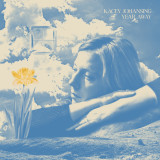
In March of 2020, after learning that a dear friend’s life was coming to an end, Johansing sat down and in one sitting wrote the song “Daffodils”. An elegiac tribute to someone facing death with grace and curiosity, the lyrics confront Johansing’s own mortality by observing the brief lifespan of a Hlower. Only a week later when the world came to an abrupt standstill, she soon found herself processing this recent loss while trying to make sense of a new global reality. Across the ensuing months, Johansing found herself increasingly untethered by a world of isolation and political upheaval.
Having been a frequent touring member of bands like Hand Habits and Fruit Bats, and often being called into the studio to lend her harmonies and multi-instrumental talents to records, Johansing’s phone no longer rang. Living in Los Angeles she feared her musical community was vanishing, as friends and collaborators continually announced they were leaving the city. It was in returning to her piano nightly that she found the greatest solace, feverishly writing the songs that would be collected on her next album. Resulting from this new sense of time and focus was a deepening of her songwriting. As Johansing recalls, “I felt like a metamorphosis happened during that time. There was a lot of personal growth and healing.”
Throughout Year Away Johansing traverses uncharted emotional landscapes brought upon by the changes occurring all around her. The forced self-reflection of the moment is aptly captured by “Old Friend”, featuring an aching melody and swooning production that recalls the best of Harry Nilsson. The epic piano and saxophone-driven “Smile with My Eyes” addresses the loss of community as friends became distant and political divides between family grew. On “Smile” Johansing pushes her vocals further than ever, expanding her range and using her peerless voice as the singular instrument it is. Facing the loss of a family home due to environmental destruction, “Shifting Sands” is marked by soaring Hlutes, Hield recordings and glassy synthesizers that nod to Japanese New Age.
“Daffodils”, the stunning album centerpiece, is built from a pastiche of looping samples, swirling Mellotron and dazzling vibraphone. “Keep your heart open wide, you never know your time / Keep your heart wild, true Hlower child”, Johansing sings as she says goodbye to an elder, while the band reaches a grief-stricken crescendo of woodwinds and chiming bells. On the title track, Johansing takes listeners on an eerily meditative journey of collective experiences. “I wanted to keep the progression simple and repetitive so that musically we could add new elements little by little, while the emotional tone of the lyrics becomes increasingly more strained and expressive”. The song grows to a fever pitch as Johansing sings higher than she thought possible; the tension of the repeating chords Hinally resolving into a hopeful coda as multiple soloists weave around each other.
Amidst heavier themes, Johansing still leaves room for her love of irresistible pop melodies and lush production. The driving “Last Drop” and mid-tempo “Valley Green” are two of her catchiest songs to date. On the former Johansing sings the anthemic chorus, “As if it were the last drop, and nothing ever lasts forever / As if it were the last stop, too far out to come back ever”, longing for a love that she’ll never take for granted, while also admitting that she doesn’t always know how good she has it. “Valley Green” features shimmering layers of 12- string guitars, stacked horns and an impeccable solo by co-producer and multi- instrumentalist Tim Ramsey (Vetiver, Fruit Bats), hinting at a love for bands like NRBQ.
Having been eager to capture the initial spark of songwriting, Johansing booked time at Highland Park’s 64 Sound Studio the week that it reopened. Over the course of three days, she and her band gathered basic tracks for 10 songs, before returning home to Hinish the record with Ramsey. Setting forth to make an album that paid homage to the music that kept them company during the months spent alone together, the duo pulled inspiration from a wide net including Burt Bacharach, John Carroll Kirby & Haruomi Hosono. Ramsey’s newfound love of early digital synthesizers dovetailed effortlessly with Johansing’s fondness for classic 70’s horn and string arrangements, creating a sound that is distinctly modern yet warm and familiar.
Once again Johansing called upon some of the Hinest players of Northeast Los Angeles’ vibrant music community to lend a hand with the record. The 70s R&B-folk of “Watch It Like a Show” features an electric guitar solo from Hand Habits’ Meg Duffy, while album closer “Endless Sound” boasts backing vocals from electronic musician Kaitlyn Aurelia Smith and swooping Indian-inspired violins from Amir Yaghmai (HAIM, The Voidz). The record shines brightly thanks to an ace mix from veteran producer Rob Schnapf (Beck, Elliott Smith, Cat Power), woodwinds from Logan Hone (John Carroll Kirby, Eddie Chacon), and a featured rhythm section of drummer Josh Adams (Jenny Lewis, Bedouine) and bassist Todd Dahlhoff (Feist, Devendra Banhart). Recorded across multiple studios including LA’s famed Sunset Sound, the album remains steadfastly buoyed by the adept engineering of Tyler Karmen (MGMT, Alvvays).
Though born of turbulent times, Year Away is ultimately interested in moving forward. The album ends with “Endless Sound,” where Johansing laments seismic global changes, (“The water is hotter, the mighty thaw / The current’s reversing, the last are lost”) but vows to keep going (“No storm can take me down / Endless light, endless sound”). It’s Year Away’s resilience that shines through despite the darkness. It’s a sound all her own and Johansing’s most cohesive set of songs yet.
Dubai’s lo-fi wizards Shadi Megallaa & Abood Nasrawi aka GYPS take a break from their lo-fi experiments & venture onto the dancefloor with 3 original cuts aimed to make the bass bins rumble. We’ve also enlisted Dub master & Mosaic main-man, Steve O’Sullivan for a remix that takes the title track to another dimension.
For those who might have missed out on the sonic odysseys of GYPS1-6, fret not, as they await discovery on Bandcamp under the moniker "gypstapes
out of Stock
Last delivered 2 years ago available to reorder, subject to availability
There is no stopping the mighty SORCERER and in the autumn of 2023 the band will release their highly anticipated fourth album entitled ‘Reign Of The Reaper’. Again not content with repeating themselves the album features some of the darkest, heaviest and most aggressive material the band has ever recorded, and at the same time some of the most lyrical and beautiful. The band holed up in their home studios and wrote music all through 2022 and then once again headed to SolnaSound Recording in Stockholm, the studio owned, run and operated by Simon Johansson (Wolf, Soilwork) with Mike Wead (King Diamond). SORCERER are also known for their long title tracks with catchy and highly memorable choruses, and the second single ‘Reign Of The Reaper’ is no exception. Taking the listener through the realms of death and dread, this doom-laden epic with it’s many twists and turns will crush souls, leaving metal fans begging for more darkness and despair.
out of Stock
Last delivered 2 years ago available to reorder, subject to availability
Cleveland-based producer Tim Thornton makes music under the moniker Tiger Village. Thornton has carved out a niche in the American experimental underground through the wide-spanning releases of his own label Suite 309, as well as through his day job as a quality control supervisor at the Gotta Groove Records manufacturing plant — meaning that his ears serve as the finish line for a vast slate
of vinyl projects that hit the market every year. The Celebration, the fourth Tiger Village release on Hausu Mountain since 2014, joins a catalog that includes releases on Orange Milk, Patient Sounds,
and HausMo sublabel Blorpus Editions, along with a battery of music self-released through Suite 309.
Within the jittering IDM-adjacent networks of The Celebration, Thornton expands his craft on multiple concurrent trajectories, digging deeper into complex drum programming and labyrinthine synth arrangement while further exploring passages of vocal synthesis and non-recursive song structures that thrive on unpredictability and constant fluctuation. Thornton can’t help but bring a wide-eyed curiosity to anything he produces, as he rejects the dead-serious gun-metal intensity of many strains of contemporary electronic production in favor of bright tones and wonky rhythms.
Like fellow Hausu Mountain artists Wobbly and Moth Cock, Tiger Village revels in cheeky compositional about-faces and
carnivalesque synth lines. In all their staccato voices and peals of abstract texture, Thornton’s tracks blur the lines between harmonic electronic elements and drum patterns. The album morphs before our
ears every few seconds or so, allowing arrhythmic loops and alternating rhythmic grids to contrast against whatever might seem to be the bedrock of any given piece. By paying attention to the
trajectory of every dollop of sound, Tiger Village pulls off magic tricks in his pointillist arrangements in which nothing remains static — everything pushes towards a state of progressive complication.
With a timeless sound that blends heavy soul and psych-rock, Monophonics have built a reputation over the past decade as one of the best live bands in the country. Led by singer Kelly Finnigan, the band of has drawn on their colorful history _ both their experiences as veteran touring performers and as individuals growing up in the Bay Area _ to create "It's Only Us," their fourth release since 2012.A reflection of what they see as the current state of the world, the record touches on difficult subjects such as broken relationships, mental health issues, gun violence and power struggles, all with an underlying message of unity, resilience and acceptance. The band's signature style of arrangement has been expanded with top-notch production and creative instrumentation to round out the Monophonics' trademark soul sound, while Finnigan's vocals are more powerful than ever. At times these tracks can feel classic, as familiar as an old song you grew up with, while simultaneously raising questions about the state of music in 2020 and what the future might hold."It's Only Us" is the sound of a group continuing to grow as songwriters, musicians, performers and people _ reflecting on where they've been, and pushing the boundaries of what's possible in the years to come.
Leonard Bernstein understood and communicated the music of Gustav Mahler at a level that was positively uncanny, and for many listeners and reviewers his Mahler Cycle on Deutsche Grammophon from the late 1980s remains the best-loved. Bernstein’s reading of the 2nd Symphony from this cycle is now be released on vinyl (2 LP gatefold). The recording was made in New York’s Avery Fisher Hall in April 1987, with the New York Philharmonic, the Westminster Choir, and soloists Barbara Hendricks and Christa Ludwig. “Leonard Bernstein's interpretation of Mahler's ''Resurrection'' Symphony is one of the musical touchstones of our time, a reference point even for those who might not agree with its intensely personal view." (The New York Times 1989).
Rico Friebe is back with the album "Faces Meet" after his recent debut "Word Value" and delivers his personal "deer in the headlight"-moment. What once appeared sparely uncertain and questioning, equalling the fragile try to overcome a state of darkness and forsakenness, now forms into a frenzy of confrontational flashes on "Faces Meet".
Like reflecting on the uncertainties presented on "Word Value", "Faces Meet" reveals some genuinely harrowing findings, creating a wholesome musical moment in time that might never happen like this again.
Besides the uncompromising statements as to find in the opener "Look At Me", refined perceptions in "Nowhere To Run" or "Fifty-One", open-hearted calls in "Do More" and "Let Go", Rico's pivotal confrontation with the irrevocable truth and emotional dissection peaks in his heartbreaking story on "The Best Talk" which marks the crucial lynchpin of the whole album.
Like faces (and therefore people) are constantly meeting everywhere, being faced with the decision how honest and open to meet at all, "Faces Meet" happens to be an even more involved metaphor about surrendering to your true inner self in a mirror-like situation.
Deeply rooted in the seeds of his debut album "Word Value", Rico follows a highly natural and severely plain musical language while implementing new and further ideas and elements throughout his sonic landscape.
"Faces Meet" is an album of insight and self-awareness and the inevitably necessary foundation for his third double LP and magnum opus "Anthems For A Lost Generation" (set to be released in Spring 2024), accelerating a lately unstoppable story into unforeseeable pathways.
Polish jazz rebels sneaky jesus are back with their second studio album For Chaching Taphed.The highly imaginative quartet out of Wroclaw comprising Maciej Forreiter (Guitar), Matylda Gerber (Saxophones), Ben Łasiewick i(Bass) and Filip Baczyński (Drums) have won fans around the world for their restless, quirky brand of jazz which takes in breakbeats, twisting chord progressions and improvisation as well as a wealth of musical influences.
The band have been touring their asses off ever since they surprised the world with their debut album For Joseph Riddle in 2021. From out of nowhere their debut LP of 500 copies sold out in a month and they quickly went on to sell close to 1,000 CDs of the album. Fast-forward to 2023 and the band are sharing stages with artists such as Ill Considered and Theon Cross.
For Chaching Taphed was created in complete isolation. The group locked itself in a barn at the Museum of Agricultural Technology in Piotrowice Świdnickie. It worked on its sophomore output surrounded by machinery, trucks and carriages. These new compositions mirror the abstract conversations which the group frequently has just for fun. Contrary to For Joseph Riddle, this album is simple and does not rely on ongoing grooves. This enabled the group to be much more experimental. The band was joined by friends Flautist Mariya Mavko on Piękno Niemożliwe (Impossible Beauty) and her playing is sampled in Hipotetyczny Taras (Hypothetical Terrace). Pięciu Pszczelarzy (Five Beekeepers) closes the album featuring EABS' Jakub Kurek on trumpet. His fiery solo is one of the most intense moments of the album.
Spacer Po Nadodrzu (A walk around Nadodrze) opens the album and is inspired by one of the districts of Wrocław. It is a sonic story depicting a walk through Nadodrze late at night. A steady bass rhythm imitates a careful pace and the responding sax line is a spooky theme that might pop to oneʼs head in a moment of uncertainty.
The album's first single Krztusiec (Whooping Cough) finds the group diving head first into their most recent influences. The trackstarts with drum improvisation, rolling into a solid hip-hop backbeat provided by Ben Łasiewicki on Bass and Drummer Filip Baczyński. Sax and Guitar weave steady but dissonant lines, written by Maciej Forreiter after many hours spent listening to the Ethiopian jazz greats. The track takes off right after that. Matylda Gerber delivers a fiery Sax solo, while the group picks up the tempo and quickens the groove. The essence is the middle section, a dubby collective improvisation. Forreiter, Gerber and Baczyński take turns playing both classic dub phrases and fierce avant grade lines. Łasiewicki keeps everybody in check with a steady bassline. The energy slows down until Baczyński's drum solo, which explores phrasing detached from the rest of the tune.
Second single Chiński Sprzedawca Smażonych Kasztanów (Chinese roasted chestnut seller) is a fusion of breakbeats, energized songo rhythms and motifs inspired by South African melodies. Presenting the group with spacious and rhythmic horn lines, guitarist Maciej Forreiter wrote a chord progression while Beniamin Łasiewicki and Filip Baczyński took care of the rhythm section. This first part of the track suddenly drops out and explodes into the dramatic main motif which includes double sax and fierce guitar playing in harmony, plus the rhythm section playing more and more jungle-esque. Powerful guitar and sax solos feature before we return to the main theme with a completely different rhythmic backdrop.
W Klatce z Bykiem (In a cage with a Bull), starts like a race. The music plays with an incredible nerve and when the theme is right on edge it suddenly stops. It is followed by an animalistic growl on the saxophone and a doom metal-esque bash of downtuned, distorted guitars and heavy drums. In this heavy fashion it slowly approaches the finishing line hitting one final metallic clang.
Piękno Niemożliwe (Impossible Beauty) features wonderful flute playing of Mariya Mavko (Kadabra Dyskety Kusaje). Her work in the opening motif evokes sounds of Polish and Ukrainian folklore. This brief mellow moment serves as a contrast to the usual frantic sounds of sneaky jesus. It is an appreciation of thepolish jazz music of the past, intrinsically-linked to folklore. The band took this idea and reworked it into their own unique style.
Hipotetyczny Taras (Hypothetical Terrace) is built on top of a lengthy vamp in an unusual 7/8 time-signature. The bass anchors the quartet in a simple line, while the rest of the quartet share an emotional conversation. This track is the most open of the whole project and it ends accordingly. The final burst is a call back to the basics ofspiritual jazzand the whole band shows every emotion simultaneously and gracefully fades out.
Pięciu Pszczelarzy (Five Beekeepers) is For Chaching Taphed's conclusion and is a non stop assault of heavy horn lines, punk rhythms and noise. The band is joined by the extraordinary trumpeter Jakub Kurek from EABS, who blends in perfectly with sax and guitar. His exchange of solos with Maciej Forreiter is a combination of classic jazz phrasing and discordant clatter. In the same fierce manner the whole group works within the motif, switching up accents and breaks.
In the short space of two years, sneaky jesus has gone from ambitious upstart looking to break out from its home city playing spit and sawdust venues, to touring Europe as well as prestigious Jazz clubs such as Jassmine in Warsaw. In the process, it has delivered two full-length albums that don't stay in lane or pander to established jazz sub-genres as so many groups do. Some artists make the same record twice or even more than that, but not sneaky jesus. For Chaching Taphed shows the band as restless, experimental, fun, irreverent but purposeful as never before.
“A lot of over-hyped improv / jazz projects out there at the moment and Sneaky Jesus are genuinely excellent and out on their own. Drawing on the expansive atmospherics of a barn as the recording's setting, the album immediately pulls you in with the unsettling 'Spacer Po Nadodrzu' and lifts off on 'Krztusiec', effortlessly moving from angular, abrasive jazz to trippy dub and cinematic intrigue. Tempos shift and intensities shift naturally. The whole set warrants a deep listen from start to finish and watch out for two great guest features from flautist Mariya Mavko and Jakub Kurek bringing some mad fuzz licks to the boisterous closer. Brilliant album.”
Quinton Scott — Strut Records
out of Stock
Last delivered 9 months ago available to reorder, subject to availability
Rico Friebe is back with the album "Faces Meet" after his recent debut "Word Value" and delivers his personal "deer in the headlight"-moment. What once appeared sparely uncertain and questioning, equalling the fragile try to overcome a state of darkness and forsakenness, now forms into a frenzy of confrontational flashes on "Faces Meet".
Like reflecting on the uncertainties presented on "Word Value", "Faces Meet" reveals some genuinely harrowing findings, creating a wholesome musical moment in time that might never happen like this again.
Besides the uncompromising statements as to find in the opener "Look At Me", refined perceptions in "Nowhere To Run" or "Fifty-One", open-hearted calls in "Do More" and "Let Go", Rico's pivotal confrontation with the irrevocable truth and emotional dissection peaks in his heartbreaking story on "The Best Talk" which marks the crucial lynchpin of the whole album.
Like faces (and therefore people) are constantly meeting everywhere, being faced with the decision how honest and open to meet at all, "Faces Meet" happens to be an even more involved metaphor about surrendering to your true inner self in a mirror-like situation.
Deeply rooted in the seeds of his debut album "Word Value", Rico follows a highly natural and severely plain musical language while implementing new and further ideas and elements throughout his sonic landscape.
"Faces Meet" is an album of insight and self-awareness and the inevitably necessary foundation for his third double LP and magnum opus "Anthems For A Lost Generation" (set to be released in Spring 2024), accelerating a lately unstoppable story into unforeseeable pathways.
Rico Friebe is back with the album "Faces Meet" after his recent debut "Word Value" and delivers his personal "deer in the headlight"-moment. What once appeared sparely uncertain and questioning, equalling the fragile try to overcome a state of darkness and forsakenness, now forms into a frenzy of confrontational flashes on "Faces Meet".
Like reflecting on the uncertainties presented on "Word Value", "Faces Meet" reveals some genuinely harrowing findings, creating a wholesome musical moment in time that might never happen like this again.
Besides the uncompromising statements as to find in the opener "Look At Me", refined perceptions in "Nowhere To Run" or "Fifty-One", open-hearted calls in "Do More" and "Let Go", Rico's pivotal confrontation with the irrevocable truth and emotional dissection peaks in his heartbreaking story on "The Best Talk" which marks the crucial lynchpin of the whole album.
Like faces (and therefore people) are constantly meeting everywhere, being faced with the decision how honest and open to meet at all, "Faces Meet" happens to be an even more involved metaphor about surrendering to your true inner self in a mirror-like situation.
Deeply rooted in the seeds of his debut album "Word Value", Rico follows a highly natural and severely plain musical language while implementing new and further ideas and elements throughout his sonic landscape.
"Faces Meet" is an album of insight and self-awareness and the inevitably necessary foundation for his third double LP and magnum opus "Anthems For A Lost Generation" (set to be released in Spring 2024), accelerating a lately unstoppable story into unforeseeable pathways.
2023 VINYL REPRESS.
The third full-length release for Portland, Oregon-based LIZ HARRIS.
Harris might have achieved a significant fan base thanks to the whispering, near-ambient vocal crusades of her debut album Way Their Crept and its follow-up Wide, but those with a careful ear would have heard slightly more trapped beneath her fuzzy chain of effects.
Dragging A Dead Deer Up A Hill marks a departure of sorts for Liz, which sees her turn down the fuzz boxes which caged (and to some degree defined) her sound and allows her voice to ring out above everything else. It is an album steeped in the world of dream-pop and far from shying away from the reference, Liz has instead grabbed on with both hands, creating an album's worth of perfect, left-field pop songs. Using delicate song structures which are at once both familiar and somehow alien, her vocals cry out hauntingly over stripped-down guitar lines and looped environmental recordings.
These are the future soundtracks to love, despair and ultimately, hope.
“This remarkable album is actually what I personally always wanted 4AD records to sound like, only they never quite delivered the hazy pleasures their beautiful sleeve art promised.”—Pitchfork (8.2)
out of Stock
Last delivered 2 years ago available to reorder, subject to availability
‘Hey don’t touch that dial, good news Punk Rock Is Back!’ Mal-One
Mal-One’s new album starts with running through the radio dial, looking for some suitable music to listen to. These snippets are actually samples of songs from his previous album ‘It’s All Punk Rock’. Leading the listener nicely into a new set of songs to get their Punk Rock teeth into.
Songs that cover… the great New York punk scene of the 1970’s that grew out of a little bar in the Bowery District of New York City called CBGB’s ‘New York City Punk’. The Clash’s first album discussed in ‘When The Two 77’s Clashed’. The excitement of London’s Roxy Club revisited with its one line chant ‘Down The Roxy’. Those great ‘Punk Rock Fanzines‘, that kept us all so well informed. An early Sex Pistols gig at the Chelsea School of Art, ‘Machine Bubble Disco’. So named after what was to be the main event of that nights entertainment!!!.’45 Random Punk Memories’ sprang from Mal-One’s own reminisces. Talking of memories ‘Looking At The Decals On Steve Jones Guitar’, the recollection of Steve Jones, future guitarist of the Sex Pistols, stealing Mal-One’s bike when he was the tender age of seven years old. An incident that might have triggered this whole road of discovery in the first place.
A reflection on London’s harsh setting in those heady Punk times in ‘Corrugated London’ alongside a call and response to remember that ‘London’s Turning’ all the time for better or worse and that we can’t always pick and choose the bits we want to keep. The self-explanatory, ‘We Will All Lose Some Good Friends Along The Way’. ‘Shakespeare Meets Chuck Berry On Shepherds Bush Green’, a great story when Joe Strummer was asked by a reporter what he was up to and what he might call The Clash’s next album, which would turn out to be the timeless ‘London Calling’. Joe’s rather
tongue in cheek answer was “Shakespeare Meets Chuck Berry On Shepherds Bush Green’’.
A place close to Mal-One’s heart and a great title, that was crying out to be reused. Which Mal-One does via what he calls his Punk Art Poetry. Sometimes these lines are turned into lyrics and reworked into songs.
The album ends with such a call, ‘An Open Letter To…’ all those people who helped influence us all along the way. As the lyric states often without thought of financial gain, but done so, quiet simply because it had to be done.Maybe some young guns might in some small way, be inspired and find in Mal-One’s current efforts that ‘anything is possible’ and the true meaning of Punk was in fact, ‘Do It Yourself’.
The vinyl version of this release includes a poster that is part of Mal-Ones continuing Street Art project that involves putting up posters around London. This time declaring the news ‘Punk Rock Is Back!’. Included in the album packaging also is a signed and blind stamped limited print of one of Mal-One’s works ‘What Is It About Punk That’s So Different So Appealing’. A punk collage that just carries one word in among its multiple punk images and that word is PUNK. We hope you enjoy the indulgence.
In the early 1990s, a team of linguists, engineers, anthropologists, and archaeologists were tasked with constructing a type of communication that could transcend time. How might we converse with future civilizations when language may evolve or dissolve entirely? The result yielded the design of spike fields; a strange construction of granite thorns bursting from the earth to alert its viewers to the deadly uninhabitability of nuclear waste disposal sites. For Maria BC (they/them), this state of temporal focus molds the wanderings on their second full length album Spike Field. How do we connect with the weathered shadow of our experience, while envisioning the self a few steps ahead of us? While their debut album Hyaline (2022, Father/Daughter) explored grief and anxiety through a series of character-led accounts, Spike Field recognizes that the past will continue to lurk below the surface until we decide to break through the soil. Spike Field was recorded in the home of a family friend. The home featured an out-of-tune baby Steinway piano, complete with squeaky hammers and strange, sporadic sounds. The piano is sprinkled throughout the album, and features extensively on opener "Amber," showcasing Maria BC's looser, more extensive arrangements. The song flickers with electronic wonder, like a wave seeking out its station, before crashing into the angelic choral introduction of "Watcher". Strings, plucked guitar and buzzing swells accompany their classically-trained mezzo-soprano voice on "Return to Sender," a song that focuses on the frustrations and turmoil of being unable to reach a loved one--both physically and emotionally. Spike Field reminds us that despite our best efforts to bury certain aspects of ourselves, they will always lurk beneath the surface. Instead of ignoring the seeds striving to break through, we can point to these places with a curious grace, concocting a language that transcends words to converse with our previous selves. Maria BC pieces together juxtaposing sonic landscapes and oscillating vocals to represent the thread of miscommunication, or the failure of words, that weaves throughout the album, transforming it into a distinct and ever-evolving sonic tongue. If we listen, we might find something new within ourselves.
It’s been a hot moment, so we can’t wait to finally announce the next EP on our Awkwardly label, “a hack is a foul“ by dadan karambolo.
Safe to say he’s been on our radar for a while, so we’re mighty excited to welcome the Wroclaw-based producer on AWK005. After a strong debut release on his co-owned SPLOT imprint, an equally solid LP on Regime Brigade as well as contributions to various compilations, dadan is back with his signature moody, bass-bin shaking sound.
Hitting the sweet spot somewhere between dubstep, grime, breaks and ambient techno, these 4 tracks provide a somber yet seductive quality that invite the listener to get lost in a hazy amalgamation of stylistic elements. Rest assured, this combination of low end and rhythm heavy explorations contains the right formula to cause some damage on the dance floor.
DJ picks ups and plays by: DJ Voices, EMA, Ehua, Kassian, HAAi, Ila Brugal, Jaye Ward, Mani Festo, mi-el, Nala Brown, Om Unit, Peder Mannerfelt, Pinch, Stenny, Sybil, Tom Ravenscroft, Toumba et al.
out of Stock
Last delivered 10 months ago available to reorder, subject to availability
The Undisputed Kings of Garage Rock! **Timely repress of their classic singles compilation on 2 CDs or 3 LPs with new gatefold sleeve! – please note unavoidable price hike! A retrospective compilation of singles released on a multitude of different labels throughout the 90′s. Featured tracks are ‘(We Hate The Fuckin’) NME’ ‘My Dear Watson’ & ‘Every Bit Of Me’. A fitting tribute to one of the greatest bands ever. Thee Headcoats were mainly Billy Childish (Git/Vox) Bruce Brand (Drums) and Johnny Johnson (bass), they formed in 1989 after Billy’s previous band Thee Mighty Caesers gave up the ghost. By 1992 they had already released something like 6 albums and 15 singles one of which was catalogue number Damgood1, a split single with Thee Headcoatees. During the ’90′s I must have seen them 60 times, I even went over to Japan with them in 1993. There was something really natural about them, no bullshit. We did the ‘We hate The Fuckin’ NME’ single after journalist Johnny Cigarettes walked out of their gig in Archway after insisting that he should get in for free as he was from the NME and then reviewing Thee Headcoatees by saying there were no girls in the band (he'd left before they came onstage!!). Lots more releases followed including the great ‘In Tweed We Trust’ album. Thee Headcoats carried on touring and releasing records in every corner of the world until mid 2000 when they called it a day
Channeling the speed of youth and the heaviness of a fleshy, lived life in equal proportion, Upchuck’s second LP, Bite the Hand That Feeds, is a Trojan Horse par excellence, craftily smuggling in waves of sentimental emotion and clever pop songwriting under a veil of pulsing rhythms and scorching riffs. What binds Upchuck together is a purity of intention, an organic loyalty to a thick knot of uncalculated friendships, struggles, and desires. These are songs about the joy of continuing to live, songs that find each other in the rush of a crushing reality, propelling the listener onward towards a collective release, however brief it may last. Themes of surviving through the night, youth-blinded love, cheap champagne soaked back-alley parties, and chaotic street protests are subsumed under a single unifying thread: the needs we have for one another, our shared hunger for connection. In a world saturated with arbitrary rules and paper-thin moralism, Upchuck offer free¬dom through sensation, a type of unserious transcendence found through the swirl of bodies melting into one another in the passion of dance. With Bite the Hand That Feeds, Upchuck isn’t trying to tell anyone how to live. Rather, they are simply trying to find a way to make life more worth living for both themselves and their friends—if the music compels you to move, you might as well consider yourself their friend too. Shortly after the release of their debut album Sense Yourself, Upchuck absconded to Southern California to record Bite the Hand That Feeds, enlisting the production talents of Ty Segall and the airy reprieve of his secluded Topanga Canyon home studio. Upchuck credits Segall, who recorded the entire record live to tape over the span of five days, with helping to elevate the arrangements of their second record to bold new heights—fans of Segall’s extensive catalog will undoubtedly recognize the shadow of his creative touch in Bite the Hand That Feeds’ commanding, layered drum polyrhythms, tasteful use of oddball effects, and fuzzed out, every-guitar-pushed-into-the-red ethos. All the same, final credit for Upchuck’s evolution from Sense Yourself to Bite the Hand That Feeds must be paid to the band itself. Following the release of their debut LP, Upchuck embarked upon a break-neck string of live shows, touring alongside the likes of Segall’s Fuzz, Amyl and the Sniffers, Negative Approach, OFF!, and Sub¬humans. The razor tight focus of Bite the Hand That Feeds was forged in the fire of these live shows, speaking directly to the power of their in-person presence—these are songs meant to be heard pressed up against a barricade, blasted through dimed guitar amps placed so close to your ears that you can practically reach out and touch them. In its totality, Bite the Hand That Feeds offers a sonic portrait of what it feels like to be young and caught up in the thrill of it all, coursing between ripping dance grooves and thundering dirges, anti-self-serious crowd anthems and charming pop hooks.
out of Stock
Last delivered 2 years ago available to reorder, subject to availability
If God had a disco, the DJ would be playing California gospel-soul group The Supreme Jubilees. 'We won't have to cry no more,' the tuxedo-clad group would sing, in high, angelic vocals over smooth grooves. 'It'll all be over.' Prepare to dance and contemplate death all at the same time.
A band of brothers and cousins, the group was founded from two familes: brothers Joe and Dave Kingsby plus Dave's son David Kingsby Jr., and keyboardist Leonard Sanders plus his brothers Phillips (drummer), Tim (bassist), and Melvin (tenor). The Sanders clan grew up singing together in the Witness of Jesus Christ church in Fresno CA, where dad Marion was pastor. Guitarist Larry Price-who belonged to neither family-completed the line-up that recorded the group's first-and, prophetically, only-album, It'll All Be Over.
Released in 1980 on the group's own S&K (Sanders & Kingsby) label, It'll All Be Over pinpoints a fatalistic mood exemplified by the title. Its lyrics drawn from the Old Testament, its sound from the church by way of the disco, and it's a feel captured by the album cover-a low, orange sun setting over the Pacific ocean. It is, as Jessica Hundley observes in the brand new liner notes, 'both apocalyptic and seductive.'
Making the album was not easy. Sessions began in Trac Record Co, a country and western studio in Fresno, CA, where the engineer was so put out by the group's requests for heavier bass in the mix, he stopped the session and kicked them out. They left with four songs-one side of the album-and the record was completed at Sierra Recording Studio in Visalia, CA. Leonard Sanders reported having a spiritual encounter in his sleep while in Visalia; the next day he recorded his part of the album's title track in a single take.
After the LP was pressed, the group took their music on tour, first in California, where they played with acts including the Gospel Keynotes, The Jackson Southernaires, and the Mighty Clouds of Joy, and then on an ill-fated trip to Texas. A follow-up album was planned for 1981, but it never materialized; having slept sometimes a dozen to a room in Texas, the men in the band were reluctant to leave jobs, wives, and kids for the hardship of the road. The group simply fizzled out, even if the friendships never did.
A copy of the album sold to a fan on that Texan tour made its way to a San Antonio record store, where it was discovered nearly three decades later by collector David Haffner (Friends of Sound). He managed to track down the Kingsby-Sanders clan at a Fourth Of July barbeque in Fresno in 2004. And he eventually introduced the group to Light In The Attic Records, which now presents the album, restored, remastered, and available to the public for the first time.
Since 2011, Mike"s been a Drag City stalwart, first with Sic Alps, then as a solo and with The Peacers - but Mike "The Mighty Flashlight" Fellows has been a behind-the-scenes figure at Drag City since the early early days, playing live and on record with Royal Trux, Silver Jews and Will Oldham. Mike D"s music, in all phases, takes the form of a next-phase roots-pop: soaked in the traditional waters of rock and roll and passed through a variety of after-punk sonic sieves, highlighted with DIY and lo-fi values, and making a jolly hallucinatory racket, at that! He prefers a particular density of obtuse angles colliding sweet and hot noise, an arrangement he has perfected over all his Sic Alps/solo/The Peacers years; his innate understanding of the mechanics of a pop song wends purposefully through the junk-strewn landscape, sharing secrets with cipher in hand. Playing in this cracked kingdom of sound/garden of verse, Mighty Flashlight alternately accents and balances Mike"s eccentricities with his playing and knob-spinning - and with the Flashlight shining bright upon him, Donovan"s serpentine path becomes ever so much more elastic, heightened from line to line, change to change, its motility creating different shapes in our ears. Mighty"s own kind of stereo imagining informs Donovan"s smoky subterranea with additional depth of field, while still allowing all the wayward details within the arrangement to diverge as one. Mike and Mighty wind it all together: art punk utterance and top 40 radio junk of yore, the primitivity that formed recorded music in its youth, honkytonk romanticism, liminal chamber-folk and ever-present disassociated psychedelia, transformed via self-medication into a gleeful, extramusical ennui while giving the listener impetus to sing along with Mike"s patented unlikely combos of melody and lyric.
Ein europäischer Jazzklassiker - zum ersten Mal auf LP!
Jean-Jacques Milteau gilt seit den 1980er Jahren als der beste Blues Harp-Spieler Frankreichs. 2001 reiste er in die oft als Wiege des Blues bezeichnete Stadt Memphis in Tennessee, um dort mit international bekannten Größen der lokalen Szene dieses erstaunliche Album einzuspielen. Neben eigenen Stücken und Songs seiner Mitspieler erfahren hier auch Neil Youngs “Heart Of Gold” und Stings “If You Love Somebody Set Them Free” soulig-bluesige Überarbeitungen.
Obscure British prog-rock band Mighty Baby evolved from a Mod group called The Action, but moved heavily into experimental psychedelia in 1969, when they cut an incredible debut for the Head label. Glastonbury Fayre Festival 1971 captures the legendary group in live action, ‘A Blanket In My Muesli’ being a free-form jam that remains their best-loved effort; ‘India’ is a similarly hefty instrumental mega-jam with lilting flute amidst the bluesy guitar work, and there are awesome renditions of ‘Virgin Spring,’ ‘Devil’s Whisper’ and ‘Lazy Days.’ If you like your prog thoughtful, complex, and multi-layered, this one’s for you!
The new release and 5th full length album from Columbus Ohio’s Beartooth, titled “The Surface” will be available worldwide on October 13th. The album has 11 tracks, including US radio hits “Might Love Myself” & “Riptide” and singles “Sunshine” and “The Better Me (Featuring Hardy)”. There are 2 versions of the vinyl available: The general market version is pressed on 180gram Ultraclear w/Pink Cloudy Effect Vinyl, while the Indie Retail exclusive is pressed on 180gram Clear Vinyl with Red/White/Blue Splatter. The CD is packaged in a gatefold wallet which mimics the LP packaging.
Lucky number 17? You better believe it. We here at Brown Acid have been scouring the highways and byways of America for even more hidden stashes of psych/garage/proto-punk madness from the so-called Aquarian Age. There’s no flower power here, though—just acid casualties, rock stompers and major freakouts. As always, the songs have been officially licensed, and all the artists get paid. Kicking off this trip, Grapple’s “Ethereal Genesis” is a heavy psych gem from 1969 written by J. Bruce Svoboda, a.k.a. Jay Bruce, formerly of The Hangmen and The Five Canadians (who were actually the same San Antonio band). The latter’s 1966 garage favorite “Writing on the Wall” has been endlessly covered, but Grapple were never heard from again. With a guitar riff that blatantly rips off Sabbath’s “Black Sabbath,” Image’s mostly instrumental lysergic obscurity “Witchcraft ’71” (originally unveiled that very year) also boasts a horror-movie organ intro, a voodoo drum break and some championship chanting. Private press heads might recall late Image drummer John Beke from his ’80s reemergence with country rockers Crossfyre. Stone Hedge were a seven-piece rock band out of Michigan with a penchant for Creedence and anthropomorphism. “Smokey Bear” is their 1972 tribute to the official mascot of the U.S. Forest Services—not to mention the A side of their sole single—and it recalls the kind of organ-drenched swamp jam that soundtracked many a Burt Reynolds flick back in the day. If you think being a Southern rock band from Milwaukee doesn’t make much sense, that’s probably why Crossfire changed their sound along with their name—to Bad Boy—after signing with United Artists. Bad Boy’s severely underappreciated second album, Back To Back, is a 1978 hard rock jewel, but you can hear their boogie-woogie roots on this rare 1975 single. With a band name like Primevil and song title like “Too Dead To Live,” you probably expect some gnarly proto-metal riffage. Instead, you a get a harmonica-drenched, soul-infused rock rave-up from 1972. Primevil would release their sole LP two years later: Entitled Smokin’ Bats at Campton’s, it’s a reference to their trusty singer, harp player (and bat smoker?), Dave Campton. Brown Acid regulars already know Pegasus from their appearance with “The Sorcerer” on our Seventh Trip. “Ready to Rave” is the flipside to that 1972 single, in which they explain how they like their whiskey cold and their women hot. It’s another killer glimpse of what might have been if these one-and-done Baltimore hard rockers had been able to keep it together. One of two obscure singles released by Texas musician Bobby Mabe in 1969 (the other appears under the name The Outcasts), “I’m Lonely” delivers a heavy dose of vocal soul to the otherwise psych-garage presentation. Fans of fellow Houstonians the Moving Sidewalks—whom Bobby and his Outcasts may well have gigged with—will especially dig this one. Cedar Rapids, Iowa, may not be known as a cultural mecca, but they did give us Truth & Janey. This deadly hard rock trio delivered their holy grail full-length, No Rest for the Wicked, back in 1976. “Around and Around” is a Chuck Berry cover that originally appeared on a 1973 single the band released under the earlier name Truth. Originally released in 1973, “High School Letter” is the debut single from San Diego rock squad Glory. This infectious bonehead cruncher features future Beat Farmer Jerry Raney and the original rhythm section of Iron Butterfly in bassist Greg Willis and drummer Jack Pinney. Glory is what they got up to after their former bandmates left for L.A.’s garden of Eden. “Jack the Ripper” is a mercilessly bootlegged Cleveland classic from 1978 with a serrated punk edge and vocals that recall Mick Blood of Aussie savages the Lime Spiders. Or maybe it’s the other way around—the Lime Spiders formed the year after Strychnine carved off this lethal paean to the infamous Whitechapel slasher of olde.
Label head and founder of Kvalia Records, Linny Hex, invites dub techno legend Andreas Tilliander for his first appearance on the label. Kronotop delivers two snappy, playful originals by Tilliander as well as remixes by mighty Luigi Tozzi and Svreca.
out of Stock
Last delivered 2 years ago available to reorder, subject to availability
Caution Alert ! The Brilliant Italian producer made in peruggia Simoncino is back on Skylax records again with a remix featuring the great Larry Heard aka Mr Fingers. You already know his ability to create sounds that are deeply imbued with the Chicago sound, you sometimes might think you 're hearing some lost gems from the great Armando. In short, no need to add more, this item is essential for any normally constitued dj. Pure Gold.
out of Stock
Last delivered 18 months ago available to reorder, subject to availability
Land Of My Other is a place of memories and melodies, lyricism and lore. A place of sunlight, faerie-tales and rowan trees; of grief, incarceration and thunder in darkness. A place where ancestral trauma and colonial injustice meet blazing pride, romantic self-rule and hands held in a circle in the sea.
Where songs are sung with feeling, instruments are everywhere and music lives deep in the bones.
Land of My Other. The third studio album by The Breath.
Produced by renowned composer/pianist Thomas Bartlett, and with the wildly acclaimed duo that is singer Ríoghnach Ree-uh-na Connolly and guitarist Stuart McCallum at its core, it's a project that grabs you by the scruff from the off.
Ten original tracks. Raw, gorgeous, acoustic-minded music. Synths and effects so subtle they might be invisible. Negative space created, shaded, created again. Lyrics with meaning, power and an often terrible beauty. Songs that tell stories in ways that soothe, thrill and hit like a sucker punch.
credits
releases October 13, 2023
All tracks written by The Breath
Except ‘Don’t Rush It’ and ‘Without You in it’ written by The Breath and Thomas Bartlett
Produced and arranged by Thomas Bartlett
Ríoghnach Connolly - vocals, flute, shruti
Stuart McCallum - acoustic and electric guitars
Thomas Bartlett - piano, mellotron, op-1, rhodes bass, programming
The Art of Surrender marks a return to life, sown from primal impulses and hard-won emotional truths. Unrestrained melodic rapture soars above a relentless kick drum, speaking a need to move, to dance, to love. The music is as ambitious as its origins are personal. Tignor plays with scale, crafting multi-movement epics alongside one-minute miniatures. The smallest, most fragile violin gestures, where the finger barely touches the string to extract natural harmonics exist side by side with angular, exotic melodies, asymmetric rhythms, and rapid-fire string crossings. On this LP, Tignor digs even more deeply into the violin and its technicolor reimaginings under his electroacoustic treatments. Christopher Tignor is a composer, violinist, lecturer, and software engineer. His emotionally charged scores and unique focus on live, performance-based electroacoustic practice has won acclaim within both the classical and experimental communities across 10 LPs on the Western Vinyl and New Albion record labels. He creates the live performance software he uses, shared freely. As a composer he has written and recorded work for ensembles including The Knights, A Far Cry string orchestra, and Brooklyn Rider string quartet, performing alongside them at premiere venues including Carnegie's Zankel Hall. As a string arranger he has worked with Helios, Jefre Cantu-Ledesma, John Congleton, This Will Destroy You, Meshell Ndegeocello, and several other artists at the boundaries of popular music. This music breathes, swoons and swoops elegiacally, in the same way a crack symphony might on a good night." MAGNET // "A bulwark against the ambient clatter of everyday life...sheer technical mastery" BANDCAMP (ALBUM OF THE DAY) // "Tignor creates a muttered hum of activity that burbles at the fringes of an internally focused halo of sustained, glowing chords, and the effect is powerful." NPR // "Making computers coexist in harmony with acoustic instruments in a live setting is more easily imagined than achieved. But Christopher Tignor, a young composer and performer shaped as much by his work in downtown nightclubs as by his formal education at Bard College and New York University, proves that it can be done." THE NEW YORK TIMES // "Absurdly talented"
On her new album Queen of Time (due September 29th from Kill Rock Stars), Lou explores that quest across ten tracks of tender, heartbreakingly beautiful music.
Featuring a gamut of guests including GRAMMYr Award-winners Billy Strings and Jerry Douglas, Queen of Time celebrates love and loss, but above all, the art of living as an unattainably--a vibrant, powerful woman who can share herself with the world, and yet define a mighty sense of inner self as well.
RIYL: The Fall, Royal Trux, The Dead C, Shirley Collins, ’70s British progressive rock, Dean Blunt.
Throughout their legendary, decade-long run, the Shadow Ring were an enigmatic force on the international musical sub-underground. Before their disbandment in 2002, this shambolic rock outfit, formed by a group of rowdy teenagers in southeast England, left behind a mighty run of eight LPs, a handful of 7"s, and a spate of raucous live shows and cryptic zine appearances on both sides of the Atlantic, all which have bolstered their enduring word-of-mouth mystique. Beginning this year with the first-ever vinyl pressing of the self-released pre-Shadow Ring tape The Cat & Bells Club (1992), Blank Forms Editions is conducting a systematic retrospective of the storied group, including a multi-year LP reissue effort and a forthcoming comprehensive CD box set and an over five hundred page book. Recorded in summer of 1994 at S.H.P studios (frontman Graham Lambkin’s parents’ home), the group’s sophomore record Put the Music In Its Coffin is a more sinister, saturnine affair than their debut City Lights. Coffin was many listeners’ introduction to the Shadow Ring, who had hitherto self-released their music, courting a steady stable of international fans through the magazine and mail-order catalog Forced Exposure. For their follow-up, the duo reached out to the ascending Philadelphia label Siltbreeze, whose eclectic roster of sneering, low-fidelity rock and noise connected disparate subterranean scenes from rust-belt America to the English Midlands, Dunedin, and beyond. As luck would have it, Siltbreeze proprietor Tom Lax was already a fan of the band’s first record and arranged to release both a 7” and their “difficult second album.” The connection proved to run deeper than vinyl within six months, Lax would pick up the pair from the airport for their spring 1995 US tour. This episode marked not only their first trip to the States but their first live performances at all, formally introducing the Shadow Ring to the American underground and solidifying the allure of the Folkestone pair. From the get-go, the record has a menacing, vile ambience. Its opening track “Horse-Meat Cakes,” inspired by an anecdote by pulp author Philip K. Dick about how he and his wife subsisted off low-grade pet food when he first arrived in San Francisco, sets the tone lyrically and sonically. Subsequent tracks are filled with Rabelaisian body horror and sinewy, haptic diction. “I try to pass out vital organs, convinced that they are waste,” intones Lambkin in “Heart, Liver & Lungs,” before a chorus of detuned guitars kicks in, nearly drowning out the speaker’s account of consuming chevaline intestines. Later songs similarly detail vernacular cooking (“Caribbean Porridge,” about a cornmeal hangover cure), bodily processes (“Nocturnal Middle Rumbles,” about nighttime defecation), and creaturely conflict (“Crystal Tears” and “Spin The Animal Dial”). The album’s makeshift percussion and teenaged rawness resembles the verve of City Lights, while its screeching strings and gnarly distorted vocals give it a sparse, miasmic atmosphere that look towards the uncompromising, otherworldly experimentation of the band’s Hold Onto I.D. (1996) and Lighthouse (1997), making this one of the Shadow Ring’s most distilled musical statements
Sublime ethereal minimalism from Hiroyuki Onogawa on this retrospective compilation album for
Mana, the first dedicated release and remaster of his soundtrack compositions.
The album August in the Water: Music for Film 1995-2005 plots a decade of Onogawa’s compositions for films by the renowned filmmaker Gakuryū Ishii (formally known as Sogo Ishii). Ishii’s leftfield and trailblazing cinema has proven highly influential - Crazy Thunder Road (1980) is frequently cited as the starting pistol for the Japanese cyberpunk genre - and unfathomably difficult to source outside of Japan. This, coupled with the mysterious and artistic nature of the films, has seen him build a cult-like following. Most of his oeuvre remains undistributed outside Japan, though Third Window Films has recently taken great strides toward making some titles available internationally.
This retrospective publication, sequenced into an album by Onogawa himself, spans a fertile period of collaboration with Ishii, through soundtracks for three remarkable films: August in the Water (1995), Labyrinth of Dreams (1997), and Mirrored Mind (2005). Each feels texturally and sensually linked with the spiritual, ambient, dreamlike quality that lingers in Onogawa’s music.
The sound Onogawa conjures for these films is elegant and patient, often minimal or essential in form, but saturated in a poetic emotion and atmosphere that feels strange and otherworldly, touched by the metaphysical in subtle ways. Boundaries are crossed between New Age and science fiction, locating a blissfulness, melancholy and paranoia within the same spectrum, and moving toward an enchanting sense of mood and colour.
It’s notable that the compositions on this album straddle the millennium, and the mix of divine and uncertain themes in the music carry that currency. New listeners might hear links to Mark Snow’s compositional work for the X-Files and Millennium, or other celebrated future-facing and future-fearing Japanese anime or cyberpunk.
Onogawa’s music adds great depth and tenor to the sensory experience of the films themselves, but it stands just as strongly as a listening experience on its own terms, a virtuosic example of ambient that changes in hue when turned in the light. Remarkably, and in similar circumstances to Ishii, Onogawa’s work has never been widely available outside of (always highly enthusiastic) underground fan posts, usually sourced from extremely limited and private CDs limited to Japan. This retrospective seeks to remedy that, and hopes to achieve recognition for Onogawa as one of the great composers of the last three decades.
Onogawa continues to work in film, both in the creation of soundtracks, and now as a producer and director. He composed the music for Koji Fukada’s Harmonium (2016), which won the Jury Prize in the Un Certain Regard section at the Cannes Film Festival, as well as for Fukada’s A Girl Missing (2019). As a director, he received the Grand Prize for Best Short Film in the Noves Visions category at the Sitges Festival in 2022 for Flashback Before Death (Guu), co-directed with Rii Ishihara.'
out of Stock
Last delivered 17 months ago available to reorder, subject to availability
The Mapendo album of the Mighty Cavaliers, up to today, has been shrouded in mystery. If you look at the original cover of this very rare Kenyan funk-infused album all you will find are the names of the engineer and the producer, as EMI Kenya omitted the names of the musicians and the songwriters. Digging deeper a rather sinister story of deceit develops whereby Mapendo becomes symbolic for all what was wrong about the Kenyan record industry in the 1970s, and the music industry in Africa as a whole. As this maltreatment of artists proved endemic throughout the continent, although little talked about.
One of the three surviving members of the Mighty Cavaliers, bass player Bonnie Wanda - who started his career in 1971 with Gloria Africana - vividly remembers participating in the recording of the two albums the band made in 1976 and 1977 - Fisherman and Mapendo - and how they, especially on the last album, got short-changed by shrewd record label executives. In the 1960s it was mostly Indian and European record bosses that called the shots and usually gave musicians the chance of a one-off payment for their session time and recorded songs or wait for - hopefully - a generous royalty check. In most cases records didn't sell more than a thousand copies with an occasional hit selling in the tens of thousands, so musicians were reluctant to register themselves with the Music Copyright Society of Kenya. Although without doing so one couldn't receive royalties.
'For two years the Mighty Cavaliers performed five nights a week at the Starlight Club for five hour sets.
The re-release of Mapendo, the first of the German Want Some Records label, is another exciting puzzle piece in the tapestry of groovy Kenyan music. It proves that there are still great gems out there to be re-discovered for audiences worldwide.
Text written by Michiel van Oosterhout
This Album is dedicated to the musicians
Bonnie Wanda, Rashid Salim, Vuli Yeni, Juma Waweru Njuguna and Athmani 'guitar boy'."
out of Stock
Last delivered 3 years ago available to reorder, subject to availability
'New World Artifacts' is the debut album from Rouen, France-based group Unschooling, arriving following their 2021 'Random Acts of Total Control' EP and 2019's 'Defensive Designs' tape. Out October 6th via Bad Vibrations, it's a collection of lo-fi post-punk clocking in at 30 minutes, underscored with subtle pop melodies and structures but never far away from bouts of chaotic no-wave dissonance. Here, Unschooling claim loud and clear their desire to return to a sound which is less calibrated, less obvious. As they themselves write, "New World Artifacts is an ode to the unexpected, a tribute to many art rock bands who are always where you least expect them." Already heralded as one of the most exciting up-and-comers in the new school of post-punk revivalists, having spent the last couple of years playing to busy crowds and festival fields across the continent, 'New World Artifacts' might just mark them out as the best in class. The Unschooling quintet, as referred to on the album's collage artwork, is made up of Vincent Fevrier (Vocals/Guitar), Damien Tebbal (Bass), Paul Morvant (Guitar), Marc Lebreuilly (Guitar/Synth) and Thomas Fromager (Drums). Although their music might revel in discord, it is a calculated one. The musicianship is complex and meticulous, hardened by their time spent together playing on the road. For 'New World Artifacts', additional musicians were also brought in to expand the sound in new ways, including saxophonists Levi Gillis (The Dip, Beat Connection) and Emeline Morisset (Les Agamemnonz), and Kyleen King (Stephen Malkmus & The Jicks, My Morning Jacket) on strings. Pressing Info: 180g blue vinyl, limited to 300 hand-numbered copies ww, download card included.
'New World Artifacts' is the debut album from Rouen, France-based group Unschooling, arriving following their 2021 'Random Acts of Total Control' EP and 2019's 'Defensive Designs' tape. Out October 6th via Bad Vibrations, it's a collection of lo-fi post-punk clocking in at 30 minutes, underscored with subtle pop melodies and structures but never far away from bouts of chaotic no-wave dissonance. Here, Unschooling claim loud and clear their desire to return to a sound which is less calibrated, less obvious. As they themselves write, "New World Artifacts is an ode to the unexpected, a tribute to many art rock bands who are always where you least expect them." Already heralded as one of the most exciting up-and-comers in the new school of post-punk revivalists, having spent the last couple of years playing to busy crowds and festival fields across the continent, 'New World Artifacts' might just mark them out as the best in class. The Unschooling quintet, as referred to on the album's collage artwork, is made up of Vincent Fevrier (Vocals/Guitar), Damien Tebbal (Bass), Paul Morvant (Guitar), Marc Lebreuilly (Guitar/Synth) and Thomas Fromager (Drums). Although their music might revel in discord, it is a calculated one. The musicianship is complex and meticulous, hardened by their time spent together playing on the road. For 'New World Artifacts', additional musicians were also brought in to expand the sound in new ways, including saxophonists Levi Gillis (The Dip, Beat Connection) and Emeline Morisset (Les Agamemnonz), and Kyleen King (Stephen Malkmus & The Jicks, My Morning Jacket) on strings. Pressing Info: 180g blue vinyl, limited to 300 hand-numbered copies ww, download card included.
Through evocative, emotionally resonant music, Goodbye, Hotel Arkada , the new LP from American harpist and composer Mary Lattimore , speaks not just for its beloved namesake _ a hotel in Croatia facing renovation _ but for a universal loss that is shared. Six sprawling pieces shaped by change; nothing will ever be the same, and here, the artist, evolving in synthesis, celebrates and mourns the tragedy and beauty of the ephem - eral, all that is lived and lost to time. Documented and edited in uncharacteristically measured sessions over the course of two years, the material remains rooted in improvisation while glistening as the most refined and robust in Lattimore's decade-long catalog. It finds her communing with friends, contemporaries, and longtime influences, in full stride yet slow - ing down to nurture songs in new ways. The cast includes Lol Tolhurst (The Cure), Meg Baird, Rachel Goswell (Slowdive), Roy Montgomery, Samara Lubelski, and Walt McClements . "When I think of these songs, I think about fading flowers in vases, melted candles, getting older, being on tour and having things change while you're away, not realizing how ephemeral experiences are until they don't happen anymore, fear for a planet we're losing because of greed, an ode to art and music that's really shaped your life that can transport you back in time, longing to maintain sensitivity and to not sink into hollow despondency." For the title and inspiration, Lattimore's mind returns to the island of Hvar in Croatia, where she first saw those silver ladders at the water's edge. "There's a big old hotel there called the Hotel Arkada, and you could tell it had been hosting holiday-goers for decades in a great way. I walked around the lobby and the empty ballrooms and it looked like a well-worn, well-loved place. My friend Stacey who lives there told me to `say goodbye to Hotel Arkada, it might not be here when you get back' and I heard soon after that it was actually going to be renovated in a very crisp, modern way." Lattimore became fixated on the ingredients that make a place special _ for Hotel Arkada, the patinaed chandeliers, the patterned bedspreads, the echoes of its intangible charm _ and how when those leave this world, as they inevitably always will, it feels import - ant to memorialize them, "to bottle it for a brief second.
Through evocative, emotionally resonant music, Goodbye, Hotel Arkada , the new LP from American harpist and composer Mary Lattimore , speaks not just for its beloved namesake _ a hotel in Croatia facing renovation _ but for a universal loss that is shared. Six sprawling pieces shaped by change; nothing will ever be the same, and here, the artist, evolving in synthesis, celebrates and mourns the tragedy and beauty of the ephem - eral, all that is lived and lost to time. Documented and edited in uncharacteristically measured sessions over the course of two years, the material remains rooted in improvisation while glistening as the most refined and robust in Lattimore's decade-long catalog. It finds her communing with friends, contemporaries, and longtime influences, in full stride yet slow - ing down to nurture songs in new ways. The cast includes Lol Tolhurst (The Cure), Meg Baird, Rachel Goswell (Slowdive), Roy Montgomery, Samara Lubelski, and Walt McClements . "When I think of these songs, I think about fading flowers in vases, melted candles, getting older, being on tour and having things change while you're away, not realizing how ephemeral experiences are until they don't happen anymore, fear for a planet we're losing because of greed, an ode to art and music that's really shaped your life that can transport you back in time, longing to maintain sensitivity and to not sink into hollow despondency." For the title and inspiration, Lattimore's mind returns to the island of Hvar in Croatia, where she first saw those silver ladders at the water's edge. "There's a big old hotel there called the Hotel Arkada, and you could tell it had been hosting holiday-goers for decades in a great way. I walked around the lobby and the empty ballrooms and it looked like a well-worn, well-loved place. My friend Stacey who lives there told me to `say goodbye to Hotel Arkada, it might not be here when you get back' and I heard soon after that it was actually going to be renovated in a very crisp, modern way." Lattimore became fixated on the ingredients that make a place special _ for Hotel Arkada, the patinaed chandeliers, the patterned bedspreads, the echoes of its intangible charm _ and how when those leave this world, as they inevitably always will, it feels import - ant to memorialize them, "to bottle it for a brief second.
Through evocative, emotionally resonant music, Goodbye, Hotel Arkada , the new LP from American harpist and composer Mary Lattimore , speaks not just for its beloved namesake _ a hotel in Croatia facing renovation _ but for a universal loss that is shared. Six sprawling pieces shaped by change; nothing will ever be the same, and here, the artist, evolving in synthesis, celebrates and mourns the tragedy and beauty of the ephem - eral, all that is lived and lost to time. Documented and edited in uncharacteristically measured sessions over the course of two years, the material remains rooted in improvisation while glistening as the most refined and robust in Lattimore's decade-long catalog. It finds her communing with friends, contemporaries, and longtime influences, in full stride yet slow - ing down to nurture songs in new ways. The cast includes Lol Tolhurst (The Cure), Meg Baird, Rachel Goswell (Slowdive), Roy Montgomery, Samara Lubelski, and Walt McClements . "When I think of these songs, I think about fading flowers in vases, melted candles, getting older, being on tour and having things change while you're away, not realizing how ephemeral experiences are until they don't happen anymore, fear for a planet we're losing because of greed, an ode to art and music that's really shaped your life that can transport you back in time, longing to maintain sensitivity and to not sink into hollow despondency." For the title and inspiration, Lattimore's mind returns to the island of Hvar in Croatia, where she first saw those silver ladders at the water's edge. "There's a big old hotel there called the Hotel Arkada, and you could tell it had been hosting holiday-goers for decades in a great way. I walked around the lobby and the empty ballrooms and it looked like a well-worn, well-loved place. My friend Stacey who lives there told me to `say goodbye to Hotel Arkada, it might not be here when you get back' and I heard soon after that it was actually going to be renovated in a very crisp, modern way." Lattimore became fixated on the ingredients that make a place special _ for Hotel Arkada, the patinaed chandeliers, the patterned bedspreads, the echoes of its intangible charm _ and how when those leave this world, as they inevitably always will, it feels import - ant to memorialize them, "to bottle it for a brief second.
Throughout their legendary, decade-long run, the Shadow Ring were an enigmatic force on the international musical sub-underground. Before their disbandment in 2002, this shambolic rock outfit, formed by a group of rowdy teenagers in southeast England, left behind a mighty run of eight LPs, a handful of 7"s, and a spate of raucous live shows and cryptic zine appearances on both sides of the Atlantic, all which have bolstered their enduring word-of-mouth mystique. Beginning this year with the first-ever vinyl pressing of the self-released pre-Shadow Ring tape The Cat & Bells Club (1992), Blank Forms Editions is conducting a systematic retrospective of the storied group, including a multi-year LP reissue effort and a forthcoming comprehensive CD box set and an over five hundred page book. Recorded and self-released by the group's own Dry Leaf Discs in 1993, City Lights is the debut record of the then duo Graham Lambkin and Darren Harris_an assured arrival statement teeming with stripling angst and ambition. Lifelong chums Lambkin and Harris were barely nineteen and living at home in the seaside town of Folkestone, Kent, with few overhead expenses. The two were freshly employed as a forklift operator at a hardware store and an aide at a home for children with disabilities, respectively, affording them the time and funds to commit to a proper full-length release. Frontman Lambkin describes the album as a "microscopic examination of leisure activities, this time centered around a nightclub," a conceit surging through its lyrics, song titles, cover art (depicting an audience of cats and mice at the Leas Club, a Folkestone fixture), and flip side (replete with fictional bandmates and pseudonymous liner notes). On a recently-acquired secondhand guitar, Lambkin plays repetitive, brooding licks that form the record's backbone, weaving in and out of sync with Harris's free-form percussion and the pair's sing-song poetry. Tracks range from unraveling nursery-rhyme ditties to extended jams awash with Casiotone and toy piano noodling. The duo's musical hobby-horses work themselves in: the influence of Mark E. Smith's breathless deadpan, the headless outer-edges of ESP-Disk's back catalog, the eerie atmospherics of Hirsche Nicht Aufs Sofa, and the deconstructed rock tunes of the Dunedin scene are all detectable, although there is a sui generis quality to the Shadow Ring's artless temerity. "I've got to see and taste those city lights," intones Lambkin on the album's title track_indeed, this is a record of naked drive and pent-up desperation, and a shimmering glimpse of what's to come. For Fans of The Fall, Royal Trux, The Dead C, Shirley Collins, '70s British progressive rock, Dean Blunt.
Alien Transistor is proud to announce a reissue of Such December, the fourth album by Japanese indie folk-pop artist, Gratin Carnival. Listeners might already know Gratin Carnival from their appearance on the Alien Parade Japan compilation of indie pop groups working with brass and woodwind; compiled by Markus Acher of The Notwist and Saya of Tenniscoats, it introduced this beautiful genre to the wider world. Gratin Carnival’s “Just Watching” was one of the many highlights of that compilation, and its gentle bossa-folk glide reappears on Such December.
Originally released in 2020, Such December captures beautifully the happy-sad charm of Gratin Carnival. The project of Koreyuki Mitsunaga, Gratin Carnival started in 2011; Mitsunaga had been home recording for some time and decided on the name as an umbrella for his music-making. Mitsunaga’s main instruments are guitar, which he uses to great effect throughout, his gorgeous acoustic playing reminiscent of players like Ueno Takashi of Tenniscoats or João Gilberto, and alto saxophone and clarinet. Those three instruments make up the core of Gratin Carnival’s sound, along with Mitsunaga’s charmingly doleful singing.
Recording at his parents’ home, with a four-track cassette recorder and a MacBook, Mitsunaga created Such December during 2020, though the songs on it stretch back to 2016. The closing “On The Train” was the first song written for the album – “a song about a small trip,” Mitsunaga recalls – and from there, he built a beautiful collection of songs that sit together perfectly. There’s great clarity in Mitsunaga’s writing, with nothing extraneous getting in the way of the lucid arrangements and gorgeous melodies; there’s something of chamber jazz about it at times, so it’s no surprise that Mitsunaga shares his love of Benny Goodman’s small group playing.
He's also a fan of Japanese folk artists like Kenji Endo and Kyouzou Nishioka, and grew up listening to Japanese popular music, The Beatles, and The Carpenters. You can hear trace elements of all this in Such December, in the clear-headedness of the melodic decisions made by Mitsunaga, and the quiet charm of the song’s gentle arrangements. They take on different shapes live, too, where Mitsunaga often invites other musicians to join in – his live band currently includes Masafumi Ezaki (trumpet), Nahoko Kamei (bass clarinet, piano, keyboards) and Tadashi Yonago (trombone, self-made instruments).
As with plenty of musicians from the Japanese underground, Mitsunaga is involved in other music, too – he’s been working with The Otoasobi Project, which performs music in collaboration with individuals with learning disabilities, and their families; and he’s also involved in improvised music. With Such December, though, you get to hear Mitsunaga’s music at its most personal and individual, ten songs of still, gorgeously poised indie folk-pop, where the swooning clang of six strings meets the breathy bliss of woodwind and brass.
Jacob Bellens’ new solo Off My Meds took shape over two turbulent years in Jacob’s life. Several major life events happened back to back in a very short time, and it ended up breaking him down to a point of total exhaustion. The energy needed to uphold the outer self we all need to function was no longer there, and his inner actual beliefs and values began to show themselves one by one, which was not pretty to look at. Change was inevitable, simply because the price of not changing would be much higher in the long term.
The album is a pop-poem about accepting the premise of the life given to you. It is an ode to the perils of modern existence and our birthgiven right to love, laugh and cry, whatever hand we may have been dealt to begin with. Lyrically it is centered around self care and the courage to love someone and be loved in return. About taking responsibility for everything in your life instead of using your life history as an excuse for not living, no matter how tragic or unique your situation might be or seem to yourself.
Musically it draws upon an eclectic mix of influences and genres, while still maintaining a distinct underlying red thread throughout the album. It is a melancholic funk hybrid with a positive DNA, and though it sounds like pop music in the best sense of the word, it doesn’t quite look and feel like pop music. It is rather a collection of sounds and feelings put into words that are deeply personal - but personal for all.
out of Stock
Last delivered 3 years ago available to reorder, subject to availability
20 albums and 25 years into her recording career and only now does Thea Gilmore feel enough of herself to make the self-titled album that renews her vows to music - her first love. The album is released on 6th October. The album was entirely written, played and produced by Thea. Thea Gilmore is absolutely the record she wanted to make. In many ways the record she had to make. Sustained by the very public dissection of her personal life laid bare on her last full-length release, the stunningly intimate Afterlight, Thea's hard-earned reputation as one of the most distinctive, strident and bold singer songwriters of her generation propels her to reach for new ground and this new release feels like a great leap forward into tomorrow. "That's why this is my first self-titled album," she explains. "On my last album I changed by name to Afterlight and drew a line under everything I'd done up to that point. Not to invalidate it, but to put an end to the 'before'. It was a very inward-looking record that was rooted in the darkness of everything that happened to me up to 2019, whereas this album has its head up and is eyeing the world as a challenge. It's a logical forward motion - the emergence from the shadows of Afterlight into the relative lightness of Thea Gilmore - in a renewal of my vows to music; my first love. In a weird way it feels like a debut of sorts so it made sense to make it eponymous." Across 12 tracks Thea delves into the cracks between the paving slabs of life's big themes. She's exploring the understanding that comes with experience, choosing her battles and finding out who she is now. The stunning 'She Speak In Colours' is a song for love and loss written as part of BBC Radio 2's critically lauded 21st Century Folk project; while 'The Next Time You Win' with its simple piano figures and its collage of spoken and sung lines seems to both accept the way the world works while reaffirming the pledge to stand on the frontline of change. Thea is also excited to bring the album to the stage. She will play London’s Union Chapel on 12th October and then an 11-date tour around the UK in early 2024. Full dates below. Thea Gilmore has made 20 albums since the release of her first, Burning Dorothy, in 1998. The veteran of hundreds of festivals, she has sold out shows across the globe.
The iconic voice of Luzmila Carpio rings out from the Andes, spreading messages of indigenous struggle, female empowerment and unceasing love for both the people and planet around us. An undeniable icon of Bolivian Andean culture whose career spans multiple decades, Luzmila has released more than 25 albums (there’s a reason that Rolling Stone described her as”one of the most prolific indigenous singers of South America”), inspiring millions while singing in both her native Aymara-Quechua language and Spanish. Yet Luzmila Carpio isn’t someone who’s content to simply rest on her laurels; she continues to take risks and push her music into vibrant new soundworlds. On new album Inti Watana: El Retorno del Sol (her first LP in a decade), she’s teamed up with Argentinian producer Leonardo Martinelli (a.k.a. Tremor), a ZZK veteran who’s spent the bulk of his career finding the common ground between Latin American folk rhythms and modern electronics. Building off the momentum created by 2015’s Luzmila Carpio Meets ZZK collection in which her music was reworked by not only Tremor, but standout electronic artists like Nicola Cruz, Chancha Vía Circuito and El Búho this new album is meant to stretch across genres, generations and continents, with Luzmila’s sonorous, occasionally birdsong-inspired vocalizations gracefully gliding amongst ambient textures, programmed beats and (of course) a bevy of traditional instrumentation from around the globe. Over the course of the LP, Bolivian charangos and quenas sit comfortably alongside the sounds of harmonium, violin, acoustic and electric guitar, Argentinian bombo leguero and sacha guitar, Armenian duduk and a litany of Asian percussion. Inti Watana: El Retorno del Sol which will be accompanied by a full length documentary might not sound like previous Luzmila Carpio releases, but on a spiritual, political and lyrical level, her core values remain unchanged. A native of Bolivia’s Potosí region, she’s long been a beacon for indigenous communities in not just her home country, but throughout Latin America, her voice inspiring joy and pride amongst ancient peoples whose culture and inherent beauty are often overlooked. Her pursuit of music a field traditionally dominated by men in Andean communities long ago made her a pillar of women’s empowerment, but Carpio has also been a vocal proponent for social change, using her influence to advocate not just for the rights of women, but for the protection and increased visibility of all indigenous people. Yet it’s the planet itself that Carpio is most passionate about, and she’s devoted much of her new album to conversations with Mother Earth and Father Sun
Indonesian trio Grrrl Gang builds on their considerable worldwide buzz with Spunky!, their full-length debut album. Released on 22 September 2023 by Green Island Music in partnership with exclusive licensees Kill Rock Stars (United States), Trapped Animal Records (United Kingdom) and Big Romantic Records (Japan and Taiwan), the album is preceded by its title track and first single dropped on May 30, featured from the same title of the album, 'Spunky!' Spunky! arrives following some major life changes for Angeeta Sentana (vocals, guitar), Akbar Rumandung (bass, vocals), and Edo Alventa (guitar, vocals), including a switch in locale from Yogyakarta, the city where they formed the band while still in college. “This is Grrrl Gang’s first release after we graduated and got day jobs that made us have to move to Jakarta, which is undeniably 180 degrees compared to Jogja,” says Rumandung. “But moving to Jakarta enabled us to work with Lafa on Spunky! from start to finish.” The song itself essentially describes Sentana's experience during a manic episode. “I feel like I’m on top of the world, untouchable. I do things without thinking, always chasing after that feeling of instant gratification. I feel extra confident in myself to a point of grandiose thinking and that I could do anything,” Sentana explains. That would be Lafa Pratomo, the in-demand producer brought in to help shape the ten tracks that make up Spunky! With a resume that includes the likes of the chanteuse Danilla and legendary singer-songwriter Iwan Fals, Pratomo might not seem the obvious choice to take the Grrrl Gang producer’s chair. But according to Rumandung, “In terms of production, this was something new for us by working with someone outside of Grrrl Gang’s comfort zone.” Indeed, Pratomo considerably beefs up Grrrl Gang’s sound particularly Alventa’s guitar tones, Rumandung’s rumbling bass, and touring drummer Muhammad Faiz Abdurrahman’s muscular beats while preserving the band’s signature raucous energy, catchy melodies, and Sentana’s attitude-filled, equal-parts-honey-and-vinegar vocals. The music video for Spunky! premieres on the Grrrl Gang YouTube channel on the same day as the release of the song. The video, directed by Bathroom Girls, is part of a continuous movie, with Spunky! being the second chapter. It tells the story of an introverted girl who goes to a house party to validate herself among her peers. Despite facing challenges to her self-esteem, she manages to overcome her discomfort to survive the night. During the party, she watches Grrrl Gang perform Spunky! and is mesmerized by the confident performance of Angee, the lead singer. The girl imagines herself as Angee, a confident and cool person that she will never be. Hailing from the cultural city of Yogyakarta, Indonesia, Grrrl Gang is a rising force in the independent music scene with their infectious melodies, anthemic songs, and electrifying live performances. The power trio, composed of Angee Sentana on guitar and vocals, Akbar Rumandung on bass, and Edo Alventa on guitar, has been making waves in the Southeast Asian music scene since their formation in 2016. Grrrl Gang's music is a celebration of their collective roots and a testament to the power of pop music to connect people across cultures and borders. Their lyrics touch on themes such as feminism, mental health, and relationships with a raw honesty that speaks to a generation of young listeners. With their infectious energy, socially conscious lyrics, and unique sound, Grrrl Gang is poised to take the global music scene by storm and become a voice for a new generation
It is with great fanfare that we proudly announce the return of the esteemed improvisational chainsaw blues trio Young James Long. Young James Long formed in Dallas in 2003 with a weekly residency at a local (and appropriately named) dive bar called Muddy Waters. PW Long (guitar, vocals) and Kirkland James (guitar) had known each other socially since the 90s when Long was fronting Quarterstick Records’ Mule, and James was playing with Tenderloin. Long would go onto make a series of incredible solo records under his own name and that of PW Long’s Reelfoot and James would play with Alejandro Escovedo (among many others) before their paths finally crossed again. They recruited Taylor Young (Hi-Fi Drowning, Young Heart Attack, The Polyphonic Spree) on drums and a raw, blues-punk-rock-and-roll band emerged fully formed, songs flying out of them with enthusiasm and ease. They recorded the You Ain’t Know The Man EP with their friend (and eventual Grammy winner) Stuart Sikes not long after. The EP came out via Southern Records in 2007, and thanks to the tasteful ears of the people this side of the pond, a European tour followed. If you saw that tour, you’ll agree that it felt like the band were really hitting their stride. However, here we are in 2023, so what happened? Answer: geography - the age-old enemy of creativity. One member left Texas and the others (being the extremely able and skilled musicians that they are) were perpetually wooed away to play in other bands. Everyone’s got bills to pay, right? And with that, things just kind of fizzled out. Long even insists he quit playing music around 2010. One of the most recognisable voices in underground music: out of the game. Incredible. Inconceivable.
Then, last year we at Wrong Speed got an email asking if we’d be interested in some new music Young James Long had been working on. We thought it might be a joke. They sent some mixes through, and it became very quickly apparent that it was anything but. Turns out the trio had started chatting about music again in 2020 (before the world had other plans) and had finally made their first full-length album Orogeny in the summer of 2021. Orogeny sounds live and thrillingly immediate, as though all obstacles between their delivery and your ears have been removed and discarded as irrelevant. There is no filler, no treading of water at any point. Amps buzz, songs teeter on the edge of collapse, you feel like you’re sitting in the middle of the band as they play and it’s a pretty sweet place to be. The album contains a whopping 17 songs, most under 2 minutes long. They don’t want to waste your time, or most importantly (after sixteen years away), theirs. If you’re familiar with Long’s previous bands, you’ll know he has a rare gift for pairing extreme volume with extreme tenderness and it’s thrilling to find that gift present and correct after over a decade away. And that voice – holy shit, that voice. He can go from a Beefheart howl to the sweetest country baritone in the space of a single line. In James and Young he’s found the perfect foils, a power trio of instinctive and soulful musicians able to conjure shining gems of magic out of the grit and the dirt. Young James Long is risen from the ashes – it’s a miracle!
After whetting our appetites with the new italo "classic" Volevi Una Hit repress, Bottin and his Cristalli Liquidi project team up with the French-Italiano electro pair Deux Control (aka Justine Forever & Rodion) for a double take of this sweaty song about the colour red and the gentle carnal forces of nature. You might want to pick up some Italian to enjoy the lyrics. Along with two entirely different main versions, Bottin's sped-up dub and Deux Control's vocally sparse mix will serve electro-funk heads and low-cheese/high-energy italo lovers alike.
out of Stock
Last delivered 2 years ago available to reorder, subject to availability
The inaugural release on KMRU's own fledgling OFNOT imprint, 'Dissolution Grip' is an ambitious project that emerged from his studies at Berlin's prestigious UDK. The Kenyan composer and sound artist is best known for his field recording work, and as he traveled across Europe and the wider world for regular live performances, he made a point to snapshot each city. But the more he studied and the more he examined his practice, the more KMRU began to wonder what the purpose of these recordings were, and what bearing they might actually have on his self-expression. Simultaneously, he'd begun to dive more wholeheartedly into the world of synthesis. In a way, synthesis is the most basic form of sound, and KMRU started to wonder not just how he could harness these sounds but how he might be able to more dynamically combine them with field recordings.
Guided by Jasmine Guffond at Berlin's Universität der Künste (better known as UDK), KMRU looked at waveforms - the visual representation of sound itself - and embarked on a process where he would write scores from the shapes, gradually turning the scores into raw synth sounds. Considering the spaces he was inspired by and shuttled through, KMRU decided that instead of using environmental recordings as an aesthetic marker, he would use these captured moments to guide the waveforms. So each sound is birthed from a field recording, but none of those recordings are audible in their original form. For example, on the digital bonus track 'Along A Wall', KMRU recorded in an old shack on his family's compound in Nairobi, where wind was shaking the building to its foundations. Listening to the finished piece, we can hear subtle electronic tones that rub and vibrate against each other, slowly saturating and mimicking the erratic motion of the wind. The original recording has been removed, but the feeling remains.
The album's opening side 'Till Hurricane Bisect' is a 15-minute epic that evolves at its own glacial pace, carefully transforming blustering wind sounds into gasping drones, glassy oscillations and choked distortion. Cosmic and meditative, it's a testament to KMRU's skill as a sound engineer and patience as a composer, combining the gentle world building of his acclaimed Editions Mego album 'Peel' with the rumbling energy of 'Limen', last year's collaboration with Aho Ssan. On the title track, KMRU takes the opportunity to flex his orchestral muscle, conducting a cast of warbling synth tones into a durational symphony. Starting as quietly as a whisper, 'Dissolution Grip' expands at its own pace until it's a dense wall of harmony, powerful but never completely overwhelming. It's music embedded with a rich sense of place that informs us of KMRU's past and present, and signals where his musical philosophy might take us in the future.
out of Stock
Last delivered 2 years ago available to reorder, subject to availability
Essential South African jazz, funk and soul - An anthology dedicated to the legendary Black Disco ensemble. Distilling the group’s recorded output into a single commemorative document, Discovery 1975-1976 compiles cuts from the lauded Night Express album alongside rare gems from the group’s long-out-of-print first and third albums. The newly remastered selection features previously unissued single versions of the mighty “Night Express” itself, a funk juggernaut with piercing flute whistles and rapturous sax cries as well as “Dawn” from the album Black Disco 3, a trippy, flute-driven awakening of soft light and gentle colours.
With a Yamaha organ and a dream, Pops Mohamed started his musical journey in the mid-1970s as the bandleader and composer of Black Disco, creating a hip melange of chill-out jazz with futuristic drum machine sounds and spiritual overtones. His cosmic organ transmissions were accompanied by two of the most sought-after session players on the South African scene, the sax and flute wizard Basil Coetzee, who had risen to fame in 1974 as one of the soloists on the hit “Mannenberg,” and Sipho Gumede, the young bass prodigy who was already rubbing shoulders with the old guard at the outset of his career. Backed at first with polyphonic beats from Mohamed’s electric organ and later taking on a drummer, Black Disco created a signature sound and a trilogy of innovative albums in a burst of studio creativity between 1975 and 1976.
On the heels of their epic various artists compilation, As-Shams Archive have produced a doozy of a compilation of some very essential South African jazz.
out of Stock
Last delivered 3 years ago available to reorder, subject to availability
Heavenly Recordings release the next two volumes in their series of remixed classics and unreleased versions. ‘Heavenly Remixes 7 & 8’ sees the label going back into the archive, as well as picking off some more recent remixes, and both albums primarily feature either previously unreleased versions or re-workings available for the first time on vinyl and CD.
Heavenly have always seen immense value in the remix, a value way beyond what it might bring commercially. Since their first release in 1990 (where Andrew Weatherall overhauled a one-off single by club kids Sly and Lovechild) Heavenly remixes have been carefully curated and treated as a key part of the A&R process. It’s an opportunity to view an artist through a different prism, to play out a musical ‘what if’ scenario. It’s the kind of exploration that’s happened consistently through the thirty plus years the label has released music.
The ‘Heavenly remixes’ series continues to showcase the very best remixes, versions, meditations, re-rubs and dubs from all around the world of artists right across the roster of the country’s most exciting record label. In most cases, the albums offer the first physical release for a remix, elevating them from streaming playlists to their rightful, spiritual home on super heavy vinyl (or shiny, super-packed compact disc).
Heavenly remixes 7’ heads to Belfast, where David Holmes - a producer who first appeared on Heavenly in 1994 amping up the acid on Saint Etienne’s ‘Like A Motorway’ - appears as solo artist and as one third of Unloved, who get a lift right to the heart of a Vauxhall sweatbox by Horse Meat Disco. It draws a line between Amsterdam and Frankfurt as Ludwig A.F. amps up the electronics on Pip Blom’s ‘Keep It Together’. It stops off in a south London studio where super producer Dan Carey plays the desk with Toy, then relocates LA psych rock band Fever The Ghost to an Ibizan shoreline as the sun sets on the horizon. It cements Sheffield’s reputation as the home of modern British techno with the return of true originators Forgemasters. And it pitches up in front of a renegade soundsystem late night at Glastonbury as Erol Alkan’s mighty rework of Con Man gets its third rewind of the night.
‘Heavenly remixes 8’ opens with Space Afrika’s lush, ambient reimagining of the Orielles’ ‘BEAM/S’ before Justin Robertson stretches Amber Arcades’ ‘Turning Light’ into eight minutes of electronic dub. Elsewhere, Baxter Dury’s peerless ‘Miami’ becomes a string-laden electro skank in the hands of French producer Pilooski; Edinburgh’s bedroom techno genius Eyes of Others’ ‘Safehouse’ turns into an East End bathhouse courtesy of disco deviants Decius; Ashley Beedle’s Black Science Orchestra turns Unloved’s heartworn torch song into seven minutes of glimmering dreamlike percussive house and Katy J. Pearson’s freak flag is flown high thanks to The Umlauts’ throbbing filtered electro mix. It ends similarly to how it began as TONE takes
Fran Lobo’s ‘All I Want’ on a gorgeous slow motion spacewalk.
out of Stock
Last delivered 30 days ago available to reorder, subject to availability
KID FRANCESCOLI, leader of the French Riviera Touch is back with the stellar album SUNSET BLUE out Sept 22nd 2023.
After a first sold-out world tour (over 200 concerts in Europe, USA, Asia...), and successful hits such as Nopalitos, Blow Up or Moon (now certified diamond, with more than 200 millions streams), the Marseille-based producer, crooner and multi-instrumentalist, Mathieu Hocine, is eager to share his most accomplished LP ever. This fine collection of soulful songs honor his Mediterranean roots, with elegant and pop melodies. His most recent success and the creation of his first original soundtrack with AZURO, installed him as one of the best French songwriters of his generation, with a unique signature sound.
"I live in Marseille, I spent my childhood in Corsica, I have Algerian origins, my first vacations with friends were in Barcelona, vacations with my first girlfriend in Roma,... Then, I had the chance to perform in Morocco, Greece, Turkey and Egypt: each time I spent time in the Mediterranean region, the people I met there made me feel like I was part of the same country. This shared multiculturalism is really comforting, it has its own poetry and strength, bringing uniqueness and empathy to the people. It is essential for me. I love my city: it’s the perfect place to feel good with sun, sea, family, friendships, love... It gets me emotional, bringing tears with a smile".
With his new musical gem, Mathieu Hocine unveils 11 elegant tunes of his finest craft: sunbathed French Touch (Run Run, 1986), romantic chillwave (Corsica), uplifting synthpop (You Are Everywhere, Like Magic), electronic-soul (Casino Soul), cinematic disco (Solaris), cosmic R&B (Sweet and Sour, Take Time), … Everything is in this record.
For the first time ever, Kid Francescoli paid tribute to his mixed origins with his collaboration with world-renowned lute and mandolin player Hakim Hamadouche (Rachid Taha, Patti Smith, Brian Eno, Tricky...), whom added Algerian patterns to the introspectives songs Drift in Blue and The Morning After.
"My ambition is to create pictures in people's heads with music, to transport them instantly into a movie"
SUNSET BLUE is an instant-crush album: crystal-clear, strong, personal but universal at the same time.
It's an ecstatic soundtrack for this moment when time is suspended, the golden hour when everything seems possible. It feels like Love is in the air, you're living your best life and you're at the right place at the right time. This album embodies this magic moment where we would like to last forever… Like an epiphany, Kid Francescoli's new album is a moment of pure pleasure, a soothing way to escape reality.
"I see myself as a melodist.I would like my music to feel like velvet. There's something cinematic, classy about it, and yet comforting. It's very simple, popular and synonym of love and passion"
His friend French 79 co-produced the album, while the american rapper Bamby H2O brought his NYC swag (on Sweet & Sour), Stan Neff (Polo & Pan, Kungs, Christine and the Queens...) took care of the mix and Alex Gopher (Daft Punk, The Blaze, Bon Entendeur...) added a final touch of magic when mastering. Nicolas Despis (known for his work with Etienne Daho, Hoshi, Juliette Armanet... and many famous French rappers) later joined this dream-team to craft custom-made artworks. SUNSET BLUE is a deeply personal quest, a human adventure for Mathieu Hocine (whom explores his maghrebian origins, his feminine side, his subconscious space, ...). It's a male's work, but don't get it wrong, this LP would be nothing without women’s touch : Julietta (on Run Run and Take Time), Sarah Gaugler from Turbo Goth (on You Are Everywhere and Like Magic), and iOni (on Drift in Blue).
“Music has this magical power to broaden your vision of the world. It's fascinating because, like dreams, it's the kind of irrational things science can't explain and that makes life exciting."
Planets aligned perfectly on this project and thanks to this five-star cast of collaborators, Kid Francescoli achieved his personal holy grail : he orchestrated a great 21st century pop-music album.SUNSET BLUE is a new turning point between organic and electronic, both a mediterranean travel and a Californian dream, a bridge between Ennio Morriconne and modern electronic music.
Also, while it might be called SUNSET BLUE in honor of the sea and the Portuguese / Brazilian concept called “saudade”, but it is a really optimistic album, whose true colors would rather be "yellow-orange-red" in nod to the sun.
Created in the midst of the world tour, SUNSET BLUE is a direct result of the lives’ energy and fans’ joyful vibes: going back in the studio after smiling, singing and dancing with people all around the world inevitably gave Kid Francescoli the desire to retranscribe this ecstatic feeling in music. This album is a sensitive experience, from sunrise to sunset, from first track to last one. It’s an exploration of an everlasting summer, reaching its climax in the very final seconds of the track Corsica, making us want to press play and dive into this jewel all over again.
A beautiful cosmic trip, whether you like to stay in bed cocooning, to travel far, far away or to dance ‘till dawn, to catch the first rays of light.
Make sure to catch Kid Francescoli on his next world tour to have a good time.
Chet Baker stands alone among modern Jazzmen in having achieved major success both as a player and as a singer. On three numbers featured here; Do It The Hard Way, Dancing On The Ceiling and It Could Happen To You, Chet introduces his own version of Scat-singing following in the tradition of Louis Armstrong. The numbers selected for this LP are standards of the sort that lend themselves particularly well to what might as well be called the "swinging romantic" approach. Most of them manage to fall into that rare and attractive category of songs that everybody knows and loves but have not, as yet, been done to death by over-frequent performance.
Staying true to who they are this dozen strong band have created an ensemble body of work ranging from relentless heavy Grime to Latin House to Jazz….that might sound like it shouldn’t work…it weirdly does…and does very well!
This album is almost nothing but singles, each track standing strong on its own making for a force of musical nature.
"Dance My Hurt Away" is the first single from the upcoming debut album by The Faithful Brothers from Tel Aviv/Israel. Is there a Northern Soul scene in Tel Aviv? The surprising answer is - yes, there is. If you're a soulie and in town, look for the Tel Aviv Soul Club, and you might find yourself swaying across a talcum-powder covered floor to Tel Aviv's own unique blend of classic Northern Soul 45s and early 1960s R&B sounds. Chances are that those 45s will come out of the record boxes of one of the brothers Neeman, Johnnie and Bin. Tel Aviv Soul Club, aka TASC, is the brainchild of Yashiv Cohen, a DJ who, in 2006, lured the brothers Neeman, whose massive soul collections been hitherto confined to their respective living rooms, into playing their records to the Tel Aviv public. Yashiv is also the lead singer of Men of North Country (MONC), a Tel Aviv band with a distinct sound, blending rock, British pop and soul. Since Neeman means Faithful in Hebrew, Yashiv woke up one morning with the crystallization that MONC must create a spin-off, a more puristic soul band, called the Faithful Brothers. It took a few more years, but gradually the brothers succumbed to their fate, to continue their musical progression, from collectors to DJs to musicians. Johnnie took his guitar, Bin took to the piano, and the brothers began pouring out some of their influences, creating new songs. It is finally all coming together now.
Black Truffle is pleased to announce Tender Membranes, the label’s first release from Swedish-Finnish sound artist and electro-acoustic composer Marja Ahti. Active for a decade in the Finnish underground music scene, in recent years Ahti has developed a distinctive approach to patiently unfolding electro-acoustic constructions, documented on a string of solo releases and collaborative projects with Judith Hamann and her husband Niko-Matti Ahti. Working with concrete and instrumental sounds, field recordings, and electronics, Ahti favours neither disjunctive collage nor monolithic consistency; rather, her work is composed of organically unfolding sequences of details and textures, which, as she says, ‘can stretch out or cut fast as long as they have a sense of inner stillness’, a sense that she connects to moments of heightened attention in everyday life. Tender Membranes consists of four lengthy pieces, partly inspired by the image of the senses and mind as membranes allowing for the passage between inner and outer spaces, sensation and its causes, creating a world. Ahti’s unhurried pacing encourages this sense of listening as an opening or surrender to sound, which can often create the impression that the listener is moving through a space zooming in on details. The opening Shrine (Aether) exemplifies this aspect of Ahti’s approach: a bell clears the air with a single long tone, followed by the ambience of outdoor spaces, crackling electronics, an archival recording of a horsefly on a windowpane. Dozens of these moments, varying in length, density, and intensity, move past the listener’s attention, momentarily brought into focus then slipping away. Like those of the masters of the French musique concrète tradition, Ahti’s sounds are not often recognisable, though they might suggest proximity or distance, open environments or closed spaces, the urban or rural, day or night. In Ahti’s work, we do not encounter spectacular metamorphoses à la Parmegiani but rather a state of ambiguity where the listener is often unsure what is organic and what is inorganic, where the careful productions of the synthesizer might end and sounds discovered in the environment begin. What Ahti calls her ‘poetic way of experiencing and organising the familiar and the unfamiliar’ is sustained throughout Tender Membranes, but each piece has its own character. On Dust / Light, human presence is more overt, as what appear to be whispers, singing, and distant speech thread between high frequencies, untraceable drips and pops, and metallic shimmers. In all this there is a melody that you can sing and to which you may dance makes more prominent use of musical instruments, gaining a sombre beauty from half-buried piano chords and organ tones. On the closing Oh Fragrant Witness, a delicate cloud of subtly bending pitches is repeatedly disrupted by a resounding, almost ominous mass of low tones, at once a strange detour from much of what has gone before and an almost classical finale. Arriving in a sleeve reproducing contemporary Finnish photographer Sini Pelkki’s fragmented visions of the everyday, Tender Membranes is a balm to reawaken tired ears.
out of Stock
Last delivered 3 years ago available to reorder, subject to availability
Celebrated composer, performer, saxophonist, soloist, band leader, educator, activist, and mixed-media artist Matana Roberts returns with a new installment of their acclaimed Coin Coin series. For over a decade, Coin Coin has been the central artistic project for Roberts, a remarkable exploration of American ancestry and the nature of memory through "sound quilting": modern composition that draws on a wide range of musical sources and traditions, along with research-driven historical and genealogical narratives that yield prose and poetry both spoken and sung, field recordings, and graphic scores. The Quietus declares "when the 12-album cycle is complete, it will be regarded as a singular masterpiece of 21st century sonic and narrative art" and Pitchfork calls it "one of the most provocative ongoing bodies of work by any American musician." Coin Coin Chapter Five: In the garden... is the first new recorded audio chapter since 2019 and centers upon reproductive rights, summoning the story of a family ancestor who died in early adulthood, from a cause kept obfuscated and hushed, shrouded in disinformation and shame. Roberts reimagines diaristic and oral narratives, delivered in strident streams of spoken word that punctuate the hour-long work, with recurring musical themes frequently accompanied by the declarative refrain "my name is your name / our name is their name / we are named / we remember / they forget." As Roberts writes in the accompanying liner notes essay: I find it absolutely disgusting that the same trauma my grand ancestor, whose story we are telling in this chapter, is closely mirroring the experiences of some poor soul today as I write this... Our aforementioned grand, who perished at a young age, leaving her growing children motherless, did not have to die. The negative consequences of her death have reverberated down through generations in my family line, in the same way that a similar resounding might happen for someone else's ancestral line generations from today. While often jazz-adjacent, and with Matana's inimitable saxophone and indomitable voice at the core, Roberts situates Coin Coin outside the Jazz genre and within heterodox pathways of post-modern composition, electroacoustic music, sound collage, experimental voice, and sound art. In the garden... undeniably continues to express and expand upon the project's magnificent iconoclasm, nonetheless being the most jazz-inflected chapter since Coin Coin Chapter Two: Mississippi Moonchile(2013). Recorded in Brooklyn with a stellar acoustic ensemble that includes Stuart Bogie, Gitanjali Jain, Darius Jones, Matt Lavelle, Mike Pride, Ryan Sawyer, Corey Smythe, and Mazz Swift, abetted by some sparkling pieces featuring modular synthesis courtesy of album producer Kyp Malone (Bent Arcana, TV On The Radio), In the garden... traverses a vivid stylistic array of thematic overtures, excursions and set pieces, ranging from spacious textural invocations to gorgeously tempered horn-led compositions to driving free jazz and exhilarating through composed bursts of cacophony. With storytelling spoken-word lead vocals by Roberts channeled recurringly throughout, alongside various other deployments of layered and group voices, the album is alternately a meditation and fever dream of narrative potency. This is some of the most intense and intensive music Roberts has composed and captured to date, richly conceived and deeply felt, restless yet focused, unflinchingly substantive and unique. Coin Coin Chapter Five: In the garden... channels epigenetic trauma and tragedy with teeming complexity and fierce beauty _ a eulogy, testimony, and celebration, melding music and language in a stunning polychromatic flow of vernaculars and poetics. A powerful work of subjective commemoration and historical-cultural communion that speaks indelibly to the present moment.
SoHaSo keeps finding lost gems in the rich soil of the Dutch electronic underground. You might know P.A. Presents from his epic Entangled EP (1995) or his many releases on U-Trax. When SoHaSo informed if he had any dusty DAT tapes laying around from that particular period in the 90s, Peter Aarsman started digging. And found plenty of goodies. Here's six tracks which will beam you right back the last century, when names like Carl Craig, Drexciya and Bola were household names among the lovers of funky, melancholic electronica. Whether it's moody strings, otherworldly melodies or syncopated break beats, P.A. delivers on his Lost Voices EP. Like on the 4Hero-esque Drum 'n Tech or the mysterious and jumpy electro vibes on Vice. On Drop It and closing track Lost Voices the Dutch producer goes into full club modus. This is techno that used to fill up warehouses in windy harbor neighborhoods. Be sure to check the Drexiyan remix by Proxyan, who masters the art of deduction on his skeleton-like remix of Vice.
out of Stock
Last delivered 2 years ago available to reorder, subject to availability
Paolo Mosca makes intricate, multi-layered electronic music. Inspired by the early club sound pushed by the pioneers from his home region Veneto, he fuses house, trance and ambient - and moves forward. The Metaphysics EP displays the artist's passion and ingenuity, unfolding technical skill that makes clear his studio clock is set to 2023 and not 1993. On "Luciddreams" a statically charged beat and organ bass work up a groove. Accompanied by a misty pad and a slow, pensive arpeggiator, it pulses towards the break: there an acid line emerges, finds its spot in the mix, and refuels the track. "Energia" draws from a bolder, more euphoric range. Hand drums, a glittering lead and airy yet restrained chords float soaked in reverb and delay. A lean bass sequence tightly keeps the rhythm as flanged claps and subtly positioned sweeps create extra movement. The second side's opener, "Under the sea" features a formant filter lead meandering within the sweaty framework of heavily gated choir pads and a frugal bassline that eventually gets layered with an M1. Modulated vocals and strokes of additional melody ensure the stereo field again gets used to its full capacity. "Acqua" is a fitting coda. Some familiar patches are deployed over a tumbling beat that takes charge of the pace from the get-go. The palette might seem bright and blissful, but as always, the track's latticework contains enough contrast for a slight feeling of melancholy to keep simmering beneath. Mosca cited his meditation routine, how it helps him materialize ideas and thoughts, as a main drive upon finishing this record. The Metaphysics EP is a ruminative work. Comprised of four explorations in deftly manipulating energy with due attention to balance and momentum, it easily flows between genres, details darting in and out, showing the artist's understanding of composition and dance music history. It is a deep-dive selection of club-oriented cuts we are excited to release on Altered Circuits.
out of Stock
Last delivered 2 years ago available to reorder, subject to availability
»This River Only Brings Poison« was released in 2002 as the sixth full-length album of Chris Hooson’s Dakota Suite project. This first-ever vinyl edition of the record includes four bonus pieces and makes it possible for fans to re-evaluate one of the most crucial Dakota Suite albums in the project’s vast discography while also providing new listeners with an entry point into its intricate musical cosmos. With contributions by artists as diverse as steel guitarist Bruce Kaphan and drummer Tim Mooney from American Music Club, Derald Daugherty, and Laura and Chris Donohue as well as long-time collaborators such as David Buxton, Colin Dunkley or Ed Collins, »This River Only Brings Poison« turned out as a sonically rich and stylistically versatile as it is emotionally multi-layered.
»Writing music for me has always been a cathartic exercise,« explains Hooson. While the instrumental pieces generally serve to express a raw sense of his internal struggles, his vocal-led songs communicate them more directly. »Those are the words I cannot say openly. It’s not that I cannot voice them in a conversation, it’s just that they only seem half-formed and not ›true‹ unless they are located within a song,« he says. What makes Dakota Suite unique is that throughout the project’s history, the music and lyrics have always had a single addressee: Hooson’s wife Johanna, whose photographs were used for the album artwork and who is featured on clarinet on »sand fools the shoreline.«
»The title of the record was something that I had said when Johanna and I first met to make her see that the journey she was considering taking would be full of love, but also come at a cost,« explains Hooson. »The songs were written at a time when I was really struggling to think I could be the person that she deserved.« In the end however, »This River Only Brings Poison« marked a turning point in Hooson’s oeuvre after highly productive time with Dakota Suite: it would take another five years until he returned with a new album. »The reason for that was that I needed to accept that she had made her choice to be with me and that was a big thing for me to get my head around,« he says.
Hooson’s highly personal approach to writing songs also has an impact on the ways in which he works with his collaborators when recording them. »The people with whom I play really need to understand how I perceive the world to be able to play what I need,« he says. »My instructions would always be things like, ›This is what the song means to me, this is what I am trying to communicate to Johanna when she hears it, so your cello, for example, needs to sound like you have noticed that the cloud is covering the sun, and the weight of the air on your skin is heavier and it has unsettled you.‹«
For this particular record, he reached out to Mooney and Kaphan as an admirer of their group American Music Club. Expecting to be rejected, he instead found himself on a flight to San Francisco together with multi-instrumentalist Buxton shortly thereafter, about to make what he today calls one of his most cherished recording experiences. After the four musicians finished the basic tracks, overdubs were added in Hooson and Buxton’s respective houses as well as Daugherty’s home studio while Hooson was visiting his old friend in Nashville.
Hooson emphasises that revisiting his older releases can be complicated. »I feel intense feelings, as every record is a diary of who I was in that period and what I was feeling. That is why having to play the songs live is always like having PTSD: I need to re-experience the event that caused me to write the song, and I do not enjoy that.« He remains, however, proud of »This River Only Brings Poison,« pointing especially to the opener »the lepers companion« as what might perhaps be his favourite song of his. »But overall I just hope that Johanna feels it spoke to her,« he says, adding that the two do not discuss his records. »For me it's enough that she is listening to the things I mean to communicate to her.«
Originally released on Polydor Records in August 1981, it remains a very special and discrete record and has gone on to achieve a cult status separate from the rest of their august catalogue.
Formed at London's Guildhall School of Music and Drama by way of Paris and the Isle Of Wight, Level 42 marked the union of four talented friends – Mark King, Mike Lindup, and brothers Phil and Roland 'Boon' Gould – complete with Wally Badarou, their very own studio-based synthesiser whizz-kid. From building a fervent following through the nascent Britfunk scene, they signed to Polydor and went on to make a series of fascinating albums.
The sheer invention, melody and imagination of this four-piece was astounding, aided by their secret weapon, French-Belizean Badarou, whom the band had met playing sessions for M, Robin Scott's art-disco ensemble. Although Level 42 had recorded – and made waves – for indie label Elite, they signed to Polydor and released this album, with three of their original calling cards, Starchild, Turn It On and the mighty, UK Top 40 breaching Love Games.
By the mid 80s Level 42 had become arena-filling superstars, with their commercial pop-funk with everyman lyrics that delighted fans not just in Europe, but also in America, too. Hear the roots of that on this frequently surprising, always entertaining debut album. Think of this album as the missing link between Talking Heads and Herbie Hancock.
Out of print on LP for a number of years, this re-issue faithfully replicates the original 1981 Polydor UK release with insert and is pressed onto high quality 180g vinyl.
The innovators of Electro-Hip Hop are back! Franco-Californian duo, AllttA (French producer 20syl + American rapper Mr. J. Medeiros) emerge from their five year hiatus to take on the stage! After their 2017 debut “The Upper Hand” and sophomore following “Facing Giants” (that same year), AllttA returns with “Curio” Part. I, the first installment in their two part experiment on Electro and Hip Hop: a soundscape they’ve co-created while bending and pushing both into their own AllttA image . This “Curio” experiment of sound in motion will be hitting the road for a tour that will begin next fall.
The Electro-Hip Hop duo consisting of American rapper Mr. J. Medeiros and French producer 20Syl took an “at all cost” - “no fear” attitude when creating what might be the future of Electro - Hip Hop or at the very least a defining moment in the sub-genre.
“CURIO” Part II is AllttA’s second release from their two part album, “CURIO” Part I & II and as its name declares its: a rare, unusual, and intriguing object. In all aspects of “CURIO” you can see, feel, and hear the symbiosis of digital and organic life - the artificial intelligence and the human touch, a relationship which has never been so relevant as it is now.
Even material that didn’t make the record, a tune titled “Savages”, a jaw dropping sound experiment where AllttA used A.I. in a manner which shook the Hip Hop world at the highest levels of stardom, allowed the duo to insert a musical perspective into this world wide debate on the human relationship with technology. If this tune did not make it on the record - imagine what did…
“CURIO” Part II is where AllttA defines itself with confidence, class, and a level of creativity seemingly lost in an oversaturated market of express musical branding. Songs like “Honorificabilitudinitatibus’ and “Victim” take the listener into a genre splitting, epoch bending, mind and sound experience. Shakespearean like word play followed by stacked one-man choruses give you the impression Queen snuck in while distorted analog bass rings violently before morphing into sweet - pensive harmonic tones.
Die 60er Jahre waren mit Sicherheit eine erfolgreiche Phase der Manfred Mann's Earth Band. Hits wie „Mighty Quinn", „Do Wah Diddy Diddy", „5-4-3-2-1", „Sha La La" und „Fox on the Run" u.a. sind auf dieser erfolgsversprechenden Compilation enthalten. Außerdem verfügt es über sehr unterhaltsame und informative Linernotes von Manfred Mann, Tom McGuinness und Mike Huƽ, die darin den kreativen Prozess der Aufnahmen, sowie die Hot-House-Atmosphäre und das unerbittliche Treiben der Pop-Maschine der 1960er Jahre beschreiben.
It almost seems churlish to regard Celtic Frost as one of the great extreme metal bands, because they were so much more than that. It’s better to hail them as among the finest extreme and experimental bands of the 1980s. Refusing ever to do what was expected or demanded, the band constantly changed musical direction, always brought in surprising influences, and kept people guessing as to where they might venture next. Their catalogue of albums is formidable and unmatched. Each is not only unique, but part of an entire tapestry that only now can be appreciated for being a remarkable part of music history. Despite, or maybe because of, constant turmoil on so many fronts, Celtic Frost achieved an artistic level few others would even have dared to dream of aspiring towards. They climbed high because they were never afraid to fall. Which is why the band are now rightly regarded as icons, and iconoclasts.
Emperor's Return is the second release by the Swiss extreme metal band Celtic Frost. It was released in 1985 as an extended play and was their first record featuring American drummer Reid Cruickshank (a.k.a. "Reed St. Mark"). The band's bleak publicity photographs from this period had an influence on the fashion and style of the developing black metal genre. This EP has been out of print and available on its own since 1985.
Dirty Dollhouse is the multi-genre music of Philadelphia-based artist Chelsea Mitchell, a folk chanteuse with classical training and a retro-pop composer with a soft spot for country. After releasing her first lo-fi EP, Married in the Aviary, Mitchell received the Tri-State Indie Vocalist of the Year award and the lyrics to her song Nobody's Daughter were showcased in American Songwriter Magazine. Her follow-up EP, 25 Shades, saw a departure from traditional folk and embraced a Nashville vibe while 2017's full-length album Vinyl Child was a mixture of darkly contemplative pop songs and quiet, intimate confession. Drawing from many muses has produced a uniquely diverse catalogue, but it has also made it near-impossible to pin down who Mitchell sounds like. In sultry-toned moments you might hear Nicole Atkins, a soft bird-like peak could make you think of Kacey Musgraves, and a certain belt may summon Brandi Carlile. Though her vocals range from soft twang to unabashedly operatic, it would suffice to say that Mitchell's songs all fit under the same 'singer-songwriter' umbrella as her lyrics weave a diary page to life and her band expands on structural simplicity with subtle grace. As bassist Joshua Machiz, drummer Eric Lawry, and lead guitarist August John Lutz II are now full-time members, Dirty Dollhouse has found a new and exciting momentum, opening for rising stars like Nikki Lane and Amanda Shires and playing to a wider audience.
Dirty Dollhouse is the multi-genre music of Philadelphia-based artist Chelsea Mitchell, a folk chanteuse with classical training and a retro-pop composer with a soft spot for country. After releasing her first lo-fi EP, Married in the Aviary, Mitchell received the Tri-State Indie Vocalist of the Year award and the lyrics to her song Nobody's Daughter were showcased in American Songwriter Magazine. Her follow-up EP, 25 Shades, saw a departure from traditional folk and embraced a Nashville vibe while 2017's full-length album Vinyl Child was a mixture of darkly contemplative pop songs and quiet, intimate confession. Drawing from many muses has produced a uniquely diverse catalogue, but it has also made it near-impossible to pin down who Mitchell sounds like. In sultry-toned moments you might hear Nicole Atkins, a soft bird-like peak could make you think of Kacey Musgraves, and a certain belt may summon Brandi Carlile. Though her vocals range from soft twang to unabashedly operatic, it would suffice to say that Mitchell's songs all fit under the same 'singer-songwriter' umbrella as her lyrics weave a diary page to life and her band expands on structural simplicity with subtle grace. As bassist Joshua Machiz, drummer Eric Lawry, and lead guitarist August John Lutz II are now full-time members, Dirty Dollhouse has found a new and exciting momentum, opening for rising stars like Nikki Lane and Amanda Shires and playing to a wider audience.
Darkwave artist Harsh Symmetry returns with sophomore album "Imitation" via Fabrika Records. Los Angeles-based musician Julian Sharwarko has swiftly carved out a commanding presence with his darkwave project. Sharwarko's adeptness at bridging the gap between the past and present is palpable, as he seamlessly blends influences from genre titans such as Depeche Mode, The Cure, New Order, Echo and the Bunnymen, The Teardrop Explodes, and Human League, while also incorporating elements from contemporary acts like Twin Tribes and Boy Harsher. Harsh Symmetry's second album, "Imitation," spans the chasm of darkwave and synthpop, a world-weary modern album, warmed by the solid embrace of nostalgia. Astonishingly, the entire album was entirely recorded and performed by Shawarko, in a remarkably quick turnaround from his last year's critically acclaimed debut album, 2022's "Display Model." Releasing a new album every year during the 1980s was par for the course with bands like The Cure and Siouxsie and the Banshees, as well as other highly prolific bands such as his labelmates Lebanon Hanover, but this level of artistic output is rarely matched today. "A lot of the material was informed by isolation and struggling with the paradox of wanting to be original yet feeling like your entire identity is built on mimicry," he admits. "The album was recorded as I was preparing to move out of the city I grew up in, I guess that kind of nudged me to think about what I'm doing more, and the place my work might have in the world." That mindset led to a pleasant surprise during his recent tour, which he describes as a 'really interesting and exciting experience.' This year, Harsh Symmetry graced the stages of Wave Gotik Treffen and the Grey Scale Festival in Munich, to much audience acclaim, cementing the project's status as an essential artist in the international darkwave scene. Genre: Alternative / Post-punk / Darkwave
It almost seems churlish to regard Celtic Frost as one of the great extreme metal bands, because they were so much more than that. It’s better to hail them as among the finest extreme and experimental bands of the 1980s. Refusing ever to do what was expected or demanded, the band constantly changed musical direction, always brought in surprising influences, and kept people guessing as to where they might venture next. Their catalogue of albums is formidable and unmatched. Each is not only unique, but part of an entire tapestry that only now can be appreciated for being a remarkable part of music history. Despite, or maybe because of, constant turmoil on so many fronts, Celtic Frost achieved an artistic level few others would even have dared to dream of aspiring towards. They climbed high because they were never afraid to fall. Which is why the band are now rightly regarded as icons, and iconoclasts.
Emperor's Return is the second release by the Swiss extreme metal band Celtic Frost. It was released in 1985 as an extended play and was their first record featuring American drummer Reid Cruickshank (a.k.a. "Reed St. Mark"). The band's bleak publicity photographs from this period had an influence on the fashion and style of the developing black metal genre. This EP has been out of print and available on its own since 1985.
With over 40 musicians across 28 tracks, Essentials Spring 2023 might be our most treasured one yet. Featuring a who's who of some of our favorite musicians in the community, we present a 2xLP to keep everyone vibrant and alive as the seasons change and days start to warm. Essentials Spring 2023 features recent Chillhop beat tape alumni like El Train, Evil Needle, illiterate, and Mr. Slipz, while also showcasing songs from familiars like Oatmello, SwuM, Toonorth, Blue Wednesday, HM Surf, The Doppelgangaz, and dozens of others.
This album features over 70 minutes of chillhop, jazzhop, lofi hip-hop, downtempo R&B, lounge jazz, soulful beats, boom bap, old school. However you might like to classify this. Study beats? Sure. Beats to go on a road trip to? Absolutely. Gaming beats, coding beats, beats to daydream to? You betcha. The essentials return for 2023, adding to the ever growing collection of limited edition seasonal releases on vinyl!
out of Stock
Last delivered 23 months ago available to reorder, subject to availability
KISH KASH is the third album from British electronic dance producers Felix Buxton & Simon Ratcliffe, better known as BASEMENT JAXX. The album features an array of stellar guest vocalists including punk icon Siouxsie Sioux on the title track, London grime superstar Dizzee Rascal on "Lucky Star", the mighty pipes of Rock n" Soul diva Lisa Kekaula (of LA"s "The Bellrays" ) on "Good Luck" and rounds off with the mellow tones of Meshell Ndegeocello. Recorded in Brixton, London, the album was released on XL Recordings in 2004, subsequently won the inaugural GRAMMY award for "Best Dance/Electronic Album" and was nominated for the UK"s prestigious Mercury Prize.
out of Stock
Last delivered 3 years ago available to reorder, subject to availability
Heavenly Recordings release the next two volumes in their series of remixed classics and unreleased versions. ‘Heavenly Remixes 7 & 8’ sees the label going back into the archive, as well as picking off some more recent remixes, and both albums primarily feature either previously unreleased versions or re-workings available for the first time on vinyl and CD.
Heavenly have always seen immense value in the remix, a value way beyond what it might bring commercially. Since their first release in 1990 (where Andrew Weatherall overhauled a one-off single by club kids Sly and Lovechild) Heavenly remixes have been carefully curated and treated as a key part of the A&R process. It’s an opportunity to view an artist through a different prism, to play out a musical ‘what if’ scenario. It’s the kind of exploration that’s happened consistently through the thirty plus years the label has released music.
The ‘Heavenly remixes’ series continues to showcase the very best remixes, versions, meditations, re-rubs and dubs from all around the world of artists right across the roster of the country’s most exciting record label. In most cases, the albums offer the first physical release for a remix, elevating them from streaming playlists to their rightful, spiritual home on super heavy vinyl (or shiny, super-packed compact disc).
‘Heavenly remixes 7’ heads to Belfast, where David Holmes - a producer who first appeared on Heavenly in 1994 amping up the acid on Saint Etienne’s ‘Like A Motorway’ - appears as solo artist and as one third of Unloved, who get a lift right to the heart of a Vauxhall sweatbox by Horse Meat Disco. It draws a line between Amsterdam and Frankfurt as Ludwig A.F. amps up the electronics on Pip Blom’s ‘Keep It Together’. It stops off in a south London studio where super producer Dan Carey plays the desk with Toy, then relocates LA psych rock band Fever The Ghost to an Ibizan shoreline as the sun sets on the horizon. It cements Sheffield’s reputation as the home of modern British techno with the return of true originators Forgemasters. And it pitches up in front of a renegade soundsystem late night at Glastonbury as Erol Alkan’s mighty rework of Con Man gets its third rewind of the night.
‘Heavenly remixes 8’ opens with Space Afrika’s lush, ambient reimagining of the Orielles’ ‘BEAM/S’ before Justin Robertson stretches Amber Arcades’ ‘Turning Light’ into eight minutes of electronic dub. Elsewhere, Baxter Dury’s peerless ‘Miami’ becomes a string-laden electro skank in the hands of French producer Pilooski; Edinburgh’s bedroom techno genius Eyes of Others’ ‘Safehouse’ turns into an East End bathhouse courtesy of disco deviants Decius; Ashley Beedle’s Black Science Orchestra turns Unloved’s heartworn torch song into seven minutes of glimmering dreamlike percussive house and Katy J. Pearson’s freak flag is flown high thanks to The Umlauts’ throbbing filtered electro mix. It ends similarly to how it began as TONE takes
Fran Lobo’s ‘All I Want’ on a gorgeous slow motion spacewalk.
out of Stock
Last delivered 15 months ago available to reorder, subject to availability
Absolutely essential funk-fuelled, disco flavoured business from Le'O Roy with ‘Pound For Pound’ on the mighty Golden Flamingo Records. Produced by Bobby Brinson, and P&P’s very own Peter Brown, you’ll struggle to find four and a half more electrifying, feel-good, funk-infused minutes of music than these.
Pound for pound one of the best cuts of this scene, it’s an early ‘80s boogie leaning blend taking the best bits from disco, funk and soul, and adding a heavy dose of NYC spice to the mix. Punchy funk guitar licks, a driving beat laced with hypnotic cowbells and an intoxicating, gritty yet golden dose of vocal power. A rare as hen’s teeth record finally given the official reissue it’s been crying out for.
out of Stock
Last delivered 21 months ago available to reorder, subject to availability
‘Time Will Tell’ : A journey in reggae music from Bristol to Kingston JA.
Embark on the wild journey of a reggae-loving Bristolian youngster who travelled to the heart of Jamaica on intrepid mission to record a timeless reggae album in the 90s. ‘Time Will Tell’, a collaborative masterpiece uniting the extraordinary talents of Henry & Louis (Andy Scholes & Jac kLundie), Blue & Red (aka Rob Smith from Smith & Mighty) and renowned Jamaican and UK-basedv ocalists.A musical opus that infuses reggae's rich history into modern rhythms straight outta Bristol.
It all began in the summer of 1997, when Andy Scholes decided to trace the origins of reggae music straight back to its origins; armed with a 16-track reel-to-reel and an abundance of passion,he flew to Jamaica with a desire to record his reggae heroes over riddims built by Rob & Jack in Bristol.
Through a series of unexpected events Andy crossed paths with UB40 in the streets of Kingston.He built a friendship with the band and their lead singer, the legendary Ali Campbell took a ninterest in the project, generously giving Andy free access to his studio in Port Maria allowing him to bring life to ‘Time Will Tell’.
Scholes got in the studio with various Jamaican artists and recorded with Tony Tuff, Prince Green, and Johnny Clarke, each contributing their distinct voices and adding to the album's spiritual and conscious themes. The mystical vibe continued with the participation of other artists like Ghadian, Shalom, Pacey, Ben Dice, and Kerosene Oil, each bringing their own authentic style to the project.
The making of ‘Time Will Tell’ required time, dedication, and the synergy of a like-minded collective. The album embodies the warmth and transformative power of music serving as a driving force for positive change.
22 years after its initial release, the album is freshly remastered and reissued onto 12” vinyl by Dubquake Records!
out of Stock
Last delivered 3 years ago available to reorder, subject to availability
Wenn ihr Dub-Reggae der 70er Jahre liebt, dann ist diese Limitierte Yellow LP eine wichtige Ergänzung eurer Sammlung! Der Produzent Joe Gibbs war für die vier Mitte der 70er Jahre unter dem Titel African Dub All-Mighty veröffentlichten Scheiben verantwortlich, aber die Musiker waren in Wirklichkeit eine wechselnde Ansammlung von Mitgliedern der Bands Soul Syndicate, We the People und The Revolutionaries sowie das ergänzende Genie hinter dem Mischpult Errol Thompson.
Amy Dabbs might be one of the hardest working artists in the game right now. Making it in the current electronic music landscape is not an easy thing, which might be why this talented artist is so heavily invested in her musical output. With releases on Aus Music, Shall not Fade and her own Dabbs traxx, a monthly residency on Rinse FM and a tour schedule that seems to get busier by the minute, we’re happy to see her hard work is paying off. Add to that some support by artists such as Special Request, The Blessed Madonna, Jaguar and Cinthie and you know this Berlin-based artist is right where she belongs: in the spotlight.
With a love for all things high energy – including, but not limited to house music and breaks – Amy knows how to set fire to a dancefloor (or record for that matter). Her music has been described by Resident Advisor as “Elegant and soulful drum & bass, that’ll still catch the ears of house heads.” So here you go, house heads: Amy Dabbs on Heist. The ‘Only breaks can love your heart’ EP is packed with feelgood energy and comes with a Dam Swindle remix that has the duo laying down some pleasantly unexpected breakbeats on an altogether rush-inducing record.
Right from the start, you know you’ve got an anthem on your hands with ‘Everything alright’. The gorgeous vocals by Aika Mal give you that right amount of emotive, ravey energy and come wrapped in a package of solid breaks and mesmerizing chords. With a hint of acid and a couple of meticulously crafted breakdowns you’ll be singing along with this track before you know it.
The Dam Swindle remix drops the tempo a little bit, but with its 140 bpm, warm broken beat and UK bass, the duo delivers a curveball of a track with a lot of crossover appeal. They went for a more stripped back approach that combines introverted percussion with bouncy keys that complement the vocals perfectly for an altogether irresistible remix.
‘Crush’ is a signature Amy Dabbs tracks, with driving 909 percussion, female vocal chops, ethereal pads and classic strings. It’s a warmhearted affair laced with Amy’s feelgood DNA. On the flip you’ll find ‘Eleven eleven twenty two’; a classic deep house track with subtle hints of UKG in its sampling and bass. The pads and leads are moody and the skippy percussion gives this track the kind of energy you’d welcome when pulling an all-nighter.
Rounding off the EP, we’ve got the ep title track ‘Only breaks can love your heart’; another showcase of Amy’s knack to make house aficionados dance to drum and bass. There’s a certain contrast in pace – raging drums versus dreamy chords that makes you feel at ease listening to a fast-paced track like this. The vocals are equally hazy with a subtle 90’s and 00’s RnB feel. Bassface guaranteed on this one!
out of Stock
Last delivered 2 years ago available to reorder, subject to availability
Merging doom, pychedelic sludge, grind, black metal and mighty mighty riffs to create a sound wholly their own, INTER ARMA deliver their Relapse debut Sky Burial, easily an early contender for heavy music record of the year. Emerging from the ever-fertile metal breeding grounds of Richmond, Virginia, INTER ARMA have spent the last few years touring relentlessly, perfecting a hypnotically punishing live show. Sky Burial brings that focus onto record, and what a record it is. Truly heavy in all senses of the word, Sky Burial is a spiritually intense journey through the halls of extreme metal. INTER ARMA have made a decisively loud proclamation with Sky Burial---this is a band that could very well be the next crown-holder in a regal line of iconic Relapse bands. Includes Digital Download
Ladies and gentlemen, it's 2023 and Rico Puestel doesn't get Techno anymore. What happened? They might have grown apart... So he just did his thing and after twelve months of not producing anything electronic, he just wallowed in independence of doing what he always loved...
out of Stock
Last delivered 3 years ago available to reorder, subject to availability
Everything becomes fluid when you can pass through time and space like a ghost, a story, a melody. Boy Golden manifests all three on For Jimmy. When listening to his music, it feels easy to dissolve into the ether. Everything flows. From classic country to psych-folk, Alternative to roadhouse pop to Appalaichan bluegrass, Boy Golden’s music is easy, breezy, warm and gritty. And don’t it just feel good to listen to it. Since releasing his debut album, Church of Better Daze, in 2021, he’s played every summer festival on your list, produced a number of albums with friends, released a dozen videos, curated and directed an art show and music video for “KD & Lunchmeat”, the Seth-Rogenesque hit single that charted to #1 on Alternative Radio, and toured with The Sheepdogs on their most recent North American tour. Introspective and vulnerable, traditional and queer, hard-headed and sensual, Boy Golden’s everyman-aesthetic can appeal to all of us. This ability lies in his songwriting: the songs your friends tell you about, the stories you hear from your neighbours, your community. He’s comfortable both in the spotlight and just outside it, sharing the moments with other artists, lifting others up along with him. He’s a genuine student of Townes Van Zandt and Willie Nelson as much as Dwight Yoakam and Stevie Ray Vaughan . Plus his C.O.B.D philosophy, “You can blaze and still get paid” might help us all to blur borders and old definitions of genres we thought we knew, like Steve Lacy or Justin Vernon do for Pop music. Boy Golden is able to maintain his own unique blend of Boy Golden using whatever frame of mind he’s in to fit us into this time. We’re here right now.
These sonic stories emerged from a gathering of artists concerned with alternative uses of everyday objects, subversive anti-aesthetics, sensual-absent poetry, moving optical discs, and echoes of activities occurring in the Earth's orbit. It was a performative celebration of entangled audio-visual events that enabled us to learn once again how to tune in to a place: with our eyes, with our ears, with our minds. While listening to the record, I remember what it sounded like in the space. I remember monologues of chairs that were given voice, phones eavesdropping and speaking back to us, cassettes falling on the floor (intentionally): some visions unfolding in front of our very eyes and others in our minds. Try to imagine all that these short pieces might still contain. As Peter Fengler exclaims in his chorus: it will all work out. Just choose a bicycle, low on emissions and also better for the tummy and the legs! (Lucija Gregov)
out of Stock
Last delivered 3 years ago available to reorder, subject to availability
Vienna has a storied history as a ground zero for new music. Radian, who call Vienna home, embodies the city"s spirit of innovation. Martin Brandlmayr (drums, electronics), Martin Siewert (guitar, electronics) and John Norman (bass) are stalwarts of the European contemporary music community. Distorted Rooms presents a dazzling new elevation of Radian"s employment and manipulation of microtones with a new emphasis on abstracted guitar motifs, often employing a more loop-based or electronic approach to the guitar"s sonics. Radian"s visionary approach to composition speaks to a lifetime of working in forward-thinking music. The trio expertly hone in on sounds often removed from the sheen of the recording process and mine them for unique, rich textural sound palettes which they then meticulously arrange. Distorted Rooms creative process began with multi-stage recording of often the smallest sounds, from pick-scrapes to an amplifier"s latent hiss. These slivers of sound are then restructured and processed through a variety of techniques that transform them drastically. Radian have always been interested in sounds that might be considered byproducts and maximizing their creative and aural potential. More minor gestures like switching a pedal on and off or toggling the guitar"s pickup are mic"d and spun into textures that crackle and froth to fascinating effect. Radian"s angular, expansive music delights in tension and contradiction, sound and silence, improvisation and composition. The trio employs a singular and wholly unique sense of microtonality. While their creation process is complex, the resulting music is emotionally affecting, creating an aura of suspense and at times unease. Brandlmayr, Siewert, and Norman share an unconventional, wildly imaginative approach to sound.
Void Terra Firma was Defiance’s second studio album and first album with new singer Steev Esquivel. Defiance belonged to the San Francisco Bay Area thrash scene that gave us bands such as Testament, Exodus, Forbidden, and Death Angel.
This is Bay Area thrash at its finest, listen to standouts tracks like the title track, “Skitz-Illusions,” and “Last Resort (Welcome to Poverty)” for some mighty fine examples of that sound. The record also contains a cover of Iron Maiden’s “Killers”.
The seemingly telepathic connection between the rhythm and lead guitarists sounds phenomenal and newcomer Esquivel also steps up to the plate on this one.
Void Terra Firma is available as a limited edition of 1000 individually numbered copies on red & black marbled vinyl and includes an insert with lyrics.
Portland-based Kevin Palmer returns to blundar with his Best Available Technology for another release (having previously been featured on cassette). This time it’s on vinyl but still messing about with the same business of constructing and deconstructing head-nodding beats into a foggy bowl of ambience that has become the trademark sound of BAT.
Initially inspired and influenced by the sound-worlds created by Hank Shocklee, BDP and KDAY, Palmer spent his formative years combing pawn shops for samplers. This kicked off his self-described obsessive compulsive work crunching out impossibly naive and obviously unschooled jams in what might have been and continues to be an attempt to capture and document something he felt when listening to the bombastic sonic collages of early hip hop.
Going backwards in order to go forward could be an apt mantra to describe the philosophy behind BAT. Often attached with labels like nostalgia and melancholy, Palmer surely deals with the longing for that perfect time capsule of N.Y. hip hop in the 90s - but where others zoning in on that era simply imitate it, Palmer goes way further into a world of his own making.
Far removed in both time and place to the outskirts of Portland, the sonics of Palmer filters through an outsider’s perspective, sometimes offering a personal journal of the here and now via field recordings from skateparks and surfing trips.
As if one would imagine looking slightly to the left of what was supposedly going on, these tracks continuously shift one's focus. That funky feel good beat is there, but almost always just out of grasp. Palmer gives us the sound of a memory slipping away.
Yet this reads not as the end of something, but rather a stepping stone into a world of possibilities. Operating at the outskirts of genre, you could imagine anything from dub, hip hop, ambient or techno to emerge and crystalize from the haze, yet it never does. This is all those things and nothing. Or maybe it’s just some “sad fucked up funk” as Palmer puts it.
After years of unforgettable releases on the mighty Hospital Records,
Cambridge-raised producer Hugh Hardie, having recently made the move over to Soulvent Records, prepares to deliver his third and arguably most exciting album to date in 'Juicebox'
With the tone set by the first two singles 'Blush' featuring Zara Kershaw and 'Face Off' with PAV4N of Foreign Beggars, 'Juicebox' highlights the remarkable extent of Hugh's musical prowess and boasts a wealth of rich collaborations, including the likes of Footsie, Degs, Killa P and more.
out of Stock
Last delivered 2 years ago available to reorder, subject to availability
The story of the invention of the term, 'deepfunk' is probably only known among fans and practitioners of this niche-genre. In short, it all started in the 1990s when DJs like Keb Darge, Mark 'Snowboy' Cotgrove and others began spinning obscure and feral Funk 45 RPM singles from local American bands, ostensibly generating another sub-category branch off of the mighty Northern Soul tree. The dance-club phenomenon inevitably spilled over to contemporary groups on the funk scene which immediately tried to record their music the way their idols did. The 'rare groove' and 'acid jazz' movements had run their course and there was a concerted effort to reinstate primitive idiomatic styles and techniques into the music, most notably by 90s funk collective The Poets of Rhythm. As more years passed by the number of bands steadily increased (although in tiny numbers, compared to the mainstream market). Almost every country had a representative with the majority of them coming from the United Kingdom. The deepfunk sound was still a niche, however a very few bands made it onto the mainstream charts, most notably Sharon Jones & the Dap Kings.
At the height of the retro-soul movement a questionable development took place. As more bands arrived on the scene, the production became more and more polished and pop-ish. Some of that squeaky-clean tidiness began to creep into the recordings, encouraged in part by the signature sounds of the digital recording technology available at that time. Some bands even tried to jump onto the possibility of promoting their music as 'deepfunk' although they were actually playing slick, funky pop music. This way some people who thought they were listening to raw, energetic funk actually felt quite ambushed when hit with real deepfunk. In fact, a certain percentage of funk music produced within the past 20 years does not deserve to be described as 'deepfunk' at all. Fortunately there were (and are) some pleasant exceptions which did not just imitate but actually rendered amazing funk music just like some of the finest funk combos of the 1960s and 70s.
One of those creative minds is without a doubt Joel Ricci aka Lucky Brown. Originally from Seattle, Washington, USA, he has enriched the deepfunk community since the mid-2000s with his stellar abilities. He is not only an amazing musician playing multiple instruments, but also a brilliant composer, arranger, and producer too. But for us here at Tramp he is much more, a close friend and remarkable human being. Whenever we were struggling, whether with the label or in private life, Joel and his musical work helped us to overcome everything and to keep going our path.
So here we are in 2023. The songs you are listening to right now are the complete Space Dream collection, split into two parts, representing the two living-room recording sessions from which his 2011 Tramp Records debut was compiled. Each fully remastered album contains unreleased material and comes with brand new, beautifully reimagined artwork by Ricci himself, housed in an authentic 1960s tip-on cover. A first class product from a first class musician for the discerning funk enthusiast.
out of Stock
Last delivered 3 years ago available to reorder, subject to availability
DeForrest Brown Jr., the writer and producer behind Speaker Music, describes Techxodus as "abstracting Blackness through information overload". On the album he explores the intersection of tech, Blackness and resistance via music taken from his archived live shows, which are then edited, ordered and reassembled in the studio. The main line of inquiry that feeds into Techxodus is Drexciya, whose myths have informed much recent afrofuturist creativity. DeForrest researches and reimagines the artifacts and stories of Drexciya with new maps, ideas and music, particularly reflecting on the 'Seven Storms', seven albums that came out in quick succession around the death of Drexciya member James Stinson, which seemed to herald Drexciyans in the attack mode. The artwork by Abu Qadim Haqq, who also created artwork for Drexciya, links the work too, with Deforrest re-orienting charts and timelines familiar from Drexciyan mythology, working up clues to all possible environments where Drexciyans could survive, from the depths of the Atlantic, to oceanic islands or even outer space. Like Sun-Ra, another touchstone of Afrofuturist music, it might be that the Drexciyans wanted to leave the planet they hated. With these elements, DeForrest creates a soundtrack for an alternate history, a sort of sci-fi sonic fiction which threads together the sonic warfare and mythos of the Drexciyan records with ideas and references to Ishmael Reed's 'Mumbo Jumbo', which tracks the story of 'Jes Grew', an audio virus, back to the coastal black cities of Alabama and the American South. Musically the album is as intense as its inspirations. DeForrest skilfully hand-plays rhythms which amalgamate trap and jazz drumming, but feel at times like orca-song as they pulse through the thick waves of digital sound. Equally the music evokes the ocean, with deep cold drones, or as if it's floating through time like in 'Holosonic Rebellion' which mixes in recordings of African Warriors. Sometimes there is an energetic turbulence as on 'Jes Grew', where punched-in passages of jazz brass bounce against DeForrest's drums to create a weird disassembled jazz. Towards the end the album begins to feel like a spaceship taking off, the rushes of ascending noise and distortion, distant Southern Gospel Vocals feel like music that's leaving earth. Listen to it without the references or feed your imagination; this is a powerful and immersive original work from one of electronic music's most unique creators.
out of Stock
Last delivered 3 years ago available to reorder, subject to availability
When one of South Africa's most sought after trumpet players steps forward after a career alongside the very best in the International jazz scene, you know it's going to be a special record.
Dennis Mpale was one of South Africa's heavyweights. You'll find his name springing up on every important South African jazz record and billing since the 1960's. Chris McGregor's iconic Jazz/The African Sound LP, Abdullah Ibrahim's Dollar Brand, Barney Rachabane in the highly influential ensemble Roots, and early work in house bands appearing alongside Nick Moyake in The Soul jazz Men to name just a few. His trumpet playing had character, an extension of the body and amplifier of that great South African sound.
Leaving South Africa during Apartheid as a strong supporter and member of the ANC, Dennis made London his home, joining the newly established SA Jazz scene and standing in solidarity against the oppressions back in Africa.
Moving between London and South Africa during the 70's and 80's It wasn't till the early 1990's when Dennis finally settled again to make his biggest transition to solo artist, redefining his Jazz past and putting a heavy kwaito infused house slammer on the agenda. 1994s 'Paying My Bills' (a title maybe more appropriate now than it ever has been) is a mighty jazz kwaito house effort: From the heavy synth beat and gorgeous floating solo opener of 'Paying My Bills', to the highly infectious vocal phrasing on thumping house anthem 'Take My Time'. Paying My Bills takes the sensibilities of a jazz maestro and pairs it with one of South Africa's biggest producers Peter 'Hitman' Moticoe, creating the perfect recipe for a certified summer slammer.
Having previously only ever been released on CD, this is the first ever vinyl pressing of the album (hazy early test pressings lurk on a small number of lucky shelves). Vinyl mastering is handled by The Carvery's very own Frank Merritt here in London, with the resulting tracks generously split over 2 discs to fully appreciate the swampy heavy dub bass drolls for full dancefloor effect. It's loud and punchy and makes space for those glorious trumpet improvisations while keeping the synth refrains and heavy bass thumping.
Early plays include resident NTS DJ's and a feature on Palms Trax Radio 1 residency with surely more support to follow.
out of Stock
Last delivered 2 years ago available to reorder, subject to availability
The story of the invention of the term, 'deepfunk' is probably only known among fans and practitioners of this niche-genre. In short, it all started in the 1990s when DJs like Keb Darge, Mark 'Snowboy' Cotgrove and others began spinning obscure and feral Funk 45 RPM singles from local American bands, ostensibly generating another sub-category branch off of the mighty Northern Soul tree. The dance-club phenomenon inevitably spilled over to contemporary groups on the funk scene which immediately tried to record their music the way their idols did. The 'rare groove' and 'acid jazz' movements had run their course and there was a concerted effort to reinstate primitive idiomatic styles and techniques into the music, most notably by 90s funk collective The Poets of Rhythm. As more years passed by the number of bands steadily increased (although in tiny numbers, compared to the mainstream market). Almost every country had a representative with the majority of them coming from the United Kingdom. The deepfunk sound was still a niche, however a very few bands made it onto the mainstream charts, most notably Sharon Jones & the Dap Kings.
At the height of the retro-soul movement a questionable development took place. As more bands arrived on the scene, the production became more and more polished and pop-ish. Some of that squeaky-clean tidiness began to creep into the recordings, encouraged in part by the signature sounds of the digital recording technology available at that time. Some bands even tried to jump onto the possibility of promoting their music as 'deepfunk' although they were actually playing slick, funky pop music. This way some people who thought they were listening to raw, energetic funk actually felt quite ambushed when hit with real deepfunk. In fact, a certain percentage of funk music produced within the past 20 years does not deserve to be described as 'deepfunk' at all. Fortunately there were (and are) some pleasant exceptions which did not just imitate but actually rendered amazing funk music just like some of the finest funk combos of the 1960s and 70s.
One of those creative minds is without a doubt Joel Ricci aka Lucky Brown. Originally from Seattle, Washington, USA, he has enriched the deepfunk community since the mid-2000s with his stellar abilities. He is not only an amazing musician playing multiple instruments, but also a brilliant composer, arranger, and producer too. But for us here at Tramp he is much more, a close friend and remarkable human being. Whenever we were struggling, whether with the label or in private life, Joel and his musical work helped us to overcome everything and to keep going our path.
So here we are in 2023. The songs you are listening to right now are the complete Space Dream collection, split into two parts, representing the two living-room recording sessions from which his 2011 Tramp Records debut was compiled. Each fully remastered album contains unreleased material and comes with brand new, beautifully reimagined artwork by Ricci himself, housed in an authentic 1960s tip-on cover. A first class product from a first class musician for the discerning funk enthusiast.
out of Stock
Last delivered 3 years ago available to reorder, subject to availability
On Rock Island, their second LP, Palm produces evidence of a distinct musical language, developed over time, in isolation, and out of necessity. On the island, melodies are struck on what might be shells or spines. Rhythms are scratched out, swept over, scratched again. Individual instruments, and sometimes entire sections, skip and stutter. There is the sense of a music box with wonky tension or a warped transmission in which all the noise is taken for signal.
Like other groups so acclaimed for their compulsive live show, Palm has been burdened by the constant comparison between their recorded material and their touring set. On Rock Island, they render this tired discussion moot, using the album form to present that which could never be completely live, reserving for performance that which could never be completely reproduced.
Despite appearing behind the instruments typical of rock music, Palm trades in sounds of their own making. On these songs, one of the guitars and the drum kit are used as MIDI triggers, producing an index that can be combed through later and replaced with new information. The percussion is sometimes augmented so as to suggest a multiplication of limbs. The strings are manipulated to choke, crack, and hum like other instruments, or other bodies, might.
Working again with engineer Matt Labozza, the band spent the better part of a month in a rented farmhouse in Upstate New York. With the benefits of time and space, Palm recorded the various elements piecemeal, only rarely playing together in groups larger than two or three. While some members tracked, others holed up in the next room, experimenting with quantization, beat replacement, and other methods borrowed from electronic music. Even accounting for the many labors that brought them to be, these materials seem produced by an organic logic. Their complex friction forms a habit of thought, scores a network of grooves on the floor of the mind.
This is music with dimensionality. Sonic objects are deployed, developed, and dissected in various states of mutation. The listener flits about between the field and the lab. The tone is warm in a way only the sun could make, the pace as forceful and as variable as a gale. Whether one locates Rock Island in a sea or in a refinished attic (as in Greg Burak's album cover), whether one escapes to there or is banished, its psychic environs are charted clearly enough. Only at this remove from the mainland can we sense the conditions necessary for such a strange species of sound.
out of Stock
Last delivered 3 years ago available to reorder, subject to availability
It’s been nearly eight years since the last Mondo Drag album came out. In that time, the Bay Area psych-prog band toured the US and Europe, performed at major festivals and—once again—reformed their rhythm section. But in the context of the band’s nearly two-decade existence, this period may have been the most fraught. Vocalist and keyboardist John Gamiño lost friends and family members. Meanwhile, humanity suffered the throes of a global pandemic. “It was a dark chapter,” he recalls. “I was going through a lot of stuff personally—there’s been a lot of death, loss of family members, and grief. Plus, the band was inactive. It felt like time was slipping away from me. I felt like I was wasting my opportunities. I felt like I wasn’t participating in my story as much as I could have.” This feeling of time slipping away is the prevailing theme on Mondo Drag’s new album, Through the Hourglass. “For me, Through the Hourglass really encompasses the quarantine/pandemic years,” Gamiño says. “But in a way that includes a couple of years before that for us, because the band was stagnant during that time. Living with that was really impactful on our daily lives. So, the album is reflective. It’s looking at time—past, present, future.” Luckily, Mondo Drag emerged from this dour period reborn. Freshly energized by bassist Conor Riley (formerly of San Diego psych squad Astra, currently of Birth), who joined in 2018, and drummer Jimmy Perez, who joined in 2022, Gamiño and guitarists Jake Sheley and Nolan Girard have triumphed over the seemingly inexorable pull of time’s passage. “Astra was the one contemporary band that we felt was on the same tip as us,” Gamiño says. “We saw the similarities and felt the same vibe. Conor moved to San Francisco in 2018 and heard we were looking for a bassist, so we got in touch. For us, it was like, ‘The synth player from Astra wants to play bass for us?’ We couldn’t think of anybody more perfect.” Perez, meanwhile, brings deep psych-prog knowledge and impeccable skill. “He’s an amazing drummer, and he allowed us to do what we’ve been trying to do,” Gamiño says. “Before he came along, it was like, ‘Where are the drummers who like psych and prog and can play dynamically?’ We ended up trying out metal drummers, but they couldn’t swing. Jimmy was the final piece of the puzzle.” The result is a dazzling and often plaintive rumination on the hours, days, and years—not to mention experiences—that comprise a lifetime. Two-part opener “Burning Daylight” smolders with melancholy, offering a whirl of multi-colored and hallucinatory imagery. “It’s about the California wildfires and a feeling of helplessness,” Gamiño explains. “There’s a juxtaposition between the dark lyricism and upbeat music which is meant to imply a sort of delusional state—and choosing our own delusion to overcome the crushing despair of reality.” Eleven-minute centerpiece “Passages” is a sprawling prog-rock adventure, festooned with lofty guitar melodies, sweeping organ flourishes and a delicately finger-picked outro. But the heaviest song, thematically speaking, might be the mournful and hypnotic “Death in Spring,” which borrows its title from the like-named Catalan novel. “In the novel, people are placed inside opened trees and their mouths filled with cement before they die to prevent their souls from escaping,” Gamiño explains. “The song is about three people I knew who lost their lives to gun violence, addiction, and mental health. It’s my way of cementing their souls in song form.” Mondo Drag fans might be surprised by this blend of hard reality with literary surrealism, but it’s a perfect example of how the last several years have impacted Mondo Drag—and Gamiño in particular. “On all of our previous albums, the lyrical content is more psychedelic and out there,” he acknowledges. “This is the most personal stuff I’ve ever done, so I’m definitely feeling vulnerable on this one.” The title Through the Hourglass comes from the opening of the long-running soap opera Days of Our Lives. It’s less inspired by a predilection for daytime TV than Gamiño’s connection with his late mother, who passed during the time since the last album. “I used to watch Days of Our Lives with her everyday growing up,” he explains. “The song is kind of a reinterpretation of the theme song, although it’s different enough that probably no one will catch it. Now that I’m getting older, I like to put these little Easter eggs in the songs for myself and for archival purposes—for memories.” Through the Hourglass was tracked at El Studio in San Francisco, with an additional ten days of recording at the band’s rehearsal space, which doubles as a hybrid analog-digital recording studio. The album was engineered and mixed by Phil Becker, drummer of space-punk mainstays Pins Of Light. “We’re still here,” Gamiño says. “We’ve been in the studio working on our craft and honing our skills. Now we’re re-emerging for the next stage of our life cycle.”
Palma Music Studios, Oktober 2022. Die funkigen Vier aus Schweden werden während der sonnigen Tage beim Trinken von Margaritas und Estrella Damms gesichtet, aber nach der Siesta legen sie das laute Fundament für das achte Album der ELECTRIC BOYS."Die Pandemie inspirierte zu einigen ernsteren Themen, so dass "Ups!de Down", das 2021 erschien, ein etwas düstereres Album war, auch wenn die Hoffnung immer präsent war", sagt Conny Bloom, der Hauptsongschreiber der Band."Grand Explosivos", das neue Electric Boys-Album, das am 15. September über Mighty Music erscheint, ist jedoch genau das Gegenteil. Es könnte tatsächlich sein, dass die Jungs die beste Party seit "Groovus Maximus" schmeißen!
Das Album ist ein hart rockendes, melodiöses, funkiges und spaßiges Abenteuer, das zu einem Markenzeichen der Band geworden ist.Die erste Single "I've Got A Feelin'" wies den Weg in die klassischen Rock-Arenen, während die Folgesingle "Domestic Blitz" wie ein Maultier kickt und keine Gefangenen macht. (Oder vielleicht doch?)
Schauen Sie sich das Video an und entscheiden Sie selbst:). Die Jungs haben sichtlich Spaß daran, zusammen zu spielen und wir freuen uns auf ein verdammt gutes Partyalbum am Ende des Sommers.
Palma Music Studios, Oktober 2022. Die funkigen Vier aus Schweden werden während der sonnigen Tage beim Trinken von Margaritas und Estrella Damms gesichtet, aber nach der Siesta legen sie das laute Fundament für das achte Album der ELECTRIC BOYS."Die Pandemie inspirierte zu einigen ernsteren Themen, so dass "Ups!de Down", das 2021 erschien, ein etwas düstereres Album war, auch wenn die Hoffnung immer präsent war", sagt Conny Bloom, der Hauptsongschreiber der Band."Grand Explosivos", das neue Electric Boys-Album, das am 15. September über Mighty Music erscheint, ist jedoch genau das Gegenteil. Es könnte tatsächlich sein, dass die Jungs die beste Party seit "Groovus Maximus" schmeißen!
Das Album ist ein hart rockendes, melodiöses, funkiges und spaßiges Abenteuer, das zu einem Markenzeichen der Band geworden ist.Die erste Single "I've Got A Feelin'" wies den Weg in die klassischen Rock-Arenen, während die Folgesingle "Domestic Blitz" wie ein Maultier kickt und keine Gefangenen macht. (Oder vielleicht doch?)
Schauen Sie sich das Video an und entscheiden Sie selbst:). Die Jungs haben sichtlich Spaß daran, zusammen zu spielen und wir freuen uns auf ein verdammt gutes Partyalbum am Ende des Sommers.
An evolved, ecosystemic love expression of Carlos Niño"s self-described "Spiritual, Improvisational, Space, Collage" expression - (I"m just) Chillin", on Fire is the prolific percussionist/producer"s most singular, intentional work ever, featuring a vibrant and abundant gathering of his "friends" (i.e. the highly skilled and accomplished musicians and improvisers that make up Niño"s extensive network of collaborators)
In 1972, left-wing intellectual film critic Uwe Nettelbeck suggested to Anthony Moore that he might write some straight songs (relatively speaking), which in turn prompted Moore to invite his old schoolfriend Peter Blegvad over to Hamburg to form the band Slapp Happy.
Dagmar Krause, a young singer from Hamburg and Moore‘s girlfriend, joined them both on their trip to Wümme to record what was to become this album, Sort of, using Faust as their rhythm section. In honour of this album ́s 50th anniversary the album will get a nicely remastered reissue with the newly founded Week–End Records –the fetsival‘s inhouse label who managed to get the band together for a final reunion shows in November of 2016 and Spring of 2017.
out of Stock
Last delivered 3 years ago available to reorder, subject to availability
Guy Pedersen's magical Maxi Music, originally released on cult Parisian library label tele Music in 1972, is psyche-rock and jazz-funk gold. It's a vital Pederson outing, oscillating between the rough and the smooth, but always with those hypnotic grooves. It's a start-to-finish winner, yet the final 13-minute-long opus will blow minds. Trust!
Stirring opener, "Prétexte Pour Indicatifs" is so mighty, it was covered by Keith Mansfield on "Hot Property" from Big Business/Wind Of Change on KPM. It's a track in 4 deliberate parts, the first a rapid tour de force, the second and third presenting organ-and-wah-wah-drenched slo-mo funk workouts and the fourth a return to the frenetic energy of the opening bars. Phew, pretty sensational. "Purgatoire Mood (Interlude)" is a beautiful segue into the stunning horn-laced, swift-paced aggressive jazzy excellence of "Purgatoire Mood 1" and the more poetic "Purgatoire Mood 2". Fast-paced funk beats and dramatic interplay!
"Christophus Colombus" is another song with multiple sections; the intro a rapid wah-wah-enhanced psych-rock statement that truly thrills before settling into a more steady yet no-less unrelenting guitar-funk showcase with wordless vocals and, later, reflective guitar and piano in gorgeous harmony. Closing out this electrifying side, the elegant "Bass In Love" is a soft'n'sultry slo-mo funk instrumental, as rough cello, jazzy piano and salacious, breathy vocals combine to create the scent of lingering heat to pretty rousing effect.
Ushering in Side B, "Sing Song Bass" is a slow starter but, once the drums kick in brilliantly, we're treated to a deeply melodic, propulsive, organ-flute-piano-bass gem - it's truly memorable and absolutely fantastic. The wonky, delirious psych-pop of "Petit Moujik De Nuit" is a curiously compelling number but it serves, for us at least, only as the pre-curser to the phenomenal closing track. An absolute beast that totally slays all before it!
Yes, despite Maxi Music being that rarest of library records - a record that can stand up on its own from front to back - it really does contain that *one* absolute killer track. And Peterson saved the best until last. The real highlight - can you imagine there's better?! - is the blazing psych-rock funky burner that is the infamous 13 minute thriller "Kermesse Non Héroique". Containing a wicked flute solo it genuinely sounds like something off the first Dungen album. Yes, that good. What a way to go out!
The audio for Maxi Music has been remastered by Be With regular Simon Francis, ensuring this release sounds better than ever. Cicely Balston's expert skills have made sure nothing is lost in the cut whilst the original, iconic Tele Music house sleeve has been restored here at Be With HQ as the finishing touch to this long overdue re-issue.
out of Stock
Last delivered 3 years ago available to reorder, subject to availability
Adrian Borland and Graham Bailey might be better known as members of legendary post-punk group The Sound, but the two were childhood friends and had been playing together even earlier in The Outsiders, and continued their deep musical rapport as a duo, creating these intense and engaging songs as Second Layer at the same time as their higher profile band output. Following our release of Courts Or Wars, combining their early material, we are proud to reissue their only full length album, World Of Rubber.
Fueled by experimentation in both song construction and recording techniques, the duo leave you enveloped in what The Quietus described as, “a monochrome worldview morbidly obsessed with the dehumanizing effect of war, nuclear weapon annihilation, and the fracturing and negation of the self within an increasingly distorted and technologically mediated society.” Indeed, the goal had been to make each album a concept album, with this to be titled: Second Layer’s World Of Rubber. Alas, this was to be the first and last of those efforts. New detailed liner notes from Graham Bailey shed considerable light on the creation of this cold classic and its immediate aftermath.
Bailey’s inventive construction and deconstruction of various electronics, effects boxes and tape loops form the propulsive base for these songs. Borland’s guitar playing is jagged and unleashed. Above it all is an undeniable sense of melody and Adrian’s distinctive vocals. Soon, they would wonder where Second Layer ended and The Sound began, but World Of Rubber would stand as a document of this fertile period. It would also be a lasting testament to their desire to push the boundaries of their creativity. Dark and brooding the result is what Bandcamp described as “brutally bleak, blank-eyed post-punk that remains chillingly compelling.”
Sometimes, Mitski says, it feels like life would be easier without hope, or a soul, or love. But when she closes her eyes and thinks about what's truly hers, what can't be repossessed or demolished, she sees love. "The best thing I ever did in my life was to love people," Mitski says. "I wish I could leave behind all the love I have, after I die, so that I can shine all this goodness, all this good love that I've created onto other people." She hopes her newest album, The Land Is Inhospitable and So Are We, will continue to shine that love long after she's gone. Listening to it, that's precisely how it feels: like a love that's haunting the land. "This is my most American album," Mitski says about her seventh record, and the music feels like a profound act of witnessing this country, in all of its private sorrows and painful contradictions. In this album, which is sonically Mitski's most expansive, epic, and wise, the songs seem to be introducing wounds and then actively healing them. Here, love is time- traveling to bless our tender days, like the light from a distant star. The album is full of the ache of the grown- up, seemingly mundane heartbreaks and joys that are often unsung but feel enormous. It's a tiny epic. From the bottom of a glass, to a driveway slushy with memory and snow, to a freight train barreling through the Midwest, and all the way to the moon, it feels like everything, and everyone, is crying out, screaming in pain, arching towards love. Love is that inhospitable land, beckoning us and then rejecting us. To love this place _ this earth, this America, this body _ takes active work. It might be impossible. The best things are.
Sometimes, Mitski says, it feels like life would be easier without hope, or a soul, or love. But when she closes her eyes and thinks about what's truly hers, what can't be repossessed or demolished, she sees love. "The best thing I ever did in my life was to love people," Mitski says. "I wish I could leave behind all the love I have, after I die, so that I can shine all this goodness, all this good love that I've created onto other people." She hopes her newest album, The Land Is Inhospitable and So Are We, will continue to shine that love long after she's gone. Listening to it, that's precisely how it feels: like a love that's haunting the land. "This is my most American album," Mitski says about her seventh record, and the music feels like a profound act of witnessing this country, in all of its private sorrows and painful contradictions. In this album, which is sonically Mitski's most expansive, epic, and wise, the songs seem to be introducing wounds and then actively healing them. Here, love is time- traveling to bless our tender days, like the light from a distant star. The album is full of the ache of the grown- up, seemingly mundane heartbreaks and joys that are often unsung but feel enormous. It's a tiny epic. From the bottom of a glass, to a driveway slushy with memory and snow, to a freight train barreling through the Midwest, and all the way to the moon, it feels like everything, and everyone, is crying out, screaming in pain, arching towards love. Love is that inhospitable land, beckoning us and then rejecting us. To love this place _ this earth, this America, this body _ takes active work. It might be impossible. The best things are.
Sometimes, Mitski says, it feels like life would be easier without hope, or a soul, or love. But when she closes her eyes and thinks about what's truly hers, what can't be repossessed or demolished, she sees love. "The best thing I ever did in my life was to love people," Mitski says. "I wish I could leave behind all the love I have, after I die, so that I can shine all this goodness, all this good love that I've created onto other people." She hopes her newest album, The Land Is Inhospitable and So Are We, will continue to shine that love long after she's gone. Listening to it, that's precisely how it feels: like a love that's haunting the land. "This is my most American album," Mitski says about her seventh record, and the music feels like a profound act of witnessing this country, in all of its private sorrows and painful contradictions. In this album, which is sonically Mitski's most expansive, epic, and wise, the songs seem to be introducing wounds and then actively healing them. Here, love is time- traveling to bless our tender days, like the light from a distant star. The album is full of the ache of the grown- up, seemingly mundane heartbreaks and joys that are often unsung but feel enormous. It's a tiny epic. From the bottom of a glass, to a driveway slushy with memory and snow, to a freight train barreling through the Midwest, and all the way to the moon, it feels like everything, and everyone, is crying out, screaming in pain, arching towards love. Love is that inhospitable land, beckoning us and then rejecting us. To love this place _ this earth, this America, this body _ takes active work. It might be impossible. The best things are.
"It's so difficult to produce the feel and the excitement of the classic northern sound, but The Faithful Brothers were born to do it and they do it so well." Craig Charles, The Craig Charles Funk & Soul Show, BBC Radio 6 Music.
Is there a Northern Soul scene in Tel Aviv? The surprising answer is – yes, there is. If you're a soulie and in town, look for the Tel Aviv Soul Club, and you might find yourself swaying across a talcum-powder covered floor to Tel Aviv's own unique blend of classic Northern Soul 45s and early 1960s R&B sounds.
Chances are that those 45s will come out of the record boxes of one of the brothers Neeman, Johnnie and Bin. Sons of an Israeli diplomat, they travelled abroad extensively as children, in the 1960s and 1970s, discovering the wonderful world of rare soul music on the way. Tel Aviv Soul Club, aka TASC, is the brainchild of Yashiv Cohen, a DJ who, in 2006, lured the brothers Neeman, whose massive soul collections been hitherto confined to their respective living rooms, into playing their records to the Tel Aviv public. Yashiv is also the lead singer of Men of North Country (MONC), a Tel Aviv band with a distinct sound, blending rock, British pop and soul, that has recorded two albums for the London based label Acid Jazz Records, and toured Europe numerous times.
Since Neeman means Faithful in Hebrew, Yashiv woke up one morning with the crystallization that MONC must create a spin-off, a more puristic soul band, called the Faithful Brothers. There the biological Neeman/Faithful brothers would be joined by some of the members of MONC and a few more musical brothers from Tel Aviv to create new, original soul and R&B music. With a nod to the Northern Soul slogan "Keep The Faith", the name seemed too perfect to waste. The fact that the Neeman brothers were collectors, and not musicians, did not bother a man of vision like Yashiv. One day, he sent Johnnie some lyrics he wrote, asking him to compose music for it. Well, Johnnie called Bin, and they met in Johnnie's record room. With Johnnie playing some of the few chords he knew on his dusty old acoustic guitar, out came Teenage Frost, the first-ever musical composition of the Neeman brothers, recorded by MONC.
It took a few more years, but gradually the brothers succumbed to their fate, to continue their musical progression, from collectors to DJs to musicians. Johnnie took his guitar, Bin took to the piano, and the brothers began pouring out some of their influences, creating new songs. It is finally all coming together. The Faithful Brothers – now an eight-piece band, complete with a mighty brass section – release their first album "The Faithful Brothers".
'Nothing left but silence' is Erik K Skodvin’s third solo album for Sonic Pieces and his most quiet to date. Subtitled as "Musical improvisations and quiet collages from the subconscious”, Skodvin reduces his instruments to guitar, reverb and amp - and creates a skeleton of eight hypnotic ragas that meanders in an eternal loop between ephemeral and singular.
Only on the horizon it’s possible to sense that Skodvin has also touched the neoclassical terrain in earlier productions - on Nothing left but silence, however, he acts as a twilight player who is not afraid of the coldness of endless space and who knows how to subjugate the shadowiness of the visible world. Carried by the noise of the amp and the occasional click of the effects pedals, a monolithic, reduced blues emerges, whose mediumistic quality nevertheless reveals that Skodvin's music always comes from the body - and as such is always searching for space. A space that - in this case - blends the vastness of the Norwegian steppe with the brittleness of American wasteland (as if Deathprod and Loren Connors were one and the same person), creating a persistent state between deceleration and absence of presence - that leads Skodvin ever closer to the inner essence of sound.
Initially recorded at Saal 3, Funkhaus, Berlin by Nils Frahm in 2015, the album has itself been subjected to silence as a forgotten relic, re-found and now released in a time where it might connect more with the contemporary state of mind. Welcome to the entrance to the periphery.
In the Red Records will proudly present the U.S. edition of Rantings from the Book of Swamp, the freewheeling eighth studio release by Australia’s magnificent and unpredictable Kim Salmon and the Surrealists, as a two-LP. The Surrealists were formed by the Scientists’ singer-songwriter-guitarist Kim Salmon in 1987, betwixt the last two tours by the original incarnation of that pathfinding Perth-bred band. The Surrealists had been dormant in recent years, as the bandleader focused his energy on recording and touring with a reunited lineup of the Scientists featuring guitarist Tony Thewlis, bassist Boris Sujdovic, and drummer Leanne Cowie, who had recorded the career-summarizing 1986 LP Weird Love. (In 2021, In the Red issued Negativity, a new album by that unit, to wide acclaim.) In 2020, as the COVID-19 pandemic lockdown settled around the globeSalmon reconvened with bassist/baritone guitarist Stu Thomas and drummer Phil Collings, who had appeared on the Surrealists’ 2010 release Grand Unifying Theory, the group’s most recent record. As with that work, the new material was created live on the studio floor, and emphasized improvisation in both its structure and content. “The premise for this recording,” Salmon explains, “was that at its commencement the band members would come prepared with no other material than whatever ideas they might be able to individually bring. The lyrical content was all derived from my notebooks (Book of Swamp) from sketches I’d been jotting down over the last couple of years. There was to be no consultation about musical forms until the event began. Once the event began, the band had carte blanche to do whatever necessary to salvage compelling performances over the two live events @ 7PM AEST 6/13/20 + 6/14/20 respectively…….i.e., we had to make it up from scratch!” Captured at Rolling Stock Recording Rooms in Collingwood, Victoria, Australia, by Myles Mumford, the music heard on Rantings from the Book of Swamp was originally presented as a pair of live streams directed by Andrew Watson at Semiconductor Media. The resultant album comprises 13 brain-bending tracks characterized by Salmon’s percolating lyrical imagination and the raw, unfettered interplay of the three seasoned musical collaborators. After the world began to emerge from the pandemic lockdown in 2022, the Surrealists hit Australian stages on the double-barreled “You Gotta Let Me Swamp My Rantings” tour, which featured two different lineups performing two albums in toto: the Rantings from the Book of Swamp trio, and the threesome of Salmon, Thomas, and drummer Greg Bainbridge, who played the material from You Gotta Let Me Do My Thing, the 1997 Surrealists album they cut together. Offbeat, off the street, off the map, and off the wall, Rantings from the Books of Swamp serves as a potent reminder that Kim Salmon and the Surrealists remain a puissant force in boundary-pushing rock music.
CELESTE have been breaking the outer boundaries of heavy music for over fifteen years. When they first evolved from the Lyon hardcore punk scene, they were absolutely brutal and entirely unique, delivering extremity on their own terms that they pushed further and further with each successive album. “We just wanted to get darker and more violent,” says drummer Antoine Royer, until 2017’s Infidèle(s) saw the incorporation of a more melodic streak. Their most focussed record yet, it was tremendously received, critically adored, and backed with the band’s biggest shows to date.
Its follow-up was always going to be something radical. Even by their own inordinately high standards, however, new record Assassine(s) is one hell of a step forward. Even if this album still contains cyclonic walls of guitar, of battering rhythm, and passages of blissful, rushing release. it’s unlike anything the band have ever released; embracing a modern and forward-thinking production, they're just as complex but more direct, diverse and accessible than before. “Our leitmotif here was to open our minds,” says guitarist Sébastien Ducotté. “We made a real effort to think outside of our box.”
During lockdown CELESTE’s members were forced to each write individually. “We each went further into our personal, inner views of what the songs were,” says bassist and vocalist Johan Girardeau. When eventually they began sessions under producer Chris Edrich, it was gruelling. “We ended up exhausted, physically and mentally” says Johan. “There was no break in two weeks. We didn’t see the sun at all during that time. Every night we were so tired that we didn’t enjoy being together as much as we’re used to.” Nevertheless, in the same way the hardships of isolation led to richer and more complex songwriting, it’s that relentlessness that led to the record’s razor-sharp edges.
Above all else, CELESTE are innovators. Whether by pioneering French avant-garde metal when they formed at the turn of the millennium, by making their boldest leaps despite being seven albums deep into their career, or using two years away from live shows to tightly finetune their stagecraft, they refuse at all costs to rest on their laurels. There can be consequences to this instinct – fans of the band’s older work might be thrown off by their constant shifts of pace – but they’re throwing caution to the wind. A bit of backlash “would be a good thing, because it would mean that we’ve really changed,” says Guillaume . “It's not disrespectful, it's just that we never made music to please people, but just to enjoy what we're doing.” In the end, CELESTE are a band so forward-thinking that they can only be judged on the strength of their latest work. And when it comes to a record as bold as Assassine(s), they’ve hit a whole new peak entirely.
The latest full-length from Larkin Poe, Blood Harmony is a whole-hearted invitation into a world they know intimately, a Southern landscape so precisely conjured you can feel the sticky humidity of the warm summer air. In bringing their homeland to such rich and dazzling life, Georgia-bred multi-instrumentalist sisters Rebecca and Megan Lovell fortify their storytelling with a rock and blues-heavy sound that hits right in the heart, at turns stormy and sorrowful and wildly exhilarating.
Seminal early '90s UK business right here from Frontier Man, remastered and reissued with brand new remixes from Monstergetdown and Fantastic Man.
Landing on the mighty Hooj Choons in 1992, 'Express It Thru The Dance' is a real snapshot into the landscape of club culture in the UK at the time. The Skank Mix blends elements of rave, breakbeat and progressive house with that rough and ready, heavyweight low-end. Ramping up the levels, the Techno mix is a furiously paced, acid laced powerhouse.
On remix duties, Monstergetdown hits hard with a rave inspired, techy groove interpretation, whilst Fantastic Man heads down the wormhole with a trademark, trance-leaning techno take on this classic.
out of Stock
Last delivered 8 months ago available to reorder, subject to availability
Toronto-based producer and DJ Ciel is renowned for a style of dancefloor material that’s as heady as it is visceral. The Xi’an-born artist’s ascendant profile has seen her cutting- edge and club-ready EPs released on UK labels Peach Discs and Coastal Haze, as well as Stateside imprints Spectral Sound and Mister Saturday Night.
As a member of the renowned collective Discwoman and the creator of femme-forward party Work in Progress Ciel’s thoughtful narratives are clear, running in parallel to the perception-altering sounds that are consistently woven deeply into her wide-ranging sets, beloved mixes and inventive collaborations. Now the Parallel Minds label co- founder is crystallising her imaginative and omnivorous sound with her !K7 Records debut, ORLANDO.
Written during her emergence from an uncharacteristic bout of writers’ block, the three original tracks of Orlando chart a return to the musical self, spurred along by a cinephile’s embrace of film, a love of classic literature, and a curiosity for the oddest corners of popular culture. “SCENES FROM A MARRIAGE” might share a name with the episodic series, but is rather a nuanced critique of the modern rite of union, moving through structured chapters, and mirroring the un-static nature of longtime love.Inspired by Virginia Woolf’s radical novel, and its superphysical protagonist, “ORLANDO” considers the cult literary figure who lived from the renaissance to the modern age, and embodies both sides of the sex binary.
The thrown sounds and aural illusions of “EL CALIFA” create the effect of a beckoning, beguiling psychedelic experience. To complete the EP, Ali Berger, Ciel’s recent collaborator on the Jacktone Records’ release Damn Skippy! repurposes the mind-bending flourishes of “El Califa” into a noodly and spacious deep house production, replete with pillowy, gauzy pads.
out of Stock
Last delivered 2 years ago available to reorder, subject to availability
Boundless was recorded at Silver Bullet Studios in Burlington, CT, which is run by longtime friend of the band Greg Thomas (Misery Signals, Shai Hulud, The Risk Taken) and Chris Teti from The World Is A Beautiful Place And I Am No Longer Afraid To Die, and while With Honor managed to bottle all that energy they’d re-found playing live again, it’s interesting to note that the band took their time doing so. It might sound like one frenzied burst of energy, but the writing process was more considered—With Honor wanted it to sound organic and natural—in other words, true to who both who they are and who they were—rather than forced and contrived. “We named the record after it was all done,” Mackey says. “The whole idea that there’s no limit just resonates all the way through this record. There’s a lot of observing nature healing itself and then believing in that for yourself—and as a result you’re kind of unlimited in that way. And so having the title Boundless just felt the way we wanted it to feel, which, in so many ways, is what this record is all about.”
You can't get Deeper if you're standing still. That's intentional, says the Chicago quartet's Nic Gohl. "Does it feel good when you're listening to this song? Does your body want to move with it?" These are the questions he asked himself as he and bandmates Shiraz Bhatti, Drew McBride, and Kevin Fairbairn were writing and recording Careful!, their third record and Sub Pop debut. "I wanted these to be interesting songs, but in a way where a two-year-old would vibe out to it," Gohl adds.
"It's pop music, basically." That "basically" qualifier is working pretty hard, as fans of 2020's Auto-Pain might suppose. On Careful!, they're not reimagining their sound so much as testing its limits. If you want to, you can hear echoes of David Bowie's Low in the snapping rhythm and gray-sky synths of "Tele," but you can also hear a bit of Auto-Pain in the nailed-in, stippling lines being spit out by Bhatti's drum programming and McBride's synthesizer.
"Fame" seems to stumble together and nearly fall apart, the dialed-up noise making the beat feel maniacal and a little invincible, the whole thing a series of short, snipped, autonomous gestures that are by now Deeper's trademark. "Build a Bridge" pushes in the opposite direction, using a prickly guitar line to launch into big, smeary art-pop, its emotional palette clear, well-defined, and easy to latch onto.
On "Sub," Gohl sings above and below the melody like Ian McCulloch, bellowing and wondering and ruminating and rounding into swaggering confidence that the band rises to meet. It's festival headliner music that still feels like it was written in a garage. That fraternal interdependence is near the center of Deeper's music. The musical and lyrical devotion to mutuality makes this restlessly curious, stylistically broad album feels like the most coherent portrait of who Deeper is. Or, as McBride ultimately frames it, "Careful! is about looking out for one another."
You can't get Deeper if you're standing still. That's intentional, says the Chicago quartet's Nic Gohl. "Does it feel good when you're listening to this song? Does your body want to move with it?" These are the questions he asked himself as he and bandmates Shiraz Bhatti, Drew McBride, and Kevin Fairbairn were writing and recording Careful!, their third record and Sub Pop debut. "I wanted these to be interesting songs, but in a way where a two-year-old would vibe out to it," Gohl adds.
"It's pop music, basically." That "basically" qualifier is working pretty hard, as fans of 2020's Auto-Pain might suppose. On Careful!, they're not reimagining their sound so much as testing its limits. If you want to, you can hear echoes of David Bowie's Low in the snapping rhythm and gray-sky synths of "Tele," but you can also hear a bit of Auto-Pain in the nailed-in, stippling lines being spit out by Bhatti's drum programming and McBride's synthesizer.
"Fame" seems to stumble together and nearly fall apart, the dialed-up noise making the beat feel maniacal and a little invincible, the whole thing a series of short, snipped, autonomous gestures that are by now Deeper's trademark. "Build a Bridge" pushes in the opposite direction, using a prickly guitar line to launch into big, smeary art-pop, its emotional palette clear, well-defined, and easy to latch onto.
On "Sub," Gohl sings above and below the melody like Ian McCulloch, bellowing and wondering and ruminating and rounding into swaggering confidence that the band rises to meet. It's festival headliner music that still feels like it was written in a garage. That fraternal interdependence is near the center of Deeper's music. The musical and lyrical devotion to mutuality makes this restlessly curious, stylistically broad album feels like the most coherent portrait of who Deeper is. Or, as McBride ultimately frames it, "Careful! is about looking out for one another."
Recorded in 1995 and 1996, mostly in John Fahey"s room at a Salem, Oregon boardinghouse, the performances on Proofs and Refutations prefigure the ornery turn of the page that marked Fahey"s final years, drawing another enigmatic rabbit from his seemingly bottomless musical hat. Cloaked in the language of dogma - what is he proving? refuting? - this is Fahey dancing a jig in the Duchampian gap, jester cap bells a-jingling. True believers? He"s got something for you: an uncompromising vision that you can sneer at ("guy can"t play anymore and refuses to concede!") or embrace as evidence of his genius ("the reinventor does it again!"). Skeptics? He"s there with you, too: sending up the fallacy of certitudes altogether. Institutions, systems, accepted wisdoms. Heroes. Alternative facts, indeed. Right out of the gate, Fahey re-materializes before us, somewhere between Oracle of Delphi and Clown Prince at Olympus. Mounting a thundering dialectic from on high, "All the Rains" resembles nothing else in his extensive discography - betraying roots in everything from Dada to Episcopal liturgical chant - and contains nary a plucked guitar note. You can"t fool him! When the lap steel of yore appears on "F for Fake," it serves more as soundbed for an extended sequence of vocal improvisations, running the gamut from wordless Bashoian caterwauling to free-form (but decidedly fake) Tuvan, even revealing a burnished falsetto in the process. Fahey takes on a different kind of provocation in the two acoustic guitar-based tracks closing Side 1 - "Morning" parts 1 and 2 - the first of 4 recordings in this session that have him wrestling with the ghost of Skip James, perhaps Fahey"s effort to wrench the "bitter, hateful old creep" (his words) back into the grave. Anchoring Side 2 is the two-part "Evening, Not Night," the second half of his extended cathexis on James (and the latter"s avowed castration complex - another story for another day, perhaps). Bit of a chill in the air - where"s the impish Fahey from earlier? Unmistakably working through some psychic wounds here, we might think: the unheimlich rendered in glistening viscera. Or is he playing with our notions of authenticity, of his reputation as troubadour of raw emotional states, a pilgrim of the ominous, the simmering unconscious? These cards are kept decidedly close to the vest. The opening and closing pieces again feature Fahey"s guitar as drone soundbed - employing distortion, oscillation, and an altogether absurd quotient of reverb to create texture and harmonics that are - if we wanna go there - not dissimilar to the sustained tonic clusters of Tibetan singing bowls, the hurdy gurdy, Hindustani classical music, or La Monte freaking Young. Portions of this material appeared on obscure late "90s vinyl in the 7" or double-78 rpm format, but as a "session" it has lain dormant more than a quarter century now. Taken together, we can now see these tracks as secret blueprints to latter-day Fahey provocations, several years prior to records like 1997"s City of Refuge and Womblife.
Ltd grey vinyl LP! Manchester's/Berlin's The Underground Youth have built an impressive back catalogue of seven full-length albums. Now again their highly sought-after album Mademoiselle is being given a physical release by Fuzz Club. The story of Mademoiselle is a testament to the power of great music being able to reach an audience, regardless of the fact the artist might be unsigned, underground and almost unheard of. Originally released in 2010 and only available online, Mademoiselle has piled up millions of views on YouTube, and saw The Underground Youth acquire a cult following at a ferocious pace. The album has continued to endear audiences with its bluesy psychedelic-leaning, based on beautifully crafted lyricism and a sculpted sound. Layers of reverb-drenched, folk-indebted guitars and forlorn vocals bleed over hypnotising, monolithic drums to create a record that is 46 minutes of lethargic, lo-fi psych mastery.
Home to legends, not just in Jazz but music itself, Ronnie Scott's in Soho London has been the home to innumerable world class performances but none more so than Peter Green.
A backdrop normally shared for jazz artists was transformed into the raucous good time for Blues fans from all over to witness Peter Green two years into his comeback.
This recording features tracks that range from Fleetwood Mac classics & Blues originals all with Peter Green's inimitable flair. Tracks such as 'Albatross', 'Black Magic Woman', Rattlesnake Shake', 'The Green Manalishi' & 'The Supernatural' as well as versions of Travelling Riverside Blues' & 'Steady Rollin' Man'.
This edition, originally released on 2CD & now available on vinyl, comes as a welcome return for many fans that might have missed out on the first edition of its release. A highly limited 20,000 numbered copies of the 'Soho Sessions' package, which sold out immediate on its release.
Now this new edition on black double LP allows for you to experience the wondrous energy from that night time & time again.
Minor Science—aka UK-born, Berlin-based musician Angus Finlayson—makes his Balmat debut with Absent Friends Vol. III, the third installment in a shape-shifting series across a variety of formats and platforms. And with it, he pushes forward his vision of ambient music as neither static vista or merely mood-setting atmosphere, but rather a dynamic matrix of textures, sensations, and even rhythms.
The first two Absent Friends—a 2014 set for Blowing Up the Workshop, and a 2017 cassette and web player for Whities (now AD93)—were hybrid affairs, part DJ mix and part collage, mostly featuring music made by other people. Then, in 2020-21, Finlayson developed the project into a live show of his own material. Armed with hundreds of bespoke stems created in his studio—idiosyncratic FX chains, feedback loops through cheap rack gear, heavily post-processed field recordings, found voices, etc.—he would improvise on four CDJs, mixer, FX, and live synths, extending techniques he learned as a club DJ into a live context, accompanied by visuals by Stockholm-based artist Paul Witherden.
Absent Friends Vol. III is an album of studio versions of the music developed for the live show. But in Minor Science’s world, even a category as simple as “studio versions” is slightly opaque. “Most of these tracks weren’t ‘composed’ in the studio,” Finlayson explains: “The sounds started out as stems and source material for the live show, and might not have been intended to go together—but then through performance, they settled into shapes that worked. I then recreated those performances in the studio.” That organic process of ideation and realization might help explain the unusual coherence of the album, in which sounds and textures flow seamlessly from one to the next, sometimes seeming to stand still, and sometimes looping back. There are virtually no melodies, few recognizable motifs or riffs, yet the eight-track album nevertheless moves with a distinctive logic and a determined sense of purpose, from the frozen-in-time shimmer of the opening “Introduction” through the early cuts’ studies of space and light; from the seemingly autobiographical “Summer Diary” through the rushing trance (yes, trance) arpeggios of “Contingency” and on to the dulcet denouement of the closing “Gather Your Party (Dispersed Mix).”
out of Stock
Last delivered 2 years ago available to reorder, subject to availability
The follow up to 'Sun Circles' is here: 'Jour De Fete' (French for "day of celebration") is a sweltering slab of festive inner city disco of the highest order. Flip the record for a mighty, extended dub by cult hero Conrad McDonnell of Idjut Boys fame. 'Nuff said.
out of Stock
Last delivered 2 years ago available to reorder, subject to availability
Mysterious Dutch outfit Doxa Sinistra have been operating on the fringes of the industrial-experimental and sound collage tape scenes since the very early 1980s. Their output has long been coveted by fans of DIY and left-field music since their earliest transmissions, and this featured 1983 recording 'The Other Stranger' might well be one of their most known. A truly strange offering, the track is a cascading acidic and minimal stripped piece, bathed in disparate resonant sample sources that could possibly have been recorded straight from the TV set. Nobody really knows what it all means, but it doesn't matter as the end result is an engaging mesmerising hypnagogic masterpiece of sampling and rhythmic free sound. A true classic from the outer reaches of electronic music.
Midnight Drive label owner Brian Not Brian featured 'The Other Stranger' on his now infamous 'Holywell Session' cassette tape for the sadly missed Blackest Ever Black ever label in 2014, and the track was also a highlight of Boards Of Canada's cult 'Societas X Tape' for NTS in 2019. This special 7" vinyl only edition also features the more stripped back rhythm track version entitled 'Strange' on the b-side that is a slightly longer mix with a different arrangement and no samples, letting the minimalist acid and drum machine workout unfurl at its own steady woozy pace. This is the first time both versions have been remastered and have appeared together as a single and it is presented here with the blessing and involvement of Doxa Sinistra.
out of Stock
Last delivered 20 months ago available to reorder, subject to availability
Disco re-edit master Moplen sprinkles his magic on the golden grooves of Jackie Moore’s classic, ‘Holding Back’ for the third release on A’s and Bees backed with the original Breakdown and Chin-Mental mixes from the mighty John Morales and Sergio Munzabai (M&M).
Continuing their run of heavyweight pressings that marry remastered originals with new interpretations of those prized cuts, A’s and Bees look to ’83 with this sensuous slice of disco heat, blending beefy slap bass with a soaring string section and Jackie’s soulful vocal tones. A cover of David Simmons’ 1979 classic ‘Holdin' Back’ penned by Gregg Diamond and Steve Love, Moore’s interpretation is a high energy disco hit from across the Atlantic.
Opening up the release, re-work whiz Moplen was graced with the stems to the original recording, tweaking, finessing and squeezing out all the best bits of the original building the tension across 7 sublime minutes, that balances deftness with full frontal power. Taking the A2, the original vocal mix in all its glory, produced and arranged by MFSB’s Bobby Eli.
On the B side two masterful M&M mixes from the legendary duo of John Morales and Sergio Munzabai in the form of the Breakdown and Chin-Mental versions.
50% of the profits from this release will be donated towards the British Beekeepers Association.
out of Stock
Last delivered 18 months ago available to reorder, subject to availability
- Jimmy Somerville's debut solo album Read My Lips is re-issued with rarities and new remixes.
- Originally released in 1989, the album enjoyed Gold Sales and 3 Top 30 hits, as well as Jimmy's Top 10 cover of Sylvester's 'You Make Me Feel (Mighty Real)'.
- Across these expanded versions are remixes from Gerd Janson, AMYL, Arpeggius and William Orbit; unreleased demos, B-Sides and rarities such as 'From This Moment On' (from Red, Hot + Blue)
and I Believe in Love (with Arthur Baker and The Beat Disciples).
- New liner notes from journalist and author Paul Burston.
Super proud to introduce this special 12" by UK Liquid Funk pioneer HIDDEN AGENDA. I first heard their music on Fabio's February (1995) KissFM show, taping from Leighton Buzzard on my parents JVC tuner. I had it playing as my sound track non-stop on my Walkman for months - deep minimal Jungle had arrived! It was the legendary 'The Flute Tune'. I soon purchased a copy on the mighty METAL HEADZ that year with my giro cheque in Coventry from Bang-in Tunes. 'Get Carter' was my next purchase, it was however, 'The Sun' on Fabio's Creative Source (1996) that set me off like a roman candle (and still does to this date) - I consider this the first Liquid Funk track.
HIDDEN AGENDA next hit us super hard by surprise in the winter of 2003. I was DJing late night at a squat in East Finchley on London's Rude FM 88.2 back-to-back. DJ Haze played this 12" that sent me totally hyper and turned out to be Jason's 'Groove Me' on Eastside Recordings. So hyped was I, that DJ Haze gave me that very copy on the spot!
I went onto paint a huge epic 200x200cm oil / acrylic painting to be photographed for the HORRIFIC13 cover. Set in the South Bronx 1978 (which is the title of the Side AA.) - a train Rolls over RAE ST with a semi-wild style piece which reads HIDDEN AGENDA - GOLDEN SKY with a mini 1978 piece also sprayed on the bridge.
out of Stock
Last delivered 3 years ago available to reorder, subject to availability
- Panda Bear, Voice of the Seven Woods, Mammane Sanni Abdoulaye. File under: Jazz / Electronic. Titi Bakorta almost didn't make it. Born in and raised in Kinshasa, the Congolese multi-instrumentalist was on his way to Uganda when he fell off the boat as it traversed the mighty Congo River. Unable to swim, Bakorta was saved by a friend who dragged him to the closest city Kisangani, where he was unexpectedly acquainted with local singer Dancer Papalas. Soon they were performing in bands together, traveling across the continents and settling in Tanzania, South Sudan and Dubai - they even appeared in front of General Defao, the beloved Congolese vocalist who fronted legendary soukous bands Grand Zaiko Wawa, Choc Stars and Big Stars. Now based in Kampala, Bakorta offers his own unique take on Congolese pop and folk sounds, weaving traditional elements through a psychedelic lattice of guitar loops, mangled voices and eccentric beatbox rhythms on his debut full-length. He bends woodblock snaps on 'Kop' into stuttered blurs, wailing emotionally over twanging riffs and bizarre, theatrical xylophone twinkles. It's still pop music on some level, but curved around Bakorta's unwieldy personal narrative - there's a sense that everything could unravel at any time but it all hangs together, strengthened by Bakorta's confident, contemporary production smarts. 'Elles Vais' is more airy, with celestial soukous vocals that float above tight, electronic drums. Tangled guitar echoes overlap each other like dense, weaved tapestries, contrasting perfectly with Bakorta's urgent, driving pulse. Occasionally, he transcends completely, like on 'Molende' where his chants and phrases neatly flutter between praise music and contemporary R&B. "Hustling, hustling, hustling, everyday I'm hustling," an angelic voice coos over phased electric guitar plucks and looped, AutoTuned chorals. It makes perfect sense that Bakorta should team up with Metal Preyers' Jesse Hackett on the album's final track, the aptly-titled 'Titis Haunted House'. The two artists share a similar obsession with moonlit, carnivalesque soundscapes, and Hackett's eerie synths provide a suitably eccentric foundation for Bakorta's ghostly wails and fuzzy guitar sounds.
- Jimmy Somerville's debut solo album Read My Lips is re-issued with rarities and new remixes.
- Originally released in 1989, the album enjoyed Gold Sales and 3 Top 30 hits, as well as Jimmy's Top 10 cover of Sylvester's 'You Make Me Feel (Mighty Real)'.
- Across these expanded versions are remixes from Gerd Janson, AMYL, Arpeggius and William Orbit; unreleased demos, B-Sides and rarities such as 'From This Moment On' (from Red, Hot + Blue)
and I Believe in Love (with Arthur Baker and The Beat Disciples).
- New liner notes from journalist and author Paul Burston.
out of Stock
Last delivered 3 years ago available to reorder, subject to availability
A Tele Music CLASSIC from 1972, Pierre-Alain Dahan's Continental Pop Sound is of those library albums with something for everyone. Breaks? Check. Fuzz guitar? Check. Slower, jazzy stuff? Double check. It's a stunning collection of psychedelic rock, soulful funk and retro pop stylings that's currently going for over £200 on Discogs. And with good reason. French drummer, percussionist and composer Pierre-Alain Dahan was a key member of the legendary Arpadys, Disco & Co, Voyage, Tumblack (with Wally Badarou and Sauveur Mallia) and Jef Gilson Septet. So, you know this Be With reissue is nailed on essential.
Skip the by-numbers opener "Rock Extra" and head straight to the deeeeeep, minimalist groove of "Slowrama", a humid masterclass in low-slung, creeping crime funk with weighty breaks and beefy bass complimented by hypnotic wah-wah and warm electric piano. Sensational. It was sampled by Prince Po in 2004 for his "Love Thang" track. The galloping "Latin Pop Sound" is a percussive, Santana-esque tour de force featuring fantastic guitar shreds over a bassline to die for. "Morning Melody" is a lightweight amble whereas the brief but deliciously psych-rock heavy "Islam Blues" is a must for your mixes when requiring short segue tracks. The A-Side closes out with "Phasing Drums N° 1, 2 & 3", all completely ace. For us, N° 3 is the pick of the bunch, with particularly slooooow and deliberate drums underpinned by a droning, sinister organ. Hip-hop, before hip-hop, no less.
The genuine monster "Pacific Rock" blasts out the gate to usher in Side B, a thrilling and unrelenting pop-rock instrumental that really drives. "Quasimodo Pop" contains great slow mo funk breaks and scratchy guitars that alternate with pretty heavy riffing to create a compelling base track. "Carmel Beach" is as beautiful as the location it's named after, as insouciant guitars glide over super slo-mo beats and dramatic organ before it breaks down to a laconic, reflective electric piano showcase. Sumptuous. "Auto Moto Rallye" is a brief driving funk gem, as you might expect, complete with revved up guitars tuned and played to emulate the irresistible sound of growling race cars.
The upbeat, piano-led rock stomper "V.S.O.P Rock" is all well and good but, what you might really be here for is the trio of tracks that ensure the LP ends on an almighty high. The three most famous tracks “Rythmiques 1, 2 & 3” all come complete with *ultra*-dope breaks. N° 2 is probably our favourite, with the shuffling bassline and breaks combo augmented by the wonderful cowbell. Though on any other day, it could be N° 3! This album is often considered as the “baby brother” to Tele Music's Rythmiques, and this triptych is all the proof you need. Outstanding.
One of the very best French drummers ever, Pierre-Alain Dahan began his career at the Blue Note in Paris with Sonny Stitt, Dexter Gordon and Daniel Humair. Some start, eh?! He also participated in the recording of Serge Gainsbourg's cult album 'La Ballade de Melody Nelson' before going on to make countless KILLER library funk records and be a key member in the legendary Arpadys, Disco & Co, Voyage, Tumblack (with Wally Badarou, Sauveur Mallia et al), Jef Gilson Septet (alongside Henri Texier) and many more. Some pedigree.
The audio for Continental Pop Sound has been remastered by Be With regular Simon Francis, ensuring this release sounds better than ever. Cicely Balston's expert skills have made sure nothing is lost in the cut whilst the original, iconic Tele Music house sleeve has been restored here at Be With HQ as the finishing touch to this long overdue re-issue.
out of Stock
Last delivered 3 years ago available to reorder, subject to availability