Roughly two years after their triumphant return to our label, our close friends, the mighty Extrawelt are back with the corresponding remixes to their seminal „Jetzt Neu: Alles Wie Früher“ EP with quite the lineup of remixing artists! First up we have KMYLE, wo graced our label with an outstanding EP recently and worked his magic on this remix for Extrawelt, an act he´s been admiring for a long time! Next up, we have our good old friend Lars Sandberg aka Funk D´Void. Lars and Gregor have been friends for a long time, so it´s long overdue to have him finally deliver one of his trademark productions! Next up, we have quite a surprising collaboration, as Gregor teamed up with an absolute legend in the world of electronic Music: DJ Hell! Expect the unexpected! To round off the Vinyl, we have a remix by Artrik, hailing from Vienna and spicing things up for the bigger floors! So, dear friends - enjoy the remixes of one of our biggest releases recently!
Geier aus Stahl is one of the many artistic guises of Leonard Prochazka. No superfluous elements take away from the core experience of his sound. Somewhere a statement from David Byrne crossed our path, able to highlight something of the essence of Leonard's art: “No matter how alienated the subject or the singer might appear, the groove and its connection to the body would provide solace and grounding. But the edgy, uncomfortable stuff was still on the foreground”. The debut album 'Strapazen und Genesung' takes us to an exciting world that twists, squeaks and creaks, yet is grounded by an unmistakable groove.
Moff & Tarkin is back on Lagaffe Tales with a record that marks the 9th release in the Lagaffe series. The Austrian based Icelander provides two originals as well as a remix from label friend Uffe. The record starts off with Tension a break inspired banger with that special Moff & Tarkin twist. If you spot the sample let us know and you might win a coupon. The second track "Waisting my what?" feels like something that would work wonders at your local bowling arena or even shopping mall, some piano samples and vocals, you know the drill. The b side is dedicated to a massive Uffe remix, I tell you man, we had to write him back like 5 times and ask him to reduce that bass. Uffe takes Tension and turns it into a jungle journey a la Indiana Jones.
It might seem tongue-in-cheek on the surface, but the fact that the title of Eldritch Priest's sprawling debut vinyl release, Omphaloskepsis, is the Greek translation for “navel-gazing” unlocks something essential to the Vancouver-based composer and writer's singular outlook.
Perhaps even more telling is the title of Priest's 2013 book Boring Formless Nonsense: Experimental Music and the Aesthetics of Failure (Bloomsbury), whose 300-odd pages read as though you've been dosed with potent hallucinogens. Throughout the text Priest addresses—celebrates, even—the titular elements via various musical examples, including that of his peers. What's so bewildering it is that his descriptions of how boredom, formlessness, and nonsense manifest are laced with the very tactics he's depicting. Passages tie themselves in knots, footnotes engulf the “primary text,” he even deliberately misleads the reader.
The restless stasis of Omphaloskepsis could be regarded as an extension of this book's wayward spirit. Things unfold fairly slowly and consistently but it'd be a stretch to describe it as properly contemplative. Like attempting to meditate with a high fever, any sense of tranquility is constantly derailed as one succumbs to queasy agitation. The piece's foundation is a seemingly endless guitar melody; an organic meander that neither seems to repeat or offer any concessions to narrative directionality. Priest unfurls this rambling cantus firmus in a rich, clean, jazz-like tone, but as it's played, it's repeatedly tangled with snarls of dense digital processing and shadowed by stumbling virtual “band.” These strident interjections blatantly contrast with the guitar, yet they aren't so violent as to offer more than a faint itch of distraction. As such, the distinctive amorphousness that this piece asks us to inhabit for its 54-minute duration leaves a strong impression, but also feels utterly intangible.
In addition to his recorded forays, Priest's disorienting music has also been performed by top-tier interpreters such as the Arditti Quartet, Quatuor Bozzini, Philip Thomas, Anton Lukoszevieze, and Continuum. While living in Toronto he co-founded the collective neither/nor with John Mark Sherlock, which featured a cross section of musician-composers playing each other's work including Eric Chenaux, Doug Tielli, Eric KM Clark, Heather Roche, and Rob Clutton. “Though the name refers specifically to a loosely knit group of composers and performers,” remark's the collective's website “neither/nor is also a sensibility that refuses art’s messianic pretensions and the gaping maw of commercialized society, opting instead for art’s right to be esoteric.” In 2021, when Eric Chenaux and Martin Arnold relaunched their neither/nor-adjacent Rat-drifting imprint, an album by Priest, Many Traceries, was among the first to be released. Perhaps unsurprisingly, Priest was a student at the University of Victoria, a school that's come to be known for fostering such staunch individualists as Arnold, Linda Catlin Smith, Allison Cameron, and Anna Höstman.
As a scholar, Priest writes from a 'pataphysical perspective and deals with topics such as sonic culture, experimental aesthetics and the philosophy of experience. Priest brings these interests to his job as an Associate Professor in the School for the Contemporary Arts at Simon Fraser University, interests that also inform his work as a member the experimental theory group The Occulture. In addition to Omphaloskepsis, his new book, Earworm and Event: Music, Daydreams and Other Imaginary Refrains,
µ-Ziq says hello again with 'Goodbye'. The six track EP is the first in a series of releases by Mike Paradinas this year, which are all centred around the 25th Anniversary Edition of 'Lunatic Harness', his classic 1997 album. Inspired by going back through the archives while he was remastering the Lunatic Harness reissue, 'Goodbye' sees Mike revisiting the nineties, taking on jungle and its precursor jungle tekno and upgrading them with the benefit of hindsight and contemporary software. Imbued with Mike's lush sense of melody and his knack for striking contrasts (don't be shocked to hear maudlin piano, 303 and amens in the same track), 'Goodbye' approaches these old genres like a sandpit, and stretches them in directions only Mike might take.
Fresh off the back of Philadelphia International Records 'Mike Maurro Remixes' digital release, comes a mighty 12" release featuring two never before released remixes from Brookside’s own Mike Maurro.
The A side features a classic remix on MFSB's staple 'Love Is The Message'. Extended in all the right spots with loving care. On the B side the O'Jays classic 'Message In Our Music'….also extended and given the Maurro TLC treament. Pressed on HQ vinyl with vintage art sleeve.
So strong was EPMD’s epochal debut album ‘Strictly Business’ that it spawned three all-time classic singles, providing part of the soundtrack to, arguably, the height of the original Golden Age. When discussing the landmark artists of that era – Public Enemy, Boogie Down Productions, Eric B & Rakim – the duo of Erick Sermon and Parrish Smith are certainly in the conversation. And when it comes to all-time duos, they might be at the head of the table.
The original release of ‘I’m Housin’ came in 1989, and the only previous 7” release was confined to the UK – it now fetches sky-high prices. Hence this reissue couldn’t be more timely, showcasing just how fresh E Double E and PMD sound over even the most rudimentary but feverishly catchy of beats.
That was their genius – trading ‘slow flow’ punchlines over deceptively simple backings – and that’s exactly what you get here. The loop of Aretha Franklin’s indelible 1971 gem ‘Rock Steady’ does all the heavy lifting musically, the only adornment a brief vocal snippet taken from their own ‘It’s My thing’ – EPMD is a world premiere.
At a time when sampling was still in its infancy, and before producers started to pride themselves on obscurity, and on chopping up samples creatively, this was the approach of many a hip-hop song, and rap was none the poorer for it. When you have voices as distinctive and strong as EPMD, less is more.
For their next edit M&H put Udo Jürgens, Jam & Spoon and
Daft Punk together into a ¦ctional studio on Italy's south
coast. That might sound strange, but the result is rather
fantastic. Grab your copy! A side: smooth discoish house
mix - B side: raw ghetto style mix
From Another Mind continues to establish itself as an essential label with a fantastic fifth
release entitled 'Die Augen Des Teufels' from label bosses SHDW & Obscure Shape.
Marco Bläsi and Luigi Urban are main room techno talents who make no bones about the size of their
sound. Classic techno, rave, EBM and acid all colour their grooves. In 2016 Groove Magazine chose
them as Newcomer of the Year', while they have also released their 'Himmel Und Erde EP' on the
mighty Rekids, as well as remixing the boss's anthemic 'Grindhouse' in recent months. Two years later,
the duo now follow up 'Die Weiße Rose' - their last original release on From Another Mind - with four
tracks that reflect the pair's trademark versatility as producers and the sound they play as DJs.
Things open in monstrous fashion with the brilliant 'Die Augen Des Teufels.' Built on tightly
programmed and unrelenting drums, it has a hypnotic synth line riding about the scales that locks in
your mind while your feet march to the beat. Frazzled synths and icy hi hats add to the pressure and
ensure this one makes a devastating effect. 'Wächter Der Nacht' is equally forceful, with hammering
kick drums and minimal driving percussion joined by a brain frying acid lead synth line that will blow up
any DJ set.
The flip maintains the release's rave-spirit whilst taking things into a more melodic direction. Keeping
up the high class pressure is 'Die Prophezeiung', which has hulking kicks leaning into a stiff wind as
hugely texted synths rumble up top to bring real rawness and impact. This one stays relatively stripped
back and builds atmosphere throughout before closer 'Verlorene Seelen' picks things up again with
quick and slick drums, nimble chords and an irresistible sense of techno force that cannot fail to carry
you away.
Debut release for The Fear Ratio's Mark Broom and James Ruskin under their 'Deadhand' alias, which proceeds on a strictly experimental hip-hop tip, accompanied as they are here by 4 x world scratch champion DJ Prime Cuts (of The Scratch Perverts) and illbient rap legend Sensational, who brings his characteristic broken charm to the EP's itchy, spartan production vibes: "Step into my office, now we sparkin' it... I spit the isms in yer ear... you better recognise it's raw shit from orbit."
This pairing with Sens makes total sense: Distinct from Mark and James' work as The Fear Ratio, their Deadhand project delivers something closer to 90s illbient in any case: extending the boom-bap era of hip-hop production with elements of hallucinogenic dystopianism, the energy of the EP nevertheless vibes playfully: Given the dispiriting global situation at present, the EP title 'Meanwhile' might simply refer to getting on with things in spite of all the cultural and political misendeavor the era will no doubt be long remembered for. Despite the global health pandemic and the looming spectre of wide-scale environmental collapse, little despair or surrender prevails here, but rather a hankering to attempt a few tripped-out experiments.
Three remixes bring further twists of the screw: A cosmic break flex from ETCH resituates Sensational amidst the magmic glow of Reaktor bass ensembles, while DJ Prime Cuts repurposes 7" soul gold by way of a more 'traditional' SP1200 approach. 90s trip-hop pioneer and graffiti legend REQ steps up with all the painterly flair he is rightly renowned for, obliterating the Monster Orchestra's classic 'I Can't Stop' stab towards a double dose of galactic melancholia.
g 07: Touch (ETCH's Pink Ladies in Space Remix) feat. Sensational
[h] 08: Meanwhile (DJ Prime Cuts Remix) [feat. Sensational]
[i] 09: Touch (REQ's Dub) [feat. Sensational]
[feat. DJ Prime Cuts]
Harald Björk follow up his recent releases on Cocoon Recordings, Traum Schallplatten etc. with the four track 12" Sketch On A Feeling. A record featuring German legends Extrawelt, no introduction needed and Swedish Teenage crime star Adrian Lux who we recently have gotten to re-known beyond his EDM stardom through his band Off The Meds (Studio Barnhus) and 90's techno banger alias Luxxy.
The record wears two original's written and played entirely on Roland MC-202 and TB-303 by the label head himself, Mr. Björk.
Textextext - (add your write up)
Kranglan Broadcast, established in 2009, is the record label of Swedish artist Harald Björk (Cocoon Recordings/Traum Schallplatten/Studio Barnhus). The shifting genres and gaps between releases might seem confusing? But… the core seems to be quality releases by good friends who have crossed each others lanes and teamed up in creativity, and there are some friends!!! Axel boman, Nathan Fake, Popnoname, Kate Wax (Aisha Devi), Fairmont, Anton Kubikov (SCSI-9), LOKATT and many more. Electronic music as it used to be before the "business era", friends sending files and pressing vinyl!!!
In 2021 Kranglan Broadcast have some fine gems coming up and Sketch On A Feeling is the first one to get public.
Harald Björk follow up a weird and packed year of 2020 with guest shows on John Digweed's Transition Show and releases on Cocoon Recordings,Traum Schallplatten, Studio Banrhus, Internasjonal and many more! The record features German legends Extrawelt, no introduction needed and Swedish Teenage crime star Adrian Lux who we recently have gotten to re-known beyond his EDM stardom through his band Off The Meds (Studio Barnhus) and 90's techno banger alias Luxxy. Dense stardom in a perfect blended EP with all modes included!
Long Story short Harald got in contact with Extrawelt over an old unreleased remix of Björk's that got to see release light on Traum in the summer of 2020. Similiar Harald reworked Teenage Crime duo Lux and Lune same year… What follows of great connection is often friendship and Kranglan Broadcast is all about friendship, quality and fun… Perfect soil for electronic music to grow organic and full of energy.
The record wears two original's written and played entirely on Roland MC-202 and TB-303 by the label head himself, Mr. Björk.
Artwork by Lukas Nystrand von Unge and mastered and cut by maestro himself LUPO!
Charlotte de Witte's mighty KNTXT label rolls on with another big new EP from Italian wonderboy Alignment. The Berlin based techno talent serves up four suitably supersized cuts that follow on from his Time EP, which landed earlier in the year.
For the last five years, this artist has been amassing a fine discography of thrilling techno. This has earned him a worldwide reputation amongst the techno cognoscenti, and despite the global
pandemic this year, he has still put out plenty of red hot new material that proves he has used his extra free time at home wisely. He can do old school inspired bangers as well as refined futuristic techno rollers with equal style, and proves that once more with this fantastic new EP.
He says it, “reflects more the ‘sentimental' moments during these hard times. Nevertheless, you can also expect trippy and hypnotic vibes that will make you dream to dance again until the early hours.“
While Charlotte adds, "Ever since I started playing these tracks, people started asking for track IDs. They stood out and always were one of the highlights of my sets. These tracks are made to
destroy any type of dancefloor. A true masterpiece by one of the most exciting artists around.”
Opener Nothingness is a hunched over techno power-groove, with high pressure kicks and scraping synths peeling off the drums. It's a big wall of irresistible sound, then Injection brings
even bigger and more kick drums that are sure to rattle any club to its foundations, while the rave synths will get hands in the air.
Reverberated keeps up the good work with a more all-consuming techno cut thanks to the laser-like synths that light up the track from above. It has superbly dark and unsettling vocals stitched into the groove for extra layers of mental intensity. Last of all is the dark and urgent Sensory Deprivation with its edgy synth motifs and unrelenting energy.
These are four more high powered tracks from man of the moment Alignment.
The 17th in our Attack The Dancefloor Series that is always a strictly vinyl affair. This time we’ve got some exclusive remixes to dish out in this Special Remix edition of the series.
First up we got the Freerange boss in to remix the classic Sunburst Band track ‘He Is’. The mighty Jimpster has turned in a rich and sublime mix that truly deserves to be called Deep House. Warm Rhodes licks twinkle over deep kicks dubbed out guitars and hazy echoes. The whole track is drenched in Jimpster's deft touch as a producer and we think this is one of his best remixes. A Heavenly rework you might say.
Next up is a long lost remix from Andrés of ‘I Recoginise’ by Joey Negro. Never before released this was unearthed deep within a hard drive in the ZR vaults, now seeing the light of day it deserves. Andrés does what you would expect of him delivering a bass heavy MPC driven rework, utilising the synth lines and vocoder to great effect.
Fresh off a run of hot remixes for Glitterbox is Razor n Tape’s JKriv who turns the disco arpeggios up to 11 with his soaring remix of Prospect Park’s ’The Kinda Love’ complete with live strings and percussion.
Last but not least, The Visions’s dreamy piano led remix of the classic 'My Vision' by Jakatta featuring none other than Seal on lead vocals.
Brooklyn-based queer nightlife luminary Jasmine Infiniti self-released her debut album, BXTCH SLÄP, in March 2020. Dark Entries steps forward to present the album remastered and on double vinyl. Over the thirteen disruptive club cuts of BXTCH SLÄP, Jasmine conjures occult rave incantations with sub-tectonic bass and seductive harmonies. Audaciously championing R&B, vogue, and hip-hop sounds, Jasmine Infiniti’s latest collection of techno-hybrid dance tunes is built for the dancefloors of underground nightlife.
While SiS, her debut EP, was an ode to queer solidarity, community, and sisterhood, BXTCH SLÄP refines the art of personal myth-building. It is an unflinching and uncompromising album, but it also boasts surprising range, moving briskly between ethereal hardcore house (“HOTT”), anxious dark electro (“SPOOKED”), and certifiable techno bangers (“YES, SIR”, “WELLFAIR”). Meanwhile album standout “<3” hovers just above 100 BPM, a defiant statement of euphoric sensuality that’s no less gripping for its dramatic deceleration. Closing number “SHONUFF” clocks in at ten and half minutes, but not a second of this acid-laced adrenaline rush feels wasted. BXTCH SLÄP might be suited for the high-impact dancefloor, but this music takes on a new life in the moments we spend between the parties, alone and full of desire.
BXTCH SLÄP was mastered by George Horn at Fantasy Studios. The sleeve features photography from Guerrilla Davis and hand drawn Infiniti logo designed by Eloise Leigh with a 3-D chrome effect by Sebastian Ortega. Each copy includes a 3-D chrome die-cut sticker. The Queen of Hell is back and her powers are stronger than ever. All hail The Queen!
Soul Jazz Records' are releasing their long-out-of-print album 'Hustle! Reggae Disco' in a new expanded 2017 edition which now features five extra tracks. This ground-breaking album features non-stop killer reggae versions of original funk and soul classics in a disco style. Reggae disco updates of seminal classics by Anita Ward ('Ring
My Bell'), Chaka Khan ('I'm Every Woman'), Michael Jackson 'Don't Stop 'til You Get Enough,' Sugarhill Gang ('Rappers Delight' here performed by Derrick Laro and Trinity for producer Joe Gibbs) and more, all showing the hidden but inseparable link between the dance floors of New York, Kingston and London.
New bonus tracks to this collection include Derrick Harriott's funky take on Eddie Drennon's 'Do It Nice and Easy', the classic disco reggae of Risco Connection's take on McFadden and Whitehead's 'Ain't No Stopping Us Now' and the London rare groove lovers rock take on Barbara Acklin's soul classic 'Am I The Same Girl'.
'Hustle! Reggae Disco' has been one of Soul Jazz Records' best-selling releases since its first release 15 years ago (and subsequently featured heavily in the early Grand Theft Auto games!). This new edition comes complete fully re-mastered and with all original titles plus new tracks. This new expanded edition now comes a triple album (+ download code), CD and digital album.
'The effect of American R&B and soul music on Jamaican reggae is well documented, but the story doesn't stop there, for disco (and more so now for rap and hip-hop) have also been subsumed into the reggae mix, and while one might suspect that the resulting hybrid would die of its own implausibility, the feral mix of disco with reggae rhythms is so darn infectious that it hardly matters. Once you take your brain out of the frame and just let your feet go, this collection is a dancer's delight all done up in full-blown disco style, but with huge dub-style rhythm tracks ... if you're looking for an impossibly infectious dance collection, this is
it.' All Music
VincentIulian debuts on Subtil after his recently published EP on Atipic.
SBTL018 – called Various Whispers – kicks off with “Something”, a mesmeric groover, recurring layers of sequenced sounds and rhythmic patterns on side A.
On the flip side you find the particularly reduced track “Nue Tans”. Looping fragments of words merging with the drums wholly. The most notable characteristic of B2 “PWMA” is a bubbly synth bassline so rich and sugary that you might feel pangs of toothache.
Continuing the pursuit of making KAOS and essential label for the contemporary disc-jockey I opened the spectrum a little more with some newcomers on the label and a pioneering veteran.
Mighty D.Dan provides the direct Techno drive. I issue one of the biggest hits of Milimetric which never came on vinyl (I'm really looking forward to play this). On the Flip Copenhagen's prodigal son and already well known for being trained to the floor by the KAOS followers, Schacke, delivers one of the freakiest tunes I've ever come across with. Hadone closes with his standard signature 140 rolling extatic melancholia.
4 songs that could definitely fit in an story-telling kind of set or in the most chaotic. A lot of chaos, I know.
Process Blue was formed in the fall of 1981, at Antioch College near Dayton, Ohio. The group essentially consists of Chel White (tapes, keyboards, percussion) and Dan Gediman (keyboards, vocals, bass). Additional members contributed at various points to both recorded works and live performance. Process Blue's original interest was in electronic music and the interfacing of electronic sounds with acoustic instruments, non-musical instruments, and tape-manipulated sounds. The group's primary objective has been to strive for creative experimentation within the format of contemporary pop music.
We are proud to release a 12-song LP featuring music recorded between 1981 and 1982. 7 of the tracks were originally self released on a cassette album in 1982. The only song in this batch to ever appear on vinyl is 'Control Panel' released on a French LP compilation called 'Folie Distinguee Alternative Funk.' The songs range from experimental dance music to quieter, more melodically-oriented pieces. They used an array of synthesizers used were Moog Sonic-Six, Casiotone MT-30, Korg MS10, Roland SH 101, Casio VL Tone. Analog instruments included electric guitar and bass, and drums. Guest musicians included Gil Belton (melodic rototoms percussion and synthesizer bird sounds) on Industrial Park, Eric Zimmerman (Korg synthesizer) on Up to $100 and Subterrania, Patricia Yarborough (vocals) on Pink Razor and Air, Mike Pummel (engineer) on Control Panel, and John Flansburgh (of They Might Be Giants) engineer on Up to $100. All songs have been remastered by George Horn at Fantasy Studios. Each LP is housed in a jacket designed by Maycec featuring original drawings by Chel White and include a double-sided insert with photos and lyrics.
The 5th Re-issue Release Of Berlin Based Label Ltd, W/lbl Features Once Again Long Forgotten Gems And On Top An Exclusive Vinyl Rework. This One Won't Might Be As Jazzy As Usual But This Selection, Being Part Of The Channel For Quite Some Time Now, Was Worthy To Be Pressed!
Percussionist Jamie Muir was a member of King Crimson during the recording of Larks' Tongues In Aspic, in 1973. Staying less than a year with Robert Fripp, the Scot had already cut his teeth with another master guitarist, Derek Bailey, as part of the Music Improvisation Company, along with Evan Parker, Hugh Davies and Christine Jeffrey, whose eponymous 1970 album was one of the first releases on ECM. Muir and Bailey recorded Dart Drug eleven years later, in 1981.There's no shortage of great percussionists in the brief history of free improvised music but on the strength of Dart Drug alone Jamie Muir deserves a place at High Table. Unlike for example Han Bennink and John Stevens, though, you can't hear echoes of any particular jazz drummer in Muir's playing, even if he has expressed appreciation for Milford Graves (who himself sounded like nobody else who'd come before him).What on earth did Muir's kit consist of Some instruments are clearly identifiable (bells, gongs, chimes, woodblocks); others could be... well, anything. Old suitcases thwacked with rolled up newspapers Tin cans and hubcaps inside a washing machine Who cares It sounds terrific - but if you're the kind of person who faints at the sound of nails scraping a blackboard, you might want to nip out and put the kettle on towards the end of the title track.Dart Drug is consistently thrilling, and often very amusing - but it's certainly not easy listening. In music we talk about playing with other musicians, whereas in sport you play against another opponent (or with your team against another team). Why not play against in music, too That's precisely what happens very often in improvised music, and Bailey was particularly good at it. How can a humble acoustic guitar hope to compete with a Muir in full flight Sometimes Bailey's content to sit on those open strings, teasing out yet another exquisite Webernian constellation of ringing harmonics and wait for the dust to settle in Muir's junkyard, but elsewhere he sets off into uncharted territory himself.'The way to discover the undiscovered in performing terms is to immediately reject all situations as you identify them (the cloud of unknowing) - which is to give music a future.' Bailey evidently concurred with this spoken statement by Muir, including it in his book Improvisation.Derek Bailey is no longer with us, of course, and Muir gave up performing music back in 1989. All the more reason for seeking out this magnificent, wild album.
A classic slice of Philadelphia funk from People's Choice, officially remastered and reissued for 2018.
'Here We Go Again' is a definitive, feel-good disco stomper combining a full frontal bassline, infectious keys and staccato guitar licks that effortlessly build and build throughout the track. Cries of 'Here We Go Again' ring out at it's peak epitomising the feeling that this groove could last forever.
Keeping up that perpetual good time groove the B side houses the mighty 'Jam, Jam, Jam (All Night Long)'. A track doused in the funk, from the rugged vocals to the addictive hooks, it'll worm it's way into your head for weeks.
The Mighty Zaf & Phil Asher Present '80s, Their New Edit Label Specializing In Disco & Boogie, And Strictly Vinyl Only.their Second Releases Continues Their Strive For Edit Heaven With Three Scintillating Selected Cuts. Best Not To Sleep On This Because The First Sold Out Fast!
Alex Kolodziej was born in Poland and raised in Cologne, Germany. Since he moved to Vienna in 2008 for a degree course in psychology, he immediately checked out the austrian capitols nightlife and got involved with several people from the scene. During the 2010s he was one of the most booked djs for techno and house events in the city, and was also a staple of the cult venue Ochsenfrosch. Although he produces electronic music since 14 years, only a few tracks came out officially via various digital labels. Partygoers heard the majority of his unreleased work only at his rare live performances. After a long hiatus and several harddisk crashes, it is a pleasure for us to announce that he finally makes his comeback on forTunea with his first vinyl release!
Tech House is a genre that has been spoilt over the last 10 years. While most of them follow the cookie-cutter-aproach, Alex' - Workaholic dives in psychedelic sounding rhythm collages, that captures the hectic daily routine in modern society. - Slacker Attitude might be a slow-paced tune, but it's extraordinary drum patting and trippy atmosphere lets you forget that it's only 112 bpm fast. Last but not least, Peletronic contributes a late night dub treatment of the latter. Coming soon in a record store near you!
LIMITED TO 300 COPIES -- Mastering by Patrick Pulsinger
With every album project comes a proper remix pack. Marco Bailey has invited some of his most respected colleagues in modern day Techno to come up with an interpretation of two of Temper's
toughest cuts. ''Planet Mad'' is being reworked by Marcel Fengler and Andre Kronert. Fengler's rework is an adventurous take on the original and has a strong emphasis on rhythm.
Without loosing with the original idea, Fengler builds the rhythm section into a wash of bold drums and rich percussion.
Andre Kronert's take on Planet Mad pushes the track's idea into a different direction. Kronert yet again proves to be a craftsman when it comes to textures and builds.
While the recognizable bass sound of the original keeps thumping, atypical bits of FX are added to build on an unusual but very soothing atmosphere.
For the B side, ''Naga'' is being reshaped by Croatian master of electronics ''Petar Dundov'' and Rotterdam based fast riser; Koen Hoets.
Petar Dundov comes up with an esoteric take on ''Naga''. Whilst respecting the form of the original, Dundov goes one notch deeper with his wide array dub elements and feral hat sounds.
Koen Hoets delivers a more demure take on ''naga''. Whilst the rhythm section might not be suitable for all club situations, this is adventurous techno at it's best. Noteworthy fx and soul touching
strings that float throughout.
Jos & Eli might seem unknown to many electronic music lovers but they have been releasing great music since 2013. They have been sending me music for a long time and I think we have spend about a year developing this first release on Noir Music, making sure it represented their debut on the label perfectly. When you hear the Adrenaline Hunt release you will notice that the 2 guys from Tel-Aviv have developed into a great production team over the years and these 3 tracks included here are not only cleverly crafted for the deeper dancefloors but can also be enjoyed on home stereo's. Opener 'Obscured Mind' features immense vocal-work by Jinadu and the song is wrapped in delicious and constantly intensified deephouse flavours whereas 'Initiation' has a more tribal, dubby and africanism edge to it. On the title track 'Adrenaline Hunt' which we build the EP aound things get a little more tech, darker and closer to what you would typically expect from Noir Music. Not only am I always excited to have new artists and talents on the label but I feel Jos & Eli bring a new dimension to Noir Music as well.
When we started Ilian Tape 10 years ago in 2007, we were both basically kids at the ages of 23 (Dario) and 18 (Marco). There was no plan behind it, no concept, no promotion campaign or any budget, but just an early vision of where it could go. We wanted to build something that lasts. After a few years of playing at parties and producing music, it was the next logical step to start a label. You can clearly see us growing up through the label in terms of artwork, compiling the records and handling things. We made some mistakes along the way and there are surely things we could have done better, but looking back after 10 years now it all makes sense as it was a natural and human development with all its ups and downs.It was always a very personal project, never about making money, but about creating a platform for music we believe in and building relationships with artists in a transparent and fair way. We really appreciate that we were able to work with so many great artists, who shared the same vision and trusted in us, over all the years. A while ago we moved away from the ordinary release info write ups, because in general writing about music is tricky and who isn't tired of the typical, full of praise for every detail of a record, release textsBut this might be starting to get boring for you too, so just buy this lovely triple vinyl package including a poster and download code, light one up and turn up the volume!One last thing though - we want to deeply thank our parents for teaching us to live our dreams and find out who we really are, our friends for the vibes and honesty, all the artists releasing on the label, all the supporters & fans for buying vinyl and files, all the DJ's playing out the stuff, all the diggers selling the stuff overpriced on Discogs, all the dancers working out on the dancefloors & all the clubs doing label nights over all the years.
Originally released by Legowelt's Strange Life on a CD-r back in 2007, 'Mons Testaceum' finally has its first vinyl press on Mannequin Records.
First full length released by Heinrich Dressel aka Valerio Lombardozzi, boss of the mighty Minimal Rome, 'Mons Testaceum' together with 'Escape From The Hill' and 'Completion Of The Amphoras Table ' represented the first of a trilogy dedicated to the 'Monte Testaccio', an artificial mound in Rome composed almost entirely of 'testae', fragments of broken amphorae dating from the time of the Roman Empire.
'Mons Testaceum' is the second appearance of Valerio Lombardozzi on Mannequin Records, after the noirish atmospheric 'Sighing Melodies Thru The Graves' mini lp released in 2012 as MNQ 027 on white vinyl.
The sound of the album is moving somewhere hidden between Fabio Frizzi ('Paura Nella Città Dei Morti Viventi') and Goblin ('Buio Omega'), thanks the extensive use of the Italian - better, Roman - legendary synthesizer Elka Synthex in every single track, with touches of the Berlin electronic school, 'mixed with irresistable futuristic soulfunk synth solos (Kool and the Gang goes cosmic!)'.
Impressive stuff, which influenced deeply the sound of Mannequin Records itself during the years after it was released. TIP! Mastered by Andrea Merlini.
Graphic design by Dave Grave and Alessandro Adriani.
Limited Edition of 400 copies.
The second release on Modern Cathedrals includes an original mix by Altstadt Echo supplemented with remixes crafted by Donor, Luigi Tozzi, and Asop. The inclusion of Donor's remix represents a continued effort to link together the Detroit and Brooklyn scenes, while the Luigi Tozzi remix connects Modern Cathedrals to the ghastly, dark styles of techno that Italian artists have become so respected for. As a core member of the Modern Cathedrals team and a primary force behind the label's event series, Asop's remix is the very first public release of work by this incredible new Detroit-based artist.
But while the artist names change from record to record, the philosophy does not. We continue in a desperate attempt to generate meaning during the short spasm of a lifetime we are given in a world that seems to conspire to prevent this effort's realization. This situation might be inescapable, but through the rejection of complacency and dogma, we can approach our end with the bitter comfort that we were at least willing to be honest about our situation.
Its always exciting for us to be introduced to new artists. Here comes the next EP on Cellaa Music, this time from the irresistible electronic Duo formed by Fabio Neural and F.Sonik, whose previous outings have been on labels like SCI+TEC, Antura, Serkal, KD Music, K9 Records, Monique Music. Cellaa is very happy to welcome our Friends to the fold.
Lead track is - Calle Sevilla' that immediately commands attention with it's locked tight Groove, Piano licks and warm Rhodes Keys that lead us to the mighty bassline and we're already feeling the intensity. A Synth riff comes in and builds to the main break and creates an atmosphere that takes us on a trip to the sunshine coast of maybe Ibiza, right before it drops back in!
Second up is- Bario Viejo' which has rolling percussions and a attention grabbing groove that brilliantly leading into the playful piano chords and vocal hook. The break creates a feeling of suspense, hence the name, until the moment in which it explodes to create a track that is sure to cause mass devastation on dance-floors this summer.
Finally Fabio Neural and F.Sonik delivers - Tulside'. Another massive Groover from start to end. Featuring a solid pulsating basslines that works in harmony with an impressive array of percussions, chunky hats and tingling keys peppered with fascinating Vocals. Sunrise or sunset, - Tulside' create a quite stunning balearic moment thats sure to hypnotize any crowd.
The ep is supported with an excellent remix from Cellaa label mate Marc Faenger.
- Barrio Viejo Groovalicious' feeds off its infectious bassline and it is is built upon some deep, rolling grooves. Marc Faenger's remix picks up the pace, adding a signature percussion sound, stripping back the vocals to create a more techier focused version of the track.
Cellaa Music delivers a Winter Smash with this EP.
Tuff Cuts returns with the mighty Late Night Tuff Guy, fresh from his European Tour & Defected Glitter box Residency in Ibiza over the summer at Boom. Another 4 killer cuts are given the LNTG treatment.
Voodoo Glow Skulls are an American ska punk band formed in 1988 in Riverside, California, by brothers Frank, Eddie, and Jorge Casillas and their longtime friend Jerry O'Neill. Voodoo Glow Skulls first played at backyard parties and later started playing shows with the Angry Samoans, The Mighty Mighty Bosstones, Firehose, Murphy's Law, and The Dickies.
Voodoo Glow Skulls' 1995 album Firme has been one of the high points in popularity for the seven-member band. Unlike some more laid-back performers in the genre, Voodoo Glow Skulls are a bit more heavy-handed on the punk part of the mix, resulting in consistently fast-paced and chugging song structures that occasionally erupt into triumphant horn breakdowns and chanted group vocals. The album also includes "Fat Randy," one of the group's more convincing ska-punk hybrids.
Firme is avavilable as limited numbered edition of 400 copies on green vinyl and includes an insert
01: Martigny (1991) for computer-controlled synthesizer
02: 24 Chorales for Chris Mann (1991) for computer-controlled synthesizer
03: A Post-Modern Object-Oriented Chaotic Cellular Microtonal Teledildonic Virtual Simulacra! (Buzzwords (that might have gotten you tenure) for sampled orchestra)
EM Records is proud to release Three Movements from “Some Kind of Seasoning” by the eminent Warren Burt: composer (and performer, writer, instrument builder, educator) of genius. Burt was born in 1949 in the USA, and moved to Australia in 1975. Throughout his long and inspired career, his expansive aesthetic has eagerly embraced microtonality, improvisation and technology, fusing these elements in often humorous and/or irreverent compositions based on live interaction with intelligent or semi-intelligent machine processes. He sets up machine-generated musical environments and then “wanders through” their rules and behaviors, exploring the resulting possibilities in a manner which never results in tech-driven alienation or alienating randomness; Burt’s keen and personable musical intelligence is always evident. This release features music from the final sections of a near-six-hour epic cycle of interactive computer and synthesizer pieces from 1990-91, investigating the magical intermediate space between the human and the mechanical. Dedicated to Kenneth Gaburo, the music draws on wide-ranging inspirations including Sun Ra and Elliott Carter, Quincy Jones’ “Setembro” and Charles Ives, Portsmouth Sinfonia and ancient Greek modes. With good-natured humor, an openness to the excellence of “mistakes” and a wide range of timbres, the music includes progressions of "traditionally musical" pitches, delicate textures of sustained electronic tones, raucous and noisy combinations of sound. Available on 12” LP, CD and DL, with liner notes by the composer.
c 03: A Post-Modern Object-Oriented Chaotic Cellular Microtonal Teledildonic Virtual Simulacra! (Buzzwords (that might have gotten you tenure) for sampled orchestra) [1991] for computer-controlled synthesizer
[c] 03: A Post-Modern Object-Oriented Chaotic Cellular Microtonal Teledildonic Virtual Simulacra! (Buzzwords (that might have gotten you tenure) for sampled orchestra) [1991] for computer-controlled synthesizer
Futurismo proudly present a vital compilation born in the shadows of American punk; AMERICAN GRAVE Gothic Punk / Deathrock USA: 1978-1988, the third volume in their Altered Vision anthology series.
Drawing from darkest depths of the American spirit, American Grave is testament to a subculture spawned from late night savagery, graveyard hangouts and suburban isolation. Deathrock, post-punk, goth, whatever term you prefer, this compilation showcases the sounds and aesthetics of a tarnished golden era, an underground movement that took the DIY concepts of punk and the velocity of a burgeoning hardcore scene and immersed it in echoes, distortion, tribal rhythms and macabre vocals, thematically preying upon cult horror flicks, surrealism, and the manipulation of religious iconography. Whilst the UK had a counterpart scene many would hail as Goth, this was different, this was a truly American incarnation, a new breed of youth haunted by the ghosts of old blues, garage and glam, bleak theatrical imagery dressed up to evoke a response, smeared eyeliner, leather, bones…black. This was a backlash against a culture in decay, bucking against a puritanical oppression brought on by the archaic social standards set by their parents. It was aggression manifested as gloom, it was a ceremony, the celebration of death.
American Grave has been co-curated by Wesley Eisold (Cold Cave/American Nightmare/Heartworm Press) in collaboration with Futurismo head honcho Del Jae, to bring you a haunting tracklist ranging from the all important integral mainstays of the genre to those rarer and more elusive artists, including many recordings that have never been reissued before on any format. Featuring the music of Christian Death, T.S.O.L., The Cramps, Of A Mesh, The Gun Club, Twisted Roots, Kommunity FK, The Brainz, Theatre Of Ice, Burning Image, Fur Bible, PSI Com, Shadow Of Fear, Super Heroines, 45 Grave and more.
The music on this compilation is reinstated further from a visual perspective by an array of incredible images by famed punk photographer Edward Colver, and lovingly designed to the level you would expect from a Futurismo release.
2xLP on limited edition ‘Splintered Tomb’ coloured vinyl. It is housed in a gloss laminated outer sleeve with colour inner sleeves and contains a large fold-out poster with unseen photos by the great Edward Colver, words by Lisa Fancher and liner notes by Wesley Eisold of Cold Cave/American Nightmare.
„Öd“ marks the long-awaited return of Institut für Feinmotorik - the Black Forest collective known for using eight prepared turntables to investigate acoustic micro-phenomena generated by everyday objects - with a new album and their first full-length release on Faitiche. It is also the return of their almost comical understatement as personal artistic principle: „making almost nothing out of almost nothing,“ compressed into the dots on an umlaut.
The Öd-nis, the wasteland, is a field that the collective has been ploughing in sound since their first release in 1997. Eight prepared turntables, four mixers, no records, six hands (give or take) merge into what they call the „Octogrammoticum“. A rotating organism of surfaces in friction, fed with the clutter from a drawer: rubber bands or tin foil, CDs, a discarded socket board. Under IFF's scrutinizing stylus, mundane almost-nothings get scratched open to reveal the acoustic density of negative space itself.
Last year’s „Adhesive Tape“ drew IFF closer together after an almost ten-year hiatus. An eponymous event series at Berlin's silent green set in motion what would become their most twistedly funky release since „Penetrans“ on Staubgold in 2002.
The only thing öd about „Öd" (meaning „barren" or „boring“ in German) may well be its title: layers of improvised play and randomized loops convolve around porous, dubby groove locks, tugging at each other in a call-and-response with howling static that cuts through bulbous ambient techno into a scrap-metal Dixieland phantasm. Stratified yet spacious, these sonic double exposures always hover on the verge of collapsing. What you think you hear might not be what you actually hear.
The album’s track titles resemble Conceptual Poetry, extending this psycho-phenomenological gesture into the realm of spoken language. Conceived by renowned poet Dagmara Kraus, they become word molecules - „stern,” „dies,” „lose“ - tilting delicately between German and English, constantly changing depending on the ear’s perspective and pointing back to the deeply unstable fabric connecting meaning and sound. Which also makes „Öd“ an unusual cross-disciplinary collaboration - at least in the field of electronic music.
PS: Since its beginnings in Bad Säckingen, IFF has always been more than the sum of its rotating parts, moving tirelessly between multimedia art, theory, solo projects and collaborations. With IFF Expanded, the collective now opens its eight-doored apparatus, inviting artists working with CDJs or samplers to join - an ambitious live format that loosens its former purity law while carrying forward a long-standing curatorial practice. The same thread also runs into the related event series Acephalic Headspace.
Institut für Feinmotorik (*1997), artist-group originating from Black Forest working in various fields. In musical context known for transforming turntables into instruments by removing the records and instead applying rubber bands, paper scraps, household materials – resulting in a vivid laboratory for the productive misuse of everyday objects. This approach is documented in record releases and performed live.
The title of Ghost Bridge, the East-Coast-spanning chamber ensemble Hour's fifth record, is less metaphorical than one might expect. Bandleader Michael Cormier- O'Leary repurposed it from an unrealized movie concept about a bridge that inexplicably starts disappearing. On the nearly-ten-minute title track of this richly imaginative suite of songs_written for a 13-piece ensemble that includes woodwinds, strings, and vibraphone as well as a rock rhythm section_Hour conjures up this central image with spectral string harmonics and free-time percussion gestures. While writing the keyboard pieces that became the takeoff point for the album, Cormier-O'Leary also found himself reflecting on the loss of loved ones or even his own mortality. The six kaleidoscopic instrumental pieces on Ghost Bridge, though, feel more cosmically inquisitive than straightforwardly elegiac, sketching a progression from existential doubt toward understanding and acceptance. Ghost Bridge forms a contrast with Hour's art-rock-informed, more improvisatory early releases, representing a step further into intricate chamber orchestration. Known for his work with Friendship, Wendy Eisenberg, and 2nd Grade, Phillybased multi-instrumentalist and Dear Life Records founder Cormier-O'Leary has made Hour a home for increasingly cinematic instrumental compositions since the mid-2010s. With dazzling production by Lucas Knapp, Ghost Bridge delivers plenty of the live ensemble's trademarks, especially cyclically developing guitar and keyboard melodies. However, even more than on Hour's last studio album, unconventional harmonies and sophisticated counterpoint take center stage here. These emotionally multifaceted compositions feel as rooted in contemporary classical and film soundtrack music as in indie rock. One of the most striking elements of Ghost Bridge is the more significant developmental role the orchestral instruments assume in each piece. Instead of underscoring Cormier-O'Leary's central hooks, there is a new mesmerizing level of detail to the group's conversational interactions and kinetic energy. "Centralia" is a stately and idiosyncratic fugue built from repeated and overlapping phrases, while Ghost Bridge's compositions are full of unexpected pivots in harmony that allow recurring melodic motifs to sound continually reshaded. On "Pearls," the chords modulate drastically around Cormier-O'Leary's inviting central melody in a way that emulates cuts in a film telling several parallel stories. There is an unsettled quality to the chords on Ghost Bridge, with Cormier- O'Leary's progressions avoiding firm grounding in either clearly sunny or melancholy tonalities. This mood is made more concrete by the record's sole vocal track, the jazz-inflected "Sky is Blue," featuring an uncannily gorgeous performance by Heeyoon Won. The song seems to be a communication from a person who has departed, offering consolation or perspective to someone left behind. Though its sonic palette is often tranquil, Ghost Bridge explores heartbreak, grief, anger, and helplessness in a distinct and pretense-free way. The project represents a bold step forward for Cormier-O'Leary as a composer and arranger, and on Ghost Bridge Hour reaches its most fully realized form to date, connecting soaring themes with an inventiveness that perfectly suits the searching nature of the subject matter.
A space is often described by its dimensions. The height of the ceiling, the expanse between walls. Division into functional elements of varying density follows. We have ideas of how such dimensions should be balanced to work well for sound — the classical concert hall, a Northward mastering room.
It’s tempting to try and use this idea of space to understand Space the group (Lisa Ullén, Elsa Bergman, Anna Lund). To calculate their cartesian co-ordinates: dynamics that run from whisper soft to punishing, shaking force; Ullén’s piano running the full expanse of the frequency spectrum; the mix of sudden, surprising and suggested variations in density (the space) that generates their musical structures.
But (a) space is a social phenomenon where meaning is accumulated and possibilities created by and through a constantly shifting set of social relations and their histories and entanglement inside and beyond the physical structures of a room or building. Reduced to its raw dimensions, Cafe OTO shouldn’t sound good: the low ceiling, the hollow void underneath the stage-not-stage, the hard glass windows out onto the street. But OTO as a social space — for gathering close to listen; the serious pursuit of a convivial good time (its productive mythology that an OTO audience is both up for it but also expects more); and then the idea of all that has happened before and what will come; that this is also part of ‘the music’ and changes what sounds to the point that none of those cartesian co-ordinates matter.**
It’s less of shock that Space sound good. Lisa Ullén is easily the most singular pianist in Sweden right now and Elsa and Anna’s ability to reroute in realtime reaffirms just how well they function as a group. The trio might have got their shit together holding down the rhythm section for the first incarnation of Anna Högberg Attack — but much like Högberg’s ongoing pursuit of artistic renewal, the trio avoid being shackled to any ideas about what a piano trio should be and there is something that happens (happened) in that room, on that night, with those people that made for something beyond just good.
It’s a gift that the sound of every concert at OTO gets recorded. A choice handful of these transcend their decoupling from that social space and radiate the room’s attendant energies. This record is one of them.
** See Jack Halberstam in Fred Moten & Stefano Harney, The Undercommons (2013): “…we must refuse the idea that music happens only when the musician enters and picks up an instrument; music is also the anticipation of the performance and the noises of appreciation it generates and the speaking that happens through and around it, making it and loving it, being in it while listening."
,Es ist ein Bedroom-Album, das sich aber gar nicht wie eins anfühlt", sagt Glenn Morrow, Gründer von Bar/None Records, über ,Reseda Spleen", das lange verschollene Album von Ventilator aus dem Jahr 1996. Nach Jahren bei Permanent Green Light wurde Matt Devine klar, dass er weiterziehen musste. Devine stürzte sich kopfüber in sein neues musikalisches Kapitel: mit Earle Mankey als seinem musikalischen Mentor, Todd Rundgrens Klassiker ,Something/Anything" aus dem Jahr 1972 als konzeptionelle Inspiration und einem gebrauchten Tascam 388 - gekauft von einem Stuntman bei ,Mighty Morphin Power Rangers" -, den er in seiner Wohnung in North Hollywood aufstellte. ,Reseda Spleen" hätte bei Liebhabern von lautem, gitarrenlastigem Pop eigentlich Anklang finden müssen. Leider blieb die Existenz des Albums, wie bei so vielen Indie-Veröffentlichungen davor und danach, so gut wie unbemerkt - abgesehen von zwei begeisterten Kritiken (von ,The Big Takeover" und ,TapeOp"), die erst lange nach dem Verschwinden von ,Reseda Spleen" aus der Szene erschienen. ,Es ist so ein zeitloses Album", sagt Rob Zabrecky Possum Dixon. ,Es hat nicht diesen schrecklichen Glanz, mit dem damals so viele Bands überzogen wurden, und Matt hat nicht versucht, seine Gitarre wie Nirvana klingen zu lassen oder den Lo-Fi-Weg wie Pavement einzuschlagen; er war so im Reinen mit sich selbst und seiner Vision, dass ihn all das nicht beeinflusst hat. Es ist einfach so schön, dass diese Songs wieder herauskommen, denn ich glaube, die Leute müssen sie hören."
A quick scan of the world’s favourite crowdsourced discography reveals that Sonic Youth co-founder Lee Ranaldo was not a total stranger to crackling electric experimentation in the years following his songwriting turns of the 20-teens. Yet »The System«, ingeniously culled and sequenced from Ranaldo’s soundtrack work for Dutch filmmaker Joris Postema’s ›eco-doc‹ of the same name, nonetheless feels like a reawakening. Quietly released in a vastly different (and much more ›filmic‹) form by Doxy Music/Riva Media Records in 2025, this LP reimagines and reconfigures the initial release, including unreleased material written and recorded for the film, to lend it new stature as both a return to drone-improv form and a reunion with introspective Downtown angst.
Given the state of the world, it’s not surprising that the film Ranaldo scores – a documentary on three climate activists bruising their fists on the black iron prison of techno-fascist deathkultur – is a study in despair and futility. But rather than wallowing in navel-gazing doom and gloom, the film documents the unstoppable spirit that has animated human resistance since the time of the Pharaohs.
As it turns out, the gorgeous scope of Lee Ranaldo’s guitar palette is a perfect manifestation of the hope and despair that animates the film. But like other high-water marks in the guitar-centric soundtrack canon – the high plains raga of Bruce Langhorne’s »Hired Hand«, Neil Young’s sparse and ghostly solo transmissions on »Dead Man«, or the monolithic mantras of Popol Vuh’s »Nosferatu« – its devotion to spectral gestures and meditative song forms launches it firmly outside of the OST orbit into a universe fully its own.
It might seem like a long journey from the Lower Manhattan rhythmic grime of the album’s opener »Tajikistan (Nice to Meet You)« (reminiscent of guitar opuses like Robert Quine and Jody Harris’s »Escape«) to the ringing cowboy chords of the final track, but the narrative logic of the LP pulls the listener along as solidly as a pack horse. As the LP unwinds, and collaborators like Jim Jarmusch, cellist Leila Boudreil, Yeah Yeah Yeahs snare shaman Brian Chase, and guitarist Yonatan Gat take their places, new vistas unfurl: the ritualistic thrum of »Berlin Blockade«, the haunted overtone palaces of »Bergelmir«, and the cavernous acoustic strumming of »Instruments of Violence«. It all winds up with the high lonesome standard »Cool Water«, each unhurried note trailing off into long-tail reverb, layers of shifting vocal harmonies pulling everything skyward – a hopeful note in an album where existential dread never lurks too deeply below the surface.
In the end, »The System« functions both as a film score and a hallucinatory (mostly) instrumental guitar record, revealing a sensibility not too often spotted in the 21st century – a liminal space where the song, the jam, and the meditation merge into a blurred whole. »The System«’s expansive fabric, emerging from a collective sound circling around Ranaldo’s signature tones, envelops and ampl amplifies the contributions of its community of creators – the perfect antidote to narcissistic despair. Much like the subjects of the film light the way towards intra-generational resistance, the music of »The System« reveals a path through gathering darkness. The world could be yours if you follow.
A quick scan of the world’s favourite crowdsourced discography reveals that Sonic Youth co-founder Lee Ranaldo was not a total stranger to crackling electric experimentation in the years following his songwriting turns of the 20-teens. Yet »The System«, ingeniously culled and sequenced from Ranaldo’s soundtrack work for Dutch filmmaker Joris Postema’s ›eco-doc‹ of the same name, nonetheless feels like a reawakening. Quietly released in a vastly different (and much more ›filmic‹) form by Doxy Music/Riva Media Records in 2025, this LP reimagines and reconfigures the initial release, including unreleased material written and recorded for the film, to lend it new stature as both a return to drone-improv form and a reunion with introspective Downtown angst.
Given the state of the world, it’s not surprising that the film Ranaldo scores – a documentary on three climate activists bruising their fists on the black iron prison of techno-fascist deathkultur – is a study in despair and futility. But rather than wallowing in navel-gazing doom and gloom, the film documents the unstoppable spirit that has animated human resistance since the time of the Pharaohs.
As it turns out, the gorgeous scope of Lee Ranaldo’s guitar palette is a perfect manifestation of the hope and despair that animates the film. But like other high-water marks in the guitar-centric soundtrack canon – the high plains raga of Bruce Langhorne’s »Hired Hand«, Neil Young’s sparse and ghostly solo transmissions on »Dead Man«, or the monolithic mantras of Popol Vuh’s »Nosferatu« – its devotion to spectral gestures and meditative song forms launches it firmly outside of the OST orbit into a universe fully its own.
It might seem like a long journey from the Lower Manhattan rhythmic grime of the album’s opener »Tajikistan (Nice to Meet You)« (reminiscent of guitar opuses like Robert Quine and Jody Harris’s »Escape«) to the ringing cowboy chords of the final track, but the narrative logic of the LP pulls the listener along as solidly as a pack horse. As the LP unwinds, and collaborators like Jim Jarmusch, cellist Leila Boudreil, Yeah Yeah Yeahs snare shaman Brian Chase, and guitarist Yonatan Gat take their places, new vistas unfurl: the ritualistic thrum of »Berlin Blockade«, the haunted overtone palaces of »Bergelmir«, and the cavernous acoustic strumming of »Instruments of Violence«. It all winds up with the high lonesome standard »Cool Water«, each unhurried note trailing off into long-tail reverb, layers of shifting vocal harmonies pulling everything skyward – a hopeful note in an album where existential dread never lurks too deeply below the surface.
In the end, »The System« functions both as a film score and a hallucinatory (mostly) instrumental guitar record, revealing a sensibility not too often spotted in the 21st century – a liminal space where the song, the jam, and the meditation merge into a blurred whole. »The System«’s expansive fabric, emerging from a collective sound circling around Ranaldo’s signature tones, envelops and ampl amplifies the contributions of its community of creators – the perfect antidote to narcissistic despair. Much like the subjects of the film light the way towards intra-generational resistance, the music of »The System« reveals a path through gathering darkness. The world could be yours if you follow.
Slacker and Seth Troxler presents He Ain’t Here. 15 tracks by Slackers for Slackers. All exclusives.
Featuring exclusive music from: Seth Troxler, O.bee & Tomas Station, Audion, Jonny Rock, Dr Dunks, Krystal Klear, Marc Houle, Hiroko Yamamura and more. This is our dysfunctional family – and this will get weird.
Seth Troxler:
"When I created Slacker I wanted to make something to remind me of my youth in the ’90s. Being born in ’85, the ’90s was a decade that defined me. Culturally America was at a pivotal point. Post Reaganism of the ’80s, the ’90s was defined by the anti-hero. The idea that we had had enough. From grunge to hip hop, house and techno.
"This was the time of independence and indie music. Life without boundaries. A world where everything felt possible and a belief that the future was coming. Home game consoles, futuristic new sports like the X Games. It was about being radical. Living life on the edge and turning away from the imaginary cookie cutter American dream.
"I feel we are in similar times. The future we were promised every day seems more like a nightmare than a utopian dream. And all we have left are our minds and bodies, but who knows how long our freedom to be an individual will exist.
"This compilation is protest – from fight songs to moments of joy. It’s about living, dancing and being. It’s for the freaks, perverts, for the rebels, for those who forever were other, and dared the impossible to just be themselves in a world where everyone wants to be the same. The revolution will not be televised because it’s within ourselves. It’s about being unapologetically individual.
"Freedom is a state of mind as well as a state of being. Being a slacker is as much about pushing, as it is about being. Not giving a f#ck about the rules and making your own. I’m a slacker, you’re a slacker, a loser and nobody. History will forget me, history forgot Elvis.
"The world is about to change. Might as well have a bit of fun while it burns. Welcome to our dysfunctional family. Join us for the bonfire, I promise you things are going to get weird, in the best possible way. HE AIN’T HERE."
Following the sensory adventure of Tancade, in which Gaspar Claus led his listeners to a secret beach, somewhere between friends’ parties and summer sun, a new territory opens up. With Cells, he offers an even more expansive journey: an inner journey as much as a cosmic shift, a plunge to the point of origin, where life is invented.
True to his sole instrument, the cello, Gaspar multiplies its sound to the point of abstraction. This new work seeks to reach the primordial moment of the first cell division: a tiny, infinite moment when everything was still possible. On stage, he has built a shelter, a refuge-cell, a porous space where the visible and the invisible respond to one another. Lights, electronic breath, uncertain presences—everything conspires to confront the audience with its own dizzying presence in the world.
On the album, this architecture unfolds across ten “musical cells.” Each piece observes the same phenomenon: the cello allows itself to be absorbed, dissolved, stretched, or replicated by the machines. Sometimes preserved, often transformed, the instrument becomes living matter, an unstable organism, capable of emitting both electronic landscapes and archaic beats. A rich, luminous album, imbued with an almost healing energy, Cells might seem more electronic than Tancade. Yet every sound that makes it up comes from the cello— transformed, filtered, and reworked through a series of successive transformations. This is music that doesn’t merely describe life: it re-enacts it, cell by cell.
out of Stock
Last delivered 3 days ago available to reorder, subject to availability
Harry McCanna is a DJ and producer who might be known to you for his role in running NorthSouth records for nine years with Sam Bangura and Dale Mussington, as well as staffing the decks across the capital for at least a decade and half and taking up a residency at fabric when we came out of lockdown in 2021. Here, he launches a new label, focussed on "the hypnotic, trippy, steady side of things," with his first release under his own name, having released his productions under the Henry Hyde moniker since 2015. Hypnotic it may be, but it's not lacking either in sonic imagination - check the shimmering guitar trimmings, frothy pecussion and vocal flashes of 'A Temporarily Happy Man' - or funkiness, with the basslines to 'Stand & Deliver' and 'Red Moon' the very essence of prodding urgency. Add some sparing but very effective use of neatly edited breakbeats - see the economic propulsion of 'Hard To Leave' - and you've got four track that will slip into the mix very smoothly but come with their own distinctive personality.
out of Stock
Last delivered 6 days ago available to reorder, subject to availability
With her 3rd Blue Note album Synonym, Meshell Ndegeocello presents a remarkable album of duets on classic songs that are known, loved, and diverse in tone, “genre”, intent, and BPM. This is an album about joy, love, selfhood, individual representation and universal experience that explores expressions of desire, care, heartbreak, friendship, disappointment, and love in all the forms. All the songs feature two singers who identify as the same gender, wherever that might be on the continuum, and are musically matched for contrast or compliment including Cynthia Erivo, Cat Power, Robert Glasper, Chaka Khan, Madison Cunningham, Laura Lee (Khruangbin), Emily King, Lizz Wright, Lianne La Havas, Moses Sumney, Brandi Carlile, ANOHNI, WILLOW, Bill Callahan, Chris Thile, and more.
out of Stock
Last delivered 6 days ago available to reorder, subject to availability
Probably the most respected and sought-after producer of the European reggae scene of the last ten years, Spanish genius Roberto Sánchez (Willi Williams, Earl Zero, Alpheus, Keith & Tex, Milton Henry,...) takes place behind the microphone to deliver a new album as a singer under his pseudonym LONE ARK. Soberly titled Showcase Vol. 1, this album is a collaboration between Sánchez and the Swiss band THE 18TH PARALLEL, whose playing is well known to reggae fans, since its musicians have recently played and produced some remarkable records, including I've Seen by Oku Onuora, Roots I Vision by Micah Shemaiah or Wonderland of Green by The Silvertones and Burro Banton.
Faithful to the Jamaican roots reggae tradition, Showcase Vol. 1 offers six vocal tracks followed by their dub counterparts where all the creativity of the sound engineer and the musicians is freely expressed. On instrumentals at the same time heavy and irresistibly dancing, with a modern production but deeply rooted in the roots reggae sound, Lone Ark and The 18th Parallel push their listeners to critical reflection. A strong message + powerful music = a must-have album!
out of Stock
Last delivered 5 years ago available to reorder, subject to availability
»Baby Ghost« is the debut album by double bassist and vocalist Jordan Sand. Released through Hallow Ground, it blurs the lines between different genres and modes of expressions, improvisation and composition and showcases the unique playing style the composer has developed. Sand blends her voice with the bowed harmonics and subharmonics of her double bass. At once conceptually rigorous and musically open-ended, Sand’s wordless meditations on death and what comes after are both visceral and explorative.
Sand is a boundary-crossing instrumentalist, performer, and session musician who has worked in folk, free jazz, pop, classical and new as well as experimental music. In 2020, she took a hiatus. When she picked up the bass again, she began stripping down the relationship to her instrument to its core elements, searching for a way to melt the sounds of bow and voice together. This resulted in the appearance of ghost notes, tones emerging from the addition or subtraction of two frequencies, and harmonics that she adds with her falsetto.
On »Baby Ghost,« Sand utilises this acoustic sound and the spontaneous precision of her improvisational practice for pieces that deal with the subject of dying. They move from more polyphonic improvisations toward abstraction, touching upon harsh noise and minimalistic bow-chants before returning briefly to a melodic soliloquy, and finally landing on an extended subharmonic drone. This progression reflects the journey of the spirit after death; the experience of visions, memories, ecstasies and terrors before the dissolution of the self.
Sand performs this process physically, blending her voice with her instrument to explore how the senses might dissolve and merge when they enter a state between life and beyond-or-between-life. Born out of the moment and dedicated to a lost friend, »Baby Ghost« is quite literally an otherworldly achievement.
New super-groovy one-off pressing purple double-vinyl very limited edition of Miami Sound 2 housed in gatefold sleeve, complete with two full-colour inner sleeves containing extensive text and exclusive photography from TK Records in-house photographer Larry Warmoth. Soul Jazz Records’ Miami Sound 2 is a superlative collection of 70s soul, funk, disco and boogie featuring tracks from legendary artists such as Betty Wright, Timmy Thomas, Gwen McRae, Milton Wright, T-Connection and many more, all released on the mighty TK Records musical empire based in Miami, Florida.
Throughout the 1970s founder Henry Stone’s TK Records rose up to be one of the most important forces in black music, successfully pioneering the evolution in musical fashions from the early gritty funk and soul at the start of the decade to the arrival of disco in the mid-70s. This album is a rollercoaster journey across soul, funk, disco and boogie, a party-rocking dancefloor-filling collection of monster tracks that includes million-selling hits such as Betty Wright’s classic ‘Clean Up Woman’, Timmy Thomas’s ‘Why Can’t We Live Together’, T-Connection’s ‘Do What You Wanna Do’, anthemic rare groove club hits including Gwen McCrae’s massive ‘All This Love I’m Giving’ and Milton Wright’s ‘Keep It Up’, plus a host of hard-to-find gems and rarities from the likes of Raw Soul Express, Chocolate Clay, Beginning of the End, Robert Moore, Clarence Reid, Little Beaver, Paulette Reeves and many more. TK Records functioned more like a close-knit family than a typical record company. Based in the industrial Hialeah district of Miami, music man Henry Stone surrounded himself with a host of creative artists, musicians, songwriters and producers who created an immediately identifiable TK sound as well as making musical stars out of many of its artists
Led by Sicilian musician, producer and visual artist Nicola Giunta (founder of Lay Llamas), The Thugs return with Mighty Tiger Dubs, a new nine-track album via Aagoo Records.
Written and produced by Giunta and performed with Andrea Davi, Mighty Tiger Dubs expands the psychedelic dub world introduced on 2023's Holy Cobra Dub. Blending roots dub, electro-dub, post-punk and psychedelia, the album follows a surreal narrative set on a mysterious pale green island, where Kali worship, a giant anaconda attack, underground fire rituals and anti-colonial struggle unfold through hypnotic rhythms and wordless vocals.
Unlike its predecessor, the album is built entirely around drum machines, creating a more direct rhythmic foundation for Giunta's distinctive fusion of Jamaican dub traditions with post-punk and experimental sounds. Inspired in part by Giunta's experience performing with Damo Suzuki of Can, the record features improvised, lyric-free vocals throughout.
Since emerging in 2021 as a studio-based project, The Thugs have earned praise from dub, psych and underground music circles, with support from figures including On-U Sound, Chris Reeder (Rocket Recordings) and Populous.
There are some first times you never forget. The first time one hears Syd Matters’ captivating voice is one of them.
From “End & Start Again”, his first single in 2003, Jonathan Morali’s warm, soulful vocals and timeless melodies revealed an artist in a league of his own. Success in France and abroad was immediate and has never waned.
Four albums followed between 2004 and 2011, along with a host of unforgettable songs: “Black & White Eyes”, “Obstacles”, “To All Of You” or “I Might Float” left their mark on an entire generation, racking up nearly 200 million streams and 100,000 physical sales. Drawing equally from the songwriting of the 60s, the creativity of the 70s and the modern synthetic era, Syd Matters has developed a unique musical universe, building a loyal and ever-growing audience over the years.
On stage, accompanied by his band, audiences recall intense concerts where the artist and his musicians deliver performances that were at once epic and intimate. Lush and spectacular on stage, their music never lost its center of gravity, gaining even in depth. Syd Matters toured France and Europe (England, Germany, Scandinavia...) for nearly ten years, as well as in the United States and Latin America. In 2011, the tour for his album Brother Ocean culminated in Paris at the mythical venue l’Olympia.
Jonathan Morali then took a step back from the spotlight but remained just as prolific, writing for film, theater, radio, and television and collaborating over the years with directors such Éric Rochant, Rémi Chayé, Thomas Litli, Patrick Mille, and Mélanie Laurent to name but a few. When scoring for films, the musician gives free rein to his desires and intuitions. He works with the very fabric of sounds and their underlying emotions, as if freed from the constraints imposed by the song format.
Between 2015 and 2019, he also composed the soundtracks for the remarkable video games Life Is Strange and Life Is Strange 2, which were massive global hits. Several Syd Matters tracks appeared in the game, and the success was such that it revived the band’s career, introducing their music to a new audience.
After an extended hiatus, Syd Matters will make a major comeback with a new album - their fifth - set for release in September 2026 on Créature - also home to Flora Fishbach and Chassol. They will then tour France and Europe, returning to the legendary stage of the Olympia on November 17, 2026, where they will perform their new songs. And others that we know by heart and haven’t forgotten.
This album is the soundtrack to Absolum, a fully hand-drawn universe with a unique story, created by the team behind Streets of Rage 4, TMNT: Shredder's Revenge, and more.
Known for Ori and the Blind Forest and Halo Infinite, lead composer Gareth Coker brings his signature emotional depth, blending dark fantasy orchestration with medieval-inspired themes and somber atmospheres.
From orchestral soundscapes to thrilling boss battle themes, this soundtrack features guest tracks from Mick Gordon (DOOM 2016, Wolfenstein: The New Order, Atomic Heart), Yuka Kitamura (Elden Ring, Dark Souls III, Dark Souls II), Motoi Sakuraba (the Dark Souls series, Mario Golf, Star Ocean), and Rachel Hardy (Stray Gods, Eternal Strands), setting the tone for the events unfolding in this cute yet twisted fantasy world.
Magic may be forbidden in these lands, but the music is no less enchanting!
Originally released in 1978. A Classic Reggae album re-released on 180 gram vinyl and produced by Linval Thompson with extensive sleeve notes.
Recorded at Channel One Recording Studio & Harry J's Recording Studio.
Cornell Campbell is one of an elite group of Jamaican reggae singers who has weathered the changes throughout the music's development - in his case, from the ska era to right up to date - whilst retaining their relevance. Witness his recent alliance with UK Afrobeat/reggae band The Soothsayers or Jazmine Sullivan's R & B hit Need U Bad, which sampled his classic 'Queen Of The Minstrel' -a song that still sounds fresh more than thirty years later.
Sweet Baby was pressed on bright red vinyl, which only added to the excitement when you saw the selector position it carefully on the deck.
On the LP cover was a painting of Cornell wearing an emerald green shirt and framed by a lurid sky, which might have left some people wondering if it was a soul album. It wasn't, although there is certainly soul in the grooves, and especially on R&B covers like Gonna Take A Miracle - first recorded by the Royalettes -and Darling You Send Me, which Sam Cooke had introduced to the US Billboard charts some twenty years earlier.
Both are among the highlights but then the whole album is good in truth, and a heartfelt I Need Somebody and My Sweet Baby, plus the two-step favourite Just Enough were regularly played on sound system. Blinded By Love, I Didn't Know and Can't Hide My Love are tinged with melancholy and like the seductive Whenever You Need Me, display all the hallmarks of a classic Cornell Campbell side -swooping vocals, a driving rhythm and seductive lyrics included.
Nearly forty years later, it is gratifying to know there is still no mistaking him when his records are played in a dance. That relaxed vocal style draws you in but it's his falsetto, quivering with understated emotion that hooks you and turns you into a lifelong fan.
It’s as sure as night follows day, one of the last truly reliable things in these uncertain times, a rock in the storm of information overload, and still one of the best things you can make from PVC: The new TOTAL compilation is here!
The cheerful opener “Xtasy” comes from the up-and-coming Cologne-based DJ H0TLINE. If it says ‘Ecstasy’ on the label, that’s exactly what’s inside. The term ‘legend’ is all too often bandied about lightly. In the case of ORLANDO VOORN, it’s almost an understatement. His ‘So Deep Remix’ is a goosebumps-inducing masterpiece in its purest form. Simply wow. FRANKEY & SANDRINO haven’t visited us for a while, but their key still fits the lock. Watch out – “Disruption” might expand your consciousness! Ah, nobody grapples so beautifully with life’s big questions as TEE MANGO, but what would the world be without melancholy? A Disneyland of triviality! TEAM 85E, newly formed around JÖRG BURGER, takes on a classic from the German songbook by Ton, Steine, Scherben and opens hearts with the same ease as others open tins of beer. Speaking of hearts, MICHAEL MAYER pays tribute to the successful Artemis 2 lunar mission, as a small thank-you for reminding us that it should really always be about love. SOG, aka WOLFGANG VOIGT, agrees wholeheartedly. Sometimes all it takes is a bass drum, eight notes and a bit of love for total satisfaction. ROBAG WRUHME does what he does best: luring us down the proverbial rabbit hole like the White Rabbit, just not quite so frantically. JÜRGEN PAAPE, together with FENJA LUDWIG, doesn’t pull a rabbit out of the hat, but rather a modern dub-techno hit. We watch in amazement as a new genre takes shape. Finally, it’s time to sit back and relax with REINHARD VOIGT and just let things be. Cocktail or beer? The main thing is: it’s cold.
Cello player and electronic artist Martina Bertoni returns with her 2nd album for Karl: Hypnagogia delivers six new, masterfully crafted tracks between experimental ambient, drone and modern composition.
Cellist and composer Martina Bertoni started playing the cello at a very young age. Classically trained, her career further developed around experimental and film music, for which her cello has been featured in numerous records, works and soundtracks for films and series. After two EPs and her debut full length All The Ghosts Are Gone (2020), Bertoni joined the Karl roster where she released Music For Empty Flats in January 2021 to critical acclaim (a.o. one of the Top Ten drone albums of 2021).
On her new album Hypnagogia she continues to explore the sonic possibilities of her cello which she uses as primary source for composition and sound processing through reverbs, feedbacks and sub-bass frequencies, thus crafting sonic sculptures, rich of atmospheres and frictions, fed by ambient as much as drone and modern composition.
In the words of Martina Bertoni:
"The six tracks that constitute Hypnagogia have been written during 2021 and partially inspired by the reading of Stanislaw Lem's book Solaris. The title refers to a transitional state of consciousness from wakefulness to sleep, during which one might experience sensorial hallucinations and lucid dreaming, and can tap into the pristine structures of the subconscious. Hypnagogia portraits an imaginary cosmic journey of the Self that crash ends into a blinding sun."
»Cosmogonical Ears« is Amosphère's first album for Hallow Ground. Following her contribution to the Swiss label’s »Epiphanies« compilation and her 2021 full-length debut »More Die of Heartbreak« on 33-33, it features three expansive pieces. The Paris-based composer and multidisciplinary artist delves deeper into themes of time, space, cosmology, human perception, and psycho-physical effects, crafting profound sonic meditations. Drawing on a minimalist approach while blending electronic and acoustic elements, Amosphère’s long-form compositions are living, breathing entities whose sonic richness and evocative power unfold gradually over time, putting »Cosmogonical Ears« in direct kinship with previous Hallow Ground releases by artists such as Kali Malone and FUJI|||||||||||TA.
The album opens with its longest piece, »Land of eternal delight,« composed for the Buddha10 exhibition at the Museo d'Arte Orientale in Turin. Written during three years of isolation—a period in which Amosphère explored meditation practices and diverse belief systems—it merges mythology with personal transcendental experiences, reflecting on a challenging time for humanity. »By blending Buddhist philosophy and sculpture with my own meditation practices, I sought to explore a way for people to transcend the boundaries of space and time—not as a believer, but as an observer,« she explains. Featuring handmade ceramic instruments and recorded by Thomas Lefevre, the piece combines Amosphère’s electronic organ with Marc Lochner’s flute contributions, creating a sound that is simultaneously minimalist and expansive.
The concept of teleportation and how it challenges traditional notions of time and space serves as the foundation for the second piece. »Recent advances in quantum physics suggest that teleportation might be possible through quantum entanglement,« Amosphère notes. »What if science fiction is becoming reality—or has already existed in ancient times?« Drawing inspiration from theories proposed by physicists such as Roger Penrose, Amosphère again worked together with flutist Lochner, this time using her VCS 3 synthesizer. »Teleportation« weaves single notes into intricate, non-linear patterns that defy conventional logic, creating a complex auditory tapestry. The last piece »Black hole in, white hole out« was recorded on Corsica and features Miao Zhao’s bass clarinet drones alongside Amosphère’s church organ. It imagines the possible sound of crossing a black hole while also suggesting the study of its theoretical exit and its potential applications for large-scale time and space travel.
The questions posed by »Cosmogonical Ears« do not yield straightforward answers. Instead, Amosphère’s restrained yet intricately layered compositions require full immersion and concentration from the listener. As expressed by the album’s title—which envisions the birth of a new universe through listening—»Cosmogonical Ears« offers an experimental approach to auditory perception as a tool for seeking truth, freedom, and harmony between the outer world and the inner self.
The legends of the golden era of Italian soundtracks and library music go by many names, but the backbone of that era’s definitive sonic identity is most often identified as I Marc 4 (also known as Marc 4 or I Marc Quattro). While the moniker might be less familiar to the uninitiated, it is a simple acronym derived from its founding members: Maurizio Majorana (bass), Antonello Vannucchi (organ), Roberto Podio (drums and percussion), and Carlo Pes (guitar). The number “4” serves to highlight.
You have to wonder why Railcard took so long to be born: their debut album feels like it should have been in your collection for years.
But it wasn’t until 2025 that Rachel Love (Dolly Mixture), Ian Button and Peter Momtchiloff (both Heavenly) met at a gig, realised that they were exactly the same age, and decided that this was an excellent reason to form a new band. The shared history, the same pop references, the parallel lives… Railcard had to happen, and there was no time to lose. Two Steps At A Time - the album title and theme song - express exactly how quickly Railcard have worked since then - jumping over pavement cracks and whistling past graveyards to get these songs written, recorded and released while they are still sweet and fresh.
The band released three digital EPs in early 2026, which were then gathered onto a CD and released by Skep Wax and Slumberland. They sold out very quickly. The critical response to a mail-order-only CD was far greater than anyone expected.
Railcard made their live debut in December 2025 and had by then recruited their fourth member: Allison Thomson (Trash Can Sinatras, The Love Band), whose flawless trumpet and swirly keyboard-playing complete the Railcard sound, allowing the band to fulfil the significant ambition and range of the songs, which are mostly co-written and often co-sung by Love and Button. “Flannelette” and “Sunday Sun”, delicate and swoony, could almost be Slapp Happy at their most Bacharach. “Foxy”, mysterious and charming, has more than a hint of Kate Bush December magic. The raucous duet “I’m A Disaster” is The Kinks meets deadpan Shangri-Las. The title track could have been an alternative theme tune for Whatever Happened To The Likely Lads. “Runaround” is like a school choir doing The Raincoats. “Unstable Neighbour” is mesmerising and insistent: it might make you think of Stereolab; we might imagine an indiepop Hawkwind. Peter Momtchiloff also contributes two wonderful songs on the album: the fragile and hallucinatory “Paper Thin” and the Love-meets-Undertones rush of “Hillman Minx”.
As with the first EPs, Railcard enlisted the sonic services of Medway psych expert Allan Crockford (of The Prisoners, James Taylor Quartet and many more) who has delivered mixes that pump with vintage valve energy and reverby depth.
Railcard have a string of UK dates through the summer and Autumn.
The album title, Bachar Mar-Khalifé Plays Christophe, inevitably comes as a surprise: the Lebanese composer, singer, and multi-instrumentalist ventures into the world of the pop dandy who escaped the yé-yé era… From the very first notes, one thing becomes clear: splendor flows effortlessly from melodies restored to their fragility and simplicity. Bachar Mar-Khalifé explores the hypnotic melancholy of a world that is both sophisticated and crystal clear. A fascinating plunge “into this collapsing luxury,” as the lyrics of Paradise Lost say. Seven tracks with his collaborators Dogan Poyraz on drums and Aleksander Angelov on bass, seven narratives unfolding the musical richness of Christophe’s songs as much as that of Bachar Mar-Khalifé’s playing and singing. A captivating journey, both on record and on stage. It all started there, in fact. In April 2025, BMK dared to pay tribute to Christophe at the Fragile Festival, at the Cirque Zingaro, five years after his death. At first glance, it wasn't his familiar world. "I haven't idolized him my whole life," he explains. "I really knew Christophe personally before I knew his work in detail." During his childhood in Lebanon, and then after arriving in France in 1989 at the age of six, the music played at home left little room for Christophe's pop. "We listened more to Brassens, Brel, Ferré, Barbara. I hardly knew anything more than 'Les Mots bleus.' Then we met. Christophe loved the night, young musicians, exploring together..." In 2018, Bachar and Christophe recorded a Unik session for FIP, which involved recording a 45 rpm single live, followed by a concert at the Maison de la Radio. The younger brother has the opportunity to discover a legend, but also how it works: “His melodies allow you to go very far—even him, who seems to be searching for a new version with each interpretation, as if he wanted to return to the organic aspect of the song. A researcher who, out of a need for freedom, wants to escape the image people have of him.” So there was no question of overproducing these covers as one might do with the stage fright of tackling an intimidating work. “I tried to go very fast to deliver each song, as if I had composed it myself.” Working instinctively, very spontaneously, the bulk of the album comes from the trio's rehearsals and the concerts that followed. “I chose songs that moved me. Very beautiful melodies and very beautiful lyrics.” Whether the lyrics are by Jean-Michel Jarre or Alain Kan, “they often speak of love in danger.” “I like to hear this quote from Paradise Lost: ‘Dandy, a little cursed, a little aged / In this crumbling luxury.’ Here and there, he pruned the lyrics, as if to make them more audible, in Les Mots bleus, ‘The winter wind blows in April / I love the still silence’ – an evocation of the month of Christophe’s death. And he chose a little-known song from the yé-yé era, Les Amoureux qui passent, in which we hear the young trumpeter Siméon Petrov, who further expands the play on the archetypes of vintage romantic song. Between accepted fragility and the vertigo of feeling, between virtuosity of lightness and unfathomable depths, Bachar Mar-Khalifé unfolds an unexpected kinship with Christophe.” A kinship of silences and sonic surprises (a synthesized zurna sound in "Emporte-moi," for example) that will continue on tour. He is also preparing an album of original songs, his first since 2020, after many compositions for film and collaborations with other artists. He writes songs of love and dance, at a time when Lebanon and the world are experiencing such dark times. Perhaps this is yet another lesson from Christophe: to love and sing "in this crumbling luxury."
Lummer is the Swedish name for the now protected family of vascular plants (Clubmoss/Lycopodiaceae). Lummer grows slowly and the spores with which it reproduces can take 12—20 years to develop. These spores, known as Nikt in Swedish, were once ground into an extremely flammable light yellow “old woman’s gunpowder” that was used for early theatrical pyrotechnics. Volatile and explosive, Lummernikt requires careful handling.
There is something of the small scale dangerous in Finn Loxbo’s Lummernikt, too. A not-at-all-risk-free traversal at the limits of technique: building, blowing up and working through a band’s worth of harmonic scaffolding. Eight songs on a stage. Dramatic, breath-taking. At the same time the wild, flickering rush of tones spins up a centrifugal force that suspends a certain calm or sitting still at the music’s core.
On Lummernikt, Loxbo’s guitar often sounds more like a concert harp or the West African kora as he shifts a set of melodic fragments and extended lines through rapid-fire arpeggiated permutations with a spontaneous energy that is countered only by his extraordinary touch on the instrument and an undeniable sensitivity to his material’s dynamic potential.
It’s a glorious extension of the chiming chords and experimental preparations heard in his contributions to Magnus Granberg's Skogen (Another Timbre) or via his own ensemble Kommun (Fönstret, Thanatosis) and in striking contrast to the distorted wail he contributes to Anna Högberg Attack’s Ensamseglaren (Fönstret) or his all-in-the-red trio Kyosaku (Corbett vs Dempsey).
It’s now several years ago that Finn sent me the first recording of his new band Kommun and asked if I had suggestions for a label that might want to release it. I played that recording on repeat until I couldn’t shake the idea that I needed to start a label to put it out myself. Lummernikt is the spark that keeps that fire alive.
Two years after his breakthrough debut Drifter established him as one of the most authentic new voices in modern blues, Jovin Webb returns with Son of a Sinner, a raw and powerful follow-up on Blind Pig Records. Produced once again by multi-Grammy winner Tom Hambridge and recorded in Nashville, the 11-track collection finds the Baton Rouge native digging deeper into his Southern roots, where swampy blues, gospel fire, and gritty Southern rock collide. Across songs of temptation, consequence, and hard-won redemption, Webb confronts his past, owns his vices, and reaches for salvation even when he knows he might fall short—capturing the tension between Saturday night and Sunday morning. Son of a Sinner is Jovin Webb at his most revealing: blues music that doesn’t just tell the stories, but lives them.
Released in 1983, "En la guía, en el listín" remains a permanent anomaly in the history of Spanish pop music, with few clear predecessors and even fewer descendants. It is an imperfect yet fascinating catalog of the many faces Derribos Arias could reveal. Its sound combines odd electric rock, leftfield proto-hip-hop, and dark, immersive songs that simply defy categorization. An essential album. Includes liner notes and the artwork of the original insert. By late 1981, the San Sebastián-based group La Banda sin Futuro had already transformed into Derribos Arias. Their first two singles dazzled critics eager for new ideas capable of placing Spanish pop alongside the contemporary music increasingly arriving from abroad in real time. 'Branquias bajo el agua', the standout track from the band's debut single, topped the list of Best Songs of 1982 as voted by listeners of Diario Pop on Radio 3 (Spanish National Radio). With an expanded four-piece lineup and a larger budget than they had enjoyed for their earlier singles, the band entered the prestigious Kirios Studios to record their album, with Paco Trinidad serving as producer. The electric intensity of 'Intima decoración' and 'Crematorio' -angular, off-kilter reinterpretations of a strain of rock descended from The Velvet Underground and The Stooges, a style with virtually no precedent in Spain-are excellent examples of the band's sound. To aberrate was the key term Poch used to describe his ineffable working method: a fearless creative freedom without which songs such as 'Lo que hay' could never have existed. The track stands as a leftfield proto-hip-hop number, later reworked as 'Disco pocho,' demonstrating both his admirable lack of prejudice and his complete disregard for any commercial ambitions the album might have had.Unfortunately, this album would never have a follow-up.
When we go searching for a Black avant-garde, we have to be prepared to look in unexpected places. The route to a Black avant-garde involves walking down – what some might consider – peculiar highways. Where they see strangeness, a road leading them nowhere, we see nothing but beauty. The paths Darren Cunningham went down, the highways he took to make Actress, are a chapter in the story of the Black avant-garde. Cunningham the footballer. Cunningham the Wulfrunian. Cunningham the ex-footballer. Cunningham the DJ. Cunningham the Londoner. Cunningham the producer. Cunningham the painter. Cunningham the writer. Cunningham the composer. This is where the Black avant-garde in Britain is made. This is where you have to go to find it.
Across an expansive discography of more than ten LPs, Actress has created his own arcane language of hermetic references and inter-dimensional electronic composition.
Radical Frame arrives 18 years since debut album Hazyville, and it feels like an apotheosis. The image realised. We get the full gamut of Actress signatures. Short bursts of broken down music. Tiny sketches of zoomed-in sound. Refracted dance floor heat. And we get more.
Perhaps Radical Frame is a container for everything that Cunningham has built so far. A frame he is handing over to the next in line. The next artist to make their own way in the Black British avant-garde.
Wenn wir nach einer schwarzen Avantgarde suchen, müssen wir bereit sein, an unerwarteten Orten zu suchen. Der Weg zu einer schwarzen Avantgarde führt - wie manche finden mögen - über ungewöhnliche Pfade: wo sie Fremdheit sehen, einem Weg, der nirgendwohin führt, sehen wir nichts als Schönheit. Die Wege, die Darren Cunningham beschritt, die Highways, die er befuhr, um Actress zu erschaffen, sind ein Kapitel in der Geschichte der schwarzen Avantgarde. Cunningham, der Fußballer. Cunningham, der Wulfrunianer (Anm.: Einwohner von Wolverhampton). Cunningham, der Ex-Fußballer. Cunningham, der DJ. Cunningham, der Londoner. Cunningham, der Produzent. Cunningham, der Maler. Cunningham, der Schriftsteller. Cunningham, der Komponist. Hier entsteht die schwarze Avantgarde in Großbritannien. Hier muss man hingehen, um sie zu finden.
In einer umfangreichen Diskografie von mehr als zehn Alben hat Actress seine eigene, geheimnisvolle Sprache aus hermetischen Referenzen und interdimensionalen elektronischen Kompositionen geschaffen.
„Radical Frame” erscheint 18 Jahre nach seinem Debütalbum, „Hazyville”, und fühlt sich wie eine Apotheose an: das Bild ist vollendet. Wir bekommen die ganze Bandbreite von Actress' Markenzeichen zu hören: Kurze Ausbrüche reduzierter Musik, winzige Skizzen von vergrößertem Klang.
Vielleicht ist „Radical Frame“ ein Gefäß für all das, was Cunningham bisher geschaffen hat. Ein Rahmen, den er an den Nächsten weitergibt. An die nächsten Künstler:innen, die seinen eigenen Weg in der britischen Avantgarde der Schwarz.
When we go searching for a Black avant-garde, we have to be prepared to look in unexpected places. The route to a Black avant-garde involves walking down – what some might consider – peculiar highways. Where they see strangeness, a road leading them nowhere, we see nothing but beauty. The paths Darren Cunningham went down, the highways he took to make Actress, are a chapter in the story of the Black avant-garde. Cunningham the footballer. Cunningham the Wulfrunian. Cunningham the ex-footballer. Cunningham the DJ. Cunningham the Londoner. Cunningham the producer. Cunningham the painter. Cunningham the writer. Cunningham the composer. This is where the Black avant-garde in Britain is made. This is where you have to go to find it.
Across an expansive discography of more than ten LPs, Actress has created his own arcane language of hermetic references and inter-dimensional electronic composition.
Radical Frame arrives 18 years since debut album Hazyville, and it feels like an apotheosis. The image realised. We get the full gamut of Actress signatures. Short bursts of broken down music. Tiny sketches of zoomed-in sound. Refracted dance floor heat. And we get more.
Perhaps Radical Frame is a container for everything that Cunningham has built so far. A frame he is handing over to the next in line. The next artist to make their own way in the Black British avant-garde.
Wenn wir nach einer schwarzen Avantgarde suchen, müssen wir bereit sein, an unerwarteten Orten zu suchen. Der Weg zu einer schwarzen Avantgarde führt - wie manche finden mögen - über ungewöhnliche Pfade: wo sie Fremdheit sehen, einem Weg, der nirgendwohin führt, sehen wir nichts als Schönheit. Die Wege, die Darren Cunningham beschritt, die Highways, die er befuhr, um Actress zu erschaffen, sind ein Kapitel in der Geschichte der schwarzen Avantgarde. Cunningham, der Fußballer. Cunningham, der Wulfrunianer (Anm.: Einwohner von Wolverhampton). Cunningham, der Ex-Fußballer. Cunningham, der DJ. Cunningham, der Londoner. Cunningham, der Produzent. Cunningham, der Maler. Cunningham, der Schriftsteller. Cunningham, der Komponist. Hier entsteht die schwarze Avantgarde in Großbritannien. Hier muss man hingehen, um sie zu finden.
In einer umfangreichen Diskografie von mehr als zehn Alben hat Actress seine eigene, geheimnisvolle Sprache aus hermetischen Referenzen und interdimensionalen elektronischen Kompositionen geschaffen.
„Radical Frame” erscheint 18 Jahre nach seinem Debütalbum, „Hazyville”, und fühlt sich wie eine Apotheose an: das Bild ist vollendet. Wir bekommen die ganze Bandbreite von Actress' Markenzeichen zu hören: Kurze Ausbrüche reduzierter Musik, winzige Skizzen von vergrößertem Klang.
Vielleicht ist „Radical Frame“ ein Gefäß für all das, was Cunningham bisher geschaffen hat. Ein Rahmen, den er an den Nächsten weitergibt. An die nächsten Künstler:innen, die seinen eigenen Weg in der britischen Avantgarde der Schwarz.
out of Stock
Last delivered 28 days ago available to reorder, subject to availability
Moving between lo-fi experimental songwriting, sparse post-punk textures and intimate recordings; Ukrainian artist Regina Collage’s new album ‘Horizont’ is a personal and honest document of rebuilding a life and creative voice in Bristol. The record holds space for themes of burnout, quiet shame, tenderness and the courage of staying emotionally open when the world feels unstable. Sung entirely in Ukrainian, ‘Horizont’ does not ask the listener to understand every word. Feeling carries the songs forward. Across bedroom recordings and borrowed studios, Regina moves between cloudy dissonance and stark minimal arrangements built around bass, fragments of guitar, and an exposed voice. The recordings hold onto their rough edges. Mistakes remain and imperfection becomes part of the story. “Music for me is about not being scared to be vulnerable,” Regina says. “Almost every song I have is about what it means to be open and emotional. I really do not think it is a weakness. I hope people can listen and feel welcome to take a break and just let their emotions exist.” The album takes its name from the Ukrainian word for “horizon,” that unreachable line where sky meets earth. For Regina, the horizon became a quiet metaphor for living with distance and uncertainty. Inspired by one of her collage artworks showing a figure lying in grass and staring toward that far line, the title track reflects a feeling of moving toward something that never quite comes closer. Even without understanding the lyrics, the song carries a slow sense of longing and suspended arrival. m‘Vpiznavaty’, by contrast, initially feels almost light. Beneath that surface is a candid portrait of burnout and depressive exhaustion. The song looks at those moments when even greeting friends feels overwhelming. It captures the quiet embarrassment of withdrawing from people you care about, and the slow recognition that sometimes stepping away is simply how you survive. Other songs reveal different sides of the same emotional landscape. ‘Weak’ strips everything back to bass, a hint of guitar, and a bare vocal. Written and recorded in a single instinctive session, the track circles around the idea that softness might be its own kind of strength. Repetitive and intentionally unpolished, it quietly sets the tone for the whole record. Running through ‘Horizont’ is the reality of Regina’s life between Ukraine and the UK. Her hometown Kharkiv continues to face attacks, and many of her friends remain on the front line.
When a British alt-soul and art-pop duo collaborates with Filipino musical royalty, the result is a blinding flash of artistic spirit that transcends geographical andgenerational barriers.
For Margate-based act Thandii, a chaotic whirlwind of a trip to Manila allowed Graham Godfrey and Jess Berry to explore a new cultural context of song- writing. After several prolific years of self-released albums together, they took the opportunity to channel Graham’s Filipino heritage through an ambitious project proposed by the label Sama Sama Records: for Thandii to make their next album with the most recorded drummer in the Philippines, Jun Regalado.
Now in his late 70s, Regalado has recently gained more recognition internationally after the reissue of his track ‘Pinoy Funk’ (from the Soundway compilation Ayo Ke Disco in 2024), along with the discovery of nearly 500 album appearances that are now finding themselves in the collections of younger generations. And on Coco Okayo - the first time he has collaborated outside of his contemporaries - Regalado effectively passes the torch.
In exploring a sound born of the diaspora with roots in British soul music, Coco Okayo makes full use of the polymath abilities of Thandii. While they provide vocals, percussion, flutes and production, they still manage to carve out space for regular Margate collaborators (including keyboardist Steve Pringle, Graham’s bandmate in Pigeon), as well as tapping Filipino connections in the United States such as Wyn Avillas and Ian Santillano.
“It’s a new genre coming from Filipino diaspora artists paying tribute to the Manila sound of the 70s,” say Thandii, “but combining it with modern day post-punk- disco, beat-driven-art-pop music coming from the small seaside town of Margate”. However the listener might interpret it, it’s clear that Coco Okayo is not stuck between worlds, but rather, has built a utopian world of its own.
out of Stock
Last delivered 28 days ago available to reorder, subject to availability
Mighty Music is proud to announce the release of "Electrifyed", the brand-new studio album from NWOBHM pioneers TYGERS OF PAN TANG. The album finds the legendary British metal act returning to a heavier and more aggressive sound while retaining the melodic identity that has defined the band throughout its celebrated career. ""The heavier, the better" that was our mantra throughout the writing and recording of "Electrifyed"", singer Jack Meille comments about the writing process of the record. "We wanted to rediscover the pleasure of being driven by the powerful force of a heavy riff without losing that melodic touch all great Tygers songs have". Written with a clear artistic vision from the outset, "Electrifyed" draws inspiration from the raw energy of the band's early years, particularly their landmark debut album "Wild Cat", while showcasing the chemistry and creativity of the current line-up. The result is a collection of songs built around powerful riffs, memorable melodies and a renewed commitment to the heavy metal traditions the band helped establish. The album also introduces guitarist John Footitt on record for the first time. Joining founding member Robb Weir, Jack Meille, drummer Craig Ellis and bassist Huw Holding, Footitts guitar skills fit the album's muscular and contemporary sound. To achieve the sonic impact envisioned by the band, Tygers of Pan Tang worked closely with producer and musician Marco Angioni, a longtime friend and collaborator who helped translate the group's ambitions into a cohesive and powerful final product. The album artwork was once again entrusted to Andy Pilkington of Very Metal Art, whose striking cover concept perfectly captures the spirit and energy of "Electrifyed".
Transparent Orange w/ blue splatter vinyl. Mighty Music is proud to announce the release of "Electrifyed", the brand-new studio album from NWOBHM pioneers TYGERS OF PAN TANG. The album finds the legendary British metal act returning to a heavier and more aggressive sound while retaining the melodic identity that has defined the band throughout its celebrated career. ""The heavier, the better" that was our mantra throughout the writing and recording of "Electrifyed"", singer Jack Meille comments about the writing process of the record. "We wanted to rediscover the pleasure of being driven by the powerful force of a heavy riff without losing that melodic touch all great Tygers songs have". Written with a clear artistic vision from the outset, "Electrifyed" draws inspiration from the raw energy of the band's early years, particularly their landmark debut album "Wild Cat", while showcasing the chemistry and creativity of the current line-up. The result is a collection of songs built around powerful riffs, memorable melodies and a renewed commitment to the heavy metal traditions the band helped establish. The album also introduces guitarist John Footitt on record for the first time. Joining founding member Robb Weir, Jack Meille, drummer Craig Ellis and bassist Huw Holding, Footitts guitar skills fit the album's muscular and contemporary sound. To achieve the sonic impact envisioned by the band, Tygers of Pan Tang worked closely with producer and musician Marco Angioni, a longtime friend and collaborator who helped translate the group's ambitions into a cohesive and powerful final product. The album artwork was once again entrusted to Andy Pilkington of Very Metal Art, whose striking cover concept perfectly captures the spirit and energy of "Electrifyed".
"Mighty Vertebrate" is the International Anthem debut from Anna Butterss (2024). The Adelaide-born bassist/composer has been a first call for LA tour and studio work since relocating there in 2014 - racking up credits with notables across the experimental, jazz, and pop worlds alike - but their most notable contributions to the burgeoning LA scene have been as a member of both Jeff Parker"s ETA IVtet and rising proto-trance supergroup SML, who Pitchfork says "represents the thrilling next phase of a vibrant L.A. community."
A brainchild of YAKO440 & GODBODY108, 'Dub In Full' began with a series of studio visits between two artist-musicians who saw themselves reflected in each other's work. From those early conversations came an idea rooted in instinct and a shared reverence for musical innovation: a mighty dub reinterpretation of golden-era hip hop classics.
180g 2LP im Gatefold mit 40 Seiten Booklet & 3 neuen Tracks
1976 und 1977 waren zwei sehr entscheidende Jahre im Leben von Manfred Mann's Earth Band. Die Band wechselte mehrere Bandmitglieder in der Mitte einer erfolgreichen Fünf-Alben-Abfolge, während sie mit ihrer einzigartigen Mischung aus Progressive Rock, Jazz und Bluesmusik eine unglaubliche Anhängerschaft in der ganzen Welt aufbaute. Obwohl Manfred selbst mit früheren Erfolgen in den Pop-Charts vertraut war, verschaffte The Roaring Silence Manfred Mann's Earth Band eine ganz neue Ebene des Ruhms, da dieses Album 1977 die Spitze der Charts erklomm.
Natürlich hatte Bruce Springsteens »Blinded By The Light« alle Voraussetzungen für einen Hit, aber es muss sowohl die Band als auch Springsteen überrascht haben, denn es war für beide die erste Nummer-Eins-Platte. Dieser Titel wurde von einer ganz neuen Legion von Mann-Fanatikern beklatscht, da die erfrischende Kombination aus dem Leadgesang des neu hinzugekommenen Chris Thompson und Manns vertrauten Keyboard-Phrasierungen diesen Titel zu einem modernen Classic-Rock-Standard machten. Auch heute noch ist dies einer der meistgespielten Songs der klassischen Rockgeschichte.
Limitiertes 180g Doppelvinyl im Gatefold mit Hängetaschen plus 40 Seiten Booklet mit ausführlichen Infos und Interviews!
Im Jahr 2026 jährt sich die Veröffentlichung des legendären Albums »The Roaring Silence« von Manfred Mann's Earth Band zum 50. Mal. Das Album, auf dem auch der US Nummer-1-Hit »Blinded By The Light« zu finden ist, stürmte weltweit die Charts. Diese Jubiläumsausgabe enthält das Originalalbum sowie ein exklusives Bonusalbum mit drei brandneuen Tracks der Band und Live-Versionen von Albumtiteln, sowohl aus der Zeit der Veröffentlichung als auch von aktuellen Konzerten. n
Donkey Inching', the Cellophane Suckers' ninth studio album, is set for release in September 2026. Unwavering and stubborn as a donkey, the Cellophane Suckers follow their very own path at their very own pace. The band, decried as "lead-swallowing" high-speed rock 'n' rollers, stoically let chords linger and celebrate feedback, reducing rather than harmonising, then picking up the speed when you least expect it and slowing down shortly afterwards to roll on in a Dadaist fashion the drums become a machine, the guitars increasingly embodying yin and yang. With "Execution Day", they pay tribute to Spencer P Jones, whom one might well cite as a musical influence, and Neil Young is also honoured, whose Wall of Sound goes down well with the Suckers. The fact that a text by Charles Bukowski is also "set to music" may be down to their love for red wine "Donkey Inching"... creeps stoically and stubbornly, like a donkey, into your ears. In July 2026, the Cellophane Suckers will once again be touring Brittany, and in September they'll be hosting a release party at the Sonic Ballroom in Cologne. Further concert weekends are planned for autumn/winter 2026...
They live! If this summer’s endless bout of heatwaves seems an odd setting for a new Altar Of Eden record, maybe we should consider that the fast-accelerating destruction of life on Earth is an appropriate setting for more deathrock. The eagle-eyed among you might recognise guitarist Ben Redman from recent lineups of symphonic noiseniks …And You Will Know Us By The Trail Of Dead, while vocalist Albert Efraim has been making a thrillingly unholy racket with Texan hardcore faves like the Creamers and Nosferatu - and they both played together in gothed-out sensations Altar Duata before that band’s untimely demise. Altar Of Eden have thus far produced two mighty LPs of smartly chilling post-punk for Drunken Sailor - 2020’s wondrous The Grotto Screams and 2022’s superb follow-up Chimeras - but now they return with a sequel to their debut: The Grotto Screams II.
In keeping with their previous offerings, it’s superb. Redman’s guitar is brittle and minimal, but lurches into eardrum-lacerating strafes of deafening, brutal noise without warning, while Jake Cloud brings driving, pulsating basslines to the fore, dripping with the influence of Killing Joke’s Youth as they hold it all together somehow. Efraim intones his lyrics solemnly over the top, drenched in reverb and tucked deep into the mix; as much a texture as a means of delivering hooks. He’s cited the poetry of Jean-Pierre Duprey and Rene Daumal as influences in the past, and tracks like The Erasure and Light And Shade certainly contain their own suffocating sense of surrealism and obfuscated reality. It all builds to the epic finale of closing track The Moon, which handles their signature tricks in moodily grandiose fashion - a bleakly compelling version of post-punk that sears and soars even as it chills the heart. Arguably Duprey’s most famous line goes, “I shouldn't have got stuck in this galaxy,” and as humanity brings about its own destruction, it’s worth suggesting that this applies to us all. But at least Altar Of Eden bring a hell of a soundtrack while we all burn.
The 3rd Loop Progression release leans heavily into 90s jungle vibes, with Frozen in Time by Champa B taking us on a sci fi odyssey with epic pads and intricate amen patterns, all tied together with a spoken word sample which sets the tone for the release.
Replay continues on the retro theme, with Peeb and Pixl slowing things down slightly on Replay. Lo-fi breaks, pads and a bouncing 808 b-line.
On the B Side Galvatron switches things up slightly with Push, a footwork jungle stomper with metallic breaks and a huge 808 bass, guaranteed to get the dancefloor moving.
Finally the release is rounded off with a remix from the mighty Tim Reaper, putting his own twist on Pixls track Galaxy Dub (originally released on LOOP001)
out of Stock
Last delivered 14 days ago available to reorder, subject to availability
Scotland's incomparable and influential Arab Strap are back with their ninth studio album Half-Told Tales, due for release via Rock Action Records on 4th September 2026: almost exactly 30 years since the beloved duo’s first ever single, The First Big Weekend, was released. The follow-up to 2024's acclaimed I'm totally fine with it (y) don't give a fuck anymore (y) , Half-Told Tales is rich with Aidan Moffat and Malcolm Middleton’s trademark wit and dark humour, whilst creating moments from quiet brooding to a self-described “disco-metal incantation that might make you dance” . Including the single You You You, the album was recorded with long-time collaborator Paul Savage (Mogwai, Belle and Sebastian, Franz Ferdinand) . Vinyl is released as a double LP in a gatefold sleeve.
Scotland's incomparable and influential Arab Strap are back with their ninth studio album Half-Told Tales, due for release via Rock Action Records on 4th September 2026: almost exactly 30 years since the beloved duo’s first ever single, The First Big Weekend, was released. The follow-up to 2024's acclaimed I'm totally fine with it (y) don't give a fuck anymore (y) , Half-Told Tales is rich with Aidan Moffat and Malcolm Middleton’s trademark wit and dark humour, whilst creating moments from quiet brooding to a self-described “disco-metal incantation that might make you dance” . Including the single You You You, the album was recorded with long-time collaborator Paul Savage (Mogwai, Belle and Sebastian, Franz Ferdinand) . Vinyl is released as a double LP in a gatefold sleeve.
The Go’s Free Electricity, the group’s storied, long-lost album, finally gets a proper release! The Go appeared in Detroit in 1996, led by Bobby Harlow and featuring Dave Buick on bass and Jack White on guitar. Following the release of their 1999 debut, Whatcha Doin’, and a few lineup changes, the band hit the studio with Dion Fischer on lead guitar, John Olson (of Wolf Eyes) on saxophone, and Cary Loren (of Destroy All Monsters) to record their sophomore effort. The session found the band and their producer, Matthew Smith (Outrageous Cherry), exploring the outer edges of rock and roll, with blaring lead guitars, copious amounts of reverb, and a heavy jazz influence thanks to a heavy diet of ‘60s free jazz. The results erupt from the speakers with a cavernous sound, like some haunted frequency beamed across the time barrier from the Grande Ballroom circa 1968, often sounding more like records by Pharoah Sanders and Sun Ra than the records being made by The Go’s peers in the ‘00s rock and roll scene.
Free Electricity was written, composed, and arranged by Bobby Harlow (except track one, which was written by Harlow and Dion Fischer; and track five, written by Harlow and Cary Loren). Free Electricity was mixed and produced by Matthew Smith, engineered by Jim Diamond at Ghetto Recorders, and mastered by Jim Kissling at Jim Kissling Mastering in Detroit, Michigan. Guest appearances by folks from Destroy All Monsters and Wolf Eyes only reinforced the album's musical direction. Weird or not, this was an inspired recording made by an inspired group of musicians. There was a feeling of excitement and adventure happening at these sessions, it shines through mightily on this album.
Limitierte hellgrüne Vinyl-Version! Death-Metal-Sensation mit dem ehemaligen NIHILIST-/ENTOMBED-Mitglied Nicke Andersson am Schlagzeug und an der Gitarre. Die Mitglieder von Death Breath spielen bzw. spielten in Metal-Bands wie Runemagick, Deathwitch, Nihilist, Entombed, Ruthless Mausoleum und Grinderbitch.
“Ruins are the style of our future cities, future cities are themselves ruins.” - Izosaki Arata
A note from Lawrence English: Nostalgia is not an ideology, though in this moment, we could be mistaken for thinking it might be just that. Over the past years, the idea of nostalgia has been filtered through various political and technological lenses and has become a tool used for forgetting, rather than remembering. Instead of embracing histories’ complexities and inconsistencies, this version of nostalgia seeks only singular recollection. This contemporary phenomenon of nostalgia has become a methodology at best, and a weapon at worst, used to erode the past and project forward a collapsed and unimaginably sanitised version of things, places, and ways of being from former times. It’s this projection that sees it playing a mounting role in a social pathology associated with reducing the imagined possibilities of future.
The Rest Is My Ghost is a record that interrogates the manifestations of this reductive futuring and celebrates those that have tried (and failed), and those who continue to push back against decayed and revisionist positions. It’s a record that considers the weaponisation of nostalgia for the purposes of cloaking possible futures.
In recent times, I’ve proposed a term for this weaponised use of nostalgia, something I have called Acid Nostalgia. I offer it as a shorthand to describe the de-contouring of the future through a corrosive fixation on a flatten rendering of the preceding times. It is, in part, a certain type of lazy cultural scripting where tropes of the past are presented in the absolute, as empty pictorials; photocopies without any original from which to draw actual meaning, or useful detail.
Acid Nostalgia describes an increasingly common political projection of nostalgia that exists without any subjective connection to the memory surrounding and contained within it. Like acid poured onto a surface, this use of nostalgia seeks to erodes and smooth out the complexity and texture of lived connection and longing, which has until recently guided contemplations of nostalgia. Acid Nostalgia instead erases the texture of histories and de-contours the past, and in doing so dematerialises the horizon of possibility, which by its very nature marks the beginning point for any (and all) imaginable futures. Acid Nostalgia is a dreamless screen, where uncertainty, restlessness and aspiration are subjected to corrosion, breaking down and neutralising the wellspring of futures which are birthed from within the ambiguously charged, complex and at times chaotic atmospheres of the present.
The Rest Is My Ghost is not however some universal reading of these things and happenings. Rather it draws its breath from a very personal pathway carved through my own fraught experiences of nostalgia and framed through a disparate collage of chance encounters, situations, places and provocations. It takes oblique notes from civic and architectural references such as Japan’s Metabolist movement, Hong Kong’s ‘one line sky’ and Los Angeles’s vanished Sodium Vapour lights. It interpolates texts – factual and fictional – by authors such as Franco Berardi, Kate Crawford, JG Ballard, Katsuhiro Otomo, Mark Fisher and Alexei Yurchak who have each so wonderfully sought to rupture the familiarity of now, and push us towards other ways of imaging ourselves, our surroundings and our very ways of being in this world.
I also owe a debt of thanks to Adam Curtis in helping launch what has become this edition. It was his provocation, in a conversation we shared about an overwhelming and profound sense of uncertainty around being able to predict the immediate future and how to respond to that, which sparked the earliest inklings of this edition.
The Rest Is My Ghost is ultimately a record about the promise of constructions and connections to come, material, social and political. It's a record that accepts the fragility of failure as a source of ultimate potential, and a position from which the deepest freedom of imagination might be sought and summoned forth to conjure even the most unimaginable, (but) possible futures.
out of Stock
Last delivered 40 days ago available to reorder, subject to availability
For any other artist, an album like Asher White’s Love Aggregates might come out of a conscious push to treat no idea as off-limits, to make something bold and new. Jubilant art-funk about cocaine addiction—absolutely. Swooning orchestral pop about Jerry Garcia—why not? Rippling electronic noise, jazzy brushed drums, an elderly motorcyclist with dementia, a profoundly emotional bass solo—put them all in one song. There are threadbare folk tunes, glammed-up power-pop bangers, “Sir Duke” horn charts, Morton Feldman string arrangements, layers of guitar feedback like violins made of liquid chrome. Yes, for another artist, Love Aggregates might be the most adventurous album in their catalog. For Asher White, it’s what passes for settling down.
White is 25 years old and has been making records—writing, recording, producing, and playing almost everything herself—for over a decade. She’d released two dozen of them on Bandcamp before catching the indie-rock industry’s attention with 2024’s Home Constellation Study and last year’s 8 Tips for Full Catastrophe Living. The latter album’s dizzy eclecticism and formidable craft landed her on Rolling Stone’s Future 25 list with the likes of xaviersobased and Oklou, along with a slew of other accolades. That came as something of a surprise to White, who didn’t craft the chaotic 8 Tips with a breakthrough in mind. Love Aggregates feels like a chance, for one of the most thrilling musical talents of her generation, at a more deliberate introduction.
She wrote and recorded her new album while her previous one was gathering
momentum, tinkering in the DIY recording studio where she always works, acutely conscious now that people would be listening to whatever she came up with. At around the same time, her years-long romantic relationship ended in a flurry of betrayal and addiction, her first experience of devastating heartbreak. Even so, Love Aggregates is not a bitter album about wallowing or seething, but instead making use of those impulses as raw materials in work that transcends the specificity of its origins, fashioning them into something surprising and new.
Limited purple vinyl. KICKIN VALENTINA return with a sensational new full-length album, "Anthems From The Underground", set for worldwide release in August 2026. The highly-anticipated record will be released via Mighty Music and delivers a crushing, no-compromise statement of modern underground hard rock. Formed in 2013, Kickin Valentina quickly built momentum in the U.S. and internationally, first signing with Atlanta indie label Highway 9 Records before moving to Mighty Music in 2015. Since then, the band has released a steady run of acclaimed records including "Super Atomic", "Imaginary Creatures", "Revenge of Rock", "Star Spangled Fist Fight", and "Raw Trax, B-Sides and Bootlegs", as well as the EP "Chaos in Copenhagen", earning a strong reputation for raw, high-energy rock'n'roll rooted in a take-it-or-leave-it attitude.
When everything around is racing blindly toward ruin, change direction and spin as fast as you can until you defy gravity and rise above the ground into blissful madness. "K-drone", the debut album by three renegades—Jakub Šimanský, Michal Vaľko, and Ján Podracký—is like a hallucinatory Calvary with five stations. Each station is a time-loop capsule, a tiny utopia sneering at the phantom progress of the world outside.
The opening track, "Speedrone", is pure vertigo; for seven long minutes, there's nothing to hold onto. Šimanský’s banjo cuts through the air, Vaľko’s hurdy-gurdy sounds like someone scraping a rusted sheet of metal with a handful of nails, and Podracký’s bass recorder hums like a slowly intensifying migraine. "Sine" is like a train journey through a barren wasteland, where the images outside the window constantly repeat like a bad trip. "Pro DJ" starts like a gig in a bar at the end of the line—a gig that never actually goes anywhere. It’s as if all three are locked in a spasm, their repeated motifs turning into haunting earworms. "Alien Radigue" shifts into a strange idyll in a clearing in the middle of the forest, where an unknown bird species trills in the background. The end and definitive dissolution come in "Slush", where everything suddenly slows down. Šimanský plucks a simple guitar melody, Podracký’s harmonica drifts from side to side like a boat gently rocking by the shore, and Vaľko’s hurdy-gurdy drones like a drunken mosquito buzzing around.
"K-drone" sounds like an acid anti-western movie recorded in a tucked-away burrow, like smoke-soaked folk and experimental campfire songs echoing through a deep forest. It evokes Third Ear Band's "Alchemy", it screeches and repeats like some of Henry Flynt's experiments, and you could easily imagine hearing it drifting from one of the windows on the cover of Hala Strana's eponymous album.
Jakub Šimanský is the bard of Czechoslovak guitar primitivism, an earthy folk sommelier whose fingerpicking you may also know from the duo Šimanský Niesner. Michal Vaľko, aka Line Gate, needs no introduction to fans. He has released three albums on mappa, and his hurdy-gurdy meditations hold an important place in the drone and minimalist music scene. "Den", "Apex", and "Trap" have become essential listening. Ján Podracký is a self-taught composer and musician whom you might know from various participatory music projects, such as an orchestra where all the players play diatonic harmonicas. Besides harmonicas, he has long explored a wide range of flutes. In short, a pied piper who will guide you through other worlds.
From the swamping lands of Finland death/grind trio Galvanizer emerges with their debut album “Sanguine Vigil” after having paid all their dues with several tapes and a 7″ep like we were used back in the 90s.
Galvanizer have quickly become one of the most promising underground acts around, their old school approach perfectly combines with their youthful energy and their sound will perfectly please both fans of old school Finnish death metal and modern deathgrind sounds.
The artwork is painted by mighty TG Rantanen, a finnish institution famous for his works with Demilich, Demigod, Adramelech, Depravity and many more.
For years, singer-songwriter Riley Downing has collected stories about life’s overlooked moments and underappreciated people. He’s unearthed these tales of castaway truths and once-faded recollections for Landfill Poetry, a sophomore solo album and Oh Boy Records debut.??A native of small-town Missouri who once worked as a backroad trashman before becoming one of music’s weathered journeymen, the husky-voiced Downing may be best known as a member of noisemaking Americana outfit The Deslondes, a New Orleans-born band that he co-founded after a clandestine meeting with likeminded musicians at a folk festival in Oklahoma.??On Landfill Poetry, his six-string worldbuilding takes listeners to the back of the trash truck (“Landfill Poetry”), inside the lonely hours of the graveyard paycheck (“Night Shift”) and to the quiet moments after a hard day of work (“Porch Song”). He sings for the restless ones who stay up way too late (“Hay Hay Hay”) and the grandchildren who admire a hard-working compassion once shared between late loved ones (“Helen & Gene”). With each song, Downing uncovers sketches of life that once might’ve been lost to the landfill but instead?are shared anew.
Author: Mal-One
PUNK ROCK Pictures On My Wall
Format: 8.5” Square, 100 Page Hardback Book Full Colour throughout
12 Punk ROCK BEDROOMS DISPLAYING & LISTING MEMORABILIA FROM EACH OF THE TOP PUNK BANDS
About this book
The bedroom wall and what to cover it with has always been a dilemma through the ages as we revelled in our teenage / rebellious glory. Posters, flyers, ticket stubs badges tour programmes and record sleeves. Items we gathered, begged and stole were carried home after sweaty nights in clubs and pubs. Tape and blu tack in hand we tried to find a place to add our new additions.
I always thought it would be great to show the Punk Rock items of what I call ‘the class of ‘76’ groups I had gathered over the years in a bedroom setting. Each room could have a different theme. Blondie, Buzzcocks, The Clash, The Damned, Generation X, The Jam, Ramones, Sex Pistols, Siouxsie and The Banshees, The Stranglers, and maybe a mixed Punk Room with all the above and some smaller bands to fill out the story.
Maybe I could then put all that in a book to show the beauty of it all. So I did and here it is. I hope all this madness might bring back some fond memories for you as you flick through these pages.
It’s no disrespect to the man to not believe, in part or in whole, every word that Ray Wylie Hubbard writes, sings, or speaks — and frankly, he’d probably respect you a little less if you did. As celebrated songwriters of the outlaw poet/down-home-country-blues persuasion go, Hubbard’s credibility is unimpeachable. And to be fair, even as a somewhat notorious raconteur, his overall truthiness is a lot more bankable than your average politician or fundamentalist grifter.
But fold your cards every time he goes all in across a table from you, or swallow as fact every nugget of wisdom he sharpens into verse or stretches into a yarn without catching the gleam in his eye or wry tell between the lines, and odds are you’ve been played. But honestly, that’s all just part of what makes Hubbard so damn fun. “You know, a lot of artists when they put out a record, they go, ‘This is the best record I’ve done up to this point,’” the Americana legend considers sagely after a pause when asked how to best sum up Reel 2 Reel 4 Real, his 20th album in a recording career stretching back to the mid-70s. “But I’m not going to say this is the best record I’ve done. I’ll say it’s the best record I’ve ever heard.” No matter how many awards and Hall of Fame inductions others might honor him with (he’s a member of both the Austin Music HOF and the Texas Heritage Songwriters HOF), Hubbard never swaggers or sings his own praises without keeping his tongue planted firmly in cheek.
But after brushing aside his bluff with a chuckle, Hubbard gets real. “I am very proud of it,” he answers sincerely. “Everybody that played on it put a lot of work into it, and it just felt right doing it. I’m very grateful.” Set for release August 21, 2026 (with the first taste, “Cassette Mix Tape,” dropping May 29, followed later this summer by a second single, “Dog or Wolf”), Reel 2 Reel 4 Real marks Hubbard’s return after a two-album major-label joyride on Nashville’s Big Machine Records. “They treated me great, and did everything they could,” he says, “but it was kind of limited because I’m an old guy. I’m no longer a country hunk, you know?”
There is an ecstatic melancholy in Dent May’s music. The bedroom pop auteur’s songs are both bittersweet and exuberant, breaking your heart while you can’t help but sing along.
Over six albums, May has built a wildly diverse discography spanning 17 years. He has typically worked alone, assembling perfect pop gems on his laptop, playing nearly every instrument himself. But when he began preparations for his new album, May’s tried and true process suddenly felt stale.
The Big One brings together both the scrappy DIY ethos of Elephant 6 Collective and early The Magnetic Fields with May’s lifelong affinity for the great ’70s singer-songwriters like Harry Nilsson and Ram-era Paul McCartney. The songs balance a clear-eyed view of the world with a cautious optimism, looking at the everyday experiences of disappointment and heartbreak with a sense of possibility for the good that may still come. Things might seem bleak, May tells us, but that doesn’t mean we can’t be thankful for our brief time here on Planet Earth.
The title track is the beating heart of the record. Over a steady drumbeat, piano, and accordion, a melancholy May sings, “The big one’s coming, the big one’s on its way,” promising disaster. But May won’t wallow in the misery: “Thank the Lord for all my friends/We can make it ’til the end/No we can’t stop now/Who knows? Tomorrow it all could turn around.” For May, hope comes in the form of others.
It’s with this joyful melancholy Dent May draws in the world. Everything might be ending, the planet could be careening off into chaos, but tonight there’s a party down the block and you’re invited. Be sure and bring your friends.
Power Electronics, for the most part, stays within its lanes of transgressive misanthropy, with a blackened explosiveness of tortured psyches and nightmarish reflections for the darkest facets of the human condition. Since Whitehouse introduced the phrase, concept, and framework to Power Electronics, its authorship has been primarily male. But within the past decade or so, a diverse web of voices - female, feminist, non-binary, queer - has thrust the PE aesthetic beyond that of the tortured male artist. As such, the notion that Power Electronics is synonymous with true crime worship, political ugliness, degraded sexual fantasies, and misogynistic perspectives has been somewhat dispelled (though many still pursue such ignoble agendas).
Enter Ester Kärkkäinen. For close to a decade now, she has developed her own voice, tread her own path, and exorcised her own demons in her unique take on Power Electronics, recording as Himukalt. A Power Electronics album based on the collapse of a relationship is probably not as uncommon as one might think. The sexual violence portrayed through Power Electronics may very well have had its origins in the heartbroken, scorned, or otherwise romantically mistreated. Kärkkäinen gives us two very different perspectives on these themes through two rather different sounding records. There is Last Wish from the plague year of 2020, and there is Torn Asunder: The Half Girl, recorded in 2019. Where the 2020 record is a long-form fever dream of the erotic gone horribly wrong and turned morally questionable, Torn Asunder is the more fractured, yet more concise extrapolation of Kärkkäinen's anger, horror, confusion, and depression from the end of a sexless relationship. She nakedly reveals a psyche that has been shattered, scarred, and broken as she alternates between deadpanned proclamations and barked sermons amidst the harrowing articulation of heavy industrial electronics, laced with shrill feedback tones, disjointed rhythms, and harsh noise outbursts. Torn Asunder stands as a significant milestone in Himukalt's catalogue, but remains one her most rarely heard documents given it was originally published as part of Helen Scarsdale's instantly out of print, 10 cassette On Corrosion boxset. With this vinyl reissue, Torn Asunder can get a proper re-evaluation as one of her strongest works.
Hailing from Las Vegas, Himukalt began in 2016 as a vehicle for Kärkkäinen's noise constructs and crude programming that found references to Puce Mary, Anenzephalia, and Atrax Morgue’s Mörder Machine. Since then, she has maintained a manic schedule with releases for Tesco Organisation, Cloister Recordings, Old Europa Cafe and her own EK Verlag. With the release of Torn Asunder, Helen Scarsdale terminates the mission for the On Corrosion reissue campaign.
Recorded April 17 and 18, 1993, at the Union Grove Baptist Church, Ozark, Alabama.
The Wiregrass Singers' Dewey Williams began learning the shape-note tradition in his childhood. He studied under Judge Jackson, who authored the landmark 1934 hymnbook The Colored Sacred Harp. In 1971, Williams formally organized The Wiregrass Sacred Harp Singers to preserve the music full-time. This unified troupe began touring nationally and leading workshops, which ultimately launched them onto stages at the Smithsonian and Newport folk festivals up until Williams' passing in 1995 when the group disbanded. The African-American Sacred Harp tradition in the Wiregrass region has steeply declined since the start of the 21st century, due to an aging generation of singers, and today it is largely sustained through archival preservation and occasional multi-book singing meetups.
This raw recording, made at the Union Grove Baptist Church, Ozark in mid-April 1993 finds the group singing from B. F. White’s The Sacred Harp (1844), which together with his brother-in-law William Walker’s Southern Harmony (1835) formed the musical backbone of generations of Southern music and Southern musical styles.
"On almost any Sunday between the months of March and October, the season most conducive to travel and outdoor dinner-on-the- grounds, Sacred Harp devotés join with fellow songsters at the County Line Church in Slocomb, or the Mount Sinai Church in Henry County, or the Union Grove Baptist Church in Dale County, or at any one of a dozen or so churches in the southeast Alabama counties of Barbour, Coffee, Dale, Geneva, Houston and Pike, to form the square and sing fa-sol-la. Approximately fifteen African-American Sacred Harp singings occur annually in the Wiregrass region of southeast Alabama. A singing tradition characteristically associated with white culture in the Deep South, southeast Alabama has enjoyed a vibrant African-American Sacred Harp tradition for well over a century.
On a day of a typical African-American Sacred Harp Singing, the participants arrive casually in the late morning, seat themselves in the square according to voice part, and begin to sing. A dinner break occurs in the early afternoon, and the singers enjoy a covered-dish "dinner-on-the-grounds" (or in the church basement) prepared by the women. The most intense and emotional singing typically occurs after the dinner break. Each singer takes a turn leading the song of his choice. He walks to the middle of the square, calls out the song's page number and waits for the designated tuner to key the song. Singers are discouraged by the other singers from repeating a song that has already been sung, or "used." This proscription is often dispensed with, however, if the singer is particularly young, particularly old, or if the song has special significance to the individual song leader (perhaps the favorite song of a recently deceased relative).
Every singer is given an opportunity to lead a song. Often, older or more infirm singers will request younger singers to lead their songs for them. The motions of the song leaders are highly stylistic and often emotional. Young children are taught in singing school to mark time with their right arm while holding the book in their left. Typically, a singer will stand in place at the center of the square while leading the singing of the notes. When he begins to lead the lyrics portion of the song, he will often begin to "walk time," rhythmically pacing from one side of the square to the other, being careful never to turn his back on the tenor section. This "walking time" is unique to the African-American tradition. As a singer grows more confident he develops his own distinctive leading style. During fuguing songs in particular, he may gesture to each section of the square as its part joins in. Skilled song leaders often elicit applause or other emotional responses from the group. Occasionally a singer may fall into a state of spiritual ecstasy and "get happy." The episode might include a personal testimonial followed by a repeat of the last verse or refrain from the previous song. The singings break up around 5 P.M."
—Henry Willett, 1997 credits
The legends of the golden era of Italian soundtracks and library music go by many names, but the backbone of that era’s definitive sonic identity is most often identified as I Marc 4 (also known as Marc 4 or I Marc Quattro). While the moniker might be less familiar to the uninitiated, it is a simple acronym derived from its founding members: Maurizio Majorana (bass), Antonello Vannucchi (organ), Roberto Podio (drums and percussion), and Carlo Pes (guitar). The number "4" serves to highlight the core synergy of these four master musicians. Their journey began in Rome’s vibrant jazz scene of the 1950s and early 1960s, where they honed their craft as members of the RAI national orchestra and collaborated with the most prominent jazz and pop icons of the day. However, it was their pivotal role in defining the Italian cinematic sound of the 1960s and 1970s that secured their legacy. Their unmistakable style was an eclectic fusion of beat, jazz, classical, and Latin influences—textured with early synthesizers, experimental sound effects, and a blend of electronic and baroque instrumentation. Consequently, their initials are etched into the credits of countless landmark recordings by legendary composers such as Nino Rota, Armando Trovajoli, Gianni Ferrio, Alessandro Alessandroni, Piero Umiliani, and Ennio Morricone.
Beyond their work as session luminaries, they produced a vast body of library music under their own name at the legendary Telecinesound Studios in Rome. These recordings were released through prestigious library labels like Sermi, Ricordi, and Fonit Cetra, as well as through their own imprints: Nelson Records, Silver Men, and Silver Music, spanning a definitive series of sixteen albums. Ten of these volumes were issued on Nelson Records during the 1970s, featuring the now-iconic military stencil design. Each release was color-coded: red (G.L.P. 1001), dark blue (G.L.P. 1002), gold (G.L.P. 1003), light green (G.L.P. 1004), brown (G.L.P. 1005), black (G.L.P.1006), light blue (G.L.P. 1007), yellow (G.L.P. 1008), orange (G.L.P.1009), and cool green (G.L.P. 1010). The series was completed by two elusive companion releases: S.M. 2001 on Silver Music and S.M. 2002 on Silver Men, both presented in the same distinctive brown sleeve. Rediscovered in the 1990s and 2000s, these Nelson releases have since achieved cult status among collectors, producers, and DJs worldwide. The final two installments, S.M. 2001 and S.M. 2002, remain the rarest and most enigmatic of the set.
Often overlooked, they contain some of the most profound "hidden gems" in the group’s catalog. The tracklist traverses a wide stylistic spectrum: from the rare groove and proto-hip hop energy of "Trama Nella Metropoli", "Beat Morbido", and "Candy", to the lush cinematic atmospheres featuring the ethereal vocals of Edda Dell'Orso on "Summer In Love", "On The Rain", and "Arcobaleno". The collection is rounded out by sophisticated jazz pieces like "Flauti Ensemble", "Passeggiata", and "Atmosfere Dolci”. Sonor Music Editions has meticulously curated the finest moments from these two rare albums for this first-ever dedicated reissue. Bringing together the best of Silver Music (S.M. 2001) and Silver Men (S.M. 2002), this release retains the iconic stencil artwork but introduces a striking silver finish. This design choice honors the original ten-album sequence while shedding new light on these outstanding recordings—works that remain, in every sense, golden.
out of Stock
Last delivered 67 days ago available to reorder, subject to availability
The second album from Chicago based Brigette Calls Me Baby firmly establishes them as a band to watch. It's fair to say that they are a band that takes a lot of influence from 1980s UK indie in general and The Smiths in particular. Opening track 'There's Always' finds vocalist Wes Leavins channelling Morrissey's finer moments; and in particular those moments when Morrissey was in thrall to the crooners of the 1950s. This is particularly poignant in relation to the themes that run through the album, most notably the idea that certain moments in your history shape your very being for the rest of your life. Clearly hearing certain records has shaped Brigette Calls Me Baby as much as those all important life-change moments. That's not to say this a band that isn't ploughing its own furrow, songs like "Slumber Party" with its relentless bassline and dance influenced drums show a band that can mix its influences are create something unique. "I Can Take The Sun Out Of The Sky' might have those darkened crooning tones from Leavins, but they can't keep a lid on the sheer positivity that his band is generating, it has the feel of a real summer anthem.
out of Stock
Last delivered 70 days ago available to reorder, subject to availability
320 page, beautifully written, designed and printed, hardback book
ISBN: 978-1-0687642-2-6
“Keep the books coming, keep the music coming, keep the art coming. When you think you know everything, you can miss out on a lot. When you realise you don’t know everything the floodgates come down a bit and you start following literary links and musical links that you might not have made before. It’s a whole new parallel universe.” Andrew Weatherall, 2015 Today Disco Pogo is delighted to announce A Disco Pogo Tribute To Andrew Weatherall, a 320-page hardback that gathers everything we love about the man and his music. It is the fourth in our hardback Tribute series – following Daft Punk, Aphex Twin and LCD Soundsystem – and the long-overdue successor to the sold-out and hard to find Jockey Slut Tribute To Andrew Weatherall from 2020. Inside you’ll find the best of that original Jockey Slut book, plus more than 200 pages of brand new material – fresh essays, oral histories, interviews and photography from the writers, photographers, musicians, producers, DJs, designers and friends who knew Andrew best.
The book is being published with the full blessing, approval and cooperation of the Weatherall estate, who will also receive a share of the profits from the book. From the fanzine kid at Boy’s Own to the producer who rewired Primal Scream and made ‘Screamadelica’ sound like the future; through The Sabres Of Paradise, Two Lone Swordsmen, The Asphodells and the much-loved A Love From Outer Space night and Convenanza festival, Weatherall left behind a body of work, a sensibility and a way of carrying yourself that is still being unpacked six years on. This is the book that tries to do all of it justice.
Highlights include: an interview with Bobby Gillespie that goes beyond ‘Screamadelica’, essays on ‘Sabresonic’, ‘Haunted Dancehall’, the Two Lone Swordsmen and his solo releases, plus a look into his many remixes. In addition: oral histories on his early years, A Love From Outer Space and Convenanza, an interview with Timothy J. Fairplay on The Asphodells and a celebration of his art work and his NTS radio shows. And then there’s the Disco Pogo Tribute regulars: a timeline, family tree, a studio gear deep dive, discography and more… Featuring interviews with Sean Johnston, David Holmes, Jagz Kooner, Leftfield, Shaun Ryder, Chemical Brothers, Terry Farley, Dot Allison, Beth Orton, Irvine Welsh, Daniel Avery, HAAi, Tia Cousins, Steve Mason, Richard Fearless and many more.
For over a decade, Drug Church have been building a very strong case that they’re the best loud guitar band in the game; their fifth full-length PRUDE–a 28-minute blast of aggression, melody, irreverence, and genuine heart–feels like the undeniable proof. The album is so downright satisfying it tricks you into thinking there’s nothing all that surprising about a difficult-to-pigeonhole punk band from Albany, NY, with a name like Drug Church somehow having a career at all, much less one that would last over 10 years and qualify them as the best band going. But before you start trying to think of who might have them beat (good luck), consider what just might be the key to Drug Church’s unexpected staying power: Don’t take it too seriously.
In the wake of the release of Swedish post-rock luminaries OH HIROSHIMA's 6th studio album And The Dead Tree Gives no Shelter, Pelagic is reissueing OH's Oscillation (2019) and Myriad (2022) on vinyl. Myriad captures OH HIROSHIMA at their most focused and ambitious. The album moves between crushing despair and fleeting moments of catharsis weaving heart-wrenching melodies into towering walls of noise and explosive crescendos. The incorporation of trumpet, cello and trombone adds new dimensions to the band's sound, resulting in a record that resonates far beyond the post-rock scene and highlights the band's continued artistic evolution. Following the departure of bassist Simon Forsberg in early 2021, OH HIROSHIMA were reduced to a duo _ a shift that challenged the band to rethink and expand their creative approach. While Myriad remains firmly rooted in post-rock, brothers Jakob Hemström and Oskar Nilsson use the album as an opportunity to push beyond the genre's familiar boundaries, drawing from a far broader musical palette than ever before. To get a sense of what the album has to offer, watch the music video for "Humane". Guitarist & vocalist Jakob Hemström comments: "Humane might be the most direct and intense song we've created as a band. For us it marks a somewhat new direction that we wanted to explore and we're very proud of how it turned out. We felt right away that this was the first song of the new album we wanted our listeners to hear. The lyrics revolve around themes of human hubris and the video was filmed, directed and edited by our drummer, Oskar." Recorded by Kristian Karlsson (pg.lost, Cult of Luna) and once again mixed and mastered by Magnus Lindberg of Cult of Luna, Myriad blends soaring melodies with immense emotional weight and dynamic intensity and stands as a compelling testament to the band's continued evolution. Classic black or rosé (Dead Flamingo) vinyl available. FOR FANS OF Alcest Mogwai God Is an Astronaut Karnivool pg.lost
In the wake of the release of Swedish post-rock luminaries OH HIROSHIMA's 6th studio album And The Dead Tree Gives no Shelter, Pelagic is reissueing OH's Oscillation (2019) and Myriad (2022) on vinyl. Myriad captures OH HIROSHIMA at their most focused and ambitious. The album moves between crushing despair and fleeting moments of catharsis weaving heart-wrenching melodies into towering walls of noise and explosive crescendos. The incorporation of trumpet, cello and trombone adds new dimensions to the band's sound, resulting in a record that resonates far beyond the post-rock scene and highlights the band's continued artistic evolution. Following the departure of bassist Simon Forsberg in early 2021, OH HIROSHIMA were reduced to a duo _ a shift that challenged the band to rethink and expand their creative approach. While Myriad remains firmly rooted in post-rock, brothers Jakob Hemström and Oskar Nilsson use the album as an opportunity to push beyond the genre's familiar boundaries, drawing from a far broader musical palette than ever before. To get a sense of what the album has to offer, watch the music video for "Humane". Guitarist & vocalist Jakob Hemström comments: "Humane might be the most direct and intense song we've created as a band. For us it marks a somewhat new direction that we wanted to explore and we're very proud of how it turned out. We felt right away that this was the first song of the new album we wanted our listeners to hear. The lyrics revolve around themes of human hubris and the video was filmed, directed and edited by our drummer, Oskar." Recorded by Kristian Karlsson (pg.lost, Cult of Luna) and once again mixed and mastered by Magnus Lindberg of Cult of Luna, Myriad blends soaring melodies with immense emotional weight and dynamic intensity and stands as a compelling testament to the band's continued evolution. Classic black or rosé (Dead Flamingo) vinyl available. FOR FANS OF Alcest Mogwai God Is an Astronaut Karnivool pg.lost
Knob twisters Biesmans & Johannes Albert are back at it with another sun-drenched late summer weapon. This time they shine a "Tangerine Beam" straight onto the dancefloor. Expect a cheeky disco spark that might remind you of something at the core, bouncing rhythms, and a melody so infectious you'll catch yourself humming along after the first round. Both playful and relentless, "Tangerine Beam" connects the dots between timeless disco heat and modern club thunder. One spin and you'll know: this beam is unstoppable. For the vinyl fan, there will be an orange 12" even. When life gives you tangerines...
out of Stock
Last delivered 35 days ago available to reorder, subject to availability
born (literally) in fire, soma flared briefly as the alchemical pairing of two unique and dynamic musicians. david thrussell and pieter bourke met through mutual friends in the artistic melting-pot of early 1990s elwood, melbourne, australia. bourke was an integral member of the gothically ambient eden, thrussell frontman of anarchic industrial combo snog. both admired each others work, and though some considered them an unlikely combination, something rather potent was brewing which drew them inexorably together.
initially bourke joined snog live and then in the studio, contributing mightily to their epic second album ‘dear valued customer’. as a natural result of their friendship and muse, thrussell and bourke instituted their own project, soma, to explore the intersections of arcane and mysterious technologies. the first soma album “hollow earth” was released to acclaim.
soon after, thrussell was awoken by a 3am knock on his door. bourke was now homeless - the result of a devastating fire that had just torn through his apartment and studio - and he needed somewhere to sleep. this is when work on ‘the inner cinema’ began, with bourke and thrussell ensconced in the same dwelling, able to write and record around the clock (often only leaving to plan the next session while dining at local vegan eateries).
at the time thrussell was obsessed by the testosterone bravado and haunting alienation of ‘spaghetti-western’ theme songs, while bourke brought his love of all things percussive and the other-worldly atmospherics of arvo pärt (with the outer-space dub of king tubby) to the mix. together, on a diet of blood-plum sago, fortean times and lingering smoke fumes, they concocted their dadaist brew.
magical and unforgettable, ‘the inner cinema’ stands apart and outside of the musical mainstream. since its 1996 release the album has developed a mythical reputation and is spoken of in hushed and adulating tones among acolytes of atmospheric and electronic music. you hold in your hands a lovingly remastered deluxe reissue of this sonorous gem.
time marches on, and after a few more sporadic soma recordings bourke and thrussell moved on to other pastures. bourke would work with dead can dance, lisa gerrard and hollywood auteur michael mann, as thrussell toured regularly with snog and black lung, cut some interesting soundtracks and birthed the idiosyncratic omni recording corporation.
expelled from its fiery crucible, this dark jewel of sound, this soundtrack of the mind, has lain in the soft earth awaiting rediscovery. fluid metabolic rhythms and breathy washes of timeless melancholy pulsing, inviting, in the warm soil. now is your chance.
There are enough fools and malignant actors trying to conquer the world right now as ever. Do we as humans always need to conquer, subjugate, destroy in a never
ending cycle? Kill animals, nature, each other? Or can we finally conquer our own limitations in perceiving our place on this planet?
Maybe we can borrow from an organism that is aspiring to be the true ruler of Gaia and who might just decide to take back it’s reign from us. Can we conquer ourselves and our limits with a wider vision, decompose the barriers, build rhizomes and enhance consciousness? Or will we be the conquered?
Another gem from the east after VC 029 and the track on MSTR 13. This one further explores a psytrancey current in Mental Tribe with a pumping bass and crystal clear, minimal sound design. Unashamed innocent melodies frolicking thru the forest, oblivious to the judgement of the elders. The uptempo pace between 165 and 170 beats makes for a smooth lift off.
out of Stock
Last delivered 17 days ago available to reorder, subject to availability
The third and final(?) 12" in the series comes in the form of this four track 'Within Without' EP.
'Invidia' & 'Deep Breath' originally released on Capture Records in 2005, these are the most wanted tracks from her small yet mighty discography. Playful, driving, emotive, pure Blueless!
Both remastered for an extra bit of punch. On the inner tracks we have 'The Pleasure Is All Mine' & 'Much More', which came to life a lot more recently with some help in the studio from Oliver.r.
Two sun shining jams, moving and grooving, house music for all.
Thank you Blueless, for the music new and old, and giving us the opportunity to shine a much deserved light on them!
out of Stock
Last delivered 56 days ago available to reorder, subject to availability
Hausu Mountain co-founder Maxwell Allison returns to the label under his moniker Mukqs with an hour-long progressive ambient statement entitled Juckport. Performed live on a solitary sampler in a single take, the album shifts from warp-speed blasts of glitch to iridescent jazz fusion piano sketches to expanses of ecstatic synthesis. Allison's improvised approach to live sound collage blends innumerable layers of texture and oblique harmony into a continually thrilling electro-acoustic mosaic. Each track begins as a bank of samples sourced from Allison’s collection of synthesizers, drum machines, and field recordings, arrows pointing in a direction but without established counterpoint. Spontaneity, and the sometimes chaotic juxtapositions it engenders, undercut any traces of machine logic in the music as it expands and contracts organically. It is the product of hands moving in real space, in real time, for an extended period. Juckport is animated by a duality of glitched-out abstraction and intangible bliss. Synthesizer pads stretch beyond the imagination’s horizon line, counterbalanced by a churn of clipped samples that scatter across the stereo field like rapidfire psychedelic flashbacks. Cohesion emerges through textural continuity and development rather than repetition or pattern-making. Blink and innumerable details might slip by unnoticed, and the landscape might have shifted entirely. Still, as more viscous sounds enfold the listener, they communicate a calm, settled mindset, reflecting the motion of a creative mental state; large amounts of information are synthesized into a focused stream that reacts intuitively with the introduction of each new complicating element.
DYING VICTIMS PRODUCTIONS is proud to present the highly anticipated debut album of Poland’s TORPOR, Ɖungeon Ɖescent, on CD and vinyl LP formats. TORPOR were formed in Warsaw by three school friends and music fans under the huge influence of Bathory. While recording their first release, Burning Realms / Behold the Spell of Black Fortress, in dusk of 2017, the band were laying their music foundations inspired by the epic side of black and the haunted / melancholic side of early ‘80s heavy metal. Since their last release – 2021’s The Ancient Tales EP, which was actually recorded in 2019 – TORPOR parted ways with their drummer, who alongside Mike Magister I.V. and Franciszek Archont, was a founding member of the trio. Upon the arrival of a new drummer and long-time friend, Bloodhammer, they recorded their debut album. It marks the result of their work and path undertaken. "We knew it was our direction to follow and polish, so now, after some time, we can happily present our debut album, Ɖungeon Ɖescent,” the band state. “It is our first real record that pictures our vision exactly how we liked to. After years of wandering around basement rehearsal rooms and two self-released demos, we are finally coming out of our lairs with this LP under the banners of DYING VICTIMS." Their past connections with fellow labelmates ARMAGH and FUKKIN’ VENGEANCE somewhat explains TORPOR’s link to the idiosyncratic side of ancient heavy metal, which has taken far more prominence on Ɖungeon Ɖescent over the first-wave black metal side – but that’s only part of the picture. Some might call it “cleaning up,” others might liken it to a harnessing of feral energies, but TORPOR’s emphatic-yet-stoic strut conveys equal amounts of energy and mystery, finesse and fine-tuning. Of course, the power-trio can kick into high gear when they want to, be it heroic gallop or even hypnotic blast, but their sense of movement from one moody segment to the next imparts a narrative flow that’s part and parcel of their lyrical imagery. Or, perhaps it’s true swords & sorcery metal without belaboring the point – no “COOL IMAGERY DUDE” without the music & atmosphere to back it up, more specifically – that harkens to a glorious, sadly bygone era. However you approach this Ɖungeon Ɖescent, TORPOR have surely delivered a cult classic in the making. Passion, authenticity, the reverberating ring of truth…ancient powers arise from time immemorial
One of the biggest “re-discoveries” of obscure eighties US Metal/Hard Rock are Ashbury from Tuscon in Arizona. The band, led by brothers Randy and Rob Davis, did originally record two very hard to find albums: »Endless Skies« in 1983 and the (belated) follow-up »Something Funny Going On« (issued in 2010). However, the roots of the band go way back to the late 1970s, when multi-instrumentalist Randy Davis formed his very first band (called Ashbury South) in Southern Oklahoma in late 1977. The original vinyl edition of »Endless Skies« came out in 1983 (with a circulation of 1,000 copies). ”It was a complete indie project all the way,” states Rob Davis. “We worked mostly on a budget of $ 5,000 for the entire project. Our distribution was through Tower Records in the western United States.” Ashbury's sound has sometimes been compared to Jethro Tull and the Davis brothers are indeed not too unhappy about this comparison: ”We both have a big smile on our face with that question,” they explain. “Yes, we are proud to be compared with Jethro Tull.” Ashbury's first album does feature an iconic artwork. Who was responsible for it and what does the cover signify? ”The cover signifies Creation, and the choices we all make,” elaborate Rob and Randy. “The cover obviously coincides with the opening song 'The Warning', about the Prophet who warns against bad choices, evil and greed. The final touch was a 'fantasy' setting, a look just off from any real world appearance.” Randy and Rob Davis are playing as brothers in Ashbury, they have always been the core of the band: ”We would not continue performing as Ashbury without both being involved. We write independently, and also together, therefore the very creation of the music would be different if one of us left the band. We also both sing lead vocals, so the sound of the band would be altered. I might refer to a recent tour concerning Styx - touring without Dennis DeYoung - therefore it's NOT Styx.”
Everything I Ever Saw finds THE MENZINGERS entering a new era in what"s already been a storied career. The Philadelphia punk legends" eighth album chronicles moments of significant change-the personal, the political, and the universal-while returning to the core creative principles that first put them on the map with listeners the world over. Twenty years in, the Menzingers have discovered that the wisdom gained with time"s passing is even stronger than the emotional armor they once wore in their youth, and Everything I Ever Saw captures the quartet embracing the here and now while strengthening the bonds that have held them together. THE MENZINGERS have always created as a four-headed unit, with all members (vocalist/ guitarist Greg Barnett, vocalist/guitarist Tom May, bassist Eric Keen, drummer Joe Godino) throwing in their respective talents as part of the craft-but for Everything I Ever Saw, the group worked in creative symbiosis more than ever before. "The way we made this record feels the most like how the band was in the very beginning: Me and Tom coming to the band with the most basic element of a song, and the four of us shaping that," Barnett says. Instrumental in building that excitement was locally centered and nationally renowned production legend Will Yip, who threw in with the Menzingers on 2017"s After the Party and their sonically expansive 2019 record Hello Exile. This time around, Yip once again became an unofficial Menzinger while the band crafted these 11 songs in their South Philly space. "Working with Will was like a homecoming," May beams while talking about Yip"s contributions. "We"ve grown up together over these years, and we"re still incredibly close friends. He"s the best at gassing you up and making sure everybody"s on the right page, but he"s also so good at pointing out stuff that might not fit the vision without being a fucking prick. He"s the hardest working person that we"ve come across in the music industry, and he"s incredibly inspiring."
Everything I Ever Saw finds THE MENZINGERS entering a new era in what"s already been a storied career. The Philadelphia punk legends" eighth album chronicles moments of significant change-the personal, the political, and the universal-while returning to the core creative principles that first put them on the map with listeners the world over. Twenty years in, the Menzingers have discovered that the wisdom gained with time"s passing is even stronger than the emotional armor they once wore in their youth, and Everything I Ever Saw captures the quartet embracing the here and now while strengthening the bonds that have held them together. THE MENZINGERS have always created as a four-headed unit, with all members (vocalist/ guitarist Greg Barnett, vocalist/guitarist Tom May, bassist Eric Keen, drummer Joe Godino) throwing in their respective talents as part of the craft-but for Everything I Ever Saw, the group worked in creative symbiosis more than ever before. "The way we made this record feels the most like how the band was in the very beginning: Me and Tom coming to the band with the most basic element of a song, and the four of us shaping that," Barnett says. Instrumental in building that excitement was locally centered and nationally renowned production legend Will Yip, who threw in with the Menzingers on 2017"s After the Party and their sonically expansive 2019 record Hello Exile. This time around, Yip once again became an unofficial Menzinger while the band crafted these 11 songs in their South Philly space. "Working with Will was like a homecoming," May beams while talking about Yip"s contributions. "We"ve grown up together over these years, and we"re still incredibly close friends. He"s the best at gassing you up and making sure everybody"s on the right page, but he"s also so good at pointing out stuff that might not fit the vision without being a fucking prick. He"s the hardest working person that we"ve come across in the music industry, and he"s incredibly inspiring."
The Movie Star Junkies are part of that handful of bandsthat have never put out a single bad album. In fact, when you make such a sensational debut on the music scene with a track like "Melville," the only "problem" might be maintaining that levelor even surpassing it And yet, here we are, eighteen years after that albumwhich was, to say the least, Mephistopheleanand six years after that other little gem, "Shadow of a Rose." Another feat is maintaining a sound that, ultimately, is absolutely unique in our part of the world, despite changes in the lineup. A sensational comeback with this new album, "Walk on Bones," where the Turin-based band proves once again that they are one of the most creative, extraordinary bands on the European scene.
Lockhart is a new melodic rock/AOR band from Canada, fusing synthesizer-fueled eighties arena rock with classic hard rock. The trio consists of Devon Kerr (vocals, guitars, keyboards), Jason Junop (bass) and Fabio Alessandrini (drums). Jason is best known for his work in Cauldron and Goat Horn. Devon’s main band is Axxion, and Fabio plays or has played in Bonfire, Enforcer, Annihilator, Hardline and many others. Lockhart issued their debut EP »No Chance« in 2022, followed by the single “City Pulse” in 2025. The band has signed with High Roller Records, and their first full-length album »City Pulse« is now ready to be unleashed to the public. It's hard to describe the specific sound of Lockhart in all its details but on »City Pulse« you will certainly hear a lot of Journey, Boston, Toto, Foreigner, REO Speedwagon, and maybe even some Starcastle. “The influences are endless,” comments the vocalist, guitarist and keyboard player Devon Kerr, “and they go deep. I appreciate the comparisons. These bands are monumental. Lockhart has a sound of its own though. Bands that existed during the times you mentioned definitely provide influence! However, if you look past the surface (overdriven guitars and old synthesizers), you’ll hear influences from 50s doo wop, legends like Brian Wilson, and straight up choral music, too.” Compositions such as “The Dose That Made You Poison”, “Under Fire”, “Before The Fall’” or “Together As One” are very well constructed and flawlessly performed. “For me, songwriting is a deliberate process,” explains Kerr. “I set out a time and carve out the songs. Lyrics are written last. Once the song is ready, it undergoes hours of polishing to mold the perfect choir parts, guitar leads, and so on. Everything is very deliberate and carefully selected. Nothing was written by accident.” You can clearly hear that on »City Pulse«. With their melodic, at times even poppy approach Lockhart may stand out a bit on High Roller Records. Devon Kerr: “Our music has so many elements that traditional metal fans value, but with something very different, too. Something that might be new for some of the High Roller Records fanbase. I mean for those unsure, we’ve got Nick from Municipal Waste shredding guitar leads on ‘You Wouldn’t Know Love’, and Ian from Cauldron on ‘Can’t Shake It’ …”
Originally released in 2008. Although this album invites aesthetic comparisons to works by the likes of Philip Jeck, William Basinski, and Janek Schaefer – draped as it is in an obfuscating, soupy crackle – there’s a very specific conceptual agenda at work here.
Part of the success of »Persistent Repetition of Phrases« comes from the attention it pays to the function of »the loop«, not only as a narrative ordering system in modern music, but as a means by which the brain itself recalls and interprets information; it’s as old as recorded sound itself, but in this context the repetition of small shards of auditory information becomes an elegy to fading memory and the worn-out synapses of old age. The track titles offer signposts through Kirby’s labyrinth of faulty remembrances, pointing their way towards the peculiarities dictating the manner by which the mind stores and attempts to recover information: »Lacunar Amnesia« references a condition that leaves a specific event absent from the sufferer’s memory, and Kirby’s music sounds suitably stuck on a prelude to something that never happens.
Bathed in gusts of crackle, the piece gets stuck on what might be a start of something, but we never get to hear what. Many of the pieces refer to different ways the memory might find itself caught in a holding pattern: »Von Restorff Effect«, »Rosy Retrospection«, and the title track itself are all suggestive of reliving a single event or point in time – here, both music and memory are united by the notion of »glitch«, whereby a fault or fissure causes the replaying of the same pocket of data over and over again, but what distinguishes Kirby from so many other musicians operating within the field of loops and broken recordings is the unnerving, ghostly sentimentality that courses through this process. »Long Term (remote)« is particularly explicit in its reaching back through the first half of the 20th century, exhuming snatches of music hall romance, now warped into a sinister new form by the erosions of time. It’s like watching John Carpenter’s »The Fog« only to find that instead of vengeful phantoms emerging from the mist, it’s The Glenn Miller Band. Which is infinitely more disturbing. More eerie still is the detachment from authorship endemic to this sound – at no point do you really sense the presence of a composer’s hand; this album just... is. A remarkable thing that only seems to have improved with age (which is either highly appropriate or highly inappropriate, I can’t quite decide which), »Persistent Repetition of Phrases« is an even better fit on vinyl, a medium which itself wears and fades just as the memory does.
out of Stock
Last delivered 89 days ago available to reorder, subject to availability
French-born, Berlin-based DJ and producer Benabou returns with 'Rise & Merge', her second solo EP and first standalone project since 2018's 'Hottan'. She now presents a body of work that reaches beyond the familiar contours of techno while retaining the rhythmic precision of her core sound. The six-track EP emerged from a period of creative recalibration. Benabou found herself drawn towards exploratory forms, embracing movement via dub structures, broken rhythms and ambient atmospheres alongside more direct dancefloor energy.
Benabou's position as a mastering/cutting engineer at Berlin's Manmade Mastering studio is a central element of the record. Conceived as a vinyl release and brought to life with the assistance of Mike Grinser, the run time is deliberately contained to 15 minutes per side to preserve the EP's warmth and fidelity.
The inky opening track 'Projet G' slinks through cosmic textures and prowling sub-bass, built around layered Korg Mono/Poly and rich analogue components. Kliche's remix follows with a spacious, kinetic dub techno interpretation that teases out the original's deeper currents. 'Interlude' then offers a fleeting bridge between worlds. Conceived during a flight back to Berlin, its unfinished quality is entirely intentional, allowing the listener to imagine where it might lead.
The B-side flows towards club territory with 'Rise' and 'Shift'. Both tracks favour broken beats and fluid arrangements that lend them an organic, elemental quality. 'Merge' provides the EP's emotional resolution. Its experimental/ambient resonance unfolds through wispy melodies and porous textures; the state of separate elements finding their way back to a common origin.
"I’m really happy to present something this eclectic and to go where people might not expect me", Benabou explains. "To step slightly outside the techno world I know, and reach for something more open and luminous."
Finnish jazz producer Valtteri Laurell reworks some of J Dilla’s most iconic beats into adventurous big band versions. With drummer/producer Teddy Rok (Teppo Mäkynen of Five Corners Quintet, Stance Bros. etc.), flutist extraordinaire Elena Pinderhughes and Laurell’s own 17-piece Ricky-Tick Big Band, he creates a big band album that you never thought you would hear. Using the sparse and visionary beats of J Dilla as a starting point, Laurell has composed and arranged material on top of the original versions, performed by Ricky-Tick Big Band. ”My original idea was to write very abstract big band moments, that would be like samples Dilla might have used in his work. During the process though, on some of the tracks I started to feel more of a Bob James or Henry Mancini vibe in the arrangements, so the end result is a hybrid of those worlds. Naturally, the spirit of Gil Evans and the later work of Duke Ellington is also floating in the air”. To create a strong connection with the original material, Laurell asked Dilla-aficionado and drummer/producer Teppo ”Teddy Rok” Mäkynen to work with him on the rhythmic side of the pieces. Teddy Rok also mixed the album. As a special guest star, flutist Elena Pinderhughes is featured on Won’t Do and Rico Suave Bossa Nova. Ricky-Tick Big Band, which Laurell founded in 2010 is also well on display here, with rising baritone sax star Linda Fredriksson featured on Beej-n-Dem and trumpetist Jukka Eskola featured on Y’All Ain’t Ready.
out of Stock
Last delivered 89 days ago available to reorder, subject to availability
MEGAPTERA, the scientific name of the humpback whale, is also the title of the new album by French producer and composer Rone.
Born from an ambitious film project, the record was largely composed at sea, off the coasts of Brittany and Réunion Island, using a modular synthesizer and melodic sketches developed for an almost unreal proposition: attempting to resonate with whales through music.
Following Room With a View—a soundtrack to a performance created with the alternative dance company La Horde, exploring collapse and rebirth—Rone continues his investigation into new imaginaries. If that earlier work emerged from reflections on ecological, social, and technological tipping points, MEGAPTERA marks a shift: away from the city, toward the sea.
Gradually, he moved away from performance toward a more craft-based approach, extending his practice beyond the studio into a wider space of listening, exchange, and fieldwork. Early footage of sailors broadcasting his work into open water—seemingly answered by whale presence—circulated online, generating fascination, but also a growing unease for the artist regarding what these projections might imply.
This tension became the starting point for a longer period of field experimentation, developed in dialogue with scientists, environmentalists, sailors, and bioacousticians. The resulting 15-track album reflects this open-ended inquiry — not only into whether human-made sound can reach whales, but also into how this process can shape a new form of electronic music, and open it towards new deep-sea soundscapes.
Rather than seeking imitation, Rone works with reduction. Drawing on research into cetacean vocalisation, he pares back his language—focusing on frequency bands, repetition, and suspended structures. Minimalism appears less as reference than as natural convergence.
out of Stock
Last delivered 3 months ago available to reorder, subject to availability
Straight from the weedy fields of swampville Bruxelles we bring you 8 ‘tranches de vie’ of deep zone-hall by weirdtronic bass veteran Michael Crabbé’s best fitting sound costume to date: the mighty Rudi J! You might know him from earlier outfits but that’s not the main issue here. Rudi J is!
When this swamp thing touches the pads, it’s off-road after three seconds, even if you’re in the middle of Europe’s capital. Mixing analog dirt and digital sound bits in a very loose and personal take on dancehall, we’re pretty far away from the dance floor but definitely swinging. It’s a trippy affair wandering around concrete flowers with a deep ambient flavor, but it’s edgy.
A hot summer fever dream following his own lusty path, full of life and wonder but with something sinister hiding around every corner. Often reaching for the stars, a deeper shade of bass keeps things nicely grounded. These sounds are built with a sound system in mind and bass culture at heart. Even if you can definitely surf on it from your couch, picking out all of its ear-pricking details, it will very much come alive on a big sound.
A layered affair with almost jazzy and orchestral elements peeping through the stereo-field, spectral and dissonant but also playful. Like early dubstep, some of these tunes can destroy a clubsound, keeping you skunking out in pedestrian mode and snorting up the atmospherics, finally forgetting about that damn phone.
out of Stock
Last delivered 3 months ago available to reorder, subject to availability
Whilst scrolling through the dusty corners of the internet, the legendary producer, DJ and musical bon viveur Chris Bangs stumbled across some demo recordings of an obscure organist ‘Mose Dillon’ - intrigued but also thoroughly charmed by their obvious lack of audio fidelity, and after finding they were previously unreleased, hatched a plan to bring them to the attention of jazz, blues and soulful sound aficionados.. Recruiting Simon Ward, as a fellow multi-talented musical mind known as and for his work as Dr Rubberfunk (Jalapeno Records) / Mr Güder they combined their renowned skills to add a new sheen to the original music.
The end result is the pairing of these two newly re-invigorated jazzy Hammond B-3 tunes - a version of Rejoice In Righteousness - Bukky Leo’s spiritual tinged, jazz dance anthem of the late 80’s, and with the flip - Mighty Righteous - it’s clear whilst his story remains unknown, Mose Dillon had a thoroughly righteous mind set when he recorded that Reuben Wilson inspired groove.
Wherever Mose went - or is - we are confident he approves!”
Crave Tapes is thrilled to announce the first vinyl release on the label which will be the second album from Frankfurt's underground post-punk/dark wave band Babes of Enola Grey, Krieg und Wohlstand.
Krieg und Wohlstand sees Babes of Enola Grey follow the path of their 2021 debut, Anfang vom Ende, and take a step further into the realm of melancholic and disillusioned soundscapes. While keeping a certain retro character to the songs, Deborah Vision, Salvador Islero and Fabian van Castorp focus on quite contemporary themes, which some might call the most German obsessions:
War and prosperity.
But this is not the only reference to the band's heritage. Sometimes more, sometimes less, there are musical allusions to various German influences and contributions to (modern) music and music history. While Doppelt Frei is a nod to EBM and bands like DAF or the early Die Krupps and Wie auf Schienen as well as Die Heuschrecken pay homage to German düster punk bands like Fliehende Stürme or EA80, Panik and the title track Krieg und Wohlstand refer to the romantic German art song tradition of the 19th century (not to mention the obvious hint at a certain successful German Schlager in Die Kugeln und das Herz).
This makes Krieg und Wohlstand not only a worthy epigone of the band's debut, but also takes the album and the artistic approach to another level.
Commenting on the chosen format (12" vinyl), the band members said: "It was clear to us that we wanted to release this album on vinyl. When you look atGerman history, war and prosperity have to be seen as two sides of the same medal, or in this case of a record".
Crave Tapes is thrilled to announce the first vinyl release on the label which will be the second album from Frankfurt's underground post-punk/dark wave band Babes of Enola Grey, Krieg und Wohlstand.
Krieg und Wohlstand sees Babes of Enola Grey follow the path of their 2021 debut, Anfang vom Ende, and take a step further into the realm of melancholic and disillusioned soundscapes. While keeping a certain retro character to the songs, Deborah Vision, Salvador Islero and Fabian van Castorp focus on quite contemporary themes, which some might call the most German obsessions:
War and prosperity.
But this is not the only reference to the band's heritage. Sometimes more, sometimes less, there are musical allusions to various German influences and contributions to (modern) music and music history. While Doppelt Frei is a nod to EBM and bands like DAF or the early Die Krupps and Wie auf Schienen as well as Die Heuschrecken pay homage to German düster punk bands like Fliehende Stürme or EA80, Panik and the title track Krieg und Wohlstand refer to the romantic German art song tradition of the 19th century (not to mention the obvious hint at a certain successful German Schlager in Die Kugeln und das Herz).
This makes Krieg und Wohlstand not only a worthy epigone of the band's debut, but also takes the album and the artistic approach to another level.
Commenting on the chosen format (12" vinyl), the band members said: "It was clear to us that we wanted to release this album on vinyl. When you look atGerman history, war and prosperity have to be seen as two sides of the same medal, or in this case of a record".
As long as she can remember, Jane Remover has practiced her own autonomy as much as possible. The nineteen year old songwriter is an omnivorous listener that produces everything herself. She has been lauded by fans and writers alike, for accidentally creating entire genres in the wake of her prolific two-year run.
Her debut album Frailty was written amidst the purgatorial summer after a high school graduation, en route to turning eighteen that September. The lyrics are a wayward coming-of-age diary of an LGBT+ teenager, stuck in the suburbs of a confusing, socio-politically turbulent America.
Janeʼs words sting, but are shrouded in meticulous production; a sui generis vein of DIY rock. Simultaneously, itʼs steeped in the lo-bit, nostalgic synths that soundtrack a final glimpse of younger memories.
The LP was warmly received: Album of the Year List placements from Pitchfork and The Needle Drop, glowing reception from Paste, Insider and FADER, and a widespread resonance from a young audience who consider the album cathartic and relatable.
Formed by Marius Vold & Steinar Sverd Johnsen in 1989, Mortem was one of the first black metal bands to crawl out of the woodwork in Norway, releasing the highly coveted & brutal 'Slow Death' demo, with Euronymous & Dead of Mayhem acting as producer & cover artist respectively (whilst also featuring Hellhammer on session drums). After the release of 'Slow Death', the band was laid to rest, with members going on to form & feature in acclaimed titans such as Arcturus & Thorns, both of which would become mainstays in the black metal scene & beyond. It wasn't until 2019, when Mortem's studio debut 'Ravnsvart' was released, & the magic of old undoubtedly returned with that same spirit & brutality of the original incarnation, whilst injecting new elements to form an opus of ferocious yet atmospheric horror. This was followed soon after by the fully re-recorded & re-worked 'Slow Death' tracks.
Formed by Marius Vold & Steinar Sverd Johnsen in 1989, Mortem was one of the first black metal bands to crawl out of the woodwork in Norway, releasing the highly coveted & brutal 'Slow Death' demo, with Euronymous & Dead of Mayhem acting as producer & cover artist respectively (whilst also featuring Hellhammer on session drums). After the release of 'Slow Death', the band was laid to rest, with members going on to form & feature in acclaimed titans such as Arcturus & Thorns, both of which would become mainstays in the black metal scene & beyond. It wasn't until 2019, when Mortem's studio debut 'Ravnsvart' was released, & the magic of old undoubtedly returned with that same spirit & brutality of the original incarnation, whilst injecting new elements to form an opus of ferocious yet atmospheric horror. This was followed soon after by the fully re-recorded & re-worked 'Slow Death' tracks.
*ZELDA SUITES (THE LIVE ALBUM) : A MODERN JAZZ REINTERPRETATION OF THE MUSIC FROM ZELDA, RECORDED LIVE!*
WRWTFWW Records continues its collaboration with Belgian jazzman Casimir Liberski with another Zelda-themed rendition, following his celebrated Z Suites album. This time it's a full-on live session - Casimir Libersk ReTRio's Zelda Suites (The Live Album) is a heroic Hyrule jazz adventure available in half speed mastered DLP in a heavyweight sleeve with obi.
Casimir Liberski reimagines the golden era of video game soundtracks with live jazz versions of Zelda favorites The Legend of Zelda (1986), A Link to the Past (1991), Link's Awakening (1993), and Oscarina of Time (1998) - and tons of Easter eggs! Dancing between nostalgia and avant-garde, the Brussels-born pianist and composer crafts a sonic world of pixelated folklore where melody and improvisation coexist in harmony.
Zelda Suites (The Live Album) is the origin story of Liberski's acclaimed Z Suites album. He explains:
The live recording of Zelda Suites (The Live Album) preceded the studio recording that later comprised ReTRio's first album, released on WRWTFWW entitled The Z Suites. This live recording was captured at the end of a tour in Germany and Belgium, in Osnabrück, in a small, intimate venue. This new album therefore contains only "hot first takes," imbued with all the emotion that permeated our playing that evening. In a way, it's perhaps more closely linked to my initial vision for the project: to "take the iconic themes from the Legend of Zelda games that shaped my childhood and perform them live through a jazz lens". For me, the conditions of live performance are the very essence of jazz. There's a frankness of being present, in the very moment the music is created and, one might say, listens to itself, that draws the musicians into a fervor and audacity that often transcends them. The magic of jazz comes at this price. Unapologetic, as they say in English. This album reveals a perhaps more authentic and unrestrained side of our playing. No excuses.
Again, long live Hyrule jazz!
Points of interests
For fans of Zelda, jazz, video game music, Nintendo jazz, modern jazz, piano, Ryo Fukui, Brussels, fantasy, the 80s, the 90s, nostalgia, vintage consoles, Hyrule, half speed mastered vinyl, adventures, the pleasure of feeling alive, and appreciating the small pleasures of life in a world that's going crazy.
Limited edition vinyl release of modern jazz re-interpretations of Zelda music, recorded live!
out of Stock
Last delivered 3 months ago available to reorder, subject to availability
DJ Support: Louie Vega, Michael Gray, Grant Nelson, DJ Minx, Emmaculate, Mr V & many more.
The mighty DJ Spen lifts the lid on 4 essential cuts that have been closely guarded & strongly tested throughout the festival season, each showing different sides & musical caveats of the widely respected Quantize Recordings.
From heart-felt classy reinterpretations of timeless soulful masterpieces through to tracks that bang relentlessly hard on the dancefloor; this EP has you covered!
out of Stock
Last delivered 3 months ago available to reorder, subject to availability
Felipe Gordon is back on Shall Not Fade with his new album Tezeta and f*ck is it special.
Felipe Gordon is SNF label mainstay... (we released his triple repressed debut album "A Landscape Onomatopeya" in 2022 as well as 7 x 12" EPs on SNF over the years plus an extra 12" on Lost Palms)... so given his consistent and exceptional output on our record label you'd probably forgive some complacency with this write up, you might even afford us license to assume we're preaching to the choir and allow us to rest easy knowing that at this stage Felipe Gordon's records sell themselves.... Well none of those things are happening here because when an artist makes a record this complete, this good, you have to try to find the words. You use words like "timeless", "complete and "special". Words that can carry the weight. Because when you've listened to an album dozens of times, and not once, in any part, on any listen in any way has it fatigued you, you need to say. When a record felt so wonderfully familiar from the first listen and just kept on giving you the same feels ever since, you need to say. When a record makes you think about you how you feel about certain Air & St Germain albums (even when you know what it means to put that in a press release), you need to say. So here we are, saying these things.. Tezeta is a special record, one that exists in the rarefied air. A proper album. A record that every time you press play you will immediately remember why you own it and why you love it. A record that your subconscious will know so well that if shuffle is on you will know in an instant. An album that when it's in your collection and the first track starts you get a twinge of annoyance because you didn't listen again sooner and when the final track stops you stop too.
Given paint and a canvas we can most of us paint a picture, but only those that are gifted can paint something that makes us feel. Tezeta makes you feel. Feel familiarity when it's playing, yearning when its not, and absence when it ends. This alone would be enough to make the argument as to why this album is special and justify the gushing opening paragraph of this press release. But we're not done yet.
We don't really have a word in english for what Felipe Gordon has created with this album and how it makes you feel. "Tezeta" that word.
Tezeta is a one of four musical modes within the traditional Ethiopian modal music system known as Qiñit. Mulatu Astatke, the father of Ethio-jazz, frequently uses this mode, often translating it as "nostalgia" or "longing". Gordon says Mulatu's own tezeta recordings convey to him "feelings of melancholy and longing from a point of affection". This is exactly the feeling Gordon has captured. It is what he has woven through every recording on this album. Tezeta is the prime ingredient. It's the base note in recipe, it's sprinkled over the signature jazz-sampled house tracks. It powers the vast array of synthesizers Gordon deploys. It underpins the explorations into trip-hop. It's present in Gordon's varied vocal deliveries and it tunes his guitar. It's in the running order. It's the flow. Tezeta is tezeta in electronic music form, with 4/4, breakbeats, samples and synths.
Gordon says a big part of what differentiates this album from from his previous albums is that is was recorded in a period where he allowed himself to create music without the constraints of time or self-pressure which coincided with a moment of heavy personal growth which allowed him to reflect deeply on his work.
There is a word in Portuguese "Saudade" that Gordon says has a similar meaning to Tezeta - Saudade is defined as a deep, sometimes bittersweet, longing or nostalgia for someone or something that is absent or lost. But here at SNF we think that in Tezeta nothing has been lost. Quite the opposite. Through Felipe Gordon's artistic explorations we have all gained something very special indeed.
out of Stock
Last delivered 14 days ago available to reorder, subject to availability
Multitrack Reworks returns with Volume 14, featuring four exceptional reworks from producer Smoove. Working directly from the original multitrack tapes, Smoove peels back the layers and strips each recording down to its essential groove, revealing these classic tracks in a fresh new context. Across the EP, he delivers powerful drums, slick basslines, precise arrangements and perfectly placed percussion breaks.
Gladys Knight’s Taste The Bitter Love contains all the right ingredients, expertly polished and reimagined for contemporary dancefloors. Heartfelt strings, warm Fender Rhodes and Gladys’ unforgettable vocal performance combine to create a timeless yet modern groove.
Dexter Wansel’s Theme From The Planets has been sampled countless times throughout the years, often intentionally played at the wrong speed. Smoove takes a different approach, reworking the track at a faster BPM while carefully retaining the original pitch, bringing new energy to this much-loved classic.
On Talk Talk’s It’s My Life, the keyboard layers are stripped back to a Balearic-inspired groove, allowing the iconic vocals to take centre stage while maintaining the song’s unmistakable character.
The EP closes with the mighty Donald Byrd and Lansana’s Priestess. Here, Smoove delivers a stripped-back jazz-funk workout, highlighting the track’s infectious rhythm and musical sophistication while giving dancers plenty of room to move.
Volume 14 is another masterclass in respectful reconstruction, breathing new life into four celebrated recordings while preserving the qualities that made them classics in the first place.
out of Stock
Last delivered 35 days ago available to reorder, subject to availability
In our era of post-truth & questioned realities, tin foil hatted folk project their insecurities onto the puppet masters, those holding the strings to us all, the endless psy-op at play. For those opting for psychedelic enlightenment over psychological terror, we find solace in the dance, especially when the music is from heads such as Jeku.
‘Peyote Trance’ follows the Helsinki based artists journey into the “trip”, where mother nature instead pulls the strings. A sound of trance often not followed, continuing the work of forebearers such as eXquisite CORpsE; where the zap of the synapses in the brain connect with the bubble & squeak of electronics. Creating a sound advanced by nature, yet resonating within the concrete walls us ravers know and love. All 4 tracks harness a kinetic energy that nudges you to ascendance, not desperately reaching for it like the heavy handed aesthetics of the genre can. Instead, the heads down motion of the music can take you there, and well, a little bit of Peyote might just help, as mother nature intended.
out of Stock
Last delivered 89 days ago available to reorder, subject to availability
Originally self-released in 2023, Stella Kola, the debut album from Beverly Ketch (Jow Jow, Weeping Bong Band) and Robert Thomas (Sunburned Hand of the Man, Dalthom), now returns in a renewed edition—bringing wider attention to a record that already felt like a quietly essential artifact from the moment it first appeared.
Given the pair’s respective roots—and the presence of collaborators drawn from across the Northeast experimental underground—one might expect “a brutal blast of acid swirl.” Instead, what emerges is something far more unexpected. The album is “steeped, not in noise and dissonance, but in the fragrant, captivating folk of Linda Perhacs, Judee Sill, Karen Dalton, and Bridget St John.”
From the opening moments, especially on “Rosa,” the record reveals its core sensibility: “a ballad that digs deep into the psychedelic-folk tradition until it takes root in a freshly sporous permaculture.” What follows is a set of songs that feel both carefully assembled and organically grown—delicate structures held together by a wide circle of contributing musicians, including Wednesday Knudsen (flute), P.G. Six (harp, guitars, keys), Gary War (synth), Jen Gellineau (viola, violin), Willie Lane, L. Gray, and others.
Rather than functioning as studio additions, these collaborators form a genuine collective presence. “The family affair feeds into the album’s charms,” and the feeling is unmistakably communal. Like many of the ‘60s folk records it echoes, Stella Kola carries “the feeling of community and camaraderie” at its core, shaping a warmth that runs through the entire release.
The album’s emotional palette leans toward a quiet, persistent melancholy: “the best records from that era also carried with them an inherent sadness and Stella Kola’s songs wash over the listener with a beautiful woe.” Its sound edges into the terrain of Fairport Convention and Pentangle, with references to “Beggar’s, Kings, Dark Damsels, and Tarot,” yet never settles into revivalism. Instead, Ketch and Thomas extend the tradition outward, refracting it through their own distinctly American, underground language.
As one early description of the album notes, “the masterful restraint of ‘Rosa’ and the rest of Stella Kola’s shimmering debut evokes Anne Briggs, C.O.B., Pentangle and similar ancestors that knew the best way to honor traditions was to widen the heritage even further.”
Even among a prolific and unpredictable network of underground musicians, Stella Kola stands apart. “It’s early in the year, but it’s hard to see an album, especially a debut, capturing the heart as hard as this one.” With its return in reissue form, the album reasserts itself not just as a hidden gem, but as an essential document of contemporary folk experimentation—an intimate, collective work that continues to unfold with time.
As Soul Capsule, Baby Ford and Thomas Melchior made some of minimal techno's most accomplished records. It has been many years since they stopped turning out new material - sadly - but their archive tracks are still in hot demand and undeniably relevant. While 1999's 'Lady Science' might be their most famous offering, this EP from 2001 on Aspect Music is no less vital and it will currently cost you well over L250 on second-hand markets. It is Ford's Trelik label who reissues it here in all its glory: the entirety of the a-side is taken up with 'Law Of Grace,' a delightfully deep and breezy minimal dub house roller with pensive chords draped over the frictionless drums. 'Meltdown' has a more experimental feel with brushed metal drums beneath a wordless vocal musing. The cult 'Lady Science' (Tek Mix) is also inched with the whole package being remastered by D&M to make this one utterly essential.
out of Stock
Last delivered 56 days ago available to reorder, subject to availability
Pure, Distilled Dub. Upholding Jamaica's Legacy As Well As Germany's Unequivocally Influential Dub Techno Spirit, Moonshine Recordings Proudly Welcomes Their Next Addition To The Roster. On The Controls For The 9th Full-length Album Release, A True-to-the-roots, All-analogue Musician: Another Channel. Having Put Himself On The Map With Releases On Soukah's Blacksoil Records, Bristol's Transient Audio As Well As On Australian Imprint Modern Hypnosis, It's Now Time For The Album Release, We've All Been Waiting For. No Computer Involved As Impeccable Arrangements And Analogue Reverberations Unfold. Live And Direct In The Original Dub Mixing Fashion, The Augsburg-based Artist Uniquely Transports The Sonic Characteristics Of Rhythm & Sound Into The Present Time.
Subtle Vinyl Crackles Gently Introducing Meditative Beats, 'run Dub' Sets The Pace. Keen Listeners Find Themselves Embedded In Lively Echoes And Reverbs, Left To Bask In Smooth, Sonic Contemplation. Engineered To Soothe The Soul, Timeless Foundation Sound. Intensified Groove Meets Low-frequency Pressure In 'amir Dub' Among Haunting Melodica Fragments. '(yes!) Badness' Unsheathes Its Off-kilter Swing, Vocal And Foley Samples Musing In The Distance - Further Showcasing Another Channel's Technical Prowess. Heavy Chord Stabs And Delicate Overdrive Counterpoint The Immense Scope Of Conjured Space In 'ael Na Dub', Concluding A Beautiful A-side.
Lush Chords Lure Us To The Flip-side - 'solid' Kicks Off With A Staccato Bass-line In The Midst Of Lavish White Noise Surges And Minimal Drums. Rooted In Endless Feedback Trails, Steadily Kept In Check. Previously Teased, The Mighty 'ethiopian Dub' Steps Through In Full Glory, Carried By Militant Drum Motion And Forceful Low-end. On A More Spacious Excursion, 'uranus' Takes A Brightly Lit Stroll Through The Analogue Dub Universe, Led On By Another Channel's Signature Groove Propulsion. Pointing Back Towards A-side, Prolific Dub Proponent Babe Roots Presents His Musical Qualities In A Monumental Remix Of 'run'.
out of Stock
Last delivered 3 months ago available to reorder, subject to availability
For nearly four decades, since its founding during the mid 1980s, the Belgian imprint, Sub Rosa, has continuously plumbed the depths of numerous, radical creative histories, assembling a catalog of releases that has almost no equivalent, while remaining nearly impossible to nail down. That said, for most of its run, Sub Rosa has been primarily recognized for its rigorous explorations of the lesser explored shadows of experimental sound practice (sound-art, sound-poetry, early electronic and electroacoustic music, free-improvisation, etc.), delivering a remarkable body of artifacts that have collectively helped to rewrite history in their wake. While it's always been impossible to anticipate where the label might take us next, threading their catalog are plenty of releases that throw further wrenches in the cogs, expanding our understanding of what they pursue, as in the case of a handful of titles, appearing as early as the 1980s, dedicated to ethnographic field-recordings from various parts of the world. Among the most striking and celebrated of these was 2017's Ethiopian Urban And Tribal Music: Mindanoo Mistiru / Gold From Wax, comprising an astounding body of recordings made by Ragnar Johnson and Ralph Harrisson in Ethiopia during 1971, reissuing material originally released by Lyrichord the following year. Now, Sub Rosa returns to the incredible work embarked upon by the pair and captured on that same trip with Ethiopian Musics 1971, comprising the recordings originally released by Ocora shortly after their completion, expanded in this edition to include an entire disc of never before released music. Widely regarded as some of the most important field-recordings ever made of indigenous Ethiopian folk music (as captivating and intoxicating as they are revelatory: providing insights into the roots of the country's singular traditions of popular music and jazz that have come to be celebrated the world over), this incredible collection is issued by Sub Rosa in a beautifully produced 2LP edition, complemented by a four page insert providing detailed descriptions of each song, as well as notes by the ethnomusicologists and recordists, as well as a 2CD edition, with a twelve page booklet. Insanely good and absolutely essential for any fan of field-recording, ethnomusicology, the music of Ethiopia, or the label's mission at large. Once again, Sub Rosa has defied our expectations and delivered a remarkably important intervention in the history of recorded sound.
Located in the Horn of Africa region of East Africa, few cultures are distinctly singular, while being so diverse (containing 80 distinct ethnic groups who speak 70 languages and 200 dialects) as that of Ethiopia. The home to some of the oldest surviving sects of Judaism, Christianity, and Islam (each contributing important aspects of its collective cultural body), particularly the country's culinary and musical traditions have become celebrated the world over, and (generally speaking) feel entirely independent of those of its neighbors. Given this, it's unsurprising that, during the summer of 1971, the young ethnographer, Ragnar Johnson, accompanied by Ralph Harrisson, traveled to Ethiopia to begin his brief career as a field recording ethnomusicologist, capturing material on reels of magnetic tape that would be subsequently released across three LPs for Lyrichord and Ocora, respectively, coming to form a cornerstone of documentation and study of the country's many indigenous musical traditions, as well as providing wide, global access to them for the first time. While Johnson's recording career was relatively brief, ending toward the end of the decade when he began to focus more on teaching in UK universities, with a focus on the anthropology of art and social anthropology, his impact on the field was lasting. Between 1971 and 1979, in addition to those he made in Ethiopia, he made hugely significant recordings in Yemen (also issued by Lyrichord before being reissued by Sub Rosa) and Papua New Guinea, which were originally released by David Toop's Quartz Publications to wide celebration, before being revisited by Ideologic Organ in 2023.
While it's worth noting that commercial releases of ethnomusicological recordings by labels like Folkways, Lyrichord, and Ocora were still in their relatively early days when he entered the field, Johnson's recordings quickly stood apart for their vivid qualities and clarity of space, allowing them to stand the test of time. As he later stated: "I used a Uher Report L stereo tape recorder, BASF quarter inch tapes at a recording speed of seven and a half inches per second with two directional microphones mounted to record an isosceles triangle of stereo sound," he reveals. "The location of the microphones and musicians was critical. The musicians were fully informed of all aspects of the recording process."
Johnson's recordings are extremely vivid, there is a clear sense of space and the cries of the flutes exist across the entire stereo field. It's a reflection of Johnson's skill as a field recordist that his recordings continue to be reissued over forty years later. "I used a Uher Report L stereo tape recorder, BASF quarter inch tapes at a recording speed of seven and a half inches per second with two directional microphones mounted to record an isosceles triangle of stereo sound," he reveals. "The location of the microphones and musicians was critical. The musicians were fully informed of all aspects of the recording process… I used to enjoy being in the moment and hearing something wonderful despite the stress of the vigilance required to ensure that the recordings were accomplished according to plan. The responsibility is to record and document the music as effectively as possible so that it has been preserved for posterity. It is better to actually record music than to sit in a seminar room debating the ethics of recording music." It is this very ethos and sense of clarity that can be encountered across the length of Ethiopian Musics 1971.
For the sake of clarity, the two LPs of material that comprise Ethiopian Musics 1971 should be regarded as a single body of recordings alongside those made in Ethiopia by Ragnar Johnson and Ralph Harrisson during the summer of 1971 (previously issued by Lyrichord and reissued by Sub Rosa), and as two that have, until now, remained historically distinct. The first LP gathers that material released by Ocora during the early 1970s on Musiques Ethiopiennes, while the second comprises (as far as we can tell) twelve never before issued recordings, expanding the journey and making this the definitive edition of the release with its incredible total of 23 recordings of songs, allowing it ever greater scope to achieve the recordists' modus operandi of capturing the broadest and most diverse cross section of Ethiopia's many musical cultures, ranging from different forms of urban music captured in Addis Ababa, documenting largely orally transmitted idioms within which lyrical content is given greater emphasis than the instrumental components (played on masenko fiddles, craar and bagana lyres, washint flutes and kabaro drums), to folk idioms hailing from the Danakil desert and the border regions with Sudan and Kenya. There are songs sung and played in bars, divination chants, laments, dances, Christian songs, and Amharic sung poetry, to only begin to scratch the surface.
Ethiopian Musics 1971 is one of those rare albums where each musical moment is pure, intoxicating gold, while also being greater through the sum of its parts. There are the many songs, forming a rich tapestry of remarkable range across the respective two LPs/CDs (moments that wondrously flirt with sonic abstraction; hypnotic rhythms; pulsing chant; melodies that, in structural arrangement and tonal combination, help us reframe how such a thing might be understood, and a great deal more), each imbued with a remarkable directness and emotive sensibility, and there is the stunning quality of these recordings themselves, transporting each sound to our ears as though we intimately share its creator's space, while being imbued with the pure heart and remarkable spirit with which they were made. As we said before, it's little wonder, once heard, why these recordings and this music feels as fresh and relevant (enduring more than 50 years) today as when they were made. Once again, Sub Rosa has raised the bar with this essential addition to the incredible work that Ragnar Johnson and Ralph Harrisson did back in Ethiopia during 1971, radically expanding our access to the sounds that they captured with these stunning, beautifully produced 2LP and 2CD editions. Absolutely engrossing from the first sounding to the last, this one can't be missed.
R&B outsider Zsela joins forces with inc. no world's Daniel Aged and film composer Taul Katz on '4 Dreams', a billowing ambient-neoclassical hallucination that'll tickle fans of Mary Lattimore, Malibu, Nala Sinephro, Gigi Masin. If you only know Zsela thanks to her dramatic 2024 debut album 'Big For You', the mostly beatless, fully reflective '4 Dreams' might come as a surprise. But look a little further back in her catalogue and things will fall into place; remember 'Angels Pharmacy' and Remembrance' from Actress's 'Karma & Desire'? That was Zsela on vocals, so she's got priors. '4 Dreams' started life as the soundtrack to 'Seven Heavenly Senses', an art exhibition from last year at Paris's Hôtel de la Marine, but has since taken on a life of its own. Zsela's breaths are stretched and sculpted into warm, washing biomechanical pads on the opening dream, left to weather tinny arpeggiated FM synths and muggy bass drones. So far, so predictable. But Zsela muddles proceedings with her confident delivery, layering her voice into jazzy, R&B inflected key changes that keep you guessing. Imagine an astral plane answer to Dawn Richard's ambient-inflected pop and you'll have some idea of where this is headed.
Then 'Dream 2' takes an unexpected diversion, the vocals replaced by swirling harp flourishes and the kind of floating synth stabs that draw a core logic from classic Ambient - Harold Budd, Laraaji et al - then adding extra colors just where necessary. And on 'Dream 3', faint, almost folk-y strings enter the frame, calling out from beyond the horizon, almost blotted out by a synth part that's in the thrall of Gigi Masin's legendary 'Clouds' - the track that ended up being repurposed by Björk on 'It's In Our Hands'. Zsela, Katz and Aged keep that momentum for the final track, too, letting cinematic strings echo around subtle synths and vanishing rhythms, hitting those hypnagogic, tranquil notes that so much contemporary ambient music seems to avoid. 'Cause at its heart, '4 Dreams' is deeper than that, a record that's entrenched in jazz, soul and classical minimalism rather than throwaway numbing music, of the contemporary variety.
This is one of Nina Simone’s best albums in a long time. She’s taken a flock of Duke Ellington tunes, some familiar and some not-so-familiar, and handed them interesting and intriguing renditions in her own special style. The album’s a bit straighter than later efforts, with large backings by Stu Phillips that also feature vocals by the Malcolm Dodds Singers. The result is a masterpiece, proof that even in her early years, Nina could completely transform anything she laid her hands on, and unlock a soulful depth that even the original recordings might have missed. Titles include “I Got It Bad”, “Solitude”, “The Gal From Joe’s”, “It Don’t Mean A Thing”, and “I Like The Sunrise”.
‘Cécile McLorin Salvant ... sings standards, show tunes and old novelties in a taut, flinty, elusively beautiful voice, erring toward material with difficult lyrics and tough places in history. Salvant wins over her audiences by tweaking them slightly: daring them to go there with her—not just into the archive, but toward the darkness of the past.’ – New York Times
‘Although Salvant is known as a jazz musician, her approach to music is defined by her instinct for experimentation ... Her music is beloved for ... embracing theatre and subverting classics with playful renditions.’ – Guardian
Salvant, who has performed with orchestras regularly over the last decade-and-a-half and intended to make an album with one sooner in her career, but logistics and her abundant creative ideas led to other new projects intervening. Having finally found time to make this album, With Every Breath I Take is a different sort of record than it might have been even ten years ago.
“It is a rare opportunity to be able to make an album at this scale, which has been a dream of mine for many years,” Salvant says. “Darcy James Argue wrote stunning arrangements and the Metropole Orkest, conducted by the extraordinary Jules Buckley, gave these stories a cinematic dimension. We overcame quite a few obstacles to even get into the recording studio for this project; it took almost four years for us to do so, and I am so incredibly proud to share it.
“I did not choose these songs because they are beautiful, but because they are crucial to me,” she adds.
Cécile McLorin Salvant, a 2020 MacArthur Fellow and three-time Grammy Award winner, is a singer and composer bringing historical perspective, a renewed sense of drama, and an enlightened musical understanding to both jazz standards and her own original compositions. Classically trained, steeped in jazz, blues, and folk, and drawing from musical theater and vaudeville, Salvant embraces a wide-ranging repertoire that broadens the possibilities for live performance.
Salvant’s performances range from spare duets for voice and piano to instrumental trios to orchestral ensembles. Her unreleased work Ogresse is an ambitious long-form musical fairy tale that is being made into a feature length animated film. She has performed at national and international venues and festivals such as the Newport Jazz Festival, the Monterey Jazz Festival, the Village Vanguard, and the North Sea Jazz Festival. Her previous Nonesuch albums, Ghost Song (2022) Mélusine (2023), and Oh Snap (2025) received critical accolades; the former two were both nominated for Grammy Awards. Salvant is also a visual artist, and Oh Snap was named a best album of 2025 by the Guardian, Jazzwise, JazzTimes, and the Francis Davis Jazz Critics Poll.
Their deservedly successful release "Music From The Stars, Volume 1" sold out instantly, received heavy airplay, and was repressed shortly after. This huge success naturally called for a successor, so here it is: "Music From The Stars, Volume 2"! Once again, the boys broaden their musical horizons by adding stars like BLONDIE, PATRICK HERNANDEZ, MASSIVE ATTACK, and D.A.F. to their repertoire - without departing from their familiar Oetsound. You might ask yourself: 'Why did The Krontjong Devils record these songs?' The answer is simple: all these tracks possess beautiful melodies that truly deserve an instrumental guitar treatment.
After five years Simone Guerra (aka Relative) returns to the "House of Mikkit" on his own Flexi Cuts imprint. This dancefloor-oriented album is a manifesto of raw obsession and future patterns, crafted for those who’ve stopped chasing trends to find something real.
The record breathes through deep fat analog basslines and hypnotic arpeggios, layered with dreamy synth lines and ghostly vocoder textures.
It’s a gritty, essential dive into the Italian underground—eight tracks where the machine finds its soul.
If you’re feeling down with your things, if you’re always chasing the tail end of the wave and looking back to it saying "wow"… this is a record you might want to listen to.
______________
Packaged in a protective PVC sleeve with a super raw hand-printed cover.
Including a postcard + 8 tracks download code.
******-----**
Produced, composed and mixed by Simone Guerra aka Relative at Studio Noce (Lugo) between dec '24 and sept '25.
Mastered by Francesco Brini
Design by Yari Calanna and Pietro Galeati.
Words by Matteo Garavini
out of Stock
Last delivered 3 months ago available to reorder, subject to availability
Back in 1994 Ellis Dee self-released this mighty 12", a rather sought after release from his incredible backcat. I have wanted to repress this for years now but his discography is so big that its taken blinking years to finally get to this point... but so chuffed we got it sorted.
out of Stock
Last delivered 3 months ago available to reorder, subject to availability
Soul Jazz Records celebrate 25 years of working in partnership with Studio One with brand new editions of FIVE of their best-selling CLASSIC Studio One collections all released on limited-edition one-off pressing coloured double vinyl. Also available in new limited-edition card wallet CD editions. The new edition featured albums are Studio One Funk, Studio One Dub, Studio One Ska, Studio One Roots and Studio One Classics.
A blistering collection of non-stop Ska classic tunes featuring classic cuts from the originators of Ska alongside a heavy dose of superb rarities from the might vaults of 13 Brentford Road - pure fire! This compilation features classic tracks from The Skatalites, Bob Marley & The Wailers, Delroy Wilson alongside super-rare tracks from the likes of Ken Boothe, The Maytals, Jackie Mittoo, Tommy McCook and many more. Clement ‘Sir Coxsone’ Dodd’s musical empire was founded on Ska, the first explosive and most exciting music to come out of newly independent Jamaica. This album is a celebration of the music of Studio One Records’ seminal Ska releases and features a who’s who of some of the most important artists in the history of reggae music.
out of Stock
Last delivered 4 months ago available to reorder, subject to availability
Tenor saxophonist Hank Mobley was still establishing his unique identity on his early Blue Note sides including the 1957 sextet album Hank Mobley (BLP 1568) featuring saxophonist Curtis Porter, trumpeter Bill Hardman, pianist Sonny Clark, bassist Paul Chambers, and drummer Art Taylor. The set swings mightily while showcasing Mobley’s lyrical flow throughout.
This Blue Note Classic Vinyl Edition is mono, all-analog, mastered by Kevin Gray from the original master tapes, and pressed on 180g vinyl.
The mighty Channel One Studios,Kingston, Jamaica, has its place set in Reggae's Musical History.Its distinctive sound the studio created on opening its doors in 1972 to its closure in the early 1980's made it the Producers, Singers and Musicians studio of choice during this furtive period. Achieving that vibe and clarity, separated it from the other Kingston establishments.
Run by the Hookim Family's four sons, Jo Jo the eldest followed by Paulie, Ernest and Kenneth. Their father originally came from China and married a Chinese Jamaican lady and settled in the St Andrews district before moving to Kingston Town itself. The family business was built on jukeboxes and one armed bandit machines in and around Kingston. A lucrative venture until the gaming laws changed in 1970, outlawing the gaming machines. So the music side of the business would have to be expanded. So it was decided to open a studio to make the music to supply their already established Jukebox enterprise. The four brothers opened Channel One Recording Studios in 1972 at 29 Maxfield Avenue, Kingston 13. Initially as we stated the purpose of the studio was for the brothers use only, but this would soon change when the various Producers all looking for that Channel One sound came asking for studio time.
The brothers had used the services of Bill Garnet a renowned and well respected technical engineer on setting up the studio. They spent a lot of time laying out the space to get the right acoustics and picking the right quipment. They went with a four track API desk and the best quality microphones such as Neuman, Sony and AKG, vital in obtaining the quality sound and track separation that would prove so worthwhile after the music was recorded to give the best flexibility on the final mix downs. Jo Jo would take over the production duties after the initial hiring of Syd Bucknor a producer who had worked closely with Coxonne Dodds Studio 1 stable. The first release on the Channel One label would be 'Don't Give Up The Fight' by Stranger Cole and Gladstone 'Gladdy' Anderson.The initial two thousand run being swallowed up by their Jukebox interests and so the steady flow of hits would run up to the brake through hit of 1975 'Right Time' by the Mighty Diamonds.
1977 saw Jo Jo extending his stays in New York to a semipermanent status, returning mainly to oversee recording sessions and then taking the results back to America for worldwide distribution. His brother Paulies senseless killing in that year also added to Jo Jo's decision to spend more time with his Hit Bound Manufacturing set up in New York. The Channel One studio would be upgraded in 1979 to sixteen tracks and although Jo Jo and Ernest still covered the mixing and engineering duties Kenneth would now supervise sessions. An often untold part of Channel Ones history is the involvement of Producer Niney The Observer. The mid to late 1970's were heavy times both musically and politically and Maxfield Avenue was in the heart of this crossfire. Some artists and musicians were weary of using the establishment especially when sessions ended late at night and exiting the studio at these times could be somewhat dangerous. But Niney’s fearlessness seen him over running and in many cases running the all night sessions with his trusted set of musicians loosely called The Soul Syndicate. Having the run of the mighty Channel One studio's allowed Niney to build up and work on a stockpile of rhythms that he still has yet to unleash on the world. We have been lucky to select a bunch of material from Niney's vaults for this release. Some great unreleased rhythms and some different cuts to some tracks you might already know. Niney's work with Dennis Brown and his own distinctive heavy roots style productions have been documented and indeed his work on Channel Ones Yellowman releases stand tall also. We hope this fine set of Niney Productions set inside the hollowed walls of Channel One will sit beside them as they so richly deserve.
out of Stock
Last delivered 5 years ago available to reorder, subject to availability
Sam Cooke, inventor and true King of Soul, recorded Mr. Soul in 1963, the same year as Night Beat, and seems to be its more adult counterpart, with soulful ballads taking up most of the album. A laidback tempo and rich arrangements lay the foundation for Sam's somewhat melancholy voice floats, creating an uplifting spirit that can mend anyone's broken heart.
With standards such as "Willow Weep For Me", "I Wish You Love", and "For Sentimental Reasons", Cooke shows a quiet emotive side of himself without losing his keen sense of melody, using the strength of his voice without overpowering the listener. Had Sam Cooke lived longer, we might have had more music of this rare quality. As it stands, we must make do with the treasures he left behind.
Mr. Soul is available as a limited edition of 1000 individually numbered copies on orange vinyl.
DYING VICTIMS PRODUCTIONS is proud to present IRON KOBRA’s highly anticipated third album, Eternal Dagger, on CD and vinyl LP formats. Additionally their two previous albums will be re-released at the same time. Formed in 2008, Germany’s IRON KOBRA began with a noble mission: to bring heavy metal back to its unpolished, rough, and weird roots. Influenced by heroes of old like Iron Maiden, Cirith Ungol, Living Death, Manowar, and Tank with a sprinkle of punk, the band brewed up a venomous concoction of catchy-yet-speedy heavy metal with maximum potential for engagement – whether it was singing along to, banging your head, and / or raising your fist! Their first few years were busy, releasing the Cult of the Snake demo in 2009 and the Battlesword EP the year after. After playing extensively all throughout Europe and earning a reputation for being a force to be reckoned with live, IRON KOBRA teamed up with DYING VICTIMS in 2012 for the release of their momentous debut album, Dungeon Masters, and three years later for their more refined second album, Might & Magic.
The years after – especially those around the pandemic – brought the band’s external momentum to a crawl. But behind the scenes, they were still writing and playing select shows, even venturing as far as Japan. Now, at very long last, IRON KOBRA return to stake their claim as kings of swords & sorcery metal with Eternal Dagger! Granted, the characteristically amazing cover artwork suggests a sci-fi bent, but the timeless HEAVY METAL the Germans unleash here is vintage IRON KOBRA: immediately recognizable as them, but still reflecting on (and refining) their past, incorporating influences from their favorite bands to result in something that will be YOUR favorite soon enough! Aided by the gleaming & glorious production of Stefan Castevet (Vulture, Luzifer), Eternal Dagger explodes with excitement at every turn, its nine songs ranging speed metal tracks like “Trembling Dungeons” to NWOBHM-fueled rockers like “Shibuya Nights” and epics like "Mountains of Madness.” It goes without saying that IRON KOBRA’s arsenal here offers a wide variety of pure metal gold, evoking the likes of Exciter, Brocas Helm, Diamond Head, and early Running Wild but, of course, with their undeniable personality and panache. So strap yourselves to your seats, maniacs: the Cult of the Snake is back, bringing you heavy hymns that will pierce your eardrums like a heavy metal drill
Pure, Distilled Dub. Upholding Jamaica's Legacy As Well As Germany's Unequivocally Influential Dub Techno Spirit, Moonshine Recordings Proudly Welcomes Their Next Addition To The Roster. On The Controls For The 9th Full-length Album Release, A True-to-the-roots, All-analogue Musician: Another Channel. Having Put Himself On The Map With Releases On Soukah's Blacksoil Records, Bristol's Transient Audio As Well As On Australian Imprint Modern Hypnosis, It's Now Time For The Album Release, We've All Been Waiting For. No Computer Involved As Impeccable Arrangements And Analogue Reverberations Unfold. Live And Direct In The Original Dub Mixing Fashion, The Augsburg-based Artist Uniquely Transports The Sonic Characteristics Of Rhythm & Sound Into The Present Time.
Subtle Vinyl Crackles Gently Introducing Meditative Beats, 'run Dub' Sets The Pace. Keen Listeners Find Themselves Embedded In Lively Echoes And Reverbs, Left To Bask In Smooth, Sonic Contemplation. Engineered To Soothe The Soul, Timeless Foundation Sound. Intensified Groove Meets Low-frequency Pressure In 'amir Dub' Among Haunting Melodica Fragments. '(yes!) Badness' Unsheathes Its Off-kilter Swing, Vocal And Foley Samples Musing In The Distance - Further Showcasing Another Channel's Technical Prowess. Heavy Chord Stabs And Delicate Overdrive Counterpoint The Immense Scope Of Conjured Space In 'ael Na Dub', Concluding A Beautiful A-side.
Lush Chords Lure Us To The Flip-side - 'solid' Kicks Off With A Staccato Bass-line In The Midst Of Lavish White Noise Surges And Minimal Drums. Rooted In Endless Feedback Trails, Steadily Kept In Check. Previously Teased, The Mighty 'ethiopian Dub' Steps Through In Full Glory, Carried By Militant Drum Motion And Forceful Low-end. On A More Spacious Excursion, 'uranus' Takes A Brightly Lit Stroll Through The Analogue Dub Universe, Led On By Another Channel's Signature Groove Propulsion. Pointing Back Towards A-side, Prolific Dub Proponent Babe Roots Presents His Musical Qualities In A Monumental Remix Of 'run'.
out of Stock
Last delivered 3 months ago available to reorder, subject to availability
‘Confession' is an album of quiet upheaval. An album about closeness that arrives late and unexpectedly. About stability rubbing up against desire. About the way friendship can suddenly tilt into something charged — and how that charge unsettles everything around it. Where earlier work often observed from a distance, Confession turns inward. The voice is closer, warmer, less shielded. “This wasn’t the album I intended to make,” says Carla dal Forno. “I originally wanted something veiled and abstract, but I realised I couldn’t hide behind abstraction — the songs only worked when I leaned into emotional truth.”
This is dal Forno’s fourth LP, written and recorded over several years in a small country town, in a studio housed inside a partially abandoned hospital. Long corridors, humming lights, emptied rooms — a place built for care and waiting, now quiet enough for thoughts to echo. That stillness shapes the record: intimate, watchful, unadorned. “I live in a small country town that offers a stillness my life didn’t previously have,” she explains. “In that quiet, feelings I might’ve ignored in a busy city grew loud.” Dal Forno sings plainly and conversationally, with an emotional precision that sharpens the everyday into something quietly unsettling.
The album moves through paired states: going out and staying in, wanting and withholding, devotion and distraction. Domestic calm set against private unrest. A long-held relationship offers safety and routine, while a newer connection opens emotional fault lines — longing, jealousy, fantasy, self-exposure. “At the heart of the album is a friendship that became emotionally charged in an unexpected way,” dal Forno says. “That shift brought daydreaming, jealousy, tenderness, confusion, self-awareness — and eventually acceptance.”
The drama here is internal, incremental, lived. Musically, Confession feels lighter on its feet than its subject matter suggests. Melodic basslines anchor the songs while guitars, harmonies, and gently off-kilter rhythms move around them. There’s a looseness, even a playfulness — “like the sensation of tension lifting once you finally admit something to yourself,” as dal Forno puts it. The album traces a subtle arc: attraction blooming where it shouldn’t; obsession quietly taking hold; fantasy overtaking reality; clarity arriving slowly, sometimes painfully. Visually and emotionally, Confession returns to modest spaces: backyards, beds, night streets, overgrown paths. “The record exists in that contrast,” dal Forno reflects. “Peaceful surroundings, unsettled interior.”
Like all of dal Forno’s work, Confession resists clean conclusions. It doesn’t moralise desire or romanticise restraint. Instead, it lingers in the in-between — where love is stable but not total, where yearning teaches as much as it hurts, where solitude becomes a form of care. Plain-spoken but emotionally complex. Rooted and restless. Held together by bass, breath, routine, weather. An album about admitting what you feel —and living with what that admission changes.
out of Stock
Last delivered 47 days ago available to reorder, subject to availability
Jeffrey Alexander and the Heavy Lidders return with their best album yet, and a UK tour this August. Press by Silver PR
‘’On the alternate timeline where the Meat Puppets inherited the bulk of the Grateful Dead’s tourheads when Jerry Garcia died in 1995, none of this would be necessary, because Jeffrey Alexander and the Heavy Lidders are a household name for evolving their own musical space that overlays dusty folk, cosmic jazz, deep psych, free improv, and even (gasp!) indie rock, building an audience that ranges from open-eared curiosity seekers to deep committed music weirdos that’s also yielded the Heavy Lidders, an infamous sub-cult of concert tapers that you’re already sick of hearing about. A lot of other things are better over on that timeline, too.
But in this consensus reality (and probably the other one, too), Liquid Donnon catches the Lidders at their heaviest, “heavy” in the Lidderverse being far from a monolithic musical idea. There’s heavy like the album-opening “From Loch Raven to Fells Point,” one of several tracks with elegant and gnarled conversational jams featuring the core Lidders lineup of Alexander alongside guitarist Drew Gardner and bassist Jesse Sheppard (both of Elkhorn) and drummer Scott Verrastro. But there’s heavy, too, like “Calliope Walker” and “Tightroping,” featuring Gardner shifted to dream-space vibraphone, the former with saxophonist Tacuma Bradley, the latter with Christina Carter of Texas noise-psych legends Charalambides on veil-crossing wordless vocals, her first collaboration with Alexander in some 20 years.
But then there’s also heavy like the cover photo of Alexander’s late friend and album namesake Donnon, taken at a Dead show at Rich Stadium in Buffalo in 1989, a spirit threading through the songs and weaving unexpectedly into Alexander’s life decades later, emerging especially when Alexander passed through a near-death experience of his own. But, taken together, the different heavies of Liquid Donnon add up into a state of musical grace, where all the Heavy Lidders from all the universes come together as one. Just, like, imagine.
Convened in 2019 on Alexander’s relocation back to his native east coast, the Heavy Lidders are the latest hard-touring expression for the guitarist’s music, joining a vast and tangled discography (and tape list) that includes the beloved long-running west coast Dire Wolves Just Exactly Perfect Sisters Band and, before them, the Iditarod and Black Forest/Black Sea, as well as a bushel of solo play-all-the-instruments projects, a stint with Jackie-O Motherfucker, sessions with Kemialliset Ystävät and Avarus and others, and you’ll have to keep digging for the rest.
And while it’s not hard to find tapers at Lidders gigs (and they encourage you to be one), or to track themes and songs over Alexander’s many live releases, Liquid Donnon makes a new primary text, the original versions of six new pieces for the repertoire. The album closes with a devastating pairing of “Reservoir Drop” into “The Summer Song,” floating into a duo between Alexander’s guitar and Carter’s voice. Catch a half-dozen Lidders shows this summer, and you might not ever catch them playing it like that again, but you just might open the doorway back to that better place." - Jesse Jarnow (writer, WFMU DJ, producer and host of The Good Ol’ Grateful Deadcast)
Soul Jazz Records’ ‘Calypso – Musical Poetry in the Caribbean’ was first issued in 2014 and has been out of print for nearly 10 years. On its release ‘Calypso’ was voted one of the year’s best 50 reissues in Rolling Stone magazine and received glowing reviews in Pitchfork, The Guardian, Songlines and many more. This new edition has been fully remastered and comes as a one-off limited-edition double vinyl pressing on translucent green vinyl, complete with bespoke inners featuring extensive sleevenotes, notes on all the artists and songs featured, and original artwork and photography. The album is also available in a new card-edition CD package, also with complete notes and text.
Featuring Lord Kitchener, The Mighty Viper, Count Zebra, Lord Flea, Lord Hummingbird, King Fighter, Lord Growler, Lord Byron, Lord Ivanhoe and other members of Calypso’s aristocracy and aristocrats, the album features the music of Calypso in its many styles. Calypso is one of the most exciting and enduring forms of musical expression that first emerged at the beginning of the 20th century – swinging, persuasive rhythms, brilliantly expressive melodies, and lyrics of great humour, wisdom and wit. Here you will find music from Trinidad, birthplace of Calypso, other Caribbean islands including Jamaica and the Bahamas, as well as sounds from the style’s subsequent onwards journey including Britain, Panama and the United States. Calypsonian songs play out a role in society similar to the storytelling Griots of West Africa (and the corresponding music of Kaiso); with their own tales about popular and incredible news items, modern life, local politics all mixed up with sexual innuendo, one-upmanship, comedy and more. At its source, Calypso is intricately and inextricably bound to the social history of Trinidad and its myriad of traditions, beliefs, folklore and fables. As the music spread around the world, both from the diaspora of many of its performers as well as its commercial success, the subjects of songs similarly took on local topics.The most notable singer of Calypso in England was the Trinidadian Lord Kitchener, who came to Britain in 1948 on HMS Empire Windrush, along with fellow Calypsonians Lord Beginner and Lord Woodbine.
Words have never been my strongest point. I have many ideas in my head, often too many. I can talk a lot about them, but putting them on paper is not really me. I rather just work on my ideas. ‘cause whatever your thoughts are, as soon as it is out there and people start to listen it becomes theirs. What I might have thought up before, and have as concept behind the music, might not be how someone else listens to it. And that’s okay.
If we keep in mind that my music is time focused, and I love it when it isn’t polished too much, so small errors become part of it, the music should speak enough for itself.
“Continuation” is my first studio album since “En de stilstaande tijd” (2019), and shows a rougher sound staying closer to my live sound. I see this as a continuation of my live performances, though this time with various multi-track recordings brought together as a whole, all done in my home studio “Studio De Baviaan” over the course of 8 months.
--- Sietse van Erve / Orphax, Janauary 2026
‘Richness of tone; precision of articulation; ingenuity of timbre that, when Akinmusire pursues microtonal avenues, creates the sense that particular sounds are almost hermetically sealed before being slowly squeezed and pinched into the air. In other words there is a high degree of technical mastery, but, tellingly, it underpins a profound and often engrossing sense of narrative.’ - Jazzwise
‘Halvorson has formulated a guitar style with few precedents. One inspiration might be the painter George Seurat, whose Impressionist paintings of a hundred isolated dots cohere into a picture if one steps back from the canvas. Halvorson’s pointillist approach to the guitar works much the same way.’ - JazzTimes
Slo-Mo Neon Luminate Hoverings, the new album by trumpeter/composer Ambrose Akinmusire and guitarist/composer Mary Halvorson, features four new compositions by each musician as well as one collaboration. The duo, long admirers of each other’s musicianship, met at Halvorson’s Brooklyn apartment and began playing together periodically, going back as far as 2009. They rehearsed the music on Slo-Mo Neon Luminate Hoverings in January 2025, just before performing it at the New York City club The Stone; they recorded this album the next day at Sear Sound.
Akinmusire and Halvorson made two previous attempts at recording an album but felt that they got it right with this third session. Halvorson says of their rapport, which developed over those years of friendship and collaboration, “I think it’s partly a shared aesthetic and an ease of communication. I feel comfortable to try whatever.” Akinmusire concurs, “I think it’s rare to find an improviser that all goes and nothing has to go at all. It’s rare to feel like you don’t have to do anything and you can do anything. And that’s what I love about playing with Mary.”
Though Halvorson regularly uses effects pedals on her guitar, Akinmusire’s use of one on Slo-Mo Neon Luminate Hoverings is new. Having recently gotten an updated model of the Line 6, Halvorson was passing her old ones along to friends. “Ambrose was interested in trying a Line Six. I gave him one five minutes before the rehearsal and was amazed how quickly he was able to do incredible shit on it ... in literally five minutes,” she says.
“But I’ve been watching you, I’ve been watching Bill Frisell and other people use it for a long time,” Akinmusire says. “I approached it as if it were its own musician. I played and it would process the sound and then I would choose to react to that or not. The people like Mary that I love to listen to who use delay, I like being able to hear the process of the texture that’s being built. With some people, when they use it, you don’t really hear it. But with Mary, she’ll play a line and then she’ll react to that line and then react to that,” he continues. “It’s really cool to hear how something is being built. So I kind of stole that.”
Halvorson says, “I’ve never seen someone pick up a pedal and then immediately do something with it that felt like, ‘Oh, this is a sound,’ as opposed to just tinkering, you know? It felt like he was making music on it right away, and then also doing things that surprised me, like the vocalizing really surprised me. I wasn’t expecting that, and it was awesome.”
Soul Jazz Records celebrate 25 years of working in partnership with Studio One with brand new editions of FIVE of their bestselling CLASSIC Studio One collections all released on limitededition one-off pressing coloured double vinyl. Also available in new limited-edition card wallet CD editions. The new edition featured albums are Studio One Funk, Studio One Dub, Studio One Ska, Studio One Roots and Studio One Classics. Studio One Roots set the standard for Soul Jazz Records’ long-standing series and features many of the classic artists from Clement 'Sir Coxsone’ Dodd’s mighty roster of reggae. This album includes Freddie McGregor, Willie Williams, Cornell Campbell, Alton Ellis, Devon Russell alongside some of the defining in-house groups of Jamaican reggae history - The Sound Dimension, Brentford All-Stars, The Skatalites, New Establishment and more. The album is filled with a mixture of seminal cuts and super-rarities from the vast vaults of 13 Brentford Road.
Stand-out tracks include Alton Ellis’s ‘Blackish White’, a surreal and powerful Afro-centric dream, Count Ossie’s Rastafarian drummers’ genre-defying interpretation of Booker T and The MGs ‘Meditation’, Willie Williams aweinspiring versioning of the Skatalites' seminal Rastafari anthem ‘Addis Ababa’ and many, many more. Original sleevenotes by Lloyd Bradley (author of When Reggae Was King), compiled by Mark Ainley (Honest Jons), high-quality Soul Jazz mastering, wicked images of Count Ossie and the Mystic Revelation of Rastafari on the cover, and a rare image of Clement Dodd and musicians inside the studio at Studio One on the full colour inner sleeves. “There isn't a weak number across these 16 tracks, from the Gaylads’ ode to ‘Africa’ and Devon Russell's version of the heavyweight ‘Drum Song’ rhythm, to stunning instrumentals such as Jackie Mittoo and the Cyclones with nyahbinghi drummer Count Ossie on ‘Meditation’, Lenny Hibbert’s sparkling vibe work over Mittoo's ‘Ghetto Organ’ and The Sound Dimension’s ‘Congo Rock.” Pitchfork “The music of this compilation is of a rare, rare beauty and is essential to anyone's reggae collection.” All Music
1. numbered 100 copies of limited black 180g vinyl made in collaboration with U JAZZ ME Records
2. transparent orange 180g vinyl
LINER NOTES:
" When AJ Lee stepped back into the ring in September 2025 - after a ten-year break - she introduced herself to a new generation of fans with the words: 'If you haven't heard of me, I am your favorite wrestler’s favorite wrestler.' That is exactly what came to my mind as a lead for this blurb when Pokusa asked me to write it. Because that’s what they are: your favorite indie darlings' favorite indie darlings (even though no one uses that term anymore, let alone identifies as such). They are your favorite cool jazzcats’ favorite jazzcats. And they are probably your favorite young jazz act - if you don’t usually (or ever) listen to jazz.
This, I always thought, is their greatest strength. Half the battle (in my eyes) is recording a sick jazz album - one that a jazz magazine would fawn over. The real win is getting someone wearing a heavy metal T-shirt into it; someone who’s never listened to jazz and has never stepped foot in a place like Pardon, To Tu, but heard Pokusa and decided to change that. I am such a person. I didn't learn about jazz because of them, but they’re definitely the reason I started rating it.
Głowy (Heads) is, in a way, a classic album. If someone played it for me and - relying on my lack of knowledge and gullibility - tried to convince me that it was recorded in the Polish Radio Studios in 1975, at Akwarium Club in Warsaw in 1985, at Club Rura in 1989, somewhere in Tri-City in '94, or at Mózg in Bydgoszcz, I would probably believe it. Its 'classicness' goes hand in hand with its timelessness. I could write about how the album fits into the catalogs of Lado ABC, GOWI, or Biodro Records. I could dig for connections to Yass, Tzadik, or a number of other things.
But what Teo, Natan, and Tymek create here is as important in its experience as it is in its music. For me - an artist active in a similar time - each Pokusa album, including this newest release, is a record of a period of time and the experiences hidden between the notes. The Indian spices in food served before a show in Mózg. A headache from all the cigarettes smoked listening to tapes in Eufemia. Marveling at the graffiti over the sink in Młodsza Siostra. The narrow steps at Chłodna 25. The wider but slippery steps to Pogłos. The quirky and uncomfortable steps in Ziemia. The mosquitoes at Ladomek. The dilemma of whether to wear a nice polo instead of a T-shirt to SPATiF. The wonder of turning off Monciak into Dwie Zmiany. Why is a club like this on such a strip? Why is Pokusa playing here? And why do they sound so good?
On one hand, you can find journalists writing that Pokusa grew out of the classic free jazz of the 1960s; some might mention Albert Ayler. On the other hand, there’s Unsound Festival and young critics writing about 'post-jazz.' All of them are correct. This is universalism. This is that timelessness. Whether you pick up this album the day it comes out or in the year 2046, it will be good. In twenty years, people will still reach for it. Of that, I am certain."
Michał Turowski
1. numbered 100 copies of limited black 180g vinyl made in collaboration with U JAZZ ME Records
2. transparent orange 180g vinyl
LINER NOTES:
" When AJ Lee stepped back into the ring in September 2025 - after a ten-year break - she introduced herself to a new generation of fans with the words: 'If you haven't heard of me, I am your favorite wrestler’s favorite wrestler.' That is exactly what came to my mind as a lead for this blurb when Pokusa asked me to write it. Because that’s what they are: your favorite indie darlings' favorite indie darlings (even though no one uses that term anymore, let alone identifies as such). They are your favorite cool jazzcats’ favorite jazzcats. And they are probably your favorite young jazz act - if you don’t usually (or ever) listen to jazz.
This, I always thought, is their greatest strength. Half the battle (in my eyes) is recording a sick jazz album - one that a jazz magazine would fawn over. The real win is getting someone wearing a heavy metal T-shirt into it; someone who’s never listened to jazz and has never stepped foot in a place like Pardon, To Tu, but heard Pokusa and decided to change that. I am such a person. I didn't learn about jazz because of them, but they’re definitely the reason I started rating it.
Głowy (Heads) is, in a way, a classic album. If someone played it for me and - relying on my lack of knowledge and gullibility - tried to convince me that it was recorded in the Polish Radio Studios in 1975, at Akwarium Club in Warsaw in 1985, at Club Rura in 1989, somewhere in Tri-City in '94, or at Mózg in Bydgoszcz, I would probably believe it. Its 'classicness' goes hand in hand with its timelessness. I could write about how the album fits into the catalogs of Lado ABC, GOWI, or Biodro Records. I could dig for connections to Yass, Tzadik, or a number of other things.
But what Teo, Natan, and Tymek create here is as important in its experience as it is in its music. For me - an artist active in a similar time - each Pokusa album, including this newest release, is a record of a period of time and the experiences hidden between the notes. The Indian spices in food served before a show in Mózg. A headache from all the cigarettes smoked listening to tapes in Eufemia. Marveling at the graffiti over the sink in Młodsza Siostra. The narrow steps at Chłodna 25. The wider but slippery steps to Pogłos. The quirky and uncomfortable steps in Ziemia. The mosquitoes at Ladomek. The dilemma of whether to wear a nice polo instead of a T-shirt to SPATiF. The wonder of turning off Monciak into Dwie Zmiany. Why is a club like this on such a strip? Why is Pokusa playing here? And why do they sound so good?
On one hand, you can find journalists writing that Pokusa grew out of the classic free jazz of the 1960s; some might mention Albert Ayler. On the other hand, there’s Unsound Festival and young critics writing about 'post-jazz.' All of them are correct. This is universalism. This is that timelessness. Whether you pick up this album the day it comes out or in the year 2046, it will be good. In twenty years, people will still reach for it. Of that, I am certain."
Michał Turowski
Alex Webster / Founding Member & Bassist: "With 'Vile', the big story was that it was our first album with George Fisher," he says. "That was the big thing, really — how was the album going to do? And, how are people going to like George and the band, and everything else? That was the story of that album — making the transition from Chris Barnes to George. It ended up charting on the Billboard Top 200. That was our first appearance on that chart. So, we were very happy about that as you might imagine. It was a big deal for a death metal band. we were excited and eager to see how people would react to George, and it was overwhelmingly positive."
妖精の通る道 (The Path Where Fairies Pass) is the debut vinyl release by Reimaki, the duo of Rei Yokoyama (Triggers Flowers, Stakaidan, Lapiz Trio, 新井薬師自警団, and Fujio, Chiko Hige and Rei), and Maki Miura (Tsubamegami, Les Rallizes Dénudés, Shizuka, Fushitsusha, Ohkami No Jikan and Katsurei). The duo has been an understated presence in Tokyo, playing occasional under-the-radar shows and self- releasing a few CD-Rs, but they’ve recently started to break cover, with a recent cassette on UFO Creations, released in support of a late 2024 tour of China. It’s also a welcome reappearance on the scene for both musicians; Miura’s musical history, in particular, is being reevaluated thanks to a recent string of welcome Shizuka reissues.
But the music Reimaki make together is a different thing entirely, much as it shares some psychological and aesthetic interests with both Miura’s and Nokoyama’s other projects. Their sound is split between two main interests – an extension of glacial, deoxygenating psychedelic improvisations, and a deep interest in medieval European music. They’ve also been known to cover compositions by English prog/improv musician Fred Frith. These various elements of the Reimaki aesthetic are all present through 妖精の通る道, from the fragility of the opening “Novel Amor” through to the smeared, hazy textures of the three extended pieces that comprise the album’s flipside.
There’s a beautiful sympathy in these performances, and a generous simplicity, too; you can sense that this music is informed by decades of finding just the right way to say the right thing in the clearest manner possible. Yokoyama and Miura never overstate things; make the statement, play the song, let it hang in the air for a while, and then move on to the next essential expression. The music is unburdened by self- consciousness. Their take on medieval music cuts to the core of melody and melancholy; their psych- improv side is blurred and drifting without ever lapsing into rote generic gestures.
There’s some shared space with other artists who suspend the timeless within the kaleidoscopic possibilities of the psychedelic – Kendra Smith & The Guild of Temporal Adventurers; Emmanuelle Parrenin; Rosina de Peira – and a tangled folksiness that might put listeners in mind of Jan Dukes De Grey, Comus, Current 93, and Tower Recordings. Accompanied by beautiful photography from street photographer Takehiko Nakafuji, who was also personally chosen by Mizutani to document Les Rallizes Dénudés, 妖精の通る道 is a most unique and necessary trip.
out of Stock
Last delivered 4 months ago available to reorder, subject to availability
A Side
Amadeo 85 delivers a powerful, modern funk track crafted for dancefloor lovers, driven by an uptempo drum machine groove, a catchy analog Moog bassline, and vibrant synths , all beautifully contrasted by the classy, sophisticated vocals of Ivan Makvel.
B Side
The mighty Ceeofunk Band is back with a brand new single, featuring the smooth Zackey Force Funk on vocals and the icy Amadeo 85 on vocoder.
Dive into this mellow boogie groove—made for everyone out there spreading love and funk in these troubled times.
out of Stock
Last delivered 4 months ago available to reorder, subject to availability
There is a particular kind of strangeness that arrives on long drives across Europe. Flat light, service stations and fields stretching endlessly past the window. It might look mundane at first glance, but becomes faintly surreal when the tiredness of touring blurs the edges of everything.
That feeling became the quiet engine behind Driving Through Belgium, the debut solo album from Anton Pearson, best known as one of the guitarists in respected post-punk outfit Squid. The title grew from a track that felt like the record’s centrepiece, which itself came from the recurring image of extensive periods on the road across the continent. It is a record shaped in the margins of touring, and finessed in the in-between hours.
Across six pieces, Pearson leans into atmosphere, texture and space. It is ambient in spirit, adjacent to contemporary classical in feeling, but composed less with notes in mind than with sound itself. The compositions rarely began with harmony or melody, with Pearson instead responding to his environment and sounds in real time, placing trust in his instinct.
Although initial inspiration came from the road, the album was recorded in a studio he shares in Brighton, and marks his first fully solo project made in that setting. It gave him access to not only new tools and techniques, but a hitherto un-experienced freedom. Much of the process began experimentally, feeding instruments into unfamiliar chains, pitching loops into unexpected registers and playing with previously unused synthesizers simply to see what they might reveal. Many of the sounds were created out of pure curiosity, wanting to understand a piece of equipment or technology, and then following wherever it led.
The album was built with this experimentation at its core, as Pearson would layer then extract, processing stacks of sound until things blur and confuse. Guitars dissolve into drones, a Pianet Clavinet dances against muddier textures whilst a Korg PS-1000 occasionally cuts through with its glittering top end. On ‘Driving Past the Muscular Cows in Belgium’, a flat, still drone is pushed through valve amps until it growls and tightens with tension, before receding again. Even the trumpet, which Pearson freely admits he is not technically proficient at, is embraced in its naivety, its squeaks left intact rather than corrected. The twin ‘Tintinnabulation’ pieces frame the record with looping, pitched bell like tones, accidental discoveries that became structural anchors. Meanwhile, ‘Teeth to Cut the Grass’ deliberately introduces abrasion, some of the harshest textures on the record, a refusal to become passive background music.
That embrace of imperfection is central. In contrast to the hyper-analytical precision of his band, Pearson was keen to honour first takes. If something felt good, it would stay. The end result is an album that favours looseness, instinct and the energy of creation itself. If Squid thrives on propulsion and tension, Anton Pearson finds his energy in suspension on Driving Through Belgium. It is curious rather than declarative, creating a space where experimentation feels playful again.
Brånd is one weird/post black metal act from the Upper Austrian town of Linz.
Started off in 2015 as a solo act by Vritra (also in Kringa and Weathered Crest) with the need for a form of expression free from perfection or boundaries, over the past ten years the ever-evolving project ventured into various soundscapes, from crude black metal to lo-fi ambient and from ferocious post-punk to psych downer rock, all while splitting releases with extreme underground torchbearers like Absolute Key, Calvary and Rosa Nebel.
Joined by musicians to evolve old and new ideas, Brånd debut full-length album grew from 4-track demos gathered over the last decade to become an album of richly arranged songs from all over the fields of interest, breaking from their lo-fi tradition to new horizons.
To describe thoroughly “Tåg & Nåcht” is possibly the hardest task to do, given all the influences that are skilfully intertwined and perfectly balanced. In this witches’ brew the most schooled listeners will hear some angular post-punk à la Gang Of Four sustaining pagan declamations in the vein of Fenriz folk metal excursus Isengard. Straight forward dark anarcho punk assaults are mitigated by almost new age juxtapositions. Traces of 70’s German krautrock like La Düsseldorf are melted into a heavy metal cast, while wind instrument raids that are equally James Chance and Death In June seem to drop when least expected.
The sound is crunchy and surprisingly warm, contrary to what one might expect of a band emerging from a black metal background. But right now, Brånd is so much more than this: they can master a wide range of sounds that span from 70’s space rock, passing through 80’s post-punk and UK82, reaching 90’s black metal and 2000’s blackgaze, all in one incredibly coherent album. If this sounds too good to be true, suit yourself and press Play.
Split released with Tour De Garde in US/CA.
New album of one of the biggest Reggae/Dub french soundsystem starring MacGyver, Rooty Step & Pupajim (who worked with Alpha Steppa, Biga Ranx, High Tone, Mungo's Hi-Fi ...).
Since their inception at start of the 2000s, Stand High Patrol have rocked sound systems to their own riddim, assimilating and re-purposing the codes of the genre in their own unique style. From tiny bars in Brittany to huge festival stages, on independent radio or across national airwaves, the crew have quietly trod their own path, never compromising their core value of independence. Connoisseurs have long recognised Stand High’s credentials both as a dub group and a leading sound system, but they stand out from the crowd because of their ability to deliver the unexpected, whether live or on record. Their ability to draw such a diverse audience is testament to this atypical approach to making music.
In 2020, almost 20 years since their humble beginnings, the collective presents their fifth album, “Our Own Way”. As with their first two albums “Midnight Walkers” and “Matter Of Scale”, now considered as classics in their genre, this new opus asserts itself as the latest representation of the crew’s versatile approach to crafting sound. Their music, a blend of its own known as “Dubadub”, has always borrowed influences from multiple sources, and over the course of their career their roots in dub and reggae have intertwined with hip-hop, jazz, new wave, trip-hop and numerous other genres. The ‘Dubadub Musketeers’ have never ceased experimenting, forever seeking to increase the sonic territory they cover, day after day. Both live and recorded, they’ve made it a point of honour to never offer up the same thing twice. Any resemblance that “Our Own Way” might bear to those first two albums is a consequence of this obvious creative continuity, rather than of going “back to basics”.
In contrast to the last two Stand High Patrol records, the hip-hop inspired “The Shift”, or the Bristol indebted “Summer On Mars”, “Our Own Way” doesn’t have a unifying concept or theme. Rather than being limited to a single aesthetic, the LP pays respect to the entire canon of Jamaican music, all unified under Stand High’s inimitable production values. With the wealth of experience gained during the recording of their last two records, the collective decided to aim for a freer project, letting themselves be guided by their own music and their own instincts. The end result is a musical portrait of what Stand High Patrol is in the present moment.
The tracks that make up the new LP burst out of the studio, each born out of unbridled, impulsive creativity. Previously unheard compositions and specially re-tooled dub plates have been assembled into a tracklist that shifts and moves like a classic Dubadub Musketeer live set. Each step of the process has been refined by years of practice : composition, effects, and the final mix. Throughout “On Our Way”, the brutal dub stepper, though still a favourite for sound system sessions, is noticeable by its absence. Instead, it’s the full weight of the crew’s reggae heritage that’s expressed in the mix. It's not just the depth and weight of each tune that strikes the listener, but also the spaces heard between the notes that grab and hold their attention.. The sense of a trip, whether musical, internal or geographic, is omnipresent throughout the LP, linking each track to those before and after. “Our Own Way” finds Stand High Patrol exploring as usual, yet also narrating their journey as they’ve rarely done before.
out of Stock
Last delivered 4 years ago available to reorder, subject to availability
Chins For Lefty is the debut album and first recording by Gichard, a new duo chronicling the absurdities of end-stage capitalism and mouldering social rituals from their vantage point in Glasgow, Scotland. Recorded primarily in the band’s home studio straight to tape, Chins For Lefty combines gorgeous, ramshackle melody, DIY kosmische punk, drum machine + synth and, in vocalist/lyricist Lisa Jones, an absurdist commentator on the human condition as it navigates the anxieties of the modern world. Instrumentalist Chas Lalli’s swirling music accompaniment stitches an evocative mix of musical styles, the ragged wind beneath the lyrics’ wings.
Although the duo first collaborated in their previous group Dragged Up, their disparate musical and artistic backgrounds make for an alluring mix in Gichard. Lalli has spent the last 20 years in the Glasgow underground, most notably in the noise rock group VOM, while Lisa Jones’s practice was in poetry and spoken word. Beginning as co vocalist in her previous band, in Gichard her lyrics are centre stage; the vision concocted alongside Lalli amounts to a total world-build.
Chins For Lefty scans almost like a novel, with each track elucidating a skewed universe that bears only some resemblance to the one you and I partake in. Like all works of fiction Gichard’s songs are rooted in reality and the lived experiences of its authors, but here characters are exaggerated, social mores and habits are pulled apart to reveal their inherent alienness. Universal emotions are laid bare, the bright light of anxious examination searching out every hairline fracture in our relationships. Distorted and cracked, the mirror that Gichard hold up to our world is also pretty damn funny.
Opener Cholesterol Test launches an expansive, cosmic guitar and synth intro that belies the Tascam-tape recorder it was recorded onto, like a Chromatics cut substituting anxiety for overt sexuality. Here Jones intones an apology to a non-responsive recipient, in the medium of a long voice note forensically deconstructing an interaction from the night before. Over punk guitars and shuffling, lo-fi drum machine splutters, the narrator in Asking The Apes “prefers things to people” before being taken hostage in the city zoo to confess an obsession which consumes the protagonist, ending with the immortal two liner “I sleep in a cocoon of old newspapers at the end of your street / And I think I have been fired from my job,” On album standout Posthumous Hologram, the narrator is faced with a human simulacra, in this case an undead pop star; the face of the encroaching technological singularity. Yes, it does requests, it can do My Way in 200 different language options. But what are the implications? While you’re left pondering, the alternating deadpan verse delivery and undeniably catchy chorus keep you company.
By the time Break Up With Johnny Dogbirth rattles into view, the band are satirising a suburban inanity blown up to cartoon proportions, soundtracked with a drawled musicality that recalls Rowland S. Howard’s post-Birthday Party balladeering. This approach is furthered on Human Resources: over an angular guitar+bass track, Jones’s short story recalls Dry Cleaning’s erudite lyrical post punk. On Soft Face, Lalli’s guitar and drum machine are swathed in echo and delay, as Jones dissects dating rituals with a west of Scotland drollness. Hamming It Up brings a porcine perspective in a short story that begins with the line “I was breastfeeding discreetly in the service station. She didn’t mind.” What follows is a passage punctured with canned laughter and a narrative involving tribute acts, modern farming techniques.
Brilliant first single Your Private Hell closes the album, the closest the group get to earnest perhaps, filtered through a surreal central Scottishness. While Your Private Hell might seem like a sardonic take down of romance, perhaps it’s the very distillation of love in all its awkwardness, selflessness and weirdness. Here there’s a distinctive Glasgow-ness to this doomed romance: the protagonist falls for an outsider, offers them cheap jarred hot dogs and carbolic soap (the infamous, excoriating soap dished out in schools and government buildings throughout Scotland), offers to cover up a murder, stalks them in the all-night Spar. It’s a short story of intrigue, murder and the irresistible pull of self-sacrifice to share in someone else’s suffering. If that’s not love, what is it? You can see this vision mapped out in black and white on their video for 'Your Private Hell'.
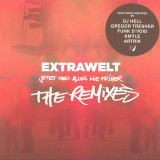


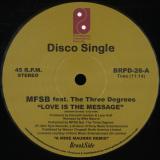















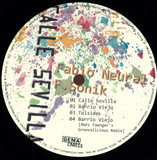

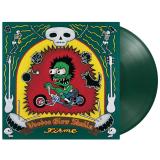
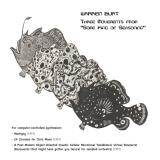








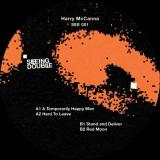
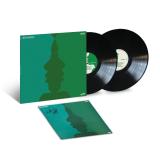


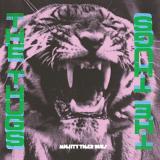





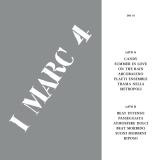





























![Babes Of Enola Grey/artist] - Krieg und Wohlstand](https://www.deejay.de/images/l/4/3/1227043.jpg)
![Babes Of Enola Grey/artist] - Krieg und Wohlstand](https://www.deejay.de/images/l/1/7/1226617.jpg)