King Street Sounds continues to reissue house classics from their legendary back catalogue, this time releasing a second VA sampler featuring four deep soulful house tracks.This compilation showcases dancefloor fillers from notable artists such as Dennis Ferrer, Lil Louis, Masters at Work, Mood II Swing, and Kimara Lovelace. These underground anthems have stood the test of time and still sound as fresh as when they were first released.House music enthusiasts can once again come together and take the opportunity to own these incredible tracks on this fantastic EP.
DJ Support: Marco Carola, Funk D'Void, Fish Go Deep, Quentin Harris, Carl Craig, Horse Meat Disco, moodymanc and many more
Me Me Me is back after 2 years on ice, with a new focus and new priorities, built around the regional music community being driven by Man Power and friends in North East England.
Written, recorded, performed and pressed in the North East, Newcastle live artist Mac Seldom's Twenty Twenty-Three EP see's the artist find his stride after early outings on Skream's "Of Unsound Mind" label and Scuba's "Hotflush Recordings" and leans into a more house-not-house rhythmic palette to further cement his status as being one of the most exciting and adept sound designers to recently emerge in club music.
Kicking things off, Suavy AF sets the tone with a sensual, groove-driven cut that balances raw energy and playful finesse. Tight drums, cheeky edits and a laid-back swagger make this one built for both heads-down listening or late-night dancefloor moments. Lemon & Mint, showing they're not here to play it safe.
On the flipside, Synkro takes the original into deeper territory, stripping it back and reshaping it with weighty low-end and a more introspective swing. He offers a more hypnotic take that hits just as hard in its own way. A perfect counterbalance that rounds out the release with class!
Timeless is a brand-new 10-track compilation featuring rare and unreleased studio recordings from Prince’s legendary vault. This unprecedented album encompasses tracks spanning every phase of Prince’s illustrious career, from 1977 to 2016. The project has been meticulously mastered by Grammy-nominated engineer and producer Chris James, a former Prince engineer whose notable credits include HITnRUN Phase Two, Art Official Age, and Plectrumelectrum. Timeless will be available on CD & black vinyl, providing profound insights into Prince’s creative process and musical evolution.
Flowgeist emerges from a shared inquiry into sound and aesthetics. Genre remains peripheral; meaning stays tethered to sensation. The self-titled debut, released on Evighet Records (EVIGHET007), follows that logic across a full record, moving from matter to memory and giving passing states somewhere to stay. Trip Hop, Drum and Bass, post-punk, breakbeat, EBM, Techno and modular electronics all surface within it, summoned only where a feeling demands them, with acoustic instruments retaining their grain inside the electronic frame. The A side keeps its instruments close and its focus intimate, opening on "Molecules," where Zainab J Lascandri's voice and Arthur Boudet's guitar set the album's tone before it moves through cycles that won't break: a life stuck in place, a trust already gone bu14t still being tended, an attraction whose charm thins out under repetition. That inward attention eventually turns outward, closing the side on a colder note about how influence gets performed and mistaken for substance. The B side works through broken rhythm and cinematic scale. It examines political language for the seams in its polish, follows a relationship reduced to proximity without real contact, and rises to the record's most forceful club passage before settling into "Crystal Muse," where Massimo Capobianco's guitar moves alongside an extended modular passage, luminous and unhurried. The album closes by turning its attention to composition itself, treating the act of writing music as a way of holding onto experience before it disappears. Across both sides, the record travels from immediate, bodily feeling toward something more contemplative, carrying the same emotional attention from private entanglement into wider systems and finally into the quiet work of making the record itself.
Do you know what time it is It's debut o'clock. Emitting his first material for Pampa, it's &ME - craftsman of all things deep and sturdy, at the same time connoisseur of emotive touch and virtuoso of sure instincts, one of the scene's central characters for a good amount of years now and one of the main figures of Berlin's Keinemusik-crew. The man has been hitting the bulls eye of public perception several times in the past, meeting everything it takes to get a crowd going with an intent on the detail when it comes to his arrangements and sound. These new two cuts seem nothing less than the essence of his abilities.
There is "In Your Eyes", the name lending A side to this EP, showcasing a rather pensive mood. It's just a few bars for the compound of kickdrum, tuned hi-hat tambourine and shimmering background noise until the first chords of an improvised piano-piece are tenderly laid upon the beat. Add a synth-motive coming back and forth and you'll have the main ingredients to this - in every sense of the word - floor-moving tune. Accordingly, the arrangement won't aim for an all too obvious sensationalism and rather opts for a flowing and intertwining call and response of its elements, ultimately resulting in a staggering impact anyway.
In comparison, "As Above So Below" on the flipside is adding a fair amount of emphasis. It unfolds in a dry and dense sounding beat-architecture that's suspense-packed with shaker sounds and subtextual field recordings. Most certainly, a slip-proof ground for this tune's centre-piece, a scale-riding synthbass sparking an almost anthemic trigger for floor-ecstasy. While details like subtle reverberating tapping and sparkling ambient textures sound like recorded deep down in a dripstone cave, the overall energetic layout pushes relentlessly to the heights of peaktime-grandeur. There you have it: "As Above So Below" - this tune works on every level.
*Kissa* is an immersive ambient electronic project crafted by Mathias, drawing inspiration from the serene and evocative atmosphere of Japanese jazz kissa cafés. These intimate spaces, known for their deep reverence for music, serve as the foundation for *Kissa’s* sonic landscape—where warm nostalgia and futuristic minimalism intertwine. Consisting of eight expansive compositions, *Kissa* abandons traditional rhythmic structures, allowing sound itself to guide the listener. Ethereal textures, evolving drones, and subtle harmonic shifts create a meditative experience that blurs the lines between memory and imagination. Each track is a portal—an invitation to lose oneself in sound, to explore the spaces between notes, and to embrace stillness as a form of movement. With *Kissa*, Mathias redefines the boundaries of electronic music, crafting an experience that is at once deeply personal and universally resonant. Whether serving as a soundtrack for introspection or a companion for late-night contemplation, *Kissa* embodies the essence of timeless listening—where music is felt, not just heard.
Robag Wruhme, working on the material. On the very same piece. And performing two different movements. First, thinking in category Album: who will hear it where? also: mood, position, length. Second, thinking in category Maxisingle: a spinning-tool for the club – another form of another functionality: accelerating the rhythm, lowering the harmonicmelodious, still preserving the nature of the song. And each version should make you HOT for the other!
Nata Alma, a voice loses itself in the infinite, a car brakes, a horse whinnies, the sun scorches relentless. Further, further on, towards the flickering, stoically. Water, flames on the horizon, Fata Morgana, a mirage. »And you might say, we've got no place to go?« - okay? no notokay at all!: Shuffle!
Nata Alma, melancholic Eight-minute-forty. A love song, a wave good-bye: »And you might say, that you need me no more?« sings Sidsel Endresen alongside Bugge Wesseltoft's swells and ebb-aways – metal never sounded so longing; a buzzing swing, a siren call from afar.
Robag Wruhme takes a seat at the organ and plays minor bass notes. He gets up, leaves the room and lays down a dry rock of funk: wooden kick on wooden snare, tight-cut voices, driving hi-hats and shakers, gated synth danglers and percussion loops. Relentless, stoically. »And you might say, that it's over?« – relentless, maybe, but that's how he creates the Further: keep going! dance it off! a new day rising!
And right here. Flip it and keep on moving: Venq Tolep. A summer meadow, grass-stains, a gentle breeze, an early smell of hay. Venq Tolep. Endorphins tickle under the skin. A
percussive spectacle, dance of the insects. Hopping around in flat shoes, the beat is phat and reverberated by a cluster of trees. Stabs on the e-piano set in, picturing the euphoric moment when Loving-feelings walk hand-in-hand with a Hint of Melancholy.
Robag Wruhme, Nata Alma and Venq Tolep - music for dance floors, inside and outside, music for the summer, day and night, and for convertibles on the way there.
Nail is one of our favourite house artists. He was a key player in the 90s, not least with Nottinghman's DiY, then disappeared for many years before returning a decade or so again. Since then he has kept on turning out unique house jams (there have been tens of them by his and others on his latest label in the last six months) and now curates the first volume of House Fire Records material for his In The Dance label. This compilation brings together his aliases Scorpio Parish, DJ XE0re, George F, Peoples Inc. and Five Bagonag. The grooves are killer, the production perfectly undercooked, the swing often central to everything.
Coin-Op Records serving up another killer 4 track EP, this time from The Sentinel.
Title track "Theme from Sentinel" is a slab of jacking, relentless, robotic funk that will get heads nodding like nothing else. "Binary Communication" recalls 00's tech; punchy drums and drifty intro pads set the scene before dropping into a heavy stabs-n-bass groove.
On the flip, "Fight or Flight" builds from driving percussion into a gorgeous peak-time synthy slammer. Closing track "Climbing Cosmos" is in the classic B2 style; laid-back, groovy deepness, with glassy chords and 808 drums lifting you up to round off the EP.
Transparent Sound presents - AXIOMATIZE - The Ultra EP
The new Transparent Sound presents series. Axiomatize are will not to be compromised with there. Slipstream the next phase adjust the gauge deliverance. Shacking the cage with the extremely impressive EP thats a must own release.
This year marks the 40th anniversary of one of the true cult classics of the Italo Disco universe: Mike Mareen’s “Love Spy.” Released in 1986, the track sounded strikingly different from much of the dance music around it: futuristic, dramatic, playful and instantly recognisable. It quickly found its way into DJ cases across Europe and became one of the records that would define Mike Mareen’s electronic sound.
But the story actually began under a different name. An early incarnation of the song was called “Batman,” with lyrics inspired by the adventures of the famous comic-book hero and the villains surrounding him. A small number of promotional copies circulated before copyright concerns meant that the concept had to be abandoned. The title and lyrics were rewritten and “Love Spy” was born. The early “Batman” version has since become one of the most fascinating curiosities in Mike Mareen’s catalogue.
Four decades later, we felt an anniversary like this deserved something special.
LOVE SPY 40th Anniversary will therefore arrive in two parts, bringing together some of our favourite producers from today’s Italo, synth and electronic scene.
Part One features brand-new remixes by Luca Dell’Orso, Flemming Dalum, Also Playable Mono and Disco Computer. And enthusiasm was never going to be a problem here. “Love Spy” is not simply an ’80s classic, it remains a genuine DJ favourite, loved by old-school collectors and a new generation of Italo-wave selectors alike.
Alongside four killer new interpretations, we are bringing back the original Badman Mix, plus the highly sought-after “MAKE YOUR OWN MIX” material – rare set of individual elements created for DJs to deconstruct, combine and rebuild “Love Spy” themselves. These samples have become particularly desirable among collectors and make the perfect addition to the first chapter of our anniversary edition.
Four new remixes. Two pieces of history. Forty years of LOVE SPY.
And we are only halfway there.
LOVE SPY 40th Anniversary Part Two, featuring another line-up of major names from our scene arrives in November.
Almost an instant sell-out on the debut BISOU release via G.A.M.M
This on every likely to do the same !
Maximum sunshine vibes, with uplifting steel-band Funk and Afro-Disco reworks melting the speaker cones !
When Khalab and Baba Sissoko first recorded together in 2015, they produced something definitive: a record where electronics and griot tradition achieved genuine synthesis rather than polite cohabitation.
Not layered genres maintaining separate identities, but two forms evolving into something singular. "Tata" took Track of the Year at the 2016 Gilles Peterson Worldwide Awards, found champions in Laurent Garnier, Ben UFO, Matthew Dear, Bonobo, and many others — but more significantly, it established a working method built to last.
Eleven years on, they return with Foli Bah on Hyperjazz Records. Theirs is a relationship built on trust. Khalab constructs structures that don't develop linearly but spiral inward — loops that reveal something new with each rotation, tightening until the listener stops resisting and surrenders. Sonic architectures that don't expand outward but deepen over time, layering toward saturation. Baba Sissoko inhabits these structures with instruments from Malian tradition, not as ornamentation but as load-bearing elements: the tradition becomes structure, not decoration. Electronics and griot practice stop negotiating terms and start speaking the same language.
Multi-faceted artist Calibre today shares his sixteenth studio album "Feeling Normal". The album is out now to pre-order on Vinyl, CD and on digital platforms via his own independent imprint Signature Recordings.
The record is his first bonafide 140bpm record and a staggering body of work that shows the genius levels of one of electronic music's most respected auteurs. Across the 13 tracks, he transcends through space and time, creating music that will take the listener on a weighty sonic journey. The album announcement is accompanied by two dub versions "Bad" and "Badder" deconstructed from the track "Badman" with DRS from Mark Ernestus available via his Hardwax store January 29th and Bandcamp February 12th. "Getting to work with Mark Ernestus is a real honour, I collected Basic Channel, Rhythm & Sound and his other work for many years and still do. It's hard to avoid the influence of this guy in electronic music across genres and so it is a real pleasure to have him do his thing with the Badman tune which I think sounds closely related."
All of the tracks on the record have been road-tested in Calibre's DJ sets over the last 2/3 years with many of them being sought-out by his hardcore fans. It was only a matter of time then that he put them out for all to consume. With a nod to the dancefloor, the clear idea for the album came about following the release of his most personal album to date "Planet Hearth". "It still works in the headspace but ultimately it's been written for the sweaty club experience we miss now, also after an album like Planet Hearth it felt very liberating to do," he remarks. When writing albums, he often just puts it down to the general chaos of life, not citing any one influence but generally just waits to see what comes. With one of the tracks on the album written 7 years ago on the island of Valentia, It became a project that he spent the intervening years collecting tracks for, not really knowing when he was going to put it together as an album. "The whole album is special to me, everything on there has import and meaning beyond for me, I have spent much time on all these and hope they are special for other people too."
Belfast-born, Berlin-based Calibre - AKA Dominick Martin - shows no sign of slowing down. As a producer, DJ, songwriter, multi-instrumentalist and painter, he is one of the most unique and inspiring living artists. With a career spanning two decades, his ability to remain underground whilst being one of the most-respected is testament to who this enigmatic artist is. To this day, he has never been remixed and has a seriously impressive amount of unreleased music under wraps. With everything on hold and gigs on the backburner, this record is exactly what the world needs right now.
Cold, Bold & Together (CBT) CBT was founded in Bellingham, Washington in 1971 by percussionist Tony Gable and musicians Solomon Harris, Keith Hooks and twin brothers TC & Jamar Jenkins. It soon became evident that Bellingham was not a particularly welcoming environment for R&B music, so they moved to Seattle to try their luck and plumb the rich supply of venues, which they successfully did until disbanding in 1978. They spent their early Seattle years playing a combination of covers and originals in clubs, later becoming the "go to" opening act for various nationally known artists, such as Ohio Players, Kool and the Gang and Earth, Wind & Fire. While they were paying their club circuit and opening act dues, they squeezed in recording sessions whenever they could and released their own material, which was well-received and got strong regional airplay. However, because of the feudal nature of the music business at the time, they just couldn't break out, and like a lot of Northwest bands with great potential, they inevitably broke up and went their separate ways. Upon disbanding, they left behind a collection of original recordings at Seattle's legendary Kaye-Smith studios.
Unfortunately for CBT, the studio passed through several owners and at some unknown point in time, one of them did the unforgivable and destroyed the storied studio inventory of two-inch tapes and quarter-inch masters. Unknown to the band, a copy of their masters was smuggled out by their producer who added them to his legacy collection of cloned quarter-inch masters. After several years and many moves, he became concerned about the tendency for magnetic tape to deteriorate over time.
He sent the tapes to a Seattle lab to be restored and digitized, with the hope that perhaps, some day, they might be made available for the listening pleasure of R&B fans. The hoped-for day has finally arrived. Russell Paine and Super Disco Edits has pressed two of the Kaye-Smith CBT tracks: "Go For It", a jazz-influenced instrumental, featuring Kenny G, and "Unity", sung by the group en masse with Tony Gable singing lead. The musicians on these tracks are: Tony Gable, leader, vocals and percussion Harry Alexander, drums Kenny Gorelick (now world-renowned "Kenny G"), sax, flute and horn arrangements Chris Ishi, trumpet Michael Young, Trombone Jamar Jenkins guitar, vocals TC Jenkins bass, vocals 1 Philip Woo, keyboards Footnotes: CBT gave legendary saxophonist Kenny G his start in the music business. Kenny was still in high school when he was recruited to play sax and write horn arrangements. Kenny co-wrote, arranged and played sax and flute on the instrumental "Go For It." He rips a smoking tenor sax solo in the middle, which showcases his already masterful technique and solidifies his R&B bona fides. He went on to have a spectacular career recording for Clive Davis and Arista Records. Before his untimely passing in 2016, Tony Gable went on to found contemporary Jazz group, "Tony Gable and 206" (206 being Seattle's then only area code). With songwriting, performance and production help from Kenny G.
2026 Repress in White Vinyl
There are few people across the globe, who will have not been touched by the work of Frankie Knuckles. Forever regarded as ‘The Godfather of House’. A Grammy Award winner, Frankie had a street in Chicago named after him where the old Warehouse once stood to commemorate the first ever Frankie Knuckles Day on 25th August 2004. Five years ago, Frankie passed away in Chicago on 31st March 2014 leaving behind one of the greatest house music legacies spanning almost four decades.
Now he is commemorated once again by long time writing and production partner Eric Kupper who will release part II of the special commemorative album on vinyl around this date. Eric, himself a seasoned DJ producer and writer, working side by side with Frankie on many his seminal classics, as well as personally working on over 116 Billboard #1 Dance Records. Having both worked together for many years they established themselves at ‘Director’s Cut’ from 2011 and set about producing original releases and remixes based on the classic ‘Def Mix’ sound while sharing equal credits for their creations.
The album features some of Directors Cut’s best works with the Re-Directed version of the seminal classic ‘Baby Wants To Ride’ plus their re rubs of Inaya Day, Sybil, Hardsoul and Lou Rawls - You’ll Never Find Another Love Like Mine (Kenny Summit, Frankie Knuckles & Eric Kupper Unreleased Anthem).
This album is to be released in collaboration with The Frankie Knuckles Foundation who work to continue Frankie’s legacy whilst focusing on music in schools, LGBTQ youth homelessness, AIDS research / prevention & diabetes research / education.
A cassette-only collection of scratchy one-away dubplates and 45s from the vaults of Jah Massagan Sound, featuring plates cut at the studios of legendary producers and engineers such as King Tubby, Lee Perry, JoJo Hoo Kim, and Joe Gibbs among others during the peak of the roots sound in the mid 1970s through to the early 1980s.
Beginning in Leyton in 1972, owner-operator Lloyd alongside childhood friend and amp builder Tony Mass were part of a wave of reggae soundsystems formed in London and across the UK immediately after the Windrush generation. Focused on preserving and promoting the authentic Jamaican roots, Jah Massagan has remained a small but steadfast cornerstone in the East London scene more than 50 years later. Eljay Mass, the son of owner Lloyd, takes the reins for this cassette-only document, as the torch is passed on inter-generationally to continue the sound’s work.
1st repress of the rare UK compilation “In Reggae Time”.
Originally released in 1970, it brings together a series of very rare tracks issued only on 7" singles around 1967 by Ember Records and its sub-labels.
The sound is not just Reggae—it’s only marginally so—offering a vibrant mix of 1960s UK mod, R&B, Ska, and Northern soul.
FatCat was recorded in a single session-live, with all four musicians together in the same place. What you hear on the record isn't a polished production, but a one-of-a-kind recording of four people playing at the same time in the same room.
This is not a nostalgic gesture. It's a stance. As music is increasingly understood as the output of a prompt, the question of what actually makes music becomes urgent again. Not flawless, efficient production, but the imperfect moment and its context. Not the result, but the process in which four people listen to each other, react to each other, misjudge, and find one another. This fallibility - the hesitation before an entrance, the slight pull in the timing, the glance between musicians that signals a turn - is not a weakness but the substance itself. It cannot be synthesized, because it isn't a data point but a lived relationship: between the instruments, between the people, between their shared history and what emerges new in this one take. The album is thus also a statement on the question of where, in the age of generative music, authorship and art can still be located: not in the result alone, but in the shared risk taken in creating it.
"The question was always: how do I bring my work as a producer and beatmaker onto the stage? How can something that usually happens alone behind closed studio doors become a live experience?" With the album FatCat, Sepalot pursues this question to its logical conclusion: what began as a live performance now becomes the recording itself - the studio becomes a stage for a day, and the stage becomes the definitive version of the album.
The love for electronic music remains, the raw pressure of hip hop is still palpable - and yet everything on FatCat sounds like a fresh start, captured in the very breath in which it was played.
On stage as in the studio, the four characters fit together like a puzzle. Sepalot's signature as producer and mastermind is unmistakable. On drums, Fabian Füss, longtime partner behind the kit and the voice that makes Sepalot's radio hit "Rainbows" so unforgettable. On bass, Robin Jermer. On trumpet, Matthias Lindermayr, multiple award-winning jazz virtuoso with his own albums on Enja Records. And then there's Sepalot himself, who turns it all into more than just the sum of its parts.
The eclectic beats, the pulsing bass, Sepalot's passion for atmospheric sound design - all of it remains, now joined by an element of jazz and captured in its most immediate, unpolished form. The album shows what four people in one room are capable of: a sound born of shared experience, and precisely for that reason, unique.
Elypsia Records presents A Future Tribe, the new album from Italian electronic music producers CEM3340 & 2030. Rooted in the formative language of electro and early techno, A Future Tribe channels the past through a lens very much focused on the future. Across the album, analogue warmth, machine-driven funk, synthetic textures and futuristic atmospheres come together in a sound that channels the pioneering spirit of early Detroit while remaining unmistakably connected to the present. For CEM3340 and 2030, machines are not simply tools, they are central to the creative process. Both producers have spent years immersed in the culture of electronic hardware. They've been carefully building and refining their own approach to production through an extensive collection of synthesisers, drum machines, sequencers and studio equipment. Based in Bari, southern Italy, their work reflects a deep fascination with the physicality of electronic music: oscillators, circuitry, voltage, rhythm and the unpredictable character of machines programmed and played with a human touch. That philosophy is deeply embedded in A Future Tribe. Rather than treating the early years of techno as a museum piece, CEM3340 & 2030 approach its foundational ideas as a living language - one that can be stripped back, re-translated and taken somewhere new. The influence of Detroit's first generation of electronic innovators is unmistakable. There are echoes of the futuristic electro and techno pioneered by artists including Juan Atkins and his contemporaries, where funk, science fiction, machines and the possibilities of tomorrow became part of a new musical vocabulary. It is an approach that has already earned the duo recognition within that lineage. Their previous Machines Awake EP, released through Atkins' Metroplex Records, was described as paying homage to the classic foundations of the genre while pushing them into new territory. Juan himself gave the release his sonic approval. But A Future Tribe is not an exercise in retro-futurism for its own sake. The album comes from two producers who understand the history, have the hardware to explore it and, crucially, are interested in what happens when those influences are given space to evolve. The result is electronic music that is full of funk, groove and a kind of nostalgia that is pure and intentional without being a pastiche. Together, they make music that is rooted in one simple truth: machines can't come to life without human creativity.
pdqb has been spending an increasing amount of time on the Blue Planet lately. From his perspective, this was never going to end well.
With an intelligence operating several evolutionary levels beyond anything currently available to humanity, pdqb identified the problem almost instantly. Humanity's operating system had developed a number of serious inefficiencies, and the planet was clearly heading in the wrong direction. Even artificial intelligence would not be of much help here: created by humans and trained on human knowledge, it remains, in pdqb's estimation, a rather primitive form of intelligence compared to the cognitive systems he carries within himself.
So pdqb has decided to intervene - personally, and in human form. His identity will remain undisclosed. His intervention, however, will be unmistakable: a brief intelligence boost, followed by approximately 10.000 years of world peace.
It will be fine.
Contact Imminent contains three transmissions from pdqb himself, carrying his characteristic Electro-Cognition signature sound - three pieces of evidence that the future is still worth saving.
For the B-side, pdqb selected two Earthlings whose music he already appreciated, but whose name was particularly appropriate for the occasion: Extrawelt.
Because after the intervention, this planet will no longer be what it was. It will not be the old world, nor simply a new one.
It will be an Extrawelt.
A slightly improved version of reality, with another 10.000 years to get things right.
5. VITAL SALES POINTS:
" transparent vinyl with black dots
" mastered by the infamous Andreas LUPO Lubich
" cover artwork by SUPERFLEX
" two remixes by Extrawelt
QE's I'm Back EP sits between oldskool vibes and deep raveish techno, and it flows. Five tracks, deep and rolling, with an oldskool feel in the groove and a rave pull running underneath. On a floor it plays as one long stretch rather than a run of peaks. What's Next? and This is Next open it up, then I'm Back, Set You Free and Release Yourself keep the movement going. Nothing hurries, and nothing needs to. Steady, deep, and made for staying inside the groove.
Francesco Messina is perhaps best known for his split album with fellow composer Raul Lovisoni, Prati Bagnati del Monte Analogo, originally released on the seminal Italian label Cramps in 1979. Along with contemporaries Franco Battiato, Juri Camisasca and Giusto Pio, Messina helped reshape the world of modern composition with an organic rawness and haunting beauty.
In November 2023, Messina performed Prati Bagnati live for the first time in Milan, Italy – along with pianist Michele Fedrigotti, who appeared on the original LP. The concert was a tremendous success and led the composer to further reflect upon the music he made over 40 years ago. From his home piano – a hundred-year-old Schimmel with magnificent resonance – new pieces began to emerge out of these meditative sessions.
As Messina says in the liner notes, "The idea of making a new album wasn't the driving force at all; what mattered was trying to reconnect with the 'freedom' I had experienced back then while creating that music. I started over without haste or deadlines, simply trying to find a deeper, inner connection."
W.25TH / Superior Viaduct is honored to present Le api dell'invisibile. From the hazy drone of "For Florian" and the title track to the gentle swells of "Letter for an Absent Friend," the album is a lush amalgam of new age and ambient minimalism that is vividly reminiscent of Messina's earlier work.
The title draws inspiration from a famous reflection by Austrian poet Rainer Maria Rilke: "We are the bees of the invisible. We ceaselessly gather the honey of the visible, to store it in the great golden hive of the Invisible." It is a phrase that has long shaped the way Messina looks at his music – transforming lived experience into sound, making audible what normally eludes the eye.
Teeing up the next dynamite release on Brighton-based label Murmurations is prolific UK producer Michael James. Spread across four cuts, the fifth vinyl release from the label - MURM005 - continues to focus on essential, stripped-back, driving dancefloor energy with a nostalgic edge. The Moving Music founder delivers exactly that throughout his four excursions here, laced with infectiously swung grooves from top to bottom, synonymous with his sound. “Ultra Realism” kicks off the record with heady peak-time action, its enormous elastic bassline winding itself around intricately arranged, skippy drums, rarely letting up as the track evolves.
Dubby, golden-era tech house sounds arrive on the A2, titled “More Of That”, a fitting name for this after-hours future anthem. As we land on the B-side, we’re greeted by “Lazy River Express”, another slick encounter with a distinctly charming attitude to it. Hard not to move to this one. Rounding off the EP is another example of punchy, rolling action, begging to be played loud. “Stargazer” leaves us with a crisp yet dreamy finish, rounding off the EP with another standout cut for the record bag. In its early days, Leo Christopher has managed to build a sought-after catalogue with the Murmurations imprint, and long may that continue. The curation is always one step ahead, and the label has very quickly become a buy on sight imprint for devoted diggers. An exciting combination here as a growing label joins forces with a staple name on the UK circuit.
DAYBREAKERS welcomes Felipe Gordon to the label with DBR012 – Constant Output EP, a four-track 12” from one of the most exciting house producers to come out of Colombia.
Based in Bogotá, Felipe has built a reputation as a producer, DJ, label head and proper multi-instrumentalist, with records across labels including Toy Tonics, Heist, Razor-N-Tape, Local Talk, Shall Not Fade, Clone Royal Oak and his own Wide Awake / Nómada projects. His sound has always carried more than just club function — jazz keys, loose basslines, acid touches, live-feeling percussion and that raw, human edge that makes his records stand out.
There’s a natural connection here too. Felipe’s “Let’s Get, Get Together” appears on Rainer Trüby’s Root Down compilation, released on DAYBREAKERS, making Constant Output EP a perfect choice to end 2026 with. From Bogotá to Freiburg to London, it’s exactly the kind of musical thread DAYBREAKERS was built to follow.
Across the EP, Felipe does what Felipe does best: warm, jazzy, deep house with swing, musicianship and enough grit for the club.
For DAYBREAKERS, this is a proper fit. Buy or cry.
DAYBREAKERS welcomes Felipe Gordon to the label with DBR012 – Constant Output EP, a four-track 12” from one of the most exciting house producers to come out of Colombia.
Based in Bogotá, Felipe has built a reputation as a producer, DJ, label head and proper multi-instrumentalist, with records across labels including Toy Tonics, Heist, Razor-N-Tape, Local Talk, Shall Not Fade, Clone Royal Oak and his own Wide Awake / Nómada projects. His sound has always carried more than just club function — jazz keys, loose basslines, acid touches, live-feeling percussion and that raw, human edge that makes his records stand out.
There’s a natural connection here too. Felipe’s “Let’s Get, Get Together” appears on Rainer Trüby’s Root Down compilation, released on DAYBREAKERS, making Constant Output EP a perfect choice to end 2026 with. From Bogotá to Freiburg to London, it’s exactly the kind of musical thread DAYBREAKERS was built to follow.
Across the EP, Felipe does what Felipe does best: warm, jazzy, deep house with swing, musicianship and enough grit for the club.
For DAYBREAKERS, this is a proper fit. Buy or cry.
Consummate selector DJ Sundae returns to Efficient Space with Nothing Ever Was, an immaculate compendium of phantom independent melancholia spanning '60s/'70s village green folk, outsider shoegaze and new millennium domestic pop. Each recording an emotional exorcism, Sundae breathes oxygen into music that was barely there in its own time, made in quiet places and crawl spaces, shared only with a precious few via private presses, hobby labels and now-decaying CD-Rs.
Free of any prescribed epoch, continent, scene or rarity, Noughties homemade indie pop opens both sides with the 4-track wonders of The Motifs and Betelmire, unlinked contemporaries finding their place alongside Andrew Jay's Crazy Horse rust, the regional-garage adolescence of Pauline Scribner and the anaesthetised Mancunian guitar-poetry of the late Quigley.
The remaining coordinates zigzag between the UK and US. Folk wayfarers John Strang & Valentine Lewis Lloyd, Virgin Insanity, Kusudo & Worth and Penny Wager's spartan Garden of Eden acoustica find their mirror in Empress and Slumber's close-quarters indie pangs. Chicago power pop fixture Phil Angotti is caught at his most tender, while Teri Rini takes the final bow with her universe-stopping hotel lounge torch song.
A deeper, more personal exploration of Sky Girl's sentimental songwriting, Sundae found himself amassing a cache of tracks too undeniable to remain confined to his anonymous mixtapes for TTT, P.A.M. and Good Morning Tapes, or bi-monthly hour on NTS Radio. Again his emotional sorcery draws together an unlikely cast, their unwritten narrative assembled from fragmented memories of past lives left behind by future horse trainers, ketamine therapists and Fab Four cover band careerists.
With not a second squandered across 1LP, it took a village to bring this new companion into being, with David Bergot's forensic audio restoration, dreamlike imagery from Matthieu Crozier, Ivan Liechti's elegant design and a perceptive foreword by kindred spirit Jessica Pratt.
The fourteenth release on Early Morning brings Roy Rosenfeld back to the label for the first time since its second. The two years in between have not had a quiet stretch in them: new singles every few months across 2025 and 2026, and a touring year running from Mexico City and New York through Paris, Barcelona, Ibiza and Amsterdam to Montreal, Santiago and Buenos Aires. He is back in New York on the day this record goes global, and in Amsterdam for ADE later the same month. What arrives here is two long-form pieces, 15 minutes and 15 seconds together, both built on patience and both written for rooms where there is time to stretch out.
New Life takes its time. A full minute passes in suspended texture before the groove arrives, and when it does it carries the weight of everything that was withheld. The track moves in patient cycles, stepping away briefly at its midpoint before opening into an extended central passage where the rhythm withdraws and the harmony is left exposed. The return is the payoff, and Rosenfeld holds it to the final bar rather than letting it fade.
Seven Three Eight begins where New Life arrives. It is in motion from the first bar, with no preamble and no easing in. The low end breathes in long swells beneath a top layer that keeps shifting, and two breakdowns punctuate the arc without ever surrendering the momentum. It closes at full stride, running the seven minutes and thirty-eight seconds its title names.
Two tracks, near identical in length and opposite in approach. EARLY014 is a record about pacing, and about a producer who trusts the long form to do the work.
“Nothing grows in the shadow of great trees,” said Constantin Brancusi when leaving Auguste Rodin’s studio. The same holds true in music, as Richard Raux’s journey proves. At the end of 1970, after recording the debut album of the legendary band Magma, which he co-founded, Raux set out to explore new musical horizons. Under the names Faarmadin and later Hamsa, he crafted a sound deeply rooted in jazz and improvisation, yet daringly open to experimentation.
A devoted admirer of Charlie Parker, Raux played bebop alongside René Urtreger and performed with Bernard Lubat’s Percussion Expérience. Jazz is a cornerstone of Hamsa’s iconoclastic approach, blending seamlessly with psychedelic and progressive rock, and the rich musical traditions of Madagascar, where Raux spent his formative years.
Hamsa is as much a personal endeavor as it is a “family affair.” Alongside his brother Patrice on guitar, Raux brought together a circle of friends—Alain Lecointe (double bass), Jean-Lou Besson (drums), John Faure (guitar), and Alain Pistre (percussion)—to record at the iconic Château d'Hérouville, just outside Paris, at the end of 1974. Yet the spirit of Hamsa is deeply Malagasy, rooted in the village of Andranomadio, which gives its name to the album’s opening track: a vibrant explosion of percussion and color. Africa’s presence resonates throughout the record, whether invoking Brotherhood of Breath (Chris McGregor) on “Johanna,” the Malagasy-infused work of Jef Gilson, or paying homage to John Coltrane’s Africa.
Far from being “just another fusion,” Raux’s music dazzles and transports. The saxophone-guitar unison on “Ahiri Lalita” captivates, the vocals of “Fahamadina” sweep you away, and the manifesto of “L’exploité” hits hard—yet with a liberating warmth. Sunshine and joy shine through on the album’s closing track, “Cultivate the Garden of Your Heart” (with Alby Cullaz on double bass and Jean Padovani on drums), capturing the ethos of Richard Raux and Hamsa—and now, ours too.
Originally released on Flying Nun in 1983, Fall In A Hole is a double LP of an especially incendiary Fall show at Mainstreet Cabaret in Auckland, NZ in August 1982. The second of a two-night stand, this would be the band's final concert of its successful first tour of Australia and New Zealand. Recorded by longtime Flying Nun associate Chris Knox – who also made the striking cover artwork – Fall In A Hole follows the release of earlier live albums Totale's Turns and A Part of America Therein, 1981.
Besides capturing The Fall onstage during one of its most feral and exhilarating periods, Fall In A Hole is historically significant for several reasons. It heralds the end of Marc Riley's tenure with the band, an era considered by many Fall fans to be the group's peak, and showcases the two-drummer lineup heard on 1982's Hex Enduction Hour, with both Paul Hanley and Karl Burns sharing drumkit duties onstage. With Riley and Craig Scanlon on dual guitars and Stephen Hanley on bass, The Fall was stepping out in its final iteration with a majority of personnel rooted in their late '70s lineup.
The setlist is peppered with a mix of singles and album tracks old and new – including several that had yet to be released. Rarities like "Fantastic Life," "Backdrop" and "Solicitor In Studio" are given epic, feedback-drenched airings, while fan favorites like "Hip Priest," "Prole Art Threat" and "The Classical" radiate with lively, raucous energy.
Superior Viaduct's edition is the first time that Fall In A Hole has been reissued on vinyl. Includes liner notes by Roy Montgomery. Digital transfers made from analogue master tapes in the Flying Nun Collection and Chris Knox Collection held at the Alexander Turnbull Library (National Library of New Zealand).
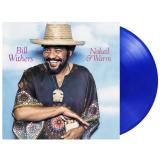
Bill Withers was a modest, gentle, and yet towering musical figure responsible for some of the most important, universally known soul hits ever written. It’s no wonder that “Just the Two of Us” and “Ain’t No Sunshine” won him two Grammy awards and undoubtedly played a huge role in getting him inducted into both the Songwriters and Rock and Roll Hall of Fame.
Naked & Warm is Withers' fifth studio album, released in 1976. A year earlier, the Sussex label—home to Bill's first four landmark albums—ceased operations. Withers then signed with the mighty Columbia Records, which would remain his home until the end of his recording career. While Naked & Warm retains Bill's unique, earthy approach to soul that made him Sussex's biggest star, it's clear that musically too, he was in transition; the first half of the album is full of synthesized jazz-funk vamps, while "City Of The Angels" is an almost 11 minutes long cosmic funk excursion combining biting Rhodes chords with swirling synth pads and Dorothy Ashby's spiritual harp work. All in all, Naked & Warm might be one of Bill's most underrated records, simply because his previous work for Sussex was just that impactful.
Naked & Warm is available as a 50th anniversary edition of 1500 individually numbered copies on blue vinyl and includes a 4-page booklet featuring lyrics and new liner notes written by Marcia Withers.
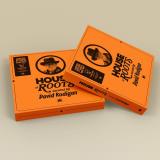
David Rodigan MBE and Defected Records announce the release of House Of Roots; a specially curated three-track remix project by the legendary tastemaker, DJ & broadcaster, reimagining Defected classics as they’ve never been heard before.
House Of Roots has been born out of a partnership that’s blossomed since David first touched down at Defected Croatia in 2025, with his performance becoming one of the defining moments of the entire festival. After returning to Croatia for this summer’s festival finale, Rodigan - this time armed with the House Of Roots remixes - delivered another landmark set, underlining exactly why he remains such a revered DJ & selector.
The House Of Roots project reimagines Defected’s rich catalogue through the lens of reggae, dub and drum & bass in a celebration of music genres that have continually inspired one another throughout the decades.
Enlisting legendary drum & bass originator Shy FX, jungle maximalist CLIPZ, and fabled dub reggae producer & engineer, Prince Fatty, to remix three of the label’s seminal records - Fish Go Deep’s 2006 classic ‘The Cure & The Cause’, Soul Central’s ‘Strings Of Life’ (2004) and The Vision’s ‘Heaven’ (2019) - House Of Roots marks some of David’s most important and intriguing curatorial work yet.
House of Roots comes as a limited edition 7” box set including the 3 remixes plus exclusive dubs and instrumentals plus a 16 page sleeve note collectors booklet.
Format: LP , Limited
With his first longplay EUROSTAR, the Danish disco-dj-turned-rock-crooner Boogie Rookie seeks to bridge the troubled waters between UK new-wavey rock and sleazy euro-disco. It's a ten track italo-rock outburst uniting extreme hedonism, climate crisis and the European railnet.
The album is produced partly in Copenhagen with Danish disco royalty Vinnie Who and balearic-proghouse wunderkind William Winding, and partly on the hills of Napoli with the Neapolitan Italo-don Whodamanny. In the middle of the album there are steamy vocal features from the Parisian disco queen Corine and the Danish model-chanteuse Klara Kristin.
The album is already remixed by the likes of Prins Thomas, Italo Deviance and Danger Boys and has gained traction amongst DJ's all over who fear neither kitsch or raw rock'n'roll power.
When he's not busy making punky HI-NRG tunes, Boogie Rookie is one of the busiest European cosmic disco dj's. On weekend nights, you're very likely to find him with a glass of red wine behind the booth of his countless Copenhagen residencies, his residency at Paris' hyped disco La Fète or at happening disco dances elsewhere in Europe.
16 bongo bashin' tropic-trashin' mambo-shmambo monsteros!!
Everybody likes a bit of LATIN. It's steamy. It's tropical. It's hot. It gets the dames a-dancin' and the guys pay attention. Those wild rhythms are the sound of sweat. It's the heat that can't be beat.
Now let me tell you about LATIN. Real LATIN, bangin' LATIN. Not the sweet soft stuff your mama used to play. I'm talkin' hard bangin' LATIN that's the real deal. The stuff that makes you move. The motion of the ocean. Hot, wild, sexy rhythms. Skin slappin' coconut crackin' conga crushin' caliente copana. And horns to die for!!
You got your rhumba, your mambo, you got your cha cha cha. You got your Cuban heat, Brasilian beat, colourful Colombian cumbia and pure fire from all those little islands in the Caribbean. You cut 'em, you chop 'em, you cook 'em on up with a slug of jazz and some downhome RnB and you got yourself the devil's own firecracker. It's a sauce like liquid lava. It's LATIN that's off the scale.
Now you add your mezcal, your Carolina Reaper, you add yourself whatever you want, and that right there is a volcano in a bottle. Krakatoa ain't got nothin' on this baby! Put the needle on the record, watch your dancefloor EXPLODE!
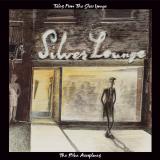
The Blue Aeroplanes have been delivering their distinctive brand of rackety sprechgesang for four decades now, and they are showing no signs of slowing down. Their new studio album, ‘Tales From The Silver Lounge’ is based on overheard conversations between the clientele of The Silver Lounge, a rather louche café/bar in an unnamed city on an unknown planet much like ours, and in an unknown time, though the decor tends to the late 50’s, early 60’s.
The identities of the members of the Silver Lounge are, of course, confidential.
This is the 14th Blue Aeroplanes studio album and the third with the current line-up, which is:
Gerard Langley: vocals
Bec Jevons: guitar, vocal and backing vocals
Mike Youé: guitar, vocal and backing vocals
Rita Lynch: guitar, vocal and backing vocals
Chris Sharp: bass and backing vocals
John Langley: drums and percussion
Ed Taylor: many different instruments and backing vocals
Wojtek Dmochowski: dance
Alexander Dmochowski guests on saxophone and clarinet, Will Diamond on violin and Steve Bush adds backing vocals.
After two best-of compilation albums were released by Chrysalis Records in 2025 (‘Magical Realism’: The Best Of The Blue Aeroplanes’ and ‘Outsider Art’: The Other Best Of The Blue Aeroplanes’), the band are now back firmly in a sort of present with a new album that features all the guitar-band flavours that anyone could need, with poems that cover name-doppelgangers, falconry terms, Don Marquis, postcards, Greek mythology, abandoned Teslas, the First World War and the surreal nature of music-hall jokes.
“The Blue Aeroplanes? Not my cup of tea, but I can see what people see in them.” Mark E. Smith
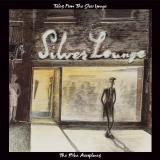
The Blue Aeroplanes have been delivering their distinctive brand of rackety sprechgesang for four decades now, and they are showing no signs of slowing down. Their new studio album, ‘Tales From The Silver Lounge’ is based on overheard conversations between the clientele of The Silver Lounge, a rather louche café/bar in an unnamed city on an unknown planet much like ours, and in an unknown time, though the decor tends to the late 50’s, early 60’s.
The identities of the members of the Silver Lounge are, of course, confidential.
This is the 14th Blue Aeroplanes studio album and the third with the current line-up, which is:
Gerard Langley: vocals
Bec Jevons: guitar, vocal and backing vocals
Mike Youé: guitar, vocal and backing vocals
Rita Lynch: guitar, vocal and backing vocals
Chris Sharp: bass and backing vocals
John Langley: drums and percussion
Ed Taylor: many different instruments and backing vocals
Wojtek Dmochowski: dance
Alexander Dmochowski guests on saxophone and clarinet, Will Diamond on violin and Steve Bush adds backing vocals.
After two best-of compilation albums were released by Chrysalis Records in 2025 (‘Magical Realism’: The Best Of The Blue Aeroplanes’ and ‘Outsider Art’: The Other Best Of The Blue Aeroplanes’), the band are now back firmly in a sort of present with a new album that features all the guitar-band flavours that anyone could need, with poems that cover name-doppelgangers, falconry terms, Don Marquis, postcards, Greek mythology, abandoned Teslas, the First World War and the surreal nature of music-hall jokes.
“The Blue Aeroplanes? Not my cup of tea, but I can see what people see in them.” Mark E. Smith
Tresor Records is delighted to welcome Rod Modell to its catalogue, with the release of his new album Captagon.
Rod Modell needs no introduction, his various projects render him a master of techno. In repetition and barely noticeable change, Modell resculptures perceptions. His sound-design echoes cinematic ethereality, where ferric artefacts slam against percussion, rusty delays filter observation - the resulting web is a complex, radiating ambience that etches a natural ebb and flow.
Transformative sounds alight from the outset, “Triangulation” recalls flickering harmonies and grains, a tectonic swipe. Fast-paced dub techno emerges in “Reiki”, the disorienting clangs suggesting a step away from his recent ambient excursions. “Ito” crunches the pulse further with insistent noise, into soaring epiphanies of darkened transmissions.
Modell singularly uproots standard sonic hierarchies of techno production, crisp static as forceful as his beats, a provocation of rhythm and noise. Unceasing in its fast tempo, “Jade” is trademark Tresor business - the seismic sub-sonics underpin a momentous drive, with reverberated vocal inflections disfiguring warped, dancing materials. “Scrawler” is upfront and direct, a slamming groove and swaying chords di using ethereality. Enter vast chambers of smeared minimalism.
Where Modell’s recent releases had indicated a priority for ambient sounds, this new album extends Modell’s essential vision within techno. Closing track “Air-Port” shows Modell at his most crucial best - an ethereal colossus of sub-bass weight and morphing geometry.
Oscar-nominated composer Max Richter's new album While The Flood Rages, drawn from Richter's latest collaboration with choreographer Wayne McGregor, MaddAddam, inspired by Margaret Atwood's trilogy.
Across 15 tracks split into three acts, Richter blends orchestral writing, electronics, processed field recordings, choir and piano to create an immersive sonic journey.
Themes of ecological collapse, technological acceleration and resilience run throughout, with recurring piano motifs providing moments of reflection amid dense, cinematic soundscapes.
Infusing his cinematic, psychedelic musical vision into cutting-edge, bass-heavy electronics, Kutiman presents a euphoric club journey through UK garage, D&B, post-dubstep, and futuristic dance music.
With syncopated drums, deep basslines, and R&B-soaked vocals from standout artists like Jenny Penkin, Misha Sutherland and Odelya Illouz, the project bridges the gap between the indie electronica of Four Tet, Caribou, and Jamie xx and classic alternative club sounds.
Club music is emotional at its heart, and this release captures its essence perfectly; the peak-time euphoria, the moments of introspection & the times spent lost in the music.
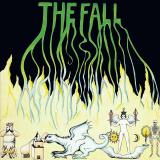
7–Early Years–79 was The Fall's first comp ever. Originally released on Step-Forward in 1981, the LP compiles the group's first four singles recorded for the label between 1977 and 1979 – Bingo-Master's Break-Out, It's The New Thing, Rowche Rumble and Fiery Jack – none of which appeared on any of the band's studio albums. (Also included is "Dice Man" from 1979's Dragnet.) Taken together, these 7-inches are The Fall as they initially emerged from the primordial soup of '77 Manchester, pushing out from founder Mark E. Smith's poetry-collective origins into the early punk scene.
Right from the first track, "Repetition," Smith and crew's working-class art punk is in full effect. His obtuse lyrical brilliance and inimitable vocal delivery ride atop the band's ringing atonal guitar, looping basslines and propulsive drumming – complemented by wheezy combo organ tones. The tracks from each 7-inch are presented here in reverse chronological order. The Fall's fierce contrarianism defines the early UK punk sound and, at the same time, sounds nothing like any of their contemporaries.
The revolving cast of band members includes Martin Bramah, Una Baines and Karl Burns as well as Marc Riley, Craig Scanlon and Stephen Hanley who would remain in The Fall's classic '80s lineups. Many of their best-known songs are featured here – from "Psycho Mafia" and "Rowche Rumble" to the Mayo Thompson-produced "Fiery Jack."
Superior Viaduct's edition is the first time that 77–Early Years–79 has been reissued on vinyl. Includes liner notes by Stephen Malkmus.
Magazine Announces 15th Anniversary Remaster of Barnt’s Techno Classic Geffen
Cologne-based record label Magazine celebrates the 15th anniversary of Barnt’s visionary anthem Geffen. One of electronic music's most defining tracks of the 2010s will be reissued in a 2026 remaster edition, marking the first time it receives its own dedicated standalone release.
Originally published on the legendary Cómeme imprint as part of the Various Artists EP The Power Of Now, the track rapidly became a global phenomenon. Looking back, one can hardly imagine Geffen without the 2010s, or, conversely, maybe even electronic music of that era without it. The composition mirrors the expressive possibilities of bedroom producers at the beginning of that decade—an era where artists could launch tracks into the world and have them resonate through their sheer sonic power, without major marketing efforts.
Barnt remembers: "It was one of my earliest tracks. I had just entered art school and didn't own much equipment. My MIDI keyboard only had two octaves. I would always play notes with my right hand while simultaneously shifting through the octaves with my left. This is how the hook line came to life. The production only consisted of seven or eight stems, and barely any equalizers were used during the mixdown. In hindsight, this sparse approach to production probably made it sound different and is why it hits so hard on big sound systems (while sounding unfinished to some on YouTube). At that time, we were doing a small festival on a playground in the center of Cologne. When I played the CDR there, Matias Aguayo demanded it right after. That is how it ended up on Cómeme."
The release comes with two very Magazine-esque reinterpretations from the label's two other co-founders alongside Barnt: a powerful atmospheric club remix by Jens-Uwe Beyer, and Magazine Hallucination, a wild, collaborative, psychedelic mutation by Crato and Beyer.
Jörg Burger, who already mastered the original track, is also responsible for the mastering of this release.
Please can someone please give me a better word for Sexy? Because the thesaurus is giving me ick...Send help because this is a SEXY record – and (football analogy incoming) – a sexy summer signing....
Yes, that’s right ODF’s summer transfer to the Shall Not Fade main label is complete. ‘The Rhythm Grooves’ makes a hat trick of 12”s for us after the UK OTW producer’s double sell out EPs ‘Deep Step’& ‘Rock With Me’ on our Time is Now imprint. The UKG and grooving breaks specialist has been developing his game and steps into House territory for something of a statement EP and we’re (hot and) here for it. Since launching his own On Da Floor label last year ODF has been on a tear and this record perfectly encapsulates why. Four double threat tracks that can be weaponised both as main stage WMDs or as deadly 3am tickets to another place....
This invisible dichotomy is most clearly on show in title track & A side opener ‘The Rhythm Grooves’ is equal parts hot under the collar and hands in the air. Deep and sexy house but with a stepping baseline and a big vocal. ‘Free Your Soul’ stays deep, a swung jacking house cut with big M1 stabs and piano riffs and cheeky breakbeat breakdowns. That palette is timeless and there’s every reason this track will be too.
The B-side leans more into sweaty room & heads down territory but just like before there’s that double threat and we’ve seen both these tracks go off in big rooms at peak time. ‘Back to Mine’ calls back to that sweet spot in the early 2000s with French Touch inspired tech house was dominating Ibiza...Sleazy and sunbaked? Check. But what we didn't realise was missing w as some Accieeeed. Big shout from ODF there.. ‘Do You Feel Me?’ closes out in celebratory style. A proper tech house tool complete
with chugging bassline and more sexy breathy vocals. It’s the after hours roller.
A serious note to close, because I don’t want the playfulness of this press release to make you overlook this (sexy) EP as it’s appeal is more than skin deep. Having sat with – and lusted over –these tracks for a while I can tell you that they just get better (and hotter) with every outing. The Rhythm Grooves is out 28th August 2026 on Shall Not Fade.
Often credited as the father of multi-media theatre, Alwin Nikolais (1910-1993) took complete creative control over his productions - including cutting-edge approaches to lighting and costume that transformed human bodies into shifting sculptural shapes, while also composing wildly innovative electro-acoustic and synth-based audio as accompaniment.
After initially experimenting with musique concrète and tape manipulation (as demonstrated on the 1959 LP Choreosonic Music of the New Dance Theatre of Alwin Nikolais) Nikolais became the first owner of Robert Moog's synthesizer at the Audio Engineering Society convention in New York in late 1964. Relying heavily on the Moog and later the Synclavier synth/sampler, these 21 tracks document Nikolais' highly-prescient compositions across the mid 1960s through to the late 1980s - existing not only as extensions of his other-worldly choreographic productions, but standalone pieces of foundational mid-century American electronic and experimental music.
"Born in Southington, Connecticut in 1910, Nikolais’s early years and early career were in acting, music and puppetry. It was not until the late 1930s that he began his work as dancer/choreographer in Hartford, Connecticut, where he was commissioned by the Avery Memorial Theatre, a part of the Wadsworth Atheneum, to create an evening-length work to the music of Ernst Krenek. Previously his work and study as a pianist-organist found him accompanying silent films. This sort of accompaniment required from the musician not only a playing skill but also a versatility in improvisation, matching movement to sound, and evoking mood to situation.
Nik was drawn initially to dance by his involvement with the percussion scores used by the illustrious early twentieth century German dancer Mary Wigman. In trying to learn more about percussion, he was lured into dance class and thus his career began. His development of music and dance occurred simultaneously. His introduction to the twelve-tone technique opened his mind to the expanding areas of atonal music, and his dealing with music as sound per se. In 1948, after being appointed director of the Henry Street Playhouse in New York, Nikolais formed the Playhouse Dance Company, later known as the Nikolais Dance Theater, and began his aesthetic orientation toward dance as a study of motion. By the 1950s, he had ceased creating literal dances and began his explorations and eventual milieu as an abstractionist.
Sound became an important part of his abstract theatre. For his first dances, which involved his new thinking of dance as both a visual and kinetic art, he used live percussion scores in which he directed his dancers to play instruments of all nature. There was a combination of children’s toy instruments as well as harsh and resonant automobile brake drums, and other pitched auto parts which he also used to accompany classes. Once he installed his own tape recording machines, he quickly used the limited range these instruments provided in a new way, slowing and increasing speed and reversing sound. He also made the sounds adhere to the choreographic structure (not the other way around), thereby giving the dance its independence from the musical phrasing. But the real need remained: the search for new sound. Nik made a sound library, recording noises and percussion and vocal sounds, which the French aptly called musique concrète. Needless to say, he became a master at splicing bits and pieces.
From 1956 to 1962 Nikolais composed eleven major scores for his theatre pieces using such techniques. In 1963, James Seawright, who at the time was assisting Nik in his productions and also working at the Columbia-Princeton Center for Electronic Music, recorded a sound bank for the production Imago (1963). With this material, Nikolais created his first synthesizer score. Imago won the Paris Grand Prix in 1968 and launched the Nikolais Dance Theatre towards its national and primarily international acclaim.
During the same period, Seawright came to Nik and told him of a young man who had invented and constructed a simplified synthesizer and insisted that Nik visit the electronic fair currently being held in New York. Nik did so and met Robert Moog. He was completely taken by the new machine and after making some suggestions to Moog, (which Moog made), Nik bought the inventor’s first machine with the aid of a Guggenheim Fellowship. Moog himself was astonished by what his machine could produce for Nik. This machine was later acquired by the Museum of Musical Instruments at the University of Michigan at Ann Arbor as the first Moog synthesizer. The Synclavier was Nik’s next source of sound and since the mid-1970s remained the major instrument in the Nikolais soundroom.
Alwin Nikolais has been honored and awarded throughout the world. He has received the French Legion of Honor, the Kennedy Center Honors, National Medal of the Arts, two Guggenheim Fellowships, as well as Mellon, Ford, and Rockefeller grants. He has been a recipient of NEA grants since 1966, been awarded five honorary doctorates, all for his remarkable achievements in Dance Theater. His genius has influenced several generations of artists."
—Murray Louis
There are two version of the LP - limited to 100 numbered copies with transparent wax and classic black wax edition. Both 180g with special OBI strip.
Maciej Envee Goliński is an artist who probably needs no introduction. He has been working with U Know Me practically since the label's inception. His last album ("Time & Light") made a huge impact worldwide, but we had to wait eight years for the next vinyl release. In the meantime, Maciej has certainly been busy – he has released numerous club singles under several aliases, and has helped record and mix numerous albums from the world of jazz, soul, and electronica. "Wyszymory" is a carefully crafted concept album, inspired by our roots. "Wyszymory" is an album on which every open-minded listener will find something that has been playing in their soul for a long time...
"Of all things visible and invisible, my life is most filled with music and a fascination with sound. It matters not whether they are natural or artificial, isolated or resonating through space. Sounds that evoke
memories, as well as those entirely new. Some of them have resonated unchanged for thousands of years. Certain resonances and rhythms have remained unaltered for generations so distant that they have left no other trace in human civilization.
This bond with our ancestors truly fascinates me. Ever since I realized it, I have become more attuned to inspiration. Listening to traditional and classical music, I kept finding new anchor points. I was constantly surprised by new invitations to ponder what connects – or divides – the pulse of our region’s traditional music with the rhythms of Africa, the tribes of the vast East, or the frozen North. My great authority, Tomasz Stańko, in interviews conducted by Tomek Michałowski, used beautiful parables of love and creativity to bring me closer to the Cro-Magnon cave artists. The Icelandic literary magician Andri Snær Magnason, in his book On Time and Water, captivated me with the fascinating observation that through emotional contact, words, ideas, or memory, we reach back and forward two or even three generations – spanning a period of about 270 years. Then there is Sam Kowalski, who with his wonderful obereks played on the gitalele, took me on a hypnotic journey, from which one returns with a deep admiration for the art of musical storytelling, passed down from generation to generation. Finally, my own children surprise me with talents, behaviors, and increasingly distinct features of those generations that now dwell only in my hazy memory and on old photographs.
I wanted the protagonists of this album to be the very phenomena that modern humans share with their ancestors, regardless of the level of civilization. Most vital among them is the relationship between humans, nature, and their own emotions. Wyszymory has nothing to do with an academic study, though I did delve into Slavic mythology, archaeology, and history in search of inspiration. Nor is it an album of traditional music, even if such music is present thanks to wonderful instrumentalists. I managed to invite artists who cross boundaries daily, working not only with Polish music but also with Hindu and African traditions, and even jazz, with its long history of blending influences. Naturally, the album became a kind of sonic comic book, where individual scenes and stories – the sounds, pulsations, and ideas on how to use them – came to me over time, often under unique circumstances and in inspiring contexts."
Envee
In this post Sounds world, the boundaries of Post Punk have not only broadened but splintered. And over the course of (now) four releases, Index For Working Musik have seen to using the sprawling boundaries to great effect, flexing a polyglot of styles to convey the language of the moment. On Which Direction Goes The Beam, the murky, distant ambience that was 2023's Indexé has been fleshed out, incorporating everything from the Brian Aldiss laced, ground lightning shudder of Dome, to the chamber-like arrangements of This Kind Of Punishment. There's even a candle flickering in the window for Think Fellers Union Local 282 that warmed these ears. And if you're a fan of the great Dutch band, Trespassers W (who isn't?), the collective consciousness IFWM enunciates on here is a similar testament of a band growing more sure footed in the pursuit of not only knowing all the ways in, but carving a few of their own on the way out. And it's discerning releases like Which Direction Goes The Beam that keep us in the hunt. Long may they forge. - Tom Lax. RIYL: Brian Jonestown Massacre, Velvet Underground, TOY, John Cale, Wire, Dome
Turbo was a part of Joe Robinson and Sylvia Robinson’s All-Platinum Records set up in New Jersey which operated from 1967 to 1979. At one stage the fiercely independent and proudly black owned label threatened to become another Motown or Philadelphia International. That never happened, but the Robinson’s dream of worldwide success came later when Sylvia discovered Rap, recorded Rappers Delight by The Sugarhill Gang and Sugar Hill records was born.
Music historian Steve Guarnori describes All Platinum as "probably the most unusual record company there ever was. Dysfunctional, but at the same time wonderful."
The All-Platinum chaos extended to Turbo. But despite anarchy - some superb albums went straight from manufacture to be deleted and sold as cut-outs - sublime music was created. This 10" 6-track release collects together some of the most hallowed Turbo releases which between them have become cherished by collectors.
Brother to Brother "The Bottle" captures the label at its most astute. Gil Scott-Heron and Brian Jackson’s original version was an album only track on Strata-East so Turbo seized the opportunity to quickly make a worthy cover version and rush release it a single which enjoyed success.
"Ton Of Dynamite" by Frankie "Love Man" Crocker was Turbo’s debut release in 1968 (it actually sounds a later recording). At the time Frankie was a DJ on WWRL radio station in New York and the release was essentially a reward for his previous support of All-Platinum releases. The record (a b-side) is actually made Willie & The Mighty Magnificent who went on to re-record it as
"Funky 8 Corners". It took until 1975 for "Ton Of Dynamite" to get recognition when it became an anthem as the UK Northern Soul scene adopted it as part of the movement away from old skool 1960’s Soul. Whatever its’ provenance, "Ton Of Dynamite" is now revered by the Rare Soul and Funk communities.
The Optimistics "Man" from 1971 is another b side single. The group specialised in smooth harmony Soul but "Man" is a funkier affair which won support from Rare Soul aficionados and will cost you £600 plus if you are lucky enough to locate a copy of the hard to find 45.
Willie & West "Attica Massacre", also from 1971, is an even more elusive single. It is a powerful protest against the killing of 29 prisoners, many black, following a riot at a prison - Attica Correctional Facility in New York. The deaths and a subsequently discredited cover up caused outrage. John Lennon was amongst the first musicans to make a recording about the bloodbath, but the most emotional protest is this Willie & West track. Only 300 copies were manufactured of one of the most powerful civil rights recordings ever made. The vocal sounds like anti-War Edwin Starr at his most bristlingly aggressive.
Perhaps the strangeness of All-Platinum is best illustrated by the later success of Lonnie Youngblood "Sweet Sweet Tootie" which is essentially the backing track of "Attica Massacre" plus exquisite sax playing by Lonnie. Despite it selling 100,000 plus copies the label did not see this as a reason to reissue "Attica Massacre". Strange. Or as Marvin asked "What’s Going On"?
The New Sounds "Don’t Take Your Love From Me" was only issued by Turbo as an album track. Despite good music on it the LP was poorly (it at all)/ promoted and flopped. The superb "Don’t Take Your Love From Me" is a long time Northern Soul / X-Over favourite.
Larry Saunders mesmerising "On The Real Side" made no impact when released on Turbo in 1974 but was nevertheless issued in the UK by London Records. The Northern Soul discerning dancers instantly latched on to its combination of uplifting lyrics, heartfelt vocal and clomping beat and since then its’ appeal has extended across the whole of the Soul community. Without doubt an all time classic.
So six treasures from a label that despite frequently advocating cash out of chaos frequently conjured up awesome music.
ANORAX is grateful to have the opportunity to present this very special Soul selection.
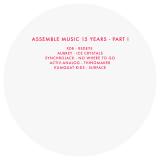
"ASSEMBLE MUSIC 15 YEARS - Part I : Founded in Lisbon in 2011, Assemble Music celebrates its 15th anniversary with a three-part vinyl compilation, bringing together fifteen artists who, in different ways, reflect the label's past, present and future. Released simultaneously in November 2026 and distributed worldwide by Clone Distribution, the three records are less a retrospective than a continuation of what Assemble has been building since the beginning: music with character, made by artists with their own language, away from trends and easy categorisation. Across fifteen years, Assemble has moved freely between house, techno, electro, dub and more experimental forms of electronic music. The catalogue has never been defined by one particular sound, but rather by a certain approach, personal, uncompromising and built to last. Part I opens with XDB, an artist whose relationship with Assemble goes far beyond a single record. His deep, understated approach to house and techno has always been closely connected to the musical identity of the label. Aubrey, one of the enduring figures of the UK underground, follows with decades of experience behind him and a catalogue that stretches back to the early 1990s. Synchrojack connects the compilation to another important lineage: the raw and deeply individual British house music with a track produced and never released in the 90's. Activ-Analog bring their machine-driven, analogue approach back to Assemble after previously releasing on the label, while Kumquat Kids aka Julian Phethean & Steve O'Sullivan with a track originally released in 1999 on the Various Positions EP for UK label Organised Sound. "Surface" is a genuine late-90s underground rarity! Over the years, the original 12" has become increasingly sought-after and notoriously expensive on the second-hand market."
"ASSEMBLE MUSIC 15 YEARS - Part III : Founded in Lisbon in 2011, Assemble Music celebrates its 15th anniversary with a three-part vinyl compilation, bringing together fifteen artists who, in different ways, reflect the label's past, present and future. Released simultaneously in November 2026 and distributed worldwide by Clone Distribution, the three records are less a retrospective than a continuation of what Assemble has been building since the beginning: music with character, made by artists with their own language, away from trends and easy categorisation. Across fifteen years, Assemble has moved freely between house, techno, electro, dub and more experimental forms of electronic music. The catalogue has never been defined by one particular sound, but rather by a certain approach, personal, uncompromising and built to last. Part III brings together another five artists particularly close to Assemble's musical universe. Lowtec has spent decades developing one of the most distinctive languages in European house and techno, both through his own productions and his own label Workshop. His music shares something fundamental with Assemble, restraint, depth and an unwillingness to follow obvious paths and thats exactly what he delivers with "Dutch Angle" exploring the more ambient and abstract side of house. Welsh modular artist Steevio, co-founder of Freerotation, approaches electronic music through improvisation and live interaction with machines. His contribution to the compilation reflects the human, unpredictable side of electronic music that has always fascinated the label. Reedale Rise returns after becoming an important part of Assemble's recent chapter. Moving naturally between electro, techno and house, his music combines precision with an unmistakable melodic and emotional quality. With his track he explores a slightly darker path here, with deeper, more shadowy melodies revealing a different side of his distinctive sound. Lerosa's "Love Money" and Vera's "Take Me" are two very special tracks in our back catalogue, and we felt it was time to bring them back to life for our 15th anniversary. Vera was one of the first artists to collaborate with Assemble, with Lerosa joining not long after. Over the years, both have become an important part of the label's story, through releases, many shared showcases, and above all, a great friendship that has grown along the way."
Some things in life are meant to be consumed whole: a perfectly paced movie, an oyster at Whitstable Bay, a novella on a sunny afternoon. Into this pantheon of singular experiences comes Runners, the second album from London instrumental rock quartet Dog Unit. The follow-up to At Home, the band’s cult favourite 2024 debut album, Runners moves seamlessly across its 42-minute runtime. It finds the quartet – comprising Sam Walton, Henry Scowcroft, James Weaver and Lucy Jamieson – crafting tracks that undulate, churn and yearn in service of a greater purpose as they plough fertile fields of sonic storytelling. Made over the first four months of 2026 at the band’s studio in Limehouse, East London, Runners finds the core group, alongside producer and long-time collaborator Mark Estall, operating with greater ambition and scope than ever before. This time they commissioned a string quartet specifically for this project, and reappointed noted experimental bass clarinetist Heather Roche, as well as taking in a cavalcade of instruments at their studio, including vintage synths, drum machines, pianos, and harmonium. The band’s music is often compared to cinema, and if At Homewas a charming micro-budget indie flick bursting with potential, Runners is a widescreen realisation that stands up to repeat viewings.
Following the launch of the SOMA35 project with a celebration of Soma’s enduring catalogue, SOMA35.2 turns its attention to one of the defining releases in Soma Records history—Surgeon's seminal 1996 EP, Muggerscum Out. As Soma Records continues its 35th anniversary celebrations, the SOMA35 series shines a light on the records that helped define not only the label's identity, but the evolution of techno itself, creating a dialogue between the label's past, present and future. Originally released at a pivotal moment in UK techno, Muggerscum Out captured Surgeon at his most uncompromising. Its stripped-back intensity, industrial edge and hypnotic power would go on to become hallmarks of Birmingham techno, influencing countless artists while cementing Soma's reputation as a home for fearless electronic music. For SOMA35.2, four respected producers each take a unique approach to reimagining these timeless cuts.
Toka Project was a collective from Nottingham's fertile 90s party scene, including members Andrew Macari, Andy Riley and Steve Walker amongst others, and they dropped their 'One Day' EP in 1999 on Filter Flow, which now revisits the title cut with a new set of remixes. The original is a deep house sound with a rough metallic edge and humid pads infused with whispered vocals. Di Saronno remixes it into something more light and airy, with a subtle skip in the drums that recalls the best of Melchior LTD. Andrew Macari's version has a little cheeky wiggle and sunny synth work, then Latenight Society remixes it into a slower sound with a swirling backdrop of pastoral melodic colours. A dreamy close to a fine set of new versions.
"As sharp as I sing, it still soothes you, doesn't it? Like a lick of ice cream?" sings Thao Nguyen on her Kill Rock Stars debut, We Brave Bee Stings and All. Whether it's intentional or not, the line describes her sound perfectly. Nguyen's rich, breathy voice -- and the way she croons, yelps, and drawls with it -- recalls Cat Power, Fiona Apple, and Sinéad O'Connor. However, these comparisons suggest that Thao is a searing, intense artist when nothing could be further from the truth: her country-tinged indie folk-pop is playfully observant, mischievous with just a hint of vulnerability. By playing against type and putting a voice that seems tailor-made for brooding into songs that are sunny and sweet, Nguyen carves out her own intriguing territory among indie folk songstresses.
On We Brave Bee Stings and All's first two songs. "Beat (Health, Life and Fire)" builds brass, ukulele, and piano to an urgent but joyous peak, while "Bag of Hammers" is as rambling as it is catchy. The interplay between Nguyen and her band, the Get Down Stay Down, is more intuitive than ever, and the album's fuller sound (courtesy of producer Tucker Martine) complements her more fully formed songs.
In fact, most of the album is so cheery that it's a good thing Nguyen's voice isn't delicate, or her music might be sickly sweet instead of fresh and engaging. Fortunately, "Feet Asleep"'s Dixieland moxie and "Geography"'s jazzy flourishes help keep the album from sounding too predictable. Even if this isn't Thao's first album, We Brave Bee Stings and All is a fine introduction to her music.
On the occasion of the 40th anniversary of the release of Remek Depo, the very first electronic record from the former Yugoslavia, the group Beograd has decided to unveil eight previously unreleased tracks in the context originally intended. The band initially planned to title their first album as Mrak ( eng. Dark). Recorded with Du Du A and other collaborators, this album serves as a manifesto of resistance—not only in Belgrade and Yugoslavia but everywhere else.
The A-side opens with the track 1984, named after George Orwell’s seminal novel. This piece was recorded in a single night in the same year, featuring Zoran Zagorcic (Du Du A) and one of the first Yamaha DX7 synthesizers. It encapsulates the dark and tense atmosphere of Belgrade during a period marked by economic crisis, characterized by shortages of essential products like coffee and oil, as well as electricity restrictions. This oppressive environment also impacted personal relationships, leading to unconventional expressions of passion and desire, as exemplified by the subsequent track from 1985, Mracni Predjet Zelja (eng: That Obscure Object of Desire). However, the primary source of frustration was political, stemming from the abuse of nationalism and the incitement of inter-ethnic conflicts within the complex Yugoslav society. This sentiment is vividly illustrated in the songs Hare Krishna and Belgrade Beat, recorded just before the country’s collapse in 1991. Remarkably, despite their protest, these songs convey messages of strong optimism and hope. In “Belgrade Beat Dejan Kostic (Du Du A) raps and Dejan Stanisavljevic sings. ”Od Studija B do Amerike, Beograd širi svoje talase, mi nismo sami u nama je svet, dolazi veliki preokret” (eng. “From Studio B to the USA, Belgrade spreads its waves, we are not alone, the whole world is with us, a great change comes!”). It is no surprise that this song was frequently broadcast on student Radio Index during the student and anti-war protests in 1992.
The B-side features contemporary songs produced by Beograd, which reflect protests against the current societal conditions in post-war Belgrade. Crafted with musical clarity and irony, these tracks satirize figures of repression, hitting their mark with an almost childlike purity, reminiscent of Hans Christian Andersen’s fairy tale, “The Emperor’s New Clothes.” The collaboration between Dejan Stanisavljevic, the leader of the Beograd and the Du Du A group not only influenced his musical expression but also laid the groundwork for the group’s socially engaged music in their later career.
As we remember the two late leaders of the Du Du A group, Dejan Kostic and Zoran Zagorcic, alongside the recently departed member of the Beograd, Milan Bubalo, this gramophone record stands as an important testament to the contributions of previous generations of artists in the fight for a fairer society. We hope it will inspire the younger generation in their current struggles, especially at a time when such inspiration is needed more than ever.
We’ve got a special AA-side vinyl release for all Toolroom and Cutting Recs fans with the original UK Edit of the seminal ‘This Brutal House’ from Nitro Deluxe followed, by the 2023 rework from Toolroom’s founder Mark Knight! A release you do not want to miss!
Sat in-between Electro and House genres, Nitro Deluxe’s pivotal record ‘Let’s Get Brutal’ on legendary imprint Cutting Records helped paved the way for the early beginnings of House music as we know it today. A record that has influenced so many of House music’s iconic artists, from being sampled by Kevin Saunderson (aka Good Life) in their huge hit ‘Big Fun’ and most recently, Mark Knight.
An unmistakable record and one that struck a chord in the early career days of label boss Mark Knight, who simultaneously sought to beef up his current sets in 2023 with the magic of those early House records, when the opportunity arose to update this classic Mark straight in. Keeping this new version sentimental to the original, with all those original synth elements included but laid over the top of an up-to-date Tech House groove with a renewed energy, so that today’s floors will appreciate that seminal riff, all over again.
For nearly 30 years, SUNN O))) – Stephen O’Malley and Greg Anderson – have pushed the boundaries of heavy music, straddling the worlds of the avant-garde and rock to forge a style instantly recognisable as their own. Now, SUNN O))) return with their first album of new material since 2019’s acclaimed Pyroclasts. Their tenth album – their debut for Sub Pop – demonstrates the duo’s mastery of time and space, light and dark, and their willingness to evolve their unmistakable sound into bold new forms.
The eponymously titled SUNN O))) was tracked at Bear Creek Studios, Woodinville, Washington with Brad Wood (HuM, Tar, Sunny Day Real Estate, Liz Phair). This location proved crucial to the recording process. “The vast tracking room had big windows looking out on trees,” says O’Malley. “We could go hiking and be out in the woods, spend time outdoors. That became a big part of it.”
SUNN O))) have long welcomed collaborators into their self-contained world: past work has featured, Attila Csihar (Mayhem), composer Hildur Guðnadóttir, multi-instrumentalist Steve Moore, polymath Mark Deutrom, Silkworm’s Tim Midyett and legendary singer-songwriter Scott Walker. But on this album O’Malley and Anderson found fresh possibilities in the primal territory of the duo format, performing all the instrumentation themselves. “What’s been happening with our performances over the last couple years with the two of us and no other collaborators has been really fresh and exciting,” says Anderson.
The compositions on SUNN O))) are expansive and panoramic yet finely detailed, reflecting the arboreal setting in which they were recorded. Amidst howling feedback and glacial crunch, one finds surprisingly delicate moments: a field recording of water trickles beneath, piano interludes lend a hushed, solemn feel. All while the duo attains fresh heights of telepathic intensity as they shape music that breathes the bracing, earthy air of the Pacific Northwest.
Framing the album visually are two paintings by the late American artist Mark Rothko. Liner notes are by award-winning British writer Robert Macfarlane, famed for his works concerning landscape and the relationship between humanity and nature. Through the work of the band, Macfarlane, and Rothko, sound, word and visual combine into a fully immersive experience that is undeniably, completely SUNN O))).
*TIP* Previously released on Low Company in 2023, now back... a weirdo lo fi gem
Naturestrip, Naarm, Australia write:
"purely physical teeny tapes perform an invaluable public service in exhuming static cleaner lost reward’s ‘breathing under honey from the heady year o’ 2023’, a slack-jawed riddle within the all-consuming enigma that is thee world of tarquin manek™.
few records command a reissue so soon after their release, the soil heaped atop the (sainted) low company corpse still remaining more than a little damp, but this one’s discreet-to-the-point-of-fury initial release justifies the flogging of the proverbial carked horse, boiled back down into glue for a fresh round of rollicking mucky. arriving as the last release on that fine imprint, ‘breathing under honey’ represents (obliquely, natch) something of a convenient summary of that aforementioned elegantly sloshed world™, condensing as it does the artist’s proclivities exercised among the sweetest of contemporary depth-dwellers, articulated alongside/within y.l. hooi, bum creek, carla dal forno, f ingers, kallista kult, under endless solo monikers…the fun never ends.
let loose here in a suitably gonzo/spellunked mood, the second full-length under the static cleaner moniker (see debut $mile$ from 2013 thru altered states) is compiled of delirious half-thoughts & riddimic gestures accumulated between 2013 & 2020, everything wet & awash with a fine sprouting of lysergic mush between its digits. the implication thereof might suggest something schlonky or amateurish, but fear not, prospective listener, for your ears are in the sticky hands of one of the finest shit-savant prodigies these times have known, crud-caked technoid shapes & blissed pop-glob nous submerged in sublime dubbed-out grog, the resulting sonar-pong shards positively chemical in their ability to simultaneously slant + seduce.
think: martin denny face-deep in a paper bag at the black ark, graciously fucked tropicalia, liquid dub techno housed in vat of spiked quaff, the skaters infiltrating urban tribe, lopsided + caked to the nines in glitter for the gutter.
utterly tranced, sumptuous/sweet & patently ill. a classique of this modern horror epoch if there ever was one."
"Lost Weekend" ist das erste Album von Phoebe Bridgers seit dem mehrfach für den GRAMMY nominierten Vorgänger "Punisher" aus dem Jahr 2020. Bereits ihr gefeiertes Debüt "Stranger in the Alps", veröffentlicht kurz nach ihrem 23. Geburtstag, machte deutlich, welch außergewöhnliches Songwriting-Talent in Bridgers steckt. Mit "Punisher" löste sie dieses Versprechen eindrucksvoll ein: Das Album wurde für seine kluge, eindringliche und zugleich fesselnde Komposition weithin gefeiert und etablierte sie endgültig als eine der prägendsten Stimmen ihrer Generation. Wer nun "Lost Weekend" hört, wird jedoch feststellen, dass Bridgers noch einen Schritt weitergeht. Auf dem neuen Album präsentiert sie sich auf dem bisherigen Höhepunkt ihres künstlerischen Schaffens. Mit bemerkenswerter Präzision verfeinert sie die Motive, die ihre bisherigen Werke ausgezeichnet haben, und erweitert ihren Sound gleichzeitig um zahlreiche überraschende Facetten. Das Ergebnis ist ein Album, das vertraut wirkt und dennoch immer wieder neue Wege einschlägt. Vor ihren jüngsten Pop-up-Shows stand Bridgers zuletzt mit ihrer Supergroup boygenius auf der Bühne, die sie gemeinsam mit ihren engen Freundinnen Lucy Dacus und Julien Baker gegründet hat. Für das 2023 erschienene Album "the record" erhielt die Band mehrere GRAMMY Awards, darunter "Best Alternative Music Album" sowie "Best Rock Song" und "Best Rock Performance" für die Single "Not Strong Enough". Phoebe Bridgers verließ die Preisverleihung zudem als meistprämierte Künstlerin des Abends. Ihren vierten GRAMMY gewann sie in der Kategorie "Best Pop Duo/Group Performance" für "Ghost in the Machine", ihre Zusammenarbeit mit SZA auf deren Erfolgsalbum "SOS". Zuvor war Bridgers als Support-Act auf ausgewählten Terminen von Taylor Swifts "The Eras Tour" zu sehen. Davor absolvierte sie fast zwei Jahre lang ihre eigene "Reunion Tour" mit mehreren ausverkauften Nordamerika-Etappen, rund dreißig Konzerten in Europa sowie abschließenden Shows in Südamerika, Asien und Australien. Auch abseits der Bühne prägte Bridgers die vergangenen Jahre mit einigen der eindrucksvollsten Live-Performances im Netz und Fernsehen, darunter ihr viel beachtetes NPR Tiny Desk Concert sowie ihr Auftritt bei Saturday Night Live. Seit ihrem letzten Soloalbum veröffentlichte sie zudem zahlreiche Singles, Coverversionen und Kollaborationen mit Künstler wie Paul McCartney, MUNA, Bright Eyes, The 1975, Lorde, Taylor Swift und The National.
The debut release by Confusion on Incompetence Records documents an exercise in disciplined spontaneity, a jam session where organic interaction is rigorously shaped into form. Recorded live in Belgrade by Dmitrii Steinberg, Aleksei Siubaev, Viktor Volkovich, Evgenii Piankov, and Leonid Lipelis, the material was subsequently dissected and reassembled with a scalpel like precision reminiscent of Teo Macero’s landmark edits for Miles Davis. What emerges is not a loose improvisational document but a suite of cohesive constructed pieces: weightless structures suspended over a hypnotic pulse, steeped in cosmic vibes and soft psychedelia. There is a slo mo insistence to the grooves, a kosmiche drift that folds jazz funk rituals into something both intimate and expansive. For musicians previously orbiting rare groove, house, indie rock, and modern composition, Confusion expands their explorations into a terrain where genre dissolves into texture and intention. The record’s mesmerizing beauty lies in its restraint, motifs surface, dissolve, and return as if refracted through magnetic tape memory, each fragment locked into place yet breathing with human elasticity. Rather than presenting virtuosity, the quintet channels it into atmosphere, into a patient, glowing continuum that feels less like a jam and more like a carefully mapped inner cosmos, calibrated for deep listening and slow revelation.
Presenting ‘Nothing Is Lost’, A.Morgan continues his journey through high pressure, pummeling techno, this time on SIDE B. Proving the degree of his effect as well as his stylistic versatility, Morgan pulls different influences from afar to craft a record that pushes forward with a nod to the past through three powerful cuts and a remix by Yant. The EP starts with ‘Sucker Love’, appropriately named for its commanding rhythmic section while bleeding almost into house music with a hypnotic vocal loop. The track oscillates between stabs of cold dissonance and an extraverted flare, creating a natural intrigue throughout its progression. The follow up is Yant’s remix, a hyper-focused take on ‘Sucker Love’ with significant weight in the low end. Thundering percussion widens the dimension of the track, flicking through a brutal synth sequence over slithering hi-hats and claps. Yant reaffirms his understanding of uncompromising club music with this remix, creating a tunneling track fit for a concentrated peak-time set. Highlighting the B-side, A.Morgan takes back control of the record with the ‘Cloudfall’. Undulating the bass of the track, Morgan sneaks in a lurking melody that detunes throughout his arrangement, creating increasingly destabilized moments to pack intrigue in the cut. White noise whips around the production to create a storm of ambiance over a violently binary lead, underlining the undeniable effect of minimalism in techno. The EP concludes with the title track ‘Nothing Is Lost’, combining instructive percussion, biting chords, and cold vocals - as is Morgan’s custom. Here, the British artist brings a harmonic quality with the synth work that comes and satisfyingly completes the project. The embrace of the chord selection immerses the listener over a highly tuned rhythm, pushing ‘Nothing is Lost’ into a state of euphoria for the conclusion. Words by Noah Hocker
Ribe & Roll Dann serve up potent techno on Mutual Rytm with 'Virtus Occulta'.
Built around concepts of unacknowledged work and enduring merit, the release marks their first EP on SHDW's widely
respected label.
Based in Toledo and Madrid, Ribe & Roll Dann are exciting residents at Laster Madrid and Lanna Club, two of Spain's leading venues. Emerging as driving forces in their national techno scene, they have also made an impact on the global landscape, making wider moves through collaborative releases on Klockworks, and individual outings on a number of other influential labels. Having previously featured in the label's Federation of Rytm IV compilation, the pair make their full EP label on SHDW's Mutual Rytm imprint to open March with a deep dive into their expansive sound.
Opener 'Sub Terra' is a pure club tool that is direct, physical and rooted in the underground with a seriously heavy low end. 'Extra Lumen' is more restrained but still built on a steady, forceful rhythm with controlled energy that prefers to operate in the shadows. 'Ars Non Placens' stays true to the idea that music is not made to please, but to exist on its own terms with hunched drums and dubby undercurrents. Next, 'Meritum Negatum' fizzes with static electrical charge and minimal drum funk and is a direct reflection on overlooked skill and unacknowledged work, before closer 'Virtus Persistens' delivers a continuity and a steady pulse rather than an explosive ending, keeping you locked throughout.
In addition, three digital bonus cuts come alongside the vinyl package. 'Labor Inauditus' speaks to hours of technique, production and booth experience that remain invisible. Next come the taught, rubbery rhythms and unrelenting atmosphere of 'Silentium Testium', while 'Sine Aplausu' - which means without applause - brings a ghostly late night vibe that you will never want to end.
*First-ever release on vinyl
*Produced in full cooperation with Hiroshi Yoshimura's estate
*Remastered from original sources by John Baldwin
*English translations of original 1996 release liner notes
*Reproductions of Yoshimura's handwritten recording notes
*Vinyl includes 5" x 7" postcard print
"My encounter with the Hoh Rain Forest, located inside Olympic National Park across the water from Seattle, felt like seeing a whole new world for the first time in my life. Long green fronds draped along the branches, like a scene in which fairies could be heard whispering to one another. But when you try to listen, no sound can be heard. Amidst the mysterious silence, in which no birds or insects make a sound, every living thing seemed to have stopped in its place, only to start dancing when some kind of spell is cast over them.
-Hiroshi Yoshimura
Originally issued on compact disc in 1996, Quiet Forest was Hiroshi Yoshimura’s last album-length work to be released before his passing in 2003. Largely inspired by his trip to the vast forests of the North American Pacific Northwest, the album is an aural reflection of the fantastical, surreal beauty he experienced as he walked through the otherworldly wilderness for the first time. The basic tracks were recorded in the fall of 1993. After numerous revisions to the song titles and a scrapped idea to overlay the tracks with nature field recordings, Hiroshi ultimately produced a latter-day masterwork that feels like the spiritual follow-up to Green, one of his defining works from a decade earlier."
*Produced in full cooperation with Hiroshi Yoshimura's estate
*Remastered from original sources by John Baldwin
*English translations of original 1996 release liner notes
*Reproductions of Yoshimura's handwritten recording notes
"My encounter with the Hoh Rain Forest, located inside Olympic National Park across the water from Seattle, felt like seeing a whole new world for the first time in my life. Long green fronds draped along the branches, like a scene in which fairies could be heard whispering to one another. But when you try to listen, no sound can be heard. Amidst the mysterious silence, in which no birds or insects make a sound, every living thing seemed to have stopped in its place, only to start dancing when some kind of spell is cast over them.
-Hiroshi Yoshimura
Originally issued on compact disc in 1996, Quiet Forest was Hiroshi Yoshimura’s last album-length work to be released before his passing in 2003. Largely inspired by his trip to the vast forests of the North American Pacific Northwest, the album is an aural reflection of the fantastical, surreal beauty he experienced as he walked through the otherworldly wilderness for the first time. The basic tracks were recorded in the fall of 1993. After numerous revisions to the song titles and a scrapped idea to overlay the tracks with nature field recordings, Hiroshi ultimately produced a latter-day masterwork that feels like the spiritual follow-up to Green, one of his defining works from a decade earlier."
SHORT INFOS
Because Music celebrates the 50th Anniversary of Cerrone's debut album "Love In C Minor (Cerrone I)" .
A record which is one of the mots important of its time. It brought French Disco to the World and established Cerrone as the French King of Disco.
- Pressed in exclusive 2026 Apple Green Crystal Clear vinyl
- Original 1976 artwork - Digitally remastered from original tapes.
BIOG
Cerrone I
Love in C Minor (1976)
The story behind Cerrone's first album could be summarised in the libertarian atmosphere and the creative energy of the 70s, inherited from the 60s revolutions, spiritual, aesthetic or sexual. Looking back now, this record is one of the most important of its time. It helped creating the sound of an era and brought French disco to the world. It is also, and this is fundamental to understand its success, the result of a man's vision: Marc Cerrone, a free spirit inhabited by music, who ended up with a major work of art. With this album, Cerrone accumulated the main elements that make a record timeless, even bigger than its creator: the pure originality, the madness of a vision without compromise, a sense of the market and a great dose of luck too. To some extent, this is the perfect record to start a career, even though Cerrone's one already existed in an implicit way. He actually began in a rather popular band, Kongas, signed by Barclay. Between 1972 and 1974, the band was famous and made it abroad, particularly in Japan, where people loved its sound. Despite this success, probably fed up with the music and not ready to follow the orders of a label that wanted the band to sound more pop, Cerrone disbanded Kongas. He had the sound of his instrument in mind and mostly its central element: the bass drum. The idea of this first solo album came to him after a detour via selling records. Wishing to forget about the studios, he took the head of a small chain of stores, selling records imported from the States. That's when he discovered a daring new sound coming from New York: disco music. This energy inspired him to record again. He then remembered the crazy reaction of the audience when, during the Kongas' concerts, he used to hit his bass drum hard. Cerrone felt like going back into the studio but to make something different. He decided to record a sixteen minutes long track, driven by its beat, that would fit on its own on one side of a LP (during these vinyl days, musicians used to think in terms of sides…), with girls' voices simulating sex. This concept of musical and physical orgasm was recorded at Trident Studios in London (where pop stars used to record at the time… ) with Don Ray, of Kongas, man in the shadows and brilliant arranger who'd follow Cerrone during his whole career. Obviously, like always in pop music (it happened to the Beatles), record companies started by turning this weird track down, convinced that radios would never play sixteen minutes of beats and moaning. Cerrone, a born fighter, decided to trust his instinct (a mix of ego and business sense) and chose to believe that if the radios wouldn't play the track, people would dance to it in the clubs. He released the record himself, with a sexy cover a bit provocative where he wore a black bathrobe, a young short-haired girl leaning on him. Being played here and there, thanks to Cerrone's own network, the record started to work a bit in France. But luckily, things really happened in the States. Due to a mistake, a box of "Love In C Minor" albums were sent to the States via Cerrone's record shop instead of some unsold American LPs. Once in New York, the box was opened and the record with its intriguing cover was instantly loved and passed through the hands of radio and club DJs. All of a sudden, and unknown to its creator, the track that was turned down by every French label, became a hit on the New York disco scene. Casablanca, the US disco label, released a cover recorded by an ad hoc band because nobody knew Cerrone of how to find him. Once he discovered what was happening in the States, Cerrone flew to New York. He realised he had a hit, one of the biggest then, that opened the doors to every record company and especially Atlantic. He was welcome by Ahmet Ertegun, one of the main visionaries of the American music who, among other artists, signed Aretha Franklin and John Coltrane. It's believed that Ertegun understood that the French young musician, like some Atlantic artists, was about to define the sound of his time and that his work would live long after its birth date. "Love In C Minor" was the first step, adamant and successful.
Following 2024’s Echoes of the Night EP, Michael Hodgson returns with Apply the Dub: four stunning new Adrian Sherwood remixes, this time of his long-running solo project, Misled Convoy.
The EP’s title is a nod to Sherwood’s renowned process in which tracks are not simply remixed, but dismantled, fed into his dub machinery and reimagined. The results are spacious and compelling, epic in scope, rich in detail and loaded with bass.
The prophetic voice of Kat Five (Feral Five) looms large on the opening track, as does Miho Wada’s flute on the last. David “Ital Horns” Fullwood returns to the project, providing trumpet to two of the tunes, while Doug Wimbish (Tack>>Head / Living Colour) adds bass, and Mark Bandola (The Lucy Show) guitar and keys, to a different pair of remixes.
The sessions began in 2025, with the original tracks drawn from the more experimental and industrial side of Misled Convoy, giving Sherwood plenty of room to work with sonically. In his Ramsgate studio, frequencies were pulled apart, bass lines elevated and melodies stretched while sounds disappeared into layers of delay, echo and dub processing before emerging dazed & confused and somewhere else entirely.
Since dub is the compositional glue that fuels Hodgson’s creative dynamic, this collaboration meant reverse engineering his process and stripping his compositions back to the bare bones: “Before we hit the studio, I had to remove a whole lot of my effects to make space for Adrian, which made the track sound empty and super weird, but this is how the magic happens. When you do a remix, you are inviting an artist you respect into your creative process and watch it get reimagined. This is a big part of dub and remix culture.”
Very much a meeting of two complementary approaches to sound, Apply the Dub has Hodgson’s dark and atmospheric electronica enhanced and deeply embellished by Sherwood’s long-established sonic manipulation and dub-mixing.
For Hodgson, the connection with Sherwood and On-U Sound has been life-long, from being a fan in his youth in Aotearoa New Zealand to supporting Patrick Docktor’s archiving of the label’s video and audio collection in London. In 2019 Sherwood invited Hodgson to collaborate with artist Peter Harris to create a visual backdrop to accompany his Time Boom X The Upsetter Dub Sessions tour. Hodgson went on to create videos for On-U’s 40th anniversary celebration at The Forum in London, helped with the immersive 3D Live Dub Experience at Earth Theatre and travelled to Japan for the Collapse of Everything tour where he worked on live video triggering for Sherwood’s shows.
ALOUD! is about breaking rules in order to create your own. It’s about speaking your truth unapologetically and not worrying about being judged for it. At its core, this album is meant to feel fun. There’s so much heaviness in the world right now, and sometimes people just need to dance, escape for a minute, and let themselves feel free. Honestly, I need that too.
With this project, I wanted to tap into a lighter side of myself. I wanted to make music that feels fun and accessible. This album is about letting go, being present, and allowing yourself to enjoy life without overthinking every move.
Don’t let anybody silence you or tell you who you’re supposed to be. Say what you want, move how you want, and dance your way through the hard times. Stay ALOUD. You’re allowed to live life on your own terms.
The project first appeared as an anonymous transmission: a folder sent through the network, containing music, instructions and a name - Transpac. No photograph. No biography. Just the request to use the name and let the music speak.
There have been several transmissions since. Still no interviews, no confirmed identity, no explanation of who - or what - is behind the name.
Some say Transpac is a person. Others insist it is a machine. A few believe it is simply a data packet that escaped the network and somehow learned how to make music.
The name itself offers a possible clue. TRANSPAC was once the name of a French public data network, launched in 1978 and built around X.25 packet switching - breaking information into packets and moving them across a network long before the Internet became what it is today.
Perhaps Transpac has been travelling ever since.
Packet Switching EP is the latest intercepted transmission: six packets of pure machine music, assembled somewhere between circuitry, communication protocols and whatever exists on the other side of the network.
Whilst the packets have been received, the sender remains unknown.
Synaptic Cliffs is particularly pleased to have brought Transpac into its network - a feat made possible, not least, by its principal operative, pdqb. Through communication channels inaccessible to ordinary Earthlings, pdqb was able to locate Transpac with remarkable ease and secure its transmission for the label.
The artwork, rendered in yellow and black and largely composed of binary code, echoes the visual language of the early machine age - a world of geometric systems, electronic signals and human beings beginning to communicate with machines. Created by the legendary Infamous Image Division.
BEAT'EM ALL is french hip-hop/jazz instrumental trio SHIBUUYA!'s latest LP release. A blend of nu-jazz, fusion, hip-hop and future beats, all in original compisitions from the band's keyboardist and drummer, the album goes against the polished image we usually have of jazz music to deliver a raspy, energic and groovy sound that shakes the listener instead of nurturing him. With prestigious featurings such as CHiLi GiRL aka Shinobu Kawasihma, a Tokyo-raised Shamisen (a traditional japanese guitar) player, Melbourne rapper Nelson Dialect, french virtuoso saxophonist Hugo Afettouche, or the "french problem kid of jazz" trumpetist Daoud, SHIBUUYA! pushes forward its identity with references to japanese pop-culture through anime samples, powerful hip-hop beats, progressive broken-beat grooves and crazy deliveries on all three instruments (keys, drums and bass), all of it served by an original manga-inspired cover art by the band's keyboardist and leader. A reference to the japan-popular videogame genre (Shibuya being a neighborhood of tokyo centered around fashion and pop culture), BEAT'EM ALL tries to beat the odds on what we expect from a jazz album and to make it sound more like a garage-produced LP rather than a million-dollar studio album, to make as authentic and as generational as possible, a true product of today's young jazz scene.
Transcendental dreamstates and techno synthscapes projecting from 1992 into the future.
Written and recorded shortly before his departure from Psychick Warriors Ov Gaia, Dream Night Dance Music is the visionary first album from Robbert Heijnen under his celebrated alias, Exquisite Corpse. Exploring ritualistic rhythms and organic synth sculpting with a delicacy far beyond most techno released in 1992, the seductive atmospheres and rolling sequences of Dream Night Dance Music reach well beyond pure dancefloor functionality to become an immersive experience for introspection and extroversion alike.
Belgian label KK Records originally released Dream Night Dance Music as a single LP and CD, long-since out of print and highly sought after by the notoriously enthusiastic PWOG / Heijnen fanbase. This expanded reissue on Forever Records spreads the release across two 12"s, adding the track 'What A Life' originally released on the Reassembling Reality single, recorded during the same sessions as Dream Night Dance Music. In addition, the limited vinyl edition comes with a bonus 10" featuring previously unreleased tracks 'Calling' and 'Sure'.
Praise for Dream Night Dance Music:
"The Dream Night Dance Music CD is… electronic opium… The soft, analogue synth sounds and arrangements strongly recall minimal music (Glass/Reich). Music that never ends, constantly winding new loops and coils around the listener's vulnerable inner self." Fritz, Trust Zine, 1992.
"The sound is very trance-like and hypnotic, yet remains highly danceable and never gets boring… It is sure to appeal to night owls, cyberpunx, and neon-light junkies alike." Spex, 1992.
"Heynen strikes a compelling balance between a multitude of rhythms, melodies, and timbres. Permeated by an almost swaying groove, the music reflects influences ranging from the early "minimal music" of composer Steve Reich and the electronic architecture of pioneers Kraftwerk to various non-Western, mystical traditions without ever resorting to mere imitation." Corné Evers, Oor, 1992.
Transcendental dreamstates and techno synthscapes projecting from 1992 into the future.
Written and recorded shortly before his departure from Psychick Warriors Ov Gaia, Dream Night Dance Music is the visionary first album from Robbert Heijnen under his celebrated alias, Exquisite Corpse. Exploring ritualistic rhythms and organic synth sculpting with a delicacy far beyond most techno released in 1992, the seductive atmospheres and rolling sequences of Dream Night Dance Music reach well beyond pure dancefloor functionality to become an immersive experience for introspection and extroversion alike.
Belgian label KK Records originally released Dream Night Dance Music as a single LP and CD, long-since out of print and highly sought after by the notoriously enthusiastic PWOG / Heijnen fanbase. This expanded reissue on Forever Records spreads the release across two 12"s, adding the track 'What A Life' originally released on the Reassembling Reality single, recorded during the same sessions as Dream Night Dance Music. In addition, the limited vinyl edition comes with a bonus 10" featuring previously unreleased tracks 'Calling' and 'Sure'.
Praise for Dream Night Dance Music:
"The Dream Night Dance Music CD is… electronic opium… The soft, analogue synth sounds and arrangements strongly recall minimal music (Glass/Reich). Music that never ends, constantly winding new loops and coils around the listener's vulnerable inner self." Fritz, Trust Zine, 1992.
"The sound is very trance-like and hypnotic, yet remains highly danceable and never gets boring… It is sure to appeal to night owls, cyberpunx, and neon-light junkies alike." Spex, 1992.
"Heynen strikes a compelling balance between a multitude of rhythms, melodies, and timbres. Permeated by an almost swaying groove, the music reflects influences ranging from the early "minimal music" of composer Steve Reich and the electronic architecture of pioneers Kraftwerk to various non-Western, mystical traditions without ever resorting to mere imitation." Corné Evers, Oor, 1992.
Star Moles ist das Projekt von Emily Moales, einer Auswanderin aus New Hampshire, die in Philadelphia, Pennsylvania zu neuem Leben erwacht ist und sich dort weiterentwickelt hat. Seit sie 2017 zum ersten Mal Musik auf digitales Band aufgenommen hat, tut sie das, was jeder großartige Künstler tun sollte: Kunst schaffen, ihr Handwerk verfeinern und ihre eigene Stimme finden - in ihrem eigenen Tempo und in relativer Anonymität. In diesen Jahren hat sie viele Facetten ihrer selbst erkundet. Ihre bisherigen Veröffentlichungen (sieben Alben in voller Länge, mehrere EPs und unzählige Singles) waren oft fantastisch und konzeptionell geprägt und ließen sich von Literatur und Mythologie inspirieren. Das war für sie als Teenagerin im verschlafenen New England und als junge Erwachsene inmitten der bedrückenden Angst vor einer globalen Pandemie eine notwendige Flucht aus dem Alltag. Jetzt ist sie 27 und geht immer noch nicht besonders oft aus, und hat hochkonzeptionelle Kunst gegen große Wirkung eingetauscht. Sie fühlt sich dazu hingezogen, Musik zu machen, die so klingt wie die Musik, die sie liebt, und über ihr Leben im wunderschönen Philadelphia zu singen. Zudem bleibt sie fest im aktuellen weltgeschichtlichen Moment verwurzelt und spricht Themen wie religiösen Fanatismus, den ökologischen Kollaps und den unverhohlenen Aufstieg des Faschismus in Amerika an. Ihr überragendes fünftes Studioalbum heißt "Highway to Hell". AC/DC, da könnt ihr euch verdammt noch mal ein Beispiel daran nehmen. Einfach gesagt: Dieses Album ist ein bedeutendes Statement, das die Ankunft eines einzigartigen Talents signalisiert, das reif für den Durchbruch ist. Moales ist eine der Hauptakteurinnen in einem jungen, hungrigen Team unglaublich produktiver Künstler, die in der stets pulsierenden Musikszene in Philadelphia noch unter dem Radar fliegen, aber dabei sind aufzusteigen. ,Highway to Hell" wurde von Kevin Basko (Rubber Band Gun) produziert und enthält wichtige Beiträge von Mitgliedern des Kreativkollektivs ,Emily and Kevin's Historic NJ Recordings", darunter Sam Sullivan (Gitarre) und Jem Seidel (Schlagzeug).
Astral Projection were pioneers on the Goatrance scene and have been storming the dancefloors for more than 20 years with their uplifting melodic and hypnotic music signature! Now we are delighted to announce; their EP "Let There Be Light" with 2 new tracks of the masters and remixes by Filteria and Morphic Resonance; repressed on vinyl.
First you can hear Astral's rework of the sublime "Filtertraces" track by Filteria. Giving it their so special spiraling recipe, Avi and Lior gave it a trippy and panoramic touch!
Second Filteria returns the favor with his own version of the fantastic "Let There Be Light" track by Astral Projection. The production upgrade and filteria-esque melodies do wonders to the goatrance anthem and on the dancefloors where it's played!
Then, Morphic Resonance, shows the full extent of his skills as he embarks you on a sci-fi rollercoaster ride with his remake of Astral Projection's "Enlightened Evolution". Expect massive melodies and the usual explosion of energy from the Catalan artist!
Last but not least, Astral Projection have remixed their own "Another World" track from the 1999 eponymous album. Yet no doubt the Israeli duo is stunningly sharp as it managed to give it exhilarating new twists as well as a splendid production!
This incredible collaboration shows once again goatrance music is a blessing and we hope it will enlighten your path!
180g vinyl LP with original obi strip and liner notes reproduction, remastered and cut by Bernie Grundman, pressed and printed in Japan
Sony Japan is pleased to present Isao Suzuki's fourth album off the Three Blind Mice label, "Orangutan". The 1975 free jazz album features acclaimed saxophonist Mori Kenji and guitarist Kazumi Watanabe, and remains undiminished by the years.
Iranian-born and Paris-based Nesa Azadikhah delivers dancefloor ready tech house cuts for her debut EP on the Berlin label. For SEVEN, Nesa is a perfect match, not only because of her music but because of her engagement in the scene and her activist work. This EP ventures in different directions: moody, subtle, jackin', raw, atmospheric yet always driving, and perfect for keeping a crowd moving.
Analog Africa's latest essential compilation began with a ruined needle. Samy Ben Redjeb, who was newly back from a 2002 digging trip, dropped a stylus into a groove that censors at the SABC had gouged with a blade. The record had been marked "not suitable," and the story behind it runs through the whole compilation. The 22 tracks pull American soul, funk and disco toward jazz, reggae and local rhythm until the result sounds utterly Jo-burg. 'How Long?' and 'Take It' are the early standouts, though the Beat Set two-parter and Dudu And The Big Time Boys hold their own. The 16-page booklet fills in the context nicely on this well assembled deep dive.
Anna Kost on Calder City Development Corp, catalogue CCDC011. Six cuts, techno chassis, electro swing, experimental dust on top. View and Shallows ease you in, Keep Turning is the one that holds a room. Jeanette and Mode 19 go harder, more machine, less song. Trace pulls back at the end, leaves some air. No filler, no obvious single, built to be played as a set. Solid.
Bringing mutant verve and a deadly swing to the bassweight discipline, Lyeform lands on Sneaker Social Club in resonantly rude form. Strong doses of UKG, wormhole techno and dubstep course through the veins of this muscular four-deep drop, but the London-based producer's metabolism strips the strands down to an atomic level and rebuilds the dance in his own design.
There's a dense and dank mood hovering over 'Drift Into Dread,' shaped out by rugged, noisy percussion steering towards mind-melting immersion. Rather than resting in technoid repetition, the landscape keeps shifting as dislocated rhythmic phrases slide in and out of earshot, led by the disembodied toasting of a mysterious MC.
'Vintage Gilly' has a much starker sound palette, all crackling drums sparking static interference into negative space with subs so low you might mistake them for heart murmurs. All the better to savour the subtleties as they tease into the mix, not least the understated lead lines loping lazily on the threshold.
The 2-step swagger is unmistakable on 'Godkiller' as it comes bowling into earshot, but there's not a whiff of garage revivalism in earshot as we channel hop between metallic feedback interference and needlepoint noise snaking around the minimalist framework of the beat.
'Glass Eater' closes the record out on another skippy stepper, but here Lyeform makes room for cavernous dub techno chords, overdriven bass harmonics and teeth-grinding noise. It's a final maverick swerve from an artist carving out a formidable impression via micro-level textural exploration within the context of dark and deadly soundsystem tackle.
Eclectic Music Producer and DJ Marc Mac (from 4hero) returns with another Mixtape Style album following on from 'Extend The Knowledge" & "It's Right To Be Civil". Marc's formula of Boom Bap Beats, Breaks, Jazz and Soul pull together soundbites from the Vietnam War era. Beats are intertwined with soundbites from the 1960's Vietnam War protest era where African American's were sent to fight during the Civil Rights period in the USA.
Marking the 10th anniversary of this series of 'mixtape style', revolutionary and thought provoking albums, Omniverse Records have pressed a short run of never before on Vinyl releases. The complete set of records "It's Right To Be Civil", "Extend The Knowledge", "Message From Soulville" and the new "Generation - X" albums will be available each on single record continuous play vinyl. The albums are a must for the fans of Marc Mac's side projects, each album has a story to tell and the collection makes great listening both musically and subtly informative. This is most defiantly for the collectors. Not to be slept on.
Optmst has spent the last decade establishing himself as one of Belfast most distinctive underground producers with releases on Shall Not Fade, R&S records & Cloudcore. Rooted in club music but resistant to easy definition, his debut EP Flux moves through 140BPM pressure, postdubstep weight and garage-adjacent rhytms . Warm analog electronics meet infectious grooves, IDM detail and a melodic sensibility that pulls you back to the hook.


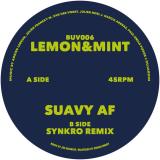











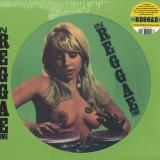


![pdqb - CONTACT IMMINENT[with two Extrawelt remixes]](https://www.deejay.de/images/l/1/2/1268612.jpg)