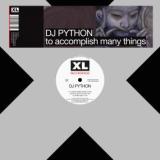
Follow-up to 2025's “i was put on this earth” (“a triumph of gentle reverie and quiet upheaval” - Pitchfork). DJ Python’s music has always occupied the interesting space in between - reggaeton's low pulse, ambient's patience, deep house's forward motion, the abstracted sounds of trip-hop, shoegaze, and pop - and this new EP finds him stretching that even further. A companion to “i was put on this earth”, the new EP shares that project's creative DNA while pulling in its own direction.
DJ Python (aka Brian Piñeyro) steps more fully into the role of singer and songwriter, sharing the mic across a set of collaborators including Ari, Tony Bontana, and Eden, while still carving out room for hypnotic solo songs.
Across five tracks, the project moves fluidly while retaining the captivating melodies, atmospheric textures, and rhythmic innovation that defined Python's earlier recordings - Mas Amable, Angel, and Club Sentimientos Vol 2 - expanding those sounds into something looser, warmer, and harder to categorise.
St. Panther is the recording project of Dani Bojorges-Giraldo (they/them), a Mexican/Colombian artist, producer, singer, rapper, and multi-instrumentalist living in East Los Angeles. On their full-length debut, East Side Love Story, they dedicate an effervescent, soulful set of love songs to the place they call home.
The project has developed over the past six years within the walls of their East Los Angeles apartment. Friends, lovers, sounds, and songs, the essence of the East Side pours through the windows as an endless stream of distinctly Latino taste. Chicano soul, Motown classics, G-funk anthems, and other feel-good oldies fill the air with warmth and romance. Everything imbues the timeless East Side Love Story, arriving in 2026 on the art-forward label drink sum wtr.
Music From Memory presents ‘Sleep Machines’, a new collaborative album from UK ambient pioneers O Yuki Conjugate and German producer and DJ Philipp Otterbach.
Formed in Nottingham in 1982, O Yuki Conjugate have spent more than four decades developing a singular approach to what they now describe as ‘dirty ambient’. Emerging from the post-punk DIY scene and drawing early inspiration from artists including Cabaret Voltaire, The Durutti Column and Jon Hassell, the group gradually carved out a space between post-industrial electronics, ambient music and Fourth World experimentation. Centred today around founding members Roger Horberry and Andrew Hulme, their work has retained an outsider sensibility throughout its many periods of activity and hibernation.
Philipp Otterbach approaches music from an equally open-ended perspective. As a producer, collector and DJ, his work moves freely between drone, dub, techno, house and electronics. His sets and productions share a fascination with unexpected connections, allowing disparate sounds to drift into one another through intuition rather than fixed genre boundaries.
‘Sleep Machines’ began with a chance meeting at The Gun on Well St. in London. Otterbach asked, “Would you be interested in doing a collaboration?”
“A collaboration? Sorry, we don't do collaborations,” came the reply.
“But wouldn’t it be fun?”
“We don't do fun either.”
Despite themselves, O Yuki Conjugate tentatively sent over an initial track. An avalanche of ideas quickly came back, and what began as an unlikely proposal developed into 18 months of recording, file-swapping, mixing and repeated reworking between the UK and Germany.
Produced by Otterbach, the resulting ten tracks bring together recognisable elements of both sides while gradually dissolving the lines between them. O Yuki Conjugate’s hazy atmospheres, dubwise spaces and tactile rhythms meet Otterbach’s instinct for strange detail, low-slung electronics and shifting forms. Rather than functioning as a collection of separate pieces, the album moves without gaps, unfolding as a single continuous work in which one environment slowly slips into the next.
‘Sleep Machines’ is both O Yuki Conjugate’s first collaborative album and an unlikely meeting point between two generations of musicians whose work has consistently existed at the edges of established forms.
Harmacy (30th Anniversary Expanded Edition) finally makes Sebadoh’s seminal 1996 indie-rock album available again, and adds 16 bonus tracks, including alternate versions, rare B-sides, BBC sessions, and live material from the Harmacy era.
Sebadoh was formed in 1986 in Northampton, Massachusetts, by Eric Gaffney and Lou Barlow (Dinosaur Jr., The Folk Implosion), with multi-instrumentalist Jason Loewenstein completing the line-up in 1989, and Bob Fay taking Gaffney’s spot in 1994. By 1994, the band had released five albums and more or less changed the pockmarked face of indie rock. Their albums were mostly home recordings, decried for their lack of sharp production, but embraced by fans of Barlow's intimate songwriting style, which owed as much to Joni Mitchell as Bob Mould. In 1996 Harmacy, their breakout sixth album, arrived, finding Sebadoh as conflicted as ever: torn between screaming punk and gentle crooning, replete with highly personal songs guaranteed to bring down even the most super-charged midnight ravers.
Released in the wake of The Folk Implosion’s Top 40 hit "Natural One," Harmacy became Sebadoh's first charting album in the U.S., and yielded the hit "Ocean." Interview said, “Harmacy is nothing short of a masterpiece.” The New Yorker called it a collection of “perfectly crafted, honest (read: ambiguous and emotionally twisted), impassioned songs about love and hate.” Harmacy was hailed as one of the best albums of 1996 by Rolling Stone, The Village Voice, and NME.
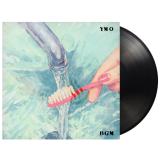
On their fourth album BGM, originally released in 1981, YMO continued where they left off with X∞ Multiplies, by venturing further into synthesizers, drum computers and experimentation with rhythm, sequences and speeds.
This album is more focused on atmosphere and mood. Some even say this album is a turning point for YMO and the international pop music scene. They successfully merged lyrics, sound bites and their signature electrically programmed music on BGM. “1000 Knives” and “Cue” are the most famous; ‘The Hand Clap’ on “1000 Knives” is probably one of the most used samples in the ‘80s, early ‘90s.
BGM is available on black vinyl and includes a 4-page booklet.
Naughty Boys, originally released in 1983, was Yellow Magic Orchestra’s seventh and final album to top the Japanese Oricon Pop charts.
A remix album, Naughty Boys Instrumental was released in July 1983. It contained nearly the entire Naughty Boys album as instrumental tracks in an entirely different running order, as well as the b-side to "Kimi Ni Mune Kyun", "Chaos Panic"; and the full instrumental version of "You've Got to Help Yourself", of which the vocal track was included on Service.
Naughty Boys Instrumental featured additional synthesizers imitating the vocal lines, as well as new embellishments and mixes. Several tracks featured sonically updated percussion tracks, while "Ongaku" featured an acoustic piano soloing over the piece.
This release combines both the original and instrumental albums. Naughty Boys & Instrumental is available on black vinyl and includes a 4-page booklet.
Delinquent Habits is the self-titled debut album of the Chicano hip-hop group that was formed in Los Angeles in 1991. As a group they got widespread attention with their, both melodic and hardcore, Latin-tinged rap. For the album they got help from Sen Dog, known from the very popular hip hop group Cypress Hill. He was the executive producer and also made a guest appearance on "Underground Connection".
The group was one of the biggest breakthrough acts of 1996. It started with the single "Tres Delinquentes" that attracted much attention and sold over one million copies. The album followed quickly and was equally successful by reaching the Billboard Top 200. The genre gained a new classic!
Delinquent Habits is available as a 30th anniversary edition of 2000 individually numbered copies on blue and white vinyl.
Half a century after its original release, legendary Lebanese musician and singer Marcel Khalife—renowned oud player and global icon of both music and activism—returns with a new recording. On this album, he reinterprets four of the five tracks from his debut, Promises of the Storm. A bold defiance of time and history.
Why revisit the same album, 50 years later? The reasons are many, but one stands above the rest: history itself seems to be repeating. The narrative unfolds once more in the same dire circumstances as half a century ago, as if time has folded in on itself, returning everything to its starting point. The urgency, the necessity—it all remains, pressing and inescapable. We must begin again.
In 1976, a young Marcel Khalife found himself exiled in Paris, fleeing the Lebanese Civil War and his family’s Christian village, where his progressive, left-wing ideas had placed him under a kind of house arrest. He was one of the few to openly and unwaveringly champion the Palestinian cause. The situation quickly became untenable, especially since, just a month before the war began in March 1975, Khalife—fresh out of the conservatory—had given his first public concert to great acclaim. Then, everything collapsed. What does one do when trapped at home? Read books, play the oud, and turn those readings into songs. In his family’s de facto prison, Khalife began setting the poetry of the great Palestinian poet Mahmoud Darwish to music. These songs, born of confinement, he carried with him into exile, driving to Paris where a producer offered him the chance to record an album. Naturally, the tracks were the ones he had been improvising at home from Darwish’s poems. The album’s title, Promises of the Storm, echoed the war that was just beginning. Khalife recalls that the album became a hit after a concert at the Fête de l’Huma, where 500 copies were sold in a single day. “Everything started there, and it never stopped,” he remembers. He would meet Mahmoud Darwish shortly after, at a dinner organized by mutual friends. From that moment, a deep friendship blossomed between the two men.
With Darwish’s words and Khalife’s music, the songs of Promises of the Storm are imbued with a powerful evocative force—melancholy, tenderness, and poetic resistance in the face of violence. The album catapulted Khalife to international stardom, leading to endless tours and recordings, yet he never abandoned his commitments.
Now, 50 years later, Promises of the Storm returns in a fresh recording, because history is repeating itself. After the Israeli bombings in Lebanon at the end of 2024, Khalife, who was on tour, found himself stranded in Paris. He remembered a recurring request from his son, musician Bachar Mar-Khalife, who had often urged him to re-record his now-classic debut album. One morning, oud in hand, Marcel knocked on his son’s door and said, “Shall we? I’m ready to record.”
These new versions are stripped down, raw, and intimate—just the solitary strings of the oud. Khalife sings as never before, his voice no longer marked by the fragility of youth but imbued with something deeper, freer, unshackled. It soars high yet resonates low, always clear, as if to escape sadness, to evoke love and violence, desire and exile. In just four songs, Khalife encapsulates a lifetime, and a philosophy of life. Rita tells of a love of Darwish’s, with the haunting line (translated from Arabic): “Between Rita’s eyes and mine, a rifle.” Oummi invokes the figure of the mother as a metaphor for the lost land. Promises of the Storm is a meditation on revolution, the hope for change, the melancholy of defeat, and the power of thought. Passport captures, through poetry, the feeling of being stateless—a citizen of everywhere and nowhere.
Time has only strengthened these texts and this music. History never repeats itself without a valid, indispensable reason for the present. That reason is fully contained in Marcel Khalife’s new interpretations, which have never sounded so clear, so right, so essential.
This autumn sees the release of ‘En de stilstaande tijd voor (elektro-)akoestisch ensemble’ (And Stationary Time for (electro-)acoustic ensemble), the new album by composer and musician Sietse van Erve. With this release, Van Erve marks a definitive turning point in his artistic career: bidding farewell to his long-standing pseudonym Orphax to continue under his own name.
From Rewire to the Studio
The foundations for this album were laid during a memorable live performance at the Rewire Festival 2025 in Den Haag (The Hague). There, Van Erve presented the composition for the first time with an ensemble featuring Anne La Berge (flute), Gareth Davis (bass clarinet), and Dario Calderone (double bass). The leading Dutch newspaper De Volkskrant praised the performance as "incomprehensibly still", drifting on a single, drone-like tone through which the instruments softly float.
Van Erve recalls the intensity of that debut: “I don’t think I’ve ever been as nervous for a performance as I was for Rewire. A packed hall in Amare, during such a major festival”. Following a second successful performance at Festival Musica in Strasbourg, the decision was made to capture the work permanently in the studio.
A New Vision of Nostalgia
The composition originates from Van Erve’s fascination with time and nostalgia, inspired by a 1960s postcard of a Spanish village where time seemed to freeze. While based on a solo piece from 2020, the (electro-)acoustic instrumentation provides a completely new interpretation. The transition from solo electronics to an ensemble brought unique challenges. Van Erve explains: “Certain effects can be triggered with a single knob on a synthesizer, but they result in almost unplayable parts for other instruments. In those situations, I presented the challenge to the group and we searched for a solution together.’’
Identity and Evolution
The album also marks a personal transition for the artist. Regarding the departure from his moniker, he states: “I was looking for the right moment, and now it feels right. With this project, I have finally been able to do what I’ve had in my head for a long time... I feel I have achieved something, and that is why I think it is a good time to initiate the name change."
Realisation through Crowdfunding
Recorded in the spring of 2026 at Studio 150—located in a former church in Amsterdam-Noord known for its exceptional acoustics—the album was captured by Joeri Saal. The production of the deluxe vinyl LP and CD was made possible through a successful crowdfunding campaign via Dutch platform Voordekunst, where supporters contributed to the studio and production costs.
The Forbidden Planet is the new album by Tomorrow Comes The Harvest, featuring Rasheeda Ali. The album explores a wide range of electronic and acoustic improvisational conversations, creating expansive and constantly evolving sound landscapes.
The recording carries forward many of the qualities that have made Tomorrow Comes The Harvest so distinctive from its beginnings. The project originated through the percussive dialogue between Jeff Mills and the late Afrobeat pioneer Tony Allen. When thetwo creative forces first came together several years ago, what emerged was more than a collaboration or musical conversation. They opened a pathway-a way of creating through instinct, exchange, rhythm and freedom. That pathway continues to lead toward new horizons, and The Forbidden Planet is evidence of just how far it can travel.
The album is the result of an intricate creative process spanning nearly two years, connecting a series of recording sessions at notable studios including Criteria Studios in Miami, Soda Sound, and the legendary Studio Ferber in Paris, France.
The Forbidden Planet explores the more cerebral dimensions of the band's vast musical language. An idea is introduced, and almost immediately it begins to transform. Themes are questioned, reshaped and redirected as the musicians respond instinctively to one another.
As Tomorrow Comes The Harvest is known for, the performances were recorded largely through improvisation, often capturing the energy and spontaneity of an almost one-take process. These recordings were later carefully refined and shaped into the compositional structures heard throughout the album.
The creative seeds have been planted in fertile ground, allowing ideas to grow naturally and without restriction. In rhythm and in spirit, each musician contributes an essential voice to the conversation. Within that collective precision lies something even more important: a shared love of musical freedom and the possibility of creating without boundaries.
Prabhu Edouard - tabla and vocals
Jean-Phi Dary - keyboards
Jeff Mills - percussion and electronics
Featuring Rasheeda Ali on flute, with a special guest appearance by Laurent Vernerey on electric bass.
The Forbidden Planet will be released November 20th, 2026 on Axis Records on Double-Vinyl & CD + DVD. The DVD features selected live footage from Tomorrow Comes The Harvest, featuring Jeff Mills, Jean-Phi Dary, Prabhu Edouard and Rasheeda Ali.
Filmed & recorded live at London Jazz Café on September 27th, 2025, the footage captures highlights from the band's unique fusion of electronic music, jazz, percussion and improvisation.
Gorgon City return with their new Album, "Aether."
Marking a major milestone, the electronic duo are returning to their full live format for the first time since their 2019 performance at the Coachella Outdoor Theatre. The highly anticipated return features sold-out headline shows at London's Alexandra Palace and Manchester's Victoria Warehouse.
The 2 x LP includes 12 tracks of the Duo’s trademark sound featuring artists like Caroline Byrne, Maximillian, Cloves & Jem Cooke (Crosstown Rebels).
In 2022 bracht Hendrik Lasure met 'Het Wiel' voor het eerst een album onder eigen naam uit. Vier jaar later krijgt die plaat een vervolg met 'De Val': elf eigenzinnige Nederlandstalige songs waarin Lasure een wereld bouwt die ergens tussen het alledaagse en het magisch-realistische zweeft.
Waar 'Het Wiel' nog terugblikte op de kindertijd, draait 'De Val' rond verbinding en het gebrek eraan. Melancholie en sehnsucht lopen als een rode draad door het album, maar Lasure verpakt ze in poëtische taferelen waarin de gewone wereld voortdurend een beetje uit haar voegen raakt. Mensen gooien stenen in de slotgracht van een paleis, de avondzon kleurt de hemel paars en een toevallige ontmoeting kan zomaar een heel nieuw universum openen.
Ook muzikaal kiest Lasure voor de essentie. Voor 'De Val' verruilde hij zijn vertrouwde piano tijdens het schrijven voor een gitaar, een beperking die de songs hun eigen vorm en directheid gaf. Producer Koen Gisen hielp die wereld verder uitbouwen, samen met onder anderen Meskerem Mees, Jolan Decaesteker (Ão, Mooneye), Aya Suzuki en Sep François.
Het resultaat is een spaarzaam gelaagde plaat met veel ruimte voor Lasures karakteristieke manier van zingen: ergens tussen melodie en poëtisch parlando. Referenties als Spinvis, Mount Eerie, Sun Kil Moon en PJ Harvey zijn nooit ver weg, maar 'De Val' heeft bovenal een heel eigen signatuur. Avant-kleinkunst, nu-pop ofiets waarvoor nog geen naam bestaat: Lasure maakt muziek voor wie graag even uit de werkelijkheid verdwijnt.
Acid Pauli's new album "Mystic Meltdown" is hypnotic mystery, textural mastery, all hurtling through your system at peak velocity, unrelenting yet full of mischief and spirit.
The first full-length Acid Pauli album since 2020's MOD, here the artist, Martin Gretschmann, who you might also remember from Console and The Notwist, reaches out to collaborators, unearths new sounds through travel and then brings it all together with one long, sweeping breath - an album to take in as a whole, to ride its compulsive energy to the end and then back to the start, over and over again.
While the album's been brewing for some time, "It took months and months to find the coherency and the story that this album is telling," Gretschmann recalls, "Arranging the pacing, feeling how the tracks come together into one album", it reads as effortless. It draws from Gretschmann's various musical languages, from the techno, house and ambient of Acid Pauli, even reaching back to the electronica of Console, but it places them in new contexts, at new speeds and in rich, giddy contrasts. Mystic Meltdown feels like endless pleasure, unflagging energy.
It's also an album rich with multiplicity. There are many voices that visit us at the Mystic Meltdown, from Hani Mojtahedy's Kurdish vocal on "Goman (Remix)", through to Lhasa de Sela's "Con Toda Palabra" in Spanish. A sample of Kingdom Molongi's voices opens the title track and returns on "Mystic Feedback" - this feels like a particularly profound connection, given the inspiration that Gretschmann has gleaned from the musical community surrounding the Nyege Nyege Tapes label and organisation over the years. He's also appeared at one of their festivals, by all accounts a revelatory experience.
Sometimes Gretschmann reaches back yet further. "Yes, Caroline" hints at an abstract relationship with the Beach Boys' pop masterpiece, Pet Sounds. Yet the way he draws these various influences into his own music always displays more than a touch of transmutation. Releasing the album on his own label All Is Acid which has recently been undertaking a reissue program of some of Acid Pauli's earlier works, "Mystic Meltdown" feels like a complete expression for Gretschmann; from beginning to end, from creation to reflection. "Building up, going into different spheres and emotions," Gretschmann concludes. "Working through some darker shades, trying to find light. Pouring in to get through."
Stix Records, a sub-label of Favorite Recordings, is back with Disco Reggae Vol. 7, continuing a series that goes back more than 20 years, to the success of The Dynamics’ acclaimed album Version Excursions.
Born in Jamaica, reggae has always shared deep roots with Soul, Funk, R&B and Pop. Over the decades, Jamaican musicians have mastered the art of reinterpreting iconic songs through their own unique musical language. With the Disco Reggae series, Stix Records celebrates this rich tradition, bringing together fresh reggae interpretations of timeless classics from across the musical spectrum.
For this seventh volume, Charles Maurice has once again carefully curated a selection packed with gems, featuring reinterpretations of tracks by Hall & Oates, Gloria Estefan, Crystal Waters, Patrice Rushen, Cameo, Joe Smooth, and many more.
Behind the controls, the usual crew of friends is back: Taggy Matcher, Mystic Jungle, Soul Sugar aka Booker Gee, and Mato. This time, they are joined by Dub Shepherds and Slowly from Japan, who each bring their own flavour to the collection with two killer covers.
The result is another feel-good journey through Disco, Funk and Reggae, made for dancing under the stars, cruising with the windows down, or simply vibing with friends.
Disco Reggae Vol. 7 is another chapter in Stix Records’ ongoing celebration of the timeless connection between Jamaican music, classic songs and the dancefloor.
The Godfather of Hardcore, Marc Acardipane, needs no introduction. His outstanding releases over the past 30 years speak for themselves. He has been instrumental in helping to create electronic music history, with countless well-known productions which have been unsurpassed by any other artist of this calibre. His timeless masterpieces have been and always will be heard at hardcore raves spanning the circumference of the Planet. With "9 Is A Classic", "Slaves To The Rave", "Pitch-Hiker", "Stereo Murder" and "We Have Arrived", just to name a few, he clearly proves who's the boss. "The Most Famous Unknown" is a well compiled collection of Marc's music, which showcases a mere portion of what he has composed and produced since the early nineties! The vinyl and digital selection of "The Most Famous Unknown" features remixes by Body Sushi a.k.a. VTSS & Randomer, Dasha Rush, Gabber Eleganza feat. Delirio, Jasss, Kilbourne, Minimum Syndicat, Nina Kraviz, Perc, Solid Blake, Stranger, Umwelt and VTSS, which all deliver excellent interpretations of tracks they have chosen to revamp. All original tracks have been re-mastered to the highest possible standard of quality.
To celebrate the 50th anniversary of Jean-Michel Jarre's groundbreaking 1976 masterpiece Oxygène, a definitive new range of anniversary editions arrives in 2026, presenting the landmark album with its most advanced audio presentation to date.
Working from the original 1976 stereo mix, Miles Showell at Abbey Road Studios has overseen the mastering process, creating a new high-resolution digital transfer that both preserves this iconic recording for the future and provides the source for a new generation of release products of the highest possible quality. This new remaster retains the warmth and detail of the original recording while delivering enhanced clarity across all formats.
Fifty years after redefining electronic music, Oxygène remains one of the most influential electronic albums ever released. These anniversary editions celebrate its enduring legacy with state-of-the-art audio, collectible packaging and definitive new formats for both long-time fans and new listeners.
Following the release of Electric Rescue's new album, "Different Horizons", Laurent Garnier's COD3 QR returns to its signature various artists format for a new vinyl-only release featuring six new tracks, by WheelUP, Rapson & Kathy Brown, Mirko Loko, Costello, Jules Wells, Rod20 and James Warburton.
WheelUP is West London producer and DJ Danny Wheeler who's released music on CoOperation Records, Jamz Supernova’s Future Bounce and his long-time home Tru Thoughts. After appearing on COD3 QR in July with a track alongside Blu James, he now teams up with regular collaborator, music producer, DJ and keys player, Rapson, alongside acclaimed US vocalist Kathy Brown for the intensely soulful "Music".
Mirko Loko is a prominent Swiss talent, known for his work as resident DJ at Couleur 3 and Loft Electroclub, artistic director of Polaris festival and releases on Planet E, Border Community, Cocoon and Visionquest returns once again to COD3 QR with the Detroit-influenced "Silent Failure".
French electronic DJ and music producer, Costello returns for his sixth track on COD3 QR, having also released on Solomun's Diynamic, Chloé's Lumière Noire and most recently Maceo Plex's Ellum Audio. His bright Techno groover, "Cocotte" closes the A-side.
Another COD3 QR regular, Jules Wells opens the B-side. Influenced by the Motor City, Jules has released on labels like Electrofunk, Submerge, Twilight 76, KMS, Planet E, Brique Rouge and Logos. Here, he takes the EP into atmospheric territory with "The Rooster".
Benny Rodrigues has previously delivered tracks for COD3 QR as The Lost Souldancer. But now he reprises his Rod20 alias with "Stars Of Bethlehem". Rod20 is the dedicated hardware-only techno project he began in 2020, which prior to its standalone vinyl imprint, launched with a self-released compilation, followed by a dual-part album on Jeff Mills' legendary Axis Records.
To close the EP is the experimental ambient work of "You Are Carried On Waves Of Endless Love" by James Warburton. James is a composer and multi-instrumentalist whose work has appeared on TV and film including Netflix’s "Squid Games", HBO’s "Succession", the title music for Channel 4’s "Manhunt" and the original score for Endemolshine/Banijay’s hit TV series "Murdertown" and NBC Universal’s "Faceless" podcast.
Eve 6 is the debut studio album by American alternative rock band Eve 6, originally released in 1998. The lead single and popular song "Inside Out" became a hit and reached #1 on the Modern Rock charts. Other singles include "Leech", "Superhero Girl", "Open Road Song" and "Tongue Tied", all contributing to the album's wide recognition.
The album was produced by Don Gilmore, known for his work with Linkin Park and Good Charlotte. Eve 6 became certified Platinum, selling over one million copies in the United States and achieved high positions on the Billboard charts, making it a hugely successful rock debut.
Eve 6 is available as a limited edition of 1500 numbered copies on yellow & white marble vinyl. The record comes in a deluxe sleeve finished with leather laminate and includes an insert with lyrics and liner notes.
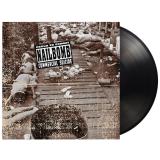
Nailbomb's live album Proud To Commit Commercial Suicide, was recorded at the legendary 1995 Dynamo Festival in Eindhoven, The Netherlands.
With 110.000 attendees, this was the biggest Dynamo Festival that was ever put together. Featuring a line-up of bands like Machine Head, Life Of Agony, Biohazard, Downset, Dog Eat Dog, Fear Factory, and many more, this was truly an event people from around the world wouldn’t miss.
Nailbomb's legendary live show (featuring appearances from former Dead Kennedys drummer D.H. Peligro, Biohazard bassist Evan Seinfeld, Sepultura's Igor Cavalera and Front Line Assembly/Fear Factory keyboardist Rhys Fulber) is still being talked about to this day. The last two studio tracks were recorded at Chaton Studios, Scottsdale, Arizona, in July 1995.
Proud To Commit Commercial Suicide is now available on black vinyl and contains an insert.
Moosgrünes Vinyl, limitiert auf 1000 Exemplare. B O D I E S ist Kat Frankies außergewöhnliches A-cappella-Projekt: acht Stimmen, keine Instrumente, pure Energie. Auf ihrem neuen Album "The Dream" verschmelzen kraftvolle Harmonien, intime Momente und pulsierende Rhythmen zu einem ganz eigenen Sound. Kat Frankie rückt die menschliche Stimme und den Körper ins Zentrum und lotet dabei Nähe, Freiheit und Selbstbestimmung aus. Mal zart und verletzlich, mal überwältigend intensiv - "Bodies" klingt unmittelbar, körperlich und überraschend modern. Ein Album, das Pop, Chormusik und Performance auf einzigartige Weise verbindet.
Reportage is the duo of Peter Olof Fransson and Svante Sjöstedt from Gothenburg, Sweden. They met in the late 1980s while working as postal workers in the district of Majorna. Since then, they have repeatedly worked together on music in various projects.
The recordings for "Reportage 1" began in late 2022 and were a natural development in the aftermath of a project called The Owl Report. But while The Owl Report mainly focused on English lyrics, the lyrics in Reportage are instead written and sung in Swedish.
Most of the Reportage material has been recorded in Svante’s family country house near Ulricehamn, and further edited and mixed in Gothenburg by Peter. The pieces mainly emerge from long evening improvisations, which then developed the melodic content and structures. Initially created on either guitar, mandolin, or ukulele, alongside bass guitar and simpler electronic rhythms as a base, the compositions were then further shaped with additional acoustic and electric string instruments, vocals, organs, field recordings, and electronically shaped fragments.
The music remains open, reduced, and without any visible intention to assert itself.
Peter Olof Fransson also releases music under the name Retep Folo, including on the UK labels Clay Pipe Music and Buried Treasure Records. His album "The Afterlife", on which Svante also participated, was created in collaboration with Dorothy Moskowitz, former singer of the American experimental and psychedelic band The United States of America, which was active in the late 1960s.
On "Reportage 1", images of a present out of balance emerge: overstimulated communication, social patterns of inclusion and exclusion, and repeating political and media loops. Figures move between withdrawal and overwhelm, between observation and participation. Again and again, it also touches on perception itself, and on how reality is filtered and shifted.
Gilles Peterson has partnered with Jean-Paul “Bluey” Maunick to reinvigorate the loose, protean energy of the early-80s Brit-funk scene. STR4TA sees them mine new musical possibilities outof that shared formative era. On “Aspects”, they revisit that
important period and the spirit that guided it: self-taught, DIY vitality, and a raucous energy built on live performance. Bringing a fresh slant to a sound first developed by groups like Atmosfear, Hi-Tension, Light of the World and Freeez – with Maunick, it should be noted, also a member of the latter two bands – it’s the first material that Maunick and Peterson have released together in over a decade.
It’s an idea that had been in the works for a while, but which was encouraged by a surprising catalyst: the award acceptance speech by Tyler, the Creator at the 2020 Brit Awards, where he shouted out the influence of “British funk from the 80s”. It was an acknowledgement of the particular sound that Maunick and his peers had honed, where their US influences were reoriented through their own circumstances. “Like everybody else who plays music, we tried to emulate our heroes,” Maunick says. “But we didn’t have the tools, we hadn’t studied music: were all playing by ear, and we were coming off bits and pieces that we liked off certain records.” This record is guided by the same ethos. An array of musical touchpoints have fed into the album’s direct, no-frills entries: each track’s parts are cut back to the bare bone. In writing and recording the album, the pair of them would work together to strike upon the point of departure – more naive, less considered – that had produced that killer Brit-funk sound. Peterson would dig out records that showed particular flashes or moods as jumping off points, and Maunick would then work with collaborators to build new directions out of those prompts or suggestions.
It’s the latest chapter in a story that started with Peterson interviewing Maunick in his parents’ garden shed, the first interview that the former had ever conducted. Later, they would reconnect to put out a string of celebrated Incognito albums on Peterson’s pioneering, now-defunct Talkin’ Loud imprint. Now, linking up once more, they unpick an under-appreciated flashpoint in a vital musical lineage, one which each of them has been instrumental in shaping.
New 3-sided double vinyl edition with bonus tracks. The first album contains the original album, while the second features a collection of bonus tracks originally included on the first bonus cd edition.
This album represents the musical mutation that occurred after the post-punk hangover gave way to more frigid emotional shores, in-line with the synth-wave moment that was sweeping Europe and the white cliffs of Albion. This scene flourished in Italy between 1981-1985, and the musicians that came out of it are still revered today (particularly in the US). Robotic rhythms and intuitions that, besides sharing common ground with the electronic movements that had come before, also knew how to fill up the dancefloor! Featuring four previously unreleased tracks by Der Blaue Reiter, along with tracks by Modo, Actor’s Studio and La Maison, as well as the still fresh sounding contributions by true pioneers of the genre Neon and Naif Orchestra.
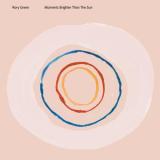
Rory Green is a Manchester-based composer, guitarist and bandleader whose debut album blends contemporary ambient, jazz and folk into warm, cinematic and deeply emotive music. Drawing on memories of Ghana and Northern England, Green creates richly layered ensemble pieces influenced by artists such as Nils Frahm, Fabiano do Nascimento, Portico Quartet and Jasmine Myra. Guests & collaborators: produced with Matthew Halsall (flute) and performed by a close-knit ensemble featuring saxophones, double bass and drums, alongside collaborations with Marysia Osu, Laura Misch and Bryony Jarman-Pinto.
Astro’, the new double LP by Donato Dozzy, is in many ways a culmination and intersection of life-long interests, and Tresor Records is delighted to announce that it will launch into the cosmos on November 20, 2026.
Donato Dozzy is beloved for his way of blending synthesised sounds into seamless, deep, hypnotic works, whether as a DJ or in the studio. So it might come as a surprise that at the root and source of Dozzy’s musical inspiration, we find Japanese children’s cartoons and toys.
In the late 70s into the 80s, Italian youngsters, including Dozzy, were captivated by a wave of Japanese cartoons featuring Jumbo Machinders, awe-inspiring robots on adventures beyond our solar system. Every episode came dubbed into Italian, and had its own specially written Italian theme song, each pressed onto a 7inch single. This was the launchpad for two lifelong obsessions: vinyl records and vinyl figurines, and still kept in his home today in immaculate, carefully tended collections.
In 2025, Dozzy took a sample from the first of the Japanese themes he ever owned, Astro Robot Contatto Ypsylon. Marking the first time he had directly sampled a song for his own work, later to become the track ‘Astro’, this created an impulse to begin a series of new music, sparked by the robots in his collection.
Dozzy’s meticulous respect for his collections is reflected in the precision of these tracks. Elements within each track are harmoniously organised together while ever retaining a sense of space that reflects the cosmic subject matter. Explorative tracks like ‘Raydeen’, and ‘Himika (M Song)’ exemplify this with powerful yet gentle arpeggios, while ‘Pegasu’ brings forth visions of robots assembling for a deep-space mission launch.
Much like the human characters in the cartoons who piloted the Jumbo Machinder robots, on ‘Astro’, Donato takes control of mighty machines such as the EMS Synthi AKS to create sonic journeys for us all to embark on. ‘Jumbo Crack’, written on the AKS, is a soaring beatless piece built of rising bass tones and white noise that combine to conjure taking off from earth or a long journey through space. The whole collection is rounded out with ‘Ryoma (Lò Song)’, a gigantic trance anthem that could easily be the closing credits of your favourite childhood cartoon.
With ‘Astro’, Donato Dozzy pulls together threads in his life: the warp of music and synthesisers intertwining with the weft of childhood memories. A tribute to that freedom to dream, and to the sounds that, from the turntable of his childhood, led him toward alien and technological musical territories.
Ezra Collective's Here Because Of Hope is the most ambitious and personal record of their career - conceived as a body of work split into three spiritual and geographical movements, the album traces the movement of Black people across continents and decades, from the music of Africa to the rhythms of the Caribbean, and home to the streets of London. Formed in the youth clubs of London, Mercury Prize and BRIT Award-winners Femi Koleoso, TJ Koleoso, Joe Armon-Jones, James Mollison and Ife Ogunjobi have now spent over a decade making jazz joyful, urgent and undeniable. On Here Because Of Hope, they push that vision further than ever, asking a simple but profound question: why does so much Black music born out of pain sound so joyful? Their answer is hope: the belief, carried across generations and oceans, that something better is possible. Anchored by collaborations with Pa Salieu, Lila Iké, Leona Lewis, and reaching across the full breadth of the global African diaspora (including America, where those same African and Caribbean roots gave birth to jazz itself) Here Because Of Hope is a record of remarkable warmth, ambition and humanity, and the sound of Britain's most vital band at the peak of their powers.
Celestial Echo Records heads to the Cayman Islands for CER014, produced in association with Whale Rider Records and longtime friend of the label Medlar.
This release shines a light on two incredible sides from the legendary Memory Of Justice Band, one of the Caribbean's best-kept musical secrets. Formed in Grand Cayman during the 1970s, the group blended soul, reggae, funk and island influences into a sound entirely their own, becoming one of the region's most beloved bands in the process.
On the A-side is a gorgeous piece of sweet modern soul — warm, uplifting and packed with the kind of effortless musicianship that makes you wonder how it stayed under the radar for so long. It's exactly the sort of record Celestial Echo was built for: soulful, timeless and impossible not to fall for.
Flip it over and things move firmly onto the dancefloor with a reggae-boogie burner produced by the legendary duo Sly and Robbie. Built around a heavyweight groove, tight rhythm section and infectious hooks, it's the perfect counterpart to the sweetness of the A-side and a reminder of just how interconnected Caribbean music was during this period.
As always, Celestial Echo is here to put proper soul records back into circulation — respectfully cut, properly pressed, and ready to play.
With Sunrise and the Life We Live, John Beltran returns to his ambient techno roots, the sound that garnered him global appeal in the 1990s.
Through ten tracks, the album journeys through lush, aerated textures and beatless expanse. Hypnotic grooves deepen and bloom in a flow of shapes and colors, creating a sound that is both meditative and full of life.
Thirty years after the release of his seminal Ten Days of Blue, Beltran's musicianship, vision and desire to produce remain at a fever pitch. With Sunrise and the Life We Live his gift of extracting emotion from the universe and turning it into
a unique musical experience puts him in a class of his own.
WRWTFWW Records is very excited to announce the first ever release for the Cyberpunk 2077: Future Sound of Night City soundtrack - atmospheric music from one of the most celebrated video games of the decade! The compilation, showcasing a who's who of Polish electronic underground, is available as a limited edition 45rpm-cut yellow vinyl 3LP in heavyweight 3-panel gatefold with a sticker sheet. The album is also available on CD with super jewel case, and in digital formats.
Dive deep into the pulsating world of Cyberpunk 2077 with an immersive soundscape perfectly capturing the gritty and neon-soaked streets of Night City. Curated by Rafa? Grobel and Wojtek Sokó? of Most Records, the epic 15-track compilation features a diverse offering of electrifying Polish beats, cohesively flowing between techno, ambient, synthwave, bass music, industrial, and IDM. Ominous, powerful, evocative, and filled with futuristic nostalgia, the music of Night City is a thrill ride in a dystopian urban landscape, heavy hearts riding through the night, menacing streets surrounded by infinite skyscrapers. The music transports you, soul-stirring, cinematic, and timeless, the most beautiful kind of escapism.
The award-winning Cyberpunk 2077 action role-playing game was developed by CD Projekt Red and published in 2020 and has since become one of the most recognized and best selling video games of all time. With a cast including Keanu Reeves and Idris Elba, unmistakable visuals, music, and atmosphere, CP77 has earned a spot in the pantheon of 2020s pop culture.
Points of interests
- For fans of video game soundtracks, ambient, techno, synthwave, vaporwave, industrial, dark electronic music, retro-futuristic moods, neon lights, Tech Noir, Keanu Reeves, bass music, All Foods, cities by night, skycrapers, urban adventures, dystopian universes.
- The soundtrack for Cyberpunk 2077: Future Sound of Night City available for the first time everrrr !
The tracks on the upcoming Boysonic release are a snapshot of a period largely absent from the discussion around Romanian electronic dance music: the first half of the 1990s.
Boysonic’s music was made in the face of considerable adversity, in a Romania still reeling from the aftermath of the 1989 revolution, spiralling inflation of over 200%, and the violence of the early-1990s Mineriads. In the gatefold photos, one of the band’s members can be seen performing live wearing a miner’s safety helmet, a piece of stagewear, but also a charged symbol of the period.
The original music on Madhouse was made in Bra?ov during 1993–1994. Situated away from Bucharest’s political and cultural centre, Bra?ov gave the project its own slightly detached rhythm. Classically trained in piano and active in local radio, Mihai Barb developed Boysonic as a largely one-man act, often joined live by a changing cast of dancers and vocalists. In the absence of a developed club circuit, early performances took place in pre-1989 concert halls, seaside resorts and local entertainment circuits organised around regional radio stations.
Agnostic in genre and unusually fluid in approach, Madhouse moves through downtempo pop burners, KLF-type UK house, boomy breakbeat, new beat and acid-leaning experiments. The material reflects a short-lived moment before the Romanian mainstream/underground divide had fully taken shape, when electronic music lacked infrastructure but not imagination.
Sampling was used generously, with drum loops, vocal fragments and preset banks repurposed through software such as ProTracker and further processed outboard.
The release comes as a 2xLP gatefold.
Remixes are from Benedikt Frey, Boysonic, Cosmin TRG, Flore of Khidja, Romansoff, and Tankwart.
eloelo recordings returns with its most assured release to date: ‘FREAK’, an original cut from label head ELODIE, backed by a club-ready remix from Parisian heavyweight DJ W!LD, and rounded off with the vinyl-only bonus ‘Carla’.
Championed on BBC Radio 1, ‘FREAK’ arrives with momentum firmly behind it. This is a hypnotic, slow-burning seducer rather than a blunt-force club tool - restless, wriggling textures crawl through the mix, weird and tactile, shifting constantly around the listener, while ELODIE’s own hand-built percussion keeps everything taut and unmistakably her own. Equally immersive through headphones as it is over a club sound system, the track reveals new details with every listen without ever losing its dancefloor drive. Sultry vocal hooks thread through the groove, and in the breakdown a trippy, melodic rhythm coils and builds before the track snaps back open. Classy, controlled and seriously sexy.
On remix duty is DJ W!LD, a bona fide legend of the underground. The Paris-based artist, longtime Circoloco resident at DC-10 and founder of W Label and Spit&Die, has long been one of underground house music's most respected figures. Long a torchbearer for deep, dark, sexy house, he flips ‘FREAK’ into a pumping, peak-time cut. Built for the floor and armed with a gloriously warped breakdown, his rework has already been tearing up the dancefloor, causing serious damage wherever it's played.
A long-standing digital favourite finally committed to wax, ‘Carla’ closes the vinyl release: a cult cut long adored by those closest to the label and to ELODIE’s music. Timeless, seductive and deceptively powerful, it has always deserved its place on vinyl — and here it finally gets it.
Refined, seductive and unmistakably her own, ‘FREAK’ is another forward-thinking, groove-driven statement that pushes eloelo records' distinctive, timeless sound further still.
For the 63rd release on Memoria Recordings, Thessaloniki-based producer and DJ G.rush delivers a deep and hypnotic four-track EP shaped by experience, restraint, and underground club sensibility. With roots tracing back to the early days of his DJ career and a production path that has steadily developed through stripped grooves, subtle atmospheres, and low-end movement, G.rush brings a mature and focused sound to the Memoria catalogue. Across the EP, he moves with patience and control. “Spectra” opens the record with a reduced but magnetic drive, built around rolling pressure and detailed rhythmic tension. “Just Friendz” leans into shuffled swing and understated funk, while “Seduction” takes the B-side into deeper, late-night territory. Closing track “Tus Manos feat. Lucie” adds a warmer vocal touch, balancing intimacy with dancefloor flow. MEM063 is a refined club record for selectors who understand the power of subtle movement. Just deep, functional, emotionally charged grooves built for intimate rooms, warm systems, and long after-hours moments.
Available again for the first time since 1970, Lobo’s melancholy masterpiece epitomizes the experimental evolution of MPB. With new liner notes by Edu Lobo.
Released in 1970, Cantiga de Longe is a defining record in the career of Brazilian singer, composer, and guitarist Edu Lobo and a significant contribution to Música Popular Brasileira (MPB). Created during Brazil’s military dictatorship, the album reflects the subtle, poetic strategies that artists use to convey meaning while subject to censorship. Rather than overt protest, Lobo expresses longing and introspection through refined musical language and evocative lyrics.
Musically, the album captures the sophistication of MPB at the turn of the decade. A foundation of acoustic guitar blends with jazz-influenced harmonies and elegant arrangements. The sound is both intimate and expansive: delicate vocal lines unfold over complex progressions, supported by understated rhythms, rooted in Brazilian traditions. Lobo’s controlled yet expressive vocal delivery keeps the lyrical nuance at the forefront.
A key element of the album’s texture is the involvement of Hermeto Pascoal. His imaginative instrumental contributions add subtle harmonic color and atmospheric depth, enriching the refined arrangements and enhancing the sense of openness.
Thematically, the album explores memory, distance, solitude, and time—personal reflections that resonate with the broader climate of uncertainty that dominated Brazil in 1970. This remains one of Lobo’s most mature recordings, exemplifying the emotional depth and artistic subtlety of Brazilian popular music in a creatively fertile era.
At the heart of ‘Diese Fragile Praesenz’ lies a melancholic yet propulsive drone, constructed from a field recording and drenched in white noise. Around this softly glowing orb Kelovolt constructs a vast, shifting, sombre soundscape. Lush, magisterial pads, starry-eyed synth work, cold washes of tape hiss and static melt in and out of the mise-en-scène. Crumbling walls of bass and distortion collapse in slow motion even as rich, brasslike harmonies elevate the listening mind. Long keening synth notes emerge from the fog, intertwining with falling tubular figures, a journey through a wormhole of sound both monumental and fragile.
The accompanying reinterpretations approach this deeply rich source material with discerning reverence. Voltmar's version deepens the grain of the original, with sharper percussion and washes of static that blow through the mix like little gales of dust. Anthony Linell's PM and AM remixes delve into a darker emotional core, placing at the centre a low, shadowy synth pulse around which mists of tape hiss and distortion swirl. Black Merlin steers the track down the path of eerie psychedelia, echoing clicks and dubwise space around a groove often found in the deeper chasms of contemporary techno.
Elsewhere, Die Wilde Jagd stretches the original into a mesmeric landscape of drones, occasional distant percussion and heavy fog, punctuated by fleeting moments of melodic clarity and beautifully resonant bell tones. CV313's pair of reworks complete the collection by exploring two complementary dimensions of the original through his signature dub approach. The Gravitational Pull mix feels the most true to the title track, amplifying its starry-eyed, celestial qualities, with a softer, hazier version built around a deep bass groove, while the Dimensional Dub descends into vast caverns of echo, resonance and alien texture - strong dub-techno sensibilities loom large in this mix.
Endlessly contemplative, endlessly exploratory, minimood027 is a trip to its own sonic galaxy that spirals inexorably outward, carrying the mind to ever wider astral planes. But at the core is that ever-pulsing drone, the black abyss that draws consciousness powerlessly back into the great nothingness.
DJ AGITATED, the secret techno moniker of a longstanding Belgian electronic music producer, returns to Steffi's popular dolly TS series with his 3rd release: Archive of Disappearing Now. Stepping out of his usual sonic territory to challenge the underground, this latest release delivers a powerful blend of melodic, high-quality, and deeply meaningful techno. Crafted for both the body and the soul, it is a timeless sonic journey that demands your attention. Join the agitated ride!
Atom Trance Force 20 is a special one for fans of 90s hard trance. EDM’s DJ Manga (Made In Hong Kong, Judgement Day, etc.) discovered two previously unreleased tracks, originally recorded in 1995 and 1996, and generously offered us the opportunity to release them on vinyl. Naturally, we accepted and are proud to present: DJ Manga – Motion (Original DAT Recordings 1995–1996) A1 and title track “Motion” (1995) is everything you’d hope for from an unreleased 90s trancer. It’s got the pianos, it’s got the melody that sticks in the back of your mind for days after hearing it, and it’s got the raw bassline and drums that drive in that special way they did back in the day. A2 features label head Micropulse on remix duties. Keeping the core elements of Marc’s original composition intact, the remix seeks to add some modern magic to the vintage charm and sprinkle some Atom energy onto the release. The flip side gives us “The Key” (1996), which occupies the entirety of side B and stretches out across 10 more minutes of 90s magic. It’s difficult to write track descriptions without sounding like AI, but the intro is long, the lead is sizzly, and the resonant bassline fits perfectly to round off this EP — the type of release that doesn’t come around often. The tools Marc used to produce the original 90s tracks included a Roland JD-800, Korg Poly-800, Roland TR-505, and some kind of Akai S-series sampler, all sequenced with an Atari 1040ST. For those interested, the 2026 remix uses a Novation Supernova II, Access Virus TI, Korg Wavestation AD, Waldorf Blofeld, E-MU E4XT Ultra, 208HP of Eurorack, and two Lexicon PCM70s.
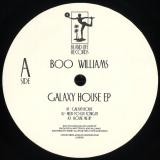
''Boo Williams - Galaxy House EP (Island Life Records) Island Life Records proudly welcomes Chicago house music icon Boo Williams with the Galaxy House EP, a powerful collection that bridges timeless underground house music with fresh contemporary reinterpretations. Leading the release are three original Boo Williams productions: the deep, groove-laden title track ''Galaxy House'', the soulful ''Need Yo Luv Tonite'', and the driving club workout ''House Me Up''--showcasing the unmistakable sound that has made Boo one of Chicago's most respected producers. The EP is completed by a quality selection of remixes. DJ Entropic delivers two contrasting takes on ''Need Yo Luv Tonite'' with a rave-fuelled Hardcore Mix and the darker, hypnotic Skeleton Mix, while Island Life label boss Garry Todd, under his Clouds of Kouros alias, reimagines ''Galaxy House'' with a deep, atmospheric interpretation that perfectly complements the originals. The whole EP blends authentic Chicago house heritage with forward-thinking club energy, the Galaxy House EP is another essential release from Island Life Records crew.''











![Various - [QR]V.324.SDD.26](https://www.deejay.de/images/l/1/1/1270011.jpg)