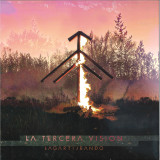
Kinshasa, Democratic Republic of Congo - a group of street children gathered around the artist Lova Lova to form the Atelier Kamikazi and record the album "Mokili na poche" in cooperation with Oyo Projects. They are "shégués", sons of soldiers, orphans or accused of being "child sorcerers". They talk in a funny and provocative tone about the difficulties encountered in their daily lives, about rivalry, politics, sexuality, and survival. These kids know they are fucked - and they fuck back.
About Seismographic Records:
Seismographic Records is a label for global hybrid music, run by Martin Georgi (Quiet Elegance Records). «Seismo» deals with connections of local and international sounds, of cultures and epochs far apart. It wants to break through the boundaries of Western music history and focus on the unheard. On currents that have so far been excluded from algorithms and streaming services due to their lack of market relevance. This is about the localization of new trend-setting centers in the Global South. In this way «Seismo» wants to make visible the potential of a decolonized music development. Music takes on the function of a seismograph. It is a sensitive instrument to register social transformations.
The focus of the label is on the production of vinyls and their distribution on the global market. The pressing makes the projects materially tangible. The productions are preceded by a close collaboration with artists, researchers, designers, and journalists in order to explore the cultural and historical contexts of musical trends and to make them audiovisually accessible. Texts, graphics, and videos are used to illustrate the background and contextualize the music. Seismographic Records also collaborates with cultural institutions in order to provide a platform for the projects in the form of exhibitions, concerts, radio broadcasts and to anchor them in cultural discourse.
Buscar:sensi
Like many of his favorite songwriters (John Hartford, Lucinda Williams, Jeff Tweedy), Izaak Opatz is an ungulate in life’s winter pasture, chewing on and metabolizing disappointment, heartbreak, and the other tough stuff into enjoyable musical carbohydrates. A compulsive metaphorager (and inveterate wordplayboy), Opatz breaks it all down with enzymes of wry humor, thoughtful simile and close observation - a therapeutic process of narrativizing his own life that, almost as a byproduct, turns out savory nuggets of literate, confessional pop. Where 2018’s 'Mariachi Static' drew from Opatz’s fragmented love life as a seasonal Park Service employee and resonated especially with the sensitive dirtbag set, 'Extra Medium', his latest release, splits time between romantic Hindenburgs across his native Montana, up the East Coast, and in faraway Los Angeles. Montana and LA especially decorate the album, supplying wells of metaphor and scene-making, and as characters in their own right - LA’s alternately charming (“In the Light of a Love Affair”) and discomfiting (“East of Barstow”), and, in “Big Sandy”, Montana evolves from setting to subject as the girl’s feelings he traverses it to see prove less than his own feelings for the state. In LA, Opatz learned from and worked alongside Jonny Fritz at Dad Country Leather, and met bandmates and 'Extra Medium' collaborators Malachi DeLorenzo (drums, producer, engineer) and Dylan Rodrigue (multi-instrumentalist, producer). He now lives in Missoula, Montana, where he runs his own custom leather shop, is writing the next album, and getting ready to pursue a Journalism degree at the U of M.
White Tiger, Ana Egge's tenth album, has nine originals and one cover
(John Hartford), and so amply displays her singularly articulate and
affecting honesty and sensitivity as to once again deserve USA Today's accolade, "Ana can write and sing rings around" her contemporaries
The album features wind, string, and vocal arrangements by multiinstrumentalist/ producer Alec Spiegelman (Cuddle Magic) and guest appearances by Anais Mitchell, Billy Strings, Alex Hargreaves, and Buck Meek (Big Thief). Like the tiger in the title song, Egge, herself, is near-miraculous, rare but real, and, as Lucinda Williams said, "Listen to her lyrics. Ana is the folk Nina Simone."
Continuing the label's special 7"s releases that capture the nascent 80s post punk, dub, funk and pop - as examined on releases by The Jellies, Woo, Phantom Band, 4AM and more - here a discovery of unheard demos from Dislocation Dance's Midnight Shift album.
As part of the eighties Manchester scene, the band's pop and jazz sensibilities have continued to garner attention, offering a rightful place in the city's rich music history.
With the closure of Richard Boon's New Hormones label in 1982, they came to the attention of Geoff Travis' Rough Trade. Creating a home studio in the basement of an old rambling farmhouse in Withington, Ian Runacres (guitar, vocals), with lyricist Paul Emmerson (bass), set to work creating demos to garner a deal.
Inspired by the funk-disco of Dr Buzzards Original Savannah Band debut album, Here Comes Love was written using Roland TR-606 drum machine, guitars, bass and (cheap) keyboard, its magical and lo-fi charmed quality melts hearts.
On Mr Zak, the fun Runacres had is evident. Written as an "indie" song, but with Aztec Camera and Burt Bacharrach on his mind, with Andy Diagram (trumpet) and Kathryn Way (vocals), hides a structure matching the album version, but which in its rudimentary instrumentation and production is unique and outshines the later version, to encase a specific period and innocence, of time.
With her second album SODA, Belia Winnewisser continues on the path she has been following for quite some time. Few share the Swiss artist’s knack for combining a sensibility to the enthusiastic potential of pop with an interest in niche references of experimental sound design. In recent years, her feel for this fusion brought Winnewisser to the attention of the electronic club music scene. This world and the various genres related to it leave their mark on SODA: sing-along anthems like “So Real” and the densely layered drone of “They Cry of the Sirens” stand alongside the feverish dance track that gives the album its name and rave bombs like “Solen.” A year without club nights allowed Winnewisser to fully embrace her flair for pop and experimentalism, which resulted in more than a mere series of nods to different genres and acts. SODA—both as a resonant title and as a collection of music—is a direct call without hidden meanings or implicit references. It’s simply the path she’s on and the way she’s going.
- 1: Pierre Sabine (Storm Over Europe) 03 38
- 2: Bowie (Not Quite For Strings) 05 1
- 3: Pyotr (Elegy) 0 5
- 4: F 600 (Effviersechshundert) 06 03
- 5: Pianoskizze (Incognito Recordings) 0 2
- 6: Atonales Schlaflied (Das) 01 43
- 7: Archie Waltz (Drums) 06 22
- 8: Dub Garden (Birds Why) 03 40
- 9: #2 (Improvisation For Two) 01 46
White Vinyl
The Duo met on a rainy day in Tilburg (NL) while working for a dance project — they came down from very different roads. Fhunyue, a stage director–performer–musician chameleon, works alone or collaborate with Annalena Fröhlich (Robinrobin, Just Another Woman In Space), Thom Luz, Unplush, Peeping Tom, Dorit Chrysler, Ko Murobushi, Damien Jalet, The Scottish Dance Theatre, Bern Ballett, for a most colourful variety of venues in Europe. She is a member of the music association Bongo Joe (Switzerland). Sven, an established musician living between Hamburg and Nairobi, who released several records on Honest Jons and Bureau B and collaborated with several artists like Shabaka Hutchings, Ogoya Nengo, Marc Ribot, John McEntire, Sofia Jernberg, Nils Frahm, Hauschka, F.S. Blumm and Stefan Schneider.
Their encounter quickly revealed that both their musical sensitivity and their instruments (Marimbas, Drums, Percussions, Electronics, Theremin, Buchla Synthesizer, Piano) matched stunningly, and that they had to play together. After a short while of rocky life adventures and theatre projects in which they collaborated, their off rehearsal sessions would become a lively necessity. The wish to give birth to a project entirely their own, grew so strong that they locked themselves in Sven’s studio at Jaffestrasse in Hamburg, and started working on the debut of their duet. They are happy to present and share with you their labour of love, in hope that it will be good to your heart.
- 1: Pierre Sabine (Storm Over Europe) 03 38
- 2: Bowie (Not Quite For Strings) 05 1
- 3: Pyotr (Elegy) 0 5
- 4: F 600 (Effviersechshundert) 06 03
- 5: Pianoskizze (Incognito Recordings) 0 2
- 6: Atonales Schlaflied (Das) 01 43
- 7: Archie Waltz (Drums) 06 22
- 8: Dub Garden (Birds Why) 03 40
- 9: #2 (Improvisation For Two) 01 46
The Duo met on a rainy day in Tilburg (NL) while working for a dance project — they came down from very different roads. Fhunyue, a stage director–performer–musician chameleon, works alone or collaborate with Annalena Fröhlich (Robinrobin, Just Another Woman In Space), Thom Luz, Unplush, Peeping Tom, Dorit Chrysler, Ko Murobushi, Damien Jalet, The Scottish Dance Theatre, Bern Ballett, for a most colourful variety of venues in Europe. She is a member of the music association Bongo Joe (Switzerland). Sven, an established musician living between Hamburg and Nairobi, who released several records on Honest Jons and Bureau B and collaborated with several artists like Shabaka Hutchings, Ogoya Nengo, Marc Ribot, John McEntire, Sofia Jernberg, Nils Frahm, Hauschka, F.S. Blumm and Stefan Schneider.
Their encounter quickly revealed that both their musical sensitivity and their instruments (Marimbas, Drums, Percussions, Electronics, Theremin, Buchla Synthesizer, Piano) matched stunningly, and that they had to play together. After a short while of rocky life adventures and theatre projects in which they collaborated, their off rehearsal sessions would become a lively necessity. The wish to give birth to a project entirely their own, grew so strong that they locked themselves in Sven’s studio at Jaffestrasse in Hamburg, and started working on the debut of their duet. They are happy to present and share with you their labour of love, in hope that it will be good to your heart.
Produziert von Jorge Elbrecht (SKY FERREIRA, JAPANESE BREAKFAST, WILD NOTHING) ist "Giving The World Away" HATCHIEs bisher ausuferndstes Werk. Mit umfangreichem Input von ihrem langjährigen Kollaborateur Joe Agius, nimmt es die himmlischen, schimmernden Shoegaze- und Pop-Sensibilitäten ihrer früheren Veröffentlichungen auf, dreht aber den Lautstärke-Regler um das Zehnfache auf. Ursprünglich wollte Harriette Pilbeam mit diesen Songs eine energischere Richtung einschlagen - sie hatte die klare Vision einer HATCHIE-Show, die sich in eine Tanzparty verwandelt und mehr Bewegung und Lebendigkeit in ihre Live-Shows bringt. Aber dann, zwischen Covid und den Lockdowns in Australien, zog sich Pilbeam mehr in sich selbst zurück, und diese Selbstbeobachtung und Selbstfindung diente als wahre Inspiration für die Platte. In "Giving The World Away" kehrt sie immer wieder zu demselben Thema zurück - verinnerlichte Scham abzubauen und Dankbarkeit und Beständigkeit zu finden, und endlich in der Lage zu sein, sich selbst zu vertrauen. Harriette Pilbeam wuchs als Jüngste in ihrer Familie auf, ein selbst bezeichnetes "großes Baby", aber sie sagt, die letzten anderthalb Jahre hätten ihr den Raum gegeben, sich selbst besser zu verstehen. Nach Jahren der emotionalen Selbstverleugnung legt sie hier ihre Ängste offen. "Giving The World Away" ist ein Album über Selbstvertrauen, über Rückgewinnung, über die seltsame Zeit im jungen Erwachsenenalter, in der man endlich in der Lage ist, sich selbst klar zu sehen. "Giving The World Away" ist der bisher klarste Blick auf Pilbeam und ein Zeugnis der Kraft und des Mutes, die daraus entstehen, wenn man sich verletzlich zeigt und sein Herz aufs Spiel setzt.
Kate Bollinger's songs tend to linger well beyond their run times, filling the negative space of ordinary days with charming melodies and smart phrasings. She writes them at home in Richmond, Virginia, letting her subconscious lead, an open-ended process she likens to dreaming. From a chord progression appears a line, maybe a syllable will start to stick, enough to pursue, but she says sometimes the words don't feel likeher own, more like shapes that form in the mind's sky. Bollinger's musical universe is relaxed, tender, and unassuming; within lives a timeless sensibility, a songwriter's knack for noticing the little things and their counterpoints. Darkness and light, pain and pleasure, reality and escape. Her new EP, Look at it in the Light, her first project on Ghostly International, is collaborative; she shoots music videos with her friends and colors each of her folk-pop songs with musicians in her community. The title Look at it in the Light is a reference to the aspects of Bollinger's life that she knows need examining. For one, there's her persistent resistance to change _ she chooses to ignore it on the title track ("I try not to notice / I deny my fate"), as wiry strums sync with crisp drums. She surrenders to comfort on "Who Am I But Someone," a light and softly psychedelic number. "Yards / Gardens" finds Bollinger in full swing, skipping verses of uncertainty above a bright and nimble bassline and kick. Guitar riffs unravel across the bridge, trailing her lines like ellipses. The string-backed "Lady in the Darkest Hour" is the set's most luxuriant statement, recorded during a session at Matthew E. White's Spacebomb Studios with in-house arranger Trey Pollard (Natalie Prass, Helado Negro). Here her lines ring bittersweet yet reassuring, uplifted by swells of golden-hued instrumentation. From the hushed abstractions of "I Found Out" to the biting suspicions of closer "Connecting Dots," Kate Bollinger uses every inch of this dazzling EP to find her footing amidst the ever-present sways of life.
Produziert von Jorge Elbrecht (SKY FERREIRA, JAPANESE BREAKFAST, WILD NOTHING) ist "Giving The World Away" HATCHIEs bisher ausuferndstes Werk. Mit umfangreichem Input von ihrem langjährigen Kollaborateur Joe Agius, nimmt es die himmlischen, schimmernden Shoegaze- und Pop-Sensibilitäten ihrer früheren Veröffentlichungen auf, dreht aber den Lautstärke-Regler um das Zehnfache auf. Ursprünglich wollte Harriette Pilbeam mit diesen Songs eine energischere Richtung einschlagen - sie hatte die klare Vision einer HATCHIE-Show, die sich in eine Tanzparty verwandelt und mehr Bewegung und Lebendigkeit in ihre Live-Shows bringt. Aber dann, zwischen Covid und den Lockdowns in Australien, zog sich Pilbeam mehr in sich selbst zurück, und diese Selbstbeobachtung und Selbstfindung diente als wahre Inspiration für die Platte. In "Giving The World Away" kehrt sie immer wieder zu demselben Thema zurück - verinnerlichte Scham abzubauen und Dankbarkeit und Beständigkeit zu finden, und endlich in der Lage zu sein, sich selbst zu vertrauen. Harriette Pilbeam wuchs als Jüngste in ihrer Familie auf, ein selbst bezeichnetes "großes Baby", aber sie sagt, die letzten anderthalb Jahre hätten ihr den Raum gegeben, sich selbst besser zu verstehen. Nach Jahren der emotionalen Selbstverleugnung legt sie hier ihre Ängste offen. "Giving The World Away" ist ein Album über Selbstvertrauen, über Rückgewinnung, über die seltsame Zeit im jungen Erwachsenenalter, in der man endlich in der Lage ist, sich selbst klar zu sehen. "Giving The World Away" ist der bisher klarste Blick auf Pilbeam und ein Zeugnis der Kraft und des Mutes, die daraus entstehen, wenn man sich verletzlich zeigt und sein Herz aufs Spiel setzt.
Contemporary pianist and composer James Heather announces his
second album, ‘Invisible Forces’, via Ahead of Our Time, Ninja Tune
founders Coldcut’s first record label.
An album influenced by the sensibility of electronic, ambient, orchestral
and post-rock music but channelled through solo piano and Heather’s
classical and jazz grounding.
With regards to his “superb” (Crack Magazine) and “masterful”
(Electronic Sound, Dummy) debut, ‘Stories From Far Away On Piano’,
the songs are grander, deeper and broader in emotional range and are
developed through a series of improvisation techniques. Heather
describes it as ‘pulse music’, with each track performed in a single take
and with their roots in this live improvisation, often honed on the road
where he moves between tender to more propulsive, trance-inducing
dynamics.
For fans of Jean-Michel Blais, Sarah Davachi, John Carroll Kirby, Otto A.
Totland, Ólafur Arnalds, Nils Frahm, The Cinematic Orchestra.
CD in slipcase with printed inner.
140g violet vinyl with holofoil detail sleeve.
“The sound Heather makes is captivating.” - Electronic Sound
“Masterful contemporary piano.” - Dummy
“A remarkable piece of music that yields more secrets the more it’s
played” - Clash
Featured in Coldcut’s ambient compilation ‘@0’ alongside Suzanne
Ciani, Ryuichi Sakamoto, Kaitlyn Aurelia Smith, Helena Hauff, Skee
Mask, Julianna Barwick, Steve Roach, Laraaji and Mira Calix.
Notable supporters of Heather’s music include James Lavelle (UNKLE),
Nils Frahm, Cillian Murphy, Flying Lotus’ Brainfeeder (via the live
session he did for them in 2021), The Cinematic Orchestra, The Bug,
Leandro Taub, Actress, Bicep, Martyn and Tim Noakes (Dazed).
James has collaborated with the likes of Dawn Richard, Coldcut,
Mumdance and Roger Robinson (King Midas Sound).
Limited edition of 300 copies. Packaged in a picture sleeve
J.D’s TIME MACHINE presents SPEAK LOVE b/w YOUNG HEARTS.
Songwriter supremo James Day has consistently delivered top notch material throughout his career, amassing an amazing set of collaborations.
The All Star Mix of SPEAK LOVE from five years ago features the mouthwatering cast of Glenn Jones, Tony Terry, Tim Owens, U-Nam, Ian Martin, Lin Rountree & Kevin Flint Jackson. This is one of James Day’s most respected compositions and we are thrilled to give this a vinyl release! YOUNG HEARTS originally from 2013 features the majestic vocals of both Kevin Flint Jackson and Tim ‘Tio’ Owens. Presented here as a '2022 Vinyl Exclusive Mix' with changes in the arrangement, Tim Owen’s EW&F sensibilities really shape this track and the note he hits in the meat of the song is worth the price of the admission fee alone!
- A1: Althea & Donna - Uptown Top Ranking
- A2: Susan Cadogan - Hurt So Good
- A3: Sophia George - Girlie Girlie
- A4: Judy Mowatt - I Shall Sing
- A5: Marcia Griffiths - Steppin' Out Of Babylon
- A6: Janet Kay & The Kaylets - Lovin You
- B1: Marcia Aitken - I'm Still In Love With You
- B2: Joya Landis - Angel Of The Morning
- B3: Phyllis Dillon - Perfidia
- B4: Sylvia Tella - Spell
- B5: Nora Dean - Barbwire
- B6: Mille Small - Honey Hush
- C1: Phyllis Dillon - Love Was All I Had
- C2: Faye Bennett - Back Wey
- C3: Lorna Bennett - Good Woman
- C4: Sonya Spence - Come With Me
- C5: Sandra Robinson - Sensi For Sale
- C6: Althea - Downtown Thing
- D1: Marcia Griffiths - Give You & Get
- D2: Dawn Penn - I Let You Go
- D3: Paula Clarke - Dynamic
- D4: Susan Cadogan - If
- D5: Hortense Ellis - My Willow Tree
- D6: Doreen Shaeffer - Back In My Arms Again
Trojan have pulled together some of reggae's finest moments here, and importantly they come from some of the genre's most vital female talents, who can often be overlooked in favour of their more visible male counterparts. Across four sides of vinyl the likes of Millie Small, Althea & Donna, Marcia Griffiths, Phyllis Dillon, and Susan Cadogan all deservingly feature and personal sleeve notes from musician Rhoda Dakar also add real value. Big hits, unknown rarities and some brilliantly wonky numbers like Sandra Robinson's "Sensi For Sale" make this an instant NEED!
- A1: Endangered Species
- D7: Sensitive Boys (Demo)
- D8: I Don't Need Your Love (Demo)
- A2: Living Dead
- A3: Countdown
- A4: Ambition
- A5: Lie Down & Die
- A6: Fear Of Girls
- A7: Down On The Farm
- B1: Sensitive Boys
- B2: ÷8×5
- B3: Ice Age
- B4: I Robot
- B5: Flesh Wound
- B6: Plan Of Action
- C1: Self Destruct
- C2: Police State
- C3: War Of The Roses
- C4: New Barbarians
- C5: Ship Wrecked
- C6: Enemy Awaits
- C7: I Don't Need Your Love
- D1: Limo Life
- D2: Cocaine
- D3: Shoot You Down (Demo)
- D4: ÷8×5 (Demo)
- D5: Countdown (Demo)
- D6: Ambition (Demo)
pink vinyl[46,85 €]
- A1: Endangered Species
- D7: Sensitive Boys (Demo)
- D8: I Don't Need Your Love (Demo)
- A2: Living Dead
- A3: Countdown
- A4: Ambition
- A5: Lie Down & Die
- A6: Fear Of Girls
- A7: Down On The Farm
- B1: Sensitive Boys
- B2: ÷8×5
- B3: Ice Age
- B4: I Robot
- B5: Flesh Wound
- B6: Plan Of Action
- C1: Self Destruct
- C2: Police State
- C3: War Of The Roses
- C4: New Barbarians
- C5: Ship Wrecked
- C6: Enemy Awaits
- C7: I Don't Need Your Love
- D1: Limo Life
- D2: Cocaine
- D3: Shoot You Down (Demo)
- D4: ÷8×5 (Demo)
- D5: Countdown (Demo)
- D6: Ambition (Demo)
blue vinyl[46,85 €]
3x12"
Extraordinary musical talent returns with a deeply textured third outing on Blu Mar Ten Music.
Having made serious waves with the release of his debut album "Coeur Calme" in 2014 and the incredible 2016 follow up album "Zawadi", Kimyan Law steers his sound in a darker, more introspective direction with the twelve heavily themed set-pieces of his new album, "Yonda".
The album title, "Yonda", homophonically flits between a location in Kimyan Law's native Congo and definitions of something situated at a distance but still visible, foreshadowing the artist's move away from his typical uplifting palette into less playful territory.
While previous work seemed to be a personal exploration of joy-tinged melancholy, "Yonda", feels much more sober and pensive, infected with external events. In conversation with Kimyan Law the artist described one piece ("Krieg") as his "portrait of war", with the music moving through phases of violence, silence, panic, redemption and peace. Ever the allegorist, Kimyan Law relates themes of conflict and war not just to obvious geopolitics but also to his own physical struggles, and even an obsessive battle with the music itself, ("Yonda" has been more than three years in the making). In 2017 the artist wrote, "I've reached a point where I couldn't sleep because it bothered me so much... I have found myself unable to make any music except for Krieg".
An accomplished drummer in his own right, Kimyan Law's intricate rhythmic sensibility is the lifeblood that runs throughout the album, incorporating ever more outlandish sources of percussion recorded from his natural surroundings and filtered through technology.
"Yonda's opener, "Jaardin", is deceptively gentle, with off-kilter rhythms and pianos providing fertile ground for Elyn's delicate singing before the whole piece careens off into what can only be described as orchestral proto-jungle territory. It soon becomes apparent that this placid introduction is misleading, with subsequent tracks fluctuating between pounding tribal beats ("Arboreal Epitone" / "Kin"), chilling orchestration ("Byo" / "Krieg") and rehabilitated jungle forms ("Seven Ant Foley"). A constant mix of light and dark, futuristic yet primitive atmosphere hangs over the album, with waves of luscious synths and deeply musical string arrangements lovingly cloaked over the razor-sharp drum work.
Unusual conceptual themes litter "Yonda"; "Dor Rhythm" is about a Dung Beetle's journey, "Lampion" is about paper lanterns, "Nova" is about plant growth while "Kilele" is a song about peace, featuring Kimyan Law's own vocals in a new language he created himself, conjuring memories of Cocteau Twin's Liz Fraser.
While "Yonda" contains moments of incontestable beauty it can often be a difficult listen, an illustration of an anxious mind yearning for peace. An obsessive and intricate musician, Kimyan Law's use of African percussion, finely honed polyrhythmic patterns and celestial sprinklings of keys melded with slabs of sub-bass power and sheer energy makes for an intoxicating listen. As ever, Kimyan Law has delivered a profoundly serious piece of work that expands the vocabulary of his genre. Despite the darkness saturating the work, a soft light still breaks through the window. It is the east, and Kimyan Law is the sun.
"This Is What It Feels Like’ is the latest 12-track project from ethereal singer/songwriter, Gracie Abrams.
Since making her debut with “Mean It” in October 2019, Gracie Abrams has emerged as one of the most compelling songwriters of her generation, earning the admiration of such likeminded artists as Lorde, Billie Eilish, and Olivia Rodrigo. A consummate songwriter who names Joni Mitchell as her most formative influence, she penned her first song at the age of eight, then went on to amass a devoted following on the strength of her emotionally intimate lyrics and DIY sensibilities. She is praised her “painfully honest tales of heartbreak draped in delicate melodies that carry much more intrigue than the usual run-of-the-mill singer-songwriter."
Combining machine-like accuracy with jazz-influenced improvisational sensibilities, Richard Spaven's
drumming has landed him gigs with vastly varied artists such as Flying Lotus, José James and
Mala, as well as recent recordings with Jordan Rakei, Alfa Mist and Sandunes. Unveiling his
forthcoming EP 'Spirit Beats', Spaven's musical talent is further demonstrated beyond his world-class
performance abilities, weaving his incredible technical skills into unique textured productions and powerful
compositions.
First single 'Hoodie Beats' begins amidst instant urgency. Atmospheric in mood, whilst relentless with its
accuracy, sub-bass locking into place with tight drums for a euphoric dance floor drop. Second single
'Nova' sees a continuation of the collaboration between Spaven and Jordan Rakei. Soul and substance
abound. Jordan delivers a delicate performance over the captivating harmony. Spaven says 'this is a
crazy beat to play. If you want to get technical - call it micro timing. If you don't - just call it hip hop'. 'Icarus
'88' brings a MC Barney Artist into the mix. Barney flows effortlessly over the micro shifted groove as
the tale unfolds. - synonymous with previous Spaven records, this ancestral drum beat of 'Spirit Beat'
soundtracks the sonic journey through this spiritual piece the harmony takes form, carrying the listener to
higher ground.
Spaven Will Release "Spirit Beats" Via Fineline Records On 25th of March 2022
PR Handled by Josh Byrne (DeepMatter, First Word, Gondwana...)
Das zweite, vielversprechende Album der norwegischen 8 Mann-Band ist ein Mix aus orchestralem Pop, Klassik und Progressive Rock! Definitiv eine der ersten Überraschungen in 2021 und unbedingt empfehlenswert für Progressive- und Artrock-Fans!
"Es gibt Platten, die sich nicht anstrengen müssen, um überlegen zu klingen. Gleichzeitig lassen Meer die Frage offen, warum sie nicht längst die Tore zum Prog-Olymp weit aufgestoßen haben (…) Vielmehr liefert er den Beweis, dass großformatige Streicherarrangements nicht gleich nach größenwahnsinnigen Muse oder avantgardistischen Radiohead klingen müssen. Auf dem Mittelweg gehen Drama und Cleverness Hand in Hand. Die Gefahr, Songs zu zerdenken und wegen der akademischen Schule, durch die alle Mitglieder von Meer gegangen sind, den Hörer zu überfordern, umschiffen die Bandgründer Johanne und Knut Kippersund als Songwriter mit Pop-Sensibilität." (VISIONS)
'Playing House' erscheint nun als limitierte Vinyl-Neuauflage in rotem Vinyl.
Loraine James' new ambient-minded alias, Whatever The Weather, follows her 2021 solo LP Reflection (Hyperdub). In contrast to her club music sensibilities, this mode embraces keyboard improvisations and vocal experimentation, foregoing percussive structure in favor of shaping atmosphere and tone. From this divergent headspace emerged new coordinates and climates, a new outlet: Whatever The Weather. A longtime fan of ambient-adjacent Ghostly International artists such as Telefon Tel Aviv (who she'd ask to master the album), HTRK (whose singer Jonnine Standish features on Nothing), and Lusine (whom she remixed at the start of 2021), James saw the label as the ideal home for this eponymous album of airy, transportive tracks as they began to formulate. The titling on Whatever The Weather works in degrees; simple parameters allowing James to focus on the nuances as a mood-builder. Her suspended universe fluctuates; freezing, thawing, swaying and blooming from track to track. James describes her jam-based approach for the sessions as "free-flowing, stopping when I felt like I was done," allowing her subconscious to lead. The improvisations have an intrinsic fluidity to them, akin to sudden weather events passing over a single environment - the location feels fixed while the conditions vary. The album opens at "25°C," a sunshower of soft hums and keys. As the longest piece, it serves to establish stability, the inflection point where any move above or below this temperate breeze breaks the bliss. Given James' proclivity for organized chaos in her production, this scene is fleeting, naturally. From that utopia, we plummet to the most melancholic read on the meter, "0°C," its isolated synth line traversing a hailstorm of steely beats and static. Next, the dial jumps for the propulsive standout "17°C." Like a timelapse of springtime in the city, the single accelerates across a frenzy of frames; car horns, screeching brakes, and crosswalk chatter fill the pauses between rapid jolts of multi-shaped percussion. For portions of the work, James leans neo-classical, rendering pensive vignettes of cascading piano keys and warm delay. "2°C (Intermittent Rain)" ends the A-Side on a short and stormy loop; a resulting sense of reset permeates the B-Side's opener, "10°C." The producer mingles intuitively on echoed organ, locking into and abandoning atypical rhythms that suggest her jazz-oriented interests. "4°C" and "30°C" display the range of James' vocal experiments. The former chops and pitches her voice to a rhythmic, otherworldly effect, the latter reveals James at her most straightforward (she cites Deftones' Chino Moreno and American Football's Mike Kinsella as inspirations), singing tenderly and unobstructed for nearly the duration before beats collide in the climax. Whatever The Weather closes at "36°C," while a sweltering heat by any standards the track eases along comfortably on a chorus of synth waves, acting as an apt bookend for this evocative, sky-tracing collection that started in a similar state. Cyclical, seasonal, and unpredictable, true to its namesake.
- A1: Hidden Portal
- A2: Early Waves
- A3: Sensitive (Feat Jerome Thomas)
- A4: Nacre
- A5: Skybox (Feat Blue Lab Beats)
- A6: Monkeyflower (Interlude)
- A7: One4Dumile
- A8: Dust On A Curb (Feat Summers Sons & C Tappin)
- B1: Levada (Feat Dal)
- B2: Orbit Sundog
- B3: Mount Rakko
- B4: Seaside Dreams (Feat Hunter Rose)
- B5: Uteki (Feat Alfa Mist)
- B6: Warplude
- B7: Half Nine (Feat Keepvibesnear)
- B8: Ajar
New album by pioneering German beatmaker FloFilz. On Close Distance, the lofiturned-hifi producer blends hip-hop inspired beats with contemporary jazz, alt r&b and a little rap. Featuring Alfa Mist, Blue Lab Beats, Jerome Thomas,
KeepVibesNear, Summers Sons & C.Tappin, Dal & Hunter Rose. Close Distance is his fourth album for Melting Pot Music. Since 2013, the self-taught bedroom producer and classically trained violinist has sold more than 10k LPs and gained 200 million streams.
Close Distance literally means “near in space or time” (or “nah dran”, as we say in German). The 16 songs on Close Distance came to life over the past two years. Many sketches were birthed at FloFilz's old home studio in Aachen. Some songs were made from scratch in London, where Flo did sessions with UK jazz supremos Alfa Mist and Blue Lab Beats at their studios. One was recorded in a kitchen in Streatham, where rap duo Summers Sons and pianist C.Tappin reside.
More sessions were already in planning when lockdown kicked in and travelling was no longer an option. Around the same time, Flo was about to move from Aachen to Berlin which he eventually did in November 2020. Once installed, he started sharing beats and files out of his makeshift studio in Moabit. Beat folders were sent to
London where two of our favourite new alt R&B vocalists – Jerome Thomas and KeepVibesNear – live. Another one went to Dartmoor where the jazz/hip-hop trio Dal added their magic touch while Hunter Rose processed her sultry vocals in Cape Town - 12 flying hours away from Berlin.
The album artwork has been created by Indonesian illustrator Fatchurofi, who caught FloFilz's attention through his work for everybody’s favourite band Khruangbin. Taking influences from Japanese Ukiyo-e art, Fatchurofi is adding a zen-like clarity (and tranquility) that resonates very well with the album.
It is no exaggeration to say that FloFilz has not only created another inspiring album with Close Distance but one that demonstrates how music can close the distance which we all have experienced (and still do) in a beautiful way.
Montparnasse Musique is a balance of two distinct sensibilities: Algerian-French producer Nadjib Ben Bella’s passion for raw organic beats, and South African DJ Aero Manyelo’s love of DIY synthesis in the digital realm. It’s a bold blend of fresh and processed flavours; the acoustic grit of traditional Africa combined with the pulse of modern Johannesburg — gqom, kwaito, techno, afrohouse. Together they produce an electro-acoustic sound, loaded with infectious hooks, uncompromising and authentic. For their self-titled debut EP, the cross-continental duo collaborates with Congolese bands Kasai Allstars, Konono Nº1, Mbongwana Star and Basokin on five audacious dance tracks forged from the tribal rhythms and mystic voices of the Kasai rainforests, amplified by the aggressive growl of hand-wrought instruments from Kinshasa’s urban wilderness, and augmented with the slick precision of an EDM toolkit. The end result is an inevitable evolution of Congotronics into a sharp-edged, club-ready sound. Nadjib Ben Bella is a DJ and producer who draws influences from the gnawa music of his North African roots and a diverse range of Sub-Saharan sounds from musicians he has worked with over the years. Most recently he has been touring Europe with West African band Les Amazones d’Afrique. Aero Manyelo, a name now synonymous with the burgeoning South African house scene, has honed a distinctive electronic sound that translates across the international club circuit and has attracted a broad range of collaborators — including Idris Elba and The Mahotella Queens on the opening track of an album inspired by the Nelson Mandela biopic Long Walk to Freedom. The EP was recorded and mixed by Kwezydoctor at Khaima Studio in Lille, France.
c 3 Bitumba (feat. Mbongwana Star) Extended
d 4 Sukuma (feat. Muambuyi) [Extended]
[Extended]
Merit Hemmingson is an 81-year-old matriarch, composer, organist and singer from Jämtland
She has devoted her life to exploring and constructing her own musical landscape, which bends and challenges genres in ways that have often created swells. Since the 1960s, her personal expression has created a unique space in Swedish music history where jazz, groove rock and folk music meet. Throughout her career Merit has moved forward with a strong sense of self and sensitivity to music and she has collaborated with both The Ark and Beppe Wolgers, played on major jazz stages in New York and over the years toured around Sweden and also in Norway. Her long experience invites you to a rare artistic depth, which winds down through narrow caves and out into magnificent saltwater cathedrals.
Featuring musicians like Loney Dear, Martin Hederos and Mattias Bjäred (Soundtrack of our lives), Sara Parkman and many more.
In Spring 2021, Mike Paradinas (µ-Ziq and the owner of Planet Mu) spoke to long time friend and past label signing Hannah Davidson (Mrs Jynx) about the therapeutic power of writing music when times are tough. Both had recently been dealing with the loss of a parent due to cancer, and fresh from writing Scurlage, Paradinas suggested a collaboration. “I’ve always thought Hannah’s melodic sensibilities chime well with my own," says Paradinas, "and I've wanted to collaborate with her for a long time, since her 2010 album 'Shark Carousel' in fact, because she'd written some melodies that I wish I had.” In a matter of weeks the two collaborated online, sending stems back and forth, each encouraging the other and fitting perfectly together. “After about ten days we had ten tracks we were happy with." adds Davidson, "It was exciting to hear what Mike would do with the stems I sent, and equally exciting to see what he thought of my additions to his stems.” Overall the result is an opus of deeply personal moments of grief, depicted in a feeling of serene, misty tranquility that makes it easy to get lost in. Davidson and Paradinas settled on the title 'Secret Garden' due to the melodic vista which unexpectedly opened up before them on the final track. The album truly is a melodic exploration that is so often missed in this genre. There are twists and turns in mood, from the pastoral loveliness of 'Jynxiq' and 'Unheard Melodies' which fall away to the dubby beats of 'Hi Jynx'; the sadness of 'Loss' leading into the beatless forlorn 'The Ballad of Darth Vader. The album ups the pace with the muffled kicks and warm atmosphere of 'Afternoon Sunshine', which sets the tone for the happier mood of the second half. This all leads up to the album's denoeument in final track 'Secret Garden' whose naïve meandering synth melodies, orchestral accompaniment and glockenspiel end the album in happy resolution.
Ahead of the release of his much awaited debut album « blablablue » , Belgian singer-songwriter Delv!s just shares a new single, the dreamy “Human Trumpet”.
It’s no secret that Belgium owes much of its cultural prestige to its vibrant music scene. Lately, with much of the attention turned to Flanders, the Flemish side of the country is playing host to many exciting, genre-bending projects, including a tremendously innovative rap scene and a lively pool of electro bands walking in the footsteps of pioneers such as Soulwax: A tradition that Delv!s, one of the country’s most exciting newcomers to the soul, blues, disco-funk and pop genres, is set on honouring.
Delv!s is now ready to introduce “blablablue" to the world: a soul album infused with electro, funk and rock sounds, blended with a score of field recording samples; twelve tracks all penned by himself, unveiling a whirlwind of emotions that fuel the singer’s unique voice. The nostalgic brass arrangements and vintage-sounding harmonies may evoke Billie Holiday, Nina Simone or even James Brown at times, but “blablablue” nevertheless triumphs as a current and socially relevant record thanks to its topical commentary and diverse influences. Addressing many of the great issues plaguing the world today, including the sense of urban solitude, this is the first offering by a great artist, a sensitive soul also fluent in the language of love. Something to reflect on, unite us and even comfort us at times when we need it the most.
Brooklyn-based musician, producer, and DJ Peter Matson returns to Bastard Jazz with a dance-floor ready 12" and digital EP, "The Right Way." The EP builds on Peter's 2019 release for the label - "Short Trips" - as well as his work as the bandleader for Underground System, and a slew of other solo and collaborative projects over the last two years.
Working from the ground up to produce a batch of 3 original tracks, Matson takes his sensibility as a DJ and musician and blends them into an unique whole, crafting sprawling arrangements into club-ready productions. With overall recording quality and ear for detail taking center stage, "The Right Way" boasts an impressive list of musical collaborators including a standout A-side feature from Ibibio Sound Machine's vocalist Eno Williams on the Afro-Disco workout "Call and Answer." Two beautifully conceived instrumentals on the flip-side dip into slow burning Italo ("The Right Way") and Balearic ("PB (Ça Va)") territories, while the UK duo Faze Action helm remix duty, pushing "Call and Answer" toward their signature Afro-meets-ProtoHouse & Disco vibe.
The EP weaves Matson's affinity for club music with the African influences for which he is known, culminating in a release that is both genre-bending and timelessly danceable. "The Right Way" is out digitally on Bastard Jazz Recordings February 25th, 2022, with the 12" to follow shortly after.
Tape
Lucia H. Chung is a Taiwanese experimental artist based in London. She performs and releases music under the alias 'en creux'.
Under this alias, Lucia is interested in the underlying structures of what we call noise and is examining the effects of human interventions into its complex web of tones. Repetition and chance operations are fundamental to Lucia‘s music. It is not built on the dionysian maximalism and symbolic harshness of lots of noise artists; catharsis is not reached via an explosion of sound, but via concentration on sound phenomena and small changes, which, not unlike some minimal disco night your usual mind-altering drone ritual, sucks you in more with every tiny alteration. This music is as intense as it is sensitive.
„The Liberated Mind“, in Lucia‘s own words, „is a sort of split release between two no-input configurations“. For „Wyldside“, she tuned two different feedback mixers with identical routings as close possible, as much as tuning is possible at all on these highly volatile instruments. „The two channels naturally phased in and out from each other. I guess the process was actually akin to Steve Reich's tape techniques on Come Out and It's Gonna Rain. The whole release extrapolated from that point onwards...“ Finding and replicating similar routings/settings on no input mixing desks is the nightmare of every control freak and a task doomed to failure, but in letting go and embracing these failures, patterns emerge. And thanks to Lucia‘s careful work, these patterns become hypnotic as she carves out the essence of each feedback loop, or, as she puts it: „Actually, I did remember the setting for the final track „Earthrise“, but for whatever reasons, I just cannot reproduce the sounds and it's forever lost (at least for this point in time, maybe when the conditions are primed again for the machine, the same sounds will emerge again...). I guess that's really the essences of improvised NIMB setup. Every single sound was the effect of the previous iteration and the cause of the next iteration... (Wait... isn't it just like a Blockchain? Ha!)“
A collection of no-input studio sessions improvised with Mackie 1202-VLZ Pro, TAPCO MIX260FX, MXR Phase 90 and Electro-Harmonix Bad Stone Phase Shifter. All tracks recorded live, no overdubs. Recorded in London in February 2020. Mastered by causeandcondition
Lucia also works as independent curator, producer and broadcaster at Happened. Check out Lucia‘s other albums on Hard Return, Falt and SM-LL.
‘American Foursquare’, Denison Witmer’s 10th - and best - album finally receives its long-awaited physical release.
Written after relocating his family to his hometown of Lancaster, PA, it’s a response to these major life changes - a meditation on empathy, on love and on the meaning of home.
“An album of extraordinary beauty and emotional force… His Songs are like exquisite miniatures” -The Sunday Times
“American Foursquare’ is a breath-taking, humble outpouring of reflection capturing growth, change, longing, and contentment: In other words, it’s the soundtrack to a life lived.” - Atwood Magazine
Tracklisting
P.E.’s sophomore album, ‘The Leather Lemon’, ushers in a new era for the New York band. A wild ride through chewy bubblegum pop, sweeping synthetic orchestrations and mutant club beats, the album slides ever closer to the fully-realized pop sensibility only winked at with their debut album, ‘Person’ (2020), and subsequent releases.
Recorded primarily at Schenke’s Studio Windows in Brooklyn, NY, ‘The Leather Lemon’ was cultivated from a fertile creative period between spring 2020 and summer 2021, which also yielded 2021’s acclaimed ‘The Reason For My Love’ EP.
Digging into mystery, romance and sex appeal, the album centres its sound within a Bermuda Triangle of dance music, electronic composition and experimental rock. Members Jonathan Schenke, Bob Jones and Jonny Campolo play within pop parameters, building upon free-form collaboration to create a fluorescent groove machine that harnesses the energy of their frenetic live shows.
Singer Veronica Torres explores her softer side, expanding her vocal repertoire from spoken word and jagged growls to cherubic and sensuous psalms.
Sax virtuoso Benjamin Jaffe’s chiseled experimental tone is heard in an extended solo of true romance in ‘Tears in the Rain’, a sombre surrealist duet penned by Torres and Andrew Savage, singer/guitarist of Parquet Courts.
It is a reckoning record for the times; an album of psychedelic resurfacing, real-time response to world events, and soft, sympathetic magic. This is a collection of songs shaped by five individuals who embrace music-making as a way to centre themselves in times of uncertainty; it’s resilience and imagination given shape. ‘The Leather Lemon’ is a true sweet-and-sour listening experience, an album as bright and clear as it is fractured and fun.
This essential 1962 album showcases the modern jazz saxophone innovator performing alongside the colossus of jazz piano and composition. Only Coltrane could be this 'fiercely tender,' and there's no better forum for his sensitive side than the music of Ellington and Billy Strayhorn, who contributes the album's true gem, 'My Little Brown Book.' Ellington is wise enough to appreciate the nature of the session and is quite content to feed chords in service of the young master--proving the old master's open mind and good taste— most obviously on their now-classic 'In a Sentimental Mood'.
Scott Walker, PJ Harvey, Coil, Matmos, Autechre & Pan Daijing. 180g LP with inner, 12”x24”poster + DL card. The Debut Full-Length By Montréal Producer Kee Avil, The Project Led By Avant/Improv Guitarist Vicky Mettler, Also Known As A Member Of Sam Shalabi’s Land Of Kush And As Co-Founder Of Concrete Sound Montréal. Advance Single “See, My Shadow” Premiered By Mary Ann Hobbs On BBC6 And Picked Up By Music & Riots, Backseat Mafia, Aural Aggravation, Etc In Dec 2021. Kee Avil, a project led by Montréal producer and guitarist Vicky Mettler: a singular expression of fractured dream logic concretized in chiselled postpunk guitar, sinuous low-end electronics, a panoply of organic and digital samples creating alternately twitchy and propulsive rhythm, and the anxious intimacy of her finely wrought lyricism and vocals. Bound by an outstanding production sensibility throughout, Crease unfolds one oblique earworm hook after another, with compositional innovation anchored to an inscrutable and compelling voice across 10 songs of tremendous and imaginative sonic detail. Kee Avil brings a contemporary electroacoustic sensibility to bear on traditions and conventions of pop, postpunk, electronic and sound-art songwriting, where touchstones range from Scott Walker and Coil to Fiona Apple, (early) PJ Harvey and (later) Juana Molina to Eartheater, Pan Daijing and Smerz; or Grouper produced by Autechre. Her unconventional alloys also conjure the guitar-inflected deconstructions of Gastr del Sol and the crystalline micro-worlds of Bjork, Matmos and Rashad Becker. Crease is one of those debut records that excites a wide range of peerless references precisely because it's so compelling in its own idiosyncratic authority, originality and execution. Each song on Crease is its own sculpture, meticulously assembled to resemble disassembly: “each of these worlds was built without consideration for the other; it felt impossible to me, once I would enter the atmosphere of a song, to try to start another until that idea was finished.” The album nonetheless unfolds in impressive holistic integration through a palette of textures and techniques deployed in recurring but continually refracted ways. Alongside her superb austere guitar work stitched into electro-industrial, dark-ambient and minimal-techno soundworlds, it’s her voice and lyrics confidential, hermetic, implacable that provide the galvanizing, always captivating through-line. Her more compositional, exacting, (de)constructed musical identity was first unveiled with the self-titled Kee Avil EP (Black Bough Records) and further honed by pre-pandemic tours sharing stages with Pere Ubu, Marc Ribot and Bill Orcut among others. Woodshedding since then, Crease presents a quantum leap in Kee Avil's exploration of studio-based experimentation, arrangement and production, signaling the arrival of a brilliantly genre-melding, refined and assiduous new voice in avant-garde songcraft.
'Memory Box' - the new album by Rodney Cromwell - fuses a European synthpop sensibility with a world of magical realism. It was inspired as much by the literature of Alice in Wonderland, Franz Kafka and Anna Kavan, as by its musical influences of artists such as Kraftwerk, Neu!, The Cure, Silver Apples, Oppenheimer Analysis and Polyrock. The sonic pallet of 'Memory Box' is rich, colourful, often surprising and utterly unique. Since the release of his debut 'Age of Anxiety' album in 2015, Rodney Cromwell has been featured by the likes of NME, Electronic Sound Magazine, Huffington Post, Paste, BBC6 Music and national RNE3 in Spain for whom he recorded a live session. 'Age of Anxiety' was included in a wealth of Best of Lists, not least that of Electronic Sound. He has appeared on compilations alongside Cavern of Anti-Matter, John Foxx, Devo, OMD, Katy Perry and many more. Rodney Cromwell is the project of Adam Cresswell. The first band he founded was SALOON, who were John Peel darlings, who recorded three Peel Sessions and the Festive 50 number 1 of 2002. They released three acclaimed albums on Track & Field (UK) and Darla Records (US) and played with a host of alternative acts including Stereolab, Electrelane, Quickspace, Laika, Of Montreal & Movietone. He followed Saloon with ARTHUR & MARTHA the acclaimed tweetronica duo that released the sole album 'Navigation' before vanishing. In addition to performing as Rodney Cromwell, he runs the Happy Robots record label. The Rodney Cromwell live set is a joyful mixed-media extravaganza, incorporating analogue synths, video visuals and live instrumentation, interjected by Rodney's 'offbeat wit'. His debut festival appearance at Indietracks in 2015 was described as 'like a spiritual experience". He has shared stages with acts including Pram, Marsheaux, Death & Vanilla, Rowetta and Steve Davis. His sole performance in 2020 was as part of Damo Suzuki's backing band. He will be promoting the album with a series of live-dates in 2022. Cromwell's recent singles 'Memory Box' and 'Get Me To Prague' received play on BBC 6 Music as well as national play in Spain, Finland and Japan. 'Memory Box' featured in the Official Festive 50 on Dandelion Radio. To coincide with the album we have early confirmed reviews with Electronic Sound Magazine and interviews with ElectricityClub, Pennyback Music and You haven't heard this music vodcast.
Heiko Voss has earned near mythical status as a torchbearer for the emotional, deeply felt and quietly radical style of electronic music. The blissed-out radiance of his Kompakt Pop single, “I Think About You” remains one of the label catalog highlights and a stellar run of collaborative singles as Schaeben & Voss; others might know him for his stewardship of the excellent, much-underrated Firm imprint. But with his new album, 3:30 Minutes To Live, released by Michael Mayer’s label Imara, Voss returns after a long silence with a beautiful collection of songs that hymn heartbreak with a lusciously melodic touch.
There is something definitive and newly confident in 3:30 Minutes To Live that has it feeling like a real statement of intent if compared to his earlier releases. “Although it’s not, 3:30 Minutes To Live feels like my debut album,” Voss reflects. “All releases before were more song sketches or electronic dance tracks.” Bunkering down in Teary Eyes Studio, Voss worked up somewhere between thirty and forty sketches of songs, which he whittled down to the twelve collected here, all of them situated in a unique space, but very much in accord with Voss’s defining aesthetic, which he describes as “indie pop music with a lot of guitar, electronic elements and a great love for melancholic ‘80s synth-lines.”
Voss is sensitive to both variety and consistency – 3:30 Minutes To Live sits together as an assured, vibrant collection of pop songs, but it’s marked by all kinds of surprising incident, like the guitar solo that erupts out of “This Is My Life”, or the acoustic guitar-led melancholy of the closing “This Summer”. It’s all borne of the alchemy of the studio process and the intimate romance of music-making. “If you constantly feel a little bit like you’re in love while writing and producing your music – simply because of the sound of the synth flowing warmly and gently through the room, or because the sequence of notes awakens something in you, or even a randomly arising groove in the loop of a guitar lick makes you shout, ‘Ha!!’ – then it usually becomes a beautiful song,” Voss nods. “Those moments make me happy.”
There’s also a delicious tension between the push of the music, its melodic lushness and gliding, ballerina-like movement, and the darker currents that pull through Voss’s lyrics, inspired by a “short, dramatic and toxic love affair.” This may read like familiar terrain for a pop album, but the way Voss weaves language through both the extra-linguistic joys of music and the inarticulate speech of the heart somehow allows for direct communication that is simultaneously plain-spoken and deeply profound. “Say It” is a simple, devastatingly effective plaint of alienation; “She Wasn’t Lonely” a simple portrait of everyday living set to chiming, clacking guitars, the music in the bridge taking astral flight as the titular character ‘lets herself go.’
A smart and sharp collection of songs that captures you with its gorgeous melodicism just as it blindsides you with its aching heart, 3:30 Minutes To Live is Heiko Voss at his most assured and open-hearted best.
Heiko Voss hat sich als Fackelträger einer emotionalen, von ganzem Herzen kommenden und nicht auf den ersten Blick radikalen Spielart von elektronischer Musik einen nahezu mythischen Status erarbeitet. Das schiere Glück, welches seine Kompakt Pop-Single "I Think About You" aus dem Jahr 2003 immer noch ausstrahlt, macht sie nach wie vor zu einem der Highlights des Label-Katalogs, wo sie neben einer ganzen Reihe hervorragender Singles als Schaeben & Voss steht; andere kennen Heiko vielleicht durch das tolle und vielfach unterschätzte Label Firm, für das er zusammen mit Thomas Schaeben verantwortlich war. Mit seinem neuen Album “3:30 Minutes To Live”, das am 4. März 2022 auf Michael Mayers Label Imara erscheint, kehrt Voss nun nach einer langen Pause mit einer wunderschönen Sammlung von Songs zurück, die den Herzschmerz – getragen auf den Schwingen unwiderstehlicher Melodien – ausgiebig besingen.
“3:30 Minutes To Live” kommt mit einer gehörigen Portion Überzeugung und Selbstbewusstsein daher, was im Vergleich zu seinen früheren Veröffentlichungen wie ein bewusstes Statement wirkt. "Obwohl es das nicht ist, fühlt sich ‘3:30 Minutes To Live’ wie mein Debütalbum an", meint Voss. "Alle meine vorherigen Veröffentlichungen waren eher Song-Skizzen oder elektronische Dance-Tracks."
Im Teary Eyes Studio arbeitete Voss zwischen dreißig und vierzig Songskizzen aus, die er auf die zwölf hier versammelten Songs reduzierte, die alle ihren eigenen Raum einnehmen, dabei aber sehr gut mit Voss' übergeordneter Ästhetik harmonieren, die er als "Indie-Pop-Musik mit viel Gitarre, elektronischen Elementen und einer großen Liebe für melancholische 80er-Jahre-Synthies" beschreibt.
Voss ist sowohl für Abwechslung als auch für Konsistenz empfänglich - “3:30 Minutes To Live“ ist eine selbstsichere, lebendige Sammlung von Popsongs, die aber auch von allerlei Überraschungen geprägt ist, wie dem Gitarrensolo, das aus “This Is My Life” herausbricht, oder die von einer Akustikgitarre getragene Melancholie des abschließenden “This Summer”.
Das alles ist entstanden aus der besonderen Alchemie des Studioprozesses und der intimen Romantik des Musikmachens. "Wenn du beim Schreiben und Produzieren deiner Musik ständig das Gefühl hast, ein bisschen verliebt zu sein – einfach weil der Klang des Synthesizers warm und sanft durch den Raum fließt, oder weil die Notenfolge etwas in dir weckt, oder sogar ein zufällig auftauchender Groove im Loop eines Gitarren-Licks dich ein 'Ha!' ausrufen lässt – dann wird daraus meist ein schöner Song", nickt Voss. "Diese Momente machen mich glücklich."
Es entsteht eine besondere Spannung zwischen dem positiven Elan der Musik, ihrer melodischen Verschwendungssucht, den gleitenden, Ballerina-artigen Bewegungen und den dunkleren Strömungen, die durch Voss' Texte ziehen, die von einer "kurzen, dramatischen und giftigen Liebesaffäre" inspiriert sind. Das mag sich wie ein vertrautes Terrain für ein Pop-Album anhören, aber die Art und Weise, wie Voss die Sprache sowohl durch die nonverbalen Elemente der Musik als auch durch den nicht artikulierten Ausdruck des Herzens verwebt, ermöglicht eine Art direkte Kommunikation, die gleichzeitig ausgesprochen klar und trotzdem tiefgründig ist. “Say It" ist eine erschütternd einprägsame Anklage von Entfremdung; "She Wasn't Lonely" ist ein einfaches Porträt des alltäglichen Lebens, untermalt von klappernden Gitarren, in dem die Musik einen astralen Flug unternimmt, während die Titelfigur sich "gehen lässt".
“3:30 Minutes To Live“ ist eine kluge und scharfsinnige Sammlung von Songs, die den Zuhörenden mit ihren wunderschönen Melodien fesseln, aber auch mit einer Menge schmerzenden Gefühlen konfrontiert. Ein Album, auf dem Heiko Voss ganz bei sich ist und Euch dabei mehr als nur sein Herz öffnet.
Sound can be a labyrinth, a twilight drift. Sound can truely unfold when it escapes logic or categorisation. For it is never really one thing or another, especially abstract, collaged or found sound, as it is always connected to a time and a place, or sometimes to an intention, or a notion, or – even more vague – to something as dubious as a feeling. So all this is inevitably inherent in a sound too. Sound is a fact but also an inbetween. In A Piece Of Work, concrete composer crys cole takes us on a journey through those inbetween places. Fragments collected over time in Oslo, Berlin, Vienna, Winnipeg, Melbourne and Lisbon were later arranged and assembled into an invented space, a story arc, a freeform poem. cole's work is one of dynamics and proximity, of complexity and sensitivity. One that embraces both montage and movement. Originally commissioned by Radiophrenia (Glasgow, Scotland), where it premiered in 2019, A Piece Of Work has been developed through live performances and studio sessions, naturally progressing over time and eventually leading to this final version presented here on vinyl.
Composed, performed and recorded by crys cole, 2019-21. With additional percussion by Oren Ambarchi and electronics by Seiji Morimoto. Mixed with Joe Talia at Good Mixture in Berlin, 2021. Mastered and cut by Anne Taegert at Dubplates & Mastering in Berlin, 2021. A Piece Of Work was commissioned by Radiophrenia in Glasgow, Scotland, and originally premiered in 2019.
- A1: Mouse On The Keys - Plateau (Kuniyuki Remix)
- A2: Paul Randolph & Kathy Kosins - Could Cou Be Me? (Kuniyuki Remix)
- B1: Mr Raoul K - Dounougnan Magni (Kuniyuki Remix)
- B2: Kazumi Watanabe - Garuda (Kuniyuki Remix)
- C1: Erika Nishi - Summer Party (Kuniyuki Remix)
- C2: Jungle By Night - Love Boat (Kuniyuki Remix)
- D1: Sth Notional - Song With No Words (Kuniyuki Remix)
- D2: Nabowa - Ries (Kuniyuki Remix)
It works in clubs. it works at after hours. Also, small bars vibrate meaningful on it: the music of Kuniyuki Takahashi enthralls everywhere and is made for heedful listeners, that love the thrill of little musical nuances, shifting in a deeply composed ocean of sound.
In terms of composition, melodic sensitivity, and subtle progression the music of japanese producer, Sound designer and dj stands out. Ambient, Future-Jazz, Deep House, Leftfield Elec-tronics: since more then 25 years the man from Sapporo expresses his emotions with a wide stylistic range.
As Kuniyuki or under pseudonyms like Koss or Newwave project, he released a body of work consisting of numerous albums and EP’s, that display his deep musical consciousness pro-foundly. Now his home label Mule Musiq drops “Remix Works “, an eighth tune strong compila-tion featuring for the second time since 2013 Kuniyuki Takahashi’s very own virtuosity of re-mixing.
A double vinyl that carries the full pallet of his skills – from yacht rock leaning synth-pop and balearic dreams to sweet wave signals and soulful Pop House.
It all starts with Kuniyuki’s Remix of “Plateau”, a tune by japanese Nu-Jazz / Post‐Rock band mouse on the keys, released in 2013 on the short living japanese retalk label. An epic, almost ten-minute-long house voyage, full of discreet acid shades and enlightening Jazz chords, that play spirited tricks on each other’s manic musical preaching.
As a confluence of ideas and methods, WILD ROCKET endeavour to interpret the subtle signals of the universe - the interplanetary vibrations - and present them as brash manifestations of sound. Scientists and Shaman alike have endeavoured to interpret the universal whispers, to elucidate meaning from the measurable and the sensible. It is known that to measure and interpret is to alter and colour those signals and this is what drives the development of WILD ROCKET's sound and interpretation.
FORMLESS ABYSS showcases the band's unflinching pummelling style, drifting from repetitive blows to unhinged swirls of din yet always remaining innately infectious and perhaps surprisingly danceable. The record is presented as a continuous piece in three parts.
The title track A FORMLESS ABYSS appears here for the first time in recorded form – a behemoth of a tune which builds around a drone, joined by dual drums and minimal bass locked into a repetitive groove. A groove that is slowly expanded via multiple guitars and synthesis. Vocals eventually join at just the right moment imploring the listener to “leave your criticisms down” and realise “we're all equal now” in the formless abyss or the place between worlds where our earthly preoccupation with human differences are meaningless. We're all in it together, whether we realise it or not.
The second track INTERPLANETARY VIBRATIONS may seem familiar to some in a simpler form. The expanded line up and extended development of the core theme brings a new interpretation and experience that is more than worthwhile. The track's vocals juxtapose the hybrid Germanic language of English with the ancient native Irish language of Gaeilge. Both used to promote meaning and interpretation of the interplanetary vibrations felt by all. The track features large dynamic shifts and changes of pace as the message that “it's time to leave” propagated by the Earth itself becomes more frantic and more desperate. The track culminates in a wash of smashed gongs and distorted guitars, leaving the listener to interpret the message for themselves. Should we leave, to protect ourselves or the Earth itself?
The final track FUTURE ECHOES is a doom/kraut juggernaut coming in at just under twenty minutes. Only one question is asked and none answered, are we doomed to repeat the mistakes of previous civilisations over and over, or can we find the cracks of light that echo through and show us a new way forward? We're left in a swirling formless abyss to consider who we are and where we're headed. Will we ever reach the cosmic truth? Or will we be continuously mocked by the cosmic trout?
WILD ROCKET have proven themselves on the live circuit, playing with such visionaries as Ufomammut, Slomatics, Earth, Boris, The Cosmic Dead and old school rock legends Girlschool. One of the heaviest bands to emerge from the melting pot of talent in the Irish music scene, WILD ROCKET's reputation precedes them wherever they travel and audiences and venues alike are left to piece themselves together in the discombobulation.
Reissue of a 1969 trio recording by American guitarist Jim Hall, who
resides at the top of the jazz guitar pantheon
At the time of his death in 2013 at the age of 83, he had long been considered
one of the jazz greats, a major influence on generations of jazz guitarists. It
seems that virtually every major musician wanted to play with Hall. His work as a
sideman ranged from swing era giant Ben Webster to new music pioneer Ornette
Coleman. HIs recording credits include a series of classic albums with groups
headed by Jimmy Guiffre, Sonny Rollins, and Bill Evans; Hall often spoke of
Rollins and Evans as two of his major influences.
This intimate June 1969 musical get-together was due in large extent to the close
friendship between the Hall and legendary German writer/ critic and producer
Joachim-Ernst Berendt. As Hall, his wife and daughter were visiting him in Berlin,
Berendt noticed that, although he had been recording extensively with a number
of major jazz figures over the last years, including several collaborative gettogethers, Hall had not recorded an album solely under his own name in over a
decade. Berendt immediately set up a trio recording for Hall that included two
internationally renowned musicians with whom Hall had previously worked, the
American expatriate bassist Jimmy Woode and Swiss- French drummer Daniel
Humair.
In such a transparent setting, Hall unfurled his finest qualities. Humair
perceptively summed it up: Hall played with "more clarity, more purity, more
sensitivity" than any other guitarist of the period. It resulted in an album of
intensely introspective music.
Alt-R&B singer, songwriter, and producer Marshall Vincent announces his new EP 'In No Particular Order', a collection of five tracks on SA Recordings. Inspired by his time living in Berlin, New York, and Chicago, Marshall weaves together a soulful blend of orchestral, electronic, pop and folk elements to tell stories of life and love in vivid colour. Songs that are a mix of heartfelt ballads, haunting basslines, and dramatic strings draw a strong line to the alternative R&B of Moses Sumney, and the folky inspired songs of Kate Bush. Following a series of EPs that have garnered him critical praise - as well as landing him a support set for Kelsey Lu - In No Particular Order draws upon a multidisciplinary background spanning orchestral and theatrical training to explore the idea of ‘provocative healing’ - the use of pain, conflict, and emotional turmoil to create love, honesty, and intimacy. Sonically, Marshall’s music can be defined as intimate R&B, but there are threads of classical, folk, and electronic present, and all woven together with the aim of honest, universal storytelling. More important than genre is the pursuit of clarity and meaning, and as such, the references found within Marshall’s work are abundant. "I have always been quite sensitive, since I was a child. I also experienced hardships that made me closed off, cold and detached. I had to learn to face my pain. This fight manifested itself into creation. The ability and need to create my own world helped me see myself in others. In a way, it feels no different than the creation of a universe… my mania, my intensity, and my stress go into themselves, and they explode in these moments… sonic textures, movements, visual cues… all acting as tools to put me back together." - Marshall Vincent
Third album from North Carolina band who merges raw country with punk grit and pop sensibilities. "Straightforward, undiluted songs about shared hardships and unlikely victories that can bring even the most polarized people together. We are not responsible for other people’s behavior and sometimes we have more say in our own lives than we believe. The moment we realize this we start awkwardly constructing this cerebral bridge that's somewhat clunky and weird but it’s finally taking us in the direction we want to go. The songs on Nightroamer are beautiful, agonizing, magnetic, mischievous, indomitable pieces of the clunky and weird brain bridge to personal autonomy." —Sarah Shook
Curtis Godino’s first album producing for The Midnight Wishers. Mastered by Shimmy-Dic’s Kramer. “Golden Wish” Yellow Vinyl LP ltd edition of 500. RIYL: the Shangri-Las, the Chiffons, the Crystals, the GTOS, Ween. What if a cute girl group scored a hit song about a car crash, then actually died in a car crash, but decades later, David Lynch conjured their spirits for a beach-themed Halloween special? That’s a feeble attempt to describe the fun, spooky universe evoked by musician, songwriter and producer Curtis Godino with his latest project, Curtis Godino Presents the Midnight Wishers. “I’ve always been a fan of girl groups and old generic love songs,” says the Brooklyn-based artist, previously known around town for his psychedelic band Worthless and his ’60s-style light projection shows. “No matter how cheesy, they always get stuck in my head, so I decided I would try to make some of my own, with the help of my friends.” Chief among those friends are the Midnight Wishers: lead vocalist Jin Lee and backing singers Rachel Herman and Jessica McFarland, all of whom Godino recruited for the project. Lee also contributed lyrics, which she tends to recite as often as she sings in a dreamy, earnest voice. The trio are the perfect messengers for Godino’s tunes, visually as well as sonically. In photos, they pose before bubble-gummy backgrounds, playing with a ouija board by candlelight, elemental like a cartoon crime-fighting team with their respective black, red and blonde hair. But make no mistake: This project belongs to Godino, a musical ringmaster in the tradition of Phil Spector or more aptly Shadow Morton, whose noir sensibilities spawned such uncanny pop marvels as the Shangri-Las’ “Leader of the Pack” and “Remember (Walking in the Sand).” In this case, Godino built the wall of sound almost entirely by himself, recording on his eight-track tape machine during the pandemic shutdown. Starting with drum tracks from Andrew Max and Adam Amram, he would add picked bass guitar in the style of L.A. studio legend Carol Kaye, then go bonkers with fuzzy guitars, Farfisa organ, mellotron, analog synthe- sizers, glockenspiel, an arsenal of other percussion instruments and an array of mysterious electronic effects. To fully realize the vision, however, Godino knew he needed more firepower. The Wishers’ multilayered harmonies and other vocal tracks were recorded and engineered by his roommate, Paul Millar, at Millar’s Bug Sound East studio. “I'm sure all those incredible old records were recorded on a four-track or whatever, but I don’t have the same discipline,” says Godino, whose stated goal was to create “songs so sweet they’ll give you a cavity
"Europe's greatest clarinetist and free spirit" (Jazzthetik) plays ballads and
legendary love songs on his new MPS album. In so doing, he delivers new
meaning and a fresh sound to the pieces. A sentimental look back is simply not
his thing. Together with his new quartet of pianist Frank Chastenier, bassist Lisa
Wulff, and percussionist Tupac Mantilla, Kühn contrasts his sensitive side with
his unbridled desire to experiment. "I've chosen some of my favourite ballads for
this album. These pieces have nothing to do with any sort of trend. For me, they
are poignant and beautiful; they are simply timeless," says Kühn. "I found it
especially appealing to combine these particular choices with my latest
compositions. The album opens with "Both Sides Now", a classic by Joni
Mitchell. Kühn liked the poetic text, and says that, "Somehow, in life there are
always two sides, but it's best when they enrich each other and can smoothly
merge in order to create something new."
One of five new compositions, the title song "Yellow + Blue" encapsulates the two
perspectives: the flamboyant, the impulsively vibrant yellow next to the soft,
sensitive, warm bluesy-blue tonal colour. In turn, a new musical color is created
out of the contrast.
Magic spells, time-traveling futurists, sword-bearing horse riders, mountain-residing sorcerers, possessed journeyman,
ominous warnings: Demons and Wizards lives up to its title as a collection of fantasy-based narratives rooted in dreamy,
gothic-minded arrangements. Universally recognized as the finest effort of Uriah Heep's four-decade-plus career, the 1972
LP also perseveres as a prog-rock landmark that influenced countless of bands ranging from Metallica to Styx. And now, it
sounds better than ever on this extremely cool green-vinyl gatefold pressing from Wax Cathedral.
The first album on which founding members Mick Box, Ken Hensley, and David Byron are joined by staple drummer Lee
Kerslake, Demons and Wizards captivates by way of taut songwriting and instrumental execution. Rather than function
as the primary attraction, make-believe lyrical themes augment a formidable assembly of folk-derived melodies, sharp
medleys, and powerful hooks. Acoustic guitars weave webs of finite textures through which crackling, church-like organ
passages and space-conscious bass lines maneuver. Songs come across with an ethereal, powerful feel.
Glowing with old-fashioned tube-amp warmth, concise and punchy fare like 'The Wizard,' 'Traveler In Time,' and the hit
'Easy Livin'' touch upon garage-rock basics. Epics such as 'Circle of Hands' and 'Paradise/The Spell'—a multi-part sonic
excursion whose choral grace and spiritual glide evoke distant lands, misty cloud forests, and peaceful eternities—cling to
a sensitivity underscored by deft piano touches. No wonder Uriah Heep spent the remainder of its lifespan trying to again
capture such a balance.
As the tides change and the majesty of the moon once more begins to illuminate our forgotten domain, the hotly-tipped Incus has made the jump to hyperspace and determined that now is the time to unleash his neoteric creation into the macrocosm of music. At the behest of the sonic social masters, "INC.AUDIO" will be deemed a passion project, but in reality it will rip the very fabric of what it means to have a personal creative outlet, curtailing boundaries and expectations alike. Based on the creed of freedom of experimentation, the label will allow Incus and close friends within the industry to share their creative expressions within a familial and contemporary framework free from third-party limitation.
For now we start at the first chapter of the INC.AUDIO narrative, and the inaugural release which comes from the architect himself. His first solo EP contains 4 tracks conceived at home during lockdown, combining new sound design techniques developed through the mediums of trusty Korg Hardware and Ableton live. The end product is a consummate representation of the benefits of free time, reckless abandon and zero red tape.
Kicking off with "Design Your Mind", Incus draws on his longstanding influences collected via years of crate-digging and supporting underground idols in the UK and Ibiza. Shuffling percussion, jittering stabs and percolatin' chords wax and wane, submitting us to the will of its deep, minimal groove with a sultry sensibility. Next is "New Dog Old Tricks", the one with "that" bassline. No holding back from the get-go, the punching percussion is waylaid sporadically by erratic tones and steadied by placid, ambient chords. The charming breakdowns are peculiarized by a haunting saxophone sample, firmly establishing the clear-cut level of advancement and attention to detail achieved by the creator.
"Calm in the Chaos" steps back from straight-up grooving, inviting an equatorial temperature to come and play. Tantalising acid-inclined bass notes perforate the horizon, aiding the insistent percussion and creating a sunny, party-ready disposition infectious as they come. Feel like you're on a beach or in a rainforest? Snap. After the party we finish in the "Morning Haze". Alien-like frequencies and UFO bleepology steer the good ship Incus on this extra-terrestrial journey through the tech-house heavens to its final resting point. The seductive vocal cut adds a beautiful edge to the track, creating a minimal yet also expansive soundscape perfect for disembarkment. So, now you see what INC.AUDIO is all about, why wouldn't you stick around? Fight the bureaucracy and become who you need to be today, not tomorrow.
Almost exactly a year after Tower Block Dreams' Time Is Now debut and the launch of our white label series, the UK-born, Madrid-based producer returns with a club-ready 5 tracker which fuses together the most danceable facets of UKG, grime and breaks.
The opening track "Bare Dubs" pays tribute to UKG's antecedents in pirate radio with sporadic MC vocal samples and a womping bassline. The product: a soundsystem banger with a disjointed, yet fiercely controlled two-step rhythm and grimey, extended basslines a la So Solid Crew and early Scratcha. Flip over the record and the A-side's cold rigour is swapped out for a sultry groove.
Euphoric piano stabs and playful R'n'B vocal chops energise "If You Want The Reload" and video-game-esque bleeps lend "Last One From Me" its blissed-out melody. But don't get too comfortable. The aptly-named "From The Top" sees a return of the opening tracks' grime sensibilities and introduces an FM static atmospheric to take things back to the old school.
Time Is Now White Vol.12 drops 25th February 2022 via Time Is Now.
"My aim for my new record was to find really unusual combinations,"
explains Rolf Kühn, in cheerful mood after his last day in the studio
The special attraction of these 13 'Spotlights' emanates from the extraordinary
combination of instruments and styles, and above all from the fact that a group
of virtuoso artists from very different musical backgrounds have come together
to participate in a a project very close to their hearts. The theme running through
and joining up the album is of course the unmistakable sound of Rolf Kühn's
clarinet. Hamilton de Holanda, the distinguished Brazilian expert on the bandolim,
a kind of mandolin, immerses Kühn's clarinet in Latin- sounding melancholy.
Albrecht Mayer, international classical star and solo oboist with the Berlin
Philharmonic, provides a fascinating angle with his highly sensitive playing and
the rich facets of his art. Asja Valcic, the outstanding Croatian cellist, contributes
her impressive, classical virtuosity and daring improvisation, as she races
frantically through the notes with Kühn. Christian Lillinger, the exceptional
percussionist with the Rolf Kühn Unit, adds his wild groove to the mix and 0 like
Berlin bassist Oliver Potratz - accentuates the tense dynamic mood. Ed Motta,
heavyweight Brazilian singer and megastar in his homeland, brings out his
baritone to sound like a synthesizer suffering voltage fluctuations, breathing and
scatting resounding word scraps into Kühn's compositions.
Brand new album by the legendary Swamp Dogg.In 1954, 12 year old
Jerry Williams, then performing under the name Little Jerry Williams,
made his first recording for Mechanic Records, a blues stomp with a
shockingly mature vocal performance - Through the 60"s Williams' career
developed with a number of successful singles, including 'I'm the Lover
Man' and 'Baby You're My Everything', as well as writing and producing
hits for Dee Dee Warwick, Doris Duke, and Patti LaBelle and the Blue
Belles. It was in 1970, however, that the full extent of Williams' eccentric
creative genius was unleashed on the world for the first time, with the
birth of his musical alter-ego, Swamp Dogg
Created to 'occupy the body while the search party was out looking for Jerry
Williams, who was mentally missing in action due to certain pressures, maltreatments and failure to get paid royalties on over fifty single records,' the
Swamp Dogg alias, still in use today, allowed Williams to create music that was
bolder, raunchier, and more honest to his creative instincts. The Dogg's cult
classic debut 'Total Destruction to Your Mind' struck a powerful blend of Williams
classic soulful sensibilities and the blooming psychedelia of the time. Infused in
the swirling brew is Swamp's blink- and- you'll- miss- it humor, a number of acid
odes, and a heavy dose of sharp political insight. Though the psychedelic
strangeness alienated R&B fans of the time, and the authentic R&B infrastructure
prevented it from clicking with hippie audiences, it has retroactively received
legendary status in cult music circles.Now, 50 years after Total Destruction
introduced Swamp Dogg to an unprepared world, and nearly 70 since Little Jerry
Williams went into the studio for Mechanic, Williams brings us I Need A Job' So I
Can Buy More Autotune. A spiritual successor to 2018"s hit Love, Loss and
Autotune, this album continues to push Swamp's sonic exploration of the effect
as one of his many creative weapons. In the extended tradition of Total
Destruction, Swamp Dogg's 2021 LP neatly balances sleek modern production
techniques with that classic Dogg sound that has anchored William's music since
the 70s. Subtle yet soulful drumming, skin- tight horn grooves and meandering
funk guitar leads create a sonic landscape fitting Swamp Dogg's iconic croon,
occasionally drenched in the titular autotune. At 78, Swamp Dogg is as sharp of a
singer and songwriter as ever. His raunchy yet charismatic sense of humor takes
a more forward role on I Need a Job' So I Can Buy More Autotune, with earnestly
delivered lyrics about all day sex and an entire song dedicated to the perils of
'Cheating in the Daylight.' Many of the record's most charming moments emerge
from the juxtaposition of Swamp's left field humor with genuine messages of
love, such as 'She Got That Fire', which weaves descriptions of imagined sex acts,
including but not limited to an encounter involving edible underwear, in between
relatively wholesome proclamations like 'she must be an angel on earth,' and
'when she looks at you, it's like sunshine from her eyes'. I Need a Job does more
than prove that Swamp's still got it, it proves he's still getting better.
Maria João Pires, die große und sensibel-feinsinnige Pianistin, wird besonders für ihre Chopin-Interpretationen
weltweit gefeiert. Erstmals auf Vinyl erscheinen jetzt die beiden Klavierkonzerte von Chopin mit dem Royal
Philharmonic Orchestra unter der Leitung von André Previn.
Auf der Doppel-LP: Die bereits legendäre Aufnahme des Klavierkonzertes Nr. 2 aus dem Jahr 1993 und das
Klavierkonzert Nr. 1, welches 1991 aufgenommen aber erst 2021 remastered und erstmals veröffentlicht
wurde. Eine Entdeckung aus den Archiven der Deutschen Grammophon.
"It’s a voice that soars –pure, clear and true —above bass and synths, traditional percussion and infectious Mande guitar grooves. A stop-you-in-your-tracks voice instantly familiar to anyone in Mali, West Africa: Rokia Koné, aka the Rose of Bamako. On her debut international release, she’s teamed with Irish-born, California-based rock producer Jacknife Lee —and reimagined the Malian sound in ways leftfield and ground breaking.
BAMANAN is a collaboration that connects the great ancient kingdoms of Mali and the bustling modern street life of its capital, Bamako to a remote recording studio nestled within California’s Topanga Canyon. That bridges deep tradition and forward-facing innovation. One of Mali’s most beloved and dynamic artists, Rokia Koné is a force to be reckoned with. Her captivating performances in the city’s local maquis clubs very often last for hours, as Koné runs the gamut of emotion from joy to despair, fury to tenderness, wielding that astounding voice with grace and power. In 2016, she joined feminist supergroup Les Amazones d’Afrique and made her debut on an international stage alongside the likes of Oumou Sangaré, Angélique Kidjo and Kandia Kouyaté. Jacknife Lee is the acclaimed producer of bands including U2, R.E.M and The Killers, and has a Grammy for his work on Taylor Swift’s multi-million selling Red. Stadium-sized soundscapes are his speciality. Yet BAMANAN finds Lee upholding the stark beauty of Rokia’s voice with subtlety and sensitivity. Every nuance and breath is heard, each inflection and melismatic improvisation carefully preserved on this exciting debut."
Stroboscopic Artefacts is proud to present the debut album of Malaysian born Bangkok based artist Wanton Witch.
Born in an isolated community of Borneo Island in 1993 Wanton Witch is a DJ and producer with a hyper-sensitive connection and approach to sound through performance. Coming of age in the relative isolation of island life, it wasn’t until relocating to Bangkok that she was able to access the different communities of musical genres that she would later travel between. With an early taste for trap and hip hop, she began working in the deconstructed club and techno scene where she found her musical voice, beginning her DJ career in 2018. Wanton is also a cofounder and original member of Queer underground creative collective ‘Non Non Non’ that has become a Bangkok nightlife staple.
Being an “outsider” musician and producer with no formal training, it was the fortuitous crossing of paths online that has sparked the creative collaboration between Wanton and label owner and creative director Lucy. Last year Stroboscopic Artefacts celebrated ten years established between experimental and dance floor spectres and this is the first record the label is releasing after one year break, marking the launch of a new chapter for the imprint. It is with releases like the eponymous debut album from Wanton Witch and the support given to emerging artists like her that the imprint continues to forge pathways within the industry.
Featuring 11 tracks, these recordings are the first body of work from the Bangkok producer, and include many different snapshots of electronic music genres from IDM and experimental to hardcore and rave, using caustic electronics to deconstruct traditional track conventions. This collection of cuts read more as a complete soundscape, like listening to a live set. The phrenetic jump from genre to genre, the mixing of diverse sound textures and landscapes reflect Wanton Witch’s own experience navigating a hostile world as a Queer trans woman in Malaysia. The intense energy with which each track is cut together reminds the listener of the nostalgia of mixtapes and a time in life when identity is being constructed.
Wanton Witch has created an album which feels like a reflection of the aggregation that already exists within musical internet sub-cultures and communities. A place where many diverse and contrasting sound palettes, textures, and structures can fit together to create a new different, Queer way of seeing the world.
Following up on Wanton’s LP, label head Lucy will also present an actual full length album named ‘Lucy Plays Wanton Witch’ featuring re-interpretations of the original material in a whole new body of work. This upcoming follow up release will not represent a mere remix edition, but a recreation from scratch and the rebirth of “one into another” so to say. Expect the quintessential Lucy treatment.
Canadian pianist extraordinaire Jan Lisiecki has chosen to return to the music of Frédéric Chopin. Following on from Works for Piano & Orchestra (2017) and Chopin: Études (2013), Chopin: Complete Nocturnes features profoundly personal interpretations of some of the most beautiful and best-loved pieces ever written for solo piano. Lisiecki is perhaps most celebrated for his masterfully sensitive and refined interpretative approach. His newest release – recorded last October at Berlin’s historic Meistersaal – not only captures the spirit of Chopin’s pianism, but also represents the time and circumstances in which it was made, as the pianist himself explains: “I’m the first to question why we should record something that has been recorded many times before. But music only lives through performance and is different every time we hear it, even when it’s a recording. I think there was something for me to say with this album. It reflects on the last year and my thoughts on that as well as on the escape and understanding that music gives us.”
Kapingbdi came together in Liberia, West Africa, during the late 1970’s and had their own unique style. This six to seven-piece band played original compositions in a vibrant mix of African Rhythms, Soul, Spiritual Jazz, Funk and Rock. Led by Kojo Samuels on sax, flute and vocals “Born in The Night” presents the essential tracks from their rare studio LPs produced between 1978-1981. The work has been carefully edited and remastered in 2019 for vinyl LP and a 6-Page Digipack CD, which includes two additional recordings. Kapingbdi toured through Europe and the U.S. and were the only Afro funk band to ever come out of Liberia.
Kapingbdi hail from Liberia, West Africa and have their own imitable style. They effortlessly combine traditional African music in a modern mix of Jazz, Funk, Soul and Rock. The band is a fusion of the old and the new.
The word "Kapingbdi" is taken from the Sierra Leone language Mende and means "born in the night". Kojo Samuels was given the name by his Latin teacher whilst attending high school in Freetown, They often meet and debate at night in the city and soon after Kojo is called Kapingbdi. The name serves as a description of his origin. Born In Lagos, Nigeria in 1943. The son of slave children. His mother from Nigeria and father from Sierra Leone who moved the family to Liberia, during the 1950’s.
Kojo has played music for as long as he can remember. He starts with the harmonica and later becomes a drummer and percussionist in his first band at school. During his art studies 1965-1972, he tours Germany and works as an art teacher in the USA. His band Kapingbdi is reorganized five times and consists of up to seven musicians. In a VW-Bulli he drives the group from concert to concert and if the drummer fails, he jumps in himself. Between 1978 and 1981 three Kapingbdi LPs are produced for the independent label Trikont, recorded in Hamburg and Munich. During this creative period, the band plays at festivals in Africa and Europe. In 1984, the band tours the United States and shortly after, they came to an end.
At their best, Kapingbdi would rouse the audience with original compositions like "Human Rights", justice for all, especially for South Africans, and "You Go Go You Go Come". The officials and employees in the government departments have no time for the common man, for any questions such as job search, scholarship or similar, he receives the answer "go, come back tomorrow" and the same thing the following day. Or "Now Is The Time For Cry For Love." Now it is time to scream for love and finally, time for humanity and justice. Despite immense difficulties, the musicians consciously live and work in Africa and are at home in Liberia.
On April 12, 1980, ordinary soldiers and non-commissioned officers organize a coup against the government. This is an attempt to put an end to a policy of exploitation of the Liberian people. Whilst efforts to eradicate poverty, lawlessness and illiteracy are obvious throughout the country, Liberia is still Americanized to a high degree. This is evident, as the radio programs of that time almost exclusively played American disco music. Under these conditions, the people seek a reconnection to their folk music, and Kapingbdi were aware of this. Kojo tried many times to come together with traditional Liberian musicians. This passion takes him north of the country. Meeting and playing with the old hornblowers and playing music on traditional instruments, such as the elephant tusk.
Kapingbdi make high quality tape copies of their own vinyl LPs and patiently try to displace all unauthorized tapes from the domestic "market". Nevertheless, it is hard to make a living through music in Liberia. Kapingbdi, is now celebrated. The radio plays are in abundance, but royalties are not forthcoming. Their musical link is the feeling of Afrobeat and Highlife, which is found in each of the many Kapingbdi pieces. They embody Jazz, which is understood to be the most refined example of black music outside of Africa. In Liberia, Jazz is virtually impossible to hear. Bright shining names such as John Coltrane, Charlie Parker or Miles Davis were widely unknown. Thus, the Black Jazz, including its Back-To-Africa movement of the 60’s and 70‘s, passes by without leaving a trace in Africa itself.
Kojo's claim at the time, was to make African music with the depth, sensitivity and the freedom of the technical level of Jazz. This makes Kapingbdi the torchbeares. The underpaid prophets in small Liberia. It is the passion with which the founder of the band continues to work on their music for years. Tirelessly, stimulating and encouraging his fellow musicians. This is ultimately responsible for the success of Kapingbdi in Liberia itself. The local audience seems to listen to the band in fascinated astonishment. One wonders about the ability to develop as demonstrated by Kapingbdi on the basis of their music. It is African and unusually jazzy, danceable and better than the American disco music heard on the radio.
Rather than chase the money and the job opportunities in Europe, Kapingbdi are firmly rooted in Africa. The musicians live in Monrovia, the capital of Liberia, at the Kabingbdi workshop, located in the Congotown area on the eastern edge of the sprawling city. Kojo works here as a sculptor, painter, batik artist and musician. The sales revenue that his activities generate, gives him the opportunity to support the development of African Jazz music. The highest percentage of funds are from Germany and Kojo’s work ethic is “to work on your own thing“. The stance taken aims to support the welfare of Liberians and Africans. The other musicians of the group live in a second house that is nearby.
For the sake of consistency, Kapingbdi is a full-time band. However, the revenue, from all of the sources, could not keep them afloat. Equally, as important to the group are Kojos's knowledge of traditional African music and his sculpting skills. His knowledge is shared with others at the afternoon workshops. It is here that they discuss new lyrics, engage in political debate and the self-imposed task of improving conditions in Africa. At times the debate became heated, especially during rehearsals. This was regarded as good and integrative, sowing the seeds of innitiative to keep the band together.
From 1980 to 1985 Kojo also opened and ran the club "Panjebota", located on the grounds of the U.S. Consulate in Monrovia. Almost every evening Kapingbdi perform the song "Wrong Curfew Walk", whose lyrics lament the killing of citizens during the curfew imposed by the Liberian government. When the head of state Samuel Doe hears the song, he behaves agressively and forces Kojo to close the "Panjebota". Kojo had already moved on. Soonafter he meets Fela Kuti at the Africa-Festival and plays concerts in Germany with Cecil Taylor's workshop band.
Kapingbdi is for thinking, dreaming, dancing. What they sing about is what they have experienced. Kojo Samuels is 76 years old today and still follows his vocation as a critical musician, artist and activist.
Ekkehart Fleischhammer / Sonorama 2019 (with the help of original press sheets and the memories of Kojo Samuels)
Philadelphia band Stereo League has always been about discovering new genres and working with artists who can bring unique sensibilities to their music. On their latest EP Endless Mirage, the band, comprised of boyhood friends Alex Savoth and Dan King, collaborated with the Synth & Soul record label and production crew Eraserhood Sound. The result is a timeless, shimmering collection of songs which tell evocative tales of loneliness and longing, set against the backdrop of Eraserhood Sound's signature analog production. Stereo League, who have been named Artist to Watch by NPR station WXPN, believe this release to be the clearest and best representation of their vision to date, delivering the soulful sound they have been searching for. Lead single "Money In Your Mouth" is a force to be reckoned with, featuring pulsating "Superfly"-esque drums and percussion, electrifying synthesizer stabs, and a powerful lyric from lead singer Savoth. Follow up single "Miss Me" is a tough as nails r&b burner, and features Saundra Williams (Mavis Staples, Saun & Starr, The Resonaires) providing background vocals that are as sweet as honey. Look for Stereo League to be performing their new EP in Philadelphia and beyond in the coming year, as well as their first 7" vinyl courtesy of Eraserhood Sound in 2022.
- A1: Jessy Lanza - Guess What
- A2: Jessy Lanza - Seven 55 (Feat Loraine James)
- A3: Jessy Lanza - Wet X3 (Feat Taraval)
- A4: Oyubi - 140Yaku
- B1: Jim C Nedd - Maleka
- B2: Jessy Lanza - Heaving (Feat Taraval)
- B3: Dee Jay Nehpets - Na Na Na
- B4: Dj Swisha - If The Shoe Fits
- C1: Cn - Anubis
- C2: Lolina - A Path Of Weeds & Flowers
- C3: Mafia Boyz - Teaspoon La Qoh
- C4: The Raining Heart - Raining Heart
- D1: Michael J Blood - Lip Biter
- D2: Markus Mann - I'm Losing
- D3: Mr Ho - Bail-E
- D4: Golden Donna - Foaming
Jessy Lanza has always made music that perfectly suits the mood - whether it's the heads-down trance of the dancefloor or that hazy, post-club bliss. It's no surprise for an artist that takes electronic music's most intoxicating sensibilities and effortlessly reimagines them as experimental pop and R&B. The Canadian singer, producer and DJ from Hamilton, Ontario, has trodden an inspiring path which led to 2013's boldly minimalist debut Pull My Hair Back, released on revered UK label Hyperdub. Gorgeously complex follow-ups Oh No - shortlisted for Canada's prestigious Polaris Prize - and 2020's All the Time crowned her as a singular talent in the left-of-pop sphere. It's with this genre-bending approach that Jessy Lanza presents her entry for the DJ-Kicks series - a sprawling, club-indebted odyssey that draws you in closer and closer with each listen. Recorded this summer, the mix is an incisive snapshot of her emotional landscape during the past 18 months. In 2020, with nothing but a van, a few personal belongings and her musical gear, Lanza and her partner relocated from New York City to the Bay Area to ride out the pandemic. A change of scenery, buoyed by the slower pace of their new home, gave her a fresh perspective during a worldwide screeching halt. Jessy Lanza's DJ-Kicks mix also arrives as a divine stroke of timing. As the world slowly starts to re-open, it's a portal into the ecstatic energy of the dancefloor; an emblem of genuine healing - both personal and communal - that transports listeners to a state of pure euphoria.
Arriving two years after his last full-length effort ("Jallalla"), Lagartijeando (aka Mati Zundel) once again returns to Wonderwheel with an expansive new album, "La Tercera Vision." A maturation of the Lagartijeando sound, "La Tercera Vision" ("the third vision") sees the Argentinian wade into uncharted, if sonically familiar waters, bridging his Andean inspired electronic-folk with psychedelic ambience, West African instrumentation, and even a few moments of pop melodies. The beauty of Lagartijeando's work is its ability to marry seemingly unrelated styles and sounds to something seamless and wholly original.
"Isla de Sol," the opening track, introduces the album with a taste of Mati's classic sound: Andean pan flute, the familiar chugging rhythm of a cumbia beat, luscious string arrangements, and a sampled vocal. Moving on, "Mano de Fatima" (the project's second single) sees a fusion of traditional Moroccan Gnawa instrumentation with digital cumbia rhythms, featuring the work of Khalil Mounji on vocals and guembri (aka sintir, the three-stringed, skin-covered lute used in Gnawa music). Eva de Marce - a singer-songwriter-producer based in Madrid - takes centre-stage on "Tierra Natal," with her vocals coming through in a rich whisper, singing a melody reminiscent of a lullaby.
At the album's halfway mark, Lagartijeando introduces a new direction for his sound with "Onda," a collaboration with the Brazilian artist Tagua Tagua. An earworm of a melody is sung over a joyous beat that nods to pop sensibilities while being satisfyingly infused with Zundel's sonic DNA. It's a gem of a tune that suggests an exciting new sound for the Argentinian. A few more collaborations close out the album, two with Mexican singer-songwriter Madeleine Bachan Kaur ("Crepúsculo" & "La Montaña Sagrada"), "Magaleña" with Javier Arce, and the album closer "Ware" featuring Sajra. Also included in the album is "Sideral Cumbia," the first single released earlier this Summer, which has seen extensive press and radio support from the likes of Vice / Noisey, Electronic Groove, Sounds And Colours, KCRW ("Today's Top Tune" & "Morning Becomes Eclectic"), and KEXP, as well as landing a spot on Spotify's "Fresh Dance" playlist.
Lagartijeando is the name of producer, musician and DJ Mati Zundel. Strongly influenced by his travels throughout Latin America, Mati's signature psychedelic dance tracks latch onto everything from traditional folk sounds from the Bolivian altiplano to the jungle beats of Brazil. Mati hypnotically fuses his traditional influences (with an emphasis on shaman chant and charango loops) with contemporary electronic beats, creating a sound that once left NPR speechless.
"La Tercera Vision" is due out on Brooklyn's Wonderwheel Recordings October 29th.
Möbius is an aerial ballet created by Cie XY in collaboration with the choreographer Rachid Ouramdane, and composers Jonathan Fitoussi & Clemens Hourrière.
One of the most sensitive sets of ears in Paris, GRM affiliate Jonathan Fitoussi meets Clemens Hourrière for a beautiful 3rd album called "Möbius". After their acclaimed "Five Steps" 2015 & "Espace Timbrés" 2018 on Versatile records, Fitoussi & Hourrière tethered again to the classic Buchla modular synthesiser, but this time for composed the soundtrack of an amazing aerial ballet in collaboration with Cie XY and famous choregrapher Rachid Ouramdane; Widescreen results
-
"For Möbius we have teamed up with two composers, Jonathan Fitoussi and Clemens Hourrière; for several years now they have shared a common passion for electronic instruments with their unique incredible sound. We soon found there was a lot of common ground between our own acrobatic research and the way they create music : their sounds meeting, colliding or clustering together in a slow and finely nuanced progression, requiring the same continuous adjustment as our own process. This constantly evolving music with its expansive percussion will leave the door wide open to flights of the imagination, transporting us to strange atmospheres, at times disturbing, at others invigorating..." Cie XY
After almost three years of silence OPAQ finally returns with the debut album of STIGMA, Steve Marie's new alias.
Through noticeable releases on Libertine, Better Sound, Philoxenia or more recently on Mahres, Steve Marie has built a reputation of an extensive and very talented producer, he's back with what appears to be his biggest outlet to date. An album at the crossroads of genres with inspirations ranging from synth-pop to EBM and paying homage to the 80's sound. The 11 tracks will not leave anyone indifferent, as much for a gentle listening as for destroying dancefloors.
- A1: Image-Autumn-Womb (2021 Remaster) 03 09
- A2: In A Notebook (2021 Remaster) 02 16
- A3: Finding It There (2021 Remaster) 03 44
- A4: Subtle The Sum (2021 Remaster) 02 03
- A5: Threnody (2021 Remaster) 04 45
- A6: Now (2021 Remaster) 03 58
- A7: The Winter Of 1539-1540 (2021 Remaster) 02 19
- B1: John Harrington (2021 Remaster) 06 09
- B2: Apalachee (2021 Remaster) 05 00
- B3: Mound Builders (2021 Remaster) 02 55
- B4: Gifts (2021 Remaster) 04 18
- B5: Clement Danes (2021 Remaster) 04 12
Originally released in 2008 on CD and in a very limited vinyl edition, "The Malady Of Elegance" by Goldmund aka Keith Kenniff finally gets its long-deserved vinyl re-release, featuring a new artwork and remastered audio by Taylor Deupree.
Taking cues from 'Corduroy Road' Keith Kenniff (aka Helios) again restricts himself to the piano in conjuring up his humble soundscapes and again we are pulled into a deep, meditative and filmic world as the notes glide to a slow, pensive meter. Keith's precedent release was the challenging 'Two Point Discrimination' EP, released on the Western Vinyl label as part of their portrait series, but where that record was a collection of haunting experiments in form and sound, 'The Malady of Elegance' sees us back into the warming, homespun territory of 'Corduroy Road'. That's not to say these compositions are upbeat, far from it in fact, but there are lines to be drawn to folk music, and while Keith no longer draws on the American Civil War as a primary influence there is still the sense that the ghosts of old America haunt the keys.
On top of these references we see Keith tripping somewhat fittingly into a flickering filmic world somewhat in line with his taste in European film. There is a delicate narrative on show throughout the record from the opening hopefulness of Image-Autumn-Womb through the melancholy of Now to the sensitive romance of the album's closer Evelyn. Listening to the record almost creates its own cinematic accompaniment in the minds eye, and this is simply a testament to Keith's incredible talents as a composer.
Fans of Erik Satie, Sylvain Chauveau and Hauschka need look no further, 'The Malady of Elegance' is a deeply personal meditation which you cannot help but get lost inside.
- A1: Tyrell (2021 Remaster) 03 42
- A2: Take The Bus (2021 Remaster) 05 14
- A3: Rollen Rink (2021 Remaster) 06 09
- A4: Close, But Not Quien (2021 Remaster) 06 01
- A5: The Official Gm Ski-Wm Theme (2021 Remaster) 01 07
- B1: Temko (2021 Remaster) 05 20
- B2: Boom (2021 Remaster) 06 33
- B3: Madshoes (2021 Remaster) 05 38
- B4: Obvious (2021 Remaster) 03 36
- C1: No Ketting (2021 Remaster) 05 30
- C2: Blob Return (2021 Remaster) 02 12
- C3: Bonden (2021 Remaster) 04 54
- C4: Mimi (2021 Remaster) 01 41
- C5: 11 25 (2021 Remaster) 04:40
- D1: Die Mondlandung (2021 Remaster) 11 00
First time vinyl issue of this 1997 Mego classic. General Magic, the duo of Ramon Bauer and Andi Pieper, who, alongside Pita, first pioneered the classic Mego sound on the Fridge Trax 12” in 1995. The following year proved to be formulative when Mego released Frantz alongside a slew of game changing releases from Farmers Manuel, Pita and Fennesz.
Originally released as MEGO 010 Frantz presented a thrilling digression from what was in vogue in music at the time. This was the advent of portable computing and the Vienna based label was at the forefront of harnessing the potential of audio within this new technology.
At once smart and playful these releases reconfigured once disparate genres such as industrial, techno, glitch and the avant garde, folding them into a bright, audacious and euphoric new system of sound. The music on Frantz (named after the Austrian skier, Franz Klammer) still pushes the boundaries of acceptable audio constructions with it’s startling fried electricity and twisted sensibility. The sense of joy in the audio discovery is palatable as techno laced explorations unfold a variety of unexpected and unprecedented sonic manoeuvres.
Tyrell launches proceedings as schizophrenic stuttering handclaps simultaneously slice into pieces as it propels forward. The bending of the brain is on display with the likes of ‘Obvious’ and ‘Close, But Not Quien’. Temko skewers digital debris in which a ghost melody comes to the fore. Brazen rhythms mobilize the tracks ‘No Ketting’ and ‘Bonden’ whilst the Official GM Ski-WM Theme is a short stab of priceless pop wizardry skittering about a strange exhilarating melody in homage to the finest of winter activities.
This reissue also includes ‘Die Mondlandung’ which was released as a 12” in 1995 (MEGO 002), and has never been released anywhere, physical or digital, since. This track is based on the live German TV coverage of the moon landing. An apt theme for the abundance of exploration contained within this classic release.
--
About Frantz ... and Peter (by Ramon Bauer & Andi Pieper, November 2021):
Listening to the test pressings of the remastered Frantz album for the first time on vinyl, 25 years after the original release on the then still young Mego label in 1997, felt like uncovering an ancient artefact. In those exciting days during the mid-1990s, together with the late Peter Rehberg, we founded a label called Mego to further explore the wonders of electronic music. And that is what we did for the next 10 years until everything became too much with the label in somewhat rough waters. So we dropped out of music business and pursued different things. It was Peter who continued producing and releasing music with the restarted label, now called Editions Mego. Until his unexpected death in July 2021, he developed Editions Mego into the grown-up and much acclaimed outfit for which it is known today. We will forever miss Peter’s inspiring personality and his uncompromising creativity. His legacy will live on in his music and in the vast and rich Mego and eMego catalogues. We are humbled and proud to have played a role in those formative years of the label.
Peter approached us in October 2020 with the idea to do a vinyl reissue of Frantz, just in time for the 25 year anniversary of its release. That came as a complete surprise for us, General Magic had not released any music or performed live for over 15 years. Anyway, we were delighted with the prospect of having that General Magic "classic" remastered (by the exceptional Russell Haswell) and released for the first time on vinyl on Editions Mego.
Frantz is a collection of tracks that we produced in 1995 and 1996 right after recording “Fridge Trax” (with Peter) and “Die Mondlandung” (which comes as a bonus track on this reissue). At that time, we started to migrate our analogue gear to 64 MB RAM computers and used almost every other digital thing that yielded a sound by any means. We even deliberately crashed our then so-called "Powerbooks" and scratched self-produced CD-Rs until they produced previously unheard sounds. Real time audio processing with computers was barely a thing back then (before SuperCollider was released), but cheerful massaging of sound files yielded interesting results and the future looked bright. Listening to Frantz today, with decades of distance, there are some parts that might appear dated by modern standards, but the energy and the general magic of that period is well captured.
All Frantz tracks were produced in Andi's studio in Berlin and at Mego Vienna. The Mego studio/office was a vivid place located in an old factory on the outskirts of Vienna. We shared the place with Tina Frank, who created most of the early Mego covers and videos. Other artists, musicians and friends were hanging out there almost every day. Many ideas on Frantz are a product of that particular environment. “Mimi”, for example, is based on a field recording in the backyard of the factory, where we also shot the video for “Tyrell”. “11.25” contains sounds from the Prague train station we regularly passed through on the night train travelling between Vienna and Berlin. Other sounds were sourced from the early internet and mangled on the computer, carefully preserving those early audio codec artefacts. While working on the Frantz tracks at the Mego Vienna studio, Peter was usually around, as he was literally working and living there. And so, of course, he also made an impact on that album: It might not be widely known but Peter even appeared on Frantz contributing his voice to the choir on “The Official Ski WM Theme”.
Let there be Frantz!
First Word Records is very pleased to present a brand new full-length album from Sarah Williams White! Emanating from the "hilly fields of Lewisham" in South London, Sarah Williams White is a singer songwriter, multi-
instrumentalist and producer. Her sound is a unique blend of psych-soul, folktronica and experimental synth-pop.
Sarah released her acclaimed debut album 'Of The New World' on First Word in 2015, which was written, produced and performed by Sarah from her home studio, with the assistance of drummer, engineer & husband, Timmy Rickard. Her projects have seen support from the likes of Lauren Laverne, Tom Ravenscroft, Nemone & Chris Hawkins (BBC 6 Music), Jamie Cullum (BBC Radio 2), FIP Radio, Clash & The Guardian, to name a few, and she's toured the UK with Dan Le Sac vs Scroobius Pip and Golden Rules (Lex). There have been additional collaborations with label-mate Quiet Dawn (on the 2021 compilation / EP 'A Family Affair') and with her brother, Paul White - a revered producer in his own right, with credits including Danny Brown and Sudan Archives.
Following a hiatus, Sarah now brings us her sophomore album, 'Unfathomable'. A project that offers up escapism from the mundane, enticing us to connect with our natural planet in this prevalent time, via the eyes of a new mother.
In her words, Sarah states that the album is "about escape. It's about deflating the ego by looking up to the endlessness of outer space, connecting with the greatness of mother nature, and loving how unfathomable the universe and life itself is".
11-tracks in all, including the recent singles 'Nebula', 'Green' and 'Monsters', this opus sees Sarah's buttery lathing of vocals merged with cutting beats and atypical pop sensibilities across the project, again entirely self-produced from home, defining her as one of the UK's most irresistible DIY psych-soul talents.
With a voice reminiscent of Peggy Lee, tapestried harmony akin to Hiatus Kaiyote, beats fit for Little Dragon, and experimental production evocative of Kate Bush, Sarah Williams White's signature genre-defying sound invites us into a world uniquely hers.
'Unfathomable' is released on vinyl and digital in late January 2022.
Jeff Beck's Guitar Shop is the fifth studio album by one of the most influential lead guitarists in rock, Jeff Beck. Together with keyboard player Tony Hymas and drummer Terry Bozzio he recorded this album. They won the award for Best Rock Instrumental Performance at the 1990 Grammys for this release. The instrumental fusion tunes are diverse and on no other album Jeff tried out mixing so much musical styles. His excellent guitar play and the memorable melodies marks this release as one of his finest albums. 'Behind the Veil' is a subtle song, leaning on a reggae groove and Beck's lower register statements. The more sensitive tune 'Where Were You' makes Beck almost sing the melody on his guitar. The album is wonderful produced and a strong addition to his impressive catalogue.
Summer at Land’s End is not an interlude or tangent for The Reds, Pinks & Purples but rather a perfect fourth movement following the albums Anxiety Art, You Might Be Happy Someday, and Uncommon Weather. As with these self-recorded records (the primary work of songwriter Glenn Donaldson), the songs on Summer at Land’s End were crafted slowly and then drawn together to make a unified statement. But here, and more than before, Summer at Land’s End combines Donaldson’s rueful pop sensibility with a parallel musical universe, one composed of pictures, dreams, and feelings without words. Even if the underlying theme of this collection is one of conflict or unhappiness, the vision of the music presents an escape to a new world, always fading in and out of sight.
For listeners who may not be familiar with Donaldson’s corner of San Francisco––the Richmond district––or the current wave of hazy, melodic DIY pop groups performing in the city, Summer at Land’s End pulls in images and scenes that feel like a collision of the mundane and the sublime of this present landscape. But settings such as these are the backdrop for personal narratives, expressed as a struggle with love, with companionship and the conflicts of home. With this record, The Reds, Pinks & Purples give less focus to the vanities of a subculture and more to the challenge of connecting with someone, to the ordinary goals of being human and finding harmony with others.
This deliberate saturation in drama and ambiance, along with some of Donaldson’s best songwriting to date, is what gives Summer at Land’s End its special class in the project’s discography. Of the album’s cinematic mood, Donaldson refers to films like Summer of ‘42 and the influence of the classic 4AD catalogue of the 1990s. This style informs much of Donaldson’s prior and current ventures of course (The Ivytree, Vacant Gardens, and a dozen projects in between) but now The Reds, Pinks & Purples have taken the mantle, embracing this instinct for instrumental or dreamier modes of pop songwriting. It’s a pleasure to experience Summer at Land’s End, as this record finds a thrilling balance between songs and sounds, instruments and voices, and the ironic twin poles of art and life.
“For me music is not a calculation, when I play I follow my intuition.
The creative impulse always comes from within me. Me and my
piano, they’re at the centre of my musical world.” - Joel Lyssarides
For Joel Lyssarides, jazz is above all a language, a tool for
uniquely personal expression. He composed the pieces for ‘Stay
Now’ in a remote house in the forest, a good half-hour outside
Stockholm. And by preference at night, in silence, darkness and
deep concentration.
The atmosphere of this place is audibly reflected in the music,
which is strongly influenced by space, sound and mood -
reinforced by the highly concentrated, differentiated, subtle
interplay of pianist Lyssarides with bassist Niklas Fernqvist and
drummer Rasmus Blixt.
What these three young musicians have in common is their
capacity for great sensitivity and expressiveness. Their music is
based on a vocabulary that draws equally from European classical
music, jazz from both sides of the Atlantic and great songwriting,
with all its depth and accessibility.
And yet this has nothing to do with crossover. Everything flows
and swings, nothing seems deliberate or contrived, one can hear a
natural understanding for the infinite possibilities of every note.
This trio has the self-confidence to put the entirety of their efforts
into enhancing the expressiveness of the music. And it is in the
most intimate, quiet, focused and concentrated moments that the
most spectacular things happen.
The album title ‘Stay Now’, therefore, is above all an
acknowledgement of quite how precious the here and now is.
These are the moments when we start to understand the true
value of present and past encounters. As we listen, we can let the
moment linger… and allow ourselves to sink blissfully and
unforgettably into it.
After more than a year of strengthening our bodies through workout, our poetic endeavors via the discovery of our inner worlds, and also the life of plants and mushrooms, insects, arachnids, birds and wild mammals, after a year and a half that saw us in lockdown, shattered around the planet, after one a and a half year in which we deepened our production skills and also the meaningfulness of our work, Cómeme returns to a new planet with new music.
The beginning is this unique collaboration between Medellín based musician and DJ Julianna, and Matias Aguayo aka “The Don” himself.
In this deep therapeutical exploration of rhythm and sound, these artists established a magical dialogue on distance, leading up to this EP called “Que si el mundo”, roughly translated: “What if the world”.
Between soulful industrial expressions, emotional breakdowns but also discoveries free of any grids and algorithms, Julianna and Aguayo have created a beautiful piece of work, intense as the movements that we had to experience mentally and economically. “Que si el mundo” is state of the art electronic music of today, a work that is both introspective but also extremely open to the outside world and the universe. Compositions reminiscent of Coil, Angelo Badalamenti, Closer Musik, Steve Pointdexter or Mark Broom, shaped this EP that can be considered a short album in its conceptual layout and narrative. Let’s dive into it...
A1. Hiedra
One of the more danceable tunes, ideal for both a sensual warmup or the very late night to the rising sun sensitivity, is polyrhythmical melancholy and hypnotic inevitability, slow dance, deep trance.
A2. Primer Paso
A fat, slick and modern synth sequence, accompanied by heavy drumming and celestial drops that seem to fall onto the body of the listener or dancer, this post EBM stomper is a manifestation of elegant minimalism and reason. As if Liaisons Dangereuses reincarnated in a cloudy forest, to then pause towards the end of the track, with sentimental and gloomy synth chords that open the view towards the horizon.
B1. Que Si El Mundo
The title track keeps up the more melodic approach - somewhere between ambient, avant- garde and late night jazz. Morphing melodies that are both disturbing and soothing at a time encounter smooth free jazz drumming with drums that seem to have travelled from the sixties to today’s world.
B2. Bajo Tierra
This track continues the deep drumming experience that this record means, between laid back rides and intense taikoesque drumming. Distorted dark pads and subterranean choirs build up to a heavy sadness and intensity. Again, a therapeutical track to send those demons fly.
B3. Micelio
A more hopeful conclusion of the EP is “Micelio”. Open chords, soothing and melancholic, spread over profound drum grooves of champed and house. Nothing seems as it was before. A new life has begun.
- A1: Bob Marley - Sun Is Shining
- A2: Lee "Scratch" Perry & The Upsetters - Soul Fire
- A3: Cornell Campbell - No Good Girl
- A4: Don Carlos - Rivers Of Babylon
- A5: Gregory Isaacs - Oh What A Feeling
- A6: The Wailers - I Shot The Sheriff (Instrumental)
- B1: Ini Kamoze - World A Music
- B2: Barrington Levy - Warm & Sunny Day
- B3: The Tamlins - Baltimore
- B4: Dennis Brown - Revolution
- B5: Sugar Minott - Rub A Dub Sounds
- B6: Horace Andy - Cus Cus
- C1: Freddy Mcgregor - Big Ship
- C2: Michael Rose - Artibella
- C3: Bob Marley & The Wailers - Soul Rebel
- C4: John Holt - I've Got To Get Away
- C5: Jimmy Riley - Sexual Healing
- C6: Yellowman - Zungguzungguguzungguzeng
- D1: Black Uhuru - Sinsemilla
- D2: Clint Eastwood - Love Story
- D3: Jackie Edwards - Let Me Go Girl
- D4: U-Brown - Tu-Sheng-Peng
- D5: Jackie Edwards - Angel Of Love
- D6: The Heptones - Island Woman
- E1: Dillinger - Cool Operator
- E2: Ricky Grant - Rocky Road
- E3: Marcia Griffiths - Come See About Me
- E4: Black Uhuru - I Love King Selassie
- E5: Chaka Demus & Pliers - Murder She Wrote
- E6: Sly & Robbie - Hot You're Hot
- F1: Max Romeo - Material Man
- F2: Wayne Smith - Under Me Sleng Teng
- F3: Derrick Morgan - Sensimella
- F4: Maxi Priest - Only A Smile
- F5: Alton Ellis - I'm Still In Love With You
- F6: Sly & Robbie - Night Nurse (Feat Simply Red)
- G1: Sister Nancy - Bam Bam
- G2: Beres Hammond & Zap Pow - Last War
- G3: Ranking Dread - Fattie Boom Boom
- G4: Mighty Diamonds - I Need A Roof
- G5: Capleton - That Day Will Come
- G6: Errol Dunkley - Ok Fred
- H1: Ken Boothe - Artibella
- H2: Eek-A-Mouse - Ganga Smuggling
- H3: John Holt - Police In Helicopter
- H4: Marcia Aitken - I'm Still In Love With You
- H5: Althea & Donna - Uptown Top Ranking
- H6: Johnny Osbourne - Jahoviah
- I1: Winston Mcanuff & Fixi - Garden Of Love
- I2: Gregory Isaacs - Babylon Too Rough
- I3: Matthew Mcanuff - Be Careful
- I4: Morgan Heritage - The Return
- I5: Inna De Yard - Let The Water Run Dry (Feat Ken Boothe)
- I6: Alborosie - No Cocaine
- J1: Alpha Blondy - Cocody Rock
- J2: Clinton Fearon - This Morning
- J3: Horace Andy - Ain't No Sunshine
- J4: Tom Fire - Brainwash (Feat Matthew Mcanuff)
- J5: Soom T - Politic Man
- J6: Biga Ranx - Liquid Sunshine
From a fascinating yet relatively undiscovered era of experimental music in Peru's capital city Lima, this never before released split single features two of the foremost musical minds of modern day tropical, electronic and ambient roots music. One song each was plucked from the archives of mutual friends Los Palteados (Tomas Tello) & La Sonora Roza (Efraín Rozas / La Mecánica Popular), offering a rare glimpse into the musicians' respective productions and group projects at the onset of the 21st century. The pair of selected recordings each have their own hypnotic sensibility, yet both remain blissfully approachable experimentations in the beloved styles of cumbia & descarga.
Gwendoline, is a duo-antihero of the Rennes indie scene. Sensitive loosers and jaded start-up nation greats, Micka and Pierre shape their own style, a dark shlag wave in a percussive and poetic spoken-word style, with counter discussions as their primary source of inspiration, looking at those around them. Between fatalistic lyrics, self-deprecation, sarcasm and bitterness of the world's mediocrity, their sincere cold-wave is the symbol of a disenchanted youth and the perfect soundtrack to protest.
In 2017, they recorded their first album by locking themselves up for a fortnight to compose everything in one go, feeding off their daily environment in Rennes, numerous evenings spent at the bar and the anxieties of our time. At first self-produced on Bandcamp, this album "Après c'est Gobelet!" is pressed in confidence on vinyl in June 2020 on the Spanish indie label Dead Wax Records, whose stocks run out before the end of the year and which is now unavailable in France.
At the end of 2020, Gwendoline has also seen the doors of the Trans Musicales open to her, a favourite of Jean-Louis Brossard, for a live show at the Ubu, captured by FIP & Culturebox and accompanied by Maëlan and Romain, their stage accomplices.
Written without pretension and ambition, the duo is surprised by the interest shown in the project, between their programming at the Transmusicales, and the feedback from the press including major international media (KEXP, France TV, Les Inrocks, Post Punk Magazine...).
A video clip was released in April 2021 to illustrate one of their flagship tracks, the heady and heady "Chevalier Ricard", which was also a favourite of Franck Vergeade, music editor of Les Inrockuptibles (January 2021).
Gwendoline is the project from Micka (a.k.a. Mikoune) and Pierre (a.k.a. Daniel).
Based in Rennes, musically influenced by the classic cold wave which originated in their country, precarious and aimless, they shape Gwendoline to their own image.
Pure DIY ethics, quick recordings at their home studio.
Dark lyrics, self-mockery, criticism, sarcasm derived from the world’s mediocrity.
- A1: Silvia Kastel - Errori
- A2: Andrea Belfi - Spitting & Skytouching
- A3: Marco Shuttle - Lux Et Sonus
- B1: Ninos Du Brasil - Noite Atrás
- B2: Alessandro Adriani - You Will Not Be There For The End
- B3: Chevel - Friends Electric
- C1: Lucy - Starving The Mind
- C2: Lory D - Prv-Hh3-X
- D1: Caterina Barbieri - Virgo Rebellion
- D2: Neel - 4G
2 x 180 gr heavy weight vinyl in deluxe matte-finish Gatefold cover + Download Card) Flowers From The Ashes is the latest multi-artist project to bear the acclaimed Stroboscopic Artefacts imprimatur. Silvia Kastel, Andrea Belfi, Marco Shuttle, Ninos Du Brasil, Alessandro Adriani, Chevel, Lucy, Lory D, Caterina Barbieri & Neel Flowers From The Ashes is the latest multi-artist project to bear the acclaimed Stroboscopic Artefacts imprimatur. There is a sensibility of decadence and corroded grandeur etched within its four album sides, reminding us that historically 'decadent' times have nonetheless resulted in some of the boldest acts of individual and collective creativity. Like the 'floral' theme that has remained a consistent feature of S.A.'s graphic presentation, the music here equally presents fragility and intensity in a way that really drives home this visual metaphor for good, while still holding out the promise that similar creations will be seeded in the near future.Though many of the artists involved have set of residence outside of their native Italy, all contribute here to make a captivating portrait of a shared spirit and cultural memory. The album opens with 'Errori,' deceptively fragile sonic ornaments crafted and suspended in space by Blackest Ever Black artist Silvia Kastel. This is followed closely by the mellifluous, warming glow of percussionist Andrea Belfi's 'Spitting & Skytouching,' and then by the resolute electric bass patterns and luminous fog of 'Lux et Sonus,' from Eeri label head Marco Shuttle. Hospital Productions alumnus Ninos du Brasil open the B-side with a similarly dense, amorphous construction built from tribalistic chants and rhythmic patterns, to be followed by Mannequin label boss Alessandro Adriani's 'You Will Not Be There For The End,' showcasing his distinctive take on the 'paranoiac breakdance' aesthetic of classic EBM. S.A. veteran Chevel rounds out the first record in the program by interlacing several percolating synth lines together into a richly conversational piece.The journey continues with 'Starving The Mind,' an undulating mini-epic from S.A. founder Lucy that is animated by his signature balance of seductiveness and concentration. The bright, biting acid synth tones of 'PRV-HH3-X', by Lory D, then takes a sharp right turn into an invisible metropolis ruled by reflective high fashion and hidden intrigue. The imposing architecture of 'Virgo Rebellion,' designed by modular synth futurist Caterina Barbieri, acts as an excellent companion piece, and sets up the closing '4G' from Spazio Disponibile co-founder Neel - a crepuscular serenade that accurately sums up much of the foregoing activity.
- 01: An Easy Slide On
- 02: Weird Little Gopher
- 03: Pulses Of Wind, Real Or Imagined (Feat. David Leon)
- 04: Slow Bell Jawn B (Feat. Ramon Landolt)
- 05: Telefunk
- 06: Dust Moths (Feat. Jaimie Branch &Amp; Matt Mitchell)
- 07: Rain On Cape (Feat. Michael Coleman)
- 08: Days &Amp; Nights, For Em (Feat. Grey Mcmurray)
- 09: Goodnight Moss
Brooklyn based drummer/producer Jason Nazary (of Anteloper) makes his We Jazz Records debut with "Spring Collection", released on 25 June. The album sees Nazary crafting some deliciously sparkly solo cuts plus working long disctance with choice collaborators Jaimie Branch, David Leon, Ramon Landolt, Matt Mitchell, Grey McMurray and Michael Coleman. This is essentially a collection of home recordings and the whole operation has an infectious feeling of immediacy to it. The result is improv adjacent electronic music, with modern production aesthetics transposed over spontaneous compositions.
Jason writes:
"With Spring Collection, my aim was to capture the spirit of spontaneity & collaboration lost in the absence of live music. Like most everyone else last spring, I suddenly had a lot of time on my hands and with all my work cancelled, and with an indefinite lockdown in effect, it became immediately apparent that most of my time – save a walk or two a day around the neighborhood – would be spent in the tiny one bedroom apartment I share with my wife and two cats.
What kind of music does one make during lockdown? I would begin my days with a cup of coffee and all the cables of my modest little modular set up in my lap, slowly discovering new sound worlds as I connected one cable after another – these became the beginnings for the pieces in Spring Collection. With these unformed sketches, I would record an improvisation, an exploration of sonics: a small kit of bells, shakers, pans, pots; their resonance captured in fine detail with ultra sensitive microphones. These became, in effect, a conversation first with myself, but later one I knew I had to open up, make social. In the desire not to diminish my collaborative impulses, I felt compelled to involve some of my favorite musicians in the process alongside me."
"Spring Collection" is released by We Jazz Records on 25 June on vinyl (neon orange & black vinyl editions), tape and digital formats. The vinyl edition comes with a booklet including original artwork and poetry by Todd Colby.
Darwin Grosse debuts on One Instrument with the album “Fresco”, solely created on the Korg ARP 2600 FS, a remake of the classic semi-modular synth of the 70’s. He states that he loves the ARP 2600 not for its complexity, but for the purity of its sound, and this can very well be heard in this wonderful dreamy ambient electronica release.
All of the tracks were created using a hand-written script on the monome norns hardware device and were recorded in a single session, with errors and recorder glitches embraced as part of the performance.
Each track reveals Darwin’s harmonic and melodic sensibilities, his love of lush reverb and passion for the beautiful tone of the Korg Arp 2600.
“Fresco” is an elegant undertaking to be listened to from beginning to end. The 8-part, 30 minute work is an ideal example of how warm minimalism and thick melodic soundscapes are combined, becoming a graceful richly textured trip.
Concrete Castles is a female-fronted group, who started as a cover band accumulating over 1 Million YouTube Subscribers & 60+ videos with over 1 Million views. On this original track, the band enlisted guest vocals from their close friend Anthony Green from Circa Survive, and the result is both triumphant vocals and radiant energy. This is the opening track on the record because it’s the best introduction to the band as it unfolds with a delicate balance of sensitivity & defiance.
For RE:WARM 007 We present Lucky Mereki - You Got Me Dancing. Originally released on Accord Music back in 1991 officially licenced via Gallo Music, remastered & presented in its original sleeve design for RE:WARM records.
Now here’s a record we felt had been criminally overlooked until now, despite Lucky still being an active musician of over 30 years and still producing music in his home country of South Africa. This is sadly so often the case for many artists of the time. Thankfully the resurgence in Bubblegum Pop, Afro Boogie, Kwaito, House & Pantsula over the last decade or so has given a new lease of life to some overlooked music from the late 80s & 90s Township subcultures from S.A. We think this one fits that Pre-Kwaito bill nicely, the genre that led a township subculture into the mainstream. Its sweet, its sensitive, its hopeful with very infectious rhythms and synth lines throughout, reflecting better times ahead as a new future starts to emerge from a post-apartheid South Africa.
After a life-threatening illness, Dagobert Böhm returns with a collection
of dreamy pieces between folk and jazz
On it, Böhm's sensitive guitar lines are complemented by Fender Rhodes, vintage
synthesizers and discrete electronic beats. Guests like Karl Seglem on
Saxophone, Knut Hem on dobro as well as pedal- steel and percussion virtuoso
Ómar Guðjónsson add further impulses.'Within a Dream' is not supposed to turn
the world of music upside down. It's just supposed to make it a little more
beautiful - more dreamlike, if you will.
DS-3 is a new lightweight compact digital stylus pressure gauge model. The DS-3 is a miniature ultra precision non-magnetic instrument that tunes your tonearm to the highest possible degree. The DS-3 scale is factory pre-calibrated for high accuracy measurements with the tolerance of +/-0.01 g.
How to use the DS-3
• Turn on the device by pressing ON button. The display will show 0000.
• Press the UNIT button to select the measurement unit. The default setting is gram/g.
• Place the stylus on the measurement plate on the right side of the device. Display will start blinking. It will stop blinking when the measurement is completed. The value displayed on the screen is the stylus pressure.
• The display screen will automatically dim to saving mode after 5 seconds of inactivity and turn off after 60 seconds of inactivity.
• When a battery runs out, a LO indicator will flash on the screen. Then replace both batteries.
• PCS button balances count by calculating the average weight of one piece-weight called a unit weight, then applying it to the total weight of what you are trying to count. Firstly, weigh one PC, then weigh the bundle, then push the PCS button and on the display you’ll get a number of PCS.
Technical data and precautions
•Sensitivity - 0.01g
•Operational weight range - 0.1g to 200g
•Battery - 2 × AAA
•Size - (L) 120mm × (W) 60mm × (H) 17mm
•Weight - 70g
•LCD screen with back lighting
•Auto off function
•Protect the device against high temperatures, dust and humidity
•Carefully lower the measurement object on the measurement plate
•Operating temperature range +10⁰ - +30⁰C
•Do not place objects weighting more than 200 g on the measurement plate
•Do not place the device on an uneven surface, it may result in not accurate measurements
- A1: Yvré-L'evêque Feat. C.a.r, Tolouse Low Trax Broken Pleasure Remix
- A2: Les Mystères De Lorient Feat. Narumi Herisson, Khidja Remix
- A3: Marilyn Drum, Golden Bug & In Fields Remix
- B1: Yvré-L'evêque Feat. C.a.r, Krikor Remix
- B2: Bar A Gwin Feat. Macdara, Rubin Steiner Remix
- B3: Les Mystères De Lorient Feat. Narumi Herisson, Marvin & Guy Remix
- B4: Phare Ouest Feat. Yula Kasp, Narumi Rework
After the release of their first album, Il Est Vilaine ask to artists and friends to deliver a series of high-flying remixes: Tolouse Low Trax, Krikor, Khidja, Marvin & Guy, Golden Bug, Rubin Steiner, C.A.R…
Tolouse Low Trax opens the ball with a destructured version of Yvré- L'évêque while keeping the darkness of the track. We can hear a nod to the track "Holland Tunnel Dive" anthem of the Salon des Amateurs.
For the eponymous track Khidja were inspired by the sounds of the land of the rising sun which is a good thing to accompany the song of Narumi Hedgehog! A bright version and influenced by YMO's era Sakamato.
Golden Bug & In Field proposes an alternative just as trippy as the original version of Marilyn Drum, a trip between neighborhood hospitals and crazy guru.
Another version of Yvré-l'Evêque this time Krikor takes care of it and takes out his sampler for a digi-dancehall version that only he has the secret, Faya !
Rubin Steiner delivers a version back to the roots of Bar à Gwin mixing deep house texture and 80's-NY-hip-hop/electro.
The two Italians of Marvin & Guy bring out the hits, the guitars and the arpeggios for an epic version of Mystères de Lorient.
To close the album, we find Narumi Hérisson at the controls of her piano for a dreamy and sensitive version of Phare Ouest where her voice and that of Yula Kasp are mixed in the greatest harmony!
Bathurst is pleased to announce the debut album 'All One' by The Motion Orchestra.
The group formed in 2017 in Hamburg as a studio project and outlet for lead writer and bandleader - David Hanke (Keno, Renegades Of Jazz) to explore his Neo-Classical and Jazz sensibilities in a new setting.
Comprising of the US-based Andy Sells on Drums, with Germans Alexander Bednasch on Double-Bass, Mark Matthes on Violins, and David Hanke on electronics and production, as well as a one-off guest appearance from other long term Hanke collaborators - Tristan de Liege on clarinet (for the track 'Maylight'), David Nesselhauf on electronics (for the track 'All One') and Ingo Möll on additional Bass (for the track 'Everything We Are').
Strangely, when considering the intimacy of the album the group has never actually fully met in person, with live recordings taking place over 4 years across studios in Seattle, Los Angeles and Hamburg. With Hanke and Matthes contributing the majority of the writing and arranging, the wonderful musicianship of the group as a whole is obvious to hear in the record, which expertly showcases the performers rare understanding of musical space and compositional balance, yet still allowing for flashes of individual brilliance.
As the first tracks were arranged it became clear that The Motion Orchestra occupy a musical space that sits aside from their obvious stylistic influences, instead bearing a compositional style that deftly fuses the orchestral and electronic worlds more akin to that of modern cinematic composition than most commercial releases. Matthes' lush string arrangements are a beauty to behold, layered elegantly upon the muscular and oftentimes swinging rhythm section low end, all the while Hanke's cerebral sound design and production elements interplay with all throughout, providing an eclectic array of wonderful foils and musical partners to the palette.
With only a small clutch of singles and tracks being released so far they have already turned the heads of Huey Morgan on BBC 6Music and Bandcamp Weekly, as well as closing in on 500,000 streams on Spotify. Exploring themes as time and space, transience, life and death – their music is delightfully relevant, timeless and contemplative in comparison to much of today's disposable music culture.
''All One' is a collection inspired by the notion that everything comes from the same source, the same starting point. And throughout its play time it builds out this concept from the reserved, poignant strings and ambience beginnings of opener 'From Dust', through to the delicate pitter-patter rhythm and memorable melodies of 'Threadspin', before picking up in tempo and dynamics ahead of the epic penultimate track - Sonorous' and its piano chord harmonics, tasteful bass notes, and swirling jazz drum patterns. Indeed by the last notes of title track 'All One' there is a real sense of having mentally journeyed some distance to arrive exactly where you are for the listener. It's a truly atmospheric audio experience that is constantly engaging and inspiring both feelings and thought throughout.
Perhaps the mastermind of the project - David Hanke, sums it up best himself:
"It begins where it ends. Turning these subjects into sounds, creating an emotional sound journey with a deeper note is the idea."
For Memory Pearl’s »Music for 7 Paintings« Moshe Fisher–Rozenberg traveled to art galleries throughout North America searching for paintings which would enrapture him.
Like the experience of being drawn into the worlds of those paintings, these seven tracks — each one directly referencing a single work by Joan Mitchell, Robert Ryman, Lee Krasner, Helen Frankenthaler, Franz Kline, or Jackson Pollock — are love letters to the sympathetic vibration of one creative mind encountering another. They trace the way art inspires and generates art. Each resonates with the reconstructive energy that comes from translating the visual to the auditory.
One might expect a jagged, alienating angularity, given the modernist and postmodern source material. Instead there is warmth and depth of sentiment, accented by the analogue and digital synth pitch–shifts and cascades. The pieces crackle with the energy of translation: something new is created as the medium changes, mediated across the boundaries of genre. There are associations, asides, tangents as each work is »read« into its new format. There is no alienation, no cold distance: only engagement and warmth. The album’s lead track, Natural Answer, 1976 opens with sounds that feel like the gaze being caught and drawn into an intimate emotional connection with a work. Cupola, 1958–1960 begins with a thickly layered wash of sound as nostalgic as a train ride through the outskirts of a city at night, then expands into a cavernous memory–scene of personal association.
Fisher–Rozenberg brings a vast experience to bear on the paintings that inspire »Music for 7 Paintings«. While this may be his debut full length as a solo artist, he is a consummate collaborator (Alvvays, Fucked Up, U.S. Girls, Youth Lagoon, Man Forever) best known as the drummer and synthesist in Absolutely Free. Also clear is his visual sensibility — his instinct for how to translate the emotive context of visual art into sound, honed in collaborative work on kinetic sculptures, immersive installations and film scores. But what most comes to the fore is perhaps his recent graduate work in music therapy, and the sensitivity learned through his leading of music therapy sessions at Toronto's Centre for Addiction and Mental Health. This direct encounter with music’s power to heal lends the tracks a sacred, therapeutic quality. They are suffused with curative frequencies that connect the isolated individual to a world of contemplative beauty.
»Music For 7 Paintings« catalogues the energy in the gaze of a seasoned musician, translating brushstroke to sound.
Alex Van Pelt writes songs for ghosts and broken hearts.
French multi-instrumentalist Alex started making music fifteen years ago when he was still a teenager, in bands such as Coming Soon, Mont Analogue, or as a guitarist for Sierra Manhattan, Norma, François Virot and Adam Green. But today he grows up and shows what he’s made of as a solo artist.
After his debut album Tum Tum (2019), in which he stated the basis of a rich and sensitive musical vocabulary made of DIY synth and post-romantic songs, he cultivates and confirms his originality with his new opus, Global Crush (out in November 2021). Words reverberates with sounds, and structures assumes ever shifting shapes : passed Global Crush’s melodic immediacy, one soon perceives a will to disrupt the conventional ground rules of pop music.
Like in a Kitano or Wong Kar Wai movie scene, Alex’s songs mix melancholy and humor. He has put together the intimate patchwork of Global Crush in a landscape painter fashion, and the result somehow works as a map to the artist's interests and influences (to name a few : the Everly Brothers’ breakup songs, Supertramp’s melodies, Daniel Clowes comics and video games ost such as Final Fantasy and the Sims).
Brooklyn based drummer/producer Jason Nazary (of Anteloper) makes his We Jazz Records debut with "Spring Collection", released on 25 June. The album sees Nazary crafting some deliciously sparkly solo cuts plus working long disctance with choice collaborators Jaimie Branch, David Leon, Ramon Landolt, Matt Mitchell, Grey McMurray and Michael Coleman. This is essentially a collection of home recordings and the whole operation has an infectious feeling of immediacy to it. The result is improv adjacent electronic music, with modern production aesthetics transposed over spontaneous compositions.
Jason writes:
"With Spring Collection, my aim was to capture the spirit of spontaneity & collaboration lost in the absence of live music. Like most everyone else last spring, I suddenly had a lot of time on my hands and with all my work cancelled, and with an indefinite lockdown in effect, it became immediately apparent that most of my time – save a walk or two a day around the neighborhood – would be spent in the tiny one bedroom apartment I share with my wife and two cats.
What kind of music does one make during lockdown? I would begin my days with a cup of coffee and all the cables of my modest little modular set up in my lap, slowly discovering new sound worlds as I connected one cable after another – these became the beginnings for the pieces in Spring Collection. With these unformed sketches, I would record an improvisation, an exploration of sonics: a small kit of bells, shakers, pans, pots; their resonance captured in fine detail with ultra sensitive microphones. These became, in effect, a conversation first with myself, but later one I knew I had to open up, make social. In the desire not to diminish my collaborative impulses, I felt compelled to involve some of my favorite musicians in the process alongside me."
"Spring Collection" is released by We Jazz Records on 25 June on vinyl (neon orange & black vinyl editions), tape and digital formats. The vinyl edition comes with a booklet including original artwork and poetry by Todd Colby.
In 1958 the painter Isson Tanaka (22 July 1908 – 11 September 1977) moved to Amami Ōshima, an island in the Ryukyus. There, in self-chosen isolation, he committed himself exclusively to his art until his sudden passing in 1977. In 2018 Seiha Kurosawa, Kanako Azuma and Hideki Umezawa visited Amami Ōshima to create a video installation about Tanaka’s insular life. The work, entitled “Dokkyaku” (tr. The Lone Visitor), shifts between the texture and materiality of Tanaka’s paintings in relation to the natural world of Amami Ōshima and its people. The video invites viewers to understand—poetically—the artist’s sensitivity to nature and the expressivity of his works.
During his stay on Amami Ōshima, Hideki Umezawa recorded a lot of natural sounds to recreate a sort of simulated ecology of Tanaka’s mind – or: of the painter’s mind. On this long playing record these recordings are blended with electronically generated sounds. Next, Andrew Pekler, who has never actually visited Amami Ōshima, upon hearing Umezawa’s field recordings creates - in the spirit of Isson Tanaka - a complementary dreamscape of the island’s phenomena. Of what could be.
This is a work that doubts between site specific and creative imagination. With sounds echoing between the anecdotic and the imaginary. It is a sensitive and highly stylized interpretation of a world that Isson Tanaka had also carefully studied. A painter at work; a way of seeing. So, after Christophe Piette’s ‘Six Tableaux de Quelpaert’, released by Edições CN in 2019, we again moore an island in the nautical footsteps of a painter. While Piette drew a story through – among other things - recording dialogues at his island home, at the restaurant table, et al. Pekler and Umezawa paint their pictures in a more musical fashion. Where natural sounds evaporate into electronic clouds of imagination.
Hideki Umezawa (b.1986, Gunma) is Japanese artist / composer. He won 1st prize at Luc Ferrari’s international competition – Presque Rien Prize 2015 (France), and the Contemporary Computer Music Concert 2015 (Japan). “Dokkyaku” was originally created for "Fukami – Une plongée dans l'esthétique japonaise", an exhibition at Hôtel Salomon de Rothschild in Paris, France as part of ‘Japanismes 2018’.
Andrew Pekler (b. 1973, Samarkand) works with techniques of digital sampling and analog synthesis to re– contextualize found sounds and archival musical materials. In addition to numerous album releases, Pekler has also produced a number of video, installation and web-based works, as well as music for theater, dance, and film.
- 01: An Easy Slide On
- 02: Weird Little Gopher
- 03: Pulses Of Wind, Real Or Imagined (Feat. David Leon)
- 04: Slow Bell Jawn B (Feat. Ramon Landolt)
- 05: Telefunk
- 06: Dust Moths (Feat. Jaimie Branch &Amp; Matt Mitchell)
- 07: Rain On Cape (Feat. Michael Coleman)
- 08: Days &Amp; Nights, For Em (Feat. Grey Mcmurray)
- 09: Goodnight Moss
Orange Vinyl[23,32 €]
Brooklyn based drummer/producer Jason Nazary (of Anteloper) makes his We Jazz Records debut with "Spring Collection", released on 25 June. The album sees Nazary crafting some deliciously sparkly solo cuts plus working long disctance with choice collaborators Jaimie Branch, David Leon, Ramon Landolt, Matt Mitchell, Grey McMurray and Michael Coleman. This is essentially a collection of home recordings and the whole operation has an infectious feeling of immediacy to it. The result is improv adjacent electronic music, with modern production aesthetics transposed over spontaneous compositions.
Jason writes:
"With Spring Collection, my aim was to capture the spirit of spontaneity & collaboration lost in the absence of live music. Like most everyone else last spring, I suddenly had a lot of time on my hands and with all my work cancelled, and with an indefinite lockdown in effect, it became immediately apparent that most of my time – save a walk or two a day around the neighborhood – would be spent in the tiny one bedroom apartment I share with my wife and two cats.
What kind of music does one make during lockdown? I would begin my days with a cup of coffee and all the cables of my modest little modular set up in my lap, slowly discovering new sound worlds as I connected one cable after another – these became the beginnings for the pieces in Spring Collection. With these unformed sketches, I would record an improvisation, an exploration of sonics: a small kit of bells, shakers, pans, pots; their resonance captured in fine detail with ultra sensitive microphones. These became, in effect, a conversation first with myself, but later one I knew I had to open up, make social. In the desire not to diminish my collaborative impulses, I felt compelled to involve some of my favorite musicians in the process alongside me."
"Spring Collection" is released by We Jazz Records on 25 June on vinyl (neon orange & black vinyl editions), tape and digital formats. The vinyl edition comes with a booklet including original artwork and poetry by Todd Colby.
Many great Blue Note artists have hailed from the jazz hotbed of Detroit over the course of the label's history including Donald Byrd, Kenny Burrell, Paul Chambers, Thad Jones, Elvin Jones, Joe Hendreson, and many more. Perhaps the only instance on an entire band coming out of Detroit was with Kenny Cox and the Contemporary Jazz Quintet, a fantastic but unsung combo led by pianist Kenny Cox whihc featured Joe Henderson's brother Leon Henderson on tenor saxophone, Charles Moore on trumpet, Ron Brooks on bass, and Danny Spencer on drums. The quintet made two excellent albums in the late 1960s including their debut album Introducing Kenny Cox and The Contemporary Jazz Quintet, a hidden gem of the Blue Note catalog which was recorded in 1968. The band was certainly influenced by the post-bop explorations of the Miles Davis Quintet with Wayne Shorter, Herbie Hancock, Ron Carter, and Tony Williams, but the CJQ exhibited its own unique sensibilities on memorable originals like "Mystique", "trance Dance", "Diahn", and David Durrah's beautiful piece "You".
• The first book of its kind to give music artists practical step-by-step comprehensive instructions for setting up and running an independent music label.
• Features a detailed breakdown of how each part of the industry works, including copyright in the UK and US, record label set-up, record releases, and royalty collection.
• Provides in-depth guides on marketing, covering; traditional PR, Facebook and Instagram advertising, Spotify playlisting, and fan growth.
• Includes templates for record label and management contracts, marketing and promotion schedules, press releases, and fan email automation.
Whether you want to start a record label, self-release your own music, or are just an avid music lover, this book will give you information about the business of music. The Label Machine: How to Start, Run and Grow Your Own Independent Music Label is the first book to give music artists practical step-by-step comprehensive instructions for setting up and running an independent music label to successfully distribute and market their music.
You will learn all about the music industry business and how to navigate the tricky dos and don'ts. You will finally understand and take control of your music copyright and get to grips with the legalities involved. You will build your music business effortlessly, learning how to professionally market your music and artists - allowing you to reach thousands of fans. And essentially, you will learn how to create multiple label revenue streams to create an established record label.
It features a detailed breakdown of how every part of the industry works together, including copyright in the UK and US, record label set-up, record releases, and royalty collection. It also provides in-depth guides on marketing, covering; traditional PR, Facebook and Instagram advertising, Spotify playlisting, and fan growth. Includes templates for record label and management contracts, marketing and promotion schedules, press releases, and fan email automation.
"This is a great resource, and it has a lot of information that is compiled into one place that's easy to find" Roy Lindsey (Dapr Music)
"It gave me a lot more direction and I knew what to focus on. Everything is so easily mapped out" Dave Strickland (Sensible Recordings)
Recorded in London in the summer of 1971 by Austrian singer/songwriter Bobby Haumer and an English pick-up band, Zakarrias was issued on the highly collectable Deram label. However, Deram withdrew the album almost immediately when they discovered that Haumer didn't have a work permit. Mysteriously sounding heavy progressive with sensitive folk-psych moments. Great dynamics with contrasting guitar leads. The results have been compared to outtakes from the third Led Zeppelin album, but while the lead vocals are certainly reminiscent at times of Robert Plant, the overall sound and general air of quiet pretension is probably closer to Van der Graaf Generator leader Peter Hammill's early solo work.
Honey Soundsystem Records (aka HNYTRX) is pleased to present its final twelve inch of 2016, the 'Sensual Works' EP by Beesmunt Soundsystem. Unbeknownst to each other, the Honey crew in San Francisco and the Beesmunt duo in Amsterdam have been brothers from another mother working away in their respective zones for years. A bit of internet sleuthing and the two entities found each other, perplexed by the similarities in namesake and good vibes. Before exchanging a single word, earlier this year David and Luigi of Beesmunt sent Honey some demos. They were a declaration of peace and understanding of sorts and both "sound systems" immediately fell into one. The three tracks romanced all the Honey sensibilities including references to San Francisco 80's Hi-HRG synths, early House drum machine workouts, and melodic lines you can make-out on a dancefloor to. To make the marriage official, Honey enlisted its own Jason Kendig to remix the A-side into a no-nonsense thumper with a heart of gold. We think these tunes are going to become as reliable on the dancefloor as the Sequential Circuits drum sounds and DX7 patches they employ. Whether it be ending sets with the euphoric Blissed Out' or peak-time banging call and response of Playin' Myself', Honey finally shares its best kept secret weapons of the year with the eager public.
Armand Bultheel is half of the group Agar Agar. He also makes music on his own, which he now feels ready to present to the world.
He composed an album, Lullabies For Computers which will be his first to be released on vinyl.
It's a series of lullabies, addressed to our computers that so often accompany us in bed and sleep - even if in the end, while composing the tracks, Armand felt more like writing them for his friends. With this album, he presents a sensitive and organic electronic music,
whose softness provokes a contrast of emotions between joy and melancholy.
Happy to share these tunes, he put in the softest ingredients possible, with round bass and little melodies that wander over.
He slipped in the colors of his favorite synths, one of which he made in the shape of a human mouth.
Lullabies for Computers is the second part of the new "Meditations" series from Cracki Records, a series of records made to listen (for once) to escape and dream.
Intimate, sensual: such is the music of Malik, shaped as desired over the albums: Un (2017), Tempéraments (2019), which earned him the nomination “Revelation album of the year” at the Victoires de Music 2020… And, today, Troy. Which opens a new chapter, that of an organic bias whose idea germinated after his last tour. Major fashions, solar and organic: TROIE imposes itself in warmth and sensuality.
Malik Djoudi has always been fond of duets or collaborations - with Juliette Armanet, Cécile de France or even Etienne Daho, support from the start - does not deprive himself of it here. Thus, we savor the tempo shared with the young rapper Lala & ce, “Point sensible” and the synthetic poetry explored with Philippe Katerine, “Eric”. Third collaboration, and not the least: "A few words", sung with Isabelle Adjani, the immense actress in a state close to Ohio, that of the navy sweater made in Gainsbourg.
Witness the ever-changing, ever-mutating threat that is reality.
Perception is under duress; sensibility is bending everyday
under the barrage of nonsense. One must make note of whom
one is and what one has become: look into the mirror of the
planet-killers—psychic cannibals infiltrate and contaminate
once familiar and seemingly secure territories… formidable
foes indeed! What powers these beasts? What fuels discord
and hatred? The behemoth of a “civil” society? What are the
weapons at one’s disposal? Generosity is the aegis against greed,
empathy is the armor to deflect apathy, love is the club to abate
hate…the fog is lifting and humans are opening their eyes.
And so Castle Face offers this field recording, the Osees
Protean Threat, from the pits as a quick booster between protein
pills and recycled sweat beverage anthems to assist the listener
to not worship at the altar of violence and greed, to not offer
oneself up for free, to stand up and be vigilant! Truth will not
be found in the speeches and photo ops of the overlords— stand
strong and together under the gaze of the oppressors.
Stand vigilant, united with those who don’t have the same
privileges. Demand respect and a peaceful life for all.
This recording is at the apogee of scuzz—punk anthem
amulets for the ears and heart, a battery for one’s core. Be
strong. Be human. Be love.
It is highly likely that you will have hummed a song by
Charles Trénet at some point in your life. Thus ‘La Mer’
(aka ‘Beyond the Sea’), a song written on a train
between Narbonne and Montpellier in July 1943, is sung
in Tokyo as well as in Los Angeles and its popularity is
universal. And this is not the only one, among the 700 or
so songs that Charles Trénet submitted to Sacem during
a career of exceptional longevity: nearly seventy years.
10 CD box set features 277 tracks, including 11 rarities.
This edition presents the complete studio recordings
1937-1962 plus several bonus titles from 1933-1936.
2LP vinyl format offers a selection of 29 of his most
famous songs.
What they said about Charles Trénet:
“This new pulse, this extraordinary joie de vivre brought
by the songs that this dishevelled boy was throwing by
dozen, were born from the conjuncture of a remarkable
poetic gift and the vitality of jazz fully assimilated by a
fine sensitivity.” - Boris Vian
“The Sun-King of songs” - Henri Salvador
“He’s a giant … someone who brought everything to
French song. The ‘Singing Fool’ was not only a singerpoet, he was someone extraordinary who is part of the
heritage. He will be teached in schools, he will be talked
about in universities around the world” - Charles
Aznavour
“Charles never asked for anything, but he knew exactly
which place was his, which is the first.” - Alain Delon
GENRE: Modern Classical, Experimental, Ambient Metal. RIYL: György Ligeti, Sarah Davachi, Stars Of The Lid. 180g LP pressed at Optimal, 350gsm jacket, inner & DL card. Jessica Moss Also Known For Her Tenure In Thee Silver Mt. Zion (2002-2015), Black Ox Orkestar (2002-2007), Recordings By Vic Chesnutt, Carla Bozulich, Arcade Fire, Basia Bulat, Roy Montgomery, Sarah Davachi, Big Brave & More. A phosphene is “the phenomenon of seeing light without light entering the eye.” The title of the heart-rending and resolute new album by composer/violinist Jessica Moss could not be better chosen. Moss is by now a seasoned practitioner of immersive isolation music; across three previously acclaimed solo records of minimal and maximal post-classicism, her acoustic, amplified, and electronically-shifted violin is the raw material for deeply expressive, palpably haunted, wholly committed compositions. But Phosphenes inscribes fleeting halos of refracted ghostly light out of a prevailing darkness with especially plangent determination and intensity. This is the most overtly searching, mournful and inexorable music Moss has made to date. The pieces on Phosphenes exquisitely navigate consonance and dissonance, building patiently from single notes to multiple voicings, harmonic stacks and clusters. These compositions channel themselves like slow-moving water in a dark cave, finding small eddies and catching glints of luminescence from within. Signal processing is kept to a minimum in the three-movement “Contemplation” suite on Side One, where Moss deploys amplification chiefly in the service of activating overtones and pitch-shifts, thickening and widening the sonics, carving out her unique timbral space. Based on a four-note sequence that sets whole tones against one another, “Contemplation” is a bona fide requiem that finds Moss at her most instrumentally naturalistic, measured, and modern. Side Two unfolds in a more foreboding vein: “Let Down” is marked by cavernous octave-dropped arco and pizzicato, providing a gothically-inflected substratum upon which hauntingly wordless vocal invocations and cumulative gyres of violin melody unfurl. “Distortion Harbour” grinds with noisier grit and a more harrowing complexion, highlighting Moss’s ambient-metal sensibility and her distinctive palette of industrial-inflected power electronics a reminder of why she’s also been a go-to player on albums by the likes of Big Brave, Oiseaux-Tempête and Zu in recent years. These two songs also feature upright bass from old friend and former bandmate Thierry Amar (Godspeed You! Black Emperor, Thee Silver Mt. Zion, Black Ox Orkestar). Album closer “Memorizing & Forgetting” is inarguably the most tender and beautiful song in Jessica’s oeuvre: a keening lullabye of sorts, on which she plays piano, violin and guitar, joined by her partner Julius Levy in a lustrous ambient vocal duet. Everyone has been trying to find a way through and out of pandemic, lockdown, social isolation and often darkened hope and for many musicians, the absence of touring, of live performance, live sound, live audiences, and a living. For Moss, it’s also been “like when you press your fists hard against your eyes and eventually there is fireworks.” The light gets in where it can, even or maybe especially as imaginative sensory simulacra (if/when we shut down our screens and are left to our own devices). Phosphenes is a stoic, acutely sensitive, superlative musical statement from Moss
Trio of Nils Økland, Sigbjørn Apeland and Øyvind Skarbø - apart from the unusual instrumentation of violin or Hardanger fiddle, harmonium and drums, is the empathy displayed by the group as a whole; the hyper-sensitivity with which each individual member appears to respond to the contributions of the others in the pursuit of a collective goal, however obscure or unknowable that goal might be. Such extreme alertness to subtle changes of mood and nuance, and to the evolving sound-world of each, totally improvised, performance is rare in music of any type. 1982 have made it their signature. And because 1982 have so singularly created their own identity and sound, they can do anything they like. Normal conventions of style and genre, format and duration cease to matter: it is all 1982 music, anchored in the strong personalities of the three players and their respect for the primacy of the group as an entity in itself. Thus they can record as a trio - as on the group’s first two albums, ‘1982’ (from 2009) and ‘Pintura’ (their Hubro debut, from 2011) - or with guests, as in the acclaimed '1982 + BJ Cole' (from 2012), and the collaboration with composer Stian Omenås and a quintet of wind players for ‘1982: A/B’ (from 2014). There was also the unique ‘message in a bottle’ intervention of ‘The Bottlemail Project’, begun in 2011, whereby 15 copies of a new recording were ‘distributed’ via USB sticks enclosed in bottles and released into the open sea from Bergen and various worldwide locations. The new album, ‘1982: Chromola’, as well as marking the group's tenth anniversary, represents a return to the essential identity of the trio playing alone, without guests. Recorded at Sandviken church in Bergen on the day following an evening concert, the album uses material from both occasions, engineered once again by Davide Bertolini, who worked on the band’s four previous recordings. As an album it is remarkable for many things, but perhaps most notably for the role of Sigbjorn Apeland, who plays pipe organ on all but one of the seven tracks rather than harmonium, which features only in the closing, seventh, piece.
Muscle Shoals singer-songwriter Dylan LeBlanc releases his new EP,
‘Pastimes’, a self-produced collection of covers of songs from Glen
Campbell, Bob Dylan, the Rolling Stones, Led Zeppelin, Buffalo
Springfield and JJ Cale that inspired him to create his own acclaimed altcountry sound.
‘Pastimes’ is released on orange coloured vinyl.
LeBlanc shared his thoughts about his cover of Led Zeppelin’s ‘Going to
California’: “When I was 15 years old I got my first paying gig at a local
coffee shop called Juri’s,” says LeBlanc. “I remembered this girl that sat
behind me in class and I bonded over Led Zeppelin ‘IV’. I remember I
had gotten a Led Zeppelin box set that year for Christmas, and her
favorite song was ‘Going to California’. I rushed home to learn that song
for her and spent hours in my room at my grandmother’s house where I
lived at the time so I could play it for her and impress her. This song will
always hold a special place in my heart. I love this record and this era of
music that I think will always remain untouchable forever and always.”
Each song was chosen for its deeply personal impact: JJ Cale’s
‘Sensitive Kind’ takes LeBlanc back to the smoky dive bars his father
would bring him along to as a child. Buffalo Springfield’s ‘Expecting to
Fly’ reminds him of teenage joyrides, speeding through the country and
listening to music to escape life’s harsh realities. He learned the art of
storytelling through songs with the Rolling Stones’ haunting ‘Play With
Fire’ and Bob Dylan’s ‘Blind Willie McTell’ - a track that he compares to
reading a Southern Gothic Faulkner novel. And Glen Campbell’s ‘Gentle
on My Mind’ is a song he remembers from his early childhood, when his
grandfather, also a guitarist, would throw parties where friends would
gather to drink and sing and forget their troubles.
‘Pastimes’ was recorded at Fame Recording Studios in Muscle Shoals,
live and with as few takes as possible in order to capture a sense of
authenticity. Says LeBlanc, “I feel like music is nothing more than a
spiritual endeavour to widen the horizons and heighten the senses of the
things inside of everyone that sometimes feel unreachable.”
Dylan LeBlanc has spent the last decade releasing four acclaimed
albums, winning praise for his arresting alt-country style, collaborating
with the likes of Emmylou Harris and Brittany Howard, and sharing
stages with heavyweights like Bruce Springsteen and Lucinda Williams.
“One of modern country’s most interesting voices, in both senses of the
term.” - Uncut
“Sublime voice and evocative songwriting.” - Nashville Scene
There are records with empathy, records which are your friends and then there's the others... There might be little difference between them, a certain "je ne sais quoi", an "almost nothing but still something" which makes the difference between almost pointless and vital records. Despite, or rather thanks to his cynical despair, Matt Elliott's music never holds up a moralizing mirror to us - on the contrary, it creates a compassionate dialogue with listeners like the rhythm of two steps that synchronize to become as one. In 2016, Matt Elliot brought out his seventh solo album The Calm Before whose obscure title is neither exactly threatening nor comforting... the calm before what? Before the storm for sure but maybe also before the great record, the immediate classic we felt might be coming for a long time in the dual discography of the Bristol-born artist working under his own name and his electronic alias Third Eye Foundation. The elegant details and perspectives of Little Lost Soul (2000) already hinted at the upcoming masterpiece from the English singer-songwriter. The Mess We Made (2003) was Matt Elliott's first solo album and portrayed a universe in a kind of flight towards Balkan horizons made up of visceral despair. With the Songs trilogy, he put aside the electronic side of his work to continue working with a minimalist, stark and lucid style of writing. The Broken Man (2012) was full of tears and long laments sometimes carried by Katia Labèque's piano on a record which painted new shades of grey. On this record Matt began working with the producer, arranger and multi-instrumentalist David Chalmin (La Terre Invisible) who has kept on collaborating with the Bristol-born singer since then. Their partnership continued on Only Myocardial Infection Can Break Your Heart (2013) and The Calm Before (2016). Stéphane Grégoire is the head of the Ici D'Ailleurs label which has accompanied Matt Elliott since 2005 and perhaps he describes this album the best: "This new record by Matt is without a doubt his best album to date, a record that takes him into another dimension where he fully asserts himself as a songwriter and singer of the calibre of artists like Bill Callahan, Leonard Cohen or Johnny Cash." Matt Elliott's other records all seemed like empathic links between each other. Farewell To All We Know is an instant classic based on the sensitive piano and superb arrangements of David Chalmin, the sensitive cello of Gaspar Claus, the subtle bass of Jeff Hallam (who has also played with Dominique A and John Parish). There is a clear form of alchemy in all of this and still we find Matt Elliott's usual atmospheres and scenery, the same Eastern European folk music, long songs that take time to settle over time. Everything is the same but also is transfigured. By making his music stark and purifying and redefining the subject matter, Matt Elliott's work became so much more delicate. However this work is never frail nor really turned in on himself and thus becomes like a vital tune that vibrates and unfolds. The opening song Farewell To All We Know seems torn between the fear of what tomorrow may bring, inevitability and hope for the future in a permanent and progressive dramatic tension expressed by his Spanish guitar, the impressionist style piano and Matt's voice teetering on the edge of whispers. A funereal tribute to endless twilights and the dawns we all dream of seeing. There are touches of Leonard Cohen from Songs from a Room or Thanks For The Dance in The Day After That with Gaspar Claus's counterpoint cello. There is no spirit of resignation in Matt Elliott's work - life's path has to be followed against all odds. We have to follow the river's flow to reach the immense ocean and its infinite freedom. The haunted instrumental Guidance Is Internal harks back to the atmospheres of Howling Songs (2008) with its guitar parts full of scansions and muted threats. The music is transcendental but never seems afraid of the risk of falling. This is also what Bye Now tells us with its quasi-obsolete simplicity and sunburst melancholy reminiscent of the work of Luiz Bonfá, Bill Evans on Peace Piece or laidback crooners of the 50s. In Farewell To All We Know, Matt Elliott incessantly alternates between the dual desires to face up to the world or to protect himself from it. Hating The Player, Hating The Game is a lucid statement about the dullness of our daily lives sometimes, our right to get out of the game and no longer want to be part of it. Matt Elliott is tender but spares no one, particularly himself. Aboulia speaks of the tiredness of living and of looming death while Crisis Apparition says that there is always a time for reconstruction after chaos. This is like initially wearying wandering in the ruins of Aleppo with the slow dilution of the melody into a hallucinated drone. However the smell of great fires always fades and the earth always regenerates. Matt Elliott seems to suggest that the survival instinct is stronger than any cold winds could ever be. Matt Elliott never sings of certainties and prefers possibilities. Possibly the worst is over? Maybe... Maybe the storm has passed and devastated everything, now we just have to rebuild and live again. Farewell To All We Know shows us the distance that still needs to be walked and he walks next to you - right next to you, he is the friend who doesn't spare you the truth like all true friends really do.
Enterprising composer and musician Eddie Suzuki made his own path throughout his lifetime. Born on October 4, 1929, Suzuki worked as a young shoeshiner in 1940s Honolulu, saving enough money to take piano lessons. In high school, he lead a big band orchestra of 16, and sometimes up to 40 members. By the age of 18, he owned a piano shop that pivoted to become Honolulu’s top guitar store.
For Eddie Suzuki, music always came first. In 1973, after performing and composing songs for many years, Eddie Suzuki and his group, New Hawaii, recorded the now impossibly rare album, High Tide.
The LP is “not a rock-out”, local music journalist Wayne Harada ruminated in a 1973 review. “Rather, it’s one man’s vision — and version — of the now Hawaii.” A seasoned mix of psych, Hawaiian, and pop sensibilities, the music on High Tide gave the listener a look into Eddie’s singular vision celebrating the sights and sounds (and spirit) of Hawaii.
Eddie Suzuki’s New Hawaii:
Laurence Harada, guitar
John Schulmeister, bass
Gary Fittro, drums
Nani Kuaiwa, vocals
Eddie Suzuki, vocals, Hammond organ, Arp synthesizer.
"A beautiful album celebrating Hawaii’s warmth and spirit. The personal story here is that I reached out for a license just 1 week too late — Eddie Suzuki had died the week prior to my initial phone call. It took a couple years until I was able to connect with his son and get his permission to reissue Eddie's music." – Roger Bong, Aloha Got Soul
Have we ever needed great storytellers so badly? Voices to snap us out of our collective grey funk, to pull us out of our narrow, hemmed-in worlds and to lighten our days and enlighten us with their perspectives, Immersing us in their worldview and history. People who can make us laugh, cry, gasp or nod sagely, to see our world anew and not feel so alone. We need stories, vignettes, new windows to look out of, and narrators to help those new visions make sense.
In short, we need Scott Lavene. Born and raised in Essex, but a man of the world who has wandered far and wide, Lavene’s a storyteller who can capture all the madness, joy and frustration of life while singing about worms writhing in the ground. Lavene’s been in bands since his teens, but only really located the voice that makes his new album Milk City Sweethearts so remarkable – that combination of wry observation, humble wisdom, unguarded vulnerability and unpredictable humour – in a music workshop for alcoholics and addicts, long after he’d bid farewell to childhood dreams of pop stardom, and the ghosts and demons that accompany those dreams.
He released an album as Big Top Heartbreak, 2016’s Deadbeat Ballads, and followed it with his first album under his own name, 2019’s droll and marvellous Broke. “I was signed to a little label in Bristol, but then they went skint,” he remembers. This time, however, the disappointment didn’t shake his confidence or his resolve. “I started writing prose, like ‘flash fiction’, and I’ve begun a novel,” he says. “And I’ve started some creative writing workshops for people who’ve come out of my situation.”
Amid all this activity, the songs that became Milk City Sweethearts began to take shape. Lavene noticed the border between his prose and his songwriting beginning to become porous, and the album feels like a clutch of excellent short stories set to music. Without a label, he recorded the album at home, and assembled it in a week in his mum’s garage during lockdown’s heavy manners. It’s a warm, witty, charismatic record with a dark heart at the centre, Lavene sounding dislocated and therefore able to write his everyday stories with a left-handed brilliance and blunt honesty that keeps them so fresh, like classic Kinks, or David Bowie if he’d never had to go to space to feel otherworldly. His songs are talking blues, set to loose and minimal and excellent art-rock with a pop sensibility, the honk of Roxy sax and the guttural weird-funk of Ian Dury’s Blockheads haunting their grooves.
Have we ever needed great storytellers so badly? Voices to snap us out of our collective grey funk, to pull us out of our narrow, hemmed-in worlds and to lighten our days and enlighten us with their perspectives, Immersing us in their worldview and history. People who can make us laugh, cry, gasp or nod sagely, to see our world anew and not feel so alone. We need stories, vignettes, new windows to look out of, and narrators to help those new visions make sense.
In short, we need Scott Lavene. Born and raised in Essex, but a man of the world who has wandered far and wide, Lavene’s a storyteller who can capture all the madness, joy and frustration of life while singing about worms writhing in the ground. Lavene’s been in bands since his teens, but only really located the voice that makes his new album Milk City Sweethearts so remarkable – that combination of wry observation, humble wisdom, unguarded vulnerability and unpredictable humour – in a music workshop for alcoholics and addicts, long after he’d bid farewell to childhood dreams of pop stardom, and the ghosts and demons that accompany those dreams.
He released an album as Big Top Heartbreak, 2016’s Deadbeat Ballads, and followed it with his first album under his own name, 2019’s droll and marvellous Broke. “I was signed to a little label in Bristol, but then they went skint,” he remembers. This time, however, the disappointment didn’t shake his confidence or his resolve. “I started writing prose, like ‘flash fiction’, and I’ve begun a novel,” he says. “And I’ve started some creative writing workshops for people who’ve come out of my situation.”
Amid all this activity, the songs that became Milk City Sweethearts began to take shape. Lavene noticed the border between his prose and his songwriting beginning to become porous, and the album feels like a clutch of excellent short stories set to music. Without a label, he recorded the album at home, and assembled it in a week in his mum’s garage during lockdown’s heavy manners. It’s a warm, witty, charismatic record with a dark heart at the centre, Lavene sounding dislocated and therefore able to write his everyday stories with a left-handed brilliance and blunt honesty that keeps them so fresh, like classic Kinks, or David Bowie if he’d never had to go to space to feel otherworldly. His songs are talking blues, set to loose and minimal and excellent art-rock with a pop sensibility, the honk of Roxy sax and the guttural weird-funk of Ian Dury’s Blockheads haunting their grooves.
There is something magical about the synergy of the voices of a couple; they gel, they interweave, they lift each other. Remember classic duets sung by partners over the years; so much is said, more than just words.
'Warm You' is the collaboration between Mandaworld (aka Amanda Hicks) and partner Matthew Tavares (aka Matty of BADBADNOTGOOD fame). It is a song about your lover getting out of bed in the middle of the night because they can't sleep and you telling them to come back to where it’s warm and safe and they’re loved.
It was written in their Montreal apartment a few months after they moved in. Matty described the writing process "We just spontaneously decided to make music, and the idea came out pretty much immediately. I laid down some guitar and then Amanda played the synth line over it and I edited the guitar so the timing was more interesting. We worked on it for a few days getting the chorus and the verses to feel right and, for the most part, everything fell into place super intuitively. Amanda wrote the lyrics."
This heartfelt, dream-pop song, with a mellow shoe-gaze sensibility, lets the pair trade verses whilst the instrumentation builds to a crescendo and the duo's voices finally combine. Lush, passionate and personal, a beautiful song, rich in evocative memories.
On the ‘B-side’, Mandaworld takes centre stage. 'Spoonfeed' is a spacey synth bass-led ambient ballad with smokey hazy vocals, calming like a bubble bath. Produced with a timeless quality, the song leaves you with a sense of tranquility and a feeling of being submerged underwater.
Like all the best music this 7" is deeply personal, yet these are universal themes that are relatable to any listener as they recognise their own experiences within the mood of the songs.
UMAN’s Chaleur Humaine, the debut album from the French duo of musicians and siblings Danielle and Didier Jean, resurfaces for the first time since its original release in 1992. While history, both private and public, is scattered with creative relationships between siblings that simply “did not work,” UMAN’s story is uniquely different and defined by this bond, and a shared journey impressing footprints along an adventurous musical terrain.
raw, speedy punk songs with the edges softened out by bright melodic sensibilities.
4 SONG EP of female fronted crash-pop. Raw, speedy punk songs with the edges softened out by bright melodic sensibilities and faint hints of jangle hiding just beneath the surface RIYL The Shop Assistants, The Primitives, C86 fuzz pop, etc.
Named after the most notorious street gang of Victorian Liverpool,
'The High Rip' formed in 2017. Early gigs and rehearsal rooms were
located in that gang's old stomping ground and the synchronicity
was unavoidable. United by their shared love of post-punk and new
wave artists, their songs combine the high drama of Joy Division and the pop sensibility of XTC.
“This is Rock & Roll revitalised. It's easy to see this is no throw away pop crusade. Things that are
made into song are cared for, not just sang about. Their music is bigger than the band.”
Scene and Heard
"This is a record that sits perfectly between The Damned and Echo & The Bunnymen, The Adverts
and Gang of Four. This is a record everyone needs to listen to, so please go and check out Rule of
Four."
The Last Stop Sounds
When you’re trying to make it through tough times, you need a little light to find your way. That light blazes brightly on the alchemical second album from Penelope Isles, an album forged amid emotional upheaval and band changes. Setting the uncertainties of twentysomething life to alt-rock and psychedelic songs brimming with life, colour and feeling, ‘Which Way to Happy’ emerges as a luminous victory for Jack and Lily Wolter, the siblings whose bond holds the
band tight at its core.
Produced by Jack and mixed by US alt-rock legend Dave Fridmann, the result is an intoxicating leap forward for the Brighton-based band, following the calling-card DIY smarts of their 2019 debut, ‘Until the Tide Creeps In’. Sometimes it swoons, sometimes it soars. Sometimes it says it’s OK to not be OK. And sometimes it says it’s OK to look for the way to happy, too. Pitched between fertile coastal metaphors and winged melodies, intimate confessionals and expansive cosmic pop, deep sorrows and serene soul-pop pick-you-ups, it transforms ‘difficult second album’ clichés into a thing of glorious contrasts: a second-album surge of up-close, heartfelt intimacies and expansive, experimental vision.
Field recordings were made during a stay at a small cottage in Cornwall, where Penelope Isles began work on the album. With romantic heartache already in the air, things swiftly got worse:
lockdown began, claustrophobia kicked in and emotions ran high. As Jack puts it, “We were there for about two or three months. It was a tiny cottage with four of us in and we all went a bit bonkers, and we drank far too much, and it spiralled a bit out of control. There were a lot of emotional evenings and realisations, which I think reflects in the songs.”
At different points along the way, Jack Sowton and Becky Redford left the Isles. An old friend, multi-instrumentalist Henry Nicholson, stepped in swiftly - “A godsend after a low time,” says Lily. Another friend, Hannah Feenstra, contributed drum parts; now, Joe Taylor is the band’s drummer. After Cornwall, the band redid many of the rhythm tracks, recorded a little in Brighton, then recorded more in Cornwall at their parents’ house. “It was,” says Jack, “a proper
rollercoaster ride.”
The ride continued with Fridmann, whose recent credits include Isles’ favourites Mogwai’s No 1 album, ‘As the Love Continues’. As Lily puts it, the process of sending Fridmann a mix, receiving it back in the morning and then having five hours to make decisions on it resulted first in stress, then in something sublime. “I love everything he’s touched - MGMT, Mogwai, Mercury Rev. He would turn our mix into this electric, fiery thing. There were some moments that were
initially hard, like on ‘Miss Moon’, where he took out the bass when it gets to the chorus. But now it’s my favourite bit on the record. He made everything so colourful. It’s an intensesounding record - a hot record. It was so refreshing to have that blast of energy from Dave - it’s like he framed our pictures.”
Away from the confines of the cottage, the Wolters also opened the door to a collaboration with storied composer Fiona Brice, whose credits include John Grant, Lost Horizons and Placebo. A
“big bucket-list tick” for Jack and Lily, the team-up results in glorious arrangements across the album: for Lily, ‘11 11’ stood out. “I was in absolute tears when she sent back the strings for ‘11 11’. It was like, oh my goodness, she’s nailed it.”
On its release, ‘Until the Tide Creeps In’ received rave reviews from Q, DIY, The Line of Best Fit and many others, while finding champions in Steve Lamacq and Shaun Keaveny. It also become part of a lifeline for music fans during the 2020 lockdown when the band participated in Tim Burgess’s Twitter Listening Party. Meanwhile, extensive touring saw the Isles develop into a formidable live force, with ‘Gnarbone’ emerging as a sure-fire showstopper.
Now, the Isles have 11 more showstoppers to add to the mix. At the album’s heart, the band’s core traits have never been stronger: the bond between the Wolters, a sensitivity towards complex feelings, a desire to celebrate life in all its facets and an ambitious reach combine to create an album that feels utterly, emphatically present on every front, rich in depth and uplift.
LP pressed on 180g clear vinyl with A4 print.
“ When I started working on the piece in March of 2020, I had only decided to record it in the way I wanted to. The coronavirus was spreading globally, and the situation was gradually changing into something very serious. With no gigs scheduled and hardly seeing anyone, I felt as if my spirit was in a slightly deeper place than usual during the production. I sat down in front of my equipment as if I were dropping a fishing line into a quiet lake. I kept feeling that something new was lurking beneath the water surface. I was trying to catch that something that seemed to be just out of reach, that floated in and out of sight like a speck of smoke. “ _Referenced from: Afterword of 7FO「Ran - Bouten」
2021 brings a new album by Osaka electronic musician / producer 7FO. This work is a departure from the recent global ambient / new age approach, and the unique sound aesthetic created using only hardware equipment is a new frontier of 7FO or a return to his origin. "Ran - Bouten" is a new electronic music album with a poetic sensibility using machines.Discovered by overseas labels such as RVNG intl., Bokeh Versions, and Metron-and with the release that followed EM Records in his hometown Osaka, it's like his personal folk craft that was once quietly played at his own pace. Music has reached listeners around the world. In recent years, he has been touring from a famous performance with Tapes at the Belgian "Meakusma Festival 2019" to a Japan-Korea tour. "Ran - Bouten" was born as a result of facing the sound alone without being asked by anyone to cool down the heat when the steaming and intense experience had settled down. Inside the cool electronic sound like a water bath, you can feel the maker's heart sending hot blood.Peep into the condensed universe of a home-recorded miniature world that looks like an independent production of unknown age. He was alone in a dark room, making full use of KAWAI's 1990 digital and FM synthesizers , tracing the shape of nature and resonating the micro and macro sound worlds. The Rhythm and melody that continues to the Paradise Pure Land, which floats in a dreamy atmosphere, is the true value of 7FO even without his guitar play.Mastering by Makoto Oshiro, which supports everything from home listening to club sound systems. Hiroaki Hidaka designed the jacket to make the image of the sound appear cool and friendly everywhere.
If one always looks at the sky, he will end up with wings, a wise French man once declared. Halifax, Nova Scotia based musician Jeremy Costello had wings, long before he looked up. Wings of imagination. Brandishing in his head, transforming deep-rooted emotions into poetry and sound. Since 2012 the Canadian self-releases music as Special Costello, a moniker under which he records solo or with local friends like Saxophone player Nick Dourado or guitarist Dave Burns. His lyrics are sincerely woven poetic enunciations that balance between introspective emotions and existential philosophical demands. Lyrics from a spirit that is in love without an object, unconditional, mirroring his very own subconscious inner being. The music reflects his tempers in many colours. Glimpses of Synth-Pop, psychedelic rock nuances, traces of new romantic utopia, infantile Casio minimalism, Shoegaze haze, drama wave: Special Costello blends many styles, uniting all in his very own musing grandeur of pop music.
After an array of digital releases, Berlin based label Marmo Music now publishes the Special Costello touch for the first time physically fabricated on vinyl. Seven songs featuring the longing voice of Jeremy Costello, sometimes in correlation with spoken words and dialogues by noted artists, poets, and scientists. All creations have been recorded by himself between Spring 2017 and winter 2020, using the extrasomatic help of instruments and machines like Farfisa Combo Compact transistor organ, Roland JX3P polyphonic analog synthesizer, Roland D50 linear synthesizer, Roland Rhythm Composer TR-08, Arturia Microbrute monophonic analog synthesizer or a Gibson Thunderbird IV bass guitar. In communication with his sensitive inner blues, they created an atmospheric voyage into the heart of Special Costello, that fulfils Arthur Russel’s sapient declaration: being sad is not a crime! Seven musical paintings full of intimate, vibrant feelings and existential thoughts, veiled in an antidepressant neo new romantic glam. An epic tune like “The Next Day”, in which Costello’s singing links with thought-provoking spoken word samples, sounds like Robert Ashley is meeting Hans-Joachim Roedelius in a psychic séance with Brian Ferry. In comparison, a song like “If Not Depression, Then What?” grooves with a pulsating wave bass figure and an overall gently floating electronic majesty, while Costello’s voice takes deep listeners to an unknown higher ground. On the other hand, a composition like “Unsetting” offers a nonchalant graceful funk drift with reverberant hand claps, minimal guitar strains and a chromatic synth pop grace. Above all the music Costello’s voice cries, screams, whispers, and weeps with a compelling introspective elegancy, that invites to associate intensely with the nonpareil Special Costello touch.
Written, composed, and recorded by Jeremy Costello between 2016 to 2020 in Halifax, Scotch Village and Toronto (Canada).
Instruments used by the artist: Farfisa Combo Compact transistor organ, Roland JX3P Programmable Preset Polyphonic Synthesizer, Roland D50 linear synthesizer, Yamaha DX7 Frequency Modulation/Programmable Algorithm Synthesizer and TX7 FM Expander, Roland Computer Controlled Rhythm Composer TR-08, Arturia Microbrute Analog Synthesizer, Gibson Thunderbird IV bass guitar, MicroKorg Synthesizer/Vocoder, Electro Harmonix Small Stone Phaser, Memory Boy Analog Delay, Alesis Quadraverb, and finally, their voice was recorded using Shure Beta57A and AKG D 330 BT dynamic microphones.
Since their debut, Whitehorse has traveled from magnetic folk duo to full-blown rock band and beyond. In truth Whitehorse is never fully either one or the other, but an ever-evolving creative partnership that challenges both artists, Melissa McClelland and Luke Doucet, to explore new instrumental and lyrical terrain with each record. Steamy, swampy and squalling in equal measure, Whitehorse’s signature sound is guitar-heavy, harmony-abundant and lyrically deft. Now, the JUNO Award winners return with Strike Me Down, a collection of disco-twirling, hard riffing tales from the brink. Strike Me Down showcases Whitehorse’s masterful, fantastical storytelling and melodic pop sensibilities, with plenty of space made for guitar shredding, epic basslines and spaced-out vocal layering. High-impact production and prismatic visuals contribute to Strike Me Down’s high-stakes, epic vibe.
Rhapsodia (2018), 17'
(2 movements and 1 interlude)
Dedicated to Marceline Lartigue
Created in the composer's own studio. T
echnical collaboration: Jonathan Prager
Battements solaires (2008), 17'35
Music for Patrick Bokanowski's film.
Produced in the Kira BM Films studios
Production: Kira BM Films with ARTE France and CNC contributions
Best Film Award, 2009 EXiS Festival Seoul (South Korea)
Michèle Bokanowski's art is one of densities, much like the density of a given colour, a given depth. Her sound textures are, indeed, profound, both in the space occupied by their frequencies and the sharp temporal trail they leave behind. Here lies the composer's immense talent that finds the right development for each sound, letting it blossom before altering it, adapting the musical structure to let the sounds "be", even if it sometimes means returning to the most basic form, such as a loop. This is a sign of great honesty and artistic sensitivity; able to stand back and let the music become music. It is the most radical, the most accurate gesture of composition. The two pieces on this record, dissociated in time, both in their approach and destination, nevertheless reflect, each in its own way, Michèle Bokanowski's highly singular and insightful musical intuition.
François Bonnet, Paris, 2020
In Paris, it’s hard to miss Mayflo and his positive and soothing aura. The lad is all around, both through his fierce Radio presence with his residencies at Rinse, Le Mellotron and Station Station, and behind the decks across the Parisian nightlife spectrum, under his name, with his ravy duo Les Déménageurs Bresson, or with his collective ItinéraireBis. He never seems to struggle, to tire out or to force himself, and it is this energy, this fluidity and ease to navigate vast Sonic universes that make this project so special. On paper, combining the fury of Bristol banging breaks with those of Baltimore Club into a singular positive unity, with solar and dreamy overtones inspired by the warmth of House is no easy task. Yet, Mayflo lays it all there through his 5 tracks with an unsettling ease, drawing the outlines of this Solar Club Continuum in question: driven by a club energy, but never outrageous, 100% intimate and sensible. This makes it a one of a kind disc in the contemporary Dance landscape.
Cinema' is a brilliant snapshot of both artists working together in unison, with Fabrice providing his trademark 'high tech funk & soul' sound alongside Wolfgang's keen, tried and tested ability to fuse clever pop inspirations and catchy vocals through the use of robotic mechanics. Perfect music which balances the headphones and dancefloors on the horizon.
Five versions are on hand with the EP, including the original version of 'Cinema,' a French version of the original, as well as a remixes from Detroit's Ectomorph, UK Electro kingpin Carl Finlow, and Dutch synthesis maestro Versalife aka Conforce.
The original version of 'Cinema' is a gorgeous slice of sonic wizardry designed for exploring the borders between underground electronic club music and pop sensibilities. Catchy vocals play alongside a multitude of synth textures, coexisting perfectly in a melodic mélange equally as pleasing to the ears as the dancing feet. Catchy and clever vibes in equal doses.
Detroit legend Ectomorph's 'Sinema Mix' strips away the main elements and twists the original into an analogue heavy, heads-down drum workout saturated with carefully calculated effect manipulations to the vocals. Equal parts trippy and relentless, the remix is a broken beat workout designed to melt minds, fully ready for a dark concrete warehouse when permissible.
Electro legend Carl Finlow (Random Factor / Silicon Scally) delivers an interpretation of the original which stays loyal to the playful pleasantries of the original version. The signature bouncy, staccato-tinted grooves from Mr. Finlow are at center stage, with the UK producer fully embracing the original vocals and musical elements. A crisp, clean and precise remix, just as expected.
Versalife (aka Conforce) brings his beloved Dutch electronic style to higher levels with his take on the original, fully utilizing (what feels like) each and every one of his favorite machines from within his studio. Aggressive, quickly moving mischief is the name of the game with his remix, complete with sharp, attention- grabbing synths stabs and punchy, powerful drum programming.
!
In 1971, Bulbous Creation poured what little personal surplus they had into a full day of recording at Cavern Studios, tracking enough material for a full length album. The band wouldn’t stay together long enough to save up for a custom pressing on Rock. Singer/guitarist Paul Parkinson was deeply individualistic, and left to perform his songs as he thought they should be, as a solo act. He preferred coffee shops to concert halls, and would stick to his craft another 20 years before hanging it up. Drummer Horstmann followed suit. Jim “Bugs” Wine and guitarist Alan Lewis soldiered on, shortening their name to the more sensible Creation and adding vocalist Wayne Austin, dynamic drummer Tommy Ward, and guitarist Roger Sewell. The Bulbous Creation LP was nearly doomed to oblivion, but for the efforts of Rich Haupt, who issued an unauthorized eight song LP in 1995 on his Rockadelic imprint. Lewis died in 1998 of esophageal cancer. When Paul Parkinson died of leukemia in 2001, a lone copy turned up amongst his possessions, with piece of mind that someone, somewhere, was listening.”
White Vinyl
E.VAX - the project of Ratatat’s Evan Mast - announces his new, self-titled album, out September 17th via Because Music. Performing as half of Ratatat for more than the last decade, Mast’s music has reached an enormous audience with its bombastic merge of rock and electronic music, as well as through his parallel work as a hip-hop producer for artists such as Kanye West, Kid Cudi, and Jay-Z . His new solo album, E.VAX is a collection of instrumental songs, dolloped with moments of exploratory dialogue, disembodied moments that are equally disorienting and moving. The throughline between the songs on his new album is not a certain signature sound, but Mast’s feel as a producer. Though one song may lean heavier on snappy drums and another on the coo of an organ, they all share a similar sensibility. The songs are sincere, playful, inviting, curious, and contemplative—all characteristics of Mast himself.
For this album, Mast loosened his attitude towards production, looking to capture some of the excitement of creation. He recorded at home, and then midway through the pandemic he spent time in Montana, recording in a friend’s art gallery. The blank space and isolation after so much studio time in close quarters allowed for a new looseness. He’d play songs at the wrong speed to see how it changed what he heard, or deliberately leave a melody untouched for months and then improvise over it after playing it anew for the first time. Unable to get lost in real life, he got lost in music. “I used to be way more precious,” Mast says about his songwriting. “A lot of this stuff on the record is about trying to skip the brain processes that can get in the way of making something that really feels sincere.”
‘Skin’ is the debut album and hugely personal body of work from one of the UK’s boldest and brightest young talents, Joy Crookes. A collection of songs built and honed throughout her adolescence and into her early twenties, it weaves through topics such as mental health, relationships, and politics all with grace and sensitivity. Recorded between Abbey Road & Konk & produced by Blue May (Kano, Blood Orange), the end product is a debut record that is both perfectly of the moment, and entirely timeless.
Born in Majorca, Marc Melià is a composer/producer, who’s been based in Brussels for over 10 years. First spotted alongside Françoiz Breut, Lonely Drifter Karen or Borja Flames, he released Music for Prophet in 2017. It was issued on Gaspar Claus’s label Les Disques du Festival Permanent, as part of Flavien Berger’s curation.
On that first album, Marc Melià had explored the possibilities of a mythic synth; on Veus, as if sloughing, he applied the process of sound modification to his own voice, until becoming an android. But an android who sings of love and dreams, a sensitive automaton who plays with the tropes of pop music. Through this device, Marc Melià knowingly seeks poetry and beauty within transgenics, in the search of a universe where one can surf though waves of profoundly moving chord patterns, hear voices unconstrained by range limitations, or dance freely, as in zero gravity.
Part of the album has been recorded in Une ferme dans les Vosges, courtesy of Rodolphe Burger. It was recorded with Roméo Poirier, one of the most promising figures of ambient, and the elegant multi-talented Lou Rotzinger. As if progressing in parallel with his own linguistic experience, to add another layer to the sloughing, side A is sung in Catalan, Marc Melià’s mother tongue, and side B in French, his adopted language.
Like an echo to his previous album, Veus opens with an instrumental, “Pulse on a E”, which starts with a sequence created with a single note transposed to its octave, just like “Fata Fou”, the last song on Music for Prophet.
Although the title seems to reference an iconic 80s synth, “DX7” is actually about the seven days of the week. It is a love song, about the temperamental oscillations which make every morning the blank canvas of an unpredictable story. Wednesday, I hate you, Sunday, I love you. With few words and a lot of emotion, a synthetic voice is trying to grow more human each day.
“Dent de Serra” deals with the weight of memory on our relationships, but also with the way we revisit them constantly in order to integrate souvenirs within present relationships. Suddenly, the song stops and enters a new dimension, everything is different, as if what had just happened was now forgotten forever.
Oxytocin (“Oxitocines” in Catalan) is said to be the hormone of love. This song deals in a playful way with the duality between science and faith, between rational and magic, when it comes to sentimental relationships. Love is a universal theme, it is everywhere in the world, and love songs have been written for a very long time. But this particular love song is an ode to an aspect of love that has been less sung about: biology, which makes it possible to feel like you’re floating in space when you fall in love.
“Les étoiles” is a trio with Flavien Berger and Pi Ja Ma. The song is about attraction. What attracts humans to each other, but also the inevitable gravitational attraction. The song is also about accidents, magic moments that take us outside of our daily lives and give us the possibility to imagine a sidereal, infinite love.
“A propos d’une chanson” was born after Marc Melià had dreamed he had written the most beautiful song he’d ever created. When he woke up, he realized that song was actually O Superman by Laurie Anderson.
Aside from these songs, Marc Melià offers a few breaks, instrumental but no less narrative.
“Final d’hivern” conjures these quiet moments between two intense events; sleeping at night between two days; the calm that settles in after a hard winter, right before spring properly starts.
Using a musical language that clearly references Ryuichi Sakamoto, “Romain”, with its theme based on a melancholic chord pattern, could be the soundtrack to a 1970s movie lost in time. Little by little, elements that seem to come from a completely different context find their place, while turning the initial mood into something strange and unexpected.
Finally, “Retorn”, which finishes the album, is a reprise of the theme of “DX7”.
From the chords that make up a song, to the days that make up our lives, existence is but a cycle, and Veus is an exploration of them. Marc Melià keeps on drifting on his personal path, between homage to the past and visions of the future.
Soul Mass Transit System is a familiar name to fans of Shall Not Fade's highly popular garage imprint, Time Is Now. The Leeds duo made up of producers D. Jason and Baby J have been favourites of the series and of the UKG revival in general, recently scoring a release on another trend-setting label of the scene, Dr Banana.
The Dubble Trubble EP traverses the wide range of very British club sounds with ease that only comes with expertise, from frenetic hyper breaks to deep dubstep bass. Opener "Give It 2 U" tempts listeners in with its dramatic rolling minimalism, forward off-kilter drums and a chest-rattler of a sub. Sludgy A2 "My Name Is Down" centres a Niche style bassline, plenty of swing and dubwise sensibility.
On the B-side things ramp up a notch; "Trubble N Strife" tears it open, peak time cybernetic junglist gear with more than a few tricks up its sleeve. "U Got Me Burnin" is a real climax; jubilant, hands-in-the-air rave nonsense that closes out a collection of solid dancefloor toughness with more choppy breaks.
Bad Bad Hats are an indie rock trio from Minneapolis, Minnesota.
Known for bringing a joyful, exuberant presence to their live shows, touring
with The Beths, Margaret Glaspy, The Front Bottoms, Hippo Campus, and
Third Eye Blind, the group took specific care to bring their fun-loving spirit
to their third LP, Walkman.
Kerry (guitar/vocals), Chris (bass), and Con (drums) let their collective hair
down on Walkman, bringing raucous and explosive riffs alongside witty lyrics.
Though you might not notice from their indie rock exterior, Bad Bad Hats draws
a heavy influence from classic pop songwriting that shines through in their
hooky choruses and strong melodic sensibilities.
For this release the band set out to push their capabilities as a trio. Subtle
changes in process helped the band achieve this goal, such as shifting Chris
from a wider multi-instrumental role to allow him to prioritize his bass playing, having Kerry record the bulk of the guitars instead. ‘You can hear all of our
musical voices a lot better on this record.’
A carefully crafted studio sound brings the record to life, injecting it with an
energetic voice that is unique to Bad Bad Hats. Walkman is the group’s fourth
time working with producer Brett Bullion, including their previous two LPs, Psychic Reader and Lightning Round, and the Wide Right EP.
Bullion and the band use the studio as an instrument, resulting in their most
polished work to date.
Three years on from their last EP, Kristallpalatset, Sweden’s Blodet have
announced their return with a new EP, titled VISION, due for release on
24th September via Church Road Records.
VISION sees the sextet build upon their sonic palette of atmospheric doom and
post-metal with brooding folk and European post-hardcore sensibilites in the
vein of Swans, Breach and early Amenra.
Marking their first recorded output since vocalist Hilda Heller joined in 2019,
Blodet’s esoteric musical landscape is buoyed by quietly assured ruminations
on the human condition and self across VISION ‘s three songs. No better is this
dichotomy showcased than the title-track, with the vocal refrain of “What do
you see? Do you see me?”, as the song erupts in the latter half of it’s 15 plus
minute slowburn - giving way to jarring post-hardcore akin to Unwound at their
headiest.
On VISION, Blodet possess a familiarity for those who have long been enamoured by post-metal and post-hardcore’s more recherch leanings, whilst carving out their own nich and expanding on their native country’s rich history
of colouring outside of genre lines. For this alone, VISION, is a short but vital
addition to Blodet’s growing discography.
VISION is out on 24th September via Church Road Records
Odd, Ordinary & Otherwise,’ the third full-length record from New Orleans
country-folk songsmith Chris Acker, is a collection of songs brimming with
true tales, eloquent songwriting, and fearless honesty.
During his decade-long songwriting career, Chris has explored musical terrain
tread by contemporary folk music’s greatest champions: Prine, Dylan, Guthrie,
etc. With ‘Odd, Ordinary & Otherwise,’ Acker has forged an unmistakable lyrical
style that’s truly his own, containing more reverence than reference to those
who came before him.
The songs of O-O-O are equally as influenced by months of isolation during
COVID quarantine as they are by Chris’ place in the New Orleans dancehall and
busking communities in years previous.
The album’s thirteen tracks flow gracefully from introspective, quiet tunes worthy of the modern Folk Music cannon, to downright barn burners ready for
the dancehall and all the space in between. Acker’s creative response to the
heartbreak and anxiety that defined the year 2020 is primarily one full of life.
The vividly painted scenes and stories that define the record are his and no one
else’s. Paired with his signature pop sensibility, playful and sometimes humorous language, and a professional sonic presentation, ‘Odd, Ordinary & Otherwise’ is a compelling record that merits close investigation.
Singer-songwriter Tim Dawn’s debut-album includes the hits ““To Love Somebody” and “Walking On A Wire”. The inspiration for Everyday Magic came after a trip to Los Angeles, where he worked with several songwriters and producers. Tim writes deep and sensitive songs which are, at the same time, modern and fresh. His breakthrough single “Walking On Wire”, became NPO Radio 2 TopSong in 2018. The Bee Gees cover “To Love Somebody” was featured as the song for the PLUS supermarkets Christmas commercial.
Alexander Winkelmann, der höflichste Punk von Germany, singt vom fast normalen Leben. Wir haben es offensichtlich mit Aufbruch und Verzweiflung zu tun, mit alten Sehnsüchten und neuer Zufriedenheit, mit dem Guten und dem Schrecklichen, und mit dem Yolofanten (»Yolofant«).
Was tut man, wenn man alles tun kann? Und was passiert, wenn alles stillsteht? Treibend und schrammelig, gaga und melancholisch. Die Neunziger, die Nuller, die Zweitausendzwanziger. Punk, Pop, Indie-Rock. Winkelmanns Debütalbum, »Danke der Nachfrage«, ist Wohnzimmer-selfmade und dennoch brillant produziert (in Marzahn – von Balayage, also Garagen Uwe und Sebastian Gieck). Das Album, das von mehreren Videos begleitet wird, ist durchsetzt von Hits, aber auch meta und formbewusst — ein eigentlich unmöglicher musikalischer Stunt.
Die getriebene Stimme der Winkelmann-Figur wirkt regelrecht manisch, sie ist der offensive Ausdruck einer Person, der es sehr, sehr gut geht, die aber auch sehr, sehr traurig ist. Winkelmann glaubt an die vereinende Kraft des Tempelhofer Flugfelds (»Flugfeld«), er läuft alleine auf einer unbefahrenen Autobahn (»Autobahn«) und hat Dinge gesehen, die schon längst wieder verschwunden sind (»Dinge«). Er möchte mit seinem Wohnraum zum Wohnraum des geliebten Menschen fliegen (»Lockdown«), er möchte Pizza mit ganz viel scharfem Öl benässen, und wird die Weihnachtsfeier des Jahres 2019 (»Weihnachtsfeier«) wohl nie vergessen.
Zehn exzentrisch-sensible Hymnen über das doch eigentlich schöne Leben, intim nah am Berliner Alltag.
Releasing in September 2021, PNFG & LNFG are proud to bring you the
remastered “I’ve Seen Everything” from Scotland’s legendary band -
Trashcan Sinatras.
The album will be released in a number of vinyl formats, a deluxe CD (with 6
bonus B side tracks) will also be available.
On its release, Tim Harrison of the Ealing Leader described I’ve Seen Everything
as a “melodic, velvety concoction” with “a lot of subject matter” and “strong
echoes of The Housemartins”.
He concluded: “I’ve Seen Everything is an economic, restrained and sensitive
collection well worth listening to.”
The Irish Independent wrote: “Their debut was a fine beginning, but on its
successor they’ve hardened their approach and broadened the scope of their
songwriting. Whereas before they tended to sit back and admire their pretty
chord structures, they’re now audibly relishing the opportunity to get stuck in
to the material.
Brent Ainsworth of the Santa Cruz Sentinel felt the album was “abundant [with]
luscious, flowing pop”, with the “softer songs” being best.
David Mark of the Asbury Park Press commented: “Following up Cake would
be difficult, but I’ve Seen Everything is an equally interesting effort from a very
good group.
While Cake was a bouncy album, I’ve Seen Everything is a notch more somber.
The work, always interesting musically and lyrically, is something of a cross between The Beatles’ Rubber Soul and XTC’s Skylarking.
With a career spanning more than 25 years, the award-winning jazz guitarist has become widely acknowledged as one of the hardest working musicians in the business. Musically, Nigel’s blend of flowing bebop lines, deep blues sensibility and his mastery of chording continue to delight audiences and fellow musicians alike. His career highlights include a support show for Gladys Knight at The Royal Albert Hall and an appearance on Van Morrison’s recent album, Keep Me Singing. Starting his professional career in his early 20s, Nigel toured Europe with various reggae and funk bands before settling on a solo guitar career and turning his attention to jazz. Citing early influences as Wes Montgomery, Joe Pass, John McLaughlin and the Mahavishnu Orchestra, Nigel honed his craft by attending gigs and sitting in with the players of the time. He has played on more than 50 albums including seven as a leader, spent 10 years with acid jazz outfit The Filthy Six, was a member of James Taylor’s band, JTQ, for three years (with whom he recorded five albums) and performed with the legendary David Axelrod
- A1: 1986 - Where Are You
- A2: 1978 - Sérénade D'un Autre Monde
- A3: 1982 - Légère Complainte
- A4: 1982 - Complainte À Deux
- B1: 1991 - Tensus (Ceremonial)
- B2: 1991 - Anhamete (Ceremonial)
- B3: 1991 - Amdaï (Ceremonial)
- B4: 1991 - Sacuo (Ceremonial)
- C1: 1982 - Excitation Séquencée
- C2: 1982 - Sautillement Déjanté
- C3: 1982 - Brut De Décoffrage
- C4: 1982 - Mal À L'aise
- C4: 1989 - Mov' In
- C5: 1976 - Musique Concrète 1
- C6: 1976 - Musique Concrète 2
- C7: 1981 - Ne Fait Que Passer
- D1: 1983 - Comme Une Distance 1
- D2: 1983 - Comme Une Distance 2
- D3: 1983 - Comme Une Distance 3
- D4: 1983 - Comme Une Distance 4
Described by Swiss press as an “inventive genius marked by total unpredictability,” Roger Baudet’s music has preserved its freshness and spontaneity. Provoking feelings of surprise, anxiety and subjugation, he ends up bewitching you completely through his bizarre non-conformity. The oddity of the sounds is a choice of heterogeneity: the works gathered, although coming from one person, have little to do with each other. Forming a mosaic that provides a fragmented vision of atmospheres without apparent links, his music multiplies diverse rhythms and combinations, rejecting any principle of hierarchy in the musicality of the moment. The decorative music was composed as the soundtrack for theatre and ballet performances, documentaries, short films and exhibitions of paintings – a context that inevitably shines through the twenty-two pieces. Despite these classical settings, the music had a forward-facing, futuristic cadence – a precursor to the electronic genres that would later become techno or trance. This compilation from the past century is a collage of ornaments made out of sounds; stripped down, yet undoubtedly imbued with sensitivity, with hints of classical training, all suitable for contemplation.
After retracing the path of Lou Reed, with her tribute show
and album ‘Run Run Run’, Emily Loizeau returns in full
force, influenced by growing concerns for the challenges
of climate change and migration, and everything we’ve
been through these past years.
Writing in the thick of lockdown and recording during
quarantine in England with John Parish (producer and
musician for PJ Harvey), Loizeau had dreamt of
collaborating and creating an album in the land of her
roots long before it came to pass.
Both guitarist Csaba Palotaï, by Loizeau’s side these last
ten years, and pianist / bassist Boris Boublil, a new
addition to the team, had worked with Parish before on a
variety of musical projects. Sacha Toorop, on the drums,
also had experience recording with Parish for Dominique
A’s ‘Auguri’ album.
“Our work on the demos with Boris, Csaba and Sacha; the
songwriting for this album; the sound I was trying to
render: everything seemed to point to a return to the
United Kingdom and to Parish’s creative force, which is
raw, sensitive and powerful all at once," Loizeau says.
"The time was right!"
The album is a diary - personal fieldnotes from a
lockdown, with an eye turned towards the outer world. A
call, a deep and powerful desire to seek out the core of our
fears and anger and find there what binds each soul to the
other.
‘Icare’ is the story of the infinite within us, our desires and
our shortcomings, how we reach for beauty, for harmony,
our creative frustrations and the Promethean madness
that may precipitate our fall.
limpe fuchs' first solo record came about by accident. initially, christoph heemann invited the famous anima duo to do a studio record in his home-town aachen, but paul fuchs decided not to join in, so limpe went on her own - and the recording sessions taking place in late 1986 and early 1987 turned out to become "via", limpe's first solo-record and the (visible) starting point of her ongoing exceptional career as an internationally performing, independent female improviser. besides a plethora of (partly self-built) acoustic instruments that can also be heard on her legendary anima (music) records, such as violin, saw blade, chimes, wood block and limpe's unmistakable unique vocals, "via" featured a korg-synthesizer, that drew limpe's attention in the studio and she decided to give it a try and recorded a lot of electronic music for "via" - and in all the years to follow since then she never got near the instrument again; neither for studio recordings nor live performances . fast forward to 2015: after not having met christoph heemann for many years, they got in contact again and performed selected dates (as macchia forest together with timo van luijk) when he proposed to limpe another korg-synthesizer recording. not having touched the instruments in decades limpe was reluctant at first but warmed up to the idea eventually and improvised a wonderfully meditative and soulful electronic piece of music. she also recorded five of her pendulum strings exclusively for the first time (with a bit of vocals, too) - huge self-built instruments of various size with an amazing sound rich of oscillating overtones. the both side-long recordings - one side korg, one side pendulum strings - featured on "solaia" are a visceral document of limpe fuchs' artistic versatility and musical sensibilities. it's fair to say: the spirit of her musical approach is captured perfectly on this new studio-album (mixed and mastered by her son zoro babel), which is released in conjunction with a first-time re-release of "via" - both to celebrate her long-standing musical career (and her eightieth birthday). "via" and "solaia" are available now as two separate lp's. both records are released in an edition of 300 copies and accompanied by a 30-page longform interview with limpe fuchs and christoph heemann to give an insight in their collaborative history and portray limpe's outstanding artistry.
With 10 years in the 'biz' firmly under his belt, Jiah Wells is poised to release the first full-length LP of his Galtier project, Pulchra Es Elementis. Whilst Galtier is arguably one of the originators of the percussive style that would eventually fall under the Hard Drum label, the heightened theatrics of his recent output have seen him channel Blade Runner-styled sonics and move further away from absolute club functionality. Whilst Galtier's output often seems to soundtrack hypothetical, off-planet words, Pulchra Es Elementis turns the focus inwards: towards Wells' own emotional constellation, his evolving spirituality and his attempts to tap into planes of existence beyond the tangible. The album's Latin title translates to 'Elements are Beautiful' and encapsulates the artist's belief that there is grace in all of life's aspects; pushing past what we deem as good or bad, minuscule or massive.
Pulchra Es Elementis begins with Crystalised Larva, a brooding opener of breathy pad synths and expansive kick drums which reverberate through the mix as if the hits originate from the bottom of a valley. There's an indistinct sense of tension on this track, in part due to a central melody, which never resolves but only descends lower in pitch. This tension turns to explorative wonder on Wilfull Saviour, where a mirage of musical ideas come in and out of focus. Although the sonic worlds Galtier explores are internal to him, Wilfull Saviour still possesses that sense of a cosmic journey we've come to expect from Wells; an ardent fan of dystopian films and literature.
Continuing this emotional odyssey, Bruised, But Not Broken sees the artist push deeper into the psychological undergrowth; its murky tonality juxtaposes crisp, Reggaeton-inspired drum patterns with a heavily compressed one-note synth line that modulates wildly - cutting through the mix like a nagging thought that won't leave your mind. Next up is U Were, U Are & What U Will Be, one of the more club-ready tracks of the LP, which gets us moving with a snarling bassline and layers upon layers of percussive hits and inflections.
At Pulchra Es Elementis' mid-point is the LP's title track, a drumless interlude where blissful, shimmering synths create a patchwork of intensities. Galtier's approach to songwriting shines through here; ignoring musical pragmatics, he opts to feel his way through his compositions without knowing where they might end up. Following on from that weightless breather, Phantasiai turns up the freneticism with its head-spinning mix of drum programming and a glitched-out synth line that yo-yos up and down octaves. Things get even more furious on the Superficie-featuring Cavernam, a hollow Hard Drum banger inspired by Eskibeat sensibilities and designed to create a sense of self-implosion.
The album's penultimate track, (U Are) Beautiful, is a tale of two halves: beginning with a moment of serenity as synthesizers swell like an ocean tide before evolving into a marching crescendo of raw energy. Rounding off the album, Shine Forth hurtles through pacey drum work and all manner of strange zaps and klaxons before giving way to a final dose of nebulous ambience.
A musical journey unlike any other 'club music' albums, Pulchra Es Elementis is an LP that demands to be consumed in one sitting. Reflecting on his place within the universe and the musical landscape, the album could be viewed as a musical exorcism which sees Galtier working through and shedding huge chunks of his ego that stuck to him out of fear of the unknown. Pulchra Es Elementis begins on an insecure, overwhelming or, even, existential note before rounding off with a related sense of vastness seen with new, more positive eyes. It's a voyage we hope you will join him on.
Black Truffle is pleased to announce the latest offering from underground legend Richard Youngs. Hyperactive since the late 1980s, Youngs is widely celebrated for his remarkably extensive and varied body of recordings. His works range freely over a vast terrain, wandering from tender acoustic balladry to raging psychedelic noise and orchestral D-beat, always imbued with his distinctive, often mournful, melodic sensibility and irrepressible sense of joyous experimentation.
Comprised of two side-long pieces, CXXI carried on the experiments with chance operations used to generate material on many of Youngs’ recent releases. On ‘Tokyo Photograph’, a slowly changing, randomly generated sequence of 121 minor chords played by sine waves and accented with a brushed snare hit on every change provides the harmonic foundation for Youngs’ fragile yet impassioned vocal performance, shards of field recordings and electronics and Sophie Cooper’s long, tape-echoed trombone notes. While the melancholic drift of the chords calls up prime Robert Wyatt sides like Old Rottenhat or Dondestan, only the most vestigial sense of song remains here, as Youngs arranges his minimal ingredients over a spacious fifteen-minute expanse that often drops to nothing more than the rich hum of sine waves.
‘The Unlearning’ carries on directly from the first side, presenting another, more harmonically varied, sequence of randomly generated chords played by sine waves, distressed with tape echo flourishes and sparsely sprinkled with electronic touches. Like some of Youngs’ most single-minded instrumental works in recent years, such as his recordings of foot-played guitar or his shakuhachi pieces, ‘The Unlearning’ is deeply meditative but entirely remote from ambient or minimalist cliches.
Named after the number of chord changes on the opening piece and (Chicago-style) the number of records Youngs has released, CXXI arrives in a striking monochrome sleeve featuring play-along chord charts for both pieces. Both rigorously conceptual and endearingly off-the-cuff, CXXI is classic Richard Youngs.
The second release on CWPT marks the label’s debut reissue, delving into the most propulsive corner of label-founder Palms Trax’s collection in order to deliver a rare and foundational record from Chicago house music history.
Recorded in 1987, Rog’e’s ‘Body Fidelity’ would have surely ticked all of Ron Hardy’s boxes and then jacked them right back out again. The alias of proto-house hero Reginald Rodgers collaborating with vocalist Tanya Stevens, ‘Body Fidelity’ is at once sensual, playful and commanding, the scent of freedom, sexuality and new musical horizons potent across each of the four distinct cuts.
The ‘Radio Mix’ offers the most upfront blend, a full-bodied mix that once filled the local Chicago airwaves with Stevens’ permissive and persuasive performance. Elsewhere, Rog’e breaks the track down to its core elements for alternate DJ sensibilities. His ‘Percussapella’ mix is a raw, rhythmic trip that erupts with acidic licks, whereas the ‘House Club’ mix is pure dancefloor pleasure sculpted in what would soon become the classic mold. Finally, analog freaks and the sleaze-adjacent will find the most allure in the instrumental ‘Bass-Ment’ mix.
Bristol experimental jazz collective Ishmael Ensemble reveal their expansive new album Visions of Light. The follow-up to their critically acclaimed 2019 debut A State of Flow, praised by the likes of The Guardian, Mojo, The Wire and tastemakers across BBC 6Music, this sophomore record sees the group reimagine what an ‘ensemble’ can do; expanding into a shifting collective, where human relationships between artists underpin far-ranging, stunningly ambitious and emotionally heavyweight compositions.
Helmed by producer and saxophonist Pete Cunningham, Ishmael Ensemble’s richly inventive 2019 debut A State Of Flow marked them out as an explosive new force in UK jazz, imbuing lush cinematic compositions with left-field dub and electronic sensibilities
redolent of Bristol’s vital musical landscape. NamedThe Guardian’s ‘Contemporary Album Of The Month’ and Mojo’s ‘Jazz Album of The Month’, it saw the group perform Maida Valesessions for both Gilles Peterson and Tom Ravenscroft, as well as feature on compilations for Brownswood Recordings and Soul Jazz Records. Cunningham’s rise as an in-demand producer led to remixes for the likes of techno royalty Carl Craig,as well as legendary jazz label Blue Note Records alongside a plethora of the UK’s finest musical talent on Blue Note Re:Imagined.
Ishmael Ensemble has since become a platform for Cunningham to subvert the conventional notions of producer/artist relationships, unsettling genre tags, and transcending the familiar landscape of UK jazz itself. Across the album’s 10 tracks, Cunningham practices a holistic approach with a long list of collaborators. Together, they explore vast new sonic terrain with an honesty, intimacy and emotional heft impossible for a conventional band.
Visions Of Light tells the story of Ishmael Ensemble’s development across its two sides. The first draws from the energy Cunningham and his bandmates discovered whilst extensively touring A State Of Flow.
- A1: (Chaleur Humaine - Russian)
- A2: Uman Spirit
- A3: Aubade
- A4: Human Warmth
- A5: Entrelacs
- A6: Mémoire Vive
- A7: Chaleur Humaine
- A8: (Chaleur Humaine - Arabic)
- A9: Cordes Sensibles
- A10: Atmosphère
- A11: Calor Humano
- A12: Hoi Am Cua Nhân Loai (Chaleur Humaine - Vietnamese)
- A13: Lalala
- A14: Menselijke Warmte
- A15: Ménestrel
- A16: (Chaleur Humaine - Hebrew)
- A17: Deambulation
UMAN is the project of French musicians and sibling duo Danielle and Didier Jean. "Chaleur Humaine" is their debut album, resurfacing for the first time on vinyl and remastered CD since its original release in 1992. UMAN experienced varying degrees of recognition with Chaleur Humaine at the time of its release, specifically around tracks plucked for various New Age / Chillout compilations, but ultimately the album defies genre in its exploration of voice and sampling / synthesizer technology and places it alongside the futurist works of Ryuichi Sakamoto, Nuno Canvarro, and even Enya. UMAN resembles human' in many Romance languages but signals a spirit from a deeper earth force that the duo channel throughout Chaleur Humaine, manifesting in a mantra found throughout the album reimagined in various languages across different tracks: "It's this force, almost animal, warm, like a kiss, fresh like the morning dew, that we call human warmth.ü" Chaleur Humaine has become a leftfield classic since its initial release, and long sought after on vinyl (the album was only available on CD until now). RIYL: Nuno Canavarro's Plux Quba, Piero Milesi and Daniel Bacalov's La Camera Astratta, Cocteau Twins and Enya
With COVID restrictions now easing, and fresh off the back of their ongoing in-lockdown Quarantine Series, as well as EP + album releases from Calder Valley upstarts The Lounge Society and cult singer-songwriter Stephen Fretwell respectively – the studio is now re-open and Speedy are back to doing what they do best: releasing one-off 7”/digital singles.
The latest band to be welcomed into label boss Dan Carey’s Streatham HQ is the 5-piece London based alt-pop band moa moa comprised of James Ratcliffe (guitars, keys, vox), Connor James (keys, guitar), Sophie Parkes (sax, vocals), Dan Byrne (bass) and Matt Taylor (drums).
Having sent the label a collection of demos during lockdown – of mainly finished songs – the one which caught Carey’s ear was actually a 20-second snippet of just an idea really – which the band had included in what they had sent over. ‘I know it sounds mad’ says the producer – ‘but I just knew there was something in it.’ Meaning in true Speedy style the band and producer alongside engineer Alexis Smith had to build the song around the single motif from scratch on the day – having previously never met before, in what turned out to be a mammoth 13-hour recording session.
‘It was scary and exciting in equal measures going into it’ says the band, ‘but Dan and Lex create such a safe, encouraging creative space, and from that, we somehow came out with a moa track we're all happy with.’
The resulting track ‘Coltan Candy’ is 4 + minutes of hook-laden sunshine alt-pop that layers and builds, perfectly reinforcing the band’s manifesto of marrying ‘unconventional songwriting with pop-leaning sensibilities’, channelling (amongst others) Unknown Moral Orchestra, XTC and MGMT with contemporary R & B influences into something seamless and new. And it’s catchy as hell.
‘Lyrically, the tune is darker and more direct than our other stuff’ says James (Ratcliffe), ‘even if it’s offset by everything else going on in the music. The main hook of the song is the lyric "Coltan Candy" which refers to a mineral that has been mined unethically for decades in Africa for the production of electronic circuits in the West. I’m making some pretty OTT comments about corruption, technology, and the failures of institutions in the West, but also asking some questions about our own involvement and inability to do anything about it.’
Regardless of the seriousness of the content the band just feel relieved to have finished the track. ‘Even up to the night before the session we had 20 seconds of music that we were jamming into what sounded like an awful country track…so, it’s fair to say that the whole process really helped us to focus and make decisions!’
Coltan Candy. The sweet sound of the summer.
Tape
Pauline Oliveros' Tara's Room has long been a favorite in the Imprec office and it's a great honor to be able to release it on LP for the very first time. Tara's Room was cut by John Golden and pressed at RTI in order to achieve a quiet, dynamic pressing. Originally released on cassette in 1987 following the 1986 release of "Sounding / Way" with Guy Klucevsek which is also available on LP via Imprec.
"Both pieces are intended to aid the listener in times of spiritual change, but are just fine for 'everyday' use as well. Highly recommended." Charles S. Russell, Ear Magazine
This LP features two long sides of infinite depth and sensitivity. Oliveros performs these pieces using a Just Intonation accordion and her Expanded Instrument System in order to bend both time and pitch.
Pauline Oliveros, composer, performer and humanitarian is an important pioneer in American Music. Acclaimed internationally, for four decades she has explored sound - forging new ground for herself and others. Through improvisation, electronic music, ritual, teaching and meditation she has created a body of work with such breadth of vision that it profoundly effects those who experience it, and eludes many who try to write about it. Oliveros has been honored with awards, grants and concerts internationally. Whether performing at the John F. Kennedy Center in Washington D.C., in an underground cavern, or in the studios of West German Radio, Oliveros' commitment to interaction with the moment is unchanged. She can make the sound of a sweeping siren into another instrument of the ensemble.
"On some level, music, sound consciousness and religion are all one, and she would seem to be very close to that level." John Rockwell
"Through Pauline Oliveros and Deep Listening, I now know what harmony is. It's about the pleasure of making music." John Cage
Bad Waitress’ antsy art punk revels in fits of fury and ego. It spits in your face and winks, ferocious and playful. The Toronto-based four-piece play like they’re conspiring or casting a spell, each member wielding a different power, howls and erratic drum fills and fiery riffs fueling one another.
That improvisation spirit doesn’t stop at their music. Katelyn Molgard, Nicole Cain, Kali-Ann Butala, and Moon finish each other’s sentences. Their conversations flow like free jazz. When asked to describe Bad Waitress’ sound, they agree on one word: conviction. “We play with conviction. There's nothing apologetic about it,” Kateyln says. “Even with our bizarre song structures, we don't hide anything in our music. It's just very...I don't like the word raw, it’s overused, but...raw.” The band fidget between genres, instead honing a distinct energy. “It's energetic. It's electric,” Moon adds. “It's whatever word that we can think of later that's better than raw.” Nicole suggests, “Honest?” Katelyn jumps in, “Rawnest.”
Bad Waitress’ debut full-length album, No Taste, finds strength in mood swings, from upbeat “groovin down the street” songs like “Strawberry Milkshake” to “I'm gonna fucking punch everyone” songs like “Lacerate,” as Nicole puts it. “It’s good to listen to when you're walking alone at night. I get really anxious, but I feel powerful when I listen to this album, like I’m fucking untouchable. It’s basically a self-defense album.”
Traces of Sonic Youth, Fugazi, Yeah Yeah Yeahs, and The Stooges can be heard throughout No Taste. The band also cite jazz as an inspiration. Moon’s background playing improv jazz, blues and swing makes it an essential force, at the core of Bad Waitress’ music and collaborative process. “Moon usually has a weird drumbeat that they’ll play spontaneously, then Nicole will jump in with her wack ass music sensibility on bass, and then Kali will play something that’s super wrong in a good way,” Katelyn says. “And then I’ll make sense of it and find where the chords are. It’s bizarre.”
The fifth studio album from Welsh quintet Super Furry Animals was their most commercially successful to date. A musically eclectic record, incorporating pop, prog, punk, jungle, electronica, techno and death metal, the album was shortlisted for the Mercury Music Prize in 2001 and named as Mojo’s best album in the same year. Their major label debut album peaked at #3 on the UK album chart on release, supported by singles ‘(Running) Rings Around The World’, ‘It’s Not The End of the World’ and ‘Juxtapozed With You’. Paul McCartney and John Cale make cameo appearances on the album too.
This 20th anniversary reissued has been remastered from the original master tapes. The double-LP format is on heavyweight vinyl, while the 3CD set boasts 33 previously unreleased tracks including remixes, demos, other curios, as well as sleeve notes from Keith Cameron.
[f] B3
- A1: Intro
- A2: U Mean I’m Not
- A3: Butt In The Meantime
- A4: Have U.n.e. Pull
- A5: Strobelite Honey
- A6: Are You Mad S
- B1: That Choice Is Yours
- B2: To Whom It May Concern
- B3: Similar Child
- B4: Try Counting Sheep
- B5: Flavor Of The Month
- B6: La Menage
- C1: Lasm
- C2: Gimme The Finga
- C3: Hoes We Knows
- C4: Go To Hail
- C5: Black With N.v. (No Vision)
- C6: Pass The 40
- D1: Blunted 10
- D2: For Doz That Slept
- D3: The Choice Is Yours (Revisited)
- D4: Yes
Get on Down is proud to present A Wolf in Sheep's Clothing, the debut album by Black Sheep, available for the first time ever as double vinyl release. On the initial release of this classic it was 'The Choice Is Yours' that blew the roof off with even the most of novice rap fans gravitating to the song's energy. The cut has gone on to be featured in a long list of films and commercials (including the KIA campaign with the hip hop hamsters). Singles like 'The Choice Is Yours' and 'Flavor of the Month' made a perfect landing strip for those to delve deeper into the duo's debut. Often humorous ('Strobelite Honey'), often serious ('Black with No N.V (No Vision)', Black Sheep were able to craft an album that displayed their witty sensibilities while also staying conscious in true Native Tongue form. From the moment the album starts with Prince Paul introducing the 'lowlifes of the family tree' you know you are in for something special....and different. Mista Lawnge's production is every bit as textured as fellow counter parts Tribe or De La, while standing out as being completely original and fresh. Tracks like 'Butt in the Meantime', 'Try Counting Sheep' and 'La Menage (Featuring Q Tip)' are great examples of the duo's original style - complex layered beats (everything from Jazz, Soul and Rock all meshed together perfectly) to compliment Dres' distinct voice and word play. With other standout album cuts like 'For Those That Slept' and 'To Who It May Concern' it seemed as if they had an endless bag of treats, each offering something different while preserving the groups style. Polar opposite to what other groups at the time were doing, Black Sheep hit a homerun with their debut that few hip hop acts would ever reach. VH1 called 'The Choice Is Yours' one of the Top 100 Hip Hop tracks of all time and with not one bad or filler track, this full album certainly ranks as one of the best hip hop releases of the 90s.
Bouquet Records features Olive T. for their sixth EP release on vinyl to infuse their 2021 roster with the desired verve and energy that dormant club kids are thirsting for.
Releasing in early summer, the energetic dance tracks herald a return to the dance floor, uplifted by soul-stirring synthesiser orchestral strings.
The native New Yorker and scene fixture was influenced by 90's house, inspired by Raze, Deee-lite, Green Velvet, and smooth disco flows.
The ascension sensation of 'Goin' Up' builds on familiar house grooves with digital synths and a thoughtful utilisation of today's technology.
Known to play a range spanning hip hop to club, jazz to funk, disco to garage, and more, Olive T has DJ'd countless venues and over international airwaves.
An early exposure to house and techno, combined with a wide span of diverse musical taste, shaped her unique style. In 2020 she started her own 2 hour radio show on The Lot Radio.
Olive T worked with Tiro! due to her admiration of his use of traditional sounds of the 90's era, sensing he also listened prolifically to 90's house and techno. Tiro!'s remix of 'This Is A Bop' adds organic flare to the original.
A long-time fan of Matt Karmil, she invited him to remix 'Opaque' - He flips the track upside down to reveal a different, but still vibrant interpretation, with his technical approach to remixing.
Olive T has released singles and remixes on Nervous records, 2MR, and on her own. The four track record 'Goin' Up' marks Olive T's first label-released EP, and first release on San Diego-based Bouquet Records.
This is the first official re-release on vinyl under licensed courtesy of BMG Rights Management,UK, remastered from an original master copy out of the vaults of BMG, originally released in 1972 on Bronze Records.
Co-founder of Colosseum in 1968 with Jon Hiseman, he knew from his Jazz Club years as drummer for Georgie Fame, Dick ran through this group's hectic recording and touring schedule for over 3 years until November 1971, when it disbanded.
In his late 30s at that time, on top of his musical shape, he moved on to start recording on his first solo project, with material left over from Colosseum days (written by D. H.-S., Clem Clempson and Jon Hisemann) and new material jointly composed with well-known lyricist Pete Brown. He recruited the help of Colosseum mates, Hiseman, keyboardist Dave Greenslade and vocalist/bass player Mark Clarke, plus the brilliant ex-Elton John group Caleb Quaye (Hookfoot) on guitars and Rob Tait (ARC, Battered Ornaments) on drums; old pal G. Bond is featured providing remarkable moog work on 'Pirate's Dream', funky organ on 'Moses In The Bullrushourses' and sharing piano duties with Gordon Beck (G.B. Trio, Nucleus) on 'What The Morning Was After'; Paul Williams (Juicy Lucy) gets the lion share of vocal duties, and Chris Farlowe and Chris Spedding (Nucleus, Battered Ornaments) have respectively a sole vocal and a guitar spot on 'Pirate's Dream'.
The album track by track:
Side one starts with 'Future Song', the track that really rises above the other tracks here. The guitar, vocals (by Mark Carke) and sax are great on this one. Killer sax 2 minutes during an excellent instrumental interlude. H.-S. sounds slightly eastern-influenced on his outstanding sax lines. Such an uplifting track with it's repetitive riff and hard, driving sound! Next is 'Crabs', starting off in a mellow way with Greenslade's piano and reserved vocals as the sax joins in followed by guitar and drums as it builds. Irresistable! Great vocals by Paul Williams. One could easily imagine both tracks on a Colosseum album. 'Moses In The Bullrushourses' is uptempo, owing just as much to jazz, blues and hard rock. Great groove! Lots of organ here to send shivers down your spine and perfect guitar playing. 'What The Morning Was After' opens with some sax excursions as the drums help out. Acoustic guitar by Quaye and powerful vocals by Paul Williams take over as the piano joins in. Our second favourite tune on here after the opener. A folky song really until it picks up half-way through.
Side 2 opens with the 11 minutes 'Pirate's Dream', with Farlowe on vocals and Spedding's initial rock blues riff, but soon evolving to a complex multi parted composition in the best spirit of Valentyne Suite, driven by Hiseman multi faceted drumming. D. H.-S. twin saxes soar on a calmer mid section with Spedding doubling the licks and the bass grumbling relentlessly behind; it slowly gains speed with moog, sax and vocalizations duelling and answering each others with dazzling, demanding and inspired phrasings on top a thundering rhythm section; after the lyrics resume it evolves into a majestic, grandiose finale. A bluesy clean guitar lick opens 'Same Old Thing', a swinging, calm heavily modulated twisted blues, with a punchy rhythm section, a soulful Williams on vocal, Quaye delivering an inspired sparkling solo and D. H.-S.'s sensitive fat sax enhanced with some double tracking on the solo part. A great ending to a great album.
Album comes with the reproduction of original gatefold cover sleeve, additional cover-sized insert with band story, lyrics and photos. A highlight! Highly recommended!
- A1: All Of Me
- A2: Strange Fruit
- A3: Tigress & Tweed
- A4: The Devil & I Got Up To Dance A Slow Dance (Feat Sebastian Kole)
- A5: Solitude
- A6: Break Your Fall
- B1: I Cried For You
- B2: Ain't Nobody's Business
- B3: Them There Eyes
- B4: Lady Sings The Blues
- B5: Lover Man
- B6: Gimme A Pigfoot & Bottle Of Beer
- B7: God Bless The Child
The United States vs. Billie Holiday, in which Andra makes her feature-acting debut staring as Billie Holiday, will shed light on the innovative vocalist's embattled years as a target of the Federal Bureau of Narcotics--the unit sought to imprison Holiday on drug charges, a retaliatory action given her dedication to singing highly politicized songs like "Strange Fruit" and her efforts to integrate her audiences. In the upcoming film, directed by Lee Daniels and written by Suzan-Lori Parks, Andra stars alongside Moonlight lead, Trevante Rhodes.
Andra's iteration of the jazz-infused recording adheres to the cool, sultry stylings of Holiday's original. By stepping into her predecessor's persona, Andra brings the past to the present, adopting a vocal approach and musical sensibility that's nothing short of a classic.
The legendary Billie Holiday, one of the greatest jazz musicians of all time, spent much of her career being adored by fans across the globe. Beginning in the 1940's in New York City, the federal government targeted Holiday in a growing effort to escalate and racialize the war on drugs, ultimately aiming to stop her from singing her controversial and heart-wrenching ballad, "Strange Fruit."
Led by Oscar® nominated director Lee Daniels and introducing Grammy® nominated singer-songwriter Andra Day, The United States vs. Billie Holiday unapologetically presents the icon's complicated, irrepressible life. Screenplay writer Suzan-Lori Parks, the first African American woman to win a Pulitzer Prize for Drama, pens this intimate tale of a fierce trailblazer whose defiance through music helped usher in the civil rights movement. NAACP Image Award® Nominee Trevante Rhodes and Emmy® Nominee Natasha Lyonne co-star along with Garrett Hedlund, Miss Lawrence, Rob Morgan, Da'Vine Joy Randolph, Evan Ross, Tyler James Williams, Tone Bell, and Erik LaRay Harvey.
- A1: Branko Over There (Feat. Miles From Kinshasa)
- A2: Branko - Movimento
- A3: Branko - Stand By (Feat. Umi Copper)
- A4: Branko & Sango - Hear From You (Feat. Cosima)
- A5: Branko & Pedro - Mpts (Chords Version)
- B1: Branko - Sempre (Feat. Mallu Magalhães)
- B2: Branko - Amours D'été (Feat. Pierre Kwenders)
- B3: Branko - Tudo Certo (Feat. Dino D'santiago)
- B4: Branko - Bleza
- B5: Branko - Agua Con Sal (Feat. Catalina García)
- B6: Branko & Dengue Dengue Dengue - Lucuma
The first thing that strikes you when hearing 'Nosso' is its feeling of intimacy and warmth. The title, which means 'Ours' in Portuguese, is apt since he sees the record as the result of letting a wild variety of people into his world. João notes that 'I didn't know most of the collaborators before meeting up with them in a studio somewhere in the world, so most of these songs are coming from a very immediate and honest sense of collaboration where you spend an afternoon with someone learning about each other at the same time as you're making music. It's a shared experience, a moment where two or more people came up with ideas together, that they probably wouldn't have had if they were in their comfort zone.' These meetings were turned into songs at home in Lisbon once the main ideas were created collaboratively elsewhere. 'On this album, like in everything else I did so far, the focus on the instrumental side of things was experimenting with rhythmic patterns and genres from the Portuguese-speaking universe while applying them to songs created with other artists from completely different backgrounds and places.' There's something in this process that has left the album sounding super fresh as this is a sound without borders that pulls you in. It's music everyone can be a part of, where even the most rugged up-tempo cut sounds welcoming. It's an overwhelmingly positive and joyous experience to immerse yourself in 'Nosso.' It's no wonder that the central motif of the album artwork shows a less common view of Lisbon, one where instead of looking at the historic city centre we face the suburbs, where these musical and cultural experiments have been and still are occurring, undeniably shaping the musical and cultural landscape of Lisbon in the process. As much a soul record as it is a record infused with the beats of the Portuguese-speaking world, 'Nosso' is a reflection of Branko's ongoing musical explorations and his vision of Lisbon as a privileged cultural hub for the Portuguese-speaking world and beyond. Branko fuses local rhythms from kizomba to baile funk and afrohouse through European electronic genres with a clear accessible pop sensibility and the aim of creating a unified sound that puts all these individual musical expressions in perspective as part of a greater whole. For João, this is the logical next step in his musical evolution.
Kolektif Istanbul verbindet traditionelle anatolische und thrakische Melodien mit Funk, World und Jazz zu einem treibenden Sound, der ebenso Schmelztiegel ist wie ihre Heimat Istanbul. Türkische Rhythmen und westliche Einflüsse verschmelzen zu einer immer tanzbaren Melange, die man mit einem Augenzwinkern als progressive Hochzeitsmusik bezeichnen könnte und für ausgelassene Stimmung unter den Zuschauern sorgt. Das dabei entstehende kreative Chaos lässt einen dabei zu keinem Zeitpunkt vergessen, dass die einzelnen Bandmitglieder ausgezeichnete Instrumentalisten sind, die eine enorme Bandbreite an musikalischen Genres zu bieten haben - vom Jazz über Balkanmusik bis zu türkischen Standards. Gayda (Dudelsack), Klarinette, Tarogato, Saxofon, Akkordeon, Sousafon (ähnlich der Bass-Tuba), Zurna (eine Art türkischer Oboe), Perkussion und Schlagzeug dominieren die Klangästhetik, die durch Asli Dogans klare Stimme eine ganz besondere Ausdruckskraft erhält und die Sensibilität der Songs perfekt einfängt.
After the exploration of snowy mountains of Alpestres, released on Hands in the Dark in 2018, French composer Matthias Puech ventures into new territories, sketching a cartography of the invisible where the journey, in chiaroscuro, is announced as a rite of passage. A Geography of Absence, as introspective as unpredictable, immerses the listener into a unique sensory whirlwind where organic matter becomes almost palpable. A researcher in theoretical computer science and an engineer at GRM, Matthias Puech constructs a dialog between synthetic music and field recording, capturing sounds that surround him and creating his own sonic language with the help of synthesizers he designs and develops; notably the Oscillator Ensemble and the Tapographic Delay, made by the American company 4ms.
Composed during a moment marked by ordeal and mourning, A Geography of Absence retraces an inner journey where the physicality of sound leads the listener into an initiatory tunnel filled with apparitions, ghosts, visions. With sound oscillations as a navigational map, we progress, step by step, through the meanders of an unknown world, dazzled by the prospect of a new synthetic horizon, an electronic biotope teeming with life and incarnations. Playing with time, space and matter in an approach similar to that of musique concrète, Matthias Puech combines ambient and noise, floating sounds and electroacoustic experimentations, thus shaking up our listening perspective, which finds itself walking through a parallel universe, strata after strata, sequence after sequence.
The trip begins with “Hollow”, as if on board a night train travelling at full speed through ghost towns. Or is it a spaceship? Removed from their original habitat, sounds – picked up during walks or moduled by synths – are free to be interpreted differently by everyone, according to the memories that shape us. Granular and metallic, this first piece takes us to an elsewhere in orbit. "Work Song" is built around the pulsation of the void, of space, where strange creatures and liquid emanations abound. We become fetus, cocoon coiled in the placenta, heart beating to the rhythm of the gooey choreography of the human body. "Chrysalis" awakens the racket that lies dormant in us, when the skin changes, when the transition takes place. One seems to recognize certain sounds stemming from nature but they could also be mirages, imitating reality to render the barely perceptible engulfing. “Tunnel Vision” brings out a herd of haunted bells, slowly swelling in a pastoral maelstrom, ending in a deafening buzz. Further on, the chirping of an animatronic bird mixes with the hooting of an owl: "A Faint Beacon" invokes a nocturnal vigil that mixes the crackling of a fire and icy gusts of wind blowing everything away. Like an epic, sucking the listener into the breach of a black hole in the center of the Milky Way, it's up to "Homeostasis" to conclude in the high spheres and contemplative vapors, where the balance of dawn announces a rebirth.
A Geography of Absence is a meticulous and sensitive piece that constructs a delicate symphony of extremes, between introspection and desire for the unknown. Accompanied by the ink work of the artist Léa Neuville, whose folds of prints sketch this imaginary atlas, Matthias Puech becomes a narrator of mental adventures. And succeeds once again in transcending reality to dig a path to the unspeakable.
**LONG OVERDUE REPRESS - CLEAR VINYL 300 COPIES ONLY** “With Ela’s music I feel emotional, engaged… I can’t help but feel she’s always looking for a sense of belonging and it
seems to inform all the music that she makes. Glasgow must have more of that belonging feeling than most
cities because she’s spent the most time here, an exotic bird in a rainy city she maybe finds a lttle bit of comfort in. It’s
a pleasure to have her here, in this awful time to be living in Britain, her illuminations feel important and hopeful. A
stubborn light; someone making great timeless music out of the humdrum of the everyday.” - Stephen Pastel
Movies For Ears is a retrospective collection of works by Polish-born, Glasgow-based artist Ela Orleans which
navigates almost two decades of songwriting in the heart of the global pop underground. This remastered collection casts
an ear over what Orleans might call the ‘pop sensibility’ within her back catalogue. Released previously on a number of
small DIY labels, Orleans’ music coincided with the explosion of auto-didactic musicians finding their voice in the age of
the blogosphere, artists emboldened by the democratisation of music-making afforded by the internet. From the outset,
Orleans’ childhood studying formal music mixed with cut-up techniques, sampling, sound-art and experimentation to
create a distinctive signature cloaked in an innate melancholy and playfulness. Fully remastered by James Plotkin,
featuring extensive sleeve-notes and rare photos from Orleans’ archive, Movies For Ears presents an appraisal of the
musician’s work, painting a portrait of an artist with an uncanny ability to evoke emotions and ghosts of memories in the
listener.
Each song pulls sunshine from its surroundings, moments of pleasure plucked from eulogies. The Season employs a
hypnotic loop with Orleans’s prophetic voice heralding the season we’re doomed to repeat. In fact the singer is often cast
as the changing protagonist in her songs: on Walkingman, a hazy ballad heavy with ennui, the narrator is laden with the
world’s weight, forever pacing a groundhog day world blank, a pissed-off actor in a Kafka-esque melodrama. On Light At
Dawn we’re in a seedy kitsch bar-room go-go scene, a ghostly rock’roll romance with shimmering percussion, poledancing
in a Lynchian half-dream. Movies For Ears’ moods straddle memory and fantasy: scratchily invoking halfremembered
exotica, the flickering shadows of europhile cinemas screens, a delicately woven world anchored in Orleans
existential meditations on longing, intimacy, solitude and the search for love. These rich textures in every song don’t
overpower some crystalised moments of emotion however: on In Spring Orleans sings simply “I have been happy two
weeks together,” summarizing that feeling of elation when emerging from a depression, a long winter. It’s a moment that
perfectly illustrates the lightness of touch and clarity in the singer’s voice.
The power of the loop and Orleans’ weaving songwriting that breaks its spell is illustrated perfectly by I Know. Over an
aching chord progression, the vocal takes flight into bittersweet loneliness, Pachelbel’s Canon played at a wedding where
only one person shows up. The repeated refrain “I know, I know” ascends to the heavens as the chords descend to the
dumps and the listener is left in the middle, happy but not knowing why, maybe a little changed, two weeks together. On
Movies For Ears, Ela Orleans lets us into a secret: the rare moments of joy to be found in the joins of the loop, the spaces
between things, the spring after the winter are the moments that last after the day has faded.
Andre Navarra,Josef Suk,Czech Philharmonic Orchestra
BRAHMS: CONCERTO FOR VIOLIN, CELLO AND ORCHESTRA
This LP is extracted from the CD “Cello” box set which received rave
reviews. Awarded the first prize at the Conservatoire de Paris by
unanimous decision of the jury when he was only 13, Andre Navarra was
barely 20 years old when his soloist career began, taking him across Europe
as he performed with the finest orchestras to play all the concertos
of the repertoire.
Navarra took first prize at the Vienna International Competition in 1937. But
the war put a temporary obstacle in the way of his ascension. Unlike some of
his fellow musicians, he refused to collaborate with the occupiers and he took
refuge behind his music stand, playing as an ordinary member of the Paris Opera orchestra. From 1945 onwards, he could again be heard in the capitals of
Europe, conducted by the likes of Munch, Paray and Barbirolli, and later Mehta,
Ristenpart and Ancerl.
A parallel career opened up for him: teaching. He taught in Paris, Sienna, SaintJean-de-Luz, Nice, London, Vienna, Sion and Detmold. His mastery of the bow
was unique: he borrowed the technique used by violinists. It revolutionized
the method of cello playing, bringing roundedness, sensitivity and strength. He
pursued his two callings with equal intensity, one career enriching the other, as
this collection shows so clearly.
He approached every repertory with the same passion: contemporaries such
as Jolivet and Schmitt; classics such as Bach, Boccherini and Haydn; romantics
such as Dvorak, Brahms, Schumann, Bruch and Bloch; and early 20th century
composers such as Prokofiev, Kodaly and Martin.
Navarra died under the Tuscan sun that was so dear to him, his legacy a school
of cello playing that is unique in the world and whose technique and phrasing can still be recognized in the playing of those who use it, from Heinrich
Schiff, Frederic Lodeon, Philippe Muller, Roland Pidoux, Marcel Bardon, Rene
Benedetti, Anne Gastinel, Valentin Erben, Dominique de Williencourt, Marcio
Carneiro, Yvan Chiffoleau and Christophe Coin to Gautier Capu on, Yan Levionnois, Xavier Phillips, Taeguk Mun, Victor Julien-Laferriere and Bruno Philippe.
His perpetual, intense energy notwithstanding, Navarra leaves us with the image of a warm-hearted, unassuming man, who could, after a day alone with his
cello, invite his students on the spur of the moment to fun-filled spaghetti parties. Pablo Casals, who admired Navarra’s free spirit, said to him at a competition in Mexico City, “Ah, there you are, Andre. The man who never comes when
I invite him. I thought you were afraid of me. But no, the cello is your only love.”
Die weltbekannte Band aus Island ist mit ihrem elften Studioalbum, dem hoch emotionalen "Mobile Home", zurückgekehrt und veröffentlicht damit ihr erstes Album seit 2018. Das Kollektiv beweist einmal mehr die Meisterhaftigkeit, seine künstlerischen Grenzen zu erweitern, indem sie eines ihrer ambitioniertesten und kraftvollsten Alben seit Jahrzehnten veröffentlichen. Für ihr neuestes Album holten sich GusGus die VÖK-Sängerin Margrét Rán zur Hilfe, um ihren Stil zu erweitern und den Sound des Kollektivs so frisch wie immer zu halten. Das 9-Track-Album bietet eine Mischung aus elektronischem Rock, Ambient, Darkwave, Downtempo und Synthpop. GusGus besser denn je!
World-renowned group GusGus have returned with their 11th studio album, the highly emotive Mobile Home, marking their first album release since 2018. The collective once again prove their commitment to pushing their artistic boundaries as they release one of their most ambitious and powerful albums in decades. For their latest record, GusGus call on VÖK’s lead singer Margrét Rán to help expand their style, keeping the collective’s sound as fresh as ever. The 9-track album features a concoction of electronic rock, ambient, darkwave, downtempo, and synthpop.
After announcing a new album in October 2020, GusGus wowed fans with their first single “Higher,” offering a first taste of how VÖK’s impactful vocals mesh seamlessly with GusGus’ intelligent and powerful electronic production. “Higher” was soon followed up with the darker, downtempo “Stay The Ride” and the bright and energetic synth work on “Our World.” The three captivating singles each received equally remarkable music videos courtesy of founding members Arni & Kinski, the directing team known for working with the likes of Sigur Rós, Kiasmos, Ólafur Arnalds, Of Monsters and Men, and more.
Every track on Mobile Home doubles as a window into a futuristic dystopian world that has been overtaken by machines. A nod to the rise of technology and ever-growing uncertainty surrounding automation, the album explores themes of solitude, rebellion, science fiction, hedonism, pleasure, and anger. Swirling within this world is a disconnected, aching soul who is on the verge of slipping into complete dementia. Forgotten purpose and goals but continues to be driven by the hedonistic default program of material consciousness; sensually self-indulgent and engaged in the pursuit of pleasure alone. In Mobile Home, GusGus challenge themselves like never before, resulting in a wonderfully chaotic reflection of the ongoing war between soul and machine.
With Mobile Home, GusGus show the quality and sonic diversity of the singles pervades throughout the full LP, while preserving the melodramatic themes that tie its 9 tracks together. “Simple Tuesday” showcases the group’s aptitude for blending contemporary electronic production with pop sensibilities while keeping an optimistic tonality at the forefront. Meanwhile, “Love Is Alone” and “Original Heartbreak” offer a slower, more pensive take on synthpop, and evoke feelings of solitude and deep melancholia. “Silence” and “The Rink” boast some of GusGus’s more experimental production, each alternating between radio-ready vocal verses with inventive and exciting synth elements. GusGus closes Mobile Home with “Flush,” an instrumental score that leaves the listener riding high as they finish the LP.
Marc Moulin’s debut LP Sam Suffy (1975) is a compelling and unique mosaic of jazz, soul, and electronic elements that employs sampled sounds and sequencers to startling effect, vividly anticipating the music of the not-so-distant future.
While rooted in collective improvisation, cuts like the opening “Le Saule” and “Le Beau Galop” foreshadow the emergence of house music via their underlying electronic motifs; even more impressive is the five-part, 17-minute epic “Tohubohu,” a remarkable update of Musique Concrète sensibilities that creates drumbeats from water drops and pits trumpeter Richard Rousselet against a herd of hippos.
But for all its complexities and innovations, Sam Suffy is above all a sublime listening experience, closer in spirit and scope to trip-hop than the more abstract fusion classics it follows
Sam Suffy is released as a limited edition of 1000 individually numbered copies on translucent vinyl.
Silver Lining Music to release the first project by Saxon's Biff Byford and son Seb Byford of Naked Six. On July 23rd 2021, there’s going to be a new rock ‘n’ roll sheriff in town, and as their name suggests, Heavy Water aren’t for the light-hearted. Soaked in gritty, riff-baked blues, yet rich with the sound and metre of classic hard rock, Red Brick City’s ten songs refuses to let you go. From the taut, elastic swing of the ‘Solution’ riff to the rich, layered balladic strains of ‘Tree in the Wind’, Red Brick City moves with the class and cadence of a cracking journey uniting vintage rock ‘n’ roll sensibilities with the crackle and excitement of a fresh, youthful perspective.
With Seb on guitar and Biff on bass duties and both providing their vocal talents the foundations for Heavy Water’s sound are set in both that incredible father/son chemistry and a lifetime of know-how and experiences. Take the title track -and first single- ‘Red Brick City’, all steam and smoulder wrapped around a riff Soundgarden would’ve been proud of, and then there’s the sun-soaked smile of ‘Follow This Moment’ with harmonies evoking the Beach Boys relayed through Led Zeppelin, a gorgeous ‘70’s trip right down to the fade out. Produced by Seb Byford and Biff Byford, with Jacky Lehmann mastering, Red Brick City is a rich, lustrous ride through profoundly rewarding rock waters.
- 1: Low On Love
- 2: I Will Avenge You (Feat. Ryan Scott)
- 3: You Didn't Know
- 4: I Wish (Feat. Cory Wong, Justin Stanton & Michael League)
- 5: True Minds
- 6: Between Me & You
- 7: Good Stuff
- 8: Feels Like This
- 9: Slow Burn (Feat. Jacob Collier)
- 10: Charlemagne (Feat. Alan Hampton)
- 1: Never Mine
- 2: Response To Criticism (Feat. Roosevelt Collier)
- 3: Halfway (Feat. Laura Perrudin)
- 4: Heather's Letters To Her Mother (Feat. David Crosby, Michelle Willis, & Mike "Maz" Maher)
Since making her debut with the 2011 album Weightless, singer/songwriter/multi-instrumentalist Becca Stevens has tested the limits of musical identity, mining everything from jazz to Irish folk to indie-rock in her striving for complete and authentic expression. In her latest musical endeavor—the five-track EP WONDERBLOOM and a soon-to-follow full-length of the same name—the North Carolina-bred, Brooklyn-based artist again defies all expectation, this time dreaming up a groove-heavy, dance-ready sound infused with elements of pop and funk and R&B. But despite its brighter textures and uptempo rhythms, WONDERBLOOM finds Stevens achieving a profound complexity in her lyrics, ultimately redefining what’s possible in creating music that elevates and edifies. Centered on the captivating vocal presence she’s showcased as a member of David Crosby’s Lighthouse Band, WONDERBLOOM telegraphs an unabashed joy that Stevens partly attributes to the project’s production. In a bold new turn for her musical career, Stevens co-produced and co-engineered WONDERBLOOM alongside Nic Hard (Snarky Puppy, Ghost-Note, The Church), overseeing every aspect of the recording and claiming a sense of agency that had long eluded her in the studio. “Nic and I were truly working as equals and trusting each other to get the job done, and it was an incredibly empowering experience for me,” she says. In another major departure, Stevens purposely brought a communal sensibility to the making of WONDERBLOOM —an undertaking that resulted in more than 40 musicians contributing to the album, including Vulfpeck guitarist Cory Wong, Jacob Collier, and all of her Lighthouse bandmates (i.e., keyboardist Michelle Willis, Snarky Puppy bandleader Michael League, and David Crosby himself).
Three years ago Danish guitar player and highly acclaimed session musician Jacob Gurevitsch made his solo debut with 'Lovers In Paris', a sweetly melancholic single which conquered sunsets worldwide and earned a place in many quality compilations and has over 10 million views on Youtube. Roll forward to 2018 and this stunning track now heads up the Danish guitarist's first vinyl album, on Kenneth Bager's renowned Music For Dreams label. The original album of 'Lovers In Paris' album entered the iTunes chart at #1 position in Denmark and was (back then) being hailed as one of the Records of the Year by the Balearic Community. And the success story continues. With over 2 million monthly streams Jacob Gurevitsch is a name to watch.
This vinyl debut album 'An Introduction' consists of selected works from the 'Lovers In Paris album, a few from his 'Cinematica' Ep and some from his forthcoming album 'In Search Of Lost Time.'
One could say A kind of Greatest Hits.!
10 melodic and beautiful originals.
'Mexican Margarita' is a truly impressive piece of guitar work with superb bongos and bass - already an essential tune for any Balearic collector - and the recently released single 'Spanish Inquisition' a current DJ Harvey fave, shows his technical and compositional ante into the world of Flamenco. 'Mapa De Soledad' and 'Poesia Del Mar' both gorgeous and moving Mediterranean-flavoured ballads full of emotional keyboards, soulful strings and accordions. The indelible upbeat of 'Motive Loco' and elegiac cinematic 'In Search Of Lost Time' remains memorable long after listening and this hits the nail on the head.
Jacob Gurevitsch the guitar player and composer has a unique sensibility to write themes and melodies that transcend time and sound like divine interventions.
Clear Vinyl
Eugene Synegal's early career as a teenager was the guitarist of Sam & The Soul Machine before moving to Los Angeles to join the group Sage and later in the 1970s recording on Lee Dorsey's Night People and The Neville Brothers records.
These previously unreleased recordings were birthed in the early 1970s, sometime during Eugene's trips back and forth between Los Angeles and New Orleans. A couple years after these recordings were immortalized onto 1/4" reel-to-reel tape an unusual crime scene involving Eugene and his girlfriend reads as if it was a chapter taken directly out of a pulp fiction novel. An Australian socialite named Patrica Galea, remained unsolved for 30 years. The robbers took $400, two diamond rings, a $1,400 cigarette lighter and two mink coats. They failed to collect Galea's $6,402 which was hidden in her freezer. This money was sent from Australia and was being used to fund Eugene's album as well as starting a new music publishing company in Hollywood. This was the life of Eugene. Playboy extraordinaire, jet-setter and guitar chops that would turn the head of Hendrix!! Around 2006 the owner of the West Hollywood apartment expressed a desire to learn more about its history and met with detectives who were unable to locate the file since it was buried in the cold cases section. The files were found, the case was reopened, solved and two men were arrested in 2007.
These recently unearthed 1970s recordings by Eugene are a reflection of his pure soul as well as a blend of psychedelia and funk that the band Sage was experimenting with in Los Angeles during that time period.
From a historical sense, these two recordings are significant because it bridges the historical and influential New Orleans music scene during the early 70's with the psychedelic rock and folk scene that was emerging just walking distance from the West Hollywood apartment that Eugene was living in with Galea during that time.
Eugene's unique guitar style paired with a deep-rooted gospel sensibility is a window into the artistry and songwriting capability of this incredibly talented man.
- 1: Dearest Frederica (Opening The Proposal)
- 2: Grass Horns For The Proposal Dinner
- 3: Manufacture
- 4: Copyright Implications
- 5: Void Room And Reliquary
- 6: St. Gallen
- 7: Word Guitar
- 8: The Jeweler
- 9: Poised
- 10: Architecture Of Noise
- 11: The Nun With A Chipped Tooth
- 12: As Ever
- 13: Grass Horns For The Proposal Credits
Hand-numbered vinyl edition of 500 copies is 180gramLP in window-cut artboard jacket that frames eight different images from Magid's The Barragan Archives project, printed on four 12"x12" art card inserts including an artworked inner sleeve. The original score for the acclaimed feature-length artworld documentary by multi-disciplinary artist Jill Magid: an exploration of the contested legacy of the Mexican architect Luis Barragan and an art intervention in its own right. Griffin wrote, performed and recorded The Proposal soundtrack with an understated but wide-ranging electro-acoustic sensibility that organically compliments the film's enigmatic narrative and the discreet beauty of Barragan's architectural spaces. Various acoustic instruments combine with electronics, sampling and ambient treatments for an ever-shifting suite of musical vignettes across the album's thirteen tracks. Guest musicians include Matana Roberts, Reut Regev, Jim White (Xylouris White, The Dirty Three), Jason Ajemian (Helado Negro), and Sophie Trudeau and Timothy Herzog (Godspeed You! Black Emperor) alongside Griffin's own contributions on multiple instruments, field recordings and production. Griffin weaves an iridescent musical tapestry, threading various genres with sublime thematic and atmospheric coherence, echoing Magid's contemplative, cerebral journey. The music also works enchantingly on its own as a subtly haunted, evocative and meditative album.
- A1: Fantas Variation For Voices (Feat Evelyn Saylor, Lyra Pramuk, Annie Garlid &Amp; Stine Janvin)
- A2: Fantas For Saxophone And Voice (Feat Bendik Giske)
- A3: Fantas For Two Organs (Feat Kali Malone)
- A4: Fantas For Electric Guitar (Feat Walter Zanetti)
- B1: Singeli Fantas (Feat Jay Mitta)
- B2: Fantas Hardcore (Feat Baseck)
- B3: Fantas Resynthesized For 808 And 202 (Feat Carlo Maria)
- B4: Fantas Morbida (Feat Kara-Lis Lis Coverdale)
Fantas is the epic opening track on Caterina Barbieri’s acclaimed 2019 release Ecstatic Computation. The original Fantas laid out a magical path of patterns leading the listener on a journey into the sound itself. Fantas Variations maps out eight new potentials sprung from this initial path as constructed by a diverse mix of artists lending to a wide spectrum of new works extrapolated from the original work. For this project Barbieri invited friends and long time collaborators from a variety of musical backgrounds to create a more sustainable and inclusive landscape in terms of stylistic, geographical, gender and generational balance. The results are a diverse array of approaches and instrumentation which blur the boundaries between the acoustic and electronic.
Fantas Variations embraces a platform for mutual exchange and support between like-minded artists, where active and collective re-imagination is prioritised over the traditional model of remixes, which is often strategic, functional and more passive.
Longtime friend and collaborator Kali Malone rearranged Fantas to a slowed-down, austere and eerie version for two Organs. Evelyn Saylor created a piece for a vocal ensemble consisting of her, Lyra Pramuk, Stine Janvin and Annie Garlid, joining forces to express the choral, psychedelic and vitalistic nature of the piece. Barbieri’s former guitar professor at the Conservatory in Bologna, Walter Zanetti, composes Fantas for electric guitar, by translating every single gesture of the original electronic piece into a personal, nuanced and detailed interpretation. Bendik Giske’s reinterpretation for Saxophone and Voice captures the atmospheric essence of Fantas and its psychic meteorology. Longtime collaborator and along with Barbieri the other half of the outfit Punctum, Carlo Maria, resynthesizes Fantas for TR808 and MC202, bringing a more club-oriented dimension of the piece to life whilst unveiling the sonic continuum between rhythm and pitch through a sensitive timbral approach. Jay Mitta’s Singeli reinterpretation of Fantas transpires with pitched-up percussion and turbo-fast polyrhythmic patterns unleashing the frenetic, shifting, transformative matter within the piece to a higher plain of euphoric dance. Baseck’s variation is a rave fantasia, where the prismatic trance of the original is channeled into fierce, uncompromising hardcore, whilst Kara-Lis Coverdale’s take is a phantasmagoria for piano that gently, yet inexorably, captures the relentlessness chimerical qualities of the original, unveiling its spectral backbone.
Evelyn Saylor (feat. Lyra Pramuk, Annie Garlid & Stine Janvin) - Fantas Variation for Voices (7’38’’)
Composed by Evelyn Saylor. Performed by Evelyn Saylor, Lyra Pramuk, Stine Janvin and Annie Garlid. Recording, mix and additional production by Bridget Ferrill at Real Surreal Studio, Berlin 2021.
Bendik Giske - Fantas for Saxophone and Voice (7'31'')
Adapted and performed by Bendik Giske. Recorded, mixed, and produced by Bendik Giske in Funkhaus, Berlin 2020.
Kali Malone - Fantas for two Organs (10'21'')
Arranged for The Utopa Baroque Organ, The Sauer Organ and tuned sine waves. Recorded by Benny Nilsen at Orgelpark, Amsterdam 2020.
Walter Zanetti - Fantas for Electric Guitar (7'27'')
Recorded by Walter Zanetti, Bologna 2020.
Jay Mitta - Singeli Fantas (12'03'')
Recorded by Jay Mitta in Sisso Studios, Dar Es Salaam 2020.
Baseck - Fantas Hardcore (4'44'')
Mixed by Anthony Baldino, Los Angeles 2020.
Carlo Maria - Fantas resynthesized for 808 and 202 (4'29'')
Recorded by Carlo Maria, Milano 2020.
Kara-Lis Coverdale - Fantas Morbida (3'04'')
Performed, recorded and mixed at The Shop in Valens, Ontario by Kara-Lis Coverdale, January 2021. Engineering assistance from Robert Coverdale and Adam Feingold.
Not Waving renders his pop soul on a definitive album opus ‘How To Leave Your Body’, starcrossed with guest appearances by Jim O’Rourke, Jonnine Standish, Marie Davidson, Spivak and Mark
Lanegan
An escapist parable for the times, Alessio Natalizia marks a career high with his most sensitive production and songwriting illuminated by a coterie of notable collaborators. Its 11 songs deal with the necessity of friendship, the fragility of loss and spiritual transcendence via a spectrum of strategies that ultimately arrive at a mutual conclusion: love is the message. It packs sample amounts of nostalgia into a fantasy sequence of elegiac pop, skewed rave and midnight lullabies that fine-tune over 20 years of devotion to his craft, perfectly matching experimental restlessness with enduring pop appeal.
Perhaps unavoidably, circumstances had a hand in the creation of ‘How To Leave Your Body’, forcing Natalizia to work with collaborators remotely. Yet the strength of his bonds bleeds through in the album’s handful of poignant vocal pieces, none more so than the hushed intimacy of Marie Davidson on the bewitching downbeat trance hymn ‘Hold On’, but also in the bruised blush of ‘My Sway’ featuring Jonnine’s spine-tracing lilt over hovering organ and dembow bumps, while the hook-up with Mark Lanegan once again yields bittersweet fruit on ‘Last Time Leaving Home Part 2’, with gravelly blues vox diffused into detuned, miasmic cello that really tugs.
Effortless and made for rinsing, the whole album is testament to the humility and pathos of Natalizia’s oeuvre, which has gotten better with age. It plays out like a lovingly crafted mixtape, decanting all original material with a classic cadence and fleeting play of styles, from aerial jazz notes in ‘You Are Always Younger Than The Future’, to the gnawing club grind of ‘Define Normal’, a noisily gurning ‘Self-Portrait’, and the lushly resolved admittance of ‘My Best Is Good Enough.’
Comparisons don’t really work with this one, it’s just Not Waving.
I first discovered khroniky – Ukranian folk songs – in the Highlands of Scotland. I was watching a screening of Bajka, a mesmerising documentary made by the filmmaker Lucia Nimcová and sound artist Sholto Dobie. I knew nothing about these ballads beforehand, but I was fascinated by these odd, beautiful songs, especially the easy way in which they mixed misery and levity, where gentle melodies blend with tales of dark violence. The folk songs describe hardship, murder, torture, death in gulags, heavy drinking, outsmarting men, love affairs. But they’re often very funny too – many of the songs make fun of marriage, and there’s an amazing subcategory of khroniky songs called potka (vagina) songs.
The khroniky have never been properly documented because they were considered too crude, or contained lyrics that were problematic, politically. When Ukrainian folk songs have been archived in the past, it’s normally a sanitised, more polite version of the ones that Lucia remembers from her childhood. Lucia grew up on the other side of the Ukrainian border in Slovakia. She is part of the Rusyn (Ruthenian) minority ethnic group found in the borderlands of Slovakia, Hungary, Romania, Ukraine and Poland. Rusyn is a centuries-old Slavic language, looked down upon as a poor, uneducated dialect by the neighbouring Ukraine and Slovakia. It was forbidden to talk about Rusyn culture at Nimcova’s primary school, but the khroniky stayed in her memories.
“I remember weddings when I was young,” says Lucia, who now lives in Addis Abeba, Ethiopia. “At the end of the night, when everyone was drunk and the young couple would go around their guests, people would sing in Rusyn. There was singing and dancing, and songs about being in prison or falling in love. I picked up the lyrics and sometimes my mum would make my sister and I sing them for people we met on the train. I was about five or six but the lyrics still come back when I sing to my kids.”
Determined that these rich, nuanced, unique songs shouldn’t be forgotten, she decided to record them. Over two years, Lucia, joined by experimental musician Sholto Dobie, visited Rusyn villages high in the Carpathian mountains to rediscover the songs and make the documentary. It was at the beginning of war breaking out in Ukraine in 2014.
“The Rusyn community is a very closed one,” explains Lucia. “Sometimes we’d have to wait several days to hear someone sing; we had to earn their trust before they shared something very personal to them. We’d stay up ‘til 5am at a wedding, then go straight to a morning baptism, or collect haystacks with the villagers, hoping they’d sing while they were working.”
DILO is named after an important independent Ukrainian daily newspaper that was shut down when the Red Army entered Lviv in 1939. The four long tracks on DILO blur field recordings with song; an unpolished, privileged glimpse into a private world. We hear dogs barking and insects buzzing in the summer heat, then a blast of hurdy gurdy or violin will drift in, or a plaintive song soars softly over the rural background noise, with casually harrowing lyrics about a cuckoo, “lifeless in a world of misery”, as translated in the album’s booklet.
For both Lucia and Sholto, it was important not to tamper too much with what they heard. “When you think about ethnography,” Lucia explains, “you have to have a lot of time, love and respect to document it with sensitivity.”
“The songs all have their own atmosphere and intimacy from the spaces they were recorded in and it was important to maintain these particularities and move with them,” adds Sholto, who now lives in Vilnius, Lithuania. “They guide and sometimes interrupt a journey between interiors – domestic spaces; in kitchens, by the fire – and exteriors; marketplaces, cow sheds. We used contact microphones to record metal bridges and fences, and we spent one afternoon recording a wool processing machine, the details of the rattling and tuning wheels are the ground layer for the third track.”
Lucia took rough notes and diary entries during the recording process, which are now shared in the booklet alongside a selection of lyrics, loosely translated, but revealing the depth and astonishing beauty that sometimes lies in the language of these folk songs.
The feel of the album is intimate, flipping between laughter, where a woman sings about selling her pussy to buy a cow in one track, then shifts to a raw, painful truth; an adult son asks his mother why his dad won’t be back for dinner, as he’s gone to war.
Since Lucia and Sholto began working together in 2014, they have shared the audio recordings on radio and film and shown photos in gallery spaces, making sure these special, smutty, poignant songs don’t get lost. This new record and booklet joins that same continuum, another glorious fruit from the same rare tree.
- A1: Built To Last (Feat Xzavier Stone)
- A2: Let's Go
- A3: Simple Stuff
- A4: Black Ting (Feat Le3 Black)
- A5: Insecure Behaviour & Fuckery (Feat Nova)
- A6: Self Doubt (Leaving The Club Early) (Leaving The Club Early)
- B1: On The Lake Outside (Feat Baths)
- B2: Reflection
- B3: Change
- B4: Running Like That (Feat Eden Samara)
- B5: We're Building Something New (Feat Iceboy Violet)
Made during summer 2020, Loraine James’ second Hyperdub album, ‘Reflection’, is a turbulent expression of inner-space, laid out in unflinching honesty, offering gentle empathy and bitter-sweet hope. ‘Reflection’ further develops a unique pop sensibility realised on last year’s ‘Nothing EP’, while tones of Drill and R&B seep through into this collection too. In contrast to the brash splashes of 2019’s ‘For You And I’ LP and the grimey anger of ‘Nothing’, ‘Reflection’ is pared-down and confident, taking the listener through how last year felt as a young black queer woman in a world that has suddenly stopped moving, the arc of the album peppered with Loraine's diaristic confessions. Starting positively with the gentle pop-trap of ‘Built To Last’ ft Xzavier Stone, into the bumpy instrumental of ‘Let's Go’, the album switches tone with ‘Simple Stuff’, followed by regular collaborator Le3 bLACK amplifying Loraine's vulnerability on the downcast drill of ‘Black Ting’, then ‘Insecure Behaviour And Fuckery’ is a techno glide which pairs Nova's confrontational plea for respect, delivered in monotone autotune, against deep Drexciyan chords. With Baths on vocals, the weightlessness of ‘On The Lake Outside’ soothes numb feelings, and Eden Samara explores the shadow world of anxious dreams on the airy R&B of ‘Running Like That’. Closing track ‘We're Building Something New’ with Manchester rapper Iceboy Violet brings the album together, confidently suggesting a new world is in reach. ‘Reflection’ is a brave step forward for a unique and creative 21st century musician.
- A1: Good Times
- A2: Fabulous Ping Pong
- A3: Jean Sefunk
- A4: Nvr
- A5: My Left Foot
- A6: The Bump
- A7: Jam On It
- A8: Lookout Rhythm
- A9: Play That Sing
- A10: Torrid Drums
- A11: Got That Boing
- B1: The New Beat
- B2: The People Groove
- B3: Say You
- B4: Lost It
- B5: Bread & Jam
- B6: Larry Lenore
- B7: Party Party
- B8: High
- B9: Wellness & Bad
- B10: You Can't Hide Your Love
- B11: Plays Higher
- B12: We Are The Freaks
For his third full-length album, Jacques Renault explores his craft through the format of the classic late-night radio megamix. It's a tour de force that finds him blending his quick-cutting DJ sensibilities with his crate-digging, drum-chopping disco-chemist bonafides into one wham-bam party of pastiche. This is Renault as we know him—but at hyperspeed, tearing through twenty- three tracks in under half an hour. And while it's a head rush of his trademark funky drums, sassy horns, playful synths, it's arranged as an album, with songwriting and structure at the fore. Imagine it as a flip on the script for Renault's most loved club 12-inches of the past, which luxuriate in long-form, stretched-out grooves that burn for hours, fills that ride for days. Instead of on pulling a thread for six, seven minutes, he romps around in a bouncy ball pit, plucking out whatever captures his imagination for a moment, then diving back in to discover another buried
nugget. It's Jacques Renault as we've always known him, but this time through a suite of bite-size vignettes instead of slow-burn grooves.
LTD COLOUR[29,79 €]
Classic black LPs housed in gatefold w/ special canvas cardboard stock and silver hot foil! Nordic pop diva KARIN PARK of ÅRABROT adds her ethereal, mournful voice and keys to the primordial sound of legendary electronic pioneer LUSTMORD for this sublime and poignant collaboration. ALTER is a ritual of our times. On the pair's frst collaborative work, the nine tracks that make up ALTER are every bit as heart-wrenching as they are terrifying, mining new sonic territory, it is a fascinating study of light and shade that delves deep into vast uncharted darkness. Their ability to create atmosphere on the album opener "Hiraeth" is second to none, perfectly assembling a harrowing backdrop for Park's lilting sound of longing. From there, Park's vocals add all of the emotional depth and power found in names like Kate Bush, Maynard J Keenan and Elizabeth Frasier, perfectly playing against Lustmord's waves of dark drama and creating a wholly unique record that recalls Dead Can Dance, Massive Attack and Portishead at their greatest. Considering Park's credentials, it might be surprising that a collaboration with Lustmord would ft so seamlessly. Utilizing a sound comprised of elements of industrial, synth pop and more, the celebrated Swedish solo artist and member of Norwegian rock band Årabrot utilizes experimentation in her work, blazing trails and bringing to mind the work of her peers The Knife, Scott Walker, Robyn, Depeche Mode and Burial with her darkly-rich compositions. Multiple winner of Norway's Spellemann award, Park co-wrote the Norwegian entry for the 2013 Eurovision, fnishing fourth overall. But it is the sensibility of the sacred music of her youth that Park adds to ALTER, contributing a powerful vocal that guides the listener through the cavernous, mystical depth of their collaborative work. "Lustmord is the Gustave Doré of music", Karin Park ofers pensively. "Painting magical pictures with a sound that is so vast, it gives space for your own imagination." Brian Williams grew up in North Wales, beginning his musical career as Lustmord in 1980 and becoming a pivotal fgure and pioneer in the early industrial music scene in the UK. A former member of SPK during arguably their most crucial era, Williams went on to work with Throbbing Gristle members Chris & Cosey and appeared on early albums by Current 93 and Nurse With Wound amongst others. After relocating to Los Angeles in 1993, Williams worked on dozens of motion picture soundtracks including The Crow, Underworld and Paul Schrader's First Reformed, as well as on several video game, television scores and solo albums. Williams has also contributed to and collaborated with artists as varied as the Melvins, Clock DVA, Jarboe, John Balance of Coil, Clock DVA, Paul Haslinger (Tangerine Dream), Wes Borland (Limp Bizkit), Puscifer and more, including Grammy Award-winners Tool from their much acclaimed eforts 10,000 Days and Fear Inoculum. FOR FANS OF Lustmord, Årabrot, Dead Can Dance, Hans Zimmer, Sunn O))), Fever Ray, Chelsea Wolfe, Boards of Canada, Heilung, Zola Jesus, Swans.
2LP[25,59 €]
Limited coloured LPs housed in gatefold w/ special canvas cardboard stock and silver hot foil! Nordic pop diva KARIN PARK of ÅRABROT adds her ethereal, mournful voice and keys to the primordial sound of legendary electronic pioneer LUSTMORD for this sublime and poignant collaboration. ALTER is a ritual of our times. On the pair's frst collaborative work, the nine tracks that make up ALTER are every bit as heart-wrenching as they are terrifying, mining new sonic territory, it is a fascinating study of light and shade that delves deep into vast uncharted darkness. Their ability to create atmosphere on the album opener "Hiraeth" is second to none, perfectly assembling a harrowing backdrop for Park's lilting sound of longing. From there, Park's vocals add all of the emotional depth and power found in names like Kate Bush, Maynard J Keenan and Elizabeth Frasier, perfectly playing against Lustmord's waves of dark drama and creating a wholly unique record that recalls Dead Can Dance, Massive Attack and Portishead at their greatest. Considering Park's credentials, it might be surprising that a collaboration with Lustmord would ft so seamlessly. Utilizing a sound comprised of elements of industrial, synth pop and more, the celebrated Swedish solo artist and member of Norwegian rock band Årabrot utilizes experimentation in her work, blazing trails and bringing to mind the work of her peers The Knife, Scott Walker, Robyn, Depeche Mode and Burial with her darkly-rich compositions. Multiple winner of Norway's Spellemann award, Park co-wrote the Norwegian entry for the 2013 Eurovision, fnishing fourth overall. But it is the sensibility of the sacred music of her youth that Park adds to ALTER, contributing a powerful vocal that guides the listener through the cavernous, mystical depth of their collaborative work. "Lustmord is the Gustave Doré of music", Karin Park ofers pensively. "Painting magical pictures with a sound that is so vast, it gives space for your own imagination." Brian Williams grew up in North Wales, beginning his musical career as Lustmord in 1980 and becoming a pivotal fgure and pioneer in the early industrial music scene in the UK. A former member of SPK during arguably their most crucial era, Williams went on to work with Throbbing Gristle members Chris & Cosey and appeared on early albums by Current 93 and Nurse With Wound amongst others. After relocating to Los Angeles in 1993, Williams worked on dozens of motion picture soundtracks including The Crow, Underworld and Paul Schrader's First Reformed, as well as on several video game, television scores and solo albums. Williams has also contributed to and collaborated with artists as varied as the Melvins, Clock DVA, Jarboe, John Balance of Coil, Clock DVA, Paul Haslinger (Tangerine Dream), Wes Borland (Limp Bizkit), Puscifer and more, including Grammy Award-winners Tool from their much acclaimed eforts 10,000 Days and Fear Inoculum.
Nonesuch Records releases an album of songs written and performed by Caroline Shaw and Sō Percussion, Let the Soil Play Its Simple Part. The musicians, who have known each other since their student days, were presented with three days of gratis studio time and decided to experiment with ideas they had begun putting to tape during the sessions for their January 2021 Nonesuch release Narrow Sea. With Shaw on vocals and Sō – Eric Cha-Beach, Josh Quillen, Adam Sliwinski, and Jason Treuting – filling out this new band, they developed songs in the studio, with lyrics inspired by their own wide-ranging interests: James Joyce, the Sacred Harp hymn book, a poem by Anne Carson, the Bible’s Book of Ruth, the American roots tune ‘I’ll Fly Away’, and the pop perfection of ABBA, among others. The album is co-produced by Shaw, Sō Percussion, and the Grammy Award–winning engineer Jonathan Low (The National, Taylor Swift).
Shaw, who won a Pulitzer Prize for her vocal composition Partita for 8 Voices, written for and performed with Roomful of Teeth, makes her solo vocal debut with Let the Soil Play Its Simple Part. The album’s first track, ‘To the Sky’, from the Sacred Harp, takes its lyrics from Anne Steele. “I love the songs about death, and going home, and looking toward a time that is better or brighter, which, if there’s one thing to think about in the world, maybe that’s the thing,” Shaw says. “This one I love in particular. There’s a line, ‘Frail solace of an hour / So soon our transient comforts fly / And pleasure blooms to die.’ It’s meditation on the ephemeral, and I love it.”
“I hadn’t written very many songs, but I have certainly loved many in my life. I’ve been thinking of making a solo album for seven or eight years, but it takes having the right friends and community in the room,” Shaw says. “The prompt for all of us was: What would we make in the room together with no one person in charge, like a band writes in the studio?”
Cha-Beach recalls of the early test run during the Narrow Sea session: “It had that capturing-lightning-in-a bottle feeling.” When the opportunity to have three days in their friends’ studio, Guilford Sound, came up, the five musicians decamped for Vermont with engineer/co-producer Jonathan Low. “Jon is an amazing editor,” Cha-Beach says. “He is so helpful in thinking about: ‘We have these ideas: how do we shrink those and make them come across on an album?’”
One such idea was for Shaw to do a duet with each member of Sō. She sings with Josh Quillen on steel drums on the title track, which she wrote in under an hour in a “free-writing zone, very inspired by James Joyce, taking on that brain space,” she says. Lyrically, the song is “related to some math bits that I love, but also memory, and love songs of somebody who’s gone or passed away, or that you’re no longer with: what is the sound of that kind of devastation or confusion or love?” They recorded the song only twice, and the first take is on the album. “It’s very spare. The playing is very Josh; it’s so sensitive,” Shaw says.
Adam Sliwinski’s marimba duet with Shaw is an interpretation of the ABBA song ‘Lay All Your Love On Me’. She explains, “It’s really a Bach chorale. Also, the idea of someone singing ‘Don’t go wasting your emotion / Lay all your love on me / Don’t go sharing your devotion / Lay all your love on me,’ over and over again very slowly, there’s a certain tragedy in it. And then Adam did some absolutely exquisite layering that built this stunning world from the marimba.”
Jason Treuting on the drum kit joined Shaw for ‘Long Ago We Counted’. She suggested, “Why don’t we start with the voice and the kit having a weird conversation, sort of like two babies talking to each other? And then we built this loop, and we go from this place that’s totally uncomfortable and nonsensical to something that’s rich and rolling and satisfying.” For ‘Some Bright Morning’, the duet with Cha-Beach – who here plays electronics, piano, and Hammond organ – Shaw drew upon a twelfth century liturgical hymn she had sung regularly in church during her college years: ‘Salve Regina’.
“Some songs on Let the Soil… were very specifically composed by Caroline,” Cha-Beach says. “But others were this assemblage of ideas: finding words, an idea for how a melody could work, a harmony, and then tossing it in a blender and trusting each other.” Shaw adds, “What I love about Sō is the curiosity about how objects make sounds and how they speak to each other. There was an underlying thread of thinking about what goes into soil, how we take care of it, how we allow it to be itself, how we contain it, and what can come out of it if you cultivate the right environment, which for me is always this wonderful metaphor for creativity and collaboration: let people be themselves and see what happens,” she concludes.
Caroline Shaw is a New York–based musician – vocalist, violinist, composer, and producer – who performs in solo and collaborative projects. She was the youngest recipient of the Pulitzer Prize for Music in 2013 for Partita for 8 Voices, written for the Grammy–winning Roomful of Teeth, of which she is a member. Shaw’s film scores include Erica Fae’s To Keep the Light and Josephine Decker’s Madeline’s Madeline as well as the upcoming short 8th Year of the Emergency by Maureen Towey. Hailed for ‘astonishing both the pop and classical music worlds’ (Guardian), she has produced for Kanye West (The Life of Pablo; Ye) and Nas (NASIR), and has contributed to records by The National and by Arcade Fire’s Richard Reed Parry. Shaw currently teaches at NYU and is a Creative Associate at The Juilliard School. Her 2019 Nonesuch/New Amsterdam album Orange won a Grammy Award.
Through its interpretations of modern classics, innovative multi-genre original productions, and ‘exhilarating blend of precision and anarchy, rigor and bedlam’ (New Yorker), Sō Percussion has redefined the scope and role of the modern percussion ensemble. Sō’s repertoire ranges from twentieth century works by John Cage, Steve Reich, and Iannis Xenakis, to commissioning and advocating works by contemporary composers such as David Lang, Julia Wolfe, and Steven Mackey, to collaborations with artists who work outside the classical concert hall, including Shara Nova, choreographer Susan Marshall, The National, Bryce Dessner, and many others. Sō has recorded more than twenty albums, including a performance of Reich’s Mallet Quartet on the Nonesuch record WTC 9/11; appeared at Carnegie Hall, Lincoln Center, Walt Disney Hall, the Barbican, the Eaux Claires Festival, MassMoCA, and TED 2016; and performed with Jad Abumrad, JACK Quartet, the Mostly Mozart Festival Orchestra, and the LA Phil and Gustavo Dudamel, among others.