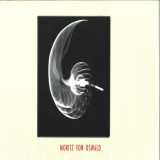
Hardcore chaos !
Etched limited 100 copies.
First track is an industrial pityless underground pearl, chaotik and noisy, with a solid antigroove feeling... The second track, more regular for the dancefloor is still quiet industrial... Starting a bit hardtek and minimal which is quiet DJ friendly, it soon turns into a hardcore noise sound... This record plays 33 but bass are so loud that you can dare a 45 for a maximum speedcore experience...
The record B side is Etched lazer !
All copies are hand Numbered from 01 to 100.
Search:sound in noise
Recommended If You Like: OOIOO, Blonde Redhead, Guerilla Toss, Rolling Stones, Liars, Marnie Stern, Yoko Ono, Battles. Clear Sun Vinyl. Reissue of Deerhoof’s 2002 album Reveille. First Deerhoof album with guitarist John Dieterich. Back in print on vinyl! Deerhoof debuts their new guitarist John Dieterich and achieves widespread critical acclaim for the first time. 2002’s Reveille is a defiant expression of artistic rebirth, spilling over with madcap exuberance, apocalyptic imagery, newfound technical confidence belying their no-budget DIY recording methods, and jarring stylistic about-faces in which no two songs sound alike. The contrast of Satomi’s ever-catchy, ever-charming melodiousness with John and Greg’s noisy, cinematic bombast still has the power to thrill and tickle and upset, more than 20 years after its initial release. Includes reimagined cover art with the faint morning glow the band had always envisioned, pressed on clear sun-colored vinyl. Complete lyrics included for the first time, written by Satomi on the center labels.
- A1: Got A Fire In My Socket
- A2: Matter Vs Matter
- A3 10: 000 Monkeys + An Argument With Time
- A4: No One Wants To Hear It
- A5: Gotta Cold Feeling
- A6: Entangled Entropy
- B1: Call My City, Don't Call My Telephone
- B2: Josephine Says Explode
- B3: Schrödinger's Apocalypse
- B4: The Elasticity Of Knowing
- B5: A Billion Voices Screaming, Hello Void!
Dez Dare ventures further into the void than ever before on his 4th album and the 1st to be released via God Unknown Records, ‘A Billion Goats. A Billion Sparks. Fin.’. On past records Dare has fought beasts and beats alike, waging a fuzz war and tackling the biggest topics the world has to face; Doom scrolling, capitalist demagogues, a passionate dislike of the beach in summer. On this record he leaves the sardonic frustration behind for sarcastic existentialism, zeroing in on the big philosophical questions, and the pedantic shards of nonsense that make up our existence. Piling up the synths, noise boxes and guitar pedals, Dez set about building a soundscape of noise and ideas around the nature of reality, time, and how we interact with them. From the music you would play in your last moments, to the reverse Darwinism of modern society, to arguing with time itself, and very boring people talking at you, all is covered here for the aspiring existentialist. The self-produced Australian has spent over 3 decades producing music, releasing and touring bands, and doing live sound for z-grade metal bands. Growing up in the coastal town of Geelong (Djilang) in Australia, he was introduced to the DIY punk and rock scene at 15 and this community and the ideas rooted in the underground music scene have guided his output and ethics throughout his career. This year Dez will be joining forces with label titans God Unknown (Cassels / Duke Garwood / James Johnston + Steve Gullick / KLÄMP / Oneida / Oneida / Laura Loriga / Monster Magnet / Wellwater Conspiracy Soundgarden + Monster Magnet) and will be producing a deluxe version of the release that will include a 12 page comic illustrated by long time collaborator Mike Keane. Across the drone of noise and washed out guitars of the final track, ‘A Billion Voices Screaming, Hello Void!’, the chant repeats “We all return to where we begun...” which encapsulates the message that Dare delivers. We are all made from the same stardust and we all return to the universe that spat us out, we just need to enjoy the many shards of nonsense on that swift descent into the void...with wizards painted on the side." MAXIMUM ROCKNROLL "Early 90s-inspired take on DEVO punk... high energy sucker punches on your ear." Weirdo Shrine "Sludgey-grungey-fuzzed psychedelic-noiserock... I like the fact that despite all the edgy complexity, catchy songs emerge again and again."
Idriss D welcomes to Memento Records UK electronic mavericks Dark Globe. The famed duo consisting of Pete Diggens and Matt Frost has been releasing influential music for the last 30 years, starting off with industrial noise inspired tunes and later developing their sound into an experimental blend of breakbeats and twisted melodies, in what they call “epic pop”, taking in influences from classical English composers to hip hop grooves. Collaborations with Television’s Tom Verlaine and Boy George add to the magic of their artistic journey.
For this special EP, Idriss D has acquired the licensing rights to Dark Globe’s own Take Me To The Sound: along with the original track, two exclusive remixes are included, one from Howie B. and one by Pete and Matt themselves.
The original version, although hailing directly from the early 90s, boasts timeless vibes and flavours: marching beats, drum rolls and analog squelching synth tones make it as relevant as ever, a sophisticated Electronica piece that would fit perfectly in every club compilation these days.
Howie B’s masterful version flows with a syncopated rhythm and trippy vibe, a stripped down rendition designed for an afterhour party in a dark basement. Dark Globe’s own remix features quieter vocals with reverb splashed over the 303.
“Though seeing they do not see, though hearing they do not hear or understand.”
NYC-based producer/visual artist Nathaniel Young returns with the sophomore 12” under their techno-focused alias, Guilt Attendant. “A Flower Wilts Under The Heat Of The Son” is cut from the same cloth as 2020’s “Suburban Scum” where Young delves into overtly religious motifs and ideological critique of their cult-like upbringing. Here, though, Young challenges themself and the listener to seek hope and resolve rather than hatred and contempt.
Considering its sometimes-monolithic sound palette, the timeless sub-genre of dub techno has long stood as a versatile vehicle for exploring and expressing a wide range of emotions. From mourning those we’ve lost, to somber reflection, to hope and celebration–all united by warmth, soul, and perhaps most importantly, groove. This versatility has underpinned Young’s affinity for the dub techno framework, and this collection of tracks is the culmination of material that they’ve long aspired to manifest. Atop this foundation, Young explores the place of acceptance and understanding that they’ve ultimately had to reach in relation to their religious upbringing and the inherent dualities that plague dogmatic religious circles and our beloved dance-floor communities alike.
“A Flower Wilts Under The Heat Of The Son” places a heavy emphasis on groove and swing while attempting to stretch the limits of classic dub techno tropes. Through creative melodic layering, swung low-end, and syncopation, these tracks hope to offer a fresh take on the sound while remaining solely devoted to the dancefloor.
Through their design work for Dais Records and Hospital Productions, Young had the pleasure of crossing paths with the recently departed Juan Mendez (Silent Servant), who graciously contributed a striking, cacophonous, and noise-laden remix. Given Mendez’s expansive and diverse body of work, as well as his own affinity for dub techno, Juan’s contribution could not be more harmonious. A singular talent and an extremely kind, generous soul, Juan will be dearly missed.
Rest in peace Juan Mendez, 1977-2024
The cinematic opening track Inthenever starts off as a film >> somewhere on a desolate coast, where everything has already ceased. This is going to be an album with a story and depth, a fearless tour of the barren shores of our days // or is it possibly just a mirage conclusion of their razor-sharp sound brutalism? Tittingur's third album, Epiphany, is here, pounding with waves they had not done before.
It seems as though this dyad has disposed of all the genre confines that had locked them in, and have grasped the sound of new subject matters, for which the moniker of experimental techno is finally too narrow. With utter urgency and candid to their emblematic, thunderous sound, Dominik's and Matus's deafening mallets collide in beats which are now, more than ever, drenched in a mass of palpable gloom and anguish. As though we could touch the rising levels of the oceans, and smell the melting of the glaciers themselves.
In one way or another, the music of Tittingur has always been about nature, its fierce essence, and its stark contrast with the post-era that we have found ourselves living in. However, whereas before, it was the sound of old, weather-stained concrete, and the pounding of abandoned, overgrown buildings, now it is, unavoidably, their most direct and honest return to nature landscapes, and to human, age-old traditions, referenced in the Slovak folk motives, recordings and found sounds.
On Epiphany, Tittingur's sound becomes yet more abstract, in a sound world that is ambiguous but also unified, and works on its own. The duality of nature and technology, of inland human folklore and the trenches of deepest oceans, invite us to come closer and observe the volatile obliteration taking place. Can we even attempt to re-assess our position with nature, or is this whole experiment doomed to fail?
Unsurprisingly, in the echoes, all the ingredients of the classic Tittingur sound are still present, distilled into new forms >> the ever-present over-saturation, the exaggerated, maximalist approach and megalomania >> the sound of impending climate change, doom, and near-apocalyptic visions, the scent of borovička mixed with the wild North Sea, the agony of contemporary urban life, and the adventure of wilderness: ferocious synths, monumental beats, aggressive basslines and crumbling noise-scapes built of a found-sound, music concréte-like, collagist approach.
At moments, it seems the means have changed. Just until you realise that the sentences of this story are spoken in a new language. If you dive deep enough, and listen to the essence that the music of Tittingur articulates, it's surprisingly easy to understand >> although the notions and emotions are difficult to put into words. The profound narrative of Epiphany is that of an endless inner struggle of society, anxiety, crises, and ambiguously easy // difficult solutions in the post-modern global chaos. It is the calm before a storm. It is the storm. Is it the calm. It is all of it, in itself. credits
Hailing from Brittany, historical center of France's industrial scene and in close proximity to Belgium's infamous rave and EBM innovations, Ekors set out to deliberately blacken and burn the sophisticated sounds emanating from Paris. With releases on Amsterdam's harsh Leyla imprint, fellow French hardcore iconoclast Umwelt's Flesh or Die, and JoeFarr's User Experience, the trio undoubtedly made their name in their lonely redoubt in the timberland, and Rant & Rave is honored to host their theme EP, Forest Killers, as our fifth release.
'Woodchip' conjures nightmares of dead bodies run through a woodchipper rather than more pastoral scenes, its distorted kicks, bone-crushing bass and blasted-apart leads chopping air and anyone unlucky enough to stand in its way. Title track 'Forest Killers' is murderous, the lurching breakbeat and shrapnel percussion approaching like axe falls ever closer until the horror score melody enters, then accelerating frantically as the killers close in. 'Evil Sapp' only seems subdued in comparison, its hammering techno pulse providing scant breathing room as industrial machinery fells nearby trees. Self-explanatory 'Chainsaw Requiem' ups the discomfort as the titular tool buzzes overhead, more Texas Chainsaw Massacre than weekend warrior woodpile work. Amidst squalling leads, ricocheting percussion, fearful blasts of noise, and pounding bass and kicks, Ekors escort us out of the haunted wood, sighs of relief and evil laughs joining in chorus.
Following his blissfully abstract, piano-based collaborations with Harold Budd and Ruben Garcia over the last 20 years, The Arcades Project is John Foxx’s first solo piano album, released on vinyl for the first time. This latest work has a fresh sense of wonder, as if returning to the instrument after the raging analogue noise of his last major work, 2020’s Howl (by John Foxx And The Maths) necessitated a further retreat into quiet, minimal music. Reviews for The Arcades Project: “Delicate evocation of the ambience of a city’s galleried passages.’ Mojo 4 ****. 'This exquisite and refined solo piano work is a fine addition to a body of work made by an artist always investigating memory and imagination.’ The Quietus Album of the Month for April 2023. 'His most evocative music.’ Uncut Magazine 8/10. ‘Delicate, drifting and hypnotic.’ Record Collector 4 ****. ‘Unmissable’ Electronic Sound Magazine. 'Its minimalism is moving; its restraint rich in reverie. Foxx's 21st-century body of work grows ever more absorbing.’ Prog magazine. ‘An album that has the potential to be a classic of modern times and a reference point for classical ambient for years to come.’ Louder Than War. ‘Awed wonder . . . and frequently beautiful.’ Classic Pop. 'Foxx has created 12 stunning pieces of music . . . sparse, minimalistic, and extremely moving . . . It goes a long way in demonstrating just how much of a genius he is' Spill Magazine.
Syncrophone proudly presents 'Proceed with Caution' by Detroit's Filthiest. This 4-track catalog masterpiece is a rhythmic exploration, featuring infectious funk-infused beats and a distinctive style that pays homage to the city's illustrious musical heritage. Detroit's Filthiest seamlessly blends tradition with innovation, creating an electrifying experience that echoes the Motor City's iconic sound.
Feedbacks :
Luke Slater : dope
Serge (Clone) : Sick release! Another banger from Dj Nasty!
Elena Colombi (NTS) : Check Out the Technique is great!
Lukas Wigflex (Wigflex) : wonk
Tijana T : huge fan!
Hodge (Livity Sound) : lovely
Eclair Fifi (Lucky Me / NTS) : fk yeah 5/5
Monty Luke (Rekids / Black Catalogue) : fear in your eyes is a banger
Dave Clarke (white noise radio) : Will support ! Love the first track
Marcel Dettmann : thx
Machine Woman (Take Away Jazz Records) : cool
Ben Sims : Technique is my pick, thx!
Will Hofbauer (Third Place, Wisdom Teeth, Rinse) : very slick
Blasha & Allatt (Meat Free) : Fire! Up In Smoke + Nuttin But Chedda are the ones for me :) Thanks, Steffi x
Lena Willikens (Cómeme) : Fear In Your Eyes for me!
Lauren Flax (The Lot Radio/ Young Turks / K7) : incredible EP, thanks!
David Martin (Dimensions Soundsystem) : his is superb. Love it! Thanks DM
Amy Dabbs (Shall Not Fade, Distant Horizons, SlothBoogie, ) : Beautifully sleazy - love it
Bloody Mary (Dame-Music) : track 2 :))) thanks
DMX Krew (Breakin Records / Fresh Up) : Nice trax :) Will try to fit in my December show for Rinse FM.
mi-el (NTS show) : heavy
Acclaimed Japan “minyo footwork” duo WaqWaq Kingdom - aka Shigeru Ishihara (DJ Scotch Egg / Seefeel) and Kiki Hitomi (ex-King Midas Sound) - return with feverishly joyous new album Hot Pot Totto, a bubbling hot pot of dance music that responds to ecological anxiety.
“Two words are conjoined: hot pot and ottotto,” vocalist Kiki Hitomi tells us. “Ottotto is the Japanese equivalent of “oops”, or said when someone nearly falls over but manages to get their balance back: “it was dangerous but now we are safe!” Combined with the heady brew of their musical styles (“like a psychedelic Nabe hot pot: melting traditional Japanese Minyo with Jamaican dancehall, footwork, dub, techno, tribal polyrhythms and Super Nintendo soundtracks”), producer Shige Ishihara’s time in East Africa working with local musicians, and the dayglo hallucinogen of the duo’s visual aesthetic, WaqWaq Kingdom’s thumping, thrilling, irresistible third release is a unique ride.
Thematically - despite its ostensibly celebratory impact - Hot Pot Totto addresses the world’s grave ecological state. “Now our earth is on the way to catastrophe, as global warming becomes a serious problem through humanity’s fault. We are on the edge,” Hitomi writes. “We need to get back on the right track.” The ottotto of the album title refers to this experience - the need to get back on track. However, this is not lamenting music: it is fiercely defiant, full of colour and rapture, maintaining an optimism that we can.
Opening single “Hakke Yoi” ties treated voice, a floor-shaking beat, and a dizzying, transforming colour palette to a heart-quickening BPM. The track is named after the traditional cry of a sumo wrestling match, shouted by the referee to maintain tempo, commonly translated as “put some spirit into it!” The lyrics refer to humanity’s sacrifice of our planet for our own material gains. Later, key track “Buri Buri” features Ugandan experimental dance producer Catu Diosis and centres around the lyric “Turn disaster to our advantage / good fortune and happiness will come to those who smile,” offering not regret but encouragement and empowerment with its neon alien sonics and relentless vibrancy.
Kiki Hitomi was formerly a member of Ninja Tune / Hyperdub’s King Midas Sound (along with The Bug and Roger Robinson), and co-founded iconic Japanese dubstep-noise duo Dokkebi Q. She is also a celebrated illustrator and designer, having created artwork for countless record sleeves (including this one) and brands. Shigeru Ishihara - aka DJ Scotch Egg - has been orbiting the dance music galaxy for over a decade, releasing radiantly unpredictable solo records through Lightning Bolt’s Load Records, as a member of Warp Records’ legendary Seefeel, and performing with both projects across the world. He recently undertook a residency at the Nyege Nyege Villa in Uganda, working with Phantom Limb alumnus MC Yallah. More recently, Ishihara has been releasing music under the guise of Scotch Rolex, collaborating with the likes of Shackleton, Swordman Kitala, Lord Spikeheart and more.
Hot Pot Totto is WaqWaq Kingdom’s third release for Phantom Limb, following the rapturously received album Essaka Hoisa in 2019 and follow-up EP Dokkoisho in 2020. The band recently performed at the label’s sold out 5th anniversary event in London, setting an ecstatic venue alight with energy.
f B1 Buri Buri feat. Catu Diosis
Audiophile reviews rave about saxophone master John Coltrane's immortal Impulse! records, A Love Supreme (1964) and Ballads (1963). Ballads is an album that will never go out of style and never be unwelcome on any jazz lover's turntable.
You're about to experience Ballads at its peak of vinyl perfection — in UHQR format on Clarity Vinyl, with the added bonus of a double 45 RPM cut by Ryan K. Smith at Sterling Sound. Ryan's cut has his characteristic clarity and transparency all set against Quality Record Pressing's usual noiseless backgrounds on 200-gram flawless records. Each UHQR will be packaged in a deluxe box and will include a booklet detailing the entire process of making a UHQR along with a hand-signed certificate of inspection. This will be a truly deluxe, collectible product.
For this 45 RPM 2LP edition you'll also receive a !2" x 12" 12-page booklet featuring liner notes by Ashley Kahn and recording session images by Jim Marshall.
The intense passionate Coltrane interpretation of standards such as "All Or Nothing At All," "What's New," "It's Easy To Remember" and the Sinatra classic "Nancy (With The Laughing Face)" are the essence of Ballads. When asked why attempt such an undertaking, Coltrane replied "Variety."
While it may have been a short detour by Trane before he exploded off into the nether regions of jazz music a few years later, it is still a fantastic document of one of the premier jazz groups of the 1960s.
Recorded December 21, 1961 and September 18 & November 13, 1962 at Rudy Van Gelder Studios.
"It's impossible to sleepwalk through tracks like "You Don't Know What Love Is" and "I Wish I Knew" and impart them with even a fraction of the emotional heft that the Quartet achieves. This is the type of jazz album in which the music just washes over the listener with it's restrained grace and beauty, and while it may not have the adventurousness that some listeners think Trane should have had each and every time he recorded, I'd say it shows off a side of him that only makes us appreciate his more bold and daring albums even more." — The Jazz Record
Since 2015, Berlin’s Cuntroaches have defiled countless venues across Europe and the UK, playing festivals and touring relentlessly. The trio’s influences range widely from metal to punk to hardcore to experimental noise. They aim to create a hybrid sonic experience within a dense wall of sound (often combined with some form of performative mischief - if they’re in the mood). Audiences have been subjected to spewing beer bra harnesses, diaper outfits, empty pet food containers or witnessed band members performing from inside of a trash bag. They’ve thrown a lot of trash on a lot of people. "Cuntroaches - a name inexplicably unused throughout the history of bands, orchestras... any grouping of people really...
As it is, the mantle’s (finally) been taken up by two women and a bloke making ferociously warped hardcore-flecked no wave. Mutating waves of feedback intoxicate and induce hangovers all at once, while David Hantelius gets a frankly obscene sound out of his bass - and the vocals - reverbed to an absurd degree - approach black metal levels of demonic witchery. As with New York’s no wave OGs, what it is definitely not is inept pissing around, ‘noise for noise’s sake’ - no matter how blown-out and violent Cuntroaches get, their interplay is lithe, their arrangements measured." - The Quietus “I want to make something clear: at this very moment, I think that Germany’s CUNTROACHES are the most important and life-affirming band on the planet. Period. The first demo blew me away, but this one... FUCK ME. Somehow they have become more in control and more chaotic at the same time, and the intensity borders on bleak / black metal darknes. I simply do not understand how this music exists, and how it can be so good... eternal hails.” - Maximum Rocknroll
Speak to most musicians about their motivations, inspirations and processes and you will, generally, get variations on a similar, broadly consensual, theme. Natasha Pirard is genuinely different. Her interest in sound goes way beyond the superficial and the ephemeral. She is fascinated by how and why sound makes us feel, the political implications of sound, noise pollution and the everyday sounds embedded in our immediate environment.
Contextually, this makes a lot of sense when confronted with her debut release for DEEWEE, Dream Cycles. A 120-minute exploration of sounds, loops, frequencies and waves, it’s an eight- part musical cycle split into 15-minute sections across four cassettes, she believes, reflects on this notion of cyclical, rather than linear, time. The eight song cycles are repetitive. They start off basic and functional and build over time. They begin with one sound but soon you hear other sounds. From there you get taken to another point, where you hear something else and so on and so forth. The circle is never-ending.
Natasha Pirard is a musicologist and composer from Ghent. She will be releasing her album Dream Cycles in February 2024, as a limited edition four cassette box set, marking her debut on the Ghent-based label DEEWEE.
The Body & Dis Fig are a natural pair. Each has pioneered instantly recognizable worlds of sound all their own that defy any traditional categorizations or boundaries. The Body, Lee Buford and Chip King, continually challenge any conventional conception of metal, collaborating with myriad artists and from the folk-leanings of their work with BIG|BRAVE to their groundbreaking work with the Assembly of Light Choir to the intensity of their collaborations with OAA or Thou. Dis Fig, aka Felicia Chen, pushes electronic music into dark extremes, from warped DJ sets to avant production, from being a member of Tianzhuo Chen’s performance-art series TRANCE to being the vocalist with The Bug. The Body and Dis Fig find kinship in reimagining what it means to make “heavy music”. Their debut Orchards of a Futile Heaven is the perfect synthesis of two forces, twisting melodicism and intoxicating rhythms, layering a dense miasma of distortion with intense beats and a soaring voice clawing its way towards absolution.
Orchards of a Futile Heaven’s walls of sputtering texture and tectonic booms are soaked in the reverence and melancholy of sacred spaces brought to life by palpable intensity by Chen’s voice. Crafted during a time of personal fragility, the album’s devastating force lies beyond any of the expected noise and abrasive textures typically associated with both The Body & Dis Fig. Suffused with a raw vulnerability and a longing for catharsis, Chen’s voice searches for escape in the midst of oppressive atmospheres as if determined to find relief from guilt. “Eternal Hours” patiently unfurls waves of surprising sounds, whispered undulations that are punctuated by sudden crashes, all beneath Chen’s haunting harmonies. “Dissent, Shame” evokes grief and shame with a minimalist drone dirge that gradually builds to an enchanting choral passage. King’s guitar on “Holy Lance” matches the uncanny drone of Chen’s accordion in an all-consuming blast, Chen’s voice transforming the moment from anguish to defiance and empowerment. The album’s arc finishes with “Coils of Kaa” acting as a kind of propulsive exorcism, breaking through a suffocating air before the funeral procession of “Back to the Water” lays the album to rest.
While sampling has long been essential to each, The Body & Dis Fig deftly meld their differing approaches to sampling and creating extreme sounds until the boundaries are entirely blurred. The two found kinship in their desire to find new avenues to make heavy music that looked beyond tropes of metal and electronic music by merging the two. “I always wanted the heavier stuff but I also didn’t really like heavier guitar music,” says Buford. “None of it really felt quite heavy enough to me. A human can’t be as heavy as a machine.” Chen counters, “I love the balance. You could never connect to just a machine as well as you could a human. Which is why the combination is so potent for me. I don’t want to hide. I think nothing connects you more empathetically than another human's voice.”
Orchards of a Futile Heaven affirms The Body & Dis Fig as skilled sound sculptors who have an exceptional ability to make deeply affecting music, bracing as it is touching, harrowing as it is awe-inspiring. Together, the two have harnessed their expansive artistry to make music that is profoundly emotional, and staggering in its beauty.
Black vinyl, DL card. Bardo Pond's extensive archive recordings series opens up once again with 'Volume 9', an incisive journey into their hypnotic sound. Recorded in the early 2000's it's a heady mix of acoustic ambience and menacing distortion. Infamous purveyors of longform stoner rock, Bardo Pond embrace their sludgestorms with graceful nods to Hawkwind, Earth and my bloody valentine. For anyone uninitiated with the band's tranquilizing sound, Volume 9 leans into their mesmeric practise with reckless abandon. Featuring two tracks recorded with ace percussionist Michael Zanghi (Kurt Vile/The War On Drugs) and the seminal two parter 'War Is Over', a lilting Floydian strum that's invaded - quite literally - by unreconstructed noise. The Zanghi collaboration is an Eastern-facing mantra with percussive flurries and distorted modal shifts - like listening on the other side of feedback. "Effortlessly combining psychedelic inspirations from Pink Floyd's original explorations to the more modern reachings into the beyond" AllMusic
- 1: Specht0' 55
- 2: Sonne' 10
- 3: Skulptur2' 12
- 4: Immenweide2' 06
- 5: Glaswände1' 03
- 6: Weidplan2' 07
- 7: An Der Mühlenau2' 46
- 8: Zement2' 12
- 9: Am Morgen2' 30
- 10: Pflugacker1' 34
- 11: Plattenladen1' 45
- 12: Sark1' 25
- 13: Wildacker2' 21
- 14: Magnolien2' 22
- 15: Zentimeter2' 02
- 16: Feldmark2' 25
- 17: An Der Kollau2' 18
- 18: Am Abend0' 56
Perifaerye is a multi-part work of art comprising of 18 soundscapes, 36 digital drawings and 24 writings. Perifaerye is at once a record release, a book, a website; in the autumn of 2023 a series of playlists were published on billboards, linking the online soundscapes to the real-life physical realm. This publication is an artistic hybrid: a vinyl record / book combining sound, image and text.
The 18 audio works condense the sounds of the urban periphery into a sonic cartography. In Hamburg-Eidelstedt, people live in smaller detached houses and in larger apartment blocks. New housing estates have been developed recently in direct neighbourhood to the motorway, and currently in the district centre; a district where post-war housing estates and architectural remnants from a village past co-exist. Even meadows and fields, surrounded by the noise of motorways and other traffic, aeroplanes (the airport is close by) and railways (passenger and und freight trains, long distance, regional and local services). This collection of soundscapes – each a short composition on its own – presents a sonic portrait of a contemporary urban area.
In spring 2023, Jorn Ebner recorded the urban spaces of the Hamburg district of Eidelstedt. For each audio piece there is an image. The artist’s writings reflect and accompany the creative process.
For this book and record, Sebastian Kokus and Thomas Korf created a very haptic design. Each part of the whole can be experienced as a single piece: the A2-sized poster is part of the outer sleeve; the booklet presents image and text (German only); the record is visible through the holes in the inner and outer sleeves and forms part of the cover.
A new type of sound from uhinged live-performer and a one-woman fun tribunal. It's glossy, noisy, raw, futuristic, sensual, frivolous, dark, wonky, slow and fast alike - yet in all those variations, rather suited for bigger PAs. Tracks on Cracked, serving assorted sweets make heaven utilize pummeling yet unequal kickdrums and vary in tempo.
Side A turns risky breaks into an oddly enjoyable experience while the tracks on B flip trance motifs into rather serious, darker futuristic ride.
Isabella's work also happens to be a link between Rhode Island's noise scene & pranksters from Börft Records, Herrensauna's dancefloors and halls of Berklee College of Music where she lectures.
Remastered and first worldwide release (previously only limited availability in Iceland) Since first bursting onto the global punk scene in 2018, Icelandic trio GRÓA have thrilled audiences across the world by fully embracing an unruly freedom. Made up of sisters Hrafnhildur Einars Maríudóttir (aka Hrabba, age 22) and Karólína Einars Maríudóttir (aka Karó, age 20) and their childhood friend Fríða Björg Pétursdóttir (also 22), the Reykjavík-bred band merge elements of post-punk and noise-rock and art-pop with absolute abandon, arriving at an explosive yet magnificently arranged sound unlike any other. A local favorite, the Icelandic government has recently been sponsoring worldwide travel to share GRÓA with the rest of the world and in 2023 they have played shows around the world including in UK, Western and Eastern Europe as well as USA dates including Washington DC, Seattle, Chicago and New York City. They have recently recorded an in studio performance at KEXP which will be broadcast worldwide in January 2024 and more worldwide touring is planned for early 2024 to support the vinyl and CD releases. Listing iconoclasts like Sonic Youth, PJ Harvey, and Bikini Kill among their longtime inspirations, the Icelandic punk band GRÓA pursued their experimental impulses with more intensity and confidence on Í Glimmerheimi, matching the album’s shapeshifting sound with a surrealist but emotionally potent form of lyrical storytelling. “It’s about a girl who’s trying to escape the world she’s stuck in—this glitter world that looks so good on the surface, but it’s not where she’s meant to be,” says Karó in discussing the album’s concept. “There’s a song called ‘Jetpackstelpan,’ or ‘Jetpack Girl,’ where she leaves the world on a jetpack and flies away to the moon, and she’s never coming back again.” Opening on the kaleidoscopic rhythms and rowdy call-and-response vocals of “Fullkomið” (“Perfect”), Í Glimmerheimi brings that narrative to frenetic and dazzling life, ultimately closing out on “Skrímslið er að ná þér” (“The monster is getting you”): a serpentine and strangely mesmerizing epic whose swirling textures, otherworldly vocals, and sparse yet complex guitar tones illuminate the immense scope and depth of GRÓA’s artistry.
lim. to 250 Copies ww!
"The world is rich, the world is colorful. So why not show it in all its complex diversity and contrasts? Why, when you go in one direction, do you have to follow it further and can't just go in all directions at once? These are all questions that Berlin-based Turkish singer Basak Yavuz may have asked herself when she began recording her new album "Raum 610."
Basak Yavuz doesn't take much time to get down to business. Right away in the opener "Promised Lands," different stylistic elements like jazz, rock, funk and hip-hop chase each other as if it were a matter of life and death. The message is unmistakable: this is about energy. The energy of the big city. Crowds on the sidewalk, congested streets, noise from construction sites, cyclists and drivers yelling at each other, barking dogs, screaming children, shattering glass, a new surprise around every corner. Basak Yavuz does not hide, but picks up the tempo of the Moloch and makes it her own pulse with all its fractures and border crossings. She is not afraid to overload her songs, but confidently juggles the explosiveness of creative oversaturation." (Wolf Kampmann)
"Due to the huge success of the Original Source Series and due to frequent wishes by both fans and critics alike, DG have decided to launch a reprint of all four titles of Batch 1 – marked as “SECOND EDITION”. Same Quality, just without numbering. THE ORIGINAL SOURCE is a new series of celebrated albums reissued on vinyl. These new releases include Claudio Abbado’s fascinating interpretation of works by Debussy and Ravel with the Boston Symphony Orchestra (1 LP), the legendary recording of Brahms’s Piano Concertos Nos. 1 & 2 with Emil Gilels, the Berliner Philharmoniker and Eugen Jochum (2 LPs), and Verdi’s Messa da Requiem in the iconic version of Herbert von Karajan and Berliner Philharmoniker (2 LPs). The renowned Berlin-based Emil Berliner Studios are remastering 4-track recordings from the 1970s, using their own cutting-edge and 100% pure analogue techniques (AAA) to create versions of the highest possible audio quality. Compared to the original releases, the advantages in sound are outstanding: More clarity, more details and a better frequency response, less noise, less distortion, less compression – the highest possible audiophile quality which gives listeners the chance to enjoy this repertoire like never before.
Produced on 180g virgin vinyl by Optimal, these limited and numbered releases will be issued in deluxe gatefold editions featuring the original artwork and liner notes, with additional photos and facsimiles of the recording documentation on the inner sleeve. Furthermore, each release includes a note by Rainer Maillard/EBS detailing the technical background and procedure of the Original Source Series, and an additional insert with a photo of the original tape box. Each LP comes in a protective cellophane jacket with a sticker highlighting the
"Due to the huge success of the Original Source Series and due to frequent wishes by both fans and critics alike, DG have decided to launch a reprint of all four titles of Batch 1 – marked as “SECOND EDITION”. Same Quality, just without numbering. THE ORIGINAL SOURCE is a new series of celebrated albums reissued on vinyl. These new releases include Claudio Abbado’s fascinating interpretation of works by Debussy and Ravel with the Boston Symphony Orchestra (1 LP), the legendary recording of Brahms’s Piano Concertos Nos. 1 & 2 with Emil Gilels, the Berliner Philharmoniker and Eugen Jochum (2 LPs), and Verdi’s Messa da Requiem in the iconic version of Herbert von Karajan and Berliner Philharmoniker (2 LPs). The renowned Berlin-based Emil Berliner Studios are remastering 4-track recordings from the 1970s, using their own cutting-edge and 100% pure analogue techniques (AAA) to create versions of the highest possible audio quality. Compared to the original releases, the advantages in sound are outstanding: More clarity, more details and a better frequency response, less noise, less distortion, less compression – the highest possible audiophile quality which gives listeners the chance to enjoy this repertoire like never before.
Produced on 180g virgin vinyl by Optimal, these limited and numbered releases will be issued in deluxe gatefold editions featuring the original artwork and liner notes, with additional photos and facsimiles of the recording documentation on the inner sleeve. Furthermore, each release includes a note by Rainer Maillard/EBS detailing the technical background and procedure of the Original Source Series, and an additional insert with a photo of the original tape box. Each LP comes in a protective cellophane jacket with a sticker highlighting the
"
"Due to the huge success of the Original Source Series and due to frequent wishes by both fans and critics alike, DG have decided to launch a reprint of all four titles of Batch 1 – marked as “SECOND EDITION”. Same Quality, just without numbering. THE ORIGINAL SOURCE is a new series of celebrated albums reissued on vinyl. These new releases include Claudio Abbado’s fascinating interpretation of works by Debussy and Ravel with the Boston Symphony Orchestra (1 LP), the legendary recording of Brahms’s Piano Concertos Nos. 1 & 2 with Emil Gilels, the Berliner Philharmoniker and Eugen Jochum (2 LPs), and Verdi’s Messa da Requiem in the iconic version of Herbert von Karajan and Berliner Philharmoniker (2 LPs). The renowned Berlin-based Emil Berliner Studios are remastering 4-track recordings from the 1970s, using their own cutting-edge and 100% pure analogue techniques (AAA) to create versions of the highest possible audio quality. Compared to the original releases, the advantages in sound are outstanding: More clarity, more details and a better frequency response, less noise, less distortion, less compression – the highest possible audiophile quality which gives listeners the chance to enjoy this repertoire like never before.
Produced on 180g virgin vinyl by Optimal, these limited and numbered releases will be issued in deluxe gatefold editions featuring the original artwork and liner notes, with additional photos and facsimiles of the recording documentation on the inner sleeve. Furthermore, each release includes a note by Rainer Maillard/EBS detailing the technical background and procedure of the Original Source Series, and an additional insert with a photo of the original tape box. Each LP comes in a protective cellophane jacket with a sticker highlighting the
"
With "Onaida", Natascha Rogers shares a liberating folk spell that draws inspirations from Yoruba spirits, Afro-Latin rhythms and her Native American ancestry. Born in the Netherlands to a Dutch mother and a father with Amerindian origins, Natascha Rogers dares to be intimate and unveils a highly spiritual chiaroscuro record, raising purity, care and reconciliation to the level of the art, through folk enchantments. Sensitive to the ancestral call of the drums, she travelled the Black Atlantic for several years and received the teachings of the greatest Mandingo and Afro-Cuban master percussionists. As a distinguished percussionist and vocalist, she has graced the stage and has accompanied artists around the world, but for Onaida she set out on her own, retreating to a studio to escape the noise, rush and fast information cycles of our modern world. This album marks a rebirth for Natascha Rogers, as it symbolizes her return to the piano, her first instrument. Channelling these inspirations for Onaida, Natascha Rogers, has created a space of her own, where themes of humanity, spirituality, nature and womanhood are centre stage while also paying tribute to her ancestors. Sung in English, Spanish, or Yoruba, the album is a tapestry of intimate ballads and universal prayers, drawing inspiration from dreams, Amerindian poetry (Joy Harjo), and Cuban santería with ritualistic batá drum pulsations. On the powerful folk-tinged song "The West", she invited gifted singer-songwriter Piers Faccini. Onaida is a true initiatory experience, a second birth for Natascha Rogers who finds balance and accuracy with this singular opus. Natascha Rogers headed to the quiet commune of Pommerit-le-Vicomte, to write this new release, accompanied by sound engineer Joachim Olaya and published on acclaimed French imprint No Format!
A raw-nerved hybrid of elemental Merseybeat, lugubrious surf-noir and sheer sonic assault, the remarkable legacy of Long Island's Mystic Tide has long been venerated within the '60s garage rock pantheon, even if their existential racket only slipped out on a series of painfully rare 45s. Now, the fruit of Joe Docko Jr and friends' cottage industry has been refurbished in best-ever sound, along with fresh insights as to how this singular brand of noise came to be.
Three years on from the desolate beauty of their debut, Quindi Records is proud to present the second album from Dead Bandit. The ghosts of their past endeavours still haunt their guitars, but on Memory Thirteen the duo's delicately dishevelled Southern gothic feels tonally distinct from their prior outing.
Dead Bandit is Ellis Swan and James Schimpl - the former a noted solo singer-songwriter from Chicago with a penchant for eerie, witching hour murder ballads and the latter an accomplished Canadian multi-instrumentalist with a bias towards heartworn, roaming soundscapes. Their instrumental collaboration has an open, lyrical quality which says as much as any spoken line, and on this album they've especially embraced the power of contrast as we're guided between scenes, sometimes within the confines of one track.
'Peel Me An Orange' is especially instructive in this regard, beginning as a blown-out paean to sonic degradation and the acute sense of hopelessness it projects, only to yield to a lilting tape loop of twanging guitar before entirely widening out in an emphatic burst of post-rock optimism.
Post-rock isn't noted for its banal cheeriness as a genre, and Dead Bandit aren't about to lay down feel-good drive-time anthems, but the sense of pulling at extremes of energy and introspection show Swan and Schimpl to be testing the emotional limits of their weatherbeaten sound. The cautiously sentimental mood of 'Blowing Kisses' hints at the hard-won light which can be encountered while pointedly driving into darkness.
Sometimes noise is a subtle device - a looming bed of unease under the forthright pluck of Swan's distinct guitar tone or the cracking round the edges of a beaten up drum machine. On 'Memory Thirteen' the distortion on the bass becomes a central figure in its haggard waltz, while 'Staircase' and 'Perfume' leave the signal wet until the delay feedback becomes the body of the riff. Either way, the sound is never left untouched as Swan and Schimpl grow more comfortable in their exchange, blurring their respective sonic languages as they expand their shared vocabulary to create an album of depth, difference and devoted distortion.
- A1: Hello, Mr George
- A2: Circles
- A3: A Night In
- A4: Dub I Your Bubble
- A5: Melodica Joe
- A6: Meadows
- A7: Late Again (Ft. Stevie 'Chicago' Christie)
- A8: Wishful Thinking
- A9: Blah De Blah
- A10: Here's What (Ft. David Rosenthal)
- B1: After
- B2: Circling Beats
- B3: Mr Minilogue
- B4: Dub In Your Bubble (Instrumental)
- B5: Just A Minute
- B6: Blah De Blah (Instrumental)
- B7: Late Again Beats
- B8: Blue Lou
Currently celebrating ten years of releasing music on vinyl & cassette and following hype for recent releases from Moscow (via Tallinn)’s Galun (glagol album) and Osaka's Kiji Suedo (Hosek EP & Riot album), Edinburgh's Hobbes Music label continues to mine a leftfield seam with this brand new album from singer/songwriter George Demure (Tirk, Output) aka DJ/producer George T (Greco Roman, Optimo), better known as George Thomson to his mum. And it’s another absolute peach if you have a taste for post-club sounds of a more leftfield persuasion.
This is the follow-up to his 'The Record Store' EP which came out via George's own All Noise imprint in 2021. He has also released the Roll On, King's Cross single via Hobbes Music under his George T moniker last November (plus various bits for the Paradise Palms and Ramrock labels in the interim).
“It all began with the Record Store EP in 2021,” explains George. “Limit my options. No samples, one drum machine, two analog synths (mono and poly), computer simply to record. I was so happy with the results I began with what you hear today. Same drums, same machines (or lack thereof) maybe some real percussion and melodica but hey, I only answer to me.”
Imagine, if you will, Scott Walker jamming with Kruder & Dorfmeister in a very small studio…
Bonus Album ‘Dandy In Dub’ features dubs, instrumentals and bonus tracks, with yet more regular flashes of pure brilliance. Be sure to check out opener 'After' and closer 'Blue Lou', which sound like George might well have sound-tracked some French 80s flick of the 'cinema du look' period (Betty Blue, Diva et al) in another life. Plus ‘Mr Minilogue’ with its clarinet-like synth.... Does it really get any better than this?!!
Sleeve art by the amazingly talented Bernie Reid, another local legend.
Feedback/Reviews to date:
'He's so talented!' JD TWITCH (Optimo)
'Love the LP. Sounds really together, production is awesome. I love the aesthetic. Vocal tracks sit nicely with instrumentals. Vocals sound light-hearted' THE MAGHREBAN
"On a bobbled and float-y, light sunbeam dappled vapor of deep house, garage, electro, kosmische, leftfield pop electronica, dub and new wave (both the German and UK’s), the Edinburgh DJ/producer and singer-songwriter George Thomson continues the good work he laid down on the last EP... It’s a most lovely, swimmingly blend of motivations, feels and deep grooves that effortlessly comes together in a generous offering of electronic music: the very epitome of the Hobbes label’s remit in delivering leftfield unique visions of now techno, house and club sounds." MONOLITH COCKTAIL
‘I love the album’ LEO MAS
‘Lovely stuff’ S/A/M (Music For Dreams/DK, Cafe Del Mar, Pikes, Playasol Radio and many more, Ibiza)
Plus play/s from Andy Wilson on ‘Balearia’ Ibiza Sonica Radio
+ DJ Dribbler (Pikes, Ibiza // Paradise Lost, Red Light Radio, Pure)
After 10 years of silence, Regimen Galáctico Totalitario is the new release of the Mexican producer Dellarge, reknown as well for his experimental noise project I.N.R.I. (Indústria Nacional del Ruido Infinito). In this mini-album, Dellarge presents his vision of nowadays evolution of EBM towards a futuristic blend of breakbeat, industrial, and electro creating the perfect soundtrack for a futuristic apocalypse. Presented in a ONE-OFF, truly limited edition of 300 copies lacquered pressed on 180 gr. high-quality solid BLACK vinyl. All tracks have been specially mastered for vinyl by Daniel Hallhuber at Young and Cold Studios (Germany).
Craig Clouse has devoted the past several decades to exploring a wide range of avant-garde avenues for his brainchild Shit & Shine. The monolithic riffs of raw and powerful psych'n'roll hysteria, the freeform dance miasma, sub-heavy electronica and the blissful stupidity crafted for ecstatic ascension: all perfectly-placed in the idiosyncratic world of Shit & Shine. There's also fertile soil for twisted noises in their lowest form, often obscured by groovier comrades in S&S releases yet vitally important for the substance of Clouse's compositional carcass and OOH-sounds has given him the required space to stretch out his longtime interest in developing loose structures and crackling landscapes to transcend his rhythmic comfort zone.
Making an enthusiastic transgression into noisy tones, "Joy Of Joys" has a friendly way of presenting difficult material. The rough and ready cheapo electronics sparkle in full electrifying mode, welding an ascetic gamut of aural hypnotics with a wormhole of uncompromising loop brut. Clanks, bangs, twangs and creeping, ragged globs of sound bloom on the bones of repetition to focus on the swinging stream of dirty anarchy. Stepping out of any context and genre disciplines, S&S finds new sonic trajectories in "Joy Of Joys" which perfectly sit in-between a wobbly cabal of international sub-underground acts: the idiot-avant strategies of LAFMS, early Mego bad digitalia, no-brow enthusiasm of Wolf Eyes family, micro-DIY ethos of Chocolate Monk and the sheer hellish nonsense of US noise circa '00s.
Clouse was already established as a landscape painter with a series of faux naïf paintings charmingly accompanying his releases. With his heart full of passion for abstract minimalism, he continued these narrative forms but was always in search of the confidence to paint non-figurative art. The first step into the chaotic abyss is coming from his sonic side by abandoning the beat and riff layers of his previous works to complete nakedness and reductionist courage. At once Clouse makes an evolutionary lurch into extremes as well as taking us back to basic forms in "Joy Of Joys". He creates an entire new parallel world to Shit & Shine with his maverick imagination presenting us with one of the most mutant releases to bear his name. Arthur Kuzmin
White vinyl, limited to 650 copies. The album title hangs heavy throughout the duration of the songs themselves, a weight around the neck of its creators. Inspired by a tumultuous time for vocalist Seb Alvarez, the album is an uncomfortable listen as he grapples with then-undiagnosed bi-polar and unchecked addiction issues. Whilst the themes of shame, deception and trauma are not new to meth., they have previously been dressed up with a fictional veneer. This time around, Alvarez lays his vulnerabilities bare, offering up the darkest parts of himself. The oppressive burden of shame, galvanised by behaviours rooted in addiction and mental illness seeps into the anxiety-inducing atmosphere of the album. Alvarez chronicles the differing types of shame and rock bottom feelings from Catholic guilt instilled in him from a young age, through to the more recent deceptions of concealing the effects of alcoholism. As he details his constant internal battles and downward spirals, everything is channelled into the creative process. The result is stark, unyielding and raw. For the first time, the band wrote as a unit, indicating a shift in focus. Alvarez focussed on the lyrical and thematic elements of the album and created more room for his bandmates to thrive. The ominous sound of SHAME is littered with experimental flourishes, as meth. lean into noise rock and metal simultaneously. There is an industrial bleakness to the album that propels it along, at some points as though through gritted teeth. Operating under a remit that included avoiding a reliance on riffs, meth. instead let rhythm - specifically their drums - carry the weight and forward motion of their compositions. Recorded in winter 2022-23 by Zack Farrer at Rose Raft in New Douglas, IL, the album was later mixed and mastered by Colin Marston.
Pink & Green Pinwheel Vinyl. Celebrate the 10 Year Anniversary of Pity Sex' breakthrough debut full-length record Feast of Love with this commemorative anniversary edition LP. This reissue features the album in full along with three bonus tracks: 'Euclid,' 'Acid Reflux' and a cover of Pixies' classic 'Gigantic.' The anniversary edition also features a gatefold jacket previously unavailable in the United States and an updated lyric sheet.Walking the razor's edge between overdriven navel gazing bliss and perfect pop sensibility, Ann Arbor's Pity Sex have crafted a breathtaking debut LP in 'Feast of Love' that's both awesomely beautiful and deftly evocative. Massive, harmonically distorted guitars and airy dual male/female vocals are hallmarks of Feast of Love, all drenched in warm, dreamy reverb. Most impressive however, is how the band utilizes pop conventions - both vocal and instrumental melody, and a strong and pounding rhythm section - while delving deep into the ethereal power of textured soundscapes. Guitars fuzz and flange, weaving between distinct, identifiable parts and simple brushes of colored noise. The voices similarly drift between carrying delicate melodies and delivering evocative feeling. Calling on the infectious, hooky inclinations of the Pixies, dreary melodies of the Breeders and sonic mass of My Bloody Valentine, Pity Sex's Feast of Love twists and churns with these beautiful yet fleeting vignettes captured in sound.
- Et Peu À Peu Les Flots Respiraient Comme On Pleure
- Jlg
- Hurlements En Faveur De Serge T
- Le Marin Rejeté Par La Mer
- Dernière Étape Avant Le Silence
- Dialogues Avec Le Vent
- Ses Mains Tremblent Encore
- Ma Contribution À L’industrie Phonographique
- Géographie Intime
- Je Suis Vivant Et Vous Êtes Morts
- Mon Royaume
- Potlatch (1971-1999)
- Un Souffle Remua La Nuit
Sylvain Chauveau's debut album "Le livre noir du capitalisme" is a melancholic milestone – and a precursor of what later would become the Modern Classical genre. With his release in 2000, Chauveau created a landmark of contemporary electronic music, parallel to the first releases of Jóhann Jóhannsson and Max Richter.
Inspired by John Cage's reflections on silence and Mark Hollis' solo album of the same name, on "Le livre noir du capitalisme" Chauveau assembles contemplative, repetitive piano and string arrangements with electronic sound layers and discreet field recordings to create an other-worldly but seductive Musique Noir. Midway between ambient, jazz and post-rock, Chauveau lays out a new paradigm of electro-acoustic music that functions as much atmospherically as compositionally, and whose parameters keep the boundaries between academic and non-academic music dissolved to this day.
Originally released on the small French experimental label Noise Museum in 2000, the album got reissued by Type Records in 2008 with the English title “The Black Book of Capitalism”. Being out of print for a while, Sonic Pieces now rereleases the classic with its original French title, plus new remastering by Loop-O and in an ultra-limited, handmade edition with black bookcloth cover on both CD and vinyl.
"The organ dates back to 1790 and was made by Venanzo Fedeli, who came from a prestigious family of organ builders. This particular organ is tuned in the ancient way at 430 Hz. Tuning relies on pure thirds that aim to create dissonances within the instrument itself.
Since the organ is an instrument modeled according to the principles of nature, the intonation of the pipes was performed according to an incompletely equal system that reflects the natural intonation based on mathematical ratios.
This produces a purer sound for the thirds but slightly harsher and more difficult to listen to. The hardness of the intervals of the organ is a metaphor for the hostile climate that prevails in the Potenza valley during winter and autumn.
The sound of the organ with the register of the flute returns a particularly sweet and penetrating sound but, at the same time, a very complex timbre with intricate harmonic texture, given the numerous fluctuations and beats. The warm tones of the organ reflect the good and welcoming sould of the people who inhabit these lands. The absence of dynamics inside the instrument allows the listener to focus and understand the harmonic texture and timbral differences between the various notes more clearly.
Trombone and trumpet played by Matteo Paggi on track 2 and 3 were recorded during a hot summer day at Elefante Bianco Studio in Rome by Matteo Scarchilli. Sax, effects and noises in track 6 played by Giulio De Asmundis and Pietro Rianna were recorded in Fauna53 studio.
Many thanks goes to Marco and Giuseppe for making this happen. Thanks Federico, Sami, Marisa, Romeo and everyone involved in this project. You know who you are."
Mastered by Alessandro Caldarola.
Photos and color grading by Filippo Corsi.
Graphic project and design by Flavio Mancini.
Vinyl pressed by AFG Record Manufacturing.
Very limited vinyl pressing, 500 copies, housed in a full colour sleeve & printed inner sleeve & download. CD in a 4 panel digipack with a 4 page lyric booklet. New Heavy Sounds are always on the lookout for new bands that are looking to push the boundaries of what is considered as inhabiting the ‘heavy’ or ‘metal’ spectrum’. Stuff that pricks up the ears, a bold new voice within a maelstrom of genres and sub-genres. We believe we have found such a band. New York-based GUHTS (pronounced ‘guts’) declare themselves to be an ‘avant-garde post-metal project, delivering larger than life sounds through, deeply emotional music’. We are thrilled to be able to deliver that statement in the form of their debut album ‘Regeneration’. By their own admission, GUHTS' musical style is influenced not only by iconic metal bands like Gojira, Cult of Luna, YOB and Deftones, but more unconventional acts like Bjork, Subrosa, Isis, Julie Christmas, and even PJ Harvey. It’s undoubtedly heavy, with a strong feminist streak, it’s cathartic and weighty, a formidable debut for such a new band. Founded in 2020 as a passion project by Scott Prater (Witchkiss), and Amber Burns (Witchkiss) and then Dan Shaneyfelt (Black Mountain Hunger), GUHTS became its members’ main focus following the release of their first EP 'Blood Feather' which itself received rave reviews from the likes of Decibel Magazine, Invisible Oranges, The Obelisk, Cvlt Nation, and more. Brian Clemens Sleaping Dreaming) & Daniel Martinez (Nefariant) joined GUHTS in 2022 and the band swiftly started booking tours and making plans to record 'Regeneration'. Since then GUHTS have been steadily making a name for themselves with their powerful live performances., sharing stages with the likes of Yob, Cave in, Marissa Nadler, plus appearances at the Maryland Doom Fest, Crucial Fest and Ohio Doomed and Stoned Fest. ‘Regeneration’ is set to cement their status as one of the coolest and most interesting bands on the scene. Of the album, vocalist Amber says. "Regeneration" symbolizes the power of self-renewal, often overlooked. Embracing it means shedding old layers and welcoming new beginnings. Without this, life stagnates and is “sustaining”. Through regeneration, change becomes empowering, allowing new facets to emerge. It's a courageous, transformative process, inspiring others to overcome fear and embrace change. The album embodies the human spirit's resilience and capacity for growth. Musically ‘Regeneration’ is a powerful and intense series of songs, topped off by some seriously powerhouse and expressive vocal performances. It’s slow-moving chords, moving like sheets through sludge. High guitar lines above, ranging from piercing and shimmering to nasty. Drums pound but not without groove. There are strings, pianos and synths widening the palette. Atmospheric sludge, Metalgaze, maybe, but there’s also that link to the New York Noise lineage from The Velvets and Sonic Youth, becoming a type of post-hardcore in the process, while gaining a connection to metal partly due to the sheer heaviness. A raft of creative experimentation that pushes beyond the realm of post-metal. And then of course, the very first thing that hits you is Amber Gardner's unbelievable, hypnotising vocals - as scary as a banshee while also intimate and persuasive. Amber means it for sure and almost dominates the proceedings. Her lyrics are eclectic, thoughtful. Immersed in women's narratives frombooks like "Women Who Run With the Wolves" or works like "On Our Best Behavior" by Elise Loehnen. Amber advocates stepping beyond comfort zones, believing it's transformative for individuals and vital for Earth's future. Hokey occult rock it is not. In short ‘Regeneration’ is a bold and startling debut, that will reward and enthral listeners the deeper they delve into its many layers.
+ CD and booklet[25,00 €]
Die New Yorker GUHTS (ausgesprochen 'guts') bezeichnen sich selbst als 'Avantgarde-Post-Metal-Projekt, das überlebensgroße Klänge und tief emotionale Musik liefert'. Nach eigener Aussage ist der Musikstil von GUHTS nicht nur von kultigen Metal-Bands wie Gojira, Cult of Luna, YOB und Deftones beeinflusst, sondern auch von unkonventionelleren Acts wie Bjork, Subrosa, Isis, Julie Christmas und sogar PJ Harvey. Es ist zweifelsohne schwer, mit einer starken feministischen Ader, es ist kathartisch und gewichtig, ein formidables Debüt für eine so neue Band. GUHTS wurde 2020 von Scott Prater (Witchkiss), Amber Burns (Witchkiss) und Dan Shaneyfelt (Black Mountain Hunger) als Passionsprojekt gegründet. Nach der Veröffentlichung ihrer ersten EP "Blood Feather", die begeisterte Kritiken vom Decibel Magazine, Invisible Oranges, The Obelisk, Cvlt Nation und anderen erhielt, konzentrierten sich die Mitglieder auf neue Ideen. Brian Clemens (Sleaping Dreaming) & Daniel Martinez (Nefariant) stießen 2022 zu GUHTS und die Band begann schnell, Pläne für die Aufnahme von "Regeneration" zu schmieden. Seitdem haben sich GUHTS mit ihren kraftvollen Live-Auftritten einen Namen gemacht: Sie teilten sich die Bühne mit Bands wie Yob, Cave in und Marissa Nadler und traten auf dem Maryland Doom Fest, Crucial Fest und Ohio Doomed and Stoned Fest auf. Musikalisch ist "Regeneration" eine kraftvolle und intensive Reihe von Songs, die durch einige sehr kraftvolle und ausdrucksstarke Gesangsdarbietungen gekrönt werden. Langsame Akkorde, darüber liegende hohe Gitarrenlinien, die durchdringen und schimmern. Das Schlagzeug hämmert, Streicher, Pianos und Synthies erweitern die Palette. Atmosphärischer Sludge, Metalgaze, mit Verbindungen zur New Yorker Noise-Linie von The Velvets und Sonic Youth. Streng limitierte Vinyl-Pressung in einer farbigen Hülle, bedruckter Innenhülle und Download. CD in einem 4-seitigen Digipack mit 4-seitigem Textheft.
Lovely Is Today (Edit) by Eddie Harris b/w September 13 (Edit) by Deodato | Galaxy Sound Co. — GSC4540, test pressing | Hot off the presses via the always-on-point @galaxy_sound_company crew. This will mark number 40 in the GSC45 series. Every release has been stellar, elevating it to the rarified “buy-it-on-site” status. If you love hip-hop, broken beats & top-class edits, anything w/ their stamp on it — you know it’s going to be top notch. They’ve got a bottomless discography full of that good ish, & here comes another addition to the cannon in the form of a pair of glorious jazz-funk nuggets.
Side A is an edit of “Lovely Is Today” by Eddie Harris, which is taken from his brilliant 68 soul-jazz LP “Plug Me In”. Chicagoan Harris pioneered the usage of amplified electric Varitone saxophones. It features a stellar line-up: Ron Carter (bass), Haywood Henry (baritone sax), Jodie Christian (piano), Garnet Brown (trombone), James Bossy (trumpet), Grady Tate & Richard Smith on drums, &, of course, Harris on tenor sax. Here the edit trims off the intro noise & extends the breaks recalling hip-hop songs it sampled: “2 Deep” by Gang Starr, “Intro” by Mobb Deep, “It Ain’t Hard To Tell (The Stink Mix)” by Nas, “What’s My Name Yo?” by MC Lyte, among others.
Side B is an edit of “September 13” by Deodato, taken from his self-titled jazz-funk 73 LP. Deodato, aka Eumir Deodato De Almeida, is a Brazilian artist known for his range of production work for Kool & The Gang to Björk, as well as TV & film scores & collabs w/ Milton Nascimento, Ithamara Koorax & Marcos Valle. Heads will know this one as the source for heaters like “In The House” by Pete Rock & C.L. Smooth, “Park Joint” by Camp Lo, “Epoca” by Gotan Project, “Don’t U Know” by DJ Rels aka Madlib & “Track 13” on Beat CD #2 by J Dilla.
The new album The Commune Of Nightmares by noise artist David Wallraf is a tapeloop-based musical game of cadavre exquis, a technique developed by surrealist artists.
David Wallraf is a noise artist and theorist living in Hamburg. His artistic work deals with the repressed and uncanny sonic residues of quotidian life, crafting soundtracks for the creeping disaster we inhabit. His works have been released on numerous international tape labels. A recent interest of his is the live scoring of silent films, including works by Luis Buñuel, Maya Deren and Jean Genet. His PhD thesis Grenzen des Hörens. Noise und die Akustik des Politischen (Limits of Hearing.Noise and the Acoustics of the Political) has been published in German, an English translation is in progress.
The Commune of Nightmares stems from the idea that nightmares are the logical reverse of 'capitalist realism': an uncanny undercurrent of daily experiences and an algorithmic haunting of dreams that at the same time is a shared – communal – experience of everybody. All songs are based on tapeloops that were cut arbitrarily from a stash of cassettes, some of which found on the street, others from a stockpile of 4 track tapes recorded in the late 90s and early 2000s – a musical game of cadavre exquis played with random strangers and former versions of DW.
Credits:
All music composed and recorded by David Wallraf in Hamburg-Wilhelmsburg, first half of 2023
The vinyl edition of Klein's 2022 album: »STAR IN THE HOOD« plays like a cracked, tarnished mirror of contemporary numbing music, replacing long-form expression with tighter, more explosive and sometimes completely freeform transmissions that will wake you up from your overly comfortable environmental music slumber. Opening with cycling ghost drones, dialog and piano motifs that blur into heartfelt noise, »black star« is all loping, looping piano and chthonic vocals spiked with cheese-grater noise and chipmunked chirps. It’s Klein’s delirious vocal runs that push the album to the next level though; like her style-defining »Lagata« and the Hyperdub-released »Tommy,« she subverts the raw material that makes up R&B, turning memorable hooks into blurry impressions that will glue to your mind like a diva moment on a Suburban Bass cut.
She keels into longform on »schooled,« fogging organ drones into hazed clouds that gust into imposing shapes over a 10-minute duration, rekindling the dialog between contemporary noise and gospel music. Grandiose classical sounds receive a similar treatment on ‘Friend in the Mirror’, pulled into disorienting shapes that dispel any notions of class gatekeeping; in the final third, Klein’s voice interrupts the mood, before machine-gun percussion reminds us not to get too comfortable. If yr in search of beauty, »postcode wars« finds Klein fuzzing euphoric chords into an afterparty woosh of half-heard voices and dribbling synths. She simultaneously channels rapture and wrath, poignantly torching the contemporary societal skeleton without losing her near-at-hand community in the process.
Midway through the album there’s a thematic pivot signalled by the brief »shorty alert,« a trilling mass of carnivalesque vocal quirks that sound like spiders spitting DMT into yr eardrums. From here, things get darker and more unsettling: there’s doomed subterranean ambience on »signed and delivered«, Disney-esque piano motifs, blown-out lo-fi outsider rawk on »Swerve,« and speaker garbling free eccentric soul on »brand new day,« each struck through with that unmistakable high-vs-low culture posturing. It all brings us to the album’s unsettling one-two punch of ‘haha hehe business’, maybe the foamiest track we’ve heard from her this year, and the zonked »winter« - a piece that’s as crystal clear as Klein gets, an unprocessed heartstring-tugging vocal performance over acoustic guitar twangs.
Cardinal Fuzz (UK) and Feeding Tube Records (USA) once again join forces to release this behemoth of an album! “Attack Of Sound” is an unapologetic swooning love letter to pop music. It’s the perfect album, where dissonant and harsh guitars are juxtaposed with almost bubblegum pop. Sheets of feedback over inept tribalism and sugared by amazingly sweet vocals. This album works brilliantly as Ajay & Holly show their innate love of classic 60s pop and psychedelia as much as the Stooges. The ghosts of Love and Phil Spector haunt the wasted grooves of "What The Girl Does" and "Damned And Drowned", while the lurching punk noise mayhem of "How We Made It Seem" resurrects the in-yer-face Detroit icons like the MC5. "Attack Of Sound" remains a touchstone for all the people who ever believed that rock was for waking you up....equal parts Beach Boys’ melody and Velvets’ minimalism. It still provides that visceral thrill…an attack of sound!
PRESSING OF 200 COPIES ON CLEAR VINYL.
RIYL Zero 7/ Plaid / Hot Chip / Weather Report / Isolee / Baby Fox
Old friends Julian Bates and Alex Gray —working together as Mighty Truth for the first time since 1995’s From The City To The Sea — filled a car with old analogue synths, kids’ noise toys, and collected field recordings took a road trip down to hole up in an old water mill in southwest England’s bird-twittery, bee-loud Quantock hills.
Things got cinematic: unequal measures of early Weather Report, Wim Wenders, and Serge Gainsbourg kept them wonderfully lost in their imagined world. Back in London with guest singers Allonymous (Paris via Chicago) and Wayne Paul (London), they completed the album and decided to just call it Mighty Truth. With an aim to present the live show at moonlight pop-up cinema venues, Mighty Truth are here for the next chapter in their epic saga.
Back then….
Old friends Julian Bates and Alex Gray first met through their shared obsession with classic cars (both owned old SAAB 96s). At the time, Julian’s band Nightrains was signed to ACE Records in the UK whilst Alex worked first as a session keyboardist for the likes of Edwyn Collins, Billy Mackenzie, and Busta “Cherry” Jones, and later as a mixer and remixer working with S’express producer Pascal Gabriel, Malcolm McLaren, and soul DJ legend Dr Bob Jones.
Working together in the studio for the first time producing Vanessa Freeman (4 hero), Alex and Julian decided to embark on a drop-tempo jazz trip project they named Mighty Truth. Dr Bob heard that first self-released vocal track “Rebirth” and started dropping it on Kiss FM (UK). After guest DJ slots on Coldcut’s Kiss show, Alex and Julian signed to Tongue and Groove records.
The album From the City to the Sea produced a number of singles and both “Rebirth” and “Is it a Wizard or a Blizzard” were licensed to many compilations both in the UK and internationally (eg. Dope on Plastic, Mole Listening Pearls, Eight Ball).
The Sound of Sinners is a NYC boutique record label focused on vinyl and digital releases by Indie, ambient, avant-garde and electronic artists.
tapetopia 007 Corp Cruid I was the only release of the planned tap series BleiBeil. The tracks were recorded over a longer period of time in 1988 – and in changing constellations that corresponded to the lineup of the East Berlin underground band Ornament & Verbrechen. 30 copies were circulated exclusively among friends. Concerts were not part of the plan, also due to the band’s rejection of a playing permit; there was no interest in being tolerated by the cultural apparatus, which treated projects like Corp Cruid with contempt or even hostility. Even before the GDR collapsed, in November 1989, almost half of the Ornament & Verbrechen musicians had left the country. Ensembles as remote from the state as Corp Cruid sounded like a faint scratch on the Wall of Sound of a hysterical system. The tape survived on a master tape and on a few copies; today the GDR is only its background noise.
The tapetopia series, using the original layouts and track lists, publishes cassette editions from the GDR underground of the 1980s, especially from the “walled-in” scene in East Berlin. More than three decades after their initial “release”, these tapes have yet to be heard on either vinyl or CD, even though they made an audible mark in the canon of GDR subculture. Despite the tiny original editions of the time, many of the bands were considered cult in countercultural circles, which made them highly suspect in informed circles
- Clover
- Muppet Face
- Mousey Toy
- Pox
- Baby Captain
- Saturn
- Rose Of Sharon
- Ale
- Bog People
- Dangerous You Shouldn't Be Here
- Yellow Raspberry
Repressed on vinyl for the first time in 15 years - As conceptual as Xiu Xiu's fusion of post-punk, gamelan, synth pop, folk, and noise might seem, the group's music never feels overly cerebral or detached. On the contrary, it's usually brimming over with often contradictory emotions: love, hate, sex, violence, fear, and humor cling together so tightly in Jamie Stewart's songs that they can't be separated. Harsh and beautiful words and sounds remain intertwined on La Foret, which ranks among Xiu Xiu's subtlest, and scariest, albums.
The concept of naught (Ø) has challenged Salvatore Mercatante throughout his musical career, specifically, trying to understand how the idea of ‘nothing’ fits into the realm of sound, and at the same time, exist in a world of influence at every turn. In the absence of everything, are we able to create something truly free?
As a lifelong New York-based musician, Mercatante’s influences and productions run a wide spectrum. Just as happy producing 80s-inspired horror soundtracks as he is refining acute drum patterns over and over again, Salvatore is the first to ask himself, where next? When a musician’s output can be influenced today by so much, and there is no self-defined or perceived artistic goal in mind, how do you start from a place of nothingness, again and again?
This approach has born many minimal and experimental albums of note in the past, but with Ø, Salvatore ended up with an almost controlled maximalist approach. Beginning with open spaces and allowing sonic textures to live and evolve past where you may expect, Ø allows the space between notes to become equally as important as the notes themselves. Walls of noise, soaring soundtracks, dense techno, glittering IDM, and minimal glitch, sit side-by-side to present an all-encompassing palette of sonic possibility.
Often, even without any intent, what can be born from nothing will somehow transpire back into something more recognizable. It’s human nature after all. A subtle fingerprint, as a sequence, melody, pattern, or drum kick. Whether Salvatore intended for this record to represent his defining sound or not, only time will tell.
Mastered by Giuseppe Tillieci @Enisslab, Rome, Italy.
Artwork by Brandon Locher
Written and produced by Salvatore Mercatante
Jordan Munson ist ein Komponist, Performer und Multimedia-Künstler. In seinen Werken erforscht er die Erinnerung und unsere Beziehung zur Technologie, und es heißt, dass er "akustische Melodien und elektronische Rhythmen mit aufregender Absicht verschmilzt" (The New York Times). Seine Kompositionen beruhen auf einer Ausbildung in Perkussion, Improvisation, Pop und Sounddesign und stellen subtile Landschaften mit reichhaltigen Texturen und treibenden Melodien einander gegenüber. Munson setzt Technologie ein, um natürliche Klänge zu interpretieren und umgekehrt, wobei er sich auf die Übertragungsverluste konzentriert, die durch diese ständige Neusynthese entstehen. "Heartless Fools" wurde 2018 in den Greenhouse Studios in Reykjavík, Island, aufgenommen. Seit diesen ersten Aufnahmen ist die Musik durch weitreichende Zusammenarbeit mit Musikern aus Jazz, Klassik und Pop gewachsen. Zu den Künstlern gehören das experimentelle Pop-Trio Square Peg Round Hole, die Sänger*innen Isaiah Robinson und Hanna Benn sowie die isländische Cellistin Pórdís Gerdur Jónsdóttir. Während die Musik selbst nicht politisch sein soll, bezieht sich der Titel "Heartless Fools" auf die Reaktion von zwei Personen auf die aktuelle politische Landschaft. Die erste arbeitet sich durch Schock und Trauer, während sie die Realitäten dieser Welt wahrnimmt, und versucht, dem Ganzen einen Sinn zu geben. Die andere, angeheizt durch einen Verlust der kulturellen Identität, ist voller Wut, die sie antreibt, unmenschliche Dinge zu tun. Dies zeigt sich in der Musik als Kampf zwischen Ordnung und Chaos, Kontemplation und Ungeduld. Die Werke stehen in einem ständigen Spannungsfeld, sowohl intern und miteinander.
A Bad Diana is a project from Diana Rogerson, someone I first became aware of aged 12 when I read about Nurse With Wound and their United Dairies label in Smash Hits magazine. I was confused, mystified and intrigued in equal measure, and a couple of years later as a result I bought my first Nurse With Wound album. This led to an interest in all things NWW related. I guess Diana could be described as the matriarch of the Nurse With Wound world but she also had her own very distinguished pre-history with Fistfuck, an early-80s extreme noise outfit. She then made two mid 80s cult classic albums as Chrystal Belle Scrodd, both far out there rollercoaster rides of audio wildness, highly recommended to anyone with wide open ears. She then moved to rural Ireland and raised a family. There was the odd collaboration and then in 2007 A Bad Diana’s “The Lights Are On But No-One’s Home” was released on CD. I feel this is her meisterwerk and it has become something of a cult favourite over the years. Now for the first time, almost two decades later it is available on vinyl on Optimo Music Archiv. Produced in association with Steven Stapleton and Colin Potter from Nurse With Wound and irr. app. (ext.)’s Matt Waldron this is some seriously beautiful and strange listening. Next level sound design means this is an incredible headphone record but it is also a deeply warm and engaging home listening gem. Beautiful, magical, ultra hypno, soulful reverberations with the deep emotion of Diana’s voice tones and bio-vibrations.
Das Debütalbum von Geelong's starken Trio aus erfahrenen Punk/Alternative/Noise-Rockern feat. 'Lightning' Ben Watkins (ex- Warped), Buzz Munday (ex- Bored!) und Adam Doherty (ex- Spaghetti Westerns). GRYTT mischen OZ-Hardrock mit Proto-Punk-Attitüde und noisy Alternative. Das selbstbetitelte Debütalbum von GRYTT klingt, als hätte Lemmy die Amme für das Kind von Husker Du und Wipers gespielt. Buzz' unglaubliches und unnachgiebiges Schlagzeugspiel bietet eine klapprige Kulisse aus "Friedhofsschicht in der Gießerei"-ähnlichem Gepolter als Vehikel für Ben und Ads' solipsistisches und a-rhythmisches Gitarren- und Bassgefuchtel und eine kollektive, temperamentvolle Reihe fataler lyrischer Erklärungen, die mit einer solchen Intensität deklamiert werden, dass sie geradezu lebensverbessernd klingen; Ihr dreckiges, maritimes Stolzieren ist eine eingängige, von Verzerrungen getriebene melodische Schwere, d.h. diese Australier beweisen ein für alle Mal, dass ihr Sinn für Dynamik sowohl intensiver als auch immenser ist als der der anderen Kinder im Block! Inspiriert von Husker Du, Black Sabbath, Wipers und ZZ Top (neben vielen anderen), verbindet die aus Geelong stammende Rockband GRYTT die Sounds des harten Aussie-Rocks mit einer lärmenden Proto-Punk-Attitüde. Die Band wurde 2022 gegründet und besteht aus Sänger/Gitarrist "Lightning" Ben Watkins (Ex-Warped), Schlagzeuger Buzz Munday (Ex-Bored!) und Bassist Adam Doherty (Ex-Spaghetti Westerns). Obwohl sie angeblich Teil einer Szene sind, die Aggression und Lärm ebenso schätzt wie Hooks und Melodien, zeigen GRYTT eine auffällige Pop-Sensibilität. Der Gesang ist üppig geschichtet und doch knurrig, und die Texte schaffen es, eine Schönheit in den Banalitäten des Vorstadtmelodrams zu finden. Unterstrichen von schreienden Garagenrock-Gitarren und der kraftvollen Rhythmusgruppe der Gruppe, treiben GRYTT den Rock'n'Roll mit Vollgas voran. "Featuring members of international touring artists Bored! and Warped "Recorded, Mixed & Mastered at Goatsound, Melbourne Australia by Jason Fuller "Ltd 300 copies on white vinyl worldwide, artwork by the renowned Alex Hegyesi
- A1: Hot With Fleas
- A2: Nation
- A3: Unleash Your Sword
- A4: Jetlag
- A5: Contempt
- B1: Bad Mood Guy
- B2: Dressed In Air
- B3: Rabbi Nardoo Flagoon
- B4: Heaven Is What Heaven Eats
- B5: Mad Dad Mangles A Strad
- C1: Bad Mood Guy (Day 1)
- C2: Unleash Your Sword (Day 1)
- C3: Canine (Day 1)
- C4: Nature 10 (Terse)
- C5: Contempt (Day 1)
- C6: I've Always Hated Severed Heads (Live)
- D1: Hot With Fleas (12" Remix)
- D2: Nation (Nyc Mix)
- D3: Canine (12" Remix)
Futurismo present a deluxe vinyl package of the never before reissued 1987 avant industrial album: Bad Mood Guy by Severed Heads.
With an oeuvre of electronic experimentation that dates back to 1979, Australia’s Severed Heads rawly garnered everything from the sources around them: the sounds of the city, tape loops, old machines, distortion.
Although essentially one man, chief noisemaker Tom Ellard, he was joined here by film maker/homebrew video synthesizer operator Stephen Jones, and effects producer Robert Racic: who had worked with New Order. The result is a punishing view of pop, all crunching rhythms and electronic juxtapose. By incorporating popular tropes such as consistent rhythms, melodic vocal lines and drum machines this was perhaps as near to alittle “boogie-oogie-oogie” as Severed Heads were likely to get, but the outcome is a striking hybrid of the avant-garde, EBM and Synth-pop, an industrial vortex in which the sounds of the 20th century are sucked in and spat out around a monstrous dance beat.
Never pandering to expectations, Ellard saw dance music as a benchmark area where exploration was still possible. Big ideas and big sounds, notto mention big headaches when the original CBS mixes were left in a taxi cab. Whilst many of their contemporaries persisted without dignity, Bad Mood Guy’s cool melancholy assured a fanbase in America and dance floor loyalty with ‘Hot With Fleas’, which dares to sit alongside classics like ‘Dead Eyes Opened’. The unique inventiveness inherent in Severed Heads work makes this release essential for fans of Throbbing Gristle, Kraftwerk, Skinny Puppy and Cabaret Voltaire.
This remastered version of the original CD contains lost original versions and remixes and comes with a fold-out artzine booklet with liners by Ellard.
Producer / composer / multi-instrumentalist Angel Marcloid records music under the moniker Fire-Toolz. Though Marcloid’s output emerges in a litany of aliases and projects — from the jazz fusion / new age of Nonlocal Forecast to the vaporous nostalgia of MindSpring Memories — the Fire-Toolz catalog remains the central focus of the prolific artist’s musical universe and a home for Marcloid’s most ambitious work.
"I am upset because I see something that is not there.", the fifth Fire-Toolz album to join the Hausu Mountain catalog since 2017, follows 2021’s sprawling double-album Eternal Home and 2022’s self-released EP I will not use the body’s eyes today. I am upset… offers listeners a prismatic cross-section of juxtaposed genres and compositional contortions to explore, maintaining Fire-Toolz’s signature density and complexity while tightening the scope of Marcloid’s experimentation into the project’s most focused song cycle to date.
Perhaps more than any previous Fire-Toolz album, I am upset... presents some form of pop music, carried in Marcloid’s passages of clean vocals, in the bright synth tones that animate its tracks, in the yearning saxophone lines that pour into view and whisk the narrative onto a new path. The format of a one-person “band” carries a different weight in a landscape of solo artists crafting modernist productions that don’t allude in the slightest to various twentieth-century rock-related traditions. Fire-Toolz exists on both sides of this divide. The music of Fire-Toolz draws energy on a moment-to-moment basis from the constant fluctuation between seemingly disparate styles, yet Marcloid repeatedly pulls off the impossible feat of making chaotic deviations and improbable jump-cuts between ideas sound holistic, as if such compositional gambits were already logical to begin with. Bursts of harsh textural noise cut into drifts of new age synth bliss, while screamo verses bookend passages of hyper-technical jazz fusion.
red marbled vinyl
After early work with Lady Gaga, Lady Starlight immediately entered techno's upper echelons playing live alongside Surgeon, earning the respect of one of the genre's most legendary hard asses, no small feat for an artist only then emerging. Forming a strong alliance with Len Faki's Figure reinforced her upward trajectory, so it's with considerable stature we introduce 'Choose', her first full solo EP since 2020.
'Choose' makes its choice from the beginning when the mutated, squealing vocal sample and insistent percussion command dancers to the floor. She adds sophistication with melodic ideas, quick breakdowns, and constantly shifting drums, the instability maintaining momentum. 'Permian-Triassic' could refer to earlier eras of techno Lady Starlight seeks to bury, although droning pads poke out of her deep soundscapes like fossils from the 90s framed elegantly. Excited like its title, 'In a Tizzy' centers its nervous energy around a seesawing motif until it breaks apart halfway through, then rides it into oblivion on top of rapid-fire drum fills and a return of the theme. The title track closes in the darkest mode, its tricked-out breakbeat evading dancer's expectations and the heavily-processed noises squalling in the background providing no respite.
Waxwork Records is proud to release NO ONE WILL SAVE YOU Original Motion Picture Soundtrack by Joseph Trapanese. From 20th Century Studios,
No One Will Save You is a captivating sci-fi psychological thriller introducing Brynn Adams (Kaitlyn Dever), a creative and talented young woman who’s been
alienated from her community. Lonely but ever hopeful, Brynn finds solace within the walls of the home where she grew up, until she’s awakened one night
by strange noises from decidedly unearthly intruders. What follows is an action-packed face-off between Brynn and a host of extraterrestrial beings
who threaten her future while forcing her to deal with her past.
Waxwork Records is proud to release NO ONE WILL SAVE YOU as a deluxe LP featuring 180 gram Blue & White swirl colored vinyl, heavyweight packaging, matte satin coating to finish.
Repress!
Following his debut on the label with last year’s ‘The Pob Routine’, Jerome Hill returns to AccidentalJnr with another absolute stonker of a release which we’ll let him describe in his own words...
“After my last EP for Jnr I spoke with label boss Matthew Herbert and he challenged me to write a track for the next EP, containing only sounds I'd recorded 'in the wild'. I was about to spend a little time on an organic Vegetable farming co-op just outside Munich, 'Kartoffel Kombinat' which I'd previously nicknamed Potato Land, so I brought my recorder and during my stay made lots of recordings, carrots being bitten and snapped, various gardening tools clattering around, voices and even the big tombola-like machine that cleans the freshly picked vegetables. The resulting track was Potatoland and the only non-organic noise in it is the kick. Various 'Potatoland’ elements also make guest appearances in the other tracks, although they are less easy to spot.
'Quibble’, was also written specifically for the label and was influenced by Herbert who I've been a huge fan of for decades... I wanted to make something suitably wobbly and humorous that shuffles along but then really slams when the kick comes in. Add in the Dance Mania influenced ‘Chicken’ and the final track ‘Bleeper’ and that's the EP... Very happy to be back!!”
Repetitive actions, looping in your head forever. Forever? Never. Zero is endless. All flowers and fades. No permanence is ours. We are a wave, that flows to fit. And yet, “Music for a film”, a cassette tape by Swedish artists Sofie Herner aka Leda, inheres the power for perpetuity. A circulating dreamland, built on loop pedals, guitar, and tape manipulation.
The Malmö based artist, who is already famed in the global experimental, improvisational, lo-fi noise underworld for her own musical creations as well as being part of bands and projects like Enhet För Fri Musik, Källarbarnen, or Neutral, brings music made for the film “Dödfött“ - an interactive flick by director Niklas Hansson about failed online karate and caducity, screened with a stage art performance at Hypnos Theatre, Malmö, in early autumn 2022. Cinematic sounds for all the Velvets, that never awaken from their first DIY Super 8 dream.
Colorful, yet monochrome electrified and acoustic guitar melodies, monotonous, working like drones, getting all stranded in the zones. Six minimal compositions. Full of plenty, always friendly. Heavy, calm, dreamy, shredding, scratching, created for the woman of the world. And all other creatures, that seek features in unbroken repetition. As nobody keeps any of what he has, one day the eternal veil of forgetfulness will warp us all. Until that hour we dance in circles. Making karate moves, sidestepping caducity, reenacting ourselves, endless at the edges, through night and day, craving form that binds. As form is emptiness, emptiness is form itself. Welcome to the world of Leda, riff, 7/4, loop, the young, the middle aged, the old…
Tape is hand-stamped along the top, in printed card housing, with
I see lucid blue flames moving before my eyes.
I hear voices melting. Voices somewhere from within.
Speaking words I do not know but feel connected to, almost as if I have known the meaning once..
Noises that obscures the multiple pictures hidden in these digital compositions.
Iku Sakan have created a set of five tracks that takes the listener on a
trip deep into the human psyché. Emotional flickering movements that twists and turns. The albums have a darker, much more intense feel than some of Ikus earlier magical and often hypnotic music. A myriad of different voices creates pulsing patterns and constantly morphing pictures for my inner eye. It's an album that might work as a hack to our lingual structures, pushing limits, pushing possibilities of meaning.
A pool of over-saturated information boils and out of the vapor new contours take form.
The magical and hypnotic is not gone, I still recognise the softer aspects of Ikus highly detailed hybrid sound design. But I no longer see where it takes me. It excites me. It feels like the world is expanding again, breathing. The sounds on the album asks us questions and points in several directions at once. In the shadows, weeds of lucid dreams grow deeper roots, reaching for my inner ear.
The faint sounds on the track Nature Morte reminds me of expeditions to the local witch house ruins as a child. Something almost not there, something felt. History, Memories and the connection between the two seems to have played a part in these compositions. Emotional reactions that plant reactions in other people, all around creating soft movements on the face of our planet.
Whether our collective psyché is an open field or an impenetrable dark forest, is of less concern with a key like Omnitopoeia, that works like an enhanced mirror, reflecting the dreams of the words we speak everyday, reflecting the emotional charges of significant places. Unrecognisable but still remembered.
Showcasing CLT DRP’s unique position at the cutting edge of electronic, noise-infused music, Nothing Clever, Just Feelings seamlessly merges various genres to create a unique sound that is both exhilarating and reflective. Focused on themes of queerness and heartbreak, each track explores the raw emotions that come along with these lived experiences, delivering a personal and poignant message at every turn—newfound feminism in vulnerability and gender fluidity; newfound femininity in humour and the fear of being alone.
Repress of Hey Colossus' twelfth studio album from 2019 on a limited coloured edition to mark the bands 20th anniversary. This edition is on transparent lime w/ marbles smoke effect and limited to 200 copies. Genre: Alternative / Noise Rock Hey Colossus are one of Europe's great live bands. Since 2003 the 6-piece has been driving around the continent with their "pirate ship" backline of broken amps and triple-guitar drang, elevating audiences in every type of venue imaginable; a doctor's waiting room in Salford, an industrial unit in Liege and a vast field next to a river in Portugal. Four Bibles is their twelfth studio album and the first to be released by London label Alter. Recorded by Ben Turner at Space Wolf Studios in Somerset, it's their most direct album yet and follows a well-documented trajectory of evolution that began (in the truest sense) with 2011's RRR for Riot Season and continued across three albums for Rocket Recordings. Lead vocalist Paul Sykes sounds more in focus than before, dialling down the effects and using reverb / delay to carry his lyrics rather than smother. The band has also fine-tuned to leave some room for extra depth. Piano, electronics and violin (by Daniel O'Sullivan of This is not This Heat / Grumbling Fur) all find a way in amongst a familiar mesh of interlacing guitars, wrapped round a taut rhythm section. Like every other Hey Colossus record before, the line-up has altered and the sounds reflect this. From the weight of "Memory Gore", to the subtlety and swag of "It's a Low", via the sonic extremes of "Palm Hex/Arndale Chins" this is exactly as the band are live; raging & rail-roading but somehow in control. Grooves for those who want to dance or for those who want to hug a wall and nod...bleak dystopian imagery submerged in relentless rhythms and low-end rattle. The songs breath life and soul - Hey Colossus have never sounded fresher or more on point.
Van Halen did more than announce to the world the earthshaking arrival of a revolutionary guitarist. Performed by an enterprising California quartet that took its name from two of its principal members, the 1978 debut ripped headlines away from punk, injected fresh energy into a then-moribund rock 'n' roll scene, reimagined how heavy music and throwback pop could coexist, and invited everyone to experience the top-down pleasures of a beach-front Saturday night every day of the week no matter where they lived. Painstakingly restored by Mobile Fidelity Sound Lab, and the first of a multi-album series in an exciting partnership between the famous reissue label and Van Halen, Van Halen delivers feel-good thrills and hormonally charged desires like never before.
Limited to 12,000 numbered copies, pressed on dead-quiet MoFi SuperVinyl at RTI, and mastered from the original analogue master tapes, Mobile Fidelity's ultra-hi-fi UltraDisc One-Step 180g 45RPM 2LP collector's edition pays tribute to the record's merit and allows fans to experience Van Halen's original blend of raw power, Hollywood flair, and vaudeville fun for generations to come. Playing with reference-setting sonics that elevate a 10-times-platinum landmark whose importance cannot be quantitatively measured, this definitive version provides a clear, clean, transparent, balanced, and turn-the-volume-up-to-11 view of an album that birthed entirely new styles. Since MoFi's unique SuperVinyl compound allows you to crank the decibels to your wildest desires without risking noise-floor interference, prepare to not only hear but feel Van Halen in your chest, no fifth-row concert seat necessary.
The premium packaging and gorgeous presentation of the UD1S Van Halen pressing befit its extremely select status. Housed in a deluxe box, it features special foil-stamped jackets and faithful-to-the-original graphics that illuminate the splendor of the recording. No expense has been spared. Aurally and visually, this UD1S reissue exists as a curatorial artefact meant to be preserved, touched, and examined. It is made for discerning listeners that prize sound quality and production, and who desire to fully immerse themselves in the art – and everything involved with the album, from the iconic cover art to the meticulous finishes and, yes, of course, Eddie Van Halen's pioneering fretwork and his brother Alex's double-bass percussion.
Indeed, could a piece of music that transformed how countless guitarists approached their instrument be more fittingly named than "Eruption"? Likely not, and in just 102 seconds, Eddie Van Halen rewrote, reimagined, and reconfigured a vocabulary last significantly updated a decade earlier by fellow six-string wizard Jimi Hendrix. Akin to the Washington State legend, Eddie Van Halen developed his own techniques and tones all the while making his seismic accomplishments seem effortless. Devoid of the pretence, ego, and showiness that infected many of his imitators, the Dutch native sticks to a straightforward approach that underlines the authority, prowess, and visionary scope of his playing and then-unheard-of finger-tapping skills. Throughout Van Halen, he establishes himself as an instant idol – a savant whose otherworldly combination of breadth, poise, feel, speed, force, and melody seems beamed in from another galaxy.
As does nearly every song on the record, whose cohesiveness and dynamic put into perspective the advanced chemistry and one-for-all spirit the youthful band had out of the gates. Having paid its dues for years in bars and clubs – going as far as recording a 24-track demo for Kiss bassist Gene Simmons at Village Recorders only to be spurned by management companies that felt its music wouldn't go anywhere – Van Halen finally got a deserved break when Warner Bros. executives signed the group in 1977. The subsequent recording sessions further testify on behalf of the band's synergy and alignment. Completed in just a few weeks with producer Ted Templeman, Van Halen was primarily cut live in the studio with minimal overdubs and edits. The explosiveness, energy, and electricity remain definitive, and as heard on this UD1S set, put the group on a private stage – humming amplifiers, Frankenstrat guitar, bright spotlights, sweaty headbands, and then some.
Van Halen yielded just one hit in the form of a Top 40 single (a breathless cover of the Kinks' "You Really Got Me") but practically every song on the revered LP has become a staple. Named the 202nd Greatest Album of All Time by Rolling Stone and considered by countless experts as one of the best debuts in history, the record displays what can happen with four distinct talents gel and strive for the same purposes. In Van Halen's case, the latter almost always involved partying, freedom, sex, and, in the immortal words of singer David Lee Roth, living "life like there's no tomorrow." The celebration manifests from the opening notes of the strutting "Runnin' with the Devil" – announced with the blare of droning car horns, Michael Anthony's robust bass line, and Alex Van Halen's thumping drumming – and continues through the conclusion of the white-hot "On Fire," goosed by Eddie Van Halen's race-track-ready lines, Roth's flamboyant deliveries, and the rhythm section's cat-like pounce.
Picking out individual highlights on Van Halen is akin to trying to count all the stars in a clear nighttime desert sky: There are far too many to identify, once you see one you notice another dozen you didn't spot before, and the cluster is best enjoyed as a whole. What's evident over repeat listens is the sheer diversity, a fact that's often overlooked: The high harmonies and background funk of "Jamie's Cryin'"; the insistent cane-and-a-tophat shuffle and doo-wop shoo-bop vocal break on "I'm the One"; the throwback acoustic blues that spreads into fast-paced, single-entendre wildfire on the Roth-led standout interpretation of John Brim's "Ice Cream Man." Like the man says, on Van Halen, all the flavours are guaranteed to satisfy.
More About Mobile Fidelity UltraDisc One-Step and Why It Is Superior
Instead of utilizing the industry-standard three-step lacquer process, Mobile Fidelity Sound Lab's new UltraDisc One-Step (UD1S) uses only one step, bypassing two processes of generational loss. While three-step processing is designed for optimum yield and efficiency, UD1S is created for the ultimate in sound quality. Just as Mobile Fidelity pioneered the UHQR (Ultra High-Quality Record) with JVC in the 1980s, UD1S again represents another state-of-the-art advance in the record-manufacturing process. MFSL engineers begin with the original master recordings, painstakingly transfer them to DSD 256, and meticulously cut a set of lacquers. These lacquers are used to create a very fragile, pristine UD1S stamper called a "convert." Delicate "converts" are then formed into the actual record stampers, producing a final product that literally and figuratively brings you closer to the music. By skipping the additional steps of pulling another positive and an additional negative, as done in the three-step process used in standard pressings, UD1S produces a final LP with the lowest noise floor possible today. The removal of the additional two steps of generational loss in the plating process reveals tremendous amounts of extra musical detail and dynamics, which are otherwise lost due to the standard copying process. Every conceivable aspect of vinyl production is optimized to produce the most perfect record album available today.
MoFi SuperVinyl
Developed by NEOTECH and RTI, MoFi SuperVinyl is the most exacting-to-specification vinyl compound ever devised. Analogue lovers have never seen (or heard) anything like it. Extraordinarily expensive and extremely painstaking to produce, the special proprietary compound addresses two specific areas of improvement: noise floor reduction and enhanced groove definition. The vinyl composition features a new carbonless dye (hold the disc up to the light and see) and produces the world's quietest surfaces. This high-definition formula also allows for the creation of cleaner grooves that are indistinguishable from the original lacquer. MoFi SuperVinyl provides the closest approximation of what the label's engineers hear in the mastering lab.
Clear Vinyl
On Rock Island, their second LP, Palm produces evidence of a distinct musical language, developed over time, in isolation, and out of necessity. On the island, melodies are struck on what might be shells or spines. Rhythms are scratched out, swept over, scratched again. Individual instruments, and sometimes entire sections, skip and stutter. There is the sense of a music box with wonky tension or a warped transmission in which all the noise is taken for signal.
Like other groups so acclaimed for their compulsive live show, Palm has been burdened by the constant comparison between their recorded material and their touring set. On Rock Island, they render this tired discussion moot, using the album form to present that which could never be completely live, reserving for performance that which could never be completely reproduced.
Despite appearing behind the instruments typical of rock music, Palm trades in sounds of their own making. On these songs, one of the guitars and the drum kit are used as MIDI triggers, producing an index that can be combed through later and replaced with new information. The percussion is sometimes augmented so as to suggest a multiplication of limbs. The strings are manipulated to choke, crack, and hum like other instruments, or other bodies, might.
Working again with engineer Matt Labozza, the band spent the better part of a month in a rented farmhouse in Upstate New York. With the benefits of time and space, Palm recorded the various elements piecemeal, only rarely playing together in groups larger than two or three. While some members tracked, others holed up in the next room, experimenting with quantization, beat replacement, and other methods borrowed from electronic music. Even accounting for the many labors that brought them to be, these materials seem produced by an organic logic. Their complex friction forms a habit of thought, scores a network of grooves on the floor of the mind.
This is music with dimensionality. Sonic objects are deployed, developed, and dissected in various states of mutation. The listener flits about between the field and the lab. The tone is warm in a way only the sun could make, the pace as forceful and as variable as a gale. Whether one locates Rock Island in a sea or in a refinished attic (as in Greg Burak's album cover), whether one escapes to there or is banished, its psychic environs are charted clearly enough. Only at this remove from the mainland can we sense the conditions necessary for such a strange species of sound.
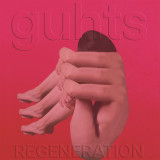
Soul To Burn features highly inventive and memorable avant-rock songs by trio of celebrated musicians, Reciprocate. The germ of the notion that would flower into Soul To Burn came when Reciprocate’s vocalist/guitarist Stef Kett reflected on the idea of funk rock. It ought, he thought to himself, be the best of genres but so often in practice it ends up being the poorest. True enough. Kett decided to approach the problem from a fresh angle, multiple fresh angles, grinding angles, creating an “alt-soul” in which the soul gets to stretch and burn, applied with the power of a rock’n’roll trio but dynamism and agility, rather than cumbersome bulkiness. Reciprocate is a super-group made up of highly celebrated musicians from the UK DIY music scene – their singular, searing-hot power conjured by Stef Kett (Shield Your Eyes) in tandem with drummer Henri Grimes (Shield Your Eyes, Big Lad) and Marion Andrau (The Wharves, Underground Railroad) on bass. The result is the excellent Soul To Burn, which proceeds at a cadence all of its own, halting and blasting, ducking and weaving, zooming away from its distant cousins: Taste era Rory Gallagher or Mr Zoot Horn Rollo of Captain Beefheart’s Magic Band. That’s particularly evident on “Self Regarding Floor Sweepings”, with echoes of “When Big Joan Sets Up” from Beefheart’s Trout Mask Replica, especially with Kett’s added harmonica as the trio hit the winding dirt track, slaloming and swerving. Here is an album of full throttle soul, an avant-rock made up of ear worms so intoxicating they borrow from deep in the mind down deeper into the heart – it’s the cool, weighty groove of Tony Joe White leathering it at full throttle, fuelled by virtuosic back beats that remind of somewhere between the rolling rock of Mitch Mitchell and the fractured noisebeat of Lightning Bolt’s Brian Chippendale: immediate, innovative, virtuosic, exhilarating. Key to the impact of Soul To Burn is Grimes’ drumming, a force unto itself, which sometimes feels like it’s engaged in a creative and playful tussle with Kett’s virtuosic vibrato guitar. Take “Rhodia”, which sounds initially like a radical reworking, an anagram of Free’s “All Right Now”, on which Grimes doesn’t so much hit the groove as hammer it into the ground. Reciprocate tend to be averse to mere repetition, too full as they are of ideas, possibilities. But they know how to hit a riff, as on “Pissed Hymn”. Kett’s vocals are unconventionally impassioned - no vibrato or performative hollering. Rather they climb, up and and again up from the pit of the soul. There’s a sense throughout that this music is hard wrought, squeezed through small apertures, produced against the odds, born to trouble as the sparks fly upwards. There are quieter moments, however, such as the exquisitely beautiful “Ressypressocate”, which affirm the ultimately tender place from where this album proceeds, notes plucked like black flowers, twisted and cherished. Reciprocate demonstrate an astonishing virtuosity, nuance and musical sensitivity manifested through their deep mutual understanding and synergetic interactions. There are moments of sync and camaraderie that remind of the very late Beatles, those rare moments during the Let It Be Era when they loosened up, reassumed their old understanding. But then Kett’s lets fly with a long, looming note and suddenly we’re somewhere else again. With Soul To Burn, Reciprocate set out their stall of intoxicating, super catchy good-time, big heart music – a human album delivering a human message of love and love lost. By the album’s end, you’ll feel pushed and pulled through the mill, wiped out, blissfully exhausted, strangely serene
Sourced from the Original Master Tapes and Presented in Audiophile Sound for the First Time: Mobile Fidelity’s Numbered-Edition 180g SuperVinyl LP Plays with Riveting Detail
Three decades before he released The Philosophy of Modern Song — an insightful book devoted to 66 tunes that both impacted his career and the music world at large — Bob Dylan issued Good As I Been to You. The under-heralded 1992 album, Dylan’s first solo acoustic album in nearly 30 years and first all-covers effort in nearly 20 years, can be seen as a prophetic prelude to what has become the Nobel Laureate’s celebrated late-career arc. It’s also an absorbing continuation of the custom Dylan has embraced since he first picked up a guitar.
Sourced from the original master tapes, pressed at RTI, and housed in a Stoughton jacket, Mobile Fidelity's numbered-edition 180g SuperVinyl LP of Good As I Been to You reveals the immediacy, detail, and stripped-down nature of recording sessions that took place in Dylan’s garage studio in California. Simple, raw, and unplugged, the record presents Dylan in peak form — and showcases a diversity of vocal phrasing, soulful chording, harmonica accents, and close-up ambience that on this reissue emerge like never before. As the first-ever audiophile edition of this almost-lost classic, this LP also benefits from SuperVinyl’s extraordinary properties: a nearly inaudible noise floor, superb groove definition, and dead-quiet surfaces among them.
Recorded and mixed by Micajah Ryan, and supervised by Debbie Gold, Good As I Been to You took shape at Dylan’s home shortly after the singer-songwriter completed sessions in Chicago with a full band. Unaccompanied, he again gravitated to existing works — in this case, traditional folk music — and, with Gold serving as a trusted advisor, performed the songs in multiple keys and tempos until he arrived at what he desired. That careful, determined albeit loose, organic approach emanates from this reissue, on which each note, movement, and space come across more directly, fully, and immediately than on the original formats. It helps draw a through-line to Another Side of Bob Dylan (1964) as well as the similarly themed follow-up, World Gone Wrong (1993) and immersive old-world storytelling of Tempest (2012) and Rough and Rowdy Ways (2020).
Well before Dylan made those renowned 21st century LPs, however, he needed to find a way out of a funk that — save for his 1989 collaboration with Daniel Lanois, Oh Mercy — followed him for years. As author Clinton Heylin reported Dylan admitting in 1997: “My influences have not changed — and any time they have done, the music goes off to a wrong place. That’s why I recorded two LPs of old songs, so I could personally get back to the music that’s true for me.”
Truth: Few, if any, concepts better encapsulate Good As I Been to You. It resonates with the same originality, honesty, resolve, and age- and time-defying relevance as the seminal Anthology of American Folk Music that fired Dylan’s imagination as a kid in small-town Minnesota and, later, per Greil Marcus’ That Old Weird America book, informed Dylan and the Band’s Basement Tapes sessions. This record also contains the type of music Dylan was playing during his acoustic sets at his period Never Ending Tour shows; within a year of the record’s release, Dylan would play half the album’s songs live.
As for those songs: Rife with strange mystery, common circumstance, and epic adventure, the stories appeal to our base instincts. Their themes — jealousy, temptation, sacrifice, love, revenge, identity, opportunity — operate on a fundamentally human level immune to trends, generations, or eras. They’re ancient and modern, serious and comical, open and disguised, simple and multi-layered. They talk of vengeance and justice (“Frankie & Albert”; “Jim Jones”), romance and tenderness (“Tomorrow Night,” “Froggie Went a Courtin’”), the troubled and trouble-free (“Hard Times,” “Sittin’ on Top of the World”). They lend voice to lovers scorned and freed (“Blackjack Davey”), the used and users (“Diamond Joe”), the powerful and powerless (“Arthur McBride,” “Canadee-I-O”), the followed and followers (“Little Maggie”). And akin to much of Dylan’s finest output, things are not always what they appear to be.
Spanning country, folk, sea shanty, bluegrass, and blues motifs, Good As I Been to You re-confirms Dylan’s position as an elite interpreter and sculptor — not of just structure but emotion. Dylan delivers the tunes as if he’s known them forever. He plays with a subtle sense of mischievousness and retains a largely upbeat demeanour; his eyes seemingly twinkle as he sings and picks. His guitar serves as the guidepost for shuffles, boogies, ballads, and mess-arounds while his innate feel for each specific arrangement and melody helps inform pacing, tone, attack.
Like a great author, he understands the importance of adhering to concision, luring an audience, holding their attention, and maximizing the impact of details, actions, and unexpected turns. Though already coarse and ragged, his voice feels ideal for the subject matter and his phrasing — from the clever ways he stretches syllables to underline meanings on the surprise twists of “Canadee-I-O” to the sheer delight he gets from singing “rowdy-dow-dow” on the protest song “Arthur McBride” — outstanding.
Seven Steps to Heaven arrived at a crucial junction in Miles Davis' career. Recorded at two separate locations in spring 1963, it served as Davis' first release in more than a year – a layoff that was then unprecedented for the jazz visionary who had issued at least one LP a year since debuting in the early '50s. Equally notable, Seven Steps to Heaven marks the point at which the core of Davis' Second Great Quintet started to assemble. The twice Grammy-nominated effort is also Davis' final studio record to blend standards with originals. And it happens to be one of the expressive, well-played albums in the jazz canon.
Sourced from the original master tapes, pressed at RTI, and housed in a Stoughton gatefold jacket, Mobile Fidelity's 180g SuperVinyl LP of Seven Steps to Heaven adds yet another step (or more) towards the bliss suggested by the album title. Playing with standout clarity, detail, tone, and balance, this audiophile reissue pulls back the curtain on the instrumentalists. Afforded the tremendous advantages of SuperVinyl – including a nearly inaudible noise floor, dead-quiet surfaces, and superb groove definition – this numbered-edition version presents Davis and Co. amid a wide, deep soundstage whose dimensions and solidity help bring the record's historical importance and musical merit into focus. Warm, organic, and present, the SuperVinyl LP of Seven Steps to Heaven is what great-sounding hi-fi is all about.
And there's nary a passage on this 1963 landmark that isn't great. That Davis manages to make it feel so cohesive and seamless is a testament to the inspired performances and engaging compositions. Davis didn't draw it up the way it unfolded. No matter. He held trump cards that stayed up his sleeve for the next three decades: A drive to be nothing less than superb, a refusal to settle for mediocrity, and standards to which nearly no other composer or player could match. "The toughest critic I got, and the only one I worry about, is myself," Davis wrote in the liner notes. "The music has to get past me."
Davis' demanding approach partly explains why he switched up his band between the first and second sessions – and underscores how fast his mind was racing with new ideas. Seven Steps to Heaven acts as the stable bridge between the transitional period that followed the dissolution of his First Great Quintet and formation of the Second; without it, Davis perhaps doesn't invite then-23-year-old Herbie Hancock and a still-teenage Tony Williams into the fold. The trumpeter not only got his men – he preserved in amber for the only time (well, magnetic tape anyway) the chemistry and vibe he achieved with pianist Victor Feldman, drummer Frank Butler, tenor saxophonist George Coleman, and bassist Ron Carter.
That line-up gels for half of the six songs on Seven Steps to Heaven. Captured in Los Angeles April '63, the quintet stretches out on a luxurious reading of the late '20s New Orleans staple "Basin Street Blues"; lays on the romance for a candlelit stroll through the '40s standard "I Fall in Love Too Easily"; and explores the rounded contours and melodic crevices of the early blues "Baby Won't You Please Come Home." The performances are refined, elegant, emotional; the band lets the feelings linger and gives the listener time to absorb the colours and textures.
A month later, Davis returned to New York City with Coleman and Carter, and partnered them with Hancock and Williams. Tellingly, the quintet tried its collective hand at the title track and "Joshua" – Feldman-penned songs already recorded in Los Angeles – as well as the yearning "So Near, So Far." Those are the tunes that comprise the other piece of Seven Steps to Heaven, with the revised quintet's liquid pulse, articulate dynamics, and timing shifts a harbinger of things to come.
It's also worth mentioning that the interpretations of the bounding "Seven Steps to Heaven" – a showcase for Davis' trumpet – and interlocking "Joshua" netted considerable radio airplay and attracted the attention of other contemporaries who covered the songs. Keeping Carter and Williams as the rhythmic engine, and Hancock as the anchor between solo flights and structural motifs, Davis would soon soon welcome Wayne Shorter into the family and transform jazz. Again. The aptly – and, in hindsight, perhaps prophetically titled Seven Steps to Heaven – is how he got there.
LP reissue of Collective Calls, the first duo LP from Evan Parker and percussionist Paul Lytton. Mythically alluded to as ‘An Improvised Urban Psychodrama In Eight Parts”, Collective Calls utilises electronics, pre-records and homemade instruments to wryly in/act self investigation. Having just recorded the cliff jumping Music Improvisation Company with Derek Bailey, Christine Jeffrey, Hugh Davies and Jamie Muir, Parker was at the point where he was thinking, ‘what’s the next thing?’ On Collective Calls, only the 5th release to appear on the newly minted Incus label, percussionist Paul Lytton arrives with an arsenal of sound making sources to push Parker into ever new territory. Recorded in the loft of The Standard Essenco Co on Southwark Street by Bob Woolford (Topography of the Lungs, AMM The Crypt), Collective Calls has more in common with noise or music concrete than with jazz; sitting comfortably alongside Italian messrs Gruppo di Improvvisazione Nuova Consonanza or the husband-wife duo of Anima Sound. According to Martin Davidson, it was a Folkways record that Lytton was obsessed with around the time of this release - Sounds of the Junkyard - its track titles like “Steel Saw Cutting Channel Iron in Two Places” working to give you a good idea of the atmosphere of Collective Calls. Paul Lytton had encountered the use of electronics in music in 1968 when he was invited to play drums on the recording of An Electric Storm by White Noise (along with David Vorhaus, Delia Derbyshire and Brian Hodgson). He had seen Hugh Davies using contact mics in the Music Improvisation Company, and soon set about assembling a Dexion frame akin to drummer John Stevens’, except that his own was armed with several single-coil electric guitar pickups, long wires and strings with connected foot-pedals to modulate pitch. Influenced as much by Stockhausen, Cage and David Tudor as he was by Max Roach and Milford Graves, Lytton’s percussion is abstract, expressionist and at times totally mutant. Sometimes rolling extremely fast, then screeching almost backwards over feedback, Lytton gives Parker room to play some of his weirdest work. Parker is listed as performing both saxophones, but also his own home made assemblages, including one dubbed the ‘Dopplerphone’ - a length of soft rubber tubing (activated by a saxophone mouthpiece and manipulated to alter the rate of airflow) attached to a longer length of clear plastic tubing (whirled around the head whilst being played) ending in a plastic funnel. Thickening the brew even more, Parker would also add a cassette recorder, on which he would play back collected sounds and previous recordings of the duo. Imagining the set up in a 70s loft, it’s an assemblage more akin to what today's free ears might see at a Sholto Dobie show, spread out on the floor of the Hundred Years Gallery, the shadow of Penultimate Press lurking in the corner. It’s a testament to Parker’s shape shifting sound - the ever present link to birdsong being at its most warped here - terrifically free and unfussy, wild and loose from any of the dogma that might come in later Brit-prov years
A blistering advancement of the knife-sharp hooks and urgently efficient post-punk structures that they’ve spent over a decade refining since their formation in 2011, the band’s fourth album – and second on Specialist Subject - emerges from a period of flux for the band’s chief songwriting partnership of Emma Wigham (drums/vocals) and Mark Jasper (guitar/vocals). First came a move north to Yorkshire from their native London. “We had decorated a tiny, rented house in Mytholmroyd” Jasper explains. “We setup a practice room in the top of a mill nearby and tried to write music, which we did amid stress about money, and a fear of having made the wrong decision. We had left our jobs, friends and a nice but absolutely tiny flat in London behind, and moved to a small village in West Yorkshire.” Although they found the location to be beautiful, the transition from city life to rural turned out to be an odd fit – too much so, it turned out. From this relatively short stay in West Yorkshire, however, came a more permanent change as the couple welcomed their first child Ivy into the family. Although, they’re hesitant to put too much of Streams and Waterways influence on the shoulders of their young daughter – she arrived a year and a half into the album’s conception – there’s no denying that its themes of loss, birth, and being part of this eternal, momentary life were brought into sharp focus following their new arrival. “Streams and Waterways is about the struggle of looking at the clock, realising it’s actually going pretty damn fast and knowing that really you have no control over anything” Jasper confirms. Perhaps that explains the way that opener The Valley doesn’t even introduce itself before careering into a full-throttled, three-minute scuzzy rager that would approach the descriptor anthemic had it not been kicked and scuffed along the way; it’s maybe why the wiry, ferocious Choice You Make feels like a charge into a storm despite the uncertainty of what you might find. It’s perhaps why even when Witching Waves allow themselves respite on the pared down Open A Hole, there’s a churning anxiety that lies below the acoustic guitar and harmonising vocals: in many ways musically and thematically Witching Waves are relinquishing the control that’s always been a fixture of their music – with all the thrilling and nervous fallout that comes from that. Although the pair have since returned south (having relocated to Exeter), Streams and Waterways also serves as a document of their foray northwards. The surviving artefact from Jasper’s never-to-be-finished studio that he’d began to build in Yorkshire – following the ending of his London-based Sound Savers studio – the record is also the first to feature current bassist Will Fitzpatrick, who joined initially live on their support tour with Australian punks Camp Cope. Fitzpatrick – a key component of Liverpool’s DIY scene for two decades – quickly became a key part of the writing process. Recording sessions were done during periods of lockdown that allowed congregation, Jasper recalling a still unborn Ivy kicking hard during an early mix playback of It’s A Shame’s layered noise rock assault. “The song was about my past, a much harder time. But my future was egging me on” he says. It’s a neat summation of Streams and Waterways and its representation of the discomfort of life amidst the compulsion to ride on its journey regardless. It’s a record that finds Witching Waves looking into the future more than ever before, but still bristles with the rush of being in the moment – because ultimately, despite what may have happened or may yet come, the band’s strongest trait remains being able to keep you feeling in the present.
Marbled[27,69 €]
House of Harm are proud to announce the forthcoming release of their new album Playground, out December 1st, 2023. The new record builds and expands upon the three-piece’s enthralling shadow-pop sound, a mix of midnight atmospherics, 90s era jangle pop, and contagious synth drenched hooks that further elevate the transcendent vocals of lead singer Michael Rocheford. Rounded out by Cooper Leardi (guitar / synths) and Tyler Kershaw (guitar / synth), House of Harm have amassed an impressive following as something of a best kept secret among their growing fanbase, leading to sold out shows on both coasts by the power of word of mouth alone. The band members have been drawn to music for as long as any of them can remember, and the drive to be around like-minded artists and make their own noise drew them all to Boston after high school. There they all quickly enmeshed themselves, playing in other bands before meeting each other. Ever since, House of Harm have been quietly making a name for themselves among music fans with darker pop persuasions via a steady stream of releases in single, ep and album form. That attention to detail and workmanlike approach at the expense of chasing instant gratification seems to be paying dividends after years of steady effort. The journey of their new album Playground saw House of Harm stay true to that ethos. The band painstakingly narrowed the record down to an efficient 10 tracks that they felt made the most sense, both standing on their own as well as fitting into an LP that built a cohesive world for the listener to get lost in. The album’s name also reflects the experimentation and happy accidents that came about during the writing and recording process. On “The Face of Grace” they set out to explore different dynamics by writing a song entirely without drums, but couldn't help themselves from putting emphasis on the song’s 6/8 waltz time signature. “Two Kinds” is another first for House Of Harm in that it’s predominantly driven by acoustic guitar. That aforementioned vulnerability shows up in other areas of the songwriting process as well with “Two Kinds”, one of their most revealing songs to date from a lyrical standpoint, written from a place of reflection and weakness and tackling feelings uneasy to be put on display for public consumption. Taken as a whole, the end result is an album representing a collection of the band’s most raw and expressive songs yet.
‘Rituals’ is the new album of spiralling drone & ambient formations by Italian artist Danilo Betti aka April Clocks (Union Editions / Mixed Up); a new work of sublime disorientation by the Rimini-based outlier, arising from a period of reinvigorated artistic practice.
Emerging just over a year after the project’s second album ‘It Takes Time’, ‘Rituals’ heads deeper into spheres of consuming, hypnagogic haze, coursing through nine coalescent compositions of amorphous yet absorbing electronics.
Where ‘It Takes Time’ represented an autodidactic interpretation of Betti’s formative influences – namely shoegaze & proto-ambient - ‘Rituals’ is an enigmatic proposition, the product of subconscious resonances, a mysterious sound world that finds traces of evanescent beauty and uncanny captivation in sustained tones, cavernous oscillations, and aesthetic imperfections, like the notes of subtle surface noise embedded within many of these productions.
Attesting to the value of Betti’s background as an industrious solo artist, making music away from prevailing sites of activity, ‘Rituals’ consolidates the inspirations and hallmarks of the April Clocks project into an acute reflection of Betti’s vision, one that feels completely his own.
In the buried somnolent splendour of the opener ‘Hypersleep’, through the sound art rustle and time-stretched cycles of ‘A Cure’, into the stroboscopic magnitude of ‘Ceremony’ and the haunting string loops of ‘Coward’, Betti captures compelling impressions drawn from a submerged perspective; a deluge of smokescreens and crosscurrents from the other side.
Bearing the influence of subliminal states, ‘Rituals’ is nevertheless lucid and arresting. There are sumptuous holding patterns of ambient evaporation that stream into vast maelstroms of sound (‘Displaced Euphoria’), enervated organ themes that distil sensations of stasis and dissociation (‘Wound’), as well as psychedelic movements in wide tracts of negative space (‘No Time, No Land’). From here, the acoustic glitch of ‘Disappearer’ and the stratospheric slipstreams of ‘Mirror Being’ bring the album to an astonishingly dramatic conclusion.
Throughout such moments of reverie and tension, ‘Rituals’ makes for a hypnotic listening experience. It’s an album that signals a pronounced sense of development for the April Clocks project, from past vestiges of physicality to present degrees of heightened abstraction and ethereality, from the Warp-influenced rhythms and frameworks of ‘It Takes Time’ to the wide- ranging, experimental sounds that unfold here.
Encompassing forms of decomposition and otherworldly futurism, decay and sublimation, distortion and lustre, this is unique, cerebral music that reaches inward and ascends outward, drifting elsewhere, according to its own coordinates.
Recorded and Mixed at Tower of Disintegration, 2022.
Mastered by Miles Whittaker.
ARTIST OVERVIEW Mixing warm acoustic tones and strong vocals with heavy emo elements, the band launched several DIY tours, quickly developing a national presence. Signing with Boston indie Topshelf Records, they released their debut album, “The Earth Pushed Back" and in 2014, Have Mercy signed with vaunted indie Hopeless Records, which released their second LP, “A Place of Our Own”, later that year. Working with producers Paul Leavitt (All Time Low) and Brian McTernan (Thrice), Swindle and a rotating crew recorded the band’s Hopeless follow-up, “Make the Best of It”, which was released in early 2017. Have Mercy returned with “The Love Life” in 2019, which charted Swindle’s tumultuous personal life over the previous three years. The band came back in August 2022 with a self-tiled EP, released via Zodhiac Records, which caught the attention of Brooklyn Vegan, FLOOD Magazine, The Noise, and more. In september 2022 they shared an unreleased B-Side from their 2012 EP, My Oldest Friend, titled "Seventeen" via Rude Records. BAND MEMBERS Andrew Johnson // Guitar, Backing Vocals Brian Swindle // Lead Vocals, Guitar, Keyboard Nick Woolford // Bass, Backing Vocals TOURING HISTORY Since 2012, Have Mercy has toured both nationally and internationally with such acts as Taking Back Sunday, Motion City Soundtrack, Senses Fail, Mayday Parade, The Maine, The Wonder Years, Turnover, Real Friends and Neck Deep
Repress!
Season of Mist is Dead Horse One's second album and the first collaboration with french indie label
Requiem Pour Un Twister (Triptides, Good Morning TV etc.). It's a promising alliance between two of
the best representatives of shoegaze in France. Haling from Valence, the boys managed to impress
Joe Foster of Creation Records who said about their first EP « their music, that spans multiple genres
including Shoegaze and psychedelia, is like an endless extended note, wistful and melancholic....macabre
and beautiful...from which will emerge pop songs ». Mark Gardner of Ride mixed their first effort,
the acclaimed Without Love We Perish and now they're back with Season of Mist produced by the
band helped by John Loring (Fleeting Joys). It's full of catchy hooks, shoegaze and psychedelic anthems
propelled by supersonic guitars that sound like a massive wall of joyful noise. Close your eyes and let
all theses great songs flow in your mind, from season of mist will emerge light.
Channelling the rhythm of the poetry of Desnos and also the dinstinctive paintings of Francis Bacon, the band Venera 4 is an original presence in France.
Venera 4 impacted with their first Ep, 'Deaf Hearts', which laid the foundations of their expansive yet intimate sound that evokes the DIY spirit of the post-punk scene.
The intricate vocals are delicately layered over the uncompromising guitars. Eidôlon is a powerful yet introspective album with the icy elegance of Broadcast, melodies worthy of the best of Ride, and a white wall of noise like that of The Jesus & Mary Chain.
Abrasive, violent, delicate and sexual, Eidôlon is a reflection of it's own time: a protean art form.
da Googie is the solo project of Deb Googe, bass player with My Bloody Valentine, Thurston Moore Group and Brix Smith. Taking a bass IV, a looper and a pile of FX pedals, da Googie blends traditonal basslines with more abstract noises to make intricate, layered soundscapes.
Too Many Things are duo Marion Andrau (The Wharves/ Underground Railroad/Throw Down Bones) & Jem Doulton (Thurston Moore Group/The Oscillation). Marion & Jem play each other’s songs best described as gloomy noise, politico-romantic psych; expect well oiled electronics, guitar, keys and vocals leading you to an underworld reminiscent of the red room of Twin Peaks.
“F(r)icciones is a complicated piece of miscellaneous works. A set of experiments in preparation for a gig at a noise convention in Orozco that never happened, an 18 women choir piece composed for a soundtrack to a documentary that doesn’t have a release date yet or trying to create a drone piece by accumulating guitar noise. The result? Burnt psychedelic blues with electronics ”
Partly an official soundtrack to “Durangas”, a documentary focusing on women and heritage, discussing civil war, education, sex or violence in the town of Durango, Basque Country. And partly a non musical accompaniment to an imaginary movie, F(r)icciones is the new album by A. Maiah.
Self described as Guitarist / Composer / Improviser of Idiomatic Noise / Microtonal Blues Ist or Psychedelic Populist, Asier has been self-releasing albums for nearly a decade now, focusing mostly on prepared guitar or improvised noise
Durangas was composed by Asier, arranged/conducted by Garazi Navas, performed by an 18 women choir from Durango and recorded live at San Agustin Cultural Centre. All of the other tracks were recorded between 2021-2022 in between portable recorders in Burgos or at Estudios Nomadas.
With Scream If You Don’t Exist, Richie Culver metamorphoses from outsider musician to underground fixture, feeling his way from the fringes towards a growing community of musicians that have gravitated towards his singular sound world. Building upon the stark catharsis of his previous dispatches, on his sophomore album the artist draws from grimdark drone, industrial noise, experimental hip-hop and UK rave to map out a space for himself, caught between genre and discipline. While on his debut, I Was Born By The Sea, Culver took a last glimpse back at his grey, salt-flecked past while struggling towards somewhere brighter, here, he documents the process of finding fresh waters, parsing through the complexity of inhabiting a more open and optimistic place while contending with the weight of his resolve, staring hard won self-acceptance in the face. The album’s title speaks to this creative and emotional work, serving both as the foundational paradox from which the artist’s new discordant sound emerges and as a call to action, a defiant cry in the face of existential angst.
Part of this process involves visiting familiar territory with renewed focus. Macabre opener ‘Hottest Day Of The Year’ signals an unpleasant memory with crow caw, queasy, gas leak ambience and dental drill whir as Culver recalls a life lived in nihilism: “Everything is just something that happened / Reductionism, muscles spasms, a mother’s first contraction.” Yet, on Scream If You Don’t Exist, Culver’s irresistible formula for ragged machine poetry is shot through with palpable urgency. No longer listless and despairing, he finds new intricacies for these compositions, tracing a stark interplay between crushing bass excavations and penetrating vocal clarity, a contrast picked out in the delicate threads of rhythmic pulse suggesting themselves in the blunt pressure and skittering creep of ‘Weakness’, on which Culver offers up vulnerability as a tentative solution to self-described emotional constipation: “Please do / Do take my kindness for weakness / For I am weak / And that is ok.” The amniotic soundscape of ‘YOLO (then u die)’ gives way to depth charge drone and unnerving machinic improvisations, like a noise show heard from deep in the Mariana trench, while on ‘Underground Flower’ the low-end fog lifts to reveal a brighter, colder scene. “Love me for who I could be / Not who I am,” he pleads, tending gently to his own tenacious bud.
Scream If You Don’t Exist gives us a glimpse of this flower in bloom. On the album’s cursed self-help tape title track stuttering loops of off-kilter keys and childlike repetition make light of the very real risk of disappearing all-together, a nervous breakdown rendered as a malfunctioning nursery rhyme. Paranoiac anthem ‘Say 4 Sure’ introduces bit-crushed boom-bap stomp, as though hammered out on a water-logged Game Boy, swarms of loose-wire noise sparking up against guttural grunts and ragged exhalations, while ‘On The Top’ enacts a seance for the hardcore spirit, with loops of rave piano and hiccuping vocal chops pirouetting through knackered samples, air raid sirens and the ghostly crash of breakbeat cymbals. As though in response to the solitary nature of much of his musical exploration, this time, the artist invites other voices into the world of Scream If You Don’t Exist. On ‘Swollen’, the unflinching, brimstone prophecy of Billy Woods sounds clear through an expanse of spirallic bass, preaching the same frayed gospel as Culver when he issues the quietly devastating contemporary diagnosis: “Computer broke but it still works for now / That’s the best you can say for most of us anyhow,” while another fearless correspondent from the fringes, Moor Mother, brings earthbound heft to the ambient drift and obliterating barrage of ‘Restaurants,’ teasing out meaning with elongated intonation and pitch-shifted intensity.
It’s during the album’s most meditative moments that we might recognise this space Culver has found for himself for what it really is. ‘OMG They’re Gone’ follows a chopped and slowed monologue from Culver’s wife, who works as a death doula, reflecting on her own experiences with grief and the reality of living within a culture both terrified and ignorant of the process. Floating over glistening ebb, etherised croons and luminous chimes, her words stand as a prescient reminder of the power of ephemerality. Just as Culver flourishes in imperfection, here we can find enormous strength in transcience. But it’s with ‘Just Jump In,’ which unfurls like a buoyant counterpart to the sparkling oil rigs of ‘I was born by the sea’, that Culver illuminates the hopeful waters we realise we’ve been making our steady way towards. “I know now / That you loved me,” he admits, a revelation a lifetime in the making. Through the rawest reflection Culver has found a way forward, driven by an optimism drawn from a resolve to be better, to love and be loved, an admission to weakness and the discovery of a new kind of strength. “Don’t test the water,” he reassures us and himself, “just jump in.”
Scream If You Don’t Exist will be released in November 2023 by Participant, on limited edition vinyl, and digital download . The release will be accompanied by a series of films directed by Mau Morgo, Josiane M.H Pozi, William Markarian-Martin, Simon Bus, and Bruxism.
Fixed Abode labelhead Rainy Miller met Space Afrika through regular nights he runs at Salford’s The White Hotel, a hub for leftfield electronic music. What started out as an idea for a collaborative EP between Rainy and Space Afrika turned into a longer form project, with features from Mica Levi, Coby Sey, Richie Culver, Voice Actor and Iceboy Violet, amongst others. ‘A Grisaille Wedding’ is an immersive experience that fills the space these artists have come to dwell in during their creative journeys. It not only pushes the boundaries of music but also bridges regional dialects within the conversation of contemporary electronic music. Rainy Miller: “‘A Grisaille Wedding’ is a project based in the personification of the semi-fictitious world that Space Afrika have come to build over the years. Using musique concrete and British soundscapes, I wanted to fuse the sonic with both noise and the contemporary.” Space Afrika: “The record’s title figuratively describes the marriage of two similarly motivated perspectives, each affected by a common backdrop and familiar ground tread amongst the scrimmage of urban sprawl, sombre, a boisterous landscape and clouds of uncertainty.” Rainy Miller’s 2022 solo album was included in 6 Music’s Albums Of The Year and Crack Magazine’s Best Albums Of 2022. Following the LP release, Rainy Miller and Space Afrika will be announcing joint UK and EU live shows taking place at the start of 2024. For fans of Actress, Dean Blunt, Lee Gamble, Loraine James
In a recent interview, the California artist Jim Haynes was asked to name his top five noise albums. In quick fashion, he listed off Kill The King, Send, Desnos, Persona, and Carcinosi. Since then, he's equivocated on which albums to choose, but the artists behind such works remain as the adjacent signposts and landmarks to his own constructions of industrial noise. How those records connect to the output from Haynes is found in their unique combination of smoldering dynamism and psychological inquest. For over twenty five years, Haynes has been an autodidactic clinician into the processes of corrosion, decay, and rust, turning his attention away from visual practices and more to the metaphoric crucible of noise and sound. By now, it seems like a cliche that the pandemic changed everything; but since that viral encroachment, there is a noticeable shift in Haynes' work post 2020. It's more aggressive and yet more controlled: a rarification and telescoping of the research into decay for more potent noise and more potent metaphor.
The tools for Haynes' work remain limited: motors, electronics, shortwave radio, found objects, all applied with considerable pressure. Compositionally, Inauspicious is a very rough moire pattern from overlapping elliptical structures that can negate and obfuscate just as easily as they can compound and aggregate. The album surges and collapses upon the two twenty minute chunks of controlled noise that follow an internal logic that snakes from brooding power drones, spectral radio transmission, and an aktionist demolition cast upon metal, glass, and unfortunate wooden objects. Rupture and release. Purge and pulse.
ME LOST ME led by Newcastle-based artist Jayne Dent announces a new album RPG via Upset The Rhythm on 7th July, and is touring across the UK including support dates with Pigs x7. RPG (recorded in Blank Studios with Sam Grant of Pigs x7) is ME LOST ME’s fourth outing as a collective, having transitioned from an ambitious solo project in 2017, Jayne now regularly collaborating with acclaimed North-East jazz musicians Faye MacCalman and John Pope.
ME LOST ME delights in experimenting with songwriting and storytelling, creating a beguiling mix of soaring vocals and atmospheric electronics that playfully weave together disparate genres, drawing influence from folk, art pop, noise, ambient and improvised music. Hauntological in part, RPG is concerned with tales and with time - are we running out of it? Does insomnia cause a time loop? Do the pressures of masculinity prevent progress? Jayne Dent asks these questions and more on RPG, her homage to worldbuilding and the story as an artform, calling back to those oral traditions around a campfire, as well as modern day video games - bringing folk music into the present day as she does so.
ME LOST ME presents sound reaching in opposite directions, straddling time towards the archaic and timeless traditions of folktales, and towards the possible and potential futures of pastoral Britain and the world at large. Part speculation, part reminiscence, what results on the new album RPG is music that sounds ultimately displaced and yet omnipresent, adjacent to a hapless Vonnegut hero whose life is scattered throughout time and history, but full of wonder and curiosity rather than fear.
On track “The Oldest Trees Hold The Earth”, we see time stretched out between the branches of impossibly old beings in the woods. This track was co-written in Aarhus, Denmark with fellow Newcastle folk musician (with Danish heritage) Ditte Elly. The pair wordlessly passed a sheet of paper between each other to write the lyrics, inspired by Højbjerg and Mosegård, the woods they were sitting in. “How long should I wait/Before the moss grows?/On my skin, on my outstretched arms,” the lyrics are sung in a round, the close harmonies delicate and detailed.
A central thesis of this album is the joy of creation, something which is paid homage to in the album’s final track, “Science And Art” (Not because we need it to last/just because we needed to make it - so we invented the words/this language). It is also reflected in the definition that Jayne gives for “folk” itself. She comments, “To me, folk is quite an expansive idea. I think of it as creative work that's often made ad-hoc, with things that are at hand and more often than not it's born of a DIY ethos. It is songs and stories of the people, as in the traditional sense, but also creative coding, game design etc. Whatever outlet someone has for their creative expression could be described as folk. It's the things we make because humans need to make things, and the stories we tell about ourselves and the world around us.”
Crucially, on latest album RPG, Dent expands her songwriting and looks towards the unreal locations of worldbuilding in video games for inspiration. She comments, “I think the main similarity is the importance of a song's setting/environment to inform its narrative and textures, I'm often most inspired when out walking in the natural landscape, in cities and travelling to places I've never been before - the environment I'm in really impacts the work I make. While writing this album, however, I found myself inspired by imaginary landscapes, those in video games, paintings, etc. I was writing stories into these unreal locations instead. Even the songs inspired by real places, like The Oldest Trees Hold the Earth, have a very surreal quality to them in the songs, like they're being warped and turned into something not of this world. I think that's the main difference for me in terms of the thematic content and inspiration behind this album - I've been getting more and more interested in balancing surreal and fantastical environmental elements with ordinary and everyday settings.”
RPG upends the concept of the eternal return - we may be in the midst of inevitable repetition, but we tell stories whilst awaiting the passage of time.
"Being familiar with, and a fan of Jayne's earlier work, it was great to get the opportunity to work with her on the production of her new record. I had in mind a sense of what the record might be, but what came of the sessions, led by the vision Jayne had for the record, totally exceeded my expectations. As far as albums go, it has a breadth of writing and a sonic depth that made it a truly brilliant record. Having Jayne join us on a leg of the Pigs x7 tour in April is going to be ace. The creative nature, the sincerity and bold strokes of ME LOST ME put it in that space outside of any genre pigeonholes, and between our two sets I imagine the audience is going to have a proper sonic bath..."
Sam Grant, Pigs Pigs Pigs Pigs Pigs Pigs Pigs, 2023
“The music of Me Lost Me is beguiling, idiosyncratic and cinematic - or should that be video-game-omatic? This suite of songscapes often hits the sweet spot between ancient and modern with its masterful blend of stark folk, neon electronic burbling and unusual arrangements. Jayne's singing is refreshingly straightforward and nuanced - it's exquisite! - and perfectly punctures the nebulae of synths and brass which billow around the old wooden frames of the songs. Whilst listening I had images in my mind of what Northumberland might look like through the eyes of Simon Stalenhag - foggy moors, a robot looking across the sea to Lindisfarne, twinkling lights on metal towers.... that sort of thing. It's a really great album.”
Richard Dawson, 2023
Sistro (Sistrum) is a kind of percussion instrument that has had several incarnations and names in various cultures since the time of the Sumerians and throughout history has always been associated with religious rituals. It’s from this relationship between music and the transcendent that Nuno Oliveira (Nuno O, Judas Triste, José Pinhal Post-Mortem Experience), Tito Silva (Vasco da Ganza, José Pinhal Post-Mortem Experience) and Rodolfo Oliveira (Oficinas TK) were gradually inspired to create a trio that pays homage to this instrument of ancient times.
The project was born casually and without intentionality throughout several incursions into megalithic monuments in the hills and mountains of northern Portugal, culminating in an unusual two-day session of musical experimentation in Esposende, in September 2019. In this two-day session, codenamed “Arménio Sessions”, the trio explored a sound based on sea soundscapes, electronic beats, electric noises and the strings of na altered guitar. Channeling the strength of the elements and the mystique of the place in the form of a musical experience.
In 2021, Sistro collaborated with Mario Klingemann (aka Quasimondo) who created a music video especially for the band, created using a vintage video mixing board. Then using feedback loops and a process that Klingemann calls “Neural Edit”, which uses an artificial intelligence algorithm to correlate the raw video material with the sound.
After a long period of incubation, the group's first full-length release sees the light of day on the 31th October, 2023, moment in which a sequence of rituals begins to present and celebrate the relationship between music and the transcendent. Sistro's debut album will be released by Favela Discos, having been mixed by Tito Silva and mastered by Pedro Augusto. The photography and graphics are by Oficinas TK.
Leatherette’s 2022 debut album Fiesta offered an intense, inspired and individualist take on post-punk, their caustic riffs, fevered saxophone blasts and impassioned vocals revealing the five-piece skilled purveyors of the form.
The group's second album Small Talk, however, is clearly the work of a group ready to take flight in a new direction all their own. As they toured Fiesta across Italy and Europe, Leatherette grew tired of the genre's constrictions and yearned to spread their wings. Small Talk transcends all the group have done before and coins a voice uniquely their own, driven by the same furies that propelled Fiesta, but finding fresh new forms for expression.
The album boasts some of Leatherette's most unabashed pop-songs to date – albeit pop that's deftly twisted, pointedly perverse and ready to explode when you least expect it.
It also contains some of the group's most challenging and uncompromising noise yet, the violent swinging back-and-forth between ugly din and nagging tunefulness a (molotov) cocktail that grows only more addictive with each listen. Where Fiesta saw the group enter the studio with a batch of anthems they'd honed on the road, their approach for Small Talk was very different, leaving the sessions open to moments of on-the-fly invention and sparks of mad genius. The interplay between the five musicians is so much stronger this time around, the group say, a result of the months of touring the band put in following the release of Fiesta.
Living out of rucksacks and spending hours on the motorway in a tour van might not be everyone's idea of a good time, but that's what Leatherette credit with sharpening their intra-group bond, their almost telepathic feel for the sounds that will complement what their bandmates are playing. “We were more free to play and to rearrange, because we knew each other better now,” says guitarist Andrea Gerardi, “and the interplay is more focused on this album as a result.” The sessions for Fiesta were frustrating, Andrea says, because “we were playing the same songs over and over”.
Their approach was radically different for Small Talk, however, which saw the group file into Bronson, a local club where they've often played before, and record the album on the premises. After the sessions, the album was mixed in Bristol by Chris Fullard (Idles) and mastered in Portland at the legendary Telegraph Audio Mastering by Adam Gonsalves. "We recorded live, all playing together at the same time, rather than overdubbing the instruments," says Michele. The process, he says, "made us more coherent, and the songs more spontaneous." "Our strength is live performance," adds Andrea, "so we tried to capture that interplay. Sometimes we made errors, but we didn't care, because it sounded great. This music is our lives - it doesn't need correction. We were free for the two weeks we recorded the album, and the ideas soared in the most amazing way." Indeed they did. The album's see-saw between angular noise and pop coherence is very much its strength, and very much the sonic identity of this singular group
Black Vinyl[19,29 €]
The Land of the Snow is a project and a state of mind of Joel Gilardini (baritone guitars, electronics, and drums programming), backed up on drums by Jacopo Pierazzuoli (Obake, Morkobot, and Deneb) TLOTS is devoted to massive, metal-oriented soundscapes: a constantly evolving sludgy mix of doom and post metal (often seasoned with noise and dub elements), which often takes its inspiration from alpine landscapes and Tibetan traditions The new album "As Within, So Without" (2023, Subsound Records) is about what's inside us, how we interact with the outside, and vice versa. Everything we do and experience through our thoughts, our skin, and our actions, constantly infuence our inner selves and our surroundings. It's a constant exchange and confrontation that drives our lives and pushes us to widen our horizons with each step we take. "As Within, So Without" was conceived together with Jacopo Pierazzuoli (drums), Eraldo Bernocchi (mix and additional guitars), and Petulia Mattioli (artwork). Joel is an experimental guitarist and sound designer, based in Zurich (Switzerland). Beside TLOTS, he is also known for his ambient- drone works (released on labels like ZeroK, Unexplained Sounds Group and Endtitles) and is a member of the noise-industrial combos Mulo Muto (with Attila Folklor, CH) and Psychic Drones (with Kazuyuki Kishino, JP)
Galaxy Vinyl[23,11 €]
The Land of the Snow is a project and a state of mind of Joel Gilardini (baritone guitars, electronics, and drums programming), backed up on drums by Jacopo Pierazzuoli (Obake, Morkobot, and Deneb) TLOTS is devoted to massive, metal-oriented soundscapes: a constantly evolving sludgy mix of doom and post metal (often seasoned with noise and dub elements), which often takes its inspiration from alpine landscapes and Tibetan traditions The new album "As Within, So Without" (2023, Subsound Records) is about what's inside us, how we interact with the outside, and vice versa. Everything we do and experience through our thoughts, our skin, and our actions, constantly infuence our inner selves and our surroundings. It's a constant exchange and confrontation that drives our lives and pushes us to widen our horizons with each step we take. "As Within, So Without" was conceived together with Jacopo Pierazzuoli (drums), Eraldo Bernocchi (mix and additional guitars), and Petulia Mattioli (artwork). Joel is an experimental guitarist and sound designer, based in Zurich (Switzerland). Beside TLOTS, he is also known for his ambient- drone works (released on labels like ZeroK, Unexplained Sounds Group and Endtitles) and is a member of the noise-industrial combos Mulo Muto (with Attila Folklor, CH) and Psychic Drones (with Kazuyuki Kishino, JP)
Michael Chapman (1941-2021) released his debut album Rainmaker in 1969 on Harvest. He went on to release over fifty albums and influence many with his evocative songwriting and guitar prowess. From heady jams to expressive ballads to experimental noise, Chapman’s work continues to inspire. Tompkins Square recruited Henry Parker to curate a collection of covers by working musicians from Chapman’s home turf in Northern England. With stunning artwork by local artist Bunty Marshall mapping the important places in Michael’s life, this 12th volume of Tompkins Square’s Imaginational Anthem series is the ultimate tribute to a very dearly missed artist. Notes from Henry Parker: Tompkins Square approached me in Autumn 2022 about putting together a tribute album to Michael Chapman who had passed away one year ago, on my birthday, in 2021. I remember it well; Michael Chapman had always been a huge inspiration to me since starting out on the acoustic guitar and was the first artist I had heard who played the instrument with that heavy thumb, drop tuned sound. I first got the chance to see him live at the Bradford experimental music festival Threadfest in 2015 and then went on to watch him play many more times, in the northern towns of Halifax, Hebden Bridge and Preston, also getting the chance to support him on a couple of his Yorkshire dates in 2018, in Saltaire and his hometown of Leeds. With both Michael Chapman and myself proudly coming from the county of Yorkshire in northern England, Tomkins Square and I decided to make this compilation decidedly Yorkshire focused, bringing together seven other artists from the county who have drawn influence from the profound music of this man.For those who don’t know, Yorkshire is an area that spans much of northern England, with its people taking great pride in the county, never too seriously, and poking fun at the “soft south” or it’s near neighbour Lancashire. Michael’s sound always spanned from introspective folk songwriting to more experimental forms and naturally so does this album, created for Tompkins Square. When it came to choosing musicians to contribute to the record, I was grateful for the Yorkshire limitation on who I could draw from, as the resulting album is comprised of eight artists, who have all shared stages with each other across the folk and experimental scenes in the area. The lack of “bigger” names on the record feels natural, there’s no ego about this project as there never was with Michael, who always seemed content touring the smaller clubs and making records for anyone who was interested. The artwork for the project came together organically, and firmly within the Yorkshire cottage industry. Two months before I was asked to put this album together, I had played a show in Leeds for the launch of a new zine, centred on folklore and mythology. The artist and founder of the zine Bunty has an exceptional eye for detail and a profound love of Yorkshire landscape and culture. Her intricate maps and illustrations created for ‘Hwaet’ zine were the perfect starting point the for this record, and the cover art and inner sleeve is an ocean of detail for Michael Chapman’s incredible life, music and his connection to Yorkshire
Following on from recent works for 12k, The Trilogy Tapes, and Important, Far More Decentralized is a new collection of subtle, enchanting pieces from Tokyo-based sound and visual artist Akhira Sano. Working with electronic, instrumental, and concrete sounds, he crafts immersive assemblages of long overlapping tones and blurred resonance, cut through with textural crunch and hiss. The resonant bell-like tones of opener ‘Kouai’ invite the listener in, calling up the warm sound palette of ambient classics like Hiroshi Yoshimura’s Music for Nine Postcards, but leaving any sense of compositional anchor behind for a free-floating harmonic drift. Woven through this seductive tonal cloud is a wavering stream of white noise and tactile pops, its textural grit threatening to derail the calmly reflective pool of pitched sounds, but never quite doing so. Each of these seven pieces occupies a similarly ruminative harmonic space while possessing its own identity. On ‘Neow’, lush tonal swells form around fragmented samples, touching on the techniques of early 2000s glitch artists like Ekkehard Ehlers. ‘Orbv’ is particularly subtle in its combination of rippling back-masked tonal wash, almost subliminal suggestions of field recordings, and distant traces of raw electronic interference, as if a Toshimaru Nakamura recording is playing through an open window across the road. ‘Margin’ weaves together a skein of wistful slow-motion melodies while untraceable, resonant clinks and ambiguous static washes rise gradually to the surface. In comparison to his recent Phase Contrast for Recollection on 12k, recognisable instrumental sounds are a rarity here, yet a hand-played feeling is present throughout. On ‘Teens’, filtered electric guitar tones reminiscent of the melancholic miniatures of Andrew Chalk float over aqueous burbles, bringing the album to a magisterial close. In the crowded field of contemporary electronic music tending toward ambience, Sano is a distinctive voice. Like his elegant abstract paintings, here seemingly static surfaces of unhurried calm reveal rich interior worlds of subtle activity and gentle chaos. Where much contemporary ambient music aims for an almost stifling cleanliness of tone, Sano breathes life into Far More Decentralized through the acceptance of imperfection, accident, and rough edges. As the artist himself says, ‘In a world where everything can be made perfectly, I think it’s a beautiful and primal act to touch the fragile and imperfect’
Since 1983, Justin K. Broadrick (Godflesh, Jesu, Council Estate Electronics, The Sidewinder, etc.) has been producing largely solo, but sometimes collaborative, work under the Final moniker. Beginning as a more obviously power electronics-inspired project it has during the past two decades or so evolved into one which still retains that sonic intensity but has a more expansive sound. I Am the Dirt Under Your Fingernails is the latest album, closely following It Comes to Us All on Alter in July 2022 and the now mostly o/p CD version already released in October 2022. Comprising nine tracks each named and numbered after the album’s title, IATDUYF violently pushes us through a murky world of suffocating textures, crepuscular guitars, serrated noise and what appear to be random bursts of sawmill grind which together create the perfect backdrop to today’s newscape. This is a relentless sound that’s absolutely unforgiving as it hammers home anger and despair with little respite, illustrating very clearly that JK Broadrick has been one of the very few to contort the uncompromising approach of early power electronics into wholly new and contemporary forms rife with greater possibilities.
The Cornish improv noise / post-rock / shoegaze band’s cult classic debut, remastered and re-edited by Slowdive’s Simon Scott and available on vinyl for the first time since its release back in 2017, with original copies (released via The Weird Beard) now changing hands for triple figures. The three tracks that make up the album were recorded live, in one take. They are presented as captured snippets of the one song the band used to play, the continually existing and evolving ‘CPA’ (Cosmic Pink Alignment). It formed the blueprint for their unique mix of Sonic Youth squall and Slowdive-style beauty, which was later heard on 2021’s acclaimed debut for Sonic Cathedral, Sleepover. “People have told us they aren’t able to get a copy of the album, so a reissue was a good opportunity for us to re-look at it having learnt a bit more about the mastering process when we did Sleepover,” says guitarist Matt Ashdown. “Simon also mastered that, so we really trusted him and didn’t give him a brief – he knows we like to squeeze out as much low end as possible, which is why there is also a new cut; more low end means less space on the vinyl.” Simon’s magic touch has really elevated this stunning record, making it sound bigger, bolder and better than ever
»Tropic of Capricorn« is the second album by Lawrence English and Werner Dafeldecker. Based on field recordings made by the prolific Room40 owner that were subtly but decisively altered with electroacoustic techniques through the German improv legend, these two long-form pieces blur the lines between acoustic ecology and aesthetic interventions, concrete local sound worlds and boundary-defying art. They put a focus on our relationship with nature as listeners as much as they call into question where nature ends and human perception begins. They are deeply confusing, disorienting perhaps, in the most beautiful ways.
English recorded the material that form the basis of the duo’s Hallow Ground debut on two different field trips. One led him from the Western coast to the Pilbara region in the North of the country called Australia, the other to the central desert into the lands of the Arrernte people. »These are vast spaces, and in some respects they shun contemporary ideas of civilisation which seek not to listen to the country,« says English. When recording the soundscapes, the artist put a focus on the residues of failed colonial aspirations. »The buildings and objects that remain from the failed cattle pastures and other endeavours create uneasy sound worlds of their own,« he says of the regions that are also places of extraction, especially the heavily mined Pilbara. »There is a distant drone of industry in even the most remote of places; an unsettled sense of heavy breath on the land.« He brought home a document of natural reclamation in time.
The rich source material was then given to Dafeldecker. Spatialising the recordings with transducers applied to different surfaces such as wood, stretched animal skin, glass, or metal surfaces and also re-recording parts of the recordings, he created discrete events that were inserted into, or rather enmeshed with English’s recordings. You’ll hear plenty of birdsong, insect noises and the sound of rain during these 39 minutes; the sounds of a life you can tap into if you tune into your environment. But there are also other things, things that are impossible to categorise even after repeated listens and that call into question whether or not those were really birds, insects, or the sound of rain in the first place. What »Tropic of Capricorn« invites its listeners to listen beyond the preconceived notions of how nature is supposed to be represented in sound and to instead embrace the immediacy of the sensation.
Loud and explosive or quiet and solemn, post-punk or pre-noise: Vorwärts Rückwärts (ForwardBackwards) are your allies when you have the feeling that everything around you is falling apart. ForwardBackward gives you energy or comfort, depending on your needs.
We get upset. Very. We scream our frustration at the top of our lungs. Loud. But ultimately it doesn't matter at all. Like in the Bild newspaper - fucking blaming alarm every day, and then it doesn't matter at all. Tomorrow we will have already forgotten what we are upset about today and the day after tomorrow we will be upset about things that we have no idea about today. Doesn't matter! The main thing is that it is loud - has a good beat - a driving bass - sharp guitars and the words have a good sound. Until everyone's ears ring and the practice room smells like an old gymnasium. Now finally pressed on vinyl. Actually at least our fourth debut album. Quickly pressed the stop button and finished and finished a small, fine pralined selection. The sound of now. The Sound of everything and nothing. Viva la contradiction.
Experimental rock quintet from Los Angeles for fans of Unwound, Duster, Slint, and Lowercase. Mixed and engineered by Tim Green at Louder Studios (Unwound, Melvins, Jawbreaker). Live appearances with Flenser labelmates, Have a Nice Life, Chat Pile, Midwife, and tour dates planned throughout 2023. Since its formation in 2018 by like-minded Calarts students Alex Kent (guitar, vocals), April Gerloff (bass), and Sylvie Simmons (guitar), as well as the recent addition of Clint Dodson (percussionist), Los Angeles-based quartet Sprain has honed its signature flavor of experimentalism to a razor-fine point. Gradually moving from twisting conventions in its early works of minimalist slowcore to now transcending the confines of genre altogether, Sprain's evolution over the past several years has encouraged the band to embrace a sound true to its muse. With its latest record, The Lamb As Effigy or Three Hundred And Fifty XOXOXOS For A Spark Union With My Darling Divine, the band has translated this intent into an ambitious work that pairs its resplendent scale with uncompromising honesty towards the band's artistic and conceptual essences. The most extraordinary of art isn't created without its fair share of trials, of which Sprain faced numerous during the recording process of The Lamb As Effigy, with the sum and circumstances of them nearly sealing the album's fate in limbo. With obstacles including session reschedulings as a result of a line-up change and a major studio electrical failure at the last possible moment, a mixing process that demanded the organization of several years of material across four separate studios, and the recording of the actual songs pushing the members of Sprain to their own physical limits, there were several times where the band considered scrapping the whole thing altogether. But Sprain persevered, applying the knowledge and willpower derived from those struggles to get The Lamb As Effigy across the finish line. Clocking in at nearly two hours, The Lamb As Effigy resembles an aural parallel to the human experience itself, with all the glorious beauty, crushing brutality, and unexplainable chaos that comes with it intact. Explosions of earth-sundering guitars, angelic keys, swirling strings, and bursts of improvised electronic noise coalesce to weave a visceral yet unique sonic tapestry bearing hints of no-wave, sound collage, 20th-century avant-garde, and free jazz. Spanning bellowing howls, emphatic spoken word, and nuanced croons, Alex Kent's dynamic vocal delivery adds texture to these eight meditations on otherwise immaterial topics and the meaning or the lack thereof they embody.
Following on from the psychoacoustic concrète of Outside Ludlow / Desert Disco LP (BT075), Sam Dunscombe returns to Black Truffle with Two Forests / Oceanic. Dunscombe has been active in recent years on multiple fronts, including as a key member of the Berlin community of Just Intonation researchers and practitioners; working with composers like Taku Sugimoto, Mary Jane Leach, and Anthony Pateras; and the release of Horatiu Radulescu - Plasmatic Music vol. 1 (the result of many years performance research into the thought and music of this seminal Romanian spectralist). In parallel with these activities, Dunscombe has been deeply involved in research on the role of music in psychedelic-assisted psychotherapy, prompting these two side long pieces, composed using field recordings and digital synthesis. As Dunscombe explains in the accompanying liner notes, music plays a key role in psychedelic-assisted therapy, yet it is often restricted to stock forms of New Age, ambient and electronica. Taking seriously the potential for spatio-environmental sonic experiences to add to the therapeutic process, these two pieces are intended to suggest how ‘a music-as-environment approach may help to add options to the therapist’s toolbox’. ‘Two Forests’ begins in a central Californian sequoia grove. Bird songs and buzzing insect life are treated with a variety of time-based processing methods (slicing and recombination, primitive granular synthesis, delay, and so on), which strip the field recordings of their linear, documentary character, reframing them in an enchanted web of traces and echoes. Analysing the pitches found in the original recordings, Dunscombe used them to generate a large Just Intonation pitch set. These tones are woven slowly into the field recordings, gradually building in density and complexity until the forest has been transformed into an unreal space of infinite proportions. Emerging from this cosmic expanse in the final minutes of the piece, we find ourselves in the Amazon rainforest outside Manaus, Brazil. As Dunscombe writes, the piece creates ‘a sense of place-gone-strange, of space and time simultaneously expanding and contracting across octaves, miles, and minutes’. On ‘Oceanic’, several recordings of different beaches fade in and out to create a texture both homogenous and constantly shifting in both the rhythm of the waves and each recording's sense of depth and distance. Tones relating in simple ratios to the average rhythm of each beach float over each other, colouring the white noise texture of the field recordings with shifting hues. In both pieces, Dunscombe forgoes the easy consonance that bogs down much contemporary ambient music for a richer harmonic array informed by extended tuning practices and spectralism. The end results suggest a hitherto undreamt-of meeting of Radulescu’s undulating sonic masses and the discreetly processed location recordings of Irv Teibel’s ‘psychologically ultimate’ Environments. Looking beyond the insularity that can afflict experimental music culture, Dunscombe’s work is a moving argument for the healing power of expanded approaches to sound and music. Even outside of a psychedelics-assisted therapy, frequent immersion in Two Forests / Oceanic is almost guaranteed to produce beneficial psychological results.
Leroy Se Meurt is a French musical duo known for their eclectic and experimental sound.
Formed in 2018 in Paris, their music can be described as a fusion of various genres, abrasive and hypnotic, an energetic old school EBM fused with fierce electro and bound by punk ethos.
Retaining the minimalist and raw qualities of punk rock, and replacing the complement traditional punk rock instruments like guitars and drums with drum machine and synthesizers, LSM sound is characterized by a blend of influences, including electronic, experimental, and noise elements, which contribute to their unique and distinctive style. If you enjoy post-punk music or are interested in exploring this genre, you may find aspects of it in Leroy Se Meurt's work, but their music also transcends traditional genre boundaries.
‘A Concrete Pasture’ by Coen Oscar Polack is the follow-up to ‘Haarlemmerhout’ (2020), an album named after a park close to his home in Haarlem in the Netherlands. ‘A Concrete Pasture’ brings Polack’s interest in exploring the larger world around him back into his music. Polack is a magician in combining field recordings from all over the world, be it a temple in Bangkok, the Dutch Wadden Islands or a the percussive Gamelan instruments, and electronic processing of these recordings. With all these ingredients he creates a vivid, nostalgic, futuristic but familiar world of sounds and emotions.
At first, the colors of the recordings seem scattered, the sounds unrelated, but there is a deeper train of thought running through the music. It is the persistent impression of a travelogue; of places, family and friends, helping Polack in co-creating his music. In ‘Cuore Nero’, nostalgic powerchords are composed into tapestries of ambient-noise, ‘Unseen Shores’ uses a recomposed recording of Polack’s children on the Dutch island of Schiermonnikoog and develops into visceral, almost spiritual music, and a field recording of Wat Po in Bangkok in ‘Phra Buddhasaiyas’ becomes a luminous homage that the incorporated guitar sound burns into your skull.
While listening, it becomes evident that Polack is being reflective in auditive images and memory, giving a meaning to a music that is liberated of its formalities and charged with a poignant imagery by transformation, one that is bright and lucid and respects the process from recording until ornamentation.
The longest piece of the album ‘Kraaiennest’, starts with the recording of a Hong Kong traffic light, later to be cut up and transformed into a technoid Musique Concrète piece, with a slow progression into a warm crescendo-decrescendo themed electroacoustic piece, which takes on a life on its own. The finale is Polack on this tenor saxophone putting a stamp on the completion of his work, a performance reminiscing of the raw expressiveness of Albert Ayler.
‘A Concrete Pasture’ points to a landscape, or to a person’s current situation in life. Coen Oscar Polack did himself justice by writing an elegant, vibrant album, a tribute to his reflection of reality, his aesthetics, and with raw authenticity and skill, leaving a great space for the audience’s imagination.
Clear Marbled Vinyl[23,74 €]
To celebrate the 10th Anniversary of Major Arcana, Speedy Ortiz will release a remastered edition, on Carpark Records.
On their debut full-length, Western Massachusetts' Speedy Ortiz manages a bit of magic by conjuring the spirits of classic American indie rock, while twisting those ghosts into new shapes. It's easy to hear the influences of Helium, Jawbox, and Chavez on this album, as well as nods to their contemporaries including Grass is Green, Pile, and Roomrunner. Sweet vocal harmonies run up against gnarly distortion, aided by basic, chunky bass parts and heavy, fill-laden drums.
The album was recorded in a few days in November at Justin Pizzoferrato's (Dinosaur Jr., Chelsea Light Moving) studio, Sonelab, a huge space in an old factory in Easthampton, Mass. The sessions went from very early in the day until very late at night, with the band taking its time to experiment. Pizzoferrato's collection of old distortion pedals were utilized on both the record's guitars and vocals.
The theme of the occult and the supernatural runs deep through Major Arcana, inspired by singer-guitarist Sadie Dupuis' reading on black magic. Dupuis' sometimes knotty and abstract lyrics bring to mind fellow wordsmith Stephen Malkmus, while referencing horror film tropes, chemistry, and neuroscience. Major Arcana's literal translation is 'major mysteries,' a phrase from tarot cards. 'I don't write in a narrative way and am more concerned with use of language than meaning,' Dupuis says, 'so I like the open-endedness of the title and the way it invites interpretation.'
After too much time freelance writing and watching re-runs in a windowless Brooklyn basement, guitarist and songwriter Sadie Dupuis left New York City for the wilds of Northampton, MA in order to pursue a master's degree in poetry. In doing so, she began Speedy Ortiz, a self-recorded lo-fi project named after a minor character from the Love and Rockets comic series. Speedy Ortiz soon became something else entirely as bassist Darl Ferm, guitarist Matt Robidoux, and drummer Mike Falcone teamed up to form a full band, balancing abrasive noise with infectious earworms. The newly minted Speedy Ortiz quickly found an audience in the Boston DIY scene, playing frequently with their friends Pile, Grass is Green, Fat History Month, Sneeze, Krill, and Arvid Noe.
Almost immediately, the band recorded a two-song single, 'Taylor Swift' and 'Swim Fan,' with Paul Q. Kolderie (Pixies, Hole) and Justin Pizzoferrato (Chelsea Light Moving, Dinosaur Jr.), and self-released it in March of 2012. Shortly thereafter they spent a few weekends at the dingy yet atmospheric Sex Dungeon Studios in Philadelphia recording the Sports EP, a five-track, loosely conceptual 10' released that June on Exploding in Sound Records.
The creation of Major Arcana, their full-length debut, marks the evolution of Speedy Ortiz into a wholly collaborative effort. Darl leans toward basic, chunky parts, while Mike, a talented songwriter in his own right, helped arrange while also providing aggressive, boisterous drums. And Matt is a classically trained guitarist, but his experience in noise and experimental music comes through in his anti-melodic guitar solos, which counterbalance Sadie's angular, scalar guitar riffs and poppy vocals.
The end result is a band able to distill their influences and creative impulses into something at once dissonant and melodic, noisy yet undeniably pop.
- Derived From The Trout Mask In A Tentative Manner 04:55
- The Dissolution Of Time 08:57
- Abdication 05:02
- The Alphabet Of Steps 06:23
- Les Cycles Extatiques 06:52
- The Geometry Of Rhythmics 05:26
- At The Margin Of Moments 06:37
- Through The Deserts Of Postmodernity 09:36
- Stereometry Of Moving Bodies 06:27
- Suspecting Metaphysical Symbols 07:28
After two years, Carl and Andreas present their second album, and once again, it opens up a wide associative space for us. What strikes us initially is the uncommon instrumentation: a church organ, harpsichord, glass tubes, and more. Like their first album (The Aporias of Futurism), it is mysterious and dark. But it also carries a strong touch of rebellion and adrenaline, sometimes quite pointedly. The pieces are now shorter and feature intricate yet irresistible rhythms. The impact is immediate, yet it maintains a sense of solemnity and ceremony. The Apollonian complexity of the rhythms and subtle melodic interweavings is transformed into a Dionysian, ecstatic, hypnotic, and at times tribal context. "Music for Unknown Rituals" oscillates between primitive instincts and avant-garde intrigues.
The process began in Döblitz, a small village on the Saale river in Germany, inside an old church that houses an organ built in 1886 by Johann Adolph Ibach. Carl and Andreas gained access and secluded themselves there for a few days, accompanied by the organ, an instrument made of glass tubes, and a set of modular synthesizers. After recording the basic tracks in Döblitz, the work continued in Munich and Berlin. Carl played electric guitars, harpsichord, bass, metallophone, xylophone, Indian harmonium, and various percussive instruments. Andreas added layers of electronic sounds, noises, and atmospheric drones. He also created percussive structures extracted and derived from recorded material of technical and industrial noises, which contrasted with the acoustic drums played by Carl. The antithetical approach continues with the dichotomous arrangement of the instruments, often panned hard left and right in the stereo field, creating an antiphonic communication. Some parts, especially the use of the electric guitar, evoke memories of the psychedelic sixties. However, this is anything but a nostalgic album—these musical references are merely remnants, set pieces, and fragments used from a contemporary, post-modern, post-youth-cultural, and post-romantic perspective.
Although Andreas and Carl continue on their chosen path of composing music with an almost literary narrative structure, this album is conceptually and formally completely different from their first effort. If “The Aporias of Futurism” was a revolutionary manifesto (in a pataphysical sense), "Music for Unknown Rituals" is more like the implementation in action; it is the practical application of the previous statement. To put it another way, if "The Aporias of Futurism” was the conceptual manifesto of a dark utopia of modernity, "Music for Unknown Rituals" is the staging of free will surrendering to the myths and catharsis of a Greek tragedy. And in response to this, the artwork features a leitmotif of histrionics with hands, the hands being the first and intuitive part of the body to express something: a ritual, a prayer, a defeat...
— Andreas Gerth is one half of Driftmachine, and Carl Osterhelt is part of F.S.K and collaborates with Hans-Joachim Irmler of Faust. Both became connected through their participation in the Tied & Tickled Trio.
Faitiche releases the album Improvisations And Edits, Tokyo 26.09.2001 on vinyl for the first time. For the original 2002 CD on Soup-Disk and Sub Rosa (Audiosphere), Jan Jelinek and the Japanese trio Computer Soup (Satoru Hori – trumpet, Osamu Okubo - toys & electronics, Kei Ikeda - toys & electronics) presented eight tracks all recorded one afternoon in the trio’s living room in Tokyo. They are excerpts from a joint group improvisation that subsequently underwent rudimentary editing, on which Jelinek and Computer Soup worked separately.
Jelinek met the three musicians at his first concert in Japan in 2001, at Tokyo’s Yellow club, where Computer Soup performed as the support act. Delighted by their free improvisation on pocket-sized electronic toys, trumpet and oscillators, he arranged to meet Hori, Okubo and Ikeda a few days later for a session at their apartment. The resulting three-hour recording, made on their living room floor, formed the basis for Improvisations and Edits. A few days later, Jelinek returned to Berlin. Over the following months, they separately chose passages from the recording that were then edited and assembled into an album.
Formed in Tokyo in 1996 as a quintet (including Shusaku Hariya and Daisuke Oishi), Computer Soup began by performing with acoustic instruments on the streets of Shibuya. Ikeda und Okubo soon switched instruments, and from then on the group’s minimalistic but densely woven sound was defined by electronic toys, oscillators and Satoru Hori’s trumpet. Their first album was released in 1997 on the Japanese label Soup Disk. Eight further releases followed.
From the reviews of Improvisations and Edits, Tokyo 26.09.2001 in 2003:
"The mind-blowing first track Straight Life is perhaps the best example of what the album has to offer. Jelinek's trademark smears and washes occupy the midrange, like ghosted images of Joe Zawinul's electric piano floating quietly in the wind. DSP jazz modes are set against a walking bassline (possibly computer generated) and a gently tooted trumpet complete with Harmon mute, a dead ringer for Miles Davis' Prestige-era ballads. The effect is something like a three-dimensional film, with different realities on each layer; images of what jazz was manage to interact with a real-time demonstration of all it could be."
pitchfork, 2003
"Improvisations and Edits is a warm and mellow Ambient release with beautiful glitch fragments, static noise bursts and real trumpet intersections. However, there are times where it is the exact opposite, mainly effect-laden, overdriven and bouncy with a lack of melodies and focus, so be aware of these specific tracks."
ambientexotica, 2003
"Often deliciously dreamy and hazy, Improvisations and Edits is like listening to an exceptional instrumental jazz performance while half-conscious or under some sort of chemical influence. Computerised blips and bleeps, loops and treatments and murky sonic skips curl up around desolate horn notes and scattered instrumental noises that culminate in elegant music."
exclaim.ca, 2003
- Intro At The Piano
- Red, White, And Blue
- Improvisation At Heart Mountain
- Summer Of '42 (Orchestral Edition)
- Improvisation In The Root Cellar
- ? ? ? ? ? (Iga Ueno Castle)
- Improvisation At Jerome, Ar
- Theme For Jerome (Orchestral Edition)
- ? ? ? ?? (Nada Sou Sou)
- ? ? ? ? ? ? ? ? (Ue O Muite Arukou)
- A Safe Place For Animals
- Manchester (Acoustic Edition)
- Removal (With Kara Kondo)
- Violin Tsunami For The Victims Of Tacoma Detention
- Epilogue From Improvisations On Eo9066
- For Every Voice That Never Sang
- War
- Removal
- Arrival At Heart Mountain
- Coldest Of The Camps
- Know Your Enemy:japan
- Improvisation For The Tokyo Firebombing
- Intro To 1853
- 1853: Commodore Perry And His Black Ships
- Bach's Double Violin Concerto In The Key Of Gypsy Swing
- Keiko Ishibashi
- My Name Is Kishi Bashi
- Proud American
- The 442Nd - Go For Broke
- Chicago Meditation
- A New Life
- The Pilgrimage
- Omoiyari And The Model Minority Myth
"Omoiyari" means to have empathy and consideration for others, and act on it. This fall, the American indie-folk multi-instrumentalist and singer-songwriter Kishi Bashi is set to release the companion album to his forthcoming documentary song film, titled Music from the Song Film: Omoiyari. Consisting of two LPs_"The Songs" and "The Score"_the release showcases what is essentially the soundtrack to Omoiyari, the feature-length motion picture co-directed by Kishi Bashi, aka Kaoru Ishibashi or "K," which is being released via MTV Documentary Films in November. Focusing on K's own six-year journey of discovery surrounding his research of the incarceration of 120,000 Japanese Americans that followed the attack on Pearl Harbor in 1941, the film is part social justice documentary and part song-film experiment. The album includes K's live improvisations, which are featured in the documentary, many recorded on the sites where the concentration camps stood. Written during and about the artist's transformational dive into his personal identity and serving as a broad survey of the Japanese American experience as well as the incarceration_Music from the Song Film: Omoiyari serves as an evocative musical accompaniment to the lessons of empathy and compassion portrayed in the film and highlights the process and power of one of modern indie's most talented musicians.
As an important agent of Gothenburg’s underground scene, Dan Johansson has been a member of several experimental harsh noise projects such as Sewer Election, and lo-fi indie folk bands like Enhet För Fri Musik and Amateur Hour. Ordeal is his latest solo output, and might as well be ashes stuck in the blast furnace's edges of his last longing career. Not by means of summing up genres or as a culmination of his musical development, but as a profound music piece weaved in his own household.
With not much more than a synthesizer, Vätterns Pärla is built by trembling, dissonant drones stained in feedback and reverberation, thickly textured by the no-fi quality of the recording, depicting a menacing atmosphere congested with heavy fumes. In Johansson's words, Ordeal "takes inspiration from the early 80’s albums of Maurizio Bianchi, filtered through a Gothenburgian no-fi bleakness. It’s an album for inner voyage, childhood memories, and places that now lost purpose and meaning”.
There's certainly intimacy and nostalgia, yet a claustrophobic, hypnotic ambiance wraps it all up in a contained and narrow space. Emphasis is put on texture rather than on detail, on color rather than on progression, on suspense rather than on conclusion. Tension varies stiffly, sometimes a drone layer dismantles and the mood seems to filter, but ragged edges are never polished. We can feel the walls and the air, which although tarnished, can be breathed in somehow. It's as if waking up in a dark room and having to recognize it with our ears and tact, testing its dimensions and its surface. The stillness in the chamber is like the stillness between gasps of storms.
Without visible stars, an enclosed share of night sky hides a heavy load of industrial debris underwater. These remnants are maybe the pearl regarding the album's title. It all can seem like a dream, a grim mechanical soundscape deafened by hefty, yet sporadic winds. Soil strives to make something grow, but sprouting is kept suspended, held by a dismal presentiment. Long shadows on the ground prove that darkness is about to befall. And as these shadows stretch, almost about to break up in a loud strike, the noise turns white.
Color Vinyl[20,97 €]
In the decade or so that hard-working New York quartet Sunwatchers have operated, the group has steadily & subtly refined their sound - a brain-blasting mixture of jazz, psychedelia, krautrock, punk, noise, & Saharan blues - into something that is avant-leaning enough to appeal to the discerning jazz & experimental music fan & weird & wooly enough to get the true heads' toes tapping. "Music Is Victory Over Time" is the band's 5th album, and fourth for Chicago-based Trouble In Mind Records, seeing the long-running lineup of Peter Kerlin (bass guitar), Jim McHugh (guitars), Jason Robira (drums), and Jeff Tobias (alto saxophone and keyboards) in prime form. Album opener "World People" is a classic Sunwatchers number whose title expresses their Anarcho-Internationalist ideology (and the atypically multi-culti make up of their crowds), with an underlying melodic resonance to New Orleans funeral marches à la Albert Ayler _ a triumphant call to arms to all peoples. Live fave "Too Gary"'s gang vocal shout punctuates a motorik rager named for a phrase often uttered by a badass eight year old skateboarder McHugh knew with a speech impediment (it means "that's too scary"). "T.A.S.C." (or "Theme For Anarchist Sports Center") is inspired by Sonny Sharrock's maligned 80's output & sounds exactly like a wrathful, mutant version of a prime-time athletic show theme, replete with the requisite "sitcom ending." The sun- scorched "Foams" - a longform piece intended to depict natural stuff like tides, nightfall, and time slowly passing, ancient, peaceful and slightly gross all at once - practically jumps out of the speakers, its palpable intensity crackling in your eardrums. The title of "Tumulus" might reference an ancient burial mound, but the music itself might be the group's most high-tech song to date, complimented by an arpeggiating sequencer, three different forms of tape delay and an electric saxophone; ecstatic, fiery & deeply spiritual. "There Goes Ol' Ooze" is a smoky creeper that lets Tobias & Kerlin take a walk for a while, with respectful nods to the Stones and Steve Reich. "Song For The Gone" closes out the album, showcasing a sincerely tender moment for the gang, as an expression of love and resolve for dear friends who had recently, tragically died. Its cascading, bluesy melody attuning itself to our own collective unconscious grief. Having the distinct pleasure of being the first band to record in John Dwyer 's new LA-based recording studio Discount Mirrors, "Music Is Victory Over Time" boasts a beefed up sound. The band worked closely with in-house engineer Eric Bauer - facilitator, troubleshooter, sonic obsessive, a legendary freak and a DIY lifer. The band also had full access to the studio's epic armory of gear: amps, axes (it's Dwyer's Eddie Harris model electric sax), synths, a bass guitar once belonging to Klaus Flouride of the Dead Kennedys. Crucial for the sounds and the vibe. The album art was created by Josh MacPhee, the activist artist, author, archivist and founding member of both the radical artist collective Just Seeds and Interference Archive, a public collection of materials from social movements based in Brooklyn. MacPhee's participation in the project works as a statement of Sunwatchers' progressive utopian intentionality, and organically underscores their involvement in revolutionary projects within and without of their hometown. Listening to "Music Is Victory Over Time", Sunwatcher's rebellious spirit & unbridled enthusiasm remain fully intact, but the secret sauce is their infectious irreverence in the face of the horrors of this world. Much of our best cultural commentary is Trojan-horsed to the general public via humor & satire & the band has a knack for lacing the ridiculous with the radical. It's good to have them back. "Music Is Victory Over Time" is released worldwide digitally via most DSPs, on CD, black vinyl & a limited "Sunflare" blue/red splatter vinyl while supplies last.
Black Vinyl[20,97 €]
In the decade or so that hard-working New York quartet Sunwatchers have operated, the group has steadily & subtly refined their sound - a brain-blasting mixture of jazz, psychedelia, krautrock, punk, noise, & Saharan blues - into something that is avant-leaning enough to appeal to the discerning jazz & experimental music fan & weird & wooly enough to get the true heads' toes tapping. "Music Is Victory Over Time" is the band's 5th album, and fourth for Chicago-based Trouble In Mind Records, seeing the long-running lineup of Peter Kerlin (bass guitar), Jim McHugh (guitars), Jason Robira (drums), and Jeff Tobias (alto saxophone and keyboards) in prime form. Album opener "World People" is a classic Sunwatchers number whose title expresses their Anarcho-Internationalist ideology (and the atypically multi-culti make up of their crowds), with an underlying melodic resonance to New Orleans funeral marches à la Albert Ayler _ a triumphant call to arms to all peoples. Live fave "Too Gary"'s gang vocal shout punctuates a motorik rager named for a phrase often uttered by a badass eight year old skateboarder McHugh knew with a speech impediment (it means "that's too scary"). "T.A.S.C." (or "Theme For Anarchist Sports Center") is inspired by Sonny Sharrock's maligned 80's output & sounds exactly like a wrathful, mutant version of a prime-time athletic show theme, replete with the requisite "sitcom ending." The sun- scorched "Foams" - a longform piece intended to depict natural stuff like tides, nightfall, and time slowly passing, ancient, peaceful and slightly gross all at once - practically jumps out of the speakers, its palpable intensity crackling in your eardrums. The title of "Tumulus" might reference an ancient burial mound, but the music itself might be the group's most high-tech song to date, complimented by an arpeggiating sequencer, three different forms of tape delay and an electric saxophone; ecstatic, fiery & deeply spiritual. "There Goes Ol' Ooze" is a smoky creeper that lets Tobias & Kerlin take a walk for a while, with respectful nods to the Stones and Steve Reich. "Song For The Gone" closes out the album, showcasing a sincerely tender moment for the gang, as an expression of love and resolve for dear friends who had recently, tragically died. Its cascading, bluesy melody attuning itself to our own collective unconscious grief. Having the distinct pleasure of being the first band to record in John Dwyer 's new LA-based recording studio Discount Mirrors, "Music Is Victory Over Time" boasts a beefed up sound. The band worked closely with in-house engineer Eric Bauer - facilitator, troubleshooter, sonic obsessive, a legendary freak and a DIY lifer. The band also had full access to the studio's epic armory of gear: amps, axes (it's Dwyer's Eddie Harris model electric sax), synths, a bass guitar once belonging to Klaus Flouride of the Dead Kennedys. Crucial for the sounds and the vibe. The album art was created by Josh MacPhee, the activist artist, author, archivist and founding member of both the radical artist collective Just Seeds and Interference Archive, a public collection of materials from social movements based in Brooklyn. MacPhee's participation in the project works as a statement of Sunwatchers' progressive utopian intentionality, and organically underscores their involvement in revolutionary projects within and without of their hometown. Listening to "Music Is Victory Over Time", Sunwatcher's rebellious spirit & unbridled enthusiasm remain fully intact, but the secret sauce is their infectious irreverence in the face of the horrors of this world. Much of our best cultural commentary is Trojan-horsed to the general public via humor & satire & the band has a knack for lacing the ridiculous with the radical. It's good to have them back. "Music Is Victory Over Time" is released worldwide digitally via most DSPs, on CD, black vinyl & a limited "Sunflare" blue/red splatter vinyl while supplies last.
Legendary Dublin punk band formed in November 1978 by Maurice Foley (guitar/vocals), which had a number of iterations before disbanding in 1981. The Threat built up a following in Dublin and maintained a heavy reputation through the 1979 and 1980. Playing the legendary Dandelion on a couple of occasions towards the end of 1979 and became friendly with members of the Virgin Prunes and U2. Stano, another friend of the band, bought a synthesizer, purely as a sound generator, and joined them. As a nonmusician, his synth added noise and texture to the band's sound and brought out their experimental side.
This "Lullaby in C" / "High Cost of Living" - their sole single - recorded in 1980 with Irish traditional musician Donal Lunny producing, providing his services for free. Lunny went on tour with Planxty before the recordings were completed. Impatient to get the single out, the band completed the work themselves with cover art from Dave Clifford of Vox fanzine. Self-financed, self-released and distributed by the band around Dublin with a few making it over the sea to Rough Trade. A second single was recorded in 1981 with the Virgin Prunes Danny Figgis producing but the mastertapes are lost to the midst of time. We've added a demo from Stano recorded in 1979.
What are the differences and similarities between human and artificial sound, between oscillations generated by vocal cords and synthesizer voices, voltage amplified by speakers? On Silencio, his latest album for Tresor Records, Moritz von Oswald works with a 16-voice choir to explore this concept.
Drawing from the ensemble works of long-standing inspirations Edgard Varèse, György Ligeti and Iannis Xenakis, von Oswald and Vocalconsort Berlin delve into the space between sounds, creating a deeply textured collection that shifts between light & ethereal and
dark & dissonant.
As masterfully demonstrated in the early work of von Oswald and Mark Ernestus’ influential Basic Channel project, repetition and reduction are key elements here, much in the tradition of techno and minimalism. The vast dynamism of the human voice adds to the
profound weight of electronics while offering up a rhythmic source and sonic noise palette unexplored in von Oswald’s repertoire. In Silencio, von Oswald dredges a dank murk, pulling clouds over a distant pulse. It hangs, ready to take on new forms.
The compositions were written in von Oswald’s Berlin studio on classic synthesizers, such as the EMS VCS3 & AKS, Prophet V, Oberheim 4-Voice and the Moog Model 15. These abstract recordings were transcribed to sheet music for choir by Berlin-based Finnish composer and pianist, Jarkko Riihimäki and performed by Vocalconsort Berlin in Ölberg church in the city’s Kreuzberg district, only few metres down the road from where Dubplates & Mastering and Hard Wax opened their doors for music enthusiasts for many years so long. The recordings of the choral versions were then incorporated into the synthesized parts of the album and brought into anew electronic context; in Silencio, the focus is not on using one means to imitate the other, but to sonically discuss the tensions and harmonies between the two worlds and create a dialogue between them.
The relationship between von Oswald and Tresor Records goes back thirty years, all the way to Blake Baxter’s Dream Sequence in 1991 - which von Oswald engineered alongside Thomas Fehlmann. The collaboration with Fehlmann lived on, seeing the duo team up as 3MB with Eddie Fowlkes or Juan Atkins. More recently, the Detroit-Berlin connection continued as Juan Atkins & Moritz von Oswald present Borderland.
For von Oswald, Tresor Records and also the participating guest musicians of the choir, this release brings together audiences from other musical areas, cross-pollinating; Silencio is an album that stands for itself beyond the musical genre boundaries.
Take the 101 north out of Los Angeles, and you'll pass by Agoura Hills, where the core duo of the band Dub Thompson grew up. Whatever you see in that town won't readily prepare you for the music they wrote while there, but you're free to look."Most everyone who's in a group who's our age lives on the Internet," says guitarist Matt Pulos. "The kinds of things that have shaped our band aren't anchored to any one time or place."Pulos and his bandmate, drummer Evan Laffer, are currently both 19 years old, and are putting that line of thought to the test; their musical influences travel from the Midwestern malaise of Big Black and Pere Ubu, to Kraut pioneers Can and Kraftwerk, while bowing to the British belligerence of The Fall and This Heat.Recording the album while living with Foxygen's Jonathan Rado at his rented house in Bloomington, the band had its first taste of a heavy Indiana summer, and all the humidity and insect life that buzzes along with it. "We woke up every day, ate hard-boiled eggs and stood on a porch," says Pulos of the experience.Their first collection of songs slyly unties the shoes of genre and convention, shapeshifts mischievously, and tramples on the promises delivered on the name itself.There are only eight songs on this rangy debut.Intense blasts of hook-filled noise rock ("Hayward!"), rocksteady marionette stomp ("No Time"), hypnotic bouts of doomy poetics ("Epicondyles"), outlandishly sexy groove rock ("Dograces"), and a number of other bite-sized forays into parts unknown are made manifest across 9 Songs. The vibes are strong here. Pulos sings and plays like he's working out long-standing grudges, pulling the most sinewy tones from an acoustic guitar and ripping huge chunks of demon flesh out of his electric. Laffer matches him step for step on the drums, an exacting presence behind the kit who pushes even the band's more placid moments into bouts of tension. Together they succeed in animating their musical ideas to startling, almost unnatural life. Reverb units, keyboards, samples and processing gluing everything together, saturated in the August heat and worn in until they sound second nature, it's like somehow you've been listening to these songs forever.
Cassette[16,77 €]
In 2013, Blue Smiley officially formed in Brian Nowell and John Slavin’s rodent-infested North Philadelphia apartment. With Nowell primarily composing from the hammock he used as a bed, Blue
Smiley created three short recordings within a year, featuring
rummers Gracie Clements, Tim McMonigle, and Joe Veltri. Matt McGraw, drummer and childhood friend of Slavin’s, later joined the
group to galvanize a sound that helped define Philadelphia indie rock of the 2010’s. Blue Smiley’s first professionally recorded album ok released in 2015, featuring dystopian noise-pop compositions with
fuzzy effects, unique for its focus on groove and precipitous tempo changes. Slavin then relocated to Austin, TX while close friend and bassist Michael Corso joined Nowell for the next iteration of the
group. True to the Blue Smiley ethos, their next full-length return soon followed, replete with snappy, short songs that waste no time getting to the point. On return, Nowell’s hushed vocals settle deeper
into the band’s tapestry, like an iridescent thread that catches your eye at just the right moment.
During their last tour, the band introduced a handful of new songs, but never made it to the studio. While celebrating his upcoming 27th birthday with his parents, Nowell expressed his intentions to put
these tracks together for a third LP. Tragically, Nowell was found unresponsive in his room the following morning on October 8, 2017, a victim of fentanyl poisoning. In spite of the band’s premature ending, their legacy is now immortalized with this physical recording.
180g Vinyl[36,35 €]
In 2013, Blue Smiley officially formed in Brian Nowell and John Slavin’s rodent-infested North Philadelphia apartment. With Nowell primarily composing from the hammock he used as a bed, Blue
Smiley created three short recordings within a year, featuring
rummers Gracie Clements, Tim McMonigle, and Joe Veltri. Matt McGraw, drummer and childhood friend of Slavin’s, later joined the
group to galvanize a sound that helped define Philadelphia indie rock of the 2010’s. Blue Smiley’s first professionally recorded album ok released in 2015, featuring dystopian noise-pop compositions with
fuzzy effects, unique for its focus on groove and precipitous tempo changes. Slavin then relocated to Austin, TX while close friend and bassist Michael Corso joined Nowell for the next iteration of the
group. True to the Blue Smiley ethos, their next full-length return soon followed, replete with snappy, short songs that waste no time getting to the point. On return, Nowell’s hushed vocals settle deeper
into the band’s tapestry, like an iridescent thread that catches your eye at just the right moment.
During their last tour, the band introduced a handful of new songs, but never made it to the studio. While celebrating his upcoming 27th birthday with his parents, Nowell expressed his intentions to put
these tracks together for a third LP. Tragically, Nowell was found unresponsive in his room the following morning on October 8, 2017, a victim of fentanyl poisoning. In spite of the band’s premature ending, their legacy is now immortalized with this physical recording.
Vinyl[16,77 €]
StriIn 2013, Blue Smiley officially formed in Brian Nowell and John Slavin’s rodent-infested North
Philadelphia apartment. With Nowell primarily composing from the hammock he used as a bed, Blue
Smiley created three short recordings within a year, featuring drummers Gracie Clements, Tim
McMonigle, and Joe Veltri. Matt McGraw, drummer and childhood friend of Slavin’s, later joined the
group to galvanize a sound that helped define Philadelphia indie rock of the 2010’s. Blue Smiley’s first
professionally recorded album ok released in 2015, featuring dystopian noise-pop compositions with
fuzzy effects, unique for its focus on groove and precipitous tempo changes. Slavin then relocated to
Austin, TX while close friend and bassist Michael Corso joined Nowell for the next iteration of the
group. True to the Blue Smiley ethos, their next full-length return soon followed, replete with snappy,
short songs that waste no time getting to the point. On return, Nowell’s hushed vocals settle deeper
into the band’s tapestry, like an iridescent thread that catches your eye at just the right moment.
During their last tour, the band introduced a handful of new songs, but never made it to the studio.
While celebrating his upcoming 27th birthday with his parents, Nowell expressed his intentions to put
these tracks together for a third LP. Tragically, Nowell was found unresponsive in his room the
following morning on October 8, 2017, a victim of fentanyl poisoning. In spite of the band’s premature
ending, their legacy is now immortalized with this physical recording.
Vinyl[36,35 €]
StriIn 2013, Blue Smiley officially formed in Brian Nowell and John Slavin’s rodent-infested North
Philadelphia apartment. With Nowell primarily composing from the hammock he used as a bed, Blue
Smiley created three short recordings within a year, featuring drummers Gracie Clements, Tim
McMonigle, and Joe Veltri. Matt McGraw, drummer and childhood friend of Slavin’s, later joined the
group to galvanize a sound that helped define Philadelphia indie rock of the 2010’s. Blue Smiley’s first
professionally recorded album ok released in 2015, featuring dystopian noise-pop compositions with
fuzzy effects, unique for its focus on groove and precipitous tempo changes. Slavin then relocated to
Austin, TX while close friend and bassist Michael Corso joined Nowell for the next iteration of the
group. True to the Blue Smiley ethos, their next full-length return soon followed, replete with snappy,
short songs that waste no time getting to the point. On return, Nowell’s hushed vocals settle deeper
into the band’s tapestry, like an iridescent thread that catches your eye at just the right moment.
During their last tour, the band introduced a handful of new songs, but never made it to the studio.
While celebrating his upcoming 27th birthday with his parents, Nowell expressed his intentions to put
these tracks together for a third LP. Tragically, Nowell was found unresponsive in his room the
following morning on October 8, 2017, a victim of fentanyl poisoning. In spite of the band’s premature
ending, their legacy is now immortalized with this physical recording.
The latest album release by acclaimed Norwegian band Erlend Apneseth Trio is made in collaboration with renowned experimental composer and vocalist Maja Ratkje. Their impromptu concert together in 2022 was a glorious kick-off for a five-day festival and was luckily put on tape. After reworking and reimagining the recorded material with their steady collaborator Jorgen Træen, the result is a refreshing take on improvisations-turned-compositions. Featuring innovative soundscapes with archival material and an engaging transitory state. Listening to the album is akin to being on a voyage of discovery, in and out of the dream state. From the very beginning, the listener is met by ancient voices on tape, surrounded by distorted and dispersed sounds. Like stars on a moonless night, the sounds fall in and out of perceptibility, most twinkling, some falling. You suddenly wake up on a speeding train. As it enters a tunnel, ghostly voices sing a lullaby. The music gradually unfolds from mesmerizing melancholia to a ritualistic blowout. The music always takes the route of the unexpected and reaches momentums which shows why this is one of Norway's most unique constellations. Orbiting sounds gather around and assemble themselves into scenes, forming uncanny rooms collectively dreamed up by the artists. The album's first track Tre Vegar follows an enthralling pathway layered with field recordings and intensified by noise, suddenly plunging into a delightful stream of chords fleeting in mid-air. The variety of sounds that make up this glorious and aptly named 'Collage' is astounding. Elemental sounds range from the howling wind and soft-bright ringing of sheep-bells to the timeless trickling of a small stream of water. Strings of many timbres soar over animated croaks and quacks, assembling into a swampy symphony. The well-balanced diversity of acoustic and electric sounds has become the band's trademark. It is ever-present, complementing and creating new improvisatory trails to follow. Erlend Apneseth: Hardanger fiddle Stephan Meidell: baritone acoustic guitar, live sampling, modular synth Oyvind Hegg-Lunde: acoustic & electronic drums, percussion, timpani Maja S. K. Ratkje: voice, electronics
2023 Repress
Reiko Kudo first debuted on the Tokyo underground music scene in 1980 with NOISE, a duo which apart from herself under her then maiden name Reiko Omura on voice, guitar and trumpet featured Tori Kudo on organ. Their only album TENNO (1980 on Engel) is probably one of the most outstanding and uncompromising records of all time.
Like other pioneering female producers from Japan such as NON (of NON BAND), PHEW and HACO, who had all begun their startling careers in the early days of the japanese Punk era, Reiko Kudo can surely be regarded as one of the most unique, uncategorisable and daring voices in the entire field of electronic and experimental music ever.
RICE FIELD SLOWLY RIPING IN THE NIGHT was REIKO KUDO's second album under her own name. It features TORI KUDO (MAHER SHALAL HASH BAZ) and SAYA and TAKASHI UENO (TENNISCOATS) on various instruments. The recordings took place in 2000 at Reiko' s and Tori's house in the rural surroundings of Shikoku island.
All recorded music on this album sounds like it originates in a parallel dimension where time and key signatures simply don't exist, Some might describe this as outsider music, but this doesn't really begin to do justice to the quality of the tracks, there is nothing accidental or forced here, this is simply music created in a very different way. Yet again REIKO KUDO had conceived of something utterly beautiful.
"After producing the album "Souvenir de mauve" with Maher Shalal Hash Baz which we released on our label Majikick, the idea came to us, to release Reiko Kudo's work. For Reiko's work, we brought our recording equipment from Tokyo to Shikoku and recorded the entire album at her house.
The piano was positioned in a room with a high ceiling. We would set up our small recording equipment in the room and started to record. The basic tracks were recorded without any rehearsal and just a few overdubs were added on top of it. To have a distant sound on the recording, Tori played trumpet in the next room. The choir was standing outside the house, singing "Enya-totto, enya-totto" through the open window. It was early spring, I remember that it was still a bit cold and the members of the choir were freezing outside.
Reiko plays only at certain times of the day, so that we were able to complete only two or three recordings a day. Therefore we had plenty of free time. We went to a hot spring, to a cafe, or we tried pottery on a spinning wheel at Tori's workshop. It was a very rewarding time.
When this album was finished, we brought it to her to listen to. She said happily "I think this is the best work I have ever done." We felt that all our efforts were richly rewarded. Secretly, we thought the same, so we are delighted that this album will be re-issued." - Saya and Ueno (Tenniscoats), Tokyo 2018
Originally released on Majikick Records, Japan, 2000 Restauration and mastering by Detlef Funder at Paraschall Mastering, Düsseldorf. Vinylcut at Calyx, Berlin Translation by Miki Yui and Claus Laufenburg. Many thanks to Reiko Kudo, Tori Kudo, Saya and Takashi Ueno, Satoru Higashiseto.
Since forming Youth Fountain in 2017, the Vancouver BC-based Tyler Zanon has been a prolific writer, ascending on the shoulders of a cutting, introspective sound Kerrang hailed as “so raw and young that one can't help but wonder if Youth Fountain were peers of Taking Back Sunday and Saves The Day back in the early 2000s.” As he revisited lyric notebooks and hard drives from Youth Fountain early days and previous bands, Zanon amassed a collection of demos he brought to producer Anton DeLost (State Champs, Mayday Parade). Together, the pair worked to transform them into TOGETHER IN LONESOME standouts – like the skate-punk pit-starting “Clarity,” angular “A Few Notes For Orpheus” and skyscraping “Twin Flame” – while crafting songs like “Identical Days” and first single “Fallen Short,” the anthemic encapsulation of Youth Fountain’s unbridled, nostalgic blend of emo, pop-punk, and alternative rock, from the ground up.
Run-D.M.C.'s Raising Hell remains the turning point at which hip-hop crashed through mainstream barriers and never left. Anchored by the crossover smash "Walk This Way," the 1986 blockbuster still sounds like a revolution unfolding in real time. It has everything – hard-rock riffs, turntable scratching, itchy rhythms, hit singles – not the least of which are the trio's invigorating raps and inseparable chemistry. And now it's the first rap record afforded audiophile treatment, courtesy of Mobile Fidelity.
Sourced from the original master tapes and pressed on MoFi SuperVinyl, the reissue label's numbered-edition 180g 33RPM SuperVinyl LP elevates Raising Hell to sonic heights on par with its musical and cultural significance. Ranked the 123rd Greatest Album of All Time by Rolling Stone, 43rd on Pitchfork's Greatest Albums of the 1980s, one of the Top 100 Albums of All Time by TIME – and included on "Best of" lists by Spin, Paste, XXL, Entertainment Weekly, and basically every other significant media outlet – the triple-platinum effort rocks the house.
Benefitting from the ultra-low noise floor and groove definition of SuperVinyl, Raising Hell unleashes a torrent of massive dynamics and tsunami of frequency-plumbing details underlined by Rick Rubin's taut, crisp, albeit raw and streetwise production. Just as the Queens-based group both defined what hip-hop could represent – and displayed just how big it could get – Rubin's work melded ear-worm hooks, savvy drum loops, metal-leaning guitars, and, of course, Run and D.M.C.'s cross-fire lyrical interplay into watertight frameworks bursting with ideas, tones, samples, and beats. Heard anew on Mobile Fidelity vinyl, Raising Hell is in every regard the aural equivalent of a direct-to-console 1970s classic. And it sounds as fresh as hell.
As for the music, it ranks among the most influential, inventive, and invigorating ever released – rap or otherwise. Vanguard artists such as Ice-T, Eminem, Jay-Z, and Public Enemy's Chuck D – who declared it his all-time favorite and "the first record that made me realize this was an album-oriented genre" – have testified on behalf of its brilliance. And never mind the presence of the Top 5 single "Walk This Way," whose power helped make Aerosmith's Steven Tyler and Joe Perry relevant for the first time in nearly a decade – and literally put Run-D.M.C. in bedrooms ranging from the Bronx to Bartlett to Bad Axe.
Look instead to the rest of the entirely filler-free set, be it the corkscrew turns, slippery wordplay, and "My Sharona"-meets-"Mickey" mixology of the boisterous "It's Tricky," the fat-but-minimized bass grooves and warped turntable wobble of the hysterical "You Be Illin'," chimes-accented inertia and boombox-on- shoulder thunder of the now-iconic "Peter Piper," or voice-as-percussion attack of the funky "Is It Live." With Raising Hell, the answer to the question is always affirmative – a sensation bolstered by the fact the group always had something to say.
The definition of Golden Age Hip-Hop in every way, Run-D.M.C. avoids the negativity and misogyny that later plagued the style, spinning assertive tales about identity (the biographical and culture-changing "My Adidas"), work ethics ("Perfection"), and, most notably, pride (the Harriet Tubman- and Malcom X.-referencing "Proud to Be Black"). Pavement-packed inner cities, tree-lined suburbs, and cornfield-rimmed rural areas would never again be the same. And rocking a rhyme that's right on time would become trickier than ever.
- A1: I Still Can't Believe You're Gone – Willie Nelson
- A2: Love Sick - Bob Dylan
- A3: We Had It All - Donnie Fritts
- A4: Magnolia - J.j. Cale
- A5: In The Rain - The Dramatics *
- B1: By The Time I Get To Phoenix – Nick Cave & The Bad Seeds
- B2: I Don't Want To Talk About It - Crazy Horse
- B3: Dark End Of The Street - Ry Cooder
- B4: Kind Woman - Percy Sledge
- B5: Wait And See - Lee Hazlewood
- C1: Strong As Death (Sweet As Love) - Al Green
- C2: Shades Of A Blue Orphanage - Thin Lizzy
- C3: Heart Like A Wheel - Kate & Anna Mcgarrigle
- C4: When My Mind's Gone - Mott The Hoople
- D1: I'll Be Long Gone - Boz Scaggs
- D2: The Coldest Days Of My Life Pt 1 – The Chi-Lites
- D3: Roll Um Easy - Little Feat
- D4: Brokedown Palace - Grateful Dead
- D5: I Feel Like Going Home - Charlie Rich
Following on from the Primal Scream frontman’s brilliantly-received previous release for Ace, ‘Sunday Mornin’ Comin’ Down’ (accolades included being short-listed for Rough Trade’s compilation of the year), Bobby Gillespie brings us another slice of the music that soundtracks his life. And in this case, it’s his touring life. Drawing on the experience of ‘the way that the noise and clamour of the road can tire you out, wear you down and frazzle your nerves to shattered fragments of jangled exhaustion’, these are the records Bobby turns to for solace, for comfort, for empathy and for resourcefulness.
The compilation features an introduction from the man himself, talking us through his personal choices as though he’s sitting cross-legged on the carpet going through records with you in his lounge. Also long-time cohort of the band, Kris Needs has written extensive liner-notes, serving up an intensive track by track insight and analysis.
Titled after and kicking off with the Willie Nelson track of the same name, ‘I Still Can’t Believe You’re Gone’ leads us through a darker and deeper exploration than its predecessor, featuring Nick Cave’s funereal version of ‘By The Time I Get To Phoenix’ and Ry Cooder’s sparse and beautiful reworking of ‘Dark End Of The Street’. And we get there via such greats as Bob Dylan, JJ Cale, Donnie Fritts, Crazy Horse, Lee Hazlewood, Al Green, Thin Lizzy and so many more.
In Bobby’s own words: ‘These songs are soul savers to soothe frayed and battered nerves and to ease and settle the heart. They work on me like medicine every time. I would like to share this wonderful music that has given me strength, joy and inspiration over the years with you the listener, so that you too might get the same feelings of protection and inspiration that I do whenever I listen to these songs. We're all travellers on some kind of road through this life, and we all need respite from time-to-time - the music on this compilation is soul food of the highest order - I hope you enjoy it.’.
Year of The Knife have announced their new album, No Love Lost, due out October 27th from Pure Noise Records. The album finds Year of The Knife at their most sonically honed with nine lean and vicious songs that clock in at a blistering 20 minutes. Recorded by Kurt Ballou (Nails, The Armed, Code Orange), No Love Lost sounds truly massive, a crushing amalgam of hardcore and death metal influences that demands your attention and stays with you long after its concise runtime. To mark the album's announcement, Year of The Knife have shared two new singles, the 86 second "Wish" and 48 second "Last Laugh," highlighting both the economy of songwriting and the level aggression found on No Love Lost. Both tracks also include guest vocals from some of heavy music's greatest, with the former featuring Devin Swank of Sanguisugabogg and the latter featuring Dylan Walker of Full of Hell. In late June, Year of The Knife were involved in a car accident while on tour. All four members endured serious injuries, especially vocalist Madison Watkins, who suffered many broken bones and a traumatic brain injury. No Love Lost sounds even more urgent and defiant in light of the band's recent circumstances, and profits from the album's sales will be going directly to the members' ongoing recovery efforts.
Breaking Teeth (3rd Single / Will have a music video & Reddit AMA) Breaking Teeth is the 3rd of 4 singles from their new album The Fear Of Letting Go. Tyler Tate (vox) describes this track as the heaviest song on the record and sounds simply - "pissed off". "When I wrote the lyrics I was so fed up with the world & my life in general. Set back after set back, problems around every corner. Living should be simpler but the society we live in prevents that. We should all be pissed about it.” Band will do Reddit AMA & MV Visualizer We're All Left Suffereing (2nd Single / With Album announce) 'We're All Left Suffering' is the second of four singles from Michigan based metalcore band Hollow Front's upcoming album 'The Fear Of Letting Go'. The release follows their 2022 album ‘The Price Of Dreaming’ (#9 Current Hard Music Albums, #35 Current Digital Albums, #42 Independent, # 48 Current Rock Albums) which received praise from New Noise “a blistering and bruising experience, evoking myriad emotions and conveying a heady and moving blend of euphoria and despair.” and RockNLoad “Hollow Front has dropped nothing short of a phenomenal album with The Price of Dreaming. While the release doesn’t do anything new, it takes an already established formula and polishes it into a perfect shine. If you’re a fan of any of the modern Metalcore titans, you’ll love this release, hopefully as much as I do. Utterly brilliant.” 'We're All Left Suffering' is the first song the band has released since the announce of Dakota Alvarez's departure (former guitarist/singer) and marks the next chapter in the bands journey. The song will be accompanied by a music video and lined up with the announce of their forthcoming record "The Fear Of Letting Go" (Out October 27th). Lead vocalist states “This track is an anthem for the broken spirited. We live in a world riddled with heartache and constant struggle. Whether mentally, physically, or financially; we area collective of human beings doing our best to survive. I think with everything that’s happened in the world over these last three years, things might seem hopeless. It feels like the whole world has gone mad, and we’re all just here suffering along for the ride. It can be incredibly discouraging being a human in today’s social and economic climate. So I think this song is for those people who are sick of dealing with the bullshit life is throwing at them, and just want to truly breathe for once.”
For 14 years Throat have been the sonic equivalent of forcing a square peg into a round hole; often abrasive, causing utmost irritation at times and on a rare occasion a feverishly pleasant dose of brooding darkness in one's otherwise dull existence. The peg now fits. We Must Leave You sees Throat dropping pegs of all shape and size through the same hole. The last confines of musical genres are behind them, resulting in an album which can be regarded as the easiest listening Throat has ever presented or simultaneously their most difficult and puzzling work to date. Thematically what we have here is a breakup album. Never ones for thinking small, Throat breaks up with the world. Enough is enough. Bring back lockdown. No need for petty social commentary on how the world is burning. Let it burn. Throat is already walking away and it remains to be seen where they end up next. If anywhere. Breakups always require dramatic music and We Must Leave You more than fits the purpose. Throat have already hinted at new directions and new sounds on their previous two albums, but here it all breaks loose. Rooted in the same heavy, dark rock sound as always, but a touch of gothic drama from the 80s has been injected to the band's sonic palette which obviously means a few deeper shades of black. The noise and dissonance remains, but this time it all has been dipped in honey and black grease paint. We Must Leave You was written over a few years time and finally recorded in 2023 at Tonehaven Recording Studio with Tom Brooke and the band's own Amplified Human Audio. Once again, Andrew Schneider mixed the album at Acre Audio and Carl Saff handled mastering duties at Saff Mastering. Photography by Dorota Brzezicka and design by Stefan Alt of Ant-Zen.
"Pop inflected avant- garde that bubbles over with unruly post- punk energy and adventurous, cantankerous layers of noise" - FECKING BAHAMAS "Somewhere between post punk, folk, and indie, but with a lot of strange ideas gluing everything masterfully together" - EVERYTHING IS NOISE "Sparse and often ominous... yet charmingly raw and homespun - and there are a few moments where the vocalists sound like an avantgarde version of The B-52s" - The ELITE EXTREMOPHILE
Bill Seaman is a musician, media artist and media researcher int the field of interactive and generative music (he calls this recombinant music). He has been working on a series of works that combine elements of ambient, noise, experimental, new classical and more. He describes these works as being alt.genre. He has recorded five solo albums (on Eilean Rec. and Fluid Audio) and a numerous of collaborative albums with some music artists such as Craig Tattersall, John Supko, Offthesky, Rutger Zuydervelt, Stephen Vitiello, between others. Seaman has also often created video works to accompany a number of his solo and collaborative pieces. Seaman is self-taught as a musician and composer, and is a Professor in the Music Department at Duke as well as Art, Arth History & Visual Studies.
Since releasing a track on the RND034873349921 compilation on the Pause_2 label in 2001, Tim Diagram has released over thirty-five albums as a solo artist or as part of collaboration projects. he has appeared on many well-respected labels, such as; False Industries, Static Caravan, Nomadic Kids Republic, Fluid Audio, Time Released Sound, Chemical Tapes – to name but a few. Tim runs the Handstitched* label in the UK which specialises in bespoke, handmade packaging for the more electro-acoustic and drone-like elements of his and other artists work, and he is involved in audio-visual commissions, including art gallery installations and music videos for a global clothing brand. As well as Maps and Diagrams, Tim also records music under the Atlantis name and works in collaboration with Genoveva Kachurkova as Bluhm, with Charles Sage as Hessien, alongside Rob Lyon as Somme & with Arbee under the name Emba.
Stephen Spera is a New York based artist working in sound, photography, and plastic arts. His works have been released on some labels such as Handstitched, Tesselate, and Editions Vaché. In 2020 he began a series of collaborations with Bill Seaman, as the two artists admired each other’s work and found much in common. Their work together was graced with an ease which kept them composing an album- “Architectures of Light” -which was released on Britain’s Handstitched label. The project was very well-received. The two stay in touch and kept working, joined now by Tim Martin whose work as Maps and Diagrams was long-admired by Stephen and Bill. They too found instant understanding of each other’s work, and “ The World was turning Before” is the result of their collaboration. The three artists possess an almost uncanny communication that enables them to work whilst still enjoying each other’s individual voice, and this trio has come together so well that, in Spera’s words, “We no longer know who played what…”
Sechs Jahre nach Ihrem Debüt und direkt nach ihrer Tournee als Special Guest für Depeche Mode erscheint mit „Navel" das langerwartete zweite HOPE Album auf Haldern Pop Recordings.
NAVEL, das zweite Album der Berliner Band Hope ist eine Übung in Verletzlichkeit. Die vier Musiker*innen wagen sich hinter den Soundwänden hervor, die sie in der Vergangenheit um sich herum errichtet hatten, und zeigen, wie sie hinter den Barrikaden sind: sanft, nah- und fehlbar.
Das hat zum einen mit einer inneren Entwicklung der Sängerin Christine Börsch-Supan zu tun und mit der sich daraus ergebenden neuen musikalischen Richtung der Band. Wo früher Wut und Wucht war, ist heute so etwas wie Ruhe. An die Stelle von Monumentalität ist Meditation getreten. Erzählte das 2017 erschienene HOPE in seinem vollkommen eigenständigen dunklen, dystopischen Noise-Sound von Zwängen, unterdrückten Gefühlen und Gewalt, stellt sich auf NAVEL nun Heilung ein. „Solace“ singt Christine Börsch-Supan mit ihrer genauso klaren wie warmen Stimme im gleichnamigen Song immer wieder: Trost, Trost, Trost.Die Sängerin, auf deren eigener Gefühlswelt die Texte der Band basieren – und damit auch ihr emotionaler Klangraum –, hat sich in den vergangenen Jahren von einer Essstörung befreit und damit von der großen Wut, der anklagenden Haltung und dem Aufbegehren, die die Musik von Hope lange bestimmten. Mit NAVEL hat die Band nun eine Art Zen-Garten errichtet. Einen offenen, auf das Maximale reduzierten, luftigen Raum, der dazu einlädt, ihn zu durchschreiten, der sich aber nicht aufdrängt – und der niemandem eine Deutung aufzwingt. Die Moog-Sounds, die zarten Gitarrenakkorde, das Schlagzeug, oft nur so auf den Fellen der Trommel gespielt, dass ein Sound entsteht, der wirkt wie elektronisch erzeugt – alles auf NAVEL ist durch die Weite bestimmt, die sich zwischen den Elementen auftut. Für NAVEL hat sich die Band von der Idee von Perfektion und Kontrolle verabschiedet und damit – schönstes Paradox – ein nahezu perfektes Stück Musik geschaffen.
UK dance music antagonist Works Of Intent redefines big room techno on ‘Richer Sound’, an album sampler with four new tracks to accompany the digital release of his album of the same title which features with six
all-new tracks alongside six cuts previously released on Laurent Garnier and Scan X's COD3 QR label.
Works Of Intent is a vital voice in the underground who champions the sounds and stories of South Asian creatives in his role as Project Manager and Visual Designer for DAYTIMERS. He has also written multiple essays on race, class and privilege in the industry while laying down expressive sets across four decks at key clubs like fabric, Panoramabar and Rex. His emotive, storytelling sounds have come on labels like Turbo, Rekids and Monkeytown, and outside that, he's a go-to mix engineer for some of the UK's most exciting prospects.
‘Richer Sound’ features six tracks previously released on the label’s Various Artist EPs and six brand new offerings that avoid tired big room tropes. Gone are the snare rolls, white noise risers and kick drops, instead Work's operates under the mantra of "big tunes for big hearts" where musicality makes the motive. The artist himself has taken care of the artwork, mixing and mastering and says of the album, “It’s melancholia turned up so loud you can’t ignore it. It’s a deafening barrage of emotions designed for super clubs. It’s unsubtle, it’s unabashed, it’s unrelenting, and it wears its heart on its sleeve. It’s unmistakably a work of intent.”
Cars and motorsport have been a recurring theme in previous Works Of Intent releases and appear again here in 'Left Unseen', which has the high octane, death-defying adrenaline of rally driving perfectly transposed into a big room techno experience. ''Old Ways, New Mistakes' bounces boisterously with stadium-sized kick drums and synthetic mourning that will break hearts across arenas. 'Dreamt I Saw You' takes fawning imaginations to lucid heights with a synthand cymbal pairing designed to get you stargazing in the club.
‘Richer Sound’ is just the sort of expertly-crafted, genre-busting work of emotional and physical potency you would expect from such a restless nonconformist as Works Of Intent.
Long-time house music producer, DJ and journalist Anthony Teasdale is back with a new four-track EP for London’s Pamela Records.
The lead track is ‘Tango de la Boca’, an uplifting house tune with an unforgettable piano line and a groovy disco beat. Named after the barrio of La Boca in Buenos Aires, the tango feel is supplemented with layers of percussion, electric guitar stabs and moody strings. So far, it’s been played in clubs and on the radio by DJs like Rocky, David Holmes and Richard Sen.
“I think this is the most uplifting record I’ve ever made,” says Anthony. “Hearing those piano lines come in on a club system is a massive buzz.”
Second up is ‘A Pavement in Palma’ – a chilled jazz-house track. Inspired by lazy afternoons in Majorca’s capital, its swinging beat is joined by electric piano chords, live bongos and a bassline you can’t help but move to.
On Side B, we set sail on the good ship disco for ‘Deep in the Forest Something Stared’. Opening with bucolic bird noises – referencing the title – the track adds ’80s-style bass, glockenspiel melodies and soothing strings. It ends with a haunting piano motif that’s well worth the wait.
Finally, we return to 2023 with ‘It’s 5am Somewhere’, which blends old-school Roland 909 drum beats with minor chord synth stabs and rumbling piano melodies – plus an atmospheric breakdown guaranteed to excite any dancefloor.
Anthony says: “The EP reflects the music I’m listening to at the moment – which goes from classic techno to uptempo disco-house (and lots of synth pop!). The fusion of beautiful, often brittle, melodies with percussive house beats sets these records apart. And they sound as good on a dancefloor as they do in headphones when you’re relaxing at home.”
First time on Vinyl, presented in Gatefold Sleeve on Double LP. Originally released in 2015 and carefully forged between 2011 and 2014, "De Aeris In Sublunaria Influxu" showcases a magically crafted alchemical wedding between these two titans of drone ambient. The 2LP features an exclusive bonus track. Troum navigates through cavernous, subterranean spaces where cyclical sounds reverberate towards impressive crescendos of icy noise, luminous drones and dramatic, guitar-driven ghostly melodies. Their truly unique soundscapes shine in a perfect symbiotic movement with the Swedish dark ambient maestro Peter Andersson. Engulfed in a hauntingly beautiful kaleidoscope of grey-ish melancholia, raison d’être comfortably walks deeply into Troum’s vast territory, delivering his very own trademark of eerie tones, ominous sacral ambience and crystal clear constructions. Airy lush enigmatic atmospheres live together with dark breathing, reverberant transformative drones. Rich and gorgeously layered.
All sounds assembled and recorded by raison d'être (Peter Andersson) and Troum (Stefan Knappe, Martin Gitschel) between 2011-2014. All sounds processed, manipulated and structured by Peter Andersson 2011-2014. K-14 level mastering by Peter Andersson 2014. Artwork by Ritxi Ostáriz.
2LP Vinyl Edition of 300 copies, Gatefold Sleeve, Matt Lamination, Black Paper Innersleeves. 8 Tracks. Running Time 76:28
Polish jazz rebels sneaky jesus are back with their second studio album For Chaching Taphed.The highly imaginative quartet out of Wroclaw comprising Maciej Forreiter (Guitar), Matylda Gerber (Saxophones), Ben Łasiewick i(Bass) and Filip Baczyński (Drums) have won fans around the world for their restless, quirky brand of jazz which takes in breakbeats, twisting chord progressions and improvisation as well as a wealth of musical influences.
The band have been touring their asses off ever since they surprised the world with their debut album For Joseph Riddle in 2021. From out of nowhere their debut LP of 500 copies sold out in a month and they quickly went on to sell close to 1,000 CDs of the album. Fast-forward to 2023 and the band are sharing stages with artists such as Ill Considered and Theon Cross.
For Chaching Taphed was created in complete isolation. The group locked itself in a barn at the Museum of Agricultural Technology in Piotrowice Świdnickie. It worked on its sophomore output surrounded by machinery, trucks and carriages. These new compositions mirror the abstract conversations which the group frequently has just for fun. Contrary to For Joseph Riddle, this album is simple and does not rely on ongoing grooves. This enabled the group to be much more experimental. The band was joined by friends Flautist Mariya Mavko on Piękno Niemożliwe (Impossible Beauty) and her playing is sampled in Hipotetyczny Taras (Hypothetical Terrace). Pięciu Pszczelarzy (Five Beekeepers) closes the album featuring EABS' Jakub Kurek on trumpet. His fiery solo is one of the most intense moments of the album.
Spacer Po Nadodrzu (A walk around Nadodrze) opens the album and is inspired by one of the districts of Wrocław. It is a sonic story depicting a walk through Nadodrze late at night. A steady bass rhythm imitates a careful pace and the responding sax line is a spooky theme that might pop to oneʼs head in a moment of uncertainty.
The album's first single Krztusiec (Whooping Cough) finds the group diving head first into their most recent influences. The trackstarts with drum improvisation, rolling into a solid hip-hop backbeat provided by Ben Łasiewicki on Bass and Drummer Filip Baczyński. Sax and Guitar weave steady but dissonant lines, written by Maciej Forreiter after many hours spent listening to the Ethiopian jazz greats. The track takes off right after that. Matylda Gerber delivers a fiery Sax solo, while the group picks up the tempo and quickens the groove. The essence is the middle section, a dubby collective improvisation. Forreiter, Gerber and Baczyński take turns playing both classic dub phrases and fierce avant grade lines. Łasiewicki keeps everybody in check with a steady bassline. The energy slows down until Baczyński's drum solo, which explores phrasing detached from the rest of the tune.
Second single Chiński Sprzedawca Smażonych Kasztanów (Chinese roasted chestnut seller) is a fusion of breakbeats, energized songo rhythms and motifs inspired by South African melodies. Presenting the group with spacious and rhythmic horn lines, guitarist Maciej Forreiter wrote a chord progression while Beniamin Łasiewicki and Filip Baczyński took care of the rhythm section. This first part of the track suddenly drops out and explodes into the dramatic main motif which includes double sax and fierce guitar playing in harmony, plus the rhythm section playing more and more jungle-esque. Powerful guitar and sax solos feature before we return to the main theme with a completely different rhythmic backdrop.
W Klatce z Bykiem (In a cage with a Bull), starts like a race. The music plays with an incredible nerve and when the theme is right on edge it suddenly stops. It is followed by an animalistic growl on the saxophone and a doom metal-esque bash of downtuned, distorted guitars and heavy drums. In this heavy fashion it slowly approaches the finishing line hitting one final metallic clang.
Piękno Niemożliwe (Impossible Beauty) features wonderful flute playing of Mariya Mavko (Kadabra Dyskety Kusaje). Her work in the opening motif evokes sounds of Polish and Ukrainian folklore. This brief mellow moment serves as a contrast to the usual frantic sounds of sneaky jesus. It is an appreciation of thepolish jazz music of the past, intrinsically-linked to folklore. The band took this idea and reworked it into their own unique style.
Hipotetyczny Taras (Hypothetical Terrace) is built on top of a lengthy vamp in an unusual 7/8 time-signature. The bass anchors the quartet in a simple line, while the rest of the quartet share an emotional conversation. This track is the most open of the whole project and it ends accordingly. The final burst is a call back to the basics ofspiritual jazzand the whole band shows every emotion simultaneously and gracefully fades out.
Pięciu Pszczelarzy (Five Beekeepers) is For Chaching Taphed's conclusion and is a non stop assault of heavy horn lines, punk rhythms and noise. The band is joined by the extraordinary trumpeter Jakub Kurek from EABS, who blends in perfectly with sax and guitar. His exchange of solos with Maciej Forreiter is a combination of classic jazz phrasing and discordant clatter. In the same fierce manner the whole group works within the motif, switching up accents and breaks.
In the short space of two years, sneaky jesus has gone from ambitious upstart looking to break out from its home city playing spit and sawdust venues, to touring Europe as well as prestigious Jazz clubs such as Jassmine in Warsaw. In the process, it has delivered two full-length albums that don't stay in lane or pander to established jazz sub-genres as so many groups do. Some artists make the same record twice or even more than that, but not sneaky jesus. For Chaching Taphed shows the band as restless, experimental, fun, irreverent but purposeful as never before.
“A lot of over-hyped improv / jazz projects out there at the moment and Sneaky Jesus are genuinely excellent and out on their own. Drawing on the expansive atmospherics of a barn as the recording's setting, the album immediately pulls you in with the unsettling 'Spacer Po Nadodrzu' and lifts off on 'Krztusiec', effortlessly moving from angular, abrasive jazz to trippy dub and cinematic intrigue. Tempos shift and intensities shift naturally. The whole set warrants a deep listen from start to finish and watch out for two great guest features from flautist Mariya Mavko and Jakub Kurek bringing some mad fuzz licks to the boisterous closer. Brilliant album.”
Quinton Scott — Strut Records
2023 Repress!
A stunning follow-up to his late 2018 release. Mostly recorded live at the Apollo Hotel Amsterdam in 1991. This is a compilation of the ''Apollo Hotel CD box'', that Ronald made himself, for family and friends.. BIG tip!
Some words from the label:
From 1986 until 1992, Ronald had a residency in the lounge of Amsterdam’s Apollo Hotel. He would play there 5 days a week, for 5 hours a day. In 1991, throughout several sessions, he recorded himself on a cassette recorder. The recordings were ranging from re-interpreted cover versions to multiple own compositions.
The Apollo was particularly known for its sophisticated and elegant crowd. Guests would come to meet in the lounge to talk business, or end the day with a drink at the bar - dancing was never an option.
Listening to the album, one must wonder how some of this music would go hand in hand with a place like that. It seems Ronald gets lost in music and returns in unequally balanced patterns. Lounge sounds meet drum computer rhythms, punchy baselines, distorted space noises, reoccurring clarinet interludes and improvised piano solos.
Back then, just as now, Ronald never liked to be the center of attention. He simply tried to interact with the surrounding as a provider of the mood - as he explains himself.
Instruments
Live: Grand Piano, Yamaha QX1 Sequencer, 2x Yamaha TX7 Tone Generator, Drumtraks Sequential Circuits, Clarinet, Voice
Added at home: Yamaha DX7 Sounds, Roland R-8
Space Train: Kurzweil Piano, Yamaha DX7, Roland R-8, Soprano Sax, Voice
Recorded live at the Apollo Hotel Amsterdam in 1991, except 'Space train', which was recorded in Ronald’s living room.
All instruments played and arranged by Ronald Langestraat.
All tracks written an composed by Ronald Langestraat, except 'Lowdown' which was written by David Paich & Boz Scaggs, 'Give and take' which was written by Michael Shrieve, Tom Coster & Carlos Santana and 'Orpheus' which was written by David Sylvian.
Limited to 300 copies, this 2x12" double vinyl VA is the third physical release of the industrial techno label, Askorn Records. Including 8 tracks ranging from dark and tortured slow beats to hard and industrial techno bangers, this release brings together 9 producers from Belgium, UK, Poland, Australia and France: Twan, Dahryl, Mickey Nox, Tripped, 14anger, Draugr, Hel.IV, Ogmah and Hatelove.
A1: Twan & Dahryl - Ammunition
Pure industrial techno banger. 142bpm bomb full of fast rolling drums and screaming synths, this collaboration between
Belgium based artist TWAN and Dahryl from United Kingdom, is a furious dancefloor destroyer.
A2: Mickey Nox - Switching Horsepower
Classic industrial hammer by Mickey Nox from Australia. A crazy 4-4 techno track with his famous stomping kick, strange FX sounds, chopped with some glitchy voices. Sounds like an unstoppable engine.
B1: Tripped - Fat Load
Tripped demonstrates the perfect mix between hardcore and techno into this track, using his famous and indescribable style. Industrial hardcore and destroyed 909 gabber kickdrums, scary synths, amen breaks and terror atmosphere.
B2: 14anger - Bachman
Heavily distorted bass-line, overdrived kickdrum, an acid break and some electrical noises: Bachman is the latest 14anger
banging track. This raw industrial techno track definitely brings some oldschool rave vibes to this project.
C1: Draugr - Discipline
A dark and groovy track by Draugr. He brings his famous threatening atmospheres, spooky bass and catchy drums on
this one. Crunchy kickdrum, radar noises and a perfectly chosen speech about order and discipline.
C2: Hel.IV - Brave & Thick
Hard, dark and punchy as usual, let's introduce Hel.IV from Paris. Deep and hard kickdrum with catchy drums patterns
surrounded by a screaming distorted vocal sample, and an epic and menacing synth.
D1: Ogmah - No Feelings, Pure Wrath
New harsh and scary bomb by Askorn's founder, Ogmah. A slashing and industrial beast with some shrill highs drums,
creaky and industrial FX sounds, and a long break with scary vocals about sins.
D2: Hatelove - Snakebyte
A slow and dark track with a deep as hell atmosphere, produced by the one and only Hatelove from Poland. Full of filters
automations, psycho and spooky noises, banging drums and crazy sound design. Angering af.
The artwork is an engraving by the artist Daniel Girault from Brittany in France. This is the result of a dark and disturbing
abstract design engraved on a hard metal surface, made by cutting grooves into it with differents sharp tools. After being
drowned into an acid bath, this metal plate is finally pressed with black ink on a thick paper sheet.
Oakland CA's Blue Ocean have been working around the fringes of the
Bay Area indie scene since 2019, honing their very particular noisesoaked racket into a unique and instantly identifiable sound - They blend
elements of shoegaze, pop, noise rock and electronics into a dense,
sometimes disorienting soundworld that embodies a spectral mystery
that recalls forebears like Disco Inferno, Bark Psychosis and Flying
Saucer Attack
"Fertile State" is their debut album, following on the heels of 3 tape EPs and a LP
drawn from those tapes that sold out instantly on release in 2021. Songs like
"Ode," "Fertile State" and "Syncnine" show how much Blue Ocean has grown in the
last few years. They've easily shrugged off many of the markers of their punk/
indie roots, allowing their experimental urges free rein and and the noise to find
it's own level. It's a bracing, invigorating album that truly rewards deep listening
and points the way forward to an intriguing future
Legendary Dublin punk band formed in November 1978 by Maurice Foley (guitar/vocals), which had a number of iterations before disbanding in 1981. The Threat built up a following in Dublin and maintained a heavy reputation through the 1979 and 1980. Playing the legendary Dandelion on a couple of occasions towards the end of 1979 and became friendly with members of the Virgin Prunes and U2. Stano, another friend of the band, bought a synthesizer, purely as a sound generator, and joined them. As a nonmusician, his synth added noise and texture to the band's sound and brought out their experimental side.
This tape of the band's April 1981 gig in Limerick came to us a few years ago from one of the band members drummer Stephen O' Brien and it's been remastered for the perfect cassette experience.
For Volker Bertelmann, aka HAUSCHKA, music is not solely about its sound, but also a means to facilitate the exchange of ideas and foster meaningful interactions between individuals, revealing his fascination with human connection and engagement. Despite being known for his distinctive prepared piano sound, the Academy Award-winning composer intentionally named his 15th solo studio album PHILANTHROPY to express his compassion and openness. The album's song titles, such as "Diversity," "Nature," "Loved Ones," and "Altruism," perfectly align with their respective musical compositions. HAUSCHKA's albums often serve as a platform to provoke dialogue on specific themes, and PHILANTHROPY follows this pattern, aiming to offer optimism and energy in response to the challenges of recent years. The album combines upbeat and pensive pieces, featuring moments of joy, introspection, and peaceful interludes. Overall, PHILANTHROPY showcases HAUSCHKA's compositional prowess and serves as a gift that sparks reflection and celebration.
Multi-disciplilnary Swiss artist Zimoun makes large-scale installations of noise and movement from cardboard, DC motors and other industrial objects. He has shown them in prestigious museums and galleries across the globe and now in his new album ModularGuitarFields I-VI he has relied on just one instrument, the Tenor Baritone Guitar, which he has then fused with elements of a modular synth setup and a vintage 1960s Magnatone Amp. It is a deliciously atmospheric work of raw sound, hints of psychedelia and gritty microsounds that are like scone sculptures that evolve as you listen and make for a hypnotic experience. Each new listen reveals a fresh layer to get lost in and as such makes for a fascinating album.
Experimental Rock / Abstract Hip-Hop / Post Industrial music Pascal Bouaziz used to be the singer and leader of French rock band Mendelson, and "Bruit Noir" (Black Noise) is his side project. This is a completely new venture, a departure from everything he's done over the last 20 years, bringing together hard-hitting lyrics and biting sounds. Boaziz has improvised lyrics over music by drummer Jean-Michel Pirès, who has played with Bed and Married Monk, a blend of the stripped-down clarity of Pérec's A Man Asleep and the stormy punk of Suicide. Crossing the boundaries of the politically incorrect, Bruit Noir offers a raw, hard-hitting album, where the sincerity of the words blends with the intensity of the compositions.
Following their sold-out launch at London’s iconic KOKO, Mercury Prize-winning MC, producer and creative Skepta and
renowned Lord Of The Mics founder Jammer are keeping things moving in impressive fashion as they continue to establish their new Más Tiempo project. Taking the sound from London to Miami and Milan via high-profile DJ sets before returning to Ibiza for the collective’s debut at the World’s #1 Club Hï alongside The Martinez Brothers, the co-founders unite once again as they deliver the second instalment of their house-focused imprint.
Set for release on 30th June 2023, the BBK mainstays are joined by British singer-songwriter and OddChild Music favourite Etta Bond, who reunites with the Big Smoke Records boss following their 2012 record ‘Mastermind’, as they serve up a resonant and soulful anthem built for the summer months with ‘Touching My Body’ - showcasing a deeper, more profound side to their sound.
Harnessing Bond’s alluring and absorbing vocals and weaving rich sun-soaked melodies, crisp percussion arrangements and
sweeping, warping leads around them to create a captivating journey through sounds, ‘Touching My Body’ welcomes a
production built for bustling daytime terraces and memorable early hours moments in equal measure.
Welcoming another new name to the Más Tiempo family, the B-side brings an impactful label debut from fellow Grime talent and London-based musician/producer Jus Jammin, who steps out under Jammin and showcases his own explorations into house music. Here on ‘Down Shovel’ he draws for sharp snappy drums, zig-zagging synths, bubbling leads and warped vocals, serving up a heavy slice of dancefloor ammunition that has been making some serious noise in Skepta’s recent DJ sets.
- 01: Trophy
- 02: Final Song
- 03: Moonshine
- 04: Bird Of Prey
- 05: Dying Breed
- 06: El Diablo Iii
- 07: Dry
- 08: Lucky 57
- 09: White Russian
- 10: Cuss
- 11: Moonshine (Demo)
- 12: Dry (Demo)
- 13: Lucky 57 (Demo)
- 14: White Russian (Demo)
- 15: Dying Breed (Demo)
- 16: King Of Mexico
- 17: Old Work Song
- 18: Angelus Occultation
- 19: Like A Killer (Outtake)
- 20: Missouri Boat Ride (Outtake)
Discipline Through Sound 25 is the new album by Big'n, a noise-rock band from Chicago that formed in 1990. At the time, the band consisted of vocalist William Akins, guitarist Todd Johnson, bassist Mike Chartrand, and drummer Brian Wnukowski. This outstanding expanded reissue was intended to come out in 2021 to commemorate the 25th anniversary of Discipline Through Sound, Big'n's indisputable masterpiece originally released on Gasoline Boost in 1996, but was delayed due to a PVC shortage and the fallout of the COVID-19 pandemic. DTS 25 is a massive album. It contains two pieces of superb- quality vinyl with a reissue and remaster of Discipline Through Sound on the first disc. Side C contains unreleased demos from the album. As for Side D, it contains three previously CD-only tracks from a split with OXES
—plus two never-before-heard outtakes. The records are packaged in a6mmspinegatefoldcoverwithmattefinish.Thereleaseissupplemented by a 12-page booklet featuring never-before-seen photosofthe band, a foreword by Steve Albini , and writings from Big'n's associates. The entire package is housed in a sleek, tactile, Type-2 aluminum packaging newly developed and designed by Computer Students.Don'tmissyourchancetoownabrilliant,undersung artifact of '90s noise-rock in Chicago—refreshed, expanded,andmore venomous thanever before.
Since forming in 1999, Suishou No Fune (A Ship Of Crystal), the vehicle for long-term musical collaborators Pirako Kurenai (guitar, voice) and Kageo (guitar), have been one of the most compelling groups in the Japanese underground. Their long, languorous songs are devastating in their simplicity, as though the gently sung ballads of the Velvet Underground’s third album were re-scored by the legendary Japanese free-rock gang, Les Rallizes Denudes. Their new album, 風は春、空は虹、愛は波間に隠れている (The wind is spring -. There is a rainbow in the sky - Love is hiding in the waves.), documents a live performance from May 2021, at Silver Elephant, where the duo are joined by Matsuedo Hideo on bass, and Mark Anderson (Greymouth, Mysteries Of Love) on drums.
The duo of Pirako Kurenai and Kageo have come a long way since their early performances and self-released CD-Rs – in the intervening decades, they’ve released albums on P.S.F., Holy Mountain, Important, Archive, 8mm and Essence, amongst others, each album another manifestation of the duo’s ever-changing same. You can hear them patiently toiling over these beauteous songs, with their choral melodies and lush waves of tonology, Kageo’s guitar radiating bejewelled chimes and dense passages of texture, pulling the songs into a black hole of quietude and sadness. And as Kurenai once told journalist Phil Kaberry, “Suishou No Fune’s songs, sounds and words are often born from heartrending feelings like sadness and pain”.
The wind is spring. There is a rainbow in the sky. Love is hiding in the waves begins with the deep blues of “Cherry”, a drawn-out drift-song that pivots on a most elegant two-chord mantra, as Kurenai sings, siren-like, amidst the sheets of noise Kageo peels from six strings. There’s something painterly about the duo’s playing here, and indeed, Kageo was a painter and Kurenai was a doll maker and watercolour painter when they met in the late ‘90s. On the flip side, a spare, spaced-out improvisation, “A Rainbow Is Floating”, acts as a prelude to “Endless Descent”, one of Suishou No Fune’s most remarkable songs, where a mesmeric guitar line endlessly coils and twines around the flicker and toll of Kurenai’s hypnotic one-chord strum. It’s a bruised, quietly desperate ending to an album that has an achroamatic air, as though the songs were transmitting to a cabal of lost spirits.
Black vinyl, in 3 colour variations of silkscreened jacket with obi in black or kraft, with inserts and a postcard Liner notes by Jon Dale Printed by Alan Sherry
Since 2011, Mike"s been a Drag City stalwart, first with Sic Alps, then as a solo and with The Peacers - but Mike "The Mighty Flashlight" Fellows has been a behind-the-scenes figure at Drag City since the early early days, playing live and on record with Royal Trux, Silver Jews and Will Oldham. Mike D"s music, in all phases, takes the form of a next-phase roots-pop: soaked in the traditional waters of rock and roll and passed through a variety of after-punk sonic sieves, highlighted with DIY and lo-fi values, and making a jolly hallucinatory racket, at that! He prefers a particular density of obtuse angles colliding sweet and hot noise, an arrangement he has perfected over all his Sic Alps/solo/The Peacers years; his innate understanding of the mechanics of a pop song wends purposefully through the junk-strewn landscape, sharing secrets with cipher in hand. Playing in this cracked kingdom of sound/garden of verse, Mighty Flashlight alternately accents and balances Mike"s eccentricities with his playing and knob-spinning - and with the Flashlight shining bright upon him, Donovan"s serpentine path becomes ever so much more elastic, heightened from line to line, change to change, its motility creating different shapes in our ears. Mighty"s own kind of stereo imagining informs Donovan"s smoky subterranea with additional depth of field, while still allowing all the wayward details within the arrangement to diverge as one. Mike and Mighty wind it all together: art punk utterance and top 40 radio junk of yore, the primitivity that formed recorded music in its youth, honkytonk romanticism, liminal chamber-folk and ever-present disassociated psychedelia, transformed via self-medication into a gleeful, extramusical ennui while giving the listener impetus to sing along with Mike"s patented unlikely combos of melody and lyric.
2nd installment in RZA's brandnew 2022 Bobby Digital Trilogy on Electric Blue vinyl! Rza returns with the second of his three record Bobby Digital Trilogy, coming on the heels of his critically acclaimed first installment "Saturday Afternoon Kung Fu Theatre Rza vs Bobby Digital, Produced by DJ Scratch! The album is also the soundtrack and addition to the new Bobby Digital comic of the same name. "Dating back to the 1990's RZA has been using Bobby Digital as a pseudonym for various solo projects. These are not strictly outside of the Wu-Tang Clan diaspora as various members make cameos or co-produce, but they've allowed Diggs to explore musical and lyrical ideas that fight better with his alter ego. Bobby Digital can be considered a comic book superhero, fighting evil in both the physical realm and the virtual world of cyberspace, achieving a "meta" reality long before Facebook thought to trademark the term." - rap revies 2022 2022 release. The founding member of the multimedia supergroup, The Wu-Tang Clan, introduced the world to his alter-ego in his 1998 album Bobby Digital in Stereo. With lush digital orchestral sounds and inventive beats, he was putting the love of comic books on full display through it's concept and execution. Now, exactly 23 years since it's original release, RZA announces a partnership with Z2 Comics to give the character a story in the medium which inspired his creation! Bobby Digital: Pit Full of Snake pairs RZA with White Noise Studios member Ryan O'Sullivan, whose last collaboration with Poppy was widely celebrated by fans and critics alike, with Sound & Fury artist Vasilis Lolos rounding out the team to bring the world of Bobby Digital to life.
Zwar ging das New Yorker Trio einst in den Indierock-Kindergarten und wurde gar von Sonic-Youth-Schlagzeuger Steve Shelley entdeckt, vom Noise der frühen Tage findet sich in seinen letzten Arbeiten aber herzlich wenig. Von Album zu Album entwickelte man sich beständig weiter. Nach dem melancholischen "Misery Is A Butterfly" überraschten sie beim 2007er-Longplayer "23" mit faszinierend-hypnotischen und höchst elektronischen Sounds. Auf ihrer mittlerweile dritten Veröffentlichung für das Label 4AD betören Kazu Mazino und die italienischstämmigen Zwillingsbrüder Amedeo und Simone Pace mit einer weiteren Soundvariante in ihrem opulenten Klangkosmos, welche die elektrisierende Atmosphäre ihrer Stücke auf den Punkt bringt. "Penny Sparkle" entstand 2009 mithilfe des Produzentenduos Van Rivers & The Subliminal Kid (Glasser, Fever Ray) in New York und Stockholm. Die wundersame Stimmung eines tiefen schwedischen Winters prägte das Album nachhaltig. "Penny Sparkle" ist schillernd, dunkel und schön.
Four years of live shows and painstaking experimentations later, Broken Note is back to quench our thirst for organic bass and intense beats. "Black Mirror" is a further refinement of this act's core sound: heavy, dense and cutting-edge, but also a step forward towards more cinematic sonorities, faster beats and new structures. As exhilirating as ever, powerful and encompassing, Broken Note anno 2014 proves that this act has no equal when it comes to sharp, sub-driven innovation. Here comes exactly the record that any Broken Note fan has been waiting and asking for.
Following five years of improvised live shows, film scores and jams, Carl Brown and Josh Horsley align to offer a bittersweet record of shimmering noise and textured Fourthworld ambience set within a drenched and darkened, distinctly Northern context.
What began as sample-heavy collage music slowly shifted as the pair crafted new live sets to embrace classical and noise music, always treated with an experimental spirit and minimalist sleight.
Powders stripped back the set up for these album sessions, this time leaning more heavily on the use of granular synthesis with cello as the lead instrument and sound source.
‘Concede to Circumstance’ sees Powders exploring their hometown of Preston and it’s longstanding experimental underbelly - not as a location that demands elsewhere aspiration or an outward face but as a place to din to be.
Limited Loser Edition on Mustard Yellow vinyl. In 1988 Mudhoney released their debut 7" single, "Touch Me I'm Sick," and it rapidly became the defining anthem of the Seattle scene that, shortly thereafter, took the world by storm. Punk? Garage? G****e? Who cares when it rips this much! The B side, "Sweet Young Thing Ain't Sweet No More," ain't no slouch, either. Later in 1988, the band followed up with Superfuzz Bigmuff, a six-song EP so overflowing with chaotic rock energy it warped thousands of minds, and inspired countless guitarists to immediately search for the titular fuzz pedals. In the words of Dynamite Hemmorage's Jay Hinman: "My feeling - and I know I'm not alone in this one - is that for all the play and worldwide attention several Seattle-area bands got during the 1988-92 period, at the end of the day (and even at the time), there was Mudhoney - and then there was everybody else. To me, you, and most everyone who was paying close attention to underground rock music during those years, Mudhoney still sound like the undisputed kingpins of roaring, surging, fuzzed-out, punk rock music. These first recordings were so life-affirming upon their release, connecting everything great about the sixties (biker movies, fuzzboxes, old guitars, three-minute songs) with the frothing, punk rock of the early 80s, that a whole new style of music was born. They called it grunge, but to me it was amped-up, clear-the-room, ramalama rock that exploded like Nagasaki live, and it was about as joyous and as fun a noise as anyone'd heard in years." These 2023 colored-vinyl editions of the two releases celebrate the 35th anniversary of Mudhoney's opening salvos, and we couldn't be more excited to have them back in print.
Experimental Rock / Abstract Hip-Hop / Post Industrial music Pascal Bouaziz used to be the singer and leader of French rock band Mendelson, and "Bruit Noir" (Black Noise) is his side project. This is a completely new venture, a departure from everything he's done over the last 20 years, bringing together hard-hitting lyrics and biting sounds. Boaziz has improvised lyrics over music by drummer Jean-Michel Pirès, who has played with Bed and Married Monk, a blend of the stripped-down clarity of Pérec's A Man Asleep and the stormy punk of Suicide. Crossing the boundaries of the politically incorrect, Bruit Noir offers a raw, hard-hitting album, where the sincerity of the words blends with the intensity of the compositions.
White Crosses is the fifth album by the American punk rock band Against Me!. The band, which is formed by singer and guitarist Laura Jane Grace, merged their punk rock style with a big arena rock sound. “We’re Breaking Up” is a good example of their new sound, where the emotion is built on top of their punk noise. Personal struggles can be found on album epic "Suffocation". The albums’ single "I Was a Teenage Anarchist" is their most successful hit, reaching the 1st place in the Canadian rock chart and number 33 in the US rock chart. White Crosses’ shows how they have expanded both sonically as structurally and still have the power of their former days.
Against Me! reshaped the world of punk music by combining this genre with folk and alternative rock. After releasing 7 studio albums they’re still going strong and performing all over the world.
White Crosses on black vinyl includes an insert.
Limited rerelease. Unavailable for years. The legendary album from 1984. Fully remastered by David Cunningham. These recordings were originally released on cassette by Touch in 1984 with the exception of 'Parts Of My Body', released on a single by Canal Records in 1979. Performed by: Steve Beresford: bass, piano, farfisa organ, prophet 5, trumpet, flugelhorn, euphonium, percussion, glockenspiel, voice, toy piano, melodica, noises, rhythm tracks, drumkit. David Toop: guitar, prepared guitar, bass, percussion, flute, alto flute, glockenspiel, voice, tapes, noises, rhythm tracks David Cunningham: tape treatments with guests: Lol Coxhill, Dawn Roberts and Maartje ten Hoorn 'The atmosphere which General Strike conjure together suits an old fashioned, cold war-ish scenario of technology. Their 'Interplanetary Music' is the space pop of George Pal and 'The Day The Earth Stood Still', of computers built like Blackpool Tower in order to struggle through simple trigonometry, of 'The Jetsons' and I.G.Y. They go no further than Expo 67, the world's last gasp of optimism. And although there are dark and disquieting moods set in this mosaic which their listeners have pieced together, it is made with a humour which is true to the spirit of adventure which those references apply. The sanitation merchants who make up most of the world's record-makers today would forbid our ears from hearing these strangely electric keyboards, earthworked textures, bizarre chattering of percussion, and voices that seem like puzzled robots. Cataloguing the sound in that way makes it all seem a bit of a joke, but it isn't: laughter is encouraged, but it's serious music, made with a great deal more serious spirit than the great and disheartening mountain of music which today implores you to hear and not listen.' (Richard Cook).
Industrial Music Producer Geistform Releases New Album "Resonancia". Renowned industrial music producer Geistform has released a brand new album titled "Resonancia", featuring 11 mesmerizing tracks that explore the boundaries of industrial minimalism. The album is undoubtedly their best work to date and is reminiscent of legendary bands such as Pansonic, as well as other experimental industrial music pioneers, blending together elements of noise, electronica, and minimalism to create a sound that is uniquely Geistform. "Resonancia" is an exploration of sound and texture, and it takes listeners on a journey through haunting soundscapes and intricate rhythms that evoke feelings of both dread and fascination. Geistform's distinct style shines through in every track. From the opening track "Ciclos Por Segundo" to the haunting "Metaobjeto", Resonancia is a captivating listening experience. Geistform has been creating unique and innovative music for over the years, and "Resonancia" is a testimony to his artistic prowess. By exploring the possibilities of industrial music and raw minimalism, Geistform has created an album that challenges fearless listeners and it showcases Geistform's ability to push the boundaries of the genre while still remaining faithful to its roots.
We want to celebrate the 5th Volume of our best series "Raving Disorder" in a special way.
Our Boss D. Carbone choose 6 of his favorite Artists on the label to make a Collab with each one.
DSTM, d_b, Hypnoskull, Lucas Campagna, SDBX, and Valerio Innorta are the mans who joined the boss in this amazing feature it creates a don't-miss duty bomb for your night.
A1 Never Stop The Raveolution is a dark and heavy techno banger that takes the mentality of D. Carbone and DSTM and brings it furthermore in the Techno Revolution Aim.
A2 The boss meets the mysterious d_b again after their debuts on Green Fetish Records "The Bad Dance" is a groovy Banger singed by d_b himself accompanied by powerful kick and 90's groove with dystopian noises and bells deliver the Kaos.
A3 D. Carbone featuring one of the most underground legends in Techno Hypnoskull with "We are Stronger".
The track is a Hymn against capitalism, a selfish attitude, and all the bad things of the Modern Era.
Listen deep to it!
B1 Starts with "Social Pressure" along with boy Lucas Campagna who meets the boss to create an absurd heavy banger, dreamy, powerful, complex, and modern make this a don't-miss bomb in your collection.
B2 is "Pitch You Back" along with SDBX a truly hit played by D. Carbone in almost every set during last year, is the first of long series of heavy hitters by this duo who is already working on EP, since the first listen to this track will be unforgettable.
B3 "Push Your Back Spin" is the Collaboration with the Roman hardcore boy Valerio Innorta, as the title says this track will let your back spin a heavy dance, the track came out after last Valerio's release on Carbone Records and blends in a perfect way this new style with the D. Carbone powerful sound.
Don't miss this vinyl, limited to 300 Marbled blue.
Rave On!
Vinyl mit Downloadcode. Die LP und CD Versionen dieses Albums unterscheiden sich in einigen Details: Nicht mit an Bord bei der LP-Version sind die Songs "Intro" und "Ends", die sich auf der CD finden lassen. Dafür gibt es auf der LP den Track ,Body And Blood" in einer längeren Version. Außerdem tummeln sich auf der D-Seite 100 Locked Groove Audio Loops, die exklusiv nur auf dem Vinyl auftauchen. ,CLIPPING. machen Partymusik für den Club, bei dem man sich wünscht, nie in ihm gelandet zu sein; das Auto, bei dem du dich nicht erinnerst, wie du eingestiegen bist und die Straßen, auf denen man sich nicht sicher fühlt." (Aus der Pressemitteilung für das CLIPPING. Debüt ,Midcity", das im September 2012 veröffentlicht wurde). Seit das verfasst wurde, hat sich einiges geändert für CLIPPING. Die Band fand heraus, dass die potentiellen Hörer bereiter für sie waren, als sie es erwartet hatten. Vor ,Midcity" erwartete keins der Mitglieder (Rapper Daveed Diggs und die Produzenten Jonathan Snipes und William Hutson), dass ihr kantiger Rap ein Publikum finden würde. Die Band war ursprünglich als Remixprojekt und Fußnote im wahren Leben der Mitglieder gedacht: Diggs ist ein Bühnenschauspieler; Snipes komponiert Filmmusik und Hutson ist ein etabliert Noise Musiker (Snipe und Hutson kollaborierten beim Soundtrack zur IFC Dokumentaion ,Room 237"). Doch seit der Gründung von CLIPPING. weitete sich das Feld der kommerziellen Musik leicht aus, so dass plötzlich Platz für mehr Noise und mehr Abenteuer in der elektronischen Produktion war (obwohl CLIPPING. selbst natürlich darauf bestehen, dass sie Rap Musik machen). ,Clppng" ist ambitionierter als ,Midcity". Das Album wartet mit Gästen wie Gangsta Boo (Ex-THREE 6 MAFIA und momentan bei DA MAFIA 6IX), Guce (Veteran der Bay Area; Mitglied von BULLYS WIT FULLYS), King T (Gangster Rap Legende der Westküste; Gründer der Likwit Crew; Mentor von XZIBIT und THA ALKAHOLIKS) und COCC PISTOL CREE (Newcomerin aus Compton, bekannt vom DJ MUSTARD Mixtape ,Ketchup"). ,Clppng" weitet die experimentellen Sounds der Band aus, um eine größere emotionale Palette zu bedienen. Doch die Band ist nicht zum Softie geworden; das Intro des Albums ist eins der brutalsten Stücke, das die Band je aufgenommen hat und ,Or Die" (feat. Guce) ist so bitterböse wie alles auf ,Midcity". ,CLPPNG" ist ein Album, das unter Beweis stellt, wie vielschichtig Sound sein kann, wenn die Regeln eines Genres mutwillig in Frage gestellt werden.
It’s long believed that dreams are a way for our subconscious and conscious selves to interact. A chance meeting between cognitive thought and the expanse of imagination. Our dreams are often half remembered upon waking, leaving bits and shards of the story left to be pieced together. That process of pulling together fragments feels infused within Austin’s Neckbolt, a band with a radiant understanding of pairing disparate elements together to create something magnificent. Introduced back in 2021 with Midwestern Drawl, their self-released debut album, the duo of James Roo and Benjamin Krause formed the project with a specific energy and an alien sound. At its core, that record laid the blueprint for the band, a forward thinking mix of caustic noise rock and vivid psychedelic pop, combining to create something wild yet ingenious, reshaping common genre ideals.
At some point between the recording and release of their debut, Neckbolt expanded, reverse engineering their sound to form a live band that could pull off the music of their recordings. The line-up grew from a duo to the quintet, with Roo (vocals) and Krause (guitar) joined by longtime friends and collaborators, Bill Indelicato (bass), Brent Hodge (drums), and Kilyn Massey (guitar), forming an instant chemistry apparent in their earliest of live shows. With members split between Austin and Oklahoma City, the band adapted their approach to songwriting, opting to record in bits and pieces as they wrote, bouncing ideas back and forth, watching songs take shape in ways that none of the members had intended, but all were quick to embrace. Neckbolt are a freaky band and their second album, Dream Dump, seizes the opportunity to dial up the strange in their own vibrant way.
- A1: Inhalation / Вдох
- A2: 1981
- A3: Ambinature / Амбинатура
- A4: Binaural / Бинауральный
- A5: Choral / Хорал
- A6: Quiescence (Grain Version) : Покой (Гранулярная Версия)
- A7: Stone / Камень
- B1: Aurora (Feat. Alek Fin) / Аврора (Совместно С Алек Фин)
- B2: Grainy Dialogue / Зернистый Диалог
- B3: Soviet Power / Советская Власть
- B4: Echo / Эхо
- B5: Childhood (Alternative Version) (Feat. Alek Fin) / Детство (Альтернативная Версия) (Совместно С Алек Фин)
- B6: Mirror (Synth Version) / Зеркало (Синтезаторная Версия)
Now in its eleventh year and following hype for recent releases from Osaka's Kiji Suedo (Hosek EP & Riot album) and Edinburgh's George T (Roll On, King's Cross single), Edinburgh's Hobbes Music label burrows deeper into experimental ambient terrain with brand new signing Galun. With a discography over 15 years deep, Galun brings no shortage of his own props.
Galun is the solo project of Moscow musician, artist, and producer Sergei Galunenko (currently based in Tallinn), who has performed at numerous prestigious Russian events and collaborated on projects internationally in a career spanning more than 15 years, with a discography to match, turning his attention to myriad styles: IDM, funk, techno, juke, post rock, beatboxing, free improvisation, drone.
“In my project, Galun, I do not use musical instruments,” he explains. “All the sounds are produced with only the use of my voice through beatbox and special vocal skills. Some effects are used to produce electronic sounds.”
Hot on the heels of the new Golos album (out now via Berlin's One Instrument) plus a remix for US collaborator Alek Finn via Nevada's Mystery Circles label, Galunenko’s eighth studio album, Glagol (or Glagolь / Глаголь in Russian) is an ambient collection, recorded between 2013 and 2022. The title is an old Russian word which translates as ‘Speak’.
"This album consists of tracks written in different periods, so it turned out to be diverse," he says. "There are classic ambient tracks, as well as experimental ones in search of new possibilities for voice processing."
Why "glagol"? “Since the music on this album is 90 percent processed voice, it's a form of conversation for me," he reveals, “where I talk about my thoughts and mood, so speak music, while using my voice, is an amazing way of expressing.”
Five singles will be released on streaming platforms only, at intervals, over summer, with the full album released on digital 25.8.23 and a limited edition cassette plus lathe cuts out from 8.9.23.
"How gorgeous is that?! I have heard the rest of the LP and it is all equally gorgeous" DEB GRANT played ‘Mirror’ (New Music Fix show, BBC 6 Music, 17.8.23)
"'Glagol' translates as 'speak', an apt title when you consider 90 percent of the noises contained on it originated as recordings of his own voice, and that lends the ambient experiments here a very human, tactile feel. Closing tune 'Mirror' is a serene masterpiece, '1981' is an evocative phase-fest, the stuttery 'Stone' is endearing and enrapturing and Galunenko generally displays a knack for communicating clear emotions through abstract sounds. Recommended." ELECTRONIC SOUND
‘Really beautiful’ AVALON EMERSON (US)
‘Really loving the Galun tracks!’ INTERGALACTIC GARY (NL)
‘Super!’ JD TWITCH (Optimo, UK)
'Wow, this sounds amazing. Loving the atmosphere here, ambient with some groove somehow, really feeling this one.' DAN CURTIN (US/DE)
"Sounds great. Looking forward to getting into this properly" LORD OF THE ISLES
‘Wicked. It’s great stuff’ DRIBBLER (Pikes, Ibiza // Paradise Lost, Red Light Radio, Pure; SP)
‘Very nice, will play on Cashmere Radio here in Berlin. Keep up the good musical works x ALEX VOICES (DE)
‘Sounds really nice. The sort of thing I’d absolutely listen to on streaming etc’ AUSTIN ATO (UK)
‘Excellent stuff as always’ PAT BENSBERG (The Eccentric Selection, Phonic FM, UK)
‘Digging this one! Right up my street and just the ticket for my Radio Buena Vida show’ TOM CHURCHILL (UK)
Virginia and the Flood's "ghost folk" is recognized by grand soundscapes that alternates inbetween the beautiful and the harsh, all topped off with her characteristic voice that has been compared to greats such as PJ Harvey and Dolly Parton
After releasing her acclaimed debut LP in 2019 that was followed by slots at Way Out West and Reeperbahn, she's now back with her second album 'The Dark Lord' that expands her sound without losing its characteristics.
Part of the St. Petersburg underground for more than a decade now, Hoavi (Kirill Vasin) has released on labels around the world since debuting with Cyclones in 2013. With Phases, he joins the Gost Zvuk roster and builds on his previous ventures into ambient and dub inspired house with a six track mini-album that channels elements of his Phobia Airlines LP. The general atmosphere is built through industrial sound design, moving from quick-fire broken beat and woozy downtempo into rhythmic noise and abstract reductivism. The whole thing collides to form a sort of futurist, machinic statement that relies more on rhythm and percussive synth work than the balancing of melody, seeing the artist hone in further on physical modelling synthesis and computer-generated textures. This mission statement only adds to the inescapable sci-fi aura at work, with Hoavi providing a fresh take on the kind of zones explored by luminaries such as Best Available Technology, Vainqueur / Hallucinator and odd moments of The Flashbulb.
- A1: Eazycon -Double Life
- A2: The Modern Model - (The) Days On
- A3: Die Form - No Kill
- A4: Bisca - Dott. Jekyll
- A5: Funkwagen – Ebdomero
- A6: Nofun –Mongolia
- B1: Hakkah – Stairs
- B2: Illogico - 871Zx
- B3: Rinf - Was Besonders
- B4: State Of Art - Scoop 'N' Loop
- B5: Hi-Fi Bros -Stranger In The Night
- B6: Band Aid - L’inviato D’oltreoceano/Festa Happening
- B7: Confusional Quartet - Nebdo Zip
Taking up the gauntlet thrown down by New York's no wave scene, many Italian bands of the early '80s, playing far from the footlights of the world's stage, began creating compelling, and often cutting edge, hybrid sounds. This kind of experimenting soon went viral along the entire peninsula: from Southern Italy to the Alps, creating a brave new Italian take on post-punk. From the nervous white funk of Neopolitans Bisca, to the instrumental explorations of Confusional Quartet, to the "fake jazz" of the Hi-Fi Bros (who even had a track produced by Arto Lindsay), to Band Aid, this collection testifies to one of the most creative periods of the Italian underground. Also features: Eazycon, Modern Model, Die Form, Funkwagen, Nofun, Hakkah, Illogico, Rinf, and State Of Art. Includes CD; CD features the previously unreleased bonus track by La Maison, "Noise Express".
The Keplar label presents the next instalment in a series of reissues from the catalogue of Sasu Ripatti’s seminal Vladislav Delay project. Originally released on Mille Plateaux, the vinyl edition of »Entain« from 2000 omitted two shorter tracks and included all others in an abridged form. With this reissue, the full album as it was pressed on CD is finally made available on vinyl. Besides a new remaster by Kassian Troyer, it was also given new cover artwork by Marc Hohmann that picks up on that of the »Whistleblower« reissue, released in early 2023 by Keplar. This serial visual approach highlights the conceptual continuity between those masterful explorations of the interplay between dub techniques, noise, and repetition.
Ripatti himself had reworked material from 1999’s »Ele« album for the release of »Entain,« which means that it can be considered the debut album proper of his Vladislav Delay project. It saw the Finnish artist aim more vigorously for abstraction than in his earlier releases as Vladislav Delay for labels such as Chain Reaction, which were collected on the iconic »Multila« compilation in 2000; another milestone from his back catalogue that has been reissued by Keplar in recent times. To mark this special occasion, »Multila« will be repressed by Keplar with a new artwork that matches the new design of »Whisteblower« and »Entain«.
»Multila« and »Entain« correspond with each other conceptually as much as they seem to differ on a musical level. The material on »Multila« was clearly indebted to the Berlin dub techno sound, marked by its grainy and at times abrasive sonic aesthetics. From the very first moments of the 22-minute long opener »Kohde« however, it becomes clear that »Entain« takes things further away from the dancefloor, aiming less for physical impact than for intellectual stimulation. A sort of electronic minimal music, it was primarily interested in letting discrete elements freely come into play with one another.
Much like »Multila,« however, »Entain« highlighted the subtle differences embedded in what only feels like repetitive music. Of course the massive bassline and ghostly dub riddims that permeate »Notke« as well as the deconstructed beat at the core of »Ele« still hint at Ripatti’s roots in beat-driven music. However, they also make his artistic transformation audible by turning their sources of inspirations into something entirely unheard of. »Entain« took the dub techno formula further than any other record before it—onwards into the realms of pure abstraction.
DeForrest Brown Jr., the writer and producer behind Speaker Music, describes Techxodus as "abstracting Blackness through information overload". On the album he explores the intersection of tech, Blackness and resistance via music taken from his archived live shows, which are then edited, ordered and reassembled in the studio. The main line of inquiry that feeds into Techxodus is Drexciya, whose myths have informed much recent afrofuturist creativity. DeForrest researches and reimagines the artifacts and stories of Drexciya with new maps, ideas and music, particularly reflecting on the 'Seven Storms', seven albums that came out in quick succession around the death of Drexciya member James Stinson, which seemed to herald Drexciyans in the attack mode. The artwork by Abu Qadim Haqq, who also created artwork for Drexciya, links the work too, with Deforrest re-orienting charts and timelines familiar from Drexciyan mythology, working up clues to all possible environments where Drexciyans could survive, from the depths of the Atlantic, to oceanic islands or even outer space. Like Sun-Ra, another touchstone of Afrofuturist music, it might be that the Drexciyans wanted to leave the planet they hated. With these elements, DeForrest creates a soundtrack for an alternate history, a sort of sci-fi sonic fiction which threads together the sonic warfare and mythos of the Drexciyan records with ideas and references to Ishmael Reed's 'Mumbo Jumbo', which tracks the story of 'Jes Grew', an audio virus, back to the coastal black cities of Alabama and the American South. Musically the album is as intense as its inspirations. DeForrest skilfully hand-plays rhythms which amalgamate trap and jazz drumming, but feel at times like orca-song as they pulse through the thick waves of digital sound. Equally the music evokes the ocean, with deep cold drones, or as if it's floating through time like in 'Holosonic Rebellion' which mixes in recordings of African Warriors. Sometimes there is an energetic turbulence as on 'Jes Grew', where punched-in passages of jazz brass bounce against DeForrest's drums to create a weird disassembled jazz. Towards the end the album begins to feel like a spaceship taking off, the rushes of ascending noise and distortion, distant Southern Gospel Vocals feel like music that's leaving earth. Listen to it without the references or feed your imagination; this is a powerful and immersive original work from one of electronic music's most unique creators.
Dark Entries and Papi Juice Records team up for No Jack Swing, the solo electronic debut of multi-hype man Brontez Purnell. The Southern-raised, Oakland-based musician and writer has centered his queerness and Blackness in projects Gravy Train and Younger Lovers as well as in his award-winning books 100 Boyfriends and Since I Laid My Burden Down. On No Jack Swing, Purnell gives us a love letter to the most beloved (and secularized) of drum patterns - that is, the electronic 808 “Amen Break”. Beginning recording in 2020, Purnell conceived of No Jack Swing as an audio zine of found sound materials: chain letters of instrumentals recorded in bedrooms, poems from boys in France, found gospel tapes from his childhood family Baptist Choir, and the sound of records skipping on his bedroom turntable. No Jack Swing is as much a homage to No Wave and New Jack Swing as it is an answering to the gods of Indie, Electroclash, Disco, and Gospel. Amidst all this background noise, the unexpected occurs: all the niche pretensions collapse to a singularity - the sound of High Pop! No Jack Swing was produced by Nightfeelings. Each copy of includes a lyric sheet with a photo of Brontez.
On Rock Island, their second LP, Palm produces evidence of a distinct musical language, developed over time, in isolation, and out of necessity. On the island, melodies are struck on what might be shells or spines. Rhythms are scratched out, swept over, scratched again. Individual instruments, and sometimes entire sections, skip and stutter. There is the sense of a music box with wonky tension or a warped transmission in which all the noise is taken for signal.
Like other groups so acclaimed for their compulsive live show, Palm has been burdened by the constant comparison between their recorded material and their touring set. On Rock Island, they render this tired discussion moot, using the album form to present that which could never be completely live, reserving for performance that which could never be completely reproduced.
Despite appearing behind the instruments typical of rock music, Palm trades in sounds of their own making. On these songs, one of the guitars and the drum kit are used as MIDI triggers, producing an index that can be combed through later and replaced with new information. The percussion is sometimes augmented so as to suggest a multiplication of limbs. The strings are manipulated to choke, crack, and hum like other instruments, or other bodies, might.
Working again with engineer Matt Labozza, the band spent the better part of a month in a rented farmhouse in Upstate New York. With the benefits of time and space, Palm recorded the various elements piecemeal, only rarely playing together in groups larger than two or three. While some members tracked, others holed up in the next room, experimenting with quantization, beat replacement, and other methods borrowed from electronic music. Even accounting for the many labors that brought them to be, these materials seem produced by an organic logic. Their complex friction forms a habit of thought, scores a network of grooves on the floor of the mind.
This is music with dimensionality. Sonic objects are deployed, developed, and dissected in various states of mutation. The listener flits about between the field and the lab. The tone is warm in a way only the sun could make, the pace as forceful and as variable as a gale. Whether one locates Rock Island in a sea or in a refinished attic (as in Greg Burak's album cover), whether one escapes to there or is banished, its psychic environs are charted clearly enough. Only at this remove from the mainland can we sense the conditions necessary for such a strange species of sound.
'Nothing left but silence' is Erik K Skodvin’s third solo album for Sonic Pieces and his most quiet to date. Subtitled as "Musical improvisations and quiet collages from the subconscious”, Skodvin reduces his instruments to guitar, reverb and amp - and creates a skeleton of eight hypnotic ragas that meanders in an eternal loop between ephemeral and singular.
Only on the horizon it’s possible to sense that Skodvin has also touched the neoclassical terrain in earlier productions - on Nothing left but silence, however, he acts as a twilight player who is not afraid of the coldness of endless space and who knows how to subjugate the shadowiness of the visible world. Carried by the noise of the amp and the occasional click of the effects pedals, a monolithic, reduced blues emerges, whose mediumistic quality nevertheless reveals that Skodvin's music always comes from the body - and as such is always searching for space. A space that - in this case - blends the vastness of the Norwegian steppe with the brittleness of American wasteland (as if Deathprod and Loren Connors were one and the same person), creating a persistent state between deceleration and absence of presence - that leads Skodvin ever closer to the inner essence of sound.
Initially recorded at Saal 3, Funkhaus, Berlin by Nils Frahm in 2015, the album has itself been subjected to silence as a forgotten relic, re-found and now released in a time where it might connect more with the contemporary state of mind. Welcome to the entrance to the periphery.
Boundless was recorded at Silver Bullet Studios in Burlington, CT, which is run by longtime friend of the band Greg Thomas (Misery Signals, Shai Hulud, The Risk Taken) and Chris Teti from The World Is A Beautiful Place And I Am No Longer Afraid To Die, and while With Honor managed to bottle all that energy they’d re-found playing live again, it’s interesting to note that the band took their time doing so. It might sound like one frenzied burst of energy, but the writing process was more considered—With Honor wanted it to sound organic and natural—in other words, true to who both who they are and who they were—rather than forced and contrived. “We named the record after it was all done,” Mackey says. “The whole idea that there’s no limit just resonates all the way through this record. There’s a lot of observing nature healing itself and then believing in that for yourself—and as a result you’re kind of unlimited in that way. And so having the title Boundless just felt the way we wanted it to feel, which, in so many ways, is what this record is all about.”
Formed in 1992, Boris boldly explores their own vision of heavy music, where words like "explosive" and "thunderous" barely do justice. Using overpowering soundscapes embellished with copious amounts of lighting and billowing smoke, Boris has shared with audiences across the planet an experience for all five senses in their concerts, earning legions of zealous fans along the way. This is the highly-requested, unbelievably-anticipated official vinyl and streaming release of Boris's 2002 album and first dive into the stoner rock idiom, originally released in Japan on CD only. Heavy Rocks (2002) is heavy, sure, but fuses sludge, noise, stoner rock and hardcore all together for a deeply bone-shaking and unforgettable trip. For fans of: Melvins, Kyuss, Fu Manchu, BORIS
Showcasing CLT DRP’s unique position at the cutting edge of electronic, noise-infused music, Nothing Clever, Just Feelings seamlessly merges various genres to create a unique sound that is both exhilarating and reflective. Focused on themes of queerness and heartbreak, each track explores the raw emotions that come along with these lived experiences, delivering a personal and poignant message at every turn—newfound feminism in vulnerability and gender fluidity; newfound femininity in humour and the fear of being alone.
Public Service Broadcasting kündigt This New Noise an, den neu abgemischten und neu gemasterten Live-Mitschnitt ihrer gefeierten BBC Proms-Show 2022 in der Londoner Royal Albert Hall, der am 8. September 2023 über Test Card Recordings veröffentlicht wird. Bei This New Noise, einer Feier der Macht des Radios, die anlässlich des hundertjährigen Bestehens der BBC geschrieben wurde, tat sich die Band mit dem 88-köpfigen BBC Symphony Orchestra unter der Leitung von Jules Buckley zusammen. Es war eine herausragende Aufführung bei den BBC Proms 2022 und wurde von The Telegraph mit 5* bewertet, der es als "eine klangvolle, zeitgemäße und letztlich berührende Show" bezeichnete. Gründungsmitglied J. Willgoose, Esq. hat das Konzert von Grund auf neu abgemischt, um der vielschichtigen Aufführung noch mehr Tiefe und Textur zu verleihen und sie in einem neuen Licht zu zeigen. This New Noise ist das zweite Mal, dass Public Service Broadcasting einen Auftrag für die BBC Proms erhalten hat. Im Jahr 2019 spielte die Band ein Orchesterarrangement ihres 2015er Studioalbums The Race for Space mit dem Multi-Story Orchestra anlässlich des 50. Jahrestages der ersten bemannten Mondmission. Public Service Broadcasting lehrt seit mehr als einem Jahrzehnt "die Lektionen der Vergangenheit durch die Musik der Zukunft". Das Debütalbum Inform - Educate - Entertain aus dem Jahr 2013 nutzte Archivsamples des British Film Institute als Audioportale zur Battle Of Britain, dem Gipfel des Everest und darüber hinaus. Zwei Jahre später nutzte The Race For Space ähnliche Methoden, um die Rivalität und den Heroismus der Supermächte im Orbit und auf dem Mond zu loben. Als Indie-DIY-Phänomen hat das Album mit über 100.000 verkauften Exemplaren allein im Vereinigten Königreich inzwischen Goldstatus erreicht. Im Jahr 2017 erforschten sie gemeinsam mit Stimmen wie James Dean Bradfield von den Manic Street Preachers in Every Valley auf bewegende Weise die Gemeinschaft und die Erinnerung an den Aufstieg und Fall der britischen Kohleindustrie. Ihr bisher ehrgeizigstes Projekt, Bright Magic, bringt den Hörer in das Herz und die de facto Hauptstadt Europas, die kulturelle und politische Metropole, die die "Hauptstadt" der Bundesrepublik Deutschland ist - Berlin. Das Ende 2021 erschienene vierte Album der Band, das auf Platz 2 der britischen Albumcharts einstieg, wurde von Electronic Sound als "ihr bisher ehrgeizigstes, unkonventionellstes und majestätischstes Werk, ihr glorreicher kreativer Höhepunkt, ihr Magnum Opus" beschrieben, DIY meinte, "es blühte am ruhigsten auf und brach am glühendsten aus" und Clash meinte, es "zementierte den Ruf von PSB als vitaler Act an der Spitze ihres Spiels". Das Album enthielt auch mehrere BBC Radio 6 Music A-Listed Singles, darunter "People, Let's Dance" ft. EERA und "Blue Heaven" ft. Andreya Casablanca.
d 1.4A CELLO SINGS IN DAVENTRY FT. SETH LAKEMAN
Public Service Broadcasting kündigt This New Noise an, den neu abgemischten und neu gemasterten Live-Mitschnitt ihrer gefeierten BBC Proms-Show 2022 in der Londoner Royal Albert Hall, der am 8. September 2023 über Test Card Recordings veröffentlicht wird. Bei This New Noise, einer Feier der Macht des Radios, die anlässlich des hundertjährigen Bestehens der BBC geschrieben wurde, tat sich die Band mit dem 88-köpfigen BBC Symphony Orchestra unter der Leitung von Jules Buckley zusammen. Es war eine herausragende Aufführung bei den BBC Proms 2022 und wurde von The Telegraph mit 5* bewertet, der es als "eine klangvolle, zeitgemäße und letztlich berührende Show" bezeichnete. Gründungsmitglied J. Willgoose, Esq. hat das Konzert von Grund auf neu abgemischt, um der vielschichtigen Aufführung noch mehr Tiefe und Textur zu verleihen und sie in einem neuen Licht zu zeigen. This New Noise ist das zweite Mal, dass Public Service Broadcasting einen Auftrag für die BBC Proms erhalten hat. Im Jahr 2019 spielte die Band ein Orchesterarrangement ihres 2015er Studioalbums The Race for Space mit dem Multi-Story Orchestra anlässlich des 50. Jahrestages der ersten bemannten Mondmission. Public Service Broadcasting lehrt seit mehr als einem Jahrzehnt "die Lektionen der Vergangenheit durch die Musik der Zukunft". Das Debütalbum Inform - Educate - Entertain aus dem Jahr 2013 nutzte Archivsamples des British Film Institute als Audioportale zur Battle Of Britain, dem Gipfel des Everest und darüber hinaus. Zwei Jahre später nutzte The Race For Space ähnliche Methoden, um die Rivalität und den Heroismus der Supermächte im Orbit und auf dem Mond zu loben. Als Indie-DIY-Phänomen hat das Album mit über 100.000 verkauften Exemplaren allein im Vereinigten Königreich inzwischen Goldstatus erreicht. Im Jahr 2017 erforschten sie gemeinsam mit Stimmen wie James Dean Bradfield von den Manic Street Preachers in Every Valley auf bewegende Weise die Gemeinschaft und die Erinnerung an den Aufstieg und Fall der britischen Kohleindustrie. Ihr bisher ehrgeizigstes Projekt, Bright Magic, bringt den Hörer in das Herz und die de facto Hauptstadt Europas, die kulturelle und politische Metropole, die die "Hauptstadt" der Bundesrepublik Deutschland ist - Berlin. Das Ende 2021 erschienene vierte Album der Band, das auf Platz 2 der britischen Albumcharts einstieg, wurde von Electronic Sound als "ihr bisher ehrgeizigstes, unkonventionellstes und majestätischstes Werk, ihr glorreicher kreativer Höhepunkt, ihr Magnum Opus" beschrieben, DIY meinte, "es blühte am ruhigsten auf und brach am glühendsten aus" und Clash meinte, es "zementierte den Ruf von PSB als vitaler Act an der Spitze ihres Spiels". Das Album enthielt auch mehrere BBC Radio 6 Music A-Listed Singles, darunter "People, Let's Dance" ft. EERA und "Blue Heaven" ft. Andreya Casablanca.
[d] 1.4A CELLO SINGS IN DAVENTRY [FT. SETH LAKEMAN]
[d] 1.4A CELLO SINGS IN DAVENTRY [FT. SETH LAKEMAN]
- 1: Hello
- 2: A Love From Outer Space
- 3: Crack Up
- 4: Timewind
- 5: What's All This Then?
- 6: Snow Joke
- 7: Off Into Space
- 8: And I Say
- 9: Yeti
- 10: Conundrum
- 11: Honeysuckleswallow
- 12: Long Body
- 13: In A Circle
- 14: Fast Ka
- 15: Miles Apart
- 16: Pop
- 17: Mars
- 18: Spook
- 19: Sugarwings
- 20: Back Home
- 21: Down
- 22: Supervixens
- 23: Insect Love
- 24: Sorry
- 25: Catch My Drift
- 26: Challenge
A.R. Kive collates the three most astonishing works from that most miraculous of duos - A.R. Kane - comprising the ‘Up Home’ EP from 1988 that signified the band’s dawning realisation of their own powers and possibilities, their legendary debut LP ‘sixty nine’ (1988) and its kaleidoscopic, prophetic double-LP follow up ‘i’ (1989).
In founder-member Rudy Tambala’s new remastering, the music on these pivotal transmissions from the birth of dream pop, have been reinvigorated and re-infused with a new power, a new depth and intimacy, a new height and immensity. Vivid, timeless and yet always timely whenever they’re recalled, these records still force any listener to realise that despite the habits of retrospective myth-making and the
safe neutering effects of ‘genre’, thirty years have in no way dimmed how resistant and dissident to critical habits of categorisation A.R. Kane always were. Never quite ‘avant-pop’ or ‘shoegaze’ or ‘post-rock’ or any of those sobriquets designed to file and categorise, A.R. Kive is a reminder that those genres had to be coined, had to be invented precisely to contain the astonishing sound of A.R. Kane, because
previous formulations couldn’t come close to their sui generis sound and suggestiveness. This is music that pointed towards futures which a whole generation of artists and sonic explorers would map out. Now beautifully repackaged, remastered and fleshed out with extensive sleeve notes and accompanying materials, ‘A.R. Kive’ reveals that 35 years on it’s still a struggle to defuse the revolutionary and inspirational possibility of A.R. Kane’s music.
A.R. Kane were formed in 1986 by Rudy Tambala and Alex Ayuli, two second-generation immigrants who grew up together in Stratford, East London. From the off the pair were outsiders in the culturally mixed (cockney/Irish/West Indian/Asian) milieu of the East End, with Alex and Rudy’s folks first generation immigrants from Nigeria and Malawi, respectively. The two of them quickly developed and fostered an innate and near-telepathic mutual understanding forged in musical, literary and artistic exploration. Like a lot of second-generation immigrants, they were ferocious autodidacts in all kinds of areas, especially around music and literature. Diving deep into the music of afro-futurist luminaries such as Sun Ra, Miles Davis, Lee Perry and
Hendrix, as well as devouring the explorations of lysergic noise and feedback from contemporaries like Sonic Youth and Butthole Surfers, they also thoroughly immersed themselves in the alternate literary realities of sci-fi and ancient history (the fascination with the arcane that gave the band their name), all to feed their voracious cultural thirsts and intellectual curiosity.
It was seeing the Cocteau Twins performing on Channel 4 show the Tube that spurred A.R. Kane into being - “They had no drummer. They used tapes and technology and Liz Fraser looked completely otherworldly with those big eyes. And the noise coming out of Robin’s guitar! That was the ‘Fuck! We could do that! We could express ourselves like that!’ moment”, recalls Tambala - and through a mix of
confidence, chutzpah, ad hoc almost-mythical live shows and sheer innocent will the duo debuted with the astonishing ‘When You’re Sad’ single for One Little Indian in 1986. Immediately dubbed a ‘black Jesus & Mary Chain’ by a press unsure of WHERE to put a black band clearly immersed in feedback and noise, what was immediately apparent for listeners was just how much more was going on here - a
tapping of dub’s stealth and guile, a resonant umbilicus back to fusion and jazz, the music less a conjuration of past highs than a re-summoning of lost spirits.
The run of singles and EPs that followed picked up increasingly rapt reviews in the press, but it was the ‘Up Home EP’ released in 1988 on their new home, Rough Trade that really suggested something immense was about to break. Simon Reynolds noted the EP was: Their most concentrated slab of iridescent awesomeness and a true pinnacle of an era that abounded with astounding landmarks of guitar-reinvention, A.R. Kane at their most elixir-like.
If anything, the remastered ‘Up Home’ that forms the first part of ‘A.R. Kive’ is even more dazzling, even more startling than it was when it first emerged, and listening now you again wonder not just about how many bands christened ‘shoegaze’ tried to emulate it, but how all of them fell so far short of its lambent, pellucid wonder. This remains intrinsically experimental music but with none of the frowning orthodoxy those words imply. A.R. Kane, thanks to that second generation auto-didacticism were always supremely aware about the interstices of music and magic, but at the same time gloriously free in the way they explored that connection within their own sound, fascinated always with the creation of ‘perfect mistakes’ and the possibilities inherent in informed play.
‘sixty nine’ the group’s debut LP that emerged in 1988 had
critics and listeners struggling to fit language around A.R. Kane’s sound. As a title it was telling - the year of ‘Bitches Brew’, the year of ‘In A Silent Way’, the erotic möbius between two lovers - and as originally coined by the band themselves, ‘dream pop’ (before it became a free-floating signifier of vague import) was entirely apposite for the music A.R. Kane were making. Crafted in a dark small basement studio in which Tambala recalls the duo had “complete freedom - We wanted to go as far out as we could, and in doing so we discovered the point where it stops being music”. There was an irresistibly dreamy, somnambulant, sensual and almost surreal flow to ‘sixty nine’s sound, but also real darkness/dankness, the ruptures of the primordial and the reverberations of the subconscious, within the grooves of remarkable songs like ‘Dizzy’ and ‘Crazy Blue’. Alex’s plangent vocals floated and surged amidst exquisite peals of refracted feedback but crucially there was BASS here, lugubrious and funky and full of dread, sonic pleasure and sonic disturbance crushed together to make music with a center so deep it felt subcutaneous, music constructed from both the accidental and the deliberate, generous enough to dance with both serendipity and chaos. ‘sixty nine’ remains - especially in this remastered iteration - ravishing, revolutionary.
The final part of this ‘A.R. Kive’ contains 1989’s astonishing double-LP ‘i’ which followed up on ‘sixty nine’s promise and saw the duo fully unleash their experimental pop sensibilities over 26 tracks, plunging the A.R. Kane sound into a dazzlingly kaleidoscopic vision of pop experiment and play. Suffused with new digital technologies and combining searingly sweet and danceable pop with perhaps the duo’s strangest and boundary-pushing compositions, the album did exactly what a great double-set should do - indulge the artists sprawling pursuit of their own imaginations but always with a concision and an ear for those moments where pop both transcends and toys with the listeners expectations. Jason Ankeny has noted that “In retrospect, ‘i’ now seems like a crystal ball prophesying virtually every major musical development of the 1990s; from the shimmering techno of ‘A Love from Outer Space’ to the liquid dub of ‘What’s All This Then?’, from the alien drone-pop of ‘Conundrum’ to the sinister shoegazer miasma of ‘Supervixens’ — it’s all here, an underground road map for countless bands to follow.” Perhaps the most overwhelmingly all-encompassing transmission from A.R. Kane, ‘i’ bookended a three year period in which the duo had made some of the most prophetic and revelatory music of the entire decade.
After ‘i’ the duo’s output became more sporadic with Tambala and Ayuli moving in different directions both geographically and musically, with only 1994’s ‘New Clear Child’ a crystalline re-fraction of future and past echoes of jazz, folk and soul, before the duo went their separate ways. Since then, A.R. Kane’s music has endured, not thanks to the usual sepia’d false memories that seem to maintain interest in so much of the musical past, but because those who hear A.R. Kane music and are changed irrevocably, have to share that universe which A.R. Kane opened up, with anyone else who will listen. Far more than other lauded documents of the late 80s it still sounds astonishingly fresh, astonishingly livid and vivid and necessary and NOW.
Described as a musician's musician, Allen's sound is built on a foundation of pop, rock, Americana, Roots and Blues influences. Jon Allen has a soulful, whiskeysoaked voice and a striking gift for melody. He has never been content to be pigeonholed, as demonstrated by the eclecticism of his albums to date.Of the album Jon writes ''The last few years have felt like a pressure cooker slowly increasing to boiling point. There is sense of threat and a feeling of impending doom. Living in a large urban centre during a global pandemic brought out a sense of paranoia. We became more aware of our need for space, our need for silence and to be close to nature to get above the noise of a city. I'm absorbing all the time and everything from the famous Will Smith slap to missing people inspired the songs. How close are we all to the tipping point? What are we likely to do in heat of the moment? What will stress do to us when pushed? But light
follows dark, and there are the moments of simplicity and you can count your blessings for the simple things life has to offer".
Perth-based artist hub 823, led by the extraordinary producer / creator Ta-ku joins forces with Berlin's Jakarta Records for the release of Godblesscomputers's fourth full-length LP, "Faded Views." The LP melds bright electronic flourishes with laidback synth-driven backdrops, weaving tapestries of mellow folktronica and groovy jazz harmony with continuous sonic intrigue that will keep you grooving into a tropical disposition. Paying homage to his musical moniker, the Bologna-based producer makes timely metallic interjections amidst lush, effortlessly groovy soundscapes. Explore a world of found, recycled, and synthesized sound on "Faded Views" out everywhere September 8.
Bologna-based producer, DJ, and sound collector Godblesscomputers (122k Spotify listeners) has returned with the release of his fourth full-length record, "Faded Views." Godblesscomputers's latest LP "The Island" (2020, La Tempesta Dischi) earned him placement on Spotify playlists like "Brain Flood" and "Coffee Club." Since then, his appearance on Willie Peyote's track "La colpa al vento" landed GBC on "Best of Indie Italia 2022." On "Faded Views," it was Godblesscomputers's creative project to explore the sonic potentials of his direct environment, picking up recordings and threads of inspiration from the most commonplace occurrences. A sonic scavenger, Godblesscomputers explored the expanses of his-both digital and physical-soundscapes. "Faded Views" does the work of crafting a unified, yet complex compilation of the noises that mark the experience of being digital natives in ever-expanding dimensions.
Godblesscomputers's use of musique concrète and found-sound composition melds curiously with his undeniable electronic and techno acumen. Superimposing metallic electronica onto esoteric sound bytes creates the occasion for complex sound collage. "Faded Views" marks a decade since the genesis of the Godblesscomputers project; the entire LP testifies to how time warps perception and sound. Godblesscomputers's music seems to decorate time, both commemorating the moments passed with mind-melting sonic collages and looking forward to the infinitudes of the future with frenetic electronic experimentation.
Themes of impermanence and transience-hence "Faded Views"-pervade the record. Godblesscomputers blurs time as each track seeps into the next in what feels like a seamless transition. He makes these swift passages in genre as well-the record opens on "Colors" with a rich horn section which frictionlessly becomes a lo-fi dance groove. It is this melding of the analog and the electronic that makes sense of his found approach to beat-making: Godblesscomputers marries the found and the synthesized; the creator and the created; the past and the future. The process of sonic dissection and recomposition that drives much of Godblesscomputers's creative process yields not only assertive breakdowns and animated dance tracks, but also complex tapestries of sound that keep the listener ever-intrigued-piano, saxophone, and modular synthesis all find a natural home on tracks like "Hello." In an apt description, the producer's work has been described as "sounding like wood, metal, and microchip."
Godblesscomputers's artistic objective lies in blurring definitive lines, constantly shifting perspectives, genres, and origins of inspiration. On "Faded Views," this design cultivates a folktronica record that truly evades definition.
Feelgood lead single "Mirrors" is out June 30th and features a rich meld of warbling layers, mixing upbeat dance music with complex instrumentation. Stream second single, "Above the Lake," for a mellow summer cut on July 21. Finally, the effortlessly groovy third single "You Feel Me" captures a genre-warping foray into folktronica. Listen to "You Feel Me" on August 11.
All LP artwork and stunning single visualizers were single-handedly put together by multi-disciplinary designer Michael Norman. "Faded Views" will be available everywhere physically and digitally on September 8, 2023. Be sure to listen for focus track "Hello" that captures the vast scope of Godblesscomputers's musical prowess. Find the LP, CD, and digital release on 823's and Jakarta Records's Bandcamp and local record stores.
It is always our pleasure to have new talents in the house, and we've been following Notzing's development since long ago. His approach to techno is absolutely personal and complex, hard and intrincated, mental and physical.
Protae is the first missile in this box full of weapons, a super busy techno exercise with compacted drums, drilling synth lines and random metallic hits breaking the monotony. The effect on the floor is devastating and has been tested extensively in dancefloors worldwide by label owner Oscar Mulero in the past months. 7 minutes of pure dancefloor mayhem.
Fagus continues with the sickness, with hysterical synth washe repeating an hypnotic chant, adding layers of sound as the groove goes by. Repetition is here the key to proper trance, not exactly with pleasant tones but by aggression.
Ekaterin is gummy and elastic with formant synth sounds chewing frequencies and changing constantly in shape. Another mental mantra with a physical drive.
Molniya slows down the pace and dives into profound sound scapes full of unnatural underwater sounds and washes providing a feeling of scuba diving.
To end this sonic odyssey, Emision goes completely beatless, growing from the profound sub bass frequencies to crispy and crunchy surface noises, creating the soundtrack of floating in outer space with no gravity. Please beware of the super intense bass tones when playing on a big sound system.
The perfect combination of experimentation and punchiness, keep an eye on this guy, is gonna make some proper noise in the coming years.
Kristin Hersh’s new album is a cinematic road trip; a series of personal vignettes from a fiercely independent auteur, sitting plush with layers of all-consuming strings and mellotron. It’s a watershed moment in a career overflowing with creative firsts and inspirational thinking; an elegant piece of personal reportage, a home movie caught in time. Previously, the juxtaposition of light and dark has been essential to the drama of Throwing Muses and 50FOOTWAVE, but this solo set is something of a departure; more inward looking, quieter but outspoken, underpinned by background noise for ambience and awkwardness. “Passion sounds less angry, more grateful, I think,” Kristin muses, “sweeter, sadder. And somehow, no less alive… over car engines and rain in New England and whistling ducks and wind chimes in New Orleans, it all sounds wistful to me.” ‘Clear Pond Road’ is a life-affirming statement, a further part of the jigsaw, a very personal memoir, from street signs to snapshots; a late blossoming and coming-of-age from a true icon of independence. The record is both intimate yet expansive, written largely within the confines of Hersh’s home, making the proceedings ever more personal. // “Few artists understand the intensity of living one’s art like Hersh” The Guardian // “A fearless rock innovator” New York Times
For over two decades Jonathan Katsav has used his Crave project to fray rap at its fringes, using Memphis and Houston's low-and-slow legacy to inform sounds that have as much in common with Merzbow as they do Tommy Wright III. Working under a variety of different monikers such as Lieu Noir, Sniper Bait and Soul Collector, the French producer is most prolific as Crave, and "Inner War Delirium" is a substantial and broadly cinematic addition to his canon. Katsav approaches each track as if it's a scene from a movie, using real life experiences to explore separate characters and contrasting emotions. Using different narrators and disparate vocal styles, he navigates grim, blown-out landscapes, driving neon drenched trap synths and horror choirs against overdriven kicks and waterlogged industrial atmospheres. Mangled field recordings, squealing static and gurgling synthesized bass opens 'PHYLLIS', goading the cautious with serrated, carnival synths and cacophonous vocals that sway lugubriously between rap and grindcore. The relationship between dark and light, death and rebirth, is at the heart of "Inner War Delirium", rippling through every track's oozing amalgamation of inebriated hip-hop and buzzsaw noise. Katsav's sounds are an attempt to subject us to the physicality of his own life's puzzle, and he cuts them into vignettes like a director. On the album's final track, listeners are swiped from in front of the speakers and bundled into the trunk of a car, rain rattling on the metal and the album playing on in the distance. It's a way for the producer to turn the camera back on the audience and ask them to consider their own complicated reality - it's Crave's story, but everyone's a part of it.
Faitiche welcomes Andrew Black aka blackbody_radiation. His debut album Ultra Materials gathers six ghostly drones, created with the help of sound masking.
Andrew Black, who hails from one of the UK's post industrial North West Milltowns has a sensitive feeling for space and its acoustics. Having trained as a designer and operated within the realms of architecture and public space, it was only natural to extend his interest to manipulating field recordings.
The six pieces collected on Ultra-Materials provide an insight into Black's highly sensitive minimalism: they stand for a subtly meandering mediation on room acoustics and place, which are manipulated with the help of sound masking, among other things - that is, the addition and superimposition of artificially generated frequencies to mask unwanted sounds.
Sometimes the pieces are reminiscent of warm engine noise, sometimes one thinks of carefully captured natural phenomena. Their strength lies in their elusiveness: free of concrete attributions or musical location, they can unfold their hypnotic pull without revealing anything about their origins. Harmonics at times shimmer, at times warble and at times coexist. It is an attempt to get in touch with our listening abilities.




![THE THREAT - LIVE IN LIMERICK [1981] (TAPE)](https://www.deejay.de/images/l/4/2/1031242.jpg)