Don your bandanas, leather jackets and distressed jeans, because heavy metal is about to shine brighter than ever as Swedish newcomers BOMBER bring back the hottest era in hard rock history. Asserting their own trademark blend of 70s and 80s inspired classic and hard rock with catchy hooks, top-notch guitar solos and a vibrant aesthetic, BOMBER brings you their debut album, Nocturnal Creatures, via Napalm Records! After explosive live shows in Sweden and a subsequent tour of Germany, the hard rockers prove that the glorious era of rock isn’t over and that they’re already setting the highest standards on Nocturnal Creatures. On ten powerful tracks, BOMBER turns the night into an intoxicating adventure that convinces both old and new fans of the prominent classic and hard rock genre. Album opener and title track “Nocturnal Creatures” opens the gates with epic storytelling and interludes the following passionate ride through “Zarathustra”. With fiery vocals, melodic guitars and untamable drum-play, the track gets the listener’s pulse pumping, while “Fever Eyes” ensnares with wistful weeping choirs and guarantees a quickly increasing temperature. “Black Pants Magic” emerges into an unforgettable high-class rock experience through its industrious and catchy hook, while songs like “A Walk Of Titans (Hearts Will Break)” and “You’ve Got Demons” surprise with dynamic melodies and Anton Sköld’s powerful voice. On “The Tiger”, BOMBER send their listeners right into the eye of a raging thunderstorm of riffs driven by brilliant grooves, while “Kassiopeia” sets the strings on fire with its marvelous solos. Bursting album closer “Aurora” presents Nocturnal Creatures’ crowning achievement, bringing the 40-minute escapade to the edge of the world. With their new studio album, Nocturnal Creatures, the rising stars of Sweden establish a milestone in the legacy of hard rock that leads the once so majestic genre to new glory – marked by their very own special vision!
Auf ihrem neuen Album setzt das Trio ein kraftvolles Zeichen – musiɞ kalischɎ emotional und kulturellɍ Der Titel stammt aus dem RomanesɎ der Sprache der Sinti und RomaɎ und bedeutet „Wir sehen uns“ɍ Das Album verbindet VergangenheitɎ Gegenwart und Zukunft zu einer musikalischen ErzählungɎ in der sich die Instrumente in fantasievolɞ len Arrangements mit tiefer Melancholie und feurigem Temperament begegnenɍ Dabei trägt das Trio die klangliche Tradition der Vorväter frisch und weltoffen in die Zukunftɍ
Limitierte Loser Edition: "Coke-Bottle Clear & Orange Vinyl" 2LP // 30-jähriges Jubiläum der Neuauflage des Noise-Rock-Klassikers ,Severe Exposure" von Six Finger Satellite aus dem Jahr 1995 auf farbigem Vinyl, Doppel-LP, komplett remastered, inklusive der EP ,Machine Cuisine" von 1994 und einem Download mit 17 Bonustracks // Für Fans von The Jesus Lizard, Gang of Four, Devo, Shellac, LCD Soundsystem, Les Savy Fav. // Sub Pop feiert das 30-jährige Jubiläum von Six Finger Satellites zweitem Album ,Severe Exposure" mit einer erweiterten Doppel-LP-Edition des Albums. Zusätzlich zum Originalalbum enthält ,Severe Exposure: Deluxe Edition" eine Bonus-12"-EP mit der ,Machine Cuisine EP" von 1994 und einen Download mit 17 zusätzlichen Songs, darunter seltene Singles, Compilation-Tracks und unveröffentlichtes Material. Das gesamte Material wurde von JJ Golden neu gemastert und die Vinyl-Platten sind in einem schönen Slipcase mit individuellen Covern für jede LP verpackt. Six Finger Satellite wurde 1990 in Providence, Rhode Island, von J. Ryan (Gesang/Keyboards), John MacLean (Gitarre), Peter Phillips (Gitarre), Chris Dixon (Bass) und Rick Pelletier (Schlagzeug) gegründet und unterschrieb kurz darauf einen Vertrag bei Sub Pop für die EP ,Weapon". 1993 veröffentlichten sie ihr bahnbrechendes Debütalbum ,The Pigeon Is the Most Popular Bird" und 1995 ,Severe Exposure". ,Severe Exposure" war ein Vorbote des Post-Punk- und Synth-orientierten Rock-Revivals der frühen 2000er Jahre, indem es den bissigen, angespannten Post-Punk-Sound der Band um Synthesizer ergänzte. Damals schrieb Trouser Press: ,,Rabies (Baby's Got The)` und ,Simian Fever` sind animalisch aggressiv und chaotisch, während sie gleichzeitig die synthetische Digitone-Lust der New Wave teilen." Und die SF Weekly lobte es als ,ein Party-Album, das man genau dann auflegt, wenn man möchte, dass ,bestimmte Leute` nach Hause gehen." Und es ist das Lieblingsalbum von Seth Jabour von Les Savy Fav! In seinen Worten: ,Ich bin immer wieder überrascht, wie sehr ich es liebe und wie wichtig es für uns während unserer Entwicklung als Band war." Severe Exposure ist das meistverkaufte Album der Band und wurde von der Band in ihrem eigenen Studio, The Parlour, in Providence, Rhode Island, aufgenommen.
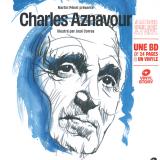
Charles Aznavour schuf mit seinem außergewöhnlichen Talent Werke, deren Originalität ein großes Publikum verführten. Seine Einflüsse waren vielfältig – armenische Familie, jüdische Kindheit, Idole, die Jazzmusiker waren und Mentoren des Chansons. Dieser illustrierte Bildband samt LP vereint 14 Highlights seiner Frühzeit, in der er sein Temperament formte, sein Talent verfeinerte und seinen eigenen Weg aus Rhythmus, Sinnlichkeit und Nostalgie fand. Aznavour bleibt mit über 100 Millionen Verkäufen der bekannteste französische Sänger der Welt.
out of Stock
Last delivered 13 months ago available to reorder, subject to availability
After a storied first year as a band releasing and touring behind their critically acclaimed debut album Today, Galaxie 500 closed out 1988 with a quintessential performance at New York City’s famed CBGB with every bit of their signature intimacy and autumnal bombast on display. The unusual bill which also included Sonic Youth, B.A.L.L. and Unsane was a benefit show for the zine shop See Hear.
Captured here in a raw but inspired board mix by Kramer and restored and mastered from the analog source by Alan Douches at West West Side Music, CBGB 12.13.88 is a live snapshot of a Galaxie fully formed, punctuating the end of their first chapter while poised to step into their next with On Fire the following year.
After a storied first year as a band releasing and touring behind their critically acclaimed debut album Today, Galaxie 500 closed out 1988 with a quintessential performance at New York City’s famed CBGB with every bit of their signature intimacy and autumnal bombast on display. The unusual bill which also included Sonic Youth, B.A.L.L. and Unsane was a benefit show for the zine shop See Hear.
Captured here in a raw but inspired board mix by Kramer and restored and mastered from the analog source by Alan Douches at West West Side Music, CBGB 12.13.88 is a live snapshot of a Galaxie fully formed, punctuating the end of their first chapter while poised to step into their next with On Fire the following year.
Bob Marley & The Wailers' Rastaman Vibration Analogue Productions' UHQR, the pinnacle of high-quality vinyl! 45 RPM 2LP Ultra High Quality Record release limited to 4,500 copies Mastered from the original tapes by Ryan K. Smith at Sterling Sound Pressed on 180-gram at Quality Record Pressings using Clarity Vinyl® Includes "12 x 12" 8-page booklet featuring new liner notes by musician and Marley biographer Leroy Jodie Pierson (APO Records Direct-To-Disc AAPO 005), plus exclusive photos by Kim-Gottlieb Walker Purest possible pressing and most visually stunning presentation and packaging!
When Rastaman Vibration was first released in America in 1976 it did what some in the music industry considered nearly impossible at the time. It took Bob Marley into the Top Ten alongside disco records and corporate rock, points out Rolling Stone, which rates the album 4 stars. Despite the good cheer of the title track and the upbeat "Roots, Rock, Reggae," Rastaman Vibration contains some of Marley's most intense images of oppression, paranoia and despair. Tracks such as "Who the Cap Fit," "Crazy Baldhead" and "War" are offered by the Wailers with dire urgency as Marley's brutal visions are echoed by his own church choir, the I-Threes.
More than four decades later, neither Marley's music nor his message has lost its sting. Now, Analogue Productions presents perfection — Rastaman Vibration cut at 45 RPM in UHQR format on 180-gram 2LP Clarity Vinyl. This Ultra High Quality Record release will be limited to 4,500 copies, with gold foil individually numbered jackets. For Bob Marley, 1975 was a triumphant year. The singer's Natty Dread album featured one of his strongest batches of original material (the first compiled after the departure of Peter Tosh and Bunny Wailer) and delivered Top 40 hit "No Woman No Cry." The follow-up Live set, a document of Marley's appearance at London's Lyceum, found the singer conquering England as well. Upon completing the tour, Marley and his band returned to Jamaica, laying down the tracks for Rastaman Vibration (1976) at legendary studios run by Harry Johnson and Joe Gibbs.
At the mixing board for the sessions were Sylvan Morris and Errol Thompson, Jamaican engineers of the highest caliber. Of the material on Rastaman Vibration, "War," for one, remains one of the most stunning statements of the singer's career. Though it is essentially a straight reading of one of Haile Selassie's speeches, Marley phrases the text exquisitely to fit a musical setting, a quiet intensity lying just below the surface. Equally strong are the likes of "Rat Race,""'Crazy Baldhead," and "Want More."
These songs are tempered by buoyant, lighthearted material like "Cry to Me," "Night Shift," and "Positive Vibration." Not quite as strong as some of the love songs Marley would score hits with on subsequent albums, "Cry to Me" seems like an obvious choice for a single and remains underrated. This UHQR is remastered at 45 RPM by Sterling Sound's Ryan K. Smith from the original analog master tapes. Each UHQR will be pressed at Acoustic Sounds' industry-leading pressing plant Quality Record Pressings (QRP) using hand-selected Clarity Vinyl® with attention paid to every single detail. These records will feature the same flat profile that helped to make the original UHQR so desirable. From the lead-in groove to the run-out groove, there is no pitch to the profile, allowing the customer's stylus to play truly perpendicular to the grooves from edge to center.
Clarity Vinyl allows for the purest possible pressing and the most visually stunning presentation. Every UHQR will be hand inspected upon pressing completion, and only the truly flawless will be allowed to go to market. Each UHQR will be packaged in a custom clamshell box and will include a booklet detailing the entire process of making a UHQR along with a hand-signed certificate of inspection. This will be a truly deluxe, collectible product. In addition to the UHQR booklet the package will contain a 8-page 12" x 12" booklet containing new liner notes by musican and Marley biographer Leroy Jodie Pierson as well as exclusive photos by Kim-Gottlieb Walker. Pierson is a past performer for Blues Masters at the Crossroads, the two-night historic blues festival at Blue Heaven Studios in Salina, Kansas. He's also recorded a Direct-To-Disc blues album for APO Records. (AAPO 005) Rastaman Vibration — now a landmark production on 180-gram 45 RPM Analogue Productions UHQR Clarity Vinyl!
With Bass Temprature, rediscover on one single CD the first three vinyl EPs by High Tone: Bot Dub Seasons, Low Tone, and Bass Temperature-a total of 12 tracks that propelled the Lyon-based group into the ranks of electro-dub heavyweights. In addition to these two reissues, four extra tracks have been added, making for a 12-track album just as compelling as it's predecessor. It marks a shift toward a more roots-oriented sound while remaining firmly grounded in the electro-dub genre. The album opens with Echo-Logik, a warrior-like chant followed by a driving bassline that makes you want to move-DJ Twelve's scratches laid over the groove offer a brilliant showcase of the band's talent. The title track, Bass Temprature, follows-perhaps the least striking piece, though that's only relative given the strength of the rest. Worth noting are the mystical vocal samples in Train to Transylvania, evoking vampires and devils, while N1 Station brings a heavy psych sound, a more energetic beat, and moments that border on hard-tek. Other influences also emerge, such as the strong Eastern vibe in The Orientalist. As always, High Tone delivers a stunning dub album sure to delight ears tired of the everyday noise pollution that surrounds us.
Limited edition white vinyl (800 copies) The self-styled ritualistic electro-mechanical ensemble OSMIUM is a veritable supergroup. Made up of Oscar-winning composer and instrumentalist Hildur Gudnadóttir, veteran engineer and producer James Ginzburg, Senyawa's idiosyncratic vocalist Rully Shabara and Grammy-winning sound designer / producer Sam Slater, while each member brings along a laundry list of accolades, the project is far greater than the sum of its parts. Alloying burnished electroacoustic soundscapes with dense, metallic drones, barbed rhythms and buckled, bio-mechanical vocalizations, OSMIUM's eagerly awaited debut album doesn't try to cast a rigid future. Rather, it tempers a viscous flow of unorthodox speculations that smolders through the distant past, blazing a trail all the way to the frontier of fate. Absorbed by questions about the relationship between humans and technology, tradition and progression, the individual and the group, OSMIUM channel their experience and expertise into a set of forward-thinking sonic interrogations that skewer established cultural preconceptions. And although genre is acknowledged - the album draws from folk, doom metal, 20th century minimalism, industrial music and extreme noise - there's never a sense that it's riveted firmly in place. Widely known for her soundtrack work (including `Joker' and `Chernobyl') Gudnadóttir plays the halldorophone, a unique cello-like electroacoustic instrument designed by Halldór Ulfarsson that allows the performer to harness unstable feedback loops. Taking his cues from this process, Slater (who has worked alongside Jóhann Jóhannsson, Ben Frost and others) generates rhythms using a self-oscillating drum he designed with KOMA Elektronik and Subtext boss and Emptyset member Ginzburg responds in kind, producing booming tambura-like sonorities from a device he developed himself based on the monocord, an ancient single- stringed resonator. OSMIUM synchronize the three unique instruments using a custom system of robotics to generate basic rhythms that underpin their improvisations and experiments, and Shabara's alien tones supply the band with their conceptual fulcrum. The vocalist is one of South Asia's most recognizable underground artists, and the sounds he's able to create using exhaustively rehearsed extended techniques are so distinctive that he's been studied by scientists back home in Indonesia. Never weighed down by needless sound design or modish ornamentation, it's music that feels authentically experimental; OSMIUM have figured out an awkward symmetry between their discrete approaches, concentrating their gaze on the outcome rather than the process. The result is a work of science fiction that's driven by interaction, conversation and sensation.
Das Dream-Pop-Duo Sorry Girls aus Montreal kehrt mit seinem dritten Album "Dreamwalker" zurück, das über Arbutus Records erscheint. Ihre exzentrische Mischung aus nostalgischen 70er-Jahre-Powerballaden und 80er-Jahre-Kitsch durchbricht neue Schwellen, zerlegt vergebliche Illusionen, um der Kälte zu trotzen und zu fragen, was vor uns liegt. Seit ihrer Gründung im Jahr 2015 haben Heather Foster Kirkpatrick und Dylan Konrad Obront ihre eigene Marke von üppigem, vergnügungssüchtigem Synth-Pop geschaffen. Dank ihrem Talent, persönliche Texte mit einem schrägen Sound zu verbinden, ist ihre durch David Lynch geprägte Welt frei und unheimlich. Alles scheint vertraut, eine Melodie plätschert durch eine alte Traumlandschaft, und doch ist etwas nicht in Ordnung. Die Band debütierte 2019 mit dem selbstproduzierten "Deborah", das von Pitchfork und Gorilla vs Bear gelobt wurde. Ihr temperamentvolles zweites Album "Bravo!" aus dem Jahr 2023 präsentierte einen mehr auf die erweiterte Live-Band ausgerichteten Sound. Inspiriert von Fleetwood Macs Tusk-Ära schlugen Sorry Girls ihr Lager für mehrere Monate im Two Sisters Recording Studio in Montreal auf, um "Dreamwalker" aufzunehmen. Da die Zeit knapp bemessen war, wollten sie mehr mit den Livemusikern zusammenarbeiten und schnelle und entschiedene künstlerische Entscheidungen treffen, um der Musik so treu wie möglich zu bleiben. Das Ergebnis ist ein Sound, der ernsthaft, emotional und klar ist. Verwaschene Produktionstechniken und druckvolle Basslinien paaren sich mit sanfteren, skurrilen Klaviertrillern und entspannten Drums, die das thematische Hin und Her zwischen zwei Welten wiedergeben. Die Texte spielen mit idyllischen Visionen von Liebesobjekten, Fantasien von zukünftigen Utopien und der obsessiven Sehnsucht nach einer Leichtigkeit und Neuheit, die sich durchsetzt. "Dreamwalker" ist selbstbewusst und ironisch selbstbescheiden, gefangen in der Spiegelung eines Fensters. Das Album fordert dazu auf, mutig zu sein - die Griffe aufzuschieben und ins Unbekannte zu treten. Musik für Fans von Haim, Men I Trust, Fleetwood Mac, TOPS
Reissued vinyl of 2023 album HELLMODE.Jeff Rosenstock makes increasingly chaotic albums for an increasingly chaotic world. With each passing year, it feels like the temperature of the universe boils five degrees hotter, and with each new album, Rosenstock's music grows more unwieldy and lawless. Louder, faster, more feral. Which brings us to 2023_a planet on fire, a mere 90 seconds to midnight on the doomsday clock, and the release of Rosenstock's appropriately titled, anarchic record, HELLMODE. "To me, the album feels like the chaos of being alive right now," Rosenstock says of HELLMODE. "We're experiencing all these things at the same time that trigger our senses, and emotions that make us feel terrible. We're just feeling way too much all at once!" But for all its textured turmoil, there are also surprising glimpses of clarity and grace to be found in HELLMODE, when Rosenstock deliberately slows things down in places that are prettier and more delicate, rare moments of shelter in the storm. Which only makes it more rewarding when these moments unexpectedly unravel and spiral back into extreme, manic chaos, like abruptly being flung into a Nintendo game on level 99. Vinyl is transparent black ice coloured!
Smoove gets his hands on the ultimate multitrack studio separates and goes to town peeling back the layers, revealing crisp drums and iconic slap bass from Chuck Rainey, rearranging the structure to spotlight the lush backing vocals -A fresh spin on a classic, with every nuance shining through.
B Side 1 – Baby Be Mine (Smoove Multitrack Rework)
Smoove dives in from the start, isolating Rod Temperton’s iconic parts, showcasing the synth bass line with groove-heavy drums while drawing out every breath and detail in MJ’s vocals. A loving, funk-infused rework.
B Side 2 – This Time (Smoove Multitrack Rework)
Smoove takes a bold approach, stripping the track down to its essentials, creating an extended live drum intro section dubbed in space echo effects. Original vocal samples and acoustic guitar breakdowns with additional fender rhodes piano provide contrast, while the string section steals the spotlight in a stunning finale.
Wilson Tanner come to shore with a new album of floating melodies, lightly salted. Throwing electroacoustic conventions overboard, Andrew Wilson (Andras) and John Tanner (Eleventeen Eston) recorded this new work aboard a 1950s riverboat with a resourceful array of weatherproof electronic instruments and a long extension lead. These eight compositions pull in a by-catch of maritime folklore; of Siren and Selkie, Seagull and engine oil slick. A change of course from their debut album 69 (Growing Bin Records, 2016), the ambient temperature drops as II casts out to sea in uncertain weather and returns to the safe harbours of Port Phillip Bay.
The seafarers head out to My Gull's poised optimism. The birds watch but do they listen? By the arrival of Loch and Key, the shoreline has dissolved completely, the boat floating in serene infinity as the rest of the world spins. Conditions soon take a treacherous turn on Killcord Pts I-III - a 12 minute odyssey that battens down the hatches as these sailors eye merciless waves and blinding ocean spray, jointly channelling Berlin-school electronics and sea legs. In the aftermath, the waterlogged bleeps of Idle survey the damage as our parched crew sound the distress signal and ultimately descend into delirium.
Known for navigating individual courses as solo musicians, Wilson and Tanner's collective storytelling is saturated in detail, buoying between tension and harmony. II modestly stands as some of both artists' most accomplished material.
out of Stock
Last delivered 5 months ago available to reorder, subject to availability
In the Andes of Peru, in a valley formed by the Huallaga River, lies the city of Huanuco. There, a little over fifty years ago, the emblematic cumbia band Los Darlings de Huánuco was born, and since then their compositions have gone around the world, bringing their homeland to the ears of music lovers and collectors. Adversities kept them away from music for two decades, but in spite of this, they marked a parallel path and created their own history in the maximum splendor of Peruvian cumbia. In a valley formed by the Huallaga River lies a temperate land located on the eastern slopes of the central Andes of Peru: Huánuco. A little more than seventy years ago, in that land of mountains and starry skies at almost 2,000 meters above sea level, Juan Nájera was born. A multifaceted musician by profession, he did not always have the privilege of being able to dedicate his life to music. For almost ten years he ran a family hardware store in Huánuco and then a mechanic shop on La Marina Avenue in Lima. He was also a truck driver. A decade of military dictatorships in Latin America made the artist's path very hard in the region, and Peru was no exception. Nájera was only nineteen when his first son was born. He had to make a living and the possibilities for entrepreneurship were slim. But if we go back in history, Juan Nájera was, first and foremost, a boy who dreamed of becoming a musician. Later, he was a boy who made it. Los Darlings de Huánuco managed to cross borders, not only in the capital of Peru, but also abroad. There are many collectors and music lovers around the world who seek and appreciate their songs, musical gems that have toured different latitudes and have managed to position this band from the Peruvian countryside in the most remote places on the planet. In a country characterized by its centralism, where opportunities in the countryside are much scarcer than in the capital, where the foreigner is greeted with more warmth than the local, and where getting ahead, especially in the musical field, implies an extraordinary effort, Los Darlings de Huánuco managed to take their sound to where they never thought it would be possible. From the Andes to the skyscrapers, from the heart of Huánuco to the immensity of other continents.
out of Stock
Last delivered 16 months ago available to reorder, subject to availability
3LP im Dreifachklappcover, Vinyl-Etching auf Seite F.. Für ihr viertes Studioalbum hat sich amerikanische Indie-Rock-Band GOOSE erneut mit D. James Goodwin zusammengetan, der bereits den Vorgänger "Dripfield" produziert hatte. Wie zuvor hat es die Band geschafft, ein kohärentes Album zu schaffen, das ihren einzigartigen Stil von unwiderstehlichem Songwriting und temperamentvoller Improvisationsleistung repräsentiert. "Everything Must Go" enthält eine Mischung aus beliebten Live-Stücken und brandneuen Songs, die alte und neue Zuhörer*innen gleichermaßen begeistern werden. Eine Sammlung aus Songs, die für alle Fans von Pop, Jazz und Indie etwas bereitstellt.
out of Stock
Last delivered 17 months ago available to reorder, subject to availability
Canadian bowed guitarist and multi-instrumentalist C. Diab announces his fifth album Imerro, out February 16th, and presents the trip-infused lead single 'Lunar Barge'.
(Real name) Caton Diab creates soundscapes that evoke the spectacular wilderness of his childhood home in northern Vancouver Island. Incorporating experimental textures, folk overtones and tape manipulations, C. Diab uniquely finds the unseen spaces in-between, and fittingly dubs his creations "post-classical grunge". Imerro explores new sonic realms and is the culmination of a sound world that Diab has built up since the critically acclaimed 'No Perfect Wave' (2016, Injazero) and subsequent releases 'Exit Rumination' (2018), 'White Whale' (2020) and 'In Love & Fracture' (2021). The Wire calls it "ambient music in the best sense - music for living, which can be both non-invasive and immersive...epic"
Imerro was recorded in late July and August of 2021 at Risque Disque Studio in Cedar, BC, during the summer's unprecedented second "heat dome", which saw temperatures soaring to over 40 degrees. Recorded with regular collaborator and engineer Jonathan Paul Stewart, the pair journeyed by boat to the studio to a place with minimal distraction with a plan of "simple ecstatic improvisation." Diab explains: "I wanted to place myself in a space for creation with little thematic pretence, with the belief that music 'shows its face' as you move along. I would pick up an instrument, whether I had experience playing it or not, and make a sound. If it wanted to be played, it would play."
out of Stock
Last delivered 17 months ago available to reorder, subject to availability
Unter Präsidentschaftskandidaten und zukünftigen Astronauten, war die North Carolina Agricultural and Technical State Universität in Greensboro eine Brutstätte für schwarze Spitzenleistungen, Aktivismus und Talent. Unter einem halben Dutzend Labels versammelte der lokale Tölpel Walter Grady eine wechselnde Besetzung von Städtern, Homecoming-Queens und großen Männern auf dem Campus um einen schillernden Sound zu manifestieren, der sowohl einheimisch und revolutionär war. "Eccentric Soul: The Linco-Label" versammelt melodische Meilensteine aus dem Geburtsort der Bürgerrechtsbewegung.
Unter Präsidentschaftskandidaten und zukünftigen Astronauten, war die North Carolina Agricultural and Technical State Universität in Greensboro eine Brutstätte für schwarze Spitzenleistungen, Aktivismus und Talent. Unter einem halben Dutzend Labels versammelte der lokale Tölpel Walter Grady eine wechselnde Besetzung von Städtern, Homecoming-Queens und großen Männern auf dem Campus um einen schillernden Sound zu manifestieren, der sowohl einheimisch und revolutionär war. "Eccentric Soul: The Linco-Label" versammelt melodische Meilensteine aus dem Geburtsort der Bürgerrechtsbewegung.
Team TD take a break from re-scoring Colin McCrae Rally to pay our own oddball homage to some of our DJ deities in the form of Talking Drums Volume 8.
Keeping things diverse-yet-disco, this little mover grooves through Muzic Box pump, Lofty symphonics and a Ku-curveball with a smile on its face and a pep in its step.
The A-side erupts in a flash of sexy Euro-NRG, twisted and lifted to give any sweatbox a massive Hardy-on. Sequencers throb, swell and burst, horns wail and not one, but two, killer basslines blast the floor with erogenous urgency. Chuck in a coquettish vocal, delay madness and a fist pumping breakdown and you've got pure peak-time play folks.
The B1 belongs to the sumptuous strings, loose funk and live disco strut of 'Too Hot'. Low slung, low tempo but plenty punchy, this classy cut builds and builds through Merc-y repetition before blooming a fully fledged groover. Taut funk breaks sit beneath a floor-filling vocal and twinkling Rhodes, the wah guitar works overtime, and it all adds up to take the dance floor temperature sky high. Enjoy on a hi-fi sound system with plenty of spiked punch.
The curtain call comes via the alfresco flamenco-frenzy of Ronseal-approved 'Maximum Balearic Dancer', which does exactly what it says on the tin. The TD troupe takes a tiny snippet of Swiss fusion and fleshes it out into the fully fledged floor-filler it always deserved to be. Blessed with a buoyant bassline and balmy mood, this beauty sways along through some weird but wonderful synth riffs, holding you close for that soul-soaring piano solo.
Sometimes you gotta wake up on a beach naked.
Limited Press - Numbered Insert - Drum Fun Guaranteed. .
out of Stock
Last delivered 3 months ago available to reorder, subject to availability
3LP im Dreifachklappcover, Vinyl-Etching auf Seite F.. Für ihr viertes Studioalbum hat sich amerikanische Indie-Rock-Band GOOSE erneut mit D. James Goodwin zusammengetan, der bereits den Vorgänger "Dripfield" produziert hatte. Wie zuvor hat es die Band geschafft, ein kohärentes Album zu schaffen, das ihren einzigartigen Stil von unwiderstehlichem Songwriting und temperamentvoller Improvisationsleistung repräsentiert. "Everything Must Go" enthält eine Mischung aus beliebten Live-Stücken und brandneuen Songs, die alte und neue Zuhörer*innen gleichermaßen begeistern werden. Eine Sammlung aus Songs, die für alle Fans von Pop, Jazz und Indie etwas bereitstellt.
In the winter of 2022, Holy Wave had a week off after a short tour that ended with a show in Los Angeles. The band found particular glee in playing those shows at that time, as they weren't sure they'd ever be doing that again just a few months prior_this batch of songs results from hanging out with some very good friends at Studio 22. "The band have fashioned themselves into mainstays in the world of gauzy psychedelia, infusing dream pop soundscapes with colorful instrumentation, lush melodies, and weighty pathos." - Under the Radar Magazine"_narcotic neo-psych with synthed-out bedroom-pop undertones." - Shindig Magazine"_lush-yet-tempered instrumentation that's undeniably pleasant, if not downright attractive." - Flood Magazine"The sound of Austin's Holy Wave has been getting progressively dreamier with each successive release, their music lush and immaculately arranged." - Post-Trash"Wonderful aural tones, meandering genteelly." - Narc Magazine
On Katelyn Clark and Mitch Renaud's »Ouroboros,« astronomical and astrological phenomena, concepts and symbols such as the Great Year or the Eternal Return serve as the starting points for sonic explorations and experimentations. Focusing on a uniquely tempered range of frequencies, from low-enddrone rumbles to airy pipe swirls, the duo develops a minimalist and highly evocative sonic universe on their debut album for Hallow Ground.
Working as composers, improvisers and curators in Canada's vibrant experimental and early music scenes, Clark and Renaud began developing »Ouroboros« through extensive improvisation with a reduced setup. Clark, who has worked extensively with historical keyboards since her studies in Amsterdam and Siena, played a small pipe organ modeled after a 14th-century instrument while Renaud brought a modular synthesizer and his interest in feedback systems to the collaboration. Later, the duo further refined their artistic dialog and the sonic interactions of the two instruments through the shared space of a two day recording session in Vancouver. Subtle crackling, acoustic beating and other (psycho-)acoustic effects in five pieces document this encounter, giving the music a profound physicality while hinting at the bodily presence of the two collaborators.
Just as the cyclicality of natural phenomena or the repetition of planetary movements is both a scientific fact and of the cultural imaginary, the sound worlds of »Ouroboros« are fundamentally rooted in time and space while transgressing the idea of a »here and now« through their conceptual links to geological and planetary time. The interplay of portative organ and modular synthesizer, which merge fluidly and in ever-changing ways, leads to a kind of circularity, a timelessness, a no-time. At the same time, the movements and subtle changes undermine the idea of repetition in the negative sense. After all, the Eternal Return, as Gilles Deleuze writes in regard to Nietzsche, is not the return of the same but a repetition of repetition. The only constant is change, the production of new intensities, of new forms of life – and of new frequencies.
The latest drop on Art-E-Fax welcomes back deep cover braindance tinkerer Briain with a tape of warm and gritty electronica done the right way.
We last coaxed Barry O’Brien away from his day job as sound tech at beloved Berlin haunts Ohm and Tresor for a 12” back in 2019, and now he’s graced us with 11 slices of tweaked and freaked machine funk that should appeal to anyone who savours the maverick electro crossover between Rephlex and Drexciya.
The synth lines crunch and squirm and the beats stutter and rasp as Briain rolls out one wonkily perfect jam after another. In the intricate detail and movement that drives each track forwards you can sense the insular focus that comes with the best shut-in electronica. ‘Fist Fight Or Hug’ toys with sliced up breaks while ‘The Precipitous Descent Of Dignity’ deals in dystopian electro of the highest calibre. ‘Beal Bocht’; puts the drums to one side for a gloriously dislocated trip through FM synthesis and broken delay feedback and ‘Cognitive Dissonance’ revels in twitchy micro perc and delicate keys.
It’s a full-bodied album to sink your teeth into, and while it proudly carries the torch from certain legendary electronica forebears, it’s also delivered with all the charm and personality required to make for a future classic in the braindance canon.
Electronic music at its best offers a tantalising glimpse of the future, capturing the moment of conception where new worlds and genres are brought into being. Amsterdam-via-Berlin label Q1E2 (standing for “quality first, ego second”) embodies this expansive promise on their new various-artists compilation, a thrilling speed-run through the cosmic outer-reaches of contemporary club sounds that highlights the work of essential emerging producers from around the globe.
Milan producer Jack Bags opens the proceedings with “Natural Thing”, an astral deep-dance immersion with zero-gravity synthesizer pads and skeletal dub percussion that echo out through the void, sensuous vocal samples arriving like scattered transmissions from the stereo of some long-lost spacecraft. datSIM’s “Influx” races through kaleidoscopic sci-fi spacescapes, presenting a futuristic reimagining of UK bass sounds with dextrous organ melodics and widescreen atmospherics. Mike Riviera and Marco Ohboy bring us back down for a more earthly kind of ecstatic experience, cranking up the humidity and coaxing out the endorphins with the appropriately-titled “Euphoria” - a rugged, rave-adjacent heater that cleverly rearranges elements of classic house and garage into a decidedly modern club workout.
Elsewhere there’s a distinctive undercurrent of jazz flowing through the compilation, mapping out thrilling new evolutions of the music on and off the dancefloor. Dr Sud’s mesmeric rhythm excursion “Zaffiro” unfurls like the coils of a cosmic serpent, tessellating percussion and slinking subs tracing intricate beat geometries. A Soft Mist Production’s “Upside Down Rainbows” settles in for the afters with smoked-out soulful atmospherics, syrupy vocals curling and turning in the air like smoke vapors from the last vestiges of a still-lit cigarette. The Rabbit Hole’s “Tail Groove” closes out the proceedings with a surprising bait-and-switch - opening on lustrous lounge piano that could have been comped straight from a Bill Evans record, the track quickly gives way to interstellar bass ‘n’ breaks. The producer’s canny use of cello licks adds a grounded, organic feel, jazz futurism that recalls Photek or LTJ Bukem’s sampling experiments.
Taken together, the label’s new compilation provides a snapshot of a scene in constant evolution, taking the temperature of the modern electronic scene and finding it to be in rude health.
Written by Matthew Fidler
out of Stock
Last delivered 18 months ago available to reorder, subject to availability
*180g virgin leaded vinyl in a deluxe textured heavy gatefold cover, with paste-on artwork and special anti-static innersleeve.* Note: The pressing is absolute on point!!!!
Vincent Gallo and Harper Simon with a beautifully recorded suite of songs and instrumentals.
" More than two decades since he blew minds with a suite of brilliant releases on Warp, Vincent Gallo returns to the world of music at long last in Butterfly, his duo with Harper Simon, with the project’s full-length debut, “The Music of Butterfly”. A gesture of gentle, DIY / bedroom left-field pop, falling within the rough territory for which Gallo became renowned during the late '90s and early 2000s, while interweaving fascinating flirtations with minimalism and experimentalism, it’s a truly captivating piece of work that’s hard to get off the turntable after the first needle drop.
In the arts, the lines between genius and madness, as well as fact and fiction, often blur. Such, it seems, has always been the life of the artist, filmmaker, actor, musician, and composer Vincent Gallo. A cult figure and a member of various creative undergrounds for the better part of half a century, Gallo has courted controversy, ruffled feathers, and made some of the most singular statements to flirt at the outer edges of popular culture that can be called to mind. Arguably most well known for his work in film, during the late '90s and early 2000s - notably with his soundtrack for “Buffalo 66” and a suite of releases on Warp - Gallo became something of a sensation in the world of independent music for a visionary, incredibly unique and sensitive approach to sonority. For a time, the world was abuzz, waiting on bated breath for more, and yet time passed. Bar a few fragments, appearing here and there, almost nothing has been heard from Gallo, within the world of music, for more than 20 years. That is, until now, with the release of “The Music of Butterfly”, the debut full-length of Butterfly, his duo with Harper Simon: beautifully produced and issued by Family Friend Records - Gallo’s own label, founded in 1981 - in a deluxe edition that simply left us speechless: 180g vinyl in textured heavy gatefold cover with paste-on artwork and thick anti-static innersleeve. More or less picking up from where we last encountered him, spinning captivating melodies and gentle song-craft within the quieter temperaments of DIY, left-field pop, once again, and at long last, Vincent Gallo, encountered in an incredibly successful collaboration with Harper Simon as Butterfly, reminds us that he’s as much a force within the realm of music as he is within film. Not to be missed. This one isn’t going to sit around for long.
Vincent Gallo’s biography reads like the stuff of blaring beauty: a figure of moderate fame in his own right, who has remained at the centre of cultural ferment as the decades have rolled by. Born in 1961, in Buffalo, New York, as the story goes he ran away to New York City at the age of 16 and fell into the brewing counterculture of the Downtown scene, William Burroughs and John Giorno, in addition to the cream of his own peers, and began making paintings, music, and experimenting with film. In addition to being a member of the now legendary band Gray, with the artist, Jean-Michel Basquiat, and the filmmaker, Michael Holman, Gallo appeared in the cult 1981 film “Downtown 81”, before slowly beginning a career as an actor and catching the eye of Claire Denis, who brought his talents into the broader cultural gaze. Catapulted into the public by his own subsequent career as a filmmaker with “Buffalo '66” (1998) and “The Brown Bunny” (2003), both of which were marked by controversy and praise, Gallo further captivated the public with a partially brilliant, if not relatively brief, flurry of activity in the realms of music.
While Gallo had already been making music for roughly two decades at the time of his release of the “Brown Bunny” soundtrack, and the four release issued by Warp in rapid succession between 2001 and 2002 - “When”, “Honey Bunny”, “So Sad”, and “Recordings of Music for Film” - the almost fanatical fandom reached a fever pitch at the moment, allowing him, for some, to be regarded as much, if not more, as a musical artist than an actor and filmmaker. Anyway you cut it, in a few short years, he proved himself to be a polymath of rare talent. Somewhere along the way, while both were working as members of Yoko Ono's Plastic One Band, Gallo met the New York based, highly regarded singer-songwriter, guitarist, and producer, Harper Simon, who also happens to be the son of Paul Simon. The pair fell into an incredibly fruitful duo collaboration, which came to be called Butterfly, and “The Music of Butterfly” being their debut full-length release.
Written, performed, and recorded by Vincent Gallo and Harper Simon in New York City between the winter of 2018 and the spring of 2019, the ten tracks comprising “The Music of Butterfly” are cumulatively a gesture of gentle, DIY / bedroom left-field pop, falling within the rough territory for which Gallo became renowned during the late '90s and early 2000s, making one feel like barely a moment had passed since we’d encountered his graceful hand at song-craft. Stripped back and raw, while retaining a sense of warmth and intimacy, across the length of “The Music of Butterfly” the duo of Gallo and Simon weave something completely captivating at the juncture of minimalism, experimentalism, and pop: meandering moments of texture and tone, slowly forming toward flirtations of melody that flower into song and back again. Somehow playful and light, while also remarkably emotive and personal, it’s almost as though each of these tracks crystallised out the air, unlabored and exactly as they should be without a note or beat more.
An engrossing immersion into both Gallo and Simon’s remarkably accomplished minds, having followed the path toward one another after radically different experiences and careers, “The Music of Butterfly” is one of those records that’ll be hard to get off the turntable after that first needle drop, and rarely leave the listening pile for some time to come. Issued by Family Friend Records in a beautiful deluxe edition that is unmatched even among the most stunning recent productions we can call to mind - 180g vinyl in textured heavy gatefold cover with paste-on artwork and thick anti-static innersleeve - it’s lovely to have Gallo back in the musical mix after so many years. "
Googling “paradise house”, the first results to pop up are an endless list of European b&b’s with whitewashed lime façades, all of them promising “…an unmatched travel experience a few steps from the sea”. Next, a little further down, are the institutional websites of a few select semi-luxury retirement homes (no photos shown, but lots of stock images of smiling nurses with reassuring looks). To find the “paradise house” we’re after, we have to scroll even further down. Much further down.
It feels like yesterday, and at the same time it seems like a million years ago. The Eighties had just ended, and it was still unclear what to expect from the Nineties. Mobile phones that were not the size of a briefcase and did not cost as much as a car? A frightening economic crisis? The guitar-rock revival?! Certainly, the best place to observe that moment of transition was the dancefloor. Truly epochal transformations were happening there. From America, within a short distance one from the other, two revolutionary new musical styles had arrived: the first one sounded a bit like an “on a budget” version of the best Seventies disco-music – Philly sound made with a set of piano-bar keyboards! – the other was even more sparse, futuristic and extraterrestrial. It was a music with a quite distinct “physical” component, which at the same time, to be fully grasped, seemed to call for the knotty theories of certain French post-modern philosophers: Gilles Deleuze, Félix Guattari, Paul Virilio... Both those genres – we would learn shortly after – were born in the black communities of Chicago and Detroit, although listening to those vinyl 12” (often wrapped in generic white covers, and with little indication in the label) you could not easily guess whether behind them there was a black boy from somewhere in the Usa, or a girl from Berlin, or a pale kid from a Cornish coastal town.
Quickly, similar sounds began to show up from all corners of Europe. A thousand variations of the same intuition: leaner, less lean, happier, slightly less intoxicated, more broken, slower, faster, much faster... Boom! From the dancefloors – the London ones at least, whose chronicles we eagerly read every month in the pages of The Face and i-D – came tales of a new generation of clubbers who had completely stopped “dressing up” to go dancing; of hot tempered hooligans bursting into tears and hugging everyone under the strobe lights as the notes of Strings of Life rose up through the fumes of dry ice (certain “smiling” pills were also involved, sure). At this point, however, we must move on to Switzerland.
In Switzerland, in the quiet and diligent town of Lugano, between the 1980s and 1990s there was a club called “Morandi”. Its hot night was on Wednesdays, when the audience also came from Milan, Como, Varese and Zurich. Legend goes that, one night, none less than Prince and Sheila E were spotted hiding among the sofas, on a day-off of the Italian dates of the Nude Tour… The Wednesday resident and superstar was an Italian dj with an exotic name: Don Carlos. The soundtrack he devised was a mixture of Chicago, Detroit, the most progressive R&B and certain forgotten classics of old disco music: practically, what the Paradise Garage in New York might have sounded like had it not closed in 1987. In between, Don Carlos also managed to squeeze in some tracks he had worked on in his studio on Lago Maggiore. One in particular: a track that was rather slow compared to the BPM in fashion at the time, but which was a perfect bridge between house and R&B. The title was Alone: Don Carlos would explain years later that it had to be intended both in the English meaning of “by itself” and like the Italian word meaning “halo”. That wasn’t the only double entendre about the song, anyway. Its own very deep nature was, indeed, double. On the one hand, Alone was built around an angelic keyboard pattern and a romantic piano riff that took you straight to heaven; on the other, it showcased enough electronic squelches (plus a sax part that sounded like it had been dissolved by acid rain) to pigeonhole the tune into the “junk modernity” section, aka the hallmark of all the most innovative sounds of the time: music that sounded like it was hand-crafted from the scraps of glittering overground pop.
No one knows who was the first to call it “paradise house”, nor when it happened. Alternative definitions on the same topic one happened to hear included “ambient house”, “dream house”, “Mediterranean progressive”… but of course none were as good (and alluring) as “paradise house”. What is certain is that such inclination for sounds that were in equal measure angelic and neurotic, romantic and unaffective, quickly became the trademark of the second generation of Italian house. Music that seemed shyly equidistant from all the rhythmic and electronic revolutions that had happened up to that moment (“Music perfectly adept at going nowhere slowly” as noted by English journalist Craig McLean in a legendary field report for Blah Blah Blah magazine). Music that to a inattentive ear might have sounded as anonymous as a snapshot of a random group of passers-by at 10AM in the centre of any major city, but perfectly described the (slow) awakening in the real world after the universal love binge of the so-called Second Summer of Love.
For a brief but unforgettable season, in Italy “paradise house” was the official soundtrack of interminable weekends spent inside the car, darting from one club to another, cutting the peninsula from North to centre, from East to West coast in pursuit of the latest after-hours disco, trading kilometres per hour with beats per minute: practically, a new New Year’s Eve every Friday and Saturday night. This too was no small transformation, as well as a shock for an adult Italy that was encountering for the first time – thanks to its sons and daughters – the wild side of industrial modernity. The clubbers of the so-called “fuoriorario” scene were the balls gone mad in the pinball machine most feared by newspapers, magazines and TV pundits. What they did each and every weekend, apart from going crazy to the sound of the current white labels, was linking distant geographical points and non-places (thank you Marc Augé!) – old dance halls, farmhouses and business centres – transformed for one night into house music heaven. As Marco D’Eramo wrote in his 1995 essay on Chicago, Il maiale e il grattacielo: “Four-wheeled capitalism distorts our age-old image of the city, it allows the suburbs to be connected to each other, whereas before they were connected only by the centre (…) It makes possible a metropolitan area without a metropolis, without a city centre, without downtown. The periphery is no longer a periphery of any centre, but is self-centred”.
“Paradise house” perfectly understood all of this and turned it into a sort of cyber-blues that didn’t even need words, and unexpectedly brought back a drop of melancholic (post?)-humanity within a world that by then – as we would wholly realise in the decades to come – was fully inhuman and heartless. A world where we were all alone, and surrounded by a sinister yellowish halo, like a neon at the end of its life cycle. But, for one night at least, happy."
out of Stock
Last delivered 3 months ago available to reorder, subject to availability
That’s the Price of Loving Me marks Dean Wareham’s (Galaxie 500, Luna, Dean & Britta, ) evocative return, rekindling his partnership with producer Kramer for the first time since Galaxie 500's This Is Our Music in 1990.
Recorded in six days in Los Angeles, the album is steeped in lush, haunting soundscapes, driven by Wareham's signature reverb-soaked guitars and melancholic, dreamlike vocals. Britta Phillips joins on bass and harmonies, while Gabe Noel’s cello adds depth and tension. “Two takes yield more treasure than twenty,” notes longtime friend Matt Fishbeck, as Kramer's insistence on spontaneity infuses the project with raw immediacy.
Thematically, Wareham delves into the poetry of memory, set against a backdrop of wistful nostalgia and existential reflection. "Songs are in dialogue with other songs" Fishbeck writes. The lead single, “We’re Not Finished Yet,” is a playful, introspective meditation where Wareham drops his own name while relishing the tactile joy of the guitar. “You Were the Ones I Had to Betray” unfolds like a somber narrative, underpinned by Noel’s cello and crowned with a haunting bass harmonica by Kramer, encapsulating the emotional ambivalence of friendship and loyalty.
“That’s the Price of Loving Me” pulses with conga rhythms and Kramer’s vintage Moog, capturing Wareham’s musings on the life of a performer and the sacrifices it demands. Fishbeck describes “The Mystery Guest” as "an acrostic poem" and concludes by saying "We're not finished yet." 'Loving Me' also includes two covers, Mayo Thompson's 'Dear Betty Baby' and Nico's 'Reich der Träume.' The latter highlights his love for blending history and homage, sung entirely in German for a chillingly authentic touch.
Dean returns with his fourth solo album and his first album for Carpark Records. Inspired by the past yet resonant in its present-day relevance, the album’s sonic palette is reminiscent of Galaxie 500’s dream-pop roots, tempered with the matured introspection of Wareham’s later works. “Dean traffics in memory,” writes Fishbeck, reflecting on the record’s seamless blend of intimate recollections and catchy hooks. The result is a cohesive work encapsulating the duality of Wareham’s career: haunted by the past, yet steadfastly pushing forward. As Fishbeck poignantly puts it, “Imagination is nothing but the working over of what is remembered.”
We're delighted to welcome these two Australia based producers to the Samurai family with Onyx - a 4 track EP that delivers a blend of tight edits, chest heavy bass, and intricate sound design. Pugilist & Tamen combine nostalgia with forward-thinking production and Onyx traverses a rich landscape of jungle-rooted moods.
Onyx introduces a step forward in the duo's production, utilising sculpted distortion as an instrument. Seen on 3 of the 4 tunes, this approach adds a temperative tension as the tunes give the impression they have gone too far into the distortion no go zone but ultimately finding a balance that compliments and enhances the tunes overall sound pallette perfectly.
Raw and direct with rich layers and honed grooves that ultimately mark the tunes as memorable, Onyx is on a new level for Pugilist & Tamen.
out of Stock
Last delivered 14 months ago available to reorder, subject to availability
That’s the Price of Loving Me marks Dean Wareham’s (Galaxie 500, Luna, Dean & Britta, ) evocative return, rekindling his partnership with producer Kramer for the first time since Galaxie 500's This Is Our Music in 1990.
Recorded in six days in Los Angeles, the album is steeped in lush, haunting soundscapes, driven by Wareham's signature reverb-soaked guitars and melancholic, dreamlike vocals. Britta Phillips joins on bass and harmonies, while Gabe Noel’s cello adds depth and tension. “Two takes yield more treasure than twenty,” notes longtime friend Matt Fishbeck, as Kramer's insistence on spontaneity infuses the project with raw immediacy.
Thematically, Wareham delves into the poetry of memory, set against a backdrop of wistful nostalgia and existential reflection. "Songs are in dialogue with other songs" Fishbeck writes. The lead single, “We’re Not Finished Yet,” is a playful, introspective meditation where Wareham drops his own name while relishing the tactile joy of the guitar. “You Were the Ones I Had to Betray” unfolds like a somber narrative, underpinned by Noel’s cello and crowned with a haunting bass harmonica by Kramer, encapsulating the emotional ambivalence of friendship and loyalty.
“That’s the Price of Loving Me” pulses with conga rhythms and Kramer’s vintage Moog, capturing Wareham’s musings on the life of a performer and the sacrifices it demands. Fishbeck describes “The Mystery Guest” as "an acrostic poem" and concludes by saying "We're not finished yet." 'Loving Me' also includes two covers, Mayo Thompson's 'Dear Betty Baby' and Nico's 'Reich der Träume.' The latter highlights his love for blending history and homage, sung entirely in German for a chillingly authentic touch.
Dean returns with his fourth solo album and his first album for Carpark Records. Inspired by the past yet resonant in its present-day relevance, the album’s sonic palette is reminiscent of Galaxie 500’s dream-pop roots, tempered with the matured introspection of Wareham’s later works. “Dean traffics in memory,” writes Fishbeck, reflecting on the record’s seamless blend of intimate recollections and catchy hooks. The result is a cohesive work encapsulating the duality of Wareham’s career: haunted by the past, yet steadfastly pushing forward. As Fishbeck poignantly puts it, “Imagination is nothing but the working over of what is remembered.”
ProleteR, French producer and iconic figure in the international electro swing and swing hop scene, makes a strong return with a highly anticipated new album. Announced and available for pre-save on streaming platforms five months before its release on March 14, 2025, Temperamental Cats promises a unique musical journey through genres, blending jazz samples, hip-hop rhythms, and electro-soul melodies, while showcasing the distinctive style that has earned this independent beatmaker over 200 million streams across platforms.
Temperamental Cats affirms ProleteR's desire to mix genres, eras, and cultures. This new album will feature American rapper Napoleon Da Legend, Canadian artist Spark Houston, and Japanese producer Takada Fu.
ProleteR is also preparing for his grand return to the stage with a tour titled Swing Hop Party. This will be an opportunity for his fans to see him live, accompanied by a brass section, for a timeless moment driven by his expert patchwork of samples and the rhythms that have made him famous.
With a Swedish Grammy (GRAMMIS) nomination for her 2023 sophomore album ‘Be Free’ and a packed touring schedule, the in-demand trombonist, songwriter and producer sough to quiet the noise around her and challenge the jazz genre’s rigid rules for her next project.
The end result is ‘When You Know’; a smoky and melancholic 10-track cocktail of jazz, alternative R&B, indie, Hip-Hop and ambient sonics that experiments at every turn. On hand to co-produce the record and provide the electronic elements that move ‘When You Know’ away from the jazz world and into more avant-garde territory, Ebba collaborated with Berlin-based producer Lucy Liebe.
Packing a potent emotional punch, the 10 tracks are a reflection of Ebba herself: direct, driven, precise. Retreating to a cabin outside of her small hometown of Hammarö, 200 miles west of Stockholm, she recorded the album in the dead of winter. With the temperatures outside nearing minus-thirty degrees, Åsman logged off for a month – disconnecting from TV, social media and emails. Embracing with vigour both the deep sense of calm and the challenges that come with the cold but also the stillness and solitude that is yielded by being in the wilderness.
Four years since her last dancefloor 12", upsammy returns with a four-track exploration of gleaming, sprightly drum and bass with a restorative centre. Thessa Torsing's moves in upper tempo zones have been defined by her light touch, finding power and presence in finely chiseled sounds and sculpting space between intricate, interwoven rhythms.
The dynamic movement of her pristinely moulded percussion is absolutely geared up for the club, but it's also matched with an uplifting, meditative sound palette which tempers the busy energy of the drums. Pushing and pulling on her arrangements with ever-increasing expressiveness and revelling in the subtlest of modulations to her kinetic beat systems, upsammy proves once again that moving in time to fast music can be an incredibly restorative experience.
out of Stock
Last delivered 13 months ago available to reorder, subject to availability
Mit einer bemerkenswerten Reihe von Veröffentlichungen in kaum einem halben Jahrzehnt hat Loraine James aus London ihre künstlerische Identität durch eine Mischung aus raffinierten Kompositionen, düsteren Experimenten und unvorhersehbaren, komplizierten elektronischen Programmen geschaffen. Während die unter ihrem Namen auf Hyperdub veröffentlichten Titel zu IDM-beeinflussten, vokallastigen Kollaborationen tendieren, reserviert James ihr bei Ghostly International unter Vertrag stehendes Alias Whatever The Weather für einen Blick nach innen, der die angeborene "emotionale Temperatur" und die Umgebung erforscht (was sich in den gradbasierten Titeln der Tracks zeigt). Ihr zweites Album ist im Vergleich zu seinem Vorgänger deutlich wärmer, was durch den Wechsel vom arktischen Coverfoto von LP1 zu den Wüstengefilden von LP2 deutlich wird. Beiden Alben gemeinsam ist die Mastering-Arbeit von Josh Eustis (alias Telefon Tel Aviv), der James' Komplexität ein feines Ohr leiht, um ein auffallend dreidimensionales Klangerlebnis zu schaffen. Von hypnotischen Atmosphären über gesprenkelte Rhythmen bis hin zu verarbeiteten Collagen aus tagebuchartigen Feldaufnahmen - "Whatever The Weather II" ist eine überzeugende Verbindung organischer und menschlicher Elemente von einem der einfallsreichsten Talente der elektronischen Musik. Die Leadsingle und der Schlusstrack der neuen LP von Whatever The Weather (Loraine James), "12°C", driftet von belebten Räumen in einen konkreten Groove und verwebt Melodie und Textur zu einer wahrhaft ungewöhnlichen, seelenbewegenden Fülle. In den letzten Momenten gesellen sich eine träge Akustikgitarre und ein sanfter, mit den Fingern getippter Beat zu ihrer in der Tonhöhe verschobenen Stimme. "Whatever The Weather II" ist voll von solchen Passagen, in denen die formale Gestaltung wie ein Film im Negativ erscheint und Konventionen mit Witz, Intelligenz und Geschick umgestoßen werden.
out of Stock
Last delivered 8 months ago available to reorder, subject to availability
FIRST TIME EVER ON LP
LIMITED EDITION CLEAR VINYL - ONLY 1000 UNITS PRESSED
COMPACT DISC BACK IN PRINT FOR THE FIRST TIME IN 10 YEARS - Now On 8 Panel Digi-Pak
FINAL SMITHEREENS ALBUM WITH ORIGINAL LEAD SINGER PAT DiNIZIO
PRODUCED BY DON DIXEN (REM, GIN BLOSSOMS, MARSHALL CRENSHAW)
“Crushing chronic chords with the dyne-rhythm section to fuel it all, are not only still here, but stronger than ever”. No Depression
"Everything in Smithereens' world is like a film noir shot in psychedelic colors. But this New Jersey band has a talent for creating fresh variations that prevent dust or mist from clouding their music. "Smithereens 2011" reaches a peak with the song that opens the album, the sour-tempered yet utterly transporting "Sorry.” Ken Tucker, NPR
"Wholly satisfying blast of classic Smithereens songcraft and melodicism, colored with Pat DiNizio’s impassioned vocals, Jim Babjak’s thick-toned, stinging guitar, Dennis Diken’s imaginative, powerful drum work and Severo “The Thrilla” Jornacion’s stylish bass. The entire collection sounds like a return to The Smithereens’ mid-to-late ’80s glory years, both song and performance-wise.” GOLDMINE MAGAZINE
“And 2011’s songs – the songs! – vintage! Picks up where Green Thoughts left off. Pop Dose
Its sound veers away from raw black metal intensity, opting for expansive, dreamy
atmospheres. Damian Anton Ojeda's signature approach tempers the harshness of
black metal's usual bleakness with a delicate sense of beauty and melancholy. The
album builds around shimmering guitars and lush soundscapes, creating a sense of
longing rather than the frostbitten aggression typically associated with the genre.
A key characteristic of "I Want to Be There" is how the screamed vocals--reminiscent
of depressive black metal--are mixed to blend seamlessly with the instrumental layers.
This intentional obscuring of vocals, pushed toward the back, transforms the vocals
into another textural element rather than a dominant force. This aesthetic decision
diffuses the emotional weight usually carried by extreme metal vocals, steering the
listener away from despair and toward introspection.
The balance between black metal's darker elements and post-rock's ethereal qualities
gives this record its emotional depth. The opening and closing tracks, "In the Distant
Travels" and the title track, lean more heavily on black metal structures but never fully
embrace the genre's typical harshness. Instead, the fuzzy guitars and crashing
cymbals are imbued with hope and uplifting energy. The post-rock influence becomes
more pronounced in tracks like "I Want to Be With You," which forgoes black metal
vocals entirely in favor of a choral atmosphere, evoking a serene and heavenly quality.
Ojeda also demonstrates his talent for creating immersive soundscapes, drawing
comparisons to *Sigur Ros*. Both artists employ sweeping melodies that evoke
feelings of transcendence. Still, where *Sigur Ros* tends to embrace more overtly
uplifting and sentimental tones, Sadness anchors these grand moments in
melancholy, avoiding overindulgence. The album is a delicate dance between light and
shadow, making the listening experience emotionally rich and layered.
While it may not have the raw emotional punch of *Deafheaven* or the nostalgic
charm of *Alcest*, *I Want to Be There* stands as a polished and thoughtfully
composed entry into the post-blackgaze genre. Ojeda's ability to fuse the weightless
hypnosis of black metal with the airy beauty of post- rock results in a sound that is
both familiar and new. Sadness offers a captivating and often beautiful exploration of
blackgaze, making the album a worthwhile listen for fans of atmospheric and
introspective metal.
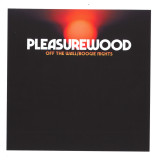
Dive head first into a parallel universe where the facts of music history have been turned into pliable putty and an alternative world where Rod Temperton never met Quincy Jones, never joined Heatwave and never wrote songs for the greatest pop soul artists of the 70’s and 80’s BUT instead, hung out at a West Berlin commune with a cast of trans-continental musicians playing a hybrid of post-psychedelic rock with overtones of Ghanaian funk and early 80s synth experimentation all the while exploring the mystic tundras of the mind and the celestial palisades of the soul...
This is the parallel universe that the Suffolk based studio dwellers, Pleasurewood inhabit. Let them take you on a journey through some of Temperton’s biggest hits in only a way that Pleasurewood’s genre defying style and studio prowess will allow.
Heatwaves kicks off on vinyl, with a tasty 7” Double A side that is dance floor ready...
It’s an off-kilter affair from side one with ‘Off The Wall’ swirling in a dense fog of phased bass guitar and emerging onto the shore with jutting hips to a groove underpinned by a sweating percussion section and early forms of synthesiser soaring above like crazed Pteranodons.
On the flip side is ‘Boogie Nights’ striding slowly and purposefully into frame with an apocalyptic Bass guitar line riding a solitary cowbell before a synthesiser clarion ushers in the break and the familiar hook with Moog thunder-strikes glowering in the distance.
The 7" includes digital download of the 7-tracks album "Heatwaves".
Limited to 200 copies.
out of Stock
Last delivered 19 months ago available to reorder, subject to availability
Tuning the Wind was created in 2022 as an installation piece. Since then, it has been adapted into multichannel, 4DSOUND, and stereo installations, as well as performed live on numerous occasions around the world. The piece has a duration of 36 minutes and 15 seconds. For the vinyl pressing, it has been divided into two parts.
Composer Aimée Portioli, known professionally as Grand River, recorded various types of wind and then reworked them through layering and pitch adjustment to create a musical piece where the wind itself becomes a prepared instrument. At times, the sound of the wind is tuned to the 440 Hz reference, while at other times, the instruments are tuned to the sound of the wind. In Tuning the Wind, nature and music merge seamlessly. Synthesizers and wind recordings become indistinguishable, blending natural sounds with human-made instruments. The boundary between a gust of wind and an instrument-generated sound fades away. Human artistry and nature’s symphony merge to become one.
Wind is air in motion. It makes no sound until it encounters an object. The sounds it produces depend on the strength of the wind and the shape and material of the object it touches. When the wind blows, trees sway, buildings rattle, materials move, and sound waves are generated. Some believe that temperature changes create layers of air, and that the friction between them forms a unique sound—perhaps the true voice of the wind, which birds may be the only creatures capable of recognising. Sometimes the wind howls; at other times, it sings or whistles, shifting from a gentle murmur to an angry roar. The wind’s range of frequencies, tones, and timbres is vast and varied. Tuning the Wind is a piece about the wind, made with the wind—an abstract expression of our ongoing conversation with nature.
Concept, composition and production by Aimée Portioli. Wind recordings by Aimée Portioli and Pablo Diserens.
Mastered by Rafael Anton Irisarri. Front cover photo by Bárbara Cameán and Aimée Portioli. Back cover photo by Maria Louceiro. Design by Daniel Castrejón.
out of Stock
Last delivered 15 months ago available to reorder, subject to availability
"Equinox", Gianni Marchetti's 1977 twin album of "Solstitium", released in a handful of promo copies by RCA in their renowned "Original Cast" series, takes us on a journey through the author's groovier and wilder temperament, feeling as fresh and surprising today as the day it was made, offering immediate understanding of the reasons why it has remained one of his most sought after - and virtually impossible to find - titles over the decades.
The limited release as part of RCA's "Original Cast" series only increased its mystique, making it a coveted piece among collectors and connoisseurs. The album's distinctive character lies in its spontaneous, freewheeling approach, which contrasts with the more polished productions of the era. It's a perfect example of Marchetti's unique vision, where each track seems to evolve organically, offering both intricate musicianship and a sense of unrestrained creativity.
out of Stock
Last delivered 19 months ago available to reorder, subject to availability
FELT welcomes back Civilistjävel! with »Följd«, the follow-up to last year’s »Brödföda«. 7 tracks further chronicling his melancholic murk, ever drifting towards that faint dub glow. Features a collaboration with Thomas Bush Jolly Discs.
Uncanny are the nocturnal sounds that ebb patiently from Tomas Bodén and his machines. His music continues to uncover equal parts beauty and dread from isolation, a purposeful slow pace guiding those gentle noises through the arctic air surrounding its author. No matter the weather, these expressions as Civilistjävel! continue to find a loving home on Fergus Jones’s FELT imprint.
On »Följd«, he naturally develops on the inclinations found on »Brödföda«. »XIII«’s unsettling warble melts into the dusky spurts of »XIV«. Further on, the dew-glowed ambience of »XV« precedes »XVI«’s dub trudge which casts a hypnotic grey shadow. »XVII«’s wind-swept acid redux then quietly transitions into the stunning introspective drone of »XVIII« before closer »XIX« comes into view, its positive dawn enacted through Thomas Bush’s croons lilting amongst organs, guitars and tempered sound design.
Civilistjävel! continues to emote a great deal with very little, a reliable abstract practitioner that posits »Följd« as an arresting audio tale within his celebrated oeuvre.
out of Stock
Last delivered 17 months ago available to reorder, subject to availability
Volume 1 of this expertly curated project of 90s Italian House - put together by Don Carlos.
If Paradise was half as nice… by Fabio De Luca.
Googling “paradise house”, the first results to pop up are an endless list of European b&b’s with whitewashed lime façades, all of them promising “…an unmatched travel experience a few steps from the sea”. Next, a little further down, are the institutional websites of a few select semi-luxury retirement homes (no photos shown, but lots of stock images of smiling nurses with reassuring looks). To find the “paradise house” we’re after, we have to scroll even further down. Much further down.
It feels like yesterday, and at the same time it seems like a million years ago. The Eighties had just ended, and it was still unclear what to expect from the Nineties. Mobile phones that were not the size of a briefcase and did not cost as much as a car? A frightening economic crisis? The guitar-rock revival?! Certainly, the best place to observe that moment of transition was the dancefloor. Truly epochal transformations were happening there. From America, within a short distance one from the other, two revolutionary new musical styles had arrived: the first one sounded a bit like an “on a budget” version of the best Seventies disco-music – Philly sound made with a set of piano-bar keyboards! – the other was even more sparse, futuristic and extraterrestrial. It was a music with a quite distinct “physical” component, which at the same time, to be fully grasped, seemed to call for the knotty theories of certain French post-modern philosophers: Gilles Deleuze, Félix Guattari, Paul Virilio... Both those genres – we would learn shortly after – were born in the black communities of Chicago and Detroit, although listening to those vinyl 12” (often wrapped in generic white covers, and with little indication in the label) you could not easily guess whether behind them there was a black boy from somewhere in the Usa, or a girl from Berlin, or a pale kid from a Cornish coastal town.
Quickly, similar sounds began to show up from all corners of Europe. A thousand variations of the same intuition: leaner, less lean, happier, slightly less intoxicated, more broken, slower, faster, much faster... Boom! From the dancefloors – the London ones at least, whose chronicles we eagerly read every month in the pages of The Face and i-D – came tales of a new generation of clubbers who had completely stopped “dressing up” to go dancing; of hot tempered hooligans bursting into tears and hugging everyone under the strobe lights as the notes of Strings of Life rose up through the fumes of dry ice (certain “smiling” pills were also involved, sure). At this point, however, we must move on to Switzerland.
In Switzerland, in the quiet and diligent town of Lugano, between the 1980s and 1990s there was a club called “Morandi”. Its hot night was on Wednesdays, when the audience also came from Milan, Como, Varese and Zurich. Legend goes that, one night, none less than Prince and Sheila E were spotted hiding among the sofas, on a day-off of the Italian dates of the Nude Tour… The Wednesday resident and superstar was an Italian dj with an exotic name: Don Carlos. The soundtrack he devised was a mixture of Chicago, Detroit, the most progressive R&B and certain forgotten classics of old disco music: practically, what the Paradise Garage in New York might have sounded like had it not closed in 1987. In between, Don Carlos also managed to squeeze in some tracks he had worked on in his studio on Lago Maggiore. One in particular: a track that was rather slow compared to the BPM in fashion at the time, but which was a perfect bridge between house and R&B. The title was Alone: Don Carlos would explain years later that it had to be intended both in the English meaning of “by itself” and like the Italian word meaning “halo”. That wasn’t the only double entendre about the song, anyway. Its own very deep nature was, indeed, double. On the one hand, Alone was built around an angelic keyboard pattern and a romantic piano riff that took you straight to heaven; on the other, it showcased enough electronic squelches (plus a sax part that sounded like it had been dissolved by acid rain) to pigeonhole the tune into the “junk modernity” section, aka the hallmark of all the most innovative sounds of the time: music that sounded like it was hand-crafted from the scraps of glittering overground pop.
No one knows who was the first to call it “paradise house”, nor when it happened. Alternative definitions on the same topic one happened to hear included “ambient house”, “dream house”, “Mediterranean progressive”… but of course none were as good (and alluring) as “paradise house”. What is certain is that such inclination for sounds that were in equal measure angelic and neurotic, romantic and unaffective, quickly became the trademark of the second generation of Italian house. Music that seemed shyly equidistant from all the rhythmic and electronic revolutions that had happened up to that moment (“Music perfectly adept at going nowhere slowly” as noted by English journalist Craig McLean in a legendary field report for Blah Blah Blah magazine). Music that to a inattentive ear might have sounded as anonymous as a snapshot of a random group of passers-by at 10AM in the centre of any major city, but perfectly described the (slow) awakening in the real world after the universal love binge of the so-called Second Summer of Love.
For a brief but unforgettable season, in Italy “paradise house” was the official soundtrack of interminable weekends spent inside the car, darting from one club to another, cutting the peninsula from North to centre, from East to West coast in pursuit of the latest after-hours disco, trading kilometres per hour with beats per minute: practically, a new New Year’s Eve every Friday and Saturday night. This too was no small transformation, as well as a shock for an adult Italy that was encountering for the first time – thanks to its sons and daughters – the wild side of industrial modernity. The clubbers of the so-called “fuoriorario” scene were the balls gone mad in the pinball machine most feared by newspapers, magazines and TV pundits. What they did each and every weekend, apart from going crazy to the sound of the current white labels, was linking distant geographical points and non-places (thank you Marc Augé!) – old dance halls, farmhouses and business centres – transformed for one night into house music heaven. As Marco D’Eramo wrote in his 1995 essay on Chicago, Il maiale e il grattacielo: “Four-wheeled capitalism distorts our age-old image of the city, it allows the suburbs to be connected to each other, whereas before they were connected only by the centre (…) It makes possible a metropolitan area without a metropolis, without a city centre, without downtown. The periphery is no longer a periphery of any centre, but is self-centred”.
“Paradise house” perfectly understood all of this and turned it into a sort of cyber-blues that didn’t even need words, and unexpectedly brought back a drop of melancholic (post?)-humanity within a world that by then – as we would wholly realise in the decades to come – was fully inhuman and heartless. A world where we were all alone, and surrounded by a sinister yellowish halo, like a neon at the end of its life cycle. But, for one night at least, happy.
out of Stock
Last delivered 81 days ago available to reorder, subject to availability
Obwohl Rüdiger in den siebziger Jahren als Mitglied einer lokalen Beatgruppe beeindruckte, drängte ihn die zunehmende Beschäftigung mit Künstlern wie Neu!, Tangerine Dream, Reich und Riley in Richtung Elektronik und Experimentalmusik, ein Stil, der besser zu seinem einsamen Temperament passte. Auf der Suche nach klanglichem Ausdruck überwand er seine mangelnden elektrischen Kenntnisse und lötete mutig weiter, um Orgeln, Effektgeräte und selbstgebaute Effektgeräte und selbstgebaute modulare Systeme, die alle im Dienste seines spezifischen Sounds stehen. Was genau ist nun der Sound von Synrise"? Ausgewählt aus seinen ersten vier Veröffentlichungen, "Queen of Saba" (1981), "Silver Steps" (1981), "Wonderflower" (1982) und "Earthrise" (1983), bietet dieses Septett Sci-Fi-Hymnen und Sinuswellen-Requiems, nebulöse kosmische Collagen aus schnarrenden Rhythmusboxen, gurgelnden Sequenzen und synthetisierten Chören. Obwohl sie ursprünglich auf vier verschiedenen Kassetten veröffentlicht wurden, gehören diese sieben Tracks alle zum selben Klanguniversum - nur nicht zu dem, in dem wir leben.
The latest from prolific producer and trumpeter Michael Leonhart (Steely Dan, Mark Ronson, El Michels Affair, Elvis Costello). The Leonhart Brass Band features members of Antibalas, the Dap-Kings & Red Baraat. The Leonhart Brass Band was conceived during the 2020 COVID-19 quarantine when trumpeter/composer/producer Michael Leonhart was unable to perform with his 18-piece orchestra at NYC's famous Jazz Standard. Leonhart began composing music for a small brass band that would be capable of playing outdoors without amplification. Building on the foundation of the classic brass bands (Dirty Dozen Brass and Rebirth Brass Band), Leonhart has infused elements of hip-hop and funk to create his own sound. The Leonhart Brass Band features members of Antibalas, the Dap-Kings & Red Baraat. "Jabbar" – Dedicated to and inspired by hooping legend Kareem Abdul Jabbar (aka Lew Alcindor), whose father was a transit police officer/jazz musician and whose mother worked as a department store price checker. In addition to Jabbar's storied career on the hardcourt, Jabbar grew up surrounded by jazz and has been a die-hard music fan his entire life, tragically losing his vast record collection in a 1983 fire that destroyed his LA home. Leonhart's tribute centers around an infectious bass riff in C minor, punctuated by brass stabs and solos by Leonhart on trumpet and Jason Marshall on the seldom-heard bass saxophone. "The Iceman" – The title is taken from basketball great George Gervin's famous nickname given to him during his years playing in both the ABA (American Basketball Association) and the NBA (National Basketball Association) for teams such as the Virginia Squires, San Antonio Spurs and Chicago Bulls. Legend has it the name came from Gervin's cool temperament on the court and his rare ability to play incredibly hard without breaking a sweat. "The Iceman" sees the Leonhart Brass Band horn section dividing into two groups as they play counterpoint melodies against one another. The tape echo effected bari sax solo is performed by Stuart Bogie
out of Stock
Last delivered 20 months ago available to reorder, subject to availability
While 1995's Washing Machine LP moniker was a thinly-veiled jab at the corporate aesthetic ("no, you cannot turn Sonic Youth into a household appliance brand", the band even considered changing its name to Washing Machine but settled on the album title instead), their major label relationship was indeed a curious buzzpoint of talk on the street after their intake to DGC in 1990. It wouldn't be fair to say that this state of existence propelled the band to reinforce its independent mindset by releasing a series of opaque-looking, French-language-dipping, highbrow-looking releases on their own that focused on the more abstract improv/compositional side of the band; in all truths they had been heavily steeped in self-releasing spillover material prior to that. But after a pressure pot of the early 90's indoctrination into a new operational mode for the band and its visibility, and the forces around it attempting to shape their direction, it seemed like a good time to create a strong show of radical concept.
The Anagrama EP became the first in a series of the SYR label's Perspective Musicales releases seemingly cementing Sonic Youth's connectivity to an increasing public awareness in experimental composers of the 20th century (French or otherwise). The irony was that many of those original avant composers being rediscovered by the indie audience (Partch, Neuhaus, Reich, Messaien) often found themselves on major labels anyway! So, perhaps this reverse approach was a necessary concept/comment given the music biz climate of the 90's. Regardless of how apples and oranges fell in Xenakian probability/theory, it was clear that both Sonic Youth's stature in progressive music, aided by now unlimited taperoll time thanks to a home base studio downtown established after their Lollapalooza stint, gave the band plenty of trailblazing time for their self examination of untraveled avenues.
"Anagrama" unfolds into nine minutes of delicate textures, starting with thick drone segueing into moments reminiscent of the post-crescendo flutter/comedown of "Marquee Moon's" trail-out; Thurston, Lee and Kim's guitars all circling round each other taking delicate pokes and stabs before drifting into some post-rock rhythmic moves tapered with delicate percussive guidance from Steve Shelley. "Improvisation Ajoutée" reaches further out into dissolve with whirring oscillations, guitars hissing and clanking radiator-style in a short blast format that continues into "Tremens" and a spooked-out landscape of gelatinous notes snaking up slowly. The sparseness of attack is colorful, textures emit and linger, silent spots shine, all flanked by tasteful drumming that provides the thread to all the abstraction. Shelley's approach here is interestingly sideways to any kind of usual rock action, it's tempered, mutant and metronomic simultaneously. The finale track "Mieux: De Corrosion" is a real pedal-palatte showcase. Here, Plutonian guitar wash flanges upwards to buoy a myriad of colorful eruptions of amp-spuzz, chopped up tone blasts and general confusion. Out of the blue, some metallic one-note choogle kicks in and threatens to explode into some Judas Priestly motion, before it all sputters into aural glass showers, clang, and finally a ferocious wave of more flange hiss that crashes down on a dime.
This initial foray into SY's Perspectives Musicales series continued onward with releases featuring other co-conspirators, peaking with the ambitious 2CD Goodbye 20th Century that finally connects the band into full-on interpretations of other composers' pieces (as well as displaying their own new ones). The whole series is not so much an outlet for another "side" of the band, but a run that went hand in hand building new approaches of songcraft onto their own, more overground direction which included Jim O'Rourke (who hopped on during SYR3), adding additional density to A Thousand Leaves and other LPs of his era. Fans of the '86 Spinhead Sessions as well as the recently-exhumed later jams of In/Out/In will take in the sounds of SYR1 with glee.
out of Stock
Last delivered 20 months ago available to reorder, subject to availability
The album and single news follows closely on the heels of Daudi’s recent tracks “oMo” and “Fool Me As Many Times As You Like” which have received high praise from the likes of Gilles Peterson on Worldwide FM and BBC 6 Music as well as Lauren Laverne, and have been featured in several Spotify editorial playlists including The Most Beautiful Songs in the World, The Other list, The Listening Post, and Fresh Finds. Having released just two independent EPs – “A Brief Introduction to Failure” and “The Lingering Effects of Disconnection” – to date, Daudi has toured with GoGo Penguin, Keaton Henson, and Portico Quartet, whilst also being a participant of the Red Bull Music Academy in Montreal 2016. He also received a standing ovation at this years The Great Escape Festival, and plays as a member of Do Nothing’s live band, who he is currently on tour with. Through his unique brand of modern albeit reverent folk, Daudi continues to offer his listeners a space for understanding and introspection. Deft, melancholic picking reminiscent of Nick Drake is tempered by contemporary percussion and instrumentation. Matsiko’s vocals derive their strength from their seeming fragility. With every song, his confessional lyrics cut to the marrow.
Das Debütalbum der jungen Band aus Chicago auf Golden Nugget Doppelvinyl. LP 2 enthält 11 Bonustracks, darunter B-Seiten, Live-Tracks und ein My Bloody Valentine-Cover.
"Reaffirms that indie rock, as a style and ethos, can still feel like the most exciting thing a young person could be into.” - Pitchfork
Zukunftsweisender Indie-Rock hat in Chicago eine lange Tradition. Neuzugang und Hoffnungsträger Friko bilden da keine Ausnahme und verwandeln jeden Song in einen Moment der kollektiven Katharsis. Auf ihrem Debütalbum knüpfen Sänger/Gitarrist Niko Kapetan und Schlagzeuger Bailey Minzenberger an die brennende Energie ihrer Debüt-Single Crimson To Chrome an, indem sie Elemente von Post-Punk, Kammer-Pop und experimentellem Rock miteinander verschmelzen und die berauschende Kraft ihrer Musik mit einer Flut von temperamentvollem Ensemble-Gesang verstärken. Poetisch, explosiv und von erhabener Gefühlsrohheit.
In C and Rainbow in Curved Air get all the ink (inc?), but its own somewhat subtle way, 1980’s Shri Camel, the last of the three brilliant albums Terry Riley recorded for CBS, is every bit as groundbreaking as its hallowed predecessors. Not content to rest on his laurels as a minimalist master, Riley studied with Hindustani classical singer Pandit Pran Nath during the ‘70s; by blending that Eastern influence with his own experiments in just intonation (where tuning is dictated by equal mathematical intervals rather than the “tempered” tuning familiar to Western music), Riley made an album whose shimmering textures (played through a specially modified Yamaha organ) seem to change with one’s own breath or thought, like the reflection of rippling water on rock. And while Shri Camel is far more demanding and ultimately rewarding than any “New Age” recording, one definitely gets the sense that its ever-evolving, ecstatically hypnotic rhythmic and harmonic patterns are massaging the brain’s neural circuitry, leaving one refreshed, relaxed, and, yes, maybe even a little smarter than before listening. First LP reissue and long overdue!
Two-Piers präsentiert die nächste Killer-Compilation: "Weird Scenes From The Hangout (Psychedelic & Freakbeat Dancefloor Anthems 1967-1982)", kuratiert von Richard Norris (The Grid, Beyond The Wizard's Sleeve, The Time And Space Machine) und zentriert um seine Liverpooler Clubnacht "The Hangout" in den 1980ern. Dort brachten er und weitere DJs bewusstseinsverändernden Wahnsinn aus Psychedelia und Freakbeat auf die Tanzfläche. Herausragende Songs wie "The Left Banke - I've Got Something On My Mind", "The Turtles - Buzzsaw" oder "Can - Outside Your Door" wurden zu echten Hangout-Hymnen. Man widmete der eher trendy Ausbeute der Spät-Sechziger ebenso viel Zeit wie angesagten Acts, solange der Groove auf dem Dancefloor funktionierte. Das Hangout kam und ging im Nu, aber sein Erbe, psychedelische Fußstampfer auf die Fläche zu bringen, lebt weiter, gemeinsam mit der Liebe zu allem, was mit Beat und Freak zu tun hat.
** Exclusive tracks to Vinyl Format
out of Stock
Last delivered 22 months ago available to reorder, subject to availability
- 140G schwarzes Vinyl inklusive Einleger und Downloadkarte
Nach der Veröffentlichung von 'POPtical Illusion' Anfang des Jahres kündigt John Cale die Wiederveröffentlichung seines Album-Klassikers 'The Academy in Peril' für den 15.11.2024 an!
Das Album wurde von Heba Kadry neu gemastert und es ist die erste von Cale Künstler autorisierte Neuauflage des beliebten Albums. "The Academy in Peril" enthält enthält den Bonustrack "Temper" und wird auf CD, Vinyl und digital erhältlich sein.
"Das Wiederaufgreifen von Werken aus der Vergangenheit ist für mich ein zweischneidiges Schwert. Natürlich ist das unvermeidlich, wenn man seit 60 Jahren oder so Musik macht. Das Besondere an diesem Prozess bei Domino ist, dass sie es richtig machen wollen. Es geht nicht darum, etwas nur wegen eines Jubiläums neu aufzulegen oder einen Katalogfavoriten zu sammeln, sondern darum, neue Schätze zu finden und das hervorzuheben, was sie ursprünglich besonders gemacht hat. Nachdem ich die Testpressungen gehört hatte, kam mir der Gedanke, dass das neue Mastering einen wesentlichen Teil der Präsentation dieser Werke ausmacht, anstatt sie einfach nur zu konservieren. Es gibt Momente der Klarheit und sogar den einen oder anderen Lacher, wenn man nicht nur die Musik, sondern auch die Sessions (und Possen) Revue passieren lässt, aus denen diese beiden Aufnahmen entstanden sind. Es ist mir eine Freude, diese mit Ihnen zu teilen . . wieder." - John Cale, September 2024
Bei der Veröffentlichung von Blue’s Moods im Jahr 1960 stellte DownBeat fest, dass das Werk ”ein gewisses
Maß an Selbstvertrauen und Zurückhaltung widerspiegelt, Markenzeichen... des reifen Künstlers”. In diesem
Sinne ist diese Veröffentlichung von Mitchell (sowohl an der Trompete als auch am Coronet) nach wie vor
ein Klassiker, da sie sich auf die temperamentvolle Leichtigkeit des Hard-Bop stützt, die durch den Groove
unterstrichen wird.
Unterstützt von einer soliden Rhythmusgruppe (Pianist Wynton Kelly, Bassist Sam Jones und Schlagzeuger
Roy Brooks). Blue’s Moods verströmt Wärme und Neugierde in Titeln wie dem entspannten, schlendernden
”Sweet Pumpkin” und dem kantigeren, lebensbejahenden ”Avars”. Blue’s Moods ist so scheinbar mühelos,
wie mühelos nur sein kann.
Rian Treanor keeps knocking new doors of possibility with his new label Electronic Music Club and its initial focus on Rotherham Sight & Sound, participants of a community-based initiative in their shared post-industrial home town Rotherham. Utilising software synths designed by Rian and his dad Mark Fell, the trio twist out vortices of shearing, asymmetric anarchitecture, rudely resembling the sort of hyper-contemporary styles alluded to in Rian’s solo works, but inflected with cranky timing and an intuitive freedom that bears extraordinary results, especially when considering the fact the trio had no prior musical ability, and only encountered electronic music a few years ago.
After a couple of years of practice and performance, ‘Action Potential’ now firms up their quicksilver sound for club and home buzzes with seven actions that warp and morph from the needling jolts and hoof of ‘Pass The Go’, to shuddering detonations in ‘Dial’, each with a properly electrifying force carrying a genuine futureshock. Working within Rian’s systems-based framework, Anne, Kathleen, and Mick deploy a tactile feel for the machines, finely honed over the course of many sessions at the Rotherham Sight & Sound facility, that uses their visual impairments to synaesthetic advantage.
Between the wickedly metallic ragga swivel of ‘Hold’, the diffractive chain reactions of ‘When It Ends’, and more tempered, sloshing sensuality of ‘30 Seconds’, the trio follow their noses down wormholes that manifest an ideal of accessibility and expressionism within electronic music contexts that Rian and Mark have long worked towards, with Anne, Kathleen and Mick’s relative lack of cultural conditioning in this paradigm prompting them to act on pure instinct
Camelot, the legendary seat of King Arthur's court in Early Middle Ages Britain, was probably not a real place. A corruption of the name of a real Romano-Briton city, the word "Camelot" accumulated symbolic, mythic resonances over centuries, until achieving its present usage as a near-synonym of "utopia." In the mid-20th century alone, Camelot inspired an explosion of representations and appropriations, among them the violent, affectless Arthurian court of Robert Bresson's 1974 film Lancelot du Lac and the absurdist iteration of Monty Python's 1975 Holy Grail, both of which feature armored knights erupting into fountains of blood; the mystical Welsh world of novelist John Cowper Powys's profoundly weird 1951 novel Porius, with its Roman cults, wizards and witches, and wanton giants; and the nationalist nostalgia of President John F. Kennedy's White House. Unsurprisingly there are fewer Camelots in more recent memory. Camelot, Canadian songwriter Jennifer Castle's extraordinary, moving 2024 chronicle of the artist in early middle age, charts a realer, more rooted, and more metaphorical place than the fabled Camelot of the Early Middle Ages (or its myriad depictions), but it too is a space more psychic than physical. In Castle's Camelot, the fantastic interpenetrates the mundane, and the Grail, if there is one, distills everyday experience into art and art into faith, subliming terrestrial concerns into sublime celestial prayers to Mother Nature, and to the unfolding process of perfecting imperfection in one's own nature. Co-produced by Jennifer and longtime collaborator Jeff McMurrich, her seventh record is at once her most monumental and unguarded to date, demonstrating a mastery of rendering her verse and melodies alike with crisply poignant economy. For all their pointedly plainspoken lyrical detail and exhilarating full-band musical flourishes, these songs sound inevitable, eternal as morning devotions. "Back in Camelot," she sings on the lilting, vulnerable title track, "I really learned a lot / circles in the crops and / sky-high geometry." The album opens with a candid admission of sleeping "in the unfinished basement," an embarrassing joke that comes true. But the dreamer is redeemed by dreaming, setting sail in her airborne bed above "sirens and desert deities." If she questions her own agency_whether she is "wishing stones were standing" or just "pissing in the wind"_it does not diminish the ineffable existential jolt of such signs and wonders. This abiding tension between belief and doubt, magic and pragmatism, self and other, sacred and profane, and even, arguably, paganism and monotheism, suffuses these ten songs, which limn an interior landscape shot through with sunstriped shadows of "multi-felt dimensions" both mystical and quotidian. The epic scale and transport of "Camelot," with its swooning strings, gives way dramatically to "Some Friends," an acoustic-guitar-and-vocals meditation in miniature on Janus-faced friends and the lunar and solar temperatures of their promises_"bright and beaming verses" versus hot curses_which recalls her minimalist last album, 2020's achingly intimate Monarch Season. (In a symmetrical sequencing gesture, the penultimate track, the incantatory "Earthsong," bookends the central six with a similarly spare solo performance and coiled chord progression, this time an ambiguous appeal to _ a wounded lover? a wounded saint? our wounded planet?) Those whom "Trust" accuses of treacherous oaths spit through "gilded and golden tooth"_cynics, critics, hypocrites, gurus, scientists, doctors, lovers, government, the so-called entertainment industry_sow uncertainty that can infect the artist, as in "Louis": "What's that dance / and can it be done? What's that song / and can it be sung?" Answering affirmatively are "Lucky #8," an irrepressible ode to dancing as a bulwark against the "tidal pools of pain" and the "theory of collapse," and "Full Moon in Leo," which finds the narrator dancing around the house with a broom, wearing nothing but her underwear and "big hair." But the central question remains: who can we trust, and at what cost faith, in art or angels or otherwise? Castle's confidence in her collaborators is the cornerstone of Camelot. Carl Didur (piano and keys), Evan Cartwright (drums and percussion), and steadfast sideman Mike Smith (bass) comprise a rhythm section of exquisite delicacy and depth. This fundamental trio anchors the airiness of regular backing vocalists Victoria Cheong and Isla Craig and frames the guitars of Castle, McMurrich, and Paul Mortimer (and on "Lucky #8," special guest Cass McCombs). Reprising his decennial role on Castle's beloved 2014 Pink City, Owen Pallett arranged the strings for Estonia's FAMES Skopje Studio Orchestra. On the ravishing country-soul ballad "Blowing Kisses"_Pallett's crowning achievement here, which can be heard in its entirety in the penultimate episode of the third season of FX's The Bear_Jennifer contemplates time and presence, love and prayer_and how songwriting and poetry both manifest and limit all four dimensions: "No words to fumble with / I'm not a beggar to language any longer." Such rare moments of speechlessness_"I'm so fucking honoured," she bluntly proclaims_suggest a state "only a god could come up with." (If Camelot affirms Castle as one of the great song-poets of her generation, she is not immune to the despairing linguistic beggary that plagues all writers.) Camelot evinces a thoroughgoing faith not only in the natural world_including human bodies, which can, miraculously, dance and swim and bleed and embrace and birth_but also in our interpretations of and interventions in it: the "charts and diagrams" of "Lucky #8," a daydreamt billboard on Fairfax Ave. in LA in "Full Moon in Leo," the bloody invocations of the organ-stained "Mary Miracle," and all manner of water worship, rivers in particular. (Notably, Jennifer has worked as a farmer and a doula.) The album ends with "Fractal Canyon"'s repeated, exalted insistence that she's "not alone here." But where is here? The word "utopia" itself constitutes a pun, indicating in its ambiguous first syllable both the Greek "eutopia," or "good-place"_the facet most remembered today_and "outopia," or "no-place," a negative, impossible geography of the mind. Utopia, like its metonym Camelot, is imaginary. Or as fellow Canadian songwriter Neil Young once sang, "Everyone knows this is nowhere." "Can you see how I'd be tempted," Castle asks out of nowhere, held in the mystery, "to pretend I'm not alone and let the memory bend?"
. For Fans Of: The Weather Station, Weyes Blood, Adrianne Lenker, Phoebe Bridgers, Joan Shelley, Lana Del Rey, Cass McCombs, Angel Olsen & Neil Young. Camelot, the legendary seat of King Arthur’s court in Early Middle Ages Britain, was probably not a real place. A corruption of the name of a real Romano-Briton city, the word “Camelot” accumulated symbolic, mythic resonances over centuries, until achieving its present usage as a near-synonym of “utopia.” In the mid-20th century alone, Camelot inspired an explosion of representations and appropriations, among them the violent, affectless Arthurian court of Robert Bresson’s 1974 film Lancelot du Lac and the absurdist iteration of Monty Python’s 1975 Holy Grail, both of which feature armoured knights erupting into fountains of blood; the mystical Welsh world of novelist John Cowper Powys’s profoundly weird 1951 novel Porius, with its Roman cults, wizards and witches, and wanton giants; and the nationalist nostalgia of President John F. Kennedy’s White House. Unsurprisingly there are fewer Camelots in more recent memory. Camelot, Canadian songwriter Jennifer Castle’s extraordinary, moving 2024 chronicle of the artist in early middle age, charts a realer, more rooted, and more metaphorical place than the fabled Camelot of the Early Middle Ages (or its myriad depictions), but it too is a space more psychic than physical. In Castle’s Camelot, the fantastic interpenetrates the mundane, and the Grail, if there is one, distills everyday experience into art and art into faith, subliming terrestrial concerns into sublime celestial prayers to Mother Nature, and to the unfolding process of perfecting imperfection in one’s own nature. Co-produced by Jennifer and longtime collaborator Jeff McMurrich, her seventh record is at once her most monumental and unguarded to date, demonstrating a mastery of rendering her verse and melodies alike with crisply poignant economy. For all their pointedly plainspoken lyrical detail and exhilarating full-band musical flourishes, these songs sound inevitable, eternal as morning devotions. “Back in Camelot,” she sings on the lilting, vulnerable title track, “I really learned a lot / circles in the crops and / sky-high geometry.” The album opens with a candid admission of sleeping “in the unfinished basement,” an embarrassing joke that comes true. But the dreamer is redeemed by dreaming, setting sail in her airborne bed above “sirens and desert deities.” If she questions her own agency whether she is “wishing stones were standing” or just “pissing in the wind” it does not diminish the ineffable existential jolt of such signs and wonders. This abiding tension between belief and doubt, magic and pragmatism, self and other, sacred and profane, and even, arguably, paganism and monotheism, suffuses these ten songs, which limn an interior landscape shot through with sunstriped shadows of “multi-felt dimensions” both mystical and quotidian. The epic scale and transport of “Camelot,” with its swooning strings, gives way dramatically to “Some Friends,” an acoustic-guitar-and-vocals meditation in miniature on Janus-faced friends and the lunar and solar temperatures of their promises—“bright and beaming verses” versus hot curses which recalls her minimalist last album, 2020’s achingly intimate Monarch Season. (In a symmetrical sequencing gesture, the penultimate track, the incantatory “Earthsong,” bookends the central six with a similarly spare solo performance and coiled chord progression, this time an ambiguous appeal to … a wounded lover? a wounded saint? our wounded planet?). Those whom “Trust” accuses of treacherous oaths spit through “gilded and golden tooth” cynics, critics, hypocrites, gurus, scientists, doctors, lovers, government, the so-called entertainment industry sow uncertainty that can infect the artist, as in “Louis”: “What’s that dance / and can it be done? What’s that song / and can it be sung?” Answering affirmatively are “Lucky #8,” an irrepressible ode to dancing as a bulwark against the “tidal pools of pain” and the “theory of collapse,” and “Full Moon in Leo,” which finds the narrator dancing around the house with a broom, wearing nothing but her underwear and “big hair.” But the central question remains: who can we trust, and at what cost faith, in art or angels or otherwise? Castle’s confidence in her collaborators is the cornerstone of Camelot. Carl Didur (piano and keys), Evan Cartwright (drums and percussion), and steadfast sideman Mike Smith (bass) comprise a rhythm section of exquisite delicacy and depth. This fundamental trio anchors the airiness of regular backing vocalists Victoria Cheong and Isla Craig and frames the guitars of Castle, McMurrich, and Paul Mortimer (and on “Lucky #8,” special guest Cass McCombs). Reprising his decennial role on Castle’s beloved 2014 Pink City, Owen Pallett arranged the strings for Estonia’s FAMES Skopje Studio Orchestra. On the ravishing country-soul ballad “Blowing Kisses” Pallett’s crowning achievement here, which can be heard in its entirety in the penultimate episode of the third season of FX’s The Bear Jennifer contemplates time and presence, love and prayer and how songwriting and poetry both manifest and limit all four dimensions: “No words to fumble with / I’m not a beggar to language any longer.” Such rare moments of speechlessness “I’m so fucking honoured,” she bluntly proclaims suggest a state “only a god could come up with.” (If Camelot affirms Castle as one of the great song-poets of her generation, she is not immune to the despairing linguistic beggary that plagues all writers.) Camelot evinces a thoroughgoing faith not only in the natural world including human bodies, which can, miraculously, dance and swim and bleed and embrace and birth but also in our interpretations of and interventions in it: the “charts and diagrams” of “Lucky #8,” a daydreamt billboard on Fairfax Ave. in LA in “Full Moon in Leo,” the bloody invocations of the organ-stained “Mary Miracle,” and all manner of water worship, rivers in particular. (Notably, Jennifer has worked as a farmer and a doula.) The album ends with “Fractal Canyon”s repeated, exalted insistence that she’s “not alone here.” But where is here? The word “utopia” itself constitutes a pun, indicating in its ambiguous first syllable both the Greek “eutopia,” or “good-place” the facet most remembered today and “outopia,” or “no-place,” a negative, impossible geography of the mind. Utopia, like its metonym Camelot, is imaginary
A third Punctuality enters the chat; its latest member Maara proclaiming Drama On for Spray’s ever-evolving label. The Montreal maverick cues up a psy-eyed sesh for the ages, 5 wily thumpers shaded sapphic for those enthralled by the mischievous dance.
Since 2021, Maara has operated on an ‘all pills, no frills’ basis. Her prolific run of EPs for the likes of Kalahari Oyster Cult, Step Ball Chain and Radiant Records has cemented her rightful place within the club pantheon of the prog and divine. Spray and his Punctuality cohort reside there also, teasing clubland salvation for those who dare. Maara giddily joins for the ride, offering a gift in the name of Drama On; an EP of direct dancefloor transmissions that map out kinetic paths to sordid euphoria.
The curtains rise as What U Do 2 Me skips, gallops and jumps across theatrical plains, breaking for a titular reflection before reuniting with its ravey chaos. Drama On swings sharper, riding a sleazy donk through a dimly lit groove of pulsating vulgarity. An outright sassier affair celebrates Sigmund Freud’s Big Day Out; an unconscious slip of the hard house tongue that feeds an otherwise techno-driven delirium with wry glee. Give Me Ecstasy eases the tempo while raising the temperature, commanding your gaze with a noxious roller that seductively writhes in sexed-up delight. The house lights beckon, and Not My Web, Not My Problem she retorts with an unforgiving groove thrusting its charged-up rump through a cauldron of salacious murmurs and groans.
It’s Maara’s world, and we’re all just dancing in it.
out of Stock
Last delivered 56 days ago available to reorder, subject to availability
Starting with an Acid bath from Bass Température this collab between Vinyl Bleu and Bass Addict is perfect.
SourD kicker then bring a mental progressive dark Tribe tune. A pure kick design again :)
Numéro Bleu then comes with a Techno or Tekno asking the question of a style. A beauty.
Luche & Faya finished the job with a Trance trip : superb twirler.
In 2023, all sources of life across the multiverse jumped and twisted to the irresistible sound of COSMIC QUEST, the second full-length record of Swiss septet extraordinaire COSMIC SHUFFLING. Today, the Geneva based combo returns with the second half of the quest: a FULL INSTRUMENTAL long play.
This new record carries on the band’s journey to a realm where the stars dance to the beat of your heart. Travelling across galaxies, passing through nebulas, black holes and asteroid fields, the handsome lads disseminate the classic sound of SKA and ROCKSTEADY with burning hot-like-plasma scorchers. Temperature rises,
bodies warm up, sway, embrace and go wild. This is the effect produced by the explorers of unconditional cosmic love: the LOVONAUTS.
Welcome to the LOVONAUTS’ ODYSSEY – the ultimate soundtrack of the septet astral adventures. Let yourself be carried away by these ten love letters to Jamaica’s iconic sound of the 60’s and its greatest musical stars
RESOUND NYC - Das neue Album von MOBY! Nach seinem gefeierten Album ”Reprise” (Mai 2021), auf dem unter anderem Kris Kristofferson, Mark Lanegan, Jim James und Skylar Grey zu hören waren, hat Moby nun 15 seiner legendärsten New Yorker Tracks aus den Jahren 1994 bis 2010 neu interpretiert und instrumentiert. Mobys 20. Studioalbum ist nicht nur eine Reflexion über die vielleicht entscheidendste Zeit in seinem Leben, sondern auch über sein einstiges Zuhause, New York City. Dort wurde er geboren, dort nahm seine Karriere ihren Anfang – im Punkrock und als DJ in Underground-Clubs.
»Bevor ich Punkrock für mich entdeckte, war ich im Classic Rock zu Hause«, sagt Moby. »Mein erstes Konzert war 1978 Yes im Madison Square Garden. Es war also mehr als verlockend, sich noch einmal mit meinen Liedern auseinanderzusetzen und zu gucken, ob sie einer traditionelleren, nicht-elektronischen, orchestralen Bearbeitung standhalten.« Begleitet wird Moby auf diesem Album von großartigen Künstlern wie Nicole Scherzinger, Gregory Porter, Ricky Wilson und Amythyst Kiah.
out of Stock
Last delivered 20 months ago available to reorder, subject to availability
Die umjubelelten, schrill-bunten Rockerinnen von The Hot Damn! sind mit einem Paukenschlag zurück und veröffentlichen ihre elektrisierende neue Single Can You Hear Me Now? zusammen mit der Ankündigung ihres mit Spannung erwarteten Debütalbums Dancing on the Milky Way, das am Freitag, den 27. September 2024, über Fat Earth Records erscheinen wird. Die vierköpfige britische Rockband wird als das ,farbenfrohe Chaos" des Rock bezeichnet und bringt mit jedem Song, jedem Video und einer energischen Live-Show nach der anderen wieder Farbe in die Musikszene. Mit knackigen Riffs und wilden Harmonien bringen The Hot Damn! dich zum Tanzen, bevor du es merkst. Die vier temperamentvollen Damen, die unter anderem von Kerrang!, Planet Rock und BBC Radio 2, BBC Radio 6 und Radio BOB gelobt wurden, sind keine Unbekannten in der Musikszene. entstand die Band u.a. aus der Asche von The Amorettes und Tequila Mockingbyrd und besteht aus den Talenten von Gill Montgomery (The Amorettes), Josie O'Toole (Tequila Mockingbyrd), Laurie Buchanan (Aaron Buchanan and the Cult Classics) und Lzi Hayes (New Device/Sophie Lloyd Band).The Hot Damn! aus Marlow, Buckinghamshire, mögen es laut, aber sie machen nicht nur mit ihrer Musik auf sich aufmerksam, sondern auch auf ein Thema, das ihnen am Herzen liegt - den Gehörschutz. Da die Band erkannt hat, wie wichtig die Gesundheit des Gehörs sowohl für das Publikum als auch für die Musiker ist, hat sie sich dazu verpflichtet, bei all ihren Konzerten Einweg-Ohrstöpsel anzubieten. Neben einzelnen Headline-Gigs reisen The Hot Damn! im November 2024 als Support von D-A-D durch Deutschland um ihr hart rockendes Werk zu präsentieren. CD mit zwei Akustik-Bonustracks, LP als Sunshine Yellow Vinyl!
Inside Automatic Popular Music there are two people sitting in a room, their backs to each other. One plays a piano with no particular attention to detail and tuning of the instrument, and another, sitting behind him, claps his hands on his own legs. They do not see each other, they never look at each other, they can only listen to each other, look around. The room is large enough, it is daytime, there are four windows through which enough light enters to illuminate the objects and furniture with objects on them. October, the temperature is great and outside the window there are many people and all these people are dancing to the music of another record.
Automatic Popular Music was recorded and mixed by Nicola Ratti between July and December 2023. The tracks consist almost entirely of sounds generated by automatisms programmed on modular synthesisers. These are combined with tape loops on which fragments of both acoustic and digital pianos are engraved, generating tracks that are structured on repetitiveness in both their rhythmic and harmonic components. The adjective 'popular' is in this case the result of the other adjective 'automatic' since the machine has been entrusted with the task of generating the melodic patterns and harmonic structures of the tracks on the disc.
Automatic Popular Music is the first release by LL, a curatorial and editorial platform based in Milano and formed by artists and curators.
Composed, recorded and mixed by Nicola Ratti between July and December 2023. Mastered by Giuseppe Ielasi. Cover photo by Cédrick Eymenier.
Ace Buzz is one of the various projects of Tony Baron and Gery Francois (the minds behind projects like "Teknokrat's" and others that would found their output on labels like Carrere). Potentially naive for some, but surely playful and raw, an exquisite example of the sound of Belgian "New Beat". Void of the usual aggressive temper known to the genre, "Moskitos" comes in with a slight juxtaposition of Balearic accents in the form of those classic, very simple, piano chords we might have heard enough of. The samples employed invoke the image of someone in a cheap hotel room in Ibiza without AC trying to kill the airborne vermin celebrated in the title while hallucinating from an August drug infused heatwave, who knows. On the B-side, things slow down into a deeper more serious mood, "Nuevo Mondo" departs from the usual New Beat potency into something a bit more digestible to the ear in a rather unique way, followed by a Remix that sounds more like a complete facelift of a cover version by studio maestro Anatolian Weapons.
out of Stock
Last delivered 21 months ago available to reorder, subject to availability
Neue Instrumentalgruppe, ein achtköpfiges Blechbläserensemble, das mit seiner ersten 7"-Vinylsingle "Conrad's Lesson" und "Ward to Ward" Wellen schlagen wird. Dieser Knaller von einer Veröffentlichung mit zwei spektakulären Melodien zeigt die Einflüsse der Gruppe. Die A-Seite, "Conrad's Lesson", liefert einen pulsierenden Midtempo-Groove, angetrieben von funkigen Drums und geschmückt mit wunderbar sanften Bläsermelodien. Das Juwel der B-Seite, "Ward to Ward", bietet beschwingten New Orleans Second Line Funk, der durch synkopische Beats und temperamentvolle Bläserarrangements den Geist des Feierns und der Freude verströmt. Inspiriert von den gefühlvollen Klängen der Kashmere Stage Band, Curtis Mayfield - und natürlich von zeitgenössischen Vorreitern wie der Young Blood Brass Band und der Hot 8 Brass Band.
Double LP set capturing some of Causa Sui's heaviest, most psychedelic tunes recorded live at Loppen - a legendary Copenhagen venue, located in the famous - and infamous - Freetown Christiania commune. This is the sound of Causa Sui at their home turf, stretching out and exploring eight epic fan-favourites from their entire catalogue in front of a small crowd of 400 people in a packed sold-out venue. The show was recorded the first week that Covid restrictions were lifted on venues in Denmark, which called for an especially buzzing night, even for a band that has exclusively played no more than a handful of shows each year since their 2005 debut. Each Causa Sui show is unique. Here we're offered a different perspective of the band's music - it's looser, more free-flowing, and some tracks are warped into something far from their original versions, bouncing off the wooden beams on the low ceiling of Loppen with renewed energy. At one point you can hear the band calling to take a breather and let some air inside the sauna-like temperature of the show, which just weeks before seemed impossible. Loppen 2021 offers a complete set from start to finish, so since chances that you'll catch the band live in person are slim, this is the next best thing. Mixed and mastered by Jonas Munk. Edition of 1000 copies on coloured ecomix vinyl.
out of Stock
Last delivered 2 years ago available to reorder, subject to availability
EN: Possibilities offered by the modular construction of the individual boxes are so varied that they can be combined vertically or horizontally. Supplied connection strips stabilise the shelf construction and create the impression of a homogeneous unit.
In addition, the box is ideal for storing the "Disco-Antistat Generation I & II", and also the dry rack can be perfectly accommodated in the Archifix box.
DE: Durch die Systembauweise können die einzelnen Boxen variabel nebeneinander- und/oder übereinandergestellt werden.
Die mitgelieferten Verbindungsleisten geben dem Regalaufbau besonderen Halt und vermitteln den Eindruck eines geschlossenen Ganzen.
Außerdem ist die Box ideal zur Aufbewahrung der "Disco-Antistat Generation I & II" geeignet, sowie auch der Trockenständer perfekt abschließend in der Box verstaut werden kann.
Gefertigt wird die Archifix-Box aus ABS-Kunststoff, welcher sich unter anderem durch Schlag- und Kratzfestigkeit auszeichnet, Temperaturschwankungen standhält und antistatisch wirkt.
As one of the most enigmatic figures of the 1970's Italian soundtrack and library music network Emma De Angelis and her short recording career provides thirsty fans of speedball psychedelic rock and drum heavy instrumental funk with a tight discography rivalling many of the long-standing bastions of the otherwise male-orientated business. * Strictly limited to 1000 copies.*
.
Born in Rocca di Papa, near Rome, into a flourishing musical environment Emma was the younger sister of future award-winning composers Guido And Maurizio De Angelis, a duo, who under names like Oliver Onions and Dream Bags, would write chart-topping lyrical theme tunes for a wide range of Italian crime, Giallo and Spaghetti Western films featured alongside full scores by Ennio Morricone and the Magnetic System composers (Bixio Frizzi Tempera).
With encouragement from her brothers, Emma, who would also write music under the pseudonym of Juniper, would record a tight clutch of solo-penned material and seldom credited studio contributions to Guido And Maurizio's film commissions, such as the score for Giuliano Carnimeo's Simone e Matteo: Un gioco da ragazzi (aka Convoy Buddies). While simultaneously pursuing a career as an illustrator and set designer the De Angelis family contacts would lead Emma to the offices of Romano Di Bari, whose up-and-coming Flirt label was finding success providing custom built mood music for use in TV and film. Alongside important composers like Alessandro Alessandroni, Gerardo Iacoucci and A. R. Luciani, the young Emma Di Angelis would record a small number of tracks for a compilation called Underground Mood (credited in the small print to E De Angelis - not to be confused with Italian singer Edoardo De Angelis). It is from this rare LP that the record you are now holding is compiled. Within the Flirt family of labels Emma De Angelis would also share schedules with other important female composers such as Daniela Casa and Giulia Kema' De Mutiis - both of whom have appeared on dedicated Finders Keepers releases.
The tracks on this record provide us with a rare glimpse into Emma De Angelis' short musical career before she became a full-time visual artist. With an unknown personnel or studio date it is easy to speculate a potential family jam in Piero Umiliani's Sound Workshop studio in 1972. One only has to take a listen to Guido And Maurizio's instrumental theme Gangster Story from Enzo G. Castellari's 1973 thriller High Crime (which later appeared on Tarantino's Death Proof soundtrack) or the trippy title theme to Paolo Poeti's kinky 1976 drama Inhibition to spot the family resemblance
An elaborate, authoritative acoustic re-imagining of Taylor Deupree’s seminal electronic album Stil. (2002), Sti.ll is the result of a multi-year collaboration between Deupree and arranger/producer Joseph Branciforte to bring Deupree’s explorations of extreme repetition and stillness into the world of notated chamber music. Clarinet, vibraphone, cello, double bass, flute, and percussion stand in for the digital loops and granular processing of Deupree’s original, with meticulously notated arrangements preserving the all rhythmic, formal, and textural complexity of these compositions. Transcribed and arranged by Greyfade’s Joseph Branciforte and performed by an ensemble of notable New York creative musicians — Madison Greenstone, Ben Monder, Laura Cocks, Christopher Gross, and Sam Minaie, alongside Branciforte and Deupree themselves — Sti.ll is a landmark recording situated between the electronic and acoustic worlds.
out of Stock
Last delivered 2 years ago available to reorder, subject to availability
New Orleans Voodoo Psych Fuzz Boogie Blues aus einer finnischen Irrenanstalt in Helsinki, drei Jungs flogen über das Kuckucksnest und machten dieses erstaunlich schräge Album... früher spielten sie in Black Magic Six und Cosmo Jones Beat Machine, für Fans von Captain Beefheart und Chuck E. Weiss oder Dr. John GOBLIN SHARK ist ein Hybrid aus einem finnischen Irrenhaus, einer transsexuellen Göttin und einer verkommenen, dunklen After-Hour-Blues-Rock'n'Roll-Fuzz-Psych-Voodoo-bar in New Orleans. Sie alle treffen sich in Helsinki, Finnland, um ihre Musik zu machen, Taskinen spielt in Bands wie Black Magic Six, Heavy Breathers oder Disgrace, der zweite, noch verrücktere Gitarrist und Meister selbstgebauter Mini-Gefängnisgitarren Pharaoh Pirttikangas veröffentlichte zahlreiche Soloalben und war mit Cosmo Jones Beat Machine unterwegs, Nubialaiset und Astro Can Caravan unterwegs, dann kommt Neuvonen, er ist ein Black-Metal-Schlagzeuger aus Tempere, Jeder liebt den Blues und die verwirrende Seite des Lebens aus finnischer Sicht, wenn Sie wissen, was ich meine. Kann man ihre Musik in Richtung Captain Beefheart und Chuck E. Weiss mit der rohen Kraft der Stooges oder Dr. John einordnen. Ich weiß es nicht. Aber ich habe sie 2023 auf meiner Tour in Helsinki getroffen und war von ihrer Performance, ihrer Musik und dem anschließenden Bier in einem Helsinkier Bierclub so begeistert, dass wir beschlossen, GOBLIN SHARK auf Voodoo Rhythm zu veröffentlichen. Taskinen hatte bereits einen Trip in die Schweiz von Black Magic Six gemacht und Robert Butler (der von den Miracle Workers) getroffen und sind seitdem befreundet, so dass es Sinn machte, dass Robert 'Mr. Butler' das Artwork des Covers für die Band entwarf und es wurde so, wie es sein musste... ein komplette Hirnschmelze , und so sind auch die 10 Songs, die dich wegblasen werden wie nichts anderes - dies ist verwirrter dreckiger Blues Rock'n'Roll der außerirdischten dritten Art. Tiefschwarzes Vinyl, bedruckte Innenhülle, gratis Download Code oder Digisleeve-CD mit Booklet.
Marking its first decade of activity, Blume returns with the first ever vinyl reissue of the seminal “New Music for Electronic and Recorded Media”, from 1977, the third and final instalment in a suite of releases that includes James Tenney’s “Postal Pieces” and Ben Vida’s “Vocal Trio”. Unquestionably among the most important collections of experimental music to emerge during the 20th Century, “New Music for Electronic and Recorded Media” is the original feminist presentation in its context, releasing the work of Johanna M. Beyer, Annea Lockwood, Pauline Oliveros, Laurie Spiegel, Megan Roberts, Ruth Anderson, and Laurie Anderson under its collective banner. Includes newly commissioned liner notes by Jennifer Lucy Allen and Bradford Bailey.
Since its founding back in 2014, Blume has carved a unique place in cultural landscape, issuing free standing works, spanning the historical and contemporary, that represent singular gestures of creativity within the field of experimental sound. Joining their broad efforts in building networks of context and understanding that already includes the efforts of efforts of Werner Durand, Sarah Hennies, Bruce Nauman, John Butcher, Jocy de Oliveira, Mary Jane Leach, Valentina Magaletti, Alvin Curran, Julius Eastman, Alvin Lucier, and others, Blume delivers their third release in their first suite of releases for 2024, the fist ever vinyl reissue of the seminal “New Music for Electronic and Recorded Media” compilation, originally issued by Thomas Buckner's 1750 Arch Records in 1977. Out of print for decades on vinyl and arguably the most important feminist statement in the history of experimental music, illuminating the work of Johanna M. Beyer, Annea Lockwood, Pauline Oliveros, Laurie Spiegel, Megan Robert, Ruth Anderson, and Laurie Anderson - in a number of cases representing their recording debuts - during a crucial moment in the history of experimental music. Blume’s brand new edition - complete with newly commissioned liner notes by Jennifer Lucy Allen and Bradford Bailey, as well as reproducing Charles Amirkhanian’s original accompanying text - radically shifts perceptions of the past and present day with its truly revolutionary sounds.
Issued by Thomas Buckner's 1750 Arch Records in 1977, and out of print nearly the entire time since, “New Music for Electronic and Recorded Media” can be understood within two simple frameworks. On one hand, it is an astounding document of the landscape of experimental music toward the end of the 1970s. On the other, it is a historically significant feminist statement, being the first collection of experimental music entirely dedicated to female composers, a number of whom were grossly under-celebrated at the time, but have since gone on to be regarded as among the most important composers of their generation.
The eight pieces gathered by “New Music for Electronic and Recorded Media” - Johanna M. Beyer’s “Music of the Spheres”, Annea Lockwood’s “World Rhythms”, Pauline Oliveros’ “Bye Bye Butterfly”, Laurie Spiegel’s “Appalachian Grove I”, Megan Roberts’ “I Could Sit Here All Day”, Ruth Anderson’s “Points”, and Laurie Anderson’s “New York Social Life” and “Time To Go (For Diego)” - might be regarded as the first cohesive vision of alternate proximity or expression of experimental music to what has always been a frustratingly male dominated environment, and to the tropes, temperaments, and sensibilities that have been historically perceived to define it. It is an expanded vision of truth. While the presence of feminine sensibilities and temperaments in experimental music, however they may present themselves, were anything but new in 1977, “New Music for Electronic and Recorded Media” was the first opportunity, beyond the temporal limitations of live performance, to view them collectively, rather than as individualised expressions within a larger body of similar gestures (as was the case of Oliveros’ inclusion in Odyssey’s 1967 “New Sounds In Electronic Music” and “Extended Voices” compilations) where they might be confused for something else; to regard and celebrate a radical notion of feminine sonority for its unique characteristics and through its interrelations.
While its historical significance and groundbreaking nature can not be debated in its totality, nearly half a century on “New Music for Electronic and Recorded Media” remains compelling in both its musicality and the palpable sense of its lasting influence. Every composition across the album’s two sides is not only engrossing and deeply compelling - feeling as fresh and relevant as the day it was laid to tape - but clearly tangible in their lasting influence. Viewed in context, the album’s eight works feel like breath of fresh air when compared to much of what came before, and laid the groundwork for much of what was to come, introducing a new, often more holistic temperament and more sensitive and inclusive sensibility into the landscape of experimental music.
Particularly in the case of Annea Lockwood, Pauline Oliveros, Laurie Spiegel, Ruth Anderson, and Laurie Anderson, it's hard to throw ourselves back in time and imagine a moment when these composers rested in a fairly marginalised corner of the creative landscape. Blume’s brand new edition of “New Music for Electronic and Recorded Media” - complete with newly commissioned liner notes by Jennifer Lucy Allen and Bradford Bailey, as well as reproducing Charles Amirkhanian’s original accompanying text - brings us back to this confounding moment and points us toward a crucial moment of change set forth by these incredible composers and their sounds. Absolutely seminal and not to be missed.
Nachschlag zum letztjährigen Concept-Album! Auf dieser günstigen Minialbum gibt es noch mehr ultra temperamentvollen (!) und gewohnt höchstfiesen Rock & Roll-Punk von der einzig wahren und letzten richtigen Punkband der Welt: 10 x reinste DWARVES! Das klassisch schwarze 12"-Vinyl vereint die sechs Bonus-Songs der Concept-Album-CD-Version, bringt noch einmal das Original des Stand-Outs "Parasite" und ergänzt das ganze mit zwei Remixen und dem gänzlich bislang unveröffentlichten "Invisible People". Zusammen mit der aktuellen Dwarves/Ralph Champagne-Split-7 das komplette Konzept! Mit u.a. Parasite, One Musketeer, I Had a Dream, Invisible People & Voodoo (Remix)
Temperature On Arrival. The immediate sensory impact as you enter the venue. The vibe, energy and intensity. The movement of the crowd, the atmosphere of the space, the initial impression when stepping onto the dancefloor. The surge as the music hits you.
Temperature On Arrival is here to deliver the feels and control the climate, with the coldest beats and toastiest grooves. The UK-based duo are set to soundtrack the seasons, kicking off with two scintillating house cuts that resonate within the intimate confines of smaller venues, to the vast openness of clubs and summer terraces. Featuring the soulful vocal talents of London's Deli OneFourz on 36 Degrees and the inspirational Minister and singer, Anthony Hainsley on The Tunnel, with Adrian McLeod on keys across both tracks.
The sunshine vibes are high on '36 Degrees’ as Temperature on Arrival move the mercury, whilst setting the vibrations of the dancefloor. Throbbing drums and a thick bottom-heavy bassline are adorned with chimes, rhodes chords and the velvety vocals of Deli OneFourz. All fused together with a serious serving of bump.
Spirits rise further on the Gospel-infused, ’The Tunnel’, as Anthony Hainsley inspires with his message of perseverance.The track's relentless four-four stomp symbolises the resilience and collective spirit to keep moving, “somehow”, and serves as a joyous reminder of the celebration of dancing together.
TOA, the new tone setters, tastemakers, and temperature takers – and the heat is undeniably rising.
out of Stock
Last delivered 2 years ago available to reorder, subject to availability
Auf ,From The Source", dem ersten neuen Studioalbum von Causa Sui seit vier Jahren, hat die Band eine ihrer ehrgeizigsten Musiken überhaupt geschaffen - eine Reise durch die Klanglandschaften, die den Sound der Gruppe ausmachen, und ein Vorstoß zu neuen Horizonten. Mit ihren Verbindungen zu Jazz, experimenteller und Ambient-Musik sind Causa Sui so etwas wie eine Anomalie in der ständig wachsenden europäischen Psychedelic-Rock-Szene. Sie gehen immer ihren eigenen Weg. Nie zuvor wurden die weitreichenden Einflüsse der Gruppe so sorgfältig miteinander verwoben wie auf ,From The Source", von groovigem Zamrock und elektrischem Jazz bis hin zu schwebendem Post-Rock, Sabbath-Riffs und hypnotischer Kosmik. Das Album wurde in monatelangen Sessions im eigenen Studio aufgenommen, wobei jeder Teil durch intensive Erkundungen schrittweise verfeinert wurde, aber dennoch Raum für Improvisation blieb und die Magie der klinischen Perfektion vorgezogen wurde. Das Temperament der Musik reicht von eisern heiß bis eiskalt, mit allen dazwischen liegenden Ebbe und Flut. Die dynamische Bandbreite war schon immer von zentraler Bedeutung für Causa Sui, aber auf diesem Album erforscht die Band sie in einem neuen Ausmaß - jeder Track dreht und wendet sich und führt den Hörer nahtlos auf unvorhersehbare Pfade. Der Höhepunkt des Albums, und wohl auch des einzigartigen Ethos der Band im Allgemeinen, ist die seitliche Odyssee ,Visions of a New Horizon" - eine 24-minütige Suite in sieben Teilen. Ein angemessener Abschluss des Albums, das in diesem Jahr das 20-jährige Bestehen der Band markiert.
Seit ihrer Gründung haben REZN die reinen, monochromen Tiefen des Underground-Metal erforscht und sie mit den kaleidoskopischen Freuden von Psychedelia, Prog-Rock und Shoegaze verschmolzen. Mit ihrem neuesten Album Burden loten sie die tiefsten, düstersten Gräben ihres Sounds aus, ohne dabei den Bezug zum Kosmos zu verlieren. An der Schnittstelle zwischen den düsteren Dimensionen moderner Psych-Acts wie Black Angels, der höhlenartigen Düsternis und den mit Hall durchtränkten Gitarren von Bands wie Spectral Voice und den taumelnden Low-End-Meditationen von Künstlern wie OM haben REZN ein Album von ungeheurer, den Verstärker anbetender Wucht und mitreißender Instrumentierung geschaffen. Burden wurde zeitgleich mit ihrem vorherigen Album Solace im Juli 2021 aufgenommen, aber anstatt ein Doppelalbum zu veröffentlichen, teilten REZN das Material in zwei separate Platten auf, jede mit ihrem eigenen emotionalen Timbre. Musikalisch bevorzugt Burden Riffs gegenüber Atmosphäre, Perkussion gegenüber Äther, Dissonanz gegenüber Schönheit, aber es gibt dennoch eine unbestreitbare Kohäsion zwischen ihm und seinem Vorgänger. Die Verbindung von brachialer Gewalt und erhabenen Texturen war schon immer eine Schlüsseltaktik in REZNs Ansatz - eine Dualität, die vielleicht ihre Tournee-Vergangenheit mit den Synästhesie-induzierenden Metallurgie-Kollegen Elder und Russian Circles erklärt - aber das Spektrum der quecksilbrigen Temperamente der Band fühlte sich noch nie so klar definiert und vollständig erforscht an wie auf Burden. Selbst die zurückhaltendsten Momente von Burden fühlen sich wie die Ruhe vor dem Sturm an, ein sich sammelnder Schwung vor dem strafenden Schlussstück und der Leadsingle ,Chasm", einem megalithischen, krautigen Brecher, der durch ein brennendes Gitarrensolo von Russian Circles' Mike Sullivan noch verstärkt wird. LP mit Lyric-Sheet & DLC, Digipack-CD mit Lyric-Sheet!
Seit ihrer Gründung haben REZN die reinen, monochromen Tiefen des Underground-Metal erforscht und sie mit den kaleidoskopischen Freuden von Psychedelia, Prog-Rock und Shoegaze verschmolzen. Mit ihrem neuesten Album Burden loten sie die tiefsten, düstersten Gräben ihres Sounds aus, ohne dabei den Bezug zum Kosmos zu verlieren. An der Schnittstelle zwischen den düsteren Dimensionen moderner Psych-Acts wie Black Angels, der höhlenartigen Düsternis und den mit Hall durchtränkten Gitarren von Bands wie Spectral Voice und den taumelnden Low-End-Meditationen von Künstlern wie OM haben REZN ein Album von ungeheurer, den Verstärker anbetender Wucht und mitreißender Instrumentierung geschaffen. Burden wurde zeitgleich mit ihrem vorherigen Album Solace im Juli 2021 aufgenommen, aber anstatt ein Doppelalbum zu veröffentlichen, teilten REZN das Material in zwei separate Platten auf, jede mit ihrem eigenen emotionalen Timbre. Musikalisch bevorzugt Burden Riffs gegenüber Atmosphäre, Perkussion gegenüber Äther, Dissonanz gegenüber Schönheit, aber es gibt dennoch eine unbestreitbare Kohäsion zwischen ihm und seinem Vorgänger. Die Verbindung von brachialer Gewalt und erhabenen Texturen war schon immer eine Schlüsseltaktik in REZNs Ansatz - eine Dualität, die vielleicht ihre Tournee-Vergangenheit mit den Synästhesie-induzierenden Metallurgie-Kollegen Elder und Russian Circles erklärt - aber das Spektrum der quecksilbrigen Temperamente der Band fühlte sich noch nie so klar definiert und vollständig erforscht an wie auf Burden. Selbst die zurückhaltendsten Momente von Burden fühlen sich wie die Ruhe vor dem Sturm an, ein sich sammelnder Schwung vor dem strafenden Schlussstück und der Leadsingle ,Chasm", einem megalithischen, krautigen Brecher, der durch ein brennendes Gitarrensolo von Russian Circles' Mike Sullivan noch verstärkt wird. Indie-Handel exklusives farbiges Vinyl in Black, Mint and Bone A side/ B side, LPs mit Lyric-Sheet & DLC, Digipack CD mit Lyric-Sheet.
As the winds of music blow, a wise heart navigates the spiral, finding wisdom in each of its twists and turns.
As the releases of DUBBLACK’s catalogue pile up, the novelty and exploration for new music keeps on thriving.
A brand-new record is approaching, as always available both on a 12” vinyl – limited to 300 copies – and in digital format, featuring the presence of two Masters from the Electronic Music scene: A2 Abd El Monim and Tocchitek.
The two-track EP baptised “Dark Side” includes the gems “Euriale” and “Steno”; two expansive compositions that, also due to their length, masterly observe the task of narrating two complementary stories, each with its distinct moments, yet marked by a strong rhythmic temper. Both tracks are planned to share similar sonic elements: a pulsating 160 bpm kick drum, ghostly pads serving as an inevitable backdrop, and indispensable rhythmic details enriching the whole structure and arrangement.
A2 Abd El Monim, born Alan Abd El Monim, is an Italian-Egyptian artist/composer. He expresses himself through the creation of music ranging from electronic to purely instrumental, and through the interaction between the arts. His poetics opens in a “dark” dimension that considers and interprets the facts through the notion of shadows and darkness but also through penombre. His “dark” vision stands as a filter through which he reads the world and its interactions, therefore using also the notion of light. His music has been performed in Festivals including Musica d’arte (Riccione – Italy), Luci d’Artista (Salerno – Italy), GAMO (Firenze – Italy), Spazio Musica (Cagliari – Italy), On Air – On site (Den Haag -Netherlands), Sound Spaces (Malmö – Sweden), etc.
He composed songs for the solo exhibition “La pelle degli oggetti” and for works Lui&Lei by the artist Giovanni Oberti. In 2020 he undertook a collaboration with the poet Milo De Angelis , putting to music the lyric “A volte , sull’orlo della notte, si rimane sospesi”. He wrote music for several theatre performances by director Emily Tartamelli and has written music for several directors films including Reto Gelshorn, Enea Francia, Paola Piscitelli and Fabio Corbellini. He collaborated with the London based fashion brand B DODI and was invited as an artist to participate in the collective exhibition “Instructions to Light-Keepers” (Milano – Italy). In March 2023, “Periodo Nero”, its interactive and generative installation music and video, was selected for the tribute to Picasso in the city of Florence, will be presented at the Certosa of Florence in September of the same year. In 2017 he won the International Competition of Composizione Silenzio Musica, in 2020 the diploma from President and Artistic Director of Winterreise International Composition Competition Moscow, in 2021 the Call For Scores banned by the Cultural Association Esecutori di Metallo su Carta. A2 Abd El Monim is signed to international label F.M.T Records and Dubblack Records, with which he regularly publishes his electronic music.
Tocchitek is an underground Tekno producer and performer born in Milan, Italy. He started playing live in 2007 as part of the “Approdo Caronte” sound system based in Milan. His first significant appearance as a live performer was at a “Mayday Parade” in 2008 in Milan. In 2009, he joined the “R909 Records” chapters crew based in Milan, bringing his live set to many local club dance floors. Meanwhile, he collaborated and played with many crews around Europe, spreading his music in the free Underground Tekno movement. In 2021, in Milan, he launched “F.M.T Records”.
Simplicity is often the hardest thing to achieve when producing this type of music, primarily designed for uncompromising dance-floors, but the duo successfully channels their message with purity and truthfulness.
The visual aspects of layout and design are once again entrusted to Vittorio Valigi, who puts a greyscale spiral at the center of the cover. A spiral within which one an eye can be glimpsed – the eye of the musical soul of DUBBLACK harmoniously fused with that of A2 Abd El Monim and Tocchitek, who become worthy ambassadors of the Dubblack’s sonic mission.
out of Stock
Last delivered 2 years ago available to reorder, subject to availability
Closing off a four release run with Samurai Music and affiliated labels, Eusebeia collaborates with Aisatsaana for the Transformation EP on Samurai Music. The combined creative perspective and approach of the two artists results in a textural adjustment, a glistening and psychedelic sheen is sprinkled over the tempered kick/break/bass combos. It's a perfect EP that smoothly traverses mood waves.
out of Stock
Last delivered 2 years ago available to reorder, subject to availability