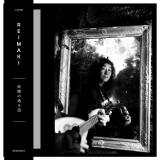
妖精の通る道 (The Path Where Fairies Pass) is the debut vinyl release by Reimaki, the duo of Rei Yokoyama (Triggers Flowers, Stakaidan, Lapiz Trio, 新井薬師自警団, and Fujio, Chiko Hige and Rei), and Maki Miura (Tsubamegami, Les Rallizes Dénudés, Shizuka, Fushitsusha, Ohkami No Jikan and Katsurei). The duo has been an understated presence in Tokyo, playing occasional under-the-radar shows and self- releasing a few CD-Rs, but they’ve recently started to break cover, with a recent cassette on UFO Creations, released in support of a late 2024 tour of China. It’s also a welcome reappearance on the scene for both musicians; Miura’s musical history, in particular, is being reevaluated thanks to a recent string of welcome Shizuka reissues.
But the music Reimaki make together is a different thing entirely, much as it shares some psychological and aesthetic interests with both Miura’s and Nokoyama’s other projects. Their sound is split between two main interests – an extension of glacial, deoxygenating psychedelic improvisations, and a deep interest in medieval European music. They’ve also been known to cover compositions by English prog/improv musician Fred Frith. These various elements of the Reimaki aesthetic are all present through 妖精の通る道, from the fragility of the opening “Novel Amor” through to the smeared, hazy textures of the three extended pieces that comprise the album’s flipside.
There’s a beautiful sympathy in these performances, and a generous simplicity, too; you can sense that this music is informed by decades of finding just the right way to say the right thing in the clearest manner possible. Yokoyama and Miura never overstate things; make the statement, play the song, let it hang in the air for a while, and then move on to the next essential expression. The music is unburdened by self- consciousness. Their take on medieval music cuts to the core of melody and melancholy; their psych- improv side is blurred and drifting without ever lapsing into rote generic gestures.
There’s some shared space with other artists who suspend the timeless within the kaleidoscopic possibilities of the psychedelic – Kendra Smith & The Guild of Temporal Adventurers; Emmanuelle Parrenin; Rosina de Peira – and a tangled folksiness that might put listeners in mind of Jan Dukes De Grey, Comus, Current 93, and Tower Recordings. Accompanied by beautiful photography from street photographer Takehiko Nakafuji, who was also personally chosen by Mizutani to document Les Rallizes Dénudés, 妖精の通る道 is a most unique and necessary trip.
Suche:the chosen two
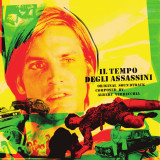
- A1: Echi Tribali 2:01
- A2: Danza Della Pioggia 2:31
- A3: Totem 2:51
- A4: Danza Della Morte 3:14
- A5: Rito Della Fecondazione 2:45
- A6: Danza Di Guerra 2:29
- B1: Rito Nuziale 1:55
- B2: Iniziazione 2:09
- B3: Rito Del Sole 1:14
- B4: Invocazione 1:07
- B5: Rito Della Fertilità 1:23
- B6: Danza Dello Stregone 2:28
- B7: Rito Di Propiziazione 2:35
- B8: Adorazione 1:58
Black Vinyl[23,74 €]
“Alle Sorgenti Delle Civiltà Vol. 3 - Africa, Australia, Nuova Zelanda” (1971) is the third and final chapter of a triptych of folk-based sound recordings released by Folkmusic. The album contains a total of fourteen tracks by Braen and Raskovich, i.e. the a formidable multi-instrumentalists Alessandro Alessandroni and Giuliano Sorgini, each grappling with seven different compositions characterised by a tribal mood. Among the grooves of this record, repressed on vinyl for the first time by Musica Per Immagini, it is possible to discern an in-depth study of one of those forms of popular culture referring to a specific geographic area, comprising the types of traditions often handed down orally and concerning knowledge, beliefs, fairy tales, legends, myths, narratives linked to the dimension of the fantastic, customs and traditions, namely music. Festivals and propitiatory rites, fights and dances, magical and sacred representations were all expressions of life whose sound and rhythm contributed to an appropriate description of the environment. Alessandro Alessandroni and Giuliano Sorgini have chosen some of the most significant musical characters that even belong to specific ethnic realities scattered across two distant continents, where the use of some of the typical instruments has favoured the realisation of sonorities of considerable interest.
- A1: Echi Tribali 2 01
- A2: Danza Della Pioggia 2 31
- A3: Totem 2 51
- A4: Danza Della Morte 3 14
- A5: Rito Della Fecondazione 2 45
- A6: Danza Di Guerra 2 29
- B1: Rito Nuziale 1 55
- B2: Iniziazione 2 09
- B3: Rito Del Sole 1 14
- B4: Invocazione 1 07
- B5: Rito Della Fertilità 1 23
- B6: Danza Dello Stregone 2 28
- B7: Rito Di Propiziazione 2 35
- B8: Adorazione 1 58
Blue Vinyl[22,65 €]
“Alle Sorgenti Delle Civiltà Vol. 3 - Africa, Australia, Nuova Zelanda” (1971) is the third and final chapter of a triptych of folk-based sound recordings released by Folkmusic. The album contains a total of fourteen tracks by Braen and Raskovich, i.e. the a formidable multi-instrumentalists Alessandro Alessandroni and Giuliano Sorgini, each grappling with seven different compositions characterised by a tribal mood. Among the grooves of this record, repressed on vinyl for the first time by Musica Per Immagini, it is possible to discern an in-depth study of one of those forms of popular culture referring to a specific geographic area, comprising the types of traditions often handed down orally and concerning knowledge, beliefs, fairy tales, legends, myths, narratives linked to the dimension of the fantastic, customs and traditions, namely music. Festivals and propitiatory rites, fights and dances, magical and sacred representations were all expressions of life whose sound and rhythm contributed to an appropriate description of the environment. Alessandro Alessandroni and Giuliano Sorgini have chosen some of the most significant musical characters that even belong to specific ethnic realities scattered across two distant continents, where the use of some of the typical instruments has favoured the realisation of sonorities of considerable interest.
Two decades into his winding voyage through music, culture and creativity, Tom Trago has become part of the densely woven fabric of the Dutch electronic scene - a producer, DJ, label owner, collaborator, remixer, radio host and DJ's DJ who is renowned not only for his impressive productivity, but also the genuine depth and variety of his work. While it was Trago's distinctive DJ sets that once grabbed headlines - he famously held residencies at renowned Amsterdam institutions Trouw and De School, and for a decade spent much of his time jetting between some of the most renowned clubs in Europe - in recent years Tom has cut down on appearances. Today, he chooses to be far more selective about where (and when) he DJs or performs live, often working with a handful of cherished venues and festivals while ensuring that his travels are sustainable and inspiring. Instead of the grind of touring and hedonistic night-time activity, Trago has chosen to focus on music-making, alongside semi-regular forays into radio broadcasting (NTS, Radio Radio, BBC Radio and EchoBox). He now spends most of his days producing and remixing at his new SR-3 studio in Alkmaar and his seaside home-come-studio in Bergen aan Zee. As part of these lifestyle and career changes, Trago took time to look deeper, not only inside himself, but also for musical inspiration. Tom has always loved, and devoted time to, digging into a wide variety of production styles, using this inspiration to develop a trademark personal production style, but in recent years he has taken it even further. Fuelled by a desire to challenge himself, Tom consistently tries new things in the studio while channeling all he's learned during a career that has moved forwards at breakneck speed. Since making his debut in 2006, Trago has released six critically acclaimed albums (two of which, the eclectic, beat-focused, career-spanning, Patta-released archive dive, 18, and the dancefloor excursion, Trembala, appeared in 2022); extensively worked with Dutch electronic music institutions Rush Hour and Dekmantel; collaborated with countless friends and contemporaries (Charlie Soul Clap, Awanto 3, Maxi Mill, Steffi, San Proper, Seth Troxler, and BokBok included); remixed artists including New Order, Carl Craig, Cassius, Tiga and Erol Alkan, and championed a swathe of fellow Dutch producers via the Voyage Direct label he founded in 2009. In 2025 Tom returns to legendary Dutch label Magnetron Music, home to Fatima Yamaha, DMX Krew, Legowelt, Staygold and many other, to release his Magnus Opus; Ignorance.
Repress.
Fast-rising Dutch DJ/producer BELLA becomes the first new artist signing to Sally C’s Big Saldo’s Chunkers imprint, with the inspiring ‘Note to Self’ EP – her debut production.
Relationships are key for Sally C. Since the inception of Big Saldo’s Chunkers in 2020, she’s released three carefully chosen EPs, all from her own studio. When she met BELLA while playing a festival in Amsterdam during summer 2022, the click was instantaneous, with the pair going on to play an impromptu b2b that day. Vibing both musically and energetically, they kept in touch, with BELLA sending Sally her maiden productions ‘Note To Self’ and ‘Orchestra Spring’. Sally connected so deeply with the tracks that they’d form the backbone of her debut artist EP on Big Saldo’s Chunkers.
One listen to the final EP and it’s not hard to see why Sally wanted to emboss them as Chunkers. Three fresh originals taking in influence from ‘90s house, acid, electro and prog, all with a unique hard-to-pin-down energy that makes them hit with a special swing.
The title track – also the first production made for the EP - sees BELLA lay down a sonic blueprint – both for her own sound and the full body of work. “This set the vibe and guided me through the creative process. I was really trying to make something that felt my own, that was also unique and not something I’ve heard before,” she shares. ‘Note to Self’ is heavy on attitude and bounce, driven by banging old skool drums, a rapid-fire grime-style vocal and a duo of synth lines – one uplifting, the other mining a slick ‘80s sheen, and the results are memorable. An absolute tune that Sally’s delighted to add to the Chunker catalogue.
‘Orchestra Spring’ is the perky sequel, a wicked one-two punch of kaleidoscopic groovy house with lashings of attitude that loves to scribble outside the lines with lots of retro samples and trippy energy. ‘Odd Symphony’ completes the trio, a blazing late-night cut driven by a gurgling acid underbelly, gritty drums and warm chords, giving the EP a brilliant afterglow.
- A1: I Missed The Target Again (Radio Edit) 3.40
- A2: It's Gonna Rain 4.06
- A3: Hang On In There 3.59
- A4: Shine A Light 4.26
- A5: The Lord Will Make A Way 4.56
- B1: There Will Be Peace In The Valley 3.26
- B2: 1963 5.20
- B3: Reach Down And Touch Heaven For Me 2.48
- B4: Love Breakthrough 3.46
- B5: In God's Hands We Rest Untroubled 4.58
- A1: My God Has A Telephone 3.25
- B1: God's Gonna Use Me Anyway 4.02
Soul Music legend Candi Staton returns to her down-home Alabama roots on her 32nd album, Back to My Roots. The twelve-track Americana set features an array of Staton-penned originals and some well-chosen covers.
"These songs represent my roots," Staton adds as she reflects on her many trials and triumphs. "Even the new songs on some level represent something I've experienced and that's what real soul music is about." Back to My Roots was produced by Staton with her second eldest son, Marcus Williams, a professional drummer who has toured with the likes of Peabo Bryson, Isaac Hayes, and Tyler Perry. They brought in Mark Nevers of Lambchop fame, who produced three of Staton’s prior Americana albums for Honest Jon’s and Thirty Tigers, to sweeten certain tracks. “Some of the first songs I ever heard were songs like `Peace in the Valley’ and `It’s Gonna Rain,’” says Staton. “The new songs or cover songs are tracks that remind me of that era when I was growing up as a child and evolving as a young woman. That’s why I named the album Back to My Roots because I’m going back to the roots that made me who I am.”
Staton received the Americana Music Association UK’s highest honour, the International Lifetime Achievement Award, at the UK Americana Music Awards ceremony at Hackney Church in London last year for her southern soul work that stretches from her 1969 Muscle Shoals hits to her more recent collaborations with the likes of Americana kings Jason Isbell and John Paul White.
The album opens with a mid-tempo Bonnie Raitt-styled contemporary blues “I Missed the Target Again” that finds Harry Connick Jr.’s longtime guitarist Jonathan DuBose Jr. (aka the Prophesying Guitarist) showing off his skills that set the tone for the song and the album.
Staton’s older sister, Maggie Staton Peebles (who alongside Staton was a member of the Jewel Gospel Trio in the 1950s), joins her for two duets. The first, “It’s Gonna Rain,” features just a drum, steel guitar and vocals. “My mother used to sing that song to us all the time when I was a child,” Staton recalls. “It’s a really soulful kind of song I wanted to revisit.” They then take turns leading Thomas Dorsey 1939 gem “There Will Be Peace in the Valley” that Elvis Presley popularized in the 1950s.
“Hang on in There” is a new, mid-tempo song that has an old school gospel flavour and features vocals from veteran bluesman, Larry McCray.
While in Europe in 2023 for her farewell concert tour that took her to the Glastonbury Festival and Love Supreme, Staton and her British band, PUSH, went into a London studio to record a new version of The Rolling Stones’ 1972 gem, “Shine A Light.” “I love the way that came out,” Staton says. “We put a big choir on it and put our own twist on it.”
From there, Staton revives another Thomas Dorsey classic, “The Lord Will Make a Way Somehow,” with a bluesy vibe. When Al Green started recording gospel in the early 1980s, he re-introduced this song into the culture.
“God’s Gonna Use Me Anyway” is a new mid-tempo blues with subtle Caribbean influences.
The mood takes a turn on “1963.” It’s a poignant, spoken-word reflection on September 15, 1963, when four black girls were killed in the Birmingham Church bombing. “I was in the city that day and I remember the chaos and horror after the bombing,” Staton recalls. “Just thinking of how racism and hatred caused those men to kill those girls was so emotional for me that I could only do it in one take.”
It's a perfect segue into "Reach Down and Touch Heaven," a haunting, plea for divine intervention into the affairs of mankind. "That's straight Baptist," she says. "I used to be a church pianist back in the 1960s. I've never played piano on one of my records before so that's a unique song for me because I’m finally playing on one of my records. The message of that song is about the homeless. It came to me when a homeless person on the street asked me for $5. When God touches your heart to help somebody else that’s heaven to God’s hears. So, when we reach into our purse or wallet to help someone, we’re touching heaven."
Staton offers love as an antidote to hate on the bouncy, Motown-styled, “Love Breakthrough.”
Her publicist brought Aaron Frazer & the Flying Stars of Brooklyn NY’s 2017 cut “My God Has a Telephone” to Staton’s attention. She shifts the track from a retro 1960s groove to more of a 1980s Malaco Records arrangement, a subtle but distinct variation. Staton brought in her longtime friend and STAX Records legend, William Bell (“I Forgot to Be Your Lover” and “Trying to Love Two”), to add raspy seasoning to the track.
The album closes with the wistful, “In God’s Hands We Rest Untroubled,” that was originally written and recorded by the late country star, Lari White, who died in 2017 at the age of 52. “Lari sent me that song to consider at least ten years ago and I always loved it,” Staton says. “The record label didn’t want it on the album or something, so I just held it.”
Staton says, “I grew up hearing a lot of these old songs when they were new songs. I toured with the Jewel Gospel Trio in the 1950s and we got to know people like Mahalia Jackson, Sam Cooke and others who sang these types of songs. So, I’m sort of paying tribute to them and the influence they had on me by refreshing these songs and making new songs in the old style.”’
It's time for a new compilation in our house and we have some good music to fill it up. This collection of talent is going to be served in two flavours, the physical one a four cut vinyl EP featuring previously only digital tracks and the second one a ten track selection from our back catalogue featuring some of the best producers in our family.
Asier Morillas ( A4 ) is probably one of the most original sci fi specialists out there and he's been part of our sound since his first steps into production. His track Kynosoura is a perfect example of hi tech jazz.
David Reina is also a science fiction specialist, also featured with a full length work in our catalogue, our pick for this collection is Autoscopy, a mental and complex sonic voyage into the best outer space techno.
From Mod 21 we have selected one of his most played tools, Escalation of Violence, the perfect hypnotic drill to boost your mixes properly.
Vertical Spectrum brings us to hyperspace in BALN006 combining a distorted groove with floating alien bleeps in a sci-fi techno masterpiece.
This four cuts will be pressed on wax, let's talk about the next eight:
From his Idle Ep we have chosen Temudo's Spiritual Song, a merciless floor weapon heavily tested on the best clubs and big stages out there.
Next comes BiiBii by Null Forms approaching a more abstract and sci-fi terrain, maintaining the danceable pulse and well-managed distortion. The result is more mental and synthetic. A kind of controlled chaos.
Axial Rotation from Translate starts with a fast paced groove, heavily bass fuelled with a continuous synth line moving across the basement. All sound elements are constantly mutating and evolving although the mood is linear and loopy.
Eight cut comes from Dutch veteran Dimi Angelis, the third from his
A Journal of Impossible Things EP from 2023. The hypnotic bleep penetrates your mind while the dirty sound of the old drum machine sets the pace for your feet. Special mention to the occasional resonant sweep that appears from time to time creating the required tension.
On the ninth, Ruman's Lizard from Where The Ring Ends LP, mental and hypnotic, perfect for adding tension to a mix, again heavily tested on the best dancefloors extensively.
Closing the release, CONCEPTUAL with Red Sun a magnificent closing anthem, no more words needed here.
With this collection you get a tiny snapshot of the sonic palette of Warm Up Recordings sound. Check our full catalogue to get the proper picture.
- A1: Nine Tailed Demon Fox
- A2: Rocks
- A3: Sadness | And Sorrow I
- A4: Naruto Main Theme I
- A5: Kakashi's Theme I
- A6: Need To Be Strong I
- A7: Fighting Spirit
- A8: Need To Be Strong Ii
- A9: Sadness And Sorrow Ii
- A10: Wind
- A11: Predator And Predator
- A12: Strong And Strike
- A13: Orochimaru Fight I
- A14: Beautiful Green Wild Beast I
- A15: A Crisis After Another
- B1: Haruka Kanata
- B2: Afternoon Of Konoha
- B3: Jiraya’s Theme
- B4: Sexiness
- B5: Nine Tailed Demon Fox Ii
- B6: Heavy Violence I
- B7: Victory I
- B8: Beautiful Green Wild Beast Ii
- B9: Heavy Violence Ii
- B12: Avenger
- C1: Naruto Main Theme Ii
- C2: Hokage
- C3: Naruto Main Theme Iii
- C4: Broken Bonds
- C5: Hokage's Funeral
- C6: Kanashimi O Yasashisa
- C7: Sasuke’s Theme
- C8: Loneliness
- C9: Predator
- C10: Demon
- D1: The Fifth’s Fight
- D2: Victory Ii
- D3 Sarutobi I
- D4: Sarutobi Ii
- D5: Heavy Violence Iii
- D6: Orochimaru Fight Iii
- D7: Naruto Main Theme Iv
- D8: Seishun Kyosokyoku
- D9: Go !!!
- B10: Rochimaru Fight Ii
- B11: Orochimaru’s Theme I
"Three years ago, Jérôme Leclercq and I from Mediatoon Licensing came up with the idea of creating a cinema concert to celebrate the 20th anniversary of Naruto. Why a cinema concert? The music is part of the success of the licence and fans have a particular attachment to the credits and the original soundtracks. The originality of the music by Toshio Masuda, the composer of Naruto, comes from the clever mix of traditional Japanese instruments, such as the Shakuhachi or the Shamisen, with guitar and other pop/rock instruments. So we came up with the idea of bringing this music to the stage with a 50-strong orchestra, accompanied by an original montage of the best moments from the anime. This orchestra is made up of three parts: symphonic instruments, pop/rock instruments and traditional instruments.
To do this, we approached the ODINO orchestra and its conductor Sylvain Audinovski. The ODINO orchestra is one of those capable of mixing musical styles while maintaining a very high level of performance. We have also chosen traditional Japanese instrumentalists to complete the orchestra's core, especially for the show.
The arrangements and musical direction are the fruit of a collaboration between Quentin Benayoun, Sébastien Caviggia and myself. My two accomplices, with whom I formed the group P.U.S.S. in 2007, have a great mastery of rock and orchestral music writing. This mix is essential to keep the promise made to the fans of the series and required several months' work to select the music and write the scores for the whole orchestra.
How do you tell the story of Naruto to fans, but also to those who don't know the anime? That's the real challenge of this unique film-concert. How do you select the best moments in the story of this young ninja apprentice from the vastness of the first 220 episodes? Six months of selection and research enabled me to choose the key images in the narrative, while preserving certain dialectics to match the anime's incredible music.
This original film-concert, lasting almost 2? hours, is a real Rock-Symphonic show paying tribute to the work of Masashi Kashimoto and the music of Toshio Masuda."
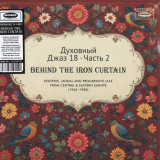
- A1: Leningrad Jazz Ensemble - Aria
- A2: Sh Jazz Quintet - Delilah
- A3: Josef Blaha Trio - Inter Mezzo Forte
- A4: Csaba Deseo Ensemble - Beyond The Csitári Mountains
- A5: Manfred Ludwig-Sextett - Skandinavia
- B1: Anatoly Vapirov - Mystery
- B2: Zbigniew Namyslowski - Piatawka
- B3: Andrzej Trzaskowski Quintet - Synopsis (Expression I)
- C1: Tomsits Quartet - Dhrupad
- C2: Nicolai Gromin Quartet - Corrida
- C3: Valery Kolesnikov, Vyacheslav Novikov, Vladimir Molotkov & Alexander Christidis - Rainbow
- D1: Tone Jansa - Goa
- D2: S+Hq - My Girl (And Other Things)
- D3: Pege Jazz Workshop - Hungarian Folk Song
One of the most politically charged terms of the 20th century, the Iron Curtain was a metaphor for political and cultural division. In a post-war telegram Winston Churchill referred to the fault line that ran through Europe between East and West as "an Iron Curtain is drawn down upon their front. We do not know what is going on behind".
In this two-part album, as far as jazz is concerned, we will showcase, describe and celebrate exactly what was 'going on behind'. We see that music is the power supreme, with the ability to transcend all barriers, be they physical, political or metaphorical.
Our liner notes illustrate the complex and contradictory history of Soviet jazz, and the tracks we've chosen cover the key period of the early 1960s to the 1980s. It was during these dark years of the Cold War that the Soviet Union and its satellite states produced a number of outstanding artists playing in a variety of styles. The impact of modernism, from hard bop and Latin to modal and cool jazz, had found its way through cracks in the curtain. The deeply-felt ancestral strains of traditional European folk music were combined with the exciting new and progressive sounds of the West, and a radical, intoxicating brew was created that no amount of guns, tanks or polonium tea could overcome.
We chronicle the triumph of jazz at a time of extreme geopolitical conflict. What went on behind the Iron Curtain in these countries was once mysterious and unknown to the West, but the perseverance of their artists provided sound and light amid the secretive, dark days of the communist-capitalist standoff. There was no end of life-affirming spiritual jazz behind the Iron Curtain.
"Whether it's by improvisation in the African-American jazz tradition, or by a village kobza player standing on top of a damn hill - he feels connected to the stars."
Good friends and Record Mission co-captains, Dan Tyler (one half of the Idjut Boys) and Nick The Record, take the reins for the third volume of the Mr Bongo Edits 12" series. With previous editions coming courtesy of Danny Krivit and Luke Una, Dan and Nick set their sights on a hand-picked selection of iconic ‘70s Cuban recordings for this three-track cosmic whirlwind. Across the A side, Dan picks out two Juan Pablo Torres tracks, with Nick taking on Grupo Los Yoyi on the B. Tweaking, extending and reworking the recordings with a dose of extra magic they remould the tracks to fit the sounds and structure of today’s dancefloors.
Having formed the Idjut Boys in the early ‘90s, Dan and Conrad McDonnell have crafted a dubbed-out, disco-tinged style that permeates their countless productions, remixes and DJ sets. Speaking of the two tracks Dan has chosen to rework for this EP he mentions, “Having been caught under an avalanche of good music from Mr Bongo, I took it upon myself to extend and add effects to a couple of the fantastic tracks from the Juan Pablo Torres LPs they recently re-issued. Just for disco jockey and barn dance use.”
First, Dan looks to Cuban maestro Juan Pablo Torres’ 1978 album 'Algo Nuevo', taking one of the standout tracks ‘Cacao’ and giving it more space to breathe. Teasing out the scatting vocal line and percussive climax that nods to George Kranz's ’83 electronic disco anthem 'Din Daa Daa', whilst adding more cosmic tripped-out synths and space echoed dubs, Dan builds the tension to fine effect. This track sounds immense on a big club system and the swirling synths felt like they were lifting the ceiling off when we played it at the amazing La Paloma ballroom in Barcelona.
Dan then turns his attention to Torres’ 1977 'Super Son' album, giving the psych-Latin-funk track 'Pastel En Descarga' a dub makeover. Rich in delay and drama, whilst maintaining and extending the breakers funk intro, he juices it up into a punchy, no-nonsense, cosmic-funk delight.
On the B side, Tangent co-founder, long-standing Life Force resident and seasoned rework master, Nick The Record, revisits an edit that he originally constructed in 2009. Clocking in at over double the length of the original cut, Nick’s edit of Grupo Los Yoyi’s 1977 cut 'Paco La Calle', is made with dancers firmly in mind. This secret weapon builds and simmers, with the drums and percussion pushing and pulling before the psychedelic synth lines return in a sweltering fashion. In this new 2025 version, Dan is drafted in to work some brilliant new synth lines into the mix.
Source of an all-time 'Breaks and Beats' classic, Mr Bongo reissue Herman Kelly’s timeless 1978 album Percussion Explosion!. Immortalised in hip-hop folklore, when the anthemic 'Dance To The Drummer's Beat’ was featured on the influential Ultimate Breaks & Beats compilation series in 1986.
Percussion Explosion! was the brainchild of drummer, percussionist, producer and arranger, Herman Kelly and his percussive disco-funk group from Miami, 'Life', that featured Aaron McCarthy, Oliver Well, John DeMonica, Michal Cordoza and Travis Biggs. The album houses a collection of disco, funk and Latin-inspired cuts that were destined for greatness. Nestled within the grooves is the B-Boy and B-Girl’s anthem, 'Dance To The Drummer's Beat’, which contains a now legendary break. A cursory glance at Whosampled will show that it has been sampled in over 125+ songs. These include Double Dee & Steinski on their groundbreaking 1985 production 'Lesson 3 (History Of Hip Hop Mix)', as well as by DJ Shadow, N.W.A, Masters At Work, Run D.M.C. and a whole host of heavyweights across hip-hop, dance and pop music.
When the album was released in 1978 it came out on two different labels, Alston Records and Electric Cat. Each label pressed different versions of 'Dance To The Drummer's Beat’, with the former featuring a 4:12 version and the latter a longer 5:09 version that has a different structure, crowd noise at the start and overdubbed percussion.
For this Mr Bongo reissue, we have chosen the classic 4:12 version from the Alston Records release, which would later find its way on to the illustrious Ultimate Breaks & Beats compilation. To make matters even more confusing the Alston version art on the back cover also states the track length as 5:09, whilst the centre label lists it correctly as 4:12.
Aside from the much celebrated 'Dance To The Drummer's Beat’, the album includes a range of other fantastic overlooked cuts. From the percussive soul stepper 'Share Your Love', to the beautiful Latin-flavoured 'A Refreshing Love' or the party disco-funk groover 'Who's The Funky D.J.?'.
This wonderful and inspirational record features an important piece of hip-hop heritage and deserves a place in every collection.
The record captures an expansive performance in Poitiers, France in November 2023. First working together in an unpredictable trio with minimalist legend and eccentric extraordinaire Charlemagne Palestine, Ambarchi and Thielemans quickly established a remarkable musical chemistry that led to an ongoing series of duo concerts, including the performance documented on their LP Double Consciousness (Matière Mémorie, 2023).
Kind Regards finds the duo refining their shared language while continuing to take risks, allowing the music’s gravitational pull to lead them from meditative calm to unexpectedly expressive passages of melodic invention and rhythmic drive.
Recorded in sparkling fidelity and carefully mixed by Ambarchi’s longtime collaborator Joe Talia, the LP contains a single unbroken performance, stretching out for over 45 minutes. Guitar and drums weave together into a symbiotic whole that nevertheless affords us ample opportunity to marvel at the highly personal approaches these two musicians have developed to their chosen instruments through decades of diverse collaboration and prolific performance. The set begins with Thielemans’ hypnotic tom patterns, around which Ambarchi’s wavering, shimmering guitar tones—achieved with the help of the rotating speaker of a Leslie cabinet—flurry and swirl. Thielemans’ drums play subtle tricks with time and perception, adding and dropping beats within repeated patterns to create an effect at once rhythmically insistent and liquified. Growing at first into a rapidly pulsing texture of brushed drums and flickering harmonics, the music builds momentum into an irregular groove over which Ambarchi’s guitar is transformed into haunting, monumental electric organ chords, strikingly recalling the Wurlitzer work of Alice Coltrane, before settling into a section of gentle portamento melody embedded into the tactile clicks and clangs of Thielemans’ percussion.
When Thielemans adopts a more traditional jazz approach to the kit in some of the set’s second half, the results are stunning, demonstrating a feel for shifting accents and sensibility to the touch of the stick on the drum or cymbal that recalls greats like Jack DeJohnette or Billy Hart (one of Thielemans’ mentors). And when Ambarchi turns up the heat, he does so in an unexpected and delightful way, letting loose a swarm of jittering delayed tones straight out of Henry Kaiser’s classic It’s a Wonderful Life, with a more active use of the guitar’s fretboard than his usual approach to the instrument allows. As the performance draws to a close after a climactic episode of distorted harmonic groans and crashing cymbals that manages to be at once thunderous and carefully attuned to detail, it is clearer than ever that, for these two serial collaborators, this is a very special pairing.
Kind Regards shows us the kind of magic that can happen when two masters who have dedicated decades to reimagining their instruments simply begin to play, following the music wherever it goes.
(comes with a poster) The Klein blue horizon, gliding seagulls, a ferry purring between two languid islands, dotted with ultra-white villages and ancient ruins... These idyllic visions run through Glika, the ultimate musical project of Les Cyclades. An exciting electronic odyssey from West to East, from Belgian effervescence to Greek mysticism.
In 2020, confined to the neighborhoods of Yser and Mystère in Brussels, Alex and Ludo dream of Greek islands, of scorching sun on their skin, of salty baths, chilled ouzo and braised octopus. But everywhere, time stands still. Must one necessarily move to travel? To levitate? In the absence of Elsewhere, the Franco-Canadian duo will compose the imaginary soundtrack to their escape.
Glika (which means "sweet" in Greek) perfectly synthesizes the musical influences of Les Cyclades: a cosmic saxophone inherited from Alex’s dub and free jazz past, an architect-pastry chef-botanist from Normandy, and Ludo’s "Balearic" tracks, a musician-performer-wine lover who frequented his first raves in 1995 in Houston, Texas.
From a hedonistic encounter on a friendly terrace in the 19th arrondissement of Paris to their chosen exile in Brussels, these hypersensitive jacks-of-all-trades first danced and mixed records. Before creating their own phantasmagorical sonic territories, where cinema and poetry meet more or less human voices, brass instruments, synthesizers and analogue drum machines.
A searing fragment of Greek filmmaker Theo Angelopoulos's "Eternity and a Day" preludes Glika. Then, on Yser Mystère - the names of the two stations on tram 51 that physically linked Alex and Ludo's psyches during the lockdown - Alex's astral sax balances out the industrial mechanics of a locomotive, against a backdrop of urban soundscapes.
And then a rising bpm dominates Alocasia, with its deep and sensual light foot. So sunny. From one track to another, there are interludes influenced by Xenakis, Vangelis and Jean-Michel Jarre. Seminal heroes of the Cyclades... But soon, the duo unleash hostilities at the helm of Epigone, their meta-techno anthem. "I know", "You know", echoes Alex.
Laughs of friends, "mouth noises," and "bizarre rhythms" still dominate Parc Fou, while DRAM eyes the minimalist techno of Detroit. So dear to Ludo's heart... And what about PAME, that post-modern Greek epic.Or Glossa, a timeless track that finishes with a fascinating - because diffracted - elegance, this multi-sensory journey through Les Cyclades. Let's close our eyes. Silencio! Hay Banda!
By Eléonore Colin, journalist (and friend!!)
For the second release of the Back to Back series of Stolen Goods goes for two stables of the scene: label manager and old school pillar of the Italian scene Lele Sacchi and Italo Spanish beat master Bawrut.
After B2B1 saw the funky deep sound of Rogue D feat Joe Le Groove and the raw house grooves of Ruff Stuff got played by Laurent Garnier on his show and by peeps like Jamie Jones and Oliver Dollar in their sets and chosen by Beatport in most of their weekend picks here we are ready for two bangers for clubbing prime time! Bawrut's fame goes a long way back to in the best of Europe's crossover of electronic dancefloor music and indie and urban flavours. An album on Ransome Note, hits for Life & Death, Correspondant and tracks supported by Dixon, Jennifer Cardini, Ricardo Villalobos Sven Bath and playing B2B with Kink and Skream in festival and clubs like Sonar, Nuits Sonores, Fabric, Sub Club, Nitsa, etc. and now this massive hands in the hair, goosebumps in the back monster of retro future rave piece of music!
Lele Sacchi is known to have an ear for bangers having been behind the decks all over the world for nearly 30 years, so whenever and with various aliases he turns into producer is quite normal to find his music out on labels like Snatch, Soul Clap, Nervous, Internasjonal, Crosstown Rebels, Pokerflat, Rebirth and more and more classic underground dance stables. This time he keeps his know funkier deep groove but adds a kille stab in the breakdown to represent a vein of peaktime monster attitude.
Again a message 'From Clubbers to Clubbers' as we love to say here at Stolen Goods records.
É Soul Cultura captain, originator of Manchester’s legendary Electric Chair and definitive people’s champion, Luke Una taps into a lifetime’s worth of musical discovery for the second volume in our Mr Bongo Edits series. A cosmic coming together that sees two of Luke’s secret weapons, re-edited and re-contextualised by the man himself to provide optimal dancefloor euphoria.
A stalwart of the underground for nearly 40 years, Luke has become an appointed leader of the late night disenfranchised, with an unquestionable ability to pick records that make minds tick. Not least through his two É Soul Cultura compilations released on Mr Bongo over the past two years.
A taste that traverses genres as much as it does emotions and decades, who better to give an insight into the tracks he has chosen to edit, than the man himself. “I've been an avid collector of afro-beat house, techno and underground black heart disco since before the basement soul days of Electric Chair 30 years ago. Both these bombs were very much holy grail finds, plucked from the last four decades of digging in random crates of dusty vinyl all over the world.”
First up, Thandi Zulu & The Young Five’s interpretation of Pure Energy’s early ‘80s disco power play – ‘Love Game’. With a distinctive South African synth bass and killer keys combo, Luke explains the original has this “bonkers alchemy of heavy machine soul, uptempo rawness and a majestic disco evangelism”, making it ripe for a re-edit.
On the B side, Lionel Pillay’s Jazz dancer ‘Plum’. “The original was a relentless 18-minute raw jam”, Luke states, “which despite its late ‘70s South African origin kinda reminded me of a 1986 Chicago piano House record”.
“These edits strip the tracks back and rebuild them, giving them more sonic weight with that looped up drum jacking militancy from the days of Chicago, combined with a boosted sense of transcendental, psychedelic, cosmic disco. They have always had such an explosive reaction on so many dancefloors including the heavier electronic club, so it felt only right to reshare them”.
A new artist on the Citizen Records / Clivage Music roster, Vhinz is a musician based in Brussels. After taking his time to break onto the electronic scene, he’s now ready to share Belvédère, his debut, dreamlike album, confidently intense, sweeping between cinematic songs and soaring, epic electronic sounds.
Vincent Honca is Belgian, with Armenian roots and a love of keyboards: the mini synth he used to play as a child, the classical piano of his years of training at the Académie de Musique, the Yamaha synth of his teenage years... During the noughties of his adolescence, electronic music was omnipresent in his life as he listened to and admired Daft Punk, Moby, Vitalic, Air and The Chemical Brothers. He also went out dancing, a lot, in the nightclubs and parties of Brussels and the vicinity, and soon his love of computers, technology and synthesisers led to him producing his own music. “I wanted to create beautiful textures with synths,” he says. “I wanted to have fun and discover the possibilities. As part of the internet generation, I taught myself everything I know through reading magazines and checking the forums.”
Vincent went on to become a computer programmer and decided to make music in as much of his spare time as possible. His first productions came out in 2015, including “Drastical”, one of three deep house dancefloor-orientated tracks recorded with none other than Kris Menace. “At the time I was really searching for my musical identity,” explains Vincent, and progressively his music started to lean towards another of his passions – films and film music. “I’ve listened to soundtracks a lot since I was a teenager, and they’ve been a big influence, in particular the music for Heat by Elliot Goldenthal, Gladiator (Hans Zimmer), Saving Private Ryan (John Williams), The Last Temptation of Christ (Peter Gabriel), The Virgin Suicides (Air) and Leon (Eric Serra).” Coincidentally, Vincent has already worked on two independent Belgian films by director Christophe Karabache, UltravoKal and Vortex, both collaborations with Michel Duprez.
Now Vincent has chosen the name Vhinz, bringing together his expertise with machines and computers, his passion and enthusiasm for the electronic sounds of his adolescence and his adoration of cinema’s powerful, impactful soundtracks. Vhinz’s first track is thus called “Aether”, a track brimming with character and confidence, with sung-spoken vocals that sweeps the listener up in bewitching synthetic themes and drums like an off- kilter heartbeat. The track perfectly encapsulates the Vhinz sound, and Citizen Records – the only label he sent it to – immediately loved it and were ready to release a 12” with more. “Then Covid and the lockdown happened, and everything came to a complete halt,” remembers Vhinz. During those long two years without anything being released, the project continued its gestation and has now grown in a mini-album of eight coherent, fascinating tracks. “I really wanted a strong concept for everything, and so was born this album that I’ve called Belvédère. I imagined myself on a belvedere with a panoramic view of the world, channelling all the emotions it elicited in me into music.”
Belvédère is a dreamlike debut album, confidently intense, sweeping between cinematic songs and soaring, epic electronic sounds. It’s a place for Vhinz to showcase his dreams, talk, sing and invite others too: Margot Ferro sings on “Le Passage” and “Envole-moi”, and Michael Meers lends his vocals to “Evolution”. “My album tells a story, with the tracks in chronological order. There are both times of hope and darker periods of my life, with sadness and love,” meaning that listeners are invited to experience a suite of different emotions and be swept along by the author’s musical daydreams. Musically, the album falls somewhere between Moby, Vitalic, Air and Serge Gainsbourg, with a density and atmosphere that are completely Vhinz. “With Belvédère I was looking for beauty, but also something darker, dirtier, more organic. The album is the culmination of that.”
Finally, our debut album is out. It is based on a well-calibrated selection of tracks chosen from intense live performances since our project's inception in 2018.
Dream Dome is a small window in our studio that looks out into the sky - a symbol of the musical vision of two opposites whose style and DAWless music-making skills have created 13 tracks, carefully calibrated by us on the dance floor.
Dream Dome is a blend of musical styles closest to leftfield house and techno. It is characterized by warm analog timbres, polyrhythmic structures, and the self-expression of our individuals.
Dream Dome is available on limited 180g vinyl with 8 tracks + download code for full extended 13 tracks.
Made in Valencia with love.
- A1: Green Baize “Switch Back”
- A2: Night Communication “Let’s Face The Music”
- B1: Mental Detector ”Get Up”
- B2: More Heavy Soul "Load In Total Darkness”
- B3: Ivan Iacobucci "Melt The Sun”
- C1: Sima “Give You Myself (Ricky Montanari Ethos Mama Remix)”
- C2: Ricky Montanari & Davide Ruberto “London (Original Mix)”
- D1: Workin’ Happily ”Make My Move (Tira Dub)”
- D2: Sound Set ”So In Love With You (Club Mix)
Following up on the success of House Of Riviera released in 2019, Mona Musique releases House Of Riviera Volume 2 curated by label head Nick V, a compilation that pays homage to forgotten gems of the classic Italian House scene, circa 1991-1994. 9 tracks from the artists and record labels that were central to this seminal era of House music, including two never released cuts from Ricky Montanari, Davide Ruberto and Ivan Iacobucci.
In the early 1990s, Italy hosted one of the most prolific scenes in the burgeoning world of House music. Whilst the majority of Europe was only just beginning to digest the arrival of this new musical genre born in the US, Italian clubs, DJs and labels were hot on the heels of their counterparts in the already established scenes of New York and London. The clubs of the Adriatic coast, also known as the Italian Riviera, were full every weekend, hosting the major US and UK Djs of the time, but also seasoned resident DJs that had been honing their trade since the early 80s. By the early 90s, Italian House music was regularly exported around the world with labels such as UMM, MBG, Flying, Palmares, DFC, Oversky, Zippy, D:Vision, Irma - and its sublabels Antima and Calypso, releasing tracks inspired by the original New York House and Garage sound, but with a very different, unique and emotional take. This was the specific aesthetic that was to become the House sound of the Riviera, the soundtrack to the golden era of Italian House music.
With all releases between 1992 and 1994, House Of Riviera Vol. 2 unites a selection of 9 tracks that encapsulates the atmosphere, the energy and creativity that reigned during that era. Including 2 previously unreleased tracks from Ricky Montanari and Davide Ruberto, and Ivan Iacobucci, both in the vaults since 1992, the compilation spans the different shades of the genre : from classic deep vocal house by Ricky Montanari and Sound Set, to the more dubbier late night dance floor cuts by Workin’ Happily and Night Communication, with Mental Detector and More Heavy Soul bringing some well chosen disco samples to their contributions, without forgetting the characteristic deep Italian dream house style by Green Baize. Artists featured are iconic producers and DJs from the day : Ricky Montanari & Davide Ruberto, Alex Neri & Marco Baroni, Ivan Iacobucci, Workin’ Happily and More Heavy Soul.
- A1: Don Carlos - Purple Day (Don Carlos Edit)
- A2: Deep Aural Penetration - Let Your Body Be Free (Club Xero Mix) Don Carlos Edit
- B1: Be Noir - It’s Gonna Be Alright (Don Carlos Rimini 4 00 A.m. Mix) Don Carlos Edit
- B2: Deep Aural Penetration - All I Want To Do ( Josh Wink H E.r.e. Mx) Don Carlos Edit
- C1: Love Nation - Everything 4 U (Remix) Don Carlos Edit
- C2: More Heavy Soul - Magic Tonight (Irregular Dub) Don Carlos Edit
- D1: Outdance - Pump The Jumping (Sexy No Dirty Mix) Don Carlos Edit
- D2: F I.t.z. - The Reigh Forest (Fitzcarraldo) Don Carlos Edit
Among those who have written the history of the Italian House is certainly Carlo Troja, aka Don Carlos. In 1991 Irma Records released her first single Alone which immediately became a cult record for DJs across the Channel and especially American DJs. Its particular soft and ambient sounds defined a genre that was then called Paradise House.
And it is precisely from this genre and from this Dj that Irma Records began the celebrations of its thirtieth anniversary a few years ago by
proposing a selection of its catalog chosen by Don Carlos, trying to dig among some of the pearls of the genre but above all among some
songs that featured in his evenings but were less popular at the time of their release.
This compilation had a great response and it was decided to make a volume 2, always selected by Don Carlos. Also this compilation, like the first one, consists of two compact discs and a vinyl version this time with a selection of only 8 of the 20 tracks contained in the CD and Digital version.
All the tracks on the double vinyl have been re-edited by Don Carlos for the occasion. The double cd is in a limited numbered edition.
Among the artists and producers included are: Don Carlos, Lust Unlimited, Subsonic Posse, T.M.V. (Marco Trani, Moz-Art and Maurizio
Verbeni), The Sweatbox Orchestra, Aritmya, Deep Aural Penetration, Be Noir, Love Nation, More Heavy Soul, Outdance, F.I.T.Z. and many
others
One of Alan Vega’s greatest talents was his ability to bring the past and the future together • into a suspended place of timelessness. His groundbreaking duo Suicide was often seen as future primitivism and most of his musical output has exemplified this blending of the primordial human condition and visionary thinking. With Invasion b/w Murder One, the next release from the now infamous Vega Vault following 2021’s Mutator, we see this innate power in full effect.
The two tracks “Invasion” and “Murder One” were recorded two decades apart from one another in New York City. “Invasion” was recorded toward the end of the 2012-2015 studio sessions for the posthumous album IT and was one of his last recordings, while “Murder One” was recorded in 1997-1998, (after the Mutator sessions) and is part of a cluster of material that was recorded but never mixed prior to the sessions for his album 2007, released in 1999. Pairing these two songs together as a release illustrates the timelessness of the 30 plus years of unreleased material that he deemed the Vega Vault.
This release continues the collaboration of Mutator’s mixing and producing team, Liz Lamere and Jared Artaud. Liz provides a bridge to the past, having performed throughout the recording process of “Murder One” and “Invasion” while Jared opens a bridge to the future having been chosen by Alan himself to carry the torch and ensure the vision stays intact. Alan trusted no one more than Liz and Jared, and gave his blessing and encouragement to continue releasing material from the Vault. As Alan stated in the song “Vision” from IT, “If you destroy the vision, you will suffer the whirlwind.”
Platform 23 is delighted to present music from Colin Potter with It Was, a collection of tracks chosen from his 1989 cassettes Recent History Volumes 1 & 2.
After a burst of activity, mainly on his ICR label, from 1980 - 82, the tapes were the first released music in seven years and highlighted the intervening period.
While much of his earlier recordings have now been reissued by Dark Entries, Deep Distance and Sacred Summits, It Was covers the period where Potter recordings were limited while working as an engineer at his IC Studio, and pre-date his work with Nurse With Wound.
The ambience and guitar of The French Polisher leads to Diary Of A Nobody, an embodiment of Potter, sequencers and guitar against submerged, metallic percussion rising. Dense, claustrophobia follows in Solidarity At Wujeck Colliery towards the guitar refrains of Persistence.
Side two starts with Green Fields, where plucked guitars are surrounded and consumed by arpeggios. Propulsion without percussion, the layers of arps shift and redefine before the scatter of Saw with reversed synths and guitar acting as counterbalance. Nine Months, a possible centerpiece, has an autumnal atmosphere; crashing cymbals and ambulant guitar, leading to the closing Ships That Pass In The Night, a hazy drift of slowly sequenced synths & primitive voice samples.
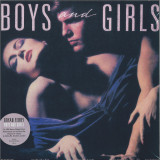
Boys And Girls released in June 1985 is the sixth solo outing from English singer and songwriter Bryan Ferry it would be both a critical and a commercial smash. A No’1 album in the UK certified Platinum selling over 300,000 copies with two top 40 singles “Slave to Love” one of Ferry’s most popular solo hits and “Don’t Stop the Dance” in the US it would go on to sell over half a million copies certified Gold. An album rich with musical aristocracy The guitar solo at the end of “Slave to Love” featured Neil Hubbard and the album featured other famous guitarists such as the Dire Straits guitarist Mark Knopfler, Pink Floyd’s guitarist David Gilmour, Chic guitarist Nile Rodgers and Bryan Adams’ guitarist Keith Scott. Lovingly Re-Mastered from the original tapes by Frank Arkwright at Abbey Road Studios. London. Featuring artwork that has been faithfully restored to reflect its original first press “Boys and Girls” is presented on 180g heavy weight vinyl and is one of those classic albums that would not look out of place in any record collection.
The recordings on Volume II were captured in Copenhagen, Denmark on January 18, 2020. Guided as much by human instinct as by musical intention, the ensemble moved through the evening with a shared sensitivity…listening, responding, and trusting the moment as it unfolded. Though Morten McCoy admits to having felt quite ill that evening, nothing in the music suggests restraint. Instead, what remains is a vivid, playful exchange, where McCoy and Johannes Wamberg carry both Part I and Part II as a flowing conversation, speaking through sound rather than words.
Part I begins abruptly, almost throwing the listener back in time to the exact moment the improvisation was born. Jonathan Bremer steps to the forefront, providing a solid, melodic bassline as Kristoffer and Eliel, perfectly in sync, lay down a steady foundation for whichever voice chooses to rise above the rhythm.
This is also one of the few I Am An Instrument recordings to feature two guitarists. Johannes Wamberg leads the way, shaping the harmonic direction, while Steven Jess Borth II adds subtle rhythmic textures through muted palm work, deepening the groove without ever stepping into the foreground.
Part II unfolds with Morten McCoy on his Moog One, delivering a beautiful, expansive solo. Using a carefully chosen patch, the sound pulses through the rhythm, moving with the groove rather than above it, riding the beat like a wave through the ocean.
Shaped by trust, presence, and collective improvisation, Volume II captures a group deeply attuned to one another, allowing intuition and momentum to guide the unfolding form.
——
Volume III was recorded in Copenhagen on March 5, 2020. Little did anyone know that only days later, the world would be placed on pause for years. Captured just before that moment of global stillness, this session carries a heightened sense of presence, a final gathering before silence reshaped everything. Recorded in a space more commonly associated with a club atmosphere, the music draws on a different kind of energy and immediacy. With Eliel Lazo unable to attend, the group invited Victor Dybbroe of Girls In Airports to join on percussion, subtly reshaping the ensemble while preserving its core spirit. Part I opens with Steven Jess Borth II calling out on tenor saxophone, answered by Morten McCoy on Wurlitzer electric piano. The piece gradually unfolds into a meditative groove, patient and expansive, carrying the listener through an eight-minute journey of layered rhythm and restraint.
Part II begins with Jonathan Bremer on stand up bass, slowly joined by the rest of the ensemble as each voice enters with intention. Midway through, an unexpected vocal melody from Borth emerges, drenched in reverb and delay, later reappearing as a melodic line on the tenor saxophone.
Part III is led by Morten McCoy on Wurlitzer electric piano. His signature melodic language sets the direction, guiding the ensemble while leaving ample space for the music to breathe and evolve through collective improvisation. Reprise returns to the closing moments of Part II, its title reflecting its origin. The familiar groove reappears, transformed into a distinctly Jamaican-influenced rhythm, over which Borth delivers a final tenor saxophone solo, bringing the conversation to rest.
Any questions about any of these products feel free to get in touch and we'll help you out!
[a] a1. Part I [Vol.2]
[b] a2. Part II [Vol.2]
[c] a3. Part I [Vol.3]
[d] b1. Part II [Vol.3]
[e] b2. Part III [Vol.3]
[f] b3. Reprise [Vol.3]
UILTY RAZORS, BONA FIDE PUNKS.
Writings on the topic that go off in all directions, mind-numbing lectures given by academics, and testimonies, most of them heavily doctored, from those who “lived through that era”: so many people today fantasize about the early days of punk in our country… This blessed moment when no one had yet thought of flaunting a ridiculous green mohawk, taking Sid Vicious as a hero, or – even worse – making the so-called alternative scene both festive and boorish. There was no such thing in 1976 or 1977, when it wasn’t easy to get hold of the first 45s by the Pistols or the Clash. Few people were aware of what was happening on the fringes of the fringes at the time. Malcolm McLaren was virtually unknown, and having short hair made you seem strange. Who knew then that rock music, which had taken a very bad turn since the early 1970s, would once again become an essential element of liberation? That, thanks to short and fast songs, it would once again rediscover that primitive, social side that was so hated by older generations? Who knew that, besides a few loners who read the music press (it was even better if they read it in English) and frequented the right record stores? Many of these formed bands, because it was impossible to do otherwise. We quickly went from listening to the Velvet Underground to trying to play the Stooges’ intros. It’s a somewhat collective story, even though there weren’t many people to start it.
The Guilty Razors were among those who took part in this initial upheaval in Paris. They were far from being the worst. They had something special and even released a single that was well above the national average. They also had enough songs to fill an album, the one you’re holding. In everyone’s opinion, they were definitely not among the punk impostors that followed in their wake. They were, at least, genuine and credible.
Guilty Razors, Parisian punk band (1975-1978). To understand something about their somewhat linear but very energetic sound, we might need to talk about the context in which it was born and, more broadly, recall the boredom (a theme that would become capital in punk songs) coupled with the desire to blow everything off, which were the basis for the formation of bands playing a rejuvenated rock music ; about the passion for a few records by the Kinks or the early Who, by the Stooges, by the Velvet mostly, which set you apart from the crowd.
And of course, we should remember this new wave, which was promoted by a few articles in the specialized press and some cutting-edge record stores, coming from New York or London, whose small but powerful influence could be felt in Paris and in a handful of isolated places in the provinces, lulled to sleep by so many appalling things, from Tangerine Dream to President Giscard d’Estaing...
In 1975-76, French music was, as almost always, in a sorry state ; it was still dominated by Johnny Hallyday and Sylvie Vartan. Local rock music was also rather bleak, apart from Bijou and Little Bob who tried to revive this small scene with poorly sound-engineered gigs played to almost no one.
In the working class suburbs at the time, it was mainly hard rock music played to 11 that helped people forget about their gruelling shifts at the factory. Here and there, on the outskirts of major cities, you still could find a few rockers with sideburns wearing black armbands since the death of Gene Vincent, but it wasn’t a proper mass movement, just a source of real danger to anyone they came across who wasn't like them. In August 1976, a festival unlike any other took place in Mont-de-Marsan – the First European Punk Festival as the poster said – with almost as many people on stage as in the audience. Yet, on that day, a quasi historical event happened, when, under the blazing afternoon sun, a band of unknowns called The Damned made an unprecedented noise in the arena, reminiscent of the chaotic Stooges in their early adolescence. They were the first genuine punk band to perform in our country: from then on, anything was possible, almost anything seemed permissible.
It makes sense that the four+1 members of Guilty Razors, who initially amplified acoustic guitars with crappy tape recorder microphones, would adopt punk music (pronounced paink in French) naturally and instinctively, since it combines liberating noise with speed of execution and – crucially – a very healthy sense of rebellion (the protesters of May 1968 proclaimed, and it was even a slogan, that they weren’t against old people, but against what had made them grow old. In the mid-1970s, it seemed normal and obvious that old people should now ALSO be targeted!!!).
At the time, the desire to fight back, and break down authority and apathy, was either red or black, often taking the form of leafleting, tumultuous general assemblies in the schoolyard, and massive or shabby demonstrations, most of the time overflowing with an exciting vitality that sometimes turned into fights with the riot police. Indeed, soon after the end of the Vietnam War and following Pinochet’s coup in Chile, all over France, Trotskyist and anarcho-libertarian fervour was firmly entrenched among parts of the educated youth population, who were equally rebellious and troublemakers whenever they had the chance. It should also be noted that when the single "Anarchy in the UK" was first heard, even though not many of us had access to it, both the title and its explosive sound immediately resonated with some of those troublemakers crying out for ANARCHY!!! Meanwhile, the left-wing majority still equated punks with reckless young neo-Nazis. Of course, the widely circulated photos in the mainstream press of Siouxsie Sioux with her swastikas didn’t necessarily help to win over the theorists of the Great Revolution. It took Joe Strummer to introduce The Clash as an anti-racist, anti-fascist and anti-ignorance band for the rejection of old-school revolutionaries to fade a little.
The Lycée Jean-Baptiste Say at Porte d’Auteuil, despite being located in the very posh and very exclusive 16th arrondissement of Paris, didn’t escape these "committed" upheavals, which doubled as the perfect outlet for the less timid members of this generation.
“Back then, politics were fun,” says Tristam Nada, who studied there and went on to become Guilty Razors’ frontman. “Jean-Baptiste was the leftist high-school in the neighbourhood. When the far right guys from the GUD came down there, the Communist League guys from elsewhere helped us fight them off.”
Anything that could challenge authority was fair game and of course, strikes for just about any reason would lead to increasingly frequent truancy (with a definitive farewell to education that would soon follow). Tristam Nada spent his 10th and 11th unfinished grades with José Perez, who had come from Spain, where his father, a janitor, had been sentenced to death by Franco. “José steered my tastes towards solid acts such as The Who. Like most teenagers, I had previously absorbed just about everything that came my way, from Yes to Led Zeppelin to Genesis. I was exploring… And then one day, he told me that he and his brother Carlos wanted to start a rock band.” The Perez brothers already played guitar. “Of course, they were Spanish!”, jokes their singer. “Then, somewhat reluctantly, José took up the bass and we were soon joined by Jano – who called himself Jano Homicid – who took up the rhythm guitar.” Several drummers would later join this core of not easily intimidated young guys who didn’t let adversity get the better of them.
The first rehearsals of the newly named Guilty Razors took place in the bedroom of a Perez aunt. There, the three rookies tried to cover a few standards, songs that often were an integral part of their lives. During a first, short gig, in front of a bewildered audience of tough old-school rockers, they launched into a clunky version of the Velvet Underground's “Heroin”. Challenge or recklessness? A bit of both, probably… And then, step by step, their limited repertoire expanded as they decided to write their own songs, sung in a not always very accurate or academic English, but who cared about proper grammar or the right vocabulary, since what truly mattered was to make the words sound as good as possible while playing very, very fast music? And spitting out those words in a language that left no doubt as to what it conveyed mattered as well.
Trying their hand a the kind of rock music disliked by most of the neighbourhood, making noise, being fiercely provocative: they still belonged to a tiny clique who, at this very moment, had chosen to impose this difference. And there were very few places in France or elsewhere, where one could witness the first stirrings of something that wasn’t a trend yet, let alone a movement.
In the provinces, in late 1976 or early 1977, there couldn’t be more than thirty record stores that were a bit more discerning than average, where you could hear this new kind of short-haired rock music called “punk”. The old clientele, who previously had no problem coming in to buy the latest McCartney or Aerosmith LP, now felt a little less comfortable there…
In Paris, these enlightened places were quite rare and often located nex to what would become the Forum des Halles, a big shopping mall. Between three aging sex workers, a couple of second-hand clothes shops, sellers of hippie paraphernalia and small fashion designers, the good word was loudly spread in two pioneering places – propagators of what was still only a new underground movement. Historically, the first one was the Open Market, a kind of poorly, but tastefully stocked cave. Speakers blasted out the sound of sixties garage bands from the Nuggets compilation (a crucial reference for José Perez) or the badly dressed English kids of Eddie and the Hot Rods. This black-painted den was opened a few years earlier by Marc Zermati, a character who wasn’t always in a sunny disposition, but always quite radical in his (good) choices and his opinions. He founded the independent label Skydog and was one of the promoters of the Mont-de-Marsan punk festivals. Not far from there was Harry Cover, another store more in tune with the new New York scene, which was amply covered in the house fanzine, Rock News (even though it was in it that the photos of the Sex Pistols were first published in France).
It was a favorite hang-out of the Perez brothers and Tristam Nada, as the latter explained. “It’s at Harry Cover’s that we first heard the Pistols and Clash’s 45s, and after that, we decided to start writing our first songs. If they could do it, so could we!”
The sonic shocks that were “Anarchy in the UK”, “White Riot” or the Buzzcocks’s EP, “Spiral Scratch” – which Guilty Razors' sound is reminiscent of – were soon to be amplified by an unparalleled visual shock. In April 1977, right after the release of their first LP, The Clash performed at the Palais des Glaces in Paris, during a punk night organised by Marc Zermati. For many who were there, it was the gig of a lifetime…
Of course, Guilty Razors and Tristam were in the audience: “That concert was fabulous… We Parisian punks were almost all dressed in black and white, with white shirts, skinny leather ties, bikers jackets or light jackets, etc. The Clash, on the other hand, wore colourful clothes. Well, the next day, at the Gibus, you’d spot everyone who had been at this concert, but they weren’t wearing anything black, they were all wearing colours.”
It makes sense to mention the Gibus club, as Guilty Razors often played there (sometimes in front of a hostile audience). It was also the only place in Paris that regularly scheduled new Parisian or Anglo-Saxon acts, such as Generation X, Siouxsie and the Banshees, the Slits, and Johnny Thunders who would become a kind of messed-up mascot for the venue. A little later, in 1978, the Rose Bonbon – formerly the Nashville – also attracted nightly owls in search of electric thrills… In 1977, the iconic but not necessarily excellent Asphalt Jungle often played at the Gibus, sometimes sharing the bill with Metal Urbain, the only band whose aura would later transcend the French borders (“I saw them as the French Sex Pistols,” said Geoff Travis, head of their British label Rough Trade). Already established in this small scene, Metal Urbain helped the young and restless Guilty Razors who had just arrived. Guitarist for Metal Urbain Hermann Schwartz remembers it: “They were younger than us, we were a bit like their mentors even if it’s too strong a word… At least they were credible. We thought they were good, and they had good songs which reminded of the Buzzcocks that I liked a lot. But at some point, they started hanging out with the Hells Angels. That’s when we stopped following them.”
The break-up was mutual, since, Guilty Razors, for their part, were shocked when they saw a fringe element of the audience at Metal Urbain concerts who repeatedly shouted “Sieg Heil” and gave Nazi salutes. These provocations, even still minor (the bulk of the skinhead crowd would later make their presence felt during concerts), weren’t really to the liking of the Perez brothers, whose anti-fascist convictions were firmly rooted. Some things are non-negotiable.
A few months earlier (in July 1978), Guilty Razors had nevertheless opened very successfully for Metal Urbain at the Bus Palladium, a more traditonally old-school rock night-club. But, as was sometimes the case back then, the night turned into a mass brawl when suburban rockers came to “beat up punks”.
Back then, Parisian nights weren’t always sweet and serene.
So, after opening as best as they could for The Jam (their sound having been ruined by the PA system), our local heroes were – once again – met outside by a horde of greasers out to get them. “Thankfully,” says Tristam, “we were with our roadies, motorless bikers who acted as a protective barrier. We were chased in the neighbouring streets and the whole thing ended in front of a bar, with the owner coming out with a rifle…”
Although Tristam and the Perez brothers narrowly escaped various, potentially bloody, incidents, they weren’t completely innocent of wrongdoing either. They still find amusing their mugging of two strangers in the street for example (“We were broke and we simply wanted to buy tickets for the Heartbreakers concert that night,” says Tristam). It so happened that their victims were two key figures in the rock business at the time: radio presenter Alain Manneval and music publisher Philippe Constantin. They filed a complaint and sought monetary compensation, but somehow the band’s manager, the skilful but very controversial Alexis, managed to get the complaint withdrawn and Guilty Razors ended up signing with Constantin with a substantial advance.
They also signed with Polydor and the label released in 1978 their only three-track 45, featuring “I Don't Wanna be A Rich”, “Hurts and Noises” and “Provocate” (songs that exuded perpetual rebellion and an unquenchable desire for “class” confrontation). It was a very good record, but due to a lack of promotion (radio stations didn’t play French artists singing in English), it didn’t sell very well. Only 800 copies were allegedly sold and the rest of the stock was pulped… Initially, the three tracks were to be included on a LP that never came to be, since they were dropped by Polydor (“Let’s say we sometimes caused a ruckus in their offices!” laughs Tristam.) In order to perfect the long-awaited LP, the band recorded demos of other tracks. There was a cover of Pink Floyd's “Lucifer Sam” from the Syd Barrett era – proof of an enduring love for the sixties’ greats –, “Wake Up” a hangover tale and “Bad Heart” about the Baader-Meinhof gang, whose actions had a profound impact on the era and on a generation seeking extreme dissent... On the album you’re now discovering, you can also hear five previously unreleased tracks recorded a bit later during an extended and freezing stay in Madrid, in a makeshift studio with the invaluable help of a drummer also acting as sound engineer. He was both an enthusiastic old hippie and a proper whizz at sound engineering. Here too, certain influences from the fifties and sixties (Link Wray, the Troggs) are more than obvious in the band’s music.
Shortly after a final stormy and rather barbaric (on the audience’s side) “Punk night” at the Olympia in June 1978, Tristam left the band ; his bandmates continued without him for a short while.
But like most pioneering punk bands of the era, Guilty Razors eventually split up for good after three years (besides once in Spain, they’d only played in Paris). The reason for ceasing business activities were more or less the same for everyone: there were no venues outside one’s small circuit to play this kind of rock music, which was still frightening, unknown, or of little interest to most people. The chances of recording an LP were virtually null, since major labels were only signing unoriginal but reassuring sub-Téléphone clones, and the smaller ones were only interested in progressive rock or French chanson for youth clubs. And what about self-production? No one in our small safety-pinned world had thought about it yet. There wasn’t enough money to embark on that sort of venture anyway.
So yes, the early days of punk in France were truly No Future!
2025 Reissue.
Münchenbuchsee, a suburb of Bern, Switzerland. Stephan Eicher is the youngest of three children. His father, a radio and TV repairman, is also a jazz violinist and a sound tinkerer in his spare time. In the family home's converted fallout shelter turned studio, Mr. Eicher experiments with homemade sequencers, tortures handcrafted drum machines, and abuses reel-to-reel tape recorders—all under the fascinated gaze of young Stephan.
The boy quickly develops a musical curiosity, exploring sound through various experiments and wanderings. Alongside his younger brother Martin, Stephan crafts audio plays on a homemade multi-track recorder (essentially several cassette decks hooked together!), which they write, record, add sound effects to, and perform for family and friends. Just a couple of nice kids, really...
Then comes 1972, and Lou Reed's Transformer album changes everything for the Eicher kids. For 13-year-old Stephan, it's a revelation—especially "Vicious", the opening track, which he plays on repeat for months. He convinces his father to buy him an electric guitar. Not stopping there, his father also builds him a tube amp using an old radio.
Then comes adolescence. A rough one. Stephan leaves home at 16 and moves to Zurich. With obvious artistic talent, he persuades his art teacher to help him get into F+F, a radical, alternative art school—despite his young age. Accepted, he starts learning video techniques, determined to become a filmmaker.
At F+F, Stephan organizes Dada-style happenings and concerts with a group of friends known as the Noise Boys. Among them: one of his teachers on bass, Veit Stauffer on drums (who would later found ReR/Recommended Records), his girlfriend Sacha on vocals, and Stephan on guitar. In one of their early performances, they release a remote-controlled mouse covered in dull razor blades into the audience to create panic and chaos. Keeping with this aggressive, confrontational spirit, they once played a concert while wearing headphones blasting Tristan and Isolde, trying to perform their own songs simultaneously—to maximize the cacophony. The goal was always the same: clear the room.
Their “songs,” if you can call them that, followed suit. Take "Hungeriges Afrika", for instance—performed entirely with power drills and some drum feedback.
To make ends meet, Stephan returns to Bern on weekends to work as a waiter at the Spex Club, the city’s main punk venue. On September 16, 1980, during a show by proto-electro group Starter, the police raid the club and arrest everyone. Stephan, who manages to avoid arrest, seizes the opportunity to “borrow” Starter’s gear left behind. He suddenly finds himself in possession of a Roland Promars synth, a Korg MS20, and a gorgeous CR78 drum machine, which he runs through a Big Muff distortion pedal to get that perfect gritty sound.
He then sets out to reinterpret some Noise Boys tracks, reworking them during impromptu sessions recorded on a dictaphone (yes, a dictaphone—now the lo-fi sound makes more sense, doesn’t it?). He ironically titles the resulting cassette "Stephan Eicher spielt Noise Boys" ("Stephan Eicher plays Noise Boys"). This gem features seven tracks, which are the ones reissued here.
Back in Zurich, he visits his friends Andrew Moore and Robert Vogel, who have a DIY cassette duplication setup. They make 25 copies of Stephan Eicher spielt Noise Boys for Stephan and his friends. Robert encourages him to visit Urs Steiger of Off Course Records and play him the tape.
Without much hope, Stephan shows up at Urs’s office. But Urs is instantly hooked and suggests releasing a 7” single. Due to space constraints, they reluctantly drop two of the seven tracks ("Hungeriges Afrika" and "One Second"). As for the musical score featured on the cover—it was randomly chosen and remains a mystery to this day. Calling all music theory nerds!
The 7-inch is pressed in 750 copies and released in the first week of December 1980—a date Stephan remembers well, as it’s the same week John Lennon was killed. Smartly, Urs sends a promo copy to François Murner, Switzerland’s answer to John Peel, who hosts a show on alternative station Sounds. Murner falls in love with the record and starts giving it airtime. To Stephan’s surprise, sales follow—and people actually seem interested in his music.
Even this modest underground success scares Stephan a bit. He stops making music for a year and moves to Bologna, where he works as a programmer at Radio Città, a feminist radio station.
Meanwhile, Stephan’s younger brother Martin, who’s also involved in the punk scene, joins the band Glueams as a singer and guitarist. Glueams, named after the fanzine run by two of its members (drummer Marco Repetto and bassist GT), eventually rebrands as Grauzone. Stephan is invited to their shows to project hacked Super 8 visuals live on stage.
Urs Steiger, now working on a compilation titled Swiss Wave – The Album, asks Grauzone to contribute alongside bands like Liliput, Jack and the Rippers, The Sick, and Ladyshave (Fall 1980).
For the album, Martin tasks Stephan with producing their recording sessions. Under Stephan's artistic direction, two tracks emerge: "Raum" and "Eisbär". During "Eisbär", Martin plays a minimalist bass line borrowed from post-punk band The Feelies (just an open string). Drummer Marco Repetto struggles to keep time. Later that evening, unhappy with the takes, Stephan builds a four-bar drum loop from a ¼-inch tape and uses it instead of the flawed original. He then adds bleepy synths and wind sounds to complete the track’s icy vibe before handing it over to Urs.
The Swiss Wave – The Album compilation is released quietly at first, but things snowball thanks to "Eisbär", which eventually becomes a smash hit—selling over 600,000 singles.
Meanwhile, Stephan plays in a rockabilly band called SMUV (named after Switzerland’s social security agency) and begins producing artists, including the debut album of Starter (1981), which includes a more pop-oriented version of "Minijupe".
By early 1982, Stephan starts spending time with the post-punk girl band Liliput (formerly Kleenex). They’re older than him, and he happily drives them around in his Renault Major, acting as their roadie.
By 1983, Grauzone—signed to the major label EMI, which turned out to be a misstep—is falling apart. Stephan begins to pivot toward a more mainstream pop sound with his debut solo album Les Chansons Bleues.
But that... is already another story.
BIG reissue for a BIG record!
Support from Gilles Peterson, Natasha Diggs, Osunlade, Rich Medina, Skratch Bastid, Bobbito Garcia, DJ Koco aka Shimokita, and GUTS ( Heavenly Sweetness ), amongst many others!
This is a landmark release from Maleet, the Northern NJ Producer, originally signed to Kenny "Dope" Gonzalez's ( Masters at Work ) label in the early 2000's
Now fresh off of a feature on the latest TEYMORI ( Amin Payne ) LP, Maleet creates his own blend of Afro-Cuban Orisha based music and Soulful House with vibrant live instrumentation
Synthesizers, Fender Rhodes, Percussion and Horns are the chosen ingredients here, while the thumping drums communicate directly with the Highest energies above! The results are songs that lift your spirit and move your body, simultaneously
Right on time for the season, these songs will be populating dance floors around the globe, through the Summer and beyond
Two dance floor heaters, one direct link to the HIGHEST!
Crave Tapes is thrilled to announce the first vinyl release on the label which will be the second album from Frankfurt's underground post-punk/dark wave band Babes of Enola Grey, Krieg und Wohlstand.
Krieg und Wohlstand sees Babes of Enola Grey follow the path of their 2021 debut, Anfang vom Ende, and take a step further into the realm of melancholic and disillusioned soundscapes. While keeping a certain retro character to the songs, Deborah Vision, Salvador Islero and Fabian van Castorp focus on quite contemporary themes, which some might call the most German obsessions:
War and prosperity.
But this is not the only reference to the band's heritage. Sometimes more, sometimes less, there are musical allusions to various German influences and contributions to (modern) music and music history. While Doppelt Frei is a nod to EBM and bands like DAF or the early Die Krupps and Wie auf Schienen as well as Die Heuschrecken pay homage to German düster punk bands like Fliehende Stürme or EA80, Panik and the title track Krieg und Wohlstand refer to the romantic German art song tradition of the 19th century (not to mention the obvious hint at a certain successful German Schlager in Die Kugeln und das Herz).
This makes Krieg und Wohlstand not only a worthy epigone of the band's debut, but also takes the album and the artistic approach to another level.
Commenting on the chosen format (12" vinyl), the band members said: "It was clear to us that we wanted to release this album on vinyl. When you look atGerman history, war and prosperity have to be seen as two sides of the same medal, or in this case of a record".
- A1: You Got The Love - The Retrosettes Sister Band
- A2: Onward - Mark Kozelek
- A3: Third And Seneca - Sun Kil Moon
- A4: Des Pas Sur La Neige - Préludes (Book 1) - Claude Debussy
- B1: Cavatina "Figlia, Ti Scuoti" From Virginia (Act I) - Saverio Mercadante
- B2: À Ma Manière - Maria Letizia Gorga
- B3: Reality - The Retrosettes Sister Band
- B4: Can't Rely On You - Paloma Faith
- C1: Ceiling Gazing - Mark Kozelek
- C2: Dirty Hair - David Byrne
- C3: Berceuse - Igor Stravinsky
- D1: Just (After Song Of Songs) - David Lang / Trio Medieval
- D2: Simple Song #3 - David Lang / Sumi Jo (Soprano) And Viktoria Mullova (Violin Solo)
- D3: Mick's Dream - David Lang
- D4: Wood Symphony - David Lang
Youth (original Italian title La Giovinezza) is a 2015 comedy-drama film written and directed by Paolo Sorrentino, starring Michael Caine and Harvey Keitel. Set in a luxurious Swiss Alps hotel, the story follows two lifelong friends: Fred Ballinger, a retired composer who has turned his back on performance, and Mick Boyle, an aging film director determined to finish what he hopes will be his final screenplay. While navigating the quirks of hotel life and revisiting the milestones of their own pasts, the film explores themes of nostalgia, personal legacy, affection, and mortality.
The soundtrack of Youth is a blend of original score by David Lang, and a selection of other carefully chosen pieces, ranging from classical works to contemporary songs. The centerpiece, “Simple Song #3,” performed by soprano Sumi Jo, captures the film’s themes of beauty, loss, and reflection. Alongside Lang’s compositions, the music features “Can’t Rely on You” by Paloma Faith, the classical piece Debussy’s “Préludes: Des pas sur la neige”, and “Third and Seneca” by Sun Kil Moon, amongst others, creating a rich, genre-spanning soundtrack that blends contemporary, classical, and indie influences.
The soundtrack of Youth is available as a limited edition on transparent vinyl and includes a 4-page booklet with liner notes.
Crave Tapes is thrilled to announce the first vinyl release on the label which will be the second album from Frankfurt's underground post-punk/dark wave band Babes of Enola Grey, Krieg und Wohlstand.
Krieg und Wohlstand sees Babes of Enola Grey follow the path of their 2021 debut, Anfang vom Ende, and take a step further into the realm of melancholic and disillusioned soundscapes. While keeping a certain retro character to the songs, Deborah Vision, Salvador Islero and Fabian van Castorp focus on quite contemporary themes, which some might call the most German obsessions:
War and prosperity.
But this is not the only reference to the band's heritage. Sometimes more, sometimes less, there are musical allusions to various German influences and contributions to (modern) music and music history. While Doppelt Frei is a nod to EBM and bands like DAF or the early Die Krupps and Wie auf Schienen as well as Die Heuschrecken pay homage to German düster punk bands like Fliehende Stürme or EA80, Panik and the title track Krieg und Wohlstand refer to the romantic German art song tradition of the 19th century (not to mention the obvious hint at a certain successful German Schlager in Die Kugeln und das Herz).
This makes Krieg und Wohlstand not only a worthy epigone of the band's debut, but also takes the album and the artistic approach to another level.
Commenting on the chosen format (12" vinyl), the band members said: "It was clear to us that we wanted to release this album on vinyl. When you look atGerman history, war and prosperity have to be seen as two sides of the same medal, or in this case of a record".
- 1: Damn
- 2: Free
- 3: Wet & Wild
- 4: Just Two
- 5: Tectonic
- 6: Party People
- 7: Angle Of Satisfaction
- 8: Switch
- 9: Hackney Wick
- 10: First
- 11: Everything Changes (But I Won’t)
- 12: Louder, Please
From its instructive title to its unapologetic sound, 'Louder, Please' is Rose Gray powerfully - but with quintessential, British politeness - backing herself (who she is, what she wants, and the artist she's always had the potential to become). It's a statement of intent reflected in the record's breadth of collaborators, which span legendary pop kingpins Justin Tranter (Lady Gaga, Chappel Roan) and Zhone (Troye Sivan) to underground electronic heroes like Seda Bodega, Uffie and Alex Metric. Throughout 'Louder, Please' pairs home truths with dance hedonism, summoning not just a transformative night out - the new faces and chosen family, ecstatic highs and crushing lows - but also telling Rose Gray's story: a life lived through club music, and always to its fullest.
2026 Repress
Nick Bike hops aboard his groove machine again for another tidy two tracker that does disco differently., The A-side is 'Yabba Dabba', which is an edit of a classic Scandi-pop gem with plenty of the original melodies reworked into a fatter groove with disco claps. It's full of fun but also nice chunky drums and subtle effects that draw out the magic and up the funk. On the flip side is a dub that is a little more airy and light, with a dreamier edge for the zoned-out moments, but also a reverb-drenched vocal. Two effective and charming cuts for grown-up floors and magic moments.
- 1: Intro
- 2: Rocket Science
- 3: Kryptonite
- 4: Couldn’t Find Another
- 5: Magnetics
- 6: The Funnel
- 7: Absotively Posolutely
- 8: This Year
- 9: The Chosen
- 10: Combustion Spontaneous
- 11: World Premier
- 12: Creatively Wise
- 13: Widespread
- 14: Holier Than Thou
- 15: Rain
- 16: Counseling
Over two decades later, the underground classic that lit the fuse on indie hip-hop’s next era finally gets its vinyl debut. Originally dropped in 2001, Table Scraps is a gritty, no-frills compilation of unreleased tracks and lost sessions from the formative years of MHz, the Columbus, Ohio hip hop crew that helped define an era before the mainstream caught wind of the underground. Recorded between 1997–2001, the album is raw, urgent, and packed with early glimpses of the greatness that would follow.
The core lineup is fully intact and fully in form: Copywrite flexes his unmatched wordplay and delivers two self-produced heaters, “The Funnel” (co-produced) and “Combustion Spontaneous,” proving he’s just as deadly behind the boards. Tage Future brings futuristic cadence and sharp delivery, Jakki Da Motamouth stays unapologetically rugged, and the late Camu Tao is in rare, untamed form, a creative force whose brilliance only grew from here. Holding it all together are beats from RJD2, Mighty Mi, Camu, and Copywrite himself.
Pressed on vinyl for the first time ever, Table Scraps is more than a collection, it’s a time capsule from a crew that helped shape the underground before it had a name.
NPVR is the avant garde duo made up of the late Peter Rehberg and Nik Void. Editions Mego is proud to present their second and final release. No this is not some kind of Beatles synthetic AI that raises the dead reconstructed recordings but rather a new album made by the humans and their machines.
The initial meeting of Rehberg and Void was in London in 2016 and despite or due to their mutual awkwardness found solace and compatibility in the fact that they both had a similar electronic modular set up, along with matching cases to transport all. The idea to collaborate was an obvious and organic process as a means to connect their individual gear together and observe the outcome. The fruits of these initial experiments, recorded in London, resulted in the playful experimentation of their acclaimed 2017 release 33 33 (eMego 251).
Now in 2024 Editions Mego presents the logically titled follow up, 33 34. These sessions were recorded six months after the initial recordings at Peter’s home in Vienna. This was planned out as a mirror city release to the original London recordings. With Peter having access to his full studio set up this time around we encounter a rich audio landscape which organically folds together a variety of musical genres blurring any distinction between these forms so the resulting music hovers as a new cloud of sound. Any musical form, be it industrial, electro-acoustic, ambient, drone and techno all coexist and melt into the other as the ensuing result unveils a hypnotic swarm of divergent sounds (music). When active there were no lines or contexts with NPVR, either between sound or genre within these recordings or live where NPVR were at home playing at a techno club one night and an avant garde venue the next.
The initial session of these recordings was edited by Rehberg and sent to Void to further develop. Over time the final versions were agreed on and then shelved as other outside projects took over. The awkwardness had been surmounted and the two had become close friends. NPVR performed at a range of venues such as Tresor, Sutton House, Corsica, Blitz, Paris GRM #Focus2, LEV Festival and Rigas Skanumezs Festival. Following Rehberg’s untimely passing Void had difficulty listening back to the sessions but eventually thought it fit to complete and release this album, of which even the artwork (like 33 33, an image from Zurich photographer, Georg Gatsas) had been decided upon prior to Rehberg parting ways.
There is an unmistakable joy to these recordings. One encounters an enthralling exploration of their chosen machines which conveys the excitement of what can be randomly conjured when people speak through such devices. There is no grand statement or argument here, just the sheer thrill of creation and the recorded results of random encounters. The art of collaboration was always a mainstay of Rehberg’s practice from the advent of the MEGO adventure. Rehberg & Bauer was an initial collaboration with former business partner Ramon Bauer. Even at this stage one can hear a relaxed sense of delight in the sheer discovery of sound.
A mix made for the Wire magazine following the release of 33 33 hints at the freedom that comes with endless urge for exploration and discovery. Abstract tracks from Z'EV. Jérôme Noetinger and Jung An Tagen are included alongside British stalwarts The Fall and New Order. There were no lines between pop / academic / underground or mainstream in Rehberg’s world. All of it sat at the same table. It is just matter in the atmosphere, like the diverse exploration found in these recordings that comprise 33 34.
Towards the end of his life Rehberg was obsessing over the immense output of the German ambient musician Pete Namlook. An artist renowned for not only his sprawling catalogue of ambient masterpieces but one who often said his main inspiration was nature. This is apt with regards to the work of NPVR which also aligns with such thought as the intertwining of the two individual artists and their machines results in a natural symbiotic flow, as it happens, just like in the world around us.
"It may surprise some that, after two decades of silent films, when Alam Ara broke the silence in 1931, it and every South Asian talkie that followed was what we in the West think of as a "musical." Music had been integral to the culture's staged drama going back to the Gupta Dynasty — sometime between the 4 th and 6 th Century CE. Since its inception, South Asian cinema drew heavily from Marathi, Parsi, and Bengali musical theatre and silent film screenings were often accompanied by live music to mimic a live staged experience.
When sound films arrived, actors with serious singing skills became the next wave of stars. Songs were performed live while shooting, with musicians hidden off-camera, to the side or sometimes even in trees. Playback singing — the practice of dubbing a real singer's voice over a lip-syncing actor — didn't become standard until the 1940s.
Thus, the biggest stars of the 1930s were also the greatest singers, with some, like Govindrao Tembe and Pankaj Mullick, excelling as both composers and vocalists. None, however, were more beloved than K.L. Saigal, whose emotional, untrained crooning captivated audiences across the subcontinent. Saigal's voice inspired a young Lata Mangeshkar, who vowed to become India's greatest filmi singer to win his heart. Sadly, Saigal grew increasingly addicted to alcohol, unable to perform without it, and passed away at age 42, seven months before the Partition. Lata never married.
This collection features some of the earliest songs from South Asian cinema, sourced from CDs and LPs found in Jackson Heights, Queens, Coney Island Avenue in Brooklyn, Lexington Avenue in Manhattan, and Oak Tree Road in Iselin, New Jersey — areas home to vibrant immigrant communities. South Asian immigration to New York and New Jersey surged after the 1965 Immigration and Nationality Act, which lifted non-European quotas. By the 1990s and 2000s, the region's Indian, Pakistani, and Bangladeshi media outlets flourished, especially in Jackson Heights, where such stores outnumbered the total number of regular record shops throughout the five boroughs.
The nascent period of sound film featured a limited palette of musical styles, predominantly Marathi Bhagveet, like the Ghazal, but with greater flexibility of subject matter and rhythm, and Rabindra Sangeet, the approximately 2,000 songs and poems composed by Bengali Nobel laureate Rabindranath Tagore. But there was some evolution as well, with the success of South Asian cinema's first woman composer, the classically trained Saraswati Devi, and the introduction of Western instruments including the piano and Hawaiian guitar.
While much of the music was dark and brooding, perhaps exemplified best by Devika Rani's interpretation of Saraswati Devi's "Udi Hawa Mein" from 1936's Achhut Kannya (Untouchable Maiden), there were moments of brightness, such as R.C. Boral's "Lachhmi Murat Daras Dikhaye" sung by Kanan Devi in Street Singer, an otherwise thoroughly depressing film from 1938 that cemented Devi's and co-star K.L. Saigal's superstardom.
This selection was chosen to emphasise a range of expressivity, instrumentation and style achieved even within the decade's relatively limited scope, setting the listener up for the relative explosion of possibility in the 1940s, to be covered in the next installment of this series."
Stone classic Bullwackies (as excursioned by Rhythm & Sound for Burial Mix), sensationally featuring two unreleased dubs, newly extracted from the master reels. Both are equally unmissable but quite different, with contrasting effects: the second dub adds ninety seconds, including whip-dem spring reverb. Drawn from the Selective Showcase LP, the vocal mix is more open and dubwise than the Sing & Shout LP offering, with less keyboards.
Asked whether it should be mash or march, after some pondering Bullwackies replied: "That's a good question.'
Jessica93, prodigal bastard of our glorious french squat scene, relocated on Born Bad : this is no picnic. Geoffroy Laporte, alone against all odds, alternates bass and guitar to build harsh loops with a drum machine spitting pre-Gulf War patterns. That’s where it gets tricky : every musical posse claims him. Grunge, sure, but Jessica doesn’t indulge in necrophilia. His circuit is punk, he doesn’t dress the part though. Cold wave, the atmosphere fits somehow, but the gear does not. The self-confident rock horde saw him playing with hair in his eyes… but he never joined the Party. Metal had something to say but sadly, nobody listened. Maybe it's time to give it a rest and let Jessica93 cook his great misery broth on her own, called « 666 tours de périph’ » (666 laps on the beltway). Witnessing Jessica93 live makes you dread that he'll get up the next morning, drive 200 miles and one nap later kick it again, when it takes us a good week to recover from the bad half of that same evening. Like so many other unknown soldiers during our very own world war of music, he patrols small venues relentlessly.
At the heart of this cultural pentacle painted by french weirdos Bryan's Magic Tears, and Carine Krinator, Jessica93 has built a sound validated by years of chosen vagrancy, birthing bands with joyously stupid monikers, in the humid jungle of small labels. Jessica93's debut album had a track celebrating Omar Little, HBO’s gay bandit from Baltimore. This story begins on the beltway, where Florence Rey, accidental copkiller turned to political icon of the 90’s. Geoffroy offers his brilliant analysis : " C’est la police qui nous tire d’ssus / C’est mon trou d’balle qui leur chie d’ssus « (Police shoots us down / my dripping asshole gets the job done).
A previous album was haunted by bedbugs, this one is essentially about love, a delicious scourge just as hard to eradicate. Two black diamonds peek out of the LP : ’’La colline du crack’’, heartbreak song about the ultimate temptation of violent delights, located on crackhead central in Paris. The brilliant chorus, ‘Take my hand and come with me to Crack Hill’ will put an end to the rumours, almost everything was really false. And Bébé Requin, alternative obituary that’ll make you shiver, where our nice couple states ‘’on kiffe la drogue dure et les ptits chiens’ (‘we love hard drugs and little dogs’). And that is the reason we face the wall of sound jostled by unnecessary shoulder thrusts: those nice fat chunks of charcoal poetry, hidden under light sarcasm.
The rest of the record demonstrates the know-how acquired in loop-by-loop construction of ruins that are pleasant to squat in together. There’s your classic doom delicatessen, with bits of heavy metal inside, crafted with the manic care typical of hard wankers. Arthur Satàn, who produced and mixed the album at home in Bordeaux, helped him get his head out of the reverb safe house. And Jessica93 took the opportunity to switch to the dark side of the language : french at last. Worth the wait ! Sing along : « nique sa mère / nique sa grosse mère » (translate that yourself).
- 1: If I Knew What I Know Now
- 2: Out Of Reach
- 3: Get A Life
- 4: Resurrection
- 5: Allergy
- 6: Sniffing Glue
- 7: Ordinary Girl
- 8: The World Is Wrong
- 9: Citizen
- 10: Scarred For Life
- 11: Voice Of The People
- 12: Punk Police
- 13: Humane
- 14: Spitfire
- 15: Born In A War
- 16: Last Rockers
Vice Squad are 100% DIY and record everything in their home studio with guitarist/riffmaster Paul Rooney engineering and mixing. There is nothing sloppy here; the whole album is concise and intelligent with lightning-speed diction, passion, and intent. The glorious ‘If I Knew What I Know Now’ and ‘The World Is Wrong’ are examples of Vice Squad’s ability to write instantly catchy, witty songs, and the more gut-wrenching material from their last album, ‘Battle of Britain’, showcases some enormous riffs and a voice that is a million decibels from Beki's untried teen vocals. The album opens with the deliciously effervescent ‘If I Knew What I Know Now’, followed by the sparkling old-school tongue-twister ‘Out of Reach’. Next up is the visceral ‘Get A Life’, an angry anti-suicide note to the desperate, originally the title track from their 1998 comeback album. This is followed by a shimmering version of Vice Squad's old-school classic ‘Resurrection’. While the treatment of the old songs remains true to the original teenage renditions, the upgraded versions pack more of a punch with detuned guitars and growling bass. The tribal tom-toms of ‘Allergy’ underpin just over two minutes of punk protest about the delights of pollution and asthma. Then comes the sublime ‘Sniffing Glue’, a near-perfect punk love song that would be a huge hit if not for its subject matter. ‘Ordinary Girl’ is punk-pop perfection brimming with hook lines and harmonies, warmly mocking the life that could have been chosen instead of the grindstone at the sharp end of the music industry. ‘The World Is Wrong’ is anthemic, joyous, and wonderfully contrary, and one would expect nothing less from a band that has soldiered on and grown through the decades. It’s always great when bands lead by example. In these increasingly tough times where our survival is threatened by the gargantuan greed of a few individuals, it's important to continuously stick two fingers up to the grabbers and spoilers. 'The World Is Wrong' does just that in an impassioned, melodic, and optimistic style. 'Hold your head up, stand your ground, and don't let the bastards grind you down.' Then we roar into the final single Beki wrote with original and now sadly deceased guitarist Dave Bateman, ‘Citizen’, and continue with another teenage opus, the quite brutal ‘Scarred For Life’. ‘Voice of the People’ is a bulldozer of a song, all swagger and ballsy riffs, and the chorus, ‘Freedom of speech is against the law; now we’re all criminals,’ snarls its derision at red-handed red tape. ‘Punk Police’ sneers over a catchy-as-COVID guitar riff, and the lyrics, ‘Regulation cut, you must measure up, down on the street, PR companies, monied families, running the scene,’ call out the hierarchies that now permeate Punk. Baritone guitars add extra darkness to one of the first-ever animal rights songs, ‘Humane’, and I’m struck by how relevant the older songs are. Chocks away, and the awesome ’Spitfire’ takes flight like Motörhead on extra amphetamines. Merlin engines fade into ‘Born In A War’, the second in the triumvirate of conflict-themed songs, an absolute stonker with huge muscular riffs and lyrics that roar pure outrage. Then comes the ominous Last Rockers, with all the angst of the original plus added depth and resonance. Beki: ' "Last Rockers" is a typically depressive adolescent song about nuclear war and being too young to die but too late to live. I believed Punks were the ‘Last Rockers’, the final youth cult before the Apocalypse. I was obsessed with punk, and all I wanted to do was sing in a band and be part of the movement, so I would often romanticise the idea of punk in my lyrics.' The four bonus CD tracks kick off with ‘Coward’, another teen Bateman/Bond composition. ‘No You Don’t’ is just over two minutes of vocal acrobatics over a Dexedrine-driven Devo-esque chord sequence, and the frantically brilliant ‘I Dare To Breathe’ from ‘Battle of Britain’ continues the aural assault. Then the final sombre entreaty of ‘You Can’t Buy Back The Dead’ warns us that ‘Enough’s never enough; absolute power will corrupt; the war machine still rumbles on’ before fading into the future.
- If I Knew What I Know Now
- Out Of Reach
- Get A Life
- Resurrection
- Allergy
- Sniffing Glue
- Ordinary Girl
- The World Is Wrong
- Citizen
- Scarred For Life
- Voice Of The People
- Punk Police
LTD EDITION[25,42 €]
Best of' albums are invariably repackaged collections of old recordings, so Vice Squad's `Punk Rockers' is a breath of fresh air The songs have been lovingly recorded and remastered, keeping all the original fire and adding decades of experience gained from punishing tours and continuous songwriting Beki is the original architect of the songs and the Vice Squad name, and she is the sole surviving member of the original lineup to have continued as a full-time musician Vice Squad are 100% DIY and record everything in their home studio with guitarist/riffmaster Paul Rooney engineering and mixing. There is nothing sloppy here; the whole album is concise and intelligent with lightning-speed diction, passion, and intent. The glorious `If I Knew What I Know Now' and `The World Is Wrong' are examples of Vice Squad's ability to write instantly catchy, witty songs, and the more gut-wrenching material from their last album, `Battle of Britain', showcases some enormous riffs and a voice that is a million decibels from Beki's untried teen vocals. The album opens with the deliciously effervescent `If I Knew What I Know Now', followed by the sparkling old-school tongue-twister `Out of Reach'. Next up is the visceral `Get A Life', an angry anti-suicide note to the desperate, originally the title track from their 1998 comeback album. This is followed by a shimmering version of Vice Squad's old-school classic `Resurrection'. While the treatment of the old songs remains true to the original teenage renditions, the upgraded versions pack more of a punch with detuned guitars and growling bass. The tribal tom-toms of `Allergy' underpin just over two minutes of punk protest about the delights of pollution and asthma. Then comes the sublime `Sniffing Glue', a near-perfect punk love song that would be a huge hit if not for its subject matter. `Ordinary Girl' is punk-pop perfection brimming with hook lines and harmonies, warmly mocking the life that could have been chosen instead of the grindstone at the sharp end of the music industry. `The World Is Wrong' is anthemic, joyous, and wonderfully contrary, and one would expect nothing less from a band that has soldiered on and grown through the decades. It's always great when bands lead by example. In these increasingly tough times where our survival is threatened by the gargantuan greed of a few individuals, it's important to continuously stick two fingers up to the grabbers and spoilers. 'The World Is Wrong' does just that in an impassioned, melodic, and optimistic style. 'Hold your head up, stand your ground, and don't let the bastards grind you down.' Then we roar into the final single Beki wrote with original and now sadly deceased guitarist Dave Bateman, `Citizen', and continue with another teenage opus, the quite brutal `Scarred For Life'. `Voice of the People' is a bulldozer of a song, all swagger and ballsy riffs, and the chorus, `Freedom of speech is against the law; now we're all criminals,' snarls its derision at red-handed red tape. `Punk Police' sneers over a catchy-as-COVID guitar riff, and the lyrics, `Regulation cut, you must measure up, down on the street, PR companies, monied families, running the scene,' call out the hierarchies that now permeate Punk. Baritone guitars add extra darkness to one of the first-ever animal rights songs, `Humane', and I'm struck by how relevant the older songs are. Chocks away, and the awesome 'Spitfire' takes flight like Motörhead on extra amphetamines. Merlin engines fade into `Born In A War', the second in the triumvirate of conflict-themed songs, an absolute stonker with huge muscular riffs and lyrics that roar pure outrage. Then comes the ominous Last Rockers, with all the angst of the original plus added depth and resonance. Beki: ' "Last Rockers" is a typically depressive adolescent song about nuclear war and being too young to die but too late to live. I believed Punks were the `Last Rockers', the final youth cult before the Apocalypse. I was obsessed with punk, and all I wanted to do was sing in a band and be part of the movement, so I would often romanticise the idea of punk in my lyrics.'
It has been almost seven years since the release of Alpestres, the impressive debut by Matthias Puech on Hands in the Dark. While that first experience took us on a mystical journey through fascinating fictional landscapes, 'Cabanes' lets its narrative unfold in a confined space: eight pieces each resembling small structures or makeshift shelters that, while enveloping and isolating the listener, remain open to their surroundings. These are not merely interiors; they are handcrafted spaces through which we gain insights into the world. Yet they allow the light from the outside to seep in, reminding us of reality.
According to Puech, each composition has a distinctive two-part story that are both clear and intriguingly interconnected. The first one often revolves around the anecdotal and tangible aspects of instrumental "play," showcasing a technical exploration with his tools, the discovery of sounds in a library, and the serendipitous encounters that inspired them. The second part, however, delves into the more elusive yet profound state of existence that the French artist experienced while engaging with these sounds, reflecting on the moments he listened and re-listened to them, ultimately deeming them worthy life companions. These two narratives, perhaps reshaped over time like distant memories, interact in ways that can either clash or complement each other, creating a lasting impact on the listening experience.
A significant aspect of the compositional process involves distancing oneself from these connections to creation, allowing for the rediscovery of a state of listening that is free from prior emotional influences—what one might call "pure" listening. This method enables the transformation of a sequence of events into a narrative that is independent of its original intent, resulting in a universal object. After spending considerable time with the attached pieces and attempting to induce a form of amnesia to reconstruct an artificial narrative, Matthias Puech has ultimately chosen to relinquish this pursuit. Thus, the album is aptly termed “Cabanes” (“Huts”): fragile structures whose design clearly reflects the intention behind their creation, showcasing all the signs of considerate craftsmanship.
Nick Bike has been at it again, crafting high-grade club cuts that always make an impact. These two have already been well road-tested with great effects. 'Party People (Night & Day)' is the first and is a brilliant collision of some funky, soulful disco classics into one new and strident sound with irresistible claps and vocal hooks. On the flip is the scorching 'Every Night (Hold Me Tight)' which is just timeless and super smooth disco-funk with a persuasive charm. Two no-brainers here that will bring next-level fun to any set.
Hermon Mehari and Tony Tixier first met in 2010, in their early twenties, in a club on Paris's Rue des Lombards for a concert with saxophonist Rodolphe Lauretta. Over the next decade, the two musicians took opposite paths, while continuing to collaborate on two continents. The American trumpeter moved to France to discover European culture and the world cultures that coexist there, while the Parisian pianist of Martinican origin spent several years in the USA, immersing himself in the roots of jazz and Afro-American music.
In June 2024, the two musicians, who had been working for fifteen years on numerous albums and collaborations, and whose musical understanding had continued to be forged in clubs, festivals, and on recordings, met again for a duet at the TOC-TOC festival in the Puisaye region, where Antoine Rajon was a collaborator. Enthusiastic about the idea, the artistic director of the KOMOS label invited them back to his home in this corner of Burgundy to record this Fender Rhodes/trumpet formula. He called on sound engineer Christian Hierro, who traveled with his mobile studio for the album recording, then mixed and produced the master in his studio in Lyon, using the best analog equipment and his expert ear.
At dusk on November 12, 2024, the duo played eight tracks in a single, direct take on a 33-minute magnetic tape.
Four unusual cover versions were carefully chosen. "Maimoun" is a composition emblematic of pianist Stanley Cowell's style, also recorded by Marion Brown. George Duke's "The Black Messiah" was captured live by Cannonball Adderley's band on an album of the same name but has never been released as a studio version. "Hello To The Wind" was created by Bobby Hutcherson in 1969, sung by Eugene McDaniels. Finally, "Laini," dedicated by the great Martinican pianist Marius Cultier to one of his daughters, is a mazurka dear to Tony's heart.
Each of the musicians also contributed a composition: Hermon with "This Is Our Fantasy," written especially for the session, and Tony with "Poem For The Oppressed," a moving composition with an explicit title. Lastly, the duo improvised two tracks, without repetition, in mutual symbiosis and echo.
SOUL SONG captures a moment without enhancement, transformation, or additives, far removed from contemporary virtual technologies.
Variophon is Philophon's newly established sub-label. As the name suggests, Variophon is designed to release variations, or more commonly expressed, remixes of songs taken from the Philophon catalog. The beginning on Variophon makes the all around the world beloved Jimi Tenor by remixing himself.
Jimi has chosen one title each from his two albums released on Philohon. From his first, "Order of Nothingness", it is the gently dancing "Myteria" and from his recently released "Aulos" the driving "Vocalize My Luv" (featuring Florence Adooni and Lizzy Amaliyenga). He electrified both pieces in his own very personal, subtle way in order to achieve what he does best: make people happily dancing!
b B1: Vocalize My Luv (Electric Remix) feat. Florence Adooni & Lizzy Amaliyenga
- 01: Icarus Phase
- 02: The Last Picture I Took
- 03: Filter Coffee At The Heliopause
- 04: I Am The Furthest Thing
- 05: What Will They Say About Me?
- 06: Interstellar Disco
- 07: Focused Flight
- 08: Durutti Columns On The Astrobelt
- 09: And Then I Saw The Gas Giants
- 10: Super Infinite
- 11: Time Is The Simplest Thing
- 12: I Touched The Empyrion
Martin had been a surprise choice for the commission.
It was the Spring of 1977 and two Interstellar Mariners were to be sent hurtling into deep space. Glass was to provide weekly "sonologues" of their progress, audio diarist for a pair of mute mechanical adventurers.
Delivered with a near fanatical diligence over the course of nearly three decades, these stuttering musical biographies would soon bewilder those who had first asked for them.
Martin's work, they judged, had begun to plot its own eccentric orbit, charting more than just the ships' material progress, but rather their imagined psychogeography ("What will they say about me?" "I will never conserve my instruments" "Nobody has gone further").
With his sonic dispatches increasingly ignored and unheard, all funding for the project swiftly fell to dust.
The very best of these scores, chosen from a vast compendium of source material, are now assembled here for the first time. Their muses, two arthritic spacecrafts now nearly half a century old, limp on through deep space, forever onwards and onwards forever...
- Miaux - 22H44 05:45
- Miaux - Bal(L)Ade Bucolique 04:47
- Miaux - Midnight Snack 02:12
- Miaux - Rêverie Parallèle 05:01
- Miaux - And The Nose 04:12
- Miaux - Ice Cream 05:12
- Miaux - Lunar Surface 03:59
- Miaux - Stare 02:24
- Miaux - Improvisatie 02:24
- Miaux - Nebulus 04:10
- Lieven Martens & Luc Dockx - The Bird Sings, Variations I 06:42
- Lieven Martens & Luc Dockx - The Bird Sings, Variations Ii 09:17
- Lieven Martens & Luc Dockx - The Bird Sings, Variations Iii 07:44
- Lieven Martens & Luc Dockx - The Bird Sings, Variations Iv 08:15
2025 cassette edition, originally released in 2023 on 2CD/digital.
Recordings + booklet of the unveiling of »Katharina AW«, a relational artwork by Joris Martens. The unveiling event took place at St. Catharine’s Church in Hoogstraten - a city in the northeast of Belgium - on two Saturdays in May 2021.
While beholding the artwork, a woven tapestry, you listen to organ music by Miaux. Outside the church, you hear the carillon gurgle with music by Lieven Martens and town carillonneur Luc Dockx, prolonging the event into the public space.
Joris Martens created »Katharina AW« for the city hall of Hoogstraten. The tapestry now serves as an informal conversation starter in the conference room. Joris Martens is a multi-disciplinary artist and works in the field where applied arts and fine arts meet.
Miaux played her own compositions on the church organ. The songs appeared on the albums Black Space White Cloud, Hideaway, Dive and Gigi - released by Ultra Eczema, Lal Lal Lal, and Alien Passengers - and were originally written for electronic keyboard. Mia demonstrates that the church organ, which is normally used as an underscore for sadness or compelling thoughts, is a fitting instrument of connection. Through its resonance, we communicate our sounds.
Lieven Martens invented sketches for the carillon—by loading bird sounds into the computer program Melodyne, varying them and converting them to musical notes. As a nod to the religion crazy Olivier Messiaen, who considered the birds to be God’s chosen singers and songstresses. The trifles were translated on the carillon by town carillonneur Luc Dockx. The playing comes into and out of focus. In this way, Lieven creates a dreamscape and breaks with the dreary carillon as an instrument of power.
Luc Dockx studied church music at the Lemmens Institute in Leuven and the carillon at the Royal Carillon School in Mechelen. He is the city carillonneur of Hoogstraten since 2002. Dockx is an active practitioner of the art of improvisation on the carillon.
Look At Us Now: the long-awaited debut album from Song Festival sensation Gustaph!
"I wanted to make a record that makes people feel good about themselves."
Good things come to those who wait: after more than 20 years as a musician, Gustaph is releasing his debut album, Look At Us Now. The title is a phrase from the song Because Of You, which won him seventh place at the Eurovision Song Contest in 2023.
"Look At Us Now may be taken literally," Gustaph explains. "Look where we are now after 20 years of hardwork. And look where we are with the queer movement: as a queer artist, I can openly be myself and sing about the things that are important to me."
Gustaph's soulful voice takes us through various themes, from believing in yourself and fickle lovers to chosen family and loss.
Look At Us Now is a pop record infused with nineties house, dance and disco, but we also spot a ballad (Miss You The Most) and two Scandi-pop tracks: Like You, an ode to love and Darker Days, an epic track that will pull you through bleak periods with panache.
"I wanted to make a record that makes people feel good about themselves," Gustaph says. "One that they put on while getting ready to go out or just to start the day. A little pick-me-up that makes them think: Yes, now I can kick ass."
When you play the record for the first time, you'll already be able to sing along to a bunch of tracks: there's Because Of You of course, butalso more recent singles like Already Know, Faith In What You Feel and Calls Your Name.
The record was produced in London with Richard X, known for his work with Róisín Murphy, Alison Goldfrapp and Pet Shop Boys, among others. "That's very close to who I am as an artist, so that collaboration just made sense," Gustaph explains.
Look At Me Now sounds like a party where everyone is welcome. The club tour kicks off at Ancienne Belgique. Come celebrate!
- A1: The Whitechapel Wolf Justified Sinner
- B1: The Evil Painter
“JUSTIFIED SINNER” WILL BE OUT ON FRIDAY JANUARY 24TH, THIS IS THE THIRD OF THE FOUR 12” VINYLS THAT ANTICIPATE THE
RELEASE OF THE NEW DEATH SS CONCEPT ALBUM “THE ENTITY”, PRODUCED BY STEVE SYLVESTER WITH TOM DALGETY. TOM IS A
GRAMMY-WINNING ENGLISH PRODUCER, ALREADY AT WORKS WITH RAMMSTEIN, GHOST, THE CULT AND OTHERS.
JUSTIFIED SINNER” IS A POWERFUL AND ANTHEMIC SONG WITH A DARK '80S ATMOSPHERE. LYRICALLY IT IS INSPIRED BY THE 1824
NOVEL “THE PRIVATE MEMOIRS AND CONFESSIONS OF A JUSTIFIED SINNER”, BY THE SCOTTISH WRITER JAMES HOGG, CONSIDERED THE
PRECURSOR TO STEVENSON'S NOVEL “THE STRANGE CASE OF DR. JEKYLL & MR. HYDE”. HERE THE PROTAGONIST, CONVINCED THAT HE
IS CHOSEN BY GOD AND UNDER THE INFLUENCE OF HIS DIABOLICAL DOPPELGANGER, COMMITS ALL SORTS OF EXCESSES AND CRIMES
AGAINST SINNERS, THINKING HE IS JUSTIFIED BY THEM.
THE 12” IS OUT TODAY IN LIMITED DELUXE PHYSICAL FORMAT ON TRANSPARENT ORANGE VINYL WITH A SPECIAL SHAPED COVER AND
CONTAINS THE THIRD PART OF THE BOOKLET WITH THE ENTIRE STORY BEHIND THE CONCEPT ALBUM, ALONG WITH TWO OTHER SONGS
TAKEN FROM THE ALBUM: “THE EVIL PAINTER” AND “THE WHITECHAPEL WOLF”, AVAILABLE ONLY IN THE PHYSICAL VERSION.
Jamwax proudly presents the reissue of Laurel Aitken’s iconic 1966 single, showcasing two R&B dancefloor gems: Last Night and the soulful classic Don’t Break Your Promises. Originally released on the Rainbow label in the UK, this 7-inch record captures the essence of Aitken’s versatility and his pivotal role in bridging the Jamaican and British music scenes.
Last Night draws direct inspiration from the sounds of The Mar-Keys (1961) and Georgie Fame (1966), reflecting the influence of R&B rhythms on Aitken’s work. This release marked a milestone in his career as he gained increasing popularity in the UK, particularly among the mod and skinhead subcultures.
As for Don’t Break Your Promises, it is a cover of Milson Luce’s 1956 release on the Argo label. The song was already a hit in Jamaica, having been licensed the same year by Dada Tewari on his Downbeat imprint. Following Aitken’s rendition, the song inspired several Jamaican covers, including versions by Dandy (1972, Trojan), The Chosen Few (1973, Studio One), and John Holt (1973, Bunny Lee).
Nicknamed the "Godfather of Ska," Laurel Aitken was born Lorenzo Aitken on April 22, 1927, in Cuba. He moved to Jamaica at the age of 11 and became a central figure in the development of ska during the 1950s and 1960s. Before shaping the emerging ska sound, he recorded mento and calypso, laying the foundation for his groundbreaking contributions. His prolific recording career in England included numerous singles on legendary labels such as Blue Beat, Pama Records, and Trojan Records. Aitken’s legacy as a pioneer of Jamaican music and his influence on British subcultures firmly establish him as a key figure in the global evolution of ska and reggae.
Originally released in 1966
Licensed courtesy of Cherry Red Records Limited
- A1: The Sweet Vandals – Too Much
- A2: Diesler – Revelations (Jazzinvaders Remix)
- A3: The Bamboos Feat Ohmega Watts – Get In The Scene
- A4: Naomi Davis & The Knights Of Forty First Street – Forty First Street Breakdowne
- A5: Eli Goulart E Banda Do Mato – Sunny
- B1: Daddy-O Of Stetsasonic – Drumma Man
- B2: The Supersonics – The Chosen One
- B3: Sharon Jackson & The Soul Destroyers – Fakin' It
- B4: Carlton Jumel Smith And Cold Diamond & Mink – Remember Me
- B5: Jay Are Feat Tiffany Page – It's Jay Are
This Is DJs Choice Vol. 4 brings you a great selection of Funk, Soul, Latin and Hip Hop.
Five years after the last installment of the series, Volume 4 is compiled by Gu, a long-time friend and DJ partner of Unique label founder Henry Storch, and the tracks represent the two decades they have known each other and played records together, as well as the music they enjoyed.
All choices are originally 7 Inch records from Gu's crates put together like a DJ-Set for you to enjoy: The Soul of The Sweet Vandals and Carlton Jumel Smith, the Deep Funk of Naomi Davis & The Knights Of Forty First Street, The Supersonics and Sharon Jackson & The Soul Destroyers, the Latin sounds of Diesler and Eli Goulart E Banda Do Mato and the Hip Hop grooves of Jay Are (aka J.Rawls and John Robinson), The Bamboos featuring Ohmega Watts and Daddy-O of Stetsasonic.
This compilation is a celebration of music from beginning to end.
About This Is DJs Choice:
The series started as a friendship project by Henry Storch, who wanted to immortalise friends and allies from the DJ scene, who picked vinyl as their format of choice. The genre didn't matter, as long as the vibe was right. In 2008 Vol. 1 featured a selection of organic Club Sounds and Break Beats put together by Soulinus & Pun, followed by Keb Darge & Lucinda Slim and their favorite Rhythm & Blues, Rockabilly and 60s Soul tunes on Vol. 2 in 2009. In 2019 Les Intouchables aka Marc Hype and DJ Suspect presented a variety of funky and soulful music with an addition of the occasional Boogie, Reggae and Hip Hop track.
About Gu:
Gu is a DJ, musician, label owner, producer, writer and producer from Northern Germany. His dedication to music started in his pre-teens in the late eighties and he is playing vinyl ever since. Over the years he has worked with a number of his favorite DJs and artists like Keb Darge, Andy Smith, Snowboy, The New Mastersounds, Osaka Monaurail, The Sweet Vandals, The Allergies, Andy Cooper of Ugly Duckling, Daddy-O of Stetsasonic and Chuck D of Public Enemy to name a few. His DJ career took him all over Europe again and again.
In 2005 he started Our Label Records with his brother Tom to release new Funk music on 7 Inch vinyl and added the Hip Hop 45 imprint Origu in 2015. Since 2009 and he is on air every week with his radioshow Home Diggin', which was also picked up by Chuck D's Rapstation in 2019. Additionally he is lead singer/rapper for the Songcore duo Sorry We're Closed and the Hip Hop outfit Alder Ego. He also does readings of his book of one-liners and competing on Slam Poetry stages.
- A1: Silent Night (3:39)
- A2: All I Want For Christmas Is You (4:01)
- A3: O Holy Night (4:27)
- A4: Christmas (Baby Please Come Home) (2:33)
- A5: Miss You Most (At Christmas Time) (4:32)
- B1: Joy To The World (4:18)
- B2: Jesus Born On This Day (3:41)
- B3: Santa Claus Is Comin' To Town (3:24)
- B4: Hark! The Herald Angels Sing/Gloria (In Excelsis Deo) (2:59)
- B5: Jesus Oh What A Wonderful Child (4:26)
- B6: God Rest Ye Merry Gentlemen (1:18)
LP 2x12"[46,18 €]
LP[26,68 €]
LP[26,68 €]
7" single[15,92 €]
12" single[15,92 €]
12" single[17,61 €]
LP[19,75 €]
2LP[90,34 €]
The Holiday Album That Turned Mariah Carey into the Queen of Christmas: Featuring the Standard “All I Want for Christmas Is You,” the Singer’s Blockbuster Merry Christmas Exudes Joy, Spirituality, and Conviction
Sourced from the Original Master Tapes, Presented in Audiophile Sound for the First Time, and Strictly Limited to 3,000 Numbered Copies:
Mobile Fidelity’s UltraDisc One-Step 180g 33RPM LP Set Plays with Superb Detail, Openness, and Definition
1/2" / 30 IPS / Dolby SR analogue master to DSD 256 to analogue console to lathe
Mariah Carey didn’t become the Queen of Christmas just because of her fervent love of the holiday. Or as the result of a brilliant marketing plan. The iconic singer earned her title by way of her blockbuster Merry Christmas, a 1994 album that quickly joined the likes of Bing Crosby’s White Christmas, A Jolly Christmas from Frank Sinatra, and Nat King Cole’s The Christmas Song as an all-time holiday vocal classic. Featuring a balanced mix of inspired originals and well-chosen covers, Carey’s fourth studio record has only grown in stature as new generations discover its magic. Mobile Fidelity’s 30th anniversary edition reissue of Merry Christmas makes her spellbinding performances and upper-tier register come alive like never before.
Sourced from the original master tapes, pressed at Fidelity Record Pressing, and strictly limited to 3,000 numbered copies, the pioneering label’s UltraDisc One-Step 180g 33RPM LP set of Merry Christmas plays with superb detail, depth, and dimensionality. Available in audiophile quality for the first time since its original release three decades ago, and featuring the bonus track “God Rest Ye Merry, Gentlemen,” the nine-times-platinum set breathes with a newfound openness and transparency that enhance the spirituality, passion, and festive tenor of Carey’s singing.
Benefitting from superb groove definition, a nearly inaudible noise floor, and dead-quiet vinyl surfaces, the music takes on a heightened energy and anticipatory emotion synonymous with the holiday season. Carey’s signature vocals explode with liveliness and dynamics, the full scope of her acrobatic range presented in clear, transparent sound that practically places her on a small stage in your listening room. This collectible version also breathes with the kind of warmth, intimacy, and coziness you want from a landmark vocal album.
Recorded when Carey helped put “diva” back into everyone’s vocabulary, Merry Christmas gave the New York native another smash right out of the box. What nobody knew at the time was the degree of the album’s staying power — and how, many years removed from its initial promotion cycle, its legend would still grow and even spark a 2010 sequel. Having re-entered the Top 200 charts every year since 2019, Merry Christmas ranks as one of the three most commercially successful holiday LPs ever made and, in due time, will likely earn the top distinction in that class. A global blockbuster, it seamlessly ties together Christian, gospel, and secular threads and speaks to a boundless audience, independent of denomination.
Most obviously, the record remains inescapably connected to “All I Want for Christmas Is You,” an uptempo anthem that towers as a holiday standard and one of the biggest-selling singles in history. Punctuated with celesta chimes, sleigh bells, springy keyboards, and joyous beats, the song echoes the simple albeit engaging melodies and doo-wop style of beloved holiday classics of yore — and blends such elements with contagious dance-pop rhythms to create an atmosphere rich in joy, wonder, and excitement. Radiant with golden soulfulness and sincere conviction, Carey’s exuberant singing and on-point phrasing put it all over the top. And how.
The song stands as the only effort in Billboard history to top the Hot 100 chart during at least three separate runs. Carey’s blockbuster has already hit No. 1 during five runs, spanning every year between 2019 and 2024. That’s just one of the many records the singer holds — and only one of the multiple highlights from Merry Christmas, which includes two other Carey-penned originals, “Miss You Most (At Christmas Time)” and “Jesus Born on This Day.”
Though slightly lesser known, Carey’s remarkable rendition of Darlene Love’s “Christmas (Baby Please Come Home)” further links her album with the big, lush, Wall of Sound heritage that helped inspire its production. Carey’s heartfelt take and transformation of the traditional “Santa Claus Is Coming to Town” into an animated tune that even adults can believe, as well as her clairon reading of “Joy to the World” — cleverly augmented with bits of Three Dog Night’s 1971 hit of the same name — further reinforce her status as Queen of Christmas.
At the peak of her powers, Carey finds equivalent success when tapping more spiritual veins. Witness the reverence she brings to the timeless carol “Silent Night,” the piousness she invests in “Jesus Oh What a Wonderful Child,” and the sacred feeling she conveys throughout “O Holy Night.” You’ll also never think of “Hark! The Herald Angels Sing” and “Gloria (In Excelsis Deo)” the same way again after hearing Mimi pour her heart and soul into them, and pair the songs together.
Indeed, it’s Carey’s pliable voice, melismatic technique, and five-octave range — on display here in definitive fashion — coupled with her undeniable love for Christmas and understanding of the religious significance of the season that make Merry Christmas a must-have holiday staple. And on Mobile Fidelity’s LP, something you better add to your wish list.
Producer, designer, publisher, filmmaker, all-round scene phenom - Lasse Marhaug returns with his first album since relocating from Oslo to the Arctic Circle, surveying his 35-year career for a set of grizzled, doom-pocked rhythms and foghorn drones pulled from the aether. Expansive and hard to categorise, it's a precision-tooled set of ice-cold tonal productions that heavily lean into Mika Vainio’s rhythm experiments, with extra levels of growling bass and curious noises to send us deep into the uncanny.
Lasse Marhaug has put his mark on literally hundreds of albums - working with artists like Jenny Hval, Merzbow, Jim O'Rourke, Kevin Drumm, Hilary Woods - so many others - yet he still regards himself as a primarily visual artist who got diverted into an occasionally different path. If his last album 'Context' was a kiss goodbye to decades of life in Oslo, 'Provoke' turns a new page, but one that draws heavily from memories of the distant past, reflecting on the way the topographies of Norway's frozen north helped shape his creative worldview. Weaving electronics into environmental recordings captured in the bleak Arctic winter, the album was mixed during the Polar night season, when, for two straight months, the sun never rose past the horizon. Somehow, even at its bleakest, Marhaug avoids the usual aesthetic signifiers for this kinda thing, finding elements of queered beauty in all the severity, juxtaposing elements that shine a bright light on all the odd spaces in-between.
A consideration of noise music's place in 2024, and whether it can still be a tool for subversion when its aesthetics have been so commodified, ‘Provoke’ also refernces an experimental '70s Japanese art magazine that attempted to define a new language for photography. Operating somewhere between these two guiding poles, Lasse feels his way through a subtly altered mode of expression, a new approach to familiar concepts. Album opener ‘Plates’, for example, gives it the full Ø treatment, like some exceptional ‘Oleva’-outtake, but , eventually, shards of interference start to exhale like horses blowing, creating uncanny sensations that hit through ambiguous feeling rather than sheer noise terror. Ritualistic, corporeal - hard to know what you’re listening to and why it makes you feel that certain way - so much more than just machine cycles optimised for their ultimately hollow brutalist aesthetic.
Marhaug paints vivid pictures from a carefully chosen palette, drawing us into a soundworld that's rich with contradictions and contrasts. Even the relatively deafening 'New Topographics' offsets its wall of distortion with a muffled, perforating kick drum, cutting into the noise like a knife through butter. And all of this preparation makes the album's lengthy centrepiece 'Monochrome Head' even more impactful; hinging on a Pan Sonic-like alloy of bass and drums, the track snowballs through tempered feedback and improv scrapes and whistles that pick up into an orchestral din. Marhaug accents the bluster with rhythmic hums that gather in momentum until they're almost oppressively heavy, as if everything's about to collapse.
A masterclass in quietly subversive world-building, 'Provoke' invites us to peer at an expansive sonic landscape and marvel at its intricacies, but this time around there's a Lovecraftian behemoth lurking somewhere beneath its icy surface.
Krauty electrocis from FACTORY FLOOR re-promoted now! The music is taken from a project originally commissioned by London's Science Museum to live score Fritz Lang's 1927 cinematic landmark, Metropolis on its 90th anniversary. The band performed the score live at the Science Museum's IMAX in April 2017 in an event that was part of the acclaimed Robots exhibition. This new release is a studio recording of the 150 minute score, recorded in its entirety and mixed by Nik Void with the exception of the tracks `Heart of Data' and `Babel' which was mixed by award-winning producer Marta Salogni. It's something of a rite of passage for electronic artists to compose music for the classic sci-fi movie Metropolis, and with the simply named Soundtrack for a Film, Factory Floor join the ranks of Giorgio Moroder and Jeff Mills. ... While Soundtrack for a Film is subtler than Factory Floor's albums, it still bears the duos signature approach. ... Soundtrack for a Film also takes Factory Floor's skill at making expansive, evolving tracks to its logical conclusion, and the album could be heard as one two-and-a-half-hour cut. Despite its length, Gurnsey and Void never lose focus thanks to their carefully chosen motifs. ... As Factory Floor balance the organic and mechanical aspects of Metropolis and their music on Soundtrack for a Film, they achieve the best of both worlds -- a commissioned work that's just as original as their own albums. - Available as a box set comprising four 12" vinyl on the band's own imprint H/O/D Records. The artwork is by British artist Haroon Mirza adapted and arranged by Nik Void in collaboration with illustrator Sam Moore.
Błoto’s bold 2020 debut brought forth three albums in just twelve months. This prolific creative burst, followed by an ongoing tour and involvement in other projects, meant that fans had to wait over three years for the next release. During this time, new ideas took shape, and the vision for their fourth LP crystallized. The wait for Błoto's new album is nearly over. As always, autumn signals the arrival of Grzybnia (Mycelium).
The idea for the album had been simmering within the band since the release of Kwasy i zasady and finally took shape in late January 2023 at Warsaw's Studio Pasterka, under the careful guidance of Piotr Zabrodzki. It was by far the most fruitful session in the group's history, with ideas flowing in abundance. The chosen tracks not only resulted in two well-received singles, Szlam / Ścieki and Bakteria, but also provided enough material for an EP set to drop next year.
The seemingly chemical title of the album Kwasy i zasady (Acids and Bases) ultimately referred to interpersonal relationships, describing traits that prevent harmony. The album embodied the polarization of societies in the 21st century. The metaphor of Grzybnia (Mycelium) goes a step further. It emphasizes the importance of cooperation as a fundamental skill that can yield various results (fruits, fungi)—both good and bad. Above all, it underscores the power of collective action beyond divisions.
In a complex, unstable modern world that is breaking apart into pieces, the concept of mycelium offers a powerful model. Mycelium thrives in degraded, seemingly lifeless environments created by humans. A key aspect of the broader significance of mycelium is that cooperation benefits all involved parties, where each contributes something and receives something in return. Mycelium is a symbiont, meaning it forms a symbiotic relationship with certain tree species through mycorrhiza, where the roots of the trees and the mycelium exchange essential life-sustaining substances. This results in mutual benefits. The world of mycelium exemplifies cooperation.
A single mushroom, like a person, dies, but mycelium endures, much like humanity itself. Thus, similar to culture, it is immortal. Błoto operates in a manner akin to mycelium. It undoubtedly belongs to the underground realm, embodying the essence of the underground. It is also a destructor of music. In what sense? The Polish Nobel laureate Olga Tokarczuk noted in her book Primeval and Other Times that “... Mycelium thrives by drawing the last remnants of life from what dies, decomposes, and seeps into the earth. Mycelium is the life of death, the life of decay, the life of what has died.” In the same way, Latarnik, Cancer G, Wuja HZG, and OlafSaxx, through their collaboration, process cultural products to create entirely new and surprising combinations. The result of this work is both edible and poisonous mushrooms, manifested in the form of fat beats, house, spiritual jazz, improvised music, illbient, organic techno, and genre-defying electronics.
The peak mushroom season in Poland occurs in autumn, which is why Grzybnia will be released on October 11, 2024, via Astigmatic Records.
Distance as a measure of time and place informs Kelly Finnigan's, A Lover Was Born with a grit and grace that turns passion into virtue. The latest solo release from The Monophonics frontman roots itself in the best traditions of midwest soul labels like King, Curtom, Dakar, and the Bodie Recording Company. A Lover Was Born is a testimony that these deep cut grooves are not resigned to nostalgia, instead, they are at the burning heart of longing and hope. The journey Finnigan takes listeners on over Lover's eleven tracks echo the state of motion and growth since his solo debut, The Tales People Tell (2019). These two records bookend a prolific period of output, including a pair of Monophonics albums, a Christmas album, a mixtape, and a full slate of producing other artists (The Ironsides, Alanna Royale, the Sextones). "There's nothing like making records," says Finnigan. "It feels like that's my purpose _ the reason I was put on this earth." Written in California, Ohio, and Staten Island, Kelly Finnigan collaborated with old friends in and outside the studio. "I enjoy working alone but it's not how you want to make a record_almost everybody I brought in for this album I've worked with, toured with or spent a great deal of time with." Max and Joe Ramey (The Ironsides), Jimmy James (Parlor Greens), Sergio Rios (Orgone), Joey Crispiano (Dap Kings) and Jay Mumford (aka J-Zone) all contribute to the overall sound of A Lover Was Born. Dramatic influences like Isaac Hayes (check out the piano on "Be Your Own Shelter") and Jerry Ragovoy are chopped and folded into Northern Soul uptempo numbers to create stompers like "Get a Hold of Yourself" or "Chosen Few". Finnigan's take on Deep Soul is captured brilliantly on "Walk Away from Me" and "Love (Your Pain Goes Deep)", while Boom Bap pervades on hard hitters "His Love Ain't Real" & "Cold World". Slower songs such as "Let Me Count the Reasons", the emotional "All That's Left", and the soul-stirring album closer "Count Me Out" show the honest and tender side that has become Finnigan's calling card. All the while, the voice is raw and earthy _ in the best tradition of R&B shouters like Otis Redding, Lee Moses, and David Ruffin. The songs on A Lover Was Born reconfigure the spliced and sampled DNA of hip hop (extracted by crate diggers like Dilla and RZA) to create something new, underscoring both the spectrum and depth of soul while making a case to the timelessness of Finnigan's sound.
- A1: Dudu Moraes – Eloiá
- A2: Yvette - Upa Neguinho
- A3: As Sublimes - Mangueira É Canção
- A4: Os Panteras – O Espaço
- A5: Chico Evangelista – Frutas & Línguas
- A6: Roman Andrén - Captain's Sword
- B1: Romeu Fernandes - Nagô Naê*
- B2: Conjunto De Percussão Dora Pinto - Noite De Temporal*
- B3: Gitte & Inger – Ud Af Buret (Can't Hide Love)
- B4: Truth & Devotion - Bless My Soul
- B5: Judson Moore – Everybody Push And Pull
- B6: Willy Chirino – Africa
- C1: Chain Reaction – Search For Tomorrow
- C2: Claude Jay - Find Your Light
- C3: The Shades Of Love - Come Inside
- C4: The Duncans - Too Damn Hot
- D1: Thandi Zulu & The Young Five – Love Games
- D2: Tony Wilson – Hangin' Out In Space (Dub Mix)
- D3: Jc Lodge – In Between The Sheets
- D4: Soyuz Feat Asha Puthli & Sven Wunder - Spring Has Sprun
Black Vinyl[27,31 €]
It's a pleasure, a labour of love and a yearly highlight to present a new volume of the Mr Bongo Record Club series. In this collection, we have curated new finds alongside old, treasured tracks that hold a special place in our hearts, selecting music inspiring us from the Brazilian, Latin, soul, disco, gospel, cosmic, dancehall and downtempo genres. We have chosen a diverse array of artists, including Os Panteras from Brazil, stomping underground disco by Claude Jay, the Danish soul sounds of Gitte & Inger and the gospel excellence of Truth & Devotion, to name a few.
Most of the selections in this volume are older vintage productions, however, there is one very special contemporary production, recorded exclusively for Mr Bongo Record Club 7. For ‘Spring Has Sprung’, we linked three of our cherished musical family together; the legendary cult artist Asha Puthli, the wonderous band SOYUZ and Swedish maestro Sven Wunder. The result, as you’d expect, is completely breathtaking.
Reflecting on Volume 7, it now feels like a record comprised of two themes. Firstly, we have gone quite heavy on the Brazilian selections. This saw us searching further afield and digging into other areas of the endlessly rich Brazilian musical tapestry. The reflection of a more folk / Afro-Brazilian sound than presented in previous volumes in the series, can be heard in the songs of As Sublimes, Romeu Fernandes and Conjunto de Percussão Dora Pinto. The second theme is a representation of the tracks that we have been playing in our club DJ sets and are aimed more at the dancefloor. Disco tracks such as 'Come Inside' by The Shades of Love and The Duncans' 'Too Damn Hot' have been firmly tested favourites in recent years.
We hope these songs, by the sensational artists on display, inspire you as much as they do us. Music is the gift that keeps giving and there is so much more to learn, find, and share.
Austin, TX legends, The Sword, welcome in the Twelfth vinyl release in the Live at LEVITATION series. On June 27, 2024, the band announced they would reunite for a one-off concert on November 3 at the 2024 edition of LEVITATION in Austin. In celebration of this reunion, we pulled from the archive and this limited live release showcases the bands appearance at the festival with their 2015 and 2021 performances. These recordings are now immortalized on beautiful limited colored vinyl. "With the band originating in the great city of Austin, a city that's proven to be a nucleus for a wide range of distinct and eclectic musical acts, it only felt natural to be included on the Levitation roster in 2015 and again in 2021, adding our own flavor to its diverse landscape. What an honor it has been to be included at such a cool festival. We've had two memorable sets so far, playing alongside some truly amazing bands. When we began entertaining the thought of returning to the stage after a two year hiatus, playing a reunion set at Levitation became the only appropriate solution, to play in front of the fans in Austin Texas, where it all began. We're very excited! Being asked to be part of the "Live at Levitation" LP series is also a great honor. The tracks we selected from each performance, at Carson Creek Ranch and Empire Garage, captured a special energy and enthusiasm that only Levitation could provide. It truly means a lot to share these memories with everyone and be included in this series!" - The Sword LEVITATION and the LIVE AT LEVITATION Vinyl Series The first Austin Psych Fest was held in March 2008, and expanded to a 3 day event the following year. The event quickly developed into an international destination for psychedelic rock fans, with lineups spanning the fringes of indie rock, from up-and-comers to vintage legends, and capped off with headline performances from co-founders The Black Angels, along with Tame Impala, The Flaming Lips, The Brian Jonestown Massacre, Thee Oh Sees (in various forms) and many more. LEVITATION helped spark a movement, inspiring the creation of similar events across the globe and a burgeoning psych scene that would soon ignite. The series captures key moments in psychedelic rock history, and live music in Austin, Texas, pressed on beautiful limited edition colorful vinyl pressings - each an eye popping visual representation of the music contained within. The artists and sets showcased on Live at LEVITATION have been chosen from over a decade of recordings at the world-renowned event, and document key artists in the scene performing for a crowd of their peers and fans who gather at LEVITATION annually from all over the world.
- A1: Dudu Moraes – Eloiá
- A2: Yvette - Upa Neguinho
- A3: As Sublimes - Mangueira É Canção
- A4: Os Panteras – O Espaço
- A5: Chico Evangelista – Frutas & Línguas
- A6: Roman Andrén - Captain's Sword
- B1: Romeu Fernandes - Nagô Naê*
- B2: Conjunto De Percussão Dora Pinto - Noite De Temporal*
- B3: Gitte & Inger – Ud Af Buret (Can't Hide Love)
- B4: Truth & Devotion - Bless My Soul
- B5: Judson Moore – Everybody Push And Pull
- B6: Willy Chirino – Africa
- C1: Chain Reaction – Search For Tomorrow
- C2: Claude Jay - Find Your Light
- C3: The Shades Of Love - Come Inside
- C4: The Duncans - Too Damn Hot
- D1: Thandi Zulu & The Young Five – Love Games
- D2: Tony Wilson – Hangin' Out In Space (Dub Mix)
- D3: Jc Lodge – In Between The Sheets
- D4: Soyuz Feat Asha Puthli & Sven Wunder - Spring Has Sprun
Purple Vinyl[29,20 €]
It's a pleasure, a labour of love and a yearly highlight to present a new volume of the Mr Bongo Record Club series. In this collection, we have curated new finds alongside old, treasured tracks that hold a special place in our hearts, selecting music inspiring us from the Brazilian, Latin, soul, disco, gospel, cosmic, dancehall and downtempo genres. We have chosen a diverse array of artists, including Os Panteras from Brazil, stomping underground disco by Claude Jay, the Danish soul sounds of Gitte & Inger and the gospel excellence of Truth & Devotion, to name a few.
Most of the selections in this volume are older vintage productions, however, there is one very special contemporary production, recorded exclusively for Mr Bongo Record Club 7. For ‘Spring Has Sprung’, we linked three of our cherished musical family together; the legendary cult artist Asha Puthli, the wonderous band SOYUZ and Swedish maestro Sven Wunder. The result, as you’d expect, is completely breathtaking.
Reflecting on Volume 7, it now feels like a record comprised of two themes. Firstly, we have gone quite heavy on the Brazilian selections. This saw us searching further afield and digging into other areas of the endlessly rich Brazilian musical tapestry. The reflection of a more folk / Afro-Brazilian sound than presented in previous volumes in the series, can be heard in the songs of As Sublimes, Romeu Fernandes and Conjunto de Percussão Dora Pinto. The second theme is a representation of the tracks that we have been playing in our club DJ sets and are aimed more at the dancefloor. Disco tracks such as 'Come Inside' by The Shades of Love and The Duncans' 'Too Damn Hot' have been firmly tested favourites in recent years.
We hope these songs, by the sensational artists on display, inspire you as much as they do us. Music is the gift that keeps giving and there is so much more to learn, find, and share.
The Petersons’ were a vocal trio from Waycross, GA, their performing name came from their founder, lead vocalist and drummer Kenneth Peterson, along with Keyboard player Salem Chatman and vocalist/bassist Johnny Members. The trio regularly performed shows along America’s East Coast, and it was while working in Philadelphia during early 1973 that the group answered an advertisement in Billboard Magazine quote “Masters Turned Down? We Are Looking for New Acts to Sign, Contact Omega Sound Productions, Philadelphia, PA”.
Omega Sound was a fledgling independent Recording Company formed by Frank Fioravanti a budding songwriter and former Encyclopedia Britannica Salesman for the initial purpose of find some extra work for the musicians of The Philadelphia Orchestra who were looking to earn some side money. As a result of answering the Billboard advertisement ‘The Petersons’ found themselves booked into Frank Virtue’s recording studio to record two Fioravanti and the late Alan Felder penned songs, the up-tempo “What’s It Gonna Be” backed by the melodic “Just What I’ve Been Looking For” Mel Omega (1833). With the release failing to make much noise, The Petersons returned to their native Georgia where they continuing to perform and record but under the group name of ‘Toll Darkness’. Fast forward circa 30 years and a couple of copies of this obscure Mel Omega 45 was introduced into the UK by Soul Bowl’s John Anderson where they gained belated recognition initially at the Soul Essence Weekenders through resident DJ Steve Guarnori with “Just What I’ve Been Looking For” being his chosen side. These initial copies had a paper sticker on them crediting the Artist as ‘Toll Darkness’ but the subsequent find of further copies with no sticker coverings, revealed the real artist to be ‘The Petersons’, intriguing? The reason behind the differing artist names is reputedly assumed to be that Ken Peterson took some copies of the Mel Omega 45 back to Georgia and pasted the ‘Toll Darkness’ group name stickers over the Petersons label credits to enable him to sell them at shows with his other ‘Toll Darkness’ 45 “Party/Love Makes Me Do Foolish Things on Alpha Records. The up-tempo backing track of The Peterson’s “What’s It Gonna Be” was a Frank Virtue arrangement that he had great faith in, hence it’s usage on plethora of other Philly artists recordings, i.e. Fred Mark, Liza Mae, Michael Christian, Cody Michaels etc over different record labels, Melomega, Concept, Fox Century Plaza and Merben.
Frank Fioravanti also founded the Sound Gems label which brought us the timeless classic “Your My Main Squeeze” recorded on the New Beford, MA group ‘Crystal Motion’. Omega Sound’s most notable achievement would be William DeVaughn’s 1974 hit “Be Thankful For What You Got”.
When imbued with real emotive powers, they have the capacity to elevate and transport. We become lost in romance or reverie. This second orchestral collaboration between iconic Swiss trumpeter Franco Ambrosetti and two- time, Grammy-winning arranger Alan Broadbent takes us there. The album title is an apt description of Franco's approach to each golden note he plays on flugelhorn. Backed by an all- star group of pianist Broadbent, guitarist
John Scofield, bassist Scott Colley and drummer Peter Erskine, along with a 29- piece orchestra arranged and conducted by Broadbent, Ambrosetti pulls heartstrings on a program of four originals and four well-chosen covers
Continuing the Mr Bongo Cuban Classics Series, we shine a light on Los Reyes 73 and their sensational debut LP from 1975. The album had multiple different pressings under various titles and artworks, but the music stayed the same and speaks for itself. The group set the bar high with this fiery Afro-Cuban-funk gem, letting loose a vibrant Latin workout combining psych rock trippiness with a heavy dose of deep funk. Elements that fuse to firmly cement this album as a ‘70s Cuban masterpiece and one of our favourites here at Mr Bongo HQ.
Releasing just two albums and a handful of 7-inch singles, the band were a popular and influential group in Cuba at the time. Since then, they have featured on several compilation albums across the 2000s that have helped raise their profile amongst new audiences worldwide.
Produced by the magical Raúl Gómez, the album featured a list of heavyweight Cuban musicians. Directed by Santiago Reyes and Ovidio Guerra, with orchestration from greats including Ricardo Eddy Martinez who also released the much-loved album 'Expreso Ritmico' in 1978 alongside Ignacio Herrera, Mario Valdes and Gilberto García. The album also features the writing prowess of Los Van Van’s Miguel Ángel Rasalps.
Blending traditional Cuban Son aesthetics with funk influences and psychedelic touches, the music housed within showcases a cosmic fusion that stands up on any modern dancefloor. The scintillating opener ‘Grandes Amigos’, the tripped out ‘Adeoey’ and the grooving ‘Un Lamento Hecho Cancion’ are just a handful of examples that exhibit the sheer musical melting pot of this album.
For this reissue, we have chosen to use the artwork from a Mexican version of the album released on Pentagrama Records that features the beautiful bird illustration cover art. The Cuban edition was released on the state-run Areito.
“Black Magic Man is arguably the pivotal Joe McPhee release. It bridged the span between the regional and the international, bypassing the national altogether. “Recorded in the same sessions that produced Nation Time, Black Magic Man consists of music not chosen for that LP. Like its much-feted sister, technically it falls under the domain of CjR, Craig Johnson’s herculean effort in support of McPhee. An erstwhile painter, Johnson became a self-taught audio engineer, acquiring equipment expressly to document McPhee’s music. In December 1970, five years after Johnson and McPhee had met, they recorded two days of activity —a concert followed by an additional day of recordings—at Vassar College where McPhee was teaching in the Black Studies department. About half of the material was used to make Nation Time. While they had planned to issue a follow-up, the money wasn’t there, so the tapes sat dormant. “Fast-forward five years—Werner X. Uehlinger, a Swiss businessman who worked for Sandoz Pharmaceuticals, contacted Johnson while on a trip to the US, and over dinner with McPhee, they discussed putting out some of the unused tracks from the Nation Time sessions. With this casual encounter in 1975, Hat Hut Records was inaugurated. The new label’s maiden release was Black Magic Man, dubbed Hat Hut A, the first in what would become Hat Hut’s letter series. Along the way, the series would feature seven Joe McPhee records, including the first four in a row.” —John Corbett (excerpt from the liner notes)
Hot on the heels of our New Year’s smash, “Someday” by The Tempests, Outta Sight proudly presents the Cornelius Brothers and Sister Rose with their two most requested sides… back-to-back for the very first time!!!
The group formed in 1970 in their home town of Dania Beach, Florida. Original members were siblings Carter, Eddie and Rose Cornelius and friend Cleveland Barrett who was tragically killed in a car crash before they hit the charts. In mid-1970 they released their first single “Treat Her Like A Lady” which went to #3 on the U.S. Hot 100 earning the trio a Gold Disc. The follow-up single, “Too Late To Turn Back Now” (featured here),faired even better, hiting #2 on 22nd July 1972 scoring a second Gold Disc. Both tracks featured on their self-titled debut LP, a top 30 Pop hit in ’72. Despite the huge Stateside success of “Too Late To Turn Back Now” it failed to hit in the U.K. and even at the time, it resonated more with the easy-listening MOR audience than the soul fraternity who were tuned in to the harder-edged funky grooves of the likes of Isaac Hayes and Curtis Mayfield. It wasn’t until the Nineties that the Cornelius family finally caught the imagination of the U.K. rare soul scene and have remained a turntable favourite ever since.
Our chosen B-side, “Big Time Lover”, is the title track from the group’s second album released in 1973 and, wonderful as it is, it failed to break the Hot 100, and only dented the R&B Charts peaking at #88. Again, it was completely ignored by the U.K. and yet today it is the more popular of the two sides. Ironically, both original United Artist singles are actually quite hard to find in the U.K., despite the Gold Disc status of “Too Late To Turn Back Now”. A quick look on ‘discogs’ reveals only one copy currently available and zero copies of “Big Time Lover”!
- A1: Happy (Feat Mark Foster)
- A2: Check The Technique (Feat Tony D, Jazzy Jeff, Agent 86)
- A3: 1975 (Feat Diagrams)
- B1: Still Here (Feat Gita Langley)
- B2: Travis
- B3: Dancer (Feat Mel Uye Parker)
- C1: The Ballad Of Roza Shanina (Feat Ed Harcourt)
- C2: Still Life Freefall ( Feat Kate Rogers)
- C3: A2B (Feat Mystro, Masta Ace And Pete Simpson)
- D1: Favourite Game (Feat Jake Emlyn)
- D2: Sweethome
- D3: Mercury Rising
repressed !
'Mercury Rising' is the third studio album to be released by Rae & Christian. The duo weave together exceptional musicianship paired with a British song writing sensibility and the finest elements of studio production. 'Mercury Rising' was created at producer/musician Steve Christian's studio in Yorkshire with additional recording at songwriter/vocalist/DJ Mark Rae's London base. In London a song writing bond was formed with Ed Harcourt and Gita Langley who make excellent contributions with vocals, songs, strings and keys. Sam Genders of Diagrams threads a story of redemption lost on the Ubahn on '1975', Kate Rogers is on imperious form and rising star Jake Emlyn unravels a whole new level of microphone skills on 'Favourite Game'.
The international guests include the one-and-only Jazzy Jeff and Australia's Agent 86 dealing out world class scratch treatments on 'Check The Technique' (Tony D's vocals taken from a session recorded at the birth of Grand Central Records), Brooklyn rapper Masta Ace and Mark Foster of Foster The People, a collaboration born from Mark's L.A. excursion.
'Mercury Rising' is the first new material in many years from R&C. Their 1998 Mercury Music Prize nominated debut 'Northern Sulphuric Soul' ("Vitally fresh and timelessly classic...deserving a place alongside Massive Attack's Blue Lines' Uncut) and 2002's 'Sleepwalking' ("Another triumph, brimming with soulful, languid grooves, deft samples and well-chosen guest singers' Q Magazine) were both released on their Grand Central Records label (Aim, Riton, Boca 45, Only Child), a defining imprint of the late 90s soul/funk/hip-hop/beats scene. Guest vocalists over the two albums included Bobby Womack, Texas, The Congos, The Pharcyde, The Jungle Brothes and Jeru The Damaja.
The Telescopes Radio Sessions collects together the essence of three live session recordings in 3 different countries over a three year period between 2016-2019. This is the third in a series of radio session releases from Tapete Records that have so far included The Monochrome Set and Comet Gain. More session releases are being lined up for the rest of the year and beyond - enjoy the sonics and stay tuned. Over the years I have read a lot on people’s impressions of The Telescopes. Some folk think it’s a collective, others imagine it used to be a band and feel nostalgia towards what they consider to be the original line-up (even though many had come before, during and since) and some people refer to it as currently a solo career. In a way this is all true and none of it is. When faced with these kind of questions, along with questions about the style of music that The Telescopes make I often say The Telescopes house has many rooms, which explains things perfectly for me but for people on the outside looking in it only serves to increase their confusion. For me, confusion isn’t such a bad thing. Everything is born into confusion, the sense we try and make of that chaos is interesting and excites me. The universe often disorientates, it sends me a jumble of thoughts and impressions coupled with a feeling of something I need to express… if I could only decipher the encryption. This is how The Telescopes music comes to be and it is also how The Telescopes came to me. I regard The Telescopes as an entity of it’s own that introduced itself in my darkest hour and I was chosen as its vessel. From the second it arrived I was obsessed to the point where there was nothing else. A bit like having an imaginary friend. As the obsession grew it began to infect others, everybody loved my imaginary friend and wanted a piece of it. As its success grew however, so did the corruption, until one day the entity fell silent. The silence lasted for years, I tried everything to reconnect but it was having none of it. I had been a bad caretaker, I had let the house become infested and I had lost my way. This epiphany served to remind me of simpler times when anything felt possible with this entity by my side. It had trusted me with something so simplistically profound and I had let it down. The realisation of this was a eureka moment. I am not The Telescopes, I never was and never will be, I am the caretaker, the lighthouse keeper and if a job is worth doing it is worth doing well. With this dawning, I felt a crack open up in the cosmic egg and a familiar confusion in my head. The entity had returned. It was time to start untangling its tangled threads once more, to make sense of what it was saying, this time without corruption. It’s all about listening. I listen to what my cosmic friend sends me and channel this expression into what you hear through your speakers. It may take one person to achieve this, it may take more. There is no set line up or instrumentation that can hold The Telescopes. Whatever it takes to hit the zone, whatever is available, absolute focus is imperative. Sometimes it takes sabotage to keep that line of vision intact, there is no room for preconceptions or complacency in making the music. The Telescopes music is the now
incarnate and a state of total being is necessary to achieve. From the outside looking in... again, it’s all about listening. What comes through your speakers is the only thing that matters. The music either reaches you or it doesn’t. Everything else may seem interesting or confusing but ultimately it is corruption. So if you’ve bought the record, read the sleeve notes and bought a ticket to see a live show, don’t be surprised if the line-up is or isn’t the same as the recording. The only thing that is for sure is that The Telescopes as an entity is speaking to you in its own voice in every scenario.
Of course the difference between albums and live shows is that you can play the record over and over again to the point where you know every line and every note that was played. Whereas with live events you are left with an impression that can only be replayed in your mind. It can be frustrating at times. When you are touring with a great line-up and feel like something exciting is happening, you want everyone to hear it, not just the people at the shows but the people that couldn’t make it on the night as well. There is no guarantee that there will be the same line-up at a live show as there is on the album. This is why live sessions are important, they document a side of things that is often fleeting. Here we have three sessions, all different people transmitting The Telescopes sound on each. Some are regulars, some dip in and out and some were just passing through. In each case The Telescopes chose them as their vessel and as the lighthouse keeper I did everything I could to help them on that journey while trying to be a good caretaker to the house of many rooms. The Telescopes have been invited in for many sessions over the years, the first two were for John Peel on BBC Radio 1. We also recorded a session for Marc Riley and Mark Radcliffe before their
celebrity when they had a show on BBC Radio Manchester. We could have compiled this album from those sessions, it was certainly considered but Tapete and myself believe this selection gives an exciting glimpse into that fleeting side of The Telescopes in a constant state of flux that is left mostly to myth and imagination. For those who listen to the records but have never had the chance to take in the live experience, welcome to the other side. For those that follow us live, here’s a little reminder and a keepsake. Infinite suns. Stephen Lawrie February 2024.
- 1: To Be Chosen
- 2: Child Of Two Worlds
- 3: Take Flight
- 4: A Warrior’s Heart
- 5: Welcome To Hometree
- 6: The Sarentu Moot
- 7: On The Hunt
- 8: First Strike
- 9: Return Of The Sky People
- 10: Across The Boundless Range
- 11: Glade Of Light
- 12: Forest In The Sky
- 13: The Silk Harvest
- 14: Revelations
- 1: First Flight
- 2: Ash On The Winds
- 3: The Lodge
- 4: End Of The Line
- 5: Wind Flutes Call
- 6: Eywa’s Blessing
- 7: Zakru Never Forget A Friend
- 8: Take The Fight To Them
- 9: We Charge As One
- 10: Shadows Of The Past
- 13: The Woods Grow Still
- 14: Flight Of The Kinglor
- 15: New Beginnings
- 16: Going Home
- 17: They Have Made Us Warriors
- 18: The People’s Cry (Main Theme)
- 11: Wild Sky
- 12: Pandora Will Be Free
2LP Soundtrack for UbiSoft video game in the Avatar series on Translucent Blue & Pink Vinyl Set after the events of the first Avatar film, you’ll embark on a journey across the Western Frontier, a never-before-seen continent of Pandora, as you join other Na’vi clans to protect Pandora from the formidable forces of the RDA. Created in collaboration with Disney and James Cameron’s production company, Lightstorm Entertainment, you will experience a first-person open-world action-adventure game exclusively developed to maximize the power of new-gen consoles and PC. Abducted by the human militaristic corporation known as the RDA, you, a Na’vi, were trained and molded to serve their purpose. Fifteen years later, you are free, but find yourself a stranger in your birthplace. Reconnect with your lost heritage, discover what it truly means to be Na’vi, and join other clans to protect Pandora from the RDA.
Freedom is deeply rooted in the working-class rock of the 70's and 80's, giving us a sound like no other. With meaningful lyrics, power chords and mighty choruses, they're inevitably creating a soundtrack to the journey of life itself. Nicke Andersson once described Freedom as a "bargain basement Springsteen" - a band making music meant to follow you through thick and thin, far into those never-ending summer nights.
Since Freedom first started in 2019, they've established themselves as an amazing live act, filling clubs throughout Sweden with both energy and audience. In 2022 they were honorably chosen to play at the official release party of The Helicopters at the notorious Hamburger Börs in Stockholm.
The band recently added two new members to the crew: Ola Göransson (Heavy Feather, Stacie Collins) and Matte Gustafsson (In Solitude, Siena Root, Heavy Feather). Their combined experience of heavy roots-rock and sense of stage presence, makes Freedom one of Swedens strongest live bands - guaranteed.
Their self-titled debut album from 2021 became a great topic of conversation, leaving a permanent mark in the rock-world of Sweden. Finally, it's time for the awaited second album to be released - once again produced by Martin "Konie" Ehrencrona (Viagra Boys, Håkan Hellström and Les Big Byrd).
Freedom is deeply rooted in the working-class rock of the 70's and 80's, giving us a sound like no other. With meaningful lyrics, power chords and mighty choruses, they're inevitably creating a soundtrack to the journey of life itself. Nicke Andersson once described Freedom as a "bargain basement Springsteen" - a band making music meant to follow you through thick and thin, far into those never-ending summer nights.
Since Freedom first started in 2019, they've established themselves as an amazing live act, filling clubs throughout Sweden with both energy and audience. In 2022 they were honorably chosen to play at the official release party of The Helicopters at the notorious Hamburger Börs in Stockholm.
The band recently added two new members to the crew: Ola Göransson (Heavy Feather, Stacie Collins) and Matte Gustafsson (In Solitude, Siena Root, Heavy Feather). Their combined experience of heavy roots-rock and sense of stage presence, makes Freedom one of Swedens strongest live bands - guaranteed.
Their self-titled debut album from 2021 became a great topic of conversation, leaving a permanent mark in the rock-world of Sweden. Finally, it's time for the awaited second album to be released - once again produced by Martin "Konie" Ehrencrona (Viagra Boys, Håkan Hellström and Les Big Byrd).
From multiple Emmy Award-winning creators David Benioff and D. B. Weiss (Game of Thrones), and Emmy-nominated Alexander Woo (The Terror: Infamy, True Blood) comes 3 Body Problem, a thrilling story that redefines sci-fi drama with its layered mysteries and genre-bending high stakes. Based on the acclaimed, international bestselling book trilogy, The Three-Body Problem. A young woman's fateful decision in 1960s China reverberates across space and time to a group of brilliant scientists in the present day. As the laws of nature unravel before their eyes five former colleagues reunite to confront the greatest threat in humanity's history.
The anticipated series features a score by the multiple award-winning composer Ramin Djawadi, who is best known for scoring memorable themes and dynamic pieces for films and series including Game of Thrones, House of the Dragon, and Westworld. The acclaimed composer has received two Primetime Emmy Awards, was nominated for five more, and received three nominations for a Grammy Award.
3 Body Problem is available as a limited edition on translucent blue coloured vinyl, includes an insert and sticker sheet.
The Path is the latest album from Belbury Poly (aka Ghost Box records founder Jim Jupp). This time round Jupp has recruited a full band roster to expand his own unique electronica. He is joined by occasional Belbury Poly collaborator Christopher Budd on Bass and Guitar, Jesse Chandler (of Midlake, Mercury Rev & Pneumatic Tubes) on flute, clarinet and keyboards, Max Saidi on drums plus narration from author and poet, Justin Hopper.
Musically it takes as its starting point a particular moment of early 1970s British film soundtracks by the likes of Roy Budd and Roger Webb; a soundworld of easy-going jazz and funky rhythms gently coloured with pastoral strings and flutes. The Path, however, is unmoored from time or place thanks to Hopper’s narrative style, Chandler’s rustic flutes and keys, Budd’s soulful psychedelic guitars and Jupp’s production and electronics. The co-writers were all chosen for their unique abilities and an
intuitive understanding of the ongoing Belbury Poly project. The spoken word elements form a loose, open-ended narrative; very much an album with spoken word rather than a spoken word album.
The Band and Album Recording:
Christopher Budd: Electric Bass, Double Bass, Guitars, Electric Sitar
Jesse Chandler: Piano, Synths, Mellotron, Flute, Clarinet
Justin Hopper: Narration
Jim Jupp: Electric Piano, Synths, Mellotron, Percussion, Sound Effects
Max Saidi: Drums, Percussion
The project came together over two years, beginning with a conversation between Hopper and Jupp during a walk on the Sussex South Downs. Originally, it was to tell the tale of an American academic unravelling while adrift in an alienating English landscape. From the beginning, the pair wanted on a narration integrated lyrically into the piece, rather than dropped on top. The words gradually became more film-noir and open to interpretation; occasionally a little tongue-in-cheek. The final
texts explore a folklore of alienation; the way we impact the landscape and it impacts us.
Belbury Poly:
Jim Jupp has released EPs, singles and seven albums on Ghost Box as Belbury Poly. It’s generally a solo project, but he calls on a floating roster of like-minded musicians to extend the sound beyond studio based electronica. He is also one half of The Belbury Circle along with Cate Brooks (of The Advisory Circle) - occasional collaborators with John Foxx. He has recorded library tracks for KPM, BMG and Lo-Editions. He’s remixed tracks for several artists including Beautify Junkyards,
John Foxx and Bill Ryder-Jones (The Coral) and co-written a song with Paul Weller for his 2020 album On Sunset.
* The Blackstones were formed by Leon Leiffer in 1974. Since the initial group formation, there have been several line up changes, currently the group consists of: Leon Leiffer, Tony Mahoney, Jr. Bailey, and they have recently been joined by A.J. Franklin (Chosen Few, Federals). On tours they have supported Curtis Mayfield and the Impressions, Rufus Thomas, Dennis Brown, Owen Grey, John Holt, Alton Ellis and many more Soul / Reggae greats.
Over the years they have worked with many notable Jamaican producers, Count Shelly, Fatman, Phill Pratt, Lloyd Charmers, Lindel Lewis, Tony “Ruff Cut” Phillips, Winston Curtis, Jah Larry, Tony Owens, and the late great Bunny ‘Striker’ Lee and the legendary, Clement "Sir Coxsone" Dodd, at Studio One in JA.
This release features two rootical vocal sides of their consistent repertoire. The 4 track EP features a re-work of “Selection Train” (Orig,”Selected Few”-JA) and “Hell & Heaven” (Orig-Lloyd Clarke-JA). The vocal tracks are replete with Instrumental Versions from Alvin Davis (Horns / Steven 'Marley' Wright (Guitar) / Asha B (Perc/Congos)..
Warehouse Find!
Tornado Wallace has made a rather rapid climb up the hype list since his debut release here on Delusions Of Grandeur in 2010 and deservedly so. Definitely one to push quality as opposed to quantity, the Melborne wunderkind has chosen to focus on just a select few remixes and releases which has stood him in very good stead and created demand as a DJ and producer with genuine integrity as well as talent. In addition to his two EPs on D.O.G he also released an EP for Instruments Of Rapture as well as making remixes for Home Taping Is Killing Music, Kolour Ltd and Future Classic. He is also responsible for one of RAs best and most popular podcasts this year.
The eagerly awaited debut album from the London-based four-piece * At the forefront of the new generation of Black British guitar music with Big Joanie and Bob Vylan * Supporting Slowdive on their UK tour in February * Singles playlisted by BBC Radio 6 Music, Spotify and others Whitelands are Etienne, Jagun, Vanessa and Michael and they are ostensibly a shoegaze band ever since Etienne stumbled across Slowdive's KEXP session in his recommended videos on YouTube a few years ago. However, they come at the resurgent, Gen Z-soundtracking genre from a refreshingly different angle thanks to their mishmash of musical backgrounds. There's also the fact that their line-up is fully PoC in what is traditionally seen as a predominantly white genre. "There's an underlying narrative that it's OK for white men to be romantic, sensitive, emotional and make dreamy music and, by contrast, young Black men should be making angry music," says Vanessa. "We've all grown up with these stereotypes and therefore I think people are mystified when they see Whitelands." "I consume a lot of media," says Etienne of his wide range of influences. "Videogames, music, news, paintings, manga, animations and film are my go-to, especially anime. There is this drive to want to understand and feel the whole weight of an expression. So, the songs are based on other songs, pictures, aesthetics, 'vibes', an emotion someone else felt. Fundamentally, you are what you eat." As a result of this diet, the lyrics are stunning, dealing with everything from unbalanced relationships and vulnerability to depression, being diagnosed with ADHD and, on the new single 'Tell Me About It' (featuring vocals by Dottie from the band's Sonic Cathedral labelmates deary), trying to navigate love following that diagnosis. The album is bookended by two poetically political songs - 'Setting Sun' and 'Now Here's The Weather' - that deal with imperialism, racism and performative ignorance. "We've experienced tokenism, micro-behaviours, envy and resentment," concludes Vanessa. "So we feel we have to continually prove ourselves. We know we're making a positive impact, but I want Whitelands to really break some barriers."
Emerging out of Amsterdam's vibrant squat scene in 1979, The Ex – a name chosen for the ease and speed with which it could be spray-painted onto a wall – have for four decades been an entirely self-sustaining musical entity, charting a course through the global underground with a spirit of freedom and radical exploration.
Blueprints For A Blackout, The Ex's fifth album and first double LP, combines caustic studio experimentations and loose songs from their gripping live-set at the time. The band consisted of singer G.W. Sok, guitarist Terrie Ex, two new recruits on bass, Luc and Yoke, and drummer Sabien Witteman, along with a plethora of guests including Mekons' Jon Langford and long-serving sound engineer Dolf Planteijdt, among others.
Originally released in 1984 on the band's own Pig Brother Productions, Blueprints veers from jagged punk explosions to sharply focused improvisations featuring field recordings that would become a hallmark of their subsequent forays into free jazz and experimental music. The overall effect is not unlike the menace of a slowly building winter storm.
Tracks like "Rabble With A Cause," "U.S. Hole" and "Scrub That Scum" stand out as exemplars of this phase of The Ex. Comparisons can be made to contemporaries Einstürzende Neubauten, NoMeansNo and Svätsox as well as later Crass label bands.
The eagerly awaited debut album from the London-based four-piece * At the forefront of the new generation of Black British guitar music with Big Joanie and Bob Vylan * Supporting Slowdive on their UK tour in February * Singles playlisted by BBC Radio 6 Music, Spotify and others Whitelands are Etienne, Jagun, Vanessa and Michael and they are ostensibly a shoegaze band ever since Etienne stumbled across Slowdive's KEXP session in his recommended videos on YouTube a few years ago. However, they come at the resurgent, Gen Z-soundtracking genre from a refreshingly different angle thanks to their mishmash of musical backgrounds. There's also the fact that their line-up is fully PoC in what is traditionally seen as a predominantly white genre. "There's an underlying narrative that it's OK for white men to be romantic, sensitive, emotional and make dreamy music and, by contrast, young Black men should be making angry music," says Vanessa. "We've all grown up with these stereotypes and therefore I think people are mystified when they see Whitelands." "I consume a lot of media," says Etienne of his wide range of influences. "Videogames, music, news, paintings, manga, animations and film are my go-to, especially anime. There is this drive to want to understand and feel the whole weight of an expression. So, the songs are based on other songs, pictures, aesthetics, 'vibes', an emotion someone else felt. Fundamentally, you are what you eat." As a result of this diet, the lyrics are stunning, dealing with everything from unbalanced relationships and vulnerability to depression, being diagnosed with ADHD and, on the new single 'Tell Me About It' (featuring vocals by Dottie from the band's Sonic Cathedral labelmates deary), trying to navigate love following that diagnosis. The album is bookended by two poetically political songs - 'Setting Sun' and 'Now Here's The Weather' - that deal with imperialism, racism and performative ignorance. "We've experienced tokenism, micro-behaviours, envy and resentment," concludes Vanessa. "So we feel we have to continually prove ourselves. We know we're making a positive impact, but I want Whitelands to really break some barriers."
Gladio Operations label presents its ninth release, with volume 2 of the Split Machine series, which this time features two new and recognised faces on the European and American electro scene.
One of these new faces is producer Noamm. This Greek artist, who has releases on such respected labels as Bass Agenda and Fundamental Records, opens the EP with “Clone Machine” and “Scientific Technological Device”, two excellent rough and pragmatic tracks which link perfectly with “Verruckter Wissenschaftler”. The latter track, a fast-paced cut impregnated with tasty dark textures, perfectly defines the talent of the Hellenic producer.
The B-side bears the signature of Brice Kelly, who also debuts on Gladio Operations and gifts us three fantastic, enveloping, and melodic tracks. The American producer kicks off with “Beings of Alpha”, a deep and very well-constructed journey that gives way to “If You Don’t Think Like Us”.
We really like it, even more so if it is accompanied by an elegant vocoder and enigmatic strings. Lastly, we arrive at “Powers That Be”, the closing track of the album, where we can perceive a cut of aggressive bass lines and gloomy textures, well aligned with well-chosen robotic vocals.
2024 Repress
* Following on from the success of our 'Liftin Spirit Reloaded' vinyl series, we are pleased to announce our next project in collaboration with Ram Records. 'Ram Reloaded' will be a series of limited 12" vinyl from Ram's early years, re-mastered from the original DATs and presented onto our usual, high quality, heavy weight vinyl.
* In 1994, Shimon made his first appearance in the Ram studio to create two tracks alongside Ant Miles. With additional production from Andy C, and the vocal sampled from the film ‘Predator’, Shimon’s debut track soon fell into place. Highlighting the usual precision tooled breaks, synonymous with the emerging Ram style, Ant Miles’s reversed bass line and stereo oscillating effects had an immediate impact on dancefloors throughout the UK, cementing Shimon as an artist to watch out for in the future. For the flipside to Predator, Ant Miles and Shimon went on a roller jungle vibe with haunting pads and slow time stretched vocals, creating a hypnotic trance state perfectly complimenting the A side.
Promotion across chosen internet websites and Hardcore/Jungle 12” vinyl communities.
"BBC SOUND POLL OF 2024 LONG LIST FINALIST There's also a strong showing for British soul and R&B, led by Oxford-born Stevie Wonder fanatic Elmiene.
The 22-year-old had a breakout moment in 2021, when his song Golden was chosen to soundtrack Virgil Abloh's final show for Louis Vuitton.
The show took place just two days after Abloh's tragic death, and Elmiene's mournful, nostalgic ballad seemed to be a tribute to the late fashion designer.
He has since released two EPs of equally emotional soul and collaborated with stars from Stormzy and Jamie Woon to Timbaland and Justin Timberlake."
LA BUSH TEAM SERIES
Let's dive straight into the heart of the matter: we're discussing a rare and unique series. A series that has made its mark not only on dance floors but also in people's minds. The La Bush Team, as its name implies, is connected to the legendary club LA BUSH and consists of three equally legendary members: Marino Stephano (CM - Dream Universe), Mauro Crisci (Hand's Burn - Good Shot), and Frédéric Dourlens.
This 4-vinyl release, launched in 1999 alongside a CD album (equally rare to find), indelibly etched its place in the history of Belgian Trance. Its collection of hits and a distinctive, instantly recognizable sound left an enduring impact. The vinyl records were an instant sell-out upon release, and in 25 years, they've never been re-released, remaining subjects of speculation.
Now, it's time to bring this series back into the spotlight. In celebration of the 25th anniversary of this iconic release, we've chosen to present you with a collection of the best tracks from the four vinyls of that era, along with exclusive bonus tracks from the CD album never before released on vinyl. All tracks have been remastered for this occasion, making these two samplers an absolute "must-have" for trance connoisseurs and vinyl collectors of all kinds.
You'll rediscover the famous Flanger (Vocal Mix), Renaissance, Backspace, First Day, and many others. Each sampler is a limited edition, so order before it's too late once again.
Whisky soaked, nocturnal, brooding. Aging’s album »Troubles? I Got A Bartender« was a noteworthy, film-noir infused suite that quietly slipped out on cassette in 2015 by a then budding Manchester avant-jazz ensemble, led by David McLean.
In 2020, amidst the pandemic’s tempest and winter's gloom, the idea manifested of showcasing McLean’s slow burning, wistful soirée in a new light via a curated effort by Berlin’s Vaagner label, which invited a series of hand-picked artist to rework selected compositions from the album, rendering its mournful, smoke-tinged resonances into new shapes.
Its result is »Reworks (Rewoven)«, and it presents 6 new interpretations by 5 artists. These range from ruminating, tape smudged ambient works interlaced with sublime acoustic strums by fellow Manchester musicians The Humble Bee and Tape Loop Orchestra, to poignant steel guitar renditions by Nashville based Kelby Clark. Furthermore, Barcelona based Dania and London based Laila Sakini, each present pieces that draw the listener into opaque realms harbored by swooning reverie and eerie, glistening prophecy.
Carefully assembled across two sides of vinyl, McLean’s penchant for hard-boiled detective novels, vintage Japanese crime flicks and film noir iconography have a continued lurking presence in the reworks, yet the new pieces each add a modern facet to the original’s cinematic narrative, its morose and sulky mood now opening into new avenues of interpretation. And whilst some artists have chosen to dive further into the themes of contentious ambivalence and pensive solitude, others have sought to slightly lift the haze, stirring up melodies tinged with a sense of hope, hinting at times, towards instants of poise and vivacity.
In the end this leaves us with a new body of work that manages to feel poignant in its complexity whilst remaining dissonant and elusive in its renditions, hinting at a modern day existence even more opaque, intricate and convoluted than the film noir classics of old might have pictured the world.
- Derived From The Trout Mask In A Tentative Manner 04:55
- The Dissolution Of Time 08:57
- Abdication 05:02
- The Alphabet Of Steps 06:23
- Les Cycles Extatiques 06:52
- The Geometry Of Rhythmics 05:26
- At The Margin Of Moments 06:37
- Through The Deserts Of Postmodernity 09:36
- Stereometry Of Moving Bodies 06:27
- Suspecting Metaphysical Symbols 07:28
After two years, Carl and Andreas present their second album, and once again, it opens up a wide associative space for us. What strikes us initially is the uncommon instrumentation: a church organ, harpsichord, glass tubes, and more. Like their first album (The Aporias of Futurism), it is mysterious and dark. But it also carries a strong touch of rebellion and adrenaline, sometimes quite pointedly. The pieces are now shorter and feature intricate yet irresistible rhythms. The impact is immediate, yet it maintains a sense of solemnity and ceremony. The Apollonian complexity of the rhythms and subtle melodic interweavings is transformed into a Dionysian, ecstatic, hypnotic, and at times tribal context. "Music for Unknown Rituals" oscillates between primitive instincts and avant-garde intrigues.
The process began in Döblitz, a small village on the Saale river in Germany, inside an old church that houses an organ built in 1886 by Johann Adolph Ibach. Carl and Andreas gained access and secluded themselves there for a few days, accompanied by the organ, an instrument made of glass tubes, and a set of modular synthesizers. After recording the basic tracks in Döblitz, the work continued in Munich and Berlin. Carl played electric guitars, harpsichord, bass, metallophone, xylophone, Indian harmonium, and various percussive instruments. Andreas added layers of electronic sounds, noises, and atmospheric drones. He also created percussive structures extracted and derived from recorded material of technical and industrial noises, which contrasted with the acoustic drums played by Carl. The antithetical approach continues with the dichotomous arrangement of the instruments, often panned hard left and right in the stereo field, creating an antiphonic communication. Some parts, especially the use of the electric guitar, evoke memories of the psychedelic sixties. However, this is anything but a nostalgic album—these musical references are merely remnants, set pieces, and fragments used from a contemporary, post-modern, post-youth-cultural, and post-romantic perspective.
Although Andreas and Carl continue on their chosen path of composing music with an almost literary narrative structure, this album is conceptually and formally completely different from their first effort. If “The Aporias of Futurism” was a revolutionary manifesto (in a pataphysical sense), "Music for Unknown Rituals" is more like the implementation in action; it is the practical application of the previous statement. To put it another way, if "The Aporias of Futurism” was the conceptual manifesto of a dark utopia of modernity, "Music for Unknown Rituals" is the staging of free will surrendering to the myths and catharsis of a Greek tragedy. And in response to this, the artwork features a leitmotif of histrionics with hands, the hands being the first and intuitive part of the body to express something: a ritual, a prayer, a defeat...
— Andreas Gerth is one half of Driftmachine, and Carl Osterhelt is part of F.S.K and collaborates with Hans-Joachim Irmler of Faust. Both became connected through their participation in the Tied & Tickled Trio.
Australia post-punk duo The Native Cats - bassist Julian Teakle and singer and electronics operator Chloe Alison Escott (who released solo album Stars Under Contract via Chapter in 2020). Spiritual forebears to the current wave of speak-singing post-punk a la Dry Cleaning and Sleaford Mods, The Native Cats have grown a sizable cult following from their home in Tasmania (Australia's remote and chilly island state) since the late 2000s. Their minimal bass and drums rumble is offset by Chloe's lyrics which twist, confound and linger. The band have toured the US and played Memphis' legendary Goner Fest, been written up by the likes of Stereogum, NPR and Brooklyn Vegan, and performed at the Sydney Opera House. In 2020, they were riding a growing wave of recognition and admiration following their best run of records to date, culminating in killer double A-side single Two Creation Myths. But the pandemic and Australia's extended lockdowns brought with them a period of intense loneliness, isolation and despair. Chloe's confidence as a lyricist, singer and performer was at an all-time low. Even in those low times, the apparition of Native Cats LP #5 just kept on calling out. Julian never stopped recording instrumental demos and emailing them to Chloe. Chloe never stopped writing, and even began revisiting lyrics that had previously felt too raw or revealing to include.. Small moments of inspiration grew into more substantial ones. The band committed to weekly songwriting sessions, started to accept invitations to perform again, and had crowds fall instantly in love with their new songs. Recorded with producer Ben von Fürstenberg, The Way On is the Way Off takes a meticulous, painterly approach to the band's heavy, scorching songs. Every element is chosen for its thematic resonance and emotional impact. Chloe's lyrics arise from deep-rooted trauma and identity issues she is finally facing head-on, as well as reflections on post-punk history and lineage - the title of the album is drawn from the rules and principles David Thomas wrote for his band Pere Ubu. With the setbacks and self-doubt now a distant memory, The Way On is the Way Off is everything The Native Cats believed it could be when its completion seemed impossible, and everything they have been working towards since the day they began.
“A piece of music never truly comes to An end. Revisiting a theme illustrates this idea that life goes on.” These are the words of Wayne Shorter, uttered in 2018 upon the release of Emanon, his final opus. On this record, the octogenarian uses dusky hues to shade in the passions of his youth - drawing and science-fiction, as well as the causes he has defended all his life - the fight against ecological upheaval and structural racism. This sentiment did not fail to resonate with Julien Lourau, who has reached a stage in life where he has begun to look back over certain pages written by the man he has always considered one of the masters of his trade. Five years later, this Parisian native has also chosen to revisit his glory days, offering reworked versions of specific tracks composed by his titular elder throughout the 80s. “When I play this music, I find myself back in my teenage bedroom. These are my standards, and they remind me of autumn in Rambouillet.” At that time, after practising his scales, Julien would also play Dungeons & dragons, and immerse himself in SF as well as heroic fantasy - epic influences which are not without a certain connection to the dreamworlds Shorter conjured up, as another fan of landscapes beyond the grasp of reality.
This album features four themes taken from Atlantis, which came out in 1985, and two from Joy Ryder, released three years later. To these, he has added a composition penned at around the same time for Sportin’ Life, the penultimate LP by Weather Report. This is rounded off by a tune taken
from Native Dancer, the record which, ten years earlier, in 1975, brought together this saxophonist who learnt his trade alongside Art Blakey, before joining Miles’ second quintet, and Brazilian Milton Nascimento.
“Between Native Dancer and Atlantis, Shorter did not release anything under his own name, but he took the time and care to really perfect his writing. Upon his return, he injected a very Brazilian form of subtlety into his compositions, especially rhythmically. And from a harmonic point of view, these themes are extremely sophisticated, and reveal truly singular colours. In fact, he decided to display the score as if it constituted the liner notes of Atlantis.”
Julien Lourau is a fan of every Wayne Shorter era, from his Blue Note days, where Mr Gone defined the bases of a truly unique repertoire, all the way to his final quartet - a reference like no other. He decided to focus on this “highly electric” period, which is not necessarily Shorter’s best known, nor his most widely appreciated - despite being a unanimous reference, Shorter has nonetheless never had a direct descendent. In Lourau’s line of sight there lies a desire to focus on typically South American tonic accents which characterise this repertoire, twinned with the ambition to switch up their actual sound “by attempting to open up onto a production highly influenced by eighties fusion". However, he admits that modifying the structures of these most unique of worlds constituted a fresh challenge. “There’s this labyrinthine harmonic system where you’ve no idea how it holds together, but where it’s actually impossible to touch the slightest element without the whole edifice wavering. It is in fact a very difficult thing to achieve!”
In order to successfully transcribe all this creativity free of obstacles, Julien Lourau once again called upon the help of Mathieu Debordes. From January 2023 onwards, Mathieu endeavoured to break down all the musical elements, on paper, before creating any actual music. The record was therefore constructed on the faith of these scores, without necessarily transiting through a creative residency - just two live gigs, to make sure the setup worked. Besides Mathieu Debordes and his synthesisers, Julien Lourau has assembled an ad hoc team by his side. On the bass, according to the track, we can hear erstwhile companion Sylvain Daniel or a new acolyte on the fretless bass, Joan Eche Puig.
Stéphane Edouard, on percussion, even dives headfirst into an unlikely proto-rap of sorts, on Pearl On The Half Shell (where, on the original version, Bobby McFerrin adjusted his interventions in a rather madcap style). Aesthete and drummer Jim Hart as well as pianist Leo Jassef also figure on this release - both were present on previous project devoted to label
CTI. “At sixteen, I wanted to sound like Michael Brecker rather than Ben Webster - that was equated with modernity in those days”, adds Julien with a smile, as for him, all this rings out a little like a logical next step, a joyful immersion into the fountain of youth. And if, for this record, he plays the soprano more than ever, the saxophone Shorter set in his sights on, he never tries to replicate an unattainable ideal note by note. What would be the point?
“Wayne Shorter is not just a saxophonist’s saxophonist. In fact, I don’t know a single person who has risen to challenge of his solos. I have not done it myself either, but on the other hand, I have retained a lot of his phraseology. His way of approaching the instrument reveals a more evanescent language, a work on colour and shape. Keeping this in mind has allowed me to gravitate towards certain elements, that in hindsight, I find echoes of in my work, even in Groove Gang.” Shorter etches out these phrases, creating a groove within which Lourau had traced subtle punctuation, managing, from a highly written base, to create fresh apertures, promises of a great escape. Emblematic of this standpoint, his regal version of Ponte de Areia, originally a wonderful dialogue between Milton Nascimento and Wayne Shorter. Here, the Frenchman takes liberties with the original melodies, without ever growing distant from the original spirit, extending one section with delicacy, offering a rubato development and then a groove “like a little suite”. Julien Lourau also renews with an accomplice from last century, Magic Malik, who lends his high-pitched vocals to the track. Though they had not recorded together for more than twenty years, the two of them got on as if they had only ceased collaborating yesterday, everything flowed naturally. The track was wrapped up in just one take, much like other themes, such as opener Who Goes There where the flautist deploys smooth, enchanted and smoky wisps.
Fundamentally, reflecting of the sleeve which features a child playing with a ball, image that could symbolise the sun just as much as the moon, Julien Lourau manages to translate the ambiguous candour which characterizes Shorter’s work - solar and crepuscular at the same time, that of a visionary and poet definitively situated outside of all chronology, but with whom Julien shares surprising and ‘timely’ coincidences. Shorter was born August 25, 1933, the same day as Julien’s father, “if we take time zones into account”, and who died on Lourau’s birthday, March 2, 2023. Should we take this as a random fact? Or could we not see here the sign of a destiny connecting the agnostic Frenchman to the man who, as a fervent Buddhist, believed in the transmission of his spiritual flow ?
Swiss vocal acrobat Andreas Schaerer and Finnish
guitarist Kalle Kalima have some things in common. As
artists, each is essentially in a category completely of his
own. Both are musicians who can always conjure
something special from their chosen instruments. Both are
known on the international jazz scene for the completely
distinctive and original ways their music constantly crosses
genres.
Both have played together for several years in the quartet,
A Novel Of Anomaly. And now they have recorded a first
album together in which the focus is on the two of them.
However, for this ‘evolution’ (as the album title has it), they
have also involved - and drawn inspiration from - a
musician whom they both admire, Tim Lefebvre. The
American bassist has worked with many pop and jazz
stars, notably Sting, Elvis Costello, David Bowie, Mark
Guiliana, Wayne Krantz... Lefebvre’s involvement in the
Michael Wollny Trio’s breakthrough was, incidentally,
anything but tangential. In other words, his playing is at
home in practically every context.
Listeners familiar with Schaerer’s and Kalima’s previous
work may find ‘Evolution’ somewhat surprising. “An album
is such a different platform from playing live on stage,”
explains Schaerer. “Over the course of our many
recordings, we have become increasingly aware quite how
differently one has to play.” That awareness has also
resulted in a particularly careful focus on the postproduction phase of ‘Evolution’.
With ‘Evolution’, Schaerer, Kalima and Lefebvre have redrawn the roadmap for the production of a jazz album.
New avenues are constantly opening up in these complex
but also catchy songs which are just made for repeated
listening... and, of course, listening to the album is also a
reminder that it will all sound completely different again
when heard live.
Johnnie Taylor was an accomplished soul artist despite having little instrumental skill and he rarely wrote any of his own material. He was known variously as the ‘Blues Wailer’ and the ‘Philosopher Of Soul’ and recorded over 30 albums and 120 singles throughout a career that cemented his status as one of the leading male soul vocalists during the late sixties and throughout the seventies.
He started his recording career mid-50s with the doo-wop group The Five Echoes and gospel groups The Highway Q.C.’s and then in 1957, The Soul Stirrers, replacing Sam Cooke who had left the group for a solo career. Taylor followed that path a few years later signing for Cooke’s SAR label. and had a minor hit in 1962 with “Rome Wasn’t Built In A Day”.
in 1964 he moved to Stax Records where he started as a blues artist enjoying many fruitful years, most notably with “Who’s Making Love” selling more than a million copies. Following the unfortunate demise of Stax in 1976 he moved to Columbia Records where he went platinum with the hit “Disco Lady” (ironically not a disco track at all) and the album from which it came ‘Eargasm’ (1976) was a commercial peak he would never scale again. However, he continued with many collectable releases before moving to Beverly Glen Music in the early eighties and then Malaco Records in 1984, where his style became the more soul-blues based sound that was synonymous with the label. He remained with them until he died of a heart attack in Dallas aged 66 in 2000.
“Let’s Get Back On” Track comes from the CD ‘Gotta Get The Groove Back’ (1999) produced (and co-written with Charlie Brooks) by Frederick Knight, who also used the same backing track some 7 years later with his production of the David Sea track “Stay In My Arms” which was a modern soul favourite and will help to register the significance of this earlier production. It is now available as a vinyl release for the first time. It was taken from his final album although Malaco released ‘There’s No Good In Goodbye’ posthumously in 2003.
Robert Calvin Brooks, known professionally as Bobby “Blue” Bland spent his early career in Memphis, developing a sound that mixed gospel with blues and R&B and was known as the ‘Lion Of The Blues ‘and the ‘Sinatra Of The Blues’. His father abandoned the family not long after his birth and he acquired his name from his stepfather, Leroy Bland. His formative musical years were centered around the Beale Street scene and he was scouted by Ike Turner for Modern Records.
His progress was interrupted by a two year stint in the US Army and when he returned to Memphis he signed for Duke Records, run by Don Robey. Bland was illiterate and Robey helped him sign his contract which only gave him half a cent per record sold instead of the industry standard of 2 cents. He had his first hit in 1957 and continued a successful run of R&B chart entries without breaking through into the mainstream markets and was ranked number 13 of the all time chart-topping artists in Joel Whitburn’s “Top R&B/Hip-Hop Singles: 1942-1995”.
Duke Records sold out to ABC and with them he managed to return to the R&B charts but he still couldn’t succeed in the pop charts. In 1985 Bland signed for Malaco who were specialists in the Southern black music sound and he recorded many albums and toured for them, frequently with B.B. King, and was inducted into the ‘Rock And Roll Hall Of Fame’ in 1992.
Whilst “Heart Open Up Again” was a vinyl release in 1985 it was not chosen to be the single release from the Tommy Couch & Wolf Stephenson produced album Members Only (1985). This beautiful ballad, penned by George Jackson/Robert Miller/Michael Wooten, was never before released as a single and is a fabulous pairing with the topside – two of the best from two of the all-time greats.
TOP PRIORTY RELEASE. Escape Music is delighted to announce the release date for the long awaited Jelusick debut album title “Follow The Blind Man” featuring Dino Jelusick the most well loved and respected vocalist in the Rock World! will be available on CD, Vinyl, and digital platforms! The Vinyl will be limited edition to 500 copies only! “Blade Bullet” colour and all will be numbered 1-500.Jelusick is: Dino Jelusick – vocals, keyboards, guitar / Ivan Keller – guitar / Luka Broderick – bass, backing vocals / Mario Lepoglavec – drums, backing vocals / Produced by Dino Jelusick, Mixed and Mastered by Simon Jovanovic, Executive Producer Dario Jelusic - JELUSICK played on 4 European tours during 2021- 2023 which also included Guitar Scene festival 2021 where they played with all star band together with John Norum and Gus G. The same line up also played there in 2022 and shared the stage and jammed with Airbourne, Johnny Depp & Jeff Back, Black Label Society, and Beth Hart. Dino Jelusick, born 4 June 1992, is a Croatian rock singer, musician, and songwriter. He was the founder, principal songwriter and lead singer of hard rock band Animal Drive, which was formed in 2012. and dissolved in 2020. Since 2016 Dino became a permanent member of American rock band Trans-Siberian Orchestra. He also worked with Gus G, Mike Mangini, George Lynch, Will Hunt, Michael Romeo, Jeff Scott Soto, Joel Hoekstra, Steve Smith, Jon Oliva, Kip Winger, John Macaluso, Deen Castronovo, Phil Demmel, Mike Portnoy, Henrik Linder, Justin Johnson, Tony Franklin, Kyle Hughes, Virgil Donati, Kiko Loureiro, Jordan Rudess, David Coverdale, Tommy Aldridge, Reb Beach, Michele Luppi, Lachy Doley etc. On July 27th, 2021, upon direct phone call from David Coverdale shortly after that David announced that Dino had become the new member of Whitesnake! In 2009 he started recording a new studio album in Melbourne, Australia which was finalised with producer Robert Ahrling in Malmö, Sweden. The album named “Living My Own Life” was released in August 2011. Between 2012 and 2013 Dino was hired to take part in an international project in South Africa named “Synkropation” where he was featured in several songs and played to an audience of 50.000 people in Johannesburg and also participated in two rock operas. In 2015, American drummer John Macaluso (Ark) invited him as singer and the keyboardist for his new American-Croatian band Stone Leaders. During this time, Dino was also a member of Croatian metal band The Ralph with whom he released the album “Enter Escape” in February 2017. In February 2016 he was noticed by American rock band Trans-Siberian Orchestra. After auditioning and meeting with producer Paul O’Neill and Dino was chosen to join the group. 2018 his band Animal Drive released debut album, “Bite!”, to critical acclaim. April 2019, they released a covers EP titled “Back to the Roots”. Dino was also featured singer on two songs on Magnus Karlsson “Free Fall” album. 2020 Dino Joined ex-Krokus members and Mandy Mayer (Gotthard, Asia, Unisonic…) for a concert project named Gotus and they released a video for the song “Souls Alive” (Unisonic). July 2021 Michael Romeo, guitar master from NY insisted that Dino should sing on his new album “War of the Worlds part 2” and it became a great and successful collaboration. 2022 Dino toured Europe with Whitesnake. As the last part of the EU tour was cancelled due to some DC health issues, Dino joined The Dead Daisies tour replacing Glenn Hughes who got unwell at the end of November 2022.A 2 year long legal battle with Dino’s ex-label was over and he immediately started recording new songs for his band JELUSICK…Welcome back Dino!
Dynamite cuts is proud to unlesihing a series of Dewolf library grooves. All firstime on 7" vinyl including the Original 70s sleeve design.
First up are two amazing grooves are taken from the original mega rare Formula album. We have Chosen "Long Weekend" which is a bass-driven, percussive, heavy groove, great drums - the perfect DJ tool. On the flip is, "Design" - uplifting, bright, funky guitars and bass, a right little mover; it just calls Dynamite Cut 7" and it was so right, the PERFECT track.
Barry Stoller is the award winning composer and original writer for Match of a Day, The Sweeney (1975), Dawn of The Dead and many more scores we may recognise
The Strangers brings together Hervé Salters AKA General Elektriks and two exceptional rappers: Frenchman Leeroy (ex-Saïan Supa Crew) and American Lateef The Truthspeaker (Blackalicious) in a new project. Evolving in the year 2222, "The Strangers" is a testament from the future in the form of hip hop with a strong funk undertone, a timeless and playful sound where the languages of Shakespeare and Molière combine and clash to describe a world of tomorrow in 2023 that no one has yet heard of: requiring the earthlings of the future to travel from an early age, society abolishes the fear of the unknown. Lateef, Leeroy and General Elektriks have therefore chosen to set their narrative in the future to better speak of today"s world. The environment, individual freedom, police violence and communitarianism are all subjects that permeate the record. But the 3 Strangers inject a healthy dose of humour and energy into their music. This album is a sonic road movie of anticipation, zig-zagging between athletic and poetic flows soulful choruses, and darker downtempos. The sound developed is fluorescent and infectious, speaking to the hips as much as the head.
Long time Leng recording artists 40 Thieves are back with one of their most notable singles to date – a surprise collaboration with two NYC disco originals, storied vocalist Cinnamon Jones and multiinstrumentalist/producer Gary Davis.
San Francisco outfit 40 Thieves has been serving up cosmic, dubbed-out and otherworldly contemporary disco treats since the mid 2000s, and have been part of the Leng family since 2011. The crew, headed up by Layne Fox, Jay Williams and Corey Black, have released countless killer cuts on the label, as well as an expansive
debut album, 2014’s The Sky Is Yours.
They’ve worked with other artists before, but nobody at the same legendary level as Cinnamon Jones and Gary
Davis. The latter cut his teeth as a musician working with iconic disco producers Patrick Adams and Peter Brown at their P&P Records stable, before becoming a producer and artist in his own right writing and arranging the disco classic ‘Got To Get Your Love’ performed by Clyde Alexander & Sanction.
Jones, meanwhile, has enjoyed a hugely successful career both in her native New York (as Joyce Jones, an original member of First Choice) and on the West Coast, where she not only became an in-demand performer, but also snagged a role in the Supremes biopic Dream Girls.
‘The Gift’ is one of Jones’ most cherished solo songs – a joyful celebration of a new day dawning that has long been popular in her live sets. With input and instrumentation from Davis and a fantastic delivery of her own lyrics by Jones, 40 Thieves has successfully re-framed the track as a sunrise-ready future Bay Area free party
favourite; a dubbed-out, suitably cosmic creation that’s presented in three potent versions.
Leading the charge, and stretched across side A of the vinyl version is the band’s ’Disco Mix’ which boasts a fully realised instrumental arrangement and extensive use of passages from Jones’ vocals. Not all the lyrics are present as the Bay Area band has chosen to focus on selected lines that most neatly fit their musical vision and
celebrate the joys of dancing at sunrise. There are more spaced-out keyboard solos, sharper guitars (smothered in effects in true 40 Thieves fashion) and sound design that’s as immersive as it is heady and intoxicated.
On the flip is the ‘Disco Dub’. A bona-fide dub disco chugger rich in relentless synth-bass, addictive guitar licks, echo-laden vocal snippets, sparkling nu-disco electronics, tactile, deep house style electric piano stabs and cosmic effects aplenty, it’s a track tailor-made for slowly shuffling while the sun peeps over the horizon.
To complete an inspired package, 40 Thieves have also included a killer DJ tool: a ‘Beats’ take that wraps energy packed percussion hits, trippy electronic noises, trailing dub delays and sparse melodies around a metronomic drum machine beat. It’s a wavy, groovy and pleasingly mind-altering way to conclude one of 40 Thieves’ most magical EPs to date.
In 2016, After Reissuing Two Bruce Haack Albums, Haackula And Electric Lucifer Book Ii, Telephone Explosion Began Speaking With Ted Pandel (bruce's Lifelong Friend And Business Partner) About Working On The 1970 Masterpiece The Electric Lucifer. It Turned Out There Was Another Matter That He Wanted To Discuss: Finding A Final Resting Place For The Bruce Haack Archive.
We Were Shown Test-pressings Of The Electric Lucifer Board Mixes From His Columbia Studio Sessions, Countless Pieces Of Written Music, A Large Number Of Personal Photos, An Invitation From Raymond Scott Inviting Bruce To Play His Newly Created Electronium
Instrument (now Owned By Devo's Mark Mothersbaugh), Poems, Press Clippings, And, Most Importantly, A Heavyduty Shelf Containing 213 Reel-to-reel Tapes. All Of The Chosen Material On The Preservation Tapes Is Unreleased, Has Only Been Heard By A Handful Of People And Showcases A Relatively Unknown Period In Bruce's
Musical Career Where Bruce Was Recording For Sparrow Records (who Billed Themselves As "america's Best Christian Music Record Label'). Bruce's Signature Farad Vocoder Continues To Feature Prominently, But The Lyrical Content Is Decidedly More Religious.
The Bruce Haack Archive Is Now Resting In The Provincial Archives Of Alberta, In Edmonton,
Alberta, Canada.
Originally released in 1996, Come's third album 'Near Life Experience' was the sound of a band heading into new territory, refining their dense mix of hypnotic noise-rock, blues and rock'n'roll song-writing. Lovingly remastered, this new version features three incredible bonus tracks 'Prize', 'Strike', 'Hurricane II' stemming from the same era, additional liner notes and photographs. After Come's seminal 1994 release 'Don't Ask Don't Tell', bassist Sean O'Brien and drummer Arthur Johnson left the band to pursue other careers. Remaining members Chris Brokaw and Thalia Zedek recorded Near Life Experience with two different rhythm sections: one half of the album was recorded with drummer Mac McNeilly of the Jesus Lizard and Bundy K. Brown of Tortoise and Gastr Del Sol, the other half recorded with Kevin Coultas and Tara Jane O'Neil of Rodan and The Sonora Pine. Other contributors to the album included Edward Yazijian from Kustomized and Jeff Goddard from Karate, both rock bands hailing from Boston, MA. The title of the album resulted from "a slip of the tongue, as Zedek states, she "was telling someone she had had a 'near life experience,' but meant to say near death experience. Chris [Brokaw] was cracking up at the imagery of that. Thus, the phrase was chosen as the album's title. "Near-Life Experience is heavier, and at the same time prettier, than Come has ever sounded." CMJ New Music Monthly. "Come is a re-energized, even more powerful band than they used to be, and Near Life Experience is their most concise and affecting release yet." All Music. Zedek and Brokaw might have compensated the loss of band members by recruiting new blood but the reward was huge, 'Near Life Experience' is Come's most cinematic, diverse and accessible album.
Abstract Sounds, in partnership with Bianchi, present the second instalment of their special collaborative series. This latest immersive minimal house/deep tech project has sought out the creative intellect of artists ChrisOdt, Máté Si, and Nerve Maze, alongside the label head himself, Staniz. Each producer has an instantly recognisable taste in sound, yet they still manage to harmoniously glide together, moulding into a grouping of tracks set to fly.
Staniz is the primary figure behind two of Italy’s most exciting musical projects to emerge over the past few years, Bianchi and Abstract Sounds. The brands support rising Italian talent, whilst stressing the importance of upholding the intrinsic value of art and music, through a preference for physical merchandising, resulting in the flourishing of musician and fan communities alike.
ASBV002 takes us on a comprehensive and fluid journey through aerial chords, scintillating keys, raw, tech-permeated beats, and enthralling, rough textures. This star line-up shows total control and confidence over each composition, letting all the individual sonic elements chosen to shine in their own right with their discerning individuality and signature tonalities. In combination, the works harness an aesthetic full of instrumental flavour, unlikely to be forgotten with time.
Critically-acclaimed, criminally-overachieving Glasgow-based singer and guitarist Alasdair Roberts is known as a superlative original songwriter as well as an interpreter of traditional songs from Scotland and beyond. For the past twenty years, his recordings have alternated between these two complimentary poles, with "pop" records such as The Amber Gatherers and A Wonder Working Stone nestling in his expansive back catalogue alongside "folk" albums such as No Earthly Man and What News (with Amble Skuse and David McGuinness). Additionally, all of these records possess a further dimension, derived from their collation of songs together into one album-length statement. This is part of Alasdair"s great achievement in his career - for him, this thing of music and song hasn"t come the eons it"s travelled to simply entertain. These impulses fully present and well honed, Alasdair returns to his roots with Grief in the Kitchen and Mirth in the Hall, his fifth full-length collection of traditional song. Recorded live in the studio, it is an entirely solo collection of twelve traditional ballads and songs sparsely arranged for acoustic guitar, piano and voice. The majority of the songs originate in Alasdair"s homeland of Scotland, with a couple from Ireland and one from Prince Edward Island on Canada"s eastern seaboard too. The record takes its title from a line in the final verse of one of its songs, "The Baron o" Brackley" - a ballad of feuding clans and matrimonial betrayal from the north-east of Scotland. Grief in the Kitchen and Mirth in the Hall: it"s a title which goes some way towards encapsulating many of the record"s themes. Collectively the songs treat of various conflicts and tensions - those of gender; of class, status and position; and of geography and tribal belonging - and the roles and responsibilities expected at the various intersections of these constructs. That we should never forget! As with many of Alasdair"s recordings, Grief in the Kitchen and Mirth in the Hall contains ballads aplenty: tragic ("Bob Norris"), supernatural ("The Holland Handkerchief") and dramatic ("Eppie Morrie"). There are love songs ("The Lichtbob"s Lassie") and anti-love songs ("Kilbogie"). There are rare, seldom-heard pieces ("Young Airly") and much more well-known ones ("Mary Mild," a version of "The Queen"s Four Maries"). Woven through all of this - a thread of levity, perhaps - is a triptych of zoological allegories - a panegyric to a mystical steed ("The Wonderful Grey Horse"), a lament for a lost cow ("Drimindown") and a paean to a regal waterbird ("The Bonny Moorhen"), which serves to highlight the intersection of the mythic, the eternal and the mundane at which we all find ourselves in every day of our life on Earth. Grief In the Kitchen and Mirth in the Hall was masterfully recorded by Sam Smith at Green Door Studios, Glasgow over an economical two days, and mixed in one day. Its brevity on all levels is an aspect of its expression. Alasdair"s renowned acoustic fingerstyle guitar is understated yet questing, ever in service to the needs of the song, underpinning his soulful tenor voice. Three songs eschew his habitual acoustic guitar in favour of simple piano arrangements. The spare setting and Alasdair"s deeply committed performance gently reminds of the meanings and melodies of these old songs, chosen instinctively and with care, for all to hear and sing in 2023, and the world beyond that is ever coming.
Avid Habibi Funk listeners may be familiar with Libyan composer / producer Najib Alhoush, who’s track “Ya Aen Daly” - the Bee Gee’s “Stayin Alive” cover - was included in our second compilation. While the original track never excited us, Najib’s version managed to strip it from its pop approach that had taken over disco during the genre`s peak. At that time, disco tracks mostly were aiming to appeal to the widest audience possible. Najib had turned the original track into something different and very unique. Upon further research we found that Najib was actually the singer and founder of The Free Music band alongside Fakhreddin, Salim Jibreel, Abdulrazzak ‘Kit-Kat’, Mukhtar Wanis and Mohameed Al Rakibi.
Initially, we only licensed Najib Alhoush’s “Ya Aen Daly” from Yousef Alhoush, Najib’s son, who was pleased to hear that there was interest in his father’s music form someone abroad. In the process of exchanging and learning about Najib’s music and career, our understanding was that The Free Music only recorded the one album. This couldn’t be further from the truth, in fact, there were ten albums produced by the group, all impressively coherent with a clear influence from disco, soul, funk and reggae.
The Free Music album was probably the longest it ever took us to gather information, photos and musical source material in a good enough quality to be reissued. This is largely due to the complicated political situation in Libya, compounded by the fact that Libya is still largely cut off from international payment systems, so getting an advance payment to the right person can be a process that takes weeks. The same goes for getting master tapes to a studio abroad and afterwards back to Libya.
When we look for music that works under the umbrella of Habibi Funk, we often come across albums where bands experimented with influences from Soul, Jazz, Funk, Disco and more, usually on a single track or two but then they often go down to a different path for the rest of the album. This was not the case for The Free Music. All their albums are fully dedicated to their unique blend of Disco, Reggae and Funk and it feels that when we made the selection for this album, we could have chosen a completely different number of tracks and the album would be been equally strong.
The lead-off single is the stupendously groovy “Ana Qalbi Ehtar” out February 3rd along with LP pre-order to capitalize on Bandcamp Friday. From the outset, the rhythmic strumming of the funkified guitars give way to the galloping drums and bass, opening up to anthemic vocals and rounding out with a blistering guitar solo, a certified disco-funk classic through-andthrough.
Second single, out February 17th is the disco slammer “Hawelt Nensa Ghalaak.” Guitars, harmonized horns, synths and bouncing bass and drums collide w/ spaced out vox to make the track a dancefloor sureshot for any party.
Third single is “Mathasebnish,” out March 3rd, a pure disco-funk slammer if there ever was one – with stabbing horns, funky bass riffs, a riding rhythm guitar and anthemic vocals, rounded out with stunning flute and guitar solos – the track will surely be on repeat along with the arrival of warmer weather.
Album focus track “Men Awel Marra” is another standout disco-infused tune, showcasing the immense creativity out of Najib and The Free Music. This past summer we finally had the opportunity to get together with Yousef face-to-face at a coffee shop in Istanbul’s central Istiklal road together with our friend Anas El Horani. Yousef told us the whole story of how his father got into music, the start of the band and his father’s continued conflicts with the Gaddafi regime that probably kept his career from becoming even bigger. As always, both vinyl and CD come with an extensive booklet featuring background on The Free Music and Najib Alhoush, including words from Najib’s son, Yousef, as well as unseen photos, cassettes and more.
Mordisco Records is happy to present the brand new Italoconnection ‚Nordisko‘ The catchiness and sobriety of the songwriting and style of
Scandinavian music is something that keeps attracting us
since many years, so we decided to pay tribute to some of our
favorite artists and songs.
Music coming from the cold, melancholic with a European feel that we always aim to attire in our productions.
Artist and songs coming from different backgrounds that we tried to make ours by adding some of our club friendly sound respecting the original songs attitude.
All the songs were chosen from the repertoire of fairly different
artists, both from the past and present days. Picking from the modern crooner style of Jay-Jay Johanson, past glories like Secret Service and Fake, the early nineties extravaganza of Army Of Lovers, the very unique singer-songwriter flair of Saralunden, the talented duo charm of Carino Cat, the finnish electro disco pioneers Digital Dance and the synthpop innovator‘s Jaakko Eino Kalevi uniqueness, all artists have a special place in our heart.
Available on LP vinyl and CD (including two bonus remixes from On The Radio and Donna Rouge
Scottish composer and multi-instrumentalist Bill Wells and virtuoso tuba player Danielle Price once more team up for Karaoke Kalk under the name The Sensory Illusions. The two further explore the affinities between their idiosyncratic musical approaches across a variety of styles and genres while also expanding their sound palette. After its predecessor saw Wells working strictly with his electric guitar, on the »Sensory Illusions II« the piano enters the mix on two of the eleven pieces. Much like his brass-heavy collaboration album »Osaka Bridge« with Japanese collective Maher Shalal Hash Baz—made available again on vinyl by the German label Karaoke Kalk in February 2023—this album injects melancholic atmospheres with a sense of playfulness. Picking up on elements from jazz, pop, blues, and classic songwriting while acknowledging their debt to techniques from the worlds of avant-garde and improv music, The Sensory Illusions weave together disparate elements into a colourful, imaginative suite of songs.
Starting with the folky chords of opener »Four Chord Dream,« the track titles spell out Wells’ characteristic use of ideas that literally come to him in his sleep (the project was even named after a record he found while browsing a store in a dream). The National Jazz Trio Of Scotland leader then fleshes them out together with Price, who again serves as a one-woman rhythm section, as she does throughout most of the album. When Wells enters 1960s spy movie territory with a swirling rendition of John Barry’s »Theme from Vendetta« and picks up on those dynamics with a rolling riff in the next song, her versatile playing provides the backdrop for that. Once Wells sits down at the piano for the tender »Flotsam Bodes,« however, their roles are being reversed and Price—a seasoned and multifaceted musician who was one of only six applicants chosen to attend Chilly Gonzales' Gonzervatory in 2019 and who is currently working with acclaimed London-based trumpet player and composer Laura Jurd—takes the lead. »I’m the Urban Spaceman« makes it even more apparent how seamlessly these two experienced players leave each other space to showcase their respective talent and expand on their individual ideas: Marked by Wells’ soloing and exploring different sonic possibilities of the guitar, it also sees Price showcasing her reduced yet agile solos before they both return to the idea at the heart of the song.
It is precisely those ideas that guide the duo’s way through the individual pieces, but their sometimes widely different approaches yield very distinct results. While working with the piano once more on »Mr. Sophie« results in a fuller and more anthemic sound, they opt for a more restrained, melancholic one the album closer »Desk Aunt«. It is precisely these kinds of variations in mood and tone that underscore how these two musicians are perfectly attuned to each other. As the second duo record in their six years of working together, »The Sensory Illusions II« proves once more how much musical ground they are able to cover with their instruments and open minds alone.
Celebrating its one hundredth release, Black Truffle is honoured to present a major archival discovery: a stunning document of the only performance by the trio of Tony Conrad, Arnold Dreyblatt and Jim O’Rourke. Across a two-night programme organised by David Weinstein at legendary New York experimental venue Tonic in January 2001, Conrad, Dreyblatt and O’Rourke presented individual projects before performing a collaborative set each night, the first with members of Dreyblatt’s ensemble and the second the trio heard here. As Dreyblatt points out in the wonderfully informative and reflective liner notes written for this release, this was a collaboration across generations, reflecting the profound impact of Conrad’s pioneering minimalism on Dreyblatt and O’Rourke. Both Dreyblatt and O’Rourke came to this collaboration armed with a deep appreciation of Conrad’s music and the just intonation principles at its core, Dreyblatt having first encountered the incredible power of Conrad’s precisely tuned violin chords during his tenure as an archivist for La Monte Young in 1975, while O’Rourke had performed with Conrad in various settings since the mid-1990s (as well as admiring, reissuing, and performing Dreyblatt's music). The flyer for the concert promised ‘massive, ecstatic, pulsating overtones’, and the trio certainly delivered. From the moment this keening stream of bowed strings begins, it is clear, as Dreyblatt writes, that we are in ‘Tony’s sonic universe’, as massively amplified, slowly shifting combinations of precisely chosen pitches fill the room with complex beating patterns and ghostly difference tones. For more than twenty-five minutes, the music operates at a level of intensity comparable to classic recordings such as Conrad’s Four Violins, until the texture thins out slightly in the performance’s final quarter, allowing for the listener’s first recognition of the individual voices that make up this enormous, overwhelming harmonic edifice. The constant stream of bowed tones is broken by a beautifully rich pizzicato from Conrad on monochord, the sliding low tones and metallic shimmer of the other strings taking the set's final moments on an unexpected detour into spacious pastoral psychedelia.
Though produced by three individuals known for their own distinctive bodies of the work, this is egoless music, the perfect expression of Conrad's desire 'to move away from composing to listening', to 'working "on" the sound from "inside" the sound'. Historically important and overwhelming in sonic impact, this release also serves as a moving tribute to Tony Conrad from two musicians profoundly marked by the example set by his art and life.
We have a very limited amount of these available now for stores. 4LP boxset - white vinyl - edition of 300 - includes: The Dream Derealised LP, Lightnesses I & II LPs, Near Future Residence LP. It’s nearing a decade since William Doyle released his Mercury Music Prize nominated debut album, Total Strife Forever, as East India Youth in 2014. A year later, he had toured the world and was releasing his second album, Culture of Volume, but it would be another four years before Doyle returned with his third full album, and the first official release under his own name. The dizzyingly ambitious Your Wilderness Revisited arrived in 2019 and was followed last year by the artpop masterpiece, Great Spans of Muddy Time. In the years between leaving the old project behind and re-emerging under his own name, Doyle self-released a string of ambient-leaning albums, The Dream Derealised, Lightnesses Vol I & II and Near Future Residence, which are now to receive a first vinyl pressing via Tough Love as both a highly limited four LP box set, titled ‘Slowly Arranged: 2016-19’, and as separate albums. The Dream Derealised is a collection of nine abstract, lo-fi pieces that were recorded during the summer of 2016, when focusing on creating them helped guide Doyle through a “difficult period of anxiety, panic and a regular dissociative feeling called derealisation.” At the time, doing something creative in a quick and immediate fashion felt vital to Doyle, carrying him to a new place: “I’m releasing them now as a cathartic measure, and as a message for others who may be going through difficult times themselves. What I told myself at the time, what I can tell you now: You are not in danger. You are not going insane. You are not alone.” Lightnesses Vol. I & II sees Doyle create what we might understand as true ambient music – that is, music intended for the background that wasn’t composed as such, but allowed to blossom out of the setting of some rules and parameters, played by sounds he created and then resampled. The deceptively simple, droning pieces are unlike anything Doyle has made before or since. “During their creation I’d often take photographs of the light coming in through the windows of the two houses I lived in during their creation. I’d post these on social media and they became quite popular parts of my output. This music was intended to accompany those visuals. The first volume’s photo is a double exposure of the sun shining in on my notebook and my hand, whereas the photo for the second volume was taken in Joshua Tree Park, California as I saw our tail lights illuminate one of the trees.” Near Future Residence is music for an imagined place based on real ideas; the soundtrack for an ecologically sustainable housing development somewhere in a not-too-distant future Britain. The eleven instrumental pieces here come from a place of optimism, imagining a future that is based on cooperation, community and ecological urbanism. It's music intended to sit in this imagined environment rather than impose upon it, similar in principle to the function of Kankyō Ongaku (Japanese environmental music). The ideas contained on Near Future Residence laid the groundwork for - and can be seen as a companion piece to - the album Your Wilderness Revisited, released to critical acclaim in 2019. Doyle explains how the pieces “were composed in entirely generative ways using samples of instruments, synthesisers and field recordings I've collected and developed throughout 2018. In generative composition, rules are set and parameters are chosen and then put into motion, the results constantly changing and surprising.”
Sky Blue Vinyl[35,25 €]
Ltd edition Double Sky Blue Vinyl, Gatefold sleeve w/ spot gloss, liner notes + DL card. Classic Double Black vinyl, Gatefold sleeve w/ spot gloss, liner notes + DL card. Bending scuzzy boundaries, ‘Good Bad Not Evil’ is a coming-of-age garage rock classic record. Full of hedonistic delinquent anthems, the fourth studio album from Atlanta punks Black Lips reaches it’s 15 year anniversary. This deluxe edition includes unearthed photos and new liner notes from Jared Swilley and King Khan. The second disc features B-sides and rarities including ‘Cruising’, ‘I Wanna Dance With You’ and ‘Leroy Faster’. ‘Good Bad Not Evil’ perfectly encapsulates the disillusionment of the mid-00s America, slammed between warehouse parties, DIY generator shows and scattered party pics, which was recorded in a little house in Atlanta that had been converted into a studio called the Living Room. Referencing Shangri-Las in the title, this is where their knack for garage gems met Motown; with bass heavy grooves (later remixed by Diplo), a certified country twang and unabashed bravado. Instant hits like ‘Veni Vidi Vici’, ‘Cold Hands’, ‘Bad Kids’ and ‘O Katrina!’ immediately became Black Lips staples. This was a band caught in the eye of the storm, the touring continued, the parties didn’t stop, this was a band bending the scuzzy boundaries of their chosen genre. The record was hailed by the likes of Pitchfork, who proclaimed, “Black Lips are a go-to band for vintage lo-fi freaks, and their raucous live shows have helped them cross over outside of crusty dive bars. ‘Good Bad Not Evil’, however, is the record where naysayers, disinterested friends and acquaintances, people on the street, and anyone else within earshot has to sit up, shut up, and listen.” …and, shut up and listen they did. “A perfect tapestry of sordid pleasure.” NME // “The same rapturous energy as the Sonics and the 13th Floor Elevators.” The Guardian // Track List: Disc One – Good Bad Not Evil. A1 I Saw A Ghost (Lean) A2 O Katrina! A3 Veni Vidi Vici A4 It Feels Alright A5 Navajo A6 Lock and Key A7 How Do You Tell a Child That Someone Has Died B1 Bad Kids B2 Step Right Up B3 Cold Hands B4 Off The Block B5 Slime and Oxygen B6 Transcendental Light… Disc Two - B-Sides & Rarities. C1 Cruising C2 Make It C3 I Wanna Dance With You D1 Best Napkin I Ever Had D2 My Trouble D3 Leroy Faster D4 Buried Alive
Black Vinyl[31,72 €]
Ltd edition Double Sky Blue Vinyl, Gatefold sleeve w/ spot gloss, liner notes + DL card. Classic Double Black vinyl, Gatefold sleeve w/ spot gloss, liner notes + DL card. Bending scuzzy boundaries, ‘Good Bad Not Evil’ is a coming-of-age garage rock classic record. Full of hedonistic delinquent anthems, the fourth studio album from Atlanta punks Black Lips reaches it’s 15 year anniversary. This deluxe edition includes unearthed photos and new liner notes from Jared Swilley and King Khan. The second disc features B-sides and rarities including ‘Cruising’, ‘I Wanna Dance With You’ and ‘Leroy Faster’. ‘Good Bad Not Evil’ perfectly encapsulates the disillusionment of the mid-00s America, slammed between warehouse parties, DIY generator shows and scattered party pics, which was recorded in a little house in Atlanta that had been converted into a studio called the Living Room. Referencing Shangri-Las in the title, this is where their knack for garage gems met Motown; with bass heavy grooves (later remixed by Diplo), a certified country twang and unabashed bravado. Instant hits like ‘Veni Vidi Vici’, ‘Cold Hands’, ‘Bad Kids’ and ‘O Katrina!’ immediately became Black Lips staples. This was a band caught in the eye of the storm, the touring continued, the parties didn’t stop, this was a band bending the scuzzy boundaries of their chosen genre. The record was hailed by the likes of Pitchfork, who proclaimed, “Black Lips are a go-to band for vintage lo-fi freaks, and their raucous live shows have helped them cross over outside of crusty dive bars. ‘Good Bad Not Evil’, however, is the record where naysayers, disinterested friends and acquaintances, people on the street, and anyone else within earshot has to sit up, shut up, and listen.” …and, shut up and listen they did. “A perfect tapestry of sordid pleasure.” NME // “The same rapturous energy as the Sonics and the 13th Floor Elevators.” The Guardian // Track List: Disc One – Good Bad Not Evil. A1 I Saw A Ghost (Lean) A2 O Katrina! A3 Veni Vidi Vici A4 It Feels Alright A5 Navajo A6 Lock and Key A7 How Do You Tell a Child That Someone Has Died B1 Bad Kids B2 Step Right Up B3 Cold Hands B4 Off The Block B5 Slime and Oxygen B6 Transcendental Light… Disc Two - B-Sides & Rarities. C1 Cruising C2 Make It C3 I Wanna Dance With You D1 Best Napkin I Ever Had D2 My Trouble D3 Leroy Faster D4 Buried Alive
Created and conducted by Sam McLoughlin (N.Racker, Sam and the plants) & David Chatton Barker (Folklore Tapes), Environmental Meditation Music (EMM) is a collaborative project with the natural world, where handmade instruments are placed in the environment and are played by the wind, rain, grass, snow and rivers. The instruments capture and channel the innate rhythms and frequencies of the elements, converting them into a fluid and detailed blend of modulating drones, birdsong, dripping water and the sounds of distant polyrhythmic drumming, overtone flutes and ringing chimes. The instruments include River Harps, Water Gongs, Clock Chimes and Aeolian Flutes, and are made using a variety of materials ranging from guitar strings, rubber bands, saw blades and jars, many of which are amplified using contact microphones. Since 2017 the duo have collected many hours of recorded material, which has been hewn into a long form digital edition and this two-sided 46min long playing record. For the record sleeves, a paintbrush was suspended on a branch using string. The sleeve was cut and placed upon a table with string passed around four bamboo canes in order to keep the brush contained above the card. Windy days were chosen to animate the brush. The brush was dipped into black drawing ink and begun at the middle of the card. Lastly the sleeve was left under rain drops. In total 305x card sleeves were created using this process and so each edition of the record is unique.
It’s almost four years since their last opus - two years since the most-recent run
of live shows. Now, Bitchin Bajas return from whatever kind of rare ether they
occupy when they’re at home, bearing the riches of the whole cosmos in their
hands. And strictly OG as well - on cassette only.
‘Switched On Ra’ is the outcome of a typical Bajas exercise: pouring some out
for the pioneers that came before (as they’ve done with Bitchitronics and their
participation in the annual Chicago performance of ‘In C’ over the years). It’s a
nice way to get a flow - they play a little of themselves, then some for the
pioneers, then a little more for the band. Before long, they’re playing with the
inspirations twined, as they can only come from within.
For ‘Switched On Ra’, this meant a deep delve into the song-book of one of their
soul-predecessors, Sun Ra, whose music is literally written in the Bajas DNA.
Digging into this music sounded wild on paper: the drone synth group taking on
the Arkestra harmonies and Ra’s loose grooves? The trick was to get that sense
of rhythm to translate across the spectrum from Ra to Bajas, in a way that
worked for them both.
Their rearrangements of the tunes went good - up and down the EQ band, they
were finding the round sounds and jagged edges that brought Ra’s music into
their own thing. Then at the last minute, there was another twist - why not pay
tribute to the Queen herself, and think of the arrangements with a Wendy Carlos
vibe? A little side homage? After all, ‘Switched on Bach’ was visionary, bringing
analogue synths from the outside all the way into the mainstream in the late 60s -
and this take on Ra is meant to take him to new ears everywhere.
Sun Ra of course was his own kind of original keyboard visionary, using electric
keyboards in the late 40s and 50s to fill a role in jazz that had traditionally been
played on acoustic piano only. Once he’d done so, he took his writing in
directions inspired by the electricity, places no one had thought to go before
then.
Bitchin Bajas have been content to dominate in a microtonal world, usually
without a single chord to be found anywhere. But here, they step up righteously,
their vibe triangulated as they bring Ra’s music forward with some Wendy C
style, making an unexpected space for all to thrive. There’s a real feeling of joy
as these collected signals bounce off the tape and through the speakers into
your space.
To get this unique colloid exactly right, Bitchin Bajas used nineteen different
keyboards. They abstained from deploying their arsenal of reed and woodwind
instruments: everything had to be on the keys. This meant Yamahas, Rolands,
Korgs, Casios, a MicroMoog and of course their trusty Ace Tone organ. They
even broke out the Crumar DS-2, to have some of Ra’s chosen tone in the mix.
Then Jayve Montgomery added an EWI as a solo voice on a few tunes, just to
get some air-blown signal (and a natural shout out to EWI master Marshall Allen)
in there, after all. It felt like somewhere in the universe, Ra was decreeing it.
Clear Vinyl[31,05 €]
With Maternity Beat, Hedvig Mollestad has surpassed herself, most significantly as a composer and arranger, and delivered her magnum opus so far. And with Trondheim Jazz Orchestra she found the perfect ensemble to perform it. They have a long tradition for collaborations like this, we can mention Chick Corea, Jason Moran and Marius Neset among many others. And as always, Hedvig truly shines as a guitarist. Maternity Beat is Hedvig’s third “solo” album. It was commissioned by Molde International Jazz Festival and premiered in July 2020, later the same year streamed at London Jazz Festival. The recording took place in Athletic Sound in Halden in October 2021. Since she received the festival’s talent price in 2009 and signed to Rune Grammofon the following year, we have had the great pleasure to release seven albums by her trio as well as two solo albums, all receiving wide international acclaim in both jazz and rock camps. To complete the circle, Hedvig has been chosen as next year’s Artist in Residence at the festival, a most prestigious institution in Norwegian jazz, held by John Zorn this year and initiated by Chick Corea in 2000 and Pat Metheny in 2001. Tracklist, all formats 1. On The Horizon, Part 1 2. On The Horizon, Part 2 3. Do Re Mi Ma Ma 4. Donna Ovis Peppa 5. Little Lucid Demons/Alfons 6. All Flights Cancelled 7. Her Own Shape 8. Maternity Beat 9. Maternity Suite
Black Vinyl[26,01 €]
With Maternity Beat, Hedvig Mollestad has surpassed herself, most significantly as a composer and arranger, and delivered her magnum opus so far. And with Trondheim Jazz Orchestra she found the perfect ensemble to perform it. They have a long tradition for collaborations like this, we can mention Chick Corea, Jason Moran and Marius Neset among many others. And as always, Hedvig truly shines as a guitarist. Maternity Beat is Hedvig’s third “solo” album. It was commissioned by Molde International Jazz Festival and premiered in July 2020, later the same year streamed at London Jazz Festival. The recording took place in Athletic Sound in Halden in October 2021. Since she received the festival’s talent price in 2009 and signed to Rune Grammofon the following year, we have had the great pleasure to release seven albums by her trio as well as two solo albums, all receiving wide international acclaim in both jazz and rock camps. To complete the circle, Hedvig has been chosen as next year’s Artist in Residence at the festival, a most prestigious institution in Norwegian jazz, held by John Zorn this year and initiated by Chick Corea in 2000 and Pat Metheny in 2001. Tracklist, all formats 1. On The Horizon, Part 1 2. On The Horizon, Part 2 3. Do Re Mi Ma Ma 4. Donna Ovis Peppa 5. Little Lucid Demons/Alfons 6. All Flights Cancelled 7. Her Own Shape 8. Maternity Beat 9. Maternity Suite
A violin, a fife, and the endless sky opens up to us. Two voices cross it, a duet of swallows playing their perpetual encounters, joined by percussion that crashes like waves on jagged coasts. This is the opening of the album Déliryom, the beginning of this "watia watia" - meaning joyful mess or tasty mishmash, opened by six "zoreys": in Reunion Island Creole, it means metropolitan people from France. But these zoreys claim their creolity as a family of the heart, a chosen homeland. And they celebrate it. Rosemary Standley (Moriarty) and Marjolaine Karlin met at a concert where Reunionese maloya was resounding in Paris. It was in 2008, and their fascination for the island, its rhythms, its language born for poetry was bound to bring them together. A character too, a majestic poet and celestial wanderer, who for them would be a spiritual father - Alain Peters. Or rather his ghost, since he died in 1995 of a heart attack, leaving behind a daughter and some twenty songs that have shaped a fertile horizon for all the musicians of the Reunion Island... and elsewhere! Six years after giving birth to their first album (Zanz in Lanfèr, 2016), the two singers continue this great journey, exploring other pieces forged over the years, always alongside percussionist and rhythm doctor Salvador Douézy, and new zoreys who have joined them. There is Gérald Chevillon, who plays bass saxophone, Chadi Chouman as a guitarist who has no equal in awakening the colors of his native East, and finally Jennifer Hutt, whose energetic violin evokes the Cajun colors of New Orleans. For even if this new album tells of other facets of the Peters totem, it also ventures towards other Creole lands, other islands where music and song are much more than entertainment: they are a way of being in the world.
- 1: Losing Hold
- 2: Gray Traitors
- 3: Lost Without A Trace
- 4: Cafffkaff, The Country Psychologist
- 5: May Your Will Be Done, Dear Lord
- 6: Fairyport
- 7: How To Make It Big In Hospital
- 8: P.k.'s Supermarket (4-Track Demo)
- 9: Hot Mice
- 10: P.k.'s Supermarket
- 11: Fireside Aka Every Fold (4-Track Demo)
- 12: One More Try
- 13: Every Fold (Violin Mix)
- 14: Rockin' Ol' Galway (Violin Mix)
- 15: Rockin' Ol' Galway
- 16: Every Fold
- 17: The Night They Drove Old Dixie Down (Live Ruisrock 1970)
- 18: Losing Hold (Live On Swedish Radio)
- 19: Medley: Up On Cripple Creek...(Live Ruisrock 70)
- 20: Medley: A Day In The Life... (Live On Swedish Radio)
- 21: The Weight (Live Ruisrock 1970)
- 22: Rave-Up For The Roadies (Unedited Version) Part 2
- 23: Rave-Up For The Roadies (Unedited Version) Part 1
Deluxe Edition
We’re proud to present an extravagant 51st anniversary edition of Wigwam’s game-changing prog rock classic Fairyport. What began as a projected 50th anniversary release turned into a 51st due to the current manufacturing queues for vinyl. To create the anniversary package we teamed up with Jukka Gustavson and went through a plethora of material. Gustavson hand-picked the best possible bonus materials. The legendary jam Rave-up For The Roadies, featuring Jukka Tolonen, was located in its original 36 minute form. The truncated 17-minute version is the closing number of Fairyport, but here the full version received an entire LP. Most original reels to Fairyport are lost, but we salvaged a few demo session tapes plus some eight track reels of the album’s work-in-progress stage. Four tracks were chosen by Gustavson to be added here. It should be noted that the two album session tracks feature the original violin parts, which were left off the final product. All material was mixed from the original reels by Risto Hemmi at Finnvox. The box set also features a live LP. For this Gustavson picked material from a show the band played in Stockholm while working on the album’s demo sessions. There’s an earliest existing version of Losing Hold plus a 15-minute medley of several tracks. Also included is a 20-minute live set from the first ever Ruisrock in 1970, a couple of months before the band entered the studio. Here Wigwam perform three classics by The Band. The vinyl box set is limited to 1000 copies. All material has been remastered at Finnvox by Pauli Saastamoinen in 2022.
- A1: Laboratorija - Jugoton Express
- A2: Laboratorija - Devica 69
- A3: D'boys - Zaba
- A4: Beograd - Sanjas Li U Boji
- A5: Data - Neka Ti Se Dese Prave Stvari
- A6: Brazil - Gdje Nema Te
- B1: Denis & Denis - Jugoton Express
- B2: Denis & Denis - Ti I Ja
- B3: Du Du A - Romance
- B4: The Master Scratch Band - Pocket
- B5: U Skripcu - Noc Ca, Ca, Ca
- B6: Parlament - Kad Je Kraj Blizu
- C1: Dorian Gray - Jugoton Express
- C2: Dorian Gray - Tonemo U Mrak
- C3: Hc Andersen - Palcica
- C4: Sladana & Neutral Design - Neko Je Tu (Sa Mnom U Sobi) (Sa Mnom U Sobi)
- C5: Amila - Vodi Me Iz Ovog Grada
- C6: Tuzne Usi - Ti Me Uci
- C7: Zana - On
- D1: Oliver Mandic - Jugoton Express
- D2: Oliver Mandic - Dode Mi Da Vrisnem Tvoje Ime
- D3: Hc Andersen - Snjezna Kraljica
- D4: Dubravka - Harakiri
- D5: Milka Lenac - Ponocni Express
- D6: Nicky - Radio Video
- D7: Mladen Kusec - Tonkica Palonkica Frrrrrrr
Synthetic Music From Yugoslavia 1980-1989
"The galloping technical progress in the second half of the last century dominated all spheres of daily life, art and culture. In the music industry machines took over the role of classical instruments and did not stop at RnR, punk nor industrial music. No one could resist the challenge, but also the prevailing trends in the 80s. The music industry was influenced by the electronic virus globally, not sparing even the remotest corners of the planet, producing bands like Depeche Mode, New Order, Soft Cell or lesser known ones like Liquid Liquid, Section 25, The Wake as well as the pioneers of the electronic music Silver Apples, Pierre Henry,etc .
What was going on in the music industry of former Yugoslavia and at Jugoton, the biggest YU music label at that time? The all over answer is given by a new release of Everland Music: Electronic Jugoton - Synthetic music from Yugoslavia 1964. - 1989. Vol. 1
Electronic Jugoton is the first part of two double albums, where the second part will even go back to pre-electronic music from 1964. Both double albums were initially released by Croatia Records (ex-Jugoton) in 2014 on a 2CD set with no less than two and a half hours of material (47 songs, 35 performers), showing the contemporary trend of Jugoton at that time towards avant-garde and provocative directions in electronic music. This untimely compilation is released for the first time on vinyl now on two double LPs, housed in gatefold sleeves by Everland Music, where part 2 will be released in 2023.
The brave and insightful creators of the compilation Electronic Jugoton, veteran crate diggers Višeslav Laboš and Zeljko Luketić, have excelled at reconstructing the musical past of electronic music in Yugoslavia from 1964 – 1989. Jugoton's extensive research included the most exciting and progressive moments of pop and disco music, early rap, electronic responses of new wave, RnR, post punk and industrial bands to the current trend of the 80s, but also pioneers of avant-garde electronic music.
Electronic Jugoton part 1 is officially opened by the band Laboratorija with the song Devica 69, which opens a window to a completely new and experimental world in former Yugoslavia.Laboš and Luketić have boldly chosen the material without reservations, suggesting that for the first time in one place we have a section of forgotten, unique underground bands like Beograd, Data, Brazil, The Master Scratch band, DU DU A and beyond.
Besides the excellent underground bands, we find popular performers of the time performing less well-known songs: Denis & Denis, Oliver Mandić, Slađana & Neutral Design.
Electronic Jugoton part 2 is partly dedicated to unique electronic music in the performance of important Yugoslav punk, new wave, RnR and industrial bands: Zana, Pekinška patka, Električni orgazam and Borghesia, while the second part of the material is focused on avant-garde early electronic music in Yugoslavia, where the works of composers Igor Savin, Branimir Sakac, Igor Kuljerić and Miroslav Miletić were presented. Luketić and Laboš rescued the obscure electronic tune Elektra by Zdenka Kovačiček, who was at that time Jugoslovska Soul and funk diva.
The uniqueness and quality of this compilation are also audio stories for children, which were extremely fertile ground for an experimentation with electronic sounds, as they should be highly imaginative to attract the attention of the childrens. Electronic Jugoton is also the first compilation in which the listener will find fragments of interviews with actors from the time gave for Jugoton Express. This was a series of promo vinyls printed in extremely small quantities in the 80's and intended to be exclusively for radio stations. An average of 30 minutes of promotion material and interviews with musicians were available for the first time through this compilation.
The value of this compilation is time and priceless. The only question is whether you will be fast enough to catch your copy of the limited double vinyl editions!"
"Matasuna Records" returns to Mexico for a third time to dig for rare treasures. They got their hands on a special gem - two obscure Latin/Jazzfunk tunes by a band called "Colorado" from "Mexico City". The songs were released in 1976 on the Mexican label Peerless and the super rare original 7inch is virtually unavailable. Fortunately, the release is finally available for the first time as an official reissue in a remastered edition. An unjustly under-the-radar Latin jazzfunk highlight!
The song "Colorado", named after the band, opens the "A-side" of the single. The hypnotic fender rhodes puts the listener in the right mood right from the start, before the drums and percussion set the rhythm. The horns also add depth and melodiousness before the song takes a turn and reveals its funky side with guitars, synths and bass. A nice guitar solo also reveals the affinity for rock music without losing sight of the vibe of the song or tipping it a different direction. Definitely a fabulous song that comes up with a lot of ideas and inspirations, offering an unexpected richness in the under 3-minute running time.
The "B-side" also continues musically energetic in the same way with "Para Ti". Here, too, you can feel and hear the playfulness and experimentation of these extraordinary musicians. Atmospherically dense passages alternate with quieter phases and solo parts, before the tension rises again and literally explodes. As in the song "Colorado", rhodes, brass, guitars & bass offer a great and varied interplay. The secret highlight, however, might be the drum and percussion parts in the middle of the track, which will surely enchant not only the B-Boys and B-Girls.
Artist info:
The internet, a source of almost endless knowledge, offers no information about the band Colorado. All the more fortunate that one of the band's founding members, "Emilio Espinosa Becerra", provides detailed info for the reissue.
In 1968 the three brothers "Luis", "Francisco" and "Emilio Espinosa Becerra" from Mexico City started to rehearse together to play wellknown rock & pop songs at friends or family parties. At first, they played on Japanese guitars and a Teisco bass borrowed from a school friend. They saved up money to then buy guitar & bass amps and a microphone, which they always had to rent until then. However, the budget was only enough for Mexican replicas of the legendary Fender Bassman and the Fender Super Reverb. Original equipment was simply unaffordable.
Shortly thereafter, more members joined the band. Three musicians from the school band "Tepeyac": "Marco Nieto Bermudez" (trumpet), "Raymundo Mier Garza" (tenor saxophone) and "Alfonso Romero" (trombone). Another classmate named "Carlos Mauricio Fernández Ordóñez", who studied piano, also joined the group. His father had a chemical factory in the United States and helped bring equipment (amplifiers and a Farfisa Fast 5 organ) - hidden in the back of a truck - to Mexico. In the time that followed, more instruments were acquired, including bass and guitars (from Gibson, Rickenbacher and Fender) and microphones (from Shure) for vocals and horns.
With a larger band and new equipment, they played many parties in their district of "Lindavista" in "Mexico City" and neighboring areas from 1970 to 1973, as well as gigs at various festivals and school events. The group's band name at the time was "Sound Core Brass". However, more and more often people with turntables and speakers showed up at parties, which were also able to heat up. The so-called "Sonideros", a sound system culture that was emerging in the 1960s, charged less than a multi-piece live band, so the band's performances declined.
During those years, three other "Espinosa Becerra" family members joined the band: "Jorge Rafael" (trombone), "Sergio Alejandro" (tenor saxophone) and "Felipe de Jesus" (drums and percussion).
A brother of the musicians, "Carlos Espinosa Becerra", studied electrical engineering at the University. Together with another fellow student, he designed and built a 10-channel console with a variety of functions and features that far surpassed the devices available at the time. They also went to the US again to buy JBL speakers & tweeters to build their own sound system. On another trip to Los Angeles, they bought Phase Linear amplifiers, which offered enormous power by the standards of the time and had an extremely low distortion factor. With this equipment they could turn up the volume really loud and noise-free.
This was also the time when they stopped playing music from English bands & youth groups and changed their repertoire completely. They played mambos, chachachas, pasodobles and tangos on special occasions in big ballrooms and halls. Also, every now and then they hired a string quartet of well-known Mexican violinists to provide the musical entertainment at dinner events.
During those years, classmate "Pablo Rached Diaz" joined the band, playing tenor saxophone. Pablo was very active and organized many parties. He was also the one who helped the band to record on the Mexican label "Peerless". So in 1975 they were asked by Peerles Records to record their own songs. They had recorded a total of 12 songs - six of these songs were released on three vinyl singles (45rpm). Most of the songs were composed by "Gustavo Ruiz de Chavez Sr.". The band was asked to adopt a more commercial name, and so they had chosen the band name "Colorado". In the course of the releases, the band made some promotional tours and appeared in shows on "Televisa", the most important television station in Mexico in those years.
Later, several members of "Colorado" graduated and began to pursue regular professions. They didn't stop playing at events, but priority was given to more formal duties and the band was no longer as active as it had been in its heyday.
About 8 years ago, the band got back together to play again. The next generation of musicians also joined the band: two sons, a nephew and a brother-in-law of the original band members. Currently, they are back playing at friends' parties and family gatherings in Mexico City.
- A1: Nothing's Going To Happen
- A2: Luck Or Loveliness
- A3: All My Hollowness To You
- A4: Maybe
- A5: Pictures On The Floor
- A6: Clover
- A7: Paul's Place
- B1: The Brain That Wouldn't Die
- B2: Walking Home
- B3: Beauty
- B4: Turning Brown & Torn In Two
- B5: Crush
- B6: Shade For Today
- C1: Pretty Poison
- C2: Carpetgrabber
- C3: Sleet
- C4: Burning Blue
- C5: Woman (Live)
- C6: Road & Hedgehog
- C7: Attack Of The Munchies
- D1: The Slide
- D2: Waltz Of The Good Husband
- D3: Can't
- D4: Dog
- D5: The Winner
- D6: Bodies
- E1: Sign The Dotted Line
- E2: Rorschach
- E3: Pirouette
- E4: Wings
- E5: Lowlands
- E6: Oatmeal
- E7: Think Small
- F1: Life Is Strange
- F2: We Bleed Love
- F3: More 54
- F4: Entropy
- F5: Bee To Honey
- F6: Self-Deluded Dreamboy (In A Mess) (In A Mess)
- G1: The Green, Green Grass Of Somone Else's Home
- G2: The Severed Head Of Julio
- G3: Two Minds
- G4: Jesus The Beast
- G5: Albumen
- G6: Cruising With Sochran
- G7: Fatty Fowl In Gravy Stew
- G8: The Ugly Mire Of Deep Held Feelings
- H1: Gluey, Gluey
- H2: Round These Walls
- H3: Room To Breathe
- H4: Time To Wait
- H5: Baby It's Over
- H6: We Are The Chosen Few
- H7: The Fatal Flow Of The New
- H8: Over The Hill
4 LP set is for Indies only until further notice. Unravelled: 1981–2002 shines a loving light on lo-fi pioneers Tall Dwarfs, the prized New Zealand duo of Chris Knox and Alec Bathgate. The collection, available as a 4-LP or 2-CD box set, compiles songs from Tall Dwarfs' two decades of recordings. The vinyl edition includes a 20-page collector's booklet of photos, comics, posters, and other ephemera. The songs on Unravelled: 1981–2002 were curated by Alec Bathgate, who also designed the box set packaging; Chris Knox suffered a debilitating stroke in 2009 just as they had started work on a new album. The collection captures the different sides of the Tall Dwarfs in 55 songs. Though the band was an excuse for two good friends who lived in different cities to get together, drink beer, watch shitty old movies, and do some recording and drawing, Tall Dwarfs created music unlike anyone else. Capturing the initial excitement of creation and taking pride in what they did, Knox and Bathgate showed a whole generation of musicians what could be done at home on a 4-track and what magic could be made if you mixed pop melodies and hooks galore with homemade sounds. After a failed flirtation with success in their previous band Toy Love, Knox and Bathgate formed Tall Dwarfs in 1981, opting to record themselves on a 4-track reel-to-reel. New Zealand’s AudioCulture wrote of the duo’s project: “Early live performances were a ramshackle work in progress. Knox described them in an interview with American magazine Forced Exposure as ‘two minutes of song followed by five minutes of fucking around,’ and they dismayed many Toy Love fans—but the pair had no interest in a career spent in pubs cranking out ‘Pull Down the Shades.’” Tall Dwarfs was meant to be a one-off, but after the founding of their New Zealand label Flying Nun, they continued to record music for the next 21 years, releasing seven EPs and six albums. Their process was spontaneous, with songs being recorded as they were written. Typically, Bathgate would work up something on guitar while Knox provided vocals, lyrics, and tape loops. Then they added any sounds that seemed necessary to finish a song, using whatever was lying around: pans, chairs, baby rattles. Though Tall Dwarfs could be weird, they were never too experimental; Knox and Bathgate both loved melody too much (“Beatlesque” appeared more often than any other adjective in their reviews).
Kavinsky is a zombie who came back from the dead after his Testarossa crashed in 1986.
His first song, "Testarossa Autodrive", was an instant success, and was followed by two singles. In 2007, he was chosen by Daft Punk to open their now legendary "Alive" tour.
In 2011, his track "Nightcall", produced with Guy-Manuel de Homem-Christo, became the theme song for the film "Drive", and consequently a worldwide success.
Kavinsky's first album, "Outrun", was released in 2013, followed by a collaboration with The Weeknd on the song "Odd Look".
In 2022, Kavinsky is back with "Reborn", his second album recorded at the famous Motorbass studio in Paris, due March 25th. "Renegade" which was recorded in collaboration with Victor Le Masne and Gaspard Augé (half of Justice) reinvents the French producer’s unique recipe: dark mood but with a thunderous groove. With a vocal assistance from Cautious Clay, « Renegade » announces one of this years’ most anticipated comebacks.
- A1: Season For Love (3:06)
- A2: The Twelfth Of Never (2:25)
- A3: Trying To Understand A Woman (2:27)
- A4: When A Boy Falls In Love (2:38)
- A5: The Shortest Distance (0:36)
- B1: Hurt So Bad (3:16)
- B2: Walking On My Love (3:02)
- B3: Wichita Lineman (3:21)
- B4: Let's Try It Over Again (2:09)
- B5: The Magic Of Love (2:47)
2022 re-press, 180g vinyl
A monumental force firmly rooted in the soul canon, Willie Hutch is most notable for recording two of the best Blaxploitation soundtracks, The Mack and Foxy Brown. Yet his legacy is much greater. Outside of Marvin Gaye, Stevie Wonder and Smokey Robinson, Hutch was arguably Motown's top male solo artist of the 70s. Prior to his association with Gordy et al, Hutch crafted his opening statements for RCA, two vital LPs that Be With Records is honoured to present today.
Often-overlooked, his second album Season For Love (1970) is a must for all deep soul fans and has been sought-after by collectors of different stripes for decades. Whereas his debut featured thundering, gritty numbers, Hutch treats us to a mellower soul here - sumptuous, warm and string-led. He compared his approach to that of Otis Redding and there are definite parallels, from the raspy, rough-hewn vocals that tend to roam between sweet and deeply impassioned to the horn-heavy, emphatic sonic backdrops.
With flawless originals presented alongside a few well-chosen classics (his stunning cover of "Wichita Lineman" arguably bests the original's splendour), it's easy to see why sample-based musicians have been falling over themselves to plunder from this album. Witness the sweeping strings that grace "The Magic Of Love" and the heartbreaking "Walking On My Love", the mellifluous guitar work on the contemplative instrumental "The Shortest Distance" and gorgeous single "When A Boy Falls In Love".
Whilst the arrangements and playing are subtly jaw-dropping throughout, Hutch's uncontrived voice has a certain warmth to match a Nat "King" Cole and a purity of tone that even recalls the great Sam Cooke. Indeed, a few numbers are almost in a jazz vocal territory reminiscent of artists Lou Rawls. That's not to say that others lack the righteous energy and undeniable groove of Willie's later sound.
Remarkably consistent throughout - a rare commodity for many 70s soul albums - the lack of one signature song likely hindered its progress. Regardless, it deserved to make more of an impact and now, paired with the majestic debut, Soul Portrait, these recordings shine a new light on the early work of a soul legend.
Original vinyl copies of this album are extremely rare - and correspondingly expensive - so we're thrilled to present the first ever vinyl reissue of a true lost classic. This release is officially licensed and has been remastered for vinyl by our esteemed engineer Simon Francis. It has been pressed on audiophile 180g vinyl for the first time and features the original, rarely seen artwork.
For a prolific artist as Gerardo Frisina, almost two years without a new release from him seems like an eternity: this brand new 12" EP entitled 'Soul Drum' breaks the silence, giving us three new works composed by Gerardo, made up of four recordings if we consider the two versions of the title track.
This EP anticipates the full album already in the works, scheduled for release at the end of 2022.
Without losing his Latin trademark, Gerardo continues his research into hypnotic and pulsating rhythmic patterns in both acoustic and electronic form, which are now a fundamental stylistic element of his. As on his previous album 'Moving Ahead', the rhythmic style blends naturally with echoes of tribal voices, piano keys and wind instruments (trumpet, saxophone, flute), creating the 'Joyful Sound' (title of the forthcoming album) that reverberates on the surface. With an artist as meticulous as Gerardo Frisina, it is to be expected that even the simplest beat has been deeply thought out and chosen from a potentially infinite sound palette, and this can be heard perfectly in the depth of sound of the four tracks of this release.
"Soul Drum" is dedicated to the loving memory of bassist Enzo Frassi, who contributed to this EP - along with 'usual guests' Fabrizio Bernasconi, Gendrickson Mena, Alfonso Deidda and Ernesto Lopez.
Felicia Atkinson’s music always puts the listener somewhere in particular. There are two categories of place that are important to »Image Langage«: the house and the landscape. Inside and outside, different ways of orienting a body towards the world. They are in dialogue, insofar as in the places Atkinson made this record—Leman Lake, during a residency at La Becque in Switzerland, and at her home on the wild coast of Normandy—the landscape is what is waiting for you when you leave the house, and vice-versa. Each threatens—or is it offers, kindly, even promises? —to dissolve the other. Recognizing the normalization of home studios these days, she revisited twentieth-century women artists who variously chose, and were chosen by, their homes as a place to work: the desert retreats of Agnes Martin and Georgia O’Keefe, the life and death of Sylvia Plath. Building a record is like building a house: a structure in which one can encounter oneself, each room a song with its own function in the project of everyday life.
At times listening to »Image Langage« is immediate, something like visiting a house by the sea, sharing the same ground, being invited to witness Atkinson’s acts of seeing, hearing, and reading in a sonic double of the places they occurred. In an aching moment of clarity in »The Lake is Speaking,« a pair of voices emerge out of the primordial murk of piano and organ, accompanying the listener to the edge of a reflective pool that makes a mirror of the cosmos. "I open my feet to fresh dirt, and the wet grass. I hold your hand. You hold his hand. In the distance without any distance. The comets, the stars." At other times, listening to »Image Langage« is more like being in a theatre, the composition a tangle of flickering forms and media that illuminate as best they can the darkness from which we experience it. On »Pieces of Sylvia,« a noirish orchestra drones and clatters beneath and around a montage of vocal images, stretching the listener across time, space, subjectivities. Atkinson says that "Image Langage" is like the fake title of a fake Godard film. There is indeed something cinematic about Atkinson’s work—not cinematic in the sense that it sounds like the score for someone else’s film, but cinematic in the sense that it produces its own images and langage and narratives, a kind of deliberate, dimensional world-building in sound.
»Image Langage« is built from instruments recorded as if field recordings, sound-images of instruments conjured from a keyboard, instruments Atkinson treats like characters, what she calls “a fantasy of an orchestra that doesn’t exist.” And then, speaking of Godard, there are the monologues, operating as both experimental-cinematic device and a literary style of narration. Voice can be a writerly anchor or a wisp of a textural presence. Atkinson’s capacious and slippery speech plunges into and out of the compositional depths, shifting shapes, channelling the voices of any number of beings, subjectivities, or elements of her surroundings—not unlike her midi keyboard, able to speak as a vast array of instruments.
»Image Langage« is an environmental record, in the vastest sense of the world. It is about getting lost in places imagined and real; it registers, too, the dizzying feeling of moving between such sites. It puts forth a concept of self that is hopelessly entangled with the rest of the world, born of both the ache of distance and the warmth of proximity.
For Félicia Atkinson, human voices inhabit an ecology alongside and within many other things that don’t speak, in the conventional sense: landscapes, images, books, memories, ideas. The French electro-acoustic composer and visual artist makes music that animates these other possible voices in conversation with her own, collaging field recording, MIDI instrumentation, and snippets of essayistic langage in both French and English. Her own voice, always shifting to make space, might whisper from the corner or assume another character’s tone. Atkinson uses composing as a way to process imaginative and creative life, frequently engaging with the work of visual artists, filmmakers, and novelists. Her layered compositions tell stories that alternately stretch and fold time and place, stories in which she is the narrator but not the protagonist.
140g Black vinyl LP – Printed inner sleeve – Sealed plastic sleeve
In Trux We Pux is an editorial project organized by the Porto based label and collective Favela Discos. Focusing on the city’s thriving experimental and improvised music scene, it sets out to portrait in a series of four volumes some of the characteristic sounds and collaborative practices that have been in development in Porto during the last few years.
In Trux We Pux 02 contains the first of Favela Discos’ collective pieces to be published, and it was chosen to represent a long series of site-specic pieces developed by the collective since its formation. Most of the time these pieces remain lost in time or in the label’s archives.
Desilusão Óptica is an audiovisual piece developed for the festival Serralves em Festa 2017 and was recorded between the concert and rehearsals. The piece is influenced by the book Musicophilia by Oliver Sacks, and tries to explore the notion of auditory hallucination, in this case based on the idea of a phantom sound unconnected to its object.
Starting quietly with a single flute note, Desilusão Óptica slowly grows fuller but more uncomfortable as the pitch rises gradually in a hypnotic effect. The sound we hear is a mix of the sound produced live, its manipulation and repetition, thus the piece exists between the time when it happens, its immediate repetition and ghosts of past sounds.
The flute, delayed and sampled, embodies both the sounds it produces and memories of past sounds, creating a confusion between objecto and sound. The sound is produced by an object but is at the same time separated from it, like in Mulholland Drive when we watch a singer emotionally dedicated to a performance and whose voice keeps on singing even when her body collapses.
Like in Dub Music, the musicians are divided into two groups: those who play, in this case divided by winds, percussion and electric guitars, and the dub master / sound manipulators who launch samples of previous recordings and manipulate the sound that is produced live, through loopers and delay pedals.
Kavinsky is a zombie who came back from the dead after his Testarossa crashed in 1986.
His first song, "Testarossa Autodrive", was an instant success, and was followed by two singles. In 2007, he was chosen by Daft Punk to open their now legendary "Alive" tour.
In 2011, his track "Nightcall", produced with Guy-Manuel de Homem-Christo, became the theme song for the film "Drive", and consequently a worldwide success.
Kavinsky's first album, "Outrun", was released in 2013, followed by a collaboration with The Weeknd on the song "Odd Look".
In 2022, Kavinsky is back with "Reborn", his second album recorded at the famous Motorbass studio in Paris, due March 25th. While recording it, Kavinsky had this special project to record a sequel to his hit song "Nightcall", which after all sounded almost like a movie scene. This sequel would be called "Zenith".
Therefore, like in the original, he composed a duet between a girl and a man, but reversed:
the verse is sung by the woman, the chorus by the man.
Prudence (formerly from the successful duet The Dø) is the female vocalist, Morgan Phalen (who sung with Justice and is the vocalist of the band Diamond Nights) plays the male character along with a special guest: the saxophone.
"Zenith" showcases Kavinsky's romantic side on a muted and futuristic sound.
Kavinsky is a zombie who came back from the dead after his Testarossa crashed in 1986.
His first song, "Testarossa Autodrive", was an instant success, and was followed by two singles. In 2007, he was chosen by Daft Punk to open their now legendary "Alive" tour.
In 2011, his track "Nightcall", produced with Guy-Manuel de Homem-Christo, became the theme song for the film "Drive", and consequently a worldwide success.
Kavinsky's first album, "Outrun", was released in 2013, followed by a collaboration with The Weeknd on the song "Odd Look".
In 2022, Kavinsky is back with "Reborn", his second album recorded at the famous Motorbass studio in Paris, due March 25th. "Renegade" which was recorded in collaboration with Victor Le Masne and Gaspard Augé (half of Justice) reinvents the French producer’s unique recipe: dark mood but with a thunderous groove. With a vocal assistance from Cautious Clay, « Renegade » announces one of this years’ most anticipated comebacks.
Kavinsky is a zombie who came back from the dead after his Testarossa crashed in 1986.
His first song, "Testarossa Autodrive", was an instant success, and was followed by two singles. In 2007, he was chosen by Daft Punk to open their now legendary "Alive" tour.
In 2011, his track "Nightcall", produced with Guy-Manuel de Homem-Christo, became the theme song for the film "Drive", and consequently a worldwide success.
Kavinsky's first album, "Outrun", was released in 2013, followed by a collaboration with The Weeknd on the song "Odd Look".
‘Cameo’ is the third and last stepping stone which lead to Kavinsky’s long-awaited new album ‘Reborn’, out on June 3rd. Its raging funky beat and syncopated synths offer the most perfect case for American sensation Kareen Lomax to deliver a warm though exhilarating vocal performance. Robot disco guitar bumps all along and that secret recipe everyone knows was invented in Paris. Yet another humongous track by the and only dead & alive 88.1 to 107.9 FM fiend.
Kavinsky is a zombie who came back from the dead after his Testarossa crashed in 1986.
His first song, "Testarossa Autodrive", was an instant success, and was followed by two singles. In 2007, he was chosen by Daft Punk to open their now legendary "Alive" tour.
In 2011, his track "Nightcall", produced with Guy-Manuel de Homem-Christo, became the theme song for the film "Drive", and consequently a worldwide success.
Kavinsky's first album, "Outrun", was released in 2013, followed by a collaboration with The Weeknd on the song "Odd Look".
In 2022, Kavinsky is back with "Reborn", his second album recorded at the famous Motorbass studio in Paris, due March 25th. While recording it, Kavinsky had this special project to record a sequel to his hit song "Nightcall", which after all sounded almost like a movie scene. This sequel would be called "Zenith".
- A1: Better Use Your Hand
- B1: Gonna Fix You Good
“Little” Anthony Gourdine and the Imperials were originally a late Fifties U.S. doo-wop group who had a million-selling hit with their first single “Tears On My Pillow” in 1958. More hits followed, into the Sixties, including “I’m On The Outside Looking In”, “Goin’ Out Of My Head” and “Hurt So Bad”. But, our two chosen sides from 1966: “Better Use Your Head” and “Gonna Fix You Good (Everytime You’re Bad)” taken from the album Payin’ Our Dues failed to cause a stir at the time. Both earned U.K. releases on United Artists but would have to wait a further ten years before seeing any U.K. chart action, peaking at #42 when reissued back-to-back on U.A.’s Silver Spotlight Series. However, both sides became undergound Northern Soul favourites, first at Manchesters Twisted Wheel when “…Fix You Good” filled the floor and later, in 1975, when “Better Use Your Head” packed the ballroom at the legendary Wigan Casino.
'All That's Been Lost' is the debut album from Glasgow based singersongwriter Steve Grozier.The album's title, chosen before the pandemic, has turned out to be strangely prophetic
Recorded at 'The Ranch', home studio of friend, producer and bandmate, Roscoe Wilson.Grozier was all set to record before being abruptly halted by lockdown.
When it was safe to continue, the dynamic of the recording process had changed dramatically. Given the size of the studio, the musicians playing on the record all had to record their parts separately or remotely.
Despite the constraints, 'All That's Been Lost' is a fully realised piece of work. The themes of loss, darkness and emotional pain find parallels in the work of Phosphorescent or Richmond Fontaine.
'Sam, I Know You Tried' is a dark, layered rocker, featuring excellent guitar work from producer and multi- instrumentalist Roscoe Wilson. It was written in response to losing a close friend. 'Blue and Gold' and 'When the Darkness Comes' are Grozier at his best,his effortless vocal sitting in contrast to the heart-breaking lyrics. The beautiful 'I Miss My Friend' is dedicated to Neal Casal and is a touching tribute to one of Grozier's heroes.
The two singles taken from the album, 'Memories' and 'Power in the Light', showcase Grozier's range as a songwriter. On 'Memories' we find Grozier coming to terms with ageing and the pain and beauty in doing that with someone you love, but at the same time aware of all that has been lost along the way. It features some intricate dobro work from Nathan Golub (Mandolin Orange, Mountain Goats). On the second single 'Power in the Light', Grozier is at his most hopeful. He sings,"I'm strong in the fight, there's grief and anger, but there's power in the light". Grozier says that light is "whatever you need it to be or wherever you find the strength to go on. To keep trying"
.Ultimately, this is the underlying theme of 'All That's Been Lost'. Hope.
- 01-01: Desiderii Marginis - The Wind From Nowhere
- 01-02: Troum - Outside (Archaic Landscape)
- 01-03: Troum - In-Side (Archaic Mind-Scape)
- 02-01: Martin Bladh _ Karolina Urbaniak - The Poisoned Well
- 02-02: Anemone Tube - Road Of Suffering I-Iii (I. Hunger For Sense Pleasures, Ii. Hunger For Existence, Iii. Hunger For Non-Existence)
- 02-03: Anemone Tube - Primordeal Recollection
- 02-04: Anemone Tube - Sea Of Trees - Taking Death As Path
Desiderii Marginis, Troum, Martin Bladh & Karolina Urbaniak and Anemone Tube, who have gathered to pay homage to the first four novels of British writer J.G. Ballard: »The Wind from Nowhere«, »The Drowned World«, »The Drought and The Crystal World«, which are often seen as disaster novels. Each of the four projects presents a very unique take on the chosen work, using the respective text as a starting point to offer sonic representations of and (further) perspectives on these books, using drones, field recordings, words and much more to create evocative and richly layered soundscapes.
Adorned by a painting of German artist Alex Tennigkeit depicting a sphinx-like hybrid creature, a phoenix rising from the ashes of our civilization, the double album also includes an in-depth essay by Michael Göttert (African Paper) on Ballard's works in which he argues that the novels can best be understood as texts of transformation, as well as texts by the sound artists.
The double album starts with Desiderii Marginis' track “The Wind From Nowhere”, on which field recordings and intense drones suck the listener into a stormy vortex. Troum interpret The Drowned World, and their two dynamic tracks illustrate both the changes happening to the (outer) landscape and the (inner) world of the protagonists. Martin Bladh & Karolina Urbaniak make use of sound and words on “The Poisoned Well”, their interpretation of The Drought, referring to Shakespeare, the Bible and scorched earth policy amongst other points of reference. The album closes with Anemone Tube's take on The Crystal World, using field recordings made in Japan’s Mount Fuji forest. “Sea Of Trees” aims to show a devolutionary process, in which man gains access to his actual spiritual home – a primordial wisdom, which lets him discover an internal non-dual space, allowing to ultimately becoming one with the earth as body-being consciousness – the ‘perfect dream’ landscape.
Kavinsky is a zombie who came back from the dead after his Testarossa crashed in 1986.
His first song, "Testarossa Autodrive", was an instant success, and was followed by two singles. In 2007, he was chosen by Daft Punk to open their now legendary "Alive" tour.
In 2011, his track "Nightcall", produced with Guy-Manuel de Homem-Christo, became the theme song for the film "Drive", and consequently a worldwide success.
Kavinsky's first album, "Outrun", was released in 2013, followed by a collaboration with The Weeknd on the song "Odd Look".
In 2022, Kavinsky is back with "Reborn", his second album recorded at the famous Motorbass studio in Paris. The first single "Renegade" has an impactful sound and a powerful chorus, whilst the second single "Zenith” has a more muted and futuristic feel. On "Reborn", Kavinsky amplifies these sounds without deviating from his relentless trajectory.
On the tribute album Songs for Tres, Psychic Ills band members come together to commemorate the late Tres Warren who passed away just as the world turned upside down in March of 2020. Isolated, feeling helpless and lost by the death of her musical soul mate and collaborator of 18 years, bassist Elizabeth Hart found making music to be her only outlet in a time where people were unable to be physically together to mourn. So, she reached out to Adam Amram, Jon Catfish DeLorme and Brent Cordero, the main players in the Ills line up since the release of their last full length album Inner Journey Out (2016), to ask if they would embark on this cathartic journey with her. This was a different kind of production endeavor for Hart driven solely by “the aching need and urgency” to do something to honor her friend.
Hart, Amram, DeLorme and Cordero reunited for the first time five months after losing Warren at Amram’s loft – the same spot where they’d rehearsed countless times before – although this time with a different objective. In an effort to share, support and create, the old friends joined in the painful and healing experience of making this tribute album to cope with their loss. The band members wrote, arranged, and rehearsed for months and the result of their work culminated in a weekend of recording in the southern Catskill mountains at the end of 2020. This isolated and intimate environment was a perfectly serene and fitting location to finalize their story.
Throughout the album, Hart, Amram and DeLorme take turns as the vocal lead on each of the songs while Cordero showcases his finger-picking guitar skills in addition to his piano and organ playing, which he is known for. Along with the core band members, a number of other musicians played on the album, many of whom had collaborated on prior Psychic Ills releases and wanted to be a part of this last collaboration in memory of Warren. Keeping the project in the Ills family, Hart produced the album alongside Iván Diaz Mathé, the long-time Psychic Ills sound engineer.
The album consists of five original tracks and four cover songs. Initially, learning the covers was just a method for the musicians to “break the ice” and play together again for the first time without their band leader. However, those tracks became just as important to include as the originals because of their essential role in the process of coming together to make the album. The cover songs were chosen because of their unique connections to the band’s memories of Warren. Dennis Wilson’s "Rainbows" and Fleetwood Mac’s "Station Man" come from two of Warren’s favorite albums, Pacific Ocean Blue and Kiln House. The band also recorded Blaze Foley’s "Clay Pigeons" and Powell St. John’s "Right Track Now." The idea for the latter was suggested by Amram. Warren once sent him a clip of Roky Erikson singing a moving rendition of that song in the film Demon Angel and it had stuck with him ever since.
Hart wrote "I’ll Walk With You" on the day of Warrens’ passing, at the time not knowing what it meant. When she got the call with the heartbreaking news, it became clear to her what the song was about. Relying on a gently lilting string arrangement to set the tone, this duet features Mazzy Star vocalist Hope Sandoval alongside Hart. Sandoval previously collaborated with Psychic Ills accompanying Warren on "I Don’t Mind" (2016). The ideas for "Home" and "Walk Around," two other songs on the album by Hart, started simply with an acoustic guitar and lyrics, a hopeful exercise to connect with her lost friend. Brent Cordero’s instrumental "Whole Lotta Piece of Mind" is nothing short of a transcendental experience. By running his pedal steel through a Leslie speaker, Jon Catfish DeLorme crafts the unique tone showcased on Wonderful Feeling, a moving example of studio experimentation combined with old school techniques. DeLorme describes it as “an attempt to highlight the musical experience I shared with Tres both sonically and thematically. What resulted is the unguarded exaltation I feel lucky to have shared with my fellow bandmates.” Adam Amram’s “Into the Sea” was composed spontaneously the week Warren passed. The melodic tune has a hopeful lightness and Amram describes it simply as “a song to my brother”. Their connection shines through.
In fact, the entire album is one that radiates the layers of friendship, love and music that will forever exist between this family of musicians. As the band themselves state: “This album was made out of love and a commitment to honor our dear friend and bandmate.” A portion of the proceeds from the album will be donated to RAICES, a charity who aids children who have been displaced at the Texas/Mexico border.
A collection of Elvis Presley covers recorded by the duet David Fenech & Pierre Bastien. The idea of "Suspicious Moon" started at a party around the topic of blue color. David Fenech had chosen to play "Blue Moon" and Pierre Bastien asked to join in. It was a very enjoyable party and then they recorded the song and decided to plan an album exclusively based on covers of the King. Not that we were absolute fans of Elvis... but as a starting point to go somewhere else. And this is what we reached: in many aspects a premiere for the two musicians. Pierre focuses on (prepared) trumpet for the very first time, while David is heard extensively as a vocalist and is more than ever responsible for all arrangements and textures. Playing other people's material is also a premiere for both of them. 11 tracks around very well known standards. Like familiar places that are changed when seen in a different light. Please enjoy. "Our choice of the Elvis Presley song book for this record may seem strange to many. It seems strange to me as well. Not that I dislike the original music, but before our sessions it had never been a direct source of inspiration. Paradoxically, this distance gave me freedom and flowing ideas. I hear similar qualities in David's parts too. We hope that our relaxed attitude and its positive outcome will be reflected in this album" - Pierre Bastien "The strange thing about these recordings is that the creative process was so fluid and natural_ that it seems that through playing other people's music, we almost reveal something of ourselves. As if these tracks were our creation, as if they were our own children!" - David Fenech
- A1: Sampler Side A
- B1: Sampler Side B
- C1: Blue Malediction - By Deena Abdelwahed And Mazen Kerbaj
- C2: Norm Hollows Function - By Dieb 13 And Mazen Kerbaj
- C3: Pendulum - By Rrose And Mazen Kerbaj
- C4: Untitled - By Marina Rosenfeld And Mazen Kerbaj
- C5: Chainsaw - By Rabih Beaini And Mazen Kerbaj
- C6: Time Traveler - By Donzilla Lion Nyege Nyege And Mazen Kerbaj
- D1: Trumpet Zoo - By Dj Sniff And Mazen Kerbaj
- D2: Mazens Trumpet - By Electric Indigo And Mazen Kerbaj
- D3: Untitled - By Muqataa And Mazen Kerbaj
- D4: Dreams Of Dust - By Microhm And Mazen Kerbaj
- D5: The Sign To Return Is In The Earths Spin - By Fari Bradley And Mazen Kerbaj
- D6: Now Serving 8190 - By Gavsborg Equiknoxx And Mazen Kerba
- D7: Untitled - By Bob Ostertag And Mazen Kerbaj
Featuring: Deena Abdelwahed, Rabih Beaini, Fari Bradley, Dieb 13, DJ Sniff, Gavsborg (Equiknoxx), Electric Indigo, Donzilla Lion (Nyege Nyege), Marina Rosenfeld, Microhm, Muqata’a, Bob Ostertag, Rrose
Project presentation:
Sampler / Sampled is an album made of two interdependent parts rather than a double-album.
The first part of the project, Sampler, is a trumpet solo album that catalogues the unique sounds and extended techniques that Mazen Kerbaj developed for the instrument in the past 25 years; it consists of 318 pieces ranging from less than a second to forty seconds each, and presenting different sonic materials. This catalogue of sounds works on various levels: first and foremost, it is a trumpet solo that could be played in its original order, or in random mode to create different pieces of music. But it is also a collection of samples that could be used for various applications (ringtones, phone sound effects, cinema…) and, of course, to create new pieces of music based on sampling.
The second part of the project is the composition Sampled for a musician working with loops and/or samples. The composition has one instruction: create a piece of music using solely tracks from Sampler as your sound source (with the possibility to use all kind of effects or treatment). Each interpreter/musician becomes thus a co-composer who appropriates the piece and makes it their own. In this regard, the musicians that were commissioned to play Sampled were chosen from different geographical origins and musical genres to create highly different and personal pieces of music.
One important output of this project is putting in practice the overused idea of music as a universal language. This idea is very present in “free improvised music” where musicians from different origins can meet for the first time and make music together without the need to adapt to different musical traditions. But here, the collective part of creating music in real time is not involved. It is rather the contrary: it starts with one middle-eastern musician creating a new language/vocabulary for his western instrument, to be later used by other musicians from around the globe who will appropriate this vocabulary and use it with their own language/grammar.
The final output of this double faceted album that was recorded during the Covid lockdown proved to be a very efficient new way to collaborate from a distance in times of world isolation, and ultimately put in practice the universality of music by breaking the boundaries of genres that are the most difficult to break.
IDRIS MUHAMMAD was born Leo Morris in New Orleans in 1939. He mastered the drums at a very early age and can be heard on Fats Domino’s “Blueberry Hill” at just seventeen! His early career was steeped in R&B before moving to New York to emnbrace the jazz scene. “I’m A Believer” is the perfect fusion of the two genres and features the sublime vocals of his wife Dolores LaLa Brooks of the Crystals (aka Sakinah Muhammad).
Our chosen B-side by Chicago soul singer JEAN SHY is the rare modern soul masterpiece “What Can I Do I’m So In Love With You” reissued here for the first time.
- A1: The Exceptions - So Much In Love
- A2: Lee Williams & The Cymbals - Please Say It Isn't So
- A3: The Vanguards - Somebody Please
- A4: The Manhattans - Follow Your Heart
- A5: The Lovers - Someone
- A6: The Superbs - It Hurts So Much
- A7: Little Ben & The Cheers - (I'm Not Ready To) Settle Down (I'm Not Ready To)
- B1: The Radiations - That's The Way Our Love Is
- B2: Reuben Bell - It's Not That Easy (With The Casanovas)
- B3: The Esquires - No Doubt About It
- B4: Bobby Burn - I'm A Lonely Man
- B5: The Persians - Here It Comes
- B6: Melvin Hicks & The Versatiles - I'm Just Passing Time
- B7: Houston Outlaws - What Am I Gonna Do
Our Lowriders album is an amalgam of the two “This Is Lowrider Soul” CDs. We have chosen 14 tracks that represent the sounds loved by Los Angelenos, often of Mexican descent, that emanate from their fabulously designed motors while cruising Whittier Boulevard in East LA or, say, Van Nuys Boulevard in the northwest of the city.
The classic Los Angeles vocal group the Superbs are featured here on their glorious ‘It Hurts So Much’, but it is mainly the records discovered by sweet soul collectors that dominate. The Carnival label has a great reputation on this scene; Lee Williams & the Cymbals’ ‘Please Say It Isn’t So’ and ‘Follow Your Heart’ by the Manhattans are a pair of killer ballads perfect in tempo and harmony for the cruisers. Other East Coast offerings include the Persians’ captivating ‘Here It Comes’ and two gems which were only on master tape prior to their Kent releases – Melvin Hicks & The Versatiles’ ‘I’m Just Passing Time’ and the similarly unknown outfit the Exceptions, with the wailing ‘So Much In Love’.
Chicago has always been a breeding ground for black harmony groups. The Esquires saw much success at Bunky; ‘No Doubt About It’ was their equally great first release at Wand. Little Ben & The Cheers hailed from the same city; their ‘I’m Not Ready To Settle Down’ fetches big bucks due to Lowrider demand, as does ‘What Am I Gonna Do’ by the mysterious Houston Outlaws – their origins are uncertain, but must be Midwestern. The Vanguards hailed from Indianapolis and deservedly charted with ‘Somebody Please’, licensed to LA’s Whiz label. All of their seven singles on Lamp are also fine, harmonic soul tracks. The Lovers were a Bay Area group who recorded in Los Angeles with the maestro Arthur Wright; their ‘Someone’ was tipped for the charts when licensed to Philips, but flopped, leaving it ripe for revival by the soul connoisseurs. Like the Lovers, the reputation of Reuben Bell’s ‘It’s Not That Easy’ has grown over the decades and a record once considered common can now fetch hundreds of dollars – class will out.
"Europe's greatest clarinetist and free spirit" (Jazzthetik) plays ballads and
legendary love songs on his new MPS album. In so doing, he delivers new
meaning and a fresh sound to the pieces. A sentimental look back is simply not
his thing. Together with his new quartet of pianist Frank Chastenier, bassist Lisa
Wulff, and percussionist Tupac Mantilla, Kühn contrasts his sensitive side with
his unbridled desire to experiment. "I've chosen some of my favourite ballads for
this album. These pieces have nothing to do with any sort of trend. For me, they
are poignant and beautiful; they are simply timeless," says Kühn. "I found it
especially appealing to combine these particular choices with my latest
compositions. The album opens with "Both Sides Now", a classic by Joni
Mitchell. Kühn liked the poetic text, and says that, "Somehow, in life there are
always two sides, but it's best when they enrich each other and can smoothly
merge in order to create something new."
One of five new compositions, the title song "Yellow + Blue" encapsulates the two
perspectives: the flamboyant, the impulsively vibrant yellow next to the soft,
sensitive, warm bluesy-blue tonal colour. In turn, a new musical color is created
out of the contrast.
Words have a force of their own: a life generated by their meaning and by the imaginary world they refer to; a power increased by the dynamic interplay with other words. Just put 'Moon' and 'Apollo' together, and you'll be almost inevitably transported to mankind's greatest adventure: the Moon landing and, before that, the space race between the US and USSR, the early missions, and the incredible technological challenges faced at the time by astronauts and engineers.
It is against this imaginative background that beat-maker and bass player Moonbrew and organist and keyboardist Paolo Apollo Negri conceived The LEM Tales project. Their collaboration, too, is the coming together of 'Moon' and 'Apollo', and of their two worlds: a sonic universe where hip hop meets funk, pop merges with jazz, old school interacts with new possibilities, and urban and space blend into something new.
The LEM Tales - Chapter One narrates the space race from the American point of view. This vinyl edition, which includes two exclusive tracks (*) not on the digital release, takes us on a journey from "Project Gemini" - NASA's second human spaceflight program - to "Tranquillity Base" (*) (the site on the Moon where Armstrong and Aldrin landed and walked in July 1969) , through tracks titled "Capsule Communicator" (the individual in the mission control center who maintained communication with the astronauts in space), "EMU" (Extravehicular Mobility Unit, better known as the spacesuit), "Saturn V" (a threestage, liquid-fuelled rocket used between 1967 and 1973), and "Mercury Seven" (*) (the group of seven astronauts chosen for the Mercury Program in 1959).
Inspired by iconic images that are part of our collective visual memory, Moonbrew and Apollo's first collaborative effort tries to provide a contemporary sonic representation of what the past means to us today – and, perhaps, will mean to future generations. It does so through a feast of vintage synthesizers, transistor and tonewheel organs, string machines, electric pianos, tube amplifiers, obscure analogue devices, electric bass, and modern samplers.
An old-school hip hop approach was used in the first stages of writing the album: individual drums hits from old, dusty records were first sampled and then physically played on real instruments to create patterns and build up the rhythm section. Moonbrew then laid down the electric bass grooves and Apollo layered his dreamy, evocative vintage keyboards on top. The result is a combination of different styles, sounds and genres that is fresh, original and contemporary while being clearly influenced by many musical legends of the past.
The LEM Tales - Chapter One is released by Four Flies in partnership with Record Kicks.
The third entry in Lucy's trio of adventurous full-lengths is visually introduced by artwork of a pearl-bearing shell, designed by Stroboscopic Artefacts' resident visual artist (and Lucy's brother) Ignazio Mortellaro. This drops a subtle hint as to the nature of its contents: just as a pearl slowly forms within its enclosing body in response to organic challenges, Lucy's work is also a kind of crystallization of memory and experience into an artifact of great value.
Listeners to this album will be struck immediately by how different it sounds from past Lucy productions, while still retaining the feel of relentless questing that defined his previous two solo LPs Wordplay for Working Bees and Churches, Schools, and Guns (or, as Lucy himself defines the feeling, the equal valuation of precision and exploration'). Initially feeling like Lucy is guiding his listeners on a slow and slightly apprehensive down-river trip through the Amazon, or some similarly thriving but as-of-yet undiscovered terrain, the album is enriched by several layers of ambience and by the wordless, improvisational (yet still somehow narrative) vocals and flute of Jon Jacobs. Without a doubt, it's an album with an initiatory' atmosphere that listeners should commit themselves to hearing in one sitting, with as little interruption as possible. However, unlike many initiatory rites, this is no arduous ordeal at all: great care has gone into connecting each chapter of the album with the same silver thread of entrancing story-telling. On standout pieces like She-Wolf Night Mourning,' electronic arpeggiation and persistent synthetic flutters perfectly merge with the unique tone colors of resonant acoustic percussion and pensive woodwind. Elsewhere, pieces like A Selfless Act' reconcile technoid pulses with melancholic, yet intoxicating echoes of Mediterranean musical traditions.
Interestingly, many of the tracks on Self-Mythology refer to old legends and well-known fairytales (e.g. the opening track which references Baba Yaga's magical hut), or to more broadly defined states of consciousness ( Samsara,' which features an especially strong, sustained choral interplay between glassy synth sequences and earthy flute sonorities). This is where the album is truly unique and relevant in its ambition. The interplay between the graphic design, the vocal and flute performances of Jacobs, and the sound design chosen by Lucy aims to be an intimate audio autobiography of its creators while also referring back to the stories that have shaped human destiny for millennia. This work is a meditation upon the reciprocity between personal hopes and fears and collective dreams and nightmares, an exploration of the endless interplay between the universal and the deeply individual. It is the tale of that uncanny process by which our own conscious experience draws from the pool of archetypal information, while also contributing to it.
Oblong Records are back with their first release in almost 20 years!
'The Sound' was a huge track for Bushwacka! when it was first released in the year 2000. This time featuring remixes from Elio Riso & Hernan Paredes, Kurt Gaaso, Jansons & Bushwacka!
Two of the remixes from Elio, Hernan & Kurt have been chosen from hundreds of entries into a competition we ran at the beginning of this year.
Limited Edition White 12" Vinyl
Between the 60s and 80s, Albert Verrecchia played a major role in Italian pop music and on the European disco and Afro-cosmic scene, both under his own name and under the monikers Albert Weyman and Albert Prince. He was the keyboardist of legendary Italian-French r'n'b band I Pyranas, served as a session Hammondist for singer and TV star Raffaella Carrà, and produced the disco trio Belle Epoque as well as the debut album of singer-songwriter Alan Sorrenti. Among his many incarnations, in the early and mid-70s he also composed a few soundtracks for Italian genre cinema, including for movies such as the poliziottesco Roma drogata, la polizia non può intervenire (Hallucinating Trip, 1975, Lucio Marcaccini) and the erotic drama Tecnica di un amore (1972, Brunello Rondi).
The score he wrote in 1975 for Il tempo degli assassini (Season of Assassins, a film about a gang of criminal youths who terrorize the city of Rome in the already violent 70s) is certainly his most accomplished work in the genre. Conceived for a small ensemble, it was written almost entirely on the spot in the recording studio. Verrecchia himself played the Moog, and his dynamic and percussive approach to the instrument resulted in a style midway between funk and proto-disco. A modern rhythmic style - or Ritmico Moderno, which is the title chosen by CAM for the LP containing the soundtrack and released two years later as part of a promotional library music series only distributed to film professionals and radio and TV programmers (CML series, cat. no. 131). One is led to wonder whether it was thanks to that LP that, in 1977, three pieces from the soundtrack found their way into another film about youth gangs, the Spanish Perros callejeros (Street Warriors), written and directed by Jose Antonio de la Loma. On a side but important note, there's the added bonus of popular 70s and 80s entertainer Sammy Barbot singing on Gang Leader alongside female vocal group Baba Yaga. What a pity that Verrecchia's career as a film composer ended here!
In 1958 the painter Isson Tanaka (22 July 1908 – 11 September 1977) moved to Amami Ōshima, an island in the Ryukyus. There, in self-chosen isolation, he committed himself exclusively to his art until his sudden passing in 1977. In 2018 Seiha Kurosawa, Kanako Azuma and Hideki Umezawa visited Amami Ōshima to create a video installation about Tanaka’s insular life. The work, entitled “Dokkyaku” (tr. The Lone Visitor), shifts between the texture and materiality of Tanaka’s paintings in relation to the natural world of Amami Ōshima and its people. The video invites viewers to understand—poetically—the artist’s sensitivity to nature and the expressivity of his works.
During his stay on Amami Ōshima, Hideki Umezawa recorded a lot of natural sounds to recreate a sort of simulated ecology of Tanaka’s mind – or: of the painter’s mind. On this long playing record these recordings are blended with electronically generated sounds. Next, Andrew Pekler, who has never actually visited Amami Ōshima, upon hearing Umezawa’s field recordings creates - in the spirit of Isson Tanaka - a complementary dreamscape of the island’s phenomena. Of what could be.
This is a work that doubts between site specific and creative imagination. With sounds echoing between the anecdotic and the imaginary. It is a sensitive and highly stylized interpretation of a world that Isson Tanaka had also carefully studied. A painter at work; a way of seeing. So, after Christophe Piette’s ‘Six Tableaux de Quelpaert’, released by Edições CN in 2019, we again moore an island in the nautical footsteps of a painter. While Piette drew a story through – among other things - recording dialogues at his island home, at the restaurant table, et al. Pekler and Umezawa paint their pictures in a more musical fashion. Where natural sounds evaporate into electronic clouds of imagination.
Hideki Umezawa (b.1986, Gunma) is Japanese artist / composer. He won 1st prize at Luc Ferrari’s international competition – Presque Rien Prize 2015 (France), and the Contemporary Computer Music Concert 2015 (Japan). “Dokkyaku” was originally created for "Fukami – Une plongée dans l'esthétique japonaise", an exhibition at Hôtel Salomon de Rothschild in Paris, France as part of ‘Japanismes 2018’.
Andrew Pekler (b. 1973, Samarkand) works with techniques of digital sampling and analog synthesis to re– contextualize found sounds and archival musical materials. In addition to numerous album releases, Pekler has also produced a number of video, installation and web-based works, as well as music for theater, dance, and film.
Back in 2004, Vampisoul was extremely honoured to play a role in the return to recording of the legendary Joe Bataan, which fully materialized in the lauded 2005 album "Call My Name", written and produced by Daniel Collás.After being out of print for a while, the LP has now been revamped featuring new artwork and liner notes written by Andrew Mason and Daniel Collás, plus photos from the sessions.
“This whole project grew out of a song called 'Cycles Of You', which I had written around 2000-2001 with the guitarist and bassist of my band at the time, Easy. The chord progression and vocal melody really reminded me of Bataan, and it occurred to me that it wouldn't be impossible to get him into the studio to do a guest vocal if we ever recorded it. I had met Bataan a few years before at a small, family-reunion style show at the Nuyorican Poets Cafe in my neighborhood, where he not only still sounded great, but was also gracious and easy to talk to.
He was agreeable, so we decided to turn it into a Joe Bataan session and do 'Cycles Of You'. The funny thing is, 'Chick-A-Boom', a live favorite with Easy, was hastily added so we could have a B-side, but it ended up chosen to be the A-side of the single. When I got the opportunity from Vampisoul to do a full album, I was hoping Bataan and I could write some songs together, but our schedules proved tough to coordinate. I figured the best way to go about it was to do most of the work and just have him come sing on it. I thought this might be a little weird for him, since he is used to writing and producing most of his own records, but he was open to it.
The reactions to this album were gratifying. Diehard fans accepted it as a welcome addition to the canon and regularly compared it to some of my favorite records of Bataan's. At one point a New York radio station's listener poll listed two songs off of the album in the top ten of all-time best-loved Joe Bataan songs, and Ry Cooder enthusiastically mentioned "Call My Name" in a Wall Street Journal interview.” Daniel Collás, producer of "Call My Name".
GENRE: Modern Classical, Experimental, Ambient Metal. RIYL: György Ligeti, Sarah Davachi, Stars Of The Lid. 180g LP pressed at Optimal, 350gsm jacket, inner & DL card. Jessica Moss Also Known For Her Tenure In Thee Silver Mt. Zion (2002-2015), Black Ox Orkestar (2002-2007), Recordings By Vic Chesnutt, Carla Bozulich, Arcade Fire, Basia Bulat, Roy Montgomery, Sarah Davachi, Big Brave & More. A phosphene is “the phenomenon of seeing light without light entering the eye.” The title of the heart-rending and resolute new album by composer/violinist Jessica Moss could not be better chosen. Moss is by now a seasoned practitioner of immersive isolation music; across three previously acclaimed solo records of minimal and maximal post-classicism, her acoustic, amplified, and electronically-shifted violin is the raw material for deeply expressive, palpably haunted, wholly committed compositions. But Phosphenes inscribes fleeting halos of refracted ghostly light out of a prevailing darkness with especially plangent determination and intensity. This is the most overtly searching, mournful and inexorable music Moss has made to date. The pieces on Phosphenes exquisitely navigate consonance and dissonance, building patiently from single notes to multiple voicings, harmonic stacks and clusters. These compositions channel themselves like slow-moving water in a dark cave, finding small eddies and catching glints of luminescence from within. Signal processing is kept to a minimum in the three-movement “Contemplation” suite on Side One, where Moss deploys amplification chiefly in the service of activating overtones and pitch-shifts, thickening and widening the sonics, carving out her unique timbral space. Based on a four-note sequence that sets whole tones against one another, “Contemplation” is a bona fide requiem that finds Moss at her most instrumentally naturalistic, measured, and modern. Side Two unfolds in a more foreboding vein: “Let Down” is marked by cavernous octave-dropped arco and pizzicato, providing a gothically-inflected substratum upon which hauntingly wordless vocal invocations and cumulative gyres of violin melody unfurl. “Distortion Harbour” grinds with noisier grit and a more harrowing complexion, highlighting Moss’s ambient-metal sensibility and her distinctive palette of industrial-inflected power electronics a reminder of why she’s also been a go-to player on albums by the likes of Big Brave, Oiseaux-Tempête and Zu in recent years. These two songs also feature upright bass from old friend and former bandmate Thierry Amar (Godspeed You! Black Emperor, Thee Silver Mt. Zion, Black Ox Orkestar). Album closer “Memorizing & Forgetting” is inarguably the most tender and beautiful song in Jessica’s oeuvre: a keening lullabye of sorts, on which she plays piano, violin and guitar, joined by her partner Julius Levy in a lustrous ambient vocal duet. Everyone has been trying to find a way through and out of pandemic, lockdown, social isolation and often darkened hope and for many musicians, the absence of touring, of live performance, live sound, live audiences, and a living. For Moss, it’s also been “like when you press your fists hard against your eyes and eventually there is fireworks.” The light gets in where it can, even or maybe especially as imaginative sensory simulacra (if/when we shut down our screens and are left to our own devices). Phosphenes is a stoic, acutely sensitive, superlative musical statement from Moss
Dj Spinna&Kai Alcepresent:“Foundations”
Classic House 45 Series Part 5: Ralphi Rosario ft Xaviera Gold...
After a two year hiatus, DJ Spinna and Kai Alce return to BBE Music with the 5th instalment of their 7” vinyl series ‘Foundations’, this time showcasing Ralphi Rosario &Xaviera Gold’s undisputed club classic: ‘You Used To Hold Me’. With global interest in ‘45s on the rise, ‘Foundations’ aims to fill those frustrating gaps in all our collections by releasing specially crafted edits of classic house tracks on 7” vinyl for the very first time.
The youngest member chosen for Chicago’s ‘Hot Mix 5’ on WBMX back in 1981, Ralphi Rosario is nothing less than House Music royalty, and 1987 smash ‘You Used To Hold Me’ is surely his most enduring hit. Featuring fellow WBMX DJ and vocalist Xaviera Gold, the song has seen several cover versions, remixes and reissues over the years, but has surprisingly never before appeared on ’45. Spinna and Alce have chosen to create special edits of the ’87 ‘Riviera’ version and the ‘(You Used To Beat Me Black and Blue) Bonus Beats’ for this double-sided slice of Dance Music history.
“This is the blueprint to vocal House music and how it should be delivered” says Kai Alce, “and to have the opportunity to present it on 7" for the first time with Ralphi's blessing is overwhelmingly gratifying!”
“You Used To Hold Me seems like one of those anthemic jams that you pretty much heard everywhere- it was massive” recalls DJ Spinna. “I remember hearing it at the Paradise Garage in 1987, but it may have already been a hit on NY radio by that time. It’s one of those classic vocal tracks that impacted the House world as hard as Ten City ‘Devotion’ and ‘Move Your Body’ by Marshall Jefferson. The Bonus Beats on the 12” was a great tool for the DJ. You often heard it used in blends with other tracks.”
Over the last few years, NuNorthern Soul has established a number of traditions, most notably annual releases that provide a snapshot of the label’s output while also considering their suitability for certain seasons. Perhaps the most popular is founder Phil Cooper’s Summer Selections series, which each year showcases warm and sunny gems mined from a range of forthcoming releases.
The 2021 edition of the sampler, the third in total, may well be the best yet. Six tracks deep and as subtly varied as you’d expect, the entertaining set features tracks from a mixture of exciting newcomers, experienced producers and long-time members of the NuNorthern Soul family.
To kick things off, Cooper introduces us to Marshall Watson, an American producer who later in the year will release two five-track EPs on the label. ‘A Door To The Sky’, which will feature on the Sunsets On Larkin Part 1 EP, is sumptuously sun-kissed, with delay-laden electric guitar textures and sparkling electronics reclining over a tactile electronic groove.
LOVA’s ‘Echoes of Memories’, the track that follows, recalls the atmospheric, synthesizer-sporting new age Balearica popularised by Quiet Force in the late 1980s. The Italian producer was signed after bringing a USB stick of productions to one of Phil Cooper’s gigs in Ibiza; his Gypsophilia EP will be one to check when it drops later in the year.
Gusk’s ‘Sketch #4 - Anafi Nights’ is seductive and exotic. It’s a crackling and atmospheric musical painting that daubs starry stabs and yearning melodies atop a bubbly, lo-fi drum machine beat. It provides a perfect snapshot of the Greek musician’s Mediterranean Sketches EP, which gathers together home recordings made between 1997 and 2003.
Arguably even more immersive and enveloping is ‘Aqua Blancas Sunrise’ by Tambores En Benirras, the musical project of Cumbrian selector DJ Gripper. A slow-burning delight full of intricate musical flourishes –think drifting female vocalizations, Indian-influenced percussion, twinkling pianos and haunting clarinet motifs the track is one of the many highlights on the Barrow in Furness based producer’s forthcoming debut album for NuNorthern Soul.
To round things off, Cooper has chosen to offer-up cuts from two very experienced artists. George Solar (real name Georg Boskamp) is an Ibiza-based German producer who has been collaborating and releasing music since the late 1980s. ‘Infrared’, his contribution to Summer Selections 3, is a languid and glassy-eyed slab of slow-motion Balearic dub. His Los Ra-yos Del Sol EP will be one to look out for later in the year and is his debut solo release.
The sampler’s final missive fittingly comes from long-time friend of the family B.J Smith, a regular contributor to NuNorthern Soul releases who has reunited with Huw Costin – a vocalist he previously worked with on Smith & Mudd releases for Claremont 56 for a double A side single due later in 2021. ‘Sun When You Come’ is as warming and hazy as you’d expect and features Costin’s emotive, reverb-laden vocals and mazy electric piano solos rising above a suitably horizontal groove. It provides a stunning, sunset-ready conclusion to another superb set of Summer Selections.
Emerging from the Toronto warehouse scene, Tush is a rising electronic music act powered by Kamilah Apong and Jamie Kidd. Taking inspiration from electro funk, early disco, post-punk and '90s house; their debut album 'Fantast' embodies the rawness, vulnerability, and intimacy of the dancefloor.
'Fantast' kicks off with the slow burning 'Wavy Baby', an invitation to get close, get intimate and submit to the groove: "Vulnerability is the key to us getting to that next step of intimacy". Up next is lead single 'Chrysalis', a high octane ride through a technicolour fantasy world of heady synths and driving rhythms that propel Kamilah's voice into an erotic stratosphere.
'Don't Be Afraid' is about having the courage to love defiantly, urgently, and with intention. Driven by Jamie's infectious bass lines and FX blasts, it smoothly transforms into an uplifting gospel-infused track.
Two high points of the album, 'Jessica F***' and 'Marathons', highlight Tush doing what they do best. These tracks are the sound of the warehouse scene that birthed the project in the first place and the late night jam sessions that were full of possibility pre-pandemic. Here, Tush really stretch their improvisational muscles - the interplay of raw soulful vocals, hypnotic basslines, synth pads, and heavy disco rhythms is at the core of what makes them so invigorating.
'Fantast' closes with the uplifting sunrise energy of 'My Joy', the light at the end of the tunnel. "This song is enchanted by the backing vocals of my friends and chosen family, who are my cornerstones to working through the wonderful mess that I am". Kamilah adds "The track gives me this feeling that - no matter how hard the world tries to beat it out of me - I can and I have had to work hard to cultivate my own happiness in my own sacred spaces - one of those being Tush. Ultimately, this is all I really need".
Limited Coke Bottle Green vinyl, 250 copies only for the UK. Any future pressing will be on black vinyl. Massage feature Alex Naidus from Pains At Being Pure At Heart. Recorded by Lewis Pesacov (Fool’s Gold, Foreign Born, Peel’d). Massage was supposed to be low-stakes, no big deal "anti-ambition," as Andrew Romano, guitarist and vocalist, put it. The L.A.based jangle-pop group's first album, 2018's Oh Boy, was a sweet and simple weekend warrior's affair, or more specifically, an every-other-Monday one, as the band members gathered to bash out songs that offered messy but heartfelt tribute to their chosen heroes: The Feelies, the Go-Betweens, Twerps, Flying Nun. For Romano, not taking things too seriously is a dead-serious affair: “Nothing kills the kind of music we want to make faster than the sense that a band is trying too hard,” he says. The kind of music Massage makes sunny, bittersweet, tender is less a proper genre than a minor zip code nested within guitar pop. Take a little "There She Goes" by the La's, some "If You Need Someone" by the Field Mice; the honey-drizzled guitars from The Cure's "Friday I'm In Love," a Jesus & Mary Chain backbeat, and you're almost all the way there. Indie pop, jangle pop, power pop whatever you call it, pushing too hard scares the spirit right out of this sweet, diffident music, and Massage have a touch so light the songs seem to form spontaneously, like wry smiles. Still, on their sophomore effort, Still Life, they manage to take a quantum leap forward in songwriting, production, and depth, all somehow without seeming to try. These 12 deft songs are full of late-summer sunlight and deep shadows, pained grins and shared jokes, shy declarations of love and quietly nursed heartbreak. Still Life resurrects a brief, romantic moment in the late-'80s, right after post-punk and immediately before alt-rock, when it seemed like any scrappy indie band might stumble across a hit. When Andrew Romano and Alex Naidus first met in 2007, Naidus had just joined a band with his friends Kip Berman and Peggy Wang that was about to stumble into many of them. When Naidus finally left Pains for L.A. in 2013, two hit albums and a few world tours later, he started playing with Romano to recapture the no-stakes, suburban-garage joy of making music for its own sake. It was "friendship incarnate," Naidus remembers. The other members came from within the friend circle Gabrielle Ferrer (keyboard/vocals) is Romano's sister-in-law, Michael Felix (drums) is one of Naidus’ best friends, and David Rager (bass) is a childhood friend of Felix’s. When Felix moved to Mexico City in early 2020, Naidus’ wife, Natalie de Almeida, stepped in. The result is the finest batch of songs they've ever produced. From Naidus' velvet-lined JAMC tribute "Half A Feeling" to Ferrer's Let It Be-era Replacements-tinged lament "The Double" to Romano's "In Gray & Blue," these are gold-standard indie-pop gems from emerging masters of the form. Still Life glows with the sincerity and unfakeable warmth of the era they so lovingly channel. Like the best Gin Blossoms chorus you still remember, the songs on Still Life stir big, pure emotions, but beneath them, uneasy truths about adulthood linger, just below the surface. Maybe the exact mix of ringing guitars and two-part harmonies can chase those feelings away, or redeem them, for at least a minute or three. Massage won't stop trying.
- 1: Jackleen (Live)
- 2: Tempted (Live)
- 3: Bad Day For The Blues (Live
- 4: Happy Worst Day (Live
- 5: Mountain (Live)
- 6: Brand New Yesterday (Live)
- 7: Coffin For Two Feat. Jessy Martens (Live)
- 8: Weak God (Live)
- 9: Young (Bonus Track) (Live)
- 10: Elephant Man (Live)
- 11: Heal A Wound (Live)
- 12: The Void (Live)
- 13: Limited Tears (Live)
- 14: Rockin’ Chair (Live)
- 15: Don’t Go Back To The Coal Mine (Live)
- 16: One Kiss Too Late (Live)
- 17: Young (Unplugged)
Electrifying Rockshow meets bluesy film noir-mood!
Daniel Welbat sings as if he had hung out in the darkest bars for years.
With his five-man band, the extroverted frontman brings a brilliant 8222;Rock Noir”-sound to the stage that thrills both the audience and the press. Most of the songs were recorded in october 2019 by the NDR at the Hamburger Nochtspeicher. Shortly after that the concert was awarded by the OXMOX-Leserumfrage and chosen for the TOP 10 BEST CONCERTS in 2019 (next to P!nk, Robbie Williams und Udo Lindenberg) NDR and DLF are Radio Presenters. Print Presenters: MusiX, SCHALL, eclipsed, ROCKS, Good Times OXMOX-Leserumfrage picked the concert (next to P!nk, Robbie Williams und Udo Lindenberg) for the Top 10 best concerts in 2019.
WellBad is a “Live Band” and the people are craving for LIVE MUSIC!
The internationally renowned alternative Bluesman, famous for his outrageous one-man live show and songs featured in Breaking Bad (plus many other soundtracks), has now brought his blues growl and rough sound up to peak industry production and style...of around 1974.
This album sits style-wise alongside the greats of the genre: Tom Waits, Randy Newman, Dr John. It also has the unmistakable blues harmonica, voice and wit all his own.
Fans also purchase Seasick Steve, Jon Spencer , and other alt-Blues recordings.
Son Of Dave is a unique genre bending 21st century Blues innovator who has been bringing his 9+ albums and shows to modern generations internationally over two decades and selling over 20,000 hard copies, 50,000 DD, and streaming 3 million annually.
UK PR has secured radio plays at BBC6Music, BBCRadio2, Jazz FM, RadioX Canadian PR has secured charting college station support and national CBC plays.
UK autumn tours include dates supporting Sleaford Mods (not your average blues circuit) 2020 and 2021 singles were playlisted at Spotify curated Nu-Blue, Bluestronica and other alt-Blues type playlists.
Former member of multi-million selling Crash Test Dummies all through their heyday
Has been chosen support for Iggy & The Stooges, Supergrass, Rag&Bone Man,
John Spencer, UB40 and many more. Not the same old Blues in other words.
A very long list of achievements.
Singer, guitarist, flautist (and practitioner of the double tin whistle), John is
also a member of celebrated traditional group Skipper’s Alley and is joined
here by bandmate Ultan O’Brien (also of Slow Moving Clouds).
Also contributing to the record are singer Consuelo Breschi of the duo Varo,
sean n s singer Saileog N Ceannabh in, Phil Christie (O Emperor / The Bonk) on
keyboards, and drummer & composer Ross Chaney who created many of the
Tascam tape-loop drones that bind the album together.
The record was produced, engineered and mixed by Brendan Jenkinson (Villagers / Cloud Castle Lake) who also joins in on a host of instruments for the record. It was recorded and mixed at Oxford Lane and Sonic Studios, Dublin. The
material John Francis Flynn has chosen to record includes songs learned from
recordings of Shirley Collins, Frank Harte and settled Traveller Paddy Quilligan,
two songs written by activist and folk revivalist Ewan MacColl, and a West Indies halyard shanty published by “Last Working Shantyman” Stan Hugill, alongside in-studio improvisations and tunes picked up by John along the way
- Tkay Maidza - Where Is My Mind? (Pixies)
- U.s. Girls - Junkyard (The Birthday Party)
- Aldous Harding - Revival (Deerhunter)
- The Breeders - Dirt Eaters (His Name Is Alive)
- Maria Somerville - Seabird (Air Miami)
- Tune-Yards - Cannonball (The Breeders)
- Spencer. - Genesis (Grimes)
- Helado Negro - Futurism (Deerhunter)
- Efterklang - Postal (Piano Magic)
- Bing And Ruth - Gigantic (Pixies)
- Future Islands - The Moon Is Blue (Colourbox)
- Jenny Hval - Sunbathing (Lush)
- Dry Cleaning - Oblivion (Grimes)
- Bradford Cox - Mountain Battles (Breeders)
- Sohn - Song To The Siren (Tim Buckley)
- Becky And The Birds - The Wolves
- Act I And Ii (Bon Iver)
- Ex:re - Misery Is A Butterfly (Blonde Redhead)
- Big Thief - Off You (The Breeders)
In 2020, 4AD turned 40. Never one to be on time for a party, the label is
commemorating that landmark this year with the release of ‘Bills & Aches & Blues’.
The compilation features 18 of its current artists covering a song of their
choosing from 4AD’s past: a creative experiment rooted in the spirit of
collaboration and a snapshot of 4AD, 41 years after its inception.
‘Bills & Aches & Blues’ will be released on double CD and double LP. The
first 12 months’ profits from ‘Bills & Aches & Blues’ will be donated to The
Harmony Project, a Los Angeles-based after-school programme for children
from communities and schools that lack equitable access to studying the arts
or music.
‘Bills & Aches & Blues’’ 18 recordings contain fascinating connections
between artist and track. The earliest song chosen (by U.S. Girls) is The
Birthday Party’s ‘Junkyard’, from 1981; the most recent are the two Grimes
covers (‘Genesis’ and ‘Oblivion’, respectively by Spencer. and Dry Cleaning)
from 2012. Suitably, for the one band that bridges 4AD past and present, The
Breeders are all over ‘Bills And Aches And Blues. They’re covered three
times - ‘Cannonball’ by Tune-Yards, ‘Mountain Battles’ by Bradford Cox of
Deerhunter and ‘Off You’ by Big Thief, whilst The Breeders cover ‘The Dirt
Eaters’ by their ‘90s contemporaries His Name Is Alive.
Landmark songs such as ‘Cannonball’, ‘Song To The Siren’ and Pixies’
‘Where is My Mind?’ will feel comfortable to casual fans, however by
contrast, much joy can be found in the album’s surprise choices, such as Air
Miami’s ‘Seabird’ and the Lush B-side ‘Sunbathing’, covered respectively by
new signings Maria Somerville and Jenny Hval.
‘Bills & Aches & Blues’ is named, arguably (as Elizabeth Fraser never
published the lyrics), after the opening line of Cocteau Twins ‘CherryColoured Funk’. Perhaps too unique and uncoverable in their own right, their
legendary take on Tim Buckley’s ‘Song To The Siren’, under the name This
Mortal Coil (along with Buckley’s pre-Starsailor acoustic version) informs
SOHN’s cover.
Some tracks unearth hitherto hidden shared DNA, such as Future Islands’
and Colourbox’s ‘The Moon Is Blue’; other tracks are more akin to
reinvention. Aldous Harding distils the melodic essence of Deerhunter’s
‘Revival’ and recasts it in her own uncanny image. U.S. Girls’ future-disco
‘Junkyard’ and Bing & Ruth’s neo-classical instrumental ‘Gigantic’ are even
more radical interpretations. Leading off the album, Tkay Maidza brings both
her Art Rap and R&B game, but also an unexpected ‘80s synth pop template,
to Pixies’ ‘Where Is My Mind?’, a perfect title for these chaotic times.
The infamous MAYHEM return this year with an EP called “Atavistic Black Disorder / Kommando” that presents the band in a way that has never been heared before! The lords of darkness have dug deep and reflected their influences to create a musical odyssey that shows them multifaceted in several ways. For this goal, cover versions of bands like Discharge, Dead Kennedys, Rudimentary Peni and Ramones were chosen, which in typical MAYHEM manner impressively fit into their bursting and darkenened sound. Nevertheless, MAYHEM would not be MAYHEM, if this musical creation would do without own composed songs. In addition to named cover versions, a brand new track called “Voces Ab Alta” was recorded to continue the musical journey alongside previously released tracks “Black Glass Communion” and “Everlasting Dying Flame”, which were used as bonus tracks for the 2019 album “Daemon”. The EP comes as a 180g LP format which features a two-sided cover artwork and two-page insert, as well as a Ltd. CD Digipak with sleeve and 12-page booklet.
- A1: Knockin’ On Heaven's Door (Bob Dylan)
- A2: Hickory Wind (Gram Parsons)
- A3: A Little Faster (John Hurlbut)
- B1: Seems Like A Long Time (Theodore Anderson)
- B2: All Along The Watchtower (Bob Dylan)
- B3: This Land Is Your Land (Woody Guthrie)
RECORD STORE DAY 2021 TITLE!!!
VOLUME TWO OF THE CRITICALLY ACCLAIMED THE RIVER FLOWS!
A FANTASTIC SET OF SONGS CHOSEN AND SUNG BY JOHN HURLBUT, PERFECTLY
EMBELISHED AND CONSTRUCTED WITH SATISFYING GUITAR SOLOS OF GRAMMY AWARD
WINNING ROCK & ROLL HALL OF FAME INDUCTEE JORMA KAUKONEN (JEFFERSON
AIRPLANE / HOT TUNA)
ONE TIME PRESSING COLLECTOR'S EDITION - ON CLEAR SPLATTER VINYL - STRICTLY
LIMITED TO ONLY 3,000 COPIES WORLWIDE!
Celebrating a determined and ambitious 15 year tenure as Yorkshire’s chief bastion of deep house music, Hudd Traxx enlist a who’s who from their gilded halls to contribute tunes for a special anniversary release. Split across two vinyl parts and an expansive digital release, it’s a pretty prestigious occasion featuring dance music legends Nightmares On Wax & Jovonn, long term label stalwarts Iron Curtis & JT Donaldson, a guest appearance from Mark Hawkins (FKA Marquis Hawkes) and a track from label head Eddie Leader. Adding to the already weighty credentials are Agnès (releasing his first material since 2013), Berlin-via-Italy producer Black Loops.
On Part Two longstanding Hudd Traxx veteran JT Donaldson drops “What I Got” - twisting and contorting throughout its duration, a serpentine roller rich with block party flavour and the very essence of deep house coursing through its veins.
Dixon Avenue Basement Jams’ Mark Hawkins does some moonlighting under his newly deed-polled alias with the epically beautifully “Chasing Paper”. No royalty credits heading north of the border here, just swathes of satisfied revellers and euphoric dancefloors guaranteed upon delivery.
Meanwhile, another Hudd Traxx regular, Iron Curtis, pays tribute to one of the scene’s greatest on “Kerri On (Chandelier Dub)”. A red-lit nocturnal jam that Mr. Chandler himself has rubber stamped, its ever-growing bassline, soaring strings and delicately placed keys taking us towards a seriously blissful conclusion.
Concluding part 2 is a track by Agnès - founder of Sthlmaudio Recordings. The stylish Swiss keeps true to his remit – deep, dubby, transcendent grooves that sway lushly with the midnight air. “Embryonic Connections” taking us right back to the roots of that tribal beat and a fitting end to this mammoth release and a perfect lead up to his forthcoming Hudd EP.
4 tracks which perfectly instil why Hudd started this label of love 15 years ago; to showcase fierce, uncompromising dancefloor workouts in as sincere and stylish manner as possible. The artists and tracks chosen show the adventurous routes and development the label keep as their main point of focus – to unearth the tantalizing new and exciting sounds of house music’s continuous evolution.
This release is dedicated to Richi Larkin & Yuriano x
This is Gianni and Erika third album, after two works released by Voodoo Rhythm Records and produced by Jim Diamond, musician and producer for two iconic bands from Detroit, The Dirtbombs and The White Stripes.
The record features former Screaming Trees vocalist - and acclaimed solo artist - Mark Lanegan and Chilean multi-instrumentalist Alain Johannes (Queens Of The Stone Age, Spinnerette, Ten Commandos, The Desert Sessions).
“The title track of the new album was born during our last day of re-cordings” - says Gianni Blacula and Switchblade Erika.. “Alain is an enthusiast of strings instruments, and on the last day he arrived at the studio with a Neapolitan mandola he bought in the historical centre of Naples. We were astonished about how a traditional instrument as the mandola can get a rock sound, so we followed up went to the recording room. Alain at the mandola and vocals and us on guitar and drums. There was suddenly the right atmosphere that to Alain reminded “ the Desert Sessions” , so much that the song came out at the first take. Then Alain wrote the lyrics and the last line “Beast Must Regret Nothing” affected us , we have chosen it as the title of the album because it totally reflects his mood, and it does taste of Devils!”
Gianni and Erika got in touch with Alain for the first time in September 2019, during a Spanish tour, while they were looking for inspirations for their new record.
In the same moment Alain was on a European tour which ended in Italy. The collaboration was born in a spontaneous way, for a mutual esteem between the Devils and the famous producer and musician. The album have been recorded in Naples, Italy, with a two weeks session in a historic studio equipped with a large tracking room with truly unique acoustics. Alain actively collaborated in the production of the album taking part to creative process and helping them with the arrangements.
The Devils formed in Naples in 2015 and their first two albums “Sin,You Sinners!” in 2016 and “Iron Butt” in 2017 were produced by Jim Diamond (The White Stripes, The Sonics and the Dirtbombs), pub-lished by Voodoo Rhythm Records. From 2016 the duo constantly tour, and has played everywhere doing over 400 shows between Europe and Canada. The Devils are the sound of desolation and chaos; their style is primitive, filled with sex, sin and rock’n’roll. They are wild, loud and sexy.
The name of the band was chosen has tribute to the movie “The Devils” by Ken Russell and they have been on tour with Jon Spencer, The Sonics, Boss Hog and The Monsters, and has open act around Europe for Mudhoney, Nashville Pussy, Guitar Wolf, Kid Congo and many more.
Cabaret Voltaire is Richard H. Kirk and ‘Shadow of
Fear’ was the band’s first studio album in 26 years,
released in 2020 to critical acclaim.
‘Dekadrone’ delves deeper into Cabaret Voltaire’s
arsenal of “harsh rhythms and threatening
detonations” (Classic Pop).
A brand-new drone album on CD packaged in a
gatefold card pack and white double vinyl in a
gatefold sleeve with full colour inner bags and high
definition audio download. (‘Dekadrone’ is
presented across the double LP as four ‘Phases’.)
“‘Shadow of Fear’ is a brash and confident
rebirth… Richard H. Kirk has chosen a good time to
revive the Cabs’ ominous industrial funk” - Uncut
(8*)
“Masterclass in shapeshifting disco… clinches these
industrial shadow-dwellers’ influence” - Mojo (4/5)
“Kirk is intent on pushing forward, ensuring that
the hints of familiarity never come with an
accompanying tang of comforting nostalgia.” - The
Guardian (4/5)
“A lot has changed in the past 26 years, but what
hasn’t altered is Cabaret Voltaire’s knack for eerie
but danceable post-punk.” - NME
There’s something new under the sun. If you look at it closely,
something new is only (and always) created at crossroads –
when different and signi¦cant traditions are connected and
combined. On their own, these traditions have often existed
for a while. However, in this new form they have never
appeared together. The latest manifestation of something
new can now be found on the album “No Future Dubs”, the
interpretations of “No Future Days” – the most recent album
by German band Messer – by Finnish producer and old
friend of the group Kimmo Saastamoinen aka Toto Belmont.
The intentional traditions that merge on this grand and
digni¦ed album are post-punk, dub and techno. A new
chapter in the culturally constant narrative of dub is written
here. Through their past and parallel activities in hardcore
and post-punk bands, Messer drummer Philipp Wulf met and
befriended Kimmo, originally a drummer too. In their
continuous dialogue discussing their musical journey, Philipp
and Kimmo over the years more and more immersed
themselves in the aesthetic possibilities of dub and reggae.
Indeed, lots of musicians do not listen to the type of music at
home that they write and play in their respective projects
(Take me as an example: House is the music that I produce
and put on as a DJ. On my own, I listen to various stuff,
music by Monk and Messer for example). The same applies
to the protagonists involved here. By discussing dub und
through Toto Belmont’s steadily increasing producingexpertise, the idea of creating dub versions of selected
Messer tracks was born. The Messer album “No Future
Days”, released in 2020, proved to contain the perfect raw
material as the songs on this album are already produced in
a much more transparent way than on previous LPs – and
are hence more suitable for dub. Still, it’s a giant leap from
the originals to the dubs. These add a third dimension to the
described character of the post-punk/dub amalgam: techno.
The result is a sound that hasn’t existed before, especially
not with German lyrics (which scarcely, however, carry
meaning or messages here. Hendrik Otremba’s voice is used
more like an instrument, as if he was the ghostly ¦gure which
he often sings about and which now §oats and screams
through the sound space). The history of mutual contact and
in§uence of (post-)punk and dub (reggae), which Messer
have kept on writing, is glorious and reaches back far in
musical history. Still, it has always been a rather marginal
chapter not only in punk but also in dub history. But already
in the beginnings of punk (the British version, less the
American one), the presence and in§uence of reggae was
obvious in many places as both are united in their resolute
attitude as rebel music. This is how the two genres
recognized each other – especially the punks regarded
reggae as rebellious. As is known, already Johnny Rotten
mainly listened to dub in private. By using the name John
Lydon, he then – together with bass player Jah Wobble –
established the group PiL as one of the most exemplary
bands at the crossroads of dub and punk. The Slits, Pop
Group, Killing Joke, The Ruts and last but not least The Clash
along with the Mick Jones offshoot Big Audio Dynamite –
the thriving British music scene in the early 80s was full of
dub-in§uenced acts. The echoes meandered everywhere. In
the USA, it took longer until the in§uence of dub became
noticeable and it has never been as distinctive as in the UK.
The history of US hardcore, however, cannot be told without
bands like Bad Brains from Washington D.C. who on their
albums occasionally inserted conscious reggae and dub
tracks between breakneck hardcore tracks. Another
important group is Blind Idiot God who similarly included
dub tracks on their LPs – the contrast between densely
droning rock tunes and widely breathing dub versions can be
experienced very vividly here. In the 90s, dub’s in§uence on
post-punk decreased while turning up even more distinctively
somewhere else: Techno was in many respects susceptible
to dub, to say nothing of the music from the so-called British
hardcore continuum (jungle, drum & bass etc.), which directlydeveloped from dub and reggae. But also “pure” techno –
meaning techno without breakbeats – discovered its a¨nity
for the possibilities of dub at an early stage, in England for
instance in projects like Left¦eld or The Orb. In addition, the
project Rhythm & Sound was established in Berlin with close
ties to the Hardwax record store. With regard to this project,
you can’t really say where dub ends and where techno begins
(or vice versa) because of the interconnection of the two
genres here – everything is based on the steppers pulse
which links the two styles like a common DNA. With dub
techno a new genre was created. Until the present day, there
are producers who don’t produce anything else and DJs who
don’t put on any other music. The Messer dubs are
characterized by a grand majestic manner and force that
presumably someone like Mad Professor is able to produce
and that is also inherent in many Scandinavian productions
of the last 15 years; a crystal-clear aesthetic which locates
itself far away from Kingston or Brixton, but features a pulse
referring clearly to Berlin and Helsinki. The songs appear in a
completely new and deconstructed form, the instruments are
exclusively used as particles and raw material, not as riffs;
merely glaring guitar textures ¦ll the wide dub space. There
are many new elements that were added by Toto Belmont,
especially synthesizer sounds and drums. The ¦nal result
creates an enormous aesthetic power and dignity, and an
atmosphere you don’t want to leave anymore. “No Future” is
a well-chosen title as a reference to the protagonists’ punk
association; as a main thrust of the album, however, a
comma between these two words is imaginable as well.
Fortunately for us, Dmytro Nikolaienko agreed to open up the jewellery boxes of his tape-loop archive for his debut album on Faitiche. What came to light was a collection of dreamy glittering gems, masterfully presented using the compositional possibilities of analogue tape machines. Some may consider a tape machine to be limited as a musical instrument, but Rings makes a convincing case with its sure-handed use of the available parameters – moving tape over the tape head mechanically and manually, cutting loops, manipulating timbre and creating noise by means of saturation. The results are eleven blurred, repetitive, rhythmic patterns that can be understood as an intervention against digital precision, as mechanical irregularities and background noise become musical events.
For those familiar with Nikolaienko’s work, his nostalgic approach here will come as no surprise: born in Ukraine and now based in Estonia, he has chosen a historical medium (that has been enjoying a renaissance for some years now) to record historical-sounding sequences. The way he manages his own back catalogue is similarly archival, documenting the chronology of his tape loops in such a way as to leave no doubt as to their advanced age. And then there are his two wonderful labels Muscut and Shukai, the latter being an archival project releasing electroacoustic obscurities from the Soviet past. Which brings us back full circle …
- 1: Erizonte - Obertura
- 1: 2Mecanica Popular And Erizonte - Dos Veces En La Vida
- 1: 3La Fura Dels Baus And Erizonte - ¡Mierda De Guerra!
- 1: 4Macromassa With Erizonte - Tonsura
- 1: 5Pelayo Arrizabalaga, Eli Gras And Erizonte - Miedo A La Verdad
- 1: 6Erizonte - Tres Piezas Para Teclados
- 1: 7Erizonte - (Des) Educación
- 1: 8Esplendor Geométrico & Erizonte - Clerecía
- 1: 9Mar Otra Vez - Calma
- 1: 0Erizonte - Difracción
- 1: Erizonte With Jesus Alonso - En El País Del Silencio
- 1: 2Scud Hero With Erizonte - Hipnosis Colectiva
- 1: 3Corcobado And Erizonte - Sol Sotnemurtsni Es Nacot
- 1: 4Erizonte - Coda
HIGHLIGHTS New pieces by Spanish pioneers from the 80's and before in Experimental rock, Electronica, Industrial, Avant-Garde, etc. Inspired by the mysterious and disturbing anti-Franco illustrator OPS, nowadays well known as El Roto. Second part of the Erizonte trilogy on drawing as a transmitter of progressive ideas, first part being Suite Los Caprichos by Francisco de Goya. Available only in vinyl gatefold edition. TRACKLIST: SIDE A A1. ERIZONTE - Obertura A2. MECANICA POPULAR and Erizonte - Dos veces en la vida A3. LA FURA DELS BAUS and Erizonte - ¡Mierda de guerra! A4. MACROMASSA with Erizonte - Tonsura A5. PELAYO ARRIZABALAGA, ELI GRAS & ERIZONTE-Miedo a la verdad A6. ERIZONTE - Tres piezas para teclados SIDE B B1. ERIZONTE - (Des) educación B2. ESPLENDOR GEOMÉTRICO & Erizonte - Clerecía B3. MAR OTRA VEZ - Calma B4. ERIZONTE - Difracción B5. ERIZONTE with JESUS ALONSO - En el país del silencio B6. SCUD HERO with Erizonte - Hipnosis colectiva B7. CORCOBADO and Erizonte - Sol sotnemurtsni es nacot B8. ERIZONTE - Coda More Details: In this collective creation directed by Erizonte well-known artists sharing ethics and aesthetics come together over the mysterious and disturbing drawings that appeared in some newspapers, books and magazines in the mid 1960's to mid 1980's, such as Hermano Lobo, Triunfo or Cuadernos para el Diálogo, signed OPS - later better known by the heteronym of El Roto. Musicians or sound artists, representatives of avant-garde music that emerged in the Spain of OPS, have composed a piece for this album on a given, recurring theme: repression, censorship, informative manipulation, induced or obligatory oblivion, the vices of clericalism, the horrors of war, imperialism, bad education or the lack thereof and gender violence. These are themes that coincide with those already undertaken by Goya in etchings, and of whom we can consider Andrés Rábago, the painter behind these two pseudonyms, as the legitimate heir, at least in this field. He himself has chosen the drawings that illustrate each of the covers corresponding to the individual editions of each piece as they appeared. The covers are all gathered here, along with a new cover. This album is part II of Erizonte's trilogy inspired by drawings in the media c. After the first part, the "Suite Los Caprichos de Goya", where 19th century ideals of the Enlightenment can be seen through the etchings of Francisco de Goya, while this second album corresponds to the OPS cartoons, anti-Francoism and its environment, as it was when they appeared in newspapers and magazines, the media of the 20th century. The artist and the graphic medium for the third and last part, corresponding to this 21st century, is yet to be discovered ...
Intruder is the first new music from the iconic and influential Gary Numan since 2017’s album Savage: Songs From a Broken World, which charted at #2 in the UK.
The forthcoming album, also titled Intruder, will be released in May 2021 - his 21st solo album. Intruder sees Gary reunite with producer Ade Fenton, who previously produced four critically acclaimed albums for Numan: Jagged, Dead Son Rising, Splinter and Savage.
With a career that has spanned nearly four decades, his approach to electronic music remains an inspiration to artists across genres and eras, from stadium goliaths such as Depeche Mode, Prince and Nine Inch Nails to alternative heroes such as Beck, Damon Albarn and Marilyn Manson. Even Kanye West owes him a debt, and David Bowie once credited him with “writing two of the finest songs” in British music.
Gary has had 23 top 40 singles and 15 top 40 albums in the UK. The British electro pioneer was also awarded the Inspiration Award for songwriting and composition at the Ivor Novellos in 2017.
2020 saw Gary release his critically acclaimed rollercoaster of an autobiography, (R)evolution.
Harry Bertoia's Glowing Sounds LP contains three versions of the same composition, each transferred at different tape speeds in accordance with the artist's instructions. This is the third LP to be released from Bertoia's extensive tape archive and it's the first, of many, to be released using instructions left behind by the artist himself.
Bertoia wrote the concept for this Glowing Sounds LP on a note in 1975 and slipped it into the master tape case where it sat unread for 45 years. The idea was simple, transfer the original recording at its original speed and two slower speeds. Bertoia noticed that the results, however, were profound.
Recorded on January 20, 1975 using two large gongs, Glowing Sounds is one of the most powerfully minimal recordings yet discovered in Bertoia's collection. The artist's note left with the tape indicated that it was recorded at a speed of 15 IPS (inches per second) but slowing it down to speeds of 7.5 IPS and 3.25 IPS were quite effective for enhanced playback. Side A features the original 15 IPS recording and the 50% slower 7.5 IPS recording. Side B features a 20 minute, ultra-slow version at 3.25 IPS.
Long, deep drones and powerful overtones define the sound of this recording. Comparison of the three speeds provides a revealing magnification of Bertoia's gongs, overtones and the artist's inventive approach to performance, composition and recording.
Bio:
Harry Bertoia first gained some artistic visibility in the early 1940s, then came into prominence with his sculptural, ergonomic chairs, produced by Knoll Furniture beginning in 1952, which quickly became classics of modernist furniture. Inspired by the resonant sounds emanating from metals as he worked them and encouraged by his brother Oreste, whose passion was music, Harry restored a fieldstone "Pennsylvania Dutch" barn as the home for this experiment in sounding sculptures which he had begun in the late 1950s. Bertoia was an obsessive composer and relentless experimenter, often working late into the night and accumulating hundreds of tapes of his best performances; Oreste, too, would explore and record the sculptures' sounds during his annual visits to his brother's home in rural Pennsylvania.
Harry Bertoia's recently dismantled Sonambient barn collection was an attentive listener's paradise full of warm, expressive instruments that were gorgeous visually and audibly. Nothing could prepare you, even on return visits, for the overwhelming experience of entering the spacious wood and plaster interior where gongs, some of them giant, hung among the ranks of standing sculptures of various metals. Over nearly twenty years of adding, culling and rearranging, Bertoia carefully selected nearly 100 harmonious pieces ranging in height from under a foot to more than fifteen feet. He considered this barn a full experience, sights and sounds comprising not a collection of works, but one piece unto itself. It was here, deep in the woods, that his Sonambient recording work took place.
Learning by experimentation was common for Bertoia and he mastered the art of tape recording, turning the Sonambient barn into a sound studio with four overhead microphones hanging from the rafters in a square formation. He would experiment with overdubbing by performing along to previous recordings, sometimes backwards, constantly improving his methods while also honing his performance skills. Bertoia was a careful editor of his own work and only chosen recordings remained, each with a date and carefully considered observations written on a note included with each tape. Through these pieces of paper a the artist's logic can be uncovered, a careful approach to composition, ideas, feelings and forms. The story of Sonambient barn collection will slowly be told through the release of recordings from the archive as well as installations and performances built from Bertoia's own recordings, lectures and a book.
- Track 1 Rub-A-Dub Style - Shorty The President
- Track 2 Gorgon Style - U Roy
- Track 3 Greedy Girl - Jah Stitch
- Track 4 Babylon Dub – Dillinger
- Track 5 Dub Dunza - U Brown
- Track 6 Stick By Dub - Dennis Alcapone
- Track 7 Dub To The Lonely - Prince Jazzbo
- Track 8 Control Dub - Shorty The President
- Track 9 3 Wisemen In Dub - I Roy
- Track 10 Yu Nuh Here Dub - U Brown
- Track 11 Dub Chalice - Prince Jazzbo
- Track 12 Rebel Dub Skank - Shorty The President
- Track 13 Don’t Touch The Dub - I Roy
- Track 14 Hard Time Dub - U Brown
One of the two great chapters in reggaes history was the DJ phenomenon that conquered the Sound Systems in and around Kingston town in those heady 1970's, the other was the dub plates specials that allowed the DJ's to explore a tune in the first place. Giving some fine question and answers to its original vocal, emphasising its meaning or taking it into another subject matter altogether. When you have these two styles and add to it that original vocal, dubbed in at various points you get a fantastic melting pot that lifts a tune and can take it almost anywhere it likes.
Although DJ's were operating in Jamaica in the 1950's and 1960's with the likes of Count Matchuki and Sir Lord Comic, their role was that of mainly selector with a few vocal embellishments to instrumental tracks to gee up the crowd. 1969 saw the art form broaden with the likes of DJ King Stitt (Winston Spark) who scored a couple of hits for producer Clancy Eccles with 'Fire Corner' and 'Herbsman Shuffle'. But it was Clancy Eccles next releases with a certain U Roy (Ewart Beckfort) in the same year that saw the style explode. When hearing the DJ holding the crowd’s attention on King Tubby's Home Town Hi - Fi Sound System, the producer rushed the DJ into the studio and cut 'Wake the Town' and 'Rule The Nation'. Which would top the Jamaican charts in the soon to follow 1970.
In true Jamaican musical style when a new sound hits on the radio waves, many would soon follow. With an abundance of already tried and tested hits, producers would get the new
toasters of which there were many and revamp and breathe new life into their back catalogues.
But what makes this set of cuts, chosen for this release that little bit more interesting, are the working of the dub plates and effects alongside these vocal talents. Adding another layer to this musical cake.
A fine selection of tunes worked over by the cream of the 1970's DJ circuit.U Roy, I Roy. Jah Stitch, U Brown, Dillinger, Prince Jazzbo, Dennis Alcapone and the vastly underrated Shorty the President alongside some classic King Tubby dubs surely a match made in heaven...
Hope you enjoy ride…….
The album 'Balance' by Frank Bretschneider & Taylor Deupree was originally released in 2002 by Mille Plateaux on CD only. The 9 tracks on 'Balance' are a perfect example for the aesthetics to arise within the Click & Cuts scene and (ambient-)glitch music movement of the late 90s and early 2000s.
The two masters of microscopic sounds and sine wave/white noise-based music constructed these seamlessly mixed pieces around rhythms and melodies, which grants the album plenty of dynamics. The wide variety of carefully chosen ambient sounds throughout the whole work endows 'Balance' warmth and intimacy.
The recordings are now available for the first time on vinyl within the KeplarRev series, presented in a new updated artwork based on the original layout with photographs by Taylor Deupree.
From the original press release in 2002:
"Balance is the first and so far only collaborative release from Frank Bretschneider (Berlin) and Taylor Deupree (Brooklyn). Both of these artists are no strangers to the ears of many; Taylor Deupree is one of New York's most vibrant electronic producers. From his early techno days as a member of Prototype 909 to his current status as one of N. America's key "microscopic" electronic composers and to add runs the prestigious 12K and LINE labels. Frank Bretschneider is a key member and founder of the prestigious Raster Music label, he has critically acclaimed releases under the names Komet and Produkt. It's easy to say that Frank Bretschneider has created some of the most influential spatial electronics of the late 90's.
Utilizing both artists keen ears for carefully crafted sounds, Balance blends the clean sine wave / white noise of Bretschneider with the defined grit of Deupree's granular synthesis. Realized entirely on Nord Modular synthesizers, Bretschneider and Deupree exchanged patch files through email and began constructing foundation loops. Bretschneider then created initial mixes of 9 songs and then sent them to Deupree who remixed and re-processed them. This digital exchange allowed for them to work using their own methods and aesthetic while combining the similarities of each others interests. The result is a looping and churning rhythmic work that is both synthetic, warm, dubby and tonally challenging. Thus Balance creates an engaging balance between the 2 artists aesthetics."
- A1: Kosei Fukuda - ?? - Enso (4 18)
- A2: Uchi - Zro (6 42)
- A3: Ypy - Circulation (6 44)
- B1: Recent Arts - My Default Emotion (5 43)
- B2: Renick Bell - Organize And Unite (4 09)
- B3: Ma + Kosei Fukuda - ????(????)- Enso No Ma (Furutsuki) (1 30)
- B4: Yvesdemey - The Chosen Home (6 11)
- C1: Tobias - He Turned Into Him (5 52)
- C2: Katsunori Sawa - The Stonewall (5 21)
- C3: Yuji Kondo - Zenith (6 09)
- D1: Rabih Beaini - Circle (8 03)
- D2: Ena - 42 1 (4 36)
- D3: Lemna - Moments In Eternal Recurrence (5 00)
Japanese sound artist and producer Kosei Fukuda’s presents a collaborated vision of the first edition of ENSo¯, a two-day audio-visual event collated around the REITEN label. The ENSo¯ Festival invites its artists and audiences alike to appreciate the merging of the improvisational, with the contemplation of rhythmic cycles, based around the conception of enso¯ – ?? – meaning a hand-drawn circle created by one uninterrupted stroke. Now, with an elongated stretch of time in front of us before the next edition of the festival, the compilation stands to provide a sustained glimpse into the world imagined by Fukuda. Blending spontaneity and gravity alike, the record features an array of idiosyncratic artists set to play ENSo¯, all purveyors of their own shaped sound-worlds.
For the A-side, we have Fukada’s own contribution ‘?? – ENSo¯’; a slice of ambient techno dotted somewhere within a faraway galaxy. Venezuelan noise artist UCHI crafts a fourth-world hymn with tribal percussion on the expansive ‘ZRO’, and Osaka based experimentalist YPY aka Korshiro Hino shapes an elusive polyrhythmic ambience on ‘Circulation’. The B-side presents a colossal improvisational track ‘My Default Emotion’ from Berlin based duo Recent Arts. Formed of Chilean artist Valentina Berthelon and German musician Tobias Freund, the duo are masters in audio-visual experimental performances that both surprise and challenge an audience. Renowned artist, programmer and teacher Renick Bell is noted as a pioneer for live coded performance, conducting mutated rhythms that cut across the landscape of electronic sound. His addition to the compilation is a luminescent IDM piece, titled ‘Organize and Unite’. A polished ambient club track from Fukada and MA titled ‘????(????)’ provides a state of organized tranquility, whilst the track ‘The Chosen Home’ from Belgium artist YvesDeMay, whose move from breakbeat to experimental producer has produced gratifying results for all, is a welcome slice of pensive dub- techno.
The C-side brings us a textured and haunting techno track ‘He Turned Into Him’ with revered German artist Tobias, veteran mainstay with an expert hand in shimmering sound design; Kyoto based 10 Label heads Katsunori Sawa and Yuji Kondo brings sample-heavy rushes of sound, the former with ‘The Stonewall’ and the latter with ‘Zenith’, both multi-faceted in their reference points. The D-Side presents the grainy and expansive ‘Circle’ from Lebanese producer Rabih Beaini, who expertly combines club tropes and avant-gardism in his DJing and music. Hypnotic skeletal beats circulate on the pulsating ‘42.1’ by Tokyo artist ENA. Japanese composer Lemna, the alias of Maiko Okimoto rounds it off with a dreamy noise ambience on ‘Moments In Eternal Recurrence’. Released on vinyl July 24th, the compilation stands as a traversable artefact of the festival, rich in spontaneous beauty.
We were very surprised at Versatile when we received this file
from flocofloco And we still have very little info on the track that was
there. “On m’a dit…” by Floco Floco is a lo-fi afro-disco stomper hailing straight from the new ghettos created by confinement. Something had to give and we are glad that Floco Floco, whoever he is, has chosen us to ease his lockdown mind: “I’ve been told to stay at home, on WhatsApp all day long, working in the studio, reading books I haven’t read, I hope it won’t be too long, I don’t know if I can hold, smoking weed day & night, like never I have been before”.
Not a message, just a statement. The answer on the track was so good that we decided to come with more versions… We asked our friend Bufiman aka Jan Schulte to put his magic and he came with two
versions. One stellar arpeggio, with no beats but a serious drive as well as an instrumental Disco version. Gilb’r slowed down the whole affair and turned it into a cosmic nonsense vocal reprise, with a different bassline, chords and arrangement. A great summer pack!
Suction Records welcomes Roger Semsroth back to the label - having previously released 2 full-length albums with us under his retired electro-pop alias, Skanfrom. “Grøndal” (suction051) is the debut vinyl release under a new alias, Nordvest.
These days, Semsroth is best-known for his stark and minimalist techno project, Sleeparchive. The material on Grøndal - icy, melodic, and mostly beatless - is comprised of tracks that were originally released digitally as Sleeparchive, via Bandcamp. The releases were met with general disinterest from Sleeparchive fans, prompting Semsroth to re-brand them as Nordvest, before removing them from Bandcamp altogether.
We’ve chosen 11 highlights from 3 of those digital albums, “Rooftops & Chaotic Streets”, “Scribbles”, and “Sleepless”, for a cohesive 11-track LP of austere, synthetic ambience. Think Tangerine Dream as reinterpreted by Incunabula-era Autechre, and you might be getting somewhere close. While “Rooftops & Chaotic Streets Seven” recalls Sleeparchive, and “Sleepless Six” could very well be a lost Skanfrom track, the rest of the LP clearly warrants a new alias - Nordvest is a new side of Semsroth that we haven’t heard before.
The Bees are a textbook case of the chew and spit cycle that was the late 80’s South African music industry. Although their unknown story is likely unique, it is just as likely that it is no different to that of many other young artists who dreamed of getting their music heard at the time.
By 1988, the independent record label was no longer as uncommon as it had been at the beginning of the decade. As the 80s went on, more seasoned A&R reps and Producers that had gained experience and connections from their work under major labels would be trying to cash in on a market they helped create. Without the need of big rooms or expensive recording equipment, the digital advancements allowed many Producers to open or work in smaller studios and promote unknown artists under their own imprints. They would then have their catalogs marketed and distributed by the same major labels they had been working for just years prior. This would open up the possibility of a new era of stars as potential talent no longer had to be pitched to major labels in hopes of them taking a chance on a new signee over their already established artists. With the market growing and a struggle to keep up with the demand for new sounds this agreement would allow the major labels to put new emerging artists or groups on their catalog with little investment and high reward if it happened to be a hit.
ON Records was just one of the independent players at the time. Ronnie Robot had just signed the unlikely trio The Bees in hopes of adding a hit group to his label roster that consisted of solo acts. Despite the debut’s fresh house inspired sound, it failed to catch on was outsold by the bubblegum disco the label was known for. Over the years unsold back stock and promos would build up with the distributor. Luckily this allowed sealed copies from the label’s catalog to survive into the 90s when the distributor’s stock was unloaded and picked up by legendary Johannesburg jazz shop Kohinoor. Here sealed copies of the Bees first attempt sat under appreciated for over 20 years before becoming a hot title after they started circulating online and became club staples. This is how the first album of an unknown group with no success was able to become a collectors item and earn a reissue over 25 years later.
With their first record behind them The Bees were ready move forward and get back into the studio. A suggestion from producers had the trio change camps and go work with the newly formed Creative Sound Recordings, the label that promised “Music for the Future” and ended up being an essential studio in the early years of Kwaito. They would work with producer Chris Ghelakis and guitarist George Vardas, while a young Marvin Moses sat behind the desk. Musically the sophomore album was as good as a follow up as you could get. Building on the first album, Mashonisa delivers catchy melodies backed by heavy drum programming that would score points with any Pantsula. The Black Box inspired “ Never Give Up” was one of two tracks chosen to be pressed as the promo for the album, hoping to trick listeners with their catchy version of the hit( A year later the label would release their first volume of Black Box covers sang by neo soul diva BB, it would be a great seller). The label printed up an unknown amount of these in a last attempt to push the release in Shabeens and on Radio. The cheaper route of flooding the market with promo copies would only pay off 25 years later when unplayed copies started being rediscovered and had survived the years in a quantity that original run of the full album could not. Once again it was clear that with no mainstream appeal, the quality of the music on its own was not enough to garner any success at the time. The album flopped worse than their first and failed to make it past it’s initial run, making it one of the harder titles to get from the CSR catalog.
Mashonisa would be the last attempt from the Bees. They would disappear from the scene as quickly as they appeared. Of the three members it is only known that lead Singer Solomon Phiri continued in music fronting a wave dance group before he mysteriously vanished in 1993, never to be heard from again. Through a combination of luck and circumstance the group, which is unknown in South Africa to even the most plugged in musicians, producers and radio hosts of the time, managed to finally get some of the recognition they deserved 30 years later. Unfortunately this small blip of fame would happen with none of the band members present to give their side of the story, or even aware of how their two albums became popular enough to be printed on different continents in a new millennia. The Bees suffered the same fate as countless other artists of the time, who thanks to emerging independent labels and willing producers were given an opportunity to have a short career, only to be replaced by the meat grinder of the music industry when they failed to produce a hit.


![Babes Of Enola Grey/artist] - Krieg und Wohlstand](https://www.deejay.de/images/l/4/3/1227043.jpg)

![Babes Of Enola Grey/artist] - Krieg und Wohlstand](https://www.deejay.de/images/l/1/7/1226617.jpg)