Every now and then a release comes along which is destined to unite, bring down the walls and basically, be a force for good. Your Kissing by Belcampo does just that, and with a style and panache which defies it’s lo-fi, handstamped limited white label aesthetic. The beauty of Your Kissing is in the way it successfully melds together elements of deep house, disco and the French Touch sound to form a track which will appeal to anyone who simply likes decent music. Belcampo keeps things stripped back just enough to give that beautiful, rolling, hypnotic atmosphere, whilst remaining lush, warm and uplifting, constantly teasing us with the repeated filtering guitar and string hook. Legendary British singer and songwriter Elisabeth Troy provides the cherry on top with her sweet vocal line giving us the hook which will get under your skin in all the right ways.
In addition to the main vocal mix we have a Belcampo Remix going heavier on the filters and pumping groove, calling to mind the glory days of Cassius, Motorbass and Super Discount with that distinctive feel-good French sound of the 90’s.
Closing out the EP we find Delisei which cranks up the jackometer for a peak time slice of looped-up heads down filter madness guaranteed to nice up the dance.
Nur Weil Ich Kann' is the first solo EP by Tyler Pope for Interference Pattern and described as an exercise in limitations. Building each track around a single drum pattern, Pope exploring different ways of manipulating the sound using only one keyboard and drum machine with minimal effects, resulting in a mixture of psychedelic weirdness and up beat pop infused dance-punk
Conform Re-Touched Series has delivered other 5 gems to collect with the Vol.IV! The result is brilliant thanks to the contribution of great artists such as Radio Slave, Honey Dijon, Mark Broom, Adriana Lopez and Shlomi Aber.
When it comes to Radio Slave, no one can ever remain indifferent to the quality of Matt Edwards' production. Once again it has hit the mark by re-interpreting "Inside" by Gaetano Parisio in a masterly way. The track is a continuous crescendo but always well anchored to its original groove. The great British producer, Mark Broom, once again leaves no doubt about his ability to create real dace-floor killers. Seems that his edit was created to challenge the sound systems of all clubs around the world. It is the dream of all DJs to play a track of such impact during a party. His version remains faithful to the original but it has that broomish which makes it super catching.
Honey Dijon, an absolute star in the world techno firmament, makes her debut on Conform with her Re Rub interpretation of a classic like Dual Ep by C&G Southsystem, the project created by Gaetano Parisio and Marco Carola. Honey puts all of her Chicago background into this version. By adding vocal she manages perfectly to make two such different schools coexist, the Neapolitan one and the Chicago one. The result is simply sublime.
Likewise, it's a debut on the label also for Adriana Lopez absolutely respected throughout the techno scene for her extreme quality music. Her interpretation leaves no room for doubt that she doesn't like middle ways. Her remix is dark and hypnotic at the same time. Adriana gave her best and the delivery is just outstanding.
The grand finale takes place with the digital bonus track. Ben Sims "Carnival part one" re-edited by Shlomi Aber. This is definitely the icing on the cake! If you are a DJ you'll immediately desire to play this track as soon as possible. His edit it's just perfect leaving intact the original vibe of the English legend's track. Its tribal groove echoes the early 2000s sound. For those who love the genre this is unmissable.
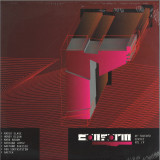
Berlin club and party-starters Sameheads return to black wax on April 10th with “ZEUG!”, a 4-track EP from various celebrated artists, who join forces in new and unheard ways for a stack of outernational and spaced-out dancefloor jams for creative dance floors worldwide and beyond.
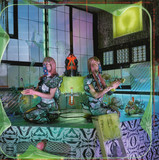
Berlin-based CROSSLUCID, AKA Sylwana Zybura and Tomas C. Toth, have delivered another stunning example of their perception-bending otherworldly viewpoint with the artwork for the release. A purely analog production, fusing clever lighting tricks, hand-made props, and a healthy dose of shaving foam and dry ice… This “Cult of the Cosmic Swamp” chimes with the weird tribal rhythms contained on the record.
First up is Mameen 3 (a side-project from Brussels selector DJ Sofa) & Romanian pioneer Rodion G.A with ‘Planet Cluj’, a suitably off-world excursion through a fun-packed disco hall in some far-off colony where layered synths are stacked, elements seeping through one another to form a mesh of groove.
Anatolian Weapons’ cosmic fireside ritual, ‘Chant 3’, heats up the A2 with vibrant and punchy percussion loops woven together with a worldwide chorus of chanters. Building continuously, the tough workout is dosed up with a bassline saturated in attitude for a high-energy finish.
Picking up on the B side are KRENG (a morphic form composed of Don’t DJ and Dane Close), who slow the pace down with a latticed beatwork combining robust dance formulas and blasting syncopation. Letting the rhythm do the legwork for the first half of the track, the pair then pour out a sludged mess of grime-infused bass over the percussive chaos.
Silvia Kastel and Wilted Woman close proceedings as SHAKEY with a dubwise workout that straddles b-side house obscurity and stoned live dub improvisation: steel drums patter at the windows of Paradise Garage as Larry Levan fights off the vampires alongside Scientist.
The release is celebrated at Sameheads on April 10th with an extremely rare live show from Rodion G. A., an appearance from INVERSIONS label owner Milo Smee, and a b2b from Don’t Dj & Dane Close. Limited to 300 pieces, this record will find a home in the stacks of DJ’s willing to step outside genre and convention.
“This sound / synapse transposition is as haunting as it is beautiful—surely Grouper’s best.”—Tiny Mix Tapes
“If past Grouper releases have inhabited abyssal trenches and damp backwoods, here Harris takes us journeying across constellations and stars. Two of the most beguiling albums of the year, exquisitely realized and singularly evocative.” —The Quietus
“This music feels both spacey and expansive and also oddly intimate and grounded, the work of someone who has mastered her tools and knows how to get the most out of them.”—Pitchfork “Harris nds a way to dive deeper in simple and unassuming ways.”—NPR
It’s been a year since I released originals and since then I also gave my studio a big make-over. I have gone back to being more analog/hardware based in my production methods again and I guess in some ways you can hear that in this release. For “Damage Control” i chose 3 tracks I felt had different vibes to them. Psychosis carries a familiar Noir Music sound and if you know my
“Eruption” track I think you can hear similarities in the production and overall vibe. Damage Control is a more groovy track build around modular synths and a filthy bass that hits right in the gut.
Autophagy is a fast-paced monster with percussive intensity and FM synthesis filtering in and out through the entire journey.
The tracks have off-course been roadtested and believe me even the smaller details changed a lot over time to fit my personal taste 100% After a long process I am finally happy with the tracks and ready to present “Damage Control”.
From playing chaotic house parties in their home city of Oxford to becoming major festival headliners across Europe, Foals' trajectory has been remarkable. They've earned critical acclaim (NME and Q Award wins, plus Mercury Prize, Ivor Novello and BRIT Award nominations) and fan devotion (1.7 million sales of their four Gold-certified albums) in equal measure. And while the majority of contemporaries have fallen by the wayside, Foals continue to hit new peaks.
After more than a decade in the game, Foals again embrace that love for the unconventional with the bravest and most ambitious project of their career: not one, but two astonishing new albums: 'Everything Not Saved Will Be Lost'. A pair of releases, separate but related, they share a title, themes and artwork. 'Part 1' will be released on March 8th, with 'Part 2' following later in the year.
'They're two halves of the same locket,' frontman Yannis Philippakis explains. 'They can be listened to and appreciated individually, but fundamentally, they are companion pieces.
Fundamentally tethered but possessing their own personalities, the two bodies capture the most compelling, ambitious and cohesive creations they've ever produced. Eager to break the traditional pop song structure which they felt they were becoming increasingly tapered to, the 20 tracks defy expectation. There are exploratory, progressive-tinged tracks alongside atmospheric segues which make the music an experience rather than a mere collection of songs. Yet the band's renowned ability to wield relentless grooves with striking power and skyscraper hooks also reaches new heights.
The album's lead single 'Exits' is a case in point, featuring Philippakis conjuring the image of a disorienting world via a contagious vocal melody. It's a fresh anthem for Foals' formidable arsenal, but also an ominous forecast.
'There's a definite idea about the world being no longer habitable in the way that it was,' says Yannis. 'A kind of perilousness lack of predictability and a feeling of being overwhelmed by the magnitudes of the problems we face. What's the response And what's the purpose of any response that one individual can have'
'Exits' signposts what to expect thematically from both instalments of 'Everything Not Saved Will Be Lost'. The title is a warning that anything - from the tiniest fleeting moment of inspiration through to the planet's own biological diversity - can be under threat of being irrevocably erased.
It's a theme that permeates throughout the album's material, as Foal mirror the public neuroses that have been provoked by our current cultural climate. Paranoia of state surveillance Fear of environmental collapse Anxiety over Trump's next potentially cataclysmic move It's all there in these apocalyptic songs.
'Lyrically, there are resonances with what's going on in the world at the moment,' summarises Yannis. 'I just feel like, what's the utility of being a musician these days, if you can't engage with at least some of this stuff These songs are white flags, or they're SOSs, or they're cries for help... each in a different way.'
The new albums' journeys began as the 'What Went Down' era ended. Founding bassist Walter Gervers departed on amicable terms after playing the Festival Paredes de Coura in Portugal in August 2017. Foals felt that he couldn't be replaced - a decision that ushered in a period of recalibration, reorganisation and, ultimately, rejuvenation.
After taking a little time out, Foals - completed by Jimmy Smith (guitar), Jack Bevan (drums) and Edwin Congreave (keys) reconvened - with Yannis on production duties, who, together with Edwin, also covered the bass parts. They began by writing in a rehearsal space before exporting those sketches into the recording phase at 123 Studios, Peckham, with the assistance of engineer Brett Shaw. They'd repeat the cycle between the two spaces, effectively creating an ongoing feedback loop as they sought to push every new idea to the finish line.
1 x 12" black vinyl 180gsm
- label 4/c
- discobag on reverse board with matt varnish
- gatefold on reverse board with matt varnish
- shrinkwrap
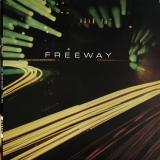
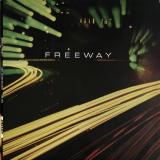
After more than 30 years Early Sounds and Halfway Ritmo are finally releasing unpublished recordings (1982-1989) from former Tangerine Dream and Iggy Pop's drummer Klaus Krüger.
Advanced Dance combines a sweeping mix of Krüger's handcrafted acoustic drums and distinctive electronic sounds of the late Berlin-School years, creating a unique blend of advanced polyrhythms.
Krüger achieved a balance between creativity and classic drum patterns giving birth to an unconventional and avant-garde type of music that could be easily defined as a precursor of techno.
His progressive mentality led him to delve further into the tape collage technique and unique ways of triggering his drums. It was a whole new world of music - sustained by his artistic surroundings, which included collaborations as well as friendships with other influential artists such as David Bowie, Martin Kippenberger and Helmut Newton.
In the time of German division, the pulsating West Berlin became a melting pot of creativity and international encounters. Advanced Dance is the result of the blazing heat feeding the unstoppable thirst of discovery which characterized that generation, creating tunes that transform the listener's experience into one blissful moment amidst beautiful confusion.
Born in Burlington, Vermont, and conservatory-trained in the US, the cellist Tristan Honsinger moved from Montreal to Amsterdam in 1974, quickly linking with Han Bennink and Misha Mengelberg, and opening a long and fruitful musical relationship with Derek Bailey. Recorded in 1976, Duo displays a performative musical approach already characterised by the lack of inhibition which would later endear him to The Pop Group: he is knockabout, exclamatory, explosively rhythmic; burping Bach and folk melodies with spasmodic lyricism, in amongst the garrulous textures and accents of his scraping, bowing and plucking, and gibbering like a monkey; throwing out his arms and stamping the floor, grappling with his instrument like an expert clown, always on the lookout for new ways to trip himself up. You can hear Bailey revelling in the company, as he ranges between scrabbling solidarity and an askance skewering of his partner's antics, on prepared (nineteen-string) and standard electric guitars — and a Waisvisz Crackle-box, for the garbled, quizzical, cross-species natter which closes The Shadow. Throughout, the spirited interplay between laconic, analytic wit and guttural, sometimes slapstick physicality is consistently droll, often laugh-out-loud funny; vigorously alert, alive and gripping.
Eclectic, raw, diverse and deeply driving - these 4 tracks are pure hypnotic Hreno vibes. New Life! That is what has inspired and influenced this EP on many levels. New life brings new inspiration and new energy often in beautifully diverse and unpredictable ways. Everest. Positivity throughout, heights, strength, light, potential and future instantly come to mind, when listening to these songs. We are happy to present Hrenos second release on Meander as the follow up of his well received 2012 Frank Barns record. 180g vinyl release, comes with fullcover artwork illustrating traditional indigenous art from Borneo.
Cellaa Music are very happy to welcome our great friend Marc Faenger and Label Head Sven Jaeger back to the fold. This one - obviously called B2B Volume 1 features two artists, two universes, two different ways to approach the music theory to form a B2B Cellaa relationship.
Young, skilled and supremely talented, Marc Faenger, is an artist set for great things on the international scene. Marc´s - Nip' contains an infectious groove an elegant labyrinth of percussive dub textures and sinusoidal tones and fast shuffling hats. Deep, fresh and seductively satisfying, this tune was designed for the discerning dancefloor.
Sven Jaeger returns to Cellaa Music with his second release for his label. - Get The Fuck' is a track that immediately commands attention with it's rolling, rich bassline surrounded by punchy, organic drums that delivers a soothing atmosphere. The track is really powerful and works really well on all dance-floors. People love it!'
The first of the remixes comes from the in form, Reelow. His releases have been huge hits, ruling the DJ charts. Here he strips the oringinal of Marc Faenger to it's essential parts. The super dry kickdrum and percussion in combination with the deep subs together create Reelow´s own techno vision.
Next we have Dan Noel providing a soulful tech house surrogate to the original of Mr. Jaeger. His remix has a deeper twist with glittering sounds and a concrete percussive arrangement to convey a fantastic Remix.
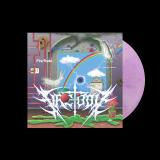
Lavender Networks is the debut release on Warp Records by Nu Age pioneer Fire-Toolz. The Maryland-born, Chicago-based artist also produces and engineers for other artists including No Joy’s latest album Bug Land (Pitchfork Best New Music). Lavender Networks features Zola Jesus, Brothertiger, Nailah Hunter, Lipsticism, Jennifer Holm and Sling Beam. Dream logic, laughter in tears and emotional truth through absurdity are explored on this cybernetic journey running at fiber optic speeds.
Lavender marble 12" vinyl
c A3. [CODENAME_SPARKLY LAGOON LAN LINE] (feat. Lipsticism)
[c] A3. [CODENAME_SPARKLY LAGOON LAN LINE] (feat. Lipsticism)
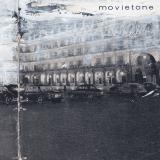
World Of Echo are proud to announce the long-awaited reissue of the self-titled debut album by Bristol’s Movietone. Originally released in 1995 by Planet Records and reissued on CD in 2003 by The Pastels’ Geographic Music imprint, this is the first time Movietone has been reissued on vinyl. An expanded double-LP edition, it includes the extra tracks from the 2003 CD (their first two singles, and an unreleased demo of “Chance Is Her Opera”), and adds three more unearthed gems: demos of “Alkaline Eye” and “She Smiled Mandarine Like”, and an early take of “Late July”, recorded in a garden by Dave Pearce (Flying Saucer Attack) in 1993.
Taken together, this is the definitive collection of music from the first phase of one of Bristol’s most remarkable groups. Movietone was the cumulation of a series of events, explorations, and discoveries, starting at secondary school – the group’s core membership of Kate Wright, Rachel Brook, Matt Elliott and Matt Jones met at Cotham School in Bristol. As for many other groups, their early years were all about experimenting, and finding ways to ‘make do’, a DIY sensibility that would inform Movietone through their decade-long lifespan. From formative rehearsals in a shed in the garden of Brook’s family home, to recording early material to four-track in Redland Library, and on into the Whitehouse and Mr Grin’s studio sessions for their debut album, Movietone’s music fell together in a creatively unpredictable, yet conceptually rigorous manner.
By the time they released Movietone, they’d found a home with Bristol’s Planet, run by author Richard King and James Webster, who had both released their first two singles, “She Smiled Mandarine Like” and “Mono Valley”. There was other music happening around them in Bristol, too, from the Jones brothers’ avant-rock outfit Crescent (who were Movietone’s closest conspirators), through Elliott’s jungle/electronica project Third Eye Foundation, and Brook and Elliott’s membership of Flying Saucer Attack. A closely knit community, Movietone are the centre of this nestling architecture of groups. The vision in the music, mostly, belongs to Wright, but Movietone ran in democratic creative consort. Listening back to Movietone, you can hear this democracy in action through the wildness of the music, which is balanced by the poetics of Wright’s lyrics and melodies.
Full of half-captured memories and entangled abstractions, there’s an elliptical, ruminative quality to much of the writing here that shows the deep influence of the Beat Generation writers, along with a twilight environment captured in the songs that’s pure third-album Velvets, Galaxie 500, early Tindersticks, Codeine. Unpredictable interventions – the crashing glass in “Mono Valley”, the sudden explosions of “Orange Zero” point towards the noise blowouts of My Bloody Valentine, the unpredictability of Sonic Youth; Wright’s understated vocal cadence suggest a deep, embodied understanding of John Cage’s Indeterminacy.
Movietone would go on to make 3 fantastic albums for Domino: Night & Day (1997), The Blossom Filled Streets (2000) and The Sand & The Stars (2003) and their Peel Sessions were released earlier this year on Textile. Still held in high regard by artists like Steven R. Smith, and The Pastels, whose Stephen McRobbie once described them as “one of the great unknown English groups,” it’s an absolute thrill to listen to Movietone anew – still inspired, still seductive, still magic, still mysterious.
Year Of The Spider is the third studio album by American rock band Cold, released on May 13, 2003. It became the band’s most commercially successful record, debuting at number three on the Billboard album charts and selling over 101,000 copies in its first week. The album also marks the final appearance of guitarists Terry Balsamo and Kelly Hayes. One year prior to the album’s release, the mellow ballad “Gone Away” appeared on the WWF Tough Enough 2 soundtrack.
Produced by Howard Benson, Year Of The Spider presents a noticeably more commercial sound than its darker predecessor, 13 Ways To Bleed On Stage. The album incorporates a wide range of guitar styles, as well as violin, viola, cello, digital effects, and several powerful ballads. While Cold continues to explore themes such as drug abuse and troubled relationships, the album also expands into new territory. “Cure My Tragedy” reflects Scooter Ward’s emotional struggle during his sister’s battle with cancer, while “The Day Seattle Died” addresses the deaths of grunge icons Kurt Cobain and Layne Staley. According to Ward, “Kill the Music Industry” is not aimed at any specific label or individual, but comments on the broader state of the music business.
Year Of The Spider is available as double vinyl album, features the hidden bonus track “Gone Away” and contains an insert with lyrics.
It’s safe to say that Rochester, NY rapper of Italian descent Pounds’ work ethic is unmatched: he’s constantly on the grind, loud in the lab but quiet on the outside, he wastes no time unlike many other big mouthed rappers these days and then, all of a sudden, he drops a bomb on you. To kick off 2018 in the best of ways, he released a 4-tracks collaboration EP with West Coast producer , 1/2 of Gangrene, Oh No entitled “Borgata”. The record opens up with “Last Supper” and with a clear statement of intent: “Run for your life, my cousin brought a drum and a knife, break my hand on your face I need a bucket of ice” just so you understand where this project is headed since the first song. His style is always direct, without any frills, with his trademark voice spitting gritty crime-themed bars that revolve around drug and the street life that raised him. A “borgata” in Italy is a “hood”, and Pounds, being the definition of an artist that talks the talk and walks the walk, couldn’t pick a better title for this project.
Limited edition vinyl release of 500 hand-numbered copies with etched B-side, black vinyl.
Edge Conditions is a fresh look at the beat-forward electronic music of Jeremiah Chiu. In Electric Time, his 2023 first-thought-best-thought album recorded at theVintage Synth Museum in LA, offered a glimpse a solo process and sound, fast becoming a fan favorite. In many ways this new work is a total reset. Following two ambient-leaning duo albums with Marta Sofia Honer and a pair of improvisatory trance-jazz LPs with LA quintet SML, Edge Conditions settles Chiu into a world of layered, alternately dance-able or chillout-able, rhythm excursions a la classic Four Tet or Aphex Twin.
Edge Conditions is a fresh look at the beat-forward electronic music of Jeremiah Chiu. In Electric Time, his 2023 first-thought-best-thought album recorded at theVintage Synth Museum in LA, offered a glimpse a solo process and sound, fast becoming a fan favorite. In many ways this new work is a total reset. Following two ambient-leaning duo albums with Marta Sofia Honer and a pair of improvisatory trance-jazz LPs with LA quintet SML, Edge Conditions settles Chiu into a world of layered, alternately dance-able or chillout-able, rhythm excursions a la classic Four Tet or Aphex Twin.
Long overdue reissue of classic Scottish ambient techno banger ‘Mindweeds’, originally released in 1993 on the Pure-affiliated T&B Vinyl label run by Keith McIvor (JD Twitch) and Andy Watson (Brainstorm). With a Discogs demand ratio at about 300 have : 2000 want, and used prices peaking at over £100, now seems to be the right time for a re-release.
State of Flux were Roger Elliott and Dave Clark (aka Sparky, LUMA, Truffle Club and main man behind Kübler-Ross). They first met at Glasgow’s Strathclyde University in 1990, bonding over a shared love of weasel racing, German sausages and “man-duos” like The KLF and The Shamen. Dave was fully pubescent and already had a synth and drum machine, while Roger – a late developer – bought “another cheap synth, a Commodore Amiga for sequencing and a tiny mixer with no EQ”. For two long years they concentrated hard on “churning out unlistenable pish”, admittedly clueless about what they were trying to do.
Then – out of nowhere in the summer of 1992 – a flatmate’s Jello Biafra spoken word CD (‘I Blow Minds For A Living’) provided the inspiration to unlock the spark of dynamite that set the raving world on fire. Sampled using a Walkman* cassette** tape*** on playback (a decision the pair soon came to regret every time the track was subsequently performed live), Jello’s pilfered rant would soon become the crucial glue that held together the burgeoning kaleidoscopic helicopter spliff that is ‘Mindweeds’, loaded as it was – and indeed still is – with a veritably seething morass of cheeky electronic blims, nasal filter cheese and gay Caledonian spunk.
* a vintage portable listening device roughly the size of 4 iPhones stacked on top of one another and weighing the same as a small tub of yoghurt
** a plastic cartridge enclosing 2 miniature spools of magnetically coated, polyester-type plastic film (magnetic tape), notoriously convenient for pirating copyright material and secreting in one’s underpants for transporting between illicit market trader stalls
*** thin ribbon coated with ferromagnetic particles, usually ferric oxide but also chromium dioxide, "pseudochrome" ferricobalt or iron-cobalt-nickel “metal” formulations – with the latter types sounding marginally less crap
Playing demos of the track to friends, one thing led to another and a copy arrived with Twitch. Meeting the legends behind Pure in late 1992, a release was scheduled for summer 1993… but not before a promotional live gig in February of that year, supporting their heroes The Black Dog. Confessing that they “didn’t have a clue how to play live”, the duo played it safe, “went to a studio near Edinburgh airport to record the ‘live’ show” and then “mimed it off a DAT” at the gig, “standing in front of unplugged synths”. Soon after this, they recorded the full EP at Finitribe’s ‘Finiflex’ studio in Leith, Edinburgh and the record came out as planned that summer – the same week as Underworld’s ‘Rez’.
The record received high praise, appeared in many big-name DJ charts, sold out very quickly and was repressed within a few weeks, selling several thousand copies by the end of 1993 – no mean feat in an era when people had to use landline phones ****, faxes ***** or good old-fashioned carrier pigeons ****** to ascertain literally anything about the outside world, what was cool, where to buy the cool shit, or how to meet people and have fun.
**** a fixed communication device that connects to a telephone network using physical wires, cables, or a stationary base unit tied to a specific geographic address, using a handset incorporating a mouthpiece featuring a small metal disk and carbon grains, converting sound pressure from the human voice into a flow of electrical waves caused by these grains being squeezed together, before the variable signal is transmitted down DC voltage-powered copper wire and rerouted by a central exchange to arrive at the earpiece magnet of the target receiver’s handset, moving a small speaker cone accordingly so the message is intelligible WITHOUT THE PERSON SPEAKING ACTUALLY BEING PRESENT
***** as above, but for the d/Deaf
****** flying vermin riddled with diseases and capable of surviving nuclear armageddon
Soon Roger and Dave became sick of the Walkman being the only instrument played live in their set: with their new found fame and riches, they invested in a case for their Amiga to transport it around Scotland, while also putting in the hours on how to pretend to play live better with a sequencer and synths that were FINALLY plugged in. Following the release of ‘The Mercury EP' in April 1994, they embarked on a full tour of the UK and even managed to part ways and end the band by June that year.
This reissue includes the two original mixes of ‘Mindweeds’ recorded at Finiflex (‘Original’ and engineer ‘Fred's Fancy’), the original cassette demo (mastered directly from the actual recording sent to Twitch & Brainstorm in 1992) and a live version recorded at the Birmingham club night 'Oscillate' in April 1994.
Stone Age Is Now: Poems from Lithic is the new album by musician and poet Caleb Nichols - both a companion piece to his book Lithic: A Hyperballad (Harbor Editions 2026) and a follow-up to his album Stone Age Is Back (Royal Oakie 2025). Across twelve tracks Nichols interpolates poems from Lithic: A Hyperballad with tracks from Stone Age Is Back, bringing new depth to his indie-rock and alt-folk compositions. A meditation on grief, but not in the ways you’d expect, the album explores what it means to be living and dying right now, in this moment of extraordinary change.
Inspired by the raw immediacy of Neil Young, early REM, and Califone, Nichols adhered to a first-take best-take rule and tracked the album in just five days. Produced by Nichols, the album was engineered by Jay Pellicci (Deerhoof, Om, Sleater-Kinney) at Brother’s (Chinese) Recording in Oakland, CA, with Nichols later recording the spoken word overdubs after hours at an empty bar in San Luis Obispo, CA. Pellicci later mixed the tracks and David Glasebrook (Patti Smith, Peter Case, Sugar Candy Mountain) mastered the album at The Garden Shed in Oakland, CA.
Featuring even more experimentation than Stone Age Is Back, the album is peppered with field recordings captured by Nichols from many locations, including Kew Gardens, London; Llan Tysilio, Yns Mon; Treborth, Gwynedd; a secret beach in Bangor; Kelvingrove Park, Glasgow; and Broad Street in San Luis Obispo, CA. In addition to contributions from band members John Metz and Aaron Kroeger, the album features saxophone by Lorenzo Coretese , and Rhys Trimble provides the Welsh translation and performance you hear on “Orme Dream At The Car Park”. Additionally, Nichols took some liberties adapting the poems from the book to the recordings. “You’ll notice that there are differences between the printed poems and the poems recorded here. That is because a poem is never finished and can exist in multiple instances at the same time, like in quantum mechanics. The cat in Schrodinger’s box is both alive and dead; at the bottom of the cliff, our eyes are both: closed and open” says Nichols.
Spring 2026 saw The Proclaimers recording their new album, You May Offend. It is brothers Craig and Charlie Reid’s first album since 2022’s hugely acclaimed Denture’s Out (“Proves you don't need to be a young pretender to land hit after palpable hit,” – MOJO magazine). Their 13th studio album’s 12 tracks – punchy and punky, rousing and carousing, tender and tough – were recorded at Monmouth’s legendary Rockfield Studios with producer Dave Eringa, their crack live band – Steven Christie, Garry John Kane, Zac Ware and Clive Jenner – and frequent guest guitarist, Manic Street Preachers’ James Dean Bradfield. The result is an album, as ever, concise as well as incisive, and about looking forward. Pushing on and digging into the issues and feelings that matter to them here, now and tomorrow, not yesterday, as with the title track, and first single, a lament for the state of free speech, with Charlie approving of the fact that the title can be taken two ways: “As in: ‘Look, careful what you do, you may offend someone.’ Or: ‘OK children, you may now offend.’ Is it an instruction or an invitation? Or a warning?” A powerful accompanying video for the You May Offend single is being created by Emmy & BAFTA award winners, director Douglas Mackinnon in partnership with Peter Anderson Animation. “My favourite band of all time. They write the most spectacular songs, big hearted, uncynical passionate songs.'” - David Tennant “There is a whole other world of music behind that song that I’ve just been discovering, and they’re a wonderful, wonderful band. Now we live in the age of coolness that doesn’t mean anything, it's just quality and soul. The Proclaimers make more sense than ever.” – Chris Martin after Coldplay performed Sunshine on Leith at BBC’s The Piano Room
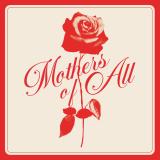
Mothers of All is Mark Gomes' second album as Blue Chemise for Students of Decay, following 2018’s acclaimed Daughters of Time. Though built from very different materials, it shares its predecessor's economy, sense of proportion, and fascination with the ways domestic life can open onto larger and less easily defined realms. Where Daughters of Time evoked tender, if alien, nursery songs, Mothers of All takes the form of spectral salon music heard at a temporal and geographic remove.
These pieces feel fundamentally receptive, with Gomes allowing his chosen fragments to retain their own histories - both personal and aesthetic - while revealing unexpected tonal relationships through their idiosyncratic arrangement. The resulting music is at once deeply personal and strangely unmoored, a space where the intimate and the distant occupy the same plane.
What lingers about this project as a whole is the paradox that the most private experiences can also be the least singular: that family, memory, and devotion become most legible at the point where they cease belonging to any one life.
1982 4-Piece Demo' is the first official, fully-licensed and unreleased material to be released under the name Strawberry Switchblade in 30 years. Since disbanding amid major record label acrimony and personal differences in 1986, the already-cult band have since grown in stature and legend. Trailblazers in many ways, the band's mythology justifiably centers around the charismatic duo of Jill Bryson and Rose McDowall, but that isn't a complete picture. Bryson and McDowall's growing friendship, having met some years earlier on the punk scene, became a creative partnership: Bryson's art school background and McDowall's history in avant-punk group The Poets meant Strawberry Switchblade was a band pitted against many established norms. The band's very first incarnation, an all-female 4 piece, recorded one demo at Glasgow's Hellfire Club and played a handful of gigs. Friends Janice Goodlett and Carole McGowan completed the line up on bass and drums respectively. Strawberry Switchblade would eventually pair down to a duo and go on to chart success but it's in these raw, passionate recordings that the songwriting and vocal elements were being hammered out and explored in real time.
Spanish Song' is a previously unreleased song. With Rose McDowall's instantly recognizable lead vocal dovetailing with Bryson's harmonies and lead guitar, it's the first glimpse at an alternative history of Strawberry Switchblade. This incarnation could easily have been featured on a Nuggets compilation or a precursor to the indie-pop revolution that would take over British bedrooms a couple of years later. "Trees & Flowers" is instantly recognizable, a bona fide classic that would earn the band its first record deal. Here it's given a more forceful rhythm section: Goodlett and McGowan's playing is in fact accomplished and doesn't hint at the bands' youth. "Go Away" would also surface later on the band's debut LP but here it is a moody-garage stomper with a psychedelic, haunting refrain. These 3 songs point to a tantalizing future of the band that was never realized.
Remastered and restored by Sean Pennycook from the original cassette, with artwork based on a single photographic contact sheet (the only visual evidence of the band in this form) and with a booklet of photographs and new text. Pa
out of Stock
Last delivered 12 days ago available to reorder, subject to availability
Five years on from its first outing, Standards & Practices returns with a second volume of Out of Practice that assembles a roster of exclusive, unreleased material that moves between broken techno, electro, dub techno and bass-heavy experimentation. The strength lies in its range: in this third 12" instalment, Patrick Russell's opener brings meditative dub pressure, Ghost Warrior's 'Second Wave' is a sparse, suspensory underwater world, Pessimist layers deft percussion into fractured rhythm science and Blood Music's 'Figures For Laser' has a cascade of 8-bit melodies adding futurism to jazzy, off-grid drums in what is an eerie and engaging closer. A snapshot of a label finding new ways to bend electronic music's tried and tested boundaries.
out of Stock
Last delivered 14 days ago available to reorder, subject to availability
Jason Dungan (aka Blue Lake) and Johan Carøe find beauty in the rhythms
and repetitions of domestic life for collaborative album, 'Routine' - out September 25
Copenhagen-based multi-instrumentalists Jason Dungan and Johan Carøe didn't set out to make an album. Instead, as the title 'Routine' suggests, they found their way there through a process of habitual making and listening, developing an intuitive musical language to reflect the dreamlike meanderings and creative play of life's quiet moments. 'Routine' blends pop orientated sounds, Avant-garde minimalism, folk and new age with the emotive depth of film-score.
Their meeting was not entirely coincidental. Previously in bands such as Squares and Triangles, Jason Dungan has since recorded multiple albums under the moniker Blue Lake, including the lauded 'Sun Arcs', pursuing his passion for self-built percussion and multi-string instruments. Johan Carøe meanwhile is a composer whose film soundtrack work has seen him collaborate with Angelo Badalamenti, Arp, and Sofie Birch, at whose Andersabo residency (curated by Dungan) the pair first met, resulting in the highly praised album 'Repair Techniques' written by Birch and Carøe.
'Routine' emerged organically over many years against the backdrop of great personal change. As Carøe said goodbye to his father and welcomed his first child, the pair sent each other fragments of melodies and patterns, working up responses when time allowed to assemble a sonic palette that combined acoustic instrumentation of zither, clarinet, cello, saxophone (among others) with the textures of tape, drum machine and Yamaha DX7 synth. Inspired by the vulnerability and DIY ethos of Arthur Russell's home recordings, the vision of labels like Disques de Crepescule, and the art pop, experimentation inherent to late '70s and early '80s recordings from NYC and Japan alike, Dungan and Carøe conjured new forms for their folk, leftfield pop and avant garde influences from the low-lit living rooms of Copenhagen and rural Sweden. "I'm very interested in the ways in which music and art emerge from our wider experiences as people, workers, parents and in the daydreaming activity of making music," Dungan explains of a process which allowed the duo's individual styles to drift apart and merge together seamlessly. "I think the process was definitely capturing moments in time, but over a long time," Carøe adds. "It was a bit like improvisation, but with time stretched."
The music floats with grace and humility, remaining sophisticated yet acutely introverted.
Whether on 'Clouds', where soft layers of zither and clarinet are moved along by a featherlight bass riff and the hypnotic clip-clop of the primitive groovebox, or the gentle grandeur of cello rising and falling through 'Routine 1', the album reveals itself over 10 instrumental tracks, evoking the ineffable calm that descends when the light changes and the world turns inwards. The act of time passing became a key creative ingredient to the evolution of the album, enriched with the exciting challenge to transform their passing rounds of home recordings via a slow release musical dialogue. Jason found creative moments in the twilight hours to lay down zither, melodica, acoustic guitar to name but few, while Johan utilising "line-in and headphones" would manipulate, stretch and pitch Jason's melodic pathways during newly born naptimes.
Carøe rhythmically plucks and slides the stringed cello instrument, leaving palpable foundations on 'Hymn' and 'Chords', in a treated, stylistic approach akin to Mabe Fratti, while 'Silence' draws to a close with a gospel touch. Dungan's harp-motion zither flourishes reveal more classical connotations on 'Reunion' with inspiration of Bedroom Community's Nico Muhly as organs rise with Moogs, culminating with a climatic choral outro from friend, mezzo-soprano Anna Caroline Olesen.
'Routine' then is their first collaboration, an album of deep and sincere reflection with inviting overtones that gesture with unrushed authenticity. A document of a new-found friendship that opens a window into the most personal of spaces, where the daily practices of music and life exist side-by-side to wondrous effect.
Boom Boom by Belgian photographer Jente Waerzeggers offers a unique glimpse into his work at night over recent years. In this book, Waerzeggers explores his deep fascination with self-expression in all its possible forms. Clothing, make-up, tattoos, piercings, hairstyles and accessories all reveal something about the individual. Presented as a series, the images reflect contemporary nightlife culture.
As an integral part of the nightclub’s scenography, the dancer becomes a body of symbols. Waerzeggers’ photographs are filled with bootlegged corporate logos, wordplay, subversion and references to pop culture.
Waerzeggers builds a relationship with his subjects that is entirely mutual. He documents while participating, and his subjects want to be seen. The night is dark and not easily captured, but Boom Boom succeeds remarkably well in doing so.
Jente Waerzeggers (•1999) is a Belgian photographer and musician. He is part of Not So Difficult Magazine, the label Kontakt Group, the band Lieve Jongens, and is the founder of (Y)-Publishing.
From 2018 until 2026 Jente Waerzeggers worked as a nightlife photographer; this book marks the end of that endeavour. Starting out at friends’ parties and ‘nacht’ in Stelplaats, Leuven, he has gone one to photograph for venues and collectives in Brussels, in Belgium and abroad such as V23, Slagwerk, Horst, C12, Listen Festival, Celebration of Life, and Dekmantel.
Waerzeggers is interested in the ways people consciously and unconsciously present themselves in society. What do their houses look like, their trash, their advertisements, their selfies? By sifting through his archive of photos and screenshots, he looks for through lines that paint a bigger picture.
280 pages
150x210mm
Soft cover with remarkable textile texture
A side is "Drumfetish" a ZMK 01 hit combo... The music is exactly at the inbetween Hardtek and Hardcore... And also it's a super cut-off/bring-it-in crossfader tune for actives deejays ! Eenjoy the different ways to spin it... Or with Drum & Bass or with Hardcore !
The flip is "Refuse To Believe", it brings a very mystical or nostalgic, or new wave feeling, using flangers and Transcore tricks... I always felt it was an node to the IST productions.
At a time Stefan ZMK was making lots of music for our scene, and ZMK was one of my favorite crew on vinyl. I am really proud he accepted to make a vinyl with us. Nowadays he is one of my favorite mastering studio...
So I asked him if he could re-master his own music ?
Here's the result : one track per side, playing 45 RPM (wich is cool because at 33 it's a bloody weapon too).
We all definitely hope you'll enjoy this new mastering & cut as we do !
Mastering : Stefan ZMK
Cut by : Simon Davey
Visuel : Vstee FDB
Pressing : Record Industry
Distro : Toolbox Records
out of Stock
Last delivered 17 days ago available to reorder, subject to availability
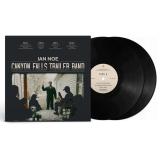
Canyon Falls Trailer Band is considered a bookend to this trilogy of albums. It is an expansive double album, centered around Noe's more poignant and compelling assessment of his home and the people from there, yet broadly all people with stories like their own.
Ancient spirits come alive as SKÁLD extend an invitation into times long gone but not forgotten. Ørlǫg, coming September 25, 2026, is their first album via Napalm Records, and it is our destiny. As the Norns weave our future, this album is a fascinating passageway into our pristine origins and the consequences of our choices. Ten new songs as stepping stones, Ørlǫg is an offering to listen, to dwell, to reflect—and to find something within yourself previously unknown. SKÁLD don’t just play music, they awaken ancient ways.
Shaped in the shadows and sounds of the legendary Topanga Canyon, California. The debut album from Biita Houdei is buoyed by a magic that feels wildly and beautifully untamed; wild-hearted sentiments that are shaped by the world around it, fascinated by the enchantment of it all, and delivered via a collective (harmony layered) voice that understands the complex nature of what it means to be alive in the here and now.
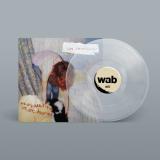
Produced by Haley Heynderickx, 'This Bed Was Made For Me' is a striking collection of stirring, signature folk songs animated by subtle instrumentation and orchestral flourishes. It feels lived in: vocals weave together in a beautiful harmonic dance, seasons shift, sunshine appears and bold psychedelic colours warm the horizon.
In the early stages of making her debut album, Biita Houdei knew two things: that she wanted the recordings to feel distinctly and palpably warm, and that she would sew a unique patch for every song on the album. The first of those things is subjective, though brightness pours in from all corners of This Bed Was Made For Me. The second became a laborious task she undertook throughout the process, the completion of which is testament to the slow process of it all, to the physical commitment and patience required to make a full work of art.
The patches she crafted during the making of This Bed Was Made For Me became a full quilt, one that now adorns the album’s front cover. Beneath it sits a striking collection of Houdei’s stirring, signature folk songs, brought into fruition with the help of fellow songwriter Haley Heynderickx, in her first lead production role, and the album’s producer/engineer Sahil Ansari. It’s also the first release Biita (pronounced “bee-tah”) is releasing under her newly-taken name, one that was gifted to her by her auntie and means "unique" in the Farsi language. “I proudly take this name,” Biita says of the change. “It makes me feel that much closer to my Persian heritage.”
Recorded across ten back-to-back and full days, the album touches on themes of love and heritage, of taking chances, the preciousness of time and the impact we all have on the world around us. A number of the songs were written in Topanga, California, while Biita settled into a new home as wild fires raged, and as she adjusted to a life which no longer held distinct seasonal changes, far from the Ozark Mountain home she felt so attached to. Such themes reveal themselves in a variety of ways across the album’s fourteen songs, that key sense of warmth retained in the bones of the album whether they are stepping into darkness or seeking out light.
The album feels lived in and alive; dust swirls, seasons shift, sunshine appears and is held. Biita calls it ‘psychedelic’ and there is indeed a sense of that in the world building, in the way the bold colours are always shifting. Formed of fourteen songs, and filling nearly forty-five minutes, This Bed Was Made For Me not only builds a whole world for listeners to inhabit but also implores you to stay a while. This was deliberate, indeed it’s Biita’s wish that listeners give the album dedicated time; to learn its shape, to explore it fully, away from the instant grab of playlists and skewed algorithms.
“Many of my favourite albums didn’t reveal themselves instantly to me,” Biita, now based in the Catskill Mountains of New York, explains. “Some did, of course, but I had to work to understand the full scope of the piece as a whole. I encourage people to dive deeper into everything that they choose to consume. It is not my intention to sound pretentious, but instead, I am trying harder to explain the gratitude I have for being able to craft every part of this album— using my hands, my brain, my voice, my visions. To me, it is an all encompassing work of art,” she continues. “Making the quilt was laborious. Taking the cover photo was laborious. No shortcuts, but rather a manual and tangible approach. I am thankful for the time it took.”
I’dgained some notoriety as a music producer and DJ but I hit a horrible case of writers block around 2018.
The problem I was finding was that I was trying to shoe horn every smart arsed clever dick musical reference I had into the music I was making, but the function of dance music is to make people dance, not to show people who broad your musical references are, so I was making pretty shitty music that landed in the middle and didn’t achieve either aim.
To tackle this I ended up committing to just trying to make the most expressive and wanky experimental stuff I could. I was immersed in club culture at the time so the whole enterprise started as a joke, hence the name “Bed Wetter”. However when I fully submitted to just naked exploration the really unexpected thing that happened was that I found myself unavoidably having to deal with a lot of my own bullshit. That bullshit turned into the “Billy Mill is Dead” album, which was essentially the sound of me excavating my own life and looking at how I felt about where I was from, where I was headed, my family, my history, my region and all of the things i have conflicting feelings about.
It was partially catharsis and also a bit of deprogramming around being able to call myself an artist after being raised to believe that wasn’t an option for me.
I self released Billy Mill is Dead in the months before the pandemic and it found it’s fair share of love in the places I hoped would connect with it, and just the right amount of being ignored by people who I’m pleased didn’t feel it. This all lead to me being emboldened enough to apply for an artist in residence position at a big regional opera house months later in the middle of lockdown.
My feeling was that if my DJ career was potentially over for the remainder of my lifetime then there was no harm in exploring this alternative method of expression to see where it could take me.
I submitted a ridiculously ambitious plan for what I would like to do as a project, and to my absolute shock I was selected for the position.
I was 40 years old and from a scarcity background so I had a potentially unique response to that kind of validation for the first time and what followed next was a process of me just coming back with bigger and more ridiculous ideas just to find out at whatstage they’d tell me to stop.
The thing is, nobody did. I got as far as suggesting writing a full symphony to be performed by an orchestra before my own nerve gave out and I decided that was probably as far as I should push things.
The problem with people giving you permission to do things is that you then need to go out and figure out how to do those things.
The biggest issue for me, beyond raising the money to pay for everything, was how does a person actually write a symphony?
I was introduced to Fiona Brice, a multi instrumentalist and orchestral arranger. She’s also a recording artist who releases on Bella Union. On top of that she’s a violinist who used to be part of the band Placebo and who used to appear regularly playing for other bands on things like Top of the Pops.
Not only was Fiona uniquely placed to not look down on the strange provenance of someone from an Acid House background wanting to write a symphony, but more to the point we really hit it off from day one.
Fiona coached me in the essentials of writing for an Orchestra, and then I went off and wrote the 8 movements.
I’d love to say I laboured for years over this bit, but it took about 2 weeks in total. I’d also love to say what I wrote was a complete symphony, but the version of this which is solely me feels like looking at something without your glasses on. The shape,feel and borders were all there, but the definition was absent. Fiona taught me the broad language of a symphony, but without her it would have lacked all intonation, nuance and detail. Where I had shaped ideas with a hammer, she brought out my meaning with precision using a scalpel.
I think the prodigiously quick turnaround for the music is as much proof of how conceptually and musically aligned Fiona and I are. I know we’re both incredibly proud of what we’ve created.
It took nearly 2 more years to stage the debut performance in what was potentially the most traumatic period of my life which saw me embroiled in an international crisis with my own family and the death of my father, all with the backdrop of COVID.
The work itself is inspired by the working class experience, but it’s also a comment on how we get to decide what we are and how we’re defined, and we get to choose what we do to prove these things.
The original recording was contractually impossible to ever share again, so we re-recorded it in a working men’s club with jobbing (albeit world class) players. In many ways it’s a record that feels like it shouldn’t exist, which is why we’re all so happy that it does.
Inspired by a now-demolished artists' collective on the outskirts of Copenhagen, 'The House' is the debut album of Belgian-Dutch singer-songwriter Elis Floreen. Written during her years in the Danish capital, the album grew out of a place filled with decades of forgotten objects, artworks and stories. A temporary refuge for artists, dreamers and people caught between chapters of their lives.
As residents came and went, the house became a world of its own, shaped by shared meals, late-night conversations, evolving traditions and the countless stories left behind by those who passed through. When the building was eventually demolished, Floreen found herself holding on to its spirit through song. The result is an album that explores belonging, memory and the strange ways people become part of one another's lives.
Produced by Jo Francken and Pieterjan Maertens, known from their work with Tamino, 'The House' blends intimate folk, adventurous pop and richly layered arrangements into a musical world that feels both playful and deeply moving. Drawing on the storytelling spirit of Paul Simon, Kate Bush and Aldous Harding, Elis Floreen transforms everyday moments into something timeless, introducing a distinctive new voice with a debut album full of warmth, imagination and heart.
"The 1969 self-titled album by Koko Taylor cemented her place as Chicago’s undisputed Queen of the Blues. Scouted by Chess Records house bassist and producer Willie Dixon at Chicago’s legendary Sylvio’s Lounge, Dixon provided his new protégé with “Wang Dang Doodle,” a song that would sell more than a million copies and become her signature tune. Drawing heavily from her recent run of hit 45s, Koko Taylorfeatures, in addition to “Wang Dang Doodle,” Dixon-penned classics including “Twenty-Nine Ways (To My Baby's Door)” and “Yes, It’s Good for You,” alongside Taylor’s own “Nitty Gritty,” highlighted by Johnny Shines’ poignant slide guitar. Koko Taylor remains a cornerstone of Chicago electric blues.
Bring home the sound of America’s greatest blues label in high fidelity with the Chess Records Acoustic Sounds Series. These audiophile reissues of classic albums and compilations from the Chess discography are remastered from the original analog tapes and pressed on 180-gram vinyl at Quality Record Pressings (QRP). Each disc is packaged in tip-on gatefold sleeves printed on high-grade board."
Bass Persuades - Black Vinyl Bass Persuades, the 10th studio album by Miley, on black vinyl. The gatefold jacket includes a single LP featuring the full 10-track album, along with a 24x36 poster.
Tapper Zuki's debut album 'Man Ah Warrior' was originally released in 1973.It's classic Dee Jay style has been copied by many but bettered by few. An album that more than most shows that raw talent with little resources can still be a great, great thing.
Tapper Zukie (b.1956,David Sinclair , Kingston, Jamaica) was raised in the rough and tough West Kingston area of Jamaica between the districts of Trench Town and Greenwich Farm.
Living pretty much on the streets from an early age the youth including the young Tapper had no choice but to fall into the hands of the political parties that controlled the various ghetto areas of the town.
Fear of landing in even more trouble, a plan was devised by Tapper's Mother ,Brother ,Reggae producer 'Blackbeard' and family friend Bunny 'Striker' Lee .The plan was to send the wayward Tapper to England to cool his ways.
A UK tour with the number 1 Reggae Dee Jay U-Roy was already arranged on his arrival, Bunny Lee got the young Tapper to toast over a Slim Smith rhythm, the London crowd loved it
He also caught the eye of producer Larry Lawrence who took Tapper on and cut his first single 'Jump and Twist'
Nine further tracks were recorded for producer Clement Bushey that would result in this album 'man ah Warrior.
We hope this introduction to Tapper Zukie's music inspires you to look further into his catalogue of great music.
An artist ahead of his time, whose music has influenced many........
as Patti Smith stated 'Music of the Most High'............
There is an important difference between "mature" club vibes (leather porkpie hats) and "adult" club vibes (a post-ego-death experience of the world through the eyes of an Eames chair). Extrawelt's Jamborghini EP exemplifies the latter in ways that extend beyond sophisticated wordplay*. Well beyond.
Sophisticated electro-techno hybrids occupy an incredibly dangerous space. One false move and you corner listeners into an unsolicited conversation about "gain staging." The four tracks on the vinyl EP thread the needle in thrilling fashion, and then use that needle to stab at the sweet spot between sentient cell tower admin software vibes and the kind of architecture hot people like.
And with the digital exclusives, we've once again saved you from the depths of "bonus beats" hell by supplying three tracks that are as good as anything that has ever been pressed to vinyl. If your knee-jerk reaction is to doubt this, we would simply point out you haven't even heard them yet, and here you are talking shit. Go push your hateful agenda somewhere else.
Extrawelt are fast becoming a Turbo Recordings staple, and don't think the globalist EDM cabal hasn't taken notice. Jamborghini has already received heavy DJ support from Jumpin' Josh Junior, Monoburglar, Now or Never, Tiga, Never Say Never, Rumpled Glory, Moment of Truth, and the Hamburg Chamber of Commerce.
*Our best guess is that the title is meant to evoke a Lamborghini you can have a musical "jam session" in, and not the striking metallic purple Diablo SE30 driven by Jamiroquai frontman Jay Kay in the 1996 video for "Cosmic Girl."
out of Stock
Last delivered 27 days ago available to reorder, subject to availability
So-Cal's Movements remain on a steady upward trajectory, their fourth album Happier Now builds on the tension-and-release sound they've perfected on their previous releases Once again produced by Grammy- winner Will Yip , Happier Now holds fast to Movements' dissonant grooves, while incorporating melodic flourishes in the mix as heard in "Dissolve Me" and the moody "Back in My Ways." With over 600M total global streams, Movements to remain faithful to the distinct sound their fans love. Available on CD and transparent violet vinyl editions.
This is a concept record that reflects on events that have had a calculable effect on a generation:
‘’By 83 and 84, it felt that nuclear war was going to happen. Not could happen but was going to.’’
Stephen Brotherstone
"What would you do in the event of a Nuclear war?"
I remember having discussions about what we would do when we heard the four minute warning siren. We would raid the sweet shop. I was 8 or 9 years old. The absurdity of this vivid memory encapsulates the concept of the record. It would take at least four minutes to get to the shop!
The record starts with an early memory of circling a church on a Raleigh Budgie (the smaller lesser known iconic Chopper bicycle) in 1981 and ends with staring up at a clear sky on Oldham Lows in 1990.
The record identifies and plays with the effects of an underlying fear of oblivion on a generation of children, but also society as a whole: The pieces take in media and government propaganda. Machinery (nuclear submarines) and buildings (nuclear bunkers) but also everyday activities of the civilian population, activities such as shopping, clubbing and staring at the sky. Thematically, the record is made up of personal memories mixed with historical events.
Instruments are mainly from 1980s. DX7 and 808 feature predominantly. The pieces feature numerous melodic motifs that develop and intertwine underlying ideas of espionage and layers of secret messaging. It also mirrors the ways in which governments and civilians interact. Decisions being made in the name of defence whilst people go about their daily lives. I am exploring the everyday experiences of the masses whilst major political decisions are taking place. For example, shopping on a Saturday afternoon versus heated Cold War tensions in 1983.
Although taking place conceptually in the years 1979-1991, this record mirrors current events. History repeating. It also mirrors the helplessness or maybe some oblivious everyday normality state that we adopt as a community whilst major political decisions are being made.
The idea that life goes on oblivious to larger scale politics, or on the other hand, the idea that we are all very aware but in a state of unreal normality. Adam Curtis goes into great detail about such things in his film 'Hyper Normalisation'.
Die schwedische Künstlerin Sibille Attar kehrt mit ,Amor Fati" zurück, ihrem ersten englischsprachigen Album seit fünf Jahren. Attar, die bereits von Pitchfork, Stereogum, The Line of Best Fit, Clash und BrooklynVegan gelobt wurde, hat sich als eine der faszinierendsten und von Kritikern am meisten gefeierten Stimmen des alternativen Pop in Schweden etabliert. ,Amor Fati" - äußerst unabhängig und komplett in Eigenregie produziert - begann als Versuch, ein reines Liebesalbum zu schaffen - offenherzig, euphorisch und ungekünstelt. Doch während sich die Songs entfalten, beginnen sich emotionale Gewissheiten zu verschieben. Das Album, das in Schweden, Belgien, Deutschland und den Vereinigten Staaten entstanden ist, beschäftigt sich mit Intimität, Sehnsucht, Vertrauen und den seltsamen Wegen, auf denen sich Liebe im Laufe der Zeit neu formt. Es beginnt euphorisch, wird schnell kompliziert und weigert sich, sich für irgendjemanden der Einfachheit halber zu vereinfachen - vielleicht weniger beruhigend, aber dafür umso lebendiger. "madly wide-eyed, swooning songs" - Pitchfork "leaps out of the speakers so vibrantly that the band seems to be playing in the same room with you" - Stereogum "a masterpiece in artistic misery" - The Line of Best Fit "mournful and absolutely gorgeous" - BrooklynVegan ENG Swedish artist Sibille Attar returns with Amor Fati, her first album in English in five years. Previously praised by Pitchfork, Stereogum, The Line of Best Fit, Clash, and BrooklynVegan, Attar has established herself as one of Sweden's most fascinating and critically acclaimed voices in alternative pop. Fiercely independent and entirely self-produced, Amor Fati began as an attempt to make a pure love album -open-hearted, euphoric, and unguarded. But as the songs unfold, emotional certainties begin to shift. Written across Sweden, Belgium, Germany, and the United States, the album explores intimacy, longing, trust, and the strange ways love reshapes itself over time. It begins in euphoria, gets complicated fast, and refuses to simplify itself for anyone's convenience - less reassuring, perhaps, but far more alive. "madly wide-eyed, swooning songs" - Pitchfork "leaps out of the speakers so vibrantly that the band seems to be playing in the same room with you" - Stereogum "a masterpiece in artistic misery" - The Line of Best Fit "mournful and absolutely gorgeous" - BrooklynVegan
“Ruins are the style of our future cities, future cities are themselves ruins.” - Izosaki Arata
A note from Lawrence English: Nostalgia is not an ideology, though in this moment, we could be mistaken for thinking it might be just that. Over the past years, the idea of nostalgia has been filtered through various political and technological lenses and has become a tool used for forgetting, rather than remembering. Instead of embracing histories’ complexities and inconsistencies, this version of nostalgia seeks only singular recollection. This contemporary phenomenon of nostalgia has become a methodology at best, and a weapon at worst, used to erode the past and project forward a collapsed and unimaginably sanitised version of things, places, and ways of being from former times. It’s this projection that sees it playing a mounting role in a social pathology associated with reducing the imagined possibilities of future.
The Rest Is My Ghost is a record that interrogates the manifestations of this reductive futuring and celebrates those that have tried (and failed), and those who continue to push back against decayed and revisionist positions. It’s a record that considers the weaponisation of nostalgia for the purposes of cloaking possible futures.
In recent times, I’ve proposed a term for this weaponised use of nostalgia, something I have called Acid Nostalgia. I offer it as a shorthand to describe the de-contouring of the future through a corrosive fixation on a flatten rendering of the preceding times. It is, in part, a certain type of lazy cultural scripting where tropes of the past are presented in the absolute, as empty pictorials; photocopies without any original from which to draw actual meaning, or useful detail.
Acid Nostalgia describes an increasingly common political projection of nostalgia that exists without any subjective connection to the memory surrounding and contained within it. Like acid poured onto a surface, this use of nostalgia seeks to erodes and smooth out the complexity and texture of lived connection and longing, which has until recently guided contemplations of nostalgia. Acid Nostalgia instead erases the texture of histories and de-contours the past, and in doing so dematerialises the horizon of possibility, which by its very nature marks the beginning point for any (and all) imaginable futures. Acid Nostalgia is a dreamless screen, where uncertainty, restlessness and aspiration are subjected to corrosion, breaking down and neutralising the wellspring of futures which are birthed from within the ambiguously charged, complex and at times chaotic atmospheres of the present.
The Rest Is My Ghost is not however some universal reading of these things and happenings. Rather it draws its breath from a very personal pathway carved through my own fraught experiences of nostalgia and framed through a disparate collage of chance encounters, situations, places and provocations. It takes oblique notes from civic and architectural references such as Japan’s Metabolist movement, Hong Kong’s ‘one line sky’ and Los Angeles’s vanished Sodium Vapour lights. It interpolates texts – factual and fictional – by authors such as Franco Berardi, Kate Crawford, JG Ballard, Katsuhiro Otomo, Mark Fisher and Alexei Yurchak who have each so wonderfully sought to rupture the familiarity of now, and push us towards other ways of imaging ourselves, our surroundings and our very ways of being in this world.
I also owe a debt of thanks to Adam Curtis in helping launch what has become this edition. It was his provocation, in a conversation we shared about an overwhelming and profound sense of uncertainty around being able to predict the immediate future and how to respond to that, which sparked the earliest inklings of this edition.
The Rest Is My Ghost is ultimately a record about the promise of constructions and connections to come, material, social and political. It's a record that accepts the fragility of failure as a source of ultimate potential, and a position from which the deepest freedom of imagination might be sought and summoned forth to conjure even the most unimaginable, (but) possible futures.
out of Stock
Last delivered 40 days ago available to reorder, subject to availability
When Leon Michels and El Michels Affair released their rst record, Sounding Out The City, in 2005, it was hard to guess what was next for Michels and his then-introduced, now-patented "cinematic soul" sound. Now, four EMA studio albums and scores of tribute and remix projects later - all while producing for some of the biggest names in the industry - Michels has trademarked his sound, with each project taking audiences somewhere new and pushing the boundaries of what he is known for. The man is a river, not a lake and this time he takes his golden touch into the realm of hip-hop laying down a musical bed for one of the greatest to ever rhyme into a microphone: Black Thought of The Roots crew. Releasing on Big Crown Records, the LP is called Glorious Game and it is a remarkable debut partnership in more ways than one. Michels provides his bottom-heavy, soul-tinged production for Black Thought who gives us some of the more personal and transparent verses we've ever heard from him. Michels and Black Thought have been in each other's orbit for a while now. The two first met in the 2000s when Thought was first getting familiar with the contemporary soul scene. "Out of that whole world, Menahan Street Band was probably my favorite," recalling the funk and soul group Michels was a founding member of back in 2007. Fast forward a few years and musicians from that collective - Dave Guy on trumpet and Ian Hendrickson-Smith on sax - are now full time players with The Roots. This connection eventually led Leon and Thought to doing a few fundraising events around NYC and Philly together. "Before long, Black Thought was coming around the studio and would jam with us from time to time," Michels explains. "Then, fast forward to 2020 and COVID lockdowns, he just hit me up out of the blue, wanting me to send him stuff to write to. We both were looking to stay busy" Being that Black Thought is the co-founder and emcee for, hands down, the best live-band group in hip-hop. Michels took a decidedly different approach to this project and instead of sending recorded tracks of live compositions, he pulled out the sampler and sampled himself and some records from his collection. "I'm a big fan of soul music," as if Michels has to remind us. "And part of hip-hop's appeal to me has always been the sample-based production" For Glorious Game, Michels would make wholly composed and recorded soul songs in his studio, sample himself, then chop and/or loop up his sounds and create instrumentals for Black Thought. On some tracks he took a more traditional hip-hop approach, starting from samples of other people's music but then adding live instrumentation on top. But for the most part, it's him reinterpreting his own compositions into something new. The result is an organic feel of loop-based tracks that breathe and uctuate enough for Black Thought to ex on. "What I write about is determined by the equation of the producer's energy and my energy," Black Thought says. "It's about where we meet." So armed with Michels sampled and re-sampled soul cinematics, Black Thought rhymes through personal memories.
out of Stock
Last delivered 40 days ago available to reorder, subject to availability
Manonmars’ 3rd album sees him at his most amorphous and psychedelic, at points sharper and laser focused, and at others more blurred and impressionistic than his previous records. Many of the core players remain the same, all of the production is once again handled by O$VMV$M (the duo of Neek and Amos Childs of Jabu) while Paulina Korobkiewicz (also of Young Echo) makes a return handling both the album’s cover artwork and contributing a series of diaristic field recordings and voice notes.
‘The project references movies, cartoons, fictional characters and video games, among other things. The album title is open to interpretation but all of these elements are forms of visual entertainment which have their own unique ability to transcend things like language barriers and cultural divides. The visual element is key because those details bridge the gap on a communicative level.’ - Manonmars
The album blends abstract, blurred braggadocio with more immediate personal details such as on ‘Volcanic Shield’ a posse cut of sorts featuring Bristol improv luminary Dali de Saint Paul and Franco Franco (½ of cyborg rap duo Kinlaw & Franco Franco) - where Mars recalls;
‘Memories of brighter days, happy meal hit the spot
Mum was spinning vinyl playing Super Ape or Pressure Drop
I would spend the weekend with the Turkish mandem on the block
single parent household, mum was studying or on the job
money came and went always was an on and off
made it back from school time to see what’s on the box’
The beat fades away to leave one of Korobkiewicz’s recordings of Mars’ mum talking about her life in London in the 80s, spending her money on reggae records as an ambient chord fades in like an echo of a jungle intro – stretching out as a link between generations of UK music.
The production by and large is brighter and more kinetic than earlier Manonmars records – with O$VMV$M drawing on everything from modern underground rap and drill through to jazz and acid ambient passages.
London is also a central character here, bustling and constantly shifting, either when bleeding in through field recordings, or as an ever-present backdrop in the lyrics;
‘I’m a fusion of Tippa Irie and Topper Harley
Hit the target like the black Atari
I dropped a tab now shit’s A Scanner Darkly
Got the munchies, Imma yam a sarnie
Pour the Wray and Ting like man at Carni
Exit Peckham Rye and turn left, walk past Hannah Barry
Get your (w)raps up like its January’
‘I've always considered London my home, despite spending some time in the South West of England too. My mum had been living in London for 25 years (...) That was a pretty big deal in some ways because it removed us from multicultural society during the period which overlapped with my teenage years. (...) I never got used to how quiet it was in the countryside (...) Bristol was the closest city to where we lived and it was through travelling there and making connections that I became involved in making music and playing gigs.’ - Manonmars
Mars’ practice as a painter (under his given name Jack Martyn Richardson) and photographer also loom heavy over the album, he cites Paul Verhoeven, Abdul Mati Klariwein and H.R Giger as influences – as well as Miles Davis, Drakeo the Ruler and DJ Rashad.
As with much of Richardson’s work the raps at times feel blurred to a point of almost inscrutability, creating a distance between the audience and himself. A process that ties into his visual work and the way he experiences the world as mainly abstract colour without his glasses. He explores this further in an ongoing visual collaboration with Korobkiewicz, ‘Fun and Games’ which serves as a visual archive of one of London's largest and oldest travelling fairgrounds.
‘I was diagnosed with very severe short-sightedness at the age of seven. I remember my early formative years as visually blurred. Some of my photography reflects this experience of partial vision and uncertainty, referencing memory and perception rather than fixed representation.’
Manonmars’ first public outing as a rapper was at a Young Echo radio event, broadcast shambolically from a practice room just off Jamaica street, Bristol in 2011, as much as things have moved on both stylistically and in terms of focus - strong links back to the city remain a key foundation throughout the collaborations and guest appearances.
‘I have no problem with being an outsider looking in. One of the things I enjoy about London is the anonymity (...) it's easy to be a stranger here when so much is happening. I feel like thats more valuable than people may realise.’
For the first time ever, Los Campesinos! are proud to offer new pressings of their first three studio albums on their very own record label; Heart Swells.
2026 marks the 20th anniversary of LC!’s formation, and coincides with the band being more popular and relevant than ever before. The 3 albums are available for the first time since 2020, on brand new colour ways, on 12” vinyl and CD, with updated artwork and packaging.
What the press said:
“an absolutely astounding album” 4.5/5 - DIY
“Romance Is Boring is a triumph.” - 8.3/10 - Pitchfork
“The fact that the seven-piece manage to make music that is as orchestrated and coherent as it is invigorating is only one of the few astonishing things about them.” - 9/10 Popmatters
“What primarily sets ‘Romance Is Boring’ up as a significant step forward is that it’s incredibly structurally cohesive, and yet blows anything they’ve previously released out of the water in terms of textural intricacy, technical prowess and general experimentation.” - 4/5 NME
John Tchicai (1936 – 2012) was one of the most important free improvising saxophonists of the 20th Century: an artist of rare vision and aptitude whose lines soared and stood out even in the most hallowed company, and whose body of work as a leader / composer is among the most singular and distinct within the entire canon of that music. But Tchicai’s importance doesn’t end there. Born in Copenhagen, Denmark, to a Danish mother and a Congolese father, his life and career represent a crucial bridge between the European and American traditions of free jazz. Initially trained on violin as a child, Tchicai shifted his focus to the clarinet and alto saxophone during his mid-teens, and began touring Europe as a professional musician by his early 20s, which landed him at a socialist youth festival in Helsinki, Finland, where he met the trumpeter Bill Dixon and saxophonist Archie Shepp. Impressed by what they heard, Dixon and Shepp encouraged the young saxophonist to move to New York, and in so doing changed the history of jazz forever.
Tchicai’s arrival in New York marks the rare occurrence of a European player joining the intimate circle that was first wave of American free jazz. Following his landing in the city in November of 1962, in addition to regularly sitting in with Don Cherry’s group, Tchicai began playing with Bill Dixon's band alongside Archie Shepp and Roswell Rudd, forming the nucleus of the foundation of the New York Contemporary Five - one of the most important groups of the era - which counted Tchicai, Shepp, Cherry, Don Moore, and J. C. Moses as its members. From the ashes of this group, Tchicai would go on to found the legendary ensemble, New York Art Quartet, with Roswell Rudd, Milford Graves, and Lewis Worrell, as well as working within Albert Ayler's band, recording “New York Eye and Ear Control”, Shepp’s band, recording “Four for Trane”, the ensemble that recorded John Coltrane's “Ascension”, and the Jazz Composer's “Orchestra”.
By the time he decided to return to Denmark in 1966, had Tchicai chosen to record little else, his legacy within the history of music would have been ensured. Incredibly ambitious, his arrival home marked the beginning of an incredible period of activity which saw him radically expanding his creative explorations, which by the end of the decade would include becoming a founding member of Amsterdam's Instant Composers Pool and helping to record John Lennon and Yoko Ono's “Unfinished Music No.2: Life with the Lions”. This, however, was proceeded the formation of a new orchestra, Cadentia Nova Danica, led by Tchicai, dedicated to radical cross-disciplinary exploration. Remaining together between 1966 and 1971, the group and its shifting membership regularly fell into collaboration with artists and composers, notably Musica Elettronica Viva, who existed beyond the realms of jazz, as well as participating within multi-media events that incorporated the visual realms.
Cadentia Nova Danica’s only two LPs - “Cadentia Nova Danica” (Polydor, 1968), and “Afrodisiaca” (MPS, 1969) - are effectively Tchicai recorded efforts as a leader, and are legendary. There’s little mystery, once heard, why the later landed on Thurston Moore’s iconic “Top Ten from the Free Jazz Underground”, published by Grand Royal in 1996. Sadly, despite playing extensively during their five year run, with exception of a CD documenting a performance at Jazzhus Montmartre, in 1966, until now there has been no other publicly available recordings that allow us to capture a glimpse of this astounding band at work. Alga Marghen / Formalibera’s vinyl pressing of a never before released body of recordings, made in Copenhagen between 1969 and 1970, changes that in the most exciting of ways.
Comprising three pieces - “Mc Gub Gub, (I–VIII)”; “Ode to Skt. John”; and “Pladepip” - the material on this stunning LP comes from two specific events. The first, which encompasses the first side, “Mc Gub Gub, (I–VIII)” was recorded by Cadentia Nova Danica - in this instance, Tchicai, Sune Weimar, Theo Rahbek, Christian Kyhl, Niels Holt, Jørgen Thorup, Michael Schou, Morgens Bollerup, Allan Gregersen, Ole Matthiessen, Pierre Dørge, Willy Jaegert, Anthony Barnett, and Jon Finsen - on May 29th, 1969, at the ABC-Theatre in Copenhagen. Penned by Tchicai, the piece is a sprawling, evolutionary composition at the outer reaches of free jazz, rooted in large blocks of colliding tonality and rhythm - a sound only accessible to larger ensembles - that push territories explored by Charles Mingus to previously unimagined heights, threaded by moments of hard blown fire. Writhing like a stormy sea - skronking and devilish - “Mc Gub Gub, (I–VIII)” is a work of profound complexity that singlehandedly illuminates not only Tchicai’s singular vision as a composer, but also the power and uniqueness of Cadentia Nova Danica during the band’s most vital period.
The two pieces - “Ode to Skt. John” and “Pladepip” - taking up the flip side, were recorded on February 21st, 1970, at the Danish Broadcasting Corporation’s Radio House, and are the outcome of Cadentia Nova Danica’s extended residency there between 1969 and 1970. In many ways, these two recordings offer some of the best insights into the broad collaborative approaches that defined the band, in this case encountering them working with Danish experimental composer, Svend Erik Werner, who was among the earliest in his country to embrace stylistic pluralism and the use historical forms within a modern context. “Ode to Skt. John” - based on aspects of Gregorian music - was penned by Werner, incorporating heady improvisation by the members of Cadentia Nova Danica, this time made up by Tchicai, Sune Weimar, Hugh Steinmetz, Theo Rahbek, Christian Kyhl, Michael Schou, Morgens Bollerup, Ole Kühl, Torben Enghoff, Mauritz Tchikai, Kjeld Ipsen, Willy Jaegert, Ole Matthiessen, Ole Thilo, Pierre Dørge, Steffen Andersen, Jon Finse, and Clause Bøje. The piece is a fascinating binary of the composed and improvised, utilising the band’s large scale to introduce a remarkable sound within its slow progressions and furious, driving free moments, in this incredible meeting of worlds.
The album’s final piece, “Pladepip”, is arguably its most historically significant: an entirely singular piece, unlike anything in Tchicai’s recorded canon as his foray into musique concréte. Drawing upon two recordings of full-band improvisations by Cadentia Nova Danica, for its creation Tchicai also gouged the surfaces of 78rpm records in his collection to skip and create repeated phrases and patterns, creating a stunning sound collage of hard angles and abrupt phrase, that creates a striking counterpoint to the band’s flowing improvisations that bookend those passages. The result is an engrossing listen and easily one of the most unique and culturally important gestures in the entire history of musique concréte.
Truly incredible, Alga Marghen / Formalibera’s vinyl pressing of this never before released body of recordings, made by John Tchicai’s Cadentia Nova Danica, in Copenhagen between 1969 and 1970, offers an unprecedented window into one of the most important groups working in Europe during that period, significantly expanding their rare and slim discography to date. Accompanied by extensive exploratory liner notes by veteran jazz writer, Ed Hazell, this is easily one of the most historically important archival releases of the year and is impossible to recommend enough. Absolutely essential on every count.
In Walter Benjamin’s seminal essay “Art in the Age of Mechanical Reproduction”, he posits that the aura of art objects is destroyed by the ability to photographically reproduce them. When you had to make a pilgrimage to a work it remained elusive, charged, ever distant; but when you can easily see a reproduction, such aura dissipates. What Benjamin did not anticipate is that in the age of AI and the frictionless fount of digital content, we have imbued mechanical and analog means of media production with aura. Film cameras from the last 100 years are in high demand (the point and shoot Olympus Mju I featured in Wim Wenders film Perfect Days still sells for $200), vinyl sales continue to grow year by year, 35mm and 70mm film screenings have become aura-drenched events people travel across country for, and as to the world of vintage and analog synthesizers, when a friend asked for the price on the Yamaha CS-80 synth used on Toto’s “Africa”, the answer was a cool $60,000.
Despite the ability to simulate almost any synthesizer on a computer, the original physical units retain their mystique. Perhaps this lies in the physical process, many of these synths are temperamental and difficult to fully utilize, and the effort and ingenuity can be felt in ways that will always be absent from easy digital simulacra. Perhaps there is an aura in their imperfection, as Brian Eno wrote: “Whatever you now find weird, ugly, uncomfortable and nasty about a new medium will surely become its signature. CD distortion, the jitteriness of digital video, the crap sound of 8-bit - all of these will be cherished and emulated as soon as they can be avoided.” Some may call this nostalgia, but such sonic imperfections are the sounds of humans interacting with the physical world, and it is understandable to feel a pang of emotion and attachment in a time of exponential alienation.
Marche 22 was recorded over a week at the Museo Del Synth Marchigiano in Macerata, Italy. The museum is filled with rare and obscure synths (especially CRB, GEM & Elka) as well as salvaged materials from a nearby shuttered Farfisa organ factory, including MARS, an unfinished realtime audio processing application developed by IRIS - similar to the now well known MAX/MSP. Kyle Dixon and Michael Stein play a suite of pieces that encompasses the last sixty years of synthesizer music—there are nods to Cluster, Tangerine Dream, Jean Michel Jarre, and Morton Subotnick. Dixon and Stein are like jazz masters playing the American songbook with their own riffs and quotations. What shines through in these varied works that are sometimes rhythmic, sometimes melancholic, and sometimes both, is a soul, a spirit, an emotion vibrating through the tones like the charge of coming rain or the thrum of a distant train on the tracks. - Neil Fauerso
Euronymous’ Deathlike Silence Productions in 1993, & with each subsequent release, Sigh grew to become one of the country’s greatest & most revered metal exports. With a journey through the strange & the psychedelic, incorporating a whole eclectic mix of genre styles & experimentation throughout their career, Sigh has remained a vital creative force in the avantgarde field whilst maintaining their old school roots, as witnessed with the stellar 2022 album, ‘Shiki’. 2025 also saw Sigh remaking their ‘Hangman’s Hymn’ album for a release on Peaceville as part of the band’s 35th anniversary celebrations, in the shape of ‘I Saw The World’s End: Hangman’s Hymn MMXXV’.
With the ongoing early line-up of Mirai Kawashima, Shinichi Ishikawa, & Satoshi Fujinami, ‘Scenario IV: Dread Dreams’ was the band’s fourth studio album, originally surfacing in 1999. This was also notably the final title in partnership with Sigh’s then-label, Cacophonous Records. Delving evermore into the experimental side of music to conjure an interlinked gallery of twisted soundscapes; ‘Dread Dreams’ became more of a journey into the realm of psychedelia & rock over black metal, with this Zappa-inspired odyssey acting as somewhat of a direct pre-cursor to what was to follow with the celebrated ‘Imaginary Sonicscape’ opus.
‘Dread Dreams’ was once more recorded at Shinjuku On Air Studio with J. Yamada, with a selection of guests including Damian Montgomery of Ritual Carnage lending lyrics plus guest vocals, along with King Fowley (Deceased), & Killjoy (Necrophagia) supplying additional song lyrics. Cover art came courtesy of renowned artist Joe Petagno (Motörhead, Autopsy).
Continuing with Peaceville’s re-issues of Sigh’s classic works, this edition of ‘Dread Dreams’ contains a new master created by Patrick Engel at Temple of Disharmony.
The release also includes a new interview with main-man Mirai Kawashima conducted by Dayal Patterson of Cult Never Dies, with his thoughts, influences & reflections on the album & its challenges.
Carpark are the kind of band that turn everyday frustration into something loud, sharp, and impossible to ignore. Their debut EP *Born to Be Average* leans into the chaos of modern life with biting lyrics, jagged guitars, and a raw, unfiltered energy that feels both familiar and defiantly unpolished. Across five tracks, they blur the line between self-deprecation and quiet rebellion, capturing the sound of a generation stuck somewhere between apathy and ambition. It’s messy in all the right ways: honest, hooky, and built to be played loud on repeat. Pressed on vinyl, this release isn’t just a record, it’s a statement that being “average” was never really the point.
Japanese black metal legends Sigh formed in 1989/1990. The genre-classic debut ‘Scorn Defeat’ followed on Euronymous’ Deathlike Silence Productions in 1993, & with each subsequent release, Sigh grew to become one of the country’s greatest & most revered metal exports. With a journey through the strange & the psychedelic, incorporating a whole eclectic mix of genre styles & experimentation throughout their career, Sigh has remained a vital creative force in the avantgarde field whilst maintaining their old school roots, as witnessed with the stellar 2022 album, ‘Shiki’. 2025 also saw Sigh remaking their ‘Hangman’s Hymn’ album for a release on Peaceville as part of the band’s 35th anniversary celebrations, in the shape of ‘I Saw The World’s End: Hangman’s Hymn MMXXV’.
With the ongoing early line-up of Mirai Kawashima, Shinichi Ishikawa, & Satoshi Fujinami, ‘Scenario IV: Dread Dreams’ was the band’s fourth studio album, originally surfacing in 1999. This was also notably the final title in partnership with Sigh’s then-label, Cacophonous Records. Delving evermore into the experimental side of music to conjure an interlinked gallery of twisted soundscapes; ‘Dread Dreams’ became more of a journey into the realm of psychedelia & rock over black metal, with this Zappa-inspired odyssey acting as somewhat of a direct pre-cursor to what was to follow with the celebrated ‘Imaginary Sonicscape’ opus.
‘Dread Dreams’ was once more recorded at Shinjuku On Air Studio with J. Yamada, with a selection of guests including Damian Montgomery of Ritual Carnage lending lyrics plus guest vocals, along with King Fowley (Deceased), & Killjoy (Necrophagia) supplying additional song lyrics. Cover art came courtesy of renowned artist Joe Petagno (Motörhead, Autopsy).
Continuing with Peaceville’s re-issues of Sigh’s classic works, this edition of ‘Dread Dreams’ contains a new master created by Patrick Engel at Temple of Disharmony.
The release also includes a new interview with main-man Mirai Kawashima conducted by Dayal Patterson of Cult Never Dies, with his thoughts, influences & reflections on the album & its challenges.
A serious private-press rarity gets its long-overdue reissue here for the first time ever. Formed in California in 1979, Freeway blended soulful grooves, jazz melodies and powerful horns into something that stood apart from the era's contemporary Christian scene. The cut just one self-released album in 1981 for New Born Records before disbanding. Originals now regularly fetch upwards of £400 on the resale market and this 45th Anniversary Edition marks a reissue that is going to fly off the shelves, complete with newly written liner notes and rare photographs telling the band's story. From funky jazz to boogie-inspired grooves, this is a previously hidden treasure now getting the light it deserves.
Freeway was a California outfit that first formed in 1979 and set about fusing jazz, soul and outreach-driven purpose into a sound that sat outside the norms of the contemporary Christian scene at the time. Their sole album, this self-title gem, was cut in 1981 for New Born Records has since become an underground rarity, often changing hands for upwards of £400. Now, 45 years on, Vinyl Kitchen brings Freeway back to vinyl for the first time ever, complete with new liner notes and rare photos. It's a glorious, life-affirming work of bright jazz sounds, celebratory energy, boogie grooves, funky horns and prog licks. Perfect for listening and dancing alike.
Nollman and his cohort took a considered approach to developing sonic relationships with the orcas and other animals they encountered, always keeping a respectful distance as they found one another with their ears. Orcas' Greatest Hits collects hydrophone recordings drawn from over 60 hours of interspecies collaboration recorded between 1985 and 2002, showing the playful ways in which Nollman engaged the orcas from the portable studio floating above their home. What we hear is the focused listening by the cetaceans and humans as they search out sonic space among one another, finding in that dialogue potential common ground for deeper understanding.
Drone returns for his fourth release on his Evil Sky imprint with Normal Ways, a 4-track EP that further pushes the boundaries of bass-heavy music. The EP blends 2-step, breaks, and dubstep, showcasing Drone’s ever-evolving sound while staying true to his distinctive style.
Opening with Ralph’s Theme, a euphoric breaks-driven track, Drone explores a more melodic and emotional side of his production with soaring synths and vocal chops.
Blurred Vision follows, a bass-heavy 2-step anthem with powerful low-end and driving drums that capture Drone’s signature intensity.
Atom Bomb is a dubstep weapon, a club-focused track loaded with hard-hitting bass and all the weight you expect from Drone’s productions.
Closing out the EP is the title track, Normal Ways — a stripped-back, weighty cut with a deep sub, vocal chops, and grooving percussion, marking a return to a more minimalistic yet dynamic sound. Normal Ways sees Drone push forward into new sonic territories while maintaining his signature style, making this EP another standout release on Evil Sky.
out of Stock
Last delivered 61 days ago available to reorder, subject to availability
Fresh from the critically embraced full-length LP/CD, Downward Staircase now arrives in a special remix release - answering the persistent calls from supporters of Joaquin "Joe" Claussell who have been demanding a 12" single. The wait is over.
Downward Staircase is an Afro-Jazz House composition crafted in a way only Joaquin himself can manifest. Layered with masterful percussion from a host of renowned players, the groove is both infectious and deeply rooted. The rhythm section drives with purpose, creating the perfect foundation for the stunning piano work of Joaquin's longtime production partner and favored pianist. The result is a powerful Afro-dance journey - spiritual, percussive, and built to ignite dance floors wherever it's played.
But that's not all.
Also featured on this EP is another Joaquin Joe Claussell remix titled Kwelo, featuring Afro-dance originator Mr. Jephte Guillaume. A collaboration rich in heritage and forward motion, it further expands the sonic landscape of this release.
This project has been over a year in the making - a true labor of dedication and persistence. We're incredibly excited for its release, and we know our loyal following shares that excitement. In many ways, it was your continued support that helped bring this record into existence.
Don't sleep.
.
Enjoy the Journey
out of Stock
Last delivered 63 days ago available to reorder, subject to availability
Longform: Across two decades, the California-born hardcore outfit CEREMONY has earned its standing as one of punk’s most adaptable and unflinching bands, always ready to meet the moment without surrendering its principles. True to form, CEREMONY's seventh album, Tell Me Your Dream pushes the group’s punk-forged intensity all the way to the fore, capturing the quintet at its most expressive, expansive, and timely. “We’re living in an era of mass uncertainty,” says CEREMONY vocalist Ross Farrar. “In punk, I don’t see how you can’t respond. It’s taken over our lives in so many different ways — economically, politically, spiritually. We want people to wake up and get into what’s happening.” Ferociously alert, Tell Me Your Dream reunites CEREMONY — Farrar, guitarist-keyboardist Anthony Anzaldo, guitarist Andy Nelson, bassist Justin Davis and drummer Jake Casarotti — with producer John Reis for ten songs of searing breadth. That means everything from bristling hardcore to moody post-punk — all while taking fundamental inspiration from Discharge, Crass, and other anarcho-punk troupes that first helped certain members of CEREMONY find their own political voices back when they were teenagers. The result is a culmination of the band’s 21 years together, if not some kind of riddle: CEREMONY knows how to make a return-to-form sound like evolution — and vice versa.
For the first time ever, Los Campesinos! are proud to offer new pressings of their first three studio albums on their very own record label; Heart Swells.
2026 marks the 20th anniversary of LC!’s formation, and coincides with the band being more popular and relevant than ever before. The 3 albums are available for the first time since 2020, on brand new colour ways, on 12” vinyl and CD, with updated artwork and packaging.
What the press said:
“a messy, glorious, noisy document of internet café-era indie life that sounds best when sung by heart.” 8.3/10 - Pitchfork
“full of half-heartfelt, half-hilarious songs that capture the rush of being young in a noisy new century.” - 10/10 - Entertainment Weekly
“smart, immediate, and anthemic” - 10/10 - The AV Club
When ELEH's debut "Floating Frequencies/Intuitive Synthesis I" was originally released it was praised as a powerful piece of new electronic minimalism. Twenty years later the artist's legacy has grown while ELEH continues to hypnotize new listeners with time stopping music. Critics, fans and neurologists have praised the music of ELEH as aiding attention and focus while seeming to slow time. Eleh's slow change drones are a state of flow hypnotizing listeners into meditative focus.
From the original packaging, "Pure Sound. Pure Volume. Pure Analog. Dedicated To La Monte Young"
ELEH began in 1999 as an exploration of analog synthesis, emphasizing low frequency difference tones and other resonant acoustic phenomena. ELEH highlights the physical presence of sound as it has been inspired by the physical world. There is also something ‘cathedral-like’ and cosmos-inducing in the sound constructed by ELEH.
This audiophile quality presentation of ELEH's debut album was mastered by Tom Eaton at Sounds And Substance and manufactured at Optimal in Germany for the lowest possible noise floor and the highest analog resolution. Packaged using a 5th color metallic shimmer ink on solid black board stock.
"Nuances of sound turn symphonic." New York Times
“ELEH’s sounds move by stealth and are sculpted from the world rather than from ego. Eleh is not a personality; Eleh is an idea about sound. ELEH forces you to contemplate the cosmos and your place in it. “ Gramophone
"ELEH demonstrates how a single amplified gesture delivered just so can reveal the inner workings of an entire cosmos." Tony Herrington/Wire
“Floating Frequencies/Intuitive Synthesis more than lives up to the mythic status that ELEH has ascended to. “ Brainwashed
"ELEH's music electrifies whatever space it engages. With the flip of a switch, it exposes the ways in which all space is, potentially, electric." ~ Frieze
or the first time ever, Los Campesinos! are proud to offer new pressings of their first three studio albums on their very own record label; Heart Swells.
2026 marks the 20th anniversary of LC!’s formation, and coincides with the band being more popular and relevant than ever before. The 3 albums are available for the first time since 2020, on brand new colour ways, on 12” vinyl and CD, with updated artwork and packaging.
What the press said:
“an absolutely astounding album” 4.5/5 - DIY
“Romance Is Boring is a triumph.” - 8.3/10 - Pitchfork
“The fact that the seven-piece manage to make music that is as orchestrated and coherent as it is invigorating is only one of the few astonishing things about them.” - 9/10 Popmatters
“What primarily sets ‘Romance Is Boring’ up as a significant step forward is that it’s incredibly structurally cohesive, and yet blows anything they’ve previously released out of the water in terms of textural intricacy, technical prowess and general experimentation.” - 4/5 NME
For the first time ever, Los Campesinos! are proud to offer new pressings of their first three studio albums on their very own record label; Heart Swells.
2026 marks the 20th anniversary of LC!’s formation, and coincides with the band being more popular and relevant than ever before. The 3 albums are available for the first time since 2020, on brand new colour ways, on 12” vinyl and CD, with updated artwork and packaging.
What the press said:
"This debut is unusually taut and polished, with hooks, crescendos, and clever turns of phrase nearly always in the right place. ” 8.4/10 - Pitchfork
“captures more believable, crackling punk energy than most hardcore bands.” 10/10 - AV Club
“Recommending this album seems too light a course of action; requiring it may be more apt. Consider Hold on Now, Youngster...highly required, then.” - 9/10 - All Music
“They write ridiculously knotted, satisfying hooks… they have great lyrics, great videos, their live show is phenomenal, and most importantly and intangibly (like all great bands) they somehow summon up a world through their music, until it feels as if everything in life is here.”
9/10 - Popmatters
For the first time ever, Los Campesinos! are proud to offer new pressings of their first three studio albums on their very own record label; Heart Swells.
2026 marks the 20th anniversary of LC!’s formation, and coincides with the band being more popular and relevant than ever before. The 3 albums are available for the first time since 2020, on brand new colour ways, on 12” vinyl and CD, with updated artwork and packaging.
What the press said:
"This debut is unusually taut and polished, with hooks, crescendos, and clever turns of phrase nearly always in the right place. ” 8.4/10 - Pitchfork
“captures more believable, crackling punk energy than most hardcore bands.” 10/10 - AV Club
“Recommending this album seems too light a course of action; requiring it may be more apt. Consider Hold on Now, Youngster...highly required, then.” - 9/10 - All Music
“They write ridiculously knotted, satisfying hooks… they have great lyrics, great videos, their live show is phenomenal, and most importantly and intangibly (like all great bands) they somehow summon up a world through their music, until it feels as if everything in life is here.”
9/10 - Popmatters
"Stare Away, the solo project of New York City-based musician Ben Nelson, deals in music where atmosphere isn't decorative — it's load-bearing. In Absence, his seven-song debut EP on à La Carte Records, is built on brooding, synth-driven arrangements and melodies that linger well past their welcome. Rooted in the emotional vocabulary of post-punk and new wave without feeling like a nostalgia exercise, the record carries the shadowed grandeur of The Chameleons into firmly present-tense territory.
From the urgent propulsion of ""Parting Ways"" to the cinematic sweep of ""Familiar,"" In Absence moves between moods with deliberate precision — restless, melancholic, and impossible to shake.
DYING VICTIMS PRODUCTIONS is proud to present the highly anticipated debut album of Poland’s TORPOR, Ɖungeon Ɖescent, on CD and vinyl LP formats. TORPOR were formed in Warsaw by three school friends and music fans under the huge influence of Bathory. While recording their first release, Burning Realms / Behold the Spell of Black Fortress, in dusk of 2017, the band were laying their music foundations inspired by the epic side of black and the haunted / melancholic side of early ‘80s heavy metal. Since their last release – 2021’s The Ancient Tales EP, which was actually recorded in 2019 – TORPOR parted ways with their drummer, who alongside Mike Magister I.V. and Franciszek Archont, was a founding member of the trio. Upon the arrival of a new drummer and long-time friend, Bloodhammer, they recorded their debut album. It marks the result of their work and path undertaken. "We knew it was our direction to follow and polish, so now, after some time, we can happily present our debut album, Ɖungeon Ɖescent,” the band state. “It is our first real record that pictures our vision exactly how we liked to. After years of wandering around basement rehearsal rooms and two self-released demos, we are finally coming out of our lairs with this LP under the banners of DYING VICTIMS." Their past connections with fellow labelmates ARMAGH and FUKKIN’ VENGEANCE somewhat explains TORPOR’s link to the idiosyncratic side of ancient heavy metal, which has taken far more prominence on Ɖungeon Ɖescent over the first-wave black metal side – but that’s only part of the picture. Some might call it “cleaning up,” others might liken it to a harnessing of feral energies, but TORPOR’s emphatic-yet-stoic strut conveys equal amounts of energy and mystery, finesse and fine-tuning. Of course, the power-trio can kick into high gear when they want to, be it heroic gallop or even hypnotic blast, but their sense of movement from one moody segment to the next imparts a narrative flow that’s part and parcel of their lyrical imagery. Or, perhaps it’s true swords & sorcery metal without belaboring the point – no “COOL IMAGERY DUDE” without the music & atmosphere to back it up, more specifically – that harkens to a glorious, sadly bygone era. However you approach this Ɖungeon Ɖescent, TORPOR have surely delivered a cult classic in the making. Passion, authenticity, the reverberating ring of truth…ancient powers arise from time immemorial
By the time Mayday Parade began work on Sugar, the closing installment of their three-part album series, they had pushed themselves further than ever before.Following Sweet (April 2025) and Sad (October 2025), the pop-rock quintet committed to a relentless cycle—write, record, tour, repeat—building a body of work that captures the full scope of their sound across nearly 30 songs.
Sugar brings the trilogy to a close in powerful fashion, emphasizing both reflection and forward momentum through the driving emo pulse of first single “Blame It on the Youth,” the hypnotic piano ballad “What Happens Next,” the glossy melodic groove of “Two Hearts,” and the nostalgic energy of “Sweet Sad Sugar,” which reflects on the Tallahassee roots that shaped the band.
Just as importantly, the project marks the beginning of a new era defined by autonomy. Released independently, the set sees Mayday Parade taking full control of their creative output—a full-circle moment for a group that first built its audience by selling CDs in Warped Tour parking lots and quickly became a leading voice of the late-2000s emo wave thanks to gold- and platinum-certified singles like Jamie All Over and Miserable at Best.
It's this willingness to chase something ambitious, no matter how daunting, that has defined them from the very beginning. Now, with the trilogy complete, Mayday Parade find themselves in a position few of their peers can claim: still creatively restless, still evolving, and still finding new ways to win.
Back- to- back albums Smiling with No Teeth (2021) and Struggler (2023) were released to critical acclaim, cementing him as one of the most distinct and innovative artists to have risen from the Australia scene in recent years. Now, at 27, he readies himself to release his third album, REDSTAR WU & THE WORLDWIDE SCOURGE.
Originally released in 2008. Although this album invites aesthetic comparisons to works by the likes of Philip Jeck, William Basinski, and Janek Schaefer – draped as it is in an obfuscating, soupy crackle – there’s a very specific conceptual agenda at work here.
Part of the success of »Persistent Repetition of Phrases« comes from the attention it pays to the function of »the loop«, not only as a narrative ordering system in modern music, but as a means by which the brain itself recalls and interprets information; it’s as old as recorded sound itself, but in this context the repetition of small shards of auditory information becomes an elegy to fading memory and the worn-out synapses of old age. The track titles offer signposts through Kirby’s labyrinth of faulty remembrances, pointing their way towards the peculiarities dictating the manner by which the mind stores and attempts to recover information: »Lacunar Amnesia« references a condition that leaves a specific event absent from the sufferer’s memory, and Kirby’s music sounds suitably stuck on a prelude to something that never happens.
Bathed in gusts of crackle, the piece gets stuck on what might be a start of something, but we never get to hear what. Many of the pieces refer to different ways the memory might find itself caught in a holding pattern: »Von Restorff Effect«, »Rosy Retrospection«, and the title track itself are all suggestive of reliving a single event or point in time – here, both music and memory are united by the notion of »glitch«, whereby a fault or fissure causes the replaying of the same pocket of data over and over again, but what distinguishes Kirby from so many other musicians operating within the field of loops and broken recordings is the unnerving, ghostly sentimentality that courses through this process. »Long Term (remote)« is particularly explicit in its reaching back through the first half of the 20th century, exhuming snatches of music hall romance, now warped into a sinister new form by the erosions of time. It’s like watching John Carpenter’s »The Fog« only to find that instead of vengeful phantoms emerging from the mist, it’s The Glenn Miller Band. Which is infinitely more disturbing. More eerie still is the detachment from authorship endemic to this sound – at no point do you really sense the presence of a composer’s hand; this album just... is. A remarkable thing that only seems to have improved with age (which is either highly appropriate or highly inappropriate, I can’t quite decide which), »Persistent Repetition of Phrases« is an even better fit on vinyl, a medium which itself wears and fades just as the memory does.
out of Stock
Last delivered 89 days ago available to reorder, subject to availability
Wet is the fifth full length album by Black Meteoric Star and the 10th release. Black Meteoric Star is a project Rayna started in 2006 when she was living in Berlin that brought together her life long love of dance music culture with spiritual themes, drag, and her formative experiences of S/M culture Black Meteoric Star has always had an avenger quality in Rayna's life and creative work, and this iteration plays that role in response to the current political landscape. Wet celebrates the long standing shared history of electronic music and queer leather/SM culture and imagines a future where these two cultural expressions are re-connected.
Electronic music and leather/SM are both ways that queer people have historically built community, created and shared knowledge, and kept each other safe. The current administration demonizes and villainizes queer people on the basis of a false moral framework of respectability, and its a trick. No amount of acting "respectable" will humanize queer people in the eyes of this administration and get us the rights we deserve. Revitalizing the connection between electronic music and queer leather/SM is a way to affirm the cultural power of both during a time when it has never been clearer that we keep each other safe. Rayna, a transgender woman with a deep commitment to all of these cultural forms, has a strong message to deliver with this album. She has been a DJ and producer of electronic music for over thirty years and has been producing community cultural events for as long. She has also been involved in kink and bdsm for decades and is a well-known and respected DJ in the New York leatherdyke scene. Rayna made international headlines in 2017 when she came out as transgender while touring with LCD Soundsystem. In 2018 she left the Grammy winning band to pursue projects that were more connected with her queer experience, including founding Voluminous Arts a cultural organization that supports trans artists. Black Meteoric Star is a continuation of a thread in Rayna's work that runs through her Paper Eyes project and her role in Black Leotard Front. This thread has a comic book or x rated graphic novel component based around her experiences of being a sad lonely lesbian trans girl who got bullied a lot and found escape and the possibility of being avenged through X men comics and Dungeons and Dragons books.
Under the moniker Trace Mountains, Dave Benton writes music that asks large questions in quietly profound ways. On the project’s earliest release, the 2014 compilation Buttery Sprouts & Other Songs, these thoughts appeared as lo-fi scraps of wit andtenderness. But by the time A Partner to Lean On, Trace Mountains’ debut full-length, arrived in 2018, Benton’s perceptive indie rock had matured into more existential meditations about identity, existence, and finding sense in an increasingly chaotic world.
In the two years since A Partner to Lean On, Benton’s life has undergone several large changes, namely the dissolution of LVL UP, the indie rock quartet he co-founded in college, and a move to Kingston, a small city in New York’s Hudson Valley. Composed during—but not directly inspired by—this transition, Trace Mountains’ second record, Lost in the Country, reflects Benton’s need toreconnect with his inner world.
Prompted by an urge to access a more authentic voice, Lost in the Country finds Benton digging deeper into candid songwriting. “I wanted to open myself up and write lyrics that are a little bit more direct,” he explains. “I write a lot of songs that are about myself and a lot of songs that aren’t, but on this record, the focus is turned inward either way.” The result is Trace Mountains’ strongest and most assured record yet, 10 songs driven by a desire for introspection and self-discovery. The backdrop for this insularity is an expanse of wide blue skies, seas of trees, and winding roads, ideal locales for thoughts to blossom into greater reflections of the outer world. The slow-burning “Absurdity,” which Benton modestly says is about “hiking and standing in the country,” uses the sublimity of the wilderness to comment on technology’s inescapable presence. Similarly, the driving opener “Rock & Roll” transforms the premise of a “simple song about being a rocker” into a stream-of-consciousness, apocalyptic poem about delusions, regrets, and getting lost in your own limited perspective. This self-examination culminates with the record’s ambitious and anthemic title track. Channeling the cosmic sprawl of the War on Drugs or Kurt Vile, Benton recalls a moment of deep loneliness and depression outside a concert venue in the Netherlands, and how an unexpected moment of compassion led to a moment of awakening.
Despite its frequently bucolic setting, Lost in the Country’s underlying current is an urgent commitment to Trace Mountains and “finding a creative process that requires me to be honest with myself.” “I know I sing to forget, I sing to hold my breath, to feel the thumping in my chest,” Benton sings on “Cooper’s Dream.”This line is “rooted in the importance of music in my life, it’s definitely a reflection on that and how I can keep it in my life, because if I’m not careful and I don’t nurture it, I could lose it.” The self-imposed pressure has been empowering for Benton. “I really like having full control in making a record, deciding what songs are going to be on it, as well as shaping the vibe or narrative of the whole thing,” he says. “It brings a peace of mind knowing that I am responsible for just my voice.”
Ltd. Edition "Rabbit Hole" Vinyl. "A Tale" is the fifth album from the Finnish collective Onségen Ensemble. Based in the north and shaped by its environment, Onségen Ensemble has built a distinctive identity through constant transformation. Rather than a fixed lineup, the band functions as a living ensemble: a stable core surrounded by ever-changing contributors. Each album introduces new voices, instruments and perspectives, allowing the music to evolve freely and remain open to the unexpected. With "A Tale", the band's expression becomes more ethereal and profound than before. While Onségen Ensemble operates within a progressive mindset; they deliberately avoid traditional genre boundaries, creating music that moves forward by absorbing influences intuitively, free from stylistic dogma. As with their previous records, they've always introduced new elements along the way - instruments as well as musicians - and this album is no exception. "The central theme of the album is peace. In many ways, it feels like the only value that still truly holds meaning in today's world. Peace is diverse, what we dare not be."
Joa Joys (Joaquín Ledesma) is a visual artist and musician from Santa Fe, Argentina, now based in Buenos Aires. Since 2015, he has released solo and collaborative works on labels across Argentina, Japan, Belgium, and France — and now with Discrepant — while also composing for documentaries and installations. His music approaches sound as a habitable space, closely intertwined with a visual sensibility, creating cinematic soundscapes that oscillate between everyday observation, dream states, and surreal fantasy.
His new album Alivie explores the experience of physical pain, its different phases, and the ways we cope with it. Built from a palette that merges analog synthesizers (some hand-built by the artist) with flute, mandolin, guitar, and other textures, the record shifts between atmospheric passages, folk-like elements, and moments of energy and abstraction. Alivie is not confessional but poetic — an attempt to translate the weight of pain into images, sounds, and atmospheres that also carry humor, joy, and relief.
Simon W returns to Borft Records with 5 funky analog tracks moving somewhere in the borderlands between Acid House, EBM, Electro and dirty slow Housey Techno. It's slightly skewed and wobbly, disharmonic, distorted and twisted in ways that will make asses wobble robotically on the floor. Go get! Review by Joakim Cosmo
out of Stock
Last delivered 3 months ago available to reorder, subject to availability
Kyoto-based Stones Taro is a producer and DJ who has established a unique standing within the global dance music scene. After operating the NC4K label since 2017, he embarks on a new challenge by launching his own self-release series.
The inaugural release, titled "Foglore," is characterized by its foggy sound design and timeless arrangements reminiscent of folk tales.
In this four-track release, Stones Taro explores a fresh interpretation of the fusion between Dub, Techno, and Deep House. These tracks capture the essence of contemporary music in intriguing ways, yet feel as familiar as if they have existed since ancient times.
out of Stock
Last delivered 3 days ago available to reorder, subject to availability
The story that underlines on the deep levels of the artist cannot be said & done with a few words. It has to be discussed and aknowleged by the the most intricate ways of human wholesomeness and the connection of the art that we call sound. Human Collapse has been created with love for a human life but at the same time understanding that we are collapsing as a society in one way or another, whenever we chasing the material things or feeling absolute content and secure with minumum the world is giving us. Humanity Collapse is all about experiencing it together wrapped in an idea that we’ll be able to understand. The final track of the B side is taken by truly incredible artistic force called Charlou. The deep mind from France has taken his view on the subject with an insatiable musical acknowlegedment.
out of Stock
Last delivered 20 days ago available to reorder, subject to availability
Bitter Honey is the new album by Eric Silverman. Produced in collaboration with Damien Lewis, the album finds Silverman leaving behind the acid-fried desert rock of 2023’s Stay In It for something far more lush and expansive—a collection of ten psychedelic rock, pop, and folk tracks inspired by Peter Gabriel, John Cale, and Jeff Tweedy. Fittingly, the album is named after the “mad honey” of the rhododendron flower, a rare and potent hallucinogenic found high in the Himalayas.
The process of writing and recording the album started in early 2023, when Silverman and longtime collaborator Lewis retreated to a cabin near Nevada City, CA. Over the course of a week they sketched out the bones of nearly half the album, with Silverman recording the guitar solo for album opener “Anthropocene” live in one take during a particularly inspired moment. Meanwhile, “Get In Where You Fit In”, inspired by a bumper sticker Silverman saw heading up the mountain, was recorded on Jerry Garcia’s old 8-track tape machine and features pedal steel by Jake (Freeman) DeJongh. While at the cabin they also captured the field recordings that bookend the album, starting with the intro of “Anthropocene” and ending with the outro of “Bitter Honey” - an infinite loop.
Later on they decamped to Palomino Sound in LA for a round of sessions – tracking “Light Me Up” and “Trapped In Reverse” while making use of the prodigious assortment of vintage instruments at their disposal, including a 65’ Wurlitzer electric piano that became the centerpiece of a number of tracks. Eventually the pair ended up at 2200 Studios (formerly The Record Plant) in Sausalito, CA—a legendary studio where Prince, The Grateful Dead, and Fleetwood Mac made classic records. It was there that they tracked “New Light”, featuring strings by brothers Graham and Lewis Patzner; recorded all of Adam MacDougall’s (The Black Crowes, Circles Around the Sun) overdubs, including his synth leads on “Living the Dream”; and mixed the album in Studio A.
In a lot of ways Bitter Honey is Silverman’s first proper studio album. It’s also the first time Silverman has sat in the producer’s chair, this time around sharing the credit with Lewis. While his debut album was a product of its environment, all first takes and raw energy, Bitter Honey is thoughtful and focused, the best work Silverman has done and the culmination of his decade plus creative partnership with Lewis.
Highly anticipated sophomore album from Eric Silverman. Press coverage includes reviews and features in Raven Sings the Blues, and more.
“...threading the quicksilver needle of psych, AOR, and ‘70s Cocaine Cowboy territory.” - Raven Sings the Blues.
With Frank Sinatra under pressure on the singles chart, conceptional albums became his 'weapon of choice' for continuing success. Songs for Swingin' Lovers!, conducted and arranged by Nelson Riddle, came out in March 1957 and was soon at #2 in the Billboard chart where it remained for a year. In the year 2000 the album received inauguration into the Grammy Hall of Fame. Includes the bonus tracks "Love Is Here To Stay", "When You're Smiling", and "Chicago". "Arguably the vocalist's greatest swing set. Sinatra is supremely confident throughout the album, singing with authority and joy. That joy is replicated in Riddle's arrangements, which manage to rethink these standards in fresh yet reverent ways. Songs for Swingin' Lovers! never loses momentum. The great songs keep coming and the performances are all stellar, resulting in one of Sinatra's true classics." - ***** Stephen Thomas Erlewine, AllMusic (2002)
All songs written & arranged by Ora Cogan with the exception of Is Anything Wrong by Lhasa De Sela. High Noon & Holy Hells were written by Ora Cogan and arranged by Finn Smith, Ora Cogan and David Proctor. Katie Cruel is a traditional, arranged by Ora Cogan. Engineered by David Parry at Risque Disque September 2022 Mastered by Tom Deis at Pineapple Room Studio All songs mixed by Tom Deis except for Cowgirl, Dyed, Is Anything Wrong mixed by David Parry
Atkinson first saw Les yeux sans visage when she was a teenager, around the turn of the century. The film made an impact for its iconic imagery and the way Franju draws on the aesthetics of early filmmaking, from its score that relies on stylistic markers typical of the 1940s or 50s to the decision to shoot in black and white. Even four decades after its first release, it was clear that this was a work that stood outside of the cultural moment that birthed it, speaking through time in ways that were uncanny, but profound.
A quarter-century later, Atkinson was approached by the Belgian cultural center VIERNULVIER to create a new score for Les yeux sans visage for its celebrated Videodroom series, which has seen artists like claire rousay, Mabe Fratti, Lee Renaldo, and many more create new original scores for cult classics and genre cinema. Atkinson's music, with its sublime meditations on space and proximity, its elusive sense of narrative development, mirrors the pacing and mystery at the heart of horror filmmaking. There is a shadow at the heart of her soundtrack to Les yeux sans visage, an ever-shifting wisp and an insinuation of encroaching transfiguration. Echoing a climactic moment in the film, the music obliquely points to "the Beyond," an impossible place of discovery and revelation.
Atkinson envisioned her music as something akin to the air moving throughout and beyond the many cages that appear in the film, unconstrained by the bars and with undefined borders. Those cages hold the victims of a madman surgeon, determined to graft a new face onto his daughter, the protagonist Christiane Génessier, who lost hers in a car accident while he was behind the wheel. Atkinson was reminded of her predecessors at the pioneering French studio the GRM, who approached sound in a less sinister, but similarly surgical manner, and took inspiration from their playful approach to cerebral soundmaking for the electroacoustic topography into which the piano is embedded. As such, Atkinson’s reactions to the larger themes and the minute-by-minute happenings onscreen are both audible simultaneously.
A film about a man who destroys the lives of young women marked by their beauty and similarity to his daughter in a shame-fueled rage has clear, continuous cultural resonance. "Through the music, I decided to bring back their empowerment despite what they endure," says Atkinson. "This is why the record is also dedicated to Gisèle Pelicot, whose trial happened while I was in the process of composing the music and kept thinking of her strength and her decision to share her trial in order to reverse the shame."
This recorded version of the soundtrack is a 34-minute synthesis of the full 90-minute score, presented on LP along with an essay by writer-musician Claire Cronin and drawings by Momo Gordon, together forming a complex reflection on the film's themes. If these sounds move as if the bars of cages are no barrier, they also intimate the freedom and power of those held behind them. Rather than simply mirroring the fear and confinement shown onscreen, Atkinson offers an elusive escape, a beacon for the characters, and the listener, to follow as they reckon with the narrative and move through it.
out of Stock
Last delivered 3 months ago available to reorder, subject to availability
Near the end of fifth grade, Eli Edwards’ mom gave him $20 and told him to go find a friend. His team had won its soccer game that day, so they were out celebrating at a local pizza parlor with games. But, more importantly, there had been one other Black kid that day on the pitch in Spanaway, WA, a Tacoma suburb and military-base town at the rainy northwest corner of the United States. That kid just happened to be Xayvien Young. An instant deep connection was formed between Edwards and Young—Eli and Xay, as they prefer to be called were inseparable— and now twelve years later they are the electrifying, boundary-skipping duo Casi.
Along the way, Eli had relocated to Los Angeles with the indie rock band Enumclaw he had helped found, but he found himself flying home maybe a little too much. He was ostensibly visiting his girlfriend, but he spent most of his time with Xay. They cut tracks in every bit of free time they found until they had an epiphany: Maybe this music they’d made together for a dozen years was actually something special. Casi’s 10-track, self-titled debut out on Carpark Records is the electrifying proof they needed.
On the record, they enthusiastically explore every musical interest they have ever had—explosive hip-hop and unbridled hardcore, high-gloss nü metal and a little bit of emo—as a pair. These songs don’t ignore genre lines; they delight in destroying them, in finding ways to slam hip-hop and hardcore, emo and nü metal together until it seems illogical that they were ever apart. Take “Jumper,” where heavy metal guitars and face-kicking drums stir the moshpit for rabid verses about crushing ICE and the lessons you learn riding the poverty line. And take closer “Bridges,” where the melodic imprint of Deftones meets the relentless confessions of Death Grips. Here are the hard, funny, and loud stories of two 23-year-olds, screaming about the world over a breathless composite of all the music they’ve ever loved.
When Eli was in Los Angeles, Xay missed his friend. But in his absence, he also felt the spark of inspiration. Music was something that had just been their childhood hobby, but now Eli was in a rock band that had press accolades and tours. He got serious about the craft. Eli would write about the dislocation and isolation he felt in California, while Xay would document the hardships of being a young Black man with a complicated family while working menial jobs in Spanaway.
This isn’t a coming-of-age album for Casi; it is, instead, a raw and riveting snapshot of that process, painful as it can be. “Eleven87” is a breakup song, a soul beat springing beneath arching emo vocals. And “Intrusive Thoughts” treats that topic like a punching bag, Eli and Xav fighting against the mental habits that keep them down. These 10 songs instantly close that gap.
By popular demand, almost two years after its original release, we're finally pressing one of MM Discos' most iconic records to vinyl. A record that, in many ways, captures the label's vibe, spirituality, and sonic identity.
Daichi landed in 2024 with standout versatility, effortlessly pulling almost any genre into a balearic universe, bending it to his own language.
From the proto-tropical trance of "See of Cosmic" to the loose, hard-to-pin-down house of "Dampness," somewhere between Madchester moods and an Arthur Russell-esque swing. Late-night energy runs through "You Got Me" and "Aja Aja" - the former riding a garage swing, the latter drifting further into that signature cosmic space. To close it out and ease the tempo down, Daichi moves into more disco-leaning territory with a pair of understated but heavyweight edits.
out of Stock
Last delivered 56 days ago available to reorder, subject to availability
"raqs", which translates to the Dari noun for "dance" is written the same way like its Arabic original made of the three root letters: ra qa sa - to dance. under this premise of cultural kinship Afghan-German producer artist Farhot is about to addanother sonic layer to his discography, this time designed for the dance floor - a space, where culture can be shared by many, which invites movement and connection.while his earlier work was heavily influenced by the various traditions of hiphop, which later was enfused with sounds inspired by his Afghan roots, on "Raqs" he explores the vibrant musical heritage of mostly Arabic speaking regions from North Africa to West Asia, where as his fascination for Somali music also took him to East Africa. Like a well versed HipHop producer Farhot"s approach to "raqs" was guided by a virtual sampling journey which allowed him to connect and fuse sounds from Egypt, Lebanon or Somalia carefully woven into an EP that stands apart from his previous work but nevertheless carries his sonic signature: productions, that can sound as complex and immense as they sound playful and simple or creating intensity through unconventional ways of chopping and distorting vocals - amongst others one will find samples of Lebanese legend Fairuz dressed in an almost experimental uptempo production. Whoever followed Farhot"s work around the release of his sophomore LP Kabul Fire Vol. 2 via his own label Kabul Fire Records will know that he releases music intentionally alway ensuring a new quality to music, especially when he samples from cultures that are often times overshadowed by conflict or simply forgotten. With "raqs" he reminds us of the rich musical traditions that always existed beyond the west. he also reminds us of the ways that music can connect beyond borders, like an Afghan producer from Germany, who loves Somali music and Fairuz.
The second in a series of releases from Digi Dub’s archives, this 10” serves, as the title suggests, as a tribute to the late, great Julian Fairshare.
On the A-side, Julian vocalises, in his unique style, his crazy finger flicking lyrics over a slinky Digidub riddim that was always a favourite on his sound system. Repent, the (only) slightly more traditional flipside, finds him commenting on the politricks and lies of those in charge, asking them to change their ways, with backing vocals by Helen Macdonald.
A true rasta with firm principles and a heart of gold, Julian was brought up by his Windrush generation parents in a Brixton house that hosted blues parties, and as a result became deeply involved in sound system culture from an early age. For years he ran the Fairshare Unity Sound, working with people from all cultures and walks of life, always maintaining an inclusive attitude while also favouring the more experimental side of dub. In later years he used the name ‘Unruly Julian’, which suited him somehow.
He toured widely around Europe and was one of the first to take a roots and culture sound system to the USSR. Nearer to home he played regularly on the London underground scene, which is where Lee Digidub and Julian first met, leading to a steady supply of dubplates for his sound. On a memorable visit to the studio, Julian announced that he wanted to voice a dub that Lee was working on, which led to them releasing I Scream and No Way on David Records.
“Sadly missed, it’s such a shame that the great man isn’t here to enjoy this release in person, but it’s wonderful that people get a chance to listen to Julian Fairshare: a unique vocalist, soundman and mentor to so many” Lee Digidub Berwick
This is a record of noted pedigree. Nottingham is one of thee homes to god-tier hardcore punk. The scene there has evolved, revolved, mutated, and grown over the decades. It's DIY venues and recording studios are now of legend.
The catalogue number of WSR084 is no coincidence. As with Crass and their 'counting down to 1984' aesthetic, this is anarcho hardcore railing hard against the times. If you're not currently furious you're asleep and Blind Eye are spitting anger.
Taking inspiration from The Comes, Jerrys Kids, Aus-Rotten and Chaos UK, this album is a concise call to arms. Perfectly captured over a weekend towards the end of 2025 by Boulty at Stuck On A Name Studios, Mistrust Your Nation sees mid-tempo stompers mix with breakneck ragers, all pressed at 45rpm and sounding as hefty as the band playing in your front room.
Anmarie Spaziano's vocal is at once melodic and raging, giving new definition to “pissed off”. Steve Charlesworth's drums are second to none, they've never been equalled in over 40 years of doing this. Andrew Morgan's guitar on this record is wild: shredding equal parts cosmic noise and brutally-tight riffing whilst Matt Grundy's bass anchors the chaos, pushing every second onwards.
As a label we never tire of bands who have THAT THING. We struggle to describe it and to pin it down, but we know it and we feel it and we only deal with people who have it. When we put gigs on and Blind Eye share a bill with solo banjo player Jacken Elswyth (for example) the sound is clearly different, but the ethics are the same. We can see it and we can hear it and we hope you can too. We are a genre-free label. We are a label that deals only with righteous, inspiring people. Play this record loud. Let it help you through these hideous times - Wrong Speed HQ