Das Debütalbum der Punk-Superstars RISE AGAINST von 2001. THE UNRAVELING in der Neuauflage (Remix, Remaster, Bonustracks) von 2018. Die aus Chicago stammende Band thematisiert Ungerechtigkeit und Ungleichheit, bricht weiterhin Rekorde, füllt Arenen und macht ihr riesiges globales Publikum auf wichtige progressive Themen aufmerksam. Alles begann im Jahr 2001, als ein Demo von zwei ehemaligen Mitgliedern von 88 Fingers Louie zu Fat Wreck gelangte. Es war ihre neue Band, Rise Against. FAT nahm sie sofort unter Vertrag, holten sie ins Studio und veröffentlichten ihr Debütalbum "The Unraveling". Nach der eiligen Veröffentlichung ging die Band auf Tour. Jahr für Jahr, Tour für Tour baute Rise Against langsam eine treue Fangemeinde in den USA und Europa auf. Rückblickend waren sowohl die Band als auch FAT der Meinung, dass die Produktion von "The Unraveling" aufgrund der Eile, mit der das Album veröffentlicht wurde, zu wünschen übrigließ. Nun, da die Band gewachsen ist und ihren spezifischen Sound besser gefunden hat, wurde beschlossen, das Album neu abzumischen, zu remastern und erneut zu veröffentlichen. FAT hat es dabei nicht belassen: Das Album enthält außerdem zwei Bonustracks aus derselben Zeit. "The Unraveling" ist ein Muss für die immer noch ständig wachsende Fangemeinde von Rise Against! "Rise Against sind melodischer Hardcore. Die Band zeigt, dass sie ihren Wurzeln bei 88 Fingers Louie nicht allzu fern ist, denn die Punk-Energie ist hier pur und unverfälscht. Wenn es jemals ein Album gab, dass dazu beitragen könnte, das Fingerzeigen und die Circle Pits zurückzubringen, dann wäre "The Unraveling" eine gute Wahl."
Dictator Ship, the Swedish four piece is back with their second studio album ”Electric Jihad”. Blending energetic and raw rock’n'roll with exquisite multi-layered vocal harmonies and melodies inspired by 60’s soul and doo-wop, the band has carved out their very own niche in the rock landscape, perfectly displayed throughout the whole album. In many ways, the album is the natural progression of their critically acclaimed 2020 debut album "Your Favorites"
Lost in time yet always in season, here’s a blast of that old perennial, the punk rock, representative of the swiftly changing times around Bailey’s Crossroads, just outside Washington DC, in the early 80s. Skam recorded this stuff in 1982-1983, then broke up, leaving these songs to be released… maybe never? Or more preferably, now, to race into the bloodstream of jaded, faded today with all the vigour and rigour of Skam’s eternal youth.
Though they didn’t release any records during their three years of existence, it’d be wrong to call Skam ‘never-was’ - in addition to these recordings, there’s a trail of flyers for shows with Scream, No Trend, United Mutations and Media Disease, as well as the memories of the student alumni from Bishop O’Connell High, class of ‘83 or so.
The conglomeration of scenes around the greater DC area at that time produced a variety of bands, but the prevailing recollection of the era is of the incendiary hardcore punk and subsequent straight edge values of the Dischord bands. The band that became Skam was a world apart; they were posited for the first time by 8th graders Vince Forcier and Jack Anderson at a Jackson Browne concert, and their initial rehearsals in their parents’ basement were highlighted by covers of Beatles, Stones, Who and Led Zeppelin songs. Bad covers.
It wasn’t until they’d been playing a bit that they discovered The Ramones, and it was then that the die was cast and pedal pressed to the metal for another frantic couple of years.
The Skam recordings from 1982 have an undeniably Clash-like countenance that sets them definitively apart from the ‘First Four’ of Dischord - in some ways, prefiguring the pop-punk sound of Green Day at the dawn of the 1990s instead - but subsequent recordings found them quickly evolving - or devolving - into a personal mastery of savage riffs and tempos, as well as post-punk conceptions.
But even as they were verging into this new territory, their three years together had frayed their alliance and they soon broke up. Jack joined No Trend, Vince played in Racer X and then Second Wind. And life went on. However, the rediscovered Skam tapes make for an incredible addendum to the more well-known music of that incredible time and place
The last decade has seen a seismic shift in how people buy and play music, vinyl has returned to being the dominant physical format with CDs consigned to second fiddle. Things were very different back in 2012 when we compiled and released the eponymous "Cool Runnings" on CD only. The vinyl revival is a belated opportunity to give the band their first long playing record to complement that earlier CD release. Together for a dozen years, Cool Runnings were one of Bristol's longest lasting bands gigging throughout the 1980s, though their failure to gig beyond the West Country meant they were also one of the City's best kept musical secrets. Originally formed in Weston-Super-Mare by Keyboardist Mark Tuck and Guitarist George Condover, they immediately relocated to Bristol and recruited various local musicians including an experienced and talented singer, Winston Minott. Although "Robin Hoods of The Ghetto" was their solitary release, the band regularly recorded material throughout their career and fortunately thanks to the foresight of George and Mark in holding onto various master tapes, Bristol Archive Records were able to release the band's self-titled debut album "Cool Runnings" in 2012. For this vinyl release we've selected eight tracks recorded between 1983 and 1985 at various local studios, and a solitary live track to give an idea of why the band were so popular in person. Although their music leans towards the more mellow end of the market, Lovers Rock, music ideally suited to Winston's soulful voice, the band were more than capable of writing good roots tunes including the excellent "We Must Go Home", "Children of Zion" and "Robin Hoods of The Ghetto". Winston Minott had spent many years touring all over Europe with soul band The Invaders and many songs showcase his vocal talent, but a particular highlight has to be "Playhouse" an alternative recording of which can be found on "The Bristol Reggae Explosion Volume 3". Perhaps proper management would have seen Cool Runnings achieve the success and wider exposure that their combined talents and unique take on reggae undoubtedly deserved. Now thirty years after the members went their separate ways, Bristol Archive Records are pleased to finally release the vinyl album that if things had worked out differently should have appeared in the 1980s
It’s long believed that dreams are a way for our subconscious and conscious selves to interact. A chance meeting between cognitive thought and the expanse of imagination. Our dreams are often half remembered upon waking, leaving bits and shards of the story left to be pieced together. That process of pulling together fragments feels infused within Austin’s Neckbolt, a band with a radiant understanding of pairing disparate elements together to create something magnificent. Introduced back in 2021 with Midwestern Drawl, their self-released debut album, the duo of James Roo and Benjamin Krause formed the project with a specific energy and an alien sound. At its core, that record laid the blueprint for the band, a forward thinking mix of caustic noise rock and vivid psychedelic pop, combining to create something wild yet ingenious, reshaping common genre ideals.
At some point between the recording and release of their debut, Neckbolt expanded, reverse engineering their sound to form a live band that could pull off the music of their recordings. The line-up grew from a duo to the quintet, with Roo (vocals) and Krause (guitar) joined by longtime friends and collaborators, Bill Indelicato (bass), Brent Hodge (drums), and Kilyn Massey (guitar), forming an instant chemistry apparent in their earliest of live shows. With members split between Austin and Oklahoma City, the band adapted their approach to songwriting, opting to record in bits and pieces as they wrote, bouncing ideas back and forth, watching songs take shape in ways that none of the members had intended, but all were quick to embrace. Neckbolt are a freaky band and their second album, Dream Dump, seizes the opportunity to dial up the strange in their own vibrant way.
New music from the Jellyfish co-founder Four new tracks on LP, plus four from 2020’s independently released Glamping CD & Digital contain eight bonus tracks, five previously unissued Roger Joseph Manning Jr burst onto the music world’s radar as cofounder of Jellyfish in 1990. After two critically acclaimed and now revered releases, the band parted ways, and Roger began a career that saw him in bands including Imperial Drag, The Moog Cookbook, and TV Eyes, as well as contributing to albums from Beck, Morrissey, Lana Del Rey, Blink 182, Johnny Cash, Adele, and more! He also continued to record as a solo artist, releasing the EP Glamping independently in 2020. That was soon reissued with three live bonus tracks, but neither received a wide release. That brings us to 2023, and Roger is ready to unveil 4 new songs – two co-written with Glamping Chris Price (Emitt Rhodes). Radio Daze / Glamping contains Roger’s four new studio tracks, plus the four from Glamping on LP. The CD and Digital add the three live bonus tracks from Glamping limited edition expanded edition, but three new live tracks and two instrumentals. Radio Daze / Glamping revitalizes the musical landscape of Roger Joseph Manning Jr., making his music available worldwide, on multiple formats, and essential.
[i] 9. What You Don’t Know About The Girl (Live) [Bonus Track]
[j] 10. Operator (Live) [Bonus Track]
[k] 11. Creeple People (Live) [Bonus Track]
[l] 12. Down In Front (Live) [Bonus Track]
[m] 13. Too Late For Us Now (Live) [Bonus Track]
[n] 14. I’m Not Your Cowboy (Live) [Bonus Track]
"RTR makes a dazzling return to WeMe Records with Circle coming through with 6 new tracks. 6 ways to outline his love for playful melodies, sauntering arrangements, squelching synths. Less breakbeat, more dancefloor oriented, RTR shows off some of his best and most colourful material as of late The record is both raw and punchy, kicking into gear over and over like an old fashioned detuned drum machine loop."
out of Stock
Last delivered 2 years ago available to reorder, subject to availability
My Light, My World is a gorgeously slammin’ four track release by Brooklyn-based Ryan Clover on Eris Drew’s Ecstatic Editions imprint. We fell in love with Ryan’s music as we wore out the grooves on his killer 12 inch for ARTS. The tracks featured on My Light, My World are a perfect fit for Ecstatic Editions because, much like Eris’s sets, the tracks are beautiful musically and genuinely emotional, but they also seriously slap and translate powerfully on large sound systems. It is hard to find Big Room records with so much heart, so the label jumped to sign the tracks and prepare the project for release.
Clover’s arrangements on the EP unfold in truly magical and unexpected ways with buildups giving way to gorgeous musical passages. “We Love (We Feel)” is a heartfelt instrumental which sets the tone for the record, while the title tune “My Light, My World” declares boldly “ITS ON!” before heeding to woozy chords and a sax riff that sounds amazing in the mix. Flip the record over for “Here We F***ing Go!” which is a total boast track for deck players but doesn’t lose its sweetness in the process, and the powerfully fun closer “Let Me Tell U Sumthin’” which reminds sweaty dancefloors that “Love Is Special.” Ecstatic Editions hopes you’ll put your needle in the groove and dance hard to one of the season’s sweetest bangers.
The EP features original art by Karina A. Linares and mastering by Trutone legend Carl Rowatti.
out of Stock
Last delivered 2 years ago available to reorder, subject to availability
Woods are in bloom again, inviting you to disappear into a new spectrum of colors and sounds and dreams on Perennial. Formed in Brooklyn in 2004, Woods have matured into a true independent institution, above and below the root, reliably emerging every few years with new music that grows towards the latest sky. Operating the Woodsist label since 2006 and curating the beloved homespun Woodsist Festival for the musical universe they’ve built, Perennial is the sound of a band on the edge of their 20th anniversary and still finding bold new ways to sound like (and challenge) themselves. Perennial grew from a bed of guitar/keyboard/drum loops by Woods head-in-chief Jeremy Earl, a form of winter night meditation that evolved into an unexplored mode of collaborative songwriting. With Earl’s starting points, he and bandmates Jarvis Taveniere and John Andrews convened, first at Earl’s house in New York, then at Panoramic House studio in Stinson Beach, California, site of sessions for 2020’s Strange To Explain. With a view of the sparkling Pacific and tape rolling, they began to build, jamming over the loops, switching instruments, and developing a few dozen building blocks. The album’s resulting 11 songs, 4 of them instrumental, are in the classic Woods mode--shimmering, familiar, fractionally unsettling--but with the half-invisible infinity boxes of Earl’s loops burbling beneath each like a mysterious underground source. From source to seed to bloom, each loop unfolds into something unpredictable, from the jeweled pop of the aching “Little Black Flowers” to the ecstatic starlit freak-beat of “Another Side.” They are blossomings both far-out and comforting, like the Mellotronic cloud-hopping of “Between the Past,” or sometimes just plain comforting, like the widescreen snowglobe fantasia of the instrumental “White Winter Melody,” touched by Connor Gallaher’s pedal steel. Woods have long used the studio as a place of songwriting, naming 2007’s At Rear House after their shared dwelling and recording space. But Perennial also carries with it an even longer view of Woods. Emerging from the process alongside the music was Earl’s reflection that “perennial plants and flowers are nature’s loops,” an idea rolling under the album’s lyrics like the loops themselves. It certainly applies to the band, too, who have quietly tended to a long, committed project of being a band in the weird-ass 21st century, both individually and communally. Though separated by coasts, the communal sprit carries through Earl, Taveniere, and Andrews’ collaboration, a living embodiment of the freedoms rediscovered every time a new collectively created piece of music emerges. For nearly two decades, Woods have survived subgenres, anchored in the fertile soil below hashtags like lo-fi and freak-folk and psychedelic and indie, and built a shared history that’s something to marvel at. As the flagship band for Woodsist, they’ve accumulated a striking extended family of collaborators (and Woods alum) that have made the label one of the most dependable imprints in the kaleidoscopic low-key underground. It’s a glow that’s transferred whole to the blissed-out Woodsist Fests held in Accord, New York in recent years, which have folded in a wide range of diverse sounds, from the the jazz cosmoverse of the Sun Ra Arkestra and adventurous legends Yo La Tengo, to a hard-to-even-count family tree of contemporaries, like Kevin Morby (who served a few tours of duty as Woods bassist) and Kurt Vile (who released his 2009 debut on Woodsist), a living community in sound. Perennial carries all of this, shaped by decades, but made in the moment, and here right now. The smell of the flowers doesn’t remain, but sometimes the flowers do. Jesse Jarnow Recorded and mixed by Jarvis Taveniere at Panoramic House in Stinson Beach, CA with additional recording at The Ship in Los Angeles, CA and Cottekill Bird Sanctuary in Stone Ridge, NY. Produced by Jarvis Taveniere and Jeremy Earl. Mastered by Timothy Stollenwerk at Stereophonic Mastering in Portland, OR. Jeremy Earl - vocals, guitars, drums, percussion, sk-5, mellotron, vibraphone, autoharp, loops Jarvis Taveniere - guitar, bass, upright bass, hammond, vocals John Andrews - piano, organs, mellotron, drums, vocals Connor Gallaher - Pedal Steel Kyle Forester - sax, wurlitzer
Woods are in bloom again, inviting you to disappear into a new spectrum of colors and sounds and dreams on Perennial. Formed in Brooklyn in 2004, Woods have matured into a true independent institution, above and below the root, reliably emerging every few years with new music that grows towards the latest sky. Operating the Woodsist label since 2006 and curating the beloved homespun Woodsist Festival for the musical universe they’ve built, Perennial is the sound of a band on the edge of their 20th anniversary and still finding bold new ways to sound like (and challenge) themselves. Perennial grew from a bed of guitar/keyboard/drum loops by Woods head-in-chief Jeremy Earl, a form of winter night meditation that evolved into an unexplored mode of collaborative songwriting. With Earl’s starting points, he and bandmates Jarvis Taveniere and John Andrews convened, first at Earl’s house in New York, then at Panoramic House studio in Stinson Beach, California, site of sessions for 2020’s Strange To Explain. With a view of the sparkling Pacific and tape rolling, they began to build, jamming over the loops, switching instruments, and developing a few dozen building blocks. The album’s resulting 11 songs, 4 of them instrumental, are in the classic Woods mode--shimmering, familiar, fractionally unsettling--but with the half-invisible infinity boxes of Earl’s loops burbling beneath each like a mysterious underground source. From source to seed to bloom, each loop unfolds into something unpredictable, from the jeweled pop of the aching “Little Black Flowers” to the ecstatic starlit freak-beat of “Another Side.” They are blossomings both far-out and comforting, like the Mellotronic cloud-hopping of “Between the Past,” or sometimes just plain comforting, like the widescreen snowglobe fantasia of the instrumental “White Winter Melody,” touched by Connor Gallaher’s pedal steel. Woods have long used the studio as a place of songwriting, naming 2007’s At Rear House after their shared dwelling and recording space. But Perennial also carries with it an even longer view of Woods. Emerging from the process alongside the music was Earl’s reflection that “perennial plants and flowers are nature’s loops,” an idea rolling under the album’s lyrics like the loops themselves. It certainly applies to the band, too, who have quietly tended to a long, committed project of being a band in the weird-ass 21st century, both individually and communally. Though separated by coasts, the communal sprit carries through Earl, Taveniere, and Andrews’ collaboration, a living embodiment of the freedoms rediscovered every time a new collectively created piece of music emerges. For nearly two decades, Woods have survived subgenres, anchored in the fertile soil below hashtags like lo-fi and freak-folk and psychedelic and indie, and built a shared history that’s something to marvel at. As the flagship band for Woodsist, they’ve accumulated a striking extended family of collaborators (and Woods alum) that have made the label one of the most dependable imprints in the kaleidoscopic low-key underground. It’s a glow that’s transferred whole to the blissed-out Woodsist Fests held in Accord, New York in recent years, which have folded in a wide range of diverse sounds, from the the jazz cosmoverse of the Sun Ra Arkestra and adventurous legends Yo La Tengo, to a hard-to-even-count family tree of contemporaries, like Kevin Morby (who served a few tours of duty as Woods bassist) and Kurt Vile (who released his 2009 debut on Woodsist), a living community in sound. Perennial carries all of this, shaped by decades, but made in the moment, and here right now. The smell of the flowers doesn’t remain, but sometimes the flowers do. Jesse Jarnow Recorded and mixed by Jarvis Taveniere at Panoramic House in Stinson Beach, CA with additional recording at The Ship in Los Angeles, CA and Cottekill Bird Sanctuary in Stone Ridge, NY. Produced by Jarvis Taveniere and Jeremy Earl. Mastered by Timothy Stollenwerk at Stereophonic Mastering in Portland, OR. Jeremy Earl - vocals, guitars, drums, percussion, sk-5, mellotron, vibraphone, autoharp, loops Jarvis Taveniere - guitar, bass, upright bass, hammond, vocals John Andrews - piano, organs, mellotron, drums, vocals Connor Gallaher - Pedal Steel Kyle Forester - sax, wurlitzer
"If you can imagine a love child between MAC DEMARCO and SPAR-KLEHORSE, then this would be what you're left with." - SO YOUNG MAGA-ZINE
Raised in North Queensland, Australia, Jarrod Mahon is not one to shy away from bold new endeavors. Once parting ways with his previous record label in 2019, Mahon chose to go fully independent, relocating to Berlin in 2019 (where he still resides), despite having no contacts at all in the country. What’s more, having recorded/performed under the pseudonym Emerson Snowe for over a decade - during which time he home-recorded five albums and 13 EP’s, toured with the likes of King Krule or Ariel Pink, played showcases SXSW and the Great Escape, the works - Mahon took that brave, most uncommercial decision to release under his own name and start almost totally anew.
“There was never really a concept to that name Emerson Snowe other than having some kind of separation from who I was as a person,” Mahon explains, “using a moniker gave me that confidence to push myself further mentally and to give myself some kind of a freedom”. And through the process of creating what would become his debut album, Mahon saw that he had outgrown the need for this protective persona. ‘Everything Has A Life’ was meant to be the debut Snowe album”, he admits, “but after I finished mixing it with Syd Kemp, co-producer I realized that I had actually grown a lot and was much more comfort-able with who I am and what my personal beliefs are.”
The choice of ‘Everything Has A Life’ as the album title, pulled from beauteous opening track ‘All I Know’, neatly summarizes this new outlook: moving on from ‘self-pity’ of the past-self by becoming present for the loved ones around you, improving understanding of one’s own self, via the wider world at large.
That track marks the first written during a lockdown stint in LA where Mahon wrote and recorded every day for 2 months, produced nigh on 250 demos and birthed the bulk of the record. It also brought Mahon back to his all-time favorite, Sufjan Stevens’ Ilinois and its blend of widescreen orchestral landscapes and more candid, naked acoustic-leaning variations - an important influence for the album's stylistic contrasts. Another key inspiration for the record too brought Mahon back to his roots - those full-bloom strains of his Mum’s Beloved Neil Diamond, an annual Christmas irritant to Mahon as a child, yet an artist he’s come to respect in adulthood. “Whatever the reason, with age I came to love the big show band sounds,” he says, “the idea of a performer on stage with a mas-sive orchestra with strings was amazing to me.”
With the help of producer Syd Kemp (Ulrika Spacek, Vanishing Twin), such grand designs could be met. - “When we first met, he asked me if I would like real strings on it. I said of course.” Enter Magda Mclean on violin (Caroline/the Umlauts), and Gamaliel Rendle Traynor on Cello (Sweat, Fat White Family), whose strings helped lift the record to romantic new heights.
He continues: “I said to Syd that the only thing I wanted to achieve with this rec-ord was that I wanted it to make me cry at one point. And we got there eventual-ly.” The final culmination of all these strands, ’Everything Has A Life’ is indeed a treasure trove of emotive riches. Locking into that bittersweet, quintessentially ‘pop’ combination of triumphant rhythms and confessional, stream-of-consciousness lyrics plucked straight from the heart, Mahon faces up to years of substance abuse with a series of gorgeous, blushing melodies: “I was using, I was drinking, I was lying to my friends, I was messing up again, I was hiding from myself”, he joyously chants on ‘The Growing’.
A banquet fit for an indie king, Everything Has A Life is loaded with psych-pop lusciousness (‘All I Know’) and anthemic glam fuzz (‘Death Of The Ladies Man’, ‘Deadstar’, or ‘Sonny is my Best Friend’); recalling that foundational Sufjan Ste-vens influence too with shambling flecks of country (‘Charly (Romantic Heart)’). There’s also those lo-fi crepitations of ‘My Man’ and ‘I can’t’ harking back home-recorded demos that lie at the core of Mahon’s creative process.
Its been five years since Belgium's WeMe Records lovingly selected the first ever collection of Heinrich Mueller's (Drexciya/Doppleffekt) best remixes/remodels for a new generation of listeners that won't have to pay collector prices to have them on vinyl. Volume 2 of False Vacuum is now with us and still has riches to choose from.
These 13 rare and hard to find tracks (3 of which make their vinyl debut) all deliver in different ways as he systematically reinvents each one.
Beginning with his raw and now classic remix of Ultradyne's 'Clones', the hard-edged dance-floor friendly 'Woman's Scent' by Cisco Ferreira (The Advent), the more laidback and futuristic sounding 'Bohrium 274' by Jauzas the Shining and Victoria Lukas, the slow and mysterious and first time on vinyl 'Somehow' by Rough Days For Diamond Trade, reinventing the darkest of dance-floors on 'Rytumtraks 0002' by Albert van Abbe, the moody masterpiece and first time on vinyl 'Now We Continue' by White Car, Duplex's 'Autoslug' sounding like its been rearranged inside a black-hole, a balancing act between the light and darkness on Fasenuova 'Cachito Turulo', an insistent rise and falling workout for As One's 'Where Did He Go and Why', a tightly wound and almost meditative 'The Truth' by The Exaltics, an angular stomping march of the robots 'Longwang' by 6D22, a jumpy fidgety groove for first time on vinyl 'Forty Eight Hours' by Yan Wagner and perhaps one of his most sublime pieces is kept for last with 'So Long For A Small Storm' by Dollska.
out of Stock
Last delivered 2 years ago available to reorder, subject to availability
All vinyl is in a Gatefold jacket w/ two 12pg booklets, printed insert + download card. SH289LPCB // SH289LPIE are both for Indie stores only. CD Packaging: Digipak w/ 12pg lyric poster insert. The Armed return with their new album Perfect Saviors, the first new music since 2021 breakout release ULTRAPOP. Providing a full accounting of album contributors for the first time, Perfect Saviors was produced by the band’s Tony Wolski along with Ben Chisholm and Troy Van Leeuwen, with contributions from Julien Baker, Sarah Tudzin, Mark Guiliana, Justin Meldal-Johnsen, Eric Avery, Stephen Perkins, Josh Klinghoffer, and many more. The album was mixed by Alan Moulder. Vocalist Tony Wolski offered this statement on the album: “Too much information has made us dumb and confused. Too many ways to connect have inadvertently led to isolation. And too much expectation has forced everyone to become a celebrity. Predictable primal dangers have given way to newer social ones. And the result is a world that is confounding and terrifying but ultimately still beautiful. We hope this record is exactly all of that, too. Perfect Saviors is our completely unironic, sincere effort to create the biggest, greatest rock album of the 21st century.” Perfect Saviors is the conclusion of a trilogy of albums examining and dissecting what constitutes “pop culture” in a world of limitless information and access. Using “pop music” loosely as a format in which to express these ideas, each album used composition and presentation as a way to challenge these questions further. Perfect Saviors is the ultimate product of this evolution. Using one of the world’s most well-known mixing engineers to create a beautiful album fully immersed in the language and world of pop through the inherently unique, extreme, and perverse lens, The Armed communicate their art. Perfect Saviors follows 2021’s critically acclaimed album ULTRAPOP which landed on numerous Best of 2021 lists including Pitchfork, New York Times, Stereogum, Revolver, and many more. Album announce along with first single/video "Sport of Form" and which features Julien Baker on vocals and Iggy Pop playing God set for June 27th . Indie Exclusive Sea Blue vinyl in gatefold jacket w/ two 12 page booklets + printed insert Limited to 1500. FADER cover confirmed to run with announce and additional Cover story features confirmed with The Guardian, Revolver and Kerrang! will run. Supporting Queens of the Stone Age on their North America Headline arena tour in August, UK/EU headline tour scheduled for early 2024. An interactive ARG campaign with numerous stages of engagement is underway and will continue through release. A website, media mailings and various social media interactions are leading fans to find easter eggs including songs, album info, videos and much more. Videos for all three focus tracks are completed and will be released along with each song. UK PR handled by Adrian Read at Inside/Ou.
Boundless was recorded at Silver Bullet Studios in Burlington, CT, which is run by longtime friend of the band Greg Thomas (Misery Signals, Shai Hulud, The Risk Taken) and Chris Teti from The World Is A Beautiful Place And I Am No Longer Afraid To Die, and while With Honor managed to bottle all that energy they’d re-found playing live again, it’s interesting to note that the band took their time doing so. It might sound like one frenzied burst of energy, but the writing process was more considered—With Honor wanted it to sound organic and natural—in other words, true to who both who they are and who they were—rather than forced and contrived. “We named the record after it was all done,” Mackey says. “The whole idea that there’s no limit just resonates all the way through this record. There’s a lot of observing nature healing itself and then believing in that for yourself—and as a result you’re kind of unlimited in that way. And so having the title Boundless just felt the way we wanted it to feel, which, in so many ways, is what this record is all about.”
A.R. Kive collates the three most astonishing works from that most miraculous of duos - A.R. Kane - comprising the ‘Up Home’ EP from 1988 that signified the band’s dawning realisation of their own powers and possibilities, their legendary debut LP ‘sixty nine’ (1988) and its kaleidoscopic, prophetic double-LP follow up ‘i’ (1989).
In founder-member Rudy Tambala’s new remastering, the music on these pivotal transmissions from the birth of dream pop, have been reinvigorated and re-infused with a new power, a new depth and intimacy, a new height and immensity. Vivid, timeless and yet always timely whenever they’re recalled, these records still force any listener to realise that despite the habits of retrospective myth-making and the
safe neutering effects of ‘genre’, thirty years have in no way dimmed how resistant and dissident to critical habits of categorisation A.R. Kane always were. Never quite ‘avant-pop’ or ‘shoegaze’ or ‘post-rock’ or any of those sobriquets designed to file and categorise, A.R. Kive is a reminder that those genres had to be coined, had to be invented precisely to contain the astonishing sound of A.R. Kane, because
previous formulations couldn’t come close to their sui generis sound and suggestiveness. This is music that pointed towards futures which a whole generation of artists and sonic explorers would map out. Now beautifully repackaged, remastered and fleshed out with extensive sleeve notes and accompanying materials, ‘A.R. Kive’ reveals that 35 years on it’s still a struggle to defuse the revolutionary and inspirational possibility of A.R. Kane’s music.
A.R. Kane were formed in 1986 by Rudy Tambala and Alex Ayuli, two second-generation immigrants who grew up together in Stratford, East London. From the off the pair were outsiders in the culturally mixed (cockney/Irish/West Indian/Asian) milieu of the East End, with Alex and Rudy’s folks first generation immigrants from Nigeria and Malawi, respectively. The two of them quickly developed and fostered an innate and near-telepathic mutual understanding forged in musical, literary and artistic exploration. Like a lot of second-generation immigrants, they were ferocious autodidacts in all kinds of areas, especially around music and literature. Diving deep into the music of afro-futurist luminaries such as Sun Ra, Miles Davis, Lee Perry and
Hendrix, as well as devouring the explorations of lysergic noise and feedback from contemporaries like Sonic Youth and Butthole Surfers, they also thoroughly immersed themselves in the alternate literary realities of sci-fi and ancient history (the fascination with the arcane that gave the band their name), all to feed their voracious cultural thirsts and intellectual curiosity.
It was seeing the Cocteau Twins performing on Channel 4 show the Tube that spurred A.R. Kane into being - “They had no drummer. They used tapes and technology and Liz Fraser looked completely otherworldly with those big eyes. And the noise coming out of Robin’s guitar! That was the ‘Fuck! We could do that! We could express ourselves like that!’ moment”, recalls Tambala - and through a mix of
confidence, chutzpah, ad hoc almost-mythical live shows and sheer innocent will the duo debuted with the astonishing ‘When You’re Sad’ single for One Little Indian in 1986. Immediately dubbed a ‘black Jesus & Mary Chain’ by a press unsure of WHERE to put a black band clearly immersed in feedback and noise, what was immediately apparent for listeners was just how much more was going on here - a
tapping of dub’s stealth and guile, a resonant umbilicus back to fusion and jazz, the music less a conjuration of past highs than a re-summoning of lost spirits.
The run of singles and EPs that followed picked up increasingly rapt reviews in the press, but it was the ‘Up Home EP’ released in 1988 on their new home, Rough Trade that really suggested something immense was about to break. Simon Reynolds noted the EP was: Their most concentrated slab of iridescent awesomeness and a true pinnacle of an era that abounded with astounding landmarks of guitar-reinvention, A.R. Kane at their most elixir-like.
If anything, the remastered ‘Up Home’ that forms the first part of ‘A.R. Kive’ is even more dazzling, even more startling than it was when it first emerged, and listening now you again wonder not just about how many bands christened ‘shoegaze’ tried to emulate it, but how all of them fell so far short of its lambent, pellucid wonder. This remains intrinsically experimental music but with none of the frowning orthodoxy those words imply. A.R. Kane, thanks to that second generation auto-didacticism were always supremely aware about the interstices of music and magic, but at the same time gloriously free in the way they explored that connection within their own sound, fascinated always with the creation of ‘perfect mistakes’ and the possibilities inherent in informed play.
‘sixty nine’ the group’s debut LP that emerged in 1988 had
critics and listeners struggling to fit language around A.R. Kane’s sound. As a title it was telling - the year of ‘Bitches Brew’, the year of ‘In A Silent Way’, the erotic möbius between two lovers - and as originally coined by the band themselves, ‘dream pop’ (before it became a free-floating signifier of vague import) was entirely apposite for the music A.R. Kane were making. Crafted in a dark small basement studio in which Tambala recalls the duo had “complete freedom - We wanted to go as far out as we could, and in doing so we discovered the point where it stops being music”. There was an irresistibly dreamy, somnambulant, sensual and almost surreal flow to ‘sixty nine’s sound, but also real darkness/dankness, the ruptures of the primordial and the reverberations of the subconscious, within the grooves of remarkable songs like ‘Dizzy’ and ‘Crazy Blue’. Alex’s plangent vocals floated and surged amidst exquisite peals of refracted feedback but crucially there was BASS here, lugubrious and funky and full of dread, sonic pleasure and sonic disturbance crushed together to make music with a center so deep it felt subcutaneous, music constructed from both the accidental and the deliberate, generous enough to dance with both serendipity and chaos. ‘sixty nine’ remains - especially in this remastered iteration - ravishing, revolutionary.
The final part of this ‘A.R. Kive’ contains 1989’s astonishing double-LP ‘i’ which followed up on ‘sixty nine’s promise and saw the duo fully unleash their experimental pop sensibilities over 26 tracks, plunging the A.R. Kane sound into a dazzlingly kaleidoscopic vision of pop experiment and play. Suffused with new digital technologies and combining searingly sweet and danceable pop with perhaps the duo’s strangest and boundary-pushing compositions, the album did exactly what a great double-set should do - indulge the artists sprawling pursuit of their own imaginations but always with a concision and an ear for those moments where pop both transcends and toys with the listeners expectations. Jason Ankeny has noted that “In retrospect, ‘i’ now seems like a crystal ball prophesying virtually every major musical development of the 1990s; from the shimmering techno of ‘A Love from Outer Space’ to the liquid dub of ‘What’s All This Then?’, from the alien drone-pop of ‘Conundrum’ to the sinister shoegazer miasma of ‘Supervixens’ — it’s all here, an underground road map for countless bands to follow.” Perhaps the most overwhelmingly all-encompassing transmission from A.R. Kane, ‘i’ bookended a three year period in which the duo had made some of the most prophetic and revelatory music of the entire decade.
After ‘i’ the duo’s output became more sporadic with Tambala and Ayuli moving in different directions both geographically and musically, with only 1994’s ‘New Clear Child’ a crystalline re-fraction of future and past echoes of jazz, folk and soul, before the duo went their separate ways. Since then, A.R. Kane’s music has endured, not thanks to the usual sepia’d false memories that seem to maintain interest in so much of the musical past, but because those who hear A.R. Kane music and are changed irrevocably, have to share that universe which A.R. Kane opened up, with anyone else who will listen. Far more than other lauded documents of the late 80s it still sounds astonishingly fresh, astonishingly livid and vivid and necessary and NOW.
RIYL: PJ Harvey, Sonic Youth, Dead Can Dance, Black Sabbath, Depeche Mode. In Blood is the group’s 14th album and the follow-up to 2020’s critically acclaimed Dances/Curses (Album Of The Year – The Quietus, Top 10 International Albums – Irish Times). It was typical of a band so well-known for stellar live performances to release their most successful album at a time when they were unable to back it up on the road. As was the case for many, lockdown changed the band’s lives in unexpected ways. Some felt a form of cabin fever at not being able to continue to make music (diverting their energies elsewhere - founding Wrong Speed Records for starters) whereas others relished the peace and quiet, perhaps questioning whether they wanted to return to the life they had before. Gigs (so long the lifeblood of the band) were booked, postponed, and cancelled. Things began to unravel and perhaps for the first time since the band formed in 2003 it was hard to see how it could continue. A plan was hatched to attempt to re-energise and reassemble the band: they would begin work on a new album. They would approach this as though a Somerset version of The Desert Sessions – members old and new and guests would contribute as and when time and restrictions allowed. Lyrically, British folk and ghost mythology provided the starting position for the song themes ranging from mutated stories of grief and loss written in the 14th Century (Perle), spiritual reawakening by ancient apparitions (Avalon) to the growth of nature after devastation (Can’t Feel Around Us, Over Cedar Limb), a metaphor also for spirit and body renewal and rebirth after trauma. The results sound free of any genre shackles and it suits Hey Colossus. They have taken the expansive anything-goes approach that made Dances/Curses so successful and fine-tuned and shaped it into an 8-song single album that never treads water or fills time. The prominent vocals steer the listener through the music, defining it as opposed to punctuating it (or being buried by it). The album is a calling card for the band in their 20th anniversary year. As odd and challenging as long-term fans would expect or hope for, but somehow more accessible and to the point than ever before. It is the closest the group have ever come to a pop record, radiating positivity through the murk like a small ray of light in some very dark and very weird times. Music can never entirely negate these feelings but, like the natural world referenced in the lyrics and sleeve, it invisibly bonds people together, lifting us up if we choose to let it.
Whitney K and band are back with an electric live album that captures the best from their classics ‘Two Years’ and ‘Hard To Be A God’, including a few nuggets from the back catalog and the unreleased tune aptly titled ‘Dire Straits’.
If ‘Two Years’ was the thunder, the rawness and the spirit, a combination of outsider folk, modern psych, grit, humor and everything in between, ‘Hard To Be A God’ was the sophistication, the dedication, the mind traveling far and beyond… ‘Vivi!’ is the hot sauce missing, the perfect setting, the inevitable gift, really putting the word ‘motion’ behind the poetry, the electricity carrying the rollicking combo, the road opening up literally wide and infinite and the wide-eyed dreams becoming a coliseum standing in front of the chaos.
Recorded live in Montreal upon returning from Whitney K’s first European month long tour, ‘Vivi!’ is a vivid, exuberant and jarring photograph of a band that’s lived to see the force of ‘togetherness’, a ritual, a communion of sorts where emotions run free and into the unknown.
God & Guns is the 13th studio album by the southern rock legends Lynyrd Skynyrd. It features the singles "Still Unbroken" and "Simple Life". "Still Unbroken" was written after the death of original bassist Leon Wilkeson in 2001. It was also the theme song of WWE's Breaking Point PPV event and is featured on WWE SmackDown vs. Raw 2010. "God & Guns" was the last Lynyrd Skynyrd album to feature the band's longtime keyboardist Billy Powell, who died in January 2009. Ean Evans, who had replaced Leon Wilkeson on bass, also passed away before this album came out.
The album's title comes from its track "God & Guns", written by Mark Stephen Jones, Travis Meadows, and Bud Tower, which was later covered by Hank Williams Jr. for his 2016 album It's About Time. The track "Floyd" features a guest performance by none other than Rob Zombie. God & Guns peaked at #18 on the U.S. Billboard pop charts, the band's highest-charting studio album since 1977's Street Survivors.
God & Guns is available on black vinyl and includes a 4-page booklet with lyrics
The first vinyl release from American artist Sydney Spann, Sending Up A Spiral Of well encapsulates Spann’s body of work thus far. On their music, which reacts to themes of family systems and care work, Sydney writes, “people who have done care work —nannies, sex workers, therapists, nurses— may possess their own musical knowledge, developed over time through particular modes of voicing practiced to achieve a desired outcome in their labor. Attending intimately to these ways of voicing and listening and bringing them into a sound practice could be a way to legitimize a less recognized kind of musical knowledge.”
Sending Up A Spiral Of explores this unarticulated expression through sound and song. The titular piece traces Spann within some quixotic woodland, as if beginning inside of some urban fairy-story. Self-soothing singing quivers under dragging branches, peeling cement and other tactile grit. The work drops into a new proximity half-way through as electronic contours overtake the environment. Sine-tones smolder in a pulsating choreography, perhaps reminiscent of Richard Maxfield’s “Night Music” played at half-speed.
The second section of the record depicts a series of five smaller portraits, expressed (or disguised) as lullabies. An oceanic humming permeates them. “Possession” and “Purposeful Evening” are the most song-like lullabies, with their verse-chorus repetition and melodic simplicity. Innocuous words “baby” and “honey” are encoded with deeper, often painful connotations. Sydney’s voice and vision for this album is ambitious, cloaked in the strains and contradictions of what love means in the nuclear family.
A 16-page artist pamphlet of rubbings, photographs and sheet music accompanies the LP, along with a digital PDF of Spann’s thesis “Sending Up A Spiral Of: A Musical Epistemology Made Through Care Work.”
Die unnachahmliche Róisín Murphy veröffentlicht ihr mit Spannung erwartetes neues Album, 'Hit Parade' das sie in Zusammenarbeit mit dem Virtuosen der elektronischen Musik DJ Koze produziert hat. Das 13 Tracks umfassende Kompendium aus genreübergreifenden Perlen wird am 8. September 2023 auf Ninja Tune veröffentlicht.
Die warmen Klänge des HipHop, die psychedelischen Elemente und die eleganten, gefühlvollen Grooves sind allesamt Teil der Vision von Murphy und Koze, was zu einem Album führt, das man endlos wiederholen kann, während die Melodien darauf sich im Gehirn festsetzen. Die 13 Tracks, die zu dem mühelosen Glanz des Albums beitragen, wurden in sechsjähriger Arbeit fast vollständig aus der Ferne zusammengebastelt. Fans beider Künstler:innen werden wissen, dass diese inspirierte Zusammenarbeit aus Murphys Beiträgen zu Kozes 'Knock Knock' aus dem Jahr 2018 entstanden ist - insbesondere 'Illumination' und 'Scratch That' - und als Murphy mit Koze an 'Hit Parade' arbeitete, fand sie den gemeinsamen kreativen Prozess auf seine eigene Art und Weise aufschlussreich.
Seit sie in der irischen Stadt Arklow aufwuchs, schien die Musik Murphy fast sofort zu rufen, von dem Moment an, als sie im Alter von 10 Jahren die Kraft ihrer eigenen Stimme entdeckte, indem sie den ewigen Showtune-Klassiker 'Don't Cry For Me, Argentina' bei einem lokalen Poesie-Festival vortrug. Murphy stürzte sich kopfüber in die Musikszene, nachdem ihre Familie nach Manchester umgezogen war, als sie noch ein Teenager war. Nach einem kurzen Flirt mit Noise und Punk in Manchesters Umgebung trampte sie mit 19 Jahren nach Sheffield, um in die Clubszene einzutauchen. Ein zufälliges Zusammentreffen mit dem örtlichen Bassisten Mark Brydon führte die beiden zur Gründung der gefeierten Gruppe Moloko. Seitdem hat Murphy eine beeindruckende Solokarriere hingelegt, die sich über fünf hochgelobte Alben (mit einer Nominierung für den Mercury Music Prize für 'Hairless Toys' in 2015), gefeierte EP- und Single-Kollaborationen und in jüngster Zeit auch über Auszeichnungen für Videoregie und Schauspielerei erstreckt.
out of Stock
Last delivered 2 years ago available to reorder, subject to availability
Die unnachahmliche Róisín Murphy veröffentlicht ihr mit Spannung erwartetes neues Album, 'Hit Parade' das sie in Zusammenarbeit mit dem Virtuosen der elektronischen Musik DJ Koze produziert hat. Das 13 Tracks umfassende Kompendium aus genreübergreifenden Perlen wird am 8. September 2023 auf Ninja Tune veröffentlicht.
Die warmen Klänge des HipHop, die psychedelischen Elemente und die eleganten, gefühlvollen Grooves sind allesamt Teil der Vision von Murphy und Koze, was zu einem Album führt, das man endlos wiederholen kann, während die Melodien darauf sich im Gehirn festsetzen. Die 13 Tracks, die zu dem mühelosen Glanz des Albums beitragen, wurden in sechsjähriger Arbeit fast vollständig aus der Ferne zusammengebastelt. Fans beider Künstler:innen werden wissen, dass diese inspirierte Zusammenarbeit aus Murphys Beiträgen zu Kozes 'Knock Knock' aus dem Jahr 2018 entstanden ist - insbesondere 'Illumination' und 'Scratch That' - und als Murphy mit Koze an 'Hit Parade' arbeitete, fand sie den gemeinsamen kreativen Prozess auf seine eigene Art und Weise aufschlussreich.
Seit sie in der irischen Stadt Arklow aufwuchs, schien die Musik Murphy fast sofort zu rufen, von dem Moment an, als sie im Alter von 10 Jahren die Kraft ihrer eigenen Stimme entdeckte, indem sie den ewigen Showtune-Klassiker 'Don't Cry For Me, Argentina' bei einem lokalen Poesie-Festival vortrug. Murphy stürzte sich kopfüber in die Musikszene, nachdem ihre Familie nach Manchester umgezogen war, als sie noch ein Teenager war. Nach einem kurzen Flirt mit Noise und Punk in Manchesters Umgebung trampte sie mit 19 Jahren nach Sheffield, um in die Clubszene einzutauchen. Ein zufälliges Zusammentreffen mit dem örtlichen Bassisten Mark Brydon führte die beiden zur Gründung der gefeierten Gruppe Moloko. Seitdem hat Murphy eine beeindruckende Solokarriere hingelegt, die sich über fünf hochgelobte Alben (mit einer Nominierung für den Mercury Music Prize für 'Hairless Toys' in 2015), gefeierte EP- und Single-Kollaborationen und in jüngster Zeit auch über Auszeichnungen für Videoregie und Schauspielerei erstreckt.
out of Stock
Last delivered 2 years ago available to reorder, subject to availability
Vinyl includes lyric booklet with hand-written lyrics and exclusive photos and download card. Has collaborated with MF Doom, Czarface, Ghostface Killah, Dennis Coffey, and more. Kendra Morris, the Brooklyn-based Artist is back with her fifth LP, entitled I Am What I’m Waiting For, on Colemine/Karma Chief Records. Co-Written and Produced by Torbitt Schwartz (Run The Jewels, Killer Mike, Rubble Kings, Chin Chin), this collection is Kendra’s most personal album to date. It was spring of 2022 and Kendra had just released Nine Lives, her first new album in almost a decade and her first release on Colemine Records. She felt an urgency to get back into the studio, but something felt different this time. Returning to her usual ways, places, and people that she had been creating with felt like dragging herself back to a familiar and comfortable place - but that wasn’t what she was looking for. “I had to step into a new, unknown process because I knew it was the only way that I’d continue to grow,” she explained. She took a small batch of songs to Torbitt’s studio and the two began to write. “He challenged me to find the best version of every lyric,” she shared. “When I listen back, I’m so proud of the time we spent, because every single line is deliberate. I challenged myself to write just to write. No love songs this time around. Torbitt and I wanted to create a record that felt like you cracked open the ooze in my head. There are a lot of layers to me but I only recently through age and experience have fully accepted the weird little nuances that I’m made of. I’m a messy introvert that pretends to be an extrovert so I can feel like I fit in.” From top to bottom, I Am What I’m Waiting For is sincere. It’s a fresh take on a timeless sound, and Kendra exudes power. “My heart has always been in soul music,” she shared. “On this record, you’ll hear my influences and then some. You’ll hear all the bits of me….the vulnerable bits, the silly bits, all of it.This record is my melting pot.” Whether you’re a longtime listener or just now beginning to explore the whimsical world of Kendra Morris, the relatable lyrics and modern soul sounds on I Am What I’m Waiting For are sure to turn you into a fan
In 1972, a foursome of design students set out to make a record. This was, in many ways, a strictly creative endeavor. The quartet — composed of Dave Pescod, Alan Lewis, Phil Rawle, and Ted Rockley — were all trained, not as musicians, but as creatives. Art school heavyweights, the four were well-versed in the methodology of intentional experimentation, in the delicate balance of pushing the limits without completely unmooring oneself from a guiding creative intention. Emboldened by a high-brow familiarity with thoughtful experimentation and all the non-conviction of non-musicians, Bowes Road Band’s stint in the world of popular music yielded a record that is as much mind-melting as it is a direct product of its time. Their sprawling LP “Back in the HCA” embodies the exigence “art for art’s sake,” but it is for art’s sake that this record, however off the deep end it seems to travel (hear: “Doctor, Doctor”), remains a unified, and stunning, body of work. The LP’s do-ityourself garage rock noisemaking meets highfalutin creative processes. “Back in the HCA” is warbling psychedelic freakout (“Two Fingers,” “Doctor, Doctor”), Donovan-esque English countryside folk stylings (“Inside My Head,” “Goodbye to Rosie”), and avant-garde jazz improvisions (“Grass is Grass,” “Tomorrow’s Truth”) in one luminous release.
Originally an 9-track LP, Jakarta, Uno Loop, and Bowes Road Band decided to mine the six most cohesive tracks for the reissue, though the extras may be released somewhere down the line. Cohesion efforts aside, “Back in the HCA” stands alone in its singular conception of a genre-bending continuum — it evades definition. That said, the LP can easily be situated in the sonic environment in which it was conceived. By the end of the 60s, England was crawling with blues-based rock outfits that were starting to venture into prog rock territory. You can hear this popular dint cast over the folkier side of the LP. But Bowes Road Band was armed with their non-musicianship: they existed completely liberated from the motivating yet ultimately paralyzing lust for stardom. Enjoying this liberation, Bowes Road Band was utterly free to make noise. This freedom meant drawn out sax interludes amidst sweetly folk stylings (“Grass is Grass”) and Shaggs-like fuzzed-out freakouts that spiral into a void (Doctor, Doctor). This freedom also meant straight-forward tuneful cuts like “Goodbye Rosie” that conspicuously introduce heavily distorted auto-organ accompaniment mid-track amidst poignant lyricism. Bowes Road Band crafts a unified sound and then cracks it open.
With a completely off-the-radar status, Bowes Road Band could only press 50 copies of the record — 10 for each of them and 10 for the school. The band’s lifespan was to end there, or so they thought. “Back in the HCA” was the accidental fruit of a Berlin flea market treasure hunt by Jannis Stürtz, DJ and co-founder of Habibi Funk and Jakarta Records. After finding and sharing the LP with a few colleagues, Stürtz managed to get in touch with the band, get ahold of the master tapes collecting dust in Ted Rockley’s attic, and start the reissuing process. The record is still adorned with its original cover art designed by Alan Pescod, both reminiscent of bygone school days and the Zoom calls of yesterday — in short, reunion. Its re-discovery was happenstance and ought to be listened to as such. That is, “Back in the HCA” was not made to be listened to on a broad scale, or, at least, was not made with this goal in mind; it is neither in its time nor of its time. Of course, the group explicitly cites the folk tunes of the English countryside, the distorted rock groups that reigned during the record’s conception, and the fringes of psychedelic music that only the uber-underground might recognize (e.g., “Dreaming of Alice”). Yet still with these obvious influences, “Back in the HCA” always existed beyond the domain of both traditional musicianship and conventional commodification. Bowes Road Band’s DIY musicality beams through in technicolor across “Back in the HCA.” The vinyl includes an 8-page booklet detailing the albums creation and interviews with the band.
Lead single “Grass is Grass,” out July 14 along with album pre-order, encapsulates the record’s range: the track unfurls into a sprawling sax-driven trip following a sundrenched, Donovan-esque intro w/ lyrics “naively about parks and gardens, not marijuana!” The keyed-down folk cut “Goodbye to Rosie” is single 2 and elevates stripped-down acoustics with golden tinges, out August 4th. Focus track “Tomorrow’s Truth” constructs the fuzzed-out underbelly of acid folk. Listen for echoes of late Beatles, Mark Fry, and Donovan (if they were armed by an unshakabele willful naiveté). Like Sgt. Pepper’s on a shoestring budget—take a trip to the underground with LP “Back in the HCA,” available everywhere physically and digitally on September 1st via Jakarta Records and Uno Loop.
Besides online promotion from label profiles, the album will be further promoted by external agencies within the UK and US.
The Boo Radleys releasen eine remasterte 30-Jahre-Jubiläumsausgabe ihres genreübergreifenden Meisterwerks Giant Steps (Creation Records), dem 'NME #2 Album des Jahres 1993', das sich sowohl in den Top 25 von Pitchforks 'The 50 Best Shoegaze Albums Of All Time' als auch in deren 'The 50 Best Britpop Albums' befindet, sowie zu den '1001 Albums You Must Hear Before You Die' zählt. Inklusive des Singleklassikers Lazarus.
There are different ways to celebrate an anniversary. We can look back and reflect on where we've been and how far we've come. Or we can look forward towards future possibilities. Alternatively, we can simply pause for a moment and be present - right here, right now. Rather like we are aware and mindful of what is happening at this very moment when we're enjoying superb music, excellently recorded and played.
That's how Clearaudio is celebrating its 45th anniversary. To mark the occasion, Clearaudio are delighted to present an album of music that embodies their passion for perfection, for nuanced and detailed sound, and for an intimate marriage of creativity and technical finesse. In other words, an album that reflects the key principles by Clearaudio.
"Take the best, make it better - only then it is just good enough." This well-known quote is as valid today as it was 45 years ago, and has inspired a host of colleagues and collaborators along the way. Ever since the release of Delta and Sigma speakers in 1978 and the development of the first moving coil cartridges, not a day has passed when Clearaudio didn't strive to set new standards for higher fidelity. This mindset continues to underpin their work to this day.
No matter where you've come from or where you are going, if your heart beats to the drum of truly authentic sound, then you'll find Clearaudio spirit, will and drive in every single one of their products - from the most towering turntable to the smallest cable.
While some creators may be content with merely looking closely, Clearaudio has always looked and listened closely. Very closely - and at both ends of the spectrum, from top-quality record engineering to excellent playback. So the early stages of every Clearaudio musical recording begin with questions like: "Does it sound exactly like in a concert hall?" and "Does the music feel as was intended when it was written and composed?"
In addition to their own recordings, a number of their favourite legendary productions from Deutsche Grammophon have also found their way onto this album. So why not take a pause, "take five," and enjoy these moments of exceptional music, lovingly produced? And join Clearaudio in celebrating 45 years of loving music!
Rare Jazz-Funk album from 1978 by Headhunters founder.
Featuring an all-star line-up including Herbie Hancock.
Originally released in 1978 on Tobisha EMI Japan.
First vinyl reissue outside of Japan released in collab w/Totown Records. Comes with double side insert.
Paul Jackson (born in Oakland, California in 1947) needs little introduction. Paul began playing bass at the age of nine and was considered by many of his teachers to be a musical prodigy. Jackson was known as a “Musician’s Musician” and shaped a sound that launched a new direction in contemporary music: the so-called ‘Pulse Playing’, a trademark sound of close-meshed funk grooves combined with sensational rhythms. With this innovative approach, he influenced entire generations of jazz and funk musicians to come. Paul’s compositions were sampled by big acts from the likes of Prince, TLC, Mobb Deep and NWA…just to name a few.
Paul Jackson was a founding member of the Headhunters under Herbie Hancock (THE group responsible for their ground-breaking fusion and jazz-funk compositions that took the world by storm in the 70’s). The solid union between Hancock and Jackson has been especially evident in the many international tours they have made together…not to mention that he participated on most of the Headhunters albums and Herbie’s solo albums.
Paul has also worked as a producer and as a studio/live musician alongside acts such as Santana, Sonny Rollins and The Pointer Sisters. He was a frequent guest performer at renowned international festivals such as the Montreux and Newport events. Jackson’s composing has not gone without recognition and was nominated for Grammy Awards in 1974, 1975 and 1976. Like other highly talented, creatively motivated engineers of music, Paul has expanded his career to other mediums such as playing on blockbuster movie soundtracks such as “Death wish” and “Dirty Harry”.
Paul Jackson also wrote five solo albums worth listening to – including the monster of an album that is known as “Black Octopus” which is considered to be a kind of lost Headhunters album.
His debut album “Black Octopus” saw the light of day in 1978 and is a total piece of art filled with abstract sticky funky grooves, floating electric piano playing, strong thumping bass lines, raw heavy drums and amazing vocal acrobatics (Jackson himself takes vocals in 3 out of 5 songs, and his soulful singing voice strikes an emotional chord that does not go unnoticed).
On “Black Octopus” you’ll also find some of the best all-star musicians from the likes of Alphonse Mouzon (Roy Ayers, Betty Davis, Azar Lawrence)…and last but not least fellow Headhunters Bennie Maupin and Herbie Hancock himself.
With “Black Octopus” Paul Jackson wrote the book on how a jazz-funk-fusion album should sound like. The fact that the album was only distributed in Japan at the time (Jackson resided in Tokyo since the late 70’s, where he passed away in 2021) continues to increase its reputation as an album that is VERY hard to find. This is a must-have gem…not only for fans of jazz, funk and rare grooves, but also for DJs and collectors around the globe.
The story of Existence dates back to 2016 when a group of young Stockholm hardcore heads wanted to get into some good old Cro-Mags worship. After some changes in personnel, the current line-up of deranged idiots has been paving the way for a violent future since early 2017. They currently share members with several other bands, including Blood Sermon and Speedway and are all active in the local DIY community in different ways, for example running Alive and Well Fest. With an EP under their belt in 2018, several tours across Europe and beyond, as well as appearances on such stages as Outbreak, the sound began to evolve leading up to the masterpiece that is the debut LP, ‘Go to Heaven’. Clocking in at nearly 40 minutes we don't think anyone can truly be prepared for this insanely epic body of work. From Slayer, to Merauder, to H8000, to Arkangel to Integrity, this is a masterclass in metallic hardcore songwriting by the strong beating heart of Stockholm HC. Songs that take you on a journey from a classic metallic breakdown riff to acoustic guitar sections to sword samples needed a hand that was not afraid of the complexity, leading to Jonah Falco of Fucked Up on mixing duties giving this the depth that it deserved. At times introspective, and at other times classic brute force, the themes of the lyrics are well summed up with the painted artwork by Nora Löwenberg of a face behind shattered glass, exploring the multifaceted nature of humanity and the ever changing place of the self in today’s global world. So if this all sounds like your kind of hardcore, then listening to this LP will truly be… heaven.
FÜR FANS VON: Gamma Ray, Helloween, Edguy, Blind Guardian, Stratovarius, Rhapsody, Primal Fear Auf ins höllische Metal-Vergnügen: Nach ihren bisher vier erfolgreichen Alben ‚The Unity‘ (2017), ‚Rise‘ (2018), ,Pride‘ (2020) und ‚The Devil You Know – Live‘ (2021), europaweiten Tourneen als Headliner bzw. im Gefolge von Bands wie Sinner, Edguy, Axel Rudi Pell oder Rhapsody Of Fire,
umjubelten Shows beim ‚Masters Of Rock‘, ‚Knockout-Festival‘ oder auf dem, Bang Your Head‘ zeigen sich The Unity auf ihrer fünften
Veröffentlichung ‚The Hellish Joyride‘ spielfreudig und variantenreich wie nie zuvor. „
Wir waren immer schon stilistisch breit aufgestellt, aber mit‚The Hellish Joyride‘ dehnen wir die Grenzen des melodischen Power Metals nochmals ein Stück weiter aus“, erklärt Michael Ehré und verweist auf die zwölf abwechslungsreichen Songs des Albums, die von temporeich bis balladesk reichen. Zudem hat Neuzugang Tobias „Eggi“ Exxel (Bass, Edguy) frische Energie in die Band gebracht und verstärkt die Gamma Ray-Mitglieder Henjo Richter (Gitarre) und Michael Ehré (Schlagzeug), Sänger Gianba Manenti, Gitarrist Stef und Keyboarder Sascha Onnen unüberhörbar. Veröffentlicht wird die neue Scheibe am 25. August 2023 über Steamhammer/SPV, bereits eine Woche später startet die Europatournee mit Primal Fear. Als erste Vorabsingle inklusive „sportlichem“ Videoclip gibt es am 14. Juli 2023 den Song ‚Always Two Ways To Play‘, fünf Wochen später folgt die zweite Auskopplung ‘Saints And Sinners‘. Die Spritztour kann
beginnen!
'Spectra' is the fourth full-length LP from Los Angeles psych-garage-pop (etc.) songwriter, Jenny O. “Spectra refers to the many ways we identify. It references our multitudes, the ways we identify and experience life, as a nebula. Nuance, variation, not one thing or another, but somewhere between, unfixed, in all directions. Spectra explores connectivity and contains overt expressions of love for others, one's self, and nature. It is my favorite record I have made and my most joyful." -Jenny
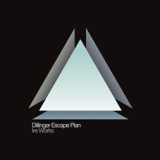
After Miss Machine, Dillinger Escape Plan fans were divided. Many of the folks who were attached to the screaming mathematical metal of Calculating Infinity bailed on the band, disapproving of the experimental musical direction and the meathead appearance of new singer/screamer Greg Puciato. Open-minded listeners were excited about the progressive journey they were taking and many critics hailed the group as a true innovator of metalcore. Ire Works succeeds in many of the same ways that their previous album did, while branching out creatively. They continue to toy with technical metal, blistering hardcore, jazz breaks, and post-punk, but here they evolve again by adding more twists and turns with additional electronic elements. While the merging of too many styles in hardcore can make for a convoluted result (see Avenged Sevenfold's self-titled release), the added instruments and genre changeups enhance the result rather than acting as ornamental distractions. Edgy Aphex Twin-style drill'n'bass drum breaks and stretched and squeezed electro blips feel strangely at home next to the psychotic time-signature changes and manic riffs, especially on the tracks "Sick on Sunday," "Dead as History," and "When Acting as a Wave." Violins, pianos, and trumpets sit nicely in the mix, and the group's willingness to take chances leads to stunning artistic endeavors rather than stale attempts at crossing genres just for the sake of being clever. Original vocalist Dimitri Minakakis makes an appearance, as does Mastodon guitarist Brent Hinds, but the most notable inclusion is drummer Gil Sharone, who proves himself an expert at picking up the slack after the departure of founding member Chris Pennie to play in Coheed and Cambria. Undoubtedly, this act added anger to fuel the fire of their heavier numbers. "82588," "Fix Your Face," and "Party Smasher" are as wicked and manic as their most difficult earlier stuff; conversely, the melodic hooks and falsetto of "Black Bubblegum" and the watery ambience of "Mouth of Ghosts" balance out the album nicely. It can be inaccessible and terrifying all at once, but in a genre overly saturated with formulaic groups, Ire Works is a true standout. If DEP aren't careful and continue down this innovative path, they could easily be labeled the Radiohead of metalcore
Vinyl includes lyric booklet with hand-written lyrics and exclusive photos and download card. Has collaborated with MF Doom, Czarface, Ghostface Killah, Dennis Coffey, and more. Kendra Morris, the Brooklyn-based Artist is back with her fifth LP, entitled I Am What I’m Waiting For, on Colemine/Karma Chief Records. Co-Written and Produced by Torbitt Schwartz (Run The Jewels, Killer Mike, Rubble Kings, Chin Chin), this collection is Kendra’s most personal album to date. It was spring of 2022 and Kendra had just released Nine Lives, her first new album in almost a decade and her first release on Colemine Records. She felt an urgency to get back into the studio, but something felt different this time. Returning to her usual ways, places, and people that she had been creating with felt like dragging herself back to a familiar and comfortable place - but that wasn’t what she was looking for. “I had to step into a new, unknown process because I knew it was the only way that I’d continue to grow,” she explained. She took a small batch of songs to Torbitt’s studio and the two began to write. “He challenged me to find the best version of every lyric,” she shared. “When I listen back, I’m so proud of the time we spent, because every single line is deliberate. I challenged myself to write just to write. No love songs this time around. Torbitt and I wanted to create a record that felt like you cracked open the ooze in my head. There are a lot of layers to me but I only recently through age and experience have fully accepted the weird little nuances that I’m made of. I’m a messy introvert that pretends to be an extrovert so I can feel like I fit in.” From top to bottom, I Am What I’m Waiting For is sincere. It’s a fresh take on a timeless sound, and Kendra exudes power. “My heart has always been in soul music,” she shared. “On this record, you’ll hear my influences and then some. You’ll hear all the bits of me….the vulnerable bits, the silly bits, all of it.This record is my melting pot.” Whether you’re a longtime listener or just now beginning to explore the whimsical world of Kendra Morris, the relatable lyrics and modern soul sounds on I Am What I’m Waiting For are sure to turn you into a fan
Wild Is The Wind, Nina Simone’s sixth album for Philips, has all the variety her work for the label was known for—from the minimal title track to the traditional folk song “Black Is The Color Of My True Love’s Hair” to the banned-on-radio “Four Women”. In 2020, the album was ranked 212 on Rolling Stone's 500 Greatest Albums of All Time.
Verve’s Acoustic Sounds Series features transfers from analog tapes and remastered 180-gram vinyl in deluxe gatefold packaging.
Speedy electro, bass music, IDM influences and bleeped-out machine funk fluidly come together in absurd, playful and rattling ways, as Second Storey explores spotless broken rhythms and fractured forms of sonic expression from the future.
out of Stock
Last delivered 6 months ago available to reorder, subject to availability
Head hydro-tripper Black Eyes has risen from the depths of the deep to release his debut solo record Hydro-Trip vol 1. Fresh off the sea creature's back from co-producing the 'Planet People - Terra Firma EP' with synth botherer Reedale Rise which came out earlier this year. His solo endeavour takes us on a jazzier vibe yet still keeping true to the deep ways of the water. Lead track 'Understood Sea Being' plunges us on a rugged ride with deep Detroit chords and Black Eyes's own punk-like vocals throughout. 'Let's Get Deeper' slows the pace up with chopped up samples and introduces us to the classic hydro-trip sound we've grown to love down here in the underwater cities; it's deep and trippy. 'Scuba Lyfe' picks up the pace a bit but evolves into a low down dubby groove mixed with some hi-tek jazz. Asking Rolando (who we all know was part of the infamous Underground Resistance and Los Hermanos, as well being a Berghain resident DJ more recently) to come on board the subterranean vessel was an obvious choice for remix. He switches the gears and adds some fluid Detroit techno to finish off the EP. Berlin based Deskai masters the EP who also mastered the Planet People EP so you know what to sonically expect.
out of Stock
Last delivered 8 months ago available to reorder, subject to availability
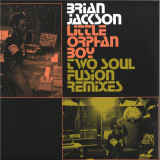
‘Little Orphan Boy’ is the second single taken from album ‘This Is Brian Jackson’, presented with remixes by Two Soul Fusion, a.k.a. Louie Vega and Josh Milan.
The veteran artist’s first true solo LP in over 20 years, ‘This Is Brian Jackson’ is produced by Phenomenal Handclap Band founder Daniel Collás. Collás lovingly re-frames and updates ideas and demos that Jackson first laid down back in 1976, right around the time he recorded ‘Bridges’ with Gil Scott-Heron, for a solo project that never saw the light of day… until now.
Alongside his ‘Two Soul Fusion’ partner Josh Milan, Louie Vega gives the album’s closing track ‘Little Orphan Boy’ two truly vintage remix treatments, taking the song on an eclectic, soul-stirring, timeless journey. The extended ‘Two Soul Fusion’ mix calls to mind the golden era of Masters at Work productions, featuring a Latin-infused percussion groove, shimmering organs and in-the-cut funky guitar lines. The ‘Downtempo’ remix lets Brian Jackson’s vocals ride over a head-nodding, stripped back, yet equally soulful arrangement.
“A dream to work with Brian Jackson” says Louie Vega. “I mean, he’s a big part of our musical landscape and has been a huge inspiration in our lives. From way back to my early years in the Bronx, through to my DJing and producing career, into productions like Nuyorican Soul, Elements of Life, Kenlou, Brian and Gil have always been with us! Now to work on such an amazing song with Brian’s keyboard work and lead vocal, it made it so much easier for Two Soul Fusion (Josh and I) to find that pocket and groove. We had to create an epic piece and take you on a trip through several styles, it was calling for it. That’s due to the original work of Brian Jackson, a true Master at Work & Two Soul Fusion hero!!! I’m looking forward to seeing what’s next on the horizon with us and the one & only Brian Jackson.
Brian Jackson: “I have always loved the musicality and the rhythmic power that surges through the artistry of Louie Vega since I first heard him in Masters at Work. I made a silent wish that one day I would hear one of my songs given that special treatment. Imagine my elation to know that it would finally happen – with a song I wrote and recorded 45 years ago for a solo project that might have never happened if not for producer Daniel Collás and BBE chief Peter Adarkwah! Louie, along with Two Soul Fusion partner Josh Milan and I are alike in so many ways, I knew that if we ever got together, magic would happen and well… here’s to magic! My love and gratitude to Louie, Josh, Daniel, Peter and the beautiful BBE family.”
out of Stock
Last delivered 2 years ago available to reorder, subject to availability
Stephen Steinbrink discovered a short YouTube video of a street magician who approaches a highschooler walking home in Barstow, California. “Here, let me show you my idea,” he says, as he places a quarter on the kid’s hand. The magician performs some relaxed flourishes, and the coin vanishes. In silence, the kid stares at his hand at the nothing where there once, indisputably, was something, until his wonder finds a single word: “Cool.” The title of Disappearing Coin, the new album from Oakland songwriter Stephen Steinbrink, comes from this short clip. “When I look at it now,” he says, “I relate to the kid, who’s obviously uneasy in his body, and going through the experience of being a teenager in the early 2000s growing up in a bleak desert town like I did. I also relate to the coin, an inanimate disc of possibility. And I relate to the magician, an absurd facilitator of sending what is tactile and concrete into the wispy conceptual realm.” “I’ve watched it probably a hundred times,” he says. “It cracked me up but also blew my mind open the feeling of wonder I experienced watching this video became a guide as I navigated new ways of staying in the realm of what’s both real and magical.” Following the 2018 release of Utopia Teased, Steinbrink completed an apprenticeship in the nearly-lost art of Stained Glass, becoming a glazier at a studio that over three years, fully restored the enormous 90-year-old windows in San Francisco’s Grace Cathedral. He committed to his Buddhist study, beginning lay monastic training before the process was thwarted by the pandemic. He dove deeper into music production for other artists, engineering two albums by Boy Scouts released on Anti- Records in 2018 and 2021. Steinbrink delighted in the way these pursuits pulled at the thread of ego’s tapestry and decentralized him from his craft, allowing him to embody a new role as a creative caretaker engaging in practices that felt communal and restorative. “As I slowly began writing for myself again, I tried to imbue my new songs with this sense of playfulness and wonder I felt while exploring these other interests.” He says. Feeling unlocked from the pressures of perfection that he often felt in his earlier work, creating Disappearing Coin felt buoyant and healing. “The album feels like an integration of all of my past musical selves zeroing in on the present,” Steinbrink explains, “I felt free to explore new ways of writing, through different perspectives, experimenting with fictional songwriting, visual archetypal language, and total collaboration.” This “total collaboration” was a joyous new venture after years of solo performing and recording. The album can be seen as a 42 minute session of show and tell, the manifestation of Steinbrink repeating the mantra of “Here, let me show you my idea” to himself over and over. Disappearing Coin is at once a welcome return for the veteran Steinbrink and the debut of a totally new artist, one who has found a new path to himself with new goals of openness, curiosity, and self-acceptance. “Recalls the magic pop purity of Arthur Russell...its minimalism manages to feel enlightened and transformative.” PITCHFORK // “Melodic and self-assured. Steinbrink delivers his knotted lyricism with a smooth lilt.
First appearing on TV screens in September 1968, Joe 90 was a unique nine year old boy with the ability to absorb the brain patterns of top experts
enabling him to become the most special agent of W.I.N. (World Intelligence Network).
Whilst there are arguably better-known scores amongst Barry Gray's sublime catalogue of work with the Andersons, the composer's work for Joe 90 is in many ways
the most consistent and inventive selection he ever wrote. Developing a theme for the new series was always the musician's starting point, and for Joe 90, the pop charts breezed into Gray's studio,
with an opening tune featuring a genuine groove. Mixing Gray's inventive electronics with 60s "surf rock" guitars was an inspired decision.
It is no wonder that this piece has gone on to enjoy a second life as a Northern Soul disco floor-filler.
For episodic incidentals, Gray was freed from the detached unearthly premise of Captain Scarlet and able to bring back a playful sensibility
and a more mature musical palette which are amply illustrated in this 24 track collection.
Paper Route Frank is the first posthumous studio album from legendary Memphis, TN figurehead, rapper and mogul, Young Dolph. Gone from us way too soon, the album serves as a testament to the larger than life person and leader that Dolph was, illustrated in tracks such as “Hall of Fame,” “Get Away,” & “Love For The Streets.”
At 13 tracks, the album features appearances from PRE labelmates Key Glock, Big Moochie Grape & Snupe Bandz, and taps heavyweight guests in 2 Chainz & longtime collaborator Gucci Mane, who in many ways helped provide the blueprint for Dolph’s own illustrious career. A truly independent foundation in the rap game and unquestionably one of one individual, we may never see another artist like Young Dolph. Long Live Dolph Forever.
out of Stock
Last delivered 3 years ago available to reorder, subject to availability
Hot on the heels of their highly acclaimed fifth album "Ask," the Turkish-psych band Altin Gün return with a two-song summer remix single. The two tracks feature the remixing talents of Altin Gün band members Jasper Verhulst (bass) and Chris Bruining (percussion). Both Verhulst and Bruining are always searching for new ways of (re) creating music and these remixes were one way to discover new paths in the music they fashion as part of Altin Gün. Kalk Gidelim is a cumbia driven remix, inspired by the cumbia villera of Argentina, while Su Siziyor is a digidub style remix with lots of King Tubby inspired reverbs and phasers. In the end this remix project is focused on fun. Something to help enhance the summer spirit.
Kombinat 100, the suspiciously band-like live act from northern shores, are set to unleash their eagerly awaited debut album ‚Wege Übers Land’ (ways across the land). Here, everything we know and love about these notorious dancefloor smashers reemerges from the studio, squeaky clean and freshly rinsed, polished and arranged. An irresistible retrospective of Kombinat 100’s countless live gigs, there is no other way this album could have come about: All of the four Mecklenburgers’ tracks have their origins on stage.
So don’t be surprised if you find yourself moshing along from beginning to end! Kombinat100’s eclectic mix and match of influences touches on more genres than you could possibly think of, from techno, house, dub and pop to jazz and beyond, interspersed with plenty of lovingly crafted moments of homemade bliss. And it is precisely those moments, when the boys reach for their acoustic sidekicks, from accordion and melodica to congas and hammond organ, that our hearts miss a beat. Unafraid to flaunt grand emotions, melancholic opener ‚Flieg kleine Taube’ (fly away, dove’) and the sun-drenched sounds of ‘Hanne Nüte’ meet their match in the rocking grooves of ‘Out Of My Space’. In-between, the boys invariably return to their gig-inspired dancefloor roots – ‘Woterfitz’, ‘Del Maritim’ and ‘Der Pomel’ are set to move your heart, feet and mind. So, finally: a breath of fresh, Open Air for your living room!
Kombinat 100, der bandverdächtige Liveact aus dem Norden, veröffentlicht nun mit "Wege übers Land" sein lang erwartetes Debüt- Album. Das, was bisher den Dancefloor zum Einstürzen brachte, bekommen wir nun sauber im Studio aufpoliert und arrangiert. Dabei handelt es sich um eine Retrospektive der unzähligen Live-Gigs der vier Jungs aus Mecklenburg. Ihre Tracks entstehen auf der Bühne, sind für die Bühne konzipiert. Deshalb muss es auch niemenaden verwundern, wenn man von Anfang bis Ende mitgeht. Kaum ein Genre wird ausgelassen, wenn Kombinat 100 seine Einflüsse aus Techno, House, Dub, Pop und Jazz reflektiert. Aber auch die heißgeliebten handgemachten musikalischen Augenblicke dürfen natürlich nicht fehlen. Denn genau dann, wenn sie ihre akustischen Instrumente, wie Akkordeon, Melodika, Conga`s und Hamond Orgel zum Einsatz bringen, schlägt unser Herz am höchsten. Diese Tracks stehen zu ihren großen Gefühlen, wie der melancholische Opener-Track "Flieg kleine weiße Taube" oder das sonnenverwöhnte Stück "Hanne Nüte". In der Mitte wirds dann mit "Out Of My Space" shufflig und rockig. Dominiert wird das Album jedoch durch die Tracks "Woterfitz", "Del Maritim" oder "Der Pomel", welche ganz klar für den großen Floor zugeschnittenen sind. Endlich: Kombinat 100 gibt uns ein Stück Open Air-Feeling für's Wohnzimmer!
out of Stock
Last delivered 3 years ago available to reorder, subject to availability
The collaboration between Klara Lewis and Nik Colk Void somehow seemed inevitable. Both artists having seen their releases published by Editions Mego, individually carving out idiosyncratic voices in the worlds of extreme, abstract electronic music. With Full-On, Lewis and Void explore and assimilate the very edge of their individual practice where a unique collaborative interface allows two voices to combine and morph into a third voice.
Lewis and Void play ping pong with the conversation of sounds, generating ideas and bouncing them off each other, simultaneously encouraging the other to go further with their ideas opening up an opportunity to engage with previously unexplored terrain. Guitars, synths, euro rack modular systems, voice, sampling and outboard processing are folded in a playful unification with a propensity to tease, explore and extract new ideas and shapes, sometimes brutal, sometimes playful.
Trust was also a compositional tool allowing instinct to freely move on any aspect of the sound and space. This sound/feeling/instinct/association let this wild and wonderful material grow organically into something new.
The result of this exploratory interplay are 17 intense miniatures reveling in the process of unadulterated experimentation and whimsical interplay, not just between the humans, but the machines themselves. United in an endless series of sonic U-turns, this daring duo intertwine pop and noise whilst also bringing together visions of tender techno and forthright ambient.
The various zones which manifest from all this reveals vocals shifting in mysterious ways, dust drenched beats churning limpidly and devilish string loops navigating a disorientating domain. The experience of listening to Full-On is to be confronted with a range of ideas resulting in a platter of emotions. A place where beauty and the beast collide with the impulsive and outright weird. What a wonderful world.
out of Stock
Last delivered 2 years ago available to reorder, subject to availability
Songwriter Ron Stassens assembled a team of musicians in 1977 in anticipation of local side the Portland Trailblazers taking an NBA championship title. Milton Davis was the chosen front man and the music made got regional plays but not more so the band went their separate ways. But not before recording the album that is now presented here via Albina Music Trust. It is a funk work of the highest order with six super tight grooves all laden with percussion, disco energy and big vocals. These will all do plenty of damage in the right setting and remind why Davis is such a cult figure.
Now here's a cover album with a few interesting angles to it -
First there is the fact that Matthews Southern Comfort have a, let's call it:
Woodstock history - Well over 6 million spotify streams confirm the
legendary status of Matthews Southern Comfort's global hit
And of course: although this collection is called the Woodstock Album, the song
itself is not featured on this album as it was written post festival and therefor
never performed at Mac Yasgur's farm.
In 2022 MSC were looking for a way to reactivate the band as a viable and touring
unit again. The concept they came up with was a Matthews Southern Comfort reinterpretation of songs that were all performed at the Festival by artists like Joe
Cocker, Creedence Clearwater Revival, Jimi Hendrix, John Sebastian and The
Grateful Dead
The songs very much speak for themselves, as do these new versions with a
distinct Matthews Southern Comfort signature.
We don't skip cat numbers around here. It was predestined that ENiGMA Dubz would appear on the DUPLOC050 milestone release. The Birmingham based dubstep don has been working with us since literally the first day of the YouTube channel. Almost 10 years later ENiGMA Dubz is a well established artist and is regularly featured on his home labels DUPLOC, Deep Dark & Dangerous as well as his very own imprint Morii Records.
Where "40 Fathoms" and "Silverback" are sound system shellers, "Earth Giants" runs on a heavier vibe while the digital bonus track "Too Close To The Sun" is a melodious masterpiece. All by all his DUPLOC050 shows how strongly versatile ENiGMA Dubz' sound is.
out of Stock
Last delivered 3 years ago available to reorder, subject to availability
Das Album ”Final Straw” von Snow Patrol feiert dieses Jahr sein 20-jähriges Jubiläum und wird neu veröffentlicht. Die Jubiläumsausgabe wird auf CD und Vinyl erhältlich sein. Alle Formate enthalten drei bisher unveröffentlichte Tracks aus den Album-Sessions, sechs Original-Demos des Albums und neue, ausführliche und aufschlussreiche Liner Notes, geschrieben von Snow Patrol’s Leadsänger Gary Lightbody.
Die 2LP wird auf farbigem Vinyl (gold) in limitierter Auflage gepresst, mit einem silbernen Laminat-Effekt auf der Klapphülle. Die 2CD enthält außerdem die 11 Final Straw-Tracks, die für den DVD-Konzertfilm Live at Somerset House von 2004 verwendet wurden.
out of Stock
Last delivered 3 years ago available to reorder, subject to availability
“Where are you, my sunny feeling I knew as a kid?” This is the question that Origami Angel asks with their latest output, a sharp and shining 8-song mixtape called The Brightest Days. Its opening title track begins with one of many new tricks for the DC two-piece––a ukulele––but quickly turns left-field as childhood innocence makes way for blistering intensity and hopelessness. Told through the lens of a shitty east coast summer, The Brightest Days was written throughout the spring and summer of 2020, and later recorded in August 2022 with producer Drew Portalatin, with assistance from Jake Chekoway and vocalist/guitarist Ryland Heagy (he/him). Across the mixtape are some of the most creative and adventurous moves Gami has ever made. Not quite an EP or an LP, the differences between each track on The Brightest Days is what makes it such a special release, and thus garnering the ‘mixtape’ moniker; diving into specific tones and different vocal techniques on each track allowed Heagy and drummer Pat Doherty (he/him) to shine in ways they never have before. The Brightest Days may be few and far between—with that gap stretching further each day—but as a mixtape, it’s a cloudless collection of the most realized and strongest music that Origami Angel has written yet.
In an era defined by futility, isolation, and precarity, it can be difficult to envision a utopia. But on Skeleten’s thrilling, immersive debut album, Under Utopia, the Sydney musician dares to imagine new ways of being that are not characterized by doom or despair. Across eleven tracks of free-flowing, transcendent, and often euphoric electronic music, Skeleten praises the power of comradery and community; while dreaming of a future that is joyously boundless.
Skeleten, real name Russell Fitzgibbon, has always been fascinated by the ideas of utopias. He’s thought a lot about how the concept has shifted and morphed throughout history, and how the goal post for a utopia is always moving further and further away. “We're more familiar with the idea of a dystopia in the modern world - that's more close to our consciousness. I think on this album I wanted to explore the importance of imaging and embodying a new world.”
Written before and during the pandemic, the album was born out of a desire to connect with others and to shake the mantle of introspection that had been placed on his previous works. From the opening notes of the otherworldly album opener “Generator”, it's clear that this record prioritises immediate pleasures without forgoing intimacy. The lyrics are also more explicit, reaching outward with inviting choruses and mantra-like melodies. “I think the album came out of the experience of feeling this great desire to reconnect and dreaming of the power of community,” says the musician.
This is especially present in lead single ‘Sharing The Fire’, a song that crackles with optimism. A sprawling dance track with pulsating synths and Fitzgibbon’s gentle, warm vocals, the song is about futures that are full of brightness and bliss. As the artist repeats in the song’s chorus: “for all that you know, summer could be around the corner.” The song is about an “almost frustrated desire to connect with more people and feel that sense of community through shared goals.” The accompanying video clip, shot on 35mm, is similarly invested in ideas of companionship and gathering. Shot in a clinical, drab office space, friends and revelers fill the space with warmth and energy.
Elsewhere, this invocation of paradise is infused in the stripped-back, singular title track “Under Utopia”. The song was significant to Fitzgibbon, as it allowed him to gather all his thoughts and ideas about his new music under one message. “It’s something I wrote when I had this collection of songs and wanted to give it a single voice, which was about seeing the world entirely new, full of hope and beauty, and all of us underneath pushing it upwards.” An antidote for gloom presented in Under Utopia is the transformative power of love. There’s “Heart Full Of Tenderness”, a woozy, languorous love song, awash with cloudy vocals and glistening synths; the truncated beats and hypnotic pleading of “Territory Day” and “Right Here It’s Only Love” which explores the icier and ambient side of R’n’B.
Another hallmark that characterizes Under Utopia is Fitzgibbon’s airy and spacious mix, which gives his songs room to sprawl out and simmer; as well as allowing his calming baritone to come to the fore. This is notable in the contemplative, synth-laden “Colour Room”, the funk-tinged “Walking On Your Name,” the previously released “No Drones in the Afterlife,” and the beloved early single “Mirrored,” which speaks of finding yourself through a connection to those around you.
Fitzgibbon has been enmeshed in the Sydney music scene for years. Skeleten emerged out of a need to experiment and make music without worrying about the outcome. “It was just me making music that felt right, and very much focusing on this kind of meditative aspect of exploring without any goal,” says Fitzgibbon. But as the project has evolved, the artist has gained clarity on what he hopes his music will achieve: bringing people together, and creating an atmosphere of elation. Or as Fitzgibbon puts it on Under Utopia’s hallucinatory album closer “We’re gonna get everything we need in the world.”
After a 9 year hiatus, Jim Lockey & The Solemn Sun return to Xtra Mile Recordings with their brand new album 'Colour' -to be released on 28th July 2022. Available on PINK vinyl, CD and digitally. The 4 piece from Cheltenham, have poured their heart and soul in to this album, the follow up to 2012's album 'Death'. Focused on prominent occurrences in Lockey’s life after ‘Death’ the album discusses the thoughts and feelings he’s most at war with. Dealing with the premature end of a marriage, rediscovering himself as an individual and finding ways through are themes that bubble under the surface throughout; with notions of all punctuating each song Written during the breakdown of the relationship, this album became a method of healing. Like the chaotic process of grieving it’s an agitated reflection that shifts back and forth - from losing everything, rediscovery and finding the resolve to move forward.
Covet is fronted by Yvette Young who is revered by guitarists around the world for her mastery of the innovative two-handed tapping technique. Yvette says of the album - "I'd like to be honest - this album process was one of the most challenging ever, and none of the reasons for that was related to the actual music. There was a moment where it felt like it might not come out ever...but I think having patience and faith does pay off. I named this record "catharsis" because the word to me feels like a triumphant exodus. No matter the dire circumstances, music is one of those things that I’ve always needed to create to survive (in all senses of the word), and time and time again, I turn to guitar and songwriting as my outlet to uplift and feel like I have control over something in this chaotic universe. The overall theme of the album is escapism and fantasy, which also feels fitting because in a lot of ways, we use music and art to escape our anxiety, our pain, and our sometimes oppressive realities...to travel to universes that we so badly wished existed. Music is so powerful for this reason because it can be so transformative- it uplifts and empathizes with you without needing to say a single word. With this music, I wanted to tell a concise but dense story that goes many places- not necessarily all joyful. I have been working on it down to the last minute, and in less than 30 minutes, I'd like to take you to all the magical places I’ve been and show you all the highs and lows that I've had the privilege of experiencing during the last 2 years of creating this body of work."
Wisdom Teeth co-founder K-LONE returns with his second full length project, ‘Swells’: a kaleidoscopic and expansive record that looks to deep house, synthpop, leftfield R&B and beyond for a spellbinding masterwork of melodic electronica.
His debut LP ‘Cape Cira’ became the accidental soundtrack of the long strange summer of 2020 - its lush marimbas, hazy atmos and synthesised bird calls providing the ideal soundtrack for some much needed collective escapism. The record was widely deemed one of 2020’s standout electronic LPs, gaining glowing reviews in Pitchfork, DJ Mag, Mixmag and Resident Advisor, and ranking highly in end of year lists by Crack Magazine.
Approaching its follow up, the Brighton-based producer felt a fresh perspective was needed. Originally landing on the name ‘Swells’ as a secret pen-name to write the record under, the intention was to keep the project as separate as possible from ‘Cape Cira’ to avoid settling into familiar territories - but as the record took shape it became clear that it made perfect sense amongst his already diverse discography.
Like ‘Cape Cira’, there is a distinct and intentionally limited sound palette at play on ‘Swells’. Looping vocal cuts, rich cluster chords and undulating arpeggios sit front and centre here - as does the lo-fi plonk of of the CR78 drum machine. But while the record clearly takes influence from a range of vintage sound sources, its overall aesthetic is unmistakably contemporary. Sounds are not artificially degraded nor obscured under washes of sampled tape hiss. Rather, everything is processed with a gloss, hi-fidelity sheen. The record’s rhythms are bright, dry and snappy, and its melodies are processed with a neon poppy glow.
The producer’s unabashed love of contemporary pop music is most obviously exemplified by the appearance of British singer-songwriter Eliza Rose. The pair met for a session at a North London studio back in 2021, and the now Brit Award-nominated singer’s warm, emotive vocal takes became an immediate source of inspiration early in the record’s conception. As such, Rose’s voice is heard in various states of manipulation throughout its duration - initially as reduced and looped phrases, and then finally in full form on ‘With U’: a low-lit, dubbed-out slice of leftfield R&B that beckons comparisons with Tirzah, Little Dragon and even Erykah Badu.
Elsewhere, there are references to G-Funk (‘Oddball’), Autonomic drum and bass (‘Shimmer’), hip-house (‘Love Is’) and even Metronomy-era electro pop (‘Love Me A Little’).
As always, the true magic of K-LONE’s artistry is to present complex, subtle and original ideas in ways that feel familiar and immediate. Melodies are introduced as effortless earworms, only to be twisted out of shape into strange and unusual formulations. Looping rhythms unspool into washes of hazy, dubbed-out ambience before rebuilding themselves. Refined and endlessly creative, ‘Swells’ marks a captivating next step for a producer and record label that have both reliably positioned themselves at the very forefront of contemporary electronic music.
out of Stock
Last delivered 3 months ago available to reorder, subject to availability
‘Lindstrøm returns with his sixth studio album Everyone Else is a Stranger, and the first since 2019’s On a Clear Day I Can See You Forever. The title of the album was inspired by John Cassavetes’ original title for his 1984 film Love Streams, and contains four tracks of his signature chord-stacking disco epics and freeform cosmic voyages, stretching across nearly 40 minutes. An album that in many ways sums up his career, and gathers his different musical paths into one sound and one album.
Where his previous album had a slower and more mellow feel, 2023’s Everyone Else is a Stranger sees Lindstrøm take on a much more rhythm-oriented and uptempo approach, containing tracks that fit perfect with the artist’s revered live sets. That said, this album also contains the unexpected twists and turns that has become the Norwegian producer’s trademark, including recordings of him playing a cheap Chinese cello and violin for the first time alongside the old Solina String-Ensemble he has used on essentially every track since his debut.
Named «the king of space disco» by The New Yorker, Lindstrøm has always made a virtue of his obsessive work ethic, turning his city center studio into a factory floor for churning out monster tracks. He has collaborated with the likes of Todd Terje, Prins Thomas and Todd Rundgren, has remixed a slew of acts including LCD Soundsystem, Lana del Rey, Haim, Grizzly Bear, Flume, RAC, London Grammar and more.’
out of Stock
Last delivered 2 years ago available to reorder, subject to availability
Habibi Funk is excited to share “Marzipan” - our first full length contemporary release courtesy of Beirut’s multi-instrumental phenom Charif Megarbane, also known as the man behind prolific Cosmic Analog Ensemble. The LP is a journey into Charif’s styling, one he terms “Lebrary”: a vision of Lebanon + Mediterranean expressed through the kaleidoscopic sonics of library music. Drawing from artists that encapsulates the HF sound, such as Ziad Rahbani, Ahmed Malek and Issam Hajali, Charif translates these influences into an LP that is equally at home in ’23. We always wondered why Charif’s music stayed under the radar for so long, that all changes with “Marzipan”.
Charif Megarbane, the staggeringly prolific producer, instrumentalist, and all-around musical mastermind returns with full LP “Marzipan.” Following his previous release of EP “Tayara Warak” in 2022, “Marzipan” is a sonic journey that seeks to capture the full scope of Megarbane’s habitus. As a composer and producer, Megarbane touts hugely versatile, sometimes volatile musicianship — his 100+ catalogue of projects (including legendary groups like the Cosmic Analog Ensemble, Free Association Syndicate, Monumental Detail, etc.) features a huge domain of sonic direction. This collection was previously developed in Megarbane’s own Hisstology label which hosts a wealth of collaborative efforts. Now, Habibi Funk represents Megarbane under his own name. Megarbane finds a sonic through-line in his surrounding soundscapes as he draws on the chaotic energy of the crowded Beirut metropolis (“Souk El Ahad”), the warm atmosphere of the Lebanese countryside (“Chez Mounir”), or the lushness of a Mediterranean beach resort (“Portemilio”). Reflecting the aural composition of his direct surroundings into kaleidoscopic instrumentation provides a unique insight into how one musical phenomenon transposes sight into sound. Habibi Funk is thrilled to share “Marzipan” and finally throttle this under-theradar phenomenon into the solo spotlight. Despite the magnitude of his catalog, Megarbane’s LP sounds as fresh—as resolutely inspired—as a debut record. “Marzipan” continues down the winding path he trod on EP “Tayyara Warak” (released Decmber, 2022) which features solid footing in the hectic city sounds Megarbane hears as home. Despite his obvious musical acumen, Megarbane’s greatest talent seems to be his open ears. In many ways, “Marzipan” is a cartographic feat — it travels and traces a journey across many dimensions (both sonic and physical). Megarbane’s instrumental catalogue is vast: toy glockenspiel, harpsichord, pedal steel, a classic Wurlitzer, et al are used liberally on the record. The resultant sound is as sprawling as the musician’s instrumental dexterity. “Marzipan’s” closing track “Bala 3anouan” can be translated loosely to “without address” — a fitting final word. Despite the entire record being a sincere testament to Megarbane’s environmental approach to music-making, the record is not bound to any particular coordinates, or any particular sound for that matter. The vastness of his influences — beloved artists like Ahmed Malek and Issam Hajali (both Habibi Funk veterans); West African funk deep cuts; European cinematic scores; et al — result in a record of somewhat unparalleled expansiveness. Floating melodies and frantic rhythmic interludes both find natural homes across “Marzipan.” The record is tinged with psychedelic elements—fuzz-drenched guitar, sliding microtonal interludes, hypnotic rhythmic breakdowns. Reflecting on his creative process, Megarbane cites a stream of consciousness approach: “It’s a very spontaneous, playful, and diary-like approach and workflow…I trust my instinct because instinct is based on experience.” Lead single “Souk El Ahad” opens the roll-out with a raucous energy, out June 12. Megarbane abstracts busy city sounds into a psychedelic framework, casting technicolor hues on everyday experience. Following is second single “Pas de Dialogue” out June 23. The track jerks the listener towards a more meditative state with lulling harpsichord and expanding, cinematic sound. “Marzipan” will be available physically and digitally everywhere on July 14, 2023. Be sure to listen for focus track “Chez Mounir” that captures the warmth of community in a joyful, laidback groove.
Uncover greater insight into the world of Charif Megarbane in the booklet accompanying the LP
out of Stock
Last delivered 17 months ago available to reorder, subject to availability
Lindstrom returns with his sixth studio album Everyone Else is a Stranger, and the first since 2019's On a Clear Day I Can See You Forever. The title of the album was inspired by John Cassavetes' original title for his 1984 film Love Streams, and contains four tracks of his signature chord-stacking disco epics and freeform cosmic voyages, stretching across nearly 40 minutes. An album that in many ways sums up his career, and gathers his different musical paths into one sound and one album. Where his previous album had a slower and more mellow feel, 2023's Everyone Else is a Stranger sees Lindstrom take on a much more rhythm-oriented and uptempo approach, containing tracks that fit perfect with the artist's revered live sets. That said, this album also contains the unexpected twists and turns that has become the Norwegian producer's trademark, including recordings of him playing a cheap Chinese cello and violin for the first time alongside the old Solina String-Ensemble he has used on essentially every track since his debut. Named "the king of space disco" by The New Yorker, Lindstrom has always made a virtue of his obsessive work ethic, turning his city center studio into a factory floor for churning out monster tracks. He has collaborated with the likes of Todd Terje, Prins Thomas and Todd Rundgren, has remixed a slew of acts including LCD Soundsystem, Lana del Rey, Haim, Grizzly Bear, Flume, RAC, London Grammar and more.
out of Stock
Last delivered 3 years ago available to reorder, subject to availability
A bold, new creative direction Guy takes on his upcoming album Living Like There's No Tomorrow, But Killing Yourself In The Process out July 7th, a record inspired by what Guy calls "the push and pull between hedonism and the fog of the morning after, and the intensity with which you can feel both. I wouldn't feel the comedown if I didn't have the intense pleasure of the party; as a result, I wouldn't need to make a lot of the music I do." .
out of Stock
Last delivered 20 months ago available to reorder, subject to availability
Spaceman, otherwise known as Stephen Munson or Stephan James, is the former lead singer of English cult glam punk band Living In Texas, one of the very first bands to play an MTV Europe session when MTV was in its infancy, one of the last bands to play at the legendary Elixir Festival in France, once #3 in the Italian charts (1985.),...
At the end of Living In Texas, Munson continued to form other projects without such conviction and to write songs, until meeting Christelle Canot aka Confused, a moment which he describes as his epiphany. He entrusted her with the production of his first (double) solo album.
This follows during the pandemic by the production of a double album featuring 9 songs already recorded in 2000 and the composition of 16 others with musicians from all over the world, carried by the same punk and DIY spirit that has always lived with him.
Poet, director, an artist touching everything and a great lyricist, his songs are personal and universal, love letters to his children, to nature, to our addictions, confessions of weakness, regrets, his life passes through these 25 songs that range from the folk lo-fi masterpiece "frEND" to pure postpunk sound straight out of the 80s "Everybody's Hooked On Something", to folk-rock ballads like Martin's Garden, eternal songs with "Loving Ways" or ballads of Lynchian love... As many universes as eras crossed with the greatest sincerity through the eyes of an eternal child.
Catorce reflexiones sobre el fin (Fourteen Reflections on the End) originated from an installation exhibited at the Museo de Arte Contemporáneo de Oaxaca, Mexico, in 2019. Fourteen magnetic bodies of tape that dialogued with the fourteen pieces of electroacoustic music now contained in this album composed from the sound anthology of Angélica Castelló. Thus, Catorce reflexiones sobre el fin is a complex piece consisting of multiple parts that, although articulated with each other, hold a life of their own.
Like every body, these have a unique history made up of mixed fragments spun by Angélica, ranging from field recordings, references, and self-references to previous pieces, experiences, and voice recordings made specifically for these compositions re-recorded in various formats, from lo to high fidelity, analog and digital, composed, decomposed and recomposed (Castelló, A., 2019). Likewise, as any body, they also reflect on their end, whether absolute or temporal, of the many ways of being finite and of saying goodbye.
During the Catorce reflexiones sobre el fin, Castelló takes you on a journey that is difficult to locate. An ethereal space between shattered glass, stridulation of cicadas, war drums, murmurs in French, Italian maledictions, and soft recitations in Spanish. From uproar to solace, all wrapped in a soft abstraction that only allows access to the subtle whisper of these expressions. A gesture between invitation and sharing because who does not recognize oneself in this emotional storm?
First, the approach of the winds, the first breeze that caresses the body. Then the bewilderment announced by the scent of uncertainty condensed in the air’s humidity. The prelude to the storm, to something that will shake you from head to toe, something from which there will be no return.
To the acceleration of the winds comes the percussions, the tremor of the storm with its lightning. la Ira (1). A vibration running through the whole body, unstoppable. This reverberating sound, resulting from its re-percussion with our body acoustics, owes its tones and echoes to the cavities and organs of different masses. From what is hollow and what is full; what is void and what is matter. There is no turning back. It is a dive into the void; to fight and resist because there is no other way to go. It is a matter of survival.
Ma fin est mon commencement Et mon commencement ma fin (2)
After this, the cicada resumes at the crack of dawn, a gentle breeze, and solitude, that temporarily musical silence of embraces (3) with hints of harpsichord and bells.
The breaking of the waves in Sicily is accompanied by the antenna that picks up radio transmissions that already invite other tastes. The Mediterranean and its currents mingle and divide tense routes of escape, exchange, and struggle between Blutorangen, tides, and birdsongs.
An immersion into deep waters.
And in the end, we all commit sins! Queste maledette! (4)
»Don’t Ever Let Me Know« is Sheffield’s first solo release since 2018’s »Repair Me Now« (Glistening Examples) and is a work in a similar mode to that album in that it comprises two lengthy pieces of multiple movements and moods. For this new work, and as a kind of ode to his late father, Sheffield has employed samples entirely taken from (or inspired by) the city in which both men were born. In this way, the sounds have been utilized as a kind of shorthand for the specific subjects at hand. The two audio assembla ges, meanwhile, mirror the ways in which loss and memory are processed – with both melancholy and wonder in equal measure: at once beautiful and confounding.
Colin Andrew Sheffield (b. 1976, El Paso TX) is a composer whose work is focused on the recontextualization of samples derived from various commercially available recordings – generally those taken from his own expansive collection of records, tapes, and compact discs. Conceptually his output is akin to plunderphonics-style sound collage, though aesthetically it is seemingly closer to soundscapes of ambient drone. Since his earliest recordings from the 1990s, his work has developed into a kind of hybrid of the aforementioned approaches.
Following a groundbreaking cassette-only release on electro label du jour Casa Voyager, Montreal-based producer Simial releases his first full vinyl EP on Gated. This is raw braindance unlike anything else from an exciting new talent you’ll be hearing more from in the future. Over six tracks, Simial takes us into unexplored and highly personal territory, with music that drops and kicks, stutters and starts in unexpected and melodic ways. Watch out for the little surprise vocal hidden in B3.
out of Stock
Last delivered 3 years ago available to reorder, subject to availability
Santana's self-titled debut album announces the arrival of a new Guitar God. Made during the legendary bandleader's most fruitful and creative period, the classic 1969 set functions as an accessible entry point into the tangy worlds of Latin music by way of an intoxicating blend of Afro-Cuban percussion, jazzy tempos, exotic leads, bluesy riffs, and psychedelic accents.
Indeed, separation between Carlos Santana's fluid fills, spicy solos, and broiling grooves and pianist Gregg Rolie's soulful Hammond organ runs allows the music to come alive with a newfound freshness and radiance. Songs simmer, with each passage bursting forth with vibrant colour. Just like the equally essential follow-up Abraxas, Santana also lays claim to one of the biggest (and unfortunate) production gaffes in music history.
For nearly four decades, copies were produced with the left and right channels reversed, meaning that everything was placed in a backwards manner. This even extended to compilations on which individual songs from Santana were included. Rest assured that, in addition to boasting reference audiophile sonics, this 180g 45RPM 2LP set gets all the specifications exactly right. And with a record of this magnitude, you want everything to be perfect.
Bound by natural chemistry and earthy spirituality, the record's innovative synthesis of myriad styles goes beyond anything that came before – as well as nearly everything that's followed. Playing with the finest band that the iconic guitarist ever had, Santana doesn't water down any exotic roots or simply incorporate mainstream Western styles into a Latin framework. This is a true hybrid, responsible for opening up borders, transcending cultural divides, and, most importantly, exhilarating the senses.
Released just weeks after the band blew minds at Woodstock, the groundbreaking record stands alongside Miles Davis' Bitches Brew and Jeff Beck's Beck-Ola as a pillar of rock fusion. Featuring the Top Ten radio smash "Evil Ways" and jam favorite "Soul Sacrifice," it hasn't aged a day. Hear like never before why Rolling Stone says Santana is #149 on its list of the Greatest Albums of All Time.
Available for the first time since originally released in 2006 via Stones Throw, Dudley Perkins & Madlib are pleased for the reissue of their sophomore collaborative LP, Expressions (2012 A.U.), their acclaimed follow-up to their 2003 debut effort, A Lil’ Light. And albeit the former can be accused of being excessively avant-garde, it’s Expressions where both Perkins and the Beat Konducta find a more fluid symmetry.
In everything from his collaborations with MF Doom and the late Jay Dee to his more recent pairing with Freddie Gibbs, Madlib is easily one of hip-hop's golden revolutionaries. At times his production has been accused of being sparse, but that's not the case with Expressions. This time around, Madlib's production is hitting all the funky corners with layered grooves that evoke the attitudes and emotions of A Tribe Called Quest's The Low End Theory.
Perkins's objective to keep the grooves flowing on Expressions is laid down with first lines of opener "Funky Dudley": "A little bit of funk and a dash of soul/ A little bit of George borrowed from my Ol' gran' pappy's stack of old school/ One nation under a groove." From there on the funk samples dance famously with Dudley's vocal style, which cross-pollinates the worlds of D'Angelo and Ol' Dirty Bastard. From "Get on Up" to the James Brown vocal sample in "Dolla Bill," Expressions uses Perkins's voice as if it were a sample itself, incorporating it in the production and the rhythms.
Madlib's production works flawlessly, his semi-psychedelic influence on R&B, soul and hip-hop keeping Perkins's style fresh and original. All the parts seem to be in place on Expressions as producer and emcee work side-by-side to create a cohesive sound that not only represents the creativity of the underground but could also awaken the tired ears of the mainstream.
When Chet Baker lit up the West-Coast scene during the 1950s, he became a Jazz idol who
appealed to a younger generation and impressed even the most acerbic critics. He jammed
alongside Tenor Sax stars Vido Musso and Stan Getz, and joined Alto Sax legend Charlie
Parker on various West-Coast gigs. Hailed as the Prince of Cool, Chet caused a sensation
when his mellifluous Trumpet tones were first heard blending with Gerry Mulligan's deep
toned Baritone Saxophone in the famous Mulligan Quartet . It was in 1952 when they joined
forces on tunes like Walking Shoes and Line For Lyons. It wasn't long before they departed
ways with Chet establishing his own Quartet that launched a recording career blessed by
the plethora of performances gathered on this triple LP set. He plays his distinctive style of
trumpet along with presenting Chet the singer. Our collection opens with Let's Get Lost and
My Funny Valentine before advancing to include I Fall In Love Too Easy, The Thrill Is Gone,
That Old Feeling and Chetty's Lullaby. So, let's get lost in the eternally cool world of Chet
Baker.
Juli Giuliani is a prolific artist, since 2009 he started at a very young age in the hip-hop scene and since then he has been releasing music non stop. In 2017 he begins a new stage under the name of Juli Giuliani, delivering collaborations with artists such as Toteking, Dano, Jonas Sanche or Big Menu, performances at Sónar, and a tour of Latin America, where he consolidates the respect of the scene at the Ibero-American level. Giuliani is a different artist due to his versatility, warmth and closeness to the listener. His new ways of making rap, maintains the essence that so many yearn for without disconnecting from actuality and building a unique discourse and identity. This profile makes his musical proposal one of the most solid, ambitious and mature on the scene, ready to fill the new spaces that are opening up on the scene. His next LP, in collaboration with Mabreezee and Karmasound, will be released at the beginning of 2023 via Costa Futuro.
Rico Puestel (Cocoon / Break New Soil) presents an exclusive collection of long-lost Techno tracks from his 2002-2004 archives on blue double vinyl, accompanied by a dream painting Rico did in basic school as full colour artwork!
Seemingly and somehow being ahead of their time, these tracks never made it to an official release although Rico always desired their sheer existence and overall sound, standing out in many different ways...
A further exhibition on the run!
out of Stock
Last delivered 3 years ago available to reorder, subject to availability
Fleetwood Mac is the tenth studio album by British-American rock band Fleetwood Mac, released on 11 July 1970. This was the first Fleetwood Mac album with Lindsey Buckingham as guitarist and Stevie Nicks as vocalist, after Bob Welch departed the band in late 1974.
The album peaked at number one on the US Billboard 200 chart dated 4 September 1976, 58 weeks after entering the chart, and spawned three top-twenty singles: "Over My Head", "Rhiannon", and "Say You Love Me", the last two falling just short of the top ten, both at number 11.
out of Stock
Last delivered 3 years ago available to reorder, subject to availability
In the quiet surrounding the pandemic, Madeline Kenney made sonic sketches in the basement studio she shared with her then-partner. She arranged phrases that called her—the sharp knife of a synth cutting a path along a blooming arpeggio, drums stuttering firm and tight. Working this way, she amassed a collection of songs she had no particular aims for. Some formed her 2021 EP Summer Quarter, others languished.
But in 2022, Kenney’s partner left suddenly and without warning, plunging her into the solitary act of untangling what happened. In the wake of her ensuing depression, she revisited these songs and found in them something prescient. She’d already laid the foundation for A New Reality Mind.
That her relationship’s end came without warning is only half true, though. The warnings were in the feelings and fears that inspired Kenney’s critically-acclaimed third album, Sucker’s Lunch (2020), which was co-produced by Jenn Wasner (Flock of Dimes) and centered around the idea of flinging oneself freely into the seemingly-assured destruction of new love, come what may.
If sonically Sucker’s Lunch was letting yourself be pulled into the warm bath of a good story, A New Reality Mind reflects the harsh light of truth coming to break the spell. But as sobering as morning light can be, there’s brilliance to it, too. To see in the clarity of day is a gift. A revolution. Rather than reckoning with love lost, the songs on A New Reality Mind grapple with the self that chose to fall. “I guess I only needed to look twice / Reflected in my attitude, my constant compromise,” Kenney sings on “Red Emotion,” the musical landscape screeching and gasping around her observations of how she made herself small to keep the dream of love alive.
These notions of sight and vision pervade the record as Kenney stands before the infinity mirror of selves she’s been to preserve bonds in her life. On “I Drew a Line,” Kenney contends with the stories she’s told herself to keep plodding along, and the way those stories shape her perceived reality. She invokes John Berger’s Ways of Seeing—“Everything around the image is part of its meaning,” we hear him say. “Everything around it confirms and consolidates its meaning.” Here, Kenney isn’t interested in shaming herself for being carried away by the fantasies of the heart, but rather in investigating the unavoidably human propensity to do so. “I, like everyone else, am muddling through my most ordinary disaster of a life,” she acknowledges, a sentiment which reverberates through album opener “Plain Boring Disaster.” “I don’t need to start again,” she sings at the song’s close. “But I can change when it ends.” We may all be doomed to repetitive, ordinary heartbreaks, Kenney realizes, but at least we can cultivate a capacity to witness our missteps and build new realities for ourselves.
This is Kenney’s most expansive work, while also her most solitary. Produced and recorded alone in her basement, these songs are manifestations of what it feels like to be transformed by pain. Textures collide and collude; sonic ornaments emerge and dissipate capriciously; saxophones soar untamed, as on the 80s pop elegy to self-sacrifice, “Reality Mind”. These songs beg you to dance, then pull the rug out from under you once you’ve caught the beat, leaving you dizzy like the whiplash of love’s end.
But in the propulsive power of A New Reality Mind, there’s also acceptance, self-forgiveness, and a willingness to move forward into life, with all its ways of making a sucker of you. “That way of living, I’m over it,” Kenney declares of the habits that hold her back on “Superficial Conversation”. “I do not need to be reminded of what I did,” she assures, the song opening wide and beaming, like a smile expanding to taste a new breath of air.
Eaux proudly announces the second full length LP from Rrose, Please Touch, released on vinyl, CD, and digital download. The LP follows 2019's Hymn to Moisture in ways that are both subtle and striking: Please Touch further hones the artist's tensile sound while exploring new aesthetic vistas and basking in an undeniably erotic sense of play. Moving with undulating power, the album's nine tracks drift across tempos from a weightless 0 bpm to a crawling 100 to a lunging 140 and back, with a rich palette of sculpted noise and cross-talking microtones.
Rrose's compositional process, rooted in their studies with West Coast avant garde trailblazers at Mills College, centers on "seed" sounds being fed through elaborate webs of interrelated audio processing. The result is a world where changes in any one element have downstream implications for some or all the others. It's a rich interdependence that lets the tracks breathe, grow and mutate with uncanny organicism. Please Touch addresses in equal measure the perceptual and the corporeal: these are sounds that sink into the body, exhibiting a tactility that pushes, pulls, bends and yields with fearsome vibrancy.
The album splits its time between radical techno iterations and pieces which pare back the percussion, letting the synth textures uncurl in their own time and space. The quivering drone and rolling sub-bass of "Joy of the Worm'' set the tone for the record, while "Rib Cage," Spore" and "Spines " swing with stepping rhythmic underpinnings. Building with finely calibrated tension, they use their few elements to startling, snarling effect. "Pleasure Vessels" is a rare moment of becalmed introspection in Rrose's oeuvre, hinting at a melodic ambiance that is practically unseen in previous works. It glows with a soft, dawn-like light before dissolving into a tidal fizz. "The Illuminating Glass'' brings the tempo down to a languorous chug, nodding its way through a field of glistening chirps and leaden gasps. "Feeding Time," "Disappear" and album closer "Turning Blue'' meanwhile nod to the cerebral psychedelia of Rrose's forebears, with mesmeric, looping textures and long, magisterial tones not dissimilar to the spectral works of James Tenney (whose work Rrose regularly performs) and the deep listening pieces of Pauline Oliveros.
The title of the album refers playfully to the tactile quality of the music while hinting at a forbidden sensuality that is only permitted within the confines of this microcosm. The phrase is also another nod to Marcel Duchamp, who gave this title to a 1947 exhibition of Surrealist art. Across the nine tracks, Rrose follows the lead of the sound(s) rather than trying to impose on the flow of the sonic material. Each move changes the parameters of a track's evolution. Thus, a non-hierarchical, symbiotic relationship forms between the so-called "music-maker" and the music itself. Please Touch acts as a collection of limbs, organs, parasites, and growths which both devour each other and keep each other alive.
out of Stock
Last delivered 20 months ago available to reorder, subject to availability
After a year of scheming and crafting, building and destroying, Maisie Peters is ready to share what she’s been conjuring up – her brand new album ‘The Good Witch’, arriving via Gingerbread Man Records/Asylum on June 16th.
Recently heralded by vulnerable lead single, ‘Body Better’, Maisie’s second studio album ‘The Good Witch’, is the official follow-up to her No. 2 BRIT Breakthrough certified debut, ‘You Signed Up For This’, and in many ways the older, wise and scorned counterpart.
Exhibiting a newfound confidence, sharper storytelling and greater artistic ambition, Maisie created ‘The Good Witch’ across London, Suffolk, Stockholm, Bergen and LA, alongside the likes of, Oscar Görres (Taylor Swift, Troye Sivan), Two Inch Punch (Sam Smith, Jessie Ware), Matias Tellez (girl in red), Brad Ellis (Jorja Smith, Little Mix), Joe Rubel (Ed Sheeran, Tom Grennan) and Elvira Anderfjärd (Tove Lo, Katy Perry).
First appearing on TV screens in September 1968, Joe 90 was a unique nine year old boy with the ability to absorb the brain patterns of top experts enabling him to become the most special agent of W.I.N. (World Intelligence Network).
Whilst there are arguably better-known scores amongst Barry Gray's sublime catalogue of work with the Andersons, the composer's work for Joe 90 is in many ways the most consistent and inventive selection he ever wrote.
Developing a theme for the new series was always the musician's starting point, and for Joe 90, the pop charts breezed into Gray's studio, with an opening tune featuring a genuine groove. Mixing Gray's inventive electronics with 60s "surf rock" guitars was an inspired decision. It is no wonder that this piece has gone on to enjoy a second life as a Northern Soul disco floor-filler.
'Insight Into Mind And Space' is the latest full length project from techno producer and label owner 30drop. It's a 10 track collection compiled out tracks previously released on Jeff Mills' Axis imprint in digital formats. The original albums 'Soroban' and 'Photosynthetic Zone Manifesto' have been released in the years 2020 and 2021 and will now be available on vinyl in a limited edition for the first time. The compiled album includes pieces that, like the mind, evolve as a consequence of each other in an orderly way. Starting with the early origins represented by the track 'Dunkelblau' with which the album begins, going through 'Accepting The Future', which represent the complexity reached by the human brain. 'Insight Into Mind And Space' portrays those hypothetical and alternative molecular combinations in the form of songs. Exposed to different chemical elements, gravitational and environmental conditions, dormant genes and signaling pathways are activated and uncannily combined. And just like the molecular events, sounds are combined in different ways, whether simple or complex, to create songs that provide an artistic vision to that scientific concept that opens a hypothesis to other types of intelligence that are far from human and that could exist in the vast out there. About 30drop. In his formative years, the artist responsible for 30drop discovered new synthetic and electronic sounds that would later influence his work. From the year 1996, his activity as a DJ powered his link with music, focused on Detroit Techno and Techno sounds that held the transgressive references of Birmingham, UK. These impressions saw 30drop magnetize toward an industrial, experimental, noise-based sound, particularly in the mid-2000s. After a creative pause, 2014 brought his new project, '30drop', at this time his label 30D Records of which he is the Manager and joint A&R with Angel Molina, was also born. The conceptual part of this project has been done in collaboration and with the supervision of Meritxell Rosell, PhD in biochemistry and molecular biology.
out of Stock
Last delivered 10 months ago available to reorder, subject to availability
Stoned Part I was the first self-released album from lost soul phenomenon Lewis Taylor. His third album proper, it was initially released on his own label Slow Reality in 2002 and it's been licensed to Be With for this long-awaited double LP release, its first ever vinyl edition. The songs are varied, hook filled and outstanding. Beloved by his legions of diehard fans, it's nothing short of a masterpiece.
After parting ways with Island, and without a label deal, Lewis went back to his home studio and began to record Stoned Part I in 2001. Co-written and co-produced with longtime collaborator Sabina Smyth, Lewis sings and plays all the instruments on this beautiful, emotional and very human album. It represents Lewis at his most accessible and finds him in the middle ground between his two Island releases. In some ways, Stoned Part I distills the best of his musical sensibilities. The flawless production is dense, layered and very early-2000s slick. The bottom end is thick, funky and sexy.
The complex, proggy-soul of title track "Stoned" opens the album and instantly captivates. Deep swinging funk with truly sweet soulful vocals, complemented by wah-wah guitar and swelling acidic synths. As Lewis himself told us, the ad libs at the end of the track were a nod to Paul McCartney at the end of "Hey Jude". Fan favourite "Positively Beautiful" has shades of Curtis and Marvin; its richly layered harmonies propelled by a simple, metronomic click-track that gives way to a more fully fleshed beat for the magnificent coda.
The slow, sweeping majesty of "Lewis IV" is all moody atmosphere, featuring dense, richly textured music and heavenly multi-tracked harmonies. The stop-you-in-your-tracks incredible "Send Me An Angel" could have been a huge AM radio hit, beautifully crafted sophisticated soul-pop songwriting in the vein of the very best Sade records. Yep! *That good* The smooth, psychedelia-lite "Til The Morning Light" is a gorgeous, sun-dappled love song, layered with Lewis' distinctive honey drenched vocals and, again, the type of record you could've easily heard all over the radio at the time of initial release.
The remarkable, wide-eyed "Shame" packs so many shifting styles into one song, it has to be heard to be believed. Opening in a laconic, breezy style, not unlike a Dallas Austin or Rodney Jerkins produced R&B hit of the day, it morphs into a heavy psych-soul Soulaquarians wig-out (the solo bearing an uncanny resemblance to Carlos Santana’s on "She’s Not There") before elegantly sliding into string-assisted symphonic soul and then back around again. And again. Sheer brilliance. The sublime, gentle head-nod funk-soul of "When Will I Ever Learn" (Part 1) is a strikingly well-turned-out tune, a neat, sweet bass-driven guitar-soul jam that ensures our jaw won't be leaving the floor anytime soon. "Lovin’ U More" sounds like a classic turn-of-the-century Neptunes production, the likes of which they'd lay on for JT BITD. A Latin-tinged groover with more than a little Nile Rodgers-driven slick funk stylings, it's yet another instant Lewis bomb with those gorgeous harmonies and chart-friendly irresistible key-changes to boot. Another indisputable (non-)HIT!
The funky seductive swagger of "From The Day We Met - Part II" opens the final side of wax, giving way to the gigantic buzzing synth-funk beast "Lovelight", a track so insouciantly mighty it should have been a massive hit for someone. Wait, what's that? Robbie Williams covered it? Ah, OK, well, I guess that says something about the effortless pop genius contained within. Containing a seemingly unnoticed nod to Kraftwerk’s "Computer World", it's Lewis's favourite song on the album. It's easy to hear why: "Sabina’s production totally nails it. I love the restraint and the subtlety, and that mixture of warmth and sweetness from the singing against the slightly cold, yet beautiful airy-ness of the backing track." To close this phenomenal album, the twisted electronic soul of "Sheneverdid" marries Lewis's beautiful falsetto to his virtuoso playing and an easy-cum-ominous musical backdrop. Stunning.
Simon Francis’s vinyl mastering, approved by Lewis himself, presents the eleven tracks over a double LP so, as ever, it sounds sensational. The records have been cut by Cicely Balston at Air Studios and pressed at Record Industry. Allow Lewis Taylor to get you Stoned.
out of Stock
Last delivered 3 years ago available to reorder, subject to availability
How about you forget for a moment all the things you thought you knew about Saroos, okay? First of all, let’s forget about all the other projects these guys are part of. Why? Because thinking of The Notwist, Driftmachine, Lali Puna, Tvii Son, to name “only” half a dozen things, might be misleading in this case. What’s more, please make sure to forget the fact that they’re mostly filed under “instrumental,” “post-rock dub,” or “kraut-flavored indie-tronica,” you know, all that. And most importantly, let’s forget that they’re a closed, three-minded system: a fixed and fully committed entity of three. No more!
Known to reinvent themselves in less drastic ways, Christoph Brandner, Max Punktezahl and Florian Zimmer, have opened the floodgates to COLLABORATION – making things open, porous, different, new, in many ways, on their quietly explosive latest album “Turtle Roll”.
Announced by 2021 singles “Tin & Glass” feat. Ronald Lippok and aptly titled “Frequency Change” feat. Leila Gharib aka Sequoyah Tiger, the sixth full-length sees the Berlin threesome add another handful of vocal guests along the way – thus turning into shape-shifting full bands and/or temp quartets, perfectly at home in about as many genres as there are tracks on the LP.
Kicked off by the motoric B-funk (Berlin represent) of the Lippok-assisted “Tin & Glass,” complete with retro-futuristic effects, spoken declarations, and non-terrestrial vibes, it might not be Daft Punk playing at their house, but a byobv (vibe) house party of musical minds isn’t too far off, actually! Once again as much a mixtape as an album, the mood, vibe, and color changes with every new collaborative tune: From ethereally soothing and dreamy (“The Mind Knows” feat. Solent from Canada) to clap-driven and wildly hypnotic (that pounding “Mutazione,” featuring vocals and rhymes courtesy of Eva Geist from Italy) and almost radio-ready (“current, bass-heavy alternative indie hits only!”), when that stadium-sized oomph of “Frequency Change” feat. Sequoyah Tiger arrives around halfway in.
Elsewhere, Japanese guest Kiki Hitomi (WaqWaq Kingdom) adds exotic ecstasy to the hypothermic beatscapes of “The Sign,” while Ukrainian vocalist Lucy Zoria pushes poetic layers over “Southern Blue”’s wonky foundation that hardens and finds more direction with each round the beat clock takes – until it’s impossible to escape that undertow. “My baby makes it better,” sings Caleb Dailey on the faithful and still-loving “Being with You,” a sepia, softly churning look back by the US songsmith, a sweetly shimmering ode to a relationship.
Speaking of foursomes, there’s four instrumental tracks scattered throughout the new LP – ranging from a painting in crystal clear colors of night (“Organ of Recall”) to the highly dramatic sonic tapestry of “Thicket” (actually feat. vocals as well). Before the perfect goodbye of slow-moving album closer “Here Before,” “Passed Out” sounds like Odd Nosdam finding his feet after blacking out on a German carnival.
Titled after a surf maneuver that allows you to break through the crests on the way out, Saroos have skipped the obvious waves with “Turtle Roll” – creating their own kind of sonic “Hang Ten” by adding 7 new voices to the mix.
In the digital age, words are no longer just symbols of communication, but a powerful tool that gives rise to meaningful interconnections between different universes.
Words have the power to transcend time and space, connecting two souls destined to meet.
Il Significato delle Parole (the meaning of words) is Adiel's new effort on her DanzaTribale, a crossover of two minds, generated together with musician Flavio Accorinti: techno sounds like the restless soul that pervades our days, deconstructed atmospheres like shattered generational dreams. The fusion of two cosmic currents, two ways of thinking and creating, characterized by an immanent power, pushing us to imagine new urban primitivism. Two creative processes, transcending individual boundaries to connect into a single overarching vision, to explore new forms of art and storytelling.
The EP, mixed by Donato Dozzy and mastered at Rome's Enisslab Studio by Giuseppe Tillieci, starts with Nulla Resta, a defragmented, dreamlike, ascending climax markedly cyberpunk: dense with references to 90s Progressive Dream, Nulla Resta, with its dulcet melodies, transports us to an artificial reality, a spiritual reality albeit dominated by technology. A reality suspended between fantasy and materialism.
Suspended, like the second track (Sospesa): dark trip-hop's echoes adorned by the voice of Jordie Devlin Mcmorrow. "Shadows on the walls orchestrate our downfall." Dystopian futures intertwine with mysteriously dreamy pasts in a fatal spiral of redemption.
But words remain the catalysing element of this EP.
Parole(words) represents a communicative rare faction that embraces tribes near and far. Black drums echo in the distance in an intimate ballad, in an epic ride, in an ethereal metaphysical journey to the dissolution of the boundary between time and space, between memory and perception.
Notturna, on the other hand, is the epilogue we all deserve; a solemn twilight, a lysergic, dragging escape from the objectivity of the real world.
The images of life do not simply exist in a vacuum. They are defined by the energy that surrounds them, and it is the explanation behind each of these words that we must find if weare to truly understand them. Thanks to the meaning of words, sooner or later, we will be all united again.
out of Stock
Last delivered 2 years ago available to reorder, subject to availability
Our second release is made by the hands and ears of Torc.
X/Y/Secret cofounder and infamous YouTuber, Oscar from Underdog is showing us a lot of his technical abilities in this one!
The result is a fast-paced journey through intricate club grooves, crafted with mastery.
The remix is courtesy of Insolate. She leads the original into bolder territories without disturbing its flow, which elevates it in all the right ways.
out of Stock
Last delivered 2 years ago available to reorder, subject to availability
The album Symposium Musicum is developed from field recordings, interviews, and observations collected in the villages of Podolínec, Lomnička, Levočské Vrchy, and Kolačkov - all areas of the eastern and north-eastern Slovakia with significant Romani enclaves. The pieces resulting from these interactions encourage the listener to tune in for a delicate negotiation of language, (audible) gesture, and storytelling.
The collaboration with the local participants appears lighthearted and whimsical on the records, but this seeming easiness is clearly a result of devoted fieldwork planning and committed post-production. The curated compositions represent and emphasize not only performative aspects of the acoustic activities but also point attention to seemingly non-productive aspects of creation, such as silence, hesitation, observation, perception, or waiting.
Sound experiment and preservation is not the only goal of the project. Some of the records capturing acoustic activities in peculiar places but also carry an element of social novelty that accompanied their making - according to the locals in Lomnička, the recording visitors were the first non-Romani persons who spent the night in the village.
In many instances, these recordings explore liminal spaces that have lost their original function (a church ruin or an out-of-business grocery store) and became a lively territory for acoustic exploration and playful reciprocity. For instance, in track 7, "Kavka", local children used crackling leaves as percussion devices.
Such moments betray a high level of engagement in the subtle details of the recorded spaces and their social ecologies. According to the creators, their creative processes involve "a social sound practice" as an attitude towards exploring sound in its social setting.
Symposium Musicum leaves behind many aesthetic conventions of sound capture and what is considered "musical", including the usual notions of a linguistic unit, narrative, memoir, and play. Instead, it engages in a self-reflective questioning of the way we listen to the world around us.
This project invites us to experience places outside the divided sociolinguistic provinces, resulting from multigenerational displacement and neglect of the Romani communities from the explored areas. The result is in many ways revelatory and poetically impactful.
out of Stock
Last delivered 3 years ago available to reorder, subject to availability
Faith Discipline presents on the same release two of the proposals that best define its identity as a recording project. Two artists, or two bands, or a band and an artist, who coincide in some of their qualities and who also perfectly represent the sound line that the label has pursued since it was launched in 2015. German Army and Group have a lot in common, but their personalities are also unique, as are the objectives that influence their work.
German Army and Group coincide in several ways, both operate from anonymity and their approach to music production is also very similar. The style and sound of German Army and Group is mainly based on extreme and lo-fi treatments, and their music can be categorised as tribal, industrial, ethnic or experimental. However, German Army adds to their style a series of moral principles, as the project is based on a vindictive nature with continuous messages and appeals to the population and the rulers, the health of our planet is in extreme danger and with it the life and dignity of the underprivileged.
out of Stock
Last delivered 3 years ago available to reorder, subject to availability
Andrius Arutiunian’s debut album »Seven Common Ways of Disappearing« was first conceived as an installation for the Armenia Pavilion at the Venice Biennale in 2022. The Armenian/Lithuanian artist and composer uses hybrid forms of music, focusing on sonic vernaculars, hypnotic musical forms, and aural cosmologies. Arutiunian is known to work with installations, sound objects, and time-based collaborations with ensembles and performers. The piece on this record was written for two musicians, a retuned piano and analogue electronics, and it borrows an enneagram as its score—the world-ordering model introduced by the controversial Armenian-Greek mystic and composer G.I. Gurdjieff. The result is an album that is both aesthetically and spiritually intoxicating music of the spheres, at once reminiscent of the masterpieces of minimal music and improvised, if not stochastic music. G.I. Gurdjieff was one of the first thinkers and (quite possibly charlatans) to introduce a syncretic idea of Eastern philosophy into the West. His unique way of teaching was based on an esoteric blend of Middle Eastern, Buddhist, and Dervish philosophies, and oscillated between a genuine search for enlightenment and a complex form of trickery. Borrowing from Gurdjieff’s writing on the world ordering and musical tuning, Arutiunian used the enneagram to organise the musical and structural matter of the piece that was originally conceived as a live performance.»Seven Common Ways of Disappearing« is written for a grand piano—the epitome of Western composition and musical production—and follows a simple set of rules: the two musicians have to navigate the topography of the score, rendering the piece in a different configuration each time. In a sense, this gripping recording is thus only one of the potentially infinite versions of how it could be played, but also seems to take on different shapes and forms with each new listen. It documents a truly mystical composition that follows its own logic
More than four years after his previous EP and after having released some remixes and collaborations with Agar Agar, Black Devil Disco Club or the Italian design studio Burro Studio, LeonxLeon comes back with a new EP, passing to the electronic shaker the styles of music listened since the last release.
4 tracks all as different as each other with first Itanewa, where the Parisian producer tries for the first time to give voice, without vocoder, well aware that on a track inspired by South African productions of the 80s, an instrumental version only would not be enough to do justice. It is thus in a kind of invented Esperanto that the lyrics, a call to lightness and simplicity according to the artist, are distilled between synthetic bass, keyboards and other percussions.
On Piano Mondo, we leave rather in the direction of South America with pianos of Bossa inspiration on a bass italo-disco, rises and descents as if we were in Val d'Isere and breaks just long enough to catch its breath.
The idea of Solid Dose is completely different since it was a question of taking the post new-beat dance sound of the beginning of the 90s, with a big blow, hence the title, of the synthetic bass sound "Solid Bass" which will be used in a lot of ways at this period and which is coming back in force nowadays, and to mix it with the Nordic touch of dance music for a soaring, evolving track, with arpegios which cross each other and an acid line which finally makes its appearance here.
The last track is a wink to the well-known movie that gave its name to the whole project: it is indeed Luc Besson's Léon that we are talking about, re-cut on the dialogues of Nathalie Portman and Jean Reno, supported by a simple rhythmic, analogical bass and electronic kick at the service of a dark atmosphere, closing the record at the antipodes of the first track, without ever having left the universe of melodies and percussions that already characterized the previous releases of LeonxLeon.
out of Stock
Last delivered 2 years ago available to reorder, subject to availability
A few years ago, a very interesting relationship began to develop. A bridge was built out of Jaubi's releases on Astigmatic Records and the increasingly frequent collaborations between musicians from Europe and Asia - out of Latarnik's trip to Pakistan resulting in the widely acclaimed album Nafs at Peace and Zohaib, Dhani and Ali's revisit to Poland, which has been recorded as the EABS meets Jaubi In Search of a Better Tomorrow longplay.
Wrocław and Lahore are almost 7,000 kilometers apart. And despite this immense distance that separates the EABS and Jaubi musicians,
the two bands find a surprising amount of common ground that determines their musical explorations. These include both a strong attachment to locality and respect for tradition, a penchant for weaving in some hip-hop elements, and the basis of a love of improvisation and spiritual jazz. It was therefore only a matter of time before they joined forces. And so, they proceeded to build a (cross)cultural bridge between Poland and Pakistan.
A bridge whose pillars are Hindustani ragas, polish jazz understood in a variety of ways, and brotherhood in sound. This merger's finale is surprising to such an extent that it is difficult to pigeonhole this collaboration in any way.
out of Stock
Last delivered 2 years ago available to reorder, subject to availability
Donovan Woods’ album is a study in contrasts, as one would expect from its name: Both Ways. That push-and-pull, especially in relationships, has long been Woods’ stock in trade. As the lead track of Both Ways, “Good Lover” unfolds with acoustic instruments and Woods’ quietly compelling delivery -- not what a listener might expect from the title alone. That masterful perspective has led to nominations for the Polaris Prize and the Juno Awards. In addition, his single “What Kind of Love Is That?” climbed to No. 1 on the CBC Top 20 Chart, while his catalog has accrued over 45 million streams. Woods is also a notable songwriter in Nashville with credits by Billy Currington, Charles Kelley, Tim McGraw and Charlie Worsham. NPR Music stated, "There are very few writers who can make you laugh and break your heart in the same song.” No Depression noted that Woods’ style is “as fresh and captivating as any out there.” Asked if he writes differently for himself than he does for other artists, Woods replies, “I used to think that there was a difference. I know now there's no difference. You just try to write the best thing. Everything I wrote where I said, ‘This is mine and I’m going to put it out’ – every song like that gets recorded by somebody else. I know now that I just try and write a song that I would want to do.”
Donovan Woods was curious: What if he re-recorded Both Ways, his acclaimed 2018 record that won him a Juno Award for contemporary roots album, and distilled its 12 songs to their bare essence? An “acoustic reimagining,” if you will. “We started from scratch,” he says, from the instrumentation to his vocals to a fresh understanding of the heartache and regret that underpinned those songs. “There are no recording elements carried over from that album. It’s all brand-new.” Woods ended up with The Other Way, his album that brims with inspired interpretations of Both Ways that are intimate yet startling in their urgency. Released on May 3, 2019 on Meant Well, this release is a reminder of why the Canadian artist has become such a sought-after songwriter whose work has been recorded by Tim McGraw (“Portland, Maine”) and Lady Antebellum’s Charles Kelley (“Leaving Nashville”), with Spotify streams approaching nearly 90 million. You’ve always been able to hear and connect with Woods’ words. But an odd sensation washes over you when the varnish is wiped off of Woods’ songs. Somehow the lyrics burrow with even greater resonance and then linger like little smoke rings. For a producer, Woods enlisted ace guitarist Todd Lombardo, who produced Woods’ song “Portland, Maine” in 2015 and wrote and played most of the guitar parts on Kacey Musgraves’ Grammy-winning Golden Hour. Woods gave Lombardo artistic license not only to change the chords and song structures but to overhaul the arrangements with acoustic instruments and Lombardo’s luminous guitar work as the centerpiece. “I think this album draws out the pain and the darkness of these songs,” Lombardo says. “The record is about loss and failure and feeling like you fucked it up, and there’s no mistaking that. You hear every single word – and feel it, too.” Coming on the heels of “Go to Her,” Woods’ first song of 2019, The Other Way is so revelatory that it makes you wonder why he didn’t try this approach sooner. “It’s always been an interesting idea to me, especially when you’re an artist like me who inherently disappoints some people anytime your sound gets bigger,” Woods says. “But a really good song is a good song in any arrangement. It’s like a beautiful hardwood floor. You can put any furniture in there, and it’s going to look good.”
**Debut album from former 'Eighties Matchbox B Line Disaster' front man Guy McKnight's new band.** **ORANGE MARBLE COLOURED VINYL - VERY LIMITED!!** The DSM IV’s debut album, “NEW AGE PARANOIA,” is an impressive collection of stories, beats, guitars, and noise. The album seamlessly weaves together sobering but dream-filled songs that explore the ways in which our collective minds are influenced by mass media, entertainment industries, and social media. Formed by Guy McKnight of critically acclaimed and cult favourite The Eighties Matchbox B-Line Disaster. The DSM IV has a dark sound that blends noise-rock, synth-pop and industrial, that delivers a unique musical experience. Their music is cacophonous and epic, featuring rich textures and melodic hooks that keep listeners captivated. The band’s powerful soundscapes, combined with their thought-provoking lyrics, create a mesmerizing atmosphere that both entertains and encourages introspection. The album prompts important questions about our society, such as what’s driving the normalization of a narcissistic culture that prioritizes personal desires over altruism. It delves into the ways in which technology, social media, and mass media shape our collective psyche and affect our relationships with ourselves and each other. The DSM IV’s music offers a timely and compelling commentary on these issues. The DSM IV is a band that creates music with a powerful message that resonates with people who feel that a kinder world is possible. Their songs are both nasty and nice, reflective and entertaining. With “NEW AGE PARANOIA,” The DSM IV has crafted an album that will captivate and inspire listeners, while also prompting deeper reflection on our society’s values and priorities.
First rising to global acclaim in the latter half of the dubstep era with 'Ruins Tape', veteran St. Petersburg producer Nocow has fluidly moved across styles in the years since. Moving in a new direction from 2017s 'Ledyanoy Album', which saw the producer channel 90s ambient techno/IDM for GOST ZVUK, these 17 new tracks, and collaborations for the label instead hone in on a vocal-heavy type of ghostly R&B. As an album, Odinocow carries hints of trance, house and polished electronica ('Blizhe') as well as raw broken beat hybrids ('Dengi Ne Sgorayut'), though the primary unifying factor is the voice.
The heavy use of autotune, downtempo arrangements and wistful, machine-distorted human emotion are referenced in the album's title, which translates roughly to lonely Nocow. Whilst past albums have oscillated between steady dance structures and more wildly experimental arrangements, there is a recurring theme of simplicity at play here. Nocow aims to craft memorable songs by harmonising over contrasting ambient soundscapes, from glacial to warm, through to trap/rnb and 4x4 dance-pop.
With such an emphasis on exploring his voice and his songwriting craft, Nocow injects a new level of soul and integrity to his already well-established productions. Odinocow is a departure from his past work in some ways, though is also an example of a musician striving to reflect their truest vision of the self. "By finding yourself, you become able to love yourself, and, as a result, the world. So the album is really about love."
out of Stock
Last delivered 8 months ago available to reorder, subject to availability
A recognize artist from the mouth to mouth is presenting this Ep on his own Label, Monotale Records, a part of Monotale's Instruments.
First track "Number 9" Begins with a barely intelligibly male vocal, that goes and comes in all kinds of glitchy processed ways, always surrounded by bass lines that comes from a non specific source or direction accompanied by pads who sustain the groove .
All of this mixed in a harsh rhythm that remains a classic techno house track.
Next track "If I was you..." is a lovely and capricious ambient passage with some blinks to pop songs inside, a very deep chords on synths that moves the track to another time/space.
The B sides opens with a energy, crazy, resonant and ever changing groove called "Creepy Little Heart", is a kind of track more close to breaks than techno and with some IDM remains of how is developed, cut it in the middle by a female vocal and morphing pads, it is the perfect balance between craziness and dance floor scenarios.
Second B side, "Manifest 9" closes the idea from the artist around the number 9. Is an unclassified style, maybe we can call it as a avant-garde propose, where there is no recognizable or obvious groove. The track is leading again by a male voice put it inside a glitch group of instruments and non standard mixing technics with thru all it is possible to hear a real manifest about music.
out of Stock
Last delivered 3 years ago available to reorder, subject to availability
After recently releasing the critically-acclaimed Plains album (I Walked With You A Ways) with Katie Crutchfield of Waxahatchee, Jess Williamson’s Time Ain’t Accidental is the sound of a woman running into her life and art head-on. With a vocal dynamic kindred to Linda Ronstadt and Emmylou Harris, Williamson blends the emotional immediacy and story-telling of traditional country with the artful, wholly honest transmissions of songwriters like Townes Van Zandt and Terry Allen. The album's reckoning with loss, isolation, romance, and personal reclamation signals both a stylistic and tectonic shift for Williamson: from someone who once made herself small to an artist emboldened by her power as an individual.
Eric Emm and Jesse Cohen of Tanlines are indie-rock lifers turned reasonable, happy middle-aged fathers of two, figuring out their place in a chaotic culture and industry that can no longer command their full attention. They are emblematic of a particular time and place that doesn't really exist anymore, yet here they are existing, and thriving, in 2023. The Big Mess came together when Emm and his family moved from Brooklyn to rural Connecticut, while Cohen launched a marketing career and a successful podcast and stayed in the city. Emm continued writing songs_hundreds of them _ through all the weirdness of the past few years, but he wasn't exactly sure who he was writing them for. "I spent years figuring out in my mind, `What is my musical life going to look like?'" he says. "I just kept writing." Cohen gave Emm his blessing to continue Tanlines, even if his own contributions would be limited due to his own non-musical obligations. "I'm like, `Whatever you can do to keep this thing going, do it,'" Cohen says. And with that, Tanlines was reborn. By January 2022 Emm felt he had a body of work that made sense as a Tanlines album. Cohen spent ten days with Emm at his Connecticut studio, along with unofficial third Tanline Patrick Ford (!!!). This was tied together with a sleek final mix from Peter Katis (The National, Interpol) at his famed Tarquin Studios, resulting in a clear vision of what Emm's musical life was going to look like: The Big Mess. The first sounds on The Big Mess are the title track's coiled guitars and thumping drums, building into the kind of outsize, choral rock anthem artists like Tanlines were almost a reaction to. It is warm and nostalgic, and Cohen likens a lot of the prevailing mood to "a sepia filter on a digital photo." He continues, "we were pretty intentional about making this the first song on the album, underlining the way that this is a new phase of the band." Cohen says. The moody, scintillating "Burns Effect" serves as one of the biggest pushes forward for the Tanlines sound, and for Emm as a lyricist. He says that the song is "deep and dark and dangerous, but in a fun way. It's one of the more personal tracks on the album where this ungrounded part of my personality surfaces, but with an over-the-top machismo, almost an ironic character." Other tracks like "New Reality" and closer "The Age of Innocence" are also demonstrably guitar-forward in ways that wouldn't seem obvious for Tanlines (despite Emm's pedigree in austere avant-garde math-rock outfits Storm & Stress and Don Caballero), but Emm is less sure The Big Mess is a total departure. "I'm trying to make these absolutely simple things," he says. "I think of these songs as Rothko paintings: They're big and they're bold and they're seemingly straightforward, but they have a lot of depth and they engage with you and make you feel something."
out of Stock
Last delivered 3 years ago available to reorder, subject to availability
Edition of 500 copies. Comes with download code and insert.
' Funkadelic touring the vast Caribbean coastline of Venezuela, together with Afrosound and Grupo Bota, with endless supplies of Aguardiente and other substances, in a “Back to the future” setting. ' ....?
Lola's Dice's debut album is the result of a radical musical transmutation, marked by the phenomenon of massive Venezuelan emigration. The songs contained in "Pura maldad" expose the current point of that process with amazing detail. Rhythms that were considered exclusively "traditional" and almost untouchable back home (Tamborera, Gaita) get twisted, stretched and pushed beyond any imaginary limit, while being combined with healthy doses of Disco, Funk, Electro, Techno and their Caribbean counterparts, Merengue, Salsa and Compass.
Having taken their first steps in the key of Funk-Rock, things first took a turn after the leader Javier Bohorquez met Venezuelan producer Alex Figueira (Fumaça Preta, Conjunto Papa Upa, etc) at a show and he handed him a business card. The tropical psychedelic sound Figueira was specialized on spoke immediately to Javier, as it did combine many of the crazy and groovy elements he loved from the most "out there" Funk (a la Funkadelic), with the countless Caribbean rhythms he had been exposed to, having grown up in Venezuela.
After the first EP "Viaje al centro del ritmo", where everything acquired a decisive tropical tone, a further eccentric exploration of the music of their homeland became inevitable. The subsequent single "Cacri 'e Playa / Sr Cartujo" clearly showed where things were moving towards.
“Pura Maldad” is a true tropical lysergic trip, and while you see vibrant colors and things move in very strange ways, the sun never seizes to shine. Despite its profoundly experimental character, the album proves very useful to anyone in need of getting a party started, maintained or fully blown up, depending at what point of the evening it’s played.
Artwork by Colombian artist Kevin Simón Mancera.
Produced by Alex Figueira at Heat Too Hot, Amsterdam.
out of Stock
Last delivered 18 months ago available to reorder, subject to availability
Various Artists - A Giant Has Nowhere To Go: Tongue Master Records Presents Selections From Comes With A Smile (2000-2006) LP + 7' + 4 page booklet insert describing the legacy of the magazine, 500 only pressed. A vinyl only release. "A Giant Has Nowhere To Go: Tongue Master Records Presents Selections From Comes With A Smile (2000-2006)" is a celebratory vinyl-only release drawn from the magazine's sixteen cover-mounted compilation CDs. Across some 300 tracks, the magazine presented previously unheard tracks from its eclectic array of interviewees drawn from the worlds of the Singer Songwriter, Americana, Post-Rock, Electronica, and all things Indie. Comes With A Smile's designer/editor Matt Dornan's association with Tongue Master Records began with the first TM 7" and has continued to the present day. In some ways the association has come full circle with this curated release. The selections on this album represent the place where the worlds of Tongue Master and CWAS converge. Most remain exclusive to the magazine, and all appear on vinyl for the first time. Side one features artists who appear in the Tongue Master discography - from established masters Mark Eitzel, Mark Mulcahy and Howe Gelb to the equally idiosyncratic stylings of New York's The Scene Is Now, Athens' Sigmatropic (featuring Edith Frost) and London's cinematic The Real Tuesday Weld. The latter revisits a CWAS favourite, featuring a newly recorded vocal by Sephine Llo, exclusive to this release. Other contributions include intimate demos from Eitzel and Gelb (better known in embellished form by American Music Club and Giant Sand respectively), to standalone gems like Mulcahy's "Elephantine" (which gives this collection its title) and the bruised avant-garde blues of The Scene Is Now's "The Word". The tracks on side two and the accompanying 7" are a diverse selection drawn from the 16 CDs CWAS issued between 2000 and 2006 that reflect and complement the oeuvre of Tongue Master Records. Here you will find the dense literature-infused art-folk of Lullaby For The Working Class, the sparse acoustic balladry of Nina Nastasia and the curious Matmos-enhanced stylings of veteran polymath and fellow New Yorker David Grubbs. In their wake comes an epic jazz-tinged duel between Douglas McCombs's Brokeback and sometime labelmates Chicago Underground Duo, and the raw gothic Americana of Blanche. The LP concludes with a haunting lo-fi lament by the sorely missed Jason Molina in his Songs: Ohia guise. The 7" presents two further gems: a concise edit of the lengthy title track from a 2005 12" tour EP from CWAS regulars The American Analog Set, and an acoustic rendition of a track from the album 'The Great Destroyer' by shapeshifting veterans Low from the same year. Together the 14 tracks hint at the breadth of the CWAS archive, a treasure trove from a not-too-distant musical past. With full lyrics, a special four page insert tracing the history of the magazine, and an Alex Wharton Abbey Road cut, this quality release is a testament to the legacy of CWAS. 'Probably the best independent music magazine in the world '- ESQUIRE // Tracks: SIDE ONE: 1 The Scene Is Now - 'Words' (3:10) 2 Howe Gelb - 'Wolf Pup' (4:42) 3 Mark Mulcahy - 'Elephantine' (4:12) 4 Sigmatropic featuring Edith Frost - 'Haiku 4 (Alt)' (2:31) 5 Mark Eitzel - 'Bought A Book' (3:36) 6 The Real Tuesday Weld featuring Sephine Lo - 'Dreaming of You' (3:47). SIDE TWO: 7 Lullaby For The Working Class - 'In Defense Of Abstractions' (3:18) 8 Nina Nastasia - 'I Will Never Marry' (3:29) 9 David Grubbs- 'Aging Young Lovers' (2:53) 10 Brokeback With Chicago Underground Duo- 'Chomsk, Live!' (7:08) 11 Blanche -'Never Again (Demo)' (3:26) 12 Songs: Ohia - 'Untitled' (3:01). 7" SIDE 3: The American Analog Set - 'Everything Ends In Spring (Edit)' (4:41). SIDE 4: Low - 'Walk Into The Sea (acoustic version)' (3:07) For indie stores only!
Lucky For You is Bully's most close-to-the-bone album yet. It's an album that's searing and unmistakably marked by its creator's experiences, while still retaining the massive sound that Alicia Bognanno has become known for over the last decade. Her fourth album draws from personal pain and the universal struggle that is existing, learning, and moving on-and it's all soundtracked by Bognanno's rock-solid melodic sensibilities and a widescreen sound that's impossible to pin down when it comes to the textures explored. These ten songs are simply the most irresistible Bognanno's put to tape yet, making Lucky For You her greatest triumph to date in a career already packed with them. Work on Lucky For You began last year, when Bognanno brought some in-progress demos to producer J.T. Daly in his Nashville studio to see if they could strike creative kismet. "Authenticity is always on my mind, without even knowing it," she explains while discussing their recording process together. "It was great with J.T., because I could tell he was a genuine fan who wanted to emphasize what's actually good about my writing instead of changing it. I could tell how much he cared about the project, and it meant alot to me." The album came together over the course of seven months, the longest gestation process for a Bully record to date, but that time allowed inspiration to emerge in new ways. The result is a kaleidoscopic rock record spanning punk's grit, the crunchy bliss of shoegaze, explosive Britpop, and the type of classic anthems Bully has been known for. Lucky For You's thematic focus zooms in on grief and loss: The record is largely inspired by Bognanno's dog and best friend Mezzi passing away, at a time when her life already felt as if in metamorphosis. The oceanic first single "Days Move Slow" was written shortly after Mezzi's passing, reflecting the persistence of Bognanno's incisive wit in the face of adversity. "There was nothing I could do except sit down and write it, and it felt so good." And then there's the passionate opening track "All I Do," which kicks in the door with huge riffs atop her lyrical reflections on three years of sobriety. "Once I stopped drinking, I felt like I was still haunted by mistakes and things that had happened when I was drinking, and it's still taking me a long time to forget about that while existing in this house. How do I shed the skin from a path I've moved on from?" In that vein, Lucky For You is a document of perseverance in the face of the big and the small stuff. "I'm so overly emotional and sensitive, it's a blessing and a curse" she says with a laugh, but there's no downside to her expressions of vulnerability on this record; it's the latest bit of evidence that nothing can hold Bognanno back.
Lucky For You is Bully's most close-to-the-bone album yet. It's an album that's searing and unmistakably marked by its creator's experiences, while still retaining the massive sound that Alicia Bognanno has become known for over the last decade. Her fourth album draws from personal pain and the universal struggle that is existing, learning, and moving on-and it's all soundtracked by Bognanno's rock-solid melodic sensibilities and a widescreen sound that's impossible to pin down when it comes to the textures explored. These ten songs are simply the most irresistible Bognanno's put to tape yet, making Lucky For You her greatest triumph to date in a career already packed with them. Work on Lucky For You began last year, when Bognanno brought some in-progress demos to producer J.T. Daly in his Nashville studio to see if they could strike creative kismet. "Authenticity is always on my mind, without even knowing it," she explains while discussing their recording process together. "It was great with J.T., because I could tell he was a genuine fan who wanted to emphasize what's actually good about my writing instead of changing it. I could tell how much he cared about the project, and it meant alot to me." The album came together over the course of seven months, the longest gestation process for a Bully record to date, but that time allowed inspiration to emerge in new ways. The result is a kaleidoscopic rock record spanning punk's grit, the crunchy bliss of shoegaze, explosive Britpop, and the type of classic anthems Bully has been known for. Lucky For You's thematic focus zooms in on grief and loss: The record is largely inspired by Bognanno's dog and best friend Mezzi passing away, at a time when her life already felt as if in metamorphosis. The oceanic first single "Days Move Slow" was written shortly after Mezzi's passing, reflecting the persistence of Bognanno's incisive wit in the face of adversity. "There was nothing I could do except sit down and write it, and it felt so good." And then there's the passionate opening track "All I Do," which kicks in the door with huge riffs atop her lyrical reflections on three years of sobriety. "Once I stopped drinking, I felt like I was still haunted by mistakes and things that had happened when I was drinking, and it's still taking me a long time to forget about that while existing in this house. How do I shed the skin from a path I've moved on from?" In that vein, Lucky For You is a document of perseverance in the face of the big and the small stuff. "I'm so overly emotional and sensitive, it's a blessing and a curse" she says with a laugh, but there's no downside to her expressions of vulnerability on this record; it's the latest bit of evidence that nothing can hold Bognanno back.
Lucky For You is Bully's most close-to-the-bone album yet. It's an album that's searing and unmistakably marked by its creator's experiences, while still retaining the massive sound that Alicia Bognanno has become known for over the last decade. Her fourth album draws from personal pain and the universal struggle that is existing, learning, and moving on-and it's all soundtracked by Bognanno's rock-solid melodic sensibilities and a widescreen sound that's impossible to pin down when it comes to the textures explored. These ten songs are simply the most irresistible Bognanno's put to tape yet, making Lucky For You her greatest triumph to date in a career already packed with them. Work on Lucky For You began last year, when Bognanno brought some in-progress demos to producer J.T. Daly in his Nashville studio to see if they could strike creative kismet. "Authenticity is always on my mind, without even knowing it," she explains while discussing their recording process together. "It was great with J.T., because I could tell he was a genuine fan who wanted to emphasize what's actually good about my writing instead of changing it. I could tell how much he cared about the project, and it meant alot to me." The album came together over the course of seven months, the longest gestation process for a Bully record to date, but that time allowed inspiration to emerge in new ways. The result is a kaleidoscopic rock record spanning punk's grit, the crunchy bliss of shoegaze, explosive Britpop, and the type of classic anthems Bully has been known for. Lucky For You's thematic focus zooms in on grief and loss: The record is largely inspired by Bognanno's dog and best friend Mezzi passing away, at a time when her life already felt as if in metamorphosis. The oceanic first single "Days Move Slow" was written shortly after Mezzi's passing, reflecting the persistence of Bognanno's incisive wit in the face of adversity. "There was nothing I could do except sit down and write it, and it felt so good." And then there's the passionate opening track "All I Do," which kicks in the door with huge riffs atop her lyrical reflections on three years of sobriety. "Once I stopped drinking, I felt like I was still haunted by mistakes and things that had happened when I was drinking, and it's still taking me a long time to forget about that while existing in this house. How do I shed the skin from a path I've moved on from?" In that vein, Lucky For You is a document of perseverance in the face of the big and the small stuff. "I'm so overly emotional and sensitive, it's a blessing and a curse" she says with a laugh, but there's no downside to her expressions of vulnerability on this record; it's the latest bit of evidence that nothing can hold Bognanno back.
Colin McCann didn't pick up a guitar for nearly ten years. The Northern-California-based songwriter, previously performing under Long Dog Bird, had been creating music with longtime friend and collaborator Brian Gossman for much of their adult lives with early-00s Baltimore-based band Wilderness. So what would cause such a stagnant period? And how could McCann find his way back to the joy that music had once so easily conjured? The answer was to go back to the very beginning, where the kinetic forces that urged McCann to make music in the first place could emerge once again. But first, he had to make space in his internal world; a kind of silence where he could hear the exhale of his past, and the blossoming of a new song. That blossoming would soon become the first songs for McCann's latest project Vulture Feather. The band's debut album Liminal Fields exists on an intangible plane: a crack in the concrete, a gauze between worlds. For as long as McCann can recall, he's been using music as a vehicle to try and connect with an underlying, indescribable nature that only the sonic world seems to be able to reach. "There's a feeling of ecstasy that comes when one merges with music," he says. "It's what calls us all back again and again to listen, to sing, and to play." McCann had been striving to reach this outlying environment throughout his career, often stretching in ways that eventually came to negatively impact his life, and his health. The wake up call came when McCann suffered a near-death experience, eerily predicted by a friend through a dream she had had almost a year earlier. Newly awoken to the beauty of being alive, McCann strove to slow down, to listen to the inherent nature in all living things, and to rediscover our mutual connectivity. He stopped playing and listening to music, and instead soaked himself in the cacophony of silence. Then without any epiphany or grand catalyst, something urged McCann to pick up a guitar again. Ideas flowed more naturally than ever, and he soon realized that the liminal space he had been searching for was there all along--he only had to listen. McCann tentatively reached out to Gossman to collaborate and the friends found themselves once again jamming together, in an off-grid quonset hut where they now practice. "It was like no time had passed," McCann says. "That feeling of ecstatic joy, of forgetting your own name, came flooding back." They were soon joined by another old friend, Eric Fiscus, who completed Vulture Feather on drums.
“The crown prince of comedy.” That’s how Richard Pryor was introduced at The Redd Foxx
Club—and how he was known throughout the world. Was he also a righteous fool? No
doubt. Was he a king among kings? That, too. And did he sire generations to follow in his
comedic dynasty? You’re goddamned right he did. “'Craps' (After Hours)” finds Pryor at
perhaps his most carnal, deeply ruminating upon (when not absolutely enjoying) all the ways
fleshly pursuits from fighting and fornicating to drinking and drugging distract us, destroy us,
and make us utterly human. Along the way, we get classic Pryor character studies, from the
men enjoying the stage that was a Saturday night police lineup to the unfailingly polite white
clientele of the whorehouses in his childhood environs, fathers ready to defend their
daughters’ long-since departed honor, preachers enlivened by their personal relationships
with God, tricks plying their trade while lying through their teeth, and, of course, Wino &
Junkie, those staples of the streetcorner. Perhaps the most astounding thing is realizing that,
in 2023, not a moment of these records feels out of date or distant; it’s all right there, the
troubles of our times, unfolding then as they unfold now. At least then we had Richard Pryor
to guide us through.
Tommy Prine’s debut album is not only a long-awaited introduction but a testimony to Prine’s twenties and the loss, love, and growth that has defined them. Co-produced by close friend and kindred musical spirit, Ruston Kelly, and beloved Nashville engineer and producer, Gena Johnson, the album is rich and dynamic, from cathartic jams to nostalgic storytelling. The son of late songwriting legend, John Prine, Tommy Prine grew up in Nashville surrounded by music, art and writing. As a child, he thought all parents were musicians, as his father “going to work” meant performing shows for adoring fans and writing songs. Tommy learned to play guitar by watching his father play, copying the ways his fingers moved and inadvertently developing his own singular style. Summers spent in his mother’s homeland of Ireland lent their own inspiration too and ten straight years camping at Bonnaroo introduced Prine to a swath of music not belonging under the greater Americana umbrella and his musical tastes grew to become decidedly eclectic, spanning John Mayer, Outkast, Bon Iver, the Strokes and more. In a way, what makes Prine’s own music so special is how he’s navigated life and creativity apart from his family’s name—as he once said, on stage, to a disorderly request for one of his dad’s songs, “You’re not about to get an hour of John Prine Junior.” It wasn’t until Prine reached his mid-twenties, though, that he considered a career of his own in music and began to share with others the songs he wrote in private. It took a long while for Prine to even share the songs he’d been writing about the triumphs and tragedies of his life, only recently deciding to let his friends and now-collaborators Ruston Kelly and Gena Johnson hear what he’d been putting together. This Far South is an emotionally complex but universally accessible debut that sonically brings together a colorful patchwork of musical influences and lyrically explores existential questions and emotional experiences.
A Long Hot Summer is the fifth studio album of Masta Ace, and follow up album to Disposable Arts. The album is about Masta Ace's journey as an underground rapper through his "Long Hot Summer" in Brooklyn, together with his unofficial manager and pal Fats Belvedere. This album includes fan favorites such as "Good Ol Love", "Da Grind", "Beautiful", "Bklyn Masala" and guest appearances like Jean Grae, Big Noyd, Wordsworth, Edo G, The Beatnuts, Rahzel and more, along with production from 9th Wonder, Khrysis, DJ Spinna, Dug Infinite, Marco Polo and others. A Long Hot Summer is a classic Ace album through and through.
out of Stock
Last delivered 3 years ago available to reorder, subject to availability
Iyer's 2020 full-length KIND was the result of years of touring, connecting
with community, and an ethos based in self-love
But rest is approached from a different angle - Rest is in many ways a reflection
of myself, asking the question, "Who am I when it all stops?", explains Iyer,
referencing, of course, the early pandemic and its halting effect on the world.
Being stuck at home indefinitely allowed Iyer to examine her relationship to rest
on a more critical level. With this newfound downtime, Iyer began to realize an
active pursuit of rest, with deliberate and kind intention, eventually turning to back
songwriting as part of her new practice. The resultant five songs that comprise
rest explore Iyer's mindful intentions through a graceful amalgam of tender pop
with inflections of jazz, backed with orchestral experimentation.
‘Where is Agartha? What is the specific region in which it lies? Along what road, through what civilizations, must one walk in order to reach it?.’ Saint-Yves d’Alveydre in 1886
Agartha, the debut full-length album by Japanese producer Wata Igarashi, is a mysterious, divine thing. Named for the mythical secret kingdom, understood as a complex maze of underground tunnels, perhaps designed by Martians who colonised the Earth tens of thousands of years ago, it’s a similarly mystical, perhaps even cosmic trip – but this time, exploring an inner, deeply personal cosmos. Beautifully detailed and bustling with rich incident, it takes Igarashi’s music to new places, which still retaining his unique sonic imprimatur; in this respect, it’s perfectly at home with Kompakt, a label that’s always encouraged artists to make the visionary music they need to create, to take risks and make sideways steps into uncharted territory.
An eloquent producer and DJ, Igarashi has been releasing techno for eleven years now, appearing on such imprints as The Bunker NY, Delsin, Midgar, and Time To Express; he has also self-released his productions via his WIP net label. Throughout, Igarashi has consistently explored his unique approach to techno and electronic music, one that’s eloquent and poised, even when it shifts into more psychedelic terrain; he’s a master at balancing the sensual and the functional, and he has an unerring ear for the right texture, the right tone, at the right time. He brings all of this into Agartha, his most thorough-going expression of self to date.
For Agartha, Igarashi had a strong concept he wanted to explore. Visualising specific scenes from an imaginary film based on the titular secret kingdom, he created soundtracks for those scenes, spending time during the pandemic in his studio, working away carefully at the ten tracks here. Given his background in creating music for television and advertisements, Igarashi is well-placed to explore the marriage of the sonic and the visual in such intimate ways, but freed from commercial concerns, he let his imagination run riot. He also drew on a rich palette of musical influences – techno is in there, of course, but you can also hear the smoky, improvised jazz of the likes of Miles Davis (to whom the album’s title is an indirect nod), and the minimalism and systems music of Steve Reich.
The latter is particularly pronounced on the gorgeous, beatless drift of “Floating Against Time”, where an arpeggiated sequence lingers, lovingly, around your ears for nine blissful minutes, coasting across swooning drones and waves of ambient noise. “Ceremony Of The Dead”, originally composed as part of a Sony 360 Reality Audio spatial sound concert, is a deep pass into systems composition, with various patterns overlaid and interlocking, before a wordless vocal rises from the depths, a gorgeous counterpoint to the swarming textures that gather across the track. On the other hand, tracks like “Burning” and “Subterranean Life” nudge toward Fourth World territory, painting deluxe dreamscapes of uncertain provenance; the title cut is an abstract drift-world, Igarashi painting an alien tableau dotted by shape-shifting creatures.
Agartha’s conceptual framework means that everything on the album sits perfectly together; listening to it in one sitting is a dizzying, lush experience. Its imaginings of inner landscapes recall, in some respects, the nautical, aqueous mythologies of the Drexciyan universe, though from different perspectives. But the result is Igarashi’s own creation, a deluxe, enchanting trip through the visionary Agartha of this unique producer’s cinematic mind’s-eye.
Wo liegt Agartha? In welcher spezifischen Region liegt es? Auf welchem Weg, durch welche Zivilisationen muss man gehen, um dorthin zu gelangen?'
Saint-Yves d'Alveydre im Jahr 1886
Agartha, das Debütalbum des japanischen Produzenten Wata Igarashi, ist ein geheimnisvolles, göttliches Ding. Benannt nach dem mythischen, geheimen Königreich, das als ein komplexes Labyrinth unterirdischer Tunnel verstanden wird, die vielleicht von Marsmenschen angelegt wurden, die vor Zehntausenden von Jahren die Erde kolonisierten, ist es eine ähnlich mystische, vielleicht sogar kosmische Reise - aber dieses Mal erforscht es einen inneren, zutiefst persönlichen Kosmos. Wunderschön detailliert und voller reichhaltiger Begebenheiten, führt es Igarashis Musik an neue Orte, die dennoch seine einzigartige klangliche Handschrift bewahren. In dieser Hinsicht hat es bei Kompakt ein perfektes Zuhause gefunden - einem Label, das Künstler immer ermutigt hat, jene visionäre Musik zu machen, Risiken einzugehen und seitwärts Schritte in unbekanntes Terrain zu tun.
Der eloquente Produzent und DJ Igarashi veröffentlicht seit elf Jahren Techno auf Labels wie The Bunker NY, Delsin, Figure und Time To Express; außerdem hat er einige Produktionen über sein Label WIP net selbst veröffentlicht. Dabei hat Igarashi stets seinen einzigartigen Ansatz für Techno und elektronische Musik verfolgt, der kontrolliert und ausgeglichen ist, selbst wenn er sich in psychedelisches Terrain begibt; er ist ein Meister der Balance zwischen dem Sinnlichen und dem Funktionalen und hat ein untrügliches Gespür für die richtige Textur, den richtigen Ton zur richtigen Zeit. All das bringt er in Agartha ein, dem bisher umfangreichsten Ausdruck seiner selbst.
Für Agartha hatte Igarashi ein starkes Konzept, das er erforschen wollte. Er stellte sich bestimmte Szenen eines imaginären Films vor, der auf dem titelgebenden geheimen Königreich basiert, und schuf Soundtracks für diese Szenen. Während der Pandemie verbrachte er Zeit in seinem Studio und arbeitete sorgfältig an den zehn Tracks. Mit seinem Hintergrund als Komponist von Fernseh- und Werbemusik ist Igarashi prädestiniert dafür, die Verbindung von Klang und Bild auf solch intime Weise zu erforschen, aber frei von kommerziellem Dünkel ließ er seiner Fantasie freien Lauf. Er schöpfte auch aus einer reichen Palette musikalischer Einflüsse - Techno ist natürlich dabei, aber man hört auch den rauchigen, improvisierten Jazz von Miles Davis (an den der Titel des Albums eine indirekte Anspielung ist) und den Minimalismus und die Systemmusik von Steve Reich.
Letzteres ist besonders ausgeprägt in dem wunderschönen, beatlosen "Floating Against Time", wo eine arpeggierte Sequenz neun Minuten lang liebevoll um die Ohren fliegt und über schwelende Drones und Wellen von Umgebungsgeräuschen gleitet. "Ceremony Of The Dead", ursprünglich als Teil eines Sony 360 Reality Audio-Raumklangkonzerts komponiert, ist ein tiefes Eintauchen in eine Systemkomposition, bei der sich verschiedene Muster überlagern und ineinander greifen, bevor sich ein wortloser Gesang aus der Tiefe erhebt, ein wunderschöner Kontrapunkt zu den wimmelnden Texturen, die sich über den Track legen. Andererseits bewegen sich Tracks wie "Burning" und "Subterranean Life" in Richtung der Vierten Welt und malen luxuriöse Traumlandschaften ungewisser Herkunft; der Titeltrack ist eine abstrakte Scheinwelt, in der Igarashi ein außerirdisches Tableau malt, das von formwandelnden Kreaturen übersät ist.
Der konzeptionelle Rahmen von Agartha ermöglicht, dass alles auf dem Album perfekt zusammenpasst; es in einem Zug durchzuhören ist eine schwindelerregende, opulente Erfahrung. Wata's Vorstellungen von inneren Landschaften erinnern in gewisser Hinsicht an die nautischen, wässrigen Mythologien des drexciyanischen Universums, wenn auch aus einer anderen Perspektiven betrachtet. Aber das Ergebnis ist Igarashis ureigene Schöpfung, ein luxuriöser, bezaubernder Trip durch das visionäre Agartha dieses einzigartigen Produzenten mit seinem cineastischen Blick.
out of Stock
Last delivered 12 months ago available to reorder, subject to availability
Fuzzybrains' Debütalbum The Less I Know ist ein Indie Pop-Album, dem man die Spontaneität seiner Entstehung im besten Sinne anhört
The Less I Know ist der Titel von Fuzzybrains Debütalbum und auch beim Sound ist darauf weniger oft mehr. Dass das Album in den Wohnzimmern des Duos Amalia Hauser und Benjamin Steiger aufgenommen wurde ist aufgrund des eindringlich-klaren Klangs schon alleine technisch beeindruckend.
Noch mehr Spuren aber hinterlässt die dadurch entstandene intime Atmosphäre, die manchmal das Gefühl vermittelt, als würde man heimlich lauschen und den beiden unbemerkt über die Schulter schauen. Trotz der schwierigen Themen strahlen diese Songs Zuversicht aus, sie geben sich den Problemen, den Ängsten und Schwierigkeiten nicht hin, sondern möchten Wege zeigen, damit umzugehen.
From ‘OK Computer’ to ‘Screamadelica’, history has shown that a band’s third album is when shit starts to get real. When, after an introductory debut and a second that tests new waters, the particular alchemy of a group stamps its personality in ways that no other configuration of individuals can do; when the outside voices have been tempered and all that’s left is a perfect cocktail of confidence, skill and momentum. It’s a theory that’s been proven time and time again, and one that Newcastle trio Demob Happy are underlining with ‘Divine Machines’: a third album that harnesses their delicate tightrope of heaviness and melody, sweetness and riffs, and rides it up to the stratosphere.
From ‘OK Computer’ to ‘Screamadelica’, history has shown that a band’s third album is when shit starts to get real. When, after an introductory debut and a second that tests new waters, the particular alchemy of a group stamps its personality in ways that no other configuration of individuals can do; when the outside voices have been tempered and all that’s left is a perfect cocktail of confidence, skill and momentum. It’s a theory that’s been proven time and time again, and one that Newcastle trio Demob Happy are underlining with ‘Divine Machines’: a third album that harnesses their delicate tightrope of heaviness and melody, sweetness and riffs, and rides it up to the stratosphere.
Zunächst nannte Gia Margaret ihr neues Album Romantic Piano, um ein wenig frech zu sein. Denn die sparsamen, sanften Klavierstücke haben mehr mit Erik Satie, Emahoy Tsegué-Maryam Guébrou und den "Marginalia"-Veröffentlichungen von Masakatsu Takagi gemeinsam als mit einem gemütlichen Date-Abend bei Kerzenschein. Doch in dieser Frechheit liegt eine verborgene Absicht: In dem wunderschönen Set wird "Romantik" in einem eher klassischen Sinne suggeriert, was die Deutschen als Waldeinsamkeit bezeichnen. Die Kompositionen beschwören die erhabenen Themen der romantischen Dichter herauf: Einsamkeit in der Natur, die Fähigkeit der Natur zu heilen und zu lehren, ein Gefühl von zufriedener Melancholie. "Ich wollte Musik machen, die nützlich ist", sagt Margaret und untertreibt damit gewaltig die Kraft der Platte. Romantic Piano ist neugierig, beruhigend, geduldig und unglaublich bewegend - aber es verweilt nicht länger als eine Sekunde. Margarets Debütalbum There's Always Glimmer war ein lyrisches Wunderwerk, aber als sie wegen einer Krankheit auf Tournee nicht mehr singen konnte, nahm sie ihr Ambient-Album "Mia Gargaret" (ein weiterer frecher Titel!) auf, das ein feines Gespür für Arrangement und Komposition zeigte, das bei den lyrischen Songs von There's Always Glimmer nicht voll zum Tragen kam. Auch Romantic Piano kommt fast ganz ohne Worte aus. "Das Schreiben von Instrumentalmusik ist im Allgemeinen ein viel freudigerer Prozess als das Schreiben von Lyrics und wirkt sich letztlich auf mein Songwriting aus.", sagt sie. Romantic Piano festigt sie als kompositorische Kraft. Ursprünglich hatte Margaret einen Abschluss in Komposition angestrebt, brach die Musikschule aber auf halbem Weg ab. "Ich wollte wirklich nicht in einem Orchester spielen", sagt sie über ihre Entscheidung, "ich wollte eigentlich nur Filmmusik schreiben. Dann begann ich, mich mehr und mehr darauf zu konzentrieren, eine Songschreiberin zu sein." Romantic Piano berührt in der Tat ein seltenes Gefühl in der Kunst, das oft nur dem Kino vorbehalten ist - die gleichzeitige Ehrfurcht vor dem Dasein mit der großen Linse und der intime innere Monolog nach der Sprache, wenn wir in unseren Schädeln festsitzen. Und das ist sehr romantisch!
Zunächst nannte Gia Margaret ihr neues Album Romantic Piano, um ein wenig frech zu sein. Denn die sparsamen, sanften Klavierstücke haben mehr mit Erik Satie, Emahoy Tsegué-Maryam Guébrou und den "Marginalia"-Veröffentlichungen von Masakatsu Takagi gemeinsam als mit einem gemütlichen Date-Abend bei Kerzenschein. Doch in dieser Frechheit liegt eine verborgene Absicht: In dem wunderschönen Set wird "Romantik" in einem eher klassischen Sinne suggeriert, was die Deutschen als Waldeinsamkeit bezeichnen. Die Kompositionen beschwören die erhabenen Themen der romantischen Dichter herauf: Einsamkeit in der Natur, die Fähigkeit der Natur zu heilen und zu lehren, ein Gefühl von zufriedener Melancholie. "Ich wollte Musik machen, die nützlich ist", sagt Margaret und untertreibt damit gewaltig die Kraft der Platte. Romantic Piano ist neugierig, beruhigend, geduldig und unglaublich bewegend - aber es verweilt nicht länger als eine Sekunde. Margarets Debütalbum There's Always Glimmer war ein lyrisches Wunderwerk, aber als sie wegen einer Krankheit auf Tournee nicht mehr singen konnte, nahm sie ihr Ambient-Album "Mia Gargaret" (ein weiterer frecher Titel!) auf, das ein feines Gespür für Arrangement und Komposition zeigte, das bei den lyrischen Songs von There's Always Glimmer nicht voll zum Tragen kam. Auch Romantic Piano kommt fast ganz ohne Worte aus. "Das Schreiben von Instrumentalmusik ist im Allgemeinen ein viel freudigerer Prozess als das Schreiben von Lyrics und wirkt sich letztlich auf mein Songwriting aus.", sagt sie. Romantic Piano festigt sie als kompositorische Kraft. Ursprünglich hatte Margaret einen Abschluss in Komposition angestrebt, brach die Musikschule aber auf halbem Weg ab. "Ich wollte wirklich nicht in einem Orchester spielen", sagt sie über ihre Entscheidung, "ich wollte eigentlich nur Filmmusik schreiben. Dann begann ich, mich mehr und mehr darauf zu konzentrieren, eine Songschreiberin zu sein." Romantic Piano berührt in der Tat ein seltenes Gefühl in der Kunst, das oft nur dem Kino vorbehalten ist - die gleichzeitige Ehrfurcht vor dem Dasein mit der großen Linse und der intime innere Monolog nach der Sprache, wenn wir in unseren Schädeln festsitzen. Und das ist sehr romantisch!
Eric Emm and Jesse Cohen of Tanlines are indie-rock lifers turned reasonable, happy middle-aged fathers of two, figuring out their place in a chaotic culture and industry that can no longer command their full attention. They are emblematic of a particular time and place that doesn't really exist anymore, yet here they are existing, and thriving, in 2023. The Big Mess came together when Emm and his family moved from Brooklyn to rural Connecticut, while Cohen launched a marketing career and a successful podcast and stayed in the city. Emm continued writing songs_hundreds of them _ through all the weirdness of the past few years, but he wasn't exactly sure who he was writing them for. "I spent years figuring out in my mind, `What is my musical life going to look like?'" he says. "I just kept writing." Cohen gave Emm his blessing to continue Tanlines, even if his own contributions would be limited due to his own non-musical obligations. "I'm like, `Whatever you can do to keep this thing going, do it,'" Cohen says. And with that, Tanlines was reborn. By January 2022 Emm felt he had a body of work that made sense as a Tanlines album. Cohen spent ten days with Emm at his Connecticut studio, along with unofficial third Tanline Patrick Ford (!!!). This was tied together with a sleek final mix from Peter Katis (The National, Interpol) at his famed Tarquin Studios, resulting in a clear vision of what Emm's musical life was going to look like: The Big Mess. The first sounds on The Big Mess are the title track's coiled guitars and thumping drums, building into the kind of outsize, choral rock anthem artists like Tanlines were almost a reaction to. It is warm and nostalgic, and Cohen likens a lot of the prevailing mood to "a sepia filter on a digital photo." He continues, "we were pretty intentional about making this the first song on the album, underlining the way that this is a new phase of the band." Cohen says. The moody, scintillating "Burns Effect" serves as one of the biggest pushes forward for the Tanlines sound, and for Emm as a lyricist. He says that the song is "deep and dark and dangerous, but in a fun way. It's one of the more personal tracks on the album where this ungrounded part of my personality surfaces, but with an over-the-top machismo, almost an ironic character." Other tracks like "New Reality" and closer "The Age of Innocence" are also demonstrably guitar-forward in ways that wouldn't seem obvious for Tanlines (despite Emm's pedigree in austere avant-garde math-rock outfits Storm & Stress and Don Caballero), but Emm is less sure The Big Mess is a total departure. "I'm trying to make these absolutely simple things," he says. "I think of these songs as Rothko paintings: They're big and they're bold and they're seemingly straightforward, but they have a lot of depth and they engage with you and make you feel something."
Vinyl release compiling both Nukuluk EPs on one LP. Curating their own unique sound and captivating crowds with their refreshing approach to hip-hop, electronica and indie, Nukuluk return with their new EP ‘SUPERGLUE’ on 21 April. The writing and recording process has never been executed in a conventional style for the group, a series of laptops and bedrooms manifesting the groups’ studio, aspiring to a fundamentally collaborative process as they piece their separate parts together in ever surprising ways. Respective members lead through a variety of formats, bringing a demo, a motif or concept in what can be a deeply stimulating process, ensuring the sound is ever-evolving. The EP acted as an educational vehicle that held the group together as they learned how to overcome certain challenges, and hold it together as one, hence the title SUPERGLUE. It presents a fractured journey and chaotic growth of five individuals trying to create the new together; honest vulnerable expression married with complex soundscapes, pulling from whatever genre feels natural and trying new combinations of internal collaborations in the group. The release spans genres from hip-hop to alternative rock, ambient to metal, dance music to r’n’b in what the band note as: “a kaleidoscope of sonics, songs, beats, noises and stories lurching between vulnerability and bravado, as a body of work growing in all directions at the same time.” Their latest single ‘I Just Wanna Luv U’, the follow up to the high octane ‘Covered In Gold’, marks a charged change of pace; an introspective, meditative trip-hop piece, with creeping synths, electronic drums and gruff vocals transitioning into acoustic guitars, live drums and rap verses. It tells the story of wrestling with childhood trauma, isolation and self-acceptance. Vocalist/producer Syd Nuku explores an eerie modern condition before conversing with an inner child’s trauma and memory - “be slow kid, go and take a place below the ceiling where it won’t fall”. The accompanying video was co-directed by Luke Kulukundis (Syd Nuku) and Iso Attrill, and takes reference from the likes of Michel Gondry, Charlie Kaufman and David Lynch. Nukuluk are Monika, Syd, Mateo, Louis and olivia. Entirely self made the collective successfully blend genres and styles to reach new spaces through a broad range of influences (including JPEGMAFIA, Jockstrap, SOPHIE, Wu-Lu and Yves Tumor as well as esteemed groups like Massive Attack, Portishead and Gorillaz). Formed in the midst of lockdown, the collective played their first show in July 2021 before releasing their debut EP DISASTER POP to critical acclaim in November, which subsequently led to multiple festival appearances and a 3-night sold out residency at Bermondsey Social Club in 2022. Their release campaign was littered with videos and creative visuals that were constructed by the collective and its extended family of artists - this multifaceted creative output of the group making them a unique prospect; directing and producing their own videos, exploring many avenues of creation and trying to exist in a unique contemporary DIY space. With nods across the spectrum of the music media – including The Quietus, CLASH, NME, Ransom Note, DIY, DORK, So Young and many more – Nukuluk are steadily carving out their own space in the British leftfield.
Music Man presents the ultimate compilation of the seminal B-Sides project by Frank De Wulf, originally released on the label in 1990.
Frank De Wulf is one of the most influential and ground-breaking producers to emerge from the Belgian new beat and techno scene.
This box set includes all music originally released on The B-Sides volume I, II, III, IV, 'The B Sides Remixed' & 'Beyond The B-Sides', pressed onto 4 x 180 grams heavy weight vinyl records including a 8-page booklet with liner notes.
Limited to 500 numbered copies.
out of Stock
Last delivered 3 months ago available to reorder, subject to availability
Take a look at the cover of Rodney Crowell's brilliant new album, The
Chicago Sessions, and you might recognize a familiar callback to the
legendary songwriter's 1978 debut "In a lot of ways, this album feels like that very first record to me," Crowell reflects.
"When my daughter Chelsea suggested we lay the artwork out similarly, the connection made perfect sense. There's something very simple, very innocent about it. It's just me and the band in a room together, loose and live and having fun." Produced by Wilco's Jeff Tweedy, The Chicago Sessions is indeed a throwback to Crowell's early days of making records, but it's no nostalgia trip. The
songs here are vital and timely, touching on everything from love and mortality to race and religion, and the performances are nothing short of intoxicating, fueled by raw guitars, honky-tonk piano, and tight, punchy drums. Tweedy wields a light touch as a producer, his influence subtle yet unmistakable, and engineer Tom Schick's mixes are dynamic and alive, alternately lush and spacious in all the right
places with a spotlight fixed firmly on Crowell's warm, weathered vocals throughout. Put it all together and you've got a masterful, cross- generational collaboration that manages to feel both fresh and familiar all at once, an incisive, engaging collection that balances careful craftsmanship with joyful liberation at every turn
Mo H. Zareei (mHz) returns to Imprec/Cassauna with Proof Of Identity, an album of pulsating, pattern-based electronic pieces that evolve in ways reminiscent of Steve Reich's early work or Philip Glass' Music In 12 Parts. With Proof Of Identity, Zareei confronts issues surrounding identity and authorship in composition specifically when created by non-Western musicians. He simultaneously tackles orientalism and the normative take on identity politics.
Artist's Statement:
More than a decade ago, I made a piece of beat-based electronic music and titled it "Middle Eastern IDM" for a course assignment. After listening to it in class, my professor asked what was Middle Eastern about it. It was only a year after I had left Iran to study in the US, and I didn't know that I could say "I am. I made the piece". So I went back and superimposed a sample of Egyptian protest chants on top of the piece, to make it "sufficiently Middle Eastern".
What prejudiced conservatism and performative liberalism share is gatekeeping practices that box one in a preconceived state of otherness. While the former overtly regards that otherness as inferior, the latter exoticises it through patronising paternalism. To me, it is especially troubling when exclusionary practices are driven by some form of overzealous "diversity and inclusion" agenda. If you don't fit the diversity box they've made for you, too bad. It's your fault for being "insufficiently diverse". "Poor thing, you've been colonised!", they tell you, as they claim ownership over a collection of frequencies and rhythms. When you look at who gets to decide if something's indigenous enough, you see how decolonisation itself has been colonised.
When you listen to this piece, I'm very happy for you to keep in mind that it was made by someone from Iran. But I might need to clarify that this piece has nothing to do with sufism and the whirling dervishes, the interweaving patterns of the Persian carpet, the poetry of Rumi, or Islamic architecture. And if you hear those moments of "non-western" sonorities, that is because I have constructed this piece from samples of a piece of Iranian traditional music – an overplayed piece that was all over TV and radio while I was growing up Iran, one that I never found particularly inspiring or interesting. Here, I have tried to make it more interesting by completely taking it apart and reconstructing it through my personal compositional techniques, aesthetic preferences, and a wide range of musical influences. So in short, while this piece might not sound like your archetypical Iranian music, I assure you that it is Iranian enough.
Bristol's new wave dance floor instrumentalists announce their new album 'Ruins Everything' releasing on Worm Discs. Snazzback’s
electrifying chemistry has wowed audiences at Ronnie Scott’s, festivals such as Glastonbury, Boomtown & Shambala and gained support from BBC Radio heavyweights including Gilles Peterson, Jamz Supernova and Jamie Cullum. Snazzback's music is a collage, collectively constructed, torn up and glued back together in unexpected ways, bringing a renewed, daring energy to UK dance music.
The 7-piece embrace their experimental beginnings to create a sound
fusing abstract beats with spiralling improvisation. Their music is soaked in influences including interlocking West African rhythms, rootsy Brazilian flavours, sprawling soundscapes, deep dubstep
basslines and flickering arpeggiators. A collaborative instinct runs through the group, and an eclectic choice of vocalists keeps their
compositions shimmering with new possibilities.
out of Stock
Last delivered 3 years ago available to reorder, subject to availability
Sometimes, things "just happen". For months, we’d been working away on various projects and then, without really thinking about it, The Black EP just happened. It seemingly appeared from nowhere.
We’d been talking about the old days; making music with friends and dodgy kit, renting small practice rooms and using makeshift recording studios. It was such a common thing back then, you could pick a dusty space in a half-derelict building for as little as £25 a month. In those days, the Cabs and Human League had studios with posh-sounding names, but in reality, they were the same old workspaces long abandoned by the industries they were built for. Nevertheless, the grand names made them sound magical.
Sheffield had thousands of these spaces, and some still exist today, but their abundance and low-cost made Sheffield a very active place. Someone was always doing something. They’d exploded onto the scene in a flurry of excitement before disappearing just as quickly.
There’s something about these little mesters (workshops) that we believe lives in the very consciousness of Sheffield. It’s one of the reasons we never really had big scenes like Manchester or Leeds. The Hacienda would've never been built here.
We don’t really do big gangs or have that kind of mentality. We tend to exist in little pockets, often leaving each other alone. It would be 30 years before any member of The Black Dog talked to Cabaret Voltaire. Sure, we’d stood outside their practice room as kids, trying to listen in, but never felt any reason to approach. Sheffield is like that.
Once we had the first two tracks of the Black EP, we set off to see Jon at Do It Theesen, where he manually cut the tracks to an extremely limited set of 7" singles using a vinyl lathe. It just felt right to go back to the old ways; a small gang creating something special in workshops and sheds. There’s something very satisfying about it, a perfect circle, if you will.
We pushed further by adopting old practices, working with one synth per person and limiting the use of our computers. We only stopped short of putting everything on beer crates. It seems like madness these days, but there is raw creativity within these confines. Pretty much every band started this way. Depeche Mode travelled to the studio on the London Underground for their first appearance on Top Of The Pops, all lugging a synth each. That's how we approached the creation of this album; stripped back, raw and minimal - it just felt so right.
And then there’s the competitive element that was influenced when the original Human League split and became Human League MK II and Heaven 17. Both continued to use the same studio to write what became the albums "Dare" and "Penthouse and Pavement". There is something about that drive that is very Sheffield, just making stuff and hoping everything falls into place.
In Sheffield, we do things differently, because that’s how we are built. away on various projects and then, without really thinking about it, The Black EP just happened. It seemingly appeared from nowhere.
out of Stock
Last delivered 2 years ago available to reorder, subject to availability
First-ever reissue of the 1988 album. Gatefold LP includes new and restored artwork and a chapbook, featuring forty-eight pages of lyrics, essays, photographs, and Gordon's extraordinary drawings for each song. The Choctaw, Assiniboine, and Texan poet, journalist, visual artist, American Indian Movement activist, and musician Roxy Gordon (First Coyote Boy) (1945-2000) was above all a storyteller, known primarily as a writer of inimitable style and unvarnished candor, whose wide-ranging work encompassed poetry, short fiction, essays, memoirs, journalism, and criticism. Over the course of his career he recorded six albums, wrote six books, and published hundreds of shorter texts in outlets ranging from Rolling Stone and The Village Voice to the Coleman Chronicle and Democrat-Voice, in addition to founding and operating, with his wife Judy Gordon, Wowapi Press and the underground country music journal Picking Up the Tempo. Along the way he cultivated close friendships with fellow Texan songwriters such as Lubbockites Terry Allen, Butch Hancock, and Tommy X. Hancock, as well as Ray Wylie Hubbard, Billy Joe Shaver, and, most famously, Townes Van Zandt, whom he called his brother. Although his work covered a vast array of topics exploring strata personal, local, global, and cosmic alike, Gordon's primary subject as a writer, musician, and visual artist was always American Indian culture, specifically the ways it collided and coexisted with European American culture in the South and West-and within the context of his own life and braided identity. The ten songs on Crazy Horse Never Died, his first officially released and distributed album, were recorded in Dallas in 1988. "Songs" is perhaps an imprecise taxonomy for what Roxy captured on this and his other albums, all of which remain out of print or were released in instantly obscure limited editions of homebrew cassettes and CD-R's. (Paradise of Bachelors plans to reissue remastered, expanded editions of his catalog; Crazy Horse is the first.) He only occasionally attempted to sing, and his musical recordings are primarily corollaries of, and vehicles for, his poems. His sharp West Texan drawl, tinged by formative years of reservation living in Montana and unmistakable once you hear it-high, lonesome, flat, and cold-blooded as a bare rusty blade-instead patiently unfurls in skewed sheets of anecdotal verse and discursive narrative rants. Although Gordon's music at times incorporated powwow style drumming, fiddling, or unaccompanied ballad singing, the majority of it hews to an idiosyncratic spoken word style, accompanied by atmospheric, sometimes synth-damaged country-rock that skirts ambient textures and postpunk deconstructions. His songs are essentially recitations over backing tracks of finger picked guitars, rubbery washtub bass, and buzzing, oscillating keyboards. On the stark yellow and red jacket of Crazy Horse, which he designed himself, Gordon describes these recordings as innately ambivalent in terms of form, content, and identity: These are poems and/or songs about the American West, white and Indian. My life has been Indian and/or white. Maybe there's not a lot of difference-maybe. I guess that's mostly according to which white person or which Indian you're talking about. That's probably what this album's about. Crazy Horse Never Died comprises songs that span the personal and political arcs of his writing practice and the poles of his native and white ancestries.
Purple & Clear Mix Madison's latest project, I Hope You Can Forgive Me, represents an evolution in her career as she finds ways to improvise and self-produce in the midst of an ever changing global pandemic landscape. I Hope You Can Forgive Me builds upon that next step sonically while exploring themes of love, self preservation, fear, and conjuring. What comes out of this work and Madison's career thus far is a commitment to leave - leave fear and doubt behind in order to make space for what is next to come, all with a sense of style, fun, and invitation to dance through it
out of Stock
Last delivered 3 years ago available to reorder, subject to availability
RESOUND NYC - Das neue Album von MOBY! Nach seinem gefeierten Album ”Reprise” (Mai 2021), auf dem unter anderem Kris Kristofferson, Mark Lanegan, Jim James und Skylar Grey zu hören waren, hat Moby nun 15 seiner legendärsten New Yorker Tracks aus den Jahren 1994 bis 2010 neu interpretiert und instrumentiert. Mobys 20. Studioalbum ist nicht nur eine Reflexion über die vielleicht entscheidendste Zeit in seinem Leben, sondern auch über sein einstiges Zuhause, New York City. Dort wurde er geboren, dort nahm seine Karriere ihren Anfang – im Punkrock und als DJ in Underground-Clubs.
»Bevor ich Punkrock für mich entdeckte, war ich im Classic Rock zu Hause«, sagt Moby. »Mein erstes Konzert war 1978 Yes im Madison Square Garden. Es war also mehr als verlockend, sich noch einmal mit meinen Liedern auseinanderzusetzen und zu gucken, ob sie einer traditionelleren, nicht-elektronischen, orchestralen Bearbeitung standhalten.« Begleitet wird Moby auf diesem Album von großartigen Künstlern wie Nicole Scherzinger, Gregory Porter, Ricky Wilson und Amythyst Kiah.
out of Stock
Last delivered 3 years ago available to reorder, subject to availability
RESOUND NYC - Das neue Album von MOBY! Nach seinem gefeierten Album ”Reprise” (Mai 2021), auf dem unter anderem Kris Kristofferson, Mark Lanegan, Jim James und Skylar Grey zu hören waren, hat Moby nun 15 seiner legendärsten New Yorker Tracks aus den Jahren 1994 bis 2010 neu interpretiert und instrumentiert. Mobys 20. Studioalbum ist nicht nur eine Reflexion über die vielleicht entscheidendste Zeit in seinem Leben, sondern auch über sein einstiges Zuhause, New York City. Dort wurde er geboren, dort nahm seine Karriere ihren Anfang – im Punkrock und als DJ in Underground-Clubs.
»Bevor ich Punkrock für mich entdeckte, war ich im Classic Rock zu Hause«, sagt Moby. »Mein erstes Konzert war 1978 Yes im Madison Square Garden. Es war also mehr als verlockend, sich noch einmal mit meinen Liedern auseinanderzusetzen und zu gucken, ob sie einer traditionelleren, nicht-elektronischen, orchestralen Bearbeitung standhalten.« Begleitet wird Moby auf diesem Album von großartigen Künstlern wie Nicole Scherzinger, Gregory Porter, Ricky Wilson und Amythyst Kiah.
out of Stock
Last delivered 3 years ago available to reorder, subject to availability
Since relocating to Brazil some years back, Needs Music co-founder Lars Bartkuhn has returned to his long-held love of musical improvisation. Although it’s a product of his jazz roots and classical training, the German producer has constantly found new ways to apply it to his work in the sphere of electronic music.
‘Dystopia’, his first solo album for almost nine years, was born out of two interlinked ideas: a desire to create improvised music without the aid of computer sequencers or an electronic drum set, and a deeply held love of storytelling through sound. Bartkuhn set to work improvising with modular synthesizers, acoustic instruments and hand percussion, later adding light-touch overdubs to a handful of pieces. When he listened back to the recordings, an aural narrative emerged, and you’ll hear it if you listen to the album from start to finish, as is intended.
As you’d expect from a musician and composer of Bartkuhn’s undoubted ability, ‘Dystopia’ is a stunning album – an undulating, expansive ambient journey packed with emotional resonance. While Bartkuhn naturally sees it as a logical progression of his previous ambient-leaning work with Kabuki as The First Minute of a New Day (and particularly their self-titled 2020 album Séance Centre), ‘Dystopia’ also features subtle nods to many of his long-held musical loves, including John Hassell’s ‘fourth world’ recordings, the impossible-to-pigeonhole 1970s catalogue of deep jazz imprint ECM, and the far-sighted American minimalism of Terry Riley and Steve Reich.
The album’s emotional depth is evident early on, with the slow-burn title track – all bubbling electronics, billowing chords, clarinet-style notes and gently strummed guitars offering the most melancholic and bittersweet of openings. The becalmed ‘A Drop Of Water In The Ocean’ follows, with discordant aural textures and hand percussion mimicking the rolling ocean, before ‘Largo (Calm Before The Storm)’ hints at unsettling times ahead.
‘Water and Warm Air’, the only track on the album whose starting point was not Bartkuhn’s cherished modular set-up, bleeps and bubbles across the sound space, adding a starry and otherworldly slant to proceedings, while ‘Disembodied Journey (Parts 1, 2 and 3)’ is a sublime, slowly unfurling journey in three movements – all Tangerine Dream style synthesizer motifs, Pat Metheny-esque guitars and jazz-fusion instrumentation.
So the album continues, with the poignant warmth and looped motifs of ‘Still Existing’ and the sparse, dubbed-out minimalism of ‘Do You Know How To Get Out?’ – a kind of 21st century jazz-fusionist’s take on sparse electronic hypnotism – giving wat to closing cut ‘Into The Waves’, a gentle combination of undulating electronic arpeggios and echoing instrumentation that offers a hopeful and undeniably picturesque conclusion.
Fittingly, the album cover features a painting by the late Dutch artist Franz Deckwitz (1934-94), whose images of alien landscapes were used by Phillips on a series of music concrete compilations. The image featured on the cover of ‘Dystopia’, depicting a deep blue ocean and shoreline, was painted by Deckwitz in Amsterdam in the late 1970s and inspired by a trip to the island of Ponza, Italy.
Matt Anniss
out of Stock
Last delivered 6 months ago available to reorder, subject to availability
The trio Amiira of Klaus Gesing, Björn Meyer and Samuel Rohrer has returned after a layoff of six years since their debut LP. It would be unwise to expect for them to pick up exactly where they left off, given all the turbulent change that the world has encountered since this time, and indeed the new Album Curious Objects reflects a clear expansion of the players’ abilities. The fundamentals that guided the
debut album – spatiality, refined coolness, the non-verbal “narrative” quality - are still very much present, but are this time reinforced with an even more pronounced feeling of communicating across wide
physical and conceptual spaces. Altogether, Curious Objects is a potent antidote for spiritual and musical fatigue; especially
recommended for those who have already left behind the limitations posed by genres. It is more than the sum of its parts, and its crossing of numerous different boundaries never feels like the goal in and of
itself: instead, all this activity feels like a tool for unlocking and decoding even more supposedly irreconcilable qualities and ideas.
out of Stock
Last delivered 3 years ago available to reorder, subject to availability
We are very happy to announce a new release on Mr. Bongo scheduled to be released on the 9th of June 2023. This is a repress of Rio de Janeiro's very own Bala Desejo's debut album "Sim Sim Sim". The album was previously only available on very limited runs in Japan and Brazil and it is now presented and available for worldwide distribution for the very first time.
Bala Desejo could be described as a supergroup, uniting some of the most talented musicians taking part in the current renaissance of the Rio de Janeiro sound. As solo musicians they have worked and collaborated with legends such as Gal Costa or Milton Nascimento. Together they decided to explore new routes and ways, channeling influences from the best of MPB into a fresh and innovative recipe.
Sim Sim Sim went on to win a Latin Grammy in 2022 for the Best Contemporary Pop album in Portuguese language and is the first testimony from one of the most fascinating outlets to come out of Brazil in recent years.
out of Stock
Last delivered 3 years ago available to reorder, subject to availability
Nearly two years after the release of his last full-length offering California Poppy 2, Rexx Life Raj, returns with his latest album The Blue Hour. The 12-track project includes “Save Yourself,” “Jerry Curl,” “Beauty in the Madness,” and “Balance.” Guest appearances include Wale, Larry June, Russ, and Fireboy DML. According to the artist, “This album is about transition. This album is about grief. This album is about experiencing every emotion and not running from them. This past year and a half have been so insane that I could make another 20 albums about it. From losing my parents, to moving out of places I grew up in and made me who I am, all while trying to maintain some type of balance and sanity. I tried to be as honest and intentional with this project as possible. Creating it helped me in ways I can’t even explain. I pray it does the same for someone else.”
out of Stock
Last delivered 3 years ago available to reorder, subject to availability
London’s own Trev appeared on our first release, Body Music Vol 1, as well as other key releases on CoOp Presents and Local Talk. We’ve been fans from the start and, after Trev joined the family, his music went from strength to strength. It was already out-of-this-world production, with serious attention to detail, and this EP is nothing short of excellent! He told us 'there’s no hiding that this EP is, in essence, a long love letter to Brazil', but that it’s also written to 'Iran, London, Lisbon, Japan, probably more - too many to remember!'. Trev described his process as 'listening, learning, combining my favourite elements of all this music that has brought me so much joy over the years'. Right on!
This EP is fresh, different and sonically on point. It’s Bruk, it’s Brazilian, it’s Bass, it’s… all-round-really-good dance music! Trev is a real modern musician, an awesome keys player as well as a producer. He understands the importance of musicality and originality, together with weighty beats and bass, working just as well on the dance floor as they do at a house party… or dinner party, for that matter!
'Nightjar', the title track, draws you in with hypnotic plucks like crickets on a hot summer’s night. Eerie pads float in building tension before the beat drops - Pandeiro and Caxixi serving broken-beat with the kick - pumping the sonic palette and pumping the dancefloor. Deep sinister chords pulse in and out, percussive melodies bring love from the middle east, and we reach a beautiful jazz-harmony break - then it’s straight back to the body movement - this time letting loose with the cowbells and the shakers. Think Brazil, think Persia, think Jazz, think dance-floor, it’s all in there!
'Late Flip' pulls us into a more ethereal intro, with the Koto and skate sounds laying our dream scene. Morphing out of flutes, modular synth plucks pay tribute to the sounds of Lisbon as we drop - a rolling broken beat punch, playful Rhodes and distant vocal chops ring out with the Koto dripping in warm echoes. A truly amazing composition and arrangement that leaves you wanting more!
'Beijo' is one of our faves on this EP. We’re straight in with a kiss - MWAH! - a classic Baile rhythm gets a warm Bruk embrace. It’s passionate and dark and tells a story as old as history. Get lost in the movements between drums and percussion, in the flutes and cicadas, until the organ bass calls it - time to get moving. This really is Trev’s signature dance floor style. A banger with a naughty-yet-subtle bassline, and its own game of perspective - feel this rhythm in more ways than one. Vocal chops and Tamborim place São Paulo’s influence front and centre.
'Grey' takes us on a dusty House/Bruk journey with filtering chords that grow patiently until the beat drops - getting your feet moving and neck bopping! Burning slow, Trev is playful with the harmony, keeping the fun with a roller of a bassline that pulls it all together. It’s a six-and-a-half-minute rich musical journey that feels more like half that time!?
Complete your Dance Regular Vinyl collection with this absolute killer EP from the one called Trev.
out of Stock
Last delivered 2 years ago available to reorder, subject to availability
Following on from his breakthrough debut EP, ‘Raised by Electro’ Unit Boy has made his first solo release since 2020, in the form of ‘SSV’; a five track collateral via Mutual Pleasure.
Within his sounds, Unit Boy exudes a raucous nature that feels at home on Mutual Pleasure: a perhaps perfect marriage of mischief-laden, high voltage weapons of sound, built for dancefloor deterioration. Unit Boy has steadily begun carving his name into the underground Electro and Techno scene; with a name that, in light of this release, is becoming more deeply engraved.
‘SSV’ features a cataclysm of sounds, as the producer layers pulsating bass lines beneath contagious synths and infectious, manipulated vocals; a combination that has become to define the very DNA of Mutual Pleasure’s uniquely electrifying sound.
Fuelled by an innately raw energy, this EP sets the tone for Unit Boy’s progression as an artist, as his sound continues to grow and evolve in unpredictable ways. A true boundary breaker, Unit Boy’s ‘SSV’ is a staple for himself as a producer, and for Mutual Pleasure, the label that continues to produce some of the most daring sounds within the electronic dance music scene.
out of Stock
Last delivered 12 months ago available to reorder, subject to availability
ULTRADISC ONE-STEP BOX SET OF BRUCE SPRINGSTEEN'S 1973 DEBUT PLAYS WITH AUDIOPHILE SOUND: LIMITED TO 7,500 NUMBERED COPIES.
1/4" / 15 IPS analogue master to DSD 256 to analogue console to lathe
Teeming with identifiable characters, youthful romanticism, vivid narratives, and sophisticated arrangements, Greetings from Asbury Park, N.J. is a personal postcard from the heart, soul, and mind of a rock ’n’ roll lifer bent on discovering his world and what lays beyond it. The 1973 album establishes many of the signature themes and sounds Bruce Springsteen would embrace throughout his unparalleled career. No wonder a majority of the songs — “Blinded by the Light,” “Lost in the Flood,” “Spirit in the Night” included — remain staples of the New Jersey native’s fabled concerts.
Sourced from the original analog master tapes, pressed at RTI on MoFi SuperVinyl, and strictly limited to 7,500 numbered copies, Mobile Fidelity's UltraDisc One-Step 180g 33RPM LP set is the definitive-sounding version of Springsteen’s daring debut. Afforded the benefits of SuperVinyl’s nearly non-existent noise floor, Greetings from Asbury Park, N.J. plays with a clarity, directness, and emotionalism that practically whisks you into the New York office in which Springsteen — accompanied by then-manager Mike Appel — played a few originals for legendary Columbia Records executive John Hammond and earned a record deal.
That solo-centric aspect of Greetings from Asbury Park, N.J. — credited only to Springsteen and featuring only a handful of accompanying musicians — helps make it unique in his catalogue. So do the acoustic-based frameworks, revealed on this pressing with newly exposed detail, nuance, and immediacy. The music emerges with an openness that gives flight to the Boss’ storytelling. His words flow with unbridled, stream-of-conscious pacing and vibrant imagery; they pay homage to and update a tradition established by Bob Dylan, Woody Guthrie, and Jack Kerouac. Equally important, Springsteen’s still-underrated vocal performances can now be appreciated in full-range fidelity. Earnest, transparent, and sincere, his singing comes across with an urgency that distinguishes him from the era’s singer-songwriter mold and a raw energy that underlines his unflinching belief in rock ’n’ roll.
Recorded in just three weeks, Greetings from Asbury Park, N.J. also stands out by way of its insightful artwork. Designed by Grammy winner John Berg, the inviting cover is appointed with images of the local landmarks, beachfronts, and geography that provide the backdrops for some of the songs. Those graphics are complemented by the beautiful packaging of Mobile Fidelity’s UD1S edition. Tucked in a sleek slipcase, the LP is housed in a special foil-stamped jacket with faithful-to-the-original graphics. In every way, this reissue is made for listeners who prize sound quality and who want to engage themselves in everything involved with this invigorating album.
An aspirational declaration by a then-23-year-old musician who was already a seasoned veteran of the Jersey Shore bar-band scene, Greetings from Asbury Park, N.J. can in many ways be seen as a semi-fictional autobiography released more than four decades before Springsteen penned his official tome. Elaborate, descriptive, and absorbing, Springsteen’s lyrics spark with the enthusiasm and exuberance of a wide-eyed adventurer ready for possibility, excitement, and fun — but who is also mindful of loss, pain, and disappointment. Words often tumble and collide like dice spilling from a jar; shaken and fully intact, they pour forth with purpose and without self-conscious concern.
One of two songs composed after label president Clive Davis cited the need for a radio-friendly single, the opening “Blinded by the Light” provides an unforgettable introduction. It flares with a blend of confidence, fun, and poetry that helps define Greetings from Asbury Park, N.J. Crackling with wiry guitars, funky chords, Clarence Clemons’ cool-toned saxophone, and action-packed lyrics, the shuffle simultaneously expands and contracts — and establishes Springsteen as a master of rhyme, alliteration, and breathless expression. The thread continues on “Growin’ Up.” Steered by ascending piano lines, soulful grooves, and frisky rhythms, the coming-of-age confessional is at once rebellious and controlled, fearless and vulnerable, honest and boastful. It is a tale to which multiple generations still relate.
Such universality has always been a Springsteen trademark. It surfaces throughout Greetings from Asbury Park, N.J., as does another Boss hallmark: the importance of friendship and tight bonds. These concepts relate to the fact many of the songs — see the feverish “Does This Bus Stop at 82nd Street?,” strutting “It’s So Hard to Be a Saint in the City,” and tender “For You,” the latter complete with brilliant Hammond organ shading — are directly tied to the friends, acquaintances, places, and happenings he knew. “Lost in the Flood,” whose cinematic drama and epic scope hint at the directions Springsteen would pursue on his next LP, extends that familiarity while addressing the kind of socially conscious issues with which he’s forever been associated.
Balancing the label’s vision of him as a folk-based singer-songwriter and his own desire to play rock ‘n’ roll with a full band, Springsteen never again made a record like Greetings from Asbury Park, N.J. One of the most captivating debuts in history, it heralds the start of a legacy whose import Springsteen seemingly foretells on “Blinded by the Light”: “He’s gonna make it tonight.” And how.
11th album by the one-of-a-kind collective: psychedelia and free form jazz (not jazz) trigger a sophisticated excursion into weird textures with drastic turns. Dislocated dense music full of secret connections!
Kammerflimmer Kollektief – "Schemen"
Before reason prevails, invoked by those who want everything to remain as it is, Kammerflimmer Kollektief disrupts the established supply chains of sound. It seeks more interesting ways to assemble them. Trusting in this, because of the fact that every sound that still comes out of a guitar, a bass, a harmonium, drums and electronic devices has already been taken into the common mangle of meaning anyway. Enough of all that. Here, nothing is explained. Here we speak in schemes. Polished and jerky.
The images that Kammerflimmer Kollektief conjures up therefore happen not in the focus of consciousness, but rather in its outer realms. In those to which one does not give one's full attention at the moment, but which are nevertheless perceived. For example, when a leaf falls from the ground back up to the tree in the corner of your eye, and for an instant you think this is possible, before you realize it was a small bird flying into the tree; it is in just such irritating moments between perception and realization that the art of the Kollektief also unfolds. On "Schemen", familiar fragments float gently around their core – a Fender Rhodes tone, a bass figure, a guitar motif, a masterful drum shuffle, a moment of icy stasis borrowed from the harmonium playing of Christa 'Nico' Päffgen. Triggering brief associations, they slowly rush off in other directions through free jazz-informed editing work, whereupon such zones can also arise in which perception has a few tricks ready and earlier experience suddenly breaks into the now in a completely different way. Half suspected, half seen.
Half-music like Can from Cologne – also masters of improvised editing – sometimes produced a few decades ago in their in-between moments. The first minutes of "Future Days" for example, which fade in gently, sketch a barely graspable figure emerging from all directions of the room. Kammerflimmer Kollektief also engages in similarly open moments of development. Loosely, it eludes the first formative impressions, keeping itself ready for moments that do not follow any logic of appointment. This looseness in handling makes Kammerflimmer Kollektief so fluidly audible, even when dissonant peaks and free playing arise. What Karlheinz Stockhausen is to Can's understanding of composition, the recordings of The Cocoon are to Kammerflimmer Kollektief. The Cocoon, a meeting of garage psychedelics from the Hannover area with free jazzers from the Galaxie Dream Band, whose album "While The Recording Engineer Sleeps", recorded in 1985 in unguarded moments, operates in a very similar way with decentralized perceptual ambivalences and only appeared more or less secretly four years later on Wilhelm Reich Schallspeicher. Other traces of "Schemen" lead to the debut album of Quicksilver Messenger Service. The guitars of Gary Duncan and John Cipollina, which refer to themselves in an unforced manner, are instructions to let go. They don't want to be traced in every note as a solo, but they give their music a sense that the essential takes place off center, in the mutual and intuitive gift of loving attentions. Consciousness-free.
Loving turns like the little guitar phrase that, like a kind of leitmotif, is repeatedly ghosting more or less unchanged through all of the Kammerflimmer Kollektief albums. A Coricidin induced, very catchy slide idea filtered out of ancient Æther, which – who knows – maybe even centuries ago found its way from somewhere to America – the old, the eerie – and from there wafted on through the ages to southern Germany, to a smoky studio in the Upper Rhine lowlands. A memory of which even the memory no longer knows what it once reminded. Unsaid, then forgotten.
In Kammerflimmer Kollektief you will also find a friend of slowly building, unhurried music, which probably would have been appreciated by the old Franz Mesmer, who 200 years ago, after tranquilizing treatments, sometimes used to play for his patients ambient melodies on the enormous glass harmonica. However, in order not to surrender completely to the flow of one's own life energy, as Mesmer had in mind with his therapies, Kammerflimmer Kollektief occasionally adds hectic tensions, gently embraced by the droning of a sine wave generator, as if a trance could briefly refesh. This old analog sine wave generator is new in the Kammerflimmer assortment of sounds. So, the art of the Kollektief likes to dock occasionally in modern times, yet with the past in mind. Mental states begin to flicker between imagination and certainty, between culture-bound art expression and coincidences: A cawing and scraping can always just be a cawing and scraping with Kammerflimmer Kollektief, the way Andy Warhol's mushroom eater just eats a mushroom.
Heike Aumüller's cover works, which illustrate all the Kammerflimmer Kollektief albums, additionally act as amplifiers of unexplained refractions. Her style consists of eye-corner art that remains so, even when looked at directly. Her shots remain disquieting because they do not jolt themselves into a reassuring order, even in retrospect. Rather than evading the fear that arises when looking at them by trying to impose some irrational rhyme or reason, that fear must simply be endured. This strategy of endurance is equally applicable to the music. The trick is to let parts be parts without compulsively seeking delusional patterns that lull us into a false sense of security and in doing so, possibly delude ourselves. In this context, freedom means not having to anxiously attach a fantasized superior meaning to everything. "Schemen" has an conspiracy disintegrating effect.
b A2 Zweites Kapitel (ruckartig) [feat. Heike Aumüller]
Entirely remastered from the original analogue tapes and featuring brand new artwork designed by Luke Insect, this Four Flies reissue finally brings back to life one of the most surprising albums from the strange phenomenon that was the Italian library music of the Seventies.
Gianni Safred's Electronic Designs was released in 1977 on the Milanese label Jump, in their "Music Scene" series, simply as a collection of musical pieces intended for use in television programmes. However, hidden behind a nondescript cover were twelve electronic music tracks revealing a recognizable style of composition; twelve little gems masterly combining experimentation, catchiness and practical functionality thanks to a unified and unique style. Each through a specific mood, these tracks give expression to Safred's distinctive sound, where irresistible mechanical grooves are over-layered with melodic lines perfectly played on a Polymoog or ARP Odyssey.
A native of Trieste, Safred started out with little swing bands soon after WW2, before eventually playing with great soloists like Django Rheinhardt. Ultimately, it is his background as a jazz pianist that makes Electronic Designs so special. As with other Italian jazzmen who got into synthesizers (above all, Piero Umiliani), Safred's blend of complex harmonies and (quasi-) bebop virtuoso flourishes, with its obsessive repetitions and refined tone colours, gives a retro-futuristic quality to this library album, whose electronic music islight-years ahead ofthe 'pop' electronic music of the time and, in many ways, anticipates the best stylistic features of early-Nineties dance music.
Safred best expresses his experimental verve – and does a great job in creating the 'electronic designs' of the title – in "Mystification", "City Problems", "Trapdoor", "Planetarium" and "Poe's Clock", all of which unfold through hypnotic beats and sinusoid or square wave explosions. In other tracks, however, the compositional style is less unconventional, with relaxed yet not banal atmospheres ("Spheres", "Elastic Points", "Sacred Interlude"), as well as flashes of irresistible groove inspired by Herbie Hancock's more pop-oriented work ("Automation Age", "Jazz Motion Study", "Bottom Up"). The album's masterpiece is arguably "Hasty Chant", a detective-funk ride with an unforgettable theme, which manages to pull all of the album's various strands into a cohesive whole – as a side note, the allusive and apt description of the song on the back cover reads: "Things are happening".
The follow-up to 2015’s Just Like You, Coming Home finds the band
exploring its sound, all the while retaining the signature ethos
and aesthetic that has won the love and loyalty of its incredibly
invested fans and followers.
Frontman Ronnie Radke previously told Alternative Press that the
album is “a huge left turn. It sounds like nothing we’ve ever done.
Every song is very vibey. There’s more feeling in it.”
He continued, “We’re challenging ourselves now more than we ever
have in the weirdest ways possible, because you would think writing
the craziest solo or riffs would be the challenging part. But the
challenging part is trying to stick to a theme and not go all over
the place like we would normally do.”
Les Disques Bongo Joe return to the scorching Kabyle rock of Abranis, the pioneering Algerian band that blended traditional Berber music with western rock, folk, disco, and funk, all the while proudly celebrating their Kabyle heritage. Amazigh Freedom Rock is a comprehensive look into their discography, from the garage-rock experimentations of their early days to their lushly orchestrated North African fusion masterpieces of the 1980s.
The Abranis story begins in the mid-sixties, when Shamy El Baz and Karim Abdenou crossed paths in one of Paris' bohemian neighborhoods. Both were Kabyle, the Berber
people from Algeria’s northern regions, both loved rock music, and both were passionate about fostering a modern Algerian sound, as inspired by Kabyle rhythms and melodies as it was by western rock. The two musicians founded Les Abranis in 1967.
Together they experimented by mixing Kabyle vocals and melodies with garage and psych-rock but as the '70s progressed they increasingly moved away from the garage and psychedelia of their early days and began to interpret their Kabyle repertoire in more open and creative ways melting prog rock, jazz and some early electronic influences.
Over 11 electrifying tracks, Amazigh Freedom Rock 1973-1983 highlights their legacy as the underground kings of Kabyle rock.
out of Stock
Last delivered 3 years ago available to reorder, subject to availability
I was dancing when I was out, I was dancing when I was in. Is it strange to dance so late? Is it strange to dance so soon? Cosmic dancers always ball. Dancing with themselves, dancing space away. Right into the smallest hole a human brain can create: the inner cosmos, a psychedelic region, where time gets space and space turns to haze.
Berlin based producer TM Solver is such a kind of cosmic dancer. He has danced late. And so soon. Since 2008 he released yearly one, sometimes two albums via the German Berlin School dedicated label Syngate and its experimental subdivision Luna. Intensely meandering synthesizer journey music, that is pirouetting on inner universes, genuinely crafted in the tradition of Berlin School and Krautrock. You can catch the unearthly nuances of Can and the spaciously swinging psychedelic corners of Amon Dül, Embryo, Tangerine Dream, or Klaus Schulze. As TM Solver has been a lover of analog synthesizers for almost 30 years, all pulsates on analogue sound orbs under the zigzagging guidance of machines like Moog Prodegy, Korg MS20 and GRP A4, as well as state-of-the-art systems as ASM Hydrasynth and Korg Wavestate. When he got in touch with the Berlin club scene and all its propelling grooves in 2006, a new rhythmic universe joined his vast musical space of sound latitudes. “Tinkering around with sound structures is my thing. Leading the listener into a combination of music and sound spaces.“ he reveals on his emotive musical art. How affecting it works, is now displayed with four epic compositions for R.i.O., Berlin Wedding’s label of novel ways for caved rhythmic patterns. Grooving between 90 to 240 BPM, they offer a vast variety of emotional landscapes, slowing down, rolling up, drifting into genuinely layered tonality magic. Headspace music for vigilant wanderers. Utterly psychedelic and yet so clear. His R.i.O. debut “Subtraktiv Additiv“ comes with five additional remixes, fashioned by R.i.O. conspirator Benedikt Frey, Amsterdam based DJ and producer Mayo, “Die Orakel” magician O-Wells from Frankfurt, Siamese Twin Records co-runner Sunju Hargun, and the versatile club and beyond production duo Red Axes. They all respect TM Solver’s analogue zones and pitch them into the 115 to 130 BPM districts, while transcending his absorbing synth compositions into the world of nervous acid-laden ambient, slow-mo techno, industrial bass, post-trance, and all that hallucinogenic echo house. Nine subtle energy vibrations, epic and full of countless facets, shaped to turn on, tune in, and drop out.
out of Stock
Last delivered 13 months ago available to reorder, subject to availability
Mammal Hands announce spell-binding new album 'Gift from the Trees', their fifth studio album, pointing to subtle shifts and exciting new departures for the unique trio
"We're at a point now where playing and writing together can sometimes feel almost telepathic, that as individuals we can tune in to a collective resonance..."
Mammal Hands fifth album 'Gift from the Trees' offers a fresh perspective on the unique trio's singular music. The first to be recorded in a residential studio, the band enjoyed the opportunity to go late into the night searching for a deeper, more organic experience, closer to both their writing process but also their trance-like live performances. While some of the music was pre-composed and had even been performed live, the band also enjoyed the opportunity to improvise ideas in the studio. Drummer Jesse Barrett explains:
We wanted to have a more immersive experience that felt closer to our writing process. One thing that was really important to us was feeling free to jam out ideas as they came to us. We're at a point now where playing and writing together can sometimes feel almost telepathic, that as individuals we can tune in to a collective resonance and just follow that thread where it wants to go. Sometimes it's something as simple as a rhythmic, textural flow, like in Sleeping Bear.
There was also a conscious decision to move away from the sound and ambiance of the recording studio, with the band opting to engineer the record with their go-to live engineer Benjamin Capp before mixing the sessions with Greg Freeman in Berlin. The idea was to try and capture more of the energy of the band's captivating shows, saxophonist Jordan Smart explains:
Considering the group of tracks we had, it made sense to try and capture this process as organically and honestly as possible, and so a change in studio environment felt like the right move to us. Some of the tracks have a raw joy and energy that came with being able to play together again after a long period of time of having been apart, and capture that feeling of just being happy to be in a room with our instruments altogether again.
Whereas for pianist Nick Smart there was also the chance to really go deep into the band's music:
The new studio environment really opened us up to different ways of working and thinking because we could record at any hour of the day or night. I think this allowed us much more freedom to try unusual ideas and push elements of the music to extremes because we had the time to really focus in on the detail and work on things without time pressure. With some tracks, we were trying to find the boundaries of our playing ability and push beyond that point. With others, it was just getting into the right mindset and putting as much energy and emotion into the take as possible.'
The Welsh environment outside the studio doors seeped into the music presented on Gift from the Trees, with two recording sessions (one in winter and one in the spring) bringing different moods: one bleak and wintery, the other more hopeful and bright – an energy that permeates through tracks such as Kernel and Dimu.
Gift from the Trees opens with wonderfully elevating The Spinner which grew from one of Nick's piano parts and was developed and arranged into a complete tune without losing the feeling of constant flow and motion. It is almost like a dance, with the interaction of different melody parts and the doubling of certain parts melding together and fitting into the overall energetic flow, while Jesse's drums are both floating and deeply melodic. Riser aims to capture the band's raw energy and intriguingly is influenced by both breaks and modern drum production but also minimalist classical composition. Nightingale features the band at their most delicate and lyrical – a band favourite it draws heavily on modern folk with a beautifully realised melody that came unforced to pianist Nick Smart before being jammed out together. It was recorded early one morning, bringing an extra light and brightness to this beautiful performance.
Another album highlight is Dimu which utilises one of drummer Jesse Barret's favourite rhythmic devices from the Tabla repertoire and draws inspiration from Indian, Greek and Arabic music as well as modern folk arrangements. Dimu starts with saxophone over a bed of drones and percussion and moves through many different sections that frame and present the melodies in unique ways. The beguiling, intimate Deep within Mountains aims to place you in the room with the band as they play; it was recorded late at night to capture a dreamlike, liminal ambiance. The piano solo really reflects this mood and energy while the tenor is some of the softest and closest on the recording. Elsewhere, the remarkable Labyrinth started with what Nick describes as "some weird recording on my phone from a soundcheck, where Jordan was playing some crazy sounding bass clarinet part and I quickly recorded him", giving birth to a captivating, complex slice of propulsive 'almost' contemporary classical that like so much of the music on Gift from the Trees really couldn't be any other band than Mammal Hands.
Finally, the album draws to a close with the glorious Sleeping Bear, a tune that was wholly improvised in the studio. Nick and Jesse entered a simple but 'weird' locked groove and Jordan improvises melodies over the top. The track came about without any planning or thought; it was one of those special things that came by surprise and the band felt offered the perfect ending to their latest gift to us all: a deeply enthralling album that captures so much of what makes Mammal Hands a special band while mapping out new routes and paths for their beautiful, beguiling music.
out of Stock
Last delivered 3 years ago available to reorder, subject to availability
New York painter and musician exploratory industrialist Tor Lundvall initially envisioned his 14th album, Beautiful Illusions, as an entirely instrumental affair, "inspired by memories of sitting in a church or cathedral watching the shifting sunlight through stained glass." Although he ultimately chose to wreath the majority of the tracks with hushed, poetic vocals, his original muse still resonates. These are certainly songs of shadowplay and vaulted skies, the quiet grandeur of dusk deepening on the horizon. Lundvall characterizes the lyrical subject matter, too, in ways both specific and surreal, exploring "the doubts, the anxieties and even the bleak fantasies the mind spirals into during moments of isolation, separation and distance." Tricks of the eye, mind, and ear, magnified by silence and the looming long winter. Shivering pulses and muted bass lines tread the twilight while icicle synths and wiry guitar map the melody until the voice enters, narrating oblique moods of essence and absence, tenderness and truth. Glimpses of dark humor flicker in the wordplay but the greater sonic landscape is one of falling leaves and failing light, small gestures rendered as revelation, cloaked in reverb and spatial fog. Lundvall's mastery of nuance and negative space continues to heighten, whispered brushstrokes of the invisible and the unsaid, what lies beneath and what lies beyond: "Behind the shields and false fronts is usually a sadness. The heartbreaking reflections of what might have been."
out of Stock
Last delivered 3 years ago available to reorder, subject to availability
In its main mix, Surprise is a classic early nineties house track that heavily nods towards the Big Apple, house music’s disco roots and the power of swinging drum programming, albeit with meticulous production work and engineering. In short, it sounded and sounds as un-German as Germans can. The Holy Bassline Mix on the other hand is already in the shape of things to come. Carried by a Roland TB-303, sprinkled with trance bits and elegiac pads, its in perfect balance.
Others thought so as well. Heavily supported by David Holmes and Andrew Weatherall, it was the manager of the latter who licensed it to Eye-Q Records UK with the addition of the Fake Jazz Mix and ordered remixes by freshmen Isoleé and Losoul who became pillars of Playhouse. The first known for his idiosyncratic and sculptural ways of creating dance music meets the irresistible funk of his peer and both add spice to the already great menu. Here you have the chance to listen and digest Surprise in all its glory and entirety for the first time. Carefully remastered and processed by Lopazz and packaged by Running Back. Remember the good times and get some more.
out of Stock
Last delivered 85 days ago available to reorder, subject to availability
American cellist prodigy Yo-Yo Ma recorded Sing Me Home with the Silk Road Ensemble, a musical collective with performers and composers from all over the world. The album features guest appearances by Grammy Award winning artists Toumani Diabaté, Gregory Porter, Lisa Fischer, Bill Frisell and many more.
Released in 2016, Sing Me Home was meant to open hearts, ears and minds during a time of tragedy and political turmoil. “All around the world, people constantly meet the unfamiliar through change,” Yo-Yo Ma said of the album. “Rapid or dramatic change can feel threatening, tempting us to build walls to defend against the unknown. At Silk Road we build bridges. In the face of change and difference, we find ways to integrate and synthesize, to forge relationships, and to create joy and meaning.”
Bringing together the cultural backgrounds of the musicians, Sing Me Home is a culturally conscious album, reflecting on modern globalisation and collaboration. From Macedonian folk to traditional music from Mali, and from Irish fiddle to Indian sitar: it all comes together wonderfully. Critics agreed, and the album went on to win the Grammy Award for Best World Music Album in 2017.
Slovak-Hungarian musician Adela Mede explores the interplay between voice and technology with field recordings. She sings in three languages (Slovak, Hungarian and English). Intimate ambient utterances with themes of spiritual growth accompanied by experimental electronics with a wide scope of influences; from minimalism to folklore. Initially released in early 2022 to universal acclaim on digital and cassette, Night School is extremely excited to share Szabadság on vinyl. Mastered by Rupert Clervaux for vinyl, the clearer format teases out new nuances in the music, revealing a physicality and permanence to Mede’s first masterwork.
"Szabadság is a navigation. This debut by Adela Mede, recorded in her family home on the Slovakian border with Hungary, searches through the personal, familial, cultural, folkloric and geographic of her past and present.
Examining both the vulnerability and determination of her voice - as it leaves the lips, raw, and in the ways it can be transformed with digital processing - the embodied memories of language, of utterance, are explored.
Airy, open sound worlds and tentative strings of improvised naked vocal transform themselves into insistent repetition. Fizzing, sparkling electronics are set against the beautiful grainy depth of field recordings. The locations, these places, are found and lost - home is found and lost - in a dance of fragmented vocal harmonies. Three languages (English, Hungarian, Slovak) weave a song of spring, nature, forgiveness, togetherness and rebirth.
On A Side, The Untouchables from Brussels gives us a big tune. Electric Wizard is dark, strong, hypnotic vibes.
This duo searches new ways in Drum and Bass on several labels as Samurai Music, Rupture LDN, 45 Seven..
To complete this vinyl, DJ Draai signed Zwaarden on AA Side. This track shows his style, his signature. DJ Draai follows his rules, his own sound. Lot of textures, sounds, guitars but a pleasure to mix!
The Untouchables and DJ Draai are definitely the pioneers of new rules in Drum and Bass!
Cut at The Exchange!
out of Stock
Last delivered 2 years ago available to reorder, subject to availability
When Leon Michels and El Michels Affair released their first record, Sounding Out The City, in 2005, it was hard to guess what was next for Michels and his then-introduced, now-patented “cinematic soul” sound. Now, four EMA studio albums and scores of tribute and remix projects later all while producing for some of the biggest names in the industry Michels has trademarked his sound, with each project taking audiences somewhere new and pushing the boundaries of what he is known for. The man is a river, not a lake and this time he takes his golden touch into the realm of hip-hop laying down a musical bed for one of the greatest to ever rhyme into a microphone: Black Thought of The Roots crew.
Releasing on Big Crown Records, the LP is called Glorious Game and it is a remarkable debut partnership in more ways than one. Michels provides his bottom-heavy, soul-tinged production for Black Thought who gives us some of the more personal and transparent verses we've ever heard from him. Michels and Black Thought have been in each other's orbit for a while now. The two first met in the 2000s when Thought was first getting familiar with the contemporary soul scene. "Out of that whole world, Menahan Street Band was probably my favorite," recalling the funk and soul group Michels was a founding member of back in 2007. Fast forward a few years and musicians from that collective Dave Guy on trumpet and Ian Hendrickson-Smith on sax are now full time players with The Roots. This connection eventually led Leon and Thought to doing a few fundraising events around NYC and Philly together. "Before long, Black Thought was coming around the studio and would jam with us from time to time," Michels explains. "Then, fast forward to 2020 and COVID lockdowns, he just hit me up out of the blue, wanting me to send him stuff to write to. We both were looking to stay busy."
Being that Black Thought is the co-founder and emcee for, hands down, the best live-band group in hip-hop. Michels took a decidedly different approach to this project and instead of sending recorded tracks of live compositions, he pulled out the sampler and sampled himself and some records from his collection. "I'm a big fan of soul music," as if Michels has to remind us. "And part of hip-hop's appeal to me has always been the sample-based production".
For Glorious Game, Michels would make wholly composed and recorded soul songs in his studio, sample himself, then chop and/or loop up his sounds and create instrumentals for Black Thought. On some tracks he took a more traditional hip-hop approach, starting from samples of other people’s music but then adding live instrumentation on top. But for the most part, it's him reinterpreting his own compositions into something new.
The result is an organic feel of loop-based tracks that breathe and fluctuate enough for Black Thought to ‑ex on. "What I write about is determined by the equation of the producer's energy and my energy," Black Thought says. "It's about where we meet." So armed with Michels sampled and re-sampled soul cinematics, Black Thought rhymes through personal memories and distinctive.
out of Stock
Last delivered 3 years ago available to reorder, subject to availability
When Leon Michels and El Michels Affair released their rst record, Sounding Out The City, in 2005, it was hard to guess what was next for Michels and his then-introduced, now-patented "cinematic soul" sound. Now, four EMA studio albums and scores of tribute and remix projects later - all while producing for some of the biggest names in the industry - Michels has trademarked his sound, with each project taking audiences somewhere new and pushing the boundaries of what he is known for. The man is a river, not a lake and this time he takes his golden touch into the realm of hip-hop laying down a musical bed for one of the greatest to ever rhyme into a microphone: Black Thought of The Roots crew. Releasing on Big Crown Records, the LP is called Glorious Game and it is a remarkable debut partnership in more ways than one. Michels provides his bottom-heavy, soul-tinged production for Black Thought who gives us some of the more personal and transparent verses we've ever heard from him. Michels and Black Thought have been in each other's orbit for a while now. The two first met in the 2000s when Thought was first getting familiar with the contemporary soul scene. "Out of that whole world, Menahan Street Band was probably my favorite," recalling the funk and soul group Michels was a founding member of back in 2007. Fast forward a few years and musicians from that collective - Dave Guy on trumpet and Ian Hendrickson-Smith on sax - are now full time players with The Roots. This connection eventually led Leon and Thought to doing a few fundraising events around NYC and Philly together. "Before long, Black Thought was coming around the studio and would jam with us from time to time," Michels explains. "Then, fast forward to 2020 and COVID lockdowns, he just hit me up out of the blue, wanting me to send him stuff to write to. We both were looking to stay busy" Being that Black Thought is the co-founder and emcee for, hands down, the best live-band group in hip-hop. Michels took a decidedly different approach to this project and instead of sending recorded tracks of live compositions, he pulled out the sampler and sampled himself and some records from his collection. "I'm a big fan of soul music," as if Michels has to remind us. "And part of hip-hop's appeal to me has always been the sample-based production" For Glorious Game, Michels would make wholly composed and recorded soul songs in his studio, sample himself, then chop and/or loop up his sounds and create instrumentals for Black Thought. On some tracks he took a more traditional hip-hop approach, starting from samples of other people's music but then adding live instrumentation on top. But for the most part, it's him reinterpreting his own compositions into something new. The result is an organic feel of loop-based tracks that breathe and uctuate enough for Black Thought to ex on. "What I write about is determined by the equation of the producer's energy and my energy," Black Thought says. "It's about where we meet." So armed with Michels sampled and re-sampled soul cinematics, Black Thought rhymes through personal memories.
out of Stock
Last delivered 3 years ago available to reorder, subject to availability
When Leon Michels and El Michels Affair released their rst record, Sounding Out The City, in 2005, it was hard to guess what was next for Michels and his then-introduced, now-patented "cinematic soul" sound. Now, four EMA studio albums and scores of tribute and remix projects later - all while producing for some of the biggest names in the industry - Michels has trademarked his sound, with each project taking audiences somewhere new and pushing the boundaries of what he is known for. The man is a river, not a lake and this time he takes his golden touch into the realm of hip-hop laying down a musical bed for one of the greatest to ever rhyme into a microphone: Black Thought of The Roots crew. Releasing on Big Crown Records, the LP is called Glorious Game and it is a remarkable debut partnership in more ways than one. Michels provides his bottom-heavy, soul-tinged production for Black Thought who gives us some of the more personal and transparent verses we've ever heard from him. Michels and Black Thought have been in each other's orbit for a while now. The two first met in the 2000s when Thought was first getting familiar with the contemporary soul scene. "Out of that whole world, Menahan Street Band was probably my favorite," recalling the funk and soul group Michels was a founding member of back in 2007. Fast forward a few years and musicians from that collective - Dave Guy on trumpet and Ian Hendrickson-Smith on sax - are now full time players with The Roots. This connection eventually led Leon and Thought to doing a few fundraising events around NYC and Philly together. "Before long, Black Thought was coming around the studio and would jam with us from time to time," Michels explains. "Then, fast forward to 2020 and COVID lockdowns, he just hit me up out of the blue, wanting me to send him stuff to write to. We both were looking to stay busy" Being that Black Thought is the co-founder and emcee for, hands down, the best live-band group in hip-hop. Michels took a decidedly different approach to this project and instead of sending recorded tracks of live compositions, he pulled out the sampler and sampled himself and some records from his collection. "I'm a big fan of soul music," as if Michels has to remind us. "And part of hip-hop's appeal to me has always been the sample-based production" For Glorious Game, Michels would make wholly composed and recorded soul songs in his studio, sample himself, then chop and/or loop up his sounds and create instrumentals for Black Thought. On some tracks he took a more traditional hip-hop approach, starting from samples of other people's music but then adding live instrumentation on top. But for the most part, it's him reinterpreting his own compositions into something new. The result is an organic feel of loop-based tracks that breathe and uctuate enough for Black Thought to ex on. "What I write about is determined by the equation of the producer's energy and my energy," Black Thought says. "It's about where we meet." So armed with Michels sampled and re-sampled soul cinematics, Black Thought rhymes through personal memories.
out of Stock
Last delivered 3 years ago available to reorder, subject to availability
Time to resound the trumpet as Australian blackened sludge veterans Lo! return with another grand infernal vision, captured in capital riffs and gargantuan grooves! After the universal acclaim of the band's 2017 studio endeavour Vestigial the Australian interstate quartet show no intention of slowing down with The Gleaners_a soul-ripping hell-ride across nine visceral anthems; an affair of raw violence with a touch of sophisticated madness. Lo! herald the end of the existing order of things, executing crushing judgement upon those tyrants who put the poor to powder. On The Gleaners Lo! firmly continue in the vein of their much-lauded third album, setting an over-arching storyline with multiple characters to a symphony of sonic death and destruction. "Vestigial opened up the writing arena for Lo! in many ways," explains guitarist and main-songwriter Carl Whitbread about the predecessor of The Gleaners. "We created an album of anthems without losing the groove or viciousness of performing live, using defined characters and themes that are revisited and interwoven across the record, while also experimenting with atmospheric and cinematic samples to breathe life into the recording." Above all, this record is nothing but a firm rattling of your cage - and who could expect something else from the minds of this Australian quartet who have been churning out nothing but stellar sludgy blackened hardcore over the past twelve years? Like a Hieronymus Bosch painting, the storyline of The Gleaners has little of a focal point, the characters crawl all over the place - its chaos is complete - but somehow its impact is phenomenal. Lo! have gone and done it again, creating a terrifying vision of the infernal madness of our reality that shakes you to your core! FFO Converge, Baptists, Black Breath, Mastodon, Trap Them, LLNN Ltd red single coloured vinyl w/ poster!
Zach Braff’s curated compilation soundtrack album for the upcoming drama film A Good Person. Written and directed by Braff, the film’s compilation soundtrack features a range of wistful folk-infused songs, including The Velvet Underground’s iconic 1969 song After Hours, written by Lou Reed and performed by the band’s drummer Moe Tucker, Bristol-based singer-songwriter Fenne Lilly’s 2021 track Hyopcondriac, American singer-songwriter Lizzie McAlpine’s 2020 song To The Mountains, American indie rock singer-songwriter Cary Brothers’ 2022 song Stardust, performed in the film for Allison (Florence Pugh) by Cary himself, and more (see full tracklisting below). The compilation soundtrack also features two brand new singles written and performed for the film by Florence Pugh. I Hate Myself and The Best Part.
Limited Whirlpool Blue Vinyl! Auckland, New Zealand post-punk group Guardian Singles return to Trouble In Mind for their follow-up to 2021's debut with "Feed Me To The Doves", a ten-track socio-political burner addressing our collective spiritual chaos that pulls influence from across the history of punk & permeates it into something decidedly Aotearoan & uniquely their own in ways that are both personal & universal. "Feed Me To The Doves" is the first album to feature the current, long-standing lineup of Thom Burton (guitar, vocals), Fiona Campbell (drums), Yolanda Fagan (bass), and Durham Fenwick (lead guitar). The band has been playing live together now for a few years & it shows. The songs herein vary from the deeply personal, to sketches or postcards, as Burton says "_scribbled while watching the dregs of a delirious culture war play out through broken smartphones and praline vape clouds." Expertly recorded at Neil Finn's Roundhead Studios in Auckland by engineer Steven Marr, who Burton says had a "great sense of being able to keep the urgency of the songs while adding lushness and keeping things sounding like they're about to break at any second". Marr helped turn the album's scrappy beginnings into something more cohesive and beautiful.
Merzbow (Masami Akita), the seminal Japanese noise project since 1979, remains one of the most influential and prolific figures in modern electronic composition.
Originally a limited CD-only release on Waystyx in 2005, ‘Scene’ is now available on vinyl for the first time with remastering by Masami Akita and an exclusive bonus track from the original recording session.
Scene is revered by fans as one of Merzbow’s best surrealist works from the mid-2000s ‘laptop era’. The intro track, Part 1, immediately grabs listeners with hysteric carnival music. The ascending parts then warp into hallucinatory passages with rhythmic drum patterns, metalworks, echoing bird calls, and eerie wind chimes tinkling atonally in the gossamer moon.
Ultimately, Scene is a vital part of Merzbow’s ever-evolving experimentations with analog and digital manipulations. Limited to 300 copies, the long unavailable Scene is officially back in our hands.
Knowledge is a tool, and like all tools, its impact is in the hands of the user.
ARTS WHITE presents the debut of one of the brightest artists in the Italian scene, 'Earwax' is a project that aim on highly energetic techno, ispired by the good old habits, this EP showcases a variety of ways to destroy floors in dusty Raves. Club 25 represents the modern key to non-sense underground rave music.
Playboy is the third studio album from Adedamola Adefolahan, known professionally as FIreboy DML, and features the hit singles, “Peru (feat. Ed Sheeran),” “Playboy,” & “Bandana (feat. Asake).” Discovered by Nigerian rapper, Olamide, and signed to his label, YBNL Nation, he is without question one of the leading voices in Afrobeats, and is emerging as a truly global superstar in his own right, scoring collaborations with notable megastars, Ed Sheeran (“Peru”) & Madonna (“Frozen Fireboy DML Remix”). At 14 tracks, Playboy sheds light on how life has changed for Fireboy DML in unimaginable ways, and explores a future in which he can pursue his dreams without worry or fear. 2LP pressed on Bone colored vinyl. Music found on LP1 (both sides) & LP2 (side one); LP2 side two is etched with no music.
Mammal Hands announce spell-binding new album 'Gift from the Trees', their fifth studio album, pointing to subtle shifts and exciting new departures for the unique trio
"We're at a point now where playing and writing together can sometimes feel almost telepathic, that as individuals we can tune in to a collective resonance..."
Mammal Hands fifth album 'Gift from the Trees' offers a fresh perspective on the unique trio's singular music. The first to be recorded in a residential studio, the band enjoyed the opportunity to go late into the night searching for a deeper, more organic experience, closer to both their writing process but also their trance-like live performances. While some of the music was pre-composed and had even been performed live, the band also enjoyed the opportunity to improvise ideas in the studio. Drummer Jesse Barrett explains:
We wanted to have a more immersive experience that felt closer to our writing process. One thing that was really important to us was feeling free to jam out ideas as they came to us. We're at a point now where playing and writing together can sometimes feel almost telepathic, that as individuals we can tune in to a collective resonance and just follow that thread where it wants to go. Sometimes it's something as simple as a rhythmic, textural flow, like in Sleeping Bear.
There was also a conscious decision to move away from the sound and ambiance of the recording studio, with the band opting to engineer the record with their go-to live engineer Benjamin Capp before mixing the sessions with Greg Freeman in Berlin. The idea was to try and capture more of the energy of the band's captivating shows, saxophonist Jordan Smart explains:
Considering the group of tracks we had, it made sense to try and capture this process as organically and honestly as possible, and so a change in studio environment felt like the right move to us. Some of the tracks have a raw joy and energy that came with being able to play together again after a long period of time of having been apart, and capture that feeling of just being happy to be in a room with our instruments altogether again.
Whereas for pianist Nick Smart there was also the chance to really go deep into the band's music:
The new studio environment really opened us up to different ways of working and thinking because we could record at any hour of the day or night. I think this allowed us much more freedom to try unusual ideas and push elements of the music to extremes because we had the time to really focus in on the detail and work on things without time pressure. With some tracks, we were trying to find the boundaries of our playing ability and push beyond that point. With others, it was just getting into the right mindset and putting as much energy and emotion into the take as possible.'
The Welsh environment outside the studio doors seeped into the music presented on Gift from the Trees, with two recording sessions (one in winter and one in the spring) bringing different moods: one bleak and wintery, the other more hopeful and bright – an energy that permeates through tracks such as Kernel and Dimu.
Gift from the Trees opens with wonderfully elevating The Spinner which grew from one of Nick's piano parts and was developed and arranged into a complete tune without losing the feeling of constant flow and motion. It is almost like a dance, with the interaction of different melody parts and the doubling of certain parts melding together and fitting into the overall energetic flow, while Jesse's drums are both floating and deeply melodic. Riser aims to capture the band's raw energy and intriguingly is influenced by both breaks and modern drum production but also minimalist classical composition. Nightingale features the band at their most delicate and lyrical – a band favourite it draws heavily on modern folk with a beautifully realised melody that came unforced to pianist Nick Smart before being jammed out together. It was recorded early one morning, bringing an extra light and brightness to this beautiful performance.
Another album highlight is Dimu which utilises one of drummer Jesse Barret's favourite rhythmic devices from the Tabla repertoire and draws inspiration from Indian, Greek and Arabic music as well as modern folk arrangements. Dimu starts with saxophone over a bed of drones and percussion and moves through many different sections that frame and present the melodies in unique ways. The beguiling, intimate Deep within Mountains aims to place you in the room with the band as they play; it was recorded late at night to capture a dreamlike, liminal ambiance. The piano solo really reflects this mood and energy while the tenor is some of the softest and closest on the recording. Elsewhere, the remarkable Labyrinth started with what Nick describes as "some weird recording on my phone from a soundcheck, where Jordan was playing some crazy sounding bass clarinet part and I quickly recorded him", giving birth to a captivating, complex slice of propulsive 'almost' contemporary classical that like so much of the music on Gift from the Trees really couldn't be any other band than Mammal Hands.
Finally, the album draws to a close with the glorious Sleeping Bear, a tune that was wholly improvised in the studio. Nick and Jesse entered a simple but 'weird' locked groove and Jordan improvises melodies over the top. The track came about without any planning or thought; it was one of those special things that came by surprise and the band felt offered the perfect ending to their latest gift to us all: a deeply enthralling album that captures so much of what makes Mammal Hands a special band while mapping out new routes and paths for their beautiful, beguiling music.
out of Stock
Last delivered 3 years ago available to reorder, subject to availability
Welcome to the "Consume Land Flea Market". This is the atmospheric setting and at the same time the luminous title of the debut album of young producer Noayama. "It centers on the contradiction between turbo-capitalist consumerism and the desire for vintage stuff in all kinds of shapes and colors to escape reality for a bit. I think it's quite a nice and suitable metaphor for the position my generation is in right now" says the 21-year-old producer, musician and interdisciplinary artist.
On about 40 minutes, Noah Berger, who grew up near Munich, spans a wide musical arc with his alter ego Noayama. He combines Hip Hop aesthetics with playful Electronica and acts skillfully in the interstices of Pop. Hints of 70s Funk hedonism, Old-School House vibes and modern J-pop sensibilities can also be found on "Consume Land Flea Market." The binding agent of the album is Noayama's "Punk Attitude" which comes through clearly on his tracks and beats and is an elementary part of his producer DNA. "I just like to drift, it's very central to the way I work" adds Noah.
Just as important for him are intergenerational collaborations, which adorn his debut work in numerous ways. An illustrious round of artists is therefore represented on CLFM. It starts with young female rap artist Maassai from the New York underground scene who can be heard on the pulsating opener "Get You Back". Also from N.Y.C is Hprizm, a member of the legendary avant-garde rap group Anti-Pop Consortium, who is featured on the dark and gritty "I Went Left" and the bouncer "War." Funkstörung is also involved here. Not too much of a coincidence as Noah has been encouraged since his teenage days by his father Michael Fakesch, one half of the Glitch-hop pioneers who became famous in the late 90s. With "The Legendary Godmother of Japanese Electronica" Coppe' on "Majesty" and the German singer-songwriter her tree on the song "Flâner", introverted pieces have also found their place on CLFM. In addition multilingual verses with Silo Inf3rnx from the townships in Gugulethu on "Ingozi" and on top "the homies from the neighborhood" Anothr and Taprikk Sweezee who give the album further facets through their contribution.
Noayama combines elements and working methods of the last five decades in a relaxed manner and bundles them into a genuine piece of work. Emblematic of this approach is the choice of features. So is the gear he uses. He incorporates old synths (Roland Jupiter 8, Nordlead) and drum machines (Roland 808, Roland 909) with playful ease with common software tools. It's also pretty convenient that he's currently studying Digital Arts at the Kunstuni Linz. In fact, his semester project is the visualization of his own album which means that every single track and every interlude gets its own video. Well, Noayama is just a gambler.
out of Stock
Last delivered 3 years ago available to reorder, subject to availability
Hell Yeah heads to Brazil and the cultured sounds of Pedro Bertho for a hot new 12" that features Mariana Gehring and remixes from Romain FX and My Friend Dario. The digital version includes two bonus cuts while the vinyl is the first to have all-new artwork by FJD.
Now based in France, inclusive party promoter Pedro Bertho’s music is a melting pot of sound that draws on his own personal heritage and a life spent digging for records. That means that afro rhythms, Italo melodies, rolling reggae, deep house, and plenty more all get mixed up into something new.
They have come on the likes of Cracki Records and always search out innovative ways to bring euphoria to the dance floor.
For the first tune, he works with Mariana Gehring, a Sao Paulo-based singer and composer influenced by new MPB and other signature Brazilian sounds like Forro, Maracatu and Samba.
Their excellent 'Tornei' is a mix of full-fat bass and sensuous vocals. Fizzing synths, percussion and FX bring the energy while Gehring arrives in the breakdowns to bring the spine-tingling soul. Romain FX is a scene mainstay, label head at fauve, boiler room veteran and has released on the likes of Kalahari oyster cult and many more.
His version is a retro workout with lush cosmic melodies and slinky grown-up grooves sure to get the floor full.
Next is 'Elephants au 5eme', a busy mix of analogue drums and hits, wild elephant trumpets and fleshy synths that bring unusual tropical heat to any party. The same track is remixed by label regular and new school Balearic boss my Friend Dario.
He plays with the vocals, layers in shimmering chords, and keeps things dubby to make for another of his signature grooves.
out of Stock
Last delivered 2 years ago available to reorder, subject to availability
All the best music has a community underneath it. The extended family around London’s Total Refreshment Centre (TRC) connects continents and generations, creating the rich relationships in full effect on Transmissions From Total Refreshment Centre. It’s an eclectic and electric collection that draws from new school jazz, hip hop, dub, soul, funk, and drill: sounds you’ll hear trailing out of cars as they spin up the Kingsland Road or spiraling out of doorways like so much smoke. Turn it up loud to hear the widescreen young cousins of Guru’s landmark Jazzmatazz in full effect: top players from London, Chicago, and Melbourne seeking out new collaborations, new ways of working, or just new tunes, always coming back to that central truth – that we all need each other.
out of Stock
Last delivered 3 years ago available to reorder, subject to availability
Like many debut solo albums from musicians in bands, Jared Mattson’s Peanut didn’t originally come from a need to break away. As a composer for the Mattson 2, Jared Mattson was working up a batch of new songs through the winter of 2019-2020, looking ahead to the next album he and brother Jonathan Mattson, the blitzkrieging drummer, would record. As the pandemic hit stateside, Jared holed up in his home studio and kept developing the new music. And during that process it became increasingly clear to them that this wasn’t shaping up to be the next Mattson 2 album. This was a Mattson 1 album.
Jared had been absorbing the guitar work on records by reggae stalwarts Aswad and Burning Spear, and also the Police’s Andy Summer and the ways he gives songs space. And Jared wanted a prominent bass sound, too, where the guitar itself sometimes settles into the passenger seat so that the bass can drive. Lyrically, the album taps into our rattled world, where anxiety, loss, violence, and regret are sometimes pierced by the promise of love. The time spent working on the album was a profoundly introspective time as he reflected on past relationships while living through and writing during the pandemic, he also never lost sight of this truth about himself: Life is great with music.
One of the album’s standout highlights is “Burn Down Babylon,” which is propelled by the bass’s funk-you-say groove. You don’t often encounter many pop songs with so blunt an opening line as, “I got punched in the face last night by a neo-Nazi,”—a true experience that was delivered many years ago in a bar brawl in Carlsbad, California. But to hear the music that goes along with this tale manages a vibe that is less melee and more backyard jubilee.
When “Please Come Here,” with an intro that slinks along like a Cadillac on a Sunday morning drive, kicks in, it’s typical of the album’s melodic pop flourishes, but the twist here is that the vocals are in Japanese (The Mattson 2 have toured Japan 20 times and covered many Japanese pop songs on 2018’s Vaults of Eternity: Japan). Ween’s “She Wanted to Leave” is the lone cover, but the way Jared reimagines the song makes it fits seamlessly within the album’s sonic template. The song’s inclusion was also a personal way to honor one of Jared’s best friends, who died from cancer two years ago. The two had always bonded over the song and marveled at its inherent beauty. Ultimately, Mattson’s solo debut unfolds like a string of fascinating clouds: These are not songs in a hurry; they shift around as they float by, and, most notably, they carry their unique kind of electric charge.
Gargantuan volcanoes erupting with primal force, fountains of molten lava bursting sky high and massive boulders hurtling capriciously through the air. These potent and violently alluring images in the documentary series The Living Planet captivated Raoul Björkenheim's imagination in 1986. The search for a band name had come to an end. -”I was mesmerised. The name Krakatau sounded like a drum fill to me”. After studying at the Helsinki Conservatory for a year and the Berklee College of Music in Boston for three, Björkenheim relocated to Finland where he played in bands with Jone Takamäki, Antti Hytti and Tom Nekljudow, and later went on to work with composer and drummer Edward “Eetu” Vesala (1945-1999). His always original and highly demanding Sound & Fury workshops were a pivotal hotbed in the local improvised music scene, but after four years of Vesala's strict leadership Björkenheim felt a need to leave Sound & Fury behind and direct all of his attention towards Krakatau. The lineup on the first album “Ritual” consisted of reed virtuosos Jorma Tapio and Tapani Rinne, the bassist Sampo Lassila and two drummers, Michel Lambert and Heikki “Lefty” Lehto. “Krakatau’s debut album was very challenging to make, as I felt that it might be my one and only chance to record my own music, so I wanted it to be as intense and effective as possible”, says Björkenheim, “I was lucky enough to work with an incredibly talented cast of musicians. I can still listen to the album and feel satisfied that it really works. The first guitar solo illustrates what was to become my modus operandi: to try and play the electric guitar in unexpected ways.” Svart Records will release an expanded double LP version of Krakatau’s Ritual. Limited to 500 copies and due out on March 24th, the album contains an album’s worth of previously unheard material recorded in 1987 in Studio Helsinki and at the Finnish Broadcasting Corporation studio.
180g clear vinyl. This is for Indies only. Milan/London experimental band Throw Down Bones are returning with their new album 'Three' on February 24th. A towering body of work that feels both apocalyptic and jubilant, 'Three' is Throw Down Bones' eagerly-awaited return following 2018's 'Two' and the tragic passing of founding member Dave Cocks in a motorcycle accident in 2019. Choosing to continue the band in honour of Cocks, in February 2020, surviving co-founder Francesco Vanni returned to London's New River Studios with long-term collaborator and producer James Aparicio (Spiritualized, Nick Cave) and a new band in tow, made up of bassist Marion Andrau and drummer Raphael Mura. Working in the studio with the new band for the first time, several hours of improvised recordings were captured over the course of those early New River sessions, which were then expanded and pieced together between Aparicio in London and Vanni in Milan. Ready to lacerate eardrums and send into a trance once more, the result is a 9-track album spanning feedback-blasted industrial psychedelia, heavy electronics, krautrock and dark ambient. Overcoming huge psychological and practical difficulties, 'Three' is a powerful and moving record in more ways than one - a post-industrial triumph that's at once hedonistic, cathartic and poignant. Describing 'Three' and its intentions, Vanni says: "This album tries to reverse the usual band-listener interaction. We hold no truth and we're not willing to serve any universal answers to anything. Instead, we question the listener who, according to their experiences and sensitivity, will find a reply for themselves. That's the role of instrumental music and why we love it so much. It brings the listener to the centre of the project, giving them an active role in translating music into meaning. Every single note in this album is dedicated to our brother Dave Cocks."
Star Funeral is the full-band solo project of Nikki Es- posito. Stepping into the spot light from behind the bass in Secret Tapes, Esposito adds guitar and lead vocals to her list of duties while drums are handled by Ethan Kreidemaker. Sonically, Star Funeral walks a fine line between pleasant and somber tones- dreamy guitars splash through plodding bass and drums with Esposi- to’s vocals driving them forward through a flurry of aching longing and regret. This is indie rock at its finest and Star Funeral feel set to be a standard bearer for a long time. “In the Dark” came together in 2020 after urging from close friends and producer Billy Mannino (Bigger Better Sun, Oso Oso). Singer/multi-instrumentalist Nikki Es- posito built this solo project from the ground up, per- forming all instruments alongside Ethan Kreidemaker’s studio percussion. It’s a lightning bolt of intensity and harrowing growth set to honor and expand upon her primary influences, a flash of self-understanding while re-entering a lightless era. Star Funeral’s debut is a potent discovery of new ways to shoulder old wounds, such as the murmurs of body dysmorphia trailing be- hind double-jaw surgery (“Mouth Bleeder”), the lack of closure in lost friendships (“Outgrow”), and the anxiety of letting others in after these hurdles (“Breather”).
The sound of the classic period of Psychic TV - featuring Peter Christopherson and Geff Rushton (John Balance) of COIL, this full show is interspersed with recordings of the Pagan marriage between Genesis and Paula P-Orridge conducted by Sveinbjörn Beinteinsson Allsherjargodi. Psychic TV at their most esoteric, their most ritual, and often most extreme, a perfect accompaniment to the legendary 'Dreams Less Sweet' album of the same year "Thee First Will To And Testament Ov Psychick TV. All our works remain interconnected, interfaced, and intentional. Thee Process is thee Product". These recordings ov a live disconcert by Psychic TV in Reykjavik, Iceland that took place November 1983 organised by HÖH and GRAMM Records, to whom, eternal and infernal thanks all ways. Out of print for 23 years, this is the ultimate edition for Psychick Youth - meticulously remastered, with the track order finally arranged into what was the original show. Available as ltd white vinyl 2LP w/ inserts, classic black 2LP w/ inserts and CD in glossy digipak with 12-page booklet.
Das neue Album des elektronischen Erkundschafters James Holden, 'Imagine This Is A High Dimensional Space Of All Possibilities', ist Rave-Musik für ein Paralleluniversum, getragen von der Hoffnung, Freiheit und Möglichkeiten der frühesten Tage der Dance Music. Im Gegensatz zum jazzigen Liveband-Vorgänger 'The Animal Spirits' (2017) ist Holdens viertes Soloalbum ein kontinuierlicher Soundcollagentrip, der kunstvoll Audiowelten und Field Recordings mit dem anything-goes-Ansatz pastoraler Früh-90er Klassiker (The KLF 'Chill Out') und ausufernder Radiolandschaften (Future Sound Of London) kombiniert. Mit 12-seit. 4-Farb-Booklet mit Illustrationen von Jorge Velez (Professor Genius).
The sound of the classic period of Psychic TV - featuring Peter Christopherson and Geff Rushton (John Balance) of COIL, this full show is interspersed with recordings of the Pagan marriage between Genesis and Paula P-Orridge conducted by Sveinbjörn Beinteinsson Allsherjargodi. Psychic TV at their most esoteric, their most ritual, and often most extreme, a perfect accompaniment to the legendary 'Dreams Less Sweet' album of the same year. "Thee First Will To And Testament Ov Psychic TV. All our works remain interconnected, interfaced, and intentional. Thee Process is thee Product". These recordings of a live disconcert by Psychic TV in Reykjavik, Iceland that took place November 1983 organised by HÖH and GRAMM Records, to whom, eternal and infernal thanks all ways.
The second Abstract Cuts release is an EP split four ways, but with new, unconventional approaches to the dancefloor at the heart of each submission and all using vintage drum machines and samplers. The Robot Dance Connection's 'Powers Of Ten' (R2d2 live edit) kicks off side one, shiny high frequency polish played off against a gorgeously stubborn techno beat, before the slinkier and smoother 'Gold Saucer' by Brunzi offers an equally danceable but less angular counterpoint. Flip it over and Tomska's 'Lethal Overdose' (Touch dub 2022) offers rushing sonics, off kilter snare damage and four to the floor thump, before Emille's 'Jeu Froid' completes the set in grimy basement style.
out of Stock
Last delivered 3 years ago available to reorder, subject to availability
An incredible heart 'n' soul story continues this spring with the release of Reel People's first original album in over a decade, Love2.
Produced by core collective Oli Lazarus, Mike Patto and Toni Economides, and with a fresh vocal line-up including Raheem DeVaughn, Muhsinah, Chantae Cann,
Michael Champion, Paula, Jill Rock Jones, Eric Roberson and Arrested Development's Speech, this super- fine, 10- track opus marks a further powerfulevolution of the Reel People sound.
Weaving contemporary R&B sensibilities into the collective's classic grooved-out flow, Love2 embraces the out- and- out euphoria of love but offers an entirely unique voice.
Love2 is a monumental addition to the Reel People canon, following acclaimed album releases Second Guess, Seven Ways To Wonder and Retroflection. New
songs and sounds, but the same soulful passion and craftsmanship. New friends and flourishes but the same mission to move hearts, minds and dancefloors.
First original Reel People album since 2008 !
Featuring a plethora of US Vocal talents including Raheem DeVaughn, Eric Roberson, Speech from Arrested Development, Chantae Cann, Michael Champion, Paula, Muhsinah & Jill Rock Jones
out of Stock
Last delivered 3 years ago available to reorder, subject to availability
Aussie composer Cat Tyson Hughes is an experimental artist whose new album Crossing Water on Past Inside The Present marks her debut long player. It comes after she's been involved with several other projects and offers a fragile and delicate mix of subtle instrumentation and rich voice textures imbued with an array of lovely field recordings. These are superbly patient and slow-burn tracks that really have a cathartic effect as nature and natural sounds permeate each composition. The melodies take your mind away as the freely structured, minimal arrangements really make you take note.
out of Stock
Last delivered 3 years ago available to reorder, subject to availability