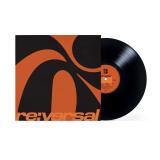
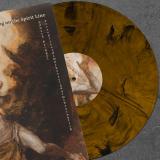
Finnish Electro flashback! For the first time on vinyl, German label Electro Empire rereleases Polytron's crispy analogue produced and 808-loaded Electro Empire theme song from 2003. The Finnish ElectroBass cruiser is accompanied by another classic, the Polytron 2003 remix of Pimeyden Jousi (Bow of Darkness) by legendary gothic rockers Two Witches from 1988. With vocoderized Finnish vocals and dark synth work, this remix is pure Electro-Disco magic. For fans of raw analogue Electro like DJ Overdose, Cosmic Force or I-F's Space Invaders Are Smoking Grass.
out of Stock
Last delivered 20 months ago available to reorder, subject to availability
Concrete Noir, the project of composer, sound designer, and educator Piero Fragola, returns with Blades of Grass, a new EP released on Italian label Deset, following the acclaimed Romance Ruins.
The record develops Concrete Noir’s atmospheric and cinematic approach to electronic music, combining dense textures, sustained rhythmic tension, and immersive sound design. Side A features “Density,” “Pure,” and “Sleepless Eyes,” while Side B presents two reinterpretations: Legowelt’s electro-driven remix of “Rain On Me,” which emphasizes its synthetic and nocturnal qualities, and Caruan’s dance-floor reworking of “Sleepless Eyes,” preserving its atmospheric character.
Conceptually, Blades of Grass shifts from the themes of transformation and decay explored on Romance Ruins toward resilience—the ability to bend under pressure without losing identity or coherence. The EP reflects Fragola’s broader artistic language, shaped by more than two decades of experience in electronic music, audiovisual arts, sound research, and modular synthesis, including his work as a designer for Tiptop Audio and previous releases on international labels.
Over the last decade and a half, Rotation Sound System’s annual gathering in the Staffordshire countryside has become one of underground dance music culture’s true success stories – an intimate gathering of like-minded friends and partygoers, powered by a custom-built six-way sound system, with music provided by a carefully curated line-up of dusty-fingered diggers, selectors and hand-picked live performers.
At the heart of the collective’s unique and much-loved approach lies a dedication to finding and sharing lesser-known gems and audio obscurities – fantastic records whose charm and quality has long been overlooked.
Last year, the core members of the crew – founders Dean Meredith and Ben Shenton (renowned for their productions as Mind Fair), and Wrekin’ Havoc trio Rob J, Stuart Robinson and Rich Hall – offered a snapshot of their unique musical approach via debut compilation Everything You Are About To Hear Is True, Volume 1, in the process introducing a global audience to some of the countless unknown mid-tempo classics nestled in their collections.
Fresh from another sold out edition of their acclaimed micro-festival, they’re back with volume two, another must-have collection of slept-on classics, loved-up shufflers and wide-eyed Balearic beats, all of which have played a part in Rotation’s story over the last 13 years.
Appearing on gatefold double vinyl with extensive liner notes telling the stories behind the tracks, Everything You’re About To Hear Is True, Volume 2 is full to bursting with music that sounds mind-blowing on the crew’s high-end sound system.
For proof, check the analogue-rich intergalactic shuffle of Paul Atreides’ 2015 jam ‘Arrakis Walk’, the relaxed boogie-soul of Rocky Winters’ Chaz Jankel produced ‘Vicious Circle’, the easy-listening-jazz-rock bliss of Vincent Maclin’s ‘Should’ve Took a Chance’, the 80s soul squelch of ‘Ecstasy (Centurion Mix)’ by Endgames and the immersive British dub drift of Sigma’s ‘Remember (Dub Style)’.
Everywhere you look, you’ll find eye-opening and ear-pleasing delights. There’s Pinky’s lightly acid-flecked, breakbeat-fuelled, acid house-era street soul classic ‘I Wanna Be The One (Instrumental Groove)’, the 1992 new age downtempo seduction of Linda Myers (‘Shine On Me’), the Clavinet-and-synth sporting jazz-rock/space-rock fusion of Wolfhound (1984 gem ‘Another Moon Song’), the Gallic colour of Buzy’s ‘Keep Cool (Version Maxi)’ and the guitar solo-laden electrofunk explorations of mid-80s UK act Lifesighs (‘Get Serious’, here presented in its extended instrumental form).
For its second chapter, Esoteric Ears switches up mood, presenting two tracks for extended sessions, memorable moments and special sunrises.
Lead track ‘Minute Machine’ comes from mysterious new entity Sektor 13. A sleek, contemporary take on Kraftwerkian Teutonic electronic funk, it slinks and slides its way onto any open open-minded dancefloor.
On the flip, bonafide legend Carl Finlow provides a remix, operating under his renowned Random Factor alias. This retains the spirit and vibe of the original, but amps up the funk and composition, swaggering its way into an epic emotional crescendo. Up there with Random Factor's finest work, it’s a true honour to share this with the world. Gracias Sr. Finlow.
++REC opens its catalogue with a four-track various artists 12", one cut per artist, two per side. Samuel Jabba sets the pace with System Thriller, a driving electro workout built on a relentless bassline. Tomie follows with Re:Frecuency, tighter and more hypnotic. On the flip, Buraye's Canopy Cells brings hardware-driven acid with a live feel, and Caruan closes with Rocco N'Roll Robot, the fastest and most playful track of the four. Mastered and cut by Marco Pellegrini at Analogcut. Distributed by Outside In Distribution.
'Palle Mikkelborg (b. 1941) - a spiritual jazz legend, acclaimed composer, trumpet player and electronic music pioneer - is back in the studio recording his first solo album in more than 25 years. Working with him as a producer is Jakob Bro, with whom he has recorded the great ECM albums Returnings with Jon Christensen and Thomas Morgan, and Strands with Marilyn Mazur.
'"When Palle decided to stop touring and performing live, I suggested that we sit down together and listen through the many MiniDiscs and DAT tapes he had tucked away, hoping we might find a new direction for making music together. We went through everything - recordings of orchestras and choirs, soundscapes, and so on - material he had worked on throughout his career,” says Jakob Bro. “I can still remember the first time we said it out loud. Suddenly, it made perfect sense in my mind: a solo album. An album devoted entirely to Palle - his sound, his vision, his voice. It felt like something the world truly needed.”
'This final opus sees Palle Mikkelborg re-interpret and record his own orchestral works and two pieces by Per Nørgaard and Thomas Laub as 'meditations' on solo piano, trumpet and flugelhorn mixed with soundscapes and guest performances by longtime collaborators Helen Davis, Jakob Bro and Thomas Li.
'As a soloist his sound on trumpet and flugelhorn is both much loved and familiar after decades at the forefront of Nordic Music, but on Light one is struck by the weight Palle Mikkelborg has given his soundscapes and the grand piano. Forever curious on what's ahead, the album underlines his spiritual and ever-seeking approach to free improvisation, classical composition, choral works and experimental sound landcapes.'
Phenomena begins with two artistic voices that seem to speak different languages. Barcelona-based producer R-010 (Lucas Rojo) approaches composition through rhythm, space and electronic transformation; Madrid-born vocalist and multidisciplinary artist Venerandi through texture, breath and the expressive possibilities of the human voice. By the time the album reaches its final moments, that distinction has quietly disappeared.
Rather than functioning as a meeting point between two individual practices, Phenomena gradually
becomes a third language—one that belongs to neither artist alone. Voice no longer sits above the music
but moves inside it, dissolving into layers of synthesis, percussion and guitar until performance itself
becomes another malleable sound source. Likewise, electronic production never behaves as a fixed
environment; it constantly adapts, absorbs and responds, allowing acoustic gestures and digital
manipulation to reshape one another in real time.
This continuous transformation defines the record more than any particular genre ever could. Echoes of trip hop, bass music, psychedelia and experimental electronics drift across its surface, yet they are never
presented as stylistic markers. Instead, they appear as temporary states within an ecosystem that remains
in constant motion, where dense rhythmic passages collapse into suspended atmospheres and moments
of stillness carry as much weight as those driven by pulse.
The presence of Matteo Caro (guitar and percussion), Pablo Gorostiaga (guitar) and Alessio Rodolico
(percussion) further expands this dialogue. Their contributions are not decorative additions but structural
ones, gradually dissolving the distinction between composition, improvisation and production. Instruments
emerge, mutate and disappear inside the same sonic fabric, making it increasingly difficult to distinguish
what was performed from what was transformed.
With Phenomena, Lapsus Records presents a work that feels less interested in crossing genres than in
questioning the borders between artistic identities themselves. The album never asks the listener to decide
where the human ends and the machine begins. Instead, it quietly suggests that, after enough careful
listening, the question itself may no longer matter.
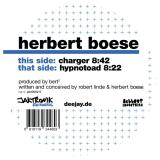
Two decades after its original release, Herbert Boese’s “Charger“ / „Hypnotoad” returns to vinyl.
Originally released as the second record on Jaktronik, the label Herbert Boese ran together with Marc Romboy, the two-tracker captures a very particular moment in German electronic music: stripped back, physical and functional, yet deeply rooted in the sound of Detroit.
At the time Boese was a resident DJ at Düsseldorf’s legendary Harpune club and one of the people shaping the city’s underground electronic music scene. His Jaktronik productions became an extension of that world, music made by a DJ, for the dancefloor.
“Charger” was an immediate standout. Marc Romboy selected the record for his chart at the time, describing its combination of heavy bass and Detroit-influenced strings as a track that made dancefloors scream.
On the flip, “Hypnotoad” goes deeper and more hypnotic: reduced, trippy and relentlessly effective, built around repetition, tension and groove.
Twenty years later, neither track sounds like a museum piece. Quite the opposite. In a time when a new generation is rediscovering the raw, minimal and machine-driven sound of the mid-2000s, “Charger“ / „Hypnotoad” feels remarkably current again.
The original tracks, remastered and finally back on vinyl.
Argentinian artist Juan Hansen presents his debut album 'Ultrasonido'; twelve tracks spanning indie dance, tech house, and soft melodic house, released on his own newly founded label Ultrasonido, with the second single 'Inside My Mind' coming out via belonging by Innellea.
After his breakthrough Boiler Room appearance in 2019, Juan has been on a relentless quest to push the boundaries, playing major stages around the globe, becoming one of the figureheads of the Argentinian electronic music world. As an exceptional live artist, multi-instrumentalist and vocalist, Juan brings a real sense of groove to the stage, merging two worlds effortlessly: deeply emotional songwriting and direct, dancefloor-focused club tracks. 'Ultrasonido' brings both sides together. The album is a clear evolution of Juan Hansen, presenting a wider range of his sound, which he also presents in his live performances. A journey through the musical world of Juan Hansen.
Across twelve tracks, with contributions from Clér Letiv, Santi Portillo, Franco BA, Rocio Giorgi, Miko Franconi, Brigado Crew and Marley Waters, Juan shifts between club-focused tracks and more intimate, song-driven moments, moving naturally between Spanish and English. It’s a debut album that captures both his roots and the direction he’s evolving toward.
Juan Hansen's story doesn't start on the dancefloor, it starts with acoustic instruments. He built his foundation in the indie and rock scenes of Argentina before crossing into electronic music, a journey that's still audible in every track he makes. After years of building his profile with live performances, mesmerizing audiences from Cosquín Rock and Ultra in Argentina to Watergate in Berlin, Burning Man in the Nevada desert, and Grand Factory in Beirut.
His search is real and visceral; a search for the different, mixing genres without prejudice, with a seriously playful attitude. Positioned within a new generation of artists dedicated to improvising on stage, Juan fuses electronic sounds with analog instruments and organic soundscapes. There's no genre cage. 'Ultrasonido' is his debut album and the launch of his own label, also named Ultrasonido. A long-form statement after years of singles, EPs, and shows around the globe.
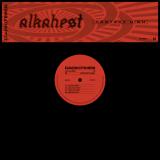
Hidden Sounds Record store – with the help of Emotional Recordings – launches the Dark Times label with the first of two club orientated EPs from Canadian brother-production duo Lex and Rew MacCrimmon and their project Alkahest.
Released on their own Post Contemporary label between 1994 – 1996, Alkahest contrasted with the spacious electronica of their influential and still on-going project, Legion Of Green Men.
Growing up in suburban city life in Burlington, Ontario, the MacCrimmon brothers’ interest in music and collecting records started early, always looking for interesting sounds in new places. With a limited local music scene or record stores, the alternative and college radio stations were the only way to discover new music or the type of music they sought.
The German electronic sounds of Kraftwerk, Klaus Schulze and Tangerine Dream were early obsessions, alongside Neu, Cluster (& Eno) and the post punk and synth pop emanating from Britain. The Flying Lizards, John Foxx / Ultravox, Gary Numan and The Normal were favourites, before diving into the 80s industrial experiments of Cabaret Voltaire, Severed Heads, Nurse With Wound and Throbbing Gristle.
Making their own music soon followed, first experimenting with 4 track cassette and digital delay, drum machines and synths soon followed, steadily building their own studio. All these influences merged in the early 90s with the dawn of house and techno and the progression to start the Post Contemporary label launched in 1992.
With the project Legion Of Green Men achieving early success, their diversion with Alkahest explored a post-industrial techno hybrid. Unsubtle, night music, the rhythm and sonic textures are more prominent over melody.
Contact High covers this Alkahest sound, from the 133 bpm trippy, psychedelics of opener Black Tabs, the acid breaks of Ground Zero or the charging nature of closing Séance 333, where all bets are off – together this 4 track EP perfectly captures the early spirit of Canada’s electronic music scene finding its place in dance culture, from the raves of the Toronto’s outer rim to the beaches of Anjuna.
However, in the title cut Contact High, there is something else happening, as electronic dub is explored, where the space in the music, between the beats, is as important at what happens on the surface. A love of this ethereal feeling would lead the brothers to head further in this direction and here is a perfect example of that early journey.
“Negative Music / The Poorest! If they still know silence at all, then only as holes in the continuum of noise…” — Günther Anders, 1965
Editions Mego presents GETGETGET, a new release by Thomas Brinkmann which serves as an inquiry into silence, code, and the limits of perception.
The title GETGETGET references the trilogy of ‘Get’ lp’s made by Rehberg under his PITA moniker; Get Out, Get In and Get On. The music is based on material by Rehberg and Brinkmann morphing these two identities into a third colour, a disappearing color.
Emerging from a live performance at the label’s 30th anniversary in Berlin, the work unfolds as both sonic artifact and conceptual system: a study in what remains when sound is reduced, extracted, and reconstituted.
Taking inspiration from Günther Anders’ notion of “negative music”—composition through absence—Brinkmann’s approach aligns with Heinrich Böll’s idea of “collected silence”: silence not as void, but as a material framed against the constant pressure of noise. In GETGETGET, pauses are not gaps but structural elements, cut from a continuum and reinserted as signals.
The two side long tracks weave a dark abstract and ‘twisted’ presence where the ghosts of the machines and their operators fuse into a fantastical whole. One can hear traces of both Brinkmann and Rehberg logic which seems to fuse in a hallucinatory manner.
Brinkmann’s work reflects a broader condition: the translation of material processes into informational ones. As images detach from bodies and code separates from matter, sound too loses its fixed resonance. What remains is circulation—of signals, of data, of meaning—within systems that increasingly define perception itself.
GETGETGET is an album where absence is equal to presence, a metaphor with suggestive tones of the influence Rehberg had and continues to have in the world of the radical experimental electronic avant garde. The “zero” is not empty; it is what makes everything else work.
Jen Cardini & Shonky revive their 20 year old anthem August In Paris with remixes from Kasra V, Jennifer Loveless and Jump Source.
Originally released on Mobilee Records in 2006, Jen Cardini and Shonky’s record ‘August In Paris’ remains a defining statement from the minimal era. Ahead of its time upon release, the record distilled the genre to its essentials, bleeps, hypnotic grooves and impactful vocals, unfolding with the kind of restraint that continues to resonate two decades on.
To mark its 20th anniversary, ‘August In Paris’ returns with three distinctive reinterpretations from Kasra V, Jennifer Loveless and Jump Source plus a re-release of the original coming out on Jen Cardini’s formidable label Correspondant. As well as this Jen Cardini and Shonky will be playing an All Night Long set at Paris nightlife institution Rex Club on 29th August. Look out for merch on the night too.
Speaking about the project Jen Cardini discussed: “It is crazy to think this was two decades ago and that Shonky and I are still touring and sharing our love for music. For the anniversary, we decided to bring this special track to light again’.’
Each remix approaches the source material from a different perspective while preserving the essence of the original.
UK DJ and producer Kasra V leans further into the track’s skeletal framework, blending his signature sultry sonics into this hypnotic chunky groove to produce something entirely new but familiar.
Jennifer Loveless, an unearthed gem when it comes to production, strips things back even further, delivering a rough and tough uncompromising club version primed for sweaty dark dancefloors, it perfectly encapsulates the original without overshadowing it.
Closing the EP, Montreal duo Jump Source, Priori and Patrick Holland, take the record into more left of centre territory. Their version stretches the original into a warped, slow-burning electro excursion, perfectly suited to the blurred edges of the after-hours.
This is more a relic than a record. A token of respect to the music that made me who I am. Everything I do starts here — the urge to pull songs I love into the club shape I play today, for one reason only: to make someone else feel what I feel when I hear them. Two techno improvisations, ANG and OSC, built on two songs that mattered enormously to me and to electronic music — bands that started their own revolutions, in their own time, mostly off to the side of the mainstream.
These came out too good to keep to myself. Vinyl only. 300 copies. No repress, ever. First come, first served. Bandcamp and selected stores. No digital, no promos — this one stays sealed.
Music From Memory presents ‘Mutualkind’, by Asa Tone, the collaborative project of Melati ESP, Tristan Arp and Kaazi. Written between Indonesia, Mexico City, Berlin and New York, the record unfolds through a process of continual exchange, where distance itself becomes part of the group’s music formation.
At the centre of the album is the idea of a shared language, formed across differences in geography, experience and musical approach. One such process explores Tristan’s electronic hand percussion triggering fragments of Melati’s voice in real time, while a library of spoken words and phonemes are reshaped through chance-based rhythmic processes. Voice becomes percussion, rhythm becomes melody, and the lines between individual contributions begin to dissolve.
Some pieces, including ‘Water Talk’ and ‘Second Language’, were recorded live in a single take, while others were assembled gradually through remote exchange. During the final sessions in Indonesia, Balinese percussionist Putu Septa contributed kendang to two tracks, bringing the instrument into dialogue with modular synthesis, FM textures, electronic drums, MIDI wind instruments and Melati’s shifting vocal forms.
Sounds are slowed, stuttered and reorganised, reflecting a world shaped by illusory borders, vanishing landscapes and glitching ecosystems. Yet the album remains rooted in the act of tending to something shared: a musical field built through listening, improvisation and repeated moments of reunion.
‘Mutualkind’ seeks to blur boundaries without erasing the identities that meet across them, providing a space in which voice and instrument, self and other, separation and togetherness can briefly exist at once.
MFM086 will be released on vinyl and digitally via Music From Memory on October 22nd 2026.
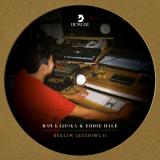
Berlin Sessions II continues the dialogue between Ray Kajioka and Eddie Hale, two producers working across techno, electro and experimental ground. Explorer opens with a rolling low end and clipped hats, built for the peak. Seven, Kajioka alone, strips back to a stark Detroit pulse, drum machine logic laid bare. Home returns the pair to shared ground, warmer pads over a steady kick, built for the room rather than the mainroom. Eleven closes with Hale solo, electro accents and a looser, more experimental swing. Across four tracks the record moves between drive and detour, functional enough for a set, strange enough to stand apart from it.
Underground heroes to worldwide pioneers. Deep cuts from the world's largest archive, pressed on heavyweight, collectible vinyl. Here is a list of names that defined techno, afrobeat, minimal, tech-house and alternative electronic music - all still top of their game.
The A-side features a typically robust Ricardo Villalobos remix of Beck, made accessible by the vocal lead and distinguished by an astonishing 14 minutes of playful drums and sound design that only Villalobos could create.
The AA-side opens with three pioneers co-creating a bass-heavy tech-house banger, with a tinge of guilty pleasure. Katy B on vocals, with Four Tet and Floating Points on production duties. Two further pioneers, Jeff Mills and Tony Allen, follow it up with a deep, brooding organ jam built on layers of intricate, varied percussion. To close, we hear a different side of Villalobos in collaboration with Max Loderbauer of the experimental jazz and electronic music scene. Built on original acoustic recordings, it is reframed with serene delicacy.
This is our deepest release yet.
Limited run. Follow the sound.
a A1: Beck - Cellphones Dead (Ricardo Villalobos Remix) 14:36
b B1. Four Tet, Katy B, Floating Points - Calm Down 4:04)
c B2. Jeff Mills, Tony Allen - Locked And Loaded [7:47
[d] B3. Ricardo Villalobos, Max Loderbauer - Recat [7:15]
[a] A1: Beck - Cellphones Dead (Ricardo Villalobos Remix) [14:36]
[b] B1. Four Tet, Katy B, Floating Points - Calm Down [4:04)
[c] B2. Jeff Mills, Tony Allen - Locked And Loaded [7:47]
[d] B3. Ricardo Villalobos, Max Loderbauer - Recat [7:15]
[a] A1: Beck - Cellphones Dead (Ricardo Villalobos Remix) [14:36]
[b] B1. Four Tet, Katy B, Floating Points - Calm Down [4:04)
[c] B2. Jeff Mills, Tony Allen - Locked And Loaded [7:47]
[d] B3. Ricardo Villalobos, Max Loderbauer - Recat [7:15]
[a] A1: Beck - Cellphones Dead (Ricardo Villalobos Remix) [14:36]
[b] B1. Four Tet, Katy B, Floating Points - Calm Down [4:04)
[c] B2. Jeff Mills, Tony Allen - Locked And Loaded [7:47]
[d] B3. Ricardo Villalobos, Max Loderbauer - Recat [7:15]
[a] A1: Beck - Cellphones Dead (Ricardo Villalobos Remix) [14:36]
[b] B1. Four Tet, Katy B, Floating Points - Calm Down [4:04)
[c] B2. Jeff Mills, Tony Allen - Locked And Loaded [7:47]
[d] B3. Ricardo Villalobos, Max Loderbauer - Recat [7:15]
[a] A1: Beck - Cellphones Dead (Ricardo Villalobos Remix) [14:36]
[b] B1. Four Tet, Katy B, Floating Points - Calm Down [4:04)
[c] B2. Jeff Mills, Tony Allen - Locked And Loaded [7:47]
[d] B3. Ricardo Villalobos, Max Loderbauer - Recat [7:15]
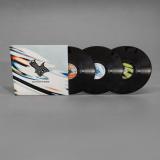
WRWTFWW Records proudly announces the release of sfs/in vain (selected tracks) by UK jungle heavyweight and Future Retro London founder Tim Reaper, a limited-edition 3LP bringing together selected tracks from two previously digital-only albums, sfs and in vain.
An insane collection of slower 140 BPM wonders, sfs/in vain explores jungle, dubstep, UK garage, R'n'B, grime, liquid D&B and broken beats through Tim Reaper's fresh and informed approach. Deconstructed and reconstructed club music, rooted in tradition but looking forward, these tracks reveal another side of one of the key figures in the modern jungle revival.
The selection comes from 2 albums. sfs collects a body of slower material Tim Reaper worked on throughout 2025, stretching across various genres of UK electronic music. in vain comes from a much more personal place. Written during a period of instability, heartbreak, financial and professional uncertainty, the album became a way for Tim Reaper to process what was happening around him and find some kind of escape. The tracks were made at a point when the effort he had put into rebuilding his life felt as though it had all been "in vain" - hence the title. The result is warm, melancholic, soulful, simply very human.
Together, these selected tracks highlight the incredible range of Tim Reaper's production, proving that his understanding of jungle extends far beyond the traditional boundaries of the genre. From heavyweight bass music to delicate melodic passages, sfs/in vain (selected tracks) is a beautifully varied snapshot of an artist constantly pushing UK club music into new territories.
Tim Reaper has been leading the resurgence of jungle for years, with releases on AKO, Skeleton Recordings, 7th Storey Projects, Green Bay Wax, Dalston Chillies, Parallax, Myor Massiv, V Recordings, Deep Jungle and many more. He is also the founder of Future Retro London, one of the most respected labels and platforms in the contemporary jungle scene.
In the realm of past-life regression hypnotherapy, there is a concept known as “Life Between Lives,” wherein a sacred exchange of energy occurs between two souls in the spirt world, helping a spirit fully understand and forgive a being who hurt them in a past life. This exchange – called “passing the cup of sorrows” – became the unexpected inspiration for William Basinski’s first new album in six years.
While sinking deeper into the daily abyss of our collective negativity bias, William Basinski stumbled upon a video describing the spiritual hypnotherapy exercise known as “passing the cup of sorrows.” Fixed on the glow of a screen that projected mounting anxiety and cynicism at a seemingly interminable pace, Basinski found the testimonials of this fascinating therapeutic practice to be profoundly moving. He sat at his piano, translating the transformation of those traumatic memories of past lives into cathartic tears of the present day.
Channeling the quiet curiosity and asymmetrical patterns of pioneering 20th Century composer, Morton Feldman, Passing the Cup of Sorrows is a single 40-minute piece that employs a solitary piano and subtle electronics to truly haunting effect. It recalls fragments of traumatic memories and projects them as fractals in a slow-moving soft focus that’s as eerie as it is enlightened.
A cosmic collision between Perzeptiverdampfkesselqualmtbesinnlich, the psycho-cognitive alter ego of acclaimed electro alien entity pdqb, and Edward Ka-Spel, experimental music icon, apparent half-Earthling and vocalist of The Legendary Pink Dots and The Tear Garden - and, according to pdqb, the owner of the most beautiful voice in the universe.
A storytelling dream team brought together by a fortunate twist of fate, with visual transmissions by the enigmatic Nicola Samorì.
Two Songs. Four Transmissions. One Missing Captain.
On their third album, FANGS, London collective HMLTD have created an entirely new genre: Götherdammerüng (or ÜberGöth). Predictably unpredictable, it could not be further away from their last outing, 2023 rock opera The Worm. The sixteen-piece orchestra has been traded in for Ableton, the timpani and violins replaced with side-chained four-to-the-floor and rave synths, and the gospel choir swapped for guttural gothic howling and black metal screams. The result is both unique and terrifying: a total reinvention and rehabilitation of the goth genre, through the looking glass of modern electronic and doomscroll-era dance music.
This new beginning was accompanied by a change in personnel, with Theo Spark and Andrei Martynchyk joining the fray alongside original members Henry Spychalski and Duc Peterman. Decamping to a ruined château in the Loire Valley, the quartet became obsessed with vampire lore, and the EBM and goth sound that inspired their early work: Fad Gadget, DAF, Nitzer Ebb, Suicide and Bauhaus. FANGS also points to more contemporary influences like Crystal Castles, German hardcore, 2000s blog-house a la Justice, and 2020s sleazepop.
The world crafted in FANGS is full of cosmic pessimism, glowing horror, imperceptible evil and digital dismemberment, ancient curses and ruined castles, Vampires. But it is also a thoroughly fun, and funny, record, as danceable as it is deep. Born of the club, some tracks would not sound out of place on Brat. Like a Smiths song which sounds happy and carefree until your brain tunes in to the misery of the lyrics, it can be listened to - and enjoyed - on two levels. One can get lost in the throb of bass and ludic synths, or tune into the horror of the lyrics which overlay them.
FANGS attempts to offer up a reflection to a culture that - like a Vampire - has lost its own. The result is something not only thoroughly modern, original, and inventive - but that feels genuinely dangerous and potent. FANGS delights in this ambiguity: simultaneously indicting decadence, decay, and moral rot, while luxuriating in its intoxication by it. Cacophonous sub-bass becomes a chthonic call of the void; seraphic rave synths become the screech of Valkyries; four-to-the-floor becomes a deathly funeral march. Vampire apocalypse.
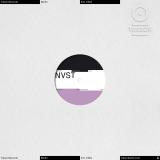
Tresor Records announces GODSPEED, a new EP from NVST, out on October 23, 2026. From its origins in the Motor City and through to the themes of interstellar travel, techno has always been a genre focussed on forward movement, a tradition that GODSPEED continues boththrough music and title.
The EP is a collection that brings to mind the spirit of early, non-conformist releases on Tresor, full of hypnotic synth loops, spacious FX, and breakbeats, yet with a crisp and modern sonic palette. Side A embarks with two tracks that combine a low, buzzing bassline with trippy melodies and percussion that ventures close to breaks and electro, while the B-side moves intothe fast lane with driving acid and more regimented drums. Digital bonus track "Firliner" combines both approaches across its seven-and-a-half minutes, as a buzzy bassline and spluttering beat ignite into a steady trance-induction.
The EP title arrived the way the best ones do: not so much chosen as absorbed from the aether, the word kept popping up during the creative process until it became the ideal name for this collection, given its connotation with setting out on a journey.
"You remember the nights where you've been on the floor for hours without realising how much time has passed, the conversations you can't fully recall, or how unexpectedly open you've been to everything around you. The music speaks the language of substance not as a statement, but as a way of describing perception. It's about experimenting with yourself, your body, your hearing, your emotions. About reaching a point where things that once felt permanent suddenly lose their grip, even if only for a moment. These recordings come from that place. They capture moments where movement replaces thought, memories blur into feeling, and vulnerability becomes part of the process. They're documents of a very
specific time, but also of something much more familiar: trying to lose yourself just enough to find a different version of who you are." NVST
This fast-paced forward travel is implicit in the word speed, but once this word indicated power or prosperity so that godspeed is a wish for success, forming an appropriate double meaning for this first full release of NVST on Tresor.
On their third album, FANGS, London collective HMLTD have created an entirely new genre: Götherdammerüng (or ÜberGöth). Predictably unpredictable, it could not be further away from their last outing, 2023 rock opera The Worm. The sixteen-piece orchestra has been traded in for Ableton, the timpani and violins replaced with side-chained four-to-the-floor and rave synths, and the gospel choir swapped for guttural gothic howling and black metal screams. The result is both unique and terrifying: a total reinvention and rehabilitation of the goth genre, through the looking glass of modern electronic and doomscroll-era dance music.
This new beginning was accompanied by a change in personnel, with Theo Spark and Andrei Martynchyk joining the fray alongside original members Henry Spychalski and Duc Peterman. Decamping to a ruined château in the Loire Valley, the quartet became obsessed with vampire lore, and the EBM and goth sound that inspired their early work: Fad Gadget, DAF, Nitzer Ebb, Suicide and Bauhaus. FANGS also points to more contemporary influences like Crystal Castles, German hardcore, 2000s blog-house a la Justice, and 2020s sleazepop.
The world crafted in FANGS is full of cosmic pessimism, glowing horror, imperceptible evil and digital dismemberment, ancient curses and ruined castles, Vampires. But it is also a thoroughly fun, and funny, record, as danceable as it is deep. Born of the club, some tracks would not sound out of place on Brat. Like a Smiths song which sounds happy and carefree until your brain tunes in to the misery of the lyrics, it can be listened to - and enjoyed - on two levels. One can get lost in the throb of bass and ludic synths, or tune into the horror of the lyrics which overlay them.
FANGS attempts to offer up a reflection to a culture that - like a Vampire - has lost its own. The result is something not only thoroughly modern, original, and inventive - but that feels genuinely dangerous and potent. FANGS delights in this ambiguity: simultaneously indicting decadence, decay, and moral rot, while luxuriating in its intoxication by it. Cacophonous sub-bass becomes a chthonic call of the void; seraphic rave synths become the screech of Valkyries; four-to-the-floor becomes a deathly funeral march. Vampire apocalypse.
Melissa Weikart and her piano have proceeded through life in step, from her early classical
training to the experimental practice that defines her work today, a blending of sounds and forms that has never been so clear—and so fully realized—as on her new album, Contact. Across twelve shifting and evocative tracks that examine the connective tissue binding us to ourselves and others, the Franco-American musician’s voice and piano navigate personal and emotional terrain with clarity and nuance, forging a rich dialogue between artist and instrument, artist and self, and artist and listener.
Winner of the 2022 Nancy Jazz Pulsations emerging artist award and the instrumentalist prize at the 2023 La Défense National Jazz Competition, Weikart has released two EPs and an album as a solo artist, and one EP and an album—Surprise and Secret—with her electronic duo Beatrice Melissa. A student of jazz and ’70s folk-pop, and a keen lover of improvisation since her time at the New England Conservatory in Boston, Weikart has always conjured the confessional candor of the singer- songwriter in her music, even as she dispenses her lyrics across rich, shifting, dreamlike tableaux.
On Contact, written and arranged entirely by Weikart (aside from “New angles”), she pushes her sound further than ever before. The album is animated by a pressing need for connection, observing what brings us together and what drives us apart, and the life-saving revelations that emerge along the way. The album’s opener, “Crash,” is a dreamy telephone-hour ode, a message in a bottle, to connections new and old. On the wistful “Mesurer le vent,” Weikart conjures Debussy or Ravel, layering contrasting sounds like an Impressionist painting. The title track begins as a showcase of Weikart’s frank lyricism, a splice-reel of missed connections and wasted time, then glides into a hazy, euphoric galaxy of pleas, circling around her thesis—“I wanted to make contact”—that ushers us into “The Intersection,” a song that recalls her the beginning of her career, when it was just Weikart and her keys. “Appétit.e” is built around a sample of her down-the-hall neighbor’s drumming—another subtle, affecting gesture toward proximity and connection—while pulsating synths reminiscent of Air lend the track an unsteady atmosphere. On the Carpenters-inspired “Expectations,” Weikart muses on the relationship patterns, universal and specific, that have always been a hallmark of her songwriting.
The psychedelic “L’amour de construit” is a slow-motion fall down the rabbit hole, as Weikart
considers the way her own emotions are captured and commodified by the confining ways we think about love. The interlude—“L’amour pt. 2”—finds her near the end of that trip, shouting into the void as a last-ditch effort to rescue herself from the fall. The drums near the end of the interlude warn us that there may be no cushion for, until she is saved, again, by the power of revelation, on the confident, resilient “Not Right”—on which a show-stopping, frenetic conversation between singer and piano is gracefully interrupted by a rush of transcendent strings, lifting her back up.
On solid ground anew, “New angles,” featuring Manu Delta, creates a percussion-less groove that relies on experimental synth sounds. The 11-o’clock stunner “Catching up”—composed in a church—meets the singer in a state of ecstatic confession, bringing her to the formative memory that propels “Bicycle,” the album’s closer. Younger, more wide-eyed, she reflects on her move from Boston to Strasbourg, those early days, when Weikart had no other companion than that loyal hunk of scrap metal that took her to the shores of her own soul. She seems to suggest, on “Bicycle,” that a backward-glance is not always troublesome, not always anxiety-producing, but can be grounding: a reminder of where we come from, so that we can keep moving forward.
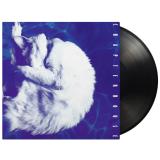
Chapterhouse was a British band that eventually became part of the burgeoning shoegaze scene along with bands such as Lush, Ride and Slowdive. Between 1987 and 1994 they only released two albums of which Whirlpool was their debut.
Unlike their counterparts, Chapterhouse heavily employed structures borrowed from electronic music creating heavy, yet strangely uplifting grooves. The record spent three weeks in the UK Albums chart peaking at number #23 and includes the single "Pearl" featuring Rachel Goswell of Slowdive. Pitchfork in turn ranked the album at #17 on its list of the 50 best shoegaze albums of all time.
Whirlpool is available on black vinyl and includes an insert.
Blume presents two pieces composed in 1970 by the American pianist and composer David Tudor (1926-1996), one of electronic music's most important pioneers, for the Pepsi-Cola Pavilion, a unique artist-designed and programmed space for Expo '70 in Osaka, Japan, created by Experiments in Art and Technology (E.A.T.). Pepsibird and Anima Pepsi deploy electronic technology as a means to experience sound in ways that are anything but matter of fact, rendering liberated environments within and through which one might democratically express and commune. Viewed through the lens of what was, is, and might have been, they offer the tools for time travel: an unmediated encounter with radical, optimistic ideas that gave way to the complex cultural landscape of our time.
Initially trained on organ and then piano, Tudor emerged as a leading figure within New York's musical vanguard after his groundbreaking 1950 performance of Stefan Wolpe's Battle Piece and the American premiere of Pierre Boulez's Second Sonata. Within less than a year he had joined the Merce Cunningham Dance Company as its accompanist, a role he kept until his death, and began one of his most lasting creative relationships with John Cage, who would state that his entire output between 1951 and the end of the 1960s was written with Tudor in mind. Christian Wolff, Earle Brown, Morton Feldman, Sylvano Bussotti, Mauricio Kagel, and Karlheinz Stockhausen all wrote works for him during the 1950s and '60s. Through indeterminacy and chance-based methods, Tudor was noted for radically intervening with the works he played, often making them entirely his own, and it was this same singularity of vision that led him to gradually abandon the piano in favor of electronic process, through which he began working as a composer in his own right.
His engagement with electronics dates to the early 1950s and Cage's Project for Music for Magnetic Tape. By the following decade the pair had moved to live electronics, with Tudor rendering works like Cartridge Music and Variations II through contact microphones and complex systems of feedback and amplification. Before modular synthesizers existed, he designed and built his own electronics, often with engineers from Bell Laboratories, producing dozens of unique instruments and processing tools that helped lay the groundwork for the technological needs embraced by most electronic musicians ever since. A clear marker of his emergence as a composer came in 1966 with 9 Evenings: Theatre and Engineering, where he premiered Bandoneon! (a combine), turning the cavernous performance space into a feedback instrument and a total environment. The event led directly to the founding of E.A.T. the following year by the engineers Billy Klüver and Fred Waldhauer, alongside Robert Rauschenberg and Robert Whitman.
Among the most ambitious of E.A.T.'s projects was the Pepsi-Cola Pavilion, for which Tudor composed four pieces between March and April 1970: Pepsibird, Anima Pepsi, Pepscillator, and Microphone. Together with Forrest "Frosty" Myers, Robert Whitman, the sculptor and filmmaker Robert Breer, and the architect John Pearce, he was tasked with the design and function of the building: a 120-foot diameter steel and polyvinyl dome, shrouded in mist and fog and lit in the evenings by a square of intense blue-white xenon light. Tudor worked with Gordon Mumma and Fred Waldhauer on a unique sound system capable of processing and variable distribution through 37 speakers, controlled both by automated means and by the performer, and with Lowell Cross on a sound-activated laser deflection system inside the pavilion's mirrored performance hall.
Both pieces are an advanced form of musique concrète: libraries of tape recordings, live mixed and processed through the pavilion's sound console and distributed through 8 channels of stationary and rotating patterns designated by Tudor's instructions (small circle, great circle, large rhomboid, spiral, small triangles, small ovals). Pepsibird is focused upon a physical interiority, its source tapes being recordings of the brain wave activity of humans and animals: cat's eye, nerve firing, bats, EKG, alpha waves, a modified nightjar. Recorded in situ in 1970 and mixed down to stereo, it retains a striking sense of the space and ambience that Tudor achieved in performance. For more than eighteen minutes he merges subtle textures and pulses, at times resembling birdsong, within a blanket of vast, resonant ambience of subaquatic density, foreshadowing the relationship to the natural world of later works like Rainforest IV (1973).
Anima Pepsi is centered on the exterior: field recordings that Tudor made of animal and insect sounds (mosquitoes in a jar, a fly on flypaper, a wasp chewing, a beetle walking) and a mix of human and animal sounds that he called the "funny tape". Where Pepsibird deploys interior sounds in ways that allude to the natural world, Anima Pepsi pushes the sounds of nature and humanity toward the otherworldly through the clear presence of electronic sounds and processing, moulding detailed, pointillistic patterns of abstract sonority into gauzy blankets of ambience and space.
The collaboration did not last: less than a month after the opening, Pepsi withdrew its support, fired E.A.T., and disregarded Tudor's tapes, which according to accounts had to be smuggled out by staff, playing its own soundtrack in the pavilion for the rest of the Expo. Heard today, Pepsibird and Anima Pepsi anticipate many territories of later electroacoustic practice, from field recording to live processing, while the terms on which they were made, radically unpredictable, indeterminate, and experimental to the core, reconfigure what we've come to expect from electronic process, making one wonder if the past was ahead. Issued by Blume in a highly limited vinyl edition of 300 copies on red vinyl, with a 20-page LP-size booklet containing You Nakai's essay and newly commissioned liner notes by Bradford Bailey.
On the occasion of the centenary of composer Pierre Henry,
Transversales Disques is very glad to announce the release of these lost tapes "Variance" & "Duo" by the electroacoustic music pioneer.
"Pierre Henry was born in 1927 in Paris. He began studying music as early as the age of 7. In 1944, guided by Olivier Messiaen, he envisioned and began composing the music of the future.
His meeting with Pierre Schaeffer was pivotal to his creative path, leading the two of them to found the G.R.M. (Groupe de Recherches Musicales).
"Inventing new compositional techniques that would, in time, become widely used on a large scale, he continually gave this music a far-reaching power no one had anticipated at the outset.
He also forged a sound entirely his own — as instantly recognizable as that of the most famous jazz musicians."
The fifteenth release of Barro comes with an exclusive: behind the Transylvanian mask of Orlok 101 lies Nöle himself, the boss of the label.
Remember that he used this vampiric AKA to kick off Barro—his The End Of The Beginning being the first release, published in late 2018. That same year, his techno-industrial sound—packed with references from the famous work of Bram Stoker and nightmare atmospheres—helped launch another label: Soil, the Valencia-based imprint, with a project that included a suitably fitting remix of The Horrorist. The following year, he released an EP with five original tracks, titled Runaway, while also “spreading blood” on Antikhrist Visions Vol I alongside his Industrias Mekanikas comrades.
His dark influence has been felt across Barro’s catalogue, whether through his own tracks or remixes—sinking his teeth into artists like The Hacker (under his real name, Amato) or Nebula Circuit. In 2025, Orlok made his debut on Aspecto Humano with a powerful EP, equally gritty and dark. In Barro, we’ve recently had Nöle—the most techno side of Imanol Pagola—with the EPs Electro Bloody Music and Demencial Chico Aceleradom, two great showcases of his ability to keep us dancing nonstop, following the popular Mendekua, released by Xtraperlo.
For Barro 15, the two sides of the producer and DJ come together on this EP, titled Sex With a Cop—four tracks released on vinyl and digitally, plus an alternate version of the final composition as a bonus track.
Nöle's knowledge of the dancefloor and Orlok 101's ability to create atmospheres that will give you goosebumps come together on this EP to create an explosive mix.
Sex With a Cop starts with Hilerri, a techno EBM track where Orlok provides repetitive, screeching sounds and a ghostly melody, while Nöle adds incisive synths and a catchy, addictive vocal sample that warns you of the danger of the material you’re listening to. Orlok then takes over with his industrial and metallic sonorities on the next track, Amets Fabrika, although Nöle’s influence still comes through with his powerful bass and addictive synth lines. A stifled scream and a production packed with a thousand details create an unsettling atmosphere that will surprise you on the dancefloor.
The flip side begins with No Voy A Quedar Con Nadie, a track closer to Nöle’s technooid world. Even with its unsettling opening, it doesn’t take long to turn into a danceable bomb, with that dark touch typical of the Navarro producer.
Surprisingly, he saves the best for last: Harina de Huesos Humanos is one of the most interesting tracks created by Imanol Pagoda, and we can hear it in two versions, one as a bonus track. Thanks to complex production full of details and sounds that come and go, a punchy, hard as granite kick drum, and a carefully crafted industrial atmosphere, it all ends up being the perfect union between the two sonic worlds. A spectacular finale for the label’s fifteenth release.
On Last Night At Marienbad's latest, the imprint brings together three of the brightest souls found within the realms of Jazz, namely Mauricesax, 9ick and Milan93, with their collective talents synergising effortlessly on 'A Garden Between Us', alongside a stellar cast of remixers who add even further delight between the grooves….
As a genre, Jazz has perhaps lent itself the most to other musical universes, in that its curious heart, endlessly experimental nature, and parameter-defying spirit have wrapped itself deep within the core of countless albums, scenes, and music makers. It's a genre that welcomes reinvention, consistently defying its contents and always reaching out to find new methods of expressionism. Electronic music, in its many forms, has truly embraced Jazz perhaps like no other movement of music has, with a truly astonishing array of records surfacing in the past 40 years which have blended Jazz's unique motifs with grooves, chords, and emotive excellence. From 90s Jazz house and UR Techno, through to Future Jazz, downtempo, and Hip Hop, and around many other suns, there remains such an intrinsic and symbiotic relationship between the two musical realms that caters to those who wish to live music both within and out with themselves.
As practitioners of blending electronica and Jazz, few do it like the trio of Mauricesax, 9ick, and Milan93. All three are known for their distinctive soundscapes, yet share commonalities in terms of musical language, feel, and sense of progression. Bringing them together allows for overlaps in their sounds to emerge, and just like Jazz itself, this is where the intrinsicness of sound begins to blossom. 9ick brings his softly evolving vibe to the table, one which was so prevalent and celebrated on his 2025 album 'SMIL'; Milan93 draws from his focal point of exploring fill-laden grooves and a myriad of emotive sensibilities; and Mauricesax draws up his extensive musicality that exists at the corner of jazz, electronic, and experimental music, along with running musical workshops all over the globe.
'A Garden Between Us' represents the trio's core tenets, with this immediately obvious from the record's opener, 'Rhodora'. A gentle solo piano quickly evolves into a series of powerful rhythmic pulses, with brass lines bringing vitality and feel to proceedings. The track shifts gears with purpose, transitioning between musical vignettes of the highest order, with the synth work doing much to bind the transitions together. 'Tulip' emerges slightly differently, with glossy Rhodes tones and an unravelling rhythmic undercurrent setting an enthralling stage. The track flourishes amongst sweeping textures, coming up for air amongst a deeply hypnotic rhythmic section that holds on and never lets up. 'Honeysuckle' lands next, which sees the trio emerge with a boundless, dynamic soundscape. The drums shift within the undertones, as keys, chords, horns and hip-hop vocal samples dance around the pulse, capturing the imagination with their narrative-like placement. Wrapping up the A side comes 'Camellia'. A dazzling array of harmonic sounds converges around the transfixing rhythm section, which emerges from deep below to lavishly roll out over the midsection, with the delicateness of the instrumentation a real highlight here.
The B side features two exquisite remixes, with Pacific Coliseum's version of 'Tulip' landing first. Beginning with a signature four to the floor to get things going, his careful handling of the source material is seen in the tactful introduction of the blissful elements that made the original cut so impactful, with great focus placed on emotive fidelity. The result is a summer-bound house number that reimagines the original in all the right ways, flipping it into a euphoria-driven jazz-laden pacer that reaches for the heavens as much as it drives right into the heart. Teuteu then showcases their take on 'Honeysuckle', and at 9 minutes long, represents the longest cut on the record - and the experience is all the richer for it. Leaning heavily into dance music flavours, Teuteu shifts perspective totally into the realm of the club, with the walls beating hard to the kicks. The sax lines that drift ethereally up top keep eyes closed and souls full, as the dance shifts into the next phase.
An experience that drifts from the daydreaming, to soul-warming through to the club shaking - what else is left to experience, except for 'A Garden Between Us' and how it will brighten up life itself….
Crossing their distinctive techno practices in the spirit of mutual appreciation and experimentation, DJ Nobu invites JakoJako to Bitta. Each delivering an original track and then remixing each other's work, both artists examine where their creativity converges, and what happens when their differing qualities collide. JakoJako has forged a reputation within techno and electronica circles centred on her accomplished exploration of modular synthesis. While she comfortably embraces ambient projects, she's also firmly entrenched in the club matching a tough rhythmic sensibility with adventurous textures and subliminal emotional content. As Nobu himself describes, "Beyond standard techno functionality, I deeply respect JakoJako's approach to music making, which stems from a pure, unyielding curiosity about sound itself. Her sound aligns perfectly with Bitta's core philosophy--the coexistence of experimentation and physicality." Nobu's own 'Wax and Wane' opens up the release in a melancholic mosaic of bleeping leads and natural-sounding drum tones, patiently laid out over a dense pad and developed with the elegant but driving style he's made his own over many years. JakoJako's 'Nodus' is a more cybernetic affair--lithe layers of frequency modulation moving over the rugged kick drum thump before opening up to celestial arps and jagged flurries of percussion. For the remixes, Nobu immediately reframes 'Nodus's melodic crescendo as the core theme while steering the track towards an immersive, linear arrangement that ebbs and flows with poise. In the process, he finds his own expressive sound design language to put a unique spin on JakoJako's original sound. Meanwhile, JakoJako steers 'Wax and Wane' into a mesmerising lattice of needlepoint percussion and swooning synth strokes, creating emotive swells out of the raw ingredients of Nobu's original melodies. The end result is a record made up of four distinct pieces, all logically compatible but bringing forth different aspects of two dedicated, ceaselessly curious practitioners of contemporary techno.
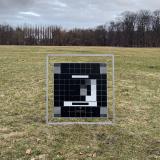
After a five-year-long hiatus, CVBox is back with six tracks between techno, acid, electro and IDM that are more suited to those super dark times we're currently living through than ever before. On "Pattern Based On", the Dresden-based artist and long-running Uncanny Valley-comrade (four EPs and one album) proves that he hasn't lost his touch when it comes to creating electronic cyberspaces that might drive you mad a bit. With majestic sounds and constantly evolving arrangements, the tracks are strangely entertaining on the dancefloor while you can't help but still feel a queasy sensation in your stomach. While some describe the tunes as milky, permeated by translucent membranes, for others they are an aural embodiment of urban landscapes in the post-apocalypse. Only two things are true: No one sounds like CVBox and all his tracks sound like CVBox. The title refers to structures derived from repetitions, sequences and, indeed, patterns. Although the sounds within these patterns usually follow clear paths, they are allowed to overlap and falter. At the same time, it is music through which CVBox comes to terms with his time as a paramedic. The artwork extends this idea with a special twist. A medical-based test pattern with its clinical functionality is set against a backdrop that is clearly placed in a natural environment. A process that creates a kind of artefact and triggers immediate reflection on what will remain of us many decades from now. What role will music play in defining this?
"Dark Flower" is the new imprint by Robert Babicz, launched in cooperation with Systematic Recordings as a home for his own music. Named after one of the defining tracks of his career, it feels less like the launch of another label and more like the opening of a private room: a place for sound, emotion and instinct, shaped entirely by Babicz himself. With „Electric Love EP" he begins this chapter in full colour. After more than 1.000 released tracks and music on labels such as Bedrock, Kompakt, Systematic and Sudbeat, FLOWER0001 is not about proving anything. It is about freedom.
“Electric Love” opens the EP with punchy breaks, luminous harmonies and choral textures that seem to rise above the beat. It is bold, open and slightly unexpected, electronic music with a pulse and a sky above it. "Cuerpo Con Color” brings things closer to the floor: warm chords, fluent grooves and a calm, driving pressure that slowly pulls the body into motion. Across two versions, “Tease Me” closes the EP with a burning bassline, oriental vocal fragments and a seductive tension running underneath. Strange, physical and unmistakably Babicz.
Life In Patterns welcomes Uncertain for his first appearance on the label with “Defeat”, a five-track EP bringing together five warehouse-focused techno tracks, moving between darker industrial tones and the classic rave influences that have long been part of his sound. “Defeat” will release on vinyl and digital formats on 16 October 2026. Across the EP, Uncertain explores a broad range of peak-time energy. “Anxiety” and “Dismiss” take a darker route, built around tense atmospheres, heavy percussion, and industrial textures, while the remaining tracks introduce classic rave chords and a more open, melodic character. Despite the differences in tone, the five tracks share the same directness and focus, designed with the dance floor firmly in mind. Uncertain, formerly known as Boriqua Tribez, has been active in electronic music since 1989. Over the past two decades, he has released and remixed more than 50 tracks for labels including KMS, Recycled Loops, and Ingoma, before starting a new chapter under the Uncertain name in 2018. Since then, his more frantic approach to techno has found a home on labels such as Rekids, Symbolism, Beard Man, H-Productions, WRKTRX, ANAOH, Illegal Alien, Mind Medizin, Intec, and Uncage. Alongside his productions, Uncertain is an experienced DJ known for fast, precise three-deck sets, with international performances and support from artists including Ben Sims, Radio Slave, Truncate, Mark Broom, Carl Cox, Blasha & Allatt, Chris Liebing, Richie Hawtin, Luke Slater, DJ Rush, DJ Bone, and others. With “Defeat”, Uncertain makes his Life In Patterns debut with a focused collection of five techno tracks — from dark industrial pressure to classic rave energy, all built for the warehouse.
Sublime frequencies from the golden era of ambient electronica.
Plumbing hidden depths beneath a deceptively tranquil surface, MLO's mid-90s masterpiece Io is an overlooked gem from a golden era for ambient electronic music. Originally released in 1994, Jon Tye and Pete Smith's collaborative album responded to the growing chill-out movement by leaning into classical and avant-garde influences from Satie, Debussy and Cage through to Soft Machine, Incredible String Band and Eno. Recorded across various studios stacked with classic and rare synths, Io was patiently composed into slowly unfolding suites punctuated with ripples of arrhythmic interference to arrive at a purist vision of true ambient.
The next instalment in Forever Records' ongoing reissue series shines a light back on this landmark piece of UK electronica with the first official reissue since its original edition on Rising High. As well as the original double LP pressing and a new CD digipak version, there will also be a uniquely numbered, limited edition housed in a gatefold sleeve that comes with a bonus 10" featuring two previously unreleased versions of the album's opening cut, 'Wimborne'.
Press response to Io:
"Not so much ambient, more environmental music, Io lets you bring as much (or as little) of your surroundings in as suits your mood. Every listen can be different. Interactive ambient at last.”
IO is pure ambience. Relying on motif as opposed to melody, MLO have produced a truly evocative album.
Peter McIntyre, Mixmag, UK 1994.
"MLO's influences range from the likes of Eric Satie and the intellectual salon music of his era to the more predictable reference point of dubby, modern techno, though they feel, perhaps rather contentiously, that "ambient music can exist in isolation from the rest of the dance music arena". Can it? Take a trip to Io, and find out."
Generator Magazine, UK 1994.
"If you like your ambient deep and moody with long chords that creep along at approximately the speed of drying paint then check out MLO’s Io."
Mixology, UK 1994.
"MLO set the controls for the heart of headspace for their first full album release. Io is top grade ambient brain… Ace album…"
Select, UK 1994.
In Living Color proudly presents Wasi Wasi EP, the debut label release from
Kenyan-born, Berlin-based artist Emo Rugene.
A striking first statement from one of the most exciting emerging voices in African electronic music, Wasi Wasi introduces Rugene's distinctive sound while reflecting the bold, forward-thinking vision at the heart of Living Color. Blending deep cultural roots with contemporary electronic production, the EP marks the arrival of an artist helping shape the future of the genre.
Deeply rooted in African rhythm and musical heritage, Wasi Wasi is a body of work that embraces the past while looking confidently toward the future. Blending hypnotic grooves, organic percussion, and contemporary electronic production, the EP reflects a new generation of artists drawing inspiration from their roots while carving out their own unique artistic identity.
The release features two compelling vocal collaborations that enrich its storytelling. “Wasi Wasi (Vocal Mix)” features Alai K, whose deep ancestral vocal brings a powerful spiritual presence to the title track. “Sahara Dena” features Soukou, whose soulful vocal performance adds warmth, emotion, and depth, creating a beautiful dialogue between tradition and contemporary sound.
With Wasi Wasi EP, Emo Rugene stands among a new generation of African electronic music artists redefining the future on their own terms. His music is deeply connected to where it comes from, yet unafraid to explore new ideas, proving that heritage is not something to preserve behind glass, but something to carry forward with imagination and purpose.
More than a collection of tracks, Wasi Wasi EP is a celebration of movement, identity, and possibility, a record that honours the voices of those who came before while contributing to the sound of tomorrow.
The fifth edition of Meganesia’s annual vinyl release, this year featuring AWHM & Shugo Noss, two leading forces in the fast trance and psytek scenes.
Striving to imagine these two artists as creatures inhabiting the same environment and imbuing it with their sonic identity, we arrived at the idea of a tidal zone in which AWHM’s sound inhabits and defines the warmed, sunlit state of low tide, while Shugo Noss’ sound inhabits and defines the submerged, watery state of high tide.
The resulting release creates a trance-focussed environment inhabited by both the deep, multi-textured, audio-hallucinatory sound of Shugo Noss and the driving, energising force of AWHM.
This release comes out on vinyl and digital on October 27, 2026.
Mastering by Chris Scholz and Dave Miller at Audiosculpture NL
Artwork the THEAJM
Vinyl distribution by One Eye Witness
SHUGO BIO
Shugo Noss is a producer/DJ from Naarm who explores the intersection of sound and form through a blend of hypnotic rhythms, eclectic soundscapes and sonic experimentation. His work aims to exist outside genre binaries, weaving through a multitude of emotional experiences that both relate to, and contradict, one another in an attempt to formulate their own identity. There are no limits that restrain these journeys.
AWHM BIO
A dedicated consumer and creator of trance music, AWHM’s production style draws clear influence from old school goa, psytrance, jungle breaks, and tekno, most easily recognised by his ability to combine driving basslines, hypnotic rhythms, and scattered percussions to transport audiences through uncharted psychedelic realms of fast trance music.
Evolutionary by nature, he’s managed to leverage extensive experiences that led to a self-taught studio process which now stands out in one of the more niche corners of electronic music.
MEGANESIA BIO
Meganesia is an independent music label operating in the broad genres of trance and techno. Drawing its name from the continental plate beneath Australia’s landmass, Meganesia focuses distinctly on developing and platforming artists living and working in Australia.
Since the start of 2022 Meganesia has grown to a catalogue of 12 releases. Across these releases, the label has directly platformed over 40 individual artists on digital and vinyl gaining us recognition as one of Australia’s strongest and most dynamic electronic labels.
Following the success of Denshi Ongaku No Bigaku Vol. 1 and Vol. 2 in 2023, Cosmocities returns in 2026 with two new chapters in its acclaimed compilation series dedicated to the rich heritage and continuing evolution of Japanese electronic music.
Compiled by label owner Matt Soulie, Denshi Ongaku No Bigaku Vol. 4 further explores the depth, sophistication and diversity that have long made Japan's electronic underground one of the world's most inspiring musical landscapes.
Since its inception, the Denshi Ongaku No Bigaku project has celebrated the artists and sounds that have profoundly influenced the Cosmocities vision. Across four volumes, the series has journeyed through ambient soundscapes, deep house, boogie, jazz-infused electronics and forward-thinking club music. Volume 4 shifts the focus firmly towards the deeper end of the dancefloor, bringing together timeless classics, rare gems and sought-after reinterpretations from some of Japan's most respected producers.
Opening proceedings is Kaoru Inoue's remix of Soft's "Art Farmer", a rolling percussive Afro-house excursion rich in hypnotic groove and organic rhythm. XTAL's "Heavenly Overtone" follows with a beautifully cosmic house journey, combining shimmering keys and celestial atmospheres that perfectly capture the compilation's expansive spirit.
On the B-side, Slow Didi's "Follow Me (Hidaway Mix Instrumental)" delivers a deep and hypnotic groove before Tokyo Black Star's "Fantastique Voyage" channels the soulful, sophisticated energy of classic 1990s deep house. The journey continues with Manabu Nagayama and Soichi Terada's "Low Tension", presented here in a sublime instrumental remix by Satoshi Fumi and Yoshi Horino, where warm piano melodies and elegant synth work create a timeless late-night mood.
The final stretch moves into more driving territory. Hiroshi Watanabe's "The Orionids (2025 Revised)" subtly raises the tempo, blending deep house sensibilities with sleek tech-inflected textures. Kaoru Inoue's "Ground Rhythm", reworked by The Backwoods, plunges deeper into hypnotic territory with a heads-down groove designed for intimate basement spaces and low-lit dancefloors.
Closing the compilation is Bitowa and YAMADAtheGIANT's "Forest (Mixtacy Exclusive Version)", a trippy, immersive finale that leaves listeners suspended in a dreamlike state between nature, rhythm and imagination.
A carefully curated collection of deep, cosmic and forward-thinking sounds, Denshi Ongaku No Bigaku Vol. 4 once again showcases the enduring creativity, innovation and global influence of Japanese electronic music.
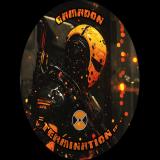
Presenting this limited edition 300 picture disc vinyl on Warehouse Manifesto from label boss GAMADON with the original track TERMINATION and five amazing remixes. Each remix is a collaboration between two different artists. The original tracks is a mind-bending, hard-edged electro stomper, shaped with harsh, distorted industrial beats, warped synths and hypnotic bleeps that will make you bounce! Power & X-Tuder's menacing remix growls throughout and drenches you in dystopian dread. Nasty Boxes & Robodrum's cyber-punk banger is filled with cinematic soundscapes and 80's synth-lines, that invite you on an epic electro journey. Code Rising & Geon bring some Miami Bass to the table and provide us with a brutal, percussion heavy, monster. ADJ & Errorbeauty's remix is a metallic, blisteringly harsh journey across a desolate electro wasteland. EXM & Kim Cosmik end the proceedings with an experimental, IDM, glitchy, anthem.
Remastered limited edition double vinyl with double-sided screenprinted poster-cover (sleeve folds out to be one huge poster). A real collectors item!
When Off Off came out around June 1984, one couldn’t speak of an independent music scene in Portugal. Warm Records’ vague existence didn’t have any impact and Dansa do Som’s inaugural release appeared only in December. 10 years after the revolution, after two IMF interventions, a lot of political instability (not to say turmoil, in the first couple of years) and the natural excesses of a sudden burst of freedom, the Portuguese consumer had more choices but a generally poor standard of living. There was no entrepreneurial culture and serious second thoughts about investing private money in risky ventures.
After many complaints about the whole music scene (institutions, critics and record label executives, popular and classical music alike), something that would continue well beyond the end of the decade, Telectu decided to finance, record, produce, release and sell an album with complete independence from outside structures. Their karmic reward was profit. According to Vítor Rua, Off Off was the only album fully payed by the duo and the only one that really payed off. Not an easy accomplishment for a double LP housed in a large (also double-sided) screenprint with complicated cuts and folds. The artwork was conceived by António Palolo, a friend and multidisciplinary artist. It was based on a collage of heavily saturated and xeroxed polaroids framed in shocking pink and green. Palolo was considered the third member of Telectu, regularly producing slides, video and other visual support for their shows. The inspiration for the type of cover came from GRM’s Gramme series.
Off Off is divided in four distinct sides, each one corresponding to a “theme” or “function” related to Telectu’s manifold artistic interests and interactions. The titles are also gateways to influences and a small portion of Portuguese cultural life:
- Side 1 / “Diagonale” is dedicated to Egídio Álvaro, art critic and gallery director (he opened Diagonale in Paris). Performance art was arguably his main artistic concern over the years, so the music on this side is suggested for use by one or more performers in live or playback situations. The three tracks segue into each other, linked by a synth arpeggio much in the same way as Telectu’s previous “Belzebu” álbum (1983);
- Side 2 / “Anarké” is dedicated to the composer Filipe Pires, one of Jorge Lima Barreto’s recurring invocations when asked about worthwhile contemporary music in Portugal. It is subtitled “concert music”, proposing «a new form of listening». Three tracks also, and these are separated by “clap interludes”, which basically consisted in the following: JLB and VR each had a pair of headphones on, and they clapped their hands according to the rhythm of the music each one was listening. Both musicians were interacting with a different Steve Reich piece: Vítor with “Music for Mallet Instruments”, Jorge with “Six Pianos”. The result is disjointed clapping, an awkwardly deliberate celebration of their own music. Telectu applauded themselves.
- Side 3 / “Cornucópia” is subtitled “music for theatre” and dedicated to Luís Miguel Cintra and Luís Lima Barreto (JLB’s brother), both connected to the Cornucópia theatre company. The side consists of several short pieces previously used as interludes in the Cornucópia staging of “Mariana Espera Casamento” (1983). Field recordings, mood pieces, ambience and a numeric poem (“Soneto Soma 14x”, by E.M. de Melo e Castro) read by João Perry, a quite well-known stage actor. His voice is treated with a flanger effect;
- Side 4 / “Palolo” is “video music”. It’s a one-take mix recorded from cassette sources (Telectu studio experiences) and done live while watching António Palolo’s Om film (1978) projected on the living room wall. It’s a deep, immersive, quasi-mystical 20-minute piece perfectly suiting the meditative, abstract, fluid images created by Palolo by mixing paint and water inside a bathtub. One imagines the Cosmos, hardly suspecting the technique. The film is 90 minutes long, so the music on the LP is of course edited.
The six titles on sides 1 and 2 evoke demons, all of them with conflicting symbolism, since it varies from culture to culture, religion to religion. No explanation is given and Vítor Rua has no idea where this imagery comes from. During virtually the whole stretch of the 1980s, Jorge was the one in charge of titles and concepts, and Vítor didn’t bother too much even reading the liner notes :) In any case, when you synchronize the listening experience with the imagery, a powerful impression emerges, a feeling of being in the presence of these entities while placing yourself inside the sonic narrative.
Off Off is undoubtedly a seminal album in the history of electronic music, as much Heldon as Fripp & Eno, jazz and American minimalism, cosmic out-thereness, mantric miniatures. Telectu at the height of their powers, still very early on, delivering an album-manifesto advocating intermedia art and the fierce independence of Portuguese musicians «from the scum of capitalist music industry monopolies. It’s a path to follow, albeit one that requires enduring hardships and retaliation from music industry gangsters.» Despite a few journalists deemed «capable of being free», the media are «enslaved by the dominant and fascist imbecility of the speculators of light music.» Off Off is addressed to those journalists «and to an audience angry at the cultural misery imposed upon us ..., certain that this music will open new horizons of musical pleasure in the conception of Portuguese avant-garde music, and in the open consciousness of us all. OFF OFF repeats Freedom.»
Those two words are a direct lift from Alberto Arbasino’s 1968 book Off Off, the basis of which is a critical analysis of Theodor Adorno’s and Dwight MacDonald’s ideas concerning the stratification of culture in different levels (high, mid and low) and the pervasiveness of mass culture in the form of a culture industry. In very simplistic terms, and that is precisely the point that inspired Jorge, Arbasino argued that it was possible and desirable to effect a revolution from below, cultivating alternative circuits completely cut-off from what he termed the in-in reality. Telectu’s record was a deliberate demonstration that it could be done, displaying Freedom in the face of all the gatekeepers and other human obstacles.
Ismael Pinkler lives in Buenos Aires. Belly Dance Services head Nick Hanzo in Vienna. Turns out the exact midpoint between the two is somewhere in open ocean. So they abandoned the plan to meet on Earth at all, and met on planet 126 in outer space.
It turned out to be a strange, hospitable little world — spinning at its own pulse, 126 beats per minute, changing landscape every few kilometers, as if it couldn't decide what kind of planet it wanted to be either. Ismael and Nick wandered it together, letting each new terrain talk them into a different song, until ten tracks had quietly assembled themselves. What they brought back drifts somewhere between shoegaze, techno, ambient, trippy tribal house and pop — grounded and gravitational, emotional and mental, to put it in terms Earthlings might understand.
Now, speaking seriously: Ismael and Nick built Planet 126 by passing sounds and ideas back and forth across the ocean, night after night, for eight months. The entire process — composition, vocal recording, production and mixing — took just eight months, a dream scenario for any electronic musician. The collaboration stayed positive, proactive and fresh throughout, letting the project move forward effortlessly. All tracks were written and produced by both musicians together; Nick wrote the lyrics and recorded the vocals, Ismael handled the mix. No samples, no references — just two people building a world from scratch.
Planet 126 also marks a milestone for Belly Dance Services: the label's 30th release, and likely its last. BDS began with BDS001, a vinyl EP by label founders Hanzo & Yaman, and has been solely helmed by Nick Hanzo for the past five years. Now it comes full circle — laid to rest with a big bang: a double vinyl gatefold album co-produced by Ismael Pinkler and label head Nick Hanzo.
Following hot on the heels of the Frequency Damage EP, DJ Quest returns to Cyberfunk with Squeaks / Snake Style— a two-track release that dives deep into the unmistakable sound that made Quest’s productions stand out during the early 2000s.
Rather than simply recreating the past, both tracks tap directly into the DNA of the original Cyberfunk sound: rolling breakbeats, huge basslines, twisted analogue synths and the kind of distinctive production that became synonymous with DJ Quest at the height of the Bassline Breaks era.
Built around original analogue synth work throughout, Squeaks / Snake Style is a deliberate throwback to the raw, futuristic sound of the early 2000s, produced with the weight and clarity needed for today’s sound systems.
It’s classic Quest, strange noises, big bass, rolling drums and plenty of attitude.
A. Squeaks
Everything DJ Quest became known for rolled into one track. Squeaks is an unapologetic throwback to the classic Quest sound of the early 2000s, driven by heavyweight breaks, deep bass and original analogue synth work throughout.
Twisted electronic squeaks and evolving analogue sounds weave their way around the drums, giving the track that instantly recognisable combination of funk, darkness and futuristic weirdness that characterised so many of Quest’s early productions.
Raw, energetic and built firmly for the dancefloor, Squeaks takes the spirit of the original Bassline Breaks era and brings it straight back onto a modern sound system.
AA. Snake Style
On the flip, Snake Style takes the same analogue-driven approach but moves into deeper rolling territory.
A more hypnotic, heads-down breaks roller, the track develops around a heavyweight bass groove, rolling drums and constantly shifting analogue synth lines. There’s less emphasis on the immediate impact of the A-side and more on building a groove that locks into a DJ set and keeps moving.
Still unmistakably Quest, Snake Style combines the rawness and character of early-2000s breakbeat with modern low-end weight and production, proper rolling Cyberfunk business.
Special Vinyl Edition
Making this release particularly special for collectors, the 12” vinyl comes with an exclusive book showcasing the artwork from some of DJ Quest’s biggest and most memorable releases.
The book looks back through Quest’s extensive catalogue and the visual identity that accompanied the records, bringing together a selection of classic release artwork from across his career plus photo collages of memories made across his journey.
It turns Squeaks / Snake Style into more than just a new DJ Quest 12”, it’s also a celebration of the music, artwork and history surrounding one of the original pioneers of the Bassline Breaks sound.
For long-time followers it offers a piece of Quest history alongside two brand-new productions, while newer listeners get an introduction to the catalogue and imagery behind the sound
Norwegian folk artist Juni Habel's latest album Evergreen In Your Mind is largely an ode to letting go, and at it’s inquisitive heart can be found ‘Pearl Cloud Song’. An instrumental four-and-a-half minutes, it came from a guitar tuning that Habel stumbled upon, the song tumbling out of the discovery on its own accord. Lush and vibrant and bristling with life, it’s a beautiful backdrop to stepping into nature, bringing together a simple drum machine pattern, steel-string guitar, pedal steel, considered effects, and the flicker of a voice somewhere in the far-off distance. Juni says "it gives the sensation of flying." With such ingredients it was rife for a remix.
'Pearl Cloud Song Reformations' is a very limited 12" (also available digitally) which features two remixes/reformations from Tom Sharkett and Minotaur Shock and also includes Juni Habel's original version. There will only be 200 ever made.
Tom Sharkett is a producer from Manchester, now based in Todmorden. Having cut his teeth as a founding member of synth-wave band W. H. Lung. Tom has gone on to forge his own path as an electronic artist with music on Optimo Music, DFA and Test Pressing. His work leans towards dark, wonky and psychedelic electronics and his edit of LCD Soundsystem’s ‘Home’ grabbed the attention of James Murphy which led to an official DFA release. The cosmic choogle of his 'Pearl Cloud Song Reformation' is Sharkett's first remix committed to vinyl since.
Minotaur Shock is the long-standing electronic project of Bristol-based producer David Edwards. With a discography spanning labels like 4AD, Melodic and Bytes, Edwards balances pastoral charm with IDM sensibilities, creating soundscapes that are as much about the heart as they are the head.
To celebrate another year around the sun, we’re proud to present our second vinyl release: Formulation — a 4-track EP that perfectly captures the label’s output over the past year while continuing our commitment to physical formats and attention to detail.
Like its predecessor "Foundation" is a various artists release featuring some of the key names from our latest catalog. The formula goes like this:
A Side: Iron T.C. and Hor-G take control of the slower side of the record with aggressive drums, distortion and the raw energy that defines their sound. Epic atmospheres and humanoid vocals introduce a heavy breakbeat assault from two of the strongest names in the Iberian underground. A perfect blend of dirty electro and industrial breakbeat built to turn the dancefloor upside down.
B Side: Heathen, The Egg & No Rules push the BPMs higher in the other side. Dark landscapes and metallic drums twist into a spiral of tension and halftime rhythms. Three experienced explorers of the niche taking techstep sound beyond its usual limits — for those into density, introspection and long blends
Another solid step into the physical format — and a glimpse of what’s still to come...
Once again, huge thanks to everyone involved in the project and to all our supporters who make this possible.
Budapest based concept label Blue Sun arrives with the 3rd edition of their annual VA series, showcasing a colorful taste of the local underground music scene, with some international sidenotes.
Following up on the label’s customs, the 19-track selection is not only released digitally, but also on a limited 200-piece cassette series. Curated by the label heads, the tracks follow Blue Sun's listening-oriented concept without genre restrictions with downtempo, trip-hop, jazz, dub, balearic, ambient, experimental, and electronica as highlights, with pieces that are more difficult to classify.
As before, instead of the usual A-B markings, the two sides are divided by the label's colors: “ORANGE” contains more organic and high-energy music, while “BLUE” contains more pensive and experimental tracks. Moreover, the selection has been carefully curated so that it can be listened to as an endless loop: the end of a side always resonates with the beginning of the other, wherever the listener begins.
The list of contributing artists this year are truly various and just as impressive. From uniqe debuting local artists to internationally recognised performers, it gives a taste of how the Hungarian underground scene sounds like atm. Important to note, that the release marks another debut: the label’s new visual identity by Blue Sun’s new designer, Péter Tóth.
SOULMEEX record label reaches its tenth release in less than two years with Bleib Yummy, the new EP by Nürnberg-based artist Schmidt in Rio.
Martin Schmidt develops a distinctive sound rooted in the spirit of electronic music’s golden era, blending italo, disco and house with a playful and unmistakably personal touch. His productions combine analogue textures, infectious grooves and a healthy dose of eccentricity, creating music that feels both familiar and unexpected.
With Bleib Yummy, Martin delivers a four-track EP that fits naturally into the SOULMEEX universe: raw but refined, playful but never superficial, and driven by the timeless energy of the dance floor.
Terminal Recordings launches with a four-track split release.
The A-side, produced by Luis Malon, delivering two cuts driven by heavyweight basslines, broken rhythms and machine-controlled tension. Make Shoot sets the system in motion with relentless groove and low-end pressure, while Inside Your System dives deeper into a darker, more hypnotic environment where fractured percussion and synthetic textures take control.
On the B-side, Molen takes over the signal with a pair of electro transmissions. Pathcord unfolds through precise sequencing, robotic funk and evolving circuitry, building a dynamic journey across interconnected rhythms. Codec closes the release with sharper frequencies, coded melodies and futuristic electro architecture designed for late-night dance floor communication.
With great joy, we are happy to present to you our next release, celebrating the milestone of reaching 40 vinyl releases.
"From Vision To Reality" will not be a simple release, but a collection of 13 tracks produced by 13 different artists, divided across 3 discs. The selection of tracks will be a mix of up-and-coming artists, established ones, and dear friends, many of whom are making their first appearance on the label.
Opening and closing the compilation are the first two hip-hop instrumental tracks ever released on the label, by Chester Watson and Dean Denali.
In between is a selection of different styles, ranging from melodic Broken Beat and Ambient to Electro, passing through Acid Techno and Goa Trance, featuring artists such as Josh Abrahams (from FSOM), Wedding Acid Group, Sohrab, ADSR, Enrica Falqui, and Parand, to name a few.
A special triple gatefold sleeve has been carefully designed, including printed pictures on the inside that show memories from our journey. Starting from the very early days in London in 2012, they bring back special moments shared with people and friends, or simply, for those who were not there, offer a chance to learn more about our history.
A 30 × 60 cm poster will be included, printed on both sides. The full artwork of the release will appear on one side, while the other will feature pictures of the 13 artists along with their biographies.
The mission is complete.
With the landing behind him, the astronaut begins spreading the sound of Planet Tapes across the planet.
What was once a distant destination is now alive with sound, light and movement. The music starts to travel, bringing different identities, energies and visions together on the same frequency.
Signals of Unity captures this exact moment: four artists, four different messages, one shared destination.
A1 – Mirko Felicioli – Sin City
Mirko Felicioli opens the record with a strong and distinctive statement, built around tension, groove and a sharp sense of movement.
A2 – Mathi – Starship
Mathis continues the transmission with Starship, a cut suspended between movement, imagination and futuristic drive.
B1 – Two Opposites – Tormento
The label captains return with Tormento, combining energy and emotion in a track built for movement, while keeping their unmistakable approach to electronic music.
B2 – Ginno – Void
Gianko closes the record with Void, a deep and evocative final passage that lets the signal drift beyond the dancefloor.
Four artists. Four signals. One planet.
The music has spread.
The people have gathered.
The party has begun.
Sweet Apricots presents its first vinyl release: Daniel Masson – Baul Dimension EP.
In the early 2000s, French composer and producer Daniel Masson travelled to Dhaka to record musicians and singers from Bangladesh’s Baul tradition, a mystical musical culture centred on freedom, inner exploration and universal love.
Originally released as a 13-track album, Baul Dimension appears here on vinyl for the first time through a carefully selected four-track EP. The record brings together the original version, Daniel Masson’s hypnotic Anniversary Version, and two remixes by Lucas Desmottes, aka Roy Vision.
A regular guest at Sweet Apricots parties, Roy Vision translates the spirit of the dancefloor into two deep, percussive and jazz-informed versions: the uplifting Higher Self Mix and its spacious, powerful dub counterpart.
Between organic voices, traditional instrumentation, electronic textures and hypnotic rhythms, Baul Dimension EP is a journey made for attentive listening as much as for adventurous dancefloors.
Cut at The Carvery, London and pressed with particular care by Disques Garcia
'Everyone' was Recorded in Tokyo, Japan over two days in late September 2025. The album musically chronicles Greg Foat's first tour of Japan. The album was commisioned by Tokyo based clothing Label 'Everyone' and is a fantastic mix of Ambient, Jazz and Electronic music genres
Each track celebrates a special memory of the tour, from the opener 'Shirahama Beach' home to the wonderful FFKT festival to the playful 'Lake Haruna Boat Ride'.
The album also features Tokyo based jazz musicians Kensuke Miyaki on Baritone Saxophone and Bass Clarinet and Yoshihiro Kaneko on Double Bass. Limited to 700 vinyl copies only with obi strip.
Ghanaian producer, songwriter, and cultural innovator Delasi has earned international recognition for his forward-thinking blend of traditional Ewe rhythms, soul, jazz, hip-hop, and electronic music, with recent releases on Gilles Peterson's Brownswood Recordings and support from outlets including Bandcamp Daily, CLASH, CRACK, COLORS, and BBC Radio 6 Music. His music has also appeared in the indie feature Dreams in Nightmares and the UK Premier League. Joining him are Tokyo's acclaimed experimental pop outfit TAMTAM, whose distinctive fusion of reggae, dub, jazz, soul, exotica, and electronic music has drawn praise from Gilles Peterson, Bandcamp, NTS, Mr. Bongo, and Rolling Stone Japan, alongside performances at Fuji Rock and international tours across Canada, Australia, and South Korea.
This limited 7" brings the two artists together across two richly textured collaborations. A-side "Guardian of The Green" blends alternative soul, downtempo electronica, trip-hop, and cinematic post-rock into a lush, organic soundscape where futuristic electronics meet live instrumentation. On the flip, "Celestial Bodies" explores dream pop, ambient electronica, and jazz-inflected soul, pairing hypnotic rhythms with shimmering synths, expressive guitars, and warm lo-fi grooves. Together, the release showcases a cinematic, globally minded approach to contemporary electronic music that will appeal to fans of Bonobo, Khruangbin, Little Dragon, and Cinematic Orchestra.
House music has truly gone worldwide and here at Local Talk Records we like to think that we're open-minded to all shades of our beloved 4/4 rhythms...
This time we've given North Africa an opportunity to showcase their take on electronic deep house...with soul of course.
Egyptian producer Adham Zahran has been on our radar for quite a while now.
With a blend of dark yet beautiful electronic themes we like to think that his sound lands somewhere between Ron Trent, Atjazz or the more electronic Glenn Underground tracks.
For his debut on Local Talk, Adham presents 'Stripped Years', a beautiful production that takes us down below with big strings, supa deep chords and a light yet bumpy 4/4 kick.
Not hard, not pumping, just sexy and deep.
In order to make the North African theme even stronger we asked Moroccan producer Cee ElAssaad to take 'Stripped Years' further beyond the limits of the original version. The result is quite Chicago-ish, slightly more soulful but still very electronic and thumping. Cee gives us two versions, the original remix but also a massive beatless version that works just as well without beats.
It's fitting that Mike Jefford is both a photographer and a musician, his music career having slowly evolved like a developing photo coaxes Technicolor images out of the shadows. His sonic palette began taking shape in Medway, Kent with darker, grittier strains: teenage grunge and metal turned into drum & bass and IDM, following the Brighton club scene to Berlin as Positive Centre, until he made a nest in rural Portugal where Laguna Seca’s bright, expressive range would blossom.
A longstanding friendship with Chris Clark supported Jefford’s most pivotal artistic evolution yet, jumping from a decade of techno dusk to music practically overflowing with life as Laguna Seca debuted on Throttle Records.
“O tempo” can mean “the time” or “the weather” in Portuguese, two intensely changing powers whose many different connotations Jefford reflects in a highly varied tracklist. The breadth of climatic catharsis permeates through textural production and songwriting experiments, down into the very bedrock of the album’s engineering process where Jefford traces the long signal chain of time: the amps, desks, and tapes of Motown, the vinyl mastering studio’s intricacies, the Akai samplers that gave modern hip hop its “ghostly and impressionistic” sound, the software that drives electronic music today.
Much as 2026’s O Tempo was inspired by vintage tonality, retro aesthetic, and the likes of CAN, Kraftwerk, and Jimi Hendrix, it’s not an exercise in nostalgia; this is music that could have only been made with today’s technological advancements, revelling in anachronisms and collisions between hindsight and present tense.
It’s tempting to view Jefford’s projects as opposites, but they come from the same sonic values. Positive Centre’s “bleak” and “sinister” world is also incredibly detailed, constantly updating pile-driving grooves with microscopic flourishes and vast ambient swells. The flaring psychedelia of Laguna Seca is a continuation of those textural, material, and kinetic explorations, where plate reverb splashes, blistering and crunchy beats, vocal glimmers, and guitar swagger are all glued together by recurrent themes of memory and time. As each of his projects travel to the same destination, all of Jefford’s roads have eventually led to vibrant colour.
Shape of the Unknown’ is kind of a double LP that fully embraces the idea of exploration. It is CHLOÉ’s most expansive and immersive work to date. ‘Shape of the Unknown’ is CHLOÉ’s fourth proper studio album. Its predecessor, ‘Endless Revisions’, was released in 2017. Nine years have passed. Nine years during which CHLOÉ has continued digging for music, DJing at internationally renowned clubs and festivals including Rex Club, Robert Johnson, Panorama Bar, Nuits Sonores, Glastonbury and many more, releasing EPs and remixes, while also allowing herself the time to explore entirely new creative paths.
The challenge is to capture the unknown, make it her own, endlessly reshape its textures, and ultimately preserve its mystery.
The first single ‘Drifter’, released back in June, already offered a striking glimpse of the sonic territories the album would venture into, driven by its hypnotically contoured basslines. The album's two other singles offer different windows into her world. 'Shapeshifter' captures CHLOÉ at her most hypnotic, balancing stripped-back techno and melodic house through deep rolling grooves, expansive bass chords and subtle rhythmic shifts that constantly reshape the listener's perception without ever disrupting the flow. Later, 'Repeating The Obvious' takes a more leftfield route, pairing staggered rhythms with retro-inspired harmonics and an understated indie dance pulse that feels simultaneously familiar and unpredictable.
CHLOÉ has ventured into live performance through new formats, notably alongside percussionist Vassilena Serafimova; immersed herself in film scoring with soundtracks for Paris la Blanche, Arthur Rambo, The Mountain, Blanquita, Guru and Unsubmissives; and developed compelling collaborations, from High Season, her project with Ben Shemie of Canadian band Suuns (which resulted in the album The Call), to her own organic, experimental audiovisual performances under the name Slo/Mo AV.
Throughout Shape of the Unknown, CHLOÉ blurs the boundaries between deep house, hypnotic techno, electronica and cinematic sound design with remarkable fluidity. The album unfolds as a continuous narrative rather than a sequence of tracks, moving effortlessly between beatless ambient passages, rolling analogue grooves and emotionally charged club music. Organic percussion, sweeping bass movements, melancholic harmonies and richly textured synthesisers create a body of work that constantly evolves, where no section feels static and every transition reveals another layer of depth. There is an unmistakable warmth running through the record, with grainy analogue textures and spacious production giving even its most driving moments an intimate, almost tactile quality.
The album’s title is no coincidence. It evokes a form that has yet to be named, something language itself struggles to grasp. CHLOÉ approaches it through an organic creative process. Each piece must first be performed in the studio, almost as if it were being played live. The album will be followed by a series of live performances and DJ sets, including a show at the Olympia on March 18, 2027.
She is joined by a handful of steadfast collaborators. Jazz trumpeter David Enhco appears on two tracks, ‘Undertow’ and ‘Inner Bass’. But above all, there are the voices: Ben Shemie lends his unmistakable presence to the radiant ‘More Than Just a Feeling’. Olivia Merilahti, singer, songwriter and one half of The Dø, appears on the otherworldly ‘TWYR’. Working with Olivia’s already hypnotic voice, CHLOÉ has approached it like a sculptor, enhancing its strangeness and dreamlike quality.
And finally, impossible to miss is the instantly recognizable voice of Kittin. A longtime accomplice, she lends her distinctive phrasing to CHLOÉ’s music here for the very first time. The strongest collaborations are often those that take their time, arriving only when the moment is right. Same kind, same bass, same vibe, same pride.
The result is an enigmatic, nocturnal record, drifting between introspective listening and dancefloor functionality, revealing an artist who remains far more interested in atmosphere, movement and emotional storytelling than conventional club structures. It is an album that invites us to dream more deeply and to dance again, both within ourselves and out in the open.
CFUNK 050 is presented as a special collector edition commemorating the 50th Cyberfunk release. The package celebrates more than two decades of the label's music, artwork and visual identity.
The accompanying booklet brings together artwork from across the Cyberfunk catalogue, including labels from some of Quest's biggest and most memorable releases, alongside a personal retrospective from DJ Quest looking back at the creation of the label, the artists who shaped it and the journey back to vinyl.
Dedicated artist pages introduce DJ Quest, Paket, Destroyers, Code BreakerZ and Groovebox, connecting the artists behind release 050 with the wider story of Cyberfunk and the international breakbeat community that continues to support it.
More than simply a four-track 12", CFUNK 050 is designed as a physical celebration of Cyberfunk: its records, its artwork, its artists and the people who have kept the sound alive.
Cyberfunk reaches release number 50. To mark the milestone, DJ Quest opens up the Cyberfunk archives for a special four-track vinyl release featuring new interpretations from Paket, Destroyers, Code BreakerZ and Groovebox.
CFUNK 050 connects the label's original UK Bassline Breaks foundations directly with a new generation of producers. Each artist has been given the freedom to reinterpret classic Quest material in their own style while retaining the character, bass pressure and dancefloor attitude that made the originals unmistakably Cyberfunk.
From Paket's reworking of Muffled Mayhem and Destroyers' take on Cybanet, through to two very different versions of Back To The Old Skool from Code Breakerz and Tech House maestro Groovebox, the release moves across modern breaks, heavyweight club production and rolling groove-led territory.
It is both a celebration of 50 Cyberfunk releases and a statement about what comes next.
A1. DJ Quest feat. Yoof - Muffled Mayhem (Paket Remix)
Spanish breaks heavyweight Paket takes on Muffled Mayhem, retaining the attitude and personality of the original while rebuilding it for contemporary dancefloors with heavyweight drums, powerful bass and the polished low-end pressure that has made him a leading figure in the new generation of Andalusian Breakbeat.
A2. DJ Quest - Cybanet (Destroyers Remix)
Destroyers turns his attention to Cybanet, pushing one of Quest's darker electronic productions firmly into modern club territory. Futuristic electronics, heavyweight rhythm programming and serious dancefloor pressure meet the machine-driven character of the original.
B1. DJ Quest - Back To The Old Skool (Code BreakerZ Remix)
Code BreakerZ completely re-engineer one of Quest's defining tracks for a new generation. Their acid-tinged, hard-hitting approach injects fresh energy into Back To The Old Skool while keeping the hooks and attitude that made the original such an important Quest record.
B2. DJ Quest - Back To The Old Skool (Groovebox Remix)
Groovebox closes the release with a deeper, tech house, groove-led interpretation. Built around movement, rhythm and rolling dancefloor momentum, his remix takes the original somewhere different while preserving the unmistakable old-skool spirit at its core.
New York-based Japanese jazz and electronic music polymath Takuya Nakamura presents his debut album Shape The Future - almost 35 years into his storied musical journey.
An expansive double album, the album’s first LP documents a spellbinding live performance by Nakamura recorded at fabric. A hybrid set combining DJing, live electronics, vocals, and trumpet, the set also features studio versions of special collaborations with Shigeto, Currency Audio and Tim Reaper. The second LP complements the first by assembling studio recordings of select album tracks. Altogether the two volumes make for a definitive display of Nakamura’s exceptional musicianship across jazz, DnB, jungle, broken beat, deep techno and more.
Across his career, Nakamura has played Brazilian music, merengue, salsa and straight-ahead jazz. He’s opened for Sun Ra Arkestra, performed with David Byrne, Laurie Anderson, Lee “Scratch” Perry, Wu-Tang Clan, and Arto Lindsay, appeared on sessions with Terry Riley, ASAP Rocky, Goldie, and TV On The Radio, and remixed the likes of Quincy Jones, Sun Ra, Billie Holiday, and The Streets. He’s also played under director and playwright Robert Wilson.
Although the musical past and present of the Tokyo-born, New York-based DJ and trumpet player is undoubtedly eclectic, Nakamura is abidingly steeped in the sounds of jazz and jungle. This’ll be obvious to casual observers who may have seen any viral videos of him. But there’s more to this. The depth of Nakamura’s engagement with these kinds of music, the way they’ve made him into the person he is, the decades-long path they’ve taken him on; to now arrive at the summit of a solo album is all truly remarkable. Shape The Future resonates with every chapter in this story.
In high school, Nakamura’s friends started listening to jazz and jazz fusion, which piqued his interest, especially when they started going to clubs to see it live, where they managed to see US legends like Sonny Rollins play. Eventually he began to play jazz every day and his musical skill emerged early. He soon became obsessed with getting closer to the source of this music, which led to his studies at the New England Conservatory of Music in Boston with George Russell, an influential figure who had taught Miles Davis and John Coltrane. Nakamura drank it in: not only the technical aspects but the sense of a direct connection to “a music culture where Russell and his friends changed harmony forever. I wanted to know how that was possible!”.
This was a radical experience in itself, but then another revolution happened for Nakamura. He was playing in a venue called The Western Front, near Boston and discovered that the elderly owner had his own soundsystem and was playing what was then - in 1992 - only just becoming known as jungle. This was as freeing a musical revelation as his proximity to the giants of jazz was, and in that instant the two things fused. He understood that using technology to fill a dancehall with sound and a jazz musician’s reflexes are all working to the same ends: “You’re always making decisions,” he says, “but it doesn’t have to be really difficult. It’s the truth of the frequencies, and how they’re affecting people’s minds.”
From that moment on, his life path was set. Moving to New York City, he sought out jungle and its offshoot sounds wherever he could find them, gigging and collaborating relentlessly, and gradually developing his own live and hybrid live/DJ shows. Through regular appearances at New York fixtures Zebulon and CBGBs, and continual shows elsewhere in the city, Nakamura developed his live performance and DJing and it was in these environments that he gradually weaved together his twin loves without compromising either, building an international reputation in the process.
It’s only fitting then that his first album, almost 35 years after he first found his musical direction, should be a live one: a window into this never-ending process. Even here, he had to be persuaded that he should make a record. A member of the fabric team got turned on to his music after their daughter saw him play. Of course, as a jungle lover, Nakamura knew fabric – which has a special place in the history of jungle and drum’n’bass – and “had wanted to play there since I was very young.” You can hear the club in the record: this isn’t just a live show, in keeping with his jungle roots, it’s Nakamura duetting with the soundsystem, and you can feel how the emotions in the room would have ebbed and flowed.
This dynamic translates to a transfixing record. Setting the tone with lushly textured ambient and reverberant jazz, Nakamura segues into cinematic breakbeat and stellar fusion, infusing it all with intoxicating low end and hypnotic rhythms. The LP’s midway point locks into mesmeric percussion heightened by resonant echoes of piano and trumpet. There’s an endless pull to this music. Nakamura adjusts the levels for maximum impact throughout, and the overall effect begins to evoke some harmonious hybrid between a jazz ensemble, a classic Metalheadz 12” and a Theo Parrish DJ set. His electric form continues through surreal jazz, intricate electronics and rolling sub-bass velocity, right up to the subtly devastating final cover of Peter Gabriel and Kate Bush’s ‘Don’t Give Up’, with Nakamura’s fragile vocal sitting in the heart of a huge sound.
From Tokyo jazz nights to formative studies and encounters in Boston to his artistic development in New York, Nakamura reaches another milestone with his monumental debut album. It’s a release that happened just the way a Takuya Nakamura record should. In the same way his instincts led him to musical revelations, taking his own sweet time has led him to make one of the most extraordinary debut albums imaginable, all executed in his own singular style. In Nakamura’s world, the universe finds a way.
»The Limits of a Light Touch« finds Troth approaching a kind of sideways pop music, perhaps more directly than ever before. This is communicated through a refined musical language that blends ambient pop, blurry trip-hop slows and art-rock experimentalism.
This is the first of Troth’s releases to consciously welcome external influence into their songwriting. Not with the considered intention of trying to bottle an ephemeral zeitgeist, but rather to co-habitate with spirits that resonate personally.
The album is likely somewhat influenced by Troth’s recent run as NTS residents and occasional Early Bird show hosts. A return to active digging and deeper engagement with sounds from the outside world has opened their ears to what their music can be.
This process of radio programming has involved a (re)engagement with music that was popular during their teenage years. Not as a nostalgia-laden flight from the present or a fixation on cyclical trends, but as a reappraisal of these artists, looking at them afresh – or for the first time – with 20 years in the rear-view mirror.
The themes and influences of Troth’s five previous LPs (six if you count 2023’s »Idle Easel« EP) are intrinsic to their DNA and still clearly present here: the influence and immersion in environment, a constantly evolving dialogue with each other and a strong commitment to sustaining a vital global DIY community.
»TLOALT« commenced with the quick and natural creation of »In Essence«. Possibly the most straight-ahead pop song on the album, it was crafted amid profound personal challenges: the process of losing a loved one. »Found Ring« and »Knotwork« blur elements of Besseny and Bowman’s other project, the trio Th Blisks (with Yuta Matsumura), with a greater appreciation of leftfield UK pop from 2009 onwards.
In »Burrows«, Troth absorb elements from Animal Collective and Vashti Bunyan’s collaborative »Prospect Hummer«, melding ethereal folk pop with Paavoharju’s outer-limits approach and the general looseness of the Fonal sound. This same pagan ritual energy carries into »Incanta«, but is realised in clearer ecstasy through manually played electronics, keeping everything comfortably wonked and off-grid.
While perhaps not immediately evident, the influence of Broken Social Scene’s »You Forgot It in People« carries into the loose, uninhibited takes on indie-adjacent art pop in »Shaking Light«, »She Sees Stars« and »Foggy Motion«.
Later, a darker, dubbed experimentalism is channelled, with ample help from UK mate The Dengie Hundred, on »Two Urns Mark The Way«. A kind of exquisite corpse of a song, reverse-(re)engineered from an unreleased track from Troth’s first album, wherein none of its past is any longer extant.
»The Limits of a Light Touch« is Troth’s first release on their own label, Dearest Latest. Having always been a staunchly DIY duo, it makes sense for Troth to make their own music available independently again.
This follows a string of albums released on labels tied to the international underground, including Night School (Glasgow), A Colourful Storm (Australia), Knekelhuis (the Netherlands), Discreet Music (Sweden), Mother’s Mysteriska Jukebox (Sweden) and Digital Regress (US).
Dedicated to the memory of Brigitte Bowman. Open your wings, you are free.
FFO AC Marias, Tara Clerkin Trio, Leslie Winer, Paavoharju, Inga Copeland and Animal Collective.
Toy Tonics Italomania Vol. 4 is a compilation dedicated to new ITALIAN DISCO. Not ITALO DISCO.
10 new tracks made by young producers from Italy, exclusively made for Toy Tonics. All songs with Italian vocals.
Made with a lot of love by
Cleeeo, Giorgio Lopez, Magnolia, Juan Soto & Sam Ruffillo, KOKO, Luca Averna, Ricardo Baez, Euro Nettuno, The Cube Guys and Paccone.
The Italomania compilation was initiated by Mathias ‚Kapote‘ Modica. Creative mind behind Toy Tonics and half italian producer himself.
The series is a manifesto to show the status of Italian disco of today.
Kapote invited the most relevant producers to show different new styles of modern Italian disco and house music.
With a wide range of influence: Live disco, indie dance, italo pop, and italo house.
Italian disco is not Italo disco. The last few years saw a big revival of the trashy pop music of the 1980s called Italo disco, mostly with English lyrics.
But this compilation is about something else. It is about this new Italian disco. Toy Tonics wants to show a new way to combine Italianity with dance culture.
The Italomania Vol. 4 Artists
Cleeeo - Come Tocchitu: A sexy and sophisticated disco house track by 22 year old newcomer DJ and producer Cleeeo. Driven by a warm, uplifting groove and strong dancefloor energy. The record is dedicated to Brazil. The vocals move between Italian and Portuguese. This creates a natural bridge between two cultures.
Giorgio Lopez - Italiani Brava Gente: Giorgio Lopez is an important player from the much talked about new music scene from Napoli.
For "Italiani Brava Gente," he teams up with Los Angeles artist Sueño. The track is a tongue-in-cheek take on the stereotypical Italian male. It pays homage to late Italodisco legend Pino D’Angiò. The story unfolds from the perspective of a foreign tourist navigating the contradictions of self-proclaimed Casanovas.
The Cube Guys - Saper Ringraziare: The legendary italo house duo shows their Italian vibes and musical taste with “Saper Ringraziare”. The track captures the warmth of summer and the infinity of urban nights. A combination of early Italo disco elements mixed with their typical groovy beats.
Magnolia - Vesuvio: Magnolia’s “Vesuvio” is a cover version of a song from the 1960s by artist E’ Zezi. While the original is more in a folk vibes, the new version is an irresistible piano house track with groovy, sun-soaked vibes. It is made for the dance floor. This track blends Mediterranean roots with the euphoric energy of modern house. Some might know the vocals already from another cover version by Nu Genea from the previous album.
Juan Soto & Sam Ruffillo - Italomexicano: What happens when a Toy Tonics artist hangs out in Mexico city and teams up with the local scene? The result is here. A blend a Toy Tonics sound and tons of vintage synthesizers and some additional production by Mexican producer talent Juan Soto.
You get "Italomexicano". A fuse of the mystique of Mexican mariachi with the magnetic pulse of Italo disco.
KOKO feat. Elena Moroder - I Can't Understand: This melancholic piano house track is a serious floorfiller! Goosebumps! Italian DJ and producer KOKO teams up with Elena Moroder on "I Can’t Understand". Elena delivers a captivating vocal performance. The track explores the misunderstandings of a relationship where emotions were never fully expressed. It blends an iconic piano melody with warm, uplifting grooves.
Luca Averna - Le Luci Della Pista: Luca Averna is a DJ, producer, and resident at the iconic Pikes Hotel in Ibiza. "Le Luci Della Pista" is an energetic track designed for peak-time Ibiza moments while keeping a strong groove and a playful spirit.
Ricardo Baez - È Venerdì: Ricardo Baez is an Italian-Venezuelan DJ and producer. He is known for his distinctive blend of house, dark electro, italo disco, and leftfield electronics. Well respected in Italy's contemporary electronic scene he has been releasing on labels such as Running Bag, Permanent Vacation, Bordello a Parigi, Correspondant, Mule music, Live at Robert Johnson.
Euro Nettuno - La Notte Chiama: These guys are hot! Part of the Polyamore Crew, one of the rising italian new disco collectives their sound mixes Italo house from the 1990ies, electro and Pop in a very cool new way.
Paccone - J'Adore Napoli: Vincenzo Paccone is a DJ, producer but also very renowned graphic designer. He is co-founder of NSS. A fashion agency that is by now one of the leading italian fashion crews. He has been also working as a designer for Circoloco Ibiza for many years and organizes some of the hottest parties in Napoli currently. He makes his official debut as a producer with “J’Adore Napoli”. It is a vibrant tribute to the house music culture born in Naples. The track draws inspiration from the late 1990s and early 2000s. And is part of a NSS campaign about the ’new coolness of the city of Napoli“.
As Eerie Enterprise, upsammy and Piezo have funnelled their singular styles into a classic-feeling but ultra-modern album of elegant, angular electronica. With a strong melodic sensibility and a highly developed palette of playful sound design in their toolkit, the unexpected pairing grew spontaneous jams into a considered collaboration, and Places Remember Events is the end result.
Individually, Thessa Torsing and Luca Mucci have carved out strong identities within contemporary electronic music. As upsammy, Torsing has applied a delicate precision to ambient and uptempo approaches alike, building up a striking catalogue of releases including her 2020 LP for Dekmantel, Zoom. Meanwhile, Mucci has taken a wayward path through contemporary bass music and techno that matches edgy sound design with playful unpredictability. As Eerie Enterprise, both artists tap into their respective creative instincts while arriving at a unique sound with a nurturing quality they were both missing from modern dance music.
Having appreciated each other's work for some years, in July 2024 Torsing and Mucci seized an opportunity to carve out two days in the studio. There was no expectation of an end product, but the sketches conceived during those open-ended, hardware-oriented sessions felt worthy of a deeper exploration developed and finalised over the following year-and-a-half.
Places Remember Events has an unapologetically nostalgic streak, calling to mind the warm glow of melodically-charged, golden-era electronica. The twitchy rhythmic make-up of tracks like 'Decay + Collapse' and 'Folding Origin' speak to the duo's shared affinity for ravey energy, but even within faster frameworks they lean into half-time space to maintain a light-footed agility that allows the relatively busy arrangements to feel grounded and patient rather than frantic.
There's an appreciation for mystery in the emotional make-up of many of the tracks, not least in the slithering textural exploration and spatial tension of 'Capsule', but elsewhere fragile melancholia guides the melody direction of 'Superradiance' and 'Things Fall Upwards'. The final impression is crisp and modern while delivering an accessible experience that seeks to soothe rather than shock when so much contemporary club music tips towards uneasy intensity.
Finding malleable approaches to their chosen sonics and applying them to intentional song structures, Eerie Enterprise collectively land on a sound that promises a lasting reward for the repeat voyager — satisfying headphone gear in the grand tradition of introspective electronic music, but also with a physical immediacy that will manifest in the live set upsammy and Piezo have put together to perform later in the year.
A collaboration few would have predicted, and one that makes perfect sense once you hear it. Munich producer Skee Mask (Bryan Müller) has spent over a decade turning hazy, atmospheric techno, breakbeat, dub and jungle into some of electronic music's most acclaimed records, from 2018's Compro to 2024's Resort. North Americans, the ambient country-folk project of guitarist Patrick McDermott, brings a completely different palette of slow-unspooling drones.
Final Circle finds these two worlds colliding, pairing rhythmic electronic detail with the wide-open, meditative textures both artists are known for.
STRICTLY CONFIDENTIAL: WE WRITE TO YOU WITH ALARMING NEWS ABOUT THE EXTRA-TERRESTRIAL SPECIMEN DISCOVERED IN THE FORBIDDEN FOREST IN JULY 2017. THIS LIFEFORM, CODE-NAME “DARLING”, ESCAPED FROM THE TOP-SECRET SAFE TRIP ORGANISATION HOLDING FACILITY LATE LAST NIGHT.
ALL THAT WAS LEFT INSIDE THE SUBJECT’S ENCLOSURE WAS A PRESSED POLYVINYL DISC CONTAINING TWO PIECES OF ELECTRONIC MUSIC. THE FIRST, WHICH WE HAVE TITLED “WHEN SHE HATES ME”, SOUNDS LIKE A CALL TO A DISTANT MATE OR PARTNER, COMPOSED AT SUNRISE AND SHOT THROUGH WITH BLISSFUL POSITIVITY. THE OTHER, NOW KNOWN AS “ISLE OF RED”, COMBINES SURGING DRUMS WITH POIGNANT AND MELANCHOLIC SOUNDS THAT ARE CLEARLY UNEARTHLY IN ORIGIN.
We Shine In The Darkness have made a superb start to life with two first EPs that both sold out. Their third is another hot one with dancefloor-savvy reworkings set to light up summer floors. The A-side reimagines 'Beachball', the beloved 1997 Ibiza house anthem that here becomes a smooth, nu-disco bumper with fine-grain synths and an electro-funk vibe that is finished with a great vocal from Ukrainian singer Teya Flow, lending the track fresh emotional pull. The B-side shifts into 'Gulf Dream', a deeper, more hypnotic and cosmic disco sound that takes its time to unfold, before closer 'Shining Star' channels New York's Neo funk lineage into something super cool and loved up, swaggy and full of summer heat. Vital cuts for vibey selectors.
Shadowy Detroit duo The Fantasy continue to offer up "secret mixes fixes" - high-grade, sonically spectacular re-rubs inspired by the original reel-to-reel re-edit era and the now iconic DJs behind the movement (Ron Hardy, Danny Krivit and Larry Levan included). The Motor City twosome kick off volume 5 in their ongoing series with 'Working Girl', a throbbing, San Francisco style electro disco workout peppered with spacey synth riffs, before turning a Bay Area drum machine workout into a breathless peak-time percussion-fest. Over on the reverse, 'On Fire Warp' is another percussion-laden revision of what sounds like a post-punk era industrial funk gem, while 'Lovefingers' is a break-driven translation of an ancient psychedelic rock workout.
Josh Ludlow - one half of MAKE A DANCE - one of London’s most beloved duos - steps out on his own for a rare solo outing on legendary London imprint Rhythm Section International.
A late contender for EP of the year - the record meanders menacingly across four tracks of mind-altering, dissociative Brain Music, precision engineered to transport a listener and hypnotise a crowd without losing any dancefloor impact.
Interestingly, Bradley Zero (RS label boss) and Mr. Ludlow have a connection dating back to the late 2000s, when they were both drummers in rock and roll bands...almost 20 years later - a shared love of experimental electronic music has brought them back together, resulting in this spellbinding EP.
Channelling a much darker, heads down, aggressive sound than the uplifting house M.A.D have become known for, the record begins with 'Brain Music’, which serves as a Detroit techno-inspired wormhole of a track, guiding us into a parallel, inner dimension.
Time Upside Down is next up and it becomes apparent we have entered another realm entirely. The introductory bars of the song feel like a long journey down a dark tunnel. The sound design and acoustic backdrop are so evocative you can almost see it. Obnoxious bass notes reverberate through the space created by the track, slowly giving way to flurries of high-pitched, resonant acid lines - the sum of which escape easy classification. It would be lazy to call it house music, misleading to call it techno - but it’s definitely not tech house. Elements of disco, electro, post-punk, balearic and Weatherall-esque chug are all in the mix but essentially, this is its own thing - this is Brain Music.
The record continues to the penultimate track “The Kettle”, which starts off in more familiar upbeat, bongo-house territory before the calm is betrayed by a hovering intensity which grows out of nowhere before making space for a humungous bass synth melody - so big in fact that it has never once failed to elicit club-wide bass-face; which for a mid-tempo track is no mean feat. We round things off with ‘Mean Mother’, the most playful of the bunch: a Chicago house-indebted workout reminiscent of Paranoid London at their most visceral. The track feels familiar and almost safe until the synth-work is cranked up to 11, creating a cacophonous SH-101 build-up into a disco-esque drop that would get even the most reluctant raver jumping up and down for more.
Besides all the theatrics and acoustic world building, the evocative sound design and the insatiable, no-nonsense grooves - the thing that makes these tracks stand out is the attention to detail. No two fills are alike, every embellishment is EQ’d and polished to perfection - yet no immediacy is lost. The tracks feel alive, intentional and constantly evolving. Hyperbole aside - we have a serious, generational talent on our hands whose mastery of the equipment, understanding of the dynamics of the dance and unabashed
playfulness is being harnessed into something that stands out head and shoulders above the crowd.
Freerange is delighted to announce the 20th Anniversary Edition of Jimpster’s seminal Amour — remastered and available on vinyl for the first time.
Originally released in 2006, Amour arrived at a pivotal moment in Jimpster’s evolution, as Jamie Odell moved further into electronic and house territory while retaining the lush, downtempo, and eclectic character of his earlier work. Two decades on, Amour remains a beautifully understated record, full of warmth, musicality, and late-night appeal.
Amazing Album! Following his remix on Massiel's Echoform, Nicolas Barnes returns to Devilish Affair for his first full EP on the label, joining Genning for the label's first double LP. Each producer contributes three original tracks before remixing one another, bringing together eight tracks that showcase two different but complementary approaches to deep electronic music. While Barnes leans into darker, dubby grooves, Genning brings a brighter, more driving energy, giving the record a natural balance from beginning to end. The artwork features a photograph taken by Devilish Affair founder Eric Louis while hiking through The Narrows in Zion National Park. A winding stream cuts between shadow and sunlight beneath towering canyon walls, creating a scene that feels right at home alongside the music. Whether you're listening at home or deep into a late-night set, Through the Narrows is meant to be experienced as a complete journey across four sides of vinyl
Synth driven perpetual punk rock, darkened by atmospheric touches in its production and songwriting, yet uplifted by its intention to distill that darkness into light. Pop music from France on either side of the punk explosion has never shy’d away from electronic elements and on Nuits Blanche’s Helás LP there is plenty to remind us of that legacy. The sounds we are given rub against neither pop or dance, but instead absorbs the impact of quite tough sounding street punk. Four on the floor drums, like Disco’s ghost stamped across the face by the weight of the electric guitar run with songs not out of place if “A Country Fit For Heroes” got shoved inside the sleeve of “Wanna Buy A Bridge” and the two became one. Helás has the heft and the violence of boots treading across concrete en masse but within that is the lightness and the style of a dark smokey room filled with people wearing dark glasses and considering the inevitability of the pointlessness of existence…off the dance floor anyway. (Jonah Falco)
What happens when bassweight electronic beats meet the abstract world of one of the most uncompromising MCs on this planet?
Get ready for a special listening experience as Abu Ama and Sensational take you deep into a world of heavy bass, fractured rhythms, strange frequencies and completely unpredictable flows.
Abu Ama is known for his unique production style, combining Dub, Ambient and Industrial soundscapes with Middle Eastern sound structures. His productions create vast, atmospheric spaces where bass pressure and subtle details constantly collide. Over the years, he has developed his signature sound through releases on forward-thinking labels such as Bokeh Versions and Accidental Meetings. With Ringing In Your Ear, Abu Ama presents some of his most adventurous and forward-thinking productions to date.
On the microphone, we are proud to present a true underground legend straight outta NYC: Sensational.
Born Colin Julius Bobb in Guyana and raised in Brooklyn, Sensational became one of the most distinctive and unpredictable voices to emerge from New York’s experimental hip-hop underground. Originally performing under the name Torture, he was already connected to the Jungle Brothers in the early 1990s before developing the completely unique style that would become synonymous with Sensational.
In 1997, he released his debut album Loaded With Power on the influential Word Sound label. Built from dusty beats, unusual samples and lo-fi textures, the record established Sensational as an artist who seemed to operate completely outside the established rules of Hip Hop.
Over the following decades, he continued to explore the space between underground rap, experimental electronics, noise and abstract music. His long list of collaborators included artists such as Spectre, Kouhei Matsunaga, Kid 606, Cardopusher, Handsome Boy Modeling School and many others. His work with Kouhei Matsunaga was even remixed by Autechre.
Sensational was never interested in fitting into a particular scene. His rhymes were surreal, his flows unpredictable and his approach completely his own. For more than three decades, he remained a true outsider — a cult figure whose music connected underground Hip Hop with some of the strangest and most adventurous corners of experimental music.
After Abu Ama and Sensational’s heavy 2023 single International Rokkaz left us wanting more, the two decided to take things much further. What started as a single collaboration evolved into a full length soundclash.
We were already incredibly hyped about this collaboration from the moment we heard it. But while we were preparing for the release of the single MOZZ, the terrible news reached us: Sensational had passed away.
The news hit hard. It is still difficult to believe that we will never hear a new Sensational verse again.
What makes Ringing In Your Ear even more special is that it captures Sensational doing what he did best — completely free, completely unpredictable and completely himself.
We dedicate this record to Colin Julius Bobb aka Sensational, in loving memory of an extraordinary artist, MC and true underground original.
'Get Back' is a 8-track album and collection celebrating the last ten years of Italian DJ and producer Da Lukas, a respected name in the global nu-disco and house music scenes. Known for blending vintage disco nostalgia with modern electronic production, this collection brings together his strongest club anthems from the past decade. The album also introduces two brand-new tracks. The first new track is a powerful cover of the James Brown-penned Lyn Collins funk classic, "Take Me Just As I Am," featuring a brilliant vocal performance by Fatimah Provillon. The second new addition is the original title track, "Get Back," a driving nu-disco anthem featuring the legendary dance/pop singer Amanda Wilson. This album serves as both a perfect retrospective of his signature sound and an exciting look at his latest work.
New school meets old school on Visitors’ third release!
Returning with a second Various Artists EP, Visitors bring together two pioneers of an authentic tech house sound alongside a new generation of producers. Scene legends Pete Hurst aka Sloth UK and Adam Collins join newcomers Locky Mazzucchelli and Sweater for a versatile four-track offering. Acidic touches run throughout, alongside raw bassline house and broken techno rhythms, with the modern sounds of the A-side flowing seamlessly into some classic flavours on the flip. A versatile and highly playable EP that balances contemporary club energy with old-school attitude - four tracks made to fit your record bag and stay there
After a three-year hiatus, Downbeat returns with its 15th release, marking the very first Various Artists compilation in the label's history.
The A-side features the masterminds behind Tetrode, Damon Lamar and Specter, who deliver two tracks showcasing their signature sound. Machine house at a lower BPM, packed with repetitive Akai percussions and synth lines—gentler and warmer on Damon's track, and darker, more unhinged on Specter's side."
The B-side kicks off with label co-founder Jose Rico, who delivers "The Invaders," a track that transports us straight to the roots of the genre. This is textbook Chicago deep house—straightforward and infectious from the very first beat. Closing out the EP, Leonid makes his label debut with an emotional, Detroit-infused deep electronic gem, beautifully crafted with soft percussions, silky synths, and a subtle touch of epic grandeur. Absolutely stunning.
The almighty Joe of the Farr’s is a highly accomplished UK techno DJ, producer and mastering engineer. Originally associated with Bristol's electronic music scene, Joe studied TV and film sound design before building a solid reputation through hard-hitting, technically sophisticated techno releases on labels including Turbo, DSNT, Bloc, Soma and Power Vacuum. His concentrated output combines aggressive club-focused rhythms with melodic and IDM-inspired elements. Now based in Wales, performing internationally and on home turf, he also operates a professional mastering engineering operation of the highest esteem of which RIOT could simply not operate without, as many others will gladly attest too.
Continuing with the ‘Limited As Fuck’ series of releases, on our fiercely independent techno label based in Scotland, we’ve finally let loose the screamer of a release, from such an integral member of RIOT HQ, that’s been patiently ‘Left Alone’ and waiting for the right time to unleash its User Experience. Joe’s totally went one step beyond and cranked out a pressure filled release of not only persistent anthemic prowess but one of such rigorous determination, all those on the dance floor MUST ‘Obey’ to its diligent beats. And with Rant & Rave Records boss Maedon serving up such an iconoclastic relentless remix, you will absolutely need to submit complicitly to all things RIOT.
The full digital release also features two bonus meticulously disciplined tracks to fulfil your obedient, subservient requirements.
WARNING: NON STOP BREAKIN’ N’ STOMPIN’ N’ BOPPIN’ TO THE RIOT BEATS WILL MANIFEST ITSELF
4AD legends The Wolfgang Press return with their ninth studio album, »Asylum Variations«, the follow-up to 2024’s »A 2nd Shape« – the band’s first album in nearly thirty years.
The Wolfgang Press – Michael Allen (vocals, bass), Andrew Gray (guitar) and Stephen Gray (synthesisers, electronic textures) – are one of the most restlessly inventive groups to have emerged from the post-punk era. All three original members came up through the original 4AD roster: Allen and original keyboard player Mark Cox had been in both Rema-Rema and Mass, while Andrew Gray was a founding member of In Camera. Rema-Rema hold a particular distinction as the first band to release a record bearing the 4AD logo; their »Wheel In The Roses« EP remains a post-punk landmark, its members going on to shape Adam and the Ants, Psychic TV and Renegade Soundwave.
The Wolfgang Press began when Allen and Cox took two bedroom-recorded tracks to 4AD founder Ivo Watts-Russell, who encouraged them to make an album. With Gray contributing guitar and drums to a handful of tracks, their debut »The Burden of Mules« (1983) may have been described by John Peel as “the most consciously morose record I’ve ever heard”, yet it gave way to a rapid creative evolution. A run of EPs produced by Robin Guthrie of the Cocteau Twins hinted at multiple potential directions the band could take before »Standing Up Straight« (1986), produced by John Fryer, and »Bird Wood Cage« (1988), produced by Flood, refined and deepened their sound.
Recording to ADAT tape to recapture the analogue urgency of their early records, they released »A 2nd Shape« via Downwards in September 2024 to wide acclaim – the band’s first new music in nearly thirty years, and proof that their refusal to repeat themselves remains as vital as ever.
With »Asylum Variations«, The Wolfgang Press continue their tradition of never making the same album twice. Although the sonic DNA of »A 2nd Shape« is intact, the band ramp up the tension and dread while also creating a coherent and accessible set of songs. Recorded at Metway Studio in Brighton, UK, they used the method of recording directly onto ADAT and taking the results into the studio to use as the basis for the record. The resulting album is yet another step forward for a band whose only constant is that every album will sound different from the last.
Michael Allen explains: “The title is taken directly from Elgar’s Enigma Variations, where each piece is a portrait of a friend, family member and or acquaintance and supposedly has a hidden melody. With our album I felt that lyrically there was a thread that ran through the whole piece. The world has become increasingly unstable, both locally and globally, and each track is a visceral response to how I and others have been impacted by this change and how we are navigating through it.”
Memoria returns with MEM064, welcoming Brizman to the label for a four-track journey through stripped-back grooves, deep atmospheres and dub-infused minimalism. The A-side sees Brizman on solo duty with Detroit Awareness and That Chord, two subtle but effective club tracks where rolling rhythms, warm chords and hypnotic details do the work. On the flip, Brizman joins forces with Szafran (Oskar Szafraniec) for Reworking The Dub. Spacious, bass-heavy and deeply hypnotic, the track takes the record into distinctly dubby territory. Cirkel Square closes the EP with his remix of Reworking The Dub, reshaping the original into his own tightly-wound interpretation while retaining its deep, soundsystem-minded character. Four cuts covering the space between minimal house, dub and late-night electronics, understated, functional and made for the floor.
Mysticisms’ explores the previously unknown Dub House, Digidub and electronic Street Soul of Manchester émigré Andrew Fitzgerald aka Atone on a 6 track EP, shape shifting from dark basements to summer fields, the music is wide-screen dreams, mixing psychedelic temperaments with ecstatic memories.
Dub Dats is a compendium of a life around or making music, beats, dubs; menageries of sound that encompass a love of reggae mixed with the influences of youth. Growing up in Thatcher’s then declining Manchester housing estates, Fitzgerald found escape first as a young roadie, just aged 15, sorting ‘cigarettes and alcohol’ for visiting bands. Rubbing shoulders with the likes of The Buzzcocks, Ian Dury and The Slits, was a great way to learn the ropes, while avoiding becoming another juvenile delinquent.
A love of Bowie, Kraftwerk, Motown, film scores and the emerging electronic and industrial bands like Throbbing Gristle led to a first studio, featuring the unique and faithful DR-55 Dr. Rhythm, soon followed by Sequential Circuits Pro One, Juno 60, Roland 303 (x 2), Roland 808 and Space Echo.
Working on music solidly, a release finally appearing on Robs Records, before losing all the equipment in a robbery. Manchester was shifting, gangs and “Gunchester” meant it was time to move on and when ‘an out’ appeared, Fitzgerald was landing in Sydney and settling into a new life.
Hooking up with Ali Omar, who he’d met while doing a stint in Brixton, London; the two worked solidly on music, gigging continuously, hanging with the likes Severed Heads and living a good life of that post acid-house party era. The loss of Ali to cancer, still young, hit hard and period “quite liked the madness” ensued. Rehab and starting again, Atone has been gaining some interest.
With 2 EPs of early works recently released on Tonal Oceans, Dub Dats looks deeper, with the dubbed house grooves of title cut, Dats and, the intriguingly named, Somewhere In France With Eric Random. Complimented by the electronic dub of Keep On, the soulful, slow breaks torch song, I Be There, the sample heavy Sound Of Soul and closing, trippy Unlike You, this is a multi-genre producer of considerable capability and talents.
Finally getting his due, Dub Dats perfectly fits the Dubplate Series, broadening its soundscape, while also standing out as its own, sonic release.
2027 marks two decades since musician and producer Paul ‘Mudd’ Murphy struck out on his own and launched Claremont 56, a label initially dedicated to “music by Mudd and friends” and named after the house he grew up in. To celebrate its 20th anniversary, Murphy has assembled the label’s first ever decades-spanning vinyl retrospective: a six-LP re-mastered collection bringing together key cuts, cult classics, personal favourites, hard-to-find gems and inspired remixes from across the catalogue.
Unlike the label’s previous 10th anniversary box set, which focused on unreleased material and never-before-heard remixes, 20 Years of Claremont 56 traces the musical story of the imprint to date. Across six records, it showcases the distinctive Claremont 56 sound in all its many forms: acoustic, electric and electronic instrumentation, Balearic sunshine, krautrock grooves, folk-inflected psychedelia, slow-burning chuggers and deeply considered dancefloor music.
The set comes housed in a custom box featuring cover art by long-term label illustrator Mark Warrington. Inside are six slabs of vinyl across three gatefold sleeves, accompanied by liner notes from music journalist and author Matt Anniss, Murphy himself, and many of the artists whose music features in the collection.
The journey begins with a selection of formative late-noughties releases, including Mudd & Pollard’s chugging, picturesque ‘Villa Stavros’, the folksy beauty of Smith & Mudd’s ‘Shulme’ and Murphy’s exotic reworking of Ahmed Fakroun’s ‘Drago’. From there, the collection moves freely through deep cuts, overlooked gems, album highlights and some of the most inspired remixes in the label’s catalogue.
Among those remixes is Murphy’s own über-Balearic rework of Zee Erf’s cover of ‘Southern Freeez’, a mix dedicated to his partner Emma; an extraordinary 22-minute, Manuel Göttsching-meets-ambient-dub revision of Smith & Mudd’s ‘Vegetable Square’ by friends-of-the-family Idjut Boys; Larry Heard’s typically deep and immersive house treatment of Jack Cutter’s ‘Serpent Strut’; and Quiet Village’s ambient-house ‘deep space dub’ of Mudd’s ‘Spielplatz’. Also included are lesser-celebrated but no less rewarding reworks by Recloose, Jex Opolis, Felix Dickinson and Deep88.
The collection represents every corner of Claremont 56’s self-contained musical universe, from the Murphy-assembled in-house collectives Hillside, Paqua and Bison - whose members famously included the late Holger Czukay and his life partner Ursula, to long-serving label artists such as Almunia and Hear & Now, as well as later additions and artists who took some of their first steps on the label through its much-loved Claremont Editions compilations.
That means the deeply cosmic krautrock of Bambi Davidson, the folk-meets-Americana of Torn Sail and the samba-electrofunk of Jpye sit alongside baggy Balearic sing-alongs such as Bel’s ‘Ready To Die’ and Sillyboy’s Ghost Relatives’ ‘In a Small Place’, recent high-profile guest releases such as Chaz Jankel’s ‘Rhumba Jam’, and string-laden ambient pieces such as Four Hands’ wonderful ‘Hizou’.
Packed with classic cuts, formative gems and overlooked treats, 20 Years of Claremont 56 is not only a fabulous label retrospective, but also an essential collection of timeless music from a label whose output has remained distinctive and unique for two decades.
Terrestrial Funk welcomes Parisian producer Raymond D. Barre with a fun exploration into FM Synthesis. Bouncing in that sweet sweet midtempo zone all six tracks squelch to your heart’s delight. Simply put, “light-hearted and good vibes electro acid tracks”, as Monsieur D. Barre described them when he demoed the tracks to Terrestrial Funk two years ago. But they’re much more. Perfect programming brings that slow swing, wonky warped vocals on songs like ‘Broken Nose’, and the bells that chime in the releases final song ‘Mes Bêtes’ leave you in a paradox of fulfillment and desire. That’s the best part, you can flip the record back and listen to the release right over. DJs and home listeners alike are in for a treat with this one. Heck, get yourself two copies and mix every track back to back in the club. We guarantee it’ll go off.
There are few electronic musicians as accomplished as A Guy Called Gerald From writing genre-expanding records as a member of 808 State and as a solo artist, to crafting what journalists call the greatest jungle album ever made under the moniker Black Secret Technology, AGCG has spent four decades redefining what electronic music can be. With collaborations, remixes, and tracks for the biggest names in house, techno, drum & bass, and jazz, one thread remains constant: in any decade or any genre, AGCG's music continues to be celebrated as genre-pushing excellence.
Juice Box is AGCG's label, named after his Manchester-based soundsystem. Originally established in 1992, the label went on an unofficial hiatus before the decade's end as AGCG's output demanded wider release. pairing two essential cuts from Gerald's vault that have long deserved proper vinyl treatment. On the A-side, the absolute classic "Voodoo Ray" finally returns to wax. On the flip, 1990's "I Won't Give In" resurfaces from the archive, a reminder that even Gerald's deep cuts carry the weight of lost classics. Juice Box is back, and the catalog has plenty of treasures to unearth, along with new material from one of the all-time greats.